The 2008 financial crisis burned bad memories into the back of Americans’ brains: employees being laid off in droves, families struggling to put food on their tables, and a housing market in peril. 

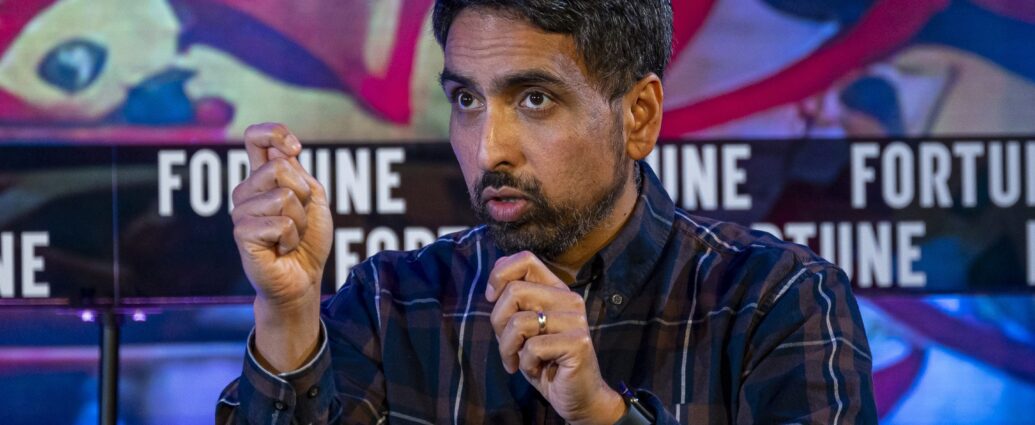
But Zillow’s CEO, Jeremy Wacksman, says the time was the start of a new beginning. Less than one year later, he ditched his job as a marketing and product manager at Microsoft Xbox to join the real estate startup, despite nervous looks from his friends. 

“Back in early 2009, for those that remember, [it] was not a fantastic real estate market,” Wacksman told Fortune in a 2025 Leadership Next podcast episode. 

“I remember talking to friends and family [that] I was going to leave a job at Microsoft…And they were like, ‘Why are you going to go work for this money-losing real estate startup? Real estate’s a terrible market.’”

The Gen Xer explained his marketing degree is what got him the job at Microsoft—but also, what inspired him to ultimately leave. 

“Building a product and then getting that product ever-present in the user’s mind, that’s been the common theme I’ve seen, and it’s driven my passion,” Wacksman said. “It’s what led me to Zillow and it’s honestly what keeps me at Zillow.”

Wacksman joined Zillow as the VP of marketing and product, right around the time the late Steve Jobs introduced the Apple app store—and it turned out to be exactly what the struggling company needed. 

Success came from saying ‘yes’ to responsibilities outside of his day job—including launching on Apple

One of the most pivotal moments for the $10.5 billion real-estate marketplace came shortly after Wacksman joined the business as the VP of marketing and product: Apple was finally taking websites mobile with apps for the iPhone. 

“Six months after I got here, Steve Jobs launched the App Store on the iPhone, and it became clear that this company that had 100-plus people and was a great desktop website needed to go into mobile,” Wacksman recalled to Fortune’s Kristin Stoller and Diane Brady. “Mobile was going to be the future.”

Now, many online businesses, from Zillow and Airbnb, to eBay and Etsy, all have their own bespoke apps to bring convenience to customers. Thanks to Apple’s invention, users could rent out an apartment easily on their phone, sitting in their back pocket. And because Wacksman had spent a quarter of his time at Microsoft working on mobile projects, he was tapped to lead the effort—and saying yes to taking on work outside of his day-to-day responsibilities proved to be a career-defining moment. 

“I wasn’t hired to [help the company go mobile], I was hired to work on the product and marketing efforts. But mobile was new, and I said yes,” Wacksman said. “And in many ways, my career was just 15 years of saying yes to the next thing.”

Wacksman slowly rose the ranks over the next decade and a half, assuming roles including chief marketing officer, president, and chief operating officer, before taking the helm as CEO in August 2024. 

Reflecting on his time at Zillow and the many other ‘yes’ moments he’s committed to, Wacksman said he’s learned to embrace opportunity. There will be times that projects fall through or unexpected challenges come into the fold, but the experiences make for a better leader.

“You’ll throw yourself into something and it’ll work, or you’ll throw yourself into something and it won’t work,” Wacksman said. “You’ll have to pivot, but you’ll have learned something.”

A version of this story was published on Fortune.com on July 2, 2025.

This story was originally featured on Fortune.com

This post was originally published here

If you missed the April 15 tax deadline, penalties and interest have already begun to accrue – but there are still actions you can take to limit the impact.

Experts say taxpayers should file immediately, even if they can’t pay their full bill, and pay as much as they can to avoid the steepest penalties. Those who still owe can apply for a payment plan to manage the remaining balance.

The IRS says most applicants receive immediate approval or denial when applying for a payment plan online.

TAX EXTENSION FILERS BEWARE: PAYMENTS ARE STILL DUE TO THE IRS BY APRIL 15

“You can still file your return and at least eliminate the failure-to-file penalty, which can reach up to 25% of any tax owed, with interest compounding,” said Mark Steber, chief tax officer at Jackson Hewitt Tax Services.

The IRS can impose multiple penalties, including failure-to-file, failure-to-pay and underpayment penalties, which are assessed separately and can accrue interest daily, Steber said.

He added that consulting a tax professional early can help taxpayers navigate their options and potentially reduce the total cost.

NEW TRUMP ACCOUNTS PITCHED AS TAX-SEASON GATEWAY TO BUILDING WEALTH

“In many cases, the total cost – including taxes, penalties, interest and professional fees – ends up being higher than if you had sought help earlier,” Steber said.

“The worst thing you can do is ignore the deadline,” he added. “Many people think they’ll deal with it later, but that can lead to mounting penalties and unnecessary financial risk.”

THE SIMPLE TAX HABIT THAT COULD SAVE YOU THOUSANDS OVER YOUR LIFETIME

Filing as soon as possible and exploring IRS payment options can help taxpayers regain control of their situation and minimize added costs.

GET FOX BUSINESS ON THE GO BY CLICKING HERE

Steber said taxpayers should view filing as part of a long-term financial strategy, not just a once-a-year obligation.

“Your tax return is one of your largest financial transactions each year,” he said. “Giving it proper attention can pay dividends over time.”

This post was originally published here

$100 million in annualized cost savings. Over 3,200 opportunities influenced. Those are the kinds of outcomes leaders everywhere are hoping AI will deliver. But in conversations with CEOs this year, one thing was clear: very few companies can point to results at this level yet.

Many organizations made progress using AI to improve efficiency in 2025. A much smaller group, including companies like Salesforce, is now beginning to see AI contribute to revenue. Across industries, last year’s focus was operational: automate support, streamline internal workflows, reduce repetitive labor. The mandate was straightforward: use AI to improve efficiency and protect margins. Now the pressure has shifted. Boards and investors are asking a tougher question: Where does AI show up in growth?

As part of our research into this shift, who better to go to than a leader in enterprise AI and CRM, Salesforce, which is one of the relatively small number of companies that can show measurable results in both cost reduction and revenue impact from AI agents. Their experience offers an early look at what this transition can look like in practice, and what we can learn from how Salesforce uses its own products at scale as their own “Customer Zero.”

Phase One (2025): Removing the Constraints of Reactive Service

For decades, service organizations operated under a basic constraint: human capacity. Every decision about service levels, speed, and personalization ultimately came down to how many people were available to respond.

In 2025, Salesforce began breaking that constraint. The company deployed AI agents across its customer support ecosystem, starting with its self-service help portal, help.salesforce.com. The portal features a conversational, ChatGPT-style interface and the initial goal was simple:

  • Answer common customer questions autonomously
  • Maintain conversational context
  • Escalate to humans when judgment, complexity, or extreme urgency was required

The Results: Better Service and Lower Cost

In just over one year, Agentforce handled 3 million support conversations, contributing to measurable operational and financial impact:

  • Lower case volume despite customer growth — Year-over-year support caseload dropped by 8%, representing more than 170,000 fewer cases, with further reductions forecast.
  • Customer experiences previously out of reach — Salesforce now delivers live, synchronous chat support in seven languages, with plans to expand to 14 or more languages by year end, something it had never achieved in its 27-year history.
  • More proactive service — With AI agents handling routine questions, human teams can focus on more proactive services to help customers succeed, preventing problems, and building stronger relationships without increasing costs.
  • $100M in annualized cost savings — Agentforce reduced support costs while maintaining customer satisfaction — a rare combination in service transformation efforts.

“We already know that AI agents can scale our cost structure infinitely, but the real unlock is that they can help us scale our capacity, too,” says Jim Roth, President, of Customer Success at Salesforce. “When our capacity is infinite, we can be proactive and build more incredible customer experiences. We can treat every customer like they’re our most important customer.”

AI agents helped Salesforce improve service while lowering the cost to deliver it. But at this stage, the primary impact was operational. Margins improved and service expanded, but revenue remained largely unchanged.

Phase Two: Turning AI Agents Toward Growth

By the time leaders reached 2026, the expectation had evolved. If AI could remove cost from service, could it also help create revenue?

Inside Salesforce, one experiment offered an early answer. It started with what employees informally called “sawdust.” Like most large B2B companies, Salesforce generates massive inbound interest through its digital channels: content downloads, webinar registrations, information requests. Each interaction is technically a lead.

But in practice, many of these leads never receive follow-up. They essentially collect like sawdust. Sales teams focus on the highest-scoring prospects. Marketing prioritizes defined segments. A long tail of lower-priority leads sits in the system, untouched. They weren’t worthless. They were simply uneconomical for humans to pursue. That’s where AI agents entered the picture.

The “Sawdust” Experiment

Salesforce deployed an AI agent to engage these dormant leads autonomously. The agent could:

  • Send personalized outreach
  • Ask qualifying questions
  • Respond based on context
  • Identify signals of genuine buying intent
  • Route promising prospects to human teams

These were leads the company didn’t have the capacity to work anyway, which made them a low-risk but high-upside test case.

In a short period of time, the agent began working on hundreds of thousands of previously untouched leads. The result wasn’t just more activity. It showed up in revenue metrics:

  • Significant new pipeline created 
  • More than 3,200 opportunities influenced 
  • Closed business from opportunities that would otherwise have remained invisible

This wasn’t AI making an existing sales team faster. This was AI creating revenue from a segment of demand that had effectively been written off.

A Broader Shift in How AI Is Used

Together, these two phases show how the role of AI in the enterprise is beginning to evolve, at least among a small but growing set of organizations seeing concrete results. In early stages, AI agents are most often used to reduce operational friction — taking on repetitive work, stabilizing service levels, and freeing human teams to focus on more complex or higher-value work. In more advanced cases, companies are beginning to use AI agents to generate revenue in areas where human effort never made financial sense.

The “sawdust” leads were one example. Other companies are now exploring similar uses of AI to:

  • Stay in regular contact with existing customers who rarely engage
  • Identify small upsell or cross-sell opportunities humans might overlook
  • Spot early signals that a customer is ready to buy again
  • Reconnect with past prospects who went quiet months or years ago

In each case, AI agents help companies pursue customers and opportunities they previously ignored.

From Cost Story to Growth Story

The shift from 2025 to 2026 shows how executive expectations have changed. Last year, success meant proving AI could reduce cost and improve efficiency. This year, success increasingly means proving AI can help grow the business.

Salesforce’s journey shows how those phases connect. AI agents first helped transform customer service by removing capacity constraints and enabling more proactive support. Now, the same underlying capability is being used to pursue revenue opportunities that humans simply didn’t have the bandwidth to chase.

AI is beginning to move beyond the back office and support queue into revenue-related workflows. For a small group of companies, that shift is already producing measurable impact. For many others, it remains the next horizon.

The opinions expressed in Fortune.com commentary pieces are solely the views of their authors and do not necessarily reflect the opinions and beliefs of Fortune.

This story was originally featured on Fortune.com

This post was originally published here

Landing a job—especially one that is well-paid and personally fulfilling—can feel like the hardest part of building a career. But in today’s uncertain labor market, even established professionals face sudden transitions, and mid-career pivots can feel just as destabilizing as early-career ones.

Just ask Dana Perino.

After George W. Bush’s administration ended, the former White House press secretary found herself at a crossroads. She’d spent nearly her entire career in government, so stepping outside that world wasn’t exactly a comfortable leap. She landed a public relations job—and almost immediately knew it was a mistake.

“It was pretty clear after two hours that I didn’t like it,” the now-Fox News host recently told Fortune

Weeks in, Perino found herself back at an event with her former boss, venting about the situation. Bush responded with a question that reframed everything.

“He made me answer this question: ‘What’s the worst thing that could happen if you started your own thing and it failed? Let’s talk it through honestly,’” she recalled. “As we talked it through, it was clear I wasn’t going to become homeless and live on the street.”

By the end of the conversation, Bush delivered the takeaway: If the worst-case scenario was simply returning to another PR firm, then the risk wasn’t nearly as high as it felt.

“And he was right.”

Even with an uncertain future, Perino’s advice for Gen Z is simple: focus on what’s right in front of you

While Perino did quit and go on to start her own firm—which eventually led her to her current roles as the host of America’s Newsroom and The Five on Fox News—that kind of career uncertainty is becoming more common. Artificial intelligence is being integrated more deeply across industries, automating skills—such as coding, research, and editing—that were once the domain of specialized professionals. At the same time, companies have been quietly trimming their workforces, betting that leaner teams can drive better efficiencies.

For younger workers, the pressure is especially intense. While Gen Z is eager to enter the workforce, entry-level opportunities have tightened, and the unemployment rate for workers ages 16 to 24 reached 10.8% last year—more than twice the national average.

Perino’s takeaway is less about long-term planning and more about short-term clarity: stop trying to map out every step of your career and focus instead on the immediate opportunity in front of you—even if it isn’t perfect on paper.

That lesson, she said, showed up in her own career decisions as well. Trying to engineer a flawless long-term plan, she noted, can sometimes obscure opportunities that don’t fit neatly into it.

“Once I focused and stopped trying to do everything, all the other opportunities came at the right time,” she added.

That mindset also helped her latest project. 

Perino’s first novel, Purple State, is set to hit shelves on April 21 and is centered around a young PR professional navigating her career and personal love life. The thriller draws on Perino’s years in politics and the media.

George W. Bush: ‘You ought to be open-minded as to where life takes you’

Bush has offered similar reflections on uncertainty and adaptability. During his post-presidency, he emphasized the value of flexibility over rigid life planning.

“People who plan their life when they’re 18 years old and say, ‘This is my life plan,’ would generally be surprised and maybe disappointed,” Bush said in a 2011 interview with AARP.

“I think you ought to be open-minded as to where life takes you. One of the things I learned as president is that your life is just not going to unfold the way you want it to. There will be surprises, challenges, and therefore the question is how you deal with the unexpected.”

And while Bush’s advice helped guide Perino’s brief period in her career, he’s someone who’s on both sides of the table. During his second term, he called his predecessor, former President Bill Clinton, about twice a year to talk through the challenges he was facing.

“He asked my opinion,” Clinton recalled in a video that recirculated on social media earlier this year. “Half the time he disagreed with it, but I felt good about that. I thought that was a really healthy thing.”

The 42nd president said those exchanges underscored a larger point about leadership: the value of actively seeking out perspectives that differ from your own.

“You’ve got to cultivate people who know things you don’t and have skills you don’t, and yes, that can be taught,” Clinton added. 

“If nothing else, we can help people get out of their own way. Everybody’s got a story and a dream, and they can bring it to bear if we can just help people get out of their own way sometimes.”

This story was originally featured on Fortune.com

This post was originally published here

Nine months ago, Sam Brown was out of a job. The reason, he’ll tell you without a sense of bitterness, was artificial intelligence. The company he’d spent years building a career inside decided it needed fewer people, and he was one of them.

“I got laid off nine months ago, and it was AI-related,” said Brown, 48, with a career that stretches back to 2000, aside from a few months as a ball boy for the Denver Nuggets in his youth. “I had to sit there and say, ‘This is a blessing, because I get a head start on everyone else that’s going to have to go through this in a little while.’”

He didn’t spend long feeling sorry for himself. Instead, Brown joined a three-person startup with no venture funding, no engineering team, and no traditional software infrastructure. What they did have were 12 AI agents.

$300 in, $300,000 out

Fathom AI, an Austin-based sales enablement platform built specifically for the medical aesthetics industry, launched in early 2026. Within 12 weeks, it achieved an estimated annual recurring revenue of $300,000, gross margins north of 90%, and operating costs under 10% of revenue, according to records reviewed by Fortune. And the total capital invested to start the company was just $300.

“We launched 2.5 months ago, and right now, we have $300,000 in ARR,” said Brown, who manages the three-person company’s finances as the president of Fathom AI.

The company has taken no outside funding. When venture capitalists came calling, Fathom got all the way to the finish line on a term sheet and walked away—not because the deal was bad, but because they genuinely couldn’t figure out what they’d spend the money on.

“The VC said, ‘You’re going to need an engineering team of this size, a customer success team of this size,’” Brown recalled, adding that when he and Fathom’s founder and CEO Ben Hooten walked out of the meeting, they basically said, “We’re not going to need that.”

courtesy of Fathom AI

By year-end, Fathom projects $5 million in ARR across 15 to 18 enterprise customers. The team is structured as a partnership specifically to distribute profits now, a deliberate decision to get paid rather than hold out for a distant exit in a market none of them can predict.

Brown explained to Fortune that the partnership is essentially like collecting a paycheck. “We’d rather take the money now and then, there’s not a lot to reinvest in, because we don’t have huge costs.”

“Hell,” added Dan Crump, the senior member of the trio, at 56 years old, “we got paid today, as a matter of fact. We’re cash-flow positive.”

The skeptic who became the proof

Kirk Gunhus has been in the medical aesthetics industry for 30 years. He has gray hair and, by his own cheerful admission, is “not a technology guy.” He wasn’t interested when Fathom AI first pitched him on switching vendors.

The origin story starts with a frustrated rant. The CEO, Hooten, then still a sales rep, was sitting in one of Gunhus’ meetings when Gunhus, a couple of beers in, unloaded on the state of sales technology. “You’ve got all this stuff here, and none of it really works well,” Gunhus said. “Someone needs to just put it all together, so when I walk into a zip code, I know exactly what accounts are perfect for us to go after.”

He forgot about his rant immediately, but Hooten didn’t. Gunhus said he got a call the very next weekend from Hooten, who said he put a plan together.

Gunhus agreed to a pilot with six sales reps. The company, he said, couldn’t afford the subscription, but every one of those six reps paid individually to work with Fathom AI. That’s “because it works,” Gunhus said. “It’s making them so much money.”

The results bore him out. In all of 2024, one of Gunhus’ consulting clients, Tiger Aesthetics, did not open a single net new account. Within one quarter of deploying Fathom, he said they had opened 225. “The bosses over at Tiger are like, ‘[Give them] whatever they want.’ They just saved a ton of money.”

The medical aesthetics industry is a multibillion-dollar world of plastic surgeons, dermatologists, med spas, and device manufacturers and, according to Fathom AI and their clientele, it’s ripe for disruption. Sales have historically been entirely manual. Reps cold-called, drove routes blind, and relied on memory and intuition to figure out who to see and when.

Fathom replaces all of that. A rep enters a zip code, and the platform surfaces every nearby account that fits their product profile, ranked by fit. It layers in real-time Google search data so a rep can walk into a doctor’s office and say, with specificity, what that physician’s patients are searching for. It also serves as a live training tool: new hires roleplay sales scenarios against an AI that corrects their technique in real time, flagging wrong answers and asking follow-up questions.

The team that isn’t supposed to exist

Hooten, the CEO and the junior member of the group at 39, explained to Fortune that his 12 agent co-workers hold real operational roles—one runs customer success for a national sales force; another wakes up every two hours to scan the competitive landscape and file a briefing.

His background was in sales, not software, Hooten explained, and so he looks at the AI agent era as a chance to build things that he never had the skills to, before. When a colleague told him that he couldn’t build an automated sales tool that actually worked, he built it anyway, and on his first day using it in the field, he closed $440,000 in a single day.

Gunhus said he had firsthand experience with the customer service bot: a Tiger Aesthetics rep called with a support issue, was walked through the solution by what they believed was Hooten on the line, and had no idea they’d been talking to an AI. “The rep has no idea what’s going on, literally.”

courtesy of Fathom AI

Crump, the senior member of the group, at 56 years, is a former Marine with decades in tech sales experience at companies including GE and IBM. He has watched every major tech cycle from the early internet to the smartphone era. He recalled one morning about 25 years ago visiting Enron, when he was working as a sales rep for HP, the exact time when the famous accounting fraud was going belly-up. “The elevator door opened, and a lady had a plant and a Herman Miller chair, and she was rolling it out of there, cussing,” Crump recalled. “I go up, and my buddy says, ‘Hey, somebody just tried to throw a chair through the window.’” He’d been on the phone with his manager minutes earlier to confirm Enron owed his company $27 million—and that it had cleared the Friday before. “So I was like, ‘Okay, thank God we’ll get paid,’” he said. “I’ve seen a lot of stuff.”

In this industry, he added, sometimes tech sales is “just uninspiring.” With Fathom, he said he feels like they’re making “something that makes a difference.”

The 23-year-old parallel

Fathom isn’t the only small team rewriting the economics of what a company can be. Half a continent away, in Toronto, Yatharth Sejpal is running a strikingly similar experiment, and he’s 23 years old.

Sejpal is the CEO of KNOWIDEA, a predictive intelligence platform that advises executives on decision-making. He has no computer science background—”never written a line of code in my life,” he said—but within six months of launching he said he has closed $500,000 in ARR with six enterprise clients spanning energy, manufacturing, professional services, and financial services. He co-founded the firm with Brian Zhengyu Li, who is completing a PhD and previously worked as an applied scientist intern at Amazon Web Services.

Like Fathom, KNOWIDEA is a three-person operation. And like Fathom, Sejpal passed on early VC money. “If I wanted to exit, I would have taken VC money really quickly,” he said. He turned down a spot in Antler, one of the world’s largest startup accelerators, because he didn’t want to dilute equity before proving his model. Instead, he took a strategic investment check, from a consulting firm, not a venture fund, at a $15 million valuation.

His pitch to enterprise clients is almost a philosophy as much as a product. “Leaders need clarity,” Sejpal told Fortune from a hotel room (he said he spends nearly all his time traveling). “That’s it. There is no other reason, a dashboard, a report, all of it is just to bloody get clarity.” His platform ingests decentralized data and produces ranked, risk-weighted insights for C-suite decision-makers.

Crucially, Sejpal is careful about what his platform won’t do. On the question of AI hallucinations, a persistent concern among executives considering high-stakes AI tools, he draws a clear line. “At the core of decision-making is clarity plus judgment,” he said. “Our job is to give clarity. Your job is to make the judgment.” His system flags predictions that deviate dramatically from market norms and filters them out before they reach a client.

Sejpal, who grew up in India and moved to Canada to attend the University of Waterloo, spent years inside some of the largest people consulting firms in the world before deciding the industry was ripe to be disrupted. His vision of where the three-person company model leads is more radical than his current headcount suggests. He doesn’t think three-person teams are the endgame: he thinks they represent the beginning of a total restructuring of how work gets organized.

“I don’t want to ever hire an account executive or a customer success manager,” he said. “The only two roles that we want to hire are FDEs and FDCs, forward deployed engineers and forward deployed consultants.” One person who understands what data to select, and one who understands what context to apply. “Everything else,” he said, “can be automated using artificial intelligence.”

That logic extends to his larger argument about the enterprise. Take 20-person project teams, for example: “I think that is going to slim down to a two-person team. FDC plus FDE can do all of the work, and then one supervisor who can overlook. That’s it. It’s as non-complicated as that.”

It hasn’t been as lucrative for Sejpal as it has for the Fathom co-founders, but he’s not concerned about that yet. His savings dwindled for months until the spring of 2026, when he finally started drawing a salary, but he cheerfully said that his excitement about what he’s doing is more than enough for him. “If I if I wanted to make money, there are much simpler, less strenuous, mentally and body-exhausting tasks that I can do. I’m worried every single night, I have night sweats thinking how I’ll make salary for my employees, how I’ll grow my team and 20 other headaches. I could have made much more money without having a single of those stress.”

Dramatic implications

Brown was careful to say that the Fathom story isn’t primarily about Fathom. It’s about what Fathom represents: the first wave of a much larger shift in who gets to build a software company and who has the advantage doing it. In fact, thanks to AI, businesses have exploded in recent years, and it looks like there’s no chance of stopping what innovations can come next, according to financial firm Apollo.

The VC model was built around the assumption that you needed massive capital to build technology: engineering teams, customer success departments, sales headcount. That assumption is now structurally broken. A platform that once required $10 million in seed funding to staff can be assembled by three experienced operators and a suite of AI agents for the cost of a dinner out.

That changes who wins. Gunhus, for his part, said he’s not interested in launching his own three-person AI startup. “I’ve done all that, I don’t want to go through all that mess again.” But he’s watching carefully and telling everyone he knows to pay attention to the AI agent revolution. “If you don’t use it,” he said, “it’s gonna run you over anyway.”

That’s more or less the same conclusion Sam reached nine months ago, sitting with a pink slip and a decision to make about what came next. He doesn’t sound like a man who was laid off. He sounds like a man who got lucky.

“Everyone’s going to have to go through this to some extent,” Sam said. “I just think I got to go through it a little earlier than most.”

This story was originally featured on Fortune.com

This post was originally published here

Major brokerages are increasingly targeting younger investors, opening the door for teenagers to begin building portfolios years before they traditionally would.

ProCap Financial chief market strategist Phil Rosen joined FOX Business’ Stuart Varney on “Varney & Co.” to discuss the shift, framing it as part of a broader industry push to capture the next generation of clients amid changing demographics.

Firms like Charles Schwab and Fidelity have long catered to older investors, but the rise of mobile-first platforms such as Robinhood, which counts a large share of millennial and Gen Z users, has intensified competition. Rosen pointed to that dynamic as a key driver behind the push into teen accounts, as legacy firms look to establish relationships earlier in investors’ life cycles.

“I’m very much in the camp that the younger you are to get into investing that’s a good thing, right, because that could be millions of millions of dollars difference by the time you retire if you start at 15 as opposed to 25,” Rosen said.

FINANCIAL INFLUENCER ARGUES ‘MONEY IS MORE MENTAL THAN IT IS MATHEMATICAL’ IN NEW APPROACH TO PERSONAL FINANCE

The trend reflects a broader cultural shift toward financial literacy and early investing, with more young people gaining exposure to markets through apps and social media. At the same time, Rosen cautioned that education remains critical as younger investors navigate increasingly complex and volatile markets.

“If we can get them to avoid those things, then I think it’s [a] good thing to get people involved in the markets,” Rosen said, warning against speculative trading behavior like meme stocks and short-term options.

As competition heats up, brokerages appear willing to rethink traditional entry points in an effort to secure long-term growth.

GET FOX BUSINESS ON THE GO BY CLICKING HERE

This post was originally published here

Iran swiftly reversed course on reopening the Strait of Hormuz, reimposing restrictions on the critical waterway on Saturday after the U.S. said it would not end its blockade of Iran-linked shipping.

Iran’s joint military command said on Saturday that “control of the Strait of Hormuz has returned to its previous state … under strict management and control of the armed forces.” It warned that it would continue to block transit through the strait as long as the U.S. blockade of Iranian ports remained in effect.

The announcement came the morning after U.S. President Donald Trump said that even after Iran announced the strait’s reopening on Friday, the American blockade “will remain in full force” until Tehran reaches a deal with the U.S., including on its nuclear program.

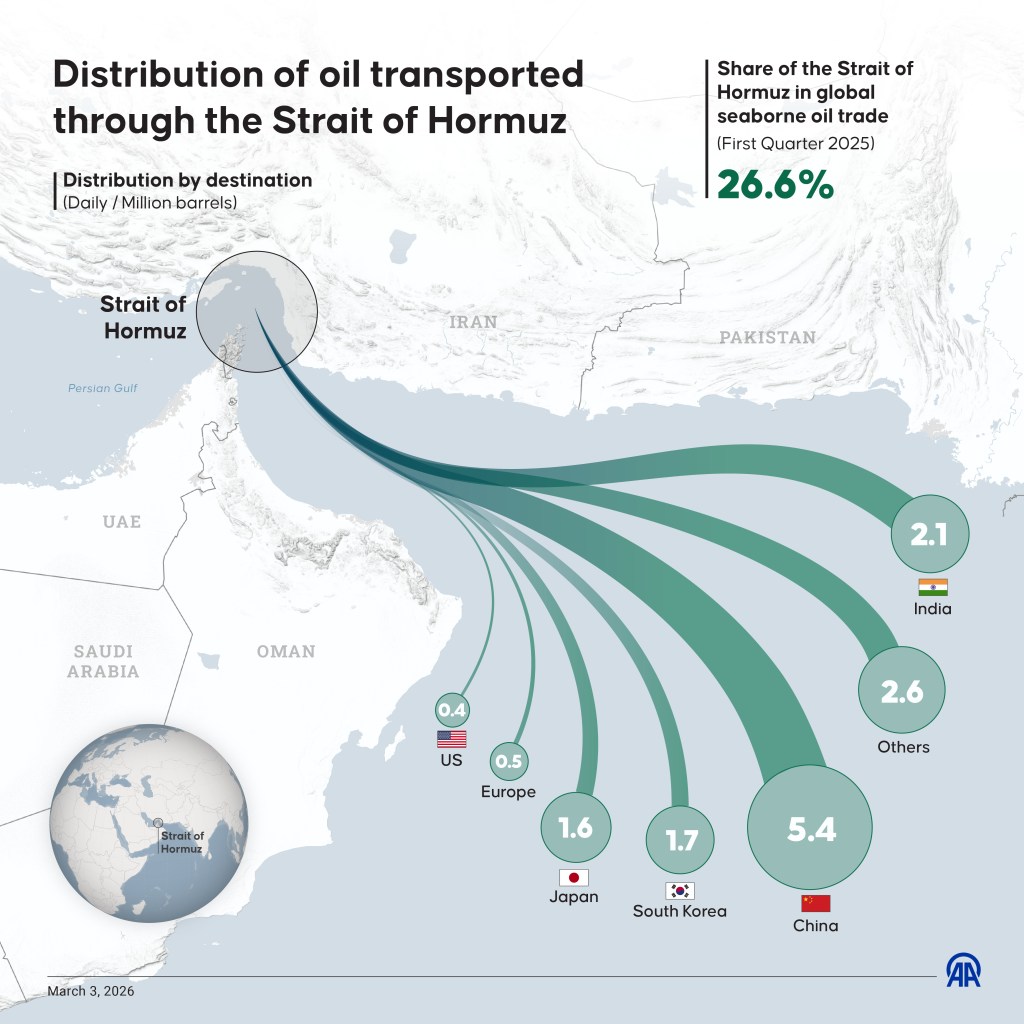
The conflict over the chokepoint threatened to deepen the energy crisis roiling the global economy after oil prices began to fall again on Friday on hopes the U.S. and Iran were drawing closer to an agreement. Roughly one-fifth of the world’s oil passes through the strait and further limits would squeeze already constrained supply, driving prices higher once again.

Control over the strait has proven to be one Iran’s main points of leverage and prompted the United States to deploy forces and initiate a blockade on Iranian ports as part of an effort to force Iran to accept a Pakistan-brokered ceasefire to end almost seven weeks of war that has raged between Israel, the U.S. and Iran.

Iran said it fully reopened the Strait of Hormuz to commercial vessels after a 10-day truce was announced between Israel and the Iranian-backed Hezbollah militant group in Lebanon. An end to Israel’s war with Hezbollah was a key demand of Iranian negotiators, who previously accused Israel of breaking last week’s ceasefire with strikes on Lebanon. Israel had said that deal did not cover Lebanon.

But after Trump said the blockade would continue, top Iranian officials said his announcement violated last week’s ceasefire agreement between Iran and the U.S. and warned the strait would not stay open if the U.S. blockade remained in effect.

A data firm, Kpler, said movement through the strait remained confined to corridors requiring Iran’s approval.

U.S. forces have sent 21 ships back to Iran since the blockade began on Monday, U.S. Central Command said on X.

Pakistan announces progress toward new deal

Despite the escalation in the Strait of Hormuz, Pakistani officials say the United States and Iran are still moving closer to a deal ahead of the April 22 ceasefire deadline.

The ceasefire in Lebanon could clear one major obstacle to an agreement. Speaking at a diplomatic forum in Antalya, Turkey, Pakistan’s Foreign Minister Ishaq Dar said the ceasefire in Lebanon was a positive sign, noting that fighting between Israel and Hezbollah had been a key sticking point before talks in Islamabad ended “very close” to an agreement last weekend.

Pakistan’s army chief Field Marshal Asim Munir visited Tehran, while Prime Minister Shehbaz Sharif met with Turkish President Recep Tayyip Erdogan and Qatar’s Emir Tamim bin Hamad Al Thani in Antalya, the military and Sharif’s office said. Pakistan is expected to host a second round of talks between Iran and the U.S. early next week.

Questions linger about Lebanon truce

Even though mediators were optimistic, it was unclear to what extent Hezbollah would abide by a truce it did not play a role in negotiating and which will leave Israeli troops occupying a stretch of southern Lebanon.

Trump said in another post that Israel is “prohibited” by the U.S. from further strikes on Lebanon and that “enough is enough” in the Israel-Hezbollah war.

The State Department said the prohibition applies only to offensive attacks and not to actions taken in self-defense.

Shortly before Trump’s post, Israeli Prime Minister Benjamin Netanyahu said Israel agreed to the ceasefire in Lebanon “at the request of my friend President Trump,” but that the campaign against Hezbollah is not complete.

He claimed Israel had destroyed about 90% of Hezbollah’s missile and rocket stockpiles and added that Israeli forces “have not finished yet” with the dismantling of the group.

In Beirut, displaced families began moving toward southern Lebanon and Beirut’s southern suburbs despite warnings by officials not to return to their homes until it became clear whether the ceasefire would hold.

The Lebanese army and U.N. peacekeepers in southern Lebanon reported sporadic artillery shelling in some parts of southern Lebanon in the hours after the ceasefire took effect.

The war, which began with U.S. and Israeli strikes on Feb. 28, has killed at least 3,000 people in Iran, more than 2,290 in Lebanon, 23 in Israel and more than a dozen in Gulf Arab states. Thirteen U.S. service members have also been killed.

__ Metz reported from Ramallah, West Bank. Associated Press writers Munir Ahmed in Islamabad and Andrew Wilks in Antalya, Turkey contributed to this report.

This story was originally featured on Fortune.com

This post was originally published here

U.S. President Donald Trump and Iran’s foreign minister said Friday that the Strait of Hormuz is fully open to commercial vessels. Iran’s top diplomat Abbas Araghchi said the strategic waterway “is declared completely open,” in line with the new ceasefire in Lebanon, and Trump said the strait is “ready for full passage.”

However, Trump added that the U.S. naval blockade on Iranian ships and ports “will remain in full force” until Iran reaches a deal with Washington to end the war.

Oil prices dropped 9% and Wall Street rallied to a record after Iran said the strait is open, allowing tankers to resume shipments from the Persian Gulf. Stocks are heading for a third straight weekly gain, on hopes the U.S. and Iran can avoid a worst-case scenario for the global economy.

A 10-day ceasefire in Israel and Lebanon began at midnight and appears to be holding after more than a month of war between Israel and Hezbollah, although the Iran-backed Lebanese militant group is not a party to the deal. Israeli Prime Minister Benjamin Netanyahu said Israel is “not yet finished” with Hezbollah. The militant group said its response will depend on how events unfold.

The fighting has killed at least 3,000 people in Iran, nearly 2,300 in Lebanon, 23 in Israel and more than a dozen in Gulf Arab states. Thirteen U.S. service members have also been killed.

Here is the latest:

Trump rejects notion of tolls by Iran on Strait of Hormuz

President Donald Trump flatly rejected the idea when a reporter asked about the prospect of restrictions or tolls managed by Iran on the Strait of Hormuz.

“Nope. No way. No. Nope,” Trump said. He said there can’t be tolls along with restrictions. “No, they’re not going to be tolls.”

More than 20 ships turned back by US blockade

US Central Command says that since the blockade began on Monday, 21 ships returned to Iran at the direction of U.S. forces.

U.S. President Donald Trump said earlier on Friday that the American blockade of Iranian ports would remain “in full force” until Iran reaches a deal with the U.S., including on its nuclear program.

Australia says opening of Strait of Hormuz is ‘positive news’

“We hope that it certainly holds. This was positive news that we received last night,” Australian Prime Minister Anthony Albanese told reporters in Sydney on Saturday.

“But we know that it’s very fragile and we don’t assume the best. What we do is prepare as best we can for the uncertainty which is there,” Albanese added.

Israel experiences first 24 hours without incoming strikes since Iran war started

It’s been more than 24 hours since air raid sirens went off in any part of Israel — and that last time, very early on Friday morning in a small community at the border with Lebanon, turned out to be a mistaken identification.

Since the Iran war started on Feb. 28, Iran, then Lebanon-based Hezbollah militants and eventually the Houthis in Yemen sent barrages of missiles and rockets into Israel, sometimes more than a dozen times a day. Hezbollah kept up firing right until a ceasefire went into effect Friday.

In Israel’s major metropolitan areas of Jerusalem and Tel Aviv, but also in villages in the country’s desert south and hilly north, sirens and alerts sent residents to bomb shelters and safe rooms throughout the day and night.

The strikes have killed 23 people and wounded about 600 more, according to Israel’s emergency services.

Iran warns US blockade risks fresh Strait of Hormuz closure

Iran’s parliamentary Speaker Mohammad Bagher Qalibaf posted on X early Saturday that if the U.S. blockade continued, “the Strait of Hormuz will not remain open.”

On Friday, Iran had said it fully reopened the Strait of Hormuz to commercial vessels, but U.S. President Donald Trump said the American blockade on Iranian ships and ports would “remain in full force” until Tehran reaches a deal with the U.S.

And a data firm, Kpler, said later Friday that movement through the strait remained confined to corridors requiring Iran’s approval.

Trump says US will go into Iran and excavate uranium

“The USA will get all the nuclear dust,” Trump said in a speech in Arizona. “We’re going to get it by going in with Iran with lots of excavators.”

Iran has yet to confirm that its agreed to give up the 970 pounds (440 kilograms) of enriched uranium believed to be buried under nuclear sites badly damaged by U.S. military strikes last year.

Giving up the uranium and agreeing to U.S. troops entering Iranian territory would be huge concessions by Iran.

Trump insisted that “no money will exchange hands in any way, shape or form” as part of a potential deal with Iran to end the war.

China willing to take custody of highly enriched uranium from Iran, AP source says

China is open to taking possession or downgrading some 970 pounds (440 kilograms) of enriched uranium that Trump says must be removed from Iran as part of a deal to end the war, according to a diplomat familiar with Beijing’s thinking on the matter.

At the moment, it appears Trump wants the U.S. to take custody of the material that is believed buried under nuclear sites badly damaged in an American bombardment last June.

But China, which is Iran’s biggest trading partner, is signaling it would be open if asked by Washington and Tehran to take the uranium or down-blend to levels that could be used for civilian applications, said the diplomat who was not authorized to comment publicly and requested anonymity to discuss the sensitive matter.

In 2015, under the Joint Comprehensive Plan for Action, Iran shipped approximately 25,000 pounds (11,000 kg) of low-enriched uranium to Russia to meet an essential requirement to fulfill that nuclear deal. — By Aamer Madhani

USS Ford returns to the Middle East

The world’s largest aircraft carrier, the USS Gerald R. Ford, has again entered the waters of the Middle East, two defense officials told the Associated Press.

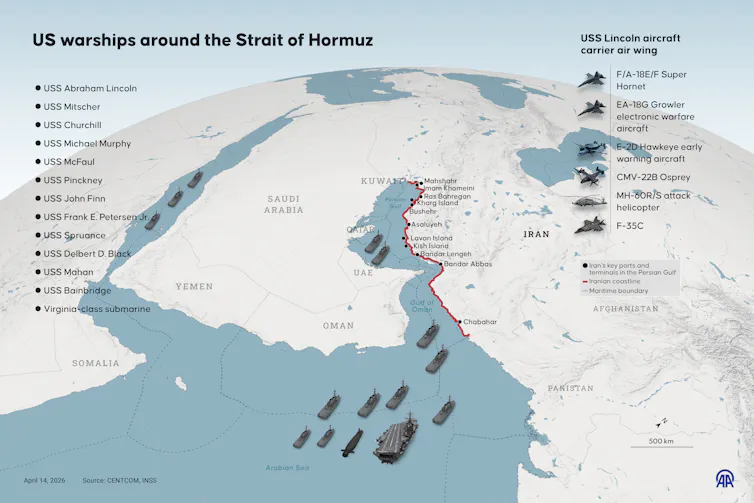
The Ford, which until recently was operating in the Eastern Mediterranean, transited the Suez Canal, along with a pair of destroyers, the USS Mahan and the USS Winston S. Churchill, and is now operating in the Red Sea, one official said.

Both spoke on condition of anonymity to discuss sensitive military operations.

The Ford is returning to the Red Sea after more than a month in the Mediterranean following a major fire in a laundry space that forced the ship back to port for repairs. The carrier also broke the record for the longest aircraft carrier deployment since the Vietnam war this week.

The Ford’s arrival makes it the second aircraft carrier in the region in addition to the USS Abraham Lincoln in the Arabian Sea. The USS George H. W. Bush is also heading towardH.W. Bushn and is currently off the coast of South Africa, according to one defense official.

Vessel movement remains constrained in the Strait of Hormuz

Data firm Kpler said ship movement through the Strait of Hormuz remained confined to corridors requiring approval on Friday evening, hours after the U.S. and Iran announced full reopening of the strategic waterway.

Iran’s state media reported the country’s conditions to reopen the Strait of Hormuz, which has been effectively closed since the beginning of the war, included that all commercial vessels transiting must go through a route designated by Iran and in coordination with the IRGC Navy.

Kpler said that “markets have responded with cautious optimism” to the reopening decision, but warned that underlying supply dynamics remain tight, and a “full normalization in trade and confidence is likely to take months, not weeks.”

Oil prices fall sharply and Wall Street rallies to a record as Iran reopens the Strait of Hormuz

Oil prices dropped back to where they were in the early days of the Iran war, while U.S. stocks raced to another record.

The S&P 500 leaped 1.2% Friday after Iran said the Strait of Hormuz is open again for commercial tankers carrying crude.

The Dow Jones Industrial Average leaped as many as 1,100 points before paring its gain and ended with a jump of about 870 points, or 1.8%, while the Nasdaq composite climbed 1.5%.

A freer flow of oil could take pressure off prices not only for gasoline but also for groceries and all kinds of other products. Oil prices fell 9%.

Iran’s navy chief says Trump’s naval blockade is ‘piracy and maritime theft’

The commander of the Iranian navy, Shahram Irani, said Friday evening that Trump “has blockaded his friends” and not Iran, as the U.S. said its blockade will remain in place after Iran declared the Strait of Hormuz open to commercial traffic.

In a statement carried by Mizan, Iran’s official judiciary news agency, the navy chief said Trump’s blockade is just “empty words” and that no one is listening to him.

The U.S. military says it has turned 19 ships back to Iran since imposing the blockade earlier this week.

Lebanese president says negotiations are ‘not a weakness’ and the country has reclaimed its sovereignty

President Joseph Aoun struck a defiant tone in his first address since a U.S.-brokered ceasefire took hold, saying he wants Lebanon to chart its own course after weeks of war between Israel and Hezbollah.

The president said he wants to see Lebanon “flourishing, not committing suicide.” He condemned Hezbollah’s rocket fire into northern Israel that triggered the latest round of fighting, and criticized Iran’s role in arming and backing the group.

He framed both as violations of Lebanese sovereignty, and again vowed to disarm non-state groups, including Hezbollah.

In a pointed response to Hezbollah’s criticism of Lebanon’s direct talks with Israel and claims that Beirut lacks leverage, Aoun said the country will make its own decisions and stand by demands shared across Lebanese society, not ones dictated by Iran or its allies.

“There will be no concessions to any principle, no infringement of the sovereignty of this country,” he said.

Aoun also reiterated calls for Israel to halt attacks, withdraw troops, release detainees and allow displaced people to return.

US Treasury sanctions Iraqi militias backed by Iran

The U.S. imposed sanctions on seven senior commanders of Iraqi militias that are supported by Iran, including groups like Kataib Hezbollah and Asaib Ahl al-Haq, for allegedly planning and carrying out attacks on U.S. personnel and coalition forces in the region.

Officials have said the move is part of a broader effort to counter Iran’s influence in Iraq and deter further violence against U.S. interests.

The action also signifies a U.S. strategy of using economic pressure, not just military force, to target Iran’s network of allies, while warning global banks and firms to stop doing business with anyone tied to these groups.

“We will not allow Iraq’s terrorist militias, backed by Iran, to threaten American lives or interests,” Secretary of the Treasury Scott Bessent said Friday. “Those who enable these militias’ violence will be held accountable.”

Head of US Central Command says ships are moving through the Strait of Hormuz

“We’ll see what this looks like going forward. But I think we should all remain optimistic,” Adm. Brad Cooper told reporters Friday after Iran announced the vital waterway was open to commercial vessels.

US Central Command leader says military will clear mines in Strait of Hormuz

The top commander in the Middle East confirmed that the U.S. military will be working to clear mines from the Strait of Hormuz but would offer no details on the scope of the task.

“It’s a mission that we’ve undertaken,” Cooper told reporters on a call Friday before adding that he wouldn’t want to “characterize” the extent to which the critical waterway has been mined by Iran as part of a weekslong conflict with the U.S. and Israel.

Cooper said that it was “well within our ability to remove mines.”

Earlier on Friday Trump said in a social media post that “Iran, with the help of the U.S.A., has removed, or is removing, all sea mines!”

US Central Command chief says military still has ‘eyes on every Iranian port’

The top U.S. military leader in the Middle East said Friday that the American naval blockade of ships tied to Iran will remain in place for as long as Trump “says it will remain in effect.”

Adm. Brad Cooper, who leads Central Command, told reporters on a phone call that “U.S. forces have eyes on every Iranian port.”

“We are watching every Iranian ship in every port. Period. Full stop,” Cooper said, adding that the U.S. military presence can stay in the region indefinitely.

“We’re well-provisioned. We’re well-manned. We have all the forces necessary to sustain this for as long as necessary,” Cooper said.

Iran threatens ‘reciprocal measures’ if US blockade continues

In comments published by Iranian state media Friday, Foreign Ministry spokesperson Esmail Baghaei slammed the ongoing U.S. blockade of Iranian ports as a violation of the ceasefire agreement.

He said the Strait of Hormuz remains under the supervision of Iran, which is serious about its commitments. But if the U.S. violates its own commitments, then “Iran will take the necessary reciprocal measures.’’

“No leniency will be shown in this regard,” he said.

First cruise ship transits the Strait of Hormuz since the Iran war began

The vessel-tracker MarineTraffic said the Malta-flagged passenger vessel, reportedly sailing without passengers and bound for Oman, departed Dubai on Friday after remaining docked for 47 days.

It said the Celestial Discovery ship is expected to arrive in Oman on Saturday.

Hours earlier, Iran and the U.S. said the strategic waterway, which has been effectively closed since the beginning of the conflict, will be fully open to commercial traffic.

UN chief says opening the Strait of Hormuz is ‘a step in the right direction’

Secretary-General Antonio Guterres reiterated the United Nations’ position: “We need the full restAntónio Guterresnational navigational rights and freedoms in the Strait of Hormuz to be respected by all parties,” his spokesman said.

Guterres supports diplomatic efforts “to find a peaceful path forward out of the current conflict in the Middle East,” U.N. spokesman Stephane Dujarric said.

“He also hopes that, together with the ceasefire, this measure will contribute to creating confidence between the parties and strengthen the ongoing dialogue facilitated by Pakistan,” the spokesman said.

What exactly did Trump ‘prohibit’ Israel from striking in Lebanon?

The State Department said Trump’s announced prohibition on Israeli strikes inside Lebanon applies only to offensive attacks and not to actions taken in self-defense, and referred to the third point of Wednesday’s agreement by Israel and Lebanon.

That point says “Israel shall preserve its right to take all necessary measures in self-defense, at any time, against planned, imminent, or ongoing attacks.” It adds that Israel “will not carry out any offensive military operations against Lebanese targets, including civilian, military, and other state targets, in the territory of Lebanon by land, air, and sea.”

With the ceasefire only a few hours old, Israel has already launched at least one deadly drone strike in southern Lebanon, according to the health ministry there. During the previous ceasefire, Israel struck what it said were Hezbollah targets almost daily.

Trump suggests a second round of direct US-Iran talks could happen this weekend

“The Iranians want to meet,” Trump said in a brief telephone interview with the news outlet Axios. “They want to make a deal. I think a meeting will probably take place over the weekend.”

Despite the ceasefire, an Israeli drone strike in Lebanon kills 1 person

An Israeli strike in the area of Kounine hit a car and a motorcycle, killing one person and wounding three, including a Syrian citizen, Lebanon’s health ministry said Friday. It was the first airstrike and first fatality reported since a 10-day truce between Israel and the Lebanese militant group Hezbollah took effect overnight.

The Lebanese army and U.N. peacekeepers in southern Lebanon had reported sporadic artillery shelling in some parts of the south in the hours after the ceasefire took effect.

The Israeli army did not immediately respond to a request for comment. Israel has maintained that it still has the right to strike in Lebanon in response to perceived threats despite the ceasefire. There was no immediate response from Hezbollah.

Thousands head home as US-brokered truce holds in Lebanon

A fragile calm settled over parts of Lebanon on Friday as a 10-day ceasefire brokered by the United States took hold between Israel and Hezbollah, prompting thousands of displaced families to begin the journey home — even as uncertainty, destruction and Israeli warnings against going back to parts of southern Lebanon clouded their return.

By early morning, cars were backed up for kilometers on the route leading south to the damaged Qasmiyeh bridge over the Litani River, a key crossing linking the southern coastal city of Tyre to the north. Vehicles piled high with mattresses, suitcases and salvaged belongings crept forward through a single reopened lane, hastily repaired after an Israeli airstrike just a day earlier.

Drivers heading back to their villages along coastal highways cheered each other, flashed victory signs and exchanged blessings.

▶ Read more

Iranian media reports a challenge to the FM’s post declaring Strait of Hormuz open

Two semiofficial news agencies in Iran are casting doubt on an earlier announcement from Iran’s top diplomat, Abbas Araghchi, that the Strait of Hormuz was being opened to global traffic.

Considered close with the powerful Revolutionary Guard, Fars news agency appeared to challenge Iran’s reported decision to open the strait in a series of posts on its X account.

The posts condemned a “strange silence from the Supreme National Security Council and the negotiating team.”

Iran’s Supreme National Security Council has recently acted as the de facto top decision-making body in the country, as doubts swirl over the status of the new supreme leader, Mojtaba Khamenei, who was reportedly injured early in the war.

Mehr news agency also has said that the reported decision to reopen the strategic waterway needed “clarification” and “requires the (Supreme) Leader’s approval.”

This story was originally featured on Fortune.com

This post was originally published here

About 300 flights per day must be cut from the schedule at Chicago O’Hare International Airport on the busiest days this summer in an effort to reduce flight delays, federal officials announced Thursday.

“If you book a ticket, we want you and your family to have the certainty that you’ll fly without endless delays and cancellations,” Transportation Secretary Sean Duffy said in a statement.

O’Hare has the most number of flights of any U.S. airport, and it already had one of the worst records for flight delays nationwide last year.

More than 3,080 flights were planned on peak days this summer, which represented a 14.9% increase from the summer before, according to the U.S. Department of Transportation and Federal Aviation Administration. That increase comes as air traffic controllers deal with taxiway closures for construction projects.

In its draft order, the federal government said both American and United announced expansion plans at O’Hare that could lead to significant delays this summer and limit the airfield’s ability to handle the expected amount of traffic.

Duffy said that the schedule was unrealistic and would have exceeded what the airport could handle. So the number of flights at the airport will be limited to a maximum of 2,708, which is still slightly higher than maximum of 2,680 flights that were scheduled at the peak of last summer. He said that “will reduce delays and make this busy summer travel season a little easier.”

On slower days of the week, fewer flights will have to be cut because a smaller number was scheduled in the first place. Tuesdays, Wednesdays and Saturdays are typically slower days of the week for flights.

The flight limits will take effect May 17 and last through Oct. 24.

Airlines will go through the details of the order to figure out how many flights they have to cancel and then will notify customers.

American Airlines said that once implemented, the FAA’s order will improve reliability and reduce delays for customers traveling through O’Hare this summer.

“We are grateful to Secretary Duffy, Administrator Bedford, and their leadership teams for acting swiftly to ensure that Chicagoans and all consumers continue to benefit from sensible competition and to help minimize flight disruptions during the busy summer season,” American said in a statement.

American told employees in a memo that it estimates that it will have to cut no more than 40 arrivals and departures per day, but it estimates that United might have to cut more than 200 arrivals and departures based on the published schedules. United did not provide an estimate of how many flights it will have to cut.

United said the airline appreciates that the government came up with “a solution that makes sense for everyone who cares about O’Hare’s success.”

Both airlines will review the order and their scheduled to determine where to make cuts and then notify travelers who are affected.

___

Associated Press Transportation Writer Josh Funk contributed to this report from Omaha, Nebraska.

This story was originally featured on Fortune.com

This post was originally published here

The Trump administration has agreed to resume funding a key Manhattan subway project after New York officials sued.

The U.S. Department of Transportation said in a federal court filing Thursday that it has completed its review of the Second Avenue subway line project, and will begin reimbursing state transit officials again for construction costs.

Janno Lieber, MTA’s CEO, said the reversal means “long-awaited transit justice” will soon come to neighborhoods in upper reaches of Manhattan. The Second Avenue subway project is building new stations northward along Manhattan’s Upper East Side, bringing subway service to parts of the Harlem neighborhood.

“It shouldn’t have taken seven months and a lawsuit to get here,” he said in a statement.

The federal Department of Transportation said the agreement means taxpayers’ “hard-earned dollars will not fund unconstitutional DEI initiatives,” referring to diversity, equity, and inclusion principles. The administration argued that use of DEI principles has led to soaring costs on federal projects and is unconstitutional.

“This has always been about securing the best deal for the American taxpayer and ensuring their dollars are spent efficiently and fairly,” the agency said in a statement.

Lieber, addressing reporters later Thursday, called the dispute “an “unnecessary waste of the public’s time and money” since the state agency was complying with the administration’s new rules regarding minority and women-owned businesses in federal projects.

“The whole point was they sent us a letter saying we didn’t make the standards of the new rules before they even issued the new rules,” he said. “It was just a bunch of gamesmanship.”

The USDOT had withheld roughly $60 million from the Second Avenue project as it launched its review. Overall, the project is supposed to cost $7.7 billion, with the federal government covering around $3.4 billion.

The dispute over the Second Avenue subway was among a number of major transportation projects in New York and New Jersey that Trump has sought to scuttle as he feuded with Democratic leaders in those states.

The administration in October also halted billions of dollars in funding for a massive new rail tunnel between New York and New Jersey. A federal judge in February, however, ordered federal officials to resume payments for the tunnel project under the Hudson River.

Last year, the USDOT rescinded approval for New York’s first-in-the-nation congestion fee and threatened to pull funding from the state if it did not abandon the toll, which is imposed on drivers entering the busiest part of Manhattan.

But a federal judge ruled last month that the agency lacked the authority to unilaterally rescind approval of the $9 fee.

This story was originally featured on Fortune.com

This post was originally published here

Brandi Carter needs her wine.

As the owner of Levure Bottle Shop in Jackson, Mississippi, she sells natural wine delivered to her business by a state agency responsible for distributing alcoholic beverages to liquor stores, bars and restaurants. But delays caused by problems in a state warehouse have led Carter and many other retailers to see their inventory dwindle and their business drop as they wait for new shipments.

Carter, who also handles the beverage program for a restaurant in Jackson, said she has been dealing with delays since February, and she’s feeling helpless as traffic in her store goes down.

“I’ve just reached acceptance that this is our new normal, and it’s awful,” Carter said Wednesday.

The state is the only distributor of liquor in Mississippi

In Mississippi, the state’s Alcoholic Beverage Control department — an arm of the Mississippi Department of Revenue — is responsible for distributing wine and liquor to businesses that sell it. That’s different than other states, where individual companies handle alcohol distribution, Carter said.

During the week ending April 12, there were more than 172,000 cases that were pending delivery, and it was taking an average of 17 days for businesses to receive their orders, according to the Mississippi Department of Revenue.

Those numbers are down from the week ending March 1, when the backup appeared to be at its peak for the year. At that time, there were more than 220,000 cases pending delivery, and it was taking an average of 25 days for the process to be completed.

In contrast, the number of cases pending delivery was more than 51,000 and the wait time was three days for the week ending Jan. 11., the department said.

Carter said the backlog has resulted in a wait of four to five weeks, as opposed to a few days to two weeks before the delays began.

Warehouse issues caused the delay

Shipping delays from the state’s 40-year-old warehouse emerged in January as it went away from an “obsolete” conveyor belt system to one where pallets were used to move cases, according to a statement from the Mississippi Department of Revenue. A new warehouse management system experienced technical issues, leading to delays, the department said.

“The computer program that they implemented for the warehouse wasn’t working effectively with the ordering side,” Carter said. “So the first big chunk was the biggest problem, because things were being marked as shipped, but they weren’t shipped.”

The department said technical issues have been resolved and the warehouse is operating at full capacity, with pending orders being shipped as retail orders increase.

“While capacity at the existing facility has been a challenge for well over five years, there is not an alcohol shortage,” the department said. “As retail ordering stabilizes, we anticipate shipments returning to normal volume within the coming weeks.”

Lawmakers thought about changing the system

The Mississippi legislature debated temporarily allowing out-of-state distributors to sell and ship alcohol directly to retailers. The law would have been repealed after two years, but it did not pass. The state’s legislative session has since ended.

A new warehouse set to be completed by the end of this year will be able to store and ship over twice as many cases as the current facility, the revenue department said.

Retailers, customers stymied by the backlog

Josh Sorrell, owner of Spillway Wine and Spirits in Brandon, said he used to order 600 cases in a day, but he is now limited to 100 cases per day. About 30% to 40% of the items he usually orders on a daily basis have been unavailable, he said.

Sorrell believes restoring the conveyor belt system would fix the problem. He has asked Mississippi Gov. Tate Reeves to declare a state of emergency.

If delays continue, Sorrell’s concerned that business will suffer into the end of the year, when he makes a lot of his sales.

“As it gets busier, we’re gonna crumble,” he said. “I mean, it’s going to be really hard at 100 cases a day to stock up for a full October, November, December.”

Meanwhile, customers are going to three or four stores looking for their specific bottle, and they sometimes can’t find it, Sorrell said.

“It’s frustrating to lose people at the door who are looking for a specific product that I can’t even get from the state,” he said.

On Thursday, Lauren Roberts went to Sorrell’s store looking for Soda Jerk’s orange cream shots, but he was out, just like the supermarket where she usually buys it. So, she bought another type of drink for an upcoming celebration with her family.

“We’re having a little get-together this weekend because it’s my daughter’s prom and her boyfriend’s family’s coming,” Roberts said. “So everybody has their drink of choice, but me.”

______

Sainz reported from Memphis, Tennessee.

This story was originally featured on Fortune.com

This post was originally published here

In early 2024, a former defensive tackle at the University of Alabama put on makeup and a wig and got on a video call from a swanky suburban Atlanta hotel to finalize a $4 million loan.

Luther Davis had convinced investors the money was for a player in the NFL, and he used the wig and make up to impersonate the athlete. The ruse worked.

The detailed allegations are included in a criminal complaint filed against Davis last month by the U.S. Attorney’s Office in Atlanta.

Federal prosecutors say Davis would go on to don disguises — a wig once, and a do-rag-style head covering another time — again in March and July to impersonate two other NFL players on video calls and bilk millions more in loans. The complaint does not say exactly how the wigs and do-rag helped Davis assume the three different players’ identities.

It also only identifies the NFL players by their initials.

Davis and CJ Evins, who prosecutors say executed the scheme with Davis, are charged with one count each of conspiracy to commit wire fraud and aggravated identity theft. They both pleaded not guilty in March, but they are scheduled to return to court on April 27 to enter a guilty plea, according to court filings.

An email and call to Davis’ attorney, Gabe Banks, were not immediately returned. Evins’ attorney, Benjamin Alper, confirmed his client is scheduled to plead guilty, but he said he had no additional comment.

The complaint says none of the NFL players had authorized Davis and Evins to obtain loans. In addition to wearing disguises, prosecutors say Davis used fake driver’s licenses with photos of the players that could be found online.

The scheme brought in nearly $20 million from at least 13 fraudulent loans that Davis and Evins used to buy real estate, jewelry and cars, according to the complaint.

Davis was a national champion with the Crimson Tide in 2010.

This story was originally featured on Fortune.com

This post was originally published here

Lawyers for President Donald Trump are engaged in talks with the IRS to resolve a $10 billion lawsuit the president filed against his own tax collection agency over the leak of his tax information to news outlets between 2018 and 2020.

In a federal court filing Friday, Trump asks a judge to pause the case for 90 days while the two sides work to reach a settlement or resolution.

“This limited pause will neither prejudice the parties nor delay ultimate resolution,” the filing says. “Rather, the extension will promote judicial economy and allow the Parties to explore avenues that could narrow or resolve the issues efficiently.”

Tax and ethics experts say the lawsuit raises a plethora of legal and ethical questions, including the propriety of the leader of the executive branch pursuing scorched-earth litigation against the very government he oversees.

Earlier this year, Trump filed a lawsuit in a Florida federal court, alleging that a previous leak of his and the Trump Organization’s confidential tax records caused “reputational and financial harm, public embarrassment, unfairly tarnished their business reputations, portrayed them in a false light, and negatively affected President Trump, and the other Plaintiffs’ public standing.”

The president’s sons, Donald Trump Jr. and Eric Trump, are also plaintiffs in the suit.

In 2024, former IRS contractor Charles Edward Littlejohn, of Washington, D.C. — who worked for Booz Allen Hamilton, a defense and national security tech firm — was sentenced to five years in prison after pleading guilty to leaking tax information about President Trump and others to two news outlets between 2018 and 2020.

The outlets were not named in the charging documents, but the description and time frame align with stories about Trump’s tax returns in The New York Times and reporting about wealthy Americans’ taxes in the nonprofit investigative journalism organization ProPublica. The 2020 New York Times report found Trump paid $750 in federal income tax the year he first entered the White House, and no income tax at all some years, thanks to reported colossal losses.

When asked in February how he would handle any potential damages from the case, Trump said, “I think what we’ll do is do something for charity.”

“We could make it a substantial amount,” he said at the time. “Nobody would care because it’s going to go to numerous very good charities.”

Several ethics watchdog groups have filed friend-of-the-court briefs challenging the president’s lawsuit.

The watchdog group Democracy Forward’s February filing states that the case is “extraordinary because the President controls both sides of the litigation, which raises the prospect of collusive litigation tactics,” and “the conflicts of interest make it uncertain whether the Department of Justice will zealously defend the public fisc in the same way that it has against other plaintiffs claiming damages for related events.”

This story was originally featured on Fortune.com

This post was originally published here
Sky-high ticket prices won’t be the only thing emptying the wallets of soccer fans attending World Cup matches at some U.S. venues this spring.

Fans trying to get to MetLife Stadium from New York City can expect to shell out $150 for a round-trip train fare for each match, transportation officials confirmed Friday.

That’s nearly 12 times the regular $12.90 fare for the roughly 15-minute, 9-mile (14-kilometer) ride from Manhattan’s Penn Station to the stadium in East Rutherford, New Jersey. On-site parking won’t be available for most fans, so New Jersey officials anticipate that around 40,000 fans will use mass transit for each match.

The home stadium for both the NFL’s New York Giants and New York Jets is set to host eight World Cup matches, including the tournament final on July 19. Group stage matches for soccer powerhouses Brazil, France, Germany and England, along with other nations, begin June 13.

New Jersey officials said the upcharge was necessary to cover the cost of hosting the World Cup on its return to the U.S. for the first time since 1994.

NJ Transit officials said they planned to spend $62 million transporting fans to and from the stadium over the duration of the tournament. Outside grants had defrayed only $14 million of those anticipated expenses. A fare increase was needed to cover the rest, according to NJ Transit President and CEO Kris Kolluri.

“This isn’t price gouging,” he told reporters Friday. “We’re literally trying to recoup our costs.”

Gov. Mikie Sherrill, a Democrat, called on FIFA, international soccer’s governing body, to cover the transportation costs.

“If it won’t, we will not be subsidizing World Cup ticket holders on the backs of New Jerseyans who rely on NJ TRANSIT every day,” she said in a statement.

But FIFA has bristled at the suggestion that it should shoulder New Jersey’s transit costs. On Friday, it pointed to other U.S. host cities, including Los Angeles, Dallas and Houston, that are keeping their transit rates unchanged.

Transit prices in Boston also will be high

One notable exception is Boston, where express buses from various locations to Gillette Stadium, home of the NFL’s New England Patriots, will cost $95, officials announced this week.

Thousands of fans have also already snapped up $80 round-trip train tickets from the Massachusetts capital to the commuter rail station near the stadium, which is located in Foxborough, a town some 30 miles (48 kilometers) from Boston. That’s four times the $20 riders are normally charged for a round-trip ticket during game days and other special events at Gillette.

Meanwhile in Los Angeles, one-way fares will remain $1.75; in Atlanta, they’re locked at $2.50; in Houston, a single ride will still cost $1.25 and in Philadelphia the base fare for the subway will remain $2.90. Kansas City is running shuttles from locations around the city to Arrowhead Stadium that cost just $15 round trip.

Some of those cities have noted that the U.S. government has provided some $100 million in transit grants to provide enhanced bus and rail service during the games.

FIFA says fare hike ‘unprecedented’

The soccer federation on Friday warned that New Jersey’s transit pricing could have a “chilling effect.”

It argued that no other global event has been asked to absorb the costs of “arbitrarily set” transit prices and noted that the agreements signed with World Cup host cities back in 2018 called for free transportation for fans to all matches.

“Elevated fares inevitably push fans toward alternative transportation options,” FIFA said in a statement. “This increases concerns of congestion, late arrivals, and creates broader ripple effects that ultimately diminish the economic benefit and lasting legacy the entire region stands to gain from hosting the World Cup.”

The huge fare increase has also drawn protest from New York Gov. Kathy Hochul.

“Charging over $100 for a short train ride sounds awfully high to me,” the Democrat posted on X earlier this week. The surge pricing was first reported by sports outlet The Athletic.

Few other options

Alternatives to taking the train to MetLife Stadium will also be pricey.

Shuttle buses with a capacity for about 10,000 riders will set off from the midtown Manhattan bus terminal and other locations for $80 roundtrip.

Some 5,000 parking spots at the nearby American Dream Mall are also being sold in advance, currently priced at $225.

MetLife Stadium has a huge parking lot, but for World Cup matches much of that space is being used for a fan village, shuttle buses, a staging area and FIFA staff, officials said.

When the stadium hosted the NFL’s Super Bowl under similar conditions in 2014, New Jersey Transit struggled to accommodate an estimated 33,000 passengers leaving the game. Platforms at a train transfer station became jammed with passengers unable to get space on trains. Some waited for hours to get on board.

___

AP Sports Writer Mark Long in Gainesville, Florida, contributed to this report.

This story was originally featured on Fortune.com

This post was originally published here

It could hardly have escaped notice in the White House, and even more so in the Kremlin, that the Iran War has provided an enormous windfall to Russia — raising oil prices, eliminating sanctions on Russian oil sales, creating new tensions within NATO, and preoccupying American strategic attention and forces.

Lest Putin seize upon these developments as an opportunity to intensify his aggression against Ukraine (which is highly likely given his recent behavior) and feel even more emboldened not to negotiate a constructive outcome, this would be an ideal moment for President Trump to move boldly to disabuse him of such notions.

The president has a fondness for associating himself with “doctrines” of highly regarded predecessors.

President Trump has drawn on and endorsed the Monroe Doctrine — rebranded as the “Donroe Doctrine” — to project American power and influence in our hemisphere. The Donroe Doctrine demonstrated that invoking a historic foreign policy framework — and updating it to contemporary circumstances — can be a force multiplier for American leadership. It rallied domestic support, signaled resolve to adversaries, and provided a clear picture of American intentions in the Western Hemisphere. Europe now needs the same clarity.

That clarity has a name: the Truman Doctrine. Current circumstances in Europe provide the president with not just an opportunity but an urgent need to associate himself with this historic American foreign policy framework as well — one purpose-built for exactly the kind of Russian aggression now unfolding.

Doing so would be a vivid and compelling demonstration that the U.S. is not being diverted by the Iran War from countering Russia’s war of aggression in Ukraine. It would, appropriately, underscore that the U.S. — even while engaged in the Iran War — continues to value NATO and recognizes Russia as a longer-term strategic threat to American and global interests.

Russia continues to attempt to undermine NATO, destabilize Europe, threaten its smaller neighbors, and position itself to dominate the Arctic. It seeks to weaken international controls on nuclear weapons, use cyber to threaten our infrastructure, undermine and manipulate American and other Western elections, and engage in massive information warfare.

Truman’s powerful message to what was then the Soviet Union was contained in a speech delivered before a Joint Session of Congress in March 1947. At that time, the Soviets were occupying several countries in East and Central Europe, and half of Germany. The KGB Soviet security services were undermining governments in others. Yet because the Soviet Union was a major ally in WWII, many Americans — including high-ranking officials who remained from the Roosevelt Administration — argued that the U.S. could “work with” Stalin to convince him to allow democracy in the countries he occupied and TO withdraw his troops. (There are advocates of similar sentiments in Washington today — suggesting that a fair peace in Ukraine and other constructive steps can be produced by “working with” Putin.)

Truman was convinced that Stalin had no such intentions, that his military was poised to take additional territory, and that the Soviet security services would undermine governments of additional countries such as Greece and Turkey.

Truman insisted that the softer America was in dealing with the Soviets, the bolder the Kremlin would be. It was in America’s security interests, he believed, to resist Soviet efforts to sustain and increase their military presence and political influence.

“I believe,” Truman declared before Congress, “that it must be the policy of the United States to support free peoples who are resisting attempted subjugation by armed minorities or by outside pressures.” He received a standing ovation on both sides of the aisle and bipartisan Congressional support for substantial resources to back him up.

This is a compelling moment to revive the Truman Doctrine. While the world has changed enormously since 1947, and Europe now is assuming most of the financial burden for its own security as well as for supporting Ukraine, the Kremlin remains defiant. It consistently undermines American and European efforts to achieve a just peace in Ukraine and represents a longer-term threat to other countries in the region. It still appears to have an appetite for sustained aggression. And it constantly throws out reminders that it remains a nuclear power.

Moreover, there is considerable evidence, and there are numerous disturbing reports by our closest allies, that Russia has provided Iran with intelligence to target U.S. weapons and bases that house large numbers of American troops. In one particularly egregious case, Iranian missiles and drones attacked and damaged a vitally strategic American AWACS plane at a Saudi base.

Clearly, the efforts made by the U.S. so far have had little deterrent effect and have not moved Putin toward constructive policies in Ukraine or the region. And Washington officials, in public at least, seem nonchalant about Russian actions that endanger American lives in the Gulf. Perhaps this will be the last straw demonstrating the need for bold U.S. leadership in dealing with Russia of the kind exhibited by Truman decades ago.

Even the most compelling “doctrine” will not have a decisive impact without robust armed support. But it can provide a strong rationale and moral foundation for that support. The muscle behind the Monroe Doctrine came not from America’s Navy — we barely had one at the time. It came from the British Royal Navy; Britain shared America’s interest in preventing Spanish recolonization of Latin America and extinguishing their new democracies. The Donroe Doctrine, therefore, derived its force not from American doctrine alone, but from support of A partner who shared the same interests. Allies were deemed important then, and Monroe knew it. Trump should know it too.

Reviving the Truman Doctrine would be a strong signal of American resolve in Ukraine and elsewhere — the more so if it were backed with substantially increased military support for Ukraine to further degrade the oil infrastructure that finances Russia’s war as well as to enhance sales of longer-range weapons for Ukraine. Just as the Donroe Doctrine secured America’s backyard, a revived Truman Doctrine — call it what you will — must now secure Europe and the broader democratic world.

President Trump has already endorsed one historic doctrine in our hemisphere. The Iran War and Putin’s opportunism demand that he do the same for Europe. The architecture is familiar. The precedent is his own. The moment is now.

Strong leadership based on strong principles could mobilize greater public and political support in the U.S. and elsewhere for confronting Russian aggression in Ukraine and security threats in other parts of the world. The Truman Doctrine made a consequential mark in history by standing up to Moscow’s threat to democratic nations decades ago. Giving it new life now would demonstrate a willingness to draw on its principles and resolve to confront a challenge likely to face the U.S. and the world long after the Iran war ends.

The opinions expressed in Fortune.com commentary pieces are solely the views of their authors and do not necessarily reflect the opinions and beliefs of Fortune.

This story was originally featured on Fortune.com

This post was originally published here

As this year’s State of the Union made clear, President Trump places manufacturing — and tariffs — at the center of his economic agenda. Even with the Supreme Court striking down the IEEPA tariffs, other tariffs, including Section 232 tariffs on steel and aluminum, are here to stay. In fact, last week the United States Trade Representative announced the initiation of its first investigation under Section 301 of the Trade Act of 1974 with the stated aim of replacing the IEEPA tariff regime.

President Trump’s goal of ushering in the greatest manufacturing era in American history remains intact, but the fatal flaw of the administration’s current tariff strategy is that it is making it more expensive to manufacture in America.

Trump allies, including Oren Cass at American Compass, argue that tariffs and reshoring are essential to securing supply chains and rebuilding America’s manufacturing base. Cass recently told the Financial Times that tariffs are strategic levers to restore industrial capacity. Michael Lind, in his essay “So What If Tariffs Are Taxes?”, portrays tariffs as a public good that can reassert national control over markets. Robert Lighthizer, Trump’s former trade representative, defends tariffs as central to safeguarding U.S. manufacturing. These arguments carry populist appeal, but they falter when confronted with the economics of manufacturing and the realities of global supply chains.

Cass and Lind suggest that reshoring can be accomplished swiftly. But the equipment manufacturing industry, which I advocate on behalf of, demonstrates otherwise. Supply chains are vast, intricate, and global. Companies operate on multi-year investment cycles, and suppliers cannot be uprooted overnight. Attempting to force rapid reshoring risks bottlenecks, shortages, and inefficiencies that weaken U.S. equipment manufacturers rather than strengthen them. The Trump administration has wisely provided glide paths for industries facing regulatory changes; reshoring requires similar patience, not blunt instruments.

Tariffs, meanwhile, raise the cost of U.S. manufacturing. Steel and aluminum tariffs, along with levies on derivative components, have already inflated input costs for American equipment manufacturers. The United States is already the highest-cost producer of heavy equipment globally, and additional tariffs only exacerbate this disadvantage. Cass and Lind argue that tariffs level the playing field, but in practice they make U.S.-made equipment less competitive both at home and abroad. Lighthizer’s defense of tariffs as a bulwark against globalization ignores a fundamental reality: higher costs erode competitiveness.

Export competitiveness suffers as well. Higher input costs make U.S. goods less attractive in foreign markets, forcing manufacturers to either absorb losses or relocate production abroad to remain competitive. This dynamic undermines the President’s vision of global manufacturing leadership and his claim to be the “Affordability President.” Cass, Lind, and Lighthizer frame tariffs as tools to reduce deficits, but in practice they risk expanding them by driving production offshore.

Even if reshoring could be swiftly accomplished through tariffs — a premise many economists dispute — expanding domestic manufacturing capacity runs into a more fundamental constraint: the nation’s workforce. The U.S. manufacturing sector is already struggling to fill open positions. As of late 2025, between 394,000 and 449,000 manufacturing jobs remain unfilled nationwide, according to U.S. Department of Labor and Federal Reserve data. In equipment manufacturing specifically, vacancies remain high, with more than 85,000 job openings. A Deloitte study forecasts a shortfall of 2.1 million manufacturing workers by 2030 — a gap large enough to cost the U.S. economy as much as $1 trillion in lost output.

This looming deficit is driven in part by accelerating retirements among Baby Boomers and Generation X, who make up a disproportionate share of today’s skilled industrial workforce. Compounding the challenge, current and anticipated immigration policies are shrinking the pool of available workers at precisely the moment labor demand is rising. With immigration now the primary driver of growth in the working-age population, these declines significantly constrain labor supply across industrial sectors. It will take far more than tariffs to rebuild domestic manufacturing. Meaningful increases in workforce availability — through training, retention, workforce participation strategies, and immigration reforms — are essential before the U.S. can fill today’s job openings, let alone the additional labor required to support large-scale reshoring.

President Trump’s vision of industrial strength can be realized through investment in innovation, workforce development, and critical new infrastructure. Advanced manufacturing technologies, automation, and national energy dominance can give U.S. equipment manufacturers a decisive edge. Expanding apprenticeships, vocational training, and STEM education will ensure a skilled and growing workforce ready for modern industry. Modernizing ports, rail, and digital infrastructure will reduce logistical costs and enhance supply chain efficiency. Strategic partnerships with allies can diversify supply chains without resorting to blunt tariffs. These measures align with President Trump’s goals while avoiding the pitfalls of Cass, Lind, and Lighthizer’s protectionism.

President Trump is right to champion manufacturing as the backbone of American strength. But tariffs and forced reshoring are costly detours. Global supply chains cannot be redirected overnight. Tariffs raise input costs, and higher costs erode American competitiveness domestically and abroad. Cass, Lind, and Lighthizer offer patriotic rhetoric, but their solutions undermine the very industries they seek to protect. To truly make American manufacturing great again, the administration should double down on building strength through competitiveness, not barriers.

The opinions expressed in Fortune.com commentary pieces are solely the views of their authors and do not necessarily reflect the opinions and beliefs of Fortune.

This story was originally featured on Fortune.com

This post was originally published here
Yuling Luo rang the Nasdaq closing bell Friday having taken his first company public in a massively oversubscribed round. The Alamar Biosciences CEO’s IPO was one of two back-to-back blockbuster biotech offerings this week, a clear signal that investors are willing to open their wallets for life sciences companies again—under the right conditions.

On Thursday, Kailera Therapeutics, an obesity drug developer, raised $625 million in what is believed to be the largest biotech IPO in Nasdaq history. The IPO priced 39.1 million shares at $16 (the top of its range). The company had initially set out to raise just $500 million. One day post-IPO, Kailera was already up 63 percent.

On Friday, Alamar Biosciences, a precision proteomics (the study of proteins rather than genes) firm, priced its own upsized offering at $17 per share (the top of its range) raising $191.3 million after demand exceeded available shares by 11 times, Luo told Fortune. Much like Kailera, Alamar shares soared, up 33% on the first day of trading. 

For Alamar in particular, the listing carries symbolic weight. The life sciences tools and diagnostics sector has been effectively shut out of the public markets since 2021, when 

MedTech IPO activity peaked at 61 companies going public. A brutal stretch followed: Only two U.S. MedTech companies went public in each of 2022 and 2023, according to FLG Partners data. The tools sub-sector, where Alamar operates, has remained dormant.

Luo attributed the IPO drought—and Alamar’s ability to end it—to a long-awaited technological breakthrough in early disease detection of cancer and Alzheimer’s. The company’s platform can detect disease signals in blood that are too faint for existing tools to pick up. He compared the product’s detection capabilities as being able to read an eye exam chart from 37 miles away. 

“I think that’s why it’s been five years, because investors now see the great potential in proteomics. Everyone recognizes we finally have technology that could unlock it,” Luo told Fortune. He sees proteomics as the next frontier after genomics: where gene-sequencing gives doctors a static snapshot of a patient’s DNA, protein analysis offers a real-time window into how disease is actually unfolding inside the body. 

Alamar operates in a market valued at over $36 billion in 2025 and expected to reach $65.8 billion by 2030. The company tripled revenue from $25 million to $74 million in two years despite what Luo called “one of the most difficult market environments” for the tools industry.

Kailera is staking its claim in an even hotter opportunity and space: the global obesity GLP-1 market, currently worth roughly $10 billion and projected to reach $66.57 billion by 2035, growing at a 23% CAGR. The company is going head-to-head with Novo Nordisk and Eli Lilly, developing injectable and oral GLP-1 agonists.

The back-to-back pricings arrive at a complicated moment for biotech more broadly. Private bio/pharma funding in 2025 totaled roughly $40 billion across 1,045 deals, essentially flat with 2024. Meanwhile, the overall venture market has been dominated by AI. About 80% of global venture capital in Q1 2026 flowed to AI companies, with four mega-deals (OpenAI, Anthropic, xAI, and Waymo) accounting for more than $188 billion of the record $300 billion quarter. That dynamic has squeezed attention and capital for non-AI sectors, even as PitchBook data showed biotech deal activity climbing back to its highest level since late 2022 in Q4 2025.

The broader IPO market has struggled to find its footing too: early 2026 listings were “much slower than was expected,” Crunchbase research lead Gené Teare previously told Fortune, with attention consumed by AI giants like OpenAI, SpaceX, and Anthropic that have yet to list. When they do, Teare said, it could “create a lot of energy in the markets for other companies to also go out”—or simply crowd everyone else out. 

Analysts had projected 30 to 35 biotech IPOs for 2026. This week’s deals suggest the window may finally be cracking open—at least for companies with late-stage data and differentiated science to show investors.

This story was originally featured on Fortune.com

This post was originally published here

Men are nearly twice as likely as women to be living with their parents, and a new study says it’s particularly harmful for non-college educated men, who are less likely to hold jobs compared to their college-educated counterparts.

As rents have surged across the country, more and more men are moving home, and once there, many stop working. In fact, one in six non-college men (16%) now live with their parents, compared to 8% of college-educated men. A new working paper from Gabrielle Penrose, a graduate student fellow at the American Institute for Boys and Men, follows six decades of U.S. Census data and draws a direct line between rising housing costs and the decline of male labor force participation.

“There are very real economic forces that are limiting the options for non-college-educated men in the United States,” Penrose told Fortune. “Some of what we’re seeing is simply rational responses to a system that’s pricing them out.”

Since 1960, real rents in the United States have risen 150%. Over that same period, wages for men without college degrees have barely moved, thanks to automation, globalization, and the collapse of manufacturing. Penrose’s paper details that when rents rise, more Americans are forced back into the parental home. Men move home at nearly twice the rate of women. And non-college-educated men who end up there, the data shows, are increasingly dropping out of the workforce altogether.

For Scott Winship, a senior fellow and the director of the Center on Opportunity and Social Mobility at the American Enterprise Institute (AEI), the issue is doubly concerning because non-college-educated men may face more disadvantages today than what they would have experienced in the ’60s when Penrose first started looking.

“Today, there are many fewer non-college men than there were a generation ago, and so we should absolutely be concerned about non-college-educated men today,” Winship told Fortune. “They are a more disadvantaged group than they were in previous generations, just because the share of young adults with a bachelor’s degree is up to 40% or so now, versus in the past, when it was much lower. And so that makes me worry.”

Higher rents are forcing people back home

A 10% increase in local rents raises the likelihood that a non-college-educated man moves in with his parents by 1.1 percentage points. Penrose used geographic constraints like mountains, coastlines, and lakes as a research instrument in her paper and found that in areas where terrain limits construction and squeezes housing supply, costs are higher for reasons entirely unrelated to local wages or job prospects.

“In some areas, housing costs are higher not because people are earning more and driving up prices, but because there are limits to supply, because of geography: lakes, coastlines,” she said. “Housing is just more expensive there simply because it’s harder to build there.”

“It would be surprising if cities with higher housing costs didn’t have more men living at home just because, almost by definition, they’re less affordable,” said Winship, who has studied men’s earnings over time at the AEI.

Simultaneously, the environment is almost enabling it, her paper says. Baby boomer parents, sitting on significant housing wealth, are better positioned than ever to absorb adult children. “Providing for your adult children when they’re priced out of the housing market is kind of a ‘normal good,’ as economists call it, something people spend more on as they get richer,” Penrose said. “Parents are earning more and their sons are earning less.”

The data backs it up, according to Brandi Snowden, the National Association of REALTORS’ Director of Member and Consumer Survey Research. “Baby Boomers continued to make up the largest share of recent home buyers,” she told Fortune while referring to NAR’s 2026 Generation Trends report that showed a quarter of Boomers purchased multi-generational home recently. “This allowed them to care for aging parents or relatives, and accommodate adult children that may be moving back into their house, or who have never left. “

The share of men between 25 and 45 living with their parents has nearly doubled since the 1960s, from 7% to 12% today. Women’s rate has also risen, but remains flat at 7%. And the reason the effect falls harder on men than women comes down largely to children. When Penrose isolates women without college degrees who don’t have children at home, their patterns begin to mirror men’s almost exactly.

“When I look at women without a college degree who do not have children, their labor force participation and their rates of living with parents start to look much more like these men,” she said. “The difference is young children.”

Non-college men at home aren’t working

The most consequential finding in Penrose’s paper is what happens after men move in. Men living with their parents are 20 percentage points less likely to be in the labor force than those living independently. That same 10% rent increase is associated with a 0.5 percentage point decline in labor force participation. Initial estimates suggest housing costs could explain roughly a third of the total employment decline among non-college men.

“That’s not too surprising to me, just because if you’re looking at adults in their 20s or even 30s who are living at home, you’re looking at sort of the most disadvantaged guys in their cohort,” said Winship of Penrose’s findings. “So it makes sense that they’ve got other barriers to finding work, to keeping work—and that they’d be more likely to permanently drop out of the workforce.”

One in five non-college men in their early 30s live with their parents, and the rate remains elevated into their 40s, with roughly 14% at age 40. Among non-working men at home, a quarter have never held a job at all, up from one in five in 1980.

“Some of the pushback I was getting is people saying, ‘Maybe men are using it as a launchpad,’” Penrose said. “That doesn’t seem to be the case. These men who are living with their parents are completely detached from the labor market.”

Zoning restrictions and limits on construction don’t just make cities expensive, they inadvertently suppress workforce participation among the men least equipped to absorb the cost. “Policies that restrict housing construction inadvertently weaken labor force participation by raising the price of independence,” Penrose wrote in the report.

“When we think about housing policy, maybe we’re just thinking about affordability, but it’s also about getting people in the position where they’re able to access the labor market,” she said. “Policies that would make housing cheaper in cities like New York should increase participation for men, particularly men without college degrees.”

Winship agreed with Penrose’s point, saying high cost of living cities like New York and San Francisco are often where people can find more job opportunities—but it comes with the double-edged sword of higher rents.

“It points to a real villain in the story, which is just these land use regulations and zoning that constrain how much housing can be built,” Winship said. “Unfortunately, it’s often the cities that are most economically dynamic and have a lot of amenities, that are actually better at promoting upward mobility, that have these problems with zoning. So that’s definitely an area where policymakers should take a look.”

The hidden factor of marriage

Women, for the third time ever in history, now outnumber men in the workforce. And as women earn more than their male counterparts, they perform more labor at home. Winship echoed previous reports of a growing distancing from traditional values of marriage as a major reason for this phenomenon.

“I think, sort of the sleeper issue, is the decline in marriage. In the past, a lot of these younger men and working class men would have been married, and therefore they could have tolerated higher housing costs without having to move back home,” Winship said. “But because marriage has declined so much, you have a lot of single men, especially among young adults, and more so among working class adults. And when housing is expensive, they’re much more likely to find that financially burdensome than in the past. I think that is kind of underlying a lot of the findings of the paper.”

“If you’re a young man looking at the situation, you don’t see in the future that you’re going to need to be responsible for a family,” he concluded. “And they don’t really know what their role is in this new world where they’re not going to be the primary breadwinner. And so that pushes towards working less and potentially living at home with their parents. I think marriage really is the sleeper issue here.”

This story was originally featured on Fortune.com

This post was originally published here

The Trump administration’s grand plan to fix America’s housing affordability crisis leans heavily on deregulation, and Wall Street is increasingly unified in its skepticism that it will actually work.

In a new research note published Thursday, UBS analysts assessed the Economic Report of the President, which laid out the administration’s most detailed housing strategy to date and found that the U.S. is short roughly 10 million homes, even higher than UBS’s own estimate of approximately 7 million units. The verdict: well-intentioned, directionally right in places, but unlikely to provide the “adrenaline shot” the housing market needs heading into the midterms.

The administration’s central argument is that government regulation — what the White House calls a “bureaucrat tax” — is the primary culprit behind the nation’s housing affordability crisis, and that the burden adds more than $100,000 to the cost of a single-family home. The administration estimates that a one-standard-deviation decline in the Wharton Residential Land Use Regulatory Index could increase the U.S. housing stock by 13.2 million units.

To prove the concept is achievable, the White House pointed to Texas in the early 2000s, when looser land-use rules and rapid suburban expansion enabled home prices to remain stable even as its population surged.

The problem is that the model eventually produced overheated prices — and a boom-bust cycle that Texas is still working through. Fortune‘s Lance Lambert reported in 2022 that Austin had become overvalued by 41% and Dallas by 33%. By 2026, the correction has arrived: Austin home values have fallen more than 11% from their 2022 peak and the city now ranks 51st out of 52 large U.S. metros in housing market health, with Dallas down nearly 11% as well.

“While frothy home prices and negative demand shocks are key elements of boom-bust cycles, so is supply elasticity,” Lambert, currently the editor-in-chief of ResiClub, told Fortune. “The fact that markets like Austin, Punta Gorda, and Tampa have more available land that can be built on means they are more likely to see a supply response following overheating in home prices and rents.”

When demand surges in those markets, builders can ramp up construction relatively quickly. But when demand cools, the additional supply coming online can amplify downside pressure on prices and rents.

The flip side, Lambert noted, is that supply-constrained markets like those in the Northeast or coastal California tend to see less dramatic boom-bust swings precisely because of limited buildable land and lower levels of new construction.

In Texas, therefore, the administration is essentially citing a success story that became a cautionary tale — precisely the boom-bust volatility that deregulation alone, absent coordinated demand management, has historically failed to prevent.

None of that means deregulation is the wrong long-term prescription. “There isn’t a magic wand that will all of a sudden return housing affordability to its historic average tomorrow,” Lambert said. “It will take time for the recent deterioration to heal, and some markets will see it faster than others. That said, over the long term, if we make it easier to build in more markets, the faster supply may be able to respond to these cyclical spikes in housing demand — like we saw in 2020–2022 — and we’d have a healthier housing market.”

UBS analysts called the attempt to tackle housing from both a supply and demand perspective “encouraging.” The suggested best practices organized around unleashing manufacturing innovation, streamlining homebuilding stages, and protecting consumer choice also represent “a step in the right direction,” it added.

But the bank sees a fundamental structural problem: housing regulation in the United States is overwhelmingly controlled by local governments, not Washington. That means the administration’s guidelines are, at best, voluntary suggestions. So the states with the heaviest regulatory burdens, like California and New England, lean Democratic and “may prove less willing to abide” by the White House’s playbook.

This is not a new finding. In January, Morgan Stanley strategists characterized Trump’s housing directives as only “modestly helpful for homeowner affordability,” warning they amount to a marginal adjustment rather than a market cure. The real obstacle, Morgan Stanley concluded, is the “lock-in” effect: roughly two-thirds of all outstanding mortgages still carry interest rates below 5%, meaning homeowners have little financial incentive to sell no matter how much deregulation Washington pushes through. Apollo Global Management’s Torsten Slok noted that 40% of U.S. homes carry no mortgage at all, making the lock-in effect even deeper than mortgage data alone suggests.

Meanwhile, the housing market has been frozen for nearly three years, with the spring thaw that buyers keep hoping for repeatedly failing to materialize.

If the White House wants to move the needle quickly, UBS pointed to a more tractable lever: having Fannie Mae and Freddie Mac ramp up mortgage-backed securities purchases, or temporarily cutting the guarantee fees the two government-sponsored enterprises charge lenders. It’s the same mechanism the administration tried in January, briefly pushing the 30-year rate below 6% for the first time since 2022 before the effect faded.

There was one area where UBS expressed genuine enthusiasm: off-site and modular construction. Construction labor productivity declined roughly 30% between 1970 and 2020 — a drag the administration estimates has cost the U.S. economy about 20 basis points of GDP growth per year — while overall U.S. productivity rose by 100% over the same period. UBS estimates wall panelization alone could generate $6,200 in per-home cost savings at scale, 30% fewer framing days, and 20% less waste.

The administration’s report recommended aligning building codes for modular and prefabricated housing with national standards, which UBS called a potential catalyst for efficiency gains across the entire housing value chain.

Still, off-site construction is a years-long buildout, not a spring solution. For now, the gap between the administration’s housing ambitions and its available tools remains wide.

This story was originally featured on Fortune.com

This post was originally published here
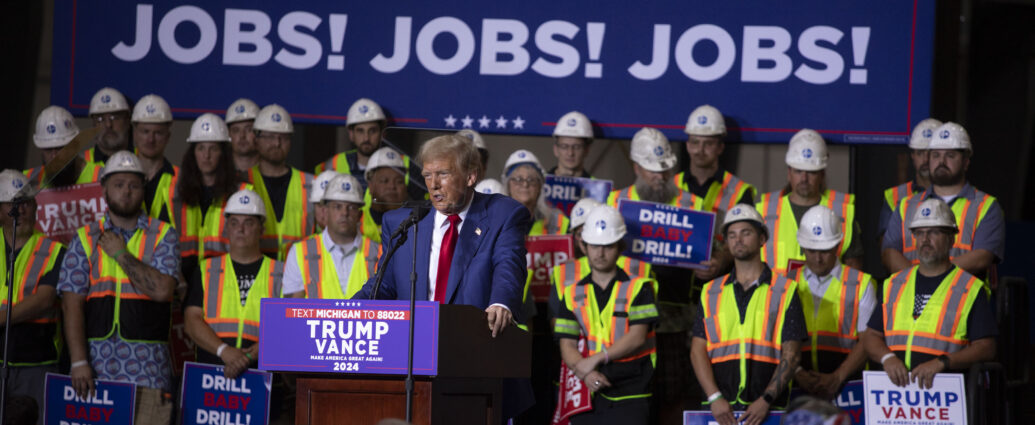
One takeover attempt is bold. Two? Rare indeed. But when news broke in mid-April that the United CEO was interested in acquiring his rival American Airlines, it was the third time this maverick air exec decided he wanted to reshape the playing field. As Fortune reported earlier, it’s far from clear such a merger would ever be approved, and on Friday American said it was “not engaged with or interested in any discussions regarding a merger with United Airlines.” Still, sources that spoke to Fortune called it “not impossible” given a President who “loves big deals.” And it’s worth looking back at Kirby’s track record to understand that, when he sees a deal, he is serious.

Put simply, Kirby has a long history of audacious ideas. It was back in the early 2000s that he rose at America West to become the top lieutenant to CEO Doug Parker. In 2005, the pair orchestrated the offensive that devoured much bigger U.S. Airways from Chapter 11. In 2007, American’s current CEO Robert Isom joined U.S, Airways—America West took its target’s name—as chief operating officer and served alongside CEO Parker and president Kirby in what become known as an industry “dream team.” Kirby gained a reputation as one of the best in business at network planning and revenue management. Isom totally transformed the airline’s industry-trailing record in on-time performance baggage handling, and customer service so that within two years, U.S. Airways ranked among the industry’s best in each category.

In December of 2013, the braintrust reprised the David-beats-Golaith playbook when U.S. Airways snagged American from bankruptcy, and reflagged once again as the bigger name. Parker, Kirby and Isom continued as CEO, president and COO respectively, mounting a comeback that by the mid-2010s, got American’s stock back near the pre-GFC levels.

Parker made it clear that Kirby wouldn’t succeed him, and in 2016, United CEO Oscar Munoz pounced, hiring the 50-year old as president and heir apparent. Kirby built on Munoz’s success in going up-market, and burnished his credentials as a master of capturing high-fare business customers in the mold pioneered by Delta. “He’s the smartest person I’ve ever worked with,” says Jim Olson, who worked with Kirby at US Airways and United, heading communications at both companies. “He’s like an AI supercomputer in establishing routes, but he shows it even in funny ways. At US Airways, we had this contest at quarterly all-hands meetings where they’d put out this giant jar of jelly beans, and you’d win by getting closest to actual number of beans in the jar. Kirby just eyed it, and won, he was off by just a few jelly beans. He’s also extremely politically savvy, and employees love him.” (Olsen just published an acclaimed memoir and crisis management guide called “Tailwind: A Compass for turning your Setback Story into a Comeback Legacy” featuring a forward by Munoz that this highly writer highly recommends.)

Instead of following the United and Delta push for affluent flyers, American emphasized competing on price, even removing premium rows on its aircraft. The low fares didn’t support a top product, and the airline generated low yields on seats sold. American viewed its competition as low-cost carriers such as Spirit and Frontier. Its low profitability and high debt levels made the carrier super-vulnerable to the COVID shutdown, and to survive, it piled on gigantic levels of debt that hobble its finances to this day. Its current market cap stands at just over $8 billion, one-fourth and one-fifth the respective numbers for United’s and Delta. Given its giant size in revenues, that American harbors such a tiny valuation underlines that investors are extremely downbeat on its prospects.

So Kirby would be pursuing a hobbled American for the second time. On this occasion, he’s confronting the leader who was part of brainiac trio that performed the US Airways-American coup a decade ago, and now has the CEO job at his old employer. It won’t be an easy quest, that’s for sure. But given his track record, it’s not an impossible one either.

This story was originally featured on Fortune.com

This post was originally published here

John Kapon knew that the bottle of 1945 Domaine de la Romanée-Conti up for sale at his New-York based wine seller’s auction last month was going to do well. After all, it was one of only 600 bottles of the burgundy produced in a year marked in history as end of World War II, and considered one the greatest vintages of all time.

Still, it was a little shocking when the bottle sold for $812,500—setting a new world record for a bottle of wine sold at auction at nearly 50% more than the record price that same bottle had fetched in 2018. “Scarcity really drives the bus,” says Kapon. “When it comes to really rare, and really old wines among the greatest, people don’t really care what they pay for it.”

Wines are not the only category of collectible items seeing a surge in value at auction. Last month, the 1969 black Fender Stratocaster guitar that Pink Floyd member David Gilmour played on that band’s most iconic albums, including “Dark Side of the Moon,” went for $14.55 million at a Christie’s auction. That was more than double the $6 million record set in 2020 for a guitar, a 1959 Martin D-18E that Kurt Cobain played in Nirvana’s “MTV Unplugged” performance decades earlier. Only weeks before that, a rare Pokémon Pikachu Illustrator card, one of just 29 created for a competition in the 1990’s, was sold by influencer and wrestler Logan Paul for $16.5 billion—triple what he paid for it in 2021.

What those items have in common is they are very rare, one-of-a-kind items that also tell a story. In the case of the Domaine de la Romanée-Conti, with the passage of time, fewer and fewer bottles of the wine have become available, with perhaps only a handful left, estimates Kapon.

Acker’s Fine and Rare index, which tracks a cross-section of 100 top wines sold at the auction, rose 11% in the first three months of the year, one of the strongest jumps he’s seen in 25 years. Other collectibles are seeing effervescence at their higher end: TCGplayer, a platform owned by eBay for trading cards of all kinds, said it saw double‑ and triple‑digit percentage gains on many rarer cards in 2025. And the online music instrument marketplace Reverb found that in 2025, the overall values of an array of quality vintage instruments, not just the multimillion-dollar headline grabbing ones, had risen by 10% to 30% last year, with the rarer models fetching the biggest increases. The market for unique collectables stands in contrast to a slower-growing art market: The recent Art Basel and UBS Art Market report found the sector grew by a modest 4% last year, after a couple of years of declines.

Collecting prized and special objects is nothing new, of course. And it’s not just rarity that drives up prices at auction. It’s often a story that makes something a one-of-a-kind item—and therefore valuable. Of the Gilmour guitar, Christie’s Nathalie Ferneau explained, “It sort of became this mythical holy grail object.” The instrument was part of a Christie’s auction of the collection of Jim Irsay, a billionaire who had owned the Indiana Colts football team. The auction yielded over $84 million in sales from 44 items, setting 23 world records.

The guitar was modified by Gilmour himself, who changed the neck multiple times and drilled holes into it. Such changes would typically dent the value of an instrument, but not in this case, since the modifications show it was a guitar Gilmour himself tailored to get the sound he wanted on those classic albums. “For a true fan, that makes it all the more desirable,” says Ferneau.

In the case of the Pokémon card, much of its value stemmed from its pristine, original condition, certified by an authentication agency. It helped that Paul sweetened the pot by selling the card inside a custom necklace he wore, and that he would hand-deliver it to the winner.

Not every valuable collectible item is meant to be put in a display case or resold. Wine, for example, is meant for drinking. Similarly, guitar collectors like to get together with friends and actually play their prized possessions, rather than treat a multi-million dollar guitar like a Monet painting. “It’s a great conversation piece,” says Martin Nolan, executive director of auction house Julien’s, which in 2015 sold the first guitar to fetch $1 million.

Another possible factor in the rise of collectables: Truly unique pieces are a chance for the ultra-wealthy to flex amid the sea of sameness in high-end personal goods. “Traditional luxury goods are losing their luster,” says Columbia Business School marketing professor and former LVMH executive Silvia Bellezza. “The 1% disengages from this type of good, and so what do they do next? They’re not going to stop signaling. They’re going to do it in a more sophisticated way.”

This story was originally featured on Fortune.com

This post was originally published here

Meta is preparing to cut thousands of jobs as early as next month, with deeper layoffs expected later this year, according to a report.

The tech giant intends to slash roughly 10% of its global workforce — or nearly 8,000 employees — in an initial round of cuts on May 20, sources told Reuters.

The company is also planning additional layoffs in the second half of the year, though details including timing and scope remain unclear, the outlet reported.

The report follows earlier Reuters reporting that Meta was weighing cuts that could affect at least 20% of its workforce as it seeks to offset rising artificial intelligence costs.

ADL WARNS META POLICY SHIFT COULD HURT AD REVENUE AS REPORT NOTES RISE IN HATEFUL, EXTREMIST CONTENT

When reached by FOX Business, Meta declined to comment.

Previously, a Meta spokesperson told FOX Business the earlier Reuters report was “a speculative report about theoretical approaches.”

The cuts come as Meta looks to offset the cost of AI infrastructure and streamline operations with AI-assisted workers.

META VOWS APPEAL OF ‘LANDMARK’ SOCIAL MEDIA VERDICTS, WARNS OF FREE SPEECH EROSION

CEO Mark Zuckerberg has invested billions of dollars in artificial intelligence as the company pivots toward the technology.

Meta has also reorganized teams within its Reality Labs division and moved engineers into a new Applied AI group focused on developing AI agents capable of writing code and performing complex tasks, according to Reuters.

Meta employed nearly 79,000 people as of Dec. 31, according to its latest filing.

META’S BAY AREA LAYOFFS AFFECT ROUGHLY 200 WORKERS AS COMPANY POURS BILLIONS INTO AI INFRASTRUCTURE

A 20% reduction would mark Meta’s largest restructuring since 2022 and early 2023.

The company laid off 11,000 workers in November 2022 — about 13% of its workforce — and cut another 10,000 jobs months later.

Other major companies, including Amazon, have also announced layoffs linked to AI developments.

GET FOX BUSINESS ON THE GO BY CLICKING HERE

Amazon said in January it would cut around 16,000 jobs after previously announcing about 14,000 white-collar layoffs in October, bringing total reductions to roughly 30,000 roles.

Reuters contributed to this report.

This post was originally published here

The parent company behind well-known shopping channels QVC and HSN has filed for Chapter 11 bankruptcy.  

QVC Group, which filed in the U.S. Bankruptcy Court for the Southern District of Texas, announced the filing in a press release Thursday, saying the company will undergo a restructuring support agreement (RSA) to reduce its debt from $6.6 billion to $1.3 billion.

The goal of the RSA is to emerge from bankruptcy within 90 days. 

“The company has ample liquidity to support the business and, importantly, the terms of the RSA provide for vendors, suppliers and all other general unsecured creditors of the filing entities to be paid in full for all goods and services,” the press release says.

STEAK AND SEAFOOD CHAIN 801 RESTAURANT GROUP FILES FOR BANKRUPTCY AFTER CLOSING DENVER, MINNEAPOLIS SPOTS

During this time, QVC Group plans for all of its businesses to operate as normal with no planned layoffs or furloughs as it continues to evaluate its finances.

Both QVC, which stands for Quality, Value and Convenience, and HSN, the Home Shopping Network, have been late-night staples on cable television, although with the popularity of shopping through social media and other technology, the company has acknowledged needing to change its business model.

David Rawlinson, president and CEO of QVC Group, said in the press release he is confident in the company’s ability to recover from the current setback based on the progress it has seen so far.

SPIRIT AIRLINES REACHES DEAL TO EXIT BANKRUPTCY PROCEEDINGS BY EARLY SUMMER

“QVC Group is uniquely positioned to compete and win in live social shopping, and we are seeing early momentum in our WIN Growth Strategy,” he said. 

“Over the past year, we have become a top seller on TikTok Shop U.S. while expanding our business on streaming and other platforms. We have consolidated our HSN and QVC operations, struck new deals with critical social and media partners and rebalanced sourcing to account for the changing tariff environment.

GET FOX BUSINESS ON THE GO

“With the support of our lenders and a more appropriate capital structure, we believe we can deliver on our WIN Growth Strategy,” Rawlinson added.

Billionaire John Malone bought QVC in 2003 for $7.9 billion. The brand later acquired HSN in 2017 for $2.1 billion.

This post was originally published here

More good news on President Trump winning the war and the growing likelihood that some kind of agreement will be made with Iran. It’s driving the stock market sky-high. 

My guess is improving the animal spirits of all Americans who know the cause to destroy Iran is just but were concerned how difficult it might be.

I continue to call this the Trump miracle. I continue to believe it is providential. Ending the most gruesome government since the Nazis of World War II. It’s such a phenomenal boon to mankind in the cause of peace, freedom and prosperity.

Mr. Trump has unwaveringly delivered on his vision to end the 47-year forever war, to do what no other president in either party quite had the backbone to do.

Mr. Trump, talking to various press organizations, has said a number of things of great importance today.

He has said Iran has agreed to everything and will work with the United States to remove enriched uranium from Iran. 

“Our people, together with the Iranians are going to work together to go get it. And then we’ll take it to the United States,” he said.

The president also said Iran has agreed to stop backing proxy terrorist groups, like Hezbollah and Hamas. When asked when he would be announcing the deal, Mr. Trump said the two sides are meeting this weekend and that America would continue its blockade “until we get it done.”

Of course, trust, but verify.

Especially with Iranians. Mr. Trump knows that.

And even as Iran is suggesting that the Strait of Hormuz will be opened, Mr. Trump is exactly right to maintain the embargo on Iranian ports and shipping.

That embargo is such a powerful weapon. It will bankrupt the government, and starve them out of power if left in place for a bunch of weeks ahead.

And I hope that is what the president does. Keep the embargo. Because we don’t know about Iranian promises. We do not trust them.

And we want to make sure that they are in no position to make any demands in whatever negotiations or agreements take place.

We’re talking unconditional surrender. They must do what Mr. Trump and his national security team tells them to do.

Mr. Trump made another point today, that there will be no need to involve American ground troops.

Now for a transfer of enriched uranium from Iranian hands to American hands, yes there will be some military people.

Yet the key point here, and I think another reason for the big stock market rally vote of approval, is that the blockade means no wider war, no thousands of ground troops on Kharg island, no $200 oil.

That was always the market’s worst case fear.

The economic and financial blockade substitutes for a wider combat role. And it’s so powerful. And I think that’s a key point for the end of the war that will come sooner, and for the tremendous stock market rally — which is not finished.

Today, Mr. Trump posted that “the naval blockade will remain in full force and effect as it pertains to Iran, only, until such time as our transaction with Iran is 100% complete.”

In other words, Mr. Trump is maintaining control. And that’s exactly what he should be doing. Because no one can trust Iran. And this whole episode won’t be over until it’s completely over.

Yet America, under one of its very strongest commanders in chief ever, will win this war. And that is a plus for all mankind.

This post was originally published here

Oil prices dropped back to where they were in the early days of the Iran war, and U.S. stocks raced to another record Friday after Iran said the Strait of Hormuz is open again for commercial tankers carrying crude from the Persian Gulf to customers worldwide.

The S&P 500 leaped 1.2% to an all-time high and closed out a third straight week of big gains, its longest streak since Halloween. A freer flow of oil could take pressure off prices not only for gasoline but also for groceries and all kinds of other products that get moved by vehicles. It could even ultimately help people pay less on credit-card interest and mortgage bills.

The Dow Jones Industrial Average surged as many as 1,100 points before paring its gain to 868, or 1.8%. The Nasdaq composite climbed 1.5%.

The U.S. stock market has jumped more than 12% since hitting a bottom in late March on hopes the United States and Iran can avoid a worst-case scenario for the global economy despite their war. Friday’s reopening of the Strait of Hormuz, which may only be temporary, is the clearest signal yet for optimism, and President Donald Trump said late Thursday that the war “should be ending pretty soon.”

The price for a barrel of benchmark U.S. crude plunged immediately after Iran’s foreign minister, Abbas Araghchi, posted on X that passage for all commercial vessels through the strait “is declared completely open” as a ceasefire appears to be holding in Lebanon. He said it would stay open for the remaining period of the ceasefire, and the price for U.S. oil dropped 9.4% to settle at $82.59 per barrel.

Brent crude, the international standard, fell 9.1% to settle at $90.38 per barrel. To be sure, it remains above its $70 price from before the war, indicating some caution is still embedded in financial markets.

Several times since the war began, optimism on Wall Street has quickly deteriorated into doubt about a possible end to the fighting. That in turn has caused vicious and sudden swings of prices for everything from stocks to bonds to oil.

Minutes after the Iranian foreign minister’s announcement of the Strait of Hormuz’s reopening, Trump said on his social media network that the U.S. Navy’s blockade of Iranian ports remains “in full force” until both sides reach a deal on the war. He, though, also suggested that “should go very quickly in that most of the points are already negotiated” and emphasized it by using all capital letters.

Companies with big fuel bills soared to some of Wall Street’s biggest gains following the easing of oil prices.

United Airlines flew 7.1% higher, and Southwest Airlines climbed 5.1%. A day earlier, the head of the International Energy Agency had said that Europe has “maybe six weeks or so” of remaining jet fuel supplies.

Operators of cruise ships, which guzzle fuel, also steamed higher. Royal Caribbean Group gained 7.3%, and Carnival rose 7%.

Housing and auto-related companies likewise got some relief from the drop in oil prices.

With less threat of high inflation hurting the economy, a sustained drop in oil prices could convince the Federal Reserve to resume its cuts to interest rates to help the economy. The yield on the 10-year Treasury sank to 4.24% from 4.32% late Thursday, and lower yields can bring down rates for mortgages and other loans going to U.S. households and businesses.

Builders FirstSource, a supplier of windows and other products, rose 5.5%, and homebuilder PulteGroup gained 5% on hopes that lower mortgage rates will spur more people to buy houses. Carvana climbed 7% because lower loan rates can get more customers into new autos.

A strong start to the earnings reporting season for big U.S. companies has also helped support the U.S. stock market, and more financial companies joined the list delivering bigger profits for the start of 2026 than analysts expected.

State Street rose 2.5%, and Fifth Third Bancorp added 1.7% after both reported better results for the latest quarter than expected.

They helped offset a 9.7% slide for Netflix, which fell even though it delivered a better profit than expected. It did not raise its forecast for revenue growth for the full year, which analysts said may have disappointed some investors.

It also said Reed Hastings, cofounder and chairman of the streaming company, will step down from its board of directors in June when his term expires.

All told, the S&P 500 rose 84.78 points to 7,126.06. The Dow Jones Industrial Average jumped 868.71 to 49,447.43, and the Nasdaq composite climbed 365.78 to 24,468.48.

In stock markets abroad, stock indexes leaped in Europe following Iran’s announcement about the Strait of Hormuz. France’s CAC 40 jumped 2%, and Germany’s DAX returned 2.3%.

In Asia, where trading finished for the day before the announcement, indexes were weaker. Japan’s Nikkei 225 lost 1.8%, and Hong Kong’s Hang Seng fell 0.9% for two of the bigger losses.

___

AP Business Writers Chan Ho-him and Matt Ott contributed to this report.

This story was originally featured on Fortune.com

This post was originally published here

White House chief of staff Susie Wiles plans to sound out Anthropic CEO Dario Amodei about the artificial intelligence company’s new Mythos model, which has attracted attention from the federal government for how it could transform national security and the economy.

A White House official, who requested anonymity to discuss the planned meeting Friday, said the administration is engaging with advanced AI labs about their models and the security of software. The official stressed that any new technology that might be used by the federal government would require a technical period for evaluation.

The meeting comes after tensions have run hot between the Trump administration and the safety-conscious Anthropic, which has sought to put guardrails on the development of AI to minimize any potential risks and maximize its economic and national security benefits for the U.S.

President Donald Trump tried to stop all federal agencies from using Anthropic’s chatbot Claude over the company’s contract dispute with the Pentagon, with Trump saying in a February social media post that the administration “will not do business with them again!”

Defense Secretary Pete Hegseth also sought to declare Anthropic a supply chain risk, an unprecedented move against a U.S. company that Anthropic has challenged in two federal courts. The company said it wanted assurance the Pentagon would not use its technology in fully autonomous weapons and the surveillance of Americans. Hegseth said the company must allow for any uses the Pentagon deemed lawful.

U.S. District Judge Rita Lin issued a ruling in March that blocked the enforcement of Trump’s social media directive ordering all federal agencies to stop using Anthropic products.

Anthropic declined to speak about the meeting in advance.

The San Francisco-based Anthropic has said the new Mythos model it announced on April 7 is so “strikingly capable” that it is limiting its use to select customers because of its ability to surpass human cybersecurity experts in finding and exploiting computer vulnerabilities.

And while some industry experts have questioned whether Anthropic’s claims of too-powerful AI technology were a marketing ploy, even some of the company’s sharpest critics have suggested that Mythos might represent a further advancement in AI.

One influential Anthropic critic, David Sacks, who was the White House’s AI and crypto czar, said people should “take this seriously.”

“Anytime Anthropic is scaring people, you have to ask, ‘Is this a tactic? Is this part of their Chicken Little routine? Or is it real?’” Sacks said on the “All-In” podcast he co-hosts with other tech investors. “With cyber, I actually would give them credit in this case and say this is more on the real side.”

Sacks said, “It just makes sense that as the coding models become more and more capable, they are more capable at finding bugs. That means they’re more capable at finding vulnerabilities. That means they’re more capable at stringing together multiple vulnerabilities and creating an exploit.”

The model’s potential benefits, as well as its risks, have also attracted attention outside the U.S.

The United Kingdom’s AI Security Institute said it evaluated the new model and found it a “step up” over previous models, which were already rapidly improving.

“Mythos Preview can exploit systems with weak security posture, and it is likely that more models with these capabilities will be developed,” the institute said in a report.

Anthropic has also been in talks with the European Union about its AI models, including advanced models that haven’t yet been released in Europe, European Commission spokesman Thomas Regnier said Friday.

Axios first reported the scheduled meeting between Wiles and Amodei.

When it announced Mythos, Anthropic said it was also forming an initiative called Project Glasswing, bringing together tech giants such as Amazon, Apple, Google and Microsoft, along with other companies like JPMorgan Chase, in hopes of securing the world’s critical software from “severe” fallout that the new model could pose to public safety, national security and the economy.

“We’re releasing it to a subset of some of the world’s most important companies and organizations so they can use this to find vulnerabilities,” said the Anthropic co-founder and policy chief, Jack Clark, at this week’s Semafor World Economy conference.

Clark added that Mythos, while ahead of the curve, is not a “special model.”

“There will be other systems just like this in a few months from other companies, and in a year to a year-and-a-half later, there will be open-weight models from China that have these capabilities,” he said. So the world is going to have to get ready for more powerful systems that are going to exist within it.”

___

O’Brien reported from Providence, R.I. AP business reporter Kelvin Chan contributed to this report from London.

This story was originally featured on Fortune.com

This post was originally published here

Ford is recalling about 1.4 million F-150 pickup trucks in the U.S. following a National Highway Traffic Safety Administration (NHTSA) investigation into reports of unexpected downshifts, the regulator said on Friday.

NHTSA’s recall announcement said Ford was aware of two injuries and one accident that were potentially related to the issue, and that dealers would update the trucks’ powertrain control module (PCM) software as a remedy.

Earlier this year, the regulator had expanded a safety-related investigation into the issue. A preliminary evaluation was first opened in March last year, after receiving complaints related to the unintended downshifts. Ford’s review evaluated trends observed in customer reports, including those involving vehicles driving on wet surfaces or towing trailers.

The vehicle recall covers model year 2015–2017 F-150 pickups equipped with the “6R80” transmission.

FORD RECALLS OVER 422,000 VEHICLES OVER WINDSHIELD WIPER ISSUE

Ford had earlier said that the issue may have been caused by electrical connections wearing down over time due to heat and vibration, leading to signal loss from the transmission range sensor.

The regulatory agency said that incorrect signals likely lead to an unintended downshift.

MASSIVE HONDA RECALL IMPACTS 440K VEHICLES OVER AIRBAGS POTENTIALLY DEPLOYING ‘UNEXPECTEDLY’

Owners of affected F-150 pickups will be notified by mail and instructed to take their vehicle to a Ford or Lincoln dealer to receive a software update for their PCM to remedy the issue.

If an affected vehicle previously exhibited certain diagnostic trouble codes relating to this condition prior to installing the software, dealers will replace the lead frame in accordance with a corresponding extended warranty program. There will be no charge for that service.

MERCEDES-BENZ RECALLS OVER 24,000 VEHICLES DUE TO DRIVE SHAFT DEFECT THAT COULD CAUSE SUDDEN FAILURE

Dealers are expected to be notified on April 15, while interim owner notifications will be sent starting on April 27 with completion by May 1.

The mailing of remedy owner notification letters is expected to begin July 13 and be completed by July 17.

CLICK HERE TO GET FOX BUSINESS ON THE GO

Ford F-150 owners will be able to see whether their pickup is covered by the recall by searching using their VIN on April 15.

Reuters contributed to this report.

This post was originally published here

The Federal Aviation Administration (FAA) announced on Thursday that it would implement a scheduling reduction at Chicago’s O’Hare International Airport after the airlines that serve the airport planned to scale up flights despite significant levels of cancellations and delays. 

O’Hare is the busiest airport in the U.S. based on flight volume and had over 3,080 flights planned on peak days for summer 2026, an increase of 14.9% from peak days in summer 2025 when just 60% of arrivals and departures were on time.

The FAA’s scheduling reduction will limit O’Hare’s daily operations to 2,708 flights to prevent a dramatic increase from last summer’s peak daily schedule with the goal of preventing a high volume of delays and cancellations. The flight limitations will be in effect from May 17 to Oct. 24, 2026.

“If you book a ticket, we want you and your family to have the certainty that you’ll fly without endless delays and cancellations,” said Transportation Secretary Sean Duffy, who added that the FAA will follow a similar template to what it used at another one of the nation’s busiest airports as it seeks to streamline O’Hare’s operations. 

FAA ORDERS AIRLINES TO CERTIFY MERIT-BASED PILOT HIRING OR FACE INVESTIGATION

“We successfully turned Newark Liberty International into the most on-time airport in the Tri-State Area by fixing telecoms issues at record speed and reducing overcapacity,” Duffy said. 

“Applying that same strategy at O’Hare – where unrealistic schedules were set to dramatically exceed what they could handle – will reduce delays and make this busy summer travel season a little easier,” he said. 

“Along with our work to modernize air traffic control and boost staffing, the Trump administration is using every tool at its disposal to deliver a safe, efficient, and seamless flying experience,” Duffy added.

RISING FUEL COSTS THREATEN SPIRIT AIRLINES’ BANKRUPTCY EXIT PLAN: REPORTS

The FAA’s announcement said that O’Hare’s proposed flight volume of 3,080 per day on peak days was an increase of 400 compared with last year. 

That proposal came against the backdrop of air traffic controllers dealing with constrained gate capacity and ongoing taxiway closures due to construction.

Airline representatives worked in one-on-one meetings with the FAA to find a balance between scaling back operations at O’Hare and meeting the airline’s needs.

DELTA LANDING ATTEMPT RATTLED BY WRONG TOWER RADIO MIX-UP, SPARKING ALARM NEAR LAGUARDIA

Aside from limiting flight volume at O’Hare, the FAA also said that it’s bringing in more air traffic controllers and improving the speed of controller training while optimizing routes and airspace around Chicago to reduce delays. It’s also increasing collaborative decision-making (CDM) calls between the FAA, airlines and airports during potential high-risk periods.

“Our number one priority is the safety of the flying public, and that means ensuring airline schedules reflect what the system can safely handle,” said FAA Administrator Bryan Bedford.

GET FOX BUSINESS ON THE GO BY CLICKING HERE

“We appreciate the airlines working together with us to reach a responsible level of operations that strengthens safety and delivers a more reliable travel experience for the American public,” Bedford added.

This post was originally published here

The U.S. and Iran have observed a cease-fire for nearly two weeks, but the economic toll is only starting to become clear and could have drastic consequences.

The U.S.-Israeli bombardment has damaged more than 125,000 residential and civilian buildings, while over 20,000 industrial units have been destroyed, according to Hadi Kahalzadeh, a former economist at Iran’s Social Security Organization writing for the Bourse & Bazaar Foundation.

“If this war had a hidden target, it was not Iran’s military power projection; it was the labor market that sustains the livelihoods of ordinary citizens,” he said in Substack post on Sunday.

Kahalzadeh added Iran’s ports and transportation systems have also been heavily damaged, while more than $300 billion in civilian infrastructure is estimated to have suffered damage.

In the process, supply chains, transport networks, and commercial services have been disrupted, forcing many companies to suspend operations.

But the pattern of strikes appears to have targeted the core pillars of Iran’s labor market, namely steel, construction, petrochemicals, pharmaceuticals, and retail, he pointed out.

Steel, in particular, is especially critical as supplies ripple through manufacturing, transportation, and construction, Kahalzadeh wrote.

The war’s other knock-on effects, including 72% inflation in March, weak demand, low liquidity, falling incomes, and deep uncertainty have hit wholesalers and retailers as well. After tallying up the impact on various sectors, the result is stark.

“Considering the pattern of attacks, about 10 [million] to 12 million jobs, roughly 50% of Iran’s workforce, are now at risk,” Kahalzadeh estimated. “That does not mean all of those jobs have already disappeared. It means that a very large share of Iranian workers now live under the shadow of furloughs or layoffs.”

To be sure, the U.S. and Israel have said they are targeting Iran’s defense industrial base that supports production of its missiles and drones. That has included some plants that serve both military and nonmilitary purposes.

Meanwhile, air strikes have largely avoided Iran’s energy infrastructure, though Israel attacked a fuel depot near Tehran as well as the massive South Pars gas field and nearby Asaluyeh refinery.

People work at the scene of a damaged residential building on April 14, 2026, in southeastern Tehran.
Majid Saeedi/Getty Images

Kahalzadeh’s dire warning comes as the Iranian economy was already crumbling before the U.S. and Israel launched their war in late February.

Since then, inflation has worsened, the currency has collapsed further, and the regime faces a cash crunch that threatens its ability to pay government workers.

On top of that, the U.S. naval blockade on ships entering or leaving Iranian ports could trigger a currency devaluation spiral and hyperinflation.

President Donald Trump said Friday the blockade will remain, despite saying Iran had agreed to fully open the Strait of Hormuz.

In fact, the Pentagon said earlier this week that the blockade would be expanded to include “shadow fleet” tankers used by Iran to transport sanctioned oil, even if it means interdicting ships in the Pacific.

So while the bombs have gone quiet for now, the Iranian people and the regime face must climb out of an epic economic crater.

Kahalzadeh calculated if only 30% of the 10 million to 12 million jobs at risk are actually lost, that still translates to approximately 3 million to 4 million jobs—representing a 15% labor market contraction and the largest decline in Iran’s modern history.

With so many people out of work, the social safety net would be stretched to the brink, as war-induced unemployment would take up at least 20% Iran’s budget, which is already running a large deficit.

“Even if the cease-fire holds, Iran’s most vulnerable people will suffer the long-term consequences of this 40-day conflict,” he added. “The bitter irony of this war is that the very population President Trump claimed to support by this war is now bearing the brunt of the damage.”

This story was originally featured on Fortune.com

This post was originally published here

German Enlightenment philosopher Immanuel Kant argued in his 1795 essay Perpetual Peace: A Philosophical Sketch, that nations should conduct themselves in a particular way with wars and debt: “National debts shall not be contracted with a view to the external friction of states.”

In other words, to maintain peace, don’t finance wars with debt.

Nearly a quarter-millennium later, public finance expert Linda Bilmes warns the U.S. is making this exact mistake in how the U.S. is raising capital for the Iran war, encumbering the already weighty $39 trillion national debt.

According to Bilmes, a policy lecturer at the Harvard Kennedy School, the cost of the ongoing war is likely to exceed $1 trillion, swamping early projections of U.S. spending on the war, with the Pentagon reportedly claiming the first week of the war cost about $11.3 billion alone. The American Enterprise Institute estimated the costs of the war would have exceeded $35 billion by April 1—or about $1 billion per day. Bilmes said the daily costs are double those estimates, as the government does not take into account the long-term impacts of war, such as long-term veteran disability benefits and damage to key infrastructure that could take years to rebuild.

Above all else, Bilmes noted, the U.S. is now relying more heavily on debt to finance the war that we have previously. During the wars in Iraq and Afghanistan in the early 2000s, the debt held by the public sat at around $4 trillion, and we were paying about 7% of the overall federal budget on interest, Bilmes said. Today, $31 trillion of debt is held by the public, with 15% of the national budget being spent on paying down interest.

“The result is that the interest costs alone will add billions of dollars to the total cost of this war,” Bilmes said in a recent interview with the Harvard Kennedy School. “And unlike the upfront costs, these are costs we are explicitly passing on to the next generation.”

Bilmes told Fortune that the U.S. didn’t always put so much burden on the national debt during wartime, although each previous conflict did rely on borrowing money. These 21st century wartime funding strategies furthered by the Trump administration, she said, are bad news for the U.S ‘s mounting debt.

U.S. history of financing wars

An adolescent United States tried to follow Kant’s peace principles when it entered the War of 1812, implementing a slew of duties, including direct land taxes, as well as taxes on everything from sugar, auction sales, carriages, liquor distilleries, and retail alcohol licenses. This was perhaps more by necessity than choice: The Bank of the United States’ charter ran out in 1811, meaning there was no centralized entity able to manage loans and bonds.

The wartime heavy taxes essentially laid the groundwork for how the U.S. would raise capital in times of war, from the Civil War through Vietnam, though the bunk of financing still came from borrowed money. 

During World War I, for example, President Woodrow Wilson espoused a “conscription of wealth,” telling Americans that just as the U.S. drafted young men to fight the war, it would also draft the wealth of America’s richest. By 1918, progressive income tax rates touched 77%. In the throes of the Korean War, President Harry Truman gave more than 200 speeches advocating for his “pay-as-you-go policy” of using tax revenue to pay for military expenditures over debt.

But this ideology changed at the turn of the 21st century, when President George W. Bush implemented tax cuts in 2001 and 2003 at the same time as he launched attacks on Iraq and Afghanistan, becoming the first time a U.S. war was funded solely through borrowing rather than taxes or budget increases. Bilmes, along with economist Joseph Stiglitz, published a study in 2006 that found the true cost of the war in Iraq and Afghanistan topped $2 trillion, about four times greater than the Congressional Budget Office (CBO)’s projected $500 billion in direct spending. In 2013, Bilmes revised her estimations — and concluded the cost was actually closer to $4 trillion to $6 trillion.

The impact of broken traditions

President Donald Trump has continued this pattern in Iran today. The administration’s “One Big Beautiful Bill Act” extended Trump’s 2017 tax cuts, lowering rates for individuals and businesses. The cuts will total $4.5 trillion in tax reductions over the next 10 years, according to the act. 

Meanwhile, the White House is seeking up to $100 billion in additional funds for the conflict from Congress, the Washington Post reported, and Trump’s fiscal 2027 budget request called for $1.5 trillion in defense spending, a 44% increase from the year before and also includes a 10% cut to nondefense spending. The proposed budget would mark the first time defense spending exceeds all other discretionary spend. About a quarter of the U.S. budget comes from borrowed money.

“That is money that goes on indefinitely,” she said. “It means that every year the base that you start from in the budget is higher.”

Bilmes argues there’s nothing inherently wrong with borrowing money. Rather, she’s concerned the administration’s focus on military spending will come at the expense of investments in economic growth, tipping the debt-to-GDP ratio and leading to a drag on economic growth.  The White House did not immediately respond to Fortune’s request for comment.

“When you borrow for things that are productive investments, like infrastructure or education, you hope to get back more than what you borrow,” she said. “But in this case, we’re borrowing high rates, largely for things that will end up in the sand.”

This story was originally featured on Fortune.com

This post was originally published here

A Kansas-based restaurant group with several steak and seafood locations in Kansas, Missouri, Minnesota, Colorado, Virginia, Nebraska and Iowa, has filed for bankruptcy.

801 Restaurant Group LLC filed for Chapter 11 reorganization last Friday in U.S. Bankruptcy Court in Kansas, the company confirmed to Fox Business.

801 Restaurant Group owns several companies that operate restaurants as 801 Chophouse, 801 Fish, or 801 Local.

“The companies that own and operate the restaurants are not in bankruptcy and there are no plans or need for them to file bankruptcy,” 810 Restaurant Group said in a press release. “The individual restaurant companies operating successfully are not impacted by the 801 Restaurant Group’s Chapter 11 filing.”

RISING FUEL COSTS THREATEN SPIRIT AIRLINES’ BANKRUPTCY EXIT PLAN: REPORTS

The company added that it became necessary to restructure because of guaranties it made to other companies it owns, including 801 Fish in downtown Denver and 801 On Nicollet in Minneapolis, which have both closed.

“The purpose of the Chapter 11 is to restructure these and other obligations for which 801 Restaurant Group has liability,” the release said.

SEARS SUED BY STANLEY BLACK & DECKER OVER CRAFTSMAN BRAND

The court filing shows liabilities totaling roughly $18.7 million, according to documents obtained by Fox Business.

The company said the filing is “not expected to have any impact on the remaining locations,” which will operate normally during their restructuring.

The restaurants that remain open include 801 Chophouses in Denver, Des Moines, Omaha Kansas City, Leawood, St. Louis Minneapolis, and Tysons Corner in the Washington, D.C. area, and 801 Fish in St. Louis.

The Des Moines restaurant was the original 801 Chophouse location, which opened in 1993.

This post was originally published here

Iran and the White House both declared the valuable Strait of Hormuz chokepoint “completely open” on April 17, and benchmark crude oil prices plunged below $90 per barrel for the first time since early March. But Iran is still asserting its control over the strait and President Donald Trump maintained that the U.S. blockade on Iranian ports continues for now.

Translation: Virtually nothing has changed yet, and the markets overreacted to the announcements, although peace talks are seemingly making notable progress, energy and geopolitical analysts told Fortune.

“The strait remains closed for now,” said Matt Reed, vice president of geopolitical and energy consultancy Foreign Reports. “The Iranians made clear that nothing has really changed yet. They still want ships to follow their orders. That means being rerouted. It means maybe paying tolls.

“When Iran said that the strait was completely open, it came with an asterisk.”

Despite the confusion on Friday, Reed said, there is clear progress being made in the negotiations.

“If there if there is a breakthrough to be had, it might not be for a few more days,” Reed said. “We are clearly inching in the right direction, but there’s still a long way to go. The problem for oil markets is that every day the strait remains shut the market is starved. And it is still closed for now.”

Historic supply shocks

The world has continued to suffer its greatest supply shock ever for nearly seven weeks with the closure of the strait and the halting of roughly 20% of global crude oil, liquefied natural gas, fertilizer, and petrochemical trade flow.

Although Trump declared the strait “completely open and ready for business and full passage,” he emphasized that the naval blockade on Iran’s exports will remain “in full force and effect” until a peace deal is “100% complete.” He said the process should be completed “very quickly” because most points are already negotiated. Trump added that Iran is in the process of removing sea mines from the strait, which has not been confirmed.

No immediate changes in traffic through the Persian Gulf were apparent April 17, said Claire Jungman, director of maritime risk and intelligence for Vortexa. “In practical terms, that likely means shipowners, charterers, and insurers will still want operational clarity before changing voyage decisions.”

German maritime shipper Hapag-Lloyd still has six vessels stuck in the Persian Gulf. The company’s crisis committee is meeting and trying to determine when it might be safe to traverse the strait, said spokesman Nils Haupt in email exchanges. But they remain in a holding pattern for now.

“There are still some open questions on our end, but they might be resolved within the next 24 hours,” Haupt said. “Top priority for the passage is safety and security for the seafarers, the vessel, and the cargo of our customers. If all open issues are cleared (i.e. insurance coverage, clear orders of Iranian government/military about the exact sea corridor to be used, and the sequence of ships leaving), we would prefer to pass the strait as soon as possible.”

Likewise, the Norwegian Shipowners’ Association said the tenuous situation “remains unresolved” with issues of sea mines, Iran’s conditional orders, insurance, and more still unclear for now.

It seems as if the Israel-Lebanon ceasefire announced April 16 was a key step toward moving the U.S. and Iran closer on a potential deal. Iran drew a line in the sand against Israel continuing to bomb Lebanon. Trump said the reopening of the Strait of Hormuz is not tied to Lebanon, but Trump added on social media, “Israel will not be bombing Lebanon any longer. They are PROHIBITED from doing so by the U.S.A. Enough is enough!!!”

Matt Reed now sees an interim peace deal—not a more in-depth permanent one—as possible as soon as this weekend.

“The good news is that we’re headed in the right direction. The bad news is that we haven’t achieved a breakthrough yet,” Reed said. “We could see Iran ease its grip on traffic going through the strait, but it won’t want to give up its leverage too soon.”

This story was originally featured on Fortune.com

This post was originally published here

Tether has used its hundreds of billions in assets to become many things, including social media investors, data center lenders, and one of the largest holders of U.S. T-bills. But this week, Tether became something else: A crypto startup’s lender of last resort. The stablecoin giant put up $127.5 million in funding—some in loans, some in grants—to aid the recovery of Drift, a Solana-based derivatives exchange that was pilfered for $285 million by North Korea-linked hackers earlier this month.

While the funds won’t cover the full amount that Drift lost in the hack, the money will provide additional stability as the exchange has said it will also begin contributing its own revenue in a bid to make users whole. 

Tether’s involvement in the recovery plan has won it plaudits from crypto fans, particularly users of the blockchain Solana, on which Drift is built. Meanwhile, that goodwill may come at the expense of Tether’s chief rival, Circle, whose USDC stablecoin has long been the most popular on Solana and Drift. Tether and Drift did not immediately return requests for comment. 

A ‘moral quandary’

While hacking is hardly uncommon in the crypto world, the Drift breach was particularly sophisticated. The hackers, thought to be working on behalf of the DPRK, approached Drift team members at a cryptocurrency conference in late 2025 and pretended to be from a trading firm looking to build on the blockchain protocol. Eventually, they won sufficient trust to gain deeper access to Drift’s systems, opening the door to steal funds, the company said in a statement

As part of the scheme, the hackers converted their stolen funds, which represented numerous cryptocurrencies, into USDC before whisking the tokens off the Solana blockchain altogether

Following the breach, many Drift customers have been pointing their fingers at Circle, claiming the firm saw the hack taking place, but failed to freeze the USDC, which could have prevented the hackers from making off with the stolen funds.

Circle CEO Jeremy Allaire reportedly said a private company freezing user funds at its own discretion would create a “moral quandary,” adding that Circle only freezes assets at the direction of law enforcement or the courts. Reached for comment, Circle sent a blog post from one of its executives on the topic of asset freezing.

Tether, meanwhile, appears to have used the episode to gain goodwill at the expense of its rival. Nicky Scannella, lead for the Solana marketing group Superteam USA, swapped $45,000 of USDC for Tether’s USDT stablecoin following the news of Tether’s Drift gift. 

“The best way to reward [Tether’s] behavior and punish [Circle’s] behavior is to swap,” Scanella said in a text. “If we want to see more of this … we as users need to actually act. It’s sorta like voting.”

USDC and USDT showed a marginal loss and gain, respectively, in supply on the Solana blockchain in the day following Tether’s announcement, per DeFiLlama data. Still, USDC has around $8.1 billion in Solana stablecoin supply to USDT’s $3 billion—though Tether’s coin remains the dominant overall stablecoin with a market cap of $185 billion compared to Circle’s $78 billion.

Tether also gained a new client through the ordeal. Drift will use USDT, rather than USDC, for settlement when the exchange re-launches, the company said in a statement

This story was originally featured on Fortune.com

This post was originally published here

The U.S. is caught in a spiraling debt crisis, and a major casualty might be demand for U.S. Treasuries—a critical support pillar for the economy and the government’s ability to spend money.

The scale of U.S. borrowing is severely testing confidence in the country’s ability to keep financing itself. The federal debt has climbed to $39 trillion, a level that budget experts have warned might soon force the U.S. into increasingly dire decisions as to what it can spend on. 

One victim of such a spiral would be the Treasury market, the largest bond market in the world. The country’s nagging debt problem is starting to break down that longstanding reliability of Treasury securities, and could eventually cause their demand to collapse, according to Henry Paulson, who served as Treasury secretary during the George W. Bush administration. 

“That’s a dangerous thing,” he said Thursday during an interview with Bloomberg TV, describing a scenario where demand and prices for Treasuries fall as foreign interest in the market declines.

It’s no exaggeration to say Treasury securities underpin multiple parts of the global financial system, and are foundational to the way the U.S. government finances itself. The government is able to offset its gaping deficit by issuing Treasury securities, including bonds, bills, and notes, which are then purchased by a wide range of investors including foreign governments and pension funds.

Demand for securities is what informs Treasury yields, which serve as a benchmark for virtually every other borrowing cost ranging from mortgage rates to student loans. When yields rise, those costs rise with them. 

The Treasury market is also a haven asset. In times of crisis, investors around the world have historically piled into U.S. government debt precisely because it is considered the safest store of value on the planet. Ever-present international demand for U.S. government bonds have played a big role in turning the dollar into the world’s reserve currency, and are a big reason why the U.S. has been able to rack up such a large spending tab. 

That status, however, is not guaranteed. Escalating risk tied to the nation’s debt obligations could push investors to require higher yields on Treasuries, forcing interest rates up which would make the deficit even more difficult to resolve.

Should enough investors back out of buying Treasuries, the Federal Reserve would step in as a buyer of last resort, Paulson said, a dynamic that might accelerate the government’s debt spiral by further eroding confidence in the U.S. economy’s stability. 

He called for a last-resort measure to halt the spiral if the situation deteriorates to that point. “We need an emergency break-the-glass plan, which is targeted and short-term, on the shelf, so it’s ready to go when we hit the wall.” 

The Committee for a Responsible Federal Budget, a nonpartisan think tank, has advocated for something similar, recently proposing a plan that would allow the government to nimbly navigate its stressed budget the next time the economy enters a downturn.

As for when such a crisis might occur, Paulson said it would be hard to predict, depending on a variety of factors including the debt’s trajectory and the general state of the economy. But nearing that moment without a plan, he continued, would be a self-defeating exercise.

“It will be vicious,” he said. “We have to prepare for that eventuality.”

This story was originally featured on Fortune.com

This post was originally published here

If you look at Adam Silver’s background, you wouldn’t think he’d eventually come to lead the NBA, nor bring it to be the massive marketing and media powerhouse it is today.

The son of a labor lawyer, he grew up in Rye, New York, editing at his high school newspaper and running cross country. He studied political science at Duke University, clerked for a federal judge, and then made partner at a major New York law firm. None of that would have screamed sports mogul.

But in 1992, when he joined the NBA as a junior staffer under then-Commissioner David Stern, Silver quickly rose over a three-decade-plus career from special assistant to chief of staff, to president of NBA Entertainment and finally, deputy commissioner. It wasn’t until February 2014 that he was elected to be the league’s fifth commissioner.

Over the course of his 12-year tenure in the position, Silver brought the league back from what many fans initially saw as a fledging sport struggling to keep up with the growing viewership of the NFL and MLB. The hey-day of the entertainment era: (Dr. Jerry Buss screaming “Showtime!” after giving Paula Abdul her big start probably emphasizes this most prominently) from growing cross-country feuds to the sport taking on a global stage during the 1992 Olympics was largely seen as the height of the sport. Silver, learning from Stern who brought the league from a league where fans would tape delay the finals to a $5 billion-a-year global industry, took that leadership to another level.

And on Thursday night, we was awarded for that leadership: Silver became the first sports executive in the award’s 35-year history to receive the Edison Achievement Award. The honor, often called the “Oscars of Innovation,” places Silver alongside past recipients including Steve Jobs, Elon Musk, and Jensen Huang.

The Edison Achievement Award is presented annually to leaders who have made significant and lasting contributions to innovation and human-centered design. Silver received the award at a ceremony in Fort Myers, Fla. Rihanna was also honored this year.

“My role is to serve as a steward of the NBA–preserving the 80-year history and legacy of our league while helping to chart its future,” Silver told Fortune in an exclusive interview following his receiving of the award. “That requires constant collaboration and communication with all of our stakeholders.”

Since taking the helm as commissioner, Silver has overseen an era of aggressive expansion and reinvention. He presides over five professional leagues: the NBA, WNBA, NBA G League, NBA 2K League, and the Basketball Africa League. Last year, he secured landmark 11-year media rights deals with Disney, NBCUniversal, and Amazon worth a combined $76 billion.

“Basketball is truly a global sport and that’s been a major catalyst for the NBA and its continued growth and influence over the years,” Silver said.

Edison Awards CEO Frank Bonafilia called Silver a transformative figure.

“Adam Silver has not only upheld the NBA’s legacy as a premier global sports league but has boldly reinvented it for the 21st century,” Bonafilia said.

Reimagining the regular season

Among Silver’s most visible innovations are structural changes to the NBA calendar designed to raise the stakes of regular-season play. The NBA Cup, an in-season tournament now in its third year, and the Play-In Tournament, introduced during the 2020-21 season, were both launched under his watch.

“Competitions like the NBA Cup and the Play-In Tournament were designed to add more games of consequence and excitement during the regular season,” Silver said. “As a result, we’ve seen record fan interest—whether you look at viewership, attendance, or social media engagement.”

Silver has also pushed the NBA’s footprint into new markets, none more notable than Africa, where the Basketball Africa League launched in 2019 as a partnership between NBA Africa and the International Basketball Federation. The league now features 12 teams from across the continent.

“The NBA and the game of basketball have deep roots in Africa, which laid the groundwork for the creation of the Basketball Africa League,” Silver said. “Our focus is less about exporting the NBA product as it exists in North America and more about building a locally relevant league that is authentic to Africa.”

Silver’s vision extends to how fans consume the game. With the NBA’s new media partners, he’s betting on streaming technology and artificial intelligence to overhaul the broadcast experience.

“Working with our media partners, we’re focused on developing hyper-personalized and hyper-localized broadcasts that reimagine the live viewing experience for our fans,” Silver said. “Through streaming technology and artificial intelligence, we want to give fans the ability to experience the game exactly the way they want.”

Lessons from the Bubble and sports management

The Edison Award also nods to Silver’s leadership during the COVID-19 pandemic, when the NBA became the first major U.S. sports league to suspend its season in March 2020, and then pioneered the “NBA Bubble” at Walt Disney World to complete play. The Bubble has been seen as a case study of crisis management. Instead of cancelling the season or scrambling for alternatives way of playing the high-contact sport, Silver brainstormed the Bubble and it has largely been seen as a success, even when other leagues failed to replicate it.

“The experience of operating through a pandemic was a reminder that there will always be things outside of your control, no matter how prepared you are,” Silver said. “We tried to maintain a fact-based mindset, even as information around Covid was changing by the day. Through collaboration, communication, and compromise, the NBA community came together to create the ‘NBA Bubble’ and successfully complete our season.”

For Silver, the Edison honor carries a broader message about what innovation means in sports.

“A lot of what we consider innovation is about efficiency, convenience, and speed. Those things matter a lot,” Silver said. “But sports remind us that some of the most important forms of innovation are human— things like building trust, creating identity, and fostering belonging.”

This story was originally featured on Fortune.com

This post was originally published here

Elon Musk turned heads Friday when he suggested that the federal government paying citizens a “universal high income” is the best way to combat AI-related job losses.

“Universal HIGH INCOME via checks issued by the Federal government is the best way to deal with unemployment caused by AI,” Musk said in a post on his own X platform shortly after midnight Friday morning.

The proposal, which is still pinned to the top of his X account, rebuffed the idea that such payments would be inflationary.

“AI/robotics will produce goods & services far in excess of the increase in the money supply, so there will not be inflation,” he wrote.

ANDREW YANG WILL GIVE AWAY $1K PER MONTH TO 20 AMERICANS TO PROMOTE UBI

Many economists, however, disagreed.

“He is so wrong on this,” wrote Sanjeev Sanyal, the former top economic advisor to India’s Minister of Finance.

“AI will certainly cause dislocation, but like all technology it will also create new jobs and opportunities in the medium term. AI and robots will also not produce goods and services in excess of money or demand that there will be no inflation,” he wrote on X.

“Elon Musk’s universal high income will bankrupt any government that attempts it,” he concluded.

HE INVISIBLE LAYOFF: AI IS QUIETLY LOCKING AMERICANS OUT OF THE JOB MARKET, CEO WARNS

Another skeptic, Pratyush Rai, the co-founder and CEO of Merlin AI, concurred.

“The basic math on UHI (Universal High Income) doesn’t add up. If everyone gets a high income check, everyone’s competing for the same houses, land, schools, lifestyle,” he posted on X.

Some, however, are more hopeful that the plan could have merit.

Former Democratic presidential hopeful Andrew Yang chimed in with tepid support. Yang, who popularized a similar idea of Universal Basic Income (UBI) during his 2020 campaign, tweeted: “It’s clear that AI will wind up funding universal income. Let’s make that happen ASAP.”

GET FOX BUSINESS ON THE GO BY CLICKING HERE

Universal high income (UHI) is a significant leap from Yang’s UBI. While UBI serves to support a person’s basic needs while continuing to work, many who promote UHI preach a departure from the need to work entirely.

This post was originally published here

Walmart announced that it’s planning to remodel more than 650 of its stores around the U.S. while it also will open about 20 new stores in 2026 and early 2027.

The retail giant said on Thursday that the plan builds on its 2024 commitment to open or convert over 150 new locations while updating its existing store portfolio.

“This investment is intended to create jobs, help strengthen local economies, and make shopping faster and more convenient for our customers,” Walmart said, adding that the new stores and remodels will drive construction jobs during the projects while creating long-term roles in retail, pharmacy and store leadership.

WALMART GIVES GREAT VALUE ITS FIRST REFRESH IN OVER A DECADE, SPANNING THOUSANDS OF PRODUCTS

Among the changes that customers may notice at updated stores are wider aisles and updated layouts, new displays with expanded assortments, more pickup and delivery service options including express delivery, refreshed interiors and exteriors with improved parking and landscaping, plus new digital touchpoints to show the company’s online assortment for in-store shoppers.

The remodels will also update Walmart’s vision centers and pharmacies with private consultation rooms.

Walmart’s Neighborhood Markets will see expanded deli and hot bar selections, pharmacy delivery options, improved lighting and fixtures, as well as upgraded areas for fulfilling online grocery orders. 

Select Neighborhood Markets are being updated through a rapid remodel program that aims to complete the project quicker with minimal customer disruption.

WALMART CUSTOMERS SEEKING VALUE DRIVE SALES HIGHER

“Our goal is simple: we want shopping to feel easy, intuitive, and connected while continuing to deliver the everyday low prices our customers expect,” Walmart said.

The company’s announcement noted that this year it already opened new Walmart Supercenters in Eastvale, California, along with Apollo Beach, Jacksonville, and The Villages, Florida. It also opened a Walmart Neighborhood Market in Ocala, Florida.

Later this year, Walmart said that it will expand its Supercenter in Tucson, Arizona, while opening a new Supercenter in Celina, Texas. Walmart also noted that it opened nine new stores across Alabama, California, Florida, New Jersey, Texas and Utah in 2025.

WHO IS JOHN FURNER, WALMART’S NEW CEO?

The retailer’s announcement on store remodels and openings comes after it announced on Wednesday that it was moving forward with a sweeping redesign of its flagship Great Value label, covering nearly 10,000 food and household products.

The effort marks the brand’s first full refresh in over 10 years and is the largest private-label update in Walmart’s history.

GET FOX BUSINESS ON THE GO BY CLICKING HERE

FOX Business’ Sophia Compton contributed to this report.

This post was originally published here

Iran’s foreign minister declared the Strait of Hormuz “completely open” for commercial shipping on Friday, sending Brent crude down roughly $10 to around $89 a barrel within minutes and U.S. stocks to a fresh record high.

President Donald Trump quickly claimed credit on Truth Social, writing that the Strait is “COMPLETELY OPEN AND READY FOR BUSINESS”—but he made clear the U.S. naval blockade of Iranian ports isn’t going anywhere until a deal with Iran is “100% COMPLETE.” He added that the negotiation process “SHOULD GO VERY QUICKLY” because most of the points have already been worked out.

Despite the strait opening, it’s unclear when commercial shippers will gain the confidence to resume normal operations. Some told the Wall Street Journal they were waiting for clearer security guarantees before resuming normal traffic, which before the war ran at around 135 vessels a day.

On the face of it, the reopening is the clearest sign yet that the two-month U.S.-Iran war is winding down. But the bigger story, according to veteran energy analysts, is the fresh leverage Iran discovered it holds in the Gulf.

“It turns out the Strait of Hormuz functions almost like a nuclear deterrent,” said Jim Krane, a Gulf energy expert at Rice University’s Baker Institute and the author of books on Saudi and UAE energy policy. “It’s a pretty strong card that they play, basically holding the global economy hostage to halt attacks on it.”

Roughly 20% of the world’s oil and a large share of liquefied natural gas transit the narrow strait. When Iran effectively closed it in February, the impact on the global economy was immediate; Asia and Europe faced blackouts and rationing, and fertilizer supplies tightened, threatening crop yields. Even Iraq—an Iranian ally—had to shutter oil production because it couldn’t move its gas, forcing its power grid into rolling outages, Krane said. 

That pressure is ultimately what forced Iran’s hand, Krane explained. “Iran can probably hang on for a while,” he noted, pointing out that Iranian oil exports have actually risen during the war thanks to cargoes already on the water. “But the pressure on the global economy was really just unsustainable.

Friday’s euphoric price drop may be premature. Ed Morse, former longtime head of commodities research at Citigroup, told Fortune that the market is getting ahead of the physical reality. “The forward curves are pointing to, from a consumer perspective, optimism that’s not warranted by where the actual flows are,” Morse said.

The reality is that the markets cannot catch up fast enough to meet the dearth of oil. Morse claims roughly 10 million barrels a day of supply have been disrupted for 45 days. That missing supply from the global system is partly absorbed by demand destruction and by drawing down inventories that are now “extremely low,” Morse said. Other estimates have gone even higher, like the International Energy Agency putting the true daily toll at 20 million barrels per day. 

Even if the strait reopened fully overnight, it would take at least seven weeks for oil that left the Middle East before the war to reach Asia-Pacific markets. “There’s not going to be oil reaching their normal destinations for almost two months,” he said. “And that assumes you’ll get production back rapidly, and that you’ll get flows back rapidly, which I don’t think is going to happen.”

Iran has also said it placed mines in the Strait of Hormuz, using its knowledge of their locations as leverage by guiding select ships safely around them, allowing them to further thwart any attempts by ships to move through the strait without Iranian approval.

That’s one of two things that will stretch the timeline further, he added. Mine clearance in the strait—which Trump posted on Truth Social is happening with Iran’s cooperation—could take the better part of a month depending on cooperation. And ship owners, Morse said, are going to be extremely cautious about sending vessels back into the waterway. A VLCC—the largest class of crude tanker—costs about $120 million to $130 million. “You’re not going to risk losing your money machine,” Morse said.

This story was originally featured on Fortune.com

This post was originally published here

Netflix co-founder Reed Hastings will not seek re-election to the company’s board.

He is currently the chair of the streaming entertainment giant’s board of directors.

“Reed Hastings has informed us that he will not stand for re-election to our Board when his current term expires at the Annual Meeting in June, in order to focus on his philanthropy and other pursuits,” the company wrote in a recent Securities and Exchange Commission report.

NETFLIX RAISES SUBSCRIPTION PRICES ACROSS ALL PLANS

“Reed built a culture of innovation, integrity and high performance that defines who we are today. His vision and leadership pioneered how the world is entertained, and his legacy and impact are not only felt by all of us at Netflix, but by audiences around the world. On behalf of the Board and our shareholders, we extend our deepest thanks for his extraordinary leadership and service,” Netflix added.

Rich Greenfield of LightShed Partners and LightShed Ventures told CNBC that Hastings’ exit “is spooking investors.”

NETFLIX FOLLOWS WARREN BUFFETT’S PLAYBOOK: DON’T OVERPAY, WALK AWAY

The company’s stock price took a nosedive after the market close on Thursday, falling about 10% as of Friday morning prior to the market open.

Hastings noted, “Netflix changed my life in so many ways, and my all‑time favorite memory was January 2016, when we enabled nearly the entire planet to enjoy our service.” 

WHY NETFLIX’S CEO DROPPED HIS BID TO BUY WARNER BROS DISCOVERY AND TRUMP ‘DIDN’T CARE’

GET FOX BUSINESS ON THE GO BY CLICKING HERE

“My real contribution at Netflix wasn’t a single decision; it was a focus on member joy, building a culture that others could inherit and improve, and building a company that could be both beloved by members and wildly successful for generations to come. A special thanks to Greg and Ted, whose commitment to Netflix’s greatness is so strong that I can now focus on new things,” he added, referring to the company’s co-CEOs Ted Sarandos and Greg Peters.

This post was originally published here

Last year was a record-breaking one for international tourism, injecting trillions of dollars into the global economy and supporting millions of jobs. But while more people than ever took to weathered streets of European capitals or sun-soaked beaches on Pacific islands, the U.S. appears to have plummeted down travelers’ bucket lists.

Global travel last year added a record $11.6 trillion to the economy, according to a report released this week by the World Travel & Tourism Council (WTTC), an industry body. Tourism’s worldwide value accounted for almost 10% of global GDP, and represented one of the fastest-growing economic sectors in Asia, Africa, and Latin America.

In the U.S., however, last year was a different story. North America ended the year as the slowest-growing region for tourism, with the industry’s economic value growing only 1% compared to 2024. That was almost entirely due to plunging international visits to the U.S. While international travel rose by 80 million people in 2025, visitors to the U.S. fell 5.5%. The latest data point illustrated the country’s declining international appeal, regardless of how long people intend to stay. 

Bad press for the U.S.

The report isn’t the first to document the declining interest in the U.S. as an international destination, which surveys have largely attributed to President Donald Trump’s policies. One analysis by Skift, a tourism-focused website, found 46% of travelers said they were less likely to visit the U.S. in 2025 because of Trump. The administration has tightened visa requirements, and nationals of dozens of countries have been barred entry to the U.S. altogether.

Most concerning to many would-be travelers was the administration’s immigration crackdown, which was accompanied by televised reports of violent clashes with law enforcement in several large American cities and typical tourist draws. European and Canadian visitors have been caught up in the president’s deportation campaign as well, likely discouraging more tourism. One German tourist crossing overland from Mexico into California last year was held in a detention center for six weeks, including a spell in solitary confinement.

Combined with Trump’s tariff regime, musings to invade Greenland, and a wide range of other enacted or planned policies—such as one proposal to force tourists to divulge their social media history before being granted access to the U.S.—the country’s international brand has taken a hit. 

The shift comes with real economic costs. A separate report released this week by the non-profit U.S. Travel Association found domestic and international travel supported 15 million jobs and generated $3 trillion in output last year, representing 2.4% of GDP. But that figure could have been even higher without the decline in international tourism. The WTTC estimated foreign tourists in the U.S. spent $176 billion last year, more than $14 billion less than in 2024.

A summer reprieve?

The U.S. remains the largest travel market in the world, largely due to the $1.5 trillion domestic tourists spend every year seeing the country. And the WTTC projected 2026 to be a different story for the U.S. as the country prepares to co-host the FIFA World Cup this summer, a monthlong-event involving 11 cities that could attract 1.24 million international visitors. 

The tournament is likely to generate billions in economic output in a relatively short period, according to a study earlier this month by the U.S. Travel Association. Each World Cup visitor from abroad expects to spend more than $5,000 during their stay, on average, the study found, nearly twice as much as international tourists usually spend.

But even a wildly successful World Cup month might be looked back upon as a regretful case of what-ifs. Experts have warned a long list of headaches could force tourists considering visiting the U.S. this summer to shorten their trip or cancel it entirely, including expensive match tickets, strict visa procedures, safety concerns, and rising airfares due to the war in the Middle East. Citing the recent reports showing the decline in international visitors to the U.S., some analysts have slightly downgraded their projections for tourist volume this summer.

An early indicator the U.S. might want to keep its expectations in check for the summer has been hotel prices. Rather than raising room rates as would normally happen during periods of expected high demand, hotels across the U.S. have started slashing prices for this summer, the FT reported this week, with some host cities seeing match-day rates tumble as much as one-third. Domestic tourists are a spending power in the U.S., but international visitors, who might stay longer and venture further afield, are sorely missed.

This story was originally featured on Fortune.com

This post was originally published here

Employers have regained their power over employees, and the effects are already showing up.

During the peak of the Great Resignation in November 2021, 4.5 million workers left their jobs voluntarily. As of last month, that number was about 3 million as employees hesitated to leave their jobs at a time when job searches can drag on for months. Workers’ optimism for finding a job is lower today than during the pandemic in 2020, according to a report by the Federal Reserve Bank of New York.

Data from the Federal Reserve Bank of New York found that workers were even less optimistic about finding a job today than they were in 2020. The average worker said they had less than a 50% chance of finding a job in today’s economy, according to the Fed data.

Even those who have a job are now having to deal with cuts to benefits and perks, if not mass layoffs, as AI advances and investors pressure companies to cut costs. Many are also forcing employees back to the office after years of flexible work and remote work policies. 

Employees who may not have tolerated such cuts in the past are now coping with them, according to a January survey from MyPerfectResume.

The survey of 1,000 adults found that only 7% of employees would quit their jobs over a mandatory return-to-office policy. That’s compared to 51% who said they would quit over the same issue in January of 2025. More than 70% of workers also predicted they would have the same or less bargaining power to push for flexible work policies in 2026 than in 2025, the survey found.

 “The era of employee leverage has ended,” Jasmine Escalera, a career expert at MyPerfectResume, said in a statement

Office mandates lead the way

One of the starkest reminders that the workplace has shifted is the change in companies’ approach to remote work. A report from last July by commercial real estate company Jones Lang LaSalle Inc. (JLL) found that Fortune 100 companies are forcing employees to work from the office an average of 3.8 days per workweek, compared with 2.6 days in 2023.

Some employers have gone even further, forcing employees to come into the office full-time and doing away with the flexible work policies of the pandemic era. 

One such company is Instagram, whose CEO, Adam Mosseri, told U.S. employees in a companywide memo in December that they would need to work from the office five days a week. Parent company Meta has required employees to come into the office three days a week since 2023.

Automaker Stellantis started requiring workers to come into the office five days a week starting last month. Meanwhile, Home Depot in January announced a five-day return to office for employees starting earlier this month, at the same time it announced 800 layoffs.

Even Microsoft, which, after the pandemic, instituted a flexible work policy that allowed most employees to work less than 50% of the week remotely without needing manager approval, began requiring their workers in the Puget Sound region to come into the office three days a week starting in February.

Benefits are quietly shrinking too

The rollbacks that companies are pushing in today’s economy have also extended to benefits and perks. In February, Home Depot imposed stricter requirements for employee bonuses. A manager must now reach at least 95% of their store’s sales goal to qualify for a bonus, up from 90% previously. At the same time, the retailer cut the amount paid out to those who reach only the minimum threshold. Those managers whose stores reached 95% of their sales goal, and no more, will receive 25% of their target bonus, down from 50% before. The changes come as the home improvement retailer fell short of analyst expectations with $38.2 billion in sales, down $1.5 billion year-over-year.

Meta, whose CEO, Mark Zuckerberg, has been one of the loudest voices calling for cost-cutting and efficiency, has reportedly scaled back some perks for workers in recent years. Some of these changes include eliminating free laundry and dry cleaning as well as pushing back the time dinner is served in the office, so employees have to stay later to take advantage of it. Goldman Sachs, for its part, cut its free breakfast and lunch options, according to the Wall Street Journal.

Why workers aren’t pushing back

Companies’ cuts to perks and benefits, as well as their push to get more out of employees, come as unemployment stood at 4.3% in March. Potentially as a result of higher unemployment and low hiring, the overall quit rate has stayed below 2% for eight consecutive months.

March exceeded analyst expectations with 178,000 jobs added, but just a month before, the U.S. economy lost 92,000 jobs, according to the Bureau of Labor Statistics. 

Nicholas Bloom, a Stanford economist whose research helped define the Great Resignation, told Fortune last month that workers should not leave their current job without another lined up. “You don’t want to quit a job to find that what you thought would be easy — getting another job — turns out to be a massive struggle,” he said.

AI adoption is adding another layer of pressure. While AI is saving employees up to an hour per day, according to Goldman Sachs, companies are quickly filling this time saved with extra tasks by demanding more output from each worker.

The risk employers are taking

Jamie Shapiro, an organizational psychologist and CEO of the executive coaching company ConnectedEC, told Fortune that while employers push for greater productivity, they may also be underestimating the long-term costs to employees and the company as a whole. 

This is especially true if cuts to benefits or perks are not doled out evenly, she said, and in such situations, employers need to ensure they communicate the reasons for the changes clearly.

“Anytime we have an abrasion of justice, we are going to see lower motivation of our employees because we want things to feel fair.”

The idea that squeezing workers harder produces more output, she argued, is a false narrative. 

“When we don’t invest in our people, and we don’t care for their well-being, we actually get so much less out of them.”

The Great Resignation showed that employees offered a better deal elsewhere don’t hesitate to move on. This is a problem for companies, especially when the average cost of turnover per employee is about 6 to 9 months of an employee’s salary, according to a study by the Society for Human Resource Management. 

Employees who are constantly worried about the next layoff or benefit cut are not going to be loyal to their employers or brag to their friends about their company, which can help recruitment and the company’s brand. 

Improving employees’ perception of the company as well as the amount of effort they contribute to an organization has everything to do with a company’s workplace culture, said Shapiro.

I have a thriving culture, I’m thriving within the culture, then what we see is that person’s going to be more committed to the organization, more willing to go above and beyond, talk about why it’s such a wonderful place to work, all of those things

“When I’m somebody who’s on the front line, do I feel like my organization is being fair to me? And if the answer is no, then that can hurt motivation, and it can hurt not only the culture, but it can also hurt how much I feel invested in the organization,” she said.

This story was originally featured on Fortune.com

This post was originally published here

President Donald Trump said Iran agreed to suspend its nuclear program indefinitely, and will not receive any frozen funds from the US.

Trump said in a phone interview on Friday that a deal to end the war, which the US and Israel began with Iran in late February, is mostly complete. Talks over a lasting agreement will “probably” be held this weekend, the president said. 

“Most of the main points are finalized. It’ll go pretty quickly,” Trump said.

Iran has yet to comment on any deal beyond the Strait of Hormuz opening, nor on claims made by Trump on Thursday that Tehran had offered concessions — including over the key issue of its nuclear program.Play Video

Oil, fuel and natural gas prices plunged on hopes that the latest developments would mean more energy supplies can finally transit safely through the strait.

Brent crude traded below $90 a barrel by 12:05 p.m. in New York and wiped out most of its gains since the onset of the war. Diesel prices in the US and Europe, which was hit severely by the war, led the move lower in the energy complex.

Trump said he hasn’t decided who would lead a US delegation for talks with Iranian officials to sign an agreement. Asked if he would travel to Pakistan, which hosted the last round of negotiations, the president said, “I may.” 

JD Vance led discussions with Iranian officials last weekend, and Trump said he was considering sending the vice president alongside his son-in-law, Jared Kushner, and envoy Steve Witkoff for the talks.

The president denied that the moratorium on Iran’s nuclear program would expire after 20 years. Asked if the program will completely halt, Trump responded “No years, unlimited.”

The situation in the vital Hormuz waterway remained uncertain Friday. The Islamic Republic earlier said it would open the strait for the duration of the 10-day ceasefire between Israel and Lebanon. 

Trump hailed that move, but indicated that a US blockade on vessels transiting to and from Iranian ports would remain in place until a broader deal between Washington and Tehran was “100%” agreed. 

Iran said through its semi-official Fars news agency that it will close the strait again if the blockade remains in place. Transiting vessels must coordinate with Iranian forces, semi-official Tasnim added. 

Many traders and analysts remain skeptical that flows can resume meaningfully and quickly as Iran is yet to confirm whether the strait would be open to all traffic beyond the ceasefire.

About a fifth of the world’s oil and liquefied natural gas flowed through the waterway before the war. Its effective shuttering for the duration of the conflict has stoked a global energy crisis and stoked fears of a worldwide slowdown and rampant inflation. 

The US imposed its own blockade on Monday, while Iran has repeatedly said it wants to maintain control of the strait in the longer term and is working on legislation to charge tolls. 

This story was originally featured on Fortune.com

This post was originally published here

Dario Amodei warned last May that AI could wipe out half of entry-level white collar jobs. Microsoft AI chief Mustafa Suleyman predicted the technology would automate most tasks of the entire white-collar workforce in a year to 18 months. And recently, a report from Anthropic mapped out exactly what Suleyman warned about, and what Elon Musk thinks will make work optional.

The successive statements about AI’s transformative impact on labor may help justify the booming valuation of some AI companies. But this rhetoric in part is also behind some backlash to the technology. A recent NBC News poll found just 26% of U.S. voters have a positive view of the technology, while 46% have a negative view. Now, OpenAI chief global affairs officer Chris Lehane is warning people to relent on messaging around AI.

“Some of the conversation out there is not necessarily responsible,” he told The San Francisco Standard. “And when you put some of those thoughts and ideas out there, they do have consequences.”

“This is not fun and games,” he added. “This is really serious s–t.” 

The constant drumbeat of promises of AI’s labor market impact, as well as the threat of raising electricity bills and the danger it poses to kids, has a growing number of Americans rejecting the technology. And in recent weeks, backlash to the technology has turned violent.

Last week, a 20-year-old man named Daniel Moreno-Gama traveled from his home in Texas to San Francisco and allegedly lobbed a Molotov cocktail at the gate of OpenAI CEO Sam Altman’s home. Authorities then found a manifesto from Moreno-Gama warning of humanity’s extinction at the hands of AI, which included a threat of murder. Reactions to the attack across social platforms like Instagram and TikTok suggest the sentiment runs deep. Comments like “He’s not scared enough” and “FREE THAT MAN HE DID NOTHING WRONG” or “Finally some good news on my feed” reveal a widespread fear of the technology, at least across the internet.

The incident follows a separate shooting at an Indiana city councilman’s house after the councilman expressed support for a data center project in his district. The councilman said the perpetrator shot 13 bullets into the home and left a “no data centers” sign at the doorstep.

What to do about the current discourse surrounding AI

For Lehane, it’s about emphasizing the positives of the technology. “Our job at OpenAI and in the AI space—and we need to do a much better job—is to explain to people why…this is going to be really good for them, for their families and for society writ large,” he said.

Of course, the AI optimists are already singing the praises of the technology. Some have that in just a few years, we’ll be working a three-day work week and lounging at the beach as AI agents do our work for us.

“You have one group that effectively says, ‘This is going to be the greatest thing ever, everyone’s going to be living in beachside homes, painting in watercolors as they while away their days,’” Lehane said. “And then you have another extreme, which I would call the Doomers, who have a very, very negative and dark view of humanity.” 

The data so far supports some of Lehane’s skepticism about the extreme predictions. A study published in February by the National Bureau of Economic Research found that out of 6,000 CEOs and other executives, the vast majority have seen little impact from AI on their operations. That’s even as about two-thirds of executives reported using AI. And while some tech companies have initiated mass layoffs due to AI automation, including Jack Dorsey’s Block, and most recently, Snap, the technology’s impact on the labor market has yet to appear in macro data. In March, employers posted 178,000 job gains and the unemployment rate ticked down to 4.3%, suggesting job gains, at least in the short term, have outweighed AI-related layoffs.

“You’ve had a series of things that have been put out there—but haven’t come to fruition—about extreme things that are going to happen,” Lehane said.

This story was originally featured on Fortune.com

This post was originally published here

A federal judge’s construction halt sends the president into a public spiral, overshadowing Republican efforts to stay on economic message ahead of November

What was supposed to be a disciplined day of domestic policy outreach became something else entirely on Thursday — a cascading series of presidential broadsides over a blocked ballroom, a feud with conservative media figures, and a fresh diplomatic jab at a NATO ally.
White House aides had planned the day carefully. With midterm elections drawing closer and Republican congressional majorities increasingly at risk, senior advisers had spent weeks quietly engineering a messaging reset — one centered on the economic victories most likely to move voters: the elimination of taxes on tips, lower energy costs, and the sweeping tax legislation the administration has labeled the largest tax cut package in American history. Thursday was supposed to be the day that pivot happened in earnest.
Then U.S. District Judge Richard Leon issued his ruling.
Leon, a George W. Bush appointee, ordered a halt to above-ground construction on the proposed White House ballroom — a $400 million project Trump has characterized as a privately donated gift to the nation. The judge ruled that while below-ground work, including bunkers and other security infrastructure, could continue, the ballroom structure itself could not, writing pointedly that “national security is not a blank check to proceed with otherwise unlawful activity.”
The ruling infuriated the president. What followed was a four-post Truth Social barrage spanning several hours.
“The White House doesn’t have a Ballroom,” Trump wrote in his first post at 12:45 p.m., “which Presidents have desperately wanted and desired for over 150 years, but a Trump Hating, Washington, D.C. District Court Judge…is attempting to prevent future Presidents and World Leaders from having a safe and secure large scale Meeting Place.” He described the facility’s intended features at length — bomb shelters, a state-of-the-art hospital, missile-resistant steel, drone-proof ceilings, and blast-proof glass — arguing that without it, “no future President…can ever be Safe and Secure.”
By 1:37 p.m., the president had turned his attention to the plaintiff who brought the underlying lawsuit, describing her dismissively as “a woman walking her dog” with no legal standing to challenge the project. “Every Political ‘Pundit’ has said this case is meritless, even a JOKE,” he wrote, “but it’s not a joke to me, or the people of America.”
Two hours later, Trump took aim at the judge’s suggestion that Congress fund the project through appropriations, calling the idea a historic first. “He wants Tax Payers to pay for the Ballroom, instead of Donors and Patriots,” Trump wrote at 4:41 p.m. “The Ballroom is FREE to our Country, A GIFT, and vital for our National Security.”
The volley came at a moment Republican strategists can ill afford the distraction. With months remaining before voters go to the polls, the party’s hold on both chambers is under mounting pressure. Goldman Sachs chief U.S. political economist Alec Phillips has noted that the cost of living has surpassed every other issue in voter concern, now cited by 29 percent of Americans as their top worry — up from 25 percent ahead of the 2024 presidential election. Prediction markets have shifted to favor Democrats retaking the House majority.
Republican members have grown increasingly candid about their unease. Rep. Nancy Mace of South Carolina warned earlier this year that the party had not done enough on Capitol Hill. “We’re going to lose the midterms in the House,” she said at a Bloomberg Government roundtable. “I think the Senate is at risk because we haven’t been doing enough.”
The ballroom posts were only part of Thursday’s output. Trump also attacked Joe Kent, the administration’s former national counterterrorism director who resigned in protest over the Iran conflict. He returned to his ongoing criticism of conservative commentators Megyn Kelly and Tucker Carlson, who have voiced skepticism about the war. He took a jab at New York City Mayor Zohran Mamdani. And he criticized Italy over access to its air bases, writing: “Italy wasn’t there for us, we won’t be there for them!”
The White House did not respond to requests for comment on Thursday’s messaging strategy.
Trump eventually landed in Las Vegas for a business roundtable, where he declared that the Iran conflict was going “swimmingly” and predicted it “should be ending pretty soon.” The return to scripted messaging was brief but notable — a glimpse of the disciplined campaign aides have been urging for months.
The Justice Department, meanwhile, is pressing the courts for emergency relief on the ballroom, arguing that the construction halt “puts the president at risk” and that “time is of the essence.” The appeals court has asked Judge Leon to clarify the scope of his order.
For a White House increasingly focused on November, Thursday offered a familiar tension in sharp relief: an administration with a strong economic record to run on, and a president who often finds other things to talk about.
The ballroom sits half-built. The midterms keep approaching.

— JBizNews Desk

Iran said Friday it fully reopened the Strait of Hormuz to commercial vessels, but President Donald Trump said the American blockade on Iranian ships and ports “will remain in full force” until Tehran reaches a deal with the U.S., including on its nuclear program.

Iranian Foreign Minister Abbas Araghchi posted on X that the crucial waterway, through which about 20% of the world’s oil is shipped, was now fully open to commercial vessels, as a 10-day truce between Israel and the Iran-backed Hezbollah militant group in Lebanon appeared to hold.

Trump initially celebrated the Iranian announcement, posting on social media that the strait was “fully open and ready for full passage.” But minutes later, he issued another post saying the U.S. Navy’s blockade would continue “UNTIL SUCH TIME AS OUR TRANSACTION WITH IRAN IS 100% COMPLETE.”

The president also said Iran, with help from the U.S., is working to remove all mines from the strait.

Trump imposed the blockade earlier this week after Iran restricted traffic through the strait due to fighting in Lebanon, which Iran claimed to be a breach of the Pakistan-brokered ceasefire reached between the U.S., Israel and Iran.

At the time, Trump said the blockade would enforce an “all or none” policy in hopes of pressuring Iran to reopen the strait.

The president’s decision to continue the blockade despite Iran’s announcement appeared aimed at sustaining pressure on Tehran as the fate of the two-week ceasefire reached last week remains uncertain. Direct talks between the U.S. and Iran last weekend were inconclusive, as the two nations differed over Iran’s nuclear program and other points.

Truce in Lebanon could help US-Iran peace efforts

Oil prices fell on hopes of a deal. The head of the International Energy Agency had warned that energy shocks could get worse if the strait did not reopen.

The truce in Lebanon could clear one major obstacle to a deal between Iran, the United States and Israel to end weeks of devastating war. But it was unclear to what extent Hezbollah would abide by a deal it did not play a role in negotiating and which will leave Israeli troops occupying a stretch of southern Lebanon.

Trump said in another post that Israel is “prohibited” by the U.S. from further strikes on Lebanon and that “enough is enough” in the Israel-Hezbollah war. The White House did not immediately respond to a question about whether the prohibition spans both offensive and defensive strikes.

Shortly before Trump’s social media post, Israeli Prime Minister Benjamin Netanyahu said Israel agreed to the ceasefire in Lebanon “at the request of my friend President Trump,” but that the campaign against Hezbollah is not complete.

He claimed Israel had destroyed about 90% of Hezbollah’s missile and rocket stockpiles and added that Israeli forces “have not finished yet” with the dismantling of the group.

Celebrations in Beirut

In Beirut, celebratory gunshots rang out across the Lebanese capital at the start of the truce. Displaced families began moving toward southern Lebanon and Beirut’s southern suburbs despite warnings by officials not to return to their homes until it became clear whether the ceasefire would hold.

A spokesperson for the U.N. peacekeepers in southern Lebanon said Friday they had not observed any airstrikes since midnight, but accused the Israeli military of violating airspace and of artillery shelling in southern Lebanon. The Israeli military did not immediately comment.

According to the agreement shared by the State Department, Israel can act in self-defense against imminent attacks but cannot carry out offensive operations against southern Lebanon.

Trump heralded the deal a “historic day for Lebanon” and expressed confidence the war with Iran would soon end.

“I will say the war in Iran is going along swimmingly,” Trump said in a Las Vegas speech. “It should be ending pretty soon.”

An end to Israel’s war with Hezbollah was a key demand of Iranian negotiators, who previously accused Israel of breaking the current ceasefire with strikes on Lebanon. Israel said that deal did not cover Lebanon.

Pakistan’s army chief met Thursday with Iran’s parliament speaker as part of international efforts to press for an extension of the ceasefire.

The fighting has killed at least 3,000 people in Iran, more than 2,290 in Lebanon, 23 in Israel and more than a dozen in Gulf Arab states. Thirteen U.S. service members have also been killed.

Israel says it will keep troops in Lebanon

Israeli forces have engaged in fierce battles with Hezbollah in the border area as they pushed into southern Lebanon to create what officials have called a “security zone.”

Israel’s hard-line Defense Minister Israel Katz said said Israel would continue to hold all the places it is currently stationed, including a buffer zone extending 10 kilometers (6 miles) from the border into southern Lebanon. He said many homes in the area would be destroyed and Lebanese residents will not return.

Hezbollah has said Lebanese people have “the right to resist” Israeli occupation of their land and that their actions “will be determined based on how developments unfold.”

Israel and Hezbollah have fought several wars and have been fighting on and off since the day after the start of the Gaza war. Israel and Lebanon reached a deal to end that war in November 2024, but Israel has kept up near-daily strikes in what it says is an effort to prevent the Iran-backed militant group from regrouping. That escalated into another invasion after Hezbollah again began firing missiles at Israel in response to its war on Iran.

Pakistan army chief meets with Iranian parliament speaker

Pakistan’s army chief met Thursday with Iran’s parliament speaker as part of efforts to press for an extension to a ceasefire that has paused almost seven weeks of war between Israel, the U.S. and Iran.

Rregional officials reported progress, telling AP the United States and Iran had an “in-principle agreement” to extend it to allow for more diplomacy. They spoke on condition of anonymity to discuss sensitive negotiations.

Mediators are pushing for a compromise on three main sticking points: Iran’s nuclear program, the Strait of Hormuz and compensation for wartime damages, according to a regional official involved in the mediation efforts.

Trump on Friday suggested Iran has agreed to hand over its enriched uranium.

“The U.S.A. will get all Nuclear ‘Dust,’ created by our great B2 Bombers — No money will exchange hands in any way, shape, or form,” he said in a post. Nuclear dust is the shorthand Trump frequently uses to refer to the highly enriched uranium that is believed buried under nuclear sites the U.S. bombed during last year’s 12-day war between Israel and Iran.

If true, it would be a major concession from Iran, and would lock in a key demand of the U.S. to end the conflict. But neither Iran nor countries acting as intermediaries in the conflict have said Tehran has made such an agreement.

Trump also asserted Thursday that Iran had “agreed to give us back the nuclear dust.”

___

Associated Press writers Matthew Lee and Ben Finley in Washington, Samy Magdy in Cairo, Munir Ahmed in Islamabad, Abby Sewell in Beirut and Melanie Lidman in Tel Aviv, Israel, contributed to this report.

This story was originally featured on Fortune.com

This post was originally published here

The leaders of France and the U.K. on Friday welcomed the announcement by Iran and the U.S. that the Strait of Hormuz is open, but said freedom of navigation must be permanently restored to the key oil route choked by the U.S.-Israeli war on Iran.

President Emmanuel Macron and Prime Minister Keir Starmer said they would keep planning an international mission to restore maritime security, which Starmer said will be deployed “as soon as conditions allow.” They said military planners will meet in London next week.

Speaking after a gathering of some 50 countries and international organizations, Macron said “we all demand the full, immediate and unconditional reopening of the Strait of Hormuz by all parties.”

As the meeting was underway, U.S. President Donald Trump and Iran’s foreign minister declared the strait open to commercial vessels. Oil prices plunged after Iranian Foreign Minister Abbas Araghchi posted on X that passage for commercial vessels would remain “completely open” for the duration of a 10-day ceasefire in Lebanon.

Trump in an all-caps social media post said that the U.S. Navy’s blockade of Iranian ships and ports would remain in force “UNTIL SUCH TIME AS OUR TRANSACTION WITH IRAN IS 100% COMPLETE.”

Starmer cautiously welcomed the announcement, but said it must become “both lasting and a workable proposal.”

The Paris meeting is part of attempts by sidelined nations to ease the impact of a conflict they didn’t start and haven’t joined, but that has sent the global economy reeling. Petroleum prices soared after the war started on Feb. 28, when Iran effectively shut the narrow strait through which a fifth of the world’s oil usually passes.

The U.S. is not part of the planning for what has been branded the Strait of Hormuz Maritime Freedom of Navigation Initiative, which Macron said would be “a neutral mission, entirely separate from the belligerents to escort and secure the merchant ships transiting the Gulf.”

Starmer, facing political troubles at home, was greeted by Macron in the courtyard of the Elysee presidential palace on Friday afternoon. German Chancellor Friedrich Merz and Italian Premier Giorgia Meloni also attended in person. Others, including the prime ministers of Australia and Canada, the South Korean and Ukrainian presidents and representatives of China and India, joined by video.

Military planning underway

In an echo of the “coalition of the willing” assembled to provide security for Ukraine in the event of a ceasefire in that war, Starmer said that along with France, the U.K. will lead a multinational mission to protect freedom of navigation as soon as conditions allow.

“This will be strictly peaceful and defensive, as a mission to reassure commercial shipping and support mine clearance,” he said.

He said more than a dozen countries had agreed to contribute assets, far fewer than in the wider Hormuz coalition.

Britain has discussed using mine-hunting drones, deployed from the ship RFA Lyme Bay.

The war has highlighted the shrunken state of the Royal Navy, which has deployed just one major warship, the destroyer HMS Dragon, to the eastern Mediterranean. France, which has the EU’s most powerful military, has sent its nuclear-powered aircraft carrier to the region, alongside a helicopter carrier and several frigates.

Meloni said she had expressed Italy’s “willingness to make its naval units available,” while Merz said Germany could contribute mine clearance and maritime intelligence capabilities to such a mission, but would need parliamentary support and a ″secure legal basis″ such as a U.N. Security Council resolution.

He said Germany, ″if possible, would also like to see the United States of America participate; we believe this would be desirable.″

That’s a departure from Macron, who has said the mission will involve countries not involved in the conflict.

Macron’s office said roles for members of the coalition could include “intelligence, mine-clearing capabilities, military escorts (and) communication procedures with coastal states.”

Sidharth Kaushal, a research fellow in sea power at the Royal United Services Institute think tank, said mine-clearing and creating a warning system for maritime threats were more likely roles for the coalition than warships escorting commercial tankers through the strait.

“You need huge numbers of vessels for that sort of thing, which nobody has,” he said.

Trump dismisses NATO as ‘paper tiger’

Iran expert Ellie Geranmayeh, deputy head of the Middle East and North Africa program at the European Council on Foreign Relations think tank, said mine-clearing is an area where European countries and their partners could play a role.

“They would be a better party to do this than the United States, because once you have U.S. military doing this and lingering on Iranian shores, it creates a potential arena for Iran and the U.S. to have miscalculations and get back into a sort of military tension,” she said.

The operation is partly a response to Trump, who has berated allies for failing to join the war. The president has called allies “cowards,” said NATO “wasn’t there when we needed them” and telling Britain: “You don’t even have a navy.”

Kaushal said European countries were likely trying “to demonstrate the ability to provide security in a way that’s distinct from, if not completely separate from, the U.S. and which also demonstrates a capacity for independent action.”

“How many states actually have spare capacity to offer to this is a pretty open question.”

Trump appeared dismissive of European offers of help, though he referred to NATO rather than the Franco-British-led coalition.

“Now that the Hormuz Strait situation is over, I received a call from NATO asking if we would need some help. I TOLD THEM TO STAY AWAY, UNLESS THEY JUST WANT TO LOAD UP THEIR SHIPS WITH OIL,” he posted on social media.

“They were useless when needed, a Paper Tiger!”

___

Lawless reported from London. Associated Press writer John Leicester in Paris contributed to this report.

This story was originally featured on Fortune.com

This post was originally published here

Rama Duwaji, the wife of New York City Mayor Zohran Mamdani, has apologized for “harmful” social media posts she made as a teenager, responding publicly after a conservative news outlet combed through her online profiles and resurfaced material, including a post in which she used an anti-gay slur.

In an interview with the arts website Hyperallergic, Duwaji, an illustrator, said she felt “a lot of shame being confronted with language I used that is so harmful to others,” adding “being 15 doesn’t excuse it.”

“I’ve read and seen a lot of what others have had to say in response, and I understand the hurt I caused and am truly sorry,” she said in the interview, published Wednesday, in response to a question about adjusting to life as a public figure.

Duwaji did not specify which comments she was referring to, nor did she address other, more recent social media activity regarding Israel that has attracted heavy scrutiny as Mamdani tries to ease concerns among some in the city’s Jewish community over his own criticism of Israel’s treatment of Palestinians.

Last month, The Washington Free Beacon reported on years of Duwaji’s online activity across a handful of social media platforms, finding she had shared posts praising female Palestinian militants who participated in plane hijackings and bombings in the 1960s and early 1970s. In 2015, she shared a post in which someone else wrote that Tel Aviv was occupying Palestinian land and “shouldn’t exist.”

Duwaji also once used a racial slur for Black people while affectionately addressing a friend and used an abbreviated slur for gay people in 2013.

The mayor has previously said his wife is a “private person” who does not hold a formal position in City Hall. Asked Thursday about which specific posts his wife regretted, Mamdani demurred.

“She shared some of her reflections in this interview. I won’t add much to them, what I will say, however, is that she is someone of incredible integrity,” Mamdani told reporters.

He added that questions about Duwaji’s social media activity were “part and parcel” of his own choice to run for mayor, “a decision that has ramifications for those that I love.”

Separately, Duwaji has also come under criticism for liking an Instagram post that appeared to cheer Hamas’ Oct. 7, 2023 surprise attack on Israel. The Free Beacon has also reported that Duwaji provided an illustration for an essay by an author who described the Oct. 7 attack as “spectacular” and had called Jewish Israelis “rootless soulless ghouls.”

Mamdani has previously said his wife had been commissioned to illustrate an excerpt of a book by a third party, and said she had never engaged or met with the author, and that Duwaji had not seen the author’s previous comments. He called the author’s rhetoric “patently unacceptable” and “reprehensible.”

___

AP writer Jake Offenhartz contributed

This story was originally featured on Fortune.com

This post was originally published here

A man carrying a backpack with an AR-style pistol inside was arrested Thursday after walking into health insurer Aetna’s headquarters in Connecticut, police said.

Security guards detained the man without incident shortly after 10 a.m., within 3 minutes after he entered the Hartford building. They held him until city police officers arrived, a spokesperson for Hartford police said.

It wasn’t immediately clear what the man’s plans were, Lt. Aaron Boisvert said.

The man was brought to Hartford police headquarters and charged with illegal possession of an assault weapon, criminal possession of a firearm, possession of a large-capacity ammunition magazine and trespassing. Court and public records show he has a criminal history that includes convictions for assault, threatening and drug possession.

It was not immediately clear if the man has a lawyer who could respond to the allegations.

Woonsocket, Rhode Island-based CVS Health, Aetna’s parent company, released a brief statement on the incident and did not immediately respond to follow-up questions.

“Earlier today, a suspicious person attempted to enter our office, was apprehended immediately by our security team and taken into custody by local police,” the statement said.

The arrest comes amid concerns about health care executives’ safety, following the December 2024 killing of UnitedHealthcare CEO Brian Thompson in New York City. Luigi Mangione, an Ivy League graduate from a wealthy Maryland family, has pleaded not guilty to state and federal charges connected to the killing. He has become a cause célèbre for people upset with the health insurance industry.

In February, CVS Health announced it would be laying off more than 300 remote workers who reported to the Aetna headquarters.

This story was originally featured on Fortune.com

This post was originally published here

While some tech leaders shy away from admitting their job cuts are related to AI, Block’s CEO Jack Dorsey pointed to the advanced tech in cutting 40% of his staffers. Dorsey, who also founded Bluesky and Twitter (acquired by Elon Musk and renamed to X), is pulling back the curtain on a major layoff decision that hit a tipping point last December

At the end of 2025, Dorsey and fellow Block leaders headed home for the holidays and tinkered with AI tools. And straight away, they recognized models like Anthropic’s Opus 4.6 and OpenAI’s Codex 5.3 were more powerful than before; reconvening with his team after the break, they agreed the company would not look the same, or be the same size, moving forward in the era of AI.

“We just did this exercise of, ‘Okay so what is the minimal number of people that we would need to keep the service up 100%?’” Dorsey said recently on Sequoia Capital’s Long Strange Trip podcast.

“Next, ‘What is the minimal number of people that we would need to be to fully be in compliance with our regulators?’” he continued. “Then third, ‘What is the minimal set of folks that we need in order to grow to fulfill our commitments we’ve made to the street, but also rebuild the company as an intelligence?’”

When they questioned how many humans would need to stay on board if the company was built today with the latest AI tools, Dorsey said, he and fellow leaders at the $41 billion fintech company landed on a headcount reduction of 40% as the magic number going forward. More than 4,000 of Block’s 10,000 employees would be affected. 

Cutting two in five employees is a big transition for any business—so Dorsey said they even left some headcount buffer in case they made “mistakes” in their calculations. “Which we did,” Dorsey admitted.  

But ultimately, the chief executive believes operating will be much easier, and he is more confident progressing as a business enabled by AI. 

Dorsey believes cutting staffers sooner rather than later has more ‘integrity’

Ultimately, Dorsey said the choice went from “expiration to execution” within a matter of three weeks. And if Block had chosen to stick its head in the sand about AI job displacement, it might be worse off, the CEO reasoned. 

In a note from Dorsey and Roelof Botha, Sequoia partner and Block board member, the pair referenced AI as a huge organizational shift from the conventional management hierarchy pioneered by the Roman Army.

He also believes that it’s more responsible to cut staffers loose now rather than prolong the inevitable; and it’s a shared vision of AI-driven job placement that has left many workers hand-wringing over the fate of their jobs. 

“I wanted to make sure that if we knew that this was what our company was going to be in the future, I didn’t want to have to do it with our backs against a wall,” Dorsey explained on the podcast.

“I want to be ahead of it, because then we can do it with a lot more integrity,” he continued. “We can do it with a lot more generosity for the people that we’re asking to leave, and even for the people that we’re asking to stay.”

Dorsey wrote out a detailed note to the board breaking down the decision, who were ultimately receptive to move forward with the plan. When Block’s layoff hit the airwaves, it joined a slew of other businesses linking AI to their job cuts, raising conversation about how quickly automation could reshape the workforce. However, Dorsey said the business is only responding to a new era of AI-enabled success. 

“We’re not just reacting into [sic] something mediocre,” Dorsey said. “We’re acting towards excellence.”

This story was originally featured on Fortune.com

This post was originally published here

OpenAI and Anthropic are backing opposing AI bills in the Illinois General Assembly that try to answer what should happen when AI makes something go terribly wrong. 

It’s the latest round in the companies’ ongoing feud over AI safety and regulation, as their CEOs have traded internal and public barbs over each other’s approach. 

OpenAI is backing SB 3444, under which frontier AI developers would not be liable for causing death or serious injury to 100 or more people or causing more than $1 billion in property damage. This protection includes cases when AI causes or materially enables the creation or use of chemical, biological, radiological, or nuclear weapons.

This week, Anthropic said it opposes the bill, WIRED first reported.    

“We are opposed to this bill. Good transparency legislation needs to ensure public safety and accountability for the companies developing this powerful technology, not provide a get-out-of-jail-free card against all liability,” Cesar Fernandez, head of U.S. state and local government relations at Anthropic, said in a statement to Fortune

Anthropic is instead supporting a separate bill, SB 3261, which would require AI developers to publish a public safety and child protection plan on their website. The bill also creates an incident reporting system to inform legislators and the public of “catastrophic risk,” or an incident that could result in the death or serious injury of 50 or more people caused by a frontier developer’s development, storage, use, or deployment of a frontier model. 

The bill also covers children’s safety, an aspect missing from the OpenAI-backed bill. Under SB 3261, AI developers would be held liable if their model causes a child severe emotional distress, death, or bodily injury, including self-harm. 

A ‘very low’ bar

Experts told Fortune that SB 3444 is unlikely to pass as it’s a markedly weak approach to corporate liability in the case of catastrophe while Illinois has been a leader on AI regulation. Last year, the state banned AI therapy while allowing its use in administrative and support services for licensed professionals. 

SB 3444 requires companies to have a public AI safety plan, but there is no measure for enforcement. If developers did not “intentionally or recklessly” cause the incident, they would be protected from liability. 

Intentional or reckless is not a common legal standard of care for companies engaging in highly dangerous activities, said Anat Lior, an assistant professor of law at Drexel University, who is an expert on AI liability and governance.

“Typically, the state of mind, or the fault associated with the harm, does not matter,” she explained. “They are setting the bar very low here. Being able to prove that you did something intentionally that involves AI is going to be very hard.” 

Touro University law professor Gabriel Weil, who has collaborated with lawmakers in New York and Rhode Island on bills that would put greater liability on AI developers, said the OpenAI-backed bill’s approach is “pretty indefensible.” 

“That seems like a very weak requirement, and in exchange you get near total protection from liability, from these extreme events,” Weil told Fortune. “I think that’s the opposite direction that we should be moving in.”

An OpenAI spokesperson told WIRED that the company supports SB 3444’s approach because it reduces “the risk of serious harm from the most advanced AI systems while still allowing this technology to get into the hands of the people and businesses.” 

An OpenAI spokesperson told Fortune that the company strongly supports efforts that improve the transparency and risk reduction in AI safety protocols, citing its collaboration with lawmakers in California and New York to pass safety frameworks and non-compliance penalties. The company will continue to work with states in the absence of federal legislation. 

“We hope these state laws will inform a national framework that will help ensure the U.S. continues to lead,” the spokesperson wrote. 

This story was originally featured on Fortune.com

This post was originally published here

Yoshua Bengio, a computer scientist considered one of the “godfathers of AI” for his help in pioneering the deep learning systems that underpin today’s AI models, has been warning about the risks of the technology he helped to create for years. Now, he says new models like Anthropic’s Mythos demonstrate why international institutions urgently need to work together to address AI’s potential dangers.

Anthropic’s newest model, Claude Mythos, is said to represent a major step forward in cybersecurity, identifying thousands of previously unknown “zero-day” vulnerabilities. Zero-days are bugs in software that are unknown to the programmers who have created that software which could enable hackers to bypass security controls and potentially steal vital data.

However, the company has said that because these capabilities are dual-use—and could enable sophisticated cyberattacks capable of disrupting critical global infrastructure—it is only releasing the system to a small group of firms to give them a head start in securing vital systems.

That initial group of companies Anthropic chose to share Mythos with were all American-based technology firms whose software underpins a lot of the world’s critical systems. The company has also briefed the U.S. government on the technology and is in the process of beginning to provide some U.S. government departments and agencies with access to the model.

While some have praised the company’s caution in opting for a highly-circumscribed release of Mythos, the decision has raised uncomfortable questions about the concentration of power in the hands of just a single U.S. company. Anthropic alone decided with whom it would share Mythos. That has left many businesses and governments excluded from that initial cohort begging for access so they too can safeguard their systems. The situation has hammered home to many why responsibility for AI governance needs to be shared much more broadly and internationally.

“It doesn’t make sense that private individuals are deciding the fate of infrastructure for everyone else,” Bengio said in an interview with Fortune. “What about all the companies and all the countries that didn’t get access?”

Bengio, who has won the Turing Award, considered computer science’s equivalent of the Nobel Prize, is hardly the only one urgently asking that question. The Bank of England, for example, pressed Anthropic for access to Mythos for U.K. banks, publicly announcing that the company had assured it these institutions would begin to get access to the model this coming week. Discussions at the IMF and World Bank spring meetings, currently taking place in Washington, were unexpectedly dominated by concerns over Mythos’ capabilities. Policymakers warned that systems like Mythos could expose weaknesses across the global banking system, while regulators and executives—particularly in Europe—said they had yet to gain access to the model or fully understand the scale of the vulnerabilities it has uncovered.

For many outside the U.S., Mythos is likely to accelerate an already burgeoning desire for “AI sovereignty”—a term which generally refers to having AI capabilities and infrastructure that are not dependent on companies and governments located outside that country. Many places are particularly wary of being overly-dependent on American tech at a time when the U.S. government has become a less reliable ally and has shown a willingness to weaponize supply chain bottlenecks to achieve other policy objectives. There is also concern about being beholden to just a handful of American tech CEOs.

Meanwhile in Washington, the U.S. government is moving to secure its own access to the powerful model. In a memo reviewed by Bloomberg, the White House Office of Management and Budget told Cabinet departments this week that it is setting up protections to allow federal agencies—including Defense, Treasury, Commerce, Homeland Security, Justice, and State—to begin using a version of Mythos, with more details expected “in the coming weeks.” 

The push comes despite an ongoing legal fight between Anthropic and the Pentagon, which earlier this year declared the company a supply chain threat over a dispute about AI safeguards. (Anthropic has been challenging that designation in court.) According to a report from Axios, Anthropic CEO Dario Amodei is scheduled to meet White House chief of staff Susie Wiles on Friday in an effort to resolve the on-going dispute. 

Bengio is urging far greater international coordination in response to the fresh cybersecurity risks, including the creation of a regulatory body similar to the Food and Drug Administration to oversee the development and deployment of advanced AI systems. He argued that governments—particularly the U.S.—should place clearer obligations on companies developing these models to ensure their technologies do not inadvertently harm critical infrastructure in other countries, and that oversight of such high-stakes decisions cannot be left to private actors alone.

“There needs to be an agency really in charge of overseeing these kinds of decisions,” he said. “As the power of AI continues to grow, this question of international commitment becomes pressing. There’s no reason that it’s going to limit itself to attacking U.S. infrastructure or U.S. citizens. So this has to be an international affair.”

The open-source question

Bengio also said an agreement with China needed to be part of any meaningful global response. The U.S. and China are locked in an aggressive race for AI supremacy. 

While Bengio estimated that leading Chinese AI models are likely lagging their U.S. counterparts in raw capabilities by roughly six months, he stressed that the gap does little to reduce the underlying risk. 

China is also making rapid progress in open-source models—systems where the underlying model parameters and code are made publicly available—which Bengio warned could ultimately pose an even greater danger than powerful systems like Mythos.

Unlike proprietary models, these open-source systems can be downloaded, modified, and run by anyone. Bengio said that means the safety guardrails companies build in—such as filters designed to block malicious requests—can simply be stripped away by users, leaving little to prevent misuse. 

As models become more capable at identifying and exploiting software vulnerabilities, he warned that releasing them openly could hand powerful cyber capabilities directly to bad actors.

The concern isn’t limited to open-source AI. Bengio warned that the broader tradition of open-source software—long considered a pillar of internet security—is also being reshaped by these capabilities.

For decades, open-source software—where code is publicly available—has been seen as more secure, because it allows more developers to inspect and fix vulnerabilities. But highly capable AI systems can now scan that same public code at scale to identify weaknesses far faster than humans, potentially turning widely used open infrastructure into a prime target. While Bengio, a long-time advocate of open-source, said open systems still offer important transparency and democratic benefits, in an era of AI-assisted cyber offense, they can also become a serious liability.

This story was originally featured on Fortune.com

This post was originally published here

Oil prices plummeted more than 10% on Friday after Iran’s foreign minister said that the Strait of Hormuz will be open to all commercial shipping traffic for the duration of the ceasefire between Israel and Lebanon.

Prices for West Texas Intermediate crude fell over 10% to under $85 a barrel, while Brent crude oil prices dropped more than 10% to around $89 a barrel.

The plunge in oil prices comes after Iranian Foreign Minister Abbas Araghchi said the Strait of Hormuz was open for all commercial vessels for the remainder of the 10-day ceasefire between Israel and Lebanon. The ceasefire began on Thursday, and President Donald Trump told reporters the ceasefire would include Iran-backed Hezbollah.

EUROPE HAS ‘MAYBE 6 WEEKS’ OF JET FUEL LEFT AMID HORMUZ BLOCKADE, ENERGY AGENCY CHIEF SAYS

Trump said in a post on his Truth Social platform that the Strait of Hormuz is “COMPLETELY OPEN AND READY FOR BUSINESS AND FULL PASSAGE, BUT THE NAVAL BLOCKADE WILL REMAIN IN FULL FORCE AND EFFECT AS IT PERTAINS TO IRAN, ONLY, UNTIL SUCH TIME AS OUR TRANSACTION WITH IRAN IS 100% COMPLETE.”

FORMER TREASURY SECRETARY WARNS IRAN CONFLICT AND ‘TRUST DEFICIT’ COULD DERAIL US-CHINA MEETING

Oil prices surged over $100 a barrel since the Iran war began a month and a half ago, with WTI prices peaking at nearly $113 a barrel on April 6 and Brent crude prices reaching more than $119 a barrel on March 30.

TRUMP SAYS IRAN WAR IS ‘VERY CLOSE TO BEING OVER’ AS PEACE TALKS ARE EXPECTED TO RESUME

The oil price shock occurred after the Strait of Hormuz was effectively closed to commercial shipping amid the conflict due to the threat of Iranian attacks and mines.

The Strait of Hormuz is a key chokepoint between the Persian Gulf and Arabian Sea, as about one-fifth of the world’s oil and liquefied natural gas transits through the strait to destinations around the world.

GET FOX BUSINESS ON THE GO BY CLICKING HERE

Reuters contributed to this report.

This post was originally published here

The India–Middle East–Europe Corridor, known as IMEC, is no longer just a concept on paper. It is being tested in real time.

As policymakers place increasing pressure on securing critical routes such as the Strait of Hormuz, IMEC is emerging as a resilience framework. It sits at the intersection of infrastructure, geopolitics, and global markets.

Often described as an economic corridor, IMEC is better understood as a multimodal system. It links ports, rail, energy, and digital infrastructure across India, the Gulf, and Europe. It moves goods, data, and energy across regions that do not always align politically. It connects India to Europe through the Gulf and onward to the Eastern Mediterranean.

This did not emerge in isolation.

Within the U.S. government, there was a sense that something new was emerging. The Abraham Accords demonstrated that long-frozen regional relationships could shift, opening channels for cooperation. I2U2 built on that momentum by aligning partners across key sectors. IMEC was conceived within this trajectory, extending that cooperation into physical and digital infrastructure linking regions. At the time, there was real optimism that these frameworks could reshape connectivity, investment, and regional integration.

The momentum of IMEC stalled with the war in Gaza shortly after it was announced at the G20 meetings in India in 2023, underscoring the challenges of implementing transnational projects amid conflict and uncertainty.

By mid-2025, regional discussions resumed with a focus on feasibility. Now, escalating tensions over Iran are stress-testing whether such a system can function under pressure.

In his recent book, West Asia, Mohammed Soliman, senior fellow at the Middle East Institute  argues that what has long been described as the “Middle East” is better understood  as “West Asia,” a renaming that reflects a broader system shaped by trade, energy, and technology flows. He reframes the region not as a collection of conflicts, but as a connected system. 

West Asia sits at the western edge of the world’s largest landmass. It is connected to cities like Mumbai and Jakarta through networks that predate the nation-state and continue to shape the region’s role in the global economy.  At its core, IMEC is about whether trust can be built across borders through infrastructure. It is being built through public-private partnerships. It requires coordination across governments, investors, and operators. 

Recent tensions have slowed progress but increased the sense of urgency. 

Coordination across physical and digital public infrastructure (DPI) is now under pressure as national priorities take precedence.

 In India’s case, this is not reactive. Self-reliance and global integration have been advancing in parallel. 

This is not theoretical. India anchored IMEC through a multilateral agreement. It is now advancing through bilateral frameworks, most notably with the UAE, alongside coordination with the United States and Saudi Arabia across infrastructure, energy, and logistics.

India has also been in active discussions with IMEC signatories such as the United States, Saudi Arabia and Italy, and non-signatories such as Israel, Jordan and Egypt. Disruptions to trade routes, energy flows, and investment are already shaping how this corridor is being evaluated.

India is diversifying and derisking its supply chains. It is expanding manufacturing capacity and attracting global investment through public-private partnerships and Make in India. These efforts are positioning the country as a key node in global supply chains. Afaq Hussain, a nonresident fellow at the Atlantic Council, has emphasized the importance of manufacturing competitiveness and supply chain integration, a point he underscored in a recent Atlantic Council discussion.

India is building relationships across regions that do not always align politically. It engages across geopolitical divides, maintaining ties with partners such as the United States while continuing to work with countries like Iran and China. This reflects a flexible approach to diplomacy and economic engagement.

India is also shifting its energy strategy. Agreements with partners such as Saudi Arabia include collaboration on green hydrogen. At the same time, it maintains ties with Russia and continues purchasing Russian oil despite U.S. pressure, underscoring its approach to energy security.

For the United States, this moment matters.

The U.S.–India relationship is becoming more important as post-World War II structures no longer fully serve a world reorganizing around regions and interdependence. India’s expanded economic role, combined with Washington’s strategic decoupling from China, is reshaping how the two countries engage.

India operates across differences. It maintains long-standing diplomatic relationships across the Global South while engaging with partners that do not always align with U.S. interests. Recent engagements with both Israel and Iran underscore how India navigates complex geopolitical lines.

Trust is no longer assumed. It must be built across systems that were not designed to work together. Digital public infrastructure (DPI), developed and tested at scale in India, offers a model for cross-border systems such as IMEC. It enables flows of data, services, and capital across borders.

But questions around data governance remain. Even between the United States and Europe, data-sharing frameworks have faced repeated challenges. Extending trust across the U.S.–India corridor will require alignment on standards and safeguards. DPI may provide the rails, but trust will depend on how those systems are governed.

IMEC must operate across political systems, security conditions, and regulatory frameworks, without a central authority coordinating all actors. 

In recent meetings with business and policy leaders in India, including engagements through our Columbia SIPA capstone in collaboration with the Vishwamitra Research Foundation (VRF), one point stood out to our students: the technical components can be built. Aligning political interests is the harder challenge. This is where sustained policy coordination becomes critical. Relationships — and trust — matter.

Critical chokepoints such as the Strait of Hormuz highlight the realities these systems must navigate. Disruptions in and around these routes explain why IMEC is being tested now. Countries and companies are looking for pathways that can function under pressure.

IMEC will not be defined by infrastructure alone. It will depend on how it is governed across jurisdictions, how risk is managed in real time, and whether it can function under pressure.

What has been less discussed is how companies are responding. Global multinationals are increasingly playing a leadership role. They operate across markets that are economically connected but not always politically aligned. Their decisions shape supply chains, workforce integration, and local engagement.

This is where the concept of the license to operate becomes real.

Trust sits at the center of all of this. It underpins public-private partnerships, shapes alignment between countries, and determines whether companies can operate credibly in local markets.

Without it, infrastructure does not translate into cooperation.As the United States approaches its 250th year, maintaining that trust will require sustained engagement and consistency across partners. Trust is shaped by the histories and relationships countries carry with them.

The opinions expressed in Fortune.com commentary pieces are solely the views of their authors and do not necessarily reflect the opinions and beliefs of Fortune.

This story was originally featured on Fortune.com

This post was originally published here
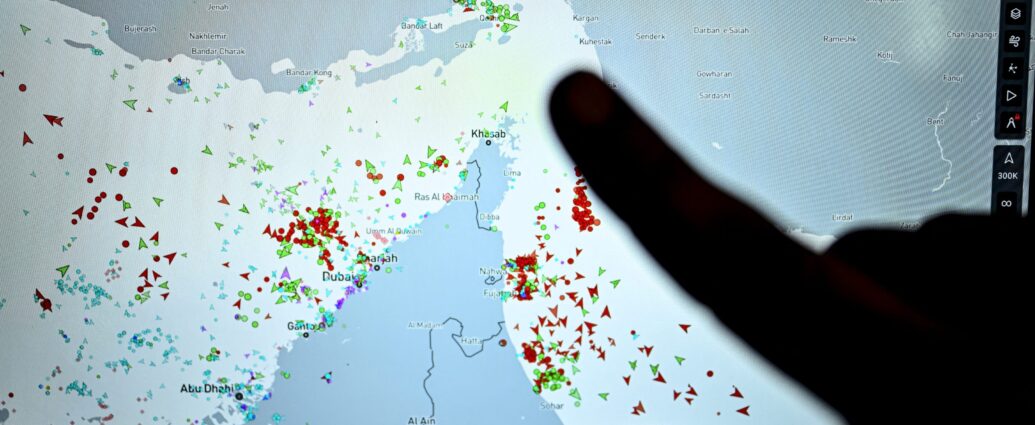
Good morning. Fortune 500 companies are already experimenting with blockchain but many CFOs are still hesitant to move real money on-chain.

That topic came up in my conversation with Betsabe Botaitis, the new CFO of P2P.org, a company that helps large institutions earn returns from crypto assets.

P2P provides the behind-the-scenes technology, such as like servers and security systems, that lets institutions earn rewards from cryptocurrencies like Ethereum and Solana. Normally, companies would need to run their own systems to do this, but P2P handles it for them. Founded in 2018, the company now supports more than 40 blockchain networks and works with banks, exchanges, digital wallets, and custodians.

Botaitis describes the company’s offering as “full-stack yield infrastructure.” This means helping institutions earn returns across different types of digital assets—not just one—while also giving them the tools they need for risk management, reporting, and compliance.

She explains that P2P started with basic infrastructure and is now expanding to serve institutions that want more complete solutions.

A CFO who speaks both Wall Street and Web3

Botaitis brings a mix of traditional finance and crypto experience. She started her career in retail banking, then held senior roles at Citigroup and LendingClub. Later, she moved into the crypto space, co-founding a blockchain company and serving as its CFO.

Most recently, she was CFO and treasurer at Hedera, a blockchain network designed for enterprise use. There, she managed large budgets and digital assets, led the organization’s first financial audit, and built systems to meet regulatory and institutional standards.

Botaitis told me that in her conversations with CFOs, many remain cautious about blockchain.

“The infrastructure exists,” she said. “The question is whether your organization is building the internal knowledge and partner relationships to move when your board is ready. The firms doing that work are already in conversations that others will have to catch up to.”

CFOs are looking for the same things they expect from any business partner: proven reliability, strong operations, and systems that fit into their existing risk frameworks, Botaitis said.

One major concern is regulation. P2P’s structure helps address this, she said.

“As CFO, my mandate is making sure our financial governance meets the standards institutional clients expect from any counterparty they put in a risk memo,” she added.

She frames the company not as a risky crypto bet, but as a reliable infrastructure provider—similar to a traditional vendor that would go through standard due diligence.

CEO Alex Esin also emphasized her experience, saying, in a statement, that it will help the company grow and work with large institutions. Botaitis highlighted the U.S. and Latin America as important growth markets.

In addition to her corporate role, she has been recognized in industry circles, including serving as an ambassador at the Fortune Most Powerful Women Summit and being named to CoinDesk’s Top 50 Women in Web3 and AI.

For CFOs still unsure about blockchain, her hiring sends a signal: the people building crypto infrastructure increasingly come from the same traditional finance backgrounds they trust.

Have a good weekend.

Sheryl Estrada
sheryl.estrada@fortune.com

This story was originally featured on Fortune.com

This post was originally published here

Software stocks have been in freefall. The S&P software index dropped about 20% in February, and a new word has entered the business lexicon: “SaaSpocalypse.” The thesis is that artificial intelligence is poised to undermine the business model that made enterprise software one of the most profitable industries on the planet.

Software-as-a-service has long been an investor’s dream  high margins, recurring revenues, and sticky customers. Companies like Salesforce, SAP, and ServiceNow grew into giants on the back of that model. But the dream is starting to crack. Over the past two weeks, we co-hosted roundtables with senior business leaders in San Francisco and New York to discuss how AI is reshaping value creation. The threat to SaaS was a recurring theme — and their observations point to three structural forces that enterprise software companies can no longer ignore.

The first is market vulnerability. SaaS margins have been high for decades, propped up by switching costs that keep enterprise customers locked in — whether or not they are satisfied. Many companies pay hefty sums for ERP, CRM, and other business-critical platforms not necessarily because they love the product but because migrating away is painful. That kind of captive market is an invitation to disruption.

The second force is collapsing barriers to entry. Building enterprise-grade software used to require enormous capital and engineering talent. Today, AI coding agents have made it much cheaper and faster. That means more competitors, more alternatives, and ultimately more pressure on the margins that SaaS companies have long taken for granted.

The third — and perhaps most consequential — force is the rethinking of workflows. SaaS companies built their empires by standardizing processes across industries: one CRM for every company, one finance platform for every CFO. But AI is enabling organizations to redesign workflows from the ground up. Several roundtable participants argued that deep vertical expertise — an intimate understanding of healthcare operations, for instance — is becoming more valuable than mastery of a horizontal, one-size-fits-all process. This flips the competitive matrix. Instead of selling a standardized workflow across sectors, the winning play may be offering sector-specific intelligence that adapts to how each industry actually works.

Together, these forces — dissatisfied customers, lower barriers to entry, and shifting value propositions — are likely to intensify competitive pressure across the software industry.

Software companies aren’t alone — AI is reshaping competitive dynamics across entire value chains. The clients of SaaS companies are under pressure too, forced to rethink operations as AI capabilities accelerate.

Despite these concerns, our roundtable participants did not predict the death of SaaS. Foundational software layers will still be needed, and enterprises will resist becoming wholly dependent on any single AI vendor. But margins will likely compress. A key driver will be a shift from input-based pricing  charging per user or per seat —  to output-based pricing, where customers pay for results. Several AI-native companies are already pushing this model. If it takes hold, it could erode the economics that made SaaS so lucrative. There is a catch, however: output-based pricing requires the ability to measure outcomes reliably. For some use cases — AI-powered call centers, for example — the transition may come quickly. For complex domains like legal services or healthcare, defining and tracking output quality is far harder.

Another underappreciated implication of AI is that it destabilizes today’s enterprise software ecosystems. As copilots and agents start to configure and run workflows, the old division of labor — vendors sell, systems integrators implement, consultancies advise — begins to blur. ERP and SaaS vendors are moving into AI-enabled services; integrators and consultancies are productizing vertical agent layers that sit on top of platforms; hyperscalers and model providers are bundling tooling that bypasses parts of the application layer. The fight shifts to new control points: orchestration, privileged data access, and distribution into day-to-day work. Those control points, and the ecosystems built around them, will determine who captures value.

Will software valuations recover? It is impossible to say, and will depend on how SaaS firms play their hand. But February felt like an inflection point. For years, AI was sold on potential. Now it is delivering impact. The technology has become central to geopolitics and national strategy. We may be crossing from the era of “pay attention, this will matter someday” to the era of “pay attention, this matters now.”

The SaaSpocalypse may be an overstatement. But the forces behind it are real, and the software industry’s most comfortable assumptions are no longer safe.

The opinions expressed in Fortune.com commentary pieces are solely the views of their authors and do not necessarily reflect the opinions and beliefs of Fortune.

This story was originally featured on Fortune.com

This post was originally published here

At 8:30 a.m. Eastern Time today, oil was priced at $96.18 per barrel with Brent serving as the benchmark (we’ll explain different benchmarks later in this article). That’s a drop of 88 cents compared with yesterday morning and around $28 higher than the price one year ago.

Oil price per barrel % Change
Price of oil yesterday $97.06 -0.90%
Price of oil 1 month ago $103.47 -7.04%
Price of oil 1 year ago $67.82 +41.81%

Will oil prices go up?

It’s impossible to forecast oil prices with detailed precision. Many different elements affect the market, but ultimately it boils down to supply and demand. When worries about economic recession, war, and other large-scale disruptions increase, oil’s path can shift fast.

How oil prices translate to gas pump prices

Gas prices at the pump don’t only track crude oil. They also include what it takes to refine and move that fuel, the taxes layered on top, and the extra markup your local station adds to stay in business.

Since crude oil generally makes up a majority of the per-gallon cost, changes in its price have an outsized impact. When oil surges, gas prices typically rise in tandem. But when oil retreats, gas prices often lag on the way down, a trend sometimes described as “rockets and feathers.”

The role of the U.S. Strategic Petroleum Reserve

In case of emergency, the U.S. has a store of crude oil known as the Strategic Petroleum Reserve. Its primary purpose is energy security in case of disaster (think sanctions, severe storm damage, even war). But it can also go a long way toward softening crippling price hikes during supply shocks.

It’s not a long-term answer and is more meant to provide temporary relief, assisting consumers and keeping critical parts of the economy running, like key industries, emergency services, public transportation, etc.

How oil and natural gas prices are linked

Both oil and natural gas are key sources of the energy we use every day. Because of this, a big change in oil prices can affect natural gas. For example, if oil prices increase, some industries may swap natural gas for some segments of their operations where possible, which increases demand for natural gas.

Historical performance of oil

To gauge oil’s performance, we often turn to two benchmarks:

  • Brent crude oil, the main global oil benchmark.
  • West Texas Intermediate (WTI), the main benchmark of North America

Between these two, Brent better represents global oil performance because it prices much of the world’s traded crude. And, it’s often the best way to track historical oil performance. In fact, even the U.S. Energy Information Administration now uses Brent as its primary reference in its Annual Energy Outlook.

Looking at the Brent benchmark across several decades, oil has been anything but steady. It’s seen spikes due to factors such as wars and supply cuts, and it’s also seen crashes from global recessions and an oversupply (called a “glut”). For example:

  • The early 1970s brought the first big oil shock when the Middle East cut exports and imposed an embargo on the U.S. and others during the Yom Kippur War.
  • Prices dropped in the mid-1980s for reasons such as lower demand and more non-OPEC oil producers entering the industry.
  • Prices spiked again in 2008 with increased global demand, but it soon plummeted alongside the global financial crisis.
  • During the 2020 COVID lockdown, oil demand collapsed like never before—bringing prices below $20 per barrel.

All to say, oil’s historical performance has been anything but smooth. Again, it’s hugely affected by wars, recessions, OPEC whims, evolving energy initiatives and policies, and much more.

Energy coverage from Fortune

Looking to stay up-to-date regarding the latest energy developments? Check out our recent coverage:

Frequently asked questions

How is the current price of oil per barrel actually determined?

The current price of oil per barrel depends largely on supply and demand, including news about potential future supply and demand (geopolitics, decisions made by OPEC+, etc.). In the U.S., prices also move based on how friendly an administration is to drilling, as it can affect future supply. For example, 2025 saw the Trump administration move to reopen more than 1.5 million acres in the Coastal Plain of the Arctic National Wildlife Refuge for oil and gas leasing, reversing the Biden administration’s policy of limiting oil drilling in the Arctic.

How often does the price of oil change during the day?

The price of oil updates constantly when the “futures” markets are open. A futures market is effectively an auction where people agree to buy or sell oil in the future. As long as people and companies are trading contracts, the oil price is changing.

How does U.S. shale oil production affect the current price of oil?

In short, shale is rock that contains oil and natural gas. Think of shale as energy yet to be tapped. The more shale the U.S. accesses, the more energy we’ll have—and the more easily oil prices can keep from spiking as much thanks to a greater supply.

How does the current price of oil impact inflation and the broader economy?

When oil is expensive, it tends to make everyday items cost more. This can be related to energy (your heating, gas utilities, etc.), but it’s also due to the logistics involved with making those items accessible to you. Shipping, for example, can affect the price of things at the grocery store, as it’s more expensive to get those products from warehouses and farms onto the shelf.

This story was originally featured on Fortune.com

This post was originally published here

Fans planning to use New Jersey’s NJ Transit to travel from New York City to MetLife Stadium for FIFA World Cup games this summer may have to pay around $150 for a round-trip ticket, according to a report.

The Athletic reported that while NJ Transit’s modeling initially projected a price of more than $100 per passenger, a price around $150 has been discussed this week, according to a source with direct knowledge of the plans.

The fare would apply to fans taking NJ Transit’s rail service from New York City’s Penn Station to MetLife Stadium, with a stop at Secaucus station.

Ordinarily, the fare for that route would cost $12.90 for a return ticket, which the report noted was the same pricing transit authorities used last year during the FIFA Club World Cup. The Club World Cup is for professional club teams, unlike this summer’s World Cup, which will feature national teams.

FIFA FIRES BACK AT NEW JERSEY GOV MIKIE SHERRILL OVER DEMAND TO PAY FOR WORLD CUP TRANSIT TICKETS

NJ Transit typically discounts prices for seniors, children and disabled passengers, but The Athletic’s report indicated that the agency will have one price that applies to all groups of passengers for the World Cup.

The final pricing decision is expected to be announced on Friday, according to the report.

Eight World Cup matches will be held at MetLife Stadium, including the final match of the competition on July 19.

NEW JERSEY GOV MIKIE SHERRILL RIPS FIFA AFTER REPORTS THAT NJ TRANSIT TICKETS TO WORLD CUP WILL BE OVER $100

The intense demand among World Cup riders has prompted NJ Transit to announce that only ticketholders for World Cup matches will be permitted on Meadowlands Rail service. Additionally, on match days only game attendees will be permitted to enter the NJ Transit portion of Penn Station for four hours prior to kickoff.

The Athletic previously reported that the Massachusetts MBTA planned to raise the price of a return ticket from Boston to Gillette Stadium in Foxboro from the $20 fare charged for NFL games to more than $75 for the World Cup matches held at the venue this summer. The MBTA announced an $80 return ticket last week.

PUBLIC TRANSPORTATION PRICES HIT ABSURD LEVELS FOR WORLD CUP GAMES: REPORT

FOX Sports will serve as the exclusive English-language home in the U.S. for FIFA World Cup 26 matches, which will be played at venues across the U.S., Mexico and Canada.

The World Cup will run from Thursday, June 11, through Sunday, July 19, with all 104 matches broadcast live across FOX, which will air 69 matches, and FS1, which will have 35 matches.

GET FOX BUSINESS ON THE GO BY CLICKING HERE

World Cup matches will also be streamed live on FOX One and the FOX Sports App.

This post was originally published here

Earnings season is gaining momentum across Corporate America, as early results from banks and tech leaders beat expectations and signal continued resilience despite elevated interest rates and global uncertainty.

Large U.S. lenders, including JPMorgan Chase and Citigroup, have reported stronger-than-expected earnings, benefiting from higher interest rates that continue to support net interest income. The results come as the Federal Reserve maintains a cautious stance on rate cuts, reinforcing a “higher-for-longer” policy environment.

Federal Reserve Chair Jerome Powell recently underscored that policymakers are not in a rush to ease, noting that inflation “remains somewhat elevated” and that the central bank still needs “greater confidence” it is moving sustainably toward its 2% target. That stance has effectively extended the runway for banks to capitalize on wider lending spreads.

JPMorgan CEO Jamie Dimon reflected that dynamic in the bank’s latest earnings call, describing the U.S. economy as “resilient,” while warning that “significant geopolitical tensions and persistent inflation pressures” remain key risks shaping the outlook. The combination of strong consumer activity and disciplined balance sheet management has helped large banks outperform expectations, even as uncertainty lingers.

At the same time, executives are beginning to signal caution beneath the headline strength. Citigroup CEO Jane Fraser pointed out that while overall consumer spending has held up, “we are seeing signs of stress in certain segments,” particularly among lower-income borrowers—an early indication that higher rates are beginning to filter through parts of the economy.

Technology companies, meanwhile, are once again leading market performance, driven by accelerating demand for artificial intelligence infrastructure and services. Firms such as Microsoft, Alphabet, and NVIDIA continue to benefit from enterprise adoption of AI tools, cloud expansion, and large-scale data investment.

Microsoft CEO Satya Nadella recently emphasized that “AI is the defining technology of this generation,” highlighting how it is already delivering measurable productivity gains across industries. That shift is no longer theoretical—companies are reporting real revenue impact tied directly to AI integration.

The surge in AI investment is reshaping capital allocation across corporate America. Businesses are directing spending toward data centers, advanced semiconductors, and automation platforms, while simultaneously using these technologies to streamline operations and improve margins.

Goldman Sachs CEO David Solomon noted that “the pace of technological change, particularly in AI, is creating both opportunity and disruption across industries,” reinforcing the idea that companies must adapt quickly or risk falling behind.

Markets have responded positively to the early earnings strength, with the S&P 500 and Nasdaq holding near recent highs. However, investors are increasingly focused on forward guidance rather than backward-looking results.

Federal Reserve Governor Christopher Waller recently reinforced the cautious policy stance, indicating that while inflation is moderating, there is “no need to move as quickly” on rate cuts without clearer evidence of sustained progress. Similarly, Cleveland Fed President Loretta Mester has suggested it may be “appropriate to hold rates at restrictive levels for some time,” adding to the expectation that borrowing costs will remain elevated.

This backdrop is forcing companies to adjust strategies in real time. Businesses that relied on low-cost financing are facing pressure, while those with strong balance sheets are finding opportunities to expand, invest, and gain market share.

Across earnings calls, executives are consistently emphasizing efficiency, cost discipline, and targeted growth. Many are prioritizing investments that produce immediate returns—particularly in automation and digital transformation—rather than broad expansion.

Bank of America CEO Brian Moynihan captured the tone, noting that clients remain active but are “thoughtful” in how they deploy capital, reflecting a more measured approach to growth in an uncertain environment.

Geopolitical developments are also playing a role. Ongoing tensions in the Middle East, even amid a temporary ceasefire between Israel and Lebanon, continue to influence energy markets and corporate risk planning. Companies with global exposure are factoring in potential disruptions to supply chains and pricing.

For investors, the early phase of earnings season reinforces a familiar pattern: market leadership remains concentrated among large, well-capitalized companies with strong technological positioning.

That concentration has supported market resilience, but it also raises questions about how broadly the strength will extend. If earnings growth remains narrowly focused, markets could become more sensitive to any signs of weakness among leading firms.

Still, the initial tone remains constructive.

With more sectors set to report in the coming weeks—including consumer goods, industrials, and healthcare—investors will gain a clearer view of how deeply current economic conditions are impacting the broader economy.

For now, the takeaway is clear: companies that combine scale, capital strength, and technological execution are not just navigating the current environment—they are widening the gap.

— JBizNews Desk

Inflation isn’t in a great place right now: Despite “affordability” becoming the buzzword of D.C., prices are moving in the opposite direction to consumers’ wishes. The latest CPI report from the Bureau of Labor Statistics shows inflation jumped once again, up to 3.3% over the past 12 months.

Much of this has come from increases in commodities like gasoline, which largely can be attributed to the oil supply shock following U.S. and Israeli attacks on Iran.

A tentative optimist might suggest things are looking up, with the White House suggesting an end to the conflict is imminent. But that does little to address the reality for those paying higher prices at the pump, many of whom had hoped Trump’s return to office would see the power of their day-to-day spending improve at best, and plateau at worst.

Yet even inflation of 3.3% belies the strain some households are under. Families paying for childcare, for example, may find their situation feels significantly worse than economic data describes.

“The economy is constantly shifting and no single household, no single consumer, is experiencing things exactly the same way,” Taylor Bowley, an economist at the Bank of America Institute, told Fortune in an exclusive interview. “When people look at GDP for instance, those prints look pretty good, but then when we really dive deep into some of this by income, we’ve also seen childcare has been a topic that has been particularly prevalent for so many households, because from an economist’s term, childcare isn’t necessarily a necessity, but for so many families it totally is. That is not a discretionary item.”

The gap shows up clearly in how the CPI is constructed. The Bureau of Labor Statistics assigns each category a “relative importance” weight based on average household spending.

As of December 2025, the combined category of tuition, school fees, and childcare accounts for just 2.5 of the index. But most of that reflects college tuition (1.35), while daycare and preschool make up just under 0.7.

That puts childcare on par, in CPI terms, with categories like water and sewer services, shopping club memberships, or tools and hardware—an unlikely reflection of how central it is for many families.

This isn’t an error; it’s a feature of the system. The CPI is designed to reflect average spending across all households, including those without children. But for families who do pay for childcare, those costs can take up a far larger share of their budget—meaning price increases will hit them much harder than the headline inflation data suggests.

“We’ve seen that childcare in our data has continued to rise,” Bowley adds. “The cost of childcare obviously impacts labor force decisions, and that in turn impacts labor growth as a whole.”

Consumers are well aware of this fact: In 2024, Pew Research asked nearly 9,000 people why they had chosen to, or did not, have children. The most popular reasoning was that either these people didn’t want to, or it just never happened. But 12% of respondents also said they couldn’t afford to raise a child.

The reality of childcare

Last year, Bowley reported that U.S. childcare costs were rising 1.5 times faster than overall inflation, up 5.2% year-over-year (YoY) in September.

Regional differences are also becoming more noticeable: New England was up 6.6%, for example, and the West North Central division surged 8.2% YoY as of September. Meanwhile, in the South, Nashville led major cities with a more than 6% increase from 2024 averages.

In the October note, Bowley highlighted that the share of households with more than one source of income making childcare payments each month is falling every year, most prominently among lower-income households. It stands to reason that paying for childcare has become so expensive that parents have little choice but for one of them to leave their jobs.

This “very much disproportionately impacts women,” Bowley added, “We’ve looked at how moms have traded in, to some extent, careers for childcare. One reason is that childcare has been, at least within CPI data, and very much so also within our own data, particularly sticky. It is still rising around 1.5 times the rate of overall inflation, which is a real pain point for a lot of families.”

This story was originally featured on Fortune.com

This post was originally published here
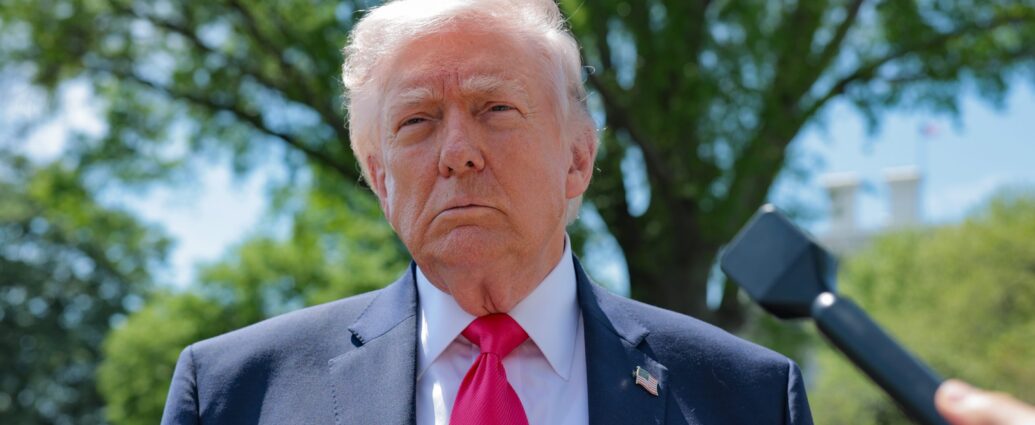
Congress continues to probe Iran’s use of Binance. Sen. Richard Blumenthal (D-Conn.) sent out letters on Friday asking for details on the status of two monitors assigned to oversee the world’s largest crypto exchange and its compliance operations.

“I am writing with concern over mounting allegations of dangerously lax anti-money laundering prevention by Binance,” said Blumenthal, in the letters sent to the Justice Department and the U.S. Treasury’s Financial Crimes Enforcement Network.

Spokespeople for the DOJ and FinCEN also did not immediately return requests for comment.

As part of a 2023 settlement with Binance over compliance shortcomings, the U.S. government installed two monitors, who separately report to the DOJ and FinCEN, to ensure the exchange put in place appropriate measures to overhaul its compliance program. The monitorships, which began in 2024, were part of a larger plea deal in which Binance paid a $4.3 billion fine related to its failure to impose proper money-laundering and sanctions oversight.

Binance has since sought to project an image of corporate responsibility, but recent reports over Iranian crypto flows have prompted Blumenthal—along with other Senate Democrats—to probe the crypto exchange and the Trump administration over whether the exchange’s internal operations match its public rhetoric. 

Amid the public back-and-forth, Binance’s two monitors, whose roles include flagging any misconduct, have remained quiet.

Frances McLeod, the Justice Department’s chosen monitor and a founding partner at the consulting firm Forensic Risk Alliance, did not immediately respond to a request for comment. Neither did Sharon Cohen Levin, FinCEN’s monitor and a partner at the law firm Sullivan & Cromwell.

Monitorship on pause?

Blumenthal’s questioning comes after multiple outlets reported that Binance fired internal investigators who had warned top executives that over $1 billion had flowed through the exchange to Iran-linked wallets. Binance has said that the firings of the investigators were unrelated to their findings on Iranian flows, and that the crypto exchange maintains a rigorous compliance program. Spokespeople for the crypto exchange did not immediately respond to a request for comment on Blumenthal’s inquiry into the status of its monitors.

The Senator’s letters also follow a 2025 report from Reuters that stated that the Justice Department had paused its corporate monitorships as part of an informal review. In March 2025, a judge granted the DOJ’s request to end the monitorship of Glencore, the international mining company caught up in a foreign bribery scheme. Later that year, the DOJ also scrapped the requirement for the airplane manufacturer Boeing to have its own independent monitor.

Critics of monitorships, or when governments ask independent third parties to oversee a company that’s run afoul of the law, argue that they’re costly burdens for corporations or just not effective

In 2013, a U.S. court imposed an antitrust monitor onto Apple after ruling that the tech giant engaged in a price-fixing conspiracy. Other marquee companies to receive monitors include Deutsche Bank, Volkswagen, and Walmart

This story was originally featured on Fortune.com

This post was originally published here
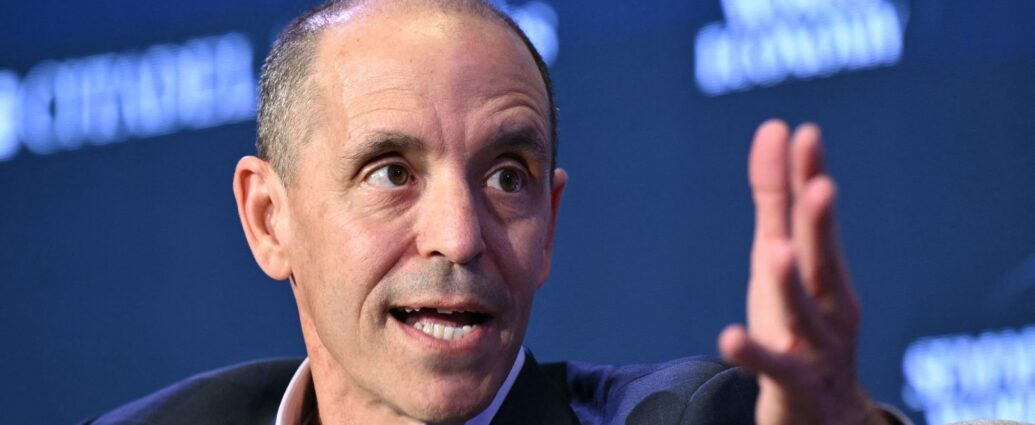
While Mayor Zohran Mamdani’s administration has so far focused on affordability for renters, the mayor announced a plan to help landlords on Thursday. A new program managed by the city will reduce the cost of property and liability insurance for affordable and rent-stabilized housing. As the New York Times reported, the proposal is seen as a peace offering to property owners, whose interests have often been at odds with the administration. According to the city, the self-sustaining program will help address the rising cost of insurance, which has more than tripled since 2017.

“We cannot take on the housing crisis without confronting one of the fastest-growing costs facing New Yorkers: insurance,” Mamdani said.

“That’s why we’re creating the first city-backed insurance program—to help New Yorkers stay in their homes, give building owners the support they need to make repairs, and build a city that New Yorkers can actually afford.”

According to a report presented during an April 9 Rent Guidelines Board meeting, insurance was the second-largest contributor to the Price Index of Operating Costs (PIOC), which tracks changes in the cost of operating rent-stabilized buildings. Insurance costs rose 10.5 percent between April 2025 and March 2026.

Policies costing more than $11,382 saw an average renewal increase of 10.6 percent, while those at or below that threshold rose 10 percent. Buildings constructed before 1974 saw increases of 11.6 percent, compared with 5.4 percent for newer buildings.

Over the past five years, the cumulative PIOC has increased by 31 percent. Insurance costs rose nearly 100 percent over that period, making it the fastest-growing component in the index. Although insurance is one of the lowest-weighted components in the PIOC, it saw the fastest growth in price, accounting for 6.8 percent of the index’s cumulative 31 percent increase.

Those rising insurance costs are a key reason many landlords have opposed Mamdani’s policies, particularly his pledge to “freeze the rent” for rent-stabilized apartments, which make up roughly 40 percent of the city’s rental housing stock. They argue the policy could further strain already tight fiscal margins.

Landlords say they have already had to cut back on expenses such as maintenance in response to rising costs. Additionally, affordable housing developers often rely on loans to finance construction, with loan size tied to a building’s projected net operating income (NOI).

When insurance costs are high, NOI is reduced, resulting in smaller loans that must be supplemented with city subsidies to close the funding gap. The city estimates that every $100 increase in insurance premiums results in a $1,200 increase in city capital needed for new developments. Lowering premiums would lead to larger loans and reduced reliance on city capital, according to the Times.

Leila Bozorg, deputy mayor for housing and planning, told the Times the program could improve tenants’ lives, as landlords could redirect savings on insurance toward repairs and property improvements.

“The skyrocketing cost of insurance is putting affordable, rent-stabilized housing at risk and risks setting back our efforts to build a more affordable city,” Bozorg said. “This effort will use the city’s purchasing power to lower insurance premiums, helping our own investments in affordable housing go farther and reducing operating costs for owners of rent-stabilized housing.”

Bozorg said the program would be run by a private entity, though the city would retain oversight and a financial stake, and it would compete with other insurers in the marketplace. The city expects the program to pay for itself, generating revenue through premiums.

While many details of the program remain unclear, including eligibility, premium costs, and the overall cost to the city, the city’s Housing Development Corporation (HDC) will issue a request for proposals this week for an actuary or risk consultant to help design the program.

Ann Korchak, president of the Small Property Owners of New York (SPONY), said the program “raises many questions.”

“The insurance market is incredibly complex. It would take years for real reform to have a meaningful impact on the operating costs of economically distressed small private property owners,” Korchak said.

“The Mayor could have a more effective and immediate impact on the financial stability and quality of affordable housing by reducing property taxes and eliminating costly city mandates that burden small private property owners.”

This summer, the Economic Development Corporation (NYCEDC) will issue a request for expressions of interest to solicit proposals on how best to structure and operate the program. By 2027, the city expects to lower insurance costs for the first 20,000 homes, increasing to 100,000 homes by 2030.

The program’s unveiling comes weeks after an RGB report found that landlord incomes rose 6.2 percent citywide between 2023 and 2024, marking the third consecutive year of NOI growth.

A public hearing will be held by the RGB on April 23, followed by a preliminary vote on rent adjustments in May. See the schedule of meetings here.

RELATED:

The post Mamdani proposes city-backed insurance program to cut costs for some NYC landlords first appeared on 6sqft.

This post was originally published here

Good morning. On Fortune’s radar today:

  • Trump says Iran war will end “pretty soon” with impending deal.
  • Markets: Mixed reaction to possible peace deal.
  • Yes, United and American Airlines can be merged. Here’s how.
  • Netflix: Reed Hastings bows out — and no, it wasn’t the Warner deal.
  • Jamie Dimon sounds private-credit alarm again. Goldman shrugs.
  • Low unemployment claims are “hard to believe” given the circumstances.
  • New “Misery Index” ranks the worst countries to live in.

This story was originally featured on Fortune.com

This post was originally published here

LUXEMBOURG — A coalition of European Union member states is moving to reintroduce a contentious proposal for sanctions against Israel at a high-level foreign ministers’ meeting in Luxembourg next week. The diplomatic maneuver follows a significant setback orchestrated by Hungarian Prime Minister Viktor Orban, whose government recently utilized its veto power to stall a unified European response to the ongoing conflict in Gaza and settlement expansion in the West Bank.
The upcoming summit represents a critical test of the EU’s ability to project a cohesive foreign policy. While the bloc remains Israel’s largest trading partner, internal fractures have deepened as member states debate the balance between strategic security interests and humanitarian obligations.

The “Orban Blockade” and Legal Workarounds

The push for restrictive measures was temporarily derailed earlier this month when Hungary, Israel’s most consistent ally within the 27-nation bloc, blocked a joint statement and proposed penalties. Under the EU’s current framework, significant foreign policy shifts generally require unanimous consent—a rule that Orban has frequently used to shield Jerusalem from Brussels’ ire.
However, diplomatic sources indicate that a “coalition of the willing,” led by Ireland, Spain, and Belgium, is no longer content with the stalemate. These nations are reportedly exploring legal avenues to bypass the unanimity requirement, potentially through “targeted measures” that focus on specific individuals or entities rather than broad state-level sanctions.
“The status quo is increasingly untenable for several capitals,” said a senior EU diplomat familiar with the preparations for the Luxembourg summit. “The Orban veto may have slowed the process, but it has also galvanized those who believe the EU’s credibility is at risk if it remains silent.”

Economic Stakes and the Association Agreement

For the business community, the most significant risk involves potential changes to the EU-Israel Association Agreement. This legal pillar governs the preferential trade terms that have allowed Israeli tech and agricultural sectors to flourish within the European market.
While a full suspension of the agreement remains unlikely, several member states have called for a “human rights review” of the treaty. Any formal shift in this direction could introduce volatility for investors and disrupt supply chains that have become integral to both economies.

A Fragmented Continent

The debate highlights a sharp geographic and ideological divide within Europe:

  • The Hardliners: Ireland, Spain, and Slovenia continue to push for immediate sanctions, citing international law and the deteriorating humanitarian situation in Gaza.
  • The Mediators: Germany, Austria, and the Czech Republic remain wary of alienating a key security partner, emphasizing Israel’s right to self-defense against regional threats.
  • The Outlier: Hungary continues to view any talk of sanctions as a “red line,” arguing that such measures only serve to embolden extremist elements in the Middle East.

The View from Jerusalem

The Israeli Ministry of Foreign Affairs has remained firm, characterizing the renewed talk of sanctions as a distraction from the broader regional threat posed by Iran and its proxies. In a brief statement, Israeli officials suggested that European pressure would not alter their security mandates, emphasizing that “sanctions are not the language of partners.”

Outlook for Luxembourg

As High Representative Josep Borrell prepares to chair next week’s session, the focus will be on whether the bloc can find a “middle way”—likely a list of targeted sanctions against specific individuals involved in West Bank violence—that even the most hesitant states can support.

JbizNews Desk

For years, Millennials were the housing market’s most sympathetic losers—priced out, rate-locked, and perpetually waiting for their moment. For a growing slice of that generation, the wait is over. And they’re making up for lost time.

According to the National Association of Realtors’ 2026 Home Buyers and Sellers Generational Trends report, older Millennials—now aged 36 to 45—have quietly become the highest-earning, biggest-spending generation of home buyers in the market. They post the highest median household income of any generational group at $132,700, buy the largest homes at a median 2,100 square feet, and are the most likely to have children living under their roof. In almost every measurable way, they now look less like the struggling young buyers they once were and more like the Baby Boomers they spent years resenting.

“They really have hit middle age,” said NAR Deputy Chief Economist Dr. Jessica Lautz. “They’re at their peak of their career now or heading in that direction. They may have not wanted to follow that trajectory, but they’re there.”

The equity effect

The mechanism driving this transformation is the same one that has long powered Boomer dominance: home equity. Older Millennials who bought in the mid-2010s or even the early pandemic years have watched their home values climb substantially. They’re now using those gains to trade up—shedding starter homes for larger, more expensive properties that define a move-up market.

It’s a playbook Boomers have run for decades. Buy early, accumulate equity, leverage it into something bigger. Older Millennials, long denied entry to that cycle, are finally running it themselves. Only 33% of older Millennial buyers were purchasing for the first time—down from 36% the prior year—meaning the clear majority are already homeowners making their next move.

A generation splitting in two

The rise of older Millennials throws into sharp relief just how dramatically the broader Millennial cohort has fractured. As a whole, Millennials’ share of home buyers dropped from 29% to 26%—the only major generational group to lose ground. But that headline figure masks a growing divide between two cohorts with almost nothing in common economically.

“I think it’s a definite split right now,” Lautz said. “It’s why we separate the data out from younger and older millennials—it’s not something that we actually always had done, but we started doing it because there had been such a difference.”

Younger Millennials, ages 27 to 35, are still fighting the battle their older counterparts largely won. Their share of first-time buyers plummeted from 71% to 60% in a single year. Student loan debt and credit card burdens weigh more heavily on this cohort, Lautz noted, while older Millennials’ financial pressures have shifted to childcare costs and high rent—the friction of a life already in motion, not one still trying to launch. “Younger millennials,” she said, “are really struggling to enter into the housing market. And that’s feeling out of reach for many of them.”

The record-low first-time buyer share—21% of all purchases, the lowest since NAR began tracking in 1981—is largely their story, although Lautz said that figure has been the case since late 2025. When asked if she thinks this is becoming a structural issue, Lautz agreed: “I think we’re at that point right now.” The consequences are long-term: a first-time buyer locked out until 40 isn’t just delayed—they’re losing years of wealth accumulation. “It becomes a renter versus an owner economic scenario,” she said. “And that’s really what we’re seeing right now.”

Why boomers aren’t going anywhere

Baby Boomers—now aged 62 to 79—accounted for 42% of all buyers and a dominant 55% of all sellers. They move with equity-fueled flexibility, and critically, they have both the means and the motivation. “Homeownership is the number one way that people build wealth in America,” Lautz said, “and they are able to really purchase what they want at a time in their life where they can do what they would like to do.”

What they would like to do, it turns out, is not necessarily downsize—despite saying otherwise. “The stat I think is the funniest,” Lautz said, “is that they tell us one of the reasons they move is to downsize, and then they don’t downsize.” The data backs her up: among Boomers in their 60s, there is almost no change in square footage when they move. Among those in their 70s, the reduction is just 200 square feet—perhaps one bedroom. The pull of family keeps them large: one major motivation for Boomer moves is being closer to friends and family, which in practice means hosting grandchildren over the holidays, not trading a four-bedroom for a condo.

“You have the haves with the baby boomers,” Lautz said, “and to a certain extent Gen Xers and some older millennials, too. And then you have the have-nots who are really trying to get in.”

40 is the new prime

There’s a deeper current running beneath these generational shifts, one that the data keeps surfacing: the traditional American homeownership timeline has fundamentally changed. The median age of a first-time buyer is now 40—a number that would have been almost unthinkable a generation ago. How long first-time buyers expect to own their first home before moving has stretched from as few as five years historically to 15 years today.

A first-time buyer at 40 is also, research suggests, a buyer at or near their actual life peak. Cognitive performance, emotional stability, and earnings all tend to crest in the fifth decade. In a longer American life—one that now routinely extends into the early 80s—the 40s are barely the midpoint. Older Millennials buying their biggest homes and hitting peak income now aren’t running behind schedule. They’re running on a schedule that the 21st century created.

Even Gen Z, whose 4% buyer share edged up from 3%, is entering homeownership unconventionally—35% as single females and 17% as unmarried couples, both generational highs. The traditional family-formation triggers for buying have given way to a simpler one: the desire to own something, on whatever terms are available.

Perhaps no generation captures the full pressure of this market more than Gen X, who Lautz stressed that she didn’t want to leave out, as they are truly embodying the “sandwich generation” handle right now. Gen X, she noted, has quietly become the new face of multigenerational buying—a distinction that once belonged to Boomers. “They could be taking care of an elderly parent, a young adult who can’t afford to live independently is in their house too—and just overall cost savings,” she said. “You can see just the pressures on Gen Xers.”

It’s a fitting image for where the housing market stands in 2026: a generation in the middle, literally and figuratively, holding up the people above them and the people below, in a market that was built for those who got in early and never really had to leave.

This story was originally featured on Fortune.com

This post was originally published here

  • In today’s CEO Daily: Diane Brady looks for trends in U.S. bank earnings
  • The big leadership story: Experts call for a ban on generative AI programs targeting students
  • The markets: Large down across Asia
  • Plus: All the news and watercooler chat from Fortune.

Good morning. Jamie Dimon of JPMorgan Chase says the economy is resilient but vulnerable to risks. Citigroup CEO Jane Fraser says her company is resilient and off to an “exceptionally strong start.” Over at Bank of America, Brian Moynihan says the U.S. consumer is resilient, despite soaring gas prices. And Wells Fargo chief Charlie Scharf is here to remind us that life is complicated.

Welcome to earnings season! Banks are typically first to report (thank you, regulators!), offering some insights into the economy and a taste of what’s to come. Fraser had a new story to tell, with strong revenue and a restructuring plan dubbed “Project Bora Bora” that she says is 90% complete. Dimon delivered a familiar tale that somehow manages to instill calm and panic at the same time. We know consumers are resilient and oil prices hurt. Dimon already warned stagflation could be “the skunk at the party” in his shareholder letter. Two other themes to watch from 10-Qs and earnings calls of the Big Four banks.

Last Days of Disco. Investors are trading like frenzied night-clubbers wondering if the party’s about to end. Oil prices are up. They’re down. Peace talks are on! No, they’re not. Who’s betting what in the prediction markets? What’s the Fed going to do? Wait: the new Fed chairman is invested in Polymarket? Sell! Buy! Fear. Greed. That volatility produced a lot of profits and trading revenue for the banks, not to mention record bonuses for the traders. But volatility can reflect both uncertainty and mounting risk.

Don’t panic over private credit. Yes, there’s a $265 billion meltdown. Yes, the Fed wants more details on banks’ exposure to the largely unregulated $1.8 trillion market in non-bank lending. The Big Four did collectively report more than $128 billion in exposure to private credit loans this quarter. But Bank of America reported having “structural insulation” from loss in a market they characterize as “largely a repricing of liquidity.”  Dimon, the man who warned us that “when you see one cockroach, there are probably more” a few months ago, is now “not particularly worried.” Citi, which has arguably just recovered from the 2008 financial crisis, is “constantly stress testing” and  comfortable” with its portfolio. Wells Fargo isn’t worried, either, and Treasury Secretary Scott Bessent doesn’t see a systemic problem. So relax, and go worry about that $39 trillion national debt instead.

Contact CEO Daily via Diane Brady at diane.brady@fortune.com

This story was originally featured on Fortune.com

This post was originally published here
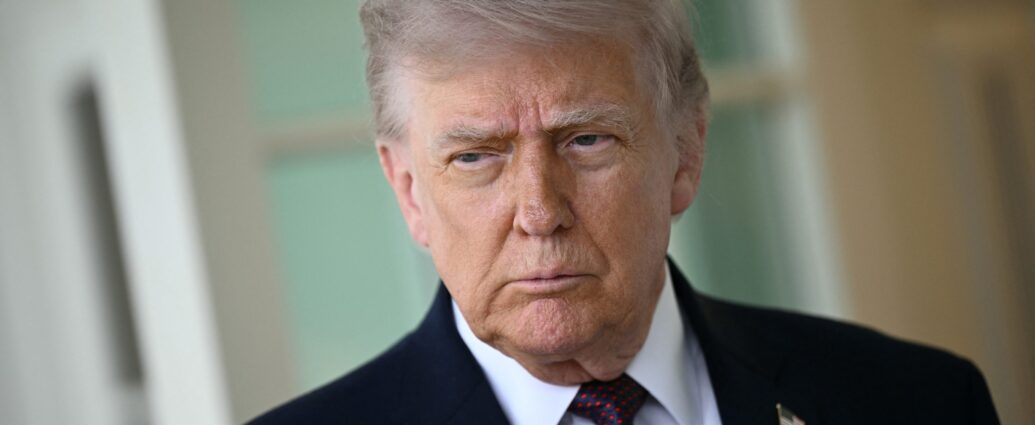
  • Pope Leo XIV sounded the alarm over the growing wealth inequality between CEOs and workers—and he singled out Elon Musk’s path to trillionaire status. In one of first formal interviews after being named pontiff last year, Pope Leo said soaring executive paychecks may be putting the world in “big trouble.” This came as a report warned many billionaire signers of Warren Buffett and Bill and Melinda French Gates’ The Giving Pledge are behind in their philanthropy promises.

If Pope Leo XIV had a seat on Tesla’s board, Elon Musk’s $1 trillion pay package would have been dead on arrival.

The 70-year-old pontiff slammed the widening income gap between the working class and the wealthy—specifically calling out the Tesla CEO as an egregious example of executive excess.

“CEOs that 60 years ago might have been making four to six times more than what the workers are receiving, the last figure I saw, it’s 600 times more than what average workers are receiving,” he told Catholic news site Crux in a September 2025 interview. “The news that Elon Musk is going to be the first trillionaire in the world: What does that mean and what’s that about?”

If that is the only thing that has value anymore, then we’re in big trouble,” he continued.

The Pope’s critique came in September 2025 as Tesla’s board approved a $1 trillion pay package for Musk—contingent on his ability to grow the electric vehicle company by eightfold over the next decade.

While Pope Leo is entitled to an over $400,000 yearly salary, on par with U.S. presidents and university chancellors, his concerns reflect broader anxiety about executive compensation. Among the 100 S&P 500 corporations with the lowest median worker pay, the average CEO compensation hit $17.2 million in 2024 as compared to an average median worker pay of $35,570, according to the Institute for Policy Studies. That’s a ratio of 632 to 1.

Billionaires’ wealth is booming—but their philanthropic giving isn’t

While everyday workers continue to struggle with inflation, wage stagnation, and a tightening job market, the wealth of the ultrarich soars. Billionaire wealth increased three times faster in 2024 than it did in 2023, according to Oxfam. And over the last decade, the top 1% increased their wealth by nearly $34 trillion—enough to eliminate annual poverty 22 times over at the highest poverty line.

Last year, Larry Ellison broke the record for the biggest one-day increase ever recorded in the history of Bloomberg’s Billionaire Index—with his net worth soaring $89 billion thanks to his tech firm Oracle’s rapid growth. At time of publication, Ellison’s net worth sits at $230 billion.

At the same time, many billionaires are behind on their pledges to give away their money through The Giving Pledge—the commitment launched in 2010 by Warren Buffett as well as Bill Gates and Melinda French Gates to give away at least 50% of their wealth to philanthropy during their lifetimes or in their wills.

Among the 256 signers, just nine have followed through with the pact; and even among those who donate, it’s largely given to intermediaries, according to the Institute for Policy Studies. Of an estimated $206 billion donated by the original 2010 Pledgers, roughly 80%, or $164 billion, has gone into private foundations.

And while The Giving Pledge told Fortune the IPS report “paints a misleading picture of the impact and intent of Giving Pledge signatories and the spirit and intent of the Giving Pledge,” the organization admitted there remain important questions that aim to “encourage greater giving.”

A version of this story originally published on Fortune.com on September 15, 2025.

More on wealth

This story was originally featured on Fortune.com

This post was originally published here
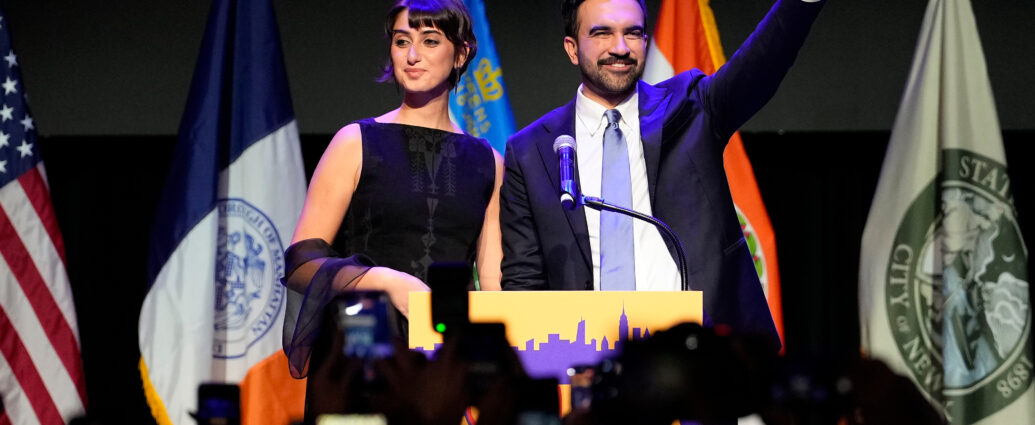
In the past few days, headlines are buzzing over the possibility of a mega-mega-merger that before the news broke, would have seemed inconceivable: A possible tie-up between United Airlines and American Airlines. American already ranks as the world’s largest carrier by passengers flown, and United stands forth; at their current sizes, the combo would be twice the size of both 2nd place Delta and number three Ryanair on the global stage, and ferry over three-and-a-half times as many folks as continental Europe’s largest stalwart, Lufthansa. In the U.S., the deal would break a near three-way tie with Delta for available seats, and catapult a new behemoth into by far the most dominant stateside position in the annals of air travel.

Any time one airline seeks to buy rival, the proposed transaction attracts anti-trust scrutiny and political controversy practically unmatched in any other realm of M&A. And due to its scale in an already highly-concentrated sector, and potential to raise fares, limit choice, and curb the frequency of service to dozens of smaller markets, this mother of all unions would face far fiercer than usual opposition on multiple fronts. Hence, it’s a long shot. But the industry insiders Fortune interviewed swear that it’s by no means impossible. The reason: The Trump Administration’s attraction to grand gestures—you can call it broad exercises in industrial policy—that remake wide swaths of the economy over (and may sideline the usual top goals such as ensuring strong competition).

Here are five burning questions this potential mega-merger raises.

How did United’s unusual quest come about?

The week of April 13, Reuters revealed, apparently for the first time, a White House meeting held on February 25th to discuss the over half-a-billion dollar re-development project planned for Dulles International Airport near Washington, D.C. Reuters reported that President Trump hosted United Airlines CEO Scott Kirby at the confab. United’s the dominant carrier at Dulles, claiming an 82% market share. Fortune has further learned from people familiar with the talks that Susie Wiles, the President’s chief of staff, was instrumental in organizing the discussion. According to these sources, Wiles is strongly committed to the sweeping Dulles revamp that includes a new United concourse and would like to see Trump receive recognition for the new Dulles. “The president won’t rename Ronald Reagan Washington National for himself!” quips an industry insider. Texas governor Greg Abbott also attended, say people Fortune spoke to. Both airlines are crucial to the Lone Star State’s economy: American is headquartered in Ft. Worth, and United dominates George W. Bush Intercontinental in Houston.

According to the Reuters piece and other accounts, Kirby floated the joining of forces concept directly to the President. Kirby contended that the combination would achieve the giant scale required to better battle international airlines that, he’s noted in the past, are often heavily subsidized by their governments, handing them an unfair edge. In a September 2025 interview, Kirby observed that foreign-flagged carriers supply two-thirds of seats on flights headed abroad from U.S. airports. Yet around 60% of the passengers are U.S. citizens. Kirby reportedly emphasized to Trump that by attracting a larger proportion of international traffic, this super-carrier would hike American competitiveness and reduce our overall trade deficit. Neither Reuters nor other news organizations reported that Trump expressed a pro or con view on the Kirby idea.

Asked about the proposed prospect of a United acquisition of American at a briefing on April 15, press secretary Karoline Leavitt stated that “It’s not anything we have a position on or are commenting on. I know the idea has been proposed by private industry but it’s not something the President or White House have an opinion on or are weighing in on at this time.”

How do soaring fuel prices play a role in United/American merger interests?

From 2005 to 2016, the U.S. airline industry endured a consolidation wave that reduced the number of major players from nine to the current Big Four, American, United, Delta and Southwest, the group that now controls 80% of the domestic market. In many of those deals, a jump in the price of jet fuel proved the tipping point forcing weaker carriers into the arms of stronger rivals, including America West’s takeover of U.S. Airways (2005), Delta’s acquisition of Northwest (2008), and Southwest’s purchase of AirTran (2011). Since the start of the Iran conflict on February 28, the price of jet fuel has jumped from $100 a barrel to nearly $200. That spike and especially the likelihood that after the conflict ends, costs will remain well above the pre-war level, is hitting the weaklings far harder than than the thriving warriors, especially the two biggest profit makers, Delta and United.

Of course, the leap triggered by the damage to oil infrastructure in the Middle East and closure of the Strait of Hormuz happened after the White House session on Dulles International. But American’s fragile financial state makes it highly vulnerable to any oil shock: In 2025, it earned just $111 million on $55 billion in revenues, and the interest expense on its crushing $37 billion in debt pretty much erased its operating income. By comparison, United posted $3.5 billion in profits on $59 billion in sales, numbers that give it lots of cushion to withstand all rough weather. Like Delta, United’s thrived by luring premium customers, especially the business crowd that pays extra to reserve at the last minute, while American’s struggled in attracting that highly lucrative tier.

Once again, a leap in fuel costs––they represent between 20% and 30% of operating expenses––promises to unleash a new wave of buying that further narrows the roster. As Delta CEO Ed Bastian said on Delta’s Q1 earnings call, “Over my career, I’ve seen many periods of disruption in this industry. And time and time again, high fuel prices have been the most powerful catalyst for change, separating the winners and forcing weaker players to rationalize, consolidate, or be eliminated.” American, the largest airline in the world, is also one of the most vulnerable to the force that more than any other, has reshaped the industry.

How would routes be affected if American merged with United?

A deal would create a colossus potentially wielding much greater power, in far more markets, than any airline ever. As of today, one of the two carriers hold market shares of 44% or more in eleven of the nation’s 50 largest airports. American’s captured 44% in Phoenix, 66% in Miami, 72% in Philadelphia, and 86% in Dallas-Ft. Worth, while United towers at 50% in Denver, 55% in San Francisco, and 75% in Houston. Locking arms would lift their slice of the passenger pies in the New York and Chicago airports, and in LAX, respectively to 45%, 70% and 46%. They’d also rise to number one from lesser status in Honolulu, Ft. Myers, West Palm Beach, Pittsburgh and San Antonio.

A recent report from Raymond James observes that today, American and United respectively command 70% or more of traffic respectively on 35% and 27% of their routes. Prior to any divestitures, United-American would reach or exceed that “highly concentrated” benchmark on around two-thirds of their city pairs.

The rub for passengers and regulators: Airlines make the most money when they’re either a monopoly carrier on a route, or face just one other competitor. Mike Fitzgerald, an analyst for Cowen & Co., projects that the pro-forma carrier would have no fewer than 287 of those metro-to-metro connections. What’s good for United could be a downer for travelers, and traditionally, anything that shrinks the list of rivals linking the same two metros from a longer roster to just one or two raises red flags for regulators.

Let’s get real: How likely is the deal to happen?

The Trump approach to airline consolidation represents a sharp departure from the Biden template. The previous administration quashed JetBlue’s purchase of Spirit in 2024—Spirit then went, and remains bankrupt––and successfully sued to nix a joint venture between American and JetBlue called the Northeast Alliance. By comparison, under the Trump regime Allegiant in mid-March gained antitrust approval for its acquisition of Sun Country after a quick review. The posture of Transportation Secretary Sean Duffy is particularly revealing. In a recent interview on CNBC, Duffy stated that he “sees room” for airline mergers. He also declared that the President “loves big deals,” suggesting that the POTUS might get a kick from green-lighting a biggie in this fabled, super-high-profile sphere.

Still, a United purchase of American would unleash strong opposition from state attorneys-generals who’d fear that their residents would suffer shrunken schedules and pricier tickets. Unions might also rebel since it’s notoriously hard to integrate seniority lists for the likes of pilots and flight attendants. Most of all, even though the Trump Administration favors a lighter regulatory touch, the near-monopoly clout the combination would exert on so many routes might prove a no-go for its DOJ.

But here’s the roadblock that may be decisive, and it has nothing to do with the opposition of regulators, AGs or unions. Duffy has cautioned that a major merger would require that the airlines “peel off some of their assets,” meaning axe gates and landing slots at airports where they hold extremely strong positions. Those requirements would clear the runways for competitors, including low-cost carriers, can ramp the competitive heat. That’s a big negative for United: The obligation to sacrifice many lucrative routes would undermine a lot of the potential benefits of the deal. The acquirer would also need to assume all of American’s massive debt. Yet United wouldn’t be getting full value due to all the carveouts at airports where competition is lowest and its profits potentially the highest. Plus, past cases show that it’s time consuming and expensive to combine reservation and computer systems, and fleets and workforces. So big expenses come up-front, and the benefits of consolidation––which may be minimal considering what’s “peeled off”–may be minimal.

So by conventional standards, the odds are long. On the other hand, the industry’s seldom seen a more daring swashbuckler than Scott Kirby. He’s done it twice before, and he recognizes that if it doesn’t happen under fellow wheeler-dealer Trump, it will never happen. News of Kirby’s proposal to Trump at the White House was a big surprise. A United and American flying under the same flag is probably a surprise too far.

Is Carl Icahn waiting in the wings?

Until all the speculation over United-American erupted, the takeover talk centered around JetBlue. In early 2024, legendary investors Carl Icahn took a 10% stake in the airline, and subsequently won two board seats. The Icahn blueprint typically revolves around buying into troubled targets on the cheap, then putting them in play. Now, JetBlue has reportedly hung out a “for sale” sign. Media reports say the Queens-based carrier’s hired advisers to pitch Alaska Airlines, Southwest and United. At age 90, the wily Icahn must know that the chances that Kirby wins American are long. But the mere size and scariness of that whale may make a United, or another airline’s, bid for JetBlue look harmless by comparison, especially since the Trump Administration’s already shown leniency on the Allegiant takeover of Sun Country.

No one’s talking about Icahn in the scenario making all the noise. But when the condensation trail clears, it could be this seasoned warrior behind the scenes who helps orchestrate the next big sale—a sale that’s part of still another fuel-shock-driven upheaval where the weak performers will need shelter. Who ends up with whom is a game to flummox even the greatest oddsmakers, but the CEO who nailed the jelly bean contest knows that though it’s a long one, he’ll never get a better shot.

This story was originally featured on Fortune.com

This post was originally published here

After accepting the reality that its inflation-weary customers had had enough of price increases in recent years, PepsiCo slashed U.S. prices on Lay’s, Doritos, Cheetos, and Tostitos chips by up to 15% in February. It seems to have worked: The move is helping bring back some of the food and beverage maker’s customers who had gone AWOL, according to the company’s latest results.

The company said on Thursday that revenue had jumped 8.5% to $19.4 billion in the first quarter of 2026 compared to the same period a year earlier, noting a strong performance in its North American snacks business. “The consumer is coming back multiple times to our brands,” PepsiCo CEO Ramon Laguarta said Thursday during a conference call with investors.

PepsiCo’s price cuts echoed those of other food companies and restaurant chains in the last year as customers have struggled with food inflation—in some cases reversing the price hikes of the three years after the pandemic. Late last year, General Mills cut prices on nearly two-thirds of its grocery products in North America, helping sales by volume recover. Conagra, Kraft Heinz, and J.M. Smucker also have had to cut prices on some of their products to win back consumers.

Restaurant chains too have had to woo back customers weary of all the inflation of recent years. Earlier this month, McDonald’s announced a budget-focused McValue menu with ten items that each cost under $3, beginning next week. “We absolutely are going to make sure that we are protecting our leadership position in value,” Chief Executive Chris Kempczinski told Wall Street analysts earlier this year. Rivals including Wendy’s and Burger King have also been ramping up the deals.

Though these cuts provide some relief, they won’t get consumers back to the prices of just a few years ago. In the wake of the Covid-19 pandemic that sent ingredient costs way up, food companies have steadily increased prices on a range of items. The U.S. Department of Agriculture found that food prices rose a total of 23.6% between 2020 and 2024. Restaurant prices have risen nearly 30% since 2020, and that restaurant inflation, while much lower now than in 2022, remains above historical averages.

The recent price cuts on food and deals at restaurants suggest a shift in attitude among the CEOs and CFO’s of many companies in these sectors, who were insisting only two or three years ago that customers wouldn’t be deterred by rising prices. It was only in 2024 that many companies started to concede on investor calls that maybe, just maybe, they had overdone the price hikes.

Companies were under enormous pressure from Wall Street to protect profit margins during the inflation run up. But it’s risky to pass along those higher costs: Once you lose a customer who feels gouged or ripped off, it’s very hard to win them back, no matter how much you spend on marketing. That kind of pain can be avoided by companies listening to customers more, and to Wall Street less.

This story was originally featured on Fortune.com

This post was originally published here

Activist investor Bill Ackman has his sights set on Universal Music Group, and he’s launched a complex $64 billion proposal for the label behind Bad Bunny, Taylor Swift, Paul McCartney and a long list of other superstars. 

To get his hands on the prize though, Ackman will first have to contend with another big personality: Vincent Bolloré, the 74-year-old secretive French billionaire who controls 28% of Universal through a complex web of holdings.

Known as the “French Murdoch” for building a $14 billion, right-leaning media empire stacked with family members and loyalists, Bolloré is a shrewd businessperson whose ascent to the top tiers of power is an object of fascination and awe in France and throughout Europe. 

“Nine times out of 10 when people are speculating about what Bolloré will do, they get it wrong,” said Nicolas Marmurek, a London-based analyst who specializes in M&A.

Bolloré’s stake in Universal Music Group (UMG), which effectively gives him veto power over any deal, sets the stage for a potentially epic showdown between two of the most powerful figures in the business world. Ackman is famous for fighting his way through deals, launching aggressive campaigns that invest in companies and force management to adopt measures like cutting costs or spinning off assets. Past targets have included Wendy’s and Canadian Pacific Railway but he’s softened his approach in recent years, and he complimented UMG’s management when he launched his bid to merge and relist the company in the U.S. 

Adrian Edwards/GC Images

In bidding to revamp UMG, which owns 30% of the world’s recorded music, Ackman is testing a new playbook. Rather than influencing affairs through pressure tactics Pershing intends to lead a structural recapitalization, buying more shares, putting allies on the board, and re-listing the company in New York while existing management operates the company. It’s all part of Ackman’s broader vision of transforming Pershing into a diversified holding company in the image of Warren Buffett’s Berkshire Hathaway.

That makes winning over the unpredictable Bolloré mission critical for Ackman.

“Without Bolloré, we don’t have a transaction,” Ackman told investors on April 7 when he unveiled the details of his proposal. Ackman said his “first phone call” the day before announcing the deal, was to Bolloré Group, and he reportedly spoke with current chairman and CEO Cyrille Bolloré, Vincent Bolloré’s 40-year-old son. Ackman said he gave the younger Bolloré  a “high-level summary of the transaction.”

“And I guess the words I got back were, ‘These are music to my ears,’” Ackman said. “They are, I would say, intrigued,” he added later. “But of course, the devil’s in the details.”

A complex deal and a long tail

Ackman’s proposed deal is structured as a merger between UMG and a Pershing Square special-purpose acquisition rights company. Pershing Square’s cash commitment is €2.5 billion euro, and a combination of new debt, cash on UMG’s balance sheet, and asset sales will be used to finance the rest of the transaction. But the deal is highly complex and could end up being consummated in several different ways depending on whether UMG shareholders elect to swap their shares for cash or stock in the new entity, or a combination.

If shareholders approve the deal, the new U.S.-listed entity would have a $64 billion equity value once the finances are completed, plus $5.8 billion in new debt on UMG’s balance sheet. Artists would also get what Ackman described as “a nice €750 million euro check” which would come from the sale of UMG’s stake in Spotify.

Yuriko Nakao/Bloomberg via Getty Images

Universal’s board confirmed the proposal the same day as Ackman’s unveiling, describing it as “unsolicited and non-binding.” The UMG board said directors would review it “in accordance with fiduciary duties” and said it had “complete confidence in UMG’s strategy and the leadership of Sir Lucian Grainge.” Grainge has been CEO since 2011, when he led UMG’s acquisition of EMI’s recorded-music catalogue. 

Ackman also pitched refreshing UMG’s board with two new members and naming Hollywood giant and Creative Artists Agency co-founder Michael Ovitz as chair. Ovitz has been friends with UMG CEO Grainge for four decades, Ackman has told investors (Ackman also noted that he’s been friends with Ovitz for 31 years). 

The appeal of UMG for Ackman is in the shift the music industry has undergone throughout much of the past decade. As streaming has transformed the way consumers listen to music, the value of deep catalogs like Universal’s—which includes Billie Eilish, Drake, and Kendrick Lamar—has increased and changed the economics. 

“The tail has become fatter and fatter and fatter,” said Tom Toumazis, MBE and global senior advisor at AlixPartners, describing music that’s more than 10 years old but continues to generate revenue. “A teenager running up that hill with Kate Bush” today is discovering music that didn’t exist a generation ago, he said, referring to the massive resurgence of Bush’s 1985 song “Running up That Hill” following its use in the Netflix show Stranger Things. Every major label has a Kate Bush in its catalogue, he said. The result, said Toumazis, “is an intrinsic reset over a decade that says, this music just keeps on going, and keeps on going, and keeps on going.”

The trend caught Ackman’s eye a few years ago. Pershing previously acquired a 10% stake in UMG in 2021 around the time the label was spun out of French conglomerate Vivendi SE. But Pershing gradually pared its position to 4.5%, and last year, Ackman left UMG’s board as his efforts to convince UMG to list its shares in New York hit a wall. The current deal would see that stake grow to 11.7%.

Because of its Dutch listing, UMG has never had the dedicated analyst coverage that U.S.-listed rival Warner Music Group has and the stock is out-of-bounds for investors with mandates that don’t allow investments in non-U.S. stock, Ackman said in his pitch to UMG. The Dutch listing also keeps UMG outside of major U.S. index funds that buy S&P 500 stocks. He said relisting the company on the New York Stock Exchange would address some of those issues. 

The new structure would generate about $3 billion in incremental cash for Bolloré Group, and the family would retain its UMG stake. According to Ackman, the deal also addresses what he said is part of the reason behind UMG’s recent 39% stock drop from its peak two years ago: The market was uncertain about what the Bolloré family was planning to do with their stake. 

“A very important catalyst was Cyrille Bolloré, the representative from Bolloré Group, surprised the market by resigning from the Universal board,” Ackman told investors in a call this month. “That sort of put in question their intentions with respect to whether they were going to hold their stake.”

The ‘little prince of cash flow’

Fred TANNEAU / AFP) (Photo by FRED TANNEAU/AFP via Getty Images

While much of Ackman’s proposal makes plenty of sense—listing UMG in the U.S., getting passive investment from index fund holders, opening the stock up to investors who can only invest in U.S.-listed entities, no one can predict how Vincent Bolloré will respond, said Marmurek, the M&A analyst. Bolloré is one of the savviest and most secretive investors in France, and trying to gauge how he’ll react is pure speculation, Marmurek said. 

“He’s building a legacy and built a crazy amount of wealth over the space of one generation—he wants that wealth protected,” he said. “Trying to second guess Bolloré is very dangerous.”

Bolloré earned his reputation as an operator after he took over an almost-bankrupt paper mill in the north of France in 1981 at age 29 and turned it into a diversified industrial group including logistics, batteries, ports, and African shipping. The cornerstone of his style as a corporate raider is to take a small stake in an undervalued business and then grind his way to having more and more control. 

Bolloré’s stake in Vivendi, for instance, dates back to 2012 when he picked up a 1.3% stake in the media giant when it bought two of his television stations for less than 500 million Euros. He gradually upped his stake by buying Vivendi shares on the open market, going to 5% in 2012 and 14% in 2015, all the while reaping ever larger dividend payments from Vivendi, according to Le Monde. The French newspaper has given him various nicknames during the past four decades, tracing the arc of his public reputation. In 1988, the paper called him “the little prince of cash flow.” A decade later he was dubbed “the blond angel.” In 2013, the paper called him “a predator.”

Like News Corp founder Rupert Murdoch, Bolloré has infused his collection of media properties with right-leaning, and sometimes controversial, voices. And like Murdoch’s, the Bolloré empire is run like a dynasty. In 2022, Vincent Bolloré passed the leadership baton to his sons Yannick and Cyrille, and stepped down as chairman at age 70. While the patriarch of the family holds no official title at Bolloré SE, behind the scenes his power remains undiminished thanks to  a complex five-layer web of family holdings.

According to Bolloré  SE’s 2025 financial filings, the family’s control runs through a cascade of holding companies with various ownership levels. At the top is Compagnie de l’Odet, where the Bolloré family holds 93% of the shares and Vicent Bolloré  serves as CEO and chairman. In turn, Compagnie de l’Odet owns 71.6% of Bolloré SE, which holds stakes in Vivendi SE, Louis Hachette, Canal+, Havas N.V., and UMG. Through Bolloré SE, the family holds about 18.4% of UMG directly and Vivendi, in which Bolloré is the largest shareholder with a 29.3% stake, owns a further 9.9% of UMG. Combined, their 28% control is large enough that Vincent Bolloré can make or break Ackman’s deal.

And given Bollore’s track record, many observers expect him to drive a hard bargain.

“I struggle to see why Bolloré would jump at the offer without getting something else from Bill Ackman himself,” said Marmurek. “In my view, Bolloré  will want something more. I’m not saying the deal is not going to happen, but it’s a very uncertain deal at this point.”

What does Vincent want?

Negotiations could center around one particular aspect of the complex deal that allows certain shareholders to receive an all cash-payment at a lower valuation. 

According to Le Monde, the deal calls for Pershing Square to spend about €2.5 billion euro on the €9 billion euro cash portion of the deal, but there’s an all-cash route specifically with Bolloré in mind that includes up to €7.5 billion euro at €22 euro per UMG share. That means Bolloré would have to accept a discount in exchange for liquidity, which is a lever he might like to pull, analysts said. 

A potential counteroffer by UMG and its shareholders, including Bolloré, could include a larger cash component, a research note from Paris-based financial services firm Oddo Bhf states. “A consortium could form and propose a higher cash component (50%?) and an equivalent structure with a  listing in the U.S.,” wrote analyst Jérôme Bodin.

At this point, however, “the market considers it unlikely that the current offer will go through and that Bolloré will accept it,” Bodin’s note states. He described the deal as a “massive share buyback financed by UMG’s balance sheet, combined with a relocation of the primary listing to the U.S.” 

To get the deal over the finish line, Ackman will need to draw upon the right combination of charm, persuasion, and resolve—a job that may require exercising new muscles for the 59-year-old hedge fund manager who has made headlines for his brash posts on X, where has 2.1 million followers, and for his adventures on the tennis court (he famously competed in 2025 pro tournament, to mixed reviews).

The big question is whether Bolloré, who has spent his career building an empire, is ready to relinquish some of his control over a prized asset—and if Ackman’s entreaties persuade him that it’s time to cash out or simply convince Bolloré to pursue Ackman’s vision for UMG himself. 

Desmond Kingsford, whose Highwood Value Partners owns shares in Bolloré and Compagnie de L’Ode, questioned why Bolloré would support Ackman’s proposal “when he could push management to do everything Ackman proposes and not dilute any control or ownership?”

“Surely he could sell a few shares at a higher price after management takes those actions if he liked the liquidity aspect of the deal, perhaps in a relisting,” wrote Kingsford in an email.

This story was originally featured on Fortune.com

This post was originally published here


WASHINGTON — In a move signaling a sharp departure from previous climate-centric policies, the Trump administration has issued an urgent directive to the nation’s top energy executives, calling for a dramatic and immediate increase in domestic oil and gas production. The pivot, framed as a return to “Energy Dominance,” aims to slash domestic energy costs and leverage American fuel exports as a primary tool of foreign policy.
The administration’s “drill, baby, drill” mandate was delivered during a series of high-level briefings between Department of Energy officials and CEOs from major firms including ExxonMobil, Chevron, and ConocoPhillips.

Energy executives and administration officials review production maps at a West Texas drilling site as the White House rolls out its “National Energy Dominance Initiative” to accelerate domestic crude output.

The Mandate: Production Over Permitting

The administration’s strategy focuses on dismantling regulatory hurdles that have historically slowed the expansion of extraction projects on federal lands. White House officials have indicated that they are preparing executive orders to streamline the environmental review process and reopen vast swaths of the Arctic and offshore Atlantic for exploration.
“The era of energy begging is over,” said a senior administration official during a press briefing. “We are telling our producers that the federal government is no longer an obstacle but a partner. The goal is simple: increase supply, lower the price at the pump, and ensure that American energy powers the world.”
The directive comes as WTI (West Texas Intermediate) crude continues to hover around $93 – $96 a barrel, with the administration arguing that a surge in U.S. output is necessary to stabilize global markets currently rattled by volatility in the Middle East and Eastern Europe.

Industry Skepticism: Capital Discipline vs. National Duty

Despite the administration’s enthusiastic push, the response from Houston and Oklahoma City has been one of “cautious cooperation.” Following years of investor pressure to prioritize “capital discipline” and stock buybacks over expensive new drilling projects, many oil majors are hesitant to flood the market and risk a price collapse.
“We share the administration’s goal of energy security,” said Mike Wirth, CEO of Chevron, in a recent industry forum. “However, the industry requires long-term regulatory certainty and a stable investment climate. You can’t just flip a switch on production; it requires infrastructure, labor, and a clear understanding of the global demand trajectory.”
Market analysts note that while the administration can ease permits, the ultimate decision to drill remains with Wall Street, which has become increasingly focused on quarterly dividends rather than volume growth.

Geopolitical Leverage

The push for increased drilling is as much about diplomacy as it is about economics. By increasing Liquefied Natural Gas (LNG) exports, the Trump administration intends to reduce European dependence on adversarial energy sources.
“Energy is the backbone of our national security,” stated Secretary of State Marco Rubio in a recent address. “By becoming the world’s undisputed leading energy producer, we provide our allies with a reliable alternative and diminish the leverage of those who use energy as a weapon against us.”

Environmental and Legal Hurdles

The administration’s aggressive stance has already drawn sharp criticism from environmental advocacy groups, who argue that the rollback of methane regulations and the expansion of federal leasing will derail international climate commitments. A wave of litigation is expected from several coastal states and non-profit organizations, potentially tying up new leases in the court system for years.
“This is a reckless retreat into the past,” said a spokesperson for the Sierra Club. “While the rest of the world is transitioning to the green economy, this administration is doubling down on the fuels of the last century at the expense of our climate future.”

Market Outlook

For the business community, the administration’s focus on deregulation and infrastructure build-out—including the expedited approval of pipelines—is seen as a net positive for the industrial sector. However, the true impact on global oil prices will depend on how quickly the “permitting reform” can translate into actual rigs in the ground.
As the administration moves to hold its first major lease sales in the coming months, the energy sector will be watching for more than just rhetoric. They will be looking for the structural changes necessary to justify a multi-billion dollar pivot back to aggressive expansion.


JbizNews Desk


CHICAGO — Wheat futures surged to their highest levels in nearly two months this week as a dual threat of deepening environmental crises in the American heartland and geopolitical disruptions in the Persian Gulf forced a sharp repricing of global food security risks. Chicago Board of Trade (CBOT) wheat contracts jumped as much as 4.8%, marking a decisive reversal for a market that has spent much of the year pressured by a glut of low-cost Russian exports.
The rally is being driven by what commodity analysts describe as a “geopolitical straitjacket” on agricultural inputs, occurring precisely as drought conditions threaten the yield potential of the 2024/25 winter wheat crop.

Drought Grips the Breadbasket

The primary catalyst for the domestic price spike is the deteriorating condition of the U.S. Hard Red Winter (HRW) wheat crop. According to the USDA’s most recent Crop Progress report, only 38% of the winter wheat crop is currently rated in “good to excellent” condition, a significant decline from early-season projections.
In Kansas, the largest wheat-producing state, nearly 80% of the land is categorized under some level of drought according to the U.S. Drought Monitor. “The margin for error has essentially disappeared,” said Arlan Suderman, chief commodities economist at StoneX. “We are seeing a weather market develop much earlier than anticipated because the subsoil moisture levels in the Plains are effectively exhausted.”
The volatility is not limited to the U.S. In Western Europe, excessive rainfall has delayed spring planting, while dry pockets in the Black Sea region are beginning to spark concerns that the record-breaking Russian output of previous years may be nearing an end.

The Iran Factor: A Fertilizer “Choke Point”

Compounding the supply-side anxiety is a worsening crisis in the fertilizer market linked to escalating tensions involving Iran. As a major producer of urea and a key gatekeeper of the Strait of Hormuz—through which approximately 30% of the world’s seaborne nitrogen fertilizer trade flows—any friction in the region has immediate downstream effects on agricultural overhead.
“The threat of a supply disruption in the Persian Gulf acts as a direct tax on the global farmer,” noted a senior agricultural strategist at Goldman Sachs. “When you combine record-high energy costs with the potential closure of key shipping lanes, the cost of production for the next cycle moves exponentially higher.”
Current market data shows urea prices in the NOLA (New Orleans) hub have increased by 12% over the last fortnight, reflecting the “risk premium” traders are now attaching to Middle Eastern logistics.

Geopolitical Repercussions and Food Inflation

The intersection of bad weather and high input costs is creating a political headache for Western governments still struggling to tame inflation. For many emerging economies that rely on imported wheat, the price surge threatens to reignite the food insecurity that plagued the world following the 2022 invasion of Ukraine.
“We are watching these developments with great concern,” European Commissioner for Agriculture Janusz Wojciechowski stated recently, noting that the “strategic autonomy” of the global food chain is increasingly dependent on stability in regions currently experiencing high kinetic conflict.

Market Outlook

For institutional investors and agribusinesses, the focus remains on the “Weather vs. Wall Street” dynamic. While fund managers had been holding record-short positions on wheat for months, the sudden shift in fundamentals has triggered a massive short-covering rally.
“This isn’t just a technical bounce,” says Jack Scoville, vice president at Price Futures Group. “This is a fundamental realization that the world’s ‘buffer’ of cheap grain is thinner than we thought. If the rains don’t come to the Plains and the tensions in the Gulf don’t de-escalate, $7.00 wheat will be the floor, not the ceiling.”
As the market prepares for the next USDA World Agricultural Supply and Demand Estimates (WASDE) report, the industry is bracing for further downward revisions in global ending stocks, ensuring that volatility remains the only constant in the commodities complex.


JbizNews Desk

JERUSALEM / BEIRUT — April 16, 2026 —

Israel and Lebanon have agreed to a 10-day ceasefire that took effect at 5 p.m. ET on Thursday, marking a significant step toward de-escalation after weeks of fighting between Israel and the Iran-backed militant group Hezbollah, with both sides signaling cautious compliance as the region watches closely to see whether the pause in hostilities can hold.

The agreement, reached following sustained international mediation efforts, appears to have resulted in an immediate reduction in cross-border fire along the northern frontier, offering a temporary reprieve in one of the region’s most volatile flashpoints. Israeli officials emphasized that security remains the top priority and that any violation of the ceasefire would be met with a firm response, while Lebanese officials described the truce as a necessary step to prevent further escalation amid ongoing economic and political strain.

Former President Donald Trump weighed in on the development, expressing hope that Hezbollah would respect the ceasefire and contribute to stability during the temporary halt in fighting. He said he hopes Hezbollah “acts nicely and well during this important period of time,” adding in a public statement that it would be a “GREAT moment for them if they do,” and calling for an end to the violence, stating, “No more killing. Must finally have PEACE!”

The ceasefire reflects broader international efforts to contain tensions and avoid a wider regional conflict, particularly as geopolitical instability continues to influence global markets and energy security. Diplomatic pressure from multiple actors was widely seen as instrumental in bringing about the temporary halt, underscoring the high stakes tied not only to regional security but also to global economic stability.

Financial markets responded with cautious optimism, as easing tensions in the Middle East typically reduce geopolitical risk premiums and support investor sentiment, particularly in energy markets sensitive to regional disruptions. Analysts note that while the immediate economic impact may be limited, a sustained ceasefire could help stabilize conditions and improve confidence across global markets.

Despite the initial calm, the situation remains fragile, with ceasefires in the region historically dependent on strict adherence by all parties. The coming days are expected to be critical in determining whether the agreement holds or gives way to renewed tensions. For now, the ceasefire provides a narrow window for de-escalation and potential diplomatic progress, even as underlying challenges remain unresolved and the region stays on alert.

JBizNews Desk- Middle East

WASHINGTON / HAVANA — April 16, 2026 —

Cuba appears to have pursued an unusual backchannel effort to reach former President Donald Trump, signaling growing urgency in Havana as the island faces one of its most severe economic crises in decades.

According to officials familiar with the matter, the outreach involved an attempt to deliver a message outside traditional diplomatic channels, reflecting a possible effort to bypass established U.S. foreign policy structures and engage directly at the presidential level. The initiative has been linked to Raúl Rodríguez Castro, a senior aide and grandson of former Cuban leader Raúl Castro, who at 94 remains the most influential figure in Cuba’s political system.

Analysts and officials say the move may have been designed to circumvent Secretary of State Marco Rubio, a longtime advocate for increasing pressure on Cuba’s Communist government. Rubio, the son of Cuban immigrants, has consistently supported policies aimed at forcing political change on the island, making him a central figure in shaping Washington’s approach to Havana.

“A backchannel effort like this suggests a desire to engage at the highest level while avoiding established policy constraints,” a U.S. official said. “It reflects both urgency and a recognition of where decisions are ultimately made.”

Outside experts also view the reported outreach as a sign of shifting dynamics within Cuba’s diplomatic approach. One U.S.-Cuba policy specialist noted that the effort appears aimed at delivering a direct message to Trump, reflecting diminished confidence in traditional intermediaries and a preference to engage the president directly in an effort to stabilize the situation.

The White House did not respond directly to questions about whether any such communication was received, instead referring to the president’s recent public remarks on Cuba. The State Department similarly declined to comment, directing inquiries to the White House. It also could not be determined why the individual attempting to deliver the message was stopped at the airport, leaving key aspects of the episode unclear.

The reported outreach comes as Cuba confronts mounting economic pressure, including currency instability, shortages, and declining access to foreign capital. Officials say the message was broadly aimed at opening a dialogue around economic cooperation, potential investment pathways, and possible sanctions relief.

“Cuba’s economic situation is driving a search for alternatives,” said a former U.S. official familiar with regional policy. “Efforts like this are about testing whether there is any flexibility on the U.S. side.”

In recent public remarks, Trump signaled a willingness to engage, describing Cuba as a struggling economy and suggesting the United States could play a role in assisting its recovery—comments that analysts say may further encourage outreach efforts from Havana.

Some policy analysts suggest that Trump could be open to a more transactional economic arrangement with Cuba, potentially allowing targeted engagement while leaving much of the existing political structure in place—an approach that would echo elements of past U.S. dealings with countries such as Venezuela.

“That kind of framework is not unprecedented, but it would be highly sensitive politically,” a government-affiliated analyst noted. “It would raise immediate questions about long-term strategy versus short-term economic considerations.”

Such a scenario would likely face strong opposition from segments of the Cuban-American community, where there is longstanding support for maintaining pressure until meaningful political reforms are achieved.

While it remains unclear whether the outreach will lead to any concrete developments, officials say the episode highlights the continued reliance on informal diplomatic channels when formal engagement remains limited.

“When traditional pathways stall, alternative ones tend to emerge,” the U.S. official added. “But those efforts don’t always translate into policy change.”

For now, the situation underscores both the complexity of U.S.-Cuba relations and the increasing urgency driving Havana’s outreach efforts at a pivotal moment.

JBizNews Desk

WASHINGTON — April 16, 2026 —

President Donald Trump said a potential deal with Iran is “looking very good,” signaling renewed optimism around diplomatic efforts as discussions surrounding a broader ceasefire framework continue to take shape.

The remarks come amid heightened geopolitical focus on the Middle East, where policymakers and global markets alike are closely monitoring developments that could reshape regional stability and energy dynamics.

Diplomatic Signals Shift Market Sentiment

Trump’s comments reflect growing expectations that negotiations—whether formal or backchannel—are progressing toward a potential agreement that could ease tensions and support a broader ceasefire environment.

While details remain limited, the tone marks a notable shift toward optimism following extended periods of uncertainty.

“Any indication of progress with Iran immediately impacts global markets,” said a Washington-based geopolitical analyst. “Energy, defense, and currency markets all respond to these signals.”

Energy Markets on Watch

Oil markets are particularly sensitive to developments involving Iran, a major player in global energy supply.

A potential deal could lead to increased Iranian oil exports, influencing global pricing and supply balances.

Investors are watching closely for confirmation of any agreement that could ease sanctions or shift production dynamics.

U.S. Political and Strategic Implications

Trump’s statement also carries political weight, as Iran policy remains a central issue in U.S. foreign policy discussions.

Any movement toward a deal or ceasefire framework could have implications for:

U.S. diplomatic positioning in the region Relations with key allies Broader global security considerations

Global Markets React to Geopolitical Tone

Equity markets and risk assets tend to respond positively to signs of de-escalation, while safe-haven assets may soften as tensions ease.

Currency markets, particularly in emerging economies, also remain sensitive to geopolitical developments tied to U.S.-Iran relations.

Outlook: Cautious Optimism

Despite the positive tone, analysts caution that negotiations involving Iran are historically complex and subject to rapid shifts.

“Optimism is warranted, but markets will need to see concrete developments,” one strategist noted. “Statements alone are not enough—execution is everything.”

For now, Trump’s comments inject a degree of cautious optimism into global markets, reinforcing the critical role geopolitics continues to play in shaping economic and financial outcomes.

JBizNews Desk

HONG KONG / SEOUL / TOKYO / NEW YORK —

Asian markets advanced in Thursday trading, extending gains from Wall Street as investors responded to improving U.S. economic signals, moderating inflation expectations, and renewed strength in global technology stocks.

Major regional indices—including Japan’s Nikkei 225, South Korea’s Kospi, and Hong Kong’s Hang Seng Index—moved higher, reflecting a coordinated global rally driven by shifting expectations around U.S. monetary policy and strengthening investor sentiment.

Wall Street Sets the Global Tone

The rally follows a strong U.S. session, where the S&P 500 and Nasdaq Composite were lifted by gains in large-cap technology stocks and growing expectations that the Federal Reserve may be nearing the end of its tightening cycle.

This shift has fueled global risk appetite, with markets increasingly positioning for a more accommodative policy environment later in 2026.

“U.S. market direction remains the anchor for global equities,” said a Seoul-based strategist. “When Wall Street gains traction, Asia responds quickly—and that’s exactly what we’re seeing now.”

South Korea Emerges as a Key Driver

South Korea played a central role in the regional advance, with the Kospi index rising on strong performance in semiconductor and technology shares.

Major chipmakers benefited from improving demand forecasts tied to artificial intelligence and memory recovery, reinforcing South Korea’s position at the core of the global tech supply chain.

Technology Stocks Lead a Broad-Based Rally

Across Asia, technology shares drove gains, closely mirroring U.S. market trends:

South Korean semiconductor firms advanced on AI-driven demand Japanese robotics and chip companies gained on export optimism Hong Kong-listed Chinese tech stocks rebounded after recent pressure

The synchronized performance highlights the deep integration between U.S. and Asian tech ecosystems, particularly in semiconductors, AI infrastructure, and global supply chains.

Currency Moves and Capital Flows Support Gains

The U.S. dollar weakened modestly, providing additional support to Asian equities and currencies. A softer dollar typically enhances export competitiveness—particularly for economies like South Korea and Japan—while also encouraging capital inflows into regional markets.

Investors are increasingly reallocating toward Asia, where valuations remain attractive relative to U.S. equities.

China Policy Outlook Remains in Focus

Market participants continue to monitor Beijing for further economic support measures. While China’s recovery remains uneven, expectations of targeted stimulus are contributing to improved sentiment across the region.

Any policy action from China is likely to have ripple effects across Asia and global markets, particularly those tied to U.S. demand and supply chain dynamics.

Outlook: Global Markets Moving in Lockstep

Analysts say the current environment reflects an increasingly synchronized global financial system, where U.S. economic signals drive market behavior across Asia and beyond.

“As long as U.S. growth remains stable and inflation trends continue to ease, Asian markets are likely to remain supported,” one strategist noted.

Still, risks remain, including geopolitical tensions, policy uncertainty, and potential shifts in central bank direction.

For now, the alignment between Wall Street and Asian markets underscores a defining trend of modern finance: global markets are moving in lockstep, with technology and policy expectations leading the way.

JBizNews Desk – Asia

DoorDash is rolling out new advertising features to help restaurants find customers who are more likely to order from them, bring in new diners and grow their business more efficiently.

In a news release shared by the company on Thursday, three new tools have been factored into the online food ordering/delivery platform to help restaurants quickly gain regular customers

“Restaurant brands want to reach customers who will genuinely enjoy their food and hospitality and keep coming back over time,” Vassili Samolis, VP of Ad Products & AI Foundations at DoorDash, said in the release. 

“We built these tools to help restaurants connect with the right audience and better understand which menu items, promotions, and experiences are driving results, so they can make smarter decisions, invest with confidence, and grow their business on DoorDash.”

‘DOORDASH GRANDMA’ PRAISES TRUMP TAX BREAK AFTER 11K SAVINGS AMID HUSBAND’S CANCER FIGHT

One of the tools is called Brand Interest Targeting which allows restaurants to show ads to people who already like similar food or brands. 

In tests, ads using this feature performed better — bringing in over 14% more return on ad spend compared to ads without targeting, according to the news release.

DoorDash also introduced the Brand Sales Growth tool that shows how a restaurant’s sales are growing compared to similar businesses. It specifically looks at trends from the past three months and helps restaurants understand whether their ads are actually helping them grow.

The platform has additionally introduced the Average Ticket Sizing Reporting, allowing restaurants to target customers based on how much they usually spend.

GRUBHUB LAUNCHES FIRST-EVER COMMERCIAL DRONE FOOD DELIVERY SERVICE IN NEW JERSEY

For example, a restaurant can focus on customers who tend to place bigger, higher-value orders — not just more orders.

GET FOX BUSINESS ON THE GO

The news release reported that in early tests, targeting high-spending customers increased order size by over 35% and delivered much better returns compared to untargeted ads.

Taken together, the tools signal a shift toward more data-driven competition on the platform — where success may depend less on broad visibility and more on how precisely restaurants can target the right customer.

This post was originally published here

TEL AVIV — April 16, 2026 —

A new wave of momentum across Israel’s technology sector is being driven by a group of leading publicly traded companies, including Check Point Software Technologies, Mobileye Global, and Wix.com, as investors increasingly return to Israeli equities amid improving global market conditions.

The renewed interest reflects confidence not only in Israel’s innovation ecosystem, but in the ability of its flagship companies to scale globally and deliver consistent earnings growth.

Check Point Anchors Cybersecurity Strength

Check Point Software Technologies (NASDAQ: CHKP) continues to serve as a cornerstone of Israel’s cybersecurity dominance, benefiting from rising global demand for enterprise security solutions.

The company has reported steady revenue growth, supported by expanding subscription-based services and increasing adoption of its cloud security platforms.

“Cybersecurity remains one of the most resilient sectors globally, and Check Point is uniquely positioned with its profitability and strong balance sheet,” said a Tel Aviv-based equity analyst.

Mobileye Expands Autonomous Driving Footprint

Mobileye Global (NASDAQ: MBLY), a leader in advanced driver-assistance systems and autonomous driving technology, is gaining renewed investor attention as partnerships with major global automakers continue to expand.

The company’s roadmap toward fully autonomous driving, combined with increasing regulatory support for safety technologies, is positioning Mobileye as a long-term growth story within the mobility sector.

Wix Sees Continued Digital Business Demand

Wix.com (NASDAQ: WIX) is also showing signs of strength as small and medium-sized businesses continue investing in digital presence and e-commerce infrastructure.

The company’s AI-driven website development tools and subscription model are helping drive recurring revenue growth, even amid broader economic uncertainty.

“Wix has successfully transitioned into a more enterprise-focused platform while maintaining its core SMB base,” noted a market strategist. “That diversification is paying off.”

Broader Market Confidence Returns

The performance of these companies reflects a broader trend of renewed investor confidence in Israeli equities, particularly within technology and innovation-driven sectors.

Institutional investors are increasingly viewing Israeli firms as high-quality global players, rather than purely regional investments.

Outlook: Global Demand Meets Local Innovation

Looking ahead, analysts expect continued growth across Israel’s leading tech companies, driven by:

Rising global demand for cybersecurity and AI solutions Expansion of autonomous and mobility technologies Continued digitization of businesses worldwide

While geopolitical risks remain a factor, Israel’s top companies continue to demonstrate resilience and global competitiveness.

“Israeli companies are not just participating in global markets—they’re leading them,” one analyst said. “That’s why capital continues to flow back in.”

JBizNews Desk – Tel Aviv

The next episode for Netflix? The start of a post-Reed Hastings era. 

The 65-year-old co-founder and former CEO of the world’s largest streaming service announced on Thursday that he won’t stand for reelection to the board at the company’s annual shareholder meeting in June, ending a 29-year run at the company he created in 1997. In a statement included in the first quarter investor letter, the billionaire said he’s leaving to focus on philanthropy “and other pursuits.” He gave shoutouts to co-CEOs Greg Peters and Ted Sarandos, who took full control of Hastings’s executive role in January 2023.  

“A special thanks to Greg and Ted, whose commitment to Netflix’s greatness is so strong that I can now focus on new things,” said Hastings.

While Netflix’s has shown its business can thrive without Hastings in an operating role, the founder’s complete separation from the company is something of an anomaly in the tech world where founders typically remain on the board of directors for years. Nor did the timing of Hastings’ exit—coming shortly after Netflix’s failed attempt to acquire Warner Bros—go unnoticed.

So is Hastings departure related to Netflix’s attempted purchase of the Hollywood movie studio, an analyst asked during Netlflix’s earnings call on Thursday?

Absolutely not, said co-CEO Sarandos.

“Sorry for anyone who was looking for some palace intrigue here, not so,” Sarandos said, in what was Netflix’s first earnings call since it walked away from the deal in February.

Netflix proposed the $27.75 per-share deal for Warner Bros. in January, Warner Bros. accepted, and then in February 2026 Warner Bros. told Netflix that David Ellison’s Paramount Skydance had submitted a better proposal. Paramount Skydance paid Netflix a $2.8 billion termination fee in the deal. 

The analyst who asked the question Thursday noted that Hastings was historically opposed to large acquisitions, but Sarandos said the Netflix founder was fully on-board with the plan to purchase Warner Bros. Discovery’s studios businesses and streamer HBO Max for an enterprise value of $82.7 billion.

“Reed was a big champion for that deal. He championed it with the board, the board unanimously supported the deal, so… that absolutely had nothing to do with it,” Sarandos said.

Shares of Netflix plunged as much as 9% in after hours trading on Thursday, as the company beat first-quarter financial targets but forecast second quarter revenue and profit below Wall Street expectations, according to Bloomberg.

‘We did not lose focus’

Sarandos said the company is looking ahead and not backward.

“At the risk of being a broken record, I just want to remind you that we said this from the beginning, that the WB deal was a nice to have, not a need to have,” Sarandos said during Netflix’s call with analysts. “Our biggest risk was losing focus on our core business while we were working on the transaction, and as you can see from our Q1 results, we did not lose focus.”

Netflix reported net income of $5.3 billion for the first quarter of 2026, up about 82.8% from $2.9 billion a year ago. Revenue rose 16.2% to $12.25 billion. The $2.8 billion from Paramount Skydance boosted the streamer’s free cash flow to $5.1 billion, prompting Netflix to raise its full-year 2026 free cash flow forecast to $12.5 billion, up from $11 billion. 

Sarandos said the company strengthened its “M&A muscle” in designing the bid and working with regulators on approvals. One of the benefits of the exercise was that executives tested their “investment discipline, and when the cost of this deal grew beyond the net value to our business and to our shareholders, we were willing to put emotion and ego aside and walk away.” 

Netflix also detailed three strategic priorities in its investor letter, mapping out its playbook now that the Warner Bros. deal is off the table. The company is focusing on more entertainment, leveraging technology, and improving monetization.

Netflix said it would expand into video podcasts and live events, including the World Baseball Classic in Japan, which drove its single largest day of Netflix signups in the country. It also plans to leverage technology to improve its service, flagging its March acquisition of Hollywood actor and director Ben Affleck’s AI-powered moviemaking tool, InterPositive. 

Netflix is also revamping mobile viewing with a vertical video discovery feed launch planned for the end of April. Its ad-supported price tier represented 60% of all signups in countries where it’s an option and Netflix said it expects $3 billion in ad revenue this year, double its 2025 figures.  

Peters reaffirmed the company’s financial goals of revenue growth of 12% to 14% and operating margin of 31.5%. He said Netflix’s audience is approaching one billion people, which Peters said will be “an exciting milestone to strive for” that leaves it with “plenty of room to grow.” He said Netflix’s market penetration is under 45%.

This story was originally featured on Fortune.com

This post was originally published here

Three Los Angeles-area residents were recently convicted in an unusual insurance fraud scheme using a person in a bear costume to fake attacks on high-end vehicles to collect insurance payouts.

As part of the California Department of Insurance’s Operation Bear Claw, Alfiya Zuckerman, 39, of Valley Village; Ruben Tamrazian, 26, of Glendale; and Vahe Muradkhanyan, 32, of Glendale, pleaded no contest to felony insurance fraud and were sentenced to 180 days in jail and two years of supervised probation and were ordered to pay restitution.

A fourth suspect, Ararat Chirkinian, 39, of Glendale, is scheduled to return to court in September for a preliminary hearing.

PERSON IN BEAR COSTUME ATTACKS LUXURY CARS IN INSURANCE SCAM, CALIFORNIA INSURERS SAY

The investigation began after an insurance company flagged a suspicious claim tied to a Jan. 28, 2024, incident in Lake Arrowhead. 

The suspects claimed a bear entered their 2010 Rolls-Royce Ghost and caused interior damage, submitting video footage as evidence.

Detectives later determined the “bear” in the video was a person wearing a bear costume and uncovered two additional fraudulent claims submitted to separate insurance companies involving the same date and location but tied to a 2015 Mercedes G63 AMG and a 2022 Mercedes E350.

VISA REPORT HIGHLIGHTS EMERGING SCAMS TARGETING CONSUMERS AND TRAVELERS

A biologist from the California Department of Fish and Wildlife reviewed the video and concluded the animal shown was “clearly a human in a bear suit,” according to authorities.

Detectives executed a search warrant and recovered the costume from the suspects’ home.

Officials said the total loss to the insurance companies was $141,839, though the names of the businesses were not released.

“What may have looked unbelievable turned out to be exactly that, and now those responsible are being held accountable,” Insurance Commissioner Ricardo Lara wrote in a statement Thursday. “My Department’s investigators uncovered the facts, exposed this scam and helped bring these defendants to justice.

GET FOX BUSINESS ON THE GO BY CLICKING HERE

“Insurance fraud is a serious crime that drives up costs for consumers, and no scheme is too outrageous for us to investigate.”

This post was originally published here

More than 50,000 pet laser toys are being recalled across the U.S. after officials warned they pose a “serious risk of injury or death” to children.

The recall affects about 51,160 “Lil’ Buddies Pet Laser Toys” sold by Los Angeles-based JC Sales. The products fail to meet mandatory safety standards for items containing button cell and coin batteries, according to a Thursday notice from the United States Consumer Product Safety Commission (CPSC).

The agency said the toys have a dangerously unsecured battery compartment, allowing small batteries to become easily accessible to children.

MASSIVE HONDA RECALL IMPACTS 440K VEHICLES OVER AIRBAGS POTENTIALLY DEPLOYING ‘UNEXPECTEDLY’

“The recalled pet toys violate the mandatory standard for consumer products with button cell and coin batteries because the battery compartment is not secure, making the button cell batteries easily accessible to children, posing a deadly ingestion hazard,” the notice states.

Officials also noted the products were not sold in child-resistant packaging and lack the required hazard warnings.

Button cell and coin batteries can be extremely dangerous if swallowed, potentially causing internal burns, serious injuries or death, according to the notice.

5,000 INFANT CAR SEATS SOLD AT TARGET, WALMART RECALLED DUE TO INJURY RISK

The affected toys — which feature model number 24496 — are white with blue paw print designs and were sold with three button cell batteries included.

Manufactured in China, they were sold nationwide at retailers including VR Wholesale in Arizona and Viva Bargain in California, as well as online at jcsalesweb.com, from February 2023 through November 2025 for about $1.

No injuries have been reported to date.

350K SUPPLEMENTS RECALLED FOR PACKAGING FLAW THAT POSES ‘SERIOUS INJURY OR DEATH’ RISK TO CHILDREN

Consumers are urged to stop using the recalled products immediately and contact JC Sales for a full refund.

 CLICK HERE TO GET FOX BUSINESS ON THE GO

The recall comes amid a string of recent consumer product safety alerts.

More than 5,000 Graco infant car seats sold at Target, Walmart and other major retailers are also being recalled nationwide after the company and federal regulators flagged a potential injury risk linked to the seat base.

This post was originally published here

The Israeli shekel strengthened to around ₪3.04 per U.S. dollar, approaching historically strong levels as sustained foreign investment into Israel and a softer U.S. dollar combine to support the currency.

The move reflects a shift in global currency dynamics, with investors increasingly rotating into markets backed by strong fundamentals and innovation-driven growth.

The U.S. dollar has edged lower in recent sessions as markets begin to anticipate a more flexible stance from the Federal Reserve later this year, easing upward pressure on the greenback and allowing currencies such as the shekel to advance.

“We’re seeing broad-based dollar softness as expectations for the Fed begin to evolve,” said a senior foreign-exchange strategist at a global investment bank. “Currencies with strong underlying fundamentals, like the shekel, are benefiting.”

At the same time, Israel continues to draw robust capital inflows, particularly across its technology, cybersecurity and defense sectors—key pillars of the country’s export economy. These inflows require conversion into local currency, increasing demand for the shekel.

“Israel remains a highly attractive destination for long-term capital, especially in innovation-led industries,” said an economist focused on emerging markets. “That demand translates directly into currency strength.”

The shekel’s performance is also closely tied to the resilience of Israel’s high-tech sector, which has maintained global relevance despite broader geopolitical uncertainty.

“The shekel increasingly trades like a tech-linked currency,” said a Tel Aviv–based economist. “As long as global demand for Israeli innovation holds, the currency has structural support.”

Monetary policy has further reinforced stability. The Bank of Israel’s measured approach to inflation and interest rates has helped anchor investor expectations without introducing volatility.

“Credibility from the central bank plays a critical role in currency markets,” said a former central bank advisor. “The Bank of Israel has maintained a steady hand, which supports confidence in the shekel.”

Market participants are now closely watching whether the currency can break below the ₪3.00 per dollar level, a key psychological threshold that could accelerate gains.

“A sustained move below 3.00 could trigger additional momentum from institutional and algorithmic flows,” one FX analyst said.

Still, risks remain. Currency markets are sensitive to shifts in geopolitical conditions as well as any unexpected changes in U.S. monetary policy, both of which could quickly alter the shekel’s trajectory.

A stronger currency carries mixed implications for Israel’s economy. While it boosts purchasing power and lowers import costs, it can weigh on exporters by making goods more expensive abroad—particularly outside the high-margin technology sector.

“There’s always a balance,” said a trade economist. “A strong shekel reflects confidence, but it can pressure export competitiveness in more traditional industries.”

For now, the shekel’s rise underscores a broader trend: global investors continue to favor Israel’s economic fundamentals, even amid an uncertain international environment.

“At its core, this is a confidence story,” one economist said. “The key question is whether global conditions will continue to support it.”

JBizNews Desk

Artificial intelligence is becoming increasingly polarizing — not just because of the content it produces or which jobs it might displace, but because many Americans believe it is driving up their electric bills.

Currently, most data centers draw from the public grid rather than securing their own energy sources – a fact that many associate with sky-high electricity prices. Responding to widespread bipartisan concern, President Trump gathered various technology executives at the White House this week to sign a pledge promising not to raise energy prices for consumers. Tech leaders should respond to this momentum by embracing data centers that are co-located with energy sources rather than relying on the grid’s power. Solutions like this will ensure everyday Americans never foot the bill for our country’s AI ambitions.

Most existing data centers are plugged into the grid, so they use the same energy supply on which households depend. When demand grows, utility companies often need to pass on costs of grid upgrades to consumers, so households end up paying more for their electricity. The pledge responds to this reality, but temporarily covering those costs and permanently eliminating them are two different things. There is a logical next step to turn promises into action.

Data centers co-located with their own electricity source place little to no burden on the grid and can do more than prevent cost increases. When their excess electricity eventually connects to the grid, they can bring costs down for surrounding households, and hyperscalers gain the added benefit of being connected to the grid as a backup. The companies that move in this direction where possible – embracing data centers that are co-located with their own power source – can turn their commitments into reality. While residents may still have concerns about industrial neighbors, a facility that does not affect their electricity bills removes a central grievance driving bipartisan efforts to stop building data centers. 

In 2024, more than a third of Americans avoided an otherwise necessary expense so they could afford their electric bills. Last year, regulators across the country approved $11.6 billion in rate increases, which consumers associate with the data center frenzy that can already cause price increases of up to 25% in data center-heavy areas. At least six states – Maryland, Georgia, New York, Oklahoma, Vermont, and Virginia – are considering moratoriums on data center construction. Denver’s mayor has already instituted a similar pause. At the federal level, Sen. Bernie Sanders has called for a national moratorium, while governors Ron DeSantis and Josh Shapiro have both declared that their residents should not pay higher energy bills to power AI.

The White House pledge for tech companies responds to fears of what data center buildouts mean for everyday Americans’ strained wallets. The public’s frustration is a signal that the tech industry should heed.

Last April, during my congressional testimony, I said “our energy system will become the Achilles heel of our AI ambitions.” The statistics should alarm anyone concerned about American AI leadership. Lawrence Berkeley National Lab projects data centers could consume up to 12% of all U.S. electricity by 2028, more than triple their share in 2024. And yet the industry is already falling behind: a recent analysis tracking nearly 800 large projects found up to 50 percent of the capacity slated to come online this year is unlikely to materialize on schedule. Of the roughly 16 gigawatts expected in 2026, only about 5 gigawatts of power generation is currently under construction. The reasons for these delays are varied, but increased electricity bills will continue being a pressing concern for consumers.

To be sure, the industry had already made efforts preceding the White House pledge  to reduce costs for households. Microsoft has committed to pay utility rates that fully cover its data center energy costs; OpenAI has pledged to pay its own way on energy so its operations do not increase electricity prices; and Anthropic has committed to cover 100 per cent of the grid upgrade costs its facilities require. The signing of the White House pledge is a good start and raises the question of what comes next. Companies that avoid relying on the same grid households depend on by co-locating data centers with their energy sources will scale fastest and drive American AI leadership.

Energy will determine whether the United States wins the AI race. Co-locating data centers with their own energy sources is a solution that prevents unnecessary costs for American households while advancing national competitiveness. If people believe a technology is being built on their backs, the backlash that follows is difficult to reverse. With the pledge signed, the window for companies to get this right is still open, but it won’t be for long.

The opinions expressed in Fortune.com commentary pieces are solely the views of their authors and do not necessarily reflect the opinions and beliefs of Fortune.

This story was originally featured on Fortune.com

This post was originally published here

The common milestones of the American dream once came in rapid succession. Couples would get married, buy a home, and have kids. But low inventory, skyrocketing mortgage rates, and stagnating wage growth have scrambled those milestones for some.

The National Association of Realtors’ (NAR) 2026 Home Buyers and Sellers Generational Trends Report, a survey of 6,103 primary residence buyers from July 2025, found that many Gen Zers—which the NAR defines as those ages 18 to 26—are skipping the chapel and walking straight into a realtor’s office. More than half of Gen Zers today, 53%, are buying homes alone. That figure is more than double the rate at which millennials were buying homes solo at the same age. An NAR study from 2013, the first year NAR released their generational trends report, found that singles comprised just 22% of homebuyers 32 and younger. Out of those Gen Zers purchasing a home, 35% are single women and 18% are single men.

“Gen Zers are absolutely crushing it when we think about singles purchasing homes in this housing market compared to millennials at the same age,” Jessica Lautz, deputy chief economist and vice president of research at NAR, told Fortune.

The trend is the latest data point in the generational reinvention of the path to homeownership. A 2025 Coldwell Banker survey found a staggering 84% of Gen Zers say they’re delaying major life milestones, such as marriage and even career changes, just to afford a home. The age of the median first-time homebuyer hit an all-time high of 40 last year, meaning even the oldest Gen Zers are still over a decade away from reaching homeownership.

NAR graph

National Association of Realtors / 2026 Home Buyers and Sellers Generational Trends

The giant to be sure accompanying this data point is that, as many Gen Zers aim to make homebuying a reality, they still make up a small share of the housing market. The generation accounted for just 4% of all buyers. And the report also found first-time homebuyers composed the smallest share ever recorded since NAR started collecting data in 1981. First-time buyers comprise just about one in five, or 21%, of homebuyers, down from 24% last year.

How some Gen Zers afford a down payment

The housing market overall today is moving at an increasingly sluggish pace. The spring buying season is usually one of the hottest times for the market. But home sales fell 3.6% in March month over month as prospective homebuyers wait on the sidelines for mortgage rates to fall and for affordability concerns—partly driven by higher-for-longer oil prices stemming from the Iran war—to cool down.

For those Gen Zers who have scored a pair of keys, many are taking nontraditional routes to a down payment. About 14% of homebuyers 18 to 26 have consulted a community or government down payment assistance program (DPAP). These financial aid initiatives are usually provided by state or local governments, nonprofits, or lenders, and are designed to cover the upfront costs of purchasing a home to help low-income buyers get a foothold in the housing market. For comparison, the next-highest generation to consult a DPAP for support were young millennials, those ages 27- to 35-year-olds, just 4% of whom used that financial lever. 

About 13% of Gen Zers have received gifts from relatives or friends. That’s less than young millennials, nearly a quarter of whom received gifts, and 13% of older millennials, 36- to 45-year-olds, did too. About one fifth of Gen Z homebuyers used the proceeds from the sale of a primary residence.

Whatever the journey, Lautz said the varied paths to homeownership point to the resilient belief in homebuying as a core tenet of the American dream. “I am encouraged that we are seeing them move into homeownership,” she said. “I do think it speaks to the strength of homeownership being part of the American dream.”

This story was originally featured on Fortune.com

This post was originally published here

President Trump’s remarkable half-hour news gaggle covered so much ground and so knowledgeably. I doubt if there’s another president like it in my lifetime that could have done that.

Mr. Trump’s message, as I heard it, is that the war in Iran is over. We have destroyed them militarily and the brilliant blockade strategy is destroying them economically and financially.

Iran as a nuclear and terrorist power is over.

All the critics have been proven wrong. Mr. Trump has been proven right. He is probably our greatest commander in chief since World War II, when FDR and Eisenhower and Marshall and Churchill defeated Nazi Germany.

What we have here is a miracle.

Actually, it’s an Easter–Passover miracle. Let us not forget our great Israeli ally, Prime Minister Benjamin Netanyahu.

This is a remarkable personal triumph for Mr. Trump and his steadfast vision of peace in the Middle East and around the world.

And it is also a remarkable triumph for Mr. Trump’s policies, especially the phenomenal execution of these policies by our mighty military.  

That Mr. Trump is able to bend the arc of history to his vision of peace and destroy Iran is remarkable.

And yes, I believe in miracles. And I believe that the Iran victory was providential.

Let’s come to the blockade, which is so important and will lead to the economic and financial collapse of Iran. A brilliant Trump decision. 

As Mr. Trump put it: “the blockade has been incredible. It’s held and they’re not doing any business. They’re unable to do any business because of the blockade. And so the combination of having no Navy, having no air force, having no anti-aircraft equipment, they have nothing. Everything is gone, including their leaders.”

He added that “the blockade is maybe more powerful than the bombing, if you want to know the truth.”

With no oil and no money, Iran has nothing left to stand on in any negotiation. And I hope the embargo continues for a while.

Iran will have to shutter their oil fields, the Islamic Revolutionary Guard Corps won’t even make payroll in another few days, the Rial currency is worthless, without trade there’s no foreign currencies to substitute and it’s the end game.

That by the way is why stock markets are doing so well.

General Jack Keane is right to say there must be no concessions to Iran, no lifelines, no help at all until they prove that their behavior is really changing. That will take a while.

It is essentially unconditional surrender where the enriched uranium in Iran must be handed over to American forces and, to be sure, the Strait of Hormuz must be reopened.

Yet the United States will control Hormuz for a while. When Mr. Trump doubled down on the blockade, it was game, set, match. Also he found time to push his pro-growth tax cuts

“What’s happening,” he said, “is people are finding out that in their tax returns they’re getting a big refund much bigger than they thought. So it’s no tax on tips, no tax on Social Security, no tax on overtime.”

Mr. Trump added: “I think it’s a wait wait wait wait. I think it’s going to be amazing,” and “if you look at what they’re doing in New York and California, they’re raising taxes and they’re driving people out.”

And for heaven’s sake the pope should be thrilled that peace is breaking out in the Middle East.

Actually, the whole word should be saluting Mr. Trump for his vision and his faith.

This post was originally published here

Food and drink giant PepsiCo is seeing significant gains after lowering prices on its signature snacks and beverages earlier this year to lure back cost-conscious consumers.

In February, the company slashed prices by up to 15% on its signature snacks, including Lay’s and Doritos, as Americans tightened their budgets amid persistently high costs.

PepsiCo CEO Ramon Laguarta told FOX Business anchor Liz Claman Thursday the strategy helped consumers financially and helped drive the company’s first growth in more than a year.

“It was a holistic transformation of the business. Price was one element,” he said on “The Claman Countdown”. “We thought that consumers needed more value given the economic situations.”

DR MARC SIEGEL: RFK JR AND DAVID KESSLER ARE RIGHT TO TAKE ON BIG FOOD

PepsiCo recently reported revenue growth of 8.5% and a profit rise of 27% since slashing prices.

“We increased consumption volume by 2% in our food business in North America, units 4%, almost 300 million new occasions in this first quarter,” Laguarta explained. “So, we’re very pleased with the overall transformation of the business.”

Laguarta revealed the food and beverage giant is addressing new consumer standards as Americans lean towards less-processed foods and learn the risks associated with artificial ingredients like food dyes, commonly found in PepsiCo snacks.

REESE’S HEIR CAN’T STOMACH FAMILY CANDY AS CONSUMERS ERUPT OVER RECIPE CHANGE: ‘GROSS AND WAXY’

The CEO said PepsiCo is “innovating” to meet evolving consumer preferences, cutting sugar in drinks like Gatorade, and removing artificial dyes from snacks like Cheetos.

“We’re very optimistic about where we’re going in that part of the business,” he said.

PepsiCo launched Cheetos Simply NKD late last year, offering consumers a color-free alternative to the popular snack. He said it maintains the same flavor without artificial additives and without increasing costs.

YOUR FAVORITE FAST FOOD APP IS PLAYING MIND GAMES AND CHARGING YOU FOR THE PRIVILEGE

Laguarta said such innovation has been “well received” by consumers, pledging that PepsiCo will continue to expand those efforts.

“We’re seeing moms with little children that they’re saying, ‘Okay, now I can give my children my favorites, and I’m feeling good about it.’ So, this is a platform that now we’re taking everywhere.”

Laguarta also addressed the “shrinkflation” as consumers grow frustrated with forking up more money for less product from food companies.

“We’re pleased with the execution of our pricing strategy, the fact that we’re giving consumers more value, especially in our multipacks and our multi-serve,” he told FOX Business.

This post was originally published here

New York City Mayor Zohran Mamdani marked Tax Day by making good on one of his most prominent campaign promises, and he did it while outside hedge fund billionaire Ken Griffin’s front door.

In a video posted on Tuesday by the NYC Mayor’s Office, Mamdani announced the city’s first-ever pied-à-terre tax: an annual fee on luxury properties valued above $5 million whose owners do not live in New York full-time. The video, which has already drawn nearly 470,000 views and 48,000 likes, was shot outside 220 Central Park South, the building where Citadel CEO Ken Griffin owns a four-floor penthouse he purchased in 2019 for $238 million, then the highest price ever paid for a home in the United States.

“When I ran for mayor, I said I was going to tax the rich,” Mamdani said in the one-minute clip. “Well, today we’re taxing the rich.”

The proposal, which is backed by Gov. Kathy Hochul and still requires approval from the state legislature, would apply to one-to-three-family homes, condominiums, and co-ops worth over $5 million when the owner’s primary residence is outside New York City. Mamdani’s office estimates the tax would generate at least $500 million annually, with revenue directed toward free childcare, street cleaning, and neighborhood safety.

Griffin relocated Citadel’s headquarters from Chicago to Miami in 2022, drawn by Florida’s lack of a personal income tax. He shares the move with Jeff Bezos, Mark Zuckerberg, and Google co-founders Larry Page and Sergey Brin, all of whom recently left high-tax states and now maintain Florida residences. Griffin also recently paid $38 million for a duplex apartment up the block from where Mamdani shot the video, according to the Wall Street Journal.

Mamdani said the tax would fix “a fundamentally unfair system.” “These units are sitting empty,” he said. “And even so, they’re able to reap the huge financial rewards of owning property in, dare I say, the greatest city in the world.”

The pied-à-terre tax has circulated in New York policy circles for years but has repeatedly stalled in Albany. Mamdani recently pushed a wealth tax in New York but said the city would be forced to instead increase property taxes if the tax didn’t get state approval. Neither Griffin nor the Mayor’s Office responded to Fortune’s request for comment.

This story was originally featured on Fortune.com

This post was originally published here

Carnival Cruise Line must pay $300,000 to a former passenger after a federal jury in South Florida found that the company was negligent in serving the woman more than a dozen shots of tequila before she fell down some stairs and suffered a possible traumatic brain injury.

The Miami federal jury decided last Friday in favor of Diana Sanders, a 45-year-old nurse from Vacaville, California.

“Taking on a corporate giant like Carnival is a massive undertaking, and I have enormous respect for my client’s resilience throughout this 18-month litigation,” Sanders’ attorney Spencer Aronfeld said in an email. “This case highlights the inherent dangers of all-inclusive drink packages, which encourage excessive consumption and pressure underpaid servers to prioritize tips over safety.”

A statement from Carnival Corporation said it respectfully disagrees with the verdict and believes there are grounds for a new trial and appeal, which it will pursue.

According to the lawsuit, Sanders was a passenger aboard the Carnival Radiance on Jan. 5, 2024, when was served at least 14 shots between approximately 2:58 p.m. and 11:37 p.m. She experienced a fall some time between 11:45 p.m. and 12:20 a.m. that caused her to suffer a concussion, headaches, a possible traumatic brain injury, back injuries, tailbone injuries, bruising and other injuries, the complaint said.

Aronfeld said jurors were presented with evidence of 30 minutes of missing surveillance video from the time Sanders left the Casino bar until she was found unconscious in a crew only area.

In a separate case that is still ongoing, the fiancée of a man who died on a cruise ship filed a wrongful death lawsuit last year against Royal Caribbean, alleging it negligently served him at least 33 alcoholic drinks and was liable for his death after crew members tackled him to the ground and stood on him with their full body weight.

This story was originally featured on Fortune.com

This post was originally published here

FIFA President Gianni Infantino said Wednesday that Iran will participate in the World Cup “for sure” despite its war with the United States.

Speaking at CNBC’s Invest in America Forum, Infantino said it is important that Iran participates in the World Cup even though its participation has been in doubt since the U.S. and Israel launched airstrikes on the country.

“The Iranian team is coming for sure, yes,” Infantino said. “We hope that by then, of course, the situation will be a peaceful situation. As I said, that would definitely help. But Iran has to come. Of course, they represent their people. They have qualified. The players want to play.”

Infantino met with the Iranian national team in Antalya, Turkey, two weeks ago and said Wednesday he was impressed.

“I went to see them. They are actually quite a good team as well,” Infantino said. “And they really want to play and they should play. Sports should be outside of politics now.”

Infantino acknowledged it’s not always possible to achieve the separation of sports and politics.

“OK we don’t live on the moon, we live on planet Earth,” Infantino said. “But you know if there is nobody else that believes in building bridges and in keeping them, you know, intact and together, well we are doing that job.”

The United States will co-host the World Cup with Canada and Mexico.

Iran is scheduled to play two group-stage games in Inglewood, California, and one in Seattle.

The war has raised doubts about Iran’s participation in the World Cup. There have been conflicting public comments from Iranian government and soccer officials. U.S. President Donald Trump discouraged the Iranian team from attending the tournament, citing safety concerns.

This story was originally featured on Fortune.com

This post was originally published here

By JBizNews Desk

Trump selects Erica Schwartz to lead the CDC Move signals shift toward operational and crisis-response leadership Public health policy and federal coordination expected to be key focus areas

President Donald Trump has tapped public health official Erica Schwartz to lead the Centers for Disease Control and Prevention (CDC), marking a significant leadership move that could reshape the agency’s direction amid ongoing debates over public health policy and federal response strategy.

Schwartz, who previously served in senior federal public health roles and has been involved in emergency preparedness and response initiatives, is expected to bring an operationally focused approach to the agency. Her background includes leadership positions within federal health systems and advisory roles tied to national emergency response coordination.

The appointment comes at a time when the CDC continues to face scrutiny over its handling of past public health crises, as well as ongoing challenges related to disease surveillance, pandemic preparedness, and coordination with state and local health authorities.

Policy analysts note that Schwartz’s selection suggests an emphasis on strengthening execution and restoring confidence in the agency’s ability to respond quickly and effectively to emerging health threats. “This is a pick that points toward management and operational discipline,” one health policy expert said.

The CDC, one of the nation’s leading public health institutions, plays a central role in monitoring disease outbreaks, issuing guidance to healthcare providers, and coordinating national responses to health emergencies. Leadership at the agency is closely watched by both policymakers and the healthcare industry.

Schwartz’s experience in crisis response and public health infrastructure is expected to be a key asset as the agency navigates an increasingly complex landscape that includes global health risks, evolving pathogens, and the need for rapid data-driven decision-making.

The move also carries broader implications for federal health policy. Observers expect that leadership changes at the CDC could influence how the agency approaches communication, interagency coordination, and partnerships with private-sector stakeholders.

Healthcare organizations, pharmaceutical companies, and hospital systems often rely on CDC guidance for operational planning and compliance, making the agency’s leadership direction particularly relevant for the broader healthcare economy.

In recent years, the CDC has faced challenges in balancing scientific guidance with public messaging, particularly during high-pressure situations. Analysts suggest that a renewed focus on clarity, transparency, and coordination could be central to Schwartz’s agenda.

The appointment may also have implications for funding priorities and program direction within the agency. Areas such as infectious disease research, vaccine distribution infrastructure, and public health data systems are likely to remain central to the CDC’s mission.

From a business perspective, leadership changes at major federal health agencies can have ripple effects across multiple sectors. Companies involved in healthcare delivery, medical technology, pharmaceuticals, and insurance often adjust strategies based on shifts in policy direction and regulatory guidance.

Investors and industry stakeholders will be watching closely for signals on how the CDC under Schwartz’s leadership may approach key issues, including preparedness initiatives, partnerships with private entities, and responses to emerging health threats.

At the same time, public trust remains a critical factor. Restoring confidence in public health institutions has been a recurring theme in policy discussions, and leadership transitions are often viewed as an opportunity to reset priorities and messaging.

While the nomination process and confirmation dynamics—if applicable—may still unfold, the announcement itself signals a clear intent to bring experienced leadership to one of the country’s most important health agencies.

As the CDC prepares for its next chapter, the focus will likely remain on strengthening readiness, improving coordination, and ensuring that the agency is equipped to respond to both current and future public health challenges.

— JBizNews Desk

U.S. markets closed higher as technology leaders including Nvidia and Microsoft advanced, while oil prices rose on supply concerns.

Key Takeaways:

Stocks closed higher led by Nvidia, Microsoft, and Apple Investors priced in a potential Federal Reserve pause following inflation data Oil prices rose amid geopolitical tensions and tightening supply

U.S. markets closed higher Thursday, with gains led by major technology names including Nvidia, Microsoft, and Apple, as investors continued to respond to easing inflation data and shifting expectations around Federal Reserve policy.

The rally extended through the afternoon session, with the Nasdaq outperforming broader indices as semiconductor and mega-cap technology stocks attracted sustained buying interest. Nvidia shares led the advance among chipmakers, reflecting continued optimism around artificial intelligence demand, while Microsoft and Apple also moved higher, supporting broader market momentum.

The gains come as investors digest the latest Consumer Price Index data released this week by the U.S. Bureau of Labor Statistics, which showed moderating inflation pressures. The data reinforced expectations that the Federal Reserve may be nearing a pause in its rate-hiking cycle after a prolonged period of tightening.

Treasury yields declined during the session, reflecting this shift in expectations. Market participants increasingly anticipate that the Federal Reserve will hold rates steady at an upcoming meeting, according to CME FedWatch data.

Technology stocks remained at the center of market activity. Nvidia continued to benefit from strong demand tied to artificial intelligence infrastructure, while Microsoft’s cloud and AI positioning and Apple’s ecosystem strength helped sustain investor confidence.

Alphabet and Amazon also traded higher, contributing to gains in the broader technology complex, as analysts highlighted continued strength in AI-related investment.

Energy markets added another layer to the day’s developments. Oil prices rose, with Brent crude and West Texas Intermediate both posting gains amid geopolitical tensions and OPEC+ supply discipline.

Shares of ExxonMobil and Chevron moved higher alongside crude, supporting the energy sector.

In digital assets, Bitcoin held steady while Ethereum posted modest gains, reflecting continued institutional participation.

Overall, Thursday’s session reflected a market supported by improving inflation data and strong performance in key sectors, particularly technology, while still navigating risks tied to energy prices and global developments.

— JBizNews Desk

Allbirds on Wednesday announced that the company will pivot from making sneakers to providing computing infrastructure for artificial intelligence (AI).

The San Francisco-based company said it will execute a $50 million convertible financing agreement with an institutional investor to begin acquiring graphics processing units (GPUs), which can be used to train AI models.

The company also plans to rebrand itself as “NewBird AI” and eventually shift its focus to offering cloud computing capacity and AI services, though it didn’t provide additional details on those plans.

Allbirds has closed most of its brick-and-mortar stores in recent months amid soft demand and the company’s focus on online partnerships. The company said last month that it had sold its brand and footwear assets to American Exchange Group for $39 million.

SNAPCHAT PARENT CUTS 1,000 JOBS IN MAJOR AI-DRIVEN WORKFORCE RESTRUCTURING

“As a result of these transactions, the Allbirds brand and legacy will continue under the ownership of American Exchange Group for the benefit of all of its customers, investors as of the dividend record date will receive a special dividend, and investors who elect to continue to hold NewBird AI stock will be invested in a growing AI compute infrastructure business,” the company said in a press release.

NewBird AI is planning to use initial capital from the financing agreement to acquire high-performance GPUs that will be used to provide dedicated access to AI compute capacity for customers. 

Over the long term, NewBird AI wants to provide GPUs as a service as well as AI-powered cloud solutions to its customers, including through the growth of its neocloud platform, while also evaluating strategic opportunities for mergers and acquisitions.

META’S BAY AREA LAYOFFS AFFECT ROUGHLY 200 WORKERS AS COMPANY POURS BILLIONS INTO AI INFRASTRUCTURE

Allbirds’ stock surged on Wednesday following the announcement, rising from a closing price of $2.49 a share as of Tuesday to a recent peak of $21.95 a share during Wednesday’s trading session. 

The stock pared some of its gains on Thursday and is trading at around $12.30 a share, down 27.5% on the day but up 379% in the past five days. Despite that uptick, the stock is down more than 97% in the last five years.

TIME TO DITCH AI ANXIETY – EXPERTS SAY THERE’S A LOT LESS TO FEAR THAN WE THINK

The company’s announcement explained the opportunity it sees in the AI space, noting that the “rise of AI development and adoption has created unprecedented structural demand for specialized, high-performance compute that the market is struggling to meet. Global enterprise spending on AI services and data center investment are on the rise.”

“At the same time, GPU procurement lead times are increasing for high-end hardware, North American data center vacancy rates have reached historic lows, and market-wide compute capacity coming online through mid-2026 is already fully committed. The result is a market where enterprises, AI developers, and research organizations are unable to secure the compute resources they need to build, train and run AI at scale.”

GET FOX BUSINESS ON THE GO BY CLICKING HERE

“NewBird AI is being built to help close that gap. The Company will initially seek to acquire high-performance, low-latency AI compute hardware and provide access under long-term lease agreements, meeting consumer demand that spot markets and hyperscalers are unable to reliably service,” it added.

Reuters contributed to this report.

This post was originally published here

America’s $39 trillion national debt has become a familiar political football—batted around in budget negotiations, invoked at congressional hearings, and largely ignored between elections. But what the International Monetary Fund laid out Wednesday is something more unsettling: The U.S. isn’t an outlier. It’s just the most visible symptom of a global disease.

At the spring launch of its biannual Fiscal Monitor, IMF Fiscal Affairs Director Rodrigo Valdez opened with a stark framing: “The world economy is being tested again with the consequences of the war in the Middle East—and this is a world that has less degrees of freedom as public finances are more stretched in many, many countries.”

The fund projected global public debt will hit 99% of world GDP by 2028, breaching the 100% threshold sooner than previously forecast. Under stress scenarios representing the 95th percentile of plausible outcomes, that figure could spike to 121% within three years.

America’s tab keeps growing

The U.S. remains the marquee case study in fiscal dysfunction. Washington’s deficit narrowed slightly last year—from close to 8% to below 7% of GDP—partly boosted by tariff revenues flowing into federal coffers, but the improvement was fleeting. “Our forecast is that this deficit goes back to around 7.5% and stays there for the near future,” Valdez told reporters, with U.S. debt now on track to exceed 125% of GDP this year and potentially 142% by 2031.

The adjustment needed to simply stabilize—not reduce—that trajectory would require fiscal tightening of roughly 4 percentage points of GDP. “That is not minor, of course,” Valdez said. It would rank among the largest peacetime fiscal adjustments in modern American history. Already, warning signals are flickering in bond markets. The premium U.S. Treasuries once commanded over other advanced-economy debt is narrowing. “These are signs that markets are not as sanguine—as forgiving—as they were in the past,” Valdez said. “The more time passes, the more pressure you could face down the road.”

His message to Congress was direct: “This cannot wait forever.”

The whole world is overdrawn

Washington’s problem looks almost manageable next to the global picture. The fiscal gap—the distance between where countries’ primary balances actually sit and where they need to be to stabilize debt—has worsened by roughly one percentage point compared to the five years before COVID.

“This is not just a cyclical problem,” Valdez said flatly. “It basically reflects policy choices—permanently higher spending and lower revenues.” Real interest rates are now running some 6 percentage points above pre-pandemic levels, compounding the burden of every existing dollar of debt. Every year of delay makes the eventual reckoning more severe.

The energy trap making it worse

The ongoing Middle East conflict is adding a fresh dimension of fiscal temptation—and danger. As fuel and food prices climb, governments are reaching for a politically easy but economically toxic tool: broad-based energy subsidies and excise tax cuts. The IMF didn’t mince words.

“Broad-based energy subsidies or excise reductions are not the best tool,” Valdez said. “They distort price signals, are fiscally costly, regressive, and hard to unwind.” Worse, when half the world shields consumers from higher energy prices, the remaining half absorbs all the demand adjustment. “Domestic policies affect global prices,” Valdez warned—and IMF modeling suggests the spillover effect could effectively double the original price shock for countries that don’t subsidize.

IMF Deputy Director Era Dabla-Norris noted governments’ response this time has been “much more restrained” than during the 2022 energy crisis, but cautioned that with fiscal space now “much more constrained,” the costs of reverting to old habits would be severe. The fund’s prescription: protect people, not prices—targeted, temporary support for the most vulnerable, not blanket relief for everyone.

AI: The wildcard that could change everything

In a briefing otherwise defined by grim arithmetic, artificial intelligence emerged as the closest thing to a lifeline. Dabla-Norris said AI could fundamentally transform how governments operate by boosting productivity, tightening tax administration, and improving delivery of health and education services: “It can be used to fundamentally reshape the way governments do their business.”

But the technology cuts both ways. AI concentrates wealth, disrupts labor markets, and could quietly hollow out the income-tax and payroll-tax bases that modern social contracts depend on. “Are our current tax systems—are our current social protection systems—fit for purpose?” Dabla-Norris asked, a question she said every government needs to urgently answer. “Because there’s a lot of uncertainty in the way AI will play out … what actual impact it will have on labor markets, what actual impact it will have on inequality. So the challenge for government is really to see whether their systems are adaptable and that they can meet the risks that it portends.”

For this story, Fortune journalists used generative AI as a research tool. An editor verified the accuracy of the information before publishing.

This story was originally featured on Fortune.com

This post was originally published here

China has taken a bite out of the U.S.’s lead in artificial intelligence.

The country has nearly closed its gap to the U.S. in AI bot performance, while continuing to best global competition in number of patents, publications, and rollout of robots, according to Stanford University’s Institute for Human-Centered Artificial Intelligence (HAI) 2026 AI Index report released this week.

The report found a shrinking gap in Arena scores—a metric indicating relative performances of large-language models—between the top AI bots in the U.S. and China. In May 2023, the U.S.’s top model, OpenAI’s GPT-4, led with more than 1,300 Arena points compared to China’s fewer than 1,000. By March 2026, that gulf shrank to just 39 Arena points, with the top U.S. model, Anthropic’s Claude Opus 4.6, leading China’s Dola-Seed 2.0 by just 2.7%.

While the U.S. still beats China in the number of top AI models—50 compared to 30—China has more publication citations than the U.S., accounting for 20.6% of AI citations in 2024 compared to the U.S.’s 12.6%. China also has nearly nine times the volume of industrial robot installations, leading the world with more than 295,000, compared to the U.S.’s 34,200.

“For years, the U.S. outpaced all other global regions on AI—in model size, performance, artificial intelligence research, citations, and more,” said Stanford’s summary of the report. “But China emerged as an AI counterweight to the U.S., gradually gaining ground, and this year it appears to have nearly erased any U.S. lead.”

China’s AI surge

Despite fewer investment dollars and wider regulatory constraints, China has changed the narrative of its ability to compete against the U.S. in a broader tech war. Spurred by its 2025 “DeepSeek moment,” China has poured funding into AI startups, with IPOs in Hong Kong last quarter reaching a five-year high of $110 billion across 40 new listings.

China has also quietly invested in its electricity infrastructure, adding more electricity demand than the entire consumption of Germany every year, David Fishman, a China energy analyst with the Lantau Group, previously said in an interview with Fortune. The country’s reserve margin has never dipped below 80%, Fishman said, essentially giving it twice the necessary capacity to grow AI compute.

China’s compute capacity is a far cry from the U.S.’s own ability to sustain and grow AI infrastructure. The American power grid system is crumbling as a result of decades of underinvestment, making it vulnerable to extreme weather and natural disasters, and ultimately creating a bottleneck Goldman Sachs suggests would stymie AI growth in the U.S. 

“We’ve actually reduced our exposure to U.S. tech,” Mohit Kumar, Jefferies’ global macro strategist, told Fortune at the bank’s Asia Forum in Hong Kong last month. “We believe that China is the big winner in this tech war for a number of reasons: valuation, wider adoption of AI, an advantage in power generation.”

American private investment in AI still far exceeds China, reaching $285.9 billion in 2025, more than 23 times greater than China’s $12.4 billion. The U.S. funded 1,953 new AI companies last year, more than 10 times any other country, the Stanford report noted.

America’s slowing AI brain gain

AI’s momentum swing in China’s favor may be contributing to a slowdown in tech talent entering the U.S. The Stanford report found the number of AI scholars moving to the U.S. dropped 89% since 2017, and that decline is happening precipitously, accelerating 80% in the last year alone. At this juncture, more researchers are still entering the U.S. than leaving it.

“The U.S. is home to the most AI researchers and developers of any country by far,” the report summary said. “But the flow of these experts into the country is dramatically slowing.” 

Economists have warned a continued loss of expertise would further erode the edge the U.S. has over China in its talent pool. An April 2025 Hoover Institute report conducted in partnership with Stanford HAI found China has built a massive cohort of homegrown talent, with nearly all researchers behind DeepSeek’s five foundations papers educated or trained in China. Though about a quarter of DeekSeek researchers were educated in U.S. institutions, most returned to China, creating a “one-way knowledge transfer” in China’s favor, according to the report.

“These talent patterns represent a fundamental challenge to U.S. technological leadership that export controls and computing investments alone cannot address,” the authors wrote.

This story was originally featured on Fortune.com

This post was originally published here

President Donald Trump’s war of words with Pope Leo XIV has earned a strong rebuke from leading Catholic Church figures at home, and has threatened to splinter a voting bloc he dominated in 2024. 

Catholic bishops and leaders from across the country have spent the week reacting to Trump’s repeated attacks directed at the pope, who last week criticized the president’s plans to target Iranian civil infrastructure as “truly unacceptable.” Earlier in April, during Easter Mass, Pope Leo had made an explicit call for “those who have weapons” to cease hostilities and seek peace.

Trump did not take kindly to the pontiff’s criticisms. In a social media post Sunday, the president called Pope Leo “weak on crime” and framed his views as liberal. Trump also claimed the first American pope elected to the position should be thankful to him, stating: “If I wasn’t in the White House, Leo wouldn’t be in the Vatican.”

Past conflicts between the president and the pope

It isn’t the first time a U.S. president has verbally sparred with a sitting pope. During his first term, Trump verbally sparred with Pope Francis, Leo’s predecessor, over his border wall plans. In the 1990s and 2000s, Pope John Paul II debated presidents on the moral merits of sensitive topics including abortion and stem cell research.

But the spat between Trump and Pope Leo has drawn routine condemnation from many influential religious voices in the U.S., a concerning sign for Republicans ahead of the November midterms, as the party’s base grows increasingly fractured over the war’s fallout.

“I am disheartened that the President chose to write such disparaging words about the Holy Father. Pope Leo is not his rival; nor is the Pope a politician,” Archbishop Paul Coakley, president of the U.S. Catholic bishops’ conference, wrote in a statement on Sunday.

Many prominent Church voices sided with Pope Leo’s call for peace. Archbishop Gregory Hartmayer of Atlanta this week reaffirmed the pope’s call to “lay down weapons, choose dialogue, protect innocent life.”

Even proclaimed Trump allies have criticized the president’s choice of words, such as Bishop Robert Barron of Winona-Rochester, who this week called Trump’s comments “entirely inappropriate and disrespectful,” adding “the President owes the Pope an apology.” 

As the week progressed and Trump escalated his rhetoric toward Pope Leo, more recriminations came in. Many criticized an AI-generated image, shared by Trump, depicting the president as a healing figure resembling Jesus Christ. Trump later attempted to play down the comparison while refusing to apologize to the pope, but Catholic leaders nonetheless protested loudly against the post, which was later removed.

The Ancient Order of Hibernians, the country’s largest organization of Irish Catholics, released a statement Tuesday saying the image had “amplified the offense” of Trump’s original remarks, calling the act “sacrilege and a defamation of the faith.”

“When a president mocks the Vicar of Christ and then cloaks himself in Christ’s image, he has left the realm of politics entirely,” the statement read. “He has committed an act of desecration against a faith held sacred by over a billion souls.”

What is a just war?

Trump’s clash with the pope has reignited debates in certain factions of the president’s party over what constitutes a religiously justified war. Administration officials including Defense Secretary Pete Hegseth have used the language of a just war to promote the campaign in the Middle East, which is currently on pause as part of a negotiated ceasefire. 

But spiritual voices in the country are less convinced. Bishop James Massa, chairman of the U.S. Catholic bishops conference, wrote on Wednesday a nation can only be said to be waging a just war, as defined by the Catholic Church, when it acts “in self-defense, once all peace efforts have failed.” 

“That is, to be a just war it must be a defense against another who actively wages war,” Massa wrote.

The fissure between the administration and religious authorities risks driving a wedge between Trump’s party and a potentially crucial voting bloc ahead of next fall’s midterms. Catholic voters went for Trump in 2024, when he took 55% of that demographic’s vote to then-Vice President Kamala Harris’ 43%. Catholics have proven to be a formidable swing group in elections, and according to exit polls, comprise around one in five voters. In 2020, former President Joe Biden won with 50% of Catholics to Trump’s 49%.

For his part, Pope Leo affirmed this week he had “no fear” of the Trump administration and he would continue to speak out against the war. With a growing cohort of prominent Catholic voices joining him, what started as a verbal spat has escalated into a theological debate involving large swathes of the American electorate, at one of the worst possible times for the Republican Party.

This story was originally featured on Fortune.com

This post was originally published here
American retirees who are receiving Social Security will see an annual cost of living adjustment (COLA) next year, and a new report projects that next year’s benefit increase may be smaller than many retirees expect.

A new analysis by The Senior Citizens League (TSCL) predicts that Social Security’s 2027 COLA will be 2.8%, which would be the same benefit boost as the 2026 COLA.

That would amount to an increase in the average Social Security benefits check for retired workers of $56.69, raising the benefit from $2,024.77 to $2,081.46 per month.

“Americans are right to worry about our current COLA projection,” said TSCL executive director Shannon Benton. “The fact is that most senior households already get by on only about 58% as much income as their working-age counterparts, and you’d be hard-pressed to find a middle-class or working-class American who thinks the economy is doing well right now, especially as oil prices rise.” 

NEW PROPOSAL WOULD CAP SOCIAL SECURITY BENEFITS AT $100K FOR WEALTHY COUPLES

The Social Security Administration (SSA) computes the annual Social Security COLA using a variant of inflation data from the consumer price index (CPI) based on the months of July, August and September. The agency announces the COLA each October, although last year’s announcement was delayed by a government shutdown.

TSCL’s estimate of a 2.8% COLA for 2027 was based on the year-over-year CPI-W reading coming in at 2.2% in both January and February, then rising to 3.3% in March.

Inflation jumped in March largely due to the energy supply shock caused by the Iran war disrupting the flow of oil from the Middle East, as tanker traffic through the Strait of Hormuz was at a standstill due to the conflict.

LARRY FINK CALLS FOR SOCIAL SECURITY REFORM, SAYS INVESTING A PORTION OF FUNDS COULD STRENGTHEN THE PROGRAM

Economists have warned that inflation may rise further in the next few months and could remain elevated through the end of the year depending on how long the energy impact of the conflict goes on, though there is uncertainty around those projections related to the war’s duration and resolution.

Social Security’s main trust fund is being depleted due to the aging of America’s population and rising enrollment, causing expenses from benefit payments to rise beyond what the trust fund and incoming payroll tax receipts can cover. 

Recent projections estimate it will reach insolvency in 2032, at which time benefits would be cut by an estimated 24% across the board to match incoming revenue.

IRAN WAR COULD PUSH INFLATION HIGHER THIS YEAR, GOLDMAN SACHS SAYS

TSCL also criticized a recent proposal to reform Social Security that would cap annual benefits for higher income Americans at $50,000 for an individual or $100,000 for couples. 

The Six Figure Limit proposal put forward by the nonpartisan Committee for a Responsible Federal Budget (CRFB) would only affect a small fraction of Americans. The group notes that while it wouldn’t significantly delay the insolvency of Social Security trust funds on its own, it could “meaningfully delay insolvency in combination with other reforms.”

GET FOX BUSINESS ON THE GO BY CLICKING HERE

TSCL’s Benton said that, “Reforming Social Security needs to follow a two-pronged approach, strengthening revenues and benefits at the same time to ensure prosperity for all Americans, of all ages.”

This post was originally published here

Hello and welcome to Eye on AI. It’s Beatrice Nolan here, filling in today for AI reporter Sharon Goldman. In this edition…OpenAI debuts its own highly-capable cybersecurity model…Anthropic launches Claude Opus 4.7…a startup wants to use AI to evaluate journalism in a way that freedom of the press advocates fear will chill reporting that relies on whistleblowers.

On Friday, a man hurled a Molotov cocktail at the gate in front of OpenAI CEO Sam Altman’s house. Daniel Moreno-Gama, 20, from Spring, Texas, was arrested on suspicion of the attack an hour later. At the time, he was outside OpenAI’s headquarters, allegedly trying to smash his way in with a chair.

On Sunday, two more people were arrested after a gun was fired near Altman’s property (it remains unclear whether that shooting was targeting Altman in any way).

Online, some have laid the blame for the attacks at the door of so-called “AI doomers”—those who believe AI poses an existential threat to society. And while it’s true the man accused of attacking Altman’s home had a manifesto warning of humanity’s “extinction” at the hands of AI, it’s also true that a less extreme, but extremely broad-based, anti-AI sentiment has been building for years.

People are increasingly aware of, and concerned about, the technology’s environmental impacts, automation of jobs, and AI use in warfare. Then there are the cases of psychological harm linked to the technology which have already generated wave of lawsuits that blame the tech for multiple deaths, including those of teenagers. Some people, particularly those who grew up during the rise of social media, are also increasingly worried about the potential of becoming addicted or too reliant on AI tools.

Part of this is a messaging problem, one that is often fueled by the AI labs themselves. For years, tech executives have been touting AI as a dangerous technology. It could help people perpetrate cyberattacks, build bioweapons, and almost certainly lead to mass unemployment. Oh, and it also just might, lead to human extinction. Just last week, Anthropic launched its “Mythos” model, which it said was too dangerous to be in public hands. (In this case, that fear might be justified. But fear, it turns out, is also pretty effective marketing—it’s hard to think of another consumer product whose makers have so consistently warned the public that it might destroy civilization.)

Either way, it seems the public has been listening.

Low poll numbers

A March NBC News poll found just 26% of voters hold positive views of AI, versus 46% who hold negative ones—only the Democratic Party and Iran were less popular.

Anti-AI sentiment is particularly sharp among the younger generation, who are already dealing with a tough job market. A Gallup poll published last week found Gen Z excitement about AI collapsed from 36% to 22% in a single year, while anger rose from 22% to 31%—driven, Gallup said, by fears the technology is killing off entry-level jobs.

It’s debated how much AI is to blame for the tough labour market for recent graduates or whether it’s just a convenient excuse for layoffs and hiring reductions in a tough economic climate. But after years of executives citing the tech for headcount reductions, the public seems to have accepted the narrative.

The negative environmental consequences of AI also resonate with the public. Between April and June 2025 alone, 20 proposed data center projects worth a combined $98 billion were blocked or delayed due to local resistance. Communities have raised concerns over the strain on local energy grids, rising electricity bills, and the vast amounts of water required to cool the facilities, not to mention the dust and light pollution created during the construction of these massive facilities. (The water consumption of most AI data centers may not be as high as some initial estimates asserted, but the idea that AI consumes vast quantities of water has stuck in the public imagination. It is also true that in some places data centers have, in fact, hurt local water supplies and that entire life cycle of AI chip production consumes a lot of water.) This anger has grown loud enough to shift legislative agendas, with New York State recently proposing a three-year moratorium on new data center permits.

Altman may be paying a price for being the most visible face of the AI industry. Ask most people outside major hubs to name an AI company, and the answer is almost always OpenAI (or, “that company that made ChatGPT”)—if they can name one at all. Notably, the attacks on Altman were not the first security incident at OpenAI. In November, employees were told to shelter in place after a man threatened to carry out attacks on staff at its San Francisco offices.

AI insiders belatedly admit they have an image problem

Even within the labs, some employees are starting to acknowledge their companies might have a marketing problem. Roon—widely believed to be a pseudonym for OpenAI researcher Tarun Gogineni—posted this on X earlier in the week:

“The ai labs, in competing with each other, are burning huge amounts of the commons on public trust in ai to win minor points against the others. their lobbyists, pr machines, lawsuits. it’s the very opposite of what marxist class struggle analysis would tell you”

While the labs have done a pretty good job of making AI feel ubiquitous, they’ve done a far worse one of making it feel worthwhile to everyday people. Most people understand that AI can help you write emails faster or optimize some workflows, but far fewer know it’s being used to accelerate drug discovery (and to be fair to the public, no drug created with AI has yet to make it to market, although dozens are now in the pipeline), model climate change, or diagnose rare diseases.

Until that changes, the gap between what the industry believes it’s building and what the public thinks it’s getting will keep widening.

With that, here’s more AI news.

Beatrice Nolan
bea.nolan@fortune.com
@beafreyanolan

This story was originally featured on Fortune.com

This post was originally published here

The same week Americans recorded a 74-year low in economic pessimism, Wall Street’s biggest banks closed their most lucrative trading quarter since at least 2014

The S&P 500 punched through 7,000 to a fresh all-time high. Goldman Sachs posted its second-highest quarterly revenue on record. Morgan Stanley’s equities desk set a record of its own. JPMorgan, Bank of America, and Citigroup all notched records in stock trading.

Wall Street is riding high on the coattails of the war in Iran. But Main Street feels like it’s drowning in it. Much has been written about the K-shaped economy, but there’s something tangibly different about this particular divergence: it’s happening at a time when President Donald Trump and his cabinet are sowing enormous uncertainty and volatility around the war, and isn’t it classic wisdom that Wall Street is allergic to uncertainty? How could a conflict that has shut down one of the world’s most important oil chokepoints for months and triggered what the IEA keeps calling the worst energy crisis ever, not hinder the bull run.

While analysts puzzle over the question, many online say they already have the answer: Trump is manipulating the markets. What finance types call “jawboning” looks, to the average person scrolling X, like clear evidence of a president riling markets up over the weekend to create a dip—one that smart money (and Trump-associated insiders, these arguments go) will buy and ride to the top. But one top economist says the answer is simpler than that.

“Stock markets respond to risks shifting around,” said Claudia Sahm, chief economist at New Century Advisors and inventor of the famous Sahm rule for recessions. “Households respond to reality.”

Volatility is the product

Since the post-2008 financial reforms, Wall Street’s trading desks have been rebuilt around client facilitation. They don’t make money when markets go up; they make money when clients trade. And clients trade when prices move—it doesn’t matter the direction. The Iran war, the oil shock, the Liberation Day whiplash, the Greenland threats, and the Venezuela operation: each is a reason for an institutional investor to pick up the phone and reposition. Volatility is the product.

That’s how you get a week in which Bank of America’s stock-trading desk posts its highest quarterly revenue in nearly two decades, Morgan Stanley’s equities desk sets a record, Goldman beats estimates, and the five banks collectively are on track for more than $40 billion in first-quarter trading revenue, roughly 13% above last year. 

The consumer has no equivalent machinery. The University of Michigan’s preliminary April reading came in at 47.6, a 10.7% drop from March and the lowest in the index’s history, worse than the June 2022 trough that Republicans used as a cudgel against Biden for two straight election cycles. The decline cut across age, income, and party. 

And Sahm told Fortune the gloom isn’t just about this spring.

“It’s not just about the last hit to their finances,” she said. “It’s a period of time over the last five years—there’s just been one disruption after another, and it builds up.”

Americans are exhausted by inflation, the pandemic, the 2022 inflation surge, and the tariffs. And now, a war that pushed gas to a national average of $4.16. While the stock market zooms out to a 12-month horizon, the consumer is stuck in the lived reality of the status quo. 

Who actually owns the rally

It’s also worth asking who, exactly, is long the S&P at 7,000. The wealthiest 10% of American households own roughly 93% of equities. Bank of America’s own research team published a chart this week that drew the K in its starkest terms: Discretionary spending among higher-income households is actually rising, buoyed by tax refunds from last year’s One Big Beautiful Budget Act, while lower-income households are getting squeezed by gas prices they can’t absorb. 

“The gas price shock puts greater strain on discretionary spending by lower-income households,” BofA analyst Shruti Mishra wrote, “since they spend a larger share of their income on gas, and save less.” 

There’s one word we’ve heard trading desks use to describe consumers through all the inflation hikes: resilient. It is true consumers have miraculously buoyed the economy by spending throughout it all. But that lift isn’t lasting forever. Goldman Sachs cut its 2026 consumption growth forecast from just over 2% to 1.2%, citing the hit to real disposable income from higher gas prices. 

“The consumer is not as resilient as it was back when Russia invaded Ukraine,” Sahm said. “That was a much stronger labor market. Consumer balance sheets were better. That’s just not the case now.”

Which raises another question: If the American consumer is running out of road, and the S&P’s forward earnings estimates assume she isn’t, what happens when the two have to meet? “We’re in a place where there’s enough broad-based slowing that I expect this to make a dent in consumer spending,” Sahm said. “That could be a speed bump for the stock market, and that is not my impression of what is baked into the earnings estimates.”

The market manipulation question

And then there is the question that social media is obsessed with: “market manipulation.” Sahm is careful with the term.

“That’s a very specific thing,” she said; it denotes whether or not someone on the inside can time trades based on the information they exclusively have.

And to be sure, insider trading may have been part of some of the big swings. The Commodity Futures Trading Commission is investigating at least two instances where oil futures volume surged in the minutes before Trump announced major Iran policy pivots, according to Bloomberg

But broadly, of the question of jawboning, Sahm says it’s not so unusual.

“There is a conversation he’s having with markets, and he’s listening to markets,” she said of the president. Trump’s maximalist style—threaten annihilation, then walk it back, then threaten again—has trained investors to buy the dip on the retreat, because the retreat always comes.

“Investors who missed out on the post-Liberation Day recovery because they got scared don’t want to miss out this time,” Sahm said. “As soon as it looked like the worst case was off the table, the stock market was just off and running.”

But Sahm offered one note of caution that runs counter to the rally.

“I kind of worry about the day where markets completely ignore him,” she said, “because then we’re in a place where this has really gone off the road.”

This story was originally featured on Fortune.com

This post was originally published here

Pakistan’s army chief met with Iranian officials in Tehran on Thursday in a bid to ease tensions in the Middle East and arrange a second round of negotiations between the United States and Iran after almost seven weeks of war.

Meanwhile, U.S. President Donald Trump announced a 10-day pause in fighting between Israel and Lebanon starting on Thursday at 5 p.m. ET, following “excellent” conversations he had with each nation’s leader. Trump also said he’s inviting Israeli Prime Minister Benjamin Netanyahu and Lebanese President Joseph Aoun to the White House for the leaders’ first direct talks in over 30 years. Nearly 2,200 people in Lebanon have been killed by Israeli air strikes.

The U.S. naval blockade of Iranian ports continued as U.S. Treasury Secretary Scott Bessent said the Trump administration would ramp up economic pain on Iran with new economic sanctions on countries doing business with it, calling the move the “financial equivalent” of a bombing campaign.

The White House said any further talks with Iran would likely take place in the Pakistani capital of Islamabad, though no decision had been made on whether to resume negotiations. Pakistan has emerged as a key mediator after it hosted direct talks between the U.S. and Iran in Islamabad.

In a development in the war’s other front, Trump wrote late Wednesday on Truth Social that leaders from Israel and Lebanon would speak the next day in a renewed effort to broker a ceasefire after the countries’ first direct talks in decades ended the previous day in Washington without a deal.

Here is the latest:

Trump says $4 a gallon gas ‘not very high’ given importance of stopping Iran from getting a nuclear weapon

The U.S. president played down prices at the pump averaging $4.09 a gallon nationwide, saying the cost wasn’t so great relative to the risk of evening higher prices tied to keeping Iran from getting a nuclear weapon.

“Well, they’re not very high, if you look at what they were supposed to be in order to get rid of a nuclear weapon,” Trump told reporters about gas prices before a planned trip to Las Vegas.

The president repeated a past claim that he thought the war with Iran would have driven energy costs much higher.

Gas prices are up roughly 29% from a year ago, according to AAA.

Netanyahu says he has agreed to 10-day ceasefire in bid ‘to advance’ peace efforts with Lebanon

Israeli Prime Minister Benjamin Netanyahu says he has agreed to a 10-day ceasefire in Lebanon.

In a video statement, Netanyahu said he was taking the step in an attempt “to advance” peace efforts with Lebanon.

Israel and Lebanon opened negotiations this week in Washington aimed at forging a peace agreement. The Hezbollah militant group, which has been fighting Israel for six weeks, has said it opposes the dialogue.

“We have an opportunity to make a historic peace agreement with Lebanon,” Netanyahu said.

Italian premier hails Israel-Lebanon ceasefire as ‘excellent news’

Italian Premier Giorgia Meloni greeted the announcement of a ceasefire between Israel and Lebanon as “excellent news,” achieved “thanks to the mediation of the United States.”

She added that the ceasefire must be fully respected, singling out Hezbollah “for having started this conflict,” and expressed hope that it would create conditions for talks leading “to a full and lasting peace” between Israel and Lebanon.

Italy has the second-largest contingent of U.N. peacekeepers serving in southern Lebanon.

Hezbollah reacts to ceasefire announcement

Hezbollah said in a statement that “any ceasefire must be comprehensive across all Lebanese territory and must not allow the Israeli enemy any freedom of movement.”

Israel offered no official comment on Trump’s announcement.

Hezbollah added that “Israeli occupation on our land grants Lebanon and its people the right to resist it, and this matter will be determined based on how developments unfold,” a stance that could complicate the ceasefire.

Israel has staged a ground invasion in southern Lebanon, where its forces have been engaged in fierce battles with Hezbollah militants in the border area. It is unclear whether Israel would withdraw some or all of its forces as part of the truce.

▶ Read more

Northern Israeli leaders criticize proposed Lebanon ceasefire

Two local leaders in northern Israel criticized a proposed ceasefire with Lebanon, warning it would leave communities vulnerable.

Moshe Davidovich, head of the Mateh Asher Regional Council, said agreements may be signed in Washington but “the price is paid here in blood, in destroyed homes and shattered communities.”

He warned that a ceasefire without strict enforcement against Hezbollah and a buffer zone up to the Litani River, some 30 kilometers (18.64 miles) north of the Israeli border, would amount to “waiting for the next massacre.”

Eitan Davidi, head of the Margaliot moshav, called the move “a surrender” and “a political defeat.” He told the N12 news site it was made without coordination with northern residents and contradicts the stated goal of dismantling Hezbollah’s capabilities.

China’s UN envoy calls US blockade of Strait of Hormuz ‘a dangerous and irresponsible move’

Ambassador Fu Cong said the strait “should be safeguarded” for international navigation and called on Iran to take ‘proactive measures’ to open the waterway, used to ship about 20% of the world’s oil.

“The issue of navigation in the Strait of Hormuz is a spillover effect of the conflict in Iran,” he said. “Only a complete ceasefire can fundamentally create conditions for easing the situation.”

Fu told the U.N. General Assembly on Thursday that Beijing is engaged “in intensive mediation with all parties to actively promote talks for peace”’ and an end to the war in Iran.

The 193-member world body was meeting to hear China and Russia explain why they vetoed a Security Council resolution backed by the U.S. and Gulf nations aimed at opening the Strait of Hormuz.

Fu claimed the resolution would have given “a carte blanche for the continuation of aggressive actions and further escalation” rather than de-escalate the conflict and promote negotiations.

Lebanese prime minister welcomes Trump announcement of ceasefire

Prime Minister Nawaf Salam said the ceasefire was Lebanon’s first goal in landmark talks that took place with Israel in Washington on Tuesday between the country’s ambassadors to the U.S.

“While I congratulate all Lebanese on this achievement, I offer my condolences to the families of the martyrs who fell, and I affirm my solidarity with their families, with the wounded, and with the citizens forced to flee their cities and villages,” Salam said.

Trump said he’ll invite Aoun and Netanyahu to continue diplomatic talks at the White House

Trump said it would be “the first meaningful talks between Israel and Lebanon since 1983.”

“Both sides want to see PEACE, and I believe that will happen, quickly,” Trump wrote on his Truth Social platform.

Lebanon and Israel signed an agreement in 1983 saying Lebanon would formally recognize Israel and Israel would withdraw from Lebanon. The deal fell apart during Lebanon’s civil war and was formally rescinded a year later.

Iranian official criticizes US economic threats

Iran’s foreign ministry spokesperson Esmail Baghaei criticized economic threats by U.S. Treasury Secretary Scott Bessent, saying they harm “innocent people” and reflect an “inhumane mindset.”

“These are nothing short of economic terrorism and state-sponsored extortion,” he wrote on X, referring to Bessent’s Wednesday remarks about potentially carrying out the “financial equivalent” of a bombing campaign.

US releases list of contraband Iranian goods

The U.S. military has released an expansive lists of goods it considers contraband as part of its blockade of Iran and declares it will seize from merchant vessels “regardless of location.”

In a notice published Thursday, the U.S. military says any “goods that are destined for an enemy and that may be susceptible to use in armed conflict” are “subject to capture at any place beyond neutral territory.”

The list includes items like arms, ammunition and military equipment that are classified as “absolute contraband.” However, it also lists items like oil and iron, steel, and aluminum as well as some civilian goods, as “conditional contraband” and argues these items can be put to military use.

The notice says that otherwise innocuous items like electronics or heavy machinery can be seized if “circumstances indicate intended military end-use.”

14 ships turn around from the Iran blockade, US military says

U.S. Central Command says those vessels have turned around in the first three days of the blockade on Iranian ports at the direction of American forces.

At a Pentagon news briefing earlier Thursday, U.S. defense leaders said more than 10,000 American troops are helping enforce the blockade on Iranian ports and that no ships have yet needed to be boarded.

Trump announced a 10-day ceasefire between Israel and Lebanon on social media

He said it followed “excellent” conversations he had with Lebanese President Joseph Aoun and Israeli Prime Minister Benjamin Netanyahu.

Lebanon and Israel held their first direct diplomatic talks in decades Tuesday in Washington after more than a month of war between Israel and the Iran-backed Hezbollah militant group.

Trump said he’s directed U.S. Vice President JD Vance others to work with Israel and Lebanon to “achieve a Lasting PEACE.” He added: “so let’s, GET IT DONE.”

Trump calls Lebanese president in ongoing diplomatic scramble over war between Israel and Hezbollah

The office of Lebanon’s President Joseph Aoun said President Trump was thanked by the Lebanese head of state to reach a ceasefire in the devastating war.

Aoun earlier spoke to U.S. Secretary of State Marco Rubio where he refused to have a direct call with Israeli Prime Minister Benjamin Netanyahu and has insisted on achieving a ceasefire ahead of continued direct talks. Israel hasn’t made a decision regarding a ceasefire.

The statement said Trump stressed “his commitment to fulfilling the Lebanese request for a ceasefire as soon as possible.”

Neither the State Department nor the White House immediately issue a statement on the calls with the Lebanese president.

More on why Lebanese President Joseph Aoun declined to talk with Israel’s Benjamin Netanyahu

A second Lebanese official said Aoun explained to U.S. Secretary of State Marco Rubio that direct talks with Netanyahu at this point would be inappropriate given the ongoing airstrikes and destruction in Lebanon and the lack of a ceasefire in place.

The official also spoke on condition of anonymity because of the sensitivity of the situation.

— Kareem Chehayeb

Fuel costs and labor strife lead Lufthansa to shut down CityLine feeder airline

Lufthansa said Thursday that labor disputes and high fuel prices are forcing it to immediately shut down its feeder airline CityLine earlier than planned and take its 27 older, less fuel efficient planes out of service. The decision accelerates a shutdown that had been expected for next year.

CityLine’s primary role was bringing passengers to Lufthansa’s mid- and long-haul hubs in Frankfurt and Munich, Germany. Fuel prices have soared since the outbreak of the Iran war in February and the blocking by Iran of the Strait of Hormuz, a key passage way for crude oil and fuel products from Persian Gulf producers.

CityLine will halt operations Saturday.

Houthi leader in Yemen blames the US in Iran talks

Abdul Malik al-Houthi, leader of the Iran-backed Yemeni rebel group, said that in negotiations with Iran, the U.S. is making “impossible demands for any independent country to accept.”

During a video speech Thursday, he said the ongoing two-week ceasefire was a result of “failures” by the U.S. and Israel to achieve their goals in the Iran war.

“If negotiations succeed, it will either result in a longer period of stability or an end to the aggression,” he said, adding that the U.S. entered negotiations based on their own terms built on “arrogance and pride.”

Death toll of Lebanese killed in Israeli strikes increases to 2,196

Lebanon’s Health Ministry says that among the killed are 260 women and 172 children since the latest war between Israel and Hezbollah began March 2. Another 7,185 have been wounded.

Israel’s latest military escalation started after Hezbollah fired rockets towards northern Israel in solidarity with its key ally and patron Iran.

Lebanon and Israel started direct talks Tuesday, the first of their kind since 1993. Lebanon hopes those talks can end the war.

Pakistan says second round of US-Iran talks not yet scheduled

“There are no dates yet,” Pakistan’s Foreign Ministry spokesperson Tahir Andrabi told reporters Thursday.

“We will announce the timing of these talks as and when it is decided,” he said, urging the media to avoid speculation.

Andrabi said Pakistan’s role as a mediator and facilitator did not end when the first round of talks concluded over the weekend.

“It continued,” he said.

He said Pakistan’s army chief, Field Marshal Asim Munir, is visiting Iran with a delegation, while Prime Minister Shehbaz Sharif is also traveling to regional countries to promote peace.

“We will continue to advocate for peace, prosperity and stability,” he said.

Asked about the first round of talks, Andrabi said there was “certainly not a major breakthrough in terms of any concrete document emanating from these talks, but there was no breakdown as well.”

‘Difficult days and weeks’ for sailors trapped on ships unable to travel through Strait of Hormuz

Germany’s largest shipping company Hapag-Lloyd says it’s feeling the impact of the blockade of the Strait of Hormuz as 150 sailors are trapped there on six of its vessels.

“Five and a half weeks in a war zone — that’s something relatively new. And of course, these are difficult days and weeks for our colleagues,” Hapag Lloyd spokesperson Nils Haupt told The Associated Press.

“We’ve been able to rotate some of them in the meantime, but you can easily imagine that after such a long time, monotony naturally sets in on board and the most important thing now in this situation is to maintain that team spirit,” he added.

Hapag-Lloyd is in contact with the captains and crews at least once a day asking how the crew is doing and what they can do to help.

It’s helpful, Haupt says, that thanks to modern satellite technology, the sailors are able to keep up communication with their families.

Pentagon urges Iran to make a deal

U.S. Defense Secretary Pete Hegseth told reporters at the Pentagon that “ultimately, they need to come to the table and make a deal.”

He said the U.S. will ensure Iran never has a nuclear weapon.

“We’d prefer to do it the nice way through a deal led by our great vice president and negotiating team. Or we can do it the hard way,” Hegseth said.

Iran has repeatedly insisted that it doesn’t seek a nuclear weapon and that its program is for peaceful purposes.

Later in the news briefing, Hegseth said to Iran’s government: “I pray you choose a deal, which is within your grasp for the betterment of your people and for the betterment of the world.”

Lebanese President Joseph Aoun has refused to speak to Israeli Prime Minister Benjamin Netanyahu

That’s according to a government official familiar with the developments.

The official, who spoke on condition of anonymity in line with regulations, said the remarks were made during a call with U.S. Secretary of State Marco Rubio and that Washington was “understanding of Lebanon’s position.”

Aoun’s office acknowledged a call with Rubio in a public statement, but did not mention the possibility of talks with Netanyahu. Netanyahu’s office did not do so either.

— Kareem Chehayeb

Israeli defense minister says Iran faces a stark choice

The minister, Israel Katz, warned Tehran it could opt “between a bridge to the future and an abyss of isolation and destruction.”

If Iran chooses the latter, it will “quickly discover that the targets we have not yet struck until now are even more painful than what we have already struck.”

Katz sought to frame Israel’s campaign against the militant group Hezbollah in Lebanon as part of a wider confrontation with Iran.

He was speaking at a memorial ceremony at the ministry Thursday.

Europe has ‘maybe six weeks’ of jet fuel left, energy agency head tells the AP

Europe has “maybe six weeks or so (of) jet fuel left,” the head of the International Energy Agency said Thursday in a wide-ranging Associated Press interview, warning of possible flight cancellations “soon” if oil supplies remain blocked by the Iran war.

IEA Executive Director Fatih Birol painted a sobering picture of the global repercussions of what he called “the largest energy crisis we have ever faced,” stemming from the pinch-off of oil, gas and other vital supplies through the Strait of Hormuz.

“In the past there was a group called ‘Dire Straits.’ It’s a dire strait now, and it is going to have major implications for the global economy. And the longer it goes, the worse it will be for the economic growth and inflation around the world,” he said.

The impact will be “higher petrol (gasoline) prices, higher gas prices, high electricity prices,” Birol told the AP, speaking in his Paris office looking out over the Eiffel Tower.

▶ Read more

Caine says the US will pursue Iranian ships broadly

Speaking at the Pentagon, he said U.S. forces “will actively pursue any Iranian flagged vessel or any vessel attempting to provide material support to Iran” — anywhere in the world.

He issued a clear warning to any targeted vessel attempting to circumvent a U.S. blockade: “Turn around or prepare to be boarded. … We will use force.”

Caine described the effort as a “blockade of Iran’s ports and coastline” with enforcement “inside Iran’s territorial seas and in international waters.” He noted that U.S. forces in other areas of the world, including the Pacific, also would pursue vessels tied to Iran.

The blockade “applies to all ships, regardless of nationality, heading into or from Iranian ports” and includes “dark fleet vessels carrying Iranian oil.” He defined those as “vessels or those illicit or illegal ships evading international regulations, sanctions or insurance requirements.”

Joint Chiefs chairman says no ships boarded yet under blockade of Iranian ports

Gen. Dan Caine says more than 10,000 sailors, marines and airmen using ships, planes and helicopters are working to enforce the blockade.

Any vessel that approaches the blockade is first warned to turn around or be boarded. Warning shots and other escalatory tactics could also be used, Caine said.

Caine says that so far no ships have had to be boarded.

“Thirteen ships have made the wise choice of turning around,” he said.

Joint Chiefs chairman likens Iran blockade to supermarket parking lot

President Trump’s top military advisor described Navy warships maintaining the blockade against Iran “like driving a sports car through a supermarket parking lot on a pay day weekend.”

Gen. Dan Kaine, the Chairman of the Joint Chiefs of Staff, went on to say these maneuvers are being performed “with thousands of kids in that parking lot” as they position themselves to get to ships that would attempt to run that blockade.

Hegseth says Americans ‘see the success’ in Iran, but polling reflects concern

The defense secretary touted public support for the war during remarks at the Pentagon on Thursday, contrasting that with what he said was an overly critical press.

“They see the success. They see the reality. And they don’t demand perfection,” Hegseth said of the public, after criticizing the press.

“You only seek the negative,” Hegseth said of the press.

Hegseth is overstating public support for the conflict. A recent AP-NORC poll shows nearly 60% of Americans say U.S. military action in Iran has been excessive. Meanwhile, 45% are “extremely” or “very” concerned about being able to afford gas in the next few months.

This story was originally featured on Fortune.com

This post was originally published here

A growing push for higher taxes on wealthy homeowners in New York is intensifying the debate over how far states should go to raise revenue, as policymakers weigh the broader economic impact on investment, housing and taxpayer behavior.

FOX Business’ Connor Hansen joined FOX Business’ Stuart Varney on “Varney & Co.” to report on the latest proposals, which center on a new tax targeting high-value second homes owned by nonresidents.

The proposal comes as voters nationwide continue to express frustration with their overall tax burden, even as Internal Revenue Service data shows average tax refunds are up compared to last year. At the same time, states like New York are advancing policies aimed at capturing more revenue from top earners and luxury property owners, a group that already contributes a significant share of total tax collections.

MASSACHUSETTS TOWN WEIGHS 50% PROPERTY TAX HIKE AS RESIDENTS PUSH BACK

New York City Mayor Zohran Mamdani took to X to frame the effort as part of a broader push to increase contributions from the wealthy.

HOCHUL TAX PLAN TARGETS HIGH-END SECOND HOMES AMID REVENUE PRESSURES

“When I ran for mayor, I said I was going to tax the rich. Well today, we’re taxing it,” Mamdani said.

New York Gov. Kathy Hochul has argued that the proposal is designed to address perceived imbalances between full-time residents and part-time property owners.

BUSINESSES SHIFT TO LOWER-REGULATION STATES AS COSTS MOUNT

“The property value of homes like that is driven by everything New York City has to offer. That’s why it’s a valuable place. But the people who own these pied-à-terres are not contributing in the same way that the 8.3 million New York residents do,” Hochul said in a statement on the official website of New York State.

The proposal underscores a widening divide in tax policy approaches as states navigate competing pressures to generate revenue while maintaining economic competitiveness.

GET FOX BUSINESS ON THE GO BY CLICKING HERE

This post was originally published here

Small businesses continue to navigate rising costs while adapting to changing consumer demand patterns.

Small businesses across the United States are navigating a complex economic environment marked by rising costs and shifting consumer behavior, even as overall demand remains relatively stable.

Recent survey data from the National Federation of Independent Business indicates that concerns about inflation, labor costs, and pricing pressures remain elevated among small business owners.

At the same time, consumer spending has shown resilience. Retail data and industry reports suggest that while customers are becoming more selective, overall demand has not declined significantly, providing support to small business operations.

In response, business owners are adjusting pricing strategies, streamlining operations, and investing in digital tools to improve efficiency and reduce overhead.

Labor challenges persist, with hiring difficulties and wage pressures continuing to impact profitability. Some businesses are turning to automation or flexible staffing models to manage costs.

Supply chain conditions have improved compared to recent years, though costs for certain goods remain elevated. Many businesses are renegotiating supplier agreements and seeking alternative sourcing strategies.

Access to financing has also become more constrained as higher interest rates increase borrowing costs, limiting expansion opportunities for some firms.

Despite these challenges, small businesses remain adaptable. Economists at Wells Fargo noted that while pressures are real, many firms are finding ways to remain competitive and meet customer demand.

Looking ahead, the outlook will depend on inflation trends, labor conditions, and overall economic growth. For now, small businesses continue to demonstrate resilience in a shifting environment.

— JBizNews Desk


Major U.S. corporations are continuing to invest in growth initiatives despite an uncertain economic backdrop, signaling confidence in long-term demand even as interest rates remain elevated and global risks persist.

Recent corporate disclosures and investor updates indicate that companies across sectors—including technology, manufacturing, and logistics—are maintaining or increasing capital expenditures, particularly in areas tied to digital transformation and artificial intelligence.

Executives have emphasized that while near-term conditions remain fluid, long-term strategic priorities are driving decision-making. “We are investing through the cycle,” one chief executive said during a recent investor call, echoing a broader sentiment among corporate leaders.

Data compiled from analyst reports and corporate guidance from firms including Goldman Sachs and Morgan Stanley show that capital spending plans have remained resilient, even as borrowing costs have risen. Companies appear willing to absorb higher financing costs to position themselves for future growth.

Artificial intelligence continues to play a central role in corporate investment strategies, with companies allocating significant resources toward infrastructure, automation, and data capabilities.

At the same time, businesses are maintaining cost discipline, focusing on operational efficiency and margin protection in a higher-cost environment. Supply chain resilience also remains a priority, with companies diversifying sourcing and increasing domestic production capacity.

Despite uncertainty tied to global growth and geopolitical risks, Corporate America appears to be balancing caution with long-term investment.

“The corporate sector is cautious, but not retreating,” analysts at JPMorgan noted in a recent report.

— JBizNews Desk

The global energy shock stemming from the conflict in the Middle East is rewriting the ways governments think about their power needs. Big Oil has predictably emerged as an early winner, benefiting from soaring oil and gas prices, but the long-term upshot could be faster dispersal of an altogether different energy source.

Despite negotiation attempts during the current ceasefire, officials from theTrump administration and Iran remain at an impasse over the Strait of Hormuz, meaning most of the Middle East’s oil and gas is still locked up in the Persian Gulf seven weeks since the start of the war.

That hole in global energy supply has sent countries scrambling for alternatives for their fuel and electricity needs, including for coal, potentially marking a resurgence for the dirtiest fossil fuel that was quickly being phased out around the world. Asian countries, formerly the Middle East’s biggest energy customers, have indeed delayed plans to close down coal-fired power plants and ramped up output from existing ones. 

But while coal demand has risen since the Strait of Hormuz locked down, the data tells an altogether different story about what direction the global energy mix is headed. Global fossil fuel power generation fell in the first month of the war, according to an analysis published Tuesday by the Centre for Research on Energy and Clean Air (CREA), a think tank. That was mostly because of the hole in global natural gas supply, as gas-powered generation fell 4% in March year-on-year. 

But in most cases, countries are shunning coal and filling the gap by turning to renewable energy sources instead. Coal usage remained more or less flat compared to March of last year, and by excluding China—which alone accounts for more than half of global coal consumption—coal-fired power generation actually declined 3.5%. Renewables data for China was not included in CREA’s dataset, but in the rest of the world, solar power usage rose 14% in March, with wind power generation up 8%.

“The government statements used to create a ‘back to coal’ narrative range from meaningless to inconsequential,” wrote Lauri Myllyvirta, CREA’s cofounder and lead analyst. “There has been no increase in coal capacity so far.”

Coal remains a hard sell

To be sure, coal demand has risen over the past month and a half. The fuel often becomes a “critical fallback” during energy supply shocks, Sushmita Vazirani, an analyst at energy consultancy Wood Mackenzie, wrote in a report published this week. India, as well as several countries in East Asia and Europe, have ramped up their coal-fired power generation plans in the near term, she wrote, to compensate for soaring liquified natural gas prices.

But an uptick in interest for coal doesn’t mean it will figure permanently into countries’ energy plans, CREA’s report argued. Around the world, most coal plants were already running at or near full capacity, meaning commitments to ramp up production will lead to relatively small increases on aggregate. Another reason is that the longer the energy crunch goes on, the more expensive coal will get. Wood Mackenzie estimated that for every $10 per barrel rise in crude oil prices, coal per tonne gets $1 to $3 pricier too. That is because soaring diesel prices raise the cost of mining and transport that is needed to get coal to buyers.

But the biggest indicator that the global coal scramble might prove short-lived is how comparatively cheap clean energy alternatives like wind and solar have become. A report by the International Renewable Energy Agency (IRENA) published last year found that 91% of new renewable energy projects are more cost-effective than fossil fuel options.

Even countries that have increased coal production since the war started have hedged their bets. In South Korea, for instance, where a coal plant had been slated to shutter in June, the closure has been postponed by only nine months (and two more were under review). Meanwhile, its President Lee Jae Myung urged the country to “move very quickly toward renewable energy” during a speech last month, adding: “Our future will be at serious risk if we continue to rely on fossil fuels.”

There’s another market signal suggesting countries have looked to insulate themselves from fossil fuel shocks since the war began. Across southeast Asia in particular, but also in East Asia and Australia, demand for electric vehicles has surged over the past month as fuel concerns start to bite at consumers.

This story was originally featured on Fortune.com

This post was originally published here
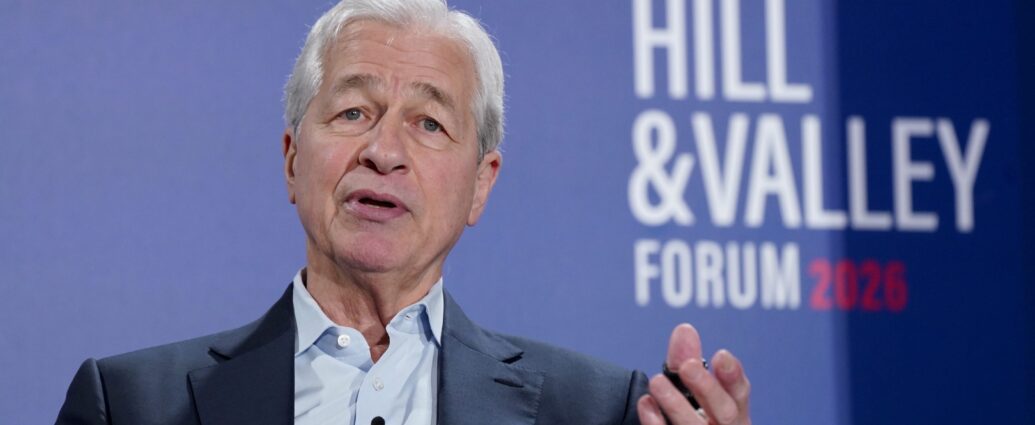
Higher education is mired in a PR crisis. Since the start of his second term, President Donald Trump has targeted the nation’s most elite institutions, including the Ivy League. The cracks first appeared during campus protests over the war in Gaza, throwing the leadership lapses and internal tensions of colleges and universities into clear view.

Last year, Yale University President Maurie McInnis asked a group of faculty to find out why the university has grown so unpopular in the public’s eye. Their 20 recommendations match what many critics have echoed for years, suggesting everything from tamping down on grade inflation to opaque admissions standards.

“Our committee’s work brought us face to face with some of higher education’s greatest challenges and blind spots,” the report reads.

A recent Gallup poll found public trust in higher education fell to just 36% in 2023 and 2024, a low among a series of controversies facing the institutions. While that number was back up to 42% in 2025, it remains near historical lows. But the pressure extends beyond reputational issues. People today are questioning the value proposition of the four-year degree as AI threatens to automate many white-collar roles across industries spanning law, business, engineering, and computer science. 

‘Grade like we mean it’

Among the 20 recommendations, which span everything from protecting free speech, supporting “open minds,” and tamping down on devices in classrooms, the committee called on university faculty to “grade like we mean it.” Grade inflation took to the national spotlight after Trump pushed a crackdown on the practice, tying federal funding to whether universities modify grading practices.

And Yale is guilty of the practice. A 2023 report  from Yale economics professor Ray Fair found that Yale dished out A or A- grades to a staggering 79% of students, meaning the median student at Yale receives an A. That’s up by nearly 60 percentage points from 1963, when the school gave out the same grades to just 10% of the student body. Harvard also admitted it was giving out too many As last year.

“Decades of inflation and compression have rendered the college grading system almost meaningless as an academic measure,” the report reads.

Grade inflation isn’t just injurious to a university’s reputation. The students receiving those straight A’s could also find themselves losing out in the long run. A recent study from National Bureau of Economic Research (NBER) entitled “Easy A’s, Less Pay: The Long-Term Effects of Grade Inflation,” found grade inflation has a direct link to poorer long-term salaries.

“Average grade inflation hurts,” Nolan Pope, one of the study’s researchers and a labor economist at University of Maryland, told Fortune in a recent interview. “They are less likely to learn if it’s very easy to get an A. They spend less time and effort.”

The committee recommended a 3.0 mean grade, or a similar class-wide average, as well as devising a percentile ranking, to mitigate grade inflation on campus. 

Reforming undergraduate admissions

The report also found certain undergraduate admissions practices appeared unfair to the public, specifically the preferential treatment of certain applicants, including legacies, varsity athletes, and children of faculty, staff, and donors.

“The current system of preferences for certain groups of applicants,” the report reads, “distorts the admissions process by reducing the number of slots available to high-achieving applicants who do not fit into one of the favored categories.”

A 2025 NBER study found college admissions favor rich kids. Children from families in the top 1%, for example, were nearly 60% more  likely to be admitted into an elite university as compared to middle-class applicants. That’s because higher-income applicants tend to have access to the resources needed to catch an admission officer’s attention, including SAT tutors that can help boost their score. There’s a near-million dollar market for that. Some rich families are paying admissions specialists $750,000 to get their kids into the Ivy league. 

Undergraduate admissions practices have been upended in recent years. In 2023, the Supreme Court ruled affirmative action unconstitutional, shifting admissions decisions away from considering race. Around the same time, the Biden administration sought to end preferential treatment for the children of alumni and donors.

The committee’s recommendation? Go back to the basics: give a floor for academic achievement, such as a minimum SAT score, shedding other tangential qualifications.

“It should only use criteria for admission that it is willing to describe publicly and defend openly,” the report reads.

This story was originally featured on Fortune.com

This post was originally published here

Office vacancies remain elevated as hybrid work continues to reshape commercial real estate demand.

The U.S. commercial real estate sector continues to face sustained pressure, as persistently high office vacancy rates underscore the long-term impact of shifting workplace trends and tighter financial conditions.

New data released this week by major real estate services firms, including CBRE and JLL, indicate that office demand remains subdued across major metropolitan areas, with vacancy rates holding near multi-year highs. The استمرار of hybrid and remote work arrangements has fundamentally altered corporate space requirements, reducing demand for traditional office footprints.

Landlords are responding by offering increasingly aggressive concessions, including rent discounts, flexible lease terms, and tenant improvement incentives, in an effort to attract occupants. Despite these measures, leasing activity has remained below pre-pandemic levels in many markets.

At the same time, rising interest rates are creating additional challenges for property owners. Higher borrowing costs have made refinancing more expensive, particularly for properties with declining occupancy rates. This dynamic is placing pressure on balance sheets and raising concerns among lenders.

Regional banks, which hold a significant share of commercial real estate loans, remain exposed to these risks. Regulators have been monitoring the sector closely, particularly in light of broader financial stability concerns tied to concentrated exposure in certain portfolios.

“The office sector is undergoing a structural reset,” analysts at JLL said in a recent report, noting that demand patterns are unlikely to fully revert to pre-pandemic norms.

While the office segment faces ongoing headwinds, other areas of commercial real estate have shown greater resilience. Industrial properties, driven by e-commerce demand, and multifamily housing have remained relatively strong, though they too are beginning to feel the effects of higher financing costs.

Investors are increasingly selective, focusing on high-quality assets in prime locations, often referred to as “flight-to-quality” dynamics within the sector. Older and less well-located buildings have been disproportionately affected, with some facing potential repurposing or redevelopment.

Looking ahead, market participants expect a prolonged adjustment period. The pace of recovery will likely depend on broader economic conditions, interest rate trends, and the evolution of workplace practices.

For now, the commercial real estate market remains in transition, as structural changes continue to reshape one of the largest asset classes in the U.S. economy.

— JBizNews Desk

PepsiCo said Thursday its push to make snacks more affordable is bringing customers back, offering an early sign that consumers are starting to return after pulling back in recent years.

The company reported stronger-than-expected quarterly results, with both revenue and profit rising. A notable change came in its North American food business, where demand for products like chips and snacks showed early signs of recovery.

After a stretch where higher prices weighed on buying habits, PepsiCo said its efforts to improve affordability are beginning to resonate with shoppers. That shift helped drive growth in volumes, indicating consumers are buying more – not just paying higher prices.

PEPSICO TO SLASH PRICES ON POPULAR SNACKS AFTER CONSUMER BACKLASH

Executives pointed to a broader strategy that combines pricing adjustments with new products and marketing efforts aimed at keeping brands relevant while easing pressure on consumers.

POTATO CHIP BRAND UNVEILS BIGGEST REDESIGN IN NEARLY 100-YEAR HISTORY

The turnaround is still early, but it suggests PepsiCo may be finding the right balance after a period when price increases across the industry tested customer loyalty.

CHILI’S TAKES AIM AT MCDONALD’S WITH NEW VALUE DEAL MENU OFFERINGS

At the same time, the company’s beverage business in North America remains under pressure, with softer demand highlighting uneven performance across its portfolio.

CLICK HERE TO GET FOX BUSINESS ON THE GO

Going forward, PepsiCo said it expects steady growth this year, even as the broader economic backdrop remains uncertain, and consumer spending patterns remain in focus.

This post was originally published here

The head of the International Energy Agency says Europe has “maybe 6 weeks or so jet fuel left” amid shortages due to Iran’s blockade of the Strait of Hormuz, the Associated Press reported Thursday.

IEA Executive Director Fatih Birol offered the analysis in an interview, telling the AP that the Hormuz situation has caused “the largest energy crisis we have ever faced.”

“In the past there was a group called ‘Dire Straits.’ It’s a dire strait now, and it is going to have major implications for the global economy. And the longer it goes, the worse it will be for the economic growth and inflation around the world,” he said.

“I can tell you soon we will hear the news that some of the flights from city A to city B might be canceled as a result of lack of jet fuel,” he added.

TRUMP DETAILS SWEEPING ‘ALL OR NOTHING’ BLOCKADE OF STRAIT OF HORMUZ AFTER FAILED IRAN TALKS

The war in Iran has caused oil prices to spike in the U.S. as well, though Treasury Sec. Scott Bessent has said the surge is “transient.”

For its part, Iran has threatened to shut down traffic in the Red Sea and other regional shipping lanes if the U.S. continues its blockade of Iranian ports this week.

TRUMP AGREES TO 2-WEEK CEASEFIRE IF IRAN OPENS STRAIT OF HORMUZ

Iran’s Maj. Gen. Ali Abdollahi Aliabadi issued the threat on Iranian television on Wednesday.

Aliabadi said if the U.S. blockade continues, it “creates insecurity for Iran’s commercial vessels and oil tankers” and constitutes “a prelude” to violating the ongoing U.S.-Iran ceasefire, the news outlet reported. 

GET FOX BUSINESS ON THE GO BY CLICKING HERE

“The powerful armed forces of the Islamic Republic will not allow any exports or imports to continue in the Persian Gulf, the Sea of Oman, and the Red Sea,” Aliabadi reportedly added.

This post was originally published here

By JBizNews Desk

Published: April 16, 2026

Technology stocks advanced as investment in artificial intelligence infrastructure continues to accelerate.

Technology stocks led broader market gains Thursday as sustained momentum in artificial intelligence investment continued to drive capital into the sector, reinforcing its position as a central engine of market performance in 2026.

Major U.S. indices were lifted by strong performances among large-cap technology firms, many of which have recently reaffirmed plans to expand spending on AI infrastructure, including data centers, advanced semiconductors, and cloud computing capabilities. These investments are being fueled by rising enterprise demand for AI-driven tools and services, according to company disclosures and analyst reports released this week.

The rally reflects a continuation of trends seen in recent quarters, with AI-linked companies outperforming broader market benchmarks. Analysts at Bank of America and Wedbush said in Thursday research notes that demand for AI applications remains robust across industries, from finance and healthcare to manufacturing and logistics.

“AI is no longer a future theme—it is a current earnings driver,” one strategist wrote, highlighting the extent to which companies are already monetizing AI-related investments.

Investor sentiment has also been supported by shifting expectations around U.S. monetary policy. Signals from Federal Reserve officials suggesting a potential pause in interest rate hikes have provided additional support for high-growth sectors, which are particularly sensitive to borrowing costs and discount rate assumptions.

Still, the sector’s strong performance has raised concerns about valuations. Several analysts cautioned that parts of the market may be pricing in overly optimistic growth projections, increasing the risk of volatility if earnings fail to meet expectations.

Recent earnings guidance from major technology firms has been closely scrutinized for indications of how quickly AI investments are translating into revenue. While early signs are positive, some companies have acknowledged that significant upfront capital expenditures may weigh on margins in the short term.

Meanwhile, competition within the AI space is intensifying, with both established technology giants and emerging players racing to capture market share. Strategic partnerships, acquisitions, and product launches have accelerated in recent months, underscoring the high stakes involved.

Despite these challenges, the long-term outlook for the sector remains strong. Analysts widely expect AI to drive productivity gains and create new revenue streams across the global economy, positioning technology firms at the forefront of that transformation.

For now, markets appear willing to reward companies that demonstrate clear leadership in AI development and deployment. However, as the sector continues to evolve, investors are likely to remain focused on execution, profitability, and the sustainability of growth.

— JBizNews Desk

By JBizNews Desk

Published: April 16, 2026

Oil prices moved higher amid geopolitical tensions and tightening global supply conditions.

Oil prices climbed in Thursday trading as investors weighed escalating geopolitical tensions in the Middle East alongside tightening global supply conditions, reinforcing concerns that energy markets may face renewed volatility in the near term.

Brent crude futures rose modestly, while U.S. West Texas Intermediate also posted gains, extending a broader upward trend observed over recent sessions. The movement follows heightened concerns over potential disruptions to key energy transit routes and production infrastructure, according to market participants and trading data.

Analysts pointed to renewed risks surrounding strategic shipping corridors, including routes linked to the Red Sea and surrounding regions, as contributing to a risk premium in oil markets. While no major supply disruption has materialized, the احتمال alone has been sufficient to influence trader sentiment and push prices higher.

At the same time, supply fundamentals remain tight. OPEC+ producers have continued to adhere to voluntary production cuts aimed at stabilizing global prices. Recent compliance levels among major producers have remained relatively strong, according to secondary-source estimates cited in industry reports.

Adding to upward pressure, the U.S. Energy Information Administration reported this week a drawdown in crude inventories, signaling that demand remains resilient despite ongoing concerns about global economic growth. Gasoline demand figures also pointed to steady consumption trends, particularly as seasonal travel activity begins to pick up.

“The market is balancing geopolitical uncertainty with fundamentally tight supply,” analysts at Morgan Stanley wrote in a Thursday note, adding that near-term price movements are likely to remain sensitive to headlines out of the Middle East.

However, gains have been tempered by lingering concerns about demand. Slower growth projections in parts of Europe and Asia continue to weigh on the long-term outlook, while China’s recovery remains uneven, according to recent economic indicators.

Market participants are also closely watching central bank policy, particularly in the United States, where expectations of a potential Federal Reserve pause have influenced broader commodity sentiment. A less aggressive rate environment could support economic activity and, by extension, energy demand.

Still, volatility remains a defining feature of the oil market. Analysts at Citi noted that geopolitical developments could trigger sharp price swings in either direction, particularly if supply disruptions escalate or diplomatic conditions shift.

As traders assess both immediate risks and longer-term fundamentals, the oil market remains finely balanced—caught between tightening supply, uncertain demand, and an increasingly complex geopolitical backdrop.

— JBizNews Desk

By JBizNews Desk

Published: April 16, 2026

Markets reacted after fresh U.S. inflation data signaled easing price pressures, raising expectations of a Federal Reserve pause.

Federal Reserve officials are increasingly signaling a willingness to pause interest rate increases following the release of fresh inflation data this week showing a continued moderation in price pressures, a shift that is beginning to reshape market expectations after months of aggressive monetary tightening.

The latest Consumer Price Index report, released Wednesday by the U.S. Bureau of Labor Statistics, showed that headline inflation rose at a slower annual pace than economists had anticipated, with easing prices in energy and goods categories contributing to the deceleration. Core inflation, which excludes volatile food and energy components and is closely watched by policymakers, also showed tentative signs of cooling, though it remains above the Federal Reserve’s long-term target.

In public remarks over the past 24 hours, several Federal Reserve officials indicated that the central bank may be nearing a point where it can hold rates steady to evaluate the cumulative impact of its tightening campaign. Since beginning its rate-hiking cycle, the Fed has lifted borrowing costs to levels not seen in years in an effort to contain inflation that surged following the pandemic-era recovery.

Financial markets responded quickly to the shift in tone. U.S. Treasury yields moved lower in Thursday trading, reflecting expectations of a less aggressive rate path, while equities advanced, led by sectors sensitive to interest rates such as technology and consumer discretionary stocks. Futures markets are now increasingly pricing in a pause at an upcoming Federal Open Market Committee meeting, according to CME FedWatch data.

Still, Federal Reserve officials have emphasized that any decision to pause does not signal an end to the fight against inflation. Labor market conditions remain strong, with unemployment near historically low levels, and wage growth continuing to exert upward pressure on prices, particularly in the services sector. These dynamics complicate the Fed’s path toward returning inflation to its 2% target.

Economists at major financial institutions, including Goldman Sachs and JPMorgan, noted in research published Thursday that while the latest inflation data is encouraging, policymakers are likely to remain cautious. “The recent data supports a near-term pause, but the Fed will need additional confirmation that inflation is moving sustainably lower before considering any policy pivot,” analysts wrote.

The evolving outlook comes as policymakers balance the risk of overtightening the economy against the need to ensure that inflation expectations remain anchored. Some officials have pointed to lagging effects of monetary policy, noting that the full impact of prior rate increases may not yet be fully reflected in economic activity.

Beyond inflation, broader economic indicators are also being closely monitored. Recent data on consumer spending and business investment has shown resilience, though some sectors, including housing and manufacturing, continue to feel the effects of higher borrowing costs. The housing market, in particular, has experienced a slowdown in activity, as elevated mortgage rates weigh on affordability and demand.

Global factors are also influencing the Fed’s outlook. Energy price fluctuations, geopolitical tensions, and supply chain dynamics continue to pose potential risks to inflation trends. Analysts say that while goods inflation has eased significantly, services inflation remains more persistent and will likely be a key determinant of future policy decisions.

For investors, the possibility of a pause marks a notable shift in narrative. After months of anticipating continued tightening, markets are beginning to adjust to a scenario in which the Fed adopts a more patient stance. However, volatility is expected to remain as incoming data continues to shape expectations.

“The market is moving from a tightening mindset to a waiting mindset,” said one senior strategist at a major asset manager, reflecting broader sentiment among institutional investors.

As the next Federal Reserve meeting approaches, attention will remain firmly focused on incoming economic data, particularly inflation and labor market indicators. While the latest figures offer some relief, policymakers have made clear that the path forward will depend on sustained evidence that inflation is firmly on a downward trajectory.

— JBizNews Desk

Mortgage rates fell this week, mortgage buyer Freddie Mac said Thursday.

Freddie Mac’s latest Primary Mortgage Market Survey, released Thursday, showed the average rate on the benchmark 30-year fixed mortgage declined to 6.3% from last week’s reading of 6.37%. 

The average rate on a 30-year loan was 6.83% a year ago.

MIAMI OVERTAKES LOS ANGELES AND NEW YORK AS WORLD’S RISKIEST HOUSING MARKET FOR BUBBLE RISK

“Compared to one year ago when rates were at 6.83%, this is a meaningful improvement for homebuyers during what is typically the busy spring homebuying season,” said Sam Khater, Freddie Mac’s chief economist.

THESE 10 HOUSING MARKETS GIVE FIRST-TIME BUYERS THE BEST SHOT AT HOMEOWNERSHIP IN 2026

LOS ANGELES LEADS NATION IN MASSIVE POPULATION EXODUS AS ‘BREAKING POINT’ HITS GOLDEN STATE

The average rate on a 15-year fixed mortgage fell to 5.65% from last week’s reading of 5.74%.

Mortgage rates are affected by several factors, including the Federal Reserve and geopolitics. Though mortgage rates are not directly affected by the Fed’s interest rate decisions, they closely track the 10-year Treasury yield. The 10-year yield hovered around 4.29% as of Thursday afternoon.

GET FOX BUSINESS ON THE GO BY CLICKING HERE

The decline in mortgage rates follows a two-week ceasefire between the U.S. and Iran, brokered with help from Pakistan, that was framed by the White House as a step toward broader negotiations.

“The 10-year Treasury yield has eased from last week, and this relief has carried through to mortgage rates,” said Realtor.com senior economist Anthony Smith. “However, the durability of this rate decline hinges on whether the ceasefire holds and evolves into a more lasting resolution. Until there is greater clarity on the geopolitical front, mortgage rate volatility is likely to remain elevated, and any improvement could prove temporary.”

This post was originally published here

Spirit Airlines is facing renewed financial pressure as rising fuel costs threaten to complicate its efforts to exit bankruptcy, adding uncertainty to its restructuring plan, according to reports. 

The low-cost carrier, which filed for Chapter 11 bankruptcy protection in late 2024, has been working toward a financial overhaul aimed at stabilizing operations and improving liquidity. But a recent surge in fuel prices – driven by the ongoing war with Iran – is creating fresh headwinds at a critical stage in the process.

The dire situation has led some creditors to explore a potential liquidation of the airline, according to reports from Bloomberg and The Wall Street Journal, as its low-cost structure leaves it more exposed to triple-digit increases in fuel costs.

Fuel remains one of the largest expenses for airlines, and the recent spike is hitting Spirit particularly hard given its ultra-low-cost model. Unlike larger carriers, Spirit has limited flexibility to offset higher costs through fare increases without risking a decline in demand.

AMERICAN AIRLINES JOINS WAVE OF CARRIERS HIKING CHECKED BAG FEES AS JET FUEL PRICES SKYROCKET

Creditors have already raised concerns about the company’s restructuring plan. In a recent court filing, lenders behind Spirit’s revolving credit facility argued the proposal may not be viable if fuel prices remain elevated.

RYANAIR WELCOMES JAIL SENTENCE FOR UNRULY PASSENGER AS AIRLINE ENFORCES ZERO-TOLERANCE MISCONDUCT POLICY

The financial impact could be critical. JPMorgan analysts, cited by the Journal, estimate that higher fuel prices could add roughly $360 million to Spirit’s expenses this year – exceeding the $337 million in cash the airline reported at the end of last year.

That imbalance highlights the scale of the challenge as the airline attempts to restructure while managing rising operating costs and constrained liquidity.

DELTA, SOUTHWEST HIKE CHECKED BAGS AS AIRLINES FACE SURGING FUEL COSTS

Spirit has already taken steps to shore up its finances, including raising fares, cutting unprofitable routes and reducing its fleet.

The company said in court filings it expects fuel price volatility to ease in the coming months, with conditions potentially stabilizing later this spring. But the outlook remains uncertain with the Iran conflict showing no end in sight and continuing to disrupt global energy markets.

CLICK HERE TO GET FOX BUSINESS ON THE GO

Spirit Airlines did not immediately respond to FOX Business’ request for comment.

This post was originally published here

The confrontation was inevitable. When White House budget director Russell Vought appeared before the House Budget Committee on Wednesday to defend President Trump’s fiscal year 2027 budget, the hearing erupted almost immediately—with protesters ejected from the chamber before Vought could finish his opening statement, and Democratic lawmakers waiting their turn to unload.

The budget at the center of it all proposes $1.5 trillion in total defense spending—a roughly 44% increase over current levels—while cutting non-defense discretionary programs by 10% across the board. In dollar terms, that means a roughly $442 billion increase for the Pentagon, funded in part by reductions to Medicaid, housing assistance, child care, and home energy aid for low-income seniors—a trade-off that Democrats called a moral obscenity and Republicans called overdue.

“The budget builds upon the historic $1 trillion fiscal year 2026 defense topline by requesting $1.5 trillion for 2027, a 42% increase, as promised by President Trump last year,” Vought told the committee. “The 2027 budget will ensure that the United States continues to maintain the world’s most powerful and capable military as we grapple with an increasingly dangerous world.”

The backdrop to Vought’s testimony was a comment Trump made weeks earlier at a private White House Easter lunch, in which he said: “We’re fighting wars. We can’t take care of day care.” Trump went further, lumping in Medicaid and Medicare as things that should be pushed to states, which he said should raise their own taxes to cover the costs.

Pressed on those remarks by Rep. Brendan Boyle (D-PA), the committee’s ranking member, Vought pushed back—awkwardly. “No,” Vought said when asked if the administration had taken any steps to turn Medicare over to the states.

“The president doesn’t want to do that,” he continued.

When Boyle noted Trump had not mentioned fraud in his Easter remarks—and that the comments plainly included Medicaid, Medicare, and child care as programs the federal government simply shouldn’t fund—Vought sidestepped, saying Trump was “talking about fraud” in those programs.

The exchange over child care grew sharper when Rep. Becca Balint (D-VT) asked Vought whether $350 billion for the ongoing U.S.-Iran war helped reduce costs for Americans. Vought replied child care is “fully funded” in this budget. Rep. Morgan McGarvey (D-KY) later challenged that claim directly, holding up page 164 of the budget document and citing a provision he said slashed the fruit and vegetable benefit for breastfeeding mothers under the WIC nutrition program from $52 to $13 a month. Vought again replied: “We fully fund the WIC program.” McGarvey cut him off: “No, you don’t. It’s right here.”

The macro numbers looming over the debate were stark. The national debt already stands near $39 trillion, and the Congressional Budget Office has said the administration’s One Big Beautiful Bill—enacted last year—adds more to the deficit than any single piece of legislation in American history, stripping health care coverage from as many as 15 million to 17 million Americans, according to CBO and the Kaiser Family Foundation. Boyle asked Vought if he could seriously maintain, with a straight face, that all of those people were either in the country illegally or defrauding the system. “I didn’t say all of them are illegal,” Vought replied, adding, there’s “also the benefit of people returning to the workforce.”

The committee also heard from Rep. Pramila Jayapal (D-WA), who noted the Department of Defense has now failed eight consecutive audits and remains the only federal agency that has never passed one—even as Vought requests a historic budget increase for the Pentagon.

“You want to talk to me about fraud?” Jayapal asked. “There is over $10 billion in confirmed fraud within the Department of Defense, but you’re not going after any of that.”

Meanwhile, energy prices rose nearly 11% last month according to the Department of Labor’s own data—gas up more than 21%, home energy up more than 30%—a backdrop that made the budget’s elimination of the Low Income Home Energy Assistance Program especially pointed. Consumer confidence has plunged to its lowest level ever in the long-running University of Michigan survey, dating back 74 years, hitting 47.6 in preliminary April readings, a 10.7% drop from March.

Vought closed his opening remarks with a signature phrase, saying it’s “the end of fiscal futility.” Whether Congress agrees—and whether it can pass a budget before the fiscal year deadline—remains an entirely open question.

For this story, Fortune journalists used generative AI as a research tool. An editor verified the accuracy of the information before publishing.

This story was originally featured on Fortune.com

This post was originally published here

Pope Leo XIV blasted the “handful of tyrants” who are ravaging Earth with war and exploitation, as he preached a message of peace Thursday in the epicenter of a separatist conflict considered one of the world’s most neglected crises.

Leo traveled to the western Cameroon city of Bamenda, where jubilant crowds clogged the roads, blowing horns and dancing. They were overjoyed that a pope had come so far to see them and put a global spotlight on the violence that has traumatized this region for nearly a decade.

Leo presided over a peace meeting involving a Mankon traditional chief, a Presbyterian moderator, an imam and a Catholic nun. The aim was to highlight the interfaith movement that has been seeking to end the conflict and care for its many victims.

In his remarks in the St. Joseph Cathedral, on land donated by the Mankon, Leo praised the peace movement and warned against allowing religion to enter conflicts. It’s a theme he has been echoing amid the U.S.-Israeli war in Iran and the religious justifications for it by U.S. officials.

“Blessed are the peacemakers!” he said. “But woe to those who manipulate religion and the very name of God for their own military, economic and political gain, dragging that which is sacred into darkness and filth.”

He called for a “decisive change of course” that leads away from conflict and the exploitation of the land and its people for military or economic gain.

“The world is being ravaged by a handful of tyrants, yet it is held together by a multitude of supportive brothers and sisters!”

It wasn’t immediately clear if any of the separatist fighters, who announced a three-day pause in fighting to allow the pope safe passage, attended.

The pope was to celebrate a Mass for the people of Bamenda, located near Cameroon’s western border with Nigeria, before returning to the capital Yaounde.

A conflict rooted in colonial history

The conflict in Cameroon’s two Anglophone regions is rooted in Cameroon’s colonial history, when the country was divided between France and Britain after World War I. English-speaking regions later joined French Cameroon in a 1961 U.N.-backed vote, but separatists say they have since been politically and economically marginalized.

In 2017, English-speaking separatists launched a rebellion with the stated goal of breaking away from the French-speaking majority and establishing an independent state. The conflict has killed more than 6,000 people and displaced over 600,000 others, according to the International Crisis Group.

Leo arrived to a raucous welcome in Bamenda, where blasting music from loudspeakers gave the event a concert-like vibe.

“We are so overjoyed, so overwhelmed,” said Felicity Cali, a Catholic student. “Say thank you, God, for this extraordinary day and for making us be alive to see this day.”

The separatist movement is believed to be backed by several actors abroad. In December, a federal jury in U.S. convicted two individuals for conspiracy to provide funds and equipment to the separatist fighters. Belgian authorities in March also announced they had arrested four people as part of investigations into Belgian residents suspected of being among the separatist leaders and raising money for them there.

“Those who rob your land of its resources generally invest much of the profit in weapons, thus perpetuating an endless cycle of destabilization and death,” Leo said. “It is a world turned upside down, an exploitation of God’s creation that must be denounced and rejected by every honest conscience.”

Cameroon sits atop significant reserves of oil, natural gas, cobalt, bauxite, iron ore, gold and diamonds, making resource extraction one of the pillars of its economy.

While French and English companies have long dominated the extraction industry in Cameroon, Chinese companies have established a significant presence in recent years, particularly in the gold mining regions of the east.

On the eve of Leo’s arrival, separatist fighters announced a three-day pause in fighting. A spokesperson for the Unity Alliance, Lucas Asu, said the pause “reflects a deliberate commitment to responsibility, restraint and respect for human dignity, even in the context of ongoing conflict.”

Though the number of deadly attacks by separatists has decreased in recent years, the conflict shows no sign of resolution. Peace talks with international mediators have stalled, with both sides accusing each other of acting in bad faith.

Morine Ngum, a mother of three whose husband was shot dead in 2022 by Cameroonian soldiers while fighting as a separatist, expressed doubt that the pope’s visit and peace meeting would lead to meaningful change. She said any real progress must begin with those in power.

“Nothing is going to change,” said Ngum, 30. “This conflict has turned my children into orphans and me into a widow. Many families have been rendered homeless.”

Testimony to pope about the toll of the conflict

The archbishop of Bamenda, Andrew Nkea Fuanya, told Leo that the people there had suffered from “a situation they did not create,” losing their livelihoods, homes and education: Children were not allowed to go to school for years.

“Most Holy Father, today that your feet are standing on the soil of Bamenda that has drunk the blood of many of our children,” he said.

Leo, the former Cardinal Robert Prevost, spent two weeks sitting with Fuanya at the same table during Pope Francis’ 2024 big meeting, or synod, on the family.

The Right Rev. Fonki Samuel Forba, emeritus moderator of the Presbyterian church in Cameroon, said the Vatican had joined other faith groups in trying to bring the separatists to the negotiating table with the government, and meeting with their supporters abroad.

Biya’s government has been accused of shunning dialogue with the separatists. The last time a peace meeting was held between the government and separatists was in 2022 during talks facilitated in Canada by the Canadian government.

“There is a proverb in Africa that ‘When two elephants fight, it is the grass that suffers,’” Forba said.

___

Akua contributed from Yaounde, Cameroon. Associated Press writer Chinedu Asadu in Abuja, Nigeria, contributed to this report.

___

Associated Press religion coverage receives support through the AP’s collaboration with The Conversation US, with funding from Lilly Endowment Inc. The AP is solely responsible for this content.

This story was originally featured on Fortune.com

This post was originally published here

For months, New York Gov. Kathy Hochul has resisted calls to increase taxes on the wealthy, beating back progressives who have hounded her from Manhattan to Puerto Rico bellowing chants of “tax the rich.”

Now she is pitching a compromise.

The moderate Democrat says she will push to create a new tax on multimillion-dollar second homes in New York City known as pied-à-terres, attempting to appease Mayor Zohran Mamdani and his supporters while also tending to her concerns about destabilizing the state’s finances.

The idea, announced Wednesday, would allow the city to impose a tax surcharge on secondary residences worth over $5 million, with the governor’s office saying it could generate at least $500 million annually as Mamdani moves to fill a multibillion dollar budget hole and fund his ambitious agenda.

“As Governor, I understand the importance of stabilizing the city’s finances without compromising on essential services New Yorkers count on,” Hochul said in a statement. “If you can afford a $5 million second home that sits empty most of the year, you can afford to contribute like every other New Yorker.”

The governor’s office said she would include the measure in this year’s state budget, a sprawling bundle of bills that are still being hotly negotiated in Albany after the governor and Legislature blew past an April 1 due date for the spending plan.

Mamdani, who has called for a much broader tax increase on the rich, cast the proposal as a win, saying in a statement that it places him “one step closer to balancing our budget by taxing the ultra-wealthy and global elites.”

At an unrelated forum focused on taxes, Mamdani, appearing in front of a large banner that read “Tax The Rich,” said the proposal would target the “super wealthy who can purchase properties and use them to store their wealth to benefit from New York City’s real estate market but not have to pay back into that same city.”

Hochul has long rejected increasing personal income or corporate taxes, arguing that such measures would further incentivize residents and big businesses to flee the city for states with lower tax rates, thereby eroding the state’s tax base.

Still, the calls have followed her, with progressives chanting “tax the rich” when she appears at events, and even when she was at an annual political conference in San Juan late last year.

The governor is also contending with a possible political vulnerability over raising taxes as she runs for a second full term in office and tries to fend off Republican criticisms over high taxes in the state.

Her Republican challenger this fall, Bruce Blakeman, wasted little time in turning the proposal into a familiar attack.

“Kathy Hochul’s ‘No Tax Hike’ promise has expired faster than the families fleeing New York’s affordability crisis,” said Blakeman, a county executive in the city’s suburbs. “Unlike Hochul, I’ll actually keep my word when I’m governor: I’ll cut your taxes, slash your utility bills in half, and protect the American Dream.”

Mamdani, a Democrat, has urged the governor and state Legislature to raise taxes on the rich, calling for wealthy residents to pitch in more money for programs intended to help the city’s struggling working-class.

At the same time, he also finds himself confronting a massive budget gap — which he first put at around $12 billion but later revised to about $5 billion after savings and financial assistance from the state — that could imperil his agenda and city services more widely.

At a news conference, Hochul said the proposal will help the city close its budget gap without having to cut services, but said the mayor and City Council must find additional savings as they move to balance their budget.

“Our goal is to get the city on stable ground, to close the gap so we can take the pressure off,” she said.

This story was originally featured on Fortune.com

This post was originally published here

Stress comes with the territory of being at the helm of billion-dollar corporations—so CEOs are turning to personal rituals and deliberate routines to stay sharp and avoid burnout. Ivan Espinosa, the CEO of Japanese the $8.5 billion car giant Nissan, decompresses from the job by jamming out with his band and hitting the tennis courts each weekend. 

“How do I manage stress? Well, I try to continue being myself,” Espinosa said in a recent interview with The Wall Street Journal. “So I like to play tennis on the weekends. If I can’t, I play golf. And I also am a musician.”

The Mexican national first joined Nissan back in 2003 as a product specialist in the company’s Mexico planning division; after rising through the ranks and serving senior positions in Thailand and Europe, Espinosa finally moved to Nissan’s global headquarters in Japan in 2016. He also held a litany of leadership roles before assuming the role of CEO last April. 

Throughout a whirlwind career like Espinosa’s—bouncing around different companies, and taking on greater responsibilities—stress is bound to creep in. However, reconnecting to himself through music and exercise has kept his cortisol down. 

“I like to play the drums. So I have a band, every now and then we get together and we play for a while,” the Nissan leader continued. “This helps me staying [sic] real and staying [sic] true to myself.”

How leaders manage stress: meditation and runs on the beach

CEOs are falling into their own rhythms to manage the pressure from their high-profile, stressful positions in the business world. 

Michael Tennant, the founder of purpose-driven venture studio CEO of Curiosity Lab, has perfected a formula to combat stress. Right after waking up, the leader freshens up, meditates, journals, and zeroes in on the most critical task of the day. He front-loads his days with work that is creative and inspires him, then slides into difficult and intense leadership tasks. 

“My morning routine is the biggest part of my stress management,” Tennant told Fortune in 2023. “This routine gives me the space to assess everything in my world, set daily priorities, and take action toward achieving them that day.”

Adam Ross, the former CEO and co-founder of skincare services business Heyday, fends off stress in the same “cathartic” way as Espinosa: exercise. And it’s a popular choice among business leaders; Four Seasons Hotels and Resorts CEO Alejandro Reynal makes fitness a priority in leading the billion-dollar luxury hotel chain. He jump-starts his day with an early morning workout, and combats burnout by taking time to find calm before the office grind. 

“Routine helps me stay grounded: I start my mornings early, exercise or run on the beach, have breakfast with my family, and take a few quiet moments before the day begins,” Reynal told Harvard Business Review last year. “Most stress fades when you reconnect with purpose—and remember that what we do is about people, not pressure.”

Meanwhile, Amazon founder Jeff Bezos handles his stress in a completely different way. The entrepreneur worth $268 billion wards off stress by confronting his anxieties head-on—whether it requires sending an email, or picking up the phone to smooth things out. 

“Stress primarily comes from not taking action over something that you can have some control over,” Bezos told the Academy of Achievement in 2001. “I find as soon as I identify it, and make the first phone call, or send off the first e-mail message, or whatever it is that we’re going to do to start to address that situation—even if it’s not solved—the mere fact that we’re addressing it dramatically reduces any stress that might come from it.”

This story was originally featured on Fortune.com

This post was originally published here

China’s economy accelerated in the first quarter of this year, expanding 5% from a year earlier as it largely shrugged off impacts from the Iran war so far, according to data released Thursday.

The January-March data released by the government, covering a period during which the Iran war began, was better than what economists expected and was up from the 4.5% growth seen in the October-December quarter.

On a quarter-on-quarter basis, China’s economy grew 1.3% in the first three months from the final quarter of last year, the fastest pace in a year.

Economists expect China, the world’s second largest economy, to be able to weather short-term impacts from the Iran war, now in its seventh week. The war is pushing energy prices higher, worsening inflation and impacting global economic growth. But longer term, areas including global demand for Chinese exports could take a hit.

The International Monetary Fund this week trimmed its economic growth estimates for China to a 4.4% expansion for 2026 as it lowered its global growth forecasts over Iran war shocks. Chinese leaders last month set an economic growth target of 4.5% to 5% for this year, the slowest since 1991.

“China can likely weather short term disruptions, but a protracted war and higher for longer energy prices would likely start to bite into growth by the second half of the year,” said Lynn Song, chief economist for Greater China at Dutch bank ING.

Also on Thursday, government data showed industrial output in China rose 5.7% in March year-on-year, better than market expectations, as global demand for Chinese exports of electronic equipments, autos, semiconductors and robotics remained strong.

Retail sales were up 1.7% from a year earlier, worse-than-estimates and slower than the 2.8% growth in January and February, reflecting sluggish domestic demand for consumer goods.

A years-long real estate sector slump in China has dragged consumer and investor confidence, but the country managed to achieve its targeted “around 5%” growth last year, powered by robust exports that drove its trade surplus to a record nearly $1.2 trillion despite U.S. President Donald Trump’s higher tariffs.

China’s exports will continue to be key in propelling its economy this year, economists believe, but reliance on export growth could now increasingly become a problem.

“The lack of a speedy resolution to the Iran war is likely to dent global growth, which will negatively impact other economies’ ability to absorb Chinese exports,” said Eswar Prasad, a professor of economics and trade policy at Cornell University.

“At a time when all countries are trying to protect their firms, households and economies from the fallout of the Iran war, the appetite for Chinese imports is clearly shrinking,” he explained.

On Tuesday, China reported its exports grew 2.5% in March from a year ago, significantly slowing from the previous two months although some analysts partly attributed that to seasonal distortions.

China could likely still attain its full year economic growth target of 4.5% to 5% for 2026 through policy stimulus measures, economists say, but there are other concerns.

A boost in public sector investment, Prasad said, would stabilize headline growth but, unless household demand strengthens significantly, could intensify underlying deflationary pressures and increase the economy’s reliance on exports down the line.

This story was originally featured on Fortune.com

This post was originally published here

The BBC said Wednesday that it plans to cut up to 2,000 jobs to save 10% of its annual budget — 500 million pounds ($677 million) — over the next two years.

The layoffs announced during a call with staff are the biggest in more than a decade at the U.K. national broadcaster.

“I know this creates real uncertainty, but we wanted to be open about the challenge,” interim Director-General Rhodri Talfan Davies said in a staff email.

Davies said that the reductions were driven by inflation, pressures to license fee and commercial income and a turbulent global economy.

The BBC said earlier this year that it faced “substantial financial pressures” and wanted to cut about a tenth of its budget by 2029. The bulk of the cuts are to be made in the next fiscal year beginning April 1, 2027.

The cuts come as former Google executive Matt Brittin is scheduled to take over as director-general next month.

He will fill the vacancy left after Tim Davie, and head of news Deborah Turness resigned over a misleading edit in a documentary about U.S. President Donald Trump’s speech on Jan. 6, 2021, before his followers stormed the U.S. Capitol.

Trump is suing the BBC for $10 billion for defamation.

The BBC is both a beloved and oft-criticized cultural institution funded by an annual license fee, which recently rose to 180 pounds ($244), paid by all U.K. households who watch live television or any BBC content.

Opponents of the fee, including rival commercial broadcasters, have grown louder in an era of digital streaming, when many people no longer have television sets or follow traditional television schedules.

The center-left Labour government has vowed to ensure that the BBC has “sustainable and fair” funding, but hasn’t ruled out replacing the license fee with another funding model.

The BBC was founded in 1922 as a radio service to “inform, educate and entertain.” It now operates 15 U.K. national and regional television channels, several international channels, 10 national radio stations, dozens of local radio stations, the globe-spanning World Service radio and extensive digital output, including the iPlayer streaming service.

This story was originally featured on Fortune.com

This post was originally published here

Good morning. Bank of America posted its strongest earnings in nearly two decades, and CFO Alastair Borthwick says AI is becoming key to the bank’s performance.

The bank reported on Wednesday that Q1 2026 net income was $8.6 billion, with earnings per share up 25% to $1.11, which is the highest level in almost 20 years. On a media call, Borthwick pointed to AI as an increasingly important driver, highlighting a new internal tool for financial advisors.

The Meeting Journey tool helps advisors prepare for client meetings by pulling together key information. BofA has about 18,000 financial advisors across its wealth management platform, serving millions of clients, he said. Before meeting with a client, advisors regularly need to update themselves with a wide range of information such as client history, recent activity, and CIO guidance, he explained. 

The tool searches and consolidates client relationship insights and recent activity into ready-to-use prep materials and, with client consent, acts as an AI notetaker during virtual meetings. It also summarizes meeting decisions and next steps based on those notes. The goal is to cut down hours of manual prep and free advisors to focus on client relationships.

“Efforts like this translate into results,” Borthwick said, pointing to record first-quarter revenue and improved cost control. 

Preparing for meetings once meant pulling data from multiple systems; now much of that work is automated, he said. “Not necessarily the judgment—that can be human,” Borthwick added. The bank invests around $13.5 billion annually in technology, including approximately $4 billion on new initiatives like AI.

More broadly, BofA’s strong quarter was driven by several factors:
—Net interest income rose 9% to $15.9 billion as loan and deposit growth accelerated.
—Trading revenue hit $6.3 billion—its best in roughly 15 years—boosted by a record high 30% jump in equities.
—Investment banking fees climbed 21% to $1.8 billion on a solid M&A market.
—Asset management fees grew 15% to $4.2 billion.
—Productivity gains, including from AI, helped the company maintain cost discipline and improve its efficiency ratio by 170 basis points to 61%. 

With revenues outpacing expenses, BofA achieved its third consecutive quarter of operating leverage at 2.9%. This week, Morningstar raised its fair value estimate for BofA to $65 per share, up from $58.

Amid ongoing uncertainty around geopolitics, rates, and credit, Borthwick said the bank’s data shows a resilient U.S. consumer. Unemployment remains at around 4.3%, supporting spending, while a recent rise in gas outlays hasn’t materially changed the broader picture, he said. “You can see that in our asset quality,” he added.

Sheryl Estrada
sheryl.estrada@fortune.com

This story was originally featured on Fortune.com

This post was originally published here

The resistance is measurable, the anxiety is real—and neither will slow down what’s coming.

A new global survey of 3,750 executives and employees across 14 countries finds more than 54% of workers bypassed their company’s AI tools in the past 30 days and completed the work manually instead. Another 33% haven’t used AI at all. Combined, roughly eight in 10 enterprise workers are either avoiding or actively rejecting the technology their employers are spending record sums to deploy. And yet, 50% of Americans told Plaid researchers this week managing money without AI will soon feel outdated—and 52% already expect their fintech apps to use it.

Both numbers come from the same moment in time.

That is the paradox of the AI moment in 2026: The backlash and the inevitability are not competing stories. They are the same story, told from different points on the adoption curve.

By the numbers

  • 80% of enterprise workers are avoiding or rejecting AI tools (WalkMe)
  • 56% of U.S. adults have no recent AI experience (ACSI)
  • 86% of Americans who use AI for finances say it helps them better understand money (Plaid/Harris)
  • 43% of Americans say loss of human interaction is their top AI concern (ACSI)
  • 50% say managing money without AI will soon feel outdated (Plaid/Harris)
  • 73 — AI’s average ACSI customer satisfaction score, on par with energy utilities

‘It tastes like a Twinkie’

Veteran tech journalist Kara Swisher thinks the resistance is more durable than the hype suggests. On a recent episode of her podcast On With Kara Swisher, she argued AI may be hitting a ceiling—not because of technical limits, but because of human ones. “Human beings don’t like it,” she said flatly. “Ultimately, AI feels like a Twinkie. It tastes like a Twinkie. And I don’t know if they can ever make it taste like an apple.”

The numbers back her up, at least partially.

A Walton Family Foundation survey found nearly one-third of Gen Z says the tech makes them angry. The American Customer Satisfaction Index puts overall AI platform satisfaction at 73 out of 100—below airlines, social media, and mortgage lenders.

“Consumers spent the last decade learning to distrust how social media platforms handle their data, and AI’s privacy scores suggest they’re carrying that skepticism forward,” said Forrest Morgeson of Michigan State University and the ACSI. “The window to get ahead of that trust deficit is right now.”

Why Gen Z is the most conflicted generation

The generational data doesn’t resolve cleanly. Gen Z posts the lowest AI satisfaction score of any generation—69 on the ACSI scale—while simultaneously being the cohort most likely to say AI will open financial doors they don’t have today. Sixty-two percent of Gen Z and Millennials told Plaid’s Harris Poll researchers AI will unlock financial opportunities they don’t currently possess, and 54% say AI can predict their financial habits better than they can. They are souring on AI culturally while leaning on it financially—a split that says less about the technology than about how, and by whom, it’s being deployed.

In finance, the trust gap is the product gap

Nowhere is the stakes gap clearer than in financial services, where 43% of Americans name reduced human interaction as their top AI worry—ahead of job loss.

Three-quarters say it’s important to know when AI is being used in financial decisions, and 80% believe companies should reimburse them for AI-driven mistakes. The demand isn’t for less AI. It’s for AI that explains itself.

“Sixty percent of consumers say they would trust the technology more if they understood the ‘why’ behind its logic,” the Plaid report found. Trust here isn’t a soft metric—it’s the product decision that determines whether consumers engage at all.

The symmetry of winners and losers

The WalkMe data contains a number that should unsettle every executive defending a slow rollout: Workers lose the equivalent of 51 working days per year to technology friction. Goldman Sachs economists found AI saves workers who use it correctly an average of 40 to 60 minutes per day. The math is nearly symmetrical—the productivity AI gives to people who use it well is almost exactly equal to the productivity it destroys for people who can’t get it to work.

Among the 44% of Americans who have crossed the adoption threshold, 52% now use AI at least once a day. Among AI users who apply it to their finances, 86% say it helps them understand their money better. The gap between those people and the 80% still holding out isn’t philosophical. It’s compounding.

“A workforce that’s not leaning into AI is going to be challenged,” KPMG’s Brad Brown told Fortune. “And a work environment that is overly oriented to AI without the value of the human workforce is going to struggle.”

The workers and companies navigating that balance now aren’t just managing a transition. They’re setting the standard that everyone else will eventually have to meet—whether they’re ready or not.

For this story, Fortune journalists used generative AI as a research tool. An editor verified the accuracy of the information before publishing.

This story was originally featured on Fortune.com

This post was originally published here

As a small business owner in Columbia, Pa., I have always paid my taxes on time each and every year. My family started Susquehanna Glass in 1910 when my grandfather installed a cutting machine in a shed behind his house. I joined the business in 1975 and spent five dcades growing it into a company that serves customers across the country.

Three generations built something worth protecting. Then, an unexpected ransomware attack shut down our business one morning.

It was the first Tuesday in December, during our busiest season. We came in at nine o’clock and strange messages began popping up on screens across the building. An overseas group of criminals had found its way into our server and encrypted everything: financials, inventory, customer records, employee files with Social Security numbers and bank information. The software that runs our company froze. The machinery in the shop stopped. We shut down the factory and sent 40 employees home while I scrambled to wrest back control from criminals demanding a fortune.

The criminals demanded a million dollars to give me my own business back.

We were lucky in the strangest sense of the word. We had cyber insurance and backup hard drives the hackers deleted but did not encrypt. We overnighted those drives to a recovery company in California, and by Friday they had recovered virtually everything.

But while we never paid a dime of ransom, the cleanup still cost over $100,000: attorneys, forensic investigators, data recovery, and IT. While being a responsible, tax-paying citizen, these costs resulting from the ransomware attack essentially became a new, unsolicited tax — something I won’t forget as we pay our annual taxes this year.

We offered identity theft protection to every employee whose information was exposed and ran overtime to fulfill Christmas orders guaranteed for holiday delivery. If the recovery had not come through, my 116-year-old business would have closed forever.

My experience is not unusual. It is the norm for American small business owners. A national survey commissioned by the Public Private Strategies Institute found that nearly three in four small businesses (72%) were hit by fraud, scams, or ransomware last year. Average losses were nearly $60,000 for payment fraud and more than $90,000 for email compromise. Across small businesses in the US, the toll reached $131 billion last year.

This is a hidden tax on Main Street that no one voted for. As Tax Day arrives, millions of owners are calculating what they owe the government. What they will not see on any form is the other tax they paid last year, collected not by the IRS but by criminals. This theft is a loss for the entire economy. That $131 billion could have funded new hires, new equipment, and new locations. Instead, it went to scammers who impersonate vendors, hijack email accounts, and hold data for ransom.

Fraud does not merely drain revenue, it slows growth. Forty-three percent of affected businesses say fraud makes it harder to accept payments. Forty percent say it undermines their ability to attract customers. Thirty-nine percent say it interferes with developing new products. These are jobs not created, customers not served, communities that don’t reap the benefits of expanding local business.

The threat is accelerating. Seven in ten small business owners believe AI will make attacks more frequent. Among businesses already targeted, 76 percent say AI was used against them. The next generation of attacks will be worse.

Yet preparedness lags awareness. Fewer than half of small business owners feel ready for the most common attacks, and the tools that work best are the least widely adopted. Multifactor authentication is used by just 48% of businesses, though 70% of users call it very effective. Cyber insurance covers only 24%, though 61% of policyholders call it effective.

Fraud is getting more attention from policymakers, and protections are beginning to take shape. That momentum must include protections for small businesses. The 33 million firms that employ nearly half the American workforce cannot be an afterthought when fraud prevention policies are written. And federal enforcement resources should match the scale of a $131 billion problem.”

In the meantime, here is what I would tell every business owner reading this: do not think you are too small to be a target. Get a good IT partner who talks to you, not just to your servers and buy the cyber insurance. Ours costs about $3,000 a year. The attack cost over $100,000, and that was the lucky outcome.

Tax Day is a useful reminder that small businesses already pay their share. They should not have to pay the criminals, too.

The opinions expressed in Fortune.com commentary pieces are solely the views of their authors and do not necessarily reflect the opinions and beliefs of Fortune.

This story was originally featured on Fortune.com

This post was originally published here

By 8:15 a.m. Eastern Time today, oil had reached $97.06 per barrel, measured using the Brent benchmark. That’s 23 cents more than it cost yesterday morning and about $31 above its price a year earlier.

Oil price per barrel % Change
Price of oil yesterday $96.83 +0.23%
Price of oil 1 month ago $104.19 -6.84%
Price of oil 1 year ago $66.17 +46.68%

Will oil prices go up?

Oil prices are inherently unpredictable. While many variables come into play, the basic push and pull of supply and demand is what ultimately matters. In times of heightened concern about recession, war, or other major disruptions, oil can swing suddenly.

How oil prices translate to gas pump prices

Each gallon you pay for at the pump bundles together several costs. Crude oil is one piece, but you also pay for refineries, wholesalers, government taxes, and the price markup set by gas stations.

Because crude oil usually accounts for more than half of the price per gallon, it tends to move the needle the most. Sharp increases in oil almost always show up quickly at the pump. Declines in the price of oil, on the other hand, often translate into slower, more delayed drops in gas prices—the “rockets and feathers” effect.

The role of the U.S. Strategic Petroleum Reserve

When an emergency arises, the U.S. has a reserve of crude oil called the Strategic Petroleum Reserve. Its chief function is to secure energy during disasters like sanctions, severe storm damage, or war. It can also help take the edge off brutal price spikes when supply gets hit.

It’s not a solution for the long haul. It’s more of an immediate safety net to support consumers and keep crucial sectors of the economy running (think key industries, emergency services, public transportation, and the like).

How oil and natural gas prices are linked

Oil and natural gas are two of the main fuels that keep the world running. A big change in oil prices can end up affecting natural gas. As an example, if oil prices increase, some industries may sub natural gas for certain areas of their operations wherever possible. This can increase demand for natural gas.

Historical performance of oil

The oil market typically tracks two benchmarks:

  • Brent crude oil (the main global oil benchmark)
  • West Texas Intermediate (WTI) (the main benchmark of North America)

Between the two, Brent offers a clearer view of global oil performance because it prices much of the world’s traded crude. It’s also often the preferred gauge for tracking historical oil trends. In fact, the U.S. Energy Information Administration now uses Brent as its primary reference in its Annual Energy Outlook.

Looking at the Brent benchmark over multiple decades, you’ll find oil has been anything but stable. It’s seen sharp rises due to factors like wars and supply cuts, along with steep declines tied to global recessions and oversupply (called a “glut”). For example:

  • The early 1970s saw the first major oil shock when the Middle East slashed exports and placed an embargo on the U.S. and others during the Yom Kippur War.
  • Prices fell in the mid-1980s for reasons including lower demand and the entry of more non-OPEC oil producers.
  • Prices jumped again in 2008 with increased global demand, but then plunged alongside the global financial crisis.
  • During the 2020 COVID lockdown, oil demand collapsed like never before—bringing prices below $20 per barrel.

Bottom line, oil’s historical performance has been anything but smooth. It’s hugely affected by wars, recessions, OPEC whims, evolving energy initiatives and policies, and much more.

Energy coverage from Fortune

Looking to stay up-to-date regarding the latest energy developments? Check out our recent coverage:

Frequently asked questions

How is the current price of oil per barrel actually determined?

The current price of oil per barrel depends largely on supply and demand, including news about potential future supply and demand (geopolitics, decisions made by OPEC+, etc.). In the U.S., prices also move based on how friendly an administration is to drilling, as it can affect future supply. For example, 2025 saw the Trump administration move to reopen more than 1.5 million acres in the Coastal Plain of the Arctic National Wildlife Refuge for oil and gas leasing, reversing the Biden administration’s policy of limiting oil drilling in the Arctic.

How often does the price of oil change during the day?

The price of oil updates constantly when the “futures” markets are open. A futures market is effectively an auction where people agree to buy or sell oil in the future. As long as people and companies are trading contracts, the oil price is changing.

How does U.S. shale oil production affect the current price of oil?

In short, shale is rock that contains oil and natural gas. Think of shale as energy yet to be tapped. The more shale the U.S. accesses, the more energy we’ll have—and the more easily oil prices can keep from spiking as much thanks to a greater supply.

How does the current price of oil impact inflation and the broader economy?

When oil is expensive, it tends to make everyday items cost more. This can be related to energy (your heating, gas utilities, etc.), but it’s also due to the logistics involved with making those items accessible to you. Shipping, for example, can affect the price of things at the grocery store, as it’s more expensive to get those products from warehouses and farms onto the shelf.

This story was originally featured on Fortune.com

This post was originally published here
You don’t need to be in healthcare to realize that HBO Max’s The Pitt has become must-watch television, and it’s only partially because of its riveting pace and storylines. The Pitt shows what millions of Americans experience in real life. Emergency departments have been pushed beyond capacity with patients waiting hours for care that may not be truly emergent. The show’s chaotic hallways and overwhelmed staff aren’t just dramatic television but a reflection of a broken access point to our healthcare system.

The Pitt reflects very real challenges facing ERs across the country in the real world: overcrowding, chronic understaffing, long wait times, and patients who often require repeat care. ER workers are heroes, but the show showcases a hard truth: emergency departments were never designed to be healthcare’s front door, yet that’s exactly what they’ve become.

The solution isn’t more Dr. Robbys or bigger ERs, it’s reimagining how patients access care in the first place. Urgent care has the responsibility and means to become the accessible and appropriate front door that American healthcare desperately needs.

Urgent Care’s Role Has Expanded

Historically, urgent care filled an important but fairly narrow gap. If the emergency room felt excessive or a primary care appointment was not available, patients used urgent care for help. The visit was transactional. Treat the issue. Maybe make a referral. Then head home.

That role still matters, but it no longer reflects how people actually use healthcare.

Patients want speed, but they also want care that is connected. They want help when something goes wrong, but they also want support when they are trying to stay healthy and on top of their well-being.

That is where urgent care has a real opportunity.

With broad geographic reach, extended hours and walk-in availability, urgent care already serves as a trusted access point for millions of Americans. At American Family Care alone, our network of more than 400 walk-in clinics across the United States has delivered more than six million visits since January 2025 for a wide range of needs, from occupational medicine and pain management to physicals, flu, minor episodic issues and small injuries.

That kind of scale matters because it creates an opportunity to do more. Urgent care can help connect episodic care with broader, ongoing support in ways that make the system work better for patients. It can also help relieve pressure on both emergency departments and primary care practices, which badly need it. According to Becker’s Hospital Review, average ER wait times by state range from about 110 minutes in North Dakota to roughly 300 minutes in Washington, D.C.

That kind of variation says a lot about the pressure facing the system. It also reinforces why patients need better access points for care that is urgent, but not emergent.

A Good Example: Weight Management and GLP-1s

One clear example of this shift is weight management.

The rise of GLP-1 medications has changed the conversation around obesity and chronic disease. Originally approved to treat type 2 diabetes, these medications are now being used much more broadly for weight management, and that creates practical questions around access, monitoring and ongoing support.

Patients do not just need a prescription. They need responsible clinical oversight. They may need help with administration, follow-up, lab work, lifestyle support and regular check-ins. Too often, that means trying to navigate a system that is not built for easy, ongoing access.

Urgent care can help bridge that gap when the model is designed appropriately.

At AFC, we announced medically supervised weight management services at more than 30 franchise locations in March 2026. When clinically appropriate, GLP-1 medications may be prescribed based on clinical evaluation, FDA-approved indications and manufacturer guidelines. But medication is only part of the picture. Long-term outcomes also depend on diet, exercise, counseling, appropriate lab work and scheduled follow-up visits.

That is the bigger point. Patients are looking for trusted, accessible places to take control of their health. Healthcare providers should meet them there responsibly.

Medicine 3.0 and the Future of Access

Medicine 3.0 is increasingly becoming the term used to describe this broader evolution in healthcare. It emphasizes prevention, personalization and earlier intervention to improve long-term patient outcomes rather than waiting for diseases to appear. It is all about providing care for patients taking steps to prevent chronic, lifestyle-driven conditions like heart disease, diabetes and dementia.

Medicine 3.0 has been supported by advances in new technology like biomarkers, imaging, genetics, wearables and data analytics which enable earlier detections, but earlier intervention only works if patients can access care easily and consistently. That is where urgent care clinics like AFC can step in.

Urgent care clinics are well positioned to deliver this level of access. They can support prevention and chronic management without burdening emergency rooms or stretching primary care capacity. This expanded role might blur traditional lines of care, but when anchored in strong clinical standards, coordination and appropriate scope, urgent care only strengthens the system.

The Front Door Patients Are Already Using

The healthcare system does not need to convince patients to start using urgent care. They are already using it. The real question is whether the system will build around that reality intentionally.

Treating illness after it appears is no longer enough. Patients want access points that fit how they actually live and work. They want care that feels easier, faster and more connected. Urgent care is increasingly positioned to deliver exactly that.

The Pitt holds up a mirror to a healthcare system in crisis, but it also helps illuminate the path forward. Emergency departments will always be essential for true emergencies, but they can’t be the default entry point for millions seeking routine care. As viewers watch this week’s season finale, they’ll surely continue to see the competence and heroism of the ER staff, but they should also recognize the systemic failure that puts those workers in an impossible position.

The opportunity before us is clear: by intentionally building urgent care into a comprehensive, preventative-focused front door to healthcare, we can relieve the pressure on emergency departments, expand access for patients and create a system that works for the way people actually live.

The question isn’t whether healthcare needs a new front door. It’s whether we’ll invest in making urgent care everything patients need it to be.

The opinions expressed in Fortune.com commentary pieces are solely the views of their authors and do not necessarily reflect the opinions and beliefs of Fortune.

This story was originally featured on Fortune.com

This post was originally published here

Canva, the Australian startup that’s won over 265 million users with its design software, is launching a new suite of tools that combine visual creation and workflow automation, run by AI agents that respond to conversational prompts

Dubbed “Canva AI 2.0,” the new platform of services lets users create and alter designs using natural language, and connects to other services like Gmail, Slack, and Zoom in order to generate new content. The new platform also boasts persistent memory, allowing Canva to learn how people work, and can automatically update designs as brand imagery gets tweaked. 

“We had to rearchitect the whole Canva platform,” Cliff Olbrecht, Canva’s co-founder and chief operating officer, tells Fortune. 

Canva, founded in 2012, integrated generative AI functions onto its platform in early 2023, just a few months after ChatGPT’s release. (At the time, Fortune noted that the startup was wary of using the term “AI” to advertise its services, preferring the term “magic” instead)

Olbrecht describes Canva’s previous AI services—generating images and video, or generating a whole presentation—as “a design platform with AI services built on top.” With these new services, Canva hopes to go beyond design to offer more coworking capabilities for users. 

For example, the new Canva can crawl the web for breaking tech news overnight, determine what’s trending, then create—and even schedule—social media posts on its own. “It can help you complete your whole job,” Olbrecht says. 

Canva’s rise in AI

Canva has quietly become one of the world’s most used consumer AI apps. Canva is the world’s third most used generative AI web product by monthly active users, behind Google Gemini and ahead of China’s DeepSeek chatbot, according to an analysis by VC firm a16z

Canva’s massive user base has pushed the company to think carefully about how to offer AI services without blowing a hole in its budget. “There’s only so long you can fund your user base with VC-funded dollars,” he says. “With 265 million users on a monthly basis hammering our services, we have to own our models and we have to own infrastructure that serves our models.”

Canva has acquired several other AI startups in recent years, including Leonardo AI, an image generating platform, in 2024. Just last week, Canva acquired Simtheory, a platform for building agents, and Ortto, a marketing automation company.

These investments have helped Canva produce its own foundational AI models, rather than solely relying on models from third parties. The startup claims that its AI services are seven times faster and 30 times cheaper than “comparable” frontier models. Obrecht adds that Canva is also trying to explore how to tap device processing power for AI, rather than go into the cloud. 

Canva will offer multiple tiers for pricing. Free users will get access to Canva’s basic AI, with a small number of credits for premium models. Pricing then escalates through different tiers all the up to $100 a month, which Olbrecht describes as “almost all-you-can-eat”—even if there are still some limits on Canva’s most powerful models. 

Software-as-a-service companies have been hit hard in recent months by investor fears about competition from AI developers like OpenAI, Google and Anthropic. Design software developers are particularly threatened by AI, as ChatGPT and Claude increasingly take on the ability to generate video and images. 

Shares in Adobe, which makes Photoshop and other design and publishing software, are down by over 30% over the past 12 months. Shares in design startup Figma have performed even worse, losing almost 85% of their value since the company’s $1.2 billion IPO. 

Canva, which is still privately held, claims it generated $3.5 billion in revenue last year. Obrecht, in an interview with Bloomberg last November, suggested an IPO was “probably imminent in the next couple of years.”

Olbrecht notes that, despite the so-called AI scare trade, Canva’s shares are still trading at its last valuation of $42 billion, reached during an employee stock sale last year. “We’ve fortunately avoided being hit by that SaaS apocalypse,” he adds. 

But he’s aware that rapidly changing technology can pose a threat to Canva if executives aren’t careful. “If we’re not going to disrupt ourselves, then we’re going to be disrupted,” he says.

This story was originally featured on Fortune.com

This post was originally published here

By JBizNews Desk

LONDON — April 30, 2026

Unilever PLC reported stronger-than-expected sales growth for the first quarter of 2026, powered by robust demand across its emerging markets in Asia, Africa, and Latin America.

The consumer goods giant posted underlying sales growth of 4.8% in Q1, with emerging markets delivering high-single-digit to double-digit increases in key regions including India, Brazil, and Indonesia. Beauty & personal care and foods & refreshment categories led the performance as rising middle-class consumers continued to trade up to premium brands.

Business Implications

Strong momentum in emerging markets helps Unilever offset softer conditions in developed economies and supports its long-term strategy of premiumization and volume-led growth in high-potential regions. The results reinforce investor confidence in the company’s ability to navigate global inflation and currency volatility.

Analysts expect the emerging-market tailwind to continue supporting Unilever’s full-year guidance, potentially providing a buffer against any further energy or supply-chain pressures. The stock reaction will be closely watched as markets assess whether this performance can sustain the company’s valuation amid broader consumer sector caution.

— JBizNews Desk

© JBizNews.com. All rights reserved. This article is original reporting by JBizNews Desk. Unauthorized reproduction or redistribution is strictly prohibited.

There’s a wild paradox in the middle of the biggest story in tech right now. The GPUs and other essential hardware that the hyperscalers are spending on so lavishly to pack into their data centers, it turns out, go obsolete in a hurry. That’s the view detailed in an excellent new report from Research Affiliates, a firm that oversees around $200 billion in investment strategies for its RAFI index funds and ETFs. Author Chris Brightman—he’s RA’s CEO—contends that the AI arms race has effectively created a new industrial era. In this transformed ecosystem, companies aren’t “investing” in the traditional sense. Rather, they are churning equipment at such an incredibly rapid tempo to generate sales that it’s changing the very definition of capital expenditures.

“They’re more like supermarkets than traditional tech or industrial enterprises, but their turnover isn’t in the likes of grocery items. It’s the stuff that generate their large language models, vector search, and other products,” Brightman told me in a phone interview. “They’re in an arms race where they need to replace their hardware very rapidly, in other words, restock their shelves in a hurry.” The problem, Brightman asserts, is that hyperscalers are taking losses on the large language models, vector databases, and other products they’re selling to companies and consumers, so the more hardware they buy, the more money they lose. “Right now, each is using AI to maintain crucial dominance in their field, and that makes sense,” Brightman observes. But, he adds, the immense spending needed to maintain those “moats” and keep rivals at bay could generate puny returns going forward, and harm their overall profitability.

In the article, Brightman spotlights the historic surge in AI capital expenditures (capex) that has mushroomed from $250 billion in 2024 to $650 billion this year by Bloomberg’s estimate, equal to 2% of GDP. That industry’s historic appetite for capital spawned the view that AI is becoming the new steel or railroads. But as Brightman points out, the equipment and infrastructure that supported those businesses is far different from the gear that drives AI. “Steel mills and rail tracks depreciated over 40 to 45 years,” he writes. He then contrasts those multi-decade useful lives to the scenario in AI. Hyperscalers such as Microsoft, Amazon, Alphabet, and Meta are depreciating their GPUs and other hardware over roughly five or six years on their income statements. Although those spans appear short, he says, their real “lives” are much shorter.

In an economic sense, assets become fully depreciated, or turn obsolete, when the revenues they generate no longer cover their cost of acquisition (reflected in yearly depreciation), operating expense, and cost of capital. According to Brightman, the industry numbers show that AI hardware loses its value over about three years. As proof, he cites data on the profitability of Nvidia’s industry-standard H100 GPUs. In their second year, an H100 spawned $36,000 in annual profit for a 137% return on investment. But by year four, the product was losing over $4,400 for a negative ROI of 34%, and the results sank fast from there. Writes Brightman: “The economic life of AI hardware is [a lot] shorter than its accounting life.”

It’s not that the equipment wears out. Physically, it can actually run a lot longer. The reason AI hardware loses potency so fast: Nvidia, AMD, and the other producers are crafting fresh offerings that each year provide enormous increases in computing power per watt deployed. Since the hyperscalers face tough energy constraints, they are constantly seeking gobs of new “compute” using dollops of extra electricity. Normally, if typical manufacturers were adding capital at the pace the hyperscalers are setting in AI, they would already have built a gigantic base of equipment and infrastructure they could deploy for years, without the need to keep buying more. Not so in this brave new business. AI equipment is evolving so fast that each year, the hyperscalers need to replace an immense part of their capital base just to maintain the same capacity for forging AI wonders. “Most of their spending isn’t growth capex, it’s ‘maintenance’ capex,” says Brightman. Nevertheless, the overall numbers are so huge that although only about one-third goes to expansion, that’s still good enough to hugely grow the volume of products and services they can deliver each year.

The hyperscalers are using AI, and taking big losses, chiefly to protect their turf

On our phone calls, Brightman nailed the conundrum for the giants of AI. “As they ramp the compute, they lose more and more money,” he says. “But they have plenty of rationale to do so for now.” All of the Big Four aim to provide the best AI features to enhance their signature offerings, and recognize that they will lose their leadership in those staples if the AI component isn’t top-notch. Amazon makes most of its money providing computations and storage in the cloud. It’s unable to recoup nearly the cost of the AI additions from its customers, says Brightman. “But it’s sensible because if Amazon doesn’t stay in the arms race, they’ll lose the cloud business. They need the AI services as part of the cloud component.”

As for Microsoft, its staple is office software that generates subscription revenues, notably on its 360 platform. That franchise now faces stiff competition from Google’s docs and sheets products. “To protect its existing business and keep its customers, Microsoft has to offer AI model services, even if it’s losing money on its AI capex,” declares Brightman. Alphabet is preeminent in “search,” and cleans up as the world’s biggest seller of online ads. Microsoft has mounted a challenge by launching its own search engine. “To continue its profitable line of business and keep its edge, Alphabet needs the AI element, and that requires big investments in data centers,” says Brightman.

Meta has to worry about the other three invading its highly lucrative, social media advertising business. “People come to their platform to see the pictures and the video, and it costs Meta a lot of money to produce that content that supports the ads,” notes Brightman. Meta uses AI to personalize feeds for users, rank content on Instagram and Facebook, and check posts for safety, and needs those uses to maintain its lead. Yet once again, says Brightman, it can’t yet charge enough for its ads to pay for its gigantic new spending needed to provide those fantastic features.

Brightman concludes that the gusher in AI investment doesn’t mean that this revolutionary advance will prove a big profit spinner for the Big Four. It’s more a weapon for each titan to defend its domain. “When capital turns over rapidly, and competition forces continuous reinvestment, extraordinary spending can sustain competitive position without creating value for shareholders,” he states in the article. Once again, the shelf life of what’s filling our data centers is so brief that buying GPUs, say, is more like replenishing supermarket stocks than building factories that endure for decades.

AWS CEO Andy Jassy has a very different take. In his latest annual letter to shareholders, he stated that AWS chips, servers and networking gear have a useful life of 5-6 years.

On the other hand, Brightman told me, the stuff that is costing these champions big-time helped him greatly in preparing his analysis. “A year ago, this project would have taken me nine months to do the research and modeling. But I used the best of Claude, ChatGPT, and Gemini, and synthesized their feedback, and did it start to finish in three weeks,” he recounts. Brightman’s vignette tells the story: This new industrial era may be a lot more beneficial to the folks and businesses that use the AI-enhanced products than the enterprises that furnish them.

This story was originally featured on Fortune.com

This post was originally published here

The biggest names in crypto venture weren’t immune to the sudden collapse in the digital asset market in 2025. Top outfits like Paradigm and Pantera Capital saw their assets under management shrink amid the downturn, according to previously unreported filings I obtained from the Securities and Exchange Commission.

Cryptocurrencies are volatile, sometimes rocketing up in price with one tweet from one volatile man. (Elon Musk, President Donald Trump, or Binance cofounder Changpeng Zhao… take your pick.) And veteran crypto venture capitalists have weathered their fair share of bear and bull markets, watching their holdings soar in value during the NFT hype cycle of 2021 to only see their portfolios plummet in the ensuing “crypto winter.”

In other words, short-term changes in the value of a crypto venture fund’s portfolio aren’t usually a sign of performance. And assets under management are poor barometers of a venture fund’s success, generally. Ultimately, top-notch investors are supposed to exit companies and give money back to their limited partners.

Behind the curtain

Still, digging into crypto VCs’ holdings provides a glimpse into their funds’ inner workings. 

Take, for example, a16z crypto. The total assets under management for its four crypto funds plummeted almost 40% between 2024 and 2025 to $9.5 billion—even as its parent Andreessen Horowitz saw its holdings balloon past $100 billion, according to data from the SEC. 

That decrease is partly because the venture giant began to distribute capital back to investors from its first three funds, according to sources familiar with the matter, who spoke anonymously to discuss private business dealings. One source told me that a16z crypto timed the distributions to coincide with the 2025 crypto market’s highs. In fact, the net DPI, or distributions to paid-in capital, for a16z’s first crypto fund was 5.4, according to Newcomer. Those returns are stellar compared to those from other VCs who raised in 2018, per data from Carta.

Pantera Capital also distributed capital back to investors in 2025 on the back of five portfolio companies that went public, including Circle and BitGo, said another source familiar with the venture’s operations.

Other crypto investors likely saw their holdings fall because the markets turned sour. Multicoin, especially, has been at the whims of crypto’s booms and busts. The VC also runs a hedge fund, and when digital assets were all the rage in 2021, it saw its assets under management almost triple to nearly $9 billion from the year prior. After the collapse of crypto exchange FTX in 2022, the investor’s portfolio plummeted and then rebounded in the following two years. It has now plunged again: From 2024 to 2025, its assets under management more than halved to nearly $2.7 billion as cryptocurrencies like Bitcoin nosedived beginning in October.  

And only one top investor saw its stockpile grow. Haun Ventures, the outfit founded by former a16z partner Katie Haun, saw its assets under management jump more than 30% year-over-year to almost $2.5 billion. While the venture investor has made some well-timed bets (including on the stablecoin startup BVNK that Mastercard agreed to acquire for up to $1.8 billion), Haun Ventures was also raising a new $1 billion fund in 2025, my former colleague Leo reported last year. (We will miss you, Leo!)

Other peers are also seeking capital. Paradigm is looking to drum up as much as $1.5 billion, a16z crypto is raising up to $2 billion, and Dragonfly just closed a $650 million fund. And, perhaps next year, the portfolios of these other crypto venture investors will grow—if the crypto markets revive themselves after a dreary winter.

Spokespeople for Paradigm, Pantera, a16z crypto, Multicoin, Dragonfly, and Haun Ventures all declined to comment.

See you tomorrow,

Ben Weiss
X:
@bdanweiss
Email: benjamin.weiss@fortune.com
Submit a deal for the Term Sheet newsletter here.

Joey Abrams curated the deals section of today’s newsletter. Subscribe here.

This story was originally featured on Fortune.com

This post was originally published here

Each year, I produce Hanke’s Annual Misery Index (HAMI). They call me the “money doctor” for my globe-spanning career of economic advisory missions, and by using readily available economic data, I can measure the temperature of the patient, so to speak, to determine just how “miserable” or “healthy” an economy is.

The idea of a misery index was fathered by Arthur Okun, a distinguished economist and Yale professor who served as chairman of the President’s Council of Economic Advisers from 1968 to 1969 during President Lyndon B. Johnson’s administration. Johnson wanted an easy way to take the economy’s temperature. Okun’s index, which he used for the United States, is equal to the sum of the inflation and unemployment rates.

Okun’s misery index was modified by Harvard professor Robert Barro in 1999, by including the 30-year government-bond yield and the difference between the long-term-trend rate of real GDP growth and the actual rate of real GDP growth.

In 2009, I amended Barro’s version of the misery index by replacing the 30-year government-bond yield with lending rates, and by replacing the difference between the long-term-trend rate of real GDP growth and the actual rate of real GDP growth with the growth rate of real GDP per capita.

Then, in 2022, I made a further amendment to HAMI. Following Andrew Oswald’s (University of Warwick) suggestion, I decided to double the weight put on the unemployment-rate component in HAMI. The intuition is that an additional percentage point of unemployment hits people a lot harder than an additional percentage point of inflation. So, HAMI is the sum of the year-end unemployment (multiplied by two), inflation, and bank-lending rates, minus the annual percentage change in real GDP per capita.

Some might protest that the inflation rate and bank lending rate are correlated, and therefore HAMI double-counts the effects of inflation. Similar to the doubling of the unemployment weight, this is by design. The logic for this is rooted in loss aversion: People perceive losses as more significant than gains. Therefore, two items that contain inflation are included while the growth rate in real GDP per capita, a gain, is not double weighted.

Unlike Okun and Barro, who focused on the United States, HAMI covers many foreign countries; 178 are included in the 2025 edition — a new record.

Rank (Worst to Best) Country Misery Index Major Contributing Factor
1 Venezuela 556.4916 Inflation
2 Sudan 225.3674 Inflation
3 Turkey 100.9610 Lending rate
4 Iran 95.8785 Inflation
5 Argentina 88.3548 Inflation
6 Eswatini 80.0417 Unemployment
7 South Africa 79.0287 Unemployment
8 Malawi 75.1526 Inflation
9 Madagascar 73.9617 Lending rate
10 Lebanon 72.4354 Unemployment
11 Haiti 72.3550 Inflation
12 Angola 72.3312 Lending rate
13 Yemen 70.9509 Lending rate
14 Myanmar 65.8942 Inflation
15 Zimbabwe 64.7210 Lending rate
16 Djibouti 60.6007 Unemployment
17 Botswana 60.0948 Unemployment
18 Bosnia and Hercegovina 59.6779 Unemployment
19 Brazil 59.6366 Lending rate
20 Gabon 58.5675 Unemployment
21 Ukraine 55.5641 Lending rate
22 Palestinian Territories 52.4679 Inflation
23 Namibia 50.8055 Unemployment
24 Congo (brazzaville) 49.7878 Unemployment
25 Lesotho 48.5402 Unemployment
26 Egypt 46.4752 Unemployment
27 São Tomé and Príncipe 45.7870 Lending rate
28 Bolivia 44.0357 Inflation
29 Tunisia 43.8642 Unemployment
30 Suriname 43.5723 Lending rate
31 Iraq 41.9677 Unemployment
32 Jordan 41.2703 Unemployment
33 Syria 41.1575 Unemployment
34 Georgia 40.0072 Lending rate
35 St. Vincent and the Grenadines 39.1071 Unemployment
36 Rwanda 38.9303 Lending rate
37 Nigeria 37.8900 Inflation
38 Mauritania 37.8311 Lending rate
39 Kazakhstan 37.8157 Lending rate
40 Cuba 37.4372 Inflation
41 Mozambique 37.3164 Lending rate
42 Congo (Democratic Republic) 36.8888 Lending rate
43 Uzbekistan 36.5478 Lending rate
44 Libya 36.0237 Unemployment
45 Pakistan 35.7077 Lending rate
46 Colombia 35.5889 Lending rate
47 Tajikistan 35.5166 Lending rate
48 The Gambia 34.1847 Inflation
49 Honduras 34.0335 Lending rate
50 Ghana 32.9663 Lending rate
51 Equatorial Guinea 32.8624 Unemployment
52 Armenia 32.8246 Lending rate
53 Zambia 31.7050 Inflation
54 Burundi 31.0339 Inflation
55 Mongolia 30.6199 Lending rate
56 Nepal 30.3327 Unemployment
57 Guinea 30.1743 Lending rate
58 Azerbaijan 30.0473 Lending rate
59 Russia 29.2889 Lending rate
60 Romania 29.2253 Lending rate
61 Central African Republic 29.0967 Lending rate
62 Sierra Leone 29.0507 Lending rate
63 Dominican Republic 28.4691 Lending rate
64 Ethiopia 28.4599 Inflation
65 Kenya 28.1463 Lending rate
66 Cabo Verde 27.3768 Unemployment
67 North Macedonia 27.3600 Unemployment
68 Montenegro 27.0721 Unemployment
69 Kyrgyz Republic 26.8306 Lending rate
70 Algeria 26.7545 Unemployment
71 Uruguay 26.4952 Lending rate
72 St. Lucia 26.3988 Unemployment
73 Estonia 25.6007 Lending rate
74 Paraguay 25.4389 Lending rate
75 Turkmenistan 25.1167 Lending rate
76 Spain 25.0209 Unemployment
77 New Zealand 24.2175 Lending rate
78 Chile 24.0089 Unemployment
79 Serbia 23.9988 Unemployment
80 Bangladesh 23.5174 Inflation
81 Peru 23.2992 Lending rate
82 Iceland 23.1386 Lending rate
83 Uganda 23.1103 Lending rate
84 Jamaica 23.0654 Lending rate
85 Sweden 23.0602 Unemployment
86 India 22.8678 Lending rate
87 Finland 22.8516 Unemployment
88 Greece 22.0346 Unemployment
89 Bahamas 21.9260 Unemployment
90 Mauritius 21.7778 Lending rate
91 Austria 21.2547 Unemployment
92 Morocco 20.9561 Unemployment
93 Belarus 20.9546 Lending rate
94 Chad 20.8856 Lending rate
95 Albania 20.7536 Unemployment
96 Liberia 20.6153 Lending rate
97 Guyana 20.2438 Unemployment
98 Canada 20.1265 Lending rate
99 Latvia 20.0960 Unemployment
100 Vanuatu 20.0738 Unemployment
101 Barbados 20.0567 Lending rate
102 Moldova 20.0445 Lending rate
103 United Kingdom 19.5658 Lending rate
104 Australia 19.3127 Lending rate
105 Hungary 19.2113 Lending rate
106 Grenada 19.1454 Unemployment
107 Tanzania 19.0507 Lending rate
108 Panama 18.5593 Lending rate
109 Saudi Arabia 18.4771 Unemployment
110 Trinidad and Tobago 18.4258 Lending rate
111 Norway 18.2306 Lending rate
112 Lithuania 18.1663 Unemployment
113 Mexico 18.0361 Lending rate
114 Luxembourg 17.8248 Unemployment
115 France 17.7502 Unemployment
116 Brunei Darussalam 17.2724 Lending rate
117 Portugal 17.2235 Unemployment
118 Bhutan 17.1581 Lending rate
119 United States of America 16.9914 Lending rate
120 Cameroon 16.9646 Lending rate
121 Comoros 16.9339 Lending rate
122 Slovakia 16.8836 Unemployment
123 Indonesia 16.8365 Lending rate
124 Belgium 16.7817 Unemployment
125 Poland 16.6983 Lending rate
126 Guatemala 16.5731 Lending rate
127 Italy 16.5080 Unemployment
128 Maldives 16.0715 Lending rate
129 Laos 15.7370 Lending rate
130 Bulgaria 15.6794 Unemployment
131 Philippines 15.4527 Lending rate
132 Samoa 15.3930 Lending rate
133 Papua New Guinea 15.2268 Lending rate
134 Sri Lanka 15.0788 Lending rate
135 Costa Rica 15.0245 Lending rate
136 Oman 14.9899 Lending rate
137 Cyprus 14.9736 Lending rate
138 El Salvador 14.7963 Lending rate
139 Aruba 14.6604 Lending rate
140 Nicaragua 14.4940 Lending rate
141 Ecuador 14.3882 Lending rate
142 Slovenia 13.0329 Unemployment
143 Solomon Islands 12.7097 Lending rate
144 Israel 12.5367 Lending rate
145 Netherlands 12.3493 Lending rate
146 Belize 12.3056 Lending rate
147 Germany 12.2414 Unemployment
148 United Arab Emirates 12.0468 Lending rate
149 Kuwait 11.8885 Lending rate
150 Croatia 11.8879 Unemployment
151 Seychelles 11.7562 Lending rate
152 Fiji 11.7446 Unemployment
153 Mali 11.6533 Lending rate
154 Tonga 11.3273 Inflation
155 South Korea 11.0247 Lending rate
156 Vietnam 10.7388 Lending rate
157 Niger 10.1974 Inflation
158 Hong Kong 10.0374 Lending rate
159 Denmark 10.0239 Lending rate
160 Bahrain 9.7109 Lending rate
161 Malta 9.4606 Unemployment
162 Togo 9.3834 Lending rate
163 Cambodia 8.7539 Lending rate
164 China 8.7389 Unemployment
165 Senegal 8.7090 Lending rate
166 Czech Republic 8.5105 Lending rate
167 Malaysia 8.4561 Lending rate
168 Switzerland 7.7732 Lending rate
169 Guinea-Bissau 7.3984 Lending rate
170 Burkina Faso 7.3807 Lending rate
171 Qatar 7.2405 Lending rate
172 Japan 7.2005 Inflation
173 Macau 6.6637 Lending rate
174 Côte D’ivoire 6.2886 Lending rate
175 Ireland 5.3470 Lending rate
176 Thailand 3.1417 Lending rate
177 Singapore 2.5939 Lending rate
178 Taiwan 2.1159 Unemployment

Sources: Economist Intelligence Unit (including estimates), International Monetary Fund World Economic Outlook, World Bank, International Labor Organization, and individual Central Banks and Statistical Institutes of each country.

Note: The Misery Index is the sum of the unemployment rate multiplied by 2, the end-period consumer prices rate, and the lending rate, minus the growth in Real GDP Per Capita. The median of the 2025 Annual Misery Index is 21.85. The mean of the 2025 Annual Misery Index is 31.64.

Calculations by Professor Steve H. Hanke, The Johns Hopkins University

The Rankings in Context

The 20 countries that are most miserable in 2025 are, once again, a familiar rogue’s gallery. Of the 20 most miserable countries in 2024, 17 remain in 2025’s top 20. Syria — which occupied a dismal third place in 2024 — has made the most dramatic exit, plunging all the way to 33rd following the fall of the Assad regime. Egypt and São Tomé and Príncipe have also departed. In their place, Botswana, Bosnia and Herzegovina, and Brazil have entered, reflecting persistently high unemployment and elevated borrowing costs. At the happy end of the HAMI distribution, Taiwan retains the title of the world’s happiest economy for the second consecutive year, and Ireland — powered by extraordinary GDP growth — has climbed an impressive 54 positions to become the fourth-happiest economy on earth.

The ten most miserable countries in the world in 2025, listed by descending rank order, were Venezuela, Sudan, Turkey, Iran, Argentina, Eswatini, South Africa, Malawi, Madagascar, and Lebanon. I highlight the first three.

Venezuela: A Catastrophe Without Precedent

Venezuela seizes this year’s top position as the world’s most miserable country, with a HAMI score of 556.5 — the highest recorded in the 2025 edition and a devastating increase from its sixth-place ranking in 2024. The story is one of an accelerating collapse. The Maduro regime, having stolen the July 2024 presidential election and suppressed the democratic opposition by force, triggered a new wave of international sanctions that choked off oil revenues and sent the bolívar into free fall. The Banco Central de Venezuela’s own belated disclosure reveals that consumer prices rose 475.3% in 2025 — the highest inflation rate in the world. Unemployment, meanwhile, surged to 35.1%, reflecting the hollowing-out of a once-diversified economy. With the lending rate at 9.4% and real GDP per capita contracting by 1.6%, every component of HAMI conspires against the Venezuelan people.

Venezuela’s score is not merely the highest in the 2025 edition; it is among the highest ever recorded by HAMI. Until Venezuela replaces the bolívar with the U.S. dollar and establishes the rule of law and property rights, it will remain the world’s most miserable country.

Sudan: Civil War Without End

Sudan drops from first place in 2024 to second, but any improvement in relative standing offers cold comfort to the Sudanese people. The civil war between the Sudanese Armed Forces and the Rapid Support Forces — now in its third year — continues to devastate economic activity, displace millions, and fuel inflation. Sudan’s unemployment rate remains an extraordinary 55.7% — the highest in the world — reflecting the near-total destruction of formal labor markets in the war zones. Inflation, which peaked above 200% in 2024, has moderated to 68.1%. But the bank-lending rate remains at 37%, and real GDP per capita has contracted by 8.9%.

Until the guns fall silent, the HAMI will keep Sudan near the top of the world’s misery rankings.

Turkey: The Interest-Rate Trap

Turkey rises two ranks to third most miserable with a HAMI score of 101.0, driven primarily by a bank-lending rate of 56.7% — the highest in the top ten. Since the Central Bank of the Republic of Turkey reversed its unorthodox monetary policy in mid-2023 and embarked on an aggressive tightening cycle, lending rates have reached punishing levels. Inflation has come down from its 2024 peak but remains elevated at 30.9%. Unemployment stands at 8.4%. Turkey will only come down on HAMI if it adopts a currency board, like the one I helped design and implement in Bulgaria in 1997.

The Year’s Most Notable Movers

Syria: From Third to Thirty-Third

Syria’s improvement of 29 positions — from 3rd most miserable in 2024 to 33rd in 2025 — is among the most remarkable stories in this year’s edition. In December 2024, a rebel offensive led by Hayat Tahrir al-Sham swept through the country with stunning speed, toppling the Assad regime that had ruled Syria since 1970.

The economic effects have been immediate. Syria’s consumer prices fell 12.2 percentage points in 2025, reflecting both the disinflationary shock of regime change and the easing of some war-era supply bottlenecks. But the HAMI score of 41.2 still reflects deep structural damage: unemployment remains at 18%, and real GDP per capita contracted at an annual rate of 5.4%.

Argentina: Progress, Not Yet Salvation

Argentina improves from being the 2nd most miserable country in 2024 to 5th in 2025, with its HAMI score falling from 195.9 to 88.4. This is a tribute to President Javier Milei’s shock-therapy program: inflation fell from 118% to 31.5%, and real GDP per capita grew by 4.0%. However, Argentina’s bank-lending rate stands at a punishing 46%, reflecting the residual cost of years of monetary mismanagement. Unemployment is 7.4%.

Argentina’s improvement of more than 107 HAMI points in a single year is nonetheless noteworthy. It is the largest score reduction of any country in the 2025 edition and a compelling case study in what a determined government can accomplish when it chooses economic sanity over populist spending.

Bolivia: The Year’s Largest Deterioration

Bolivia’s collapse of 47 positions — from 75th most miserable in 2024 to 28th in 2025 — is the largest deterioration of any country in this year’s edition. Bolivia’s HAMI score of 44.0 is driven by a sharp surge in inflation to 20.4%, as the country’s foreign-exchange reserves have been depleted and the government’s ability to maintain its fixed exchange rate has come under severe strain. Real GDP per capita contracted by 1.4%.

Burkina Faso: The Largest Improvement

Burkina Faso’s climb of 69 positions — from 101st most miserable in 2024 to 170th in 2025 — earns it the distinction of the single largest rank improvement in the 2025 edition. Consumer prices actually fell 2.2%, the lending rate declined, and unemployment edged lower, all of which combined to push its HAMI score to just 7.4 — placing it among the ten happiest economies in the world. The improvement is partly driven by favorable commodity dynamics and a statistical rebase, but it is nonetheless a striking result for a Sahelian nation grappling with insurgency and political instability.

Ireland: Growth as a Superpower

Ireland’s ascent of 54 positions — from 121st most miserable in 2024 to 175th in 2025 — makes it the fourth-happiest economy in the world and the second-largest rank improver. Ireland’s engine is a stunning real GDP growth per capita of 11.2%, fueled by multinational corporate activity and Ireland’s position as a European hub for technology and pharmaceutical firms. With unemployment at 4.7%, inflation at 2.7%, and a lending rate of 4.4%, Ireland’s economic headwinds are modest — though it bears noting that Ireland’s GDP figures are well-known to be inflated by multinational corporate booking activity, a quirk that may overstate the welfare gains felt by ordinary Irish residents.

Iran: Sanctions Bite Harder

Iran’s deterioration of 12 positions — from 16th most miserable in 2024 to 4th in 2025 — places Iran in the world’s top five most miserable economies for the first time since the HAMI began its modern coverage. The dominant driver is inflation at 52.6%, fueled by chronic fiscal deficits, ongoing sanctions, and a depreciating rial. The bank-lending rate of 24% adds to the burden. With real GDP per capita contracting by 2.9%, every arrow in Iran’s HAMI points in the wrong direction.

The World’s Happiest Economies

The ten happiest countries in the world in 2025, listed by ascending rank order, were Taiwan, Singapore, Thailand, Ireland, Côte d’Ivoire, Macau, Japan, Qatar, Burkina Faso, and Guinea-Bissau. I highlight the top three below.

Taiwan: The World’s Happiest Economy

Taiwan retains the title of the world’s happiest economy for the second consecutive year, with a HAMI score of 2.1 — the lowest of any country in the 2025 edition. The secret ingredient is real GDP growth per capita of 9.2%, powered by insatiable global demand for Taiwan’s semiconductors and artificial intelligence hardware. Unemployment is low at 3.3%, inflation subdued at 1.3%, and the bank-lending rate at 3.3%.

Geopolitical threats from China notwithstanding, Taiwan’s economy in 2025 is firing on all cylinders.

Singapore: Monetary Discipline Made Manifest

Singapore is a perennial contender at the happiest end of the HAMI, and 2025 is no exception. With a score of 2.6, Singapore’s performance reflects near-full employment at 2.0% unemployment, well-anchored inflation at 1.2%, and solid GDP growth of 4.3% per capita.

Thailand: Consistent Excellence

Thailand is the third-happiest economy in the world in 2025, with a HAMI score of 3.1. Consumer prices actually fell 0.3% — mild deflation — while unemployment stayed at 0.8%. Real GDP per capita grew 2.5%. Thailand’s consistent appearance near the bottom of the HAMI table is no accident: the Bank of Thailand’s monetary framework has delivered low inflation and stable employment for more than a decade.

The opinions expressed in Fortune.com commentary pieces are solely the views of their authors and do not necessarily reflect the opinions and beliefs of Fortune.

This story was originally featured on Fortune.com

This post was originally published here

Nearly every week, the headlines about AI are dominated by the news of the latest model. A few days ago, Meta announced its newest model called Muse Spark – its first under its revamped AI division. According to their internal benchmarking tests, the new model is competitive with leading rivals across several tasks. 

However, each new model release reveals something counterintuitive: as more models flood the market, the more they become commodities. If that’s the case, then the question becomes: what is the differentiator for businesses trying to adopt and scale AI? 

The answer comes down to one word – trust. 

Over time, the model that sits on your desk is going to matter less than the trusted, connected intelligence that feeds into it. I think of connected intelligence as curated data drawn from multiple, organized sources. As a result, an AI model can reason across all of the data at once rather than working from a single, incomplete picture.

Here’s another way to think of it: AI models are the cars we’re driving and they’re improving every day. However, data and intelligence are the navigation system – the difference between knowing you’re moving and knowing where you’re going. A basic GPS running on an outdated map might get you somewhere – but will it get you there reliably and quickly? 

Maybe.

But “maybe” isn’t good enough when it comes to high-stakes decisions – especially in financial services. We’re talking about some of the world’s most consequential decisions that impact people’s ability to get a loan, receive affordable insurance, and keep their money safe from financial criminals. These models need a source of truth to reason on – otherwise, we’re not only increasing the odds of poor outcomes, we’re gambling with public trust precisely at a time when trust in institutions is in worldwide decline.

NVIDIA CEO Jensen Huang made this point recently when he said, “Structured data is the ground truth of AI.” He was identifying what the industry has been slow to acknowledge: that a powerful model requires trusted data. And not all data earns that distinction. 

Data needs to be organized, normalized, and calibrated against the way the world actually works. It’s painstaking work and can’t be done just by scraping the web, which is why organizations that marry the best models with this kind of connected intelligence will build trust. In addition, it will also ensure that decisions based on AI can be defensible to boards, regulators, customers, and shareholders. 

The consequences of getting the data foundation wrong are already showing up. According to MIT, 95% of AI pilots are failing to deliver measurable impact. That’s partially because the data foundation is too weak. More powerful models don’t solve this problem – if anything, they make the consequences of producing a bad output harder to detect and more costly to reverse. 

Read the news and the risks of a bad output are obvious: tariffs are reshaping global trade overnight, geopolitics are redrawing supply chains, extreme weather events are defying historical models, and cyberattacks are targeting critical infrastructure. As the World Economic Forum’s Global Risks 2026 report makes clear, risks continue to spiral in scale, interconnectivity, and velocity. 

For banks, insurers, and asset managers, this connectedness is not theoretical – it’s the difference between being reactive to risk and getting ahead of it.  In this era of Exponential Risk, the defining challenge is not only that threats are growing in magnitude – they are also growing in connectedness. For example, an extreme weather event that damages infrastructure could impact a critical supply chain node, which has a derivative impact on economic growth and credit. For a financial services company, using generic AI coupled with fragmented data cannot get you a defensible answer on how to assess those risks. However, connected intelligence – spanning different data sets on climate, credit, and compliance – can get you closer to an answer you can trust. 

As more data sources are unified, a picture of risk emerges that is fuller, more precise, and more actionable than anything a siloed approach can produce. That’s why companies that unite data from third parties alongside the data they own will be the ones who make better, faster decisions – and can defend those decisions when it counts.

Over the last three years, the complexity and capability of models has drastically improved. However, it’s time to start focusing on perfecting the intelligence behind them. These are not decisions reserved exclusively for engineers. They are for anyone serious about unlocking the true power of AI. Every organization deploying AI at scale needs to ask its data teams the same question it asks AI vendors: is this intelligence reliable, connected, and tested against real outcomes?

Because the stakes go beyond revenue and growth, they also matter for anyone who’s concerned about strengthening the institutional trust markets run on. Moody’s was founded over a century ago on the conviction that markets function better when everyone has access to transparent, rigorous, and independent data and analysis. That is as true today as it was then, and AI doesn’t change that principle – it just raises the cost of getting it wrong.

The opinions expressed in Fortune.com commentary pieces are solely the views of their authors and do not necessarily reflect the opinions and beliefs of Fortune.

This story was originally featured on Fortune.com

This post was originally published here

Good morning. On Fortune’s radar today:

  • Markets: Record highs!
  • Meet the anti-AI groups facing questions after the attack on Sam Altman.
  • Peace is in danger of breaking out in the Middle East.
  • Why the price of oil doesn’t go down even when you are self-sufficient in it.
  • Jamie Dimon sells $40 million in stock.
  • Diamonds are really cheap.

This story was originally featured on Fortune.com

This post was originally published here

Most people have called in sick at least once. But in Germany, workers have been taking more than one day off sick every month for the past year—and the government has had enough. Now, it’s proposing to dock workers’ wages.

German workers take an average of 14.8 sick days per year, giving the country one of the highest rates of absenteeism in Europe. For context, that is four times the UK’s sick leave rate. 

And it’s costing the country’s businesses around around €82 billion ($110 billion) a year, according to the German Institute for the Economy.

So, now Chancellor Friedrich Merz is reportedly considering a drastic solution: turning to workers to front that cost. 

German workers who take 5 or fewer days off sick will get a bonus 

Currently, the country has a very generous sick leave policy: up to 6 weeks (30 working days) fully paid for the same illness, with a doctor’s note. They can take 5 days off sick without seeing a doctor in person, before needing to get a formal extension. And if the employee gets sick again due to a different illness, the 6-week period restarts. 

The Christian Democratic Union’s (CDU) proposed plans would see workers’ pay docked from the very first day they call in sick. Meanwhile, workers who take 5 days or fewer would receive a bonus. 

The goal, according to German tabloid Bild — which broke the story over the weekend — is to nudge workers with minor ailments, like a cold, back into the office rather than reaching for the phone. 

As one government insider put it: “It’s certain that Germany has the highest number of sick days in Europe. Both coalition partners would like to reduce that.”

In 2023, Germans called in sick nearly 20 times a year—a record high. That figure has since fallen by around 5 days, but bosses have still been complaining about “work-shy” Gen Z exploiting the system amid persistently high rates compared to other European countries. 

Merz, meanwhile, has made his feelings towards Germany’s sick leave culture clear: Earlier this year, he underscored just how many weeks of 14.8 days leave employers high and dry: “That’s nearly three weeks in which people in Germany don’t work due to illness,” he stressed. “Is that really necessary?”

He’s also blamed the Germans’ lifestyle approach to work for the country’s low productivity. Merz said in a recent speech: “To put it even more bluntly: Work-life balance and a four-day week will not be enough to maintain our country’s current level of prosperity in the future, which is why we need to work harder.”

Fortune has reached out to the German government for comment.

Burnout is becoming a major global issue

Although Germans are leading the charge, they’re far from the only workforce cracking under pressure. Burnout has become one of the defining workplace crises of the post-pandemic era—and the data suggests it’s getting worse, not better.

One shocking study highlights that 54% of American workers report feeling unhappy at work, with the frequency ranging from occasionally to constantly. Yet they’re still showing up for their jobs, sitting at their desks, and silently emotionally struggling.

Office overachievers are so burned out that workplace experts have taken stock of the phenomenon and even given it a name: a “competence hangover.” 

Research consistently shows it’s millennials who are burned out the most—the generation has wound up in middle management and bearing the brunt of layoffs. And in the UK, a mental health crisis among young workers is fuelling a surge in workplace anxiety, stress, and absenteeism that employers are struggling to get a handle on. They’re mentally checked out, on average, for one day each week.

It’s perhaps unsurprising that, at the same time, research shows office politics have made a major comeback post-pandemic: Return-to-office mandates, AI-driven efficiency, and layoffs have caused backstabbing and “workplace incivility” to spiral.

It’s gotten so bad that burned-out workers are phoning in sick and increasingly using medical leave as a way to escape—not because they’re actually unwell but just to mentally recover from their “toxic” bosses, decompress, and even job hunt. It perhaps might explain why Germans are pulling sickies so often.

This story was originally featured on Fortune.com

This post was originally published here

The shocks keep coming. The question is whether we help smallholder farmers face them together — or leave them to face them alone.

Right now, that question is urgent. Renewed conflict across the Middle East has disrupted shipping through the Strait of Hormuz — a chokepoint through which roughly a third of the world’s seaborne fertilizer passes. Urea prices have jumped sharply. Ammonia is at a three-year high. And somewhere in Kyrgyzstan, Bangladesh, or Benin, a smallholder farmer is doing the math on whether she can afford to plant this season.

For wealthy, large-scale producers, these shocks are painful. For smallholder farmers in low-income countries, they can be catastrophic. Unlike commercial producers, smallholders typically buy inputs at retail prices and operate on margins so thin that even a modest price rise can wipe out an entire season’s income.

This is not a new story

When Russia invaded Ukraine in 2022, disruption to Black Sea commodity exports pushed an estimated 349 million people deeper into food insecurity. Before that, the COVID-19 pandemic fractured supply chains and decimated rural livelihoods. And before that, the 2007–08 food price crisis raised agricultural commodity prices by over 100%, plunging 150 million people into extreme poverty — and prompting the creation of the Global Agriculture and Food Security Program (GAFSP).

Each of these crises confirmed something that agricultural development practitioners have long observed on the ground: smallholder farmers operating alone are deeply exposed, whereas those embedded in strong producer organizations are fundamentally more resilient.

The logic is simple — the difference is institutional

An individual smallholder facing a 50% rise in fertilizer costs has almost no recourse. She cannot negotiate with a supplier, bulk purchase, or draw on an institutional credit line. Her options are to use less fertilizer — accepting lower yields — or take on debt. Either way, she pays a heavy price.

A farmer embedded in a well-functioning producer organization faces the same price spike, but with meaningfully different options. The organization can pool demand to negotiate collectively, stockpile resources, and access credit on behalf of its members.

This is the difference between a shock that is weathered and one that forces a family off the land entirely.

The evidence is not theoretical

In Kyrgyzstan’s remote Batken region — the country’s poorest — the agricultural cooperative Mol-Tushum was on the brink of collapse following the economic disruptions of COVID-19. With GAFSP support, the cooperative procured and distributed over 300 tons of mineral fertilizer to its members, who saw yields rise by 30% to 40%.

Crucially, the impact went beyond inputs. Farmers who had lost faith in collective action began to re-engage. The cooperative used that rebuilt trust to introduce improved seeds, establish organic composting, and develop greenhouse infrastructure with drip irrigation. What began as crisis response became the foundation for long-term resilience.

This is a model that works at scale. GAFSP has approved $38.75 million in new grants supporting 16 producer organization-led projects across 27 low-income countries — from West Africa to South Asia to the Americas — expected to directly benefit 175,000 smallholder farmers. From cooperatives strengthening women’s land tenure in Benin to climate-smart agriculture networks in Sri Lanka, each project is different, but the underlying logic is the same: build the institutions that connect farmers to credit, markets, and the financial tools they need to trade their way through volatility, rather than be crushed by it.

The window to act is narrowing

The current situation in the Middle East may not resolve quickly. Fertilizer prices could stay elevated for months, rippling through harvests, food prices, and household food security well into the year. The immediate impact on the global North may be limited — many farmers will have already made input purchases for spring planting. But a prolonged conflict could affect planting decisions and yields in the Southern Hemisphere, and fertilizer applications for rice across South and Southeast Asia.

This matters especially as aid budgets decline across across major donor countries. Policymakers and international donors who want to respond effectively should resist the temptation to reach only for short-term, externally administered relief. Emergency humanitarian response remains essential — but this moment also demands a longer-term commitment to the institutional infrastructure that allows smallholders to grow, thrive, and absorb the next shock.

World Bank platforms like GAFSP and AgriConnect are doing precisely that — transforming smallholder agriculture by de-risking investments, bridging infrastructure gaps, and connecting producers to markets in ways that unlock private capital at scale. As donors gather in Washington for the Spring Meetings this week, scaling up this kind of investment is one of the most effective responses available.

Producer organizations are cost-effective, demand-driven, and self-reinforcing. Investment in their capacity generates returns that compound over time. We know what works. The evidence spans crises and continents. The infrastructure exists.

The shocks will keep coming. The only question left is whether we fund the institutions that let farmers face them together — before the next one arrives.

The opinions expressed in Fortune.com commentary pieces are solely the views of their authors and do not necessarily reflect the opinions and beliefs of Fortune.

This story was originally featured on Fortune.com

This post was originally published here
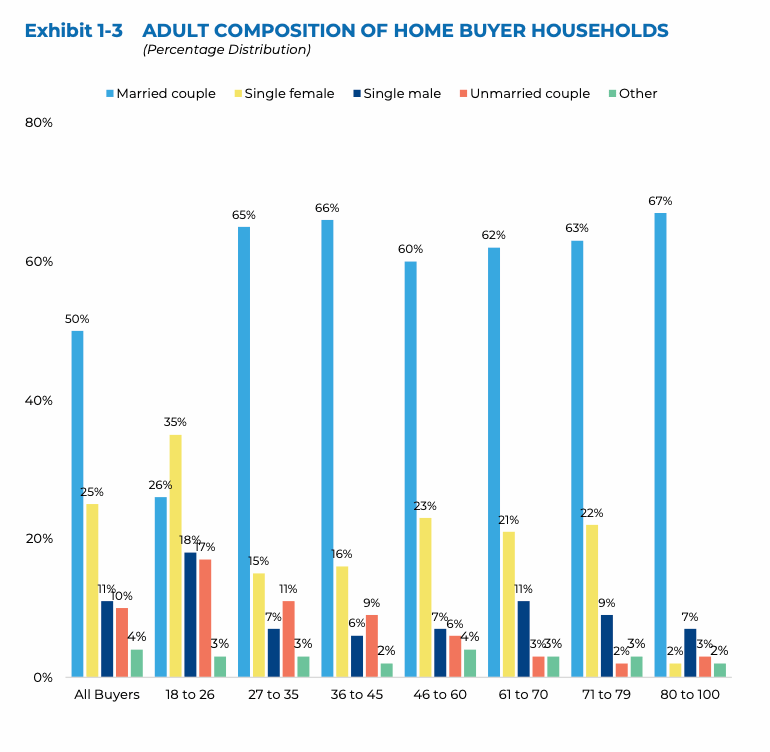
With the planting season ending in six weeks, skyrocketing fertilizer prices are forcing farmers into an impossible choice: cut back and lose crop yield or stay the course and lose money.

A survey published Tuesday of 5,700 farmers conducted by the Farm Bureau shows that around 70% of farmers are unable to afford all the fertilizer they need, while nearly six in 10 said their finances have worsened due to the rising cost of both fertilizer and fuel. 

The new data comes as the Iran war has strangled the global supply chain as Iran exerts its control over the Strait of Hormuz, through which one-third of the global fertilizer shipments flowed before the war. While more than 20 commercial ships passed through the strait over the past several days—an improvement from earlier this month when Iran essentially shut down the strait—it’s unclear whether the flow of ships will improve as the war drags on well nearing its seventh week, despite a ceasefire between the U.S. and Iran signed last week, and a potential extension on the way.  

As a result, prices for the three major fertilizers farmers use (nitrogen, phosphorus, and potassium), have all increased by double digits, according to Josh Linville, vice president of fertilizer at financial services firm StoneX Group

Farmers struggle as fertilizer prices rise

These rising fertilizer prices are taking a toll on farmers who for years have struggled with low commodity prices for the two major crops grown in the U.S., corn and soybeans, which have fallen 40% and 37%, respectively, from their highs in 2022. As of this week, the average price of corn was hovering at $4.15 per bushel down from a high of $6.86 a bushel in 2022. The average price of soybean was $10.30 per bushel, down from a high of about $16.40 in 2022, according to the United States Department of Agriculture (USDA). 

The decision to cut back on fertilizer is weighing most on farmers in the South, where only 19% of farmers bought fertilizer ahead of time, according to the Farm Bureau report. The crops these farmers grow—cotton, rice, corn, soybean, and peanuts—rely heavily on added nutrients which leaves them most at risk when fertilizer prices increase, the report claimed.

Farmers’ limited time before planting season ends

The clock is ticking. These farmers have only until the middle of May when planting season ends to decide whether they will scale back on their fertilizer use—which in the long run could lead to lower crop yields—or absorb the elevated costs and potentially lose money on their harvest. Otherwise, some farmers may even choose to sit out the season and potentially add debt through borrowing to make ends meet, Bryan Hansel, chief revenue officer at regenerative agriculture company Holganix, told Fortune.

“This is heart-wrenching for farmers to decide, do I lose money, or do I cut fertilizer, or, like, what do I do?” he said.

To reduce farmers’ demand on fertilizer, one of the best options may be regenerative farming, said Hansel, whose company sells a product, Bio 800, which helps build up the microbiome of topsoil.

Farmers’ overreliance on fertilizers

Decades of American farmers’ overreliance on both fertilizers and quick chemical solutions like pesticides and herbicides have slowly chipped away at soil health for decades. A February report by the Union of Concerned Scientists found that every year, U.S. farmers apply between 30% and 50% more synthetic nitrogen fertilizer than their crops need. These fertilizers cost farmers an estimated $35.8 billion in 2023, according to the USDA.

Heavy fertilizer use has trapped farmers in a vicious cycle. Constantly using more fertilizer than crops require degrades the soil’s natural microbiome, making soil less productive over time, which requires farmers to use more fertilizer to compensate. Reducing fertilizer use would increase crop yields and cut costs for farmers, the study claimed.

And yet, farmers have been hesitant to switch to regenerative farming techniques that, among other adjustments, include putting a stop to over-tilling, which can cause damage to soil structure. Farmers can also plant cover crops, such as grasses or legumes, or rotate the crops grown in each field yearly that can improve the nutrients and organic matter in the soil.

But because these methods often take years to start showing effects—and because American farmers have relied on fertilizers to enable steady crop yields for so long—some are hesitant to sway from the norm, Hansel said.

Rising fertilizer prices may be changing the equation: Demand for Holganix’s Bio 800, which serves as a sort of probiotic for topsoil, has doubled compared to last year, Hansel said, partly because it can help reduce fertilizer needs in a shorter time compared to other regenerative farming methods.

While most farms use at least one regenerative farming method, such as reducing tilling, only about 1.5% of the more than 300 million acres dedicated to row crops in the U.S. are farmed fully regeneratively, according to Regenerative Farmers of America.

Much of the reason why can be explained by the fact that for regenerative farming to work, farmers have to reduce the amount of fertilizer they use, a distressing change for some given the common belief reducing fertilizer brings lower crop yields, Hansel said. 

However, if fertilizer costs continue to rise, farmers may have no better alternative. 

“Nature is no longer on our side, helping us raise these crops,” Hansel said. “It’s chemistry that something has raised these crops. We need to reverse that.”

This story was originally featured on Fortune.com

This post was originally published here

  • In today’s CEO Daily: Europe Editorial Director Kamal Ahmed reports on a conversation with Demis Hassabis.
  • The big leadership story: Everyone’s anxious about AI—even founders.
  • The markets: Mostly up as tech optimism returns.
  • Plus: All the news and watercooler chat from Fortune.

Good morning. Not every CEO will have a book written about them. But if they do, what should they try to get out of it? For Demis Hassabis that moment has arrived with the publication of The Infinity Machine, the new biography written by Sebastian Mallaby (author of More Money Than God on hedge funds and The Man Who Knew, the biography of Alan Greenspan).

Hassabis, co-founder of DeepMind and Isomorphic Labs, knows that the book changes his relationship with the public. “I am a pretty private guy,” he said at a launch event in London this week. The 1,000-seater venue was sold out, filled with a mix of young people keen to know about the future of work and older generations concerned that artificial intelligence will upend the world as we know it.

I was there, alongside the academics and senior technology executives, to listen to one of the few Tech Gods to work outside the hothouse of the U.S. and more specifically, Silicon Valley.

Here are my three takeaways from the 60-minute conversation:

1. AI leadership needs to be dispersed. Hassabis finds London attractive as the headquarters for Google DeepMind because it is not in America. He has nothing against Americans, of course; Alphabet has owned DeepMind since 2014. But he believes we need different centers of excellence around the world to mitigate the risk of AI becoming a product of a certain way of thinking. “The people that are making artificial intelligence shouldn’t just be from 20 square miles of the U.S.,” he said. “It’s going to affect the entire globe. So I think a global perspective on AI, what it should be used for, how it should be deployed, the ethics of it, the technology itself, [is important].”

2. The commercial race isn’t the most important one. Amid all the commercial noise on who is winning the chatbot war—Anthropic, OpenAI, Google, Perplexity, a host of others—we are probably missing something more fundamental. Who is providing the guardrails to mark the boundaries of acceptability? “At the back of my mind, I’ve got this gnawing feeling that there’s something much more important, much bigger than the commercial race, which is getting AGI safely over the line for humanity and to make sure that the benefits fully outweigh the risks. And, you know, I’m going to try,” Hassabis said. In the present geo-political environment, he admits such a task is going to be “very hard.”

    3. Education needs a rethink. It sounded like a throwaway point but actually wasn’t: Hassabis argued that we need to completely upend education so that learning in the classroom is a collaborative process between pupils and teachers (how to solve problems, find new pathways) rather than a traditional place to “learn” facts and figures. “We should be really reconsidering education from the ground up . . . invert the classroom, so that it becomes more about collaboration and project-based and creative problem solving,” Hassabis said. “Then you do the rote learning outside of the class, where you do it with your AI systems and it is personalized to you.”

      The first takeaway is fact, and it works. The second is a hope that is one almighty challenge. And the third is a suggestion about the future that should happen, and if it doesn’t we should be asking politicians and teachers why. For my full piece on Hassabis and the future of AI—and what he thinks “doing his best” really means—read more here—Kamal Ahmed

      Contact CEO Daily via Diane Brady at diane.brady@fortune.com

      This story was originally featured on Fortune.com

      This post was originally published here

      Honda is recalling a massive fleet of 440,830 Odyssey minivans over a potentially serious airbag malfunction, following reports of dozens of injuries, federal regulators announced.

      In a notice dated April 9, the automaker warned that a software programming flaw could trigger the side airbags to deploy unexpectedly from relatively minor road impacts, including “driving over potholes, speed bumps, or road debris.”


      “Air bags that deploy unexpectedly can increase the risk of injury,” the National Highway Traffic Safety Administration (NHTSA) said. 

      Regulators said the affected vehicles include 2018–2022 models manufactured between Jan. 24, 2017, and June 3, 2022. 

      MERCEDES-BENZ RECALLS OVER 24,000 VEHICLES DUE TO DRIVE SHAFT DEFECT THAT COULD CAUSE SUDDEN FAILURE

      The issue was reportedly corrected in the production process thereafter, clearing subsequent model years from the recall.

      To address the defect, authorized dealers will reprogram or replace the electrical units at no cost to vehicle owners.

      As of April 2, Honda has recorded 130 warranty claims and 25 reported injuries linked to the issue. No fatalities have been reported yet, according to NHTSA.  

      In a stark warning, safety regulators also noted that Honda may have been aware of the defect days before formally reporting it, adding that the delay could raise concerns under federal laws governing the timely disclosure of safety issues.

      “The information in your report suggests that Honda (American Honda Motor Co.) may have been aware of this issue more than five business days before filing a report with NHTSA,” the agency said. 

      “Please be reminded that under Federal law, this agency is to be notified of all safety defect and/or noncompliance decisions within five business days…. Significant civil penalties can be assessed for this violation.”

      BISSELL STEAMERS RECALLED IN RESPONSE TO DOZENS OF ‘SERIOUS’ BURN INJURIES

      Official notification letters are scheduled for distribution in late May 2026.

      A stop-sale order has also been issued for impacted units currently in dealership inventories. 

      Customers with further questions can contact Honda’s customer service line at 1-888-234-2138. 

      GET FOX BUSINESS ON THE GO

      Drivers can also check whether their car has been impacted by searching for their model number on NHTSA.gov.

      FOX Business reached out to Honda for more information.

      This post was originally published here

      The researchers, doctors, and child development experts have studied what generative AI does to developing brains. Their conclusion: it shouldn’t be anywhere near a classroom, and action needs to happen fast.

      “We just don’t want to waste another 10 years in which our kids’ education is undermined,” Leonie Haimson, executive director of the Parent Coalition for Student Privacy, told Fortune. “It took more than 10 years to ban cell phones from schools. We can’t afford that again.”

      Boston-based child advocacy nonprofit Fairplay is leading a coalition of more than 250 experts and organizations in calling for a five-year moratorium on all student-facing generative AI products in Pre-K through 12 schools in the U.S. and Canada. The group, made up of a coalition of mental health experts, parents, educators and groups geared towards protecting children online, warned that any product that fails safety testing during that pause should be permanently banned. The report, shared exclusively with Fortune, will be released right when advocates plan a rally in front of New York City’s City Hall to push for a two-year ban in the city’s public schools specifically.

      Fairplay last month led a similar coalition of experts in penning a letter to YouTube and its parent company Alphabet to stop the spread of “AI slop” in YouTube Kids videos. The report was co-authored by members of the Screen Time Action Network’s Screens in Schools Work Group, including Emily Cherkin, a screen time consultant on faculty at the University of Washington’s Evans School of Public Policy along with other online and mental health experts.

      “It’s an unproven, untested product, and we’re giving it to children in the name of improving education or equity or cognition, when none of those things have been proven,” Cherkin told Fortune. “If a local children’s hospital told parents, ‘We’ve got this new drug, it has potential to save lives, just trust us,’ people would be horrified. We have vetting processes for all kinds of industries, and yet somehow we’re allowing generative AI companies access to our most vulnerable population.”

      The experts’ core finding is that AI doesn’t just distract children: it actively interferes with the developmental work they need to do. The human brain isn’t fully formed until the mid-20s, and the prefrontal cortex, used in planning, reasoning, emotion regulation, and critical thinking, is among the last regions to mature. “The problem with giving children generative AI is not just that they will cognitively offload the skill building,” Cherkin said. “It’s that they will displace the building of those skills even in the first place. If they’re never building skills, they have none to offload.”

      The report pointed to a joint MIT and Harvard study finding that AI use accumulates “cognitive debt,” impairing independent thinking over time. Similarly, OECD research found that students who use ChatGPT as a study tool actually perform worse on tests than peers without access, even when the AI tutor has been programmed not to provide direct answers.

      The mental health findings are equally apparent. Google and Character.AI are currently facing lawsuits alleging its chatbot contributed to user suicides and induced children to harm family members. The American Psychological Association issued a health advisory on AI and adolescent well-being. The report notes that teachers, therapists, and counselors must maintain licensure and follow ethics codes to work with children, but generative AI products face none of those requirements, and have been found to violate ethical standards in providing mental health support.

      Under-resourced schools are more likely to rely on AI as a substitute for human teachers while well-resourced schools retain them. Because AI training datasets contain historical bias, the report warns, these products are likely to amplify existing educational inequities rather than close them. A February 2026 Pew Research Center survey found that 60% of teenagers say students at their school use chatbots to cheat “very often” or “somewhat often.”

      The report is also pointed about what remains unknown. There is no proven educational benefit to generative AI in schools: it is marketed purely on “potential,” which the authors define as “literally what something is not.” Long-term effects on children’s cognitive and social-emotional development are entirely uncharted. “Giving children untested generative AI products based on future potential is dangerous,” the report states.

      “The precautionary principle must be employed,” Cherkin said. “The best preparation for a digital future is an analog childhood. If we want kids to navigate generative AI someday, we should be doubling down on the skills that help them think critically, and that’s not happening at all.”

      In New York City, Haimson, who is also a member of the DOE’s own AI working group, said Mayor Zohran Mamdani has failed to deliver the break from the previous administration that advocates were promised. “We were hoping for a new attitude in the mayor’s office and at DOE, and we just don’t see it,” she told Fortune. “We see basically the same people running the show. Many of them EdTech enthusiasts, many of them Google fellows. We’re basically seeing our kids’ futures being sold out to EdTech.”

      She had stark words for the new mayor, who recently celebrated 100 days in office. “He said he himself doesn’t use AI, which is good, but why is he foisting it on New York City public school students?”

      Haimson said the DOE’s AI working group was stonewalled. Officials refused to provide a list of AI products currently in use in city schools, citing NDAs with vendors, and denied requests for teacher training materials. The AI guidance that finally emerged in March was reportedly produced by Accenture, the consulting firm, with no meaningful input from privacy experts or parents. The advisory council that shaped the guidance, she said, was stacked with industry representatives, a legacy of the Eric Adams era and former Chancellor David Banks, who resigned after an FBI investigation.

      The coalition is also raising a structural contradiction at the heart of the industry’s school push: AI companies prohibit minors in their own terms of service while simultaneously marketing to schools. Anthropic’s Terms of Use bar users under 18, yet MagicSchool AI, one of the most widely used K-12 platforms in the country, is built on Anthropic’s models.

      The five-year pause, advocates say, would allow time for independent third-party audits of AI platforms, a vetting process for new products, a public registry of every AI tool currently used in schools, and regulatory frameworks that don’t yet exist. Any product that fails that process, the coalition says, should not get a second chance.

      This story was originally featured on Fortune.com

      This post was originally published here

      Marine traffic leaving the Middle East has again dropped from a trickle to barely a drip. This comes after a decision by the U.S. to blockade Iran’s ports in response to threats by Iran to attack energy exports it hadn’t approved leaving the critical Straight of Hormuz chokepoint.

      As Asia struggles with energy shortages that now threaten to spread to Europe, the U.S., meanwhile, remains bountifully supplied with almost record-high crude oil and natural gas production, leading President Donald Trump and others to tout the nation’s “energy independence.” Less than 3% of U.S. oil consumption typically comes from the Middle East—near an all-time low.

      So why have gasoline, diesel, and jet fuel prices continued to spike? The U.S. average price for a gallon of regular unleaded gasoline is $4.11 as of April 15, according to AAA. That’s up 50% from a January low of $2.73. California, partially dependent on Asian fuel imports, spiked to $5.88 per gallon. For diesel, the national average is $5.64 a gallon.

      “The problem is that oil is a global commodity. We may have plenty of oil—there’s no shortage of U.S. oil—but energy independence is somewhat of a fallacy,” said Jim Wicklund, veteran oil analyst and managing director at the PPHB energy investment firm. “We still have to pay the going world price. It’s a global price.”

      The U.S. may be much more “energy secure” than the Arab oil embargoes of the 1970s, but it isn’t independent, Wicklund told Fortune. And the U.S. still imports a little more oil—largely from Canada, Mexico, and Venezuela—than it ships out.

      The U.S. doesn’t have nearly enough surplus oil to fill the Middle Eastern void, Wicklund said, and U.S. oil drilling and production has only ticked up slightly since the war began.

      There is growing talk of countries “hoarding oil” and restricting exports, said Arjun Murti, energy macro and policy partner at the Veriten research and investment firm. For the U.S., though, a hoarding strategy doesn’t appear that viable. That’s because the country must import heavier grades of crude oil for local refineries, and export excess lighter oil produced domestically, while U.S refineries need to export surplus gasoline and diesel or risk decreasing their operations.

      “The instinct on politicians will be to restrict exports, but there’s the need to trade all of this stuff globally to match up supply and demand,” Murti told Fortune. “You can’t restrict your way to lower prices. You need the trade.”

      The good news for the U.S. is that supply shortages almost certainly won’t occur because of its world-leading domestic production volumes. “The risk to us is inflation, and any hit to the global economy ultimately is a risk to our economy,” Murti said.

      In the meantime, U.S. energy exports are on the rise, with combined crude oil and refined petroleum products exports hitting an all-time high of 12.7 million barrels a day for the week that ended April 10. The exports spike is driven largely by the increasing drawdown of barrels from the U.S. Strategic Petroleum Reserve, which commenced in late March.

      Benchmark oil prices are hovering above $90 per barrel—much higher than the roughly $60 price tag at the beginning of the year, but down since the ceasefire began on rising market optimism.

      But it’s important to realize that the European and U.S. benchmarks, Brent and WTI, respectively, are futures contracts largely for oil trading. The front-month contract for Brent oil is for June barrels, while WTI—West Texas Intermediate—is still on the May contract until it settles April 21 and rolls over to June.

      The barrels already set for physical delivery in the coming days and weeks, such as dated Brent, are selling for closer to $120—a historic gap between physical and futures prices.

      “All these prices are linked globally. If prices go up somewhere, they go up everywhere,” Murti said.

      Getty Images

      Reaching a critical juncture

      The growing problem is that—more than halfway through a two-week ceasefire in Iran—all the surplus oil and gas storage and waterborne shipments are running dry after a six-week-long supply shock.

      “We’re getting to that critical point where higher flows of oil and refined products and other stuff—fertilizer and helium—are going to have to resume in greater quantities, or we run into the risk of a more severe hit to the global economy,” Murti said.

      Wicklund said we’re less than two months from a “global recession” if the strait isn’t reopened before then. “I’m hopeful, but the situation has changed, and I think it’s gotten more dangerous,” Wicklund said, with the ceasefire being so tenuous and demands from both sides seemingly far apart.

      By the end of May, the world enters into seasonal energy demand increases, including the busy summer driving season.

      On April 15, the White House reiterated that it feels good about a potential deal. The leadership of the United Arab Emirates and Iran are talking, which could represent progress after Iran bombed the UAE and other neighbors. Likewise, Israel and Lebanon began discussing a ceasefire. But nothing is concrete.

      In the meantime, U.S. Treasury Secretary Scott Bessent said the U.S. is pushing to freeze the funds of Iranian leaders in the banks of neighboring Gulf states, and that countries buying Iranian oil could face secondary sanctions. Tensions could rise with China since nearly all Iranian crude heads there.

      For marine vessels nearing the Strait of Hormuz, the U.S. Navy is issuing this message: “Do not attempt to breach the blockade. Vessels will be boarded for interdiction and seizure transiting to or form an Iranian port. Turn around and prepare to be boarded. If you do not comply with this blockade, we will use force. The whole of the United States Navy is ready to force compliance.”

      Several vessels have crossed the strait this week, but few have exited the broader Arabian Sea where the U.S. blockade is set up, largely preventing escapes into the Indian Ocean.

      Ana Subasic, a trade risk analyst for Kpler, the intelligence firm that tracks marine vessels, said none of the Iranian oil tankers have entered the ocean since the U.S. blockade commenced.

      “A lot of them have stopped. None have gone through,” Subasic told Fortune on April 15, noting that the situation remains “very fluid.”

      “There are no new attacks, but there also are no new Iranian loadings, so that’s a significant signal the blockade is working,” Subasic said of this no-fighting, but no-oil ceasefire limbo.

      The most notable vessel thus far, the Rich Starry tanker, an oil and chemicals tanker carrying methanol bound for China, originally did a U-turn away from the strait on April 13 as the blockade began, then turned around and passed through the strait on April 14, but then turned around yet again after leaving the strait as it met the U.S. blockade, Subasic said. That adds up to three U-turns in just over 24 hours for the tanker.

      Some container ships—not carrying energy products—have exited the region, and the U.S. continues to insist the blockade is only for vessels leaving Iranian ports. That said, most other tankers are avoiding the strait for fear of being targeted by Iranian attacks. Hundreds remain trapped within the Persian Gulf.

      And, even if the war ends soon, energy prices will remain elevated at least through the end of the year as supply chain disruptions are resolved, Wicklund said.

      “There will be a risk premium for a while, and it will be reflected in global oil prices,” he said.

      This story was originally featured on Fortune.com

      This post was originally published here

      Oil prices are beginning to fall from their March peak, but policy experts warn sinking energy costs don’t necessarily mean the global economy has stabilized as the Iran war continues on.

      A report published by the International Energy Agency (IEA) on Tuesday noted the threat of “demand destruction” as consumers and global economies turn away from oil as prices remain elevated. According to the report, oil demand is projected to contract by 80,000 barrels per day in 2026, with the sharpest demand cuts in oil coming from the Middle East and Asia Pacific.

      The IEA projected last month that global oil demand would grow by 730,000 barrels per day in 2026.

      While Brent crude has come down from its record $144 per barrel earlier this month, oil prices remain elevated as the U.S. blockades the Strait of Hormuz, through which 20% of the world’s oil usually passes, and as key energy infrastructure in the Middle East continue to be a target for attacks. The IEA said demand for oil will continue to contract as supply chains remain disrupted and prices remain high.

      Early policy changes suggest companies and governments are already responding to high oil prices by pulling back. Vietnam and the Philippines have called for work-from-home orders and four-day work weeks, respectively, in the hopes of limiting travel. Denmark urged its citizens to avoid nonessential transportation to cut back on fuel costs.

      The International Air Transport Association (IATA), a trade group representing global airlines, said last week that jet fuel costs will take months to return to pre-war levels, as a result of destruction of key refinery infrastructure. Malaysian low-cost airline AirAsia X Fares increased airfares by up 40% as a result of increased fuel costs, and Air New Zealand canceled 1,100 flights impacting over 44,000 passengers between now and early May for similar reasons.

      “It’s an unprecedented issue as far as fuel price is concerned, but managing fuel spikes is a well-trodden path if you’re running an airline,” CEO Nikhil Ravishankar told Radio New Zealand.

      Too soon to say if true demand destruction is occurring 

      Ryan Kellogg, an energy and environmental economist and public policy professor at the University of Chicago, said it is too early to determine if the global oil sector will see true demand destruction. The term has been used frequently to describe short-term market impacts, but it is better applied to long-term effects, according to Kellogg, noting that recent changes in oil and gas prices may just be due to market volatility. 

      True demand destruction is if “this short-run volatility and price increase is actually causing consumers to make long-run behavioral changes, such that even if and when prices do go back down, they’re not going to consume as they used to,” he told Fortune.

      Demand destruction could be apparent if electric vehicle sales increase at a significant level in the next couple of months, a result of consumers taking steps to more permanently reduce gas consumption, Kellogg suggested. March saw 1.75 million EVs sold globally, according to Benchmark Mineral Intelligence data, up 66% from February and 3% year-over-year, correlating with rising gas prices. EVs sales for the first quarter of 2026 are still down 3% year-over-year, however.

      A similar shift toward renewables happened in the 1970s. Following oil shocks in 1973, for example, U.S. congress passed Corporate Average Fuel Economy (CAFE) standards two years later through the Energy Policy and Conservation Act, requiring U.S. fleets to improve fuel efficiency. It’s possible today’s Iran war could likewise trigger a new wave toward renewable energy and away from combustible, according to Kellogg.

      “It’s very arguable that we have entered a new era in which oil supply from the Persian Gulf region is not as consistent, as reliable as we once thought it would be, and it makes sense to diversify away from that,” he said.

      If that were the case, there would be “economic pains in the medium term” as it navigates the costs associated with having to accommodate the production of more EVs and volatility in other resources like critical minerals necessary to power the cars, Kellogg added.

      “There’s some ability to adapt,” he said. “It comes at a cost, though.”

      This story was originally featured on Fortune.com

      This post was originally published here

      Ed Hedemann hasn’t paid federal income taxes since 1970. The Brooklyn freelancer received a draft notice for Vietnam a year earlier and refused his induction because he didn’t believe in war or killing people. Once he began working, he realized he didn’t want to fund the military with his paycheck either. 

      “I was thinking, well, it’s a little inconsistent for me to refuse induction, refuse to go into the military, yet pay taxes that would fund other people to go into the military,” the 81-year-old told Fortune. He estimates he’s withheld roughly $85,000 from the federal government over the decades.

      Hedemann is a war tax resister—someone who refuses to pay federal income taxes as a form of protest against government spending they find morally reprehensible. And while he’s been at it for more than 50 years, recently he’s been getting a lot more company.

      In the 15 months since the Trump administration returned to office—a period that has included ICE and Border Patrol killing Americans in Minnesota, the capture of former Venezuelan president Nicolás Maduro, and the start of a war in Iran—a growing number of Americans have decided that paying their federal taxes amounts to complicity. Some are withholding what they owe. Others are restructuring their lives to owe nothing at all.

      Tax resistance has a long history in the United States, going back to the Boston Tea Party. During the Vietnam War, an estimated 200,000 Americans refused to pay a 10% telephone tax that directly funded the war. But organizers say the current wave is unlike anything they’ve seen in decades.

      The war in Gaza was a “watershed moment,” said Lincoln Rice, national coordinator at the National War Tax Resistance Coordinating Committee (NWTRCC), which provides guidance on conscientious tax objection. Before Oct. 7, NWTRCC hosted a couple of Zoom workshops a year for 20 to 25 attendees. During the last few tax seasons, the organization has offered sessions every other week, drawing 100 to 500 people, and has seen a surge in calls, emails, and social media inquiries.

      The demographics have shifted, too. Interest after the Gaza war skewed toward people in their 20s and 30s. After Trump retook office, it expanded to higher earners and people over 40 who were alarmed by DOGE’s firing of hundreds of thousands of federal workers and cancellation of programs. Now, Rice said, it comes from people of all ages and racial backgrounds.

      ‘I just saw myself in those mothers’

      For Clara Vondrich, the turning point came on Feb. 28, when the U.S. hit an elementary school in Iran with a Tomahawk missile, killing more than 150 girls—most between ages seven and 12—and their teachers.

      “I just saw myself in those mothers, and the lifelong devastation that they suffered for no good reason,” the 48-year-old lawyer and climate activist, who has an 11-month-old daughter, told Fortune. She said she’d been “horrified” by the administration since day one, but the strike pushed her toward civil disobedience.

      “I believe that taxes should be used for building lives and not taking them, and so the idea that I would be paying into a war machine was just untenable for me,” she said. She feels so strongly that she wrote an op-ed in The Guardian and started a petition urging people to join the war tax resistance. 

      Some of Vondrich’s taxes were already withheld by her employer, but she owes roughly $2,000 if she files separately from her husband, she said. She plans to redirect that money to a relief organization supporting Iranians or Gazans. As the breadwinner supporting her 87-year-old mother, husband, and daughter, she’s aware of the risks, but said she can’t pay in good conscience. She feels strongly enough to have written an op-ed in The Guardian and started a petition urging others to join.

      “I’m all for paying taxes. I’m all for putting my dollars towards initiatives that build our country,” she said. “I’d rather sleep at night than know that I’m skirting my obligation to support the common good.”

      A life built around resistance

      Hedemann has shaped his life around not paying federal taxes. He quit salaried jobs to freelance, so he could earn money without tax being withheld. He pays bills through money orders to avoid giving out his address. He even keeps a landline to protest the federal telephone excise tax—originally a 10% levy to fund military spending, now at 3% since 1983.

      The consequences are real. Every year, Hedemann receives letters and calls from the IRS threatening liens or property seizures—but he doesn’t own a house or a car. In 1999, the IRS and the Department of Justice served him with an order requiring him to appear in federal court and explain why he shouldn’t be held in contempt for refusing to disclose information about his bank accounts and assets. The judge accepted his argument that doing so would assist the government if it chose to prosecute him.

      Hedemann donates what he would owe to organizations, including Doctors for Global Health, the New York Times Neediest Fund, and the Alzheimer’s Association.

      “The issue is not so much taxation, but is how that money is being spent. I’m not challenging taxation or that I owe taxes,” he said.

      Earning less on purpose

      Others have taken a different path: intentionally earning below the federal filing threshold of $15,750 for a single filer under 65.

      Missy Pidgeon, 32, lives in New Jersey, works part-time at an organic vegetable farm, and plays in a band. She heard about low-income tax resistance a decade ago from friends, but didn’t start until the Israel-Hamas war.

      “My salary is just low enough that with credits and other things that I work out for the year, I don’t owe a tax debt,” she said. Her lifestyle allows her to spend time on activism and volunteering at a thrift store that supports a community food pantry and emergency assistance.

      She’s clear-eyed about the burden tax resistance can present. “I’ve been working on building this lifestyle that I live to fit into my ability to be a low-income war tax resister, but it also comes at the privilege of having a lot of familial support,” she said. “I don’t have debt from school.”

      The risks are real

      NWTRCC advises people to file their taxes accurately and does not encourage anyone to falsely claim exemptions. The organization says the “safest” method is adjusting deductions on W-4 forms, though Rice acknowledges this is illegal. His role, he said, is to make sure people understand what might happen.

      “The average thing that might happen is they might face a wage garnishment or some sort of collection in the future,” Rice said. “They most likely won’t lose their house, won’t go to jail, all those sorts of kind of biggest fears.”

      “We always let people know, it’s always what you’re comfortable with, what feels right to you, but if you lie on your tax forms, your risk of criminal prosecution increases exponentially,” he said.

      Tax experts stress that the law offers no exemption for people who oppose the government’s policies. 

      “Some of the promoters of tax resistance often forget that there is a price that comes with protest. There is not a legal option not to pay just because they’re frustrated or they don’t believe that the tax system is created the way it should be,” said Danshera Cords, a tax lawyer and professor emerita at Albany Law School.

      The IRS can impose liens that damage credit scores, which, in most states, can affect insurance premiums, along with fines, compounded interest, and property seizures. Willfully not paying can be charged as a misdemeanor punishable by up to $25,000 in fines for individuals and, in rare cases, up to a year in prison, Cords said.

      For the people who’ve decided to resist, those risks are part of the calculation.

      “I’d rather have the sense of self-determination than know that I was directly funding this,” Vondrich said.

      This story was originally featured on Fortune.com

      This post was originally published here

      The Trump administration is turning to automakers and U.S. manufacturers to ramp up weapons production in a World War II-style push, a Pentagon official confirmed to FOX Business.

      “The Department of War is committed to rapidly expanding the defense industrial base by leveraging all available commercial solutions and technologies to ensure our warfighters maintain a decisive advantage,” a Pentagon Official told FOX Business.

      “The Department is aggressively pursuing and integrating the best of American innovation, wherever it resides, to deliver production at scale and drive resiliency across supply chains,” the official added.

      Senior defense officials have discussed producing weapons and other military supplies with top executives from several companies, including General Motors and Ford Motor, according to The Wall Street Journal, which cited people familiar with the discussions.

      BESSENT WARNS GAS STATIONS THAT TREASURY DEPT WILL KEEP THEM ‘HONEST’ AFTER SPIKE IN PRICES

      The outlet reported that the Pentagon is considering having the companies use their personnel and factory capacity to ramp up production of munitions and other war materials as conflicts in Ukraine and Iran continue.

      GE Aerospace and vehicle and machinery maker Oshkosh also reportedly held talks with defense officials, according to The Journal.

      The discussions began prior to the conflict in Iran more than a month ago, officials told the outlet.

      TRUMP SAYS IRAN WAR IS ‘VERY CLOSE TO BEING OVER’ AS PEACE TALKS ARE EXPECTED TO RESUME

      The talks come as the military seeks to increase production of munitions and tactical hardware, including missiles and counter-drone technology, the report said.

      Defense officials said accelerating weapons production is being treated as a matter of national security, according to the report.

      Officials also asked companies to identify barriers to taking on additional defense work, including contracting requirements and challenges with the bidding process.

      GET FOX BUSINESS ON THE GO BY CLICKING HERE

      The Pentagon’s recent budget request of $1.5 trillion includes funding for munitions and drone manufacturing.

      FOX Business has reached out to General Motors, Oshkosh and GE Aerospace for comment. Ford Motor declined to comment.

      This post was originally published here

      Curtis Campbell knows exactly what kind of company people think H&R Block is.

      It is the place you go in late winter or early spring when your W-2s, 1099s, deductions, and deadlines are piling up, your refund feels urgent, and your anxiety is rising. It is familiar, local, and useful, but not the kind of company that usually comes to mind when people think about product velocity, AI deployment, or a culture of experimentation.

      Campbell wants to change that.

      The new CEO, who previously served as H&R Block’s president and chief product officer, is trying to turn the 70-year-old tax preparation giant into something more expansive: a year-round financial platform powered by software, data, and AI, while preserving the human trust that has long set the company apart. That means reimagining H&R Block not just as a seasonal tax brand, but as a business that can advise creators, serve small businesses, help customers manage money, and use technology to automate the most tedious parts of tax prep, so employees can focus on judgment, relationships, and guidance.

      For Campbell, this is an operational exercise rather than a branding one. “Fundamentally, we do taxes, but we’re really not in the tax business,” he tells Fortune. “We’re in the business of trust and confidence.”

      Campbell is leading H&R Block through a volatile tax period, as sweeping tax-law changes collide with a significantly downsized IRS. What he hears from the field is that clients want help understanding what the changes mean and reassurance that they are not missing out on money or making mistakes.

      That urgency could benefit assisted tax preparation in the near term. But Campbell’s ambition reaches well past one potentially chaotic filing season.

      More than a tax company

      Campbell’s core thesis is that H&R Block should no longer think of itself as a company that shows up for customers once a year. He wants it to be present throughout the year, serving customers on their journey toward financial freedom.

      Such a pivot requires looking beyond tax preparation, he says, to adjacent services such as payroll, bookkeeping, tax advisory, small-business support, and banking. It also means using the company’s enormous dataset and physical footprint to build continuous relationships with customers.

      Campbell describes a future in which H&R Block becomes more embedded in clients’ lives, moving from “a once-a-year engagement” to “a multiyear engagement.”

      He sees a strong opening in the growing ranks of independent workers, creators, and influencers who are suddenly operating as small businesses without fully understanding the financial infrastructure that comes with that shift. H&R Block launched a Creator Suite earlier this year, bundling tax help with bookkeeping, payroll, and related services for people whose work may span multiple income streams and business entities.

      “That’s a really interesting group for us to target,” Campbell says of creators. “They’re folks whose tax situation becomes more complex over time, so they’re more needy because they’re advancing their business, they’re growing their sort of portfolio of different services and offerings.”

      The same logic applies to small businesses, which Campbell calls H&R Block’s fastest-growing business and one he believes Wall Street still undervalues. The opportunity is straightforward: Small-business owners do not want to spend their time on payroll, bookkeeping, and tax compliance. They want to run their businesses.

      “I’ve yet to meet a small-business owner who loves taxes or payroll or bookkeeping,” he says. “They just love the thing that they do.”

      The AWS playbook comes to tax prep

      What makes Campbell an intriguing fit for this moment is that he does not fit the stereotype of a tax executive. He is a Southern-born tech leader who spent years at Dell and AWS, companies known for fast-moving product cycles and quick execution. He talks in the language of critical assumptions, hypotheses, road maps, and experiments. He sounds more like a cloud executive than the steward of a legacy tax brand. That is partly the point.

      Campbell is trying to make H&R Block more technologically fluent, not just in what it sells but in how it operates. He says the company has spent considerable time defining its “ideal state,” mapping the assumptions required to get there, and building a long-term road map. From there, teams identify the questions they need to answer and the experiments required to answer them. Its pace has picked up sharply in recent years.

      “Before I joined H&R Block, on average, we ran about five experiments a year,” he says. “This year, we’re going to average about 123.”

      That shift is partly cultural. Campbell has pushed H&R Block to act more like a learning organization, drawing on a lesson from Amazon: The companies that build the fastest feedback loops are often the ones best positioned to win over time.

      That has also required changing the company’s approach to failure. In the past, new ideas often carried a stigma if they did not work. Campbell wants teams to see failed tests as useful if they produce insight. In his view, a good experiment creates learning, whether it ends in a win or a loss.

      That mentality is straight out of Big Tech. But tax preparation is not cloud software, and Campbell is quick to acknowledge that speed has to be handled differently in a business where mistakes carry real consequences.

      “You don’t have to risk the business to test an idea,” he says. “You could say, ‘Hey, I’ve got a concept that’s X, Y, and Z. How can I test this within 10 customers to gain knowledge?’ If that proves to be successful, you can then start to scale it.”

      Building an AI tax company

      The most visible expression of H&R Block’s transformation is its use of AI.

      Campbell is in an unusual position here. Unlike many CEOs who inherit someone else’s technology stack, he helped build the systems now being stress-tested under his leadership.

      One of those tools is AI Tax Assist, built into H&R Block’s DIY product in partnership with OpenAI. Campbell describes it as an on-demand guide for customers who get confused while filing online and need quick answers. Users can ask whether an expense qualifies as a deduction or what a move might mean for their taxes, and the system responds in real time.

      He recently tried it on his upcoming move from Dallas to Kansas City, asking about the tax implications of going from Texas, which has no state income tax, to Missouri, which does.

      The company has also developed an AI assistant for tax professionals, code-named Sidekick, built directly into the software H&R Block’s preparers use every day. Campbell says tax pros have responded enthusiastically because the tool lets them ask highly specific questions and get answers grounded in the company’s own tax institute, an internal bench of enrolled agents, CPAs, and tax attorneys who monitor regulatory changes and work closely with the IRS and state authorities.

      Campbell argues that AI can make H&R Block more tech-forward without stripping out the human element that customers value most. He divides tax prep into two kinds of work: the mechanical tasks of collecting information, entering it, and calculating outcomes, and the relational work of advising clients and earning their trust.

      He bets that AI can take on more of the first category, freeing tax professionals to spend more time on the second. Today, he says, most office time still goes to transactional work. His ideal model flips that, with technology handling much of the back-end processing, so client conversations become the focus.

      H&R Block is already testing that approach in five offices. “At the end of the day, [tax pros] view their success based on their client’s success. If we enable them to do more of that, they’re going to feel more fulfilled.”

      Becoming a year-round financial platform

      H&R Block’s innovation push extends well beyond tax prep. Campbell’s larger goal is to use software, data, and AI to build the company into a year-round financial platform with a deeper role in customers’ lives. As he sees it, financial pain points do not fit neatly into a filing deadline or a single season.

      Spruce, the company’s mobile banking product, is one example. Campbell frames it as a logical extension of H&R Block’s expanding suite of financial services, part of a broader effort to remain relevant to customers year-round.

      He also believes H&R Block’s footprint of roughly 9,000 offices still matters in a digital future. As the company becomes more virtual, Campbell expects more customers to engage with tax pros through software and mobile devices. But he sees the storefronts as a key part of H&R Block’s omnichannel advantage, especially in communities where trust is still built face-to-face. “It is important for us to be where our clients are,” he says.

      That line captures the core of Campbell’s strategy. He is trying to modernize H&R Block without losing its local presence, human expertise, and credibility within the tax space.

      The challenge is persuading the market to see H&R Block as all of those things at once: a techie tax company with thousands of offices; a compliance-heavy business trying to move faster and experiment more; a human service brand adopting AI aggressively; and a seasonal name aiming to become a year-round financial platform.

      Campbell seems comfortable with that tension. If he succeeds, H&R Block’s next chapter will be about more than improving tax prep. It will be about turning the company into a more innovative business with a deeper presence in Americans’ financial lives.

      This story was originally featured on Fortune.com

      This post was originally published here

      The $24 billion Dutch bank ABN Amro is cutting a fifth of its workforce over the next three years. So how is its CEO, Marguerite Bérard, rallying the troops? By discussing said growing pains with staffers over weekly lunches. 

      “I now take lunch early and at my desk,” Bérard told the Financial Times in a recent interview. “This is a big cultural change because French meals can be long. This has been one of my adjustments.”

      The bank has been taking hits since the financial crisis, having previously been rescued from collapse—and more recently, ABN Amro’s 2025 fourth quarter net profit was lower than market expectations. Last November, the bank announced a plan to increase return on equity to at least 12%, while keeping its cost/income ratio below 55%. However, the bid to turn things around required sacrifice, including cutting 5,200 staffers between 2024 and 2028. By the end of 2025, 1,500 employees had already been cut, ABN Amro informed Fortune. 

      Now, once a week, the French banker has sandwiches with eight to 10 colleagues in an effort to “hear their views on the bank” through the transition.

      “Building consensus and coalitions is often important in the Netherlands,” the CEO continued. “It’s something that the French don’t always know how to do well.” 

      The gesture is essential in getting staffers on board as the company reduces costs and staffers, the CEO explained, while attempting to boost profits and stay competitive. Bérard said that employees have “understood” the reasoning behind the company’s strategy, and that redundancies would be handled in a “very responsible manner,” as the European bank has committed to helping laid-off workers find new jobs. However, it follows that not everyone would be satisfied with the plan, and Bérard is committed to making progress over time.

      “[But] we also recognize that consensus may take time to build, and sometimes the status quo is not a good option, and you have to move at pace.”

      The CEOs who eat lunch with staffers to better their businesses

      ABN Amro’s CEO isn’t the only leader of a billion-dollar business sitting down to break bread with staffers; others are leveraging the mundane meal as a powerful connection strategy.

      Chris Tomasso, CEO of breakfast and lunch chain First Watch, is uniting with his staffers through small moments that have an outsize impact. Not only does he write congratulation letters to his staff celebrating career milestones like 10, 20, or even 30 years at the billion-dollar business, but the leader also likes to dine among employees for his midday meal. Tomasso said it’s critical for employees to feel happy and appreciated. 

      “I tried to minimize the [CEO] title as best I can when I’m interacting with people,” Tomasso told Fortune in a 2025 interview. “I eat lunch in the break room with everybody, which always, for whatever reason, blows new employees away—that I just sit down next to them and bring my lunch and have lunch with them. I think it’s a shame that there’s that feeling.”

      Even the leader of one of the biggest companies in the world, $3.8 trillion tech behemoth Apple, doesn’t always take lunch in the corner office. CEO Tim Cook has frequently sat down with random employees at the company’s cafeteria during lunch—a shift from his predecessor, the late Steve Jobs, who often dined with design executive Jonathan Ive. 

      Leaders at Duolingo also like to gather with their fellow executives—only in the public commissary, so they can rub shoulders with all kinds of staffers. Severin Hacker, CTO and cofounder of the $4.5 billion learning platform, said that these daily team lunches, which include cofounder and CEO Luis von Ahn, are “fundamental to our company culture.” He said that connecting with employees is better than any engagement survey, because they’re more open about how things are going at the company: “That’s when the real stuff comes out.

      “Lunch is an opportunity for people who don’t normally work together to actually talk. On any given day, Luis or I might be sitting next to a new hire fresh out of school. Or people from completely different teams,” Hacker wrote in a LinkedIn post a year ago. 

      “What’s important is that lunch lets us hear what’s actually on the team’s mind,” the cofounder continued. “There’s no rehearsed feedback or polished updates—I get to hear things I’d never learn in a formal meeting.”

      This story was originally featured on Fortune.com

      This post was originally published here

      In an economy squeezed by tariffs, elevated fuel costs, and stubborn inflation, the FIFA World Cup was supposed to be America’s summer triumph. For millions of fans, it’s shaping up to be something else: a financial gauntlet. Before they cheer a single goal, many will face $80 to more than $100 transit fares, $4,000-plus tickets, and $4-a-gallon gas, a collision of costs that reflects the broader economic moment.

      NJ Transit is planning to charge more than $100 for round-trip rail tickets from Penn Station in Midtown Manhattan to MetLife Stadium, according to The Athletic, which cited sources familiar with the agency’s planning. The normal fare for that journey is $12.90 — a roughly 700% increase. Under the current model, the fare would be a flat rate, with no discounts for children, seniors, or passengers with disabilities, who typically pay reduced fares.

      The pricing pressure extends beyond the New York metro area. The Massachusetts Bay Transportation Authority has announced round-trip rail fares from Boston’s South Station to Gillette Stadium in Foxborough will jump to $80, more than quadrupling the standard $17.50 fare. Bus service to the stadium will run $95.

      The transit surcharges are the latest entry in a mounting ledger of World Cup costs. A joint FIFA–WTO economic analysis released earlier this year projected the event would gather 6.5 million fans and generate $30.5 billion in U.S. economic activity from $11.1 billion in direct expenditures. But that optimistic forecast is colliding with gasoline averaging more than $4 per gallon and soaring airfare amid elevated jet-fuel costs.

      American international Timothy Weah has actually criticized the ticket prices, telling French outlet Le Dauphiné in January that the ticket prices were simply “too expensive … I am just a bit disappointed by the ticket prices. Lots of real fans will miss matches.” The player-level discontent is mirrored at the federation level. France, Spain, and England have reportedly voiced concerns directly to FIFA president Gianni Infantino, while fan organizations have escalated beyond complaints to formal legal action and New York City Mayor Zohran Mamdani made ticket affordability part of his platform as he was running for election.

      “You’re seeing a number of headwinds coming to what many thought was going to be a crowning and incredibly successful event,” Mark Conrad, a professor of law and ethics at Fordham University’s business school and director of its sports business concentration, told Fortune in a recent interview.

      Soaring transit fares and ticket costs

      Ticket prices are no relief. The tournament features dynamic pricing for the first time, and the numbers are stark. While FIFA offered $60 tickets for a limited time following backlash over pricing, group-stage seats have exceeded $4,000 and top prices for the final have surpassed $10,000.

      The World Cup NYNJ Host Committee told Fortune that match-day transit were not finalized as of press time. NJ Transit offered the same response, while adding: “As the Governor has clearly stated, the cost for the eight matches will not be borne by our regular commuters.”

      The Athletic‘s report came just a day after New Jersey Gov. Mikie Sherrill said she was determined to keep prices low. “When I came into office about two months ago, I immediately got to work on the World Cup,” she said. “One of the key things I wanted to make sure of was that we were not going to be paying for moving people who were viewing the World Cup on the backs of New Jersey taxpayers and New Jersey commuters.”

      MetLife Stadium will host eight World Cup matches, culminating in the final on July 19. With limited parking at the venue — JustPark (FIFA’s official parking partner) is listing a handful of spots at $225 each — trains and rideshares are effectively the only options for most fans traveling from New York City.

      In March, the Federal Transit Administration announced $100 million in transit-improvement grants for the 11 U.S. host cities — funds that may go toward additional buses, disability-transport assistance, and express shuttles.

      But the math is unforgiving. NJ Transit alone estimates its World Cup operating costs at $48 million, nearly half the entire federal grant pool. With no clear answer on who ultimately covers the shortfall, fans may find themselves paying it one train ticket at a time.

      This story was originally featured on Fortune.com

      This post was originally published here

      Snap on Wednesday announced plans to lay off roughly 1,000 employees as the tech company adopts artificial intelligence (AI) and looks to streamline its operations.

      The parent company of Snapchat will also close over 300 open roles as part of its workforce restructuring, which comes after Irenic Capital Management pushed Snap to optimize its portfolio and performance. The firm is an activist investor with an economic interest of roughly 2.5% in the company.

      Snap explained that advancements in AI are helping it streamline operations and function with smaller teams as AI generates over 65% of new code, while the company assigns more critical work to focused teams and AI agents.

      The tech company had about 5,261 full-time employees as of December, and the layoffs will affect about 16% of the company’s full-time staff.

      ORACLE LAYING OFF THOUSANDS OF WORKERS TO CUT COSTS AMID AI PUSH: REPORT

      Snap’s stock rose nearly 8% Wednesday amid the news, leaving shares down about 25.7% year to date despite a 29% increase over the last month.

      The company expects to cut more than $500 million in annualized expenses by the second half of the year, driven significantly by the recently announced layoffs, as well as broader efforts to reduce operating costs and stock-based compensation, CEO Evan Spiegel said. He asked employees in North America to work from home on Wednesday.

      AMAZON CUTS JOBS IN ROBOTICS UNIT AS LAYOFFS CONTINUE: REPORT

      Snap anticipates $95 million to $130 million in layoff-related charges, most of which will fall in the second quarter, according to a regulatory filing.

      Snap’s layoffs come after the company invested heavily in its augmented reality glasses unit, known as Specs. It is planning to launch the product this year.

      META’S BAY AREA LAYOFFS AFFECT ROUGHLY 200 WORKERS AS COMPANY POURS BILLIONS INTO AI INFRASTRUCTURE

      Irenic Capital has urged Snap to either spin off or shut down the business unit, which has received $3.5 billion in investment, as a means of conserving cash while the company pursues broader cost cuts.

      “Cutting costs may appease an activist in the near term and give long-suffering shareholders some relief, but whether it really leaves the company with a defensible business model and competitive position that it can defend, develop and turn into profits and cash flow is still unclear,” said Russ Mould, investment director at AJ Bell.

      GET FOX BUSINESS ON THE GO BY CLICKING HERE

      Reuters contributed to this report.

      This post was originally published here

      Chili’s is escalating its fight for value-focused diners, taking direct aim at McDonald’s with a new lineup of chicken sandwiches.

      The restaurant chain announced Tuesday it is expanding its lineup of Big Crispy chicken sandwiches, which are now included in its $10.99 “3 For Me” bundle — a combo that features an entrée, fries, bottomless chips and salsa, and an unlimited fountain drink.

      “With an expanded, full lineup of six Big Crispy chicken sandwiches – all hand-battered and WAY bigger than McDonald’s McCrispy – Chili’s is giving guests the abundance and quality they actually deserve,” the company said in a statement.

      CHILI’S SLIMMED-DOWN MENU IS WINNING, CEO SAYS

      Chili’s is leaning heavily into size and value comparisons as part of its marketing push. 

      The company says internal research found its chicken filet is, on average, more than 80% larger than McDonald’s McCrispy filet — underscoring its critique of what it calls “shrinkflation” across the fast-food industry.

      CHILI’S THROWS SERIOUS SHADE AT TGI FRIDAY’S OVER MOZZARELLA STICK DIG

      “Over the past few years, we’ve exposed the fast food shrinkflation by serving our massive burgers in the industry-leading $10.99 ‘3 For Me’ meal for a value that can’t be found in the drive-thru,” Chili’s Chief Marketing Officer George Felix said in a statement. “… This is a shakeup to the chicken sandwich category that is long overdue, and one that our guests are going to love.”

      The new lineup features six variations, including classic and spicy options, as well as flavors like honey chipotle, Nashville hot, buffalo, and a deluxe version topped with bacon and Swiss cheese.

      MCDONALD’S EXPANDS INTO SPECIALTY DRINKS WITH ‘DIRTY SODAS,’ REFRESHERS PUSH

      CLICK HERE TO GET FOX BUSINESS ON THE GO

      Meanwhile, McDonald’s is making its own push to win back budget-conscious customers.

      The company recently unveiled a revamped McValue menu, set to launch April 21, featuring 10 items priced under $3 and a new $4 breakfast bundle.

      Chili’s and McDonald’s did not immediately respond to FOX Business’ request for comment.

      This post was originally published here

      A federal jury in New York delivered a major blow to Live Nation Entertainment on Wednesday, finding the concert giant and its Ticketmaster subsidiary liable for monopolistic practices in the ticketing industry.

      The verdict stems from a sweeping multistate lawsuit that accused the company of using its dominance in concert promotion and ticketing to stifle competition, inflate prices and limit consumer choice, according to the complaint.

      Live Nation shares dropped about 6% in afternoon trading after the verdict, while competitors surged. Vivid Seats jumped more than 9%, and StubHub climbed roughly 3.5%.

      HOLLYWOOD TITAN BELIEVES AI IS A ‘REVOLUTIONARY MOMENT’ RESHAPING INDUSTRIES

      Pennsylvania Attorney General Dave Sunday called the ruling a “huge win for consumers,” arguing the company maintained a “stranglehold” on the multibillion-dollar live entertainment sector.

      “I am proud that our office has been part of a bipartisan coalition that continued this case under extraordinary circumstances and took it to a jury,” Sunday said in a statement.

      New York Attorney General Letitia James also hailed the outcome as a “landmark victory.”

      “We just won our trial against Live Nation Concerts and Ticketmaster,” James wrote on X. “A jury ruled in our favor and is holding the companies responsible for their illegal monopoly that cost consumers millions of dollars.”

      SEATGEEK JOB POSTING TOUTS $25K SEX CHANGE PERK, 6-FIGURE SALARY

      The lawsuit, joined by dozens of states, alleged Live Nation engaged in anti-competitive tactics, including locking venues into long-term exclusive agreements and leveraging control over major tours and artists to pressure venues.

      Jurors concluded the company’s conduct led fans to overpay by about $1.72 per ticket, according to Bloomberg News.

      A judge will determine penalties and potential remedies in future proceedings.

      NEW DISNEY CEO JOSH D’AMARO OFFICIALLY TAKES THE REINS FROM BOB IGER

      Live Nation, which recently reached a settlement with the Department of Justice, is expected to appeal the verdict, Bloomberg News reported.

      “We’re obviously disappointed,” Dan Wall, a lawyer for Live Nation, said in a statement. “The game is not over by any means.”

      CLICK HERE TO GET FOX BUSINESS ON THE GO

      Live Nation did not immediately respond to FOX Business’ request for comment.

      Reuters contributed to this report.

      This post was originally published here

      Today is April 15, tax day, and it should be a day of celebration for nearly all taxpayers because of President Trump’s one, big, beautiful bill that was signed last July 4. It not only avoided a $4.5 trillion tax hike proposed by Democrats, but it also provided substantial pro-growth tax cuts for the vast majority of American taxpayers. And 53 million people claimed one of Mr. Trump’s new deductions. And some 51 million seniors will pay no tax on their Social Security under the law. No taxes on tips and overtime will boost take-home pay by about $1,400 per person.

      And here are some more factoids: more than 6 million people have filed for no tax on tips. The average deduction is higher than $7,100. More than 25 million people have filed for no tax on overtime. The average deduction is more than $3,100.  And more than 30 million senior citizens have filed for no tax on Social Security. The average deduction there is more than $7,500.

      Small business tax deductions remain in place. 100 percent immediate cost expensing for business and factory building is financing millions of new jobs at higher wages to boost kitchen table middle class family incomes. It’s all there. But for some reason, most Americans don’t seem to know about it.

      The highly regarded accurate TIPP poll shows that 40 percent of Americans think their taxes are going up, and only about 10 percent think they’re going down. Thirty-seven percent think there’s been no change.

      So the Republican party has itself a marketing problem. When I sat down with Mr. Trump last February and raised this issue, he acknowledged that he and his team had to do a better job of getting the message out. The TIPP poll, just completed, shows that the message is still not getting out. And other polls may agree with that one.

      I know the president is a busy guy, obliterating Iran and winning the war, which is terribly important, but he and his team and congressional leaders have just got to do a better selling job on tax cuts.  Republicans should put together another economic growth plan. There’s plenty of time to do it through reconciliation which requires 50 votes plus the vice president. And I’m not interested in a small plan. 

      I’m not interested in an anorexic plan, I’m advocating a wide-bodied plan with tax cuts, especially inflation-adjusted capital gains.Huge savings from waste, fraud, and abuse, we need funding for real voter ID, and the Pentagon’s wartime supplemental. It should all be in there. And I am hopeful this growth plan can come to pass. I had a colloquy about this with the majority leader, Senator John Thune, yesterday.

      “You’re talking about a very skinny anorexic, I love that, anorexic, very skinny, anorexic reconciliation bill,” I said, but  “Mr. Thune, you’re not an anorexic kind of leader.” Mr. Thune replied: “If we want to do a budget resolution and do a more comprehensive approach and use reconciliation in the way that you described, there will be an opportunity to do that.” I asked: “This year?” Mr. Thune replied: “Obviously, it depends.” I repeated: “This year, sir? Big, beautiful.” “Big and beautiful,” Mr. Thune responded. “Big, Beautiful 2.0 bill,” I said. “It depends on getting the votes,” Mr. Thune said. When I asked if he was open to such a measure, Mr. Thune replied: “Yeah, absolutely. I’m for doing more, not less.”

      Hopefully Speaker Mike Johnson will be as open to a wide-bodied growth plan as Mr. Thune appears to be. And hopefully the whole Republican Party will just get behind it. Yes, today is tax day. Let’s make it a pro-growth tax cut day. Mr. Trump will win the war in Iran. Yet he and the GOP have to win the domestic economic war, in other words, the midterm elections.

      This post was originally published here

      Outstanding mortgage payments reached a new high at the end of last year when the typical mortgage holder’s monthly payment exceeded $2,000 for the first time.

      While the average monthly payment for new homebuyers crossed the $2,000 threshold in September 2022, the rise in the average monthly payment for all outstanding mortgages to $2,005 in the fourth quarter of 2025 for the first time underscores the affordability challenges facing buyers, according to Realtor.com data.

      The uptick covers the full portfolio of mortgages in the U.S., including a large group of borrowers who took out loans before 2022 and have mortgage rates of 4% or lower – whereas new buyers face significantly higher payments given the elevated mortgage rates.

      “New borrowers entering the market today face substantially higher payments than the existing portfolio average implies, which is keeping many potential sellers locked in place,” wrote Hannah Jones, senior economic research analyst for Realtor.com. 

      THESE 8 HOUSING MARKETS FAVOR BUYERS

      The report noted that the average payment was $1,255 in early 2013 and increased gradually to $1,456 by early 2020, before it accelerated sharply amid surging home prices and new mortgage originations.

      The average mortgage payment increased by more than $600 in just the last several years, rising from $1,390 in early 2021 to $2,005 at the end of 2025 – which amounts to a 44% increase in roughly four years.

      NEW JERSEY OUTPACES US HOUSING MARKET, TOPS NATION IN PRICE GROWTH

      The report found that a little more than half of all outstanding mortgages, or 50.6%, still carry interest rates of 4% or lower. More than three quarters of all mortgages, or about 78%, have a rate below 6%.

      The share of mortgages with a 6% or higher share now stands at 21.9%, an increase of 3.9 percentage points from the 18% reading at the end of 2024, which shows a meaningful year-over-year acceleration that was driven by sustained buyer activity even amid high borrowing costs.

      HOUSING MARKET GAINING MOMENTUM AS SPRING SEASON BEGINS

      “Even in today’s high-price, high-rate market, homebuying activity around major life events, such as having kids, a job change, or a divorce, keeps the market in motion,” Jones wrote.

      Easing inflation and mortgage rates will be key drivers of seller activity as well, which will relieve some of the price pressure and competition in today’s undersupplied market,” she added.

      The Realtor.com report also noted that while rate lock-in “remains substantial” with about 78% of mortgages carrying rates below 6%, the steady erosion of the cohort of mortgage holders with rates below 4% and the acceleration in the growth of the population with mortgage rates at or above 6% suggests the “market’s center of gravity is gradually shifting.”

      GET FOX BUSINESS ON THE GO BY CLICKING HERE

      “The question for 2026, now complicated by renewed rate volatility tied to geopolitical uncertainty, is whether relief arrives fast enough to unlock reluctant sellers before another spring slips by,” Jones said.

      This post was originally published here

      Kevin Warsh, President Donald Trump’s pick for the next Federal Reserve chair, is worth more than $100 million, according to a financial disclosure report released by the Office of Government Ethics (OGE) on Tuesday. 

      Warsh will testify before the Senate at a confirmation hearing on April 21. It’s customary for nominated political appointees to submit financial disclosures ahead of Senate confirmation hearings, and the values of their assets are typically given in large ranges. 

      Warsh’s assets are valued between $131 million and more than $209 million in total, according to The Wall Street Journal. His largest assets are two investments in “Juggernaut Fund” worth more than $50 million each. He also owns more than four dozen assets associated with THSDFS LLC, some individually worth as much as $5 million. 

      Warsh reported having stakes in SpaceX and prediction market Polymarket, though did not disclose their value. He also has stakes in several dozen AI companies including Cafe X, the robotic coffee bar company, and several crypto investment and trading firms. 

      Upon confirmation, Warsh will resign his positions on the board of UPS and as a partner at investment firm Duquesne Family Office LLC, where he made $10.2 million in consulting fees. 

      The disclosures also included the holdings of Warsh’s wife, Jane Lauder, the granddaughter of cosmetics billionaire Estée Lauder, who sits on the board of The Estée Lauder Companies. Lauder has a personal net worth of $2 billion and owns more than a million in Class A stock in Estée Lauder, according to the filing. 

      Warsh currently owns between $1 million and $5 million in UPS vested phantom stock and another $1 million and $5 million in vested restricted stock units, according to the filing. Six months after his confirmation, he will receive a cash payment equal to the value of the vested phantom stock, Warsh wrote. 

      He will also resign his positions at the think tanks Group of 30 and the Hoover Institution, as well as a visiting fellow at Stanford University’s Graduate School of Business. 

      Warsh previously served as a Fed governor from 2006 to 2011. Before that, Warsh worked for Morgan Stanley from 1995 to 2002 and left the company as a vice president and executive director. In 2002, President George W. Bush appointed him as special assistant to the president for economic policy and executive secretary at the National Economic Council where he served until 2006 when the president nominated to the Fed. 

      While Warsh’s confirmation hearing is scheduled for next week, it could be some time before he takes over from current Fed Chair Jerome Powell. Sen. Thom Tillis (R-NC) has vowed to block any of the president’s Fed nominees until the Department of Justice’s criminal probe of Powell is resolved. This will most likely lead to a 12-12 split vote on the narrowly divided banking committee, stopping the nomination from reaching the entire Senate for a vote. If confirmed, Warsh will make $253,100 a year, the salary of top-level political appointees such as cabinet secretaries and agency heads.

      This story was originally featured on Fortune.com

      This post was originally published here

      America’s colleges and universities are facing a crisis of legitimacy, and Yale University just issued one of the most candid institutional diagnoses yet of how they got here — and what it will take to climb out.

      A faculty committee convened by Yale President Maurie McInnis released a sweeping report Wednesday on the collapse of public confidence in higher education, offering a blunt assessment of the sector’s failures on cost, admissions, free speech, and governance. The findings, a year in the making, represent one of the most self-critical examinations any elite university has publicly undertaken. The report arrives as Yale and its Ivy League peers are under pressure from multiple directions — not just a skeptical public, but a federal government that has used funding as a direct lever against campus autonomy.

      “We believe the issue of declining trust is real, urgent, and must be addressed,” the committee wrote in its opening letter to McInnis.

      The numbers back them up. Just a decade ago, 57% of Americans said they had a great deal or quite a lot of confidence in higher education. By 2024, that figure had fallen to a historic low of 36%, according to Gallup and Pew polling cited in the report. Though trust ticked upward slightly in 2025, 70% of Americans still say higher education is “heading in the wrong direction.” And no corner of academia faces more skepticism than the Ivy League — the very institutions that have long positioned themselves as the gold standard.

      The report identifies three primary culprits behind the trust collapse:

      • Runaway costs
      • An opaque and inequitable admissions system
      • A campus climate increasingly hostile to free expression

      The committee was careful to note that the rot runs deeper than any single issue. “In recent years, universities have been expected to be all things to all people — selective but inclusive, affordable but luxurious, meritocratic but equitable,” the report states. “Rather than build public support, this diffusion of purpose has contributed to distrust.” In other words, you can’t please everyone and risk making no one happy instead.

      Skyrocketing tuition costs

      On cost, the committee pulls no punches. Yale’s full cost of attendance this year is $94,425, in a country where the median family income sits below $84,000. In a national poll, 86% of respondents said “too expensive” described Yale. The committee concedes that the university’s high-tuition, high-aid model — under which roughly one in five undergraduates attends on a full ride — has quietly made Yale more accessible, but argues the system is “complicated, unpredictable, secretive, and highly variable.” The result: nearly half of Americans don’t even believe financial aid of that magnitude exists.

      Yale moved to address that perception gap in January, announcing it would eliminate tuition for families earning less than $200,000 and cover the full cost of attendance for families earning less than $100,000 — a policy set to take effect for incoming students in fall 2026. More than 80% of American households would qualify for at least partial scholarship coverage under the new rules, the university said. The committee’s report, however, found that messaging failures are as damaging as policy failures — and that Yale must do far more to make its affordability story legible to the public.

      Admissions process questioned

      The admissions chapter may generate the most controversy. With Yale’s acceptance rate at 4.2% for the Class of 2030, the committee questioned whether the holistic review process — long defended as a tool for assembling a diverse, talented class — is actually delivering on its promises. Citing research by economists Raj Chetty, David Deming, and John Friedman, the report notes that applicants from the top 1% of the income distribution are substantially more likely to gain admission than equally credentialed middle-class peers. Legacy preferences and recruited athletics account for much of that disparity. Still, elite universities have had more than two years since those findings were published to act on them; the Yale committee’s report suggests most of that window was squandered.

      Self-censorship on campus

      Free speech and self-censorship drew equally sharp scrutiny. A 2025 Yale survey found that nearly a third of undergraduates don’t feel free to express their political views on campus — up from 17% in 2015. The committee also flagged a troubling new development: post-doctoral fellows and international students report hesitating to speak about even their own research, for fear of government retaliation.

      That fear is grounded in documented reality. Over the past year, the Trump administration froze $2.2 billion in federal grants to Harvard after it refused to comply with White House demands to limit campus activism, later threatened to cut all federal funding, and opened a task force probe into $8.7 billion in total Harvard contracts and grants. The chilling effect has rippled across the Ivy League, with postdocs and international researchers at multiple institutions reporting heightened anxiety about speaking publicly on their work.

      The committee issued 20 recommendations spanning admissions reform, greater budget transparency, curbs on administrative bloat, and a renewed commitment to Yale’s 1974 Woodward Report principles on free expression. It urged the university to move beyond performative gestures. “Building trust will require sustained attention to what the public wants and needs from its system of higher education,” the report states.

      The committee submitted its findings unanimously — a signal, perhaps, that elite academia is finally willing to say out loud what the public has long believed.

      For this story, Fortune journalists used generative AI as a research tool. An editor verified the accuracy of the information before publishing.

      This story was originally featured on Fortune.com

      This post was originally published here

      Sen. Elizabeth Warren has long been a vocal opponent of privatizing the tax filing system—ie, how things are now. When ProPublica completed an investigation in 2019 showing major tax giants like Intuit, the maker of TurboTax, and H&R Block intentionally deterred people from accessing free filing from its sites, she and other senators called for the private tax preparers to issue refunds to taxpayers they tricked into paying for the otherwise free filing they were eligible for. 

      Warren grilled H&R Block and Inuit on their lobbying efforts when the two left the Free File Alliance in 2020 and 2021 respectively. She grilled them again in 2023 and again in 2024 on their lobbying efforts and on their alleged loose data collection methods. Again in 2025 when their successful lobbying led to the death knell of the IRS’ Direct File service, and as early as this morning, on social media, ahead of her introduction of the Direct File Act

      Over two decades, Intuit and H&R Block alone spent over $103 million in federal lobbying efforts to stop IRS modernization and proposed bills that would pre-fill taxpayers’ returns. The Senator shared her remarks with Fortune ahead of her introduction of the Direct File Act, an effort to bring back the IRS’ short-lived but highly popular free tax filing service. 

      “To Republicans who say that making filing your taxes for free with the IRS is too expensive: for just one day of bombing Iran, we could pay for 20 years of Direct File.” 

      She pointed to the lobbying by these two companies specifically as why the Direct File came and went.

      “For years, giant tax prep companies like TurboTax and H&R Block have rigged our system so they can cash in on your hard-earned dollars,” Warren’s prepared remarks say. “It’s amazing that anyone could oppose this–especially when filing your taxes is something that Americans are required by law to do each year.”

      There are two different kinds of free filing services the IRS has offered in the past. One is the Free File portal, launched in 2003 through a private-public partnership (dubbed the Free File Alliance) between the IRS and private tax preparers like H&R Block and Intuit. That is still around today: anyone making $89,000 or less in 2025 can use the service to file their taxes for today’s deadline. 

      Separately, there’s the Direct File program, a short-lived but highly rated program that lasted for only two years. Following ProPublica’s reporting on the issue, the IRS ran a feasibility study to see how easy it would be to create an in-house direct filing program. With the results positive, the agency created a pilot program in 2024, reaching over 140,000 people in 12 states. A survey later conducted by the Treasury found that those filers claimed more than $90 million in refunds and avoided about $5.6 million in filing fees they otherwise would have paid to private providers, and roughly 90% of users rated the experience favorably. 

      The following year, the IRS said the pilot would be permanent, and would expand to 25 states, ultimately resulting in roughly 296,000 filers. This is when lobbying from H&R Block and Intuit intensified: the two companies alone spent over $20 million since 2023, according to OpenSecrets, and combined, spent a record high of $7.1 million last year alone. 

      “The Direct File pilot project was a huge success, so why was it dropped?”

      “Tax prep companies hated it because it hurt their bottom line. Why would you pay for TurboTax if you could easily file your taxes for free? That’s why for years, big tax prep companies have lobbied the government to keep people from using a program like Direct File,” Warren’s remarks say.

      “This story tells you all you need to know about why Republicans will block my bill today. This is all about money and power. It’s about letting big corporations donate to politicians and then politicians letting those companies rip off American families.”

      This story was originally featured on Fortune.com

      This post was originally published here

      Alarm over the war of words between President Donald Trump and Pope Leo XIV has escalated with remarkable speed, from The New York Times to the Daily Beast and local television.

      The pope has repeatedly called for peace in the Middle East since the start of the Iran war, insisting that “God does not bless any conflict” and warning against the “delusion of omnipotence.”

      On April 12, in a lengthy social media post, Trump derided Leo as “WEAK on Crime, and terrible for Foreign Policy,” telling him to “focus on being a Great Pope, not a Politician.” His Truth Social account posted, then deleted, a Christ-like image of Trump appearing to heal a man.

      At stake in this public feud is an old question: Can a religious leader challenge political power, especially a ruler of one of the most powerful countries in the world?

      As a medieval historian and lead editor of “The Cambridge History of the Papacy,” I cannot help but see a familiar pattern.

      For many people, Trump’s rant against the pope was shocking. But conflicts between popes and rulers are not an aberration; they’re a durable feature of Western history. Whenever political leaders cloak power in sacred language, or religious leaders publicly denounce political violence, they reenact debates that stretch back more than a millennium. These struggles are not symbolic: They concern who holds ultimate authority over people, souls – and in the end, history itself.

      Two powers, intertwined

      From its earliest centuries, Christianity was bound up with politics. Roman Emperor Constantine legalized the religion in 313. He later presided over the Council of Nicaea, an important theological assembly, blurring the line between political rule and spiritual authority.

      A black and white illustration of monks, knights and a crowned man seated on a throne.

      Constantine presides over a burning of books that were deemed heretical at the First Council of Nicaea in 325 C.E. Pictures From History/Universal Images Group via Getty Images

      In the fifth century, Pope Gelasius I articulated a rival vision: that the world was governed by two powers, priestly and royal. Ultimately, he argued, spiritual authority outweighed political power, because it promised eternal salvation. Gelasius’ theory did not resolve the tension between the two, but it established a lasting framework for Christian political thought.

      The relationship between these two powers shifted decisively in the year 800, when Pope Leo III crowned Charlemagne, a Frankish king, emperor on Christmas Day. This act was not merely ceremonial. It implied that imperial authority in the West came from the church and that political legitimacy required papal sanction.

      The coronation followed years of political instability in Rome and the papacy’s increasing reliance on the Franks for military protection. After Leo was elected pope in 795, opponents attacked him, and he found shelter at the court of Charlemagne. The king returned to Rome with Leo and asserted his legitimacy. In turn, Leo crowned Charlemagne. Doing so asserted his own role as a maker of emperors, while Charlemagne gained a sacred aura.

      This moment reshaped medieval political theology. It encouraged rulers to see themselves as guardians of both political order and religious orthodoxy, while popes moved from spiritual counselors to active participants in secular governance. The result was a paradox: Kings invoked God to sanctify conquest, as Charlemagne did in his brutal wars against the Saxons. Meanwhile, churchmen claimed the authority to restrain violence, encouraged just wars and threatened violent behaviors with spiritual sanctions.

      Battle over bishops

      By the 11th century, however, the papacy increasingly sought to free itself from secular dominance. In particular, popes wanted to select the church’s bishops rather than allowing nobility or a king to do so.

      That struggle exploded into the Investiture Controversy, one of the most consequential conflicts of the Middle Ages, and lay crucial groundwork for the Magna Carta, the first document to hold royalty subject to the law. Both events addressed the same fundamental question: Who has the right to grant authority, and what limits exist on political power?

      A black and white line drawing shows two seated men in robes. One wears a crown while the other has a halo around his head.

      A woodcut depicts a medieval king investing a bishop with the symbols of his position, including his staff, called a crozier. Philip Van Ness Myers/ReneeWrites via Wikimedia Commons, CC BY

      At stake was not merely church administration but sovereignty itself. Bishops were major landholders and political figures; controlling their selection meant controlling wealth, loyalty and governance.

      In the push to appoint bishops, popes were insisting that spiritual authority came from the church alone, challenging the idea that kings ruled by unchecked power. It was a decisive attempt to separate spiritual legitimacy from royal control and to place moral constraints on rulers who claimed divine authority.

      The Investiture Controversy dragged on for several decades. Finally, in 1122, Pope Calixtus II and Emperor Henry V signed the Concordat of Worms. The agreement granted the pope the right to name bishops and to install their spiritual authority. The emperor, meanwhile, would “invest” them with their “temporalities”: that is, the worldly powers attached to their office, such as land, revenue, jurisdiction and coercion.

      Reining in the king

      A century later, the Magna Carta pursued a parallel objective.

      Its immediate background lay in the conflict over the new archbishop of Canterbury, whom Pope Innocent III had appointed in 1207. King John opposed his choice, prompting Innocent to excommunicate the king and place England under interdict, meaning the English could not participate in church sacraments.

      A faded illustration of a man in robes, seated on a throne, with a crown on his head and a model building held up in his palm.

      An illustration in the Historia Anglorum, found in the British Library, shows King John of England holding a church. Fine Art Images/Heritage Images/Getty Images

      To appease tensions, John surrendered England to the pope in 1213, turning the kingdom into a papal fief. In return, he received Innocent’s approval for a war against France.

      But the arrangement deeply angered English barons, who now found themselves subject not only to their king but also to papal authority. After England’s decisive defeat, John was forced to confront rebellious barons at home.

      The result was the Magna Carta, the “Great Charter.” Forced on the king by armed resistance, the document asserted that the king himself was subject to law. It limited royal authority over taxation, justice and punishment, and it famously declared that no free person could be imprisoned or deprived of rights without lawful judgment.

      John appealed to the pope, however, who annulled the charter shortly after its issue. Despite this setback, the Magna Carta survived: John’s son Henry III reissued it several times, with its definitive version implemented in 1225.

      Taking the long view

      Seen in this long perspective, the Trump–Leo confrontation appears less surprising. When a president invokes sacred language or imagery to justify violence, and a pope replies by denying divine sanction, they are reenacting a struggle as old as medieval Christendom: who may speak in God’s name, and who may set limits on power.

      The medieval world did not resolve this tension, but it learned to live with it by fracturing authority: first between church and crown, later between rulers and law. What is unsettling today is how easily modern leaders still reach for religious language to evade restraint, and how fragile the institutions meant to check them can appear.

      Joëlle Rollo-Koster, Professor of Medieval History, University of Rhode Island

      This article is republished from The Conversation under a Creative Commons license. Read the original article.

      The Conversation

      This story was originally featured on Fortune.com

      This post was originally published here

      A jury has found that concert giant Live Nation and its Ticketmaster subsidiary had a harmful monopoly over big concert venues, dealing the company a loss in a lawsuit over claims brought by dozens of U.S. states.

      A Manhattan federal jury deliberated for four days before reaching its decision Wednesday in the closely watched case, which gave fans the equivalent of a backstage pass to a business that dominates live entertainment in the U.S. and beyond.

      At the end of the proceeding, the judge told lawyers on both sides to meet with one another “and the United States” to provide a joint letter proposing a schedule for motions and how the remedies phase of the case would occur. He told them to deliver it by late next week.

      Live Nation Entertainment owns, operates, controls booking for or has an equity interest in hundreds of venues. Its subsidiary Ticketmaster is widely considered to be the world’s largest ticket-seller for live events. Its lawyers did not immediately comment as they left the courthouse, but said a statement would be issued shortly.

      The verdict could cost Live Nation and Ticketmaster hundreds of millions of dollars, just for the $1.72 per ticket that the jury found Ticketmaster had overcharged consumers in 22 states. The companies could also be assessed penalties. In addition, sanctions could result in court orders that they divest themselves of some entities, including venues such as amphitheaters that they own.

      The civil case, initially led by the U.S. federal government, accused Live Nation of using its reach to smother competition — by blocking venues from using multiple ticket sellers, for example.

      “It is time to hold them accountable,” Jeffrey Kessler, an attorney for the states, said in a closing argument, calling Live Nation a “monopolistic bully” that drove up prices for ticket buyers.

      Live Nation insisted it’s not a monopoly, saying that artists, sports teams and venues decide prices and ticketing practices. A company lawyer insisted its size was simply a function of excellence and effort.

      “Success is not against the antitrust laws in the United States,” attorney David Marriott said in his summation.

      Ticketmaster was established in 1976 and merged with Live Nation in 2010. The company now controls of 86% of the market for concerts and 73% of the overall market when sports events are included, according to Kessler.

      Ticketmaster has long drawn ire from fans and some artists. Grunge rock titans Pearl Jam battled the business in the 1990s, even filing an anti-monopoly complaint with the U.S. Department of Justice, which declined to bring a case then.

      Decades later, the Justice Department, joined by dozens of states, brought the current lawsuit during Democratic former President Joe Biden’s administration. Days into the trial, Republican President Donald Trump’s administration announced it was settling its claims against Live Nation.

      The deal included a cap on service fees at some amphitheaters, plus some new ticket-selling options for promoters and venues — potentially allowing, but not requiring, them to open doors to Ticketmaster competitors such as SeatGeek or AXS. But the settlement doesn’t force Live Nation to split from Ticketmaster.

      A handful of the states joined the settlement. But more than 30 pressed ahead with the trial, saying the federal government hadn’t gotten enough concessions from Live Nation.

      The trial brought Live Nation CEO Michael Rapino to the witness stand, where he was questioned about matters including the company’s Taylor Swift ticket debacle in 2022. Rapino blamed a cyberattack.

      The proceedings also aired a Live Nation executive’s internal messages declaring some prices “outrageous,” calling customers “so stupid” and boasting that the company “robbing them blind, baby.” The executive, Benjamin Baker, apologetically testified that the messages were “very immature and unacceptable.”

      This story was originally featured on Fortune.com

      This post was originally published here

      The attempted firebombing of OpenAI CEO Sam Altman’s San Francisco home last Friday, allegedly carried out by 20-year-old Daniel Moreno-Gama, has drawn attention to two anti-AI groups with similar names: Pause AI and Stop AI. Both have condemned the violence and said the suspect is not and was never a member of their organizations.

      Still, the incident, in which Moreno-Gama also went to OpenAI’s headquarters and tried to shatter the building’s glass doors with a chair and threatened to burn the facility, surfaced his activity on Pause AI’s Discord server and renewed scrutiny of Stop AI’s direct actions targeting OpenAI last year.

      A movement built on slowing AI

      Pause AI, founded in Utrecht, Netherlands in May 2023 by Joep Meindertsma, aims to halt what it calls “dangerous frontier AI” and staged its first protest outside Microsoft’s lobbying office in Brussels. The group, whose name was inspired by an open letter from the Future of Life Institute in March 2023 (which is also now its largest single funder), has since grown into a global grassroots movement with local chapters. That includes a separate organization called Pause AI US, led by the Berkeley, CA-based Holly Elmore, who has a Ph.D in evolutionary biology from Harvard and previously worked at a think tank focused on wildlife animal welfare.

      Moreno-Gama was linked to comments on Pause AI’s Discord server, including one post, dated Dec. 3, 2025, that read: “We are close to midnight, it’s time to actually act.” Pause AI said the suspect joined its server two years ago and posted a total of 34 messages, none of which “contained explicit calls to violence.”

      Lea Suzuki/San Francisco Chronicle via Getty Images

      Elmore told Fortune that she had been on her way to Washington, DC last week to finish preparing for a peaceful demonstration on Capitol Hill and meetings with members of congress when the attempted firebombing occurred. “When I landed, suddenly I was getting these questions about somebody who had attacked Sam Altman’s house,” she said. “It’s been back and forth between working on something that I feel really proud and positive about, and it’s just exactly the right kind of change to be making democratic change through democratic means, and then having to comment on this horrible event and additionally being really smeared with a connection to this event.” 

      The group has “no reason to think that this person had much to do with us,” she added, pointing out that Pause AI’s stance on violence “has always been incredibly clear” and explicitly prohibits it. She also emphasized that the activity occurred on a public, global Discord server distinct from Pause AI US’s organizing channels, and said the suspect “didn’t get any further in onboarding or having any official role.”

      Elmore added that Pause AI deliberately vets volunteers and keeps tight control over its messaging to avoid being associated with extreme views.

      But Nirit Weiss-Blatt, an independent researcher who has long-followed the two groups and writes the newsletter AI Panic, pointed to a 2024 documentary, Near Midnight in Suicide City, in which For Humanity podcast host John Sherman interviews Holly Elmore, who holds up a sign reading, “Humanity can’t survive smarter-than-human AI.”

      Weiss-Blatt said the film shows Elmore urging activists to understand what she describes as an urgent timeline toward potential human extinction. “She’s never advocating violence, but is raising the stakes about doom,” Weiss-Blatt said.

      “When prominent AI doomers like Eliezer Yudkowsky—author of If Anyone Builds It, Everybody Dies—keep insisting that human extinction is imminent, it should not be surprising when someone is driven to extreme action,” she added. “Young, anxious followers, looking for purpose, can be radicalized by apocalyptic AI rhetoric, even without explicit calls for violence.”

      However, Mauro Lubrano, a lecturer at the University of Bath and author of Stop the Machines: The Rise of Anti-Technology Extremism, cautioned that there is a clear distinction between groups that seek to eradicate technology violently and those advocating for regulation or a pause. “I think it’s easy to conflate all of these groups and movements that are trying to raise awareness of some of the dangers of AI,” he said.

      A break over tactics—and a turn to direct action

      The incident at Sam Altman’s home occurred about five months after OpenAI told employees at its headquarters to shelter in place because a 27-year-old man named Sam Kirchner threatened to go to several OpenAI offices in San Francisco to “murder people,” according to callers who notified police that day. Kirchner was a cofounder of Stop AI, a group he founded in 2024 with 45-year-old Guido Reichstadter, both of whom had previously been involved in Pause AI.

      Guido Reichstadter, a founder of Stop AI, in a 2022 protest for abortion rights.
      Photo by Drew Angerer/Getty Images

      “I kicked them out,” said Elmore, who added the split stemmed from disagreements over tactics, with Stop AI’s founders pushing for civil disobedience that would involve breaking the law—something Pause AI explicitly rejects. After founding Stop AI, Reichstadter and Kirchner took part in protests targeting OpenAI, while Reichstadter also staged a hunger strike outside Anthropic’s headquarters (he had a long history of civil disobedience actions, including chaining himself to a security fence and climbing to the top of a Washington, DC bridge in protest against the Supreme Court’s decision on Roe v. Wade in 2022.  

      Reichstadter was booked into San Francisco County Jail in early December for allegedly violating a judge’s order barring him from OpenAI premises following a previous arrest. And Stop AI previously made national headlines in November when a member of its defense team served a subpoena to Sam Altman while he was onstage at San Francisco’s Sydney Goldstein Theater with Golden State Warriors head coach Steve Kerr.

      But the group’s momentum unraveled after co-founder Sam Kirchner disappeared following an alleged assault on one of Stop AI leaders, Matthew Hall, during an internal dispute in which he reportedly suggested abandoning nonviolence. He is still missing.

      In a post yesterday on X, Stop AI wrote that both Reichstadter and Kirchner were removed from the group in 2025. It said it “has always adhered to nonviolent activism” and that “the current leadership of Stop AI is deeply committed to non-violence in both actions and statements.” 

      To set the record straight about Mareno-Gama, Stop AI wrote that he had “joined the Stop AI public online forum, introduced himself, then asked, ‘Will speaking about violence get me banned?’ After he was given a firm ‘Yes’ he ceased all activities on our forum. This was several months before his alleged criminal activities.” 

      Valerie Sizemore, one of five co-leaders for Stop AI, told Fortune that some of its members are now feeling anxious and worried about getting too associated with the OpenAI incident. “But personally, I think it’s all the more important for the non-violent organizing we’re doing, to give people something other than violence to do,” she said.

      The organization remains focused on its San Francisco-based efforts to protest at frontier lab headquarters, Sizemore added, and also participated in a local “Stop the AI Race” protest last month.

      A broader debate over AI activism—and its risks

      Lubrano, the University of Bath lecturer, pointed out that anti-technology activism, and anti-technology extremism, has been around for a long time – even as far back as the Luddites, the 19th century English textile workers who opposed machinery and industrialization.

      JUSTIN TALLIS / AFP via Getty Images

      For many, AI represents the sum of all fears when it comes to technology, he explained. “Technology is viewed as a system, and all parts are dependent on one another,” he said. “With  AI being deployed in warfare, to monitor worker performance, to monitor people taking part in demonstrations or to ensure that they behave – there’s an element of this technological oligarchy wanting to control us and converging thanks to AI.”  

      He advised engaging with anti-AI groups rather than dismissing them as technophobes or anti-technology. “The Luddies were not against technology – they were against the unmitigated introduction of technology because it was disrupting their lives. And these concerns were not heard, and eventually the Luddites turned to violence.”  Ignoring those concerns, he warned, can fuel resentment and, at the margins, lead to more extreme behavior—though it would be wrong to blame acts of violence on the mere existence of such groups.

      Still, independent researcher Weiss-Blatt insisted that the views and actions of groups like Pause AI and Stop AI can still lead to radicalization, which can, in turn, lead to bad outcomes.  

      “The warning signs were there all along, including the November 2025 lockdown at OpenAI’s offices,” she said. “The real question is how long the people fueling AI panic expect to avoid responsibility for where that radicalization leads, especially for the most vulnerable.” 

      Pause AI’s Elmore said she believes public understanding of AI issues is likely to deepen, making it harder to conflate peaceful activism with isolated acts of violence. While the topic is still new and often viewed as a single, undifferentiated space, she expects it to become a major focus of national attention. 

      “People will see it’s not so easy to paint [all of us] with one brush,” she said. 

      This story was originally featured on Fortune.com

      This post was originally published here

      Many companies, from Walmart to United Airlines, have been heavily touting their use of artificial intelligence to get some more love from Wall Street during this AI boom—and some have successfully boosted their stock’s value. Now Allbirds has joined the fray: The shoe company announced on Wednesday it would reinvent itself as an AI computing infrastructure company, despite having no history whatsoever there. Investors bit, driving shares up 600% in afternoon trading.

      Allbirds, the maker of the once wildly popular wool sneakers favored by the Silicon Valley cognoscenti, announced recently that it was selling itself to a brand management company, American Exchange Group, for $39 million, about 1% of its 2021 peak market capitalization. It gave no indication at the time, however, that such a dramatic pivot was in the works.

      On Wednesday, the company announced that it had secured $50 million in financing to turn itself into a tech company with a “long-term vision to become a fully integrated GPU-as-a-Service (GPUaaS) and AI-native cloud solutions provider” and that it would change its name to NewBirdAI. The company also appeared to back away from its once-touted environmental advocacy, asking shareholders to allow it to remove “references to the company being operated for the environmental conservation public benefit.”

      It was, to put it mildly, a surprising move: Allbirds has never offered AI products or services, has zero expertise or history in the field, and has no GPU procurement teams or data center experience. So why do it? We are in an era of intense speculative fervor around AI that has led to big run ups in stock values at the mere mention of the term.

      Many commentators have compared this moment with 2017 and 2018, when a number of companies with absolutely nothing to do cryptocurrency changed their names and saw shares jumps. Remember when Long Island Iced Tea Corp., a small beverage maker, changed its name to Long Blockchain and declared that it would “leverage the benefits of blockchain technology”? Its stock surged 500% but within months, the shares were delisted from the Nasdaq.

      Allbirds last week announced its new “canvas cruiser” collection, along with a partnership with Pantone, the color company. The company did not respond to a request for comment on whether it still planned to pursue the shoe line. Canvas is relatively new territory for a brand famous for its wool shoes—but Allbirds probably has better odds of pulling off a stylistic reinvention within its market category than it will by trying to be something it clearly isn’t: an AI player.

      This story was originally featured on Fortune.com

      This post was originally published here

      Foreign hackers are looking to exploit vulnerabilities in Americans’ internet routers and the FBI is offering tips for securing your home or office routers after it announced actions it took to crack down on a Russian hacking unit.

      Last week, the FBI and Justice Department announced that they conducted a court-authorized operation to neutralize a U.S. portion of a network of small office/home office (SOHO) routers that were compromised by a unit within Russia’s Main Intelligence Directorate of the General Staff (GRU) Military Unit 26165.

      The GRU used the routers to facilitate malicious Domain Name System (DNS) hijacking operations against worldwide targets of intelligence interest to the Russian government, including individuals in the military, government, and critical infrastructure sectors. They used known vulnerabilities to steal credentials for thousands of TP-Link routers, manipulating those routers’ settings to direct requests to GRU-controlled servers.

      “The FBI has determined that Russian GRU cyber actors have compromised vulnerable routers in the U.S. and around the world, hijacking them to conduct espionage,” Brett Leatherman, assistant director of the FBI’s Cyber Division, told FOX Business. “Unsuspecting Americans in at least 23 states owned routers that were exploited by Russian military intelligence. Given the scale of this threat, the FBI conducted a court-authorized operation to disrupt the GRU’s access to compromised devices within the U.S.”

      US BANS NEW FOREIGN-MADE CONSUMER INTERNET ROUTERS OVER SECURITY CONCERNS

      The operation involved collecting evidence from the compromised routers, resetting their DNS settings to ensure they aren’t directed to the GRU’s DNS resolvers and preventing Russia from exploiting the original means of access.

      The government said in court documents that it extensively tested the operation on firmware and hardware for affected TP-Link routers, and other than blocking the GRU’s access, it didn’t impact the routers’ normal functionality or collect the legitimate users’ content information.

      CRYPTO FRAUD TOPS FBI’S ANNUAL CRIME REPORT AS AMERICANS LOSE BILLIONS TO SCAMS

      Leatherman said that, “Along with that effort, the FBI, NSA, and international partners from 15 countries released a Public Service Announcement with technical information and defensive guidance. While rebooting your router can mitigate some threats, it will not address this one.”

      The PSA encourages users of SOHO devices to replace end-of-life and end-of-support routers; upgrade to the latest available firmware; verify the authenticity of DNS resolvers listed in router settings; and review and implement firewall settings to prevent the unwanted exposure of remote management systems.

      MICROSOFT IDENTIFIES CHINESE HACKING GROUPS BEHIND PERSISTENT SHAREPOINT SERVER ATTACKS

      Users are also encouraged to navigate to the official TP-Link website and review documentation for their affected in the download center to learn about proper configurations. Additionally, they should ensure their routers are upgraded to the latest firmware and review the end-of-life products list to determine if their routers should be replaced.

      “We urge all owners of small office/home office (SOHO) routers to replace end-of-support devices, update to the latest firmware versions, change default usernames and passwords, disable remote management interfaces from the internet, and stay alert for certificate warnings in web browsers and email clients,” Leatherman said.

      GET FOX BUSINESS ON THE GO BY CLICKING HERE

      Take the remediation steps outlined in our PSA, because defending our networks requires all of us,” he added.

      This post was originally published here

      As millions of young people weigh what comes after high school—whether that’s a traditional college degree, a skilled trade program, or skipping higher education altogether—a new option will soon enter the mix.

      Sal Khan, the founder and CEO of Khan Academy, announced this week the launch of the Khan TED Institute, a joint venture with TED and testing giant ETS that will offer a low-cost, AI-focused degree designed to rival elite institutions like Harvard and Stanford.

      “Higher education has served many, many people very, very well. And we think there’s many good reasons to go to a traditional university, but not everyone has access to those opportunities,” Khan said in a video announcing the program. 

      “On top of that, the world is changing very, very, very fast. We want to make sure that there’s ways even for people with traditional degrees to continue to reskill to supplement those degrees to make sure that they are optimally prepared for an ever-changing future.”

      Khan TED Institute is expected to launch within the next 12 to 24 months and will seek academic degree accreditation. Its price tag is projected to come in under $10,000—a fraction of what students pay at the country’s most prestigious schools. By comparison, tuition alone at Stanford is set to reach $67,731 next academic year, while Harvard’s is $62,226.

      The program will launch with a bachelor’s in applied AI and expand over time, targeting everyone from recent graduates to mid-career professionals—especially those shut out of traditional universities or looking to layer in-demand tech skills onto an existing degree. Khan said the goal is not to replace traditional higher education—but to expand access and better align learning with a rapidly changing job market.

      Gen Z is having second thoughts about higher education. Sal Khan thinks he has a solution

      Young people’s relationship with higher education is increasingly strained as the financial burden of a degree continues to climb. More than 42.5 million Americans hold federal student loan debt, with the average balance exceeding $39,000. 

      Simultaneously, many graduates are struggling to gain a foothold in the labor market: 5.6% of recent college graduates are unemployed, while 42.5% are underemployed—working in jobs that typically don’t require a degree—according to the Federal Reserve Bank of New York

      This dynamic has left some 51% of Gen Z graduates with regrets about pursuing a degree altogether, a 2025 Indeed survey found. 

      Khan said the new institution aims to close that gap by working directly with corporate partners—including Google, Microsoft, Accenture, Bain, McKinsey, and Replit—to shape curriculum and ensure it reflects the skills employers actually value. This includes a focus on both in-demand AI and technical skills as well as soft skills like collaboration, community, creativity, and communication.

      This isn’t the first attempt by Khan to try to adapt education to a rapidly changing, tech-driven world. Three years ago, he launched Khanmigo, an AI-powered chatbot designed to act as a tutor for students and an assistant for teachers. But the rollout fell short of expectations.

      “For a lot of students, it was a non-event,” Khan told Chalkbeat earlier this month. “They just didn’t use it much.”

      The new institution represents a more ambitious bet—that AI-driven skills-based learning can be built into the structure of a degree itself, not just layered on top.

      “This really could make a positive dent in what the world needs,” Khan said in his announcement video. “We can create a world where more people really do have access to their potential and access to opportunity.”

      At Khan’s new school, students won’t graduate by showing up—but by proving their skills

      Much of the coursework of the new institute will be online and asynchronous, which could pose a challenge for young people seeking to build communication and collaboration skills in a world divided by social media. A 2024 LinkedIn report found that one in five Gen Z workers hadn’t had a single direct conversation with someone over 50 in their workplace in the past year.

      However, ETS CEO Amit Sevak said the program will be specifically designed to replicate some of the less tangible benefits of college—like networking, socialization, and personal growth—but in a format that mirrors how people actually work today.

      “Many of the most meaningful professional relationships today are formed in distributed teams, across time zones, and through shared problem-solving,” Sevak told Fortune. “So, with this reality in mind, learners work in structured teams, tutor peers, engage in dialogue sessions, and collaborate on team-based applied AI projects with people from around the world.”

      Moreover, rather than measuring progress by seat time, students advance by demonstrating that they’ve actually mastered the material. Sevak sees that as the core reason the model can work where traditional higher education has fallen short—and why it stands a real chance of delivering on its promise for future generations skeptical about the ROI of education.

      “Lower cost matters, but access without outcomes does not expand opportunity,” Sevak said. “When learners can see momentum and employers can see readiness, persistence and completion improve. That alignment is what gives this model a real chance to work.”

      This story was originally featured on Fortune.com

      This post was originally published here

      Two weeks ago, Allbirds was a cautionary tale. The maker of the wool sneakers seemingly glued to the feet of every Patagonia-vested VC in 2019, once worth $4 billion, had a humiliating fire sale on April Fools’ Day and sold itself to a brand management company for $39 million—roughly 1% of its peak valuation. It had already closed every full-price store in the U.S.

      The obituaries abounded as analysts pitied yet another darling that mistook a Silicon Valley fad for a real brand. Today, the same ticker is up more than 700% as Allbirds pivots to AI. That’s not a joke. 

      That’s because Allbirds, the shoe company, is no longer a shoe company. Taking the Silicon Valley label on the nose, on Wednesday, it announced it is pivoting entirely to artificial intelligence compute infrastructure and renaming itself NewBird AI. The new entity has lined up $50 million in funding, expected to close in the second quarter, which it plans to spend on “high-performance, low-latency AI compute hardware” leased out to customers that “spot markets and hyperscalers are unable to reliably service.” Basically: it’s buying GPUs and renting them out, and would like to be maybe named in the same sentence as Nvidia, please.

      The whiplash is something to behold. Just eight months ago, cofounder Tim Brown sat down with Fortune for the brand’s 10-year anniversary and laid out a comeback plan rooted in the basics. “This moment is about going back to the beginning and back to those core principles that had been lost as we had so much growth and expansion,” he said, quoting a Maori proverb about walking backwards into the future. “This is a brand worth fighting for, with principles that have never felt more full of potential and important in this moment.”

      The principles, it turns out, were negotiable.

      CEO Joe Vernachio, brought in to save the company, was at the time pitching smaller, cozier stores with books and plants and couches and candles, and reframing the brand’s eco-pitch around the word “nature” instead of “sustainability,” which he joked “sounds like a chore, like sorting your garbage.” By April, Vernachio was the one announcing the $39 million fire sale, telling shareholders the deal “sets up the brand to thrive in the years ahead.” The brand will indeed continue, under new ownership at American Exchange Group. 

      The amazing surge has drawn comparisons to a time of the late 2010s, when any company could slip in the word “blockchain” into a new strategy and the stock would surge. Particularly, it looks a lot like Long Island Iced Tea’s bizarre 2017 shift from iced tea toward the “exploration of and investment in opportunities that leverage the benefits of blockchain technology.” That move initially sent the stock surging, closing up more than 180%. The company was delisted only months later.

      This story was originally featured on Fortune.com

      This post was originally published here

      Starbucks has a solution for unsure coffee lovers who face a truly dizzying amount of choice: Just let software make a selection for you. 

      The Seattle-based chain is testing a beta app in ChatGPT that helps users discover drinks based on vibes and gut feelings alone, the company announced Wednesday, marking another step in corporate America’s bid to make business-facing activities feel less like a menu search for customers.

      The beta app is built directly into ChatGPT, where users can enter a prompt describing their caffeine-laced needs and wants. Asking for “something sweet and nutty” can generate a pistachio latte recommendation, for instance. Users can also upload photos and ask the app which drinks would aesthetically complement their clothes or environment.

      Starbucks joins retail and travel booking services that have already rolled out similar features offering personalized recommendations to users. Companies are looking to slowly chip away at the burden of choice that comes with shopping, travel, and dining, but in relieving customers of their decision-making, firms might run some unexpected risks.

      Take Walmart as an example. Last year, the company announced a partnership with OpenAI that would allow some customers to shop for Walmart products and checkout directly with ChatGPT. The program was first available for around 200,000 Walmart products, and executives were looking most closely at conversion rates, the percentage of shoppers that end up actually making a purchase. 

      The trial was a flop. Conversion for products suggested by ChatGPT were three times lower for items that had to be bought through the app than for products that required clicking through to Walmart’s main site, according to a Wired report last month. 

      The company has pivoted to embedding its own AI chatbot into ChatGPT to streamline procedures, but shoppers still seem to value the decision-making that accompanies shopping. Daniel Danker, an executive overseeing AI products at Walmart, told Wired that one of the experiment’s shortcomings was that shoppers tend to decide on buying accessories alongside their main purchases.

      Discovery or repetition

      Starbucks’ app will be different in that users can’t make a purchase directly through ChatGPT, but it could still change the way consumers find their next favorite item, perhaps for the worse. 

      Some research has suggested AI recommendations might even be taking some of the excitement out of shopping by browsing. One 2025 study from a university in China, published in the journal Advances in Consumer Research, found that AI-generated suggestions on e-commerce platforms actually tended to lead to more negative feelings among shoppers. While some users appreciated greater simplicity, many reported feeling stuck in “information cocoons,” where AI assistants provided repetitive recommendations that reinforced existing preferences, rather than prompting towards interesting or unexpected products.

      Starbucks representatives say its app can avoid this pitfall by reacting to feelings described or environmental cues rather than user history. “We want to meet customers right in that moment of inspiration and make it easier than ever to find a drink that fits,” Paul Riedel, a senior vice president at Starbucks, told Fortune in a statement. “This is the kind of technology that sparks creativity and helps customers discover something new.” 

      Companies like Starbucks that are experimenting with AI recommendations are doing so as Americans start pushing back against interacting with the technology in all aspects of their lives. From resisting its use at work to rejecting AI-generated digital content, consumers are starting to feel AI fatigue, even anger. Brands are aware, with some recently pulling AI-created ads that received criticism online. A Harris Poll survey released this week found that only 39% of American consumers trust AI to make everyday purchases for them, with a large majority still skeptical of product quality when it is presented online.

      Starbucks itself has also gone to great lengths to distance itself from the automation narrative in favor of preserving face-to-face interactions with customers. Last year, CEO Brian Niccol announced more locations would be increasing barista headcounts with fewer automated servings options, and called for more personal touches such as “handwritten notes” accompanying orders and using ceramic cups rather than disposable ones.

      To be sure, Starbucks customers could surely do with some light guidance when the time comes to order. Between customizable sizes, number of espresso shots, sweetener types, and all the extra garnishes the coffee shop chain is known for, a simple latte order can sprawl into more than 300 billion distinct options. The enormous list of possible combinations has been cited as one reason behind long wait times during busy hours. After current CEO Brian Niccol took the job in 2024, one of his first moves was to slash menu size by 30%, calling many of the chain’s offerings “overly complex.”

      AI recommendations might make it easier for customers to grapple with plentiful options, whether they are looking for a unique cut of sweater or a particular shade of caffeinated drink. Companies are trying to turn that decision fatigue into a competitive advantage, but if customers are pushed to order a specific blend of a caramel latte every time they get a coffee craving, they might miss the unexpected joys of a more tedious browse.

      This story was originally featured on Fortune.com

      This post was originally published here

      The Strait of Hormuz exists in the eye of the beholder.

      While everyone agrees that, geographically speaking, it is a strait – a narrow sea passage connecting two places that ships want to go – its political and legal status is rather more complicated.

      The United States and Iran both eye the strait – a choke point through which 20% of the world’s oil passes – very differently. Washington sees the Strait of Hormuz as exclusively an international waterway, whereas Tehran sees it as part of it territorial waters.

      It follows that Iran’s toll-charging of ships is seen by the U.S. as illegal. Similarly, U.S. President Donald Trump’s blockade of the passage is a “grave violation” of sovereignty to Iran.

      As an expert in the law of the sea, I know part of the problem is that the U.S. and Iran are living in two different worlds when it comes to the international laws governing the strait. Further complicating matters, both are in a different legal universe than most of the rest of the world.

      The law of the sea

      The “law of the sea” is a network of international laws, customs and agreements that set out the foundation for rights of access and control in the ocean. The framework sits apart from the laws of warfare, which are also relevant to the Persian Gulf situation.

      The United Nations Convention on the Law of the Sea, or UNCLOS, is a major plank of the law of the sea. Completed in 1982 and in force since 1994, it aims to create a stable set of zones and places – like international straits – where everyone agrees on who can do what. It has been ratified by 171 countries and the European Union, but not Iran or the United States. Iran has signed it but has yet to ratify; the U.S. has done neither.

      This means that the rules which almost every country in the world has consented to can’t serve as a basis of agreement over how the U.S. and Iran should govern their actions in the strait during the current war.

      The view from Iran

      Both Iran and the U.S. agree that under the law of the sea, the Strait of Hormuz is an international strait, but not on what kind of international strait it is. Moreover, they disagree on the relevant laws that exist, and how they apply.

      For Iran, the Strait of Hormuz is an international strait as set out under international law predating UNCLOS – notably the International Court of Justice’s ruling in the 1949 Corfu Channel case and the 1958 Territorial Seas Convention.

      These older standards state that foreign ships have a right of “innocent passage” through international straits. Put in other terms, this means that if a ship is simply passing through, without doing anything else and without harming the security of the coastal countries, it must be allowed passage.

      This gives Iran – and Oman, the strait’s other bordering country – power to make and enforce some rules over passage, such as rules for safety and the environment. They also have wide discretion to decide if passage is “non-innocent” and therefore not allowed. But it does not give them the right to impede innocent passage.

      Contrary to the older standard, however, Tehran claims the right to “suspend” passage through its half of the strait, citing the waters as its territorial sea. This is a violation of the 1958 Territorial Seas Convention that Iran relies on for legal support, which says that when a territorial sea is also an international strait, innocent passage cannot be suspended.

      The US interpretation

      For the U.S., the Strait of Hormuz is an international strait requiring “transit passage,” as per UNCLOS. Although the United States is not a member of UNCLOS, it argues that the agreement’s updated concept of an “international strait” should apply.

      Understanding a waterway as the newer type of “international strait,” which requires transit passage, shifts the balance against a coastal country’s control and toward free navigation.

      Under this standard, countries bordering straits – like Iran and Oman in the case of Hormuz – must also allow overflight and submarines below the surface. Passage must be allowed so long as it is “continuous and expeditious.”

      The U.S. has forcefully asserted this position at sea through regular “Freedom of Navigation” patrols through the Strait of Hormuz and other straits around the world. The patrols are a visible rejection of claims over the ocean that the U.S. deems illegal or excessive.

      The basic U.S. argument is supported by some leading legal scholars, such as James Kraska, a professor of international maritime law at the U.S. Naval War College, who decries the Iranian position as “lawfare” and argues that Iran must abide by the compromises made in UNCLOS.

      A ‘persistent objector’

      But the U.S. is a global outlier here, and one of only a handful of countries – alongside the United Kingdom, France, Australia, Thailand and Papua New Guinea – which argue that “transit passage” is required by custom.

      Custom, in this sense, is established if a practice at sea is seen as consistent and is backed by wide agreement over its legality. If something is seen as customary law, it applies to everyone. The only way to prevent a custom from applying to you is through the “persistent objection rule,” which gives a country an exemption to newly emerging standards if it has shown itself to be consistently against it.

      Legal scholars are split on whether transit passage is customary law – although law of the sea specialists tend to say it is not.

      Tehran argues that even if transit passage were customary international law, Iran is a “persistent objector,” and therefore, the rule doesn’t apply to them.

      And it is true that Iran’s objection has been consistent. Both Iran and Oman argued in favor of innocent passage, and against transit passage, at the UNCLOS negotiations.

      Iran reaffirmed its perspective upon signing UNCLOS in 1982. Tehran argues that because transit passage is tied up in the compromises made by UNCLOS, only countries that ratify the treaty can claim the right to transit passage – and neither the U.S. nor Iran has ratified it.

      A graphic shows a map with warships.

      U.S. warships float around the Strait of Hormuz. Yasin Demirci/Anadolu via Getty Images

      Navigating troubled waters

      The complex military situation and economic disruption are only part of the story of the Strait of Hormuz.

      What lies beneath is a complicated legal situation. Not only do the U.S. and Iran disagree about the legal status of the strait, but the countries that flag oil tankers – and which are therefore responsible for them – must also navigate their own commitments and perspectives under the law of the sea.

      Every nation wants to avoid a legal precedent that is contrary to its long-term interests. But for international law to function – to reduce conflict and enable trade – what is needed is an agreement about what rules exist, and a shared commitment to abide by them.

      Only that would achieve a stable post-war status for the Strait of Hormuz. How we get there, however, requires navigating some very tricky waters.

      Elizabeth Mendenhall, Associate Professor of Marine Affairs, University of Rhode Island

      This article is republished from The Conversation under a Creative Commons license. Read the original article.

      The Conversation

      This story was originally featured on Fortune.com

      This post was originally published here

      Following the 2003 Iraq war, the Congressional Budget Office (CBO) projected the U.S. had spent $500 billion in direct costs on the conflict, but economics and policy experts Joseph Stiglitz and Linda Bilmes begged to differ. In a 2006 study, they calculated the war was in fact four times more expensive than the CBO had calculated, costing U.S. taxpayers more than $2 trillion in their moderate estimate. In 2013, Bilmes revised the costs and concluded about $4 trillion to $6 trillion was spent on both the Afghanistan and Iraq wars.

      The U.S. once again is locked in conflict in the Middle East. Bilmes, a Harvard Kennedy School public policy lecturer and author of The Ghost Budget: Paying for America’s 9/11 Wars, is once again sounding the alarm on the true cost of the war with Iran. 

      “I am certain we will spend one trillion dollars for the Iran war,” she said in an interview this month at the Harvard Kennedy School. “Perhaps we have already racked up that amount.”

      Bilmes’s 13-figure estimation dwarfs initial projections of spending on the conflict, at $1 billion per day. The Pentagon told Congress the first week of the war reportedly cost about $11.3 billion alone. If that rate of spending continued, the cost of the war would have exceeded $35 billion by April 1, according to the thinktank American Enterprise Institute (AEI). AEI economists suggested that the first month of war cost each American household $260—which seems small but there are over 150 million taxpaying households in the United States. Currently, Bilmes estimates the U.S. is spending about $2 billion per day on the war.

      President Donald Trump said on Wednesday the war could end “very soon” as the U.S. engages in peace talks with Iran as it continues to blockade the Strait of Hormuz. Trump has repeated this rhetoric over the course of the conflict. Last month, the Pentagon asked the White House to approve $200 billion in additional funding toward efforts in Iran, the Washington Post reported.

      Bilmes said just like 20 years ago, the U.S. is continuing to underestimate how much money will be required to find the war and its after effects. In an interview with Fortune, she outlined the often-overlooked war spending that persists even years after the conflict is over, arguing the expenses could further burden America’s $39 trillion debt.

      “Wars always have a long tail of costs,” she told Fortune. “Wars cost more than we expect. Wars take the cost to go on for longer than we expect, and some of these costs are very consequential.”

      Short-term costs

      When most people talk about the cost of war, they are thinking of the direct costs of munitions and combat, according to Bilmes, “which are themselves understated.” 

      The Center for Strategic and International Studies (CSIS), a Washington, D.C., think tank, estimated projected spending was $11.3 billion by the sixth day of the war on munitions alone, $1.4 billion on combat loss and infrastructure damage, and $26.5 million on operations, totaling about $16.5 billion by day 12. But this number increases when considering the cost to replace munitions, which could range from 50% to nearly double the initial cost, Bilmes said. And as a result of tariffs and supply chain disruptions exacerbated by the Russian-Ukraine war, some U.S. munitions makers have warned the price to produce ammo has increased 8% to 14% since 2024 

      Additional spending will depend on damage to key infrastructure in the Gulf, and with the U.S. operating 19 military sites in the region, some have already sustained damage, which CSIS assessed to cost $800 billion within the first two weeks of the war.

      Some U.S. spending on the war may also be disproportionate to Iran’s spending. For example, the drones Iran uses are much less expensive than the weapons the U.S. need to destroy those drones. A Shahed drone used by Iran can cost between $20,000 and $50,000, according to Reuters, while a Patriot interceptor used to shoot down the drone may cost about $4 million because they require much more sophisticated technology to function.

      “Not only are the costs high, but we have these in this imbalanced situation where costs are disproportionately high compared to the cost of producing drones,” Bilmes said.

      The Pentagon declined to respond to Fortune’s request for comment.

      Long-term impact

      According to Bilmes, war spending calculations seldom touch on long-term expenditures, particularly the cost of disability benefits to veterans. The Department of Veteran Affairs reported providing $195 billion in compensation to more than 6.9 million veterans and their families through fiscal 2025, according to the Government Accountability Office, an increase from $136 billion in fiscal year 2023.

      Spending on veteran disability benefits increases in times of war, when more individuals are deployed and placed in conditions where they may be exposed to contaminants and chemicals leading to chronic health problems, Bilmes noted. There are now about 60,000 U.S. troops in the Middle East region. Since the Gulf War, about 50% of veterans claimed disability benefits, with 37% of Gulf war veterans receiving lifetime disability benefits of some kind, according to Bilmes.

      But the Trump administration’s efforts to increase the Department of War budget amid the ongoing conflict presents among the greatest increase in spending, Bilmes argued. Trump has called for $1.5 trillion to be added to the military budget for 2027, up from the $1 trillion proposed earlier. Because of the war, she suggested, Congress is more likely to approve a budget increase, which likely means hundreds of billions of dollars in additional military spending each year, indirectly a result of the Iran war.

      “Before this war, Congress was lukewarm toward this idea, but the the obvious depletion of many, many stockpiles and inventories and munitions and so forth, is leading to an environment in which probably the president will secure a much larger increase to the defense budget,” Bilmes said.

      The policy expert warned that because a lion’s share of that spending will be borrowed as the Trump administration slashes tax revenue, the Iran war will further weigh on the country’s $39 trillion national debt. Compared to the Iraq war in 2003 when nearly $4 trillion of the debt was held by the public and 7% of the total national budget was for paying interest, today about $31 trillion of debt is held by the public, with almost 15% of the total budget being spent on interest, Bilmes said.

      “In this case, we’re borrowing high rates, largely for things that will end up in the sand,” she concluded.

      This story was originally featured on Fortune.com

      This post was originally published here

      WrestleMania 41 proved to be as impactful to Las Vegas as it was to the pro wrestling industry as fans who were in the city last year saw John Cena win his historic 17th WWE championship.

      TKO Group Holdings said in a press release on Wednesday that WrestleMania 41 “delivered WWE’s largest economic impact number measured to date with $322.2 million.” When the number is combined with Riyadh Season’s Canelo Alvarez vs. Terence Crawford showdown in September, TKO said the two events generated $626.1 million for Las Vegas’ economy in 2025.

      CLICK HERE FOR MORE SPORTS COVERAGE ON FOXBUSINESS.COM

      “The findings confirm what we saw firsthand: these were both extraordinarily impactful events for Las Vegas,” Las Vegas Convention and Visitors Authority (LVCVA) CEO and President Steve Hill said in a news release. “More than a successful fight night and WrestleMania spectacle, these were true destination drivers that compelled fans to travel here for the experience. The results for both events were exceptional, reinforcing both Las Vegas’ position as a premier global stage for major moments and the powerhouse entertainment that TKO produces.”

      WrestleMania 41 saw Cena, who had turned heel, defeat Cody Rhodes for the Undisputed WWE Championship at Allegiant Stadium. It set Cena on a months-long retirement journey where he vowed to “ruin” professional wrestling. It wasn’t until SummerSlam that he came back around as a fan favorite and eventually dropped the title to Rhodes.

      WRESTLEMANIA 42 CARD REVEALED AS MAIN EVENTS AND MAJOR MATCHES ARE SET

      The event also saw Jey Uso upset Gunther for the World Heavyweight Championship. At the time, Uso was the men’s Royal Rumble winner. He made Gunther tap out to start the two-night event.

      In September, Alvarez and Crawford put on a show at Allegiant Stadium. Crawford won the bout and became the undisputed middleweight champion.

      GET FOX BUSINESS ON THE GO BY CLICKING HERE

      WWE is back in Las Vegas for WrestleMania 42. The two-night show begins on Saturday at 6 p.m. ET and can be seen on ESPN Unlimited.

      This post was originally published here

      A new tax proposal targeting high-end second homes in New York City is drawing renewed attention to the growing financial pressures facing the state as leaders look for new revenue streams to close persistent budget gaps.

      FOX Business’ Madison Alworth joined “The Big Money Show” to report on the proposal, which would apply to second homes in New York City valued above $5 million, imposing an annual surcharge on properties that are not used as primary residences.

      BILLIONAIRES AND BUSINESSES FUEL GROWING EXODUS FROM BLUE STATES

      The measure comes as state leaders grapple with an estimated $2.2 billion budget deficit in New York state, while also confronting a shrinking tax base tied to the outmigration of high-income residents. Policymakers have increasingly pointed to wealthy taxpayers as a key source of revenue to sustain public spending commitments.

      “I need people who are high-net-worth to support the generous social programs that we want to have in our state,” New York Gov. Kathy Hochul told Politico in March. “If you want to be supportive… The first step should be go down to Palm Beach and see who you can bring back home, because our tax base has been eroded.”

      RED & BLUE DIVIDE: STATES PUSH COMPETING TAX PLANS AS VOTERS WEIGH CHANGES IN ELECTION CYCLE

      The proposal aims to generate roughly $500 million annually, though industry groups argue the broader economic impact could extend beyond targeted homeowners, potentially affecting construction activity, property values and overall costs.

      The debate underscores a wider tension playing out across high-tax states, where efforts to raise revenue are increasingly intersecting with concerns about competitiveness, investment and long-term economic growth.

      FOREIGN BUYERS EYE LUXE LA HOMES AS PROPOSED WEALTH TAX PUSHES BILLIONAIRES OUT OF CALIFORNIA

      GET FOX BUSINESS ON THE GO BY CLICKING HERE

      This post was originally published here

      Costco has rolled out a new milk product in select locations that lactose-intolerant customers say they had long been “waiting for Costco to put out,” marking a release that shoppers are calling long overdue and highly anticipated.

      An ultra-filtered, high-protein, low-calorie 2% fat milk has appeared in Texas stores, according to an early April Reddit post by a user in Georgetown.

      FOX Business has confirmed the item has been stocked in select Austin-area stores, with more locations expecting to receive it soon.

      Customers can purchase the product in three half-gallon cartons under the Kirkland Signature label for $10.59.

      COSTCO TO OPEN ITS FIRST STAND-ALONE GAS STATION WITH SECOND LOCATION COMING NEXT YEAR

      According to users on social media, the new product has not yet expanded to East Coast locations and is currently part of a West Coast–focused testing phase.

      The warehouse addition, product no. 1975527, comes at a convenient time, consumers said, as many users have reported noticing higher prices and intermittent shortages in comparable products sold at competing retailers, including Aldi’s Fairlife line, one of the first major brands to popularize ultra-filtered milk.

      “This is exactly what I’ve been waiting for Costco to put out!” one Reddit user said in a post. “I buy the Aldi one but this should be cheaper still. Hope it hits my warehouse soon.”

      While 2% lactose-free milk is already available at Costco, including the Kirkland Organic Lactose Free, the new product offers 50% less sugar, 50% more protein, and an increased level of daily vitamins.

      It contains 120 calories and 13 grams of protein per cup, compared with roughly 130 calories and 8 grams of protein in similar alternatives.

      COSTCO SAYS YOUR NEXT CHECKOUT COULD TAKE UNDER 10 SECONDS THANKS TO NEW AUTOMATED PAY STATIONS

      Users also praised the new product, priced at $10.59 for a total of 1.5 gallons, as a steep discount, with some shoppers noting that Fairlife milk can cost about $5.32 for 0.4 gallons, or more than $10 for less than a gallon at local grocery stores.

      “Fair life is $5.32 for .4 gallon at my local grocery store,” one user said. “That’s a pretty solid discount!”

      “Woah, I stopped buying the 2% Costco milk and replaced it with the Aldi fair life dupe ($3.89 for 57oz) about 8 months ago, but if this shows up at mine, I’m buying this instead,” another user said. 

      The lactose-free, high-protein milk is made possible through an ultra-filtration process that separates milk into components and recombines them for higher protein and lower sugar while reducing lactose. 

      While Fairlife milk pioneered and patented a specific multi-stage filtration system, other manufacturers, including Costco, can still use broader filtration methods to concentrate protein and produce lactose-free milk products.

      CLICK HERE TO READ MORE ON FOX BUSINESS

      The process also creates a thicker, creamier product that is often lactose-free, high in macronutrients, and more shelf-stable, according to shoppers.

      “I love the flavor, and I really love the expiration date,” another Reddit user said. “Unopened, they last for weeks, so it’s nice to have something that has a fresher taste, but does not expire in two weeks. The shelf stable milk lasts longer unopened, but doesn’t taste fresh.”

      If sales perform well in its initial markets, the item could be rolled out to additional locations, which is consistent with Costco’s typical approach of testing private-label products in select regions before scaling distribution chain-wide based on consumer demand.

      This post was originally published here

      A Disney World fan account shared video suggesting the Florida theme park has revived its famous “Ladies and gentlemen” greeting, after ditching such phrases for gender-neutral messages years ago.

      The fan account, known on X as “Theme Park Cheetah,” shared video purporting to show the return of the greeting.

      “It was very nice to hear that ‘Ladies and Gentlemen’ has returned to the Magic Kingdom Express Monorail recently!” the account wrote in a post.

      “For context it was removed around 2021 when Disney tried to make the parks more ‘inclusive,’” it added.

      DISNEY MOVES AWAY FROM WOKE MESSAGING WITH HEARTFELT VIRAL AD CENTERED ON DADS AND SONS

      Disney did not immediately respond to FOX Business’ request for comment. 

      It was reported in 2021 that Walt Disney World in Orlando removed its longtime greeting, “Ladies and gentlemen, boys and girls,” from its Magic Kingdom fireworks show to promote inclusivity. It was replaced with a greeting saying, “Good evening, dreamers of all ages!”

      Disney’s diversity and inclusion manager Vivian Ware was heard speaking of such changes in a video conference recorded in March 2022.

      PIXAR CHIEF DEFENDS CUTTING LGBTQ THEMES IN FILM, CALLS TO FOCUS ON MAKING GOOD MOVIES, NOT ‘THERAPY’

      In April 2021, Disney Parks announced in a statement that it wanted its “guests to see their own backgrounds and traditions reflected in the stories, experiences and products they encounter in their interactions with Disney.” 

      GET FOX BUSINESS ON THE GO BY CLICKING HERE

      “That means cultivating an environment where all people feel welcomed and appreciated for their unique life experiences, perspectives and culture,” it said at the time. “Where we celebrate allyship and support for each other. And where diverse views and ideas are sought after as critical contributions towards our collective success.”

      This post was originally published here

      Walmart is giving one of its most recognizable brands a fresh look for the first time in more than a decade.

      The retail giant announced Wednesday that it is rolling out a sweeping redesign of its flagship Great Value label, spanning nearly 10,000 food and household products. The effort marks the brand’s first full refresh in over 10 years and the largest private-label update in Walmart’s history.

      “Great Value has earned customers’ trust over decades, and while the brand is getting a fresh, modern look, what’s inside isn’t changing,” Scott Morris, senior vice president of private brands at Walmart U.S., said in a statement. “Customers will continue to find the same trusted products at the same every day low prices they rely on.”

      MORE THAN 40,000 BICYCLE HELMETS SOLD AT WALMART RECALLED OVER ‘SERIOUS RISK OF INJURY OR DEATH’

      The redesign introduces more modern packaging, clearer labeling and a more consistent visual system across products.

      Walmart says the updates are intended to make items easier to identify on shelves, with standardized nutrition placement and clearer visual cues for shoppers.

      WALMART CUSTOMERS SEEKING VALUE DRIVE SALES HIGHER

      Great Value products are already found in roughly 90% of U.S. households, and the company says they help families save an average of 35% annually.

      The new look will roll out gradually over the next two years, beginning with salty snacks and expanding across store aisles.

      The move underscores Walmart’s continued investment in its private-label brands as consumer preferences evolve, according to the retailer.

      ESTÉE LAUDER SUES WALMART OVER ALLEGED COUNTERFEIT BEAUTY SALES

      CLICK HERE TO GET FOX BUSINESS ON THE GO

      The company has also said it plans to remove synthetic dyes from its private-brand foods by January 2027.

      “We believe great design should be accessible to everyone,” David Hartman, vice president of creative at Walmart, said in a statement. “At our scale, that means creating something that works clearly and intuitively across thousands of individual items, so customers can find what matters, faster. We’ve built a system that does exactly that, bringing consistency, clarity, and a sense of discovery to every shelf.”

      This post was originally published here

      This 2026 tax season is the first in which Americans can’t use Direct File, a short-lived IRS initiative intended to save 30 million Americans time and money they would have otherwise spent getting their taxes done through a private tax preparer. The Direct File program prepared your taxes: listing exactly how much you made and owed, and all for free. But thanks to lobbying efforts from such tax giants like H&R Block and Intuit, that initiative is all but dead, and taxpayers once again are relegated to spending hours and untold amounts on filing their taxes.

      The death knell of the Direct File program is in part thanks to more than $103 million in federal lobbying efforts from H&R Block and Intuit alone since 2003 ($20.8 million of which were spent in the last three years alone since Direct File came and went). And now marks the first year following the two-year program that saw over a 90% satisfaction rate by the average American taxpayer. Supporters of the program point to the lobbying efforts by those two tax giants alone as removing a public good to drive the bottom line, while the companies themselves point to the large number of people who use their services compared to the less than 1% of eligible Americans who used the IRS’ service. Whichever side you fall on, here’s a timeline of the last two decades that have culminated in today’s tax filing practices.

      It started two decades ago

      In the 2002-2003, the IRS flirted with building a free online filing system and then backed away, in part due to private tax preparers that didn’t want to lose their grip on the process. Instead of launching its own tool, the IRS, under pressure to offer a no‑cost electronic filing service, entered into a public‑private partnership with tax prep companies, most prominently Intuit, the maker of TurboTax, and H&R Block. In exchange for a promise that the IRS wouldn’t build a direct competitor, the companies agreed to offer certain low‑ and moderate‑income taxpayers free versions of their software through a “Free File” portal.

      For the 2025 tax year, you’re eligible for the service if you made $89,000 or less in 2025—and if you are able to click through a series of seemingly never-ending obstacles that will eventually direct you to that free service. For everyone else, the IRS’ short-lived free Direct File program was the closest taxpayers came to having a free tax filing service—and, as experts say, posed such a threat to private tax preparers that the death of the service was inevitable.

      “It’s such a clear‑cut example of a really common problem in our politics,” Brookings senior fellow Vanessa Williamson told Fortune. “What’s good for the many has a hard time succeeding in Congress against the narrow loss of a well‑funded small group.”

      The public-private partnership, dubbed the Free File Alliance, created the Free File portal—which, since its inception in 2003, over 65 million Americans have used to successfully submit their tax returns. A 2019 ProPublica investigation revealed tax preparers like the two tax giants among others would deter people who otherwise qualified from accessing the free software.

      “Again and again, we find the profit incentive driving away from quality services,” Williamson said. “You think you’ve clicked the free option, and then you go through the whole process filling out your taxes, and then at the end there’s actually a bill, because somewhere along the way you clicked the wrong button.” The result, she argues, is a “Rube Goldberg device” that embodies “predatory profit‑making at the expense of the public good.”

      This caused intense public backlash. Sen. Elizabeth Warren and then-Rep. Katie Porter, currently running to be governor of California, went on a public campaign against the lobbying efforts by tax preparers, specifically Intuit and H&R Block, and criticized them for effectively rendering the Free File portal unusable for most Americans who qualify for it. Following this publicity, H&R Block left the Alliance in 2020, and Intuit shortly followed suit, leaving in 2021.

      In a statement to Fortune, an Intuit spokesperson said that reporting didn’t point to the company’s internal data showing more people used its Free File offering in 2019 than the year before. The company says it left the Free File Alliance in 2021 because of limitations in the model, not to kill free filing.

      Neither Porter nor the IRS responded to Fortune’s requests for comment.

      The life and death of great American Direct File

      This backlash led to the Biden administration creating an addendum on the Free File Alliance that lifted the restrictions previously placed on the IRS that had blocked the agency from creating a competing direct file program when it first entered the alliance nearly two decades earlier. The administration then allocated $15 million to the IRS through the Inflation Reduction Act to study the feasibility of creating a direct free file program, and the study quickly returned positive results. Direct File was built in‑house at the IRS.

      The tool launched as a pilot for the 2023 tax year in 12 states. More than 3.3 million people ran the eligibility checker, over 400,000 logged in, and 140,803 filed accepted returns. The Treasury later calculated that those filers claimed more than $90 million in refunds and avoided about $5.6 million in filing fees they otherwise would have paid to private providers. Roughly 90% of surveyed users rated the experience “excellent” or “above average,” and 86% said Direct File increased their trust in the IRS.

      “Direct File really was an example of how good government can be,” Williamson said. “It was an example of what it would mean to put the public first in your interactions with government.” Before it launched, she added, the question hanging over return‑free filing was, “Can the government do it?” Afterward, “Yes, they can. And so now it’s just about the political will. It’s not a feasibility question. We know it works.”

      That’s precisely what made it dangerous to those companies, said Matt Gardner, a senior fellow at the Institute on Taxation and Economic Policy. These tax preparers “have been fighting like hell for two decades to keep something like Direct File from being introduced,” not because it can’t work, but because “it threatens their market share.” What’s happened in the last year, he said, “is only the latest chapter of a long and really sorry tale of corporate lobbying.”

      According to OpenSecrets, since 2003, both preparers spent roughly $103 million on federal lobbying, much of it touching Free File, IRS modernization, and proposals for pre‑filled returns. Individual years saw millions spent fighting proposed bills that would have allowed the IRS to send taxpayers ready‑made, pre-filled returns—last year seeing a record high combined spend of over $7.1 million from the two companies.

      Following the pilot program, the Treasury declared Direct File a permanent option in 2024, and by October that year, officials said the tool would be available in 25 states for the tax year, with more than 30 million taxpayers eligible. In that second season, 296,531 returns were accepted through Direct File, less than 1% (0.7%) of eligible filers but double the first year’s volume.

      Critics say that sub-1% figure it troubling. “Today, every American taxpayer can file their taxes completely free of charge, a reality that has existed for decades. Direct File is duplicative and represents an unnecessary use of more than $100 million in taxpayer dollars, recreating services already available at no cost,” Intuit told Fortune in a statement. “We are proud to have helped more than 140 million Americans file their taxes for free, more than all other tax preparation software companies combined. And we will continue working with government and industry partners to increase awareness and adoption of existing free options, while advocating for meaningful simplification of the tax code to better serve taxpayers.”

      Both Gardner and Williamson argue that’s the wrong comparison. Direct File was a deliberately narrow pilot and success should be measured by user experience and long‑term potential.

      “A pilot program is supposed to not be that big,” Williamson said. For Gardner, the Earned Income Tax Credit, which took years to reach the people it was designed to help, is one such example. “You look at some of the most effective anti‑poverty policies we’ve enacted—once people are aware of them, the take‑up really took off,” he said. “There’s every reason to think that, given time, the use of Direct File would go up as well. People just need to be more aware of it.”

      He’s also skeptical that industry critics offer an honest read of the numbers. “These are the last people in the world you need to be looking to for an objective evaluation of how effective Direct File is,” Gardner said. “These are exactly the companies who can benefit most from its demise.”

      In a statement to Fortune, H&R Block said it’s “lobbying expenditures have remained steady, reflecting our long-standing practice of responsible advocacy. As a year-round business serving customers in every season, we maintain consistent engagement with policymakers to ensure the voice of working Americans is heard in tax policy discussions and that lawmakers understand the practical effects of changes, big or small.”

      Lobbying efforts

      Part of the argument from critics is that Congress did not appropriate funds to the IRS to complete the Direct File program. The Center on Budget and Policy Priorities (CBPP) sent Fortune a list of funds allocated to the agency sourced by Treasury Inspector General for Tax Administration for both the pilot and FY 2025. Through the IRA, the agency received $1.4 million to modernize their system in FY23, and received an additional $4.8 million the following year through the IRA. The IRA also allocated $5.8 million to the agency for operations support and taxpayer services. Still, critics argue that was not approved by Congress.

      A December 2024 letter from Rep. Adrian Smith and 28 other House Republicans urged then-President‑elect Donald Trump to end Direct File “on day one,” calling it “government overreach” that would improperly “consolidate” the IRS’s roles as preparer, collector, and enforcer.

      Gardner sees that rhetoric as lifted directly from industry talking points. “It’s not surprising that we’d see members of Congress basically copying the lobbying language,” he said, given that Intuit, H&R Block and their peers have been “giving money directly to candidates to help them get elected and stay elected.”

      “The IRS is always the one that is the final decider of how much taxes you owe. It doesn’t really matter if they fill in the boxes for you or not,” Williamson said. “If we’re going to talk about who has a conflict of interest, I think that is where I would look first—at for‑profit preparers. Preparers prepare taxes for profit. It’s in the name.”

      By November 2025, the second Trump administration had suspended Direct File, and the IRS told states the tool “will not be available” in 2026. The switch that Williamson feared would be flipped was. “You can turn off Direct File,” she said, “but the fact that we could do it is something we all know now. There’s no way to put the genie back in the bottle in terms of the evidence that government can help people.”

      For Gardner, that matters because the damage is reversible. “Killing Direct File is not irreversible,” he said. “The work has been done, the research work has been done to put the system in place. It can be brought back. It can be updated.” What can’t be undone easily is the lesson in who benefits from the current system. “We had this brief period when, incredibly, the IRS was given the tools they need to introduce this helpful tool,” he said. “Now, apparently, the Treasury Department and IRS will not have the option. It won’t get the chance to make life easier for millions of taxpayers.”

      This story was originally featured on Fortune.com

      This post was originally published here

      More than 5,000 Graco infant car seats sold through Target, Walmart and other major retailers are being recalled in the United States after the company and federal regulators warned of an injury risk tied to the seat base.

      The recall applies to Graco SnugRide Turn & Slide car seats sold in the United States from January 2026 through March 2026 at Amazon, Babylist, Target, Walmart and on Graco’s website.

      “At Graco, the safety of children and the trust of parents and caregivers are at the heart of everything we do,” Graco said in a statement announcing the voluntary recall on Monday. 

      “We know parents rely on Graco products every day, and we understand this may create frustration and disruption for families,” the statement continued. “We are working quickly to support affected families and will provide a replacement product at no cost.”

      FORD RECALLS 1.74 MILLION VEHICLES DUE TO REARVIEW CAMERA BLACKOUTS, ISSUES

      This recall was “due to a structural issue identified during a post-production laboratory test,” according to Graco.

      According to a Department of Transportation recall report, 5,126 units are potentially involved. The report warns of “increased risk of injury.”

      “A properly seated carrier may detach from the convenience base under certain crash conditions,” the DOT defect description for the Rearfacing Infant Seat reads. “The base locking hooks may allow the carrier to detach.”

      CALIFORNIA TODDLER FALLS OUT OF MOVING CAR, MOTHER CHARGED

      The recall applies only to select SnugRide Turn & Slide models, including some infant car seats, bases and Modes Nest travel systems with the matching car seat. Graco said no other rotating car seats are affected, including EasyTurn and Turn2Me, and no other SnugRide models are included.

      Consumers are being told to stop using the seat with the base, though Graco said the seat can still be used without the base if installed with the vehicle seat belt and according to product instructions.

      CLICK HERE TO READ MORE ON FOX BUSINESS

      The company is offering free replacement products, including infant seats, toddler seats or, for base-only purchases, a replacement base.

      Graco said affected owners should check the model number on the base label, upload a photo of the white label and complete the company’s recall registration form.

      GET FOX BUSINESS ON THE GO BY CLICKING HERE

      Customers should not return the product to stores, according to Graco.

      This post was originally published here

      Markets are trading strongly this week on hopes the Iran war might soon be coming to an end. A fragile ceasefire has held despite peace talks collapsing, but President Trump overnight suggested conversations could resume this week.

      Investors are ready to hear some good news—in fact, some economists are worried that they’re so keen to hear about an end to the war they will trade on optimism rather than concrete facts. Tickers across Asia are up this morning; S&P futures are hovering in hopeful territory; and markets in Europe are relatively flat (perhaps less inclined to trade on the promises of the White House).

      Ahead of the opening bell in New York this morning, the S&P 500 closed “just shy of a record high,” Deutsche Bank’s Henry Allen told clients this morning. This means the index is now up 9.8% over the past 10 sessions, he added: “For reference, that’s now even faster than the bounce-back after Liberation Day last year, and we haven’t seen a run of gains that quick over 10 sessions since the post-COVID bounce-back in April 2020.”

      For markets, the sooner the peace talks are finished, the better. That’s when the real test begins. The consternation about Iran, after all, stems from its hold over global oil and energy supplies. Oil prices have increased because Iran borders the Strait of Hormuz, a narrow waterway in the Persian Gulf through which exports from the UAE, Qatar, Kuwait, and Iraq all flow. Some 20 million barrels of oil typically flowed through the strait every day, about 20% of global supply. Between a U.S. blockade of the strait and threats from Iran that it has mined the area, ship captains have been unable to enter the waterway, choking off supply and sending prices spiraling.

      Prices have spiked in turn. U.S. energy commodities rose 21.3% in the latest consumer price index report, up 19.4% over the past 12 months—the majority from gasoline prices, which consumers can see clearly on every gas station forecourt.

      Despite the headwinds, investors have behaved unusually in Trump’s second term, with volatility now an accepted part of the day-to-day.

      “It’s an interesting thought exercise to go through the last 15 months of market history,” Jack Manley, a global market strategist at J.P. Morgan Asset Management, told Fortune in an exclusive interview earlier this month. Speaking ahead of the agreed ceasefire with Iran, and subsequent breakdown in talks, Manley noted the market has had to navigate Liberation Day; the longest government shutdown in U.S. history; 100% reciprocal tariffs on China; dropping bombs on Iran at the end of last year; regime change in Venezuela; threats to Greenland; the Japanese government bond market implosion; the Citrini Research report; AI software stocks; precious metals; and private credit. “And all of that is just in what, 14 months?” Manley said.

      “In every instance when you’ve had a headline like this, you’ve gotten a jolt, and the market’s been off two or five or 10 or 15, almost 20% in a relatively contained period of time; it has demonstrated its resilience, which we’ve seen for a very long time, and bounced back.”

      Investor behavior

      Speaking only a matter of weeks ago, Manley’s comments came at a time when oil prices were surging as Trump vowed to continue hitting Iran. But the uncertainty of that week, followed by a near-record rally a short time later, underscores the rapid fluctuations investors and analysts are wading through.

      The volatility arising from the Iran conflict is just another “notch on the belt” for investors, Manley said, adding to an embedded sentiment of “This too shall pass.”

      “It’s very, very easy to pull the plug when it feels like things are falling apart; it is almost impossible to figure out where the actual bottom is,” Manley said. “You speak to investors, and they can be professional investors like our clients, they can be amateur investors like my buddies, and the answer is always the same. It’s like, ‘We’re down this much, but we should be down more.’ Anything you see between now and the mythical point that you think we’re heading to is just noise.”

      And while few people would presume to predict the wills of the world’s governments and regimes, Manley highlighted what many on Wall Street are aware of: The Iranian conflict is not popular in D.C. It’s not hugely popular with the public either: A report from Pew Research last month found six in 10 Americans disapprove of Trump’s handling of Iran.

      There could be space for the rally to spin even further if a reduction in oil prices is evidenced by a de-escalation, before markets return to the issues they were wrangling with before the conflict. Manley added: “I don’t think this is going to last very long. It might, I don’t know, but I know it’s going to end at some point. I know energy prices will move lower, and I know stocks are going to go back to focus again on the other big existential questions that they were asking before all this stuff kicked off, and I think you can maintain a risk-on bias even against this haziness by kind of seeing through all the [volatility].”

      This story was originally featured on Fortune.com

      This post was originally published here

      President Donald Trump told Fox Business’s Maria Bartiromo Wednesday that the U.S.-Iran war is “very close to being over”—even as negotiations haven’t restarted and the U.S. and Iranian naval forces stare hard at each other across a blocked Strait of Hormuz. 

      “I think it’s close to over, yeah. I view it as very close to being over,” Trump told Bartiromo in an interview on Mornings with Maria.

      Trump has a reason to be upbeat; the stock market is near an all-time-high, ready to rally hard in celebration of a ceasefire. Yet there is a problem, namely, facts on the ground: The U.S. naval blockade of Iranian ports is in its third day, Iran’s military warned it would shut down all Persian Gulf shipping if the blockade continues, and Brent crude is still trading near $96 a barrel—about 33% above pre-war levels.

      JD Vance, who led the U.S. delegation in Islamabad over the weekend, offered a notably less conclusive read of the situation Monday. “The ball is very much in their court,” Vance said. “The Iranians are going to determine what happens next.”

      According to the Associated Press, the two sides have an “in principle agreement” to pursue further talks, with mediators pushing to resolve Hormuz and Iran’s nuclear program before Trump’s April 7 truce formally expires next week.

      Trump acknowledged the U.S. “is not finished” while simultaneously predicting a deal. “I think they want to make a deal very badly,” he told Bartiromo.

      Blockade update 

      The blockade was “fully implemented” on Tuesday, CENTCOM wrote on X Wednesday morning, after military officials announced that they forced six merchant vessels departing from an Iranian port to turn back.

      “In less than 36 hours … U.S. forces have completely halted economic trade going into and out of Iran by sea,” the statement said. 

      Gregory Brew, a senior oil analyst at Eurasia Group, said it is “so far, a bit hard to determine precisely how aggressively the U.S. intends to enforce this blockade.”

      “Some tankers have been turned back. Some are holding their positions inside the strait,” Brew wrote on X. “But traffic in and out of Iranian ports has not halted.”

      Regardless of the actual movement in the port, Iran’s response came soon after. Maj. Gen. Ali Abdollahi warned that if “the aggressive and terrorist U.S.” continues the blockade and “creates insecurity for Iranian commercial ships and oil tankers,” Iran’s armed forces “will not allow any kind of export and import to continue in the Persian Gulf, the Sea of Oman and the Red Sea.”

      While the military plays bad cop, Iranian President Masoud Pezeshkian told the Iranian semi-official news agency ISNA that Tehran does not want war or conflict, and has always sought stability.

      However, he added that he “will not be forced to surrender. Any attempt to impose will or force Iran to surrender is doomed to failure, and the people will never accept such an approach.” 

      The talks in Pakistan

      The core ask at the heart of negotiations—that Iran permanently surrender its nuclear enrichment program—is one that Tehran has refused for decades, even through sanctions, assassinations of its scientists, and now, a seven-week bombing campaign that killed its Ayatollah and, as Trump said, many of the other candidates to take over the government. 

      So Vance, according to the New York Times, brought a softer version to Islamabad, a proposal for a two-decade moratorium on uranium enrichment. Iran reportedly countered up to five years. Trump, back in Washington, told the New York Post that even the deal Vance brought was unacceptable.

      “I’ve been saying they can’t have nuclear weapons,” he said, according to the Post, “so I don’t like the 20 years.”

      This story was originally featured on Fortune.com

      This post was originally published here

      Americans are facing a midnight deadline to file their 2025 tax return, but the refunds that await the majority of taxpayers are larger on average than a year ago – with taxpayers in certain states receiving higher refunds, according to a new report.

      An analysis by Upgraded Points of how refund amounts have changed across geographic areas and income levels finds that the estimated average refund for 2026 is $3,571, with 72.9% of taxpayers receiving refunds. That’s above the record set in 2022 of $3,252, though the share of refund recipients is down from 77.1% in 2021.

      The larger refunds across the nation come following the enactment of the One Big Beautiful Bill Act, which extended a host of tax policies that were set to expire and included new policies aimed at providing tax relief for income from tips and overtime, Social Security, and other provisions like the auto loan interest deduction for new, U.S.-made cars.

      While those policy changes occurred for all U.S. taxpayers, residents of some states are seeing larger refunds than their peers in other parts of the country based on the IRS data used to compile the report.

      TAX DAY IS HERE: ADVICE FOR LAST-MINUTE FILERS RACING AGAINST THE CLOCK

      The Upgraded Points analysis found that the state with the highest average refund was Florida with $4,433 after adjusting for inflation. That’s out of more than 11.1 million federal tax returns filed, of which 67.1% yielded a refund for the taxpayer.

      “While Tax Day isn’t usually a day for celebration, Americans can rejoice knowing they will likely receive a larger tax return or owe less than in years past. I am proud to have supported the Working Families Tax Cut Package – the largest tax cut in history for working Americans,” Sen. Ashley Moody, R-Fla., told FOX Business.

      “On average, Floridians will receive the largest average federal tax refunds in the country, keeping hard earned dollars in the pockets of workers, families, and businesses,” Moody added.

      IRS REFUND TRACKER EXPLAINED: WHAT YOU NEED TO KNOW BEFORE THIS YEAR’S TAX FILING DEADLINE

      Texas ranked second with an average refund of $4,344 out of 13.6 million returns filed by Lone Star State taxpayers, with 71.3% receiving a refund.

      A pair of states in the Mountain West ranked third and fourth, with Wyoming taxpayers getting an average refund of $4,282 with 68.8% of the 280,750 returns filed receiving a refund, followed by Nevada’s average refund of $4,193 with 69.6% of the Silver State’s 1.6 million returns receiving a refund.

      Louisiana rounded out the top five with an average refund of $4,117 across nearly 2 million returns filed with a 73% refund rate, which Upgraded Points noted ranked as the third-highest refund rate among states.

      The county level data in the report showed even higher refunds in wealthy enclaves around the country. 

      HOW TO FILE A TAX EXTENSION BEFORE THE APRIL 15 DEADLINE

      Wyoming’s Teton County, which is home to the town of Jackson, had the largest average refund in the country of $15,156, out of the 15,210 federal returns filed with only 51.9% receiving a refund.

      Pitkin County, Colorado, which is where the town of Aspen is located, had an average refund of $8,756 based on 10,520 returns filed with a 52% refund rate. 

      Utah’s Summit County, which includes Park City, had an average refund of $8,481 with 55.8% of the nearly 25,000 returns filed receiving a refund.

      GET FOX BUSINESS ON THE GO BY CLICKING HERE

      Collier County, Florida, home to the city of Naples, had an average refund of $7,764 with 56.6% of the 214,600 filers receiving a refund.

      This post was originally published here

      Meta announced a rollback of its content moderation policies last year in a major shift from what it had done in the past. The Anti-Defamation League (ADL) is warning that the move has not only allowed hateful and even pro-terror content to spread, but has also put a source of Meta’s revenue at risk.

      Meta CEO Mark Zuckerberg announced in January 2025 that the company would end its fact-checking program and lift restrictions on speech to “restore free expression.” He argued the system had made too many mistakes and eroded user trust.

      A new report by the ADL Center on Extremism, in partnership with JLens, an ADL affiliate that focuses on shareholder advocacy, revealed a possible overcorrection by Meta. Researchers working on the report found content that promoted hatred, extremism and terrorism. The report states Instagram removed just 7% of the hateful and extremist content that was flagged by researchers. The ADL has said that this demonstrates a systemic failure by the social media giant to protect users.

      “This effort was really kind of two prongs. One was seeing what was the content that is out there. But the second is what is Instagram doing about this content that’s on their platform?” Alex Friedfeld, director of research and analysis with the ADL Center on Extremism, told Fox News Digital. “They can’t stop someone from posting this material, especially if they’re willing to create new accounts and things of that nature, but they can take it down.”

      META VOWS APPEAL OF ‘LANDMARK’ SOCIAL MEDIA VERDICTS, WARNS OF FREE SPEECH EROSION

      The ADL said it reported 150 accounts and 103 posts through Instagram’s standard user system. The report noted that of the 253 items reported to Instagram, just 11 accounts and eight posts were removed. Additionally, the report notes that in 20 cases, Instagram said it lacked the bandwidth to review the reports.

      “Instagram said that it lacked the bandwidth to review the reports. Think about that. This is not just one of the largest companies in the world in terms of user base, and it’s not just one of the most profitable companies in the world, it’s one of [the most] technologically sophisticated companies in the history of business,” ADL CEO Jonathan Greenblatt told Fox News Digital. “So, they can reach $200 billion in revenue and 3 billion users a day, but they don’t have enough people to take off content that is harming the very users themselves?”

      META VOWS TO ‘AGGRESSIVELY’ FIGHT AFTER LANDMARK VERDICTS FIND TECH GIANT LIABLE FOR ADDICTING KIDS

      In the report, the ADL warns that the rollback of content moderation policies risks “turning Instagram into a hub for hate and antisemitism” that could have real-world consequences.

      “We know that social media is a super-spreader of antisemitism, anti-Zionism, and all forms of hate. And in particular, we’ve been increasingly concerned about the Meta products, especially Instagram,” Greenblatt said. “Meta has an average of 3 billion daily users — that is incredible. But what’s deeply problematic is while they’ve built this global behemoth, we’ve seen the company roll back their moderation policies in a very significant way over the last year and a half.”

      The ADL’s researchers found that, despite being banned from Instagram himself, far-right commentator Nick Fuentes had his content circulating on the platform, pushed by his followers, often known as “Groypers.” Fuentes himself acknowledged this, saying in a May 2025 X post that “Instagram relaxed its censorship and allowed users to post clips from my show.” At the time, Fuentes said the clipping accounts had been banned, but the ADL found 105 Instagram accounts affiliated with the “Groyper movement,” which it said had a combined 1.4 million followers as of January 2026.

      In addition to the hateful and extremist content, the researchers found accounts that openly supported designated Foreign Terrorist Organizations (FTO) and Specially Designated Global Terrorists (SDGT). These accounts violate Meta’s Community Standards, which prohibits “organizations or individuals that proclaim a violent mission or are engaged in violence to have a presence on our platforms.”

      EXPERT WARNS OF MASSIVE RECKONING FOR SOCIAL MEDIA COMPANIES: ‘GIANT CASE OF KARMA’

      The ADL said in its report that researchers found at least 23 accounts that spread Islamic State and al Qaeda propaganda. The report notes that the accounts will often post images or videos that contain content that violates Meta’s policies, but will pair them with unrelated captions, such as a movie synopsis or gardening tips.

      “In the most extreme case of this, we found was an actual ISIS execution video that was up on the platform,” Friedfeld said, noting that it was paired with a caption that described a clock tower in Mecca.

      Researchers also identified 33 accounts with “direct or indirect” connections to the Popular Front for the Liberation of Palestine, a U.S.-designated FTO that took part in the Hamas-led Oct. 7 attacks, including the taking of hostages.

      Meta, however, has published its own data suggesting enforcement on its platforms remains effective. In a December 2025 report, the company said that less than 1% of content on Facebook and Instagram was removed for violating its policies, and less than 0.1% was removed in error. The report added that enforcement precision — the percentage of correct removals — exceeded 87% on Instagram.

      “Our commitment and dedication to tackling antisemitism is unchanged because this type of violent and hateful material has no place on our platforms. Over two-thirds of the accounts and posts flagged by the ADL were removed prior to the publication of this report, while some did not violate our policies,” a Meta spokesperson told Fox News Digital.

      The ADL’s report comes ahead of a Meta shareholder meeting that is set for late May. Greenblatt said that shareholders should keep the ADL’s report in mind, suggesting that Meta’s enforcement of content policies could drive away advertising.

      “The meta business model is advertising. Instagram alone is a global advertising machine,” Greenblatt said. “When you flight your ads as a food company, as a real estate agent, as a small business up on Instagram, you expect your ads to be showing up against content that is somewhat consonant with your values, not for your ads be showing next to neo-Nazi content. Not your ads showing up next to posts that promote terror organizations, that glamorize murder, that elevate extremism.”

      This post was originally published here

      Treasury Secretary Scott Bessent issued a veiled warning to gas stations that jacked up the prices on consumers under the guise of global oil supply concerns: President Donald Trump will be watching.

      “We’ll be looking at Treasury to try to keep the retail gas stations honest — that you did this on the way up, better be doing this on the way down,” Bessent told the CNBC Invest in America Forum on Wednesday morning. “And I am sure the president will call out anyone who’s a bad actor.”

      What went up, must now come down, Bessent told the CNBC forum host Wednesday when asked if the above was a warning.

      “I’m sure that,” Bessent said with a calculated pause, “everyone will be a good actor.”

      OIL PRODUCERS ORG SHREDS CALIFORNIA DEM FOR BLAMING IRAN WAR FOR HIS DISTRICT’S GAS PRICES

      Trump had long warned that the rise in American gas prices at the pump was a transitory inflation issue on the expectation that global oil supply was strained due to Iran’s retaliatory choking off of oil flowing through the Strait of Hormuz.

      Trump and Bessent have also noted for weeks that the U.S. is a net exporter of oil, has plenty of supply, with only a fraction of oil from the Middle East. So when local gas stations raised prices under the fear of future supply shortages elsewhere around the globe — potential “bad actors,” according to Bessent — they were not only guessing, but expecting something that would never come, they argued.

      JET FUEL SPIKES AS AIRLINES WARN SUPPLIES COULD RUN DRY WITHIN WEEKS

      The Treasury Department will be watching retail gasoline sales for consumers, according to Bessent.

      “I think the gas prices will start coming down pretty quickly,” he said. “We’ve had the big declines in the past two weeks.”

      Just this weekend, the U.S. Oil & Gas Association (USOGA) debunked narratives from Democrats in the deep blue state of California about gas prices. Even Assistant Attorney General Harmeet Dhillon noted that gas prices in California on the West Coast were nearly double what they are in Washington, D.C.

      “Please let’s be honest,” Dhillon wrote on X in rebuke to Rep. Ro Khanna, D-Calif., who claimed that gas prices in his district were high due to the conflict with Iran.

      GET FOX BUSINESS ON THE GO BY CLICKING HERE

      Local gas prices are speculative, and not a function of the strikes on Iran, and their retaliatory choking off of oil flows from the Middle East, according to the X account run by USOGA President Tim Stewart.

      “High gas prices in your district aren’t ‘Trump’s war’ — they’re Sacramento’s doing,” Stewart wrote in a direct response to Khanna.

      This post was originally published here

      Something is breaking inside the American corporation. Not the balance sheet, not the brand, not the technology stack — those are mostly fine. What’s breaking is harder to see on a slide deck and harder to fix with a budget line: the unwritten rules, shared assumptions, and organizational muscle memory that tell people how to behave, what to say, who to listen to, and what happens when you get it wrong.

      Artificial intelligence didn’t create this tension. But it is making it impossible to ignore.

      A sweeping new index from KPMG, built from surveys of 300 C-suite leaders, analysis of earnings calls from 177 publicly traded companies, and hard capital data across six industry groups, puts numbers to what many executives are quietly living. The verdict: 81% of executives said boards have raised expectations for their organizations’ adaptability. The organizations beneath them, in most cases, are not ready to meet it.

      The report said that conditions are no longer stable, with open trade, predictable regulation, inexpensive capital, and consistent labor markets all shifting simultaneously, redefining how CEOs and senior executives have to lead their organizations. “Against this backdrop,” the report continued, “CEOs must understand how to rewire their organizations to keep pace with change.” The survey shows a war inside big corporations as that rewiring is resisted at all levels.

      The changing org chart of the 2020s

      For most of the 20th century, the Fortune 500 org chart was a machine for execution. Decisions flowed down, information flowed up, and the hierarchy was the system. It was slow by design — slow meant controlled, and controlled meant safe.

      AI doesn’t work that way. It compresses timelines, flattens information asymmetries, and rewards organizations that can act before the picture is complete. The executives who built their careers in the old machine are now being asked to rewire it while it’s running.

      Atif Zaim, KPMG’s Deputy Chair and U.S. Managing Principal, frames it as a factory floor reckoning. “When electricity first came about … it wasn’t until much later that folks said, you can reorganize the entire factory — proximity to the boiler or proximity to the river or the water wheel is no longer important,” he told Fortune. Most large companies, he suggests, are still standing next to the boiler, acting as if they are still in the steam era when electricity is rewiring the factory floor.

      courtesy of KPMG US

      The KPMG data bears this out in sometimes uncomfortable detail. Only 30% of executives say their organization’s structures, roles, and processes can reconfigure quickly as business needs change. Only 24% identified more dynamic talent deployment as a key change made over the last year. The C-suite has embraced the language of transformation. The org chart hasn’t moved.

      In a separate interview with Fortune that predated the KPMG index, Zak Kidd, an economist and co-founder of the organizational feedback startup Ask Humans, said he thinks the AI reorg will go further than most executives are prepared to admit. In his view, the management layer that most Fortune 500 org charts are built around is not just being challenged. It is structurally threatened. “The future organization is just equity holders and essential workers with LLMs in between,” he said, adding that agents will play a large role. “There’s really no need for the management function of human beings if large language models can do the discernment.”

      The disconnect between executive expectation and organizational reality shows up in the numbers CFOs are watching most closely. A new survey by the Federal Reserve Bank of Richmond, cited by Apollo chief economist Torsten Slok, finds that CFOs expect AI’s biggest impacts to fall on decision speed and accuracy, output per worker, and time spent on high-value tasks — in that order. Total employment, by their own projections, remains essentially unchanged. In other words, the C-suite expects AI to rewire how work happens inside the existing structure — without substantially reorganizing the structure itself. Kidd’s argument is that this is exactly the wrong way to think about it.

      The spending tells the real story

      Follow the money and the culture war becomes concrete. Across every industry group in the KPMG index, executives report that increasing investment in new technology was the top action they took last year. They are nearly twice as likely to increase tech spending as to invest in employee training. Less than half say they find technology “very effective” at improving adaptability.

      The math of that trade-off has a human cost. Four out of six industry groups in the index recorded year-over-year declines in hiring. Consumer retail shed headcount at a 7.9% rate. Healthcare, already strained, dropped 5.6%. Companies are simultaneously demanding more adaptability from their workforces and making those workforces smaller. The result: 46% of executives report burnout and change fatigue as an unintended consequence of their adaptability efforts.

      The macro data is beginning to validate what the KPMG index measures at the organizational level. An AI disruption tracker published on April 13 by Morgan Stanley economists finds that AI’s impact on the labor market is “narrow, early-stage, and largely visible in micro data rather than aggregate outcomes” — but the micro signals are pointed in one direction. Young workers in high-AI-exposure occupations have seen unemployment rise more sharply since 2023, and they are taking longer to find new jobs. Meanwhile, company earnings calls are increasingly referencing AI in the context of labor, with mentions of displacement rising faster than mentions of job creation. The macro picture looks stable. Beneath the surface, the adjustment is already underway.

      “In times of disruption, workers need more training and support, not less,” the KPMG report states flatly. Almost no one is providing it. While 57% of leaders say improving performance and efficiency was a top priority last year, fewer than 10% say developing stronger workforce training programs was among their primary objectives.

      Zaim has a theory about why. “Changing human behavior is one of the hardest things you’re going to do,” he said, “especially in these organizations.” Pointing out that KPMG itself is more than 150 years old (Fortune is a relatively spry 96), Zaim added, “You’ve got layers upon layers of lore and culture and muscle memory that has been built into, ‘Yeah, this is how we do things.’ A lot of this stuff is not written down anywhere. It’s not like you can go and change the policy and suddenly things change.”

      The innovation trap

      Here is where the white-collar culture war gets its most revealing data point. The industries most focused on innovation — most aggressive about new technologies, business model experimentation, and accelerating R&D — are not the most adaptable. The correlation is essentially zero.

      Manufacturing and energy, which scores the highest strategic adaptability of any sector in the index at 71 out of 100, is not a sector known for radical reinvention. It adapts through disciplined scenario planning, centralized decision authority, and operational execution. Healthcare leads the overall index at 53 — not because it innovates fastest, but because it scores consistently across culture, ecosystem, and strategy. TMT — the sector that most loudly evangelizes transformation — scores 41 on cultural adaptability, near the bottom.

      Zaim invoked Kodak — a company that literally invented the digital camera and was destroyed by it anyway. “Is there a risk that you are a leader, excellent in innovation, but somehow that diffusion, that adoption, that getting it into the rest of the organization didn’t happen because you didn’t have the culture for it?” The answer, the index suggests, is yes — and it is happening at scale, right now, inside some of the most sophisticated companies in the world.

      courtesy of Ask Humans

      Kidd said he sees such failures as symptomatic of something deeper — a fundamental misunderstanding of what AI actually does to organizational intelligence. He said he was skeptical of consulting firms and corporations that try to draw bright lines between what humans can do and what AI cannot. “Human skill capability ceiling is fixed,” he said, “whereas on the other side of the curve, it’s not fixed.” Any boundary you draw today, he said, is just a “sandcastle.”

      The companies investing heavily in innovation while neglecting culture, he argued, are making the same category error: assuming the gap between human and machine capability is stable when it is, in fact, closing faster than most org charts can process.

      The psychological safety gap

      Beneath every data point in this report is a more fundamental question: do the people inside these organizations feel safe enough to actually change?

      The answer, in aggregate, is no. Just 9% of executives — across all industries — identify increased psychological safety as one of the behaviors their organization changed most in the past year.

      Zaim said he has pushed CEOs on this directly, recalling one particular conversation with a CEO, years before AI, about transformation in general. “He was agreeing vehemently — yes, you need a culture where people can bring up ideas. I said, ‘When was the last time you celebrated a failure?’ And the penny dropped instantly. He’s like, ‘You know what, Atif? You’re 100% correct. We just don’t do that.’” It’s not about having a mindset where failure is good, Zaim clarified, but that risk-taking definitely is, and failures are a byproduct of that.

      Kidd, who has spent months meeting with chief impact officers at major consulting firms and Fortune 100 companies as part of his own research, kept seeing versions of this reluctance to take risks, people who “see the org chart shifting underneath them in real time and are trying to figure out what the other side looks like.”

      It’s understandable to want to distinguish human work from AI work, Kidd said, before concluding that was ultimately “pissing in the wind.” When the gap between human and machine capability closes, he added, the only durable advantage for any organization will be its culture. “When you remove the management buffer and hand execution over to AI, the remaining humans are no longer the engine—they are the steering wheel. if your culture is misaligned, the AI will just scale your dysfunction at light speed.”

      Firms designing their cultures around a stable human-AI boundary, Kidd explained, are making a bet that the boundary will hold. The KPMG data suggests most of them are already losing that bet — they just haven’t looked at the score.

      The board is watching

      What’s different now is that the pressure is structural, not optional. Boards have noticed. Eighty-one percent of executives say their boards or owners have raised expectations for organizational adaptability. Companies that pushed through transformation — that made the cultural and structural bets, not just the technological ones — saw 4.4 times higher shareholder returns and nearly triple the revenue growth of more passive peers. Leaders in organizations they describe as genuinely adaptable are 13 percentage points more likely to report revenue growth and to expect more of it.

      Zaim acknowledged that the competitive threat is no longer abstract, agreeing that he’s heard anecdotes of three-person companies operating with a dozen AI agents, generating millions in revenue, chipping away at Fortune 500 business. “The price of knowledge, one could argue, has come down,” he said. “And therefore it allows you to go into businesses and challenge established businesses with a lot less initial capital expense than has ever been the case.”

      “I don’t want to be dramatic and say it’s life or death,” Zaim said. Then he paused. “But I think it is life or death for some.”

      This story was originally featured on Fortune.com

      This post was originally published here

      What some consider to be the digital library of Alexandria is in danger of losing valuable scrolls. Major media outlets are blocking the Internet Archive’s Wayback Machine from saving web pages to prevent AI giants from training models on snapshots of old articles.

      Wired reported that 23 news organizations, including USA Today and the New York Times, are among the 241 sites denying Internet Archive’s web crawler access to their articles. It’s not personal—some outlets still use the Archive in their reporting—it’s about the looming threat of AI:

      • Tech companies can skirt copyright laws by using the Wayback Machine as a workaround for training language models on their content (including recipes, probably).
      • Mark Graham, the director of the Wayback Machine, emphasizes that the digital archive has controls to limit abuse of AI automation and prevent large-scale data extraction.

      Publishers can archive their material, but a third party maintains a more incorruptible version of stories that can hold outlets accountable when it’s revised after publication.

      Nothing new: Last year, Reddit barred the Wayback Machine from data scraping for similar AI concerns. The archive also lost a slew of information when federal government websites were deleted.

      Still working: Graham is reportedly in talks to regain access to the material, while more than 100 media workers signed a letter supporting Wayback.—DL

      This report was originally published by Morning Brew.

      This story was originally featured on Fortune.com

      This post was originally published here

      President Donald Trump unloaded on Federal Reserve Chairman Jerome Powell on Wednesday, threatening to fire him over his alleged “incompetence” if he fails to leave his position.

      “I’ve held back firing him. I’ve wanted to fire him, but I hate to be controversial, you know?” the president told FOX Business’ Maria Bartiromo in an exclusive interview.

      Trump nominated Kevin Warsh, a former governor of the Federal Reserve, to succeed Powell as chair when his term expires in May.

      The move came at a turbulent moment for the agency, amid the Justice Department’s criminal probe into Powell.

      FROM MORTGAGES TO CAR LOANS: HOW AFFORDABILITY RISES AND FALLS WITH THE FED

      The investigation drew ire among some, including outgoing Republican North Carolina Sen. Thom Tillis, who pledged to “oppose the confirmation of any Federal Reserve nominee, including for the position of chairman, until the DOJ’s inquiry into Chairman Powell is fully and transparently resolved.”

      Trump touched on that topic when asked whether he planned to advise U.S. Attorney for the District of Columbia Jeanine Pirro to end the probe.

      “[This is a] building that I would have done for $25 million that’s going to cost maybe $4 billion,” Trump said.

      “Don’t you think we have to find out what happened there?”

      TRUMP VS THE FEDERAL RESERVE: HOW THE CLASH REACHED UNCHARTED TERRITORY

      He also touched on Tillis when asked if he believed Warsh would be confirmed.

      “We’re going to have to find out [if he will be confirmed]. He might not, but that’s why Thom Tillis is no longer a senator,” he said, referring to Tillis’ decision not to seek reelection in 2026.

      He proceeded to call Tillis a “good man” who he didn’t believe would intentionally “hurt” Warsh’s chances.

      GET FOX BUSINESS ON THE GO BY CLICKING HERE

      “He’s on his way out… and I think he doesn’t want the legacy of stopping a great person who could be great…. I know he said what he said, and maybe it’s true, in which case I’ll have to live with it…”

      Trump also criticized Powell over a range of other issues, including his handling of interest rates, reiterating his insistence that rates should be lowered by now.

      Fox Business’ Amanda Macias contributed to this report.

      This post was originally published here

      Mediators moved closer Wednesday to extending the ceasefire between the United States and Iran and restarting negotiations to salvage the fragile truce before it expires next week. A senior Iranian military official threatened to halt trade in the region if the U.S. does not lift its naval blockade, underscoring tensions that are overshadowing the diplomacy.

      The U.S. blockade on Iranian ports and renewed Iranian threats have imperiled the week-old agreement, but regional officials said Wednesday they were making progress, telling The Associated Press that the United States and Iran had given an “in principle agreement” to extend it to allow for more diplomacy.

      The commander of Iran’s joint military command warned Wednesday that Iran would completely block exports and imports across the Persian Gulf region, the Sea of Oman, and the Red Sea if the U.S. military does not lift its blockade on Iranian ports.

      “Iran will act with strength to defend its national sovereignty and its interests,” said Ali Abdollahi, calling the blockade “a prelude to violating the ceasefire.” His comments were reported by Iranian state media.

      Before the two-week ceasefire expires on April 22, mediators are pushing for a compromise on three main sticking points that derailed direct talks last weekend — Iran’s nuclear program, the Strait of Hormuz and compensation for wartime damages — according to one of the regional officials who is involved in mediation efforts.

      Both officials spoke on condition of anonymity to discuss the matter.

      World leaders including U.S. President Donald Trump and U.N. Secretary-General António Guterres said on Tuesday that revived talks in the upcoming days were likely.

      The fighting has killed at least 3,000 people in Iran, more than 2,100 in Lebanon, 23 in Israel and more than a dozen in Gulf Arab states. Thirteen U.S. service members have also been killed.

      Prospect for more talks as blockade threatens escalation

      The war, now in its seventh week, has jolted markets and rattled the global economy as shipping has been cut off and airstrikes have torn through military and civilian infrastructure across the regionOil prices fell on hopes for an end to fighting on Wednesday, and U.S. stocks surged close to records set in January.

      Yet whether the fragile ceasefire would hold appeared increasingly uncertain as the U.S. pressed ahead with its blockade, which threatens to sever Iran from economic lifelines it has relied on since the war began nearly seven weeks ago.

      “I think they want to make a deal very badly,” Trump said in an excerpt from an interview with Fox Business Network’s “Mornings with Maria” scheduled to air Wednesday morning. He added: “I view it as very close to over.”

      A U.S. official said Tuesday that fresh talks with Iran were still under discussion and that nothing has been scheduled. The official spoke on condition of anonymity because they were not authorized to discuss sensitive negotiations.

      Muhammad Aurangzeb, Pakistan’s finance minister, told The Associated Press that “our leadership is not giving up” on efforts to help the U.S. and Iran end the conflict.

      Trump on Wednesday claimed that China has agreed not to provide weapons to Iran as reports circulate that Beijing has considered transferring arms.

      Trump wrote in a social media post that China is “very happy that I am permanently opening the Strait of Hormuz.” He added: “They have agreed not to send weapons to Iran.” He seemed to suggest the two are linked.

      China has long supported Iran’s ballistic missile program and backed it with dual-use industrial components that can be used for missile production, according to the U.S. government.

      Tankers turned around after blockade took effect

      U.S. Central Command said Tuesday no ships made it past the blockade in the first 24 hours, while six merchant vessels complied with direction from U.S. forces to turn around and reenter Iranian waters.

      The blockade is intended to pressure Iran, which has exported millions of barrels of oil, mostly to Asia, since the war began Feb. 28. Much of it has likely been carried by so-called dark transits that evade sanctions and oversight, providing cash that’s been vital to keeping Iran running.

      Tankers approaching the strait Monday turned around shortly after the blockade took effect, though one reversed course again and transited the waterway.

      Since the war began, Iran has curtailed maritime traffic, with most commercial vessels avoiding the waterway. Tehran’s effective closure of the strait, through which a fifth of global oil transits in peacetime, has sent oil prices skyrocketing, pushing up the cost of gasoline, food and other basic goods far beyond the Middle East.

      Strikes continue in Lebanon after Washington talks

      Meanwhile, Israel pressed ahead with its aerial and ground war in Lebanon. The country’s National News Agency reported airstrikes and artillery shelling throughout southern Lebanon on Wednesday, include near Bint Jbeil, where Israeli forces have encircled fighters with the Lebanese militant group Hezbollah.

      The fighting continued after Israeli and Lebanese officials concluded their first direct talks in decades. Israeli Ambassador Yechiel Leiter said the two countries are “on the same side of the equation” in “liberating Lebanon” from Hezbollah. Lebanese Ambassador Nada Hamadeh Moawad called Tuesday’s meeting “constructive” but urged an end to the fighting. Since March, that war has displaced more than 1 million people in Lebanon.

      Israel and Lebanon have technically been at war since Israel was established in 1948, and Lebanon remains deeply divided over diplomatic engagement with Israel.

      ___

      Metz reported from Ramallah, West Bank and Ahmed from Islamabad.

      This story was originally featured on Fortune.com

      This post was originally published here

      The owner of social media platform Snapchat said Wednesday it’s eliminating about 16% of its global workforce, or about 1,000 jobs that will be culled in its latest round of layoffs.

      Snap Inc. said in a regulatory filing that the job cuts will cost about $95 million to $130 million in severance payments and related costs.

      “The headcount reduction is designed to further streamline our operations and reallocate resources toward our highest-priority initiatives, leveraging increased operational efficiencies to accelerate our path toward net-income profitability,” the company said in its filing.

      Snap had 5,261 full-time employees as of Dec. 31, 2025, the company said in its latest annual report.

      CEO Evan Spiegel said in a letter to staff that another 300 open roles would not be filled.

      It’s not the first time the Santa Monica, California-based company has eliminated jobs. In 2024, Snap cut 10% of its workforce, or about 530 employees.

      Snap cut 3% of its staff in late 2023, and in 2022 it slashed its workforce by 20%.

      Snapchat, which is popular with young people and known for its disappearing photos and videos, has 474 million users every day, on average, according to the annual report.

      Snap said in its latest earnings report that its net loss in 2025 narrowed to $460 million, as revenue rose to $5.9 billion.

      This story was originally featured on Fortune.com

      This post was originally published here

      Hampshire College, which includes award-winning documentary filmmaker Ken Burns among its alumni, announced on Tuesday that it was closing later this year.

      The school’s Board of Trustees voted to close after the fall semester over what its president and the board described as “increasingly complex” financial pressure. In a statement put out by the board and its president, Jennifer Chrisler, the school said efforts to increase enrollment, refinance existing debt and bring in new revenue from land sales had fallen short.

      “The rationale behind this painful vote reflects several realities. The College no longer has the resources to sustain full operations and meet our regulatory responsibilities,” the school said in a statement.

      In a separate statement on Instagram, Chrisler acknowledged the decision was difficult. “This is an incredibly painful moment for the Hampshire community, and we are doing everything to support our students in completing their studies and assist our faculty and staff in navigating what comes next,” she said.

      The school said the timing of the closure will allow current undergraduates at the small liberal arts school in western Massachusetts to complete their education at Hampshire or a partner institution.

      The school, which was founded in 1965, has struggled for several years. It launched a $60 million fundraising campaign in 2020, which resulted in several big donations, including a $5 million gift in honor of Burns.

      The college got some attention in 2023 when it announced that students from a Florida school that was taken over by conservatives picked by Republican Gov. Ron DeSantis could enroll there.

      Hampshire College had said that any students in good standing from New College of Florida can transfer there and, with the help of student aid, pay the same amount in tuition they are paying in Florida. The two academic institutions each are known for progressive, free-spirited students, a lack of traditional grades, and opportunities for students to design their own course of study.

      The school joins a long list of small schools in New England and across the country that have been forced to close in recent years.

      College closures have become increasingly common as campuses compete for a shrinking pool of U.S. students. Birth-rate decreases have translated to fewer college-age Americans overall. At the same time, some states have seen smaller percentages of high school graduates heading to college since the COVID-19 pandemic.

      Those shifts have left higher education with more supply than demand. Many colleges, especially small, private ones, have seen long-term enrollment decreases that put a pinch on finances. New England, with its high concentration of colleges, has been especially hard hit in recent years.

      This story was originally featured on Fortune.com

      This post was originally published here

      At 9 a.m. Eastern Time today, the price of oil sits at $96.83 per barrel, using Brent as the benchmark (we’ll explain what that means shortly). That’s a decrease of $3.36 since yesterday morning and roughly $31.79 more than at this time last year.

      oil price per barrel % Change
      Price of oil yesterday $100.19 -3.35%
      Price of oil 1 month ago $104.19 -7.06%
      Price of oil 1 year ago $65.04 +48.87%

      Will oil prices go up?

      Nobody can predict the future path of oil prices with certainty. A range of factors influence how oil trades, yet supply and demand remain the main drivers. When fears of economic slowdown, conflict, or similar shocks rise, oil prices can move sharply.

      How oil prices translate to gas pump prices

      The price you see at the gas pump reflects more than just crude oil. Also built in are the costs of refining, distribution through wholesalers, various taxes, and the margin your neighborhood station charges.

      Crude oil is still the largest single driver of the final pump price, typically representing over half of each gallon’s cost. Spikes in oil prices tend to push gas prices higher in short order. But when oil prices decline, gas prices often ease down gradually, a behavior known as “rockets and feathers.”

      The role of the U.S. Strategic Petroleum Reserve

      In the event of an emergency, the U.S. maintains a stockpile of crude oil known as the Strategic Petroleum Reserve. Its main goal is to safeguard energy security when disasters strike—think sanctions, severe storm damage, or war. It can also do a lot to ease the pain of sudden price jumps when supply gets disrupted.

      It’s not a permanent fix, as it’s more meant to provide immediate support for consumers and ensure critical parts of the economy like key industries, emergency services, public transportation, and so on can keep operating.

      How oil and natural gas prices are linked

      Both oil and natural gas play key roles as major sources of energy. A big change in oil prices can affect natural gas by proxy. If oil prices increase, some industries may swap natural gas for some segments of their operations where possible, increasing the demand for natural gas.

      Historical performance of oil

      Oil prices are often measured by two key benchmarks:

      • Brent crude oil is the main global oil benchmark.
      • West Texas Intermediate (WTI) is the main benchmark of North America.

      Between the two, Brent is a better representation of global oil performance because it prices much of the world’s traded crude. It’s also often the best way to review historical oil trends. In fact, the U.S. Energy Information Administration now leans on Brent as its primary reference in its Annual Energy Outlook.

      When you look at the Brent benchmark across multiple decades, you’ll see that oil has been anything but consistent. It has experienced spikes driven by wars and supply cuts, as well as crashes linked to global recessions and an oversupply (called a “glut”). For example:

      • The early 1970s brought the first big oil shock when the Middle East cut exports and imposed an embargo on the U.S. and others during the Yom Kippur War.
      • Prices dropped in the mid-1980s for reasons such as weaker demand and more non-OPEC oil producers entering the industry.
      • Prices spiked again in 2008 with rising global demand, but soon crashed alongside the global financial crisis.
      • During the 2020 COVID lockdown, oil demand collapsed like never before, bringing prices to under $20 per barrel.

      In short, oil’s historical performance has been far from steady. It’s massively affected by wars, recessions, OPEC whims, evolving energy initiatives and policies, and much more.

      Energy coverage from Fortune

      Looking to stay up-to-date regarding the latest energy developments? Check out our recent coverage:

      Frequently asked questions

      How is the current price of oil per barrel actually determined?

      The current price of oil per barrel depends largely on supply and demand, including news about potential future supply and demand (geopolitics, decisions made by OPEC+, etc.). In the U.S., prices also move based on how friendly an administration is to drilling, as it can affect future supply. For example, 2025 saw the Trump administration move to reopen more than 1.5 million acres in the Coastal Plain of the Arctic National Wildlife Refuge for oil and gas leasing, reversing the Biden administration’s policy of limiting oil drilling in the Arctic.

      How often does the price of oil change during the day?

      The price of oil updates constantly when the “futures” markets are open. A futures market is effectively an auction where people agree to buy or sell oil in the future. As long as people and companies are trading contracts, the oil price is changing.

      How does U.S. shale oil production affect the current price of oil?

      In short, shale is rock that contains oil and natural gas. Think of shale as energy yet to be tapped. The more shale the U.S. accesses, the more energy we’ll have—and the more easily oil prices can keep from spiking as much thanks to a greater supply.

      How does the current price of oil impact inflation and the broader economy?

      When oil is expensive, it tends to make everyday items cost more. This can be related to energy (your heating, gas utilities, etc.), but it’s also due to the logistics involved with making those items accessible to you. Shipping, for example, can affect the price of things at the grocery store, as it’s more expensive to get those products from warehouses and farms onto the shelf.

      This story was originally featured on Fortune.com

      This post was originally published here

      The tax filing deadline for 2025 tax returns is here, with taxpayers having until just before midnight on April 15 to file their returns or request an extension.

      Last-minute tax filers racing against the clock to get their return filed ahead of the IRS deadline will want to be systematic in ensuring they have everything they need to file their return accurately when they get started, according to a tax expert.

      “Gather all your documents in one place,” said Lisa Greene-Lewis, CPA and TurboTax expert, in an interview with FOX Business. “Documents that report your income like your W-2s, 1099s, and then don’t forget about any forms or receipts for anything that can be deductible.”

      She noted that the process of gathering those documents may be more extensive than in years past due to changes from last year’s One Big Beautiful Bill Act, which created new provisions extending tax relief to income from tips, overtime and Social Security.

      HOW TO FILE A TAX EXTENSION BEFORE THE APRIL 15 DEADLINE

      Other provisions affected the child tax credit and created a deduction for auto loan interest on some new U.S.-made cars, while businesses are able to depreciate equipment for the year purchased instead of amortizing it over several years.

      Taxpayers who anticipate getting a refund back from the IRS can get their refund the fastest by e-filing their return.

      “Go online and e-file with direct deposit – that’s the fastest way to get your refund,” Greene-Lewis recommended. “If you mail your return, you don’t know when the IRS is going to get it. If you e-file, you get a message that they’ve accepted it.”

      BEWARE OF THESE TAX SCAMS AS THE FILING DEADLINE APPROACHES, CONGRESS WARNS

      Greene-Lewis said that taxpayers who plan to mail their return should keep in mind that the U.S. Postal Service changed how it postmarks mail. 

      Starting in late December, USPS changed its rules to postmark parcels when processed at a facility, rather than when they’re dropped off at a post office, which can delay the postmark by 24 hours or more in some cases. 

      That means taxpayers who want to mail their return should either mail early, use certified mail or request a “round-date stamp” be applied manually when dropping it off at the retail counter.

      IRS REFUND TRACKER EXPLAINED: WHAT YOU NEED TO KNOW BEFORE THIS YEAR’S TAX FILING DEADLINE

      E-filing will allow taxpayers to have their returns processed more quickly, which means that any tax refund they are owed will hit their accounts via direct deposit sooner.

      “The majority of people do get a refund, and we are seeing that refunds will be up this year,” Greene-Lewis said. “I would definitely try to make the deadline with all the deductions and credits available. Especially if you’re thinking you might owe, you may be able to get a refund.”

      Taxpayers can request an extension to file their 2025 tax return through the IRS website and third-party tax preparation services, though they should be aware that if they owe the IRS money they will need to pay that amount or set up a payment plan by the deadline.

      GET FOX BUSINESS ON THE GO BY CLICKING HERE

      “One thing to remember is that it is an extension to file, and not an extension to pay. So you do need to try to pay what you owe by the deadline, even if you’re filing an extension,” Greene-Lewis added.

      This post was originally published here

      For years, the resistance to artificial intelligence looked manageable. There were academics writing open letters, Hollywood writers striking over contract language, and think-tank reports warning of job displacement. Tech executives nodded, pledged responsibility, and kept building as fast as they could.

      Then someone threw a firebomb at Sam Altman’s house.

      On Friday, a 20-year-old man named Daniel Moreno-Gama traveled from Spring, Texas, to San Francisco’s Pacific Heights neighborhood and allegedly hurled an incendiary device at the gate of OpenAI CEO Sam Altman’s $27 million home, igniting a fire at the exterior gate. No one was injured, but Moreno-Gama was arrested approximately an hour later outside OpenAI’s headquarters, where he was allegedly trying to shatter the building’s glass doors with a chair and threatening to burn the facility to the ground. He is now facing state charges of attempted murder and federal charges that could include domestic terrorism.

      Authorities afterward found a manifesto warning of humanity’s “extinction” at the hands of AI and expressing an urge to commit murder, and a disturbing personal Substack. The next morning, Altman posted a plea for sanity on his X account, attaching a photo of his husband and young child. “Normally we try to be pretty private, but in this case I am sharing a photo in the hopes that it might dissuade the next person from throwing a Molotov cocktail at our house, no matter what they think about me,” Altman wrote.

      To no avail. Early Sunday morning, two more Gen Zers, one 23 and the other 25, were arrested after shooting a gun near the Russian Hill home of Sam Altman (it is unclear at this time if the shooting was targeted).

      After the attacks, pundits and professional opinion-havers pointed fingers in every direction: at the Stop AI crowd, a radical group that has staged protests and flash subpoena-deliveries to try to halt the pace of artificial intelligence altogether; at the news media, which has critically covered Altman and his peers; and at Altman himself, for stoking fear about AI displacement with his sometimes apocalyptic rhetoric. Among the older commentariat, however, the dominant note was remorse and well-wishes for Altman. 

      But in the younger, less formal corners of the internet, like Instagram and TikTok, the comments under every post about the attacks generally run in one direction. “He’s not scared enough.“ “Based do it again.” “FREE THAT MAN HE DID NOTHING WRONG.” “Finally some good news on my feed.”

      Those comments are ugly, but for those who’ve been paying attention to the anti-AI backlash buildup, they are not shocking at all. 

      Gen Z is not a fan of AI 

      The middle distribution of Gen Z’s feelings about AI ranges from apprehension to downright hatred. According to a recently released Gallup poll, more than half of Gen Z living in the U.S. use AI regularly, yet less than a fifth feel hopeful about the technology. About a third says the technology makes them angry. And nearly half say it makes them afraid.

      Gallup’s own senior education researcher, Zach Hrynowski, blamed the bad vibes at least partially on the dwindling job market. The oldest Zoomers, he told Axios, are the angriest, as they are “acutely aware” of the ability of a technology to transform cultural norms without a second thought, unlike a Gen Xer who is trained to see new technology as toys and are still “playing around with AI.” 

      Indeed, job prospects for the recently graduated Gen Z are abysmal; Bloomberg just reported that 43% of young graduates are “underemployed,” meaning taking on jobs that require less education than they have.

      But that can’t explain all of the vitriol. Perhaps some of it is the yawning gap beween promise and reality, symbolized by Altman himself. The OpenAI CEO has suggested that AI will usher in an era of “universal basic compute,” that people will barely need to work, that the future will be almost frictionless. That isn’t happening as of 2026.

      Instead, inflation remains stubbornly untamable, as it has throughout the decade; consumers have never felt worse about their financial state; and Gen Z feels like it’s entering a “starter economy” without plentiful jobs or affordable homes. And so there’s a real mismatch, as Alex Hanna, a professor and researcher who studies the social impacts of AI, put it, “between consumer confidence and people’s pocketbooks and budgets, and what the technologists and the AI companies say the future is supposed to look like.”

      Data center backlash

      This is not just a Gen Z problem, either. In the American heartland, data centers are being proposed at a pace that local communities never anticipated and for which they were never asked permission, and they’re increasingly pushing back.

      The numbers are serious. According to a report from 10a Labs’ Data Center Watch, at least $18 billion worth of data center projects have been blocked and another $46 billion delayed over the past two years owing to local opposition. At least 142 activist groups across 24 states are now actively organizing to block data center construction and expansion. A Heatmap Pro review of public records found that 25 data center projects were canceled following local pushback in 2025 alone, four times as many as in 2024, with 21 of those cancellations occurring in the second half of the year as electricity costs grew.

      The concerns driving this resistance are less about existential AI risk and more about typical kitchen-table complaints; communities consistently cite higher utility bills, water consumption, noise, impacts on property values, and green space destruction as their primary objections. Water use is mentioned as a top concern in more than 40% of contested projects, according to a Heatmap Pro review of public records.

      Meanwhile, Hanna noted, companies keep lording over the threat of AI replacing workers as “leverage.” She added, “Employers are making room for AI investments. They want to show that they can lay off people and do what they’re currently doing with a decrease in headcount.”

      That dynamic became evident in February, when a Substack analyst firm called Citrini Research published an AI doomsday scenario that went so viral it caused a multibillion-dollar market selloff. Days later, Jack Dorsey obliged the anxiety by cutting Block nearly in half, hinting that the cuts were owing to AI innovation, and Wall Street gave him a standing ovation: The stock rallied as much as 25% the next day. Block was an outlier, but a pattern has begun to emerge; AI was cited in more than 55,000 U.S. layoffs in 2025—more than 12 times the number attributed to the technology just two years earlier, according to Challenger, Gray & Christmas. All that being said, Morgan Stanley’s Michael Gapen wrote earlier this week that the AI story is not having a macro impact on the economy just yet, while Goldman Sachs economists forecast the long-term disruption at 6% to 7% of jobs in the U.S.

      But the anger is also more intimate than just jobs. Much has been made of Gen Z turning 2026 into the year of friction; having real experiences, with real people, to make things feel hard and awkward again instead of optimized into a primordial soup flow-of-consciousness state-of-being. Hanna pointed to a recent TechCrunch report about a woman whose ex-boyfriend used OpenAI to fabricate a psychological profile of her and send it to her friends and family—with the chatbot validating his grievances in what Hanna described as operating “in a sycophantic manner, telling him he was right and she was wrong.”

      The backlash, Hanna argued, is not down to one thing. There are workers who feel threatened, consumers who thought more would come, and there are people who have had AI deployed against them in intimate ways. Lumping all of these together—with the fringe extinction-risk crowd, or the Stop AI protesters—misses what’s actually driving the force. “I think the vast majority of people who are angry at AI are regular consumers,” Hanna said. “People who were promised one thing, especially online, and they’re just getting a completely different experience.”

      This story was originally featured on Fortune.com

      This post was originally published here

      Today’s economy is being shaped by a range of competing forces: technological disruption, a rapidly globalizing marketplace, and a workforce caught in between — largely without a safety net designed for the speed of change. But this isn’t the first time that’s happened. As someone who worked for the U.S. government throughout the 1990s, I’m seeing evidence that the ‘90s are back in ways that extend beyond FX’s Love Story and the resurgence of grunge.

      My work at the U.S. Department of Labor in the ‘90s coincided with the passage of the North American Free Trade Agreement and the acceleration of trade with China. I saw the ways those dynamics created winners and losers: some industries flourished while others collapsed, and six million manufacturing jobs disappeared. Today, AI may be creating a similarly defining moment of labor-market uncertainty, and at an even larger scale. Some estimates suggest that 6% of American jobs could disappear due to AI, affecting 11 million American workers.  

      At a time of major labor market disruption, the ‘90s offer both a playbook and a warning. Some of the responses I helped the government build supported workers in a time of economic turmoil, but others missed the mark. As we try to navigate a world increasingly dominated by AI, what can we learn from what was attempted, what worked, and what fell short thirty years ago?

      Ideas Whose Time Has Come 

      “The rising costs of postsecondary education are putting higher education out of reach for an increasing number of citizens.” 

      “The skills of United States workers have not kept pace with the complexity of current job requirements.”  

      These may sound like today’s concerns. But they come from the introductions to the 1993 act that created AmeriCorps and the Youth Apprenticeship Act of 1990. Those bills reflected a growing recognition that many previous career paths for high school graduates who did not attend college—especially in manufacturing—were no longer viable. Along with the School-to-Work Opportunities Act of 1994, they aimed to help young Americans access education and training experiences that would set them up for their future careers. 

      But neither youth apprenticeship nor career-connected learning ever became central to the American education system. The lesson from the 1990s is not that these ideas were flawed. It’s that they were never fully embraced (The Apprenticeship Act never even came to a floor vote).

      Today, as AI’s initial impacts hit younger workers hardest, these approaches are more relevant than ever.  Youth apprenticeship offers workers the opportunity to learn and earn simultaneously, gaining experience, skills, and professional networks.  Skilled service offers similar opportunities: Governors like Spencer Cox of Utah and Wes Moore of Maryland are looking for ways to create paths from service to careers. And modern career-connected learning efforts led by nonprofits like Britebound are doubling down on mentorship and real-world experience.

      Ways We Missed the Mark

      We were, perhaps, less prescient in our signature safety-net response to trade displacement, Trade Adjustment Assistance. It was intended to support workers negatively impacted by globalization by providing income support and, in theory, retraining. But the scale of the effort never matched the level of need, and results were mixed at best. Many workers never received support due to insufficient funds or bureaucratic barriers. Others saw benefits expire before the end of their retraining programs.   

      Policymakers in the ‘90s also missed the mark in supporting the most-affected regions.  Displaced workers rarely moved to where jobs were. Most stayed put, often taking lower-paying, service-sector jobs or leaving the workforce entirely. Communities in the Rust Belt and the furniture and fabric-making regions of the Mid-Atlantic took a generation to recover. In short, programs like trade adjustment assistance cushioned individuals while doing little for the communities they came from.

      Though AI’s impact will be more diffuse than the trade-related impacts of the ‘90s, it still will not affect every place equally. Some regions will be more resilient, particularly those with a wider range of occupations able to absorb displaced workers. Other regions may struggle to adapt. Ignoring that reality risks repeating the same mistakes. A regional lens allows public sector investment to focus on industries emerging within a particular area and the pathways into them.  Rather than expecting workers to move to opportunity, policy can bring opportunity—and preparation—to them.

      For Congress, that should include expanding the Reemployment Services and Eligibility Assessments (RESEA) program, which provides individualized career counseling, job search assistance, labor market information, and resume support. RESEA is one of the most effective tools for reconnecting unemployed workers to jobs, with each dollar invested saving the government four dollars in avoided unemployment insurance costs. Those high-ROI programs are the ones the government needs to be investing in as we brace for AI’s continued impact.

      History Doesn’t Repeat, It Rhymes

      Of course, today’s moment differs from the ‘90s in important ways.  

      The biggest difference is speed and scale. When manufacturing jobs disappeared in the ’90s, the pace of change — though devastating in concentrated communities — unfolded over many years. AI is moving faster and will impact many more industries. The workers in today’s disrupted roles may have a fraction of the adjustment time that displaced manufacturing workers had, and the systems meant to support them haven’t gotten any larger or better-connected than they were 30 years ago. If programs were underpowered to meet the scale of change in the ‘90s, they are woefully underprepared for the scale of change that may happen next. 

      Today, we have a window of opportunity to respond differently. We can lean into the promising practices of the ‘90s while also upleveling our response, creating the foundation to support workers at the scale and speed of AI. If we can learn from, and improve upon, what we did 30 years ago, we’ll be better prepared to lead in the economy of 30 years from now.

      The opinions expressed in Fortune.com commentary pieces are solely the views of their authors and do not necessarily reflect the opinions and beliefs of Fortune.

      This story was originally featured on Fortune.com

      This post was originally published here

      The United States is entering a new phase of strategic competition—one where artificial intelligence is no longer an emerging capability, but a decisive element of military power. In this unfolding AI arms race, speed matters. Capability matters. But above all, control matters. That’s why the recent standoff between Anthropic and the Pentagon should concern anyone focused on America’s national security.

      At the center of the dispute is a simple but profound disagreement: who gets to decide how advanced AI systems are used in a military context. Anthropic, the developer of Claude and its super-powered model Mythos, sought to impose limits on how its technology could be deployed by drawing red lines around certain applications of its technology. The Pentagon, for its part, insisted that it must retain the ability to use AI tools for all lawful purposes in defense of the nation. When those positions proved irreconcilable, the relationship collapsed.

      Anthropic was ultimately designated a supply chain risk, and the Department of War was forced to look elsewhere for AI capabilities. Since then, details about its model Mythos—dubbed “too dangerous” for public release—were uncovered and add new, alarming concerns. Mythos reportedly is capable of autonomously identifying and weaponizing undiscovered cybersecurity vulnerabilities, and would mean open season for cybercriminals without appropriate guardrails. The new tool is potentially so powerful that Anthropic has limited access to it.

      This episode should serve as a wake-up call because it demonstrates how the current structure of America’s AI ecosystem—a black box, driven by closed systems that lack transparency—is fundamentally misaligned with the requirements of national defense.

      Today, the Pentagon purchases access to AI capabilities, but it does not control them. The training, testing, and ongoing development of these models remain firmly in the hands of private companies that have their own governance frameworks, risk tolerances, and commercial incentives. That reality creates a dangerous dynamic: it gives a small number of unaccountable private firms effective veto power over how the United States can employ one of the most consequential technologies of our time. That is not a sustainable model for a constitutional republic. Nor is it a viable foundation for military dominance.

      A system constrained by external approval processes, shifting corporate policies, or the risk of sudden disruption is a system that cannot move at the pace modern warfare demands. And in a strategic competition defined by iteration cycles measured in weeks—not years—those constraints do more than slow the United States down. They create openings.

      China and its aligned partners, for example, are moving aggressively to deploy AI capabilities at scale, leveraging open-source models that can be adapted for a wide range of military and intelligence applications. Systems like DeepSeek are not constrained by the same corporate governance structures that shape American firms.

      They are designed to be modified, extended, and integrated across a broad ecosystem that includes not only China’s military, but also a growing network of partner nations at odds with America.

      That creates an asymmetric threat. While the United States debates the permissible uses of AI through contracts with private vendors, its competitors are building flexible, state-aligned systems that can be rapidly customized for operational needs. If that gap persists, America risks finding itself at a significant military disadvantage.

      The solution is not to abandon the private sector, which remains a source of extraordinary innovation and technical leadership. Nor is it to discard ethical considerations, which must remain central to how the United States approaches the use of force. But it does mean recognizing that the current model—where the government rents access to closed, proprietary systems it cannot fully control—is inadequate for the demands of strategic competition.

      Washington must begin investing in a different approach: the development of high-performing, secure, and adaptable open-source AI models that the United States government and its closest allies can control, audit, and deploy without external constraint. None of this eliminates the need for careful guardrails. There are important and legitimate debates to be had about the role of AI in warfare; from autonomy and targeting to surveillance and escalation. But those debates should be led by elected officials and military leaders accountable to the American people, not dictated by the acceptable-use policies of private companies.

      This strategic realignment could take several forms. It may involve government-led model development, partnerships with trusted research institutions, or the creation of open-weight models designed specifically for defense applications. It could include allied frameworks that ensure interoperability while preserving national control, as well as new procurement strategies that prioritize transparency and modifiability over convenience.

      Regardless of the path chosen, however, success will depend on getting the mechanism right.

      The United States has long understood that it cannot outsource the foundations of its security. We build our own ships. We design our own weapons. We maintain command of the systems that underpin our military advantage. Artificial intelligence should be no different.

      Building effective public-private partnerships that serve the national defense will require more than technical capability—it will require trust, integrity, and sound process. That means establishing clear guardrails, aligning incentives, and ensuring that both government and industry share responsibility for the risks and outcomes of deploying these systems. Done right, such a framework can harness private-sector innovation while preserving the government’s authority over how these capabilities are ultimately used.

      The Anthropic episode risks being not an anomaly, but a preview. Unless we act now to ensure that America—and its allies—have access to AI systems they can truly control, it may also prove to be a warning we failed to heed.

      The opinions expressed in Fortune.com commentary pieces are solely the views of their authors and do not necessarily reflect the opinions and beliefs of Fortune.

      This story was originally featured on Fortune.com

      This post was originally published here

      Good morning. Gonzalo Luchetti stepped into his first earnings spotlight as Citigroup’s chief financial officer on Tuesday, holding his debut media call ahead of the company’s Q1 2026 earnings. Citi notched its highest quarterly revenue in a decade, he said.

      Net income for Q1 2026 was approximately $5.8 billion, or $3.06 per share, beating a $2.63 estimate per FactSet, with a return on tangible common equity of 13.1%. Revenues of $24.6 billion—up 14% year-over-year—beat estimates of $23.5 billion, with growth broad-based across all five of Citi’s interconnected businesses.

      Luchetti reiterated Citi’s commitment to hitting a 10–11% ROTCE (return on tangible common equity) target for the full year, with further details expected at the bank’s investor day next month. Analysts at Zacks noted the strong beat and solid revenue, but flagged profitability pressures—including rising costs and credit risk—as factors worth watching, striking a positive tone on results while cautioning on sustainability.

      One of the more closely watched disclosures on the call was an update on Citi’s multi-year regulatory transformation. Luchetti confirmed that 90% of the bank’s transformation-related programs—spanning risk, controls, compliance, and finance—are now at or near their target state. Remaining work, largely related to data, involves completing internal deliverables first, followed by independent regulatory assessment, the timing of which Citi does not control, he said.

      The bank is leveraging AI to automate parts of the transformation process and drive long-term operational efficiency. AI tools have been adopted by more than 80% of its workforce, driving 42 million interactions since inception—a 50% increase since Q4 2025, according to Citi.

      AI transformation is also a central topic in Citi’s conversations with corporate clients, Luchetti said. He framed AI not as an incremental productivity tool but as a fundamental inflection point. “This is not the spell-checker working better,” he said. “It’s a bigger disruption.” On cybersecurity, he declined to comment on a reported meeting between CEO Jane Fraser, Treasury Secretary Scott Bessent, and Federal Reserve Chair Jay Powell, but called AI a new and evolving threat vector requiring continuous adaptability.

      On dealmaking, Luchetti described the M&A pipeline as “pretty strong,” with momentum carrying into Q2. He cautioned, however, that prolonged macro uncertainty could introduce delays in the second half.

      Luchetti first joined Citi in 2006, and most recently led U.S. Personal Banking since 2021. His career at the company spans the private bank, wealth management, retail banking, credit cards, mortgages, and geographic posts in Latin America, EMEA, Asia Pacific, and the U.S. 

      On the call, he thanked Fraser and Mason for a “very smooth transition” and expressed confidence that Citi’s diversified business model positions the bank as a “source of resilience and strength” for clients across market cycles. It’s up to him now to keep up the momentum.

      Sheryl Estrada
      sheryl.estrada@fortune.com

      This story was originally featured on Fortune.com

      This post was originally published here

      President Donald Trump says he warned China against supplying weapons to Iran, and that Chinese President Xi Jinping responded with a claim he was “not doing that.”

      “He responded to a letter that I wrote because I had heard that China is giving weapons to — I mean, you’re seeing it all over the place — to Iran,” Trump told Fox Business’ “Mornings With Maria” on Wednesday.

      “And I wrote him a letter asking him not to do that, and he wrote me a letter saying that essentially he’s not doing that.”

      Trump, in the interview taped Tuesday, did not say when the letters were exchanged. Last week, he threatened countries with an immediate 50% tariff if they supplied Iran with weapons.

      STOP CALLING THIS BRINKMANSHIP. TRUMP’S HORMUZ MOVE IS THE REAL PRESSURE

      “China is very happy that I am permanently opening the Strait of Hormuz,” Trump posted Wednesday to Truth Social after the interview aired. “I am doing it for them, also – And the World. This situation will never happen again. 

      “They have agreed not to send weapons to Iran,” Trump added. 

      OIL PRODUCERS ORG SHREDS CALIFORNIA DEM FOR BLAMING IRAN WAR FOR HIS DISTRICT’S GAS PRICES

      Trump also said he did not expect shifts in the global oil market over the war on Iran and changes in Venezuela to impact the dynamics of his planned meeting with Xi next month. 

      “He’s somebody that needs oil. We don’t,” Trump said.

      The two leaders are prepping for a meeting soon, and Trump expects a warm greeting from Xi, he added in his Truth Social post.

      “President Xi will give me a big, fat, hug when I get there in a few weeks,” Trump wrote. “We are working together smartly, and very well! Doesn’t that beat fighting???”

      “BUT REMEMBER, we are very good at fighting, if we have to – far better than anyone else!!! President DJT”

      Reuters contributed to this report.

      This post was originally published here

      OpenAI CEO Sam Altman’s San Francisco home was attacked twice in three days—first with a Molotov cocktail, then with gunfire—the first attack of which was motivated by hatred of artificial intelligence, according to authorities, and marks a sharp escalation in anti-AI sentiment.

      On Friday, a 20-year-old man who had reportedly publicized anti-AI thoughts on a personal Substack allegedly threw a Molotov cocktail at Altman’s San Francisco home in the middle of the night. A federal complaint alleges that the suspect, Daniel Moreno-Gama, intended to kill Altman and then tried to set fire to OpenAI’s headquarters nearby. On his alleged Substack, Moreno-Gama predicted that AI would cause human extinction. When arrested, Moreno-Gama was carrying a “manifesto” that detailed his anti-AI beliefs and listed the names of other AI executives, according to the complaint.

      Two days later, a 25-year-old and a 23-year-old allegedly shot at Altman’s house from a car before fleeing. The pair were later apprehended. It’s unclear if they targeted Altman specifically.

      The two incidents are the most visible attacks on the CEO of an AI company to date, and yet they come amid a wave of backlash, sometimes violent and other times not, against data centers and those who support AI’s physical infrastructure. 

      The grievances fueling anti-AI sentiment are broad and overlapping. Workers in creative industries—writers, illustrators, voice actors, musicians—say the technology is already being used to replace them, trained on their own work without consent or compensation. Communities near planned data centers are pushing back against facilities that consume enormous amounts of electricity and water, straining local power grids and competing with residents for resources in regions already dealing with drought or aging infrastructure. 

      Others worry about a more existential threat: that increasingly powerful systems could slip beyond human control, a fear stoked by prominent researchers who have warned that AI poses a risk to humanity’s survival. 

      Echoes of the Industrial Revolution

      Attacks on Altman show an escalating pattern of violence. Earlier this month, someone shot at the home of a city councilman from Indianapolis 13 times and left behind a note saying, “no data centers,” after the council member had voiced support for a data center project. A town near St. Louis of just 12,000 people also voted out all the incumbents on its town council last week after they approved a data center project, Politico reported.

      Aleksandar Tomic, an economist and the associate dean for strategy, innovation, and technology at Boston College, told Fortune the escalating threats against AI are reminiscent of the upheaval ushered in by the Second Industrial Revolution more than 100 years ago.

      “As tempting as it is to say this is just a disturbed individual, which most likely it is, I really think we see the parallels to then,” Tomic said. “Technology is moving really fast. A lot of people are feeling very anxious, but the institutions are lagging. And, you know, Sam Altman for better or worse, is kind of the face of AI.” 

      The last time there was so much technological change so quickly, “it took us about 50 years to figure it out, and two world wars,” Tomic said.

      The Second Industrial Revolution, which lasted from the late 1800s until the early 1900s, spurred massive change as people migrated from the countryside to the cities across countries including the U.S. At the time, many people who had previously toiled in the fields shifted to working long shifts in cramped, and often dangerous manufacturing and textile facilities while increasingly resenting the industrialists who owned the factories. This tumult gave rise to the political philosophies of communism and anarchism, as well as the early labor movement. 

      Tomic argues we’re seeing a similar era of technological change now, and the changes may be even more pronounced owing to the rapid advancement of AI.

      “It’s happening much quicker, and it’s happening at a much larger scale,” he said.

      Public sentiment turns against AI 

      A Stanford report published Monday shows public sentiment may be turning against AI. The percentage of people globally who are “nervous” about AI-powered products and services increased by 2 percentage points to 52% in 2025. Among the countries surveyed, 64% of people in the U.S. reported being nervous about the technology, more than 10 percentage points above the global baseline. 

      Much of this may have to do with AI’s rapid development, and the fact that nearly two-thirds of Americans, according to the Stanford study, believe the technology will lead to fewer jobs over the next 20 years. 

      The leaders of AI companies tend to agree. Anthropic CEO Dario Amodei has previously predicted that half of all white-collar jobs will be eliminated owing to AI. On Monday, Anthropic cofounder Jack Clark went further, predicting sweeping changes caused by AI.

      “If we’re correct, this technology really is going to change the world in a vast way. It will change how businesses start, how business is done, aspects of national security, how we even relate to one another as people, and it’s impossible to reconcile that with a world where the economy doesn’t change in substantial ways as well,” Clark said during the Semafor World Economy conference.

      To tackle potential mass layoffs, Tomic said the government will have to step in, much as it did last century with Social Security during a time of widespread poverty and changing demographics in the U.S., which saw the end of multigenerational living. Other shifts may occur this time, including policies that unlink health care from a person’s employer—which is how the majority of Americans receive health care—as formal employment becomes more uncertain.

      “In addition to just making sure that we do implement the technology, and so on, we need to find a way to put people first, because otherwise, I think we have already undesirable effects,” he said.

      Altman, the CEO of OpenAI, expressed some empathy for those who hold anti-AI views in a blog post following the first attack on his home on Friday. In the post, Altman said the fear and anxiety around AI are justified, as it will bring about the biggest change for society, possibly ever. He also encouraged “new policy” to “help navigate through a difficult economic transition.”

      Yet he also said, overall, technological progress will make the future “unbelievably good” and called for a good-faith criticism and debate on the topic.

      “While we have that debate, we should de-escalate the rhetoric and tactics and try to have fewer explosions in fewer homes, figuratively and literally,” he wrote.

      This story was originally featured on Fortune.com

      This post was originally published here

      Following California implementing a law raising its minimum wage to $20 for more than 500,000 fast-food workers in the state in 2024, Christopher Thornberg, founding partner of research firm Beacon Economics, offered a warning about the state raising its minimum wage. 

      “California’s well-intended push to reduce income inequality via wage floors is beginning to have a significant negative impact on some of our most vulnerable workers—our youth, particularly those from lower income households,” he wrote earlier this year.

      His concerns echoed those of fast-food franchise owners, one of whom told Fortune in 2024 that higher wages would be unsustainable for smaller chains with slim margins.

      But nearly two years after the law’s passage, economists are seeing very different results than what was initially feared. A working paper from University of California at Berkeley released this month found the policy increased average weekly wages for eligible workers by 11% and did not reduce employment. Prices increased modestly, about 1.5%, or the equivalent of about six cents for a $4 item.

      “The results are nowhere as dire as predicted,” Michael Reich, the study author and chair of the Center on Wage and Employment Dynamics at the Berkeley institute, told Fortune.

      The study compiled payroll data from Glassdoor job postings and Square and collected data on how many workers entered a fast-food establishment on a given date using Advan Research, a firm aggregating cell phone locations. It tracked changes to food price using Doordash. The analysis uses a vastly different set of data to come to the same conclusion as previous research on California’s minimum wage, which likewise found little impact of the law on employment, as well as benefits and hours.

      California’s raised minimum wage for fast-food workers is part of a wider conversation the state is having around the distribution of wealth, particularly as wage growth for low-income Americans is dwarfed by those of higher-income households. California voters will decide in November if the state will impose a one-time wealth tax on residents making more than $1 billion. A survey released last month in partnership with the Los Angeles Times, found that 52% of Californians were in favor of the ballot initiative.

      “Minimum wage is by far the most popular issue out there right now,” Saru Jayaraman, president of national advocacy group One Fair Wage, which is campaigning for a $30 minimum wage, told Fortune in March. “But the billionaires tax is a close second.”

      Though Californians’ concerns mirror a nationwide anxiety about a growing K-shaped, or two-tiered economy, the Golden State is nearly its own economic case study. California has a $4 trillion GDP, making its economy about the same size as that of the United Kingdom’s. Home to more than 200 billionaires, the state also has the highest percentage of residents living below the poverty line in the country, 18%, in part as a result of its high cost of living. 

      Why economists believe panic over California’s minimum wage law was overblown

      Reich said evidence from his research suggests the concerns associated with raising minimum wages are overblown. For example, the 11% increase in wages found in the study is below that approximate 25% leap in California’s $16 wage prior to the 2024 law. That’s likely because many chains were already paying their workers above the minimum. In-N-Out, for example, was offering workers a starting salary of $17.50 in 2023. California cities like San Francisco and Los Angeles already had starting wages above the state minimum prior to the law.

      Moreover, labor is 30% of a restaurant’s operating costs, meaning that an 11% increase in wages would mean overall costs for a business would increase by just 3%, half of which is passed down to customers, resulting in a modest 1.5% price increase, according to Reich.

      The study went as far as to say that increasing minimum wages could even increase revenue for fast-food restaurants. Higher wages are associated with increased productivity and lower turnover, Reich noted. Turnover can cost a fast-food restaurant an average of $5,864 per worker, per Cornell School of Hotel Administration data, incentivizing companies to keep their employees. The small price increase could also be beneficial to restaurants, as the tick up would likely be negligible to customers.

      “When faced with small increases in fast food prices, [consumers] reduce the amount they spend by an even smaller amount,” Reich said.

      Other research has contradicted Reich’s findings. A Cato Institute report from November 2025 found, using Bureau of Labor Statistics data, that the fast-food sector lost 18,000 jobs relative to the rest of the labor market. The research backs up economist Christopher Thornberg’s claims around hiked minimum wage having an outsized impact on workers who are younger and lower-income, characteristics disproportionately represented in fast food. Thornberg did not respond to Fortune’s request for comment.

      A November 2025 study from University of California at Santa Cruz found the minimum wage law was associated with higher menu prices, as well as fewer hours and benefits for restaurant workers. That research, based on interviews with restaurant managers and owners, lacked quantitative evidence, according to Reich.

      However, future data on the impact of minimum wages on a state’s economy may be hard to calculate given the confounding impacts of other policy changes, Reich said. For example, a University of Merced study, using U.S. Census data, found private sector employment in California dropped 3.1% following the Trump administration’s push to increase Immigration and Customs Enforcement immigration raids in the state, and future research on state employment will have to account for the dip, he added.

      Though Californians’ concerns mirror a nationwide anxiety about a growing K-shaped, or two-tiered economy, the Golden State is nearly its own economic case study. California has a $4 trillion GDP, making its economy about the same size as that of the United Kingdom’s. Home to more than 200 billionaires, the state also has the highest percentage of residents living below the poverty line in the country, 18%, in part as a result of its high cost of living. It’s very much a one of one, when it comes to the United States of America.

      But California’s minimum wage push may be setting a trend. Nearly two dozen states, as well as 66 cities and counties, will increase their minimum wages at some point in 2026, according to a National Employment Law Project (NELP) report.

      “A lot of people are watching what’s happening in California,” Reich said. “And it could be a model for the rest of the country.”

      This story was originally featured on Fortune.com

      This post was originally published here

      Good morning. On Fortune’s radar today:

      • Markets: Oil down, stocks up.
      • EXCLUSIVE: The more hardware AI companies buy, the more money they lose.
      • EXCLUSIVE: Jeremy Renner bets on AI tech to make 911 responses faster.
      • With the Strait of Hormuz under lockdown, we’re weeks away from systemic global oil shortages.
      • Trump lashes out at NATO and the Pope, again.
      • Hotel chains will make a killing during the World Cup.

      This story was originally featured on Fortune.com

      This post was originally published here

      As I close out my college basketball career at UConn and prepare to step into the next chapter of my professional career with the WNBA and Dallas Wings, I’ve been thinking a lot about how I got here and what’s actually helped me grow along the way. When the NCAA changed the Name, Image and Likeness (NIL) rules, it changed everything for my generation of student athletes, but it didn’t come with a roadmap. We’ve all been figuring it out in real time, and every single decision has mattered.

      In just a few years, NIL has grown into a billion-dollar market, yet most partnerships often follow a familiar pattern of short-term brand endorsements. Five years in, and I’ve seen how easy it is for NIL to turn into a cycle of quick deals and short-term wins. That can’t be the end goal – especially for women athletes who are driving a ton of engagement and building massive social followings, but still represent only around 32% of all NIL deal submissions

      NIL shouldn’t just be about monetizing attention. It should be about building something that lasts.

      Early on, I thought the best opportunities were the biggest ones or the ones everyone else could see. I’ve been lucky to have a team at UNLTD Sports, who manages sports marketing and representation for college and professional athletes, in my corner from the beginning. They helped guide my NIL journey by really thinking through the bigger picture, not just the moment in front of me. 

      Somewhere along the way, my mindset shifted. I started paying more attention to the experiences that challenged me, that taught me something new, that made me think differently about who I am beyond basketball.

      That’s what made my time with Madison Reed so meaningful. It wasn’t just about partnering with a brand; it was about being in the room, receiving equity in the business and having an opportunity to potentially become one of the brand’s first franchisees as part of the partnership – not just cash for posts, but real ownership in the business. I got to learn how the company operates, see how decisions get made and understand what it takes to build something from the ground up. That experience gave me a different kind of confidence, one that goes beyond the court.

      It made me realize that the opportunities that matter most aren’t transactional, they’re transformational. They shape how you see yourself and what you believe is possible for your future.

      Here are three things I’ve learned about choosing opportunities that actually move you forward:

      Bet on the people, not just the deal

      I’ve learned that the best partnerships aren’t just about what you get, they’re about who you’re surrounded by.

      It’s easy to get caught up in numbers or what looks good from the outside. But the people you have in your corner matter more than any deal. The ones who take the time to teach you, who bring you into rooms you didn’t even know you should be in and who push you to think bigger than you were before. That’s what actually stays with you.

      Amy Errett, the Founder and CEO of Madison Reed, didn’t treat me like someone who was just there for a campaign. She invested in me as a person. She made sure I understood how the business worked and included me in real conversations.

      Through that experience, whether it was learning about equity, talking through what it could look like to possibly become one of the company’s first franchisees one day or spending time with the marketing team during my internship while I was finishing my MBA, I started to see what building something of my own could actually look like.

      This is what NIL can look like when brands think beyond endorsement deals. 

      At its best, it’s not just endorsements. It’s brands treating athletes like future operators, founders and leaders, not just faces. All it really takes is one person who believes in you in that way. Someone who raises your standards for what you should expect and what you’re willing to ask for.

      So when you’re looking at opportunities, don’t just focus on the deal, pay attention to the people.

      Transformation takes time, and you don’t always see it right away

      This is probably the hardest part to accept. Growth doesn’t happen overnight, and it definitely doesn’t move as fast as a deal does. You don’t always see the impact right away, but it’s there, building over time.

      Every conversation, every meeting, every person who takes the time to pour into you adds something unique and different. And after a while, you start to feel it. You understand how things actually work. You build relationships that go deeper than a contract. You gain experience that shows up in rooms that have nothing to do with basketball.

      When I think about where I was five years ago compared to now, it’s a completely different mindset. I’m starting to understand the business side of a brand in a real way. I’m thinking more like an entrepreneur. I’m learning how to walk into a room and know I belong there– not just because of what I’ve done on the court, but because of what I can contribute to the conversation.

      That’s where NIL can really evolve.

      Brands have a chance right now to redefine what partnership looks like. Not just paying athletes to post, but actually investing in us. Bringing us into the room. Teaching us how things run. Helping prepare us for the moment the jersey comes off and what comes next. 

      Play the long game

      This is something I come back to a lot when I’m making partnership decisions now.

      I try to choose growth. The experiences that actually teach me something. The people who challenge me. Those are the ones that stick. Basketball will always be my foundation. That’s never going to change. But everything I’m building alongside it – how I think, how I lead, the relationships I’m forming — comes from the moments that pushed me, not just the ones that looked good at the time.

      I’m still figuring things out. I think I always will be. But I’ve started to realize it’s not just about saying yes to opportunities, it’s about being intentional with the ones you choose. The ones that help you grow into who you want to be.

      If you focus on that, everything else tends to take care of itself.

      NIL can be one of the most powerful tools we have as athletes right now. But only if we use it that way. It’s not just about what you gain today, it’s about how it sets you up for what’s next.

      Fudd has a NIL partnership with Madison Reed and is represented by UNLTD Sports Group. This essay reflects her personal experience. The opinions expressed in Fortune.com commentary pieces are solely the views of their authors and do not necessarily reflect the opinions and beliefs of Fortune.

      This story was originally featured on Fortune.com

      This post was originally published here

      U.S. tech VCs are backing a new play to rebuild the drone stack from the silicon up.

      Hyfix Spatial Intelligence just raised a $15 million seed round to create an American-made “brain” for drones and robots, Fortune learned exclusively. The Santa Clara, Calif.-based startup is developing a single autonomous-systems chip that folds flight control, high-precision positioning, secure communications, and onboard compute into one U.S.-manufactured system-on-a-chip. This replaces the mix-and-match electronics that power most drones today. 

      Craft Ventures led the round, joined by Catapult Ventures, Multicoin Capital, Finality Capital, and hard-tech investor Sky Dayton. (Craft, notably, was cofounded by David Sacks, who until recently was President Trump’s crypto and AI czar.)

      “There is currently no end-to-end American supply chain for drones,” Jeff Fluhr, partner at Craft Ventures, told Fortune. “Hyfix is tackling one of the most critical pieces, custom silicon, so U.S. companies can build world-class autonomous systems without depending on foreign technology stacks.”

      That gap is colliding with policy. The FCC’s late-2025 move to block approvals and imports of certain Chinese-made drones and radio frequency gear has effectively accelerated demand for domestic alternatives, even as DJI contests the restrictions in court. For startups like Hyfix, the regulatory tailwind is vital.

      The market opportunity is large—and still heavily tilted overseas. Global drone revenues are expected to climb into the tens of billions by decade’s end, with commercial applications alone projected to grow from roughly $30 billion in 2024 to about $55 billion by 2030. And, global drone production, Craft Ventures estimates, has already reached the low tens of millions of units annually. Yet DJI continues to dominate, controlling roughly 80% of the global civilian drone market and an even larger share in the U.S.

      Hyfix is pitching itself as one of the domestic alternatives those policies are meant to create. The chip is designed to keep working when GPS is jammed or spoofed, a growing concern in both defense and commercial settings. It taps into CEO Mike Horton’s other project, Geodnet—a decentralized network of roughly 21,000 ground reference stations—as well as newer low Earth orbit satellites to get more accurate, harder-to-fool positioning.

      “Geodnet is a high-precision geospatial network,” Horton told Fortune. “It uses reference stations that are put up to allow for more resilient and more accurate positioning than GPS alone, which is easily jammed and spoofed and doesn’t work very well for things like robotics.”

      Horton and his cofounder, Udan Ercan’s, backgrounds feed directly into that pitch. His career in autonomous systems ranges from early self-driving tractors to drones, while Ercan is a global navigation satellite system expert who built high-precision positioning systems at Topcon and globally. Geodnet’s infrastructure, Horton says, will integrate with Hyfix’s chip so drones can “provide both a trusted position and a more accurate position” even when signals are being manipulated.

      The new capital will go toward finishing the chip design and tape-out. Hyfix plans to start shipping production-ready chips to select partners this year and is also building a sub-250-gram reference drone to demonstrate the platform.

      Fluhr’s bet extends beyond drones. Within two years, he expects Hyfix to be supplying chips across multiple drone categories. Longer term, he sees the same architecture powering a broader wave of autonomous machines—from industrial systems to humanoid robots.

      See you tomorrow,

      Lily Mae Lazarus
      X:
      @LilyMaeLazarus
      Email: lily.lazarus@fortune.com
      Submit a deal for the Term Sheet newsletter here.

      Joey Abrams curated the deals section of today’s newsletter. Subscribe here.

      This story was originally featured on Fortune.com

      This post was originally published here

      Former U.S. Treasury Secretary Hank Paulson said the United States’ upcoming meeting with China may not happen if the war in Iran continues, as Beijing grows increasingly dissatisfied with the U.S.’ aggressive military campaign.

      President Donald Trump is set to meet with Chinese President Xi Jinping in May for high-stakes talks focusing on escalating tensions in the Middle East and the U.S.-China relationship.

      “The meeting won’t take place if we’re back into war,” Paulson, referring to the two-week ceasefire in the U.S.-Iran conflict, told “The Claman Countdown” on Tuesday. “But the Chinese are very interesting. They’ve been saying, ‘Please don’t do this with Iran, but come on over here.’”

      His remarks come as China criticizes the United States’ naval blockade on Iranian ports, characterizing the move as irresponsible and dangerous.

      EX-OBAMA ADVISOR SAYS IRAN COULD TARGET GULF OIL FACILITIES AS TRUMP BLOCKADE SQUEEZES REGIME

      Paulson’s comments also follow the Treasury Department sending letters to banks in Oman, the United Arab Emirates and China, placing them on notice for dealing in illicit activities with Iran, according to FOX Business’ Edward Lawrence.

      Paulson said the United States’ relationship with China is the most consequential bilateral relationship, but added there is a “huge trust deficit” that needs to be addressed.

      “They are intense competitors with the economy… and they’re adversaries when it comes to military issues,” he said. 

      TRUMP AGREES TO 2-WEEK CEASEFIRE IF IRAN OPENS STRAIT OF HORMUZ

      The former Treasury secretary said that because the two economies are so deeply integrated, he described the U.S.-Chinese economic relationship as “mutually assured economic disruption.”

      “Each country knows the other can do things to really disrupt their economy,” Paulson told FOX Business anchor Liz Claman. “And they know that. And no country can afford a trade war right now. No country can do that. If this spins out of control, it’s going to go through the economy.”

      Paulson predicted how Trump and Jinping’s meeting in May will unfold, suggesting that it will focus on stability.

      GET FOX BUSINESS ON THE GO BY CLICKING HERE

      “Let’s just remember, Liz, that this will hopefully be the first of four meetings,” Paulson said. “And right now there’s a huge trust deficit, but what we know is both want stability, right? And so the emphasis, don’t expect a big breakthrough. Expect the Chinese to welcome him [President Trump], you know, with all the pomp and the ceremony, and the symbolism, and then expect an emphasis on stability.”

      “We’re going to see mechanisms for managing trade so it doesn’t spin out of control,” he added. “We’re going to see mechanisms so there can be more cross-border investment. And the biggest thing we need to get out of this is to put guardrails in place so we each understand the other’s red lines, we can compete, and we don’t get into a trade war.”

      The former Treasury secretary also commented on the economic impact of Trump’s war on Iran as the ongoing conflict in the Strait of Hormuz causes oil prices to surge.

      “Our economy is better able to withstand this shock than any place else in the world,” Paulson said. “So, the thing that I’m looking at is disruption elsewhere spilling over into the U.S. economy.”

      This post was originally published here

      Former U.S. Treasury Secretary Hank Paulson said the United States’ upcoming meeting with China may not happen if the war in Iran continues, as Beijing grows increasingly dissatisfied with the U.S.’ aggressive military campaign.

      President Donald Trump is set to meet with Chinese President Xi Jinping in May for high-stakes talks focusing on escalating tensions in the Middle East and the U.S.-China relationship.

      “The meeting won’t take place if we’re back into war,” Paulson, referring to the two-week ceasefire in the U.S.-Iran conflict, told “The Claman Countdown” on Tuesday. “But the Chinese are very interesting. They’ve been saying, ‘Please don’t do this with Iran, but come on over here.’”

      His remarks come as China criticizes the United States’ naval blockade on Iranian ports, characterizing the move as irresponsible and dangerous.

      EX-OBAMA ADVISOR SAYS IRAN COULD TARGET GULF OIL FACILITIES AS TRUMP BLOCKADE SQUEEZES REGIME

      Paulson’s comments also follow the Treasury Department sending letters to banks in Oman, the United Arab Emirates and China, placing them on notice for dealing in illicit activities with Iran, according to FOX Business’ Edward Lawrence.

      Paulson said the United States’ relationship with China is the most consequential bilateral relationship, but added there is a “huge trust deficit” that needs to be addressed.

      “They are intense competitors with the economy… and they’re adversaries when it comes to military issues,” he said. 

      TRUMP AGREES TO 2-WEEK CEASEFIRE IF IRAN OPENS STRAIT OF HORMUZ

      The former Treasury secretary said that because the two economies are so deeply integrated, he described the U.S.-Chinese economic relationship as “mutually assured economic disruption.”

      “Each country knows the other can do things to really disrupt their economy,” Paulson told FOX Business anchor Liz Claman. “And they know that. And no country can afford a trade war right now. No country can do that. If this spins out of control, it’s going to go through the economy.”

      Paulson predicted how Trump and Jinping’s meeting in May will unfold, suggesting that it will focus on stability.

      GET FOX BUSINESS ON THE GO BY CLICKING HERE

      “Let’s just remember, Liz, that this will hopefully be the first of four meetings,” Paulson said. “And right now there’s a huge trust deficit, but what we know is both want stability, right? And so the emphasis, don’t expect a big breakthrough. Expect the Chinese to welcome him [President Trump], you know, with all the pomp and the ceremony, and the symbolism, and then expect an emphasis on stability.”

      “We’re going to see mechanisms for managing trade so it doesn’t spin out of control,” he added. “We’re going to see mechanisms so there can be more cross-border investment. And the biggest thing we need to get out of this is to put guardrails in place so we each understand the other’s red lines, we can compete, and we don’t get into a trade war.”

      The former Treasury secretary also commented on the economic impact of Trump’s war on Iran as the ongoing conflict in the Strait of Hormuz causes oil prices to surge.

      “Our economy is better able to withstand this shock than any place else in the world,” Paulson said. “So, the thing that I’m looking at is disruption elsewhere spilling over into the U.S. economy.”

      This post was originally published here

      President Donald Trump said the U.S.-Iran war is “very close” to an end as hostilities ease amid a two-week ceasefire agreement.

      “I think it’s close to over, yeah. I view it as very close to being over,” Trump told FOX Business anchor Maria Bartiromo in an interview that will air on “Mornings with Maria” on Wednesday.

      The president’s comments come as peace talks between U.S. officials and Iranian negotiators are reportedly expected to restart Thursday following stalled weekend talks in Pakistan.

      On Monday, Trump instituted a naval blockade of all Iranian ports, marking a fresh intensification of the conflict after the U.S. agreed to stop bombing Iran last week.

      FORMER TREASURY SECRETARY WARNS IRAN CONFLICT AND ‘TRUST DEFICIT’ COULD DERAIL US-CHINA MEETING

      Despite Trump saying the war is nearing an end, he also said the U.S. is not done.

      “If I pulled up stakes right now, it would take them 20 years to rebuild that country. And we’re not finished,” he said. “We’ll see what happens. I think they want to make a deal very badly.”

      Vice President JD Vance and senior White House officials held negotiations with Iranian officials over the weekend in Pakistan regarding Tehran’s nuclear program and enrichment plans.

      TRUMP’S IRAN CEASEFIRE ROCKED WITHIN HOURS AMID REPORTED MISSILE, DRONE ATTACKS

      The talks reportedly produced no breakthrough, although Vance said Monday “a lot of progress” was made and that Iran holds the deciding hand in what comes next in the conflict.

      “The ball is very much in their court,” Vance told “Special Report.” “You ask what happens next, I think the Iranians are going to determine what happens next.”

      The Iran war began Feb. 28 when the U.S. and Israel launched coordinated strikes against Iran, killing Supreme Leader Ayatollah Ali Khamenei and effectively disfiguring the Islamic regime.

      TRUMP AGREES TO 2-WEEK CEASEFIRE IF IRAN OPENS STRAIT OF HORMUZ

      President Trump has boasted the degradation of Iranian leadership and military capacities, frequently declaring that U.S. forces “decimated” the Tehran’s military capabilities.

      Thirteen U.S. servicemembers and thousands across the Middle East have been killed in the conflict.

      GET FOX BUSINESS ON THE GO BY CLICKING HERE

      Trump justified his entrance into Middle East conflict, telling “Mornings with Maria” it was necessary to disarm Iran’s nuclear capabilities.

      “I had to divert because if I didn’t do that, right now, you’d have Iran with a nuclear weapon,” Trump said. “And if they had a nuclear weapon, you’d be calling everybody over there ‘sir,’ and you don’t want to do that.”

      Tune in to “Mornings with Maria” on FOX Business Wednesday at 6 am ET to see the full interview with President Trump.

      This post was originally published here

      A wave of aggressive tax proposals is hitting voters this election cycle, as states push sharply different plans that could reshape how governments raise revenue. From efforts targeting high-net-worth individuals to proposals aimed at eliminating major taxes altogether, the growing divide is forcing voters to weigh competing visions of fiscal policy.

      JOSH ALTMAN SOUNDS ALARM ON CALIFORNIA WEALTH TAX, SAYS WORKERS WOULD PAY THE PRICE

      FOX Business’ Gerri Willis joined Stuart Varney on “Varney & Co.” to report on the surge in ballot initiatives and legislative proposals spanning both blue and red states, highlighting how lawmakers are experimenting with new approaches to taxation amid mounting budget pressures and political demands.

      Those proposals are already raising concerns about unintended consequences, particularly when it comes to retaining wealth and investment within state borders.

      BILLIONAIRES AND BUSINESSES FUEL GROWING EXODUS FROM BLUE STATES

      “They do have other places to go. It’s ultimately perhaps counterproductive if you want to fund certain programs at certain levels,” Tax Foundation senior fellow Jared Walczak said.

      The debate comes as some high-tax states are already grappling with out-migration, with IRS data showing residents and businesses moving from states like California, New York and Illinois to states such as Florida and Texas in recent years — a trend policymakers are increasingly factoring into tax decisions.

      At the same time, backlash is building in other parts of the country, where voters are pushing to reduce or eliminate property and income taxes, setting up a broader national debate over how far states should go in reshaping their tax systems.

      PROGRESSIVE LAWMAKERS BERNIE SANDERS, RO KHANNA UNVEIL $4.4T WEALTH TAX TARGETING BILLIONAIRES

      The divide is playing out against a broader national shift in tax policy. According to the Tax Foundation, 23 states have cut their top marginal individual income tax rates since 2021, underscoring a growing push to improve competitiveness and attract residents. Meanwhile, rising home values have driven property tax bills higher in many regions, fueling calls for relief and adding pressure on lawmakers to find alternative revenue sources.

      Cutting or eliminating major taxes presents a challenge for lawmakers, who must determine how to replace lost revenue while continuing to fund core services.

      GET FOX BUSINESS ON THE GO BY CLICKING HERE

      This post was originally published here

      Disney confirmed that it would be laying off 1,000 employees across the company on Tuesday.

      “Over the past several months, we have looked at ways in which we can streamline our operations in various parts of the company to ensure we deliver the world-class creativity and innovation our fans value and expect from Disney,” CEO Josh D’Amaro wrote in a memo obtained by Fox News Digital.

      He continued, “Given the fast-moving pace of our industries, this requires us to constantly assess how to foster a more agile and technologically-enabled workforce to meet tomorrow’s needs. As a result, we will be eliminating roles in some parts of the company and have begun notifying impacted employees.”

      WHO IS DISNEY’S NEXT CEO, JOSH D’AMARO?

      A source familiar with the matter confirmed that approximately 1,000 employees across film and TV divisions, including ESPN, as well as the product and technology divisions, will be terminated along with “certain corporate functions.”

      Additional articles have suggested that Marvel Studios, which Disney acquired in 2009, faced the brunt of these layoffs, with approximately 8% of the company being let go, particularly in the visual effects department. Fox News Digital reached out to Disney for comment on the impact of the layoffs at Marvel Studios. 

      DISNEY CEO DEFENDS MASSIVE AI DEAL, SAYS CREATORS WON’T BE THREATENED

      This announcement marks D’Amaro’s first major company move since becoming CEO in March. Prior to his promotion, D’Amaro served as chairman of Disney Parks, Experiences and Products.

      Layoffs are not new to the house of Mickey Mouse. D’Amaro’s predecessor, Bob Iger, announced a series of layoffs across the company after he resumed his position as CEO in 2022.

      DISNEY DROPS TWO DEI PROGRAMS IN LATEST SEC FILING AS INVESTORS PRESSURE COMPANY TO DO MORE

      By 2023, Iger had reduced the Disney workforce by approximately 7,000 employees and consolidated the company under three segments: Entertainment, ESPN, and Parks, Experiences and Products.

      CLICK HERE TO GET FOX BUSINESS ON THE GO

      As of late 2025, according to the company’s fiscal year reporting, Disney had about 231,000 employees.

      This post was originally published here

      Goldman Sachs has long been content to watch the crypto craze from the sidelines, but in a surprise move, the big bank on Tuesday revealed plans for its own product in the form of a Bitcoin Premium Income ETF.

      The new Goldman fund, which was described in a regulatory filing, is structured a little differently from traditional spot Bitcoin ETFs. The fund aims to buy other exchange-traded products that hold Bitcoin, rather than hold Bitcoin itself, and sell call options on those funds. 

      Goldman Sachs described the product as an “options overwrite strategy” that creates regular income from the sale of the call positions. The firm added that, in modest or falling Bitcoin markets, the ETF could outperform spot Bitcoin ETFs, but that its performance could lag those funds during times when Bitcoin experiences rapid price appreciation.

      Although this is Goldman’s first Bitcoin ETF filing, the bank will not be the first issuer to offer a Bitcoin ETF with an options strategy. Grayscale offers a Bitcoin covered call ETF, and BlackRock has filed for a similar product. 

      Goldman has long had a hot-and-cold relationship with Bitcoin. In 2020, leaked slides showed the bank saying Bitcoin’s appreciation was based primarily on people being willing to pay more for it, called it a conduit for illegal activity, and likened it to the Tulip Mania of the 17th century. 

      However, as Bitcoin and crypto have become more firmly embedded in the financial sector, Goldman has become more entwined with crypto. The bank was named an authorized participant on BlackRock’s Bitcoin ETF, and regulatory filings show Goldman holds a number of Bitcoin- and crypto-linked ETFs and equities. Goldman Sachs CEO David Solomon has recently expressed interest in tokenization and stablecoins. 

      With the filing, Goldman Sachs becomes the latest major U.S. bank to make a foray into proprietary Bitcoin funds, following Morgan Stanley’s Bitcoin ETF launch last week. 

      Bloomberg ETF analyst Eric Balchunas called the filing a shock on X and said that it may indicate that Goldman sees an opportunity to leapfrog current Bitcoin ETF leader BlackRock. Balchunas also speculated Goldman clients may want Bitcoin exposure but are willing to “give up some upside for lower downside and income,” a structure the analyst referred to as “boomer candy.”

      This story was originally featured on Fortune.com

      This post was originally published here

      Mercedes-Benz is recalling more than 24,000 vehicles due to an issue with the drive shaft universal joint, which may unexpectedly break, according to the National Highway Traffic Safety Administration (NHTSA). 

      The recall affects various Mercedes models as documents shared by the NHTSA say that a broken joint can lead to a loss of power, which can increase the risk of a car crash. 

      A total of 24,092 cars were affected, ranging from models released between 2018 and 2020, according to the documents, while the share of vehicles with the defect is estimated to be 100% of the recalled vehicles.

      Representatives for Mercedes-Benz did not immediately respond to FOX Business’s request for comment.  

      BISSELL STEAMERS RECALLED IN RESPONSE TO DOZENS OF ‘SERIOUS’ BURN INJURIES

      Dealers will be notified about the recall, and will inspect the drive shaft universal joint. The brand is also sending notification letters to vehicle owners who may be affected by the recall by June 2, 2026, according to the NHTSA

      The agency also reported last week that more than 422,000 Ford vehicles in the U.S. are being recalled over windshield wiper failure.

      Windshield wiper arms may operate erratically or may break, causing the wipers to fail, according to NHTSA.

      The model year 2021-2023 Lincoln Navigator, 2021-2023 Ford Expedition, and the 2022-2023 Ford Super Duty, are some of the specific vehicles that may be directly affected by the recall.

      350K SUPPLEMENTS RECALLED FOR PACKAGING FLAW THAT POSES ‘SERIOUS INJURY OR DEATH’ RISK TO CHILDREN

      “An improperly functioning or detached wiper arm may impair driver’s vision, increasing the risk of a crash,” NHTSA’s description of the defect said.

      “The windshield wiper arm’s latch retention plate may have been incorrectly staked at the supplier. The latch retention plate keeps the arm head properly seated to the wiper arm. Additionally, the engagement between the knurl and wiper arm may be reduced due to dimensional variability. Proper knurl-to-arm head teeth engagement ensures robust wiper arm operation,” the agency said.

      GET FOX BUSINESS ON THE GO

      Customers with further questions can contact Mercedes-Benz using the customer service phone number, 1-800-367-6372. 

      They can also check if their car has been impacted by searching for their model number on NHTSA.gov.

      FOX Business’ Eric Revell contributed to this report.

      This post was originally published here

      A humanoid robot known as Edward Warchocki was captured on video chasing a group of wild boars in Warsaw, Poland, in a bizarre encounter that has quickly gained traction online.

      Video of the incident shows the robot moving toward a small group of boars gathered near the roadside, prompting the animals to scatter and retreat as the machine advances.

      The brief clip highlights the unusual sight of a human-like machine confronting wildlife in an urban setting.

      Edward Warchocki is a humanoid robot with an online presence in Poland, where it appears in public-facing content and social media videos, according to its official website.

      ELON MUSK SAYS TESLA WILL LIKELY SELL HUMANOID ROBOTS BY END OF NEXT YEAR

      The robot has drawn attention for interacting with people in everyday environments, contributing to its growing popularity online.

      Wild boars are a known issue in parts of Warsaw and other Polish cities, where they frequently wander into residential neighborhoods and busy streets in search of food. The European country has also held annual culls since 2019 in an effort to curb the threat of African Swine Fever, which threatens the pork industry, according to the Max Planck Institute for the History of Science.

      Encounters between humans and the animals are not uncommon, though the involvement of a humanoid robot adds a new and unexpected twist.

      HUMANOID ROBOTS HIT MASS PRODUCTION IN CHINA

      The unusual moment comes as humanoid robots are increasingly moving beyond controlled demonstrations and into real-world environments.

      Recent examples have shown humanoid robots performing complex movements such as maintaining balance and executing flips, assisting travelers in public spaces like airports and being developed for large-scale manufacturing as companies push toward mass production, as previously reported by Fox News Digital.

      Some companies are also working on AI-powered humanoid systems designed for industrial use, signaling a broader shift toward integrating the technology into everyday settings.

      HOME ROBOT COOKS, CLEANS AND ORGANIZES YOUR LIFE

      While most of these robots are still being tested or deployed in structured environments, the Warsaw video offers a glimpse of how such machines may begin to intersect with unpredictable situations in daily life.

      The clip has drawn widespread attention across social media, with viewers expressing a mix of amusement and curiosity.

      “Wild animals must not be intimidated, because they can attack humans. If no one scares them, they don’t care about humans. I have a lot of them on my estate, and they don’t respond to people,” one Instagram user wrote.

      GET FOX BUSINESS ON THE GO BY CLICKING HERE

      Another added, “This is a historical event. Glad to live in the time when this represents Poland,” while a third commented, “Bravo Edward.”

      Fox News Digital’s Kurt Knutsson contributed to this report.

      This post was originally published here

      A county environmental regulator has fined Boring Company, Elon Musk’s tunneling venture, nearly $500,000 after the company dumped “drilling fluids” into manholes around Las Vegas, which led to “substantial damage” to the broader county’s infrastructure, according to a notice of violation sent to the company last week.

      Clark County Water Reclamation District (CCWRD) claims that this summer, Boring Company employees refused to stop dumping drilling fluids when inspectors arrived at its project site near the center of town and directed them to stop, according to the violation. The next day, Boring apparently “feigned compliance” only to continue dumping the wastewater after a company manager “assumed district inspectors had departed the property,” according to a cease-and-desist letter. CCWRD says that its crews ultimately had to clean 12 cubic yards of “drilling mud, drilling spoils, and miscellaneous solid waste” from one of its sewage treatment facilities because of Boring’s discharges across two of its project sites, according to the notice of violation, which was obtained by Fortune via a records request.

      The drilling fluids and spoils noted in the citation appear to refer to the toxic liquid that collects in the bottom of the tunnels as Boring’s machinery drills through earth and rock—liquid that can contain a variety of chemicals including MasterRoc AGA 41S. Many Boring workers have gotten burned by these chemicals when their skin was directly exposed to them.

      The new fines and allegations are the latest controversy to flare up around Boring Company. The company has on several occasions been accused by employees and regulators of skirting safety protocols or regulations as it constructs a network of tunnels below Las Vegas that the company says will serve as an “underground highway” for Teslas to zip through.

      The Clark County water agency said that Boring Company’s actions had violated federal laws and regulations, and told Boring it was issuing $493,297.08 in fines, including $131,297.08 for the district’s expenses to remedy the fluid dumping. CCWRD said the fine was due to “the egregious nature of the violations, the substantial damage to district infrastructure, the district emergency resources expended responding to the Violations, and [Boring Company’s] acknowledgement of responsibility for the Violations,” according to the notice of violation. CCWRD has only issued a fine greater than $100,000 to one other company for wastewater discharge in the last three years, according to other documents obtained by Fortune in a separate records request.

      The violation records show that several Boring Company executives attended a hearing with CCWRD at the end of September and that Boring Company acknowledged responsibility and agreed not to expand Boring’s operations to new drilling locations “until certain conditions were met.”

      Boring Company did not respond to multiple requests for comment. A spokeswoman for the Las Vegas Convention and Visitors Authority, which pays Boring to operate the tunnel system below the Convention Center, said the agency was still reviewing the documents and declined to comment further.

      CCWRD says the agency began to look into the dumpings after an anonymous complaint that was sent to the state’s environmental regulator on Aug. 12. Inspectors at CCWRD went out to the project site and confirmed that drilling fluids and spoils were “actively” being discharged into two on-site cleanouts (capped pipe fittings that connect to sewer lines), as well as into two manholes, and that there was “extensive damage to the District’s infrastructure” as a result, according to the documents. CCWRD says that “TBC staff refused” to stop dumping the fluids when inspectors told them to stop.

      The next day, on Aug. 14, inspectors returned and again instructed Boring Company employees to stop discharging. CCWRD says that Boring’s superintendent, Filippo Fazzino, “feigned compliance” and removed connections to on-site cleanouts, but the regulator says that he immediately replaced them “after he assumed District inspectors had departed the Property,” according to a cease-and-desist letter that was sent to Boring later that day. 

      “Notably, Mr. Fazzino attempted to minimize the extent of the discharge by falsely claiming that the discharge was initiated only the night before—contrary to the District’s inspection records from the day prior. TBC’s brazen refusal to stop its illicit discharges after being caught in the act, coupled with TBC’s representative’s false statements to District inspectors, proves TBC’s activities to be knowing and intentional,” the cease-and-desist letter said.

      Fazzino did not respond to multiple requests for comment.

      In a letter Boring sent to CCWRD Aug. 15, the day after the second inspection, Boring’s director of legal affairs acknowledged that “water was improperly discharged to the sewer system,” that it was investigating the matter, and that the company had taken certain actions as a result, including physically disconnecting certain sewage connections and sealing leaks in its tunnels. 

      One current Boring Company employee, who spoke with Fortune on the condition of anonymity for fear of reprisal, confirmed that while the company is required under county rules to pretreat water and fluids before disposing of it, Boring Company workers were pumping it directly into the sewage system without pretreating it.

      Founded in 2017, the Boring Company is a lower-profile venture in Musk’s empire of moonshots, though no less ambitious than his rocket startup SpaceX or brain-chip operation Neuralink. The idea for Boring is to eliminate traffic by digging tunnels below cities that can shuttle passengers with autonomous Teslas. Boring has raised more than $900 million in funding from some of Silicon Valley’s top investment firms such as Sequoia Capital, according to PitchBook, though it has struggled with delays and employee safety incidents

      Boring has made the most progress in Nevada, where a four-mile stretch underneath the Las Vegas Convention Center is currently the lone working example of Musk’s vision. But the company has had several brushes with regulators in the state. In September, Nevada’s Bureau of Water Pollution Control fined the company nearly $250,000 for violating environmental regulations nearly 800 times in the last two years, including for spilling untreated groundwater onto public roads and not reporting it to authorities, ProPublica first reported. Boring had previously entered into a settlement agreement in 2022 with the regulator for similar violations. 

      In June 2023, Boring Company exposed the foundations of two pillars supporting Las Vegas’s elevated monorail while searching for an irrigation pipe, Fortune reported in April 2024. Regulators ordered the active monorail to temporarily halt operations for a day, with Boring workers exposing the base of another column a few months later. Clark County issued three violations related to the two incidents, accusing Boring Company of doing work without a permit and creating a potential hazard. (Boring Company, at the time, didn’t respond to a request for comment. The LVCVA said that “TBC was fixing a broken irrigation line and inadvertently exposed a Monorail foundation, so we took the correct steps to repair that, including pausing operations for a day.”) 

      Boring has also dealt with investigations from Nevada’s Occupational Safety and Health Administration, including eight citations in 2023 that Boring is still contesting. According to those citations, many employees have been burned by the chemicals in the liquid that pools up in Boring’s tunnels. (Boring is disputing these violations and will defend itself in an upcoming hearing.)

      Are you a current or former Boring Company employee with thoughts on this topic? Have a tip to share? Contact Jessica Mathews at jessica.mathews@fortune.com or jessica.m101@proton.me, or through the secure messaging app Signal at jessica_mathews.36. You can also contact her on LinkedIn.

      More coverage from Fortune on the Boring Company:
      Tunneling halted at Boring Company job site in Las Vegas after ‘crushing injury’ of worker reported
      The CEO of the Las Vegas agency behind Boring Company’s first tunnel system says his team will be ‘more involved’ after safety incidents
      ‘We have consistently flirted with death’: Elon Musk wanted the Boring Co. to build a tunnel system below Las Vegas. Former employees say they feared for their lives while working there

      This story was originally featured on Fortune.com

      This post was originally published here

      Rep. Dina Titus of Nevada sent a letter to Nevada Gov. Joe Lombardo Wednesday night, urging him to hold Elon Musk’s tunneling company, the Boring Company, accountable after firefighters were burned by chemicals in its tunnels and after the company was caught dumping wastewater in Las Vegas manholes.

      “This project in Southern Nevada has been riddled with safety and environmental concerns since the start,” wrote Congresswoman Titus, a Democrat, and one of four politicians representing the state of Nevada in the U.S. House of Representatives. 

      In the letter, which Fortune is first to report, Titus wrote that the way Governor Lombardo’s staff appeared to have handled an OSHA safety investigation into the Boring Company, and its resulting fines, “raises larger questions about whether Southern Nevadans can trust that their health and safety are being protected.” 

      “This was all done outside of the official process that allows entities to challenge citations made by Nevada OSHA in a manner that safeguards transparency and accountability,” Titus wrote in the letter to the state’s Republican governor. Steve Davis, president of the Boring Company, and Sean Sims, head of Loop safety and security at Boring, were also copied on the letter.

      The letter, which extensively cites reporting by Fortune over the past two years, comes shortly after Fortune’s most recent investigation published last week, which revealed that three “willful” citations that had been issued against the Boring Company in May were rescinded a day after Boring Company’s president called a representative from Lombardo’s office.

      Nevada OSHA and the agencies that sit above it have maintained that the citations did not meet necessary legal requirements, and were therefore not valid. And OSHA said that the governor’s office frequently fields concerns from businesses in the state. However, Fortune found that the rescinding process itself and the case file’s lack of explanation for their removal went outside OSHA’s operating procedure. A document was also altered in the public record, which raised alarm among Nevada regulators and lawyers in the state, who said what took place was inappropriate. Chris Reilly, the representative from Lombardo’s office who interfaced with Boring Company regarding the citations, told Fortune in its previous story that “no record was edited at the direction of me, the Governor’s Office, DIR, B&I, or any other entity I am aware of,” adding that the “insinuation” that these officers had directed such a deletion was “incorrect.”

      In her letter, Titus asked whether Lombardo would cooperate with a public hearing and asked him to commit to make the agreed monthly meetings between Nevada OSHA’s chief administrative officer and the Boring Company public. She also asked for specifics regarding which officials had initially signed off on the citations before they were issued, and who made the decision to rescind the citations against Boring Company, among other requests.

      “Please release the final justification document and/or all draft justification documents behind the decision by your Administration to rescind the fine against Boring, including any documents that have been deleted from public records,” the letter requests.

      Fortune had reported in its investigation that people within the agency were frightened of examining Boring Company after two staffers who worked on the case had been disciplined. In the letter, Titus asked what actions Lombardo’s office is taking to ensure that safety concerns about its Vegas Loop project were addressed appropriately and what procedures were in place to protect Nevada OSHA staffers with concerns about retaliation.

      “The push from Boring executives to build the tunnel quickly without consideration for worker and public safety is clear,” Titus wrote.

      Earlier on Wednesday, Nevada’s OSHA issued a lengthy press release titled “Setting the record straight,” reiterating many of the same points it made in Fortune’s previous article and insisting there was no political influence.

      Governor Lombardo’s press secretary did not respond to an immediate request for comment for this story.

      ‘Too many cooks in the kitchen’

      In an interview this week, Titus said she found Fortune’s findings to be “horrendous” and said she was concerned for the safety of her constituents. She raised explicit concern about Boring Company being caught dumping wastewater in Las Vegas manholes. “If they’re willing to do that. What other shortcuts are they taking?” she asked.

      Until now, Titus, whose district includes Las Vegas, said she hadn’t closely followed the progress of the Las Vegas Loop project, which has been underway since 2019

      “I haven’t been watching it so closely,” she said. “I guess I should have, since I didn’t realize that nobody else was.”

      Titus said that, between the Clark County regulators, the Las Vegas Convention and Visitors Authority, the Division of Industrial Relations, Nevada OSHA, and the Governor’s office, there were “too many cooks in the kitchen,” and she recommended more centralized responsibility with the Boring Company project moving forward.

      “I think looking at how to streamline that, or just put more responsibility in one place that can be held more accountable, would be a good reform,” she said. 

      Titus is advocating for more transparency: She said she is pushing for a public hearing on the matter and, in her letter to Lombardo, asked that he open up Nevada OSHA’s meetings with Boring Company to the public. 

      Titus said that she is contemplating working with someone to file a federal OSHA complaint “if that seems appropriate,” as she openly questioned whether the legislature needed to “take another look” at the power given to the state OSHA plan.

      “It’s going to take some guts to stand up to it and demand some changes, but I think people here in Nevada are willing to do that,” she said.

      You can read the full letter below:

      This story was originally featured on Fortune.com

      This post was originally published here