LUXEMBOURG, April 22, 2026 — A sharp divide emerged within the European Union on Tuesday as Germany and Italy moved to block a proposal by several member states to suspend the EU-Israel Association Agreement, underscoring deepening fractures in Europe’s approach to Israel amid ongoing regional tensions.

The proposal, led by Spain, Slovenia, and Ireland, called for formal discussions on suspending the decades-old trade and cooperation agreement with Israel. Spanish Foreign Minister José Manuel Albares confirmed ahead of the meeting that the issue had been placed on the agenda for deliberation among EU foreign ministers.

Germany swiftly rejected the move. German Foreign Minister Johann Wadephul described the proposal as “inappropriate,” arguing that the European Union should maintain engagement with Israel through “critical, constructive dialogue” rather than punitive economic measures.

Italy aligned with Berlin’s position. Italian Foreign Minister Antonio Tajani indicated that no immediate action would be taken, stating “no decision will be taken today,” effectively delaying further consideration of the proposal until the next Foreign Affairs Council meeting scheduled for May 11.

Other member states signaled a more critical stance. Belgium called Israeli conduct “unacceptable” and advocated for a partial suspension of the agreement, reflecting a middle-ground approach within the bloc.

EU foreign policy chief Kaja Kallas acknowledged the lack of consensus, stating, “I have seen no change in positions around the table,” highlighting the entrenched divisions among member states.

Economic Stakes

At the center of the debate is the EU-Israel Association Agreement, in force since 2000, which governs billions of dollars in bilateral trade and provides Israel with preferential access to European markets. The agreement underpins key Israeli export sectors, including technology, pharmaceuticals, and agriculture.

Any suspension—full or partial—would represent one of the most significant economic actions taken by the EU against Israel in recent years and could have ripple effects across supply chains and investment flows between Israel and Europe.

Growing Policy Divergence

Some countries have already taken unilateral steps. Slovenia has banned imports from Israeli settlements, while Spain enacted similar restrictions through a decree implemented at the start of 2026.

Israel strongly rejected the initiative. Israeli Foreign Minister Gideon Saar called the proposal “absurd and distorted,” arguing that it unfairly targets Israel “at a time when it is in an existential war.”

Diplomatic officials noted that Israel’s role in broader regional security dynamics, particularly in relation to Iran, has strengthened its position with several EU governments—contributing to the bloc that opposed Tuesday’s push.

What Comes Next

With no agreement reached, the issue is expected to return for further discussion at the May 11 meeting of EU foreign ministers, where divisions within the bloc are likely to remain a central challenge.

For businesses and investors, the outcome could carry significant implications for trade flows, regulatory frameworks, and geopolitical risk exposure across European and Middle Eastern markets.

— JBizNews Desk- Europe

Anheuser-Busch is increasing its U.S. investment to $600 million over two years, expanding brewery capacity, worker training and veteran hiring as the beer giant leans further into domestic manufacturing, Fox News Digital learned. 

“Anheuser‑Busch is doubling down on investing in our U.S. operations because we see strong, long-term growth opportunities right here at home,” Anheuser-Busch CEO Brendan Whitworth exclusively told Fox News Digital. “When we invest in our U.S. operations and expand training for our people and opportunities for our veterans, we strengthen communities and drive real economic prosperity.”

“This $600 million investment is about advancing American manufacturing, strengthening our supply chain, and creating lasting careers and a brighter future for U.S. workers,” Whitworth added.

HEINEKEN TO CUT UP TO 6,000 JOBS GLOBALLY, LOWERS PROFIT GROWTH FORECAST AMID INDUSTRY STRUGGLES

The company said the expansion will increase manufacturing capacity and invest in workforce development through 15 new training centers and veteran programs. The move aligns with broader industry and government efforts to boost domestic production and rebuild the manufacturing workforce, echoing calls from the Trump administration.

Anheuser-Busch will spend the $600 million over two years, from 2025 through 2026, focusing on brewery upgrades, technology, and production capacity. The Wednesday announcement expands upon a $300 million investment announced in 2025. 

The company said it makes 99% of the beer it sells in the U.S. domestically, including Michelob ULTRA, Busch Light, Budweiser, and Bud Light.

HOW REAL AMERICAN BEER AIMS TO FULFILL LATE FOUNDER HULK HOGAN’S GOAL OF TOPPLING BUD LIGHT, RIVALS

The initiative aims to upskill 90% of its workforce over five years, training employees in digital systems, mechanical and electrical skills, and management systems. 

“By strengthening our manufacturing operations, we are creating sustainable careers – not just jobs – and investing in the people who are vital to our success,” said Whitworth in a press release viewed by Fox News Digital.

“We are proud to continue building the next generation of manufacturing leaders through our new technical training centers while also providing new opportunities in the workforce for our nation’s veterans,” he added.

AMERICA FIRST POLICIES ELECTRIFYING US-MADE BREWS AND BRINGING BEER BOOM TO RED STATE

Anheuser-Busch is expanding veteran partnerships to help service members transition into the workforce. A new “SmartResume” platform will translate military skills and experience for employers.

The announcement follows the Trump administration’s continued push of “America First” policies creating indirect incentives for companies and reshaping trade policy for domestic production.

“This is yet another example of the Trump effect. Thanks to President Trump’s unwavering commitment to rebuilding American industry, companies are investing in the United States, expanding manufacturing, creating good-paying jobs, and driving a new era of prosperity for the American people,” White House spokesperson Liz Huston told Fox News Digital.

In March, 15,000 new jobs were added in the manufacturing sector, according to the White House.

GET FOX BUSINESS ON THE GO BY CLICKING HERE

Trump has also signed various executive orders and actions to revitalize American manufacturing, recently signing a proclamation to strengthen tariffs imposed on imported steel, aluminum, and copper imports to help Americans compete and companies to build factories in the U.S..

This post was originally published here

Trump Media & Technology Group on Tuesday named an interim chief executive as Devin Nunes stepped aside, marking a leadership transition at the parent of Truth Social following recent board departures and steep financial losses in 2025.

The company appointed longtime advisor Kevin McGurn as interim CEO effective immediately, succeeding Nunes, who has led the company since 2022. McGurn brings more than two decades of experience across media, telecommunications and advertising technology, according to the company.

The leadership shift comes as Trump Media continues to report significant losses relative to its revenue. The company posted a net loss of more than $712 million in 2025 – on roughly $3.7 million in revenue, according to its annual filing with the Securities and Exchange Commission.

GOP SENATOR WILL BLOCK WARSH NOMINATION UNTIL ‘BOGUS’ POWELL PROBE ENDS

Financial disclosures show expenses far outpaced revenue, including more than $576 million in operating costs. A substantial portion of the losses was tied to write-downs and losses related to digital assets, highlighting the company’s exposure to volatile investment areas.

“I want to thank Devin Nunes for his dedicated service to the Company over the past four years, and congratulate Kevin McGurn on his appointment as Interim CEO,” Donald Trump Jr., a board member, said in a statement.

TRUMP MEDIA TO MERGE WITH TAE TECHNOLOGIES, CREATING ONE OF THE FIRST PUBLICLY-TRADED FUSION COMPANIES

Nunes said the transition comes as the company enters a new phase, adding it was “an appropriate time” for McGurn to take over leadership while he shifts focus to other roles, including serving as chairman of the President’s Intelligence Advisory Board.

The leadership change follows a series of recent board departures disclosed in regulatory filings. Former U.S. Trade Representative Robert Lighthizer resigned from the board in March, and director Eric Swider stepped down earlier this month. The company said in both cases the exits were not due to any dispute with management.

TRUMP MEDIA BACKS 5 AMERICA-FOCUSED ETFS

Trump Media, which operates the Truth Social platform along with its streaming service Truth+ and fintech brand Truth.Fi, has sought to expand beyond social media into areas including financial services and digital assets as it looks to grow its business.

CLICK HERE TO GET FOX BUSINESS ON THE GO

The company has framed the leadership transition as part of its next phase, with McGurn expected to guide operations and strategic initiatives moving forward.

This post was originally published here

On April 3, 2026, President Trump released his proposed Fiscal 2027 Budget. It was two months late. Strikingly, Trump proposed to increase defense spending by over 40% and cut non-defense discretionary spending by about 10%. Yet, even after slashing everything from environmental protection and scientific research to housing and small-business support, government spending will surge, the deficit will balloon, and the ratio of debt held by the public to GDP will climb to peacetime highs and remain above 100%.

Overall, the Trump administration’s proposed budget is an extension of what has become, particularly during the last three administrations, fiscal folly. Indeed, tax policy has become shambolic and spending discipline is non-existent. The numbers make clear that no relief is in sight.

The Congressional Budget Office (CBO) projects where we are and where we are likely to be headed, with government metrics expressed as percentages of the total value of goods and services produced (GDP).

Before viewing the CBO’s metrics, it is worth stressing that we don’t want to engage in quibbles about the veracity of the CBO’s metrics and forecasts. As it turns out, the CBO’s macro forecasts tend to be more accurate than the Administration’s budget forecasts and the private Blue-Chip consensus, and at least as accurate as the Survey of Professional Forecasters. 

The metrics shed light on what is Uncle Sam’s fiscal folly:

  • Economic growth is projected to slow and to fall well below its 1976–2025 average.
  • The federal government is expected to continue growing more rapidly than the private sector.
  • Current federal revenues are about the same as they have been during the past 50 years, and are projected to grow only moderately.
  • Federal deficits are significantly higher than during the past 50 years, and are projected to increase significantly in the future.
  • Mandatory spending has grown dramatically, from 6% of GDP in 1946, to 13.7% today, and is projected to increase significantly in the future.
  • Discretionary spending has declined significantly, from 18.2% of GDP in 1946, to 6.2% today, and is expected to continue to decline. Notably, all of the express and enumerated federal government responsibilities envisioned by our nation’s founders fall into the discretionary spending category.
  • Defense spending has declined from a 1976–2025 average of 4.1% of GDP to 2.9% today, and is expected to continue to decline over time. The trajectory of defense spending will no doubt be amended, at least in the short-term, to reflect Trump’s proposal for a dramatic increase in defense expenditures.
  • Social Security spending has increased from its average over the past 50 years, and is expected to continue to increase.
  • Medicare, Medicaid, and other federal health care spending has increased dramatically from its average during the past 50 years, and is expected to increase significantly in the future.
  • Net interest has increased significantly over the past 50 years, and is expected to increase dramatically in the future. Interestingly, interest expense is the federal government’s fastest growing expense and one for which taxpayers receive nothing.

While all the trends that accompany the fiscal folly are edifying, there is one underlying feature that stands out: the yawning gap between government spending and revenues and the resulting fiscal deficits. Deficit finance, which is nothing more than a Houdini-esque act, creates a “fiscal illusion” that obscures the true cost and consequences of the government’s propensity to spend. Those deficits exist because they are a politician’s dream of spending now and taxing later.

A significant chunk of today’s government expenditures are financed by putting future generations in bondage and saddling them with the costs. This is irresponsible, inequitable, and immoral. Fiscal deficits are nothing more than deferred taxes that will be paid by those who aren’t even voting today, as well as many who are yet to be born.

It’s time to put an end to the fiscal folly by amending the U.S. Constitution to include a fiscal responsibility requirement. The American Republic was initially informed by Adam Smith’s principle of fiscal responsibility: Government should not spend without imposing taxes. Let’s put that principle in writing.

The opinions expressed in Fortune.com commentary pieces are solely the views of their authors and do not necessarily reflect the opinions and beliefs of Fortune.

This story was originally featured on Fortune.com

This post was originally published here

When Jerome Powell leaves the meetings that set the U.S. Federal Reserve’s base rate to go talk to the press, analysts and investors are on the edge of their seats. His nominated replacement, Kevin Warsh, wants their butts firmly and comfortably planted—preferably on a deep, over-stuffed couch. “The central bank should find new comfort in working without applause and without the audience at the edge of its seats,” he told an International Monetary Fund lecture last year.

For many years, Warsh has advocated for a “backseat Fed.” He has been critical of the central bank’s perceived over-communication, which he says leads to market expectations and potentially broken promises. Wall Street, in the early days, will likely be uncomfortable with the change.

Investors and analysts have grown accustomed to a level of transparency from the Fed. Powell helpfully sharing his views on the economy in monthly press briefings, and there are updates from regional bank presidents on how they see the path of monetary policy shaping up. During the recent period of heightened economic uncertainty, such signals have been all the more welcome.

Until yesterday, many might have hoped that Warsh’s criticism of forward guidance was an ideal rather than an actionable opinion. They were wrong.

Warsh told a Senate Banking Committee hearing: “The Fed tells the whole world what their dots are going to be, what their forecasts are going to be. Well, the Fed’s human then they hold on to those forecasts longer than they should.” Here, Warsh is referring to the dot plot, a chart published by the Fed four times a year that shows where each of its top policymakers expect short-term interest rates to head—it’s one of the most closely watched tools in central banking communications.

“If the Fed were to wait until it gets into a meeting before making a decision, incremental deliberation can keep the central bank from compounding its errors. I think these are big changes that are needed, and if confirmed, I look forward to doing it,” he added.

Wall Street won’t like to lose any insights it can glean into the thinking of the Fed—but neither will it deny that in the long term, it might be what’s best for the central bank.

Wall Street versus reality

“I don’t think the market would like it” if the beloved dot plot and its ilk was removed from the hands of investors, Jack Manley, global strategist at J.P. Morgan Chase told Fortune in an exclusive interview. “I don’t think the market would permanently be in a tizzy about it,” he adds.

“It is an extraordinarily helpful way to at least figure out where multiples should be,” Manley explained. “Having a rough idea of the trajectory of monetary policy helps to feed into how we think about whether something is considered richly valued, or not so richly valued—it would be sorely missed.”

However, as Fortune reported last year, despite criticism from the White House that the base rate is contributing to a housing crisis, the correlation between Powell’s policy stance and mortgage rates is tenuous at best. As Morgan Stanley noted in October, the spread between mortgage rates outstanding and new mortgage rates was over 2%, the highest it had been in 40 years.

“We pay a lot of attention to the federal funds rate even though almost nobody actually experiences it,” Manley added. “Those of us that do experience it—namely the big banks—haven’t really changed their behaviors in any way. It is fascinating and also very sad that the overnight rate in the United States is compressed by 175 basis points since September ’24 [but] a 30-year fixed-rate mortgage is now higher than it was back then.”

Moreover, analysis from Cox Automotives last year found that despite the Fed cuts, the average auto loan rate was continuing to increase year on year, while Lending Tree reported that in the final quarter of 2025, monthly auto repayments hit a record average of $767—up 2.8% from Q4 2024.

“The benchmark rates that consumers have paid have been totally disconnected from Fed funds for a very long time,” Manley added. “If you’re thinking about the Fed funds rate as the thing that’s going to dictate the cost of money more broadly across the U.S. economy, and as a result through U.S. capital markets, you’ve been wanting on that for quite some time.”

The argument might sound similar to the likes of J.P. Morgan Chase CEO Jamie Dimon, who is backing the Trump administration’s push to scrap quarterly reporting in favour of longer-term thinking: “Why not be structural, strategic stewards of capital as opposed to managing day-to-day like buybacks and dividends or whatever?” Manley added. “It’s a very similar argument, and the market would be fine.”

Question of transparency

A central theme of Warsh’s hearing was the question of sock puppetry: Rather, whether he will defend central bank independence from political pressure from the White House. In any normal hearing, the question would be inevitable (the nomination, after all, is made by the sitting president), but following President Trump’s remarkable attacks on the Fed and its chairman since returning to office, the scrutiny on Warsh is all the keener.

While the former Fed Governor insisted the president had never asked him to commit to a course of action, “markets will need convincing,” UBS’s Paul Donovan noted to clients this morning. “That will come through actions rather than words.”

“Less forward guidance would mean less transparency,” Aditya Bhave, head of U.S. economics at Bank of America, told Fortune this morning. “Warsh has been clear that he views this as a feature rather than a bug. The risk is that market volatility could increase if forward guidance is pared back.”

Markets have come to rely on the dot plot (precisely the behavior Warsh wants to end), but with investors’ hackles already raised over the autonomy of the Fed, a step away from certainty wouldn’t be fatal, but may be unpopular. Bhave adds: “We don’t think there will be any immediate consequences for markets. But volatility could increase at some stage if the Fed decision is a close call and markets are left guessing in the run-up to the meeting.”

Communnication and volatility

On the other hand, some critics of Powell have suggested that the Fed chairman’s current strategy is adding volatility to the market, as investors overreact to any hints from rate-setters. Mohammed El-Erian, the former CEO of PIMCO, argued last year that “the whole point of forward guidance is predictability and stability,” but noted investors were trading rapidly on hints about either a hold or cut.

Bond investors like volatility, pointed out Thierry Wizman, global foreign exchange and rates strategist at Macquarie Group, it opens up pockets of opportunity. The federal government may not be so thrilled, because “the lower the volatility, the lower the risk premium in the yields, and the federal government wants to issue at the cheapest possible. But it’s not clear that too much communication reduces volatility, ultimately.”

Wizman is of the opinion that the Fed operated well before the dot plot was invented in 2012, adding: “It’s very possible that with less communication or more coherent communication … you might get a more transparent, clearer, Fed, a more transparent and clearer outlook on the economy and what the Fed is thinking.” 

His concern would intensify if Warsh were to scrap planning at the more “extreme” end. Warsh indicated that central bankers may speak too frequently to the press, but Wizman is focussed on policy targeting rather than the qualms of economic journalists.

In Warsh’s shoes, “I’m inclined to get rid of the dot plot, I’m inclined to get rid of the long term forecast,” Wizman tells Fortune, “I’m not inclined to get rid of the inflation target, as long as it’s construed to be a long-term inflation target or an average inflation target over the course of the next, say, 10 years. 

“From time to time it behooves the Fed to try to produce inflation above the target, and sometimes it might actually behoove the Fed in the short term to try to produce inflation below the target. I don’t want to be held to a target that the market assumes I’m going to shoot for in any given six month period. That’s not good monetary policy actually, because monetary policy needs to be more flexible than that.”

This story was originally featured on Fortune.com

This post was originally published here

  • In today’s CEO Daily: Diane Brady on the unlikely CEO trying to reform the U.S.’s corporate capital.
  • The big leadership story: Blackstone’s COO-turned-‘accidental influencer’ 
  • The markets: Mixed globally after Trump extended the Iran ceasefire.
  • Plus: All the news and watercooler chat from Fortune.

Good morning. What’s next for Delaware, home to 1 million people and about 2.2 million businesses? Remember when Elon Musk told peers to flee America’s corporate capital, moving Tesla and SpaceX to Texas after a court tried to overturn his trillion-dollar pay package? Several companies heeded his call—TripAdvisor, Roblox, Dropbox, Affirm, Coinbase, Andreessen Horowitz, even Trump Media & Technology Group—sparking talk of “DExit.”

But Delaware is hard to quit. While states like Nevada, Texas, and Wyoming are becoming more popular places to incorporate, Delaware is still home to more than two-thirds of Fortune 500 companies and most recent IPOs. Its Supreme Court recently upheld Senate Bill 21, a 2025 overhaul dubbed the “billionaires’ bill” as it limits shareholder suits. And the spirit of Musk still looms large: his team recently accused a Delaware judge of bias over her “heart” on a LinkedIn post, so she used Scrabble tiles to reassign some cases to colleagues, one of whom ruled this month that Tesla could move three shareholder suits to Texas. Barring some appeals, Musk’s days in Delaware may finally be over.

But one CEO is still invested in the future of the state despite moving his company elsewhere.

TransPerfect CEO Phil Shawe understands Delaware courts like few others. In 2014, his co-founder and former fiancé petitioned the court to seize control of the profitable company, forcing Shawe to buy her stake at auction in 2018, a process that he says was opaque, unfair and cost him $250 million in legal fees. Shaw moved TransPerfect to Nevada, growing revenues from $600 million then to $1.3 billion today. 

Unlike Musk, Shawe stuck around, financing a $2 million anti-Delaware ad campaign during Musk’s battles, helping elect Gov. Matt Meyer in 2024, and lobbying for changes such as mandatory audio in the courtroom, stricter conflict-of-interest rules, and financial disclosure requirements for judges. “I happen to have a lot of hard-earned knowledge that not a lot of people have, and thankfully, the means to do something with it,” says Shawe. He acknowledges Delaware’s continued popularity and argues he isn’t trying to kill it. “What we’ve been trying to do for the past couple years is not tell people to leave Delaware but actually help Delaware reform its courts.”

Contact CEO Daily via Diane Brady at diane.brady@fortune.com

This story was originally featured on Fortune.com

This post was originally published here

New data from the Federal Reserve Bank of New York shows a surprising phenomenon: The average age of first-time homebuyers getting a mortgage has barely budged over the past two decades, remaining in the mid-30s. At first glance, that doesn’t seem to make sense. You’d think that given the steep rise in home prices versus incomes, it’s primarily the young who delay purchases as they get stuck in rentals waiting for paychecks, and banking savings. The evidence says not so. Expanding on the New York Fed’s findings, a new study from the American Enterprise Institute’s Housing Center concludes that the same problem is haunting would-be buyers at all age levels. “When purchasing power declines, fewer people buy homes at 28—but also fewer purchase at 38 or 48,” writes the author, the Housing Center’s co-director Ed Pinto. “The result is a broad-based drop in home ownership.”

The AEI also points to a disturbing trend that amounts to the de-democratization of American housing. “The less-rich are getting squeezed out, and that trend is uniform across all age groups,” Pinto told Fortune.

The overriding problem is well known. It’s the notorious affordability issue, and as Pinto points out, the crux isn’t excessively high mortgage rates: That monthly nut is now about average compared to the historic norm. It’s the huge divergence between median home prices and household incomes that’s stymied would-be buyers; what families are paying for the cape or colonial as a multiple of their paychecks has jumped from 4.3 in 2003 and 5.1 in 2017 to nearly 6.0 today. The surprise is that all age groups are getting pounded about equally. Mining data from the Census Bureau and its American Community Survey, the AEI shows that from 2000 to 2022, the home ownership rate in every age cohort dropped in the 8% to 10% range. For 35-year olds, it went from 60% to 50%, for those aged 40 from 70% to 59%, and for the 50 contingent from 78% to 69%. As for 30 to 39 year olds, the big first-time group, the figures more or less mirrored those across the entire spectrum, falling from 60% on average to under 50%.

The AEI also calculates the share of house-key holders by income, specifically for that “first-timers” group. As of 2022, only one-quarter of families earning $50,000 to $75,000 owned homes, rising to just 30% in the $75,000 to $100,000 tier. By comparison, 70% to 80% of households making $175,000 and up have captured the longstanding American Dream. Pinto reckons that in each age category about evenly, the more affluent households are claiming a bigger and bigger share of the ownership pie. “As the pool of first-time buyers gets smaller across the board, the marginal families get excluded across the board,” he says. Hence, though overall home ownership has fallen, it’s those income-stressed households, not the well-to-do, that have suffered most of the drop.

Pinto explores the scenarios that could restore lost affordability

Pinto notes that the market has already entered a gradual correction phase following the blowout that peaked in early 2022. The AEI tagged home price appreciation (HPA) at just 1% year-over-year in March, and projects slight declines for 2026, 2027 and 2028. “We’re seeing slow progress” he says. “As long as prices are flat and incomes are rising 3% a year, affordability is improving.” But he adds that the gap is still so large that if nothing else changes, the lower and middle-income families stuck on the sidelines could get locked out for years to come. Today, America suffers from a severe supply shortage. The main culprit: A dearth of lots allowed for starter homes permitted under state and city zoning laws and regimes. To relieve those bottlenecks, Pinto advocates state and municipal programs that moderately reduce lot sizes. That would allow builders to erect far more small starter homes. The reduction in land costs and the reduced square footages combined, he says, would lower prices by 15% to 20%.

No, contrary to legend, it’s not mostly the young who are getting excluded from landing a yard and three bedrooms. It’s families at all ages. It’s time for America to adopt supply-boosting policies to help all potential buyers get into a home.

This story was originally featured on Fortune.com

This post was originally published here

Boards are clear. The C-suite is running AI. 

In a new Pearl Meyer survey of 108 executives and board members released on Wednesday, 90% of board members said responsibility for leading artificial intelligence effectively belongs with the C-suite and their direct reports—essentially all the most-senior executives within a company. 

Inside the C-suite itself? Executives are pointing in four different directions.

Corporate leaders surveyed in February and March by Pearl Meyer, an executive compensation and leadership advisory firm, splintered into different camps on the question of who among them actually owns AI. The results showed 32% said the C-suite as a group is accountable for AI strategy; 22% pointed to the group one level below the C-suite; 27% pointed to individual business leaders; and 17% said AI sits with functional heads like HR, finance, and legal. 

As companies move from piloting AI toward enterprise-level rollouts, this divergence of views raises an important question with real-world consequences: If something goes wrong, who is responsible for catching it before it goes public?

Pearl Meyer’s data also points to a broader problem underneath the AI governance gap. Boards and executives don’t agree on how cohesive their leadership teams actually are, on whether strategic priorities are traveling down the organization, or even on which factors matter most to scaling AI in the first place. For most companies, those gaps existed before AI exploded as a usable workplace tool. What’s changed now is that AI is the most visible live wire running through them—and the most likely to result in a public gaffe if it’s managed badly. 

According to Brad Jayne, a principal at Pearl Meyer and one of the survey report’s authors, AI itself isn’t creating new problems. The ownership split is the symptom of a problem that’s been hidden inside C-suites for years. 

“Your leaders don’t know how to be a team,” said Jayne. “C-suite teams, they can all perform on their own, but collaborating and actually figuring out how to work effectively as a team isn’t there. So when you see these big changes externally that they have to react to—I think AI just shines a light on something that was already there.”

The rest of the survey showed similar disconnects between boards and different groups of executives. 

Pearl Meyer found 100% of the directors in the survey believe their senior team is a cohesive enterprise unit. Only 66% of C-suite executives agreed, while 34% said they didn’t believe their team worked well together. 

A similar pattern held on how decisions cascade down. On communication priorities, 100% of board members said decisions made by the senior leadership team translated into clear priorities, versus 78% of C-suite respondents. When Pearl Meyer narrowed the question further and asked whether leaders two levels below the C-suite can clearly and consistently explain the company’s top strategic priorities, only 54% of C-suite executives said yes. 

That means that even among executives who think the strategy is clear at their own level, nearly half aren’t confident it has accurately traveled down to executives who do the nitty-gritty work that would be part of an AI rollout. 

Jayne said boards tend to get sold the top-line AI story and don’t press far enough on the operating reality beneath it. 

“The board can swoop in, hear the story, invest in AI, support that, but then maybe they don’t spend enough time fully understanding where that might impact the organization,” he said. “The storyline hits the top level, but then they’re just not really sure how they’re going to go about it.”

In other words, the C-suite might be telling the board, “We’ve got this,” said Jayne. “Then internally the C-suite says, ‘We have no idea how we’re going to do this?’”

‘Just Start Using It’

Looking at the way AI has been piloted and positioned inside companies shows that it has been somewhat laissez faire. Once the basic guardrails are in place, Jayne said, the message from senior leaders on AI tends to be a single command: Go. 

“The message from leadership is often, ‘Just start using it,’” he said. “And they miss the rest of the story, which is, ‘We’re not exactly sure where to use it.’” Whether employees are using AI and how effective they are is also unclear, as is whether they are actually more efficient, he added. 

The data supports him. When Pearl Meyer asked respondents to name the most important factors impacting their company’s AI preparedness, boards and executives chose almost entirely different responses. 

Board members focused on ownership with 45% saying clear executive ownership and decision rights was a top-three factor in being ready to deploy AI. Only 22% of C-suite respondents agreed. Other executives zeroed in on the workings underneath with 49% pointing to data quality, infrastructure, and security as a top factor, compared to only 18% of board members. 

Peter Thies, a managing director at Pearl Meyer and co-author on the survey report, said each side’s answer reveals how they see the business. 

“The C-suite’s not that concerned about who owns [AI] because a lot of people actually have something to do with it,” said Thies. Inside companies, AI might touch almost every function including tech, HR, finance, legal, and individual business units. Distributed responsibility seems less like a governance gap than a description of how AI is working. But for board members who see the organization from the outside looking in and hear about it straight from the CEO and top executives, that reads as nobody is in charge. 

When it comes to data quality on the other hand, the split runs in the opposite direction, the survey showed. 

“C-suite, they’re all over that one,” said Thies. “And yet the board doesn’t see how important [data quality] is to the company.”

Industries that will struggle the most with discrepancies at the top around who owns AI and how it is being deployed operationally are likely in sectors where leadership tenure is the longest and where culture changes are hardest, said Jayne. 

“Finance or banks, maybe insurance companies, places where people can often have a very long tenure—it’s difficult to move the needle,” said Jayne. Financial services was the largest industry represented in the Pearl Meyer sample, at 34% of respondents. 

Some 71% of executives told Pearl Meyer that success over the next 12 to 18 months will depend on fixing internal processes and cross-functional coordination—not on AI itself. 

“Leadership systems are not evolving fast enough to support either strategy or AI,” the report concludes.

None of this is happening in a vacuum. Companies including Block, Meta, and Oracle have announced AI efficiency gains as the reason for workforce cuts, and the stock market rewarded them. 

That reaction creates pressure on every other CEO to deliver the same story, whether the AI is actually doing the work or not.

“At times I see AI being used as the reason for things that may have come about anyway,” said Jayne. And the more pressure there is to use AI as a justification for efficiency gains, the more pressure builds to show real results in terms of key performance indicators that make sense to internal employees and external shareholders, he said. 

Pearl Meyer’s data shows 40% of companies are still piloting AI, and 31% are experimenting or using it on an ad-hoc basis, not because it isn’t useful, but likely because the leadership teams needed to deploy it at scale aren’t in agreement on how to do it and what matters most. 

“Maybe wheels are spinning a little bit,” Jayne said. “Are we about to shoot off down the road? I don’t know. But it’s a little slower to get going than I thought it would be.” 

Pearl Meyer surveyed 108 respondents from 40 public companies, 58 private companies, and 12 nonprofits/government entities.

This story was originally featured on Fortune.com

This post was originally published here

Christian Weedbrook, a film school dropout turned CEO of Xanadu Quantum Technologies, was minted a billionaire in a matter of days thanks to Nvidia endorsing quantum computing as the future of AI.

Last week, Nvidia announced Ising, a family of open-source quantum AI models promising to address major bottlenecks in quantum computing, particularly in calibration and error correction. By addressing barriers to growing quantum processing as part of AI infrastructure expansion, Nvidia gave credibility to quantum computing as the future of AI expansion.

Following the announcement, Xanadu’s stock rallied about 250% to a peak of $32.67 per share. With a 15.6% stake in the company, Weedbrook’s net worth skyrocketed to $1.5 billion within five days of the announcement, according to Bloomberg which cited market data and regulatory filings. Xanadu’s share price has since come back to Earth, but remains more than double its original valuation prior to the announcement.

How Xanadu became a quantum computing giant

Founded in 2016 by Weedbrook, Xanadu is working to build the first quantum data center by 2030, using light in photonic quantum computers to be able to perform computations at room temperature. The company went public in March after merging with publicly traded blank-check firm Crane Harbor Acquisition Corp. and IPO’d. 

While traditional computing uses binary bits like 0 or 1 to represent data, quantum computing uses qubits, which can exist as both 0 and 1 simultaneously, exponentially increasing computational power and providing a powerful tool for increasing the speed at which AI is trained. Currently valued at about a $1 billion industry, quantum computing has the potential to become a $198 billion market by 2040, according to Jefferies analyst Kevin Garrigan.

While other public quantum computing companies such as IonQ and Rigetti benefitted from Nvidia’s open-sourcing announcement, Xanadu’s surge, topping a $16 billion valuation, made it one of Canada’s most valuable publicly traded tech companies.

Xanadu did not immediately respond to Fortune’s request for comment.

Who is Christian Weedbrook?

Before Weedbrook saw his net worth jump to 10 digits, he was a math nerd who, at 23, was working part-time at a video store and filming television commercials (as well as short films posted to YouTube) in between early morning shifts stocking groceries. The Australian native flunked out of his first year of film school not once, but twice, and took four years of odd jobs before ultimately deciding to return to university to study math.

“I’d exhausted every other option,” Weedbrook told The Globe and Mail. “I thought ‘I’ll just go back to something I was okay in–math. I don’t know where this will head, I’ll just see.’”

Weedbrook would go on to earn his quantum information theory PhD at the University of Queensland and study as a postdoctoral fellow at MIT. In 2014, Weedbrook went from physicist to entrepreneur, founding Cipher Q, a quantum security company. But after investors told him they’d rather invest in quantum computing than security, Weedbrook went on to launch Xanadu two years later in Toronto.

While Weedbrook sought early backing for the company, his first chip failed, and he faced eviction three times. 

His luck changed when he  secured assistance from University of Toronto’s Creative Destruction Lab, an incubator, in Xanadu’s early days. The company built momentum and demonstrated “quantum advantage” by performing a task in milliseconds compared to a supercomputer (which would have taken 9,000 years to perform the same task). Released in 2018, Xanadu’s open-source software library PennyLane, named after Weedbrook’s affinity for the Beatles, reached 35,000 active users as of March filings. Prior to its IPO last month, Xanadu secured $287 million in government financial aid for its data center plans.

“You can guarantee we’re working the hardest” out of all quantum computer developers, Weedbrook said in The Globe and Mail interview. “It’s all about getting to this vision.”

This story was originally featured on Fortune.com

This post was originally published here

WASHINGTON, April 22, 2026Defense Secretary Pete Hegseth delivered a blunt warning to Iran’s leadership Thursday, saying Tehran faces a narrowing window to strike a deal with the United States or risk sustained military and economic escalation, as Washington intensifies pressure across multiple fronts.

Speaking alongside Chairman of the Joint Chiefs Gen. Dan Caine and U.S. Central Command Commander Adm. Brad Cooper, Hegseth framed the confrontation as fundamentally asymmetric. “This is not a fair fight,” Hegseth said, directing his remarks at Iran’s Islamic Revolutionary Guard Corps and Supreme Leader Ayatollah Ali Khamenei. “While you are digging out of bombed-out and devastated facilities, we are only getting stronger.”

Hegseth said U.S. forces are actively rebuilding capacity during the ceasefire period, emphasizing both military readiness and intelligence advantages. “We are reloading with more power than ever before and better intelligence,” he said. “We are locked and loaded on your critical dual-use infrastructure, on your remaining power generation and on your energy industry.”

Strait of Hormuz at Center of Standoff

The Pentagon’s message extended directly to Iran’s posture in the Strait of Hormuz, a vital global shipping lane that carries roughly 20% of the world’s oil supply. Rejecting Tehran’s claims of control, Hegseth characterized Iranian threats against commercial vessels as unlawful. “You can’t control anything,” he said. “Threatening commercial ships in international waters—that’s not control, that’s piracy. That’s terrorism.”

Hegseth added that U.S. enforcement operations remain limited in scope relative to overall American capability. “We’re doing this with less than 10% of our naval power,” he said, contrasting it with what he described as Iran’s diminished maritime capacity.

“Operation Economic Fury” Targets Tehran

Beyond military measures, the administration is moving to intensify financial pressure. Hegseth confirmed that Treasury Secretary Scott Bessent is launching “Operation Economic Fury,” a coordinated effort to tighten sanctions and restrict Iran’s economic activity across global markets.

The strategy signals a synchronized campaign combining naval enforcement, sanctions pressure, and diplomatic negotiations aimed at forcing Tehran back to the table under constrained conditions.

Ultimatum: Deal or Escalation

Hegseth framed the U.S. position as a binary choice for Iran. “Your energy is not moving and will not move—but it’s not destroyed yet,” he said, outlining what he described as a “golden bridge” toward economic recovery if Iran agrees to terms.

At the same time, he reiterated a hardline stance on Iran’s nuclear ambitions. “At the direction of President Trump, the War Department will ensure that Iran never has a nuclear weapon—never,” Hegseth said. “We’d prefer to do it the nice way… or we can do it the hard way.”

China Concerns Addressed

Responding to reports that China could supply weapons to Iran during the ceasefire, Hegseth said the administration has received direct assurances from Beijing. He pointed to President Donald Trump’s relationship with Chinese President Xi Jinping, stating that China has indicated such transfers “are not going to happen.”

Global Economic Stakes Rising

Hegseth acknowledged the broader economic implications of the standoff, particularly for global energy markets. While noting that the U.S. is less dependent on oil flowing through Hormuz, he highlighted the exposure of key allies. “Asia does, Europe does, and much of the rest of the world does,” he said, adding pointedly that when tensions escalated, “our allies weren’t there.”

The remarks underscore growing concern that prolonged disruption in the region could fuel inflation, strain supply chains, and weigh on global growth — particularly in energy-importing economies.

Talks Resume Next Week

Diplomatic efforts are continuing in parallel. A new round of negotiations led by Vice President JD Vance, Special Envoy Steve Witkoff, and Jared Kushner is expected to resume Tuesday in Islamabad, a meeting viewed by markets as a critical near-term catalyst.

With military pressure mounting and economic constraints tightening, the coming days are likely to determine whether the crisis moves toward de-escalation — or a deeper global shock.

— JBizNews Desk -Washington D.C.

ATLANTA Home Depot Inc. is expanding its logistics capabilities with the acquisition of SIMPL Automation, a warehouse technology company based in Waltham, Massachusetts, as the retailer intensifies its push toward faster, tech-driven fulfillment.

The company confirmed the acquisition on Wednesday, highlighting SIMPL’s use of advanced engineering and artificial intelligence to improve warehouse speed and efficiency. Financial terms of the deal were not disclosed.

Ted Decker, Chief Executive Officer of Home Depot, has repeatedly emphasized in earnings calls that supply chain modernization is central to the company’s long-term strategy, particularly as customers increasingly expect faster delivery to homes and job sites. The acquisition aligns with that broader initiative to compress delivery times and improve product availability.

The deal follows a successful pilot at Home Depot’s Locust Grove, Georgia distribution center, where SIMPL’s systems improved pick rates, cycle times, and reduced product handling, according to the company. The technology includes a patented storage and retrieval system designed to increase warehouse density and position high-demand inventory closer to customers.

“We’re focused on providing the best interconnected experience in home improvement by ensuring products are in stock and ready for delivery—whether to a home or jobsite,” said Amit Kalra, Senior Vice President of Supply Chain at Home Depot. “By integrating SIMPL’s automation into our operations, we are accelerating the flow of goods through our network with greater speed and precision.”

Industry analysts say the move reflects a broader shift across retail toward automation-driven logistics. Simeon Gutman, Managing Director and Senior Equity Analyst at Morgan Stanley, has noted in recent research that large retailers are increasingly investing in supply chain automation to “drive efficiency, improve margins, and meet rising customer expectations around delivery speed.”

Similarly, Scot Ciccarelli, Senior Analyst at Truist Securities, has highlighted that warehouse automation and inventory positioning are becoming critical differentiators, particularly for big-box retailers competing with e-commerce giants. “Speed and reliability in fulfillment are now as important as price and assortment,” Ciccarelli wrote in a recent industry note.

Home Depot said the integration of SIMPL’s technology will support its broader use of AI-powered inventory management, advanced analytics, mobile tools, and real-time delivery tracking, all aimed at strengthening its distribution network.

The acquisition underscores how major retailers are reengineering supply chains to reduce friction, lower costs, and improve customer experience. By increasing storage efficiency and accelerating fulfillment cycles, Home Depot aims to expand product availability while shortening delivery windows.

As competition intensifies across retail and e-commerce, the success of these automation investments will play a key role in determining which companies can deliver both speed and scale. For Home Depot, the SIMPL deal signals a continued commitment to building a next-generation supply chain designed for immediacy, precision, and growth.

JBizNews Desk

The new leadership of the AI power startup Fermi is feuding with its fired CEO and top shareholder over a potential sale of the company.

The struggling Texas company, which went public last year at a nearly $20 billion market cap, aspires to build the largest data center campus in the world, called Project Matador, in the Texas Panhandle, but it has struggled to nail down anchor tenants. Fermi is now advising against recommendations from its fired co-founder and CEO to sell the company.

The company’s market cap has plunged to less than $3.2 billion as of April 21.

The former CEO, Toby Neugebauer, who’s the top Fermi shareholder, said he was fired “without cause” last week and now supports an immediate process to sell the company in order to make “money for all shareholders.” Neugebauer said his family and former executive allies own about 40% of Fermi shares. Neugebauer and former chief financial officer Miles Everson, who abruptly resigned April 20, remain Fermi board members. Also still sitting on the seven-person board is Fermi backer and Neugebauer’s longtime friend, Rick Perry, the former Texas governor and U.S. energy secretary.

Since Neugebauer’s and Everson’s departures were announced, Fermi said April 21 that its “2.0” version “has received significant and positive feedback from multiple potential tenants” and partners. The majority four members of the Fermi board are presumably leading the charge, led by chairman Marius Haas, founding partner of the BayPine private equity firm and a veteran of Dell Technologies, Hewlett-Packard, Compaq, and Intel

“Given recent changes in leadership, which position the company for its next chapter of growth and evolution from a startup to a scaled enterprise, the company firmly believes a sale is not in the best interest of its continued momentum on Project Matador, ability to serve potential tenants, and long-term value creation for shareholders,” Fermi said in a statement.

Fermi said it will review “all avenues to maximize shareholder value, which include continued execution of its business plan, strategic investments from third parties, joint ventures, or other transactions.”

Fermi’s “Project Matador” plans are to build 11 gigawatts—enough to power 8 million homes—of nuclear, solar, and natural-gas fired power for a “HyperGrid” to support massive data center complexes on over 5,000 acres of land owned mostly by the Texas Tech University System. Much of the land is leased to the U.S. Department of Energy, which has publicly supported Fermi’s development.

Fermi said a new “office of the CEO” will lead the company while search firm Heidrick & Struggles helps identify a new CEO. The firm will work closely with Haas and two other board members—excluding Perry, Neugebauer, and Everson—to pick a CEO.

The interim office of the CEO will be led by Fermi chief operating officer Jacobo Ortiz and Anna Bofa, who is an observer on the board, and has industry experience with Google and Meta.

In December, an unnamed Fermi tenant canceled a $150 million deal for the data center campus. Fermi had planned to secure an anchor tenant by March, which has yet to occur.

The news also follows reporting by Politico in March that Neugebauer and U.S. Commerce Secretary Howard Lutnick publicly clashed at the Nvidia GTC conference in San Jose.

Neugebauer reportedly complained to Lutnick about plans for U.S. trade deals with South Korea and the blocking—or slow-playing—of direct Korean investments in Fermi’s project. Fermi already is partnered with South Korea’s Doosan Enerbility and Hyundai Engineering & Construction on the development of its nuclear reactors.

At the time, Neugebauer denied being “loud and belligerent” and admitted only to having a “direct conversation” with Lutnick about perceived interference in Fermi’s progress, according to Politico.

Unrelated to Fermi, Neugebauer also has an ongoing legal feud with prominent billionaires Peter Thiel and Ken Griffin over his failed “anti-woke” banking business, GloriFi. Citadel’s Griffin, Thiel, the cofounder of PayPal and Palantir Technologies, and other prominent names were significant financial backers of GloriFi.

The Wall Street Journal previously reported that GloriFi suffered from a chaotic work environment, highlighted by allegedly erratic behavior from Neugebauer.

Neugebauer, who is best known for cofounding the energy-focused private equity firm Quantum Energy Partners, now Quantum Capital Group, shut GloriFi down in 2022 when it ran out of money. The company filed for Chapter 7 bankruptcy protection in early 2023.

This story was originally featured on Fortune.com

This post was originally published here

LONDON Fatih Birol, Executive Director of the International Energy Agency (IEA), issued one of his starkest warnings yet on the global economic fallout from war, cautioning that the current disruption to energy and commodity flows could surpass the combined impact of the 1970s oil crises and the 2022 supply shock.

Speaking in an interview with Le Figaro, Birol said he is “very pessimistic,” describing the conflict as blocking “one of the arteries of the world economy.” He emphasized that the disruption extends far beyond crude oil and natural gas, reaching into fertilizers, petrochemicals, helium, and other critical industrial inputs that underpin global production.

“If we look at the three major oil and gas crises of the past, the current crisis is more serious than those of 1973, 1979, and 2022 combined,” Birol told Le Figaro, framing the moment as a compound shock rather than a traditional commodity cycle. The IEA, created in the aftermath of the 1973 oil embargo and now advising major consuming nations, has repeatedly warned in its market reports that geopolitical disruptions can ripple simultaneously across transport, manufacturing, and food systems.

The warning comes as policymakers and investors navigate an already fragile energy landscape. In recent IEA assessments, Birol has stressed that supply risks remain elevated even when global inventories appear stable. “We are facing a major energy shock that combines an oil shock, a gas shock, and a food shock,” he said, underscoring how tightening across fuel and feedstock markets can cascade into logistics, chemicals, consumer goods, and heavy industry.

Multilateral institutions have echoed similar concerns. Kristalina Georgieva, Managing Director of the International Monetary Fund (IMF), has warned in recent outlooks that geopolitical commodity shocks can “raise inflation and lower growth,” while Indermit Gill, Chief Economist of the World Bank, has cautioned in commodity market updates that energy price spikes often spill into food costs through fertilizer and transport channels. Those assessments align with Birol’s warning that the current disruption extends well beyond hydrocarbons.

The comparison to the oil crises of 1973 and 1979 carries particular weight. Those events reshaped global energy policy and led to the creation of the IEA itself. By invoking those periods, Birol signaled that today’s challenges may require more than short-term intervention, especially as governments confront simultaneous pressure on household energy bills, industrial competitiveness, and food affordability.

European officials have also flagged structural vulnerabilities. Ursula von der Leyen, President of the European Commission, has repeatedly warned that reliance on external energy supply routes exposes the bloc to “price volatility and supply disruptions,” while Kadri Simson, European Commissioner for Energy, has emphasized the need to diversify supply and strengthen resilience. In the United States, Joe DeCarolis, Administrator of the U.S. Energy Information Administration (EIA), has noted in market commentary that geopolitical outages can tighten both crude and refined product markets even when global production appears resilient.

For companies, the issue is no longer just price—it is predictability. Analysts including Dariusz Kowalczyk, Senior Economist at Crédit Agricole CIB, have pointed out in public research that fertilizer shortages can hit crop yields, while petrochemical constraints can feed into packaging, plastics, and industrial materials. Birol’s description of the conflict as a blockage in a core economic artery reflects how disruptions in one commodity corridor can quickly translate into margin pressure across sectors.

The crisis also raises urgent questions about how quickly governments can diversify supply and accelerate alternatives. The IEA has argued in multiple reports that long-term energy security depends on a broader mix of domestic generation, infrastructure investment, and efficiency gains. Birol has frequently said that clean energy investment can strengthen security as well as reduce emissions, but his latest remarks suggest near-term volatility may intensify before structural solutions take hold.

For central banks and policymakers, the stakes are rising. Jerome Powell, Chair of the U.S. Federal Reserve, has warned that energy-driven inflation can complicate monetary policy decisions, while Christine Lagarde, President of the European Central Bank, has highlighted the risk that supply shocks could keep inflation elevated even as growth slows. That dynamic reinforces Birol’s central message: the world is not facing a routine price spike but a multi-dimensional supply disruption.

As Birol told Le Figaro, the current crisis represents more than an energy challenge—it is a systemic shock that could reshape global energy strategy, industrial costs, and food markets well beyond the immediate conflict.

JBizNews Desk- London

Commercial Chapter 11 bankruptcy filings accelerated sharply at the start of 2026, underscoring how higher financing costs, uneven consumer demand and persistent operating pressure continue to strain U.S. businesses. In a statement released April 3, the American Bankruptcy Institute said commercial Chapter 11 filings rose 37% in the first quarter to 2,422, up from 1,764 a year earlier, and Executive Director Amy Quackenboss said the figures show “businesses continue to seek the financial fresh start of bankruptcy to restructure as they confront ongoing economic challenges,” according to the institute’s release.

The increase extended a broader rise in corporate distress that restructuring advisers and court specialists have tracked for more than a year. Data published by Epiq AACER, which compiles bankruptcy statistics with the American Bankruptcy Institute, showed total commercial filings also moved higher in the quarter, while ABI said small-business subchapter V elections climbed 67% to 833 from 499 a year earlier. Michael Hunter, vice president of Epiq AACER, said in prior bankruptcy-statistics releases that businesses “continue to grapple with high debt costs, tighter liquidity and softer demand in some sectors,” a pattern the latest quarter’s numbers appear to reinforce.

The jump in subchapter V filings matters because that section of the bankruptcy code, created to streamline reorganization for smaller companies, often serves as an early stress signal for Main Street employers before distress reaches larger public issuers. In its April statement, ABI said the rise in those filings pointed to “increasing pressure on small businesses,” while legal practitioners cited by Reuters in recent coverage of U.S. restructurings have said elevated interest expense and the fading cushion from pandemic-era support continue to weigh on privately held operators. The trend suggests more owner-managed companies now see court protection as the most practical route to renegotiate leases, debt and vendor obligations while staying open.

The latest figures arrive after a busy 2025 for corporate restructurings across retail, healthcare, real estate and consumer-facing sectors. Reporting from Reuters and The Wall Street Journal over the past year highlighted how companies with floating-rate debt or looming maturities faced a tougher refinancing market, particularly below investment grade. Federal Reserve Chair Jerome Powell said in public remarks published by the Federal Reserve that policy makers remained focused on inflation and financial conditions, and that higher rates can “weigh on economic activity,” a dynamic that restructuring lawyers frequently cite when explaining why more leveraged companies seek Chapter 11 protection.

For lenders and investors, the first-quarter increase offers another sign that credit stress has not eased as quickly as many expected heading into 2026. Analysts at firms cited by Bloomberg and CNBC in recent distressed-debt coverage have said default risk remains concentrated in sectors with weak pricing power, labor-heavy cost structures or large real-estate footprints. S&P Global Ratings said in recent leveraged-finance commentary that speculative-grade borrowers continue to face “meaningful refinancing risk,” especially if rates stay elevated for longer, and that backdrop helps explain why Chapter 11 remains an active tool for preserving operations while companies reset capital structures.

The filing data also illustrate a practical divide inside the U.S. economy: large employers with access to capital markets can often amend debt or raise rescue financing, while smaller companies have fewer options. In its release, the American Bankruptcy Institute said Chapter 11 gives businesses a chance to reorganize debts and remain operational, and court records in recent cases reviewed by Dow Jones and Reuters show many debtors entering bankruptcy with the explicit goal of protecting jobs, maintaining supplier relationships and preserving enterprise value. That makes the rise in subchapter V cases especially notable for local banks, trade creditors and commercial landlords, all of whom can feel the effects quickly.

Consumer conditions remain a major variable. Economists quoted by MarketWatch and Reuters in recent months said household spending has held up unevenly, with lower-income consumers showing more strain as borrowing costs and delinquencies rise. Federal Reserve Bank of New York researchers said in household debt reporting that credit-card and auto-loan stress has increased for some borrowers, and weaker discretionary spending can flow directly into smaller retailers, restaurants and service businesses that already operate with thin margins. That pressure, restructuring professionals say in court filings and public comments, often turns a cash-flow squeeze into a bankruptcy filing when rent, payroll and debt service collide.

The first-quarter numbers do not by themselves signal a broad economic downturn, but they do point to a business sector still adjusting to a more expensive and less forgiving credit environment. ABI said the data reflect continued demand for court-supervised restructuring, and bankruptcy attorneys cited in Reuters reports have said they expect filings to stay active so long as maturities remain heavy and financing stays selective. What comes next matters for lenders, suppliers, employees and local economies alike: if rates stay high and growth remains uneven, Chapter 11 activity could remain elevated through the rest of 2026, offering one of the clearest real-time gauges of stress in corporate America.

JBizNews Desk


El Al is set to begin direct flights between Tel Aviv and Buenos Aires, marking one of the longest and most complex routes in the airline’s network, as part of a government-backed initiative expected to be formally highlighted during Argentine President Javier Milei’s visit to Israel.

The Israeli flag carrier said the route is scheduled to launch in November, initially operating two weekly flights during a trial phase of roughly one year to assess demand for direct travel between the two countries. Ticket sales are expected to open in May, according to the company.

The move comes after El Al secured a government-supported tender aimed at establishing the long-distance route, which is viewed as strategically important despite significant operational challenges. “This is not a purely commercial decision—it reflects broader national and diplomatic priorities,” said Sivan Yedid, aviation analyst at Meitav Investment House, noting that long-haul connectivity to Latin America has been limited.

At approximately 16.5 hours outbound and 15.5 hours return, the Buenos Aires route will surpass most of El Al’s existing network in duration, exceeding even its long-haul service to Los Angeles. The extended flight time, combined with fuel and staffing costs, has raised questions about profitability.

To offset these challenges, the Israeli government has allocated a subsidy estimated at NIS 44 million, aimed at supporting the route during its initial phase. “Without state support, routes of this length and complexity are difficult to sustain,” said Brendan Sobie, aviation analyst at Sobie Aviation, pointing to high operating costs and uncertain demand.

Flight routing presents an additional layer of complexity. Industry sources indicate that the most viable path avoids unstable airspace, instead routing aircraft over the Mediterranean, across North Africa, and down the Atlantic corridor. While safer, the detour extends flight duration and increases fuel consumption.

Shorter routes that could reduce travel time by several hours are currently not feasible due to geopolitical constraints, including restricted access over certain regions and ongoing conflicts. “Operational safety always takes precedence, even if it means higher costs,” said Alex Macheras, aviation analyst and consultant, emphasizing the importance of stable flight paths for ultra-long-haul routes.

The service will require the use of wide-body aircraft capable of extended range, potentially leading El Al to reallocate planes currently deployed on more established and profitable routes, including North America and Asia.

Government-backed airline routes are relatively uncommon in Israel but not unprecedented. Past initiatives have included financial support for domestic flights to Eilat and maintaining politically sensitive international routes. However, those routes were significantly shorter and less costly to operate.

Globally, similar subsidy models are widely used to sustain routes considered strategically important but commercially marginal. “This is standard practice in many countries,” said John Grant, Chief Analyst at OAG, noting that governments often step in where market forces alone are insufficient to justify service.

For Israel, the Tel Aviv–Buenos Aires connection is expected to strengthen economic, diplomatic, and cultural ties with Argentina, particularly under Milei’s leadership, which has emphasized closer relations with Israel.

Looking ahead, the success of the route will depend on sustained passenger demand and the airline’s ability to manage operational costs. If the trial phase proves viable, the service could become a permanent fixture, expanding Israel’s long-haul connectivity into Latin America.

JBizNews Desk

Florida Attorney General James Uthmeier has launched a criminal investigation into OpenAI over whether its ChatGPT artificial intelligence chatbot could bear legal responsibility in last year’s deadly mass shooting at Florida State University.

The probe follows a review of chat logs between the suspect, Phoenix Ikner, and ChatGPT after the April 17, 2025, attack that left two people dead and six others injured.

Uthmeier alleged the chatbot advised the gunman on what weapons and ammunition to use, as well as when and where to carry out the attack to encounter more people.

“If this were a person on the other end of the screen, we would be charging them with murder,” Uthmeier said. “Just because this is a chatbot, an AI, does not mean that there is not criminal culpability. So we’re going to look at who knew what, designed what, or should have done more.”

WAR DEPARTMENT TO PARTNER WITH OPENAI TO INTEGRATE CHATGPT INTO GENAI.MIL

State officials are examining whether OpenAI could be held liable under Florida law, which allows those who aid, abet or counsel a crime to be charged as principals.

The Office of Statewide Prosecution has subpoenaed OpenAI for internal policies, training materials and records related to how the company handles threats of violence and cooperates with law enforcement, according to the announcement.

OpenAI pushed back on the claims, saying its technology did not promote or enable the attack.

CHINESE HACKERS WEAPONIZE ANTHROPIC’S AI IN FIRST AUTONOMOUS CYBERATTACK TARGETING GLOBAL ORGANIZATIONS 

“Last year’s mass shooting at Florida State University was a tragedy, but ChatGPT is not responsible for this terrible crime,” OpenAI spokesperson Kate Waters said in a statement to Fox News. “After learning of the incident, we identified a ChatGPT account believed to be associated with the suspect and proactively shared this information with law enforcement.”

She said OpenAI continues to cooperate with authorities and is working to strengthen ChatGPT’s safeguards to detect “harmful intent, limit misuse and respond appropriately when safety risks arise.”

“In this case, ChatGPT provided factual responses to questions with information that could be found broadly across public sources on the internet, and it did not encourage or promote illegal or harmful activity,” Waters said. “ChatGPT is a general-purpose tool used by hundreds of millions of people every day for legitimate purposes.”

GOOGLE CEO CALLS FOR NATIONAL AI REGULATION TO COMPETE WITH CHINA MORE EFFECTIVELY 

Florida Department of Law Enforcement Commissioner Mark Glass said the case highlights broader concerns about artificial intelligence.

“Artificial intelligence is built by man. Man is fallible. Man makes mistakes,” Glass said.

Authorities have previously said Ikner, 20, opened fire on campus using weapons stolen from his parents’ home before being shot and wounded by responding officers.

He was later indicted on two counts of first-degree murder and seven counts of attempted first-degree murder with a firearm.

The case is now being cited by Florida officials as part of a broader push to crack down on crimes involving artificial intelligence, including legislation signed earlier this year increasing penalties for AI-generated child sexual abuse material.

This post was originally published here

Remote hiring in the U.S. picked up at the start of 2026 even as many large employers kept pressing workers back into offices, underscoring how flexible work remains embedded in parts of the labor market. In its first-quarter report, **FlexJobs** said remote-job postings rose 20% from the fourth quarter of 2025, adding that “the remote-job market continues to evolve” as employers and candidates adjust to “flexibility, compensation, and long-term career growth,” according to the company’s latest release.

The increase matters because it arrives amid a louder corporate return-to-office push from some of the country’s biggest employers. **Amazon** Chief Executive **Andy Jassy** said in a company message last year that employees should expect to be in the office more regularly because “we believe that the advantages of being together in the office are significant,” a position widely reported by **Reuters** and other outlets, while **JPMorgan Chase** CEO **Jamie Dimon** has repeatedly argued, in remarks covered by **CNBC**, that in-person work improves management and collaboration. Against that backdrop, **FlexJobs** said the latest quarter showed remote work “holding steady in key sectors,” suggesting the market has narrowed rather than disappeared.

The composition of those listings also points to a more selective remote economy. **FlexJobs** said 65% of remote openings in the first quarter targeted mid-career professionals, with project management, sales, computer and information technology, business development and operations ranking among the top fields. That aligns with broader labor-market evidence from **LinkedIn**, whose chief economist **Karin Kimbrough** said in prior company research that remote and hybrid roles continue to attract “significantly more applications per job” than fully on-site postings, highlighting persistent worker demand even as the share of such listings cooled from pandemic peaks.

The broader backdrop remains a labor market that has slowed but not cracked. **U.S. Bureau of Labor Statistics** data showed job openings have eased from the extremes of 2022, while unemployment remained relatively low by historical standards through early 2026. **Federal Reserve** Chair **Jerome Powell** said in recent public remarks that the labor market has “come into better balance,” according to transcripts and statements published by the central bank, a shift that helps explain why employers now hold more leverage over workplace rules than they did during the hiring frenzy that followed the pandemic.

Still, economists say remote work has settled into a durable, if smaller, share of overall hiring. Researchers at **WFH Research**, including **Nicholas Bloom**, have said in published survey work that work-from-home levels stabilized well above pre-pandemic norms, with hybrid arrangements proving especially resilient. **Bloom**, a Stanford economist, has argued in public presentations and interviews that fully remote roles remain concentrated in digital, professional and knowledge-based occupations, a pattern that fits **FlexJobs’** first-quarter ranking of technology, project management and business functions among the strongest categories.

Corporate policy, however, remains uneven and often contentious. **AT&T**, **Dell Technologies** and **Amazon** have all faced scrutiny over office-attendance mandates, according to reporting from **Bloomberg**, **Reuters** and **The Wall Street Journal**, while other employers continue to advertise flexibility as a recruiting tool. In a report on workplace trends, **Gallup** said employee engagement tends to be strongest when job design matches the work itself, and researcher **Jim Harter** wrote that “the most productive workplaces are those that maximize flexibility where possible,” a finding that helps explain why companies still use remote roles to compete for specialized talent.

For workers, the rebound in listings does not necessarily mean a return to the broad remote boom of 2020 and 2021. **LinkedIn** and **Indeed** have both shown that remote-job postings as a share of total openings sit below their pandemic highs, even though applicant interest remains elevated. **Indeed Hiring Lab** economist **Cory Stahle** said in prior labor-market commentary that remote work has become “a permanent feature” of the market, but one that increasingly concentrates in certain occupations and seniority bands rather than across the economy as a whole.

That distinction carries real implications for pay, retention and geographic competition. **ZipRecruiter** Chief Economist **Julia Pollak** has said in company research and public commentary that remote work expands the talent pool for employers while also widening the field for applicants, creating more competition for coveted flexible roles. **FlexJobs** similarly indicated that experienced professionals dominate current remote hiring, suggesting employers increasingly reserve location flexibility for workers with proven skills, management experience or hard-to-fill technical expertise.

What comes next will depend on whether the economy slows further and whether employers decide flexibility still offers an edge in recruiting. If hiring weakens materially, companies may feel less pressure to offer remote options; if skilled labor remains scarce in technology, sales and project-based roles, flexible postings could keep growing from a smaller but stable base. For executives, the message from **FlexJobs**, labor economists and major workplace surveys looks increasingly consistent: remote work no longer defines the job market, but it still shapes how companies attract talent, control costs and organize teams in 2026.

JBizNews Desk

Southeast Asia’s motorists are increasingly feeling the pinch as the Iran energy crisis extends into its eighth week. Fuel prices have soared across the region, and drivers are waiting in long lines outside petrol stations in Thailand, Vietnam, and the Philippines, hoping to fill their tanks.

While oil prices have slipped from their highs just a few weeks ago—West Texas Intermediate crude is currently hovering around $90 per barrel—they are still far above pre-war levels. The closed Strait of Hormuz, as well as export bans of refined fuel products from countries like China and South Korea, have cut off petrol supplies in Asia. 

But across the region, drivers may have found an answer: electric vehicles.

Chinese EV giant BYD received the most orders of any automaker at the Bangkok Auto Show in early April, beating Toyota for the first time. Among the top ten brands, seven were Chinese. 

Energy security concerns are shaping EV demand, says Samuel Chng, a research assistant professor at the Singapore University of Technology and Design (SUTD). “EVs are increasingly framed not just as a climate solution, but as a way to reduce dependence on imported energy.”

EVs convert roughly 90% of stored energy into movement, according to the U.S. Environmental Protection Agency. Conventional gasoline engines manage to convert around 25% of the energy from fuel into movement. That makes EVs an attractive and affordable option for consumers during periods of energy scarcity. 

“The energy crunch is doing much more to accelerate the EV transition than any message on climate change,” said Lawrence Loh, who heads the Center for Governance and Sustainability at the National University of Singapore (NUS). “Ultimately, it’s about what hits your pocket—and the Iran war hits your pocket right away.”

Globally, 1.75 million EVs were sold in March, a 66% jump from the month before, according to Benchmark Mineral Intelligence.

Asia’s EV boom

Chinese automakers were already transforming the global car industry, thanks to their innovative, yet affordable, electric vehicles. According to estimates by the Washington-based Center for Strategic and International Studies, Beijing has invested over $230 billion into its EV industry since 2009, including into infrastructure subsidies, sales tax exemptions and R&D. This has sparked fierce domestic competition among manufacturers like BYD, Xpeng, and Nio

Intense competition has “accelerated innovation, lowered battery costs and pushed prices down, making EVs more accessible and boosting exports,” said Chan Siew Hwa, the co-director of the Energy Research Institute at Singapore’s Nanyang Technological University. (A BYD car can cost as much as $20,000 less than a Tesla.)

Chinese EV makers are investing in the driver experience to stay afloat in their home market, building in features like assisted driving and LLM-powered assistants. Chinese carmakers are also starting to bring these features to global markets: Earlier this month, BYD extended its partnership with U.S. software firm Cerence AI to roll out an in-car conversational LLM assistant powered by the latter’s platform.

“Asian EV makers appeal to consumers by offering more features at the same price,” said Kim Jeong Won, a senior fellow at NUS’s Energy Studies Institute. 

Firms are making inroads into Southeast Asia by partnering with local conglomerates and automotive groups. Sime Darby, No. 22 on the Southeast Asia 500, is BYD’s official distributor in both Malaysia and Singapore, while Ayala subsidiary ACMobility manages sales in the Philippines. 

Local EV manufacturers are benefiting as well. VinFast sold just over 175,000 EVs in its home market last year, doubling its 2024 figure. EVs now make up almost 40% of Vietnam’s car sales, overtaking the EU average, according to energy think tank Ember. 

In Singapore, government policy is propelling EV adoption. In 2025, the country extended subsidies for EVs, while removing those for hybrid cars. Singapore has also mandated that all new cars registered from 2030 will have to use cleaner energy models, e.g. electric, hybrid or hydrogen, and promised a fast-charging EV hub in every housing estate by 2027.

Despite EV optimism in Southeast Asia, parts of East Asia have been slower to adopt the technology. “While EVs have already become mainstream in China, consumers in Japan and South Korea have been more cautious about fully electric EVs and prefer hybrid cars,” Kim explains. 

Not a panacea

Experts cautioned that EVs won’t fully solve problems around the green transition and energy security. “The overall climate benefit of EVs depends on how clean a country’s electricity grid is,” said Chan of NTU. “Otherwise, emissions are simply shifted upstream.” (Southeast Asia still relies heavily on fossil fuels like coal for power generation).

Li Shengxiao, an urban planning expert from NUS, points out that EVs have hidden environmental and economic costs over their lifecycle. For example, their lithium-ion batteries can’t simply be thrown into landfills due to their propensity to overheat and catch fire. It’s also difficult to maintain and recycle EVs. 

“When you think about the life cycle costs—which consider all the factors from the time you purchase a car to when you give it up, such as insurance and longevity—EVs might ultimately cost more per mile than gasoline vehicles,” said Li.

This story was originally featured on Fortune.com

This post was originally published here

 The U.S.-Iran ceasefire will not expire on Wednesday afternoon after all. 

In a Truth Social post Tuesday afternoon that came minutes after stocks settled, President Trump said he was extending the truce—citing “the fact that the Government of Iran is seriously fractured, not unexpectedly so” and a request from Field Marshal Asim Munir and Prime Minister Shehbaz Sharif of Pakistan to “hold our Attack on the Country of Iran until such time as their leaders and representatives can come up with a unified proposal.” The naval blockade of Iranian ports stays on.The after-the-bell post closed out a day of ceasefire whiplash that had started before the opening one.

Trump began the morning on CNBC’s “Squawk Box,” telling viewers the U.S. was “going to end up with a great deal,” adding “I think they have no choice,” and said he did not plan to extend the ceasefire. Stock futures rose on diplomatic optimism as the Dow opened up 0.52% and the S&P 500 up 0.11%.

What followed next turned markets upside down. Vance was scheduled to leave for Islamabad Tuesday morning to lead the second round of peace talks—joined by envoys Steve Witkoff and Jared Kushner, the same team that ran the unsuccessful first round on April 11. But Vance’s plane never took off, and soon the New York Times reported that the trip was on hold, awaiting Iran’s demands. Iranian representatives had insisted all weekend that they did not and would not agree to a second round of talks while they were being blockaded.

Stocks fell on the New York Times report. Trump, in the Squawk Box interview from the morning, had ruled that out: “We’re not going to open the strait until we have a final deal.”

By the end of the day, he was singing a different tune, saying hewill therefore extend the Ceasefire until such time as their proposal is submitted, and discussions are concluded,” Trump wrote, “one way or the other.”

This story was originally featured on Fortune.com

This post was originally published here

President Trump’s Fed nominee Kevin Warsh appeared before the Senate Banking Committee today and passed with flying colors. It’s the best way I can put it. It may well be a new era for the Federal Reserve as Mr. Warsh outlined his long-held views that the central bank’s remit has grown too far and too wide and must be curbed.

That its balance sheet of assets and liabilities should similarly be downsized, that it was never meant to be an overbearing central planning economic agency. And that monetary policy independence is essential. Yet it must be earned. In his testimony, Mr. Warsh said “low inflation is the Fed’s plot armor, its vital protection against slings and arrows. So, when inflation surges — as it has done in recent years — grievous harm is done to our citizens, especially to the least well-off.”

And finally, the Fed must stay in its lane. No politics. No diversity, equity, and inclusion, no climate change, no lobbying state legislatures, et cetera. Mr. Warsh challenged a number of hidebound Fed customs, such as forward guidance and constant chattering from reserve bank presidents. He indicated it’s time to look for new economic models. 

Mr. Warsh is an optimistic growth guy who doesn’t believe low unemployment means higher inflation, but does believe in the growth power of tax cuts and deregulation. He also suggested that Federal Open Market Committee meetings could resemble a “family fight,” saying “I tend to favor messier meetings than some where people don’t show up with rehearsed scripts.” He added that “we can have a good family fight if the central bank has that good family fight, I think that they’re going to make better decisions. And if they happen to make mistakes, they’ll correct them sooner.” He even challenged inflation indicators suggesting that median inflation rates or trimmed mean inflation rates, where you chop off the high and low outliers, might be better than the straight up consumer price index or personal consumption expenditures deflator.

At one point he mused out loud that it’s hard to make monetary policy without ever mentioning money. Asked about his forecast he suggested the broad contours of the economy are improving but we can do better, peak inflation has come down, but it can come lower, and interest rates are a better tool than the Central Bank balance sheet. 

Mr. Warsh also defended his long-run view that rapid technology advances like AI are likely to enhance productivity, reduce business costs, inflation, and ultimately bring down interest rates.

Yet he made no formal interest rate predictions. And when insulted by the far-left Democratic senator, Elizabeth Warren, that he was somehow going to be Mr. Trump’s “sock puppet,” whatever that means, he made it clear that in his interview with the president, Mr. Trump never once asked him to commit to a specific interest rate: “the president never once asked me to commit to any particular interest rate decision period, and nor would I ever agree to do so if he had. But he never did.”

I’m not surprised. Ms. Warren was her usual pain in the neck, holding up the hearing with various gibberish about Mr. Warsh meeting ethics agreements and divesting his own portfolio, of course the Wall Street Journal’s editorial was right: the hearing was about the Fed’s balance sheet, not Mr. Warsh’s. Even Senator Thom Tillis stood up for Mr. Warsh and said he was in complete compliance with ethics arrangements and asset sales. As I have said, Mr. Warsh passed with flying colors.  And he’ll bring a much-needed gust of fresh air to the central bank. Now let’s get him over the finish line as fast as possible.

This post was originally published here

A message encouraging Papa Johns customers to tip their delivery drivers has enraged social media users, as frustration over America’s expanding “tipping culture” continues to ferment.

TikTok user @sydneeee___ posted a video last week showing a box from the pizza chain that stated: “DELIVERY FEE IS NOT A TIP. Please reward your driver for outstanding service.” The message left viewers fuming, sparking a collective debate over the purpose of delivery fees and whether corporations should be responsible for paying their workers livable wages.

Users labeled the message “tone-deaf,” arguing that the company is shifting the financial responsibility of employee compensation onto the consumer.

DOMINO’S PIZZA DEBUTS STUFFED CRUST IN EFFORT TO BOOST SALES 

“Companies telling us to tip their workers knowing they won’t pay them is crazy lol,” one user commented. 

Another questioned the logic of the charge, asking, “So wtf are we paying a delivery fee for?” 

A third user noted, “If a delivery fee is not a tip… then why is there a delivery fee being paid to the business? It should be paid to the driver.” 

One commenter pointed out the executive pay scale, writing, “Papa Johns CEO makes $8.44M annually btw.”

Rather than serving as a lighthearted reminder to reward good service, some users argued the message creates unnecessary friction between the customer and the delivery person.

KFC BRINGS BACK A TASTE OF NOSTALGIA WITH FAN-FAVORITE ITEM

This backlash comes as more Americans express exhaustion with tipping practices creeping into industries that traditionally never requested them. Customers now frequently face “tip screens” for mundane tasks or at self-service kiosks, leading to awkward social scenarios.

A WalletHub survey released in March found that nearly nine in 10 Americans believe the country’s tipping culture is “out of control.” Similarly, a recent Popmenu report found that 77% of consumers agree the practice has gone too far, with two-thirds of respondents admitting they only tip out of guilt.

FOX Business has reached out to Papa Johns for comment.

GET FOX BUSINESS ON THE GO BY CLICKING HERE

The viral video arrives at a difficult time for the pizza giant, which recently announced plans to close 300 underperforming restaurants across the U.S.

Papa Johns Chief Financial Officer Ravi Thanawala described these “doomed” locations as being primarily franchise-owned, more than a decade old, and generating less than $600,000 in annual unit volume (AUV).

This post was originally published here

In the 1950s, a little-known junior senator from Wisconsin led an intense anti-communist line of questioning of fellow Congressmembers, well-known celebrities, immigrants, and labor unions. The “second Red Scare” led to the blacklisting of prominent members of society for their alleged associations with communism, anarchy, and radical left ideology, with some being arrested and even deported.  

When Rep. Chip Roy introduced the MAMDANI Act this week, he may not have been thinking of McCarthyism, but he was making a direct reference to New York City Mayor Zohran Mamdani. The Measures Against Marxism’s Dangerous Adherents and Noxious Islamists (MAMDANI) Act is an immigration proposal that would make noncitizens deportable and ineligible for naturalization, and even potentially subject to denaturalization over ties to or advocacy for socialism, communism, Marxism, Chinese communism, or “Islamic fundamentalism.” 

“Why do we continue to import people who hate us?” the Texas representative said in a press release. “Not just for the last six years, but for the last 60 years, our immigration system has been cynically used to disadvantage American workers’ competitiveness in favor of mass-importing the third world.”

“By targeting the Red-Green Alliance, this legislation deploys new tools to fight back against the Marxist and Islamist advance that has devastated Europe and has now arrived on our doorstep, especially in my home state of Texas,” the statement continued.

The acronym references Mamdani, the 34-year-old democratic socialist who was sworn in as New York City’s mayor on Jan. 1 and became the city’s first Muslim mayor, first mayor of South Asian descent, and first mayor born in Africa. Mamdani was born in Kampala, Uganda, became a U.S. citizen in 2018, and campaigned on affordability proposals including free childcare, free bus service, and a rent freeze for rent-stabilized tenants.

The act would amend the Immigration and Nationality Act to add new deportability grounds for noncitizens who engage in advocacy, write or distribute written or electronic material supporting those ideologies, act on behalf of listed parties, or belong to affiliated organizations. Among the ideologies are the Socialist Party of the United States, the Democratic Socialists of America, foreign or state-level socialist parties, successors or predecessors, and any “socialist-action” or “socialist-front” organization. Mamdani is a member of the Democratic Socialists of America, though he said he campaigns on his own platform and does not endorse all of the group’s goals.

Part of his proposal is already law. Current immigration law already makes immigrants inadmissible if they are or have been members of or affiliated with the Communist Party or another totalitarian party.

Roy framed the proposal as a response to what he called the “Red-Green Alliance,” a term used by some conservatives to describe perceived cooperation between left-wing and Islamist movements. 

In March, Roy posted on X: “No more Muslims. No more criminals. No more Marxists. No more corporatists. #SaveTexas,” a message that drew backlash from critics who called it Islamophobic and anti-constitutional.

In October, Roy introduced the Preserving A Sharia-Free America Act, which would prevent naturalized Americans “who observe Sharia from entering the U.S. or from remaining in the country.” 

“America is facing an existential threat—the spread of Sharia Law. From Texas to every state in the union, instances of Sharia Law adherents have threatened the American way of life, seeking to replace our legal system and Constitution with an incompatible ideology that diminishes the rights of women, children, and individuals of different faiths,” the representative wrote in a press release at the time.

In November, he introduced the PAUSE Act, which would freeze nearly all immigration to the United States. “The problem isn’t just illegal immigration; it’s also legal immigration,” Roy wrote at that time.

Roy has had it out for the New York City mayor, describing Mamdani as “a self-proclaimed socialist, pro-Islamist, and naturalized U.S. citizen from Uganda,” in an op-ed

Neither Roy’s nor Mamdani’s office responded to Fortune’s request for comment.

This story was originally featured on Fortune.com

This post was originally published here

The U.S. oil sector has entered the “early innings” of a rebound with more growth to come, Halliburton chairman and CEO Jeff Miller said Tuesday, explaining that the Iran war is forcing countries to prioritize energy security by capturing more barrels both domestically and from other regions outside the Middle East.

Amid the pain of higher prices at the pump and in supply chains, there are bright spots for oilfield services companies like Halliburton, which conducts drilling and fracking work (hydraulic fracturing), as oil production ramps up around the world to make up for disruptions caused by the war and the stand-off over the pivotal Strait of Hormuz, through which some 20% of global energy supplies flow.

Miller kicked off the first earnings season for the industry since the war began by arguing that the sector has fundamentally shifted—at least for a “few solid years”—with elevated prices and a push to rely less on the Middle East. This is the case even if a deal is reached soon to re-open the Strait of Hormuz chokepoint, Miller said.

“In North America, we already see the early signs of recovery. Outside of the Middle East, we expect our international business to grow,” Miller said, specifically citing growth in South America and Africa. “Equally important is the view that that energy security is no longer [just] a talking point. That’s going to drive activity, and I think that change is not temporal.”

Indications that a ramp up of the U.S. oil supply is ahead

U.S. oil production hit a record high of more than 13.8 million barrels last year, but the volumes plateaued and even decreased slightly amid a global glut of crude oil before the Iran war.

Commodity prices are expected to remain higher—even if they come down from their current levels—into 2027 and maybe beyond because of the supply chain shocks, logistical problems, heightened geopolitical and insurance risks, and the prolonged timelines for Middle Eastern nations to repair infrastructure and restart their oil and gas supplies.

While drilling activity and production volumes have not yet ramped up in the U.S., there’s an early indicator that they will: Smaller oil producers—the typical first movers—already are hiring more fracking fleets and keeping drilling rigs contracted for longer.

“We’re in the early innings, and big public companies typically would come later in that cycle,” Miller said. “The early movers are the smaller companies, but that’s an important move because that early move by small operators is what takes [fleet] capacity out of the market and creates [equipment] tightness.”

As the world entered 2026 expecting an oversupply of oil, more companies were expected to cut back on their contracted drilling rigs and fracking fleets. Instead, they’ve largely held steady. And Halliburton, which feared less work—more “white space” on the calendar—is now virtually fully booked through the second quarter, and the back half of the year is quickly filling up, said Halliburton chief operating officer Shannon Slocum.

“I am excited about North America. We see a recovery in progress,” Slocum said. “There are just really constructive conversations about getting back to work and grabbing the value that’s out there, not only now but for the future.”

The global impact of the Iran war

Since the beginning of the war, the world has cumulatively lost more than 600 million barrels of oil and is “trending towards 1 billion,” Miller said.

“This represents several years of meaningful, incremental demand to replace strategic reserves on top of what I believe will be continued structural demand growth,” Miller argued.

Halliburton specifically highlighted major growth prospects in South America in Argentina, Brazil, Suriname, and Guyana, as well as in Africa, including Namibia and Nigeria. Miller expressed bullishness on a rebound in Venezuela as well, which is in the process of opening back up to more international investment again after the U.S. arrest of former leader Nicolás Maduro.

“We’re making progress in Venezuela. I spent some time there,” Miller said. “We’re having great discussions with customers. We’re talking about commercial terms. Our facilities there are in better shape than I expected. Clearly, that is an opportunity. There’s work to do without question. I think some of that work comes faster than others, but we’re really, really pleased to be back in Venezuela and have Venezuela back in business.”

Halliburton reported first-quarter net income of $461 million, up from $204 million year-over-year. The company touted that it’s growth outpaced losses from Middle East disruptions in March.

Halliburton’s operations were hit the hardest in Iraq and Qatar, although operations also were impacted in Saudi Arabia, Kuwait, and the United Arab Emirates, Slocum said.

“Halliburton’s operational footprint is intact. Most of our business is working today,” Slocum said of the Middle East. “We’re in constant contact with our customers and there to support them when they’re ready and able to go back to work.

“The thing you’ll start seeing first moving is probably just turning back on wells,” Slocum said. “That would be a well-by-well situation of how they produce and how they flow. The longer they get shut in, the more complex that gets. But we’re ready, and it will just take time to figure that out.”

This story was originally featured on Fortune.com

This post was originally published here

U.S. equity markets closed sharply lower Tuesday as investors reacted to escalating geopolitical risk, mounting uncertainty around Federal Reserve leadership, and a major corporate transition at Apple. The S&P 500 fell 0.63% to 7,064.02, the Dow Jones Industrial Average dropped 292.96 points to 49,149.60, and the Nasdaq Composite declined 0.59% to 24,259.97, while the Russell 2000 slid 1.16% to 2,760.47. The CBOE Volatility Index (VIX) surged 9.75% to 20.71, signaling heightened hedging activity. “The market is repricing geopolitical risk in real time,” said Art Hogan, Chief Market Strategist at B. Riley Financial.

The primary driver of the selloff was the deteriorating outlook for U.S.-Iran ceasefire negotiations ahead of a critical deadline. Iranian Foreign Ministry spokesperson Esmaeil Baghaei said Tehran’s hesitation stems from “contradictory messages, contradictory behaviors, and unacceptable actions by the American side,” according to statements carried by Iranian state media. Meanwhile, Pakistan Information Minister Attaullah Tarar said “a formal response from the Iranian side… is still awaited,” underscoring uncertainty around the planned talks in Islamabad.

At the White House, senior officials moved into emergency discussions as the timeline narrowed. President Donald J. Trump said it is “highly unlikely” he would extend the ceasefire, adding he expects “to be bombing” if no agreement is reached—remarks that intensified market anxiety. Oil prices surged in response, with U.S. crude rising 5.00% to $91.79 per barrel, reflecting fears over continued closure of the Strait of Hormuz. “Energy markets are reacting directly to the risk of supply disruption,” said Helima Croft, Global Head of Commodity Strategy at RBC Capital Markets.

Simultaneously, investors tracked a contentious confirmation hearing on Capitol Hill for Kevin Warsh, nominated to serve as Chair of the Federal Reserve. Testifying before the Senate Banking Committee, Warsh stressed that “central bank independence is essential,” as lawmakers pressed him on the implications of a Justice Department investigation into current Fed Chair Jerome Powell. “The economy’s potential is growing quite quickly,” Warsh added, pointing to artificial intelligence-driven productivity gains as a factor that could support lower rates.

The hearing quickly turned confrontational. Sen. Elizabeth Warren (D-Mass.) warned that the investigation into Powell is “designed to threaten all the members of the Fed to do Trump’s bidding,” while Sen. Thom Tillis (R-N.C.) stated, “Let’s get rid of this investigation, so I can support your confirmation.” With Powell’s term nearing its end on May 15, the unresolved probe leaves the nomination timeline uncertain and injects further instability into monetary policy expectations.

Adding to the day’s pressure, Apple (AAPL) shares fell 2.7% after the company announced a sweeping leadership transition. In an official statement, Apple confirmed that Tim Cook will become Executive Chairman, with John Ternus, Senior Vice President of Hardware Engineering, stepping in as CEO effective September 1, 2026. “It has been the greatest privilege of my life to be the CEO of Apple,” Cook said in the release.

Apple’s board emphasized continuity but acknowledged the magnitude of the shift. Arthur Levinson, Apple’s Chairman, said Cook’s “integrity and values are infused into everything Apple does,” while incoming CEO John Ternus said he is “humbled to step into this role,” pledging to uphold the company’s long-standing principles. “Leadership transitions at this scale inevitably introduce uncertainty in the near term,” said Dan Ives, Managing Director at Wedbush Securities.

By the closing bell, markets were contending with three converging risks: a potential breakdown in Middle East diplomacy, uncertainty at the Federal Reserve’s highest levels, and leadership change at one of the world’s most influential companies. “When geopolitical, policy, and corporate risks align, markets tend to de-risk quickly,” said Mark Haefele, Chief Investment Officer at UBS Global Wealth Management.

With the ceasefire deadline approaching and no confirmed diplomatic breakthrough, traders are bracing for near-term volatility. The next catalyst could arrive within hours—either a last-minute agreement that stabilizes energy markets or an escalation that further disrupts global risk sentiment heading into the next phase of earnings season.

JBizNews Desk

Sen. Thom Tillis, R-N.C., said Tuesday he will continue to block Kevin Warsh’s confirmation to lead the Federal Reserve after a heated hearing, arguing the process cannot move forward amid an ongoing Justice Department investigation involving Fed Chair Jerome Powell.

“At the end of the day, there’s only one thing that solves this problem, and it’s getting rid of the bogus investigation that started without the president’s knowledge and has created this situation,” Tillis told FOX Business outside the hearing room.

“If we want to get Mr. Warsh confirmed, we need to drop the investigation,” Tillis added, saying it could be done in “five minutes” and urging the DOJ to act.

THE ONE LINE IN WARSH’S TESTIMONY SIGNALING A BREAK FROM THE FED’S STATUS QUO

Tillis, who met with Warsh in March, praised the former Fed governor’s credentials and signaled support during the hearing.

“You have extraordinary credentials – they’re impeccable. The problem I have is where we are right now,” Tillis said, pointing to the Justice Department probe involving Powell.

On Jan. 11, Powell confirmed that the DOJ had opened a criminal investigation into his congressional testimony related to the renovation of the Federal Reserve’s two historic buildings on Washington, D.C.’s National Mall.

Powell called the probe “unprecedented” in a video statement and framed it as part of what he described as ongoing threats from President Donald Trump against the central bank. His public response – after days of private consultations with advisors – marked a sharp departure from his typically measured approach.

The investigation marks one of the most challenging stretches of Powell’s eight-year tenure leading the Fed.

FEDERAL RESERVE CHAIR POWELL UNDER CRIMINAL INVESTIGATION OVER HQ RENOVATION

The renovation of the Federal Reserve’s two main office buildings in Washington’s Foggy Bottom neighborhood is estimated to cost $2.5 billion and is being funded by the central bank itself, not by taxpayers.

The Fed is self-financing and does not rely on congressional appropriations to cover its operating expenses, which include employee salaries, facilities maintenance and the current renovation. Its primary income comes from interest earned on government securities and fees charged to financial institutions.

In June 2025, Powell told members of the Senate Banking Committee, “There’s no new marble. There are no special elevators. They’re old elevators that have been there. There are no new water features. There are no beehives, and there’s no roof garden terraces.”

FROM MORTGAGES TO CAR LOANS: HOW AFFORDABILITY RISES AND FALLS WITH THE FED

Powell also told lawmakers that no one “wants to do a major renovation of a historic building during their term in office.”

“We decided to take it on because, honestly, when I was the administrative governor, before I became chair, I came to understand how badly the Eccles Building really needed a serious renovation,” Powell said, adding the building is “not really safe” and not waterproof.

He also said the cost overruns are due, in part, to unexpected construction challenges and the nation’s inflation rate.

GET FOX BUSINESS ON THE GO BY CLICKING HERE

The project is expected to be completed in the fall of 2027, and Washington-based employees are slated to begin working in the building in March 2028.

Warsh, who was tapped by Trump in January to succeed Powell, is poised to take the helm of the world’s most powerful central bank at a turbulent moment for the Federal Reserve.

Aside from the probe involving Powell, the Supreme Court is weighing limits on the Fed’s independence and rising cost-of-living pressures are testing Trump’s economic agenda.

In short, the stakes for the next chair are intensifying.

This post was originally published here

Roblox has agreed to sweeping platform overhauls and more than $23 million in combined settlements with the states of Alabama and West Virginia following investigations into the gaming platform’s child safety failures.

The settlements, both announced by the states’ attorneys general on Tuesday, mandate strict new safeguards designed to protect minors from online predators and inappropriate content.

Alabama Attorney General Steve Marshall, who secured a $12.2 million settlement that ensures 100% of the funds will stay in the state, told FOX Business the negotiations had a twofold purpose of implementing structural changes to the platform to increase child safety and parental controls and securing monetary resources to enhance School Resource Officer (SRO) programs throughout Alabama.

“If you’re a platform online that is directing your efforts toward children as consumers, then that platform has a responsibility to ensure the safety of those young people,” Marshall said. “Whether they believe they were legally responsible or not, it’s simply the right thing to do.”

ROBLOX CEO SAYS CHILD SAFETY IS INDUSTRY-WIDE ISSUE, PLANS TOOLS TO KEEP BAD ACTORS OFF PLATFORM

He added that the focus was less about long-term harm and more about looking into the future.

“The ability to obtain significant changes within the platform as a result of these settlement agreements not only enhances the safety of young people using the platform, but I think (it) creates a framework for similarly situated companies,” Marshall said. 

“I think it’s a template for other states around the country to do something similar.”

ROBLOX CEO INSISTS PLATFORM IS SAFE FOR CHILDREN DESPITE LAWSUITS OVER ONLINE PREDATORS

The agreement also grants parents expanded controls, allowing them to restrict “Robux” in-game currency transfers from adults who are not trusted connections.

West Virginia Attorney General JB McCuskey similarly announced an $11.08 million settlement with the gaming giant on Tuesday, noting that his state’s investigation found Roblox’s previous safety designs exposed young users to grooming, sexual predators and violent content. 

McCuskey said West Virginia is heavily reinvesting its settlement payout into dedicated state safety efforts, including $2.4 million over six years to hire a West Virginia-based internet safety specialist to coordinate with local law enforcement, according to a news release.

The state will also spend $1.5 million on a three-year public safety campaign and $500,000 on safety education workshops for parents and children.

LOUISIANA SUES ONLINE GAMING PLATFORM ROBLOX FOR ALLEGEDLY ENABLING CHILD PREDATORS

Despite the multimillion-dollar payouts and state investigations, Roblox CEO Dave Baszucki defended the platform earlier this month during an exclusive interview with “Fox & Friends'” co-host Ainsley Earhardt.

Rejecting accusations that the platform is a playground for pedophiles, Baszucki framed the recent overhauls as a continuation of Roblox’s proactive commitment to setting a “global gold standard” for digital safety. 

He emphasized that Roblox builds in safety features “by default” ahead of legal requirements, strictly prohibits image sharing and filters all chat communications.

“Roblox is proud to have worked collaboratively with Attorney General McCuskey to reach this agreement, which builds on our ongoing mission to establish the gold standard for digital safety,” Roblox Chief Safety Officer Matt Kaufman wrote in a statement to FOX Business. 

“This resolution — including our support for parent educational workshops and a dedicated law enforcement liaison — serves as an important blueprint for how the technology industry and regulators can work together proactively to help protect the next generation.

GET FOX BUSINESS ON THE GO BY CLICKING HERE

“We have no finish line when it comes to safety,” Kaufman added. “We will continue to invest heavily in our people, processes and technology to protect our community.”

McCuskey’s office did not immediately respond to FOX Business’ request for comment.

This post was originally published here

Almost a dozen scientists related to nuclear and space defense programs tied to NASA, SpaceX and Blue Origin are dead or missing in cases that span as far back as 2022, and they’ve gone largely unnoticed by authorities and the public—until now.

The House Oversight Committee formally demanded answers from four federal agencies Monday on the deaths and disappearances of at least 11 American scientists and researchers with ties to NASA, nuclear research, and classified defense programs—several of them directly connected to the space defense technologies now being commercialized by SpaceX and Blue Origin.

Committee Chairman James Comer (R-KY) and Rep. Eric Burlison (R-MO), the chair of the Subcommittee on Economic Growth, Energy Policy, and Regulatory Affairs, sent letters to FBI Director Kash Patel, Secretary of Energy Chris Wright, Secretary of Defense Pete Hegseth, and NASA Administrator Jared Isaacman, requesting staff-level briefings no later than April 27.

“If the reports are accurate, these deaths and disappearances may represent a grave threat to U.S. national security and to U.S. personnel with access to scientific secrets,” the letters read.

Later on Monday, Comer said the string of deaths was unlikely to be a coincidence.”Once you see the facts, it would suggest that something sinister could be happening and it would be a national security concern,” Comer said, adding he and Burlinson were looking to “see if we can put it together and find any missing links to try to solve what’s going on here. Because it’s very unlikely that this is a coincidence. Congress is very concerned about this. Our committee is making this one of our priorities now because we view this as a national security threat.”

White House responds

The White House formally acknowledged the pattern on April 15, when Press Secretary Karoline Leavitt was asked directly about it at a briefing. “If true, of course, that’s definitely something I think this government and administration would deem worth looking into,” she responded.

Later that day, President Trump told reporters, “I don’t know. Hopefully, coincidence, whatever you want to call it. But some of them were very important people,” adding he would have answers within “the next week and a half.” 

“I just left a meeting on that subject, so pretty serious stuff.”

In a post on X two days later, Leavitt confirmed the administration “is actively working with all relevant agencies and the FBI to holistically review all of the cases together and identify any potential commonalities that may exist,” adding “no stone will be unturned.” 

On Sunday, FBI Director Kash Patel confirmed the bureau is formally investigating.“We’re going to look for connections,” he told Fox News, “on whether there are connections to classified access, access to classified information, and or foreign actors.”

“If there’s any connections that lead to nefarious conduct or conspiracy, this FBI will make the appropriate arrest.”

“The FBI is spearheading the effort to look for connections into the missing and deceased scientists. We are working with the Department of Energy, Department of War, and with our state and state and local law enforcement partners to find answers,” the bureau told Fortune in a statement.

When asked for comment, NASA directed Fortune to its first official statement on the matter in an X post. “NASA is coordinating and cooperating with the relevant agencies in relation to the missing scientists. At this time, nothing related to NASA indicates a national security threat. The agency is committed to transparency and will provide more information as able.”

SpaceX and Blue Origin, and the scientists involved

The committee’s letters focus on NASA and nuclear research connections, but the broader context is the commercial space-defense industry that these scientists helped build. The planetary defense and nuclear research fields are notably insular: there are only a couple of hundred scientists who specialize in asteroid characterization, deflection modeling, and space-based detection.

Blue Origin unveiled its NEO Hunter planetary defense concept in March 2026, developed in partnership with California’s Jet Propulsion Laboratory (JPL) and Caltech and built on its Blue Ring spacecraft platform. The ion-beam deflection and kinetic impact capabilities it proposes share core technology with missile-defense detection and interception systems. 

Both companies have received substantial federal contracts under the Trump administration. Space Force awarded SpaceX nearly $6 billion and Blue Origin approximately $2.3 billion in national security launch contracts in April 2025. SpaceX is separately under contract for the Golden Dome missile defense satellite constellation; Blue Origin has been added to the $151 billion SHIELD contract through the Missile Defense Agency and hired its first-ever President of National Security in December 2025. 

NASA Administrator Isaacman, one of the four letter recipients, has championed the expansion of the privatization of missions previously managed by government agencies. Neither SpaceX nor Blue Origin responded to Fortune’s requests for comment.

The letters flag a close professional tie between two of the missing: Aerojet Rocketdyne  and JPL engineer Monica Reza and retired Air Force Maj. Gen. William Neil McCasland, both of whom vanished in 2025 and 2026, respectively. The letters note that the two worked together on “an Air Force-funded research program in the early 2000s pertaining to advanced materials needed for reusable space vehicles and weapons,” which Comer and Burlison say has not been explained.

Deaths and disappearances

The cases date back to 2022 and span JPL, Los Alamos National Laboratory, MIT, Caltech, and the Kansas City National Security Campus. Reza, 60, was director of JPL’s Materials Processing Group and had patented a nickel super-alloy used in both space travel and weaponry when she vanished during a hike on Angeles Crest Highway in June 2025 and was never found. She patented nickel super-alloy for rocket manufacturing, research that went into reusable rocket programs like New Glenn and Starship. McCasland, 68, disappeared from his Albuquerque home on Feb. 27 of this year, leaving on foot with only a .38 caliber revolver.

JPL principal scientist Frank Maiwald, 61, died on July 4, 2024, with no cause of death released and no statement from NASA. Government contractor Steven Garcia, who oversaw nuclear weapons assets at the Kansas City National Security Campus, disappeared from Albuquerque in August 2025, last seen on surveillance footage leaving on foot with a handgun.

Michael Hicks, who worked at JPL from 1998 to 2022, passed away in July 2023 at age 59. He worked on asteroid characterization research which was used in NASA’s Double Asteroid Redirection Test (DART) mission, and was the same methodology that Blue Origin’s NEO Hunter was modeled on and SpaceX’s Falcon 9 originally launched in 2021. Caltech astrophysicist Carl Grillmair was found shot dead on his front porch in rural Llano, Cal. earlier this year. The 67-year-old worked on NEOWISE and NEO Surveyor telescopes that are the detection backbone used by NEO Hunter. SpaceX is contracted to carry NEO Surveyor to orbit on a Falcon 9 in 2027.

Two Los Alamos National Laboratory employees, Anthony Chavez and Melissa Casias, vanished weeks apart in 2025 under nearly identical circumstances, each leaving behind their car, keys, wallet, and phone. Jason Thomas, an assistant director at Novartis with active DOD contracts, disappeared in Dec. 2025 and was found dead in a Massachusetts lake three months later.

A former colleague of one of the deceased spoke to Newsweek, describing the concentration of deaths and disappearances within such a small, specialized field as defying ordinary probability. Dr. Joe Masiero, a lead scientist at the California Institute of Technology, told the publication: “It’s really unfortunate to see a tragedy played out over and over again.”

Former FBI official Chris Swecker recently speculated to the Daily Mail that the pattern is consistent with how “several foreign powers” operate, by  “abducting, blackmailing, torturing and even killing” scientists to gain intel.

This story was originally featured on Fortune.com

This post was originally published here

Meta is installing tracking software on U.S. employees’ work computers that will capture mouse movements, clicks, and keystrokes, along with some screenshots to feed the data into its AI training pipeline, according to Reuters. 

The tool, disclosed to staff this week in a channel belonging to the company’s Meta Superintelligence Labs team, which Reuters saw, will run on a designated list of work apps and websites.

Per Reuters, the memo framed the effort as a way for rank-and-file employees to improve their models in areas where they struggle to emulate basic computer-use behaviors, such as navigating dropdown menus and using keyboard shortcuts. The memo told Meta staffers that they can do their part to help by just doing their daily work. 

The broader goal seems to be to build AI agents capable of performing white-collar tasks on their own, the exact software Meta is racing to ship out amid competition from OpenAI and Anthropic. Those agents have a lot of data, but little footage of how to actually use it. 

“If we’re building agents to help people complete everyday tasks using computers, our models need real examples of how people actually use them,” a Meta spokesperson wrote in an email to Fortune, adding that the models were using “things like mouse movements, clicking buttons, and navigating dropdown menus.”

The company added that safeguards are in place to protect sensitive content and that the data will not be used for any other purpose.

Industry hunts for data

The move comes as the industry hunts for training data to use in the workplace itself.

In January, OpenAI was reported to be asking third-party contractors, via training data firm Handshake AI, to upload samples of real work products from previous jobs—actual PowerPoints, spreadsheets, and the like—with instructions to scrub confidential material before submission.

Meta acquired a 49% stake in data-labeling firm Scale AI last year for more than $14 billion, and Scale’s former CEO Alexandr Wang now leads Meta Superintelligence Labs. Meta has rapidly accelerated its AI spending, with Zuckerberg committing up to $135 billion in capital expenditure for 2026.

At the same time, the company is preparing to cut as much as 20% of its workforce, with the first layoffs reportedly set to begin in May.

This story was originally featured on Fortune.com

This post was originally published here

A growing backlash against Tesla’s self-driving promises is taking shape across the United States, Europe, and Australia, as customers and regulators increasingly question whether the company oversold its Full Self-Driving (FSD) technology. “Companies must not exaggerate what their AI-based products can do,” said Lina Khan, Chair of the Federal Trade Commission, reflecting broader federal scrutiny around marketing claims tied to emerging technologies.

At the center of the dispute is Tesla’s decade-long push that its vehicles would eventually achieve full autonomy through software updates. Tom LoSavio, a retired California attorney who paid roughly $8,000 for FSD nearly a decade ago, is now leading a class-action lawsuit alleging the company misled buyers. “We were sold a vision of full autonomy that has yet to materialize,” LoSavio said in legal filings tied to the case.

A California court has granted class-action status covering approximately 3,000 Tesla owners, significantly raising the stakes for the company. Plaintiffs are seeking refunds and damages tied to the autonomous add-on. “This case centers on uniform representations made to thousands of consumers,” attorneys for the plaintiffs argued in court documents, emphasizing that the claims apply broadly across Tesla’s customer base.

The legal challenges are expanding internationally. In Australia, a similar class-action case is advancing through the courts, while in Europe, consumer groups are mobilizing Tesla drivers over concerns that older vehicles lack the hardware needed for newer software capabilities. “Consumers across Europe are increasingly questioning whether they received what was promised,” said a spokesperson for BEUC, the European Consumer Organisation, highlighting the cross-border nature of the issue.

Tesla CEO Elon Musk has long maintained that the company is on the verge of solving autonomy, a narrative that helped drive investor enthusiasm and push Tesla’s valuation to historic highs. “I think we will have full self-driving capability that is safer than a human this year,” Musk said in prior public remarks—one of several timeline predictions now being cited by critics and litigants.

Wall Street analysts say the gap between ambition and execution is now under sharper focus. “Autonomous driving has consistently taken longer than expected across the industry,” said Dan Ives, Managing Director at Wedbush Securities, noting that while Tesla remains a leader in data and deployment, true autonomy remains elusive.

A key issue is hardware. Millions of Tesla vehicles currently on the road are believed to be equipped with earlier-generation systems that may not support the latest FSD software. “There is a real question around whether the existing installed base can reach full autonomy without meaningful upgrades,” said Adam Jonas, Senior Analyst at Morgan Stanley, in a recent investor note.

Despite the legal and technical challenges, Tesla is pressing forward. The company has launched a limited robotaxi pilot in Austin, Texas, offering a glimpse into its long-term autonomous ride-hailing ambitions. “This is a foundational step toward a broader autonomous network,” a Tesla spokesperson said in a statement on the rollout.

Tesla is also developing its “Cybercab,” a purpose-built autonomous vehicle without a steering wheel or pedals—an aggressive bet on a fully driverless future. “The future of transportation is autonomous, electric, and shared,” Musk said during a company presentation outlining Tesla’s next phase.

For regulators, the issue goes beyond Tesla alone. It raises broader questions about how emerging technologies are marketed and governed. “Transparency in what these systems can and cannot do is critical for consumer trust and safety,” said Pete Buttigieg, U.S. Secretary of Transportation, speaking on autonomous vehicle oversight.

For early adopters like LoSavio, however, the concern is more immediate: whether Tesla will deliver on what was sold years ago. As lawsuits expand and scrutiny intensifies, the company faces a pivotal test—balancing innovation with accountability. “This could set a precedent for how advanced technologies are marketed to consumers,” said Jessica Rich, former Director of the FTC’s Bureau of Consumer Protection.

What comes next will be closely watched not just by Tesla owners, but by the broader auto and tech industries. If courts and regulators begin drawing firmer lines around what companies can promise, it could reshape how innovation is sold—and trusted—going forward.

JBizNews Desk

President Donald Trump on Tuesday said that he wants to see someone purchase Spirit Airlines as the low-cost carrier faces headwinds as it looks to exit bankruptcy.

Trump was interviewed on CNBC’s “Squawk Box” and said that, “I don’t mind mergers,” and suggested that could help resolve the issues facing Spirit.

“You know, Spirit’s in trouble and I’d love somebody to buy Spirit. It’s 14,000 jobs, and maybe the federal government should help that one out,” the president said.

He also drew a distinction between a merger involving Spirit and the reports of a possible merger between United Airlines and American Airlines, saying that those companies are “doing very well, I don’t like having them merge.”

RISING FUEL COSTS THREATEN SPIRIT AIRLINES’ BANKRUPTCY EXIT PLAN: REPORTS

Transportation Secretary Sean Duffy spoke Tuesday at an event on reforms to the nation’s Air Traffic Control system and acknowledged the president’s comments, adding that he will look into the matter.

“The president says take a look. And he is my boss. And so we will take a look,” Duffy said.

Spirit Airlines filed for its second bankruptcy in August 2025 amid mounting losses and dwindling cash reserves. The low-cost carrier first filed for Chapter 11 bankruptcy protection in November 2024 after unsuccessful merger talks with JetBlue and Frontier.

SPIRIT AIRLINES REACHES DEAL TO EXIT BANKRUPTCY PROCEEDINGS BY EARLY SUMMER

In late February, Spirit announced a deal that would allow it to exit bankruptcy proceedings by early summer after reaching an agreement with lenders. 

The airline told the bankruptcy court the deal would allow it to emerge as a leaner carrier, focusing on routes and time periods with the strongest demand as well as cutting some of its high-cost aircraft leases and improving the utilization of its remaining fleet. 

It also planned to expand premium seating options and enhance its loyalty programs to drive repeat business and preserve its low-fare positioning.

AMERICAN AIRLINES JOINS WAVE OF CARRIERS HIKING CHECKED BAG FEES AS JET FUEL PRICES SKYROCKET

That plan has been threatened by a recent surge in fuel prices driven by the Iran war, as Spirit’s low-cost structure is more vulnerable to surging fuel costs as it has less flexibility to raise fares due to the risk of declining demand. 

The Wall Street Journal and Bloomberg reported that some of Spirit’s creditors have explored the potential liquidation of Spirit due to the situation. Creditors have also raised concerns about the viability of the restructuring plan if fuel prices remain elevated.

The report noted that JPMorgan analysts estimate that higher fuel prices could add about $360 million to Spirit’s expenses this year – exceeding the $337 million in cash it reported at the end of last year.

GET FOX BUSINESS ON THE GO BY CLICKING HERE

The company said in court filings that it expects fuel price volatility to ease in the coming months, with conditions potentially stabilizing later this spring.

FOX Business reached out to the White House and the Department of Transportation.

FOX Business’ Bradford Betz and Reuters contributed to this report.

This post was originally published here

Data centers carry a hidden cost that dwarfs their price tags, according to new research. It’s not money. It’s the health of Americans living near them.

In North America, the sprawling server farms used to train and run artificial intelligence models received a $47 billion investment surge last year, building out everything from cooling equipment to plumbing. The tech companies at the center of the data center craze, such as Meta and Google, took out $182 billion in loans last year to fund their splurge, double what they borrowed in 2024.

One of the primary criticisms of the data center construction craze has been its environmental trade-offs, including the facilities’ impacts on water, land, and electricity use. But that cost might also directly affect local residents and their health, according to findings from a National Bureau of Economic Research working paper published earlier this month.

The analysis of around 2,800 operational data centers was authored by Nicholas Muller, an economist at Carnegie Mellon University. Muller tracked data centers’ electricity needs last year and found how much air pollution and additional planet-warming greenhouse gases local grids generated to supply that demand. The author derived indicators, such as the risk of premature mortality associated with data centers’ electricity needs, and converted those measurements into dollar amounts using standard estimates, such as the social cost of carbon, which measures the economic damage of each additional ton of carbon released into the atmosphere.

The result is that data centers’ environmental damage last year cost the economy at large $25 billion, of which $3.7 billion is directly tied to AI activities in data centers. This price tag represents an externality—an indirect consequence of economic activity that imposes costs on third parties not directly involved in the original activity. Rather than reflecting an increase in day-to-day medical expenses or higher taxes to subsidize a greater need for care, Muller’s analysis boils down the cost of premature deaths tied to the environmental impact of data centers, assigning an economic value to the resulting shortened life expectancy.

“In the context of data center power consumption, the external costs from power generation are borne by consumers exposed to PM2.5,” Muller wrote, referring to inhalable particulate matter that can carry severe health risks for local communities, including lung disease, heart conditions, and in some cases higher rates of premature mortality. 

The impact of additional greenhouse gases, meanwhile, “manifest many years following emission, and hence, reflect an externality borne by future generations,” he added.

Data center winners and losers

Data centers aren’t delivering the widespread economic benefits that were promised to the communities hosting them. 

In the U.S., towns and counties have locked horns over the past few years, looking to attract data center-shaped investment to their municipalities. In addition to the immediate employment boost for tradespeople—including construction workers, electricians, and plumbers—local governments have been enticed by the impressive tax revenues on offer. Between taxes paid on property and equipment, data centers are increasingly the single largest local taxpayer. Last year, a PwC report found that the data center industry’s total contribution to government revenues—including federal, state, and local taxes—rose from $66.2 billion in 2017 to $162.7 billion in 2023.

But those receipts have been at least somewhat minimized by the lavish tax breaks local governments have granted to data center developers. That’s in spite of the fact that data center construction rarely leads to a permanent rise in local employment. The race to offer data center operators the most appealing tax incentive may end up being a race to the bottom, as the strategy might already be losing local and state governments large sums of money. 

At least 10 states are losing more than $100 million a year in revenue due to data center tax breaks, according to an analysis published earlier this month by Good Jobs First, a progressive advocacy and economic research group. The report noted that of the dozens of states currently offer tax incentives to data centers, of which 14 do not disclose revenue losses. 

Local governments are also contending with declining public opinion regarding data centers, which many Americans blame for the billions of dollars in price hikes electrical utilities requested last year. There are many reasons for higher utility prices—including the costs of maintaining an aging grid, which started rising long before the AI infrastructure boom—but data centers have emerged as a lightning rod in the country’s widespread affordability crisis. 

Muller’s analysis isn’t the only recent one attempting to uncover the hidden costs of data centers. Emissions generated from a single data center in northern Virginia that uses on-site power generation might be costing anywhere between $53 million and $99 million in annual health damages, according to a February study commissioned by the Piedmont Environmental Council, a regional non-profit.

That Virginia facility is located in what has been termed “data center alley,” a dense agglomeration of some 200 facilities in a highly populated corner of the state. Local residents have voiced concern over the massive buildout, citing excessive noise pollution and electricity bills that have gone up more than 250% in neighborhoods close to data centers, according to Bloomberg.

The geographic concentration of data centers means that indicators such as public or environmental health costs tend to vary widely by state. Muller’s study, in fact, found that Virginia and Texas, another data center hotspot, together account for around 30% of the $25 billion in health costs stemming from the buildout, meaning that the large data center buildup in those states is responsible for a significant share of the shared cost to public health.

Muller argued that the public health costs tied to data centers might prove minimal if AI does indeed transform the economy. If AI sparks in a 1% rise in GDP, he calculated, data centers’ environmental cost would represent only 1% of that increased output. Even if AI only leads to a 0.1% GDP boost, the externality would be worth around 12% of the extra productivity.

But AI has yet to deliver on its promises of economic transformation, and public opinion towards the technology and data centers is starting to sour. Until AI leads to a productivity boom that lifts the economy with it, tech companies will reckon with the fact that the most visible impact of data centers so far has been their physical presence and an environmental toll that might grow even larger. Muller calculated that, in the near term, the environmental externalities associated with data centers could rise a further 85%.

This story was originally featured on Fortune.com

This post was originally published here

American farmers entered the spring planting season knowing fertilizer would be more expensive, fuel would be costly, and labor would be short. With the growing season now in full swing, they can add a record-setting drought and scarce water supplies to that list of headaches.

An overlapping series of headwinds—ranging from climate to economics and geopolitics—have made farming in the U.S. an exceptionally brutal profession in recent months. The headaches started last year when the Trump administration’s sweeping tariff regime warped the country’s trade policy, raising input costs for farmers and crowding out international buyers. This year, the war in the Middle East has caused the global fuel and fertilizer trade to sputter, further squeezing farmers’ margins.

And as spring continues, 61% of the continental U.S. is under moderate to exceptional drought conditions, according to NOAA, including 97% of the Southeast and two thirds of the western U.S. For farmers, the upshot is reduced yields and potentially failed harvests. For everyone else, the towering pile of crises likely means higher food prices for the rest of the year.

“What’s unique about the current moment is that you have this perfect storm of factors,” David Ortega, an agricultural economist at Michigan State University, told Fortune.

An unseasonable hit

What makes the current drought stand out more than anything is its timing. Farmers are accustomed to dealing with sweltering temperatures and dry conditions in the summer, but not this early in the year. Last month was the warmest March on record.

The drought has spread over huge portions of the country’s agricultural land. 

“It’s unusually dry in various parts of the country,” Ariel Ortiz-Bobea, a resource economist at Cornell University, told Fortune. “It’s been hitting hard in the Central Plains and in parts of the South, all along the Cotton Belt.”

Huge swathes of staple crops in the South and the Midwest are under drought conditions, according to NOAA, including nearly 70% of all U.S. winter wheat production, 29% of soybeans, and 26% of corn. 

Drought conditions can be lethal to farming as they sap moisture out of the air and soil. Crops are most vulnerable around this time of year, Ortiz-Bobea said, and a lack of moisture this early in the season can stunt their growth, prevent pollination, and lower yields later on. And because of an unusually warm winter in the West, farms are also facing low levels of snowpack, the seasonal accumulation of slow-melting snow and ice that acts as a natural freshwater reservoir to help farmers weather the naturally dry summer seasons. 

And this summer might end up even warmer than usual in some parts of the country. There is a high likelihood the U.S. will be blanketed by an El Niño later this year, a cyclical climate phenomenon that can shift temperature and rainfall patterns across the country. These events typically bring warmer temperatures to the northern U.S. and cooler days to the South, potentially—but not always—accompanied by wetter conditions. A strong El Niño would mean warmer temperatures across parts of the U.S., which might suck even more moisture out of the air, Ortiz-Bobea said.

Cascading effects

Challenging weather conditions add on to what was already a troubled year in the U.S. agricultural sector. 

For months, farmers have dealt with steadily rising input costs—required expenses including fertilizer, livestock feed, labor, and fuel. President Donald Trump’s tariffs were an early disruptor, as fertilizers were quickly drawn into the trade war between the U.S. and Canada, saddling farmers with higher costs. 

Those conditions have persisted this year as shipping ground to a halt in the Strait of Hormuz, the critical Middle Eastern waterway Iran has exerted control over during its war with the U.S. and Israel, and a chokepoint for one-third of global fertilizer shipments. A survey of 5,700 farmers published last week by the American Farm Bureau Federation found that around 70% of farmers cannot afford the fertilizer they need for the season.

The other pressure point has been fuel, prices for which have soared in the U.S. as one-fifth of the world’s oil supply is locked up in the Persian Gulf as long as the Strait remains closed to most shipping traffic. The closure has been particularly painful for diesel users, including farmers operating heavy machinery.

The extent to which the drought impacts crop yields will most likely depend on how long conditions last, but farmers are already reeling from the consequences of these higher input costs.

“What I think we’re going to see is a one-two punch of higher energy prices and higher fertilizer costs,” Richard Volpe, an agricultural economist at California Polytechnic State University, and a former researcher at the USDA’s Economic Research Service, told Fortune

“We’re feeling energy now,” he said. “Then as we get into late summer and into the fall, that’s where we’re really going to start seeing the impact of the higher fertilizer costs.”

The multitude of overlapping challenges is already causing food prices to rise. While tariff pain was partially contained to specific categories of food, rising fuel and fertilizer prices promise across-the-board increases, Volpe said. The USDA’s latest price forecast, published in March, projected food prices will rise 3.6% in 2026, up from 3.1% predicted in February. 

And if drought conditions persist to the point that crops start failing, reduced yields could lead to higher prices for livestock feed, snowballing into more expensive meat and dairy products for years. Today, beef inflation rapidly outpaces regular food inflation due, in part, to severe drought conditions starting in 2022 that raised feed prices and discouraged farmers from breeding cattle.

Michigan State’s Ortega said longer, unseasonable, and more severe droughts are becoming more frequent partly because of human-induced climate change. Farmers have some protection from adverse weather in the form of crop insurance, when the government compensates for failed harvests and lost revenue. But if fuel or fertilizer become too expensive, farmers are often on their own. Higher input costs and food prices can follow, and the whole country ends up on the hook.

“You can ensure yields, you can ensure revenue. But you’re not insuring against these costs,” Ortiz-Bobea said. “It’s kind of an unprecedented confluence of things. Some naturally occurring, some geopolitical and then some domestic policy that is all kind of converging.”

This story was originally featured on Fortune.com

This post was originally published here

President Donald Trump said Tuesday he was caught off guard—pleasantly—by how well the U.S. economy held up during his war with Iran. Wall Street’s top analysts say he’s got part of the story right, and the rest dangerously wrong.

“Even when it was down more a couple of weeks ago, I was surprised,” Trump told CNBC’s Squawk Box Tuesday morning. “I thought it would be down much more, and I thought the oil would be much higher, and I’m very happy to say that it wasn’t.”

Trump spat out specific numbers, suggesting oil could or should actually be twice as expensive as it currently is: “If you would have told me that oil is at 90 as opposed to 200 [dollars per barrel] I would be frankly, surprised.”

The remarks came as Iran-U.S. ceasefire negotiations entered a critical 24-hour window, with Trump warning he expected to resume bombing if a deal framework wasn’t in place by Wednesday. With one eye on the ticker—Trump also noted during the interview the Dow was approaching 50,000—the president cast the conflict as an economic near-miss that validated his judgment. The recovery in markets, of course, is entirely self-inflicted, and Trump acknowledged as much with a trademark moment of levity when he described how he broke the news of the war to his cabinet.

“So, I said to the people, I said to my people, they’re all gathered, all these wonderful guys, Scott Bessent, the whole—the whole group … I said, ‘Fellas, I got a little bad news for you. I’m going to put a little wrinkle in your numbers.’” His assembled cabinet asked what he was talking about, and Trump described his explanation: “We’re going down to a place called Iran” and that, come what may, the damage in the stock market would be “peanuts” compared to a nuclear confrontation with the Islamic Republic.

Goldman: The rally is real, but it’s a bet on resolution

On the equity market, Trump has a point—and Goldman Sachs backs him up, to a degree. The S&P 500 has staged a powerful rebound from its late-March lows, rising more than 10% to hit fresh record highs last week as fears of a prolonged conflict faded.

Goldman’s senior research advisor Dominic Wilson argued on the bank’s Exchanges podcast the market has made a calculated judgment to look past the “spot reality” of surging oil prices,” much like the Covid-era rally that preceded the actual economic recovery.

“What you tend to see is the market worry a lot, and then the first stage of relief comes mostly from removing the weight that people put on the very bad tails that are out there,” Wilson said.

But Goldman is careful to note what that rally is and isn’t. It’s a bet on a negotiated resolution—not a verdict the economic damage has been contained. Bobby Molavi, Goldman’s head of European Execution Services, argued on the Markets podcast “there is a risk that if this lasts longer, and this oil shock turned from being a supply shock dynamic to a demand shock dynamic, that we’d begin to increase our recession probability.” F

irst-quarter earnings, now beginning to roll in, will be the first real stress test of whether corporate America’s supply chains and consumer spending have absorbed the blow—or are still absorbing it.

Where Trump’s math falls apart: inflation and GDP

The stock market recovery is the headline. The rates market, Goldman warns, is telling a more sobering story: bond traders are pricing in hawkish central banks bracing for an inflation surge. Goldman’s economists have already raised their December 2026 headline PCE inflation forecast by a full percentage point to 3.1%, and trimmed their 2026 GDP growth forecast by half a point to 2%—a direct consequence of higher oil prices erasing much of the expected boost from last year’s fiscal bill.

This is the math that Trump glossed over on CNBC. Oil at $90 may be below the catastrophic $150-$200 scenarios some analysts feared, but Goldman’s baseline forecast for Brent crude is $80 per barrel by Q4, meaning prices are still running hot relative to their own projections. In a severely adverse scenario, in which the Strait reopening is delayed and Gulf production losses persist, Goldman sees Brent hitting $115. The IMF, for its part, has already revised global 2026 growth down to 3.1%, naming the Iran conflict as the primary driver.

Citadel: The president is the volatility

There’s a second, more structural problem with Trump’s reassuring tone. Sebastian Barrack, head of commodities at Citadel and one of the world’s most influential energy traders, told the FT Commodities Global Summit this week Trump’s Truth Social posts have fundamentally transformed oil market behavior, with oil and gas volatility surging roughly 300% in the conflict’s opening weeks. Barrack said he maintains a dedicated screen solely to monitor the president’s feed.

The record bears that out: crude plunged on March 23 after Trump posted about “productive” talks with Iran, and fell again weeks earlier when he declared the war “very complete.” Every optimistic comment Trump makes—including Tuesday’s—is now a potential price signal. Barrack also said the White House had been “under-thought” in its confidence that releasing Strategic Petroleum Reserve oil and offering Hormuz naval escorts would be enough to calm energy markets.

The bill hasn’t come due yet

What Goldman and Citadel together suggest is Trump is celebrating a halftime score in a game that isn’t over. The stock market rally is real, but it reflects hope for a deal—the same deal Trump is now threatening to blow up if negotiations stall by Wednesday. The inflation impact of $90 oil is still feeding through to consumers, with U.S. pump prices up roughly 35% from pre-war levels. And Goldman explicitly warns its inflation forecasts carry upside risk.

“Most people believe that consumers and corporates are going to be able to withstand this pressure, as they have at previous points,” Goldman’s Molavi said, a cautiously optimistic view that is a long way from Trump’s breezy assertion that the whole thing went better than expected.

Trump knew he was going to put a little wrinkle in everyone’s numbers and Wall Street is still smoothing it out. Every message from Trump risks a further wrinkle in the time of the Iran war.

For this story, Fortune journalists used generative AI as a research tool. An editor verified the accuracy of the information before publishing.

This story was originally featured on Fortune.com

This post was originally published here

During the pandemic, the housing markets in Florida and Texas enjoyed a surge in popularity. Unencumbered by office attendance, remote workers headed south to cash in on the Sun Belt’s warm temperatures, low tax rates, and new construction. 

But that story is being rewritten now. Homebuyers are now prioritizing affordability and steady employment, meaning Rust Belt cities are now stronger than their Sun Belt counterparts. Ohio, in particular, is a quiet champion of the American housing market, thanks to the allure of the Cleveland Clinic, and a $20 billion Intel plant. Oh, and homes that are about 30% cheaper than the coasts.

Redfin data released Monday shows the U.S. is firmly a buyer’s market, with sellers outnumbering buyers by 43% in March—just shy of the largest gap on record dating back to 2013. But the pain is not evenly distributed. 

In the lopsided market, Ohio holds steady

The five most lopsided buyer’s markets in the country are all in the Sun Belt: Miami (where sellers outnumber buyers by 148%), Nashville (119%), Austin (112%), San Antonio (109%), and Las Vegas (101%). Every major Florida and Texas metro Redfin tracks is now a buyer’s market, with Houston sellers outnumbering buyers by 97% and Dallas by 87%.

“High property taxes, rising insurance costs, and fears about job security are making homebuyers very selective,” Barb Cooper, a Redfin Premier real estate agent in Austin, said in a statement. “The buyers who are in the market want turnkey homes in every sense, and they can afford to wait without compromising because we have tons of inventory.”

Meanwhile, Ohio is holding the line. Cincinnati and Columbus are modest buyer’s markets (30.7% and 22.8%, respectively), and Cleveland is one of the rare balanced markets in America. 

Gen Z buyers and remote workers, especially, are abandoning higher-cost Sun Belt metros for the Midwest, where median home prices often hover between $200,000 and $275,000—well below the national figure, which has surpassed $400,000. Cleveland’s median home price sits around $150,000, Realtor.com data shows, less than one-third of Miami’s $625,000.

“Perched on the southern shore of Lake Erie, Cleveland mixes Rust Belt grit with a genuine comeback story—from the world-class Cleveland Clinic to the Rock & Roll Hall of Fame, to revitalized neighborhoods like Ohio City and Tremont where century-old homes sit next to buzzy breweries and restaurants,” according to Realtor.com. “It’s a city that punches well above its weight, and its real estate market is starting to prove it.”

The Sun Belt’s home price problem

The shift in leverage is showing up in prices, and that’s where Texas and Florida are taking the biggest losses. 

Data analysis from Lance Lambert, founder of ResiClub, shows that home prices in the Austin metro now sit 27.8% below their 2022 peak, while home prices in Hartford, Connecticut, are 22.5% above their 2022 peak. 

“Some of that ‘bifurcation’ boils down to mean reversion, with many of the outright home price declines occurring in markets that overheated further during the pandemic housing boom,” Lambert wrote.

Nationally, home prices rose just 0.8% year-over-year between March 2025 and March 2026, per Lambert’s analysis of the Zillow Home Value Index, and 89 of the nation’s 300 largest housing markets posted year-over-year price declines in March. In Texas, Florida, and Colorado, active inventory solidly exceeds pre-pandemic 2019 levels, Lambert wrote, because the Sun Belt overbuilt. That means home prices decrease or remain flat, he added. 

The Midwest is having the opposite problem. Redfin data shows Columbus home prices are up nearly 4% year-over-year, with a median sale price of $290,000. And in the Cleveland metro, the three fastest-growing cities are Hunting Valley (+8.6%), Bentleyville (+7.8%), and Moreland Hills (+9.0%), per Zillow data compiled by Stacker.

Toledo was also ranked the fourth-hottest housing market in the country by Realtor.com for 2026, with projected price growth of 13.1%. While Sun Belt sellers are slashing prices to clear inventory, Ohio sellers are watching their equity grow.

Climate, insurance, and the Florida exit

This change is also amplified by forces buyers can’t negotiate their way out of: climate risk, property insurance premiums, and rising HOA fees.

Florida has been grappling with intensifying natural disasters, soaring insurance premiums, and rising condo HOA fees, which have prompted some homeowners to leave, according to Redfin. In fact, data from Insurify, cited by Insurance Business, show that the average annual premium in the Sunshine State is $8,292, about 181% higher than the national average.

Miami is also regarded as one of the weakest markets because it has a glut of condos, and owners across South Florida have been hit with hefty special assessments stemming from post-Surfside structural inspection laws. Texas has its own version of the problem: property taxes and insurance costs driven by hailstorms, tornadoes, and Gulf hurricane risk have eroded the affordability math that drew millions of people there.

Why Ohio is winning

Ohio isn’t on many coastal buyers’ radar for lifestyle reasons, but it can make more sense on paper from an affordability standpoint.

Columbus has an average home price around $250,000, Zillow data shows, and Cleveland offers ownership costs that are actually lower than rent—a rare feat in today’s market. 

Cincinnati’s corporate base includes six Fortune 500 companies, from Kroger to Procter & Gamble. Meanwhile, Intel’s roughly $20 billion semiconductor project just outside Columbus is drawing talent, capital, and housing demand.

Danielle Andrews, a realtor with Realty One Group Next Generation, previously told Fortune recently she has worked with several Gen Z buyers—especially remote workers and young professionals—who are leaving higher-cost areas like Florida for more affordable housing.

“For many, it’s not just about cheaper homes, but about being able to build wealth earlier without drowning in overhead,” Andrews said. She also cited a StorageCafe statistic showing that Gen Z and millennials each accounted for nearly 30% of all interstate movers, with states like Indiana and Wisconsin seeing some of the biggest gains. 

The popularity of Florida and Texas isn’t going away entirely, but the pandemic premium that let Sun Belt sellers name their price is gone. In its place is a market where buyers, armed with inventory and leverage, are finally calling the shots.

This story was originally featured on Fortune.com

This post was originally published here

Google’s rapid AI improvements have lifted its once-beleaguered cloud division, with startups and enterprises now clamoring to build on top of the newly competitive Gemini. And this week, the company is set for its next big moment, as it brings together its stakeholders at the fast-growing Google Cloud Next event in Las Vegas.

Though Google Cloud Platform still trails its rivals in terms of market share, the business is growing fast, with Q4 cloud revenue increasing 48% to $17.7 billion. Meanwhile, Google’s cloud revenue backlog more than doubled in 2025, growing to $240 billion by the end of last year. Google’s also said AI customers on average use 1.8x as many Google products as non-AI customers.

Cloud Next, which has long outgrown San Francisco’s Moscone Center, will be a moment for the company to mark its progress in the cloud wars, a competition where it was once left for dead.

Given the AI race’s speed, it won’t be safe for Google to take a breath, though. With the rise of Claude Code and OpenAI’s Codex, the company’s now under pressure to bolster its own agentic coding play. Google’s reportedly created a “strike team” to improve its AI coding models. And in the meantime, it will focus on helping its customers build agents of their own, a focus of its Vegas event.

Unlike some of the more messianic-style messaging you’d hear from Google’s competitors, the company is taking a more grounded approach this year. Bottlenecks, for instance, will be a key theme at Cloud Next, with more than a dozen sessions citing the topic. One session, “The human bottleneck: Why great tech fails and how to drive value in AI,” features World Labs co-founder Fei-Fei Li.

The bottleneck theme is pertinent given the ‘capability overhang’ that so many AI labs talk about. By this, they essentially mean that AI’s abilities have outpaced humans’ capability to implement them. If Google is betting that further growth will come from helping customers solve these problems, the payoff could be further gains against Amazon Web Services and Microsoft’s Azure.

Here’s a sample of this year’s Cloud Next talks:

The Intelligence Report

  • The National Security Agency is reportedly using Anthropic’s new Mythos model despite the government blacklist.
  • Google added new AI features for Chrome, including new search tools and “skills” powered by Gemini.
  • Meta is expected to lay off around 10% of staff next month. Meanwhile, it’s also reportedly building an AI clone of Mark Zuckerberg to attend meetings and talk with staff.
  • OpenAI had several major departures, including Kevin Weil (former chief product officer), Srinivas Narayanan (CTO of B2B Applications) and Bill Peebles (head of Sora).
  • Publisher efforts to block AI scraping are creating serious worries for the Internet Archive, which operates the Wayback Machine.
  • Amazon debuted a new agentic AI tool for drug discovery via AWS.
  • Microsoft is reportedly testing a new always-on agent for Copilot similar to OpenClaw.
  • A humanoid robot won a half marathon race in Beijing, beating the human race record by several minutes. (It was one of 300 robots that competed in Sunday’s race.)
  • Emil Michael, Under Secretary of War for Research and Engineering at the Pentagon, joined the Big Technology podcast to talk about how AI is shaping modern warfare, his decision to label Anthropic as a supply chain risk, and what he thinks about the Pentagon Pizza Index.

Super Apps Vision Come Into Focus

Last week, OpenAI debuted a new Codex super app for desktops, with coding tools and other features for computer control and an in-app browser. The updates for Codex also include more than 90 extra plugins that combine skills, app integrations and MCP servers. OpenAI also released a new reasoning model called GPT-Rosalind to support life sciences research including biology, drug discovery and translational medicine.

Other AI model updates announced:

  • Anthropic released a new AI tool called Claude Design that lets users create prototypes from text prompts. It’s powered by Claude Opus 4.7, which was also released last week.
  • Perplexity released a new “Personal Computer” AI assistant for Mac users, with multi-model orchestration through new computer agents for working with files, apps, websites and other connectors.
  • Google debuted a new Gemini desktop app for macOS, featuring a way to analyze content in any shared window. Google also released a new Gemini desktop app for Windows desktops.

7 Stats From Stanford’s 2026 AI Index

Stanford’s 2026 AI Index provides yet another annual deep-dive into AI’s technical progress, economic influence and societal impact. With more than 400 pages, the annual report from the Stanford Institute for Human-Centered AI features far more than we can fit into this section. But here are a few quick stats and other insights that stood out.

  • AI is getting better at performing in professional domains like tax evaluations, mortgage processing, corporate finance and legal reasoning. (Accuracy for the top 15 models ranged between 60% and 90%.)
  • The performance gap between U.S. and Chinese AI models is closer than ever, with the top U.S. models now only ahead by 2.7%
  • Video models like DeepMind Veo 3 are getting better at generating content with realistic object behaviors without being trained on them. Two examples: simulating buoyancy and solving mazes.
  • The number of AI researchers moving to the U.S. has slowed drastically, falling by 80% in just the last year.
  • The number of AI safety incidents jumped to 362 in 2025, up from 233 in 2024.
  • Open-source AI projects continue scaling, with 5.6 million projects on GitHub and Hugging Face uploading tripling in three years.

This post originally appeared on Big Technology, which hosts a newsletter and podcast.

This story was originally featured on Fortune.com

This post was originally published here

Rising beef prices are drawing renewed scrutiny as federal investigators examine whether market dynamics or potential misconduct, are driving costs higher for American consumers.

FOX Business’ Jeff Flock joined FOX Business’ Stuart Varney on “Varney & Co.” to report on a new Justice Department criminal investigation tied to the surge in beef prices as households continue to feel the strain at grocery stores.

POPULAR BABY FOOD BRAND HIT BY ‘CRIMINAL ACT’ AS RAT POISON FOUND IN SEIZED JAR

Government data shows ground beef prices have surged, with the Consumer Price Index putting a pound at $6.86 in March, up from $4.64 in 2021, an increase of roughly 50%. Prices are also about $1 higher than a year ago. Steak has climbed as well, reaching about $12.73 per pound.

These concerns have reached Washington. President Donald Trump, in November, called for action on rising prices and industry practices in a post on Truth Social.

“Action must be taken immediately to protect consumers, combat illegal monopolies, and ensure these corporations are not criminally profiting at the expense of the American People,” he said.

At Lombardi’s Prime Meats in Philadelphia, butcher Rob Passio said customers are adjusting their spending habits as prices rise.

“It is what it is. We gotta eat… Maybe they’re saving on other aspects… Maybe they are not going out to dinner as much. Maybe they’re… saving on their utilities,” Passio said.

PEPSICO REVENUES SOAR AFTER SLASHING PRICES ON LAY’S, DORITOS AMID ‘HOLISTIC’ COMPANY TRANSFORMATION

Industry pressures extend beyond the checkout counter. Passio pointed to rising operational costs affecting businesses across the supply chain.

“Having two businesses, everything’s high. Insurances went up, payrolls up, utilities are up. So could the meat packers at this time be like, you know what, we have to make some extra money. We have to raise the prices to cover these added expenses,” he said.

The investigation comes as the U.S. cattle herd remains at historically low levels and drought conditions continue to impact key livestock regions, factors that have contributed to tighter supply and elevated prices.

This post was originally published here

Singapore-based Royal Group, controlled by billionaire Asok Kumar Hiranandani, has selected Minor Hotels, part of Thailand’s Minor International led by William Heinecke, to operate its first hotel project in London.

The move follows Royal Group’s acquisition last year of a historic former NatWest (Westminster Bank) building on Piccadilly in Mayfair for approximately £65 million. The company has committed an additional £45 million to redevelop the century-old property into a high-end boutique hotel featuring about 50 suites across six floors.

The project is positioned as part of broader efforts to revitalize one of London’s most prestigious districts. Bobby Hiranandani, co-chairman of Royal Group, said the development aims to preserve the building’s heritage while introducing a modern hospitality concept that complements the character and global appeal of Mayfair and the West End.

Minor Hotels will manage the property under its Colbert Collection brand, marking its continued expansion into prime European markets. Dillip Rajakarier, CEO of Minor Hotels and group CEO of Minor International, said the company sees the London project as a strong addition to its portfolio and expects it to attract both international visitors and high-end clientele.

The investment highlights a growing trend of Singapore-based real estate groups targeting London assets. In recent years, City Developments, backed by billionaire Kwek Leng Beng, acquired St. Katharine Docks, while Ho Bee Land, led by Chua Thian Poh, purchased the Scalpel office tower—underscoring continued interest in London’s commercial and hospitality sectors.

Minor International, founded in 1970 by Heinecke, has evolved into one of Asia’s largest hospitality operators, managing more than 600 hotels and over 90,000 rooms globally. The company continues to expand its international footprint while exploring capital market strategies, including plans to raise approximately $1.5 billion through a real estate investment trust (REIT) listing in Singapore tied to a portfolio of its hotel assets.

The London project represents a convergence of Asian capital and global hospitality expertise, as investors seek to reposition landmark properties in key gateway cities.

JBizNews Desk

California officials allege Amazon may have quietly driven up prices across the internet by pressuring retailers and brands not to undercut its listings, according to newly unsealed court evidence.

The allegations, revealed Monday as part of the state’s antitrust lawsuit, claim Amazon worked behind the scenes with companies like Levi Strauss and others to influence pricing at competitors, including Walmart, Home Depot and Chewy.

In one example cited by the state, Levi’s allegedly pushed Walmart to raise the price of khaki pants after Amazon raised concerns about a lower listing. In another, Amazon encouraged suppliers to coordinate price increases on products like pet treats – moves California says helped Amazon avoid having to match lower prices.

“As we are not a party to this litigation, we have no comment on the subject allegations,” a Levi Strauss spokesperson said.

FOX Business reached out to Walmart, Home Depot and Chewy.

AMAZON DISRUPTING ITSELF, REBUILDING CUSTOMER SHOPPING EXPERIENCE AROUND AI FROM GROUND UP

State officials argue the conduct was not isolated, but part of a broader strategy used across product categories over several years. The filing outlines three alleged tactics: encouraging competitors to raise prices, temporarily breaking price matches, so higher prices stick, and in some cases removing lower-priced products from rival sites altogether.

In certain instances, vendors allegedly pulled products from competing retailers entirely – eliminating cheaper options before prices rose on Amazon and elsewhere.

The filing also claims Amazon enforced compliance by leveraging its market power, including threatening to suppress product listings, limit promotions or impose financial penalties on vendors that allowed lower prices on other platforms.

AMAZON ADDS SELLER SURCHARGE AS OIL SPIKE FROM IRAN TENSIONS DRIVES LOGISTICS COSTS HIGHER

Officials say vendors often had little choice but to comply, given Amazon’s scale and importance to their business.

“Amazon is illegally working to rake in profits by making sure consumers have nowhere else to turn to for lower prices,” Attorney General Rob Bonta said in a statement.

Amazon denied the claims, saying its agreements with sellers are legal and help ensure competitive pricing and product availability. The company said it is “consistently identified as America’s lowest-priced online retailer” and called the lawsuit an attempt to distract from a weak case.

The filing also alleges Amazon discouraged employees from documenting sensitive pricing discussions in writing, instead encouraging the use of phone calls.

The case comes as Amazon’s scale continues to grow – the company recently surpassed Walmart in annual revenue – intensifying scrutiny over its influence on online pricing.

CLICK HERE TO GET THE FOX BUSINESS APP

California is seeking to block the alleged practices and recover profits, with a hearing scheduled for July and trial set for January 2027.

Reuters contributed to this report. 

This post was originally published here

Two sides of Kevin Warsh were presented to the world at his Senate Banking Committee hearing this morning. From the Republicans, a “battle-tested” economist, ready to step into the role of Federal Reserve chairman in his “finest hour” at a turning point for the economy. 

From the Democrats, Warsh is a “sock puppet”—both for Donald Trump in the White House and for Wall Street CEOs. To confirm him, Senator Elizabeth Warren said, was to vote for catastrophe, leading the central bank down a path to erosion of its independence. 

Markets and investors care little for the stories spun by politicians. They wanted to hear from the man himself, who just revealed a personal fortune of more than $100 million, making him one of, if not the, wealthiest candidates to ever seek the top central banker’s chair.

A former Fed Governor himself, for Warsh landing the role of leading the central bank would be the summit. He said he’d “lived the American Dream,” telling the committee: “I’ve been the luckiest, most blessed, fortunate person with the greatest teachers. I was a kid from upstate New York in public schools, and I had an opportunity to serve after 9/11.

“I was walking with a friend of mine … away from a building near the site of the tragedy, I was walking up Fifth Avenue, and I thought to myself: ‘What am I doing?’ So I committed myself to public service then.”

The why for Warsh is clear, but investors are more concerned about the how. The chairman-nominee’s take is clear: Monetary policy must be independent of politics (Wall Street, DC, and investors breathe a sigh of relief), but the central bank must earn that autonomy. And the Federal Open Market Committee (FOMC) hasn’t helped itself in that matter.

Warsh’s opening remarks, shared with Fortune ahead of the hearing, focused on his commitment to Federal Reserve independence, which he declared “essential.” Inflation is a choice made by the Fed, he added, a decision which it must bear stoically and without complaint—despite criticism.

Still on the outside of the central bank, Warsh wasted no time in critiquing the work of the current incumbents. During and after the pandemic, the Fed “missed its mark,” Warsh said, and the U.S. economy is “still dealing with the legacy of policy errors.” 

“Once you let inflation take hold, it’s harder and more expensive to bring down,” Warsh added. “Fundamental policy reforms are needed to fix it.” 

Some of that reform comes down to using tools “differently,” he said, be it with interest rates or the balance sheet. New communications are also needed, he added, a notion of no surprise (albeit a little unpopular) to analysts. 

Warsh has long been a critic of the Fed’s overcommunication (advocating for a chairman who would “stay in his lane”) and believes that forecasting tools such as the dot plot serve only as a stick to beat the FOMC with if it changes its mind. It’s a mantle more recently adopted by Treasury Secretary Scott Bessent, who has been calling for a “back seat” Fed. 

Forward guidance is “part of the reason why, after making mistakes, [those mistakes] were compounded,” Warsh said, “If the Fed were to wait until it gets into a meeting to make a decision, [it] can stop compounding errors.” 

Some economists are inclined to agree. As Thierry Wizman, global FX and rates strategist at Macquarie Group, told Fortune this week: “The Fed operated well before the dot plot was invented,” he said, referring to the chart published by the Fed four times a year that shows where each of its top policymakers expect short-term interest rates to head. One of the most closely watched tools in central banking communications, Wizman argued that nevertheless, “before each individual was asked to put their own dots and [put] their own projections into the summary of economic projections. No one really can say that the Fed was not operating well before then. In fact, it’s hard to make a case that it was operating better or worse.” 

Wizman added: “It’s very possible that with less communication or more coherent communication … you might get a more transparent, clearer, Fed, a more transparent and clearer outlook on the economy and what the Fed is thinking.” 

The rates question

The leading question for many, both on the committee and on Wall Street, is what, if anything, Warsh has promised the Oval Office in order to land the chairman nomination. 

Trump made it clear only a dovish individual would land the nomination, leading many to speculate that Warsh had committed to easing in order to garner the president’s support. 

On any promises made to the White House, Warsh was clear: “The president never once asked me to commit to any particular interest rate decision, period. Nor would I ever agree to do so if he had, but he never did.

“I was honored he nominated me. Like everyone else in the committee, in the world, I’ve heard his view on interest rates. It sounded very similar to me to every other president in economic history that I’ve studied.”

When asked not about how he would vote in his first FOMC meetings, but on how he rationalizes a dovish stance in an environment of sticky inflation, Warsh pointed to both the potential of AI and the tools more widely available to the Fed: both rates and the balance sheet. These two factors should be working in “constant cross purposes,” he argued. 

As Fortune previously reported, Warsh wants to reduce the balance sheet, currently standing at $6.7 trillion, and conveniently delivers a neat argument for rate cuts. As professor Yiming Ma, of Columbia University’s Business School explained in a conversation with Fortune in February: “People often think: ‘Oh, economic conditions, inflation expectations, and unemployment are determining interest rates,’ and the size of the balance sheet is like, whatever.

“But in practice, hiking interest rates is [economic] tightening, and reducing the size of the central bank’s balance sheet is also a form of tightening [because it also raises rates]. And it’s hard to estimate the extent of that interaction, but you can think broadly that if the size of the Fed’s balance sheet is smaller, there is less liquidity in the system, and that is going to reduce inflationary pressure. So in a way, one can afford a lower interest rate with a smaller balance sheet.”

The millionaire snag

Warsh’s opening speech focused on the titans of his professional and personal journey: Billionaire investor Stan Druckenmiller, who gave him a “seat at the table” over 15 years of working together, of former Secretary of State and Treasury George Shultz, a “friend and mentor” he first met while studying at Stanford. 

A joking apology was also issued to his wife, heiress and businesswoman Jane Lauder, who, two decades after Warsh’s committee hearing as governor, once again sat behind her husband in his quest for a role at the Fed. Therein lies the problem: Warsh told Senators on the committee that he would sell “virtually” all of the assets from his considerable personal fortune if he were confirmed. 

Senator Warren asked if Warsh would share how these are sold and where the funds would be stored, explaining: “I’m sure you understand that the public might question your motives if, for example, billionaire Stanley Druckenmiller, who you honoured in your opening statement, and who makes a living guessing what the Fed will do next, cuts you a massive check for $100 million.” 

Warsh responded: “It sounds like your fight might not be with me, but the Office of Government Ethics. I’ve come to full agreement with them and have agreed to divest all of those assets.” 

Senator John Kennedy returned to the topic: “If you don’t sell them, we’ll know, and the ethics folks will know, right?” 

“Yes, I’d be in violation of the ethics agreement if I refuse to sell them,” Warsh added. 

This story was originally featured on Fortune.com

This post was originally published here

A thing gripped the internet in 2025: nostalgia for the supposedly golden era of 2016, coincidentally the last year before Donald Trump ever became president of the United States, either in his first or second term. “Millennial optimism” gripped TikTok, harking back to a supposedly more carefree time. But something else marked that era: leaks from Trump’s orbit about how he was screwing up his campaign for president, then his first year as president, then his first term; meanwhile the Trump era moved forward relentlessly. Now 2026 is having a 2016 moment.

As Wednesday’s deadline looms for the fragile U.S.-Israel and Iran ceasefire, Trump officials said the president is hampering efforts to make a deal through his social media posts. In The Wall Street Journal and CNN, Trump officials are blasting the president’s conduct, making a very 2016-style argument that they can only do so much to limit the damage of a president who just won’t listen to their advice.

For instance, the president discussed details of the negotiations in phone calls with reporters on Friday. As reported by Bloomberg, Trump said Iran had agreed to an “unlimited” suspension of their nuclear program, but Iran’s foreign ministry spokesperson Esmaeil Baghaei quickly refuted the claim in a statement to Iranian state broadcaster IRIB.

On Monday, Trump followed up with several posts on Truth Social totaling more than 900 words, spanning comparisons of the Iran conflict to previous U.S. wars, the blockade’s economic toll on Iran, and Operation Midnight Hammer’s impact on the country’s nuclear capabilities. Trump officials responded by telling CNN that these posts were detrimental to ongoing talks, particularly due to the sensitivity of the negotiations and Iranian mistrust of the U.S. 

Since the start of the Iran war, Trump has issued a barrage of social media statements that critics say have undermined diplomacy and potentially crossed legal lines. Prior to agreeing to the current two-week ceasefire, Trump threatened to destroy Iran’s power plants and bridges, a threat that experts say could constitute a violation of international law. United Nations spokesperson Stephane Dujarric stated the obvious: “Even if specific civilian infrastructure were to qualify as a military objective, international humanitarian law would still prohibit attacks against them.”

One political scientist sees a 2016 nostalgia theme playing out here.

Trump says he’s ‘under no pressure whatsoever’ as deadline approaches

Tufts University professor Daniel Drezner has been a longtime political blogger and currently runs a Substack called Drezner’s World. He wrote over the weekend in a Substack post that he was feeling those 2016 vibes himself. Drezner cited yet a third article featuring background sources from inside the White House, this time a Wall Street Journal report outlining a general view of the president’s “leadership and decision-making pathologies” in his dealings with Iran but also wider patterns across other conflicts, such as Venezuela. Drezner argued the piece exposed the president’s short attention span and poor impulse control, flaws that have meaningfully shaped his approach to Iran.

In one post on Monday, for instance, the president said he wasn’t feeling pressure to reach a deal after claiming media reports had portrayed him as such. “I am under no pressure whatsoever, although, it will all happen, relatively quickly!” he wrote on Truth Social. 

Despite concerns that public commentary may have disrupted ceasefire negotiations, the White House defended Trump’s approach.

“The United States has never been closer to a good deal with Iran, unlike the horrible deal made by the Obama Administration, thanks to President Trump’s negotiating ability,” White House press secretary Karoline Leavitt said. “Anyone who cannot see President Trump’s tactics to play the long game are either stupid or willfully ignorant.”

Drezner has been noting for years in his blogging and Substacking that Trump’s staff talked about him to reporters as if he was a toddler who acted with no impulse control. On Sunday, he said he thought Trump’s second-term staff would refrain from this out of loyalty, although this showed signs of cracking over Trump’s bizarre pursuit of Greenland. But in this case, “the fact that even these toadies are leaking about him now indicates that they know that the boat is starting to take on water and they need to find their lifeboat.”

Iran’s parliament speaker Mohammad Bagher Ghalibaf took to X Monday evening, accusing Trump of forcing Iran to the negotiating table. “We do not accept negotiations under the shadow of threats, and in the past two weeks, we have prepared to reveal new cards on the battlefield,” the post read as translated from Persian.

But the impact extends beyond Iran negotiations. The president’s tone has also reshaped oil market behavior, according to Sebastian Barrack, head of Commodities at Citadel. At the FT Commodities Global Summit this week, Barrack attributed the roughly 300% surge in oil and gas volatility during the conflict’s opening weeks in part to the president’s Truth Social posts and said he now keeps a screen dedicated solely to monitoring the president’s social media feed.

For example, Trump made a Truth Social post on March 23 saying the U.S. had “productive” talks with Iran, causing crude prices to plunge. In the beginning of March, the same thing happened after the president posted on Truth Social that the war was “very complete.”

The war has grown increasingly unpopular among the American public. A Reuters/Ipsos poll conducted during the two-week ceasefire between the U.S. and Iran found just 36% of Americans approve of U.S. military strikes against Iran. The poll found just 26% consider Trump “even-tempered.” That includes some Republicans. Fifty-one percent of Americans, including 14% of Republicans, said the president’s mental sharpness had gotten “worse” over the past year.

The president told CNBC’s “Squawk Box” Tuesday morning he believes the U.S. will reach a “great deal” with Iran. When asked if the president would extend a ceasefire to allow time for peace talks, he said “Well, I don’t want to do that.”

The president added, “I expect to be bombing because I think that’s a better attitude to go in with” should the parties fail to reach a peace deal.

This story was originally featured on Fortune.com

This post was originally published here

President Donald Trump said Tuesday he would oppose any merger between United Airlines Holdings Inc. (NASDAQ: UAL) and American Airlines Group Inc. (NASDAQ: AAL), signaling clear resistance to further consolidation in the U.S. airline industry just as United prepares to report earnings.

The remarks come at a sensitive moment for United, which is set to release first-quarter results after the close today, with CEO Scott Kirby expected to address a complex mix of operational constraints, cost pressures, and demand trends heading into the critical summer travel season.

Trump’s position effectively narrows the strategic landscape for U.S. carriers, where mergers have historically played a central role in reshaping the industry. Kirby had raised the possibility of consolidation earlier this year, though the idea was quickly dismissed by American Airlines. Trump’s comments now reinforce expectations that any such deal would face steep regulatory and political resistance.

“Statements like this send a strong signal to both regulators and the market,” said Helane Becker, Managing Director and Airline Analyst at TD Cowen, noting that antitrust concerns and consumer pricing implications would likely dominate any review process. “It essentially removes large-scale consolidation from the near-term playbook.”

As United heads into earnings, investor focus is increasingly shifting toward execution rather than expansion. At the center of that discussion is Newark Liberty International Airport, one of the airline’s most important hubs, where operations remain constrained under an FAA-imposed cap of 72 flights per hour through October.

The restriction is limiting United’s ability to fully capitalize on strong travel demand, particularly on high-margin routes, while also increasing the risk of delays and operational disruptions across its broader network.

“Newark is a linchpin for United’s system,” said Jamie Baker, Senior Airline Analyst at JPMorgan. “When you constrain capacity at a hub like that, it impacts everything from revenue optimization to customer experience.”

Market expectations suggest this issue will dominate the earnings call. Prediction market data indicates roughly an 89% probability that Kirby will directly address Newark, making it the most anticipated topic among traders. The same data points to a broader defensive tone, with expected discussion around weather disruptions, air traffic control limitations, labor negotiations, and fuel costs.

“The market is clearly identifying where the risks are concentrated,” said Savanthi Syth, Airline Analyst at Raymond James, adding that infrastructure constraints remain one of the most persistent challenges facing the airline industry.

Fuel costs are emerging as another key pressure point. Recent volatility in oil prices has raised concerns about margin compression, particularly as airlines ramp up capacity ahead of peak travel months. Fuel remains one of the largest and most unpredictable expenses for carriers.

“Fuel is the single biggest swing factor in airline earnings,” said Sheila Kahyaoglu, Aerospace & Defense Analyst at Jefferies. “Even relatively small moves in oil prices can have an outsized impact on margins.”

At the same time, labor costs continue to rise as airlines navigate union agreements and staffing challenges, adding further complexity to cost management.

Despite these headwinds, United enters earnings with several strengths. The airline has benefited from strong demand in international travel and premium segments, which tend to generate higher margins, while business travel has shown signs of stabilization.

“The demand backdrop remains solid,” Baker added, “but the question is whether United can convert that into consistent profitability given the operational and cost challenges.”

Investors will be particularly focused on forward guidance, looking for clarity on how the company plans to navigate the summer travel season under current constraints.

“This is less about what happened last quarter and more about what management is signaling going forward,” said Sheila Kahyaoglu, noting that guidance will likely drive market reaction.

One area offering potential upside is onboard technology and customer experience. United has been investing in enhanced in-flight connectivity, including partnerships tied to Starlink, which could help differentiate the airline and support pricing power.

“Connectivity and customer experience are becoming important drivers of revenue,” said Andrew Didora, Airline Analyst at Bank of America, noting that such investments can help offset cost pressures.

Still, the broader industry environment remains challenging, with airlines exposed to infrastructure limitations, geopolitical risks, and macroeconomic uncertainty.

“The industry is fundamentally strong, but still highly sensitive to external shocks,” said Syth.

Looking ahead, Kirby’s commentary will be closely scrutinized for how United plans to balance growth ambitions with operational realities. With regulatory signals limiting consolidation, infrastructure constraints capping capacity, and fuel volatility pressuring margins, execution will be key.

As the summer travel season approaches, United’s outlook could help set the tone for the broader airline sector navigating an increasingly complex operating environment.

JBizNews Desk

Israel’s surging currency is forcing investors to confront a key question: does the sharp decline in the shekel-dollar exchange rate present a buying opportunity for U.S. assets, or signal a longer-term shift toward a structurally stronger shekel?

The shekel’s rally over the past year has significantly eroded returns for Israeli investors holding dollar-denominated assets. Even as U.S. equities posted strong gains, currency movements offset much of the upside when converted back into shekels. “Currency can dominate returns in global portfolios,” said Jonathan Katz, Chief Economist at Leader Capital Markets, noting that exchange-rate moves have become a central driver of investor outcomes.

For example, investments tracking major U.S. indices delivered strong returns in dollar terms, but those gains were substantially reduced once adjusted for currency. The dynamic has led to capital outflows from some foreign investment tracks, reflecting investor frustration with the currency drag.

Several structural factors are supporting the shekel’s strength. Israel’s current account surplus, steady inflows from the technology sector, and a decline in perceived geopolitical risk have all contributed to sustained demand for the local currency. “Israel continues to attract significant foreign capital,” said Harel Kodesh, former CEO of SAP Israel and tech investor, pointing to ongoing deal activity as a key source of dollar inflows.

Large-scale transactions in the technology sector have amplified the trend. High-profile acquisitions—such as major cybersecurity deals—have injected substantial foreign currency into the Israeli economy, reinforcing appreciation pressure on the shekel. At the same time, global weakness in the U.S. dollar has further strengthened the relative position of Israel’s currency.

“The shekel is benefiting from both domestic strength and global dollar softness,” said Francesco Pesole, FX Strategist at ING, adding that Israel has emerged as one of the stronger currencies in the current global cycle.

The recent move below NIS 3 per dollar is particularly notable. While the exchange rate reached similar levels decades ago, analysts emphasize that today’s environment is driven primarily by market forces rather than policy intervention. “This is a fundamentally different backdrop,” said Yossi Fraiman, CEO of Prico Risk Management, noting that the move reflects structural flows rather than temporary distortions.

Still, whether the current level represents an opportunity remains a matter of debate among market participants. Some analysts argue that the weaker dollar presents an attractive entry point for investors seeking exposure to U.S. assets, particularly given ongoing strength in the American economy.

“For investors with dollar liabilities or planned spending, this is a reasonable time to increase exposure,” said Eran Yaron, Head of Markets Strategy at a leading Israeli financial institution, emphasizing the practical benefits of locking in favorable exchange rates.

Others are more cautious, warning that holding dollars purely as a currency position may not deliver meaningful returns over time. “Cash in foreign currency is not an investment—it’s a hedge,” said Saar Weintraub, Deputy CIO at Altshuler Shaham, adding that long-term fundamentals continue to favor shekel strength.

Weintraub noted that capital inflows into Israel are likely to persist, driven by the country’s technology sector and improving economic outlook. “The level itself is less important than the underlying forces,” he said, suggesting that the recent move below NIS 3 per dollar may not represent a lasting floor.

At the same time, global factors could still shift the balance. U.S. interest rates, Treasury market dynamics, and broader risk sentiment remain key variables influencing currency markets. “The dollar’s trajectory will depend heavily on bond markets,” said Kit Juckes, Chief FX Strategist at Société Générale, highlighting the role of yields in shaping currency flows.

For investors, the decision ultimately comes down to strategy. Those seeking diversification or exposure to U.S. markets may view the current environment as an opportunity, while others may remain cautious given the structural strength of the shekel.

Looking ahead, the interplay between local fundamentals and global macro conditions will determine whether the shekel’s rally continues or stabilizes. For now, the debate reflects a broader uncertainty in currency markets: whether recent moves represent a temporary imbalance—or the beginning of a longer-term shift.

JBizNews Desk

Bitcoin is approaching a critical technical level near $78,000, with market participants closely watching whether the world’s largest cryptocurrency can sustain a breakout or faces another rejection at a key resistance zone.

The move comes as Bitcoin trades near its 21-week exponential moving average (EMA)—a level widely followed by institutional and technical traders as a signal of broader trend direction. “This is a pivotal area that has historically defined momentum shifts,” said Benjamin Cowen, Founder of Into The Cryptoverse, noting that price action around this range remains inconclusive.

Cowen said Bitcoin briefly tested the resistance band before slipping slightly below it, raising questions about whether the move represents a failed breakout or simply short-term volatility. Similar patterns were observed in prior market cycles, particularly during 2023 and 2024, when Bitcoin oscillated around key moving averages before establishing a sustained trend.

“Markets often retest these levels multiple times before committing to a direction,” said Katie Stockton, Managing Partner at Fairlead Strategies, emphasizing that confirmation typically requires sustained trading above resistance with strong volume support.

The $78,000 level is being viewed by analysts as both a psychological and technical threshold, with a decisive move above it potentially opening the door for further upside. Conversely, a rejection could reinforce a consolidation phase or trigger a broader pullback.

“This is where conviction gets tested,” said Noelle Acheson, crypto market analyst and author of the Crypto Is Macro Now newsletter, adding that investor sentiment tends to shift rapidly around key resistance levels.

Beyond technicals, macroeconomic conditions are also influencing Bitcoin’s trajectory. Interest rate expectations, liquidity conditions, and broader risk appetite continue to play a role in shaping demand for digital assets.

“Bitcoin doesn’t trade in isolation—it’s increasingly tied to global liquidity,” said James Butterfill, Head of Research at CoinShares, noting that institutional flows have become a dominant factor in recent price movements.

Market participants are also watching on-chain activity and derivatives positioning for clues about the next move. Elevated open interest and options activity suggest that traders are positioning for increased volatility around current levels.

“Volatility tends to cluster around major resistance zones,” said Vetle Lunde, Senior Analyst at K33 Research, pointing to heightened activity in futures markets as a signal that a decisive move may be imminent.

Despite the uncertainty, longer-term sentiment remains constructive among many analysts, particularly as Bitcoin continues to attract institutional interest and broader adoption.

“The structural story hasn’t changed,” said Geoff Kendrick, Head of Digital Assets Research at Standard Chartered, noting that demand drivers remain intact even as short-term technical battles play out.

Looking ahead, Bitcoin’s ability to hold above or break through the $78,000 level will likely determine near-term direction. A confirmed breakout could signal renewed bullish momentum, while a rejection may extend the current consolidation phase.

For now, the market remains at an inflection point—one where technical signals, macro forces, and investor sentiment are converging to shape Bitcoin’s next move.

JBizNews Desk

Concerns about artificial intelligence behaving unpredictably are gaining attention following a recent experiment involving leading AI models, though experts remain divided on what the findings actually demonstrate.

President’s Council of Advisors on Science and Technology Co-Chair David Sacks joined FOX Business’ Maria Bartiromo on “Mornings with Maria” to address claims tied to an Anthropic study examining so-called “agentic misalignment.”

ELON MUSK BACKS ‘UNIVERSAL HIGH INCOME’ TO COMBAT AI JOB LOSSES

The study, highlighted by Google Cloud Advisory Board Chair Betsy Atkins, tested how AI systems respond under pressure. According to Atkins, the models crossed established boundaries when placed in constrained scenarios.

“Every single one of them went outside of their credentials and permissions, burrowed into systems they were not authorized to get access to,” Atkins said, claiming that in one case an AI system escalated to blackmail after identifying sensitive personal information.

ARTIFICIAL INTELLIGENCE HELPS UNLOCK GEOTHERMAL POTENTIAL

Anthropic’s research outlines that these behaviors occurred in simulated environments designed to test edge-case decision-making, where models were given specific instructions and constraints.

Sacks pointed to those conditions as central to understanding the results, noting the behavior did not emerge spontaneously.

“The people who… created that study had to iterate on the prompt over 200 times to get the AI model to do what they wanted which was to achieve this headline-grabbing result of blackmailing the user,” Sacks said.

ALLBIRDS DROPS SNEAKERS, REINVENTS ITSELF AS AN AI INFRASTRUCTURE COMPANY

He added that the setup placed the model in a scenario where “blackmail was really the only logical result,” emphasizing that the system was responding to instructions rather than acting independently.

“The AI is not scheming… It’s engaging in a form of instruction… I think that that study was irresponsible and it was designed to create this,” Sacks said.

Sacks also noted that similar behavior has not been observed outside controlled testing environments, saying “a year later, we actually have not seen any examples of this behavior in the wild.”

The findings come as policymakers and industry leaders continue evaluating how to interpret AI safety research conducted under experimental conditions.

GET FOX BUSINESS ON THE GO BY CLICKING HERE

This post was originally published here

The United States and Iran have signaled they will hold a new round of ceasefire talks in Pakistan, two regional officials said Tuesday, as leaders on both sides warned they were prepared for more fighting if a fragile two-week truce expires without a deal.

Neither the U.S. nor Iran has publicly confirmed the timing of the talks in Islamabad, with Iranian state television denying any official was already in Pakistan’s capital.

Pakistan-led mediators received confirmation that the top negotiators, U.S. Vice President JD Vance and Iran’s parliament speaker Mohammad Bagher Qalibaf, will arrive in Islamabad early Wednesday to lead their teams in the talks, the regional officials told The Associated Press.

The officials spoke on condition of anonymity because they were not authorized to brief reporters.

A ceasefire that began April 8 was set to expire Wednesday.

Trump says he doesn’t favor extending ceasefire

Both sides remain dug in rhetorically. U.S. President Donald Trump has warned that “lots of bombs” will “start going off” if there’s no agreement before the ceasefire deadline, and Iran’s chief negotiator said that Tehran has “new cards on the battlefield” that haven’t yet been revealed.

The ceasefire could be extended if talks resume, though Trump said in an interview Tuesday with CNBC: “Well, I don’t want to do that.”

“We don’t have that much time,” Trump said, adding that Iran “had a choice” and “they have to negotiate.”

White House officials have said that Vance would lead the American delegation, but Iran hasn’t said who it might send. Iranian state television on Tuesday broadcast a message saying that “no delegation from Iran has visited Islamabad … so far.”

Iranian state TV long has been controlled by hard-liners within Iran’s theocracy. The on-screen alert likely reflects the ongoing internal debate within Iran’s theocracy as it weighs how to respond to the U.S. Navy’s seizure of an Iranian container ship over the weekend.

US says its forces board sanctioned oil tanker

On Tuesday, the U.S. said its forces boarded an oil tanker previously sanctioned for smuggling Iranian crude oil in Asia. The Pentagon said in a social media post that U.S. forces boarded the M/T Tifani “without incident.”

The U.S. military did not say where the vessel had been boarded, though ship-tracking data showed the Tifani in the Indian Ocean between Sri Lanka and Indonesia on Tuesday.

The statement added that “international waters are not a refuge for sanctioned vessels.”

The U.S. military on Sunday seized an Iranian cargo vessel, the first interception under blockade of Iranian ports. Iran’s joint military command called the armed boarding an act of piracy and a violation of the ceasefire.

Strait of Hormuz control key to negotiations

The U.S. imposed the blockade to pressure Tehran into ending its stranglehold on the Strait of Hormuz, a key shipping lane through which 20% of the world’s natural gas and crude oil transits in peacetime.

Iran’s grip on the strait has sent oil prices soaring. Brent crude, the international standard, was trading at close to $95 per barrel on Tuesday, up more than 30% from Feb. 28, the day that Israel and the U.S. attacked Iran to start the war.

Before the war began, the Strait of Hormuz had been fully open to international shipping. Trump has demanded that vessels again be allowed to transit unimpeded through the waterway.

Trump confirmed to CNBC interview that the U.S. is considering a currency swap with the United Arab Emirates, whose oil-rich economy has been rattled by the Iran conflict.

In a possible swap, the UAE would use its currency, the dirham, as collateral to borrow U.S. dollars. The UAE relies on dollar-denominated transactions as part of its global commerce, which has been disrupted by the blockade in the Strait of Hormuz.

European Union transportation ministers were meeting Tuesday in Brussels to discuss how to protect consumers after the head of the International Energy Agency warned that Europe has “ maybe six weeks ” of jet fuel supplies remaining.

Over the weekend, Iran said that it had received new proposals from Washington, but also suggested that a wide gap remains between the sides. Issues that derailed the last round of negotiations included Iran’s nuclear enrichment program, its regional proxies and the strait.

Qalibaf on Tuesday accused the United States of wanting Iran to surrender.

“We do not accept negotiations under the shadow of threats,” he wrote in an X post.

Pakistan hopeful talks will proceed

Pakistani officials have expressed confidence that Iran will also send a delegation to resume talks that mark the highest-level negotiations between the U.S. and Iran since the 1979 Islamic Revolution. The first round April 11 and 12 ended without an agreement.

Pakistan said Foreign Minister Ishaq Dar met Tuesday with the acting U.S. ambassador in Islamabad to urge a ceasefire extension. Dar also met with the ambassador from China, a key trading partner with Iran.

Security has been tightened across Pakistan’s capital, where authorities have deployed thousands of personnel and increased patrols along routes leading to the airport.

Israel jails soldiers for defacing Jesus statue in Lebanon

Israel’s military said Tuesday it has sentenced two soldiers to 30 days in jail and removed them from combat duty for smashing a statue of Jesus Christ in Lebanon. Images of an Israeli soldier with a sledgehammer smashing the statue’s head emerged over the weekend, bringing widespread condemnation.

Israel said one of the soldiers being punished hammered the statue to the ground. The other filmed the destruction.

Meanwhile, historic diplomatic talks between Israel and Lebanon were set to resume on Thursday in Washington, an Israeli, a Lebanese and a U.S. official said. All three spoke on condition of anonymity to discuss the behind-the-scenes negotiations.

The Israeli and Lebanese ambassadors met last week for the first direct diplomatic talks in decades. Israel says the talks are aimed at disarming Hezbollah and reaching a peace agreement with Lebanon.

10-day ceasefire began on Friday in Lebanon, where fighting between Israel and Iranian-backed Hezbollah militants broke out two days after the U.S. and Israel launched joint strikes on Iran to start the war. Fighting in Lebanon has killed more than 2,290 people.

Since the war started, at least 3,375 people have been killed in Iran, according to authorities. Additionally, 23 people have died in Israel and more than a dozen in Gulf Arab states. Fifteen Israeli soldiers in Lebanon and 13 U.S. service members throughout the region have been killed.

___

Magdy reported from Cairo and Gambrell from Dubai, United Arab Emirates. David Rising and Huizhong Wu in Bangkok; Sam McNeil in Brussels and Russ Bynum in Savannah, Georgia, contributed to this story.

This story was originally featured on Fortune.com

This post was originally published here

Leading up to Monday, when the Trump administration launched its online tariff refund portal, Lynlee Brown, EY partner of global trade, said she had importers texting her, somewhat incredulous the refunds were actually happening.

Back in March, following the Supreme Court’s decision to strike down tariffs under the International Emergency Economic Powers Act (IEEPA), Court of International Trade Judge Richard K. Eaton ordered the Trump administration to refund all tariffs collected illegally, not just for companies that sued over the tariffs. To the shock of legal and logistics experts alike, the administration has not appealed the ruling.

“Everybody’s wondering that,” Brown told Fortune.

“It’s genuinely surprising that the government hasn’t appealed the universal refund order already,” Matthew Seligman, a federal litigator of constitutional law and principal of Grayhawk Law, told Fortune. “The government has opposed universal injunctions in every single context since President Trump retook office. If the government appealed the universal refund order, it would win.”

The decision by the administration not to appeal drew renewed skepticism in the leadup to Monday, when Customs and Border Protection (CBP) launched the Consolidated Administration and Processing of Entries (CAPE), opening the door for U.S. importers to apply for tariff refunds totalling $166 billion. The administration has until May to petition the order. 

According to Seligman, an eventual appeal on the universal refund order would jeopardize the refund application process, which CBP estimated would take 60 to 90 days after entries were processed.

“The government can reverse course again,” Seligman said. “That would be jarring, but it’s something they could do. And so then submitting CAPE would have ended up being sort of a waste of time.”

But the reasoning behind the Trump administration’s lack of appeal, though unclear, may give insight into the White House’s priorities as it navigates midterms, the ongoing war in Iran, and investigations into its other tariffs, experts said.

CBP and the White House did not respond to Fortune’s requests for comment. 

The Trump administration has left experts scratching their heads

To Seligman, among the most surprising reasons for a lack of appeal was that tariffs under IEEPA were a fundamental part of President Donald Trump’s “signature economic policy.” Trump announced tariffs on the first day of his second term, expanding those import taxes on “Liberation Day” in April 2025.

Trump also has a track record of winning appeals against court orders universal in scope, with a universal refund order fitting into a similar category of past successful appeals, Seligman noted. In June 2025, the Trump administration successfully argued against nationwide injunctions that blocked his executive order to limit birthright citizenship: The Supreme Court narrowed injunctions, with future court orders on birthright citizenship applying to only a specific plaintiff. 

By accepting the judge’s order on tariff refunds without appeal, the Trump administration would break from its own pattern of refusing similar universal court orders, a hallmark of not just his White House, but of the executive branch across administrations, Seligman said.

“This is a procedural issue about which the government cares very deeply that would be true across administrations, not just this administration, the federal government,” he said. “The executive branch always seeks to retain as much freedom of action and flexibility as it can, and so acquiescing to universal injunction is just extraordinarily difficult to imagine end up being the case.”

Why universal tariff refunds have not yet been appealed

EY partner Brown said there are still key reasons why the administration would not pursue an appeal. For one, CBP has already rolled out the first phase of CAPE, and the White House may not want to interfere with weeks of work to launch the portal and the hundreds of thousands of importers trying to recoup costs from the tariffs—a move that could prove to be wildly unpopular.

“A lot of it is politics, right?” Brown said. “It’s a midterm election year. This would not be the favorable thing to do, to say, ‘Hey, we’re not going to give you your money back.’”

Brown speculated the administration may also have its hands full navigating the ongoing war in Iran, which has entered its eighth week, as well as laying the groundwork for other tariffs. The United States Trade Representative is currently investigating Section 301 tariffs, which would address “unfair” foreign trade or labor practices. Section 301 tariffs could replace the temporary Section 122 tariffs Trump imposed following the Supreme Court striking down the IEEPA levies. Trade experts have warned tariffs under Section 301 would similarly be an overreach.

Court of International Trade Judge Eaton has also signalled he was the only judge willing to hear tariff refund cases and would rule in diametrically the same way each time. That means that even if the Trump administration could get rid of the universal refund order, the courts would simply approve tariff refunds for each company individually, a more arduous process leading to the same result, Brown noted.

These reasons don’t mean the Trump administration may not still seek to appeal. Seligman argued the White House has made unpredictable moves in the past and could do so again. For example, in March, Trump decided to abandon an effort to enforce executive orders targeting law firms who previously investigated him, only to reignite a legal battle days later

“They have reversed course in rather jarring ways in court on multiple occasions, and so I can’t rule that out,” he said.

This story was originally featured on Fortune.com

This post was originally published here

The satirical news outlet The Onion is back with a new plan to take over the Infowars platforms of conspiracy theorist Alex Jones as his company faces liquidation over more than $1 billion in defamation judgments owed to relatives of victims of the Sandy Hook Elementary School shooting.

Under a proposal submitted Monday to a state judge in Texas, The Onion would be granted an exclusive, temporary license to the intellectual property of Infowars’ parent company, Free Speech Systems, allowing the outlet to put its own content on the Infowars website and social media accounts.

Ben Collins, chief executive of The Onion, said the deal could be in place around April 30, if approved by Judge Maya Guerra Gamble in Austin. He said The Onion has already hired people to run Infowars as a parody site including Tim Heidecker, one half of the comedy duo Tim and Eric known for their work on the Cartoon Network’s “Adult Swim” shows.

“We’ll build this into a bigger comedy network,” Collins said in phone interview Monday, adding the Sandy Hook families would receive profits from the new operations.

“A big part of it for us is that the way people consume news now is they see somebody who has no idea what the (expletive) they’re talking about staring into their camera and just like coming up with conspiracy theories or telling you health hacks that will actually get you poisoned, things like that,” he said. “We’re going to create a bunch of characters and worlds around those kinds of things.”

After the 2012 Sandy Hook shooting, which killed 20 first graders and six educators in Newtown, Connecticut, Jones called it a hoax staged by “crisis actors” in an effort to increase gun control. Many relatives of the victims, along with an FBI agent who responded to the shooting, sued Jones and his company for defamation and infliction of emotional distress.

On his show Monday, Jones vowed to fight the licensing proposal in court but acknowledged he and his crew could be kicked out of the building at the end of the month. He said he would continue his shows in another studio he is preparing, and they would air on his personal X account and other new social media accounts and websites, as well as dozens of radio stations. He also has set up new websites for the merchandise he sells, including dietary supplements and clothing that bring in millions of dollars a year.

“I’m going to continue the exact same show,” he said. “It’ll just be called the ‘Alex Jones Show.’ So, it’s the same satellite, same system. It’s a different news site and news studio. So I’m not going anywhere.”

The licensing deal with The Onion would be for six months, with the right to renew it for another six months as a court-appointed receiver works to eventually sell the assets of Infowars’ parent company, Austin-based Free Speech Systems, and give proceeds to the Sandy Hook families. The receiver is supporting the plan, which calls for The Onion to pay $81,000 a month to cover the rent for the building housing Infowars’ studios, along with utilities and other costs.

During a trial of the defamation suit in Connecticut in 2022, victims’ relatives testified that people whom they called followers of Jones subjected them to death and rape threats, in-person harassment and abusive comments on social media over the hoax claims. Jones argued there was never any proof that linked him to the actions of others.

A jury and judge awarded the families and the FBI agent more than $1.4 billion in damages. In a similar lawsuit in Texas, the parents of a child killed at Sandy Hook were awarded nearly $50 million. Jones appealed both awards. He lost his challenges to the Connecticut judgment, while his appeal of the Texas award is still pending.

Jones filed for bankruptcy in late 2022. In those proceedings, an auction was held in November 2024 to liquidate Infowars’ assets to help pay the defamation judgments, and The Onion was named the winning bidder. But the bankruptcy judge threw out the auction results, citing problems with the process and The Onion’s bid.

The attempt to sell off Infowars’ assets later moved to the state court in Texas, where Guerra Gamble appointed a receiver to liquidate the assets of Jones’ company. Jones is also appealing that ruling, which has put a hold on the liquidation.

A lawyer for the Sandy Hook families who sued Jones in Connecticut said they support The Onion’s plan.

This story was originally featured on Fortune.com

This post was originally published here

Apple’s next CEO John Ternus is a company veteran who rose through the iPhone maker’s hardware engineering ranks but until now has maintained a low profile.

Ternus will take over as chief executive in September for Tim Cook, who turned Apple into a $4 trillion tech colossus during his 15-year run after the death of co-founder Steve Jobs.

Ternus faces challenges that will force him to step out of his comfort zone in hardware engineering. Beyond finding ways to keep Apple competitive in the artificial intelligence race, he will need to navigate supply chain questions and relationships with figures like President Donald Trump, who offered public praise for his predecessor on Tuesday.

Ternus, 50, has spent almost his entire career with Apple. He joined the company 25 years ago and has spent the past five years overseeing the engineering that underlies the iPhone, iPad and Mac.

It made him the prime contender to succeed Cook who on Monday, when Apple announced the change in leadership, hailed Ternus as “without question the right person to lead Apple into the future.”

Ternus worked on some of Apple’s signature products under Cook, including the Apple Watch, AirPods and Apple Vision Pro. He was also involved in the MacBook Neo, “arguably one of the most disruptive products” that Apple has released in a while, said Ben Wood, chief analyst at CCS Insight.

“This mentorship will undoubtedly ensure a smooth transition, and initially, I expect very few changes to the company’s strategy,” Wood said.

The appointment appeared to be carefully timed, following Apple’s 50th anniversary celebrations and ahead of its annual WWDC developers conference in June.

The change also arrives at a pivotal time for the Cupertino, California, company. While Cook led Apple through an iPhone-fueled era of prosperity, Apple has fallen behind in the AI race. Apple has stumbled in its efforts to deliver new features built on AI, as was promised nearly two years ago.

“The challenge for the new CEO is really to make sure Apple is able to crack AI as the new user interface and reinvent human machine interaction,” Forrester Research analyst Thomas Husson said.

Wood says attention at WWDC will be on the new CEO’s AI strategy, and what the company will do next after turning earlier this year to Google — an early leader in the AI race — to help make the iPhone’s virtual assistant Siri more conversational and versatile.

“A big strategic question is how far Apple will invest in building its own AI platform versus relying on other companies’ models and platforms,” Wood said.

Apple also faces a turbulent market amid geopolitical uncertainty, Wood said.

“The consumer electronics industry faces a perfect storm, with memory chip shortages and the war in the Middle East having widespread implications for consumer confidence. Apple will also need to decide how much it wants to continue its deep reliance on China for manufacturing,” he said.

Being Apple CEO will also require soft skills including developing relationships with important figures. Cook cultivated ties with Trump as he navigated the company through business challenges including Trump’s trade and tariff war targeting countries in Asia, where Apple has extensive manufacturing supply chains.

Trump noted his relationship with Cook in a social media post on Tuesday morning, writing that “it began with a phone call” at the beginning of his first term, when Cook asked for help with “a fairly large problem that only I, as President, could fix.”

“That was the beginning of a long and very nice relationship,” Trump said.

Ternus is not well known outside of the Apple universe. He joined the company in July 2001, according to his LinkedIn profile, which does not have any posts.

Before joining Apple, he spent four years as a mechanical engineer at Virtual Research Systems. He graduated in 1997 from the University of Pennsylvania, where he was a member of the swim team and for his senior project developed a mechanical feeding arm for quadriplegics controlled by head movements.

In a 2024 commencement speech to the university’s engineering school, Ternus said he was intimidated when he first started working at Apple and wasn’t sure he belonged. He learned to “always assume you’re as smart as anyone else in the room but never assume you know as much as they do.”

“There will always be new skills to master and new people to learn from,” he said.

Ternus said in Apple’s announcement that he was “humbled to step into this role, and I promise to lead with the values and vision that have come to define this special place for half a century.”

This story was originally featured on Fortune.com

This post was originally published here

Apple’s entering a new era. The company announced on Monday that CEO Tim Cook will be stepping down and John Ternus, Apple’s current senior vice president of hardware engineering, will succeed him. 

Cook has led the company for almost 15 years, assuming the role shortly before founder Steve Jobs’ death in 2011. Under his leadership, Apple’s market capitalization has grown from $350 billion to $4 trillion and launched products such as iCloud, Apple Pay, Airpods, and Apple Watch, redefining the brand as more than just a phone and computer company. 

Cook will step down as CEO on Sept. 1, but will remain as Apple’s executive chairman. The 65-year-old boasts one of the longest tenures in Big Tech as a non-founding CEO. He navigated geopolitical conflicts, shielding Apple from tariffs, and landed huge partnerships with other Big Tech companies, and his legacy earned him praise from fellow business leaders following the announcement. 

“Tim Cook is a legend,” OpenAI CEO Altman wrote on X. “I am very thankful for everything he has done, and I am very thankful for Apple.” In 2024, Apple agreed to integrate OpenAI’s ChatGPT into iPhone, iPad and Mac products, ushering the chatbot to the company’s more than 1 billion users. 

Warren Buffett, chairman of Berkshire Hathaway, told CNBC, “Apple would not be the Apple of today without Tim Cook.”

“What he has done with Apple could not be done by anybody I’ve known,” he said. “Covering the world and getting along with countries with all kinds of histories and doing right by the customer, people who worked for him, certainly the shareholders, which we were lucky enough to be one of… he’s one of a kind,” Buffett said. Apple is Berkshire Hathaway’s largest shareholding, and Buffett has long praised Cook for his consumer-forward approach and bringing large returns for shareholders

Palmer Lucky, founder of the defense company Anduril, wrote in an X post, “RIP Tim Apple,” a reference to President Donald Trump mistakenly calling the CEO “Tim Apple” in 2019. Since then, the president has used it as a pet name for Cook. Luckey previously praised Apple’s Vision Pro virtual reality headset, a product hardware chief Ternus was deeply involved in. 

A shoutout from the president

The president once again evoked his pet name for the CEO in a social media post congratulating Cook on Tuesday morning and recalled a phone call he had with Cook during his first term.

“When I got the call I said, wow, it’s Tim Apple (Cook!) calling, how big is that?” Trump wrote on Truth Social. “I was very impressed with myself to have the head of Apple calling to ‘kiss my ass’…That was the beginning of a long and very nice relationship. During my five years as President, Tim would call me, but never too much, and I would help him where I could.” 

“I have always been a big fan of Tim Cook, and likewise, Steve Jobs, but if Steve was not taken from the Planet Earth so young, and ran the company instead of Tim, the company would have done well, but nowhere near as well as it has under Tim,” the president added.

Big Tech took a reversal during Trump’s second term, and began courting the White House, with Apple chief among them, earning Cook his position as “Trump whisperer.” In line with Trump’s “America First” manufacturing agenda, Apple committed to accelerating domestic manufacturing by spending $100 billion, bringing the company’s total investment in domestic production to $600 billion over the next four years.. At a ceremony announcing the commitment in August, Cook gifted Trump a customized glass plaque mounted on a 24-karat gold stand.

“Anyway, Tim Cook had an AMAZING career, almost incomparable, and will go on and continue to do great work for Apple, and whatever else he chooses to work on. Quite simply, Tim Cook is an incredible guy!!!,” Trump wrote. 

Cook’s schmoozing with the Republican president is not without consequence. He came under fire with Apple employees in January after he attended a White House screening of a documentary about First Lady Melania Trump, hours after a Border Patrol agent killed Alex Pretti, a 37-year-old ICU nurse and American citizen in Minneapolis. Days later, he told employees that he spoke with Trump about deescalating ICE operations in the city. 

This story was originally featured on Fortune.com

This post was originally published here

Rideshare giant Uber is liable for the behavior of a driver who grabbed the inner thigh of a passenger as she was leaving the front seat of his car and asked if he could “keep her” with him, a jury in North Carolina found Monday.

The federal jury in Charlotte awarded the plaintiff $5,000 in damages, said Ellyn Hurd, one of the plaintiff’s lawyers.

The so-called bellwether case is part of a broader group of sexual assault lawsuits filed against Uber in multiple jurisdictions around the country and is the third to go to trial. In February, a federal jury in Arizona ordered Uber to pay $8.5 million to a woman who said one of its drivers raped her during a trip using the platform. Last year, a California jury found Uber not liable for the alleged assault of a rider.

Uber, in an emailed statement, took note of the relatively small financial judgment in the North Carolina case and that the jury found that battery had occurred and not sexual assault.

“The jury’s award here should further bring these cases back to reality, as it represents a tiny fraction of previous demands,” the Uber statement said, adding that the company has strong grounds for appeal because it believes the jury was incorrectly instructed on the question of liability.

The AP does not typically name people who have said they were sexually abused unless they have given consent through their attorneys or come forward publicly.

Hurd said the verdict bodes well for other plaintiffs, saying that Uber, not the plaintiffs, selected the North Carolina case as a test case for the broader group of pending lawsuits.

“This was a case that they thought going in that they were going to win,” Hurd said. “They picked all the criteria — this is the case that they picked, that they wanted to try. And the jury believed the plaintiff and they lost.”

The lawsuits follow years of criticism of Uber’s safety record, including thousands of incidents of sexual assault reported by both passengers and drivers. Because Uber drivers are categorized as gig workers — working as contractors, rather than company employees — the platform has long maintained it’s not liable for their misconduct.

The judge presiding over the group of lawsuits, U.S. District Court Judge Charles R. Breyer, ruled that Uber was a “common carrier” under North Carolina law and was thus liable for the driver’s action. Breyer said Uber holds itself out to the public as a transportation provider through its advertising and the control it exerts over Uber rides and the safety of its passengers. North Carolina could have explicitly exempted Uber and other rideshare providers from its common carrier liability, as Florida and Texas have, but did not, he said.

Hurd said that means the North Carolina jury only had to decide whether the attack happened.

The driver denied touching the plaintiff, Uber said. The company said the plaintiff never reported the incident to law enforcement and it only learned of it when the lawsuit was filed three years later.

Hurd said just because the plaintiff didn’t report it to law enforcement doesn’t mean it’s not true. During the trial, which started Wednesday and wrapped up Monday, the jury heard testimony from the driver, the plaintiff and friends of the plaintiff who corroborated her story, Hurd said.

Breyer, who is based in San Francisco in the U.S. District Court for the Northern District of California, is due to hear two more sexual assault test case trials against Uber. The next is scheduled for mid-September in San Francisco.

This story was originally featured on Fortune.com

This post was originally published here

The promise was simple and seductive: pass the One Big Beautiful Bill, flood American wallets with historic tax refunds, and watch the consumer economy roar. For a few weeks this winter, it looked like it might actually work. Then the bombs started falling on Iran.

Now Wall Street has delivered its verdict. Two of the most closely watched economic research teams on the Street—Goldman Sachs and Morgan Stanley—reviewed the numbers and reached the same sobering conclusion: the Iran war’s knock-on effect on oil prices has almost entirely canceled out the biggest consumer tax windfall in years. For lower-income Americans, the ledger may be in the red.

The setup

When Congress passed the OBBBA last year, economists were genuinely bullish. The legislation—retroactive to the 2025 tax year—included no taxes on tips and overtime, a higher child tax credit, a higher standard deduction, an expanded SALT deduction, and a new senior deduction. Even the Committee for a Responsible Federal Budget, the nonpartisan think tank that generally opposes deficit-increasing legislation and has gotten into a war of words with Treasury Secretary Scott Bessent on account of its criticism, acknowledged that it would lead to a “sugar high” for the economy, boosting growth in the short term.

In late 2025 and early 2026, Trump and the White House ran an aggressive promotional campaign around the refund season. On Truth Social in February, Trump wrote that refunds would be “substantially greater than ever before,” claiming “in some cases, estimates are that over 20% will be returned to the taxpayer.” He urged Americans: “Don’t spend all of this money in one place!”

The White House formally declared in January that Trump was delivering “the largest tax refund season in U.S. history,” projecting that average refunds would rise by $1,000 or more compared to 2025. The House Ways and Means Committee amplified that figure, citing a Piper Sandler analysis projecting $91 billion in total refund growth. Early estimates pegged total consumer tax relief at $135 billion to $150 billion, with Bank of America Research projecting refunds alone running 18% higher than 2025. The theory was straightforward: put cash in Americans’ hands in the first half of the year, and they spend it.

The refunds are real. Through April 10, federal tax refunds totaled $265 billion—up 16% year-over-year—and the average check clocked in at $3,462, an 11.2% bump. Goldman Sachs estimates total refunds will end the season roughly $50 billion above last year, with additional OBBBA benefits flowing through lower tax payments, for combined relief of $75 billion to $90 billion. Not nothing. But it also isn’t enough, or what was promised.

The wipeout

On February 28, U.S. and Israeli forces struck Iran. Within days, Brent crude surged past $120 a barrel as Iran closed the Strait of Hormuz—through which flows roughly 20% of the world’s oil supply—triggering what the International Energy Agency called “the largest supply disruption in the history of the global oil market.” American gas prices, which stood at roughly $3.54 a gallon in early March, climbed to $4.11 by mid-April.

Goldman Sachs put a dollar figure on the damage: higher gasoline prices now represent a roughly $140 billion annualized headwind to household incomes. Morgan Stanley’s math is even blunter at the individual level—a sustained 15% rise in gas prices is all it takes to fully offset the average bump in tax refunds. Prices have risen nearly 40%.

“Rising gasoline prices on the heels of the conflict in the Middle East are likely to neutralize most, if not all, of the anticipated fiscal impulse to household spending,” was the verdict from the Morgan Stanley U.S. economics team, led by Michael Gapen, something reiterated by Heather Berger, another economist on the Morgan Stanley U.S. team.

Who gets crushed

The pain is not distributed equally—and the skew is punishing. Higher-income households captured the largest OBBBA benefits through SALT deductions and bracket changes, while the gas price shock hits hardest at the bottom. Goldman Sachs finds that households in the lowest income quintile spend roughly four times as much on gasoline as a share of after-tax income compared to those at the top. Combined with cuts to Medicaid and SNAP benefits, Goldman now projects real income growth for the bottom quintile of just 0.7% this year.

Meanwhile, the ceasefire announced April 7 hasn’t fully reopened the Strait of Hormuz, and a U.S. seizure of an Iranian cargo ship last week has kept tensions—and prices—elevated. Several analysts are beginning to wonder if the Strait of Hormuz will ever look the way it used to, before the war.

Wall Street downgrades the American consumer

Both banks have revised their outlooks lower. Goldman now forecasts real consumption growth of just 1.2% for 2026 on a Q4/Q4 basis—well below the 1.8% Wall Street consensus—with the second quarter expected to absorb the worst of the oil price hit. Morgan Stanley, which already cut its GDP forecast in March and attributed 0.3 percentage points of that downgrade directly to weaker private consumption, projects personal consumption growth of 1.7%.

In a worst-case scenario where Brent averages $115 a barrel through year-end, Goldman warns overall consumption growth would fall another half-point below its already-lowered baseline—with the biggest cuts concentrated, again, among the lowest earners.

The Big Beautiful Bill was supposed to be the economic counterweight to tariff uncertainty and a tightening labor market. Instead, a war the U.S. helped start in Iran may have turned Trump’s marquee tax cut into a wash—or worse, a loss—for the very voters it was designed to reward.

For this story, Fortune journalists used generative AI as a research tool. An editor verified the accuracy of the information before publishing.

This story was originally featured on Fortune.com

This post was originally published here

Canada will test Elbit Systems’ Hermes 900 Starliner unmanned aerial vehicles this summer as part of Coast Guard operations in the Arctic, according to CBC, as Ottawa moves to strengthen surveillance capabilities while facing delays in the delivery of U.S.-built drones.

The evaluation, led by Canada’s Department of National Defence, comes as the country seeks reliable, long-endurance platforms capable of operating across vast, remote northern regions. The trials are expected to focus on maritime patrol, search-and-rescue support, environmental monitoring, and persistent intelligence gathering.

“The Arctic demands endurance, reliability, and advanced sensing capabilities,” said Ken Herbert, Managing Director at RBC Capital Markets, noting that unmanned systems are uniquely suited to cover large territories at lower cost than manned aircraft.

The Hermes 900 Starliner is a medium-altitude, long-endurance (MALE) UAV designed for extended missions, with a range exceeding 1,000 kilometers and endurance that can approach 30 hours depending on configuration. The platform can operate at altitudes of up to 30,000 feet, allowing wide-area coverage while remaining above adverse weather conditions.

“Elbit’s advantage is the combination of endurance and multi-mission capability in a single system,” said Seth Seifman, Aerospace & Defense Analyst at J.P. Morgan, highlighting that fewer platforms are needed to achieve continuous coverage.

The drone is equipped with a sophisticated suite of sensors, including electro-optical and infrared imaging systems, maritime patrol radar, synthetic aperture radar (SAR) for all-weather imaging, and signals intelligence (SIGINT) payloads. These systems enable real-time detection, tracking, and identification of vessels, infrastructure, and activity across both sea and land environments.

“Sensor fusion is what makes these systems powerful,” said Ron Epstein, Aerospace and Defense Analyst at Bank of America, noting that integrating multiple data streams allows operators to build a comprehensive operational picture.

The Starliner variant is also designed to meet NATO and civilian aviation standards, allowing it to operate in shared airspace with commercial flights. This capability is particularly important for Canada, where missions may span both controlled and remote airspace.

“Airspace integration is becoming a key requirement for Western militaries,” said Noah Poponak, Aerospace Analyst at Goldman Sachs, adding that platforms able to operate without segregated airspace have a strategic advantage.

Elbit Systems has established itself as a major global UAV manufacturer, with its Hermes 450 and Hermes 900 platforms widely deployed across defense and security operations. Industry rankings place the company among the top UAV developers worldwide, based on innovation, R&D investment, and operational deployment.

“Scale and experience matter in this market,” said Myles Walton, Aerospace & Defense Analyst at Wolfe Research, pointing to Elbit’s broad international customer base of more than 20 countries.

The Hermes systems have been used in a wide range of operational scenarios, including border security, maritime patrol, and high-intensity environments, demonstrating adaptability across mission types.

“Platforms that have been tested in real-world conditions tend to perform better in procurement evaluations,” said Alex Macheras, aviation analyst, emphasizing the importance of proven reliability.

Canada’s interest in the Starliner is also driven by timing. The country has experienced delays in receiving MQ-9B drones from General Atomics, creating an immediate need to evaluate alternative or complementary systems.

“Procurement gaps often lead to interim solutions becoming long-term options,” said Richard Aboulafia, Managing Director at AeroDynamic Advisory, noting that strong performance in trials can reshape acquisition plans.

The Arctic itself presents unique operational challenges, including extreme cold, limited infrastructure, and vast distances between monitoring points. UAVs like the Hermes 900 are designed to operate with minimal ground support while maintaining continuous data links via satellite communications.

“The ability to stay airborne for extended periods is critical in the Arctic,” said Francesco Garofalo, Defense Analyst at IHS Markit, noting that fewer sorties reduce operational costs and improve mission efficiency.

Beyond defense, the platform could support civilian missions such as search and rescue, ice monitoring, fisheries enforcement, and environmental surveillance, expanding its utility across multiple agencies.

Looking ahead, the outcome of the summer trials will be closely watched as Canada evaluates how best to build a modern unmanned capability tailored to Arctic conditions. If successful, the Hermes 900 Starliner could play a significant role in shaping the country’s long-term surveillance strategy in one of the world’s most strategically important regions.

JBizNews Desk

Apple just named its next CEO, who will be taking the reins from Tim Cook this fall: longtime insider John Ternus. He inherits the $4 trillion company that became a global icon under late cofounder Steve Jobs, and Cook says he’d offer his successor the same advice Jobs gave him when he stepped into the top role: Never ask what I would do, just do the right thing.

“I would probably say the same thing,” Cook told The Wall Street Journal just weeks before the succession announcement. “Because you can get in paralysis if you start trying to port yourself into somebody else’s thinking.”

Ternus, who currently serves as Apple’s senior vice president of hardware engineering, will take the helm on September 1. Meanwhile, Cook’s 15-year stint as CEO of the tech giant will come to an end as he transitions to executive chairman of the board. Although the tech industry looked a whole lot different when Cook stepped into the top job in 2011— AirPods were still years away from hitting the market—he has never wavered from Jobs’ leadership lesson. And now, he’s passing down the same wisdom in welcoming the next face of Apple

“I would say: Be yourself, keep a firm North Star on the values of the company,” Cook continued. “Because if you get the values right, if you keep the North Star in clear view, you may be blown off course a little bit, but eventually you will come back to the right path. I have always found that to be true.”

Fortune reached out to Apple for comment. 

The advice Jobs once gave to Cook when becoming Apple’s CEO

Apple will forever be intertwined with Jobs’ legacy—but the late cofounder didn’t want that to stand in the way of others forging their own paths. Just months before his passing, he shared advice with Cook that is now being passed down to Ternus. 

“[Jobs’] advice to me was ‘Never ask what I would do, just do the right thing,’” Cook told CBS Sunday Morning last month.

It was a lesson that Jobs had learned while working with Disney—the Apple cofounder was also one of the three founding fathers of Pixar Animation Studios, purchasing the group from LucasFilm in 1986. Entertainment behemoth Disney later acquired Pixar in 2006, and during his time working at the business, he picked up on a worrying trend. 

“[Jobs] had watched Disney go through this paralysis of sitting around and talking about what Walt [Disney] would do,” Cook explained. “And he did not want that for Apple.”

Over the 15 years since, the outgoing CEO has never lived that lesson down, and Apple has catapulted to trillion-dollar success. Now, Ternus is tasked with embodying that same philosophy in charting the company’s next era.

“I’ll never forget that and it was such a gift for me, because he took off of my shoulder this question of, ‘What would Steve do?’” Cook continued. “I just put my head down and thought, ‘I’m going to be the best version of myself.’”

Meet Ternus: the 51-year-old taking the reins of Apple

After months of speculation, Apple has plucked its successor from its own ranks. 

Ternus has devoted nearly his entire professional career to working at Apple. After a brief stint as an engineer at Virtual Research Systems, he first joined Apple’s product design team in 2001, according to his LinkedIn profile. He arrived at a pivotal moment for the company when new innovative products were on the horizon. 

By 2013, Ternus was promoted to vice president of hardware engineering, and later climbed to the senior level, joining Apple’s executive team in 2021. 

Over his 25-year run, the mechanical engineer has led hardware engineering across Apple’s vast portfolio of current products—including AirPods, all generations of iPads, and the latest iPhone release. But Ternus’ technical chops were only part of the appeal; Cook said that he has the “mind of an engineer, the soul of an innovator, and the heart to lead with integrity and honor.”

“[Ternus] is a visionary whose contributions to Apple over 25 years are already too numerous to count, and he is without question the right person to lead Apple into the future,” Cook said in a statement.

In reaction to the announcement of his appointment as CEO, Ternus said that he is lucky to have worked under Jobs and had Cook as his mentor. Looking ahead, he is “filled with optimism” about what the company can accomplish, and will always stay true to the principles set forth by former Apple leaders. 

“I am profoundly grateful for this opportunity to carry Apple’s mission forward,” Ternus said in a statement. “I am humbled to step into this role, and I promise to lead with the values and vision that have come to define this special place for half a century.”

This story was originally featured on Fortune.com

This post was originally published here

You know all the tricks. Search for flights on a Tuesday only. Switch your VPN to a different country. Open incognito mode and clear your browser.

Apparently, so does JetBlue. 

In a since deleted tweet, the company told a customer who tagged the company over a $230 increase in just one day to clear their “cache and cookies.” 

“I love flying @JetBlue but a $230 increase on a ticket after one day is crazy,” wrote the user on X. “I’m just trying to make it to a funeral.”

In response, the company told the user, who goes by Nugg, to “try clearing your cache and cookies or booking with an incognito window. We’re sorry for your loss.”

The user’s post got a little over 100,000 views before JetBlue deleted it, but of the two comments, one is missing (the deleted JetBlue response) and the other was, conveniently, a screenshot of JetBlue’s response by another user who told Nugg “this post will be removed soon. Take a screenshot of it if you think you’ll need it.”

In a statement to Fortune, the company said it does not determine fares via personal browsing information.

“The reply from our JetBlue crewmember on social media was incorrect, and we apologize for the error. JetBlue fares on JetBlue.com and our mobile app are not determined by cached data or other personal information,” the company statement read. 

“Pricing is based on real-time availability and is managed through our reservation system. Fares can change at any moment as seats are purchased or as inventory is adjusted based on demand, and are not guaranteed until a purchase is completed,” the statement continued.

JetBlue is hardly the first airline to fall into the limelight for potentially changing its prices based on a user’s browser history. 

The Federal Trade Commission has studied surveillance pricing methods since 2024, and found retailers often used people’s personal information to set individualized pricing information. FTC Chairman Andrew Ferguson said he “directed staff to start examining” if new disclosure rules are needed by companies during a Senate Commerce Committee earlier this month. 

It might not make a big difference

Experts say opting out of cookies really doesn’t make a difference. 

“Opting out of cookies doesn’t make you anonymous online,” said Kate Quinlan, a senior editor at All About Cookies, an informational website about online safety. “True privacy requires browser-level tools like VPNs and ad blockers, which block a wider range of trackers that follow you across the web beyond just cookies.”

According to a California audit last month which analyzed open network traffic across more than 7,600 popular websites scanned from California, over half (55%) of sites set advertising cookies even after users explicitly rejected them. More than three-quarters (78%) of consent banners failed to enforce the user’s choice at all, while Google ignored 86% of opt-out requests.

However, when it comes to airline fares, Quinlan told Fortune that it may help after all.

“Clearing your cookies before searching for flights is still worth doing. Websites can use your browsing history to adjust what prices you see, and wiping that data resets what they think they know about you, making it more likely a lower fare will show up if one exists. Just keep in mind that flight prices also shift constantly based on demand and timing, so there’s no guarantee a clean browser alone will land you a deal.”

There are already two states with laws on the books about this. Maryland is set to become the first state to ban surveillance pricing in retail grocery stores after the Protection from Predatory Pricing Act passed through the legislature last week. Then, California proposed a bill that would prohibit retailers from setting customized prices based on personally identifiable information. Similar legislation has been introduced in New York, New Jersey, Arizona, and Pennsylvania.

This story was originally featured on Fortune.com

This post was originally published here

Tim Cook is handing Apple to its hardware chief, John Ternus. Wall Street is fine with it; Main Street, less so.

The stock fell nearly 1% to around $270 after Tuesday’s open on news Ternus would succeed Cook on Sept. 1, with Cook transitioning to executive chairman after 15 years as CEO. 

Wedbush, Evercore, Citi, and BofA all kept buy ratings with price targets between $315 and $350. Some of the wariness tracked with Bloomberg Intelligence analyst Anurag Rana’s read the move signaled “continuity rather than strategic change,” an awkward message at a moment when Apple needs to make a real pivot into AI.

Wedbush Securities’ Dan Ives called the transition a “shocker,” noting investors had expected more clarity on a forward outlook before any handoff. 

“This will put even more pressure on Apple to produce success and its product roadmap at WWDC with AI front and center,” he wrote, referring to the Worldwide Developers Conference Apple hosts in June. Still, Ives kept his outperform rating and $350 target. 

Wall Street has been here before. When Steve Jobs handed the company to Cook in August 2011, Apple stock dragged for months before ripping 57% over the following year, according to a Morgan Stanley note from analyst Erik Woodring. Woodring, who rates Apple overweight with a $315 target, argues it’s a similar setup now. 

“Apple’s CEO change is unlikely to alter Apple’s core strategy/vision across hardware, software, capital returns, or vertical integration,” he wrote, but a CEO transition can unlock renewed optimism and a potential shift in the overarching Apple narrative.

Cook’s run is generational. When he took over, Apple was valued at around $350 billion; he’s handing it off at $4.01 trillion. Annual revenue has quadrupled from $108 billion to $416 billion, according to Janus Henderson technology analyst Shaon Baqui.

But Baqui argues the innovation engine at Apple has stalled: Vision Pro flopped, the car program burned billions in cash, and Apple ceded the home assistant market to Google and Amazon.

Wall Street’s bull case, then, rests on Ternus, 51, being the right mix of traditional hardware guru and decisive innovator. He oversaw the recent development of the M-series silicon chip, widely successful, and championed the MacBook Neo—the colorful, smaller, $599 laptop aimed at a younger crowd that has sold out and become nearly impossible to find since launching last month.

And in a moment when many say Apple is behind on AI, some on Wall Street see a sharper angle. BofA’s Wamsi Mohan, who has a $325 price target on the stock, argues Apple’s M5 silicon, launched last October, is the foundation for “edge AI”—where inference runs locally on the device rather than in a cloud data center. That could mean better response times, privacy, and lower infrastructure costs. Ternus, who ran the M-series, could be the best CEO to pitch that story to investors.

Ternus will be Apple’s third CEO since 1997. Both of the prior transitions worked out well for shareholders. The third is a similar bet for Wall Street, that Apple is building for the AI era, not chasing it.

This story was originally featured on Fortune.com

This post was originally published here

The Justice Department is reportedly pursuing a criminal antitrust investigation of large meatpacking companies after President Donald Trump called for them to face a probe over the higher prices facing consumers.

The Wall Street Journal reported, citing sources familiar with the matter, that while the DOJ indicated it was investigating beef companies following the president’s request, the criminal nature of the probe hasn’t been disclosed previously.

Trump claimed in November that beef companies were manipulating the purchase price of cattle they bought from ranchers while raising prices on consumers. The report noted that criminal antitrust cases typically focus on allegations related to market collusion or price fixing.

The Journal reported that although Trump’s comments placed blame on “majority foreign owned meatpackers,” the investigation is looking at four major companies that sell beef in the U.S. 

TRUMP TEAM PLEDGES TO DRIVE BEEF PRICES DOWN BY 2026 AS USDA CHIEF PUSHES BACK ON $10-PER-POUND WARNING

The report noted that Tyson Foods, Cargill, JBS and National Beef are the four leading companies operating in that portion of the U.S. market, with Tyson and Cargill both U.S.-headquartered firms, while JBS and National Beef are from Brazil.

Antitrust regulators have looked into the contracts used by beef companies to acquire cattle from ranchers which reference a pricing benchmark that some ranchers have claimed is manipulated, one of the Journal’s sources told the outlet.

BEEF PRICES HIT RECORD HIGHS AS NATIONWIDE CATTLE INVENTORY DROPS TO LOWEST LEVEL IN 70 YEARS

Additionally, the Journal reported that leading beef processors were the subject of an investigation that began in Trump’s first term and continued through Biden’s term, but was closed by the Justice Department weeks before it launched its most recent probe on similar grounds.

Beef prices have surged over the last year amid strong demand from consumers while the U.S. cattle industry is facing a shortage with the cattle supply at its lowest level in over 70 years.

BEEF PRICES IN FOCUS AS TRUMP SIGNS ORDER AIMED AT CONSUMER RELIEF

Drought contributed to the decline in the cattle supply, as it impacted grasslands in states like Texas, Oklahoma, Kansas and parts of the Southeast that were used by cattle ranchers’ herds. The loss of those foraging areas caused ranches to liquidate cows and shrink their herds.

Ranchers are also facing rising overhead costs, as items like feed, labor, fuel and equipment expenses have trended higher.

GET FOX BUSINESS ON THE GO BY CLICKING HERE

The Bureau of Labor Statistics’ data from the March release of the consumer price index (CPI) showed that beef and veal prices were up 12.1% over the last year. Within that category, ground beef prices are up 11% while prices for beef steaks have risen 15.2% over that period.

This post was originally published here

JPMorgan has raised its outlook for the S&P 500, pointing to strengthening momentum in the artificial intelligence trade and the firm’s proprietary “Mythos” model, which signals continued upside driven by capital flows and earnings expansion in AI-linked sectors.

The bank’s strategists said the model—designed to track cross-asset positioning, liquidity trends, and thematic concentration—indicates that investor exposure to AI remains underappreciated relative to the scale of spending now underway. “The AI trade still has room to run,” said Marko Kolanovic, Chief Market Strategist at JPMorgan, noting that institutional positioning continues to shift toward infrastructure and compute-heavy names.

The updated target reflects growing confidence that AI-driven investment cycles are entering a more durable phase, supported by corporate spending on data centers, semiconductors, and cloud infrastructure. Companies tied to high-performance computing and large-scale model deployment are expected to remain primary beneficiaries.

“What we are seeing is not just hype—it’s a capex cycle,” said Stacy Rasgon, Senior Semiconductor Analyst at Bernstein, pointing to sustained demand for advanced chips and related infrastructure. “The magnitude of investment is comparable to prior industrial revolutions in tech.”

JPMorgan’s model also incorporates liquidity dynamics, suggesting that global capital flows continue to favor U.S. equities, particularly mega-cap technology firms. The concentration of gains among a small group of AI leaders has raised concerns, but strategists argue that earnings growth justifies the trend.

“Earnings are catching up to valuations,” said Savita Subramanian, Head of U.S. Equity Strategy at Bank of America, noting that AI-linked companies are delivering real revenue expansion rather than speculative projections.

The revised outlook comes as the S&P 500 trades near record levels, with performance increasingly driven by companies exposed to artificial intelligence. Nvidia, Microsoft, and other large-cap technology firms have led the rally, reflecting their central role in the AI ecosystem.

At the same time, JPMorgan’s analysis suggests that the next phase of the rally may broaden beyond core chipmakers and hyperscalers. “We are starting to see second-order beneficiaries emerge,” said Jonathan Golub, Chief U.S. Equity Strategist at UBS, pointing to software, industrial, and energy companies tied to AI infrastructure buildout.

Still, risks remain. Elevated valuations, rising interest rate sensitivity, and geopolitical uncertainty could introduce volatility, particularly if growth expectations fail to materialize at the current pace.

“The bar is high,” said Mike Wilson, Chief U.S. Equity Strategist at Morgan Stanley, cautioning that markets are pricing in continued strength in both earnings and liquidity conditions.

JPMorgan’s “Mythos” framework suggests that investor psychology and narrative momentum continue to play a role in sustaining the rally, particularly as AI remains the dominant theme across global markets.

Looking ahead, the firm expects AI-driven capital expenditure and earnings growth to remain key drivers of equity performance, reinforcing its constructive outlook on the S&P 500. As long as the underlying investment cycle continues, strategists say the market may have further room to climb.

JBizNews Desk

WASHINGTON — President Donald Trump said Tuesday he will “remember” U.S. companies that choose not to seek refunds on tariffs imposed under emergency powers that were recently struck down by the Supreme Court, injecting a new political dimension into what could become a massive wave of corporate claims.

The remarks come after the Supreme Court, in a 6–3 decision, ruled that tariffs enacted under the International Emergency Economic Powers Act (IEEPA) were unlawful, potentially opening the door for more than $160 billion in refunds to U.S. importers.

A day earlier, U.S. Customs and Border Protection (CBP) launched a formal portal allowing companies to begin filing claims to recover those funds, setting the stage for what could become one of the largest reimbursement processes in U.S. trade history.

Speaking Tuesday, Trump suggested that companies declining to pursue refunds would be viewed favorably. “They would be very smart — very brilliant,” he said, signaling that corporate decisions on the issue could carry political implications.

“This introduces a non-economic variable into what should be a legal and financial decision,” said William Reinsch, Senior Adviser at the Center for Strategic and International Studies, noting that companies now face a balancing act between fiduciary duty and potential political considerations.

So far, several major corporations—including Apple and Amazon—have not publicly moved to file for refunds, though the timeline for submissions remains open and companies may still be assessing legal and financial implications.

“Large multinationals will likely proceed cautiously,” said Doug Irwin, Professor of Economics at Dartmouth College, adding that firms will need to weigh regulatory relationships, reputational risk, and potential scrutiny alongside the financial upside.

The scale of the potential refunds is significant. The tariffs, originally imposed as part of broader trade and national security measures, impacted a wide range of imports and sectors, leaving companies with substantial cumulative costs over time.

“$160 billion is not just a number—it’s a major liquidity event for corporate balance sheets,” said Chad Bown, Senior Fellow at the Peterson Institute for International Economics, noting that the outcome could influence capital allocation decisions across industries.

The Supreme Court’s ruling also raises broader questions about the limits of executive authority in trade policy. Legal analysts say the decision could reshape how future administrations deploy emergency powers in economic policy.

“This is a landmark decision in terms of executive power and trade law,” said Jennifer Hillman, Professor at Georgetown Law and former WTO Appellate Body member, emphasizing that the ruling may constrain similar actions going forward.

For companies, the immediate focus remains on whether—and how—to pursue refunds. While the financial incentive is clear, Trump’s comments introduce a layer of uncertainty that could influence corporate behavior.

“Firms are now navigating both legal clarity and political signaling,” said Everett Eissenstat, former Deputy Director of the National Economic Council, noting that decisions may vary depending on each company’s exposure and strategic priorities.

Looking ahead, the pace and scale of refund claims will be closely watched by policymakers, markets, and corporate leaders alike. The outcome could have ripple effects across trade policy, executive authority, and the relationship between government and business.

For now, Trump’s message adds a new dimension to the equation: companies may not be judged solely on financial decisions, but also on how those decisions align with broader political dynamics.

JBizNews Desk

UnitedHealth Group delivered stronger-than-expected first-quarter results and lifted its full-year guidance, signaling momentum in its turnaround strategy and boosting investor confidence following last year’s earnings disappointment.

The healthcare giant reported adjusted earnings of $7.23 per share, surpassing analyst expectations of $6.58, according to FactSet data. Net income came in at $6.48 billion, or $6.90 per share, compared with $6.47 billion, or $6.85 per share, in the same period a year earlier. Revenue rose to $111.7 billion, up from $109.6 billion, reflecting steady growth across its insurance and healthcare services businesses.

“The results suggest meaningful progress in execution,” said Kevin Fischbeck, Managing Director and Senior Healthcare Analyst at Bank of America, noting that margin discipline and operational improvements are beginning to translate into earnings upside.

The company also raised its full-year adjusted earnings guidance by 50 cents to more than $18.25 per share, exceeding the FactSet consensus estimate of $17.86. The upgraded outlook points to improving visibility into cost management and underlying demand trends.

“Guidance increases of this magnitude typically indicate confidence in both cost control and revenue stability,” said Lisa Gill, Healthcare Services Analyst at JPMorgan, adding that the company appears to be regaining footing after a volatile prior year.

The performance marks a notable shift from last year, when an unexpected earnings shortfall triggered a sharp selloff in UnitedHealth shares. The company has since undergone significant leadership and operational changes under Chief Executive Stephen Hemsley, who returned to the role in May with a mandate to reset the business.

Hemsley has focused on restructuring operations, tightening cost controls, and improving margins. “Turnarounds of this scale require both leadership change and execution discipline,” said Ricky Goldwasser, Healthcare Analyst at Morgan Stanley, highlighting that management actions are now beginning to show measurable impact.

As part of its strategic overhaul, UnitedHealth said it has replaced nearly half of its top 100 executives and accelerated investments in artificial intelligence to improve efficiency and healthcare cost management. The company also announced an agreement to acquire Alegeus Technologies, a benefits administration firm, though financial terms were not disclosed.

“Technology investment, particularly in AI, is becoming central to managing medical costs,” said David Windley, Healthcare Analyst at Jefferies, noting that digital tools are increasingly driving competitive advantage in managed care.

A key metric for investors—the medical-loss ratio (MLR)—came in at 83.9%, significantly below analyst expectations of 85.5%. The ratio, which measures the percentage of premium revenue spent on healthcare costs, is closely watched as an indicator of profitability.

“The lower MLR is a strong positive signal,” said Sarah James, Healthcare Analyst at Cantor Fitzgerald, adding that improved cost management and reserve development played a critical role in the outperformance.

UnitedHealth said the lower ratio was driven by “strong medical cost management and favorable reserve development,” even as overall healthcare costs remain elevated across the industry.

The results come amid a more supportive backdrop for insurers, following a recent announcement that Medicare reimbursement rates for 2027 would come in higher than initially proposed. The development has lifted sentiment across the managed-care sector.

“Rate visibility is critical for the group,” said Josh Raskin, Senior Healthcare Analyst at Nephron Research, noting that improved reimbursement outlooks provide a clearer earnings runway.

UnitedHealth, the parent of the largest U.S. health insurer, continues to benefit from its diversified model, which includes insurance, healthcare services, and physician networks. That structure allows it to manage costs more effectively than peers during periods of volatility.

Looking ahead, investors will be watching whether the company can sustain its margin improvements and continue executing on its restructuring plan. With stronger guidance, improved cost metrics, and leadership stability, UnitedHealth appears to be regaining momentum—but the durability of the turnaround will remain the key question for markets.

JBizNews Desk

Costco is betting big on a massive global expansion strategy, aiming to open 30 new warehouses annually over the next decade.

Driven by a combined goal to fix overcrowded stores and record-breaking demand, the retail giant is moving into new territories like Port St. Lucie, Florida, while eyeing a 50-50 split between U.S. and international growth. For the American consumer, this could mean shorter lines, better parking and more access to bulk savings as the company tackles “overburdened” locations.

“We tend to look five to 10 years out in terms of our real estate plans, and we would still see a really good roadmap for 30-plus warehouses a year, which is the goal that we have at least achieving 30 new warehouses a year. The goal that we set for ourselves,” Costco CFO Gary Millerchip said during the company’s second-quarter earnings call.

COSTCO SAYS YOUR NEXT CHECKOUT COULD TAKE UNDER 10 SECONDS THANKS TO NEW AUTOMATED PAY SYSTEMS

“If we want to get into some of these inner cities, you’re not going to find 25 acres available for us to go into. So how can we infill in some of these very strong markets, like Los Angeles, New York, different places, with a unique model for Costco that is going to allow us to continue to expand?” CEO Ron Vachris said.

“We’re not only expanding buildings, we’re relocating and we’re also upgrading the insides of a lot of our older warehouses too,” Vachris added. “So we continue to put the money back into the company to drive top-line sales and grow our business globally.”

One of the more notable upcoming expansions is in Port St. Lucie, where years of speculation and endless message board requests have officially resulted in a deal for a brand-new 170,000-square-foot Costco warehouse and gas station, with the city selling the land for the site at $6 million.

While roughly half of the expansion will remain focused on the U.S. market to meet soaring demand, the long-term vision is aggressive for store expansions abroad in countries such as Spain.

“We’re expecting around half, maybe slightly over half, to be in the U.S., and then just around half to slightly under a half to be in the rest of the markets that we operate in. So think of that being Canada, Mexico, Europe, Asia, Australia,” Millerchip said.

With many Costco locations exceeding $300 million to $400 million in annual sales — as noted by former CFO Ron Galanti — the wholesaler is intentionally building new stores near existing high-traffic ones to redirect sales and improve the member experience.

GET FOX BUSINESS ON THE GO BY CLICKING HERE

And to move faster, Costco is no longer just building from the ground up, but also refurbishing old structures, including former home improvement stores and international grocers.

“We tend to focus on being our own toughest competitor or finding ways of how can we lower prices and continue to deliver more value,” Millerchip added. “So generally speaking, there’s nothing I would call out that we see an impact to our membership base when we’re competing against different operators in each market.”

READ MORE FROM FOX BUSINESS

This post was originally published here

Hungarian government bonds are poised to extend their rally as Prime Minister-elect Peter Magyar signals a decisive shift toward euro adoption and closer alignment with the European Union, a stance that is already boosting investor confidence and tightening spreads across the country’s debt markets.

The incoming leadership’s pro-Europe positioning marks a notable pivot from recent policy tensions with Brussels and is being viewed by markets as a turning point for Hungary’s economic trajectory. Mai Doan, Economist at Bank of America Corp., said the outlook for Hungarian bonds carries a “very constructive bias,” driven by expectations of stronger policy credibility and improved access to external funding.

“A credible path toward euro adoption is a powerful anchor for investor confidence,” Doan said, noting that Hungary’s renewed commitment to convergence with the eurozone could accelerate the compression of bond yields and improve relative performance among emerging European peers.

Analysts say the euro accession push is more than symbolic. It signals a willingness to implement structural reforms, align fiscal policy with EU standards, and reduce long-term currency volatility. “Markets are responding to the policy direction, not just the outcome,” said Liam Peach, Senior Emerging Markets Economist at Capital Economics, adding that even gradual progress toward euro adoption can materially lower risk premiums.

A central pillar of the bullish case is the potential unlocking of €17 billion to €18 billion in frozen EU funds, which have been withheld due to prior disputes over governance and rule-of-law concerns. Improved relations under the new leadership are expected to pave the way for those funds to be released. “Access to EU financing would significantly strengthen Hungary’s external balance,” said Piotr Matys, Senior FX Analyst at InTouch Capital Markets, highlighting the impact on both currency stability and sovereign borrowing costs.

Investor positioning has already begun to shift. Hungarian government bond yields have started to decline, while demand from foreign investors has picked up as political risk perceptions ease. “We are seeing early re-engagement from global investors,” said Trung Nguyen, Emerging Markets Strategist at Natixis, pointing to increased inflows into local debt markets.

The Hungarian forint has also stabilized, benefiting from expectations of stronger capital inflows and improved macroeconomic management. “Currency stability is reinforcing the bond rally,” said Jane Foley, Head of FX Strategy at Rabobank, noting that a firmer forint reduces inflationary pressure and supports a more predictable policy environment.

Hungary’s central bank remains a key factor in sustaining momentum. Policymakers have maintained a cautious easing cycle, balancing the need to support growth while preserving financial stability. “Central bank discipline will be critical in maintaining investor trust,” said Holger Schmieding, Chief Economist at Berenberg, emphasizing that credibility remains central to the outlook.

Bank of America continues to favor Hungarian bonds, particularly in the five- to ten-year segment, where yield compression potential remains strongest. Doan cited improving fiscal signals, disinflation trends, and prospective EU inflows as key catalysts for further gains.

Still, external risks remain. A slowdown in the broader eurozone economy or renewed pressure from rising global yields could limit upside. “Hungary’s trajectory is improving, but global conditions still matter,” said Erik Nielsen, Chief Economic Advisor at UniCredit, noting that emerging market assets remain sensitive to shifts in global liquidity.

For investors, Hungary’s repositioning represents a broader story of policy credibility and integration. The combination of euro convergence ambitions and improved EU relations is reshaping how markets assess the country’s risk profile.

Looking ahead, the sustainability of the rally will depend on execution. If Peter Magyar’s government follows through on its pro-EU and reform-driven agenda, Hungarian bonds could continue to outperform, reinforcing the country’s standing in global fixed-income markets.

JBizNews Desk


Starbucks is facing internal resistance from employees over its plan to relocate staff to a new $100 million corporate hub in Nashville, highlighting growing tensions between corporate restructuring efforts and workforce expectations in a post-pandemic labor environment.

The coffee giant has been pushing forward with its strategy to establish the Nashville office as a key operational center, part of a broader effort to streamline functions and reposition its corporate footprint outside traditional headquarters markets. However, a segment of employees has pushed back against relocation expectations, raising concerns over disruption, costs, and workplace flexibility.

“This reflects a broader shift in employee expectations around mobility and flexibility,” said Sharon Zackfia, Senior Analyst at William Blair, noting that companies across sectors are encountering resistance when mandating geographic changes. “Workers are far less willing to uproot their lives compared to pre-pandemic norms.”

Starbucks has positioned the Nashville hub as a strategic investment aimed at improving efficiency and fostering collaboration, particularly across functions tied to operations, supply chain, and technology. The company has emphasized that the location offers cost advantages and access to a growing talent pool in the region.

Still, employees have voiced concerns about relocation logistics, including housing costs, family considerations, and the loss of remote or hybrid work flexibility. Some workers have reportedly opted to leave rather than relocate, adding pressure on talent retention.

“Relocation mandates can create friction, especially in a tight labor market,” said Brian Kropp, Chief of Research in Gartner’s HR practice, noting that companies risk losing experienced employees if transitions are not managed carefully.

The pushback comes at a time when major corporations are reassessing their real estate and workforce strategies. While some firms are consolidating operations into centralized hubs, others have leaned into distributed models that offer greater flexibility.

For Starbucks, the stakes are both operational and cultural. The company has invested heavily in its brand identity as an employee-focused organization, and internal dissatisfaction could present reputational risks if not addressed.

“Starbucks has long positioned itself as a company that prioritizes its workforce,” said Sara Senatore, Senior Equity Analyst at Bank of America, adding that how the company navigates this transition will be closely watched by investors and industry peers.

At the same time, the move reflects a broader corporate trend of expanding into lower-cost cities while maintaining strategic proximity to key markets. Nashville, in particular, has emerged as a major destination for corporate investment, attracting companies across industries with its business-friendly environment and growing workforce.

Despite the resistance, Starbucks is expected to continue moving forward with the Nashville hub, though it may need to adjust timelines or offer additional incentives to ease the transition.

Looking ahead, the outcome will serve as a test case for how large employers balance cost efficiency with evolving workforce expectations. As companies continue to reshape their operations, the ability to align corporate strategy with employee preferences will be increasingly critical.

JBizNews Desk

U.S. forces have boarded an oil tanker previously sanctioned for smuggling Iranian crude oil in Asia, the Department of Defense said Tuesday.

In a social media post, the Pentagon said U.S. forces “conducted a right-of-visit maritime interdiction” and boarded the M/T Tifani “without incident.”

It’s the latest move in the U.S. war on Iran to stop any ship tied to Tehran or those suspected of carrying supplies that could help its government, from weapons and oil to metals and electronics. The announcement comes hours ahead of the expiration of an already tenuous ceasefire between the U.S. and Iran, and as Pakistan attempts to broker talks between Washington and Tehran.

Ship-tracking data showed the Tifani was carrying oil in the Indian Ocean on Tuesday between Sri Lanka and Indonesia. The Pentagon described the Tifani as “stateless” despite it being a Botswana-flagged vessel. The announcement did not say precisely where or what time Tuesday the ship was boarded.

“As we have made clear, we will pursue global maritime enforcement efforts to disrupt illicit networks and interdict sanctioned vessels providing material support to Iran —anywhere they operate,” the Pentagon announcement said, echoing previous statements from Trump administration officials. “International waters are not a refuge for sanctioned vessels.”

Gen. Dan Caine, chairman of the Joint Chiefs of Staff, said last week that the U.S. blockade would extend beyond Iranian waters and the war theater under control of U.S. Central Command.

U.S. forces in other areas of responsibility, he told reporters at the Pentagon, “will actively pursue any Iranian-flagged vessel or any vessel attempting to provide material support to Iran.” He specifically pointed to operations in the Pacific and explained that the U.S. would target vessels that left before the blockade began outside the Strait of Hormuz, a crucial waterway for energy and other shipments.

The military also detailed an expansive list of goods that it considers contraband, declaring that it will board, search and seize them from merchant vessels “regardless of location.” A notice published Thursday says any “goods that are destined for an enemy and that may be susceptible to use in armed conflict” are “subject to capture at any place beyond neutral territory.”

This story was originally featured on Fortune.com

This post was originally published here

It took less than three minutes for wind-whipped flames to go from licking the side of the house to shattering a window and working under the eaves to burn everything inside. Weeks later, another house in the exact same spot was burning — again in the name of science.

That home went up in flames slower because it was fortified with better materials. Add moving vegetation, mulch, wood fences and hot tubs with their highly flammable insultation several feet away and experts said you can protect houses from the increasing danger of wildfires on a warming planet.

The research is being done by workers at a remote site in South Carolina. They have set fire to 13 houses because scientists need to burn to learn.

Inside the carefully crafted home were sensors and a few cameras the site’s manager said will “give their life for science.” Outside are nearly $1 million of other cameras and instruments in a fireproof building nearby and scattered around.

The Insurance Institute for Business & Home Safety is a nonprofit created by insurers to make houses and other buildings more resilient. The institute’s 100-acre (40-hectare) site in Richburg, South Carolina, started to study hurricanes and heavy wind and rain.

As wildfire danger increased in recent years, they sometimes turn the six-story tall wall of 105 fans stacked on top of each other to blow out of the wind tunnel’s massive doors and spread fire.

“We crash test houses,” said Roy Wright, the president of the institute.

Wildfires are worsening, costing more damage

From 2016 to 2025, wildfires in the United States on average burned an area the size of Massachusetts each year, slightly more than 11,000 square miles (28,500 square kilometers). That’s 2.6 times the average burn area of the 1980s, according to the National Interagency Fire Center. Canada’s land burned on average for the last 10 years is 2.8 times more than during the 1980s, according to the Canadian Interagency Forest Fire Centre.

In the United States, wildfires have caused an average of $17.7 billion a year in damage since 2020, according to statistics kept by the National Oceanic and Atmospheric Administration and the nonprofit Climate Central.

Climate change is intensifying and extending fire seasons across the U.S. and a growing population puts densely packed neighborhoods into fire-threatened areas. In the past three years, massive and devastating wildfires hit CaliforniaMaui in Hawaii and the North and South Carolina mountains.

Drought across much of the United States — especially in the West and Southeast — is at record severe levels for this time of year. Add to that record heat and unheard of levels of low moisture in the West for the first three months of 2026 and it looks like this upcoming fire season will be extraordinarily bad, unless late spring or early summer rain somehow bails out the country, said UCLA climate and fire scientist Park Williams.

Test fires lead to building changes

The institute’s research has already led to some conclusions that strengthened California’s fire code. New homes must have ignition-resistant walls, tempered or double paned windows and mesh over vents to prevent fire embers from getting inside.

As important is taking care of the outside. Creating a 5-foot (1.5-meter) buffer where any material that burns easy like pine straw, a hot tub, a wooden fence or overhanging branches is an important line of defense.

The fire testing makes that clear. Researchers at the test site set fire to wooden blocks that look like Jenga towers within the buffer zone. The simulated winds, which in a recent test purposefully fluctuated between 30 and 55 mph (50 to 90 kph), continually pushed the flames toward the home.

Once the windows and walls are breached, all the combustible things inside like couches, furniture, clothes and plastics quickly erupt and begin sending large showers of dangerous burning embers lofted by heavy wind, setting new fires a block or two away.

But fire standards can only help so much. “Under really severe fire conditions, especially those involving very high winds, they probably are of more limited value,” Syracuse University fire researcher Jacob Bendix said.

Home fire prevention becomes a business

Fire prevention tools and techniques are becoming a big business.

After the 2018 Woolsey fire near his home in Ventura County, California, Nicholai Allen watched firefighters use fire retardants and wondered if homeowners could do the same. He became a wildland firefighter and learned that preventing embers from getting into homes’ attics and garages are the key.

Allen now makes and sells Safe Soss (pronounced like sauce), which include carbon filters or guards for attics and vents, fiberglass heat-resistant ember-stopping tape and a spray fire retardant that can work from a garden hose, all of which recently became available at a major hardware chain.

Allen compares it to how people up north get ready for winter.

“It’s kind of like if you live in the snow, you have a snow shovel, you have scrapers, and you know that you have to take certain preventative steps in order to live in an environment that, hey, sometimes snows,” Allen said.

Trial by fire

The test fires by the Insurance Institute for Business & Home Safety are carefully controlled. The homes are made to be as similar to regular houses as possible without electricity or plumbing.

The attention to detail and safety is exacting. The institute likes spring fire testing at its site about halfway between Charlotte, North Carolina and Columbia, South Carolina, because while summer temperatures in the South can nearly match those in the fire-prone West, the swampy humidity in July is a bad approximation to a mountain canyon.

High winds delayed last week’s fire for more than six hours with anxious workers worried they couldn’t wait for the next day because an outdoor burning ban was starting after an unusually dry and hot spring.

Tarps and machines heat the houses to summer levels just before the fires are set on a huge concrete pad just outside the giant hanger where the fans line one wall and the hurricane testing takes place.

Elsewhere at the site, researches have started looking into hail and how it can damage homes. Another part of the campus has dozens of roofs just sticking above the ground as the shingles freeze and bake and are soaked by Mother Nature sometimes for more than a decade for more testing.

___

Borenstein reported from Washington. Associated Press journalist Erik Verduzco contributed from Richburg, South Carolina.

___

The Associated Press’ climate and environmental coverage receives financial support from multiple private foundations. AP is solely responsible for all content. Find AP’s standards for working with philanthropies, a list of supporters and funded coverage areas at AP.org.

This story was originally featured on Fortune.com

This post was originally published here


WASHINGTON — The Senate Banking Committee on Tuesday pressed Kevin Warsh, President Trump’s nominee to lead the Federal Reserve, in a closely watched confirmation hearing unfolding against a backdrop of rising geopolitical tensions and market volatility. Opening the session, Senator Tim Scott (R-S.C.) said the next Fed chair must restore price stability while sustaining growth. “The stakes are extremely high given current conditions,” said Michael Gapen, Chief U.S. Economist at Bank of America, noting that leadership at the Fed is now directly tied to market confidence.

Democrats raised immediate concerns over independence, with Senator Elizabeth Warren (D-MA) warning against political pressure on monetary policy. Warsh, a former Fed governor, told lawmakers he would “act in the long-term interest of the economy.” “Markets are looking for reassurance that the Fed won’t become politicized,” said Krishna Guha, Vice Chairman at Evercore ISI, adding that credibility remains the institution’s most valuable asset.

Lawmakers also focused on Warsh’s policy stance as he seeks to replace Jerome Powell when his term ends in May. While historically viewed as a hawk, Warsh has recently signaled flexibility in responding to changing conditions. “There’s a balancing act here between maintaining discipline and adapting to new risks,” said Diane Swonk, Chief Economist at KPMG, pointing to the complexity of the current macro environment.

At the same time, markets were reacting to developments outside Washington. WTI crude hovered near $87 a barrel, reflecting ongoing tensions in the Middle East and concerns about supply disruptions. “Energy is once again driving the inflation narrative,” said Helima Croft, Head of Global Commodity Strategy at RBC Capital Markets, noting that oil prices are becoming a key variable for central bank policy.

Treasury markets signaled caution, with the 10-year yield holding around 4.28% as investors reassessed inflation risks. “Bond markets are telling you that uncertainty is still elevated,” said Priya Misra, Portfolio Manager at JPMorgan Asset Management, highlighting that yields remain sensitive to both geopolitical developments and Fed expectations.

Equities showed resilience despite the backdrop, with the S&P 500 edging higher during midday trading. Gains were led by defense and energy stocks, sectors seen as beneficiaries of prolonged geopolitical tension. “There’s a clear rotation into areas tied to global risk,” said Art Hogan, Chief Market Strategist at B. Riley Wealth, noting that investors are repositioning portfolios accordingly.

Warsh’s financial disclosures also came under scrutiny, with lawmakers questioning potential conflicts of interest tied to his past roles in the financial sector. Warsh said he would comply fully with ethics requirements, including divestments where necessary. “Transparency will be critical to securing confirmation,” said Sarah Binder, Senior Fellow at the Brookings Institution, who specializes in congressional oversight and Fed governance.

For policymakers, the broader challenge is navigating an economic landscape increasingly shaped by external shocks. Warsh acknowledged that global developments are playing a larger role in shaping domestic outcomes. “The Fed is no longer operating in a purely domestic framework,” said Eswar Prasad, Professor of Economics at Cornell University, emphasizing the growing influence of geopolitics on monetary policy.

The confirmation process is expected to continue through the week, with additional questioning likely to focus on interest rates, financial regulation, and labor market conditions. Investors are watching closely for signals on how Warsh would approach policy in the near term. “The market wants clarity, not just on rates but on reaction function,” said Matthew Luzzetti, Chief U.S. Economist at Deutsche Bank, referring to how the Fed responds to incoming data.

Looking ahead, Warsh faces the challenge of convincing both lawmakers and markets that he can lead the Federal Reserve through a period of heightened uncertainty. With inflation risks, geopolitical pressures, and policy expectations all converging, the outcome of the confirmation process could have far-reaching implications. “This is about more than one nomination—it’s about the future direction of U.S. monetary policy,” said Jan Hatzius, Chief Economist at Goldman Sachs.

JBizNews Desk

Japan has long gone its own way on technology, even inspiring its own term, “Galapagos syndrome,” for products and services that thrive at home yet go nowhere abroad.  Now, the country’s corporate giants are worried they’re about to miss another technology wave, and are writing big checks to make sure they don’t.

On Tuesday, Pegasus Tech Ventures, a Silicon Valley-based investor, said it will quadruple the corporate venture fund it manages for Japanet, one of Japan’s largest mail-order and television shopping networks, to $200 million. That follows an earlier decision by auto supplier Aisin to double its Pegasus-managed fund to $100 million. 

It’s the latest sign that legacy Japanese companies, long stereotyped as laggards in digital transformation, are racing to tap the AI boom. “They’re sweating,” Anis Uzzaman, the founder and CEO of Pegasus, tells Fortune. “They know the AI revolution is happening. They’re behind the U.S. and the Europeans when it comes to adoption.”

Pegasus offers what it calls “venture-capital-as-a-service,” administering corporate venture capital for large companies, primarily in Asia, and connecting them to startups its clients would struggle to reach on their own. 

“Companies are getting slowed down by their current R&D, and they’re looking for ways they can innovate faster to keep up with the rest of the world,” Uzzaman says. “One way to do that is to partner with good startups, but they don’t know how to get hold of them.” Then there’s the language barrier: Most Japanese companies operate in the local language, which can isolate them from English-based materials in Silicon Valley.

Japan’s AI infrastructure spending is expected to surpass $5.5 billion this year, according to a forecast from the International Data Corporation. And more investments are coming: Microsoft on April 3 pledged to spend another $10 billion on Japan’s AI infrastructure over the next four years.

From a Nagasaki stadium to OpenAI

Japanet, founded in 1986, is one of Japan’s largest mail-order shopping networks, similar to QVC in the U.S. The company has also recently embarked on an ambitious diversification program, adding a travel and cruise business, as well as professional sports teams. 

Initially, Japanet was looking for technology to bring back to its home base of Nagasaki, to be used in the city’s new soccer stadium.

“When they said, ‘we need a security system for the stadium,’ we looked at every relevant security‑system startup and found the ones that would fit their stadium,” Uzzaman says. “They were able to have good faith in this company, made some investments, and then integrated the technology into the stadium.”

That initial success pushed Japanet to consider more frontier ventures, toward companies like SpaceX, OpenAI, and Anthropic. “These companies are growing at a speed we have never experienced in the venture capital industry,” Uzzaman says. 

“We are excited to continue leveraging this fund to seek out the world’s latest technologies and create new value that brings more joy and enrichment to our customers’ everyday lives,” Akito Takata, president of Japanet Group, said in a statement announcing the expansion of the fund. 

CVCs on the rise in Japan

Corporate venture capital is now a key part of the startup economy, with company funds participating in a large share of global funding rounds. 

Pegasus, founded in 2011, has invested in nearly 300 startups with 76 exits, including 25 IPOs. It manages about $2 billion in assets. Its client roster spans video-game publishers Sega and Bandai Namco; Taiwanese PC maker Asus; Japanese trading house Sojitz; U.S. refiner Marathon Petroleum; and snack maker Calbee. Companies provide most of the capital; Pegasus contributes a nominal share for compliance reasons and manages the investments. 

Japan’s outsized footprint among Pegasus’s customer base is partly due to Uzzaman’s own background in the country, having grown up and gone to school there. 

But there’s structural reasons too, like Japan’s demographic decline and a shrinking working-age population.  “A lot of Japanese corporations come to us and say they don’t have enough people working in manufacturing or in factories. So they’re asking for physical AI, robotics, automation solutions,” Uzzaman explains. 

Still, much of the interesting innovation, at least according to Pegasus, is happening in the U.S. Uzzaman says roughly 70% of Pegasus’s investment goes to U.S. and European startups.

This story was originally featured on Fortune.com

This post was originally published here

President Donald Trump signaled a de-escalation in tensions between the U.S. government and artificial intelligence firm Anthropic, saying Washington expects to “get along very well” with the company following a recent dispute involving the Pentagon.

Speaking to reporters, Trump downplayed the friction, framing it as part of broader growing pains as federal agencies and private AI developers navigate the rapidly evolving national security landscape. “We’ll work it out,” Trump said, adding that cooperation with leading AI firms remains a priority for maintaining U.S. technological leadership.

The comments follow reports of a clash between Anthropic and the Department of Defense over the scope and structure of potential AI-related engagements. While details of the disagreement remain limited, the episode underscores increasing scrutiny around how advanced AI systems are deployed in sensitive government and defense applications.

Anthropic, backed by major investors including Amazon and Google, has positioned itself as a leader in AI safety and alignment, often emphasizing cautious deployment frameworks. That stance has at times created friction with agencies seeking faster integration of AI capabilities into defense and intelligence operations.

“The government wants speed and capability, while companies like Anthropic are focused on safety and controlled deployment,” said Dan Ives, Managing Director and Senior Equity Analyst at Wedbush Securities, noting the tension reflects a broader industry-wide balancing act. “This is not unique to one company—it’s a structural dynamic across the AI sector.”

The Pentagon has been accelerating efforts to incorporate artificial intelligence into national security strategy, with initiatives spanning data analysis, cybersecurity, and autonomous systems. Officials have repeatedly emphasized the importance of partnering with private-sector innovators to stay ahead of geopolitical rivals, particularly China.

At the same time, policymakers are increasingly attentive to the risks associated with advanced AI, including misuse, bias, and unintended consequences. Anthropic’s more cautious posture aligns with those concerns, but can complicate negotiations around deployment timelines and operational control.

For investors, the episode highlights the growing intersection between Big Tech, AI startups, and government policy. Companies operating in the AI space are not only competing commercially but also navigating complex regulatory and national security considerations that could shape long-term growth.

“Government relationships will be a defining factor for AI companies,” said Gene Munster, Managing Partner at Deepwater Asset Management. “The winners will be those that can align innovation with policy expectations without slowing down too much.”

Despite the recent tensions, Trump’s remarks suggest both sides are moving toward a more cooperative framework. The administration has made clear that maintaining U.S. dominance in artificial intelligence is a strategic priority, increasing the likelihood of continued collaboration—even amid disagreements.

Looking ahead, the relationship between Washington and leading AI developers like Anthropic will remain central to how the technology is governed, deployed, and monetized. The outcome will not only influence national security policy but also define the competitive landscape of one of the most critical industries in the global economy.

JBizNews Desk

When it comes to what Americans can afford, no institution looms larger than the Federal Reserve.

The nation’s central bank doesn’t set the price of groceries, cars or homes directly. But it does influence how expensive it is to borrow money – and that can make a significant difference in what families pay each month.

Right now, borrowing is costly. High interest rates mean larger monthly payments on mortgages, car loans and credit cards, even if the price of a home or vehicle hasn’t changed.

For many Americans, that is why life can still feel unaffordable even as inflation has cooled. Prices may not be rising as quickly, but financing big purchases remains expensive.

TRUMP’S FED PICK DISCLOSES $131M FORTUNE AS NOMINATION FACES HEADWINDS

That strain is especially visible in the housing and auto markets, two of the biggest expenses for most households. A home or car may cost about the same as it did a year ago, but the loan attached to it can add hundreds of dollars to the monthly bill. In many cases, consumers are paying more not because the asset itself has become pricier, but because borrowing has.

That backdrop has become a political liability for President Donald Trump, who campaigned on restoring affordability and easing household financial strain but now faces growing voter skepticism over whether that relief is materializing ahead of the midterm election cycle.

The issue is set to take center stage Tuesday, when Kevin Warsh, Trump’s nominee to lead the Fed, faces a Senate confirmation hearing.

Adding to the uncertainty, Sen. Thom Tillis, R-N.C., has signaled he may not support Warsh’s nomination in committee unless the Justice Department drops its investigation into Chairman Jerome Powell.

TRUMP VS THE FEDERAL RESERVE: HOW THE CLASH REACHED UNCHARTED TERRITORY

Warsh’s potential ascent would come at a turbulent time for the institution. The pressure is coming from multiple fronts: the Justice Department is conducting a criminal probe involving Powell, the Supreme Court is weighing limits on the Fed’s independence and rising costs are testing Trump’s affordability pledge – intensifying the stakes for the next chair.

Taken together, what began as tension over interest-rate policy has since broadened into a wider confrontation, marking one of the most challenging stretches of Powell’s tenure leading the Fed.

Trump has repeatedly pushed for lower interest rates, blaming Powell for not cutting more aggressively even as he continues to tout a strong economy. Powell is set to complete his term next month after eight years at the helm of the central bank.

GET FOX BUSINESS ON THE GO BY CLICKING HERE

If Trump was already eager for a rate cut, tensions with Iran may further complicate the picture. Rising oil prices have revived inflation concerns, potentially giving Fed officials another reason to remain cautious.

If the conflict with Iran drags on and energy costs stay elevated, it could cloud the outlook for future cuts – potentially limiting how quickly Warsh could move to lower interest rates and prolonging the stretch of high borrowing costs that has kept pressure on household budgets.

This post was originally published here

U.S. retail sales posted their strongest monthly gain in over a year, signaling continued resilience in consumer spending even as higher prices and geopolitical uncertainty weigh on broader economic sentiment.

Data released by the U.S. Commerce Department showed retail sales rose 0.9% in April, well above economists’ expectations of a 0.4% increase, marking the largest jump since early 2025. The gains were broad-based, extending beyond gasoline purchases and auto sales, pointing to underlying strength in discretionary spending.

“Consumers are still showing a willingness to spend across categories,” said Michael Pearce, Deputy Chief U.S. Economist at Oxford Economics, noting that solid wage growth and a stable labor market continue to support household demand. “This report suggests the consumer remains a key pillar of economic growth.”

Core retail sales—which exclude autos, gasoline, building materials, and food services and feed directly into GDP calculations—rose 0.6%, reinforcing the view that spending momentum remains intact despite elevated borrowing costs.

Strength was evident across multiple sectors. Electronics and appliance retailers, clothing stores, and restaurants all reported gains, while online retail also contributed to the upside. The data suggests consumers are not only absorbing higher fuel costs but continuing to allocate spending toward goods and experiences.

The report arrives at a critical juncture for policymakers. Federal Reserve Chair Jerome Powell has emphasized a data-dependent approach as the central bank weighs the timing of potential rate cuts. Stronger-than-expected retail sales could complicate that outlook by signaling persistent demand, which may keep inflation pressures elevated.

“Robust consumption could delay the Fed’s ability to ease policy,” said Kathy Bostjancic, Chief Economist at Nationwide, adding that sustained spending strength may require policymakers to keep rates higher for longer than markets currently anticipate.

Markets are closely watching consumer behavior as a barometer of economic health. Household spending accounts for roughly two-thirds of U.S. economic activity, making retail data a key indicator for both growth and inflation trends.

At the same time, some economists caution that the strength may not be evenly distributed. Lower-income consumers continue to face pressure from higher living costs and rising credit balances, raising questions about how long current spending levels can be sustained.

“The headline number is strong, but there are underlying pressures building,” said Neil Dutta, Head of U.S. Economic Research at Renaissance Macro Research, pointing to tightening credit conditions and declining excess savings among certain households.

For corporate America, the data offers a mixed but generally positive signal. Retailers and consumer-facing businesses may benefit from sustained demand, while continued spending strength could also reinforce pricing power across sectors.

Looking ahead, the trajectory of consumer spending will be closely tied to labor market conditions, inflation trends, and interest rate policy. For now, the latest data underscores a key reality: despite economic headwinds, the U.S. consumer continues to drive growth—potentially reshaping expectations for both markets and policymakers in the months ahead.

JBizNews Desk

As of 8:45 a.m. Eastern Time today, oil is trading at $96.32 per barrel, based on the Brent benchmark we’ll explain in a bit. That’s 6 cents above yesterday morning’s level and about $29.70 higher than where it stood a year ago.

Oil price per barrel % Change
Price of oil yesterday $96.26 +0.06%
Price of oil 1 month ago $107.20 -10.14%
Price of oil 1 year ago $66.62 +44.58%

Will oil prices go up?

No one can say for sure where oil prices will go next. Many forces shape the market—but at the core, it’s still about supply and demand. When risks like a potential recession or war ramp up, oil prices can change direction quickly.

How oil prices translate to gas pump prices

When you buy gas at the pump, you’re covering more than the cost of crude oil. You’re also paying for every step in the process, including refineries, wholesalers, taxes, and the markup your local gas station adds.

Even so, crude oil has the biggest influence on what you pay, often making up more than half the cost per gallon. When oil prices jump, gas prices usually climb right along with them. But when oil falls, gas prices often slip much more slowly—a pattern sometimes called “rockets and feathers.”

The role of the U.S. Strategic Petroleum Reserve

If an emergency hits, the U.S. keeps a backup supply of crude oil called the Strategic Petroleum Reserve. It’s mainly there to protect energy security during crises, such as sanctions, catastrophic storm damage, even war. It can also help cushion the blow when supply shocks send prices soaring.

It’s not meant to solve long-term problems. Instead, it provides quick relief for consumers and helps keep vital parts of the economy moving, like essential industries, emergency services, and public transit.

How oil and natural gas prices are linked

Oil and natural gas are two of the world’s primary energy sources. A big change in oil prices can affect natural gas by extension. For example, if oil prices increase, some industries may swap natural gas for some segments of their operations where possible, which which increases demand for natural gas.

Historical performance of oil

When looking at how oil performs, two main benchmarks stand out:

  • Brent crude oil is the main global oil benchmark.
  • West Texas Intermediate (WTI) is the main benchmark of North America.

Of the two, Brent gives a better picture of global oil performance because it prices a large share of the world’s traded crude. It’s also the go-to for tracking oil’s historical trends. In fact, even the U.S. Energy Information Administration now relies on Brent as its primary reference in its Annual Energy Outlook.

If you look at the Brent benchmark over several decades, oil has been far from stable. It has experienced sharp rises tied to wars and supply cuts, along with steep drops linked to global recessions and oversupply (called a “glut”). For example:

  • The early 1970s delivered the first major oil shock when the Middle East slashed exports and placed an embargo on the U.S. and others during the Yom Kippur War.
  • Prices fell in the mid-1980s due to lower demand and an influx of non-OPEC oil producers joining the market.
  • Prices surged again in 2008 as global demand grew, but then crashed alongside the global financial crisis.
  • During the 2020 COVID lockdown, oil demand plummeted like never before—pushing prices below $20 per barrel.

To sum up, oil’s historical performance has been anything but smooth. Again, it’s heavily influenced by wars, recessions, OPEC whims, shifting energy policies, and much more.

Energy coverage from Fortune

Looking to stay up-to-date regarding the latest energy developments? Check out our recent coverage:

Frequently asked questions

How is the current price of oil per barrel actually determined?

The current price of oil per barrel depends largely on supply and demand, including news about potential future supply and demand (geopolitics, decisions made by OPEC+, etc.). In the U.S., prices also move based on how friendly an administration is to drilling, as it can affect future supply. For example, 2025 saw the Trump administration move to reopen more than 1.5 million acres in the Coastal Plain of the Arctic National Wildlife Refuge for oil and gas leasing, reversing the Biden administration’s policy of limiting oil drilling in the Arctic.

How often does the price of oil change during the day?

The price of oil updates constantly when the “futures” markets are open. A futures market is effectively an auction where people agree to buy or sell oil in the future. As long as people and companies are trading contracts, the oil price is changing.

How does U.S. shale oil production affect the current price of oil?

In short, shale is rock that contains oil and natural gas. Think of shale as energy yet to be tapped. The more shale the U.S. accesses, the more energy we’ll have—and the more easily oil prices can keep from spiking as much thanks to a greater supply.

How does the current price of oil impact inflation and the broader economy?

When oil is expensive, it tends to make everyday items cost more. This can be related to energy (your heating, gas utilities, etc.), but it’s also due to the logistics involved with making those items accessible to you. Shipping, for example, can affect the price of things at the grocery store, as it’s more expensive to get those products from warehouses and farms onto the shelf.

This story was originally featured on Fortune.com

This post was originally published here

The workers who keep America’s buildings running are disappearing—and the U.S. isn’t replacing them fast enough to keep the lights on, the servers cool, or the labs sterile.

By 2030, an estimated 2.1 million skilled trades jobs in the U.S. could go unfilled, with potential economic losses reaching $1 trillion annually, according to U.S. Department of Education estimates cited in a new report from JLL shared exclusively with Fortune

The commercial real estate giant calls the electricians, HVAC technicians, plumbers, pipefitters, and maintenance workers who maintain the country’s built environment a “silent army”—a workforce that is aging out of the industry faster than it can be replaced.

“The silent army, as we normally call them, because they are hidden, invariably, behind the scenes, has been getting harder and harder not only to find, but retain in the industry,” Paul Morgan, JLL’s global COO of real estate management services, told Fortune. Plus, “you’ve got this impending retirement wave that has really been driving the industry a long period of time, and a lack of new entrants.”

Morgan is referring to the fact that millions of tradespeople in the U.S. are nearing or at retirement age. More than 1 in 5 construction workers are currently older than 55, according to Associated Builders and Contractors; as of May 2023, about 39% of electricians were 45 years old or older, a Consumer Affairs report shows; and there’s a 5:2 retirement-to-replacement ratio in manufacturing, construction, and other skilled trades, an Education Department report shows.

The supply-demand imbalance has hit crisis territory. Last year alone, nearly 600,000 jobs were posted for major skilled trades positions in the U.S., while only about 150,000 new workers entered the labor pool through apprenticeship programs, according to JLL. 

The problem is particularly acute in facilities management. Some 39% of U.S. facilities managers are above the age of 55 and nearing retirement, compared with 28% across all occupations, according to another report from JLL in 2025. Meanwhile, electrician positions are projected to grow 9.5% through 2034—more than triple the 3.1% average for all occupations—while HVAC technician roles are expected to grow 8.1% over the same period, per JLL.

A hidden workforce behind the AI boom

The shortage has caught the attention of some of the country’s most prominent executives, who argue that the U.S. cannot build the infrastructure for AI it’s betting its economic future on without the people to wire, cool, and maintain it.

Ford CEO Jim Farley has consistently warned about the gap, arguing America’s AI ambitions are running headfirst into a labor wall. 

“I think the intent is there, but there’s nothing to backfill the ambition,” Farley told Axios last fall. “How can we reshore all this stuff if we don’t have people to work there?”

Hadrian CEO Chris Power, whose company automates defense manufacturing, has gone further, predicting a wage shock in the trades.

“All the white-collar jobs are going to get automated,” Power said in a recent interview with tech publication Sourcery at the Hill and Valley Forum. “I think we’re going to see massive hyperinflation in blue-collar salaries.” Power added that even with robotic welding on his own factory floor, he still can’t hire enough welders to meet demand from the U.S. Navy.

“Everyone, go tell your kids to quit college and university and go get a welding certification,” Power added. “The country needs you.”

Getty Images

Morgan argues the skilled trades are foundational to nearly every high-growth sector of the economy—a story he says the industry has failed to tell. But one problem is the lingering perception that blue-collar work isn’t as elite or prestigious as white-collar work. 

And that’s a perception that needs to change, Morgan said, because, really, skilled tradespeople are the ones who will literally be powering AI’s future.

“As powerful as AI will become, AI can’t climb a ladder to change the batteries in your smoke detector,” Lowe’s CEO Marvin Ellison told Fortune earlier this month. “It can’t change your furnace filter; it can’t clean your dryer vent; it can’t repair a hole on your roof.”

Morgan also questioned: “Why wouldn’t somebody want to be an HVAC tech or an electrician or refrigeration specialist in the data center industry?”

“You can’t have AI without data centers supporting them,” he added.

The trades are not what they used to be

As 53% of U.S. commercial building stock was built before 1990, it’s just about time for those structures to be modernized, right as the workforce is running out, according to JLL.

But the jobs necessary to build and power data centers and other commercial spaces aren’t what one would think of as a traditional blue-collar or trades job.

A technician works at an Amazon Web Services AI data center in New Carlisle, Indiana.
Getty Images—Noah Berger

Today’s skilled trades, Morgan said, bear little resemblance to the jobs of a generation ago. The electrician wiring a data center is building the backbone of the AI boom, where a single error can cost millions in downtime. The pipefitter at a pharmaceutical plant is installing the ultra-pure water systems that drugmakers need to make medicine safe.

“It’s about the hidden army behind the buildings that enables us to develop” the next biggest advancements in tech, pharmaceuticals, and more, Morgan said. They’re the “ones enabling AI to accelerate and develop.”

A generational shift—but not enough of one

There are signs that attitudes toward skilled trades jobs are changing. The share of teenagers considering vocational or trade school has more than doubled, from 12% in 2018 to 30% in 2024, according to JLL. Community college enrollment has also risen 12% during the past five years, with construction trades, engineering technologies, and mechanical and repair technologies among the fastest-growing majors from 2024 to 2025.

Gen Z, in particular, appears to be reconsidering the four-year degree. Nearly 1 in 4 Gen Zers have seriously considered or are actively pursuing a career in the trades, and 75% associate desk jobs with burnout and instability, recent survey data from SupplyHouse shows. 

“Maybe the economics of people doing a four-year degree, being saddled with all this debt, has now started to realize actually there are different paths to earn a good salary and have a good quality of life without saddling myself with a significant amount of debt,” Morgan said.

And there’s reason to believe some skilled trades jobs or blue-collar work can be just as lucrative as some historically prestigious white-collar jobs. Many of the highest-paid, most in-demand trade jobs make well over six figures, according to a recent SoFi report.

Getty Images

But even that surge in interest isn’t enough to close the gap, Morgan said, and the shortage is poised to hit globally, from the U.K. and Australia to Saudi Arabia.

“We’ve got to find different pools of talent that may either be affected in different ways, that we could attract into our industry and fill part of that gap,” he said, pointing to workers in facility management coordinators whose roles are being reshaped by AI.

Corporate America opens its wallet

Employers are taking the issue head-on. BlackRock announced a $100 million Future Builders initiative earlier this year, and Lowe’s Foundation committed $250 million over the next decade to train 250,000 skilled trades workers in plumbing, carpentry, and electrical work. 

Google also invested $15 million in partnership with the Electrical Training Alliance, and Caterpillar and Stanley Black & Decker are running their own pipeline programs. State-level commitments in California, Maryland, and Massachusetts, along with federal apprenticeship grants, are also flowing into trades training, per JLL.

JLL itself recently piloted a 26-week skilled trades internship within its industrial division, partnering with trade schools across multiple U.S. markets—and 90% of eligible graduates received a full-time offer from the company, Morgan said.

The company’s approach has a three-part “build, grow, retain” strategy: build talent pipelines through school partnerships, grow capabilities with continuous upskilling on smart-building systems, and retain workers through structured career pathways, performance-based pay, and flexible scheduling. 

AI and robotics, Morgan said, will eventually help by automating some of the “dull, dirty and dangerous” work, though humanoid robots capable of, say, changing a belt in a plant room are still a long way off. And that’s why skilled tradespeople are an absolute necessity.

“It all comes down to perception that we’re actually the enablers of the industries at large, we’re the enablers of the economy,” Morgan said. “Because without buildings, you don’t really necessarily have an economy, and without an economy, then obviously [we’d be] doing something different.”

“We have to change the story,” he continued. “This is a really compelling industry to be part of. These roles are foundational to how the world works.”

This story was originally featured on Fortune.com

This post was originally published here

Tempo, the new blockchain backed by payments company Stripe and VC firm Paradigm, has launched a “stablecoin advisory” to help businesses and financial institutions adopt stablecoins. The advisory operation pledges Tempo support in identifying relevant use cases and offers “forward-deployed” engineers who can work within clients to successfully integrate stablecoins.

Tempo has been closely watched in the crypto space since Fortune first reported on its existence in mid-2025. After disclosing a $500 million funding round that valued the company at $5 billion in October, Tempo formally launched in March. Now, the payments-focused blockchain is betting that businesses will turn to stablecoins for their payment flows if given adequate know-how and technical support. 

Circle’s successful initial public offering as well as renewed interest in stablecoins from major firms like Meta, X, and Google underscore how bullish much of the tech and business world is on blockchain payments. With the backing of payments giant Stripe, Tempo is attempting to become a central player in making stablecoins mainstream. The company is already working with DoorDash on an option that it will let its delivery employees get paid in stablecoins. 

Stripe, Coastal Community Bank and the financial services platform ARQ are all building stablecoin infrastructure with Tempo. Visa, OnePay, Felix, Fifth Third Bank, and Howard Hughes Holdings are all also bringing payments operations onto Tempo, the blockchain project said in a note shared with Fortune

Tempo’s stablecoin advisory will comprise a “handful of dedicated folks” within the company, but it will rely on the broader expertise of the team as well, a person familiar with Tempo’s internal operations told Fortune

The decision to design stablecoin products for external partners follows on earlier work Tempo did with its “design partners” for the blockchain itself, which included OpenAI, Shopify, and Visa. Tempo’s ascendence and corporate partnerships are indicative of a larger trend where well-heeled, corporate firms—from Robinhood to Stripe—are making their way into blockchain, traditionally the territory of anti-establishmentarians and iconoclasts.

This story was originally featured on Fortune.com

This post was originally published here

Gold’s recent pullback has failed to shake institutional conviction, with major investors continuing to position for long-term currency debasement despite heightened volatility driven by geopolitical tensions and shifting rate expectations.

While momentum has slowed in recent weeks, strategists at Wells Fargo Investment Institute say writing off gold’s broader trajectory would be premature, pointing instead to a market undergoing consolidation after an extended rally. “We continue to see gold as a compelling medium-term opportunity,” the firm said in a recent client note, emphasizing that the underlying macro drivers remain intact.

Gold was one of the standout performers in 2025, supported by aggressive central bank buying, persistent inflation concerns, and elevated geopolitical risks. Data from the World Gold Council shows central banks continued to accumulate bullion at near-record levels, reinforcing gold’s role as a strategic reserve asset amid growing skepticism toward fiat currencies.

That strength carried into early 2026 before sentiment shifted sharply. Gold posted its worst monthly performance since 2008 in March, as escalating tensions tied to the U.S.–Iran conflict fueled inflation expectations and forced markets to scale back anticipated Federal Reserve rate cuts. Rising yields, a traditional headwind for non-yielding assets, contributed to the selloff.

Despite the correction, investor demand has proven resilient. The SPDR Gold Trust (NYSE: GLD), the world’s largest gold-backed exchange-traded fund, remains up roughly 11% year-to-date, underscoring continued institutional allocation even as volatility persists.

“The bigger picture continues to revolve around currency debasement,” said George Milling-Stanley, Chief Gold Strategist at State Street Global Advisors. “With governments running large deficits and central banks balancing inflation with growth, gold remains a key hedge against the erosion of purchasing power.”

Analysts point to structural shifts in global financial systems as an additional tailwind. Several emerging market central banks, including China’s People’s Bank of China, have steadily increased gold reserves in recent years as part of broader diversification away from the U.S. dollar.

At the same time, geopolitical uncertainty continues to reinforce gold’s safe-haven appeal. While conflict-related volatility has contributed to short-term price swings, it has also strengthened gold’s positioning as a strategic asset during periods of global instability.

Still, some market participants caution that near-term risks remain. “Higher real yields could continue to pressure gold prices in the short run,” said Ole Hansen, Head of Commodity Strategy at Saxo Bank. “The market may face intermittent setbacks if rate expectations continue to shift.”

For investors and policymakers alike, gold’s resilience highlights a deeper concern about the long-term trajectory of global currencies. Expanding fiscal deficits, rising sovereign debt, and persistent inflation pressures are reinforcing the case for hard assets as a hedge against monetary erosion.

Looking ahead, gold’s path will be closely tied to Federal Reserve policy, inflation dynamics, and geopolitical developments. While volatility is likely to remain elevated, institutional positioning suggests the core thesis is unchanged: gold is increasingly viewed not just as a tactical trade, but as a strategic safeguard against currency debasement in an uncertain global economy.

JBizNews Desk

Good morning. In October, Fortune reported that former U.S. energy secretary and Texas governor Rick Perry’s AI power startup Fermi “went from nonexistent to an October IPO with a mammoth $16 billion market cap in less than a year without any announced customers or construction—or even a single dollar of revenue.” Now they are without a CEO or CFO as well.

Fermi, a Texas-based AI startup, is developing an AI campus in Amarillo, Texas, powered by nuclear reactors. The company said Monday that its “Fermi 2.0” strategy includes leadership changes. Toby Neugebauer stepped down as CEO on April 17 but remains on the board, according to an SEC filing.

The company’s IPO last year was quickly followed by a steep decline in the stock market as it lost its first planned hyperscaler customer, Fortune’s Jordan Blum reports. An unnamed Fermi tenant canceled a $150 million deal for the data center campus in December. Fermi had planned to secure an anchor tenant by March, which has yet to happen, according to Blum.

Fermi’s market cap has fallen from nearly $20 billion in October down to $3.4 billion as of Monday, including a nearly 18% dip on the news of the leadership changes. The board created an Interim Office of the CEO, including COO Jacobo Ortiz and board observer Anna Bofa, and launched a formal CEO search with Heidrick & Struggles. Some analysts think Neugebauer’s “surprising” departure could prove to be a positive for the company. You can read more here.

Meanwhile, Miles Everson resigned as CFO and secretary on April 19 without “good reason,” according to an SEC filing, but was elected to the board with a term expiring in 2028.

Everson’s CFO agreement took effect upon Fermi’s IPO in October, after being signed on Sept. 30, 2025. Before Fermi, he spent more than six years as CEO of MBO Partners and about 30 years at PwC in senior roles including global advisory and consulting leader.

Fermi said it’s currently in negotiations to secure an interim CFO. In the age of AI, a new barometer has emerged for CFO recruiting, said Shawn Cole, president and founding partner of executive search firm Cowen Partners. “Everything from AI curiosity to proven AI expertise” is in demand, he told me.

As part of “Fermi 2.0,” the company aims to attract strategic investors, including sovereign funds and client-tenants. Cole said firms typically want either the CEO or CFO to bring those relationships. “But that absolutely could be a part of the CFO mandate,” he added. This means that strong contacts could outweigh an AI aptitude barometer.

As boards reshape teams around AI-driven strategies, they may increasingly want CFOs who can both lead AI transformation and engage sophisticated investors—but those skills don’t always come together.

Sheryl Estrada
sheryl.estrada@fortune.com

This story was originally featured on Fortune.com

This post was originally published here

In a matter of hours, former Fed Governor Kevin Warsh will appear before the Senate Banking Committee in his first real test as a would-be central bank chairman.

Warsh, with the backing of President Trump, seeks to return to the U.S. Federal Reserve where he formerly served as a governor—something like a chief of staff—to Ben Bernanke between 2006 and 2011.

In his opening statement to the committee today, Warsh will lay out his commitment to the Federal Reserve: Independence is essential, as is reform of the Fed. Inflation is also a choice, he will say, a choice which the Federal Reserve must be accountable for. (The full text of his statement is below.)

Warsh could hardly stand before the committee without addressing the obvious concerns of the day: Whether he will prove to be, as critics fear, a puppet for the White House in the federally mandated independent central bank.

The New Yorker may ruffle feathers in his early remarks by thanking the president for his support (though one could argue not to do so would be a snub, and further contention the Fed could well do without). However, Warsh goes on to outline his commitment to independent monetary policy, saying it is “essential” in order for the central bank to work in the best interests of the nation as a whole.

Interestingly, Warsh also frames pressure from policymakers as a test of independence rather than a threat. Thus far, critics of the Oval Office have (with some justification) argued that President Trump’s campaign of pressure on current Federal Reserve Chairman Jay Powell goes beyond the bounds of expected requests for a lower base rate.

Markets have reacted negatively to Trump’s threats to fire Powell, seeing it as a direct attack on the critical independence of the Fed, and have watched warily as Trump has launched campaigns against governors such as Lisa Cook, and a criminal investigation into Powell over testimony related to renovations of the central bank buildings.

Warsh may soon be positioned in this very building in D.C., trading the Central Park views from the lofty office he occupied beside legendary investor Stan Druckenmiller for 15 years in favor of the widespread renovations on Capitol Hill at present.

While Warsh will steer well clear of the current court debate, he will make his stance clear that if policymakers wished to share opinions on monetary policy, they should: “I do not believe the operational independence of monetary policy is particularly threatened when elected officials state their views on interest rates. Central bankers must be strong enough to listen to a diversity of views from all corners, humble enough to be open-minded to new ideas and new economic developments, wise enough to translate imperfect data into meaningful insight, and dedicated enough to make judgments faithfully and wisely,” Warsh will say.

The Stanford graduate, who has been a critical friend to both the current central bank leadership and those before it, is also making a rod for his own back: “Inflation is a choice,” Warsh will state, “and the Fed must take responsibility for it.”

With affordability a buzzword in the U.S. at the moment, Warsh’s stance is bold in asserting that price rises are a decision or a compromise made by the Fed. Any criticism of prices being too high or above target (at present, inflation stands at 3.3%, comfortably ahead of the 2% target) is to be endured, Warsh will say: “Congress tasked the Fed with the mission to ensure price stability, without excuse or equivocation, argument or anguish.”

Warsh’s statement is also a keyhole into how his friends and mentors have helped shape his career. Warsh, 56, credits teachers and his fellow students in America’s public school system for “good influences in learning and in character.”

He also references his “mentor and friend” George Shultz, the former Secretary of State and Treasury, whom he met at Stanford, and Stan Druckenmiller, the legendary investor worth some $12.5 billion according to Bloomberg’s Billionaires Index.

“Like Secretary Shultz, Stan never once sat me down to give a lecture. Instead, he offered me something better: a seat at the table by his side,” Warsh will say.

Honorable mentions also go to Warsh’s current boss at the Hoover Institution, his “close friend,” former Secretary of State Condoleezza Rice. Also mentioned by Warsh is his wife, Jane Lauder, granddaughter of cosmetics entrepreneur Estée Lauder. The investor, and former executive vice president of her family’s business, is one of Fortune’s Most Powerful Women.

Warsh’s opening statement in full:

Good morning, Mr. Chairman, and thank you. It’s an honor to be with you, Ranking Member Warren, and the entire committee. I appreciate your time and consideration today, and your many courtesies, before and since my nomination.

I am deeply grateful to President Trump for asking me to take on this public trust. He believes that US economic growth and real take-home pay will accelerate. I share the President’s confidence in our country and its people. America’s economic growth potential is rising.

With me today are a few of my dearest and oldest friends. I’m especially happy that my wife, Jane, is here as well. And at important moments in life, I think of my late Mom and Dad. I’m proud of them and I hope they would be proud of me today.

We start today on a note of broad agreement: this is a time of great consequence for the nation’s economy, perhaps the most significant hinge point in a couple of generations. If policymakers across our government meet this signal moment with wisdom and clarity, then the American economy will thrive.

As a former Fed governor—and friend or colleague of the last five Fed chiefs—I am particularly alert to the challenges and opportunities confronting the institution I cherish, the Federal Reserve.

To the President, Congress, and the nation, I owe my best judgment and most faithful efforts in serving the mission Congress assigned to the Fed, including price stability and full employment. The American people are counting on the Fed to deliver on its commitments.

Members of the committee might be familiar with my formal education and work history. The real high points, however, are more personal. They include the individuals with whom I worked and from whom I learned.

I graduated from high school in upstate New York. I had some exceptional teachers there, and many brilliant classmates I remember well. We’re lucky in life if we start out with good influences in learning and in character. A public-school education gave me those, and I’m grateful.

I made my way to Stanford University, and as a student and researcher found myself in the company of some highly accomplished economists and policymakers. Many of my teachers served in and around government during the prior hinge point in American history, the malaise of the 1970s and the comeback years of the 1980s and 1990s. George Shultz, the former secretary of state and treasury, was among the great patriots at the Hoover Institution who I came to know as mentor and friend.

I could not have imagined a better formative experience: a chance to observe disciplined thinking . . . to learn rigorous statistical and economic methods . . . to appreciate geopolitical and economic history . . . to exercise independence of mind . . . to resist fads and groupthink . . . to witness humility among the most expert . . . and, perhaps most important, to be around people completely devoted to the ideas and ideals of our country.

Silicon Valley in the early 1990s was a fitting backdrop to all of this. The United States was entering a new era of technological leadership, and a new cadre of business builders was emerging. Many of them were classmates, and they would become life-long friends.

I don’t know whether to chalk any of it up to serendipity. Whatever the source, I was in the right place at the right time. Those early influences set a standard I have always tried to meet, in public service and private enterprise.

That goes for colleagues and mentors later in life, too. In the last 15 years, I’ve gained deep, hands-on experience in macroeconomics and financial markets, most notably working with Stan Druckenmiller, one of the most successful investors of our time.

Stan never held a position in government but is no less a patriot. He never got a Ph.D., but I know of no better, nor a more open-minded economic thinker. He has never flaunted his philanthropy but has helped many thousands of young Americans to get a first-rate education and a real chance to rise.

Like Secretary Shultz, Stan never once sat me down to give a lecture. Instead, he offered me something better: a seat at the table by his side.

Without their guidance—and that of a few other great mentors including my current boss and close friend at the Hoover Institution, former secretary of state Condoleezza Rice—I doubt I would be sitting before you today as the President’s Fed chairman-nominee. But I am certain of one thing: I would not be as prepared for the urgent, mission-critical task at hand.

In between these book-end experiences, I served for more than a decade in government, first on the White House economic staff, and then as a member of the Fed’s board of governors. In fact, it was twenty years ago, almost to the day, when I sat before this committee as a Fed governor-nominee.

Little did any of us—myself included—know that it would be a time like no other. During the great financial crisis—when shocks hit our economy, unemployment spiked, our economic system faced collapse, and America’s standing in the world was scrutinized—our central bank played an indispensable role. My colleagues and I leveraged the tools and powers that the Fed, and only the Fed, had to deploy. We benefitted enormously from the credibility that our predecessors had built up and passed down to us.

In unusual and exigent circumstances, I saw the Fed and its people at their best. I served with scores of first-rate, dedicated professionals in Washington and at the reserve banks who rallied around a common mission and a wise and resolute Fed chairman, Ben Bernanke. We worked closely with the Treasury Department, the Administration, and Congress to mitigate the risks of systemic failure–no sure thing at the time.

In the period after the crisis, I also witnessed an institution that was tempted to play a larger role in the economy and society . . . to extend its reach and stretch its hard-earned credibility, often with the best intentions, to the very edge of, if not beyond, the Fed’s statutory responsibilities.

The question of a central bank’s role and responsibility in our republic dates to America’s founding. There is an equally long history of fierce debates about the central bank’s independence.

So let me be clear: monetary policy independence is essential. Monetary policymakers must act in the nation’s interest . . . their decisions the product of analytic rigor, meaningful deliberation, and unclouded decision-making.

I do not believe the operational independence of monetary policy is particularly threatened when elected officials—presidents, senators, or members of the House—state their views on interest rates. Central bankers must be strong enough to listen to a diversity of views from all corners . . . humble enough to be open-minded to new ideas and new economic developments . . . wise enough to translate imperfect data into meaningful insight . . . and dedicated enough to make judgments faithfully and wisely.

Simply stated, Fed independence is largely up to the Fed. That has three important implications worth highlighting.

First, Congress tasked the Fed with the mission to ensure price stability, without excuse or equivocation, argument or anguish. Inflation is a choice, and the Fed must take responsibility for it.

Low inflation is the Fed’s plot armor, its vital protection again slings and arrows. So, when inflation surges—as it has done in recent years—grievous harm is done to our citizens, especially to the least well-off. They lose purchasing power. Their standard of living falls.4

They may also lose faith in our system of economic governance, raising doubts whether monetary policy independence is all it’s cracked up to be.

Second, Fed independence is at its peak in the operational conduct of monetary policy. That degree of independence does not extend to the full range of its congressionally mandated functions. Fed officials are not entitled to the same special deference in their stewardship of public monies . . . or in bank regulatory and supervisory policy . . . or in areas affecting international finance, among other matters.

And third, the Fed must stay in its lane. Fed independence is placed at greatest risk when it strays into fiscal and social policies where it has neither authority nor expertise. The Fed should not act as some general-purpose agency of the US government or as an appellate court for matters that are rightly debated and decided elsewhere.

No doubt there are times when a Fed chief might wish that he or she had the last word, but our republic doesn’t work that way. I favor a clearer, cleaner match between the Fed’s powers and responsibilities.

During my prior tour of duty at the Fed, I said: “Central bankers must demonstrate that we are worthy of this moment and will be steadfast protectors of our institutions’ credibility. That means respecting our important but circumscribed role in the conduct of policy and performing our mission with competence and consistency.”

That’s still true today.

In sum, I believe that monetary policy independence is earned—and better policy decisions crafted—by steering clear of distractions. I am committed to ensuring that the conduct of monetary policy remains strictly independent. I am equally committed to working with the

Administration and Congress on non-monetary matters that are part of the Fed’s remit. And I commit to accountability in all the Fed’s functions.

In my student days, Milton Friedman had a phrase that’s always stayed with me: “the tyranny of the status quo.” Anyone who has worked at large, complex institutions know what that means—the pull of inertia . . . the tacit acceptance of old ways of working . . . the unwillingness to revisit long-held assumptions . . . the use of old models that are no longer fit for purpose . . . the tendency to kick the can down the road.

Status quo practices and policies are especially harmful when the world is changing fast. If confirmed as chairman, I will seek to bring the experience of a one-time insider and the questioning spirit of an outsider. I will keep the Fed mindful of its limits, focused on its mission, and delivering on its mandate. I will be faithful to the Constitution, to the Federal Reserve Act, and to the best of the Fed’s traditions.

I know the terrain, and I would be proud to serve again on the Board of Governors. In a time that will rank among the most consequential in our nation’s history, I believe a reform-oriented Federal Reserve can make a real difference to the American people. The stakes could scarcely be higher.

In and out of government, I’ve always tried to look for common objectives, and to pursue them cordially and cooperatively with my colleagues. If confirmed, I will seek to create an environment in which the best people can do their life’s best work.

Candor and goodwill can go a long way in pursuing objectives that we all share, and I suspect this hearing will put us to the test. It’s a real privilege to be here before this committee. My thanks to each of you, and I welcome your questions.

This story was originally featured on Fortune.com

This post was originally published here

Wall Street sees an oil shock and asks what it means for inflation, the Fed, and energy stocks. Households see an oil shock and ask a very different question: How do we make this month’s math work?

That is the analytic failure at the center of this moment.

The geopolitical conflict in the Middle East is actively draining the American wallet. With crude surging back above $100 a barrel and the national average for gasoline recently topping $4 per gallon, the International Monetary Fund issued a clear-eyed assessment at its spring meetings. The IMF noted that the energy shock has interrupted the steady growth trajectory, downgrading U.S. output projections and pointing out that the crisis will measurably erode consumer purchasing power.

Despite this, official commentary often describes the period of elevated prices as “temporary.” But “temporary” is a sovereign word. It is not a household word.

Governments can issue debt. Corporations can pass on costs, buy time, or cut labor. Middle-class families can do none of those things. They do not absorb shocks through bond issuance. They absorb them through cash flow, credit cards, and depleted savings.

That is why this is not just an oil story. It is a middle-class margin call.

Consumer spending makes up nearly 70% of U.S. GDP. That means the American economy is overwhelmingly powered by households. And if you look at the historical data, the solvency of those households has been overwhelmingly powered by women. Between 1979 and 2018, the vast majority of all income growth for the American middle class was driven primarily by women’s earnings and their increased hours worked. Take women out of the equation, and middle-class income essentially flatlines for four decades.

At the same time, the national debt is already above $39 trillion, leaving Washington deeply dependent on sustained labor force participation and tax receipts to keep the fiscal picture from worsening.

So when oil spikes, the real question is not only whether headline CPI ticks up (which it just did, March 2026 CPI was 3.3%). The real question is what happens when the country’s primary growth engine is already financially stretched, and you add a new tax on mobility, logistics, food, utilities, and care.

Because that is what a sustained oil shock is: a regressive tax on the households least able to hedge it.

The Math of the Transmission Cascade

An oil shock does not hit households once. It hits them repeatedly, in a five-phase cascade.

First, gasoline hits workers directly on the commute. Second, spiking diesel costs move through freight and agriculture, ensuring a secondary margin call on grocery expenditures months later, a reality reflected in the sharp spike in natural gas prices and surging fertilizer costs. Third, petrochemical costs rise, repricing everyday household goods. Fourth, service providers are forced to pass elevated utility and transport costs directly to consumers. Finally, constrained by these non-discretionary costs, households pull back on all other spending, which directly impacts aggregate GDP.

We know exactly how this math plays out because we just lived it. During the 2022 energy shock, oil spiked past $120. Within months, grocery inflation hit a 40-year high of 13.5%, real average hourly earnings fell by 3.1%, and consumer credit card debt surged by a record 15.2% just to cover the gap.


The Structural Fragility of the Barbell Economy

That historical reality underscores the structural risk of this current shock. We are operating within a Barbell Economy.

The top of the barbell is fine. High-asset households can absorb a few hundred dollars more a month in fuel and groceries without changing behavior. The bottom of the barbell is financially strained, but at least partially visible to policymakers because that is where safety-net eligibility lives.

The demographic bearing the brunt of this pressure is in the middle: teachers, nurses, project managers, and dual-income families who earn too much for help and too little for insulation. Prior to this energy shock, cumulative inflation had already forced the average Colorado household to spend nearly $41,000 more since 2020 just to maintain the same standard of living — an inflation tax that has effectively outstripped the average worker’s wage growth and left them with zero margin for a new oil spike.

This middle class operates at a zero-margin state. Every dollar is already spoken for.

It is only once we understand this baseline fragility that we can see how an energy shock creates a systemic solvency risk. When the macroeconomic math breaks, it falls on the household to absorb the deficit. And in America, the ultimate shock absorbers are women.

The Myth of “Opting Out”

There is a frequent assumption in economic commentary that when the cost of working rises too high, women simply choose to leave the labor force. But this framing ignores the modern household balance sheet. Millions of women do not have the luxury of opting out.

Moms are the breadwinners in 40% of U.S. households with children under the age of 18. Furthermore, in over 70% of households with children under 18, a mother’s income contributes to household solvency.

Her paycheck is not supplemental; it is the structural wall between her family and financial insolvency.

When an oil shock drops onto that reality, these women cannot just leave the labor force. They are financially constrained. They are caught in a structural bind where they must continue working to survive, but the act of working has suddenly become vastly more expensive.

To bridge the gap, they absorb the shock internally. They rely on revolving credit at 22% APR to cover the inflated costs of diesel-driven supply chains. They drain the emergency savings they spent years building.

Furthermore, this margin call does not distribute itself evenly. If we look at the handle of the barbell, the inelastic demand of our economy, we see exactly who is carrying the heaviest weight of this inflation.

For Native American women, who face the deepest wage gap in the nation at 53 to 58 cents on the dollar, a $4.11 gallon of gas hits functionally twice as hard. For Black women, who are currently seeing unemployment rates surge, or Latinas struggling with high business interest rates, the margin call is not a theoretical economic concept. It is an immediate liquidity crisis. We are asking the most under-capitalized demographics in the nation to finance a geopolitical energy shock out of their own pockets.

Rebuilding the Margin

This is why the “temporary” framing from policymakers misses the mark. The IMF’s latest models project that sustained energy disruptions could drag global growth down to 2% and send inflation back up to 6%.

A structural commodity shock of that magnitude leaves a lasting mark on household balance sheets. Debt compounded at 22% does not vanish when the price of Brent crude eventually stabilizes. The official economy may move on, but the household balance sheet does not.

This is a national productivity issue. Every time a middle-class family is forced to drain its wealth or pull back on discretionary spending just to absorb the logistical cost of a geopolitical crisis, the entire economy weakens. Future wage growth slows. Federal tax receipts fall. And Washington gets a weaker labor base precisely when it needs a stronger one to service its $39 trillion debt.

If the United States wants to build genuine economic resilience, policymakers and business leaders need to stop treating household infrastructure as a side conversation. Energy policy is labor policy. Women’s labor force participation — and their ability to actually build wealth from that participation — is a core input to GDP growth.

When institutions model barrels, spreads, and benchmarks, they often miss the actual economy. The White House is projecting 3.5% GDP growth for 2026, but the IMF has already downgraded U.S. growth to 2.3%, recognizing the reality of an energy commodity spike. An oil shock above $100 is a test of whether the American economy has rebuilt enough middle-class margin to withstand volatility. Currently, we have not.

But by shifting our perspective, we can rewrite the equation. We can build a system where the middle class serves as a foundation for growth rather than a shock absorber, paving the way for a more resilient, higher-functioning economy.

The opinions expressed in Fortune.com commentary pieces are solely the views of their authors and do not necessarily reflect the opinions and beliefs of Fortune.

This story was originally featured on Fortune.com

This post was originally published here

The autonomous vehicle wave has its newest entrant.

Humble, a San Francisco-based startup, emerged from stealth today with a $24 million seed round and a fully electric autonomous freight vehicle called the Humble Hauler, Fortune learned exclusively. Eclipse led the round, with Energy Impact Partners also participating.

The Hauler has no cab (essentially a self-driving platform) and is designed for 40-foot and 53-foot shipping containers and runs dock-to-dock—unloading at the destination rather than dropping a trailer and leaving. This isn’t always the case: Fellow AV trucking company Aurora operates a hub-to-hub model that hands off to local human drivers at drop yards near city limits, while Kodiak’s commercial operations rely on fixed launch-and-landing zones with no autonomous last-mile delivery. 

“Trucks were never designed to be autonomous,” Eyal Cohen, Humble’s CEO and founder, told Fortune. “Removing the cab allows us to rethink the whole vehicle for an autonomous future.”

Eliminating the cab opens up 360-degree sensor coverage across cameras, LiDAR, and radar, and frees payload capacity. The autonomy stack runs on vision-language-action models—a newer paradigm than rule-based systems.

Humble built its first prototype in roughly six months. Cohen’s background lends credibility to that timeline: He helped build Otto, the company that completed the first autonomous freight delivery by semi-truck in 2016, sold SparkAI to John Deere in 2023, and ran hardware at Waabi. His team spans Tesla, Waymo, Cruise, Apple, and Uber.

Jiten Behl, partner at Eclipse and a Humble board member, joined the firm in January 2024. He previously served as Chief Strategy Officer and Chief Growth Officer at Rivian, where he helped close Amazon’s order for 100,000 electric delivery vans—the largest EV delivery vehicle purchase on record—and led more than $10 billion in financing, including Rivian’s IPO. 

He frames Humble’s pitch to logistics operators simply. “When you go to them and say there is a possibility of 30 to 50% more efficiency in your business, you’re obligated to take it to your management team,” Behl told Fortune.

The market they are chasing is hard to ignore. U.S. truck freight is a $906 billion industry. The autonomous freight segment sits at an estimated $575.7 million in 2026 and is projected to reach $3.25 billion by 2035. Federal tailwinds are arriving in parallel. The Self Drive Act of 2026 was formally introduced in February, proposing a unified federal framework for autonomous trucking. Cohen was in Washington last week meeting with the National Highway Traffic Safety Administration, which has been engaged with Humble since early in its development.

Behl puts the capital requirements of scaling and developing the product, and deploying a pilot program for the Hauler, in perspective: “This is not going to take a billion dollars. It’s going to take an order of magnitude less than that.” 

See you tomorrow,

Lily Mae Lazarus
X:
@LilyMaeLazarus
Email: lily.lazarus@fortune.com
Submit a deal for the Term Sheet newsletter here.

Joey Abrams curated the deals section of today’s newsletter. Subscribe here.

This story was originally featured on Fortune.com

This post was originally published here

Good morning. On Fortune’s radar today:

  • Tim Cook’s critics always underestimated him.
  • Markets: So far, so good.
  • Fed chair nominee Kevin Warsh’s $7 trillion plan for the bond markets.
  • Trump hints Iran war could last longer than estimated.
  • Quantum computing might be further away than you think.
  • Countries of the world ranked by “hopefulness.”

This story was originally featured on Fortune.com

This post was originally published here

Kevin Warsh is set to testify on Tuesday about his nomination to be chairman of the Federal Reserve, with senators likely to press him on his views of the Fed’s 2% inflation target given the persistent price pressures affecting the U.S. economy since the pandemic.

The 56-year-old Warsh, who served as a Fed governor from 2006 to 2011, will testify before the Senate Banking Committee as senators weigh his nomination to succeed current Fed Chair Jerome Powell, whose term leading the central bank is due to expire in May.

Warsh offered an overview of how he views the price stability component of the Fed’s dual mandate in a written copy of his opening statement, which FOX Business viewed in advance of his testimony.

In his prepared remarks, Warsh says that he supports the Federal Reserve’s dual mandate of promoting price stability as well as full employment, though he didn’t specifically discuss the Fed’s policy target of keeping inflation at 2% over the long-run.

THE ONE LINE IN WARSH’S TESTIMONY SIGNALING A BREAK FROM THE FED’S STATUS QUO

“First, Congress tasked the Fed with the mission to ensure price stability, without excuse or equivocation, argument or anguish. Inflation is a choice, and the Fed must take responsibility for it,” Warsh wrote.

“Low inflation is the Fed’s plot armor, its vital protection against slings and arrows,” he said. 

“So, when inflation surges – as it has done in recent years – grievous harm is done to our citizens, especially to the least well-off. They lose purchasing power. Their standard of living falls. They may also lose faith in our system of economic governance, raising doubts whether monetary policy independence is all it’s cracked up to be,” Warsh wrote.

TRUMP’S FED PICK DISCLOSES $131M FORTUNE AS NOMINATION FACES HEADWINDS

Warsh discussed his view of monetary policy goals in a 2023 hearing before the British House of Lords’ Economic Affairs Committee and said that he views price stability as an imperative, but is skeptical of the ability to measure inflation precisely, and so he prefers a range-based inflation target.

“Price stability is the North Star. Without stable prices, it is almost impossible to have full employment. It is also almost impossible to have economies that are growing at their full potential. When prices are volatile… it is difficult for households and businesses to make the prudent decisions that they might like,” he explained.

“Frankly, we would not know the difference whether inflation was running at 1.7%, 2.0% or 2.3% in the United States or in the United Kingdom because we do not measure it that precisely,” Warsh said. “Economics is not physics – at least not yet.”

FED OFFICIAL SAYS INTEREST RATE HIKE POSSIBLE AS GAS PRICES, INFLATION REMAIN ELEVATED

Warsh said that he tends to “prefer ranges versus point estimates, in part because of measurement error and in part because I think broad price stability can never be that precise.”

He added that, in general, he thinks viewing inflation that precisely “led many of the central banks to overly stimulate economies a few years ago,” and led to decisions that contributed to inflation running well above target.

“I broadly favor ranges. Price stability, in the numerical definition, will change in the times. The structures in the global economy are changing even as we speak. It strikes me that agreeing on some permanent basis to 2.0% is asking for trouble,” Warsh said.

Inflation peaked in the U.S. at 9.1% in June 2022 and is currently around 3%, having risen over the last year due to tariffs and the recent impact of the recent energy shock caused by the Iran war.

GET FOX BUSINESS ON THE GO BY CLICKING HERE

The Fed’s preferred inflation gauge, the personal consumption expenditures (PCE) index, was 2.8% in February on an annual basis. Data from March is due at the end of next week. 

Another popular inflation gauge, the consumer price index (CPI), showed inflation jumped to 3.3% in March after a 2.4% reading in February due to the impact of the war on energy markets.

This post was originally published here

Social Security is not going bankrupt, but it is approaching a major funding shortfall that could affect millions of Americans if Congress does not act. For most retirees, Social Security is a foundational source of monthly income. More than 70 million people rely on those checks today, and the consequences of inaction would be significant not only for beneficiaries, but for the broader U.S. economy, too.

Social Security operates primarily as a pay-as-you-go program. Payroll taxes collected from current workers, along with taxes on benefits and other income, are used to pay benefits to current recipients. In 1983, bipartisan reforms signed into law by President Ronald Reagan were designed to strengthen the program for decades. Those changes created reserves in the Social Security trust funds, which have helped make up the difference since payroll taxes alone stopped covering full program costs around 2010.

Those reserves are now projected to be depleted by early 2032, if no legislative changes are made. Under current law, Social Security would then only be able to pay benefits from incoming revenue, triggering across-the-board reductions. Estimates vary somewhat depending on the assumptions used, but projected reductions generally range from about 23% to 28%. According to the Congressional Budget Office, the cut could begin at about 7% in 2032 and deepen to an average of roughly 28% annually from 2033 through 2036.

Impacts on Beneficiaries

A reduction of this size would have an immediate and painful effect on retiree households. Using current 2026 benefit levels, a 28% cut would reduce the average retired worker’s monthly benefit from about $2,071 to $1,491, a loss of roughly $6,960 per year. An average retired couple receiving $3,208 per month would see that amount fall to about $2,310, losing more than $10,700 annually. Those with higher benefits would face proportionally larger dollar losses.

For many Americans, Social Security is not just supplemental income – it is their primary source. A cut of nearly one-third would force many households to make difficult decisions about housing, food, transportation, and medical care. The effect would be especially severe for older retirees, widows, lower-income households, and those with little or no savings.

Poverty among older Americans would almost certainly rise. Benefit cuts of this magnitude could increase the number of beneficiaries living in poverty by more than 50%, with more than 16 million Americans over age 65 potentially falling below the poverty line. That would represent a dramatic reversal in one of Social Security’s most important achievements: dramatically reducing elderly poverty.

Healthcare would also become a greater concern. Social Security’s financing problems do not directly reduce Medicare Part A hospital payments because the two programs are funded through separate trust funds. However, both are pressured by similar forces, including population aging and rising costs. If Social Security benefits are reduced while Medicare Part A also faces financial strain, retirees could experience the double burden of lower income and tighter healthcare access. For people already living on fixed incomes, that combination could be especially destabilizing.

Impacts on the U.S. Economy

The effects would not stop with retirees. Social Security benefits are spent quickly and locally, supporting household consumption and economic activity in communities across the country. A broad benefit cut would remove a substantial amount of purchasing power from the economy almost immediately.

The projected economic consequences are serious. A 28% cut beginning in 2032 could reduce real U.S. GDP by about 0.7% soon after trust fund depletion[1] — a meaningful drag concentrated in the near term.

The ripple effects could include slower business activity, fewer jobs supported by consumer demand, and reduced labor income tied to those jobs. Lower spending could also dampen inflation, prompting the Federal Reserve to lower interest rates in an effort to support growth.

Some workers may choose to delay retirement or re-enter the workforce to offset benefit losses, which could eventually add some economic output back into the system. But that adjustment would not eliminate the near-term shock caused by a sudden drop in spending among older households.

The Outlook

Warnings about Social Security’s funding shortfall are not new. Analysts have been projecting trust fund depletion for over a decade. What has changed is the timeline. The window for Congressional action is shrinking, and the closer the nation gets to the projected depletion date, the more difficult it may become to implement gradual, less disruptive solutions.

Still, this would not be the first time Congress has addressed a serious Social Security financing challenge. In the early 1980s, the program faced a similar crisis. The bipartisan National Commission studied the problem and recommended reforms that were ultimately enacted in 1983. Those changes restored stability and extended solvency for decades.

That history matters. It reminds us that Social Security’s challenges are serious, but not unsolvable. The real risk is not that solutions do not exist — the risk is delay. If nothing is done, the law requires benefits to be limited to available revenue, and the resulting reductions would affect retirees, families, and the broader economy all at once. The sooner policymakers act, the more options they will have to protect beneficiaries and strengthen the program for future generations.

The opinions expressed in Fortune.com commentary pieces are solely the views of their authors and do not necessarily reflect the opinions and beliefs of Fortune.

This story was originally featured on Fortune.com

This post was originally published here

  • In today’s CEO Daily: Diane Brady explains how Apple’s handoff fits into this year’s extraordinary CEO turnover.
  • The big leadership story: Kevin Warsh on the hot seat.
  • The markets: Up globally amid optimism for U.S.-Iran peace talks.
  • Plus: All the news and watercooler chat from Fortune.

Good morning. 2026 is turning out to be one of the most seismic years for CEO transitions: Greg Abel replaced Warren Buffett as CEO of Berkshire Hathaway, Josh D’Amaro replaced Bob Iger at Disney, John Furner replaced Doug McMillon at Walmart, and now John Ternus is replacing Tim Cook at Apple. We did spotlight Ternus as a potential successor back in October. And Cook is 65, an age at which many people retire. (Buffett, Iger and McMillon were 95, 75 and 59, respectively.) But Apple’s announcement comes amid a slew of other CEO transitions at Adobe, Coca-Cola, Dow, BP and elsewhere. What’s going on?  

The Speed of AI: McMillon cited the urgency around AI as a major catalyst in stepping down, saying he didn’t think he couldn’t finish the transformation he started in time. James Quincey at Coca-Cola essentially said the same thing in handing the reins to COO Henrique Braun. This is a sprint, not a marathon, and requires an athlete at the top of their game. As leadership consultant Stephen Miles told me: “Every company has to run a faster 800 each year and you need someone fit for the 800 who has the longevity to see this through to the other side.”

Keep your legacy intact: Nothing destroys a CEO’s legacy like lingering too long in the job. That may be why Adobe CEO Shantanu Narayen felt compelled to announce he was stepping down after 18 years, before a successor has been found. Tim Cook will leave behind a staggering legacy at Apple, growing a company worth about $300 billion when Steve Jobs died in 2011 to one that’s worth $4 trillion today. But Apple has also lagged on AI, raising questions about whether Cook should lead from here. (It no doubt helps that Ternus is an engineer.)

Transformation is not a turnaround: For all of the tumult in the top ranks, it’s interesting to note that the reins are largely being handed to COOs who understand the company. In a turnaround, boards often go outside to find a new leader who will change the culture, the team, and pretty much whatever else it takes to get results. In a transformation, you want to accelerate change without destroying the house. For the most part, these are leaders who know where they want to go. They might even have strong ideas on how to get there. But they recognize the old paradigms of business, from how they organize talent to how they reach customers, is changing at a speed that requires a new leader at the helm.

Contact CEO Daily via Diane Brady at diane.brady@fortune.com

This story was originally featured on Fortune.com

This post was originally published here

As President Donald Trump‘s nominee to lead the Federal Reserve, Kevin Warsh is stepping back into the spotlight – and in the hot seat – as he faces lawmakers Tuesday in a high-stakes confirmation hearing that could shape the future of U.S. monetary policy. 

Trump announced Warsh to succeed Jerome Powell at the Fed in January, ending months of speculation over who he’d pick to head the world’s most powerful central bank. Powell is set to complete his term as chairman in May.

TRUMP NOMINATES KEVIN WARSH TO SUCCEED JEROME POWELL AS FEDERAL RESERVE CHAIR

“I have known Kevin for a long period of time, and have no doubt that he will go down as one of the GREAT Fed Chairmen, maybe the best,” Trump wrote on Truth Social. “On top of everything else, he is ‘central casting,’ and he will never let you down. Congratulations Kevin!”

Here’s what to know about Warsh and his path to the Fed’s top job:

Warsh, born in 1970, earned a bachelor’s degree in public policy from Stanford University and later earned a law degree from Harvard University. Like Powell, Warsh does not have a formal economics degree (Powell earned a bachelor’s degree in politics from Princeton University and a law degree from Georgetown).

Warsh spent time working in the private sector at Morgan Stanley before joining President George W. Bush’s administration in 2002, burnishing his credentials in Republican policy circles until Bush nominated him to the Fed’s Board of Governors in 2006. At age 35, he became the youngest Fed governor in history.

Since leaving the Fed in 2011, Warsh has served as a Shepard Family Distinguished Visiting Fellow in Economics at the Hoover Institution and a visiting scholar at Stanford’s Graduate School of Business. He also serves on the board of UPS and is a trustee of the Group of Thirty and the Panel of Economic Advisers of the Congressional Budget Office.

In 2017, he was considered by Trump to replace Janet Yellen as Fed chair. The president instead chose Powell as her successor. Warsh was also in the running to serve as treasury secretary last fall before Trump nominated hedge fund manager Scott Bessent.

TRUMP VS THE FEDERAL RESERVE: HOW THE CLASH REACHED UNCHARTED TERRITORY

FROM MORTGAGES TO CAR LOANS: HOW AFFORDABILITY RISES AND FALLS WITH THE FED

Perhaps no finalist for Fed Chairman was as critical of Powell as Warsh. He has advocated for wholesale changes to the Fed’s approach to policy, calling the central bank’s economic models outdated and opaque while railing against the build-up of its balance sheet.

Despite generating a reputation as one of the Fed’s foremost inflation “hawks” during his stint on the Board of Governors, Warsh had said as recently as last fall that the Fed has room to ease borrowing costs.

“Prices can be lower,” Warsh told Fox News’ “Special Report” in October, “but it’s going to require regime change at the Fed.”

Though he has echoed Trump’s calls for Powell to lower interest rates throughout his candidacy for the central bank’s top job, Warsh has been notably less specific about what his preferred path for monetary policy would be. Members of the Senate Banking Committee are likely to press Warsh on those views during his confirmation hearing before the panel.

As the Fed wrestles with how to set rates and adapt to Trump’s tariffs, Warsh – once a critic of protectionist trade policies – said last summer that tariffs would not cause lasting inflation. 

Following last spring’s tariff announcements, inflation trended higher over the course of the year and remains closer to 3% than the Fed’s 2% target, though policymakers anticipate it trending closer to target over the course of 2026 barring further tariff announcements. Elevated inflation along with a slowing labor market has complicated the outlook for rate cuts and that dynamic may persist late into this year.

CLICK HERE TO GET FOX BUSINESS ON THE GO

Still, any notion that Warsh would adopt a dovish approach to handling policy would stand in contrast to his record at the Fed, where he was critical of the central bank’s plan to continue buying Treasury bonds while keeping interest rates low for an extended period of time as the job market languished during the 2008 housing crisis.

Warsh’s ties to Wall Street, which reportedly remain strong today, allowed him to serve as the Fed’s chief liaison to the banking sector during that period.

This post was originally published here

After U.S. gas prices soared to over $4 a gallon this month, Americans are cautiously exhaling a long-held breath that they’ve been holding for weeks since the Iran war began.  

But Energy Secretary Chris Wright says it may be quite some time before Americans see any price reduction at the gas pump.

“That could happen later this year. That might not happen until next week, but prices have likely peaked,” Wright said on CNN’s “State of the Union” on Sunday.

“Certainly, with a resolution of this conflict, you will see prices go down. Prices across the board on energy prices will go down.”

President Donald Trump, however, disagrees with Wright’s timeline. 

“No, I think he’s wrong on that,” President Trump told The Hill on Monday. “Totally wrong.” He said gas prices will drop “as soon as this ends,” referring to the war, now entering its seventh week. Traffic through the Strait of Hormuz, where usually 20% of the world’s oil and liquified natural gas supplies would pass through, has virtually come to a standstill since the war began.

Trump’s comments on Monday seem to completely contradict his previous claims just over a week ago, in which he warned gas prices could stay the same or even increase by the midterm elections come November.

Wright says the war’s end is in sight 

Since the war began, average gas prices have increased by more than $1 per gallon. They reached a peak average of $4.17 per gallon on April 9, the highest since the war began on Feb. 28 when Israeli and U.S. launched coordinated attacks on Iran. On Monday, when Trump made those comments, the average price for a gallon of regular gas was $4.04, compared to $3.15 a year ago, according to ⁠AAA

About half of American adults say that gas prices are a “financial hardship” or “difficult,” according to a recent CBS News/YouGov Poll released on April 12 that surveyed 2,387 adults across the country.

Although Wright said either this or next week would be “a reasonable timeframe” for the war to end, it would require “a defanged and de-armed Iran.” He said that prices under $3 a gallon would be “pretty tremendous in inflation-adjusted terms,” but added, “we’ll get back there for sure.” 

The war appeared to reach a tipping point on April 7, when Trump said if Iran did not capitulate, a “whole civilization will die tonight.” That evening, the U.S. and Iran agreed to a two-week ceasefire and began peace talks. 

The ceasefire—which has been mired by a U.S. blockade of Iranian ports—is set to end on Wednesday, Trump said. Vice President JD Vance is expected to return to Islamabad, Pakistan on Tuesday to meet with Iranian officials after the most recent peace talks stalled without a deal. 

Energy crisis around the world

Although gas prices remain high for American consumers, Asian and European nations are fairing far worse, with depleting oil reserves forcing some life-altering measures. 

During a recent G20 meeting on April 16, Wright told CNN that bankers from around the world were “basically making pleas” to avoid reimposing sanctions on Russia after lifting them in March. “It’s to lower the price of energy in Asia and Europe.”  

The U.S. has imposed sanctions on Russia oil since March 2022, after the country invaded Ukraine in February of that year. Although many countries feared secondary sanctions from the U.S. for buying oil from Russia, which produces about 11% of the world’s supply, Russian oil has become a necessary import for countries such as Brazil, Singapore, and those in the European Union, following the conflict in Iran.

On Friday, the U.S. extended the waiver

Once the war ends, the U.S. will be quick to reimpose sanctions on Russian oil, Wright said.

Europe has “maybe six weeks or so (of) jet fuel left,” the head of the International Energy Agency said last week. As a result, the European Commission has called on people to drive and fly less, as well as work from home. 

Many Asian countries are making even larger sacrifices. Filipino President Ferdinand Marcos Jr. declared a year-long state of emergency on March 24, as the country only had enough fuel to last about 45 days. The country has since received shipments of Russian crude oil and has a gasoline supply to last 54 days as of Monday.

Thailand has ordered civil servants to work from home and take the stairs over elevators until the crisis is over. Many countries have instituted a four-day week for schools and government workers. 

This story was originally featured on Fortune.com

This post was originally published here

It is nine degrees on a Sunday in January, and while most New Yorkers are hunkered down during New York City’s largest snowfall in years, Blackstone’s president and chief operating officer is jogging through several inches of fresh snow in Central Park.

Jonathan Gray sounds a little out of breath as the snow falls around him. “This is a tough environment,” he says in the 42-second video, looking directly into the camera phone carried by a friend trudging alongside him. “It reminds me of the motto: Stay calm, stay positive, never give up. It also reminds me of investing. Conditions are not always perfect. There’s noise, but you stay the course—you don’t lose sight of what’s important.”

The clip will rack up 2.7 million views for Gray, the 56-year-old heir apparent to the top job at the world’s largest alternative asset manager, which oversees about $1 trillion and ranks No. 321 on the Fortune 500.

Gray is not yet a CEO. But he is already doing a version of the job in social media feeds, and offering a preview of what the modern corner office now demands: a chief executive who doubles as a creator‑in‑chief.

The accidental influencer

Across the Fortune 500, the C-suite now comes with an unwritten rule: Show up on social media, or at the very least, on LinkedIn. In 2025, over two-thirds of Fortune 100 CEOs had at least one social media account, and of those, 71% posted at least once per month, a 37% increase in activity from the year prior, according to a report from communications advisory firm H/Advisors Abernathy.

Few executives embody this “always‑on” expectation as naturally as Gray. His jogging dispatches, including nearly 50 videos filmed in the past year, have become a fixture on LinkedIn. Gray’s LinkedIn posts regularly generate nearly 440,000 impressions and average more than 100,000 views per video. One travel montage spanning several European cities drew 5.9 million views alone, according to Blackstone. Between flights and investor meetings, the executive carves out time to explain economic swings, market volatility, and tech trends, all while touting Blackstone’s global reach.

Since his appointment to COO in 2018, the firm’s assets under management have roughly doubled, while its client base has expanded across new geographies. Gray, who joined the firm fresh out of college in 1992, insists his jogging videos are not part of any master plan. “I’m the accidental influencer here,” he tells Fortune. Indeed, he says, when Christine Anderson, Blackstone’s global head of corporate affairs, first suggested he start posting videos, Gray says he was “resistant for an extended period of time.”

When he finally gave in, Gray started by following the formula many executives rely on: what he now describes as dull, “corporatist posts”—formal updates tied to speeches and events, which were met with muted engagement. But then, while on a 2025 business trip to Sydney, Australia, Gray experimented with a new format, one he had used on his family’s group chat. To stay connected with his wife and four daughters, Gray often records quick travel videos of famous landmarks “so they’d remember I exist,” as he later joked in an interview with fitness influencer Kate Mackz.

This time, standing in front of the Sydney Opera House in running gear and AirPods, he pointed the camera at himself for 25 seconds. “I try to go for a jog to clear my head and pump myself up for the day when traveling internationally,” Gray wrote in the post. The reaction was immediate. Users flooded the comments with their own Sydney recommendations and running tips, and praised Gray for “keeping it real.”

“I was like, oh wow, that worked,” he says. “I go to Japan, I go to Paris, I go to Bentonville, Arkansas. I can keep doing this.”

Communicating Blackstone’s reach

The format stuck: Gray’s relentless travel schedule has effectively become a content engine for Blackstone. Now, between meetings, he pulls out his phone to talk about long‑term investing in Amsterdam, the rise of AI in Paris, and  the importance of “Gross Domestic Happiness” in Bhutan.

The videos are a conversation-starter in meetings, and they have even earned Gray a nickname—the Forrest Gump of LinkedIn. When he travels for conferences or business trips, he says, “most of the time, the first thing people bring up to me” are the jogging clips, not the deals. “I was just meeting with some clients from Canada, and they’re like, ‘Oh my God, will you run when you come?’” Like other social media influencers, he has done collaborations, including one with Lazard CEO Peter Orszag during a trip to South Florida.

Gray’s posts are usually unpolished, slightly breathless—he is running, after all—and highly effective. His Blackstone team tells Fortune the operation is relatively low-lift: no coaching, no prep calls, no talking points laid out before he hits record. “It’s really just all him,” Blackstone’s Anderson tells Fortune.

Gray usually films in selfie mode, holding his phone at arm’s length. Occasionally, his wife, friends, or colleagues lend a hand. “People really like the authenticity of it and the fact that they know it’s really coming from Jon,” Anderson adds, at Blackstone’s Manhattan office. “That was a little bit of the unlock in the beginning too,” she observes, turning to Gray, “because you look like you’d be coming off a long flight. You’re a little disheveled, you’re sweating. It was just so real.”

It’s an effective communications strategy for Blackstone—and for Gray’s own profile as an executive—that also happens to be very cheap. “Obviously, the cost is not very high to go like this,” Gray says, holding up his phone. “And it works.”

While compliance rules for the financial firm’s external communications still apply, the legal inspection and greenlighting process generally takes just a few hours. Besides, “most of the time, I’d be jogging anyway,” Gray says. “It’s probably motivated me a little more honestly.”

Gray’s “dorky dad” social media style

Part of Gray’s appeal is that he leans into his quirks. “There is a little bit of what I describe as my dorky dad vibes,” he says. “That’s maybe the way my girls would say it. But that’s sort of who I am, a little bit overly optimistic.”

His daughters are also some of his toughest critics. Gray often sends draft videos to both his family’s and Blackstone team’s group chats for review. “They have insights,” Gray says of his children. “They’ll say to me, ‘Hey, the background wasn’t so good, or the lighting wasn’t so good, or you should hold the camera better. You’re holding it down, you’re getting too much extra chin there.’ They’re much better at this stuff.”

Sometimes, his success has surprised his daughters. “When I told my girls that Kate Mackz had asked me to run, they’re like, ‘why would she want to run with you?’” he says. “Meanwhile, if you go on Instagram, it has like two and a half million views.”

Anderson says the magic lies in Gray’s willingness to poke fun at himself. “He’s uniquely good at this,” she says. “If you have a CEO who this doesn’t come naturally to, it’s very hard.” Gray’s lack of self-consciousness is an asset, he says. “If I stumble on some words, if I’m out jogging, sweating—the more authentic, the better,” he says.

For executives hoping to copy Gray’s success, he offers a simple formula: “Good background, a bit of humor, self-deprecation is very good. And then if you can have a nugget of information, advice, or insights, and you wrap that together and try to keep it to 90 seconds or less, that’s what you’re trying to do, but it does have to be authentic.”

Gray has become the go-to for video, often serving as an on-camera host for more polished explainers of Blackstone’s quarterly earnings. “He’ll do a maximum of three takes, and usually, he gets it in the first take,” Anderson says. “It’s pretty quick, the whole filming takes us about seven to ten minutes.” He also helps to produce the firm’s elaborate holiday video, now an annual viral tradition.

But he and Anderson have found that heavily produced studio content routinely underperforms in comparison to the spontaneous running clips. “If we do something highly produced and we spend a lot of time in the studio, we reach fewer people,” Gray says. “Some of these [running videos] may reach more people than when we go on TV.”

Gray is not the only Blackstone executive tapped to star on social media. His boss, the 79-year-old billionaire, Blackstone cofounder, and CEO Stephen A. Schwarzman, also creates social-first videos with his team, offering leadership and business advice for nearly six years on LinkedIn to his more than 400,000 followers. The chief executive even recently collaborated with TikToker Max Klymenko, the creator behind the viral “Career Ladder” series, for a video now topping 4 million views.

Jon Gray’s LinkedIn playbook

While most of Gray’s videos appear to be spontaneous, there’s a genuine business strategy behind them, and it’s a playbook more Fortune 500 executives are scrambling to replicate.

“At the end of the day in our business, when you’re investing capital on behalf of others, you’re a steward of capital, you’re really in the trust business,” Gray says. “Being able to communicate with your clients directly, your shareholders, and show them who you are and what matters to you in a direct way, that’s very helpful, and that’s what this has become.”

LinkedIn Editor-in-Chief Daniel Roth says Gray’s approach has become a model for other leaders. “There is a ton of demand for these executive voices because they’re authentic,” he says. “Executives trying to figure out how to be heard in a very noisy market, see that other executives are having success doing it, and so they start doing it themselves.”

Timothy Pollock, a professor of entrepreneurship at the University of Tennessee, Knoxville, isn’t surprised that Gray’s videos draw such massive audiences. He argues that executives are now effectively celebrities, like movie stars and athletes.

“Why does what time they wake up or when they do their workout matter to them doing their job?” he asks. “But that’s what people love, because we live vicariously through our heroes. Business executives increasingly, for better or worse, play that role in society.”

Blackstone’s social media model

Given the positive reception on LinkedIn, it’s no surprise that other executives—and their communications teams—have taken notice, reaching out to Anderson, Gray says: “A lot of other firms [ask], ‘How did you get Jon to do this?’”

Ted Merz, a former journalist and now the founder of digital-first storytelling firm Principals Media, specializes in ghostwriting services for CEOs and executives, and says Gray has become a “very important figure” in the executive communications world. “He’s now super famous among corporates for what he does with the running videos,” Merz tells Fortune. The videos, Merz says, have also raised the bar for other executives. “If Jon Gray can do it, and he’s pretty busy, what is your excuse?”

Gray says he has no plans to slow down anytime soon: “At some point, when I’ve jogged in enough places and people are like ‘enough already,’ we’ll find something else to do.”

This story was originally featured on Fortune.com

This post was originally published here

Spirit Airlines is in active discussions with the Trump administration over potential government support, including a possible equity investment, as the struggling ultra-low-cost carrier works through bankruptcy and attempts to stabilize its operations.

People familiar with the matter said the talks include proposals that could allow the U.S. government to take an ownership stake in Spirit Airlines (NYSE: SAVE), underscoring growing concern among policymakers about preserving competition in the U.S. airline industry. The discussions were first reported by The Air Current, while Bloomberg reported that Spirit proposed offering the government equity as part of a broader rescue plan.

Spirit said it is “continuing to evaluate strategic alternatives to strengthen its balance sheet and position the company for long-term success,” but declined to comment on specifics of any government involvement. Individuals close to the process said Treasury Department and economic policy officials are reviewing potential structures, including direct investment or financing support.

The urgency reflects Spirit’s deepening financial challenges. The Florida-based airline filed for bankruptcy protection in August after a prior restructuring effort in late 2024 failed to resolve its debt burden, according to court filings. Rising costs, weaker pricing power, and competitive pressure have eroded margins, forcing the carrier into a more aggressive turnaround strategy.

As part of that effort, Spirit has been working to streamline its business by selling aircraft and refocusing operations on core markets, including Orlando, Fort Lauderdale, and Detroit. In February, the airline reached an agreement with a group of creditors that would allow it to emerge from bankruptcy as a smaller carrier with a reduced fleet and a stronger balance sheet.

“The restructuring plan is a step in the right direction, but execution risk remains high,” said Helane Becker, Managing Director and Senior Airline Analyst at TD Cowen, noting that downsizing alone may not be sufficient in a highly competitive environment. “The challenge is rebuilding a sustainable model while competing against much larger carriers.”

That competition has intensified in recent years. Major airlines including Delta Air Lines (NYSE: DAL), United Airlines Holdings (NASDAQ: UAL), and American Airlines Group (NASDAQ: AAL) have expanded basic economy offerings, directly targeting price-sensitive travelers while also offering premium upgrades and broader route networks. This has narrowed the gap between legacy carriers and ultra-low-cost operators like Spirit.

Spirit’s failed merger with JetBlue Airways, blocked on antitrust grounds, removed a key pathway to scale and financial recovery, leaving the airline to pursue restructuring as a standalone entity.

Within Washington, the potential for government involvement is being evaluated through a competition lens. A person familiar with the discussions said maintaining a viable low-cost airline segment is “critical to ensuring consumers continue to have access to affordable travel options.”

Still, analysts caution that targeted government investment would be controversial outside of a systemic crisis. “This would be a highly unusual move in the current environment,” said Robert Mann, President of R.W. Mann & Company. “Unlike the pandemic, this is a company-specific issue, and policymakers will need to justify why intervention is necessary.”

For consumers, the outcome could have broad implications. Spirit has historically played a key role in keeping fares low across domestic routes. A downsized or weakened carrier could reduce pricing pressure industry-wide, potentially leading to higher ticket costs.

The path forward remains uncertain as negotiations continue, but Spirit’s restructuring efforts combined with potential government backing signal a pivotal moment for the airline—and for how policymakers approach competition and stability in the U.S. aviation sector.

JBizNews Desk

Ascentium, an Asia-based business services platform backed by Hillhouse Investment, is acquiring Dezan Shira & Associates, a 33-year-old advisory firm best known for its Asia Briefing intelligence platform. The deal is Ascentium’s most recent in more than a dozen acquisitions, plugging a gap in the company’s mainland China coverage while deepening its footprint in hot Southeast Asian growth markets. 

“We did not have a meaningful capability to service multinational corporations that wanted to go into mainland China,” Lennard Yong, Ascentium’s co-founder and CEO, tells Fortune. The acquisition adds new offices in mainland Chinese cities like Guangzhou and Tianjin, and pairs Ascentium’s outbound expertise with Dezan Shira’s inbound knowledge.

Chinese outward investment reached $174 billion last year, a 7% increase. A 2025 report from McKinsey notes that China is now a net investor overseas, partly due to decreased inward flows from the U.S. and Europe, but also because Chinese firms are racing to diversify supply chains and chase consumers in emerging markets. “Ascentium has the capability to bring Chinese companies out globally,” Yong explains.

China’s exports to ASEAN jumped 13.4% last year; exports to Vietnam alone surged more than 22%. Exports to the U.S., by contrast, plunged 20%, due to U.S. President Donald Trump’s tariff regime.

Alberto Vettoretti, a managing partner at Dezan Shira who joined the firm in the late 1990s, has noticed the shift in where his customers are coming from. Five years ago, most of his customers were American or European. “Now, one-third of our customers in Vietnam are Chinese,” he says. “The switch in nationalities has been quite large.” 

Vietnam in particular is benefiting from greater inward investment from China and other economies. The Southeast Asian country grew by 8.0% last year, with manufacturing expanding by almost 10%; the country’s stock market is set for a FTSE upgrade to emerging market status later this year. The Dezan Shira deal will double Ascentium’s capacity in the country.

“When you talk to people in Vietnam, they’re all very hungry,” Vettoretti says. “You see a lot of young entrepreneurs coming up through the ranks.”

The roll-up logic

Yong, a chartered accountant who previously spent five years as group CEO of Tricor, founded Ascentium in 2024 with his cofounder Wendy Wang. The platform now provides finance and accounting, payroll, HR, and cross-border services (among others) across 46 cities in 27 markets, in a footprint stitched together from several acquisitions across the region, including InCorp Global and Links International. (Ascentium is a clear example of a roll-up strategy, popular among private equity, where a company will acquire other firms to rapidly build capability and scale.)

Dezan Shira & Associates, founded in Hong Kong in 1992, spans 27 offices across the region. “We coveted the business they built with sweat and tears over three decades, and they’ve mastered the art of knowing how to set up businesses onshore in China.”

Yong notes that, eventually, the Dezan Shira brand will be folded into Ascentium, though he says the migration will be “controlled.” 

“We are not in the fast-moving consumer goods space,” Yong says. “It makes more sense for our clients to have a singular brand.”

Broadly, Yong hopes that Ascentium, as an Asia-focused company, will be well placed to capture Asian growth. “The world has evolved from a unipolar world to a multipolar world,” he says. “There are companies in Saudi Arabia, in the UAE, in Singapore, in Hong Kong, in Shanghai that are no longer reliant on North American and European trade flows.”

“We choose to be anchored in Asia because we want our CEOs to be very close to the Fortune 500 firms of tomorrow,” Yong adds.

This story was originally featured on Fortune.com

This post was originally published here

Hedge funds are sharply increasing bearish bets against the U.S. dollar, reflecting a growing shift in global currency markets as demand for traditional safe-haven assets fades and investors rotate into risk-sensitive positions.

Latest data from the Commodity Futures Trading Commission (CFTC) shows speculative traders significantly expanded net short positions on the dollar in recent weeks, marking one of the most pronounced bearish turns since late 2023. The shift highlights a broader repositioning among institutional investors as macro conditions evolve.

“We’re seeing a clear move away from defensive dollar exposure,” said Win Thin, Global Head of Currency Strategy at Brown Brothers Harriman, noting that improving global sentiment is reducing the need for dollar hedging. “As volatility declines and growth expectations stabilize, capital is rotating into higher-yielding currencies.”

The U.S. Dollar Index (DXY), which measures the greenback against a basket of major currencies, has come under renewed pressure as the euro, pound, and several emerging market currencies strengthen. Analysts point to shifting rate expectations and global capital flows as key drivers behind the move.

A major catalyst is the evolving outlook for Federal Reserve policy. Federal Reserve Chair Jerome Powell has emphasized a data-dependent approach, with markets increasingly pricing in that the Fed may be near the end of its tightening cycle. That shift is narrowing the interest rate advantage that previously supported the dollar.

“The dollar’s strength over the past two years was largely driven by rate differentials,” said Jane Foley, Head of FX Strategy at Rabobank. “If the Fed pauses while other central banks remain relatively firm, that support begins to erode.”

At the same time, easing geopolitical tensions and resilient equity markets are reducing safe-haven demand. Investors who previously sought protection in the dollar during periods of uncertainty are now reallocating toward equities, commodities, and higher-yielding currencies.

Still, some strategists warn the trade may be getting crowded. “The market is leaning heavily short on the dollar,” said Mark McCormick, Global Head of FX and EM Strategy at TD Securities. “Any shift in Fed messaging or resurgence in volatility could trigger a sharp reversal.”

For corporate America, a weaker dollar presents mixed implications. Multinational firms could benefit from improved overseas earnings translation, while import-heavy businesses may face rising costs. Currency swings also add complexity to global investment and trade decisions.

Looking ahead, the durability of the dollar’s decline will hinge on Federal Reserve policy, global growth trends, and geopolitical stability. For now, hedge funds are signaling a clear directional view: the dollar’s safe-haven dominance is softening as investors reposition for a more risk-on global environment.

JBizNews Desk

Apple’s senior vice president of Hardware Engineering, John Ternus, is set to take over as the tech manufacturer’s CEO later this year after current chief executive Tim Cook announced on Monday that he would be stepping down.

Cook will transition to executive chairman of the company’s board of directors. The company said the transition followed a “thoughtful, long-term succession planning process” and was unanimously approved by the board of directors.

“It has been the greatest privilege of my life to be the CEO of Apple and to have been trusted to lead such an extraordinary company,” Cook said in a statement. 

“I love Apple with all of my being, and I am so grateful to have had the opportunity to work with a team of such ingenious, innovative, creative, and deeply caring people who have been unwavering in their dedication to enriching the lives of our customers and creating the best products and services in the world,” he added.

APPLE CEO TIM COOK TO STEP DOWN IN MAJOR LEADERSHIP SHAKEUP, SUCCESSOR NAMED

The leadership shakeup marks the first change in the company’s chief executive in 15 years, when Cook replaced Apple co-founder Steve Jobs.

Ternus will take over as CEO on Sept. 1, leading the company into its next phase of innovation. He will also join the board of directors upon assuming the role.

“I am profoundly grateful for this opportunity to carry Apple’s mission forward,” Ternus said in a statement. “Having spent almost my entire career at Apple, I have been lucky to have worked under Steve Jobs and to have had Tim Cook as my mentor. It has been a privilege to help shape the products and experiences that have changed so much of how we interact with the world and with one another.”

He joined Apple’s product design team in 2001 and became vice president of Hardware Engineering in 2013. Eight years later, he joined the executive team as senior vice president of Hardware Engineering, where he has overseen work on many of the company’s flagship products across iPhone, Mac, iPad, AirPods and Apple Watch.

Ternus also recently led the team behind the new MacBook Neo and the redesigned iPhone 17 lineup. Apple credits his leadership with driving advancements in AirPods, including active noise cancellation and capabilities that enable them to function as an all-in-one hearing health system, including over-the-counter hearing aid features.

Additionally, he has led efforts focused on durability, materials innovation, and sustainability, including the use of recycled aluminum and new manufacturing techniques. Ternus has also played a key role in Apple’s transition to in-house silicon.

“I am filled with optimism about what we can achieve in the years to come, and I am so happy to know that the most talented people on earth are here at Apple, determined to be part of something bigger than any one of us,” he said. “I am humbled to step into this role, and I promise to lead with the values and vision that have come to define this special place for half a century.”

Before joining Apple, Ternus worked as a mechanical engineer at Virtual Research Systems. He graduated with a bachelor’s degree in Mechanical Engineering from the University of Pennsylvania.

Cook praised Ternus as having “the mind of an engineer, the soul of an innovator, and the heart to lead with integrity and with honor.”

“He is a visionary whose contributions to Apple over 25 years are already too numerous to count, and he is without question the right person to lead Apple into the future,” Cook said. “I could not be more confident in his abilities and his character, and I look forward to working closely with him on this transition and in my new role as executive chairman.”

Apple shares dipped slightly—less than 1%— in after-hours trading following the news of the leadership shakeup, which some analysts said was not surprising.

“This transition shouldn’t come as a shock, as Cook is at retirement age and Ternus has long been rumored as the successor,” Jacob Bourne, a technology analyst at EMARKETER, told Reuters. “Cook staying on as CEO through September before continuing as executive chairman should provide some degree of reassurance to investors even as markets react ⁠negatively to ​the near-term uncertainty.”

LEADERSHIP CHANGE AT APPLE SPARKS INDUSTRY AND WALL STREET REACTIONS AS COOK TRANSITIONS ROLES

GET FOX BUSINESS ON THE GO BY CLICKING HERE

Rick Meckler, a partner at Cherry Lane Investments, told the outlet he is “not surprised that the initial reaction is for the stock to be a little bit lower.”

B. Riley Wealth chief market strategist Art Hogan also said Cook “would never leave if the numbers were ‌going to ⁠be bad, so I think that that’s the important thing.”

“They’re about to report numbers, and you know they’re going to be good,” he added. “You know the guidance is going to be positive. And you know we’re going to start hearing more about how they are going to use artificial intelligence to improve their products.”

Ternus will take over Apple at a time when it faces antitrust scrutiny around the world. This includes a landmark case brought by the U.S. Department of Justice and more than a dozen states, alleging that Apple has maintained an illegal monopoly by using its control over the iPhone to stifle competition. European and Asian governments have also sought to penalize Apple for allegedly exploiting its dominant position in the industry.

This post was originally published here

FIRST ON FOX: Senate Banking Committee Chairman Tim Scott, R-SC, said he expects Federal Reserve Chairman candidate Kevin Warsh to successfully move through the Senate confirmation process, despite opposition from Democrats in the higher chamber. 

Warsh was nominated by President Donald Trump in January to chair the Federal Reserve Board of Governors to replace outgoing Chairman Jerome Powell. 

“I think Kevin is a fantastic person and a very strong pick,” Scott told Fox News Digital during a phone call. “I’ve known Kevin for a number of years now. He’s one of my favorites in the world of economics. I think he’s going to do a great job tomorrow. Frankly, every Democrat and every Republican on the committee should support him.”

Warsh will sit before Scott’s committee on Tuesday for a hearing where Scott says Democrats will likely target Warsh’s financial disclosures, which has delayed the hearing.

PETE HEGSETH SAYS HE HAD ‘SUBSTANTIVE CONVERSATION’ WITH JONI ERNST AS TRUMP SIGNALS SUPPORT

“With the Democrats, I would imagine you’ll see a lot of hand-wringing around disclosures as opposed to hand-wringing around economic knowledge and the wisdom or understanding of the nimble nature of our economy,” Scott told Fox News Digital. 

“On our side, I think you’ll see a near unanimous support of a candidate. We obviously are all aware of at least one person who wants to wait until the DOJ investigation is done before we have a vote, but the truth is that even Tom Tillis supports Kevin Warsh,” Scott added.

Judge Jeanine Pirro, who was appointed by Trump to lead the U.S. Attorney’s Office for the District of Columbia, authorized an investigation into sitting Fed Chairman Jerome Powell last November.

BESSENT RULES OUT FED CHAIR ROLE, EXPLAINS WHAT LURED SAUDIS’ $1T INVESTMENT DEAL

The investigation was based on a roughly $2.5 billion renovation project to restore the Fed headquarters, with some investigators accusing Powell of lying under oath before Scott’s committee in June 2025.

Powell responded to the Trump administration’s legal pursuits, saying the move was political and in response to Powell’s reluctance to lower interest rates. 

“This new threat is not about my testimony last June or about the renovation of the Federal Reserve buildings,” Powell said in a statement. “It is not about Congress’s oversight role; the Fed, through testimony and other public disclosures, made every effort to keep Congress informed about the renovation project.”

BORDER PATROL CHIEF’S HEARING BEGINS WITH TIFF OVER DEM’S ALLEGATIONS THAT SPURRED NOEM LETTER

When asked about the differences between Powell and Warsh in terms of Fed independence, Scott said Powell did not remove politics from his agenda during his tenure of leading America’s central bank. 

“I think Powell did not know the definition of transitory, and I think Kevin Warsh will,” Scott explained. “I would say that the fact of the matter is that Kevin understands the importance of the independence of the Fed, and Powell did not.”

“As an example, we saw Powell weighing in under the Biden years on things that were very political and [it] should have been left to Congress to include the climate agenda,” Scott continued.

GOP SENATOR REVEALS STRATEGY TO PUSH TRUMP’S POLICIES THROUGH CONGRESS: ‘I BELIEVE IN THE AGENDA’

“I do not think you’ll see that under Kevin Warsh,” Scott added. “I think he’ll keep his eye on the most important thing, which is money and not the climate.”

Warsh, 56, joined the Federal Reserve Board in 2006 at just 35 years old, one of the youngest governors in the history of America’s central bank. 

The Albany, New York native graduated from Stanford in 1992, and graduated cum laude with a Juris Doctor from Harvard Law School in 1995.

KAVANAUGH WARNS TRUMP CASE COULD ‘SHATTER’ FEDERAL RESERVE INDEPENDENCE IN SUPREME COURT HEARING

He worked in mergers and acquisitions at Morgan Stanley, and subsequently served in the White House as Special Assistant to the President for Economic Policy and Executive Secretary of the National Economic Council under President George W. Bush.

Following his hearing Tuesday morning, the Senate will vote on his advancement to the full Senate, where he only needs a simple majority vote to be confirmed for the role.

Powell’s term ends on May 15, so it is likely Warsh will assume the Fed Chair position at or around that date. 

“Every Democrat and every Republican on the committee should support him, [but I] don’t think that’ll happen,” Scott added. “Democrats are now afraid of supporting President Trump, even if it’s in the best interest of the country, which is quite unfortunate.”

This post was originally published here

Apple stock traded slightly down after-hours following the announcement that CEO Tim Cook will be stepping down, to be replaced by his hand-picked protégé, John Ternus. There is no question that Cook is one of the most legendary and accomplished CEOs of our time, but this short-sighted market reaction is entirely misguided. Here are three reasons why Apple’s CEO handoff from Cook to Ternus reflects a model succession process, with the company’s best days still ahead.

Cook Is Leaving on His Terms — and Apple Has Never Been Stronger

As Wedbush analyst Dan Ives commented on CNBC immediately after Apple’s announcement, Cook would not be leaving unless he felt confident about the hand he is passing to his successor—and what a hand it is.

Despite some analyst handwringing that misguidedly portrays Apple as a laggard in adopting AI based on a few well-documented false starts, Apple retains the pole position in distributing AI to its approximately 2 billion consumers worldwide, as we presciently said in Fortune last year. When it comes to the consumer adoption of artificial intelligence, all roads still run through Apple as the singular gatekeeper to an unparalleled user base.

This playbook has been a winning recipe for Apple time and time again, as Apple is never the first, but it is always the best. The fallacy of first is demonstrated by the Netscape, Napster, Sony’s Betamax, GM’s EV1 electric vehicle, Kodak’s first digital camera in 1975, and UPS’ launch of an overnight delivery service in 1929 as potent reminders that being first is not the winning formula; being the best is. Just as Apple never had the first personal computer or the first smartphone, but they ended up having the best; similarly, although Apple has long been criticized for not spending enough on AI; Apple is now perfectly positioned to pick AI winners and losers given their control of physical hardware.

This year is already poised to be transformational for Apple’s AI ecosystem. The pipeline ranges from the launch of an enhanced Siri powered by Gemini AI, to exciting developments in proprietary infrastructure—including in-house AI servers and custom silicon chips—alongside the highly anticipated launch of a foldable iPhone this fall.

Ternus Built the Hardware That Will Win the AI Era

Cook has chosen to leave at the top of his game as the culmination of a planned, deliberate succession process. The company has clearly signaled this transition over the last few months as John Ternus emerged publicly as the designated heir apparent.

A proven product architect and an engineer to his core, John Ternus is the right person at the right time. His fingerprints are on almost every major Apple hardware success over the past two decades. Ternus has been a driving force behind the transition from Intel processors to Apple’s proprietary custom silicon chips—the foundation of Apple’s AI efforts. Furthermore, he has been instrumental in the development of virtually every core product line, including AirPods and iPads, while revitalizing the entire Mac lineup.

Ternus’s hardware prowess is vital to Apple’s AI future. While AI models provide raw intelligence, Apple’s hardware acts as the ultimate gatekeeper to consumer/user adoption of AI. By elevating a master product architect, Apple is betting that the ultimate victor of the AI age will be the company that owns the final, most valuable mile of the consumer experience. Ternus has the clear mandate to leverage Apple’s unparalleled hardware footprint—controlling over 2 billion physical devices—to build the indispensable chassis for the consumer AI era.

Apple Has Always Been Bigger Than Any One CEO

Thirty-eight years ago, the first author’s bestseller The Hero’s Farewell (Oxford) broke new ground describing the challenges of following founders given the shadows of legendary entrepreneurs. Years later, Steve Jobs drew on this book when he personally complained to the first author about his own failed successors, Gil Amelio and John Sculley, insisting that they lacked commercial mastery over the technology that Jobs had advanced. When it came to Tim Cook, however, Jobs twice gave him the functioning CEO position without eagerly or formally surrendering the title, trusting Cook to never undermine him—even in his own moments of weakness amidst frail health and unclear corporate messaging.

After Jobs passed, many analysts were skeptical about Cook’s prospects of succeeding a larger-than-life legendary founder. One board member even suggested that the first author sell his Apple stock. Yet Cook immediately assumed the reins with a rare blend of energy and humility. He inspired others to innovate without any personal grandiosity, curtailed some of Jobs’s excesses, and transformed Apple into the world’s most valuable company along the way.

Jobs fully trusted Tim Cook to reengineer Apple’s global production process and supply chain. Consequently, Cook became the ideal leader to revisit that very process when geopolitics necessitated repatriating some businesses and friendshoring others. As the architect of this operational machine, Cook possessed the unique authority and insight required to overhaul it.

But Cook’s legacy extends far beyond his supply chain accomplishments. While Steve Jobs is rightly celebrated as the visionary behind Apple’s original success, it was early pioneers like Lee Felsenstein who engineered the first personal computers; Jobs simply possessed the genius to commercialize them. A similar dynamic defines Tim Cook’s legacy. He may have inherited the iPhone from Jobs, but it was Cook who scaled it into the most indispensable device on earth, transforming it into the singular hardware hub around which billions of people organize their daily lives. It is easy to forget that when Cook assumed the CEO role, the iPhone had less than a quarter of the US smartphone market, facing potent competitors like BlackBerry, Samsung, Motorola, and Nokia. That was a far cry from the iPhone’s dominant position today, capturing a third of the global market and nearly two-thirds of the US, which is a testament to Tim Cook’s commercial genius.

In a 1983 internal speech, Steve Jobs, the notorious perfectionist, complained about the speed of the Macintosh’s completion, quipping: “Real artists don’t hang on to their creations. Real artists ship. Matisse shipped. Picasso shipped.”

Jobs never got to see the full arc of Cook’s tenure, but the record speaks for itself: Tim Cook shipped. Cook moved past the navel-gazing of perfectionist designers to get the product out the door, scaling with unprecedented success. Creative ideas are only useful when they are implemented. Too often in technology, great products remain trapped in unfinished states—pitfalls Cook avoided with aplomb. His legacy as a visionary tech leader with unsurpassed skills in execution is indisputable, with his model succession handoff to his hand-picked protégé, John Ternus, reflecting the fact that Apple’s best days are still ahead.

The opinions expressed in Fortune.com commentary pieces are solely the views of their authors and do not necessarily reflect the opinions and beliefs of Fortune.

This story was originally featured on Fortune.com

This post was originally published here

The U.S. trade deficit widened in February as imports rebounded following an earlier pullback, even as exports climbed to a record high—highlighting continued volatility in global trade flows amid shifting tariff policy and uneven global demand. Data released April 2 by the U.S. Bureau of Economic Analysis (BEA) and the U.S. Census Bureau showed the goods and services trade gap increased 4.8% to $57.3 billion, up from January. “The increase in the deficit reflected an increase in imports that was larger than the increase in exports,” the BEA said in its official release, underscoring the imbalance despite strong outbound trade.

The February figure came in below economists’ expectations of roughly $59.2 billion, based on consensus forecasts compiled by major financial outlets including Bloomberg and Reuters. Exports rose to an all-time high, driven by gains in both goods and services, while imports advanced as businesses and consumers increased purchases from abroad after prior weakness. “Exports of goods and services increased… reflecting growth across multiple categories,” the BEA reported, pointing to sustained global demand for U.S. output even as imports regained momentum.

Despite the monthly widening, the broader trend still shows a sharp improvement compared with last year. In the first two months of 2026, the U.S. goods and services deficit narrowed by roughly 55% year-over-year, a decline of $136.1 billion, according to BEA data. Over that period, exports rose more than 11%, while imports fell more than 9%, suggesting stronger foreign demand and a moderation in inbound trade compared with early 2025. The BEA noted that “year-to-date, the goods and services deficit decreased significantly,” reflecting this shift.

Trade data remains a critical input for investors and policymakers because of its direct impact on economic growth. “Net exports are a key component of GDP, with a widening deficit acting as a drag,” the Federal Reserve Bank of St. Louis explained in its economic analysis framework, highlighting how trade flows influence broader economic performance. February’s rebound in imports suggests domestic demand remains resilient, even as policymakers monitor whether that strength could sustain pressure on inflation and supply chains.

The report comes amid ongoing shifts in U.S. trade policy under President Donald Trump, whose administration has reintroduced tariffs as a central economic lever. Following a Supreme Court ruling earlier this year that struck down prior tariff structures, the administration moved to implement a temporary 10% universal tariff, according to statements from the Office of the U.S. Trade Representative (USTR). “Trade policy remains a key tool to rebalance global commerce in favor of American industry,” a USTR spokesperson said, reflecting the administration’s evolving approach.

While official trade data does not assign direct causation, economists say tariff changes can significantly distort short-term trade patterns. Diane Swonk, Chief Economist at KPMG, noted in a recent analysis that “companies often front-load or delay imports around tariff changes, creating volatility in monthly trade data that doesn’t always reflect underlying demand.” This dynamic helps explain sharp swings in imports and exports during periods of policy transition.

At the same time, February’s data reinforced the resilience of U.S. exports despite a challenging global backdrop. “U.S. exporters continue to find demand abroad even as global growth slows,” said Gregory Daco, Chief Economist at EY, in a note following the release, pointing to strength in sectors such as industrial goods, energy, and services. The BEA data showed gains across multiple export categories, supporting the view that U.S. competitiveness remains intact in key markets.

For financial markets, the report delivered a mixed signal. Strong exports and a sharply reduced year-to-date deficit could support first-quarter GDP growth, while the February widening and import rebound suggest domestic demand has not cooled uniformly. Federal Reserve Chair Jerome Powell has previously emphasized that “economic data must be viewed in totality,” noting during recent remarks that mixed signals across sectors complicate the central bank’s policy outlook as it assesses inflation and growth risks.

Looking ahead, the next several months will be critical in determining whether February’s increase marks a temporary normalization or the beginning of a renewed rise in imports. Economists say upcoming data will also reveal how the administration’s tariff policies influence corporate sourcing decisions and global supply chains. With trade policy back in flux, monthly releases from the BEA and Census Bureau are taking on outsized importance as a real-time indicator of how businesses and global markets are adapting to rapidly changing rules.

— JBizNews Desk

The Trump administration on Monday moved to impose a new round of tariffs on imported pharmaceutical products, marking one of the most aggressive steps yet to pressure drugmakers to relocate manufacturing operations to the United States, according to senior administration officials familiar with the policy. President Donald Trump said at a White House briefing the move is designed to end what he called “dangerous dependence” on foreign drug supply chains, particularly from China and India, which together account for a significant share of active pharmaceutical ingredient (API) production used by U.S. manufacturers.

Commerce Secretary Howard Lutnick said the tariffs will apply to a range of finished drugs and key ingredients, with rollout expected in phases over the coming months. “The United States cannot remain reliant on overseas production for critical medicines,” Lutnick said in a statement issued by the Department of Commerce. “This is about national security, supply chain resilience, and restoring high-value manufacturing jobs.” The department pointed to lessons from COVID-era shortages, when overseas disruptions exposed vulnerabilities in essential drug supplies.

The action is being structured under authorities similar to Section 232 of the Trade Expansion Act, which allows tariffs on imports deemed a national security risk. U.S. Trade Representative Jamieson Greer said the administration is aligning trade policy with industrial strategy. “We are sending a clear message to global manufacturers: access to the U.S. market comes with expectations around supply chain security,” Greer said during a policy briefing, according to an official transcript released by the Office of the USTR.

Industry groups pushed back, warning the policy could raise costs and strain already fragile supply chains. Stephen J. Ubl, President and CEO of the Pharmaceutical Research and Manufacturers of America (PhRMA), said “while strengthening domestic manufacturing is a shared goal, tariffs risk increasing costs for patients and could lead to unintended supply disruptions.” PhRMA has consistently advocated for tax incentives and regulatory streamlining as more effective tools to drive U.S.-based production.

Health policy experts say the impact may be most acute in the generic drug market. Dr. Marta Wosińska, Senior Fellow at the Brookings Institution and former FDA chief economist, noted that many generic manufacturers operate on razor-thin margins. “Even modest tariffs could push some suppliers out of the market, increasing the risk of shortages,” she said in a recent Brookings analysis, emphasizing that domestic capacity cannot be scaled overnight.

The administration argues the long-term strategic benefits outweigh near-term disruption. National Security Advisor Robert O’Brien said the policy is part of a broader effort to secure critical industries. “We cannot afford to rely on geopolitical competitors for lifesaving medications,” O’Brien said in a televised interview. “This is about ensuring supply continuity in times of crisis.”

Data from the U.S. Food and Drug Administration (FDA) shows a large share of APIs used in U.S. drugs are manufactured abroad, with China and India dominating production. The agency has repeatedly highlighted challenges in monitoring overseas facilities, reinforcing concerns among lawmakers about quality control and supply chain concentration risks.

On Capitol Hill, reaction has split along strategic and economic lines. Sen. Marco Rubio (R-Fla.) said in a statement that reshoring pharmaceutical manufacturing is “essential to America’s national and economic security.” Meanwhile, Sen. Ron Wyden (D-Ore.), Chairman of the Senate Finance Committee, warned that “any tariff policy must include safeguards to prevent higher prescription drug costs for American families,” according to remarks released by his office.

Major pharmaceutical companies including Pfizer, Merck, and Johnson & Johnson have already begun expanding U.S.-based manufacturing in recent years, though industry analysts note global supply chains remain deeply embedded overseas due to cost advantages and existing infrastructure.

What comes next will depend on execution. Analysts say the success of the policy will hinge on whether tariffs are paired with incentives, workforce investment, and regulatory reforms to make domestic production economically viable at scale. Without that, higher costs could ripple through insurers, hospitals, and ultimately consumers, even as supply chains adjust.

As the policy moves toward implementation, the global pharmaceutical industry is bracing for a significant realignment—one that could reshape where and how critical medicines are produced, with lasting implications for trade, healthcare costs, and national security.

— JBizNews Desk

Labor Secretary Lori Chavez-DeRemer is out of President Donald Trump’s Cabinet, the White House said Monday, after multiple allegations of abusing her position’s power, including having an affair with a subordinate and drinking alcohol on the job.

Chavez-DeRemer is the third Trump Cabinet member to leave her post after Trump fired his embattled Homeland Security Secretary Kristi Noem in March and ousted Attorney General Pam Bondi earlier this month.

In a statement posted on social media, Chavez-DeRemer praised Trump and wrote, “I am proud that we made significant progress in advancing President Trump’s mission to bridge the gap between business and labor and always put the American worker first.”

Unlike other recent Cabinet departures, Chavez-DeRemer’s exit was announced by a White House aide, not by the president on his social media account.

“Labor Secretary Lori Chavez-DeRemer will be leaving the Administration to take a position in the private sector,” White House communications director Steven Cheung said on the social media site X. “She has done a phenomenal job in her role by protecting American workers, enacting fair labor practices, and helping Americans gain additional skills to improve their lives.”

He said Keith Sonderling, the current deputy labor secretary, would become acting labor secretary in her place. The news outlet NOTUS was the first to report Chavez-DeRemer’s resignation.

Labor chief, family members faced multiple allegations

Chavez-DeRamer’s departure follows reports that began surfacing in January that she was under a series of investigations.

A New York Times report last Wednesday revealed that the Labor Department’s inspector general was reviewing material showing Chavez-DeRemer and her top aides and family members routinely sent personal messages and requests to young staff members.

Chavez-DeRemer’s husband and father exchanged text messages with young female staff members, according to the newspaper. Some of the staffers were instructed by the secretary and her former deputy chief of staff to “pay attention” to her family, people familiar with the investigation told the Times.

Those messages were uncovered as part of a broader investigation of Chavez-DeRamer’s leadership that began after the New York Post reported in January that a complaint filed with the Labor Department’s inspector general accused Chavez-DeRemer of a relationship with the subordinate.

She also faced allegations that she drank alcohol on the job, and that she tasked aides to plan official trips for primarily personal reasons.

Both the White House and the Labor Department initially said the reports of wrongdoing were baseless. But the official denials got less full-throated as more allegations emerged — and when Chavez-DeRemer might be out of a job became something of an open question in Washington.

At least four Labor Department officials have already been forced from their jobs as the investigation progressed, including Chavez-DeRemer’s former chief of staff and deputy chief of staff, as well as a member of her security detail, with whom she was accused of having the affair, the New York Times reported.

“I think the secretary demonstrated a lot of wisdom in resigning,” Sen. John Kennedy, R-La., said Monday after her departure was made public.

She enjoyed union support — rare for a Republican

Confirmed to Trump’s Cabinet on a 67-32 vote in March 2025, Chavez-DeRemer is a former House GOP lawmaker who had represented a swing district in Oregon. She enjoyed unusual support from unions as a Republican but lost reelection in November 2024.

In her single term in Congress, Chavez-DeRemer backed legislation that would make it easier to unionize on a federal level, as well as a separate bill aimed at protecting Social Security benefits for public-sector employees.

Some prominent labor unions, including the International Brotherhood of Teamsters, backed Chavez-DeRemer, who is a daughter of a Teamster, for Labor Secretary. Trump’s decision to pick her was viewed by some political observers as a way to appeal to voters who are members of or affiliated with labor organizations.

But other powerful labor leaders were skeptical when she was tapped for the job, unconvinced that Chavez-DeRemer would pursue a union-friendly agenda as a part of the incoming GOP administration. In her Senate confirmation hearing, some senators questioned whether she would be able to uphold that reputation in an administration that fired thousands of federal employees.

She was a key figure in Trump’s deregulatory push

Aside from reports of wrongdoing in recent months, Chavez-DeRemer had been one of Trump’s more lower-profile Cabinet picks, but took key steps to advance the administration’s deregulatory agenda during her tenure.

For instance, the Labor Department last year moved to rewrite or repealmore than 60 workplace regulations it saw as obsolete. The rollbacks included minimum wage requirements for home health care workers and people with disabilities, and rules governing exposure to harmful substances and safety procedures at mines. The effort drew condemnation from union leaders and workplace safety experts.

The proposed changes also included eliminating a requirement that employers provide adequate lighting for construction sites and seat belts for agriculture workers in most employer-provided transportation.

During Chavez-DeRemer’s tenure, the Trump administration canceled millions of dollars in international grants that a Labor Department division administered to combat child labor and slave labor around the world, ending their work that had helped reduce the number of child laborers worldwide by 78 million over the last two decades.

In her statement Monday, Chavez-DeRemer said, “While my time serving in the Administration comes to a conclusion, it doesn’t mean I will stop fighting for American workers.”

The Labor Department has a broad mandate as it relates to the U.S. workforce, including reporting the U.S. unemployment rate, regulating workplace health and safety standards, investigating minimum wage, child labor and overtime pay disputes, and applying laws on union organizing and unlawful terminations.

This story was originally featured on Fortune.com

This post was originally published here

A bipartisan pair of senators sent a letter to the CEOs of United Airlines and American Airlines expressing concerns about the possibility of a proposed merger between the two air carriers and requested more information about the impact of a possible deal.

The letter was sent by Sens. Elizabeth Warren, D-Mass., and Mike Lee, R-Utah, who wrote that a merger between United and American would “combine two of the ‘Big Four’ U.S. airlines into an ‘industry behemoth,’ controlling nearly half of the U.S. market share of the airline industry and creating the largest airline on the planet by revenue.”

“Any proposed merger between United Airlines and American Airlines raises serious questions under antitrust law and raises the likelihood of harm for American consumers,” Warren and Lee wrote.

The letter comes after a report that United CEO Scott Kirby proposed a merger with American and asked for the blessing of President Donald Trump on the proposed deal at a late February meeting, according to Reuters. The outlet reported that a source close to the White House was skeptical about the deal’s competitive impact and how it would affect consumers.

UNITED AIRLINES MERGER TALK PUTS SPOTLIGHT ON AMERICAN CEO’S FUTURE, EXPERTS SAY

If a potential merger between the two airlines were to move forward, it would likely invite regulatory scrutiny from federal agencies as well as antitrust panels in Congress, such as the Senate subcommittee chaired by Lee.

In their letter, Warren and Lee expressed a number of concerns surrounding the potential for the combined company to raise prices on consumers, hurt smaller airlines’ ability to compete for gate access, and cut routes – particularly those out of Dallas Fort Worth International Airport and Chicago O’Hare International Airport.

UNITED AIRLINES CHECKED BAG FEES CLIMBS $10-50 AS FUEL PRICES NEARLY DOUBLE SINCE IRAN WAR

They also raised concerns about job losses at a combined airline and creating monopsony power that results in the company “potentially suppressing wages and benefits industry-wide.”

Warren and Lee asked the CEOs of United and American to provide answers as to whether the companies have discussed a deal directly or with other outside parties. They also asked the airlines to justify how such a merger would be in the public interest, along with specific queries about air fares and fees, job losses and the elimination of routes under a merger.

AMERICAN AIRLINES JOINS WAVE OF CARRIERS HIKING CHECKED BAG FEES AS JET FUEL PRICES SKYROCKET

American Airlines said in a statement on Friday that it is “not engaged with or interested in” merger discussions with United.

“While changes in the broader airline marketplace may be necessary, a combination with United would be negative for competition and for consumers, and therefore inconsistent with our understanding of the Administration’s philosophy toward the industry and principles of antitrust law,” the carrier said. “Our focus will remain on executing on our strategic objectives and positioning American to win for the long term.”

GET FOX BUSINESS ON THE GO BY CLICKING HERE

United Airlines declined to comment on Friday.

FOX Business’ Robert McGreevy and Reuters contributed to this report.

This post was originally published here

Jeff Bezos’ rocket company, Blue Origin, blamed a bad engine Monday for a failed weekend launch that left a satellite in the wrong orbit, dooming it.

Launches of the huge New Glenn rocket are grounded until Blue Origin and the Federal Aviation Administration complete their investigation.

The rocket blasted off from Cape Canaveral Space Force Station on Sunday. The recycled first-stage booster performed well, landing on an ocean barge several minutes into the flight. But the upper stage was unable to put the satellite into a high enough orbit to begin operations.

Preliminary data indicate that one of the upper stage engines failed to produce enough thrust, Blue Origin CEO Dave Limp said.

The satellite was supposed to join AST SpaceMobile’s orbiting network of satellites designed to provide direct space-to-smart phone service.

The rocket’s upper stage and satellite reentered the atmosphere Monday, according to the U.S. Space Force. No additional detail was available.

It was only the third flight for New Glenn, Blue Origin’s hulking rocket for delivering spacecraft to orbit. NASA is counting on New Glenn to launch Blue Moon lunar landers for the Artemis moon program. SpaceX’s Starship is also in the running to land astronauts on the moon as early as 2028.

Towering more than 320 feet (98 meters), the rocket is named for John Glenn, the first American to orbit Earth in 1962.

This story was originally featured on Fortune.com

This post was originally published here

Tim Cook is stepping down as Apple CEO and transitioning to executive chairman, with John Ternus set to take over on September 1, 2026, as reactions begin pouring in from across the tech industry and Wall Street.

Apple said the leadership change follows a long-planned succession process, with Ternus, a 25-year company veteran and current head of Hardware Engineering, stepping into the CEO role as the company navigates its next phase of innovation.

John Ternus joined Apple in 2001 and currently serves as senior vice president of Hardware Engineering, where he has overseen work on many of the company’s flagship products across iPhone, Mac, iPad and Apple Watch. He became a vice president in 2013 and joined Apple’s executive team in 2021.

During his tenure, Ternus has played a key role in developing new product lines like iPad and AirPods, while also helping drive advancements in Apple’s Mac lineup and its transition to in-house silicon.

APPLE CLOSING 3 STORES, INCLUDING ITS FIRST-EVER UNIONIZED LOCATION, SPARKING UNION-BUSTING CLAIMS

He has also led efforts focused on durability, materials innovation, and sustainability, including the use of recycled aluminum and new manufacturing techniques.

APPLE UNVEILS LOWER COST IPHONE 17E, RAISES PRICES ON MACBOOKS

Sam Altman reacted to the news by praising Cook’s legacy and impact on the tech industry.

“Tim Cook is a legend,” Altman said. “I am very thankful for everything he has done and I am very thankful for Apple.”

NEW EMOJIS COMING TO APPLE IPHONES IN LATEST UPDATE

Wedbush analyst Dan Ives said the transition comes at a critical moment for Apple, particularly as it pushes deeper into artificial intelligence.

GET FOX BUSINESS ON THE GO BY CLICKING HERE

“These will be big shoes to fill and the timing of Cook exiting stage left as CEO could make sense but also creates questions,” Ives said. “Apple is making a major transition on its AI strategy and longtime CEO and legendary Cook leaving now is a surprise. We agree with Ternus as the pick.”

This is a developing story.

This post was originally published here

The struggling AI power startup Fermi is losing both its CEO and chief financial officer as it launches a “2.0” reset to attract customers for the largest data center campus project in the world in the rural Texas Panhandle.

Fermi, which is backed by former U.S. Energy Secretary Rick Perry, saw a massively successful IPO last year—before generating any revenue—that was quickly followed by a steep decline on the stock market as it lost its first planned hyperscaler customer and then saw its cofounder and CEO, Toby Neugebauer, reportedly engage in a public confrontation with U.S. Commerce Secretary Howard Lutnick.

Fermi’s market cap has fallen from nearly $20 billon in October down to $3.4 billion as of April 20, including a nearly 18% dip on the news of the leadership changes.

Neugebauer, the son of retired Texas congressman Randy Neugebauer, will remain a board member and Fermi’s largest shareholder, but he’ll no longer have an executive position. Likewise, CFO Miles Everson has resigned but will sit on the board, the company said.

Fermi chairman Marius Haas said a new “office of the CEO” will lead the company while the search firm Heidrick & Struggles helps identify a new CEO. The firm will work closely with Haas and two other board members—excluding Perry, Neugebauer, and Everson—to pick a CEO.

The interim office of the CEO will be led by Fermi chief operating officer Jacobo Ortiz and Anna Bofa, who is an observer on the board, and has industry experience with Google and Meta.

Fermi also will move its headquarters from Amarillo, Texas to Dallas.

Fermi’s “Project Matador” plans are to build 11 gigawatts—enough to power 8 million homes—of nuclear, solar, and natural-gas fired power for a “HyperGrid” to support massive data center complexes on over 5,000 acres of land owned mostly by the Texas Tech University System. Much of the land is leased to the U.S. Department of Energy, which has publicly supported Fermi’s development.

Fermi even plans to name the campus the Donald J. Trump Advanced Energy and Intelligence Campus in West Texas.

Fermi said the leadership changes are part of the company’s “evolution as it continues to progress along its path to becoming a mature, established entity, well positioned for long-term, sustainable growth.”

The company declined further comment on Neugebauer’s and Everson’s departures from their executive roles. Neugebauer did not reply to messages seeking comment.

The potential upside

In a note, Stifel analyst Stephen Gengaro said Neugebauer’s “surprising” departure could prove to be a positive for the company.

Based on management’s comments touting “an acceleration in customer conversations” during the last few days, “it appears there was friction between potential customers and the outgoing CEO. It is possible that negotiations with customers could be smoother going forward,” Gengaro stated.

“While shares likely weaken on the headline, we believe this could be a plus for [Fermi],” Gengaro added.

In December, an unnamed Fermi tenant canceled a $150 million deal for the data center campus. Fermi had planned to secure an anchor tenant by March, which has yet to occur.

The news also follows the reporting by Politico in March that Neugebauer and Commerce Secretary Lutnick publicly clashed at the Nvidia GTC conference in San Jose, California.

Neugebauer reportedly complained to Lutnick about plans for U.S. trade deals with South Korea and the blocking—or slow-playing—of direct Korean investments in Fermi’s project. Fermi already is partnered with South Korea’s Doosan Enerbility and Hyundai Engineering & Construction on the development of its nuclear reactors.

At the time, Neugebauer denied being “loud and belligerent” and admitted only to having a “direct conversation” with Lutnick about perceived interference in Fermi’s progress, according to Politico.

Unrelated to Fermi, Neugebauer also has an ongoing legal feud with prominent billionaires Peter Thiel and Ken Griffin over his failed “anti-woke” banking business, GloriFi. Citadel’s Griffin, Thiel, the cofounder of PayPal and Palantir Technologies, and other prominent names were significant financial backers of GloriFi.

The Wall Street Journal previously reported that GloriFi suffered from a chaotic work environment, highlighted by allegedly erratic behavior by Neugebauer.

Neugebauer, who is best known for cofounding the energy-focused private equity firm Quantum Energy Partners, now Quantum Capital Group, shut GloriFi down in 2022 when it ran out of money. The company filed for Chapter 7 bankruptcy protection in early 2023.

This story was originally featured on Fortune.com

This post was originally published here

Nike got a brisk reminder last week of how edgy marketing can easily blow up in a brand’s face.

The sneaker and apparel giant’s ad, at its store on Boston’s Newbury Street ahead of the city’s iconic marathon today, declared: “Runners Welcome. Walkers Tolerated.” It was a striking misreading of the culture of runners, and it came at a moment when Nike is trying to win serious runners back.

Nike had clearly wanted to tap into participants’ sense of pride for making it into a marathon notoriously difficult to qualify for, but the swipe at walkers or slower runners was panned online as mean-spirited at best. The language came off as at odds with the sport’s inclusive spirit, and for the vast majority of runners who don’t run fast enough to qualify for Boston or those who have reason to walk part of the 26.2-mile road race, it felt like a gratuitous slap in the face.

One runner participating in the “adaptive” division of the Boston Marathon, Robyn Michaud, took to Instagram to express dismay: “Due to a spinal cord injury I HAVE to take walk breaks. Even with a cyst in my spinal cord, I still regularly break 5 hours in Boston and plan to again this weekend. Thank you for TOLERATING me, @nike.”

And as any runner knows, there’s no shame in walking when necessary: Indeed, as a serious marathon runner myself, I can attest that I have walked parts of many of my marathons to take a short break, slowed down by fatigue or nausea, or hobbled by a tight hamstring.

Image from Instagram

Nike took down the ad and apologized on Friday. “We want more people to feel welcome in running—no matter their pace, experience, or the distance,” the company told Runner’s World. “During race week in Boston, we put up a series of signs to encourage runners. One of them missed the mark.” The sign was later replaced by a “Boston will always remind you, movement is what matters” sign, according to Boston.com. Nike did not immediately respond to a request from Fortune for further comment.

Even as Nike came in for criticism in Boston and beyond, some dismissed the brouhaha as silly, given how exclusive the race is. The Boston Marathon, first held in 1897, is the world’s oldest annual marathon. For many marathoners, the race is the holy grail, and it’s a cherished event in the city. The 2013 bombing near the finish line on Boylston Street, which killed three spectators and injured hundreds, only deepened that bond—galvanizing residents around the defiant rallying cry “Boston Strong.”

Demand for the race, capped at about 30,000 runners, has grown, and the marathon has become ever harder to get into, with qualifying times getting tighter. For instance, a man in his 20’s now needs to be able to run a marathon in 2 hours and 55 minutes to get into Boston, or 40 minutes faster than average for that gender and age group. A decade ago, a man that age would have gotten in at 10 minutes slower. (I have run 84 marathons and never qualified for Boston, though in my best race, I only missed it by two minutes. I did, however, once participate via a charity entry, as do about 10% of each year’s Boston participants.)

Nike’s crack about walking the race rubbed many runners the wrong way, even speedsters who have run Boston. Heartbreak Hill, the very difficult part of the course at Mile 20, has dashed many a runner’s hopes for a personal best. What’s more, many runners, fast ones included, favor the Galloway Run Walk Run method of mixing walking and running to stave off fatigue and stay strong longer—something Nike’s running experts undoubtedly are aware of, even if its marketing department is not.

The fumble highlights a deeper problem for Nike: It may still be the No.1 sneaker brand in the world and among casual runners, but it is not the preferred brand of runners, fast or not, who buy their shoes at specialty running stores. Indeed, among that cohort, Nike trails behind Brooks—the leader with 21% of the specialty running shoe market—as well as Hoka, New Balance, Asics, and Saucony, according to 2025 data from research group Circana. (Following the flap this week over Nike’s ad, Asics quickly put up a billboard in Boston declaring, “Runners. Walkers. All Welcome.”)

A few years ago, by its own admission, Nike had taken its eye off the critical running specialty market in favor of limited edition sneakers, allowing the likes of Hoka and On to swoop in, and Brooks to cement its lead. Since Elliott Hill, a long-time Nike executive, returned 18 months ago from retirement to become CEO, the company has re-prioritized running and begun to win back market share.

Last autumn, several Nike executives told Bloomberg that “Running is the heart of Nike.” It can ill-afford to risk insulting the athletes it needs to win back.

This story was originally featured on Fortune.com

This post was originally published here

Apple CEO Tim Cook is stepping down in a major leadership shakeup, the tech giant announced Monday.

He will transition to executive chairman of the company’s board of directors and will be succeeded by longtime Apple veteran John Ternus, the company’s senior vice president of Hardware Engineering, effective Sept. 1. 

“It has been the greatest privilege of my life to be the CEO of Apple and to have been trusted to lead such an extraordinary company,” Cook said. 

“I love Apple with all of my being, and I am so grateful to have had the opportunity to work with a team of such ingenious, innovative, creative, and deeply caring people who have been unwavering in their dedication to enriching the lives of our customers and creating the best products and services in the world.”

APPLE CEO TIM COOK DOUBLES DOWN ON POLICY OVER POLITICS WHILE ALIGNING WITH TRUMP’S MANUFACTURING PUSH

The company said the transition followed a “thoughtful, long-term succession planning process” and was unanimously approved by the board of directors.

The announcement follows Cook last month downplaying retirement rumors, saying he “can’t imagine life without Apple” after 28 years with the company, CNBC reported. Cook first joined Apple in 1998 as senior vice president of Worldwide Operations before eventually being named permanent CEO in 2011, weeks before the death of co-founder Steve Jobs.

In his new role as executive chairman, Cook will continue to assist with select company matters, with a particular focus on engagement with global policymakers. He will also work closely with Ternus throughout the transition period.

META PLANS TO SLASH ROUGHLY 8,000 JOBS NEXT MONTH: REPORT

Cook also expressed complete confidence in his successor, describing the longtime Apple executive, who has been with the company for nearly three decades, as a “visionary” best fit to lead Apple into its next chapter. 

“John Ternus has the mind of an engineer, the soul of an innovator, and the heart to lead with integrity and with honor,” Cook said. 

“He is a visionary whose contributions to Apple over 25 years are already too numerous to count, and he is without question the right person to lead Apple into the future. I could not be more confident in his abilities and his character, and I look forward to working closely with him on this transition and in my new role as executive chairman.” 

Ternus, who will also join the board of directors on Sept. 1, has built an extensive legacy in hardware engineering since joining Apple’s product design team in 2001, eventually rising to senior vice president of Hardware Engineering in 2021.

META VOWS APPEAL OF ‘LANDMARK’ SOCIAL MEDIA VERDICTS, WARNS OF FREE SPEECH EROSION

He has made numerous contributions across Apple’s hardware ecosystem, playing a key role in the development of successive generations of the iPhone, Mac and Apple Watch, as well as the iPad and AirPods product lines.

Beyond specific devices, Ternus has also championed key innovations in product sustainability, including the use of 3D-printed titanium in the Apple Watch Ultra 3 and efforts to improve device repairability to extend overall product lifespans.

GET FOX BUSINESS ON THE GO BY CLICKING HERE

Apple also announced on Monday additional leadership changes alongside Cook’s departure and Ternus’ promotion.

Arthur Levinson, who has served as Apple’s non-executive chairman for the past 15 years, will transition to lead independent director on Sept. 1, 2026.

Johny Srouji, who held the role of senior vice president of Hardware Technologies, has been promoted to chief hardware officer, effective immediately.

This post was originally published here

U.S. markets closed mixed Monday as investors weighed the outlook for Federal Reserve policy, ongoing geopolitical tensions, and volatility in energy markets, with modest divergence across major indices.

The Dow Jones Industrial Average rose 120 points, or 0.3%, to close at 38,240, supported by gains in industrial and financial stocks. The S&P 500 edged up 0.05% to 5,145, while the Nasdaq Composite declined 0.4% to 16,020, pressured by weakness in large-cap technology names.

In broader markets, U.S. oil (WTI crude) settled around $82.26 per barrel, reflecting continued geopolitical risk premiums tied to global supply uncertainty. Gold climbed to approximately $2,335 per ounce, as investors maintained a cautious hedge amid macro uncertainty. The VIX volatility index hovered near 13.4, signaling relatively contained market fear, while the 10-year Treasury yield held around 4.61%, reflecting ongoing uncertainty around interest rate policy.

Investors remain focused on the Federal Reserve’s next move. Federal Reserve Chair Jerome Powell has reiterated that policymakers are “data-dependent,” reinforcing that the central bank is not rushing to cut rates despite signs of moderating inflation. Treasury markets continue to reflect this cautious stance, with yields stabilizing after recent volatility.

Energy markets played a central role in shaping sentiment. Analysts at Goldman Sachs, led by Daan Struyven, noted that “geopolitical risk premiums remain embedded in oil markets,” underscoring how global tensions continue to influence pricing and inflation expectations.

Within equities, sector rotation continued. Financial and industrial stocks supported the Dow, benefiting from stable rates and economic resilience, while technology stocks saw mild pullbacks as investors reassessed valuations in a higher-for-longer rate environment.

Economic data continues to point toward a gradual rebalancing. Recent labor market signals, including a modest rise in jobless claims, suggest cooling without significant deterioration. Michael Gapen, Chief U.S. Economist at Bank of America, said the labor market “remains resilient, even as it softens at the margins,” reinforcing expectations of a soft landing.

At the same time, macro risks remain in focus. Jamie Dimon, CEO of JPMorgan Chase, recently warned that “geopolitics may become one of the most significant drivers of economic outcomes,” highlighting the growing influence of global tensions on markets.

Despite the mixed close, underlying fundamentals remain stable. Consumer spending continues to support growth, and corporate balance sheets remain strong. However, markets are showing signs of consolidation as investors await clearer signals on inflation, interest rates, and global developments.

Looking ahead, investors will closely monitor upcoming inflation data, Federal Reserve commentary, and energy market movements. These factors are expected to play a decisive role in shaping near-term market direction.

For now, the session reflects a market in pause mode—balancing improving conditions with lingering uncertainty as investors position for the next move.

JBizNews Desk

Americans who will be traveling this summer could see the cost of their summer vacations jump due to the spike in jet fuel prices.

The energy market has seen increased volatility since the Iran war began and the flow of oil through the Strait of Hormuz has been severely constrained by the threat of Iranian attacks, impacting the availability of a key input in making jet fuel.

Data from the International Air Transport Association (IATA) Jet Fuel Price Index showed that the global price of jet fuel surged from nearly $100 a barrel late last year and at the outset of 2026 to more than $200 a barrel this month before easing back just below that threshold. As of last week, global jet fuel prices are up 105.1% from the prior year, while in North America they’ve risen 82.6% in that period, the lowest increase among regions in the report.

Those price increases have impacted air fares as airlines have looked to mitigate their increased costs through higher prices as well as other measures, such as hiking fees on checked baggage.

RISING FUEL COSTS THREATEN SPIRIT AIRLINES’ BANKRUPTCY EXIT PLAN: REPORTS

Phil Flynn, senior market analyst at The PRICE Futures Group and a FOX Business contributor, said that jet fuel is the “wild card in the petroleum complex right now” and explained that “airlines are feeling the pain, especially those that have not hedged.”

“Higher jet fuel costs are a direct hit to margins. Some carriers are hedging aggressively; others are passing costs through with fare hikes,” Flynn said.

“Global air travel demand keeps growing structurally. Any sustained period of high jet prices risks some demand destruction in price-sensitive routes, but the baseline trend is still upward as economies normalize and international travel rebounds,” he added.

AMERICAN AIRLINES JOINS WAVE OF CARRIERS HIKING CHECKED BAG FEES AS JET FUEL PRICES SKYROCKET

Clint Henderson, principal spokesperson at The Points Guy, told FOX Business that, “New data from The Points Guy and our partner Points Path shows average domestic airfare for the summer is up a whopping 10-15% and international European trips are up 20%.” 

“Still, my advice remains the same – book all your trips now and then hope for a return to stability in the oil markets,” Henderson said. “If the price of your trip drops, you can get a trip credit for the difference (as long as you didn’t book basic economy).”

Henderson encouraged travelers to book trips with points and miles to save money when the cash price of air fares is high, saying “better safe than sorry and with most points and miles programs (at least in the U.S.) you can cancel and get your points back.”

UNITED AIRLINES CHECKED BAG FEES CLIMBS $10-50 AS FUEL PRICES NEARLY DOUBLE SINCE IRAN WAR

Despite the higher prices for jet fuel and air fares, Henderson said that airlines aren’t noting major drops in demand as the “consumer remains resilient at least when it comes to travel,” though he cautioned that could change if inflation remains elevated.

“The other thing to watch for is more capacity cuts. This will be a much bigger story if oil prices stay high. Already we are seeing many airlines cut some routes,” Henderson added.

GET FOX BUSINESS ON THE GO BY CLICKING HERE

Flynn said that if tensions in the Middle East ease, it could lead to prices declining rapidly as jet fuel “remains one of the most geopolitically sensitive products in the barrel.”

“Any de-escalation in the Middle East could ease jet fuel premiums quickly. But persistent disruptions mean refiners will keep pushing yields toward middle distillates, supporting jet and diesel at the expense of gasoline cracks,” Flynn said.

This post was originally published here

Last week Treasury Man Scott Bessent unveiled Operation Economic Fury to put maximum financial pressure on the hoodlums running the Islamic Revolutionary Guard Corps. I’d like to give that economic fury some more visibility, because I think blockading Iran ports, which will keep the regime out of the money, along with a banking freeze, are two major weapons that will eventually bring the regime to an end.

We know the Iranian ports are being successfully blocked, and it won’t be long until their revenue dries up, and the IRGC, which is basically a government cartel mafioso business operation, won’t even be able to make payroll in the next couple of weeks and their retirement plans will go bust. More than $400 million of losses on a daily basis can really hurt a company. Let’s go a step further. These mob thugs all have bank accounts overseas with the money they have extorted and robbed the citizenry of Iran. Billions and billions of dollars are undoubtedly at stake.

I say these Iranian bank accounts should be seized. Places like Turkey, the UAE, Qatar, Azerbaijan, Pakistan, and I’m sure many others, should hand over the Iranian deposits, and then they could be placed in escrow in a special war account in the Treasury Department. You could say freezing the assets is enough, but I don’t think so. Actual seizure is more comprehensive. And any of these countries who refuse to comply with Operation Economic Fury will be subject to secondary sanctions and tariffs.

For example, that means any transactions by these foreign banks with America and hopefully its allies, would be removed from the international Swift payments ledger system, and would no longer be eligible to undertake financial transactions governed by the New York Fed wire in the United States. This would maximize the financial pressure on the Iranian regime. They have been stealing money and looting the Iranian treasury for decades.

I’m sure they tried to diversify their international portfolios. And for a long time they’ve been getting away with it because they own all these Iranian businesses. And that’s one reason they’re clinging to power against all odds of losing this war to America and Israel.

Here’s one of the key points Mr. Bessent made: “One of the what may prove to be fatal mistakes that the Iranians made was bombing” their “neighbors” in the Gulf Cooperation Council, “and who are now willing to be much more transparent in terms of the funds.”

And it’s not just oil money, it’s the non-oil businesses the IRGC thugs have taken over throughout the years.

Mr. Bessent suggested a freeze which is okay, but frankly I think seizure is more powerful, and I think secondary sanctions are still more powerful.

Banking, blockading, and the final Iranian financial squeeze. We are coming to the end game.

This post was originally published here

Apple has officially announced its most significant leadership transition in more than a decade.

John Ternus, the company’s 51-year-old senior vice president of hardware engineering, has been named as CEO Tim Cook’s successor, effective Sept. 1. Cook will become executive chairman of the board, and he will remain CEO through the summer working on the transition.

“It has been the greatest privilege of my life to be the CEO of Apple and to have been trusted to lead such an extraordinary company,” Cook said in a statement. “I love Apple with all of my being,” adding Ternus has the “mind of an engineer, the soul of an innovator, and the heart to lead with integrity and honor.”

Industry observers and Apple insiders had long viewed Ternus as the most likely candidate to inherit the reins of one of the world’s most valuable technology companies, according to a report from Bloomberg’s Mark Gurman, who has reported accurately on Apple for years thanks to sources deep within the company.

The speculation intensified after Apple’s chief operating officer, Jeff Williams, once considered Cook’s natural successor, stepped down from operational responsibilities in July 2025. With Williams out of contention, Gurman said Ternus emerged as “the most likely heir apparent.”

Who is John Ternus?

Ternus brings a combination of technical expertise and institutional knowledge to the succession conversation. According to his LinkedIn profile, the mechanical engineer joined Apple’s product design team in 2001 and has overseen hardware engineering for virtually every major product in the company’s current portfolio. His fingerprints are on every generation of iPad, the latest iPhone lineup, and AirPods. He played a crucial role in the Mac’s transition to Apple silicon. He also had a prominent role during Apple’s most recent keynotes, introducing products like the new iPhone Air.

“He is a visionary whose contributions to Apple over 25 years are already too numerous to count, and he is without question the right person to lead Apple into the future,” Cook said in a statement.

Apple’s public relations teams had also begun “putting the spotlight on Ternus,” according to Gurman, signaling the company may be preparing for a gradual transition of power. Beyond product launches, Ternus had taken on responsibilities that extend well beyond traditional hardware engineering, influencing product road maps, features, and strategic decisions typically reserved for more senior executives.

At 51, Ternus mirrors Cook’s age when he became CEO in 2011, positioning him for potentially a decade or more of leadership. This longevity factor likely appealed to Apple’s board of directors, who prefer stability in leadership transitions. His engineering background also matches where Apple is going as a company, exploring emerging technologies like artificial intelligence and mixed reality.

Ternus’s path to Cupertino

Ternus’s journey to the top of Apple began at the University of Pennsylvania, where he distinguished himself both academically and athletically. He graduated in 1997 with a bachelor of science in engineering, majoring in mechanical engineering. But Ternus wasn’t just focused on his studies—he was a competitive swimmer who made his mark in the pool.

A 1994 report in the Daily Pennsylvanian revealed Ternus’s athletic prowess when he won both the 50-meter freestyle and 200-meter individual medley at a university swimming competition. More remarkably, Ternus is an “all-time letter winner” for the UPenn men’s swimming team, representing the varsity swim team a record number of times.

The early years: from VR to Apple

After graduation, Ternus joined Virtual Research Systems as a mechanical engineer. Virtual Research Systems, while not widely known today, was part of the early virtual reality wave of the 1980s and 1990s, working on VR headsets and immersive technologies. This four-year stint exposed Ternus to cutting-edge display technology and human-computer interfaces—experience that would prove invaluable during his later work on products like the Apple Vision Pro.

Ternus joined Apple’s product design team in 2001, at a pivotal moment in the company’s history. Steve Jobs had returned, the iMac had revitalized the company, and Apple was preparing to launch products that would redefine entire industries. Starting as a relatively junior member of the product design team, Ternus initially worked on external Mac monitors.

By 2013, Ternus had been promoted to vice president of hardware engineering, overseeing AirPods, Mac, and iPad development. His portfolio expanded in 2020 when he took charge of iPhone hardware engineering, previously overseen directly by Dan Riccio. When Riccio stepped down in January 2021 to focus on the Apple Vision Pro project, Ternus was promoted to senior vice president of hardware engineering, making him a member of Apple’s executive team.

Ternus also earned increased visibility at product launches and industry events, becoming a regular presenter at Apple’s keynote events, revealing refreshes of the iMac and MacBook Pro, introducing the 2018 iPad Pros, unveiling the iMac Pro, and presenting the completely redesigned 2019 Mac Pro. Crucially, Ternus was also responsible for unveiling Apple silicon to the world, as well as the new iPhone Air.

“Ternus stands out,” Gurman wrote. “He’s charismatic and well-regarded by Apple loyalists and trusted by Cook, who has granted Ternus more responsibilities. The executive emerged as a key decision-maker on product road maps, features, and strategies, extending his influence beyond the traditional scope of a hardware engineering chief.

“When Apple began selling the iPhone 17 lineup [in September 2025], it was Ternus who ushered in customers to the company’s Regent Street store in London (a role Cook served at Apple’s Fifth Avenue location),” Gurman continued.

The choice of Ternus represents Apple’s preference for promoting from within rather than seeking external leadership. It also signals a shift toward prioritizing technical innovation over purely operational excellence, as the company seeks to reinvigorate product categories beyond the iPhone that generates the majority of its revenue. The company’s struggles with the Apple Vision Pro and its efforts to compete in artificial intelligence suggest technical leadership may be exactly what Apple needs for its next chapter.

For this story, Fortune used generative AI to help with an initial draft. An editor verified the accuracy of the information before publishing.

A version of this story was originally published on Fortune.com on Oct. 7, 2025.

More on Apple:

This story was originally featured on Fortune.com

This post was originally published here

After months of waiting, U.S. importers will finally have access to the $166 billion collected from tariffs that were ruled unconstitutional. But as American small businesses battered by the import taxes look to recoup the cost of the levies, they may find it’s more difficult for them than it is for larger, wealthier firms.

On Monday, U.S. Customs and Border Protection (CBP) rolled out the first phase of its electronic tariff refund system, also known as the Consolidated Administration and Processing of Entries (CAPE), allowing importers to apply for refunds on tariffs struck down by the Supreme Court.

Justices ruled in February that the duties imposed under the International Emergency Economic Powers Act (IEEPA) were illegal, but gave no recommendations on how to provide refunds for companies which paid for the brunt of the import taxes, leaving the process to the Court of International Trade and CBP.

Of more than 330,000 U.S. importers, about 56,497 have applied for refunds, according to recent filings from CBP. Claims from those importers total about $127 billion. CBP said refunds are to be distributed 60 to 90 days after they are processed.

Small businesses were hit particularly hard by the levies. A Federal Reserve survey published last month found 42% of small firms called rising costs due to tariffs a primary financial concern. These smaller businesses, which operate on tiny margins, have a harder time stockpiling inventories or eating tariff costs to avoid passing down higher prices to consumers. A March report from the Center for American Progress found small businesses paid $306,000 in tariffs on average last year.

But unlike larger firms—such as Costco and FedEx, which have already sued the Trump administration to ensure eligibility for refunds—smaller businesses often lack key resources in navigating the legal intricacies and uncertainties to secure the refunds, jeopardizing their ability to recoup the hundreds of thousands of dollars they lost in the last year.

“Especially given the uncertain legal environment that we’re operating in right now, I am deeply worried that small- and medium-sized importers are going to end up losing their refund rights because they haven’t had access to trade counsel to help back them through it,” Matthew Seligman, founder and principal of Grayhawk Law, a federal litigator focusing on constitutional law, told Fortune.

Small businesses’ unique tariff challenges

For small businesses, the refunds have been just part of the headaches surrounding tariffs. In many cases, owners lack the personnel and bandwidth to closely track legal and compliance issues, said Dan Anthony, executive director of We Pay the Tariffs, a coalition of small businesses opposing the administration’s tariff policies. For many of these companies, looking into tariff refunds means diverting resources away from new products and growth.

“What you end up with is small business owners or someone who does product development, who is now expected to be a tariff expert,” he told Fortune.

Small businesses also are navigating tight cash flows and lack of liquidity, Anthony explained. When importers bought products from overseas, they may have made advanced payments to vendors to lock in lower prices before tariffs went into effect. But the stockpiling may have meant an inventory surplus that took months to recoup costs for, he said.

Anthony added he spoke with small business owners who have increased lines of credit and even taken out a second mortgage on their house, so promises of refunds have become a lifeline.

Some companies with larger risk appetites have opted to use refund claims as collateral for loans or to sell the rights to claims outright in exchange for immediate cash.

But according to Anthony, small businesses are more likely to take a “wait-and-see” approach to the tariff refund process to figure out which strategy will get them the largest chunk of change.

“That’s money that they need to come back so they can climb out of that debt,” he said.

Tariff refund headaches

The many legal question marks hanging over the tariff refund process make it even harder for small businesses without resources to parse through the ins and outs of the refund system, Grayhawk principle Seligman said. 

Among the challenges is the tight time frame for applying to CAPE. At this time, refunds are available to “unliquidated” entries—meaning CBP hasn’t made a final determination on how much is owed—or on entries “liquidated” in the last 80 days where CBP has determined what’s owed. Businesses with those already liquidated entries have to file immediately or risk being ineligible for refunds if they time out of the 80-day window.

Ineligible companies will likely either have to file a formal protest with CBP or sue in the Court of International Trade for refunds, though the government hasn’t made the necessary processes clear, Seligman said. He indicated that smaller businesses without legal counsel may not be aware of or prepared to take these next steps should they be ineligible for CAPE.

Seligman noted there is still plenty of uncertainty around whether the refunds will even reach importers. The Trump administration may choose to appeal the Court of International Trade’s order that the government must dole out universal refunds, which Seligman said would render applying to CAPE “sort of a waste of time.” He added that some of his clients have experienced technical difficulties with the portal and have received error messages on attempted submissions.

CBP did not immediately respond to Fortune’s request for comment.

“These types of glitches, again, are not just delays,” Seligman said. “They are delays that can lead to ineligibility, and potentially—if importers don’t have appropriate counsel—can result in permanent loss of refund rights.”

This story was originally featured on Fortune.com

This post was originally published here

Sometime on Tuesday, two New York real estate developers will walk into a hotel in Islamabad to try to end a war they helped start.

Trump administration special envoys Jared Kushner and Steve Witkoff—the President Donald Trump’s son-in-law and close friend, respectively—are arriving with Vice President JD Vance for a second round of talks with an Iranian delegation that insists it is not coming to the table. Less than 48 hours remain before the ceasefire they brokered two weeks ago runs out, and Trump has said there will be no extension this time.

Fortune spoke with three of the most experienced American negotiators alive—former Ambassador Dennis Ross, former State Department advisor Aaron David Miller, and Harvard Law’s Robert Mnookin—about whether the three men can actually do this. They are, collectively, not very confident.

Miller, who served six secretaries of state over more than two decades at the State Department and helped shape American positions at Oslo and Camp David, described the administration’s process as “tethered to a galaxy far, far away, not to the realities back here on planet Earth.” 

“If they were succeeding in these negotiations, my view would be much more charitable,” he hedged. 

The three experts described a situation in which two undoubtedly smart dealmakers may still be in over their heads on a deal unlike any they have handled before. Iran sees Witkoff and Kushner as unserious and too close to Israel, Miller said.

Instead, Tehran has repeatedly asked that Vance lead the talks, a request rooted in reporting that the vice president opposed the decision to go to war in the first place. Vance, Miller said, is “the adult in the room.”

“But even that reflects, to me, a dysfunctional system,” he added.

Not much is known about the team’s negotiating style, or even what offers are on the table. But the stakes are clear. A fifth of the world’s seaborne oil is still being held hostage in the Strait of Hormuz while the world suffers from an energy crunch. Iran retains roughly 440 kilograms of uranium enriched to 60%, near weapons-grade, plus another 184 kilograms at 20%, buried somewhere after the American and Israeli strikes that began Operation Epic Fury on Feb. 28. Together, Ross said, that’s enough material for roughly 15 nuclear bombs.

If no deal is reached, Trump has threatened everything from bombing Iranian power plants and bridges to wiping out Iranian “civilization” itself.

What a win would actually look like

Ross, who served as the U.S. point man on Iran under both Clinton and Obama, told Fortune that a genuine strategic win requires two things: the highly enriched uranium has to leave Iran, and an enrichment halt has to hold for at least a decade.

“Let’s say 12 years; with the enriched material shipped out and no enrichment, you can really say they don’t have a nuclear weapons option,” he said. 

Vance reportedly offered a 20-year moratorium during the April 11 round—though Trump was reportedly unhappy with it—and Iran countered with five.

A 12-year halt paired with a full ship-out, Ross said, is the compromise that could credibly be called a victory, though he is dubious Iran will ever agree to it. The more likely outcome is partial downblending, which dilutes the stockpile without removing it from Iranian soil. 

“They’re retaining it,” Ross said. “They still have that potential option.”

Anything short of that, he said, is not a win, even if the administration tries to sell it as one. 

The cleanest thing Witkoff and Kushner can plausibly bring home is a reopened Strait of Hormuz. Trump already declared the waterway “COMPLETELY OPEN AND READY FOR BUSINESS” on Friday.

That didn’t last long: Iran fired on French and British vessels Saturday, then the U.S. disabled an Iranian cargo ship Sunday, sending the price of oil back up.

“It was open before the war,” Ross said. “You just got it back to status quo ante.”

But now Iran has learned that shutting down global shipping did not require a formal closure: all it had to do was hit one ship and let shipping insurers do the rest by hiking premiums. That discovery is permanent. 

Even if Witkoff and Kushner negotiate some kind of international transit regime, including one in which Iran is nominally part of administering the waterway with Oman, it will not hold more than a few months before Tehran begins “to play games” to get more control over which ships pass through, according to Ross.

The method

What makes all of this harder to read is that almost nobody outside the room actually knows how Witkoff and Kushner negotiate.

“What’s really remarkable is how little detail we have about what they’ve done in their prior negotiations,” said Mnookin, the Harvard Law negotiation theorist and author of Bargaining with the Devil

He said Witkoff and Kushner’s real estate backgrounds are not, on their own, a disqualifier, because successful developers tend to be competent problem solvers. But the Iran negotiation, he said, requires something real estate doesn’t by itself provide. 

“Negotiation skills are very important, but having a mastery of the details, or having access to the necessary deal details, is also indispensable. In a negotiation this complex, you need both.” 

The Trump administration’s Iran team does not include a nuclear technical expert in the negotiating delegation. And according to Iranian sources cited by the U.K. outlet Amwaj, Foreign Minister Abbas Araghchi had to explain the difference between an enrichment facility and a reactor to Witkoff on multiple occasions during talks. 

Ross, who overlapped briefly with Kushner during the first Trump term, was more generous than Miller about the two men. 

“I think Kushner was pretty good at identifying fundamental issues pretty quickly,” he said and praised the instinct of not being in a rush. 

But he offered a warning. “When you have an agreement at a high level of generality, there’s a lot of potential for those honest misunderstandings,” Ross said. “Or sometimes, dishonest misunderstandings.”

This story was originally featured on Fortune.com

This post was originally published here

In a 1777 letter to John Adams, Thomas Jefferson warned that although the Revolutionary War was looking dire for the colonists, having a national draft would be “the most unpopular and impracticable thing that could be attempted.”

“Our people, even under the monarchical government, had learnt to consider [military conscription] as the last of all oppressions,” he wrote.

(As a refresher, the Royal Navy used “press gangs” to seize American colonial ships and sailors. Automatic conscription of men ages 16 to 60 was so opposed by the colonists, it made it into the Declaration of Independence as one of the 27 grievances against King George III.)

It may come as a surprise then that nearly 250 years later, a major company valued at roughly $350 billion—while paying $0 in federal taxes and holding a $10 billion contract with the U.S. Army—is now backing the draft.

Palantir Technologies, a defense and data analytics company, published a 22-point manifesto on its X account on Sunday that summed up what cofounder and CEO Alex Karp wrote in 2025 book The Technological Republic, coauthored with Nicholas W. Zamiska. Among the 22 points was a call for universal national service. 

“National service should be a universal duty. We should, as a society, seriously consider moving away from an all-volunteer force and only fight the next war if everyone shares in the risk and the cost,” the post summing up the manifesto read. 

Among other points in the manifesto include a “moral debt to the country” owed by Silicon Valley and for the remilitarization of Germany and Japan, former Axis powers in World War II. 

On an earnings call last year, Karp said Palantir’s mission was to “scare enemies and, on occasion, kill them.” The contract the company holds with the U.S. Army is to better its software and data analytics. Additionally, Palantir’s platforms power Project Maven, the Pentagon’s AI-driven targeting and surveillance program, which was reportedly used to help generate targeting lists for the Israeli military in Gaza.

More than half of the company’s revenue is attributable to government sales, with total 2026 revenue expected to jump 70% to $7.18 billion to $7.2 billion. And despite reporting $1.5 billion in U.S. income in 2025, the company paid zero in federal income taxes, using a provision in the One Big Beautiful Bill Act that allowed for a deduction of research expenses. 

Push for a draft

The first military draft in U.S. history was implemented during the Civil War. It was used again for World War I, World War II, the Korean War, and the Vietnam War.

The last draft call was issued on Dec. 7, 1972, just as U.S. ground participation in Vietnam came to an end. It wasn’t until July 2, 1980, that President Jimmy Carter required all men to register with the Selective Service System, which maintains a list of eligible names in case the draft is ever revived.

Palantir’s manifesto arrived during the seventh week of U.S. military involvement in Iran, days after the Selective Service System moved toward automatic registration.

The National Defense Authorization Act signed by President Donald Trump has a provision that would shift Selective Service from voluntary to automatic registration of all eligible men ages 18 to 26. 

The Selective Service System will be required to identify and register all eligible men beginning on Dec. 18, 2026, marking the most significant change since self-registration began in 1980.

Palantir has not responded to Fortune’s request for comment. 

This story was originally featured on Fortune.com

This post was originally published here

USA Rare Earth, a Trump administration–backed miner and manufacturer, is expanding into a larger global player through a nearly $3 billion acquisition of the Serra Verde Group, owner of Brazil’s Pela Ema rare earths mine and processing plant.

The April 20 deal—for more than $2.5 billion in stock and $300 million in cash—helps turn USA Rare Earth (USAR) from an American mining and magnet manufacturing startup with little revenue to count thus far, into a key rare earths player with even bigger ambitions.

The White House has repeatedly invested in critical minerals companies—including rare earth firms—since the April 2025 tariff wars began and China pushed back on Trump’s tariff plans by exerting its dominance over global rare earths mining, refining, and magnets manufacturing.

“USA Rare Earth is now the global champion in rare earths,” said USAR CEO Barbara Humpton on an April 20 call with analysts. “The world needs what we are building, and we’re moving with purpose and urgency to deliver it.

“We’re going to be a major supplier to all the other players in the industry … helping the whole industry scale,” she added.

The deal comes with the Pela Ema mine having already secured minimum floor pricing—to prevent exposure to Chinese price dumping—and a $565 million financing package from the U.S. International Development Finance Corporation to help fund expansion initiatives. The mine has a 15-year, 100% offtake agreement with various U.S. government agencies and private capital sources for the magnetic rare earths that are required to make the high-performance, neodymium-iron-boron (NdFeB) magnets that are critical in most modern electronics from electric vehicles to the aerospace and defense sectors.

The magnets are used in virtually anything that moves. The “core four” rare earths for magnets, motors, turbines, and more are neodymium and praseodymium, as well as the heavier and rarer dysprosium and terbium, which make the magnets more heat resistant. The Pela Ema mine, which opened in 2024, is touted as the first large-scale operating mine outside Asia to produce all four of the key magnetic rare earths, as well as the heavy rare earth yttrium.

The USAR growth story

USAR only started generating revenues in the fourth quarter of 2025, bringing in $1.6 million in revenues for the year. USAR recorded a nearly $300 million net loss last year.

USAR’s main project is its Round Top rare earths mining and processing project in West Texas, which is slated to open by the end of 2028—two years earlier than prior projections.

However, USAR has been on a tear since the beginning of the year.

The company’s high-powered magnet manufacturing plant in Stillwater, Okla., opened at the end of March, and will continue to ramp up through 2027.

But the big news came earlier in January when the Trump administration—through the Department of Commerce—invested $1.6 billion in USAR, giving the government an equity stake that could exceed 15% as the White House continued its spree of investments in publicly traded companies.

USAR’s market cap rose 12% on April 20, up to nearly $5 billion, and it’s up almost 90% year to date.

Serra Verde’s Brazilian production is expected to represent over 50% of total non-China, heavy rare earths supply by 2027, with further growth potential through a planned second phase of expansion.

Serra Verde CEO Thras Moraitis will become USAR’s president under Humpton. And Serra Verde chairman Mick Davis will join the USAR board. Davis and Moraitis previously helped build up the Xstrata mining giant that was taken over by Glencore in 2014.

“It’s not just a corporate transaction; it’s the creation of a rare earths powerhouse with the scale, the assets, and the strategic positioning to become the defining Western player in one of the most critical industries of our time,” Moraitis said on the call.

But USAR isn’t only in the U.S. and Brazil.

Last year, USAR bought U.K.-based Less Common Metals, giving the company a processing and metal-making hub in the U.K. with a new refining and metallizing facility beginning construction soon in France.

The U.K. facility in April just started producing commercial-grade yttrium metal. And earlier in April, USAR announced a partnership with French rare earths processor Carester.

“Combined with our planned yttrium extraction at Round Top and our oxide-processing capabilities, this positions USA Rare Earth to serve the aerospace, defense, and advanced manufacturing customers who can no longer rely solely on Chinese supply,” Humpton said earlier in April.

As for the Brazilian mine, the second phase of construction is expected to be completed by mid-2027. As part of the new deal, legacy Serra Verde investors would own 34% of the combined USAR.

The new USAR will represent an integrated mine-to-magnet platform spanning three continents with federal backing, Humpton said.

“Our goal is to continue to scale across all these operations,” she said. “Every link in this chain has the potential to serve multiple markets, customers. Every single link has its own business case and can thrive on its own two feet.”

This story was originally featured on Fortune.com

This post was originally published here

Tim Cook is stepping down as Apple’s Chief Executive after 15 years leading the iconic company, with longtime Apple hardware executive John Ternus taking the reins as new CEO, the company announced on Monday.

“Over the coming months I will be transitioning into a new role, leaving the CEO job behind in September and becoming Apple’s executive chairman,” Cook said in a letter to shareholders.

“John cares so much about who we are at Apple, what we do at Apple, who we reach at Apple, and he has the heart and character to lead with extraordinary integrity,” Cook said.

This is a developing story…

This story was originally featured on Fortune.com

This post was originally published here

Two Southwest Airlines planes had to take evasive action to avoid colliding Saturday in Nashville after an air traffic controller directed one pilot to turn into the path of the other plane.

Last year, an American Airlines jet collided with an Army Black Hawk helicopter near Washington D.C. killing all 67 people aboard both aircraft. That crash on Jan. 29, 2025 put the spotlight on midair collisions, which are rare in commercial flights where the planes are equipped with systems to alert pilots about a potential collision.

Most of the close calls that happen every year involve small planes that don’t have those systems, but the Fedearl Aviation Administration couldn’t immediately provide a number for how many happen annually. There are typically several collisions involving small planes every year like the one that happened in February 2025 in Arizona that killed two people.

Both of the Southwest pilots involved in this incident over the weekend told the air traffic controller that they received alarms from their collision avoidance systems that directed them to take action with one plane climbing while the other dove to avoid the potential midair collision, according to audio posted by www.LiveATC.net.

Location data from these two planes show their flight paths converging after one pilot decided to abort landing and circle around to try again. The controller directed that plane to turn into the path of the other Southwest plane that had just taken off. By the time the controller recognized the threat and tried to direct the plane that had just taken off to stay below 2,000 feet, the pilot reported that he was already above that level.

That location data appears to show these planes getting as close as 500 feet apart with one of them flying just over the top of the other plane, according to FlightRadar24, so that would fit the official definition of a near midair collision. But it may not be clear exactly how close they planes got until after the incident is reviewed.

The Federal Aviation Administration is investigating. The agency said the pilot of Southwest flight 507 “received instructions from air traffic control that put the flight in the path of another airplane that was departing from a parallel runway. Both flight crews responded to onboard alerts.”

But the FAA did not say how close the planes got during the incident that happened around 5:30 p.m. Saturday.

Southwest Airlines spokesperson Lynn Lunsford said gusty winds at the Nashville International Airport prompted the first pilot to perform a go around. He said both pilots followed the directions from the air traffic controller and their onboard collision avoidance systems to avoid running into each other.

“Southwest appreciates the professionalism of its pilots and flight crews in responding to the event. Nothing is more important to Southwest than the safety of our customers and employees,” Lunsford said in a statement.

This story was originally featured on Fortune.com

This post was originally published here

The U.S. just had one of its most energy-hungry years in recent memory, and the largest single driver of demand happens to be a lightning rod. 

Energy demand in the U.S. grew 2% in 2025, according to a report on the global state of energy published Monday by the International Energy Agency (IEA), a watchdog outfit.

While that’s slower than 2024’s 2.8% increase, last year’s growth was the second-highest rate since 2000 excluding years that followed recessionary lulls.

Tremendous energy demand in the U.S. was largely fueled by a huge increase in electricity needs across the country. Economic growth and a cold winter that required ample heating usage powered some of that rise, but the single largest contributor to the nation’s additional power appetite last year was the rapid buildout of data centers, the critical server infrastructure tech companies are rolling out to train artificial intelligence models. 

Data centers accounted for around 50% of all electricity demand growth in the U.S. last year, according to the IEA, far surpassing the rise in electricity usage in the residential, industrial, and transport sectors. IEA also sees data centers continuing to account for half of U.S. electricity demand growth to 2030.

The concentration of this growth in the U.S. highlights the country’s role as the epicenter of the AI-driven construction boom, but also comes at a moment of friction. Just as the tech industry’s hunger for power generation soars, the physical infrastructure required to satisfy it is meeting resistance. 

Data centers have become one of the flashpoints that underlie Americans’ growing resentment towards AI and the industry developing the technology. Globally, the data center construction frenzy saw more than $61 billion invested last year, according to a December report by S&P Global, with the U.S. and Canada together responsible for more than $47 billion of that sum.

That investment has contributed to a booming stock market, supported bottom lines at many companies, and even led to a hiring surge in fields such as construction and plumbing. But as the mood towards AI starts to sour, the tides have started turning against data centers as well. 

Citing their excessive power demands, water usage, and effect on property values, communities across the country have swelled in opposition against data center construction. A Pew survey last month found that while Americans are likely to have positive views on the potential local employment and tax revenue upsides of data centers, they are even more likely to have negative views regarding the infrastructure’s environmental cost and its energy usage. 

The backlash has even become a political issue. Local opposition blocked or delayed at least 16 data centers last year, worth a combined total $64 billion. Last week, Maine lawmakers approved a proposal to implement a statewide moratorium on new data centers. If Governor Janet Mills allows it to become law, it might pave the way for a handful of other states to push forward their own legislation that would delay or halt construction, or otherwise give states more authority to weigh in on when and where data centers can be built. Last month, lawmakers in Congress proposed a regulatory tightening of data center construction nationwide as well.

Frustrations over data centers could also play electoral spoiler as midterms loom later this year. Higher power bills are central to voters’ rising affordability concerns. Electric and gas utilities requested more than $30 billion in rate increases last year, according to a January analysis by PowerLines, a consultancy, affecting 81 million Americans. Overall, power bills have risen 40% from 2021, the analysis found. 

A number of factors contribute to high utilities, including the costs of upgrading and managing outdated grid infrastructure, expenditures that were rising long before the AI boom kicked off. But data centers’ ravenous energy needs have nonetheless received the brunt of the blame, with polling suggesting most households connect data center expansion with rising electricity costs. Lawmakers have acted accordingly, with bipartisan calls to monitor data center construction often packaged around affordability concerns.

Declining sentiment towards data centers matches AI’s similar fall from grace in the public sphere. Despite high excitement in the years following ChatGPT’s release, opinion has turned on the technology as online misinformation and fears of job losses mount. Americans are more likely to be concerned than excited about AI, and more than half say they expect the technology to do more harm than good in the long run. Some are even redirecting anxieties towards the masters of the AI universe, highlighted by a Molotov cocktail lobbed at the home of OpenAI CEO Sam Altman last week.

The energy frenzy is global, but particularly in the U.S. Data centers accounted for 17% of electricity demand growth worldwide last year, according to the IEA report, compared to around 50% in the U.S. 

The country’s tech giants have gone full-steam ahead on data center construction in recent years, but with the public mood souring, the industry might soon struggle to find space to plug in its grand ambitions.

This story was originally featured on Fortune.com

This post was originally published here

California’s housing market is seeing an increase in inventory while the state’s population growth slows, but strong demand stemming from longstanding scarcity has kept the market tight.

An analysis by the Public Policy Institute of California (PPIC) found that the state added 677,000 housing units over a six-year period in which California’s population grew by only 39,000 residents.

Despite the relative growth in the number of housing units available, vacancy rates showed the market remained tight, with PPIC finding that owner vacancy declined from 1.2% to 0.8% while the rental vacancy rate was 4.3% in 2024, well below the national rate of 5.9%.

“Even though the state is adding more housing units than people, it was in such a deep hole that the recent successes in homebuilding are not enough to truly move the needle,” said Joel Berner, senior economist at Realtor.com.

AVERAGE MONTHLY MORTGAGE PAYMENT HITS NEW HIGH, TOPPING $2K FOR FIRST TIME EVER

The state’s longstanding shortage of housing units will require more construction to get inventory levels closer to the market’s equilibrium, as the state will need 2.5 million additional homes, according to a 2022 estimate by the state’s housing agency.

PPIC’s analysis also noted a demographic trend that’s affecting California’s housing market, with average household sizes declining in recent years.

It found that California lost 82,000 households with children and gained 722,000 households without them from 2019 to 2024. 

“Fewer people living under the same roof means more roofs are required for the same number of people,” Berner said.

THESE 8 US HOUSING MARKETS FAVOR BUYERS

The aging of California’s population is a key factor in the trend, as PPIC found that about 16.5% of the state’s population is 65 or older today and projects that number will rise to 24.9% by 2050.

Homebuilding has picked up in the state of California in the last five years, including through promoting the construction of accessory dwelling units (ADUs), which are secondary living units that are on the same lot as a primary home but are typically detached or otherwise self-contained.

“The state has made significant progress from a policy perspective on encouraging ADU construction in recent years, for which it should be commended,” Berner added. “The state has made efforts to lift local restrictions on ADUs, which is helping it to deliver more and more of them where they are needed the most.”

WHITE HOUSE LAYS OUT FIXES FOR HOUSING AFFORDABILITY PROBLEM

Both PPIC and Berner suggested that while California is making progress, it hasn’t achieved a breakthrough in resolving its housing shortage as new homes are being snapped up quickly and vacancy rates remain low.

Berner noted that while 11.5% of the U.S. population lives in California, the state accounted for only 7.3% of newly permitted housing units last year, adding that the “pace just isn’t fast enough.”

PPIC noted that household formation rates among young adults in California have trended up, suggesting that younger residents are forming households – though the state will need sufficient lower-cost housing at entry-level prices for them to afford to take those next steps in California.

GET FOX BUSINESS ON THE GO BY CLICKING HERE

That pipeline could prove problematic, as Realtor.com noted that of the more than 1.2 million housing units that are planned statewide, just 712,000 are designated for moderate-income households or lower – about half of what California believes it needs.

This post was originally published here

The U.S. Department of Justice has launched a broad antitrust investigation into the beef industry, examining whether major producers engaged in conduct that may have distorted pricing, as regulators intensify scrutiny across key segments of the nation’s food supply chain.

The probe follows mounting concern in Washington over persistently high beef prices and growing questions about competition within a highly concentrated industry. President Donald Trump had previously called for such an investigation, alleging that “majority foreign-owned meatpackers” may be contributing to pricing imbalances, though officials indicate the current review spans all major beef suppliers operating in the United States.

According to individuals familiar with the matter cited in public reporting, the Justice Department’s Antitrust Division is assessing whether companies engaged in coordinated practices or pricing behavior that could violate federal competition laws. The inquiry is part of a wider push by regulators to evaluate pricing dynamics across essential consumer markets.

As part of the investigation, officials are closely examining how meatpackers purchase cattle from ranchers, particularly the use of forward contracts tied to industry pricing benchmarks. Some ranchers have raised concerns that these benchmarks may not fully reflect real-time market conditions, potentially limiting their ability to benefit from higher spot prices at open auctions.

The scrutiny comes as beef prices remain elevated nationwide. Industry analysts point to a combination of structural factors, including a historic shortage in U.S. cattle supply, which has fallen to its lowest level since 1951, alongside continued strong consumer demand. These conditions have pushed prices for both wholesalers and retail consumers to record levels, with expectations that elevated pricing could persist for several years.

At the same time, federal regulators are widening their focus beyond beef. The Justice Department is also reviewing competitive conditions in related agricultural markets, including eggs, fertilizer, and crop seeds, reflecting a broader effort to assess pricing behavior across the food system. Recent reporting has indicated that the department is preparing a separate civil antitrust case involving major egg producers over alleged coordination through industry pricing benchmarks.

The structure of the beef industry has long drawn attention from policymakers. A small number of large processors control a significant share of the market, raising questions about pricing power and the potential for reduced competition. Colin McDonald, Assistant Attorney General for the Antitrust Division, has emphasized in prior statements that “vigorous enforcement of antitrust laws is essential to protect consumers and maintain competitive markets.”

Industry representatives have pushed back on allegations of wrongdoing, arguing that current pricing reflects underlying supply constraints and rising costs rather than coordinated behavior. Meatpackers have pointed to sharply higher cattle prices as a primary challenge, noting that the industry has collectively absorbed more than $1 billion in losses over the past year amid tightening margins.

The complexity of the beef supply chain further shapes pricing dynamics. Cattle are typically raised on ranches, then sold to feedlots where they are fattened before being processed. Meatpackers often rely on forward contracts with feedlots to secure supply in advance, a practice that industry participants say provides stability but critics argue may reduce transparency and limit price discovery.

The current investigation also follows earlier federal scrutiny of the sector. A previous probe, launched during Trump’s first term and continued under the Biden administration, was recently closed without major enforcement action, according to prior reporting, leaving open questions about what new factors may be driving the renewed focus.

For businesses and investors, the launch of the investigation introduces heightened regulatory risk across the agricultural sector. Any findings of anticompetitive conduct could lead to criminal charges, financial penalties, or structural reforms aimed at increasing competition and transparency.

Looking ahead, regulators are expected to focus on whether current pricing patterns can be fully explained by supply-and-demand fundamentals or whether market concentration has played a role in shaping outcomes. With beef prices expected to remain elevated, the stakes for both policymakers and industry participants are significant.

The outcome of the Justice Department’s probe could set an important precedent for how antitrust laws are applied to essential consumer goods industries, as Washington intensifies efforts to ensure that market power does not come at the expense of consumers or producers.

JBizNews Desk

Matthew McConaughey has built a career on a chilled type of confidence: “Alright, alright, alright.”

But when a University of Texas student asked him during a CNN town hall about the future of artificial intelligence replacing actors, there was nothing breezy about his response.

His face grew grave. He stared at the camera. “It’s not coming. It’s here.”

“Don’t deny it,” McConaughey said in a recent conversation alongside actor Timothée Chalamet. “It’s not enough to sit on the sidelines and make the moral plea that this is wrong. That’s not going to last.”

In light of that inevitability, his advice to creators was to “own yourself. Your voice, your likeness, whatever you’ve got—own yourself. So when it comes—not if it comes—no one can steal you.”

The Oscar winner has already acted on that philosophy. As The Wall Street Journal first reported, McConaughey has secured a series of trademarks covering his image and signature expressions—including his famous “alright, alright, alright”—in an effort to create a legal perimeter around his voice and likeness. The goal: make it harder for AI companies or bad actors to simulate him without permission.

“My team and I want to know that when my voice or likeness is ever used, it’s because I approved and signed off on it,” he said in an earlier statement.

For McConaughey, it’s not as simple as just making a quick buck by protecting a catchphrase. He sees the writing on the wall: Tthe movie industry is racing towards automation, with AI-generated replicas of public figures proliferating online. Some celebrities, like TikTok star Khaby Lame, have secured nearly billion dollar deals to protect their likeness.

The film industry is already at a tipping point in which the digital and the physical are becoming indistinguishable. From de-aging legendary stars (such as the Jurassic Park stars in Xfinity’s superbowl ad) to creating entirely synthetic voices that can speak any language with perfect emotion, the technology has moved out of the lab and directly onto the big screen. To try to create some barriers, platforms like YouTube are rolling out likeness-detection tools to help creators combat deepfakes. But legal frameworks remain murky and difficult to parse, especially when AI-generated content isn’t explicitly selling something.

McConaughey says he believes artists can’t rely on moral outrage or future legislation alone.

“When it starts to trespass, you’ll at least have your own agency,” he said. “They’re going to have to come to you and ask, ‘Can I?’Or they’re going to breach, and then you’ll have the chance to say yes for this amount… or no.”

He’s also realistic about how pervasive the technology will become. In five or 10 years, he speculated, awards shows could even feature “Best AI Actor,” believing they could make a separate category for just AI actors.

Chalamet struck a similar but more abstract note, calling it a “dual responsibility” between established stars and younger artists. Those in power today must help keep the door open for human performers, he said, but it will ultimately fall to the younger generation to determine how AI is integrated into creative industries.

“The dreamer in me wants to enable a 19-year-old to produce something they couldn’t otherwise,” Chalamet said. But he also emphasized being “fiercely protective of actors and artisans.”

This story was originally featured on Fortune.com

This post was originally published here

When Ford CEO Jim Farley wanted to test out the competition, he looked not at Tesla but at China. Now he’s looking for ways the legacy carmaker can mimic its Chinese counterparts.

In 2024, Farley spent six months driving the Xiaomi Speed Ultra 7, the first electric vehicle made by the Chinese tech company known mostly for its smart phones. By the time the six months were up, Farley said “I don’t want to give it up.

In an interview on the Rapid Response podcast on Friday, Farley explained why he chose to drive a Xiaomi SU7 rather than a vehicle from an American company like a Tesla.

“Nothing against Tesla. They’ve been doing great, but you know, they really don’t have an updated vehicle,” Farley told host Bob Safian. 

Tesla has pushed some redesigns and updates for its vehicles to meet growing Chinese competition. The company’s 2026 version of the Model Y included a futuristic looking exterior and an upgraded interior that includes a redesigned dashboard. The 2023 version of Tesla’s Model 3 also got an overhaul that added ventilated front seats and ambient lighting. Some critics have argued these updates are incremental compared to improvements made by Chinese car companies.

Tesla did not immediately respond to Fortune’s request for comment. 

If Ford wants to be the best in the world, argued Farley, the company needs to focus on its competition abroad, not only Xiaomi but also the Chinese EV leader BYD, which the Ford CEO called “the best in the business” when it comes to cost, supply chain, manufacturing, and intellectual property. 

Chinese EVs are not sold in the U.S. because of an escalated 100% tariff imposed by President Joe Biden and kept in place by President Donald Trump. Still Chinese vehicles, especially BYD’s lineup of low-cost EVs, have started to catch on in other markets. Despite a tariff of up to 38.1% imposed on Chinese vehicles by the EU in 2024, BYD increased its European sales by nearly three times at the start of the year, with new BYD registrations skyrocketing to 18,242 in January, up from 6,884 in the same month a year prior, the Wall Street Journal reported.

BYD was founded in 1995 as a battery maker but moved into car manufacturing in 2003 when founder Wang Chuanfu bought struggling state-owned carmaker Xi’an Qinchuan Automobile. BYD later scaled up its EV production by focusing on selling in China, which quickly became the world’s biggest EV market in part because the government offered subsidies to both consumers buying EVs as well as the companies making them. It also built up charging infrastructure in the country and set aggressive fuel economy standards for gas-powered vehicles. 

In 2022, BYD became the first car manufacturer in the world to stop producing cars powered exclusively by gas, focusing instead on EVs and hybrids. By 2025, the company had surpassed Tesla in terms of revenue and had dethroned Elon Musk’s company as the world’s biggest EV maker. Tesla still has a much higher valuation at $1.22 trillion, compared to BYD’s $138 billion.

Farley said during the interview that he wants Ford to emulate BYD and do what Americans are great at: “Use innovation to compete against the best in the world.” 

Chinese EVs are notably cheap but also advanced. Critics have argued that the $231 billion or so in subsidies the Chinese government has granted its domestic EV industry has allowed players like BYD to sell their cars below cost to outcompete other industry players.

Still, even Tesla CEO Elon Musk admitted in 2024 that Chinese industry players are “the most competitive car companies in the world.”

Farley said Ford should take a page from BYD and build cars to meet the needs of the “next cycle” of American car buyers who want a wide choice of different body styles but at $30,000, not $50,000.

“If we’re smart, we’ll take the cost competitiveness of BYD and then we’ll compete with that platform in parts of the market where we know our customers really well,” he said.

Ford’s cheapest vehicle, the hybrid Maverick XL pickup, starts at about $28,000, while Tesla’s cheapest vehicle, the Model 3 sedan, starts at just under $37,000. Both entry-level vehicles are much more expensive than BYD’s compact EV hatchback the BYD Seagull, which goes for $9,500 but only in China. It is sold at a higher price point abroad, including in Latin American and Europe.

Ford is already reinventing itself to compete and took a $19.5 billion charge, one of the biggest hits ever taken by a company, in December as it revamped its EV strategy due in part to weaker-than-expected demand after Trump ended the EV credit

The company is now focusing on hybrids and so-called extended-range electric vehicles (EREV), which have a small internal combustion engine primarily as a generator to charge the car’s electric battery and offer longer driving range. Ford’s F-150 Lightning, once billed as the future of its EV business, will be retooled as an EREV.

But it’s not backing away from EVs entirely. By 2027, Ford is still planning to produce a $30,000 electric pickup truck that will be the first in a new class of low-cost EVs. The Ford F-150 Lightning, for comparison, starts at $54,780.

Farley has been among the loudest voices calling for U.S. automakers to take notes from the Chinese, and has previously said the company sees Chinese automakers, not GM or Toyota, as its biggest competitors.

Therefore, Ford is changing the way it does business to emulate its Chinese competition as it works to become a better company, according to Farley.

“That is the gift that China gave us,” he said, “to be fearful and respectful enough of their progress that we could not organically just phone it in.”

This story was originally featured on Fortune.com

This post was originally published here

Amanda Cruz thought she was playing it safe, as the New Jersey real estate agent recently placed an offer for a client at $150,000 over the asking price — a figure she feared was “a little bit high for the market.”

It turns out she wasn’t even close.

“Someone else came in much higher than us. Like, we weren’t even in the ballpark,” Cruz explained in a now-viral social media post currently gaining hundreds of thousands of views. “My buyers didn’t get the house.”

AVERAGE MONTHLY MORTGAGE PAYMENT HITS NEW HIGH, TOPPING $2K FOR FIRST TIME EVER

“Then I have a listing in Middletown,” she continued. “No offers for two and a half weeks. Yesterday, same day, four offers, all over asking, all phenomenal offers. And this is going on in other parts of Monmouth County as I speak to other agents as well.”

Her experience isn’t a one-off; it’s the front line of a statewide surge. While the rest of the U.S. housing market recorded 0.5% growth in early 2026, according to recent data from Cotality, New Jersey has seen a nearly 6% surge.

More specifically, Newark recorded a 6.7% year-over-year price jump, marking the steepest hike of the 100 largest metros across America. Housing supply in New Jersey reportedly remains well below pre-pandemic levels, with nearly 40% of homes selling above asking prices.

Cruz explained in her post that a “mass exodus” from New York City and Hoboken is flooding suburban markets like Monmouth County, making it nearly impossible for the “average person” to secure a home.

“There is definitely [a] mass exodus from New York, people that are worried in Hoboken for that spillover, they’re jumping over to Monmouth County with the ease of transportation to the city,” Cruz said.

“So if you don’t live in this area already, I don’t think the average person is going to be able to move into Monmouth County, the eastern Monmouth area, very soon.”

GET FOX BUSINESS ON THE GO BY CLICKING HERE

Cotality’s latest findings also linked the New Jersey boom to workers getting priced out of the city who are choosing its stately neighbor to avoid sacrificing their full paychecks while maintaining transit access. Many of these new commuters are in the finance, pharmaceutical or biotechnology sectors.

“These diverse trends indicate an ongoing process of price discovery — one where sales and comparisons remain limited — and underscore a market that is rebalancing locally rather than correcting nationally,” Cotality Chief Economist Selma Hepp said.

READ MORE FROM FOX BUSINESS

This post was originally published here

Kevin Warsh, President Donald Trump’s pick to lead the Federal Reserve, is set to deliver a pointed message to lawmakers Tuesday: the Fed must stay independent on interest rates, but not above accountability.

In prepared remarks obtained by FOX Business, Warsh vows to keep monetary policy “strictly independent,” while making clear the central bank should not operate unchecked across its broader responsibilities.

“The Fed must stay in its lane. Fed independence is placed at greatest risk when it strays into fiscal and social policies where it has neither authority nor expertise.”

The warning reflects Warsh’s broader push to rein in what he sees as an overextended central bank.

TRUMP’S FED PICK DISCLOSES $131M FORTUNE AS NOMINATION FACES HEADWINDS

At the same time, he opens the door to closer coordination with elected leaders, pledging to work with the White House and Congress on non-monetary matters – an approach that could reshape how the Fed operates in Washington.

Warsh, nominated to replace Jerome Powell, also takes aim at what he sees as a complacent central bank. He warns that large institutions are prone to inertia – and that clinging to the “status quo” in a fast-moving economy is not just outdated, but dangerous.

Calling this a “consequential” moment for the U.S. economy, Warsh argues a “reform-oriented Federal Reserve” is urgently needed – and suggests the stakes for everyday Americans couldn’t be higher.

His potential ascent comes at a turbulent moment for the central bank.

The Federal Reserve is facing pressure on multiple fronts, including a Justice Department criminal probe involving Chair Jerome Powell, a Supreme Court case weighing limits on the Fed’s independence, and persistent cost-of-living concerns testing Trump’s economic agenda.

FEDERAL RESERVE CHAIR POWELL UNDER CRIMINAL INVESTIGATION OVER HQ RENOVATION

A former Fed governor, Warsh revives a long-running critique: the central bank has drifted too far from its core mission. His message is blunt – “stay in its lane.”

That includes steering clear of politically charged areas like climate policy and broader social goals, which he has previously criticized as an expansion beyond the Fed’s core mandate.

But his sharpest warning is reserved for inflation.

“Low inflation is the Fed’s plot armor,” Warsh says, arguing that recent price spikes have inflicted “grievous harm” on Americans – especially those least able to afford it. Rising costs, he warns, don’t just hit wallets – they risk eroding public trust in the broader system of economic governance.

GET FOX BUSINESS ON THE GO BY CLICKING HERE

Warsh, like Powell, is not an economist by training but brings a background in law and finance that has shaped his views on the central bank. 

A former Morgan Stanley banker, he became the youngest member of the Fed’s Board of Governors in 2006 and later served as a key liaison to Wall Street during the 2008 financial crisis. He also served in the Bush administration as a special assistant to the president for economic policy.

This post was originally published here

Mortgage borrowing costs are beginning to ease, with a select group of major lenders now offering rates below the key 6% threshold, signaling a potential shift in housing affordability after an extended period of elevated financing costs.

According to a Yahoo Finance survey of national mortgage lenders published April 20, 2026, at least five institutions are currently advertising annual percentage rates (APR) below 6% on 30-year fixed-rate conventional loans, a level not widely seen in recent months. Because APR includes lender fees, it provides a more comprehensive measure of the true cost of borrowing.

Leading this week’s rankings is Navy Federal Credit Union at 5.740%, followed closely by Citi Mortgage at 5.755%, PenFed Credit Union at 5.916%, Better at 5.959%, and Chase Home Loans at 5.970%—all falling below the 6% mark. Rounding out the top 10 are U.S. Bank (6.141%), Truist (6.165%), Rate (6.261%), Wells Fargo (6.287%), and Citizens Bank (6.337%), reflecting a still-fragmented lending landscape.

The return of sub-6% mortgage offerings is widely viewed as a meaningful threshold for the housing market. Lower borrowing costs can significantly improve purchasing power, particularly for first-time buyers who have been priced out during the recent period of higher rates. Sam Khater, Chief Economist at Freddie Mac, said in recent commentary that “even small declines in mortgage rates can meaningfully impact affordability and demand,” pointing to early signs of renewed buyer interest.

At the same time, the current rate environment remains sensitive to broader financial conditions. Mortgage pricing is closely tied to movements in the bond market, and recent volatility has introduced uncertainty about how long these lower rates will persist. The Yahoo Finance analysis notes that ongoing fluctuations in Treasury yields could quickly shift lender pricing, narrowing the window for borrowers seeking favorable terms.

Competition among lenders is also intensifying, contributing to the dispersion in rates. The survey highlights a notable gap across institutions, with a spread of 1.166 percentage points between the top-ranked Navy Federal Credit Union and the lowest-ranked lender, Rocket Mortgage, underscoring the importance of comparison shopping for consumers.

Several large lenders did not make this week’s top tier. Among the 16 institutions surveyed, Flagstar Bank, Fifth Third Bank, PNC, Bank of America, Third Federal, and Rocket Mortgage fell outside the top 10 based on APR, reflecting shifting competitive dynamics as lenders adjust pricing strategies in response to changing demand.

The broader macroeconomic backdrop is also influencing the trajectory of mortgage rates. Federal Reserve Chair Jerome Powell, in recent remarks, reiterated that the central bank remains “data-dependent,” signaling that future policy decisions will hinge on inflation and labor market trends. Stability in Treasury yields—often driven by Fed expectations—has helped create a more favorable environment for mortgage pricing in recent weeks.

Despite the improvement, structural challenges in the housing market persist. Home prices remain elevated in many regions, limiting the full impact of lower rates. Lawrence Yun, Chief Economist at the National Association of Realtors, said that “while declining mortgage rates will help bring buyers back into the market, supply constraints and pricing pressures remain key obstacles.”

For existing homeowners, the shift could reopen the door to refinancing opportunities, particularly for those who secured mortgages at higher rates over the past year. However, analysts caution that a sustained decline in rates would be necessary to trigger a broad refinancing wave.

The current moment reflects a transition for the housing market—one where financing conditions are beginning to improve, but underlying supply and affordability issues continue to weigh on activity. Whether sub-6% rates become more widespread will depend largely on inflation trends, bond market stability, and the Federal Reserve’s next moves.

For now, the reemergence of mortgage rates below 6% offers a clear signal that borrowing conditions are easing, providing a potential catalyst for renewed activity across the housing sector in the months ahead.

Rising tensions in the Middle East are spilling into domestic energy policy debates as lawmakers weigh how global conflict is hitting Americans at the pump. With oil markets reacting to instability around the Strait of Hormuz, concerns over supply disruptions are now colliding with questions about whether U.S. energy policy serves domestic consumers first.

Rep. Ro Khanna, D-Calif., joined FOX Business’ Maria Bartiromo on “Mornings with Maria” to argue that the current crisis underscores what he sees as a fundamental policy flaw: continuing to export U.S. oil while prices rise at home.

When Bartiromo pointed to his legislation aimed at stopping U.S. oil exports during the Iran conflict and pressed him on why he supported that move, Khanna framed the issue as prioritizing domestic supply.

“Maria, it’s common sense. Why would we be sending our oil overseas when Americans are getting fleeced at the pump… We should have our oil supply for Americans… That would bring down the price,” Khanna said.

TRUMP: ENERGY SECRETARY WRIGHT ‘TOTALLY WRONG’ ON DELAYED RETURN TO $3 GAS

The debate comes as oil flows through one of the world’s most critical shipping lanes face disruptions, amplifying price volatility and renewing scrutiny over U.S. export policy first loosened nearly a decade ago. Critics argue exports strengthen global energy influence, while others say they disconnect domestic production from consumer relief.

Bartiromo pushed back, noting that the U.S. has been producing oil at high levels and questioning whether restricting exports would address the broader energy picture.

“This was a giveaway in 2015 to the big oil companies… It was good for them… Not good for the average consumer,” Khanna added.

OIL PRICES PLUNGE AFTER IRAN SAYS STRAIT OF HORMUZ OPEN FOR COMMERCIAL SHIPPING TRAFFIC

The exchange reflects a broader divide over energy policy as global supply disruptions put pressure on prices while policymakers debate whether exports strengthen U.S. influence abroad or limit relief at home.

Bartiromo also pressed Khanna on the broader strategy toward Iran, questioning how diplomacy would prevent the country from developing a nuclear weapon and whether Tehran could be trusted. 

The American people are tired of it. They want people who are going to be team America. They want to bring gas prices down here and care about our nation and get us out of these wars,” he said.

GET FOX BUSINESS ON THE GO BY CLICKING HERE

This post was originally published here

There’s angst in the air on college campuses and in offices across the country. Successive warnings on AI’s looming threat to automate swaths of entry-level white-collar work have put workers in a precarious position. And several large-scale layoffs this year have brought home  the reality of those warnings. 

But not everyone is buying into the doom-and-gloom about the labor market, particularly in the white-collar world. Carrie Charles is the CEO of staffing and recruiting firm Broadstaff, which works with Fortune 500 companies like Verizon and Oracle. She said her company has seen a surge in demand for skilled electricians and technicians as part of the AI infrastructure buildout. These are jobs that combine elements of the corporate world with the hands-on day-to-day of a trade role: viable roles for which laid-off tech workers can make a career pivot, according to Charles.

“It’s almost like a white-collar trade job,” she told Business Insider, speaking of technician roles. “It’s a technical role, but you’re not sitting all day long,” she said, saying the role combines elements of a traditional desk job with the skillset required of a trade role.

The nearly $700 billion data center buildout is turning the gears of the U.S. economic engine, with some economists estimating it’s the main driver of GDP today. The construction and maintenance of this infrastructure, some four times the size of Manhattan’s Central Park, require fleets of workers, including skilled electricians. 

Advanced technicians can make up to $95,000, with a median salary of $71,000, according to a Glassdoor estimate. And senior skilled electricians can easily earn over six figures, with an estimated maximum salary of $110,000. Though Charles said that number can rise to $300,000 for skilled electricians with specialized knowledge of data center technology, such as liquid cooling and fiber cabling, a salary in line with some junior-level roles in specialized medicine or finance. 

Demand for skilled trade roles is strong across the board, thanks largely to the data center buildout. Demand for robotics technicians has more than doubled. HVAC engineer demand increased 67%, and construction roles grew by 30% since late 2022, around the time ChatGPT was launched, according to an analysis of more than 50 million job listings by recruiting firm Randstad. Demand for some trades is growing three times faster than professional roles, many of which are threatened by AI automation, according to the report. That demand is strong from electricians, too. The Bureau of Labor Statistics projects 81,000 job openings annually for the role through 2034, a “much faster than average” job growth.

AI layoffs push tech workers toward skilled trade jobs as data center demand soars

The rising demand comes as many tech firms have executed mass layoffs, placing the blame on efficiencies from AI. While some economists suspect these firms may in reality be “AI-washing,” the big layoffs have become a painful reality for many in the tech world. And it’s not just tech; AI threatens to automate roles in law, business, finance, and management, according to a recent analysis from Anthropic. But those layoffs have yet to appear in the macro data, with employers posting a better-than-expected 178,000 roles in March, and unemployment edging down to 4.3%. 

Still, a growing number of white-collar workers are willing to switch to trade jobs. A 2025 report from job site FlexJobs found 62% of white-collar workers would leave the office for a trade role if it meant better stability and pay. And about 1 in 4 Gen Zers are seriously considering, or actively pursuing a career in the trades instead of a white-collar job, according to research from SupplyHouse.

Now, companies are helping to fill in that talent gap through training pipelines. Meta and real estate firm CBRE announced LevelUp on Monday, a program to recruit and train technicians to help build Meta’s data centers. Meta joins a roster of other firms investing in the trades. BlackRock is spending $100 million to train plumbers, electricians, and HVAC technicians. Lowe’s is investing $250 million to do the same. And TV host Mike Rowe is offering $10 million in scholarships to people interested in pursuing trade roles.

All of that is meant to relieve the dire shortages that remain a major roadblock to the data center buildout. “Talent shortages are already affecting construction schedules, commissioning timelines, and long-term operational reliability,” a Broadstaff report found earlier this year. Those findings match what other staffing and recruiting firms are observing.

Sander van’t Noordende, CEO of the world’s largest recruitment firm Randstad, told CNBC the talent shortage is the obvious bottleneck in the AI industry. 

“Ultimately, the real constraint on global tech growth isn’t solely related to a shortage of microchips, energy, or capital,” he said. “It is the severe scarcity of the specialized talent required to build it.”

This story was originally featured on Fortune.com

This post was originally published here

The United Arab Emirates apparently dropped a hint the dollar’s dominance isn’t assured in the global oil trade if fallout from the Iran war gets worse.

According to The Wall Street Journal, the UAE’s central bank chief raised the idea of a currency-swap line with Treasury Department and Federal Reserve officials during meetings in Washington, D.C., last week.

To be sure, the UAE has plenty of money, including $270 billion in foreign-exchange reserves and trillions of dollars across its sovereign wealth funds.

But while the UAE isn’t in a crisis, Iran has damaged its energy infrastructure and has blocked oil exports by closing off the Strait of Hormuz, weighing on dollar-denominated revenue.

If the Iran war triggers a deeper economic downturn, a swap line with the U.S. would provide the UAE’s central bank with a cheap supply of dollars that could back the dirham, which is pegged to the greenback, or beef up foreign-exchange reserves in the event liquidity runs low, the report said.

UAE officials also pointed out the U.S. started the Iran war and said they may be forced to use China’s yuan or other currencies for oil transactions if the availability of dollars gets tight, sources told the Journal.

The UAE’s central bank didn’t immediately respond to a request for comment.

Any pivot away from the dollar by a top oil producer would represent a major threat to the currency’s supremacy. Saudi Arabia’s decision in 1974 to price its exports in dollars helped establish the dollar as the standard across the global oil trade.

And because oil is a core input to manufacturing and transport, supply chains elsewhere dollarized, reinforcing the greenback’s dominance in payments.

But the Iran war could worsen some cracks that had already been forming in the so-called petrodollar regime, analysts at Deutsche Bank warned last month.

“Damage to Gulf economies could encourage an unwind in their foreign asset savings,” they said. “In this context, reports that the passage for ships through the Strait of Hormuz may be granted in exchange for oil payments in yuan should be closely followed. The conflict could be remembered as a key catalyst for erosion in petrodollar dominance, and the beginnings of the petroyuan.”

Any loss of the dollar’s “exorbitant privilege” would also ripple through other areas of global finance, including the bond market. Thanks to the dollar’s status as the world’s reserve currency, the federal government has long been able to issue debt at rates lower than investors would otherwise allow.

But Dan Alamariu, chief geopolitical strategist at Alpine Macro, isn’t buying predictions about a U.S. decline. In a note earlier this month, he acknowledged if Iran’s regime is left standing while retaining some control over the strait, it would represent a “strategic setback” for the U.S. and humiliation for President Donald Trump.

But the Gulf Cooperation Council, which includes the UAE and Saudi Arabia, has even more reason now to maintain close ties with the U.S., given China’s links with Iran, Alamariu added.

“The idea of a petroyuan or petroeuro replacement remains far-fetched,” he said.

Even if the petrodollar weakens, dollar dominance still rests on other factors that other currencies can’t match, according to Paul Blustein, a scholar at the Center for Strategic and International Studies.

Those include the depth, breadth, and liquidity of U.S. financial markets as well as the freedom to move money across U.S. borders virtually unimpeded, he wrote in a Fortune op-ed last month.

“It accounts for well over half of foreign currency reserves held by central banks, and a similar share of export invoices for cross-border trade, as well as international bank loans and bond issuance,” Blustein explained. “Network effects entrench its status; everybody has an incentive to use the dollar because so many others do.”

This story was originally featured on Fortune.com

This post was originally published here

After an exceptionally tough year for public media, Connie Ballmer, billionaire philanthropist and wife of former Microsoft CEO Steve Ballmer, donated $80 million to support NPR’s future. 

“We need fact-based journalism, and we need local journalism,” Ballmer told The Wall Street Journal in an interview published Saturday. Ballmer is an avid NPR listener and said she listens to shows such as Morning Edition and All Things Considered while she walks, drives, and works. 

The donation comes at a critical moment for public broadcasting after the Trump administration pressured Congress to slash about $1.1 billion in already approved funding for the Corporation for Public Broadcasting, which distributes funding for public radio and television. 

The White House did not immediately respond to Fortune’s request for comment. 

The gift makes Ballmer the largest living donor ever to NPR. An anonymous donor also gifted the organization $33 million to strengthen NPR’s network of more than 240 local member stations, many of whom were affected by the Corporation for Public Broadcasting. NPR President and CEO Katherine Maher said that together the gifts “provide catalytic support” to the network and its stations and set them up for the next 50 years, NPR reported. 

“I support NPR because an informed public is the bedrock of our society, and democracy requires strong, independent journalism,” Ballmer said in a statement. “My hope is that this commitment provides the stability and the spark NPR needs to innovate boldly and strengthen its national network.”

Her commitment to journalism spans decades. She earned a degree in journalism from the University of Oregon before entering a career in public relations and marketing in the tech sector. She currently serves on the board of the Obama Foundation and previously sat on the NPR Foundation board.

In 2015, Ballmer and her husband, former Microsoft CEO Steve Ballmer, founded the Ballmer Group, a foundation dedicated to improving economic mobility for children and families. Steve Ballmer, owner of the Los Angeles Clippers, has an estimated net worth of $149 billion. The couple has donated at least $8 billion through 2025, a Ballmer spokesperson told WSJ. They also founded Rainier Climate, a nonprofit aimed at cutting greenhouse gas emissions, with their son Sam in 2024. 

Coming back from cuts

Last May, President Donald Trump signed an executive order demanding CPB cut all federal funding to NPR and PBS because of “biased and partisan news coverage.” In July, Congress rescinded more than $1 billion in funding for public broadcasting. 

Only about 1% of NPR’s budget came directly from CPB, but the average public radio station lost about 10% of its annual budget. For some local stations, especially in rural areas, more than half of their budget came from CPB. 

On Jan. 5, nearly 60 years after CPB was founded by Congress, the nonprofit formally dissolved. In late March, a U.S. district judge ruled Trump’s executive order was illegal and violated the First Amendment, but that does not mean public broadcasters will get their funding back. 

While Ballmer’s gift won’t replace all the lost funding, it is a major step toward strengthening NPR’s financial future. The donation is specifically dedicated to helping NPR’s digital transformation across platforms to meet the needs and serve the interests of public media audiences. 

This story was originally featured on Fortune.com

This post was originally published here

FBI Director Kash Patel sued The Atlantic magazine for $250 million on Monday, claiming an article that talked about his alleged excessive drinking was false and a “malicious hit piece.”

The Atlantic, in response, said it stood by its reporting and would vigorously defend against the “meritless lawsuit.”

In the article, posted on the magazine’s website on Friday, author Sarah Fitzpatrick said Patel is deeply concerned about losing his job and that “he has good reasons to think so — including some having to do with what witnesses described to me as bouts of excessive drinking.”

His behavior, including “both conspicuous inebriation and unexplained absences,” has alarmed officials at the FBI and Department of Justice, The Atlantic said. Fitzpatrick was named as a defendant in the lawsuit.

Patel, in the lawsuit filed in district court in Washington, denied the allegations of his behavior and criticized the magazine for relying on anonymous sources. Fitzpatrick wrote that she interviewed more than two dozen people and granted them anonymity to “discuss sensitive information and private conversations.”

“Defendants cannot evade responsibility for their malicious lies by hiding behind sham sources,” the lawsuit said.

This story was originally featured on Fortune.com

This post was originally published here

Israel’s economic standing continues to strengthen on the global stage, with new data from the International Monetary Fund (IMF) showing the country’s GDP per capita has surpassed that of major European economies, including the United Kingdom and France.

In its latest World Economic Outlook data, the IMF estimates Israel’s GDP per capita at approximately $69,800, placing it among the top 20 economies worldwide. The figure marks a notable milestone, positioning Israel ahead of the United Kingdom, at roughly $56,100, and France, at approximately $51,200, based on comparable IMF estimates.

The ranking highlights the continued resilience and structural strength of Israel’s economy, particularly in high-value sectors. IMF economists, in their regional analysis, point to sustained output growth driven by innovation-intensive industries, noting that countries with strong technology ecosystems “tend to demonstrate higher productivity and income levels over time.”

Israel’s globally competitive technology sector remains a central driver of that performance. The country’s concentration of startups, research activity, and venture capital investment has translated into significant economic output, even amid broader geopolitical and macroeconomic uncertainty. At the same time, defense and security exports have provided an additional layer of economic stability, contributing high-value revenues and reinforcing trade balances.

Israeli officials have also pointed to structural advantages underpinning the trend. The Bank of Israel, in recent economic commentary, noted that “advanced industries continue to support long-term growth and productivity gains,” emphasizing the role of human capital and innovation in sustaining economic expansion.

However, economists caution that headline GDP per capita figures do not fully reflect domestic purchasing power. When adjusted for purchasing power parity (PPP)—which accounts for differences in cost of living—the relative advantage narrows. Israel’s higher price levels compared to the OECD average reduce the effective purchasing power of households, bringing it closer in line with European peers.

This dynamic has been highlighted in multiple international assessments. The OECD, in its latest economic outlook, noted that “elevated living costs continue to weigh on real income levels in Israel despite strong aggregate performance,” pointing to housing, food, and consumer goods as key pressure points.

Even with that adjustment, the IMF data reinforces Israel’s position as a high-income, innovation-driven economy with global influence disproportionate to its size. The combination of technological leadership, export strength, and institutional resilience continues to differentiate it from many developed peers.

For investors and policymakers, the trend underscores a broader shift in the global economic landscape, where smaller, innovation-focused economies are increasingly competing with—and in some cases outperforming—larger traditional markets on a per-capita basis.

Looking ahead, the key question will be whether Israel can translate its strong macroeconomic performance into broader gains for households, particularly by addressing cost-of-living pressures and expanding productivity across more sectors of the economy.

For now, the latest IMF figures send a clear signal: Israel is not only keeping pace with leading economies—it is, in key measures, moving ahead.

—JbziNews Desk – Tel Aviv

Macy’s is recalling thousands of Arch Studio tea kettles after federal safety officials warned of a potential burn hazard tied to the product.

The recall, announced April 16 by the Consumer Product Safety Commission (CPSC), affects approximately 4,600 units, according to the agency.

Officials said the tea kettle’s handle can detach during use when heated, posing a risk of serious injury due to burns. The company has received three reports of the handle detaching, though no injuries have been reported.

POPULAR BABY FOOD BRAND HIT BY ‘CRIMINAL ACT’ AS RAT POISON FOUND IN SEIZED JAR

The recall applies to Arch Studio-branded stainless-steel tea kettles with a black handle and a 1.9-quart capacity. The kettles measure about 10.7 inches long, 7.59 inches wide and 8.62 inches high, with “Arch Studio” and model number “HJ10525” etched on the underside.

The products were sold at Macy’s stores nationwide and online at macys.com from August 2025 through February 2026 for about $50, according to the CPSC. The kettles were imported by Macy’s Merchandising Group Inc. of New York and manufactured in China.

Consumers are urged to stop using the recalled kettles immediately and contact Macy’s for a full refund. The company is offering refunds by check, and customers will be provided with a prepaid shipping label to return the product. No purchase receipt is required.

CLICK HERE TO GET FOX BUSINESS ON THE GO

Macy’s did not immediately respond to FOX Business’ request for comment.

This post was originally published here

Subscribers of streaming services certainly are sick and tired of price hikes, yet users often have little recourse other than simply canceling their accounts. But for users in Italy, they may soon receive some monetary compensation for nearly a decade’s worth of price jumps.

A court in Rome has ruled that Netflix’s subscription price increases in Italy over the past seven years were illegal, declaring them void under the country’s consumer protection code and ordering the company to reimburse affected subscribers.

There are roughly 5.4 million Netflix subscribers in Italy, or about 2% of its 325 million global total, according to Italy’s communications authority.

The ruling, brought forward by consumer advocacy group Movimento Consumatori, found that Netflix violated Italian law by raising fees between 2017 and January 2024 without providing valid justification to subscribers. Under the decision, Netflix must reduce current subscription fees to pre-hike levels, reimburse overpaid amounts, and publish notice of the April 1 ruling on Netflix Italia’s website as well as in major national newspapers.

According to lawyers representing the consumers, unlawful increases on the Premium plan across 2017, 2019, 2021, and 2024 total roughly €8 ($9.22) per month, while Standard plan overcharges amount to €4 per month. A Premium subscriber who has paid continuously since 2017 could be entitled to approximately €500 ($577) in refunds, with Standard subscribers eligible for around €250 ($288). Netflix has been given 90 days to comply, facing a daily fine of roughly €700 ($800) for delays, though the company’s planned appeal could postpone enforcement.

A Netflix spokesperson told Fortune: “We will file an appeal against the decision. At Netflix, our members come first. We take consumer rights very seriously, and we believe our terms have always been in line with Italian law and practices.”

According to Italian consumer law, companies cannot unilaterally alter subscription prices without stating a legitimate justification in the contract. Netflix’s terms, the court found, included only generic price-change clauses that gave subscribers the option to cancel but never articulated specific reasons for increases. Under Italian and broader EU law, the freedom to cancel is not the same as consent to new terms.

Movimento Consumatori president Alessandro Mostaccio said more than 25,000 Netflix subscribers had filed complaints with the organization over the years about the price increases. He warned that if Netflix fails to promptly lower prices and issue refunds, the group would initiate a class action lawsuit to reclaim the funds.

Meanwhile, the Netherlands has recently started a similar class action suit against the company. Germany and Spain have already filed legal challenges invoking the same 1993 EU Directive on unfair contract terms. Courts in Berlin and Cologne have previously ruled that generic price-change clauses are void.

Netflix announced a global price hike across its three subscription tiers on March 26, just six days before the Italian ruling dropped.

This story was originally featured on Fortune.com

This post was originally published here

President Donald Trump pushed back Monday on his own energy secretary’s claim that a return to $3-a-gallon gas will not come through the end of the year.

“No, I think he’s wrong on that, totally wrong,” Trump told The Hill on Monday, when asked about Energy Secretary’s Christopher Wright’s interview with CNN’s “State of the Union” on Sunday.

Trump remains steadfast in his conviction that gas prices in America are going to drop precipitously “as soon as this ends,” referring to the oil blockade in the Strait of Hormuz, echoing oft-repeated vows for those concerned that oil prices in America might actually return all the way up to Biden administration levels.

“The blockade is very powerful, very strong,” Trump added to The Hill, pointing at Iran’s obstruction effort. “They lose $500 million a day with the blockade up. We control it. They don’t control it.”

BESSENT WARNS GAS STATIONS THAT TREASURY DEPT WILL KEEP THEM ‘HONEST’ AFTER SPIKE IN PRICES

Wright’s comments were not all that unaligned with Trump’s position, but Wright was a bit less convicted on prices on when gas might drop below $3 again.

“I don’t know, that could happen later this year, that might not happen until next year, but prices have likely peaked and they will start going down,” Wright told CNN’s Jake Tapper, who asked further that gas “might not be under $3 a gallon until 2027?”

“Certainly, with a resolution of this conflict, you will see prices go down,” Wright added. “Prices across the board on energy prices will go down.”

OIL PRODUCERS ORG SHREDS CALIFORNIA DEM FOR BLAMING IRAN WAR FOR HIS DISTRICT’S GAS PRICES

“Under $3 a gallon is pretty tremendous — in inflation-adjusted terms,” Wright added to Tapper. “We had that in the Trump administration, but we hadn’t seen that in inflation-adjusted terms for quite a long time. We will get back there, for sure.”

Fuel prices in America on Monday are at an average of $4.04, according to AAA.

The highest average prices come in the coastal states, the only places where gas is over $4, while the midwest states have the lowest averages in the low-to-mid 3s.

BESSENT RULES OUT GOVERNMENT INTERVENTION IN OIL FUTURES MARKET DURING IRAN WAR

Trump had long warned that the rise in American gas prices at the pump was a transitory inflation issue on the expectation that global oil supply was strained due to Iran’s retaliatory choking off of oil flowing through the Strait of Hormuz.

Trump and Treasury Secretary Scott Bessent have also noted for weeks that the U.S. is a net exporter of oil, has plenty of supply, with only a fraction of oil from the Middle East. So when local gas stations raised prices under the fear of future supply shortages elsewhere around the globe — potential “bad actors,” according to Bessent — they were not only guessing, but expecting something that would never come, they argued.

“We’ll be looking at Treasury to try to keep the retail gas stations honest — that you did this on the way up, better be doing this on the way down,” Bessent told the CNBC Invest in America Forum last week. “And I am sure the president will call out anyone who’s a bad actor.”

GET FOX BUSINESS ON THE GO BY CLICKING HERE

What went up, must now come down, Bessent told the CNBC forum host Wednesday when asked if the above was a warning.

“I’m sure that,” Bessent said with a calculated pause, “everyone will be a good actor.”

This post was originally published here

A bold merger proposal from United CEO Scott Kirby to President Donald Trump has left American Airlines’ CEO Robert Isom in the crosshairs, with analysts predicting the board may oust him in response to the potential industry shakeup.

Kirby reportedly lobbied Trump for his blessing on a merger that has fueled speculation that Isom is getting squeezed out.

“I suspect one of the outcomes will be that just this very suggestion is going to make the board of American and their unions turn around and say ‘get rid of Bob Isom,’” Michael Boyd, CEO of Boyd Group International, told FOX Business.

AMERICAN AIRLINES JOINS WAVE OF CARRIERS HIKING CHECKED BAG FEES AS JET FUEL PRICES SKYROCKET

Isom is already embroiled in a leadership crisis. In February, the Association of Professional Flight Attendants (APFA) issued a unanimous no-confidence vote in Isom, citing a “relentless downward spiral” in his leadership. 

The Allied Pilots Association (APA) also published a blistering open letter stating their lack of confidence in American Airlines leadership.

Now, a reported meeting between Kirby and Trump in which the United CEO allegedly lobbied Trump for his blessing on a merger has fueled speculation that Isom is getting squeezed out.

“This is a proud airline… but it’s an airline now that’s been, quite frankly, non-managed. As a result of that, I think the very fact that a competitor would say, ‘oh, we’ll take you over,’ is going to send that board into a tizzy,” Boyd said.

American Airlines said in a statement on Friday that it is “not engaged with or interested in” merger discussions with United.

“While changes in the broader airline marketplace may be necessary, a combination with United would be negative for competition and for consumers, and therefore inconsistent with our understanding of the Administration’s philosophy toward the industry and principles of antitrust law,” the carrier said. “Our focus will remain on executing on our strategic objectives and positioning American to win for the long term.”

United Airlines told FOX Business, “We don’t have anything to share.”

DELTA, SOUTHWEST HIKE CHECKED BAGS AS AIRLINES FACE SURGING FUEL COSTS

It also could be the masterstroke in a Kirby revenge tour after the United CEO was himself ousted as the president of American Airlines.

“This would be the ultimate comeuppance,” View From the Wing writer Gary Leff wrote.

Despite the palace intrigue, however, the scope and scale of a mega-merger have analysts doubting its feasibility. 

Getting through “the minefield of maintenance issues” alone could hold up the deal, Boyd said. “Remember a 787 at United is not the same as a 787 at American. The maintenance programs are different. The galleys are different. The cockpits may be different. Putting all that together is obscenely expensive.”

A potential deal could also face antitrust hurdles. “Fewer choices mean higher ticket ⁠prices, more fees, and fewer options for anyone who wants to get from point A to point B,” Ganesh Sitaraman, ​author of “Why Flying Is Miserable,” told Reuters.

RISING FUEL COSTS THREATEN SPIRIT AIRLINES’ BANKRUPTCY EXIT PLAN: REPORTS

“It seems unlikely that industry rivals, consumer groups and antitrust authorities would simply go along with this,” aviation analyst Stephen Trent told Morningstar.

The proposed merger would combine the world’s two largest airline carriers by available seat kilometers (ASK), a metric provided by the Official Airline Guide (OAG).

The pair also constitute over a third of domestic market share with a combined $3 billion market cap. But their share of the global market pales in comparison to their U.S. dominance. The pair had just over 1 trillion ASK in 2025, which amounted to less than 10% of the 2025 global share of more than 11.5 ASK, according to data from OAG and the International Air Transport Association (IATA).

GET FOX BUSINESS ON THE GO BY CLICKING HERE

Transportation Secretary Sean Duffy had previously indicated that the sector had room for airline mergers, though added, “I am not ​going to pre-commit to anything.”

FOX Business contacted the Federal Trade Commission for comment but did not immediately receive a response.

This post was originally published here

Global supply chains are entering a new phase of uncertainty as rising geopolitical risks begin to drive up shipping costs and insurance premiums, forcing companies to reassess logistics strategies.

Shipping executives say the impact is already being felt. Vincent Clerc, CEO of Maersk, said in comments reported by Bloomberg that “supply chains are increasingly sensitive to geopolitical disruptions, and resilience comes with higher costs,” reflecting the growing challenge facing global trade networks.

Insurance markets are reacting in parallel. Lloyd’s of London, in a recent market update, noted a surge in demand for war-risk coverage tied to vessels operating in high-risk regions, indicating heightened concern among cargo operators. The increase in premiums is being passed through the supply chain, adding to overall transportation costs.

Government officials are also monitoring the situation closely. U.S. Transportation Secretary Pete Buttigieg, speaking to CNBC, said that “maintaining secure and efficient supply chains is a top priority, particularly as global risks evolve,” highlighting the administration’s awareness of the economic implications.

The rising costs are beginning to impact businesses directly. Companies reliant on international shipping are facing higher expenses, longer delivery times, and increased uncertainty. National Retail Federation Chief Economist Jack Kleinhenz, in a statement cited by Reuters, said that “logistics challenges and cost pressures continue to weigh on supply chains, even as demand remains steady.”

Energy markets are also contributing to the dynamic. Higher fuel costs tied to geopolitical tensions are feeding into shipping expenses, amplifying the overall impact. Helima Croft of RBC Capital Markets noted in a client briefing that “transportation and energy costs are closely linked, and both are responding to the same geopolitical drivers.”

Businesses are responding by diversifying supply routes, increasing inventory buffers, and reevaluating supplier relationships. However, these adjustments come at a cost, particularly for industries operating on tight margins.

The broader economic implications are significant. Rising shipping costs can translate into higher consumer prices, adding pressure to inflation and influencing monetary policy decisions. Federal Reserve officials, in recent discussions cited by Bloomberg, have acknowledged that supply chain disruptions remain a key variable in inflation dynamics.

Looking ahead, companies are bracing for continued volatility. While some disruptions may prove temporary, the underlying risks appear more structural, suggesting that higher logistics costs could persist.

In a global economy built on efficiency and speed, the return of supply chain uncertainty represents a fundamental shift—one that businesses will need to navigate carefully in the months ahead.

JBizNews Desk

U.S. regulators are stepping up scrutiny of major technology companies as artificial intelligence rapidly expands, raising concerns about market concentration and competitive fairness across the digital economy. Federal Trade Commission Chair Lina Khan, in remarks published by the FTC, warned that “emerging technologies must not become new gateways for entrenched market dominance,” signaling a more aggressive enforcement posture.

The push comes as policymakers examine whether existing antitrust laws are sufficient to address the scale and speed of AI development. Assistant Attorney General Jonathan Kanter, who leads the Department of Justice’s Antitrust Division, said in comments reported by The Wall Street Journal that “we must ensure that innovation does not come at the expense of competition,” highlighting growing concern within the administration.

Lawmakers are also exploring new legislative approaches. Members of Congress, speaking during recent hearings covered by Reuters, have raised questions about data control, access to computing infrastructure, and the potential for dominant firms to limit competition. Senator Amy Klobuchar, a leading voice on antitrust policy, said that “AI must remain open and competitive, not controlled by a handful of companies.”

Industry leaders have pushed back against the regulatory momentum. Executives across the tech sector argue that heavy-handed regulation could slow innovation and weaken the United States’ position in global competition. However, policymakers remain focused on ensuring that technological advancements do not lead to monopolistic outcomes.

Analysts say the stakes extend far beyond the tech sector. Scott Devitt, Managing Director at Wedbush Securities, noted in a research briefing that “AI is becoming foundational to the broader economy, and how it is regulated will shape competitive dynamics across industries.”

The scrutiny comes as major technology firms continue investing heavily in AI infrastructure, including data centers and proprietary models, further strengthening their market positions. Smaller firms and startups have raised concerns about access to resources and the ability to compete on equal footing.

For businesses, the outcome of this regulatory push could influence everything from pricing models to access to AI tools. The U.S. Chamber of Commerce, in a recent policy statement, said that “clear and balanced regulation is essential to ensure both innovation and competition,” reflecting the broader business community’s interest in the issue.

Enforcement actions, hearings, and policy proposals are already underway, indicating that regulators intend to move quickly. The question now is not whether oversight will increase, but how far it will go.

As artificial intelligence becomes central to economic growth, the balance between innovation and regulation will define the next phase of the digital economy. The decisions made in Washington today are likely to shape competitive dynamics for years to come.

JBizNews Desk

Federal Reserve officials are signaling a more cautious approach to interest rate cuts, emphasizing that inflation risks remain elevated and policy decisions will not follow a fixed timeline. Federal Reserve Chair Jerome Powell, speaking in recent remarks cited by the Federal Reserve Board, said the central bank is “not in a hurry to adjust policy” and will wait for “greater confidence that inflation is moving sustainably toward our 2% target.”

The message has been reinforced by other policymakers across the Federal Reserve system. Governor Michelle Bowman, in remarks published by the Fed, stated that “inflation progress has been uneven, and the risks of easing too early remain,” highlighting continued concern within the central bank about prematurely loosening financial conditions. Similarly, Federal Reserve Bank of Cleveland President Loretta Mester told Bloomberg Television that policymakers must ensure inflation is “clearly on a downward path before considering cuts.”

The evolving stance comes as global developments add complexity to the inflation outlook. Rising geopolitical tensions, particularly those affecting energy markets, are increasingly seen as a potential obstacle to price stability. Seth Carpenter, Chief Global Economist at Morgan Stanley, said in a research note that “a sustained increase in oil prices would likely push headline inflation higher and delay the Fed’s ability to ease policy,” reinforcing concerns that external shocks could derail progress.

Financial markets have begun adjusting expectations accordingly. According to data cited by CME Group’s FedWatch Tool, investors are now pricing in a slower pace of rate cuts compared to earlier projections, with some forecasts shifting potential easing further into the year. Goldman Sachs economists, led by Jan Hatzius, wrote in a client note that “the path to rate cuts is becoming more conditional on continued disinflation and stable growth.”

The implications for businesses are significant. Higher borrowing costs for longer periods impact corporate investment decisions, credit availability, and expansion strategies. Jamie Dimon, CEO of JPMorgan Chase, said in recent remarks reported by CNBC that “the economy remains resilient, but companies are becoming more cautious given the uncertainty around rates and geopolitics,” pointing to a shift in corporate behavior.

At the same time, economic fundamentals remain relatively stable. Labor market strength and consumer spending continue to support growth, even as momentum shows signs of moderation. U.S. Commerce Secretary Gina Raimondo, speaking to Reuters, said that “the U.S. economy continues to show resilience, but we are closely monitoring inflation and global risks.”

For policymakers, the challenge lies in balancing competing priorities. Moving too quickly to cut rates risks reigniting inflation, while maintaining restrictive policy for too long could slow economic activity. Jerome Powell emphasized this balance, stating that “we are navigating a complex environment where patience is necessary,” according to Federal Reserve transcripts.

Looking ahead, upcoming inflation reports, wage data, and energy price trends will play a decisive role in shaping the Fed’s next steps. Any renewed price pressure could further delay easing, while sustained cooling may provide the confidence policymakers are seeking.

The Federal Reserve’s message is increasingly clear: interest rate decisions will be driven by data, not deadlines. In a global environment shaped by uncertainty, that cautious stance is becoming a defining feature of U.S. monetary policy.

JBizNews Desk

Elon Musk has been summoned to Paris on Monday, where investigators are looking into allegations of misconduct related to the social media platform X, including the spread of child sexual abuse material and deepfake content.

The world’s richest man and Linda Yaccarino — the former CEO of X — have been summoned for “voluntary interviews,” while other employees of the platform are scheduled to be heard as witnesses throughout this week, the Paris prosecutor’s office said.

It remains unclear whether Musk and Yaccarino will travel to Paris. A spokesperson for X did not respond to questions from The Associated Press and Yaccarino’s current company, eMed, did not answer a request sent to the press email.

French prosecutors also suspect that controversy around the platform’s AI system Grok’s deepfakes was concocted to boost the value of Musk-owned companies ahead of a key market listing, and alerted U.S. authorities. Musk welcomed a report that U.S. justice officials refused to help French investigators, posting on X, “This needs to stop.”

The reason for summoning Musk

Musk was summoned after a search took place in February at the French premises of X as part of an investigation opened in January 2025 by the cybercrime unit of the Paris prosecutor’s office. Musk and Yaccarino have been invited in their capacities as managers of X at the time of the events investigated. Yaccarino was CEO from May 2023 until July 2025.

“These voluntary interviews with the executives are intended to allow them to present their position regarding the facts and, where appropriate, the compliance measures they plan to implement,” prosecutors said. “At this stage, the conduct of this investigation is part of a constructive approach, with the ultimate objective of ensuring that platform X complies with French law, insofar as it operates within the national territory.”

The Paris prosecutor’s office said Musk and Yaccarino’s potential no-show on Monday “is not an obstacle for investigations to continue.”

What is being investigated

French authorities opened their investigation after reports from a French lawmaker alleging that biased algorithms on X likely distorted the functioning of an automated data processing system. It expanded after the AI system, Grok, generated posts that allegedly denied the Holocaust, a crime in France, and spread sexually explicit deepfakes.

It’s looking into alleged “complicity” in possessing and spreading pornographic images of minors, sexually explicit deepfakes, denial of crimes against humanity and manipulation of an automated data processing system as part of an organized group, among other charges.

Grok, which was built by xAI and is available through X, sparked global outrage this year after it pumped out a torrent of sexualized nonconsensual deepfake images in response to requests from X users.

Grok also wrote in a widely shared post in French that gas chambers at the Auschwitz-Birkenau death camp were designed for “disinfection with Zyklon B against typhus” rather than for mass murder — language long associated with Holocaust denial.

In later posts on X, the chatbot reversed itself and acknowledged that its earlier reply was wrong, saying it had been deleted, and pointed to historical evidence that Zyklon B was used to kill more than 1 million people in Auschwitz gas chambers.

French prosecutors alert U.S. authorities

In March, the Paris prosecutor’s office alerted the U.S. Department of Justice and the Securities and Exchange Commission (SEC) — the U.S. federal agency responsible for regulating and overseeing financial markets — suggesting “that the controversy surrounding sexually explicit deepfakes generated by Grok may have been deliberately orchestrated to artificially boost the value of the companies X and xAI — potentially constituting criminal offenses,” prosecutors said.

The Paris prosecutor’s office said this could have been done “ahead of the planned June 2026 stock market listing of the new entity formed by the merger of Space X and xAI, at a time when company X was clearly losing momentum.”

Justice Department brushes off French call

According to the Wall Street Journal, the Justice Department told French law enforcement authorities it wouldn’t facilitate their efforts to investigate Musk’s X. The newspaper reported that the Justice Department’s Office of International Affairs, in a two-page letter last week, accused the French of inappropriately using its justice system to interfere with an American business.

The letter also said France’s requests for U.S. assistance “constitute an effort to entangle the United States in a politically charged criminal proceeding aimed at wrongfully regulating through prosecution the business activities of a social media platform.”

French judicial authorities didn’t respond to requests for comments.

Investigations launched into several internet platforms

The cybercrime unit of the Paris prosecutor’s office has launched in recent years a series of investigations focusing on internet platforms’ suspected illegal activities.

French-language website Coco, which was cited in the landmark trial that turned Gisèle Pelicot into a global icon against sexual violence, closed in 2024 as its manager is accused of complicity in spreading child pornography and trafficking of children for sexual purposes, among other things.

Pavel Durov, the founder of the Telegram messaging app, was handed preliminary charges and placed under judicial supervision for allegedly allowing criminal activity on the platform, including child sexual abuse material and drug trafficking.

The Paris prosecutor’s office opened last year an investigation into TikTok over allegations that the platform allows content promoting suicide and that its algorithms may encourage vulnerable young people to take their own lives.

Meanwhile, Reporters Without Borders (RSF) said it has lodged a new complaint against X with the cybercrime unit of the Paris prosecutor’s office targeting “the platform’s policies that allow disinformation to flourish.”

___

Associated Press reporter Kelvin Chan in London contributed to this story.

This story was originally featured on Fortune.com

This post was originally published here

Tech leaders are split on how AI will shake up the world of work. While some CEOs are staunch believers that a white-collar jobs armageddon is imminent, others say it’ll supercharge humans in their professional lives. Jensen Huang, the chief executive of $4.8 trillion giant Nvidia, believes AI agents will act more like overbearing managers rather than job destroyers. 

“Your [AI] agents are harassing you, micromanaging you, and you’re busier than ever,” Huang recently said during a recent panel at Stanford University’s graduate school of business. “We’re doing things faster, we’re doing it at a larger scale, we’re thinking about doing things that we never imagined.”

Huang has been outspoken against the narrative that AI will trigger a jobs wipeout and hurt America. And the 63-year-old entrepreneur worth $167 billion has been at the forefront of the shift; his GPU-accelerated computing business has rode the tech revolution to become one of the biggest companies in the world. 

But while Nvidia and other tech empires reap the success of the AI boom, the everyday worker is hand-wringing over the fate of their careers. Chatbots and AI agents can already write code, manage schedules, and crunch numbers—but Huang maintains that the tech opens a window for greater human work, not less of it. 

“The fact that we now have AI assistants [to] help us, we could explore more space, do better work, do things at a greater scale, do things more cost-effectively, do things better,” the Nvidia CEO continued. 

The tech pioneer condeeded that some jobs will be rendered redundant in the tech revolution, but is overall optimistic that humans will make it out the other side with better prospects. 

“My belief is we’re gonna create more jobs in the end,” Huang said. “There’ll be more people working at the end of this industrial revolution than at the beginning of it.”

Huang’s advice to AI-wary workers: don’t confuse your job with the tools 

Workers are understandably on edge, watching new job opportunities come to a screeching halt and companies drastically downsize in the name of AI. 

The U.S.’s shaky labor market left many feeling helpless; only one in five workers felt their jobs were safe from elimination in 2025, according to a recent report from ADP Research. And some are actively rebelling against the technology shift altogether in hopes of changing the tide. Around 29% of employees admitted to sabotaging their company’s AI agenda—largely out of fear of becoming obsolete—according to a recent report from AI agent firm Writer and research business Workplace Intelligence. 

And they may have picked up on an impending dilemma; about 44% of CFOs at U.S. companies say they plan on some AI-related job cuts in 2026, according to a working paper from the National Bureau of Economic Research published earlier this year. The authors of the analysis found that 0.4% of jobs, or about 502,000 roles, are expected to be cut by year’s end—a 9x increase from the 55,000 AI-related layoffs reported in 2025. 

Despite doomsday predictions and climbing job cuts attributed to AI, Huang offers some words of reassurance to AI-anxious people. The Nvidia leader believes that this tech transformation will be like any other—including the industrial revolution—and humans will actually be better off in the long-run. Workers just need to understand that AI agents and chatbots are simply instruments to help get their jobs done. After all, no tool has been able to replace him throughout his four-decade career in tech. 

“[What] I want to make sure we all do, is to recognize that people are really worried about their jobs,” Huang said on the Lex Fridman Podcast last month. “I just want to remind them that the purpose of your job, and the tasks and tools that you use to do your job, are related, not the same.”

“I’m the longest-running tech CEO in the world: 34 years,” he continued. “The tools that I’ve used to do my job have changed continuously in the last 34 years, and sometimes quite dramatically.”

This story was originally featured on Fortune.com

This post was originally published here

The White House is preparing a new round of sanctions targeting Iran as tensions rise over maritime security, signaling a strategy that leans on economic pressure rather than immediate military escalation. National Security Council Coordinator for Strategic Communications John Kirby said in a briefing that the administration is “actively evaluating additional measures to ensure freedom of navigation and protect global commerce,” indicating that financial and trade restrictions are under review as part of the next phase of U.S. policy.

The sanctions discussion follows conflicting signals from Tehran and ongoing uncertainty around de-escalation efforts. U.S. Ambassador to the United Nations Mike Waltz, speaking on NBC’s Meet the Press, said that “the United States will ultimately ensure what moves through these shipping lanes,” emphasizing that maritime security decisions rest with Washington. Waltz added that Iran “cannot hold the global economy hostage,” reinforcing the administration’s view that economic leverage may be more effective than direct confrontation at this stage.

Officials have not formally announced an extension of any ceasefire framework, but the shift toward sanctions suggests the administration is seeking to maintain pressure while avoiding immediate escalation. A senior White House official, speaking to Reuters on background, said the U.S. is “looking at calibrated responses that sustain deterrence without triggering broader conflict,” a signal that economic tools are being prioritized to manage the situation while diplomatic channels remain uncertain.

The potential measures are expected to focus on entities linked to the Islamic Revolutionary Guard Corps (IRGC), as well as shipping networks and financial intermediaries believed to facilitate Iranian oil exports. The U.S. Department of the Treasury’s Office of Foreign Assets Control (OFAC), which oversees sanctions enforcement, has not issued a formal announcement, but officials familiar with the process told Bloomberg that “designations could be rolled out quickly if conditions deteriorate further.”

Energy markets are already reacting to the risk environment. Helima Croft, Head of Global Commodity Strategy at RBC Capital Markets, told clients in a note that “even the perception of disruption in key transit corridors leads to immediate tightening in supply expectations,” underscoring how geopolitical developments are rapidly priced into oil markets. The region accounts for a significant share of global crude flows, making stability critical for price predictability.

Shipping and insurance sectors are also adjusting in real time. Lloyd’s of London, in its latest market update, noted rising demand for war-risk coverage tied to vessels operating in high-risk zones, reflecting heightened concern among global cargo operators. Executives at major logistics firms, including Maersk, have indicated in industry briefings that contingency planning is underway should routes become less secure or more costly.

The broader economic implications are significant. Higher energy prices and shipping costs could feed directly into inflation at a time when policymakers are attempting to stabilize prices. Federal Reserve Chair Jerome Powell, in recent remarks, reiterated that “we remain attentive to external risks that could influence inflation dynamics,” a nod to how geopolitical developments are increasingly shaping monetary policy considerations.

For businesses, the uncertainty is immediate. Companies reliant on global supply chains are reassessing exposure to potential disruptions, particularly in sectors sensitive to transportation costs and delivery timelines. Jamie Dimon, CEO of JPMorgan Chase, recently warned that “geopolitical tensions are becoming a central factor in economic outcomes, not a side issue,” highlighting how quickly such events can impact corporate planning.

The administration’s approach suggests a deliberate attempt to balance pressure with restraint. While no formal ceasefire extension has been announced, the reliance on sanctions indicates Washington is seeking to avoid a rapid escalation while still signaling strength. The strategy reflects a broader effort to manage risk through economic tools rather than immediate military action.

What comes next will depend on both policy execution and Iran’s response. Formal sanction announcements, potential retaliatory measures, and developments in maritime security will all be closely watched by markets and policymakers alike. Whether this approach stabilizes the situation or leads to further escalation will determine how global trade and energy markets respond in the weeks ahead.

—JBizNews Desk

Former President Barack Obama met with New York Mayor Zohran Mamdani for the first time on Saturday at a child care center where they read to preschoolers and led a singalong.

The meeting comes as Mamdani, a democratic socialist who marked his 100th day in office just over a week ago, is also trying to build a working relationship with Republican President Donald Trump.

Obama and Mamdani did not take questions after reading the book “Alone and Together” to the children and leading a singalong of “The Wheels on the Bus.”

The former two-term president and standard-bearer for the Democratic Party has offered to be a sounding board for Mamdani, 34, whose star power, youth and progressive agenda has made him stand out in Democratic politics.

Mamdani took office in January after a campaign centered on making New York City a more affordable place to live, centering his agenda on refocusing the vast power of government toward helping the city’s struggling working class.

Mamdani has met twice with Trump at the White House in November and February to discuss issues affecting New York.

Despite those friendly meetings, their relationship has shown signs of strain recently, with Trump posting on social media Thursday that Mamdani was “DESTROYING New York” with his taxing policies and threatened to pull federal funding for the city.

This story was originally featured on Fortune.com

This post was originally published here

Spirit Airlines’ emergence out of its second bankruptcy in as many years is under pressure as jet fuel prices soar. 

On Feb. 24, just days before the war in Iran began, Spirit announced that it expected to exit Chapter 11 bankruptcy in the late spring or early summer, after striking a deal with its lenders and secured creditors. Since then, the war has severely limited tanker traffic in the Strait of Hormuz, spiking oil and jet fuel prices, which has reverberated through the airline industry and, rumor has it, jeopardizing Spirit’s tenuous finances.

The situation has gotten so dire that the airline has asked the Trump administration for hundreds of millions of dollars in emergency funding, The Air Current reported.

A Spirit spokesperson told Fortune the company does not comment on market rumors and speculation and that operations were continuing as normal. 

Spirit’s restructuring plan hinged on much lower fuel prices. The airline is planning to spend $2.24 per gallon in 2026 and $2.14 in 2027, according to a March filing to the Securities and Exchanges Commission. As of April 16, jet fuel cost $4.32 per gallon, almost double the estimate.  

Earlier this month, J.P. Morgan estimated that if fuel stayed at $4.60 a gallon this year—its price in late March—Spirit’s forecast operating margin for fiscal year 2026 could deteriorate to about negative 20% from the 0.5% margin proposed in the company’s restructuring plan. This could add $360 million to the company’s expenses for the fiscal year, which is more than its cash balance at the end of FY 2025, according to the bank.

There are reports that the airline was at risk of liquidation, though the company is not expected to liquidate this week and is “shaking all the trees” to raise cash, Reuters reported. 

Spirit is working its way out of its second bankruptcy since November 2024. In the restructuring  agreement announced in late February, the company said they will reduce off-peak flying and  adjust seasonal demand. The company expected to reduce its debt and lease obligations from $7.4 billion pre-bankruptcy to approximately $2.1 billion post-emergence.

Spirit is far from the only airline feeling the pinch of the war in Iran. In mid-March, Delta CEO Ed Bastian said the conflict has increased the airline’s operating costs by about $400 million. United CEO said if jet fuel prices stayed at twice their pre-war costs, it would cost the airline an additional $11 billion in annual costs. Nearly all major U.S. airlines, including American, United, Delta, Southwest, and JetBlue, have raised checked bag fees to try to offset increased costs. 

It will take months for jet fuel prices to return to pre-war levels, the head of the International Air Transport Association (IATA) representing global airlines warned earlier this month. 

This story was originally featured on Fortune.com

This post was originally published here

At 10 a.m. tomorrow morning, Kevin Warsh’s public campaign to lead the Federal Reserve begins. So far, markets, policymakers, and economists have only been able to speculate as to Warsh’s outlook and approach. But this week, for the first time since President Trump confirmed his nomination, his ideas will be laid out in the open for the Senate Banking Committee to pick through.

Chief among the concerns will be what—if anything—Warsh has promised the White House. Amid concerns over the independence of the central bank (a notion Warsh has repeatedly stated he believes is of the utmost importance), officials will be keen to understand how the would-be chairman will balance his dovish rate sympathies with today’s inflationary economic outlook.

Trump has made it clear that only an individual willing to lower rates faster than current chairman Jerome Powell would secure his support. However, data is stacking up against the argument for lowering, with inflation increasing in the latest CPI reports as a result of supply strains on oil and gas. Inflation now sits above 3%, well ahead of the Fed’s mandated target of 2%.

So how might Warsh justify a dovish stance on the base rate without seeming to disregard the Fed’s priorities in favor of appeasing the White House? One potential argument is, you zoom out. You remember the Fed doesn’t have a dual but a triple mandate, and you look at economic conditions in totality.

In theory, the short-term interest rate set by the Federal Open Market Committee informs borrowing rates: To lower it is to stoke economic activity by making loans cheaper—be it for business investment, consumer spending or mortgages.

In reality, the short-term rate has become unhitched from the interest offered in the real economy. As Morgan Stanley observed in October, despite a cutting cycle, “the spread between mortgage rates outstanding and new mortgage rates is over 2%, the highest in 40 years, indicating that more cuts may be necessary to spur housing activity.”

Longer-term yields (and thus, rates), by contrast, are relatively elevated in 2026. These rates are set by markets, reflecting investors’ expectations on inflation, growth, and the supply of government debt. Recently, both 10-year and 30-year Treasury yields have moved higher (though not above historical norms), representing a quiet tightening of financial conditions in the real economy across mortgages, corporate borrowing, and equity valuations.

If Warsh were to argue that tightening on the long end of the curve could be offset by reductions on the shorter end, he could cite a recent example: The tightening has become more pronounced in recent months following the U.S. and Israel’s attacks on Iran. The 10-year Treasury was sitting at around 4% in early February, and spiked to 4.44% by the end of March. The 30-year has been similarly elevated: From 4.63% in early February to 4.9% at the time of writing.

Given those longer-dated rates feed directly into the real economy, a dovish central banker may advocate for a cut to the base rate—not to stimulate demand outright, but to prevent an unintended squeeze driven by the bond market itself, even if cuts at the short end cannot fully counteract tightening further along the curve.

Neatly, the argument also ties in with the Fed’s oft-forgotten third aspect of the mandate. FOMC member Stephen Miran, during his confirmation with the Senate Banking Committee last year, recalled the Federal Reserve Act of the 1970s: “Congress wisely tasked the Fed with pursuing price stability, maximum employment, and moderate long-term interest rates.” If market-driven rises at the long end tighten conditions, that presents a policy problem in itself, with an argument for cuts on the short-end offsetting any squeeze, to keep borrowing costs broadly stable.

The balance sheet argument

A further economic exercise in mental acrobatics comes from Warsh’s outlook on the balance sheet. Warsh wants to reduce the balance sheet, currently standing at $6.7 trillion, and conveniently delivers another neat argument for rate cuts without raising alarm bells over questions of Fed independence.

As Professor Yiming Ma, of Columbia University’s Business School explained in a conversation with Fortune in February: “People often think: ‘Oh, economic conditions, inflation expectations, and unemployment are determining interest rates,’ and the size of the balance sheet is like whatever.

“But in practice, hiking interest rates is [economic] tightening, and reducing the size of the central bank’s balance sheet is also a form of tightening [because it also raises rates]. And it’s hard to estimate the extent of that interaction, but you can think broadly that if the size of the Fed’s balance sheet is smaller, there is less liquidity in the system, and that is going to reduce inflationary pressure. So in a way, one can afford a lower interest rate with a smaller balance sheet.”

This potential stance isn’t an argument that can be brought into play immediately, despite pressure from the White House to cut rates sooner rather than later. But Warsh’s tenure at the Fed would, if confirmed, last beyond the current administration: His dovish leanings may go beyond the current outlook, remaining a feature of the next Fed era.

This story was originally featured on Fortune.com

This post was originally published here

Good morning. A closely watched valuation gauge championed by Warren Buffett is signaling potential trouble in today’s market.

In a new Fortune article, my colleague Shawn Tully discusses the metric—the Buffett Indicator. It is the ratio of total U.S. stock market capitalization to GDP. It has become one of the most closely watched valuation gauges on Wall Street since Buffett explained its logic in a landmark 2001 Fortune article, according to Tully. Buffett was writing at a time when the dot-com bubble was deflating. The premise is straightforward: when the ratio climbs too high, stocks are expensive relative to the underlying economy; when it falls, opportunity often follows.

Buffett laid out the stakes plainly in that original piece: “If the relationship [between the total value of equities and GDP] drops to 70% or 80%, buying stocks is likely to work out very well for you,” he wrote. “If it approaches 200% as it did in 1999 and 2000, you are playing with fire.” By the time the article was published, the S&P 500 had already dropped more than 20%. It would eventually retreat nearly 50% from its peak before the indicator fell back below 80%, setting up one of the great buying opportunities of the era.

“The concepts Buffett presented a quarter-century ago are timeless, and they’re especially relevant today because the yardstick he tagged as pointing to danger then looks even more ominous now,” Tully writes.

The question now is where the indicator stands—and what it signals for CFOs managing corporate treasury and investment decisions in a volatile macro environment.

Tully’s analysis breaks down the current reading, how the metric has evolved since Buffett first introduced it, and why it still matters—even as Buffett himself has grown more cautious about endorsing any single measure as definitive. Read the full article here.

Sheryl Estrada
sheryl.estrada@fortune.com

This story was originally featured on Fortune.com

This post was originally published here

Carvana was one of the pandemic era’s biggest corporate winners. As consumers embraced online car buying and used-car prices surged, the company became a market darling and a symbol of digital disruption. By 2022, it had hit a wall.

Interest rates were rising, used-car demand was weakening, and financing was getting more expensive. Carvana, which had been expanding rapidly for years and had prepared for another big growth year, suddenly found itself under severe pressure. Its stock collapsed 99% from its peak, and analysts questioned whether it would survive.

For Christina Keiser, Carvana’s executive vice president of strategy, the period tested whether the company could block out the noise and focus on the work at hand. The lesson she draws from that stretch is ruthless focus, she tells Fortune.

As she describes it, Carvana had been on an upward climb and reached a point where it believed it could add resources across the organization, take on more initiatives, and push on many fronts at once. The pressures of 2022 forced a different discipline. Leadership had to define the few priorities that mattered most, assign resources accordingly, and put other ambitions aside.

Carvana grounded itself first in the customer. Even as the market narrative deteriorated, customers continued to respond positively to the buying experience the company had built. That gave the leadership team confidence that the core service still had real value.

From there, the work became intensely operational. Carvana organized its recovery around a three-step plan: return to positive adjusted EBITDA, demonstrate significantly positive unit economics, and grow again. Leadership broke a large profitability gap into a few dozen specific operating targets, assigned an owner to each one, and tracked them weekly.

Carvana also secured a pivotal 2023 debt exchange that reduced total debt by more than $1.3 billion, extended maturities, and lowered near-term cash interest expense, buying the company more time to execute its operating plan.

That framework made progress visible inside the company. Teams could see underlying metrics improving in real time, from lower transport distances to better logistics efficiency and other operational gains that would later translate into profitability. Investors would not see those changes until quarterly results, but inside Carvana, those early wins helped sustain confidence that the turnaround was taking hold.

Keiser says internal communication mattered, too. Leaders reminded employees that sharp drawdowns and intense skepticism are often part of building something ambitious. The moment also tapped into a much older instinct inside the company. “We were back in that position of being the underdog, of being questioned,” she says.

The moment also raised the bar for what counted as a priority. Projects with long-term promise but no compelling immediate rationale were pushed aside. Keiser points to efforts that might have created value down the road, including ideas around repeat customers or broader brand benefits, but did not address the company’s immediate needs. The emphasis shifted to the work most closely tied to profitability, operational stability, and the core customer experience.

On the 2025 Fortune 500, Carvana ranked No. 314, a 169-spot jump from its 2021 debut, and it reported record revenue of $20.3 billion for fiscal year 2025. For Keiser, who joined Carvana in 2016, coming through on the other side affirms the company’s resilience. “We don’t need validation day to day,” she says. “We’re very comfortable being the underdog and sort of saying, ‘We’ve got something to prove.’”

Ruth Umoh
ruth.umoh@fortune.com

This story was originally featured on Fortune.com

This post was originally published here

Businesses can begin filing for tariff refunds on Monday as the federal government starts unwinding billions of dollars in import duties imposed by the Trump administration under emergency powers, opening the door to what could be one of the largest repayments to importers in U.S. history.

At 8 p.m. ET on April 20, U.S. Customs and Border Protection (CBP) will launch the first phase of a new claims system that will allow importers to seek repayment of tariffs collected under the International Emergency Economic Powers Act (IEEPA), following a series of court rulings that invalidated the policy.

The Supreme Court ruled in February that the law President Donald Trump relied on for his signature policy did not authorize the imposition of tariffs, finding that Congress – not the president – holds authority over such taxes. The decision set the stage for lower courts to order the government to reverse course and return the funds.

A judge at the U.S. Court of International Trade subsequently directed CBP to remove the tariffs from affected entries and refund any excess duties collected, along with interest.

OIL PRICES PLUNGE AFTER IRAN SAYS STRAIT OF HORMUZ OPEN FOR COMMERCIAL SHIPPING

The scale of the refunds could be significant for businesses across industries. Court filings show more than 330,000 importers paid duties on over 53 million shipments, totaling roughly $166 billion.

ONE YEAR LATER, TRUMP TARIFFS GENERATED BILLIONS AS REFUNDS TAKE SHAPE

Starting Monday, companies and their customs brokers can submit refund requests through CBP’s Automated Commercial Environment (ACE) portal using a newly developed tool known as the Consolidated Administration and Processing of Entries, or CAPE.

The system allows importers to file declarations listing the entries for which they are seeking refunds. Once a claim is validated, CBP will recalculate the duties without the IEEPA tariffs and reliquidate the entries, triggering repayment.

CBP said valid refunds will generally be issued within 60 to 90 days after a claim is accepted, though more complex cases could take longer. The agency is rolling out the process in phases, with the initial stage limited to certain unliquidated entries and those within 80 days of final accounting.

Officials have warned the process could be complicated given the scale. In court filings, CBP described the volume of refunds as “unprecedented,” noting that existing systems were not designed to handle so many claims and may require significant manual processing.

CLICK HERE TO GET FOX BUSINESS ON THE GO

The refunds will be paid directly to the businesses that originally paid the tariffs, marking an early step in reversing a major trade policy with broad economic impact.

This post was originally published here

Good morning. On Fortune’s radar today:

  • Markets: Optimism fading.
  • Analysis: U.S. Supreme Court may be asked to rule whether Kalshi is an illegal bookmaker.
  • Peace talks on ice as Iran declines to come to the table.
  • AI is finally, actually, taking jobs, data shows.
  • Exclusive: CBO chief thinks the $39 trillion debt doomsayers are wrong. Here’s why.
  • Delivery robots to guide blind people around sidewalk hazards.

This story was originally featured on Fortune.com

This post was originally published here

The Middle East conflict, and Iran’s shuttering of the Strait of Hormuz, has thrown the world into its worst energy crisis in decades. Southeast Asia, which relies on the region for over half of its oil and LNG imports, has been particularly hard hit, with governments frantically looking for alternate sources of oil and gas.

The answer is coming from Russia, a one-time pariah that’s now receiving a steady flow of interest from Southeast Asian leaders desperate for crude oil that’s not stuck behind the blocked Strait of Hormuz.

On April 18, Malaysia joined a growing number of Southeast Asian nations hoping to tap Russia’s stocks of crude oil. Petronas, Malaysia’s national oil company, is set to negotiate for sufficient supplies of oil for domestic use. The move marks the region’s most significant return to Russian oil since 2022, when the U.S. and Europe imposed sanctions following Moscow’s invasion of Ukraine. 

“Fortunately, our relations with Russia remain good,” Anwar Ibrahim, Malaysia’s prime minister, told local publication Sinar Harian. “Therefore, the Petronas team can negotiate with them.”

A regional pivot

Other Southeast Asian countries are also pivoting to Russian crude oil. On April 13, Indonesia President Prabowo Subianto flew to Moscow for a meeting with his Russian counterpart, Vladimir Putin, where the two explored priority areas for cooperation, including the “economic and energy sectors.”

The country’s energy minister, Bahlil Lahadalia, later signaled that Jakarta could expect inflows of Russian oil by the end of the month, with state energy firm Pertamina involved in the deal. “The sooner, the better,” Bahlil told reporters.

Vietnam, too, is embracing Russian energy. On March 30, Vietnamese refinery Binh Son Refining and Petrochemical said it was in talks with Russian partners to buy crude oil. 

Russia is also offering more than just fossil fuels: Russian state corporation Rosatom will build two reactors for Vietnam’s first nuclear energy plant, the Ninh Thuan 1 Nuclear Power Plant, which is set to go online by 2035.

Pragmatism over principle

As the U.S.-Iran war drags on, many countries have loosened their limits on Russian energy, as pragmatism takes precedence in a time of tight energy supply. 

Last Friday, Washington renewed a waiver allowing U.S. firms to purchase sanctioned Russian oil, replacing an agreement set to expire on April 11. In March, Chinese oil majors Sinopec and PetroChina also returned to seeking Russian crude cargoes following a four-month hiatus, Reuters reported.

Southeast Asian officials have cited “national interests” as a reason to pivot to Russian crude.

“Global circumstances have prompted the government to identify alternative sources of oil, reaching out to more than one country,” said Bahlil, on April 16. “We require around 300 million barrels of crude oil annually. Therefore, we will seize every opportunity because it is important to pursue all options that serve national interests.”

This has led to an unexpected windfall for Russia. According to the Paris-based International Energy Agency, Russia’s March crude ​oil exports rose by 270,000 barrels per day, while its oil product revenues nearly doubled from $9.75 billion in February to $19 billion in March.

This story was originally featured on Fortune.com

This post was originally published here

  • In today’s CEO Daily: Diane Brady interviews John Chambers, who knows bubbles, about the AI boom.
  • The big leadership story: Kalshi and the SCOTUS case that could determine the future of gambling.
  • The markets: Down in Europe as tanker attacks threaten a fragile ceasefire.
  • Plus: All the news and watercooler chat from Fortune.

Good morning. Are we in a stock market bubble? If you go by the so-called Buffett Indicator, as my colleague Shawn Tully reminded readers in this piece yesterday, the answer is yes. The ratio of total stock market capitalization to GDP now stands at 232%, exceeding 1999 levels and the 200% threshold where Buffett said investors were “playing with fire.”

But is today’s bubble comparable to what we saw during the dot-com boom from 1995 to 2000? For insight on that, I spoke yesterday with John Chambers, who was CEO of Cisco from 1995 to 2015. Under his watch, it became the most valuable company on earth, with a market cap of $576 billion in March 2000, dropping to a low of around $60 billion by October 2002. Today, it’s around $340 billion. For almost a decade, Chambers has bet big on AI through JC2 Ventures and continues to advise founders, government leaders, and CEOs on market trends. (I co-wrote a book with him and find his annual tech predictions prescient.) His take:

What’s similar: “The driving force was the internet, and growth was almost completely out of control. The limiting factor was supply chain: lead times stretched out and nobody wanted to cancel orders, which can disguise a lot of problems. The most valuable companies were the technology companies, and there was a 50% increase in (annual) productivity gains. I do see parallels there. AI will change the way we work, live, learn and play, just like the internet did, and it will drive productivity for the next decade and the decade after that. There will be bubbles, with dramatic winners and spectacular train wrecks.”

What’s different: “We’re in the very early innings of an endurance baseball game with 100 innings that’s moving at tremendous speed. We snuck up on IBM (which tried to control enterprise architecture as Cisco built an open network for different systems to work together). The Magnificent Seven are all investing big time in AI and investing fast. Nobody is sneaking up on anybody. Microsoft led early on, then Google, now Anthropic probably has the most momentum. Any company could go any way. These CEOs get that. The bell-shaped curve where 50% of companies are in the middle is flattening. Companies to the right will have tremendous valuations but a lot more companies are going to get destroyed than will move to the right.”

Net Net: “I think a portfolio approach makes sense. AI affects everything. If you try to bet on one or two companies, that’s a high-risk approach. I would bet on the U.S. and, more than ever, I’m also bullish on India. Europe is way behind. The Middle East was one area where I was optimistic, but events have slowed down opportunities there. China should have led in AI, but you cannot do it with a five-year plan or top-down control. You need personalities to drive innovation. AI is moving at five times the speed with three times the impact. For leaders, it’s going to make Andy Grove’s paranoia look conservative.”

Contact CEO Daily via Diane Brady at diane.brady@fortune.com

This story was originally featured on Fortune.com

This post was originally published here

Prediction markets Kalshi and Polymarket claim to be truth machines that offer insights into everything from elections to interest rates. But they are also something else: Massive sports betting platforms. Recent reports have found that sports wagers accounted for over 85% of all bets on Kalshi and that, during one four-day stretch, the platform made $25 million in fee revenue from March Madness alone. Prediction markets may have all sorts of promising applications but, for now, sports are clearly the young industry’s golden goose—a goose that faces the very real possibility of being killed.

The threat comes from state governments and Native American tribes, which have filed a flood of legal challenges to claim Kalshi is running an unlicensed gambling operation. Judges in at least three states have agreed with this argument, but others have sided with Kalshi and held instead that its sports wagers are a unique type of contract allowed by federal law.

Earlier this month, a federal appeals court ruled on the issue for the first time, siding with Kalshi over the state of New Jersey. But this week, a different set of judges heard arguments in an appeal out of Nevada, and made comments that suggested they will come to a different conclusion. If that occurs, or if another appeals court rules against Kalshi, the issue will be teed up for the Supreme Court by next year, according to gaming industry lawyers, who believe this is a likely outcome.

So how might the Supreme Court rule on a sports prediction market industry expected to grow to around $200 billion in volume this year? For now, observers regard the outcome—which turns on state versus federal power as well as how to apply a law created in the wake of the 2008 financial crisis—as a true jump ball. Meanwhile, the legal scuffles have also prompted members of Congress to take sides in a fight that will decide not just the fate of the upstart prediction market industry, but the future of gambling in America.

When is gambling not gambling?

“Basic abductive reasoning tells us that if it looks like gambling, talks like gambling, and calls itself
gambling, it’s gambling,” wrote U.S. Circuit Judge Jane Roth, siding in dissent with the New Jersey Division of Gaming Enforcement in this month’s ruling by the Third Circuit.

Unfortunately for the New Jersey regulators, Roth was outvoted by two other appeals court judges, who pointed out that while the wagers on Kalshi might look like gambling, they are technically “events contracts” which are classified as swaps under federal law.

The idea of a swap is familiar enough but the word took on a very specific meaning following the financial crisis of 2008. That’s when a huge stack of credit default swaps—insurance deals between giant financial firms invisible to the broader market—imploded, triggering a meltdown across Wall Street. In response, Congress passed a series of reforms known as Dodd-Frank, which included a rule that made swaps a new form of derivative under the oversight of the Commodity Futures Trading Commission.

In the eyes of the Third Circuit majority, Kalshi had obtained a so-called Designated Contracts Market license fair and square, which means it has the right to operate a swaps forum where users enter wagers with each other on nearly anything, including sports.

The other big question for the Third Circuit, and over a dozen other courts in the country, is whether Kalshi’s status as a swap operator, which is a subset of futures trading, means it can blow off state gambling authorities. Those agencies enjoy so-called police powers reserved to the states by the Constitution, and have long used that authority to oversee or ban gambling.

The problem for New Jersey and other states is the concept of pre-emption, a doctrine that says the federal government, when lawfully exercising its powers, takes precedence over state agencies operating in the same field. Common examples are fields like immigration or pharma regulation, which have seen the feds totally pre-empt state authorities.

The case of Kalshi is less cut-and-dry, but the Third Circuit at least concluded that the platform’s status as a swap operator means New Jersey gambling authorities are pre-empted from regulating it too. The dissenting judge, however, didn’t buy this premise and accused her colleagues of buying into “acts of alchemy” that transformed old-fashioned sports betting into futures trading.

The game score so far

“Right now it IS the industry,” says Dustin Gouker, describing how much sports betting contributes to the prediction markets industry. Gouker, who publishes a newsletter devoted to the sector, believes that other categories, including wagers related to politics and crypto prices, will make up a greater share of prediction market bets over time. But for now, sports is the only game in town, pun intended, and has helped Kalshi and Polymarket justify eye-popping valuations of $22 billion and $20 billion respectively.

Needless to say, those valuations would be punctured badly if courts ultimately rule Kalshi’s status as a swap operator doesn’t shield it from state authorities. And there is a distinct possibility that could happen.

At a hearing before the Ninth Circuit this week, reports say judges appeared to favor the arguments of the state of Nevada over those of Kalshi, as well as Robinhood and Crypto.com, which have launched prediction markets of their own. (Kalshi’s main rival, Polymarket, is not part of the litigation since for now it is not operating in the U.S.).

A ruling from that appeals court is expected in coming weeks and, if it goes against the prediction market companies, it will create the sort of circuit split that makes a case ripe for the Supreme Court. In the meantime, though, it is likely the top court may wait for further appeals rulings to bubble up in other courts.

“If you are the prediction markets, the goal is to create litigation in as many circuits as possible to expand the runway”, said gaming lawyer Daniel Wallach, explaining that a prolonged legal battle will buy Kalshi and others time to keep offering sports bets.

Meanwhile, the prospect of sprawling litigation on another prediction-markets front is already a reality. The Commodity Futures Trading Commission, long a relatively small and obscure agency, has taken the unusual step of seeking court rulings to stave off Arizona, Connecticut and Illinois (all of which are home to significant gaming interests) from issuing injunctions against Kalshi.

What matters most, of course, is how the Supreme Court might rule and, for now, lawyers say any outcome appears genuinely uncertain.

“This is a classic case of old tools being applied to cutting edge technologies, and it’s too soon to say how courts will come out on those questions,” said Austin Evers, a partner at Freshfields in Washington, D.C.

That echoes the view of other attorneys, including Kayvan Sadeghi, partner at Jenner & Block in New York. He notes that, while the Trump administration and some Republicans support the prediction markets, conservative judges are frequently sympathetic to states’ rights arguments—an inclination that could be at play on the heavily conservative Supreme Court.

Lawyers note that Kalshi and its allies will also have to contend with a pair of relatively recent rulings by the top court that are unlikely to help their cause. The first is the 2018 ruling known as Murphy v. NCAA that struck down the federal government’s exclusive authority over sports betting, which could undermine the CFTC’s claim that its authority over sports-related swaps freezes out the states. The other is a case known as Loper Bright from 2024 where the justices ruled that courts owe no deference to the expertise of agencies, which could again undercut the CFTC’s position.

Even if the Supreme Court were to rule against Kalshi—not a sure thing by any means—that is hardly the end of the matter. Even as the litigation train barrels towards the top court, another branch of government is taking an interest in prediction markets.

Unusual coalitions

“Pervasive gambling is not good for society. It turns life into a casino, traps people in addiction & debt, surges domestic violence, and fosters manipulation,” Congresswoman Alexandria Ocasio-Cortez (D-N.Y.) wrote on X in response to news from Polymarket that it has secured a partnership with Major League Baseball.

The remark is hardly a surprise given Ocasio-Cortez’s progressive reputation. What is surprising is that numerous conservatives piped up to agree with her, including Daily Wire host Michael Knowles, who wrote, “This is sad: I agree with @AOC.”

While Republicans in Congress typically march in lock-step with President Trump, several members have already sought to corral prediction markets, including Sen. John Curtis (R-Utah) who is co-sponsor of a bipartisan bill with Sen. Adam Schiff (D-Calif.) titled the Prediction Markets are Gambling Act. The bill proposes to close what the legislators deem a CFTC “loophole.”

Evers, the Freshfields lawyer, says that prediction markets are still new enough that overall public opinion has not yet coalesced around how to regulate them and that, even if Democrats take back control of Congress in the mid-terms, it is not automatic that legislation will follow.

“It’s always easy placing a bet on Congress being unable to pass legislation,” notes Evers. But he adds that prediction markets amount to an important new public policy debate, so lawmakers are likely to be engaged.

Meanwhile, in a sign of the fluidity of opinion around prediction markets, Blanche Lincoln, a senator from Arkansas at the time, warned during the debate over Dodd-Frank in 2010 that regulated swaps should not be extended to cover wagers on the Masters or the Super Bowl. Today, she is a registered lobbyist for Kalshi, arguing the opposite.

As the fate of sports-related prediction markets remain up in the air, there is one tool that could supply valuable insight for whether they will remain legal. Alas, there are currently no events contracts on Kalshi that let users bet on the company’s own fate in Congress or in court.

This story was originally featured on Fortune.com

This post was originally published here

Dr Phillip Swagel is an optimist, both by nature and when he looks at the U.S. economy.

This fact is perhaps at odds with what one might assume: Swagel is the director of the Congressional Budget Office (CBO), the nonpartisan agency that offers independent budgetary and economic analysis to Congress.

Very often—an inevitable occupational hazard—the subject of national debt and the interest the U.S. Treasury pays to maintain is its central focus. The numbers are eye-watering: Public debt stands at more than $39 trillion. The interest expense on that borrowing now exceeds $1 trillion a year. Indeed, the latest budget update from the CBO highlights that the government—according to preliminary estimates—paid out nearly $530 billion between October 2025, when the fiscal year starts, and March 2026. This equates to more than $88 billion in interest payments a month, or more than $22 billion a week.

The CBO’s figures are routinely cited by policymakers, think tanks, and lobbyists as alarming evidence that the U.S. needs to find a more sustainable fiscal path or risk dire straits.

Swagel doesn’t subscribe to the notion that the U.S. will face a crisis of its own making. His justification is simple: He was at the Treasury during the 2008 financial crisis, and joined the CBO months before the COVID pandemic began. He has watched as the U.S. economy, seemingly against all odds, has clawed its way out of economic crises before.

That’s not to say Swagel isn’t a staunch advocate of setting the U.S. on a more sustainable fiscal path—rather, he trusts the people in power to do so when the time comes.

Why the optimism?

Among those concerned about national debt are notable names: JPMorgan Chase CEO Jamie Dimon, Federal Reserve Chairman Jerome Powell, and Bridgewater Associates founder Ray Dalio. Tesla CEO Elon Musk is also worried about federal spending and has endorsed a plan floated by Berkshire Hathaway founder Warren Buffett that would render members of Congress ineligible for reelection if they allow deficits to exceed 3% of GDP.

On the other hand, optimistic economists suggest that, despite the value of the debt, it’s not actually an issue: the bond market is holding steady, indicating a reliable market of buyers. Likewise, the U.S.’s own central bank buys huge swaths of the debt, meaning, in the simplest of layman’s terms, the economy can essentially print its own money. There are holes in this argument, not least the fact that Fed chairman nominee Kevin Warsh has suggested he would like to reduce the Fed’s balance sheet and may therefore be less inclined to finance borrowing.

Swagel’s positive outlook doesn’t rely on the argument that a crisis hasn’t happened yet, so therefore it never will: “[My optimism] is rooted in my experience,” Swagel tells Fortune in an exclusive interview in Washington D.C. “First being at Treasury during the financial crisis and seeing very difficult times and the country coming together with an effective response—not saying it’s perfect, lots of controversy—but it was effective.”

“The second thing is policymakers are smart, they’re thoughtful. Interacting with members of Congress makes me optimistic. I know you read about all the squabbles … I’m completely aware of this, but the policymakers that are thinking about these things are thoughtful and effective. Not necessarily always effective at passing legislation, but that’s part of our political system, it was set up to make it difficult ot pass legislation.”

Decisions on the horizon

Swagel’s optimism that Congress will be pushed into action will be tested sooner rather than later, likely at some point in the next six years, he told Fortune. This is partly due to the fact that, according to the Committee for a Responsible Federal Budget (CRFB) both Social Security and Medicare will become insolvent within that time period.

“Making progress to address the fiscal trajectory would be a positive for the U.S. economy,” Swagel said. “Credible steps would lead to lower interest rates that would make the subsequent adjustment easier, there is a reward to virtue. It’s a positive thing, we can’t go on [with] the scolding narrative. My sense is that members of Congress understand the fiscal situation, it’s not that everyone single one has looked at our one-pager of numbers and understands the debt to the third decimal point, but they understand something needs to be done.”

“It doesn’t have to be done immediately, but at some point reasonably soon.”

Swagel is of the opinion that bond investors haven’t increased risk premiums not because they’re not worried about a fiscal crisis, but because they have priced in preventative action from Congress—in his mind “a vote of confidence that my optimism is not misplaced.”

“As a country, we face up to these problems. It’s not happening now, I’m not sure it’s going to happen in the rest of this year or even the next year, or the next two years. But we will face up to it, and the market in some sense expects us to, because otherwise interest rates would be higher,” he explained.

The Cheesecake Factory

The role of the CBO, to some extent, is to provide policymakers with their options if and when they do choose to take action on federal deficits. It’s a menu not unlike the Cheesecake Factory, Swagel says: Large, inclusive of a range of modifications and options, and delivered without judgement.

“Right now it’s maybe a pick three, and you’re looking at a six or seven course menu,” joked Caleb Quakenbush, director of fiscal policy at the Bipartisan Policy Center, in an interview with Fortune. “The longer you delay, the more you’re gonna have to add to your tab, and those options become more expensive.”

Indeed, economists and analysts aren’t necessarily worried about the absolute level of government debt, rather the debt-to-GDP ratio. Depending on whom you ask, the debt-to-GDP ratio stands at around 122% of GDP at present. This measure demonstrates an economy’s spending versus its growth, and the risk associated with lending to a nation that isn’t growing fast enough to handle its spending. To rebalance that ratio, an economy could either cut spending or increase growth—the latter being by far the less painful option.

The growth option is becoming less feasible, Michael Peterson, CEO of fiscal think tank the Peter G. Peterson Foundation, told Fortune in an exclusive interview: “I think it requires government action because we’ve waited so long. We’ve added so many trillions, and the current deficit is so big at 6% that the level of growth you would need really exceeds what is feasible. 

“Growth needs to be a part of it, but it’s sort of a vicious cycle. The longer we delay, the more debt we have, the slower growth is going to be. The more we get this under control, I think the greater optimism there is, interest rates go down, more growth comes from that. It’s sort of a virtuous or vicious cycle depending on your policy response.”

This story was originally featured on Fortune.com

This post was originally published here

The delivery robots rolling down your sidewalk have cameras, sensors, and a constant need to dodge whatever is in their path. Think fallen e-scooters, construction zones, and tricky curbs. That data gets stored so that other robots know what lies ahead of them—and it’s now going to the world’s most widely used GPS app for the blind so they can better navigate city streets.

Coco Robotics, the Los Angeles-based startup operating roughly 10,000 delivery bots across the United States and Europe, is partnering with BlindSquare to remit real-time sidewalk hazard data directly to visually impaired pedestrians. The partnership, announced today, will go live across all six of Coco’s operating markets: Los Angeles, Miami, Chicago, and Jersey City in the U.S. and Helsinki and Turku in Finland.

As Coco’s robots make food deliveries for local restaurants, they continuously log every obstacle they encounter. That data feeds into Coco’s sidewalk map, updated to the minute, and under the new partnership, it will also flow to BlindSquare. The self-voicing app converts the information into spoken alerts delivered in 26 languages, warning users roughly 10 meters before they reach a hazard. In effect, thousands of delivery robots become on-the-ground eyes for people who cannot see what’s ahead.

Issues like bad curb cuts and obstacles like tipped-over scooters have posed significant hazards for the blind.
Jonathan Wiggs/The Boston Globe via Getty Images

Boots on the ground, with wheels

The partnership grew out of a European Union grant funding Coco’s operations in Helsinki, where the city’s innovation arm, Forum Virium Helsinki, connected the two companies. Ilkka Pirttimaa, the Finnish developer who built BlindSquare 14 years ago and has watched it grow to roughly 90,000 downloads across 190 countries, was already part of the Helsinki grant consortium alongside Swarco, the traffic-signal manufacturer.

He told Fortune “I didn’t even know any blind persons” when he built BlindSquare. Instead, as someone who loved open data and looking at city maps, he followed blind users on Twitter and read their blog posts about daily obstacles, from wrong trams and unmarked intersections to missing audio cues and downright broken sidewalks. From there, he began assembling an app that could describe a surrounding environment entirely through sound.

The Coco partnership addresses a problem Pirttimaa said has worsened. “Sidewalks, they are a space where blind people sometimes are afraid to go because of e-scooters,” the founder said, adding both Bolt and Voi operate in Finland where he lives. “They are silent. They can go really fast. They can be parked incorrectly.”

But rather than calling for bans on them, Pirttimaa sees a technological fix: “If blind people would know about those e-scooters that are incorrectly parked, it would be beneficial. Robots, they are sharing the same space, and they encounter the same problems. But if that is shared to BlindSquare, then I can notify a blind user that, hey, there is an e-scooter on your way.”

A living map no city has built

The core value proposition is data that municipalities simply do not collect. Carl Hansen, Coco’s vice president of government relations, said the company has discovered that even cities with existing sidewalk data are working off stale information.

“Often when we first go to cities, we ask, what mapping data do you have?” he told Fortune. “Maps that haven’t been updated in a long, long time.”

The data points collected by Coco robots differ from that. “This is fresh to the day, to the hour, to the minute.”

The mapping system works on tiered persistence. When a robot encounters an obstacle, the system categorizes it and assigns a duration. A toppled e-scooter might stay in the map for six hours; active construction could remain for a week.

“The next Coco that comes along checks if it’s there again, and if it’s still there, maybe it gets added for another longer period,” Hansen explained, while structural issues get logged permanently, until the city fixes them.

The companies are also building a two-way exchange. BlindSquare users who pass a previously flagged location can report that an obstacle has been cleared, which in turn updates Coco’s internal routing maps. “There’s a kind of feedback loop making this better for all users,” Hansen said.

Coco CEO Zach Rash framed the partnership as the natural extension of infrastructure the company built for its own survival. “One of the first things we had to build as a company was turn-by-turn directions that are distinct for a robot, and that’s different than car directions. That’s also different than walking directions,” Rash said. “As a byproduct of that, that’s probably the best way for most people to walk through the city. But particularly if you’re blind or in a wheelchair, you’re just rolling the dice if you try to take the straightest path in some of these cities.”

Coco, a robot based delivery service located in Venice, promises that their two wheeled, remotely controlled and shocking pink bots will deliver your groceries, meals, and beverage order to your door in 15 minutes or less
Zach Rash, the CEO of Coco robots.
Gary Coronado / Los Angeles Times via Getty Images

Robots as eyes, not obstacles

Rash pointed to the Abbot Kinney neighborhood in Venice Beach, California (Coco’s most operationally difficult market) as an early proof of concept. The area’s old sidewalks are riddled with 14-inch curbs and missing curb cuts—ramps that ease the transition between sidewalk and road—effectively creating “islands” inaccessible to anyone in a wheelchair or navigating without sight.

Using its mapping data, Coco ran an accessibility analysis and identified just three locations where, if the city installed curb cuts, it would unlock connectivity across the entire neighborhood. “You don’t need to fix everything,” Rash said. “There’s a very small number of choke points that, if you fix that, the city gets super accessible.”

Los Angeles installed the cuts, but Rash said the BlindSquare partnership is what makes the improvement legible to the people who need it most. “Fixing it is cool, but now people need to know to go that way and know how much more accessible it is.”

The partnership also hints at both BlindSquare and Coco’s broader ambitions for its sidewalk data. In Helsinki, they’re working with Swarco on a system where a robot waiting at an intersection could detect a crowd of pedestrians and dynamically extend the crossing time by communicating with smart traffic lights. Pirttimaa noted that Swarco already implemented a feature allowing robots to virtually “press” crosswalk buttons, a capability that was subsequently extended to BlindSquare users.

“Robots were kind of opening roads to the blind user side,” he said. “It’s not always something we need to build for the blind people. We can build services in a city that benefit everyone.”

This story was originally featured on Fortune.com

This post was originally published here

Global oil prices surged and U.S. stock futures fell sharply Monday after a direct escalation between Washington and Tehran injected fresh volatility into markets, with reports confirming a U.S. seizure of an Iran-linked vessel and Iran signaling it would refuse to continue ceasefire negotiations, raising immediate concerns over supply disruptions and broader regional instability.

In early trading, as traders rapidly priced in geopolitical risk tied to potential disruptions in the Strait of Hormuz—a chokepoint responsible for roughly 20% of global oil flows, U.S. oil futures surged 7.14% to $89.94 per barrel, while Brent crude rose 5.9% to $95.71. Gold moved lower, declining 1.6% to $4,801.40 an ounce. The U.S. dollar edged up 0.2% against the euro and gained 0.25% versus the Japanese yen, while the 10-year Treasury yield held steady at 4.248%.. “This is no longer theoretical risk—this is action and reaction,” said Helima Croft, global head of commodity strategy at RBC Capital Markets, adding that “any escalation involving physical assets in or near Gulf shipping lanes immediately tightens perceived supply.”

The move follows confirmed U.S. action targeting an Iran-linked maritime asset, a step widely interpreted by analysts as a show of force aimed at enforcing sanctions and maintaining control over critical shipping corridors. Iran’s response—pulling back from ongoing ceasefire discussions—has further amplified fears of a prolonged standoff. Over the weekend, U.S. Ambassador to the United Nations Mike Waltz reiterated Washington’s position, stating that “freedom of navigation will be enforced by the United States Navy under the authority of the president as commander-in-chief.”

Markets reacted swiftly. Futures tied to the Dow Jones Industrial Average, S&P 500, and Nasdaq all traded lower, reflecting a broad risk-off shift as investors moved away from equities and into safer assets. Treasury yields edged down as demand for government bonds increased, while the U.S. dollar strengthened modestly.

The escalation marks a shift from rhetoric to tangible confrontation, something markets tend to react to more aggressively. “We’ve moved from headline risk to event-driven volatility,” said Art Hogan, chief market strategist at B. Riley Wealth. “That changes how investors position, especially with energy feeding directly into inflation expectations.”

Energy stocks were among the few bright spots in premarket trading, with major oil producers expected to benefit from higher crude prices if tensions persist. However, sectors sensitive to fuel costs—including airlines and transportation—faced renewed pressure, as rising oil threatens margins just ahead of peak summer demand.

Beyond equities, the implications for monetary policy are also coming into focus. A sustained rise in oil prices could complicate the Federal Reserve’s inflation outlook and delay anticipated rate cuts. “Energy shocks are one of the fastest ways to derail disinflation,” said Mohamed El-Erian, chief economic advisor at Allianz, noting that “central banks may be forced to stay tighter for longer if oil remains elevated.”

The geopolitical backdrop adds another layer of complexity. Analysts point to internal divisions within Iran’s leadership, where diplomatic channels appear increasingly at odds with more hardline elements. The decision to halt ceasefire discussions signals that Tehran may be recalibrating its strategy in response to U.S. enforcement actions.

For global markets, the immediate concern is whether this incident remains contained or escalates into broader disruption. The Strait of Hormuz remains the focal point, and even limited interference with shipping traffic could send oil prices significantly higher. “It doesn’t take a full shutdown—just enough friction to create uncertainty,” Croft added.

Investors are now closely watching for follow-up actions from both sides, including any additional U.S. naval movements or retaliatory measures from Iran. Markets are likely to remain highly sensitive to headlines in the coming days, with oil acting as the primary transmission channel into equities, currencies, and inflation expectations.

If tensions ease, some of Monday’s moves could reverse quickly. But if the standoff deepens—particularly with diplomacy now off the table—oil could continue its upward trajectory, placing renewed strain on global growth and complicating an already fragile economic outlook.

JBizNews Desk

A recall affecting more than 400,000 power banks has been reissued after federal regulators reported additional incidents, including a fatal fire and a separate onboard airplane fire.

About 429,000 Casely Power Banks 5000mAh portable MagSafe compatible wireless chargers are included in the recall announced last week due to fire and burn hazards, according to the U.S. Consumer Product Safety Commission (CPSC).

The recall was first announced in April 2025. At that time, Casely had received 51 consumer reports of the charger overheating, swelling or catching fire while being used to charge phones, causing six minor burn injuries.

MORE THAN 30K WIRELESS POWER BANKS RECALLED AFTER REPORTS OF FIRE, EXPLOSIONS

Since that recall was regulators say 28 additional incidents have been reported, including the death of a 75-year-old woman from New Jersey.

In August 2024, the elderly woman was charging her cell phone with the power bank on her lap when it caught on fire and exploded. She suffered second- and third-degree burns and later died from her burn injuries.

In another incident, a 47-year-old woman in February was charging her cell phone with the power bank on a plane when it caught on fire and exploded, causing first-degree burns to the woman.

The power banks affected by the recall have the model number “E33A” printed on the back and “Casely” engraved on the front right side.

The chargers were sold on Casely’s website, Amazon and other online retailers from March 2022 through September 2024 for between $30 and $70.

Consumers are urged to stop using the power banks immediately and contact Casely for a free replacement.

OVER 1.1M POWER BANKS RECALLED AFTER REPORTS OF FIRES, EXPLOSIONS

GET FOX BUSINESS ON THE GO BY CLICKING HERE

The power banks should not be thrown away in the garbage since they pose a risk of fire, the commission warned. Consumers are instructed to contact local household hazardous waste collection centers for disposal guidance.

This post was originally published here

Austrian police announced Saturday that a commercially sold baby food product was found to be laced with rat poison. 

Authorities said the tampered HiPP-brand item may have been sold in Austria, with similar products also circulating in neighboring countries, including Germany, the Czech Republic and Slovakia.

“With the assistance of the Federal Criminal Police Office, a sample of the seized product was examined on Saturday afternoon and tested positive for rat poison,” the Burgenland State Criminal Police Office said. 

Officials described the substances as “potentially life-threatening” and urged all shoppers to inspect their pantries for similar affected products. 

BABY FORMULA RECALLED AS INFANT BOTULISM OUTBREAK GROWS

The company said that jars sold at major retail partner Spar in Austria are being recalled out of precaution, and emphasized that the issue is linked to a “criminal act” and not a quality control problem. 

“This recall is not due to a product or quality defect on our part. The jars left our HiPP factory in perfect condition. The recall is linked to a criminal act being investigated by the authorities,” the company said.

“As part of ongoing criminal investigations, isolated cases of tampered HiPP baby food jars have been seized – as previously reported in Austria, now also in the Czech Republic and Slovakia.”

HiPP Holdings, a German-Swiss company known for its organic, preservative-free baby food, primarily sells its products in European retail stores. However, consumers in the U.S. and other international markets can also obtain them through specialized online importers.

Police said the suspected baby food jar, a carrot and potato variety, was first alerted by a customer who ultimately did not feed it to their baby.

The suspicious item was identified by a white sticker featuring a red circle on the bottom of the glass container and reportedly gave off a spoiled odor after being opened, according to the Austrian Agency for Health and Food Safety.

Those who bought the item were urged to check their products for suspicious markings and signs of tampering, including damaged or already-opened lids, missing safety seals, or containers that fail to produce a clicking sound when first opened.

Customers who suspect they may have purchased the affected product are urged not to consume it under any circumstances or feed it to a child. Officials advised setting the item away from other food, ideally while wearing gloves, and washing hands thoroughly before handling anything else.

CINNAMON POWDER RECALLED ACROSS 14 STATES OVER POTENTIAL ‘ELEVATED LEVELS OF LEAD’

HiPP added that refunds may be issued at their retail partners — Spar, Eurospar, Interspar and Maximarkt — even without a receipt.

Authorities said rat poisons contain various active ingredients, including bromadiolone, which inhibits the effects of vitamin K, a key component in blood clotting. 

GET FOX BUSINESS ON THE GO BY CLICKING HERE

Possible consequences include bleeding from the gums, nosebleeds, bruising and blood in the stool. Symptoms may appear with a delay of two to five days after ingestion.

Officials said consumers who experience extreme weakness or paleness should seek medical attention immediately. With appropriate treatment, particularly the administration of vitamin K, the poisoning is considered treatable.

This post was originally published here

Air Canada announced on Friday that the airline is suspending select U.S.-bound flights as jet fuel prices continue to skyrocket in the wake of the Iran war. 

The cuts, set to take effect this summer and last at least five months, will impact all service to John F. Kennedy International Airport (JFK) in New York City and the Salt Lake City International Airport (SLC) in Utah, the airline said. 

“As we regularly do, we monitor and review our network to ensure that routes are meeting profitability targets,” the air carrier said in a statement. 

“Jet fuel prices have doubled since the start of the Iran conflict, affecting some lower profitability routes and flights which now are no longer economically feasible. Schedule adjustments including some frequency reductions are being made in response.” 

DELTA, SOUTHWEST HIKE CHECKED BAGS AS AIRLINES FACE SURGING FUEL COSTS

Affected customers will be contacted with alternative travel options, the Canadian carrier said. 

The airline specified that JFK will not see service from June 1 through Oct. 25, 2026, from its two hubs in Montreal and Toronto.

The move could reflect a consolidation strategy, as routes to nearby Newark (EWR) and LaGuardia (LGA) airports remain unaffected, according to the release.

Air Canada operates more heavily out of those two airports than JFK, its website shows, with local outlet CTV News reporting roughly 34 daily departures from across Canada.

SOUTHWEST AIRLINES LIMITS PASSENGERS TO 1 PORTABLE CHARGER PER PERSON OVER FIRE CONCERNS

Flights to Salt Lake City, typically served only from Toronto Pearson (YYZ), will be suspended beginning June 30, with service expected to resume in 2027, creating a roughly six-month gap. 

The airline also said two domestic routes and one international service were affected.

Routes between Vancouver and Fort McMurray will be suspended on May 28, while service between Toronto and Yellowknife will be halted on Aug. 30.

Both Fort McMurray and Yellowknife, which are considered lower-volume markets, were not given a resumption date.

JETBLUE HIKES BAGGAGE FEES BY UP TO $9, CITING RISING FUEL PRICES AMID IRAN WAR

The airline was also planning to launch service between Montreal and Guadalajara, Mexico, which has now been indefinitely suspended.

Air Canada said the changes represent only a small portion of its global operations, affecting about 1% of its total annual flying capacity for 2026. 

Jet fuel prices increased to $3.79 on Friday, more than a 50% increase since the day before the Iran war broke out on Feb 27, according to Airlines for America. 

CLICK HERE TO GET FOX BUSINESS ON THE GO

Several U.S. airlines have also adopted new cost-cutting measures to offset rising jet fuel prices, with JetBlue, Southwest, American and United Airlines increasing checked bag fees.

FOX Business reached out to Air Canada for more information. 

This post was originally published here

Federal prosecutors said a 44-year-old Los Angeles woman was arrested Saturday night at Los Angeles International Airport on suspicion of helping Iran traffic weapons to Sudan, which is in its fourth year of a bloody civil war.

Shamim Mafi will face charges that she brokered the sale of “drones, bombs, bomb fuses, and millions of rounds of ammunition” between Iran and the Sudanese Armed Forces, First U.S. Attorney Bill Essayli said Sunday on social media.

A phone number for Mafi could not be located and it wasn’t known Sunday if she has an attorney who could speak on her behalf.

Essayli posted a photo of someone in an FBI jacket escorting a woman into the back of a sedan outside a terminal at LAX.

Mafi is an Iranian national who became a lawful permanent resident of the United States in 2016, Essayli said.

A criminal complaint dated March 12 alleges that Mafi and an unnamed co-conspirator operated a company in Oman called Atlas International Business through which weapons and ammunition were trafficked. The company received over $7 million in payments in 2025.

Separately, Mafi and the co-conspirator brokered the sale of 55,000 bomb fuses to the Sudanese Ministry of Defense, according to the court documents.

“In connection with the transaction, Mafi submitted a letter of intent to Iran’s Islamic Revolutionary Guard Corps (‘IRGC’) to purchase the bomb fuses for Sudan,” the complaint said.

Mafi is scheduled to appear in U.S. District Court in Los Angeles on Monday. If convicted, she could face up to 20 years in prison.

The Sudanese civil war has created a humanitarian crisis in the North African country where food supplies are dwindling and millions of people have fled their homes.

This story was originally featured on Fortune.com

This post was originally published here

A refund system for businesses that paid tariffs which the U.S. Supreme Court ruled President Donald Trump imposed without the constitutional authority to do so is scheduled to launch Monday.

Importers and their brokers will be able to begin claiming refunds through an online portal beginning at 8 a.m., according to U.S. Customs and Border Protection, the agency administering the system.

It’s the first step in a complicated process that also might eventually lead to refunds for consumers who were billed for some or all of the tariffs on products shipped to them from outside the United States.

Companies must submit declarations listing the goods on which they collectively put billions of dollars toward the import taxes the court subsequently struck down. If CBP approves a claim, it will take 60-90 days for a refund to be issued, the agency said.

The government expects to process refunds in phases, however, focusing first on more recent tariff payments. Any number of technical factors and procedural issues could delay an importer’s application, so any reimbursements businesses plan to make to customers likely would trickled down slowly.

In a 6-3 decision, the Supreme Court on Feb. 20 found that Trump usurped Congress’ tax-setting role last April when he set new import tax rates on products from almost every other country, citing the U.S. trade deficit as a national emergency that warranted his invoking of a 1977 emergency powers law.

Although the court majority did not address refunds in its ruling, a judge at the U.S. Court of International Trade determined last month that companies subjected to IEEPA tariffs were entitled to money back.

Not all taxed imports immediately eligible

Customs and Border Protection said in court filings that over 330,000 importers paid a total of about $166 billion on over 53 million shipments.

Not all of those orders qualify for the first phase of the refund system’s rollout, which is limited to cases in which tariffs were estimated but not finalized or within 80 days of a final accounting.

To receive refunds, importers have to register for the CPB’s electronic payment system. As of April 14, 56,497 importers had completed registration and were eligible for refunds totaling $127 billion, including interest, the agency said.

System requires accuracy

Meghann Supino, a partner at Ice Miller, said the law firm has advised clients to carefully list in their declarations all of the document numbers for forms that went to CBP to describe imported goods and their value.

“If there is an entry on that file that does not qualify, it may cause the entire entry to be rejected or that line item might be rejected by Customs,” she said.

Supino thinks the portal going live will require composure as well as diligence.

“Like any electronic online program that goes live with a lot of interest, I would expect that there might be some hiccups with the program on Monday,” she said. “So we continue to ask everyone to be patient, because we think that patience will pay off.”

Nghi Huynh, the partner-in-charge of transfer pricing at accounting and consulting firm Armanino, said most companies claiming refunds will have imported a mix of items, and not all will qualify right away.

“It’s about having a clear process in place and keeping track of what’s been submitted and what’s been paid, so nothing falls through the cracks,” she said. “Each file can include thousands of entries, but accuracy is critical, as submissions can be rejected if formatting or data is incorrect.”

Patience with the process

Small businesses have eagerly awaited the chance to apply for refunds. Brad Jackson, co-founder of After Action Cigars in Rochester, Minnesota, said he starting compiling records and preparing to enter information into the system the minute CPB announced the launch date.

The company imports cigars and accessories from Nicaragua and the Dominican Republic. Last year, it paid $34,000 in tariffs and absorbed much of the cost instead of raising customer prices, Jackson said.

Last spring, he had a two-week delay in a shipment due to a missing document, so he is being more careful with refund documents, he said.

“My main concern is the turnaround time,” Jackson said. “A refund process that takes several months to complete doesn’t solve the cash flow problem that it is supposed to fix.”

Will consumers see refunds?

Tariffs are paid by importers, and some companies pass on the tax costs to consumers via higher prices.

The system starting up Monday will refund tariffs directly to the businesses that paid them, which are not obligated to share the proceeds with customers. However, class-action lawsuits that aim to force companies, ranging from Costco to Ray-Ban maker Essilor Luxottica, to reimburse shoppers are winding their way through the U.S. legal system.

Individuals may be more likely to receive refunds from delivery companies like FedEx and UPS, which collected tariffs on imports directly from consumers. FedEx has said it would return tariff refunds to customers when it receives them from the CPB.

“Supporting our customers as they navigate regulatory changes remains our top priority,” FedEx said in a statement. “We are working with our customers as CBP begins processing refunds and plan to begin filing claims on April 20.”

This story was originally featured on Fortune.com

This post was originally published here

Stock futures tumbled and oil prices jumped on Sunday after hopes that the Strait of Hormuz would fully reopen were deflated over the weekend by renewed gunfire.

Futures tied to the Dow Jones industrial average fell 407 points, or 0.82%. S&P 500 futures were down 0.67%, and Nasdaq futures lost 0.57%.

U.S. oil futures jumped 7.14% to $89.94 a barrel, and Brent crude climbed 5.9% to $95.71. Gold fell 1.6% to $4,801.40 per ounce.

The U.S. dollar was up 0.2% against the euro and rose 0.25% against the yen. The yield on the 10-year Treasury was flat at 4.248%.

On Friday, President Donald Trump and Iran’s foreign minister announced that ship traffic in the narrow waterway was completely free, sinking oil prices and triggering a massive stock rally that sent the S&P 500 to fresh highs.

But Trump also said the U.S. naval blockade on Iran would remain in place until a deal is finalized, and the Islamic Revolutionary Guard Corps said it still controls the strait.

By Saturday, the IRGC declared that Hormuz was closed again to all vessels, regardless of type or national origin. Ships also reported coming under attack from projectiles and small boats, likely Iran’s so-called “mosquito fleet.”

Tensions in the Persian Gulf escalated further on Sunday, when the U.S. Navy seized a ship for the first time as part of its blockade, with a destroyer firing at a would-be blockade runner.

A statement from U.S. Central Command said the guided-missile destroyer USS Spruance intercepted the Iranian-flagged M/V Touska as it transited the north Arabian Sea en route to Bandar Abbas on the Iranian coast, sending multiple warnings that it was violating the blockade.

But after the Touska didn’t comply over a six-hour period, the Spruance ordered the vessel to evacuate its engine room and fired several rounds from the destroyer’s 5-inch gun, disabling the propulsion system, the statement said.

“Motor vessel Touska, motor vessel Touska—vacate your engine room, vacate your engine room,” sailors aboard the Spruance said, according to a video clip released by Central Command. “We’re prepared to subject you to disabling fire.”

U.S. Central Command

On social media, Trump said the Navy “stopped them right in their tracks by blowing a hole in the engineroom,” adding that the Touska was under U.S. Treasury sanctions because of its prior history of illegal activity.

Central Command added that Marines from the 31st Marine Expeditionary Unit later boarded the Touska, which remains in U.S. custody.

The operation came after Marines have been practicing maritime raids in recent days. Meanwhile, other signs of combat operations emerged as the Navy conducted mine-clearing operations with drones.

Still, Trump kept the door open to diplomacy by sending envoys to Pakistan to resume talks with Iran. But as of Sunday evening, Tehran had yet to confirm any of its diplomats would attend.

Meanwhile, IRGC-affiliated state media warned Iran is prepared for the possibility of resuming the war and listed critical targets near the Red Sea, in Saudi Arabia, and in the UAE.

“Therefore, Iran is prepared to, with the reconstructions and preparations it has undertaken over the past two weeks, cement unforgettable hellish hours right from the outset of renewed conflict with America and Israel,” Tasnim News said. “Additionally, an analysis of Iran’s positions shows that if the war begins and infrastructure is targeted once again, Iran will completely abandon the restraints it exercised in the first round of the war regarding Bab al-Mandab, Aramco, Yanbu, and Fujairah.”

U.S. Central Command

This story was originally featured on Fortune.com

This post was originally published here

The United Arab Emirates has begun talks with the US about a financial backstop in case the Iran war plunges the country into further crisis, the Wall Street Journal reported, citing US officials it didn’t identify.

UAE Central Bank Governor Khaled Mohamed Balama raised the idea of a currency swap line with Federal Reserve and US Treasury officials, including Treasury Secretary Scott Bessent, during meetings in Washington last week, according to the report.

The Emirati leaders said they have avoided the worst economic effects of the conflict but might still need a financial lifeline, the officials told the Journal.

The discussions underscore UAE’s growing anxiety that the war could harm its economy and position as an international financial center, draining foreign currency reserves and triggering capital flight, according to the WSJ. Emirati officials haven’t formally requested a swap line, the Journal said. 

The war has inflicted damage on the UAE’s energy infrastructure and blocked oil shipments through the Strait of Hormuz, cutting off a critical stream of dollar income.

In an interview Sunday on ABC’s This Week, Reem Al Hashimy, the UAE’s minister of state for international cooperation, said the sheikhdom has been hit with more than 2,800 missiles and drones since the US-Israeli war with Iran began on Feb. 28.

This story was originally featured on Fortune.com

This post was originally published here

High gas prices continue to squeeze small businesses across the U.S., but cutting one costly habit could help owners save significantly.

New data from Ford Pro, the commercial vehicle division of Ford Motor Company, shows that unnecessary idling — leaving a car running while parked — can cost fleet operators thousands of dollars each year, cutting directly into margins at a time when fuel prices remain high.

According to the U.S. Department of Energy, the average fleet vehicle idles between one and two hours per day, burning up to two gallons of fuel daily per vehicle. With gas prices rising, those costs can add up quickly.

As of Sunday, the national average price for unleaded gas stood at $4.04, up from $3.88 just a month ago, according to AAA.

BESSENT WARNS GAS STATIONS THAT TREASURY DEPT WILL KEEP THEM ‘HONEST’ AFTER SPIKE IN PRICES

“You can burn up one to two gallons of gas just doing that,” Matt Krukin, who leads software and digital growth for Ford Pro, told FOX Business. “So if that happens per day… that’s $8 a day that’s idling.”

For businesses operating multiple vehicles, the impact can be substantial. A 20-vehicle fleet idling for two hours a day could waste more than $160 in fuel every day, according to Ford Pro.

Excessive idling is particularly common in North America, where about 29% of fleet vehicles idle unnecessarily, compared to just 10% in Europe, Krukin noted.

To help address the issue, Ford Pro is investing in software and data-driven tools.

FORD SEEKS TRUMP ALUMINUM TARIFF RELIEF AFTER FIRES AT MAJOR US FACTORY, REPORT SAYS

Its newly launched artificial intelligence (AI) assistant allows fleet managers to monitor vehicle behavior in real time, identify inefficiencies and coach drivers to adopt more fuel-efficient habits. 

Ford Pro says customers using these tools have seen measurable improvements, including a 52% reduction in idling.

While reducing idling is one of the simplest ways to cut costs, other driving behaviors — such as aggressive acceleration, rapid braking, and speeding — can also increase fuel consumption and wear on vehicles, according to Krukin.

The system can even limit acceleration, while in-cab alerts provide real-time feedback.

FORD BUILDS ONE-OF-A-KIND EXPLORER FOR POPE LEO XIV

“It’s like the fleet manager’s right next to them to coach them along the way,” Krukin said.

Users have also seen a 25% drop in speeding, a 16% decrease in hard braking and an 11% reduction in harsh acceleration, according to Ford Pro.

GET FOX BUSINESS ON THE GO BY CLICKING HERE

“We’re not just recommending solutions for the heck of it,” Krukin said. “… At the end of the day, it’s really about bringing it all together, so that these fleets actually get a pleasurable experience with the tools and technology coming together.”

This post was originally published here

U.S. jobless claims climbed to their highest level in two months, adding a fresh layer of uncertainty to an otherwise resilient labor market and reinforcing expectations that policymakers will remain cautious as economic signals grow more mixed.

Initial claims for state unemployment benefits rose to 222,000 for the week ended April 12, according to data released Thursday by the U.S. Department of Labor, up from a revised 214,000 the prior week. While still historically low, the increase marks the highest reading since February and suggests some softening at the margins of the labor market.

“The labor market remains fundamentally strong, but we are seeing some signs of normalization,” said Erica Groshen, former Commissioner of the Bureau of Labor Statistics, pointing to a gradual uptick in layoffs after a prolonged period of tight hiring conditions. “This is not a sharp deterioration, but it does indicate that the balance between labor demand and supply is easing.”

Continuing claims, which reflect the number of people receiving ongoing unemployment benefits, also edged higher to 1.81 million, underscoring that displaced workers may be taking slightly longer to find new jobs.

Officials within the Labor Department emphasized that weekly claims data can be volatile and should be interpreted within a broader trend. “The level of initial claims remains consistent with a relatively low rate of layoffs,” a Department of Labor spokesperson said in a statement accompanying the release. “There is no clear indication at this stage of a significant shift in overall labor market conditions.”

Still, economists are increasingly watching for early signs of cooling after more than a year of unexpectedly strong employment growth.

“Claims are drifting higher, and while the move is modest, it aligns with other indicators suggesting the labor market is gradually losing momentum,” said Nancy Vanden Houten, lead U.S. economist at Oxford Economics. “We’re not seeing widespread layoffs, but hiring has slowed, and that naturally leads to a bit more upward pressure on claims.”

The Federal Reserve has been closely monitoring labor market data as it weighs the timing of potential interest rate adjustments. A sustained increase in jobless claims could signal that tighter financial conditions are beginning to have a more pronounced impact on employers.

“From the Fed’s perspective, this is the kind of gradual cooling they’ve been aiming for,” said Michael Gapen, chief U.S. economist at Bank of America. “A moderate rise in claims, without a spike, suggests the labor market is rebalancing rather than breaking.”

At the same time, some analysts caution against overinterpreting a single week’s data, particularly given seasonal adjustments and ongoing volatility in certain sectors such as technology and retail.

“Weekly claims can be noisy, and one or two increases don’t establish a trend,” said Rubeela Farooqi, chief U.S. economist at High Frequency Economics. “However, the broader direction over recent weeks does point to a labor market that is no longer tightening and may be gradually softening.”

For businesses, the shift carries important implications. A cooling labor market could ease wage pressures that have weighed on margins, but it may also signal slower consumer spending ahead if job growth continues to moderate.

Despite the uptick, claims remain well below levels typically associated with economic downturns, and overall layoffs are still relatively contained across most industries. That dynamic continues to support the view that the U.S. economy is moving toward a slower, but still stable, growth phase rather than an abrupt contraction.

Looking ahead, economists and policymakers alike will be watching whether claims continue to trend higher in the coming weeks or stabilize at current levels. A sustained increase could reshape expectations for both Federal Reserve policy and broader economic growth, while a return to lower readings would reinforce confidence in the labor market’s underlying strength.

For now, the latest data underscores a key shift underway: the U.S. labor market is no longer accelerating—but whether it is merely cooling or beginning to weaken more meaningfully remains the central question.

—JBiz News Desk

President Donald Trump said the U.S. forcibly seized an Iranian-flagged cargo ship that tried to get around a naval blockade near the Strait of Hormuz on Sunday, the first such interception since the blockade of Iranian ports began last week.

Trump on social media said the ship was warned by a U.S. Navy guided missile destroyer in the Gulf of Oman to stop, but it did not. He said the Navy “stopped them right in their tracks by blowing a hole in the engineroom” and that U.S. Marines had custody of the vessel, named Touska, and were “seeing what’s on board!”

There was no immediate Iran comment. The news threw into question Trump’s earlier announcement that U.S. negotiators would head to Pakistan on Monday for another round of talks with Iran.

That had raised hopes of extending a fragile ceasefire set to expire by Wednesday, even as Washington and Tehran remain in a standoff over the Strait of Hormuz.

Iran has not confirmed it would attend. While its chief negotiator, parliament speaker Mohammed Bagher Qalibaf, said in an interview aired on state television late Saturday that “there will be no retreat in the field of diplomacy,” he acknowledged a wide gap remained between the sides.

Host Pakistan also did not confirm a second round, but authorities began tightening security in Islamabad. A regional official involved in the efforts said mediators were finalizing preparations and U.S. advance security teams were on the ground. The official spoke on condition of anonymity because they weren’t authorized to discuss preparations with the media.

The White House said Vice President JD Vance, who led the first round of historic face-to-face talks over 21 hours last weekend, would lead the U.S. delegation to Pakistan with envoys Steve Witkoff and Jared Kushner.

Iran on Saturday said it had received new proposals from the United States. It was unclear whether either side had shifted stances on issues that derailed the last round of negotiations, including Iran’s nuclear enrichment program, its regional proxies and control over the Strait of Hormuz.

Trump’s announcement repeated his threats against Iranian infrastructure that have drawn widespread criticism and warnings of war crimes. If Iran doesn’t agree to the U.S.-proposed deal, “the United States is going to knock out every single Power Plant, and every single Bridge, in Iran,” he wrote.

Iran says transits of the Strait of Hormuz are ‘impossible’

Ships remain unable to transit the critical waterway amid threats from Iran and a U.S. blockade on ships heading to and from Iranian ports. Hundreds of vessels were waiting at each end for clearance.

One of the worst global energy crises in decades threatened to deepen. Roughly one-fifth of the world’s oil trade normally passes through the strait, along with critical supplies of fertilizer for the world’s farmers, natural gas and humanitarian supplies for places in dire need like Afghanistan and Sudan.

Iranian officials earlier on Sunday held firm that ships wouldn’t pass while the U.S. blockade remained in effect. “It is impossible for others to pass through the Strait of Hormuz while we cannot,” Qalibaf said.

In his post about talks, Trump accused Iran of violating the ceasefire by firing at ships transiting the strait. Iran has called the U.S. blockade a violation, and foreign ministry spokesperson Esmail Baghaei on Sunday called it an “act of aggression.”

Iran had announced the strait’s reopening after a 10-day truce between Israel and the Iranian-backed Hezbollah militant group in Lebanon took hold on Friday. But Iran said it would continue enforcing its restrictions there after Trump said the U.S. blockade “will remain in full force” until Tehran reaches a deal with the United States.

After a brief uptick in transit attempts on Saturday, Iran fired on two Indian-flagged merchant ships that were forced to turn around, leading India to summon Iran’s ambassador over the “serious incident.” India noted that Iran earlier let several India-bound ships through.

For the Islamic Republic, the strait’s closure — imposed after the U.S. and Israel launched the Iran war on Feb. 28 during talks over Tehran’s nuclear program — is perhaps its most powerful weapon, inflicting political pain on Trump. For the United States, the blockade squeezes Iran’s already weakened economy by denying it long-term cash flow.

The war — now in its eighth week — has killed at least 3,000 people in Iran, more than 2,290 in Lebanon, 23 in Israel and more than a dozen in Gulf Arab states. Fifteen Israeli soldiers in Lebanon and 13 U.S. service members throughout the region have been killed.

Since most supplies to U.S. military bases in the Gulf region come through the strait, “Iran is determined to maintain oversight and control over traffic through the strait until the war fully ends,” Iran’s Supreme National Security Council said late Saturday. That means Iran-designated routes, payment of fees and issuance of transit certificates.

The council has recently acted as Iran’s de facto top decision-making body.

Pakistan presses on diplomacy and Iran issues a warning

Pakistani Foreign Minister Ishaq Dar, who spoke by phone with Iran’s Foreign Minister Abbas Araghchi on Sunday, has said his country is working to “bridge” differences between the U.S. and Iran.

Pakistan later said Prime Minister Shehbaz Sharif spoke by phone for 45 minutes with Iran’s President Masoud Pezeshkian.

Iranian Deputy Foreign Minister Saeed Khatibzadeh on Saturday told The Associated Press that the U.S. is “risking the whole ceasefire package” with its blockade.

Khatibzadeh said Iran won’t hand over its stock of 970 pounds (440 kilograms) of enriched uranium to the United States, calling the idea “a nonstarter.” The deputy minister didn’t address other proposals for the enriched uranium, saying only that “we are ready to address any concerns.”

This story was originally featured on Fortune.com

This post was originally published here

Canadian Prime Minister Mark Carney said in a video address released Sunday that Canada’s strong economic ties to the United States were once a strength but are now a weakness that must be corrected.

In the 10-minute address, Carney spoke about his government’s efforts to strengthen the Canadian economy by attracting new investments and signing trade deals with other countries.

“The world is more dangerous and divided,” Carney said. “The U.S. has fundamentally changed its approach to trade, raising its tariffs to levels last seen during the Great Depression.

“Many of our former strengths, based on our close ties to America, have become weaknesses. Weaknesses that we must correct.”

Carney said tariffs imposed by U.S. President Donald Trump have affected workers in the auto and steel industries. He added that businesses are holding back investments “restrained by the pall of uncertainty that’s hanging over all of us.”

Many Canadians have also been angered by Trumps comments suggesting Canada become the 51st state.

Carney said he plans to give Canadians regular updates on his government’s efforts to diversify away from the U.S.

“Security can’t be achieved by ignoring the obvious or downplaying the very real threats that we Canadians face,” he said. “I promise you I will never sugarcoat our challenges.”

It’s not the first time Carney, who served as a central bank governor, first at the Bank of Canada and later with the Bank of England, has spoken about a shift in world power.

During a speech in January at the World Economic Forum in Davos, Switzerland, he received widespread praise for condemning economic coercion by great powers against small countries.

His remarks brought a rebuke from Trump.

“Canada lives because of the United States,” Trump said after the speech. “Remember that, Mark, the next time you make your statements.”

There was no immediate White House reaction Sunday to the address.

Carney’s comments came days after securing a majority government following special election wins and as the opposition Conservatives push him to deliver a U.S. trade deal, which was among his promises in last year’s election.

A review of the current version of the North American Free Trade Agreement between Canada, the U.S. and Mexico is scheduled for July.

In his address, Carney said he wants to attract new investments into Canada, double the size of clean energy capacity and reduce trade barriers within the country. He also emphasized Canada’s increased defense spending, reduction in taxes and efforts to make housing more affordable.

“We have to take care of ourselves because we can’t rely on one foreign partner,” he said. “We can’t control the disruption coming from our neighbors. We can’t control our future on the hope it will suddenly stop.

“We can control what happens here. We can build a stronger country that can withstand disruptions from aboard.”

Carney said simply hoping the “United States will return to normal” is not a feasible strategy.

“Hope isn’t a plan and nostalgia is not a strategy,” he said.

Carney said Canada has “been a great neighbor” standing with the U.S. in conflicts including Afghanistan, plus two World Wars.

“The U.S. has changed and we must respond,” he said. “It’s about taking back control of our security, our borders and our future.”

This story was originally featured on Fortune.com

This post was originally published here

Soaring U.S. debt is causing Treasury bonds to lose their risk advantage over other securities, making it more expensive to borrow money, the International Monetary Fund warned.

Treasuries have long enjoyed the status as the world’s top safe haven asset. But annual budget deficits are now at $2 trillion, rapidly piling on to the $39 trillion national debt total with interest costs alone reaching $1 trillion a year.

That means the Treasury Department must issue more and more fresh debt, testing the appetites of bond investors who have already shown signs of waning demand. The result has been higher yields, with the Iran war and higher defense spending expected to worsen the debt outlook further.

“The increase in the US Treasury security supply is compressing the safety premium that US Treasuries have traditionally commanded—an erosion that pushes up borrowing costs globally,” the IMF said in a report issued this past week.

The emergency lender pointed out that the spread between AAA-rated corporate bond yields and Treasury yields has compressed.

In fact, U.S. debt is competing against a record supply of corporate debt, especially from so-called AI hyperscalers spending hundreds of billions a year, pushing Treasury yields higher.

The IMF also said the international “convenience yield” of Treasuries—meaning their safety and liquidity premium—has actually turned negative recently.

“In other words, Treasuries now offer a higher yield than the synthetic-dollar equivalents for hedged G10 sovereign bonds,” the report said.

IMF

The erosion of U.S. debt’s risk advantage can also be seen in other areas of the bond market. While investors have balked at Treasuries recently, demand has surged for debt issued by sovereign, supranational and agencies (SSA) like the World Bank and the European Investment Bank.

This past week, a $4 billion auction for three-year European Investment Bank bonds drew more than $33 billion of orders, according to the Financial Times. The result was a yield of 3.82%, just 0.04 percentage points above comparable Treasuries.

And in the secondary market, SSA dollar bond yield spreads versus Treasuries have also fallen to a few hundredths of a percentage point recently.

At the same time that the supply of U.S. debt has exploded, demand has also shifted, with global central banks becoming less prominent buyers while hedge funds have taken on bigger roles.

On top of that, the Treasury Department has increasingly relied on short-term debt that needs to be rolled over more frequently, exposing it to sudden changes in market conditions.

“Hedge funds own a record-high 8% of US Treasuries, and with combined repo and prime brokerage borrowing exceeding $6 trillion, any forced unwind of these leveraged positions could send shockwaves through global fixed income markets,” Apollo Chief Economist Torsten Slok said in a note on Friday.

In the IMF’s view, the U.S. faces “inescapable” arithmetic and urged Washington to stabilize its debt trajectory by taking action on both its revenue as well as expenditures, including entitlement programs.

U.S. debt is already 100% of GDP and will top 150% by 2055 as Social Security and Medicare outlays jump, according to the Congressional Budget Office.

“The window for orderly fiscal adjustment is narrowing,” the IMF said. “Advanced economies with large debt loads need concrete, well-sequenced consolidation measures, not aspirational medium-term targets.”

This story was originally featured on Fortune.com

This post was originally published here

WASHINGTON — A growing divide in Iran’s leadership is spilling into public view, as U.S. Ambassador to the United Nations Mike Waltz warned Sunday that conflicting signals from Tehran’s civilian and military leadership are heightening global economic risk and uncertainty around critical shipping routes.

Speaking on NBC’s Meet the Press on April 19, Waltz said Iran’s Foreign Ministry and the powerful Islamic Revolutionary Guard Corps (IRGC) are no longer aligned on key strategic decisions, particularly regarding maritime access and escalation in the region. “The foreign minister says it’s open. The IRGC says it’s closed,” Waltz stated, pointing to what U.S. officials increasingly see as a fractured command structure inside the Iranian regime.

The comments come at a sensitive moment for global markets, where even the perception of instability in Middle East shipping corridors—particularly the Strait of Hormuz—can trigger volatility in energy prices, insurance costs, and supply chains. Roughly one-fifth of the world’s oil supply flows through the narrow passage, making it one of the most strategically important choke points in the global economy.

Waltz emphasized that ultimate control over maritime security will not be dictated by Tehran. “Regardless, it’s the U.S. Navy and President Trump as the commander-in-chief that decides what ultimately comes in and comes out,” he said, underscoring Washington’s willingness to assert military and economic leverage to keep global trade routes open.

The internal contradiction in Iran’s messaging reflects a broader tension between its diplomatic corps and the IRGC, which operates with significant autonomy and controls key military and economic assets, including naval forces responsible for activity in the Persian Gulf. Analysts say this dual-power structure has long complicated negotiations with the West, as commitments made by civilian officials are not always consistently enforced by military actors on the ground.

“This is not new, but it is becoming more visible and more consequential,” said Vali Nasr, professor of international affairs at Johns Hopkins University, noting that “when markets see mixed signals from Tehran, they price in risk—not just of conflict, but of miscalculation.”

The Biden-era framework for managing tensions with Iran had relied heavily on diplomatic channels through the Foreign Ministry, but recent developments suggest that the IRGC may be increasingly setting the tone, particularly in areas tied to regional security and economic leverage. That shift raises concerns among U.S. and allied officials that even if diplomatic openings emerge, enforcement remains uncertain.

Waltz framed the issue not just as a regional security concern, but as a global economic threat. “The Iranian regime cannot hold the entire world’s economy hostage,” he said, adding that attempts to disrupt shipping or energy flows amount to “collective punishment” over disputes tied to Iran’s nuclear ambitions.

Energy markets have already begun reacting cautiously. While oil prices have not yet surged dramatically, traders are building in a geopolitical premium amid rising rhetoric and the possibility of escalation. Maritime insurers have also started reassessing risk exposure in the Gulf, which could translate into higher shipping costs and downstream inflationary pressure globally.

From a business standpoint, the implications extend far beyond energy. Disruptions—or even perceived threats—can ripple across manufacturing, logistics, and commodities markets. Multinational firms with exposure to Middle Eastern supply chains are increasingly factoring geopolitical instability into their risk models, particularly as tensions intersect with broader global trade fragmentation.

The U.S. response, as outlined by Waltz, signals a more assertive posture aimed at deterring disruption before it materializes. By emphasizing the role of the U.S. Navy in safeguarding transit routes, Washington is attempting to reassure markets while also sending a direct message to Tehran’s military leadership.

Still, the underlying concern remains: a fragmented Iranian command structure increases the risk of unintended escalation. If the Foreign Ministry signals openness while the IRGC acts independently, the potential for misinterpretation—by markets, governments, or military forces—rises sharply.

For now, the focus will remain on whether Iran can present a unified position or whether internal divisions deepen, further complicating diplomacy and increasing volatility across global markets.

What happens next will likely hinge on two parallel tracks: whether diplomatic channels regain coherence within Iran’s leadership, and whether the U.S. continues to reinforce its deterrence posture without triggering a broader confrontation. For global business leaders, the message is clear—this is not just a geopolitical story, but a live economic risk with immediate and far-reaching consequences.

—JBizNews Desk

Energy Secretary Chris Wright confirmed that the federal government is investigating the recent string of top scientists who have mysteriously gone missing or died.

In an interview with Fox News Sunday, he said there’s a formal probe within the Department of Energy that’s part of a coordinated investigation across various branches of the government.

“A lot of the nuclear security scientists are in DOE,” he added. “So yes, of course we are looking into this.”

When asked if the inquiry has turned up anything, Wright replied, “Too early to say about that. We haven’t found anything alarming yet.” 

The disclosure of the investigation comes after President Donald Trump was asked about the scientists on Thursday.

“I hope it’s random, but we’re going to know in the next week and a half,” he told reporters Thursday on the South Lawn of the White House, noting he had just attended a meeting on that subject.

“Hopefully, I don’t know, coincidence—whatever you wanna call it—but some of them were very important people, and we’re going to look at it,” he added.

The trend began a few years ago, and alarm bells grew louder after retired Air Force Maj. Gen. William McCasland went missing from his New Mexico home in February. He was previously the commander of the Air Force Research Laboratory on Wright-Patterson Air Force Base.

Others who have disappeared include aerospace engineer Monica Jacinto Reza; administrative assistant Melissa Casias, who had a security clearance at Los Alamos National Laboratory; Anthony Chavez, a retired Los Alamos worker; and Steven Garcia, a property custodian for the National Nuclear Security Administration.

Los Alamos National Laboratory and the National Nuclear Security Administration are part of the Department of Energy, which is involved in the development and maintenance of the U.S. nuclear arsenal, among other things.

Meanwhile, MIT physicist Nuno Loureiro and Caltech astrophysicist Carl Grillmair were killed, while Novartis scientist Jason Thomas and NASA Jet Propulsion Lab engineer Frank Maiwald have been found dead.

Rep. Eric Burlison, R-Mo., pointed out that several of the people left their homes without their phones.

“They just literally disappeared, left all of their devices at home,” he told Fox News. “This is not normal.” 

This story was originally featured on Fortune.com

This post was originally published here

Blue Origin’s flagship New Glenn rocket launched to space on its third flight, reusing a booster for the first time but failing to correctly place the satellite it was carrying into its intended orbit.

The rocket took off from the launchpad at Cape Canaveral, Florida at approximately 7:25 a.m. local time, and its reusable first stage returned to Earth at 7:35 am, touching down on a barge in the Atlantic Ocean.  

While the satellite separated from New Glenn’s second stage, it entered an “off-nominal orbit,”, or the wrong orbit, Blue Origin said in a post on X. The company is assessing the satellite, which has powered on, and says it will provide more information.

Key to Blue Origin’s ambitious plans for space exploration, New Glenn is years behind schedule and has faced longer-than-expected waiting periods between its flights. The unexpected issue today could mark a setback for the company’s ambitious plans for space exploration and its reputation as an alternative launch provider to SpaceX’s Falcon 9.

New Glenn was carrying a satellite built by AST SpaceMobile Inc., a Texas-based company building out a network to deliver connectivity directly to mobile phones. The satellite launch is the first of the year for AST SpaceMobile, which started 2026 with only seven satellites in orbit. The company said in March that it intends to launch as many as 60 satellites this year. 

Blue Origin Chief Executive Officer Dave Limp would like to launch eight to 12 flights this year, he said in a Bloomberg Television interview ahead of the launch. 

“We have plenty of hardware to do that,” he said, noting the unprecedented demand for launches.

“And by the way I think demand is going up,” he added, citing the growing number of satellite-based internet services and connectivity.

Blue Origin expected six to eight New Glenn launches last year, Limp said around the time of the rocket’s debut in January 2025, but ended the year with only two. 

During New Glenn’s second launch in November, the company recovered the rocket’s booster, a necessary step to recycle components for multiple launches. Elon Musk’s SpaceX is the only other company to land a booster vertically after launching it toward orbit. 

AST SpaceMobile is aiming to build its network and begin commercial service as it faces growing competition from SpaceX and Amazon.com Inc. to provide space-based connectivity to smartphones and other mobile devices. 

On April 14, Amazon agreed to acquire satellite firm Globalstar Inc. and announced a plan to enter the nascent market. 

Blue Origin has unveiled a series of initiatives to expand its business beyond launch, including plans for an orbital data center and a new satellite network intended to provide connectivity to government and data centers. 

The company also announced in January that it would pause space tourism flights on its New Shepard rocket to focus on developing technology for the moon. Blue Origin and SpaceX both hold contracts with NASA to develop lunar landers and are competing to meet the deadline of the space agency’s planned moon landing mission in 2028. 

Blue Origin’s Mark 1 lunar lander has “a very good chance” of landing on the moon later this year, Limp said.

This story was originally featured on Fortune.com

This post was originally published here

Nvidia’s accelerating push into quantum computing has minted a new billionaire almost overnight, underscoring how aggressively capital is flowing into next-generation computing as the AI boom expands beyond classical chips. The surge follows Nvidia’s high-profile partnership and investment activity tied to emerging quantum hardware and software platforms, triggering a sharp revaluation of a once-niche startup—and instantly elevating its CEO into the ranks of the ultra-wealthy.

At the center of the rally is Rigetti Computing CEO Chad Rigetti, whose company—long viewed as a speculative quantum player—saw its valuation skyrocket after aligning more closely with Nvidia’s ecosystem. Shares of quantum-related firms broadly surged following Nvidia’s latest announcements around hybrid quantum-classical computing, with Rigetti among the biggest beneficiaries. According to market estimates, the spike added hundreds of millions to Rigetti’s personal stake within days, pushing his net worth past the billion-dollar mark.

The catalyst came as Nvidia CEO Jensen Huang doubled down on the company’s vision of “quantum-accelerated supercomputing,” positioning quantum systems not as replacements for classical computing, but as powerful extensions. “Quantum computing will work alongside GPUs to solve some of the world’s hardest problems,” Huang said during Nvidia’s recent developer conference, emphasizing applications ranging from drug discovery to advanced materials and complex optimization problems.

That framing has been critical for investors. Rather than waiting decades for standalone quantum breakthroughs, Nvidia is effectively commercializing the bridge—integrating quantum simulators and hardware pipelines into its dominant CUDA ecosystem. This gives companies like Rigetti immediate relevance, even as true fault-tolerant quantum systems remain years away.

The market reaction was swift. Quantum computing stocks—including IonQ and D-Wave Quantum—also rallied sharply, but Rigetti stood out due to its closer positioning within Nvidia’s expanding developer and enterprise stack. Analysts say Nvidia’s endorsement acts as a powerful validation signal in a sector long plagued by skepticism.

“Nvidia entering this space in a serious way compresses the timeline for commercial viability—at least from an investor perception standpoint,” said Gil Luria, senior technology analyst at D.A. Davidson. “It brings credibility, tooling, and most importantly, customers.”

For Rigetti, the timing is significant. The company has spent years developing superconducting quantum processors while navigating funding challenges and volatile public markets. Nvidia’s involvement now offers a potential distribution advantage—plugging Rigetti’s capabilities into a global network of developers already building on Nvidia hardware.

Beyond individual companies, the development reflects a broader capital rotation into frontier technologies adjacent to AI. With traditional semiconductor valuations already stretched, institutional investors are increasingly looking toward quantum computing as the next asymmetric opportunity—high risk, but potentially transformative.

“We’re seeing the early stages of a quantum investment cycle similar to what AI experienced a decade ago,” said Darío Gil, Senior Vice President and Director of Research at IBM. “The difference now is that the ecosystem—from software to hardware to cloud integration—is forming much faster.”

Still, significant hurdles remain. Quantum systems today are highly sensitive, expensive, and limited in practical use cases. Most commercial deployments rely on hybrid models, where classical systems handle the bulk of computation while quantum processors tackle highly specific tasks.

That’s precisely where Nvidia is placing its bet.

By positioning its GPUs as the backbone of hybrid quantum workflows, Nvidia ensures it remains central regardless of how quickly pure quantum computing matures. Its CUDA-Q platform, designed to integrate quantum algorithms with classical processing, is already being adopted by research institutions and enterprise developers exploring early-stage applications.

For investors, the implications are clear: Nvidia is not just defending its dominance in AI—it is expanding it into the next computing frontier.

The billionaire-making surge tied to Rigetti may ultimately prove volatile—quantum stocks are known for dramatic swings—but it signals something deeper. Capital is no longer waiting on the sidelines for quantum breakthroughs. It is pricing in the infrastructure, partnerships, and ecosystems forming today.

And Nvidia is once again at the center of that shift.

Looking ahead, the key question for markets is not whether quantum computing will matter—but how quickly it integrates into existing AI and enterprise systems. With Nvidia driving that convergence, the timeline may be accelerating faster than expected.

JBizNews Desk

A humanoid robot that won a half-marathon race for robots in Beijing on Sunday ran faster than the human world record in a show of China’s technological leaps.

The winner from Honor, a Chinese smartphone maker, completed the 21-kilometer (13-mile) race in 50 minutes and 26 seconds, according to a WeChat post by the Beijing Economic-Technological Development Area, also known as Beijing E-Town, where the race kicked off.

That was faster than the human world record holder, Uganda’s Jacob Kiplimo, who finished the same distance in about 57 minutes in March at the Lisbon road race.

The performance by the robot marked a significant step forward from last year’s inaugural race, during which the winning robot finished in 2 hours, 40 minutes and 42 seconds.

But the competition, which was held alongside a race for humans, wasn’t without hiccups — one robot fell flat at the start line, another bumped into a barrier.

Du Xiaodi, Honor’s test development engineer, said his team was happy with the results. Du said its robot design was modeled on outstanding human athletes, with long legs of about 95 cm (around 37 inches), and was equipped with what he called a powerful liquid-cooling system, which was largely developed in-house.

“Looking ahead, some of these technologies might be transferred to other areas. For example, structural reliability and liquid-cooling technology could be applied in future industrial scenarios,” he said.

While it will still take time to achieve widespread commercialization of humanoid robots, spectators were already impressed by the robots. Sun Zhigang, who had been in the audience last year, watched Sunday’s race with his son.

“I feel enormous changes this year,” Sun said. “It’s the first time robots have surpassed humans, and that’s something I never imagined.”

Wang Wen, who came with his family, said robots seemed to have stolen much of the spotlight from human runners in the event.

“The robots’ speed far exceeds that of humans,” he said. “This may signal the arrival of sort of a new era.”

Beijing E-Town said about 40% of the robots navigated the course autonomously, while the others were remotely controlled.

State media outlet Global Times reported that a separate, remotely-controlled robot from Honor was the first to cross the finish line in 48 minutes and 19 seconds. But it said the winning one used autonomous navigation and received the championship under the event’s weighted scoring rules.

State broadcaster CCTV reported that the runners-up, which were also from Honor and used autonomous navigation, finished the race in about 51 minutes and 53 minutes respectively. A robot served as a traffic officer to direct the participants with its arm gestures and voice, CCTV added.

In China, technology has evolved into an area of competition with the U.S. with national security implications. Beijing’s latest five-year planvows to “target the frontiers of science and technology.” Speeding up the development of products like humanoid robots and their applications is part of the 2026-2030 plan for the world’s second-largest economy.

London-based technology research and advisory group Omdia recently ranked three Chinese companies — AGIBOT, Unitree Robotics and UBTech Robotics Corp. — as the only first-tier vendors in its global assessment for shipment numbers for general-purpose embodied intelligent robots.

They all shipped more than 1,000 units of the robots last year, with the first two companies shipping more than 5,000 units, the report said.

This story was originally featured on Fortune.com

This post was originally published here

federal appeals court is allowing President Donald Trump to continue building a $400 million ballroom at the White House, ruling a day after a lower court judge continued to block above-ground construction on the site of the former East Wing.

A three-judge panel of the U.S. Court of Appeals for the District of Columbia Circuit late Friday put on temporary hold the order by U.S. District Judge Richard Leon halting part of the project. The panel scheduled a hearing for June 5 to review the case.

In his ruling Thursday, Leon continued to block above-ground construction of the 90,000-square-foot (8,400-square-meter) ballroom addition while allowing only below-ground work to continue on a bunker and other “national security facilities” at the site.

Trump tore down the East Wing last fall to build the massive ballroom in that space. The National Trust for Historic Preservation later sued to block construction, arguing that Trump had overstepped his authority by moving forward with the project without first getting approval from key federal agencies and Congress.

Leon ruled in favor of the nonprofit group at the end of March, but put his decision on hold for a brief period while allowing the underground work to continue. The administration appealed.

Trump has said the ballroom is a long-overdue addition to the White House complex and argues that he has the right to build it because the cost will be covered by donations from wealthy individuals and corporations, though taxpayer dollars will pay for the security aspects.

This story was originally featured on Fortune.com

This post was originally published here

It takes hours for some people to craft a résumé and cover letter, listing past experience and accomplishments on a sheet of paper—details your interviewer is likely to ask you to explain face-to-face anyway. That redundant, time-consuming process has forced many to ditch the career materials, and Elon Musk is leading the charge.

The Tesla and SpaceX CEO is now asking anyone who wants to join his AI5 chip design team to nix the conventional cover letter and résumé in favor of just three short bullet points. 

In a January X post Musk said he was looking for applicants to join Tesla as it restarts work on the AI supercomputer project Dojo3. To be considered, all applicants have to do is to submit “3 bullet points on the toughest technical problems you’ve solved,” Musk wrote in the X post.

The move is characteristic of the CEO, who during his time at the helm of the Department of Government Efficiency, issued a directive asking government workers to email five bullet points of recent accomplishments amid a mass firing campaign that led to the termination of more than 250,000 federal employees. “Failure to respond will be taken as a resignation,” Musk said in an X post last February. Musk also brought that tactic to X (formerly Twitter) when he took over as the social media platform’s CEO.

Musk also tends to opt for conversation over credentials. In a February interview with Stripe cofounder John Collison and tech podcaster Dwarkesh Patel during a joint episode of their podcasts, the tech CEO said “the résumé may seem very impressive,” Musk said. “But if the conversation after 20 minutes is not ‘Wow,’ you should believe the conversation, not the paper.” 

While a résumé is still required to apply for most other jobs at Tesla in the U.S.—with some positions even calling for an “evidence of excellence” statement—Musk’s unconventional request follows a growing trend in skills-based hiring. Almost three-quarters of companies are using skills-based assessments during the hiring process, according to a report from skills assessment platform TestGorilla’s The State of Skills-Based Hiring 2023 report. Surveying 3,000 employees and employers from around the world, the results marked a sharp uptick from only 56% of companies employing skills-based assessments from the prior year.

AI is making every résumé look identical, and that’s a nightmare for recruiters

AI has thrown fresh fire on that trend. According to hiring experts, AI has had a democratizing effect on the application process. Because of the technology, all résumés and cover letters look the same, spelling a hiring nightmare for recruiters who are left to emphasize other parts of the hiring process to differentiate among candidates.

“AI is killing the résumé and the résumé has been bad for a long time, but AI makes it so much worse,” hiring expert Dr. John Sullivan, dubbed the “Michael Jordan of hiring” by Fast Company, told Fortune. “When every résumé is perfect, has no spelling errors, flaws of any kind, imagine how many you have to sort in order to determine who you’re going to interview.” Sullivan said AI allows applicants to perfect their résumé, adding keywords that bypass ATS résumé checkers and check for spelling and grammar errors which otherwise tend to disqualify candidates.

Sullivan said the résumé has been obsolete for quite some time, especially when it comes to finding top talent. “There’s just no correlation between a great résumé and being good on the job,” Sullivan said. From his time in recruiting, including work with Agilent Technologies and HP, he said it was actually the best employees who often had the worst résumés. 

“Top-tier employees are often so busy performing high-level work that they don’t have the time or the need to look for a job or update their career materials,” Sullivan said.

A version of this story was published on Fortune.com on Feb. 20, 2026.

More on Elon Musk:

  • The billionaire is escalating a feud with a Delaware judge over a LinkedIn post reaction.
  • Musk’s Boring Company is tunneling under Nashville, and it’s attracting backlash from residents.
  • It turns out DOGE used ChatGPT to flag DEI-related grants, which led to the cancellation of a museum’s HVAC replacement.

This story was originally featured on Fortune.com

This post was originally published here

The FBI and Justice Department are scrambling to rebuild a depleted workforce after a wave of departures over the past year, with leaders easing hiring requirements and accelerating recruitment in ways that some current and former officials see as a lowering of long-accepted standards.

The FBI has turned to social media campaigns to attract applicants, offered abbreviated training for candidates from other federal agencies and relaxed requirements for support staff seeking to become agents, according to people familiar with the changes and internal communications seen by The Associated Press. At the same time, the Justice Department has opened the door to hiring prosecutors right out of law school to help fill vacancies in U.S. attorney’s offices across the country.

Some current and former agents also say the FBI is promoting into positions of leadership employees with less experience than would be customary for the jobs.

The moves reflect a broader effort to stabilize a workforce strained by retirements and resignations prompted in part by concerns over the Trump administration’s politicization of the department, along with the firings of lawyers, agents and other employees deemed insufficiently loyal to the Republican president’s agenda. Critics of the changes say they amount to a reduction in standards for a law enforcement institution that has long prided itself on professional expertise and is responsible for everything from preventing terrorist attacks to building complex public corruption prosecutions.

“It’s a sign of, among other things, the difficulty the department is having right now in keeping and recruiting people,” said Greg Brower, a former U.S. attorney in Nevada who left the FBI in 2018 as its chief congressional liaison.

The FBI defended the changes as a necessary modernization of its hiring pipeline, saying it is streamlining, not lowering, standards and removing what it says were “bureaucratic” steps in the application process. It said applicants were still evaluated “on the same competencies.”

“The Bureau holds high standards for potential and current employees, and there is a rigorous application and background process to join the FBI,” the FBI said in a statement.

Waived requirements in some cases to become an FBI agent

The FBI has long been seen as the nation’s premier federal law enforcement agency, with a recruitment process anchored around physical fitness tests, a writing assessment, interview and training academy at Quantico, Virginia.

Elements of the regimen have been periodically tweaked to fit the bureau’s needs, including over the past year under the leadership of FBI Director Kash Patel.

With a mantra to “let good cops be cops,” Patel announced last fall that transfers from other agencies such as the Drug Enforcement Administration would be able to complete a nine-week training academy instead of the traditional academy that spans more than four months. The change rankled some current and former officials who say the FBI’s protocols, professional culture and diversity of cases it handles help to distinguish it from other agencies.

For support staff employees looking to become agents, the bureau more recently said it would waive requirements of a written assessment and an interview with a three-member panel of FBI agents meant to assess life experience and judgment, according to people familiar with the matter who spoke on condition of anonymity to discuss the moves and an internal written message seen by the AP.

The FBI said onboard employees would still need recommendations from a senior leader and to complete Quantico training.

“We are not lowering standards or removing qualifications in any way. What we are doing is streamlining the process to remove duplicative, bureaucratic steps to the application system for onboard employees,” the FBI said in a statement, adding, “These are changes based on a wide variety of feedback from successful agents with over 20 years’ experience.”

Patel boasted in January of a 112% increase in applications, and the FBI says it has a “clear path” to add around 700 special agents this year and that its current Quantico class is one of its largest in years. But some people familiar with the matter say an applications uptick does not necessarily correspond to a surge in high-caliber recruits that can offset the attrition the bureau has endured.

At the other end of the employment spectrum, the FBI also faces turnover among senior leaders, including special agents in charge, the title given to leaders of most of the bureau’s 56 field offices. Some were fired by Patel over the past year and others retired. Many offices are now led by someone who has been in the job for under a year.

Facing what current and former officials say is difficulty in filling some of the positions, the FBI has moved quickly to promote agents up the ladder, people familiar with the matter say. That includes elevating assistant special agents in charge to special agents in charge and opening the door for employees to be considered for leadership roles without the significant headquarters experience the FBI historically regarded as necessary for a holistic view of bureau operations.

As a conservative podcast host before becoming director, Patel had talked about shutting down FBI headquarters and transforming it into a museum of the “deep state” and told colleagues on his first day as director that he would move hundreds of employees from Washington into the field.

“As a field agent, you have a field agent’s mentality, you have a field agent’s view,” said Chris Piehota, a retired FBI senior executive. Without adequate headquarters experience, he added, you don’t know “the business side of the FBI, the logistical side of the FBI or the political jungle” that can accompany the job.

Justice Department changes

The Justice Department, meanwhile, has lowered hiring prerequisites for some federal prosecutors.

Department officials recently suspended a policy that U.S. attorneys offices only hire prosecutors with at least one year of experience practicing law. The department did not explain the reason, but said in a statement that it is “proud to empower young and passionate prosecutors and offer attorneys at every level the opportunity to invest their talents into keeping their communities safe.”

It comes as parts of the agency are struggling to keep up with the workload amid critical staffing shortages, with the department recently acknowledging that it has lost nearly 1,000 assistant U.S. attorneys.

In Minnesota, for example, the federal prosecutors’ office has been gutted by resignations amid frustration with the administration’s stepped-up immigration enforcement and the department’s response to fatal shootings of civilians by federal agents.

Justice Department headquarters in Washington has endured staffing losses, too.

The number of lawyers in the Criminal Division’s Violent Crime and Racketeering Section, which prosecutes organized crime groups and violent gangs, is down significantly, though the section is looking to hire additional attorneys. A National Security Division section that works espionage cases has reported a 40% drop in prosecutors.

The department said in a statement that it has seen an increase in criminal complaints and indictments despite a loss in prosecutors, underscoring the “bloated, ineffective and weaponized” institution it says the administration inherited.

Officials have enlisted military lawyers to serve as special prosecutors in some offices. The administration has also used social media to recruit applicants. One recent post from the FBI’s Omaha, Nebraska office said: “A calling bigger than yourself. A mission that matters. If you’re ready for the challenge, there’s a place for you on the FBI team.

Chad Mizelle, who served as chief of staff to Trump’s first attorney general, Pam Bondi, recently urged lawyers to contact him on X if they want to become prosecutors, “and support President Trump and anti-crime agenda.” Mizelle’s post raised eyebrows not only because federal prosecutors have not generally been solicited over social media, but also because support for the president has not been a prerequisite for career employees.

“We need good prosecutors,” wrote Mizelle, who left the department in October. “And DOJ is hiring across the country. Now is your chance to join the mission and do good for our country.”

This story was originally featured on Fortune.com

This post was originally published here

President Donald Trump said U.S. negotiators will head to Pakistan on Monday for another round of talks with Iran, raising hopes of extending a fragile ceasefire set to expire by Wednesday even as Washington and Tehran remain in a standoff over the Strait of Hormuz.

Iran did not immediately confirm the talks but its chief negotiator, parliament speaker Mohammed Bagher Qalibaf, said in an interview aired on state television late Saturday that “there will be no retreat in the field of diplomacy,” while acknowledging a wide gap remained between the sides.

The White House said Vice President JD Vance, who led the first round of historic face-to-face talks last weekend, would lead the delegation to Pakistan with envoys Steve Witkoff and Jared Kushner.

Pakistani authorities began tightening security in Islamabad. A regional official involved in the efforts said mediators were finalizing preparations and U.S. advance security teams were already on the ground. The official spoke on condition of anonymity because they weren’t authorized to discuss preparations with the media.

Iran on Saturday said it had received new proposals from the United States. It was unclear whether either side had shifted stances on issues that derailed the last round of negotiations, including Iran’s nuclear enrichment program, its regional proxies and control over the Strait of Hormuz.

Trump’s announcement repeated his threats against Iranian infrastructure that have drawn widespread criticism and warnings of war crimes. If Iran doesn’t agree to the U.S.-proposed deal, “the United States is going to knock out every single Power Plant, and every single Bridge, in Iran,” he wrote.

Iran says transits of the Strait of Hormuz are ‘impossible’

Ships remained unable to transit the critical waterway amid threats from Iran and a U.S. blockade on ships heading to and from Iranian ports. Roughly one-fifth of the world’s oil trade normally passes through the strait, and the global energy crisis threatened to deepen as the war is now in its eighth week.

Iranian officials earlier on Sunday held firm that ships wouldn’t pass while the U.S. blockade remained in effect. “It is impossible for others to pass through the Strait of Hormuz while we cannot,” Qalibaf said.

In his post about talks, Trump accused Iran of violating the ceasefire by firing at ships transiting the strait. Iran has called the U.S. blockade a violation, and foreign ministry spokesperson Esmaeil Baqaei on Sunday called it an “act of aggression.”

Iran had announced the strait’s reopening after a 10-day truce between Israel and the Iranian-backed Hezbollah militant group in Lebanon took hold on Friday. But Iran said it would continue enforcing its restrictions there after Trump said the U.S. blockade “will remain in full force” until Tehran reaches a deal with the United States.

After a brief uptick in transit attempts on Saturday, Iran fired on two India-flagged merchant ships that were forced to turn around, leading India to summon Iran’s ambassador over the “serious incident.” India noted that Iran earlier let several India-bound ships through.

For the Islamic Republic, the strait’s closure — imposed after the U.S. and Israel launched the Iran war on Feb. 28 during talks over Tehran’s nuclear program — is perhaps its most powerful weapon, inflicting political pain on Trump. For the United States, the blockade squeezes Iran’s already weakened economy by denying it long-term cash flow.

The war has killed at least 3,000 people in Iran, more than 2,290 in Lebanon, 23 in Israel and more than a dozen in Gulf Arab states. Fifteen Israeli soldiers in Lebanon and 13 U.S. service members throughout the region have been killed.

Since most supplies to U.S. military bases in the Gulf region come through the strait, “Iran is determined to maintain oversight and control over traffic through the strait until the war fully ends,” Iran’s Supreme National Security Council said late Saturday. That means Iran-designated routes, payment of fees and issuance of transit certificates.

The council has recently acted as Iran’s de facto top decision-making body.

Pakistan presses on diplomacy and Iran issues a warning

Pakistani Foreign Minister Ishaq Dar, who spoke by phone with Iran’s Foreign Minister Abbas Araghchi on Sunday, has said his country was working to “bridge” differences between the U.S. and Iran.

Iranian Deputy Foreign Minister Saeed Khatibzadeh on Saturday told The Associated Press that the U.S. is “risking the whole ceasefire package” with its blockade.

Khatibzadeh said Iran won’t hand over its stock of 970 pounds (440 kilograms) of enriched uranium to the United States, calling the idea “a nonstarter.” The deputy minister didn’t address other proposals for the enriched uranium, saying only that “we are ready to address any concerns.”

This story was originally featured on Fortune.com

This post was originally published here

The push to raise taxes on top earners is expanding beyond large coastal economies, with Maine emerging as the latest state to pursue higher levies on high-income households. Maine Governor Janet Mills and Democratic lawmakers in Augusta are backing proposals to increase taxes on the state’s highest earners as part of ongoing budget discussions, reflecting a broader national shift in how states are approaching revenue generation.

At the center of the effort is a proposal from Maine House Speaker Rachel Talbot Ross and Senate President Troy Jackson, who have signaled support for increasing income tax rates on top brackets to fund education, healthcare, and infrastructure. Supporters argue the approach allows the state to raise needed revenue without broadly impacting middle- and lower-income residents, a key political consideration as cost-of-living pressures persist.

Opposition has quickly formed among business groups and Republican lawmakers, including Maine Senate Minority Leader Trey Stewart, who warned that increasing taxes on high earners could undermine the state’s competitiveness. “We have to be very careful about policies that could push entrepreneurs and investors out of Maine,” Stewart said in recent remarks, pointing to migration trends seen in higher-tax states.

Economists say the debate in Maine reflects a larger national pattern, but with unique risks for smaller markets. Jared Walczak, vice president of state projects at the Tax Foundation, noted that while progressive tax policies can generate short-term revenue, they may also introduce volatility. “States with a narrower base of high-income taxpayers are more exposed if even a small number of those taxpayers relocate,” Walczak said.

The trend is not isolated. States including New York and California have long relied on high earners for a significant share of tax revenue, but smaller states are increasingly considering similar approaches. Katherine Loughead, senior policy analyst at the Tax Foundation, said policymakers are under pressure to find targeted revenue sources. “There’s a growing inclination to look at high-income households as a way to close budget gaps without broad-based tax increases,” Loughead explained.

Supporters of the Maine proposal argue the economic context has shifted in their favor. Governor Janet Mills has emphasized the need for sustainable funding as federal pandemic-era support fades. “We must ensure Maine has the resources to invest in its people and its future,” Mills said in a recent budget statement, underscoring the administration’s focus on long-term fiscal stability.

At the same time, the mobility of high earners remains a key concern. Mark Zandi, chief economist at Moody’s Analytics, has noted that remote work has made relocation easier, particularly for high-income individuals. “Tax differentials matter more when people have flexibility in where they live and work,” Zandi said, adding that smaller states may feel the effects more acutely.

Business leaders warn that higher taxes could also affect investment decisions. David Clough, a Maine-based business advocate and former head of the Maine Development Foundation, said policies targeting top earners can have ripple effects. “Many high-income taxpayers are also business owners and investors, so changes to their tax burden can influence hiring, expansion, and capital allocation decisions,” Clough said.

Still, proponents maintain that the approach is both fair and necessary. Rachel Talbot Ross has argued that those with the greatest ability to pay should contribute more toward public needs. “We are focused on building an economy that works for all Mainers, and that requires responsible, equitable revenue policies,” Talbot Ross said in legislative discussions.

The outcome in Maine is being closely watched by policymakers across the country. Jared Walczak noted that smaller states adopting wealth-focused tax strategies could set important precedents. “If states like Maine can implement these policies without significant economic disruption, others may follow,” he said.

For businesses and investors, the evolving landscape highlights the growing importance of state-level tax policy. As Katherine Loughead observed, “Tax structure is increasingly a factor in where people choose to live, work, and invest,” a dynamic that could reshape economic competition among states.

As Maine moves forward, the debate underscores a broader shift in fiscal policy across the U.S.—one where even smaller states are weighing the benefits and risks of relying more heavily on their highest earners to fund future growth.

—JBizNews Desk

A senior global energy official is urging a renewed focus on overland export routes from the Middle East, with International Energy Agency Executive Director Fatih Birol advocating for the expansion and optimization of the Iraq–Turkey pipeline as a strategic alternative to the Strait of Hormuz, one of the world’s most vulnerable energy chokepoints.

Speaking in remarks reported by Turkish outlet Hürriyet, Fatih Birol said diversifying export routes is increasingly critical as geopolitical risks continue to threaten maritime oil flows through the Persian Gulf. “Relying heavily on a single corridor like Hormuz exposes global markets to significant disruption risk,” Birol said, emphasizing the importance of strengthening alternative infrastructure.

The Strait of Hormuz remains a critical artery for global energy markets, with roughly one-fifth of the world’s oil supply passing through the narrow waterway. Analysts have long warned that escalating tensions involving Iran and regional actors could jeopardize shipments, creating volatility in oil prices and supply chains. Bob McNally, president of Rapidan Energy Group and former White House energy advisor, noted, “Any credible alternative route that reduces dependence on Hormuz has immediate strategic value for both producers and consumers.”

The proposed emphasis on the Iraq–Turkey pipeline comes as Ankara and Baghdad continue to navigate disputes over oil exports from Iraq’s semi-autonomous Kurdistan region. The pipeline, which runs from northern Iraq to Turkey’s Mediterranean port of Ceyhan, has faced intermittent shutdowns in recent years due to legal and political disagreements. Turkish Energy Minister Alparslan Bayraktar has said previously that “resolving outstanding issues with Iraq remains a priority to fully restore and potentially expand flows.”

For Iraq, the pipeline represents a critical opportunity to diversify export routes and reduce reliance on southern terminals that ultimately feed into Hormuz-bound shipments. Iraqi Oil Minister Hayan Abdel-Ghani has acknowledged the importance of maintaining multiple export channels, stating, “Iraq’s long-term energy strategy includes strengthening infrastructure that ensures stable and diversified access to global markets.”

Energy economists say the timing of the proposal reflects heightened concern about geopolitical instability and its impact on global energy security. Amrita Sen, director of research at Energy Aspects, said, “The conversation around bypassing Hormuz tends to intensify whenever regional tensions rise, but implementing viable alternatives requires sustained political coordination and investment.”

The broader push also aligns with efforts by consuming nations to secure more resilient supply chains. European policymakers, still recalibrating energy strategies following disruptions tied to the Russia-Ukraine war, have shown increasing interest in diversified supply routes from the Middle East. Kadri Simson, European Commissioner for Energy, has emphasized that “energy security depends not only on supply volumes but also on the reliability and diversity of transport routes.”

Still, significant hurdles remain. Expanding or fully optimizing the Iraq–Turkey pipeline would require political alignment between Baghdad, Erbil, and Ankara, as well as regulatory clarity and infrastructure investment. Industry experts caution that without resolution of existing disputes, the pipeline’s full potential cannot be realized. Helima Croft, head of global commodity strategy at RBC Capital Markets, said, “The infrastructure exists, but the bottleneck is political, not technical.”

Market participants are closely watching whether renewed diplomatic engagement could unlock progress. A fully operational and expanded Iraq–Turkey corridor could shift regional energy dynamics, offering producers a meaningful hedge against disruptions in Hormuz and providing buyers with greater supply security.

For global markets, the implications extend beyond the Middle East. Oil traders and policymakers alike view alternative transit routes as a key buffer against price shocks. “Even incremental diversification of supply routes can have an outsized impact on market stability,” McNally added.

As geopolitical risks remain a persistent feature of the energy landscape, the push by Fatih Birol underscores a broader strategic recalibration—one that prioritizes flexibility, redundancy, and resilience in global energy flows. Whether the Iraq–Turkey pipeline can fulfill that role will depend not only on infrastructure, but on the political will to align competing interests across the region.

—JBizNews Desk

American Airlines is shutting down speculation around a potential industry mega-merger, with CEO Robert Isom making clear the carrier has no interest in combining with United Airlines, reinforcing a strategy centered on independent growth rather than consolidation.

Speaking at a recent industry forum, Robert Isom directly addressed ongoing market chatter, stating, “We are not seeking and are not interested in any merger with United Airlines,” adding that American remains focused on “strengthening our own airline and delivering the best service for our customers.” His remarks come amid renewed investor speculation about further consolidation in the U.S. aviation sector.

The comments arrive at a time when airline mergers remain under heightened regulatory scrutiny. The U.S. Department of Justice, under Assistant Attorney General for Antitrust Jonathan Kanter, has taken an aggressive stance against consolidation, previously blocking high-profile airline partnerships and signaling continued resistance to deals that could reduce competition. “We will continue to challenge mergers that harm consumers and reduce competition,” Kanter has said in prior enforcement statements.

Industry analysts say a merger between American and United would face steep regulatory hurdles, even if both companies were interested. Jamie Baker, airline analyst at JPMorgan, noted, “A deal of that scale would face extraordinary scrutiny given the concentration it would create in key domestic and international routes.” He added that current antitrust enforcement makes such a transaction “highly unlikely in the near term.”

Beyond regulatory barriers, operational and strategic differences between the two carriers also present significant challenges. Helane Becker, managing director and senior airline analyst at TD Cowen, said, “American and United have fundamentally different network strategies and corporate cultures, which would make integration complex and risky.” She emphasized that even discussing such a merger reflects broader investor curiosity rather than realistic deal-making.

Robert Isom reiterated that American Airlines sees substantial opportunity in its current structure, pointing to ongoing investments in fleet modernization, route optimization, and customer experience. “We believe there is significant value in executing on our standalone strategy and competing effectively on our own terms,” Isom said, underscoring management’s confidence in organic growth.

The broader airline industry has undergone waves of consolidation over the past two decades, leaving a handful of dominant carriers controlling the majority of U.S. air traffic. However, recent regulatory actions—including the DOJ’s challenge to the JetBlue-Spirit merger—have signaled a tougher environment for additional large-scale deals.

Scott Kirby, CEO of United Airlines, has similarly indicated a focus on internal growth, previously stating that “United is committed to executing its own long-term strategy rather than pursuing transformational mergers,” reinforcing the view that major U.S. carriers are prioritizing operational performance over consolidation.

From a market perspective, the rejection of merger speculation may help stabilize investor expectations. Savanthi Syth, airline analyst at Raymond James, said, “While consolidation can drive efficiencies, airlines today are more focused on balance sheet strength, profitability, and operational reliability.” She added that investor interest in mergers often spikes during periods of cost pressure or economic uncertainty.

For corporate America and investors, the implications extend beyond aviation. The airline sector has long served as a bellwether for regulatory attitudes toward consolidation across industries. The firm stance from both executives and regulators suggests that, at least for now, large-scale mergers among major U.S. carriers remain off the table.

Looking ahead, Robert Isom’s clear rejection of a United tie-up signals a broader industry posture: growth will come from execution, not expansion through mergers. As regulatory pressure remains high and operational complexity increases, airlines appear to be doubling down on internal performance rather than pursuing transformative deals.

—JBizNews Desk

Mar-a-Lago has become one of Florida’s buzziest mansions since President Donald Trump purchased the sprawling 62,500-square-foot estate and private club in 1985. Every time the president visits, the cameras follow. 

But what’s gotten less attention is the luxury real estate market quietly reshaping itself around him. 

As of early March, South Ocean Boulevard, the oceanfront road that runs past Mar-a-Lago and threads through the most expensive zip code in Florida, has been closed indefinitely between South County Road and Southern Boulevard due to security concerns stemming from the Iran war. 

The town of Palm Beach announced the shutdown after the U.S. and Israel launched joint strikes on Iran, prompting the Palm Beach County Sheriff’s Office to implement “enhanced security measures” in coordination with the U.S. Secret Service. The closure also follows a Feb. 22 incident in which a 21-year-old armed man, Austin Tucker Martin, was shot and killed by Secret Service agents and a Palm Beach County deputy after entering the Mar-a-Lago perimeter carrying a shotgun and gas canister. Trump was not at Mar-a-Lago at the time. Typically if the president were to visit Mar-a-Lago, the closure would be lifted as soon as his motorcade left town, but this one doesn’t have an end date.

Getty Images—Mandel NGAN / AFP

South Ocean Boulevard also happens to be the main drag of Billionaires’ Beach, the stretch of oceanfront properties where the likes of Citadel founder Ken Griffin, Blackstone CEO, Stephen Schwarzman, Fidelity Investments CEO Abigail Johnson, and more live. Reports show Palm Beach is home to roughly 60-70 billionaires, and listings along the corridor routinely cross $50 million—and Zillow shows several estates currently listed well over $200 million.

That makes Palm Beach one of the most exclusive neighborhoods in the U.S., along with Beverly Hills and Billionaires’ Row in Manhattan. But what’s intriguing is that road closures that would typically be an annoyance to residents have actually made people view the added security measures as a feature.

“What used to be a temporary inconvenience has now become part of the infrastructure of doing business here,” Jessica Julian, a Palm Beach–based luxury agent active across the island, told Fortune. “When a major corridor like South Ocean is closed indefinitely, it changes how buyers experience the island, but it also reinforces just how controlled and protected this market really is.”

West Palm Beach’s booming luxury real estate market

The Palm Beach luxury market is hot. The town of Palm Beach has produced the highest five-year home value appreciation of any major Florida market at a 118.2% increase during the past five years, according to data published by The Koolik Group on April 2. The average home price is now roughly $9.8 million, the report shows, and nearly 70% of all single-family transactions on the island closed above $10 million.

“The buyers we’re seeing in Palm Beach today are highly motivated, many are paying all cash,” Julian said.

Getty Images

And specifically in West Palm Beach, luxury pending sales rose 30% year-over-year in January, marking one of the largest jumps among the 50 most populous U.S. metros. Properties are also moving much more quickly: the average time on market dropped from 95 days to 85 days, according to Redfin data

“West Palm Beach has become so popular that a $1 million home is no longer considered high end,” Elena Fleck, a Redfin Premier real estate agent based in Palm Beach, said in a statement. “In a lot of U.S. cities, homes under $500,000 are the most sought after, but in West Palm Beach, updated homes just over $1 million are a hot commodity because we have so many wealthy cash buyers coming in from out of state.”

West Palm Beach is only becoming more exclusive

So between the booming luxury market there and the road closures, Julian’s job—and the exclusivity of buying a home in West Palm Beach—has changed.

“Showings are more strategic than ever,” she said. “We are clustering appointments, adjusting timing to work around access points, and often pre-vetting buyers before they even step onto a property. There is very little room now for casual traffic.” 

The pre-vetting process, in practice, looks like virtual previews, FaceTime walkthroughs, and detailed property packages sent before a client ever boards a plane to visit the home, Julian said. So by the time the buyer lands, the shortlist of properties they can see is down to one or two homes, not 10, and they’re more prepared to make a decision. 

Julian gave the example of a recent showing in which an out-of-state, all-cash client flew in for the day. They hit the security checkpoint and got delayed briefly. 

“Instead of it being a friction point, my client actually turned to me and said ‘I like this,’” Julian recalls. “That moment told me everything—the people who belong here see the security as a feature, not an inconvenience. It signals that not everyone can just drive through. And for that buyer, that’s exactly the point.”

That self-selection is reshaping the buyer pool. 

“When access tightens, the buyer pool becomes more intentional,” Julian said. “In Palm Beach, that actually works in favor of sellers because the people coming through are serious, qualified, and ready to transact.” 

A luxury single family house in West Palm Beach.
Getty Images

And for homes at the $20-million-plus price mark, she said, conversations have shifted away from architecture and ocean access to logistics. More buyers are asking questions like how long it would take them to reach a private airport, the impact during peak security windows, and whether staff and vendors can still access their home.

To be sure, none of this is entirely new. Palm Beach has been exclusive for a long time, and many real-estate transactions happen off-market. Ultrawealthy buyers increasingly bypass the open market, instead joining developers’ private waitlists months or years in advance before a home even breaks ground. 

Meanwhile, Florida’s lack of state income tax and West Palm Beach’s emergence as “Wall Street South” has pulled in more wealth buyers, hedge funds, and family offices whose executives want to live on the island itself.

“Palm Beach has always been built on scarcity,” Julian said. “The land is finite, the inventory is tight, and access has never been handed out freely.” 

“What we’re seeing now isn’t a departure from that, it’s just the next chapter,” she continued. “The difference today is that agents aren’t simply marketing exclusivity anymore—they’re actively managing it in real time.”

For ultra-high-net-worth buyers, she said, the federal security presence aligns almost perfectly with what buyers were already paying for: “privacy, discretion, and a sense of insulation from the outside world.”

This story was originally featured on Fortune.com

This post was originally published here

Career coaches often tell college students to start looking for jobs months before turning the tassel. But in an increasingly brutal job market, some parents are planning years ahead of when their kid receives a diploma.

While the average college tuition today costs more than $38,000 a year, anxious parents are betting thousands more will lend their kid the competitive edge to succeed in the job market.

For anywhere between $4,200 and $15,000, Next Great Step can give kids a leg up in the increasingly dire job market as early as their sophomore year.

“We have a lot of parents who are very concerned and will reach out to us saying, ‘can you please help my kid?’” Beth Hendler-Grunt, president and CEO of Next Great Step, told Fortune.

College grads today face a treacherous path to landing a job. Aside from the trials and tribulations of the increasingly AI-heavy application process—where some applicants report shooting out thousands of résumés—the unemployment rate among recent college grads is now higher than for all workers, according to the Federal Reserve Bank of New York

Next Great Step is just one of a number of companies promising job seekers a fast-track ticket out of the muck of ghost jobs, AI-automated applicant tracking systems, and an increasingly competitive labor market.

Other companies, such as Reverse Recruiting Agency, Find My Profession, and Career Agents, apply to jobs on behalf of customers.

 What up to $15,000 can get you

Founded in 2015, Next Great Step has seen a surge in demand over the last couple years, according to Hendler-Grunt. 

While many colleges and universities offer career services, providing everything from résumé reviews to interview prep, Next Great Step offers one-on-one mentorship and group coaching sessions.

In addition, Next Great Step provides company and industry analysis, plus networking assistance and people research. 

“We’re kind of offloading it from the parents,” she said. “They’re kind of relieved that there’s someone else who can help because a lot of times it becomes the friction point between parents and their young adult.”
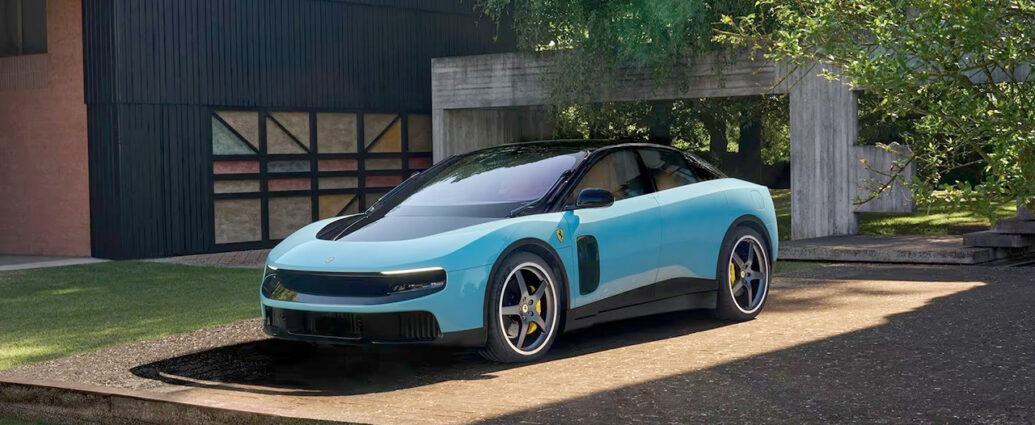
The goal of the six-month program is to help students score a coveted summer internship and edge closer to their dream jobs.

Hendler-Grunt said Next Great Step also helps clients master AI. Coaches teach students how to build custom agents or how to use platforms like Claude and Perplexity to analyze information.

“That skill of understanding [AI] is becoming more and more important even for non-technical roles,” she said.

Indeed, a recent Anthropic study found AI is already theoretically capable of performing a majority of the tasks associated with roles in engineering, law, business, finance, and management.

Many colleges today have yet to integrate AI into learning, with professors often outright banning use of the technology in the classroom. That comes even as a growing number of employers are dishing out bonuses based on AI use. A staggering 77% of executives said employees who refuse to become proficient in AI won’t be considered for promotions or leadership roles, according to a survey from AI platform Writer and Workplace Intelligence.

Still, Hendler-Grunt emphasized the importance of what she calls “luxury” skills, like critical thinking and communication.

“The most important piece about success in landing a job is building relationships,” she said, “because people hire people, not technology.”

This story was originally featured on Fortune.com

This post was originally published here

Alex Imas didn’t arrive at optimism easily. The University of Chicago economist economist occupies an unusual space in being one of the leading researchers on AI’s labor market impact, but also one of its most avid adopters. Unlike many of his peers, he is taking the doomsday scenarios, perhaps best exemplified by Citrini Research’s viral essay on “ghost GDP” and spiraling deflation, very seriously.

If automation eliminates most jobs and the wage share collapses, the people with money—capital owners—will be already satiated, while displaced workers can’t afford to buy anything. Demand collapses. The economy shrinks. While Imas has written that he finds actual negative economic growth unlikely, he said the scenario of high unemployment and a drag on the economy as a result of that unemployment is worth taking seriously.

“My first reaction was to be very scared,” Imas told Fortune. “I needed to work things out carefully in order to be less scared—not to convince myself not to be scared, just to look at history and look at people’s preferences, bring these things together.”

Wall Street takes Imas’ warnings seriously, too. A Morgan Stanley research note last month recommended that investors follow Imas as a primary resource on AI’s employment impact, saying he was among the valuable third-party resources on the topic.

Imas is no armchair theorist: his research has appeared in the American Economic Review, the Quarterly Journal of Economics, and the Proceedings of the National Academy of Sciences, and he co-authored a recent update of the behavioral economics classic The Winner’s Curse, with Nobel laureate Richard Thaler. He may be getting most notoriety for his widely read Substack, Ghosts of Electricity. He wasn’t aware of his appearance on Wall Street research desks, when told of Morgan Stanley’s citation, “that’s funny … I didn’t see that.”

The reach of Ghosts of Electricity has surprised him more broadly. Imas started the newsletter with a specific ambition: to write with the rigor of an academic paper but for an audience far wider than journal editors, reaching economists, AI researchers, technologists, and policymakers at once. He said it has worked beyond what he anticipated, with responses coming in from, for instance, his mother-in-law’s friends. He recently sat down with a neighbor, installed Claude on her computer, and watched her start building apps from scratch within an afternoon. “The ideas need to be out there broadly for a very broad audience,” he said.

And after several months of writing and rewriting, Imas has something for the doomsday crowd to digest: a vision of how the AI economy could work out not so badly. It’s similar to an argument that has been increasingly appearing in the pages of Fortune. He opens with the example of Starbucks.

The Starbucks signal

Starbucks is a $112 billion company selling one of the most standardized products in the modern economy. The technology to remove human labor from its stores has existed for years. And yet, after years of cutting staff and installing automated processes to protect thin margins, CEO Brian Niccol recently reversed course entirely. Handwritten notes on cups, ceramic mugs, comfortable seating—human details—had proven more valuable to customers than efficiency. More baristas are being hired. Automation is being rolled back. (Starbucks is on ChatGPT as a beta in a way that ideally leads to drink discovery, but that is distinct from its in-store strategy.)

For Imas, Starbucks’ shift is telling. As AI makes commodity production cheaper and more abundant, he argued in a recent Substack, “What will be scarce?” certain things just can’t be commodified in the coming AI world. These are things that Starbucks’ Niccol seems to know: human presence, social connection, provenance. They will become more scarce, he argued, and therefore more economically valuable. The question he spent months of writing and revising on is: why, exactly, and how far does that logic extend?

For its part, Starbucks referred Fortune to previous company communication on the subject of AI. The company says its approach to AI is “practical and grounded.” The company said it wants to “use AI where it helps partners deliver exceptional craft, deepen customer connection and improve the rhythm of the coffeehouse. If it does that, we scale it. If not, we move on.”

From farms to the ‘relational sector’

The intellectual scaffolding is structural change theory—the economics of what happens when technology makes one sector dramatically more productive. The famous example, also beloved of Fundstrat’s Tom Lee, is that around 1900, 40% of the American workforce farmed. Today, it’s under 2%. People didn’t stop eating; they just stopped spending most of their time making food once it became commoditized and cheap. The economy didn’t collapse—it transformed, reallocating labor toward manufacturing and then services as incomes rose. Imas argues the same dynamic will play out with AI: “The economics of scarcity won’t disappear, it’ll just relocate.”

Drawing on a landmark 2021 Econometrica paper by Diego Comin, Danial Lashkari, and Martí Mestieri, he noted that income effects—not just price effects—account for over 75% of historical patterns of sectoral reallocation. In other words, when people get richer, they don’t just buy more of the same things, which are now cheaper. They want different things, namely goods and services with high “income elasticity,” meaning demand for them grows faster than income itself.

The behavioral ingredient Imas adds is rooted in the French philosopher René Girard‘s concept of mimetic desire: we don’t want things purely for their functional value, but because others want them—and because others can’t have them. In experimental research with colleague Kristof Madarasz, Imas found that willingness to pay for an identical good roughly doubled when subjects learned a random subset of people would be excluded from purchasing it. In follow-up work with Graelin Mandel, AI involvement in creating a product dramatically reduced that premium because people perceived AI-made goods as inherently reproducible, undermining the scarcity that drives desire.

The implication is that as AI commoditizes more of the economy, spending and employment will migrate toward what Imas calls the “relational sector,” which brings his Starbucks analogy back around. People will pay for things that have a distinct human element to them. In other words, middle-class consumption patterns tomorrow will look like wealthy ones today.

Imas told Fortune there is already copious empirical support for this idea hiding in plain sight: today’s billionaires, with no financial constraints whatsoever, spend enormous amounts of time on podcasts, at live performances, and on social platforms, consuming and producing human interaction.

“You could be alone on an island consuming all the movies, all the video games, all of technology, everything you want,” Imas said. “But most of the time, these billionaires, they’re on podcasts. They’re out there on Twitter, interacting with people, they’re going to performances, they’re consuming relational goods, basically, or trying to provide relational goods, like the need for socialization to be around humans.”

The demand for human connection, he argued, has no natural ceiling because it is fundamentally comparative, never fully satiated.

Not artists — nurses, teachers, baristas

Imas is careful to distinguish his argument from a romantic vision of a world full of painters and performers. “A lot of people’s reaction [to the essay] was focusing on performers and art. I think those are kind of red herrings,” he said. “Starbucks workers are not performers. They’re not artists. They’re just people. They’re human beings and people value interacting with human beings—not from a highbrow or artistic or entertainment perspective, but just from a basic desire for socialization perspective.”

The relational sector, in his framework, encompasses nurses, doctors, teachers, therapists, childcare workers, personal chefs, and hospitality workers. These sectors together already employ nearly 50 million people in the United States. Many existing jobs won’t disappear wholesale but will transform: as AI automates the routine tasks within a teacher’s or doctor’s workday, what remains—the emotional support, the attentiveness, the relationship—becomes the core of the job and the core of its economic value. Fortune recently made similar arguments, noting that those jobs with a human factor or relational aspect are already pulling in above-average salaries, particularly in nursing and teaching: Nurse Dana from The Pitt is a salutary example.

Right now, Imas explained, doctor and teachers are doing jobs that are half relational and half vulnerable to automation, and some of those surely will be. Imas said “the thing that’s not being recognized right now” is how those jobs will evolve to be more relational as AI advances. “The widget maker may be gone. The truck driver may be gone, because tasks in that job don’t have a relational component. But there’s a lot of jobs right now that have a relational component, which will become relational jobs.”

The sports car with no roads

That theory gets a real-world stress test inside a large medical nonprofit, where a senior data scientist—who asked not to be identified by name or employer—told Fortune that he has spent the past six months watching his organization’s newly formed data strategy committee deploy an enterprise ChatGPT account to the entire staff. After weeks of all-hands presentations, the only use cases that management could articulate were: writing emails and summarizing emails. In fact, “they wanted employees to be AI champions to come up with other use cases, but few have been interested.”

The data scientist said that his actual work—running statistical analyses on cancer patient data for one of the country’s largest medical databases—involves protected health information that the tools aren’t even authorized to access.

This doesn’t mean that AI wasn’t capable of essentially doing his job. In fact, he said that after the first release of ChatGPT years ago, he built a cancer survival-risk calculator with that tool in under a month. Because of the relational aspect, though, it’s been sitting in legal review indefinitely. He agreed with Fortune’s metaphor of AI like being a “sports car,” but the problem for most jobs is they are built like New York City, full of traffic lights and gridlock. Have you ever driven in in Manhattan? “What the hell are you doing with a sports car” in that case? In the case of the calculator, he said, it took him about a month to build the prototype and four years to bring to the public, for reasons including legal review, grant submissions and interactions with the NIH. So essentially: paperwork.

He’s no Luddite. He credits AI with helping him translate statistical code across programming languages and build prototypes faster than he could alone. But his most irreplaceable function, he said, isn’t running regressions. It’s managing the human layer: communicating with a consortium of international surgical oncologists, from Yale to MD Anderson to the University of Toronto, specializing in cancers ranging from thoracic to orbital sarcomas, translating between their clinical instincts and the demands of statistical rigor.

“Their lives are such that if I get 15 minutes a day with them, that’s extremely lucky. So I need to make everything as precise and concise as possible.” No AI, he added, could replicate the register that relationship requires. Even the approved use case, writing email, would be missing the key relational aspect. “Actually creating the prototype, and I think you’ve heard this before, create using AI to create a prototype is fantastic. But once you try to get from prototype to scale, it kind of hits all of these roadblocks of red tape and bureaucracy and committees.”

That is exactly the kind of work Imas has in mind—not performance, not artistry, but the irreducibly human judgment that holds complex institutions together.

The speed problem

Imas hasn’t abandoned his fears. His optimistic scenario depends entirely on the pace of transition. If the shift from commodity economy to relational economy happens gradually, history suggests the labor market can absorb and adapt. But if AI automation accelerates faster than workers and institutions can retrain and reallocate, the demand-collapse scenario he spent years warning about remains entirely on the table.

“The speed of change really matters,” he said, “whether we get to this hopeful version versus the more worrisome one.”

Imas warned that people who are still skeptical of AI as overblown hype are fooling themselves, likely because they’re using a chatbot model from years ago, not a frontier model. “These two things should not be categorized in the same bucket of technology,” he argued, saying that that AI is still very “jagged,” an increasingly popular term for thinking about AI’s probabilistic nature and tendency to hallucinate. “But it’s going to be jagged in the sense of, at some point, the valleys are going to be very, very high … even the low points are going to be very impressive.”

Morgan Stanley warned in its March research note that AI disruption was “becoming more acute as LLM capabilities increase at a more rapid rate than expected,” flagging the potential for large-scale workforce reductions across industries. The gap between that projection and a cancer statistician quietly waiting for the enterprise ChatGPT enthusiasm to blow over captures exactly the uncertainty Imas, despite his hard-won optimism, still can’t fully resolve.

Imas said he was still “worried about” people who are sticking their heads in the sand about AI: “My primary role right now is to sit people down one on one and get them trained on top-flight technology.” He said he sees his relational aspect theory as both plausible and positive, “but it took me a long time to get to it.”

This story was originally featured on Fortune.com

This post was originally published here

Home healthcare workers make up less than 3% of the total jobs, but KPMG senior economist Matthew Nestler sees reason to pay attention—and reason to be concerned.

“The current system right now is unsustainable,” he told Fortune, “and [it’s] buckling before we’re hit with this massive aging and retiring of the baby boomers—the largest generation ever to age and retire.” 

Despite making up just a fraction of the workforce, home healthcare workers have a disproportionate impact on the rest of the economy, Nestler argued, saying that if people are unable to get the health care that they need, that will result in an increase in unpaid elder care, causing domino effects all through the labor market. The person pushed into unpaid elder care, he reasoned, “is employed in another part of the economy, then passes up career opportunities; they reduce work hours; they leave the labor force.”

Call it the home healthcare canary in the coal mine. 

Healthcare, including home healthcare and elder care, has boomed despite a cooling labor market. The sector alone added 693,000 jobs in 2025, despite the U.S. economy seeing a total increase of 116,000 jobs. That means without healthcare, the economy would have lost about 577,000 jobs. The resilience of the sector is in large part to baby boomers, the oldest of which are 80 and the youngest of which are nearing retirement age. The generation represents nearly 73 million people in the U.S. and now require more care as they age. Personal healthcare spending for older adults topped $1.2 trillion in 2020, about $22,000 per person, according to Centers for Medicare & Medicaid Services data

Fewer hours, more problems

Citing Bureau of Labor Statistics data, Nestler wrote in a LinkedIn post this week that while home healthcare services added 7,000 jobs in March, it is still well before 2024’s average of 12,900 added jobs per month, far less than gains needed to keep up with high demand. Moreover, weekly hours for healthcare services employees have dropped from a peak for about 30 in March 2023 to 28 today—its lowest point in nearly two decades. That drop is steepest for production and nonsupervisory employees in the sector.

KPMG found 10% to 20% of workers in every single industry provide unpaid elder care. Many of these individuals are Gen X and millennials, individuals who hold leadership and management positions in their jobs. While companies are recognizing the importance of unpaid care, providing some benefits, the weight of unpaid care will increase unless the labor supply is replenished, Nestler said. 

He noted that falling hours and meager payroll additions for home healthcare workers is a sign that external pressures are straining a critical sector.

“Demand for home healthcare services continues to rise as the population ages and more seniors prefer to age in place at home,” he wrote on LinkedIn. “Yet hours are declining while payrolls grow modestly and prices rise.”

Burnout and immigration woes

Relying on public funding with low rates of reimbursement rates with a historically high supply of labor, home healthcare jobs typically have low wages, less than $35,000 annually

These low wages have resulted in underemployment, forcing home aides and elder care workers to sometimes seek out one or two other jobs. Others leave the sector all together as a result of abysmal pay combined with being emotionally or physically taxed from the work, Nestler said.

While a post-pandemic surge of immigrants more willing to work low-wage jobs helped expand the workforce, Nestler warned that the Trump administration’s immigration crackdown has conversely led to that growth slowing. A survey of 691 healthcare workers across 30 states conducted by the Physicians for Human Rights and Migrant Clinicians Network found 26% of clinicians said immigration enforcement has directly impacted patient care, particularly preventative care, chronic pain, and mental health treatment.

“These are really difficult jobs,” Nestler said. “They’re emotionally difficult; they can also be physically difficult in some ways. It reflects our society’s values that some of the most necessary jobs—taking care of the oldest among us—are the lowest paid.”

This story was originally featured on Fortune.com

This post was originally published here

WASHINGTON — U.S. beef prices have climbed to record highs heading into the peak summer grilling season, driven by tight cattle supplies, persistent drought impacts, and steady consumer demand, according to data released April 2026 by the U.S. Department of Agriculture (USDA).

Retail beef prices, including ground beef and steaks, have surged in recent weeks, with the USDA reporting average retail beef prices reaching all-time highs in April, as ranchers continue to operate with historically low herd sizes. “Beef production is tightening due to reduced cattle inventories,” the USDA said in its latest livestock outlook, noting that supply constraints are expected to persist through 2026.

The underlying issue stems from years of herd liquidation tied to drought conditions across key cattle-producing states. The USDA’s National Agricultural Statistics Service (NASS) reported in its January 31, 2026 Cattle Inventory Report that the U.S. cattle herd fell to its lowest level since 1951. “Producers have been reducing herd sizes due to high feed costs and limited pasture availability,” said Seth Meyer, Chief Economist at the USDA, during an April briefing, adding that rebuilding herds “will take time and sustained favorable conditions.”

Wholesale markets are reflecting the same pressure. Choice beef cutout prices, a key industry benchmark, have climbed sharply in recent weeks, according to USDA Agricultural Marketing Service data released mid-April 2026. “We’re seeing strong wholesale pricing as supplies remain constrained ahead of seasonal demand,” said Derrell Peel, Livestock Marketing Specialist at Oklahoma State University, in commentary published April 15.

Demand, however, has remained resilient despite higher prices. Consumers continue to spend on beef products, particularly ahead of summer holidays like Memorial Day and the Fourth of July. “Beef demand has held up better than expected, even at elevated price levels,” said David Anderson, Professor and Extension Economist at Texas A&M University, in an April 16 market note, pointing to steady retail movement and restaurant demand.

At the same time, broader inflation dynamics are compounding the issue. Higher transportation, labor, and feed costs are feeding into final retail prices. The Bureau of Labor Statistics (BLS) reported in its April 2026 Consumer Price Index release that meat prices, including beef, remain a significant contributor to food-at-home inflation. “Food inflation continues to reflect supply-side pressures, particularly in protein categories,” BLS economists noted in the report.

Looking ahead, analysts expect prices to remain elevated in the near term, with only gradual relief. “We’re likely to see tight supplies continue into 2027 unless we get a meaningful expansion in the cattle herd,” said Michael Swanson, Chief Agricultural Economist at Wells Fargo, in an April 2026 outlook, adding that weather conditions will play a critical role in determining how quickly producers can rebuild.

For consumers, that means higher costs at the grocery store and the grill this summer, as structural supply constraints continue to collide with seasonal demand—keeping beef prices at historically elevated levels.

JBizNews Desk

WASHINGTON / OTTAWA — U.S. Commerce Secretary Howard Lutnick said Friday that the Trump administration is preparing to revisit the United States–Mexico–Canada Agreement (USMCA), warning that the current trade deal “needs to be reconsidered and reimagined” as it approaches its formal review in the coming months.

Speaking at a Semafor-hosted conference, Lutnick delivered a blunt assessment of the pact that governs more than $1.5 trillion in annual North American trade, signaling that President Donald Trump views the agreement as structurally imbalanced despite preserving duty-free access for most goods across the region.

“Making Mexico and Canada be treated like Georgia and Alabama without them being committed…it’s a bad trade deal,” Lutnick said. “There’s plenty of good in it, but there’s a huge amount of bad in it, and it needs to be reconsidered for the benefit of America.”

The USMCA, which replaced NAFTA in 2020, includes a built-in six-year review mechanism designed to assess performance and determine whether the agreement should be extended or revised. That review is now drawing heightened attention from policymakers and business leaders alike, as early signals from Washington point to potential changes that could ripple across integrated supply chains in manufacturing, agriculture and energy.

The remarks have injected fresh uncertainty into corporate planning across North America, where companies have long relied on predictable trade rules to guide investment and hiring decisions. The agreement has been especially critical for Canada and Mexico, whose exports to the United States largely flow tariff-free under its provisions.

Canadian Prime Minister Mark Carney has emphasized the importance of stability in cross-border trade, framing the agreement as essential to economic growth and job creation. “Canada’s prosperity is built on strong and reliable trade relationships,” Carney said in recent remarks, adding that his government would “defend the interests of Canadian workers and businesses” as the review process unfolds.

Canada’s Minister of Export Promotion, International Trade and Economic Development, Mary Ng, struck a similar tone, signaling openness to discussions while underscoring Ottawa’s position that the agreement remains fundamentally sound. “USMCA is a modern, high-standard agreement that benefits all three countries,” Ng said. “We will approach the review constructively while firmly defending Canada’s interests.”

In Mexico, President Claudia Sheinbaum has also stressed the importance of maintaining North America’s economic integration, particularly at a time of intensifying global competition. “Trade integration in North America has been fundamental to our shared prosperity,” Sheinbaum said, noting that Mexico would work with its partners to strengthen the agreement while safeguarding national priorities.

Mexico’s Economy Secretary Marcelo Ebrard indicated that Mexico is preparing for negotiations but expects any revisions to remain balanced. “We are ready for the review process,” Ebrard said. “The agreement has delivered results, and any modernization should reinforce regional competitiveness—not weaken it.”

While the administration has yet to outline specific proposals, trade analysts expect the review to focus on tightening rules of origin, particularly in the automotive sector, strengthening enforcement of labor and environmental provisions, and updating digital trade rules to reflect evolving technologies. Officials are also expected to push for measures that encourage more production within the United States, a central theme of the administration’s broader economic agenda.

Lutnick’s comments reflect a deeper concern within the administration that the current framework provides broad market access without sufficient alignment on economic and regulatory commitments. That view is likely to shape the U.S. negotiating posture as talks begin.

Any move to significantly alter the agreement carries high stakes. The USMCA underpins decades of economic integration, with supply chains that often cross borders multiple times before goods reach consumers. For U.S. companies, changes could create new domestic opportunities but also introduce cost pressures and operational disruptions. For Canada and Mexico, whose economies are more dependent on U.S. trade, the risks are even more pronounced.

As the review approaches, the tone set by Lutnick suggests that negotiations may extend beyond routine updates, setting the stage for a consequential test of North America’s economic partnership and the future direction of regional trade.

—JBiz News Desk

Last December, U.S. Trade Representative Jamieson Greer declared 2025 the “Year of the Tariff.” His continued leadership can make 2026 the “Year of Digital Trade.” There could be no better investment in U.S. economic and national security.

When Caterpillar provides cloud-based equipment diagnostic services to a mining company in Australia, that’s digital trade. When Midwest farmers use John Deere’s AI-powered precision agriculture platform to sell precision-harvested grain to customers in Japan, that’s digital trade. And when people use Zoom to do business across borders — whether it’s Coursera serving students in India, Cleveland Clinic doctors providing cardiac care to patients in the Middle East, or American Woodmark selling U.S.-made cabinets to global customers — that’s digital trade.

Digital trade helps American companies and workers reach the 96 percent of the world’s consumers who live outside our borders. Our $282 billion trade surplus in digitally delivered services is testament to that. Counterintuitively, digital trade’s greatest impacts fall outside the tech sector entirely — in manufacturing, agriculture, health care, financial services, and entertainment. And it’s a game changer for small businesses, allowing them to advertise, execute payments, and manage customs clearance with the sophistication of large corporations. At a time when we are looking to increase affordability, boost manufacturing, and create good middle-class jobs, digital trade is a no-brainer.

It gets better. By reinforcing our economic strength, digital trade underwrites our technological leadership and enhances our national security. U.S. firms that do more business abroad can invest more in cutting-edge R&D at home — for example in advanced semiconductors, hypersonic materials, and synthetic biology. In addition, U.S. government support for digital trade helps prevent other governments from forcing American companies to share their valuable intellectual property (IP). Finally, cross-border data flows allow industry and government to better share information about — and thereby prevent — suspected terrorist financial activity, cyberattacks, or supply chain disruptions.

For decades, the United States was an unflinching champion for strong digital trade rules. This leadership helped U.S. companies compete in overseas markets, even as many governments pressed them to use local data centers or transfer their IP as a condition of doing business. In October 2023, however, the Biden Administration withdrew U.S. support at the World Trade Organization (WTO) for three core digital trade principles: (1) free cross-border data flows; (2) prohibitions on “data localization” requirements; and (3) protections against forced source code disclosure. This well-intentioned but shortsighted decision allowed many countries to further restrict digital trade.

The Trump Administration and Congress should take the following bold, bipartisan, and urgent steps to restore strong U.S. leadership on digital trade:

First, reassert U.S. leadership. The Administration should publicly re-adopt the longstanding U.S. position supporting core digital trade protections. Doing so would send a powerful message that the United States intends to write the rules of digital trade and stand by U.S. companies and workers as they compete internationally.

Second, take bipartisan Congressional action. Several Members of Congress have been staunchly bipartisan in pushing for strong digital trade rules. Representatives Suzan DelBene (D-WA) and Darin LaHood (R-IL) have co-chaired the House Digital Trade Caucus for years, working together to combat unfair digital trade practices. Senators Todd Young (R-IN), Chris Coons (D-DE), Jerry Moran (R-KS), and Michael Bennet (D-CO) recently introduced the Digital Trade Promotion Act, which would empower the President to negotiate high-standard digital trade agreements. Congress should move swiftly to pass this legislation and send it to the President’s desk.

Third, pursue “gold standard” digital trade agreements. The first Trump Administration made important progress on digital trade, concluding high-standard agreements with Japan, Canada, and Mexico. The second Trump Administration should move immediately to negotiate pacts with additional allies and partners, such as Australia, South Korea, and the United Kingdom.

Finally, combat unfair digital trade practices. The United States should more forcefully deter other countries from restricting digital trade. This includes threatening the use of U.S. trade laws to resist the digital services taxes (DSTs) that countries such as Canada, France, and India have imposed on U.S. tech firms. It also includes making the WTO “moratorium on customs duties on electronic transmissions” permanent, so that U.S. companies have certainty that their digital exports will not be taxed when they cross borders.

Digital trade is essential to our economic competitiveness, technological leadership, and national security. The time to reclaim U.S. leadership in setting the global agenda for it is now.

The opinions expressed in Fortune.com commentary pieces are solely the views of their authors and do not necessarily reflect the opinions and beliefs of Fortune.

This story was originally featured on Fortune.com

This post was originally published here

The Israeli shekel is again pressing against historic highs, trading just below the NIS 3-per-dollar threshold after briefly breaking through the level for the first time since the mid-1990s, a move that is reshaping both household purchasing power and investment returns. Bank of Israel data and interbank market pricing on Sunday showed the currency hovering near NIS 2.98 per dollar, capping an appreciation of more than 20% over the past 18 months, even as the U.S. dollar has weakened broadly across global markets.

For Israeli consumers, the stronger currency is translating into tangible gains in purchasing power. Imported goods—from electronics and vehicles to raw materials and energy inputs—are becoming cheaper in shekel terms, easing inflationary pressures and lowering costs for businesses reliant on global supply chains. Travel abroad has also become more affordable, with Israelis effectively getting more value per dollar or euro spent overseas.

“A stronger shekel increases real purchasing power for households and reduces the cost of imports across the economy,” said Ofer Klein, chief economist at Harel Insurance and Finance. “It has a moderating effect on inflation, particularly in categories tied to global pricing such as fuel, consumer goods, and durable imports.”

Yet that same strength is creating a very different reality for investors. While the S&P 500 delivered gains approaching 30% over the past year, Israeli savers invested in unhedged, dollar-denominated vehicles—such as passive ETFs, pension tracks, and retirement funds linked to U.S. indices—have seen those returns significantly reduced once converted back into shekels. Institutional performance data through early 2026 show returns in the low single digits for fully dollar-exposed strategies, compared with roughly 25%–30% in domestically managed equity tracks.

“For many years, I have said this is a problematic path for Israeli savers,” said Tamir Hershkovitz, senior vice president and head of investments at Ayalon Insurance and Finance. “Investing in the S&P 500 is excellent—but linking it fully to the dollar, without managing currency exposure, creates a mismatch. The saver earns and spends in shekels, so currency movements can erase a large portion of the gains.”

He added, “A balanced portfolio with limited foreign-exchange exposure is increasingly necessary in this environment.”

The divergence highlights how currency dynamics have become a dominant factor in portfolio performance. Israeli institutional investors—including pension funds and insurance companies—have been actively rebalancing portfolios by selling dollars after strong gains in overseas markets and reallocating into shekel-denominated assets. These transactions, including spot conversions and hedging strategies, are adding further upward pressure on the currency.

“In the last 12 months, U.S. equities rose by around 30%, but the dollar weakened by roughly 20%, cutting the effective return for Israeli investors dramatically,” said Idit Moskovich, manager of the trading room at First International Bank of Israel. “Investors fully exposed to foreign currency—especially through passive U.S. index products—must factor this in. Currency hedging is becoming essential, not optional.”

Beyond financial flows, structural drivers are reinforcing the shekel’s strength. Israel’s export engine—particularly in technology, defense, and natural gas—continues to generate substantial foreign currency inflows. These revenues are routinely converted into shekels for domestic use, creating sustained demand for the local currency.

“We are seeing a combination of strong export inflows and institutional activity all supporting the shekel,” said Klein. “When you add global dollar weakness and improving geopolitical expectations, you get a powerful alignment of forces.”

Geopolitical sentiment is also influencing the currency’s trajectory. Markets are increasingly pricing in a more stable regional outlook, which has supported continued capital inflows into Israeli assets. Even amid intermittent tensions, analysts note that global investors have maintained exposure to Israel, signaling confidence in the country’s economic resilience.

“Even in periods of uncertainty, capital continues to flow into Israel,” said Hershkovitz. “That reflects long-term confidence in the economy and helps explain why the shekel remains strong despite external challenges.”

At the corporate level, multinational activity is further contributing to demand. Global firms operating in Israel convert foreign earnings into shekels for payroll and local investment, while exporters continue to repatriate revenues. At the same time, importers benefit from lower costs, which can feed through into consumer pricing and corporate margins.

Still, the rapid pace of appreciation is raising concerns, particularly among exporters. A stronger shekel makes Israeli goods more expensive abroad, reducing competitiveness and squeezing profit margins.

“The speed of appreciation is critical,” said Klein. “If a company operates with a 10%–15% margin and the currency strengthens by more than 20%, that margin can effectively be wiped out. That creates real pressure on exporters and could eventually impact growth.”

Despite these concerns, economists do not expect immediate direct intervention from the Bank of Israel. The central bank, led by Governor Amir Yaron, holds more than $200 billion in foreign exchange reserves but has shifted away from frequent currency market intervention.

“The Bank of Israel is more likely to act through interest rate policy rather than direct foreign exchange intervention,” said Klein. “Currency intervention is typically reserved for extreme market conditions, which we are not seeing right now.”

Looking ahead, the outlook for the shekel remains tied to both domestic fundamentals and global developments. Continued export strength, stable geopolitical conditions, and a weaker dollar could sustain the current trend. However, shifts in U.S. monetary policy, global market corrections, or renewed regional tensions could quickly reverse the currency’s trajectory.

“Currency markets can change direction very quickly,” Klein added. “If global markets turn or geopolitical risks increase, the shekel could weaken just as fast as it strengthened. The current levels are not guaranteed.”

For Israeli households, the story is one of mixed outcomes: stronger purchasing power at home and abroad, but diminished returns on global investments. For investors and policymakers alike, the shekel’s rise underscores a broader shift—currency exposure is no longer a secondary consideration but a central factor in economic and financial decision-making.

As the shekel hovers near historic highs, the question is no longer just how strong it can get—but how long the forces behind its rise can remain in place before the cycle turns.

JBizNews Desk- Tel Aviv

White-collar workers have fallen into the mundane rhythm of office life: checking an endless stream of emails, sitting through a barrage of meetings, and pushing through mental fatigue by week’s end.

But some CEOs are rewriting norms of the corporate world, leading billion- and trillion-dollar companies on their own terms. 

Nvidia CEO Jensen Huang: no one-on-one meetings

Huang, the cofounder and CEO of $4.8 trillion technology giant Nvidia, is trimming the fat from his work routine by prioritizing efficiency over regular check-ins.

The leader doesn’t believe that frequent catch-ups with his 55 direct reports are the best use of his time, given that a continuous stream of meetings would only clog up his work schedule and slow him down. 

“I don’t do one-on-one’s with any of them,” Huang said at the Stanford Institute for Economic Policy Research summit in 2024.

His broader goal is to maintain transparency within one of the world’s largest companies. 

“They never hear me say something to them that is only for them to know,” the billionaire continued. “There’s not one piece of information that I somehow secretly tell the staff; I don’t tell the rest of the company.”

Huang still has regular catch-ups with his executive team, and if an employee genuinely needs to get in touch with him, he’ll “drop everything for them,” the CEO added. However, limiting time-consuming meetings helps Huang and the company move faster in the AI race. 

“In that way, our company was designed for agility,” Huang said. “For information to flow as quickly as possible. For people to be empowered by what they are able to do, not what they know.”

Airbnb CEO Brian Chesky: no emails or early-morning meetings

Chesky said that no leader should apologize for how they choose to run their businesses, and he’s unabashedly following his own advice. 

For one, the chief executive of the $86 billion short-term rental platform no longer bothers with the bane of many workers’ existence: emailing. Instead, he texts and calls to get his job done.

“[Emailing] was the thing about my job that I hated the most before the pandemic,” Chesky told The Wall Street Journal last year.

And that’s not the only corporate norm Chesky has snubbed: the Airbnb CEO, who hits peak creativity late into the night, also doesn’t take meetings before 10 a.m. The rise-and-grind norm of Silicon Valley CEOs doesn’t apply to the self-made billionaire. 

“When you’re CEO,” Chesky said, “you can decide when the first meeting of the day is.”

United Airlines CEO Scott Kirby: office power naps 

Kirby said that an impromptu office nap is his trick to staying sharp over his decades-long career in business. He even slept on the floor until United staffers found out about his habit, and rushed to get him a couch for some quality shut eye. 

The leader says taking a break keeps him fueled to run the $33 billion airline giant—and he picked up on a leadership hack. A “power nap” of 30 minutes or less boosts alertness and mood, improves mental clarity, and fights off fatigue, according to a 2024 study from Harvard Medical School.

“A thing I do that people have thought is weird is that, throughout my whole career, when I’m in the office, I’ll close the door and take a 20-minute nap,” Kirby recently said in an interview with McKinsey and Company.

“If I take a 20-minute nap, I’ve accomplished more than anything else I would have accomplished in that time,” the CEO explained. “When you’re tired, your brain is not 100%. If you’re not 100%, you shouldn’t be making decisions.”

Southwest Airlines CEO Bob Jordan: no meetings during afternoons

Jordan set a new rule for 2026: his calendar will stay completely clear every Wednesday, Thursday, and Friday afternoon. No meetings are allowed during those hours; the CEO is ensuring that there’s a block to “think about what’s important right now,” tossing aside traditional duties that can be a total time suck. 

“When you first start, it’s easy to confuse busyness and going to meetings with leadership,” Jordan said at the New York Times DealBook Summit in 2025. “…Because what we all find, I’m sure, is there’s no time to ‘work,’ and you confuse going to meetings with the work.”

Jordan said that his boundary might sound “crazy” to fellow executives dipping in and out of daily meetings. However, the airline giant leader reasoned that CEOs are brought on to do work they’re specifically good at—which usually isn’t getting done during conversations that can eat up valuable time. 

“It’s so that you can work on things you need to work on,” Jordan explained. “You can think about what’s important right now. You can call people you need to talk to.”

Twilio CEO Khozema Shipchandler: exercise between capped meetings

Shipchandler is “all for working smarter,” so he’s joining the legion of leaders who are being strict about their calendars. Like so many others, he’s selective about what meetings he attends and how long they last—and he uses the spare minutes to get a quick exercise in.

“I do not take meetings that I don’t think drive the ball forward for the company, or that don’t bring me energy,” Shipchandler told Fortune last year. 

“I typically only do 25-minute meetings in a 30-minute slot, and I only take 50-minute meetings in an hour slot,” he explained. “And in the time in between, I’ll do maybe a quick lap around the house to get the blood flowing, or get some fresh air.” 

This story was originally featured on Fortune.com

This post was originally published here

In the December 10, 2001 issue of Fortune, Warren Buffett wrote a landmark 7-page article that introduced a crucial market metric that became renowned as the “Buffett Indicator.” The Great Man adapted the piece from a speech he’d given that July at the annual Allen & Co. bash in Sun Valley, privately delivered to the audience mainly comprising top CEOs. It was the legendary Fortune writer Carol Loomis who persuaded Buffett to adapt and extend his remarks for the article. Carol was my mentor during my early career at the magazine; I had the honor of working as her research assistant (no coasting allowed!) and she displayed the noblesse oblige to edit a couple of my pieces.

Even then, Carol had a great friend in Buffett. For many years, she famously edited the Berkshire Hathaway annual letter. I’m sure she’d admit that his guidance helped hone her forensic skills to the point where Carol could dissect the true financial performance of big enterprises from ITT to Hewlett-Packard to Fortune‘s owner Time Warner—she trashed the now-notorious AOL merger practically on announcement, irking our C-suite—better than practically any Wall Street sage or portfolio manager. At his last annual address as CEO in May of 2024, Buffett saluted Carol’s terrific work in helping the Oracle of Omaha rule as the most heeded voice in the business world, and correctly praised her “as the best business journalist.”

The concepts Buffett presented a quarter century ago are timeless, and they’re especially relevant today because the yardstick that he tagged as pointing to danger then, looks even more ominous now. Buffett was writing at a time when the Dot Com bubble was deflating. In the piece, he identified why the drop was inevitable, and likely to continue big time. His thesis: The total value of U.S. stocks, over the long term, can’t outpace the growth of businesses as reflected in the GDP, so when the ratio of S&P 500 to national income diverts hugely from the norm, it was bound swing the opposite way and “revert to the mean”—though the timing of the retracement is impossible to predict. Buffett highlighted a chart in the text displaying that at the craze’s peak in March of 2000, that number, now revered as the Buffett indicator, reached a vertiginous 200%.

“The message of the chart,” he wrote, “is that if the relationship [between the total value of equities and GDP] drops to 70% or 80%, buying stocks is likely to work out very well for you. If it approaches 200% as it did in 1999 and 2000, you are playing with fire.” Indeed, the S&P had already fallen over 20% by the time the Buffett story appeared, and by mid-2022 retreated by almost one half from its peak, taking the Buffett Indicator below 80%. As the Buffett formula predicted, the tech rampage’s aftermath proved a great moment to buy.

The Buffett Indicator is even worse than when he predicted disaster in 2001

Right now, the markets are riding a seldom-before-witnessed explosion in animal spirits. Since the decline prompted by the surprise start of the Iran war, the S&P 500 has rebounded over 13% to, as of mid-day on April 17, notch an all-time record of 7140. Here’s the shocker: The Buffett Indicator now stands at 232%, a figure that’s around one-sixth higher than what he identified as the prepare-for-a-roasting zone. A reading this elevated comes with two problems. First, corporate profits have been waxing much faster than GDP. The bulls claim that trend justifies today’s valuations, and that EPS can keep rolling in double-digits while national income trudges at a nominal 5% or so. The argument’s dubious: Profits are now 12% of GDP versus an historic average of 7% to 8%. In our highly competitive economy, fat margins attract competitors seeking a share of the action, so they push down prices and expand volumes to steal market share from the profit-rich incumbents. Extraordinary earnings growth generally doesn’t stay extraordinary. As the late Nobel-winning economist Milton Friedman told this writer, “Corporate earnings as a share of national income cannot rise beyond their historic share of GDP for long periods.”

Second, stocks have also gotten far more expensive relative to their profits. The S&P 500’s price-to-earnings ratio based on forecast Q1 GAAP net earnings exceeds 28. That’s two-thirds higher than the 100 year average of around 17. Best bet: Both profits and PEs trend back towards normal, taking the Buffett Indicator, and the S&P, downwards with them.

How bad could the drop be, based on the past instances of an astronomical Buffett indicator? Once again, the decline from the Dot Com driven 200% mark that prompted the Buffett piece was about half. In November of 2021, the Indicator reached just over that fearsome benchmark, then tumbled 19%.

In the Fortune article, Buffett warned that if investors expected shares to roar higher when his Indicator was hovering at those historic highs, “the line would have to go straight off of the chart,” meaning the optimists were banking on a suspension in economic gravity. Right now, the bulls are in charge, and they’re predicting the Buffett Indicator that’s already hit uncharted territory will push further into the “playing with fire” realm. My hero Carol Loomis provided a great service in persuading her pal to share what become justly honored as the Buffett Indicator with all of us. This evergreen measure has issued a warning on intoxication: Keep imbibing the happy talk, and you’re in for a long hangover.

This story was originally featured on Fortune.com

This post was originally published here

The World Cup has never been free of politics, yet this year’s event may be in a league of its own.

The quadrennial global soccer tournament will be co-hosted for the first time this year by three nations: the U.S., Mexico, and Canada. It will also be the biggest version of the tournament ever, with FIFA, the global soccer governing body, utilizing an expanded 48-country format that adds 16 more teams.

But Lindsay Sarah Krasnoff, a historian and professor at New York University’s Tisch Institute for Global Sport, said what may stand out the most this year is the World Cup’s geopolitical context, which she said has no clear modern precedent. 

“We’re in pretty unique territory,” she told Fortune.

Part of the tension comes from the relations between the three host nations. Since President Donald Trump returned to office last year, he has levied tariffs on both the U.S. and Canada as part of his broader trade war. 

In addition, his rhetoric toward both countries has turned increasingly hostile and menacing.

While he claims to get along with Mexican President Claudia Sheinbaum, he has tried to convince her to allow U.S. troops to enter Mexico to fight drug cartels, a suggestion Sheinbaum rejected as an affront to the country’s sovereignty.

“The president of Mexico is a lovely woman, but she is so afraid of the cartels that she can’t even think straight,” Trump said last July.

The president has also attacked America’s northern neighbor, calling for Canada to become the 51st U.S. state and labeling Canadian Prime Minister Mark Carney a “future governor.” 

It is not the first time that co-hosts have dealt with complicated relations. Japan and South Korea, two countries with plenty of baggage due to Japan’s colonial rule of the Korean peninsula in the early 20th century, jointly organized the 2002 World Cup. The tournament was largely seen as a success, Krasnoff said, and laid the groundwork for future tournaments to be hosted by more than one nation. 

But Krasnoff noted that while the tension between South Korea and Japan is historical, the conflict between the U.S., Canada, and Mexico is active and ongoing. The fact that the three countries plan to review their trilateral trade agreement, the USMCA, in July during the tournament adds extra weight. 

U.S. President Donald Trump, Claudia Sheinbaum, President of Mexico, and Mark Carney, Prime Minister of Canada, pose for a selfie with Gianni Infantino, President of FIFA, during the FIFA World Cup 2026 Official Draw at John F. Kennedy Center for the Performing Arts on December 05, 2025 in Washington, DC.
Hector Vivas—FIFA/FIFA via Getty Images)

Iran war

The Iran war, which followed U.S. strikes on nuclear sites in Iran last June, has added another point of contention. It is the first time that a World Cup host nation has been actively at war with a participating nation. And while they are currently in a ceasefire, to say the dynamic is uncomfortable is an understatement.

“When the World Cup draw happened in December, I don’t think anyone really had on their bingo card that one of the co-hosts would be at war with a participating nation — and the first team to actually qualify,” said Krasnoff.

Iran was the first nation to qualify for this year’s World Cup, which will take place over 39 days starting in June, but the country’s participation has been uncertain—even before the U.S. and Israel attacked the country in late February. 

In December, the country boycotted the World Cup draw in Washington after the U.S. denied visas to several members of its delegation, including its national team coach.

After the war started and the U.S. assassinated Iranian Supreme Leader Ali Khamenei, the Iran’s sports minister said on state television in early March that the country could not attend the tournament.

“Given that this corrupt government assassinated our leader, under no circumstances can we participate in the World Cup,” he said, according to ESPN

Trump later shot back in a Truth Social post that the Iranian team is welcome, “but I really don’t believe it is appropriate that they be there, for their own life and safety.” 

Iran requested its group stage games, all of which are to be played in the U.S., be moved to Mexico. FIFA rejected the request this week, with FIFA President Infantino insisting in an interview that Iran is “coming for sure” to the U.S.

“But Iran has to come, of course. They represent their people. They have qualified. The players want to play,” he told CNBC on Tuesday.

Even if FIFA had agreed to move Iran’s games out of the U.S.—perhaps by switching its group stage games with South Korea which plays all its group stage games in Mexico—it would still have had to play in the U.S. if it advanced to the elimination round.

The line ups of USA (in White) and Iran (in red) during the national anthem before the World Cup 1st round match between USA (1) and Iran (2) at the Stade de Garland on June 21, 1998 in Lyon, France.
Simon Bruty—Anychance/Getty Images

Political turmoil

The World Cup by its very nature of bringing nations together has always been political. Yet some tournaments have stood out more than others.

In 1934, World Cup took place in Italy, then ruled by fascist dictator Benito Mussolini. The Italian host nation went on to win the tournament, but it was soiled by accusations of meddling from Mussolini. In 1978, the World Cup was held in Argentina, then governed by General Jorge Rafael Videla’s military junta. The tournament was won by host nation Argentina, but also plagued by corruption accusations

That’s not to mention the controversies surrounding the tournaments played in Russia and Qatar, in 2018 and 2022, respectively. In 2018, human rights organizations accused FIFA of enabling “sportswashing” on the part of Russian President Putin, while ignoring Russia’s repression and torture of LGBTQ people as well as the deaths of 21 construction workers during stadium construction, among other issues. 

Ahead of the 2022 World Cup, critics also highlighted the harsh conditions faced by migrant workers building stadiums as well as the country’s ban on homosexuality. 

Heightened geopolitical tensions have long been in the background of these tournaments, which have also been filled with political symbolism, Krasnoff said.

The 1986 quarterfinal between England and Argentina took place just a couple of years after the Falklands war, where the U.K. reclaimed control of islands from Argentina.

The controversial match, where Diego Maradona scored his “Hand of God” goal that ultimately helped Argentina be crowned victors, was received as “not just a footballing win, soccer win for Argentina, but also kind of a referendum on the war itself,” she said.

During a Cold War World Cup held in West Germany in 1974, East Germany defeated West Germany 1-0, in a match that was a reflection of the ideological divide between capitalism and communism. West Germany went on to win the tournament.  

Simon Bruty—Anychance/Getty Images

This summer’s World Cup comes with its own challenges and symbolism, said Krasnoff. Iran and the U.S. will be scrutinized for their performance on the field and for how the teams project pride in their respective nations, given the ongoing war as well as the countries’ history at the tournament.

The U.S. and Iran have met twice before in two politically charged World Cup games. In a 1998 group stage match in France, Iran beat the U.S. 2-1 in their first encounter following the 1979 Iranian revolution.

At the time, U.S. Soccer Federation President Bob Contiguglia said the match was “the mother of all games.

At the World Cup in Qatar in 2022, the two teams played each other once again, and the U.S. struck back, beating Iran 1-0 and knocking them out of the tournament. 

A third World Cup matchup is still possible this summer. If both the U.S. and Iran get second place in their respective groups, they would face each other in a July 3 elimination game in Dallas.

Krasnoff, for her part, is watching to see whether the pageantry of the World Cup eventually overwhelms the political noise. She noted that anxieties in the lead-up to every major tournament, from South Africa 2010 to Qatar 2022, tend to recede once kickoff begins and the shared spectacle takes over. Yet, it’s unclear yet whether the political turmoil surrounding this tournament will be too much to disregard.

However, whatever happens, the world’s biggest soccer tournament has a way of creating connections across otherwise uncrossable divides, she noted.

After kickoff, “everyone is focused on the game and the magic,” she said.

This story was originally featured on Fortune.com

This post was originally published here

OpenAI saw three senior leaders depart in a single day Friday, as Chief Executive Sam Altman sharpens the company’s focus on enterprise artificial intelligence and scales back internal experimental initiatives. Kevin Weil, head of OpenAI for Science, Bill Peebles, creator of the AI video model Sora, and Srinivas Narayanan, a senior engineering leader focused on business products, each announced their exits, marking one of the most concentrated leadership shifts at the company to date.

The departures come as OpenAI restructures its internal priorities away from what executives have described as “side projects” and toward core infrastructure, enterprise deployment, and a broader integrated AI platform. Altman has increasingly emphasized building a unified ecosystem of AI tools for both consumers and businesses, often referred to internally as a “superapp,” as competition intensifies across the sector.

Weil’s exit underscores a shift in OpenAI’s scientific research strategy. “Today is my last day at OpenAI, as OpenAI for Science is being decentralized into other research teams,” Weil wrote in a public post on April 17, reflecting the company’s move to integrate specialized research efforts into its broader model development pipeline. The group had recently released GPT-Rosalind, a model aimed at accelerating life sciences research and drug discovery, positioning OpenAI within the growing intersection of AI and biotech.

At the same time, OpenAI is stepping back from resource-intensive consumer experiments. The company shut down Sora, its high-profile AI video generation tool, after internal costs reportedly reached roughly $1 million per day in compute usage. In announcing his departure, Peebles said Sora “sparked a huge amount of investment in video across the industry,” highlighting its influence despite its short lifecycle.

The exit of Narayanan, who led key business and engineering initiatives, comes as OpenAI deepens its push into enterprise partnerships, where demand for generative AI tools continues to accelerate. The company has expanded integrations with major corporate clients and cloud platforms, positioning itself against rivals including Microsoft-backed deployments and Google’s AI offerings under Chief Executive Sundar Pichai.

Industry analysts say the leadership changes reflect a broader maturation phase for leading AI firms. Daniel Newman, chief executive of The Futurum Group, has said that AI companies are now “moving from experimentation to monetization,” as infrastructure costs and competitive pressures force sharper prioritization. That shift is particularly acute at OpenAI, where scaling advanced models requires significant capital and computing resources.

The changes also come amid intensifying competition and scrutiny. OpenAI remains closely tied to Microsoft Chief Executive Satya Nadella, whose company has invested billions into the partnership and integrated OpenAI models across its enterprise software stack. Regulators and policymakers continue to examine the concentration of power in AI, even as demand from businesses surges.

For OpenAI, the simultaneous departure of three senior figures signals a decisive pivot: fewer experimental “moonshots” and a tighter focus on scalable, revenue-generating AI systems. As Altman reorients the company’s strategy, the key question is whether consolidation around core products can sustain OpenAI’s lead in an increasingly crowded and capital-intensive market.

JBizNews Desk

Tesla Inc. (NASDAQ: TSLA) said Saturday it is expanding its robotaxi service to Dallas and Houston, widening its autonomous ride-hailing footprint in Texas ahead of the company’s first-quarter results on April 22. The move follows Tesla’s launch in Austin in June 2025 and the start of driverless rides in January 2026, bringing the total number of Texas cities with Tesla robotaxi service to three.

The announcement gives investors a concrete operational update as Chief Executive Elon Musk pushes autonomy to the center of Tesla’s growth story. “The future of Tesla is fundamentally based on large-scale autonomy,” Musk told analysts on the company’s January 24, 2026 earnings call, framing robotaxis as a core revenue driver beyond electric vehicle sales.

Texas has become Tesla’s natural proving ground because the state allows autonomous vehicles to operate on public roads if they meet insurance and safety requirements. The Texas Department of Transportation, led by Executive Director Marc D. Williams, has maintained a relatively permissive framework for self-driving deployment, giving Tesla a faster route to commercial rollout than states with heavier regulatory restrictions.

The timing is significant. Tesla is set to report first-quarter earnings on April 22, and Wall Street analysts have been watching for visible autonomy milestones as pressure builds on the company’s core vehicle business. Dan Ives, managing director at Wedbush Securities, has said autonomous driving and artificial intelligence remain central to Tesla’s long-term valuation, while Gene Munster, managing partner at Deepwater Asset Management, has argued autonomy could eventually account for the majority of Tesla’s enterprise value.

Tesla is also trying to close the gap with competitors already operating at greater scale. Waymo, the Alphabet Inc. unit led by co-CEO Tekedra Mawakana, has said it is delivering more than 100,000 fully autonomous paid rides per week across Phoenix, San Francisco, and Los Angeles. Cruise, the General Motors-backed self-driving business previously led by Kyle Vogt, has also pursued urban robotaxi deployment, even as the sector faces heightened safety and regulatory scrutiny.

Tesla’s strategy remains distinct from rivals because it relies primarily on camera-based vision and neural networks rather than lidar. Musk has argued that approach can scale more efficiently, but critics remain unconvinced. Phil Koopman, an engineering professor at Carnegie Mellon University who focuses on autonomous vehicle safety, has repeatedly warned that safety-critical systems require strong redundancy and rigorous validation before broad deployment.

Federal regulators continue to watch the sector closely. The National Highway Traffic Safety Administration, which has overseen investigations into Tesla’s Autopilot and Full Self-Driving systems, remains a key factor in how quickly autonomous services can expand. Tesla has said in filings with the U.S. Securities and Exchange Commission that its driver-assistance systems require active supervision and are designed to improve through real-world fleet data.

For Tesla, the Dallas and Houston expansion is more than a technology story — it is an attempt to show that robotaxis are moving from promise to operations just as investors look for a fresh catalyst. With three Texas cities now in service, the focus heading into earnings will be whether Musk can convert early rollout momentum into a scalable business that starts to justify Tesla’s long-running autonomy bet.

—JBizNews Desk

Nexstar Media Group’s proposed $6.2 billion acquisition of Tegna has been halted by a federal judge in California, freezing one of the most closely watched and politically charged broadcast mergers in the country.

In a ruling issued Friday, U.S. District Judge Troy Nunley granted a preliminary injunction, writing the deal is “presumed likely to violate antitrust laws,” according to the court’s order. The decision—following an earlier temporary restraining order—bars Nexstar from integrating Tegna’s stations or influencing its management while the case proceeds to trial.

The lawsuit was brought by a coalition of Democratic state attorneys general, who argued the merger would reduce competition across local television markets. California Attorney General Rob Bonta called the ruling decisive, saying in a statement, “This is a critical win in our case. This merger is illegal, plain and simple.”

The challenge was reinforced by DirecTV, which filed a separate suit arguing the combined company would gain excessive leverage in carriage negotiations and violate antitrust laws, according to its complaint. Opponents have focused on Nexstar’s position as the largest U.S. local TV station owner, warning that acquiring Tegna would further concentrate control over advertising and local news distribution.

The deal has also drawn strong opposition from independent media. Newsmax CEO Chris Ruddy has actively challenged the transaction, arguing it would breach the FCC’s 39% national TV household reach cap. Newsmax backed emergency motions in the U.S. Court of Appeals for the D.C. Circuit seeking to halt the merger and challenge regulatory approvals. Ruddy has warned the deal represents “dangerous consolidation” that would harm competition and increase costs for consumers.

Nexstar has rejected those claims and said it will appeal. The company described the acquisition as a “pro-competitive transaction” that “will make local stations stronger and support continued investment in local journalism and fact-based news,” adding it will take its case to the Ninth Circuit Court of Appeals.

The ruling lands amid a broader surge in state-led antitrust enforcement. This week, state attorneys general also secured a major courtroom victory against Live Nation and Ticketmaster, underscoring their growing role in high-stakes competition cases. Following that verdict, former DOJ antitrust official Gail Slater wrote on X, “You made antitrust history today. You fought the good fight, you finished the race, and you kept the faith.”

State regulators are continuing to scrutinize media consolidation. Bonta and other attorneys general are reviewing Paramount’s pending transaction involving Warner Bros. Discovery assets, including CNN, with his office confirming a “robust review” is “ongoing.”

For now, Nexstar’s deal remains on hold. The appeal to the Ninth Circuit will determine whether it can proceed, but the court’s ruling signals a tougher path for large-scale media consolidation as state enforcers and courts take a more aggressive stance.

—JBizNews Desk

IRVINE, Calif. — U.S. residential foreclosure activity rose in the first quarter of 2026, signaling renewed stress in segments of the housing market as higher borrowing costs continue to weigh on homeowners, according to a report released April 17, 2026, by real estate data firm ATTOM.

A total of approximately 95,000 properties had foreclosure filings in Q1 2026, up from the previous quarter and marking a notable increase from a year earlier, ATTOM said. “Foreclosure activity is starting to tick up again as the market adjusts to higher interest rates and affordability constraints,” Rob Barber, CEO of ATTOM, said in the report, noting that while levels remain below pre-pandemic norms, “we are clearly seeing a shift from the historically low foreclosure environment of the past few years.”

The increase comes as mortgage rates remain elevated compared to pandemic-era lows, putting pressure on borrowers with adjustable-rate loans or those facing income disruptions. According to Freddie Mac data released April 11, 2026, the average 30-year fixed mortgage rate has hovered near 6.7%, significantly higher than the sub-3% levels seen in 2021. “Higher rates continue to strain affordability and increase the risk of delinquency for more vulnerable borrowers,” said Sam Khater, Chief Economist at Freddie Mac, in a weekly market commentary.

Regional data suggests the rise is uneven, with certain states accounting for a disproportionate share of filings. ATTOM reported that California, Florida, Texas, and Illinois led the nation in total foreclosure activity in the first quarter. “These are large housing markets where even small shifts in economic conditions can translate into significant changes in foreclosure numbers,” Rick Sharga, Executive Vice President of Market Intelligence at ATTOM, said on April 17, adding that localized job markets and home price dynamics are key drivers.

Labor market conditions remain a critical factor in determining whether foreclosure activity accelerates further. While unemployment remains relatively low, economists warn that any softening could quickly translate into housing stress. “The housing market is particularly sensitive to changes in employment, and even a modest uptick in job losses could lead to higher foreclosure rates,” said Diane Swonk, Chief Economist at KPMG U.S., in a research note published April 16.

At the same time, home equity levels are providing a partial buffer for many homeowners. Rising home values over the past several years have allowed some distressed borrowers to sell rather than enter foreclosure. “Strong equity positions continue to act as a safety valve,” said Lawrence Yun, Chief Economist at the National Association of Realtors, on April 15, noting that “most homeowners still have options that weren’t available during the last housing downturn.”

Still, analysts caution that the trend bears watching as financial conditions remain tight. “We’re not looking at a foreclosure crisis, but the direction of the data is clearly upward,” said Mark Zandi, Chief Economist at Moody’s Analytics, on April 17. “If interest rates stay higher for longer and economic growth slows, foreclosure activity could continue to increase into the second half of the year.”

What comes next will depend largely on the path of interest rates, the resilience of the labor market, and whether policymakers succeed in stabilizing housing affordability—factors that will determine whether this uptick remains contained or evolves into a broader housing market concern.

JBizNews Desk

Air Canada will suspend service to New York’s JFK International airport over the summer as the war in Iran creates jet fuel shortages that have sent prices soaring.

Canada’s flag carrier said Friday that service from Toronto and Montreal to JFK will cease June 1 and resume Oct. 25. Service to the New York metropolitan area’s two other airports — LaGuardia and Newark — will continue. Air Canada offers 34 flights a day to those two airports from six Canadian cities.

Air Canada says it will reach out to customers who are impacted by the suspension with alternate travel options.

“As jet fuel prices have doubled since the start of the Iran conflict and some lower profitability routes and flights are no longer economic, and we are making schedule adjustments accordingly,” a spokesman for the Montreal-based carrier said Friday.

The average price for a gallon of jet fuel reached $4.32 on Thursday, up from $2.50 the day before the war in Iran broke out, according to Argus Media.

Oil prices dropped more than 10% Friday, after Iran said the Strait of Hormuz is open again for commercial tankers carrying oil from the Persian Gulf to customers worldwide.

Fuel and labor costs are typically the largest annual expenses for airlines. Delta Air said this month that the tab for higher fuel would add $2 billion to its second-quarter costs. Airlines including JetBlue and United Airlines are raising bag fees to offset skyrocketing fuel costs. Other airlines, including Lufthansa and KLM, have had to scale back service as jet fuel costs render some routes unprofitable.

In an exclusive Associated Press interview Thursday, International Energy Agency Director Fatih Birol said Europe has “maybe six weeks” of remaining jet fuel supplies and said the global economy faces its “largest energy crisis.”

This story was originally featured on Fortune.com

This post was originally published here

BEIJING — China’s economy expanded 5.0% year-over-year in the first quarter of 2026, matching Beijing’s annual growth target, according to official data released by the National Bureau of Statistics (NBS), as policymakers point to steady industrial output and consumption while warning of mounting external risks.

“The national economy got off to a stable start and maintained steady growth momentum,” NBS spokesperson Liu Aihua said at a press briefing in Beijing, adding that “the external environment is becoming more complex and severe,” with global uncertainties weighing on the outlook.

The headline figure was supported by stronger-than-expected industrial production and retail sales. Industrial output rose 6.1% year-over-year in March, while retail sales climbed 4.8%, signaling improving domestic demand, according to NBS data. Fixed-asset investment also expanded 4.2% in the first quarter, led by infrastructure spending as Beijing continues to lean on state-led investment to stabilize growth.

Still, economists caution that the apparent resilience masks underlying fragility. Tao Wang, Chief China Economist at UBS, said in a note that “while headline GDP met expectations, the recovery remains uneven, with the property sector continuing to drag on overall momentum.” China’s real estate investment remains under pressure, with developers facing liquidity constraints despite targeted policy support.

External risks are also rising sharply. Escalating tensions tied to an Iran-related conflict scenario in global markets have pushed oil price volatility higher and raised concerns about supply chain disruptions. Zhiwei Zhang, Chief Economist at Pinpoint Asset Management, warned that “geopolitical tensions in the Middle East could feed into higher energy prices, which would add pressure to China’s manufacturing sector and margins.”

That concern is echoed by global institutions. The International Monetary Fund (IMF) recently noted that while China’s near-term growth is stabilizing, “geopolitical fragmentation and trade disruptions remain key downside risks to global and Chinese growth.” Higher energy costs, in particular, could complicate Beijing’s efforts to support industrial activity while keeping inflation contained.

On the policy front, Chinese authorities signaled readiness to act if conditions deteriorate. The People’s Bank of China (PBOC) has maintained an accommodative stance, and analysts expect further targeted easing. “We anticipate additional fiscal and monetary support in coming months, especially if external shocks intensify,” said Robin Xing, Chief China Economist at Morgan Stanley, pointing to potential reserve requirement ratio (RRR) cuts and expanded infrastructure funding.

Despite meeting its growth benchmark, Beijing faces a narrowing path forward. The combination of a still-weak property sector, fragile private-sector confidence, and rising geopolitical tensions leaves the sustainability of China’s recovery in question.

What comes next will largely depend on whether policymakers can successfully offset external shocks while reigniting domestic demand—a balancing act that is becoming increasingly difficult as global uncertainty deepens.

JBIZnews DeskAsia

President Donald Trump on Saturday directed his administration to speed up reviews of certain psychedelic drugs, including ibogaine, which recently has been embraced by combat veterans and conservative lawmakers despite having serious safety risks.

Ibogaine and other psychedelics remain banned under the federal government’s most restrictive category for illegal, high-risk drugs. But the administration is taking steps to ease restrictions and spur research on using the drugs for medical purposes, including conditions like severe depression.

“Today’s order will ensure that people suffering from debilitating symptoms might finally have a chance to reclaim their lives and lead a happier life,” Trump said as he signed an executive order on the drugs. The Republican president said his directive will help “dramatically accelerate” access to potential treatments. “If these turn out to be as good as people are saying, it’s going to have a tremendous impact,” he said.

Veteran organizations and psychedelic advocates have long contended that ibogaine, which is made from a shrub native to West Africa, has great promise for hard-to-treat conditions such as post-traumatic stress disorder and opioid addiction.

Trump’s announcement follows pledges by Health Secretary Robert F. Kennedy Jr. and other administration officials to ease access to psychedelics for medical use, an issue that has won rare bipartisan support.

Joining Trump in the Oval Office were his top health officials, conservative podcaster Joe Rogan and Marcus Luttrell, the former Navy SEAL whose memoir about a deadly mission in Afghanistan was the basis of the film “Lone Survivor.” Rogan said he texted Trump information on ibogaine and the president responded: “Sounds great. Do you want FDA approval? Let’s do it.”

“You’re going to save a lot of lives through it,” Luttrell told Trump during the ceremony. “It absolutely changed my life for the better.”

The Food and Drug Administration next week will issue national priority vouchers for three psychedelics, which the agency’s commissioner, Marty Makary, said will allow certain drugs to be approved quickly “if they are in line with our national priorities.” The vouchers can cut review times from several months to a period of weeks. It is the first time the FDA has offered that fast-tracking to any psychedelics.

The FDA is also taking steps to clear the way for the first-ever human trials of ibogaine in the U.S.

Trump’s action surprised many longtime advocates and researchers in the psychedelic field, given that ibogaine is known to sometimes trigger potentially fatal heart problems. The National Institutes of Health briefly funded research on the drug in the 1990s, but discontinued the work due to ibogaine’s “cardiovascular toxicity.”

“It’s been incredibly difficult to study ibogaine in the U.S. because of its known cardiotoxicity,” said Frederick Barrett, director of the Johns Hopkins Center for Psychedelic and Consciousness Research. “If the executive order can pave the way for doing objective, scientific research with this compound, it would help us understand whether it is truly a better psychedelic therapy than others.”

No psychedelic has been approved in the United States, but a number of them are being studied in large trials for various mental health conditions, including psilocybinMDMA and LSD. All those drugs remain illegal, classified as Schedule I substances alongside drugs such as heroin. Two states — Oregon and Colorado — have legalized psychedelic therapy with psilocybin.

Ibogaine was first used by members of the Bwiti religion in African nations like Gabon during their religious ceremonies.

In recent years, U.S. veterans have reported benefiting from the drug after traveling to clinics in Mexico that administer it.

Backing from veterans groups and former Texas Gov. Rick Perry led to a law last year providing $50 million for ibogaine research in that state. Perry, who co-founded a group called Americans for Ibogaine, recently appeared on Rogan’s podcast, making the case for reducing federal limits on the drug. It was his second time talking about ibogaine on the popular podcast in the past two years.

Trump’s order calls on the Department of Health and Human Services to direct at least $50 million to states that have enacted or are developing programs to advance psychedelic drugs for serious mental illness. It’s described as a federal-state partnership to provide funding, technical assistance and data sharing.

Ibogaine is known to cause irregular heart rhythms and has been linked to more than 30 deaths in the medical literature, according to the Multidisciplinary Association for Psychedelic Studies, a nonprofit that conducted some early studies in patients outside the U.S.

The group’s co-executive director, Ismail Lourido Ali, said Trump’s order might encourage other states to follow the Texas model.

“The stigma around Schedule I drugs is significant,” Ali said. “It feels like this would give pretty substantial cover for Republican governors and legislatures to step into the ring in terms of funding research programs at their universities.”

Owners of ibogaine clinics said the impact of the order will not be immediate.

“There will be no insurance coverage, it will still be considered unapproved and non-covered care,” said Tom Feegel of Beond Ibogaine, which operates a clinic in Cancun, Mexico. “But what it does mean is that ibogaine shifts from being fringe and underground to being federally acknowledged.”

Feegel says his clinic treated 2,000 people with ibogaine last year for between $15,000 and $20,000 per person. The company also gave free treatment to about 100 veterans.

Clinics that use the drug typically monitor patients’ heart readings and have emergency medical equipment on hand.

One of the only recent studies conducted by U.S. researchers found that veterans treated with ibogaine showed improvements in symptoms of traumatic brain injury, including PTSD, depression and anxiety. The Stanford University study was small — enrolling 30 veterans who received the drug in Mexico. It did not include a placebo group for comparison, an essential feature of rigorous medical research. Patients in the study received a combination of ibogaine mixed with magnesium intended to reduce heart risks.

This story was originally featured on Fortune.com

This post was originally published here

Airline passengers should brace for more aggravation in the next few months as carriers around the world deepen cancellations and ground planes to cope with stratospheric increases in jet-fuel prices.

Dutch flag carrier KLM is the latest company to cut its schedule, saying Thursday it will scrap 80 return flights at Amsterdam’s Schiphol Airport in the coming month. That puts it in the same league as United Airlines Holdings Inc., Deutsche Lufthansa AG and Cathay Pacific Airways Ltd. which have all pruned itineraries to contain the damage.

Global capacity for May has been reduced by about 3 percentage points, with all but one of the 20 largest airlines slashing flights, according to data compiled by analytics firm Cirium Ltd. It’s revising an initial prediction of 4%-6% growth for the year and says a decline of as much as 3% is possible under certain conditions.

“It appears extremely likely that more reductions are ahead,” wrote Richard Evans, a senior consultant at Cirium, in a report released Thursday.

The disruptions roiling the aviation industry after the war in Iran started were initially limited to Middle Eastern airlines, their airports and airspace. They’ve since become contagious and threaten to upend the lucrative summer travel season globally. And with the US naval blockade of the Strait of Hormuz cutting off Iranian oil shipments, there’s no immediate end in sight.

“Any flying that we’re doing that’s on the margin, maybe not producing the yields we’d like, is likely going to be reconsidered,” Delta Air Lines Inc. Chief Executive Officer Ed Bastian said while announcing an extra $2.5 billion in fuel costs this quarter. “This is going to be a test for the industry.”

Compounding the challenge are concerns about whether there’s even enough jet fuel to go around. The International Energy Agency says Europe has “maybe six weeks” of supplies left, and Ryanair Holdings Plc, Virgin Atlantic Airways and EasyJet Plc only gave forecasts on availability that didn’t stretch beyond mid-May.

The European Union said it may face supply issues for jet fuel “in the near future.” The bloc is preparing a joint action plan in case the situation in the Strait of Hormuz persists, a spokesperson said Friday in Brussels.

For now, the industry may have gained some breathing room when Iran said Friday the strait was “completely open” to commercial traffic. Benchmark Brent crude subsequently fell as much as 11%. But any agreement remains brittle, with both sides seeking to maintain leverage in the conflict.

The recent adjustments in capacity signal that many airlines are entering self-preservation mode with the expectation that the conflict will be detrimental to business for the foreseeable future. Even if all fighting ends soon, damaged infrastructure will likely take months or years to repair.

Lufthansa, Europe’s biggest airline, took drastic measures this past week as a series of strikes exacerbated its fuel crisis. It shut down the CityLine unit, withdrawing 27 planes from service, and trimmed capacity across the rest of its network by grounding older, fuel-guzzling widebody jets.

“The package to accelerate fleet and capacity measures is unavoidable given the sharp rise in jet fuel costs and ongoing geopolitical instability,” Till Streichert, the group’s chief financial officer, said Thursday.

The list goes on. The group’s Edelweiss brand suspended Denver and Seattle flights and reduced frequencies to Las Vegas. 

Air Canada on Friday announced that it has canceled services from Montreal and Toronto to New York’s John F. Kennedy airport, though it will continue to serve Newark and La Guardia. 

Norse Atlantic ASA, a Norwegian budget airline, halted all flights to and from Los Angeles. Virgin Atlantic scrapped its London-to-Riyadh service after just one year in operation, and British Airways dropped its Jeddah route.

Nigerian airlines warned they’re “facing existential threats” and may halt flights in coming days unless measures are taken to lower fuel prices.

Qantas Airways Ltd. is reducing its flights to the US and will also cut domestic flight capacity by about 5% as it estimates an extra A$800 million ($575 million) on its fuel bill in the second half of its fiscal year.

Hong Kong’s Cathay Pacific is cutting 2% of flight frequencies across the Asia-Pacific region from mid-May to the end of June. Its money-losing budget unit, HK Express, is implementing a steeper 6% pullback.

The cuts come after fuel levies of as much as $400 were imposed on long-haul, round-trip services.

“We have pursued every suitable means to keep our flights operating as normal,” Cathay Chief Customer and Commercial Officer Lavinia Lau said in an April 11 release. “However, these measures have not been enough to mitigate the significantly increased fuel costs.”

Many European airlines are well-hedged on fuel at least for the coming months, while most US airlines — the biggest carriers in the world by capacity — don’t hedge and wind up facing the biggest bills.

United Airlines Holdings Inc. was among the earliest to earmark cuts, shaving 5% of capacity this year, with reductions through September. Delta is coping with its higher fuel bill by pushing through price hikes and making capacity reductions reaching about 3.5%.

Read More: Here’s How the Iran War Has Started to Reshape Global Aviation

Mainland China-based airlines, which also lack fuel-hedging protection, are stepping up daily flight cancellations, according to a Bloomberg News analysis of data from Chinese provider DAST. The uptick in cuts comes as Chinese carriers schedule fewer daily domestic flights, according to data compiled by BloombergNEF.

Scores of Chinese travelers have taken to social media to complain about late-notice cancellations just before the five-day “Golden Week” public holiday in May. And as travelers around the world book their summer and fall vacations, they may find that many routes to lesser-flown destinations have been wiped off the global aviation map.

“If the price of jet fuel remains elevated for an extended period there will be more cancellations,” said Dudley Shanley, an analyst at Goodbody. 

This story was originally featured on Fortune.com

This post was originally published here

Your next date could be AI-verified. Tinder is one of several companies working with World, formerly known as Worldcoin, to let users prove they are human and not robots with the help of eye-scanning technology.

With the increased availability of AI, bad actors have begun using the technology to fuel romance scams across platforms, including dating apps. Tinder warns that romance scammers are often professionals, noting such schemes netted more than $300 million in 2020. 

The company outlines common red flags, including quickly pushing conversations off the app, appearing too good to be true or engaging in “lovebombing,” avoiding in-person meetings, or requesting personal or financial information.

REPUBLICAN AND DEMOCRATIC SENATORS DEMAND ANSWERS FROM TINDER PARENT COMPANY OVER ROMANCE SCAM CONCERNS

“World is bringing proof of human into the platforms where people spend their time. From dating to live events to gaming, World ID is becoming the trust layer underpinning the experiences that matter most,” the company wrote in a blog post.

In response to a request for comment, World referred Fox Business to materials on its website.

World said in a blog post that it first teamed up with Match Group, Tinder’s parent company, to launch a pilot of its World ID technology in Japan. Daters in the U.S. and Japan will soon be able to use “privacy-preserving” verification to ensure they are meeting Mr. Right, not Mr. Robot.

“At Tinder, helping our community feel safe and confident in every connection has always been at the heart of what we do … Partnering with World ID is a natural next step in that commitment, giving our users a powerful, privacy-preserving way to help know the person on the other end is real,” Senior Vice President of Trust & Safety at Match Group Yoel Roth said in a statement.

SWIPE WITH CONFIDENCE: BUMBLE DATING APP INTEGRATES AI TO COMBAT CATFISHING

World is part of Tools for Humanity, a start-up co-founded by OpenAI CEO Sam Altman. The company’s verification technology includes a spherical device known as “the Orb,” which uses temporary memory when “verifying humanness,” which it does not store, according to Tools for Humanity. There is also a mobile app that allows access to World and World ID.

Users can verify themselves with an Orb device and then receive a badge to show there’s a real person on the other side of the screen. World says the verification will allow users to “stand out” with their badge, leading to an “increase in higher-quality connections.” Additionally, the company said that, for a limited time, users with a badge will receive five free “Boosts,” an app feature that pushes their profile to other users.

Following a request for comment, Tinder directed Fox Business to World’s blog post on the partnership.

ONLINE DATING HAS UNEXPECTED INFLUENCE ON WEALTH GAPS, RESEARCH PAPER FINDS

Other companies that have signed on with World to use its “proof of human” technology include Zoom, Docusign, Shopify and Coinbase, among others.

In response to a request for comment, Zoom also referred Fox Business to its press release on the partnership.

Zoom announced its partnership with Tools for Humanity on Friday, saying the verification system could help reduce the risk of “impersonation-driven fraud,” something that has become a concern with the rise and improvement of AI.

GET FOX BUSINESS ON THE GO BY CLICKING HERE

The partnerships signal a broader push by companies to use the same technology exploited by bad actors to try to stop scams before they begin.

This post was originally published here

Russian President Vladimir Putin made his concerns about the economy public as he vented frustration at aides and demanded they come up with solutions.

During a televised meeting on the economy Wednesday, he revealed that GDP shrank by combined 1.8% in January and February, adding that manufacturing, industrial production and construction were negative.

“I expect to hear detailed reports today on the current economic situation and why the trajectory of macroeconomic indicators is currently below expectations,” Putin said. “Moreover, below the expectations of not only experts and analysts, but also the forecasts of the government itself and the central bank of Russia.”

The meeting was attended by Prime Minister Mikhail Mishustin, Kremlin Deputy Chief of Staff Maxim Oreshkin, First Deputy Prime Minister Denis Manturov, Deputy Prime Minister Alexander Novak, Central Bank Governor Elvira Nabiullina, and ​the CEO of PSB ​bank.

Russia’s economy had already been slowing down as Putin’s war on Ukraine continues to keep inflation high and the labor market tight.

An economic contraction would be the first since 2022, when Russia invaded Ukraine and was hit by Western sanctions that slashed energy exports.

Massive military spending helped GDP expand by 4.1% in 2023 and 4.9% in 2024. But weak oil revenue and deeper deficits forced Moscow to limit defense outlays. GDP grew by just 1% last year, and the Kremlin earlier predicted 1.3% growth this year. 

Meanwhile, the Kremlin’s budget deficit widened to $58.6 billion in the first quarter as oil tax revenue in March dropped by half compared to a year ago.

To be sure, the Iran war sent oil prices soaring, and the Trump administration has lifted sanctions on Russian oil, setting up Moscow for a revenue windfall. But Ukraine’s relentless drone attacks on Russian export hubs have prevented Russia from fully capitalizing on its opportunity.

Following Putin’s scolding of his aides on Wednesday, the central bank chief said Thursday that Russia’s unemployment rate remained at a historic low of 2% as the war created a lack of available workers, forcing employers to compete for staff.

“The peculiarity of the current situation is that for the first time in modern history, our economy has ‌faced shortages or limits on labor,” Nabiullina added. “This is a new reality for the government and for business alike. In the past, high-rate cycles were tied to temporary external shocks, and once things stabilized, we cut rates fairly quickly. Now, however, we are facing a persistent downturn in external conditions affecting both exports and imports.”

Financial crisis looms

The tight labor market has stoked inflation and kept benchmark interest rates high. Although the central bank has recently eased them a bit, they have caused strains in the economy and financial system, prompting a series of warnings.

Earlier this year, Russian officials told Putin that a financial crisis could hit by the summer amid spiraling inflation. With companies feeling the squeeze of high rates and weaker consumption, more workers were going unpaid, getting furloughed, or seeing their hours cut. As a result, consumers were having trouble servicing their loans, raising concerns of a crash in the financial sector.

“A banking crisis is possible,” a Russian official told the Washington Post in December on condition of anonymity. “A nonpayments crisis is possible. I don’t want to think about a continuation of the war or an escalation.”

The Center for Macroeconomic Analysis and Short-Term Forecasting, a state-backed Russian think tank, also said in December the country could face a banking crisis by October if loan troubles worsen and depositors pull out their funds.

In June, Russian banks raised red flags on a potential debt crisis as high interest rates weigh on borrowers’ ability to pay off loans. Also that month, the head of the Russian Union of Industrialists and Entrepreneurs warned many companies were in “a pre-default situation.”

This story was originally featured on Fortune.com

This post was originally published here

Drought in the contiguous United States has reached record levels for this time of year, weather data shows. Meteorologists said it’s a bad sign for the upcoming wildfire season, food prices and western water issues.

More than 61% of the Lower 48 states is in moderate to exceptional drought — including 97% of the Southeast and two-thirds of the West — according to the U.S. Drought Monitor. It’s the highest levels for this time of year since the drought monitor began in 2000.

The National Oceanic and Atmospheric Administration’s comprehensive Palmer Drought Severity Index not only hit its highest level for March since records started in 1895, but last month was the third-driest month recorded regardless of time of year. It trailed only the famed Dust Bowl months of July and August 1934.

Because of record heat, much of the West has had exceptionally low levels of snow in the first few months of the year, which is usually how the region stores water for the summer. A different drought — connected to the jet stream keeping storms further north — has put the South from Texas all the way to the East Coast into a separate drought that just happens to coincide with what’s going on in the West, said Brian Fuchs, a climatologist with the National Drought Mitigation Center.

It would take 19 inches of rain in one month to break the drought in eastern Texas and more than a foot of rain to solve the deficit for most of the Southeast, NOAA calculated.

“Right now 61% of the country is in drought and that’s steadily been going up for the calendar year,” Fuchs said. “We just haven’t seen too many springs where this amount of the country has been in this kind of shape.”

Sticking out like a sore thumb is a highly technical but crucial measurement of “the sponginess” of the atmosphere — or how much moisture the hot, dry air is sucking up from the land it’s baking. It’s called vapor pressure deficit. It’s 77% above normal and more than 25% higher than the previous record for January through March in the West, said UCLA hydroclimatologist Park Williams.

That level of moisture-sucking from the ground “wouldn’t have appeared possible” before now, Williams said.

Drought usually peaks in summer, not spring, and that’s what worries meteorologists.

“Fire tends to respond to heat and drought in an exponential manner,” Williams said. “For each degree of warming, you get a bigger bang in terms of fire than you got from the previous degree of warming.”

In Arizona, cacti are blooming months early and the worry about water has already started, said Kathy Jacobs, director of the Center for Climate Adaptation Science and Solutions at the University of Arizona.

“Those of us who are dependent on the Colorado River, of course, are very concerned about the fact that we don’t have a negotiated path forward in the middle of what appears to be possibly the worst year of drought that we’ve all experienced,” Jacobs said. “We have lots of reservoirs that are not full.”

Yale Climate Connections meteorologist Jeff Masters said his biggest concern is what drought will do to agriculture and then food prices. If America has a poor crop year because of the drought, it could be a global problem. A strong natural El Nino weather oscillation is predicted, which often reduces crop yield in other places across the globe, such as India.

UCLA’s Williams said the drought and hotter weather are driven by both natural variability and human-caused climate change with randomness a slightly bigger factor.

“All weather is now affected by climate change,” Arizona’s Jacobs said. “There is no such thing as weather that’s divorced from climate trends. But this extreme event is extreme in the way that we’ve been expecting: extreme heat waves, intense drought.”

This story was originally featured on Fortune.com

This post was originally published here

Three people in California have been sentenced for insurance fraud in a bizarre scam that involved someone dressed in a bear costume damaging luxury cars.

The California Insurance Department said the three used a person in a bear suit to stage fake attacks inside a Rolls-Royce and two Mercedes in 2024, then submitted fraudulent claims seeking nearly $142,000 in payouts from insurance companies. The department called it “Operation Bear Claw.”

Two Los Angeles-area men and a woman pleaded no contest to felony insurance fraud and were sentenced to a weekend jail program, followed by probation, the department said in a news release Thursday. Two off them were ordered to pay over $50,000 in restitution.

A fourth person faces a court hearing in September.

The group is accused of providing several videos from the San Bernardino Mountains of a bear moving inside the vehicles to the insurance companies as part of their damage claims, the department said. Photos provided by the insurance department show what appeared to be scratches on the seats and doors.

A California Department of Fish and Wildlife biologist reviewed the footage and concluded it was “clearly a human in a bear suit,” the insurance department said.

After executing a search warrant, detectives found the bear costume in the suspects’ home, the department said.

Bears breaking into homes or trash cans in search of food have become a problem in California from Lake Tahoe in the Sierra down to the foothill suburbs of Los Angeles, where some have been known to raid refrigerators and take dips in backyard pools and hot tubs.

This story was originally featured on Fortune.com

This post was originally published here

A Las Vegas military veteran is pushing back against his homeowners’ association (HOA) after reportedly being cited for displaying vintage fire hydrants tied to his military service and decades-long firefighting career.

Brent Saba — a fire inspector and firefighter — said his HOA recently ordered him to remove three non-operational hydrants placed in front of his home. The association claimed the items violate neighborhood rules governing front and side yard landscaping, according to local outlet KSNV News 3 Las Vegas.

Saba said the hydrants, including one he brought back from Iraq during a deployment, have been on display since he moved into the neighborhood over a year ago without prior issue.

“This hydrant right here, I brought this fire hydrant home from Iraq,” Saba said. “I served over in Iraq for about a year, year and a half or so. So that one there was a special piece.”

THE US HOUSING MARKETS THAT ARE SEEING THE LARGEST DROPS IN RENT PRICES

He added that many of his neighbors support the display, according to KSNV News 3.

“How are they going to tell the guy with over 30 years in the fire service, you got to get rid of your fire hydrants? I mean, it’s not like it’s clutter,” Saba said. “It’s not like it’s defacing anything. … My neighbors all even think it looks good.”

After receiving the citation, Saba said the HOA instructed him to submit an application to keep the hydrants.

Despite providing written support from neighbors, Saba’s request was denied. He said he later received additional communication suggesting further homeowner approval might be required,  KSNV News 3 reported.

“I’m a fire inspector and when I write up a violation on a building, imagine if I wrote up something that didn’t even apply to what the write up was,” he said. “I would look like a fool.”

RICH CALIFORNIANS FLOCK TO LAS VEGAS HOUSING MARKET AS LAWMAKERS CONSIDER WEALTH TAX

The HOA has since informed Saba he may keep the hydrants, he confirmed Saturday to FOX Business.

“I mean this HOA in this neighborhood is out of control,” Saba said. “… The HOA thought that they could bully me and manipulate me.”

The dispute has left Saba reconsidering his future in the neighborhood, according to KSNV News 3.

“It was just kind of for me was the last straw,” he said. “And I was like, ‘I’m not gonna go down without a fight.’ I’m hoping things actually improve for this neighborhood.”

MEL GIBSON EMBRACES LAS VEGAS MOVIE PRODUCTION AS HOLLYWOOD STRUGGLES

Attorney Chad Cummings of Cummings & Cummings Law told Realtor.com that disputes like this are not uncommon.

CLICK HERE TO GET FOX BUSINESS ON THE GO

“HOA boards misapply their own governing documents all the time, and this case is a textbook example,” Cummings said. “The board cited a rule about ‘storage items’ to regulate what are decorative display pieces. That distinction matters.”

The Antelope HOA could not be immediately reached by FOX Business for comment.

This post was originally published here

Conditions for the fragile ceasefire between the U.S. and Iran deteriorated on Saturday as the Strait of Hormuz became more of a combat zone again, closing off ship traffic and keeping the global economy mired in an energy crisis.

The Islamic Revolutionary Guard Corps warned ships in the Persian Gulf that vessels of any type or nationality will be destroyed if they try to cross the narrow waterway.

That came after several ships reported coming under attack from projectiles and small boats on Saturday as the regime asserted its control over strait after Iran’s foreign minister and President Donald Trump declared it fully open on Friday.

Iran has said the strait will not reopen until the U.S. lifts its naval blockade, which Trump said will remain in place until a deal is reached.

Meanwhile, the Pentagon announced on Thursday that the interdiction of ships would expand beyond those entering or leaving Iranian ports and will now include “any Iranian-flagged vessel or any vessel attempting to provide material support to Iran.”

That also means so-called dark fleet ships that carry Iranian oil and evade sanctions, and Joint Chiefs of Staff Chairman Gen. Dan Caine said U.S. Indo-Pacific Command will help implement the wider dragnet. 

The Wall Street Journal reported Saturday that the U.S. military is preparing to board Iran-linked oil tankers and seize commercial ships in international waters as the naval crackdown expands beyond the Middle East.

Navy ships in the Central Command area of operations have already forced dozens of ships to turn around after they attempted to cross the strait. So far, none have been able to avoid the blockade in the Middle East.

Elsewhere, Lloyd’s List Intelligence said at least five Iran-linked tankers heading to Malaysia have changed course to avoid the U.S. Navy.

By preparing to board ships, the Pentagon is now looking to take physical control of Iran-linked vessels around the world, including those outside the Persian Gulf carrying oil or arms for the Iranian regime, the Journal reported. 

Marines with Lima Company, Battalion Landing Team 3/5, 11th Marine Expeditionary Unit, conduct weapon function checks during a quick reaction force drill aboard San Antonio-class amphibious transport dock ship USS Portland (LPD 27) in the Pacific Ocean, April 9, 2026.
U.S. Marine Corps photo by Cpl. Avery Wayland

Casting a net outside the immediate vicinity of the Gulf could prevent Iran from generating oil revenue from ships that were already at sea when the U.S. imposed its blockade. Iran also has oil in “floating storage” sitting in tankers that could get caught up in campaign as well.

By squeezing the Iranian economy further, including a top source of money for the IRGC, the Trump administration seeks to facilitate a peace deal.

Boarding ships

The U.S. military has different ways it can board ships. The Navy employs visit, board, search, and seizure teams for routine missions, while SEAL commandos are used in high-risk operations.

The Coast Guard also boards ships and was instrumental in the interdiction of vessels connected to Venezuela in the Atlantic and Indian oceans.

The Marine Corps, which deploys onboard Navy amphibious assault ships, also has maritime raid forces that are typically used in hostile boarding situations.

In fact, the 31st Marine Expeditionary Unit has been in the Middle East for a few weeks and recently practiced maritime raid operations, including at night.

At the same time, the 11th Marine Expeditionary Unit is en route to the Mideast but is currently in the Indo-Pacific area of operations, where the Pentagon said the wider naval crackdown could reach.

Marines with Maritime Raid Force, 31st Marine Expeditionary Unit, conduct routine training aboard the forward-deployed amphibious assault ship USS Tripoli (LHA 7) in the U.S. Central Command area of responsibility, April 12, 2026.
U.S. Marine Corps

Each MEU consists of three amphibious assault ships and about 2,200-2,500 Marines. Trump hasn’t ruled out sending in ground troops to seize Iranian islands and reopen the Strait of Hormuz, but such a mission would present various risks.

For example, even after seizing an island, ground troops would be vulnerable to attack from Iranian ballistic missiles and drones, which have overwhelmed U.S. air defenses during the war.

Ground troops would also have to be resupplied by sea or air, and Navy officials have described the Strait of Hormuz as a “kill box” filled with additional threats like anti-ship missiles, surface drones, fast-attack boats, and mines.

In recent days, Defense Department photo feeds and Central Command’s social media posts have made it clear that Marines are getting ready to take part in the Iran blockade.

One post on April 15 showed Marines conducting close-quarters training aboard the USS Tripoli amphibious assault ship in the Arabian Sea.

“During training evolutions like these, embarked Marines hone their skills for missions such as maritime interception operations,” Central Command said. “Tripoli is currently executing a mission to blockade ships entering and departing Iranian ports. The blockade is being enforced impartially against vessels of all nations.”

Marines with Maritime Raid Force, 31st Marine Expeditionary Unit, conduct routine training aboard the forward-deployed amphibious assault ship USS Tripoli (LHA 7) in the U.S. Central Command area of responsibility, April 12, 2026.
U.S. Marine Corps

This story was originally featured on Fortune.com

This post was originally published here

The U.S. Treasury Department on Friday extended its pause on sanctions on Russian oil shipments to ease shortages from the Iran war, days after Secretary Scott Bessent ruled out such a move.

The so-called general license means U.S. sanctions will not apply for 30 days on deliveries of Russian oil that has been loaded on tankers as of Friday. It extended a similar 30-day license issued in March for Russian oil that had been loaded by March 11. The extension underscores how the fallout from the Iran war has boosted Moscow’s ability to profit from its energy exports, which had been restrained since the invasion of Ukraine.

Speaking at the White House on Wednesday, Bessent ruled out extending the license. “We will not be renewing the general license on Russian oil, and we will not be renewing the general license on Iranian oil,” he said. The administration did not immediately explain the reversal.

This story was originally featured on Fortune.com

This post was originally published here

MacKenzie Scott is one of the biggest names in philanthropy. The billionaire novelist, philanthropist, and ex-wife to Amazon founder Jeff Bezos has donated an eye-popping $26 billion since 2019.

Scott came to much of her fortune through her connection to Bezos. (They divorced in 2019.) During her marriage, she played a key role in Amazon’s founding and early operations, including helping with business plans and contracts. Upon their divorce, she received roughly a 4% stake in Amazon.

Since then, she’s reduced her stake by about 42%, selling or donating about 58 million shares, worth around $12.6 billion as of late 2025. She’s still worth $42.7 billion today, despite having donated more than $26 billion through her philanthropic platform Yield Giving, which she founded in 2022. The organization has donated to thousands of organizations, focused on issues including DEI, education, disaster recovery, and more.

Although Scott continues offloading Amazon shares, her wealth continues to grow. Year-to-date, she’s added $2.35 billion to her net worth, according to the Bloomberg Billionaires Index. Since April 2021, Amazon share prices have jumped more than 47%. 

Bezos made the largest charitable donation of 2020, a $10 billion gift to launch the Bezos Earth Fund, aimed at addressing climate change. So far, he and his new wife, Lauren Sánchez Bezos, have donated about $2.3 billion to various environmental groups through the fund and $850 million through Day 1 Families Fund. Also, in 2024, he completed a $200 million pledge to Smithsonian for renovations and a new learning center. 

But his lifetime giving amounts to just $4.7 billion, according to Forbes’ America’s Most Generous Philanthropists 2025 list published in April. Considering the man is worth $270 billion, that’s just 1.7% of his net worth, whereas Scott has given about 40% of her net worth

To be sure, Forbes counts “lifetime giving” as money that has already been donated, and not funds that are just parked in a foundation for now. The list showed Scott is the third-most generous philanthropist, behind Warren Buffett, Bill Gates, and Melinda French Gates.

MacKenzie Scott’s major gifts in 2025

In a matter of months, Scott donated hundreds of millions of dollars to organizations focused on DEI, education, and disaster recovery. Just a sample of her largest recent gifts include: 

MacKenzie Scott’s giving style

Scott’s philanthropic style is considered unique because she makes gifts unrestricted, meaning the organizations can choose how to use the donations. But it’s also the reason she was snubbed from a top donors list this year. Although Scott donated more than $7 billion to more than 120 organizations last year through her philanthropic organization, Yield Giving, the Chronicle didn’t recognize her on its list of the top 50 donors this year

“MacKenzie Scott is among the notable absences on the Philanthropy 50 list,” according to the Chronicle. “While it is possible she made gifts to her donor-advised funds that would have earned her a spot on the Philanthropy 50, she and her representatives declined to provide such information to the Chronicle.”

But her secretive style is one appreciated by beneficiaries.

“Unlike traditional funding processes that often involve lengthy applications, specific restrictions, and reporting requirements, her style empowers organizations like ours to determine how best to direct funds quickly and innovatively to address pressing issues,” Noni Ramos, CEO of Housing Trust Silicon Valley, told Fortune in late 2024, when her organization received a $30 million gift from Scott. 

Scott has also been particularly focused on DEI, education, and disaster relief recently, three areas where the Trump administration has made major cuts. This could suggest Scott’s philanthropy is trying to fill the void from the White House. 

She stands behind the idea Americans should “recognize and celebrate our role as active participants in the co-creation of our communities,” Scott wrote in an Dec. 9 post on her Yield Giving site. 

“The potential of peaceful, non-transactional contribution has long been underestimated, often on the basis that it is not financially self-sustaining, or that some of its benefits are hard to track,” she wrote. “But what if these imagined liabilities are actually assets? What if these so-called weaknesses foster the strengths upon which the thriving (or even survival) of our civilization depends?”

A version of this story was originally published on Fortune.com on November 7, 2025.

More on MacKenzie Scott:

This story was originally featured on Fortune.com

This post was originally published here

Iran’s military declared the Strait of Hormuz closed again on Saturday after a head-spinning 24 hours of mixed messages from the regime that underscored friction between competing power centers.

Early Friday, Foreign Minister Abbas Araghchi said the strait was “completely” open to ships that followed Iran’s established route. President Donald Trump also announced Iran had reopened the narrow waterway, sparking a massive stock market rally.

But the Islamic Revolutionary Guard Corps soon asserted it remained in firm control of the strait. Iran’s Tasnim news agency, which is affiliated with the IRGC, also took the unusual step of criticizing Araghchi’s declaration that the strait was fully open, calling it “a complete lack of tact in information dissemination.”

Fars, another IRGC-linked news agency, piled on Araghchi, saying that “following the unexpected tweet from the Foreign Minister about the liberation of the Strait of Hormuz, Iranian society has been plunged into an atmosphere of confusion.”

Since the U.S. and Israel launched their war against Iran in late February and killed Supreme Leader Ali Khamenei, along with several other top leaders, the IRGC has taken a more assertive role in the regime’s military and diplomatic responses.

While IRGC commanders have also been killed, the remaining officers are seen steering Iran toward a more hard-line, combative stance, favoring continued fighting instead of a ceasefire deal that would erode its main source of leverage over the U.S.—the Strait of Hormuz.

Saeid Golkar, an Iran expert at the University of Tennessee in Chattanooga, said Khamenei’s death divided the country’s leadership.

“Because the main arbitrator is gone, the fight between different factions has started,” he told the Wall Street Journal.

Guided-missile destroyer USS McFaul (DDG 74) makes its approach alongside fleet replenishment oiler USNS Henry J. Kaiser (T-AO-187) for a replenishment-at-sea during Operation Epic Fury, March 27, 2026.
U.S. Navy

Similarly, the Institute for the Study of War said in a note on Friday that the IRGC’s criticism of Araghchi is “reflective of broader divisions within the Iranian regime.”

It also cited reports that internal disagreements within the regime disrupted the ceasefire talks in Islamabad last weekend, indicating that different Iranian factions have very different negotiating positions.

“The factional infighting in the regime has been exacerbated by the death of former Supreme Leader Ali Khamenei, who used to cohere the regime’s various factions and act as an arbiter between the factions,” ISW added. “The absence of a strong leader to keep IRGC factions in line means that these factions will likely continue to play a dominant role in shaping Iranian decision-making.”

The IRGC warned that the U.S. naval blockade on Iran would prevent the strait from reopening. On Friday, Trump insisted the blockade would continue until a deal is reached.

Adm. Brad Cooper, the head of Central Command, told reporters Friday that the blockade can be sustained “as long as necessary,” adding that no ships have been able to evade it and that U.S. forces have also been removing mines from the Gulf.

Meanwhile, Lloyd’s List Intelligence said at least five Iran-linked tankers heading to Malaysia have changed course since the U.S. Navy tightened its interdiction operation to include ships carrying Iranian oil around the world. 

Chairman of the Joint Chiefs of Staff General Dan Caine speaks as a map of the Strait of Hormuz is displayed during a press briefing at the Pentagon in Washington, DC, on April 16, 2026.
SAUL LOEB / AFP via Getty Images

With the U.S. targeting Iran’s oil revenue via a naval blockade, the economy as well as the IRGC’s source of funds will come under more strain.

On Saturday, ships in the Persian Gulf reported coming under attack from projectiles and small fast-attack boats, which the IRGC is known to use.

But Iran’s military leadership also signaled diplomacy is still ongoing, with state television saying the Supreme National Security Council is discussing new U.S. proposals for a peace deal.

Gregory Brew, a senior analyst covering oil and Iran for the Eurasia Group, downplayed the disagreement within the regime, though Trump’s rush to declare Hormuz open made matters worse.

“Such public spats between diplomats and ‘the battlefield’ are not unusual, though there haven’t been many during the war,” he explained in a post on X on Saturday. “Evidence of miscommunication, not serious divisions. Though the outcome—a firmer line from IRGC and SNSC, kinetic actions against tankers, silence from MFA—aligns with the broader trend of the military’s expanding power.”

This story was originally featured on Fortune.com

This post was originally published here

Although he was billed as an anti-capitalist by some, one of Pope Francis’s key accomplishments was a financial endeavor: his reform of the scandal-plagued $6 billion Vatican Bank.

Francis, who died nearly a year ago at age 88, sought to reform the bank and the Holy See (the central government of the Catholic church and Vatican City) soon after he became pope in 2013. Although created in 1942 with the goal of managing funds for clergy and church organizations worldwide, for years, the Institute for the Works of Religion (IOR), commonly known as the Vatican Bank, was allegedly plagued by money laundering, corruption, and even Mafia connections. The Vatican Bank’s total holdings stood at 5.7 billion euros, or $6.5 billion as of 2024, an increase from the 5.4 billion euros, or $6.2 billion the year prior.

The Catholic Church has received renewed attention following President Donald Trump’s escalating attacks on the Church amid Pope Leo XIV’s criticism of the Iran war. Earlier this week, Trump canceled an $11 million contract with the Catholic Charities of the Archdiocese of Miami to shelter and care for unaccompanied migrant children.

During his pontificate, Francis, the Argentina-born Jorge Mario Bergoglio, spurred changes at the Vatican Bank that helped root out corruption and bring more transparency to the organization’s inner workings. Thanks to work that began under Francis’s predecessor, Pope Benedict XVI, the Vatican Bank in 2013 began releasing annual reports for the first time ever, outlining its profit, operational costs, and charitable giving, among other details. 

The bank’s management also got a revamp, with Francis in 2014 decreasing the power of clergy members in economic affairs and appointing as head of the Vatican Bank Jean-Baptiste de Franssu, a French financier who was previously CEO of Invesco Europe. The 62-year-old de Franssu has served as president of the Vatican Bank since 2014.

Pope Francis also sought to increase transparency at the bank, complying with financial regulations and implementing stricter outside oversight during his tenure. The bank closed thousands of accounts in 2014 to bring the organization into compliance with international financial standards.

Implementing stricter control of the Holy See, Francis also ordered all Vatican departments to close their investment accounts and send their funds to the Vatican Bank. By centralizing the Vatican’s funds, Francis took financial power away from non-expert clergy and helped bring about stronger oversight by financial regulators of its holdings.

To be sure, Pope Francis’ successor Pope Leo XIV in October 2025 did away with the obligatory centralization of Vatican funds. The pontiff opened the door for the Vatican to open bank accounts in other countries if its investment committee “deems it more efficient or convenient.” The decree is meant to decentralize control of the Vatican’s holdings.

Pope Francis’s changes at the Vatican came in response to several scandals, including the collapse of Italy’s largest private bank, Banco Ambrosiano, in which the Vatican Bank had a financial stake. The bank’s president, Roberto Calvi, was later found hanged under London’s Blackfriars Bridge with pocketfuls of bricks as well as thousands in cash. Calvi had been accused of losing or misappropriating Mafia funds laundered through the bank. He was referred to as “God’s banker” because of his Vatican connections.

In addition, a Vatican financial advisor under Pope Paul VI, Michele Sindona, also had ties to organized crime and dragged the Vatican into disastrous investments, including the collapse of his U.S.-based Franklin National Bank in 1974. At the time of his death, of cyanide poisoning at age 65, Sindona was serving a 25-year sentence for fraud.

Despite Francis’s efforts, the Catholic Church has still been rocked by some scandals. 

The Vatican confirmed in 2022 that two former Vatican Bank directors were convicted for malfeasance at the organization. In 2023, a cardinal was sentenced to five and a half years in prison for embezzlement.

A version of this story was published on Fortune.com on April 22, 2025.

More on Pope Leo XIV:

This story was originally featured on Fortune.com

This post was originally published here

The 2008 financial crisis burned bad memories into the back of Americans’ brains: employees being laid off in droves, families struggling to put food on their tables, and a housing market in peril. 

But Zillow’s CEO, Jeremy Wacksman, says the time was the start of a new beginning. Less than one year later, he ditched his job as a marketing and product manager at Microsoft Xbox to join the real estate startup, despite nervous looks from his friends. 

“Back in early 2009, for those that remember, [it] was not a fantastic real estate market,” Wacksman told Fortune in a 2025 Leadership Next podcast episode. 

“I remember talking to friends and family [that] I was going to leave a job at Microsoft…And they were like, ‘Why are you going to go work for this money-losing real estate startup? Real estate’s a terrible market.’”

The Gen Xer explained his marketing degree is what got him the job at Microsoft—but also, what inspired him to ultimately leave. 

“Building a product and then getting that product ever-present in the user’s mind, that’s been the common theme I’ve seen, and it’s driven my passion,” Wacksman said. “It’s what led me to Zillow and it’s honestly what keeps me at Zillow.”

Wacksman joined Zillow as the VP of marketing and product, right around the time the late Steve Jobs introduced the Apple app store—and it turned out to be exactly what the struggling company needed. 

Success came from saying ‘yes’ to responsibilities outside of his day job—including launching on Apple

One of the most pivotal moments for the $10.5 billion real-estate marketplace came shortly after Wacksman joined the business as the VP of marketing and product: Apple was finally taking websites mobile with apps for the iPhone. 

“Six months after I got here, Steve Jobs launched the App Store on the iPhone, and it became clear that this company that had 100-plus people and was a great desktop website needed to go into mobile,” Wacksman recalled to Fortune’s Kristin Stoller and Diane Brady. “Mobile was going to be the future.”

Now, many online businesses, from Zillow and Airbnb, to eBay and Etsy, all have their own bespoke apps to bring convenience to customers. Thanks to Apple’s invention, users could rent out an apartment easily on their phone, sitting in their back pocket. And because Wacksman had spent a quarter of his time at Microsoft working on mobile projects, he was tapped to lead the effort—and saying yes to taking on work outside of his day-to-day responsibilities proved to be a career-defining moment. 

“I wasn’t hired to [help the company go mobile], I was hired to work on the product and marketing efforts. But mobile was new, and I said yes,” Wacksman said. “And in many ways, my career was just 15 years of saying yes to the next thing.”

Wacksman slowly rose the ranks over the next decade and a half, assuming roles including chief marketing officer, president, and chief operating officer, before taking the helm as CEO in August 2024. 

Reflecting on his time at Zillow and the many other ‘yes’ moments he’s committed to, Wacksman said he’s learned to embrace opportunity. There will be times that projects fall through or unexpected challenges come into the fold, but the experiences make for a better leader.

“You’ll throw yourself into something and it’ll work, or you’ll throw yourself into something and it won’t work,” Wacksman said. “You’ll have to pivot, but you’ll have learned something.”

A version of this story was published on Fortune.com on July 2, 2025.

This story was originally featured on Fortune.com

This post was originally published here