


‘The UPS Man’ Review: All in the Delivery


American Airlines says airfares could stay elevated even if fuel prices drop
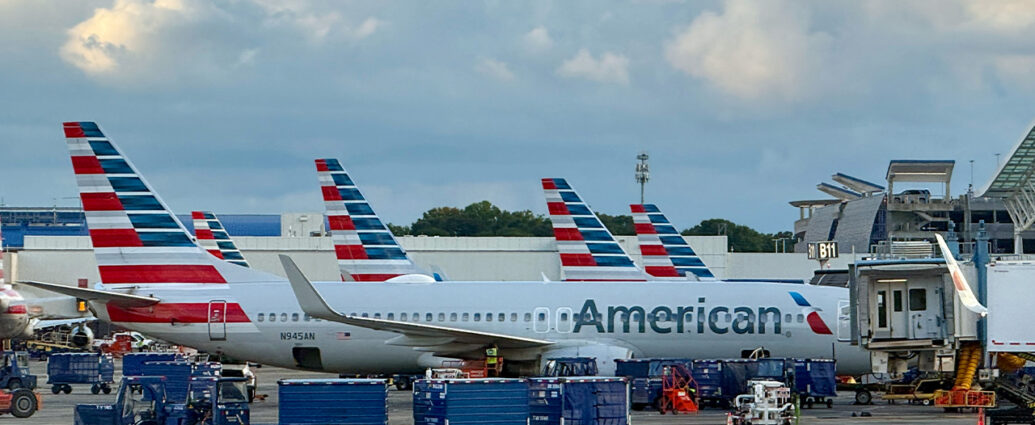
American Airlines issued a warning that airfares are likely to remain elevated even if there’s a decline in oil prices due to losses the carrier suffered earlier in the year amid surging fuel costs.
Devon May, CFO of American Airlines, told the Financial Times, “If fuel comes down, I think airfares probably stay largely where they’re at right now.”
“If fuel prices go up, we need to generate higher yield, we need to generate higher fares to offset that higher fuel price,” May said.
American Airlines on Thursday released its earnings for the third quarter which included deeper losses in 2026, updating its forecast to reflect anticipated losses between $1 and $1.60 a share on an adjusted basis this year. Its July forecast ranged between a loss of 65 cents and a profit of 65 cents.
MAJOR AIRLINES CUT FLIGHTS AS HIGHER JET FUEL PRICES HIT CARRIERS
May told the FT that airlines’ ticket prices hadn’t fully recovered in real terms since the disruptions caused by the COVID-19 pandemic, saying that the price hikes “ideally should have happened back in 2024, but the industry found itself in an oversupply environment.”
“This was the first year that everything came together in a way that we were able to push yields back up to where they were seven years ago in real terms,” May told the outlet.
AMERICAN AIRLINES ADDS $1,000 TRUMP ACCOUNT MATCH FOR WORKERS’ CHILDREN
The company reported a 19% year-over-year increase in third-quarter revenue, which was above the high end of its previous guidance range and was the highest in company history when excluding the years following the pandemic.
However, fuel expenses in the third quarter surged 67.5% compared with the same period a year ago, which translated to $1.9 billion in higher fuel costs based on an average price of $3.85 a gallon.
American also forecast higher fuel prices will continue into the company’s fourth quarter, with the carrier expecting to face an average fuel price of about $4.70 a gallon — a figure that would nearly double the price in the fourth quarter of 2025 and increase fuel expenses by $2.8 billion year over year.
AMERICAN AIRLINES BETS BIG ON INTERNATIONAL FLIGHTS WITH 7 NEW ROUTES
Due to the elevated fuel prices, American said that it expects its network growth to slow in 2027 when compared with 2026 levels.
Higher fuel prices have caused airfares to surge, with the most recent data from the Bureau of Labor Statistics showing that airline fares were up 22.4% compared with a year ago in September.






Wall Street Opens Lower as AI Stocks Slide, Oil Hits $115 and SpaceX Shakes Up Telecom Industry
JBizNews U.S. Market Opening Recap | Friday, October 23, 2026 | 10:00 AM ET
NEW YORK — Wall Street opened lower Friday as technology stocks extended their selloff, oil climbed toward $115 a barrel and SpaceX’s plans to expand into wireless communications rattled America’s largest telecom companies.
The decline came despite strong corporate earnings, highlighting growing investor concerns about AI spending, elevated borrowing costs and pressure on consumer purchasing power.
U.S. Market Opening — 9:30 AM ET
Index
Opening Level
Point Change
Percentage
Dow Jones Industrial Average
52,696.70
−171.30
−0.32%
S&P 500
7,637.18
−26.20
−0.34%
Nasdaq Composite
25,893.95
−114.90
−0.44%
The Nasdaq entered Friday following its steepest percentage decline since June, as investors questioned whether enormous AI infrastructure investments would deliver sufficient profits.
SpaceX Expansion Sends Telecom Stocks Tumbling
SpaceX is reportedly negotiating access to at least 80,000 U.S. cellular sites as it seeks to expand Starlink Mobile into a nationwide wireless competitor.
The news sent Crown Castle up approximately 14%, while American Tower and SBA Communications gained around 11% in premarket trading.
AT&T, Verizon and T-Mobile fell roughly 3% to 5% as investors weighed the threat of increased competition.
Access to terrestrial towers could allow SpaceX to combine its satellite network with traditional cellular service, potentially challenging established carriers on pricing and coverage.
No nationwide agreement has been finalized, but the development could significantly reshape the wireless industry.
Oil Hits $115, Renewing Inflation Concerns
Brent crude briefly reached $115.16 a barrel, its highest level since May, amid renewed Middle East tensions and concerns about energy supplies.
U.S. crude also climbed above $101.
The national average gasoline price reached approximately $4.29 a gallon, compared with $3.07 a year earlier.
Higher energy costs are increasing pressure on trucking, airlines, manufacturing, agriculture and distribution.
For businesses, the concern is straightforward: absorb the higher costs and sacrifice profits, or pass them along and risk weakening consumer demand.
The oil surge also complicates the Federal Reserve’s inflation outlook ahead of next week’s interest-rate meeting.
American Express Raises Outlook as Affluent Spending Holds Up
American Express reported $20.06 billion in third-quarter revenue, up 8.9%, while adjusted earnings reached $4.68 per share, beating expectations.
The company raised its annual earnings forecast to $18.30–$18.60 per share, reflecting continued spending among affluent customers.
Shares nevertheless slipped approximately 1% before the opening.
The results highlight a growing divide in consumer spending, with higher-income households remaining resilient while many lower-income Americans face pressure from inflation and borrowing costs.
Western Digital Falls Despite Strong AI Demand
Western Digital reported $4.38 billion in quarterly revenue, up 55%, with adjusted earnings of $4.64 per share exceeding expectations.
Strong demand for cloud storage and AI infrastructure supported revenue growth and higher selling prices.
Yet shares declined approximately 3% in premarket trading.
The reaction illustrates a shift in investor expectations: even exceptional AI-related growth may no longer be enough to support stocks that have already rallied sharply.
Deckers Drops 9% as Consumer Spending Weakens
Deckers Outdoor, the parent of Hoka and UGG, fell approximately 9% before the opening after reporting weaker-than-expected revenue.
Quarterly sales reached $1.48 billion, below forecasts of $1.51 billion.
Although earnings exceeded expectations, the company lowered its annual revenue outlook to $5.70 billion–$5.73 billion, down from $5.86 billion–$5.91 billion.
The weaker forecast adds to concerns that inflation and elevated living expenses are weighing on discretionary purchases.
Morning Economic Reports: Growth Continues, but Consumers Remain Concerned
Friday’s economic reports showed continued U.S. business expansion, although growth slowed from September.
S&P Global’s preliminary Manufacturing PMI rose to 56.0 from 55.9, slightly above expectations.
The Services PMI declined to 57.9 from 58.8, while the Composite PMI fell to 57.6 from 58.4.
All three readings remained above 50, indicating continued expansion.
The results suggest American businesses are still growing despite higher interest rates and energy costs, although economic momentum is moderating.
Consumer confidence presents a different picture.
The University of Michigan’s preliminary October sentiment index fell to 46.3 from 48.1 in September.
Consumers expected inflation of 4.7% over the next year, while longer-term expectations reached 3.5%.
The university’s final October report was scheduled for 10:00 a.m. ET, but its updated figures were not independently verified at the publication cutoff.
Taken together, the economic indicators show businesses continuing to expand while households remain deeply concerned about prices and purchasing power.
European Growth Slows as Treasury Yields Remain Elevated
Europe’s economy also showed signs of weaker momentum.
The eurozone Composite PMI declined to 51.9 from 53.1, while France’s reading of 48.4 indicated contraction.
Germany remained in expansion territory at 52.8.
Meanwhile, the benchmark 10-year U.S. Treasury yield hovered near 5%, keeping mortgages, business loans and corporate financing expensive.
Higher borrowing costs are particularly important for AI companies financing large data-center projects with debt.
What to Watch for the Rest of Friday
Investors will focus on whether semiconductor stocks stabilize after Thursday’s sharp decline, particularly Nvidia, AMD and Micron.
SpaceX’s wireless expansion will remain a major issue for telecom carriers and cell tower operators.
Oil is another critical factor. A sustained move above $115 could intensify inflation concerns and pressure transportation, manufacturing and consumer companies.
The final University of Michigan consumer sentiment figures will also be watched for changes in inflation expectations.
At 1:00 p.m. ET, Baker Hughes is scheduled to release its weekly U.S. drilling-rig count, providing another indication of domestic energy activity.
Attention is also turning toward the Federal Reserve’s October 27–28 meeting, where policymakers must weigh continued economic expansion against elevated inflation, weakening consumer confidence and high borrowing costs.
The Bottom Line
Friday’s market reflects three growing challenges for American businesses.
AI companies are under increasing pressure to justify their enormous investments. SpaceX is threatening to disrupt the established wireless industry. And oil near $115 is renewing inflation concerns across the economy.
Strong corporate earnings continue to support parts of the market, but investors are becoming more selective about profitability, cash flow and future growth.
The central question is whether companies can sustain earnings growth while energy, financing and operating costs remain elevated.
With the Nasdaq extending its decline and oil climbing, that uncertainty is likely to remain a major force on Wall Street.
JBizNews Desk | New York
© 2026 JBizNews. All Rights Reserved.



AT&T Raises Profit Outlook as Phone and Internet Growth Accelerates; American Express Boosts Earnings Forecast on Strong Spending; Volvo Shares Plunge Nearly 30% as Automaker Cuts 2,500 Jobs
JBizNews | Corporate Earnings & Markets | October 23, 2026
NEW YORK — Three major corporate earnings developments are sending sharply different signals about the health of the global economy, as AT&T and American Express raise their profit forecasts on resilient American consumer demand, while Volvo Cars suffers a steep earnings collapse, announces thousands of additional layoffs and sees its shares plunge nearly 30%.
The contrasting results highlight an increasingly uneven business environment. Telecommunications companies are benefiting from steady demand for essential connectivity services, financial institutions are reporting continued strength in consumer spending, and global automakers are struggling with Chinese competition, trade tariffs and weakening demand.
AT&T Raises Profit Outlook as Wireless and Internet Subscribers Grow
AT&T has increased its full-year earnings forecast after reporting strong third-quarter results, supported by continued gains in wireless subscribers and record growth in its advanced internet services.
The Dallas-based telecommunications giant now expects adjusted earnings of approximately $2.40 per share for 2026, compared with its previous forecast of $2.25 to $2.35.
The improved outlook follows another quarter of customer growth, with AT&T adding 379,000 postpaid phone subscribers and 769,000 consumer and business advanced internet connections.
Those internet additions included 442,000 fiber customers and 327,000 fixed wireless customers, marking a record quarter for the company’s advanced connectivity business.
AT&T also reported that approximately 42.8% of households subscribing to its advanced home internet services also use AT&T wireless, underscoring its strategy of selling multiple services to the same customers.
The company reached more than 39 million locations with its fiber network and remains on track to surpass 40 million by the end of this year.
AT&T expects free cash flow to exceed $18 billion in 2026 and plans to return more than $45 billion to shareholders between 2026 and 2028 through dividends and stock repurchases.
The stronger outlook signals confidence that subscriber growth and operating efficiencies can sustain profitability even as telecommunications companies continue investing heavily in network infrastructure.
American Express Raises Profit Forecast as Cardmember Spending Remains Strong
American Express also raised its 2026 profit outlook Friday after reporting higher third-quarter earnings, supported by increased cardmember spending, growing interest income and continued demand for its premium financial products.
The credit-card company now expects earnings of $18.30 to $18.60 per share for the full year, up from its previous guidance of $17.30 to $17.90.
Excluding certain investment-related gains and restructuring charges, American Express projects adjusted earnings of $17.60 to $17.90 per share.
Third-quarter net income increased to $3.71 billion, or $5.42 per share, compared with $2.9 billion, or $4.14 per share, a year earlier.
Adjusted earnings reached $4.68 per share, exceeding analysts’ expectations of approximately $4.48.
Revenue, excluding interest expense, rose 9% to $20.06 billion, slightly below Wall Street’s forecast of $20.12 billion.
The company reaffirmed its expectation for approximately 10% revenue growth for 2026.
Chief Executive Stephen Squeri pointed to continued strength in customer spending, new card acquisitions, customer retention and credit quality.
The results suggest that American Express’s customer base continues to spend at elevated levels despite broader concerns about economic uncertainty, borrowing costs and household financial pressures.
For investors, the company’s ability to increase profits while maintaining strong credit performance is especially significant, demonstrating that premium spending remains an important source of resilience within the American consumer economy.
Volvo Shares Collapse Nearly 30% as Automaker Reports Major Loss and Announces 2,500 Additional Job Cuts
Volvo Cars delivered a sharply different earnings picture Friday, reporting a substantial third-quarter loss and announcing another round of global job reductions as the Swedish automaker struggles with slowing sales, U.S. tariffs and fierce competition in China.
Shares of Volvo Cars plunged approximately 28% in Stockholm trading, falling near 10.18 Swedish kronor as investors reacted to results that were substantially worse than anticipated.
The company reported an adjusted operating loss of 3.7 billion Swedish kronor, approximately $373 million, compared with an operating profit of 5.8 billion kronor in the same period last year.
Including other accounting items, Volvo recorded a total operating loss of approximately 5.6 billion kronor.
Revenue declined nearly 23% to 66.9 billion kronor, approximately $6.7 billion, reflecting deteriorating demand and mounting pressure on the company’s international operations.
Volvo announced plans to eliminate another 2,500 jobs worldwide, including approximately 2,000 positions in Sweden, representing about 6% of its workforce.
The reductions come on top of approximately 3,000 job cuts previously announced.
The company also plans to implement another 5 billion kronor in cost savings, adding to an earlier restructuring initiative targeting 23 billion kronor in reductions.
Chief Executive Hakan Samuelsson described the third quarter as deeply disappointing and acknowledged that the business environment has become substantially more difficult than management previously anticipated.
China represents one of Volvo’s most serious challenges. Intensifying competition from domestic electric-vehicle manufacturers has pressured sales and profit margins, while weaker demand and tariffs have complicated operations in the United States.
The company has also faced difficulties ramping up production of its new EX60 electric sport utility vehicle.
Volvo’s gross profit margin fell to 14.7%, down from 20.4% a year earlier.
Management has withdrawn its previous full-year sales-volume and cash-flow guidance and says it will prioritize profitability over market share rather than engage in aggressive price competition.
For investors, the results raise questions about how quickly the automaker can stabilize its financial performance and whether additional restructuring may be required.
Three Earnings Reports Reveal an Uneven Global Economy
Taken together, the three announcements illustrate how economic pressures are affecting major corporations differently.
AT&T is benefiting from recurring subscription revenue, the expansion of high-speed internet and growing demand for mobile connectivity.
American Express continues to capitalize on consumer spending, premium financial services and interest income from outstanding card balances.
Volvo, by contrast, faces a far more challenging combination of international competition, manufacturing costs, tariffs and weakening vehicle demand.
The divergence also highlights the importance of corporate pricing power. AT&T and American Express have demonstrated an ability to expand earnings through customer growth and recurring revenue, while Volvo’s profitability has deteriorated amid competitive pressure and the need for aggressive cost reductions.
The earnings season is therefore revealing more than differences in individual corporate performance. It is showing how certain sectors of the American economy remain resilient even as global manufacturing and automotive businesses encounter increasingly difficult conditions.
For investors, the critical question is whether strength in American consumer spending and subscription-based services can continue offsetting weakness in sectors more directly exposed to international competition and trade disruptions.
JBizNews Desk | New York
© 2026 JBizNews. All rights reserved.