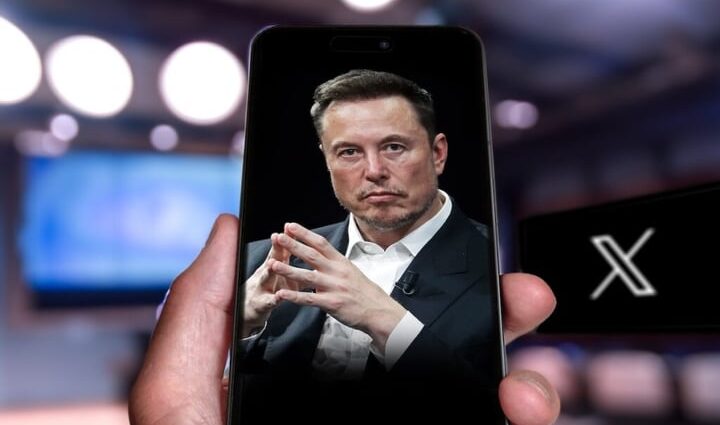
Elon Musk’s X is doubling down on its ambitions to become a financial hub with the rollout of a new Cashtags feature and early-stage trading integration.

X Cashtags Feature Brings Real-Time Market Data To Social Media

On Tuesday, Nikita Bier, Head of Product at X, introduced Cashtags, a feature designed to connect conversations with live financial data.

Users who type or search a cashtag—such as a stock ticker or crypto token—will now see suggestions to select the correct asset.

Tapping on a cashtag opens a dedicated view showing posts tied to that asset alongside a live price chart, allowing users to track sentiment and performance without leaving the platform.

The feature, initially unveiled in January 2026, is currently restricted to the iOS app and available only to users in the U.S. and Canada.

“X has always been the best source of financial news for traders and investors,” said Nikita Bier, adding that “billions of dollars are allocated every day based on what people read on Timeline.”

Full story available on Benzinga.com

This post was originally published here

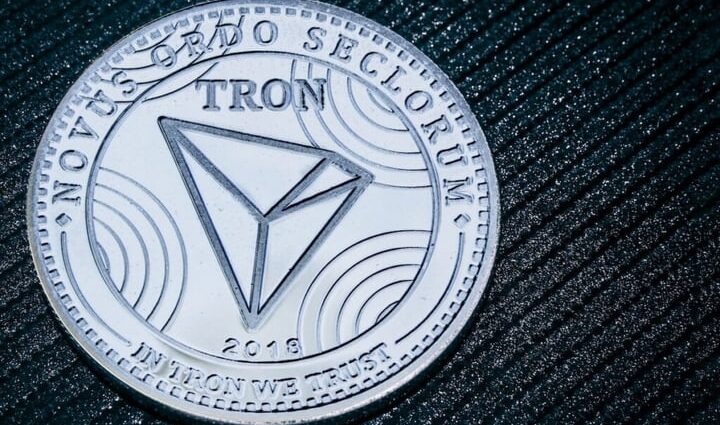
Tron (CRYPTO: TRX) blockchain has launched a post-quantum upgrade initiative, founder Justin Sun announced on Tuesday.

Quantum Security Should Be A Feature, Says Sun

In an X post, Sun said that Tron will be the “first major public blockchain” to deploy post-quantum cryptographic signatures standardized by the National Institute of Standards and Technology—a federal agency under the Department of Commerce.

Sun assured TRON users that the platform would protect their assets from quantum threats, with a “technical roadmap” to be released soon.

“Quantum security shouldn’t be a debate. It should be a feature,” he added.

Sun also took a dig at major networks such as Bitcoin

Full story available on Benzinga.com

This post was originally published here

Leading cryptocurrencies traded flat, while stocks added to their gains on Tuesday as President Donald Trump hinted at a second round of peace talks with Iran.

Cryptocurrency 24-Hour Gains +/- Price (Recorded at 9:20 p.m. EDT)
Bitcoin (CRYPTO: BTC) +0.68% $74,755.82
Ethereum (CRYPTO: ETH)
               
-1.03% $2,339.24
XRP (CRYPTO: XRP)                          -0.11% $1.36
Solana (CRYPTO: SOL)                          -2.59% $83.72
Dogecoin (CRYPTO: DOGE)              +0.24% $0.09344

Cryptos Pare Gains

Bitcoin rallied to $76,060, its highest in more than two months. Similarly, Ethereum spiked to $2,415, revising levels last seen in early February. Late in the session, however, both coins erased their earlier advances.

Shares of Strategy Inc. (NASDAQ:MSTR) and Coinbase Global Inc. (NASDAQ:COIN) closed up 3.82% and 5.69%, respectively.

Nearly $440 million was liquidated in the past 24 hours, with $240 million in bearish short bets evaporated, according to Coinglass data.

Open interest in Bitcoin futures rose 1.62% in the last 24 hours to $56.94 billion. Since the beginning of the month, the open interest has surged 14%.

However, the majority of retail and whale derivatives traders on Binance were betting on BTC’s price decline, according to the Long/Short ratio.

“Extreme Fear” sentiment persisted in the market, according to the Crypto Fear & Greed Index.

Top Gainers (24 Hours) 

Cryptocurrency …

Full story available on Benzinga.com

This post was originally published here

Changpeng Zhao, better known as CZ, is a survivor.

A childhood of poverty in China. Flipping hamburgers to pay his way through college before the self-described computer nerd entered the cutthroat world of high-frequency trading.

Soon came his nascent bet on something called bitcoin, the first and most popular decentralized digital asset, the creation of the world’s largest crypto exchange, Binance, navigating more than a few crypto winters, plus a stint in jail after being targeted during what many believe was the Biden administration’s over-zealous crackdown on all things crypto.

CRYPTO EXPERT EXPLAINS WHY BITCOIN MAKES ‘PERFECT RECORD’ FOR TRACKING DOWN CRIMINALS

His new book, “Freedom of Money,” details his life journey, a survivor’s tale, he tells me in an exclusive interview for FOX Business. The book explains how he is still standing, quite nicely, I should add, following a pardon from President Donald Trump and with his enormous net worth estimated at more than $100 billion.

CZ is no longer with Binance, having left when the feds came calling back in 2023, though he remains its largest shareholder. Now a free man, he is looking to be a thought leader for the crypto business. “Freedom of Money,” will certainly help in that regard.

Those looking for stylistic prose in this 364-page tome will be disappointed. English isn’t CZ’s first language, of course, and he wrote this book in federal prison, he said, which is no easy task.

COINBASE CEO: BIG BANKS ARE TRYING TO ‘KILL THE COMPETITION’ THROUGH CRYPTO REGULATION

“There’s a terminal… You can get on there for 15 minutes. You can type, [but] there’s no cut and paste… if you cut one paragraph and want to move it to a different place… So, I just do a brain dump. Just type as fast as I can, and then I have to get off, and I wait for an hour to get back on the computer.”

That said, this is a book worth reading for the simple fact that CZ explains the rise of crypto (it’s now a $3 trillion business being embraced by the biggest banks and financial firms in the world) as well as his own journey in a clear, relatable narrative. He name-drops a ton, which is where this book shines, particularly his description of his last meeting with another famous crypto player known by his initials.

SEN RICHARD BLUMENTHAL: CRYPTO IS A GAMBLE OUR FINANCIAL SYSTEM DOESN’T NEED

That would be SBF, or Sam Bankman-Fried, the founder of the now-defunct FTX crypto exchange serving a 25-year sentence after being convicted of multiple fraud charges tied to the collapse of his company, when $8 billion in customer funds went missing. In CZ’s telling, as FTX was imploding, SBF came to him hat in hand for a loan in such a way that made him think something was up, and it wasn’t good.

“He was just like he was just mumbling, like, can you give me a billion or whatever?” CZ tells me. “We’re talking about billions, right? I would expect him to say, look, I needed 4.387 billion, right?… He was like, it’s two, six is four. I was like, what’s going on? I think there was a lot of lying involved.”

CLICK HERE TO GET FOX BUSINESS ON THE GO

CZ decided against the loan, and not long after FTX went bust, as did SBF’s career.

CZ would face his own issues. In my interview, he explains the charges against him, the Biden administration’s approach to regulation – why he thinks it went so hard against crypto and how former SEC Chairman Gary Gensler went from an industry supporter to what he believes is an adversary – and his controversial pardon by Trump.

This post was originally published here. 

Bitcoin (CRYPTO: BTC) may still be in a bear phase, with only a 25% probability that the market has already bottomed, according to analyst Benjamin Cowen.

Bottom Likely At Lower Levels

In an Apr. 13 podcast, Cowen said that even a rally toward $80,000 would not confirm a cycle bottom.

He emphasized that bear markets are often deceptive, featuring extended upward moves before sharp declines that catch both bulls and bears off guard.

Based on historical patterns, Cowen believes a more reliable bottom could form in the $30,000–$50,000 range, consistent with past drawdowns from peak …

Full story available on Benzinga.com

This post was originally published here

Bitcoin staged a comeback Tuesday briefly tapping $75,000 amid heavy liquidations and improving sentiment.

Cryptocurrency Ticker Price
Bitcoin (CRYPTO: BTC) $74,785.73
Ethereum (CRYPTO: ETH) $2,343.16
Solana (CRYPTO: SOL) $85.37
XRP (CRYPTO: XRP) $1.36
Dogecoin (CRYPTO: DOGE) $0.09483
Shiba Inu (CRYPTO: SHIB) $0.055910 

Notable Statistics:

  • Coinglass data shows 196,352 traders were liquidated in the past 24 hours for $679.55 million.       
  • SoSoValue data shows net outflows of $291.1 million from spot Bitcoin ETFs on Monday. Spot Ethereum ETFs saw net inflows of $9.44 million.
  • In the past 24 …

Full story available on Benzinga.com

This post was originally published here

Bitcoin (CRYPTO: BTC) investor Simon Dixon says the best time to accumulate is when nobody cares, warning that retail attention has waned while institutions consolidate power through ETFs and treasury companies.

The Attention Cycle

Dixon has been in Bitcoin since $3 in 2011 and says the pattern never changes. People get Bitcoin when they have to, usually during disasters. 

The Cyprus bailouts in 2013, the European debt crisis, and Operation Chokepoint 2.0 all drove adoption spikes.

“Bitcoin gets adoption through disaster. It’s always been that way,” Dixon told Natalie Brunell on Coin Stories. 

“That corrects the price and then people run away and start selling their Bitcoin at the bottom,” he added.

The saddest thing is the best time to accumulate is when nobody cares, he explained. The worst time to accumulate is when everyone cares.

The Institutional Capture

Dixon warns that Wall Street is trying to …

Full story available on Benzinga.com

This post was originally published here

Ripple CEO Brad Garlinghouse said “we’re there” on the Clarity Act passing as frustration peaks and lawmakers finally compromise.

The ‘We’re There’ Moment

Garlinghouse told Semafor on Monday that he remains optimistic the Clarity Act will pass despite being less confident than before.

“Some of the smartest people and Washington insiders that I know have said to me when people are at their peak frustration, that’s when they finally compromise and it gets done,” Garlinghouse said. “I think we’re there.”

He called the SEC and CFTC joint statement two weeks ago “truly groundbreaking” and said it ended an era of lawfare against the industry. 

However, he stressed that without codified legislative permanence, the risk remains that the next SEC returns to former Chair Gary Gensler’s approach.

“I think that’s bad for the United States. I think it’s …

Full story available on Benzinga.com

This post was originally published here

Bitcoin (CRYPTO: BTC) has tapped the $75,000 level, prompting renewed optimism that the asset may be entering a new upward phase after a two-month consolidation period.

Structural Breakout Underway

Bitcoin is being described as breaking out of a symmetrical triangle pattern, having cleared a descending trendline that had capped price action for weeks, crypto chart analyst Ali Martinez noted in a detailed X post.

Analysts say this move signals a potential structural shift, suggesting the prior consolidation phase may be ending and a new upward …

Full story available on Benzinga.com

This post was originally published here

Bitcoin (CRYPTO: BTC) may be setting up for a sustainable move higher if it breaks above $76,000 while Ethereum (CRYPTO: ETH) clears $2,400, according to veteran macro investor Jordi Visser.

The Correlation Break

Bitcoin traded in lockstep with software stocks for five years, but that correlation broke this week. 

Software stocks continued to plunge while Bitcoin held steady, Visser told Anthony Pompliano on The Pomp Podcast.

Software names are getting destroyed by AI disruption.

Salesforce, Palantir, and Adobe all posted new lows this week as AI agents make coding free and ubiquitous. 

Bitcoin, however, has no competitor and cannot be disrupted by AI because it’s not a business with fundamentals.

The weekly MACD is crossing this week, providing a technical signal. Combined with the correlation break, Visser says the setup looks compelling.

The $76,000 Level

Visser gives investors a specific level to watch: Bitcoin above …

Full story available on Benzinga.com

This post was originally published here

CleanSpark Inc (NASDAQ:CLSK) shares are trading higher on Tuesday. The move follows a significant rally in the broader cryptocurrency market.

Bitcoin Breaks Key Resistance

Bitcoin (CRYPTO: BTC) surged 4.49% over the last 24 hours. The leading digital asset reached a price of $75,346.39 on Tuesday.

This strength provided a massive tailwind for mining operators. The total crypto market cap rose 3.54% to $2.53 trillion.

Sector Momentum and Macro Gains

The broader equity markets are also showing strength. The Nasdaq gained 1.25% today; meanwhile, the S&P 500 rose 0.96%. Investors are piling back into …

Full story available on Benzinga.com

This post was originally published here

A new draft of the proposed Clarity Act, led by U.S. Senator Thom Tillis (R-SC) alongside Senator Angela Alsobrooks (D-MY), is expected this week as lawmakers attempt to resolve a growing regulatory dispute over stablecoin rewards.

Core Disagreement Over Stablecoin Yield

The legislation aims to address a long-standing conflict between traditional banking institutions and crypto companies over whether stablecoin holders should be allowed to earn yield or interest, The Block reported.

Earlier legislation, including the GENIUS Act, prohibits stablecoin issuers from directly paying interest to holders but leaves a regulatory gray area. It does not explicitly ban third-party platforms, such as exchanges, from offering yield products, creating uncertainty in enforcement.

Banks argue that allowing stablecoin yields could pull deposits away …

Full story available on Benzinga.com

This post was originally published here

Some 61% of U.S. crypto investors are unaware of the IRS’s new reporting rules for the 2025 tax year ahead of the April 15 filing deadline, according to a March report by Coinbase (NASDAQ:COIN) and CoinTracker shared with DL News.

The IRS Crackdown

The Internal Revenue Service is stepping up its crackdown on crypto tax evasion as the April 15 filing deadline approaches.

“This year, we are seeing the IRS clampdown on crypto tax evasion more than ever before,” Andrew Duca, founder of tax platform Awaken Tax, told DL News. 

“The IRS’s Criminal Investigation division is going after crypto cases more and more,” he added.

The Coinbase and CoinTracker report described an “environment of high compliance intent but low functional understanding.” 

Meanwhile, Duca reports that …

Full story available on Benzinga.com

This post was originally published here

XRP (CRYPTO: XRP) is emerging as a preferred asset, with traders arguing its long-term potential lies in its role within global payments and evolving financial infrastructure.

Positioned for Growth Without Dominance

In his Apr.13 podcast, trader Cryptoinsightuk said XRP doesn’t need to dominate global finance to succeed.

He says remaining a top-tier crypto asset could allow it to benefit from broader capital inflows as the overall market expands.

He highlighted several technical advantages like fast settlement speeds, low transaction costs and energy efficiency, especially compared to proof-of-work systems like Bitcoin

Full story available on Benzinga.com

This post was originally published here

Bitcoin (CRYPTO: BTC) has broken above the descending channel that defined the bear trend, yet U.S. spot ETFs bled $291.11 million on April 13 as institutions pull back.

BTC’s Technical Breakout

Bitcoin now tests the 100 EMA at $75,275—the first major EMA test since the breakdown began.

The SAR at $68,721 sits comfortably below, keeping the daily signal bullish. 

The 20 EMA at $70,826 and 50 EMA at $71,005 both sit beneath price and are beginning to slope upward—the first time this alignment has appeared since the peak.

Key support sits at $71,005 (50 EMA), then $70,826 (20 EMA), then $68,721 (SAR). Resistance clusters at $75,275 (100 EMA), then $80,000, then $83,218 (200 EMA).

The ETF Exodus

The ETF data tells …

Full story available on Benzinga.com

This post was originally published here

Bitcoin jumped above $74,000 as liquidations stand at $545.67 million over the past 24 hours.   

Bitcoin ETFs saw $291.1 million in net outflows on Monday, while Ethereum ETFs reported $9.44 million in net inflows.  

Cryptocurrency Ticker Price
Bitcoin (CRYPTO: BTC) $74,576.14
Ethereum (CRYPTO: ETH) $2,383.20
Solana (CRYPTO: SOL) $86.28
XRP (CRYPTO: XRP) $1.37
Dogecoin (CRYPTO: DOGE) $0.09403
Shiba Inu (CRYPTO: SHIB) $0.055939 

Meme coin market capitalization is down 3.6% over the past 24 hours at $35.4 billion

Trader …

Full story available on Benzinga.com

This post was originally published here

A cryptocurrency analyst identified $43,647 as Bitcoin’s (CRYPTO: BTC) “extreme pain” threshold where sellers would be fully exhausted.

Will Weak Hands Exit If This Support Breaks?

Ali Martinez took to X to share their insights on Bitcoin’s current market status.

They referred to the Market Value to Realized Value 0.8 band as the “Average Receipt” for the entire market. These pricing bands use statistical deviation from the Market Value to Realized Value ratio’s all-time average to identify potential market tops and bottoms.

“Currently at $43,647, this level represents total seller exhaustion,” Martinez stated. “When the market price drops below the average cost basis [the Realized Price] and hits this 0.8 band, the ‘tourists’ have already left.”

Full story available on Benzinga.com

This post was originally published here

Tron (CRYPTO: TRX) founder Justin Sun escalated his attack on the Trump family-backed World Liberty Financial (WLFI) platform on Monday, claiming its governance structure is “hollowed from the inside.”

Sun Accuses WLFI Of Power Centralization

In an X post, Sun alleged that only one person in the company has the “unilateral power to freeze any token holder’s assets.”

Drawing on the analysis by on-chain sleuth banteg, Sun said that a single guardian externally owned account blacklisted his wallet last year.

Note that certain addresses are given “guardian” roles in token contracts. These guardians have admin privileges, including the ability to call a blacklist function.

Additionally, Sun alleged that seizing assets requires a 3-of-5 multisig vote, meaning that the proposal must be signed and approved by at least three out of five designated authorized key holders.

Full story available on Benzinga.com

This post was originally published here

The worst energy crisis in history just got even worse. Could this be bitcoin’s breakout moment, or are we in for a lot of pain?

One step forward…

Last week saw a massive rally in risk assets, as plans for peace talks between Iran and the US started to take shape. Bitcoin rallied almost 10%, the S&P 500 soared by almost 4%, bond yields fell, and oil plunged back under $100 per barrel.

While gold, bonds, stocks, and bitcoin all moved higher, the big picture needs to be emphasized: Bitcoin held its outperformance over every other asset class, including the traditional safe haven of gold.

The worst energy crisis in history, which had been rocking markets and threatening a global recession, appeared to be nearing an end (at least, to the mainstream media).

[Here’s why this matters for BTC]

Three steps backward

Peace talks began in Islamabad, Pakistan, on Saturday morning and carried on almost all day. Reports were that there were significant differences between the two sides and that progress toward closing the gulf between the two sides had stalled.

The …

Full story available on Benzinga.com

This post was originally published here

Bitcoin climbed back above $72,000 as hopes for an agreement between the U.S. and Iran lift the market.

Cryptocurrency Ticker Price
Bitcoin (CRYPTO: BTC) $72,392
Ethereum (CRYPTO: ETH) $2,232
Solana (CRYPTO: SOL) $83.11
XRP (CRYPTO: XRP) $1.33
Dogecoin (CRYPTO: DOGE) $0.09165
Shiba Inu (CRYPTO: SHIB) $0.055760

Notable Statistics:

  • Coinglass data shows 153,900 traders were liquidated in the past 24 hours for $247.07 million.       
  • SoSoValue data shows net inflows of $256.8 million from spot Bitcoin ETFs on Friday. Spot Ethereum ETFs saw net inflows of $64.95 million.
  • In the past 24 hours, top gainers include RaveDAO, Venice Token and PancakeSwap.

Notable Developments:

Full story available on Benzinga.com

This post was originally published here

Dogecoin‘s(CRYPTO: DOGE) Polymarket odds of hitting $0.10 this month are at 59%, while Shiba Inu (CRYPTO: SHIB) burns surged 119% in 24 hours as both meme coins squeeze toward directional moves.

Dogecoin’s Wedge Decision

Dogecoin is up 1%, holding near the $0.09 floor. The converging wedge between the descending upper trendline and rising lower boundary has compressed for weeks, and price sits right at the apex.

DOGE either breaks above $0.10240 (Supertrend) in the coming days or the rising support gives way toward $0.080. 

The SAR flipped bullish at $0.08881, sitting below price—the first clean daily bullish signal in months.

The Options Explosion

Options volume exploded 256% to $174.68, a massive spike in activity …

Full story available on Benzinga.com

This post was originally published here

Circle Internet (NASDAQ:CRCL) CEO Jeremy Allaire said the company only freezes USDC wallets when law enforcement or courts direct it to do so, as shares surged 9%.

The Court-Order-Only Policy

Speaking at a press conference in Seoul, Allaire explained that USDC operates as a regulated financial product, not a tool for real-time intervention during hacks.

“Circle follows the rule of law, and we are able to undertake actions such as freezing a wallet at the direction of law enforcement or the courts,” Allaire said.

He positioned USDC as part of the traditional financial system, subject to legal process. The company won’t make freeze decisions on its own during an exploit—it waits for formal requests from authorities.

How Tether Does It Differently

Rival Tether, which issues the world’s largest stablecoin (CRYPTO: USDT), takes a more aggressive approach. 

The company has repeatedly frozen funds linked to hacks within hours. 

In several …

Full story available on Benzinga.com

This post was originally published here

Prominent crypto analyst Benjamin Cowen says a “realistic” bearish outlook for Bitcoin (CRYPTO: BTC) differs significantly from an extreme “doomer” perspective, with both scenarios carrying different implications for investors.

In an Apr. 12 podcast, Cowen outlined a realistic scenario based on historical cycles.

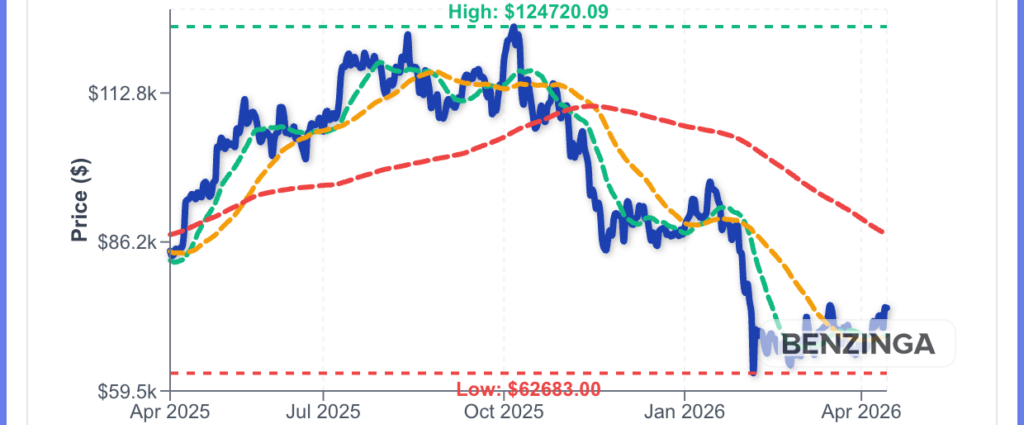
He said Bitcoin could decline about 70% from a potential peak near $126,000, with a temporary pause after a roughly 50% drop before reaching a final bottom later in the cycle.

Such drawdowns align with past corrections of 70% to 80% and reflect a weakening macro backdrop, including a …

Full story available on Benzinga.com

This post was originally published here

Bitcoin (CRYPTO: BTC) may be approaching the end of its current “crypto winter,” according to Matt Hougan, chief investment officer at Bitwise Asset Management, who says the market is likely closer to a recovery phase than another downturn.

Cycle Still Intact

In an Apr. 10 interview with Cointelegraph, Hougan said the broader four-year crypto cycle remains intact and could be entering a bottoming phase around mid-April.

He pointed to seasonal tax-related selling pressure in the United States as a possible factor contributing to recent weakness.

Hougan argued that while risks remain, including regulatory uncertainty around legislation …

Full story available on Benzinga.com

This post was originally published here

The latest push into tokenized equities came from Mantle, which recently announced tokenized stocks and ETF exposure on its Fluxion exchange, providing customers with 24/7 access to leading U.S. assets.

But beyond the product launch, the move indicates a new chapter in the crypto world, where crypto may finally be getting tokenized funds right after several years of failed attempts.

• State Street SPDR S&P 500 ETF Trust stock is trading near recent highs. What’s ahead for SPY stock?

Previously, initiatives from platforms such as Binance and FTX in 2021 failed quickly because of regulatory pushback, and the projects wanted to create something outside the boundaries of existing markets. But for Mantle, its recent efforts reflect a broader industry shift that aligns more closely with how institutional players are now thinking about tokenization.

Fixing Distribution, Not Disrupting Markets

Specifically, in cooperation with Bybit and other partners, Mantle created xStocks, which include tokenized access to various U.S. equities and ETFs, including names such as Tesla Inc (NASDAQ:TSLA), NVIDIA Corp (NASDAQ:NVDA), Apple Inc (NASDAQ:AAPL), State Street SPDR S&P 500 ETF Trust (NYSE:SPY),  Invesco QQQ Trust (NASDAQ:QQQ), alongside major index trackers. All assets provided …

Full story available on Benzinga.com

This post was originally published here

Bitmine Immersion Technologies (NYSE:BMNR) acquired 71,524 ETH last week, bringing total holdings to 4.875 million ETH representing 4.04% of total supply.

The ETH Accumulation

Bitmine now owns 4.04% of the total ETH supply of 120.7 million coins. That puts the company 81% of the way to its “Alchemy of 5%” target in just 9 months. 

Last week’s 71,524 ETH purchase marks the highest buying pace since late December.

As of April 12, Bitmine’s crypto holdings total 4,874,858 ETH at $2,206 per ETH, 198 Bitcoin, $200 million stake in Beast Industries, $85 million stake in Eightco Holdings (NASDAQ:ORBS), and total cash of $719 million. Combined crypto plus cash plus “moonshots” total $11.8 billion.

“Bitmine has maintained the increased pace of ETH buys in each of the past four weeks, as our base case is ETH is in the final stages of the ‘mini-crypto winter,’” said Chairman Tom Lee.

The Staking Revenue

Bitmine …

Full story available on Benzinga.com

This post was originally published here

Bitcoin (CRYPTO: BTC) traders are closely watching whether the asset can reclaim key technical levels amid ongoing macroeconomic uncertainty.

Key Levels In Focus

In the latest Technical Roundup podcast, trader DonAlt said Bitcoin’s most important level remains a weekly close above roughly $71,000.

He noted that such a move would strengthen the case for a sustained breakout.

The previous attempt to break higher failed amid geopolitical volatility.

A second attempt is now underway, but DonAlt said consecutive failed breakouts are uncommon.

Holding above this level would likely signal further upside.

If confirmed, the next major resistance sits near $82,000. Failure to hold current levels …

Full story available on Benzinga.com

This post was originally published here

XRP (CRYPTO: XRP) has fallen about 35% over the past three months and roughly 63% over the past nine months, as sentiment in the market turns increasingly negative.

Despite the decline, analysts say extreme fear conditions could set the stage for a short-term relief rally.

Sentiment Turns Deeply Bearish

Data from Santiment shows XRP sentiment has reached one of its most bearish readings in the past two years, ranking among the highest levels of fear, uncertainty and doubt (FUD).

Historically, such extreme pessimism …

Full story available on Benzinga.com

This post was originally published here

Strategy (NASDAQ:MSTR) purchased 13,927 Bitcoin (CRYPTO: BTC) for approximately $1 billion at an average price of $71,902 per coin between April 6 and April 12, entirely funded by sales of its Stretch (NASDAQ:STRC) perpetual preferred stock.

The Bitcoin Purchase

The purchase brings Strategy’s total holdings to 780,897 BTC, acquired for approximately $59.02 billion at an average cost basis of $75,577. 

This represents more than 3.7% of Bitcoin’s total 21 million supply and implies around $3.6 billion of paper losses at current prices.

The company funded last week’s acquisitions entirely by raising $1 billion through at-the-market sales of STRC.

Strategy sold 10,028,363 STRC shares for approximately $1 billion. As of April 12, $21.6 billion worth of STRC shares remain available for issuance and sale under that program.

The company sold no shares of Class A common stock MSTR last week, leaving $27.1 billion available under that …

Full story available on Benzinga.com

This post was originally published here

BitGo Prime, a unit of BitGo Holdings Inc. (NYSE:BTGO), said Monday that tradias has joined its liquidity network as a provider, enhancing institutional access to digital asset markets.

The addition of tradias is expected to deepen liquidity and improve execution quality by expanding BitGo Prime’s network of exchanges, market makers, and counterparties. The platform aggregates liquidity to deliver competitive pricing and efficient trade execution.

“Continuing to expand our liquidity network is core to delivering the best execution quality that institutions expect,” said CEO Mike Belshe.

Both firms highlighted their regulated infrastructure, with BitGo offering insured cold storage custody and tradias operating under strict compliance standards.

Technical Analysis

At $8.45, BTGO is trading 5.8% below its 20-day simple moving average (SMA), the stock’s average price over the last …

Full story available on Benzinga.com

This post was originally published here

Bitcoin (CRYPTO: BTC) slipped below $71,000 on Monday after President Trump ordered the U.S. to join Iran in blockading the Strait of Hormuz.

The Profit-Taking Pressure

Blockchain analytics firm Glassnode reports that traders are selling more than $20 million worth of Bitcoin per hour to lock in profits.

The message is clear: the $70,000 to $80,000 band is less a battleground of conviction and more a persistent distribution zone, as traders have treated it since February.

The Trump Blockade

Crypto prices came under further pressure during U.S. morning hours on Sunday after President Trump announced a blockade of the Strait of Hormuz.

“Effective immediately, the United States Navy will begin the process of blockading any and all ships trying to enter, or …

Full story available on Benzinga.com

This post was originally published here

My heart sank last week when I woke up to discover that The New York Times had “identified” Satoshi Nakamoto. I was less worried about the impact on the market than I was about the flood of well-meaning “Hey, did you see they found the inventor of Bitcoin” texts and emails I would soon be receiving. I suspected, correctly it turned out, that the Times had probably got it wrong like other publications had before.

In case you’ve been living under the crypto world’s version of a rock, the Times claims Adam Back, a crypto OG who founded the Bitcoin precursor Hashcash, is Satoshi. It’s not a bad guess but, for reasons I outline here, the reporter appears to have been led astray due to confirmation bias. 

Laura Shin, who like me has been on this beat forever and doesn’t have a dog in this fight, likewise thinks the Times whiffed. She delicately points out that Back has been all over the media in the last week, which would be odd behavior if he really were Satoshi—but is not so odd for someone who is trying to whip up enthusiasm for his Bitcoin treasury company.

Ultimately, the Times piece is interesting not so much for its conclusion but for what the piece says about the state of crypto and the world we live in. On the latter, my longtime tech-watcher pal Om Malik decries the “unmasking impulse” and how, in recent efforts to unmask both Banksy and Satoshi, something is being lost.

“Banksy and Satoshi weren’t hiding wrongdoing. They were hiding themselves. In Banksy’s case, the anonymity IS the art … With Satoshi, the anonymity IS the architecture,” Malik writes. “Unmasking either one isn’t just invasive. It is destructive to what they built.”

Malik rightfully laments how, in an always-on and attention-hungry online environment, the Times’ exposé seems to attack the very idea of anonymity. Meanwhile, anonymous or pseudonymous participation seems to be on the decline in the world of crypto, too. This is ironic given how privacy and decentralization have always been touchstone values in crypto culture. But it’s also understandable in light of pressure from governments, and from the sad fact that shady operators have so often used the “we’re anonymous like Satoshi” shtick as a pretext to rip people off.

That’s why the Times piece, and all the attention surrounding it, may ultimately be good for crypto. At a time when the industry is coming to be defined by Wall Street and backroom deals in Washington, D.C., it’s refreshing to go back to basics and recall an earlier time: A time when one man, disgusted by government profligacy and enchanted by the potential of blockchain, decided to build an alternate financial universe and, once he succeeded, chose to fade into the mists forever.

Jeff John Roberts
jeff.roberts@fortune.com
@jeffjohnroberts

This story was originally featured on Fortune.com

A trader opened a high-risk short bet on Ethereum (CRYPTO: ETH) late Sunday, with liquidation looming just a hair’s breadth away.

Daring Bet Or Something More?

The trader opened a 25x leveraged short position on ETH on the decentralized perpetual trading platform Hyperliquid at an entry price of $2,209.38, reported Lookonchain.

As of this writing, the position stands at 40,000 ETH, equivalent to $109.9 million, with an unrealized profit of $188,503. Should ETH increase to $2,218, which is a mere $9 away from the current price, the entire position will be wiped out.

The perp trader endured a roller-coaster last week, watching their account balance fall from a peak of $1.23 million to $545,584 today. Overall, they were down $203,591 …

Full story available on Benzinga.com

This post was originally published here

Bitcoin dropped to $70,000 after briefly touching $73,000 over the weekend, as renewed geopolitical tensions weighed on market sentiment; liquidations stand at $184.36 million over the past 24 hours.    

Bitcoin ETFs saw $256.8 million in net inflows on Friday, while Ethereum ETFs reported $64.95 million in net inflows.  


Cryptocurrency
Ticker Price
Bitcoin (CRYPTO: BTC) $70,750.36
Ethereum (CRYPTO: ETH) $2,184.16
Solana (CRYPTO: SOL) $81.84
XRP (CRYPTO: XRP) $1.32
Dogecoin (CRYPTO: DOGE) $0.09092
Shiba Inu (CRYPTO: SHIB) $0.055765

Meme coin market capitalization is down 1.4% …

Full story available on Benzinga.com

This post was originally published here

The Official Trump (CRYPTO: TRUMP) memecoin, launched days before President Donald Trump’s inauguration, has been a portfolio wrecker, eroding gains for anyone who bought into the initial hype.

‘TRUMP’ Brings Doom

The Solana (CRYPTO: SOL)-based token has tumbled 96% from the all-time high of $75.35 set shortly after its launch in January 2025.

At the peak, it soared to a market capitalization of $9 billion, while the fully diluted valuation, factoring in Trump-affiliated holdings, ballooned to $75 billion.

Fast forward to April 2026, and the coin’s market capitalization has plunged to $655 million, alongside a fully diluted valuation of $2.82 billion.

So, if …

Full story available on Benzinga.com

This post was originally published here

This week was a whirlwind of activity in the cryptocurrency world. From Anthony Pompliano’s bullish stance on Bitcoin to the potential revelation of Satoshi Nakamoto’s identity, there was no shortage of intriguing developments.

Let’s dive into the top stories that shaped the crypto landscape over the weekend.

Bitcoin’s ‘True Product-Market Fit’

Anthony Pompliano, in his recent podcast, expressed his belief that Bitcoin is showing a “true product-market fit”. He cited the growing interest from traditional finance and geopolitical actors as evidence. Pompliano also highlighted the launch of a low-fee Bitcoin exchange-traded fund by Morgan Stanley as a sign of increasing institutional adoption. He further mentioned reports of Iran considering a transit tax arrangement potentially settled in Bitcoin.

Read the full article here.

Satoshi Nakamoto’s Identity Revealed?

A recent report has drawn parallels between the early work in …

Full story available on Benzinga.com

This post was originally published here

On Saturday, Anthony Scaramucci used a post on X to describe the whiplash of holding Bitcoin through a run-up to $126,000 and a drop to $72,000, arguing the coin itself is unchanged even as emotions swing with the quote. The comments fit his broader view of bear phases laid out in bear market dynamics, where he has said downturns tend to drag on until investors are drained rather than simply scared.

In the post, he wrote that he held the same single bitcoin before a rally and through a bear stretch, but experienced completely different reactions as the price moved. He added that the asset didn’t change while the market price did, ending the message with a confident line about momentum continuing.

Scaramucci has also described bear markets as marathons that end when participants run out of stamina, not when fear finally fades. In that framing, he has argued the bleakest sentiment often shows investors are positioned too lightly for a reversal.

Why Bitcoin’s Price Volatility Matters Now

That emotional gap between …

Full story available on Benzinga.com

This post was originally published here

It’s no secret that Gen Z often gets flak for showing up late to work, ghosting job interviews, refusing to do put in any overtime for free, and demanding senior titles and work-life balance before they’ve really earned it. Some bosses are fed up—firing fresh-faced Gen Z grads just months in and branding the whole cohort “unprofessional.” Even Gen Z workers have described themselves as the hardest generation to work with.

“They create an absurd amount of chaos sometimes and you want to pull your hair out,” echoes Matt Huang, the cofounder of the $12 billion crypto investment firm Paradigm. 

“But then you see what they can do and it’s like, holy crap,” he told Colossus Review in April 2025. “Nobody else in the world could do that.”

Case in point: Paradigm’s first hire in 2018, Charlie Noyes, was a 19-year-old MIT dropout who walked into his first 10 a.m. meeting five hours late. By 2025, Noyes was general partner at the crypto company at just 25.

In 2020, Noyes was the one who saw MEV as a critical blockchain issue, leading Paradigm to become the lead investor in Flashbots—a company whose infrastructure now touches nearly every transaction on Ethereum and has established key market rules in the $450 billion ecosystem.

Noyes recently left the business, but he wasn’t the only bright young mind making waves at Paradigm. 

Georgios Konstantopoulos, the firm’s CTO, joined the company just two years after graduating college in 2018 and has since become one of crypto’s most prolific engineers. Then there’s the developer known only by his Discord handle, transmissions11, whom Paradigm reportedly found while he was still in high school.

“Sometimes I feel like I’m running the X-Men Academy,” Huang jokes, referencing the eccentric minds on his team—young mutants whose exceptional skills make all the chaos worth it.

Fortune reached out to Huang for comment.

Gen Z may be hard to work with—but they’re vital 

Like most generations did before them—millennials will remember being labelled work-shy snowflakes before climbing the corporate ranks into management—Gen Zers have gained a reputation for being difficult to work with. 

A 2024 survey of more than 960 employers from Intelligent revealed that one in six companies were hesitant to hire a Gen Z worker. 

But the same research that describes the youngest generation of workers as the hardest to work with, also notes that much is to be learned from them—and that perhaps the corporate world is long overdue a shakeup.

“They bring a unique blend of talent and bold ideas that can rejuvenate any workforce,” wrote Geoffrey Scott, senior hiring manager at Resume Genius. “Gen Zers might have a bad rep, but they have the power to transform workplaces for the better.” 

Because if companies don’t adapt, they risk getting left behind. 

Tobba Vigfusdottir, a psychologist and the CEO of Kara Connect, a workplace well-being platform, previously told Fortune that employers need to bend to Gen Z’s desires (read: flexible work policies, sustainability pledges and purpose-driven work) if they want to stay competitive after the baby boomers retire.

“Companies really need to wake up and smell the coffee,” Vigfusdottir warned. “The companies that will survive are listening and letting them in, because they’re changing things.” 

Will.i.am and Josh Kushner are betting on Gen Z, too

Huang’s not the only future-thinking leader betting on the disruptive energy of Gen Z. The multimillionaire rapper and songwriter Will.i.am and Thrive Capital’s founder Josh Kushner are betting on the bright young minds of tomorrow too.

In fact, Kushner previously told Fortune he specifically likes to hire people with less than four years of industry experience.

When he launched the venture capital firm at just 26, he faced pressure to bring in older, more seasoned hires. But, as he put it, “anyone who has experience that is talented will never want to work with a 26-year-old.” So, instead, he recruited the “smartest people that we knew who were our ages.”

And that bet paid off: His firm made early investments in startups worth billions, including OpenAI, which was recently valued at $300 billion.

These days, Kushner could easily hire industry veterans with glowing résumés—but he’d still rather “find that young, hungry person who’s willing to run through walls like we were ten years ago.”

Will.i.am has reached a similar conclusion. The Grammy-winning Black Eyed Peas frontman might be best known for his chart-topping hits, but behind the scenes, he’s a serious investor too. He backed Tesla, OpenAI, and Pinterest before they became household names—and now, he’s betting on Gen Z for his next investment. 

Why? He believes the next big breakthroughs in tech will come from young innovators at MIT and Stanford.  “They’re young kids, and they’re native to this,” Will.i.am told Fortune. “So you want to hunt for that. That’s the only thing I’m focused on.”

A version of this story originally published on Fortune.com on April 10, 2025

Read more about Gen Z from Fortune’s Orianna Rosa Royle:

This story was originally featured on Fortune.com

Founder and former CEO of Binance (CRYPTO: BNB) Changpeng Zhao, popularly known as “CZ,” said that “right now the crypto industry is too transparent,” warning that blockchain’s public ledger combined with exchange KYC data makes tracking user transactions alarmingly easy, while most regulators have yet to catch up on how to use it.

“It’s actually extremely easy to track crypto funds. The blockchain is a public ledger, and if you couple that with a few centralized exchanges’ KYC information, you can track most transactions pretty accurately,” Zhao said Friday on TBPN.

A Privacy Problem, Not Just A Feature

CZ illustrated the risk with a plain example: if a company pays staff in Bitcoin (CRYPTO: BTC), anyone can trace that wallet address and determine every employee’s salary. Similarly, paying for a …

Full story available on Benzinga.com

This post was originally published here

Bitcoin has climbed back above $73,000 amid a broader consolidation phase for digital assets.

Cryptocurrency Ticker Price
Bitcoin (CRYPTO: BTC) $73,182
Ethereum (CRYPTO: ETH) $2,253
Solana (CRYPTO: SOL) $85.44
XRP (CRYPTO: XRP) $1.35
Dogecoin (CRYPTO: DOGE) $0.09519
Shiba Inu (CRYPTO: SHIB) $0.055973

Notable Statistics:

  • Coinglass data shows 125,458 traders were liquidated in the past 24 hours for $279.33 million.       
  • SoSoValue data shows net inflows of $343.3 million from spot Bitcoin ETFs on Thursday. Spot Ethereum ETFs saw net inflows of $85.2 million.
  • In the past 24 hours, top gainers include Dash, DeXe and Zcash.

Notable Developments:

Full story available on Benzinga.com

This post was originally published here

After the U.S. and Iran agreed to a temporary ceasefire on Tuesday, the Islamic Republic pledged to open up the Strait of Hormuz, the narrow body of water that’s a key bottleneck in the world’s trade of oil. But there’s a catch: Iran signaled it plans to impose toll ships passing through the chokepoint—and have them pay up in crypto.

The prospect of tolls has inflamed President Donald Trump, but it’s still unclear whether the Iranian government is charging fees in mass. Meanwhile, ship traffic through the Strait is still at a fraction of its volume since the beginning of the war in late February.

Here’s what we know about the tolls, what we don’t know, and why Iran has likely chosen cryptocurrency as its preferred payment method:

What has Iran said about crypto tolls?

Representatives for the Islamic Republic have stated publicly that they plan to have ships in the Strait of Hormuz pay tolls in digital assets. In early April, the parliament released a plan that said as much, according to Iranian state media. 

Separately, Hamid Hosseini, spokesperson for Iran’s Oil, Gas and Petrochemical Products Exporters’ Union, has told multiple outlets that the Iranian military plans to charge oil tankers for passage in crypto. 

What cryptocurrencies are Iran collecting?

The comments from Iranian officials come after reports of a more informal system of fees. In early April, Bloomberg said that members of the Islamic Revolutionary Guard Corps, an arm of the state’s military, were charging oil tankers $1 a barrel to pass through the Strait of Hormuz.  

The crypto analytics firm TRM Labs stated in a Wednesday report that Iran’s military has charged ships passing through the strategic chokepoint up to $2 million since mid-March, accepting payment in the a variety of fiat and digital currencies: Chinese yuan, Bitcoin, and potentially the stablecoin USDT. (Stablecoins are cryptocurrencies pegged to real-world assets like the U.S. dollar.)

Still, it’s unclear if Iran is using crypto extensively for toll payments. “This is just an incredibly fast moving situation, really, in the midst of a war,” Ari Redbord, global head of policy at TRM Labs, told Fortune. “And we are not seeing on-chain evidence today that indicates that toll payments are being made at scale.”

Why would Iran want to use cryptocurrency?

For decades, the U.S. and its allies have imposed wide-ranging sanctions on Iran that largely exclude the government from the world’s financial system. That’s led the Islamic Republic to avoid currencies or banks linked to the U.S. 

That includes cryptocurrencies, which are built on financial rails not controlled by any one government. And while the public nature of blockchains, make it possible to trace the movements of Bitcoin and stablecoins, those funds can’t be easily seized. At the same time, Iran has become adapt at using chains of digital wallets to obscure crypto funds tied to the regime.

“What we’ve seen from Iran over the last really couple of years is them looking for any way to circumvent the U.S. financial system,” said Redbord. “That means accepting payments for things in Chinese yuan. That means starting to really look to cryptocurrency to accept payments.”

How has Iran used crypto in the past?

Iran’s crypto ecosystem grew to $7.8 billion in 2025, according to a report from the crypto analytics firm Chainalysis. And, in the fourth quarter of that year, the Islamic Revolutionary Guard Corps accounted for about half of Iran’s total crypto ecosystem.

That’s led the U.S. government to crack down on the Islamic Republic’s attempts to circumvent sanctions. In January, the U.S. Treasury sanctioned the crypto exchanges Zedcex and Zedxion for facilitating transactions for the Iranian military. And the Justice Department is probing Iran’s use of the crypto exchange Binance to sidestep U.S. sanctions, according to the Wall Street Journal.

This story was originally featured on Fortune.com

Ethereum (CRYPTO: ETH) outperformed Bitcoin (CRYPTO: BTC) over the past month, supported by rising network activity, capital inflows and strengthening ecosystem fundamentals.

Network Activity Reaches Record High

CryptoQuant data shows Ethereum’s network activity has reached an all-time high, with the seven-day average of total transfers surpassing 1.3 million.

The surge reflects increased usage across decentralized finance, Layer-2 networks and smart contract applications, signaling strong adoption beyond simple holding.

Despite this growth, Ethereum is trading well below previous highs. …

Full story available on Benzinga.com

This post was originally published here

Bitcoin (CRYPTO: BTC), Ethereum (CRYPTO: ETH), XRP (CRYPTO: XRP), Solana (CRYPTO: SOL), and Dogecoin (CRYPTO: DOGE) may be forming a structural bottom after months of decline, according to crypto analyst Ali Martinez, who points to growing signs of accumulation across major assets.

Signs Of A Structural Floor

In a X post on Apr.9, Martinez said the market has been in a seven-month downtrend but is now showing early signs of stabilization.

He described the …

Full story available on Benzinga.com

This post was originally published here

Coinbase (NASDAQ:COIN) CEO Brian Armstrong publicly backed passing the Clarity Act on April 10 after killing the bill in January, as a new compromise allows activity-based stablecoin rewards while banning passive yield.

The January Blowup

In January, Armstrong posted publicly on X the night before the Senate Banking Committee’s scheduled markup, announcing that Coinbase could not support the bill in its current form.

That move single-handedly caused the hearing to be postponed and fractured the crypto industry.

The move drew public disagreement from prominent leaders, including a16z crypto’s Chris Dixon, who posted that now was the time to move the bill forward.

The Compromise That Changed Things

Over the following months, Senators Thom Tillis (R-SC) and Angela Alsobrooks (D-MY) negotiated a compromise. By late March, the two reportedly came to a tentative deal on stablecoin yield.

Then on April 8, the White House Council of Economic Advisers released a report finding that a …

Full story available on Benzinga.com

This post was originally published here

HSBC Holdings plc (NYSE:HSBC) shares edged higher Friday after Hong Kong regulators approved new stablecoin issuer licenses, signaling progress in digital asset oversight.

The Hong Kong Monetary Authority (HKMA) granted licenses to Anchorpoint Financial Limited — a joint venture by Standard Chartered PLC (OTC:SCBFF) (OTC:SCBFY) — and The Hongkong and Shanghai Banking Corporation Limited under a new regulatory framework.

Regulatory Breakthrough In Digital Assets

The approvals mark a step in Hong Kong’s push to formalize stablecoin operations. Authorities aim to balance innovation with safeguards for users and markets.

The licenses …

Full story available on Benzinga.com

This post was originally published here

Bitcoin (CRYPTO: BTC) is increasingly becoming a tool in global geopolitics and financial markets after claims Iran reached a ceasefire agreement proposing a $1 per barrel transit tax that could be paid in BTC.

BTC Is Digital, Decentralized, Non-Sovereign Asset

Anthony Pompliano said in his latest podcast episode on Thursday that Bitcoin is demonstrating “true product-market fit,” citing rising interest from both traditional finance and geopolitical actors.

He pointed to the launch of a low-fee Bitcoin exchange-traded fund by Morgan Stanley as evidence of accelerating institutional adoption.

Pompliano also referenced reports suggesting that Iran may have explored a ceasefire-related arrangement involving …

Full story available on Benzinga.com

This post was originally published here

World Liberty Financial (CRYPTO: WLFI) denied liquidation risk after pledging approximately 5 billion WLFI tokens and borrowing roughly $75 million in stablecoins on a decentralized finance protocol.

The Denial

WLFI fired back at critics questioning its massive lending position on Dolomite, calling the concerns “wrong” and framing its role as the protocol’s anchor borrower.

“We are one of the largest suppliers and borrowers on WLFI Markets. Yes, we supplied WLFI as collateral and borrowed stablecoins. No, we are nowhere near liquidation,” WLFI wrote. 

“Even if markets moved dramatically against us, we’d simply supply more collateral,” they added.

By being the anchor borrower, WLFI claims it’s generating the yield that makes WLFI Markets compelling for everyone else. Everyday users are earning outsized stablecoin yields right now.

The On-Chain Reality

On-chain …

Full story available on Benzinga.com

This post was originally published here

XRP (CRYPTO: XRP) could be structurally better prepared than Bitcoin (CRYPTO: BTC) to handle long-term risks from quantum computing, according to industry experts, though the threat remains largely theoretical.

XRP’s Relative Protection

The primary concern stems from quantum machines using Shor’s algorithm to derive private keys from public keys, potentially allowing attackers to access wallets, Coindesk reported, citing experts.

This risk emerges only after a public key is exposed, typically when a user sends a transaction.

Wallets that have only received funds remain protected because their public keys are not revealed on-chain.

On the …

Full story available on Benzinga.com

This post was originally published here

Bitcoin (CRYPTO: BTC) surged 8% this week to $72,000 as $411 million flowed into spot ETFs in April, yet analysts warn the fragile ceasefire remains on shaky ground with U.S. and Iranian officials set to meet in Pakistan on Saturday.

The Fragile Relief Rally

The fragile standstill in the Middle East has eased Bitcoin traders’ panic, but they’re not tearing up their hedges against a sharp drop just yet, according to Bybit chief market analyst Han Tan.

“Relief rallies across the risk complex have been limited by lingering doubts over a meaningful end to this Middle East conflict,” Tan said. 

“The fragile ceasefire remains on shaky ground,” he added.

Bitcoin powered 8% after the U.S. and Iran announced a conditional two-week truce that includes steps tied to reopening the Strait of Hormuz. The narrow shipping lane carries about a fifth of global oil and liquefied natural gas.

The ETF Inflows

April has seen …

Full story available on Benzinga.com

This post was originally published here