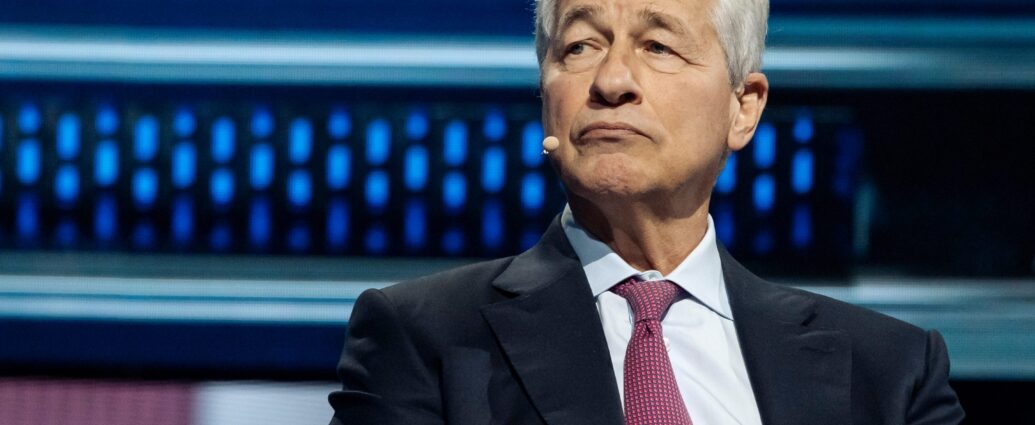
Tom Lee‘s BitMine Immersion Technologies, Inc. (NYSE:BMNR) just unveiled a massive $4 billion buyback—but the real story may not be capital return. It may be valuation.

Lee has been clear: buybacks make sense when a stock trades below “intrinsic value,” reported MEXC.

The Math Behind The Move

And right now, BitMine’s balance sheet tells an interesting story—its Ethereum (CRYPTO: ETH) holdings are estimated at over $10 billion, while its market cap sits closer to the $9–10 billion range.

That gap matters.

Because if BitMine is effectively trading at—or below—the value of its ETH holdings, …

Full story available on Benzinga.com

This post was originally published here

Fundstrat’s Tom Lee says the bottom is in and the S&P 500 (NYSE:SPY) is heading to 7,300, arguing last week proved stocks can rise even as the Iran war worsened and oil surged from $87 to $116.

The Bottom Is In

“I think the bottom’s in because last week was a period where the war was getting worse and oil was going up, but stocks weren’t going down,” Lee told CNBC’s Scott Wapner Wednesday.

“So that’s a good precondition and today now we have the rate of change that the war is de-escalating,” he added.

From mid-March, oil rose from $87 to $116 while the S&P 500 climbed from 6,300 to 6,600. Stocks rose even as the Iran war worsened. This proved stocks could handle bad news.

Yesterday’s proposed ceasefire marked a positive rate of change inflection. Stocks rose over 2%, oil dropped 15%, and the VIX fell under 20.

What Led The Rally

Since the war started …

Full story available on Benzinga.com

This post was originally published here

Bitcoin trades around $72,000 as Bitcoin ETFs saw $343.3 million in net inflows on Thursday, while Ethereum ETFs reported $85.2 million in net inflows.  


Cryptocurrency
Ticker Price
Bitcoin (CRYPTO: BTC) $71,913.67
Ethereum (CRYPTO: ETH) $2,197.31
Solana (CRYPTO: SOL) $83.39
XRP (CRYPTO: XRP) $1.33
Dogecoin (CRYPTO: DOGE) $0.09227
Shiba Inu (CRYPTO: SHIB) $0.055886

Meme coin market capitalization is up 0.5% to $34 billion over the past 24 hours.

Trader Commentary: 

Crypto chart analyst Ali …

Full story available on Benzinga.com

This post was originally published here

Bitcoin traded largely flat as improving sentiment is offset by renewed institutional selling pressure tied to geopolitical uncertainty, including the U.S.-Iran conflict. U.S. CPI data is scheduled to release tomorrow.

Cryptocurrency Ticker Price
Bitcoin (CRYPTO: BTC) $72,123
Ethereum (CRYPTO: ETH) $2,218
Solana (CRYPTO: SOL) $83.92
XRP (CRYPTO: XRP) $1.35
Dogecoin (CRYPTO: DOGE) $0.09337
Shiba Inu (CRYPTO: SHIB) $0.055978

Notable Statistics:

  • Coinglass data shows 98,516 traders were liquidated in the past 24 hours for $306.60 million.
  • SoSoValue data shows net outflows of $124.6 million from spot Bitcoin ETFs on Wednesday. Spot Ethereum ETFs saw net outflows of $18.6 million.
  • In the past …

Full story available on Benzinga.com

This post was originally published here

U.S. Treasury Secretary Scott Bessent called crypto leaders resisting the Clarity Act “nihilists” as the bill remains stalled over stablecoin yield disputes with midterm elections threatening passage.

The Nihilists Attack

“A growing share of crypto development has relocated to places with clear rules, such as Abu Dhabi and Singapore”, Bessent wrote in The Wall Street Journal.

Though industry nihilists may argue otherwise, there is one way to give developers and entrepreneurs the comfort to reshore: durable law.

“Congress has spent the better part of half a decade trying to pass a framework to onshore the future of finance”, Bessent added. 

The Senate Banking Committee must hold a markup and send the CLARITY Act to President Trump’s desk.

The Stablecoin Yield Standoff

The most prominent dispute pits certain crypto companies against the banking industry over the payment of yield on stablecoin holdings to customers.

In January, Coinbase (NASDAQ:COIN) pulled its …

Full story available on Benzinga.com

This post was originally published here

Institutional interest in digital assets is rising despite geopolitical tensions and macroeconomic uncertainty, underscoring a broader shift toward crypto and tokenization.

Diverging ETF Flows

Bitcoin (CRYPTO: BTC) continues to attract institutional capital, with ETFs recording $1.32 billion in inflows in March, reversing a four-month streak of outflows.

Buying activity was particularly strong in the $66,000–$68,000 range, signaling accumulation at key levels.

In contrast, Ethereum (CRYPTO: ETH) ETFs saw $46 million in outflows, extending a six-month streak of withdrawals.

The divergence highlights …

Full story available on Benzinga.com

This post was originally published here

Bitcoin (CRYPTO: BTC) could climb to $95,000 by the end of 2026, according to executives at Bitwise Asset Management, who say the market is undergoing a quiet but sustained institutional bull run.

Retail-Institutional Divide Widens

Bitwise Chief Investment Officer Matt Hougan and Head of Research Ryan Rasmussen, speaking in an Apr. 8 interview with Milk Road, highlighted a growing disconnect between retail and institutional investors.

While retail traders remain focused on falling altcoin prices and weak liquidity, institutions are steadily accumulating and targeting long-term …

Full story available on Benzinga.com

This post was originally published here

BitGo Holdings Inc. (NASDAQ:BTGO) on Thursday announced a partnership with AndX to launch a U.S. crypto trading platform using its Crypto-as-a-Service infrastructure.

Platform Launch and Infrastructure

BitGo said AndX USA LLC is leveraging its platform, built on BitGo Bank & Trust, for digital asset services. The platform enables secure buying, selling, and custody of digital assets across all 50 states.

The offering includes institutional-grade security, compliance capabilities, and custody backed by $250 million in insurance coverage.

Integration and Capabilities

Through its API-driven infrastructure, BitGo enables AndX to accelerate deployment while integrating custody, transfers, and trading workflows, resulting in a more streamlined user experience.

Frank Wang, managing director and head of fintech at BitGo, said crypto platforms no longer need to trade off speed for strong institutional safeguards, noting that BitGo’s Crypto-as-a-Service helps firms like AndX launch and scale secure trading operations on a regulated, API-driven infrastructure built for reliability, …

Full story available on Benzinga.com

This post was originally published here

U.S. stocks held modest midday gains Thursday as tentative Lebanon–Israel diplomatic overtures introduced a fragile layer of optimism into an otherwise tense geopolitical backdrop.

• iShares Expanded Tech-Software Sector ETF stock is testing key support levels. What’s behind IGV weakness?

In a late-night post on Wednesday, President Donald Trump warned that all U.S. military assets would remain positioned near Iran “until such time as the real agreement reached is fully complied with,” underscoring the conditional nature of any de-escalation.

Tehran, meanwhile, accused Washington of breaching ceasefire terms and reiterated threats against vessels awaiting transit through the Strait of Hormuz, which remained shut — a stark reversal from Wednesday’s relief-driven rally that had sent equities higher while triggering a sharp unwind in energy prices and bond yields.

A fresh geopolitical development offered some relief. Israeli Prime Minister Benjamin Netanyahu confirmed that Lebanon had requested direct talks, with Israel agreeing to engage. A senior Lebanese official signaled that negotiations would require U.S. guarantees and begin with a temporary ceasefire framework.

In commodities, WTI crude rose 3.8% to $98.01 per barrel, paring earlier gains after briefly reclaiming the $100 level.

Across U.S. equities, gains remained narrow but broadly distributed by midday, with consumer discretionary and …

Full story available on Benzinga.com

This post was originally published here

Bitmine Immersion Technologies (NYSE:BMNR) began trading on the New York Stock Exchange on Thursday and expanded its share repurchase authorization to $4 billion from $1 billion, yet shares slipped 2% on debut day.

The NYSE Uplisting

Bitmine moved from the NYSE American to the New York Stock Exchange, where shares ceased trading on the NYSE American at Wednesday’s close.

“Today, Bitmine achieved a major milestone by being uplisted to the ‘Big Board’ NYSE. The NYSE is the most prestigious stock exchange with a storied history,” Chairman Tom Lee said.

Bitmine is now the 96th most traded stock in the U.S. with average daily volume of $987 million, ranking between Schlumberger (NYSE:SLB) and Adobe (NASDAQ:ADBE).

The $4 Billion Buyback

Bitmine’s board unanimously approved an increase to its 2025 share repurchase authorization from $1 billion to $4 billion. 

The revised program ranks among the 10 largest buybacks announced …

Full story available on Benzinga.com

This post was originally published here

Bitcoin (CRYPTO: BTC) holding near $70,000 has renewed optimism among retail traders after a sharp first-quarter decline.

Counter-Trend Rally Concerns

In his Apr.8 podcast, macro analyst Benjamin Cowen described Bitcoin’s recent price action as a “textbook” counter-trend rally, warning that such moves often trap late buyers before a larger decline resumes.

He noted that Bitcoin is approaching a key bear market resistance band, the 20-week simple moving average and 21-week exponential moving average, currently near $78,000 to $79,000 and trending lower.

Historically, in prior cycles such as 2014, 2018, and 2022, Bitcoin has …

Full story available on Benzinga.com

This post was originally published here

The crypto market structure bill faces growing threats from ethics concerns around President Trump’s TRUMP (CRYPTO: TRUMP) meme coin and a law enforcement clash over DeFi developer protections as the midterm clock ticks down.

The Memecoin Dinner Problem

Sens. Elizabeth Warren (D-Mass.), Adam Schiff (D-CA), and Richard Blumenthal (D-NY) pressed Bill Zanker, Trump’s longtime business partner behind the TRUMP meme coin, for details on a planned Mar-a-Lago conference on April 25 for the token’s biggest investors. Trump is listed as a featured guest.

Trump already committed to attend the White House Correspondents’ Dinner on April 25, while White House officials previously said they had not yet scheduled the meme coin dinner.

“Organizers are promoting a conference by dangling access to President Trump to potential attendees (and in doing so, are encouraging purchases of his meme coin that will generate transaction fees for the President and his …

Full story available on Benzinga.com

This post was originally published here

XRP (CRYPTO: XRP) declined about 3.6% in March, but technical indicators point to a potential short-term bounce within a broader bearish trend.

XRP’s Short-Term Strength Emerges

In an Apr. 9 podcast, analyst ChartNerd said XRP has shown near-term strength, closing around $1.37 and reclaiming its 20-day exponential moving average after bouncing from key support levels.

If the token holds above roughly $1.36, the next targets include the 55-day EMA near $1.42 and resistance in the $1.40–$1.50 range.

A move toward $1.60–$1.80 is possible, though gains may remain choppy unless resistance is decisively broken.

On the weekly timeframe, XRP continues to trade below the critical …

Full story available on Benzinga.com

This post was originally published here

Canary Capital is pushing further into niche crypto territory with a new filing for a spot ETF tied to the memecoin Pepe (CRYPTO: PEPE), signaling that the race to bring increasingly speculative digital assets into the ETF wrapper is heating up.

The asset manager submitted a Form S-1 to the U.S. Securities and Exchange Commission (SEC) on Wednesday for the CANARY PEPE ETF, which would directly track the token’s price by holding PEPE in custody. The filing also noted that up to 5% of the fund’s assets may be allocated to Ethereum (ETH) to cover transaction fees on the Ethereum network.

The move comes despite PEPE’s volatile track record and concentrated ownership structure. The token—based on the Pepe the Frog meme—rose to prominence in 2024 but …

Full story available on Benzinga.com

This post was originally published here

U.S. spot Bitcoin (CRYPTO: BTC) ETFs posted $94 million in net outflows on Wednesday despite Bitcoin rallying from $67,800 to $71,000 on U.S.-Iran ceasefire news.

The Outflow Breakdown

Fidelity Wise Origin Bitcoin Fund (NYSE:FBTC) recorded the largest outflows at $79 million, followed by ARK 21Shares Bitcoin ETF (NYSE:ARKB) at $74.7 million. 

Additionally, Grayscale Bitcoin Trust (NYSE:GBTC) posted $11 million in outflows.

Meanwhile, iShares Bitcoin Trust (NASDAQ:IBIT) saw positive flows worth $40.4 million.

Morgan Stanley Bitcoin Trust (NYSE:MSBT) reported $30.6 million in net inflows on its debut, with about $34 million in trading volume for the day. 

This exceeded Bloomberg Senior Analyst Eric Balchunas‘ $30 million estimate.

MSBT was …

Full story available on Benzinga.com

This post was originally published here

Bitcoin trades $71,000 as broader markets weakened amid geopolitical uncertainty.

Bitcoin ETFs saw $124.6 million in net outflows on Wednesday, while Ethereum ETFs reported $18.6 million in net outflows.  


Cryptocurrency
Ticker Price
Bitcoin (CRYPTO: BTC) $71,182
Ethereum (CRYPTO: ETH) $2,193.44
Solana (CRYPTO: SOL) $82.59
XRP (CRYPTO: XRP) $1.33
Dogecoin (CRYPTO: DOGE) $0.09181
Shiba Inu (CRYPTO: SHIB) $0.055874

Meme coin market capitalization fell 3.5% to $33.8 billion over …

Full story available on Benzinga.com

This post was originally published here

Former White House communications director and SkyBridge Capital founder Anthony Scaramucci highlighted Alphabet Inc.’s (NASDAQ:GOOG) (NASDAQ:GOOGL) Google, warning about quantum computing posing risks to cryptocurrency.

Crypto Leaders Respond To Quantum Computing Threats

In a post on X, Scaramucci shared a video and commented on Google’s March 2026 report, “Safeguarding cryptocurrency by disclosing quantum vulnerabilities responsibly.”

The report warned that quantum computers could potentially break the cryptography securing Bitcoin (CRYPTO: BTC), Ethereum (CRYPTO: ETH) and most public blockchains sooner than previously expected.

Novogratz Confident In Industry Adaptation

Crypto investor Mike Novogratz responded to Scaramucci’s question, saying that while the threat is real, the …

Full story available on Benzinga.com

This post was originally published here

Stockholm, 9 April 2026 – Virtune today announces the completion of the monthly rebalancing for the Virtune Crypto Top 10 Index ETP, listed on Nasdaq Stockholm for both the SEK-denominated (ISIN code SE0020052207, ticker name VIR10SEK) and the EUR-denominated (ISIN code SE0020052215, ticker name VIR10EUR) ETP.

In addition to the Virtune Crypto Top 10 Index ETP, Virtune’s product portfolio includes:

Virtune Bitcoin ETP
Virtune Stellar ETP
Virtune Staked Ethereum ETP
Virtune Staked Solana ETP
Virtune Staked Polkadot ETP
Virtune XRP ETP
Virtune Avalanche ETP
Virtune Litecoin ETP
Virtune Chainlink ETP
Virtune Arbitrum ETP
Virtune Staked Polygon ETP
Virtune Staked Cardano ETP
Virtune Crypto Altcoin Index ETP
Virtune Bitcoin Prime ETP
Virtune Coinbase 50 Index ETP
Virtune Staked Near ETP
Virtune Sui ETP
Virtune Stablecoin ETP
Virtune Bittensor ETP
Virtune BNB ETP

Index allocation as of 30 March (before rebalancing):

Bitcoin: 40.03%
Ethereum: 30.08%
BNB: 10.12%
XRP: 9.88%
Solana: 5.77%
Bitcoin Cash: 1.11%
Cardano: 1.08%
Chainlink: 0.76%
Stellar: 0.68%
Litecoin: 0.50%

Index allocation as of 31 …

Full story available on Benzinga.com

This post was originally published here

A new investigation by The New York Times has reignited one of the internet’s biggest mysteries by suggesting that Adam Back could be Satoshi Nakamoto, the pseudonymous inventor of Bitcoin (CRYPTO: BTC).

NYT Report Sparks Fresh Satoshi Nakamoto Speculation

The report draws parallels between Back’s early work in cryptography and Nakamoto’s writings, pointing to similarities in language, technical ideas and timing.

It also notes that Back’s online activity appears to overlap with the period when Nakamoto was active — and aligns with the creator’s sudden disappearance after Bitcoin’s white paper was published.

‘I’m Not Satoshi,’ Back Says

Back quickly pushed back on the claims, taking to X to deny the theory.

“I’m not Satoshi,” he wrote, adding that the conclusions were based on “confirmation bias.”

He acknowledged his early involvement in cryptography and digital cash concepts but said …

Full story available on Benzinga.com

This post was originally published here

The FBI recently released its annual report on internet crime and found that cryptocurrency-related scams accounted for the most reported losses among all scam categories last year.

The Internet Crime Complaint Center (IC3) received 1,008,597 complaints in 2025, up from 859,532 in 2024, with Americans’ reported losses nearing $21 billion last year.

Crypto scams accounted for over half of the $20.877 billion total losses reported by IC3, with over $11.366 billion in losses described as being related to cryptocurrency. Additionally, there were 181,565 complaints described as being related to cryptocurrency out of the roughly 1 million complaints received last year.

The annual report showed that crypto investment fraud was the highest source of financial losses to Americans in 2025, with $7.2 billion in reported losses. 

IRS WARNS AMERICANS TO BEWARE OF DANGEROUS NEW SCAMS THIS TAX SEASON

Crypto investment scams typically begin via social media, text messages, advertisements or dating platforms, with scammers introducing the victims to investment groups purporting to be knowledgeable industry insiders.

Victims are then enticed to send cryptocurrency to fake investment scam platforms or apps and are shown fake profits or offered loans to encourage larger investments. When they try to withdraw their money, they will be charged taxes and fees as the scammers make a final attempt to exploit them before disappearing with the victims’ funds. Victims may also be targeted through recovery scams that claim to help them recover lost funds.

“These scams are often devastating because they can leave victims with significant loss and emotional distress,” the report explained.

CRYPTO EXPERT EXPLAINS WHY BITCOIN MAKES ‘PERFECT RECORD’ FOR TRACKING DOWN CRIMINALS

In early 2024, the FBI launched Operation Level Up to proactively identify and inform people who are falling victim to cryptocurrency investment fraud. The initiative has notified over 8,000 victims since its inception and has reduced losses by over $500 million, according to the report. 

In 2025, it notified 3,780 victims of crypto investment fraud and 78% of those victims were unaware they were being scammed. The estimated victim savings amounted to more than $225 million, while 38 people who were exploited by those scams were referred to a victim specialist for suicide intervention who maintained contact with them until local law enforcement arrived.

Some examples of prevented losses included stopping a victim from cashing out $750,000 from his 401(k) retirement plan, stopping a victim from selling her house to invest $500,000, and stopping a victim from obtaining a loan to send $400,000 to the scammer.

US BANS NEW FOREIGN-MADE CONSUMER INTERNET ROUTERS OVER SECURITY CONCERNS

The report added that there were multiple instances in which the FBI intervened through the Financial Fraud Kill Chain (FFKC) to reverse wire transfers and return funds to victims.

The surge in losses related to crypto investment scams prompted the formation of the U.S. Attorney’s Office District of Columbia Scam Center Strike Force, which merged the resources of the U.S. Attorney’s Office with the Justice Department’s Criminal Division, the FBI and the Secret Service to track down and disrupt those scams.

The Scam Center Strike Force is investigating scam compounds located in Southeast Asia, identifying and pursuing key leaders, including Chinese organized crime affiliates that operate in Cambodia, Laos and Burma to bring them to justice.

GET FOX BUSINESS ON THE GO BY CLICKING HERE

It’s also working to seize and disable U.S.-based facilities and infrastructure that provide the manner and means to execute those scams, which includes internet service providers and social media accounts, to prevent them from being weaponized against Americans.

This post was originally published here. 

Bitcoin is holding $71,000 on easing geopolitical tensions and a U.S.-Iran ceasefire that boosted global risk appetite.

Cryptocurrency Ticker Price
Bitcoin (CRYPTO: BTC) $71,295.08
Ethereum (CRYPTO: ETH) $2,207.02
Solana (CRYPTO: SOL) $83.08
XRP (CRYPTO: XRP) $1.35
Dogecoin (CRYPTO: DOGE) $0.09336
Shiba Inu (CRYPTO: SHIB) $0.055986

Notable Statistics:

  • Coinglass data shows 120,044 traders were liquidated in the past 24 hours for $653.60 million.       
  • SoSoValue data shows net outflows of $159 million from spot Bitcoin ETFs on Wednesday. Spot Ethereum ETFs saw net inflows of $64.7 million.
  • In the past 24 hours, top gainers include Zcash, Monad and Ethena.

Notable Developments:

Full story available on Benzinga.com

This post was originally published here

Strategy Inc. (NASDAQ:MSTR) shares are jumping Wednesday as the cryptocurrency market reacts to shifting geopolitical tensions.

The stock serves as a leveraged proxy for Bitcoin (CRYPTO: BTC), which climbed 4.55% to break back above the $71,000 level.

Bitcoin Rebounds On Ceasefire News

The primary catalyst for the crypto surge follows reports that President Donald Trump announced a two-week ceasefire regarding strikes on Iran. While Tehran cautioned that “fingers are on the trigger,” the temporary truce cooled immediate geopolitical risk.

Broader Market Sentiment Shifts

U.S. equities …

Full story available on Benzinga.com

This post was originally published here

Hut 8 Corp (NASDAQ:HUT) shares are trading sharply higher on Wednesday. The jump comes as broader markets react to easing geopolitical tensions and a recovery in the cryptocurrency sector.

The Nasdaq is up 2.92% while the S&P 500 has gained 2.36%.

Ceasefire News Ignites Tech Optimism

Investor sentiment shifted positively following reports of a tenuous ceasefire agreement between President Donald Trump and Iran, despite Israel’s ongoing attacks against Lebanon.

Still, traders are betting on a swifter end to the Middle East conflict, reducing the macro risk premium that has weighed on high-growth …

Full story available on Benzinga.com

This post was originally published here

Bitcoin (CRYPTO: BTC) tapped $72,000 on Wednesday, renewing speculation about a potential run toward $90,000 as market sentiment turns more optimistic.

Ceasefire Spurs Market Confidence

In an email comment on Wednesday, CoinBureau CEO and co-founder Nic Puckrin said markets are reacting as if the conflict has ended, though uncertainty remains.

Key questions include the ceasefire’s durability and the status of the Strait of Hormuz.

Oil prices have eased to around $93, which could help ease inflation pressures. However, sustained prices above $90 may still drive inflation higher …

Full story available on Benzinga.com

This post was originally published here

XRP (CRYPTO: XRP) has declined about 29% in recent weeks, even as institutional inflows surge to their highest levels since December 2025.

Cryptocurrency Ticker Price Market Cap 7-Day Trend
XRP (CRYPTO: XRP) $1.36 $83.6 billion +0.5%
Bitcoin (CRYPTO: BTC) $71,748.44 $1.43 trillion +5% 
Ethereum (CRYPTO: ETH) $2,232.96 $269.5 billion +4.4% 

Trader Notes: Analyst Javon Marks suggests XRP could reach a measured move target just below $17, implying a potential gain of more than 1,100%. The projection is based on a large pennant breakout pattern, like XRP’s 2017 rally.

Another …

Full story available on Benzinga.com

This post was originally published here

U.S. stocks surged to one-month highs on Wednesday as a temporary ceasefire between the U.S. and Iran triggered the biggest single-day oil price collapse in years, easing concerns about energy-driven inflation and sparking a sweeping relief rally from airlines to semiconductors.

• State Street Energy Select Sector SPDR ETF shares are sliding. Why are XLE shares down?

President Donald Trump declared on Truth Social that Iran “has gone through what will be a very productive Regime Change” and pledged “there will be no enrichment of Uranium,” adding that many of the 15 negotiating points had been agreed to and that the U.S. would work with Tehran on tariff and sanctions relief.

The session was not without turbulence. Iran’s Foreign Minister Abbas Araghchi signaled that seriousness from the U.S. side would still be required to achieve lasting stability, while an early-morning report of an attack on Saudi Arabia’s vital east-west oil pipeline tested risk sentiment. Iran also signaled that Israeli strikes on Lebanon made after the ceasefire will trigger a strong response.

By midday in New York, WTI crude plunged 15.9% to around $95 per barrel — its steepest single-session drop since April 2020 — as Iran’s agreement to reopen the Strait of Hormuz eliminated a significant geopolitical premium that had built up in energy markets over five weeks of conflict.

Brent crude fell 13.3%, settling near $94.70 per barrel.

The yield on the 10-year U.S. Treasury note fell approximately three basis points to 4.27%, its lowest level in roughly three weeks, as the oil price collapse dampened inflation expectations.

Markets now price in roughly a 35% chance of a Federal Reserve rate cut by year-end, compared with near-zero odds at the start of the week.

Across U.S. equity markets gains were broad-based and led by technology, industrials, and consumer discretionary — precisely the sectors most sensitive to lower oil prices, falling yields and rebounding risk appetite.

The S&P 500 climbed to 6,783, up 2.5% and hitting its highest level in roughly a month. Sandisk Corp. (NASDAQ:SNDK) and Carnival Corp. (NYSE:CCL) were both more than 10% higher, leading within the S&P 500.

The Dow …

Full story available on Benzinga.com

This post was originally published here

Crypto markets began the session on April 7, 2026, facing notable downside momentum. The total market value dropped about 0.68% to $2.35 trillion. The Fear & Greed Index showed an extremely low score of 11 out of 100, signaling that investors are deeply worried. Bitcoin (CRYPTO: BTC) also took a big hit, with more than $200 million in forced liquidations in just one trading session.

The main driver behind this is the growing conflict between the U.S and Iran. The tension is spreading uncertainty across financial markets, and crypto investors are pulling back as global risk sentiment weakens.

For investors trying to make sense of the chaos, the most important data point right now is not the price. It is the correlation. Bitcoin is currently tracking gold at a 60% correlation, a figure that fundamentally changes how you should be reading every candle on the chart.

What a 60% Gold Correlation Actually Means

Correlation in financial markets is measured on a scale of -1 to +1. A reading of 0 means two assets move independently. A reading of +1 means they move in perfect lockstep. At 60%, Bitcoin (just like Gold)  is behaving far more like a macro hedge than a speculative tech bet.

When traditional investors flee to gold as a hedge against systemic disorder, a 60% correlation means Bitcoin is catching roughly 60 cents of every dollar of that safe-haven flow.

This points to a deeper shift in how institutional investors are now classifying Bitcoin. With the launch of spot Bitcoin ETFs in 2024, macro-focused funds gained a straightforward entry point into the asset, and they’re increasingly using that access as a geopolitical hedge rather than a traditional growth play.

For investors, this is a double-edged sword. A …

Full story available on Benzinga.com

This post was originally published here

Zcash (CRYPTO: ZEC) surged 21% after Foundry, the world’s largest Bitcoin (CRYPTO: BTC) mining pool, announced Wednesday it would add ZEC support, marking a significant institutional signal from a pool that has historically mined only Bitcoin.

The Triple Catalyst

Foundry’s decision to add Zcash support represents a major shift for the world’s largest Bitcoin mining pool.

The pool has never mined anything other than Bitcoin, making the ZEC addition a notable institutional signal.

Meanwhile, the quantum-resistant angle is gaining traction. 

Google recently demonstrated a 20x more efficient implementation of Shor’s algorithm, reigniting conversations about Bitcoin’s long-term vulnerability to quantum attacks. 

Zcash has been building post-quantum cryptography into its roadmap and is …

Full story available on Benzinga.com

This post was originally published here

Morgan Stanley Investment Management has launched the Morgan Stanley Bitcoin Trust (MSBT), a new exchange-traded product designed to track the performance of Bitcoin, marking its entry into the digital asset space.

Lowest Fee Among Competitors

The product represents the first crypto-focused ETP from a U.S. bank-affiliated asset manager — Morgan Stanley (NYSE:MS) — highlighting rising institutional demand for regulated Bitcoin exposure.

MSBT uses the CoinDesk Bitcoin Benchmark as its pricing reference and offers a 0.14% sponsor fee, undercutting major competitors such …

Full story available on Benzinga.com

This post was originally published here

XRP (CRYPTO: XRP) slipped 2% on Wednesday after touching a session high of $1.39, giving back most of the prior session’s 5% gain, yet U.S.-listed XRP spot ETFs recorded $3.32 million in net inflows on April 7.

The Quantum Safety Check

Roughly 300,000 accounts on XRP holding 2.4 billion XRP never transacted, meaning their public keys are unknown and quantum safe. 

Only 2 accounts with larger holdings of 21 million XRP are dormant (inactive over 5 years) and have their public keys exposed.

Dormant vulnerable XRP whales are almost nonexistent. The rest are active and have their public keys exposed but can reasonably rotate keys if needed. 

This differs from Bitcoin (CRYPTO: …

Full story available on Benzinga.com

This post was originally published here

Bitcoin (CRYPTO: BTC) moved above $71,000 following improved geopolitical sentiment, but on-chain data suggests the market remains cautious rather than fully bullish.

Defensive, Not Panicked

Data from CryptoQuant shows that exchange reserves on major platforms such as Binance and Coinbase remain well below their early 2025 levels — a continued trend of Bitcoin being withdrawn from exchanges rather than positioned for sale.

Coinbase is often viewed as a proxy for U.S. institutional activity and has seen reserves decline from around 980,000 BTC to the …

Full story available on Benzinga.com

This post was originally published here

Coinbase Global Inc. (NASDAQ:COIN) received an Australian Financial Services License to offer retail derivatives trading as COIN tests $170 support zone for the second time since February’s $143 low.

The Australian License

Coinbase announced Tuesday it received the AFSL through its local entity, authorizing the company to offer retail derivatives trading in Australia. 

The license is the first of its kind granted to a crypto exchange in the region.

Coinbase Australia will offer crypto and equity perpetuals to Australian investors, followed by futures and options. 

“We’re going to compete with traditional financial services on stock trading, payments, and other TradFi products with the speed and execution of crypto,” the company said.

The AFSL subjects Coinbase Australia to the same conduct, disclosure, governance, and consumer protection requirements as traditional institutions. 

The …

Full story available on Benzinga.com

This post was originally published here

Bitcoin is up 5% to reclaim the $71,000 level after President Trump overnight announced a two-week ceasefire with Iran.

Bitcoin ETFs saw $159 million in net outflows on Tuesday, while Ethereum ETFs reported $64.7 million in net outflows.  


Cryptocurrency
Ticker Price
Bitcoin (CRYPTO: BTC) $71,582.38
Ethereum (CRYPTO: ETH) $2,245.54
Solana (CRYPTO: SOL) $84.62
XRP (CRYPTO: XRP) $1.38
Dogecoin (CRYPTO: DOGE) $0.09453
Shiba Inu (CRYPTO: SHIB) $0.056092

Meme coin market capitalization jumped 4% to $34.7 billion over the past 24 hours.

Trader Commentary: 

Trader Lennaert Snyder maintained a …

Full story available on Benzinga.com

This post was originally published here

Stockholm, 8 April 2026 – Virtune AB (Publ) (“Virtune”) today announces that it has completed the monthly rebalancing of the Virtune Crypto Altcoin Index ETP, listed on Nasdaq Stockholm, Nasdaq Helsinki and Xetra (ISIN code SE0023260716).

In addition to the Virtune Crypto Altcoin Index ETP, Virtune’s product portfolio includes:

Virtune Bitcoin ETP
Virtune Staked Ethereum ETP
Virtune Stellar ETP
Virtune Staked Solana ETP
Virtune Staked Polkadot ETP
Virtune XRP ETP
Virtune Avalanche ETP
Virtune Litecoin ETP
Virtune Chainlink ETP
Virtune Arbitrum ETP
Virtune Polygon ETP
Virtune Staked Cardano ETP
Virtune Crypto Top 10 Index ETP SEK
Virtune Crypto Top 10 Index ETP EUR
Virtune Bitcoin Prime ETP
Virtune Coinbase 50 Index ETP
Virtune Staked Near ETP
Virtune Sui ETP
Virtune Stablecoin Index ETP
Virtune Bittensor ETP
Virtune BNB ETP

Index allocation as of 30 March (before rebalancing):

Sui: 9.73%
Stellar: 10.71%
XRP: 9.55%
Cardano: 9.17%
Avalanche: 10.29%
Bitcoin Cash: 8.59%
BNB: 10.44%
Chainlink: …

Full story available on Benzinga.com

This post was originally published here

Top cryptocurrency analyst Willy Woo took to X on Tuesday to express his thoughts on how the economy functions as an engine, transforming raw materials and energy into goods and services.

He also shared his perspective on the interplay between thermodynamics, physics, and economics, and its implications for Bitcoin’s future, countering economist Steve Keen‘s recent warning that Bitcoin (CRYPTO: BTC) will go to zero.

He emphasized the correlation between a country’s GDP and its energy consumption, stating that the only way to secure hard money is through energy. He further explained that due to the competition for energy by the economy, it will always be scarce.

Full story available on Benzinga.com

This post was originally published here

JPMorgan CEO Jamie Dimon has long been among the crypto sector’s most notable skeptics. Dimon vowed in 2017 to fire any JPMorgan trader who traded bitcoin and has called the oldest cryptocurrency a “fraud” and a “pet rock.” More recently, though, Dimon has become more open to the technology and, this week, he acknowledged that blockchain-based companies are now among his bank’s competitors. 

In his annual shareholder letter published on Monday, Dimon said “a whole new set of competitors is emerging based on blockchain, which includes stablecoins, smart contracts and other forms of tokenization.” 

Dimon added that JPMorgan will need to up its game to ward off competition from the upstarts, writing: “We need to roll out our own blockchain technology.”

JPMorgan has been quietly rolling out its own blockchain technology for several years now. The bank unveiled its JPM Coin running on a permissioned blockchain in 2019. More recently, its Kinexys blockchain unit has continued to expand into areas like tokenization and payments. JPMorgan has explored permissionless blockchains, too: The co-CEOs of Commercial and Investment Banking at the firm recently touted its involvement in the 2025 U.S. commercial paper issuance on Solana for Galaxy Digital Holdings. 

Dimon’s views on crypto began  to change in earnest last year. In July, he proclaimed himself to be a “believer in stablecoins” and, during the Fortune Most Powerful Women Summit in October, he reiterated that “blockchain is real” and predicted it would replace elements of the financial system. His latest comments underscore how the crypto sector has now become something else: a competitor to JPMorgan itself.

Awaiting clarity

Dimon’s latest comments on blockchain come as the bank has been sparring with the crypto industry in Washington, D.C. over a closely-watched piece of crypto legislation known as the CLARITY Act. 

The bill would establish a U.S. regulatory framework for crypto, resolving long-running ambiguities involving the responsibilities of different financial regulators and registration criteria for crypto firms. Proponents of the law argue that clearer crypto rules can protect consumers while reversing a “regulation-by-enforcement” approach that has historically stifled crypto innovation in the U.S.

CLARITY passed the House but hit a snag in the Senate earlier this year over provisions that sought to make it harder for stablecoin issuers to offer rewards to holders. The GENIUS Act, a legislative framework for stablecoins passed in 2025, restricts stablecoin issuers from paying yield to holders. However, crypto exchanges such as Coinbase are able to custody stablecoins for issuers and pass along rewards to holders. Banks have lobbied Congress to close this “loophole,” arguing that yield-bearing stablecoins could be a potential substitute for bank deposits, which could significantly reduce banks’ deposit base. 

Coinbase CEO Brian Armstrong came out against a draft of CLARITY in January partly because, in Armstrong’s telling, banning stablecoin rewards allows banks to “ban their competition.” Coinbase earns a significant amount of revenue from USDC interest, and a ban on stablecoin rewards could presumably hurt the company’s bottom line. Amid the back-and-forth, Dimon reportedly accosted Armstrong at the World Economic Forum in Davos, telling the Coinbase CEO he’s “full of shit.” 

In a Fox Business interview April 1, Coinbase Chief Legal Officer Paul Grewal said the banks and stablecoin companies are “very close to a deal.”

With more crypto-friendly regulators in charge under the Trump administration, companies in the crypto sector have lately shown a willingness to become more bank-like. A number of crypto firms have received conditional approval for a national trust banking charter from the Office of the Comptroller of the Currency. These bank charters, while somewhat narrow, enable crypto firms to do things like custody user assets. 

As crypto competitors have become more formidable, JPMorgan has also bolstered its crypto functions. In an investor report penned Monday, the co-CEOs of the firm’s Commercial and Investment Banking division noted that transactions on JPMorgan’s blockchain-based products had grown thirtyfold since 2023.

This story was originally featured on Fortune.com

Bitcoin (CRYPTO: BTC) may remain in a bearish or transitional phase into Q2, according to Nic Puckrin, CEO of Coin Bureau, who argues that traditional macro models are becoming less effective in explaining crypto market behavior.  

Bitcoin Becoming More “Idiosyncratic“

Puckrin notes that Bitcoin is increasingly decoupling from traditional assets.

Its correlations with gold, equities, the dollar, and interest rates have become inconsistent, and in some cases negative, challenging the long-standing “digital gold” narrative.

Instead, Bitcoin is now being driven more by internal factors such as stablecoin flows, derivatives activity, and overall market structure.

The report suggests Bitcoin’s current phase …

Full story available on Benzinga.com

This post was originally published here

Bitcoin (BTC) is trading near $69,000, but for investors there is much more to talk about. Strong inflows of smart money into spot Bitcoin ETFs are quietly contributing to stability, defying the geopolitical instability and Bitcoin’s quantum resistance worries. The ETFs are becoming more structural, absorbing supply and cushioning downside even as volatility lingers.

The leading digital currency has seen some brief movements above $70,000 but soon fell back under the $69,000 level. This movement sparked a liquidation of around $196 million of short positions, per CoinDesk. Bitcoin is showing resilience by maintaining vital levels despite lingering macro uncertainties. Also, the Crypto Fear & Greed Index remained in the “Fear” zone at 30-35.

Spot Bitcoin ETFs See Biggest Inflows In Weeks

Bitcoin ETFs in U.S. markets attracted $471 million in inflows on Monday, according to SoSoValue. This is the largest inflow into Bitcoin ETFs since late February. Among the leaders in attracting inflows, iShares Bitcoin Trust (NASDAQ:IBIT) stands with about $182 million, followed by the …

Full story available on Benzinga.com

This post was originally published here

Bitcoin (CRYPTO: BTC) has been flat to slightly up during the Iran conflict while stocks, bonds, and gold all sold off, according to ProCap Financial CEO Anthony Pompliano.

The Iran Outperformance

Bitcoin has been the shining light over the Iran conflict, Pompliano explained. Stocks are down, bonds are declining, and gold is falling, yet Bitcoin has been flat to slightly up.

Over the last year, the opposite occurred—Bitcoin fell while those assets rose. 

The recent divergence challenges the narrative that Bitcoin simply tracks beta to risk assets, suggesting holders view it differently during geopolitical chaos.

“I think that …

Full story available on Benzinga.com

This post was originally published here

Bitcoin is down on Tuesday as geopolitical tensions rise following Donald Trump’s ultimatum to Iran.

Cryptocurrency Ticker Price
Bitcoin (CRYPTO: BTC) $68,576.33
Ethereum (CRYPTO: ETH) $2,092.99
Solana (CRYPTO: SOL) $79.93
XRP (CRYPTO: XRP) $1.30
Dogecoin (CRYPTO: DOGE) $0.09173
Shiba Inu (CRYPTO: SHIB) $0.055898 

Notable Statistics:

  • Coinglass data shows 79,800 traders were liquidated in the past 24 hours for $181.99 million.            
  • SoSoValue data shows net inflows of $471.3 million from spot Bitcoin ETFs on Monday. Spot Ethereum ETFs saw net inflows of $120.2 million.
  • In the past 24 hours, top gainers include edgeX, Zcash and Bitcoin SV.

Notable Developments:

Full story available on Benzinga.com

This post was originally published here

Nobel Prize-winning physicist John Martinis warns Bitcoin (CRYPTO: BTC) could be cracked in minutes by quantum computers but says the community has 5-10 years to upgrade to quantum-resistant encryption.

The Minutes Warning

A recent Google paper endorsed by Martinis shows how a sufficiently advanced quantum computer could derive a Bitcoin private key from its public key in minutes, exploiting the brief window when a transaction’s public key is exposed before confirmation.

The vulnerability centers on a specific exposure window. 

When a Bitcoin transaction is broadcast, its public key becomes visible before it is confirmed on-chain. 

A powerful quantum computer could use that window to derive the corresponding private key and redirect funds before final settlement.

The Low-Hanging Fruit

Breaking cryptography is one of the easier …

Full story available on Benzinga.com

This post was originally published here

Bitcoin (CRYPTO: BTC) has been trading below $70,000 for nearly two weeks, moving sideways and testing traders’ patience.

Despite this consolidation, several on-chain metrics are signaling underlying strength.

Network Activity Jumps

Data from CryptoQuant shows a sharp increase in network activity after months of decline.

The Network Activity Index has rebounded alongside key metrics such as active addresses, transactions, UTXOs, and block space demand.

Daily transactions have risen to around 615,000, the highest level since November 2024, indicating stronger on-chain engagement and increased usage of the network.

This surge is happening in a low-fee environment, …

Full story available on Benzinga.com

This post was originally published here

XRP (CRYPTO: XRP) has surged about 163% since the November 2022 FTX collapse, but this headline growth masks a much weaker reality for most investors.

XRP’s Wallet Holders

Despite the price increase, data from Santiment shows that active XRP wallets are sitting on average losses of around 41%, meaning a large share of holders bought at higher prices and are still underwater.

This is reinforced by the MVRV ratio dropping to its lowest level since the FTX crash, a signal that most investors are holding at a loss.

Further on-chain insights from Glassnode indicate that more than half of XRP’s circulating supply is …

Full story available on Benzinga.com

This post was originally published here

Altcoin markets remain under heavy pressure, with many assets down 70–80%, but recent data shows a notable shift in where trading activity is flowing.

Trader Behavior Shift

According to data from CryptoQuant, altcoin inflows spiked to around 34,000 on Apr. 2, the highest in 2.5–3 months, but unusually, this surge was concentrated almost entirely on Binance rather than spread across multiple exchanges.

This concentration suggests a shift in trader behavior.

One key reason is Binance’s expansion into traditional finance (TradFi) futures, including contracts tied to commodities like oil, natural gas, gold, and silver.

As trading volume in these assets increases, it …

Full story available on Benzinga.com

This post was originally published here

Shiba Inu (CRYPTO: SHIB) 24-hour burns crashed 75% after spiking to 33 million tokens on April 4, yet 68% of the largest Binance whales remain long with a 2.12 long/short ratio.

The Burn Spike And Crash

The 7-day burn chart shows a massive spike on April 4, peaking near 33 million tokens burned in a single day—the highest burn activity seen in this entire window. 

The weekly burn rate is up 89.36%, a significant acceleration.

However, the 24-hour burn has since dropped 74.99%, meaning that the April 4 spike was an isolated event rather than a sustained campaign. 

Consistent daily burns in the tens of millions—maintained over weeks—would start to matter for supply dynamics. One spike …

Full story available on Benzinga.com

This post was originally published here

Strategy (NASDAQ:MSTR) posted a $14.5 billion unrealized loss in Q1, yet the Bitcoin (CRYPTO: BTC) purchases fail to move markets because the company accounts for only 7% of gross inflows.

The Q1 Loss

Strategy held more than $50 billion of cryptocurrency at quarter-end as Bitcoin tumbled more than 20% in Q1, the largest first-quarter drop since 2018.

The company adopted accounting standards last year requiring changes in Bitcoin holdings to flow through earnings, driving multibillion-dollar swings in results. 

Strategy reported a $2.42 billion deferred tax benefit in the quarter.

Strategy bought 4,871 Bitcoin from April 1-5 for $330 million at an average price of $67,700, funded through Class A common stock sales and Stretch preferred share sales.

The company has $2.25 billion in cash reserves, enough to cover interest and distributions for more than two years.

The Shrinking Impact

Strategy’s demand

Full story available on Benzinga.com

This post was originally published here

Zaheer Ebtikar

In January 2024, as crypto prices were soaring, Zaheer Ebtikar unveiled a new digital assets hedge fund called Split Capital. Two years later, he’s winding that firm down as he pivots to one of the buzziest sectors in crypto: stablecoins, or cryptocurrencies pegged to real-world assets like the U.S. dollar. On Tuesday, the former hedge fund manager announced that he was joining the stablecoin startup Plasma as chief strategy officer.

Ebtikar’s decision to wind down Split Capital wasn’t due to any lack of success. The founder said that his returns in 2024 and 2025 were around 100% and 20%, respectively. Rather, he believes that crypto hedge funds are no longer a workable business.

“The entire hedge fund industry in crypto is kind of down and out,” he exclusively told Fortune.

In late 2025, Split Capital gave investors back their capital. The fund’s former backers included the venture fund Novi Loren and the digital asset company UTXO Management. While Ebtikar declined to specify how much money his firm managed, he did say its assets under management numbered in the “eight figures.” The fund will continue to operate as a smaller operation, with only its own capital.

Fund fallout

The winding down of Split Capital comes as the crypto investing landscape appears rocky. The longtime crypto venture fund Paradigm is expanding its focus to include AI and robotics. And veteran investor Kyle Samani announced in February that he was leaving his firm Multicoin to invest in sectors beyond crypto. Crypto venture is undergoing a “mass extinction event,” Rob Hadick, a general partner at the digital assets investor Dragonfly, recently said.

The shakeout isn’t just because prices for cryptocurrencies like Bitcoin and Ethereum are down almost 50% since their all-time highs in 2025. Ebtikar believes the death of crypto hedge funds is partly a result of the success of digital asset exchange-traded funds.

When financial giants refused to touch cryptocurrencies like Bitcoin in the 2010s, hedge and venture funds took on the risk of directly holding large tokens. That’s what prompted the rise of stalwart crypto investors such as Pantera Capital. Now, institutional investors can gain exposure to digital assets through funds issued by the likes of BlackRock or Fidelity.

Meanwhile, stablecoins have broken into mainstream Silicon Valley. Proponents say they can speed up transfers and reduce transaction fees. Ebtikar felt they had potential, and, after he met Paul Faecks, the CEO of Plasma, he decided to become an early backer of Faecks and his stablecoin startup.

“I was always helping out, making big decisions as an advisor for a long time,” Ebtikar said.

Now. he is officially in the C-suite, helping Plasma as it prepares to launch its own consumer app that aims to build a stablecoin-powered competitor to other neobanks, like those from SoFi or Revolut.

Ebtikar sees part of his role as a “public evangelizer” to convince those outside Plasma of the utility of its blockchain and forthcoming app. His remit now includes “a lot of the senior partnerships, a lot of the senior investor relationships,” he said, and he has “a very direct hand in the product development cycle.”

“This is a culmination of being in crypto for nine years now, seeing what works, what doesn’t, and being like, ‘This is actually what people want,’” Ebtikar said.

This story was originally featured on Fortune.com

Bitcoin (CRYPTO: BTC) ETF inflows hit $471 million on April 6—the strongest daily intake in over a month and the sixth-largest of 2026 as President Trump’s deadline for Iran to open the Strait of Hormuz sits only hours away.

The ETF Surge

The figure remains below January’s peak flow regime when multiple trading days topped $700 million.

The inflows come as Bitcoin continues stalling below $70,000, with weak spot demand and distribution by large holders capping upside. 

ETFs are increasingly offsetting that pressure, acting as the primary source of marginal buying.

The Iran Binary

Iran delivered its 10-point response to the U.S. peace plan. Key demands include guarantees Iran won’t be attacked again, permanent end to war, lifting of all U.S. sanctions, and opening the Strait of Hormuz in exchange—with a $2 million per ship fee split with Oman.

The White House holds its “no extension” posture, demanding …

Full story available on Benzinga.com

This post was originally published here

Ripple is expanding into Africa’s $205 billion crypto market with RLUSD partnerships and custody solutions as XRP (CRYPTO: XRP) tests the $1.30 support that has held multiple times over the past two weeks.

The Africa Push

Sub-Saharan Africa received more than $205 billion in on-chain value between July 2024 and June 2025, a 52% year-over-year increase. 

Nigeria ranked 6th and Ethiopia 12th in the 2025 Global Crypto Adoption Index.

Ripple’s RLUSD stablecoin has seen strong demand across Africa through partnerships with Mercy Corps Ventures in Kenya for aid delivery, plus Chipper Cash, VALR, and Yellow Card for institutional access. 

Moreover, Absa Bank signed a strategic partnership for Ripple Custody.

Ripple’s 2026 survey found 57% of finance leaders prefer partners that provide custody, orchestration, and compliance together rather than managing components separately.

The Regulatory Wave

Eight African countries have implemented crypto-specific regulation, with more working toward formal …

Full story available on Benzinga.com

This post was originally published here

Stockholm, April 7th, 2026 – Virtune today announces the completion of the rebalancing for the Virtune Stablecoin Index ETP (SE0026821282), listed on Nasdaq Stockholm, Nasdaq Helsinki and Xetra.

In addition to the Virtune Stablecoin Index ETP, Virtune’s product portfolio includes:

Virtune Bitcoin ETP
Virtune Staked Ethereum ETP
Virtune XRP ETP
Virtune Staked Solana ETP
Virtune Staked Polkadot ETP
Virtune Crypto Altcoin Index ETP
Virtune Crypto Top 10 Index ETP
Virtune Litecoin ETP
Virtune Avalanche ETP
Virtune Chainlink ETP
Virtune Arbitrum ETP
Virtune Staked Polygon ETP
Virtune Staked Cardano ETP
Virtune Bitcoin Prime ETP
Virtune Stellar ETP
Virtune Staked NEAR ETP
Virtune Coinbase 50 Index ETP
Virtune Stablecoin Index ETP
Virtune Sui ETP
Virtune Bittensor ETP
Virtune BNB ETP

Index allocation as of March 30th (before rebalancing):

Ethereum: 41.67%
XRP: 23.99%
Solana: 17.92%
Chainlink: 6.69%
Stellar: 6.59%
Aave: 3.14%

Index allocation as of March 31st (after rebalancing):

Ethereum: 41.43%
XRP: …

Full story available on Benzinga.com

This post was originally published here