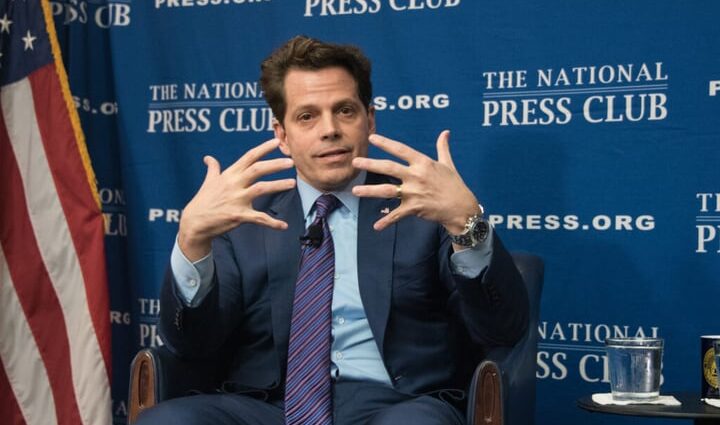
Is it a good thing that bitcoin ISN’T being held by nation-states?

A month in- where are we at?

As last week’s article more thoroughly laid out, we’re currently in the midst of the single-worst energy crisis of not only our lifetimes, but in world history [IEA]. That crisis is coming as the result of a full-blown regional war in the Middle East.

Not knowing anything other than that, one would expect oil (given the fundamentals of the situation) would be expected to be in the $150 area and neutral reserve assets like gold should be strong, the stock market to be down massively and Bitcoin, not-yet widely adopted as a neutral reserve asset, would likely be quite weak given its high beta to stocks.

But that’s not what we’ve seen

Gold, arguably what should be the strongest, is actually the weakest. US Treasuries, the multi-decade safe haven, are also down (rates up). Bitcoin, with its usual tendency to be high-beta and risk-on, is actually by far the best-performing asset since the start of the war.

Cross-asset performance since the war in the Middle East started.

Why? What does it mean?

Let’s start with gold, as it’s probably the most counter-intuitive in terms of performance, and the reason for its sell-off is still not widely understood-

Remember that the Gulf Cooperation Council (GCC) countries are all huge surplus countries. Some current accounts in the GCC are a whopping 20% of GDP. By definition, this means they generally accumulate assets in the form of fx reserves.

A few of the GCC Current Accounts

Another trait of the countries …
Full story available on Benzinga.com

This post was originally published here

Bitcoin (CRYPTO: BTC) is consolidating close to $70,000, even as broader markets, particularly the S&P 500, show signs of breakdown.

Bitcoin Consolidating But Stronger Than Equities

In an Apr.4 podcast, analysts Cred and DonAlt note that Bitcoin is beginning to display relative strength compared to equities, suggesting a potential shift in market dynamics.

From a technical standpoint, the current range between $57,000 and $61,000 is seen as fair value. Holding the $58,000–$60,000 zone is critical for bulls; losing it could trigger a sharp drop toward $40,000.

On the upside, a weekly close above $71,000 would signal renewed bullish momentum, while reclaiming $82,000, a key resistance …

Full story available on Benzinga.com

This post was originally published here

Strategy (NASDAQ:MSTR) added 4,871 Bitcoin for $329.9 million last week at $67,718 per coin, bringing total holdings to 766,970 Bitcoin (CRYPTO: BTC) with an average cost basis of $75,644.

The Accumulation Machine

Last week’s purchases were mostly funded through $227.3 million in sales of the company’s STRC preferred stock. The remainder came from $72 million in common stock sales.

A CryptoQuant report flagged Strategy’s 30-day accumulation at roughly 44,000 BTC through late March, making it one of only two institutional channels absorbing supply at scale alongside spot ETFs, which purchased approximately 50,000 BTC over the same period.

At 766,970 BTC, Strategy holds roughly 3.8% of Bitcoin’s total circulating supply of 20.01 million coins and remains by far the …

Full story available on Benzinga.com

This post was originally published here

Bitcoin’s (CRYPTO: BTC) multi-week consolidation has raised questions about whether the market has already formed a bottom.

One prominent analyst outlines a data-driven framework to identify high-probability accumulation zones ahead of a potential bull cycle.

On-Chain Metrics Signal Strong Support

Crypto chart analyst Ali Martinez pointed to the UTXO Realized Price Distribution (URPD), which shows where Bitcoin last moved on chain.

A large cluster of holders accumulated BTC between $63,111 and $70,685, indicating a strong support zone where investors may defend their positions.

A long-term trendline, in place for nearly a decade, is also being retested in the $56,000 to $60,000 …

Full story available on Benzinga.com

This post was originally published here

Bitcoin is up 4% on Monday, attempting to reclaim $70,000 amid hopes of potential U.S.-Iran ceasefire.

Bitcoin ETFs saw $8.99 million in net inflows on Friday, while Ethereum ETFs reported $71.2 million in net inflows.  


Cryptocurrency
Ticker Price
Bitcoin (CRYPTO: BTC) $69,492
Ethereum (CRYPTO: ETH) $2,151.92
Solana (CRYPTO: SOL) $82.46
XRP (CRYPTO: XRP) $1.35
Dogecoin (CRYPTO: DOGE) $0.09291
Shiba Inu (CRYPTO: SHIB) $0.056036

Meme coin market capitalization …

Full story available on Benzinga.com

This post was originally published here

Coinbase Global Inc (NASDAQ:COIN) shares are climbing this Monday. A broad rally across the cryptocurrency sector is driving the upward momentum.

Crypto Market Cap Hits $2.38 Trillion

The total cryptocurrency market capitalization rose 3.47% to reach $2.38 trillion on Monday. This surge provides a strong tailwind for the exchange operator. Bitcoin (CRYPTO: BTC) gained 4.01% over the last 24 hours.

It currently trades at $69,660.95. Ethereum (CRYPTO: ETH) followed suit, jumping 5.39% to $2,151.12, according to data from CoinMarketCap.

Short Interest Data Shows Decline

Short interest in Coinbase has decreased. …

Full story available on Benzinga.com

This post was originally published here

Pseudonymous cryptocurrency trader James Wynn, known for their high-risk leveraged bets, has been liquidated shorting Bitcoin (CRYPTO: BTC) once again, on-chain tracking firm Lookonchain reported on Sunday.

Bitcoin Moves Against Wynn’s Bet…Again

Lookonchain, citing data from Hyperliquid perpetual exchange, stated that Wynn opened several short positions at entry prices between $66,975 and $67,264.

Then Bitcoin surged to $69,500 late Sunday, triggering unrealized losses that eroded margins and led to automatic liquidations. The latest liquidation was executed at $67,955.

This was Wynn’s sixth liquidation over the past two weeks. No open positions remained active.

From a high of more than $84 million, the trader’s account balance had fallen to $914 at the time of writing. Additionally, these bets resulted …

Full story available on Benzinga.com

This post was originally published here

Apple has delisted the Bitchat messaging service from China’s App Store on orders from authorities, Block Inc. (NYSE:XYZ) CEO Jack Dorsy revealed on Sunday.

China Censors Bitchat

Dorsey posted Apple’s notification that the app was taken down after the Cyberspace Administration of China alleged it contained “illegal” content.

“Apps must comply with all legal requirements in any location where you make them available,” the notification read. “We know this stuff is complicated, but it is your responsibility to understand and make sure your app conforms with all local laws.”

Apple added that the app remains available in other jurisdictions.

Notably, Apple slashed App Store fees for developers in China earlier this month amid increasing regulatory pressure in …

Full story available on Benzinga.com

This post was originally published here

Cryptocurrency analyst Willy Woo questioned on Sunday Sen. Elizabeth Warren’s (D-Mass.) wealth tax proposal targeting Amazon.com Inc. (NASDAQ:AMZN), Jeff Bezos.

Warren Defends Billionaires Tax

Woo responded to Warren’s claim that her proposed wealth tax on Bezos could fund insulin for all Americans and free school lunches for every child in Texas.

Warren noted that a 3% wealth tax on Bezos’ $222 billion fortune would still leave the tech titan with $215 billion to spare.

Bezos didn’t immediately return Benzinga’s request for comment.

Woo lashed out at Warren’s statements, stating that Bezos’s $15 billion investment created a space program and …

Full story available on Benzinga.com

This post was originally published here

Cryptocurrency bettors are aggressively speculating on what President Donald Trump will say at Monday’s conference alongside military officials.

Will The Speech Be De-escalatory?

Unsurprisingly, Trump mentioning “Iran” or “Iranian” more than 15 times carried 74% odds on Polymarket. “Power” or “Strength” carried the highest possibility at 85%, while “Pilots/Crew/Staff” drew a 67% chance.

Words like “Hell” and “Obliteration,” which Trump has repeatedly used to describe the military campaign in Iran, drew odds at 69% and 65%, respectively.

While “Make a Deal” had a 65% chance of being mentioned, there was no contract for “Ceasefire.”

Word Mention Wagers Jump

The word-mention prediction market is heating up amid Trump’s addresses and press conferences during …

Full story available on Benzinga.com

This post was originally published here

Leading cryptocurrencies rose overnight on Sunday while stock futures dipped as President Donald Trump’s warning to Iran put investors on edge.

Cryptocurrency 24-Hour Gains +/- Price (Recorded at 9:20 p.m. EDT)
Bitcoin (CRYPTO: BTC) +2.52% $68,843.45
Ethereum (CRYPTO: ETH)
               
+2.68% $2,114.41
XRP (CRYPTO: XRP)                          +1.12% $1.32
Solana (CRYPTO: SOL)                          +1.59% $81.97
Dogecoin (CRYPTO: DOGE)              +0.60% $0.092

Institutional Buying Boosts ETH

Bitcoin spiked to $69,500 late in the evening, while trading volume jumped 62% over the last 24 hours. Ethereum rallied to $2,130, as Bitcoin’s rise sparked broader market buying. XRP and Dogecoin also traded in the green.

Over $250 million were liquidated in the past 24 hours, predominantly bearish short positions,  according to Coinglass data.

Open interest in Bitcoin futures rose 3.62% in the last 24 hours. Meanwhile, sentiment for the apex cryptocurrency among Binance’s retail derivatives users stayed “Neutral.”

“Extreme Fear” sentiment, however, persisted in the market, according to the Crypto Fear & Greed Index.

The global cryptocurrency market capitalization stood at $2.36 trillion, following an increase of 1.95% from the previous day.

Top Gainers …

Full story available on Benzinga.com

This post was originally published here

Strategy (NASDAQ:MSTR) Executive Chairman, Michael Saylor on Saturday declared that Bitcoin‘s (CRYPTO: BTC) old four-year rhythm no longer explains price action, arguing that money moving into the asset—shaped by banks and digital credit—now matters more. The claim lands as Strategy’s Bitcoin playbook shows a sharper tilt toward Stretch (STRC) funding over stock issuance, a pivot detailed in strategy financing shift that offers a real-world example of the “capital flows” framework he’s pushing.

In a post on X, Saylor warned the market about a different kind of threat: misguided thinking that leads to harmful changes to the Bitcoin protocol. In the same post, he said Bitcoin has effectively secured broad acceptance as digital capital, tying the next phase of growth to credit creation and banking rails.

Full story available on Benzinga.com

This post was originally published here

This week was a whirlwind of events in the world of finance and technology. From Coinbase Global Inc. securing a conditional approval to operate as a national trust company, to the looming quantum threat to Bitcoin and the ongoing debate on financial inclusivity, the stories were as diverse as they were impactful. Here’s a quick recap of the top stories.

Coinbase Gets Conditional Approval To Operate As National Trust Company

Coinbase Global Inc. announced on Thursday that it has received conditional approval from the Office of the Comptroller of the Currency to form a federally chartered national trust company. The company clarified that it is not transitioning into a commercial bank and will not be taking retail deposits or engaging in fractional reserve banking. The charter aims to bring federal regulatory uniformity to …

Full story available on Benzinga.com

This post was originally published here

New York City, April 03, 2026 (GLOBE NEWSWIRE) —

BitStarz Redefines No Deposit Bonus Casinos with Transparency and Global Trust (2025–2026). Start reading this best crypto casinos and Bitcoin casinos article right away so that you can begin online gambling as soon as possible. BitStarz Casino continues to shape the global iGaming landscape by transforming how no deposit bonus casinos operate between 2025 and 2026. What was once considered a simple promotional hook has evolved into a structured, transparent, and compliance-driven experience designed for modern players.

Today’s no deposit bonus model is no longer about exaggerated offers—it’s about clarity, fairness, and real usability. BitStarz has positioned itself at the forefront of this shift, delivering promotions that emphasize trust, speed, and global accessibility.

>>Find Out How to Claim the 50 No Deposit Free Spins at BitStarz’s Official Website

Modern players are no longer attracted solely by large numbers. Instead, they prioritize clear bonus terms, fast withdrawals, and a risk-free introduction to real money gaming environments.

While high-value promotions such as “$200 no deposit bonus with 200 free spins” occasionally appear in specific regions, platforms like BitStarz focus on consistent, globally accessible offers that are realistic, transparent, and easy to understand.

No Deposit Bonus Promo Code Redeemable Game Wagering Requirement
50 Free Spins CHECK WEBSITE Gold Rush (Rival Gaming) 40x

Executive Overview

In 2025, no deposit bonus casinos have become a gateway for responsible online gaming, offering players a safe way to explore platforms before making deposits.

Key industry concepts include:

  • No Deposit Bonus Casinos: A regulated system offering risk-free incentives with a strong focus on compliance and player protection.
  • Online Gambling Real Money No Deposit: The ability to test casino games with free credits that can convert into real winnings.
  • Free Spins No Deposit Bonus: A popular entry-level incentive allowing users to try slot games without spending money.
  • New Online Casino No Deposit Bonus: Licensed platforms offering structured welcome bonuses under strict regulations.
  • BitStarz: A benchmark operator known for fast payouts, transparent bonus terms, and a vast game library.
  • Bonus Codes: Promotional codes used during registration to unlock free spins or credits.

Together, these elements reflect a market where trust and transparency have become the most valuable assets.

BitStarz Launches No Deposit Bonus Casinos With 50 Free Spins And Bitcoin Casinos Online In 2026: Rated By Experts’ Opinions

We have selected the following Trusted crypto casinos. Now, let’s read more about these safe crypto casinos No Deposit Bonus Casinos.

BitStarz Exclusive Bonus Offer 100% up to 1BTC+180 Free Spins 4.8/5

Now that you have heard the names of these cryptocurrency casinos, are you familiar with any of them? Have you at least heard their names? However, let us read more.

Region Welcome Bonus No Deposit Offer
US 100% up to 5 BTC + 180 Free Spins

This post was originally published here

In a recent alarming incident, a journalist became the victim of a sophisticated phishing attack, believed to be orchestrated by North Korean hackers.

Ben Weiss, a journalist from Fortune, who had been covering the Democratic People’s Republic of Korea (DPRK), wrote that he was ensnared by a cunning trap laid by the hackers in mid-March. The phishing attack was launched via an innocent-looking message from a hedge fund investor on Telegram, a messaging app widely used in the crypto sphere.

The journalist was lured into a Zoom call with a supposed Bitcoin strategist, Adam Swick. He knew that Swick was considering a new digital asset treasury with a potential large seed investor. Despite doubts about the venture, the journalist agreed to a call via a Zoom link shared on Telegram.

The Zoom link provided redirected to a program that closely mimicked the actual Zoom interface, with minor differences and audio glitches. To rectify these issues, the journalist was asked to download an update, …

Full story available on Benzinga.com

This post was originally published here

Leading technical analyst Ali Martinez identified on Thursday the first “Buy” signal in months for Strategy Inc. (NASDAQ:MSTR),” potentially marking an end to its corrective phase.

Is This indicator Reliable?

In an X post, Martinez said that the TD Sequential indicator was “incredibly accurate” in calling MSTR’s local top in July 2025. Since then, the stock has tumbled 74%.

“Now, for the first time in months, we have a Buy Signal on the monthly chart,” Martinez added.

The TD Sequential indicator is a technical analysis tool that helps traders identify potential price reversals and exhaustion patterns.

Full story available on Benzinga.com

This post was originally published here

Prediction markets are assigning a higher possibility that Federal Bureau of Investigation Director Kash Patel will leave the Trump administration this year.

Patel’s Exit Odds Soar

Polygon (CRYPTO: POL)-based Polymarket odds on Patel’s departure spiked to an all-time high of 77%, up from 42% a day earlier.

The odds have grown by 44 percentage points in a month. More than $116,000 has poured into bets on Patel’s position.

Odds of National Intelligence Director Tulsi Gabbard’s exit jumped to 63%, placing her behind Patel.

Similarly, traders on Kalshi assigned a 72% chance to Patel’s exit from the Trump administration, marking a 36 percentage …

Full story available on Benzinga.com

This post was originally published here

On Thursday, Sen. Elizabeth Warren (D-Mass.) took to X and posted “I have questions for MrBeast,” referring to YouTuber Jimmy Donaldson.

Warren Questions MrBeast’s Move Into Finance

Her post referred to a 12-page letter she sent to MrBeast last month.

In a detailed letter, Warren asked Donaldson and Beast Industries CEO Jeffrey Housenbold to explain the company’s plans following its acquisition of teen-focused fintech app Step.

The lawmaker requested clarity on compliance, marketing practices and safeguards for young users, the New York Times reported.

Crypto Concerns For …

Full story available on Benzinga.com

This post was originally published here

Meme-based cryptocurrency Dogecoin (CRYPTO: DOGE) described itself as the longest-running and most successful “joke” in financial history on Thursday.

‘Highest-Grossing Joke’

Dogecoin embraced its meme origins in an X post, adding, “If Dogecoin is a joke, it’s the longest-running, highest-grossing joke in financial history.”

Tracing Dogecoin’s Journey

Born in 2013 from the iconic Shiba Inu meme as a lighthearted experiment, Dogecoin has surged a whopping 16104.52% since then.

It boasts a market capitalization of over $13 billion as of this writing, higher than that of Domino’s Pizza Inc.

Full story available on Benzinga.com

This post was originally published here

Coinbase Global Inc. (NASDAQ:COIN) said Thursday it has secured a conditional approval from the Office of the Comptroller of the Currency to form a federally chartered national trust company.

Crypto Operations Under Federal Oversight

Coinbase emphasized that it is not transitioning into a “commercial bank” and will not be taking retail deposits or engaging in fractional reserve banking.

“This charter is about bringing federal regulatory uniformity to the custody and market infrastructure business we have been building for years,” the company said.

CEO Brian Armstrong reiterated the point, saying that Coinbase is bringing the “infrastructure of crypto” under federal regulatory oversight, but not “becoming a bank.”

Full story available on Benzinga.com

This post was originally published here

Leading cryptocurrencies fell further on Thursday, while oil prices surged as investors feared Iran conflict could escalate after President Donald Trump’s address.

Cryptocurrency 24-Hour Gains +/- Price (Recorded at 9:20 p.m. EDT)
Bitcoin (CRYPTO: BTC) -1.71% $66,760.21
Ethereum (CRYPTO: ETH)
               
-3.85% $2,052.15
XRP (CRYPTO: XRP)                          -2.19% $1.31
Solana (CRYPTO: SOL)                          -1.84% $79.33
Dogecoin (CRYPTO: DOGE)              -1.50% $0.09032

Crypto Sees Increased Bearish Pressure

Bitcoin wobbled in the range between $66,000 and $67,000 after retreating from the  $68,000+ territory on Wednesday night. Ethereum failed to break over $2,070 amid heavy resistance from the bears. Trading volume for the second-largest cryptocurrency dipped 14% over the last 24 hours.

Shares of Strategy Inc. (NASDAQ:MSTR) and Bitmine Immersion Technologies Inc. (NYSE:BMNR) closed down 2.95% and 1.22%, respectively.

Nearly $400 million were liquidated in the past 24 hours, predominantly bullish long positions,  according to Coinglass data.

Notably, over $500 million in Bitcoin short positions on Binance risked liquidation if the apex cryptocurrency reclaimed $70,000.

Open interest in Bitcoin futures rose 1.47% in the last 24 hours. A rise in open interest with a decline in spot price usually implies that short bets are being built up.

Top …

Full story available on Benzinga.com

This post was originally published here

After months of choppy price action and range-bound trading, April is shaping up as a potentially pivotal month for the crypto market. A growing number of analysts believe the conditions are aligning for a breakout, even as near-term risks continue to keep traders cautious.

Bitcoin’s (CRYPTO: BTC) recent behavior tells the story. The world’s largest cryptocurrency has spent weeks consolidating just below the psychologically important $70,000 level, repeatedly testing resistance without a decisive move higher. While this has frustrated momentum traders, many market participants see the prolonged consolidation as a constructive phase rather than a sign of weakness.

Why April Is Getting So Much Attention

The bullish case for April rests on a combination of macro, regulatory, and structural factors that are beginning to converge.

First, regulatory clarity in the United States has improved meaningfully compared to previous years. With clearer guidance around crypto custody, exchange operations, and institutional participation, large financial players are no longer sitting entirely on the sidelines. Instead, they are gradually increasing their exposure through ETFs, custody services, and structured products.

This shift matters because institutional flows tend to be slower but more durable than retail-driven rallies. Analysts argue that the steady bid from institutions has helped Bitcoin hold elevated levels even during periods of macro uncertainty.

Second, the broader macro backdrop could become more supportive. Any signs of easing financial conditions or reduced geopolitical tensions could quickly translate into renewed risk appetite. Crypto, which has increasingly traded like a high-beta risk asset, would likely benefit from that shift.

At the same time, expectations around monetary policy remain a key variable. If inflation data stabilizes and central banks signal a more accommodative stance, liquidity conditions could improve, creating a more favorable environment for speculative assets, including cryptocurrencies.

The Resistance Problem Around $70,000

Despite the constructive setup, Bitcoin’s inability to decisively break above the $69,000 to $70,000 range remains a central concern.

This level is not just technical resistance. It is also a psychological barrier tied to previous cycle highs. …

Full story available on Benzinga.com

This post was originally published here

On April Fool’s day, the decentralized platform Drift saw hundreds of millions of dollars drained from its accounts and, unfortunately, this was no joke. The company suffered a $280 million hack on Wednesday, and industry experts suspected that North Korea was behind it. 

“Earlier today, a malicious actor gained unauthorized access to Drift Protocol through a novel attack involving durable nonces, resulting in a rapid takeover of Drift’s Security Council administrative powers,” the company announced on X. A durable nonce is a tool used on Solana used to avoid transaction expirations. 

The blockchain analytics firm Elliptic says that the on-chain behavior is consistent with previous North Korea-backed crimes. The Kim Jong Un-led nation is no stranger to perpetrating crypto crime. In 2025, the country was responsible for $2 billion of stolen crypto, equivalent to about 60% to all the digital asset funds stolen around the world, according to blockchain analytics firm Chainalysis.  Last year, North Koreans executed a nearly $1.5 billion hack of Bybit in the largest crypto attack in history. 

Hackers from North Korea often use social engineering, when they manipulate people into trusting them to get private information, but that wasn’t exactly the case in this most recent Drift attack. This instance involved the use of a durable nonce, which is a Solana feature, to dupe the company’s security council into pre-approving transactions that would happen weeks later, according to Coindesk. The platform suspended deposits and withdrawals for its customers. 

Drift, founded by Cindy Leow and David Lu in 2021, provides perpetual futures and other trading products to its users. The company had over $400 million in total deposits and more than $19 million in total trades, according to its website. 

Big crypto companies are not the only ones susceptible to attacks by North Koreans. Fortune crypto reporter Ben Weiss was also targeted by the DPRK. The malicious actor hacked into Weiss’s contact’s Telegram, arranged a video call with him, and attempted to run a script on his computer to get his passwords. 

This story was originally featured on Fortune.com

Blockchain analytics firm Elliptic on Thursday flagged “multiple indicators” that North Korea’s state-sponsored hackers may be behind the $285 million exploit of Drift Protocol, the largest DeFi hack of 2026 so far that wiped out more than half of the Solana-based exchange’s total value locked.

Arthur Hayes, BitMEX co-founder, Maelstrom CIO, and Drift Protocol advisor, pointed the finger at Solana (CRYPTO: SOL) itself.

“If Solana had native multi sig addresses, would the Drift hack even have been possible? Actually curious, not trolling,” Hayes wrote on X.

Ledger CTO Charles Guillemet drew a direct comparison to the $1.4 billion Bybit hack of 2025, which the FBI attributed to North Korea’s Lazarus Group.

The pattern is nearly identical: compromised multi sig signers, social engineering, and malicious transactions disguised as routine operations.

The Lazarus Playbook

The hacker spent weeks setting up the attack.

They created a fake token called …

Full story available on Benzinga.com

This post was originally published here

Cryptocurrency has long attracted younger investors with its promise of outsized returns outside of traditional finance. Yet despite well-documented warnings about its volatility, wealthy Gen Z and Millennials are embracing the asset class at rates far exceeding older generations.

Among affluent young investors—those with between $100,000 and $999,999 in assets—48% report holding cryptocurrency, according to a new report from the CFA Institute. That’s nearly double the share of Gen X and baby boomers in the same wealth bracket, only about a quarter of whom own crypto. 

The pattern holds at higher wealth levels, too. Among Gen Z and Millennial millionaires, 50% hold crypto, compared with just 33% of their parents and grandparents.

And what’s driving it? Roughly 44% of Gen Z and 49% of Millennials say their decision to invest in crypto is influenced by fear of missing out—known as FOMO.

Big potential, big risk: Bitcoin’s value has halved in recent months

In recent months, the bet is not looking as enticing as it once was. 

After hitting a record high of $124,000 in October, Bitcoin has fallen to roughly $66,000—a drop of about 47%—rattling portfolios and testing conviction among even its most enthusiastic backers.

That dynamic is unfolding at a pivotal moment. An estimated $61 trillion in wealth is expected to be passed down from older generations in the coming decades—roughly $46 trillion to Millennials and $15 trillion to Gen Z—giving younger investors an unprecedented level of financial influence at a time when concerns about their financial literacy are growing. But experts warn that making investment decisions based on peer trends could be a recipe for disaster.

“Younger investors’ susceptibility to FOMO is concerning because it can lead to reactive decisions that are influenced by hype without consideration of their long-term goals,” Genevieve Hayman, a senior researcher at the CFA Institute, told Fortune. 

Young investors are leaning on social media for financial advice—and experts say it’s doing more harm than good

Social media has become a double-edged sword for young investors. 

On one hand, it’s helping introduce people to markets earlier than ever. More than half of Gen Z began learning about investing before entering the workforce, compared to just 20% of Baby Boomers, according to a 2024 World Economic Forum survey. Nearly a third started investing in college or early adulthood—about twice the rate of millennials at the same age.

But the quality of social media information is far less consistent. 

As a result, Gen Z still consistently lags older generations in financial literacy across all eight key personal finance areas measured by TIAA, with many young adults struggling to answer basic questions about saving, borrowing, and investing.

“Access to this information can be empowering, but it also exposes young investors to misinformation and investment recommendations from influencers that may not have appropriate disclosures,” Hayman said. 

“This exposure also amplifies the anxiety of ‘missing out’ when peers appear to be cashing in on trending stocks or viral investment opportunities.”

Gen Z is showing financial warning signs—but leaders like Jamie Dimon and Kevin O’Leary say a lack of education is to blame

Warning signs have already emerged, indicating the struggles young people are having with managing their money. Gen Z’s average credit score slipped three points to 676—39 points lower than the national average of 715, according to a 2025 FICO report.

In the U.S., 30 states have a financial education graduation requirement, according to the National Endowment for Financial Education. But many business leaders, like JPMorgan Chase CEO Jamie Dimon, say that more needs to be done.

“We should teach financial education, like saving money,” Dimon said at The Atlantic Festival in 2024.

Shark Tank investor Kevin O’Leary has echoed that concern, arguing that many young people are entering adulthood without a clear understanding of how to manage money.

“I’ve spent most of my career in education and here’s the hard truth: We improved math. We improved reading. We failed at financial literacy,” O’Leary wrote on social media.

His advice is simple—and notably at odds with the high-risk, high-reward mindset that often defines volatile assets like crypto.

“Don’t spend it. Save it. Invest it. Let it compound. That’s the gift the market gives you,” he said, adding that consistently investing even a modest share over time can turn into a million-dollar portfolio by retirement.

This story was originally featured on Fortune.com

According to Alex Pruden, CEO of Project 11, the cryptocurrency industry is dangerously unprepared for quantum computing as a threat.

In an interview on the Wolf of All Streets podcast Wednesday, Pruden broke down the exact mechanics of how a quantum computer could unravel Bitcoin‘s (CRYPTO: BTC) foundational cryptography, putting approximately 6.7 million BTC at risk of theft.

The Google Breakthrough: Moving The Goalposts

The catalyst for the current panic is a research paper published by Google, which outlines how attackers could crack Bitcoin’s private keys much faster — and with significantly fewer resources — than previously believed.

“This paper is really about lowering the bar or moving the goalposts closer,” Pruden explained.

“If you look at the cryptographers for Bitcoin and specifically look at our architecture and do a bunch of tricks, you can lower that bar way down.”

The Google paper suggests that an optimized quantum computer could crack a private key in roughly 9 minutes — slightly faster than Bitcoin’s average 10-minute block time.

This means …

Full story available on Benzinga.com

This post was originally published here

Oil’s blistering rally and crypto’s stumble made the first quarter of 2026 feel like a regime change rather than a routine quarter. 

Oil, as proxied by the United States Oil Fund ETF (NYSE:USO), surged roughly 84% in Q1, turning a traditionally cyclical commodity into the standout momentum trade of the quarter. 

In fact, USO gained 55.3% in March alone, marking its best monthly performance in history, and Q1 was the fund’s best quarterly performance ever, according to Benzinga Pro data.  

At the same time, digital gold lost its shine: Bitcoin (CRYPTO: BTC), tracked via spot-exposed vehicles like iShares Bitcoin Trust (NASDAQ:IBIT), dropped about 23%, marking one of its worst opening quarters in years and the weakest return of any major asset in Bespoke Investment Group’s Q1 review.

Q1 Winners 

Bespoke review matrix shows that strength is clustered in real assets and cyclicals rather than the mega-cap growth complex that dominated prior years. 

Energy ETFs ripped higher alongside USO’s …

Full story available on Benzinga.com

This post was originally published here

VanEck’s Head of Digital Asset Research Matthew Sigel is turning more bullish on Bitcoin (CRYPTO: BTC) as the derivatives market reaches the 99th percentile for protection demand — a long signal, according to Sigel.

The Derivatives Flip

“What’s happened in the derivatives market for Bitcoin leaves me much more bullish,” Sigel told Anthony Pompliano on Wednesday.

“If you look at what you have to pay for puts versus calls, it’s like we’re in the 99th percentile here of folks paying up for protection. That’s a contrarian long signal,” he added.

Additionally, coins that are 3-5 years old that haven’t moved in that timeframe started selling heavily in Q4 and Q1 as early cycle buyers took profits. 

That selling has eased up in recent weeks, with Marathon Digital Holdings (NASDAQ:MARA) retiring convertible bonds representing one exception.

“We’re still bullish, but we haven’t added maybe as much as you might expect given that kind …

Full story available on Benzinga.com

This post was originally published here

Bitcoin (CRYPTO: BTC) is down 3%, sinking below $67,000 after President Trump’s Iran war address signaled further escalation over the next two to three weeks, pushing crude oil above $104 per barrel on Thursday.

Trump Doubles Down

Markets climbed hours before Trump’s speech, pricing in hopes for de-escalation and resumed oil supplies through the Strait of Hormuz. 

Instead, Trump said the U.S. would “hit” Iran “extremely hard” over the next two to three weeks as military objectives near completion.

Trump warned of additional strikes on Iranian electric infrastructure if no deal is reached.

He offered no concrete timeline for reopening the Strait of Hormuz, leaving that task to Europe and Asia.

Crude oil surged more than 5% to above $104 per barrel on fears of prolonged supply disruptions. 

Additionally, Iran …

Full story available on Benzinga.com

This post was originally published here

Coinbase (NASDAQ:COIN) Chief Legal Officer Paul Grewal told Fox Business on Wednesday that the Clarity Act will see progress within 48 hours.

The Midterm Deadline

“I think we’re very close to a deal,” Grewal said, stressing his confidence in the process.

“Key elements of the bill are critically important to making sure that President Trump’s vision of the United States as the crypto capital of the world is fulfilled,” he added.

The landmark crypto markets bill has been in legislative limbo since January as the crypto industry, banks, regulators, and elected officials struggle to reach agreement on key details.

Grewal says the gridlock may loosen.

Most polls suggest Republicans face losses in upcoming midterm elections. 

If Democrats reclaim the House, all legislative work on Capitol Hill grinds to a halt until the 2028 …

Full story available on Benzinga.com

This post was originally published here

The first quarter of 2026 is in the books. The cautious optimism for the stock market quickly gave way to a clash between geopolitical risk management and asset rotation.

As conflict in the Middle East intensified, hopes of a rate cut turned into an anxiety about a rate hike. Inflation fears return as energy and essential goods surged. Speculative assets sold off alongside overheated commodities as highly leveraged market cashed out winners.

Winners: Energy 

The dominant catalyst was the escalation of conflict in the Middle East, culminating in the effective closure of the Strait of Hormuz — one of the world’s critical commodity chokepoints.

The outcome was a massive “risk premium” across energy markets, driving one of the sharpest commodity rallies in recent history.

“Brent oil prices jumped 63% in March, the largest monthly increase in four decades. Beyond energy markets, grain prices also increased given the importance of the Strait for the passage of commodities that are critical in food production,” JPMorgan analyst Zara Nokes wrote in a report.

Heating oil emerged as the standout performer, surging an extraordinary 100% during Q1. Bloomberg Intelligence Senior Commodity Strategist …

Full story available on Benzinga.com

This post was originally published here

Bitmine Immersion Technologies Inc. (NYSE:BMNR) shares moved lower in Thursday’s premarket trading, tracking a broader risk-off tone across markets. Nasdaq futures fell 1.89%, while S&P 500 futures declined 1.49%.

Geopolitical Strain Weights on Crypto

Leading cryptocurrencies fell Wednesday evening after President Donald Trump stated the U.S. military campaign against Iran will continue. Trump noted the campaign persists until objectives are “fully achieved.”

Following the address, Ethereum (CRYPTO: ETH) pulled back below the $2,100 level, according to data from CoinMarketCap.

Massive Treasury Exposure

The volatility directly impacts Bitmine’s significant balance sheet. As of March 29, Bitmine held 4,732,082 ETH tokens. …

Full story available on Benzinga.com

This post was originally published here

SkyBridge Capital founder Anthony Scaramucci is breaking down the mechanics—and the market risks—behind Strategy Inc.‘s (NASDAQ:MSTR) high-yielding perpetual securities, calling the dividend play a potentially lucrative move for steadfast Bitcoin (CRYPTO: BTC) believers.

The 11% Yield Strategy

During a recent episode of the All Things Markets podcast, Scaramucci and Galaxy Digital Inc. (NASDAQ:GLXY) CEO Mike Novogratz analyzed MSTR’s strategy of offering a yield-bearing security.

Scaramucci noted that investors putting money into Michael Saylor‘s company, earlier known as MicroStrategy, can receive four quarterly dividend payments equivalent to roughly an 11.5% yield.

While emphasizing the attractiveness of the trade, Scaramucci made sure to clarify his firm’s exact position to listeners. “I’m a huge fan of his and obviously SkyBridge owns a lot of Bitcoin. We don’t own any of that security, but I just wanted to disclose that to people,” Scaramucci stated.

He added that as long as Bitcoin holds its muster and Strategy trades at a premium—or at least not at a huge discount—Saylor will be able to sustain the impressive payouts.

Full story available on Benzinga.com

This post was originally published here

Vlad Tenev, CEO of Robinhood Markets Inc. (NASDAQ:HOOD), expressed his belief in a more inclusive financial system on Wednesday, highlighting the shift in his focus from what should be created to what deserves to exist.

Tenev’s Goal About Democratizing Access

Tenev reflected on his career journey in an X post. He noted that while his early career was about proving the ability to build something meaningful, the focus has since shifted

“The question became less about whether we could create and more about what deserves to exist. That has pushed me toward a bigger view of access and ownership,” Tenev added.

Full story available on Benzinga.com

This post was originally published here

A leading analyst on Wednesday flagged “major” volatility for Dogecoin (CRYPTO: DOGE) as the meme heavyweight battled geopolitical jitters like the broader cryptocurrency market.

Which Way Is DOGE Headed?

Ali Martinez took to X, highlighting a Bollinger Bands squeeze roughly between $0.874 and $0.101. They read it as a sign of an incoming “major price move.”

The Bollinger Band Squeeze occurs when the volatility drops, causing the space between the bands to tighten. When the price closes outside of bands, traders consider it a potential new breakout. This strategy is used to identify the start of new trends following periods of consolidation.

Full story available on Benzinga.com

This post was originally published here

Artemis-themed cryptocurrencies spiked on Wednesday after NASA’s historic mission launched four astronauts on a 10-day lunar orbit.

Coins To The Moon?

ARTEMISII, a moon-themed token on Solana (CRYPTO: SOL), soared over 200% over the last 24 hours, according to CoinMarketCap. The coin had a fully diluted valuation of $7,000, backed by just $8,100 in liquidity.

Another token with a similar name jumped 11%, with a higher fully diluted valuation at $28,600.

Cryptocurrency 24-Hour Gains +/- Price (Recorded at 11 p.m. EDT)
ARTEMISII +206% $0.000007197
Artemis II

Full story available on Benzinga.com

This post was originally published here

Leading cryptocurrencies fell alongside stock futures on Wednesday evening after President Donald Trump said the U.S. will continue its military campaign against Iran until the objectives are “fully achieved.”

Cryptocurrency 24-Hour Gains +/- Price (Recorded at 9:35 p.m. EDT)
Bitcoin (CRYPTO: BTC) -0.92% $67,269.45
Ethereum (CRYPTO: ETH)
               
+0.26% $2,100.16
XRP (CRYPTO: XRP)                          -0.72% $1.32
Solana (CRYPTO: SOL)                          -4.22% $79.42
Dogecoin (CRYPTO: DOGE)              -1.72% $0.09028

Crypto Market Retraces

Bitcoin slid below $67,000 late evening, while Ethereum pulled back below $2,100. Other major cryptocurrencies were also sent lower.

Shares of Strategy Inc. (NASDAQ:MSTR) and Bitmine Immersion Technologies Inc. (NYSE:BMNR) closed down 1.62% and 0.46%, respectively.

Nearly $350 million in crypto positions were liquidated in the past 24 hours, with bullish long traders bearing the brunt of the losses.

Open interest in Bitcoin futures fell 2.29% in the last 24 hours, although retail and whale Binance traders were still net long on the leading cryptocurrency.

“Extreme Fear” persisted in the market, according to the Crypto Fear & Greed Index.

Top Gainers (24 Hours) 

Cryptocurrency (Market Cap>$100 M) Gains +/- Price (Recorded …

Full story available on Benzinga.com

This post was originally published here

EDX Markets, a crypto exchange backed by Citadel Securities and Fidelity Digital Assets, has filed with the Office of the Comptroller of the Currency (OCC) for a national trust bank charter.

The OCC has not indicated a timeline for a decision on the application; however, if it is approved, EDX’s custody, management, and trading operations would fall under direct banking supervision.

Securing a trust bank charter would provide EDX with the regulatory framework needed to serve institutional investors, who have identified custody …

Full story available on Benzinga.com

This post was originally published here

Bitcoin is holding near the $68,000 level as geopolitical tensions ease and regulatory clarity improves, helping stabilize the broader crypto market.

Cryptocurrency Ticker Price
Bitcoin (CRYPTO: BTC) $68,112.01
Ethereum (CRYPTO: ETH) $2,131.08
Solana (CRYPTO: SOL) $84.01
XRP (CRYPTO: XRP) $1.34
Dogecoin (CRYPTO: DOGE) $0.09257
Shiba Inu (CRYPTO: SHIB) $0.056016

Notable Statistics:

  • Coinglass data shows 114,174 traders were liquidated in the past 24 hours for $256.84 million.       
  • SoSoValue data shows net inflows of $117.6 million from spot Bitcoin ETFs on Tuesday. Spot Ethereum ETFs saw net inflows of $31.2 million.
  • In the past 24 hours, top gainers include Stable, Algorand and Sei.

Notable Developments:

Full story available on Benzinga.com

This post was originally published here

XRP (CRYPTO: XRP) gained 1.5% as Ripple launched Digital Asset Accounts and Unified Treasury, the first native digital asset capabilities embedded in an enterprise treasury management system.

The Treasury Solution

Ripple Treasury now lets CFOs view, hold, and manage both fiat and digital currency liquidity from bank and custody providers in a single system—eliminating separate platforms and manual reconciliation. 

No other treasury management system offers this.

The launch builds on Ripple’s 2025 GTreasury acquisition, which brought 40 years of enterprise treasury expertise. 

Last year, Ripple Treasury facilitated $13 trillion in payment volume for SMEs to Fortune 500 companies.

Moreover, Ripple’s 2026 survey of 1,000+ global finance leaders found 72% say they must offer digital asset solutions to remain competitive, yet most lack integration into existing workflows.

Digital Asset Accounts

Digital Asset Accounts let treasury teams create and manage …

Full story available on Benzinga.com

This post was originally published here

ETH (CRYPTO: ETH) investment products flipped sharply into the red last week, shedding more than $400 million as investors pulled back across the board. Funds tied to Ethereum took the biggest hit, accounting for $222 million in outflows, according to data from CoinShares.

The shift comes as markets react to a draft of the proposed Clarity Act, which is raising fresh questions around staking and yield-generating stablecoins – two pillars of Ethereum’s investment case.

Macro isn’t helping either. Rising geopolitical tensions and fading expectations for near-term Federal Reserve rate cuts have pushed traders into a more defensive posture, one that crypto tends to struggle in.

For now, Ethereum finds itself caught in the middle: part tech bet, part yield play, and increasingly, a regulatory question mark.

Regulation, Meet Reality

The Clarity Act aims to delineate the boundaries between securities and commodities in crypto markets. Yet in doing so, it risks unsettling some of the industry’s most commercially successful innovations.

At issue is staking, the process by which holders of Ethereum lock up tokens to help validate the network in return for yield. For institutional investors, staking has become a crucial component of the Ethereum investment case, a blend of bond coupon and equity dividend. Any regulatory ambiguity around its status was bound to ripple quickly through fund flows.

The same applies to stablecoins that offer yield, either directly or through affiliated platforms. American regulators have long been wary of such arrangements, viewing them as akin to unregistered securities. The Clarity Act appears to sharpen that focus, prompting a swift repricing of associated risks.

This helps explain why Ethereum, rather than Bitcoin (CRYPTO: BTC), has borne the brunt of recent outflows. Bitcoin’s investment thesis (digital gold, largely inert) remains comparatively insulated from regulatory tinkering. Ethereum’s is enmeshed with the plumbing of decentralized finance.

Staking ETH’s Future

While markets fret, Ethereum’s stewards are pressing ahead with a strategic shift. The Ethereum Foundation has expanded its staking programme, committing an additional 22,517 ETH (around $46m) across a series of transactions.

The move is part of a broader effort to make the Foundation’s treasury more productive. Rather than …

Full story available on Benzinga.com

This post was originally published here

Bitcoin (CRYPTO: BTC) dropped roughly 50% from its October all-time high instead of the 80%-90% crashes seen in previous cycles, signaling market maturation, though Bloomberg’s Mike McGlone still predicts a fall to $10,000.

The Shrinking Crash Pattern

Bitcoin crashed 87% from $1,163 to $152 after the 2013 peak and 84% from $20,000 to $3,122 in 2017. 

This cycle, the decline from October’s $126,200 has been closer to 50%—a compression reflecting deeper liquidity and institutional participation.

“Bitcoin’s drawdowns compressing to about 50% is a sign of a maturing market structure,” said Jason Fernandes, AdLunam co-founder. 

“As liquidity deepens and institutional participation increases, volatility compresses on both the upside and downside,” he added.

Fidelity Digital Assets analyst Zack Wainwright noted growth is becoming “less impulsive” with reduced extreme downside …

Full story available on Benzinga.com

This post was originally published here

A new U.S. Labor Department rule could allow 401(k) retirement plans to include alternative investments such as cryptocurrencies, real estate and private market assets, potentially opening the door for assets like Bitcoin (CRYPTO: BTC) and Ethereum (CRYPTO: ETH)

“Level The Playing Field”

In a FOX Business interview on Tuesday, BlackRock Global Head of Retirement Solutions Nick Nefouse said the change is designed to “level the playing field,” giving more Americans access to a wider range of investments typically available in defined benefit plans.

He noted …

Full story available on Benzinga.com

This post was originally published here

Bitcoin rose to $68,000 as market sentiment improved and institutional interest strengthened; liquidations stand at $327.67 million over the past 24 hours.    

Bitcoin ETFs saw $117.3 million in net inflows on Tuesday, while Ethereum ETFs reported $31.2 million in net inflows.  


Cryptocurrency
Ticker Price
Bitcoin (CRYPTO: BTC) $68,404.09
Ethereum (CRYPTO: ETH) $2,128.08
Solana (CRYPTO: SOL) $83.20
XRP (CRYPTO: XRP) $1.34
Dogecoin (CRYPTO: DOGE) $0.09218
Shiba Inu (CRYPTO: SHIB) $0.055972

Meme coin market capitalization remained relatively flat with a 0.7% gain over the past 24 hours to $33.2 billion.

Trader Commentary:  

Data from CoinGlass shows Bitcoin …

Full story available on Benzinga.com

This post was originally published here

Bitcoin (CRYPTO: BTC) fell 23.8% in Q1 2026, the worst first-quarter performance since 2018, despite U.S. spot Bitcoin ETFs recording $1.32 billion in net inflows during March after four consecutive months of outflows.

The Six-Month Slide

Bitcoin closed Q1 at $66,619 on Tuesday, down from $87,508 on January 1. 

The quarterly drop represents the largest since Q1 2018, when Bitcoin fell 50% from $14,112 to $6,973.

The decline extends the 23% drop in Q4 2025, when Bitcoin slipped to $87,508 from $114,057. 

Andri Fauzan Adziima, Research Lead at Bitrue, said Bitcoin’s first-quarter decline stemmed primarily from ETF outflows, coupled with sticky inflation, a cautious Fed, and broader risk-off sentiment across markets. 

According to SoSoValue data, spot Bitcoin ETFs saw $496.5 million in net outflows during Q1, with $1.8 billion in outflows during January and February partially offset by $1.32 billion in March inflows.

The March Reversal

March marked Bitcoin’s first positive monthly candle in …

Full story available on Benzinga.com

This post was originally published here

Ripple Labs signed five major partnerships in February alone and grew RLUSD stablecoin to $1.56 billion market cap, yet XRP (CRYPTO: XRP) still crashed 40% from $2.40 to $1.35 as institutional deals failed to translate into token demand.

The January Launch

Ripple unveiled Ripple Treasury on January 30, an enterprise platform born from its $1 billion acquisition of Chicago-based GTreasury. 

The product lets corporate finance teams manage traditional cash and digital assets through a single system, moving money across borders in three to five seconds using RLUSD instead of three to five business days via bank wires.

The platform connects companies to overnight repo markets and tokenized money-market funds, including BlackRock’s (NYSE:BLK) BUIDL fund, so businesses can earn yield on idle cash around the clock.

February: Ripple’s Strongest Month Of Institutional Adoption

  • Deutsche Bank integrated Ripple’s payment infrastructure for cross-border transfers. 
  • Aviva Investors partnered with Ripple to tokenize fund structures on the XRP Ledger. 
  • Additionally, Zand, a UAE digital bank, signed on for stablecoin payment solutions.
  • Meanwhile, Société Générale’s SG-FORGE …

Full story available on Benzinga.com

This post was originally published here

Bitcoin (CRYPTO: BTC), Ethereum (CRYPTO: ETH) and XRP (CRYPTO: XRP) are trading within narrow ranges as crypto markets remain uncertain, with no clear confirmation of a trend reversal.

Short Term Bounce, Overall Weak Momentum

In a March 31 podcast, trader Cryptoinsightuk said a short-term bounce is possible, but overall momentum remains weak as markets await a decisive move. He pointed to macroeconomic pressures, including equity weakness, inflation concerns and geopolitical tensions, as factors contributing to the lack of direction.

Despite this, many assets are sitting near historically attractive value zones, leading to a view that gradual accumulation in spot positions is reasonable.

Bitcoin shows …

Full story available on Benzinga.com

This post was originally published here

Bitcoin (CRYPTO: BTC) is trading within a range that mirrors past market structures, though the outcome may not follow the same path, according to trader Trader Mayne.

Temporary Bullish, Overall Bearish Bias

In a March 31 podcast, Mayne said Bitcoin could see a short-term relief rally toward $80,000. Still, it maintains an overall bearish bias unless key resistance levels are reclaimed

He emphasized that market sentiment tends to flip incorrectly, bullish at highs and bearish at lows, creating opportunities for traps on both sides.

Despite some signals that could support a temporary …

Full story available on Benzinga.com

This post was originally published here

Sen. Cynthia Lummis (R-Wyo.) strongly endorsed the Clarity Act on Tuesday, noting that decentralized finance developers will face far less regulatory uncertainty after the bill becomes law.

DeFi Industry Will Have ‘Safe Harbor’

In an X post, Lummis dubbed the Clarity Act as the “best thing that could happen to the DeFi community.”

“Developers, validators, and node operators will finally have a safe harbor and we can ensure American innovation can stay right here on U.S. soil,” the senior lawmaker argued.

Full story available on Benzinga.com

This post was originally published here