North Korean hackers allegedly hit U.S. firms in supply-chain attacks to steal cryptocurrency for the regime’s nuclear funding, according to a report published Tuesday.

Are North Korean Hackers Chasing Crypto?

The hackers reportedly targeted Axios, a software program that connects applications and ‌web services, according to CNBC. The hackers controlled the software developer’s account for three hours on Tuesday morning, during which malicious updates were sent to organizations that downloaded the software.

Axios is also used by cryptocurrency firms, blockchain developers and tech firms active in the cryptocurrency industry.

Security experts told CNBC that this could be part of a “long-term campaign” by the North Korean regime to steal cryptocurrency, which is then used …


Full story available on Benzinga.com

This post was originally published here

Dogecoin (CRYPTO: DOGE) tried to prank unsuspecting folks on social media for April Fools’ Day. We’re telling you early, so you don’t get tricked and look dumb later.

Dogecoin Without Shiba Inu?

The official X handle of Dogecoin went full satire mode with a fake “restructuring” announcement, updating their bio and everything.

The so-called DogeCoin Financial Solutions LLC proposed changes such as ditching the Shiba Inu logo for a “navy blue emblem” and banning meme words like “wow.”

Seriously bro? That ain’t never happening!

Dogecoin used stiff business jargon, such as a “67-page whitepaper” and “stakeholder” rebranding. No way our lil’ Shiba friend is signing up for this—we know it.

Full story available on Benzinga.com

This post was originally published here

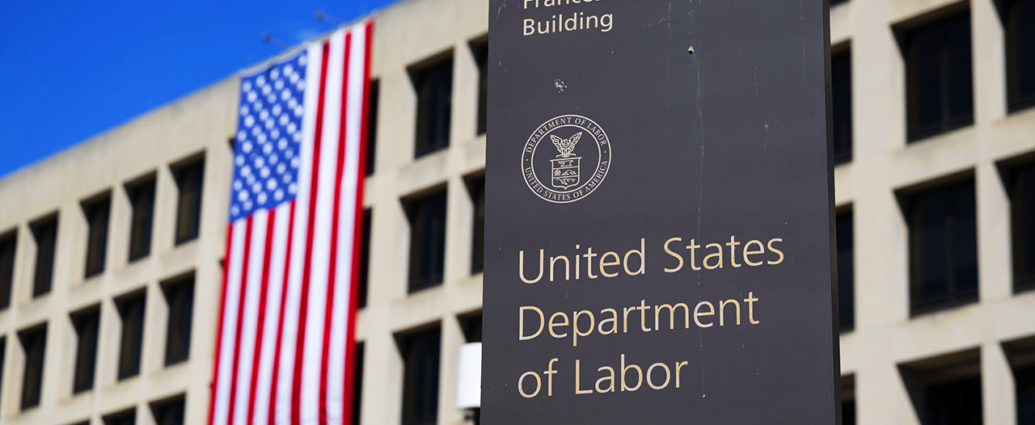
The Department of Labor (DOL) has issued a proposed regulation that would allow retirement plans to include investments in alternative assets, specifically cryptocurrencies and private markets.

“The overarching goal of the proposed regulation is to alleviate certain regulatory burdens and litigation risk that interfere with the ability of American workers to achieve, through their retirement accounts, the competitive returns and asset diversification necessary to secure a dignified and comfortable retirement,” the executive summary reads. 

The proposal comes after President Donald Trump‘s executive order, released last year, instructed the DOL to reexamine its guidance surrounding employers and plan administrators on incorporating these assets into retirement plans.

“The Executive Order (E.O. 14330) pointed out that, currently, many Americans in employer-sponsored defined contribution plans do not have the opportunity to participate in the potential growth and diversification opportunities offered by alternative asset investments,” the proposal stated.

DOL Safe Harbor Rule

The DOL has introduced a “safe harbor” rule designed to help shield plan sponsors from lawsuits. Under the guidance, fiduciaries must carefully weigh six key factors when selecting alternative investments: performance, fees, liquidity, valuation, benchmarks, and complexity.

The rule will undergo additional review, including a 60-day period for public comment, before it can be finalized.

“Americans’ ability to participate more fully in innovation and economic growth through well-diversified long-term investments is a vitally important priority for effective retirement planning. We look forward to continuing our work to expand opportunities for Americans to build wealth and save for the future,” said SEC Chairman Paul S. Atkins in a press release.

U.S. Secretary of the Treasury Scott Bessent commented that the proposed rule is “an initial step” in implementing the Trump’s Executive Order in “a safe and smart manner.”

Last Wednesday, the Labor Department lifted restrictions that had previously discouraged the inclusion of cryptocurrencies in 401(k) retirement plans.

Trump’s Ballooning Crypto Fortune

The Labor Department under former President Joe Biden had warned about “significant risks” of adding cryptocurrency investment options to retirement plans, citing the speculative …

Full story available on Benzinga.com

This post was originally published here

Bitcoin and other major cryptocurrencies regained some losses on Tuesday after Iran signaled a willingness to pursue peace talks.

Cryptocurrency Ticker Price
Bitcoin (CRYPTO: BTC) $67,813.58
Ethereum (CRYPTO: ETH) $2,097.47
Solana (CRYPTO: SOL) $82.54
XRP (CRYPTO: XRP) $1.34
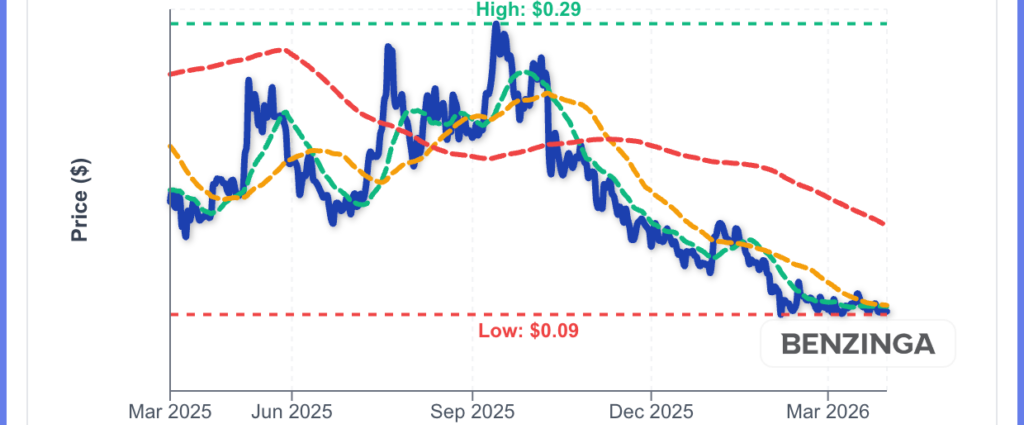
Dogecoin (CRYPTO: DOGE) $0.09190
Shiba Inu (CRYPTO: SHIB) $0.055932

Notable Statistics:

  • CoinGlass data shows that 78,174 traders were liquidated in the past 24 hours, totaling $361.97 million.       
  • SoSoValue data shows net inflows of $69.4 million from spot Bitcoin ETFs on Monday. Spot Ethereum ETFs …

Full story available on Benzinga.com

This post was originally published here

Google has warned that advances in quantum computing could eventually break the elliptic curve cryptography that secures cryptocurrencies. New research suggests these systems may be compromised with fewer resources than previously thought.

Rising Quantum Concerns

Using optimized versions of Shor’s algorithm, a sufficiently powerful quantum computer could break current cryptographic systems more quickly than earlier estimates suggested. While the threat is not immediate, it may be closer to reality than previously believed.

To prepare, Google is urging the crypto industry to transition to post-quantum cryptography (PQC), adopt safer practices such as avoiding wallet address reuse, and consider policies for vulnerable or inactive funds.

The …

Full story available on Benzinga.com

This post was originally published here

Bitcoin’s (CRYPTO: BTC) movement within a tight trading range is raising questions about whether its traditional four-year cycle remains intact or is gradually fading amid rising institutional participation.

Cycle Debate Intensifies

In an X.com post on March 31, on-chain analytics platform Arkham Intelligence highlighted a growing debate over the durability of Bitcoin’s four-year cycle. The firm noted that increasing institutional involvement may be reshaping market behavior.

Unlike retail traders, institutional investors typically deploy capital in a more structured manner, often guided by schedules and risk management strategies. This approach can reduce extreme volatility and dampen the sharp boom-and-bust patterns historically associated with Bitcoin.

At the same time, macroeconomic factors such as interest …

Full story available on Benzinga.com

This post was originally published here

The Trump administration on Monday issued a proposed rule to allow retirement plans to offer alternative assets like private equity and cryptocurrencies as part of the investment options in 401(k) accounts.

The Labor Department’s rule aims to ease longstanding barriers to incorporating alternative assets into retirement plans and follows an executive order signed by President Donald Trump last summer on the subject.

Advocates for the rule change argue that including alternative assets in 401(k) plans can help foster better long-term returns and make diversification easier. Skeptics note that alternative assets can be less liquid, more complex and have higher fees, which can limit gains while also introducing risk.

Under the proposed rule, plan fiduciaries would have to objectively, thoroughly and analytically consider and make determinations about performance, fees, liquidity, valuation, performance benchmarks and complexity. Trustees who abide by those rules will be granted safe harbor that protects them from lawsuits.

TRUMP SIGNS ORDER TO OPEN 401(K)S TO PRIVATE MARKETS: WHAT IT MEANS FOR YOUR RETIREMENT

Managers of defined contribution plans have historically had the authority to consider alternative investments, though most have opted against doing so.

The Biden administration in 2022 issued a rescinded compliance release that warned fiduciaries against including cryptocurrency options in 401(k) plans, which the Trump administration criticized as a “departure from the department’s decades-long approach to fiduciary investment decisions.”

LARRY FINK CALLS FOR SOCIAL SECURITY REFORM, SAYS INVESTING A PORTION OF FUNDS COULD STRENGTHEN THE PROGRAM

Labor Secretary Lori Chavez-DeRemer said that the agency’s newly proposed rule “will show how plans can consider products that better reflect the investment landscape as it exists today. This greater diversity will drive innovation and result in a major win for American workers, retirees, and their families.”

Treasury Secretary Scott Bessent added that the pending regulation “is an initial step in implementing the President’s Executive Order in a safe and smart manner, broadening access to additional retirement plan options for millions of Americans while being mindful of the importance of protecting retirement assets.”

NEW YORK INVESTMENT GIANT APOLLO JOINS HEADQUARTERS MIGRATION TO ‘FREEDOM’ STATES

Following the Labor Department’s release of the proposed rule, the agency will open a 60-day comment period ahead of a decision to finalize the rule.

Alternative asset managers like Blackstone and Apollo Global Management could benefit from the opportunity to draw on a new pool of capital. Several industry members and groups applauded the rule.

Apollo CEO Marc Rowan said that the change is a “thoughtful step toward addressing the growing retirement crisis,” noting that “Americans increasingly lack the savings and income needed for a secure retirement” and that the shift could “meaningfully improve retirement outcomes.”

GET FOX BUSINESS ON THE GO BY CLICKING HERE

If the rule is adopted, Erin Cho, a partner at the Mayer Brown law firm, said that it “will not open the floodgates for private equity, private credit or crypto funds to move into the retirement space” as it will only provide a process for doing so.

Reuters contributed to this report.

This post was originally published here. 

Dogecoin (CRYPTO: DOGE) is trapped in a tightening wedge between $0.088-$0.095, while Shiba Inu’s (CRYPTO: SHIB) burn rate surged 945% in 24 hours with over 3.1 million tokens permanently removed.

Dogecoin’s Wedge Compression

Dogecoin is forming a converging wedge at multi-month lows, with upper and lower trendlines squeezing price into a tight range. 

The Supertrend at $0.1044 and Parabolic SAR at $0.0989 both hover just above, making any upside move an immediate test of resistance.

The Supertrend hasn’t flipped green yet despite weeks of sideways action, suggesting sellers haven’t fully given up. 

Volume dropped 6.24% to $2.10 billion and open interest slipped 0.99% to $1.06 billion, typically signaling …

Full story available on Benzinga.com

This post was originally published here

Strategy Inc. (NASDAQ:MSTR) saw its stock price slide before heading back up during Tuesday’s trading session.

• What is MSTR stock doing now?

Bitcoin Remains Relatively Flat

Strategy shares seesawing comes as Bitcoin (CRYPTO: BTC) shows minimal volatility. The leading digital asset is currently trading at $67,508.08, reflecting a 24-hour gain of 0.19%. Bitcoin’s total market capitalization remains steady at approximately $1.35 trillion, according to CoinMarketCap.

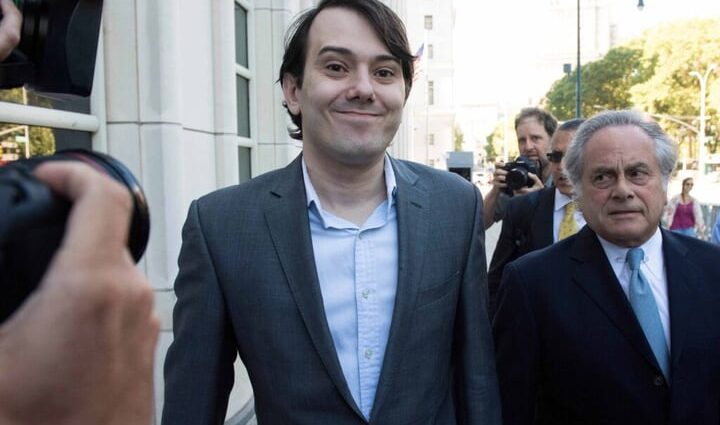
Shkreli Demands Saylor’s Arrest

Investor Martin Shkreli slammed Strategy Executive Chairman Michael Saylor on Monday over a promotional video for the company’s preferred stock. …

Full story available on Benzinga.com

This post was originally published here

Ripple Prime has expanded its integration with HyperliquidX, incorporating HIP-3 products to broaden institutional access to tokenized markets.

Ripple Prime’s Major Move

In an X post on Monday, Ripple Prime executive Mike Higgins said that the integration allows institutional investors to trade tokenized commodities such as gold, silver, and oil 24/7 on-chain perpetual contracts. The expansion is expected to increase activity within the HYPE token ecosystem and further advance the market for tokenized real-world assets.

HIP-3 products on Hyperliquid have experienced rapid growth, with daily trading volume reaching $2.30 billion and open interest at $1.99 billion.

These products now account for nearly 40% of daily trading volume and about 28% of total open interest …

Full story available on Benzinga.com

This post was originally published here

XRP (CRYPTO: XRP) slipped 0.5% but Binance outflow transactions surged above 4,000 daily since late February, signaling mid-sized investors are accumulating despite XRP ETF outflows hitting $2.31 million on March 30.

The Binance Accumulation Signal

Binance on-chain activity shows a clear resurgence since the end of February. 

Outflow transactions have consistently exceeded 4,000 per day, with some peaks reaching close to 6,000 transactions in a single day.

Most of this activity stems from transactions ranging between 1,000 and 100,000 XRP, which typically corresponds to mid-sized investors rather than large whales. 

Increased outflow transactions often suggest investors are withdrawing tokens from exchanges to hold them elsewhere, indicating a gradual accumulation phase.

XRP has traded in a well-defined range between $1.30 and $1.50 for several months. While the …

Full story available on Benzinga.com

This post was originally published here

A new warning from Google (NASDAQ:GOOG) (NASDAQ:GOOGL) is making crypto investors face a threat they have always thought was still far off: quantum computing.

For a long time, the threat posed by quantum computers on Bitcoin (CRYPTO: BTC) security has largely remained a theoretical threat. However, new research from Google indicates this threat may not be as far off as we think and may come sooner than we expect.

A Faster Timeline Than Expected

At the heart of this concern is the method by which Bitcoin secures transactions. The method is based on a cryptographic system that is theoretically uncrackable by traditional computers. It allows for the creation of private keys from public ones.

However, Google’s latest research into the matter revealed that quantum computing could soon make such systems less complex to crack. The company believes that future quantum computers could have the ability to breach the cryptographic foundations of Bitcoin far sooner than previously thought.

One of the most worrying consequences of this is speed. According to the research, a sufficiently powerful quantum computer could theoretically crack a Bitcoin private key in less than 9 minutes. This could lead to what is known as an ‘on-spend’ attack, which could allow hackers to interfere with transactions before they are made.

Whilst such technology is not yet …

Full story available on Benzinga.com

This post was originally published here

Bitcoin held steady near $66,000 despite a broader market pullback triggered by concerns over quantum computing risks; liquidations stand at $268.43 million over the past 24 hours.    

Bitcoin ETFs saw $69.4 million in net inflows on Monday, while Ethereum ETFs reported $4.96 million in net inflows.  


Cryptocurrency
Ticker Price
Bitcoin (CRYPTO: BTC) $66,725.24
Ethereum (CRYPTO: ETH) $2,039.05
Solana (CRYPTO: SOL) $80.68
XRP (CRYPTO: XRP) $1.31
Dogecoin (CRYPTO: DOGE) $0.09038
Shiba Inu (CRYPTO: SHIB) $0.055900

Meme coin …

Full story available on Benzinga.com

This post was originally published here

In the last two years, stablecoins have become one of the hottest fields in crypto—so hot that one venture capitalist at a16z crypto decided to leave and launch his own stablecoin startup. The former investor, Sam Broner, announced on Tuesday that he and a college friend raised $10 million for what they call The Better Money Company, which aims to create a stablecoin clearinghouse, or locale that lets customers cheaply exchange different dollar-backed tokens. 

Broner’s former employer, a16z crypto, led the seed round, with participation from BoxGroup and Sunflower Capital, along with notable angel investors like the Circle cofounder Sean Neville and Charlie Songhurst, a former Microsoft executive. Broner and his cofounder Adam Zuckerman declined to say at what valuation they raised their capital.

Andreessen Horowitz’s crypto arm backed The Better Money Company because of Broner, said Ali Yahya, a general partner at Andreessen Horowitz. “He very quickly became our stablecoin expert and taught us a lot about stablecoins,” he said in an interview with Fortune. “So primarily, it’s an investment in him, and that tends to be usually the way that we underwrite early-stage investments.”

Token clearinghouse

Even as prices for blue-chip cryptocurrencies like Bitcoin and Ethereum remain far below their 2025 all-time highs, investor fervor for stablecoins hasn’t waned. Proponents for the tokens, which are pegged to real-world assets like the U.S. dollar, say they can speed up transactions as well as reduce fees. Financial goliaths are taking notice. In March, the payments titan Mastercard agreed to spend up to $1.8 billion to acquire the stablecoin startup BVNK. 

“The drumbeat has gotten louder and the urgency has gotten more clear for how they need to integrate stablecoins into their products,” said Broner.

Broner’s new firm is entering an increasingly crowded stablecoin field. There are the mainstays like Circle’s USDC and Tether’s USDT, but more recently large companies like Klarna, Cloudflare, Sony, and Fiserv launched their own tokens or signaled they intend to do so. Broner and Zuckerman aim to create a lane for themselves with a clearinghouse to help companies navigate the cluster of new coins.

“If you want to have a growing stablecoin ecosystem, you need to have one place to access the breadth of what’s out there,” said Broner.

Broner, who started his career as a software developer at GE and Microsoft, specialized in investing in stablecoin startups at a16z crypto. During his more-than-two-year tenure at the venture giant, he backed the stablecoin remittance startup Zar as well as a slew of startups from a16z crypto’s accelerator. Meanwhile, Zuckerman worked at the law firm Latham & Watkins before leaving to work as general counsel at the crypto startup Eigen Labs. The two originally met while studying for their undergraduate degrees in Massachusetts.

Launching a stablecoin clearinghouse requires developing partnerships with stablecoin issuers. Broner and Zuckerman plan to create accounts with different crypto companies that let them put in orders for new tokens more cheaply than buying or selling stablecoins on the open market. Since they founded their startup in November, they’ve since received commitments from a number of issuers who intend to join the clearinghouse, including Paxos, Stripe’s Bridge, MoonPay, and others. 

They intend to support any token compliant with the Genius Act, recently signed-into-law legislation that regulates the burgeoning stablecoin ecosystem. That notably excludes USDT, the largest stablecoin on the market, but not its American version, USAT.

They haven’t launched their product publicly yet but plan to let customers use their clearinghouse in the coming weeks, said Broner. “The mission is making stablecoins better money,” added Zuckerman.

This story was originally featured on Fortune.com

Banks are exploring Cardano’s (CRYPTO: ADA) Midnight partner chain for institutional blockchain infrastructure because it offers programmable privacy and front-running protection that Ethereum (CRYPTO: ETH) and Solana (CRYPTO: SOL) can’t provide natively.

The Three Banking Requirements

Institutions need three things from blockchain that public chains struggle to deliver: privacy with selective disclosure, execution predictability without MEV extraction, and compliance tooling that doesn’t broadcast sensitive information to the entire world.

A bank can’t put customer transactions on a public ledger visible to everyone. 

They need the ability to hide sensitive details from the public but still prove compliance to regulators when required. That’s …

Full story available on Benzinga.com

This post was originally published here

Block Inc. (NYSE:XYZ) shares were trading higher in the pre-market session on Tuesday after its Square point-of-sale system rolled out automatic Bitcoin (CRYPTO: BTC) payments for eligible merchants in the U.S.

Square Announces Automatic Bitcoin To Fiat Feature

Square said in a X post that the new feature will allow sellers to accept Bitcoin payments that convert “instantly” to cash at checkout, without any additional setup.

Square added that there will be no processing fees for these transactions until 2026. Note that this feature is available to all U.S.-based merchants except those based in New York

Full story available on Benzinga.com

This post was originally published here

Investor Martin Shkreli, popularly known as “Pharma Bro,” slammed Michael Saylor’s latest video on Monday promoting Strategy Inc.‘s (NASDAQ: MSTR) preferred stock offering.

The Video At The Center Of Controversy

The AI video shared on X showed a young woman who has retired and is living a luxurious life in a tropical paradise.

When asked how she got rich so quickly, the woman credited it to buying shares of Perpetual Stretch Preferred Stock (NASDAQ: STRC).

Saylor captioned the video with, “You weren’t meant to live an uncomfortable life.”

Critics Say It’s ‘Nonsense’

Shkreli took strong exception, going so far as to demand Saylor’s “arrest” for promoting unrealistic retirement security on a Bitcoin-backed asset.

Market analyst Adam Cochran also came down heavily, …

Full story available on Benzinga.com

This post was originally published here

A court on Monday levied a penalty of $500,000 against Peken Global Limited, the company that operates the KuCoin cryptocurrency exchange, and prohibited it from serving U.S. users without registering with the CFTC.

Court Orders No Future Violations

The order by the U.S. District Court for the Southern District of New York also stated that the CFTC is not pursuing disgorgement, nor is the court imposing it, based on the specifics of this case.

“The order permanently enjoins Peken Global from future violations, as charged, and requires Peken Global to pay a $500,000 civil monetary penalty,” a CFTC press …

Full story available on Benzinga.com

This post was originally published here

A cryptocurrency tied to Tiger King” fell on Monday after the Supreme Court decided not to entertain the appeal case of Joseph Maldonado-Passage, the central figure in Netflix Inc.’s (NASDAQ:NFLX) “Tiger King” documentary.

Tiger King Coin Is Almost Worthless Today

Tiger King Coin (TKING), available on Ethereum (CRYPTO: ETH) and BNB Chain (CRYPTO: BNB), fell 0.6% in the last 24 hours to $0.0000001937, according to CoinGecko. The coin had a fully diluted valuation of $180,653, with just $1,140 worth of TKING changing hands over the past 24 …

Full story available on Benzinga.com

This post was originally published here

Having fun at someone else’s expense might be a social media faux pas, but big brands and cryptocurrencies can’t stop memeing the KitKat chocolate heist.

Dog Mocks ‘Kat’

About twelve tons of Nestle S.A.’s KitKat chocolate bars went missing in Europe last week after thieves stole the truck carrying them—yes, you read that right!

And everybody’s cracking up over it. Dogecoin (CRYPTO: DOGE), the world’s most popular meme-based cryptocurrency, repeated “woof” as its “official statement,” celebrating Shiba Inu playfulness.

Was That You, Pengu?

NFT brand Pudgy Penguins dropped a chocolate-smeared picture of PENGU, ironically adding that their lil’ mascot had nothing to do with the theft.

Litecoin

Full story available on Benzinga.com

This post was originally published here

State and non-state actors linked to Russia and Iran are increasingly using cryptocurrency to acquire low-cost, commercially available drones for ongoing conflicts, a new report published on Monday said.

Blockchains Powering Drone Warfare?

Sanctioned entities, including Iran’s defense sector and aligned proxies, are turning to cryptocurrency to procure drone components restricted by export controls, according to a new study by blockchain analytics firm Chainalysis.

Iran’s Shahed drone program, widely deployed in the ongoing conflict with the U.S. and Israel, relies “heavily” on components sourced through third-country procurement networks, the report added.

Cryptocurrency facilitates procurement in two ways, according to Chainalysis. The first is direct, where a drone manufacturer accepts cryptocurrency as a payment method. The second is indirect, where vendors selling through third-party e-commerce platforms, such as Alibaba Group Holding Limited 

This post was originally published here

Leading cryptocurrencies lifted on Monday, while major stocks closed lower as investors parsed President Donald Trump’s latest hints on a potential Iran ceasefire.

Cryptocurrency 24-Hour Gains +/- Price (Recorded at 9:30 p.m. EDT)
Bitcoin (CRYPTO: BTC) +2.04% $67,934.87
Ethereum (CRYPTO: ETH)
               
+3.33% $2,075.14
XRP (CRYPTO: XRP)                          -0.01% $1.33
Solana (CRYPTO: SOL)                          +1.72% $83.92
Dogecoin (CRYPTO: DOGE)              +0.57% $0.09203

Crypto Heavyweights Lift

Bitcoin spiked to $68,000 late evening as trading volume jumped 58% over the last 24 hours. Ethereum also rallied to $2,088 late in the day, fueled by robust buying momentum. XRP and Dogecoin, however, stagnated.

Shares of Strategy Inc. (NASDAQ:MSTR) and Bitmine Immersion Technologies Inc. (NYSE:BMNR) closed down 3.64% and 0.49%, respectively.

Over $262 million in cryptocurrency holdings were liquidated in the last 24 hours, with short-term traders suffering the most losses.

Open interest in Bitcoin futures rose 2.29% in the last 24 hours. Sentiment among Binance retail and whale traders also remained bullish, according to the Long/Short ratio.

Despite these developments, “Extreme Fear” sentiment persisted in the market, according to the Crypto Fear & Greed Index.

Top Gainers (24 Hours) 

Cryptocurrency (Market Cap>$100 M) Gains +/- Price …

Full story available on Benzinga.com

This post was originally published here

On March 17, 2026, a single day of US spot Bitcoin (CRYPTO: BTC) ETF inflows totaled $199.37 million. 

Two days later, the FOMC held interest rates steady, and geopolitical risk spiked. 

By March 20, the same ETF market was recording $52.1 million in daily outflows.

Bitcoin dropped below $69,200 on March 22 as a Middle East escalation triggered $299 million in liquidations across the derivatives market.

That 96-hour window captures exactly what Bitcoin investors face in 2026: two powerful forces pulling in opposite directions, with no clear winner yet.

This article examines those two forces: the historical four-year cycle model and the institutional adoption thesis, and presents the current on-chain data that sits between them.

Historical Pattern of the Four-Year Cycle

The four-year cycle theory is grounded in Bitcoin’s halving schedule. Block rewards are split, reducing the fresh BTC supply by 50%. In April 2024, rewards were reduced from 6.25 BTC to 3.125 BTC per block.

Across the three prior cycles, Bitcoin’s price peaked between 12 and 18 months after each halving. Following the 2024 event, Bitcoin reached its all-time peak: $126,000. That timing is consistent with the historical pattern. Bitcoin is now trading near $72,600, a drawdown of approximately 43% from that peak.

The prior cycle drawdowns were severe. The 2017-2018 cycle produced an 84% decline from peak to trough. The 2021-2022 cycle saw a 77% crash. Applying this to the current cycle, a similar correction would place a potential bottom between $28,000 and $35,000. Some technical analysts have identified a support zone between $25,900 and $30,350, based on prior accumulation behavior. The cycle model projects this low near November 2026.

The average recovery time across all nine 40 to 50 percent corrections since 2014 has been roughly 9 to 14 months, and every single one ended with BTC reaching a new all-time high.

Bitcoin has only completed three full halving cycles. Each happened under a different macroeconomic and regulatory environment. The cycle model is a pattern that relies on limited data.

Data From the The On-Chain Picture

Glassnode’s on-chain analysis for March 2026 presents a nuanced view. According to their reporting, Bitcoin is currently trading in a defensive range, with the …

Full story available on Benzinga.com

This post was originally published here

Bitcoin traded relatively flat near $66,000 as market sentiment remained cautious, weighed down by persistent fear and continued outflows from spot Bitcoin exchange-traded funds (ETFs).

Cryptocurrency Ticker Price
Bitcoin (CRYPTO: BTC) $66,344.94
Ethereum (CRYPTO: ETH) $2,019.94
Solana (CRYPTO: SOL) $82.10
XRP (CRYPTO: XRP) $1.31
Dogecoin (CRYPTO: DOGE) $0.09061
Shiba Inu (CRYPTO: SHIB) $0.055941

Notable Statistics:

  • Coinglass data shows 100,975 traders were liquidated in the past 24 hours for $432.91 million.       
  • SoSoValue data shows net outflows of $225.5 million from spot Bitcoin ETFs on Friday. Spot Ethereum ETFs saw net outflows of $48.5 million.
  • In the past 24 …

Full story available on Benzinga.com

This post was originally published here

MARA Holdings Inc (NASDAQ:MARA) shares are trading lower Monday afternoon as weakness in Bitcoin (CRYPTO: BTC) continues to pressure sentiment across crypto-linked miners, even after the company announced a major balance sheet move last week.

Bitcoin was down about 6.6% over the past week and lower again Monday, a backdrop that may be weighing on MARA Holdings and the broader mining space.

MARA Uses $1.1 Billion Bitcoin Sale To Repurchase Debt

The move follows a March 26 announcement in which MARA Holdings said it sold 15,133 Bitcoin for about $1.1 billion and used the proceeds to repurchase roughly $1 billion …

Full story available on Benzinga.com

This post was originally published here

Trader Cryptoinsightuk said the crypto market appears to be in a late-stage correction and nearing a bottom, though not necessarily at its exact low.

Mixed Outlook, But Constructive

In a March 30 podcast, the trader said the current consolidation phase could last from a few weeks to several months but overall reflects a value accumulation zone rather than the start of a prolonged bear market. He described the broader outlook as mixed but constructive across major assets.

Bitcoin (CRYPTO: BTC) could still see a short-term dip toward key liquidity levels, potentially near $60,000. Meanwhile, Dogecoin …

Full story available on Benzinga.com

This post was originally published here

Bitcoin (CRYPTO: BTC) may be approaching a critical phase in its market cycle after a 52% correction from its October 2025 peak, aligning with a key moving average signal seen in late February.

• Why is BTC dropping today?

Transition From Bear To Bull Markets

In a March 30 post on X, crypto analyst Ali Martinez pointed to the three-day chart, where the crossover of the 50-day and 200-day simple moving averages has historically marked the transition from bear to bull markets.

In previous cycles, including 2014, 2018 and 2022, this signal …

Full story available on Benzinga.com

This post was originally published here

Dogecoin (CRYPTO: DOGE) bounced 2.5% but remains trapped below the critical $0.10 level as meme coin dominance collapsed from 0.042 in mid-February to 0.034 in March, signaling capital rotation away from meme tokens.

The Meme Coin Collapse

CryptoQuant data shows meme coin dominance within the altcoin market fell from 0.042 in mid-February to 0.034 in March. .

Solana (CRYPTO: SOL), which served as the primary hub for memecoin speculation, has seen on-chain engagement collapse. 

The number of daily decentralized exchange traders on Solana has hit record lows, according to analyst Shah.

“Participation is at all time lows, just a few thousand people are still active, so good coins that once had 100M–1B potential are stuck trading between 500k-20M,” Shah wrote. Moreover X user @capexbt described the chain as a “ghost town.”

The Failed Breakout

Full story available on Benzinga.com

This post was originally published here

Bitmine Immersion Technologies (NYSE:BMNR) purchased 71,179 ETH last week, bringing total holdings to 4.73 million ETH worth $9.8 billion as Chairman Tom Lee called crypto a “good wartime store of value” amid the Iran conflict.

The Wartime Outperformance

Bitmine accelerated its weekly purchase pace from an average of 45,000-50,000 ETH to 71,179 ETH, betting that Ethereum (CRYPTO: ETH) is in the final stages of a “mini-crypto winter.”

“As the Iran war enters its 5th week, ETH and crypto outperformed the broader market with ETH outperforming equities by 1,160 basis points,” Lee said. 

“This is a marked contrast to Gold (a traditional store of value), which has underperformed by more than 750 basis points,” he added.

He noted that the inverse correlation …

Full story available on Benzinga.com

This post was originally published here

Bitcoin (CRYPTO: BTC) surged 3% after President Donald Trump said the U.S. is in “serious discussions” with a “new, and more reasonable, regime” in Iran to end military operations.

The Regime Change Bombshell

Trump’s Truth Social post marked the first public acknowledgment of a regime change in Tehran since the conflict began five weeks ago. 

Calling it a “new” regime suggests the talks involve a leadership structure that wasn’t in place when the war started in late February.

Trump demanded Iran open the Strait of Hormuz “immediately for business” and threatened to “blow up and completely obliterate” its electric generating plants, oil wells, and Kharg Island if it fails to reach a deal soon.

He added that officials are also considering desalination plants, targets the U.S. deliberately avoided during the five-week conflict.

The combination creates a two-sided headline that markets are struggling to price cleanly. 

On one hand, …

Full story available on Benzinga.com

This post was originally published here

Ripple CEO Brad Garlinghouse said the crypto industry cannot afford another “Gary Gensler moment,” criticizing what he described as a “war on crypto” under the Biden administration.

Ripple Remains Strong

In a March 27 interview with FOX Business, Garlinghouse said crypto markets faced headwinds over the past year and entered 2026 on a flat note as U.S. regulatory direction remains uncertain. He said clearer and more consistent rules are needed and pointed to recent regulatory progress as a positive step.

Garlinghouse said Ripple is continuing to grow despite market volatility, driven by acquisitions and expansion into areas such as treasury management and prime brokerage.

He said these efforts …

Full story available on Benzinga.com

This post was originally published here

U.S. spot Bitcoin (CRYPTO: BTC) ETFs recorded $296 million in net outflows for the week ending March 27 amid the ongoing war between the U.S. and Iran.

The Single-Day Bleed

The weekly outflow stems from a $225.5 million exodus on March 27, the heaviest single-day bleed of the week, according to SoSoValue data. 

BlackRock’s IBIT (NASDAQ:IBIT) fund shed $201.5 million on that day alone, marking the largest single-fund outflow over the five-day trading period.

Total net assets for U.S. spot Bitcoin ETFs declined 7.5% from a March 23 peak of $91.7 billion to $84.8 billion by Friday’s close. 

The shift reversed recent positive momentum after several weeks of healthy inflows month-to-date.

Moreover, Ethereum (CRYPTO: ETH) investment products recorded the largest global withdrawals of $222 million, pushing year-to-date flows to a net outflow of $273 million—the weakest among major …

Full story available on Benzinga.com

This post was originally published here

Grayscale says crypto treasury firms are likely to remain a permanent fixture of the investing landscape as they diversify into new business lines.

DATs Stabilized Through Strategic Approaches

In a post on March 26, Grayscale head of research Zach Pandl noted that DATs surged last year as strong valuations enabled aggressive token accumulation and inspired similar firms.

However, by late 2025, momentum weakened as many shares traded below their underlying crypto values, raising questions about sustainability and even prompting concerns that some firms could be excluded from benchmark indices.

More recently, DATs have regained stability by improving capital structures, generating yield through staking and decentralized finance.

Examples include Strategy (NASDAQ:MSTR), which shifted its financing approach toward preferred …

Full story available on Benzinga.com

This post was originally published here

Ripple CTO David Schwartz told a “completely made up, hypothetical story” in 2023 where an unnamed exchange demanded millions of dollars to list XRP (CRYPTO: XRP), with the token later accounting for 20% of the exchange’s revenue after Ripple struck a deal.

The Hypothetical That Wasn’t So Hypothetical

In May 2023, Schwartz posted a cryptic tweet saying the story of Coinbase (NASDAQ:COIN) listing XRP was “the only story I most wish I could tell that I can’t.”

A month later, he followed up with a disclaimer that he was about to tell a “completely made up, hypothetical story” where any resemblance to real exchanges was “entirely coincidental.”

In his hypothetical, an unnamed exchange refuses to list XRP even though doing so …

Full story available on Benzinga.com

This post was originally published here

Bitcoin recovered about 1.5% after dropping to $65,000 over the weekend, as broader markets rebounded and buoyed by a relief rally following options expiry; liquidations stand at $366.35 million over the past 24 hours.  

Bitcoin ETFs saw $225.5 million in net outflows on Friday, while Ethereum ETFs reported $48.5 million in net outflows.  


Cryptocurrency
Ticker Price
Bitcoin (CRYPTO: BTC) $67,367.79
Ethereum (CRYPTO: ETH) $2,049.82
Solana (CRYPTO: SOL) $83.71
XRP (CRYPTO: XRP) $1.34
Dogecoin (CRYPTO: DOGE) $0.09230
Shiba Inu (CRYPTO: SHIB) $0.056003

Meme coin market capitalization saw a 1.4% increase over the …

Full story available on Benzinga.com

This post was originally published here

CleanSpark Inc. (NASDAQ:CLSK) shares are seeing notable upward activity in Monday’s premarket session.

The move comes as the broader cryptocurrency market recovers from a volatile weekend. As of Monday morning, the total crypto market cap rose 1.39% to $2.33 trillion.

Bitcoin (CRYPTO: BTC) traded 1.43% higher over the last 24 hours, hovering near $67,367. Nasdaq futures are up 0.43% while S&P 500 futures have gained 0.53%.

CleanSpark, a data center developer focused exclusively on bitcoin mining, typically trades in high correlation with the digital asset.

Short Interest Data Signals Tight Float

According to Benzinga, short interest in …

Full story available on Benzinga.com

This post was originally published here

China’s electricity cannot cross its borders, but Chinese tokens are already sold globally. These two phenomena are essentially the same thing. Tokens are China’s true electricity export. I know this concept may not have fully clicked yet, but every sentence I share is backed by data.

China generates 10 trillion kilowatt-hours of electricity annually, surpassing the EU, Russia, India, and Japan combined. This is not because China lacks the desire to sell. It is physically impossible. Electricity cannot be stored or loaded onto ships. Extending high-voltage transmission lines across national borders involves negotiations that can drag on for a decade. It is like holding the world’s largest gold mine where the gold is too heavy to transport, leaving it piled up in your own backyard.

Tokens have shattered this bottleneck.

First, let us clarify what a token represents. When you converse with an AI like DeepSeek, every character and line of code it returns consists of tokens. On the surface, they appear as text or dialogue. Fundamentally, they are digitally encapsulated electrical energy. If you doubt this, consider the math. In the cost structure of AI inference, electricity plus compute depreciation together account for a staggering 80% to 90%. In other words, nearly 90 cents of every dollar spent on a token effectively pays for electricity.

A token is a compressed packet of electrical energy, representing the final product refined from China’s northwestern green electricity through GPU computation.

So how does this relate to exports? When a Silicon Valley developer sits at their computer and calls a Chinese large language model API, data instantly traverses undersea fiber-optic cables to reach computing centers in Ningxia or Inner Mongolia. Thousands of GPUs roar to life, consuming China’s cheapest northwestern green power to perform logical inference. They return the result to a screen in San Francisco within seconds. Throughout this entire process, not a drop of oil was burned, and not a single power cable crossed a border. The value of Chinese electricity has already been delivered across borders via tokens. This is dimensional warfare involving zero physical output, light-speed cross-border transfer, and near-zero loss.

The most powerful …

Full story available on Benzinga.com

This post was originally published here

Google (NASDAQ:GOOGL) (NASDAQ:GOOG) just set one of the most aggressive quantum security deadlines in tech history. Bitcoin developers are still debating whether one is needed. On March 25, Google announced a 2029 target for completing its migration to post-quantum cryptography (PQC). Years ahead of most government benchmarks. The NSA currently aims to transition national security systems by 2033, while NIST has proposed deprecating legacy RSA algorithms by 2035.  Google’s move has reframed the conversation for every industry that relies on cryptography and few rely on it more heavily than Bitcoin.

The question worth asking: Is Bitcoin actually at risk or just early in a transition cycle that has years to play out?

What Google Actually Said

First, some clarification. Google’s 2029 deadline is not “Q-Day” — the hypothetical moment when a quantum computer powerful enough to break today’s encryption becomes operational. It’s a migration target. The company’s new timeline reflects migration needs in light of progress on quantum computing hardware development, quantum error correction, and quantum factoring resource estimates.  The distinction matters. Google isn’t saying a cryptographically relevant quantum computer (CRQC) will exist by 2029. It’s saying organizations should finish preparing before one might.

“As a pioneer in both quantum and PQC, it’s our responsibility to lead by example and share an ambitious timeline,” wrote Heather Adkins, Google’s VP of Security Engineering, and Sophie Schmieg, Senior Staff Cryptography Engineer, in the company’s blog post.

“By doing this, we hope to provide the clarity and urgency needed to accelerate digital transitions not only for Google, but also across the industry.”

There are two distinct threat types at play. The first, “harvest now, decrypt later” (HNDL) is relevant today. Adversaries can collect encrypted data now and wait for quantum machines capable of cracking it. The second involves digital signatures, a future threat that requires upgrading cryptographic infrastructure before a CRQC arrives. Google has shifted its internal priorities, accordingly, placing increased focus on migrating authentication systems to post-quantum standards.

Why Quantum Computing Matters for Crypto

Classical computers solve mathematical problems sequentially. Quantum computers exploit principles of superposition and entanglement to process multiple solutions simultaneously, making certain problems exponentially easier to solve.

That’s where Bitcoin’s exposure begins. Shor’s algorithm, developed by mathematician Peter Shor in the 1990s, demonstrated that a sufficiently powerful quantum computer could factor large integers exponentially faster than any classical system. RSA encryption and the Elliptic Curve Digital Signature Algorithm (ECDSA) — the foundation of Bitcoin’s key security are both vulnerable to this attack vector.

SHA-256, the hashing algorithm used in Bitcoin’s proof-of-work, faces a different and lesser threat via Grover’s algorithm, which offers only a quadratic speedup. Most researchers consider Bitcoin’s hashing side manageable. The signature side is a different story.

Bitcoin’s Specific Vulnerability

Bitcoin’s security model relies on a simple …

Full story available on Benzinga.com

This post was originally published here

Cryptocurrency analyst Willy Woo said on Saturday that the bear market may drag on until April 2027, dismissing Wall Street Strategist Tom Lee‘s expectation of a recovery by April of this year.

Woo Trashes Lee’s Forecast

Lee, who also chairs BitMine Immersion Technologies Inc. (NYSE:BMNR), said in mid-February that crypto winter could end by April at the latest.

“I think it touched it to the penny. He thinks we just have to undercut it once more, and that’s the low. meaning we’re really close to the end,” Lee had said.

However, Woo, who is a known Bitcoin

Full story available on Benzinga.com

This post was originally published here

Strategy Inc. (NASDAQ:MSTR) Chair Michael Saylor reaffirmed his unflinching support for Bitcoin (CRYPTO: BTC) by sharing the popular “laser eyes” meme on Saturday.

‘Laser Eyes’ Meme Is Back

The meme, a 2021 Bitcoin community signal of strong bullish conviction, typically shows a person with glowing red eyes in their profile picture to signify “laser focus” on Bitcoin’s price.

Saylor replugged it on X, adding, “It’s time to put the laser eyes back on.”

It appeared to be yet another call from Saylor encouraging HODLers to stay firm despite ongoing market pressure.

Samson Mow, fellow Bitcoin …

Full story available on Benzinga.com

This post was originally published here

Jailed cryptocurrency fraudster Sam Bankman-Fried praised on Sunday President Donald Trump’s foresight in recognizing the potential of both cryptocurrency and artificial intelligence.

SBF Praises Trump’s Crypto, AI Push

Bankman-Fried, popularly known as SBF, reacted to Trump’s remarks at the Future Investment Initiative Priority Summit in Miami last week, where the president described Bitcoin (CRYPTO: BTC) as “very powerful” and said that many people now prefer to pay using cryptocurrency.

“It’s not just people who want to pay you in crypto, increasingly it’s AI agents. Crypto is the future of AI-native payments,” SBF brought in the agentic payments angle.

He added that Trump is the “first president” to foresee the strategic potential of both crypto and AI.

Full story available on Benzinga.com

This post was originally published here

A leading cryptocurrency analyst’s forecast of imminent Dogecoin (CRYPTO: DOGE) volatility has yet to materialize, as the memecoin continued to move sideways as of Sunday.

DOGE Yet To Breakout

Ali Martinez took to X, highlighting a descending triangle formation on Dogecoin’s 4-hour chart. Earlier this week, they projected it could spark a 29% move in the memecoin’s price.

However, as things stand, Dogecoin remains “stuck” in the triangle.

Note that Martinez didn’t explicitly state the direction of the swing, whether upward or downward.

Full story available on Benzinga.com

This post was originally published here

Cryptocurrency punters ramped up expectations of a U.S. ground invasion of Iran, while lowering the likelihood of a diplomatic truce between the two nations.

Crypto Prediction Market Heats Up

Polymarket, built on Polygon (CRYPTO: POL), assigned a 70% probability to U.S. ground troops entering Iran by the end of April, up from 57% just a week ago. The odds of a ground invasion before year-end have risen from 72% to 77% in the same time.

The market remains one of Polymarket’s top draws, attracting $51.34 million in wagers so far. U.S. military personnel …

Full story available on Benzinga.com

This post was originally published here

Leading cryptocurrencies remained flat, while stock futures fell Sunday evening as investors speculated about a ground invasion of Iran by the U.S.

Cryptocurrency 24-Hour Gains +/- Price (Recorded at 9:25 p.m. EDT)
Bitcoin (CRYPTO: BTC) -0.10% $66,468.59
Ethereum (CRYPTO: ETH)
               
+0.04% $2,004.16
XRP (CRYPTO: XRP)                          +0.05% $1.33
Solana (CRYPTO: SOL)                          -0.06% $82.28
Dogecoin (CRYPTO: DOGE)              +0.51% $0.09149

Crypto Liquidations Spike

Bitcoin dipped under $65,000 late evening before rebounding above $66,000, triggering liquidations of both leveraged longs and shorts.

Ethereum followed a similar pattern, sliding to an intraday low of $1,939.53 before regaining $2,000. Both assets recorded a sharp jump in 24-hour volumes.

Over $313 million in cryptocurrency positions were liquidated in the past 24 hours, with an overwhelming amount of longs wiped out, according to Coinglass data.

Open interest in Bitcoin futures fell 0.75% in the last 24 hours, but retail and whale Binance traders bought the dip, increasing their long exposure to the apex cryptocurrency.

“Extreme Fear” prevailed in the market, according to the Crypto Fear & Greed Index.

Top Gainers (24 Hours) 

Cryptocurrency …

Full story available on Benzinga.com

This post was originally published here

Michael Saylor may have gone all-in on Bitcoin (CRYPTO: BTC), but his path there, as he describes, was riddled with “despair” and self-doubt.

A Decade Of ‘Despair’

In an interview with Natalie Brunell on Nov. 18, 2024, Saylor revealed he had spent a decade trying to do “everything under the sun” at his firm, back when it was called MicroStrategy.

“I was in despair. I had spent 20,000 man-years attempting to do everything under the sun,” he said. “I could not get ahead.”

Saylo said his problem wasn’t that he was “stupid” or lacked work ethic, yet these setbacks sowed seeds of self-doubt.

“The most pernicious thing you can do to someone is you make them think that …

Full story available on Benzinga.com

This post was originally published here

BlackRock CEO Larry Fink recently published his annual chairman’s letter and noted the significance of America’s 250th anniversary this year, drawing a parallel to a similar milestone for the modern economy.

“In July, the United States will celebrate the country’s 250th birthday. But 2026 is more than an American celebration,” Fink wrote.

“It’s a quirk of history that in 1776, as Thomas Jefferson was drafting the Declaration of Independence in Philadelphia, Adam Smith was publishing ‘The Wealth of Nations’ in Scotland – the foundational text of modern economics.”

“But what began as a coincidence has, over time, become interdependence. The two concepts strengthen each other: Democracy depends on people feeling they have a genuine stake in their country’s future. And the capital markets are now the mechanism that can make that stake real – real in dollars, euros, yen,” he said.

BLACKROCK’S LARRY FINK SAYS EXPANDING MARKET PARTICIPATION IS NEEDED TO ADDRESS WEALTH GAP AMID AI BOOM

“Think about how new this all is. In 1776, there was no broad system of capital markets connecting ordinary citizens to economic growth. Today, the global capital markets – public and private – approach $300 trillion in value. And most of that growth happened in the last four decades,” Fink said.

“BlackRock has grown up alongside this transformation. And what we’ve seen, in country after country, is that the stories I’ve just shared are only the beginning,” he wrote. 

“Much of the world is still in the early stages of building markets that allow people not only to fuel their economies – but also to own a meaningful stake in the growth they create.”

BLACKROCK CEO SAYS TRUMP ACCOUNTS COULD BE A ‘VERY SIGNIFICANT STEP’ FOR YOUNG AMERICANS

Fink’s letter discussed how long-term investing can perform a “kind of “civic miracle” in how financial markets spur economic growth.

“When people invest their savings – over decades, not days – the capital markets put that money to work, financing companies, infrastructure, and jobs. And when that cycle happens in your own country, your future and your nation’s future become linked,” Fink wrote. 

“You help finance its growth. It helps finance yours,” he said.

BLACKROCK’S LARRY FINK SAYS US STILL TOP DESTINATION FOR GLOBAL INVESTORS TO PARK MONEY

Fink went on to say that his belief in the civic miracle of long-term investing is shaped not only by his decades of work in the financial sector, but also by his upbringing with a father who owned a shoe store and a mother who was an English teacher.

“They didn’t come from a lot of money… But they saved what they could and invested it,” he said.

“This was the 1950s and ’60s, right when the Interstate Highway System was being built, the mid-century industrial boom was taking off, and the auto sector was reshaping American life. And in their own small way, they helped finance all of that. They were part of the capital that built modern America.”

“Over time, the gains flowed back to them. By the time they retired, they had enough savings to live comfortably well past 100. Because their wealth compounded alongside the American economy,” Fink said.

GET FOX BUSINESS ON THE GO BY CLICKING HERE

He added that the process is continuing to play out around the world and that BlackRock’s goal is to help facilitate that civic miracle to grow the wealth of Americans.

“That civic miracle continues to unfold around the world. Extending it – so that more people can invest in their country’s growth and share in its rewards – is the task in front of us,” Fink wrote.

This post was originally published here

This week in the world of cryptocurrency was nothing short of eventful. From a crypto exchange gaining unprecedented access to Federal Reserve services to Ethereum outperforming the S&P 500 during wartime, the crypto market has been buzzing with activity. Here’s a quick recap of the top stories that made headlines.

Maxine Waters Questions Fed’s Approval Of Crypto Exchange

Rep. Maxine Waters (D-Calif.) has sought further clarification on the decision to grant cryptocurrency exchange Kraken access to Federal Reserve services. This approval, a first in U.S. history for a cryptocurrency company, gives Kraken direct access to Fedwire, a core payment infrastructure used by thousands of U.S. banks and credit unions.

Read the full article here.

Tom Lee Advocates For Crypto Over Gold

Tom Lee, who chairs Bitmine Immersion Technologies and serves as …

Full story available on Benzinga.com

This post was originally published here

Venture capital legend Tim Draper has a one-line verdict on the future of banking, likening the evolution of the financial system to the historical shift from horses to automobiles.

Is the Horse Running Out of Road?

“After the automobile, people still ride horses for a while,” he told Benzinga, addressing whether AI will transform banking or replace it entirely. Draper argues that all major innovations follow the same pattern. The old system lingers even as the new one takes hold and everyone benefits from the change.

Evidence of this can be seen in the fintech world. In November 2025, industry executives at Benzinga’s Fintech Day and Awards confirmed that most firms remain in AI’s early “assist” phase, suggesting the technology is enhancing existing systems rather than replacing them.

Major institutions, including JPMorgan Chase & Co. (NYSE:JPM), Goldman Sachs Group Inc. (NYSE:GS) and Bank of America Corp. (NYSE:BAC), have also moved to deploy AI tools

Draper’s Bitcoin …

Full story available on Benzinga.com

This post was originally published here