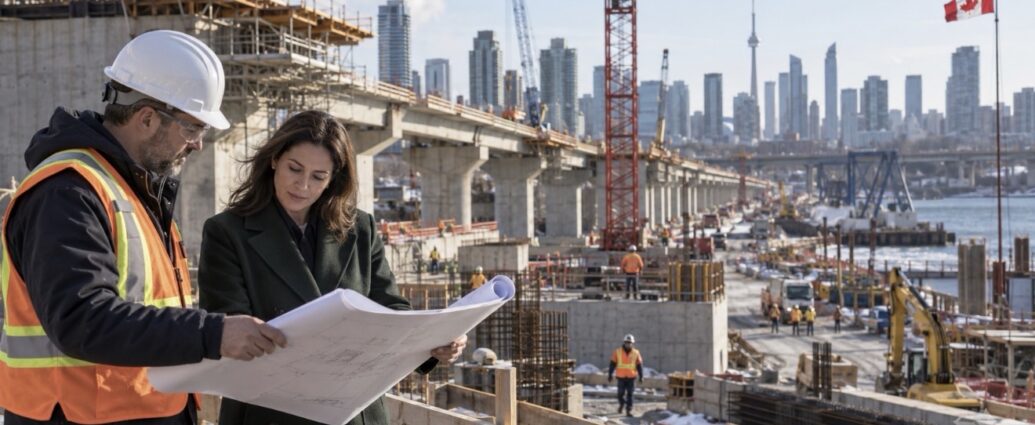
TD Bank Commits $108 Billion to Fuel Canada’s Infrastructure Boom
TD Bank is putting the equivalent of more than $108 billion behind Canada’s next generation of pipelines, power projects, mines, transportation networks and artificial-intelligence infrastructure.
The bank announced Monday that it plans to mobilize C$150 billion over five years through new lending, underwriting and financial advisory services.
That distinction matters. TD is not writing Ottawa a C$150 billion check or investing the entire amount from its own balance sheet. It intends to help businesses and major projects borrow money, issue securities and attract outside investors.
The commitment is aimed at five sectors TD believes are entering an investment “supercycle”: energy, critical minerals, defense and aerospace, digital infrastructure and AI, and major trade and transportation corridors.
For Canadian construction companies, engineering firms, energy producers and equipment suppliers, the announcement could translate into more projects receiving financing and moving from government planning tables into construction.
TD Economics estimates that roughly 300 proposed nation-building projects could require between C$1 trillion and C$1.7 trillion in total investment by 2035. Even TD’s enormous commitment would therefore cover only a portion of the capital Canada may need.
The bank also plans to support smaller businesses seeking contracts connected to the projects, expand Indigenous participation and invest in workforce development and AI training.
TD is joining a much broader push by Canada’s financial sector to finance domestic infrastructure as the country tries to reduce its exposure to cross-border trade disruptions.
Bank of Montreal recently committed as much as C$70 billion over 10 years toward projects including power generation, pipelines, transportation and AI computing. Sun Life pledged C$5 billion for direct debt and equity investments, while Power Corporation of Canada announced plans to mobilize another C$10 billion.
Together, those commitments amount to at least C$235 billion in potential financing and investment.
The opportunity is substantial, but the money will not eliminate the biggest obstacles facing Canadian development. Major projects can still be delayed by permitting battles, regulatory uncertainty, Indigenous consultations, political opposition and years of legal challenges.
TD’s commitment signals that financing may be available. Canada must now prove it can approve projects quickly enough for businesses to use it.
JBizNews Desk | Toronto
© JBizNews.com. All rights reserved. This article is original reporting by JBizNews Desk. Unauthorized reproduction or redistribution is strictly prohibited.