
Turkish Stocks Plunge As Fund Liquidity Crisis Spreads Across Market
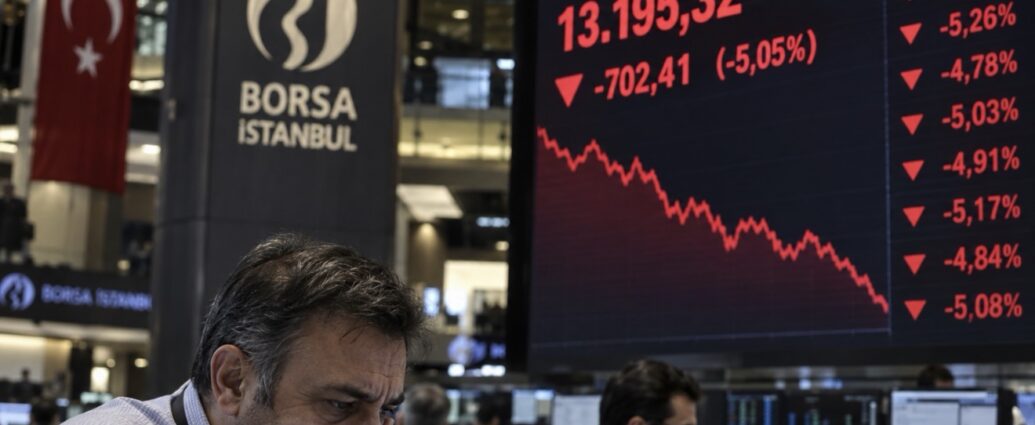
Turkey’s stock market fell as much as 5% Wednesday as a problem that began inside a group of investment funds spread into a broad market selloff.
The BIST 100 dropped to around 13,195, its steepest decline since May. Banks and industrial stocks also fell about 5%, while technology, construction and machinery shares suffered even larger losses.
The immediate concern is liquidity — whether investment funds can raise enough cash when investors ask for their money back.
Pusula Portföy Yönetimi disclosed that some of its funds were unable to make redemption payments on time, resulting in defaults. Investors have pulled roughly 129 billion Turkish lira from Pusula funds since the end of August, according to data compiled by Turkish fund-tracking platforms Fonbul and Fintables.
The damage inside some funds has been extreme. Pusula’s equity-heavy fund has reportedly lost about 92% over that period, while several other portfolios have fallen between 45% and 94%.
That matters far beyond one asset manager.
When investors rush to withdraw money from a fund, the manager needs cash to pay them. If the fund does not have enough cash, it may have to sell stocks quickly — including shares it would otherwise prefer to keep.
Those forced sales push prices lower. Lower prices can trigger additional investor withdrawals and automatic stop-loss orders, creating another round of selling.
That is the fear now moving through Istanbul.
The decline accelerated after the BIST 100 broke below the psychologically important 14,000 level, activating additional stop-loss selling. The index had already dropped 2.41% Tuesday before Wednesday’s losses deepened.
Turkish regulators have also been scrutinizing funds holding large positions in relatively illiquid stocks — shares where a large block cannot necessarily be sold quickly without driving the price sharply lower.
The broader global backdrop is making the problem harder. Oil remains above $100 a barrel, global bond yields are elevated, and investors are awaiting the Federal Reserve’s interest-rate decision Wednesday. Those pressures have already reduced investors’ willingness to hold riskier assets.
For investors, the key question is no longer simply whether several Turkish funds made bad investments.
It is whether funds needing cash will be forced to sell enough stock to drag down otherwise unrelated companies.
That is how a liquidity problem inside a few portfolios can become a market-wide problem.
JBizNews Desk | Istanbul
© JBizNews.com All Rights Reserved. Reproduction or distribution without written permission is prohibited.

U.S., China Discuss Cutting Some Tariffs Ahead of Trump-Xi Meeting
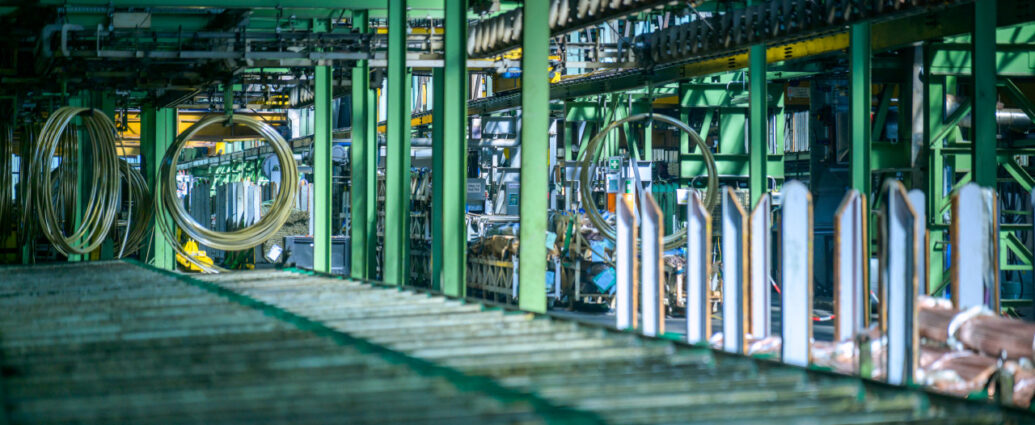
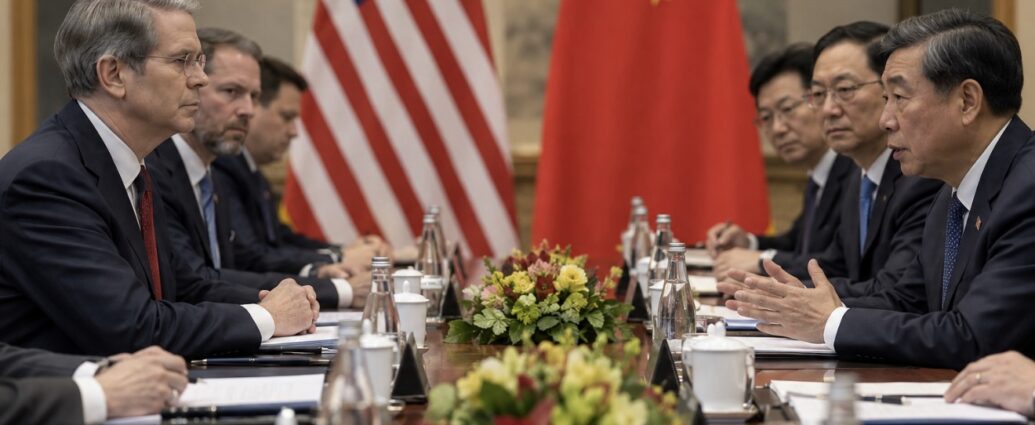
The United States and China are discussing cutting tariffs on tens of billions of dollars of each other’s goods, a potentially meaningful step toward easing the trade costs that businesses and consumers on both sides have been paying.
The talks are focused on roughly $30 billion of goods from each country, with officials looking primarily at products considered less sensitive to national security. China’s Commerce Ministry said last week that both sides were working toward reciprocal tariff reductions and hoped to reach an agreement soon.
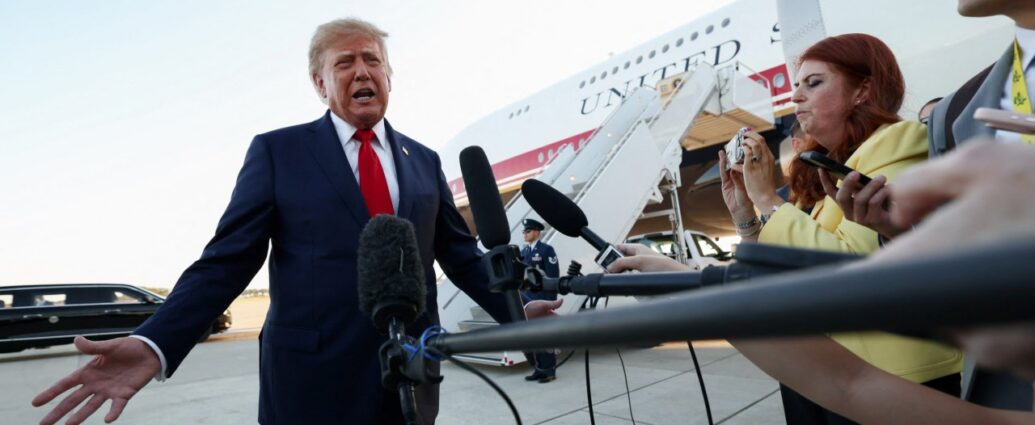
The timing matters. President Donald Trump and Chinese President Xi Jinping are preparing for a possible September 24 meeting in Washington, and economic officials are trying to make progress before the two leaders sit down.
Treasury Secretary Scott Bessent is expected to meet Chinese Vice Premier He Lifeng this weekend as Washington and Beijing continue broader economic discussions. China has not yet formally confirmed the September 24 Trump-Xi meeting.
For American companies, even limited tariff reductions could remove costs that have become embedded in supply chains.
A 10% tariff on a $100,000 shipment adds $10,000 before transportation, warehousing and other expenses are counted. Companies can absorb that cost, demand lower prices from suppliers or pass some of it to customers. Most eventually use some combination of all three.
That is why tariff reductions that appear small on paper can matter to importers dealing with millions of dollars of merchandise each year.
The discussions are not expected to eliminate the broader U.S.-China trade barriers built up over years of disputes involving technology, manufacturing, national security and market access. Instead, negotiators appear to be targeting areas where both governments believe tariffs can be lowered without reopening their biggest political and strategic disagreements.
Agriculture is another important part of the relationship.
China purchased roughly 1 million metric tons of U.S. soybeans in recent days, according to traders cited by Reuters, adding to Chinese purchases ahead of the expected leaders’ meeting. American farmers have long been among the industries most directly affected when trade tensions rise or Chinese buying slows.
Lower tariffs could make additional U.S. agricultural products more competitive in China, while reductions on Chinese goods entering the United States could reduce costs for American companies that still depend on Chinese factories and components.
But the economic relationship has changed significantly from the first major U.S.-China tariff battles.
Companies have spent years shifting portions of their supply chains to Vietnam, India, Mexico and other countries to reduce reliance on China. Beijing has also worked to expand trade with markets outside the United States.
That means a $30 billion tariff agreement would not suddenly return U.S.-China commerce to where it was before the trade war.
It could, however, signal something businesses value almost as much as lower tariffs: stability.
Companies making manufacturing, inventory and investment decisions need to know whether tariffs are likely to rise, fall or remain in place. Sudden changes can leave goods sitting at ports with unexpected costs or force businesses to rewrite contracts with suppliers.
A limited agreement would therefore matter beyond the specific products receiving tariff relief.
Washington and Beijing are also discussing far larger issues, including technology restrictions, artificial intelligence, critical minerals and China’s economic relationship with Iran. Those disputes make a sweeping trade settlement significantly more difficult.
The tariff negotiations nevertheless show that both governments are looking for areas where economic tensions can be reduced without resolving every disagreement between the world’s two largest economies.
The next important test comes this weekend when Bessent and He meet.
If negotiators can finalize tariff reductions before Trump and Xi meet, businesses could get something they have rarely received during years of U.S.-China trade disputes: an actual reduction in the cost of moving goods between the two countries.
For importers, exporters and manufacturers, the details will matter most — which products are covered, how large the reductions are and when they take effect.
Those are the numbers businesses will be watching next.
JBizNews Desk | Washington
© JBizNews.com. All rights reserved. This article is original reporting by JBizNews Desk. Unauthorized reproduction or redistribution is strictly prohibited.

Israel Inflation Holds At 1.5% Even As August Prices Jump
Israel just posted the kind of inflation number most Western economies would like to have: prices jumped in August, but annual inflation still held at just 1.5%.
The Consumer Price Index rose 0.7% in August from July, according to Israel’s Central Bureau of Statistics, slightly below forecasts for a 0.8% to 0.9% increase. But the bigger number is the annual rate. Inflation over the past 12 months remained unchanged at 1.5%, comfortably inside the Bank of Israel’s 1% to 3% target range.
That matters because one expensive month does not necessarily mean inflation is coming back.
Fresh vegetables rose 2.9% in August. Transportation costs climbed 2.7%, and culture and entertainment prices increased 2%. At the same time, fresh fruit fell 2%, clothing dropped 0.8%, and furniture and food declined 0.5%.
For Israeli households, that means some bills may have felt noticeably higher even though the broader inflation picture remains relatively calm.
For businesses, the bigger question is what this means for interest rates.
The Bank of Israel cut its benchmark rate on Sept. 1 by a quarter percentage point to 3.25%, saying inflation had moderated in recent months and was running below the midpoint of its target range.
The new August inflation data leaves that broader picture intact.
Lower inflation gives the central bank more room to focus on growth, credit conditions and the wider economy rather than being forced into another inflation fight.
The next Bank of Israel interest-rate decision is scheduled for Oct. 21.
For companies, every quarter-point matters.
Lower borrowing costs can affect business loans, real-estate financing, inventory purchases and expansion plans. Consumers can eventually feel the difference through mortgages, variable-rate debt and other forms of credit.
Housing is showing a somewhat different picture.
Israel’s Home Price Index rose 0.2% in the latest measurement, marking the second consecutive monthly increase after prices had fallen through much of the previous year.
Even with those recent gains, home prices were still down 1.2% from a year earlier.
That means two things can be true at the same time: Israeli home prices remain below last year’s level, but the market may be beginning to stabilize.
For buyers, that could mean the window created by falling prices is starting to change. For developers and real-estate businesses, two straight monthly increases are a sign worth watching.
The broader economy is also recovering.
When the Bank of Israel cut rates earlier this month, it said second-quarter GDP was running 6.2% above the fourth quarter of 2025 on an annualized basis. Excluding production abroad by Israeli companies, the increase was 3.8%.
That leaves Israel in an unusual position: annual inflation at 1.5%, interest rates moving lower, and economic activity recovering.
August itself was not cheap. A 0.7% monthly CPI increase is significant.
But the annual number tells the larger story.
Inflation is still 1.5%.
The Bank of Israel’s target is 1% to 3%.
And policymakers head toward their October meeting without an obvious inflation emergency forcing them to reverse course.
JBizNews Desk | Jerusalem
© JBizNews.com. All rights reserved. This article is original reporting by JBizNews Desk. Unauthorized reproduction or redistribution is strictly prohibited.
Nvidia CEO Jensen Huang To Attend Trump’s State Dinner For China’s Xi
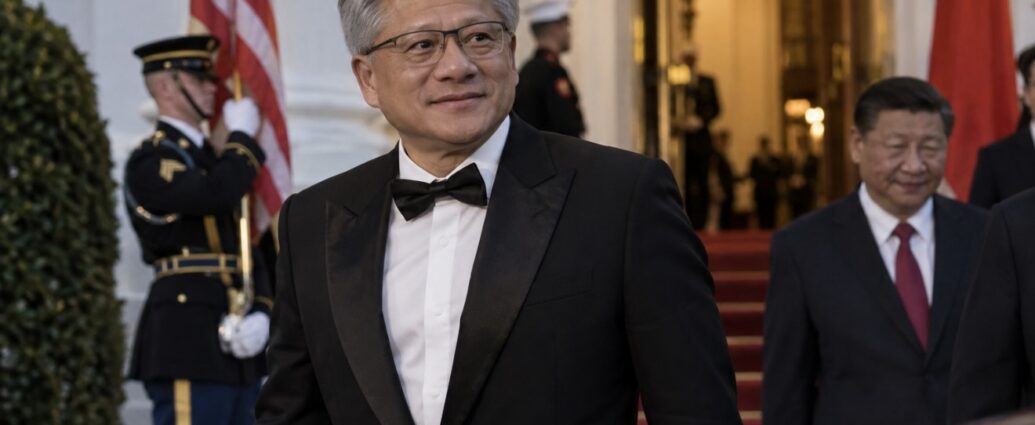
Nvidia CEO Jensen Huang is expected to be among the guests when President Donald Trump hosts Chinese President Xi Jinping for a state dinner in Washington next week, putting the head of the world’s most important AI chip company inside one of the highest-level diplomatic events between the United States and China.
Xi is scheduled to meet Trump in Washington on Sept. 24, with Trump publicly confirming that the visit will include a state dinner. Huang’s invitation has not been formally announced by the White House, but Reuters and Bloomberg reported Tuesday that he is expected to attend, citing people familiar with the plans. Nvidia declined to comment to Bloomberg, while the White House had not publicly released the guest list.
For Nvidia, this is far more than a ceremonial dinner.
The company sits directly in the middle of the economic and technological competition between Washington and Beijing. Nvidia’s advanced processors have become the backbone of the artificial-intelligence boom, powering the massive data centers used to train and operate increasingly sophisticated AI systems.
That makes Huang one of the few business executives whose company is central to both America’s AI ambitions and its negotiations with China.
The Sept. 24 Trump-Xi meeting is expected to take place against a backdrop of unresolved trade and technology disputes. U.S. Treasury Secretary Scott Bessent and U.S. Trade Representative Jamieson Greer are preparing additional talks with Chinese Vice Premier He Lifeng ahead of the summit, with artificial intelligence, rare-earth exports and trade restrictions among the issues dividing the two governments.
There are also efforts underway to reduce tariffs on selected goods considered less sensitive to national security. China has said it hopes the two countries can reach an agreement on reciprocal tariff reductions, while broader trade tensions remain unresolved.
For businesses, that means decisions made around the Trump-Xi meeting could reach far beyond Nvidia.
American technology companies depend on access to semiconductors, rare-earth minerals and global supply chains that stretch through Asia. Manufacturers use many of the same critical materials. Restrictions imposed by either Washington or Beijing can raise costs, delay production or determine which companies are allowed to sell into one of the world’s largest markets.
Nvidia faces those questions more directly than almost any other American company.
Washington has repeatedly restricted the export of advanced AI chips to China on national-security grounds, while Nvidia has sought ways to continue serving the Chinese market within U.S. rules. The underlying concern for American policymakers is straightforward: the same computing power used for commercial AI can also have military and intelligence applications.
For Nvidia, China remains too large a market to ignore, while U.S. policy determines how much of that market the company can legally serve.
Huang has also developed an increasingly visible relationship with Trump.
Just one day before reports of the state-dinner invitation emerged, Trump called Huang while the Nvidia CEO was speaking onstage at the All-In Summit in Los Angeles. The conversation centered on concerns that rapid AI development could create serious risks and whether the United States should slow its development of the technology. Trump rejected calls for a slowdown, while Huang argued that the United States can continue leading in AI while developing the technology safely.
Trump himself has repeatedly framed artificial intelligence as a strategic competition with China. Earlier this month, he said the race is primarily between the United States and China and that the country that leads in AI will hold an enormous advantage.
Huang’s expected appearance at the state dinner also carries some symmetry.
Earlier this year, Huang joined other major American technology executives at a state dinner hosted by Xi for Trump during the president’s trip to China. His expected presence in Washington next week would again place the Nvidia chief at the intersection of technology, business and diplomacy.
The state dinner itself is one of Washington’s most formal diplomatic honors, generally reserved for visiting heads of state and attended by senior government officials, business leaders and other prominent guests.
For Nvidia, Huang’s seat at the table underscores how deeply AI and semiconductors have become intertwined with U.S.-China relations.
What happens during the Sept. 24 summit will be watched not only in Washington and Beijing, but across Silicon Valley, manufacturing plants, financial markets and corporate boardrooms worldwide.
JBizNews Desk | Washington
© JBizNews.com. All rights reserved. This article is original reporting by JBizNews Desk. Unauthorized reproduction or redistribution is strictly prohibited.
FAA Chief Says Billions More Required To Finish Air Traffic Overhaul
The FAA’s air traffic control upgrade is going to cost a lot more than Congress has already handed over, and the agency’s own administrator told lawmakers Tuesday exactly how much.
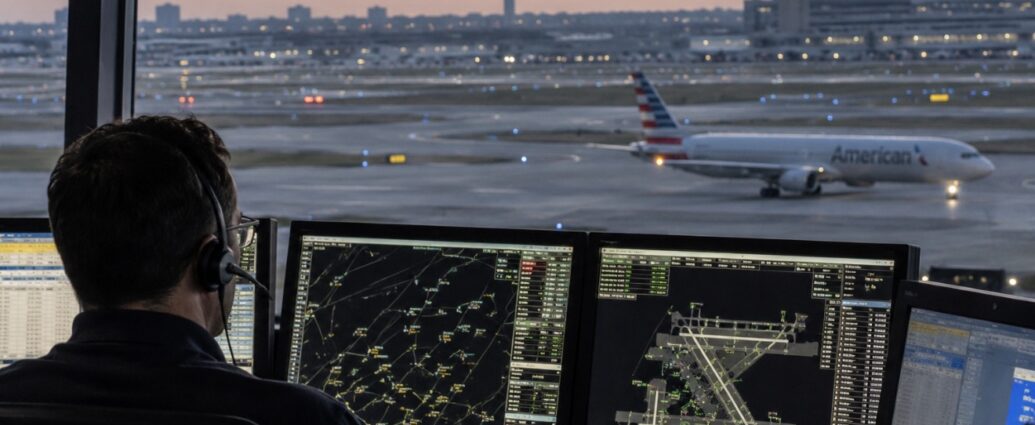
Here’s the plain version of what’s happening: back in 2025, Congress gave the FAA $12.5 billion to fix the country’s aging air traffic system, the old radar, outdated phone lines and paper-thin backup systems that have caused outages and near-misses at major airports. FAA Administrator Bryan Bedford told the House on Tuesday that just finishing the first phase of that fix will actually cost $16 billion, about $3.5 billion more than what Congress already approved. The FAA says it will cover that gap itself. Then, for phase two, the agency wants Congress to hand over another $10 billion on top of that.
Add it up and the total price tag for a fully modernized air traffic system is now pushing toward $26 billion or more, roughly double the original down payment.
For everyday travelers, this isn’t an abstract budget fight. The system Bedford is talking about is the one that decides whether your flight leaves on time, gets rerouted around a storm, or sits on the tarmac because a control tower is running short-staffed on old equipment. Progress has been real: as of September 1, the FAA says it has replaced 64% of its outdated copper-based communication lines, upgraded more than 400 radio sites, and installed new surface-awareness systems at 101 airports that help controllers track planes and vehicles on the ground.
But there’s a catch. A government watchdog report released just before Tuesday’s hearing found that the FAA still doesn’t have a complete cost estimate or master schedule for the whole modernization project, which spans 13 separate programs and more than 11,000 individual project timelines. In other words, lawmakers are being asked to keep writing checks for a project whose full price and finish line aren’t fully mapped out yet.
That combination, real progress paired with an uncertain final cost, is exactly what puts pressure on Congress heading into budget season. Airlines, Boeing, Airbus and pilot unions have already pushed lawmakers publicly to approve the extra funding, arguing that flight delays tied to outdated equipment cost the industry, and travelers, real money every year. The FAA is targeting the end of 2028 to finish this overhaul, compressed from an original 15-year timeline.
JBizNews Desk | Washington
© JBizNews.com All Rights Reserved. Reproduction or distribution without written permission is prohibited.






Opinion | Who Will Stop the Houthis?





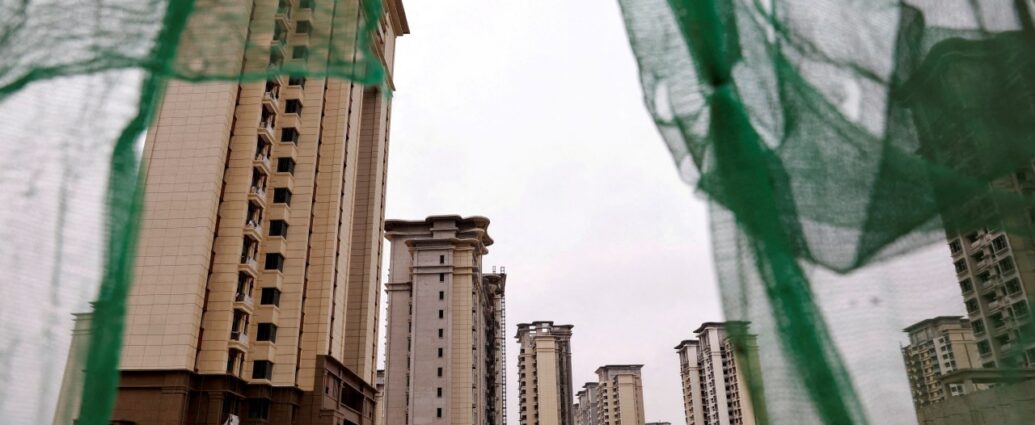
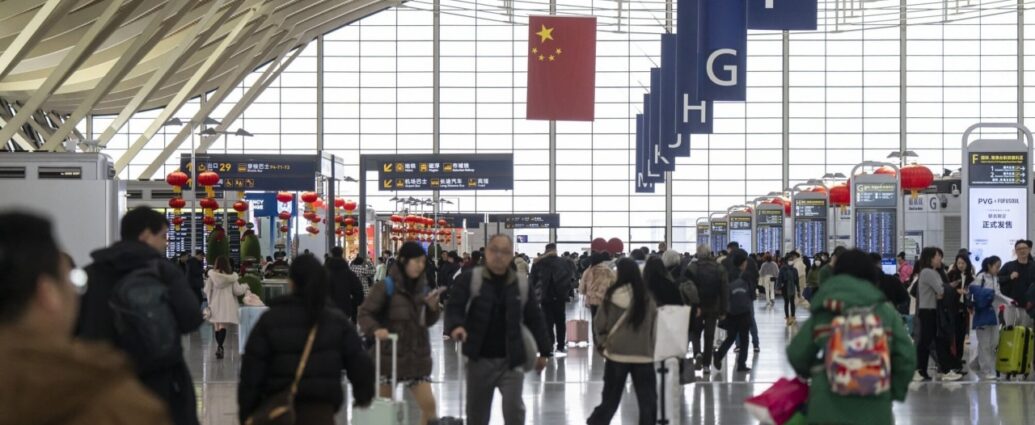
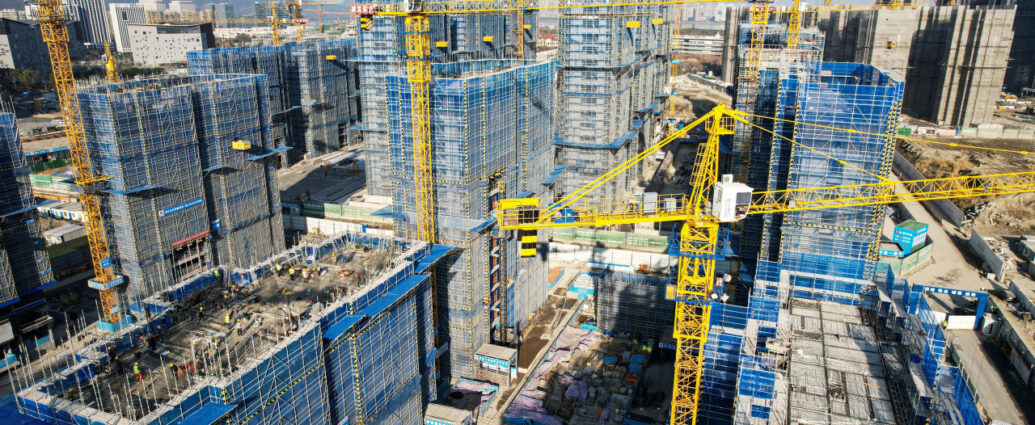


Israel Delivers Every Nation’s Dream Headlines: A Shrinking Deficit, Lower Interest Rates And Falling Gas Prices—As 12 Countries Boycott Jewish Goods
These are the headlines every government dreams of delivering to its citizens.
Israel’s fiscal deficit is shrinking. Interest rates have been cut for the third consecutive time. Gasoline prices are falling sharply after the government reduced its fuel tax.
Yet as Israel produces the economic results much of the Western world desperately wants, 12 countries are moving to restrict trade with Jewish communities in Yehuda V’Shomron.
While their own citizens struggle with government debt, expensive borrowing and punishing energy costs, their leaders have chosen to focus their economic pressure on Israel.
The contrast is impossible to ignore.
Israel’s Fiscal Deficit Continues To Narrow
Israel’s budget deficit fell to 3.2 percent of gross domestic product in August, helped by an 11.5 percent increase in tax revenue.
That would be a significant achievement in ordinary times. Israel accomplished it while financing war, missile defense, reserve duty, displaced families and sharply higher military spending.
Despite those extraordinary costs, the deficit continues to move downward.
The comparison with the United States is striking. Washington’s deficit has already reached approximately $1.97 trillion during the current fiscal year, while interest payments on the national debt consume an increasingly large share of federal revenue.
Israel still faces serious fiscal risks. Defense spending remains high, civilian expenditures could increase and another military escalation could quickly change the numbers.
But today’s headline is clear: Israel’s deficit is shrinking.
Bank Of Israel Makes Third Successive Interest-Rate Cut
The Bank of Israel lowered its benchmark interest rate by another quarter point to 3.25 percent, its third consecutive reduction and the lowest level since late 2022.
For families and businesses, lower rates can eventually mean smaller payments on variable-rate mortgages, business loans and credit lines. They can also make it less expensive for companies to finance equipment, inventory, expansion and hiring.
The central bank was able to act because inflation had fallen to 1.5 percent, comfortably inside its target range.
Across much of the Western world, central banks are confronting renewed pressure from rising oil prices, inflation concerns and higher government-bond yields. Consumers and businesses are being warned that borrowing costs may remain elevated—or climb even higher.
Israel just cut rates for the third consecutive time.
That is another headline nearly every Western government would love to claim.
Gasoline Prices Fall Sharply After Government Cuts Excise Tax
Israel also reduced its gasoline excise tax by 50 agorot per liter, bringing the maximum price of self-service 95-octane gasoline down from NIS 8.25 to NIS 7.75 per liter.
That is immediate money back in the pockets of drivers.
A motorist purchasing 50 liters saves NIS 25 on one fill-up. For delivery companies, contractors, taxi operators and businesses managing vehicle fleets, the savings multiply across every vehicle and every week.
Fuel prices do not stop at the gas station. They feed into the cost of groceries, construction materials, airline tickets, deliveries and nearly every product transported by truck, ship or aircraft.
Consumers across the United States, Canada and Europe are again being squeezed by rising oil prices and the higher cost of moving goods.
Israel acted to reduce the burden.
And The West Responds With A Boycott
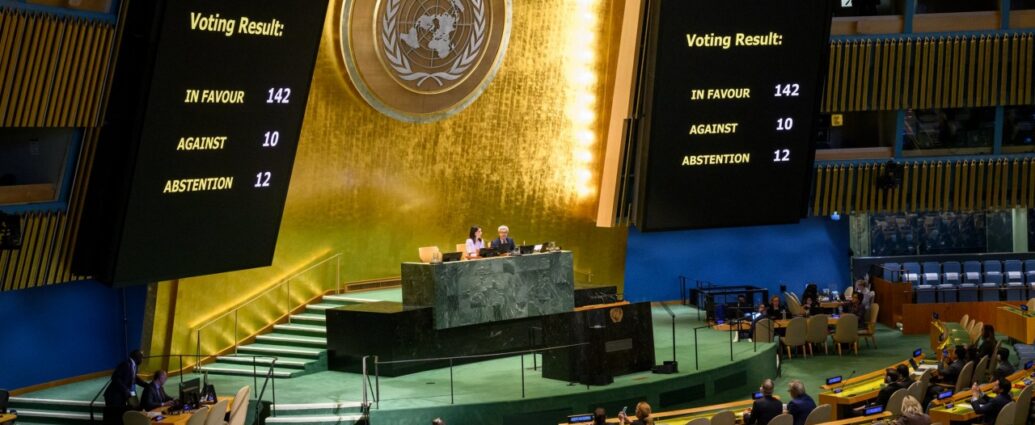
On Sept. 8, Britain, France, Canada, Denmark, Finland, Iceland, Ireland, Norway, Poland, Portugal, Spain and Sweden announced that they intend to introduce, support or consider restrictions on goods produced by Jewish communities in Yehuda V’Shomron.
Not every country has implemented a full boycott. But all 12 placed their names behind an effort to economically isolate Jewish businesses based on where their owners live and work.
The immediate financial impact may be limited because goods from these communities represent a relatively small share of Israel’s international trade.
But the message is far larger than the numbers.
Israel is shrinking its deficit while Western deficits explode.
Israel is cutting interest rates while Western borrowing costs remain painful.
Israel is lowering gasoline prices while families and businesses elsewhere are being crushed by energy costs.
And the response of 12 countries is to target Jewish goods.
At some point, it becomes impossible to ignore the jealousy, the envy and the hatred.
A small country surrounded by enemies, carrying the cost of war and facing relentless international pressure is producing the very economic headlines Western leaders are desperate to deliver to their own citizens.
They could study Israel’s resilience.
They could expand trade with it.
They could learn from it.
Instead, they chose another boycott.
JBizNews Desk | Jerusalem
© JBizNews.com. All rights reserved. This article is original reporting by JBizNews Desk. Unauthorized reproduction or redistribution is strictly prohibited.

OpenAI Buys Israeli-Founded Camera Startup Glass Imaging for More Than $300 Million
OpenAI has spent more than $300 million buying technology that could give its next generation of devices something crucial: better eyes.
The ChatGPT maker acquired Glass Imaging, an Israeli-founded startup that uses artificial intelligence to dramatically improve photographs and video captured by small cameras, according to reports Monday. The deal valued Glass at more than three times the roughly $100 million valuation it received last year.
Glass was founded in 2019 by former Apple engineers Ziv Attar and Tom Bishop. Its technology tackles the physical limitations inside smartphones and other compact devices, where small lenses and sensors often produce blur, noise and distorted details.
Instead of relying on larger and more expensive camera hardware, GlassAI processes the raw information coming from the sensor and corrects those weaknesses through software. The company says its technology can improve camera performance by as much as tenfold and deliver image quality approaching that of a DSLR camera.
That makes this more than another artificial-intelligence acquisition.
OpenAI is developing a closely guarded consumer device with former Apple design chief Jony Ive. The company has not disclosed whether Glass Imaging will become part of that project, but the strategic fit is difficult to overlook.
Any AI device designed to operate in the physical world must be able to see and interpret what surrounds it. A camera that captures clearer visual information gives the underlying AI better material to analyze—whether it is reading a document, recognizing an object, understanding a room or responding to what a user is doing.
Glass had raised approximately $30 million before the acquisition, including a $20 million funding round announced in 2025. Its technology has already been incorporated into smartphones produced by Honor, the Chinese consumer-electronics company.
For Glass investors, the reported purchase price represents a rapid increase in value. For OpenAI, it brings specialized camera engineers and proprietary imaging technology inside the company as it moves beyond software and prepares to compete in consumer hardware.
It also places another Israeli-founded technology company at the center of one of the world’s largest artificial-intelligence companies.
OpenAI has not publicly explained what it intends to build with Glass Imaging. But the purchase offers a clear clue: whatever comes after the smartphone may need to understand not only what its owner says, but everything its cameras can see.
JBizNews Desk | San Francisco
© JBizNews.com. All rights reserved. This article is original reporting by JBizNews Desk. Unauthorized reproduction or redistribution is strictly prohibited.


Opinion | Britain’s Go-Somewhere-Else Tax




Space42 and Viasat Commit Up to $1 Billion to Put Cell Service in Space
Your cellphone may soon stop caring whether there is a cell tower nearby.
Space42 and Viasat signed a binding agreement Monday to create Equatys, a new satellite communications company backed by up to $1 billion of initial equity, with the goal of connecting ordinary smartphones directly to satellites when terrestrial networks are unavailable.
The companies are effectively trying to build a cell-tower network in space.
Instead of every mobile operator launching its own satellite constellation, Equatys is designed as shared infrastructure that telecom companies can use much like they lease capacity from terrestrial tower operators today.
The difference is that the towers will be orbiting the Earth.
Equatys plans to use a global 5G non-terrestrial network built around international 3GPP standards, meaning the system is being designed to work with standard smartphones and connected devices rather than specialized satellite phones.
That could dramatically expand the addressable market.
Space42 estimates the potential market could exceed 1 billion devices by 2032.
The companies have access to more than 100 MHz of globally harmonized satellite spectrum, one of the most valuable pieces of the project because satellite connectivity depends not simply on launching hardware but on having legal rights to transmit signals around the world.
Commercial service is targeted within roughly three years.
The venture also changes the economics of satellite communications.
Building a global constellation requires enormous capital. Satellites have to be manufactured, launched, insured, operated and eventually replaced. Ground stations and network infrastructure must be built as well.
By allowing multiple telecom operators to share that infrastructure, Space42 and Viasat are betting they can spread those costs across many customers rather than forcing each carrier to build its own network.
It is essentially the same economic model that transformed the terrestrial cellphone business.
Wireless carriers once owned far more of their own towers. Over time, companies such as American Tower and Crown Castle built giant businesses owning infrastructure and leasing space on it to multiple carriers.
Equatys wants to take that model into orbit.
The implications could be enormous.
A customer traveling through a rural area, desert, mountain region or across open water could remain connected even after terrestrial cellular coverage disappears.
Emergency calls and messages could continue after hurricanes, earthquakes or other disasters knock down conventional towers.
Ships, aircraft, vehicles, agricultural equipment and industrial sensors could also remain connected far beyond existing cellular networks.
Space42 has already tested direct-to-device SMS and emergency SOS connectivity using normal devices through its Thuraya-4 satellite, with commercial services expected to begin rolling out this year.
The company also brings substantial financial firepower.
Space42 entered 2026 with approximately $1 billion in cash and short-term deposits and roughly $6.5 billion in contracted future revenue.
Viasat brings decades of satellite communications experience following its acquisition of Inmarsat.
The companies first announced plans for Equatys last year. Monday’s binding agreement moves the project from an idea toward an operating company with committed capital.
And investors immediately noticed.
Space42 shares jumped more than 6% Monday in Abu Dhabi trading following the announcement.
The competitive landscape is already crowded.
SpaceX’s Starlink has demonstrated that consumers will pay for satellite broadband, while Apple, T-Mobile, SpaceX and other telecommunications companies are increasingly experimenting with satellite connections directly to ordinary phones.
Europe is developing its own sovereign satellite infrastructure, and major telecom companies are exploring direct-to-mobile networks.
But Equatys is taking a different approach.
Rather than trying to replace existing mobile operators, it wants to become infrastructure for them.
That distinction could determine whether satellite connectivity becomes another standalone subscription consumers must buy — or simply another layer underneath the cellphone service they already use.
For the telecom industry, the physical boundary of the network has always been the point where the last cell tower disappears.
Space42 and Viasat are now spending up to $1 billion to eliminate that boundary.
JBizNews Desk | New York
© JBizNews.com. All rights reserved. This article is original reporting by JBizNews Desk. Unauthorized reproduction or redistribution is strictly prohibited.
AirBaltic Files Chapter 11 as $100 Oil Starts Claiming Corporate Victims
The Middle East energy shock has now pushed another airline into bankruptcy court.
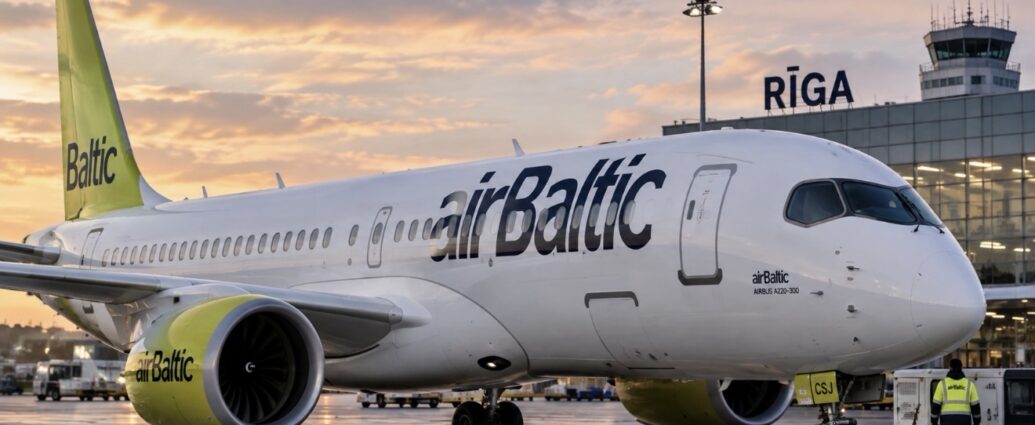
Latvia’s national carrier, airBaltic, filed for Chapter 11 bankruptcy protection in New York Monday, saying surging fuel costs and mounting debt made its previous business model unsustainable.
Flights are continuing. Existing tickets remain valid.
But financially, the airline is being rebuilt.
AirBaltic has secured commitments for approximately €350 million in bankruptcy financing, subject to court approval, giving it enough liquidity to keep operating while it restructures.
The company is carrying roughly €583 million of debt and had already burned through hundreds of millions of euros raised from bond investors as jet-fuel prices surged and geopolitical disruptions forced it to cut routes.
The airline carried 5.2 million passengers in 2025 and generated about €779 million in revenue, but still lost more than €44 million.
Now the economics have deteriorated further.
AirBaltic operates an all-Airbus A220 fleet and had once planned to grow to as many as 100 aircraft.
That expansion is now over.
The airline expects to shrink its fleet to roughly 36 aircraft by the end of 2026, down from 54, while management negotiates workforce reductions and cuts capacity.
For airlines, fuel is one of the largest operating expenses.
When jet fuel doubles, airlines cannot simply double ticket prices.
A carrier selling a €200 ticket may already be operating on a relatively thin margin after paying for aircraft leases, crews, airports, maintenance and fuel.
Add tens of millions of euros in unexpected fuel expense and the entire route network has to be recalculated.
AirBaltic was particularly exposed because much of its fuel costs were not protected through hedging.
The Iran war then pushed global energy prices sharply higher.
That made a difficult balance sheet significantly worse.
The Latvian government owns roughly 88% of airBaltic, while Lufthansa owns about 10%.
Latvia has already provided emergency financing, but European Union state-aid rules limit how much additional government money can simply be injected into the airline.
Chapter 11 gives management another option.
The airline can keep flying while negotiating with creditors, aircraft lessors, employees and potential investors under court supervision.
Management currently hopes to complete the restructuring by June 2027.
The larger warning is for the rest of the aviation industry.
Oil above $100 does not hit every airline equally.
Large carriers with stronger balance sheets, better fuel hedges and profitable premium routes can absorb higher energy costs longer.
Smaller and heavily indebted airlines cannot.
That means the longer oil stays above $100, the more likely the energy crisis becomes a corporate solvency crisis.
AirBaltic may be one of the first visible casualties.
It may not be the last.
JBizNews Desk | New York
© JBizNews.com. All rights reserved. This article is original reporting by JBizNews Desk. Unauthorized reproduction or redistribution is strictly prohibited.
Saudi Pipeline Attack Sends Oil Above $108 — 4% of Global Supply at Risk
The world just lost one of its most important escape routes around the Strait of Hormuz — and oil jumped more than 3% Monday morning.
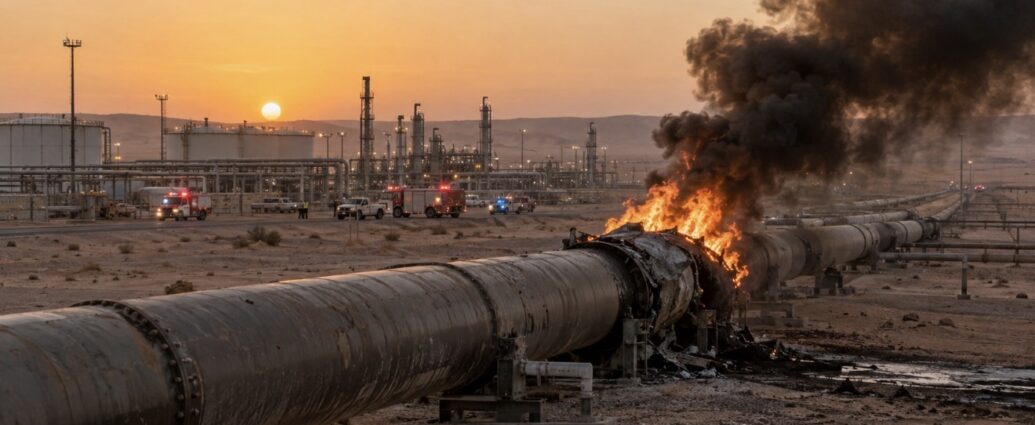
Brent crude surged above $108 a barrel, while U.S. West Texas Intermediate climbed above $102, after drone attacks forced Saudi Arabia to temporarily shut its East-West oil pipeline. (Reuters)
This is not simply another attack on an oil facility.
The 745-mile pipeline has become Saudi Arabia’s primary way of moving crude around the war-disrupted Strait of Hormuz. Earlier in the conflict, Saudi Arabia was pushing roughly 4 million to 5 million barrels a day through the line to its Red Sea export system — equal to approximately 4% to 5% of the entire world’s oil supply. (Reuters)
Now that route has been hit too.
That leaves Saudi Arabia relying on stored crude at the Red Sea port of Yanbu while repairs are made. Oil buyers told Reuters the kingdom has enough export inventory there for only about five to seven days if normal pipeline flows do not resume. (Reuters)
For businesses, the math becomes serious very quickly.
Every $10 increase in a barrel of oil adds enormous costs across an economy that moves almost everything by truck, ship or plane. Diesel fuels trucking and construction equipment. Jet fuel powers airlines. Marine fuel moves container ships. Oil and natural gas feed into plastics, chemicals, packaging and manufacturing.
And diesel has already crossed $6 a gallon in the United States during this latest energy shock. (Reuters)
A trucking operation burning 10,000 gallons a week at $6 is spending $60,000 every seven days just on fuel.
Raise that cost by another 50 cents a gallon and the company needs another $5,000 every week — $260,000 a year — before paying one additional driver, buying one additional truck or moving one additional package.
Those costs do not disappear.
They eventually show up in freight rates, groceries, construction materials, airline tickets and the price businesses charge customers.
The Saudi pipeline had been one of the biggest reasons the global oil market remained functional even after traffic through the Strait of Hormuz collapsed.
Before the Iran war, Hormuz handled roughly 20% of global crude oil and LNG supply, with about 125 commercial vessel transits a day. Over the weekend, commodity-vessel traffic remained dramatically below normal as security risks continued around the strait. (Reuters)
Saudi Arabia responded to those disruptions by moving more oil west across its territory through the East-West pipeline and loading it onto tankers from the Red Sea.
But that backup system was already under pressure.
Saudi west-coast exports fell sharply in August as Houthi activity threatened shipping near the Bab el-Mandeb Strait at the southern entrance to the Red Sea. Saudi output fell to roughly 6 million barrels a day in August, its lowest level in more than three decades, according to the International Energy Agency. (Reuters)
Now the pipeline feeding that route has itself been attacked.
Asian refiners are already preparing for tighter supplies. Saudi Aramco had not provided customers with updated shipment schedules early Monday, leaving buyers uncertain about how much crude would arrive and when. Refiners are beginning to look toward alternative barrels from producers including Iraq and the United Arab Emirates. (Reuters)
The danger is not simply today’s oil price.
Global petroleum inventories have already fallen by approximately 507 million barrels since the Iran war began, according to International Energy Agency figures cited by Reuters. Refined-fuel exports from the Middle East — including diesel, gasoline and jet fuel — remain nearly 60% below prewar levels. (Reuters)
That means the world is entering this new disruption with a much smaller cushion than it had when the conflict began.
The pipeline shutdown also comes just two days before the Federal Reserve announces its next interest-rate decision.
Markets are already overwhelmingly expecting another rate increase Wednesday as inflation accelerates. A fresh jump in oil, diesel and transportation costs gives the Fed another reason to worry that inflation will remain elevated.
That is why Monday’s pipeline attack matters far beyond Saudi Arabia.
For months, the Strait of Hormuz was the vulnerability and Saudi Arabia’s East-West pipeline was part of the solution.
Now the solution has become another vulnerability.
And if Saudi Arabia cannot restore that pipeline quickly, businesses around the world may discover that $108 oil was not the peak — it was the warning.
JBizNews Desk | New York
© JBizNews.com. All rights reserved. This article is original reporting by JBizNews Desk. Unauthorized reproduction or redistribution is strictly prohibited.
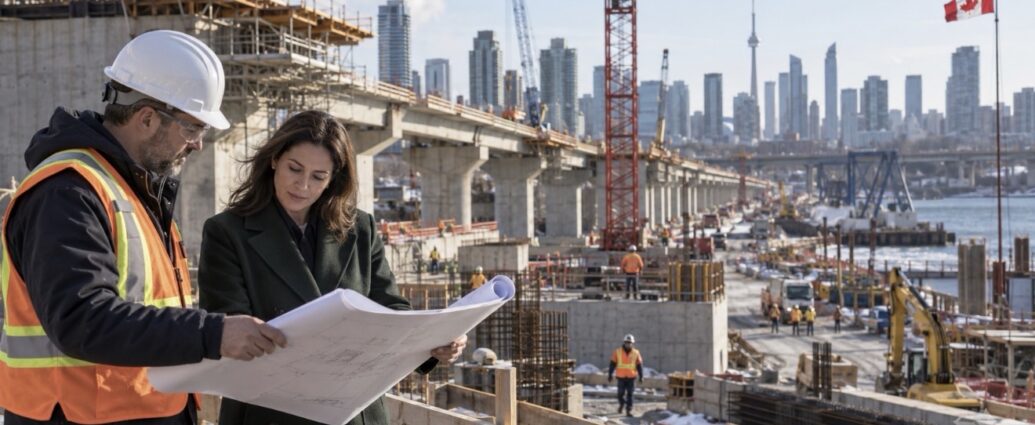
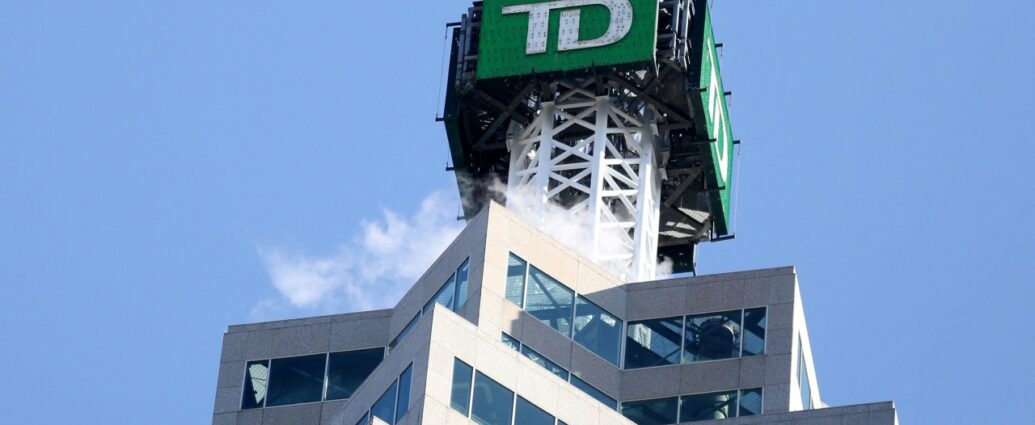
TD Bank Commits $108 Billion to Fuel Canada’s Infrastructure Boom
TD Bank is putting the equivalent of more than $108 billion behind Canada’s next generation of pipelines, power projects, mines, transportation networks and artificial-intelligence infrastructure.
The bank announced Monday that it plans to mobilize C$150 billion over five years through new lending, underwriting and financial advisory services.
That distinction matters. TD is not writing Ottawa a C$150 billion check or investing the entire amount from its own balance sheet. It intends to help businesses and major projects borrow money, issue securities and attract outside investors.
The commitment is aimed at five sectors TD believes are entering an investment “supercycle”: energy, critical minerals, defense and aerospace, digital infrastructure and AI, and major trade and transportation corridors.
For Canadian construction companies, engineering firms, energy producers and equipment suppliers, the announcement could translate into more projects receiving financing and moving from government planning tables into construction.
TD Economics estimates that roughly 300 proposed nation-building projects could require between C$1 trillion and C$1.7 trillion in total investment by 2035. Even TD’s enormous commitment would therefore cover only a portion of the capital Canada may need.
The bank also plans to support smaller businesses seeking contracts connected to the projects, expand Indigenous participation and invest in workforce development and AI training.
TD is joining a much broader push by Canada’s financial sector to finance domestic infrastructure as the country tries to reduce its exposure to cross-border trade disruptions.
Bank of Montreal recently committed as much as C$70 billion over 10 years toward projects including power generation, pipelines, transportation and AI computing. Sun Life pledged C$5 billion for direct debt and equity investments, while Power Corporation of Canada announced plans to mobilize another C$10 billion.
Together, those commitments amount to at least C$235 billion in potential financing and investment.
The opportunity is substantial, but the money will not eliminate the biggest obstacles facing Canadian development. Major projects can still be delayed by permitting battles, regulatory uncertainty, Indigenous consultations, political opposition and years of legal challenges.
TD’s commitment signals that financing may be available. Canada must now prove it can approve projects quickly enough for businesses to use it.
JBizNews Desk | Toronto
© JBizNews.com. All rights reserved. This article is original reporting by JBizNews Desk. Unauthorized reproduction or redistribution is strictly prohibited.