








Shein’s Everlane Deal Isn’t About Fashion. It’s About Reinventing Trust.
For years, Shein has dominated one corner of retail by answering a simple question better than almost anyone else: How quickly can a trend become a product? If reports that it is acquiring Everlane prove accurate, the company is now asking a far more difficult question: Can a business built on speed and low prices also become a brand consumers trust with premium products?
That’s why this deal matters.
Everlane was never the largest apparel company, nor the cheapest. It built its reputation by convincing shoppers that paying more meant understanding where a product came from, how it was made, and why it cost what it did. In an industry where discounts often drive sales, Everlane sold transparency as much as clothing.
Shein’s success came from almost the opposite direction. It mastered global sourcing, rapid design cycles, and direct-to-consumer logistics at a scale few retailers have matched. That formula transformed fast fashion, but it also made the company a frequent target of scrutiny over supply chains, sustainability, and product quality.
Put those two companies together and the acquisition becomes something larger than an apparel transaction. It becomes a test of whether operational excellence can purchase brand credibility—or whether credibility is one asset that has to be earned over time.
Retail history offers examples in both directions. Companies regularly buy factories, technology, and market share. Buying customer trust is far less predictable. Consumers often develop relationships with brands because of what they represent, not simply because of what they sell. Change that perception too quickly, and the value of the acquisition can begin to erode.
That is what makes this one worth watching. If Shein preserves what customers believe Everlane stands for while using its own global scale to expand the business, it will have shown that a fast-fashion giant can successfully move into higher-value retail without losing the qualities that made the acquired brand attractive in the first place.
If it cannot, the lesson will reach well beyond apparel. It will reinforce one of the oldest truths in business: acquiring a respected brand is a financial transaction; preserving the trust behind that brand is a leadership challenge.
JBizNews Desk | New York
© JBizNews.com. All Rights Reserved. Reproduction or distribution without written permission is prohibited


Korea Leads Asia’s Tech Rally; Yen in Focus

Netanyahu Says Israeli Commandos Would Respond to ICC Arrest Attempt: “Let’s Give Them a New Task”
Israeli Prime Minister Benjamin Netanyahu said he has considered the possibility that an in-flight emergency could force his aircraft to land in a country that recognizes the International Criminal Court’s arrest warrant against him, and indicated Israel has contingency plans involving its elite military forces.
The comments came during an interview with Sean Hannity on Fox News while Netanyahu was visiting Washington this week. Hannity asked whether Netanyahu worries that a medical emergency could force his aircraft to land in an ICC member state that might attempt to execute the warrant. Netanyahu acknowledged he has thought about the scenario, noted that he served in Israel’s special forces for five years, and, after Hannity remarked on the capabilities of Israeli commandos, replied with a smile: “Let’s give them a new task.”
No emergency landing occurred. The discussion was entirely based on Hannity’s hypothetical question, not an actual incident.
The exchange nevertheless highlights a growing challenge facing governments and international travel: how global arrest warrants can influence flight planning, diplomatic travel, and cross-border logistics long before any legal action is ever taken.
The International Criminal Court issued arrest warrants for Netanyahu and former Israeli Defense Minister Yoav Gallant in November 2024, alleging war crimes and crimes against humanity related to the conflict in Gaza. Israel rejects the court’s jurisdiction and has strongly denied the allegations.
Because more than 120 countries are parties to the Rome Statute, the treaty establishing the ICC, questions have emerged over where Israeli officials can safely travel and what would happen if an aircraft carrying a wanted official were forced to land unexpectedly in one of those jurisdictions.
While governments have generally avoided publicly detailing how they would handle such a situation, the uncertainty itself has become part of international travel planning.
Legal experts continue to debate whether obligations under the Rome Statute extend only after an aircraft lands or whether additional responsibilities arise during transit through a country’s airspace. Few governments have issued formal guidance, leaving airlines, diplomatic planners and security officials to evaluate legal risks alongside operational considerations.
Those uncertainties are increasingly affecting aviation and business planning.
Government aircraft transporting senior officials now face additional route analysis, including alternate airports, diplomatic clearances, emergency diversion planning, and political risk assessments. Executive aviation providers, insurers and security consultants are similarly incorporating geopolitical legal exposure into international travel decisions.
The issue extends beyond government leaders.
Corporate executives traveling to politically sensitive regions, multinational companies operating across jurisdictions, and insurers underwriting international aviation risk all face an environment where sanctions, international legal disputes and geopolitical tensions increasingly influence transportation decisions.
Netanyahu also criticized the International Criminal Court during the interview, arguing that actions against Israeli leaders could establish precedents affecting other democratic governments, including future American administrations and military personnel operating alongside allies overseas.
Whether any ICC member state would ultimately attempt to execute the warrant remains uncertain. The court has no police force of its own and relies entirely on member governments to enforce its decisions.
For businesses, however, the broader lesson is already emerging. International legal disputes are becoming another variable in global logistics, joining fuel costs, weather, security threats and geopolitical instability as factors shaping how people and assets move across borders.
JBizNews Desk | Jerusalem
© JBizNews.com All Rights Reserved. Reproduction or distribution without written permission is prohibited.
North Korea Finds a Way Around Sanctions—And It’s Changing the Economics of Pressure
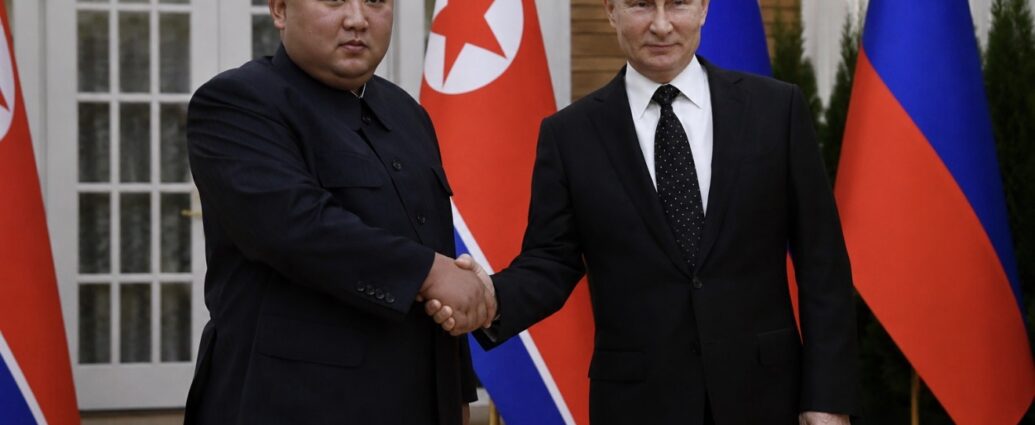
For years, the assumption behind sanctions was simple: isolate North Korea financially and eventually the economy would run out of options. Instead, the latest trade data suggests Pyongyang has found another path.
Trade between North Korea and China climbed to its highest level since 2017 during the first half of 2026, according to newly released Chinese customs data. Imports and exports accelerated even as one of the world’s toughest sanctions regimes remained in place, extending a recovery that has been quietly building over the past two years.
The numbers alone don’t explain what changed. Russia does.
Since Moscow’s invasion of Ukraine, North Korea has transformed from an isolated economy into a strategic supplier. Ammunition, missiles and military equipment have become valuable exports, generating hard currency that economists say has flowed back into factories, construction projects and industrial production. The war didn’t just create a customer. It created cash.
China became the second half of that equation.
Russian money may have restarted production, but China remains the marketplace. Border trade has accelerated, trucks once again move steadily through the Dandong crossing, and Chinese demand continues absorbing North Korean exports while supplying the food, machinery and industrial materials Pyongyang cannot easily produce itself. One relationship generates revenue. The other keeps the economy functioning.
That combination exposes an uncomfortable reality for Western policymakers. Sanctions haven’t disappeared, but their influence has weakened because North Korea’s two most important economic partners sit largely outside the Western financial system. When your biggest customers are willing to keep buying, isolation becomes much harder to enforce.
Business leaders should pay attention because this isn’t only a geopolitical story. It illustrates how global supply chains adapt under pressure. Trade rarely stops; it reroutes. Capital finds new partners. Manufacturing follows demand. The same pattern has played out with Russian energy exports, semiconductor restrictions and critical minerals. North Korea is simply another example of commerce finding an alternative route when traditional ones close.
None of this means North Korea has solved its economic problems. It remains heavily dependent on just two countries, its domestic economy is still fragile, and much of today’s growth is tied to extraordinary wartime demand rather than a diversified private sector. If military orders slow or China’s economy weakens, those gains could fade just as quickly as they appeared.
The broader lesson reaches well beyond Pyongyang. Economic pressure works best when major trading partners move together. When large economies pursue different strategic interests, sanctions become less about stopping trade and more about changing where that trade flows.
That’s why today’s trade figures matter. They’re not simply another economic statistic. They’re evidence that geopolitics is rewriting the rules of global commerce—and businesses that understand those shifts early are usually the ones that adapt first.
JBizNews Desk | Seoul
© JBizNews.com. All Rights Reserved. Reproduction or distribution without written permission is prohibited.
China’s Factory Slowdown Puts Pressure on Beijing—and Could Create New Opportunities for U.S. Businesses
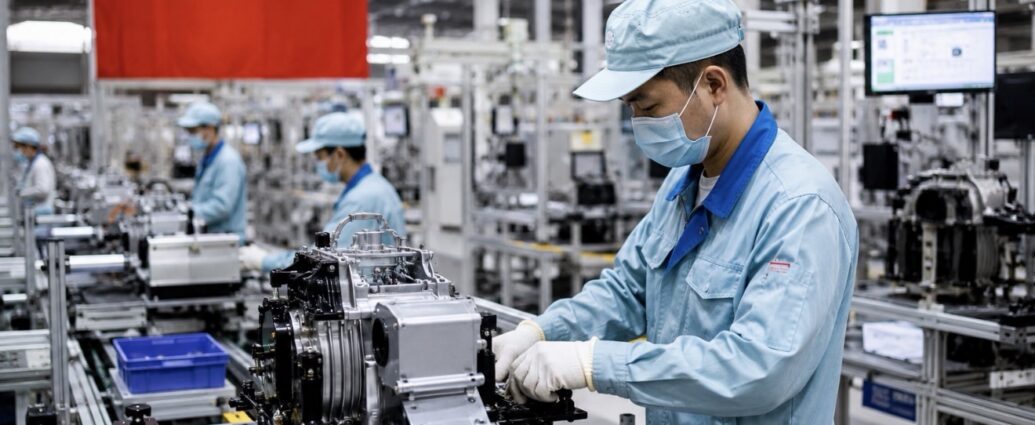
China’s manufacturing sector slipped back into contraction in July, with the country’s official Purchasing Managers’ Index (PMI) falling to 49.2 from 50.3 in June, according to the National Bureau of Statistics. The reading came in below economists’ expectations and dropped under the 50-point mark that separates expansion from contraction.
On the surface, it looks like another disappointing economic report. The bigger story is why factories slowed. New orders fell faster than production, signaling that demand—not the ability to manufacture goods—is becoming China’s biggest problem. When customers stop buying, factories don’t immediately shut down. They compete harder for every order, often by cutting prices.
That shift could ripple well beyond China. American retailers, wholesalers, and manufacturers that buy components or finished goods from Chinese suppliers may gain leverage heading into the holiday season as suppliers look to keep production lines running. Lower factory prices can eventually reduce import costs, although tariffs and shipping expenses will still influence what U.S. consumers ultimately pay.
Not everyone benefits. U.S. manufacturers competing against imported goods could face renewed pricing pressure if Chinese exporters begin discounting more aggressively. Companies producing furniture, consumer electronics, industrial equipment, and other price-sensitive products may find themselves competing against cheaper overseas alternatives.
The report also raises the stakes for Beijing. Chinese officials have tried to support the economy with targeted measures instead of launching another massive stimulus campaign. That approach worked while exports remained strong. If both domestic demand and overseas orders begin to soften at the same time, policymakers may have little choice but to introduce broader support for businesses, infrastructure, or consumer spending.
Investors should pay close attention to the next round of Chinese export, inflation, and industrial production data. One weak month doesn’t establish a trend, but if orders continue to decline while factories keep producing, the result is often lower prices, shrinking corporate profits, and growing pressure for government intervention.
For American businesses, the takeaway isn’t to assume China’s economy is collapsing. It’s to recognize that a weaker manufacturing sector can change supplier pricing, purchasing strategies, and competitive dynamics months before those effects show up in U.S. earnings reports or on store shelves.
JBizNews Desk | Beijing
© JBizNews.com. All Rights Reserved. Reproduction or distribution without written permission is prohibited


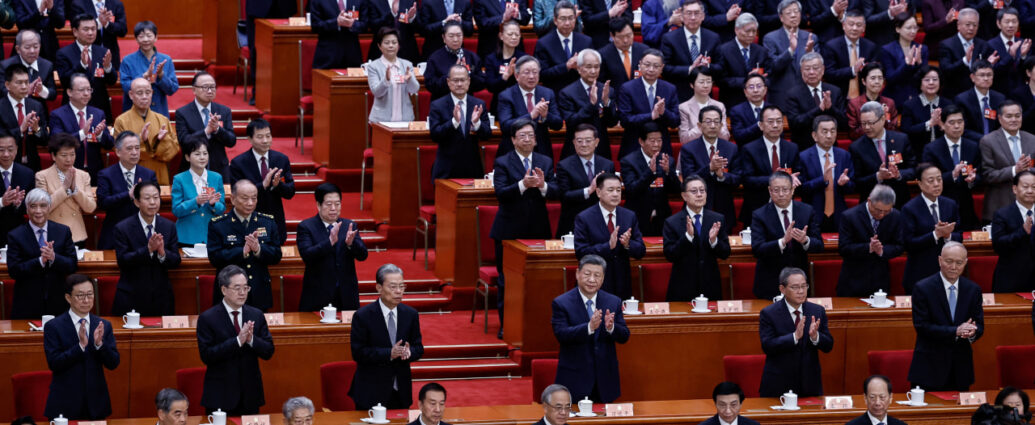
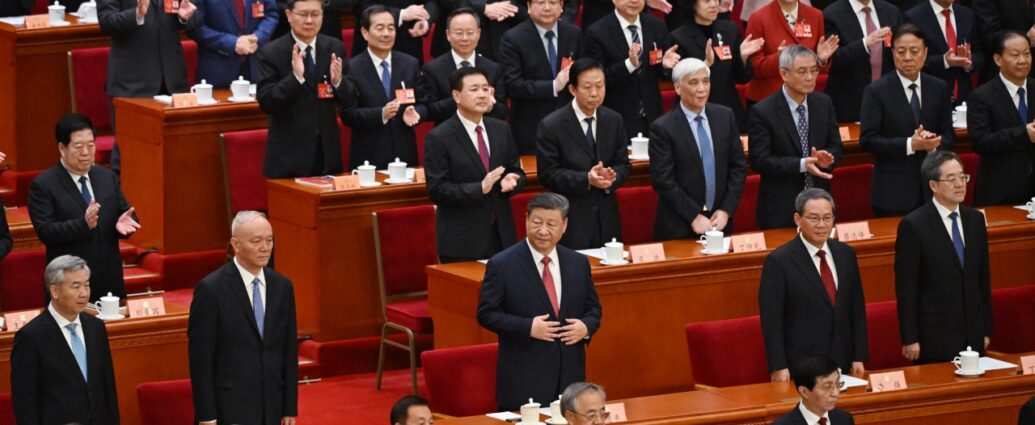
Opinion | China’s Non-Plan for the Economy





Renault Revenue Rises 9.5% and Company Returns to Profit as Cost Program Takes Hold
French automaker holds full-year margin target of 5.5% while flagging Middle East crisis costs in raw materials, energy and logistics
Renault Group reported first-half revenue of €30.25 billion on Wednesday, a 9.5 percent increase over the same period in 2025, and swung back to a net profit of €700 million after a loss-making prior year. The company confirmed its full-year 2026 guidance of a group operating margin around 5.5 percent.
First-half operating margin came in at 5.2 percent. At constant exchange rates, group revenue rose 10.3 percent. Automotive revenue reached €26.81 billion, up 9.3 percent, held back by 0.9 points of currency drag — roughly €211 million — tied mainly to devaluation in the Turkish lira, the pound sterling and the Argentine peso.
The return to profit is measured against a difficult comparison. Renault closed 2025 with an operating profit of €3.6 billion on a 6.3 percent margin, but a net loss attributable to the group of €10.9 billion driven by a non-cash charge.
Electric vehicles carried the half
Sales of fully electric vehicles jumped 47.6 percent against the first half of 2025, helped by the new Renault 5. Battery-electric models accounted for one in five new vehicles the company sold.
Chief Executive François Provost pointed to the launches of the Clio VI and the electric Twingo E-Tech in Europe during the period and framed the results as evidence that the company’s futuREady strategy is moving from plan to operating practice.
Renault sold 1.17 million cars and vans in the first six months, down 0.4 percent from a year earlier, though second-quarter sales rose 2.3 percent as the company worked past logistics problems at its Dacia brand. In France, the company has pulled back from lower-margin channels such as short-term rental fleets to concentrate on retail buyers, and has avoided heavy discounting. The Dacia Sandero remains Europe’s best-selling car, though the budget brand’s electric lineup is thin.
The cost side
Renault said its variable cost-of-goods-sold reduction efforts are tracking to plan. The target is roughly €400 per vehicle per year on average over the medium term. Cash fixed costs were flat against the first half of 2025, consistent with the company’s stated aim of holding that base stable.
That discipline is the substance behind the “cost-cutting is working” framing. It is also necessary. Renault is the smallest of the traditional European manufacturers and has to protect margin to keep funding electric vehicle and software development while facing price pressure from Chinese entrants including BYD and Chery.
The war cost line
Buried in the release is a line that will matter to manufacturers well beyond France. Renault said it continues to implement measures to mitigate the impact of the Middle East crisis on raw materials, energy and logistics costs.
That is a European automaker stating in a formal results document that the conflict has moved into its cost structure. Energy, freight and input materials all route through the same disrupted corridors, and a company running a €400-per-vehicle annual cost reduction program is effectively spending part of that saving to absorb war-driven inflation. Any manufacturer importing components or shipping finished goods through affected lanes is paying some version of the same bill, whether or not it is disclosed as plainly.
Why it matters here
Renault does not sell cars in the United States, but three things in this report carry across the Atlantic.
The first is the electric vehicle competition picture. A 47.6 percent increase in EV sales driven by small, affordable models — the R5, the electric Twingo — is a different playbook from the large, expensive electric vehicles that have dominated the American market. It suggests price point, not technology, is the constraint on adoption.
The second is the Chinese competitive threat. European incumbents are now defending share against BYD and Chery on their home ground. That contest determines where Chinese manufacturers direct capacity next, and how aggressively they price into markets that remain open to them.
The third is the cost disclosure. Renault is telling investors that Middle East disruption is showing up in materials, energy and freight. Tri-state importers, distributors and manufacturers running similar exposure should read that as confirmation the pressure is real and being managed rather than absorbed quietly.
Renault is also targeting automotive free cash flow of around €1.0 billion for the full year, including a €350 million dividend from its Mobilize Financial Services arm. Management said cost reduction remains the priority for 2026 and beyond.
The company scheduled its results conference for Thursday morning European time.
JBizNews Desk | Paris
© JBizNews.com All Rights Reserved. Reproduction or distribution without written permission is prohibited.










Israel’s Tourism Slump Deepens as Hotel Occupancy Falls to 44%
Israel’s tourism industry suffered another setback in the first half of 2026, with nationwide hotel occupancy falling to 44%, the lowest level since the October 7 war outside the immediate wartime period, as international visitors remained largely absent despite hopes for a recovery. The figures were released Tuesday by the Israel Hotel Association, underscoring the prolonged economic toll on one of the country’s largest service industries.
Rather than rebounding after last year’s slowdown, the sector faced renewed pressure following the conflict with Iran earlier this year and the temporary suspension of many international flights. Those disruptions delayed the return of overseas travelers, leaving hotels that depend on foreign tourism operating far below normal capacity.
Foreign tourists accounted for just 1.29 million overnight stays between January and June, down about 5% from the same period in 2025. While that was an improvement over the depths of 2024, it remains roughly 75% below the nearly 5 million overnight stays recorded during the first half of 2023 before the October 7 attacks.
Domestic tourism also softened. Israelis recorded approximately 7.2 million hotel overnight stays, a decline of about 9% from a year earlier. Although domestic travel has remained stronger than before the war as many Israelis vacation closer to home, it has not been enough to replace the disappearance of international visitors.
Regional performance highlighted the uneven recovery. Herzliya led the country with a 70% occupancy rate, followed by Eilat at 66% and the Dead Sea region at 48%. Jerusalem, traditionally one of Israel’s most tourism-dependent cities, averaged just 31%, while Nazareth recorded only 19%, reflecting the severe decline in pilgrimage and international group travel.
Industry leaders warned that hotels serving overseas visitors continue to face extraordinary financial pressure. The association said inbound tourism has “almost completely disappeared” since October 7 and urged the government to provide additional support to help hotels survive until international travel normalizes.
For Israel’s broader economy, the tourism slowdown extends well beyond hotels. Airlines, restaurants, tour operators, retailers, transportation companies and thousands of small businesses depend heavily on foreign visitors. A sustained recovery will likely require not only improved security conditions but also the restoration of airline capacity and traveler confidence.
JBizNews Desk | Jerusalem
© JBizNews.com All Rights Reserved. Reproduction or distribution without written permission is prohibited.