


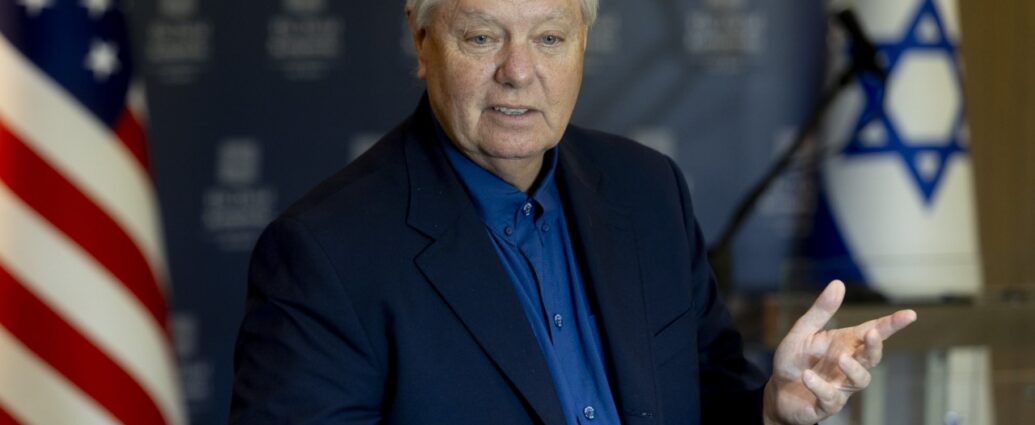
Opinion | The Lindsey Graham Example


China Warns of Retaliation if U.S. Sanctions AI Firms Over Model Copying Claims
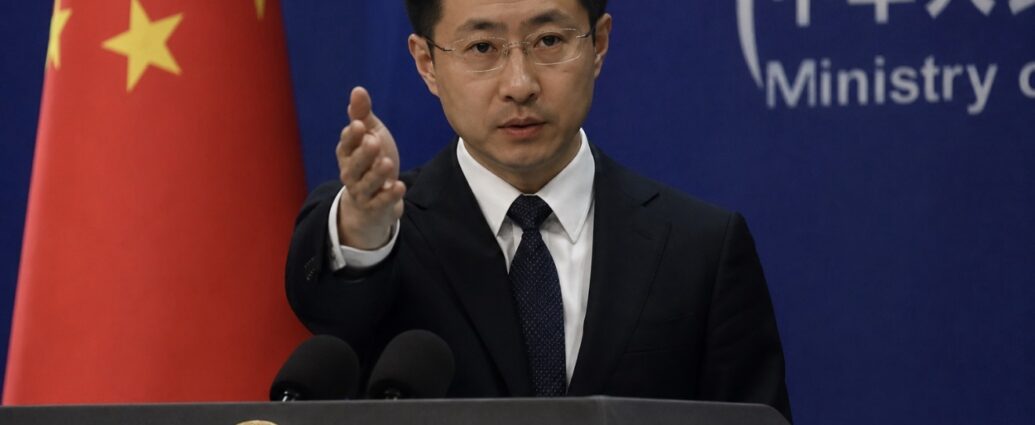
NEW YORK — China warned Monday that it will take “all necessary measures” if the United States imposes sanctions on Chinese artificial intelligence companies over allegations they improperly trained their AI models using American technology, escalating another front in the growing technology rivalry between the world’s two largest economies.
In a statement, China’s Ministry of Commerce accused Washington of pursuing “AI hegemonism,” rejected allegations of intellectual property theft and argued that the U.S. has failed to present evidence supporting its claims. Beijing also maintained that model distillation—a technique used to improve AI systems—is a widely accepted practice employed throughout the global artificial intelligence industry, including by American developers.
The dispute began after senior U.S. officials publicly raised the prospect of new restrictions.
Treasury Secretary Scott Bessent said last week that the administration was closely examining recently released Chinese open-source AI models for evidence of what officials describe as large-scale extraction of capabilities from leading American systems.
Attention has centered on Moonshot AI’s Kimi K3 model, released July 16, which quickly drew attention for strong benchmark performance. U.S. officials are reportedly reviewing whether the model may have been trained using outputs from Anthropic’s Fable 5 or other advanced American AI systems without authorization.
The central disagreement is not whether model distillation exists, but where legitimate engineering ends and intellectual property infringement begins.
Distillation is a common machine-learning technique in which a smaller or newer model learns from the outputs of a larger, more capable system. Researchers and commercial AI developers around the world routinely use variations of the process. U.S. officials argue the concern is not the technique itself but whether it has been employed at a scale or in a manner that improperly reproduces proprietary capabilities.
China disputes that distinction, arguing Washington has not established a clear legal or technical standard separating acceptable development practices from unlawful copying. Beijing also maintains that several Chinese AI models now compete globally based on their own research and engineering advances.
Neither government has publicly released evidence that has been accepted by the other side, leaving the dispute unresolved while political tensions continue to rise.
Any future sanctions would extend well beyond one AI company.
Among the options reportedly under consideration is placing Chinese firms on the U.S. Entity List, a move that could significantly restrict access to American semiconductors, cloud-computing services, software tools and other technologies. Such restrictions would also affect U.S. companies that provide products or services to any newly designated firms.
Monday’s warning also arrived during a difficult trading session for the semiconductor industry. Investors were already reacting to China’s advances in domestic chip manufacturing and memory production, developments that pressured shares of Nvidia, AMD and several major semiconductor equipment companies.
Taken together, the latest events underscore a broader shift. Rather than competing solely through product launches, Washington and Beijing are increasingly using export controls, investment restrictions, sanctions and regulatory actions as strategic tools in the global AI race.
For businesses across New York, New Jersey and Connecticut, the immediate issue is understanding which AI models are already embedded inside their operations.
Many companies now rely on inexpensive open-weight AI models through third-party software vendors without knowing which underlying systems power their applications. Marketing agencies, logistics companies, financial firms, manufacturers and software developers may be using Chinese-developed models indirectly through cloud platforms or commercial software subscriptions.
That creates a potential compliance issue if future sanctions are imposed. Businesses should confirm which AI models their vendors use, review contracts addressing regulatory changes and identify alternative U.S. or European AI providers that could replace restricted models if necessary. Preparing those contingency plans now is significantly easier than responding after new restrictions take effect.
No sanctions have been announced, and Beijing’s statement responds to actions Washington has not yet taken. Even so, the direction of U.S.-China technology policy has become increasingly restrictive, making supply-chain visibility and AI governance important business priorities for companies adopting artificial intelligence across their operations.
JBizNews Desk | New York
© JBizNews.com All Rights Reserved. Reproduction or distribution without written permission is prohibited.
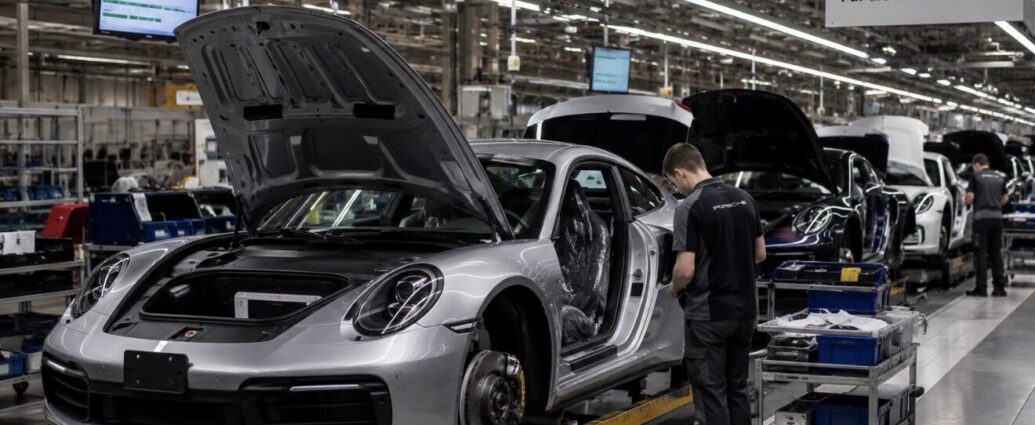
Porsche to Cut One in Five Jobs as China Slowdown Forces Deeper Restructuring
Porsche AG said Monday it will eliminate an additional 5,000 jobs by 2035 as the luxury automaker confronts weakening demand in China, slower-than-expected electric vehicle adoption and mounting pressure on profitability. The restructuring expands previously announced workforce reductions and signals that even premium automakers are adjusting to a rapidly changing global automotive market.
The latest reductions, which will be achieved primarily through voluntary departures, retirements and natural attrition, bring Porsche’s planned workforce cuts to roughly 9,000 positions over the next decade. The company said the measures are intended to improve efficiency while preserving its long-term competitiveness.
For businesses, the announcement underscores the growing challenges facing Europe’s automotive industry.
Chinese consumers, once a primary driver of luxury vehicle sales, have increasingly shifted toward domestic brands offering advanced technology at lower prices. At the same time, demand for premium electric vehicles has grown more slowly than many manufacturers anticipated, forcing automakers to rethink production schedules and investment plans.
Porsche has been among the world’s most profitable automobile manufacturers, benefiting from strong pricing power and loyal customers willing to pay premium prices for performance vehicles. That advantage, however, has become more difficult to sustain as competition intensifies and global economic conditions remain uneven.
China remains one of Porsche’s most important markets.
A prolonged slowdown in the country’s luxury vehicle segment has weighed on deliveries and profitability, while domestic Chinese manufacturers continue gaining market share through competitive pricing and rapid technological innovation.
The restructuring also reflects broader uncertainty surrounding the global transition to electric vehicles.
Many automakers accelerated EV investments expecting governments, consumers and charging infrastructure to move at a similar pace. Instead, higher vehicle prices, uneven charging availability and changing consumer preferences have produced slower adoption in several key markets.
For suppliers, Porsche’s decision may have ripple effects throughout the automotive supply chain.
Companies producing components, electronics, specialized materials and manufacturing equipment for premium vehicles are closely watching production plans across Europe as manufacturers seek to reduce costs while preserving investment in future technologies.
The announcement also highlights increasing pressure on European manufacturers from both established competitors and newer entrants.
Chinese automakers have expanded rapidly into international markets with lower-priced electric vehicles, while established global manufacturers continue competing aggressively for premium customers through technology, software and connected-vehicle features.
Although Porsche continues investing in electrification, executives have indicated the company will maintain greater flexibility by offering internal combustion, hybrid and fully electric models depending on customer demand and market conditions.
For investors, the workforce reductions demonstrate management’s willingness to address structural challenges before they significantly affect long-term profitability.
For the broader business community, Monday’s announcement illustrates that even iconic luxury brands are not immune to changing consumer demand, intensifying global competition and the financial realities of one of the automotive industry’s most significant technological transitions.
JBizNews Desk | New York
© JBizNews.com All Rights Reserved. Reproduction or distribution without written permission is prohibited.






Opinion | Iran Is a Hedgehog, Trump Is a Fox


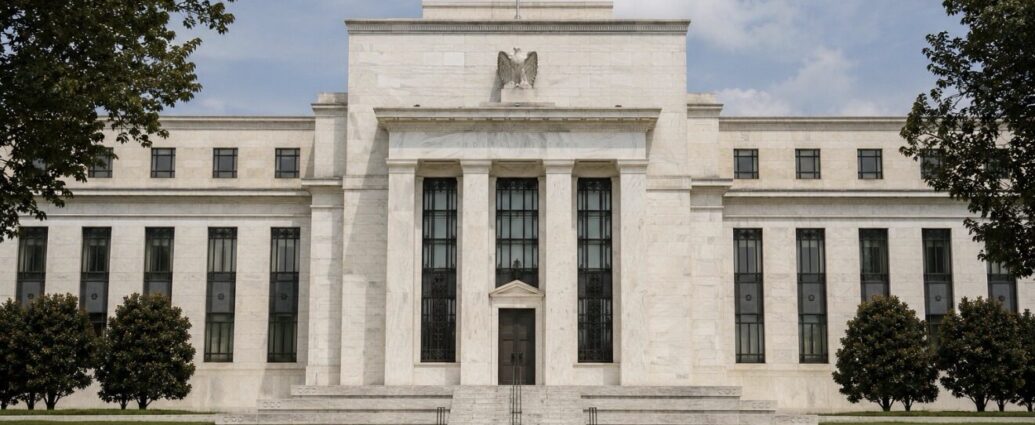
Fed Meets Tuesday With a Rate Increase Back on the Table
Washington — The Federal Open Market Committee convenes for a two-day meeting beginning Tuesday, and for the first time in this cycle a meaningful share of the market is positioned for the central bank to move rates higher rather than lower.
The committee announces its decision Wednesday, July 29, at 2 p.m. Eastern, followed by a press conference at 2:30 p.m. led by Chair Kevin Warsh. Economists polled by FactSet expect rates to hold at 3.5% to 3.75%, which would mark the fifth consecutive meeting without a change.
Markets are assigning roughly a one-in-three chance to a July increase, while CME pricing puts the probability of no change at about 65% for July, with expectations for a September increase climbing to 82%.
The shift in tone within the committee has been sharp. The June dot plot showed nine of 18 policymakers expecting at least one increase during 2026 — a reversal from three months earlier, when none did. Dallas Fed President Lorie Logan has said publicly that a moderate increase would better balance the Fed’s employment and price goals, and Cleveland Fed President Beth Hammack has pointed to energy and AI-related costs as forces pushing inflation higher.
Governor Lisa Cook has flagged inflation running at 3.7%, well above the 2% target, while Vice Chair Philip Jefferson and Governor Christopher Waller have both warned that policy would be reconsidered if inflation does not cool.
Waller, speaking at a Bank of Italy event in Rome on July 6, said the balance of risks has tilted more toward high inflation than toward labor market weakness — a full reversal from the Fed’s stance a year earlier.
Energy is the variable driving the repricing. Rising oil prices have prompted investors to sharply increase bets on an increase later this year. At the start of 2026 many economists expected at least one cut; resurgent inflation tied to energy costs has pushed forecasters the other way. Energy prices have moved higher through most of July, and continued increases could prompt the committee to act sooner than markets currently expect.
Not everyone in the forecasting community agrees. Economists Christopher Hodge and Selin Aker at Natixis expect the Fed to hold at this meeting and through the remainder of 2026, arguing that data since the June meeting leaned dovish. They noted payrolls rose 57,000 in June, following gains averaging 164,000 over the preceding three months. They expect the labor market to remain stable without generating an inflationary impulse, and see the near-term case for holding resting on further subdued inflation readings.
Cooling June CPI and PPI figures form the counterargument to the hawks.
One complication for anyone trying to read the outcome: Warsh has stepped back from traditional forward guidance, and experts do not expect the press conference to reveal much about his outlook. This meeting also does not produce a Summary of Economic Projections, removing the dot plot as a source of signal.
At Warsh’s first meeting as chair, the committee held the rate steady by unanimous vote, following significant disagreement in April. The statement described economic activity as expanding at a solid pace with inflation elevated relative to the 2% goal, and attributed that elevation to supply shocks and energy constraints. The median federal funds forecast for 2026 rose, implying the potential for one increase before year-end, and PCE inflation expectations for 2026 were revised up sharply.
Futures markets are pricing a path that rises to roughly 3.8% by October and approaches 4% around year-end, holding near that level through mid-2027.
For regional borrowers, the practical takeaway is that the era of waiting for cheaper money appears to be over for the foreseeable term. Businesses with floating-rate facilities, commercial mortgages approaching reset, or planned capital expenditure financed on variable terms should be modeling a higher path rather than a flat one. Escalation in the U.S.–Iran conflict feeding through to energy prices is the specific channel most experts identify as capable of raising the probability of a move later in 2026.
JBizNews Desk | Washington
© JBizNews.com All Rights Reserved. Reproduction or distribution without written permission is prohibited.
Oil Fell on a Pause That Nobody Will Call a Ceasefire
Oil prices fell sharply Sunday after the United States and Iran paused military strikes, easing immediate fears of a disruption through the Strait of Hormuz even as neither government described the move as a formal ceasefire. The decline followed a week that had pushed crude above $100 a barrel, with traders quickly unwinding some of the geopolitical risk premium that had built into energy markets.
President Trump halted U.S. strikes over the weekend after 13 days of steadily escalating military exchanges. Tehran said it had also paused attacks, creating a fragile opening for diplomacy that markets welcomed almost immediately.
The drop in crude reflects relief, not resolution.
At this stage, the negotiations are centered less on uranium than on keeping oil and commercial shipping moving through the Strait of Hormuz.
The latest escalation began after Iran targeted vessels attempting to transit the strategic waterway, prompting nearly two weeks of U.S. strikes against Iranian coastal positions and military infrastructure. Iranian and Omani deputy foreign ministers have since met in Tehran to discuss restoring more predictable commercial shipping through the strait.
A regional official involved in the mediation said discussions are focused on Iran managing vessel traffic with fewer restrictions while preserving an interim framework that has temporarily reduced military activity.
For companies moving cargo—or consumers filling their gas tanks—that distinction matters enormously.
The interim arrangement, signed in mid-June, remains in effect for 60 days and is now well into its second half. While negotiators continue talking, the agreement has largely shifted away from resolving Iran’s nuclear program and toward preventing another disruption in one of the world’s most important energy corridors.
That leaves businesses with a narrow shipping understanding rather than a comprehensive political settlement. Commercial traffic may continue moving normally, but the underlying disputes remain unresolved and could reignite with little warning.
Neither government is willing to call the current situation a ceasefire.
Iran rejected reports suggesting it had accepted a 10-day ceasefire. Foreign Ministry spokesman Esmaeil Baghaei said Tehran would never allow the United States to dictate the timing of war or peace and insisted current conditions could not be described as a ceasefire.
Washington has been equally cautious. U.S. Ambassador to the United Nations Mike Waltz said Sunday that the pause is intended to create space for negotiations while emphasizing that the U.S. military remains fully prepared should diplomacy fail. Speaking on NBC’s Meet the Press and later on Fox News Sunday, Waltz said discussions are continuing at multiple levels, from technical experts to senior officials.
The talks themselves remain indirect, with intermediaries carrying messages between Washington and Tehran following renewed diplomatic efforts led by regional partners.
The pause covers two governments. It does not cover the region.
That became clear over the weekend.
Saudi forces launched strikes against Iran-backed Houthi positions in Yemen following renewed attacks on commercial shipping in the Red Sea. Separately, Ukraine reportedly struck an Iranian commercial vessel in the Caspian Sea that Kyiv said was transporting military cargo destined for Russia, while Tehran condemned the attack as unlawful.
The result is that shipping concerns now extend beyond Hormuz.
The Bab al-Mandeb Strait at the southern entrance to the Red Sea has reemerged as another major risk for global commerce. While Gulf oil has few alternatives to Hormuz, cargo vessels traveling between Asia and Europe can reroute around Africa—but only at the cost of adding roughly two weeks to transit times along with significantly higher fuel and freight expenses.
Even if neither waterway officially closes, insurance premiums and shipping rates often rise simply because of elevated risk.
For American businesses and consumers, the immediate effect of falling crude is welcome. Lower oil prices reduce pressure on transportation costs, freight rates and eventually gasoline prices, easing one of the biggest inflation concerns facing households this summer.
The challenge is that markets have priced in a pause rather than a lasting peace.
Economists have warned that renewed fighting could quickly reverse oil’s decline, pushing transportation costs higher once again while increasing pressure on the Federal Reserve to keep interest rates elevated—or even consider additional increases later this year if energy-driven inflation returns.
Businesses preparing fourth-quarter budgets therefore face an unusual challenge. Fuel costs are now being determined by an arrangement neither side is willing to define, negotiated through intermediaries, operating under a 60-day framework that is already past its midpoint.
Oil traders have priced in a pause. Businesses still have to plan for the possibility that it ends without warning.
The shooting has stopped. Nothing else has been settled.
JBizNews Desk | New York
© JBizNews.com All Rights Reserved. Reproduction or distribution without written permission is prohibited.
Markets Took Friday’s Tariffs in Stride. Consumers May Not.
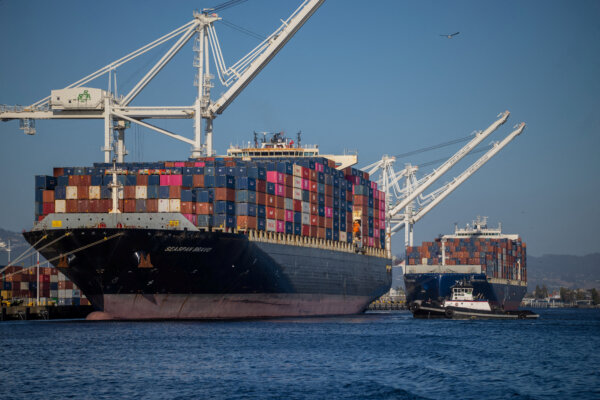
The Trump administration’s new tariffs on nearly all U.S. imports took effect at 12:01 a.m. Friday, yet Wall Street barely reacted. The Office of the U.S. Trade Representative formally implemented the long-anticipated duties after weeks of signaling the policy, leaving investors largely unfazed. For consumers and businesses, however, the biggest effects may not become visible until higher-priced goods begin reaching store shelves later this year.
That stands in sharp contrast to April 2025, when the administration’s surprise “Liberation Day” tariffs triggered a broad market selloff. The policy is similar. The reaction is not.
Investors had months to prepare for Friday’s move. The administration previewed the framework in June, and importers had been racing to adjust supply chains before the previous temporary 10% tariff expired on July 24. By the time the new duties arrived, financial markets had already priced them in.
Markets respond to surprises. Businesses pay for reality.
That difference explains why a quiet trading day should not be mistaken for a painless policy change.
Analysts say this round of tariffs enters a far different economic environment than last year’s measures. Inflation has already reaccelerated following higher energy prices tied to the Iran conflict, leaving businesses with less flexibility to absorb additional costs.
The legal foundation has also changed. Rather than relying on the authority used for the 2025 tariffs, the administration is pursuing these duties under Section 301 of the Trade Act of 1974, citing alleged forced labor practices among trading partners. Officials have indicated they intend for the new tariffs to remain in place for the long term, giving companies less reason to assume they can simply wait for them to disappear.
For importers, that changes planning decisions. Temporary tariffs can often be managed through delayed purchases or short-term sourcing adjustments. Permanent tariffs become part of every pricing calculation.
The impact reaches nearly every major supplier to the United States.
According to administration figures, the affected countries account for roughly 99.4% of U.S. imports. Most goods will face tariffs between 10% and 12.5%, depending on whether exporting countries have adopted or committed to specific labor standards.
That broad coverage is what makes this round different.
During earlier tariff disputes, companies often shifted production from one country to another to reduce costs. Manufacturers moved orders from China into Vietnam, Mexico or other lower-cost markets. This time, many of those same alternative suppliers—including Canada, Mexico, India, Indonesia, Malaysia, Bangladesh, Cambodia, Sri Lanka, the United Kingdom, Taiwan and the European Union—are also covered.
With only a narrow difference between the two tariff levels, businesses have far fewer opportunities to avoid higher import costs simply by changing suppliers.
For consumers, the effects typically arrive weeks after the headlines disappear.
Tariffs are paid when imported goods clear customs, but retailers often pass those higher costs through gradually as existing inventory is sold and new shipments arrive. That means households may not immediately notice higher prices, even though businesses begin paying the additional costs right away.
The timing is particularly difficult because transportation expenses have already been climbing as higher fuel prices work their way through shipping contracts. As freight costs and tariffs converge over the coming months, businesses could face two cost increases arriving almost simultaneously.
More trade measures are also on the horizon. The administration recently imposed 25% tariffs on most Brazilian imports, while separate 50% tariffs on many Canadian goods are scheduled to begin next month. Because those actions arise from different legal authorities, some importers could face multiple tariff regimes depending on the products they bring into the United States.
For distributors, retailers and manufacturers, that means more complicated compliance requirements alongside higher costs.
The calm response on Wall Street reflects one simple fact: investors expected Friday’s announcement. Consumers, however, experience tariffs differently. They encounter them only after higher import costs move through factories, warehouses, transportation networks and retailers before finally reaching the checkout counter.
April 2025 demonstrated how tariffs can shake financial markets overnight. July 2026 may ultimately be remembered for something different: a tariff policy that barely moved Wall Street but steadily worked its way into household budgets across America.
JBizNews Desk | New York
© JBizNews.com All Rights Reserved. Reproduction or distribution without written permission is prohibited
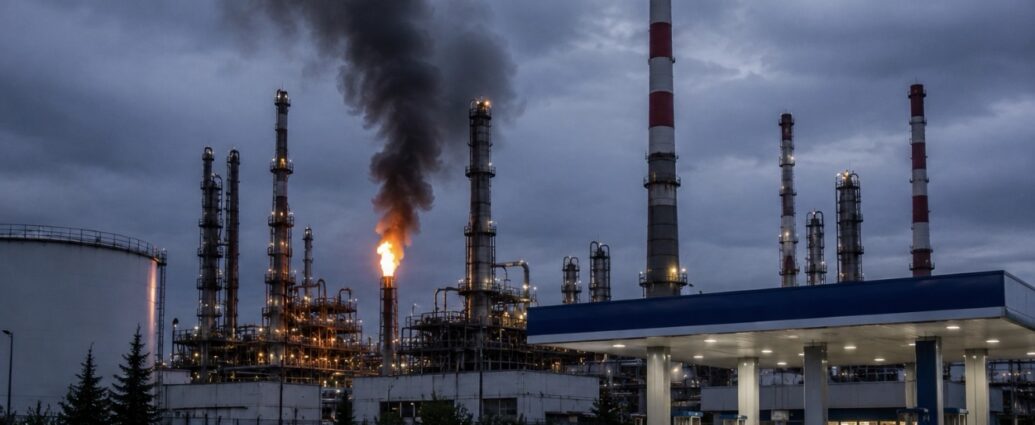
Moscow Locks In Gasoline Export Ban Through Year-End as Refinery Damage Deepens
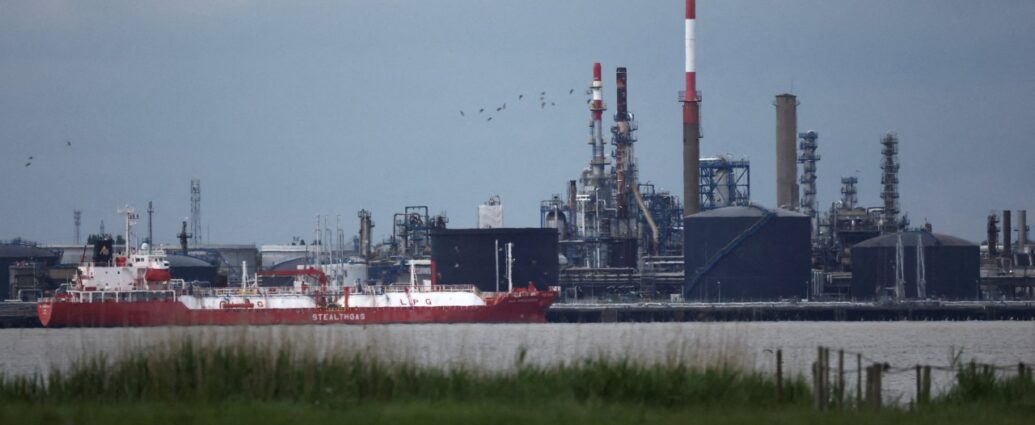
Russia will keep its ban on gasoline exports in place through the end of 2026, extending a restriction that had been scheduled to expire this Friday and signaling that Moscow does not expect its refining capacity to recover this year.
Deputy Prime Minister Alexander Novak said the extension applies to both producers and non-producers, and that the separate diesel export ban will be lifted as the market rebounds. He made the remarks to reporters in Omsk on Saturday, adding that diesel restrictions would be unwound in time to prevent refineries from accumulating a glut and being forced to cut processing volumes.
The original gasoline export ban took effect April 1 and had been set to run only until July 31. The diesel ban is newer, imposed July 8 as part of a package of emergency measures after sustained Ukrainian drone strikes on Russian refineries produced gasoline shortages and price spikes.
A production problem, not a policy choice
The export halt is a symptom rather than a strategy. By mid-June, Russia had lost roughly a quarter of its gasoline production compared with the same month a year earlier, after strikes shut down large refineries in the central part of the country. The government has attributed the disruptions to logistics changes, and now finds itself preparing to import diesel on top of gasoline — a reversal for a country that ranked among the world’s largest fuel exporters.
The domestic picture explains the urgency. Occupation authorities in Crimea suspended fuel sales to private individuals and businesses on June 21, restricting supply to state agencies responsible for essential services and security, with no timeline offered for restoration. Novorossiysk, Russia’s largest Black Sea oil export outlet, cut off gasoline sales to private motorists on July 3, issuing fuel cards for municipal use instead. Nearby Anapa capped purchases at 20 liters per car — enough for about a week, according to one resident quoted on local television — which trimmed station wait times from as long as four hours down to roughly half an hour.
By early July, Novaya Gazeta Europe estimated the shortage had reached at least 78 of Russia’s 83 internationally recognized regions, plus occupied Crimea and Sevastopol. Moscow has also signed a decree permitting certain refineries to drop output standards from Euro-5 to Euro-3 gasoline through the end of the year.
Why it matters outside Russia
Diesel is where the export ban lands hardest on global buyers. Russia is the world’s second-largest diesel exporter behind the United States, and outages at its refineries move global supply. The country accounted for roughly 11 percent of global diesel supply last year, according to figures compiled from analytics firm Vortexa.
Those volumes have already collapsed. Russian diesel and gasoil loadings ran at just 234,000 barrels per day over the first ten days of July, per Kpler data — down from 400,000 bpd in June and against a 2025 average near 817,000 bpd.
The timing compounded an existing squeeze. A fresh wave of U.S. strikes on Iran landed within hours of the diesel ban announcement, renewing concerns over vessel movements through the Strait of Hormuz and the damage already done to Middle Eastern exports. Global benchmark diesel prices jumped nearly 13 percent on the day of the announcement before retreating more than 3 percent the following morning.
The American exposure
U.S. inventories were thin heading into the disruption. Government data showed a draw of more than 4.5 million barrels in a single week, leaving diesel stocks at 97.8 million barrels as of July 3 — about 6 percent below the five-year seasonal average.
Diesel represents the largest share of global oil consumption, feeding industrial machinery, farm equipment, heavy freight and electricity generation, which is why price moves travel well beyond the pump. Western refinery closures and firm post-pandemic demand had already kept the market tight for years before this summer.
For tri-state businesses, the transmission runs through freight. Long-haul trucking and last-mile delivery costs move with distillate prices, and those costs reset into contracts on a lag — meaning shippers, grocers and distributors across New York, New Jersey and Connecticut may not feel the full effect until fall invoicing cycles.
Buyers who absorbed Russian diesel after Europe’s 2023 ban — Turkey, Brazil, and importers across Africa and the Middle East — face the sharpest near-term competition for replacement barrels, while Europe absorbs secondary pressure through elevated global benchmarks.
Novak gave no firm date for restoring diesel exports, tying it only to domestic market conditions.
JBizNews Desk | New York
© JBizNews.com All Rights Reserved. Reproduction or distribution without written permission is prohibited.
New U.S. Tariffs Put Importers on the Clock
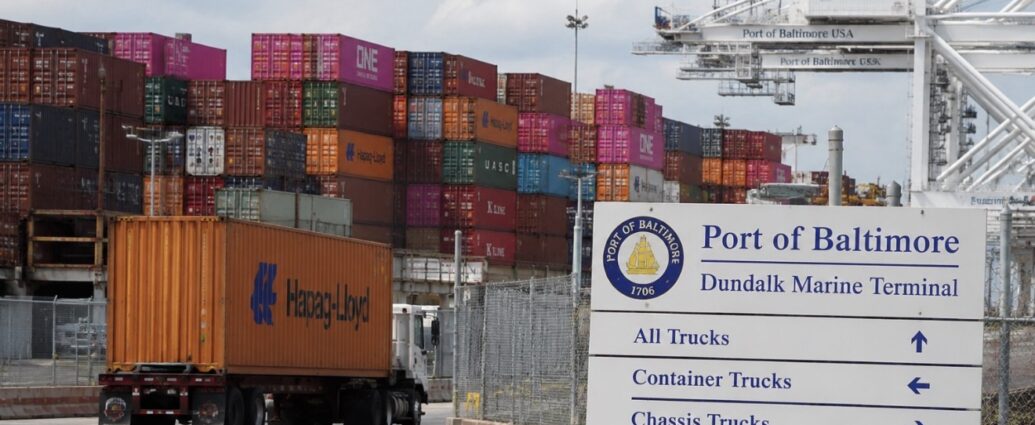
A new U.S. tariff system covering goods from 60 trading economies is forcing importers to recalculate costs across supply chains that touch nearly every major source of American imports. The Office of the U.S. Trade Representative finalized the action on July 23 under Section 301 of the Trade Act, imposing duties of either 10% or 12.5% over what the administration says is a widespread failure to block goods produced with forced labor from entering global commerce.
The tariffs reach far beyond China. Canada, Mexico, India, the United Kingdom, the European Union, Japan, South Korea, Taiwan and dozens of other economies are included, meaning companies importing everything from clothing and machinery to components and finished consumer goods must now determine which rate applies and whether their products qualify for an exemption.
Trading partners that already prohibit forced-labor imports, have committed to adopt such restrictions or operate partial enforcement systems generally face the 10% rate. Most of the remaining economies are subject to 12.5%, while special formulas for the European Union, Taiwan, Japan, South Korea and Switzerland limit the combined effect of the new duties and existing most-favored-nation tariffs.
That structure makes the practical cost more complicated than the headline rate suggests.
An importer cannot simply look at the country where a product was shipped and add 10% or 12.5%. The final duty depends on the product’s tariff classification, the country of origin, existing duties and whether the shipment falls within one of the government’s exemptions. For companies handling hundreds or thousands of products, that means reviewing supplier records and customs codes line by line.
The exemptions cover certain raw materials, products that could cause broader economic disruption, goods that cannot be produced domestically in sufficient quantities and items the administration determined would not meaningfully advance the forced-labor policy. Products already subject to separate national-security tariffs under Section 232 are also excluded from the new action.
Even with those carveouts, the reach is unusually broad. USTR said the 60 economies account for 99.4% of U.S. imports, placing most businesses that rely on overseas suppliers somewhere inside the new system.
For large corporations, the response may involve shifting orders, renegotiating contracts or using multiple suppliers to reduce exposure. Smaller companies often have fewer options. A retailer, manufacturer or distributor tied to one overseas factory may have to absorb the additional cost or pass it to customers before it has time to rebuild its supply chain.
The tariffs also create a new compliance burden. Businesses must verify where goods were produced, whether materials came from another country and whether the documentation provided by suppliers is strong enough to withstand customs review. A shipment described as coming from one economy may still contain components made elsewhere, making origin determinations increasingly important.
USTR said the action followed investigations launched in March, consultations with more than 45 governments, two rounds of public hearings and thousands of written comments. Several economies adopted new forced-labor import restrictions or made commitments during that process, which helped some qualify for the lower rate.
The administration is also preparing tariff-rate quotas for certain textile and apparel imports from Bangladesh, Cambodia, Indonesia and Malaysia. Those arrangements could eventually allow a limited volume of goods to enter without the new Section 301 tariff when the exporting country purchases qualifying U.S. cotton or textile inputs, although the mechanism is not expected to be ready before September.
For businesses, the immediate issue is not the longer policy debate over whether tariffs will change foreign labor practices. It is whether existing contracts say who pays when duties rise.
Importers operating under fixed-price agreements may have little room to recover the added expense, while suppliers and customers may dispute whether the tariff qualifies as a change in law, a force-majeure event or an ordinary cost of doing business. Those questions are likely to move quickly from customs departments into legal and purchasing offices.
The broader effect will become clearer as shipments clear U.S. ports and companies decide how much of the cost they can absorb. What began as a labor-enforcement action is now becoming a pricing and supply-chain test for businesses across the economy—and the companies that respond fastest will have the best chance of keeping those added costs away from customers.
JBizNews Desk | Wall Street
© JBizNews.com All Rights Reserved. Reproduction or distribution without written permission is prohibited

China Hits Trip.com With $765 Million Antitrust Penalty
China has imposed nearly 5.2 billion yuan, or about $765 million, in penalties on Trip.com Group, concluding that the country’s largest online travel platform used its market power to limit how hotels priced rooms and worked with competing booking services.
Saturday’s decision by the State Administration for Market Regulation includes a 3.521 billion yuan fine and the confiscation of 1.658 billion yuan in gains tied to the conduct. Trip.com was also directed to return money withheld from hotel operators and complete corrective measures across its platform.
At the center of the case was the company’s influence over hotels that depend on online bookings to reach travelers. Regulators found that Trip.com restricted operators from offering better prices elsewhere, interfered with their ability to set rates and used platform traffic and technology to pressure properties into accepting its terms.
For hotels, access to a major booking platform can determine whether rooms remain occupied or sit empty. Walking away is difficult when one service controls a large share of customer searches, giving the platform leverage that smaller operators may have little ability to resist.
Travelers can feel the consequences as well. Rules requiring a hotel’s lowest price to appear on one platform may sound beneficial, but they can discourage competing services from offering discounts and leave hotels with less room to negotiate lower commissions or develop direct-booking incentives.
Trip.com accepted the decision and said it would carry out the required changes. Its businesses include Ctrip, Trip.com, Skyscanner and other travel services used for hotel reservations, flights and vacation planning in China and international markets.
Beijing’s action follows months of investigation and extends a broader effort to rein in digital platforms whose control over customer traffic allows them to dictate pricing and commercial terms to businesses that rely on them.
Similar tensions are playing out well beyond travel. Restaurants, retailers, app developers and other suppliers increasingly depend on a small number of online marketplaces, creating recurring disputes over commissions, search rankings, exclusivity requirements and control of customer data.
What changes next will matter more than the size of the penalty alone. Removing restrictions could give hotels greater freedom to offer different rates across competing platforms and through their own websites, potentially shifting negotiating power away from Trip.com and opening more room for rivals.
China’s decision therefore lands as both a punishment and a warning: digital platforms may build enormous businesses by connecting customers with suppliers, but regulators are drawing a firmer line when control of that connection becomes control of the market itself.
JBizNews Desk | Wall Street
© JBizNews.com All Rights Reserved. Reproduction or distribution without written permission is prohibited

Euro Zone Economy Returns to Growth for the First Time in Four Months
Europe’s economy showed fresh signs of life this week as new business activity expanded for the first time in four months, offering companies and investors a welcome signal that demand may be stabilizing despite continued geopolitical uncertainty.
The latest S&P Global Flash Purchasing Managers’ Index (PMI), released Friday, climbed to 51.9 in July from 50.0 in June, beating economists’ expectations and moving back above the 50-point level that separates economic growth from contraction. Manufacturing posted its strongest output in more than four years, while the services sector also returned to expansion.
For businesses, the improvement could translate into stronger customer demand, healthier supply chains and a more stable environment for hiring and investment after months of sluggish growth.
One encouraging month doesn’t erase the challenges, but it does suggest Europe’s economy is finding its footing again.
Germany, the euro area’s largest economy, returned to growth after four months of contraction, while France remained weak but showed signs of stabilizing. New orders increased at the fastest pace since April 2023, giving companies reason to believe the recovery could continue if geopolitical conditions remain stable.
The rebound also arrives as inflation pressures begin to ease. Businesses reported slower increases in both input costs and prices charged to customers, a trend that could reduce pressure on the European Central Bank as it weighs future interest-rate decisions.
Energy prices remain the biggest wildcard.
Economists caution that renewed tensions in the Middle East could quickly reverse recent gains by driving oil and natural gas prices higher, raising costs for manufacturers, transportation companies and consumers across Europe.
For global companies—including many U.S. exporters—the stronger European economy is encouraging news. A healthier euro-zone economy can support international trade, improve demand for American goods and services, and provide another source of global economic growth at a time when businesses continue navigating inflation, tariffs and geopolitical risks.
© JBizNews.com. All Rights Reserved. Reproduction or distribution without written permission is prohibited.

Oil Tumbles as US and Iran Pause Military Strikes
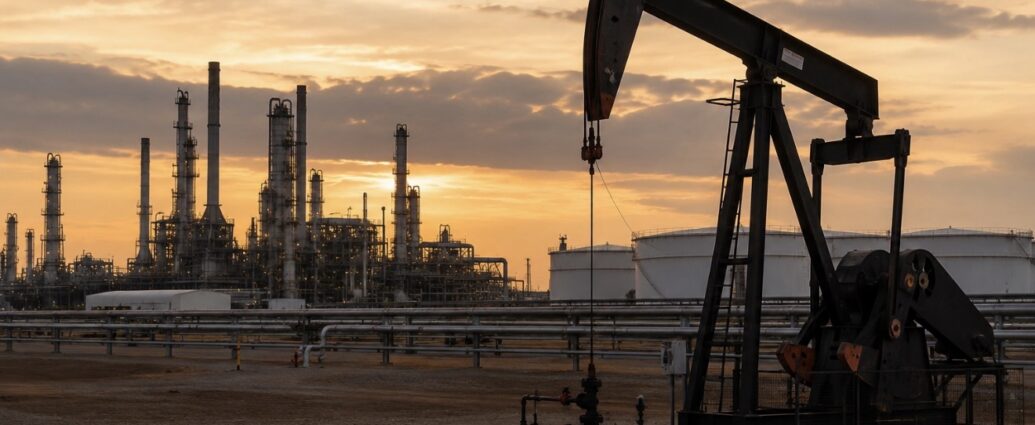
Crude has given up a large piece of its war premium in a single Sunday session. Brent traded down to $90.95 a barrel on July 26, a drop of 7.56% from the prior session, though the benchmark remains up roughly 23% over the past month and 31% against the same point last year.
The move came after a second consecutive day without hostilities between Washington and Tehran. U.S. strikes relented for the first time in two weeks, ending a run of nightly airstrikes at 13 days. Reports Sunday indicated neither side had launched attacks for a second day running, following two weeks of nightly American strikes on Iran and Iranian retaliation against U.S. allies across the Gulf.
That is a sharper reaction than Friday produced. The September WTI contract closed Friday down $2.88, or 3.12%, while September Brent slipped back toward $97 after touching a two-month high of $102 on Thursday. Friday’s decline followed reports that Pakistan, with support from Beijing, was working to revive negotiations, and crude still finished that week up around 10%. Sunday’s session took the next leg down, and it did so on evidence rather than reports.
The administration is calling it deliberate
Mike Waltz, the U.S. ambassador to the United Nations, said Sunday on NBC’s “Meet the Press” that President Trump is giving negotiations room to develop, and that talks are underway at every level from technical staff up to the most senior. In a separate Fox News appearance, Waltz said diplomatic activity had intensified over the past several days, while repeating the president’s warning that the U.S. military remains “locked and loaded” with all options on the table.
Traders are not buying peace. They are pricing the absence of bombs for 48 hours, which is a different and much smaller thing.
What has not changed
The structural constraint on supply is fully intact. The U.S. military said Saturday that its naval blockade against Iran remains in full effect, and offered no explanation for halting the streak of escalating strikes. The Strait of Hormuz stays under Iranian blockade, and Tehran continues to assert control over passage through it. Iranian media reported that an oil tanker exploded after striking a mine in the strait, having departed the Iranian-approved route, according to the Tasnim news agency.
The conflict is also spreading into the workaround. Iran-aligned Houthi forces said they fired missiles and drones Saturday at facilities linked to Saudi Aramco in the port towns of Jizan and Yanbu, with no immediate confirmation from the Saudi government or the company. Yanbu is Saudi Arabia’s main Red Sea oil port and has become a key outlet for Saudi crude routing around Hormuz. Iran separately accused Ukraine of targeting one of its vessels in the Caspian Sea.
So the market is netting two opposing signals: a pause in the strikes that closed 13 nights of escalation, against an expanding threat to the one export corridor Gulf producers had been leaning on. The pause won today by a wide margin.
The cost side for American business
For importers, manufacturers, and freight buyers, a seven-percent Sunday move does not reset anything already contracted. Diesel, jet fuel, marine bunker rates, and war-risk insurance premiums for Gulf and Red Sea transits were repriced during the July run-up and will lag any relief by weeks. Rerouted cargo still burns extra fuel and extra days regardless of where Brent settles tonight.
Companies that hedged at the highs are now watching whether this is a genuine turn or another head fake. There is recent precedent for the latter. A memorandum of understanding announced by mediators on June 14 was meant to end the conflict within 60 days, but fighting resumed in July after Iran struck three commercial vessels that had bypassed its preapproved route. By July 7, with U.S. strikes intensifying, Trump said he considered the truce over.
This week
The war hits its five-month mark Tuesday. Israeli Prime Minister Benjamin Netanyahu is due in Washington to meet Trump in the coming week, which adds a variable to whether the pause survives. The president has dismissed suggestions that higher pump prices tied to the fighting could hurt Republicans in November’s midterms.
Monday’s open will show whether the Sunday move holds or gets faded. Twice this year the market has priced an ending that did not arrive.
JBizNews Desk | New York
© JBizNews.com All Rights Reserved. Reproduction or distribution without written permission is prohibited.

Moonshot’s Kimi K3 Weights Arrive Monday, the Largest Open Model Ever Released
Beijing — Moonshot AI is scheduled to publish the full weights of Kimi K3 on Monday, making a 2.8-trillion-parameter system freely downloadable and marking the point at which openly available models reach the same tier as the leading commercial products from American laboratories.
Moonshot, the Beijing-based startup backed by Alibaba, released K3 on July 16, describing it as the largest open-source AI model in the world. The release was timed ahead of the 2026 World Artificial Intelligence Conference in Shanghai, and represents a recovery for a company whose position had eroded considerably over the preceding 18 months following DeepSeek’s rise. Moonshot has committed to releasing the weights under a modified MIT license by July 27.
The scale is the headline figure, but the architecture is what makes it usable. K3 is a sparse mixture-of-experts model, meaning only a fraction of its parameters activate on any given request, which holds inference costs well below what the raw parameter count implies. It is roughly 2.8 times the size of its predecessor, K2.6, and substantially larger than DeepSeek’s V4 Pro at 1.6 trillion parameters and Zhipu AI’s GLM 5 series at 744 billion. The model activates 16 of its 896 experts per token — about 1.8% of the pool — and includes a one-million-token context window and native vision.
Two architectural changes, Kimi Delta Attention and Attention Residuals, are credited by Moonshot with improving efficiency and reasoning quality. The company says K3 uses 21% fewer output tokens than K2.6 on equivalent tasks. API pricing is set at $3 per million input tokens and $15 per million output tokens — the highest of any Chinese laboratory, but roughly half the per-task cost of Anthropic’s Opus 4.8.
Benchmark placement is mixed but genuinely competitive. On the Arena blind human preference platform, K3 took first place in the Frontend Code category with 1,679 points, ahead of Claude Fable 5 at 1,631, GPT-5.6 Sol at 1,618 and GLM-5.2 at 1,587 — a 17-place jump from K2.6. It ranked first in six of seven frontend domains. On the broader Artificial Analysis Intelligence Index, K3 scores 57 and ranks fourth of 189 models, level with Claude Opus 4.8 and GPT-5.5, behind Claude Fable 5 and GPT-5.6 Sol.
Moonshot itself acknowledges K3 sits behind Fable 5 and Sol on overall performance, while outperforming every other model in its evaluation suite across coding and agentic tasks.
The company is candid about limitations. Moonshot identifies three: agent harnesses that truncate or modify the model’s chain of thought cause significant quality degradation; the model tends to act rather than ask for clarification in ambiguous situations; and despite benchmark parity, conversational polish still trails the leading commercial systems.
Practical deployment carries a real hardware requirement. Quantization-aware training using MXFP4 weights brings the file size down considerably, but running a model of this size still demands substantial multi-GPU capacity, which means most organizations will access it through inference providers rather than self-hosting until the community produces further-compressed versions.
Early reviewers have converged on a routing pattern: keep a cheaper model for routine high-volume work, and send the harder 15% to 20% — long agent sessions, frontend generation, multimodal debugging — to K3, concentrating the cost premium where the capability advantage is largest.
Moonshot, backed by Alibaba, Tencent and Meituan, raised $2 billion at a $20 billion valuation in May and is in discussions for a round valuing the company at $30 billion.
The release continues a broader pattern among Chinese laboratories and represents a bid to position the company at the center of the global open-source developer community. It also arrives despite three years of escalating semiconductor export controls.
For firms weighing AI infrastructure decisions, an openly licensed model at this capability level changes the vendor negotiation. Self-hosting becomes a credible alternative to per-token pricing for organizations with the technical capacity — and a credible bargaining position for those without it.
JBizNews Desk | Beijing
© JBizNews.com All Rights Reserved. Reproduction or distribution without written permission is prohibited.

Opinion | The Welfare State That Ate Britain
U.S. and U.K. Push for London Conference on Hormuz Shipping Coalition as Insurance Costs Choke Trade
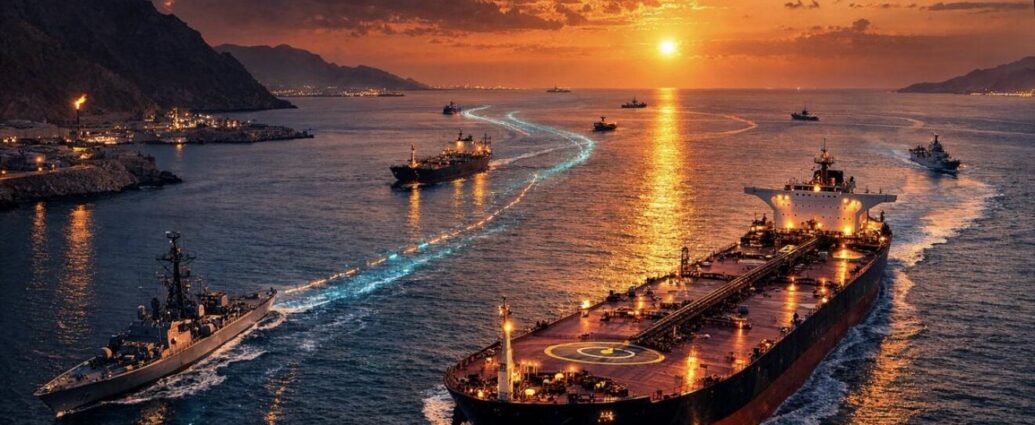
Washington and London are moving to convene a high-level international conference aimed at assembling a coalition to protect commercial shipping and clear naval mines from the Strait of Hormuz, according to European diplomats and officials briefed on the planning — a diplomatic push driven less by battlefield calculation than by the mounting cost of a closed waterway to global trade.The meeting is being organized for London, with the itinerary and date still under discussion. It would potentially bring together defense ministers and senior military commanders from Western nations and from countries in the region, with Pete Hegseth and Chairman of the Joint Chiefs Gen. Dan Caine among the potential attendees. A White House official confirmed that the United States and the United Kingdom want to hold the conference within the week. Hegseth serves as Secretary of War.
The economics behind the urgency are stark. The strait normally carries roughly a fifth of the world’s seaborne oil and liquefied natural gas, and the collapse in traffic since the February 28 outbreak of hostilities has repriced risk across the entire maritime supply chain.
Insurance has become the binding constraint
War-risk insurance is now the single largest obstacle to restoring commercial flow. Additional war-risk premiums in the area have climbed from a range of 1 to 3 percent of hull value several weeks ago to between 7.5 and 10 percent, according to Marcus Baker, global head of marine, cargo and logistics at the brokerage Marsh, who spoke to Platts on July 22. Baker warned that if attacks continue, the market may sharply pull back its willingness to write coverage at all, though the sector still holds substantial capacity, with worldwide hull coverage estimated in the billions.
The arithmetic is brutal for operators. A $100 million tanker now faces a war-risk premium of between $3 million and $10 million per voyage, against roughly $250,000 before the war, when the rate stood near 0.25 percent of hull value. Those costs do not stay with shipowners; they pass to charterers through freight rates and ultimately into the delivered price of crude, feeding fuel and food inflation in importing economies.
Traffic data tells the same story. There were 10 transits through the Strait of Hormuz on July 21, down from 16 the day before, according to S&P Global Commodities at Sea — a fraction of the more than 130 daily transits the waterway once handled. The United Nations International Maritime Organization documented eight vessels struck between July 13 and July 20. The result is a two-tier market, with cautious operators idling outside the strait while others run fast shuttle transits.
Mines, not diplomacy, are the technical problem
Any escort operation depends first on clearing the channel. Reporting on the conference planning indicates the central shipping lane must be swept of more than 80 naval mines laid since February before commercial convoys can move safely, and that Pentagon estimates put full clearance using three dedicated minesweepers at as long as six months — a timeline that autonomous mine-hunting systems are meant to compress.
That capability gap is precisely what the coalition is designed to fill. NATO Secretary General Mark Rutte has said the U.S. military, for all its strength, lacks mine-clearance assets, which Britain and its European allies can supply. Rutte described a British- and French-led coalition of more than 40 countries with relevant capabilities, particularly in demining, backed by G7 leaders and built around deployment of autonomous mine-hunting equipment.
Washington now wants allies to commit hard assets — demining vessels, naval ships and drones — to secure the lanes, building on discussions the U.K. and France have held with multiple governments in recent months. A condition many of those governments have set is that fighting in the strait stop first, so conditions are safe enough for an international maritime mission to operate.
What reopening would mean
For importers, shippers and energy-dependent manufacturers, the conference is the clearest signal yet that a structured commercial reopening is being organized rather than left to chance. Restoring the strait to commercial shipping is treated as a central element of the American exit strategy from the conflict and of efforts to steady global energy markets.
Whether the London meeting produces committed vessels or another framework document will determine how quickly premiums retreat. Underwriters price observed behavior, not communiqués: rates will fall when transits rise and losses stop, not when ministers pose for a photograph. Until then, the cost of moving a barrel of Gulf crude to Asia carries a war premium measured in millions per voyage — a tax paid, eventually, at every fuel pump and grocery shelf downstream.
JBizNews Desk | New York
© JBizNews.com All Rights Reserved. Reproduction or distribution without written permission is prohibited.