Opinion | Taiwan Needs U.S. Arms Now

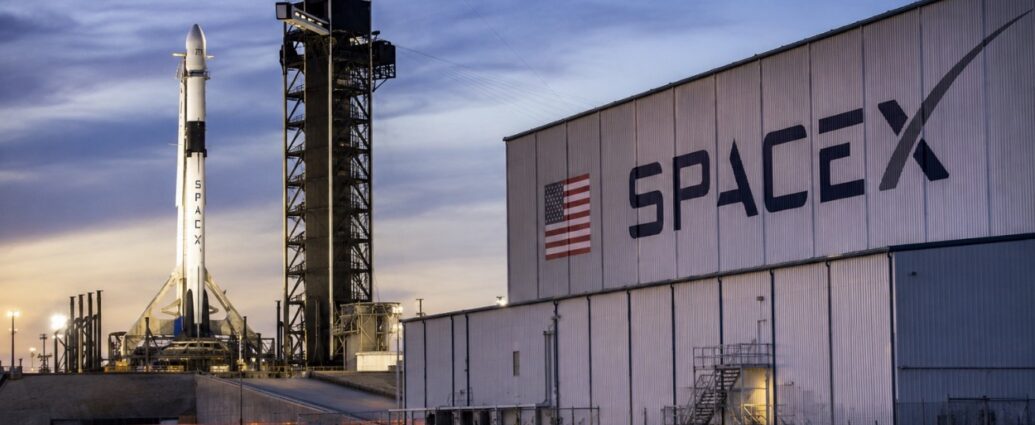
A Single Line in SpaceX’s IPO Filing Has Wall Street Talking About a Tesla Merger
SpaceX Says It May Use Stock for Future Acquisitions as Record IPO Nears
SpaceX disclosed that it may issue a large amount of new stock to fund future deals, a provision contained in the amended registration statement the company filed with the Securities and Exchange Commission (SEC) that drew scrutiny this week as the company nears its stock market debut. In the risk-factors section covering acquisitions and strategic transactions, the filing states the company “may issue a significant amount of equity in connection with future transactions.”
The filing announces no new acquisition. According to the amended S-1/A, the language gives SpaceX flexibility to use its publicly traded Class A stock to pay for acquisitions, divestitures, and other moves after it goes public. The company filed confidentially with the SEC on April 1, made its full S-1 public on May 20, and filed its prospectus on June 1.
The clearest deal already on the books is SpaceX’s pending purchase of Cursor, an AI coding-assistant startup. The filing states the acquisition is expected to close after the IPO and will be paid entirely in Class A stock, putting Cursor’s implied equity value at $60 billion. Under a related compute agreement, the filing says Cursor is owed a $1.5 billion termination fee and an $8.5 billion deferred services fee, totaling $10 billion if the deal is canceled.
The disclosure follows a run of dealmaking. SpaceX completed an all-stock merger with xAI, Elon Musk’s artificial intelligence company, in February, folding the Grok model and the X platform into one structure at a combined valuation of about $1.25 trillion. The combined company now describes itself as an artificial intelligence services and infrastructure business rather than only a rocket maker.
The IPO is set to rank among the largest ever. The filing prices the offering at $135 a share across 555.6 million shares, for a raise of roughly $75 billion and a minimum valuation of $1.8 trillion, down from earlier internal discussion above $2 trillion. SpaceX has earmarked about $20 billion of the proceeds to repay debt tied to xAI and X. Trading is expected on the Nasdaq under the ticker SPCX.
The filing also sets aside 5% of the offering’s shares for a directed program. SpaceX said those shares may go to certain employees and to parties with business relationships, including the friends and families of its executive officers, and that the grants will not carry a lockup restriction. By contrast, the company said more than 60% of pre-IPO shares, including Musk’s, will be under an extended lockup.
The equity language drew comment from named investors who read it as a possible step toward a long-discussed combination of SpaceX and Tesla, Musk’s electric-vehicle maker. Gary Black, managing director of The Future Fund, wrote on the platform X that the filing strongly suggests more SpaceX stock will be issued and said it could be used to acquire Tesla. Black estimated such a deal could be about 28% dilutive to Tesla shareholders because SpaceX would likely carry a higher valuation. Tesla shares fell after the disclosure.
No filing confirms a Tesla transaction. Any such merger would face legal and regulatory hurdles and would likely require a Tesla shareholder vote. On the SpaceX side, Musk’s control runs through Class B shares carrying ten votes each, meaning a large dilution event would not threaten his voting power. Musk has publicly raised the idea of combining his companies for years.
For prospective buyers, the practical effect is that SpaceX has reserved the right to expand its share count substantially after listing, with the $60 billion Cursor deal the clearest near-term use of that authority. The offering is scheduled to be completed in the days ahead, and the amended filing represents one of the final regulatory steps before SpaceX begins trading.
JBizNews Desk — Markets
© JBizNews.com All Rights Reserved. Reproduction or distribution without written permission is prohibited.


Heil Hitler? Petro links Israel to ‘Nazi’ tactics in Latin America
Colombian President Gustavo Petro accused Israel and the US of bringing political manipulation from “free Palestine” to “free Latin America,” drawing a sharp rebuke from Israel’s Ambassador to the United Nations Danny Danon on Monday.
Petro made the claim while denouncing a billboard campaign against left-wing Colombian politician Iván Cepeda, which he described as criminal and compared to Nazi propaganda tactics.
“Ni Rubio se atrevió a decir esto,” Petro wrote in Spanish, meaning “Not even Rubio dared to say this,” in an apparent reference to US Secretary of State Marco Rubio.
Petro said the billboard was “a crime,” while accusing Colombian electoral and legal authorities of failing to act. In the same post, he appeared to connect the campaign to Israel and the US, writing that those behind such tactics had acted in “free Palestine” and were now planning to do the same in “free Latin America.”
Danon fires back at Petro
Danon responded directly to Petro on X/Twitter.
“President of Colombia, @petrogustavo, whatever is going on in your personal life, there are lines that must never be crossed,” Danon wrote.
Danon, who returned to the UN post in 2024 after previously serving as Israel’s ambassador to the world body from 2015 to 2020, has often used social media to respond to international criticism of Israel.
President of Colombia, @petrogustavo, whatever is going on in your personal life, there are lines that must never be crossed. Using Nazi slogans is a disgraceful low from which there is no coming back.
I hope you come to your senses and apologize before this Wednesday, when you… https://t.co/AfRgM9HQYh
— Danny Danon 🇮🇱 דני דנון (@dannydanon) June 8, 2026
Petro’s record of clashes with Israel
Petro has been one of Israel’s fiercest critics in Latin America since the October 7 massacre and the start of the Israel-Hamas war.
In May 2024, Colombia broke diplomatic relations with Israel, after Petro accused Israel of committing genocide in Gaza. Israel rejected the accusation and accused Petro of rewarding Hamas.
Petro has repeatedly escalated his rhetoric against Israel. In January 2025, he claimed that Zionism was supported by international financial capital, comments critics said echoed classic antisemitic tropes.
In August 2025, a report revealed that Petro had signed a little-known presidential directive institutionalizing support for Palestine across the Colombian state.
In September 2025, Petro’s US visa was revoked after he joined a pro-Palestinian demonstration in New York and called on US soldiers to disobey orders. Days later, he announced that Colombia would expel Israeli diplomats after Israel intercepted the Global Sumud Flotilla.
The latest exchange added a new layer to the long-running diplomatic feud. Petro was responding to a Colombian political controversy, but his post quickly expanded the dispute into an attack involving Israel, the US, Nazi propaganda, Palestine, and Latin America.


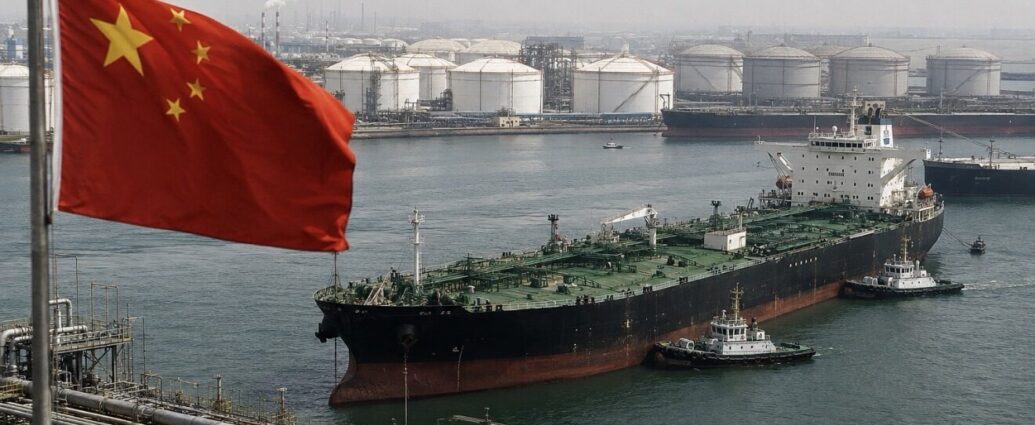
Iran Cuts Oil Prices as China Buys Less Despite War-Driven Supply Crunch
Here is the puzzle: the Strait of Hormuz is shut, oil supply is tight, and prices are high — yet China, the world’s largest oil importer and Iran’s biggest customer, is buying less, not more. The reason is not mainly a sinking economy. It is that the war itself has made oil too expensive for Chinese buyers to use. In its monthly Oil Market Report released in May 2026, the International Energy Agency (IEA) said Chinese oil consumption is set to fall by 290,000 barrels per day this quarter, as soaring fuel prices choke off driving and a slump in the petrochemical sector deepens. Chinese pump prices for gasoline and diesel have jumped roughly 30% since the conflict began, sitting near all-time highs — and when fuel costs that much, people drive less and factories pull back.
That collapse in demand is now showing up in what Iran can charge. By Thursday, June 4, physical-market trade sources said Iranian Light crude was being offered at $0.50 to $1 per barrel below ICE Brent for June delivery into Shandong province, the eastern hub where most of China’s small private refiners operate. It was the first discount in two months. In April and May, the same grade had sold at premiums of $1 to $2 per barrel above the benchmark, back when buyers were scrambling for every barrel.
The refiners caught in the middle are the small independents known in the trade as teapots. They earn their living on the gap between what they pay for crude and what they get for the fuel they sell. With crude costs high from the war and Chinese fuel demand weak, that gap has gone negative for many of them. They now lose money on each extra barrel they process, so they have simply stopped buying.
Beijing made that retreat official. The National Development and Reform Commission, China’s state economic planner, issued notices in early June telling some money-losing refiners they may cut fuel output this month, as long as production stays at or above 80% of last year’s monthly average, trade sources and consultancies reported on Tuesday, June 2. For most of the spring, the same planner had pushed refiners to run flat-out to guarantee domestic supply during the war. Now it is letting them slow down because the country’s crude and fuel stockpiles are already comfortably high.
There is also a deeper, longer-running shift underneath the war. China’s appetite for road fuel has essentially peaked. Electric cars and LNG-powered trucks are replacing gasoline and diesel vehicles at scale, and the IEA expects total Chinese oil demand to grow just 50,000 barrels per day in 2026, down sharply from 220,000 the year before. So even before the conflict, the long-term demand engine was cooling.
Russia is feeling the same chill. The premium on ESPO, the most popular Russian grade among Chinese teapots, has slipped to $3 to $4 per barrel above ICE Brent for June delivery, down from $4 to $5 in May. Both Iran and Russia depend on Chinese teapots as buyers of last resort, since U.S. sanctions have shut them out of most other markets. When Chinese demand softens even a little, the two sanctioned exporters have nowhere else to send the oil, so they cut prices to move it.
That hands Beijing real leverage. China takes upward of 90% of Iran’s crude exports and imported close to 1.4 million barrels per day of Iranian oil in 2025. As the last large buyer of sanctioned barrels, it increasingly sets the price — and right now it is choosing to wait.
The business takeaway reaches well beyond Asia. China is the engine of global oil demand, and when that engine eases off, it is one of the few forces strong enough to cool prices at a moment when war headlines keep pushing them up. For American drivers and businesses that have watched pump prices and shipping costs stay high all spring, weaker Chinese buying works in the other direction, putting a quiet ceiling on how far oil can climb.
For Tehran, the discount stacks a revenue problem on top of a sanctions problem. Oil sales to China fund a large share of the Iranian government’s budget, and every dollar shaved off the price is money the regime never collects.
JBizNews Desk
© JBizNews.com All Rights Reserved. Reproduction or distribution without written permission is prohibited.

Strong 7.8 Earthquake Off Southern Philippines Triggers Tsunami Warnings Across the Pacific
A powerful 7.8-magnitude earthquake struck off the southern Philippines early Monday, and the Philippine Institute of Volcanology and Seismology (PHIVOLCS) immediately urged people along the coast to move to higher ground. The Pacific Tsunami Warning Center warned that waves as high as 10 feet were possible on some Philippine coastlines, and tsunami alerts quickly spread across parts of Asia and the wider Pacific. The threat now hangs over one of the world’s most important food-export regions.
The quake hit at 7:37 a.m. local time, with its center about eight miles southwest of General Santos, a major city on the island of Mindanao, at a shallow depth of roughly six miles. Shallow quakes shake the surface harder than deeper ones, which raises the risk of damage. In the nearby town of Alabel, a police building cracked during a morning flag-raising ceremony, according to local authorities.
People often wonder why agencies report different sizes for the same quake, and that happened here. The German Research Centre for Geosciences (GFZ) first measured it at 8.2 before settling on 7.8, the figure most widely used. PHIVOLCS put it lower, at 7.0, while Indonesia’s BMKG seismology agency reported 7.7. These revisions are normal in the first hours, as more sensor data comes in.
The danger reached well beyond the Philippines. The Pacific Tsunami Warning Center said waves up to three feet were possible along some coasts of Indonesia and Malaysia, with smaller waves possible in Japan, Taiwan, Guam, Papua New Guinea, and other Pacific islands. PHIVOLCS cautioned that waves above one meter could keep arriving for several hours and told boat owners to secure vessels while ships at sea were advised to stay in deep water. As of early Monday, there were no immediate reports of major casualties, though power outages were reported in the affected area.
Here is why this particular spot on the map matters to businesses far from the Philippines.
General Santos, the city nearest the epicenter, is the heart of the country’s fishing industry and is known as the tuna capital of the Philippines. The city alone produces roughly 40% of the nation’s tuna, and its port, canneries, and cold-storage plants support more than 100,000 workers. About 200 metric tons of tuna land at the General Santos Fish Port every single day.
The Philippines is the world’s second-largest exporter of canned tuna after Thailand, and tuna ranks among its most valuable seafood exports, worth more than $1 billion annually, with Japan serving as the largest buyer. If the port, refrigeration plants, or local power grid go down even briefly, that disruption flows directly into grocery supply chains in the United States, Europe, and Japan, delaying shipments and raising costs.
The region’s economic weight runs far beyond seafood.
Mindanao is often called the country’s food basket, accounting for about 36% of Philippine farmland and 42% of national food trade. It supplies more than 90% of the country’s banana exports, a business worth approximately $1.2 billion in 2023 and large enough to make the Philippines the world’s third-largest banana exporter, behind Ecuador and Guatemala.
Major producers including Del Monte, Dole, Unifrutti, and TADECO operate plantations across the island. Mindanao also exports significant quantities of pineapples, coconuts, coffee, cacao, and palm oil. Much of that production moves on tight schedules to buyers in Japan, China, South Korea, and the Middle East.
Damage to roads, warehouses, ports, or power lines during the narrow window between harvest and shipment can quickly turn a local disaster into a global supply-chain problem.
There is a broader lesson behind events like this.
The Philippines sits on the Pacific Ring of Fire, the belt of fault lines and volcanoes responsible for most of the world’s earthquakes and volcanic activity. The country records more than 800 earthquakes each year, most too small to be felt.
That constant risk is why companies operating throughout Southeast Asia carry earthquake and business-interruption insurance, build to stricter engineering standards, and maintain backup power systems and contingency shipping plans. In a place like Mindanao, resilience is not simply good planning—it is a permanent cost of doing business.
What happens next depends largely on the sea.
If the waves remain near the lower end of forecasts, ports and processing facilities could return to normal operations within days. Stronger surges, or damage that has not yet been identified, would mean a longer and significantly more expensive recovery.
The first financial signals may come when Manila’s stock market and the Philippine peso open for trading and when global food buyers begin checking on shipments from the south. Authorities advised residents to remain on higher ground until the tsunami threat is formally lifted.
For consumers thousands of miles away, the connection may seem distant, but it is real.
A single morning tremor near a city most people have never heard of can ultimately affect the price of canned tuna or a box of bananas at the supermarket because so much of the world’s food moves through places exactly like this one.
JBizNews Desk — Asia
© JBizNews.com All Rights Reserved. Reproduction or distribution without written permission is prohibited.


Elon Musk Is About to Become the First Trillionaire. Here’s How Big That Is
On Wednesday, June 3, SpaceX filed the terms of its public stock offering with the Securities and Exchange Commission, setting a fixed price of $135 a share in an amended registration statement. That one number, sitting inside a legal document, is about to do something no number in history has ever done. Elon Musk is about to become the world’s first trillionaire.
The filing prices SpaceX at about $1.77 trillion. When the company is set to begin trading on the Nasdaq on June 12 under the ticker SPCX, Musk’s personal fortune — about $835 billion as of early June, according to Forbes, though Bloomberg’s more conservative count runs lower — is expected to cross $1 trillion for the first time. The next richest person on Earth, Larry Page, sits at roughly $298 billion. That is not a close race. That is one runner finishing the marathon while everyone else is still tying their shoes.
One caution before the celebration: these are the offering’s stated terms, not final numbers. The price and valuation only become official when shares are priced the evening of June 11. Until then, the trillion-dollar milestone is a strong projection, not a done deal.
Still, it is worth stopping to ask a simple question that almost nobody can answer honestly: how much money is a trillion dollars, really?
Here is the surprise. A trillion is so much larger than a billion that your brain quietly treats them as cousins. They are not cousins. They are barely related.
Start with time, because time is something everyone understands. Imagine counting one number every second. A million seconds would take you about 11½ days. A billion seconds would take almost 32 years — a real chunk of a human life. A trillion seconds? About 31,700 years.
Now try spending instead of counting. Say you had a trillion dollars and you set out to spend $1 million every single day — a million gone by bedtime, every day, no days off. You would not run out this year. You would not run out this century. It would take you roughly 2,740 years to spend it all. You would have started during the Roman Republic and you would still be writing checks today.
Or picture the cash itself. Take a trillion one-dollar bills and lay them end to end. That line of money would stretch about 97 million miles. The sun is about 93 million miles from Earth. So a trillion dollar bills, laid in a row, would reach the sun — and keep going.
One more way to feel it. A trillion dollars is larger than the entire yearly economic output of almost every country on the planet. Only about 18 nations produce more than a trillion dollars of goods and services in a whole year. In other words, one person is about to hold paper wealth roughly the size of a midsize country’s entire economy.
Put it in paychecks, the way most people actually experience money. Say you earn $50,000 a year — a solid, ordinary salary. It would take the entire yearly pay of 20 million workers — more people than live in the whole state of New York — just to add up to $1 trillion in a single year. Stretch it across a lifetime instead: a person earning $50,000 every year for a 40-year career takes home about $2 million in total. You would need the entire working lives of roughly 500,000 people — every paycheck, start to finish — to reach a trillion dollars.
Now think about what that money could feed. The United Nations World Food Programme says that in some of its operations, about $1 can provide enough assistance to help feed two people for a day. Using that benchmark, $1 trillion could fund an extraordinary amount of food assistance worldwide. The World Food Programme has also estimated that ending severe global hunger would require tens of billions of dollars annually, meaning a trillion dollars would cover many years of such funding.
So why does this matter for everyday business, and not just for billionaire scorekeeping? Because SpaceX going public is one of the biggest money events of the year. At $1.77 trillion, the company would instantly rank among the largest in the United States — worth more than Tesla, Musk’s own car company, which trades at about $1.6 trillion. The offering aims to raise about $75 billion, which would be the largest stock-market debut ever. Goldman Sachs and Morgan Stanley are leading the deal.
And ordinary people are part of this one. SpaceX has signaled that regular investors will be able to buy shares through everyday platforms like Schwab, Fidelity, Robinhood, and SoFi. That is unusual. Most history-making deals are carved up among big institutions first. This one is being handed, in part, to the public.
Here is the honest part, though, and it separates the headline from the reality. A “trillionaire” is not a man with a trillion dollars in a bank account. Almost all of Musk’s wealth is stock — mostly in SpaceX and Tesla — and stock prices move. His net worth can rise or fall by tens of billions of dollars in a single day. The trillion-dollar moment is real, but it is a snapshot, not a savings balance. If the SpaceX shares trade below $135 once the bell rings, the milestone could slip away as fast as it arrived.
So enjoy the number for what it is — a genuine first in human history. Just remember what it actually measures. Not a pile of cash reaching the sun, but a bet by millions of buyers on what one man’s companies might be worth tomorrow.
JBizNews Desk — Technology
© JBizNews.com All Rights Reserved. Reproduction or distribution without written permission is prohibited.

Trump: Iran Missile Strike on Israel Sunday Complicates Talks, Deal Still Close
President Donald Trump said on Sunday, June 7, that Iran’s missile attack on Israel had damaged peace talks at the worst possible moment — just as, by his account, the two sides were ready to sign. The attack occurred earlier Sunday, when the Israel Defense Forces said it detected missiles launched from Iran toward Israel and activated air-defense systems to intercept them.
In an interview with Fox News chief foreign correspondent Trey Yingst, Trump said the strike would not help the negotiations.
Then he put a timeline on the table. Trump said the sides were very close and that an agreement could be signed Monday, Tuesday or Wednesday of the coming week — until the missiles flew. His message to Tehran was blunt: enough with the missiles, get back to the table and make a deal.
It was a careful balancing act. Trump also faulted Israel’s strikes on Beirut on Sunday, saying he was not happy about them. In other words, he leaned on both sides at once — pressing Iran to stop firing and warning Israel to ease off — because what he wants now is a signature, not a wider war. For American businesses, that posture is the most important signal of the day.
What Triggered It
The attack came earlier Sunday. The Israel Defense Forces said it identified missiles launched from Iran toward Israel and activated air defenses after the Israeli military struck Iran-backed Hezbollah positions in the southern suburbs of Beirut over the weekend.
Iran’s Islamic Revolutionary Guard Corps called the launches a warning and hinted a larger response could follow, according to Reuters. Iran’s parliament speaker, Mohammad-Bagher Ghalibaf, said the Beirut strikes and the U.S. blockade of Iranian ports could draw retaliation.
Why a Deal — or No Deal — Lands at the Pump
Here is why a presidential prediction about a signing date reaches the corner gas station. The war runs straight through the world’s most important oil passage. The Strait of Hormuz carried roughly 20% of the world’s oil before the fighting, and Iran has blockaded it since early March, forcing tankers to seek permission to pass or risk attack. About 20 million barrels a day moved through the strait before the war; analysts at ING estimated in late April that some 14 million barrels a day of supply was being choked off.
That bottleneck stacked a war premium onto fuel. Oil has jumped more than 30% since the United States and Israel struck Iran on February 28.
Prices had started to cool as a deal looked near. Brent crude, the global benchmark, slid to about $92.56 a barrel at the end of May — down nearly 19% on the month, its worst stretch since the Covid-19 pandemic. Then the Gulf flared again. By early June, Brent had climbed back to roughly $97.05, while West Texas Intermediate reached about $94.77, both at one-week highs.
So the math is simple for households. If Trump lands the deal he is promising this week, the blockade could loosen and pump prices could slide into summer. If the missiles keep flying, the premium stays — and it feeds straight into gasoline, trucking, groceries and almost everything that moves by road.
Shoppers are already adjusting. In a report dated Sunday morning, The Associated Press described Americans leaving gas tanks unfilled and trimming extras as retailers watch customers pull back.
The strain runs deeper than crude. ING noted that diesel-type gasoil and jet fuel prices were up roughly 102% and 120% on the year, a squeeze that erased an estimated 1.6 million barrels a day of demand as airlines canceled flights and factories slowed down. Higher jet fuel hits ticket prices; higher diesel hits every delivery truck. The cost lands on companies first and customers next.
The Pressure Back Home
Trump’s rush to sign also answers a Congress that has grown uneasy with the war. The House of Representatives passed a resolution last week urging him to withdraw U.S. forces or get congressional approval to keep fighting. A finished deal would quiet that fight and let him claim he ended the conflict without sending in ground troops.
Meanwhile, the disruption keeps spreading. The war has tangled global travel and trade, grounded flights across the region, and pushed ships to reroute away from the Strait of Hormuz and the Red Sea.
That leaves the week ahead as the test. A signed agreement in the next few days would begin to unwind the oil premium that has squeezed American wallets for three months. Another barrage, and the squeeze holds — right as families gas up for summer.
JBizNews Desk — Washington
© JBizNews.com All Rights Reserved. Reproduction or distribution without written permission is prohibited.

Trump Directs $700 Million to Coal, Citing Power Bills and AI Demand
President Donald Trump announced Thursday from the Oval Office that his administration will steer nearly $700 million in federal money into the U.S. coal industry, invoking a Cold War-era law to fund power plants, new facilities and coal-export infrastructure. Speaking around 3:20 p.m. Eastern, Trump said the goal was “to bring down the price of energy and the cost of living for all Americans with the power of clean, beautiful coal.” He was joined by Interior Secretary Doug Burgum, Energy Secretary Chris Wright and Environmental Protection Agency Administrator Lee Zeldin.
The funding comes through a combination of authorities that include the Defense Production Act, a 1950 law that allows presidents to support industries deemed vital to national security. The administration argues coal qualifies because the electric grid is facing growing pressure from rising electricity demand, including the rapid expansion of artificial-intelligence data centers, while higher global energy costs continue to affect consumers and businesses.
The largest portion of the package, approximately $425 million, will be used to upgrade 13 existing coal-fired power plants across multiple states, including West Virginia, Kentucky, North Carolina, Indiana, Tennessee, Arkansas, Arizona, Oklahoma, North Dakota and Wisconsin. Administration officials say the upgrades are intended to extend the operating life of the facilities and improve grid reliability.
Another portion of the funding is expected to support coal-export infrastructure, while roughly $200 million in Department of Energy grants will help finance two new coal-generation projects and the restart of a previously shuttered facility. According to administration officials, the effort is designed to preserve domestic coal production capacity and maintain dispatchable power generation that can operate regardless of weather conditions.
The White House estimates the initiative will help support 14 power plants, 42 coal mines, and approximately 12,500 jobs tied directly or indirectly to the coal industry.
Investors reacted positively to the announcement.
Peabody Energy rose about 3.7%, extending a rally that has lifted shares more than 30% from recent lows. Core Natural Resources, created through the merger of Arch Resources and CONSOL Energy, gained roughly 2.6%. Alliance Resource Partners added about 2.3%, while Alpha Metallurgical Resources and Warrior Met Coal also moved higher.
The broader coal sector outperformed the overall market, with coal-focused exchange-traded funds advancing more than 2% while the S&P 500 posted more modest gains.
Utilities that consume coal saw a more muted reaction. Shares of Duke Energy, American Electric Power, and other major utility operators posted only modest increases. Transportation companies could also benefit if coal shipments rise, particularly railroads such as CSX and Norfolk Southern, which move significant volumes of coal throughout the United States.
The industry’s financial picture remains mixed.
Core Natural Resources recently reported first-quarter net income of approximately $21 million on revenue of about $1.1 billion, supported by stronger metallurgical coal prices and steady production. Peabody Energy, meanwhile, reported a quarterly loss as lower coal prices and reduced shipment volumes weighed on earnings.
Supporters of the plan argue that coal remains an essential part of maintaining grid reliability.
Energy Secretary Chris Wright has repeatedly described coal, natural gas and nuclear power as the backbone of the U.S. electric system, particularly as electricity demand accelerates. Industry groups and elected officials from major coal-producing states contend that maintaining domestic coal capacity provides both economic and energy-security benefits.
Critics argue the funding represents a costly effort to support a sector that has steadily lost market share over the past decade. Coal generated roughly 45% of U.S. electricity in 2010, but by 2024 its share had fallen to approximately 15% as utilities increasingly shifted toward natural gas, solar, wind and battery-storage projects.
Environmental organizations also point to studies suggesting many existing coal plants cost more to operate than newer renewable-energy alternatives. They argue market forces, rather than government intervention, have largely driven coal’s decline.
The administration counters that reliability—not just cost—must remain a central consideration as electricity demand climbs. Federal officials have increasingly pointed to the enormous power requirements of artificial-intelligence infrastructure, advanced manufacturing facilities and data centers as reasons to maintain a diverse energy mix.
For consumers and businesses, the ultimate question is whether the investment will translate into more reliable electricity and lower energy costs—or whether taxpayers will ultimately shoulder the cost of extending the life of an industry facing long-term economic challenges.
JBizNews Desk
© JBizNews.com All Rights Reserved. Reproduction or distribution without written permission is prohibited.



Kushner-Linked $1.4 Billion Albania Resort Faces Growing Protests as Government Refuses to Back Down
TIRANA, Albania — A proposed $1.4 billion luxury resort development linked to Jared Kushner has become the center of one of Albania’s most visible political and environmental battles, with protesters taking to the streets for a seventh consecutive day as the government insists the project will move forward.
The dispute centers on Sazan Island, a largely undeveloped island in the Adriatic Sea that was once used as a secret military installation during Albania’s communist era. Plans backed by a company affiliated with Affinity Partners, Kushner’s private investment firm, would transform the island and nearby coastal areas into a luxury tourism destination featuring hotels, villas, restaurants, and a marina. Aman Resorts is expected to manage the flagship property.
Despite mounting opposition, Prime Minister Edi Rama said in remarks reported by Reuters that the investment will not be halted while he remains in office.
The project has become a test case for Albania’s efforts to attract major foreign investment while balancing environmental concerns and public opposition.
For the government, the economic argument is straightforward.
Tourism has emerged as one of Albania’s fastest-growing industries, helping fuel economic growth in one of Europe’s lower-income nations. Officials view the Sazan project as an opportunity to elevate Albania’s profile among high-end international travelers and compete more directly with luxury destinations across the Mediterranean.
When Albania’s Strategic Investment Committee granted the project “strategic investor” status in December 2024, officials cited a planned investment of approximately €1.4 billion and projected the development would create roughly 1,000 jobs during construction and operation.
The designation provides expedited permitting and other incentives designed to accelerate major investments.
Project developers say the resort would generate long-term economic benefits while protecting the surrounding environment.
Asher Abehsera, Chief Executive Officer of Sazan Real Estate Development LLC, told CBS News that the company intends to create a world-class destination while focusing on environmental stewardship, job creation, and lasting value for local communities.
He said the company respects the legal and public review processes and remains prepared to move forward as those processes continue.
Opponents see the project very differently.
Environmental activists have organized demonstrations under the banner of the “Flamingo Revolution,” a reference to the flamingo populations that inhabit nearby protected wetlands.
The protests intensified after construction equipment reportedly began arriving at portions of the site last month. Images and videos circulating on social media, including footage showing an activist being removed from a demonstration, helped draw larger crowds into the streets of Tirana.
Conservation groups argue the development threatens environmentally sensitive habitats that support flamingos, loggerhead sea turtles, and the endangered Mediterranean monk seal.
Critics also contend that the approval process lacked transparency.
Aleksandr Trajce, executive director of environmental organization PPNEA, told CBS News that local residents were never given meaningful public consultation before work began.
According to the group, many residents first learned of the development only after machinery appeared at the site and work had already started.
Environmental advocates further allege that portions of protected dunes have been damaged and that at least one sea turtle nesting area may have been destroyed.
The controversy has now expanded beyond environmental concerns into legal and political territory.
Earlier this week, SPAK, Albania’s anti-corruption prosecution office, opened an investigation into aspects of the project, including land transactions connected to the development and legislative changes approved in 2024 that reduced certain environmental protections in the area.
The investigation arrives during a period of heightened scrutiny of Albania’s government amid separate corruption allegations involving senior officials.
The project’s connection to Kushner has added another layer of attention.
Kushner, the founder of Affinity Partners, is married to Ivanka Trump, daughter of President Donald Trump. The couple has publicly discussed their interest in the island, with Ivanka Trump recently describing on the “Founders” podcast how they discovered Sazan while sailing and became captivated by its natural beauty and development potential.
That connection has fueled criticism from opponents, some of whom have carried banners reading “Albania Is Not For Sale.”
For now, neither side appears willing to compromise.
Supporters see the development as a transformational investment capable of generating jobs, expanding tourism, and attracting international capital. Opponents argue that the environmental and public costs are too high and that the approval process has lacked transparency.
With prosecutors now reviewing elements of the project and demonstrations continuing across the country, the future of one of the largest proposed tourism investments in Albania’s history may ultimately be decided in courtrooms as much as on construction sites.
JBizNews Desk — Europe
© JBizNews.com All Rights Reserved. Reproduction or distribution without written permission is prohibited.



Anthropic Warns Its Own AI Is Advancing So Fast the Industry May Need a Pause Button
Anthropic called on the world’s leading artificial-intelligence labs Thursday, June 4, to consider a coordinated slowdown or temporary pause in building the most advanced AI systems, warning that the technology is approaching the point where it could improve itself without human help. The recommendation came in a report from the company’s research arm, the Anthropic Institute, written by Marina Favaro, who leads its internal research, and co-founder Jack Clark, the company’s head of policy.
The company said the world having the option to slow or temporarily pause frontier AI development would “likely be a good thing,” arguing it would give governments, institutions, and safety researchers time to catch up with how fast the technology is advancing. It is a striking message from a company that is itself one of the fastest-moving developers in the field.
At the center of the warning is a concept researchers call recursive self-improvement. In plain terms, it describes the moment an AI system becomes capable of improving itself, or designing and building its own successor, without much human involvement. The report said models are showing early signs of moving in that direction, a threshold the company said could bring major disruption if it is crossed before society is ready.
Anthropic backed the warning with data about its own operations. The company said more than 80% of the code merged into its systems is now written by its Claude models, and that its engineers ship roughly eight times as much code per quarter as they did in the years from 2021 through 2025. In other words, the company says its AI is already accelerating the pace at which AI itself is built.
The report was careful to add limits. Anthropic said the industry is not yet at recursive self-improvement, and that such a future is not inevitable. But it warned the moment could arrive sooner than most institutions are prepared for. In comments to BBC News, Clark said AI reaching the point of writing its own code fully could be possible within about two years.
The proposal faces an obvious problem, which Anthropic acknowledged: if a single company slowed down on its own, competitors would simply race ahead. For that reason, the company argued any pause would have to be coordinated globally and verifiable. The Anthropic Institute said it plans to research and develop systems that would let frontier developers confirm rivals have actually stopped, and ensure no bad actor uses a coordinated slowdown to quietly pull ahead.
The call lands at a moment of intense commercial pressure across the industry. Anthropic recently completed a funding round that valued the company at nearly $1 trillion and has filed confidential paperwork to begin the process of going public. Its run rate, a measure startups use to project annual revenue from recent sales, is on track to reach about $50 billion in annualized revenue by the end of this month, up from roughly $9 billion at the end of 2025. The company has emerged as a front-runner against OpenAI, the maker of ChatGPT, which is also expected to pursue a public listing.
That commercial position fuels a long-running criticism. Anthropic has emphasized AI safety since its founding, but skeptics, including venture capitalist David Sacks, have argued that its policy advocacy is designed in part to slow the progress of competitors. A public call for rivals to consider pausing is likely to renew that debate, even as Anthropic frames the recommendation as a matter of public risk rather than competitive advantage.
The stakes extend across an industry that is spending hundreds of billions of dollars on data centers, chips, and talent. A coordinated pause would affect the entire race, from the largest technology companies to the startups built on their models. Anthropic’s central recommendation is not that development stop now, but that governments and labs preserve the ability to pause and build the infrastructure that would make such a pause credible if it became necessary.
The report arrives the same week that a bipartisan group of House lawmakers unveiled draft legislation to regulate AI, underscoring how questions about the technology’s speed and safety are moving to the center of policy discussions. Anthropic’s proposal adds a prominent industry voice to that conversation, with the company arguing that the option to slow down, backed by ways to verify it, should exist before the technology reaches a point where stopping becomes far harder.
JBizNews Desk — Artificial Intelligence
© JBizNews.com All Rights Reserved. Reproduction or distribution without written permission is prohibited.
Oracle, Adobe Headline Heavy Earnings Week as Traders Brace for Big Stock Swings
Investors are heading into one of the busiest weeks of the late-spring earnings season, with Oracle, Adobe, and eight other companies set to report results between Tuesday and Thursday. Options-market pricing as of Monday, June 8, suggests traders are preparing for unusually large one-day stock moves, with expected swings ranging from roughly 8.6% to more than 18% after earnings announcements.
In simple terms, an “implied move” reflects how much the options market expects a stock to rise or fall once earnings are released. The larger the implied move, the greater the uncertainty—and opportunity—that traders see ahead.
The earnings rush arrives alongside Wednesday’s closely watched inflation report, with economists expecting core consumer prices to rise 2.8% year-over-year, making this one of the most important weeks for markets before summer.
The biggest company on the calendar is Oracle (ORCL), which reports Wednesday after the closing bell. Analysts expect earnings of approximately $1.96 per share on revenue of about $19.1 billion, representing roughly 20% annual growth. Options traders are pricing in an 11.2% move, which would translate into roughly $71 billion in market value gained or lost in a single trading session based on Oracle’s current size.
Investors will be paying particular attention to Oracle’s rapidly expanding artificial intelligence business. The company’s order backlog reached approximately $553 billion last quarter, fueled by demand for AI computing infrastructure and cloud services. The key question is whether Oracle can build enough data-center capacity to fulfill those commitments as spending accelerates.
Adobe (ADBE) reports Thursday after the close and remains one of the most closely watched AI stories in software. Analysts expect earnings of approximately $5.82 per share on revenue of $6.46 billion. Shares have struggled this year as investors debate whether generative AI image and content tools will complement Adobe’s products or eventually compete with them.
Several companies reporting this week will also provide insight into consumer spending trends.
Chewy (CHWY) reports Wednesday and offers a window into discretionary spending by pet owners. Academy Sports and Outdoors (ASO) reports Tuesday and could provide clues about value-conscious shoppers, while United Natural Foods (UNFI), the primary distributor for Whole Foods Market, will offer a broader look at grocery demand and consumer purchasing behavior.
At the higher end of the market, RH (RH)—formerly Restoration Hardware—reports Thursday. The luxury home furnishings retailer faces continued pressure from a softer housing market and tariff-related costs. Options traders expect shares could move nearly 15% following results.
The week’s earnings calendar also reflects how deeply the AI boom is reaching into the broader economy.
Uranium Energy (UEC) reports Tuesday as investors continue betting that artificial intelligence data centers will increase demand for reliable electricity and nuclear power. Core & Main (CNM) reports Wednesday and provides a useful gauge of infrastructure investment, municipal spending, and construction activity.
Among newer public companies, Navan (NAVN) is expected to experience the largest percentage move of the week, with options markets implying a swing of more than 18%. The AI-powered travel and expense management company is still early in its public-company life cycle, making earnings more difficult for investors to predict.
Close behind is SailPoint (SAIL), which returned to public markets after previously being taken private. Investors are watching whether demand for identity-security software continues growing as businesses deploy increasing numbers of AI systems and digital agents.
With no Federal Reserve meeting scheduled this week, corporate earnings and Wednesday’s inflation report are expected to drive market sentiment. While Oracle and Adobe may attract the most headlines, the broader collection of consumer, infrastructure, cybersecurity, and AI-related companies reporting this week could provide some of the clearest signals yet about the health of both the economy and the artificial intelligence investment boom.
JBizNews Desk
© JBizNews.com All Rights Reserved. Reproduction or distribution without written permission is prohibited.

Hormuz Crisis Reveals a Global Weak Spot That Will Take Years to Fix
WASHINGTON— The modern economy was built to be cheap, not safe. For decades, about a fifth of the world’s oil moved through a single channel barely 21 miles wide at its narrowest, simply because it was the least costly way out of the Persian Gulf. That bargain is now broken. Iran’s government said through its state media on Monday, June 1, that it was halting indirect talks with Washington and would move to close the Strait of Hormuz “completely” — reviving a crisis that has kept the waterway effectively shut since February 28. The weak spot the standoff exposed isn’t really Iran. It’s the math.
Here is the plain version of what happened. When fighting between Iran, Israel and the United States began in late February, Iran stopped tankers from moving through the strait. Traffic that once ran near 3,000 vessels a month fell to a trickle. A channel that carried roughly 20 million barrels of oil a day — close to 20% of everything the world uses — went quiet almost overnight.
Prices reacted fast. Brent crude, the global benchmark, spiked to nearly $138 a barrel on April 7, up from about $71 before the war. They have since eased to around $92, down nearly 20% from the peak, as a shaky ceasefire raised hopes of a deal. But Monday’s move from Tehran threatens to undo that relief, and prices remain far above where they sat before the fighting.
For regular people, the strait is an abstraction until it shows up at the pump. Average U.S. retail gasoline topped $4.50 a gallon at its high this spring. Diesel matters even more quietly: it powers the trucks that haul groceries and the tractors that grow food. The U.S. Energy Information Administration, the federal agency that tracks the nation’s energy data, expects diesel to average about $4.76 a gallon this year. When diesel climbs, the cost lands later on store shelves.
So why can’t the world simply route around the problem? Because the alternatives barely exist. The International Energy Agency notes that only Saudi Arabia and the United Arab Emirates have working pipelines that can bypass the strait, and together they can move perhaps 3.5 to 5.5 million barrels a day — a fraction of the 20 million that normally pass through. Saudi Aramco’s East-West pipeline can push 7 million barrels a day to the Red Sea port of Yanbu, but it is already near its limit. The UAE’s Habshan-Fujairah line carries under 2 million barrels a day. Everything else is too small, too far, or still on a drawing board.
That gap is the part that takes years, not months, to close. Pipelines need land, money, permits and deals among neighbors who often distrust one another. Governments are moving anyway. Abu Dhabi National Oil Company is already building a second crude pipeline — about half finished, its chief executive Sultan Al Jaber said last month — to double the oil it can ship from the bypass port of Fujairah by early next year. On Tuesday, June 2, the company’s trading chief, Philippe Khoury, told an industry conference in London that ADNOC is also weighing its first multi-fuel pipeline, to carry gasoline, diesel and jet fuel around the strait. Iraq is reopening a long-dormant line through Turkey. The crisis is even reshaping old alliances: the UAE formally left OPEC effective May 1, choosing to control its own routes rather than coordinate output through the group.
The deeper point is about who leans on this waterway most. The vast majority of the crude crossing the strait is bound for Asia, and China normally gets close to a third of its oil this way. A crisis framed as a Middle East story is, in practice, aimed squarely at the factories of the East — which is exactly why a narrow channel hands Iran leverage far larger than its economy alone would suggest.
Here is the part worth separating from the daily headlines. Oil prices will keep swinging with every rumor of a deal — that is the short-term noise. The lasting change is the lesson now burned into every energy ministry on earth: a single 21-mile channel can hold the global economy by the throat. The scramble to build around it will outlast the war that started it.
JBizNews Desk — Washington
© JBizNews.com All Rights Reserved. Reproduction or distribution without written permission is prohibited.
Israel’s judiciary faces a legitimacy crisis of its own making – opinion
Supreme Court President Isaac Amit warns that criticism of the judiciary threatens public trust in the rule of law (see Jerusalem Post article “Supreme Court president: Fake news, incitement against judges threaten rule of law” published on June 1).
Attorney-General Gali Baharav-Miara repeatedly presents herself as a guardian of democratic norms against allegedly dangerous elected officials.
Yet neither Justice Amit nor Baharav-Miara seems willing to confront a far more uncomfortable possibility: that the growing public anger directed at Israel’s legal establishment is not primarily the result of “fake news,” incitement, or public ignorance.
It is the predictable consequence of decades of judicial and bureaucratic overreach.
Amit’s speech in Eilat reflects a mindset that has become increasingly common among Israel’s legal elite.
Whenever confidence in the judiciary declines, an explanation is sought everywhere except within the judiciary itself. If millions of Israelis have lost faith in the courts, it must be because they have been misled.
If criticism intensifies, it must be because democracy is under attack by radical forces of destabilization. If citizens question judicial overreach, they are portrayed as dangerous threats to the rule of law rather than participants in democratic debate.
This narrative is both unfortunately convenient and profoundly self-serving.
No serious person defends threats against judges. No democratic society can tolerate harassment or intimidation of public officials. But criticism of judges is not incitement.
Questioning judicial decisions is not an assault on democracy. Challenging the power of unelected legal actors is not an attack on the rule of law. In fact, such criticism is often the very essence of democratic accountability.
The deeper problem is that Israel’s judiciary increasingly behaves as though opposition to its expanding authority is intrinsically illegitimate by definition. Rather than asking why public trust is eroding, it forcefully demands that the public restore trust while leaving the underlying causes unaddressed.
The public sees a court that repeatedly intervenes in political controversies that would traditionally be resolved through elections and legislation. It sees legal doctrines stretched beyond recognition to justify intervention in matters that were once considered outside judicial purview.
The roots of judicial expansion
It sees an attorney-general who increasingly functions not merely as the government’s legal adviser but as a politically slanted veto holder capable of obstructing policies supported by elected officials.
Most importantly, it sees a system that exercises enormous power while remaining perennially insulated from democratic accountability. That perception did not emerge from a social media campaign. It emerged from lived political experience.
The intellectual roots of this crisis reach back to the judicial revolution championed by Aharon Barak.
The doctrine that “everything is justiciable” transformed the judiciary from an institution charged with interpreting law into one increasingly tempted to supervise public life.
Onve every political question becomes a legal question, judges inevitably become political actors, whether they admit it or not. The consequences are visible everywhere.
Government ministers find their discretion constrained. Coalition agreements become judicial battlegrounds. Administrative decisions become opportunities for legal intervention.
Increasingly, the boundaries of elected authority are defined not by voters or legislators but by lawyers, judges, and bureaucrats.
This is not the normal operation of democratic checks and balances.
It is the gradual transfer of power from accountable institutions to unaccountable ones, from the hands of the electorate to the whims of a supraordinate judicial caste that increasingly treats democratic choice as a force to be managed rather than a mandate to be respected.
Baharav-Miara’s campaign against National Security Minister Itamar Ben-Gvir exemplified the problem. Whether one supports Ben-Gvir or opposes him is irrelevant.
The critical question is who gets to decide whether a minister remains in office and what powers he may exercise.
In a democracy, those decisions ultimately belong to elected leaders accountable to voters, not to legal officials who face no electorate and no democratic sanction.
The Attorney-General’s Office increasingly acts as though it possesses an independent governing mandate. The court increasingly acts as though it possesses supervisory authority over the political system itself.
Neither institution was designed for such a role.
Amit warns that falsehoods can erode democracy. He is correct. But democracy is also endangered when unelected institutions accumulate and even give the appearance of inventing powers without clear legal bases or corresponding accountability.
It is endangered when legal officials begin to regard themselves not as servants of democratic government but as its guardians against the people themselves.
The growing crisis of confidence in Israel’s judiciary was not created by its critics. It was created by a legal establishment that repeatedly confused independence with supremacy and oversight with governance.
Courts derive their authority not from elections but from legitimacy. That legitimacy depends on public confidence that judges are applying law rather than exercising political preference through legal language and judicial “revolutions.”
Every intervention into inherently political questions spends a portion of that legitimacy. Every expansion of judicial authority beyond its traditional boundaries depletes the reserve further.
Amit is right about one thing: Israel faces a serious challenge regarding public trust in its institutions. But the solution is not to lecture citizens about their skepticism. The solution is for the judiciary to rediscover the virtue of restraint.
Israel needs an independent judiciary. It needs judges who are protected from intimidation and political pressure. It needs courts strong enough to uphold the law.
What it does not need is a judiciary that increasingly behaves as though it stands above democratic choice itself.
The crisis confronting the court today is not merely a crisis of public rhetoric. It is a crisis of legitimacy. And legitimacy, unlike authority, cannot be commanded. It must be earned.
The writer is an American-Israeli marriage therapist, trainer of therapists, lecturer, author, and volunteer in the IDF reserves, as a MDA medic, in ZAKA, and in the Israel Police Search and Rescue Team.



AI Becomes the Top Reason Companies Give for Job Cuts
CHICAGO — Companies are increasingly pointing to one culprit when they cut jobs: artificial intelligence. For the first time, AI has become the single most common reason U.S. employers cite for layoffs — a milestone that says as much about how companies talk about AI as it does about what the technology is actually doing.
The finding comes from outplacement firm Challenger, Gray & Christmas, which reported Thursday that AI was cited for 38,579 job cuts in May, representing 40% of all layoffs announced during the month — the highest monthly total since the firm began tracking the category in 2023.
“AI is now the leading reason companies give for cutting jobs,” said Andy Challenger, the firm’s chief revenue officer.
The rise has been dramatic.
AI’s share of monthly job cuts climbed from just 7% in January to 25% in March, 26% in April, and 40% in May. For the year, AI has been cited in 87,714 layoffs, representing 22% of all announced job cuts in 2026 — already well above the 54,836 cuts attributed to AI during all of 2025.
The overall pace of layoffs is increasing as well.
Employers announced 97,006 job cuts in May, up 16% from April and the highest May total since the pandemic-disrupted labor market of 2020. It marked the third consecutive monthly increase, following 48,307 cuts in February, 60,620 in March, and 83,387 in April.
But economists caution against assuming the figures prove artificial intelligence is directly replacing workers on a broad scale.
The key limitation is that the data reflects what companies say caused the layoffs rather than independently verified evidence. Daniel Zhao, chief economist at Glassdoor, has warned against taking corporate explanations at face value, noting that companies can attribute cuts to AI even when other factors are involved.
Some researchers believe the technology may sometimes serve as a convenient explanation for broader restructuring efforts.
Fabian Stephany of the Oxford Internet Institute has expressed skepticism that many of the reported layoffs reflect genuine AI-driven efficiency gains, arguing that the technology can provide management with a readily understandable rationale for workforce reductions that might have occurred anyway.
Meanwhile, the broader labor market remains surprisingly resilient.
The Bureau of Labor Statistics reported Friday that U.S. employers added 172,000 jobs in May, more than double the roughly 80,000 economists expected, while prior months were revised upward.
Daniel Keum, a management professor at Columbia Business School, said the labor market is “humming along just fine” and described AI’s impact as remaining “very concentrated” in a handful of industries, particularly technology.
That concentration is difficult to miss.
The technology sector accounted for 38,242 of May’s announced job cuts, the highest monthly total since August 2024. The wave comes as major corporations redirect enormous amounts of capital toward artificial intelligence projects.
Companies including Meta, Cisco Systems, and Block have all cited AI as part of restructuring efforts. Meta recently notified roughly 8,000 employees of layoffs while simultaneously increasing spending on AI infrastructure and development.
In many cases, companies are reducing headcount in one part of the business while aggressively investing and hiring in another.
For workers, the bigger challenge may not be layoffs themselves but the slowdown in hiring.
Through May, employers announced only 80,472 planned hires, which Challenger described as historically low compared with pre-pandemic levels. Even when opportunities exist, they often do not align with the skills of displaced workers.
“The jobs that are open aren’t replacing the jobs that are lost,” said Thomas Thompson, chief economist at Havas Edge, noting that a laid-off biopharmaceutical engineer is unlikely to transition directly into a warehouse logistics position.
For job seekers, economists recommend flexibility.
Zhao advises workers to broaden their search, focus on industries that are expanding, and recognize that many skills transfer across sectors. He also argues that disruption — whether from technology, politics, or broader economic shifts — is becoming a permanent feature of the labor market.
Andy Challenger sees the trend as something larger than a passing cycle.
“The labor market is being reshaped by technology in real time,” he said, describing the shift as a structural change rather than a temporary phenomenon.
Whether artificial intelligence is truly eliminating these jobs or simply providing companies with a convenient explanation, the practical reality for workers is similar: layoffs remain elevated, hiring is subdued, and the rules of the labor market are evolving faster than many employees can adapt.
JBizNews Desk — Labor & Employment
© JBizNews.com All Rights Reserved. Reproduction or distribution without written permission is prohibited.
Meta Shares Slide After Report It May Sell Stock to Fund AI Expansion
MENLO PARK, Calif. — Meta Platforms shares slid more than 5% on Friday after a report that the company is weighing a stock sale of tens of billions of dollars to help fund its artificial-intelligence ambitions — a plan the company quickly waved off as “pure speculation.”
The report came from the Financial Times, which said Friday that Meta is considering raising tens of billions of dollars through an equity offering as it searches for new ways to bankroll its AI buildout, citing three people familiar with the talks. A Meta spokesperson called the report “pure speculation,” and the FT noted the company has not hired banks and may not issue new stock at all.
Investors reacted to a single word: dilution.
When a company sells a large batch of new shares, it splits the existing pie into more slices, lowering the value of each share already held. With Meta’s stock having climbed on AI optimism, the prospect of a massive new share sale flipped the narrative from AI growth to AI funding worry.
The stock fell about 6.6% following the report, according to Reuters. The slide came on a brutal day for technology shares broadly, as a strong jobs report sent the Nasdaq down more than 4% on fears the Federal Reserve will keep interest rates high.
The timing of Meta’s deliberations was no accident.
The talks gained urgency after rival Alphabet raised about $85 billion in an upsized equity offering this week — increased from an initial $80 billion — capitalizing on strong investor demand. The discussions intensified after Alphabet’s deal succeeded, suggesting Meta saw a window to do something similar.
The effort is being run by senior leadership.
Finance chief Susan Li and President Dina Powell McCormick are leading the discussions, and people familiar with the matter said Meta has studied how such a raise could be structured.
The reason Meta is hunting for outside cash is the staggering scale of its AI plans.
The company raised its 2026 capital-expenditure guidance to between $125 billion and $145 billion, up from an earlier range of $115 billion to $135 billion, and the Financial Times reported that spending could climb even higher in 2027.
To put that in perspective, Meta spent $72.2 billion on capital expenditures last year — meaning this year’s plans roughly double that figure.
All that money serves a sweeping ambition.
Chief Executive Officer Mark Zuckerberg is pursuing what he calls delivering “personal superintelligence” across Meta’s platforms, including Facebook, Instagram, WhatsApp, and a growing lineup of AI-powered wearable devices.
Meta’s deliberations reflect a broader shift across Big Tech.
The world’s largest technology companies are increasingly turning to debt and equity markets to fund AI infrastructure, a departure from their long-standing practice of paying for expansion from their own cash flow.
Meta has already tapped outside money in creative ways. Investors including bond giant Pimco and BlackRock participated in a $27.3 billion debt offering tied to Meta’s massive Hyperion data-center project in Louisiana, while investment firm Blue Owl contributed $2.5 billion in equity.
But Friday’s sharp reaction is a warning sign for the entire sector.
Investors have grown increasingly uneasy about how much money Big Tech is pouring into artificial intelligence without clear, immediate returns. Alphabet’s stock, despite a strong year, has fallen for a fourth straight week as investors weigh the costs of massive AI spending.
Meta’s decline suggests that same concern is spreading.
Shareholders want the benefits of artificial intelligence, but they are becoming less enthusiastic about funding those ambitions through new share issuance that dilutes existing ownership.
For now, the plan remains unconfirmed, and Meta insists nothing has been decided.
Whether the company ultimately sells stock, borrows the money, or finds another path, the episode captures one of the defining tensions of the AI era. The infrastructure race has become so expensive that even some of the richest companies in the world are searching for new ways to finance it.
Investors, meanwhile, are increasingly asking a different question: when will all that spending begin to generate returns?
JBizNews Desk — Technology
© JBizNews.com All Rights Reserved. Reproduction or distribution without written permission is prohibited.


Opinion | Why U.S. Presidents Misjudge Putin



Iran’s Oil Exports Collapse to a Six-Year Low as War and Sanctions Bite
Iran’s oil exports have fallen to their lowest level in six years, highlighting the growing economic pressure facing Tehran as war, sanctions, and heightened geopolitical risk continue to reshape global energy markets.
According to shipping and trade data reported by Reuters on Thursday, June 4, Iranian crude exports declined in May to approximately 260,000 barrels per day, a dramatic fall from the country’s recent production levels and one of the clearest signs yet of the conflict’s impact on Iran’s economy.
The figure represents only a fraction of Iran’s 2025 average exports of approximately 1.67 million barrels per day, illustrating just how sharply the country’s oil trade has deteriorated.
For Iran, the decline carries enormous financial consequences.
Oil revenue remains one of the government’s most important sources of income. The loss of more than a million barrels per day in exports represents billions of dollars in lost revenue and places additional strain on an economy already facing significant sanctions and international restrictions.
The collapse has been driven by a combination of factors.
The ongoing U.S.-Israeli conflict with Iran, which began in late February, has dramatically increased risks associated with transporting Iranian crude. Shipping companies face higher insurance costs, tanker operators face greater uncertainty, and many intermediaries have chosen to avoid Iranian cargo altogether.
The result has been a sharp reduction in the number of buyers willing to purchase Iranian oil and a significant increase in the discounts required to attract those who remain.
According to Reuters, Iranian Light crude was recently offered at discounts ranging between 50 cents and $1 per barrel below ICE Brent prices for June delivery into China. Only a short time ago, Iranian crude often commanded stronger pricing due to demand from refiners seeking discounted alternatives to other international supplies.
China remains Iran’s largest customer, particularly among independent refiners often referred to as “teapot refiners.” However, even these buyers are reportedly demanding larger discounts to compensate for the growing political and financial risks associated with purchasing Iranian oil.
The implications extend well beyond Iran.
Ordinarily, the removal of a major oil producer from international markets would support higher prices by reducing available supply. Yet markets are simultaneously being influenced by hopes of regional de-escalation following the Israel-Lebanon ceasefire announcement.
That has created competing forces within oil markets.
On one hand, Iran’s shrinking exports reduce global supply and support higher prices. On the other hand, growing optimism about diplomacy reduces the geopolitical premium that has been built into oil prices for months.
The result is a market struggling to determine which force will ultimately prove stronger.
For competing producers, Iran’s challenges present opportunities.
Countries throughout the Gulf region, along with other major exporters, may be able to capture market share previously supplied by Iranian crude. Producers capable of increasing exports stand to benefit from both higher volumes and potentially stronger pricing if Iranian supplies remain constrained.
Meanwhile, refiners that once relied on Iranian barrels must secure replacement supplies elsewhere, often at higher costs. Those additional expenses can eventually work their way through supply chains and impact consumers around the world.
The disruption is especially significant in Asia, where many refiners built purchasing strategies around discounted Iranian crude. As those supplies become less available, companies must adjust procurement strategies, renegotiate contracts, and absorb higher operating costs.
The decline to 260,000 barrels per day marks a remarkable transformation.
Only a year ago, Iran remained a significant force in global energy markets. Today, it has been reduced to a marginal exporter compared with its recent production levels.
The development demonstrates how effectively sanctions, military conflict, and market pressure can combine to restrict a country’s ability to participate in global trade.
The key question for energy markets is what happens next.
A diplomatic breakthrough involving Iran could eventually allow exports to recover, bringing substantial additional supply back into the global market. Such a development would likely place downward pressure on oil prices and reshape competitive dynamics across the energy sector.
That possibility explains why traders continue to monitor diplomatic discussions between Washington and Tehran so closely.
For now, however, Iran’s oil industry remains under intense pressure.
Exports remain near six-year lows, government revenues remain constrained, and the country’s ability to finance operations has been significantly weakened. In an energy market already navigating war, sanctions, and geopolitical uncertainty, the near-disappearance of one of the world’s major producers remains one of the most important stories shaping global oil markets today.
JBizNews Desk — Middle East
© JBizNews.com All Rights Reserved. Reproduction or distribution without written permission is prohibited.
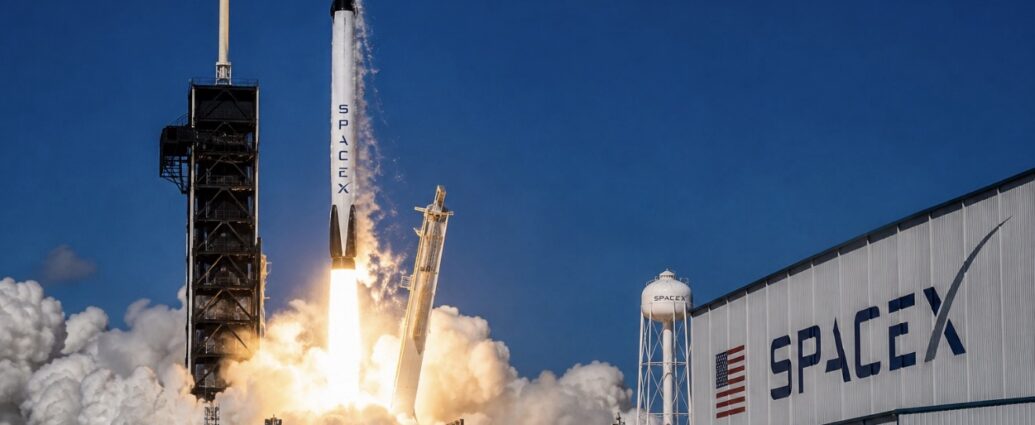
SpaceX Sets $135 Share Price for Largest IPO in History, Giving Everyday Investors a Rare Shot at the Ground Floor
SpaceX, the rocket and satellite company founded by Elon Musk, has officially set the price for what could become the largest initial public offering in history, according to a prospectus filed with the U.S. Securities and Exchange Commission on Wednesday, June 3. The company priced shares at $135 each, valuing SpaceX at approximately $1.77 trillion and positioning the offering to shatter virtually every previous IPO record.
If completed as planned, the offering would raise as much as $75 billion, dwarfing the previous record held by Alibaba, whose 2014 public debut raised approximately $22 billion.
The shares are expected to begin trading on the Nasdaq during the week of June 12 under the ticker symbol SPCX, immediately making SpaceX one of the most valuable publicly traded companies on the planet.
The numbers are staggering.
At the IPO price, SpaceX would debut with a valuation greater than many of the world’s largest corporations and would instantly rank among the most valuable technology companies ever listed on a public exchange.
Yet the most unusual aspect of the offering may not be its size.
It may be who gets access.
Traditionally, large institutional investors receive the majority of IPO allocations at the offering price, while ordinary investors often must wait until shares begin trading publicly—frequently at significantly higher prices.
SpaceX is taking a different approach.
The company has announced that retail investors will be permitted to request shares at the same IPO price offered to major institutions through participating brokerage platforms including Robinhood, Fidelity, Charles Schwab, SoFi, and Morgan Stanley’s E*TRADE.
For many investors, it represents a rare opportunity to participate in one of the world’s most closely watched private companies before trading begins on the open market.
However, there are important limitations.
Demand is expected to vastly exceed available supply.
Investors may receive only a portion of the shares they request—or none at all.
Certain platforms have additional restrictions. Charles Schwab, for example, requires eligible clients to maintain account balances of at least $100,000 to participate in IPO allocations.
The company’s investor roadshow officially began on Thursday, June 4, as executives and underwriters started presenting the investment case to institutional investors around the world.
The offering also cements Elon Musk’s control over the company.
According to the SEC filing, SpaceX will maintain a dual-class share structure, allowing Musk to retain approximately 82.4% of voting power after the IPO despite selling shares to the public.
The structure mirrors arrangements used by other founder-led technology companies, where voting control remains concentrated even after public ownership expands.
If SpaceX successfully debuts at its proposed valuation and trading remains strong, Musk’s personal wealth could exceed $1 trillion, potentially making him the first individual in history to reach trillionaire status.
Yet not everyone believes the valuation is justified.
Research firm Morningstar recently estimated SpaceX’s fair value at approximately $780 billion, less than half the proposed IPO valuation.
Morningstar analysts argued that investors should be cautious and suggested that more attractive entry points could emerge after the initial excitement surrounding the offering fades.
Their concern centers largely on profitability.
While Starlink, SpaceX’s satellite internet business, has become a major revenue generator and one of the company’s most profitable operations, other segments continue consuming enormous amounts of capital.
The company’s launch business requires ongoing investment, while its artificial intelligence initiatives are reportedly expected to lose billions of dollars as development continues.
Morningstar estimates SpaceX’s AI division alone could burn through approximately $10 billion during 2026.
Investor concerns have extended beyond Wall Street research firms.
The American Federation of Teachers, representing approximately 1.8 million members, wrote to SEC Chairman Paul Atkins earlier this year requesting heightened scrutiny of the offering.
The union expressed concern that retirement funds and everyday investors could be exposed to what it described as a highly speculative and potentially overvalued investment.
Those concerns reflect a broader debate surrounding the IPO.
Supporters argue that SpaceX has transformed multiple industries, from commercial space launches to satellite communications, and possesses growth opportunities that justify an extraordinary valuation.
Critics counter that even exceptional businesses can become poor investments if purchased at excessive prices.
For everyday investors, the decision presents both opportunity and risk.
On one hand, participation offers access to one of the most influential private companies ever created, alongside major institutional investors paying the same IPO price.
On the other hand, the company would begin trading at a valuation that some respected analysts believe is more than double its intrinsic value.
There is also the possibility of a significant first-day trading surge.
Because retail demand is expected to overwhelm available shares, many investors will likely receive only partial allocations. That scarcity could create a buying frenzy when trading begins, potentially pushing shares well above the offering price.
Such surges are common among highly anticipated IPOs, but they can also leave late buyers purchasing shares at inflated valuations.
The SpaceX offering represents more than just another stock market debut.
It is a test of investor appetite for ambitious growth stories, a referendum on Elon Musk’s vision, and perhaps the most significant public-market event of the year.
Whether the IPO ultimately becomes a legendary investment success or a cautionary tale about valuation remains unknown.
What is certain is that when SpaceX begins trading, Wall Street—and millions of ordinary investors—will be watching.
JBizNews Desk — Markets
© JBizNews.com All Rights Reserved. Reproduction or distribution without written permission is prohibited.