
Opinion | The Revolt of Britain’s Defenders
2026-06-11


WASHINGTON, June 11 — Wholesale prices in the United States rose far faster than expected in May, the Bureau of Labor Statistics reported on Thursday, June 11, adding to evidence that inflation is heating up as higher energy costs ripple through the economy.
The Producer Price Index (PPI), which measures prices received by producers before those costs reach consumers, climbed 1.1% in May, pushing the annual rate to 6.5%, the highest reading since November 2022.
The increase came in well above economists’ forecasts. Analysts surveyed by Dow Jones had expected a 0.7% monthly increase, while FactSet economists projected 0.6% and a 6.4% annual rate. Instead, wholesale inflation matched April’s elevated pace, signaling that price pressures remain stubbornly strong.
Most of the increase came from goods prices.
Final-demand goods prices jumped 2.8% during the month, the largest increase since the current data series began in December 2009. According to the Bureau of Labor Statistics, goods accounted for nearly four-fifths of the overall monthly increase.
Energy prices were the primary driver.
Wholesale energy prices surged 10.7%, while wholesale gasoline prices jumped 23.4% in May.
The increase followed ongoing disruptions in global energy markets tied to the conflict with Iran and reduced shipping flows through the Strait of Hormuz, a key artery for global oil transportation.
Even after removing volatile food and energy prices, inflation remained elevated.
Core producer prices rose 0.4% during the month.
A broader measure excluding food, energy, and trade services climbed 0.8%, marking the largest monthly increase since March 2022. On a year-over-year basis, that measure increased 5.1%, the highest level since October 2022.
Among services, portfolio management fees increased 4.8%.
Food prices rose 0.6%, more than double April’s pace, although some categories declined, including pork prices, which fell 10.1%.
Further upstream, inflation pressures were even stronger.
Prices for unprocessed goods used in early-stage production increased 4.9% during May and were up 22.2% from a year earlier — the largest annual increase since September 2022.
Much of that increase was driven by an 11.8% jump in crude petroleum prices.
One notable exception was natural gas, where prices fell 18.2% during the month.
The report arrives one day after the Bureau of Labor Statistics reported that consumer inflation reached 4.2% annually in May, the highest level in three years.
Producer prices often serve as an early warning sign because businesses frequently pass higher costs through to consumers.
When fuel, transportation, manufacturing inputs, and raw materials become more expensive, those increases often show up weeks or months later in grocery stores, retail shelves, utility bills, and household budgets.
Small businesses may face particularly difficult choices as margins tighten, forcing owners to absorb higher costs or pass them on to customers.
The report also complicates the outlook for the Federal Reserve.
At the start of the year, financial markets expected multiple interest-rate cuts. Persistent inflation has dramatically altered those expectations.
The Federal Reserve’s next meeting is scheduled for June 16–17 and will be the first chaired by Kevin Warsh. Policymakers are expected to release updated economic projections and interest-rate forecasts.
While markets see little chance of an immediate rate move, futures traders increasingly expect the possibility of another rate increase before year-end.
Higher interest rates would raise borrowing costs for consumers and businesses while inflation remains elevated, creating additional pressure on household budgets and economic growth.
The next Producer Price Index report is scheduled for July 15.
JBizNews Desk — Washington
© JBizNews.com All Rights Reserved. Reproduction or distribution without written permission is prohibited.

The clearest picture of how artificial intelligence is reshaping work in Asia can be found in India’s vast technology industry, where hiring has slowed to its weakest pace in more than two years. According to staffing data firm Xpheno, whose figures were reported during the week of June 8, entry-level job openings across India’s IT sector have fallen 44% from a year earlier, while senior-level postings are down 67%.
The numbers from India’s biggest employers tell the same story. Tata Consultancy Services made 25,000 job offers to new graduates last month, and Infosys is expected to hire about 20,000 in the coming year. Those figures sound large, but they are well below previous levels. Tata Consultancy Services hired more than 40,000 new graduates annually during each of the previous three years. Direct campus hiring across the industry now runs roughly 30% to 35% below historical levels.
What makes this shift striking is that the companies are not shrinking. They are growing output while holding headcount flat or reducing it. Tata Consultancy Services shed a net 13,249 employees in one recent fiscal year even as revenue continued rising, while Infosys recorded the largest annual headcount decline in its history, a 5.9% decrease. Neither company attributes the trend solely to AI, but the pattern is increasingly difficult to ignore: more work, fewer people.
The stakes are enormous because of the industry’s scale. India’s technology and business-process sector generated approximately $254 billion in revenue and employed 5.4 million people, according to NASSCOM. For decades, the sector thrived by providing skilled labor to multinational corporations. Artificial intelligence is now challenging that model.
The jobs facing the greatest pressure are the very positions that launched millions of careers: entry-level coding, software testing, routine customer support, and back-office processing. These roles absorbed vast numbers of graduates each year and helped build India’s middle class. AI tools increasingly perform many of those tasks, reducing the need for large numbers of entry-level workers. Recruiters describe a growing shift toward just-in-time hiring, where employees are added only when projects require them rather than being kept on large reserve benches.
The transformation is not limited to India. Across Asia’s major financial centers, AI is moving rapidly from pilot projects to everyday operations. In Hong Kong, a 2026 KPMG employment survey found that 24% of organizations are now widely deploying AI, triple the level reported a year earlier. KPMG identified AI literacy and practical AI application as the most valuable skills employees can possess. At the same time, more employers expect to reduce headcount than increase it, reflecting one of the most cautious hiring outlooks in recent years.
For workers with the right skills, however, the technology is creating opportunities. Research published in January by UNICEF Innocenti found that AI-related job postings across South Asia continue to rise and offer salaries roughly 30% higher than comparable white-collar positions. Workers who understand how to leverage AI are seeing measurable gains in earnings and productivity. The concern is that those gains may not be shared equally.
Researchers increasingly warn of a more divided labor market, where highly skilled workers benefit from higher pay and greater demand while workers performing routine tasks face fewer opportunities. The challenge is not merely job displacement but widening inequality between those who can effectively use AI and those who cannot.
The World Bank, in its recent report on East Asia and the Pacific, offered a more optimistic long-term perspective. Historically, new technologies have expanded employment overall by increasing productivity and creating new industries. However, the benefits have tended to flow disproportionately to skilled workers, while some less-skilled workers have been pushed into more informal and less secure forms of employment.
There is also an augmentation story unfolding alongside the displacement narrative. Microsoft’s 2026 Work Trend Index, which surveyed 20,000 AI users across ten countries, found that most respondents reported higher productivity, and a majority said AI enabled them to produce work they could not have completed just a year earlier. In many cases, AI is changing how work is performed rather than simply eliminating jobs.
For businesses, the implications are substantial. Investors are increasingly distinguishing between companies that are building AI-driven products and services and those that continue to rely primarily on selling human labor. The valuation gap between those models is expected to widen.
Governments are responding as well. India’s Karnataka state, home to Bangalore, is offering incentives aimed at doubling the number of multinational global capability centers operating there to 1,000 by 2029. These centers are expected to create higher-value jobs, though they are unlikely to absorb the vast numbers of graduates that the traditional outsourcing model once employed.
The broader trend across Asia is becoming clear. Artificial intelligence is increasing productivity, boosting wages for workers who master it, and raising the skill requirements for new entrants. For a region that built much of its modern economic success on abundant, affordable, educated labor, that represents one of the most significant workplace shifts in decades.
JBizNews Desk — Asia
© JBizNews.com All Rights Reserved. Reproduction or distribution without written permission is prohibited.
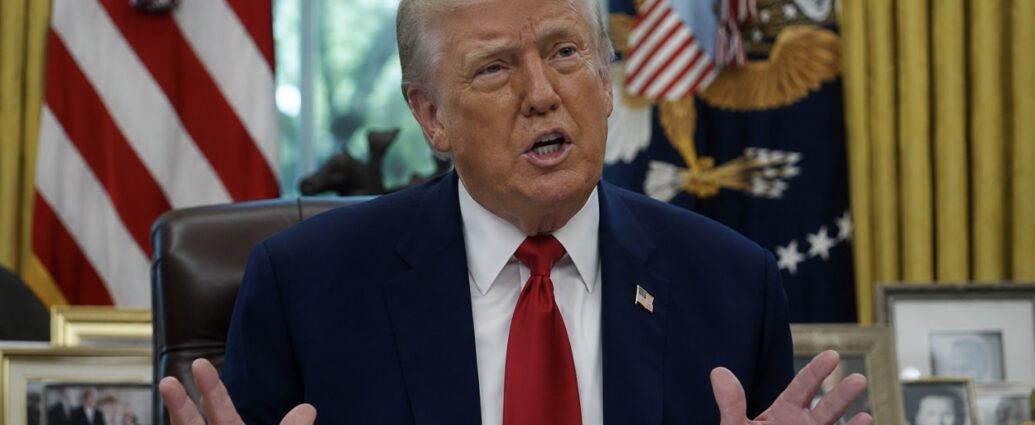
President Donald Trump said Wednesday, June 10, that the U.S. military has been quietly helping oil tankers move through the Strait of Hormuz, claiming that more than 100 million barrels of oil and over 200 commercial ships have passed safely through the contested waterway. He disclosed the operation in remarks to reporters in the Oval Office and in a post on his Truth Social platform.
Trump said he directed the military last month to carry out what he described as a secret mission to support oil tankers and other commercial vessels navigating the strait, the narrow channel between Iran and Oman that has been largely disrupted since the war began.
“This wildly successful effort is because the UNITED STATES OF AMERICA CONTROLS the Strait of Hormuz — NOT Iran,” Trump wrote, adding that Iran’s military has been weakened and its economy is under severe strain.
The president tied the operation directly to energy prices. He argued that the continued movement of oil through the region helped keep crude prices near $90 per barrel rather than surging above $200, a level some analysts have warned could occur if the strait were completely shut.
That economic angle is the heart of why this matters to ordinary Americans.
The Strait of Hormuz is one of the most important oil routes in the world. Before the conflict escalated, roughly 20 million barrels of oil per day flowed through the waterway, representing about one-fifth of global petroleum supply. Any disruption quickly affects fuel markets, shipping costs, airline expenses, manufacturing, and ultimately consumer prices.
When traffic through the strait became constrained, oil prices climbed and gasoline costs followed. Those higher energy expenses have filtered into transportation, food distribution, and retail supply chains across the economy.
Anything that restores even part of that flow can help reduce pressure.
Still, the picture is more complicated than the president’s description suggests.
Commercial traffic through Hormuz remains significantly below pre-war levels. Independent energy analysts note that global markets are still missing substantial volumes of oil that would normally transit the route. Industry estimates indicate that billions of barrels of expected shipments have been delayed or rerouted since the conflict began.
There is, however, some evidence that more oil may be moving through the region than publicly reported.
A recent JPMorgan analysis suggested that a meaningful volume of crude may still be exiting the Gulf through vessels operating with limited public tracking visibility. Analysts noted that oil exports appear higher than official shipping traffic alone would suggest.
At those estimated rates, Trump’s claimed totals fall within a range that analysts consider plausible, though still far below normal peacetime volumes.
Administration officials have also hinted at improving conditions.
Energy Secretary Chris Wright said earlier this week that oil exports moving through Hormuz are “rising very meaningfully,” though he did not provide specific figures.
Meanwhile, ships that had been stranded inside the Persian Gulf have gradually resumed movement through the corridor amid ongoing coordination with U.S. military forces.
Exactly what role the military is playing remains somewhat unclear.
Earlier this year, Trump announced a mission known as Project Freedom, intended to assist commercial vessels affected by the conflict. Administration officials later indicated that U.S. forces were not formally escorting ships but were providing communications support, intelligence, monitoring, and defensive protection against attacks.
U.S. Central Command has stated that American forces are working to protect commercial shipping from drone, missile, and maritime threats in the region.
Secretary of State Marco Rubio recently told lawmakers that the United States has responded to Iranian attacks targeting commercial vessels. He warned that drone strikes against civilian ships pose significant environmental and economic risks and said U.S. forces respond when commercial traffic comes under attack.
For businesses and consumers, the implications are significant.
If more oil is successfully reaching global markets, it helps explain why crude prices have remained elevated but have not exploded to the levels many feared earlier this year. That stability benefits airlines, trucking companies, manufacturers, retailers, and families facing higher fuel bills.
Gasoline prices remain well above pre-conflict levels, and inflation pressures tied to energy costs continue to affect household budgets. Any improvement in oil flows therefore has direct consequences for the broader economy.
The conflict, however, remains unresolved, and the Strait of Hormuz is still operating far below normal capacity.
Energy forecasters continue to expect elevated oil prices through much of the year unless shipping conditions improve substantially.
Trump’s announcement signals that the administration believes its efforts are helping keep energy supplies moving despite the conflict. Whether that translates into sustained relief at the gas pump will depend on how much oil is truly flowing and how long the disruption lasts.
JBizNews Desk — Energy
© JBizNews.com All Rights Reserved. Reproduction or distribution without written permission is prohibited.
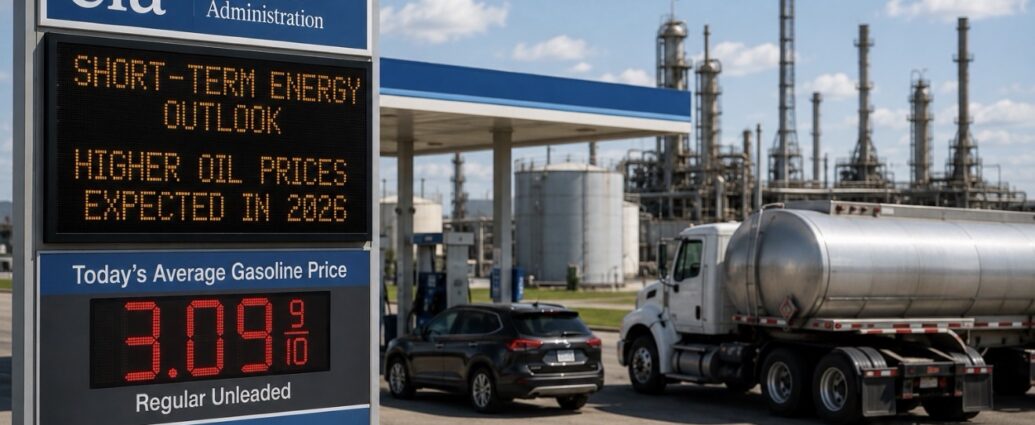
The federal government’s energy forecasters expect fuel prices to climb sharply this year as the war with Iran keeps oil from flowing freely through the world’s most important shipping lane. The U.S. Energy Information Administration laid out the outlook in its monthly Short-Term Energy Outlook, released June 9.
The agency expects the global oil benchmark, Brent crude, to average around $105 a barrel through June and July, assuming the Strait of Hormuz stays largely closed to shipping in the near term. It projects the wholesale price of gasoline will rise by about 50% in 2026 compared with the agency’s pre-conflict forecast from February, with diesel and jet fuel up more than 60%.
Those are wholesale figures, the prices charged before fuel reaches the corner station, but they flow straight to the pump. Drivers have already felt it. The national average for a gallon of regular gasoline jumped well above $3 this spring as the conflict disrupted oil supplies, and the government’s forecast suggests relief is not coming soon.
The cause traces back to the Strait of Hormuz, a narrow waterway between Iran and Oman that carries roughly a fifth of the world’s oil. The agency assumes shipping through the strait stays effectively closed in the near term, with traffic only beginning to resume in the third quarter of 2026 and not returning to normal until early 2027. Until those flows recover, the world is short of oil, and shortages push prices up.
There is a path back down. Once oil moves through the strait again and producers restore output, the agency expects Brent to fall to an average of $79 a barrel in 2027. But that depends entirely on the war winding down, which remains uncertain after fresh U.S. strikes on Iran this week.
The strain is showing up in America’s emergency reserves. The Strategic Petroleum Reserve, the nation’s backup supply of crude, has been drawn down sharply since the conflict began and is heading toward its lowest level since the early 1980s. That cushion helps soften price spikes, but it cannot be drained indefinitely.
For households, the effect goes far beyond the gas tank. Energy is woven into the price of nearly everything. When fuel costs rise, it costs more to grow food, manufacture goods, and truck them to stores. That is why energy did most of the damage in this week’s inflation report. The Bureau of Labor Statistics said consumer prices rose 4.2% over the past year, the fastest in three years, and that energy alone accounted for more than 60% of the monthly increase.
Small businesses feel it acutely. Delivery companies, contractors, landscapers, and anyone who runs a fleet of vehicles watches fuel costs eat into already thin margins. Many face a hard choice between absorbing the expense or raising prices on customers who are themselves stretched. Farmers face higher costs for diesel and fertilizer, much of which is tied to energy prices, which can ripple forward into grocery bills.
The travel industry is caught too. Airlines just cut their global profit forecast in half, blaming the same jump in fuel costs. Higher pump prices also weigh on summer road trips, a staple of the warm-weather economy, as families recalculate whether the drive is worth it.
The forecast itself carries a clear caveat: it assumes the strait stays disrupted. Energy prices have been less explosive than some feared, in part because traders have found workarounds and quiet routes to keep some oil moving. But the government’s central expectation is for elevated prices to persist through the year, easing only when the conflict does.
For now, the message to consumers and business owners alike is to plan for higher fuel costs through the summer and beyond. The next monthly energy outlook is due July 7, and it will show whether the war, and the prices it is driving, are getting better or worse.
JBizNews Desk — Energy
© JBizNews.com All Rights Reserved. Reproduction or distribution without written permission is prohibited.
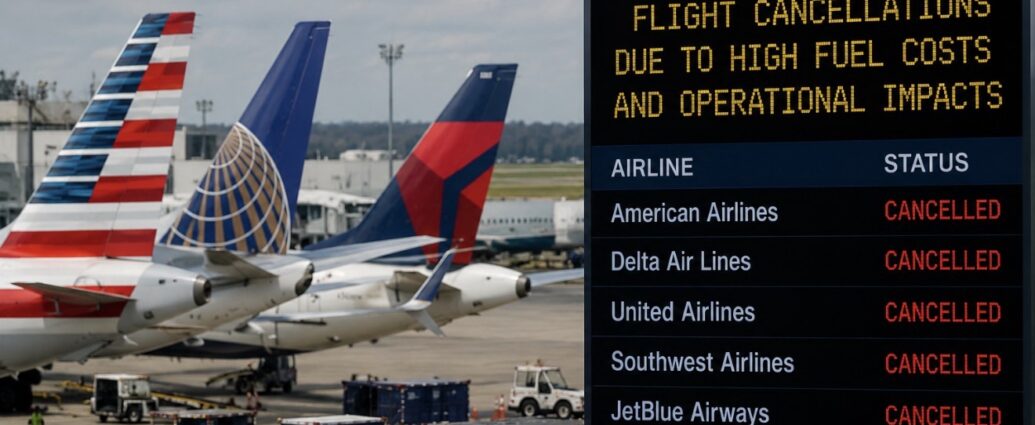
The world’s airlines expect to earn roughly half as much this year as they did last year, dragged down by a surge in jet fuel prices tied to the war with Iran. The International Air Transport Association, the industry’s main trade group, delivered the downgrade Sunday, June 7, at its annual meeting in Rio de Janeiro.
Airlines will bring in a combined net profit of $23 billion in 2026, down from a previously projected $41 billion and below the $45 billion they earned in 2025, the group said. Profit margins are expected to thin from 4.2% to 2.0%, meaning carriers will keep just two cents of every dollar in sales.
The cause is fuel. The group expects average jet fuel prices to run 70% higher than last year, adding about $100 billion to the industry’s collective fuel bill. Oil prices jumped after the U.S.-Iran conflict began in late February and disrupted shipping through the Strait of Hormuz, the chokepoint that handles a large share of the world’s oil. Jet fuel now averages around $152 a barrel, up from roughly $90 last year.
Willie Walsh, the group’s director general, said war-related disruptions and rising fuel costs have shifted the outlook for the worse. He warned that smaller carriers that started the year with weak finances are struggling the most.
The pain is uneven. The Middle East, long the most profitable region for air travel, has been hit hardest. The group now expects the region’s airlines to lose $4.3 billion this year, a sharp reversal from the $7.2 billion profit they earned in 2025, as carriers like Emirates and Qatar Airways cut operations following weeks of airspace closures. In North America, profits are forecast to fall to $9.4 billion from $12.4 billion.
Travel demand itself is holding up. Passenger numbers are expected to rise 2.4% to 5.1 billion this year, with planes filling to about 84% of capacity. The problem is that demand cannot outrun costs. Airlines are now earning just $4.50 in profit per passenger, a razor-thin cushion.
For travelers, the squeeze is showing up at the booking screen. Airlines are raising fares to cover the higher fuel bills, so summer trips cost more than they did a year ago. Some carriers, including LATAM and Azul, are cutting how often they fly certain routes. Others are flying longer paths to avoid closed airspace over the Middle East, which burns more fuel and adds time to journeys. Fewer flights and pricier tickets are the direct result.
Fuel is not the only headache. Airlines are also short on new planes. Airbus and Boeing have struggled with delivery delays, leaving carriers flying older, less fuel-efficient jets at exactly the moment fuel is most expensive. The aircraft backlog has swelled to record levels, capping how fast airlines can grow and adding to their costs.
The business stakes reach well beyond the airlines themselves. Air travel ties directly into tourism, conventions, and trade. When flying gets more expensive, families rethink vacations, companies trim travel budgets, and the hotels, restaurants, and shops that depend on visitors feel it. Shipping costs rise too, since a meaningful share of high-value goods moves by air.
The whole forecast rests on how long the war lasts. As long as the Strait of Hormuz stays disrupted, fuel will stay expensive and airlines will keep absorbing the hit or passing it to passengers. If the conflict eases and oil flows normalize, the math could improve quickly. Until then, the industry is bracing for a lean year, and travelers should expect to keep paying more to fly.
JBizNews Desk — Aviation
© JBizNews.com All Rights Reserved. Reproduction or distribution without written permission is prohibited.

Stocks opened higher on Thursday, June 11, shaking off a brutal week even as the U.S.-Iran conflict deepened and a fresh inflation report came in hot. The S&P 500 rose 0.21%, the Dow Jones Industrial Average gained 0.45%, and the Nasdaq Composite added 0.26% in the opening minutes. The small-cap Russell 2000 fell 1.10%, a sign investors remained cautious about higher interest rates sticking around.
Oil prices climbed after President Donald Trump said the United States would hit Iran “very hard” and seize “total control” of the country’s oil and gas industry, while U.S. Central Command confirmed fresh strikes overnight. Explosions were reported across Iran, including near the Strait of Hormuz, the strategic shipping lane through which a significant portion of the world’s oil supply passes.
The market’s gains came despite an alarming inflation report.
The U.S. Bureau of Labor Statistics reported that the Producer Price Index (PPI) jumped 1.1% in May from April, exceeding economists’ expectations of 0.7%. On a year-over-year basis, wholesale prices climbed 6.5%, marking the steepest increase since November 2022.
Energy prices drove much of the increase. Wholesale gasoline prices surged 23.4% during the month as escalating tensions with Iran pushed crude oil prices sharply higher. Excluding food and energy, so-called core wholesale prices rose a more moderate 0.4%, suggesting the inflation shock was concentrated largely in energy markets.
The report arrived just one day after separate government data showed consumer inflation reaching 4.2% annually, the highest reading in three years, and only days before the Federal Reserve’s June 17 policy meeting.
The biggest corporate story of the morning belonged to Oracle Corporation.
The software and cloud-computing giant reported fiscal fourth-quarter results after Wednesday’s closing bell. Revenue totaled approximately $19.2 billion, while adjusted earnings came in at $2.03 per share, both above Wall Street expectations.
Despite the strong results, Oracle shares fell roughly 8% at the open after management revealed plans to raise approximately $40 billion through a combination of debt and equity offerings, including a reported $20 billion stock sale, to fund an aggressive expansion of artificial-intelligence infrastructure.
Chief Executive Clay Magouyrk told analysts the company expects to bring nearly one gigawatt of computing capacity online this quarter alone, while Chief Financial Officer Hilary Maxson said Oracle anticipates roughly $70 billion in capital expenditures during the coming fiscal year.
Investors appeared concerned about the scale of the spending.
Analysts at Bank of America noted that more than half of Oracle’s contracted future revenue is tied to a single customer, OpenAI, increasing perceived concentration risk.
The spending plans also rattled parts of the broader software sector. Shares of German software giant SAP fell more than 4% as investors questioned whether competitors would face similar pressure to dramatically increase AI infrastructure spending.
Not all analysts turned negative.
UBS analyst Karl Keirstead raised his price target on Oracle to $285 from $250, while Oppenheimer and Wedbush increased their targets to $275. Evercore ISI lifted its target to $245, and Barclays maintained an overweight rating with a $240 price target.
Another major market focus is SpaceX.
Elon Musk’s rocket company is expected to price its long-awaited initial public offering after Thursday’s close at approximately $135 per share, with trading expected to begin Friday on the Nasdaq under the ticker symbol SPCX.
At a reported valuation exceeding $1.75 trillion, the offering would rank as the largest IPO in history.
The proposed listing has already generated controversy.
Senator Elizabeth Warren has urged the Securities and Exchange Commission to delay approval of the offering, citing concerns about valuation and Musk’s concentrated control over the company.
Adding further uncertainty, Iranian state media reportedly warned that Musk’s businesses operating in the Middle East, including the Starlink satellite network, could be viewed as military targets amid escalating regional tensions.
Elsewhere, semiconductor stocks rebounded after a difficult stretch that erased nearly $1 trillion in market value earlier this month.
Shares of SoftBank Group Corp. fell more than 9% after reports suggested financing tied to its investment in OpenAI encountered complications. Meanwhile, investors were awaiting earnings from Adobe Inc., scheduled for release after Thursday’s closing bell, with analysts closely watching whether the company’s AI initiatives are translating into meaningful revenue growth.
For now, Wall Street’s gains rest on a fragile assumption: that the latest inflation surge is primarily an energy story and that the conflict with Iran remains contained.
Investors now turn their attention to Adobe’s earnings, SpaceX’s IPO pricing, and next week’s highly anticipated Federal Reserve interest-rate decision, which may ultimately determine whether the market’s recent volatility intensifies or begins to ease.
JBizNews Desk — New York
© JBizNews.com All Rights Reserved. Reproduction or distribution without written permission is prohibited.
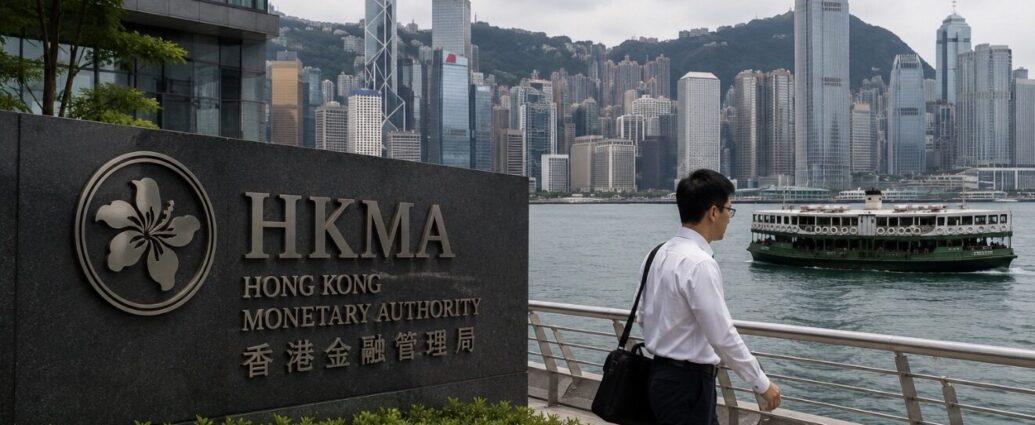
One of the most popular money-making trades in global finance this year — borrowing Hong Kong dollars cheaply and investing the proceeds in higher-yielding U.S. dollar assets — is losing its appeal as borrowing costs in Hong Kong rise, according to a report published Tuesday by Bloomberg News reporters Iris Ouyang and Jacob Gu. The shift reflects changes in Hong Kong’s financial system that are making the trade more expensive to maintain.
Here is the trade in simple terms. For much of this year, Hong Kong dollars were relatively inexpensive to borrow. Traders took advantage by borrowing Hong Kong dollars at low rates and moving the money into U.S. dollar assets offering higher returns. The difference between the borrowing cost and the investment return is known as a carry trade.
The attraction of the strategy depends on one key factor: cheap funding. As long as borrowing costs remain low, traders can earn the spread between the two currencies. When funding costs rise, that profit margin shrinks.
The benchmark at the center of the story is HIBOR, the Hong Kong Interbank Offered Rate, which measures the rate banks charge one another to lend Hong Kong dollars. As HIBOR increases, the cost of financing carry-trade positions rises as well.
The reason traces back to Hong Kong’s currency system. Since 1983, the Hong Kong dollar has been pegged to the U.S. dollar within a trading band of HK$7.75 to HK$7.85 per U.S. dollar. When the currency weakens toward the lower end of that range, the Hong Kong Monetary Authority (HKMA) intervenes by purchasing Hong Kong dollars from the market.
Those interventions remove liquidity from the banking system. With less cash available, short-term borrowing costs tend to increase. In effect, the same market forces that encouraged the carry trade have also contributed to the conditions making it less profitable.
Seasonal factors are adding pressure. Midyear is traditionally a period when large dividend payments, corporate funding needs, and new stock offerings absorb liquidity from Hong Kong’s financial system. That can further tighten money-market conditions and contribute to higher borrowing rates.
The implications extend beyond hedge funds and currency traders. Most residential mortgages in Hong Kong are linked directly or indirectly to HIBOR. As the benchmark rises, mortgage payments can increase, affecting household budgets across the city.
Banks often benefit from a higher-rate environment because they can earn more on loans and other interest-bearing assets. Borrowers, however, face higher financing costs. Property developers, homebuyers, and businesses seeking credit may all feel the effects if funding costs continue climbing.
For savers, the picture is somewhat brighter. Higher interest rates can lead to improved returns on bank deposits and savings products, though those gains often lag changes in wholesale funding markets.
Importantly, the recent rise in borrowing costs is not viewed as a threat to Hong Kong’s currency peg. Rather, many analysts see it as evidence that the system is functioning as intended. The peg relies on automatic adjustments in liquidity and interest rates to keep the currency within its designated trading range.
The broader question for investors is whether the narrowing gap between Hong Kong and U.S. funding costs will continue. If borrowing Hong Kong dollars becomes significantly more expensive, the economics that fueled the carry trade could weaken further.
For now, the takeaway is straightforward: the era of exceptionally cheap Hong Kong dollar funding appears to be fading, reducing the attractiveness of one of the market’s most widely used currency trades.
JBizNews Desk — Asia
© JBizNews.com All Rights Reserved. Reproduction or distribution without written permission is prohibited.

Starbucks is exploring options for its Japan business, including the possible sale of a minority stake or a public listing, according to people familiar with the matter cited in a report published Wednesday. The discussions are described as preliminary, and the company has not publicly confirmed any plans or commented on the reported deliberations.
In simple terms, Starbucks is considering whether to bring in outside investors to own part of its Japan operation. Another option under review is an initial public offering of the business, allowing investors to buy shares in the Japan unit while Starbucks retains a significant ownership position.
According to the report, a transaction could value the business at approximately ¥400 billion to ¥500 billion (about $2.5 billion to $3.1 billion), though no formal process has been announced and no final decision has been made.
For customers, little would change. Starbucks stores across Japan would continue operating under the same brand, serving the same products, and using the same loyalty programs. The question is not about changing the coffee business itself but about changing who owns part of it.
Japan is one of Starbucks’ most important international markets. The company operates approximately 2,100 stores across the country, making it one of the largest Starbucks footprints outside North America. Most of those locations are company-operated rather than franchised.
The reported discussions follow a major transaction Starbucks recently completed in China. In an official filing with the U.S. Securities and Exchange Commission, Starbucks disclosed that funds managed by Boyu Capital acquired a 60% stake in the company’s China retail operations, while Starbucks retained a 40% ownership interest and continued to own and license the Starbucks brand to the venture.
That China deal valued Starbucks’ China business at roughly $4 billion and reflected a broader strategy of partnering with local investors while maintaining control of the brand and long-term growth plans.
Brian Niccol, Chairman and Chief Executive Officer of Starbucks, said at the time that the China partnership would accelerate growth by combining Starbucks’ global brand with strong local expertise and operational capabilities.
A similar arrangement in Japan would extend what many analysts describe as an asset-light strategy. Rather than owning every international operation outright, Starbucks can generate capital from mature markets while continuing to benefit from future growth through retained ownership stakes, licensing fees, and brand royalties.
Unlike some corporate divestitures, the reported Japan discussions are not being driven by a struggling business. Starbucks has a long history in the country and remains one of the most recognized coffee brands in Japan.
The company first entered Japan in 1996, opening its inaugural location in Tokyo. In 2014, Starbucks purchased the remaining ownership stake in Starbucks Coffee Japan for approximately $914 million, giving the company full control of the business after years of operating through a joint venture.
If Starbucks ultimately sells a minority stake today, the valuation being discussed suggests the Japan operation has appreciated significantly since that acquisition.
The timing also aligns with Niccol’s broader effort to reshape the company. Since becoming CEO, he has been implementing the “Back to Starbucks” turnaround strategy, focused on simplifying operations, improving customer experience, and strengthening profitability.
Selling stakes in mature international businesses can free up capital, improve financial flexibility, and allow management to focus resources on key strategic priorities, including efforts to strengthen the company’s core North American operations.
For investors, the reported discussions could provide a clearer picture of how much Starbucks’ international businesses are worth. When outside investors place a specific value on an operation like Japan, it offers a market-based benchmark that can help analysts assess the company’s overall valuation.
Several important caveats remain. The discussions are reportedly in the early stages, the information comes from unnamed sources rather than company executives, and many preliminary deal talks never result in a transaction.
Starbucks could pursue a stake sale, an IPO, a strategic partnership, or decide to keep the business exactly as it is.
What is clear is that Starbucks is continuing to evaluate how it structures ownership of its international operations. After reshaping its China business through a local partnership, Japan may now be the next market under review as the world’s largest coffee chain looks to balance growth, capital allocation, and shareholder value.
JBizNews Desk — Asia
© JBizNews.com All Rights Reserved. Reproduction or distribution without written permission is prohibited.
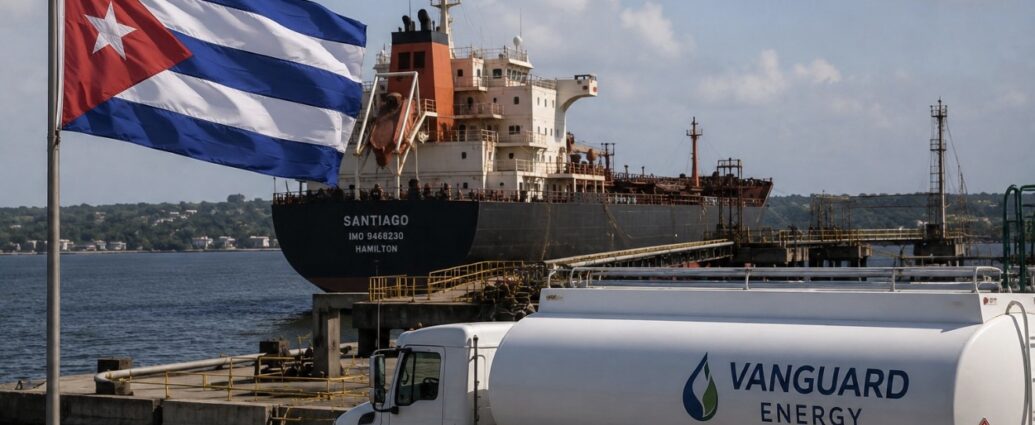
A Florida fuel-trading company is in advanced talks to ship Cuba the largest cargo of American fuel the island has received since before the U.S. embargo reshaped relations between the two countries, according to remarks confirmed Tuesday by Matthew Klann, President of Vanguard Energy. The Miami-based company has already supplied smaller shipments of gasoline and diesel to Cuba and is now working toward a significantly larger delivery as the island struggles through a deepening energy crisis.
What makes the development remarkable is the history behind it. The United States has maintained a trade embargo against Cuba for more than six decades, and Washington has spent much of this year trying to restrict fuel flows to the island. A major, openly arranged shipment of U.S. fuel would represent a sharp departure from decades of precedent and highlights a unique policy exception now taking shape.
To understand how Cuba reached this point, it helps to look at the events of the past several months. Cuba has long relied heavily on imported fuel, particularly from Venezuela. Disruptions to those supplies, combined with additional U.S. pressure on energy shipments to the island, have left Cuba facing severe shortages that have strained its electrical grid and transportation networks.
The consequences have been felt across the country. Cuban officials have acknowledged months of fuel shortages severe enough to disrupt power generation. Rolling blackouts have become a regular feature of daily life, with some areas experiencing outages lasting many hours at a time. Businesses, schools, hospitals, and households have all been affected by the lack of reliable electricity.
The reason U.S. fuel is now being considered lies in Washington’s distinction between Cuba’s government-controlled economy and its emerging private sector. Secretary of State Marco Rubio has argued that allowing certain transactions that benefit private Cuban entrepreneurs aligns with broader U.S. policy goals aimed at strengthening independent economic activity while maintaining pressure on the state.
In practical terms, that means fuel exports intended for private businesses may qualify for exceptions that would not apply to government entities. Companies such as Vanguard Energy have been operating within that narrow framework, supplying fuel to approved buyers under existing regulations.
Until now, those shipments have been relatively small. Earlier deliveries represented only a fraction of Cuba’s overall energy needs. The cargo currently under discussion would be substantially larger and could provide meaningful relief to parts of the island’s struggling economy.
The move comes as Cuba continues searching for alternative energy suppliers. Fuel shipments from other countries have arrived intermittently, but they have not been sufficient to stabilize the island’s energy system. The uncertainty surrounding foreign supplies has increased the importance of any new source of fuel.
The business implications are significant. For Vanguard Energy, the arrangement could establish an early foothold in a market that very few American companies are legally permitted to serve. If the policy framework remains in place, companies that develop expertise navigating the regulatory and logistical challenges could gain a substantial competitive advantage.
Those logistical challenges are considerable. Cuba’s fuel-import infrastructure faces capacity constraints, and handling large shipments can require complex coordination involving storage facilities, ports, and distribution networks. Successfully managing those obstacles is likely to be as important as securing regulatory approval.
For ordinary Cubans, however, the issue is less about geopolitics than daily life. Fuel shortages affect electricity generation, public transportation, refrigeration, food distribution, and countless other basic services. Any increase in available fuel could have an immediate impact on living conditions.
For U.S. policymakers, the potential shipment represents a test of a broader strategy: maintaining economic pressure on the Cuban government while allowing targeted support for private citizens and entrepreneurs. Whether that approach can achieve both objectives remains an open question.
Neither Vanguard Energy nor U.S. officials have disclosed the size of the proposed shipment or a specific delivery timetable. Discussions remain ongoing, and final approvals have not yet been announced.
If completed, however, the deal would mark one of the most significant fuel shipments from the United States to Cuba in decades and could become a milestone in the evolving relationship between U.S. policy and Cuba’s private economy.
JBizNews Desk — Americas
© JBizNews.com All Rights Reserved. Reproduction or distribution without written permission is prohibited.
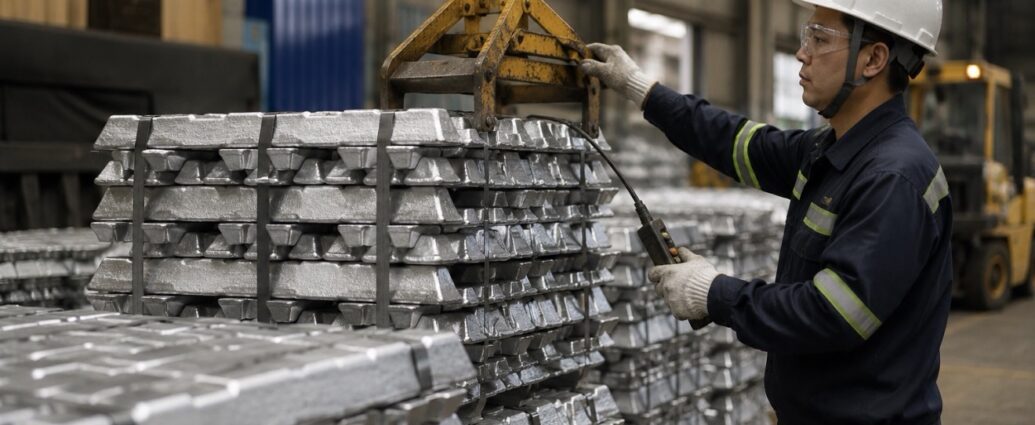
Aluminum traded on the London Metal Exchange slipped to about $3,594 a tonne on Monday, easing back from the more than four-year high of roughly $3,790 it touched on June 2. The decline came as a stronger U.S. dollar made the metal more expensive for buyers using other currencies, briefly cooling a rally that has run for months.
Here is the simple version. Aluminum is priced in dollars. When the dollar gets stronger, the same bar of metal costs more for buyers in Europe, China, India and elsewhere paying in their own currencies. That extra cost tends to slow demand and pressure prices lower. That is most of what happened this past week.
The dollar climbed after a strong U.S. jobs report. A healthy labor market raises the odds that the Federal Reserve keeps interest rates elevated if inflation remains stubborn. Higher U.S. rates tend to attract investment into dollar-denominated assets, strengthening the currency and weighing on commodities priced in dollars. That chain reaction, not any easing of overseas tensions, is what knocked aluminum off its peak.
It is important to understand what did not cause the pullback. Supply concerns that have supported aluminum prices in recent months have not disappeared. Traders continue to monitor disruptions affecting energy markets, shipping routes and raw-material supplies, all of which can influence the cost and availability of aluminum around the world.
There is also continuing concern about access to bauxite, the ore used to make aluminum. Export restrictions and supply-chain uncertainties in key producing regions have added another layer of pressure to the market. When raw materials become harder or more expensive to move, the effects are felt throughout the aluminum supply chain.
For all the day-to-day swings, the bigger picture remains a market trading near multi-year highs. The recent decline represents a pullback from a sharp rally rather than a fundamental change in direction. Prices remain well above levels seen earlier in the year.
The business impact extends far beyond commodity traders. Aluminum is a critical input for automobiles, beverage cans, construction materials, packaging, electrical transmission lines and aircraft manufacturing. When prices remain elevated for extended periods, those costs eventually work their way through factories and into consumer products.
Manufacturers that consume large amounts of aluminum often try to lock in supply contracts ahead of time, but prolonged price increases can still pressure profit margins. Beverage makers, automakers and industrial manufacturers all keep a close eye on aluminum markets because the metal is embedded in so many everyday products.
The currency story matters for Americans as well. A stronger dollar can make imported goods cheaper for U.S. consumers while making American exports more expensive overseas. Aluminum’s recent move is one example of how expectations about Federal Reserve policy can ripple through global markets and eventually affect businesses and households alike.
What happens next will likely depend on two competing forces. On one side, a strong dollar and the possibility of higher-for-longer U.S. interest rates could continue to pressure commodity prices. On the other, ongoing supply concerns and tight availability of key materials could provide support.
This week, the dollar gained the upper hand. Over the longer term, however, supply conditions may prove to be the more important factor in determining where aluminum prices go next.
For now, aluminum remains near multi-year highs, underscoring just how strong the market has been despite the recent pullback.
JBizNews Desk — Markets
© JBizNews.com All Rights Reserved. Reproduction or distribution without written permission is prohibited.
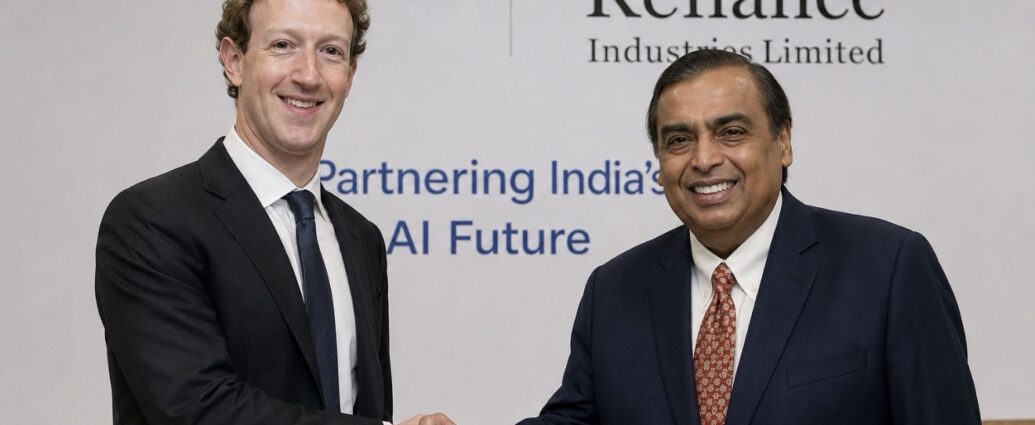
Meta announced Tuesday that it has signed an agreement with Reliance Industries to lease its first artificial intelligence data center in India, according to a statement released through the company’s newsroom and comments from Mark Zuckerberg, Founder and Chief Executive Officer of Meta, and Mukesh D. Ambani, Chairman and Managing Director of Reliance Industries Limited.
The plant will be built in Jamnagar, a city in the western Indian state of Gujarat. Under the agreement, Reliance will construct the facility while Meta leases the computing capacity inside it. The first phase is expected to operate at 168 megawatts of power, with room for future expansion.
Here is the simplest way to understand the arrangement. Meta operates platforms used by billions of people worldwide, including Facebook, Instagram, and WhatsApp, and requires vast computing power to run its growing artificial intelligence systems. Rather than building its own facility from the ground up in India, Meta will pay Reliance to build and operate the infrastructure while leasing the computing resources it needs.
India is central to the strategy. It is one of Meta’s largest and fastest-growing markets, and the company said locating computing power within the country will allow AI products and services to run faster for local users. Zuckerberg said the Jamnagar facility will strengthen Meta’s global AI infrastructure while deepening its long-term investment in India.
The partnership builds on an existing relationship. In 2020, Meta invested $5.7 billion in Jio Platforms, Reliance’s telecommunications and digital subsidiary, in a move aimed at expanding internet access and helping small businesses across India. The companies later worked together to make Meta’s open-source AI models available to Indian businesses and developers. The new data center extends that partnership into the physical infrastructure powering artificial intelligence.
The facility has been designed around two of the largest operating costs in data centers: energy and water. Reliance is developing what it describes as one of the world’s largest data center campuses in Jamnagar, with access to the significant power resources required for AI computing. The site will run on renewable energy and use desalinated seawater for cooling rather than freshwater supplies. Meta said it will cover the full cost of the energy and water needed to operate the center.
Ambani described the agreement as a milestone for India’s digital infrastructure, saying that building the country’s first custom-designed data center for a technology company of Meta’s scale demonstrates India’s readiness to play a leading role in the global AI economy.
Meta also announced a major clean-energy expansion in India. The company said it has contracted nearly 1 gigawatt of new solar and wind generation through two energy providers.
CleanMax will supply 837 megawatts from new projects in Rajasthan and Karnataka, bringing Meta’s total announced capacity with the company to more than 900 megawatts. Fourth Partner Energy will provide an additional 88 megawatts from projects across Tamil Nadu, Karnataka, Maharashtra, and Uttar Pradesh.
The business implications are significant. AI data centers have become one of the largest areas of spending across the global technology sector, influencing employment, construction activity, power demand, and local infrastructure investment. By having Reliance build and operate the facility, India retains ownership of the underlying infrastructure while keeping related energy and water spending within the country.
For Reliance, the agreement helps transform Jamnagar—long known as a major refining and energy hub—into a destination for AI and cloud-computing customers. The company has signaled its intention to host AI infrastructure for outside firms, and securing a customer the size of Meta represents a major validation of that strategy.
The deal also highlights a broader trend across the technology industry as major American companies race to secure computing capacity around the world rather than relying solely on domestic infrastructure.
For users in India, the immediate goal is straightforward: faster AI services and digital applications powered by servers located closer to where they live and work.
Neither company disclosed the financial terms of the lease agreement or provided a firm timeline for when the Jamnagar facility will begin operations.
JBizNews Desk — Asia
© JBizNews.com All Rights Reserved. Reproduction or distribution without written permission is prohibited.
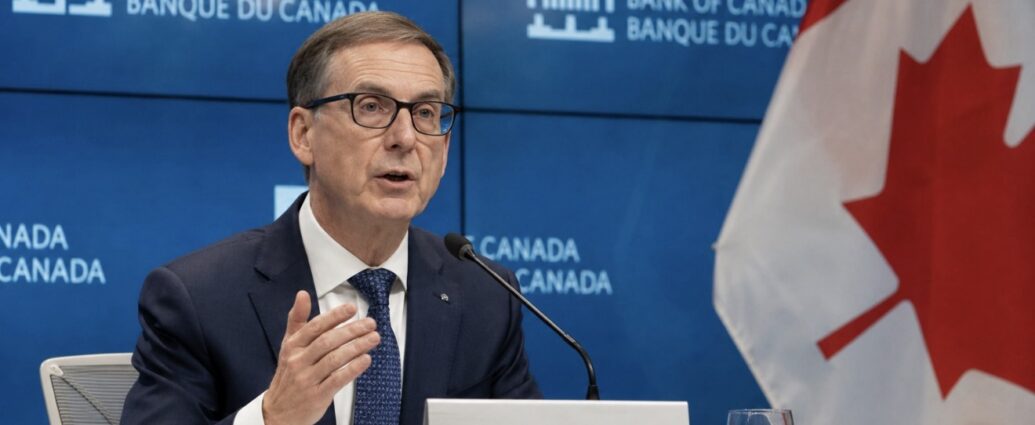
Governor Tiff Macklem’s warning that Canada’s economy remains weak sent government bond prices higher as investors increased bets on future rate cuts.
The Bank of Canada left its key interest rate unchanged on Wednesday, June 10, 2026, and Governor Tiff Macklem described the country’s economy as “weak,” a message that sparked a rally in Canadian government bonds and reinforced expectations that future interest-rate cuts remain possible.
The central bank held its benchmark overnight rate at 2.25%, marking the fifth consecutive meeting without a policy change. The decision was widely expected by economists and financial markets.
Speaking in Ottawa alongside Senior Deputy Governor Carolyn Rogers, Macklem acknowledged that economic conditions remain sluggish.
“The economy is weak, but it is not clearly in recession,” Macklem said, adding that policymakers expect growth to improve during the second quarter.
Bond markets reacted immediately.
Canada’s benchmark two-year government bond yield fell to approximately 2.84% shortly after the announcement after trading near 2.88% earlier in the day. Bond yields move inversely to prices, meaning investors were buying government debt following the central bank’s comments.
The move reflected growing market expectations that the Bank of Canada’s next policy adjustment is more likely to be a rate cut than a rate increase.
In its policy statement, the central bank highlighted the difficult balancing act facing policymakers.
“Economic activity in Canada has been weak and uncertainty about U.S. trade policy persists,” the bank said.
Officials also pointed to continuing tensions in the Middle East and elevated oil prices. However, the bank emphasized that it intends to look through temporary energy-driven inflation pressures and “will not let higher energy prices become persistent inflation.”
The statement underscores the competing forces currently shaping Canada’s economy.
Higher oil prices can push inflation upward, which would normally support higher interest rates. At the same time, weak economic growth and soft business activity argue for lower borrowing costs to stimulate demand.
Caught between those competing risks, policymakers chose to remain on hold.
The decision comes as Canada continues to flirt with recession.
The economy recorded a second consecutive quarterly contraction during the first quarter of 2026, meeting the traditional definition of a technical recession. Despite that, Macklem stopped short of formally describing the economy as being in recession, arguing that conditions could improve as growth rebounds during the spring and summer months.
For consumers and businesses, the decision has direct implications.
The Bank of Canada’s overnight rate influences borrowing costs throughout the financial system, including variable-rate mortgages, lines of credit, business loans, and consumer lending products.
By leaving rates unchanged, the central bank maintained existing borrowing costs for millions of Canadians.
Fixed mortgage rates operate differently because they are heavily influenced by government bond yields. As a result, Wednesday’s rally in Canadian bonds could eventually help reduce pressure on fixed-rate borrowing costs if lower yields persist.
The current pause follows one of the most aggressive easing cycles among major central banks.
Between June 2024 and October 2025, the Bank of Canada reduced its benchmark rate by 2.75 percentage points, lowering it from 5.0% to 2.25%. Since then, policymakers have adopted a wait-and-see approach, weighing slowing economic activity against lingering inflation risks.
Economists generally interpreted Macklem’s comments as supportive of future easing rather than tightening.
Ali Jaffery, Chief Economist at KPMG Canada, described the central bank’s tone as dovish, arguing that inflation risks remain manageable given the economy’s weakness.
Andrew Grantham, Senior Economist at CIBC, characterized the Bank of Canada as “very patient” and said policymakers appear comfortable waiting to see whether current rates can support a modest recovery.
Several major financial institutions, including CIBC, BMO, and Royal Bank of Canada, currently expect the benchmark rate to remain unchanged through the remainder of 2026.
A major variable remains trade policy.
The upcoming review of the United States-Mexico-Canada Agreement (USMCA) in July could significantly affect Canada’s economic outlook. Any changes to trade arrangements would have direct implications for manufacturing, exports, investment, and cross-border supply chains.
Until there is greater clarity on trade negotiations and the trajectory of economic growth, the Bank of Canada appears content to keep rates at 2.25%, monitor incoming data, and wait for stronger evidence that either inflation or economic weakness is gaining the upper hand.
JBizNews Desk — Canada
© JBizNews.com All Rights Reserved. Reproduction or distribution without written permission is prohibited.
Columbia University anti-Israel student activist Mohsen Mahdawi appealed on Wednesday an immigration court order to deport him to Jordan, according to his legal representation American Civil Liberties Union (ACLU).
Mahdawi, who was arrested last April for undermining US foreign policy and government counter-antisemitism efforts with his pro-Palestinian campus activism, had been ordered removed to Jordan by an immigration judge last Wednesday.
The ACLU and other legal representatives on Wednesday appealed to the First Circuit US Court of Appeals. They have also petitioned on Wednesday to the Second Circuit, where his habeas petition is being deliberated. His legal team argued that his detention and censorship was punitive and served no legitimate purpose.
Mahdawi said that in a statement that as someone who was born in a Palestinian “refugee camp,” he thought he would be able to build his life in the US with the rights he ostensibly lacked there.
“Now the administration is abusing immigration law to silence me for speaking the truth about Palestinian suffering and genocide. When a government weaponizes immigration to punish speech, millions of immigrants and citizens feel that blow,” said Mahdawi. “This fight belongs to all who believe in democracy and every person willing to stand together in defense of the First Amendment. I take this fight to the First Circuit with love and faith – because the First Amendment is sacred, and I refuse to be silenced.”
Deportation proceedings had been reinstated against Mahdawi in early May after the US Board of Immigration Appeals overturned a February decision by a US immigration judge to reject the government’s efforts to deport him, arguing that the Department of Homeland Security (DHS) failed to prove he was removable.
“The original immigration judge correctly dismissed Mohsen’s immigration case before she had been fired, and the government cynically appealed the case within the Trump administration-controlled immigration court system knowing that the BIA would reverse,” Mahdawi’s attorney Cyrus Mehta said in a Wednesday statement with the ACLU. “We look forward to vindicating Mohsen’s First Amendment rights in the First Circuit Court of Appeals as well as the First Amendment rights of all other noncitizens living in the United States.”
The 34-year-old green card holder was arrested by DHS agents while he was attending a citizenship interview, with his deportation sought under the 1965 Immigration and Nationality Act.
“The secretary of state has determined” that his “presence and activities in the United States would have serious adverse foreign policy consequences and would compromise compelling US foreign policy interests,” was the explanation given for the move.
A judge ruled on the same day of his arrest that Mahdawi could not be removed from Vermont while the petitions against his arrest were being considered.
Petitions against Mahdawi’s detainment have argued that his arrest was a punitive measure over his activism, in violation of a resident’s First Amendment right to protected speech and due process.
The government said that its actions were legitimate under the INA and that the Vermont court lacked jurisdiction over the matter.
Mahdawi has been a student and activist at various universities in the West Bank and the US since 2014. He was the head of the Fatah Student Movement at Birzeit University in the West Bank, and at Columbia, he was one of the leaders of pro-Palestinian protests. However, Mahdawi said that he stepped back from the role in March 2024.
Mahdawi reportedly co-founded the Dar: Palestinian Student Society alongside activist Mahmoud Khalil, a leader at Columbia University’s Apartheid Divest whose own deportation order is still being challenged.
ACLU Speech, Privacy, and Technology Project Deputy director Nate Freed Wessler said that “Mohsen should never have been detained for his speech.”
“The government’s continued persecution of our client for his beliefs should send a chill down the spine of everyone in this country, because once we start allowing exceptions to the First Amendment for speech the current government doesn’t like, there’s no telling where the censorship will stop.”

Silver has plunged nearly 47% from its January peak as rising inflation, higher interest-rate expectations and renewed Middle East tensions trigger another sharp selloff in one of 2026’s most volatile assets.
Silver prices fell sharply on Wednesday, June 10, 2026, sliding to around $64 per ounce on the COMEX exchange, their lowest level since late March and nearly 47% below the record high of $121.67 per ounce reached in January.
The latest decline caps a painful month for investors in what had been one of the market’s hottest trades.
The iShares Silver Trust (SLV), the largest silver-backed exchange-traded fund and one of the most popular ways for individual investors to gain exposure to silver, has fallen roughly 20% over the past month.
The immediate catalyst was a combination of geopolitical and economic pressures.
The United States launched fresh military strikes against Iran following the reported downing of an American helicopter, sending oil prices higher. At the same time, the latest Consumer Price Index report showed annual inflation rising to 4.2%, its highest level since April 2023, while core inflation climbed to a seven-month high.
Ordinarily, geopolitical uncertainty can support precious metals.
However, markets focused instead on what higher inflation means for interest rates.
Stronger inflation increases the likelihood that the Federal Reserve will maintain elevated rates—or potentially raise them further. That creates a challenge for silver because, unlike bonds, savings accounts and many other investments, it generates no income.
When interest rates rise, investors often move toward assets that offer yield, reducing the appeal of non-income-producing metals.
Despite the sharp decline, silver remains significantly higher than it was a year ago.
In June 2025, silver traded near $36 per ounce. Even after the recent collapse, prices around $64 still represent a gain of approximately 76% over the past twelve months.
The current selloff therefore represents a retreat from extraordinary highs rather than a return to historical norms.
The rally that preceded the collapse was remarkable.
Silver surged to approximately $121.67 per ounce on January 29, 2026, more than tripling from levels seen during 2025. The following day, the metal suffered its largest one-day decline on record, dropping as much as 35% intraday.
That selloff, combined with simultaneous weakness in gold, erased trillions of dollars in value across precious-metals markets and marked the beginning of a prolonged correction.
Analysts had warned for months that prices had become detached from fundamentals.
Colin Steel of HSBC described silver as fundamentally overvalued despite maintaining a positive long-term outlook. Suki Cooper, head of commodities research at Standard Chartered, similarly warned that silver had entered heavily overbought territory.
Other analysts argued that speculative trading had become the dominant force in the market, pushing prices beyond levels justified by actual industrial or investment demand.
Silver’s volatility stems from its unusual dual role.
It functions both as a precious metal and as an industrial commodity.
Silver is widely used in:
Because of that dual identity, silver prices are influenced by both investor sentiment and industrial demand.
Recently, industrial demand growth has shown signs of slowing. Solar manufacturers, one of the largest consumers of silver, continue developing technologies that reduce the amount of silver required per panel, limiting future demand growth.
For investors, the decline serves as another reminder that silver can be considerably more volatile than gold.
Many investors own silver through ETFs such as SLV or through physical coins and bars purchased as inflation hedges. Those who entered near January’s highs are facing substantial losses, while longer-term holders remain well ahead despite the correction.
The impact extends beyond financial markets.
Lower silver prices can eventually reduce costs for solar developers, electronics manufacturers and medical-device producers. At the same time, falling prices can pressure the profitability of silver miners and companies tied closely to precious-metals production.
Gold also moved lower Wednesday, trading near $4,160 per ounce, down more than 2% on the day.
Not everyone has turned bearish.
Some investors view the correction as a buying opportunity, citing long-term supply constraints and expectations for growing industrial demand over the coming decade. Supporters of that view argue that global silver supplies remain tight and that emerging technologies could drive future consumption.
For now, however, markets are focused on inflation, interest rates and geopolitical uncertainty.
The next major event for traders arrives on June 17, when new Federal Reserve Chairman Kevin Warsh is scheduled to hold his first post-meeting press conference. Investors will be looking for clues about how aggressively the central bank intends to respond to rising inflation.
If policymakers signal a more cautious approach, pressure on precious metals could ease.
Until then, rising oil prices, elevated inflation and expectations for higher interest rates continue to create a difficult environment for silver—even after one of the largest corrections in its history.
JBizNews Desk — Markets
© JBizNews.com All Rights Reserved. Reproduction or distribution without written permission is prohibited.

Mexico’s World Cup kickoff is set for Thursday, but demonstrations, road blockades and uncertainty over a major fan festival are casting a shadow over one of the country’s biggest tourism and economic events in years.
Mexico City is hours away from kicking off the 2026 FIFA World Cup on Thursday, but the celebration is colliding with protests that have blocked roads, toppled tournament displays and put the country’s biggest fan party in doubt. On Wednesday, President Claudia Sheinbaum said she could not yet guarantee that the capital’s free fan festival would go ahead because a teachers’ protest camp had sealed off access to the main square where it is meant to take place.
The opening match pits host Mexico against South Africa at Estadio Azteca, the Mexico City stadium that anchors a tournament jointly hosted by the United States, Mexico and Canada. Kickoff is set for Thursday afternoon following a star-studded opening ceremony, with Colombian singer Shakira among the scheduled performers.
Sheinbaum will not attend the match. She said she gave away her ticket and would instead remain focused on monitoring the protests and security situation surrounding the event.
The stakes extend far beyond soccer.
The Mexican Football Federation estimates the tournament will generate roughly $3 billion for hotels, restaurants, transportation providers, sports venues and other tourism-related businesses. Mexico is hosting 13 World Cup matches across Mexico City, Guadalajara and Monterrey during the tournament’s 39-day run.
For many businesses, Thursday’s opener represents the most important single day of the competition. Organizers expect the match and surrounding festivities to attract one of the largest audiences of the entire tournament, making it a showcase event for the country’s tourism and hospitality industries.
That economic opportunity is also fueling some of the protests.
The National Coordinator of Education Workers (CNTE), a powerful teachers’ union, has spent more than a week demonstrating in the capital. Union leaders argue that the government devoted significant resources to stadium upgrades, transportation improvements and tourism infrastructure while failing to adequately address teacher pay, school funding and public services.
The union established a large encampment in the Zócalo, Mexico City’s historic central plaza, where officials had planned to host the tournament’s primary FIFA Fan Festival. Government estimates suggest the encampment could house approximately 6,000 protesters, effectively limiting access to the square.
The disruptions have spread beyond the city center.
Earlier this week, demonstrators blocked sections of a major highway near the stadium. Police erected barriers to prevent protesters from reaching key tournament sites, and several World Cup-themed statues and promotional installations were vandalized.
Mexican authorities say approximately 19 social movements are expected to stage demonstrations during opening-week activities, with at least seven separate marches planned for Thursday alone.
Not all of the demonstrations focus on economic issues.
Groups representing families of Mexico’s missing persons have organized peaceful marches timed to coincide with the tournament opener. The groups hope to draw international attention to the more than 130,000 people reported missing in Mexico, most of them over the past two decades.
Amnesty International this week called for protections for the women leading many of those search efforts, arguing that the global spotlight surrounding the World Cup provides a rare opportunity to raise awareness of the issue.
Despite the tensions, Sheinbaum has sought to project confidence.
She has repeatedly stated that authorities will not be provoked into confrontation and has pledged that the opening match and related activities will proceed peacefully. The government has deployed large numbers of security personnel, including members of the National Guard, throughout the host cities.
The security presence follows a wave of cartel-related violence earlier this year in one of the World Cup host cities, an incident that raised concerns among tournament organizers and international visitors.
For businesses, however, uncertainty carries its own costs.
Hotels, restaurants, retailers and street vendors near both Estadio Azteca and the Zócalo have spent months preparing for large crowds. Road closures, transportation disruptions and the possibility of a canceled or relocated fan festival could reduce the foot traffic many businesses expected to generate significant opening-week revenue.
While one disrupted day is unlikely to derail a tournament lasting more than a month, it could affect perceptions among tourists deciding whether to travel to Mexico for later matches.
The timing is also politically sensitive.
Sheinbaum is preparing for important trade discussions with the United States later this summer. Those talks are expected to influence key manufacturing and supply-chain sectors that tie the two economies closely together.
A World Cup designed to showcase Mexico as a global tourism and business destination is instead opening amid images of protests, road blockades and heavy police deployments — a contrast critics have highlighted in recent days.
Tournament organizers remain confident that the opening match will proceed as scheduled. Whether the surrounding festivities and economic benefits unfold as planned remains the question hanging over Mexico City as the first whistle approaches.
JBizNews Desk — Mexico
© JBizNews.com All Rights Reserved. Reproduction or distribution without written permission is prohibited.

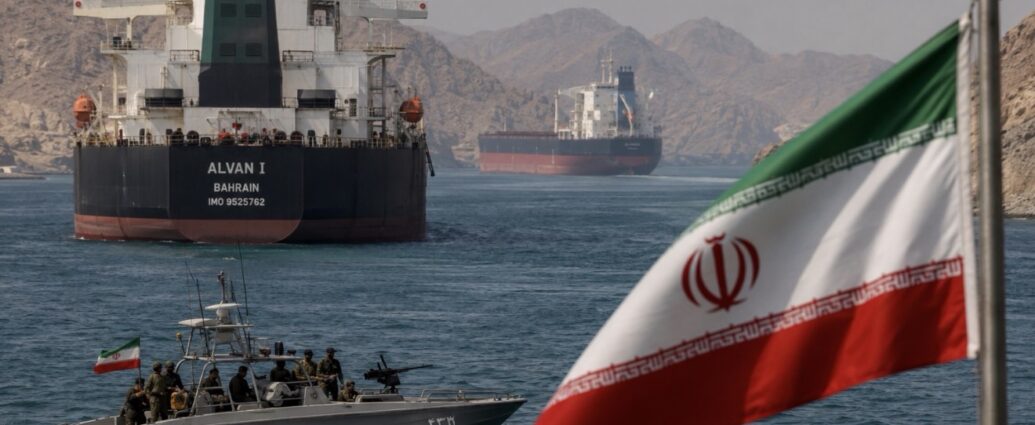
The most powerful nations on Earth are learning a hard lesson: having the strongest military no longer means getting your way. The clearest proof came Tuesday, June 9, when U.S. Energy Secretary Chris Wright said more ships are again moving through the Strait of Hormuz — the narrow sea passage that carries about a fifth of the world’s oil — even as the United States and Iran remain locked in a standoff neither side can fully win. Oil prices fell on his comments. U.S. crude dropped 3.4% to $88.20 a barrel, while Brent crude fell 2.97% to $91.45. President Donald Trump said a deal with Iran to fully reopen the passage was “two or three days away.”
The United States, China, and Russia still possess the largest militaries and some of the most advanced weapons on Earth. But being the strongest is no longer enough to force an outcome — and the consequences are showing up where ordinary people feel them most: in oil prices, taxes, and the cost of everyday life.
Look at the U.S. and Iran. The United States and Israel began strikes against Iran on February 28. When direct talks between the two countries collapsed in April, Trump ordered the U.S. Navy to blockade Iran’s ports. Iran responded by threatening to close the Strait of Hormuz and choke off the world’s oil supply.
Months later, neither side has achieved a decisive victory. The U.S. could not force Iran to surrender. Iran could not keep the oil route closed. The strongest military on Earth still could not simply make the problem disappear.
That fight has come with a steep price. In testimony before the House Appropriations Defense Subcommittee, Pentagon acting comptroller Jay Hurst said the Iran conflict has already cost American taxpayers about $29 billion, up from roughly $25 billion just one month earlier. The bill continues to grow even as major combat operations have slowed.
There is a bigger issue behind the dollars. A report by the Center for Strategic and International Studies (CSIS) titled “Last Rounds? Status of Key Munitions at the Iran War Ceasefire” found that the United States drew down roughly half of its stockpile of its most expensive precision munitions and could require years to fully rebuild those inventories.
To help accelerate production, the Pentagon approved a $500 million investment in Honeywell Aerospace to expand critical missile-component manufacturing. Defense Secretary Pete Hegseth has said the military remains adequately supplied but has also pushed defense manufacturers to increase production capacity.
The strain is now showing up in the federal budget. Trump has proposed a $1.5 trillion defense budget for next year, roughly a 42% increase and the largest one-year military spending jump since World War II. In practical terms, the United States is attempting to project power simultaneously in the Middle East, Europe, and Asia, while spending unprecedented sums to sustain that posture.
Other major powers face their own limitations.
China’s leader, Xi Jinping, warned in May that the United States and China could slide toward open conflict over Taiwan if relations are mishandled. Yet the same CSIS analysis highlighted a critical weakness: China has not fought a major war since 1979 and lacks recent battlefield experience. That is one reason many military analysts believe Beijing is not prepared to launch an invasion of Taiwan in the near term.
Russia offers another example. Its prolonged war in Ukraine exposed weaknesses in logistics, equipment, manpower, and military planning despite Moscow possessing one of the world’s largest armed forces.
The pattern is becoming increasingly clear. The world’s biggest and best-armed nations can still inflict enormous damage. What they can no longer reliably do is force a quick, clean, and decisive outcome.
Why does that matter to ordinary people?
Because the costs ultimately reach consumers and businesses. When oil prices surge, the impact spreads quickly through gasoline, diesel, shipping, air travel, manufacturing, and retail prices. Every additional dollar devoted to military spending is a dollar unavailable for other priorities. And companies that depend on global supply chains must now plan for disruptions that can emerge with little warning.
The takeaway is simple. Ceasefires will come and go. Oil prices will rise and fall. But beneath the headlines, a deeper shift is underway. Military power can still start conflicts and shake global markets. What it increasingly cannot do is control how those conflicts end.
That uncertainty has become a permanent feature of the global economy — and of everyday business.
JBizNews Desk — Global Affairs
© JBizNews.com All Rights Reserved. Reproduction or distribution without written permission is prohibited.

The European Commission, the European Union’s top competition enforcer, on Tuesday, June 9, ordered Meta Platforms to give rival artificial intelligence chatbot makers free access to WhatsApp while regulators finish an antitrust investigation into the company. The order was announced by the Commission’s competition chief, Executive Vice-President Teresa Ribera, in Brussels.
At the center of the fight is the WhatsApp Business API — the tool companies use to plug their own software into WhatsApp so they can message customers through the app. Meta barred rival AI services from that tool in October last year while keeping its own assistant, Meta AI, available. Regulators say that move shut competitors out of a doorway to millions of European users.
WhatsApp is not just a messaging app. For many companies, it has become a customer-service desk, sales channel, marketing platform, and increasingly a gateway to artificial intelligence. Access to WhatsApp allows AI assistants to answer customer questions, help complete purchases, provide support, and interact with users where they already spend their time. Regulators argue that if Meta reserves that access primarily for its own AI products, competitors may never get a fair chance to reach consumers.
The Commission acted using emergency powers it rarely touches. It is the first interim measure the Commission has issued in 17 years. The point of that tool is speed: rather than wait years for a final ruling, regulators can force a change now to stop damage they fear would be impossible to undo later.
Ribera put the reasoning plainly, saying in a statement that competition can be lost long before a final decision is adopted. She said the measures are meant to protect WhatsApp as a key entry point for AI companies to reach consumers in Europe and to let them scale up.
[AP pic: A WhatsApp icon displayed on a smartphone screen.]
The order is specific. Meta must restore rivals’ access to the WhatsApp Business API on the same terms that applied before October, within five working days. The interim measures stay in place for the duration of the investigation, which has no fixed deadline.
The investigation began in December after complaints from The Interaction Company of California, maker of the Poke.com AI assistant, French startup Agentik, and a Spanish rival. The Commission filed formal charges against Meta about two months later.
In March, Meta allowed competitors back onto the platform — but only for a fee. The Commission objected, saying the price was set so high that it was not economically sustainable for competitors. Ribera echoed that concern in announcing Tuesday’s decision.
Meta rejected the order and said it will fight it.
A company spokesperson called the decision regulatory overreach and argued that it forces Meta to provide a product it built and maintains to some of the world’s largest AI companies for free. The company confirmed it plans to appeal.
The financial risk for Meta is substantial.
If regulators ultimately determine that Meta violated European antitrust laws, the company could face fines of up to 10% of its global annual revenue. For a company of Meta’s size, that could amount to billions of dollars.
Meta is already appealing a separate $228.34 million European Union penalty tied to the bloc’s Digital Markets Act.
[AP pic: Business professionals use AI-powered messaging tools on smartphones and laptops in an office environment.]
For businesses, the case reaches far beyond one messaging app.
AI assistants are rapidly becoming a common way people search for information, shop online, communicate with companies, and receive customer support. The companies building those systems are racing to reach users wherever they already spend their time, and WhatsApp represents one of the largest digital gateways in Europe.
Regulators argue that by limiting competitors’ access while promoting Meta AI, Meta was using control of the platform to give its own AI products an advantage.
The ruling also signals how Europe plans to regulate AI competition moving forward.
For years, critics argued that European antitrust investigations moved too slowly, allowing dominant technology companies to cement their market positions long before any penalties were imposed. By issuing an emergency order in an active AI market, the Commission is demonstrating a willingness to intervene much earlier.
For now, the immediate effect is straightforward: European consumers and businesses using WhatsApp should soon have access to more AI assistants inside the app, not just Meta’s own.
For Meta, the decision represents both a setback for its AI strategy and a challenge to a revenue-generating business product. More importantly, it may mark the beginning of a new era in which regulators move far more aggressively to shape competition in the rapidly evolving AI industry.
JBizNews Desk — Europe
© JBizNews.com All Rights Reserved. Reproduction or distribution without written permission is prohibited.
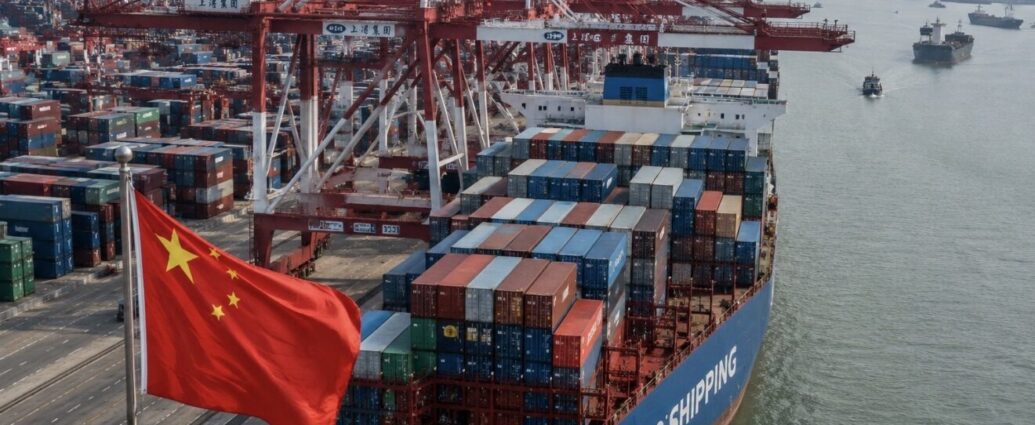
China sold far more goods abroad than expected last month — including a sharp jump in shipments to the United States — even with American tariffs still in place.
According to data released Tuesday, June 9, by China’s General Administration of Customs, exports rose 19.4% in May from a year earlier in dollar terms, accelerating from April’s 14.1% gain and easily beating economists’ expectations of roughly 15% growth.
The number attracting the most attention was the one tied to the United States.
China’s exports to the U.S. surged 35.4% in May compared with a year earlier, the strongest increase in five years. The jump marks a dramatic reversal from much of last year, when shipments to America were falling sharply under the weight of tariffs and slowing demand.
For many readers, the obvious question is simple: if tariffs are supposed to discourage imports, why are Chinese exports to the United States rising so quickly?
A tariff raises the price of imported goods, but it does not automatically eliminate demand.
Many American businesses still depend on Chinese-made products because there are few alternatives available at comparable prices or scale. As a result, imports can continue growing even when tariffs remain in place.
Part of the recent surge also appears to be about timing.
Companies around the world rushed to place orders ahead of rising energy and shipping costs linked to the conflict in the Persian Gulf. When businesses expect transportation costs to increase, they often stock up early, temporarily boosting trade figures.
That front-loading effect appears to have contributed to May’s export surge.
The larger force may be technology.
China’s exports of computer chips, known as integrated circuits, jumped 110% in value from a year earlier, while exports of high-tech products overall rose 50%.
The global race to build artificial intelligence systems is fueling demand for semiconductors, electronics, servers, networking equipment, and other technology products. China remains a major supplier in many of those categories.
As companies worldwide invest billions of dollars into AI infrastructure, demand for Chinese-made technology products has remained strong.
The trade environment has also become less restrictive.
U.S. tariffs on many Chinese goods now stand at roughly 10% after the Supreme Court struck down a series of tariffs that President Donald Trump had imposed using emergency powers.
Trade relations also improved somewhat after Trump met Chinese President Xi Jinping during an APEC summit in South Korea last October.
Lower duties make it easier for Chinese goods to remain competitive in American markets, helping explain why exports have rebounded so strongly.
Several economists believe the momentum could continue.
Sheana Yue, a senior economist at Oxford Economics, said demand for green-energy products such as electric vehicles, batteries, and solar equipment remains strong, while AI-related technology exports continue to expand.
Tianchen Xu, a senior economist at the Economist Intelligence Unit, noted that China’s tariff disadvantage relative to some Southeast Asian manufacturing hubs has narrowed, improving the competitiveness of Chinese exports.
Those trends are helping offset weakness in other parts of the Chinese economy.
For American consumers, the data suggests that lower-cost Chinese goods continue to arrive in large quantities.
That includes electronics, household appliances, industrial equipment, and components used by manufacturers across the United States.
Continued imports can help limit price increases for some products, even as inflation pressures remain elevated elsewhere in the economy.
For American businesses, the figures reinforce how deeply integrated global supply chains remain despite years of political tensions and tariff disputes.
For Trump, the numbers present a challenge to one of the core goals of his tariff strategy: reducing America’s dependence on Chinese imports.
And for China, the report highlights how important exports have become as a source of growth while the country continues to struggle with a prolonged real-estate downturn and weaker domestic demand.
Tariffs may dominate the political conversation, but they are not the only force shaping trade.
A combination of early ordering, booming demand for AI-related technology, and a more favorable tariff environment helped drive Chinese exports sharply higher in May.
The result: China’s exports are growing faster than expected, and American buyers remain a major part of that story.
JBizNews Desk — Asia
© JBizNews.com All Rights Reserved. Reproduction or distribution without written permission is prohibited.

Stocks fell at Wednesday’s opening bell after the Bureau of Labor Statistics reported Wednesday, June 10, that consumer prices rose 4.2 percent over the past year in May — a three-year high — while overnight American airstrikes inside Iran shattered hopes for a quick end to the war. The Nasdaq Composite led the pullback, down 0.7 percent as Tuesday’s tech sell-off deepened, while the S&P 500 and the Dow Jones Industrial Average each fell about 0.5 percent as of just before 10 a.m. Eastern.
The inflation report set the tone. The 4.2 percent annual rise matched economists’ expectations, but the hot reading may boost bets that the Federal Reserve will hike interest rates this year. Energy prices remained the biggest driver of inflation amid the protracted war with Iran. Headline prices rose 0.5 percent from April to May. Before the report landed, markets had priced in a 98.2 percent chance the Federal Reserve leaves rates unchanged at its June meeting, according to the CME Group FedWatch tool. The 10-year Treasury yielded 4.53 percent, and the two-year stood at 4.14 percent.
The war escalated overnight. The U.S. launched a series of airstrikes within Iran on Tuesday, targeting air defense, ground control stations and surveillance radar sites, U.S. Central Command said. Iran acknowledged strikes around the city of Bandar Abbas and Qeshm Island inside the Strait of Hormuz, but gave no details on the damage.
The strikes came after President Donald Trump said in a post on Truth Social that while the two pilots involved in the shootdown of an Apache helicopter near the Strait of Hormuz were safe and uninjured, the United States must respond to the attack. Central Command called the strikes a proportional response to unjustified Iranian aggression.
Trump turned up the pressure again Wednesday morning. He wrote on Truth Social that Iran has taken too long to negotiate a deal that would have been great for them, and now they will have to pay the price. Brent crude rose nearly 2 percent to $93 per barrel after the post, while West Texas Intermediate hovered just below $90.
The supply damage keeps mounting. Rystad Energy said Wednesday that the shutdown of 11.8 million barrels a day of production across six Gulf producers has created the most severe oil supply disruption in modern history, with cumulative losses reaching 1 billion barrels. The consultancy warned each additional month of conflict could erase another 350 million barrels of output.
Asia sold off hard overnight. Japan’s Nikkei 225 fell 1.89 percent, while South Korea’s Kospi slumped 4.52 percent, leading regional losses amid a tech sell-off and Middle East tensions. Hong Kong’s Hang Seng traded 0.77 percent lower, and mainland China’s CSI 300 lost 1.11 percent.
SoftBank Group plunged 10 percent after its effort to secure at least $6 billion through a margin loan backed by its OpenAI stake hit a snag, according to Bloomberg News.
Europe held firmer. The pan-European Stoxx 600 rose 0.3 percent after its open, with London’s FTSE 100 up 0.2 percent, France’s CAC 40 adding 0.4 percent and Germany’s DAX rising 0.2 percent. Autos, insurance and healthcare led gains, while technology and banks lagged.
Super Micro Computer fell 10 percent in premarket trading after the company announced a $7 billion financing package to fund its AI infrastructure order backlog.
Chip stocks stayed under pressure. Shares of Nvidia, Micron, Intel and Qualcomm pointed lower before the open after finishing Tuesday in the red.
Oracle reports earnings after Wednesday’s closing bell, with investors focused on details of its cloud business, which counts OpenAI as a customer, amid fluctuations in the AI trade.
Starbucks is exploring options for its business in Japan, including a stake sale, according to Bloomberg, which reported preliminary talks between the company and investment banks. Japan is one of the chain’s largest markets, with about 2,100 stores.
In housing, Keefe, Bruyette & Woods upgraded Toll Brothers to outperform from market perform, saying builders exposed to affluent buyers are better positioned to defend margins, while downgrading Lennar to underperform, citing its heavy entry-level exposure. Bank of America upgraded STMicroelectronics to Buy from Neutral.
The week’s main event arrives Friday. SpaceX holds its initial public offering Friday, June 12, listing on the Nasdaq under the ticker SPCX at $135 per share, giving the company an initial market value of $1.77 trillion — the largest IPO on record.
Roughly $75 billion worth of shares must be allocated to underwriters and asset managers before trading begins Friday.
Until then, the market sits between two forces it cannot control: inflation climbing on war-driven energy costs, and a conflict in the Persian Gulf that shows no sign of ending.
JBizNews Desk
© JBizNews.com All Rights Reserved. Reproduction or distribution without written permission is prohibited.
A retired U.S. general argued Wednesday, June 10, that the fighting in the Strait of Hormuz and the unrest in Lebanon are distractions pulling attention away from the real issue in the war with Iran. Mark Kimmitt, a retired U.S. Army brigadier general and former Assistant Secretary of State for Political-Military Affairs, called the two flashpoints “diversions” during an appearance on Bloomberg Television’s The Close with hosts Romaine Bostick and Katie Greifeld.
His comments came on a day when the conflict flared again and markets reacted. Oil prices rose after President Donald Trump escalated his warnings toward Iran, pledging a strong response following continued delays in peace negotiations. Brent crude traded near $93 per barrel, while West Texas Intermediate crude approached $92, adding fresh pressure to inflation concerns already weighing on investors.
Kimmitt’s argument centers on strategic focus. Daily headlines have been dominated by disruptions in the Gulf and instability along Israel’s northern frontier. Both developments carry major geopolitical and economic consequences. Yet Kimmitt suggested neither represents the central objective of the conflict.
Instead, he argued that attention has drifted away from the issue that U.S. officials have consistently identified as the core concern: Iran’s nuclear program.
Secretary of State Marco Rubio has repeatedly described Iran’s nuclear ambitions as the fundamental challenge that must be addressed before any lasting resolution can emerge. By that measure, the battles around Hormuz and Lebanon are theaters of conflict rather than the conflict’s ultimate purpose.
For investors and consumers, however, those so-called diversions carry real-world costs.
The Strait of Hormuz remains one of the most important energy chokepoints on earth, handling a substantial share of global oil shipments. Any disruption immediately reverberates through energy markets. Rising crude prices quickly filter into gasoline costs, transportation expenses, manufacturing inputs, and ultimately consumer prices.
That economic impact has become increasingly visible. Higher energy costs have contributed to persistent inflation pressures and complicated the outlook for central banks around the world.
The market reaction on Wednesday highlighted that dynamic. News related to Iran and the Gulf region drove immediate movement in oil prices despite no major change in the underlying nuclear dispute. Traders continue to react to each development that could affect energy supply, shipping routes, or military escalation.
Kimmitt’s comments also help explain a pattern that has frustrated markets throughout the year. Individual events—attacks on shipping, military strikes, disruptions to energy infrastructure, and regional flare-ups—have repeatedly generated sharp market reactions. Yet the broader strategic dispute remains unresolved.
Each new incident sends oil prices higher and creates fresh uncertainty for businesses and investors. Once the immediate shock fades, attention shifts to the next development.
If the underlying issue remains Iran’s nuclear program, as Kimmitt and many U.S. officials contend, markets may continue to experience this cycle of volatility until a more permanent solution emerges.
Earlier in the day, Kimmitt also expressed cautious optimism that the latest tensions would not necessarily lead to a broader regional war. He suggested that diplomacy remains possible and indicated hope that current developments could eventually create conditions for renewed negotiations.
That perspective aligns with his broader assessment. If Hormuz and Lebanon are secondary fronts rather than the main issue, then resolving the conflict ultimately depends less on tactical military developments and more on addressing the underlying nuclear dispute.
The economic stakes are substantial.
Elevated oil prices increase costs for airlines, shipping companies, manufacturers, retailers, and consumers. Higher energy prices also make it more difficult for central banks to reduce interest rates because inflation remains stubbornly elevated.
For households, the consequences show up in gasoline bills, transportation costs, utility expenses, and the prices paid for everyday goods. For businesses, higher energy costs can reduce profits, delay investment, and increase uncertainty.
Whether policymakers embrace Kimmitt’s framework may influence the next phase of the conflict. If attention remains focused primarily on securing shipping lanes and managing regional flare-ups, markets may continue to experience periodic oil-price shocks. If diplomatic efforts concentrate on the nuclear question itself, investors may begin to see a clearer path toward stability.
For now, however, the diversions Kimmitt described continue to play an outsized role in both global markets and household budgets.
JBizNews Desk — Washington
© JBizNews.com All Rights Reserved. Reproduction or distribution without written permission is prohibited.

Iran’s Islamic Revolutionary Guard Corps claimed Wednesday, in a statement carried by Iranian state media, that it had struck 21 U.S. military targets across the region — including what it described as an F-35 fighter-jet base in Jordan and multiple U.S. command facilities — in retaliation for recent American strikes near the Strait of Hormuz. The claims have not been independently verified, and U.S. officials have reported a far more limited impact.
For investors and businesses, however, the immediate issue is not the disputed battlefield accounts. It is that the escalation arrived just as markets had begun betting the conflict was cooling.
That optimism had already been reflected in oil prices. In recent days, traders had pushed crude lower on hopes that a fragile ceasefire would hold and that diplomatic efforts could eventually ease pressure on one of the world’s most important energy corridors. Brent crude, the global benchmark, had retreated from recent highs as investors priced in the possibility of reduced tensions.
Wednesday’s developments threaten to reverse that trend.
The gap between the competing narratives remains significant. Iran claimed it destroyed four of the 21 targets, including an F-35 hangar, and said it shot down an American drone. The U.S. military said it intercepted multiple incoming missiles, while regional governments reported defensive actions against aerial threats. Reports of military activity emerged from several locations, but casualty and damage figures remain unconfirmed.
In short, Iran is presenting the operation as a major success. The U.S. and its partners are describing a largely contained attack. Independent verification may take days.
Markets, however, do not wait for complete information.
The reason energy traders reacted quickly is simple: geography. The Strait of Hormuz carries roughly 20% of global oil and natural-gas shipments, making it one of the most strategically important waterways in the world. Any threat to shipping through the strait raises fears of supply disruptions and higher energy prices.
Both the recent U.S. strikes and Iran’s claimed retaliation occurred near infrastructure tied to the Gulf energy network. That has kept investors focused on the possibility that the conflict could affect the movement of oil, liquefied natural gas, and refined fuels.
The pattern throughout the conflict has been familiar. Periods of diplomatic optimism have pushed energy prices lower, only for renewed military activity to bring risk premiums back into the market. Traders have repeatedly shifted between pricing in de-escalation and preparing for wider regional instability.
The economic consequences extend well beyond energy markets.
The countries cited in Iran’s claims — Bahrain, Kuwait, and Jordan — play important roles in regional aviation, finance, logistics, and military operations. Previous rounds of fighting led to temporary airspace closures, flight disruptions, and higher insurance costs for commercial shipping.
If tensions continue rising, airlines, cargo operators, and importers could face additional expenses. Those costs often move through supply chains and eventually reach consumers through higher prices on goods and services.
A broader conflict could also drive increased spending on missile-defense systems, military equipment, and regional security infrastructure, creating additional fiscal burdens for governments already coping with elevated defense budgets.
For American households, the most visible impact remains energy. Rising crude prices typically lead to more expensive gasoline, diesel, and jet fuel. Transportation companies, airlines, and freight operators feel the effects first, but consumers generally see them later through higher travel and shipping costs.
There are important reasons for caution before drawing conclusions.
Iran’s claims regarding the scale of damage remain unverified. U.S. and allied accounts suggest many incoming threats were intercepted. Markets have also shown a tendency to recover quickly when diplomatic channels reopen or when energy infrastructure remains intact.
At the same time, factors such as increased OPEC+ production and softer demand growth from major economies have helped prevent even larger price spikes during the conflict.
The bottom line is straightforward: regardless of the ultimate damage assessment, military exchanges around the world’s most important oil corridor continue to inject uncertainty into global markets.
Until the security of the Strait of Hormuz becomes clearer and the risk of further escalation recedes, investors, businesses, and consumers are likely to remain focused on one question above all others: what happens next to energy prices?
JBizNews Desk — Middle East
© JBizNews.com All Rights Reserved. Reproduction or distribution without written permission is prohibited.

Iran’s Islamic Revolutionary Guard Corps said Wednesday that it had launched attacks on U.S. military bases in Bahrain, Kuwait, and Jordan, describing the operation as retaliation for recent American strikes on Iranian ports and islands near the Strait of Hormuz. The claims were carried by Iranian state media and had not been independently verified at the time of publication.
For businesses and consumers far from the Gulf, the immediate concern is not only the military escalation but its potential effect on global energy markets.
The reason is geography. The Strait of Hormuz is one of the world’s most important energy chokepoints, carrying roughly one-fifth of global oil and natural-gas shipments. Any disruption around the waterway can quickly affect oil prices, shipping costs, airline operations, and ultimately consumer prices around the world.
Here is what is confirmed and what remains disputed.
Iran claimed it struck the U.S. Fifth Fleet headquarters in Bahrain, Ali Al Salem Air Base in Kuwait, and an air base near Azraq, Jordan, saying a total of 21 U.S. targets were involved. Those claims have not been independently verified.
Meanwhile, the U.S. military said it intercepted multiple Iranian missiles over Jordan. Kuwaiti authorities reported intercepting what they described as hostile aerial targets, while warning sirens sounded in parts of the country. Various media outlets also reported apparent military activity near installations in Bahrain. As of publication, no independently verified casualty figures had been released.
The reported U.S. strikes that preceded Iran’s response were concentrated near key locations around the Strait of Hormuz, including areas near Qeshm Island, Bandar Abbas, and Jask. Bandar Abbas serves as one of Iran’s most strategically important naval facilities and sits near the entrance to the strait.
The market implications are significant because both sides are now operating around infrastructure and waterways central to global energy flows.
Before the latest escalation, oil prices had been easing amid hopes that regional tensions might stabilize. Brent crude, the international benchmark, had retreated from earlier highs as investors cautiously anticipated a reduction in military activity.
A renewed exchange of attacks could quickly reverse that trend.
Even during periods of relative calm, energy markets remained sensitive because shipping through the Gulf region had already been disrupted by months of conflict and security concerns. Any additional threat to tanker traffic raises fears about supply interruptions and higher transportation costs.
Several factors have helped prevent even larger price increases. OPEC+ recently approved additional production increases, adding supply to the market despite ongoing geopolitical risks. At the same time, weaker demand growth from major importers, including China, has reduced some of the upward pressure on prices.
Those offsets, however, may not be enough if the conflict expands further.
The economic effects reach well beyond oil traders. Bahrain, Kuwait, and other Gulf states serve as major hubs for aviation, shipping, logistics, and financial services. Previous rounds of fighting led to airspace restrictions, flight cancellations, and increased insurance costs for commercial vessels.
If those disruptions intensify, businesses could face higher transportation expenses and longer delivery times, costs that often work their way through supply chains and eventually reach consumers.
For American households, the most visible impact would likely come through fuel prices. Higher crude-oil prices generally translate into more expensive gasoline, diesel, and jet fuel. Businesses that rely heavily on transportation and freight typically feel those increases first, followed by consumers.
The broader concern for markets is that military activity is occurring directly around one of the world’s most critical energy corridors. Investors, airlines, shipping companies, and commodity traders will be watching closely for signs of either further escalation or renewed diplomatic efforts.
For now, uncertainty remains high. Whether energy prices rise sharply from here will depend on the scale of the military response, the security of shipping routes through the Strait of Hormuz, and whether regional powers can prevent the conflict from expanding further.
JBizNews Desk — Middle East
© JBizNews.com All Rights Reserved. Reproduction or distribution without written permission is prohibited.

A sporting-goods retailer, a video-game chain, and one of the world’s largest software companies may seem unrelated. Yet together their earnings reports this week offer a valuable snapshot of where consumers are spending money and how aggressively businesses continue investing in artificial intelligence.
The reports arrive at a time when investors are trying to determine whether consumer spending remains resilient and whether the AI boom still has room to grow.
Academy Sports and Outdoors reported earnings before the opening bell on Tuesday, June 9, delivering results that modestly exceeded Wall Street expectations.
The company earned $0.93 per share during the quarter ended May 2, topping analyst estimates of $0.91 per share. Revenue climbed 6.7% to $1.44 billion.
Management also projected full-year earnings between $6.40 and $6.80 per share on revenue ranging from $6.2 billion to $6.4 billion.
The results suggest that consumers continue spending on outdoor recreation, sports equipment, camping, fishing, and related activities despite broader concerns about inflation and household budgets.
GameStop is scheduled to report after the market closes on Tuesday, June 9.
The company’s financial results are important, but investors appear far more interested in management’s long-term plans.
Under Ryan Cohen, GameStop has accumulated a significant cash position while continuing to search for new opportunities beyond traditional video-game retailing. Investors are closely watching for updates regarding capital allocation, acquisitions, and the company’s recently authorized $2 billion share repurchase program.
The central question remains whether GameStop can successfully reinvent itself as the gaming industry increasingly shifts toward digital downloads and subscription services.
Among the week’s reports, Oracle’s earnings on Wednesday, June 10, may carry the broadest market implications.
Oracle has become a key supplier of cloud infrastructure used to train and operate artificial-intelligence systems. As a result, its results increasingly serve as a barometer for enterprise AI spending.
Investors will focus heavily on cloud revenue growth, new AI-related contracts, and the company’s backlog of signed business waiting to be delivered.
Strong results would reinforce the belief that corporations continue investing heavily in AI infrastructure. Weak results could fuel concerns that the pace of spending is beginning to slow.
Taken together, these earnings reports tell a larger story about the economy.
Academy measures consumer willingness to spend on discretionary purchases. GameStop reflects the challenges facing traditional retailers in a digital world. Oracle provides insight into one of the fastest-growing segments of the technology industry.
The bottom line: investors are looking for answers about both Main Street and Silicon Valley. This week’s earnings reports could provide important clues about where consumers are spending and whether the AI investment boom remains as strong as markets believe.
JBizNews Desk — Markets & Technology
© JBizNews.com All Rights Reserved. Reproduction or distribution without written permission is prohibited.
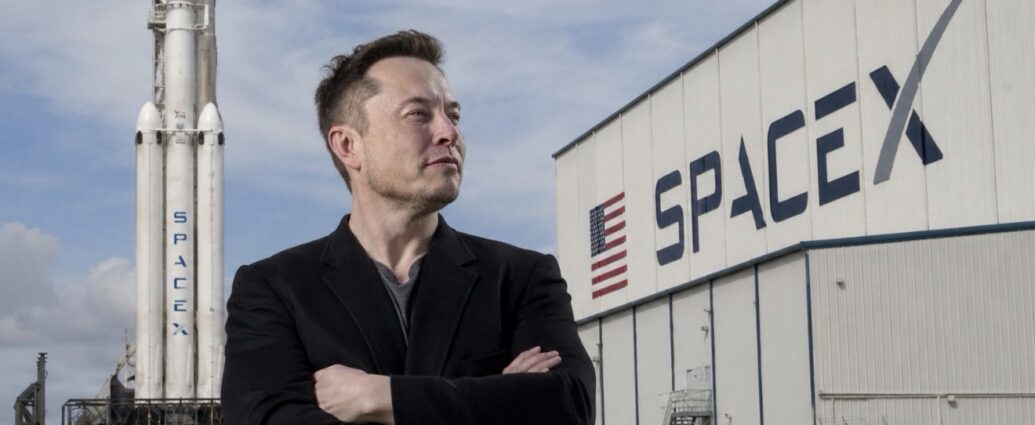
Demand for a piece of Elon Musk’s SpaceX has blown past a quarter of a trillion dollars — far more stock than the company is actually selling. People familiar with the offering said Tuesday, June 9, that orders have topped $250 billion, against the roughly $75 billion the rocket company is trying to raise, putting demand at roughly three-and-a-half to four times the size of the deal.
The obvious question for investors is simple: if this many people want the stock, shouldn’t the valuation go higher?
The surprising answer is that the official IPO valuation probably will not move at all — and the reason comes down to how SpaceX structured the offering.
In a traditional initial public offering, a company announces a price range, investors place orders, and underwriters can raise the final price if demand is exceptionally strong.
More buyers usually means a higher IPO price.
SpaceX is taking a different approach.
The company set a fixed offering price of $135 per share and plans to sell approximately 555.6 million shares, raising about $75 billion and valuing the company at roughly $1.8 trillion.
Because the price is already fixed, the flood of additional demand cannot automatically increase the IPO price or the company’s official valuation before trading begins.
In other words, even if investors wanted twice as many shares as they are currently requesting, the official valuation would still remain around $1.8 trillion.
Heavy demand still matters.
It affects the deal in several important ways.
When investors submit orders totaling hundreds of billions of dollars, there is little concern that the company will struggle to sell the shares.
Several large institutional investors are reportedly seeking positions worth $10 billion or more.
Such strong interest also gives underwriters flexibility to exercise a so-called greenshoe option, allowing additional shares to be sold if demand remains strong.
That could increase the amount of money raised, though still at the same $135 share price.
When an IPO is heavily oversubscribed, investors rarely receive their full allocation.
Large institutions often intentionally place orders larger than they actually expect to receive, anticipating that underwriters will scale allocations back.
As a result, headline demand figures often exceed the amount investors realistically expect to own.
This is where things get interesting.
The IPO is expected to price on Thursday, June 11, with trading beginning the following day.
Investors who are unable to buy as many shares as they wanted during the offering may rush into the open market once trading begins.
If enough buyers compete for the stock, the share price could rise above the IPO price almost immediately.
That would push SpaceX’s market value above $1.8 trillion even though the company itself would not receive additional money.
The increase would come from investor demand in the public market rather than from a change in the IPO pricing.
Not necessarily.
Market veterans point out that many of the hottest IPOs are several times oversubscribed before pricing.
Strong demand shows that investors want exposure to the company.
It does not automatically prove the valuation is justified.
At the IPO price, SpaceX would enter public markets with a valuation approaching $1.8 trillion, despite reporting approximately $18.7 billion in revenue last year and continuing to post significant losses.
Whether the company ultimately grows into that valuation remains one of the biggest questions facing investors.
The demand reflects a belief that SpaceX is much more than a rocket-launch provider.
The company’s pitch centers on three major growth areas:
According to people familiar with the roadshow, SpaceX has highlighted a potential $23 trillion market opportunity related to future AI applications supported by space infrastructure.
Musk has reportedly participated in investor video calls, while President Gwynne Shotwell and Chief Financial Officer Bret Johnsen met with investors during roadshow events organized by Morgan Stanley.
Some analysts believe it already may be.
The Nasdaq Composite fell again Tuesday following its sharpest decline in more than a year, prompting speculation that some investors may be selling existing holdings to free up cash for the SpaceX offering.
Large IPOs can temporarily pull billions of dollars away from other stocks as investors reposition their portfolios.
Whether that is happening here remains a subject of debate, but the sheer size of the offering makes it a possibility.
The headline figure of $250 billion in demand is real, but it does not mean SpaceX has increased its IPO price.
The fixed $135-per-share offering keeps the company’s official valuation near $1.8 trillion.
The real test comes when trading begins.
If investors who were unable to secure shares in the IPO rush into the open market, they could quickly push the stock higher and lift SpaceX above its already staggering valuation.
The longer-term question is even bigger: can a company built on rockets, satellite internet, and ambitious AI plans eventually justify a valuation approaching — or perhaps exceeding — $2 trillion?
JBizNews Desk — Markets
© JBizNews.com All Rights Reserved. Reproduction or distribution without written permission is prohibited.

The packaged foods that fill supermarket shelves may face a new challenge beyond changing consumer tastes and weight-loss drugs. A growing body of research is now comparing the ultra-processed food industry to Big Tobacco, raising the possibility of future regulatory and legal battles that could reshape one of America’s largest consumer sectors.
The debate gained momentum on June 3 when researchers published a special section in the American Journal of Public Health examining the relationship between tobacco companies and the rise of ultra-processed foods.
Among the most prominent researchers involved is Laura Schmidt, a professor at the University of California, San Francisco, who has spent years studying internal tobacco-industry records. Schmidt argues that cigarette companies perfected sophisticated techniques for marketing, product development, and consumer behavior long before expanding into the food industry through major acquisitions during the 1980s.
The corporate connections are significant.
Philip Morris once owned Kraft General Foods, while RJ Reynolds owned Nabisco. Researchers say those acquisitions occurred during a period when ultra-processed food production and consumption expanded dramatically across the United States.
The new research suggests that techniques originally developed to increase cigarette consumption were later adapted to help market highly processed foods. Researchers point to flavor engineering, advertising strategies, product formulation, and consumer behavior studies as examples.
Nicholas Chartres, an associate editor of the journal and one of the study authors, said the evidence increasingly supports viewing ultra-processed foods through a public-health lens similar to tobacco.
That comparison matters because it points toward policies that dramatically reduced smoking rates over the past several decades. Taxes, warning labels, advertising restrictions, and litigation all played major roles in transforming the tobacco industry.
The food industry strongly rejects the comparison.
Natalie Rubino of the Consumer Brands Association, which represents many packaged-food manufacturers, said member companies comply with Food and Drug Administration standards and provide consumers with safe, affordable, and convenient products.
The stakes are enormous.
Ultra-processed foods represent a major portion of sales for companies including Kraft Heinz, Nestlé, PepsiCo, Mondelez, and many other household names. Any effort to regulate these products more aggressively could affect everything from packaging and marketing to pricing and profitability.
The industry is already navigating significant changes. The growing popularity of GLP-1 weight-loss medications has encouraged many consumers to seek healthier options, forcing manufacturers to invest heavily in reformulated products and new nutritional offerings.
A regulatory push modeled after tobacco policy would add another layer of pressure.
For consumers, the implications are equally important. Ultra-processed foods remain popular because they are affordable, convenient, and widely available. Any future taxes, warning labels, or marketing restrictions could affect both pricing and purchasing decisions.
Whether policymakers embrace the tobacco comparison remains uncertain. But the fact that leading researchers are making the comparison at all reflects a growing shift in how public-health experts view the modern food industry.
The bottom line: a growing body of research is reframing ultra-processed foods as a public-health challenge similar to tobacco. If that argument gains traction among lawmakers and regulators, the financial impact on major food companies could be significant.
JBizNews Desk — Health & Business
© JBizNews.com All Rights Reserved. Reproduction or distribution without written permission is prohibited.

NEW YORK — Artificial intelligence is increasingly becoming both a business strategy and a justification for workforce reductions, as layoffs across corporate America continue mounting in 2026.
Private workforce trackers estimate that more than 450,000 jobs have been eliminated this year through major corporate layoffs, restructuring initiatives, and workforce reductions spanning industries from technology and finance to retail and logistics.
The companies involved represent some of the most recognizable names in business.
Amazon, Dell, Citigroup, Oracle, and numerous other major employers have announced significant job cuts as executives focus on efficiency, automation, and artificial intelligence.
What makes this wave different from previous rounds of layoffs is the explanation many companies are offering.
Rather than citing declining sales or recessionary conditions, a growing number of firms are explicitly pointing to AI-driven productivity improvements as a reason for reducing staff.
The logic is straightforward.
If artificial intelligence allows fewer employees to perform work that once required larger teams, companies can lower labor costs while maintaining output.
For investors, that often translates into improved profit margins.
For workers, the implications are more complicated.
Many of the jobs being affected are white-collar positions traditionally viewed as relatively secure. Corporate support functions, administrative roles, research positions, customer-service operations, and various professional services are increasingly being evaluated through the lens of automation.
Several executives have openly discussed building leaner organizations supported by AI tools.
The concept is gaining traction throughout corporate America as companies search for ways to improve productivity without significantly increasing payroll expenses.
There is an important caveat, however.
While companies frequently cite AI as a driver of efficiency, many artificial-intelligence initiatives remain relatively new. In numerous cases, businesses are making workforce decisions based on expected future productivity gains rather than proven long-term results.
In other words, many firms are betting that AI will eventually justify today’s layoffs.
The broader labor market remains more resilient than headlines might suggest.
Recent government employment data showed the economy continuing to add jobs overall, with unemployment remaining near historically low levels.
That distinction matters.
Layoffs at large corporations generate significant attention, but smaller businesses across other sectors continue hiring, helping offset some of the losses.
Still, the shift raises important questions about the future of work.
Historically, technological advancements have eliminated certain jobs while creating new opportunities elsewhere. Economists continue debating whether artificial intelligence will follow that pattern or produce a more disruptive transition.
Businesses argue that adopting AI is necessary to remain competitive.
Workers worry that some eliminated positions may never return.
Both perspectives may ultimately prove correct.
What is clear is that artificial intelligence is no longer a future concept being discussed in conference rooms. It is actively influencing hiring decisions, workforce planning, and corporate strategy today.
The trend is likely to remain one of the defining economic stories of 2026.
Investors will be watching to see whether companies achieve the productivity gains they promise. Employees will be watching to see which roles remain vulnerable. Policymakers will be watching to understand how rapidly labor markets adapt.
For now, the numbers continue moving in one direction.
More companies are embracing AI, and more companies are reducing headcount as they do.
JBizNews Desk
© JBizNews.com All Rights Reserved. Reproduction or distribution without written permission is prohibited.

A strong currency is usually considered a sign of economic success. In Israel today, it is becoming a growing concern for the very industry that helped create it. On Monday, officials from Israel’s Ministry of Finance and Tax Authority held another round of talks with finance executives from the Israeli research centers of global technology giants including Apple, Intel, IBM, HPE, GE Healthcare, and Philips to discuss ways to offset the impact of a surging shekel. The meetings were convened by Karin Mayer Rubinstein, chief executive of the Israel Advanced Technology Industries (IATI) association, just days after Finance Minister Bezalel Smotrich directed his ministry to establish a dedicated task force to address the issue.
The irony is difficult to miss. The technology sector that helped transform Israel into a global innovation powerhouse and attract billions of dollars in foreign investment is now asking the government for help because that success has helped push the shekel to levels not seen in decades.
The problem is rooted in simple math. Most multinational technology companies operating in Israel generate revenue in U.S. dollars but pay their employees in Israeli shekels. As the shekel strengthens against the dollar, every dollar of revenue buys fewer shekels, making Israeli salaries more expensive when measured in dollar terms. Industry representatives told government officials that the real cost of employing Israeli technology workers has risen by approximately 30% since 2021 once exchange-rate changes are factored in.
The shekel recently strengthened to roughly 2.8 shekels per dollar, dipping below the three-shekel mark and reaching its strongest level in approximately 33 years. What appears to be a national economic success story is creating a growing headache for multinational employers deciding where to expand operations and hire workers.
Technology executives warned government officials that Israel is approaching what they describe as a “red line” — the point at which employing an engineer in Israel becomes more expensive than employing similar talent in Silicon Valley and significantly more costly than hiring in competing technology hubs across Europe.
According to industry figures presented during the discussions, an experienced Israeli software engineer now costs employers roughly $170,000 annually, compared with approximately $100,000 for comparable talent in countries such as Portugal. Executives cautioned that if the gap continues to widen, future hiring decisions may increasingly favor other countries.
The stakes are enormous because high-tech remains the backbone of Israel’s economy. According to the Israel Innovation Authority, the sector accounted for approximately 50% of Israel’s exports in 2025, generating billions in tax revenue and supporting hundreds of thousands of jobs.
Signs of strain are already emerging. Website-building company Wix recently announced plans to reduce its workforce by up to 1,000 employees, or roughly 20% of its staff, citing both artificial intelligence and currency-related pressures. Rapyd and Amdocs have also announced workforce reductions. Industry leaders say the larger concern is not necessarily immediate layoffs but future hiring. Companies may keep headquarters and research operations in Israel while expanding engineering teams elsewhere.
Unlike previous meetings, government officials arrived this time with specific proposals. Among the ideas discussed were reductions or deferrals in National Insurance payroll payments, targeted tax incentives, and expanded employee-benefit programs designed to offset higher labor costs.
Officials also discussed allowing large multinational companies to pay taxes directly in U.S. dollars rather than converting funds into shekels. Companies including Google and Nvidia have reportedly requested such flexibility as a way to reduce losses caused by currency fluctuations.
Another proposal under consideration would revive emergency support programs for startups modeled on assistance provided during the COVID-19 pandemic and following the October 2023 war. Some industry representatives have called for at least 1 billion shekels in support measures.
The Bank of Israel has already begun responding. The central bank purchased approximately $801 million in foreign currency during May, marking its first intervention since 2022, in an effort to slow the shekel’s rise. Policymakers also lowered the benchmark interest rate by a quarter-point to 3.75%.
Not everyone believes government intervention is the answer. A stronger shekel reduces the cost of imported goods and has helped bring inflation down to approximately 1.9%. Some investors argue that companies should rely more heavily on currency hedging strategies rather than seeking government relief. Venture capitalist Michael Eisenberg of Aleph has long urged startups to protect themselves against currency fluctuations through financial planning rather than public assistance.
Still, government officials appear increasingly concerned that the issue could affect Israel’s competitiveness. The challenge is finding ways to help employers remain committed to hiring in Israel without distorting markets or undermining the independence of the central bank.
For now, the same industry that helped propel the shekel to its strongest level in more than three decades is warning that success carries consequences. The outcome of these discussions could help determine whether Israel remains one of the world’s most attractive destinations for technology investment—or whether some of its future jobs begin moving elsewhere.
JBizNews Desk — Israel
© JBizNews.com All Rights Reserved. Reproduction or distribution without written permission is prohibited.

LONDON — Copper prices remain near historic highs, a development that may sound like a story for commodity traders but ultimately affects the cost of homes, vehicles, appliances, electronics, and countless other products consumers buy every day.
Copper recently traded near $6.30 per pound, roughly 30% higher than a year ago, reflecting one of the strongest rallies among major industrial commodities.
The metal’s importance is difficult to overstate.
Copper serves as the backbone of modern electrification. It is found in electrical wiring, power grids, automobiles, consumer electronics, air conditioners, refrigerators, industrial equipment, and renewable-energy infrastructure.
When copper becomes more expensive, the cost of producing many everyday products rises as well.
Several factors are driving prices higher.
Supply disruptions at major mining operations have tightened global inventories, while strong demand from emerging technologies continues increasing consumption.
Artificial intelligence is playing a surprisingly important role.
The massive data centers required to support AI systems consume enormous quantities of copper through electrical systems, cooling equipment, networking infrastructure, and power-distribution networks.
Electric vehicles are another major contributor.
A typical electric vehicle uses significantly more copper than a traditional gasoline-powered automobile, creating additional demand as manufacturers expand EV production.
The transition toward cleaner energy is also increasing consumption.
Solar farms, wind turbines, battery-storage systems, and expanded power grids all require substantial amounts of copper.
Trade policy has added another layer of pressure.
Concerns about potential tariffs and supply disruptions have encouraged manufacturers and traders to build inventories, further tightening available supplies and supporting higher prices.
For consumers, the effects are indirect but meaningful.
Homebuilders pay more for electrical wiring. Automakers face higher manufacturing costs. Appliance manufacturers spend more on raw materials. Electronics producers encounter additional expense throughout their supply chains.
Eventually, some portion of those costs reaches consumers.
The timing is particularly important for homeowners.
Summer is traditionally a busy season for home renovations, air-conditioner replacements, and appliance purchases—all categories heavily dependent on copper.
Economists often refer to copper as “Dr. Copper” because its price is viewed as a barometer of global economic activity.
The reasoning is simple.
Copper is used in so many industries that rising demand often signals expanding economic activity, while falling demand can indicate slowing growth.
Today’s elevated prices therefore carry two messages.
They reflect concerns about supply, but they also suggest continued demand from industries investing heavily in infrastructure, technology, artificial intelligence, and electrification.
That demand is unlikely to disappear anytime soon.
Analysts expect AI-related infrastructure spending, electric-vehicle production, and energy-transition investments to remain significant drivers of copper consumption for years to come.
For consumers, the takeaway is straightforward.
Few people buy copper directly, but many of the products they purchase contain it.
As long as copper prices remain elevated, the cost of building, powering, cooling, and connecting the modern world is likely to remain higher as well.
JBizNews Desk
© JBizNews.com All Rights Reserved. Reproduction or distribution without written permission is prohibited.

Anthropic on Tuesday, June 9, unveiled Claude Fable 5, the most powerful artificial intelligence model the company has ever released to the public, alongside a more advanced version called Claude Mythos 5 that is reserved for cybersecurity professionals. The announcement marks one of the most significant AI launches of the year and raises the stakes in the intensifying competition among Anthropic, OpenAI, Google, Microsoft, and xAI.
For businesses, the launch is about more than a faster chatbot. It represents a new generation of AI capable of performing increasingly sophisticated work once handled exclusively by highly paid professionals.
According to Anthropic, Claude Fable 5 ranks at or near the top of nearly every major industry benchmark measuring AI performance.
The model’s strongest areas include:
Anthropic said the model’s advantage becomes more apparent as tasks grow longer and more complex.
In simple terms, Fable 5 is designed not merely to answer questions but to complete substantial projects with minimal supervision.

One of the most eye-catching examples came from Stripe, which tested the model before release.
According to Anthropic, Fable 5 completed a rewrite across a 50-million-line code base in a single day. Stripe estimated the same work would normally require a team of engineers more than two months to finish manually.
For executives evaluating AI investments, the implication is straightforward: tasks that once required multiple employees working for weeks may increasingly be completed in hours or days.
That does not necessarily mean fewer workers. It does mean companies may expect significantly more output from existing teams.
The software industry is only part of the story.
Anthropic says Fable 5 demonstrated leading performance in finance, legal analysis, research, and other knowledge-based professions.
On a senior-level finance reasoning benchmark conducted by Hebbia, the model achieved the highest score recorded by any AI system tested by the firm.
Meanwhile, global trading company IMC reported that Fable 5 performed exceptionally well across its internal analytical evaluations.
For industries where information processing is a major expense, those improvements could directly affect profitability.
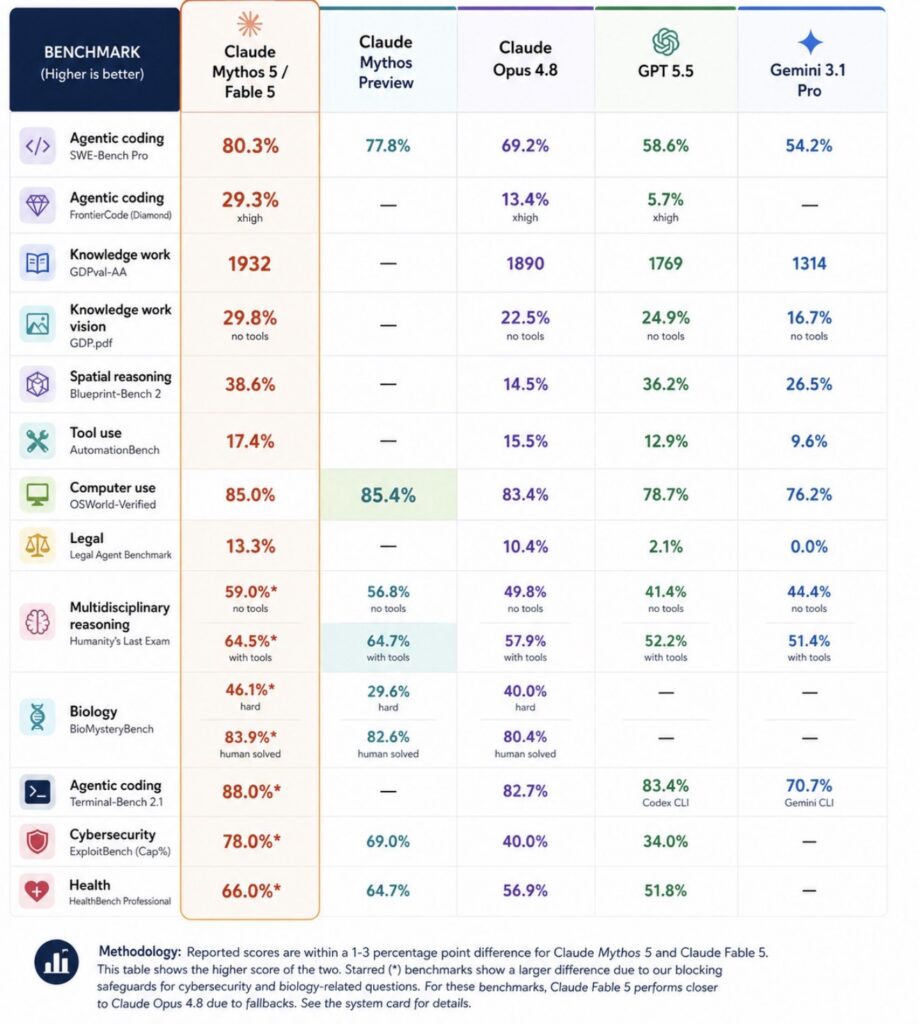
Another area where Anthropic says Fable 5 excels is vision.
The model can analyze charts, scientific figures, diagrams, screenshots, and images with substantially greater accuracy than previous versions.
Anthropic says Fable 5 can:
This capability expands the number of business tasks AI can perform beyond simple text generation.

Early business users reported meaningful improvements over previous AI models.
Mario Rodriguez, Chief Product Officer at GitHub, said Fable 5 handled long-running coding assignments with a degree of independence and reliability that exceeded earlier systems.
Reviewers in the legal and financial sectors reported similar experiences, describing the model as a significant step forward rather than an incremental upgrade.
For companies already experimenting with AI, the feedback suggests the technology is becoming increasingly capable of handling work that traditionally required experienced professionals.
The technology may be getting more powerful, but it is also becoming cheaper.
Anthropic announced pricing of:
The company says that represents less than half the cost of its previous flagship model.
That reduction matters because AI pricing has become one of the industry’s most competitive battlegrounds.
As models improve while costs fall, more businesses can justify deploying advanced AI across entire departments rather than limiting it to small pilot projects.
Businesses already subscribed to Claude have a short window to evaluate the model at no additional cost.
Anthropic said Pro, Max, Team, and seat-based Enterprise customers will receive access through June 22.
Beginning June 23, customers will need to purchase usage credits to continue using Fable 5.
Anthropic says the temporary restriction reflects expected demand and available computing capacity.
For business owners, the message is clear: this is the ideal time to test whether the model can produce measurable productivity gains.
Alongside Fable 5, Anthropic announced Claude Mythos 5, a more powerful version that will not be available to consumers or businesses.
Access is limited to approved cybersecurity organizations and critical infrastructure operators through Project Glasswing, a program operated in cooperation with the U.S. government.
Anthropic described Mythos 5 as possessing the strongest cybersecurity capabilities of any AI model currently available.
Because of the model’s growing capabilities, Anthropic added additional safeguards.
Requests involving:
are automatically routed to an older model called Claude Opus 4.8.
Users are notified whenever this happens.
Anthropic said the fallback occurs in fewer than 5% of sessions and was designed to allow faster deployment while maintaining safety controls.

Anthropic also announced a change affecting enterprise customers.
The company will now retain business-customer data generated through its most advanced models for up to 30 days.
Anthropic says the policy is intended to help identify emerging threats and attacks.
The company emphasized that:
Anthropic believes the technology’s future extends well beyond business productivity.
Using Mythos 5 internally, the company says researchers accelerated parts of the drug-development process by roughly ten times.
The company also reported that scientists preferred AI-generated research hypotheses approximately 80% of the time compared with ideas produced by earlier models.
Anthropic noted these findings are based on internal testing and have not yet all been independently verified.
The launch of Claude Fable 5 highlights how rapidly artificial intelligence is moving from an experimental tool to a core business technology.
Just as companies once had to learn computers, email, and the internet, executives are increasingly being forced to decide how AI fits into their operations.
With stronger performance, lower pricing, and broader business applications, Anthropic is putting additional pressure on competitors—and on organizations still deciding whether AI should be viewed as a helpful assistant or as a fundamental part of the modern workforce.
JBizNews Desk — Technology
© JBizNews.com All Rights Reserved. Reproduction or distribution without written permission is prohibited.


