

Inflation Hits 4.2%, the Highest in Three Years, on Gas Prices
2026-06-15
Consumer prices climbed at their fastest annual pace in three years last month, the Bureau of Labor Statistics reported Wednesday, June 10, with the spike driven almost entirely by what Americans pay at the gas pump. The Consumer Price Index rose 0.5% in May and was up 4.2% over the past 12 months — the highest annual reading since April 2023.
The headline number looks alarming, but the source is narrow. The energy index jumped 3.9% in May and accounted for more than 60% of the entire monthly increase, following gains of 3.8% in April and 10.9% in March — a three-month surge tied directly to the Iran war’s disruption of Middle Eastern oil supplies. Gasoline alone rose 7% in a single month and is up 40.5% from a year ago.
Strip out food and energy, and the picture is calmer. So-called core inflation rose just 0.2% on the month and 2.9% over the year, with the monthly gain coming in below forecasts and below April’s pace. That gap — a hot headline number and a mild core — is the central tension facing the Federal Reserve as it meets this week.
The everyday squeeze is real where families feel it most. Electricity prices rose 0.6% in May and are up 5.9% over the year. Shelter, the single biggest piece of the index, rose 0.3% and is up 3.4% annually, while food increased 0.2%.
New-vehicle prices slipped 0.3%, used cars rose 0.1%, airline fares increased 2.7%, and motor vehicle insurance fell 1.7%.
That mix matters. The fact that transportation services and other core categories stayed tame suggests high fuel costs have not yet spread broadly through the economy. Economists framed it as a pocketbook problem more than a runaway inflation problem — at least for now.
The worry among forecasters is second-round effects. Sustained high energy costs eventually raise the price of anything that needs to be transported, heated, or powered. So far that spillover has been limited, but it is exactly what the Fed is watching.
For the Fed, the report cuts against any near-term rate cut. After the data landed, futures markets leaned toward holding rates steady and even increased the odds of a hike later this year.
The bottom line for households: the basics cost more, the increase is concentrated in fuel, and whether it spreads depends largely on a war thousands of miles away. The next inflation report will reveal whether May was a spike or the start of something more persistent.
JBizNews Desk — Economy
© JBizNews.com All Rights Reserved. Reproduction or distribution without written permission is prohibited.


Frasers Bids To Take Over Hugo Boss, Sending Its Shares Higher
2026-06-14
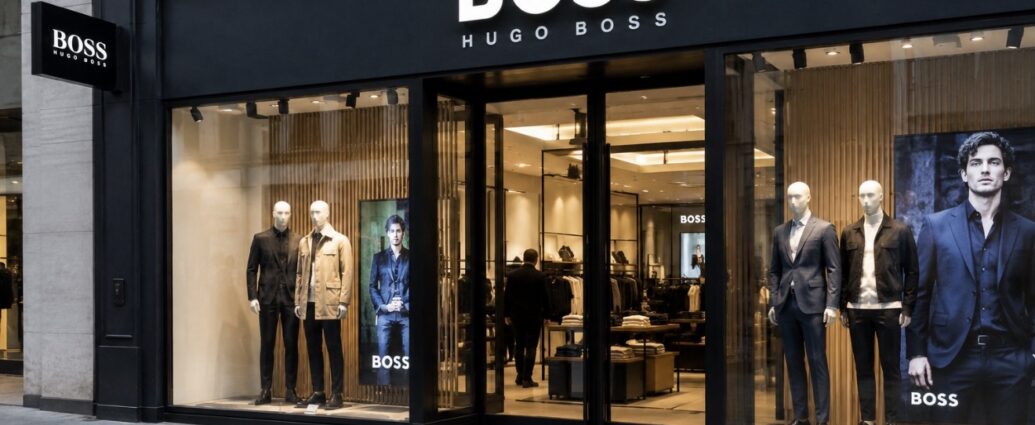
LONDON — Frasers Group, the British retail company controlled by billionaire Mike Ashley, has launched a bid to take full control of Hugo Boss, the German fashion house behind the BOSS and HUGO brands.
Frasers, already Hugo Boss’s largest shareholder, announced Wednesday that it will offer €38 per share in cash for the approximately 74% of the company it does not already own, valuing the outstanding shares at roughly €2 billion ($2.3 billion).
Investors immediately responded positively. Hugo Boss shares surged following the announcement and traded above the offer price, signaling that many investors believe a higher bid could eventually emerge.
The proposal would value Hugo Boss at approximately €2.7 billion overall.
Frasers currently owns just over 26% of Hugo Boss and is offering only a modest premium of about 4% above the stock’s previous closing price of €36.44.
The transaction does not require Frasers to acquire a minimum number of shares, but it remains subject to regulatory approval. The company expects the acquisition process to conclude during the second half of 2026.
BNP Paribas and Deutsche Bank are serving as financial advisers to Frasers.
The market’s reaction suggested investors remain unconvinced the current offer will be the final one.
Instead of trading near the €38 offer price, Hugo Boss shares climbed as high as €40.52 during trading after the announcement. In takeover situations, a stock trading above the bid price often reflects expectations that the offer may be increased or that another bidder could emerge.
At the same time, shares of Frasers Group moved lower, indicating some concern among its own investors about the cost and risks of acquiring the fashion company outright.
Mike Ashley has built a reputation as one of Britain’s most aggressive retail dealmakers.
He transformed Sports Direct into what is now Frasers Group, a retail empire that includes House of Fraser, Flannels, Sports Direct, and significant investments in companies including ASOS, Debenhams, and Currys.
Ashley owns nearly 74% of Frasers Group. While he stepped away from the board in 2022, leadership passed to his son-in-law, Michael Murray, who now serves as chief executive.
Murray also sits on Hugo Boss’s supervisory board, although Frasers said he did not participate in discussions regarding the takeover proposal.
The move fits a familiar pattern.
Frasers first invested in Hugo Boss in 2020 and has steadily increased its position over the years as part of a broader strategy to expand its presence in the premium and luxury retail market.
Earlier this year, the company also acquired a 5.8% stake in Puma, making it one of the German sportswear company’s largest shareholders.
Hugo Boss appears to fit the profile of many companies Frasers has targeted in the past: a globally recognized brand facing operational and financial challenges.
The company’s shares remain roughly 50% below their 2023 highs, while management continues working through a turnaround strategy focused on store upgrades, streamlining product offerings, and expanding womenswear sales.
Although the company has reported some progress, both revenue and profit declined during the most recent quarter.
One notable aspect of Frasers’ proposal was its unexpectedly supportive tone toward Hugo Boss management.
In its announcement, Frasers said the acquisition would help support additional investment in the business and publicly expressed confidence in current Chief Executive Daniel Grieder and Supervisory Board Chairman Stephan Sturm.
The comments marked a significant change from late last year, when Frasers openly challenged Hugo Boss leadership and sought board changes. The company withdrew those efforts only one day before announcing the takeover proposal.
Hugo Boss described the offer as unsolicited and said its board would carefully evaluate the proposal before making a recommendation to shareholders.
Analysts remain divided on Frasers’ ultimate objective.
Citi described the offer as relatively modest and suggested the pricing may leave room for a future increase while discouraging competing bidders.
Jefferies questioned whether Frasers actually intends to acquire full control, suggesting the move could instead be designed to provide greater flexibility for future investments in the company.
Russ Mould, investment director at AJ Bell, noted that Ashley has historically built value by acquiring underperforming brands at attractive prices and attempting long-term turnarounds.
The next steps now rest with Hugo Boss shareholders, regulators, and Frasers itself.
If Hugo Boss shares continue trading above the offer price, Frasers may eventually face a choice: raise its bid or remain a major shareholder without pursuing full ownership.
Either way, one of Germany’s best-known fashion brands has become the center of a major takeover battle, with one of Britain’s most prominent retail investors leading the charge.
Business — JBizNews Desk
© JBizNews.com. All Rights Reserved. Reproduction or distribution without written permission is prohibited.


Trump Declares Iran War Deal Complete and Orders Oil to Flow Again
2026-06-14
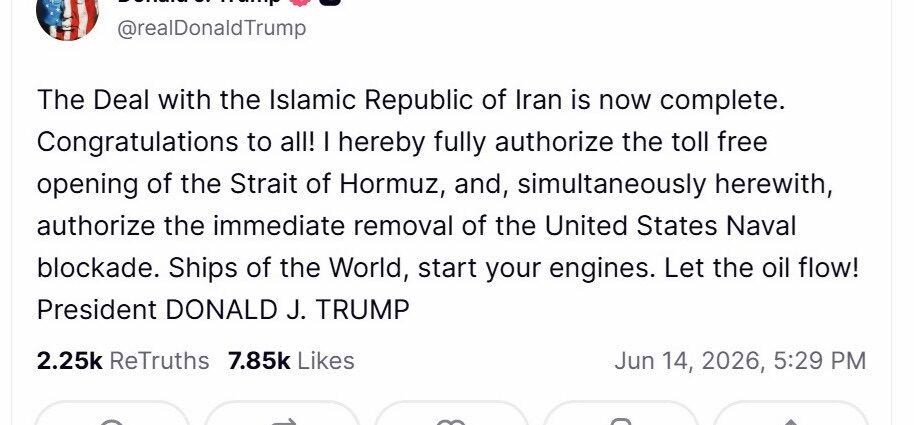
WASHINGTON — President Donald Trump announced on Sunday that the United States and Iran have reached a deal to end their war, declaring on Truth Social that “The Deal with the Islamic Republic of Iran is now complete”  and ordering the Strait of Hormuz reopened to oil traffic. “Let the oil flow!” Trump wrote, saying he had authorized the toll-free opening of the strait and the immediate removal of the U.S. naval blockade .
The statement came minutes after Pakistani Prime Minister Shehbaz Sharif said the peace deal had been reached . Sharif, whose government mediated the agreement, said it includes the immediate and permanent termination of military operations on all fronts, including in Lebanon . The memo is being called the “Islamabad declaration,” and a signing ceremony is expected soon, with Geneva floated as a likely venue and Vice President JD Vance potentially attending .
The deal, if it holds, would end a conflict that has gripped the global energy market since the war with Iran started February 28 . Iran’s effective closure of the Strait of Hormuz — the channel through which about a fifth of global energy flows — choked off supply  and sent prices on a months-long climb.
Brent crude broke $100 a barrel in March , and U.S. WTI crude briefly spiked as high as $117.63 during one of Trump’s reopening deadlines — its highest settlement since June 2022 . Analysts estimated the war had added nearly $30 to the price of every barrel , and FGE NexantECA’s Fereidun Fesharaki warned that a prolonged near-closure could push oil to $150 to $200 .
The pain reached American drivers. The national average for a gallon of regular gas sat near $3.94 early in the war  before climbing past $4.50 in recent weeks, according to AAA .
Reopening Hormuz is meant to reverse that. Each time a truce looked likely, prices fell hard. Brent dropped more than 10% in a single session on an earlier breakthrough, settling near $100.37, while WTI crashed to $88.85 , and gasoline futures fell more than 10% below $3 a gallon when Iran briefly reopened the strait in April .
For the broader economy, cheaper oil works like a tax cut. Economists estimate a sustained 10% drop in oil reduces headline inflation by roughly 0.4 percentage point , giving the Federal Reserve more room to consider rate cuts after a year in which the war undercut its progress against inflation.
Markets had already begun pricing in peace. On Friday, oil sank more than 3% and U.S. stocks rebounded after Trump signaled a breakthrough, with futures for the S&P 500, Dow and Nasdaq all rising .
Relief may still be uneven. Patrick De Haan of GasBuddy has cautioned that pump prices are slow to recover even after a war ends , and some traders noted the gap in oil supply could take months to close . Tankers that have sat idle, insurance markets, and shipping routes all have to normalize before barrels move freely again.
Political risk also lingers. Israel was not included in the negotiations , and Israeli strikes in Lebanon in recent days had threatened the agreement . Trump said the strikes on Beirut “should not have happened” and called on all sides to stand down .
For now, the message from the White House was aimed squarely at the oil market. After more than three months of war, record-high pump prices and whipsawing markets, Trump’s order to reopen the world’s busiest oil-shipping channel set up the prospect of cheaper energy heading into summer — provided the ships, and the barrels, actually start moving.
JBizNews Desk
© JBizNews.com All Rights Reserved. Reproduction or distribution without written permission is prohibited.


France Delays G7 Summit A Day To Accommodate Trump’s Schedule
2026-06-14
ÉVIAN-LES-BAINS, France — The annual G7 Summit opens Monday in Évian-les-Bains, France, running June 15–17, a day later than the June 14–16 dates originally announced.
French President Emmanuel Macron’s office, which holds the 2026 G7 presidency, said the change followed “consultations with G7 partners.” A senior White House official described it more directly, saying other leaders “kindly shifted dates to accommodate the U.S. President’s schedule.”
That president, Donald Trump, turns 80 years old on Saturday and is spending the day hosting a UFC event at the White House.
France never officially linked the schedule change to the event, and Macron’s office declined to do so. However, officials familiar with the planning said the original summit opening fell on Trump’s birthday, June 14, the same day he had long planned to host the mixed-martial-arts event on the South Lawn. Rather than compete with it, Paris pushed the summit back by one day.
Trump is now expected to depart for France late Sunday following the event and arrive in time for Monday’s opening session.
The scheduling adjustment reflects broader tensions facing the group.
The United States, France, Germany, Italy, Japan, the United Kingdom, Canada, and the European Union are gathering at one of the most challenging moments for the alliance in recent years. Trade disputes, Middle East instability, and growing disagreements over artificial intelligence policy dominate the agenda.
The most immediate concern remains the closure of the Strait of Hormuz.
Following fighting involving the United States, Israel, and Iran earlier this year, Tehran shut the strategic shipping lane through which a significant portion of the world’s oil supply normally passes. The disruption has contributed to higher fuel prices, supply-chain challenges, increased shipping and fertilizer costs, and renewed inflation concerns across global markets.
Several European leaders continue to express frustration over the handling of the conflict and are expected to raise those concerns during summit discussions.
Trade remains another major flashpoint.
Trump has maintained tariffs on a range of European imports, creating friction with key allies. Canadian Prime Minister Mark Carney, who hosted last year’s summit, recently described the current environment as a period of global economic disruption rather than a routine transition, reflecting growing divisions within the group.
Artificial intelligence could produce some of the summit’s most significant debates.
European leaders have pushed for stronger oversight of major AI companies, including scrutiny of their growing energy consumption. The Trump administration has generally favored a lighter regulatory approach.
In a sign of AI’s increasing geopolitical importance, Macron invited OpenAI CEO Sam Altman to participate in portions of the summit. Executives from Anthropic and Google are also expected to attend select discussions.
Several high-profile meetings are planned on the sidelines.
Trump is expected to meet with Ukrainian President Volodymyr Zelensky and continue discussions aimed at securing a broader agreement to end the Iran conflict and restore stability to global energy markets. U.S. officials also indicated that securing reliable supplies of critical minerals used in advanced technology, defense systems, and semiconductor manufacturing remains a top priority.
For Macron, the summit represents a test of whether the G7 can still serve as an effective forum for addressing major global challenges.
The European Union will be represented by European Commission President Ursula von der Leyen and European Council President António Costa, while Japanese Prime Minister Sanae Takaichi will attend her first summit as a national leader. France has also invited several non-member nations, including India and Brazil, to participate in portions of the discussions.
The delayed start may have solved a scheduling conflict, but it does not resolve the deeper divisions facing the group.
Trump has previously left G7 gatherings early, and whether leaders can reach meaningful agreements on energy, trade, and artificial intelligence before the summit concludes may help determine the direction of the global economy through the remainder of the summer.
Washington — JBizNews Desk
© JBizNews.com. All Rights Reserved. Reproduction or distribution without written permission is prohibited.

Opinion | Colombia’s Stark Election Choice
2026-06-14

2026 Election Set to Become the Most Expensive Ad Cycle Ever
2026-06-14
WASHINGTON, June 11 — The 2026 midterm elections are on pace to become the most expensive political advertising cycle in American history, according to a new projection released on Thursday, June 11, by advertising analytics firm AdImpact.
The firm estimates candidates, political parties, campaign committees, and outside groups will spend a combined $11.6 billion on advertising during the 2026 cycle.
If realized, the total would exceed spending during both the 2022 midterm elections and the 2024 presidential election, marking the first time a midterm cycle has generated more advertising spending than a presidential race.
Spending Accelerates
The projected $11.6 billion total would surpass the $8.9 billion spent during the 2022 midterms by roughly 30%.
It would also exceed the estimated $11.2 billion spent during the 2024 presidential election by approximately $400 million.
AdImpact said political spending had already reached nearly $4 billion by June 1, representing a 46% increase compared with the same point in the previous cycle.
The company also revised its forecast upward by nearly $800 million, reflecting stronger-than-expected early advertising demand.
Key States Driving Growth
Several major battleground states are attracting significant early spending.
According to AdImpact, high-profile races in California, Texas, Michigan, and Ohio are drawing campaign dollars months earlier than in previous cycles.
California is expected to lead the nation in total spending, with approximately $1.1 billion projected across its expensive media markets.
With control of Congress at stake, competitive races are attracting unprecedented financial attention from both parties and outside organizations.
Media Companies See a Windfall
The spending boom represents a major revenue opportunity for media companies.
Traditional broadcast television remains the dominant platform and is projected to receive approximately $5.6 billion, nearly half of all political advertising spending.
That figure is more than $300 million higher than AdImpact’s previous estimate.
Connected television platforms—including streaming services viewed through smart televisions—are expected to capture approximately $2.6 billion, making them the fastest-growing segment of the market.
Cable television is projected to receive $1.4 billion, while digital platforms such as Google, Facebook, Snapchat, and X are expected to attract approximately $1.6 billion.
Record Spending Across the Ballot
The growth extends beyond marquee races.
AdImpact projects Senate campaigns will spend approximately $2.8 billion, surpassing the previous record set during the 2024 cycle.
House races are expected to reach $2.2 billion, marking the first time congressional House spending has exceeded $2 billion.
Lower-profile state and local contests are also expected to surpass previous records.
Campaigns increasingly purchase advertising earlier in the cycle to secure inventory and avoid escalating prices closer to Election Day.
Biggest Spending Still Ahead
According to AdImpact, between 58% and 67% of total election-cycle advertising spending typically occurs between August and November.
October alone can account for as much as one-third of all political advertising expenditures.
For voters, that means months of campaign ads across television, streaming services, social media platforms, and digital devices.
For broadcasters, streaming companies, technology platforms, and advertising firms, it means one of the largest revenue opportunities in years.
Regardless of political outcomes, the business of elections continues to grow at a record pace.
JBizNews Desk — Washington
© JBizNews.com All Rights Reserved. Reproduction or distribution without written permission is prohibited.
Bitcoin Falls 50% From Record High, Analysts Warn Another Drop May Be Ahead
2026-06-14
NEW YORK — Bitcoin has taken a severe hit from its record highs, and some market analysts believe the downturn may not be over.
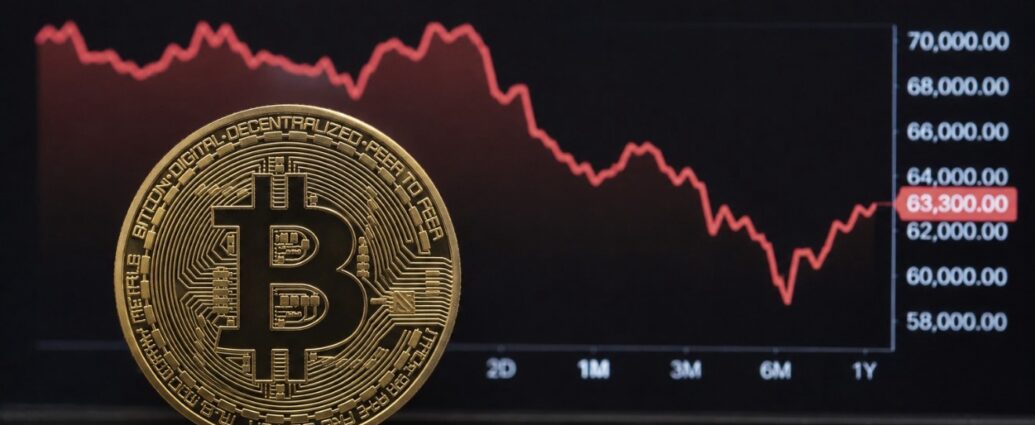
As of Friday, June 12, the world’s largest cryptocurrency was trading around $63,300, up less than 1% on the day but substantially below levels seen earlier in the cycle.
Speaking at the BTC Prague conference, André Dragosch, Head of European Research at Bitwise Asset Management, warned that Bitcoin could fall another 20%, potentially reaching approximately $48,000 in a worst-case scenario.
The decline has been significant.
Bitcoin has fallen roughly 28% from its May peak near $82,000, briefly dropping below $60,000 before recovering into the low $63,000 range.
Viewed over a longer timeframe, the pullback is even more dramatic.
The cryptocurrency reached an all-time high of approximately $126,000 in October 2025, meaning it now trades at roughly half its peak value.
The broader trend since last fall has been decisively lower.
According to Dragosch, the primary driver of the decline has been persistent outflows from Bitcoin investment funds.
He pointed to approximately $2 billion in weekly outflows from Bitcoin exchange-traded products, investment vehicles that allow investors to gain exposure to Bitcoin through traditional brokerage accounts.
That level of selling pressure is equivalent to roughly 50,000 Bitcoin entering the market over a short period.
Notably, Dragosch said large corporate buyers, including Strategy, have largely maintained their accumulation programs, suggesting the pressure is coming primarily from fund redemptions rather than institutional buyers abandoning the asset.
The weakness has extended beyond Bitcoin.
In a recent research note, Bitwise reported that Bitcoin touched a cycle low near $58,000, while Ether, the second-largest cryptocurrency, fell to approximately $1,507, its lowest level in more than a year.
The firm described Bitcoin as the “canary in the macro coal mine,” reflecting its tendency to react quickly to shifts in investor sentiment and broader economic conditions.
That characterization appeared timely as technology stocks also came under pressure, with the Nasdaq experiencing a sharp selloff during the same period.
Dragosch outlined three key support levels that traders are closely monitoring.
The first sits near $61,000, a long-term average price level that has historically attracted buyers.
Below that is approximately $56,000, representing the average purchase price of many current holders.
The final major support zone is around $48,000, which reflects the average cost basis of long-term investors.
Dragosch described that level as the market’s “maximum pain scenario.”
If all three support zones fail, he believes Bitcoin could ultimately test the $48,000 range.
Other analysts remain cautious as well.
Alex Thorn, Head of Research at Galaxy, recently said Bitcoin may not have reached its ultimate bottom.
According to Thorn, only four of thirteen historical indicators typically associated with major market bottoms have been triggered.
Galaxy’s research suggests Bitcoin could potentially fall into a range between $40,000 and $46,000 before the current cycle fully resets.
There are, however, some early signs that selling pressure may be easing.
Dragosch noted that Bitwise’s proprietary bottom-detection model has started moving higher in recent weeks.
At the same time, he cautioned that blockchain data has not yet reached the extreme levels often associated with major market capitulation.
In simple terms, the market may be moving closer to a bottom, but analysts do not yet see definitive evidence that the decline has ended.
Not everyone is bearish.
Matt Hougan, Chief Investment Officer at Bitwise, continues to maintain a constructive long-term outlook.
Hougan argues that Bitcoin’s fundamental scarcity remains unchanged.
With a maximum supply capped at 21 million coins, he believes the long-term investment case remains intact despite short-term volatility.
As Hougan recently noted, “there is good news underneath the surface,” even if investors have not yet seen it reflected in prices.
That debate—between short-term selling pressure and long-term scarcity—is now at the center of the Bitcoin market.
For everyday investors, the lesson is clear.
Bitcoin remains one of the most volatile major financial assets in the world.
The same exchange-traded funds that made cryptocurrency easier for mainstream investors to buy can also accelerate selling when sentiment shifts.
The key level now is $61,000.
If Bitcoin holds above it, fears of a deeper selloff may begin to fade.
If it breaks below, traders will quickly turn their attention to the next support levels further down.
JBizNews Desk — Markets
© JBizNews.com All Rights Reserved. Reproduction or distribution without written permission is prohibited.
Florida Care Packages Save Cuba From Plunging Into the Abyss
2026-06-14
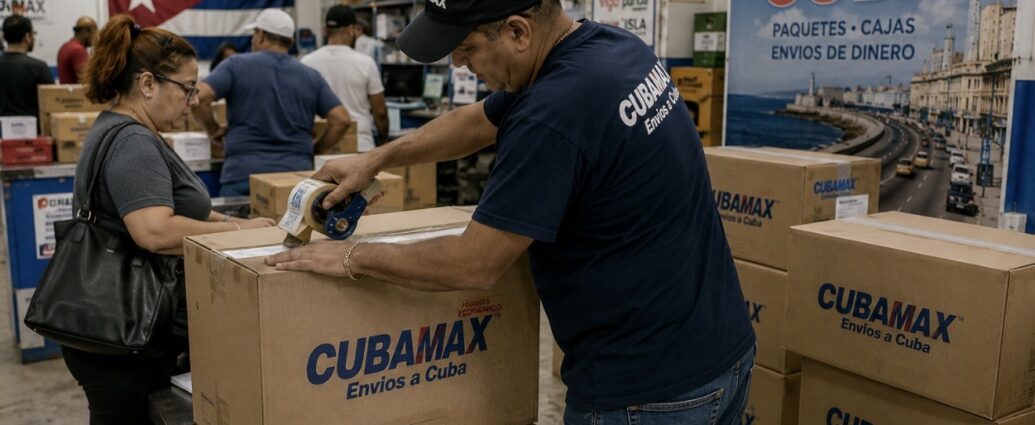
MIAMI — For millions of Cubans, the difference between eating and going hungry now arrives in a cardboard box mailed from South Florida.
As Cuba sinks deeper into the worst economic and energy crisis in its modern history, the packages and cash sent by relatives in the United States have become the island’s most important lifeline, often providing more support than the Cuban state itself.
The pressure intensified this year after a U.S.-led effort to restrict oil shipments sharply reduced Cuba’s fuel supply. It tightened further on January 1, 2026, when a new 1% federal tax took effect on certain remittances sent abroad through cash, money orders, and cashier’s checks.
The scale of the crisis is staggering.
Cuba’s minimum wage is less than $7.50 per month, while average salaries remain only modestly higher.
Inflation has severely eroded purchasing power, leaving many families unable to afford basic necessities.
In that environment, a package containing cooking oil, powdered milk, coffee, medicine, soap, and other essentials is not a luxury.
It is survival.
As one Cuban physician writing from exile observed, in most countries remittances supplement household income.
“In Cuba, they are a condition for survival.”
The money involved is enormous by Cuban standards.
Before the collapse of formal transfer channels, remittances to Cuba totaled approximately $3.7 billion annually in 2019.
Today, formal transfers have declined by roughly 70%, according to independent analysts.
More than 95% of remittance flows now move through informal networks, private couriers, and travelers carrying cash or goods by hand because traditional banking channels have largely broken down.
Much of that disruption traces back to U.S. sanctions and the structure of Cuba’s financial system.
For years, the military-controlled company Fincimex, a subsidiary of the state conglomerate GAESA, handled much of the hard-currency flow into Cuba.
The organization directed significant amounts of foreign currency into government-operated retail chains, including CIMEX, where many consumer goods are sold at prices substantially above U.S. levels.
After the U.S. Treasury Department’s Office of Foreign Assets Control (OFAC) sanctioned Fincimex in 2020, Western Union suspended operations in Cuba, accelerating the shift toward informal transfer networks that remain dominant today.
The center of this system is South Florida.
Home to the largest Cuban community outside the island, Miami has become the operational hub for the movement of money, food, medicine, and household supplies to Cuba.
But even that lifeline has faced disruptions.
Earlier this year, courier company Cubamax suspended home deliveries and limited customers to one package per shipment because fuel shortages on the island made local transportation increasingly difficult.
Although some restrictions were later eased, concerns remain that supply lines could become even more constrained.
The crisis has reignited debate within the Cuban-American community.
For generations, sending money and supplies to relatives was viewed as a family obligation.
Today, some critics argue that every dollar entering Cuba indirectly helps sustain the government in Havana.
Others counter that cutting off remittances would punish ordinary families while doing little to change the political system.
Many economists who study Cuba support the latter view.
Emilio Morales, president of the Havana Consulting Group, argues that stopping remittances would do little to alter the island’s political reality because much of the money now bypasses state-controlled channels entirely.
Instead, those funds support individual households and Cuba’s growing private sector.
The economic impact extends far beyond family budgets.
On the island, remittances help finance thousands of small private businesses, known as cuentapropistas, including restaurants, repair shops, transportation services, and neighborhood retailers.
In Florida, an entire industry has developed around shipping goods and transferring funds, supporting logistics companies, courier services, travel operators, and money-transfer businesses.
When Washington changes remittance policies, both sides of the Florida Straits feel the effects.
The broader geopolitical backdrop continues to complicate the situation.
Following the removal of Venezuelan leader Nicolás Maduro, the United States increased pressure on Caracas to halt oil shipments to Cuba and warned other suppliers against filling the gap.
The resulting fuel shortages have contributed to power outages, transportation disruptions, and deeper economic hardship across the island.
Those conditions have only increased the importance of the packages arriving from Florida.
Each day, customers continue lining up at shipping centers across Miami carrying coffee, powdered milk, clothing, medicine, and household necessities.
Despite rising costs and political controversy, the flow continues.
For millions of Cubans, those boxes remain more than packages.
They are a lifeline.
And for many families struggling through one of the most difficult periods in the island’s modern history, they remain the primary barrier between daily survival and economic collapse.
JBizNews Desk — Miami
© JBizNews.com All Rights Reserved. Reproduction or distribution without written permission is prohibited.
Elon Musk Gave SpaceX Less Than 10% Chance of Succeeding
2026-06-14
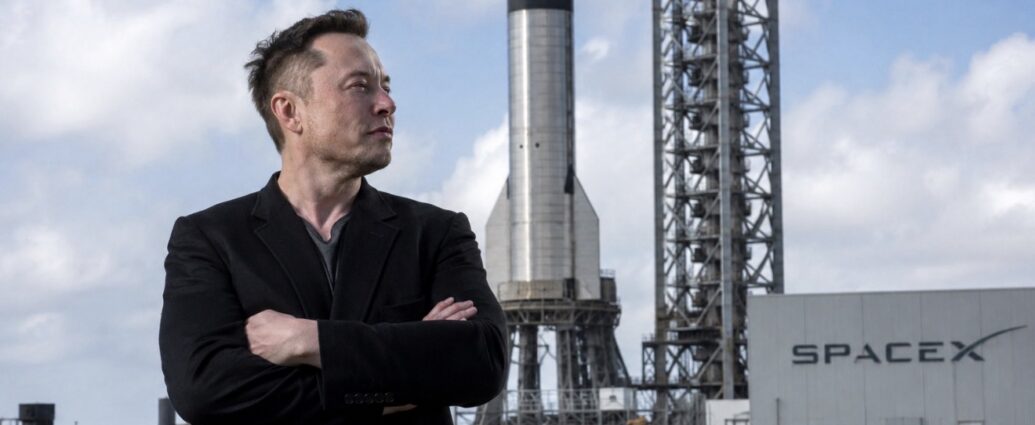
STARBASE, Texas — He stood before a room full of cheering employees on Friday, June 12, the morning his company made history, and Elon Musk said the thing nobody expected him to say.
He admitted he never believed it would work.
“I gave SpaceX less than a 10% chance of succeeding at all,” Musk told the crowd, speaking by video from SpaceX’s Starbase headquarters in Texas as the company prepared to go public on the Nasdaq.
It was a startling confession for a man about to become the richest person who has ever lived. By the end of the morning, Musk would be the world’s first trillionaire.
Back when he started the company in 2002, he told friends the truth as he saw it. The odds were terrible. The company would probably fail.
But he believed it was worth trying anyway because if no one tried, humanity would never reach beyond Earth.
He laughed Friday as he remembered how impossible this day once seemed. If someone had described this moment to him back then, he said, he would have thought they were out of their mind.
For anyone who has ever been told their dream was foolish, his story landed close to home.
The early years nearly broke him.
SpaceX’s first three rockets failed, one after another, between 2006 and 2008. The money was almost gone. The company was one more failure away from disappearing entirely.
Then the fourth rocket reached orbit, and everything changed.
That single success became the foundation for everything that followed.
Reusable rockets that land themselves.
Starlink, the satellite internet network now beaming service to remote corners of the world.
Astronauts carried to the International Space Station.
And finally, the biggest stock market debut anyone has ever seen.
The numbers are almost hard to comprehend.
SpaceX raised about $75 billion on Friday, the largest IPO in history. Shares opened at $150 and climbed past $160, lifting the company’s value above $2 trillion.
Musk’s personal fortune crossed the trillion-dollar mark, a figure no human being has ever held.
But the people in that room were not only watching one man get richer.
They were watching their own lives change, too.
Thousands of SpaceX employees — the engineers, welders, technicians, and dreamers who stayed through the lean years — woke up Friday holding stock worth real money.
By some estimates, roughly 4,400 employees became millionaires the moment trading began.
Standing in for Musk at the Nasdaq in New York was Gwynne Shotwell, the company’s president and the seventh person he ever hired.
She has spent more than two decades helping turn Musk’s ambitious ideas into rockets that actually fly.
Beside her was Chief Financial Officer Bret Johnsen.
Together they rang the opening bell while their founder watched from Texas, surrounded by the team that built what once seemed impossible.
The Musk family turned out for the milestone as well.
His mother, Maye Musk, was among the first to arrive at the Nasdaq site in Times Square, there to witness her son reach a height few parents could ever imagine.
For everyday Americans, Friday offered something rare: a chance to own a small piece of the story.
SpaceX set aside a significant portion of its shares for retail investors through brokerages including Fidelity, Charles Schwab, and SoFi.
People who had only ever read about Musk could, for the first time, become shareholders in his company.
He ended his remarks the way he often does — looking forward rather than backward.
The whole point of SpaceX, he said, was to take science fiction and turn it into a future worth getting excited about.
He spoke about carrying ordinary people to the Moon and to Mars — not just astronauts, but anyone who wants to go.
It was a long way from the warehouse where it all began, and from the founder who once figured the odds were stacked against him.
On Friday, the man who gave his company less than a 10% chance stood at the top of the world, proof that sometimes the long shot is the one worth taking.
JBizNews Desk — Technology
© JBizNews.com All Rights Reserved. Reproduction or distribution without written permission is prohibited.



The World Cup May Be Bigger, But It Can’t Match the Pride, Excitement, and Momentum of a Knicks Championship
2026-06-14
New York City turned into one giant block party Saturday night the moment the New York Knicks clinched their first NBA championship in 53 years, and by Sunday Mayor Zohran Mamdani had made the celebration official, announcing a ticker-tape parade for Thursday, June 18, through Lower Manhattan.
The timing is striking. The biggest sporting event on the planet, the FIFA World Cup, is being played in the same metro area right now — yet it is the Knicks who have seized the city’s heart and its streets.
The scenes told the story.
Thousands of fans poured out of bars, apartments, and watch parties the instant the final buzzer sounded in San Antonio, converging on Madison Square Garden, Times Square, and major intersections across Midtown. Crowds stretched for blocks. Fans climbed poles, danced on cars, waved flags, hugged strangers, and chanted into the night — an outpouring of civic pride no marketing budget can manufacture.
Mamdani leaned into the moment.
“For more than 50 years, New Yorkers have waited for this moment,” he said while announcing a City Hall ceremony, Keys to the City for the team, and municipal buildings illuminated in blue and orange.
It will be the Knicks’ first ticker-tape parade, after the city marked its previous championships with ceremonies rather than a Canyon of Heroes procession.
The economic impact is real.
A hometown championship is an event the city actually owns. The excitement translates directly into spending at neighborhood bars, restaurants, retail stores, hotels, and entertainment venues. It fuels merchandise sales, creates additional tourism activity, and drives crowds into Lower Manhattan for the parade.
The celebration also boosts the value of the franchise itself.
The Knicks are owned by Madison Square Garden Sports Corp. (NYSE: MSGS), and the championship strengthens a franchise already valued at approximately $9.85 billion. The title is expected to support future increases in ticket prices, premium seating demand, sponsorship revenue, and merchandise sales.
Contrast that with the World Cup.
Organizers have projected approximately $3.3 billion in regional economic impact, with New Jersey claiming roughly $2 billion of that total. Yet early business results have been more muted than many expected.
International visitor numbers have reportedly come in below forecasts, while domestic travelers have accounted for a larger share of attendance. Some hotels have reduced room rates to stimulate demand, and travel-data firms have described the tournament’s impact as uneven across host cities.
But the biggest difference cannot be measured in economic studies.
A championship belongs to a city in a way a global tournament never quite can.
The Knicks are New York’s team. Their championship represents the culmination of a 53-year wait shared across generations of fans in Manhattan, Brooklyn, Queens, the Bronx, and Staten Island.
The World Cup, by comparison, is a global event temporarily visiting the region.
Its marquee matches are being played at MetLife Stadium in East Rutherford, New Jersey, while high ticket prices and travel barriers have limited participation for many fans.
That difference shows up in the streets.
The Knicks created a spontaneous celebration that required no advertising campaign. The World Cup, while enormous in scale, has largely been defined by logistics, transportation planning, security operations, and venue management.
One event feels like a city celebrating itself.
The other feels like a city hosting someone else’s party.
None of this means the World Cup will not generate meaningful revenue.
The tournament is expected to continue drawing visitors through mid-July, culminating with the World Cup Final on July 19. Hotels, restaurants, bars, transportation providers, and retailers throughout the region are still expected to benefit.
But the type of emotional momentum that sends hundreds of thousands of people into the streets is difficult to replicate.
The pride.
The history.
The shared memories.
The feeling that an entire city is celebrating together.
Those are things money cannot buy.
For local businesses, the coming days present a rare opportunity.
The Knicks parade arrives while World Cup matches continue throughout the region, creating the possibility that bars, restaurants, retailers, hotels, and entertainment venues benefit from both events simultaneously.
It is an unusual collision of a homegrown championship and the world’s largest sporting event unfolding within the same metropolitan area.
Still, if you walked the streets of New York on Saturday night, the verdict seemed obvious.
The World Cup may be bigger.
It may draw more viewers.
It may generate larger economic projections.
But it cannot match the pride, excitement, momentum, and sense of ownership that comes from seeing your own team finally bring a championship home after more than half a century.
For one unforgettable weekend, New York belonged to the Knicks.
JBizNews Desk — New York
© JBizNews.com All Rights Reserved. Reproduction or distribution without written permission is prohibited.
US Sanctions Chinese Entities Over Iran Weapons; China Leveraging Nuclear Buffer Against US?
2026-06-13
The U.S. Treasury Department sanctioned nine individuals and companies Wednesday for helping Iran’s military acquire weapons, with several of the entities based in China and Hong Kong. In a statement, Treasury Secretary Scott Bessent said the action, part of a campaign the department calls “Economic Fury,” is intended to disrupt “the foreign procurement networks that support the Iranian military’s efforts to acquire weapons.” He added that Treasury “will not tolerate any support of the Iranian military.”
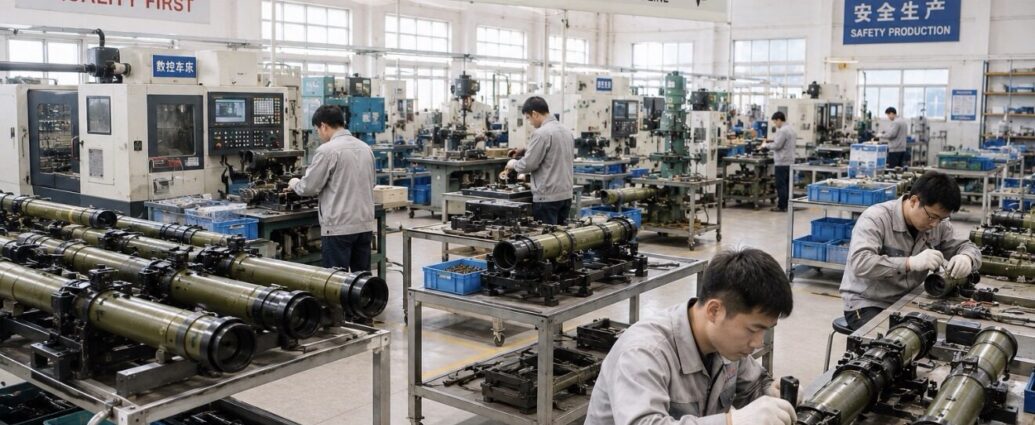
The designations were issued by Treasury’s Office of Foreign Assets Control (OFAC) under an executive order targeting the proliferation of weapons of mass destruction and their suppliers. Among those sanctioned were Chinese and Hong Kong firms accused of helping procure weapons — including shoulder-fired anti-aircraft missiles known as MANPADS — for Iran’s Islamic Revolutionary Guard Corps and its defense ministry. One Hong Kong company was linked to a covert banking network that OFAC said attempted to move money for those purchases.
The sanctions carry significant financial consequences. OFAC warned that foreign banks that knowingly process substantial transactions for the designated parties could themselves face penalties, including losing access to the U.S. financial system. These so-called secondary sanctions are aimed at the banks, brokers, and trading houses that continue facilitating Iranian procurement efforts. The action marks the second major sanctions package in roughly a month, following Treasury measures in May targeting networks connected to Iranian drone and ballistic missile programs.
The repeated appearance of Chinese firms in these investigations raises a broader geopolitical question: How far is Beijing willing to go to protect Iran, and is it using that relationship as leverage against Washington?
China remains Iran’s most important economic partner. According to estimates from analytics firm Kpler, China purchases as much as 80% of Iran’s oil exports, providing Tehran with a critical source of revenue while securing discounted crude supplies for Chinese refiners. Beijing has repeatedly rejected U.S. sanctions on those transactions, arguing that it does not recognize Washington’s authority over commerce conducted outside U.S. jurisdiction.
China has also provided diplomatic support. Chinese officials have consistently described Iran’s nuclear facilities as peaceful and defended Tehran’s right to enrich uranium under the Nuclear Non-Proliferation Treaty. Alongside Russia, China blocked a United Nations Security Council resolution earlier this year that sought action related to the Strait of Hormuz, the strategic oil chokepoint at the center of the current conflict. China’s U.N. ambassador, Fu Cong, said the proposal failed to reflect the “full picture” of the crisis, while Beijing criticized the U.S. naval blockade of Iranian ports as dangerous and destabilizing.
At the same time, analysts caution against overstating the relationship. Reviews conducted by the U.S.-China Economic and Security Review Commission have found no public evidence that China has directly assisted Iran in building a nuclear weapon. Beijing has publicly opposed Iran obtaining such a capability and has generally avoided providing direct military support that could trigger a confrontation with Washington.
Chinese leaders also face practical concerns. China imports roughly 70% of its oil and natural gas, much of it through the Persian Gulf. A wider regional conflict that disrupts energy flows would directly threaten China’s economy. For that reason, Chinese Foreign Minister Wang Yi has urged Iran to respect the “reasonable concerns” of neighboring countries and avoid actions that could escalate tensions further.
U.S. officials have attempted to turn that dependence into leverage. Bessent recently called on Beijing to “step up with some diplomacy and get the Iranians to open the strait.” President Donald Trump has also said Chinese leader Xi Jinping expressed interest in helping broker a settlement while continuing to maintain economic ties with Tehran.
The result is a delicate balancing act. Beijing benefits from maintaining Iran as a strategic counterweight to U.S. influence in the Middle East, but it has so far stopped short of the direct military or nuclear assistance that would risk a severe confrontation with Washington.
For now, what some analysts describe as a Chinese “nuclear buffer” appears less like a deliberate defense strategy and more like the byproduct of economic and diplomatic support. Chinese oil purchases, financial channels, and diplomatic backing help Iran withstand international pressure, but Beijing continues to avoid crossing lines that could trigger broader economic or military consequences.
Each new round of U.S. sanctions tests where that line exists — and how much risk Chinese companies are willing to accept in order to keep Iran’s procurement networks operating.
JBizNews Desk — Asia
© JBizNews.com All Rights Reserved. Reproduction or distribution without written permission is prohibited.


Opinion | Russia Has Lost Its ‘Near Abroad’
2026-06-12



Half of Hormuz Oil Traffic Restored as U.S. Pushes to Reopen Critical Shipping Route
2026-06-12
HOUSTON — About half of the oil and fuel shipments disrupted by the war with Iran are moving again through the Strait of Hormuz, according to U.S. Energy Secretary Chris Wright, offering a measure of relief to global energy markets and supply chains.
Speaking on Friday, June 12, at the Bloomberg Energy Security Executive Briefing in Houston, Wright said approximately 7 million barrels per day of oil and fuel are once again flowing through the strategic waterway, representing roughly half of the volume that had been stranded when the conflict began.
He also made clear that the United States intends to restore full access to the route regardless of whether Iran cooperates.
For consumers, businesses, and investors, the Strait of Hormuz remains the most important energy chokepoint in the world.
The narrow passage carries nearly 20% of global oil and liquefied natural gas supplies, making it one of the most critical arteries of the global economy.
When traffic slows or stops, the effects quickly spread beyond energy markets.
Fuel prices rise.
Shipping costs increase.
Manufacturers face higher expenses.
Consumers ultimately pay more for everything from gasoline to groceries.
Traffic through the strait had been severely disrupted since fighting erupted between the United States and Iran at the end of February.
The conflict sent oil prices sharply higher, unsettled financial markets, and created significant uncertainty across global supply chains.
A fragile truce took hold this week after President Donald Trump pushed both sides to halt direct military attacks, allowing shipping activity to begin recovering.
Wright first signaled improvement earlier this week during an energy conference in Washington, where he said vessel traffic was increasing “very meaningfully” compared with recent weeks.
Even so, he cautioned that restoring normal operations would take time.
Many shipping companies rerouted vessels during the conflict, while supply chains adjusted to avoid the region altogether.
Returning those networks to normal will likely take months.
According to Wright, the challenge extends beyond simply reopening the waterway.
Shipping companies, crews, insurers, and energy traders must regain confidence that the route is secure before traffic fully returns to pre-war levels.
Some vessels have continued moving through the strait under extraordinary circumstances.
Reports indicate the U.S. Navy has assisted dozens of commercial vessels through the passage during the crisis.
Other ships reportedly crossed at night with communications and tracking systems turned off to reduce perceived security risks.
Financial markets have responded positively to signs of progress.
Earlier this week, after Wright reported improving traffic conditions, U.S. crude oil prices fell approximately 3.4% to around $88 per barrel, while Brent crude, the international benchmark, dropped to its lowest level in seven weeks.
Lower crude prices generally translate into lower gasoline and diesel prices, although those savings often take time to reach consumers.
The recovery remains fragile.
Iranian officials have repeatedly suggested the strait could remain restricted, and the broader conflict has not been formally resolved.
As long as the possibility of renewed fighting exists, shipping companies are likely to face elevated insurance costs and security concerns.
Those additional expenses ultimately flow through the global economy.
The economic stakes are enormous.
Energy costs influence nearly every industry, from manufacturing and transportation to agriculture and retail.
A prolonged disruption at Hormuz acts as a hidden tax on economic growth, raising operating costs for businesses and reducing purchasing power for consumers.
The faster shipping returns to normal, the faster that pressure can ease.
For now, the administration appears committed to maintaining both diplomatic and military pressure to keep the route open.
Wright’s message in Houston was clear: the United States intends to restore normal shipping through the Strait of Hormuz and is prepared to secure the route if necessary.
The key number remains 7 million barrels per day.
That represents meaningful progress but still falls well short of pre-war traffic levels.
Every additional tanker that moves through the strait helps ease pressure on energy markets.
Every new escalation risks sending those gains back into reverse.
JBizNews Desk — Energy
© JBizNews.com All Rights Reserved. Reproduction or distribution without written permission is prohibited.

Companies Leave Singapore for Cheaper, More Spacious Malaysia
2026-06-12
A growing number of companies are shifting operations out of Singapore and into neighboring Malaysia, drawn by lower costs, tax incentives, and room to expand. The trend gained momentum this spring when global apparel retailer H&M announced in May that it would relocate its Southeast Asia headquarters from Singapore to Kuala Lumpur, affecting 78 jobs. In March, brewer Heineken said it would move portions of its production from Singapore to facilities in Malaysia and Vietnam.
These are not isolated moves. Since the start of 2026, a visible wave of businesses has relocated at least part of their operations across the border. “These moves are significant and mark a clear acceleration,” said Alwyn Lim, associate professor of sociology at Singapore Management University. The shift reflects a broader global trend as companies search for lower costs, greater scale, and improved competitiveness.
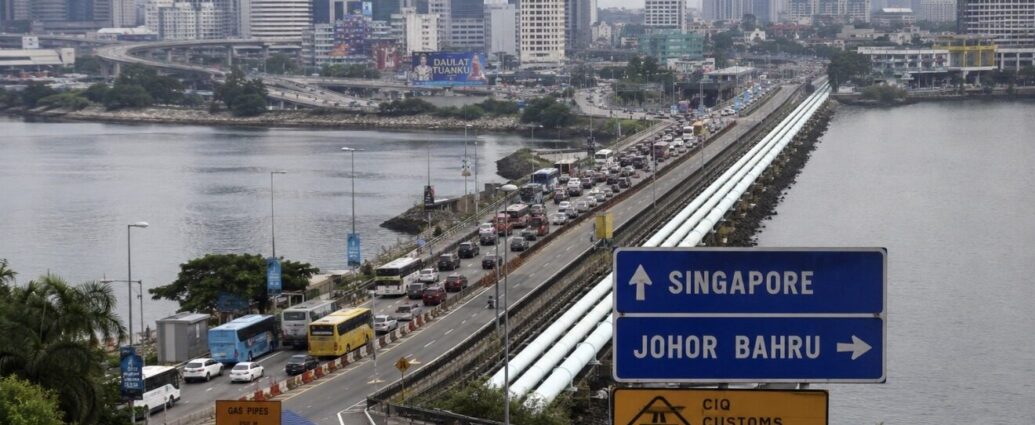
The economics are straightforward. Singapore remains one of the world’s most expensive places to operate a business, with high commercial rents, rising labor costs, and limited land availability. Malaysia, separated by only a narrow causeway, offers substantially lower operating expenses and significantly more industrial space.
“Malaysia offers significantly lower overheads, attractive tax incentives, and the industrial land space companies need to scale,” said David Blasco, country director of Randstad Singapore.
Importantly, most companies are not abandoning Singapore altogether. Instead, many are adopting a strategy known as “twinning,” keeping headquarters, research centers, and senior management functions in Singapore while moving manufacturing, warehousing, and logistics operations to Malaysia.
Singapore continues to offer advantages that remain difficult to replicate elsewhere in Asia. The city-state remains one of the world’s leading financial centers, provides political stability, strong legal protections, efficient logistics, and access to highly skilled talent. Malaysia, particularly the state of Johor, offers lower labor costs, more abundant land, and lower energy expenses.
Lennon Tan, president of the Singapore Manufacturing Federation, describes the trend as “rightsizing geography” rather than a loss of confidence in Singapore. Companies are strategically placing each function where it makes the most economic sense.
Food manufacturers provide a clear example. Many are retaining brand management, procurement, and supply-chain leadership in Singapore while moving physical production north to Johor. Gardenia, the well-known bread producer, operates a major facility in Senai, Malaysia, capable of producing approximately 8,000 loaves of bread and 20,000 tortilla wraps per hour.
A major government initiative is helping accelerate the shift. The Johor-Singapore Special Economic Zone, formally agreed upon by both governments in early 2025, is designed to integrate the two economies more closely. Covering more than 3,500 square kilometers, the zone spans an area more than four times larger than Singapore itself and targets eleven key industries, including manufacturing, logistics, healthcare, and digital services.
The incentives are substantial. Eligible companies can qualify for a special corporate tax rate of just 5% for up to 15 years, significantly below Malaysia’s standard 24% corporate tax rate. Since the agreement was signed, Singapore-based companies have committed more than 5.5 billion Singapore dollars in investments into Johor, according to Singapore government officials.
Major multinational companies are already expanding across both markets. Firms including ResMed and FedEx have announced investments designed to take advantage of the growing integration between Singapore and Johor.
For years, the biggest obstacle to such arrangements was transportation. Crossing the border could take hours during peak periods, creating costly delays for employees and businesses. That barrier is about to shrink dramatically.
A new Rapid Transit System (RTS) rail link, scheduled to begin operations by the end of 2026, will connect Johor Bahru and Singapore in approximately six minutes and is expected to carry up to 10,000 passengers per hour in each direction. Authorities have also introduced QR-code immigration processing and streamlined customs procedures.
As travel times fall and border crossings become easier, the economic logic behind splitting operations between the two countries becomes even stronger.
The stakes are significant. For Malaysia, particularly Johor, the influx brings new factories, jobs, infrastructure investment, and economic growth. For Singapore, the challenge is preserving higher-value industries while allowing lower-margin operations to relocate elsewhere.
Officials in both countries argue the arrangement can strengthen the broader region rather than create winners and losers. By combining Singapore’s strengths in finance, innovation, and management with Malaysia’s advantages in manufacturing, land availability, and cost efficiency, the region hopes to compete more effectively against other Asian economic hubs.
The trend also reflects a broader global movement. Businesses worldwide are reevaluating where they locate factories, offices, and supply chains, balancing labor costs, taxes, logistics, and market access. Similar conversations are unfolding across Europe, North America, and Asia as companies seek greater efficiency and resilience.
For now, the momentum appears to favor further integration. With operating costs in Singapore continuing to rise, Malaysia expanding incentives, and new transportation links nearing completion, more companies are expected to adopt a cross-border model.
Rather than choosing one country over the other, many businesses increasingly see Singapore and Malaysia as complementary parts of a single economic ecosystem.
JBizNews Desk — Asia
© JBizNews.com All Rights Reserved. Reproduction or distribution without written permission is prohibited.

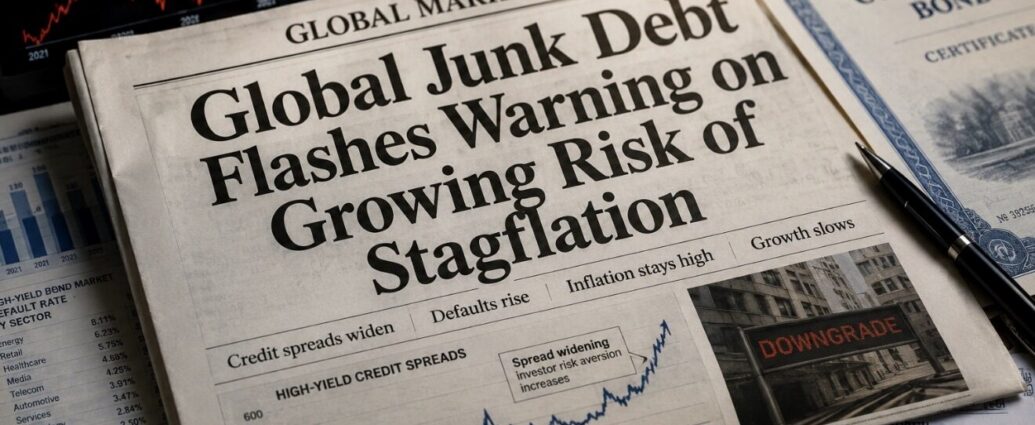
Global Junk Debt Flashes Warning on Growing Risk of Stagflation
2026-06-12
The riskiest corners of the global bond market are signaling trouble, warning that the world economy may be sliding toward stagflation, the painful combination of high inflation and weak growth. Investors have become increasingly cautious as inflation pressures remain elevated in many economies while geopolitical tensions continue to threaten global growth.
Stagflation is the economic nightmare that defined much of the 1970s. It occurs when prices continue rising even as economic activity slows and unemployment increases. Policymakers fear it because the traditional remedies often work against one another. Raising interest rates can help control inflation but may further weaken growth. Cutting rates may support growth but risks reigniting inflation.
One of the clearest places to watch for early warning signs is the junk-bond market. Junk bonds, also known as high-yield bonds, are issued by companies with lower credit ratings and greater risk of default. Investors demand higher yields to compensate for that risk. The difference between those yields and the yields on safer government bonds is known as the credit spread.
When investors grow concerned about the economy, those spreads typically widen. Companies with weaker balance sheets become the first casualties of rising borrowing costs and slowing demand.
Recent market activity suggests investors are becoming increasingly selective. The lowest-rated segment of the high-yield market, particularly bonds rated CCC, has underperformed higher-rated junk debt. Market strategists view that divergence as a warning sign that investors are moving away from the most vulnerable borrowers.
The pressure comes at a difficult time for corporate America and many businesses around the world. A large volume of debt issued during the era of ultra-low interest rates is approaching maturity over the next several years. Companies that previously borrowed at historically low rates now face significantly higher refinancing costs.
For stronger firms, higher borrowing costs may simply reduce profits. For heavily indebted companies, refinancing can become a major challenge, potentially leading to restructurings, layoffs, asset sales, or defaults.
The concern extends beyond the United States. Policymakers and economists across Europe and Asia have warned that energy-market disruptions and persistent inflation could create conditions resembling stagflation. Rising commodity prices increase costs for businesses and consumers while simultaneously slowing economic activity.
Higher energy prices have historically played a major role in stagflation episodes. Oil-price shocks ripple through transportation, manufacturing, agriculture, and consumer spending. Businesses often pass those costs to customers, fueling inflation while reducing economic growth.
History offers a sobering comparison. During the late 1970s, geopolitical turmoil in the Middle East contributed to sharp increases in oil prices. Inflation accelerated, interest rates surged, and economic growth weakened. The result was one of the most difficult periods for policymakers, investors, and businesses in modern economic history.
Today’s environment is not identical. Banks generally hold stronger capital positions than they did before the 2008 financial crisis, and many corporations entered this period with healthier balance sheets. Nevertheless, investors remain focused on whether inflation can be controlled without triggering a significant slowdown.
For ordinary investors, junk bonds matter because they are widely held through mutual funds, exchange-traded funds, pension plans, and retirement accounts. Rising defaults can reduce returns and increase volatility. More importantly, the companies that rely on high-yield financing employ millions of workers, making their financial health important for the broader economy.
The bond market is not forecasting an economic crisis. Credit spreads remain well below the extreme levels seen during major recessions and financial panics. However, the growing weakness among the lowest-rated borrowers is attracting attention because these companies often experience stress before problems spread to the wider economy.
The message from the junk-bond market is not that stagflation is inevitable. Rather, investors are increasingly pricing in the possibility that inflation could remain stubborn while growth slows. Whether those concerns intensify will depend on inflation trends, energy prices, central-bank policy decisions, and the resilience of businesses facing higher borrowing costs.
For now, the signal from the world’s riskiest debt markets is a warning worth watching.
JBizNews Desk — Global
© JBizNews.com All Rights Reserved. Reproduction or distribution without written permission is prohibited.


Meta’s Social Networks Down for Thousands of Users
2026-06-12
MENLO PARK, Calif. — Meta’s biggest apps stopped working for huge numbers of people on Friday, June 12, as a widespread outage knocked Facebook, Instagram, and Messenger offline and locked users out of their accounts.
The company confirmed the trouble through spokesperson Andy Stone, who posted on X on Friday: “We’re aware people are currently having trouble accessing our services. We’re working on it.”
The scale was significant.
The outage-tracking site Downdetector logged more than 100,000 user reports by 10 a.m. Eastern time as a server-side failure logged people out of Facebook and partly disrupted Instagram.
Reports came in from across the United States, with heavy concentrations in New York City, Chicago, and San Francisco, as well as from Europe, Asia, and the Middle East.
Users described a similar pattern.
They were suddenly logged out and then unable to sign back in.
Feeds went blank.
Error messages appeared reading “unexpected error” or “query error.”
Messenger was among the hardest-hit services, with users appearing offline to friends and messages failing to send.
The disruptions affected both desktop and mobile applications.
For everyday users, an hour without Instagram is an inconvenience.
For businesses, it can mean lost revenue.
That is the part of the story that does not appear in the error messages.
Millions of small businesses rely on Meta’s platforms for customer service, advertising, and online sales.
When those platforms go dark, transactions stop.
On Friday, Meta Ads Manager, the company’s advertising platform, experienced major disruptions. Advertisers were advised to pause campaigns to avoid spending money on ads that users could not properly access.
The financial exposure can be substantial.
Meta generally does not provide automatic credits or refunds when outages occur.
A small business spending hundreds of dollars per day on advertising can lose valuable campaign time with little opportunity to recover those costs.
Restaurants accepting orders through Instagram, retailers selling through Facebook, and content creators who depend on the platforms for income can all feel the impact immediately.
Meta did not immediately identify the cause of the outage.
However, the symptoms point to a familiar type of failure.
When Facebook, Instagram, and Messenger all experience problems simultaneously, the issue is often tied to backend authentication systems that verify user identities across Meta’s network.
If that shared login infrastructure encounters problems, multiple platforms can fail at once even though the broader internet remains fully operational.
That helps explain why users were being logged out and unable to sign back in rather than simply experiencing slow loading times.
Meta has experienced similar outages in previous years linked to authentication and backend service failures.
In many cases, services have been restored gradually over several hours, with some regions returning online before others.
The timing is notable.
Meta continues to invest heavily in artificial intelligence and emerging technologies while relying on Facebook and Instagram as the core drivers of its advertising business.
Those platforms generate the revenue that funds much of the company’s broader strategy.
An outage affecting all major services at once highlights how dependent both users and businesses remain on infrastructure that typically operates unnoticed in the background.
As of Friday afternoon, Meta had not provided a timeline for full restoration of services and had not posted detailed updates regarding recovery efforts.
For users, there is little that can be done when the problem originates on Meta’s systems rather than their own devices.
For businesses relying on constant connectivity, the most expensive part of the outage may simply be the time spent waiting.
JBizNews Desk — Technology
© JBizNews.com All Rights Reserved. Reproduction or distribution without written permission is prohibited.

Google Is Helping Finance Anthropic’s $35 Billion AI Buildout. Here’s How.
2026-06-12
Here’s a word that trips people up: when a company “backstops” a deal, it is not backing out. It is doing the opposite — standing behind it and promising to pay if something goes wrong.
And that is exactly what Google has now done for Anthropic, the maker of the Claude artificial intelligence assistant.
According to people familiar with the financing, in details that came to light Tuesday, June 9, Google agreed to guarantee the lease payments behind a roughly $35 billion deal that gives Anthropic the computer chips it needs to run its AI systems. Google agreed to backstop those payments at five data centers, helping Anthropic obtain what amounts to a $35 billion loan, and Anthropic’s role in these specific data centers had not previously been reported.
Why Anthropic Needs Outside Financing
Running advanced artificial intelligence requires enormous amounts of computing power, and the chips that make it possible cost a fortune.
Buying tens of billions of dollars of hardware outright would strain even the best-funded technology companies.
So Anthropic and its partners structured the deal differently.
A separate company was created to purchase the chips and lease them back to Anthropic, allowing the company to spread the cost over time instead of paying everything upfront. Apollo Global Management and Blackstone arranged approximately $35 billion in debt financing for the transaction, making it one of the largest private-credit deals ever assembled.
The money is being used to acquire Google’s custom-designed AI processors known as Tensor Processing Units, or TPUs. Anthropic then leases those chips, and the lease payments are used to repay the debt.
[AP pic: Rows of servers and processors inside a modern data center used for artificial intelligence computing.]
How Google Became the Safety Net
This is where the story becomes unusual.
Lenders providing $35 billion want protection in case something goes wrong.
Two major companies are providing that protection.
Broadcom, which helps manufacture the chips, guarantees that the processors will retain a minimum resale value, reducing risk for lenders.
Google is providing another layer of security by guaranteeing the lease payments tied to five data-center locations.
In practical terms, if Anthropic were unable to make certain payments, Google’s commitment helps cover the obligation.
That guarantee is a major reason financing on this scale became possible.
Why Would Google Help a Competitor?
At first glance, the arrangement seems strange.
Anthropic’s Claude competes directly with Google’s Gemini AI assistant.
Yet the two companies are connected in several important ways.
Google was one of Anthropic’s earliest investors and has repeatedly increased its stake in the company. Google also supplies the chips that sit at the center of this transaction.
That means Google is simultaneously:
- An investor in Anthropic
- A supplier of the hardware
- A beneficiary of the chip purchases
- A guarantor behind part of the financing
In short, Google invests in Anthropic, sells it chips, and now helps secure the financing that allows Anthropic to buy even more of those chips.
The Concern About “Circular Deals”
That complexity has raised concerns among some industry observers.
Critics point to what are sometimes called circular financing arrangements, where a small group of technology companies become increasingly dependent on one another.
The concern is that money can appear to move in a loop:
- Google invests in Anthropic.
- Anthropic uses financing to buy Google’s chips.
- Google helps secure the financing.
- The financing supports further growth at Anthropic.
Supporters argue that such partnerships accelerate innovation and help fund the massive infrastructure required for AI.
Critics worry that the growing web of financial connections could create broader risks if one major player encounters trouble.
Why the Stakes Are So High
The deal comes at a pivotal moment for Anthropic.
The financing surfaced only days after the company reportedly filed confidential paperwork for an initial public offering and completed a $65 billion fundraising round that valued the company at approximately $965 billion.
Anthropic has also committed substantial resources to expanding its computing capacity, including participation in a data-center partnership valued at approximately $50 billion.
The company is spending aggressively to secure the infrastructure needed to compete with rivals including OpenAI, Google, Microsoft, and xAI.
What This Says About the AI Boom
For everyday readers, the story offers a glimpse into how the artificial intelligence boom is actually being financed.
Most headlines focus on new AI models, chatbot features, and flashy product demonstrations.
Behind the scenes, however, the industry increasingly relies on:
- Multi-billion-dollar debt financings
- Complex leasing arrangements
- Massive data-center construction projects
- Long-term chip supply agreements
- Financial guarantees from major technology companies
The infrastructure required to power advanced AI is becoming almost as important as the software itself.
The Bottom Line
For now, the arrangement reflects confidence.
Lenders are willing to commit tens of billions of dollars, Google is willing to stand behind part of the financing, and Anthropic gains access to the computing power it needs without paying the full cost upfront.
The larger question is what happens as these relationships grow more intertwined.
The same partnerships helping fuel the AI boom today could also make the industry’s biggest players increasingly dependent on one another tomorrow.
That is the hidden meaning behind the word “backstop.” A safety net works only as long as the company holding it remains strong enough to catch everyone else.
JBizNews Desk — Technology
© JBizNews.com All Rights Reserved. Reproduction or distribution without written permission is prohibited.
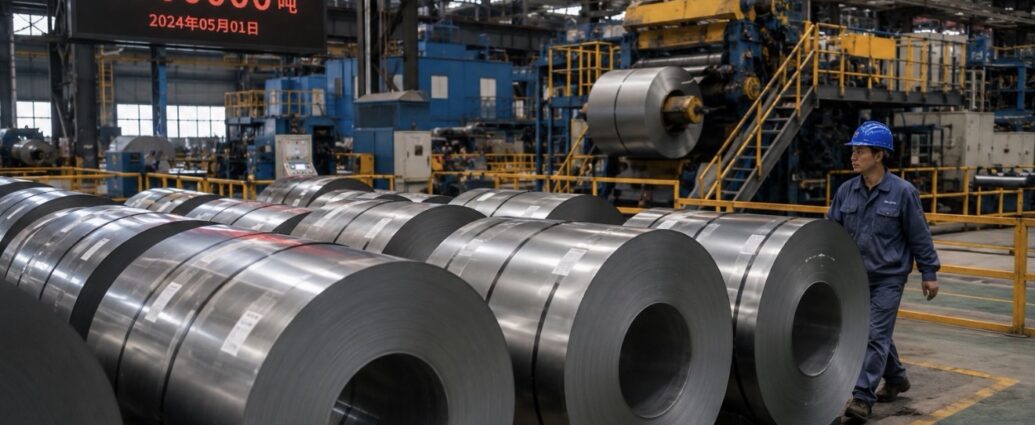
China May Wholesale Inflation Hits Near 4-Year High on Iran War-Led Higher Input Costs, AI Boom
2026-06-12
China’s factory-gate prices rose at their fastest pace in nearly four years in May, climbing 3.9% from a year earlier, according to data released Wednesday by the National Bureau of Statistics of China. The increase in the Producer Price Index (PPI) was the strongest since July 2022, exceeded economists’ expectations of 3.8%, and accelerated from 2.8% in April.
The report highlights a growing divide inside the world’s second-largest economy: factory costs are rising rapidly while consumer inflation remains subdued.
The Producer Price Index measures prices businesses receive for goods before they reach consumers, including raw materials, industrial products, machinery, and fuel. The Consumer Price Index, by contrast, measures what shoppers pay in stores. In May, factory inflation accelerated sharply while consumer inflation remained modest.
Two major forces appear to be driving the increase.
The first is energy and commodity costs. Rising oil and petrochemical prices have increased costs throughout China’s manufacturing sector. China remains one of the world’s largest energy importers, making its factories particularly sensitive to changes in global commodity markets. Higher transportation, fuel, and materials costs have filtered through industrial supply chains.
The second driver is the global boom in artificial intelligence and electrification. Dong Lijuan, Chief Statistician at the National Bureau of Statistics, said the expansion of AI infrastructure, electrification projects, and computing demand helped lift prices in sectors tied to metals, machinery, and technology hardware.
According to the bureau, non-ferrous metal mining prices rose 36.5% year-over-year, while non-ferrous metal smelting and processing prices increased 24%. Demand for copper, aluminum, rare-earth materials, electrical equipment, and data-center infrastructure has surged as countries and companies race to build AI capacity and expand electric-power systems.
In simple terms, the world’s push toward AI, cloud computing, electric vehicles, and upgraded energy infrastructure is consuming enormous quantities of industrial materials, pushing prices higher.
Consumer inflation told a different story.
China’s Consumer Price Index rose 1.2% from a year earlier in May, below economists’ expectations of 1.3%, while prices slipped 0.1% from April. Core inflation, which excludes food and energy, eased to 1.1%.
Food prices remained weak, falling 1.7% year-over-year, reflecting continued softness in household spending and consumer demand.
One notable exception was energy. Consumer gasoline prices climbed sharply from a year earlier, reflecting higher global crude-oil prices and rising transportation costs.
The gap between factory inflation and consumer inflation is important because it suggests many manufacturers are struggling to pass rising costs on to customers. Businesses are paying more for raw materials and energy, but consumers remain cautious, limiting companies’ ability to raise prices.
That squeeze can pressure profit margins across manufacturing industries.
The implications extend far beyond China.
As the world’s largest manufacturing hub, China produces a significant share of global electronics, machinery, appliances, industrial components, and consumer goods. Rising production costs inside China can eventually ripple through international supply chains and affect prices paid by businesses and consumers around the world.
For much of the past several years, China experienced factory-gate deflation, meaning producer prices were falling. That trend helped keep global goods inflation under control. The recent turnaround suggests that dynamic may be changing.
The May report also reflects broader policy shifts in Beijing. Chinese authorities have been working to reduce excess industrial capacity and discourage aggressive price competition in certain sectors, measures that can contribute to firmer pricing across manufacturing industries.
There are reasons for caution, however.
Many of the strongest gains were concentrated in commodity-related industries such as energy and metals, which can be volatile. If commodity prices retreat, producer inflation could cool quickly. On a monthly basis, producer prices rose more slowly than they did in April, suggesting some moderation may already be underway.
At the same time, weak consumer demand remains one of the biggest challenges facing China’s economy. Without stronger household spending, manufacturers may continue facing pressure despite rising factory output prices.
For now, the picture is one of two very different economies operating side by side: an industrial sector facing rapidly rising input costs driven by energy, metals, and AI-related demand, and a consumer sector that remains far more cautious.
Whether those rising factory costs eventually flow through to shoppers in China and around the world may become one of the most important inflation questions for the global economy in the months ahead.
JBizNews Desk — Asia
© JBizNews.com All Rights Reserved. Reproduction or distribution without written permission is prohibited.



World Cup Kicks Off in Mexico With Soccer’s Biggest Tournament Yet
2026-06-11
The 2026 FIFA World Cup kicked off Thursday at Estadio Azteca in Mexico City, where co-host Mexico defeated South Africa 2-0 in front of a packed home crowd. The match opened the largest World Cup in history — a 104-game tournament spanning 16 cities across the United States, Mexico, and Canada, marking the first time three nations have jointly hosted the event. The tournament concludes with the final on July 19 in the New York-New Jersey region.
The opening day carried significance far beyond the result on the field. Mexico City Mayor Clara Brugada declared a local holiday to celebrate the kickoff, while President Claudia Sheinbaum indicated a broader national observance remained under consideration. The opening ceremony transformed the nearly 87,500-seat stadium into a global entertainment stage, featuring performances by Shakira, Burna Boy, J Balvin, and Maná.
For FIFA, the World Cup is far more than a sporting event — it is the organization’s largest economic engine.
The expanded 48-team format, up from 32 teams in previous tournaments, creates more matches, more sponsorship inventory, more ticket sales, and significantly more broadcast content. FIFA has projected record revenues for the current cycle, driven largely by the expansion.
Host cities are hoping for their own economic boost.
The tournament is expected to attract millions of visitors across North America, generating spending on hotels, restaurants, transportation, entertainment, and tourism. Cities hosting matches are positioning themselves as global destinations, using the event to showcase local infrastructure and attract future investment.
Mexico City’s holiday declaration reflects how seriously local leaders view the economic opportunity.
The opening venue itself illustrates the business side of modern sports.
Estadio Azteca recently entered a naming-rights agreement with Mexican financial institution Banorte and is officially branded Banorte Stadium. However, because Banorte is not an official FIFA sponsor, the governing body required the venue to be referred to as “Mexico City Stadium” during the tournament.
The move highlights FIFA’s strict sponsorship protections, designed to preserve exclusivity for companies that pay billions for official tournament partnerships.
Broadcasting remains another major revenue source.
In the United States, matches are being carried by Fox Sports and Telemundo, while streaming coverage is spread across multiple digital platforms. Fox-owned Tubi streamed portions of the opening festivities free in 4K, reflecting the growing importance of ad-supported streaming models for major live events.
The World Cup also fuels a vast consumer marketplace that extends far beyond television.
Official jerseys, merchandise, collectibles, licensing agreements, music partnerships, and promotional campaigns are expected to generate billions in additional spending worldwide. Global brands continue to compete aggressively for visibility during what remains the most-watched sporting event on the planet.
Not everything surrounding the tournament has been celebratory.
Rights groups and some fans have raised concerns about security planning at several venues, while dynamic ticket pricing has generated criticism after some ticket costs rose significantly above original face values. Economists also continue to debate whether the long-term financial benefits of hosting major sporting events justify the substantial public spending often required.
For now, however, the focus remains on the tournament itself.
Mexico’s opening victory gave home supporters an early reason to celebrate, while businesses across North America are preparing for weeks of increased tourism and consumer activity. As the tournament unfolds, the broader question for host cities will be how much of the spending and attention generated by the World Cup translates into lasting economic gains after the final match is played in the New York region next month.
JBizNews Desk — North America
© JBizNews.com All Rights Reserved. Reproduction or distribution without written permission is prohibited.


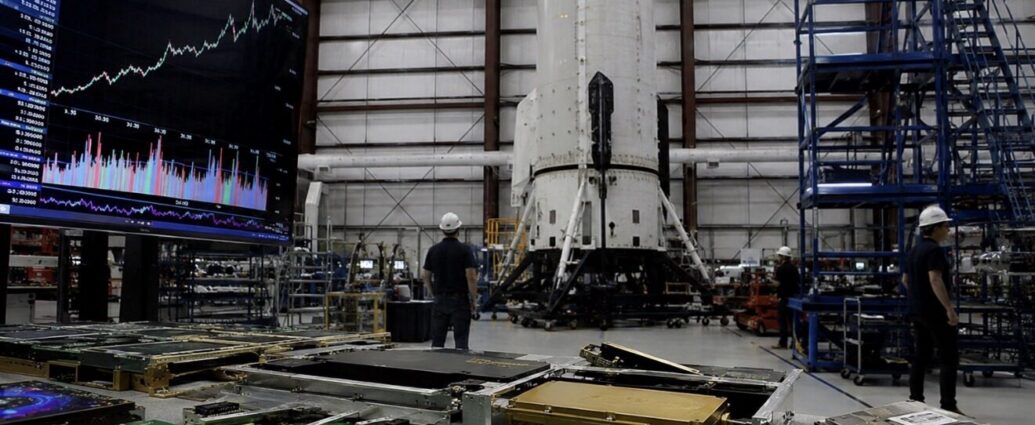
Locked Out of SpaceX IPO, Asia Investors Find New Ways to Bet on Elon Musk’s Space Empire
2026-06-11
SpaceX confirmed on Thursday, June 11, that it had priced what the company described as the largest stock sale in history — approximately 555.6 million shares at $135 each, raising about $75 billion. While investors around the world rushed to participate, many investors in mainland China and Hong Kong found themselves locked out of the offering due to U.S. export-control restrictions tied to defense-related technology.
Rather than buying SpaceX directly, many investors across Asia have turned to an alternative strategy: purchasing shares of publicly traded suppliers, satellite component manufacturers, and investment funds that already hold private stakes in the company.
The company, led by Elon Musk, is expected to begin trading on the Nasdaq under the ticker SPCX on Friday at a valuation of roughly $1.75 trillion. Underwriters also hold an option to purchase an additional 83.3 million shares. The offering surpasses the previous record established by Saudi Aramco’s 2019 IPO.
Restrictions reportedly went beyond simply rejecting orders. Access to SpaceX’s website and IPO marketing materials was blocked in mainland China and Hong Kong, preventing many investors from reviewing offering documents or participating directly.
One of those investors was Hu Xiaobin, a retail trader from China’s Anhui province. Anticipating growing interest in the company, he spent months purchasing shares of Chinese-listed companies connected to SpaceX’s supply chain.
Among his holdings were Sunway Communication, which manufactures components used in Starlink ground terminals, and Western Superconducting Technologies, a producer of specialty metals used in aerospace applications.
Hu later sold both positions before the IPO, describing the trade as successful “value speculation.”
One of the biggest beneficiaries of investor enthusiasm has been Lens Technology, a Shenzhen-listed supplier known for working with Apple and Tesla. The company’s stock has surged nearly 50% this year, reaching record highs after identifying commercial space as a new growth opportunity.
Interest intensified further in May when company chairman Zhou Qunfei was photographed seated between Apple CEO Tim Cook and Elon Musk during a Beijing banquet held to welcome President Donald Trump, fueling speculation about future business opportunities involving Musk’s companies.
Taiwan has also emerged as a major focus for investors seeking indirect exposure to SpaceX.
The island produces many of the electronic components used in satellite systems. Companies including Chin-Poon Industrial, Wistron NeWeb, and Universal Microwave Technology have publicly stated that they supply SpaceX.
According to Jeffrey Chan, a director at Hong Kong-based Central Asset Management, investors are also watching Compeq, Tong Hsing Electronic, Kinpo, and Japan’s Meiko Electronics as potential beneficiaries of SpaceX’s future growth.
“For local retail investors, getting a direct piece of the IPO book is going to be incredibly tough,” Chan said, adding that he expects SpaceX to become a core holding for many global growth-oriented funds.
Investor interest has expanded beyond suppliers.
The Tema Space Innovators ETF, which owns a small pre-IPO stake in SpaceX, has gained approximately 29% since launching in March. Meanwhile, the Tradr 2x Fly Long Daily ETF, which offers leveraged exposure to space company Firefly Aerospace, has attracted significant attention from traders.
In Europe, satellite companies including Eutelsat of France, OHB of Germany, and SES of Luxembourg have all posted strong gains this year as investors seek exposure to the broader commercial-space sector.
Not everyone believes the rally is sustainable.
Nicholas Smith, Japan strategist at brokerage CLSA, said much of the recent buying appears to be driven by retail investors rather than large institutions.
“It’s a great story if you’re a trader,” Smith said. “But I doubt people would be making big bets on this.”
Others see genuine long-term opportunity.
Nick Wilcox, managing director at Man Group, believes the capital raised through the offering could translate into increased spending throughout SpaceX’s supplier network.
“There is a raft of Asian companies that will be highly benefiting from that,” Wilcox said.
Still, analysts caution that many supplier stocks have already risen sharply on expectations that may not materialize. Thinly traded aerospace and satellite suppliers can be highly volatile, and future business relationships remain uncertain.
For investors in mainland China and Hong Kong, however, the irony remains clear: the company they most want to own is the one they still cannot directly buy.
JBizNews Desk — Asia
© JBizNews.com All Rights Reserved. Reproduction or distribution without written permission is prohibited.

Gold Tumbles to a Six-Month Low Even as War and Inflation Rage
2026-06-11
NEW YORK, June 11 — Gold prices continued their sharp decline on Thursday, June 11, falling to their lowest levels in roughly six to seven months despite rising inflation and escalating conflict in the Middle East.
Spot gold traded near $4,100 per ounce, down more than 10% over the past month, even as investors confront war concerns, higher energy costs, and renewed inflation pressures.
Ordinarily, those conditions would support demand for gold as a traditional safe-haven asset.
Instead, investors are increasingly focused on the prospect of higher interest rates.
Higher Rates Weigh on Gold
The conflict with Iran and disruptions around the Strait of Hormuz have pushed oil and gasoline prices sharply higher, fueling inflation concerns.
At the same time, investors increasingly believe the Federal Reserve may keep rates elevated for longer—or potentially raise them further—to contain rising prices.
That expectation has strengthened the U.S. dollar and boosted Treasury yields.
The U.S. Dollar Index climbed to its strongest level since April, while the yield on the benchmark 10-year Treasury note moved above 4.50%.
Because gold pays no interest, it often struggles when bonds and cash offer higher returns.
As interest-bearing investments become more attractive, some investors shift money away from precious metals.
Silver has faced similar pressure, falling sharply alongside gold.
Central Banks Continue Buying
The decline comes despite continued demand from global central banks.
Central banks purchased approximately 244 metric tons of gold during the first quarter of 2026, continuing a multi-year trend of diversification away from the U.S. dollar.
Demand for physical gold bars also increased earlier in the year, although jewelry demand weakened in major markets including India and China.
Those purchases have helped support prices but have not been enough to reverse the broader selloff.
Long-Term Bullish Factors Remain
Supporters of gold point to several longer-term trends.
U.S. federal debt now exceeds $37 trillion, while annual interest payments have surpassed $1 trillion.
Meanwhile, central banks have remained net buyers of gold for four consecutive years.
Historically, those conditions have supported long-term demand for precious metals.
The challenge for gold today is the behavior of so-called real yields—the return investors receive after accounting for inflation.
When interest rates rise faster than inflation expectations, gold becomes less attractive relative to bonds and cash.
Global Central Banks Tighten
Adding to pressure on precious metals, the European Central Bank raised its benchmark interest rate by 0.25 percentage points on Thursday, bringing the rate to 2.25%.
The ECB also increased its inflation forecasts, citing higher energy costs and economic uncertainty linked to the Middle East conflict.
Higher interest rates globally create additional headwinds for gold markets.
Federal Reserve Now Holds the Key
Attention now turns to the Federal Reserve’s upcoming June meeting.
Investors are closely watching for guidance from Chair Kevin Warsh and updated projections showing where policymakers believe rates are headed.
Markets largely expect rates to remain unchanged this month.
The larger question is whether officials signal further tightening later this year.
A more aggressive outlook could pressure gold further, while indications that rates may stabilize could support a rebound.
For many investors, the recent decline serves as a reminder that gold is not always a straightforward inflation hedge.
In the short term, interest-rate expectations often matter more than inflation itself.
JBizNews Desk — New York
© JBizNews.com All Rights Reserved. Reproduction or distribution without written permission is prohibited.