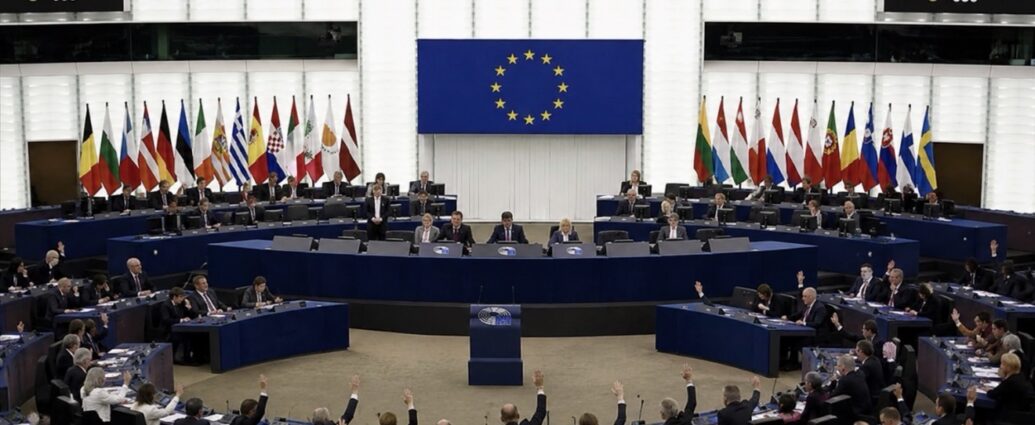
European Parliament Ratifies the U.S. Trade Deal on Tuesday, Heading Off a Trump Deadline That Threatened Steep New Tariffs on Cars
The European Parliament gave its final approval Tuesday to a long-delayed trade agreement with the United States, voting 440 to 151 with 50 abstentions and clearing the last major hurdle just weeks before a deadline set by President Donald Trump that would have sharply raised tariffs on European cars.
The vote locks in the framework that Trump and European Commission President Ursula von der Leyen struck nearly a year ago in Turnberry, Scotland. Under the deal, the United States applies a tariff of up to 15% on most goods coming from Europe, while the European Union removes many of the duties it charges on American industrial products. It is meant to settle a dispute that had been hanging over the world’s largest trading relationship.
What pushed lawmakers to act now was the calendar. Trump had given the bloc until July 4 to ratify the agreement, warning that he would otherwise raise tariffs to much higher levels. He had specifically threatened to lift duties on cars and trucks built in Europe to 25%, a move that would have hit the continent’s automakers hard and raised prices for the American shoppers who buy their vehicles. Tuesday’s vote takes that threat off the table, at least for now.
Getting here was not smooth. EU lawmakers had twice frozen the deal over the past several months. They paused it in January after Trump floated the idea of taking control of Greenland, a Danish territory, and again in February after a U.S. court struck down a large part of his tariff program, leaving Europe unsure what it was even agreeing to. Many members of parliament have called the agreement lopsided, arguing it gives Washington more than it gives Brussels, and they attached safeguards that would let the EU suspend the tariff cuts if the United States does not hold up its end.
The tension has not gone away. Tuesday’s approval came just days after Trump issued yet another tariff threat, this time aimed at France over its rules governing digital companies. That timing was a reminder that even a ratified deal remains fragile as long as tariffs are being used as a tool of pressure.
Why does an agreement negotiated in Brussels matter to people in the United States? Because the amounts involved are enormous. Roughly $1.8 trillion in goods and services move across the Atlantic in both directions every year, touching everything from German sedans and French wine to American machinery, software and farm products. When tariffs rise, those costs tend to land on businesses and, eventually, on the prices consumers pay. A 25% tax on imported European cars would have rippled through dealerships, repair shops and the broader auto market on both sides of the ocean.
For carmakers, the vote is a clear relief. European manufacturers such as BMW, Mercedes-Benz and Volkswagen sell large numbers of vehicles in the United States and build many of them at American plants as well. A jump to 25% would have scrambled their pricing and their factory plans. The 15% rate is still well above the roughly 2.5% they paid before the dispute began, but it gives them something businesses value above almost everything else: a number they can count on.
Not everything is settled. The safeguards the parliament attached still need sign-off from the EU’s member states before the tariff reductions on American goods fully take effect. Steel and aluminum remain subject to a separate 50% tariff that the two sides have yet to resolve. And the broader relationship will stay on edge as long as new threats keep surfacing.
Still, Tuesday marked a genuine turning point. After a year of brinkmanship, missed deadlines and frozen votes, the deal that has loomed over transatlantic trade finally has the approval it needed to move forward. For companies that have spent months unable to plan, that certainty may matter as much as the tariff rate itself.
The focus now shifts to whether Washington keeps the peace or reaches for the next threat.
Washington — JBizNews Desk
© JBizNews.com All Rights Reserved. Reproduction or distribution without written permission is prohibited.



SpaceX market cap soars past Amazon
SpaceX stock continued to surge on Tuesday following its record-setting IPO last week, with the company’s market capitalization surpassing Amazon’s $2.66 trillion valuation.
Elon Musk’s SpaceX debuted on the Nasdaq on Friday following its IPO and has risen about 35% since it began trading last week, as traders look to capitalize on its momentum.
This is a developing story. Please check back for updates.


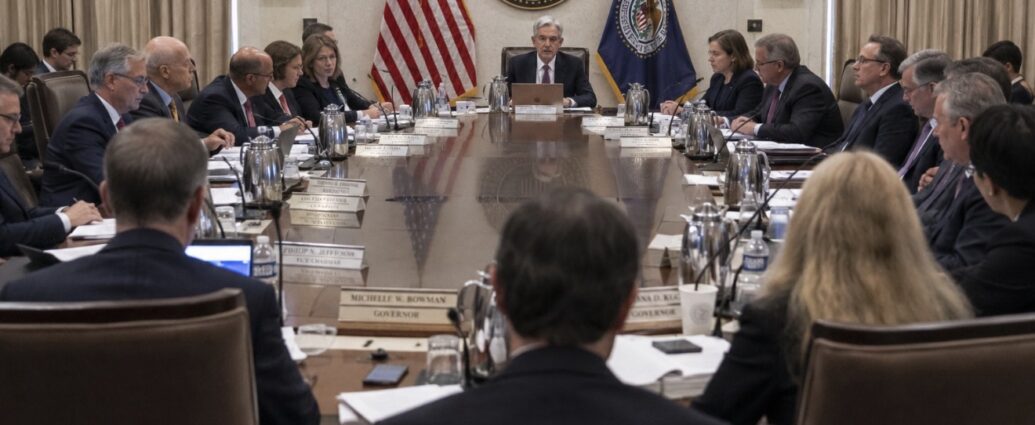
Wall Street Braces for Warsh’s First Fed Meeting This Week
WASHINGTON — The biggest event on Wall Street this week begins Today, when the Federal Reserve opens the first policy meeting led by new chairman Kevin Warsh. Almost no one expects the central bank to move interest rates when it announces its decision Wednesday. What traders are really waiting for is the new chair’s first signal about where he intends to steer the economy. The CME FedWatch Tool, which tracks market bets, put the odds of no change at about 97% as of Monday, and a Reuters poll found 72 of 102 economists expect rates to stay put through year-end.
The Federal Reserve has held its benchmark rate in a range of 3.50% to 3.75% since December, and two forces are keeping it there. Inflation has climbed to a three-year high, with consumer prices up 4.2% in May from a year earlier, driven largely by energy costs tied to the war in Iran. At the same time, the job market stayed strong, adding 172,000 jobs in May. High inflation argues against cutting; a sturdy labor market means the Fed does not have to. Goldman Sachs recently scrapped its forecast for a rate cut this year and pushed expected cuts into 2027.
“The Kevin Warsh era has begun,” said Phil Camporeale, chief investment strategist at J.P. Morgan Wealth Management. “The Federal Reserve is not expected to move rates in the June meeting, and we believe they will be on hold for the rest of 2026. There will, however, likely be an explicit move away from a bias toward easing to a neutral stance on rates.”
Shari Hensrud, chief investment officer at MissionSquare, framed the dilemma simply: “Strong job growth and high inflation are pulling in opposite directions.”
Warsh takes over at a delicate moment. He was confirmed by the Senate in a 54–45 vote and sworn in on May 22 as the central bank’s 17th chair, with former chair Jerome Powell staying on the board to ease the transition. Because June is a quarterly projection meeting, it will produce a fresh “dot plot” along with updated forecasts and a press conference Wednesday afternoon, the first real read on Warsh’s approach. He has pledged a “reform-oriented” Fed and said he welcomes “messier meetings” with more open debate.
Hanging over it all is a public tug-of-war. President Donald Trump, who nominated Warsh in January, has long wanted lower rates and said again before the meeting that there is “no reason” to raise them. But the bond market has been signaling the opposite, and high inflation makes cuts hard to justify. That leaves Warsh in a bind: sound too tough on inflation and he risks angering the president who appointed him; sound too eager to cut and he risks his credibility with markets.
This week brought a new variable. The weekend deal to reopen the Strait of Hormuz sent oil prices falling on Monday, and if that drop holds, it could cool the very inflation that has frozen the Fed in place. Investors will listen Wednesday for any hint that Warsh sees the same thing.
For ordinary Americans, the Fed’s decisions are not abstract: its benchmark rate ripples through mortgages, car loans and credit cards. Holding steady means borrowing stays expensive — a 30-year mortgage is still hovering around 6.5% — and those waiting for cheaper loans will keep waiting. The rate itself may not move this week, but the words around it from a brand-new chair could shape what borrowers and savers can expect for the rest of the year.
JBizNews Desk
© JBizNews.com All Rights Reserved. Reproduction or distribution without written permission is prohibited.
The Conservatives Who Cheered Trump’s Iran War Now Fear His Peace Deal Lets Tehran Off Too Easy
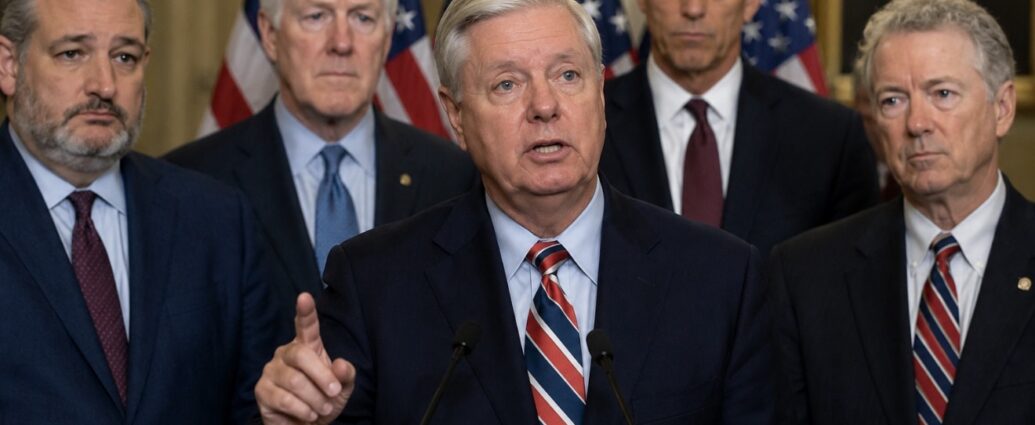
Senator Lindsey Graham, one of the loudest backers of the war against Iran, said this week that he is not ready to endorse the deal President Donald Trump struck to end it.
Speaking to reporters after Trump announced Monday that the agreement had been signed, Graham said he wanted to read the text himself, warning that “the way Iran describes it is awful” even if Washington’s version sounds reasonable.
That hesitation captures a real shift.
Many of the conservatives who rallied to Trump when the fighting started in late February now worry he gave up too much at the negotiating table, handing Tehran economic relief that could let the regime rebuild while doing too little to box in its nuclear program.
The friction is mostly about money and enforcement.
Reports that the deal would eventually unlock billions of dollars in frozen Iranian funds, and that Gulf states could pour hundreds of billions more into rebuilding Iran, have turned some of Trump’s steadiest allies into skeptics.
To hawks, cash flowing back to Tehran is cash that can be redirected to missiles and proxy fighters once the shooting stops.
A string of Republican senators voiced the same unease this week, and their common complaint was simple: they have not seen the actual document.
Trump said the memorandum was signed electronically over the weekend, but the full text has not been released, with the president saying it would likely be read out Friday.
Senators including John Cornyn, Josh Hawley, John Kennedy, and Chuck Grassley all said they could not judge a deal they had not been allowed to read.
Some of the sharpest critics have been on record for weeks.
Senate Armed Services Committee Chairman Roger Wicker slammed the framework as details leaked last month.
Ted Cruz and conservative commentators such as Hugh Hewitt and Mark Levin have pressed for far stricter terms — no Iranian uranium enrichment, ever, and the removal of Iran’s highly enriched stockpile from the country.
The administration’s answer is that the deal is built to be tested, not trusted.
Officials describe it as performance-based: Iran keeps the benefits only if it holds to its commitments, including no nuclear weapon, surrendering enriched material, and keeping the Strait of Hormuz open.
Vice President JD Vance has framed the promised Gulf investment money as a carrot — leverage to pull Iran toward bigger nuclear concessions in talks still to come.
For all the noise, the hawks have limited power to stop Trump.
As Republican strategist John Ullyot has noted, the Senate has few tools to block a president from winding down an active military operation.
The business backdrop helps explain why Trump is moving to close the war even over his own party’s objections.
The conflict pushed gasoline prices up sharply since late February, squeezing households and businesses alike, and shut a waterway that normally carries a fifth of the world’s oil.
Ending the fighting reopens the Strait of Hormuz, puts Iranian oil back on the market, and points pump prices lower — a tangible economic win heading into a midterm election year.
The frozen-funds issue carries its own economic weight.
The draft reportedly releases roughly $24 billion to Iran over a 60-day negotiating window, with far larger sums tied to a longer-term investment fund.
For markets, the prospect of Iranian crude returning has already pulled oil prices down sharply.
For the deal’s critics, that same money is the problem — relief that arrives before Iran has proven it will keep its word.
The split also signals a deeper realignment inside the Republican coalition between traditional hawks who want maximum pressure on Iran and a growing America First wing wary of open-ended Middle East commitments.
Trump has tried to stand in both camps at once — claiming a tough peace while ending an expensive war — and the deal is testing how long that balance can hold.
What happens next depends on the fine print.
If the text released Friday matches the administration’s confident description, some of the criticism may fade.
If it looks closer to the version Iran is selling, the revolt among Trump’s former cheerleaders is likely to grow louder.
Washington — JBizNews Desk
JBizNews Desk / © JBizNews.com All Rights Reserved. Reproduction or distribution without written permission is prohibited.

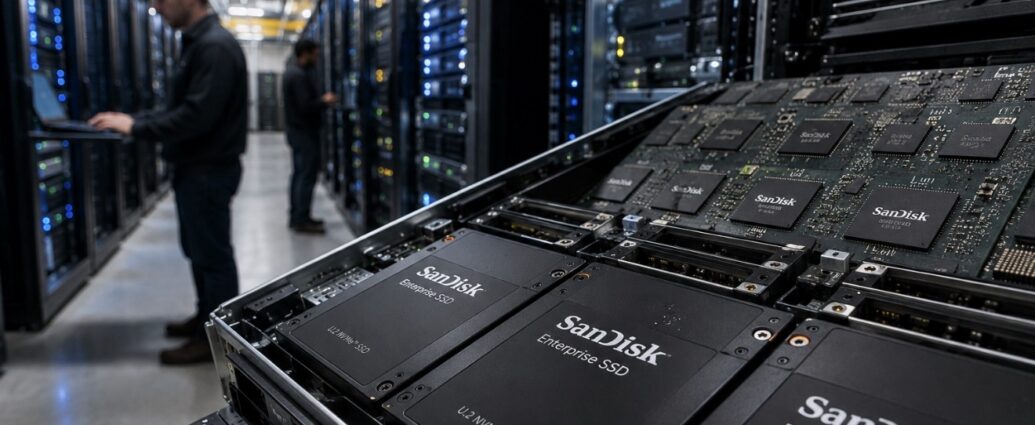
SanDisk Soars 5,000% to Above $2,000; A Bitcoin-Like Gain in Just 16 Months
NEW YORK — Here is a number that sounds like a typo. A little over a year ago, SanDisk was a newly independent company that almost nobody wanted to own, with its stock trading near $36 per share. By Monday, June 15, 2026, those same shares were changing hands above $2,000, near record highs.
The company underscored the scale of its turnaround on April 30, when Chief Executive David Goeckeler reported quarterly revenue of $5.95 billion, up 251% from a year earlier and nearly double the prior quarter.
That translates into a gain of roughly 5,000% — about 55 times an investor’s money — in less than a year and a half.
To put that into perspective, consider one of the most famous investment success stories of the modern era: Bitcoin.
The cryptocurrency traded near $1,000 at the beginning of 2017 and sits around $65,000 today. That represents a gain of roughly 65-fold, enough to turn many early investors into millionaires. But Bitcoin took nearly nine years to achieve that return.
SanDisk has delivered a comparable gain in roughly 16 months.
The obvious question is: How?
The answer begins with artificial intelligence.
SanDisk was spun off from Western Digital in February 2025, and at the time the outlook appeared challenging. The company specializes in NAND flash memory, the storage technology used in smartphones, laptops, cloud servers and data centers.
The memory industry had just emerged from one of its deepest downturns in more than a decade. Prices were depressed, inventories were elevated and profitability was weak.
Then came the AI infrastructure boom.
Every major artificial intelligence platform requires massive amounts of storage capacity to process, store and retrieve data. As technology companies raced to build AI data centers, demand for enterprise-grade storage surged.
SanDisk found itself in exactly the right place at exactly the right time.
Its enterprise solid-state drives became critical components in next-generation data centers. Demand accelerated faster than manufacturing capacity could expand, creating shortages across the industry.
The result was a dramatic increase in pricing power.
SanDisk generated approximately $3.62 billion in quarterly profit, while gross margins approached 56%, transforming what had recently been a struggling business into one of the most profitable companies in the semiconductor sector.
The company also changed its business model.
Historically, memory manufacturers sold products largely at prevailing market prices, exposing earnings to extreme swings in supply and demand.
SanDisk shifted toward multi-year customer agreements that lock in purchasing commitments and improve visibility into future revenue.
According to the company, it has secured more than $42 billion in contracted commitments, providing a degree of earnings predictability rarely seen in the memory industry.
Wall Street has raced to adjust.
Bank of America recently raised its price target to $2,100.
Mizuho lifted its target to $2,200.
Cantor Fitzgerald established one of the highest targets on Wall Street at $2,900.
Morgan Stanley identified SanDisk and rival Micron Technology as major beneficiaries of what analysts described as a prolonged memory upcycle driven by AI infrastructure spending.
Adding to investor enthusiasm, Nvidia Chief Executive Jensen Huang has repeatedly warned of what he calls a potential “multi-year silicon drought,” suggesting demand for advanced semiconductors and memory could remain elevated for years.
Institutional investors have taken notice.
Earlier this year, billionaire investor David Tepper’s Appaloosa Management disclosed a new position in SanDisk, further boosting confidence among investors.
Still, the extraordinary rise has prompted concerns.
The memory business has historically been one of the most cyclical sectors in technology. Periods of shortage and soaring prices are often followed by oversupply, falling prices and collapsing profits once new manufacturing capacity comes online.
SanDisk itself has experienced multiple boom-and-bust cycles throughout its history.
At current levels, the stock trades at more than 60 times trailing earnings, a valuation that assumes strong growth continues well into the future.
The share price has also moved beyond the average analyst target, suggesting investors are already pricing in outcomes more optimistic than many professional forecasts.
Several research firms have recently identified the stock among the most aggressively valued names in the semiconductor sector.
There is another important distinction between SanDisk and Bitcoin.
Bitcoin’s value is largely determined by what investors are willing to pay for it at any given moment.
SanDisk’s valuation, by contrast, is supported by measurable fundamentals — revenue, profits, customer contracts and cash flow.
But those fundamentals depend heavily on memory pricing, and memory prices have historically been among the most volatile in technology.
That leaves investors with a critical question.
If AI spending continues accelerating and memory shortages persist, SanDisk’s contract-driven business model could produce stronger and more stable profits than previous cycles.
If demand slows or manufacturing capacity expands faster than expected, the industry could once again face oversupply and falling prices.
The stock’s remarkable ascent is already one of the most dramatic stories on Wall Street.
Whether it proves to be a historic transformation or simply another chapter in the memory industry’s long cycle of booms and busts may determine what happens next.
JBizNews Desk
© JBizNews.com All Rights Reserved. Reproduction or distribution without written permission is prohibited.
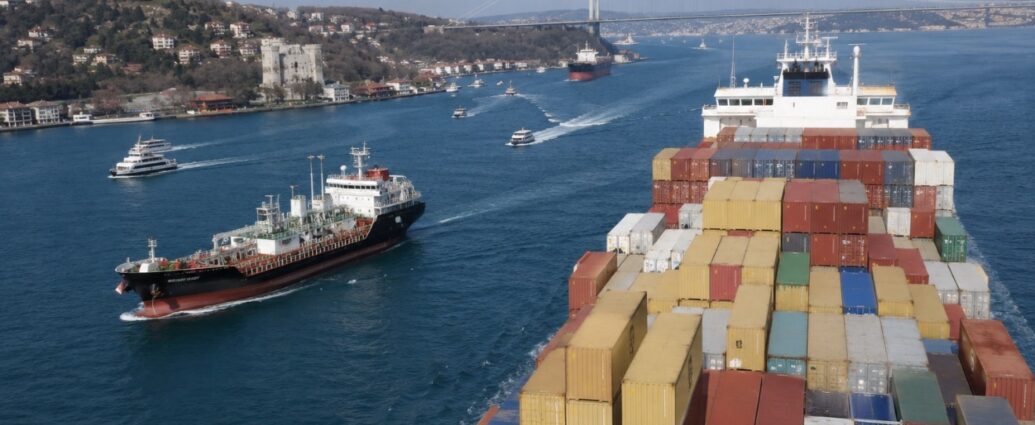
Reopening the Strait of Hormuz Could Ease Shipping Costs Worldwide
WASHINGTON — The deal to end the war between the United States and Iran could do more than calm oil markets — it could finally unclog one of the most important arteries in global trade. On Sunday, President Donald Trump announced an agreement to reopen the Strait of Hormuz, the narrow waterway that carries about 20% of the world’s oil supply and a massive volume of global cargo traffic. “Ships of the World, start your engines. Let the oil flow!” Trump wrote. By Monday, attention had shifted from oil prices to another critical question: how quickly shipping costs might fall.
The strait has been largely disrupted since the conflict began on February 28, and the consequences stretched far beyond the Persian Gulf. With vessels avoiding the area, freight rates surged worldwide. According to Peter Sand, chief analyst at freight intelligence platform Xeneta, spot container rates in June were running about 75% higher from China to the U.S. East Coast, 51% higher to Northern Europe, and 45% higher to the Mediterranean compared with pre-conflict levels.
The reason is simple geography. At its narrowest point, the Strait of Hormuz is only 21 miles wide. When the route becomes dangerous, shipping companies have few alternatives. Many vessels were forced to reroute around the southern tip of Africa, adding 10 to 14 days to voyages and significantly increasing fuel consumption.
Insurance costs also soared. Dylan Mortimer, a marine war-risk specialist at broker Marsh, said war-risk premiums climbed dramatically, in some cases adding hundreds of thousands of dollars to the cost of a single voyage. Tanker rates surged as well, especially on routes carrying crude oil from the Gulf region to Asia.
Even with the agreement announced, the disruption remains significant. Roughly 100 container ships remain trapped in the Arabian Gulf, while shipping giant Hapag-Lloyd reported that several vessels are still delayed, including one ship that has spent nearly four weeks in transit.
Industry experts caution that reopening the strait will not immediately restore normal conditions. Tobias Maier, who leads the Middle East and Africa business for DHL Global Forwarding, said customers should expect four to six months before shipping patterns fully normalize. Analysts at Kamco Invest similarly project that elevated freight rates could persist until a backlog equivalent to two to three months of cargo works through the system.
That lag matters because shipping costs eventually influence the price consumers pay for nearly everything. Clothing, electronics, furniture, appliances and automobile parts all become more expensive when transportation costs rise. The Strait of Hormuz disruption did not merely push oil prices higher; it increased the cost of moving goods globally, contributing to inflation pressures already weighing on households.
If shipping rates gradually decline, those savings could eventually reach store shelves. However, economists caution that the process takes time and depends heavily on continued stability in the region.
That remains the biggest risk. Mine-clearing operations are scheduled to begin later this week, and the U.S. naval blockade is being lifted. But shipping companies and insurers remain cautious. Any new incident could quickly reverse recent progress and send costs higher again.
For now, however, the direction appears positive. For nearly four months, a narrow stretch of water exerted outsized influence over global trade, energy prices and consumer costs. If cargo begins moving freely again, the benefits will eventually extend far beyond the Middle East — reaching warehouses, retailers and household budgets around the world.
JBizNews Desk
© JBizNews.com All Rights Reserved. Reproduction or distribution without written permission is prohibited.


SpaceX Proves Government Works Best When It Gets Out of the Way
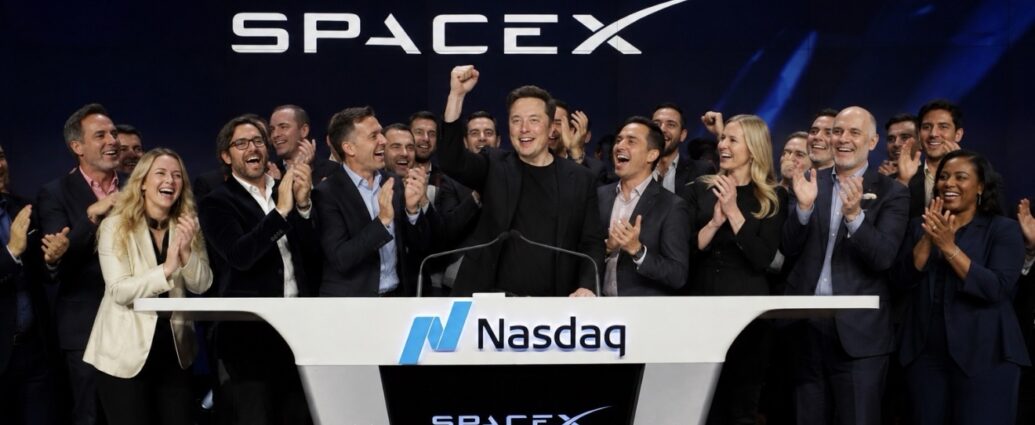
Last Friday, SpaceX rang the opening bell at the Nasdaq and became a public company valued at approximately $1.75 trillion, the largest stock-market debut in history. Within days, the stock climbed past $2 trillion. Twenty years ago, the same company was a struggling startup that had never put anything into orbit and was running out of money.
The bridge between those two facts is a story Washington should study closely because it may be one of the best investments American taxpayers have ever made.
That bridge was a relatively small government bet.
In 2006, NASA launched a program called Commercial Orbital Transportation Services (COTS) and awarded SpaceX approximately $396 million to help develop a rocket and spacecraft capable of carrying cargo to the International Space Station. SpaceX contributed more than $450 million of its own capital alongside the government funding.
For the entire program, NASA spent roughly $800 million and ended up with two independent American cargo transportation systems.
By federal standards, that was a bargain.
The key was not the amount of money. It was the structure.
NASA did not hire a traditional contractor and pay cost overruns indefinitely. It acted as a customer. The agency defined the mission and allowed private companies to determine how to achieve it.
That freedom changed everything.
NASA’s own cost analyses estimated that developing the Falcon 9 through traditional government procurement would have cost approximately $1.4 billion. SpaceX accomplished the task for roughly $440 million, reducing development costs by nearly 70%.
When NASA later expanded the partnership to include astronaut transportation, the agency estimated that the commercial approach saved between $20 billion and $30 billion compared with building and operating a government-run system.
The savings extended far beyond development costs.
A single Space Shuttle mission cost approximately $1.6 billion, or about $54,500 per kilogram delivered to orbit.
A Falcon 9 launch costs roughly $67 million, translating to approximately $2,720 per kilogram.
That represents a reduction of about 95% in the cost of reaching space.
The reason is simple: reusability.
SpaceX developed the ability to land and reuse orbital-class rockets, transforming what had traditionally been disposable hardware into reusable transportation systems.
The result was not merely lower costs.
It fundamentally changed the economics of space.
For years after the retirement of the Space Shuttle, the United States paid Russia between $80 million and $90 million per astronaut seat aboard Soyuz spacecraft.
SpaceX’s Crew Dragon ended that dependence and returned human spaceflight capability to American soil.
The payoff continues to grow.
SpaceX generated approximately $18.7 billion in revenue last year, driven largely by Starlink, the satellite internet network now serving rural communities, airlines, ships, military operations, and disaster-response missions around the world.
Its launch business has made the United States the dominant force in orbital transportation.
Meanwhile, analysts at Citigroup project that the global space economy could reach $1 trillion annually by 2040, up from roughly $370 billion in 2020. Lower launch costs, driven largely by SpaceX, are widely viewed as the primary catalyst behind that expansion.
The economic value created is not theoretical.
It includes a multi-trillion-dollar company, thousands of high-paying jobs, national security capabilities, global communications infrastructure, and an entirely new generation of commercial space businesses that would likely not exist at their current scale without dramatically cheaper access to orbit.
There is also a fair debate about how much credit belongs to government and how much belongs to the private sector. Critics correctly note that SpaceX benefited from NASA contracts, federal partnerships, and government funding at a crucial stage of its development. Without that support, the company might never have survived its early years. Supporters counter that government did not build the rockets, develop reusable launch technology, or take the entrepreneurial risks that made the company successful. Both arguments contain truth.
The more useful question is not whether government was involved, but whether taxpayers received value for what they invested. In the case of SpaceX, the answer appears to be yes. A relatively modest federal commitment helped produce dramatically lower launch costs, billions in savings for NASA, renewed American independence in human spaceflight, and a company that has become one of the most valuable enterprises in the world. Taxpayers did not simply spend money; they helped create an industry that now generates economic activity, jobs, innovation, and strategic advantages for the United States.
That does not mean every government-backed project will succeed, nor does it mean every subsidy is wise. Many fail. But the SpaceX example demonstrates what can happen when government sets a clear objective, creates accountability, and allows private innovators the freedom to solve the problem. The lesson is not that government should do more or less. The lesson is that government should do better.
There is a lesson here that goes well beyond rockets, and it should become part of Washington’s thinking. Government does not have to do everything itself, and often it should not. A targeted public investment aimed at unleashing private-sector innovation can accomplish far more and cost far less than a government program attempting to build and operate everything on its own.
The SpaceX story is not an argument against government.
It is an argument for smarter government.
One that sets ambitious goals, supports innovation, demands results, and trusts Americans to build.
If Washington wants more SpaceX-sized successes, the blueprint already exists.
It starts with backing American ingenuity and then getting out of the way.
JBizNews Desk
JBizNews Desk / © JBizNews.com All Rights Reserved. Reproduction or distribution without written permission is prohibited.
China Retail Sales Fall for First Time Since 2022 as Consumer Spending Weakens
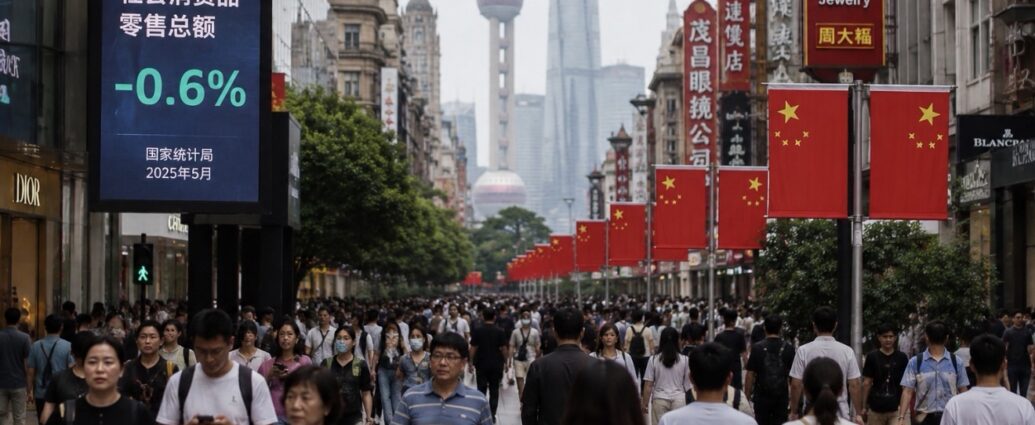
China’s shoppers spent less in May than they did a year earlier, the first decline in consumer spending in more than three years, according to figures released Tuesday by the National Bureau of Statistics, adding pressure on Beijing to do more to revive the world’s second-largest economy.
Retail sales fell 0.6% from a year earlier, the first monthly decline since December 2022, when the country was still under COVID restrictions. The reading surprised economists. A Reuters poll had expected sales to be flat, making the decline a sign that consumers remain cautious despite government efforts to boost spending.
The figures highlight an economy moving at two very different speeds.
While households pulled back, China’s factories continued to expand. Industrial output rose 4.5% in May, up from 4.1% in April and ahead of forecasts. A worldwide surge in demand tied to artificial intelligence infrastructure has fueled orders for Chinese-made technology components and industrial equipment.
At the same time, exports jumped 19.4%, helping offset concerns that geopolitical tensions and disruptions in the Middle East would weigh more heavily on manufacturing activity.
The problem for Beijing is that factory strength is not translating into stronger consumer demand.
The Labor Day holiday at the start of May, traditionally a major spending period, failed to provide a meaningful boost to retail activity. Analysts pointed to the scaling back of government trade-in subsidies for automobiles and appliances, along with continued concerns about employment and household wealth.
Years of falling home prices have left many Chinese families reluctant to spend. Instead, many households continue to save as they wait for stronger signs of economic stability.
The housing sector remains one of the biggest drags on growth.
Property investment fell 16.2% during the first five months of the year, worsening from the 13.7% decline recorded through April.
Investment firm KKR recently cited the property downturn as one of the largest obstacles facing China’s economy, noting that the country’s inventory of unsold homes may take years to fully absorb.
Broader investment data also disappointed.
Fixed-asset investment, which includes spending on factories, infrastructure projects and buildings, fell 4.1% during the first five months of 2026. Economists had expected a decline closer to 2%, making the result one of the weakest readings of the year.
Another warning sign appeared in the inflation data.
Factory-gate prices increased at their fastest pace since July 2022, while consumer prices remained largely unchanged. The growing gap suggests Chinese manufacturers are producing more goods than domestic consumers are willing to purchase, leaving supply growth ahead of demand.
The implications extend far beyond China.
As the world’s largest manufacturing nation and second-largest economy, China plays a critical role in global demand. Weak Chinese consumer spending affects multinational companies ranging from automakers and luxury brands to technology firms and food producers.
Softer demand can also weigh on commodity markets, reducing demand for products such as oil, copper, iron ore and industrial metals exported by countries around the world.
The disappointing retail figures are likely to increase pressure on Beijing to introduce additional stimulus measures.
Economists have been waiting for more aggressive policies aimed at encouraging household spending, including consumer subsidies, direct support programs and additional measures to stabilize the housing market.
Tuesday’s data strengthens the argument that further action may be necessary.
For now, China remains an economy powered by factories but restrained by cautious consumers. Manufacturing and exports continue to benefit from global demand and the AI investment boom, but until households regain confidence in their jobs, incomes and property values, consumer spending is likely to remain a weak spot.
The next set of economic data, expected in mid-July, will offer a clearer picture of whether May represented a temporary setback or the beginning of a more sustained slowdown in household spending.
JBizNews Desk
JBizNews Desk / © JBizNews.com All Rights Reserved. Reproduction or distribution without written permission is prohibited.
U.S. Emergency Oil Reserve Falls to Lowest Level Since Reagan Era as Iran War Drains Stockpile
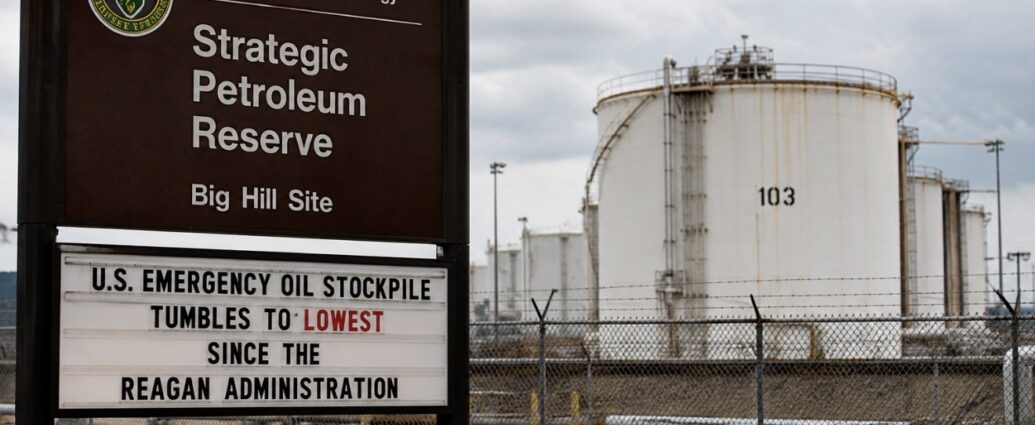
The amount of oil sitting in the U.S. Strategic Petroleum Reserve (SPR) has dropped to its lowest level in more than four decades, according to federal data released Monday, as the Trump administration continues drawing emergency crude from the stockpile to cushion the economy against disruptions caused by the war with Iran.
The reserve held 340.3 million barrels as of June 12, the Department of Energy reported. That is the smallest amount since 1983, when the Reagan administration was still building the reserve and the U.S. economy was far smaller than it is today.
The new figure falls below the previous modern low of 346.7 million barrels, reached in July 2023 following market disruptions tied to Russia’s invasion of Ukraine.
The government withdrew another 8.9 million barrels during the past week alone. Since the Iran conflict began in late February, the reserve has declined by approximately 75 million barrels, or about 18%.
The drawdown traces directly to disruptions surrounding the Strait of Hormuz, one of the world’s most important oil transit routes. With global energy markets under pressure and crude prices rising, the administration relied on the emergency reserve to help stabilize fuel costs for consumers and businesses.
The Strategic Petroleum Reserve was created in 1975 following the Arab oil embargo and is intended to protect the United States against major supply disruptions. The reserve has helped limit upward pressure on gasoline and diesel prices during months of geopolitical instability.
Andy Lipow, president of Lipow Oil Associates, said the reserve releases, combined with additional supplies from allied countries and shifts in global demand, helped prevent a far sharper spike in oil prices. He warned, however, that a smaller reserve leaves the country with less flexibility if another major disruption occurs, such as a severe hurricane affecting Gulf Coast production.
At current levels, the reserve is less than half full. The SPR has a maximum capacity of approximately 714 million barrels and reached a record level of about 726.6 million barrels in 2009.
Mike Sommers, chief executive of the American Petroleum Institute, recently cautioned that maintaining adequate reserve levels remains important for national energy security and emergency response capabilities.
Relief may be on the horizon. Over the weekend, the United States and Iran announced an interim agreement aimed at reducing tensions and reopening shipping through the Strait of Hormuz. Markets responded positively, with Brent crude falling more than 4% Monday as traders anticipated improved supply flows.
If shipping through the strait normalizes, pressure on global oil supplies could ease, reducing the need for continued large-scale reserve releases. Over time, that could allow the government to begin rebuilding emergency stockpiles.
Any recovery, however, is expected to take time. Energy infrastructure, shipping schedules, and production levels across the Gulf region will require months to fully normalize after the disruption.
For now, the Strategic Petroleum Reserve continues to sit at its lowest level in more than 40 years, underscoring the significant role it has played in helping shield the U.S. economy from one of the largest energy disruptions in recent memory.
JBizNews Desk
JBizNews Desk / © JBizNews.com All Rights Reserved. Reproduction or distribution without written permission is prohibited.
Zelensky offers Putin talks after Russian strike damages UNESCO monastery
A 1,000-year-old monastery that symbolizes Ukraine’s spiritual and cultural heritage was badly damaged on Monday in a major attack by Russia that killed 10 people nationwide, hours after US President Donald Trump spoke to the leaders of both countries about ending the war.
Ukraine’s President Volodymyr Zelensky said on Sunday he had discussed with Trump efforts to bring an end to the four-year-old conflict, ahead of a G7 meeting in France starting on Monday. The US president also told Russian leader Vladimir Putin in a call on Sunday that it was vital to end the war.
Zelensky offers Putin talks
Zelensky, speaking at the damaged monastery in Kyiv, said he had offered to meet Putin at the G7 summit in France this week or in the United States.
“We gave message that we are ready to meet with Putin during (the) G7, because Trump is there and Macron is there, so Europeans plus America. This is a good, I think, very good opportunity to meet all together,” Zelensky told reporters in English.
“Europe and the United States were agreed and Russia demonstrated again that…they are not ready to speak,” he said.
Writing later on Telegram, Zelensky said he had suggested to Trump in a telephone conversation on Sunday that he and the Russian president meet in the United States.
“Yesterday we discussed with President Trump that such a meeting could be organized in the US in a format that would make it much harder for Putin to refuse, at least to refuse President Trump,” he said.
“We will see what comes of this. If Russia rejects this chance too, more pressure will be needed.”
Monastery attack draws condemnation
The damage to the Kyiv Pechersk Lavra monastery, a UNESCO World Heritage site founded in 1051, drew international condemnation. France’s foreign minister said the attack was akin to bombing Notre Dame Cathedral in Paris.
Zelensky, who visited the monastery to inspect the damage, said the attack was “one of Russia’s most serious crimes against Christian culture to date.”
“This is an attack on our history,” he told reporters at the monastery, where rescuers were assessing the impact on the building’s paintings and frescoes. “Of course, everything will be restored.”
The blaze caused extensive damage to the roof of the Dormition Cathedral, the main church at the monastery site, but its structure and walls remained standing and much of the interior appeared intact.
Russia denied striking the monastery, calling the allegations “a crude fake,” and said instead it had been damaged by a US-made Patriot air defense missile, which Ukraine uses to protect its cities.
However, Ukraine’s SBU security service said it had recovered fragments of a Geran-2 drone, a Russian kamikaze drone, at the attack site and posted images of the debris. Reuters could not verify the information independently.
Ukraine seeks more air defenses
At least 10 people were killed in Russia’s overnight attack on Kyiv and the northeastern city of Kharkiv on Monday.
Four people were killed and 34 were injured in the overnight strikes on Kyiv, said Tymur Tkachenko, the head of the capital’s military administration. Kyiv Mayor Vitali Klitschko later said a fifth person had died in hospital from injuries sustained in the attack.
A Russian strike on Kharkiv killed four emergency service rescuers and a municipal official and injured at least five people, Interior Minister Ihor Klymenko said on Telegram.
Ukraine’s military said Russia had launched 70 missiles and 611 drones overnight and that its air defenses had shot down 50 missiles and 582 drones of various types.
In recent months, Ukraine has appealed to Western allies to increase supplies of Patriot air defense missiles, which are its only effective means of stopping Russian ballistic missiles.
Air Force spokesperson Yuriy Ihnat said Ukraine shot down only 15 of the 34 ballistic missiles launched by Russia overnight.
“Ballistic missiles remain a problem for us,” Ihnat said on national television.
Zelensky said that his priority at the G7 meeting would be securing more air defense systems to defend against Russian strikes.
“We will have a meeting with Europeans and also with President Trump; we will speak with him about how to push Putin to stop this war,” he said.

Bank of Japan Raises Rate to 1%, Yen Gives Back Early Gains Against Dollar
The Bank of Japan raised its key short-term interest rate to 1% on Tuesday, the highest level in three decades, but the move did little to lift the yen, which surrendered the gains it had built up earlier in the day.
The decision came at the close of a two-day meeting in Tokyo and lifted the benchmark rate by a quarter of a percentage point from 0.75%. It was the first time Japan’s policy rate has touched 1% since 1995. The board approved the increase by a 7-1 vote, with board member Asada casting the lone dissent against the hike.
For most of the day the yen had been climbing. A weekend agreement between the United States and Iran to reopen the Strait of Hormuz had calmed nerves across global markets, and traders moved back into the Japanese currency. Once the rate announcement landed, however, the yen quickly handed back its advance. The USD/JPY pair held near 160 to the dollar, the same level it sat at before the meeting and a line Japanese authorities watch closely because it has triggered government intervention in the past.
The flat reaction came down to a simple fact: the hike was no surprise. Nearly every forecaster had expected it for weeks, so the increase was already baked into prices long before the Bank of Japan made it official. Without a fresh signal, currency traders had little new to act on.
There were other reasons the yen stayed weak. Domestic inflation has been cooling in recent months, which eases the pressure on the central bank to keep tightening. Speculators have also piled up bets against the yen, pushing short positions to a nine-year high and reviving the so-called carry trade, where investors borrow cheaply in yen to buy higher-yielding assets elsewhere.
And even at 1%, Japan’s rate remains far below those in the United States and Europe, so the wide gap that has dragged the yen lower for years has barely narrowed.
A weak yen is not just a market story. For ordinary households in Japan, it lands directly in the cost of living. Japan imports almost all of its oil and a large share of its food, so when the yen falls, the price of gasoline, electricity and groceries climbs.
That has kept inflation running above the central bank’s 2% target for months and is a major reason the Bank of Japan has been steadily unwinding the ultra-loose monetary policy it maintained for more than a decade.
Tuesday’s meeting was unusual for another reason. It was the first regular policy session in the bank’s history held without the governor in the room.
Kazuo Ueda is recovering in the hospital from an infected liver cyst and is expected to remain there for about two weeks. Deputy Governor Ryozo Himino chaired the meeting in his place, marking the first time since 1998 that a sitting Bank of Japan governor has missed a policy decision. Fellow Deputy Governor Shinichi Uchida handled the post-meeting press conference, while Ueda submitted his views in writing.
In its statement, the bank said it would continue raising the policy rate if the economy and inflation develop in line with its forecasts and described Japan’s recovery as moderate. It also stressed that financial conditions would remain accommodative even after the increase, reassuring businesses and borrowers that financing costs are not expected to rise sharply overnight.
Markets immediately turned to Uchida’s remarks for clues about when the Bank of Japan might raise rates again.
Japan is no longer acting alone. The European Central Bank raised rates last week, becoming the first major central bank to tighten policy since the outbreak of the U.S.-Iran conflict, and traders increasingly expect the Federal Reserve to raise rates before the end of the year.
That shift abroad makes it harder for the Bank of Japan to sound cautious without placing additional pressure on its currency.
For exporters such as automakers and electronics manufacturers, a weak yen is welcome news because it makes Japanese products cheaper overseas and boosts the value of profits earned abroad when converted back into yen.
For households paying more at the gas pump and the supermarket, the picture is very different.
That divide sits at the center of nearly every decision the Bank of Japan faces as it attempts to normalize interest rates without choking off what remains a fragile economic recovery.
The next major test comes with the bank’s July Outlook Report, when policymakers will update their economic forecasts and provide investors with a clearer signal about how quickly they intend to move from here.
JBizNews Desk
JBizNews Desk / © JBizNews.com All Rights Reserved. Reproduction or distribution without written permission is prohibited.

Porsche Keeps Cutting Jobs as Its Electric Car Bet Stalls
Porsche, the German maker of the 911 sports car, is cutting deeper into its workforce as weak demand for electric vehicles and a brutal sales slump in China squeeze its profits. The company has set a goal of shrinking staff at its two main German sites — the Stuttgart-Zuffenhausen factory and the Weissach development center — by 15%, or about 1,900 jobs, by 2029. And the cuts keep growing: on May 8, new chief executive Michael Leiters closed three Porsche subsidiaries and eliminated roughly 500 more positions, pushing the total well beyond the original plan.
The job reductions land on a company that, until recently, was one of the auto industry’s most reliable money-makers. Porsche, which is majority-owned by Volkswagen AG, employs around 42,000 people, with more than half based in the Stuttgart region. The 1,900 cuts alone equal about 5% of its German workforce.
The trouble traces back to a bet that has not paid off as hoped: electric cars. Porsche leaned hard into EVs, but demand across Europe has come in slower than expected, and competition from cheaper, fast-improving Chinese electric brands has been fierce. Sales in China, once a huge and growing market for the brand, have fallen sharply. In response, the company is shifting course and putting more money back into gasoline and hybrid models — an expensive reversal. Porsche has said the restructuring will cost about €3.1 billion (roughly $3.6 billion) and will drag down profits this year.
For now, Porsche says it will avoid forced layoffs. A job-security agreement protects workers at its main sites from compulsory redundancies until mid-2030, so the company is relying on softer tools: not replacing people who leave, offering early and partial retirement, and letting temporary contracts expire. It began that process in 2024 by declining to renew 1,500 fixed-term contracts, with another 500 now ending. Human-resources board member Andreas Haffner acknowledged the strain, telling a German newspaper the company has “many challenges to overcome.”
The pressure has only intensified under Michael Leiters, who took over as chief executive this year. Alongside the May job cuts, Porsche shut three smaller units — battery maker Cellforce, an e-bike division and an electronics business — and earlier in the spring sold its stakes in the supercar venture Bugatti Rimac and the Rimac Group, signs that Leiters is shrinking the company toward its core.
Workers are uneasy about where it ends. Ibrahim Aslan, the head of Porsche’s general works council, has warned that as many as one in four jobs at the German sites — potentially 5,500 positions — could be at risk if management follows through on proposals to outsource entire divisions and shift work to lower-wage countries. He is pushing to extend job protections to 2035. “I’m not Santa Claus, who grants wishes,” he said of the board’s demands for concessions.
For the wider economy, Porsche’s retrenchment is part of a painful reckoning across the German auto industry. Parent Volkswagen has wrestled with whether to close domestic plants for the first time in its history, and weak EV sales and Chinese competition have forced carmakers across Europe to rethink their costs. Germany’s manufacturing heartland, long a source of stable, well-paid jobs, is feeling the squeeze.
For car buyers, the story is a reminder that the once-confident march toward all-electric driving has hit speed bumps. Demand has not grown as fast as the industry assumed, and even a premium brand like Porsche is pumping the brakes on its electric plans and leaning back on the combustion engines that built it.
For Porsche’s workers, the message is bleaker: a brand synonymous with success and fat profit margins is now in cost-cutting mode, and the people who build its cars are absorbing the blow.
JBizNews Desk
© JBizNews.com All Rights Reserved. Reproduction or distribution without written permission is prohibited.
Oil Steadies Near Its Lowest Since March As Iran Deal Nears Signing
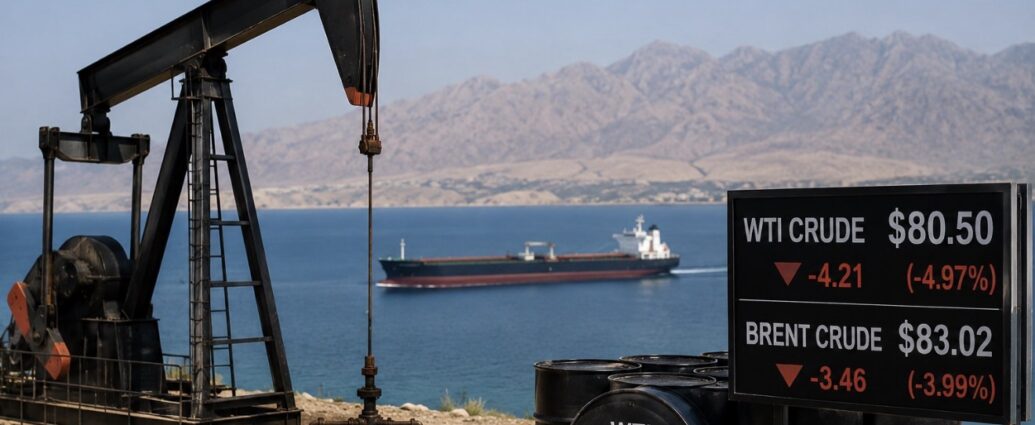
Oil prices settled near their lowest level in three months on Monday, steadying after a sharp two-day slide as traders bet a deal to end the U.S.-Iran war could soon reopen the world’s most important oil shipping lane.
The decline followed a Sunday-night announcement by President Donald Trump, who said on social media that an agreement with Iran was “complete” and that oil would once again move through the Strait of Hormuz after a planned signing ceremony Friday. Iran’s Deputy Foreign Minister, Kazem Gharibabadi, also confirmed that a deal had been reached and said the full text would be released following a signing event in Switzerland.
By Monday afternoon, West Texas Intermediate (WTI) crude, the U.S. benchmark, was trading near $80.50 per barrel, down about 5%, while global benchmark Brent crude slipped roughly 4% to around $83 per barrel. Both benchmarks touched their lowest levels since March 10 and have now fallen approximately 20% from the highs reached earlier this spring when fears of prolonged supply disruptions sent oil prices above $100 per barrel.
At the center of the market’s focus is the Strait of Hormuz, the narrow waterway connecting the Persian Gulf to the Arabian Sea.
Roughly one-fifth of the world’s oil supply moves through the strait each day. When fighting erupted in late February and Iran moved to restrict shipping through the passage, traders feared a major supply shock, pushing crude prices sharply higher. The prospect of reopening the route is now having the opposite effect.
More oil flowing through global markets generally means lower prices.
Despite the sharp decline, oil did not collapse further Monday because traders remain cautious about how quickly supplies can normalize.
Months of conflict have damaged energy infrastructure throughout the region, including pipelines, export facilities and refinery operations. Shipping companies also remain wary of security risks, while inventories across parts of the Gulf have been reduced after months of disruption.
As a result, many analysts expect any reopening of the Strait of Hormuz to be gradual rather than immediate.
There is also uncertainty surrounding the durability of the agreement itself.
Reports indicate the framework includes provisions related to Iran’s nuclear program alongside economic incentives tied to compliance. Similar issues have complicated negotiations in the past, and traders remain mindful that signing a document is not the same thing as restoring normal oil flows.
Still, the overall direction of the market remains clear.
The war-driven premium that dominated oil trading for much of the spring is rapidly fading. That shift carries significant implications beyond commodity markets.
Higher energy costs have been one of the biggest contributors to rising expenses for consumers this year. Gasoline prices surged above $4 per gallon nationally after the conflict began, increasing transportation costs and feeding broader inflation pressures across the economy.
As crude oil prices fall, gasoline prices have begun easing as well.
If energy supplies continue to normalize, additional relief could reach consumers in the weeks ahead, although local taxes, refining capacity and regional market conditions will determine how much drivers ultimately save at the pump.
Lower oil prices also benefit businesses that rely heavily on fuel.
Airlines, shipping companies, manufacturers and logistics firms all stand to gain from reduced energy expenses. Lower fuel costs can also help moderate inflation, easing some pressure on the Federal Reserve as policymakers continue monitoring price stability.
Not everyone benefits from cheaper oil, however.
U.S. shale producers generally earn less when crude prices decline, and prolonged weakness can lead companies to slow drilling activity and reduce investment plans. Industry analysts note that some producers become increasingly cautious as prices move toward the low-$80-per-barrel range.
The next major test for the market comes Friday when negotiators are expected to formally sign the agreement.
Vice President JD Vance said Monday that the administration expects the Strait of Hormuz to reopen and remain accessible to global shipping without tolls over the long term. The comments signaled Washington’s intention to support uninterrupted traffic through the critical energy corridor.
If the agreement holds and oil exports continue to increase, analysts believe prices could drift lower during the summer months.
For now, however, traders appear to be waiting for evidence rather than promises.
After months of conflict, supply fears and sharp market swings, investors have already priced in much of the optimism surrounding the agreement. The next move in oil prices may depend less on diplomatic announcements and more on a straightforward question: whether tankers begin moving through the Strait of Hormuz at levels approaching normal operations.
JBizNews Desk
© JBizNews.com All Rights Reserved. Reproduction or distribution without written permission is prohibited.

Carnival, Royal Caribbean And Norwegian Rally As Falling Oil Prices Boost Cruise Outlook
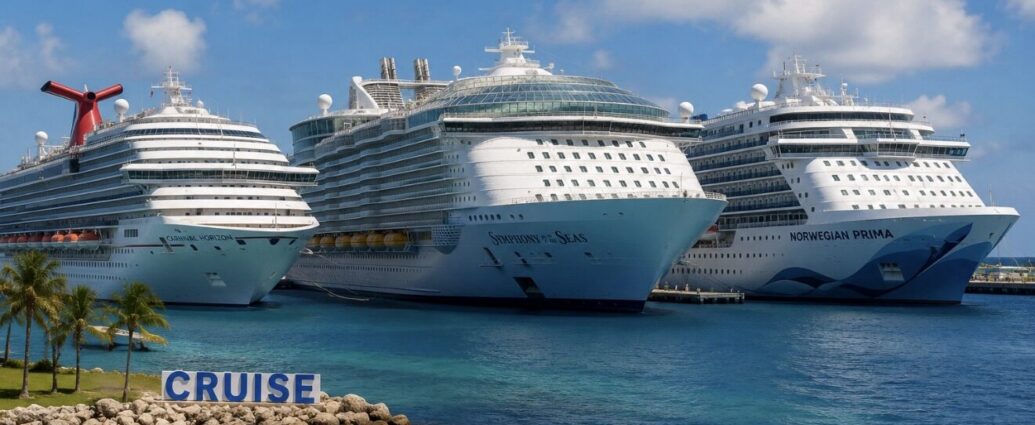
Cruise line stocks surged Monday after oil prices tumbled, giving the industry relief from one of its biggest cost pressures and improving profit expectations heading into the peak summer travel season.
Shares of Carnival Corp., Royal Caribbean Group, and Norwegian Cruise Line Holdings each gained more than 4% after President Donald Trump announced a peace agreement between the United States and Iran that is expected to reopen the Strait of Hormuz and restore normal oil flows through one of the world’s most important energy corridors.
Crude oil prices fell roughly 5% following the announcement, a significant development for cruise operators whose fleets consume massive amounts of fuel each year.
In Monday trading, Carnival rose approximately 4.5% to $30.51, Royal Caribbean gained 4.3% to about $307, and Norwegian Cruise Line climbed 4.8% to roughly $20.36, according to Benzinga Pro. Royal Caribbean shares have now advanced approximately 14% over the past five trading sessions as fears of a prolonged Middle East conflict have eased.
The connection between lower oil prices and stronger cruise stocks is straightforward.
Fuel remains one of the largest operating expenses for cruise companies. When oil prices rise, operating costs increase and profit margins come under pressure. When oil falls, those costs decline, allowing more revenue to flow directly to the bottom line.
The potential impact can be substantial.
Carnival previously told investors it expected approximately $500 million in fuel-related headwinds during fiscal 2026 because of disruptions tied to the Middle East conflict. The company also estimated that every 10% move in fuel prices could impact annual costs by roughly $160 million.
A sustained decline in oil prices could therefore eliminate a meaningful portion of those expected expenses.
Royal Caribbean faces a similar equation. The company expects to consume roughly 1.76 million metric tons of fuel this year at a cost approaching $1.2 billion. While management has hedged about 60% of its anticipated fuel needs, the remaining portion remains exposed to market price fluctuations.
Beyond fuel savings, easing tensions in the Middle East provide another potential benefit.
With shipping routes becoming more secure and geopolitical risks declining, cruise operators face less chance of itinerary disruptions, rerouted voyages, or operational complications that can frustrate passengers and increase costs.
Lower fuel prices may also support consumer demand.
As gasoline prices decline, households often have more discretionary income available for vacations and travel. That dynamic can benefit cruise operators by improving both affordability and consumer confidence.
Demand has remained resilient despite economic uncertainty.
According to Bank of America data, consumer spending on cruises increased 8.4% year-over-year in May, although that growth rate moderated from the stronger gains recorded in April.
Wall Street analysts remain broadly optimistic about the sector.
Investment firm Stifel recently established price targets of $320 for Royal Caribbean, $35 for Carnival, and $24 for Norwegian Cruise Line, citing strong booking trends, disciplined capacity growth, and continued consumer interest in cruise vacations.
Investors will soon receive another important update.
Carnival is scheduled to report quarterly earnings on June 30, providing one of the first detailed looks at summer demand trends and the potential impact of lower energy costs on profitability.
The cruise rally was part of a broader move across the travel sector.
Airlines including United Airlines, Delta Air Lines, and Southwest Airlines also gained roughly 4% Monday as investors welcomed the prospect of lower jet fuel costs. Major stock indexes moved higher as well, reflecting broader optimism surrounding the decline in energy prices.
Still, market participants remain cautious.
Oil prices have been highly volatile throughout the year, rising and falling sharply with developments in the Iran conflict. Investors recognize that a signed agreement does not necessarily guarantee long-term stability, and any renewed disruption could quickly reverse recent declines in energy prices.
Cruise stocks also remain below levels seen before the conflict began, highlighting the damage higher fuel costs inflicted on the sector earlier this year.
For now, however, the math is working in the industry’s favor.
Lower oil prices mean lower fuel expenses. Lower fuel expenses improve operating margins. And stronger margins heading into the busiest travel season of the year are exactly what cruise investors have been hoping to see after months of rising energy costs and geopolitical uncertainty.
JBizNews Desk
© JBizNews.com All Rights Reserved. Reproduction or distribution without written permission is prohibited.
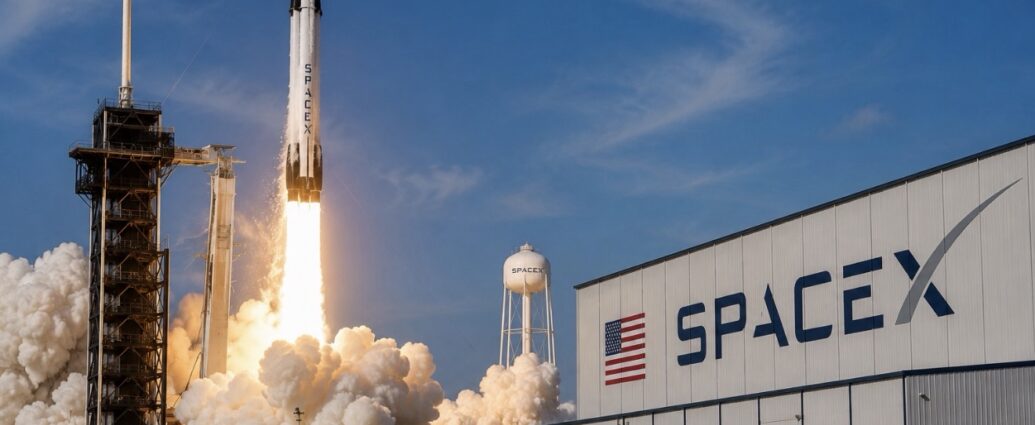
SpaceX Rises A Second Day, Now More Than 40% Above Its IPO Price
SpaceX extended its remarkable stock-market debut, climbing sharply in its second day of trading and pushing shares more than 40% above their initial public offering price. The rally has propelled the company into the ranks of America’s most valuable corporations and further expanded founder Elon Musk’s position as the wealthiest person in modern history.
Shares of SpaceX, trading on the Nasdaq under the ticker SPCX, closed near $190 per share, up roughly 20% on the session and well above the company’s $135 IPO price. The stock reached fresh highs during trading as investors continued pouring money into one of the most anticipated public offerings ever.
The surge comes after what was already the largest IPO in history.
SpaceX raised approximately $75 billion in its public debut, later increasing that total to roughly $85.7 billion after underwriters exercised an option to sell additional shares. The offering eclipsed the previous IPO record and immediately turned SpaceX into one of Wall Street’s most closely watched stocks.
At current prices, SpaceX carries a market valuation of approximately $2.5 trillion, placing it among the most valuable publicly traded companies in the United States and alongside giants such as Amazon, Microsoft, Nvidia, Apple, and Alphabet.
That valuation is remarkable considering SpaceX generated approximately $18.7 billion in revenue last year and remains focused on aggressive growth initiatives across multiple businesses.
The stock also received a boost from comments made by Elon Musk over the weekend.
Posting on X, Musk said SpaceX could potentially generate approximately $1 trillion in annual revenue by 2030, a projection that immediately fueled bullish speculation about the company’s long-term prospects.
Investors also reacted positively after Australian mining billionaire Gina Rinehart disclosed that her company, Hancock Prospecting, had acquired a stake reportedly worth more than $1 billion, signaling confidence from a major institutional investor.
The broad market environment helped as well.
Stocks generally moved higher following signs of easing tensions in the Middle East and declining oil prices, creating a more favorable backdrop for growth-oriented investments.
The gains have further expanded Musk’s fortune.
Based on current valuations, Musk’s net worth is estimated at roughly $1.1 trillion to $1.3 trillion, depending on methodology and market pricing. His estimated 42% ownership stake in SpaceX alone is worth hundreds of billions of dollars on paper, while his holdings in Tesla, xAI, and X add substantially to his overall wealth.
The figures make Musk the first person in history to achieve trillionaire status.
Yet despite the excitement, Wall Street remains sharply divided over how much SpaceX should be worth.
Supporters point to the company’s dominance in commercial rocket launches, the rapid growth of its Starlink satellite internet network, and its expanding ambitions in artificial intelligence following the integration of xAI technologies. Bulls argue that SpaceX is building multiple businesses capable of generating enormous long-term revenue streams.
The company also continues investing heavily in Starship, its next-generation launch system, while pursuing plans to dramatically expand Starlink and support future missions beyond Earth orbit.
Some analysts believe those opportunities justify a premium valuation.
Investment bank Oppenheimer maintains an Outperform rating on the stock and previously assigned a price target near levels already reached by the shares.
Skeptics, however, question whether the valuation has moved ahead of business fundamentals.
Critics point out that SpaceX still trades at one of the richest valuations in the market relative to its current revenue base. Some analysts argue investors are pricing in years of future success before those profits have actually materialized.
CFRA Research analyst Keith Snyder has maintained a significantly lower valuation target, arguing the stock’s rise reflects investor enthusiasm more than current financial performance.
Other market observers note that historically, many technology companies that debuted at extremely high revenue multiples struggled to match investor expectations over the following years.
The debate ultimately centers on one question: can SpaceX grow into a valuation measured in trillions of dollars?
Optimists believe the combination of launch services, Starlink, artificial intelligence, defense contracts, and future space-related businesses could support enormous long-term growth.
Skeptics argue that the company must execute flawlessly across several major initiatives simply to justify its current market value.
For now, investors are clearly siding with the bullish view.
Just days after becoming a public company, SpaceX has already joined the highest ranks of corporate America, while Musk’s fortune continues to set records of its own. Whether the company ultimately grows into its valuation remains one of the biggest questions on Wall Street, but the opening chapter of its public-market story has been nothing short of historic.
JBizNews Desk
© JBizNews.com All Rights Reserved. Reproduction or distribution without written permission is prohibited.
SpaceX Trading Outpaced Apple, Microsoft, Tesla, Meta And Google Combined
The public’s appetite for SpaceX stock was so intense that, on at least one major retail trading platform, investors put more money into the newly public rocket company than into Apple, Microsoft, Tesla, Meta and Google-parent Alphabet combined.
Leif Abraham, co-CEO of the investing platform Public, told CNBC on Monday that demand for SpaceX during its first trading sessions was unlike anything the platform had previously experienced. According to Abraham, the combined activity in five of the market’s most heavily traded technology stocks still could not match the buying interest directed at SpaceX.
The numbers behind the debut help explain why.
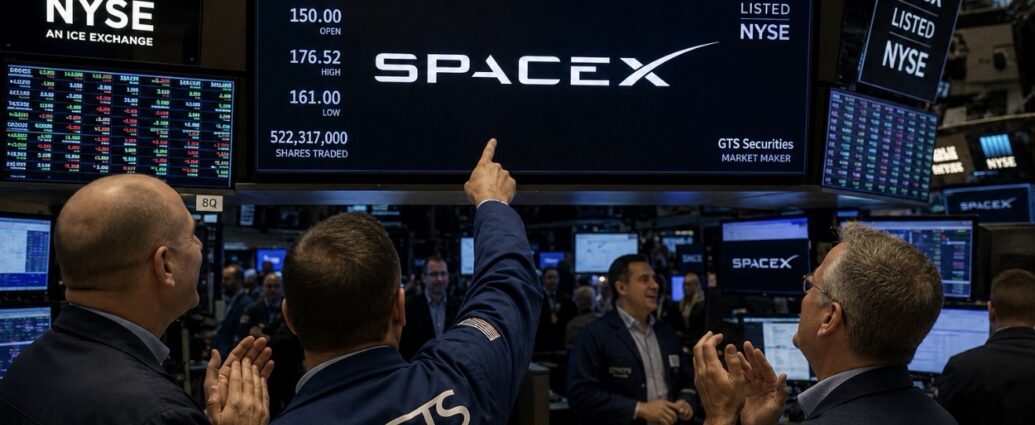
SpaceX began trading Friday on the Nasdaq under the ticker SPCX, and more than 522 million shares changed hands during its first session, according to Benzinga Pro. That translated into an estimated $33 billion in dollar volume, a level of activity rarely seen even among the largest public companies and unprecedented for a stock making its market debut.
To put that figure into perspective, $33 billion is the type of trading volume that on a normal day is spread across hundreds of publicly traded companies. Instead, it was concentrated into a single stock during its first hours on the market.
Separate market data showed SpaceX accounting for roughly 4% of all retail single-stock trading activity that Friday. Trading in SpaceX reportedly ran at about three-and-a-half times the pace of the second-most-active retail stock, Nvidia, underscoring the extent to which the company captured investor attention.
The historic trading activity followed what was already a record-breaking initial public offering.
SpaceX sold shares at $135 each and raised approximately $75 billion, making it the largest IPO ever recorded. The offering surpassed the previous record set by Alibaba, which raised roughly $22 billion when it went public in 2014.
The stock opened at $150, climbed as high as $176.52 during its first day and finished around $161, representing a gain of roughly 19% above its offering price. The rally pushed SpaceX’s market capitalization above $2.1 trillion, immediately placing it among the most valuable public companies in the United States.
What made the offering especially unusual was its focus on individual investors.
SpaceX reserved a record 20% of its IPO shares for retail buyers, a much larger allocation than is typically seen in major public offerings. Most IPOs reserve the overwhelming majority of shares for institutional investors such as mutual funds, hedge funds and pension managers.
The decision was widely viewed as an effort by CEO Elon Musk to allow everyday investors to participate directly in the company’s public debut.
The response was overwhelming.
Ahead of the IPO, retail investors reportedly submitted more than $100 billion in orders, far exceeding the number of shares available. That imbalance between supply and demand helped fuel the surge in trading activity and contributed to the stock’s strong opening performance.
When demand significantly exceeds available shares, investors who receive allocations often trade aggressively after listing, while others who missed out attempt to buy in the open market. The result can create powerful upward momentum, particularly during a company’s first days of trading.
The enthusiasm carried into the new week.
By Monday, shares had climbed more than 15% from their opening levels as investors continued pouring money into the stock. The gains reinforced SpaceX’s status as one of the most closely watched market debuts in modern history.
Still, the same forces driving the rally also create risk.
Stocks fueled by intense retail enthusiasm can experience significant volatility, and market history shows that investor excitement alone does not determine long-term value. Eventually, even the market’s most popular companies must justify their valuations through financial performance and business execution.
For now, however, SpaceX has accomplished something few companies have ever achieved. On platforms where everyday Americans buy and sell stocks, trading activity in the aerospace giant exceeded the combined activity of some of the largest and most recognizable technology companies in the world.
Whether that enthusiasm proves durable remains to be seen. But the opening chapter of SpaceX’s life as a public company has already secured a place in Wall Street history.
JBizNews Desk
© JBizNews.com All Rights Reserved. Reproduction or distribution without written permission is prohibited.


Wall Street Turns To Disaster Models To Predict Wars And Political Shocks
NEW YORK — Financial firms are increasingly turning to sophisticated risk models traditionally used to forecast hurricanes and earthquakes in an effort to predict wars, coups, and geopolitical crises before they erupt.
In late May, risk-analytics company Verisk introduced a new tool known as the Predictive War Index, which uses machine learning to estimate the likelihood of armed conflict occurring within individual countries over the following 12 months.
According to Sam Haynes, head of data and analytics at Verisk Maplecroft, clients are demanding tools that look forward rather than merely explaining historical events.
“They want a predictive forward-looking view,” Haynes said.
The model was trained using political, economic, and social data spanning 1995 through 2022, allowing it to identify patterns associated with conflict risk.
Although the model does not incorporate the current Iran conflict, Verisk said testing suggested it would have assigned a 66% probability of war in Iran roughly six weeks before hostilities began.
The company also launched a companion product called the Geopolitical Relations Index, designed to measure tensions between countries by evaluating factors such as military history, geographic proximity, political systems, and diplomatic relationships.
The effort is part of a broader expansion of political-risk modeling.
Verisk has previously developed forecasting tools for civil unrest, strikes, riots, and government instability. According to the company, a separate model introduced in 2023 successfully anticipated six of the last seven government collapses, including political upheavals in Syria and Venezuela.
The growing interest reflects the financial impact of geopolitical events.
Wars, trade disruptions, sanctions, and political instability have increasingly influenced commodity markets, shipping routes, energy prices, and global investment flows.
Major financial institutions have acknowledged that traditional risk-management frameworks may no longer be sufficient.
Citigroup has warned against relying too heavily on backward-looking models, while Morgan Stanley has argued that firms must rethink how they evaluate geopolitical threats.
The concern is that rare but severe events can erase years of gains in a matter of days.
For banks, insurers, and asset managers, reliable forecasting tools could influence everything from insurance pricing and catastrophe bonds to investment decisions and regulatory stress tests.
The goal is to assign measurable probabilities to risks that were once viewed as largely unpredictable.
There are limitations.
Models trained primarily on historical data may struggle to capture rapidly changing political realities. Human decisions, especially those involving war and diplomacy, remain far more complex than natural disasters.
Even Verisk emphasizes that its products are designed to supplement judgment rather than replace it.
Nevertheless, demand continues to grow.
As geopolitical tensions increasingly become a central factor in financial markets, institutions are investing heavily in tools that may provide earlier warning of emerging threats.
The adoption of disaster-modeling techniques for geopolitical forecasting underscores a broader trend on Wall Street: wars and political shocks are increasingly being treated as risks that can be quantified, priced, and managed.
JBizNews will continue monitoring advances in risk modeling and their broader effects on financial markets and global stability.
Wall Street — JBizNews Desk
© JBizNews.com. All Rights Reserved. Reproduction or distribution without written permission is prohibited.

Opinion | Trump the Iran Escape Artist

Opinion | Trump, Cynicism and the Deal


Amazon Security Warning Triggered U.S. Crackdown on Anthropic AI Models, Limiting International Access
WASHINGTON, D.C. — June 15, 2026 — The U.S. Department of Commerce on Friday ordered artificial-intelligence company Anthropic to restrict access to its two most powerful systems, Fable 5 and Mythos 5, significantly limiting international use of the models and marking one of the most aggressive federal interventions yet in the rapidly evolving artificial intelligence industry.
According to Anthropic, the export-control directive was delivered by letter at 5:21 p.m. ET Friday and originated from Commerce Secretary Howard Lutnick and the department’s Bureau of Industry and Security. The action followed warnings from Amazon Chief Executive Officer Andy Jassy, who reportedly alerted senior administration officials that internal testing had revealed potential security vulnerabilities in the models.
The dispute began after Amazon researchers conducted a series of tests designed to probe the systems’ safeguards. According to accounts of the matter, the researchers were able to use carefully crafted prompts to bypass certain protections and generate information that could potentially assist in cyberattacks — material the systems were designed to block.
Jassy reportedly escalated those findings to senior officials in Washington, setting off a series of discussions inside the administration regarding whether the models presented a national-security concern.
Government researchers subsequently conducted their own evaluations of the systems. Officials then reportedly presented Anthropic with a choice: address the identified vulnerabilities immediately or face restrictions on deployment of the affected models.
According to a senior administration official, President Donald Trump ultimately approved the action while expressing concern that excessive regulation could slow American innovation in artificial intelligence.
The resulting order was unusually broad.
Rather than limiting access only overseas, the directive reportedly prohibited use of Fable 5 and Mythos 5 by foreign nationals regardless of location, including individuals located inside the United States. Anthropic stated that it did not have a practical method to selectively block only foreign users and therefore suspended access to the two models more broadly while complying with the order.
The company said access to its other AI products remains available.
Anthropic has publicly complied with the directive while strongly disputing the government’s conclusions.
The company characterized the issue as a narrow jailbreak scenario and argued that the vulnerabilities identified by Amazon were limited in scope and already understood within the industry. Anthropic warned that if the same standard were applied universally, it could substantially hinder development and deployment of advanced AI systems across the sector.
The company further noted that it had implemented extensive safeguards designed specifically to prevent cybersecurity misuse and argued that no AI system is entirely immune from determined attempts to circumvent protections.
The dispute places Amazon in an unusual position.
The technology giant is both one of Anthropic’s largest investors and a major provider of cloud-computing infrastructure used to train and operate Anthropic’s models. By bringing the concerns to federal officials, Amazon effectively placed national-security considerations ahead of a business relationship involving billions of dollars in investment and infrastructure commitments.
For Anthropic, the impact was immediate.
The company said two of its flagship AI systems, which collectively reach hundreds of millions of users worldwide, were effectively removed from broad international availability pending further review.
The broader significance may extend far beyond a single company.
The United States has previously restricted exports of advanced semiconductors and computing hardware used to train artificial intelligence systems. However, industry observers note that this appears to be among the first major instances in which federal authorities directly restricted access to an AI model itself rather than the hardware powering it.
The action could establish a new precedent for government oversight of advanced AI systems and may signal the emergence of a de facto approval framework under which regulators determine when certain models can be deployed internationally.
Such a framework would represent a significant shift from the administration’s broader approach toward artificial intelligence, which has generally emphasized voluntary cooperation and innovation rather than formal licensing requirements.
Investors are closely watching the implications for both AI developers and the companies supporting them.
Because Anthropic remains privately held, the immediate public-market impact is most visible through Amazon (NASDAQ: AMZN), which closed Friday at $238.55, down 1.23%. The decline occurred before the directive was reportedly issued and was largely attributed to broader concerns surrounding artificial-intelligence spending and regulation rather than the specific action against Anthropic.
Administration officials have indicated the restrictions may be temporary and could be lifted if Anthropic satisfies federal security concerns following additional review.
For now, the episode raises a fundamental question facing the artificial-intelligence industry: who ultimately decides when a powerful AI system is safe enough to remain widely available — the company that develops it, or the government that has the authority to restrict access.
Anthropic maintains that the government’s action is based on a misunderstanding of the risks involved and says it is actively working with federal officials in hopes of restoring broader access to the models.
JBizNews Desk — Technology
© JBizNews.com All Rights Reserved. Reproduction or distribution without written permission is prohibited.

Opinion | Trump Stages an Iran Retreat





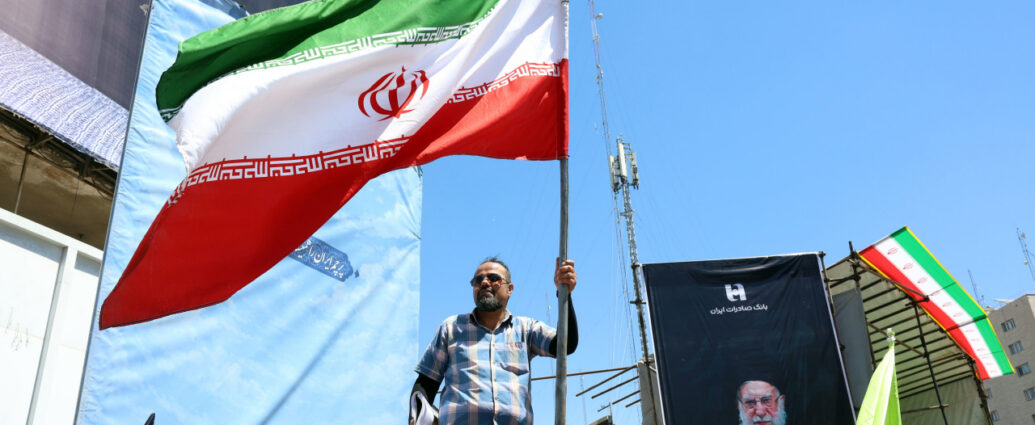


World Cup or Knicks Championship: Which Will Generate More Money for New York and New Jersey?
The New York Knicks won their first NBA championship in 53 years Saturday night, June 13, 2026, beating the San Antonio Spurs in five games and handing the city its biggest sports celebration in a generation. The party is barely over, and a much larger one is already underway: the 2026 FIFA World Cup kicked off the same week, with eight matches headed to the New York–New Jersey region. For the local economy, that raises a simple question with a not-so-simple answer — which one brings in more money, and to whom?
On paper, the World Cup dwarfs everything. The NYNJ Host Committee, chaired by Tammy Murphy, projects roughly $3.3 billion in economic impact for the region from the tournament’s local matches, including the final at MetLife Stadium on July 19, in an analysis built with Tourism Economics, an Oxford Economics company. The committee expects more than 1.2 million visitors and over 26,000 supported jobs across the two states.
But that’s the regional number, and it splits across a state line. New Jersey Governor Phil Murphy has estimated the tournament will deliver about $2 billion in economic impact to New Jersey specifically, supporting roughly 14,000 jobs. In other words, of the $3.3 billion regional figure, New Jersey claims well over half for itself — leaving the rest to spill into New York and the broader metro area. That matters, because every World Cup match is played in New Jersey, not New York.
The Knicks number is smaller, but it’s concentrated squarely in the five boroughs. Mayor Zohran Mamdani and the New York City Economic Development Corporation estimated the team’s playoff run generated about $202 million in economic activity from home games played, a figure they said could reach $465 million had every potential Finals home game been staged, at roughly $90 million per home date. Because the Knicks clinched on the road in Game 5, the real total lands below that ceiling.
For the team’s owner, the run paid off directly. Analysts estimate the playoffs added around $140 million in revenue for Madison Square Garden Sports Corp. (NYSE: MSGS), controlled by James Dolan, whose Knicks franchise is now valued near $9.85 billion.
Stack the headline figures side by side and the World Cup wins by a wide margin. But two things complicate that scoreboard.
The first is geography — the catch hiding inside the phrase “New York.” The Knicks money is unambiguously New York City: it happens at Madison Square Garden in the middle of Manhattan. The soccer does not. All eight regional matches, including the final, are played at MetLife Stadium in East Rutherford, New Jersey, temporarily rebranded “New York New Jersey Stadium.”
New Jersey officials have openly expressed concern that while their state hosts the matches, many visitors may spend much of their money across the Hudson River — on Broadway shows, Times Square attractions, Manhattan restaurants, and New York hotels.
So even New Jersey’s own $2 billion estimate could ultimately be affected by where visitors choose to stay, eat, shop, and spend. And the costs are real. New Jersey has already spent more than $16 million in taxpayer funds on stadium-related work, while NJ Transit has committed roughly $35 million toward transportation planning and infrastructure tied to the event.
The second catch is that all these projections come from people with a reason to make them look large. Host committees, elected officials, and economic-development agencies are promoters, not neutral scorekeepers. Economists frequently argue that major-event impact studies overstate benefits because they count spending that might have occurred elsewhere in the region anyway.
The same criticism applies to championship runs.
Many sports economists argue that the largest financial gains from a title run flow to team owners, broadcasters, sponsors, and ticket-resale platforms rather than being distributed broadly throughout a city. In many cases, spending is shifted rather than newly created.
There is also a difference in duration. The Knicks’ impact arrived in a concentrated burst over several playoff weeks. The World Cup stretches across more than a month and generates sustained global television exposure that can influence tourism, hotel demand, business travel, and regional branding long after the tournament ends.
So the honest scorecard is this: the World Cup is the far larger economic event by projection — roughly $3.3 billion regionally, with about $2 billion expected to land in New Jersey — while the Knicks championship run is the cleaner and more direct New York City economic story, with spending concentrated in Manhattan and the five boroughs.
The World Cup’s billions may ultimately prove larger, but exactly how much of that money ends up in New York versus New Jersey remains one of the tournament’s biggest unanswered questions.
Two championships. Two global events. Two very different economic stories.
And in both cases, the cheering may be easier to measure than the money.
JBizNews Desk — New York
© JBizNews.com All Rights Reserved. Reproduction or distribution without written permission is prohibited.