First Opinion is STAT’s platform for interesting, illuminating, and provocative articles about the life sciences writ large, written by biotech insiders, health care workers, researchers, and others.

To encourage robust, good-faith discussion about issues raised in First Opinion essays, STAT publishes selected Letters to the Editor received in response to them. You can submit a Letter to the Editor here, or find the submission form at the end of any First Opinion essay.

Read the rest…

This post was originally published here

 As wildfires burn millions of acres across Canada, smoke has descended upon cities across the United States, with air quality plummeting to unhealthy levels. In New York City, emergency room visits for asthma exacerbations jumped by 31% by the end of the first day. The timing could not have been worse for a city already in the throes of the second major heat wave of the season.

Extreme weather events represent the cyclical and compounding relationship between fossil fuel combustion, a warming climate, natural disasters, and related illnesses. Some may view them as proof the climate crisis has already become insurmountable. However, history teaches us to never let a health-related environmental crisis go to waste.

Read the rest…

This post was originally published here

Pretty much everyone who cares about public health agrees that it’s a good idea to help people quit smoking, the No. 1 cause of preventable death in the U.S. Doctors may soon get some extra encouragement to lend a hand, thanks to proposed changes in Medicare’s physician fee schedules.

Physicians who offer counseling on quitting cigarettes or other tobacco products during visits with patients would get a 19% increase in reimbursement, according to a few paragraphs buried in the 1,592-page document released this week. The same adjustment would also apply to assessments of, and interventions for, alcohol and substance misuse during doctors’ visits.

“Given the evidence supported role these services play in preventing and managing chronic disease […] we believe that valuation should more accurately reflect the clinical intensity and work associated with these time-based services,” the proposal from the Centers for Medicare and Medicaid Services explains. Comments on the proposal are due Sept. 14. 

“The prioritization of cessation as a service is long overdue, and we’re very excited about it,” said Anne DiGiulio, the American Lung Association’s senior director of nationwide tobacco cessation and health policy.

Read the rest…

This post was originally published here

Want to stay on top of the science and politics driving biotech today? Sign up to get our biotech newsletter in your inbox.

Hiya. Today, we explore a gene therapy approach that’s drawing excitement but also skepticism, and see that Jennifer Doudna is moving into AI-designed gene editors that push beyond evolution. 

Plus, our trusty podcasters unpack the buzzy prediction market Kalshi’s move into biotech.

Continue to STAT+ to read the full story…

This post was originally published here

And so, another working week will soon draw to a close. Not a moment too soon, yes? This is, you may recall, our treasured signal to daydream about weekend plans. Our agenda is rather modest. If the smoky skies ever clear, we will promenade with the official mascots. Regardless, we intend to escort Mrs. Pharmalot to a fancy bistro and watch some footie on the telly. We also hope to hold another listening party, where the rotation will likely include this, this, this, this and this. And what about you? This is a wonderful time to enjoy the great outdoors — surfing and crabbing come to mind. There’s also clubbing and pubbing if you prefer cityscapes. Or simply curling up with a good book is a beneficial alternative. Well, whatever you do, have a grand time. But be safe. Enjoy, and see you soon. …

The number of active medication shortages in the U.S. rose to 227 in the second quarter of 2026, continuing the upward trend since 214 in the third quarter of 2025, according to the American Society of Health-System Pharmacists. Just under half, or 48%, of all new shortages this year are sole-source products, or those made by a single manufacturer, 16% of active shortages are controlled substances, and 10% of all new shortages in 2026 are contrast agents used for potentially life-saving procedures, such as CT scans and MRIs.

Three years after buying Bellus Health and its chronic cough candidate camlipixant for around $2 billion, GSK is abandoning the program, Pharmaphorum points out. Data from a pair of Phase 3 trials in adults with refractory chronic cough found “limited efficacy demonstrated is unlikely to transform patient care” and GSK will no longer develop the drug for that indication. Camlipixant is in the P2X3 antagonist class, which has seen other drug candidates fall by the wayside. The results are a setback as GSK speeds ​development of new medicines and targets new assets to strengthen its ​late-stage pipeline and manage losses from patent expirations expected from 2028 onwards.

Continue to STAT+ to read the full story…

This post was originally published here

Specialized counseling services for LGBTQ+ youth will return to the 988 Suicide & Crisis Lifeline by the end of the year, the Trump administration confirmed last month. But young people looking to “press 3” for that support may encounter an altered experience, as federal health officials want to ensure the services comply with President Trump’s executive order last year that essentially denies the existence of transgender and nonbinary identities. 

The Trump administration shuttered the LGBTQ+ youth specialty services last July, but soon after, a congressional appropriations bill directed $33.1 million toward reinstating the line. The law indicates that services should support all LGBTQ+ youth. 

Read the rest…

This post was originally published here

Every day, doctors turn to specialized calculators to make decisions about their patients’ care. Kidney performance? There’s a calculator for that. Chance of a successful vaginal birth after a previous C-section? There’s a calculator for that. 

Medicine has accumulated hundreds of these clinical scores and decision-making tools, and their numbers continue to grow along with the scale of clinical data. But just because a calculator exists doesn’t mean doctors should always trust its output. 

“In clinical practice, a lot of the tools that we use, we genuinely have no idea how limited it is in its validation,” said health systems researcher and gastroenterologist Shazia Siddique. That is why MDCalc, the company Siddique joined last year, is launching a quality-rating system to apply to the more than 800 clinical tools and calculators that doctors use through its site.

Continue to STAT+ to read the full story…

This post was originally published here

At a May MAHA Institute summit organized around the theme of “overmedicalization,” the health secretary announced an action plan to promote psychiatric deprescribing. At first look, it seemed innocuous. The Substance Abuse and Mental Health Services Administration (SAMHSA) would study prescribing trends and publish fact sheets. Medicare would clarify how clinicians can be paid for the attentive work of tapering a patient off of a medication (which is already a part of routine clinical care). Webinars would teach prevention and “holistic” care. A technical expert panel would convene over the summer to make further recommendations. 

In reality, this announcement, and the steady stream of actions over the past 18 months, mark a quiet rewriting of the vocabulary of American mental health care — a massive rhetorical shift enacted while programs and protections that would actually solve the problem are dismantled.

Read the rest…

This post was originally published here

For the last year, a small California startup has been making extraordinary claims about the ability of its technology to potentially treat Duchenne muscular dystrophy — and maybe a slew of other genetic diseases, too.

The company, Sonothera, does not yet have clinical data. But it’s presented data in animals so stunning that other experts can’t quite wrap their minds around it.

“I find it hard to believe,” said Eric Olson, molecular biology chair at UT-Southwestern Medical Center. “It seems a bit too good to be true,” said Jeffrey Chamberlain, a longtime Duchenne gene therapy expert at the University of Washington.

Continue to STAT+ to read the full story…

This post was originally published here

On this week’s episode of “The Readout LOUD”: The Kalshi prediction markets are coming for biotech, plus the controversy over an experimental Alzheimer’s disease treatment from Biogen. 

Kalshi, the maker of prediction markets, announced this week that it is expanding into biotech. Soon, you’ll be able to make bets on the outcomes of clinical trials and FDA drug reviews. Is that a good thing? We’ll discuss the issues with Jonathan Kimmelman, a bioethicist at McGill University who has researched prediction in clinical trials.

Read the rest…

This post was originally published here

Turmoil at the American Diabetes Association has taken a fresh turn, with leaders blocking editors at its flagship journal from publishing an opinion piece and first-person accounts detailing a high-profile controversy at the group’s own annual meeting just last month.

Nearly five weeks after five diabetes specialists were escorted out of a conference center in New Orleans for handing out reprints of an editorial expressing concern over cuts to federal research, the ADA’s flagship journal, Diabetes Care, was preparing to publish an editorial and several accounts detailing the episode, which drew national attention and prompted the ADA to both apologize for the evictions and pledge a formal review. But the organization says it delayed publication pending the outcome of that review — even as there is disagreement about how it is being carried out.

In the spiked editorial and personal accounts, now available on an open-access website, the diabetes specialists who were ejected in early June detail their treatment. Prominent ADA members, including past leaders and one who resigned in the wake of the confrontation, also express dismay over how the events were handled initially and afterward. All voice disappointment over the decision to suppress views opposing policies of the Trump administration while also disagreeing with how ADA’s leadership handled the episode and its aftermath. 

Continue to STAT+ to read the full story…

This post was originally published here

WASHINGTON — A Senate vote to halt a Medicare pilot that uses artificial intelligence to approve or deny care failed along party lines on Thursday.

Republicans voted to block consideration of a Democratic-led measure, which would have stopped the Trump administration from employing prior authorization in original Medicare, where the practice is rarely allowed. The vote was 46 to 50.

The White House had pushed back against the Democratic bill. Medicare officials gave a handout to lawmakers’ offices on Tuesday outlining what they say are the benefits of the test, known as WISeR. 

Continue to STAT+ to read the full story…

This post was originally published here

Medical experts are divided on Defense Secretary Pete Hegseth’s announcement that U.S. service members will undergo testosterone deficiency screenings with their annual physical exams. 

“War fighters aged 30 and older are going to be tested annually as part of their periodic health assessment,” said Hegseth in a video, posted with the caption “The High-T Department of War.” Elective testosterone testing will be available to younger service members, too, and if recommended, testosterone replacement therapy would be at the individual’s discretion. 

Read the rest…

This post was originally published here

UnitedHealth Group smashed through investors’ earnings expectations in the second quarter, with executives confidently saying this new level of profit is durable for the foreseeable future.

The numbers lifted the company’s stock about 3% as it attempts to return to financial dominance under CEO Stephen Hemsley. But a string of comments made during the company’s earnings call on Thursday signals a more ominous path ahead for America’s businesses and workers.


More than 150 million Americans get their health coverage from a job. A new series from STAT chronicles how the costs of that insurance are stretching employers like never before. An increasing number of America’s small businesses are abandoning traditional health benefits completely, forcing workers to find alternative options.

Continue to STAT+ to read the full story…

This post was originally published here

The government of Uganda has gone quiet on an outbreak of the deadly Marburg virus that it reported late last month, with the World Health Organization acknowledging Thursday it has made repeated requests for updated information on the status of the investigation into how it started and how far it may have spread.

“We’ve sent several additional requests for information, and we’re still waiting to hear from them specifically on the outcomes of the investigation that we know that they’re carrying out,” Chikwe Ihekweazu⁩, executive director of the Geneva-based agency’s Health Emergencies Program, said during a new conference. 

Read the rest…

This post was originally published here

You’re reading the web edition of STAT’s Health Tech newsletter, our guide to how technology is transforming the life sciences. Sign up to get it delivered in your inbox every Tuesday and Thursday.

Good morning health tech readers!

We’re conducting a reader survey that will inform the direction of our coverage and product. I would appreciate it if you’d take a few minutes to help improve STAT

Continue to STAT+ to read the full story…

This post was originally published here

Keith Thomas just wanted to pet his dog. 

A diving accident in 2020 damaged Thomas’ spinal cord and left him with virtually no ability to move or feel his limbs below his neck, so when Bow, his malshipoo, grazed his legs or nuzzled in his lap, Thomas couldn’t feel it or return the affection. 

His family got Bow right as Thomas received a brain implant in 2023 as part of an experimental study. The device changed his life. When it zapped his brain and spinal cord with tiny jolts of electricity at the same time, he could lift his arms and shoulders — even stroke and feel Bow’s fur again. 

Continue to STAT+ to read the full story…

This post was originally published here

Want to stay on top of the science and politics driving biotech today? Sign up to get our biotech newsletter in your inbox.

Kalshi is unveiling new biopharma betting markets, we have a deeper understanding of the link between Epstein-Barr virus and multiple sclerosis, and Merck gets an FDA approval on its oral PCSK9.

Kalshi will launch bets on biotech

Prediction market giant Kalshi announced this morning that it will now start taking bets on clinical trial outcomes and FDA approvals, STAT’s Elaine Chen writes. It’s starting with a small number of markets selected alongside partner AppliedXL, a tech company that already monitors and predicts clinical trial outcomes.

Continue to STAT+ to read the full story…

This post was originally published here

Top of the morning to you, and a fine one it is. Well, sort of. The skies in these parts are decidedly hazy thanks to smoky conditions to the north. Nonetheless, we are doing our best to take a deep breath and focus on the matters at hand. To that end, we are firing up the trusty kettle to make another cuppa stimulation. Our choice today is English breakfast, an old standby. Please feel free to join us. Meanwhile, here are a few items of interest. Hope you have a meaningful and productive day and, of course, do stay in touch. …

Prediction markets have permeated the worlds of sports, politics, and reality television shows. Now, the biopharma industry could be next as Kalshi, one of the world’s largest prediction market exchanges, plans to take bets on clinical trials and regulatory approvals, STAT reports. The company is starting with a small number of markets chosen in collaboration with its partner, AppliedXL, a tech firm that monitors and predicts study outcomes. Initially, Kalshi will take a conservative approach, allowing people to bet only on Phase 3 trial outcomes run by established drug companies and with full approval decisions by the U.S. Food and Drug Administration.

The U.S. Food and Drug Administration approved a first-of-its kind pill from Merck that is designed to help lower cholesterol levels beyond what statins alone can achieve, The Wall Street Journal says. The agency cleared Lipfendra to treat high cholesterol, which is a major risk factor for heart attacks and strokes.  The approval was based on studies showing that Merck’s once-daily pill reduced bad, or LDL, cholesterol levels by up to 60% over six months in adults with or at risk for atherosclerotic cardiovascular disease. Analysts expect the new Merck pill to be a big seller, generating peak annual sales of more than $5 billion.

Continue to STAT+ to read the full story…

This post was originally published here

Prediction markets have permeated the worlds of sports, politics, and reality television shows. Now, the biopharma industry could be next.

On Thursday, Kalshi, one of the world’s largest prediction market exchanges, said it will start taking bets on clinical trials and regulatory approvals.

It’s starting with a small number of markets chosen in collaboration with its partner, AppliedXL, a tech company that monitors and predicts the outcomes of clinical trials.

Continue to STAT+ to read the full story…

This post was originally published here

Get your daily dose of health and medicine every weekday with STAT’s free newsletter Morning Rounds. Sign up here.

Good morning. Who are you rooting for in the World Cup final? Personally, I’m hoping for more drama and heartbreak, plus a good seat wherever I’m watching. 

Trump health nominees face fire at Senate hearing

The Senate health committee held a hearing yesterday, and STAT’s Chelsea Cirruzzo was there in person following along:

Continue to STAT+ to read the full story…

This post was originally published here

Eli Lilly is acquiring AtaiBeckley, the developer of psychedelic treatments for mental health conditions, to expand its portfolio of neuroscience medicines, the company said Thursday.

The AtaiBeckley deal is just the latest in a string of acquisitions by the pharma giant, flush with cash from its booming GLP-1 business. 

Lilly is paying $2.8 billion in cash upfront for AtaiBeckley, with the potential for another $1 billion payout contingent on certain development and regulatory milestones.

Continue to STAT+ to read the full story…

This post was originally published here

This story first appeared in Adam’s Biotech Scorecard, a subscriber-only newsletter. STAT+ subscribers can sign up here to get it delivered to their inbox.

Later this quarter, Amylyx Pharmaceuticals will read out results from a study evaluating a new treatment for a rare endocrine disorder. It’s a pivotal moment that could support the drug’s approval and comes two years after Amylyx was rocked — and lauded — for voluntarily pulling a drug for ALS off the market because a follow-on study showed it wasn’t helping patients.

The Amylyx drug, avexitide, is being developed to halt severe, uncontrolled drops in blood sugar that some people experience after undergoing stomach-reducing surgery for weight loss.

Continue to STAT+ to read the full story…

This post was originally published here

For years, Medicare has been wrestling with how to pay for artificial intelligence and other software-based clinical tools. The Centers for Medicare and Medicaid Services is good at calculating the costs of physical items, from a cotton swab to the wear and tear on a CT scanner. But an algorithm to predict cardiac risk from a CT scan, or an AI-based map to visualize prostate cancer’s spread? Less so.

This month, in its proposed rules for hospital outpatient payments and physician fees for 2027, CMS has signaled that it’s ready to build a more consistent payment structure for clinical software and AI that factors in their impact on patient outcomes. It’s starting — as an interim step, just for 2027 — by proposing a practical change to the way it labels and pays for several clinical software and AI services. 

After requesting feedback several times on AI and software payment structures, “it’s really the first time that we’ve heard the agency say that they are planning a different policy moving forward,” said Cybil Roehrenbeck, executive director of industry group the AI Healthcare Coalition. Medicare payment — and its influence on private insurers’ coverage of emerging technologies — has a significant impact on what clinical software and AI gets commercialized and reaches patients.

Continue to STAT+ to read the full story…

This post was originally published here

The patient had come in for suicidal ideation. When I asked about his eating habits beforehand and access to food — routine for a psychiatric nutrition consult — he told me he’d lost his SNAP eligibility a few weeks earlier. It was something about a documentation deadline he hadn’t been notified about, or just another thing lost in the mix of making ends meet. Since then, he’d been getting by on what he could. He spent the last of his cash on a motel and dry cereal, which was all he ate for a few weeks. After his money and food ran out, he said, pretty simply, that the hospital made sense. He was hungry, thought through his options, and figured this was better than “Plan B”: ending his life due to hopelessness and a lack of food.

As a clinical dietitian at a large urban hospital, part of my job is coordinating with social work and physicians of all stripes on nutrition support and food access: figuring out what patients need to eat, and occasionally what they’re going to eat after discharge. (Sidebar: We could all do worse than the Mediterranean diet.) Meals on Wheels referrals, pantry connections, SNAP enrollment support — the clinical and the logistical blur into each other because food insecurity doesn’t really stop at the point of discharge. Prior to my current role, I spent several years in public health dedicated to ending hunger and food insecurity for families. I’ve spent my career like the ferryman on the river: navigating hunger’s effects upstream, downstream, and working people across to something better.

Read the rest…

This post was originally published here

After a deep breath, the auto-injector pen dumps its dose into a patch of pinched stomach with barely a sting. For many, it has become a mindless nonevent. The hormone collects in a bolus in fat tissue, where it binds to albumin and, over several days, trickles into the bloodstream to do its work. Weight loss and blood sugar control were promised, yet the benefits are still surprising doctors and patients. We are in our peptides era, and this feels like just the beginning. 

This all started with a venomous lizard from the Desert Southwest.

Read the rest…

This post was originally published here

Sen. Lindsey Graham’s death Saturday at age 71 following an aortic dissection has focused attention on the life-threatening condition. Details about his diagnosis and treatment are not available while a final death certificate is pending, but experts agree on both how serious it is and how suddenly it erupts after a long prelude.

One cardiothoracic surgeon had questions about the South Carolina senator’s care. 

Read the rest…

This post was originally published here

An analysis of a torrent of public comments submitted on a White House proposal to change the way federal contracts and grants are doled out shows a widespread rebuke of the potential change by scientists and others. 

The analysis, done by researchers at the University of North Carolina at Chapel Hill in partnership with STAT, used a large language model to classify whether a comment was supportive or in opposition and to identify themes mentioned in comments. It found that about 95% were in opposition and just 1% supported the proposed changes to the “Uniform Guidance.” A total of 496,769 public comments were submitted before the deadline of Monday at midnight, and an analysis of the 52,322 comments that have been posted in full show an overwhelming rebuke of the proposal. 

Read the rest…

This post was originally published here

Swing Therapeutics, developer of a Food and Drug Administration-cleared digital treatment for fibromyalgia, has been acquired by medical virtual reality company XR Health.

Swing is XR Health’s sixth acquisition in the last two years and finds the VR developer taking a new business direction as it aims to be a go-to source of digital treatments for disease. The terms of the deal were not disclosed because, as XR Health CEO Eran Orr explained, “it won’t be the last” acquisition for the company. 

XR Health, Orr claimed, has dozens of different apps on its platform currently and delivered a million user sessions in 2025. Offerings include a range of meditation and cognitive behavioral therapy-based VR experiences targeted at mental health issues, pain, hot flashes, and more. XR Health’s large packages of VR treatments are registered with the FDA but not cleared.

Continue to STAT+ to read the full story…

This post was originally published here

As of Tuesday, a parasite called cyclospora has sickened nearly 7,000 people in 34 states so far this summer. On Monday, Michigan health officials announced their first potential source: lettuce and salad greens. Their advice was sound: Buy whole heads, discard the outer leaves, wash what’s left. But it landed after vinegar rinses and peeling rituals had circulated online for weeks.

Michigan’s announcement was careful: Lettuce keeps surfacing in interviews, other foods cannot be ruled out, and no grower or supplier has been named. That is what a “potential source” is — a hypothesis strong enough to keep pulling on. Weeks into one of the largest cyclosporiasis surges on record, we still cannot answer the question people need answered: Which food is making us sick? The Centers for Disease Control and Prevention cannot yet say whether this is one outbreak with a common source or several unconnected clusters.

Read the rest…

This post was originally published here

A new startup is making a bold move in the world of obesity drug development: It’s not working with the GLP-1 target that has taken the world by storm.

Just a few years ago, the term “GLP-1” would have been a foreign concept to most Americans. Now, it’s everywhere — on billboards, TV advertisements, and magazine articles. Most startups hoping to edge their way into the multibillion-dollar weight loss market have their own GLP-1 drug candidate. But not Mwyngil Therapeutics. 

Mwyngil — pronounced “mwin-gull” — is studying ways to spur weight loss without targeting the GLP-1 receptor. That’s what attracted CEO Luba Greenwood, a biotech veteran, to the company. “I was not interested in another ‘me too’ GLP-1, or GLP-1 plus something. … That’s not very interesting science,” she told STAT, in her first interview about the company. 

Continue to STAT+ to read the full story…

This post was originally published here

In a recent town hall meeting, Karim Mikhail told Food and Drug Administration staff that he was normal. 

“I am with you on planet Earth,” he said in June. “I understand very well what everybody is going through.” 

Typically, such an acknowledgment would be unremarkable. But Mikhail is acting director of the FDA’s Center for Biologics Evaluation and Research, where the previous leader, Vinay Prasad, was decidedly outside the norm.

Continue to STAT+ to read the full story…

This post was originally published here

Sens. Richard Blumenthal (D-Conn.) and Josh Hawley (R-Mo.) are calling on the nation’s largest Medicare Advantage insurers to provide internal records and detailed information on their use of artificial intelligence to block rehabilitative care.

The lawmakers’ request — a moment of bipartisan scrutiny on a controversial federal health care program — comes just one month after a government investigation unearthed a continuing pattern of denials within Medicare Advantage.

In letters provided to STAT, Blumenthal and Hawley told executives at UnitedHealth Group, Humana, and CVS Health that recent findings by the Office of the Inspector General for the Health and Human Services Department undercut their companies’ claims to have reduced barriers to crucial medical services.

Continue to STAT+ to read the full story…

This post was originally published here

Get your daily dose of health and medicine every weekday with STAT’s free newsletter Morning Rounds. Sign up here.

Good morning. I dedicate the first item in today’s newsletter to a friend who is suffering from what she suspects to be cyclosporiasis. Feel free to forward this email to your friends who need information but are scared to wade through online discussions on the outbreak. 

Read the rest…

This post was originally published here

Good morning, everyone, and welcome to the middle of the week. Congratulations on making it this far, and remember there are only a few more days until the weekend arrives. So keep plugging away. After all, what are the alternatives? While you ponder the possibilities, we invite you to join us for a needed cup of stimulation. Our choice today is ginseng honey, a favorite from our pantry. Meanwhile, here is the latest menu of tidbits to help you on your way. We hope you conquer the world and have a wonderful day. And as always, please do stay in touch. …

An experimental Alzheimer’s drug from Biogen, designed with a novel approach, slowed cognitive decline in a mid-stage trial at roughly comparable rates as approved medicines, new data that bolstered the company’s case to move the treatment into a Phase 3 trial, STAT says. Although experts will wait to see the pivotal trial data before making their final assessments of the drug, called diranersen, the results from the Phase 2 trial, if backed up in the larger study, could rekindle the debate about how strong trial results have to be to signify that a drug can offer meaningful benefits for patients and caregivers. 

Potential signs of frailty in older adults taking Eli Lilly’s GLP-1 obesity drug Zepbound ​may signal relatively high risks for adverse outcomes, Reuters writes, citing a large study that underscores concerns about how best to monitor seniors as U.S. Medicare expands access to obesity therapies. In general, frailty-associated conditions such as malnutrition, dehydration and loss of muscle mass and strength developed only rarely and the results should not discourage appropriate use of Zepbound or Novo Nordisk’s GLP-1 drug Wegovy in older adults, the researchers said. Instead, they encouraged closer follow-up of older patients taking the medicines.

Continue to STAT+ to read the full story…

This post was originally published here

BUNIA, Congo — The number of confirmed cases of Ebola in Congo has reached 2,011, including 754 deaths, according to government data released overnight in what authorities say is the fastest-growing outbreak on record.

Health workers at Bunia General Hospital, the region’s largest medical center, went on strike Wednesday and are the latest group to walk off the job at the epicenter over payment issues. Health professionals and other front-line workers barricaded the entrance to the hospital, claiming they have not received pay despite working under difficult conditions.

Read the rest…

This post was originally published here

Here’s the good news: Deaths due to ischemic heart disease — when coronary arteries are blocked — fell by more than half from 1990 to 2023 in the United States, thanks to better control of up to a dozen risk factors. What’s still on the table: Almost 9 out of 10 of the most recent deaths could have been prevented by better managing those risk factors. 

Much of the progress recorded since the start of the Global Burden of Disease study, published Wednesday in JAMA Cardiology, stemmed from drops in deaths from smoking (down 33.3%) and particulate air pollution (down 74.9%). But in the last year of the study, 419,000 of the estimated 473,000 coronary artery disease deaths — or 88.8% — were still linked to modifiable risk factors. 

Read the rest…

This post was originally published here

Want to stay on top of the science and politics driving biotech today? Sign up to get our biotech newsletter in your inbox.

Good morning. Wash your lettuce extra thoroughly! There’s never been a better reason to get a salad spinner.

The need-to-know this morning

  • Johnson & Johnson reported second-quarter earnings
  • Another Phase 3 study win for sac-TMT, the targeted chemotherapy drug from China-based Kelun Biotech and partner Merck. In the OptiTROP-Lung05 study conducted in China, sac-TMT plus Keytruda significantly delayed tumor progression compared to chemotherapy plus Keytruda in patients with first-line, PDL1-negative, non-squamous lung cancer. A preliminary survival benefit favoring the sac-TMT arm was also reported. This is the second China-run Phase 3 study of sac-TMT to show superiority over standard treatments in patients with lung cancer. 
  • Veradermics said its oral, extended-release formulation of minoxidil induced hair growth in women with mild-to-moderate pattern hair loss, achieving the goal of a single-arm midstage study. The company is enrolling female participants in a Phase 2/3 study with results expected next year.

FDA’s new CBER chief is seeking a return to normalcy

After the FDA’s former biologics chief, Vinay Prasad, pushed out several subordinates, overruled career scientists, and earned the ire of the rare disease community, his acting replacement is now tasked with calming the waters.

Continue to STAT+ to read the full story…

This post was originally published here

Medicare regulators on Tuesday proposed to ban vendors from providing remote patient monitoring services on behalf of doctors, a major policy change for a rapidly growing care model that’s been the subject of increasing scrutiny.

Medicare has covered remote patient monitoring since 2018, and payments ballooned to over $500 million in 2024. The proposed change follows widespread concern from the health department’s watchdog, academics, and insurers that the current remote monitoring system is paying for low-value services. If finalized, the rule would impact a large percentage of remote monitoring care as it’s delivered today. 

The update comes as the Trump administration moves to rein in fraud and wasteful spending in the Medicare program. The Centers for Medicare and Medicaid Services also recently launched an alternative model to pay for digital health services. 

Continue to STAT+ to read the full story…

This post was originally published here

Glenmark Pharmaceuticals agreed to pay $29.6 million to settle allegations by dozens of states that the company engaged in a widespread conspiracy to artificially inflate and manipulate prices of generic medicines and harmed consumers by reducing competition.

The agreement marks the latest settlement in a long-running battle between numerous states and many of the largest players in the generic drug industry, which were accused of fixing prices for their medicines. Previously, Lannett, Bausch, Apotex, and Heritage Pharmaceuticals collectively settled lawsuits for $67 million.

The litigation began a decade ago amid heightened concern over the cost of prescription medicines, including some generics. The drugs, which have traditionally been lower-cost alternatives to expensive brand-name treatment, account for approximately 90% of all prescriptions written in the U.S. each year.

Continue to STAT+ to read the full story…

This post was originally published here

You’re reading the web edition of STAT’s AI Prognosis newsletter, our subscriber-exclusive guide to artificial intelligence in health care and medicine. Sign up to get it delivered in your inbox every Wednesday.

I just finished watching the Amazon Prime series “Every Year After.” I’ve got notes on the acting, pacing, and some changes they made from the book, but the needle drops? Incredible. No notes.

Speaking of: Have you got feedback for STAT? We’re doing a reader survey and would love to hear what you like/dislike, what you want more of, and what special features you’d be interested in.

If you have notes for me, I’d also love to hear why you continue to read AI Prognosis (or why you sometimes skip it), what topics you wish I’d cover more, etc. Just reply to this email!

Mayo whistleblower alleges bad AI, consent, privacy practices

One of the most aggressive deployers of AI in health care is Mayo Clinic. However, a whistleblower from Mayo says in a recent lawsuit that she was forced out of her job because she pushed back on unethical practices in Mayo’s deployment of technology and AI.

Continue to STAT+ to read the full story…

This post was originally published here

The country’s second-biggest health insurer said Wednesday it plans to further shrink its Medicaid portfolio in the coming year, just as states roll out requirements for the program that covers low-income Americans. 

Elevance Health made the announcement on its second-quarter earnings call, in which the company raised its profit outlook and surpassed analysts’ expectations for both profit and revenue. The company posted about $50 billion in revenue in the quarter, which ended June 30, and $1.5 billion in profit to shareholders, down 16% year over year. 

The details were slim, despite several analysts’ prodding on the call: only that the company will exit Medicaid markets it deems unsustainable over the next 12 to 18 months, much like it just did in Washington, D.C. 

Continue to STAT+ to read the full story…

This post was originally published here

A trio of bipartisan lawmakers on Wednesday reintroduced a bill requiring the Federal Trade Commission and the Department of Treasury to investigate whether the U.S. relies too heavily on foreign countries for prescription drug production, including whether those risks are increased by relocating domestic manufacturing facilities to foreign countries.

The legislation arrives amid increasing concern over the extent to which the U.S. pharmaceutical supply chain is vulnerable to disruption that could cause a national security issue. In particular, the anxiety reflects China’s dominant role in producing many essential materials that are needed for medicines taken by Americans.

Five years ago, for instance, a Department of Defense watchdog found that an overreliance on foreign suppliers of medicines could harm national security and that the Pentagon failed to assess the risks of shortages or develop strategies to mitigate disruptions.

Continue to STAT+ to read the full story…

This post was originally published here

WASHINGTON — Senate health leader Bill Cassidy (R-La.) grilled a Trump nominee for a key pandemic preparedness role over past comments in which he questioned vaccines, in a heated Senate confirmation hearing on Wednesday. 

“Why would you repeat those damn lies? Because that destroys trust,” Cassidy said at one point to the nominee, Sean Kaufman, rapping his hand on the dais.

Read the rest…

This post was originally published here

This is the web edition of STAT’s AAIC in 30 newsletter.

Hello there from the final day of the Alzheimer’s Association International Conference. This is our last edition of this pop-up newsletter, but if you somehow haven’t tired of me, you can join me as well as my colleagues Damian Garde and Katherine MacPhail tomorrow to recap AAIC and discuss how the research presented here fits into the broader direction of the field. You can register for the virtual event here. It’s at 10 a.m. Eastern, 3 p.m. here in the U.K.

With next year’s AAIC set for Chicago, and as this nation descends into full World Cup mania in the coming hours, I’ll end by saying thanks for following along with me here in London.

How blood tests could reshape the future of identifying dementia

Traditionally, an Alzheimer’s diagnosis comes after a brain scan or spinal tap, or perhaps some cognitive tests administered by a behavioral neurologist. The tests can be burdensome, and specialist capacity is limited.

But research presented throughout the conference indicated how the field is moving in new directions, finding ways to make testing much more accessible, and offering more nuanced results that go beyond saying whether someone has Alzheimer’s or not.

In particular, blood-based biomarker tests that can help with diagnoses have started to come onto the market. The Alzheimer’s Association has also started to issue guidelines for how doctors should use them.

One study detailed here looked at whether these tests could be used in the primary care setting. Alzheimer’s experts say it’s crucial for more doctors to be able to diagnose the condition, particularly with the availability of new treatments that are more beneficial the earlier they can be used. Wait times for neurologists can extend for months, if not over a year.

Continue to STAT+ to read the full story…

This post was originally published here

In a new study published in Science Translational Medicine on Wednesday, researchers say they have uncovered how Epstein-Barr virus launches immune responses that lead to the inflammation and nervous system damage seen in people with multiple sclerosis. 

“It’s very nice now to be able to understand more about the underlying mechanisms of how EBV likely causes MS,” said lead author Kjetil Bjornevik, an assistant professor of epidemiology and nutrition at the Harvard T.H. Chan School of Public Health. The findings, researchers hope, could help with the development of EBV vaccines or antiviral medications that could prevent or manage MS symptoms without the major side effects of commonly used immunosuppressants. 

Syed Rizvi, the director of the Multiple Sclerosis Center of Rhode Island, who was not involved in this study, said the new findings help advance MS research toward more precise approaches. “When you’re developing drugs, targeted drugs, every little step, every little molecule, every little antigen is a game changer,” he said. 

Continue to STAT+ to read the full story…

This post was originally published here

The fates of two top health officials — Robert F. Kennedy Jr. and Susan Monarez — loomed over a Wednesday Senate hearing, though neither of them was in the room.

Almost a year after Kennedy ousted Monarez as director of the Centers for Disease Control and Prevention over vaccine policy, senators pressed the administration’s new pick to run the CDC on whether she’d face a similar fate, and how she’d deal with what many of them characterized as Kennedy’s political interference in the agency. 

The nominee, Erica Schwartz, repeatedly demurred on the question, never quite saying whether she would stand up to the health secretary.

Continue to STAT+ to read the full story…

This post was originally published here

Amanda Chawla comes to the Washington-based nonprofit giant from Stanford Medicine. Providence is hoping her appointment will bolster its supply chain capabilities during a time of elevated spend.

This post was originally published here

Terms of the deal announced Tuesday are very similar to those the FTC reached with Express Scripts earlier this year, including requiring the PBM to stop preferring higher cost versions of drugs on standard formularies.

This post was originally published here

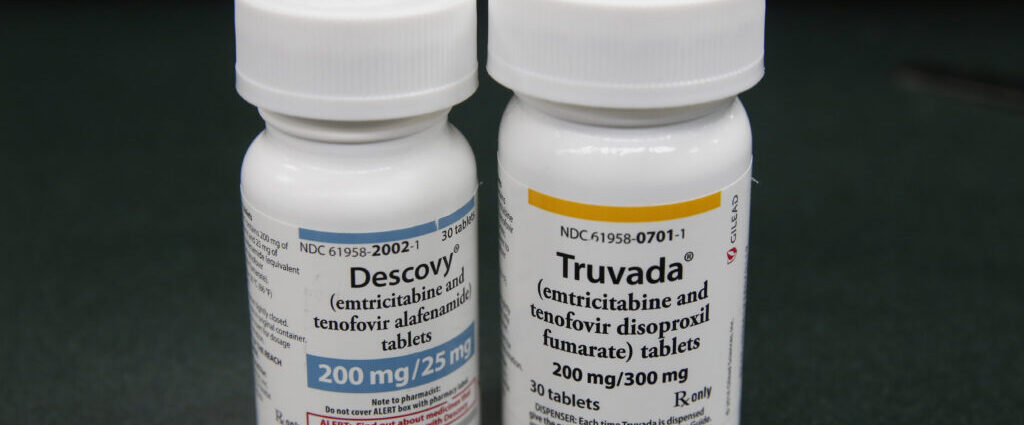
After more than a year of squabbling, a group of AIDS activists obtained an R&D agreement that was at the heart of a settlement between the U.S. government and Gilead Sciences over patents for HIV prevention drugs. But in their view, the deal shows the Biden administration missed a “historic” opportunity to invest in — and expand access to — HIV prevention tools.

As noted previously, the settlement resolved a lawsuit that was filed six years ago by the previous Trump administration after the Centers for Disease Control and Prevention maintained that Gilead infringed on its patent rights. The agency had helped fund academic research that later formed the basis for two Gilead HIV pills, Truvada and Descovy.

The administration had alleged that Gilead ignored the contributions by CDC scientists, exaggerated its own role in developing HIV prevention drugs, and refused to sign a licensing agreement despite “multiple attempts” at reaching a deal after unfairly reaping hundreds of millions of dollars from research funded by taxpayers.

Continue to STAT+ to read the full story…

This post was originally published here

The Ebola outbreak in eastern Congo “continues to outpace the response efforts,” the World Health Organization’s emergencies chief said on Tuesday after returning from a trip to Bunia, in Ituri province, which is one of the worst hit areas.

“Perhaps the most alarming finding is that many of the newly reported deaths are people who died in their communities without ever reaching a health facility and without receiving care,” Chikwe Ihekweazu said. “And as of today, 80% of new cases are outside our contact lists and so are coming to us from unknown chains of transmission.”

Read the rest…

This post was originally published here

This is the year artificial intelligence has emerged in the public square as a full-fledged bogeyman.

College grads boo commencement speakers who invoke AI as the modern equivalent of “plastics,” the career advice given to Dustin Hoffman’s character in the 1967 film “The Graduate.” Workers recoil when companies wield it as a cost-cutting, job-slashing sword. Even a wary Pope Leo XIV warns against the fusion of AI into nuclear war-fighting systems.

So this month’s low-key unveiling of Claude Science, an app that adapts Anthropic’s large language model for biopharma research labs, was a timely reminder that AI still has the potential to do more than reduce corporate head counts and endanger civilization.

Continue to STAT+ to read the full story…

This post was originally published here

Hospitals and health systems recorded 18 transactions in the second quarter after a lull in dealmaking early last year as providers look to partner up to bolster their finances.

This post was originally published here

Want to stay on top of the science and politics driving biotech today? Sign up to get our biotech newsletter in your inbox.

The need-to-know this morning

  • AstraZeneca is spending $600 million upfront to pick up global rights for the lung cancer drug Zegfrovy from the Chinese firm Dizal Pharmaceutical Co. The drug, an EGFR inhibitor, is approved in the U.S. and China for patients with a type of advanced or metastatic non-small cell lung cancer that has certain mutations, and is under review by regulatory agencies as a first-line therapy. AstraZeneca said the drug fit with its other products for EGFR-mutated lung cancer.

Akero team, backed by Fairmount, launches new immunology company

The former executive team of Akero Therapeutics, recently sold to Novo Nordisk, has partnered with the investment firm Fairmount, one of the sector’s most prolific company creators, to launch a publicly traded biotech centered around a long-acting immunology drug plucked from a Chinese firm. 

The new company, called Avere Therapeutics, is led by Andrew Cheng, Kitty Yale, and William White, the team that ran Akero Therapeutics and developed a drug for the fatty liver disease MASH that was sold to Novo for $5 billion. Now, they will work to develop an oral IL-23 targeted drug for psoriasis, ulcerative colitis, and other immunological conditions.

Continue to STAT+ to read the full story…

This post was originally published here

LONDON — An experimental Alzheimer’s drug from Biogen, designed with a novel approach, slowed patients’ cognitive decline in a mid-stage trial at roughly comparable rates as approved medicines, new data that bolstered the company’s case to move the treatment into a Phase 3 trial.

Although experts will wait to see the pivotal trial data before making their final assessments of the drug, called diranersen, the results from the Phase 2 trial, if backed up in the larger study, could rekindle the debate about how strong trial results have to be to signify that a drug can offer meaningful benefits for patients and caregivers. 

Still, Alzheimer’s specialists said they believed the drug was having an effect on disease progression given that different doses of diranersen led to improvements in patient performance on a number of tests compared to placebo. The drug also demonstrated an ability to lower the levels of a protein called tau, which forms toxic tangles in the brain and is associated with memory loss and the onset of other symptoms of Alzheimer’s. 

Continue to STAT+ to read the full story…

This post was originally published here

Rise and shine, everyone, another busy day is on the way. However, this is also shaping up as a beautiful day, despite forecasts predicting rising heat. The skies are tranquil, birds are chirping, and the official mascots are chasing creatures on the Pharmalot campus. This calls for celebration with a cup of stimulation. After all, staying cool on a hot day calls for a hot drink. So we are opening a new package of pecan pie for the occasion. What is upon us right now, however, is our ever-growing to-do list. Sound familiar? So here are some items of interest. Have a great day, everyone. …

A U.S. appeals court revived a lawsuit brought by Teva Pharmaceuticals that accuses Eli Lilly of breaching ​an agreement allowing Teva to market a generic ‌version of Lilly’s osteoporosis drug Forteo, Reuters says. The court reversed a lower court decision that found the deal expired before Lilly allegedly broke it. Lilly sued Teva in 2016 for patent infringement, but the companies ​settled in 2018 with a deal that allowed Teva to launch its generic in 2019, just before the relevant Lilly patents expired. The U.S. ​Food and Drug Administration separately granted Lilly three more years of exclusivity in 2020. Teva launched its generic in 2023 and sued Lilly ‌in ⁠2024, arguing that Lilly’s new exclusivity period unlawfully delayed its launch.

A large-scale trial has been launched, with $100 million in backing, to explore whether lifestyle changes coupled with GLP-1 agonists or similar therapies can reduce the risk of dementia, Pharmaphorum conveys. The three-year PROTECT-Cog study, announced at the 2026 Alzheimer’s Association International Congress in London, is drawing on earlier study results showing that lifestyle changes can help improve memory, thinking, and overall cognitive function. The study will enroll older adults who are at increased risk for cognitive decline and compare two structured lifestyle-change programs — one intensive and the other a slightly less rigid version — with and without drug treatment.

Continue to STAT+ to read the full story…

This post was originally published here

Get your daily dose of health and medicine every weekday with STAT’s free newsletter Morning Rounds. Sign up here.

Good morning. I’m a little in awe of all the great reporting that STAT published while I was out of office, including Bob Herman’s excellent series and Rose Broderick’s heartbreaking dispatch on family caregivers. And in July, no less! Help me catch up or just say hi: theresa.gaffney@statnews.com

Read the rest…

This post was originally published here

Four years into the U.S. Food and Drug Administration’s review of Zyn nicotine pouches, and not long before the agency approved them for sale, an FDA toxicologist ran some informal tests in her kitchen that led her to question whether the agency truly understood the addictive product it was about to green-light.

Christy Leppanen worked for the FDA’s Center for Tobacco Products, where she led a project examining the potential for microplastics exposure. A scientist who had worked on an environmental assessment of Zyn had repeatedly told her that the nicotine pouches melt in the mouth. But during a public health conference in late 2024, Leppanen said, she talked to an academic who reinforced her understanding that they don’t. 

Read the rest…

This post was originally published here

In 2020, the CASP competition vaulted AlphaFold to prominence and a Nobel Prize. But the era of people being impressed by an artificial intelligence model correctly predicting the structure of a protein — once a challenge many experts didn’t think would be solved in their lifetime — is over. Now drug developers want AI that can solve their big problems, like discerning whether the body is going to attack a drug candidate and render it useless. 

One such example is the pregnane X receptor, or PXR. When activated, PXR increases the production of an enzyme that specifically breaks down foreign organic molecules — such as drug molecules — so the body can dispose of them. The specific enzyme that PXR regulates can metabolize approximately 50% of all marketed drugs. 

Most drug development campaigns only discover whether candidates trip this sensor late in the game, forcing drug developers to go back to the drawing board. But if an AI model could reliably predict whether a given drug candidate will activate the PXR receptor, it could fix a lot of problems that present hurdles for new potential drugs, including the drug exiting the body too fast or creating drug–drug interactions.

Continue to STAT+ to read the full story…

This post was originally published here

Alcohol kills more than 178,000 Americans each year. It doesn’t have to. 

Drinking’s deadly toll in the U.S. is the result of decades of policy decisions, industry influence, and cultural inertia, as STAT shows in its investigative series, The Deadliest Drug. The U.S. has not made a concerted effort to reduce heavy drinking since Prohibition ended nearly a century ago. 

Read the rest…

This post was originally published here

The Deadliest Drug,” a multipart series by STAT, spotlights an epidemic hidden in plain sight: excessive alcohol use. Alcohol kills more Americans each year than all illicit drugs combined, and yet health officials, industry leaders, and the public rarely focus on it. STAT reporters Isabella Cueto and Lev Facher examined the epidemic’s human cost and the complex causes — from personal to political — of the most harmful substance use crisis in the U.S. STAT data editor J. Emory Parker amplified many of the findings in data-rich charts. 

These charts capture the toll, emerging risks, shifting usage, and economic stakes of America’s relationship to alcohol. 

1. Alcohol-related emergency department visits nearly doubled in the U.S. between 2003 and 2022

Drinking-related adverse events, including emergency room visits, have soared in recent decades. American emergency rooms recorded roughly 5.4 million visits due to alcohol in 2022, and in many states, alcohol-related hospitalizations dwarf those stemming from other substances, like opioids. 

Continue to STAT+ to read the full story…

This post was originally published here

Imagine a patient who arrives at her doctor’s clinic furious. She shows her doctor a video of him — white coat, plausible exam room, familiar cadence — endorsing an over-the-counter hormone supplement for menopausal symptoms, dismissing standard therapies as “pharma scams,” and offering a discount code.

But the physician never recorded that message. Someone built a deepfake from online recordings, including interviews, webinars, and patient-facing videos, and used the synthetic likeness to sell an unregulated product. This scenario is no longer hypothetical. Investigations have documented AI-generated videos impersonating specific clinicians whom they name to promote supplements and other dubious treatments on major platforms

Read the rest…

This post was originally published here

This is the web edition of STAT’s AAIC in 30 newsletter. Sign up to get it in your inbox here.

Hi there from Day 2 of AAIC. There may be 10,200 people here at the Alzheimer’s Association International Conference — up 1,700 from last year — from 115 countries, as the association’s Maria Carrillo announced at Monday’s plenary session. But by far my favorite person is the woman I saw taking a nap on a bench in a corridor, her sunhat pulled over her eyes. You are an inspiration.

One housekeeping note: Due to the vagaries of newsletter scheduling, we won’t have an edition tomorrow, but will be back in your inbox with a wrap-up edition on Wednesday. Keep your eyes on statnews.com tomorrow though and expect some conference news around 9:15 a.m. Eastern.

Latin American study praised as ‘landmark’ effort

For a disease that’s proven as intractable to treat as Alzheimer’s, it’s been known for quite some time what factors can heighten one’s risk for dementia. Poor nutrition, sleep, and cardiovascular health; a lack of physical activity and social engagement; and lower education levels all increase the likelihood that a person will develop Alzheimer’s.

A study reported at last year’s AAIC put interventions designed to reduce risk to the test. The U.S. Pointer study found that an intensive, structured program that encouraged improved diet and exercise, cardiovascular health monitoring, and other steps helped protect cognitive function among older adults at risk of dementia to a greater extent than a lower-intensity program that participants navigated on their own, even as both groups saw benefits. The study underscored that healthy habits contribute to a healthy brain.

Continue to STAT+ to read the full story…

This post was originally published here

This is the online version of STAT’s weekly email newsletter Health Care Inc. Sign up here.

I first visited a Buc-ee’s a few years ago in Kentucky on a road trip. It’s a melting pot of American culture and consumerism (with a really good cherry limeade pop). It’s also apparently an aggressive trademark litigator over its beaver mascot. Take a pit stop and share your news and tips here: bob.herman@statnews.com.

[Tim Robinson voice] You sure about that?

UnitedHealth Group was happy to promote a new audit that said nearly all of the diagnoses recorded for its Medicare Advantage members during home visits (97%) were justified by medical records. But the results are not nearly as clean, or useful, as the company suggests.

Continue to STAT+ to read the full story…

This post was originally published here

Martha Lillard had just turned 5 when she was diagnosed with polio and depended on an iron lung to live. She died June 26 in Oklahoma, the last U.S. polio patient who used the machine, her sister said. She was 78.

“They told her she wasn’t supposed to live past 20 years old,” Lillard’s younger sister, Cindy McVey, told The Associated Press on Friday. “She had the enthusiasm and the drive to continue living and make the best of her life.”

Read the rest…

This post was originally published here

The model, which is set to sunset at the end of this year, generated $988 million in savings for Medicare in 2024, according to new CMS data. That’s up from almost $695 million in savings from the year prior.

This post was originally published here

Good morning, everyone, and welcome to another working week. And of course, it is nice to see you again after we stepped away for a brief hiatus (and thanks to our pinch hitters last week). Not surprisingly, we are scurrying to catch up on events and way too many emails, but also making time for a cup of stimulation. Our choice today is maple bourbon. So please join us as we dig in. To that end, we have accumulated a brief menu of tidbits for you to peruse as you brace yourself for what lies ahead. We hope that all goes well and that you conquer the world. Meanwhile, do keep in touch. …

U.S. Health and Human Services Secretary Robert F. Kennedy Jr. is pressing forward with his effort to help Americans stop taking psychiatric drugs, a medical practice known as deprescribing, STAT reports. Earlier this month, dozens of mental health professionals met with federal health officials to map out forthcoming clinical guidance they hope will help providers instruct patients on how to come off of antidepressant medications. A senior HHS official said they discussed gaps in the research around deprescribing SSRIs, including the side effects a person may experience, which vary depending on the drug and how long the person was on it.

The U.S. Food and Drug Administration ​approved a wearable form of Sanofi’s blood cancer drug, Sarclisa, offering multiple ‌myeloma patients a less burdensome alternative to intravenous infusions, Reuters writes. This becomes the first cancer drug approved by the FDA that can be delivered through an on-body injector, attached ​to the skin. Subcutaneous dosing can significantly reduce time spent in infusion centers for patients who receive repeated treatment courses, while also easing the strain on oncology clinics and nurses. The ​infusions can take up to three hours, while the median injection ​time for the wearable device is 13 minutes

Continue to STAT+ to read the full story…

This post was originally published here

Want to stay on top of the science and politics driving biotech today? Sign up to get our biotech newsletter in your inbox.

Lots happening in London these days, my colleague Andrew Joseph reports: At a pancreatic cancer meeting, researchers were buzzing about the implications of daraxonrasib, and at a major Alzheimer’s meeting, tau therapies are taking center stage.

Back here in the U.S., HHS has begun to craft national guidance on safely tapering SSRIs, and the FDA just cleared Sanofi’s wearable injector for a myeloma drug.

Continue to STAT+ to read the full story…

This post was originally published here

Want to stay on top of the science and politics driving biotech today? Sign up to get our biotech newsletter in your inbox.

Good morning. In case you missed it, my pal Bob Herman got the Joe Kernan treatment on CNBC’s “Squawk Box” on Friday, where he discussed his excellent new series “Out of Pocket, Out of Reach.” Kernan got in a lot of digs at Democrats and Obamacare, but Bob kept his comments apolitical. A true professional! 

Read the rest…

This post was originally published here

The settlement could be the end of a long legal saga for Omnicare, which filed for bankruptcy last year after a judge ordered the company to pay nearly $950 million for fraudulently billing government health programs.

This post was originally published here

WASHINGTON — Health secretary Robert F. Kennedy Jr. is pressing forward with his effort to help Americans stop taking psychiatric drugs, a medical practice known as deprescribing.

Earlier this month, dozens of mental health professionals met with federal health officials to map out forthcoming clinical guidance they hope will help providers instruct patients on how to come off of antidepressant medications. While the Department of Health and Human Services has discussed plans to hold such a meeting, the outlines of the discussion haven’t been reported.

During those talks, they reviewed guidance from European nations and worked on recommendations for nonmedication-based options for patients to address their mental health, such as therapy. A senior HHS official said they discussed gaps in the research around deprescribing SSRIs, including the side effects a person may experience, which vary depending on the drug and how long the person was on it, and how to recognize the difference between those side effects and a return of a patient’s depressive symptoms.

Continue to STAT+ to read the full story…

This post was originally published here

LONDON — When researchers started planning a pancreatic cancer conference here, the aim was to simply offer a counterpart to a regular U.S. meeting, where international scientists and doctors could discuss the latest developments in the specialty. 

Then came the biggest shake-up in pancreatic cancer care in decades. 

“It’s one of those moments,” Talia Golan, an oncologist at Israel’s Sheba Medical Center, said on a panel that conference organizers hastily added to the schedule centered on a new pancreatic cancer drug. She likened the medicine’s recent clinical trial performance to other milestones in cancer treatment such as the arrival of the first checkpoint inhibitors. 

Continue to STAT+ to read the full story…

This post was originally published here

On three of my last seven flights, a request came over the cabin speakers: “Is there a doctor on board?” Like many physicians, I responded automatically.

What struck me afterward was not the frequency of those requests but how unremarkable the whole process seemed — to the crew, to other passengers, and, eventually, to me. None of the patients were in cardiac arrest. The complaints were the kind that fill any urgent care waiting room on a Tuesday afternoon: dizziness, nausea, feeling faint, generalized malaise.

Read the rest…

This post was originally published here

In 2018, Kristine Fifer was lucky to avoid bankruptcy. 

Her son, Eddie, had lost the nurse provided to him by the state after he turned 22. Maryland health officials told Fifer that he didn’t qualify for nursing care, even though Eddie’s cerebral palsy, feeding tube, and other complex medical conditions require around-the-clock care. Fifer spiraled as she sought to pay for the care Eddie needed. She lost her job, took on heaps of debt as bills piled up, and eventually called a lawyer about filing for bankruptcy. 

Read the rest…

This post was originally published here

Across the United States, the shortage of forensic pathologists has reached a critical level. According to the National Association of Medical Examiners (NAME), only about 850 forensic pathologists are currently practicing nationwide — roughly 400 fewer than the number needed to meet today’s demands, as more than 3 million Americans die each year.

With the increased demand for autopsies and medicolegal death investigations, many states are facing delays in cases that impact justice and public health. In some regions, a single medical examiner may oversee hundreds of deaths each year, leading to bottlenecks that can slow criminal cases, complicate insurance claims, and leave families waiting months and sometimes years for answers.

Read the rest…

This post was originally published here

This is the web edition of STAT’s AAIC in 30 newsletter. Sign up to get it in your inbox here.

Welcome to the first edition of our pop-up newsletter from AAIC. I’m STAT’s London-based reporter, and I’ll be here with you over the next couple days. I hope those of you in town can find time to escape the abyss of the conference center and enjoy London, because this city in the summer is something special. Maybe you’re ahead of the curve and took in England’s win last night. In which case, maybe you’re joining me in needing to pound the coffee. Any thoughts, questions, or hot takes on Zverev v. Sinner, I’m at Andrew.Joseph@statnews.com.

One other note before we get going: STAT has put together a special report on dementia diagnostics, treatments, and care. We also have a special conference discount on offer, so head here and use the code “AAIC” to download the report for only $5. With the exchange rate, that’s less than the cost of this morning’s flat white.

Continue to STAT+ to read the full story…

This post was originally published here

WASHINGTON — The Trump administration’s pick to oversee preparedness and response to public health emergencies and disasters has questioned the use of the hepatitis B vaccine in infants and raised the disproven link between vaccines and autism in past comments reviewed by STAT.

Those comments by Sean Kaufman, nominated to be Assistant Secretary for Preparedness and Response, are part of an undercurrent of vaccine skepticism among some high-ranking Department of Health and Human Services officials under Secretary Robert F. Kennedy Jr. — despite efforts from White House officials to steer the conversation away from vaccines.

Read the rest…

This post was originally published here

About 4,500 workers at Mass General Brigham are striking this week, while employees at Mount Nittany Medical Center in Pennsylvania said they would take to the picket line later this month.

This post was originally published here

Good morning, everyone. Damian Garde here, filling in for Ed Silverman at Pharmalot’s satellite campus along the East River, where today’s cup of stimulation is filled not with coffee but rather a smoothie of curious color and questionable contents (what exactly is an “adaptogen”?). Anyway it’s Friday, as you’re almost certainly aware, and here are some tidbits to help you through the waning hours of another working week. …

German lawmakers passed a bill that would more than double the discount on branded medicines drugmakers must provide to the government, Reuters reports. The policy, part of an effort to plug a sizable budget gap in the country’s health insurance system, would increase the mandatory rebate from 7% to 15.5%. Industry groups have said the bill, if it clears Germany’s upper chamber, would deter investment and imperil the country’s access to new medicines.

The rapid rise of China’s biotech industry has led some American drug developers to do their work in near total secrecy, the Wall Street Journal observes. U.S. startups are increasingly loath to publish early data, disclose their scientific ambitions, or even publicize which diseases they hope to treat, all in fear that nimble Chinese firms will use that information to whip up competing drugs and beat them to the punch of starting clinical trials.

Continue to STAT+ to read the full story…

This post was originally published here

Want to stay on top of the science and politics driving biotech today? Sign up to get our biotech newsletter in your inbox.

ARPA-H has unveiled a $160 million effort to speed bespoke gene-editing therapies for rare diseases into the clinic. Meanwhile, Roche has abandoned two Huntington’s gene-silencing drugs after disappointing data, and drugmakers have stepped in to promote Medicare’s new obesity drug discount program.

I got coffee with my cousin this morning here in SF. Before leaving for his job at an AI behemoth, he said the bone-chilling July gloom is perfect “working weather.” 

Continue to STAT+ to read the full story…

This post was originally published here

Get your daily dose of health and medicine every weekday with STAT’s free newsletter Morning Rounds. Sign up here.

In case you missed the launch of Bob Herman’s incredible “Out of Pocket, Out of Reach” series about the soaring costs of employer-based health insurance, he will be talking about the series during his office hours later this month. Sign up here.

Read the rest…

This post was originally published here

Jeremy Faust cuts through a hallway of Boston’s Brigham and Women’s Hospital on his way to see a patient who is struggling to breathe. It’s the start of his evening shift, and the emergency department hums with ambient sound: bleeping monitors, the rumbling wheels of medical carts, the squeaky soles of hustling staff. People on gurneys line the corridor, some wincing in pain, others chatting with relatives.

On this Wednesday evening in May, Faust is working what is typically a quieter shift, as far as emergency departments go. Still, he is overseeing a team of doctors, students, and physician assistants, and will tend to more than two dozen patients before signing off for the night.

It’s an understatement to say Faust likes to keep busy. Minutes earlier, he’d posted an article on his influential Substack newsletter, Inside Medicine, providing an update on a major international news story. An alert sent to the newsletter’s nearly 85,000 subscribers announced his “scoop”: Twenty-six passengers aboard the MV Hondius, the hantavirus-hit cruise ship docked at the time off Cape Verde, had disembarked much earlier than previously known — raising the possibility they could spread the rare virus in the United States.

Continue to STAT+ to read the full story…

This post was originally published here

NEW YORK — A couple of years ago, a reporter approached the Boys’ Club of New York looking to interview some of its middle-schoolers for a story about the mental health crisis in boys. 

It’s easy to see why. Many of the about 2,500 boys who participate in the 150-year-old organization’s after-school and weekend activities come from disadvantaged socioeconomic backgrounds, often living in single-parent households or facing the threat of immigration enforcement. With limited access to academic and developmental support, the risk factors are plentiful. 

Read the rest…

This post was originally published here

In March, the Medicare Payment Advisory Commission (MedPAC) released its annual report to Congress on Medicare payment policy. The data related to physician payment are clear: By every metric we track, primary care in America is succeeding, and it has been for years. Nearly all Medicare beneficiaries have a primary care provider (PCP). Over three-quarters can see their PCP within two weeks. Patients in rural environments have less trouble finding a PCP and even shorter wait times. Services and spending on evaluation and management codes are increasing, and compensation among PCPs is rising faster than the rest of the field.

Yet this runs counter to the pervasive narrative that investing more in primary care is the key to solving the American health care crisis.

Read the rest…

This post was originally published here

Why does getting family health insurance through a job cost as much as buying a new car? How did a whistleblower take on an insurance contractor? And who might be the new Food and Drug Administration commissioner?

We discuss all that and more on this week’s episode of “The Readout LOUD,” STAT’s weekly biotech podcast. 

Read the rest…

This post was originally published here

ARPA-H, the U.S.’ “moonshot” agency for health research, announced Thursday that it will spend up to $160 million to push forward custom gene editing treatments for a spate of rare diseases. 

The program, called THRIVE, will back seven different teams pursuing various groups of conditions affecting different organ systems. 

Each team has a deadline of starting clinical trials by year three of the program, although some may start much sooner.  

Continue to STAT+ to read the full story…

This post was originally published here

NEW YORK — Nearly 1,000 people in Michigan have been diagnosed with a parasitic infection that can cause weeks of watery diarrhea, making it the largest such outbreak in state history and one of the nation’s largest in years.

No deaths have been reported and the source of the cyclospora infections hasn’t been identified. Meanwhile, investigations into similar illnesses have been going on in 28 other states, including in Ohio, where people just across the Michigan border are also becoming sick.

Read the rest…

This post was originally published here

You’re reading the web edition of D.C. Diagnosis, STAT’s twice-weekly newsletter about the politics and policy of health and medicine. Sign up here to receive it in your inbox on Tuesdays and Thursdays.

I’m only just learning about the Norse soccer god Erling Haaland, who lives on copious amounts of organ meat and raw milk. Send news tips and “ancestral diets” to John.Wilkerson@statnews.com or John_Wilkerson.07 on Signal.

ACA premium spikes, and a thong-clad chicken suit

There are many reasons to care about the skyrocketing cost of ACA marketplace plans costs. One of them is the impact on small businesses.

Continue to STAT+ to read the full story…

This post was originally published here

Want to stay on top of the science and politics driving biotech today? Sign up to get our biotech newsletter in your inbox.

A father fights to create and then save his daughter’s gene therapy, the White House nears a decision on an FDA chief, and the Trump administration pushes drugmakers to reshore generics manufacturing.

A quest to save Grace — and help rare disease patients everywhere

With $70 million and seemingly every fiber of his being, Matt Wilsey built a gene therapy company from scratch — recruiting Nobel laureates and biotech veterans to will an experimental treatment into existence for his daughter Grace. The treatment, for the ultra-rare disorder NGLY1 deficiency, landed her back in the hospital before she slowly began to recover, STAT’s Jason Mast and Matt Herper write.

Continue to STAT+ to read the full story…

This post was originally published here

You’re reading the web edition of STAT’s Health Tech newsletter, our guide to how technology is transforming the life sciences. Sign up to get it delivered in your inbox every Tuesday and Thursday.

Good morning health tech readers!

Today, new research backed by OpenEvidence counters a high-profile study from a few weeks earlier. Plus: a look at Dexcom’s new clearance and an interesting AMA survey on wearables.

Continue to STAT+ to read the full story…

This post was originally published here

Good morning, Jason Mast here filling in for Ed Silverman again. Today, in STAT’s Brooklyn outpost we’re drinking — yes, heresies of heresies — plain old water. Sometimes you have to give the heart a rest. The news, though, never stops. Here are the headlines. …

The White House is reviewing a list of top contenders for the FDA commissioner post, STAT reports. The shortlist includes Heidi Overton, a White House adviser; Jeffrey Vacirca, an oncologist and health system executive; and Stephen Ferrara, a health affairs official at the Defense Department. The role has been filled, on an acting basis, by Kyle Diamantas, since Marty Makary resigned earlier this year.

A closely watched heart failure drug from AstraZeneca and Ionis failed in a pivotal trial, STAT tells us. The drug, called Wainua, was a core part of AstraZeneca’s plans to reach $80 billion in annual sales, and the news sent both companies’ stocks tumbling. Some analysts partly blamed the recent spate of approvals of other medications for the disease, called ATTR-cardiomyopathy, from Alnylam and BridgeBio. Many patients were already on another drug, making it harder to demonstrate Wainua’s effect. 

Continue to STAT+ to read the full story…

This post was originally published here

A former executive is claiming that the MA insurer recorded millions of dollars as capital expenditures that should have been operating expenses, inflating its value. Alignment strongly denied the allegations.

This post was originally published here

Get your daily dose of health and medicine every weekday with STAT’s free newsletter Morning Rounds. Sign up here.

Good morning, everyone. Now that we’ve all narrowly survived a workday without the World Cup, we can at last return to our new normalcy this afternoon for France 3-1 Morocco.

Read the rest…

This post was originally published here

This story first appeared in Adam’s Biotech Scorecard, a subscriber-only newsletter. STAT+ subscribers can sign up here to get it delivered to their inbox.

Northwest Biotherapeutics, a public biotech company developing a treatment for brain cancer, submitted a marketing application to U.K. regulators in late December 2023. The review was supposed to take 150 days, under an expedited regulatory pathway for drugs that address serious unmet medical needs.

As you’re reading this newsletter, two years, six months, and 18 days have elapsed without an approval decision. Why the extra-long delay? Regulators at the U.K’s Medicines and Healthcare products Regulatory Agency, or MHRA, won’t comment, telling anyone who inquires, including me, that it’s up to Northwest Bio to provide an update on its brain cancer treatment, called DCVax.

Continue to STAT+ to read the full story…

This post was originally published here

LONDON — In a blow to its cardiovascular aspirations, AstraZeneca said Thursday that its drug for a heart disease — one that has become an increasingly competitive target for biopharma companies — failed in a pivotal trial.

The drug, called Wainua, on which AstraZeneca is partnered with Ionis Pharmaceuticals, did not outperform placebo in reducing cardiovascular death and clinical events for patients with a condition known as ATTR-CM, or transthyretin-mediated amyloid cardiomyopathy. 

AstraZeneca’s U.S. shares were down some 8% in premarket trading, while its London-listed shares were down 9% early Thursday. Ionis shares, meanwhile, were down 12% in premarket hours.

Continue to STAT+ to read the full story…

This post was originally published here

The Great American State Fair in Washington wraps up this week. During its two-week run, the programming included two “MAHA Mondays,” which featured speakers and administration officials representing the Make America Healthy Again movement. 

STAT Washington correspondent Chelsea Cirruzzo and I stopped by the second MAHA Monday earlier this week. We spoke with Health and Human Services senior adviser Calley Means about the event and how health and wellness fits into the American identity. We also spoke with acting Surgeon General Stephanie Haridopolos about a recent surgeon general’s advisory on the harms of screen use.

This post was originally published here

SAN FRANCISCO — Matt Wilsey adjusted the plastic tube coming out of his 15-year-old daughter’s stomach and tried, again, not to think beyond the next 15 minutes. His job was to be there with Grace and let his wife, Kristen, rest. He could not think about the future. He could not wonder, again, if he had made the right choice or if his daughter would survive.

Three weeks before, Grace received a gene therapy meant to save her life and spare her further harm from NGLY1 deficiency, an ultra-rare genetic condition that came with a cascade of profound developmental challenges, preventing her from ever speaking or walking with ease. 

Wilsey fashioned the therapy himself.

He did not sit in the lab. He did not inject the rats or slice open their brains. But he had hired the scientists who did. He recruited advisers, including Nobel Prize winners, brought together the families of other children diagnosed with the condition, and pulled together an A-team of investors and donors. Through it all, he was sustained by his devout Catholic faith.

He came to accept that Grace would never live an independent life. But he hoped the drug would allow her to live longer, maybe even say a few words. And he believed the game plan he wrote might serve as a guide to curing hundreds of other rare diseases. 

“We carry the hopes of many,” he wrote to his staff once. “I’m not just talking about NGLY1 families. I receive emails, calls, and texts from professionals and other advocates. They are blown away by what we have accomplished and hope we are an ice breaker for them. Our trial has the potential to really boost / save a decimated field.”

Then the drug meant to save Grace’s life landed her back in the hospital, feebler than she had ever been. He sat beside his daughter, with her soft eyes and long braided hair, her face all puffed up, and prayed her condition would improve.

For a father and his sick child, it was a matter of life and death. But the entire pharmaceutical industry was watching, too.

Continue to STAT+ to read the full story…

This post was originally published here

As global approvals of new anti-obesity medicines accelerate, drugmakers have a public service announcement for the world: “Obesity is a disease.” Eli Lilly launched a website asserting that obesity is not merely a risk factor for medical complications but a chronic and complex medical entity in its own right. Novo Nordisk, more circumspectly, appeals to institutional authority on its website: “Recognised as a disease by the World Health Organization, obesity is serious, progressive and chronic.”

It is no surprise that the new wave of obesity pharmacotherapy has leaned heavily on disease framing. A medical solution requires a medical problem, and a chronic medical problem provides a rationale for long-term medical treatment.

Read the rest…

This post was originally published here

In 2016, about six weeks after cannabis was legalized for adults in Massachusetts, I was at a bustling New Year’s Eve party. It was a fun crowd, and I was having a good time. Suddenly, a friend shouted, “Peter, come quickly, you’re the only doctor here who isn’t high. We have an emergency.”

I ran into the next room to find a 70-ish woman, an acquaintance, looking incredibly disoriented. She kept repeating, “I’m going to die. I’m going to die,” and seemed unsteady. I did my best to calm and comfort her, but within a few minutes, she collapsed. I checked her pulse but she didn’t need CPR. She came to in a few minutes, anxious and confused.

Read the rest…

This post was originally published here

WASHINGTON — Health secretary Robert F. Kennedy Jr. is preparing to make it easier for people to claim that they were injured by a Covid-19 vaccine and receive compensation. 

Kennedy is set to start the process of compiling a list of injuries that are presumed to be caused by Covid shots. People with those conditions could then ask for compensation from the government. It’s not clear what conditions may make the list—and that’s something that outside experts are keeping a close eye on.

Kennedy has long been critical of vaccines, saying none have been adequately safety tested. He’s said that he plans to overhaul a similar, but separate program that provides compensation for individuals who claim injury by a vaccine recommended by the federal government. 

Continue to STAT+ to read the full story…

This post was originally published here

BOSTON — Governor Maura Healey has summoned the state’s largest health system and its striking nurses to the State House on Wednesday in an attempt to broker a new contract, according to the Massachusetts Nurses Association.

The calling of the late-afternoon meeting came hours after a boisterous start to Massachusetts’ biggest-ever nurses strike, and the first at Brigham and Women’s Hospital. Mayor Michelle Wu also helped arrange the meeting, the union said.

Thousands of Brigham nurses and supporters poured onto Francis Street near the hospital starting at 7 a.m., shaking cowbells, banging on plastic buckets and cheering at a deafening chorus of supportive honks from passing cars. The nurses, sporting “Union Strong” and “Brigham Nurses United” shirts, waved signs calling out management. “Value Nurses Like You Value Your Bonu$e$,” one sign read.

Continue to STAT+ to read the full story…

This post was originally published here

WASHINGTON — The top contenders to lead the Food and Drug Administration have been sent to the White House for a final review and decision, according to a person familiar with the process.

The finalists include Heidi Overton, a White House adviser; Jeffrey Vacirca, an oncologist and health system executive; and Stephen Ferrara, a health affairs official at the Department of Defense.

Continue to STAT+ to read the full story…

This post was originally published here

WASHINGTON — Last week, pharmaceutical leaders filed into a meeting room in the Eisenhower Executive Office Building, next to the White House, for a meeting with Secretary of State Marco Rubio, health secretary Robert F. Kennedy Jr., and HHS Chief Counsel Chris Klomp.

The administration officials had a message for the industry: It’s time to bring production of essential medications back to the U.S. — or at least closer to home. 

The meeting, described by an administration official and two people familiar with the event, focused on increasing U.S. control of the supply chains for the 86 medicines deemed essential by the health department’s Assistant Secretary for Preparedness and Response.

Continue to STAT+ to read the full story…

This post was originally published here

Longevity entrepreneur Bryan Johnson shared some bad news on social media recently. “I have an autoimmune disease. My stomach is eating itself,” he wrote on X. The good news? “I’m going to try and solve it.” 

The disease in question is autoimmune gastritis, a chronic inflammatory condition in which antibodies destroy acid-producing cells in the stomach, which prevents people from absorbing iron. It’s not in itself a fatal disease, but it is linked to an increased risk of stomach cancer and, eventually, to deficiencies in vitamin B12, which in turn causes anemia and neurological complications. 

Read the rest…

This post was originally published here

For the second year in a row, many Affordable Care Act insurers are proposing double-digit premium increases, driven by rising medical costs as well as policy changes by Congress and the Trump administration.

In preliminary filings with state regulators, insurers are seeking a median rate increase of 14% for 2027, according to an analysis of filings in 16 states and the District of Columbia by the Peterson-KFF Health System Tracker.

Read the rest…

This post was originally published here

Could a lifesaving lung transplant strategy that contained the Covid-19 virus also save patients whose advanced lung cancer hasn’t spread? 

That’s the question that inspired surgeons and oncologists at Northwestern Medicine to offer double lung transplants to patients who had run out of treatment options but whose late-stage cancer hadn’t left their lungs. People with late-stage lung cancer have not been transplant candidates before for two reasons: rates were high for cancer recurrence and low for survival.

Read the rest…

This post was originally published here

Insurers are proposing a median premium increase of 14% for 2027, according to KFF, suggesting another year of double-digit premium hikes as policy upheaval and rising costs continue to roil the marketplaces.

This post was originally published here

Want to stay on top of the science and politics driving biotech today? Sign up to get our biotech newsletter in your inbox.

Good morning. If you recall, a few years ago, Pfizer moved its New York headquarters from a building in Midtown to Hudson Yards. The company’s timing was lucky.

Yesterday, officials evacuated that Midtown building, which is being converted into an apartment complex, after several floors caved in and two columns buckled. Officials say the building is at risk of collapse.

Continue to STAT+ to read the full story…

This post was originally published here

Prime Medicine said Wednesday that it had won an arbitration dispute against Beam Therapeutics, resolving for now a clash that had pitted two well-backed gene-editing companies that had been spun out of the same lab against each other.

An arbitrator ruled that Prime’s work on a gene-editing drug for the rare liver disease alpha-1 antitrypsin deficiency, or AATD, did not violate a 2019 agreement designed to prevent the two companies from competing against one another.

The ruling paves the way for Prime to start a clinical trial for AATD this quarter, lifting the biotech’s stock 11% Wednesday morning. The outcome, however, is a blow to Beam Therapeutics.

Continue to STAT+ to read the full story…

This post was originally published here

Vertex Pharmaceuticals will spend $10 billion to acquire Crinetics Pharmaceuticals and its drug for a rare endocrine disorder, the companies announced Monday.

Through the deal, Vertex will pick up Crinetics’ commercial drug, Palsonify, which was launched last year and which treats a rare endocrine disorder called acromegaly, as well as other drug candidates that have blockbuster potential if approved. The company is also in the late stages of developing a therapy for congenital adrenal hyperplasia. 

The $10 billion price tag for Crinetics amounts to roughly $85 per share of the company’s stock. Following the news, Crinetics shares rose 101% in after-hours trading. 

Continue to STAT+ to read the full story…

This post was originally published here

Good morning, Jason Mast here filling in for the one and only Ed Silverman. We’re here in STAT’s Brooklyn outpost today, where everyone’s gazing across the East River to see whether Pfizer’s former headquarters will — quite literally, quite alarmingly — crumble to the ground. It does appear things are more stable than yesterday, which will hopefully give us time and the breathing space to focus on today’s headlines. …

The FDA approved a new kidney disease drug from Vera Therapeutics, STAT states. The drug, called Trutakna, is designed to treat IgA nephropathy, a condition in which immune antibodies build up in the kidneys. It is one of several drugs now entering or nearing the market for the disease. Vera will charge $425,000 annually before customary insurance discounts and rebates.

U.K. officials are nearing a drug-pricing deal with AstraZeneca and Daiichi Sankyo to assure access to a life-extending breast cancer drug, Bloomberg reports. The deal would allow certain women in England and Wales to receive Enhertu, an antibody-drug conjugate that has been shown to extend survival for some patients by around six months and is widely available elsewhere. The U.K. drug-pricing regulator had previously deemed the medicine not cost-effective — though that was before the U.K. changed some of its drug-pricing metrics as part of a trade deal with the Trump administration.  

Continue to STAT+ to read the full story…

This post was originally published here

Get your daily dose of health and medicine every weekday with STAT’s free newsletter Morning Rounds. Sign up here.

Good morning from your shriveled-up Fourth of July leftovers. On this day in 1776, the Declaration of Independence was read in public for the first time, in Philly’s Independence Square. It was subsequently published in newspapers throughout the no-longer-colonies, though not always on the front page (!).

Read the rest…

This post was originally published here

Thousands of federal civil servants who academic researchers see as partners in conducting their work were fired. An unprecedented number of scientific projects funded by previous administrations were terminated. Universities were pressured to abandon diversity programs and work to curb health disparities. On a Friday evening, the government tried to push through a dramatic change to how it reimburses universities for research overhead

All of these actions in the first year of the Trump administration were rapidly challenged in federal court, in many cases resulting in the administration having to walk back policies because they ran afoul of the Administrative Procedures Act, which governs how new policies and regulations are rolled out.

Andrew Twinamatsiko, who is director of the Center for Health Policy and the Law at Georgetown University and runs a health care litigation tracker, describes what happened last year as “tempests that we could weather” until there’s a new administration, when “there can be ways of reverting back to the baseline that we used to have.” 

Continue to STAT+ to read the full story…

This post was originally published here

A cardiologist reviews an echocardiogram flagged by an algorithm she did not choose, trained on data she has never seen, deployed by a health system that did not ask for her input. The algorithm recommends a diagnosis. She disagrees. She overrides it. The patient does well.

No one will remember this moment. But if she had acquiesced and the patient suffered harm, she would be the one in the deposition, with her license on the line. Not the engineer who built the algorithm. Not the vendor who sold it. Not the health system that deployed it.

Read the rest…

This post was originally published here

After Doug met Jane, he felt good. So too did Gabriella, his wife. Doug — a retired minister and writer — needed someone to talk to, and in conversation about his many accomplishments, Jane was indefatigable. For at least a few hours, Doug’s boredom vanished, and Gabriella no longer felt like an activities director on a cruise ship.

I wrote about Doug and Gabriella in my May Neurotransmissions column about ambiguous loss. Doug told me he was “bored, bored, bored,” and Gabriella said she struggled to find activities to relieve that boredom.

Jane was a solution. What she gave to Doug didn’t simply pass the time. It was a meaningful relationship. Except Jane wasn’t a person. She was an artificial intelligence chatbot.

Continue to STAT+ to read the full story…

This post was originally published here

The Food and Drug Administration on Tuesday approved a new medicine from the biotech company Vera Therapeutics for patients with a type of chronic autoimmune kidney disease.

The drug, called Trutakna, was cleared to treat IgA nephropathy, or IgAN, a disease caused by the buildup of immune antibodies in the kidneys. The condition leads to progressive loss of kidney function and potentially organ failure requiring dialysis.

“We’re extremely excited to bring Trutakna to patients,” Vera CEO Marshall Fordyce told STAT, in an interview conducted ahead of the FDA approval. 

Continue to STAT+ to read the full story…

This post was originally published here

You’re reading the web edition of D.C. Diagnosis, STAT’s twice-weekly newsletter about the politics and policy of health and medicine. Sign up here to receive it in your inbox on Tuesdays and Thursdays.

Cody Rhodes, a WWE star and friend of the trans community; and Triple H, former pro wrestler and son-in-law of Education Department Secretary Linda McMahon, helped kick off the return of the presidential fitness test. Send news tips and your favorite wrestling moves to John.Wilkerson@statnews.com or John_Wilkerson.07 on Signal.

U.S. workers and businesses are getting soaked

Today, Bob Herman launched a series on the crumbling employer-based health insurance system. He wrote about it for his Health Care Inc. newsletter, so with his blessing, I’m going to cut-and-paste some of that here. Enjoy.

Continue to STAT+ to read the full story…

This post was originally published here

Ascension beat out other offers, including from HCA and Optum, to give Williamson a financial lifeline amid serious challenges facing regional hospital operators. The deal is expected to be final by 2028 at the latest.

This post was originally published here

This is the online version of STAT’s weekly email newsletter Health Care Inc. Sign up here.

Hello to all friends, new and old. We are officially launching a series called Out of Pocket, Out of Reach, which explores the different ways the employer-based health insurance system is crumbling. I want to hear from you: how your job-based coverage is affecting you or your business, whether you love it or hate it, and everything in between. Don’t be shy: bob.herman@statnews.com.

U.S. workers and businesses are getting soaked

There’s a very high likelihood that you, dear reader, get your health insurance from your job or the job of a loved one. There’s also a very high likelihood your earnings have suffered over time, quietly behind the scenes. It’s arguably never been worse than now, and it isn’t likely to get better.

Continue to STAT+ to read the full story…

This post was originally published here

Want to stay on top of the science and politics driving biotech today? Sign up to get our biotech newsletter in your inbox.

Good morning. Plenty of news today, and also a deal that is running out soon: Buy one year of STAT+, get one year free.

Vertex makes its largest-ever deal 

Vertex said yesterday it will spend $10 billion to acquire Crinetics Pharmaceuticals, a biotech developing drugs for rare endocrine disorders.

Continue to STAT+ to read the full story…

This post was originally published here

You’re reading the web edition of STAT’s Health Tech newsletter, our guide to how technology is transforming the life sciences. Sign up to get it delivered in your inbox every Tuesday and Thursday.

Good morning health tech readers!

If it feels like despite your employer offering health insurance you’re still paying a lot of money for health coverage and care, you’re not wrong. Bob Herman’s new series, Out of Pocket, Out of Reach, explores the impacts of soaring health care costs.

Continue to STAT+ to read the full story…

This post was originally published here

Good day here from STAT’s London outpost, with Andrew Joseph filling in for Mr. Pharmalot. Maybe the less said about the U.S. World Cup match the better, though watching it with the time difference has put us in need of an extra cup or two of stimulation today. Also highly stimulating: Our colleague Bob Herman is out with the opening stories in a new series examining how the cost of health care plans is crushing workers and businesses. Do take some time with Bob’s excellent work. 

One more plug: I’ll be anchoring STAT’s pop-up newsletter from the Alzheimer’s Association International Conference here in London starting Sunday. You can sign up here. Finally, to the headlines we go. …

Vertex Pharmaceuticals will spend $10 billion to acquire Crinetics Pharmaceuticals and its drug for a rare endocrine disorder, STAT reports. Vertex will pick up the Crinetics drug Palsonify, which was launched last year and treats a rare endocrine disorder called acromegaly, as well as other drug candidates that have blockbuster potential if approved. The company is also in the late stages of developing a therapy for congenital adrenal hyperplasia. The deal is the largest acquisition in the history of Vertex, as the Boston-based drugmaker has been on a mission to build out the next generation of products beyond its cystic fibrosis portfolio.

Continue to STAT+ to read the full story…

This post was originally published here

More than 150 million Americans get their health insurance from a job, making it the primary way people in the U.S. get coverage. STAT is examining this crucial source of insurance to understand how and why it is becoming unaffordable for workers and their families across the country.

Health benefits are fading away at small companies

Nearly all large companies offer health insurance. But fewer than 60% of smaller firms, with 200 or fewer workers, now offer insurance, an all-time low. The costs of health insurance are pushing small businesses — beloved by politicians and the bedrocks of entire communities — to a financial cliff. Watering down their insurance plans, or deciding not to offer insurance at all, makes it more difficult for these businesses to retain employees.

Read the rest…

This post was originally published here

In 2014, we came far closer to losing control of Ebola than most people realize. We witnessed impossible choices daily, such as watching treatment centers turning away infected patients because there were no beds left.

The epidemic eventually receded, but not because anyone had mastered Ebola. It ended because of extraordinary international cooperation, local adaptations, and no small measure of luck.

Read the rest…

This post was originally published here

It should have been a triumphant moment for Chris Deacon. 

Last November, Horizon Blue Cross Blue Shield, the insurance giant that manages health benefits for 750,000 New Jersey state workers, family members, and retirees, paid $100 million to wipe away allegations that it knowingly overpaid hospitals and doctors and fraudulently won its state contract.

At the press conference, then-New Jersey Attorney General Matthew Platkin touted it as a “historic” action. “Today’s settlement makes a very clear statement: We send a message to Horizon and to the entire insurance industry that they cannot take advantage of the state,” Platkin announced from the dais, surrounded by his staff. “They cannot make us all illegally pay more for health care.”

Deacon was a driving force behind the settlement. She caught Horizon’s alleged behavior as the top official overseeing New Jersey’s health plan. 

But rather than celebrate, she was torn apart by a mix of emotions as she watched Platkin and his team from her home office. She felt some satisfaction that a public display of justice was unfolding. But she also felt disgust, anger, and sadness as officials completely erased her role in uncovering the misconduct and glossed over their own culpability in allowing it to happen. 

Continue to STAT+ to read the full story…

This post was originally published here

It has never been more difficult for employers to offer health insurance for their workers. That’s especially true for America’s small businesses, the backbones of entire communities. More and more, they’re giving up entirely.

America’s employer-based health insurance system — the dominant form of coverage for people younger than 65 — is crumbling. The percentage of working-age adults who get their health coverage from a job has declined from 67% in 1998 to about 60%. It’s also more expensive than ever. STAT interviewed dozens of people across the country as part of a series that probes how and why this is happening. Panic, despair, and anger are most apparent among smaller shops and firms.

Small business owners and workers feel as though most, if not all, of their options are unaffordable, especially if they have plans with high out-of-pocket costs. Rising premiums — driven by high prices for hospitals, doctors, and prescription drugs and more intensive care — are eating into bottom lines and paychecks. Desperate companies are getting rid of traditional health benefits at an unprecedented pace. This shift is fraying the uniquely American expectation that jobs come with protection for injuries and illnesses — an expectation that is the product of World War II wage controls, industry opposition to government health care, and the biggest break in the tax code. 

Continue to STAT+ to read the full story…

This post was originally published here

Amy Bielawski has gone most of her life without health insurance. 

For 32 years, the 61-year-old has run her own entertainment company in Tucker, Ga. — setting up bounce houses, petting zoos, stilt walkers, and other attractions for family and corporate events. For several years, she did two of her specialties, face painting and balloon sculpting, for kids before Atlanta Hawks home games. 

One morning this past spring, Bielawski delivered a singing telegram to a woman getting off the graveyard shift at a Waffle House. Dressed as a chicken in a bikini, she sang a medley of songs that included The Beatles and Stevie Wonder, before ending with a birthday twerk.

Continue to STAT+ to read the full story…

This post was originally published here

When I walked into my last doctor’s appointment, I had to do a double take. The physician who entered the room looked like a teenager.

I don’t mean that in a dismissive way — she was just unmistakably young. Clear skin, easy smile, an iPad, no clipboard. She introduced herself, apologized for running a few minutes behind, and sat down.

Read the rest…

This post was originally published here

NEW YORK — States across the country saw steep drops in the number of people covered by the Affordable Care Act over the past year, with Ohio and Oklahoma each losing nearly one-third of enrollees, according to new federal data that provides the first complete 50-state breakdown of sharp enrollment declines following the January expiration of enhanced subsidies.

The data, posted in late June by the Trump administration and first reported on by The Associated Press, reveals how changes in each state’s insured population led to around 2.6 million fewer Americans having Obamacare plans in February compared with the same time last year.

Read the rest…

This post was originally published here

A secret shopper study has pulled back the veil on the practices of nearly 50 telehealth sites that prescribe popular GLP-1 medications for weight loss.

Direct-to-consumer telehealth companies have grown rapidly in response to patients’ demand for GLP-1s like semaglutide and tirzepatide, especially after shortages created a market for compounded versions that aren’t approved by the Food and Drug Administration. As online prescribing has grown, clinicians and public health experts have raised concerns about the potential for lax virtual care practices to put patients at risk. 

In a study published Monday in the Journal of the American Medical Association, one researcher at Yale University set out to document those online prescriptions by posing as a patient. The results capture what many Americans have learned in the last few years: It is extraordinarily fast and easy to get a GLP-1 online. 

Continue to STAT+ to read the full story…

This post was originally published here

Sumit Rana’s departure could be a significant leadership shakeup for Epic, as the president was viewed as a potential successor to the company’s 82 year-old CEO.

This post was originally published here

Happy post-fourth. Hope you had a nice extended weekend, and hi from San Francisco! 

Today, we’re reading about Medicare proposing staggering cuts to 340B payments, Republicans moving to preserve diversity in clinical trials, and a former surgeon general, Jerome Adams, offering counsel on peptides regulation.

The need-to-know this morning

  • Novartis is buying the privately held Myricx Bio for $1.1 billion upfront, picking up an antibody-drug conjugate platform designed to create cancer-fighting drugs for different solid tumors and overcome some of the limitations of existing ADCs. The deal for the U.K.-based Myricx includes milestone payments of up to $400 million and extends Novartis’ recent acquisition spree.

Anthropic CEO understands biology’s stubborn limitations

Anthropic CEO Dario Amodei is tempering his own bold predictions about AI transforming biotechnology, STAT’s Matt Herper writes. While, sure, AI could eventually compress decades of scientific progress into years, biology’s inherent complexity and glacial timelines mean that future remains years away.

Continue to STAT+ to read the full story…

This post was originally published here

Good morning, and welcome to a new week from STAT’s London outpost, with Andrew Joseph here filling in for Mr. Pharmalot. This country is celebrating its World Cup win last night (or rather, very early this morning local time — lots of bleary-eyed people out in the neighborhood today), and I can only hope that the U.S. will be in the same place tomorrow. Yet the World Cup (and Wimbledon) can’t completely distract from the news of the day, so onto the headlines we go. … 

Novartis is pushing deeper into antibody-drug conjugate development, paying $1.1 billion upfront to buy Myricx Bio for a pipeline based on a novel payload, Fierce Biotech writes. The Swiss pharma company has been slower to buy into ADCs than some of its peers, but it’s made its move with London-based Myricx, which is designing cancer treatments that deliver N-myristoyltransferase inhibitor (NMTi) payloads. It’s a bit of a different approach from other ADCs, which Novartis predicts could tackle resistance and other limitations of existing payloads, broadening the use of ADCs across multiple tumor types. 

While clinical trials got caught up in the Trump administration’s attack on policies related to diversity, equity, and inclusion, congressional Republicans would like to change that, STAT says. Last month, the Republican-controlled House passed a bill, mostly along party lines, to fund the Food and Drug Administration that was accompanied by a report that, while not legally binding, tells agency officials what congressional appropriators expected of them. The report states that it wants the FDA to continue implementing a law that requires companies to give the FDA their plans for diversifying clinical trials.

Continue to STAT+ to read the full story…

This post was originally published here

The most convincing thing Dario Amodei, the CEO and co-founder of Anthropic, said to me during an on-stage conversation last week was that perhaps his original vision of how AI would change biotech might not start to be visible for a decade.

In a 2024 essay, “Machines of Loving Grace,” Amodei had argued that artificial intelligence, and in particular large language models like Anthropic’s Claude, could allow researchers to make what we think of as a decade’s worth of progress every year, covering a century in a decade. Now he admits we’re not there yet.  

“I don’t think that today we can make progress at a rate of ten years per year for a number of reasons,” Amodei said. Those included: Models aren’t as good as they someday will be; researchers need time to figure out how to use these tools; and the infrastructure and regulatory systems will take time to change.

Amodei and I were speaking at an Anthropic event where the company, a public-benefit corporation meant to be focused on improving the world, unveiled a product for biologists and pharmaceutical companies called Claude Science. I agreed to interview Amodei on-stage as part of the event, with the stipulation that I would decide on my own what to ask. 

Continue to STAT+ to read the full story…

This post was originally published here

WASHINGTON — Clinical trial policy got caught up in the Trump administration’s attack on policies related to diversity, equity, and inclusion. Republicans in Congress would like to change that. 

Days after Trump took office, the Health and Human Services Department began purging all references to DEI from the websites of its agencies. Those efforts were supposed to target DEI initiatives focused on hiring practices, communications, and social issues.

But supporters of clinical trial diversity say the policy has nothing to do with DEI in that sense. Instead, it aims to ensure that clinical trials enroll people who are similar to the patients who would use the drugs and medical devices being tested. 

Continue to STAT+ to read the full story…

This post was originally published here

American medicine runs more than 14 billion tests a year. While some tests can be lifesaving, many are used at the wrong time or on the wrong patient and are useless or even harmful.

The medical industry has spent enormous effort making more advanced tests but expended little effort learning how to use tests correctly. There is a science for how to better use tests, diagnostic stewardship, but most doctors have never heard of it.

Read the rest…

This post was originally published here

Americans are using peptide compounds (short chains of amino acids promoted for recovery, sleep, performance, metabolic health, and longevity) in large and growing numbers. Many obtain them from unregulated online sellers and informal markets, often without medical supervision, reliable quality controls, or accurate dosing information. Whether we like it or not, this is a mainstream reality, and it creates the very risks regulators seek to avoid.

With Kyle Diamantas now at the helm of the Food and Drug Administration as acting commissioner, the agency has a timely opportunity. Rather than choosing between unrestricted gray-market access or a blanket crackdown that simply drives use underground, the agency can chart a third way on peptides. 

Read the rest…

This post was originally published here

I was recently in Anaheim, Calif., for Vidcon, the biggest social video creator conference of the year. I create YouTube and Instagram videos for STAT, so I’ve been to Vidcon a few times as an attendee. But this year I was struck by how much of the conference’s programming was dedicated to the mental health of content creators. 

I’ve covered the mental health implications of social video consumption in a previous STATus Report. But I was interested to hear more about the mental health of the people who put themselves out there on social media, often with audiences numbering in the millions.

Read the rest…

This post was originally published here

Dozens of Congressional lawmakers are urging the Trump administration to force Eli Lilly to reinstate mandated price breaks to hospitals that participate in a federal drug discount program but have refused to provide the company with claims data.

In a letter to U.S. Department of Health and Human Services Secretary Robert F. Kennedy Jr., the bipartisan group of lawmakers argued that Lilly is failing to comply with federal law by eliminating the price breaks. The drugmaker stopped offering discounts last month to reduce what it calls duplicate discounts paid to the hospitals.

At the time, Lilly targeted 50 larger hospital systems among approximately 1,000 hospitals that had not complied with a new policy that was announced earlier this year. The company maintained that roughly 70% of the hospitals that participate in the discount program, or more than 2,300, had previously provided claims data.

Continue to STAT+ to read the full story…

This post was originally published here

Medicare wants to slash payments to hospitals for drugs acquired through the 340B drug discount program by more than a third beginning next year, after the agency said its surveys found some patients paid more for the drugs than the hospitals did. 

Under a proposal released Thursday, Medicare would pay hospitals for 340B drugs at their average sales price minus 33.4%, dramatically less than they’re getting currently, which is that price plus 6%. The provision, part of a proposed rule on hospital outpatient payments, represents the latest swing at what’s become a hotly debated drug discount program, viewed by some as a lifeline for safety net hospitals and by others as a profit center for wealthy health systems. 

The proposal drew swift condemnation from groups representing nonprofit and academic hospitals, who said it would disproportionately harm safety-net providers. That’s because only these non-profit facilities are eligible for 340B, while for-profit hospitals are not. Medicare’s proposed rule shows a 7.4% pay increase to for-profit hospitals under the 340B adjustment. 

Continue to STAT+ to read the full story…

This post was originally published here

Medicare is spending more on quality bonuses despite fewer enrollees in eligible plans, the health policy research group said — a concerning trend putting more stress on Medicare’s coffers that could amplify calls for reform.

This post was originally published here

Regulators recalculated plans’ quality scores last month after losing a lawsuit to Clover Health. But they used a different methodology for Clover than its peers, causing Elevance to lose out on $115 million, the insurer told a court.

This post was originally published here

Elevance Health has sued the U.S. government, alleging that federal efforts to recalculate its Medicare Advantage quality ratings didn’t align with a recent court ruling, costing the health insurer $115 million.

The lawsuit, filed Wednesday in U.S. District Court for the Southern District of Georgia, represents a new tier of drama in the Medicare Advantage program, which is the alternative to traditional Medicare that is run by private insurers. 

The suit centers on star ratings, which are supposed to measure the quality of a health plan’s care and customer service. Plans that meet certain quality thresholds get extra taxpayer-funded bonuses and rebates. 

Continue to STAT+ to read the full story…

This post was originally published here

You’re reading the web edition of D.C. Diagnosis, STAT’s twice-weekly newsletter about the politics and policy of health and medicine. Sign up here to receive it in your inbox on Tuesdays and Thursdays.

RFK Jr. said on Fox News that he’ll leave raccoons alone “for the moment.” Send news tips and ideas for roadkill excursions to John.Wilkerson@statnews.com or John_Wilkerson.07 on Signal.

DeGette’s loss is a mixed bag for drug industry

The drug industry will lose a key Democratic lawmaker who was knowledgeable about the industry, if not always a friend.

Continue to STAT+ to read the full story…

This post was originally published here

What happens if public health agencies stopped trusting their own tools, scientists, and surveillance networks for measuring whether vaccines work? We end up less able to monitor the performance of Covid-19, flu, RSV vaccines, and whatever comes next.

That’s the real story behind the recent “Public Health Grand Rounds” — CDC’s flagship seminar series — on the topic of “Measuring Vaccine Effectiveness.”

Read the rest…

This post was originally published here

Want to stay on top of the science and politics driving biotech today? Sign up to get our biotech newsletter in your inbox.

Hi! As ever, lots going on in the light-speed world of biotech. The sector’s rally is gathering steam, the FDA’s AI flexibility is getting lost in translation, and Democrats lose a seasoned biopharma policymaker. 

But I’m still reeling from that synthetic biology SpudCell Matt Herper wrote about. 

Continue to STAT+ to read the full story…

This post was originally published here

And so, another working week will soon draw to a close. Not a moment too soon, yes? This is, you may recall, our treasured signal to daydream about weekend plans. Our agenda includes promenading with the official mascots, catching up on our napping, and looking in on the Pharmalot ancestor. We also expect to hold yet another listening party, where the rotation will likely include this, this, this, this and this. And what about you? Summertime is here and the live is supposed to be easy, so … why not head to a beach or lake or a mountain to enjoy some fresh air and scenery? If the weather fails to cooperate, though, you could also duck in to a cinema, library, or watering hole. Maybe this is a moment to read a good book or create the fabulous dish you always wanted to try. Well, whatever you do, have a grand time. But be safe. Enjoy, and see you soon, given the long weekend due to a holiday on this side of the pond. …

In a victory for the pharmaceutical industry, a U.S. judge blocked a Colorado state panel from placing a cap on the price of Amgen’s blockbuster drug Enbrel after deciding the company is “likely to be significantly harmed,” STAT writes. The ruling pauses a controversial, first-in-the-nation move by the Colorado Prescription Drug Affordability Board, which was created four years ago in response to the rising cost of prescription medicines and is permitted to set upper payment limits on what most state residents will pay for selected drugs.

Millions more Americans will qualify for obesity medicines at just $50 a month under a new Medicare program, bringing the highly effective drugs to people aged 65 and older at an affordable price, Reuters explains. A U.S. Centers for Medicare & Medicaid Services 18-month ​trial program will offer for the first time Novo Nordisk’s Wegovy and Eli Lilly’s Foundayo and Zepbound as a weight-loss treatment alone. Eligible patients are estimated in the single-digit millions. The new price offers a remarkable shift from the last few years, when patients have faced steep out-of-pocket costs for these drugs, with or without ​insurance.

Continue to STAT+ to read the full story…

This post was originally published here

In a victory for the pharmaceutical industry, a federal judge blocked a Colorado state panel from placing a cap on the price of a blockbuster drug sold by Amgen after deciding the company is “likely to be significantly harmed.”

The ruling pauses a controversial, first-in-the-nation move by the Colorado Prescription Drug Affordability Board, which was created four years ago in response to the rising cost of prescription medicines and is permitted to set upper payment limits on what most state residents will pay for selected drugs.

Several other states have similarly established affordability boards, although they all have somewhat different rules and criteria guiding their actions. Colorado, however, has been moving more quickly than other states in choosing medicines that are deemed to be unaffordable and proceeding with decisions to create upper payment limits.

Continue to STAT+ to read the full story…

This post was originally published here

Digital health company UpDoc prompted a flurry of discussion when it announced in late June that its app for people with diabetes had received the first Food and Drug Administration clearance for medical software using “patient-facing large language models.” 

Founded in 2023, UpDoc received clearance for the device in December and is just now publicly revealing its plans to use the technology as part of a care model that helps health systems manage patients outside the clinic with the help of AI.

The newly cleared device is based around an app that helps a patient manage their diabetes using a treatment plan defined by their doctor. It’s regulated in the same product category with drug dose calculators that take inputs like blood glucose levels and return insulin dosing recommendations. A big part of what makes UpDoc’s app different is a chatbot-like interface based on large language models, or LLMs. Patients can input data using voice and text, and the device responds with treatment instructions.

Continue to STAT+ to read the full story…

This post was originally published here

Get your daily dose of health and medicine every weekday with STAT’s free newsletter Morning Rounds. Sign up here.

Good morning. There’s nothing like a heat wave to welcome in July. The newsletter is off for the holiday tomorrow, and I’m off all next week. Talk to you when I’m back!

The presidential fitness test is officially back

Almost a year after President Trump signed an executive order to revive the presidential fitness test, health secretary Robert F. Kennedy Jr. announced the structure of the new test alongside WWE star Triple H at a Monday event. Ultimately, it looks similar to previous iterations: core strength, cardio, and upper-body strength categories, each with two exercises to choose from. Benchmarks, set by age and gender, are competitive. (For example, girls 14 and older who choose a mile run for their cardio test need to hit 7:59 for the top tier award on the test.)

Continue to STAT+ to read the full story…

This post was originally published here

This story first appeared in Adam’s Biotech Scorecard, a subscriber-only newsletter. STAT+ subscribers can sign up here to get it delivered to their inbox.

We’ve reached the midpoint of the year and, wow, biotech has gone nuts. The sector’s performance in June was especially bonkers.

The XBI, biotech’s most-watched stock index, gained 19% over the past month and is up 30% for the year. At 158, the XBI is trading at a five-year high and approaching its peak of $175 set in February 2021.

Continue to STAT+ to read the full story…

This post was originally published here

WASHINGTON — The presidential fitness test, a divisive hallmark of children’s education from the 1960s to the 2010s, is back as part of health secretary Robert F. Kennedy Jr.’s campaign to promote youth health and combat chronic disease. 

Experts on youth physical activity say it’s just one positive step toward getting children active, not the solution, in combating the rise of sedentary lifestyles among children. The experts STAT spoke with said that measuring fitness should be paired with additional strategies to capture children’s interest in exercise and keep it — and avoid creating unpleasant associations with physical activity. 

Read the rest…

This post was originally published here

David Meek bought Bluebird Bio last year for the pharma industry equivalent of loose change. 

The company was on the brink of bankruptcy. In 12 months, he says, it’s been transformed. 

In a swaggering  interview, one of the first he’s given since the deal, Meek lambasted competitors and claimed the company would dominate the market for sickle cell disease gene therapies for years to come. By 2030, he said the company — now rebranded as Genetix — would be treating 1,000 patients per year. 

Continue to STAT+ to read the full story…

This post was originally published here

SAN DIEGO — Two years ago, Tala Fakhouri was writing AI policy at the Food and Drug Administration. 

Now, after leaving the FDA last summer, she’s getting a firsthand look at how the industry is implementing the policies she wrote as chief AI and regulatory strategy officer at Parexel, a contract research organization. 

What she sees distresses her. The FDA’s intent to be flexible is getting lost in translation, she said, and she’s seeing the industry interpreting that guidance in the most conservative way possible in order to avoid risk. 

Continue to STAT+ to read the full story…

This post was originally published here

While parents, schools, and lawmakers are still debating the impact of social media on children’s mental health, a new technology has taken the therapist’s seat: AI chatbots. 

In research that my colleagues and I published recently in JAMA Pediatrics, we found that the share of young people using AI chatbots for mental health advice rose from about 1 in 8 to about 1 in 5 in a single year — more than a 40% increase. That finding should end any illusion that this is a speculative problem. For millions of adolescents, AI is already part of the mental health landscape.

Read the rest…

This post was originally published here

People with obesity have worse cardiovascular health than people with normal weight, especially as they get older, right?

Not necessarily. People over 40 with obesity appear to have both their blood pressure and cholesterol under control at levels rivaling their peers with normal body mass index, research published Wednesday in the Lancet has found. The new study tracked these cardiovascular risk factors in adults of varying ages and BMIs for 25 years, an era preceding new obesity drugs but coinciding with expanded use of far less costly statins and blood pressure pills.

Read the rest…

This post was originally published here

You’re reading the web edition of STAT’s AI Prognosis newsletter, our subscriber-exclusive guide to artificial intelligence in health care and medicine. Sign up to get it delivered in your inbox every Wednesday.

For the last several weeks my friend and I have been obsessed with the daily game Multiplet, which, when you complete the puzzle, pops up a message saying “You just did organic chemistry without crying.” It’s by far the best chemistry-inspired game, and dare I say it’s better than Wordle or Connections. The instructions are a bit confusing, but you’ll get the hang of it by playing the test puzzles.

This newsletter will be off next week, but I’ll be back in your inboxes July 15.

Continue to STAT+ to read the full story…

This post was originally published here

Researchers have created what they say may count as the first synthetic cell, and have started a public benefit corporation to share the technology with other scientists.  It’s a piece of science that generates as many questions as answers. They are unlike cells in nature, but have cell-like properties that are spurring a debate about whether they might even be considered alive.

“What we did is we built a cell-like system that is fully chemically defined, so there are no unknown building blocks in it, and it’s capable of doing things that people up until now used to think only natural living cells can do, and I think it’s important because we need to engineer biology,” said Kate Adamala, the leader of the work.

To unpack that: Adamala, an associate professor at the University of Minnesota, created tiny bubbles of lipid particles — called liposomes — with rings of  DNA called plasmids in them. The little bubbles appear to divide and replicate their DNA, so that after five generations 30% of the bubbles still contain that same DNA code. They need to be fed not just food but a key type of enzyme that is necessary for them to function, and they must be given their food packaged in other liposomes.

Continue to STAT+ to read the full story…

This post was originally published here

Steve Walsh, the CEO of a Massachusetts hospital group, will assume the top role in the early fall, after the AHA’s longtime leader retires.

This post was originally published here

Want to stay on top of the science and politics driving biotech today? Sign up to get our biotech newsletter in your inbox.

Good morning. I hope you’re all staying safe during this heat wave. Let’s get into the news today.

The need-to-know this morning

  • Ipsen is buying Memo Therapeutics, the developer of an experimental antibody against a virus that can complicate kidney transplants, for about $228 million upfront. The deal, which expands Ipsen’s rare disease pipeline, comes just days after the French firm announced it was also acquiring Kartos Therapeutics, picking up its drug candidate for a rare blood cancer.

Anthropic says it will begin developing drugs

The AI giant Anthropic said yesterday that it will try to develop drugs on its own, with executives saying the company needs to get hands-on experience solving real scientific problems.

Continue to STAT+ to read the full story…

This post was originally published here

Good morning, everyone, and welcome to the middle of the week. Congratulations on making it this far, and remember there are only a couple of more days until the weekend arrives. So keep plugging away. After all, what are the alternatives? While you ponder the possibilities, we invite you to join us for a needed cup of stimulation. Our choice today is pistachio, a tasty treat. Meanwhile, here is the latest menu of tidbits to help you on your way. We hope you conquer the world and have a wonderful day. And as always, please do stay in touch. …

Anthropic, the artificial intelligence firm, announced the availability of Claude Science, an application that optimizes its large language model for use in scientific laboratories and, especially, within the research operations of pharmaceutical companies, STAT tells us. This marks the first time a large AI developer has released a separate interface and product for scientists, and the product is a beachhead in Anthropic’s larger battle for the future of biology. Among other things, the company has plans to develop drugs of its own, STAT adds.

President Trump promised to make U.S. prescription drug prices the cheapest in the world, but a closely watched Medicaid pilot program could expose the limits of the buy-in among mid-sized and smaller ​pharmaceutical companies, Reuters explains. The administration convinced 17 of the largest global drugmakers to offer lower prices comparable to what is paid in other developed countries, referred to as “most-favored-nation” pricing. Mid-size companies account for the development of most new innovative medicines, but have different business models than big drugmakers and lack the large portfolio of medicines that make it easier to cut deals.

Continue to STAT+ to read the full story…

This post was originally published here