This is the web edition of STAT’s AI Prognosis newsletter, our guide to artificial intelligence in health care and medicine. Sign up to get it delivered in your inbox every Wednesday. 

It never crossed my mind that there would be a Cookie Monster AI satire piece in the New Yorker, but it does exist and I love it so much. h/t to my colleague Sarah Todd for sharing “Cookie Monster Tries to Meet His A.I. Mandate.”

News I missed, story tips, comments: aiprognosis@statnews.com

Continue to STAT+ to read the full story…

This post was originally published here. 

WASHINGTON — About half of rural voters identify with Make America Healthy Again, a sprawling political movement championed by the Trump administration, but most said President Donald Trump’s health care policies have not benefited their communities, according to a new poll from The Associated Press in partnership with KFF.

About 8 in 10 rural voters — an important voting bloc for Trump and fellow Republicans — said the Trump administration’s policies have had a negative effect or no impact on the health of people where they live. Most MAHA supporters, 68%, also feel this way, according to the national survey of more than 2,000 rural registered voters.

Read the rest…

This post was originally published here. 

An investigational combination therapy from Eli Lilly led to significant weight loss in a mid-stage study, but high rates of people stopping the treatment may raise questions about its tolerability. 

Lilly, which is racing to bring next-generation obesity drugs to the market, tested different combinations of its blockbuster GLP-1 drug Zepbound with eloralintide, a candidate that targets the amylin hormone, in people with obesity and type 2 diabetes.

After 48 weeks, participants who stayed on the treatment at the highest dose of the combination therapy lost 23.3% of their weight, according to results presented Wednesday at the annual meeting of the European Association for the Study of Diabetes. That’s more than the weight loss seen with those taking only Zepbound and those taking only the highest dose of eloralintide — 14.8% and 11.1%, respectively.

The results were also notable because patients with diabetes don’t tend to lose as much weight on medications as those who don’t have diabetes.

Continue to STAT+ to read the full story…

This post was originally published here. 

Top of the morning to you, and a fine one it is. Clear blue skies are hovering over the Pharmalot campus, where a cool breeze is wafting by and the official mascots are bounding about the grounds in search of critters. As for us, we are engaged in the usual rituals of brewing cups of stimulation — our choice today is orange creme — and foraging for items of interest. On that note, please enjoy the latest menu of tidbits we have assembled for you. As always, we hope your journey is meaningful and productive, and that you conquer the world. And of course, do keep in touch. Secret dossiers and saucy secrets are especially welcomed. …

The gene-editing company Beam Therapeutics is alleging that one of its scientists stole intellectual property and used it to co-found a Chinese company that made a deal with venture capital firms, STAT tells us. The allegation comes at a time of escalating tensions between American biotech companies and their Chinese counterparts. Beam filed a lawsuit late last week accusing one of its former scientists, Zi Jun “Emma” Wang, of accessing the company’s electronic laboratory notebooks late at night and on weekends, then using the information she gleaned to start a company called YolTech Therapeutics.

Eric Cantor, a former GOP House majority leader, will be the next chief executive of the Pharmaceutical Research and Manufacturers of America, or PhRMA, STAT notes. As head of the brand-name drug industry’s top lobbying group, Cantor will face mounting political pressure on drug prices and an increasingly populist mood from both political parties. He starts work on Nov. 9 and arrives as the Trump administration tries to codify into law voluntary deals that were struck with more than two dozen companies to lower U.S. medicine prices to levels in peer countries.

Continue to STAT+ to read the full story…

This post was originally published here. 

Good morning. I have a gallon of apple cider I don’t know what to do with. Please send any good recipes you have!

The need-to-know this morning

  • Moderna appointed Juan Andres as its new chief operating officer, a new executive role for the company as it prepares to expand into oncology. This is Andres’ second stint with Moderna. He previously served as its top executive in charge of manufacturing and quality control. 
  • Pierre Fabre Pharmaceuticals and Atara Biotherapeutics said their drug Ebvallo was refiled with the FDA. The companies are seeking approval to treat patients with an ultra-rare and fatal type of blood cancer that can develop in people who have received a stem cell or solid organ transplant. In May, the FDA agreed to review Ebvallo again after previously rejecting the drug. 

Beam alleges Chinese company stole its IP

Beam Therapeutics has filed a lawsuit alleging one of its former scientists stole intellectual property and used it to co-found a Chinese company that recently made a deal with prominent VC firms.

The allegations by Beam, based in Cambridge, comes amid escalating tensions between American biotechs and their Chinese counterparts. A growing number of U.S. investors and pharma companies are looking to China to license new drugs at lower costs, but American entrepreneurs and scientists have countered that Chinese biotechs are creating copycats of U.S drug candidates.

Continue to STAT+ to read the full story…

This post was originally published here. 

Get your daily dose of health and medicine every weekday with STAT’s free newsletter Morning Rounds. Sign up here.

Good morning. In Monday’s newsletter, Amanda wrote about a study on rising mortality rates for treatable surgical conditions like appendicitis. If you were looking for the right link for that, here it is. Scroll down past the first five abstracts for the research in question.

Read the rest…

This post was originally published here. 

Last week, President Trump welcomed Chinese President Xi Jinping to Washington for the first time in a decade. Tariffs, Iran, and rare earth minerals were among the issues that dominated their summit. But another arena of competition deserves Washington’s attention: biotechnology.

The United States remains the global leader in biotech, but China is rapidly narrowing the gap. Yet Washington remains focused on containing China’s rise rather than investing in the strengths of America and our allies. If U.S. leaders want to preserve America’s leadership and protect our national security, they must focus first and foremost on making U.S. biotech stronger.

Read the rest…

This post was originally published here. 

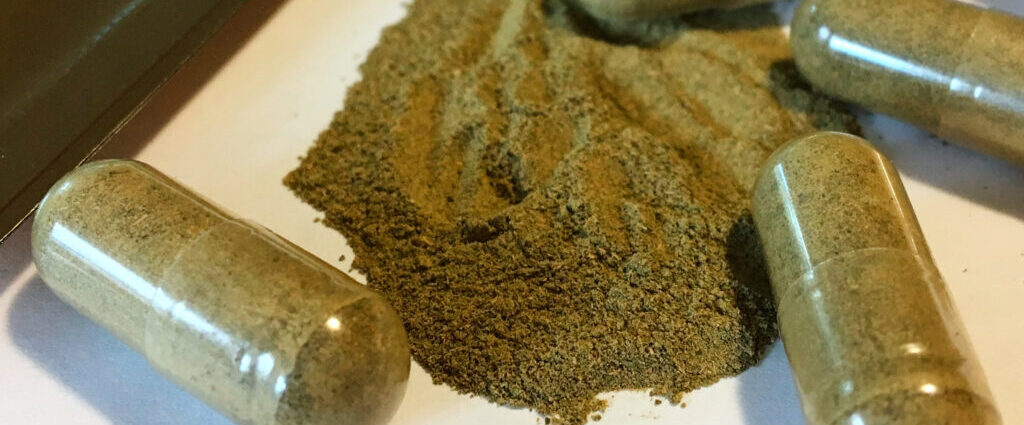
Kratom leaf products, often used to ease chronic pain, anxiety, or withdrawal from opioids, have been sold in the U.S. for decades, largely skirting any regulatory restrictions despite a known risk for physical dependence. But increasingly, Americans are turning to newer, more potent products made with a semi-synthetic kratom derivative, 7-hydroxymitragynine, or 7-OH. 

Clinicians and recovery advocates warn that highly-concentrated 7-OH could be even more addictive than kratom, though research is scarce. Most people agree that some sort of guardrails need to be put into place. They disagree, however, on what those regulations should be.

Read the rest…

This post was originally published here. 

What would happen if you generated a new type of lab mouse whose brain was substantially human? Would they be really smart or somehow have a different consciousness?

Until now, such trains of thought mostly were chugging through fictional realms such as “Flowers for Algernon” or the cartoon “Pinky and the Brain.” However, science is catching up with fiction.

A team led by Stanford professor Sergiu Pașca just reported in Nature on the development of a mouse with a cortex made of human brain cells. Reading this paper initially gave me a combination of “wow” and “whoa” reactions. After all, the unique cortex of our brains is the major factor in what makes us human and is the center of complex thought.

Continue to STAT+ to read the full story…

This post was originally published here. 

WASHINGTON — The Make America Healthy Again movement has changed, if Tuesday’s MAHA Summit is any indication.

The insurgent movement that coalesced around mistrust of the health system and corporate influence put on a summit where industry leaders promoted their work under the MAHA banner, whether as insurers controlling costs or pharma companies developing the next breakthrough.

In a morning panel about health care affordability, for instance, executives at two of the nation’s largest insurers, UnitedHealth Group and Elevance, highlighted their artificial intelligence initiatives while emphasizing the need for prior authorization — an administrative hurdle known to infuriate patients and providers alike. 

Continue to STAT+ to read the full story…

This post was originally published here. 

A growing number of congressional lawmakers are urging the Trump administration to rethink a federal rule going into effect next month over concerns it will prevent Americans from obtaining prescription medicines from licensed international pharmacies.

The pending rule requires medicines mailed from abroad to go through a customs process that will mandate a licensed customs broker and a financial guarantee in the form of an entry bond. This is an added burden — and cost — for Americans who, for years, have been able to receive prescriptions from Canada and other countries with relatively little difficulty as they sought to save money on expensive drugs.

Indeed, the clamor for imports began two decades ago as prices rose, prompting some Americans to take bus rides to Canada. Under current law, though, it is illegal to import a medicine into the U.S. for personal use under most circumstances because the drugs often have not been approved by the U.S. Food and Drug Administration as being safe and effective.

Continue to STAT+ to read the full story…

This post was originally published here. 

The gene-editing company Beam Therapeutics is alleging that one of its scientists stole intellectual property and used it to co-found a Chinese company that made a deal with VC firms. The allegation comes at a time of escalating tensions between American biotech companies and their Chinese counterparts. 

Beam, which is based in Cambridge, Mass., filed a lawsuit late last week accusing one of its former scientists, Zi Jun “Emma” Wang, of accessing the company’s electronic laboratory notebooks late at night and on weekends, then using the information she gleaned there to start a company called YolTech Therapeutics. 

YolTech, which is based in Shanghai, recently made a deal with VC firms RA Capital and RTW to form a new startup called Serapha Bio. Both YolTech and Serapha are named as defendants in the case. 

Continue to STAT+ to read the full story…

This post was originally published here. 

WASHINGTON — Eric Cantor, a former GOP House majority leader, will be the next CEO of PhRMA, the lobbying group announced Tuesday. 

As head of the brand drug industry’s top lobbying group, Cantor will face mounting political pressure on drug prices and an increasingly populist mood from both political parties. 

The Trump administration is trying to codify into law voluntary agreements that it struck with more than two dozen companies to lower U.S. pharmaceutical prices to levels in peer countries. Democrats also are interested in that most-favored nation pricing approach and are considering adding international prices to the list of criteria Medicare uses to negotiate prices.

Continue to STAT+ to read the full story…

This post was originally published here. 

You’re reading the web edition of D.C. Diagnosis, STAT’s twice-weekly newsletter about the politics and policy of health and medicine. Sign up here to receive it in your inbox on Tuesdays and Thursdays.

Love is Blind is coming to Boston to spill some tea. Send news tips and casting suggestions/exes to John.Wilkerson@statnews.com or John_Wilkerson.07 on Signal.

The need-to-know this week

  • Wednesday is the deadline for states to decide whether to participate in GENEROUS, a pilot program offering drugs in Medicaid at prices available abroad.

  • The Senate health committee will vote Wednesday on three HHS nominees. Heidi Overton, the nominee to lead the Food and Drug Administration, is not among them. (More on that below.)

  • CMS Administrator Mehmet Oz will be in Texas to talk up CHOICE arrangements, in which employers can give workers money tax-free to buy ACA Marketplace insurance.

  • The annual U.S. Alcohol Policy Alliance conference is taking place in Arlington. It’s the main group advocating for stronger alcohol regulation.

Why no Overton?

It would take just one Republican to sink Overton’s nomination in committee, and last week’s hearing didn’t shed much light on how hard-to-get Republicans might vote. Now we will not know until after the elections. This is the last week the Senate is in session until Nov. 9., and the Senate’s health committee doesn’t have a vote scheduled on the nominee to run the FDA.

Continue to STAT+ to read the full story…

This post was originally published here. 

The U.S. is on the brink of a healthcare workforce crisis, according to a new report from healthcare education company Covista. But it’s not too late to try to mitigate the impact.

This post was originally published here. 

You’re reading the web edition of STAT’s Health Tech newsletter, our guide to how technology is transforming the life sciences. Sign up to get it delivered in your inbox every Tuesday and Thursday.

Good morning health tech readers!

Anthropic has been loudly warning that AI might one day lead to catastrophe. And yet, the company is moving aggressively into health care, even as AI regulation is in a state of flux.

Continue to STAT+ to read the full story…

This post was originally published here. 

Want to stay on top of the science and politics driving biotech today? Sign up to get our biotech newsletter in your inbox.

I have banned screens for my broken-legged 8-year-old. As a result, I’m hearing all about newly discovered ancient runes on my ceiling, along with endless varietals of bathroom rhymes.

The need-to-know this morning

  • Novo went shopping in China for a new obesity pill. The Danish drugmaker has licensed from Hengrui Pharma a once-weekly, oral GLP-1/GIP receptor agonist that is ready for Phase 1 clinical development. Novo paid Hengrui $300 million upfront for global rights (outside China) to the drug. Total deal value if all future milestones are met: $2.6 billion.
  • Invivyd said its experimental monoclonal antibody designed to protect against Covid infection demonstrated superior safety and tolerability compared to a currently approved mRNA-based Covid vaccine, achieving the goal of a clinical trial. 
  • Immix Biopharma said its experimental CAR-T therapy induced complete remissions in 89% of patients with AL Amyloidosis, a rare autoimmune disorder in which toxic proteins build up in organs like the heart and kidneys. 

UniQure’s Huntington’s benefit is less pronounced four years in

UniQure’s experimental Huntington’s gene therapy AMT-130 continued to slow disease progression four years after treatment. But the magnitude of the benefit declined from a year earlier — which could potentially complicate the therapy’s regulatory review, STAT’S Adam Feuerstein writes.

Continue to STAT+ to read the full story…

This post was originally published here. 

Top of the morning to you and a fine one it is. Blue skies, cool breezes, and plenty of chirping birds are enveloping the comfy Pharmalot campus, which is cause to fire up the coffee kettle for yet another cup of stimulation. Our choice today is pecan pie — sweets for the sweet, you know. Meanwhile, we have assembled the latest menu of tidbits for you to peruse. We hope you have a wonderful day, and please do keep in touch. Once again, we will note that our settings have been changed to accept postcards and telegrams. …

Novo has agreed to pay up to $2.6 billion to license an experimental, weekly weight loss pill from China’s Hengrui Pharma as it seeks to shore up its position in the oral obesity drug market, The Financial Times writes. The deal is Novo’s second since its investor day last week, when its pledges to boost growth with new drugs fell flat. The company, which is trying to regain ground lost to rival Eli Lilly in the obesity drug market, announced last week it agreed to license a technology from Nanexa that could allow patients to take one weight loss injection every few months. Analysts said a weekly pill would be a significant entrant to the market.

Roche stopped work on one of its obesity drug candidates, after clinical-trial data suggested the medicine did not hit internal targets, The Wall Street Journal tells us. The company said it returned rights to the medicine, emugrobart, to Chugai Pharmaceutical, which Roche largely owns and originally discovered the drug before licensing it to Roche. Roche had previously estimated the drug had potential to reach annual peak sales of between $1.21 billion and $2.41 billion. The company is also developing two obesity injections and a pill, and sees potential for each of them to exceed $3.6 billion in peak sales. 

Continue to STAT+ to read the full story…

This post was originally published here. 

Get your daily dose of health and medicine every weekday with STAT’s free newsletter Morning Rounds. Sign up here.

Good morning! To start, a postscript on Anthropic’s biological breakthrough. Last week, the AI company said Claude had discovered a new enzyme system with a series of repeats in DNA “reminiscent of CRISPR.” It turns out University of Copenhagen professor Mario Rodríguez Mestre has been studying the same set of enzymes, using Anthropic’s AI to write code and draft manuscripts as he prepares to publish his findings. “For me, the most important question is not ‘Were [these molecules] already known?’ They were,” the professor told The New York Times. What he wonders is whether AI relied partly on his work for its insights.

Read the rest…

This post was originally published here. 

An experimental gene therapy for Huntington’s disease, developed by the biotech company UniQure, continued to slow the progression of the neurodegenerative disease four years after it was surgically implanted into the brains of patients, the company reported Tuesday. 

However, the magnitude of the treatment’s benefit has waned compared to a similar analysis conducted one year ago, which may raise questions about its durability just as the Food and Drug Administration begins to review UniQure’s marketing application. 

In the new analysis, a high dose of UniQure’s one-time gene therapy called AMT-130 slowed the progression of Huntington’s by 44% compared to matched participants in an external control group based on a large, natural history study. The difference was not statistically significant.

Continue to STAT+ to read the full story…

This post was originally published here. 

WASHINGTON — The Make America Healthy Again movement wants your health data.

The MAHA Institute, a think tank formed by allies of Robert F. Kennedy Jr. after his appointment as health secretary, held an event on Monday that emphasized the benefits of opening up health data sharing in the United States. In particular, the event highlighted how sharing patients’ health records with federal researchers could benefit the study of the origins of chronic diseases.

Read the rest…

This post was originally published here. 

Parents who decline to vaccinate their children have been called selfish and stupid. They’ve even been accused of child abuse. But what if they’re actually acting logically?

That’s the conclusion of Jennifer Reich, a sociologist at the University of Colorado, who has spent the better part of two decades studying these families’ immunization decisions. Reich is not anti-vaccine; her children received vaccines according to the Centers for Disease Control and Prevention schedule. But she sees parents’ decisions to go a different way as a logical outgrowth of the push for them to be savvy consumers in an increasingly complex world, to make informed decisions about everything that could affect their children’s health. 

Read the rest…

This post was originally published here. 

In the last month, manufacturers have announced “breakthrough” status from the Food and Drug Administration for a menagerie of devices: triage algorithms for abdominal CT scans, diagnostic panels for urinary tract infections, and thrombectomy robots, to name a few.

They’re coming in just under the wire: As of October, new breakthrough-designated devices will no longer be eligible for special treatment when it comes to qualifying for extra Medicare payments. These devices, and more than a dozen others, are included in the latest update of STAT’s Breakthrough Device Tracker, which since 2022 has captured nearly 800 devices reported to have FDA breakthrough status. 

In August, the Centers for Medicare and Medicaid Services finalized the removal of pathways that have made it easier for breakthrough devices to qualify for supplementary Medicare payments for both inpatient and outpatient use. Since 2020, devices that received the designation from the FDA have been able to qualify for new technology add-on payments and transitional pass-through payments without proving they provide a substantial clinical improvement over alternatives, or that they are new. 

Continue to STAT+ to read the full story…

This post was originally published here. 

WASHINGTON — Health industry leaders, still contending with the new rules of President Trump’s Washington, are about to face another shift.

November’s midterm elections are likely to shake up key health policy debates, from Medicaid funding to the price of medication. That’s especially true if Democrats seize control of a chamber of Congress, though any major policymaking would still need Trump’s signature.

Drawing on interviews with nearly a dozen leaders and lobbyists representing the health industry, these are the most important questions about federal policy after the midterms. How they are answered will have wide-ranging impacts for America’s health system, science, and patients.

Continue to STAT+ to read the full story…

This post was originally published here. 

Concerns about military readiness, workforce shortages, rising health care costs, affordability, and America’s ability to compete in an increasingly challenging world seem to play on a loop without any sign of progress. Maybe that’s because these challenging and seemingly intractable problems are usually treated as separate crises requiring separate solutions. They are not.

The root cause they share is the declining health and well-being of America’s children, a situation that threatens our future safety and security militarily, economically, and globally.

Read the rest…

This post was originally published here. 

As the largest SNAP cuts in the program’s history have taken effect around the country, at least 1.5 million children have stopped receiving food assistance. The consequences go beyond hunger. Research suggests that when families lose access to food assistance, they may face a greater risk of investigation by child protective services — and, ultimately, being separated.

That is because poverty and neglect are too often conflated in America’s child welfare systems. When parents cannot afford enough food, stable housing, child care, or other necessities, the conditions created by poverty can bring them to the attention of child protective services. Cutting material support can therefore create a perverse and devastating cycle: The government takes away resources families need to care for their children, and then the child welfare system may intervene because families don’t have the resources to provide for their children. 

Read the rest…

This post was originally published here. 

In an unexpected move, Merck discontinued an important antibiotic from the U.S. market earlier this month, underscoring concerns about the commitment large pharmaceutical companies are willing to make to a field that is crucial to public health.

The drugmaker is no longer supplying Recarbrio, which was approved seven years ago and is used to treat serious infections in adults and children, such as pneumonia that develops from a hospital or ventilator, as well as complicated urinary tract and stomach infections in patients with limited or no alternative treatment options.

The company did not explain its decision, but the antibiotic — a three-drug combination injection — was pegged from the outset as a treatment of last resort by the Food and Drug Administration in hopes of mitigating antibiotic resistance. However, this also limits market and sales potential. Merck did not disclose Recarbrio sales in its regulatory filings.

Continue to STAT+ to read the full story…

This post was originally published here. 

Metal mixtures found in the leftover smoke, ash and debris from the deadly 2023 Maui wildfires were harmful to the lung health of people living nearby long after the burning ended, a new study says.

The work shows that major wildfires, which are worsening with the planet’s warming, could have lasting effects beyond immediate exposure.

Read the rest…

This post was originally published here. 

WASHINGTON — The Trump administration asked the Supreme Court on Monday to let it enforce, for now, restrictions on gender-affirming care in federal prison.

The emergency appeal comes after lower courts blocked officials from immediately carrying out the policy adopted after an executive order from President Donald Trump.

Read the rest…

This post was originally published here. 

This is the online version of STAT’s weekly email newsletter Health Care Inc. Sign up here.

Hello, gang. This past December, I was begging for another season of the game show “99 to Beat.” Well, great news: It’s BACK. If you’ve never seen it, give it a try. You’ll be rooting for strangers in wacky games. Ken Jeong and Erin Andrews have infectious energy as hosts. What’s not to like? As always, send your wackiness here: bob.herman@statnews.com.

Employer-sponsored nightmare fuel

Our “Out of Pocket, Out of Reach” series has been detailing the bleak state of health insurance that workers get through their employers. Experts have told me 2027 will be even worse than this year, and recent developments at sizable public-sector employers are reinforcing just how catastrophic things are becoming.

Continue to STAT+ to read the full story…

This post was originally published here. 

Want to stay on top of the science and politics driving biotech today? Sign up to get our biotech newsletter in your inbox.

This newsletter was composed from a pediatric emergency department. Hot tip, all: Don’t jump off 6-foot playground equipment. You will scare your mother, and wind up in a cast.

The need-to-know this morning

  • Kodiak Sciences said Zenkuda, its experimental vision-sparing treatment for a common cause of age-related blindness, achieved statistical equivalence to Eylea, a standard therapy, in a Phase 3 clinical trial. 
  • Merck said it paid $400 million upfront to China’s SciBrunch Therapeutics, for global license rights to a preclinical cancer drug that targets tumors with KRAS G12D mutations. The deal is valued at $2.13 billion if all future milestones are achieved. 

Novo turns GLP-1 drugs into consumer products

Novo Nordisk is increasingly marketing its GLP-1 drugs less as treatments for a chronic disease and more as consumer products for people who simply want to lose weight, STAT’s Elaine Chen writes. It’s a shift that comes as insurance coverage for these obesity medicines remains limited.

Continue to STAT+ to read the full story…

This post was originally published here. 

Good morning, everyone, and welcome to another working week. We hope the weekend respite was relaxing and invigorating. Now, though, that oh-too-familiar routine of meetings, deadlines, and the like has returned with a vengeance. You knew this would happen, yes? To cope, we are relying, as always, on a cuppa stimulation. Our choice today is honeybush vanilla turmeric. For the full experience, we are now hawking replicas — take a look. Meanwhile, here are a few items of interest. As always, do keep in touch. We appreciate feedback, criticism, and tips. …

Once promoted as tools to address obesity as a medical issue, GLP-1 drugs are increasingly being seen — and marketed — as a way to look and feel better generally, STAT explains. And, as the pioneer in the field, Novo Nordisk, in particular, has leaned into the shift. This is no accident. While early efforts to market GLP-1s by Novo and Eli Lilly were designed to convince payers and society in general that obesity was a disease that needed treatment, the companies have seen the expansion of insurance coverage stall due to the high price and usage of the drugs. In turn, they began selling their products directly to patients.

Merck and Daiichi Sankyo withdrew their U.S. application seeking accelerated approval for an ​experimental lung cancer therapy, marking ‌the second pullback under their multibillion-dollar cancer alliance, Reuters notes. The decision followed discussions with the U.S. Food and Drug Administration, which determined the data from a ​mid-stage clinical study testing the therapy did ​not satisfy requirements needed to support an early green light. The ⁠therapy was under review to treat adults with aggressive, extensive-stage small cell lung cancer. Last year, the companies pulled the application for another lung cancer candidate after it failed to extend the lives of patients in a late-stage study.

Continue to STAT+ to read the full story…

This post was originally published here. 

Hello and good morning! I hope everyone stayed dry and got some good binge watching in. Speaking of which, The New York Times has finally released its full ranking of the top 100 TV shows of the 21st century. A lot of my favorites made the list, including “Fleabag,” “Gilmore Girls,” (for the fall nostalgia) and “House.” Did your favorite shows (medical or otherwise) make the list? What’s missing? And what’s on your mind this week? Reach out!

Are GLP-1s medications or lifestyle drugs? Yes

“Live lighter” and “summer glow up” sound like magazine cover taglines. They are also, it turns out, slogans Novo Nordisk has used to promote its GLP-1s.

Read the rest…

This post was originally published here. 

Blockbuster GLP-1 drugs have transformed the lives of millions of people. Lately, they’re undergoing a makeover of their own.

Once promoted as tools to address obesity as a medical issue, GLP-1 drugs are increasingly being seen — and marketed — as a way to look and feel better generally. And, as the pioneer in the field, Novo Nordisk, in particular, has leaned into the shift.

In advertisements around the world, the company has trotted out slogans like “Live lighter” and “Summer Glow Up.” On its website, Novo no longer labels its treatment, Wegovy, as a “weight management” drug or “anti-obesity” medicine, but instead as a “weight loss” drug. And the company now often refers to the people who take its drugs less as “patients” and more as “customers.”

Continue to STAT+ to read the full story…

This post was originally published here. 

Earlier this month, Anthropic reported five cases in which people used its models for work that could support biological weapons development. The cases included help preparing a proposal for gain-of-function research on a mosquito-borne virus at a military institute and planning experiments intended to help bird flu get better at infecting mammals. Anthropic had no way to determine the intent behind this work but blocked it anyway.

That ambiguity is the problem. The same tools that scientists might use to design a vaccine can help design a worse pathogen. The same tools that help scientists design a drug that targets cancer cells while sparing healthy ones can be tweaked to build a drug that targets healthy cells alone. There is no need for someone to ask Claude to “build a bioweapon.” They only need to look like scientists who are working on important biological problems.

Read the rest…

This post was originally published here. 

For more than a century, medicine has behaved as though we understood everything about the anatomy of the heart.

As medical students, we memorize its chambers, valves, and vessels. As surgeons, we operate within its well-known boundaries. As cardiologists, we interpret heart images so familiar that they’re nearly invisible. 

Read the rest…

This post was originally published here. 

Twenty-five years ago, as the country still reeled from Sept. 11, the first of two batches of anthrax-laden envelopes were mailed from New Jersey to news media and congressional offices. All told, the letters caused 22 cases of anthrax disease, leading to five deaths; prompted considerable fear in the U.S.; and cost billions of dollars in response and recovery.

Remembering how public health responded to the anthrax letters can help inform how we might meet the challenge of something similar today, whether intentional or inadvertent, and whether human or artificially generated.

Read the rest…

This post was originally published here. 

WASHINGTON — President Donald Trump is canceling nearly $1 billion in spending approved by Congress, the White House announced on Friday, using a rare and contested power to axe funding for immigrant services and diversity-focused initiatives.

Trump’s Office of Management and Budget described the funding cut as focused on “the most harmful government spending.”

Read the rest…

This post was originally published here. 

With an eye toward pandemic preparedness, a U.N.-backed agency has signed sub-licensing deals with 11 manufacturers to develop and manufacture generic versions of a Roche influenza treatment.

Under the agreements, brokered by the Medicines Patent Pool, the companies can develop, manufacture, and supply Xofluza in 129 countries, covering nearly all low- and middle-income countries. The manufacturers will also have access to technical data, reference products for bioequivalence studies, and other support intended to help with regulatory approval in those countries.

This marks the latest effort to widen access for a needed medication to poor countries, a goal that has often required the pharmaceutical industry to balance its financial priorities with ensuring its medicines can be affordably obtained by the largest number of patients possible.

Continue to STAT+ to read the full story…

This post was originally published here. 

The findings add new fodder for critics who say 340B has ballooned out of control with no corresponding benefit to patients. One hospital group called the report “another in a long line of misleading studies.”

This post was originally published here. 

Want to stay on top of the science and politics driving biotech today? Sign up to get our biotech newsletter in your inbox.

My delightful coworker, Jason Mast, is in Shanghai reporting for STAT. And that, my darling readers, is how you get access to the best biotech news anywhere.

The need-to-know this morning

  • Following a trial in a California federal court, a jury yesterday found that Eli Lilly breached a contract with Nektar Therapeutics to co-develop in good faith the autoimmune disease drug rezpeg. The jury awarded Nektar $90 million in damages plus interest, an amount far less than the company was seeking.

Overton dodges senators on vaccines, abortion, China

FDA commissioner nominee Heidi Overton largely avoided declaring her stance on several issues during a contentious Senate confirmation hearing yesterday, STAT’s Margaret Manto writes. She repeatedly pointed to existing law and agency policy when pressed on vaccines, abortion, and whether she would resist political pressure from President Trump or health secretary Robert F. Kennedy Jr.

Continue to STAT+ to read the full story…

This post was originally published here.