Merger and acquisition activity in Israel’s defense technology sector jumped to $3.26 billion in the first half of 2026, an 8.5-fold increase from $384 million in 2025, according to a report by the American consulting giant Frost & Sullivan exclusively seen by Defense & Tech by The Jerusalem Post.

The report, presented this week at an industry event in Tel Aviv hosted by law firm Gornitzky in collaboration with defense-focused investment fund Aurelius, found a growing demand for Israeli military technologies, particularly in autonomous systems, sensors, robotics and counter-drone technologies.

It examined 44 announced mergers and acquisitions in Israel’s aviation and defense sectors between 2023 and 2026, excluding cyber and cyber intelligence transactions. Deal values were publicly disclosed in 22 of those transactions, totaling about $4.1b. The median disclosed deal size was approximately $37.8m. 

While, in part, a small number of large acquisitions drove the dramatic increase in the 2026 deal value, Frost & Sullivan said the data also point to a broader trend of defense companies seeking to acquire technologies rather than develop them internally.

“The market is increasingly focused on buying capabilities that can close operational gaps, accelerate time to market and respond quickly to evolving defense requirements,” the report said.

US-based acquirers accounted for roughly 45% of the transactions reviewed, making them the largest buyer group. Israeli purchasers represented about 30% of acquisitions, while European companies accounted for approximately 11%.

More than half of the deals were concentrated in three sectors: defense electronics and sensors, unmanned aerial vehicles and autonomous systems, and ground systems and robotics. 

According to the report, the wars in Ukraine, the Persian Gulf, Lebanon, and Gaza are not the only reason why the growth of the Israeli defense tech industry has accelerated; the technology has proven its effectiveness and ability to adapt on the battlefield; Israeli defense technologies have attracted increased interest from international buyers for this reason as well.

Not slowing down

Ariel Sagee, a partner at Gornitzky GNY who also leads the firm’s defense and defense regulation practices, linked the sector’s growth to recent conflict and tense global geopolitics.

“The war in Ukraine highlights the need for stable international alliances to ensure the supply chain. Israel cannot be isolated. Ukraine is under two-way pressure – Chinese drone components on the one hand and SpaceX’s satellite technology on the other. These two forces pull at it and illustrate the importance of international alliances in building stable defense solutions,” he said.

Irit Nudelman, vice president and head of defense consulting for Israel and Europe at Frost & Sullivan, said she expects deal activity to remain strong.

“We will continue to see significant deals in the coming years, primarily in the fields of anti-drone systems, robotics, underwater systems, space and autonomy,” she said, adding that the defense sector is becoming more receptive to technologies developed by start-ups and that maturation of the defense innovation market is likely to continue.

Although US and Israeli strategic buyers remain the dominant acquirers, Nudelman said European and Asian firms are more often pursuing partnerships, joint ventures and targeted investments rather than full acquisitions.

‘The Democratization of lethality’

The event also featured a discussion between retired Maj.-Gen. Amir Eshel, a partner at Aurelius and a former commander of the Israel Air Force, and Sagee.

Eshel noted that technological advances have expanded access to military capabilities once limited to nation-states.

“You can call it the democratization of lethality,” Eshel said. “Once, states were the sole sovereign that controlled war capabilities; today, organizations and individuals also have state capabilities.”

He also warned against weakening Israel’s domestic defense innovation ecosystem by relocating early-stage companies abroad. He stressed the importance of strengthening supply-chain partnerships rather than pursuing complete self-sufficiency.

“Full Israeli defense production independence is not possible,” Eshel said. “We do not have the raw materials, and there is also a lack of workforce. Nevertheless, Israeli capability can be strengthened, and additionally it is right to create partnerships for the supply chains required by Israel.”


This post was originally published on here. 

Even before the exit poll results of today’s elections are known, the Finance Ministry has already prepared a plan that includes a series of harsh economic measures, intended, among other things, to finance the defense budget and prevent an increase in the deficit and the debt-to-GDP ratio.

Some of the measures were planned in cooperation with the Bank of Israel. The next government will be responsible for implementing the policy.

In addition, after Finance Minister Bezalel Smotrich subsidized gasoline prices by NIS 1 per liter over the past two months to prevent price increases, the subsidy, which has cost more than half a billion shekels, will end Saturday night. As a result, gasoline prices will surge by at least NIS 1 per liter at midnight on Saturday, and may rise further as global fuel prices climb.

The price of a liter of self-service 95-octane gasoline is expected to reach NIS 8.90. However, the dollar’s roughly 1% decline against the shekel yesterday will help moderate the increase.

Higher fuel prices are expected to trigger price increases across a range of other goods and services whose rates have so far been frozen at the government’s initiative, including electricity, water, and public transportation. This is expected to drive up the Consumer Price Index.

The freeze on adjustments to income tax brackets, tax credit points, and National Insurance contributions, along with the current VAT rate, will remain in place in 2027 under existing automatic budgetary provisions.

Revenue from these measures is estimated at NIS 10 billion. In addition to ending the gasoline subsidy, further tax measures will be proposed to boost state revenue.

These include mandatory reporting of income from residential property rentals and taxation of rental income from the first shekel earned. Currently, rental income of up to NIS 5,654 per month is exempt from tax. Some of these legislative initiatives have been held up in the Knesset Finance Committee.

Another proposal would impose a tax on international content providers operating in Israel, commonly referred to as the “Netflix tax.” Another measure expected to be implemented is a reduction in tax benefits on pension contributions, along with a recommendation to eliminate VAT exemptions for sectors that currently benefit from them.

Economic measures aim to fund increased defense budget

Broader macroeconomic measures are aimed at finding sources of funding for the required increase in the defense budget, which is expected to reach NIS 187 billion.

One almost certain source of funding will be sharp cuts to coalition funds, alongside sweeping efficiency measures across government ministry budgets.

The main challenge facing the coalition forming the next government will be the immediate need to pass a 2027 budget, or potentially a two-year budget covering 2027 and 2028. The budget must include comprehensive reforms under the Economic Arrangements Law.

As a result, the Finance Ministry is unlikely to secure approval by the end of 2027, so it will need to prepare a continuing budget.

The timetable for implementing these measures is tight, and the parties that make up the new coalition will have to begin taking action even before the next government is formed.

Stock exchange unfazed by Netanyahu crypto economy warning

Meanwhile, the Tel Aviv Stock Exchange appeared unfazed yesterday by Prime Minister Benjamin Netanyahu’s dire economic warnings over the weekend concerning the crypto economy.

Trading opened lower yesterday, the final trading day before the elections, against the backdrop of Netanyahu’s statements warning of possible sanctions, cuts to US aid, and the prospect of a shift toward a shadow economy.

However, the trend quickly reversed, and the stock market moved into positive territory, with the exception of banking stocks.

The stock exchange has declined since the beginning of the month amid uncertainty over the elections. Now, however, traders appear to be cautiously optimistic about the possibility of change.

This post was originally published on here. 

Residential buildings in Kfar Saba, Israel. File photo, not a Bait BaKfar property.

Israel’s Bait BaKfar said Monday that its controlling shareholders signed an agreement with Aura Investments for a transaction valuing the senior-housing company at about NIS 1.7 billion. The plan combines a cash purchase of the controlling stake with a tender offer for the remaining shares. It is not a completed acquisition.

In its October 26 filing to the Israel Securities Authority and Tel Aviv Stock Exchange, Bait BaKfar said the two parts must close together. Aura would acquire all of the company’s shares only if the offer succeeds and the required approvals and other conditions are met.

The agreement brings a residential developer into a business built around homes for older adults and the services that support them. Bait BaKfar’s own website describes five operating communities across Israel, including locations in Kfar Saba, Hadarim, Beitan Aharon, Gedera and the Sea of Galilee area. It says three more communities are planned. Those are senior-living operations, not a purchase of a U.S. nursing-home chain.

The sellers’ approximately 55% holding consists of 38,483,238 shares held through private companies. According to the filing, they would receive about NIS 935 million in cash at completion, based on NIS 24.31 per Bait BaKfar share. The sellers named in the document are members of the Blustein family.

The remaining shares would be addressed through a full tender offer combining Aura shares and cash. A tender offer is a formal proposal to shareholders to sell or exchange their shares under published terms. Signing the purchase agreement does not mean those shareholders have tendered or that the offer has received regulatory clearance.

That distinction matters for investors and operators following a change of ownership. Bait BaKfar says the acquisition of the controlling shareholders’ stake and completion of the tender offer are dependent on each other: neither is to be completed without the other. The filing also cautions that it is not itself an offer document or a recommendation to accept an offer.

Conditions include permission from the securities regulator to publish the tender-offer documents, exchange approval to list the Aura shares to be issued, sufficient shareholder acceptance, and competition clearance or an exemption. Bait BaKfar’s Series A bondholders must also approve the change of control under the bond terms. The agreement includes further requirements concerning employee options and the absence of legal restrictions on completion.

The parties set an initial 180-day period from signing to satisfy the conditions, with a possible 60-day extension. The filing allows a further 30 days solely for competition approval in specified circumstances if the other conditions are satisfied. These provisions provide a timetable for seeking completion, not a promised closing date.

The proposed transition also includes a three-year consulting agreement with chairman Yaniv Blustein, subject to the required approvals. Aura committed to additional payments of up to NIS 22 million to Bait BaKfar’s managers and employees within three months after completion. The filing says Yaniv Blustein, Liat Hazout and Yitzhak Zinger would leave their board positions at completion, while the sellers would be subject to a four-year restriction on competing in Israeli senior housing.

For now, the operating network remains the business being acquired rather than an already-integrated Aura subsidiary. The next formal documents would set out the full tender terms, acceptance process and relevant dates. Bait BaKfar expressly says there is no certainty that a tender-offer document will be published or that the offer will be completed.

File photo: residential buildings in Kfar Saba, not a Bait BaKfar property. Yiftaa / Wikimedia Commons, CC BY-SA 4.0. Resized.

JBizNews Desk | Israel

© JBizNews.com. All rights reserved. Unauthorized reproduction or redistribution is strictly prohibited.

President Isaac Herzog diverted from his efforts to promote a national unity government to receive the credentials of five new ambassadors to Israel on Monday.

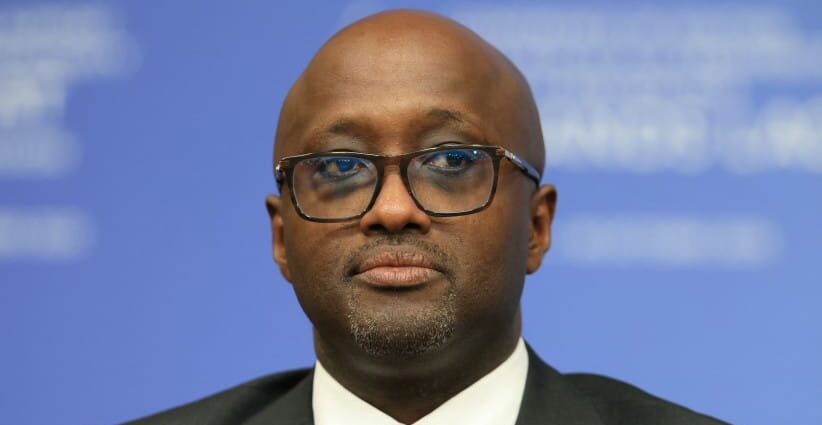
Under the country’s current government, Maj.-Gen. Emmanuel Bayingana of Rwanda, Christophe Parisot of France, Arad Benko of Austria, Stella Ronner Grubacic of the Netherlands, and Evelyn Korantemaa Ofosu-Amable of Ghana were the last ambassadors to present their credentials.

They will serve out their terms under Israel’s next government.

Israel and Rwanda established relations in the early 1960s, but severed them in 1973. Decades later, in 1998, Israel and Rwanda renewed their relations, which have remained cordial. Prime Minister Benjamin Netanyahu visited Rwanda in 2016, and Rwanda President Paul Kagame visited Israel in July 2017 in return.

Since taking office in the immediate aftermath of the Rwandan genocide, Kagame has spent the past 26 years rebuilding his country and forming strong international partnerships. Israel and Rwanda cooperate on many levels, including innovation, technology, agriculture, and security. Rwanda and Israel signed several bilateral agreements earlier this year when Rwanda’s Foreign Minister Olivier Nduhungirehe visited Israel.

Bayingana said that he would work to further expand the relationship between the two countries.

Neither Herzog nor Parisot tried to pretend that relations between France and Israel were rosy. However, Parisot noted that, despite their diplomatic challenges, the people-to-people relations and cultural ties between France and Israel remained strong.

Herzog and Parisot also discussed the chaos and unrest that have overtaken France in recent weeks. Herzog recalled how different Champs-Élysées had felt when he accompanied his late father, then-president Chaim Herzog, on a state visit to France in 1988.

Herzog recalls time of ‘amazing’ French-Israeli relations

Herzog also recalled a time when relations between France and Israel were so positive they were “amazing.”
Parisot later wrote in the guest book that he would devote all of his energy to improving relations between the two countries.

Benko previously said returning to Israel felt like coming home. Indeed, it was. He was born in Haifa; he left the country as a child, and returned some 20 years ago as a spokesman for the Austrian embassy. He said that when he left Israel, he had a hard time in school because the only language he spoke was Hebrew. Aside from the usual diplomatic subjects and antisemitism, Benko and Herzog also discussed the Jews of Austria.

Michal Herzog, the president’s wife, seldom sits in on the presentation of diplomatic credentials. This time, however, she attended the meetings with both the French and Austrian ambassadors and joined the ensuing conversations.

While welcoming Rubacic, Herzog spoke of the “special relationship” between Israel and the Netherlands. But he also expressed concern over the discourse emanating from Holland and some of the government’s own negative comments. He warned that Israel and Holland’s relations were currently under strain. Rubacic replied that she was happy to be in Israel and stressed the importance of highlighting the good relations between the two countries, which are based on shared values.

The significance Israel attaches to its ties with the Netherlands was evident in the brief, closed-door tete-a-tete Herzog had with the ambassador after the formalities concluded.

Most African countries with which Israel has diplomatic ties are proud of their culture and heritage. Ghana is no exception. Ofosu-Amable and her entourage arrived at the President’s Residence in national dress. Herzog was struck by the swell of colors and commented on it. He also noted that Israel’s relations with Ghana span seven decades, dating back to when former premier Golda Meir made her historic visit to Africa.

Israel trained Ghanaian soldiers early in relationship

In the early years of their relationship, Israel helped to train soldiers in Ghana’s army. Ghana stands out for the confidence it places in its women. Many of the country’s diplomats and high-ranking officials are women, and the ambassador is among them.

Where Israel and Ghana differ is their stance on a two-state solution to the Israeli-Palestinian conflict. Ghana’s President John Mahama told Ofosu-Amable that she must remember that her mission is to uphold Ghana’s longstanding commitment to the two-state solution.

This post was originally published on here. 

Unconventional AI said Monday it had signed a definitive agreement to acquire NeuReality, an Israeli company that develops hardware and software for running artificial intelligence systems. The deal will bring NeuReality’s chip and systems engineering team into the U.S. startup as it works toward more energy-efficient AI computing.

Both companies’ boards have approved the transaction, which is expected to close in the fourth quarter of 2026, subject to customary conditions, Unconventional said in its October 26 announcement. The announcement did not disclose a purchase price.

NeuReality is based in Caesarea, Israel. Its team has spent seven years designing, building and deploying infrastructure for AI inference, the process of running trained AI models to produce results. Its work focuses on the coordination and movement of data across a system, which can add to the cost of delivering AI services.

The acquisition adds engineers working in system architecture, semiconductor design and AI systems software. NeuReality chief executive and co-founder Moshe Tanach and the company’s founding team will join Unconventional. The buyer says it intends to keep NeuReality’s engineering presence in Israel.

Unconventional is developing a computing architecture that it says targets a 1,000-fold improvement in AI computing efficiency compared with conventional designs. That figure is a development target, not a performance result established by the acquisition announcement.

The company says reaching its goal requires work across device physics, chip architecture and AI models together. Chief executive and co-founder Naveen Rao described the challenge as a systems problem as well as a physics problem, and said adding NeuReality’s team would speed its development roadmap.

The announcement does not give a date for commercial production. It identifies the expected closing window for the acquisition, rather than a launch timetable for Unconventional’s proposed computing system.

JBizNews Desk | Caesarea, Israel

© JBizNews.com. All rights reserved. Unauthorized reproduction or redistribution is strictly prohibited.

Elbit Systems said Monday it had won contracts worth approximately $200 million to supply airborne surveillance, targeting and training equipment to a country in Asia-Pacific. The Israeli defense technology company did not name the customer.

The contracts will be carried out over as long as five years, according to the company’s October 26 announcement. They cover equipment for helicopters, support and upgrades for existing aircraft training systems, and head-up displays.

A central part of the order is the SPECTRO 12, a compact sensor and targeting payload that will be integrated onto helicopters. Elbit says the system combines multispectral imaging, a laser designator and artificial intelligence-powered image processing to detect, identify and track targets at long range. The company describes it as designed for aircraft with tight limits on equipment size, weight and power consumption.

The training portion includes follow-on support and upgrades for systems already installed on aircraft. Those systems combine live flying with virtual combat scenarios, allowing pilots to practice air-to-air and air-to-ground missions. Their functions include real-time combat simulation, weapons scoring and mission debriefing, the company said.

The contracts also include head-up displays, which put flight and mission information in a pilot’s forward field of view. Elbit says the displays support day and night operations and offer higher-resolution video with low power consumption.

The announcement does not disclose how the approximately $200 million is divided among the equipment, training and support services, or how many systems the customer will receive.

For scale, Elbit reported revenue of $2.287 billion for the three months ended June 30, 2026, and an order backlog of $32 billion as of that date. Those figures, included in Monday’s announcement, describe the company’s position at the end of the second quarter.

JBizNews Desk | Haifa, Israel

© JBizNews.com. All rights reserved. Unauthorized reproduction or redistribution is strictly prohibited.

The upcoming election is drawing attention across the Arab world, with regional media examining the political contest, its implications for Prime Minister Benjamin Netanyahu’s future, and what a change in government could mean for the future of Palestinian statehood and the two-state solution.

Beyond speculation about Netanyahu’s political future, several Arab media outlets have focused on the potential influence of Arab voters and Arab-led parties on the election outcome, particularly the Joint List, an alliance of Hadash, Ta’al, and Balad, and Mansour Abbas’s Ra’am party. With neither major political bloc guaranteed a parliamentary majority, many Arab outlets have focused on the parties’ electoral performance’s significance in determining the next government.

Egypt’s Alghad TV reported on remarks made by Hadash politician Shadi Shweiri on Sunday, highlighting the influence of the Arab vote and what he described as a unique opportunity for Arab citizens of Israel to advance their national demands through the electoral process. The report referred to Arab citizens of Israel as “Palestinians in the country” and emphasized that Arab parties should not support just any candidate seeking to replace Prime Minister Benjamin Netanyahu, but one willing to halt Israel’s military operations in the region and improve economic opportunities for Arab citizens.

Shweiri accused the current government of racism and of committing crimes against Palestinians in Gaza. He also argued that Arab citizens’ right to vote should not be viewed as evidence of goodwill on Israel’s part, but as a right secured through international pressure.

Shweiri: Choice for Israel’s Arabs ‘between the bad and the worse’

“Our situation is that we are being asked to choose between the bad and the worse, rather than between the good and the better,” Shweiri said. “I want to emphasize something for our brothers and sisters in the Arab world who hear and see Israel described as a democratic state that gives equal voting rights to Jewish and Arab citizens. This was not an act of goodwill by the Zionist movement or the Israeli government. It was a fundamental condition for Israel’s acceptance as a member of the United Nations in 1948 and as part of the international community.

“They cannot take this right away from us, although, as Netanyahu does, they can act outside the bounds of legitimacy.”

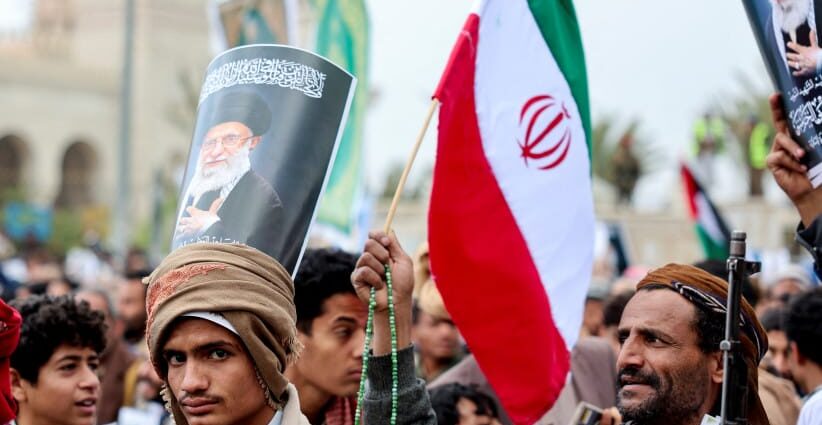
Meanwhile, Iranian officials have downplayed the significance of Israel’s election, which is taking place amid continued tensions between the two countries following years of confrontations and conflict involving Iran-backed groups.

Iranian Foreign Ministry spokesman Esmail Baghaei said at a press conference on Monday that the outcome of Tuesday’s election “makes no difference to us.”

“I do not agree with elections in the occupied territories at all; there is competition between different gangs to commit more evil,” Baghaei said. “Their most important slogan is that ‘I can commit more crimes than you.’ It makes no difference to us in such an environment who becomes the helm of a regime that has achieved nothing but killing and genocide.”

Despite Baghaei’s assertion that the candidates’ identities make no difference to Tehran, Iranian state-affiliated media, including the Tasnim News Agency, have reported on multiple polls examining Likud’s chances of winning the election.

The London-based Al-Araby Al-Jadeed, owned by Qatar’s Fadaat Media, reported on Monday on fears of a potential “political stalemate” that could leave Prime Minister Benjamin Netanyahu leading a caretaker government.

In an analysis by Qatar-based Palestinian journalist Beirut Hammoud, the outlet framed the election as taking place after three years of what it described as “genocide” and “ethnic cleansing” across the Palestinian territories, including east Jerusalem.

After examining polls measuring Netanyahu’s chances of electoral success, Hammoud highlighted what she described as declining international support for Israel. She argued that even opposition politicians differed little from the prime minister, whom she accused of leading a “government of ruin.”

“They differ from him only in their methods of managing the conflict,” she claimed.

Pro-Hezbollah outlet accuses Netanyahu of portraying Arab vote as liability

Meanwhile, the Lebanon-based, pro-Hezbollah media outlet Al-Khanadeq published an analysis on Monday alleging that Netanyahu had manipulated the political landscape by portraying the Arab vote as a liability.

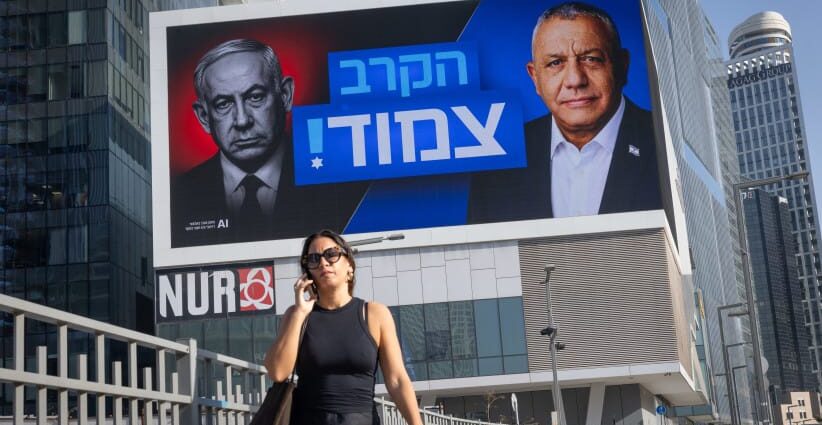
The article pointed to AI-generated campaign material associated with Netanyahu’s camp depicting political figures, including Gadi Eisenkot, alongside Ra’am leader Mansour Abbas.

“Portraying Eisenkot as a hostage of Arab politicians specifically targets the ‘soft right,’ which might distance itself from Likud. Thus, the campaign’s impact extends beyond weakening the Arab vote; it also reaches Jewish voters who want Netanyahu gone but are hesitant about a government based on Arab partnership,” the author argued. “The incitement works in two directions: it redistributes seats and raises the cost of utilizing them after the election.”

The analysis also cited efforts by the Central Elections Committee to disqualify Arab-majority parties and alleged attempts to deter Arab citizens from voting through the deployment of 2,000 activists. The author presented these developments as evidence of what they characterized as Netanyahu’s attempts to evade the consequences of the electoral process.

The Palestinian news site Al Quds, based in east Jerusalem, paid special attention to the timing of Israel’s elections around the United States’ midterms, noting that the result of both could reshape the region.

Written by Dr. Ahmed Youseff, a former senior adviser to assassinated Hamas leader Ismail Haniyeh, the article argued that Eisenkot’s victory could reopen the door for Israel’s international diplomacy efforts and for accountability for Israel’s security failures, but it would necessarily “dismantle established political systems or guarantee a shift in positions.”

“The hopes are clear: that Netanyahu and his allies will lose, that Israeli society will have an opportunity to reassess its policies of war and extremism, that the language of threats and incitement will subside, and that those responsible for failures and violations will be held accountable,” he wrote. “The American vote should also curb Trump’s drive toward confrontation and empower Congress to hold the administration accountable and push for a political path that spares the region a wider war.

“However, a realistic assessment requires us not to confuse hopes with certain outcomes…the true value of these elections will be measured by the opportunities they offer for accountability, pressure, and policy change, and by whether the voters’ voices translate into concrete steps that curb war and extremism and restore respect for rights and justice.”

This post was originally published on here. 

Brazilians reelected Luiz Inácio “Lula” da Silva as president, defeating the center-right senator Flavio Bolsonaro and putting the brakes on a regional shift toward closer ties with Israel.

The current president, a left-wing leader of Partido dos Trabalhadores (Workers Party), obtained 51.79% of the valid votes, while Bolsonaro received 48.21%.  

Bolsonaro, of the Liberal Party, had pledged a close diplomatic partnership with Israel and cultivated ties with Prime Minister Benjamin Netanyahu, while Lula has become a critic of Israel’s military campaign in Gaza. Bolsonaro said he did not accept the election results, though it is unclear how he could challenge them.

In January 2024, Lula’s government endorsed South Africa’s decision to bring a genocide case against Israel before the International Court of Justice (ICJ). A month later, Lula compared Palestinian suffering in Gaza to Hitler’s murder of the Jews, triggering a diplomatic crisis between Brazil and Israel. Brazil’s Jewish umbrella organization, CONIB, publicly condemned the comparison as a distortion that offended the memory of Holocaust victims and their descendants. 

The remarks were also criticized by the Holocaust Museum of Buenos Aires. Sen. Bolsonaro promised a big shift toward Israel when he spoke on June 28, 2026, in Buenos Aires in a meeting with Jewish leaders. “In 2027, Brazil will not only once again have an ambassador to Israel, but will also take the step of moving its embassy to Israel’s capital, Jerusalem,” he said.

Bolsonaro lauds Brazilian Jews as ‘among the brightest’ in multiple fields

That night he also lauded the 120,000 Jews in Brazil, saying, “They are men and women who rank among the brightest in Brazilian medicine, industry, science, culture and business.”

After Bolsonaro finished ahead of Lula in the first round on Oct. 4, Netanyahu sent a message the following day on X/Twitter: “Congratulations @FlavioBolsonaro on yesterday’s vote and good luck in the final. I look forward to restoring the extraordinary friendship between Israel and Brazil. Best wishes for your great victory, my friend.”  

Several Latin American countries strengthen Israel ties

Since 2023, several Latin American countries have strengthened ties with Israel, in some cases reversing policies adopted by their predecessors, among them: 

Argentine President Javier Milei, elected in 2023, who makes support for Israel central to his foreign policy and meets with families of hostages Hamas abducted in its deadly Oct. 7, 2023, raid on Israel, which launched the current war; Bolivian President Rodrigo Paz Pereira, elected in 2025, restored diplomatic relations with Israel, which his predecessor had severed; President Nasry Asfura of Honduras, elected in 2025, who immediately formally recognized Israel’s new ambassador, a process his predecessor left in limbo; Chilean President José Antonio Kast, elected in 2025, who is rebuilding ties with Israel diminished by his predecessor; and Colombian President Abelardo de la Espriella, elected in May, who restored diplomatic ties with Israel severed by his predecessor, sent his foreign minister to inaugurate an embassy in Jerusalem and pulled out of the ICJ genocide case against Israel. 

This post was originally published on here. 

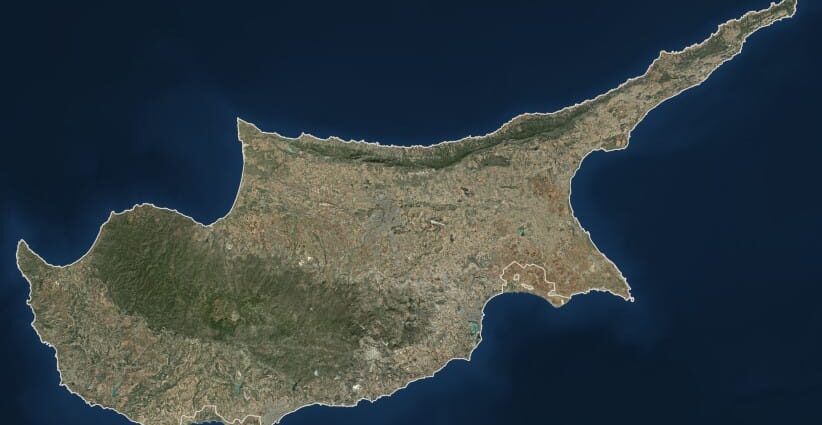
Israel and Cyprus signed an agreement on Monday for the acquisition of a new offshore patrol vessel (OPV) equipped with advanced Israeli naval systems, the Israeli Defense Ministry announced.

It was signed in Cyprus by Defense Ministry Director General Maj.-Gen. (res.) Amir Baram and Stelios Kountouris, acting permanent secretary of the Cyprus Defense Ministry.

According to the Israeli Defense Ministry, the deal was led by its International Defense Cooperation Directorate (SIBAT) and the Cypriot Defense Ministry’s Armaments & Defense Capabilities Development Directorate.

“Israel will supply Cyprus with a new patrol vessel built by Israel Shipyards and fitted with a range of Rafael naval systems,” the ministry said. “In parallel, the systems aboard Cyprus’s existing Israel Shipyards-built patrol vessel will be upgraded.”

The signing ceremony was attended by Head of SIBAT Brig.-Gen. (res.) Yair Kulas, Israeli Ambassador to Cyprus Shuli Davidovich, Israel Shipyards CEO Eitan Zucker, and Rafael’s Head of Naval Warfare Systems Directorate Ran Tavor.

“This agreement marks another important step in strengthening the operational capabilities of the Cyprus Naval Command and enhancing its capacity to respond to maritime security challenges,” the ministry said.

“The new OPV, alongside the upgraded OPV IOANNIDES, will support expanded patrol, surveillance, and search-and-rescue missions.”

The ministry added that the agreement reflected the two countries’ commitment to regional stability.

Israel and Cyprus have expanded their defense cooperation in recent years, including naval security, military exercises, and defense procurement. Cyprus previously acquired the OPV Ioannides from Israel Shipyards, providing a foundation for the latest agreement, which includes upgrades to the existing vessel.

The two countries also cooperate with Greece on regional security matters, including exercises and military coordination in the eastern Mediterranean.

Cyprus received its first Israeli-built offshore patrol vessel, Commodore Andreas Ioannides, in 2018. The vessel was equipped with Rafael Typhoon naval weapon stations. Cyprus has also acquired Israeli defense equipment including the Barak MX air-defense system and Spike LR2 anti-tank missiles, according to a report by Cyprus Mail. 

The value of the new naval agreement was not disclosed in the ministry’s statement, although Calcalist previously reported that the proposed package was worth approximately $100 million.

This post was originally published on here. 

Israel’s markets have soared despite three years of war and political turmoil, but some investors see further upside if the opposition defeats Prime Minister Benjamin Netanyahu in Tuesday’s election, potentially easing regional tensions and political risk.

Opinion polls point to a tight contest, with neither Netanyahu’s ruling Likud bloc nor an opposition alliance centered on former military chief Gadi Eisenkot expected to secure the 61 seats in the 120-seat Knesset needed to govern.

That raises the prospect of lengthy coalition negotiations or even another election. Since the October 7 Hamas attacks in 2023, the Tel Aviv stock market has soared 130%, far outpacing Wall Street’s 80% gain, while the shekel has climbed 25%, one of the world’s strongest currency performances.

Analysts attribute some of that strength to Israel’s tech sector and the global AI boom, while defense spending, which has nearly doubled to around 8% of GDP, has also provided a boost.

With both Netanyahu and Eisenkot vowing to maintain pressure on Hamas and Iran, markets are focused on their broader policy differences. JPMorgan estimates the shekel could swing as much as 3% depending on the result.

Opposition victory could improve Israeli economic position

An opposition victory that improves relations with Western allies and halts a judicial overhaul that sparked mass protests in 2023 could strengthen the currency, JPMorgan said, while another Netanyahu-led government could weaken it.

Billionaire investor Bill Ackman, while stopping short of backing a candidate, said a government without far-right ministers Itamar Ben-Gvir and Bezalel Smotrich would signal that Israel was “turning a new page,” potentially helping rebuild its international credibility and expand the Abraham Accords with its neighbors.

IBI Investment House also expects an opposition victory to lift the markets. “From a capital markets perspective, this would likely be reflected in a decline in Israel’s risk premium, appreciation pressure on the shekel, and a positive reaction in the local market,” IBI’s Chief Economist Rafi Gozlan said.

“The most significant issue is what the result will mean for the region,” said Equity Bank’s chief economic adviser Charlie Robertson. “If Netanyahu is reelected, it might increase the chances of further escalation with Iran, whereas a defeat might be seen as lessening the tensions.”

But the prospect of gains under an opposition government does not mean investors expect Israeli assets to suffer if Netanyahu remains in power. Stocks and bonds have proved remarkably resilient through years of war and political upheaval, and some investors remain confident in the economy regardless of the election outcome.

Union Investment’s Sergey Dergachev has been buying Israeli bonds ahead of the election, betting the economy and companies he favors will remain fundamentally strong. “We are very constructive on Israeli credits going into the election,” Dergachev said, adding that bonds were less prone to major swings and the region’s intertwined conflicts should eventually ease.

Despite the rally, foreign investors remain cautious. Copley Fund Research data show the share of global funds holding Israeli equities is at a record low, having fallen sharply since 2023.

TS Lombard’s Christopher Granville cited central bank estimates that the war had cost the economy more than $55 billion by last year, equivalent to 8.6% in cumulative lost GDP growth.

Public debt, budget deficit high amid Iran war

Israel’s fiscal position is another focus. Public debt has risen to nearly 70% of GDP, about 10 percentage points higher than in 2022, while the budget deficit is expected to remain around 4.5% of GDP, up from less than 2% before the conflict.

Central bank head Amir Yaron stressed last week the need to “preserve adequate fiscal policy space” given the Iran war.

Like stocks, Israeli government bonds have rallied, returning about 30% over the last two years, more than double the main emerging market indexes.

The main risk for investors is an inconclusive result that prolongs political uncertainty, delaying budgets, reforms and investment, some investors believe.

That uncertainty can produce sharp short-term swings. Tel Aviv Stock Exchange research covering the last 10 elections found volatility in leading share indexes rose by as much as 45% in the weeks after voting compared with a typical week. But initial losses were typically recovered within a month, with the indexes posting an average gain of about 1.7%.

Over a longer horizon, the TA-125 returned an average 16.4% in the year following elections, compared with a long-term annual average of 11.5%, the research found. Political deadlock often weighed on stocks before voting, but the effects typically faded within months, said Nissan Avraham, an analyst at the Tel Aviv Stock Exchange’s research unit.

Israeli businesses continue thriving despite political, regional upheaval

That record supports the view that elections matter less for Israeli companies than many investors assume.

Lior Yochpaz, chief investment officer at insurance company Menora Mivtachim, said businesses have continued to thrive despite years of political upheaval, judicial overhaul proposals, and regional conflict, helped by a relatively business-friendly environment.

For some investors, however, the more attractive election trade lies outside Israel. TT International’s Jean-Charles Sambor said an opposition victory or weakened Netanyahu government could ease regional tensions and benefit Lebanese bonds.

“The best way to play it for us is through other Middle East countries, and for us Lebanon is a good proxy,” Sambor said.

This post was originally published on here. 

Birthright Israel will host the inaugural Taglit Global Business Summit, “Shaping Our Future Together,” November 1-3 at the Hilton Tel Aviv.

The landmark event will bring together more than 350 prominent business leaders, investors, entrepreneurs, and philanthropists from Israel and around the world at a critical time for the country.

More than 100 participants will travel to Israel from over 15 countries, including Argentina, Australia, Switzerland, and the United Arab Emirates, joining leading Israeli executives and entrepreneurs in a major international gathering focused on business, innovation, philanthropy, and Israel’s future

The first-of-its-kind summit marks a milestone in Birthright Israel’s 26-year history, bringing its international network of supporters together in Israel to explore opportunities for business collaboration, strengthen global partnerships, and deepen their shared commitment to the country and the next generation.

Prominent participants include Dr. Miriam Adelson, a leading supporter of Birthright Israel; Meir Shamir, chairman of Birthright Israel’s Israeli Board of Donors; and Josh Nash, international chairman of Birthright Israel and managing member of Ulysses Management. The summit will also bring together business leaders and entrepreneurs associated with companies shaping Israel’s economy, including NVIDIA, Wiz, Elbit Systems, El Al, and monday.com.

President Herzog expected to attend event, address participants

The three-day gathering will open on November 1 with a Gala Evening of Recognition honoring the leadership and philanthropy that have sustained Birthright Israel’s impact, including Dr. Miriam Adelson’s longstanding commitment to the organization. President Isaac Herzog is expected to address the gathering alongside leading supporters from Israel and around the world.

On November 2, the summit will feature prominent figures from technology, investment, finance, entrepreneurship, and public life. Speakers include Sir Ronald Cohen, a pioneer of impact investing and co-founder of Apax Partners; Dr. Miriam Adelson, a physician, media publisher, and prominent businesswoman known for her global philanthropy and investments; Eyal Waldman, founder of Mellanox; Yinon Costica, co-founder of Wiz; Sean Rad, founder of Tinder and a Birthright alumnus; Amit Krig, NVIDIA’s Israel site leader; former Mossad director Yossi Cohen; investor and ICON founder Yasmin Lukatz; former Microsoft Israel CEO Shelly Landsmann; author and public intellectual Dr. Micah Goodman; real-estate developer and philanthropist Danna Azrieli Hakim; and Angela Homsi, co-founder and president of Ignite Power.

The program will also feature Birthright Israel alumni who have become entrepreneurs, business leaders, and investors, showing how a ten-day educational experience can create connections and opportunities that extend far beyond the trip itself.

Among the participants will be Avinatan Or, an NVIDIA engineer who was abducted by Hamas from the Nova music festival on October 7, 2023, and released after 738 days in captivity.

Also among the participants will be Moran Samuel, an Israeli Paralympic basketball player and world champion rower who gives lectures to Jewish communities worldwide.

“For 26 years, Birthright Israel has connected the next generation of Jews to Israel while building an extraordinary global network of leaders who share a commitment to its future. The Taglit Global Business Summit is a natural extension of that mission. We are bringing this network together in Israel to turn shared values into action, foster new business partnerships, strengthen Israel’s economy, and invest in the next generation. At this moment, bringing global leaders to Israel is itself a powerful statement of confidence in its future,” said Gidi Mark, Global CEO of Birthright Israel.

The initiative builds on Birthright Israel’s established Business Forum, which brings together nearly 60 Israeli companies, creating an additional platform for meaningful engagement between Israeli business leaders and their international counterparts.

“Trust is one of the most valuable assets in business, and Birthright has spent 26 years building it across borders,” said Ethy Levy, Vice President of Global Resource Development and Partnerships at Birthright Israel. “We are bringing that network into one room, giving people who share a commitment to Israel the chance to discover what they can build together. A conversation here could become a business partnership, a philanthropic initiative, or an investment in Israel’s next generation.”

Program offers volunteer opportunities alongside current Birthright participants

On November 3, participants will move beyond the conference setting for curated visits to Israeli companies, innovation centers, and communities engaged in recovery and rebuilding. The program will also offer opportunities to volunteer alongside current Birthright Israel participants and to connect global business leaders directly with communities and initiatives the organization has supported since October 7.

The gathering reflects Birthright Israel’s impact both on Jewish communities worldwide and on Israel’s economy. Since 1999, nearly one million young Jewish adults from 70 countries have participated in Birthright Israel programs. The organization estimates that its activities have contributed approximately $2.6 billion to the Israeli economy over 26 years through travel, accommodation, and spending at local businesses.

A March 2026 study by Brandeis University’s Cohen Center for Modern Jewish Studies further demonstrated the organization’s long-term relevance. Among politically liberal young Jews surveyed, connection to Israel increased by 60% among Birthright Israel participants, compared with a 26% decline among applicants who did not participate. The findings highlight the lasting impact of firsthand experiences in Israel on Jewish identity and connection to the global Jewish community.

This post was originally published on here. 

As Thailand approved a $104.4 million emergency defense fund to buy military equipment and reinforce defenses along the Cambodian border, IWI (Israel Weapon Industries) announced it delivered its ARBEL Anti-Drone System (ADS) to Thailand’s Defense Ministry.

Thai forces have integrated the platform into their existing rifles after troops received on-site training from company officials.

Developed by IWI after close to a decade of design work, the fire control technology transforms standard infantry rifles into precision-guided interceptors.

“Small tactical drones have become a direct and growing threat to soldiers on the battlefield. We developed the ARBEL ADS to give soldiers an effective means of defending themselves against this evolving threat, while providing armed forces with a critical tactical advantage in an increasingly complex battlespace,” said SK Group’s vice chairman Ronen Hamudot.

Integrated directly into the AR-15 platform and IWI’s own ARAD assault rifles and Negev machine guns, ARBEL allows soldiers to engage threats, including aerial ones, using their existing weapons, optics, and ammunition with no additional gear required. Depending on the selected firing mode, it can hit targets up to 450 meters away using standard 5.56 mm ammunition.

With electronic sensors and gyros, it simplifies the shooting cycle after the initial shot and enables effective target engagement within a window of opportunity of several seconds, typical of real combat situations. According to IWI, it significantly improves efficiency and lethality by increasing hit probability for static and moving threats by two to three times.

Depending on the platform, the ARBEL system can be integrated into the lower receiver of the A-15 or mounted as an external unit on the grip of the Negev machine gun. The system adds only 900 grams to the weapon and meets MIL-STD-810 military standards, ensuring reliability under extreme environmental conditions. 

The Thai forces chose to integrate the system onto their existing rifles, which, according to the company, “enables militaries to upgrade their existing platforms locally without replacing their rifle inventories or procuring entirely new weapons.”

Battery-operated, ARBEL’s power supply allows for 50 hours of continuous operation. It’s optic-agnostic, mission-configurable, and its built-in fire control system releases rounds when the shooter is stable on the target, depending on the operational scenario. IWI told Defense & Tech by The Jerusalem Post that the system compensates for and mitigates shooting errors typical of combative scenarios such as heavy breathing, fatigue, and stress. 

“As Southeast Asian militaries place greater emphasis on counter-drone capabilities, Thailand’s adoption of ARBEL ADS reflects this growing operational priority. We see rising demand across the region for solutions that can help soldiers meet this challenge,” said SK Group vice president Doron Korol, who oversees the Asia-Pacific region.

According to the company, Thai military officials are in discussions with IWI about an additional order for the ARBEL ADS, and several other countries are at various stages of the procurement process. The company expects to announce additional deployments of the solution in the coming months.

IWI's ARBEL anti-drone system (credit: IWI)

Modernization plans

Earlier in October, local media reported that Bangkok approved emergency defense funding to repair combat-damaged gear and purchase new weapons, including long-range Rampage standoff missiles manufactured by Elbit Systems and Israel Aerospace Industries (IAI), along with bunker-buster bombs and High Mobility Artillery Rocket System (HIMARS) artillery upgrades.

According to a report in The Nation, the Royal Thai Air Force’s procurement plan includes 20 Israeli Rampage missiles, with an estimated value of approximately $30 million (1.04 billion baht), for use with the country’s F-16 fighter aircraft along with Elbit’s MPR-500 penetrating bombs and Lizard III laser guidance kits. 

Under the modernization plan, the Royal Thai Army will procure HIMARS and M777 howitzers to replace older artillery, along with Stryker armored vehicles.

Thailand has been acquiring Israeli defense technology since the 1970s, and the relationship has only grown stronger with the transfer of knowledge to locally manufacture and produce certain weapons systems.

This post was originally published on here. 

Agudat Yisrael, the three-MK haredi faction led by Yitzhak Goldknopf, could provide some form of support for a government led by a member of the opposition, according to assessments within the political establishment ahead of the elections.

With less than a day remaining before the vote begins, political figures are considering several possible scenarios, including forming a government with the support of Arab parties or holding another election. 

Another possibility being discussed is support from Agudat Yisrael in exchange for budgetary agreements, although even such an arrangement would not necessarily eliminate the need for votes from the Arab parties.

The possibility of cooperation between Agudat Yisrael and the change bloc is not new. Maariv reported in August that Agudat Yisrael was examining new political options, including potential cooperation with Gadi Eisenkot.

The discussions took place against the backdrop of tensions within United Torah Judaism, particularly disagreements between Agudat Yisrael and Degel Hatorah over the haredi military draft and relations with Netanyahu.

According to that report, while Agudat Yisrael expressed disappointment with the coalition’s conduct, Degel Hatorah conveyed messages of despair and a lack of confidence in Netanyahu and his government.

A letter from Rabbi Dov Lando, expressing reservations about maintaining the commitment to the political bloc led by Netanyahu, further deepened uncertainty surrounding relations between the haredi parties and Likud.

Goldknopf, however, faces a significant political obstacle. His voter base is largely identified with the Right, and according to assessments cited in the report, any indication that he would be willing to support a government led by parties from the change bloc could prompt some of his supporters to defect to Likud or Otzma Yehudit.

Is Bennett the only politician who could reshape the political blocs?

Beyond the possibility of haredi support, political figures are also examining a scenario in which former prime minister Naftali Bennett could determine the composition of the next government if neither bloc secures a majority sufficient to form a coalition.

One possibility being raised within the political establishment is that Bennett could join a government led by Netanyahu if neither bloc reaches the 61-seat threshold required for a Knesset majority.

Although this is considered a remote scenario, some believe Bennett is the only leader within the change bloc capable of making such a move, given his political background on the Right.

Such a decision, however, would require Bennett to change his political support base and would also be complicated by the composition of his current party.

Liberman disagreements with Netanyahu make relationship unlikely

The possibility of Avigdor Liberman taking a similar step has also been raised, particularly in light of his previous decision to join a Netanyahu-led government and serve as defense minister.

However, according to the assessment presented, Liberman is currently far from making such a move because of the personal and political disagreements between him and the prime minister.

Thus, alongside the possibility of securing outside support from haredi parties, the question of which politician might be willing to shift their political support base could become one of the central issues in coalition negotiations.

For now, these remain scenarios and political assessments rather than agreements reached between the parties.

This post was originally published on here. 

One day before the elections for the 26th Knesset, police are preparing for the possibility of clashes and public order disruptions on Election Day, particularly in the hours following the release of exit polls.

A senior police official estimates that voting day itself is expected to pass relatively quietly, but significant concern centers on 10:00 p.m., when exit poll results are published, and the potential for lingering tensions in the days that follow.

“I think the day after, as we call it, is no less sensitive,” the official said. He noted that exit poll results could bring celebrating or angry citizens into the streets, and police are preparing for potential friction, confrontations, and disorder throughout the night, the following day, and into the weekend. The official emphasized that police cannot limit their focus to securing polling stations and maintaining public order solely during voting hours.

Large forces will remain active across the country after polls close, recognizing that election results could trigger sharp reactions among supporters of various parties and political blocs.

As part of preparations, police are also slated to secure five major party gatherings: four in Tel Aviv and one for Likud at the International Convention Center in Jerusalem. “Every setup like this, and I am referring to party events, requires a very large number of police forces,” he stated.

22,000 officers, Netanyahu briefed on security

Despite expectations that Election Day itself may pass without major incidents, police are significantly bolstering their forces.

About 22,000 police officers are scheduled to participate in the security operation, up from about 17,000 in the previous election, an increase of roughly 5,000 officers. The senior official shared that as part of preparations, a comprehensive security briefing was presented to Prime Minister Benjamin Netanyahu, with National Security Minister Itamar Ben-Gvir in attendance.

The meeting covered intelligence assessments, threats of hostile terrorist activity, concerns over public order disruptions, and the operational readiness of the police force.

According to the official, police have been preparing for the elections for about three months in coordination with the Shin Bet and the IDF. During the briefing, Netanyahu posed questions focused on security threats and force readiness.

The official assessed that the prime minister and his ministry director-general were impressed by the staff work and the seriousness with which the organization approaches the mission.

The importance of police independence during the election period was also emphasized during the meeting.

“The most important organization during elections is the Israel Police. It is completely impossible to hold elections in the State of Israel without an apolitical police force,” the official said.

He added that even when operating under the responsibility of the National Security Minister, the police must maintain professional independence and remain free from political influence, both in practical conduct and in public perception.

Capitol order

Concerns over extraordinary events occurring after polls close are not new. Back in August, Maariv military correspondent Avi Ashkenazi reported that the defense establishment was preparing for what was termed “Operation Capitol”, a scenario in which one of the two competing political blocs claims the results were forged, refuses to accept them, and acts to undermine public order.

The scenario was crafted following the events of January 6, 2021, in the United States, when supporters of Donald Trump stormed the Capitol building in Washington after his loss in the November 2020 presidential election to Joe Biden. Former head of the Police Operations Directorate, retired Maj.-Gen. Sigal Bar-Tzvi, led the team within the operations division that drafted the “Capitol” order.

The plan addresses a situation where a political group in Israel claims widespread fraud in election results and attempts to disrupt the vote count, or a scenario where tens of thousands of people attempt to storm the Knesset building.

According to a security official, the primary concern requiring special readiness is the possibility that one of the camps will not accept the election results.

“If I am Danny Levy, the Police Commissioner, one thing needs to bother me from morning to night. Not the deployment of forces on Election Day; police know how to do that best. The problem is on election night, after polls close and reports begin coming in from exit polls and actual election results,” a senior retired police officer said.

He noted that “a dangerous scenario that could occur in these elections is that one of the leaders of the two political blocs declares he does not accept the election results and calls on the public to take to the streets. On the other side, the opposing camp will bring its people into the streets to safeguard the democratic process. In such a case, police will require assistance from additional bodies, chief among them the IDF.”

Former officials warn: ‘It would be a massive failure’

A series of former police officers and Shin Bet officials believe that the “Capitol” scenario must be placed at the top of the priority list in Election Day preparations. They argue that although it represents an extreme scenario, it must be prepared for through operational plans and advance exercises.

“It would be a massive failure if it turns out this scenario was not placed at the top of the list of contingencies and responses. An organized order must be issued detailing police force allocations and reinforcement units for police. Exercises must be conducted at National Headquarters, across all districts and units, and commanders should even participate in a war game. This is an extreme scenario, but it must be prepared for with the utmost seriousness,” a former security official said.

Maariv has learned that Police Commissioner Chief Superintendent Danny Levy held periodic conversations throughout the period with former senior officials in the organization, some of whom raised concerns regarding the scenario.

One retired police major general expressed deep concern over the possibility of election results being challenged and criticized the conduct of various figures in the public and security arenas.

“The Shin Bet and police are the two organizations tasked with safeguarding democracy in Israel. They are responsible for overseeing an orderly transfer of power. Regrettably, today it is difficult to rely on the Shin Bet, and it is unclear to what extent it will act in a professional and statesmanlike manner.

“We are already witnessing the initial stages of this scenario, where a news channel broadcasts weekly results of absurd polls with figures that do not align with other surveys, serving as a form of preparation for a narrative of stolen elections. This is compounded by a campaign of delegitimization against the Central Elections Committee and the Supreme Court.”

The retired major general added that he also fears the presence of numerous firearms in civilian hands and the potential for escalation into violent clashes.

“To all of this, one must add the armed militias established here in Israel over the past four years: regional defense units in Judea and Samaria, standby security squads across the country, and tens of thousands of weapons distributed to civilians. This is definitely a dangerous and violent platform for a civil war. It is the ultimate nightmare. This is a test of leadership, whether leaders are going to create an event around refusing to accept election results, or whether they will act with public responsibility even if they lose,” he said.

This post was originally published on here. 

US forces are prepared to launch a major attack against Iran “within 96 hours” of receiving the order from US President Donald Trump, two US officials told CNN on Sunday.

While Trump has not made a final decision on whether to commit to major military action after the US midterms, officials said any attack that would be conducted would “be a big effort,” going beyond prior US strikes against Iranian assets that can be quickly rebuilt, such as missile launchers and radars.

One source briefed on the matter told CNN that Israel had been preparing for possibly striking Iran, as well as lobbying the US to participate in the strikes.

However, US officials, including Trump, told Israel to hold off on attacking, likely until after the midterm elections.

“The plans are ready, waiting for Trump’s approval, could be after the midterms,” the source said.

Iran, Houthis unlikely to preemptively strike, but ready for retaliation

Two other sources told CNN that both Iran and the Houthis were taking the possibility of renewed US attacks very seriously, according to US intelligence.

Any attack launched by the US – or Israel – would trigger immediate retaliation against US personnel and facilities in the Middle East, the sources added, which is one of the reasons the US is expected to withdraw more personnel from its embassies in the region.

However, one source familiar with US intelligence assessments said that officials believe that both Iran and the Houthis were unlikely to preemptively strike US or Israeli infrastructure at this stage.

The White House declined to comment, while a senior Pentagon official told CNN that “The Department is a planning organization, and its job is to develop and execute military options ordered by the President.” 

This post was originally published on here. 

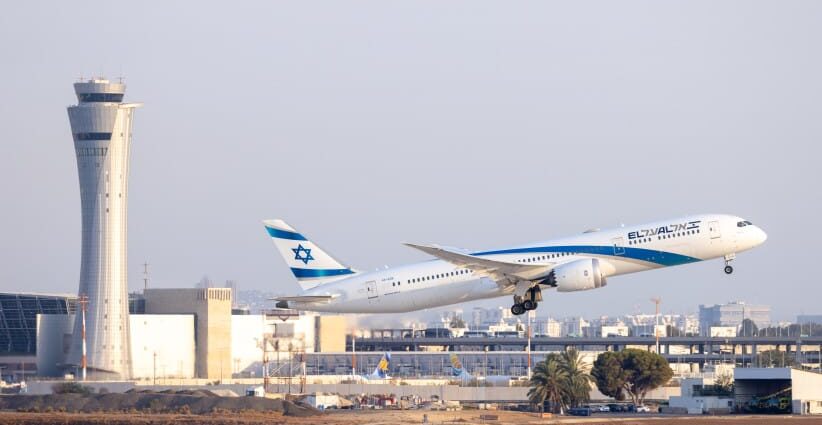
Israelis are postponing vacations and business trips, while others are returning from abroad to vote in Tuesday’s Knesset elections, Channel 13 reported Sunday, citing Ben-Gurion Airport data that shows a significant shift in passenger traffic.

The figures indicate that far fewer Israelis are leaving the country ahead of the October 27 election than in corresponding periods in previous years, while incoming passengers increasingly outnumber those departing.

A comparison of airport traffic between October 17 and 27 in 2022, 2025, and 2026 points to a decline in outbound travel, suggesting that many Israelis consider the upcoming election important enough to change their travel plans.

According to the Channel 13 report, approximately 245,000 passengers were recorded as departing Israel during the period under examination in 2026, compared with 270,000 in 2025, following the end of the war, and 323,000 in 2022, when Israel last held a general election.

The decline is particularly notable because travelers now have access to more aircraft and flights than in previous years.

Incoming passenger traffic presents a different picture. Although no large-scale airlift of special flights was organized to bring voters back to Israel, and arrivals have largely relied on existing aviation infrastructure, the number of passengers entering the country has significantly exceeded departures.

According to the figures cited by Channel 13, the difference between incoming and outgoing passengers has surpassed 90,000 in 2026, compared with a gap of approximately 77,000 during the corresponding period in 2025.

Entering passengers could be equivalent to two Knesset seats in election

The growing difference could carry political significance in an election where relatively small changes in voter turnout may affect the distribution of Knesset seats.

Channel 13 estimated that 90,000 people would be equivalent to approximately two Knesset seats if they were eligible voters who cast valid ballots.

However, the passenger figures do not establish how many people returned specifically to vote. They also include children and foreign nationals ineligible to participate in Israeli elections.

Israel’s electoral threshold is 3.25% of valid votes, so small shifts in turnout could affect whether parties close to the threshold secure representation in the next Knesset.

The increased interest in returning to Israel the vote aligns with a recent Fly&Vote survey, which estimated that about 67,000 Israelis living abroad intended to travel to Israel to vote. The estimate drew on registration data and a voluntary survey, not confirmed arrivals.

Unlike in many other countries, most Israeli citizens living abroad cannot vote remotely and must return to Israel to cast their ballots. The Fly&Vote initiative, run by the AID Coalition, has tried to help overseas Israelis with the process, but its activities were restricted after legal proceedings initiated by Likud.

Ben-Gurion’s grandson returns from US to cast ballot

Among those traveling to Israel specifically to vote is Alon Ben-Gurion, grandson of Israel’s first prime minister, David Ben-Gurion.

Ben-Gurion arrived in Israel from the United States with his family and traveled to Tiberias to vote, according to Channel 13.

His arrival illustrates the efforts some Israelis living overseas are making to participate in the election.

Interest in traveling to Israel for the vote had already been evident in August, when organizers arranged dedicated flights from New York and Lisbon to accommodate demand among overseas Israelis.

Under Israel’s electoral system, the 120 Knesset seats are distributed proportionally among parties that cross the electoral threshold. Consequently, additional votes from returning Israelis could influence the final seat distribution, though the impact will depend on how those votes are divided among parties.

This post was originally published on here. 

The result of the Israeli election “doesn’t matter” for Tehran, Iranian Foreign Affairs Ministry Spokesperson Esmail Baghaei claimed on Monday.

He also said that the meeting with the Mecca pact members in Tehran would tackle issues such as Israel’s ‘expansionist’ policies, Lebanon, and the US war with Iran.

This is a developing story.

This post was originally published on here. 

An estimated 70,000 Israelis living abroad have returned or are expected to return to Israel ahead of Tuesday’s Knesset elections, potentially influencing the results if the race between the political blocs is close.

Although no precise figures are available, estimates suggest that approximately 70,000 Israelis who live overseas have arrived or will arrive in Israel by Election Day.

Could 70,000 Israelis arriving from abroad influence the election results?

In the 2022 elections, approximately 36,000 votes were needed to secure one Knesset seat. Given population growth and an expected increase in voter turnout, estimates suggest that the threshold for a seat could rise to approximately 38,000 to 39,000 votes.

It is difficult to determine which parties most of the Israelis arriving from abroad will support. Some estimates suggest that many will vote for the change bloc, but there is no reliable measure of their political preferences.

Even if, for example, 60% support the change bloc, this would add at most one to one-and-a-half Knesset seats.

These figures, however, remain estimates. The election results will reveal whether Israelis living abroad have tipped the balance in the event of a close race between the political blocs.

Election Day boosts hotel occupancy by 23%

The vast majority of Israelis arriving from overseas are combining family visits and vacations with Election Day. Most are staying with relatives or friends, or in apartments they own in Israel that are currently vacant.

However, some have chosen to stay in hotels.

Africa Israel Hotels reported an approximately 23% increase in hotel occupancy during election week. Although the comparison is with October of last year, when the security situation was more complicated, the increase appears significant.

“We are seeing an increase in occupancy at Africa Israel Hotels properties across the country ahead of Election Day. We are seeing more Israelis choosing to combine exercising their democratic right with a short vacation, taking advantage of the opportunity to break from their routine and enjoy a hotel stay,” said Alex Eliyahu, marketing director of Africa Israel Hotels.

“Alongside the increase in demand, the chain is offering particularly attractive promotions and accommodation packages for Election Day, allowing guests to enjoy vacations at a variety of destinations across the country at affordable prices.”

Fattal Hotels also reported an increase in room occupancy at its properties, particularly in central Israel.

“We are seeing an increase in bookings compared with October of last year, apparently due to the elections,” said Maya Shalev, vice president of marketing and sales at Fattal Hotels.

“Many Israelis are taking advantage of the day off to combine voting with a vacation. Accordingly, we have offered promotions of up to 30% off, along with an additional 10% discount for members of the ‘Fattal and Friends’ club between October 25 and 29. At the same time, we are seeing bookings made from abroad for these dates, which may indicate that Israelis are coming to Israel to vote.”

‘I came from Miami to vote’: Israelis returning to the ballot box

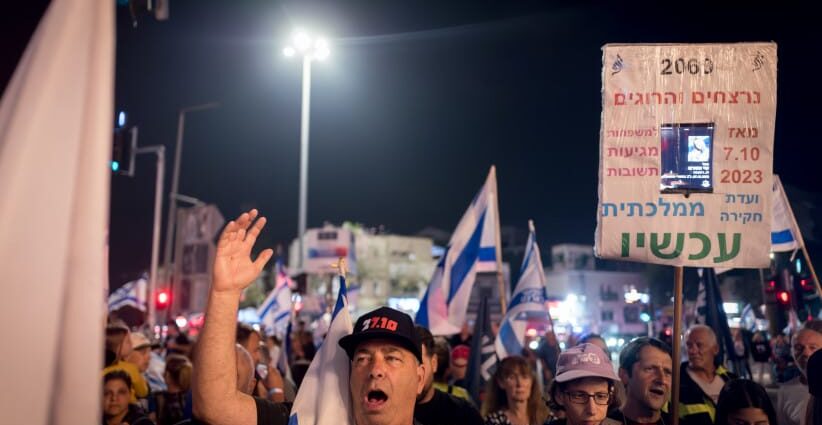
Among the tens of thousands who attended the October Council rally at Hostages Square in Tel Aviv on Saturday night were Israelis living abroad.

“I came from Miami to vote. I coordinated my vacation in Israel with Election Day, and I’m returning to the US at the beginning of November,” said Judy, who has lived in the US for more than 50 years.

“Many Israelis living in Miami and Los Angeles tend to vote for the Right. I’m different, and I’m not alone.”

Nurit, from the South Sharon area, attended the rally with her son-in-law and grandson, who had arrived from Canada.

“My grandson is voting for the first time. He’s 18 years old. They’re combining a family visit with voting in the elections. My daughter stayed in Canada to be with my younger grandson.”

Ofer, who arrived from New York, also shared his experience.

“We came to Israel specifically to vote. We’re returning to the US the day after the elections. We have family here, and it’s an opportunity to see everyone.”

Gidi, who arrived from Australia with his wife, is scheduled to fly out of Ben-Gurion Airport on Wednesday.

“We’ve already been here for three weeks. We’ve met with many family members and friends. And I’m going back on Wednesday because I have work commitments. My wife will stay here for another two weeks.”

In contrast, Zehava, who arrived on a flight from New York, said: “I’m voting for Likud, and I came to visit family ahead of the elections. I planned it in advance.”

Canceled flights leave some Israelis unable to vote

Some Israelis had hoped to travel to Israel but were left stranded abroad after flydubai canceled flights following an attempted terrorist attack.

“Flydubai’s cancellation caused flight prices to the Far East to rise,” explained a young man who had planned to travel to Israel ahead of the elections.

There are also Israelis who live in Israel but will be abroad on Election Day. However, their number appears to be lower than the number of Israelis arriving from overseas.

“I booked the flight tickets for a vacation with my husband in Vietnam almost a year ago, and we didn’t know the elections would be held in October. This will be the first time I don’t vote. It breaks my heart, but we’re going ahead with the vacation we started planning a year ago,” said Racheli from Ramat Gan.

“It’s a shame that Israelis traveling abroad can’t vote on Election Day.”

This post was originally published on here. 

Fuel prices in Israel are expected to rise sharply immediately after the elections, as a temporary NIS 1 per liter fuel tax reduction introduced by Finance Minister Bezalel Smotrich is set to expire on November 3.

Combined with rising global oil prices amid expectations of renewed fighting involving Israel, the US and Iran, the expiration of the tax cut could push the price of 95-octane gasoline above NIS 9 per liter, up from its current price of NIS 7.77.

Smotrich introduced the temporary reduction in the state’s excise tax on gasoline last month to prevent fuel prices from soaring ahead of the elections.

The original order, signed a month earlier, reduced the tax by half a shekel per liter. However, rising oil prices prompted Smotrich to double the reduction.

Under normal circumstances, taxes account for more than 60% of the price of gasoline in Israel, generating approximately NIS 20 billion in annual state revenue.

According to the Finance Ministry’s Budget Department, the tax cuts introduced over the past two months are expected to reduce state revenue by approximately NIS 467 million, at a time when the ongoing war has driven defense spending to record levels.

Election outcome could determine fate of fuel tax relief as fuel prices could top NIS 8

Following the elections, Smotrich will have to decide whether to extend the tax reduction. However, if it becomes clear the current government will not remain in office, he could let fuel prices surge, leaving the next government to deal with the economic consequences.

Regardless of whether the tax cut is extended, the first fuel price increase is expected as early as Saturday night.

Expectations of a third round of fighting involving Israel, Iran and the US have already pushed oil prices up by approximately 10% compared with late September, when the Energy Ministry’s Fuel Administration set gasoline prices for October.

As a result, even if the tax reduction remains in effect, gasoline prices are currently expected to rise by approximately 30 agorot per liter, bringing the price to just over NIS 8.

The final price will be determined toward the end of the week, based on oil prices in the Mediterranean basin at that time. However, the new price could remain in effect for only a few days.

This post was originally published on here. 

AI-generated illustration of a generic cybersecurity operations room, not Mave's offices.

Israeli cybersecurity startup Mave has disclosed $34 million in funding, including a $28 million Series A led by Red Dot Capital Partners, to expand an AI platform that investigates threats across a company’s existing security tools.

The financing, announced by Mave on October 22, also includes a $6 million seed round co-led by Dell Technologies Capital and Emerge Ventures. Lumir Growth Partners participated in the Series A, along with the existing investors.

Mave says the money will support AI research, development of its enterprise products and international expansion. The company plans to more than double its team, with hiring focused on AI research and sales and marketing.

Founded in 2025 by chief executive Raziel Oren and chief technology officer Guy Eshel, Mave is targeting the work security teams do when evidence of a possible attack is scattered across different systems. Its software queries those tools directly and brings the findings together, rather than requiring a business to move its security data into another central database.

The company says its platform gathers live information as an investigation develops and records the queries, evidence and actions behind its findings. Security teams set the rules for responses, including which actions can run automatically and which need human approval.

Dell Technologies Capital confirmed the $6 million seed investment and subsequent $28 million Series A. It described Mave’s software as combining investigations with responses carried out under rules established by the customer’s security team.

Mave’s funding announcement says the platform is generally available. The company lists financial institutions, healthcare organizations and managed security service providers among the types of customers using its technology.

JBizNews Desk | Tel Aviv

© JBizNews.com. All rights reserved. Unauthorized reproduction or redistribution is strictly prohibited.

Gazans should be sent to emigrate to France or other countries in Europe so that Israel can “conquer the whole territory” of the Gaza Strip, far Right National Security Minister Itamar Ben-Gvir told The Jerusalem Post in a recent interview, arguing that he supported US President Donald Trump’s plan to relocate Palestinians there.

“If you ask me what should be done in Gaza, we should conquer the entire territory. All of it. It is our land, the Jewish people’s land. And we should encourage emigration,” Ben-Gvir told the Post.

In February 2025, Trump proposed relocating approximately two million Gazans as part of an emigration plan, though the proposal has since stalled.

Amid the current protests in France, Ben-Gvir has recently shared AI-generated videos depicting Gazans being transported to Paris by the far Right minister himself.

“This is a very good plan proposed by Donald Trump: encouraging emigration. Many of them could go to better places,” Ben-Gvir said, arguing they would receive good conditions in Europe.

“There are more attractive places, places looking for workers, and places where they could live more comfortably,” he said.

“Why not send them to France, for example? Give them good conditions in other countries, perhaps Britain, London, or places like that,” the minister added.

Polling projects Ben-Gvir’s party to win roughly eight seats in next Knesset

Ben-Gvir’s far-right Otzma Yehudit party has been a key member of Prime Minister Benjamin Netanyahu’s coalition.

Recent polling projects Otzma Yehudit to win about eight seats in the next Knesset. Ben-Gvir has announced that he will demand the defense portfolio in the next government.

When asked what he thought about Palestinians who would object to leaving the Gaza Strip, arguing that it was their home and refusing to move even under good conditions, Ben-Gvir referenced the October 7 Hamas massacre in 2023.

“Someone whose home it is does not start a war and massacre children. Someone whose home it is does not rape women. Someone whose home it is does not burn babies. Once they did those things, they lost the legitimacy of making that argument,” the minister said.

“You cannot make that argument and say it was just one, two, or three people, or that it was only a small number. There were many, many, many, many [Palestinians] involved,” he added.

“And there were also people we describe as uninvolved civilians who tortured our male and female hostages.”

“This has to stop. This cannot continue. I believe that someone who says and does these things, someone who inflicts this kind of harm, cannot claim that this is their home. People do not behave like that in their own home,” Ben-Gvir added.

Itamar Ben-Gvir speaks to 'The Jerusalem Post' October 21, 2026 (credit: MARC ISRAEL SELLEM)

Ben-Gvir advocated for ‘bombing Gaza’ before October 7 attacks

The far Right minister repeatedly opposed hostage-ceasefire deals throughout the Israel-Hamas War, advocating for continued military action rather than an agreement.

When asked whether he regretted his stance, Ben-Gvir did not answer directly, instead arguing that the cabinet should have listened to him more before October 7. He also said that Netanyahu bore responsibility for the October 7 attacks.

“Before October 7, when I was going to cabinet meetings, I kept saying, ‘Let’s bomb Gaza. Let’s carry out targeted killings,’” he said.

“Imagine if they had listened to me on this … it’s a great shame,” he added.

Ben-Gvir, whose views are often characterized as extreme, has been criticized for rhetoric that opponents say has contributed to the deterioration of Israel’s international image. He has also faced criticism over rising crime rates, particularly in the Arab sector, during the government’s term.

Regarding the rise in crime in the Arab sector, Ben-Gvir argued that a main factor behind the increase was restrictions imposed on him by Attorney-General Gali Baharav-Miara.

According to Ben-Gvir, early on, he wanted to introduce spyware into homes in Arab communities to allow police to listen in on conversations.

When asked about criticism that doing so would infringe on the right to privacy, Ben-Gvir claimed that such measures were permissible in some cases.

“There are cases where it is permissible to infringe on privacy, when we’re talking about murderers. In the end, murderers also kill children, including young children, so this is a very good thing.”

Ben-Gvir praises his work as National Security Minister

Ben-Gvir also said he had been unable to secure the budget for certain technological advancements, and that crime rates had lowered after some budgets were approved.

He argued that the police have been doing well, praising officers for their work.

“We have excellent police officers and female officers who are fighting on the front lines. They are entering these communities, exercising force, and establishing governance, and I am very proud of them.”

“Are they lacking intelligence capabilities? Yes, that’s true,” he added.

Ben-Gvir called on the Shin Bet (Israel Security Agency) to become more involved in police work, arguing that the agency has the technology to enhance the police’s capabilities.

When asked whether he was concerned about the damage to Israel’s international standing that critics say has already occurred and warn could worsen, Ben-Gvir answered that Israel’s image abroad mattered to him, but that he would not “endanger the lives of soldiers” for it.

“I will not endanger the lives of combatants, soldiers, or civilians here just because I want Israel to look good in the eyes of the world,” he said.

This article is the second half of the complete interview with National Security Minister Itamar Ben-Gvir. The first half was published on Friday and can be found on JPost.com

This post was originally published on here. 

Israel Police exposed a network of accounts on the social media platform X/Twitter suspected of trying to influence the outcome of the upcoming Knesset elections, the police announced on Sunday. 

The suspicious activity was uncovered through a joint monitoring operation by the police and the State Attorney’s Office, and a number of the accounts were removed to prevent them from exerting undue influence on the Israeli public’s voting decisions.

Police Commissioner Danny Levy said on Sunday that the police have completed extensive preparations to ensure the security of the elections and public safety in the wake of election results. 

“We will not allow violence, threats, incitement or criminality to harm the will of the voter. I have declared in recent months that we will not allow bullying from any side to harm the democratic process, and so we will,” Levy vowed. “Preserving Israeli democracy is our mission. We will fulfill it impartially and without compromise.”

On Thursday, the Shin Bet (Israel Security Agency) announced a similar move in which numerous accounts were removed from social media sites for manipulation efforts. 

According to the Shin Bet, the activity of the now-removed accounts may have allowed for foreign influence on the election.

OSINT investigation found Iran-linked accounts posing as Israelis

In late September, an investigation conducted by open-source intelligence platform Golden Owl found that Iran-linked actors had been tied to social media accounts where individuals posed as Israeli citizens and made claims about Israeli politics.

Researchers found that multiple of the accounts were found to have made posts claiming that the election results would be stolen, and others posted misinformation about the voting process itself.

Danielle Greyman-Kennard and Yonah Jeremy Bob contributed to this report.

This post was originally published on here. 

Yashar, founded in September 2025, is one of many vying for citizens’ votes in the elections for the 26th Knesset, which will be held on October 27.

Led by Gadi Eisenkot, Yashar occupies the political center and currently leads the polls, making the former IDF chief of staff the top contender to lead the next government and replace Prime Minister Benjamin Netanyahu.

Eisenkot entered politics in August 2022 through Benny Gantz’s National Unity alliance, which brought together Gantz’s Blue and White and Foreign Minister Gideon Sa’ar’s New Hope, taking third place on the list.

Although Eisenkot initially ruled out serving under Netanyahu, he and Gantz joined the emergency government after the October 7 massacre. Gantz became a member of the war cabinet, while Eisenkot served as an observer. Both left the government in June 2024, accusing Netanyahu’s leadership of failing to make the strategic decisions needed to achieve the war’s objectives.

In July 2025, Eisenkot left National Unity and resigned from the Knesset, citing the need for a transparent and democratic process for selecting the party’s candidates. He said he wanted to build a broader leadership alternative capable of defeating the government, arguing that National Unity had failed to implement the internal reforms he sought. 

Two months later, he founded Yashar alongside former politicians, senior security figures, and other public figures, presenting it as a broad alternative focused on Israel’s security, national interests, and democratic character.

Yashar did not exist in the 25th Knesset, but the party has quickly risen through the ranks to become the leading party in the polls, which predict the party to win some 21-23 seats.

Confronting Iran, Hamas, and Hezbollah while opposing Palestinian statehood

Yashar places national security at the center of its platform, reflecting Eisenkot’s background as a former IDF chief. The party’s foreign policy focuses on confronting Iran, dismantling Hamas’s rule in Gaza, containing Hezbollah in Lebanon, and determining the future of Palestinian governance and security arrangements.

Yashar presents Iran as a continuing strategic threat. Eisenkot himself has favored a lasting, verifiable resolution of Iran’s nuclear threat.

If diplomacy fails, his proposals include US-enforced restrictions around remaining enriched-uranium sites and wider covert action against Iran’s missile capabilities.

On Gaza, the party’s stated approach combines replacing Hamas with retaining an Israeli security corridor. Eisenkot would also allow reconstruction to advance incrementally alongside partial disarmament. Earlier in October, Eisenkot pledged to destroy Hamas’s military wing and dismantle its leadership within 18 months.

In Lebanon, Eisenkot supports a security zone while seeking stronger American and French involvement in efforts to confront Hezbollah.

Regarding Palestinian statehood, Eisenkot has opposed establishing a Palestinian state, though he told The Jerusalem Post he would consider the Palestinian Authority preferable to continued Hamas rule if those are the alternatives.

On settlements, he told the Post he would return Civil Administration responsibilities to military coordination and restore military coordination of policing in the West Bank.

Yashar party chairman Gadi Eisenkot visits Kibbutz Nir Oz, near the Gaza border, as part of his election campaign, August 5, 2026. (credit: Tsafrir Abayov/Flash90)

Eisenkot’s goals: Ease cost of living, draft haredim, and reform Israel’s economy

Yashar’s domestic platform focuses on reforming military-service obligations, easing the cost of living, and directing economic support toward working Israelis, young people, and those who serve the country.

Yashar’s clearest established position is its opposition to blanket haredi (ultra-Orthodox) exemptions from military service. 

Eisenkot has proposed sanctions for evasion and benefits for those who serve, while allowing a limited Torah-study exemption for 3% of each annual haredi cohort. That allowance qualifies his universal-service message and has drawn criticism from opposition rivals demanding no exemptions.

Yashar also proposes expanding service obligations and giving servicemen greater priority in civilian benefits. Its September youth plan proposed raising compulsory-service soldiers’ pay by 15%, with a 50% increase for combat soldiers in their third year.

The party’s proposals place particular emphasis on those who contribute through military service and work.

Economist and Yashar candidate Shaul Meridor placed the “working middle class, young people, and service people” at the center of its economic policy.

Meridor outlined tax changes to reward those bearing the economic and security burden, together with priority in housing assistance and daycare subsidies. The reporting does not specify a full schedule of tax rates.

On living costs and competition, the party has advocated challenging exclusive import arrangements and reducing barriers in concentrated markets such as groceries and cosmetics.

The party’s September youth plan also outlined renter protections, paid internships, and practical financial guidance.

Gadi Eisenkot, head of the Yashar party, holds a press conference with the party’s new member Yoram Cohen in Tel Aviv, May 5, 2026.  (credit: FLASH90)

What a vote for this party is likely to produce

A vote for Yashar is most likely a vote to strengthen Eisenkot’s claim to the premiership and help build a coalition with former prime minister Naftali Bennett’s B’Yachad, Avigdor Liberman’s Yisrael Beytenu, and Yair Golan’s Democrats.

The four parties have agreed to coordinate campaigning and prepare principles for a future government, but have not settled how the bloc’s candidate for prime minister would be selected.

Eisenkot favors the leader of the largest party becoming the candidate for prime minister and has rejected a rotation arrangement. While that position still requires agreement from prospective partners, all four opposition leaders stressed in separate interviews during the election campaign that they would coalesce around an agreed-upon candidate following the election.

In a September interview with the Post, Eisenkot laid out his conditions for coalition eligibility, including accepting Israel’s Jewish and democratic identity, service obligations, and supporting the dismantling of Hamas.

His parameters exclude Arab parties Ra’am and the Joint List, and likely the haredi (ultra-Orthodox) parties Shas and United Torah Judaism as viable partners.

If the bloc falls short of 61 seats, it would need additional partners or support. Haredi parties accepting service reform represent a conditional opening in Eisenkot’s position, although his allies’ red lines could complicate it.

For voters, Yashar offers a path toward replacing Netanyahu, but the election result will determine how far that path goes. 

Eisenkot must turn support for his leadership into a majority whose members agree on who should govern and what they are prepared to concede. The decisive test will be whether he can assemble those 61 seats while preserving the promises that brought voters to him.

This post was originally published on here. 

US President Donald Trump said Sunday that the United States would not launch a military strike against Iran today.

Asked by a reporter whether a US attack on Iran could take place as soon as today, Trump replied: “Would I tell you that? The answer is no. There will not be a strike today.”

The president did not rule out military action at a later date.

Earlier on Sunday, Trump told reporters that he has yet to make a decision on whether or not to renew strikes against Iran. 

“Should I finish the job – which would be very easy to do – or should I reach an agreement? That is the whole decision,” he said.

Trump says ‘not much going on’ at Iranian nuclear sites, Netanyahu claims Israel facing existential threat

Trump added that the US is actively monitoring activity at Iran’s Pickaxe Mountain nuclear site as well as three other sites that were allegedly destroyed in previous strikes. 

“There isn’t much activity going on there,” he clarified.

Trump’s comments came after Prime Minister Benjamin Netanyahu claimed in a post on X/Twitter that Israel is currently facing “real and tangible existential danger” coming from Iran.

Netanyahu claimed that only a small window of time remains for Israel and the US to act and completely defeat Iran.

Netanyahu also shared a video from one of the IDF’s anti-missile batteries where he said: “The IDF is prepared on both defense and in offense. I warn our enemies – you will absorb strikes out of proportion, stronger than you can even imagine.”

Trump said on Friday that Washington is weighing another military operation against Iran, saying that the US “may do another little Epic Fury” during a pre-midterm election rally in Florida.

This post was originally published on here. 

The fact that Saudi Arabia was among the signatories of a joint statement declaring Israel as “the fundamental source of instability in the region and beyond” is not a sign that Riyadh has abandoned all future interest in joining the Abraham Accords, Gulf analyst Dr. Ahmed Alkhuzaie told The Jerusalem Post on Sunday.

The statement signed on Sunday by Turkey, Saudi Arabia, Pakistan and Egypt shows a regional alignment among major powers whose “strategic priorities do not always align,” Alkhuzaie said.

“By collectively declaring that, as per their statement, ‘the Israeli occupation’ constitutes the principal source of instability in the region, Saudi Arabia, Egypt, Turkey, and Pakistan are signaling the emergence of a broader diplomatic consensus that views the Palestinian issue not as an isolated conflict, but as a central driver of wider regional turbulence.”

The statement is “particularly noteworthy” as Riyadh has traditionally balanced its support for Palestinians with pragmatism and diplomacy, he continued, and so by publicly endorsing language that places responsibility for instability on Israeli policies and reaffirming support for a Palestinian state based on the 1967 borders, Riyadh “appears intent on anchoring its position within a broader Arab and Muslim framework rather than pursuing an independent diplomatic track.”

Though Alkhuzaie acknowledged that the statement placed Israel as the problem in the region, he advised that it should not be interpreted as the concrete end of hopes for Saudi-Israel normalization.

“It suggests that the political and diplomatic conditions surrounding normalization have become considerably more demanding. The statement reinforces the message that Riyadh is unlikely to separate relations with Israel from meaningful progress on the Palestinian file,” he said.

“In effect, Saudi Arabia is signaling that normalization can no longer be advanced solely through strategic, economic, or security calculations while the Palestinian question remains unresolved.”

He noted that Riyadh was positioning itself as “a leading architect of regional stability.”

Pointing to the fact that the same joint statement also condemned the Houthis attacks against Saudi Arabia and maritime shipping, Alkhuzaie said that the calls for diplomacy signal that “Saudi policymakers increasingly view Palestine, regional security, maritime stability, and de-escalation with Iran as interconnected components of a single regional order.”

“Viewed through that lens, the statement is less a rejection of future normalization than a reminder that any such process will likely remain contingent on credible movement toward a political settlement of the Palestinian issue,” he said.

Special envoy doesn’t view statement as sign of abandoning idea of normalization

Waqas Javed, the Global Abrahamic Movement’s special envoy for Saudi Arabia, an NGO that promotes peace across the Middle East, told the Post that he also didn’t view the statement as a sign that Riyadh was abandoning the idea of normalization altogether.

“Saudi Arabia may have reasons to strengthen its defense relationships with Pakistan and Turkey. However, such partnerships need not be directed against Israel or interpreted as a rejection of the Abraham Accords. Regional security arrangements are most constructive when they reduce the risk of conflict rather than reinforce divisions between competing political blocs,” he said.

“For Riyadh, the strategic opportunity lies in maintaining its independent diplomatic relationships while exploring whether engagement with Israel could contribute to a more secure and economically integrated region. Saudi Arabia can retain strong ties with Pakistan and Turkey without making its future relationship with Israel a zero-sum choice.”

This post was originally published on here. 

A new report released by the Jewish Federations of North America (JFNA) details the allocation of $908 million raised across the Jewish Federation network to support Israel in the wake of the October 7, 2023, attacks and the subsequent period of rocket fire from Hezbollah, cross-border drone threats, and direct conflicts with Iran.

Of the total funds raised, $252 million was allocated through the central fund of the Israel Emergency Response Committee, which operated for two years before completing its work in the fall of 2025. The remaining funds were allocated directly by individual federations.

Operating through four core pillars covering lifeline services, medical and trauma relief, economic relief, and community resilience, the committee distributed 800 grants to more than 400 organizations and initiatives. Much of this distribution was executed alongside long-standing partners including the Jewish Agency for Israel and the American Jewish Joint Distribution Committee (JDC).

Rebecca Caspi, Director-General of JFNA’s Israel office, said in a statement to The Jerusalem Post, “This report is a powerful reminder to the Israeli people that Jewish Federations have their back. For more than 100 years, Jewish Federations have helped build Israel, investing in its communities, strengthening its society, and supporting its people even before the establishment of the State.”

“After October 7, that longstanding commitment became an unprecedented emergency response, with Federations raising $908 million to provide lifesaving relief, care for the most vulnerable, and help communities endure and recover through three years of war. That work laid the foundation for our current Rebuild Israel framework, with a focus on restoring communities, helping Israelis heal, and building a stronger future,” Caspi told the Post.

Over $47 million in funding directed towards immediate relief for displaced families

The emergency response directed over $47 million toward basic needs and immediate relief. Families who evacuated their homes with minimal belongings received clean clothing, hot meals, hygiene essentials, and safe shelter. Funding also went toward emergency preparedness, including training volunteers, improving communication technology, repairing bomb shelters, and supplying essential equipment to first responders through a national JDC initiative.

The aid reached populations facing hidden vulnerabilities, including households struggling with extended grocery needs and individuals encountering increased domestic violence. “My youngest hasn’t slept through the night since the sirens started. The flashlight you brought has let him sleep through the night for the first time in months. Such a simple thing has restored his sense of safety in an uncertain world,” a grandmother in Nahariya said, according to the report.

In medical care and rehabilitation, the JFNA allocated over $27 million to support emergency medical teams and patients. Basic ambulances were upgraded into mobile intensive care units, and hospitals across the country received lifesaving equipment and expanded capacities to function during sustained missile attacks, including moving departments underground.

The funding also addressed emerging wartime injuries by bringing foreign physicians to underserved regions, expanding screening capabilities for concussive brain injuries, and adapting housing for severely wounded soldiers. “I can drive, which is a dream. I feel real improvement when it comes to the movement of our arms and legs, which gives me a feeling of relief that there is light at the end of the tunnel,” an injured soldier in rehabilitation stated in the report.

Contributions used to fund treatment for psychological trauma

To address widespread psychological trauma, an additional $23.2 million was allocated toward mental health and resilience. Within the first month, contributions reached every psychiatric hospital in the country, followed by the establishment of community-based mental health centers in partnership with the Ministry of Health. Support spanned individual and group therapies, unconventional programs like surfing and public art therapy, and training for school staff to recognize severe trauma.

Vulnerable populations hardest hit by the emergency received over $19 million. This funding provided specialized safety measures, such as equipping residential facilities for children with disabilities to move to shelters quickly, distributing vibrating alert bracelets to the hearing impaired, and supplying mobile safe rooms to Bedouin villages in the Negev that lacked permanent shelters.

The allocation also funded caseworkers and hot meals for elderly Israelis and Holocaust survivors, Arabic-language mental health care, and support for the Jewish Agency in offering programming for new immigrants in absorption centers under missile attacks, alongside helping new immigrants, Russian-speaking Israelis, and refugees access counseling, respite, and company in their native language.

For victims of terror and war, allocations totaled over $30.9 million. This funding supported the Jewish Agency’s Fund for Victims of Terror to cover immediate relocation costs for families whose homes were destroyed. Federations provided continuous support for bereaved families, hostages and their families, Nova festival survivors, and survivors of sexual assault through memorial arrangements, support circles, and specialized community spaces.

Reservists and their families received $4.5 million as frequent, short-notice call-ups disrupted civilian life. Working alongside national and local government, Jewish Federations established the National Headquarters for Families of Reservists to serve as a single community resource, while also funding loans, employment counseling, legal aid, and couples’ workshops for returning soldiers.

To mitigate disruptions caused by school closures and evacuations, over $19 million was allocated to education and youth-at-risk. The funding supported interim and remote education, teacher recruitment, tutoring, matriculation boot camps, and upgraded school shelters. It also sustained youth movements, summer camps, and mentorship initiatives such as the Jewish Agency’s Youth Futures program, giving children structured routines and engagement opportunities.

For economic relief and community partnerships, the Israel Small Business Loan Fund received over $48 million to keep people employed, finance job placement and upskilling, and help agricultural initiatives like ReGrow replace destroyed farming equipment in the Negev and replant northern orchards.

Concurrently, the central fund allocated over $28 million to partner directly with communities in the Gaza envelope and northern border regions, equipping public shelters, hosting evacuees, restoring communal spaces, and funding long-term resilience plans developed with local authorities.

This post was originally published on here. 

Saudi Arabia reopened its main airport for international flights, more than two weeks after deadly strikes by Yemen’s Iranian-backed Houthi rebels knocked the facility out of service. Earlier Sunday, the kingdom said it intercepted and destroyed a ballistic missile and a drone fired by the Houthis.

Meanwhile, Israel pressed ahead with a broad military operation in the occupied West Bank in response to an attack that killed two Israeli soldiers and wounded three in the city of Hebron on Friday. It comes just days ahead of Israel’s tense election on Tuesday.

The vote is widely seen as a referendum on Prime Minister Benjamin Netanyahu’s leadership and security policies during the past three years of war.

Here is the latest news from the Middle East on Sunday. Read our full coverage here.

Riyadh reopens its international airport as Houthi attacks persist

The King Khalid International Airport said it has opened terminals 1 and 2 for domestic and international flights, starting Sunday. The announcement came as the Houthis in Yemen kept firing drones and missiles toward the Saudi capital.

Saudi military spokesman Maj. Gen. Turki al-Malki said air defenses intercepted and destroyed a ballistic missile and a drone fired by the Houthis toward Riyadh early Sunday, as well as 10 ballistic missiles toward the southern region.

In early October, Houthi strikes hit a complex housing two other terminals, killing 17 people and wounding over 330.

Last week, the Riyadh airport opened to limited domestic flights.

Israel’s military pushes ahead with West Bank operations

The Israeli military on Sunday announced new restrictions in the occupied West Bank, barring Palestinian laborers from jobs in Israeli settlements, as it pressed ahead with a crackdown following a deadly attack that killed two Israeli soldiers.

Israel launched the crackdown following Friday’s attack, carrying out arrests and building demolitions in Hebron, the site of the attack. The municipality says some 2,200 people have been displaced.

The operation comes as Israel enters the final days before a tense election, the first since the 2023 Hamas-led attacks and ensuing wars in the region.

Israel also closed several crossings in the territory.

Palestinian officials say Israeli strikes killed 7 in Gaza

Israeli strikes in Gaza killed seven people and wounded eight on Sunday, according to Palestinian hospital officials.

A pair of strikes in Gaza City killed four people, while two brothers were killed in the southern city of Khan Younis. Another person was killed in the central town of Deir al-Balah. The deaths were confirmed by officials from Shifa, Hamad, Nasser and Al-Aqsa hospitals, as well as an American field hospital.

The Israeli military did not immediately comment on the strikes.

A year since a ceasefire deal began in October 2025, Israel continues to bombard Gaza in what it says are strikes against militant targets. More than 1,500 Palestinians there have been killed by Israel, according to the territory’s Health Ministry. The ministry, part of the Hamas-run government, does not distinguish between civilians and militants but says women and children make up nearly half of those killed.

Tens of thousands of Israelis living abroad are to fly home for a pivotal election

The AID Coalition, a U.S.-based nonprofit focused on strengthening Israel’s democracy, says tens of thousands of Israelis living abroad are expected to fly in for the vote.

Israeli law generally requires citizens to vote in person in the country, with narrow exceptions for diplomats and certain official emissaries abroad.

Israel has more than 7.3 million registered voters, but polling suggests a tight race. Previous elections have turned on thin margins. It’s unclear what effect these voters from abroad might have, but many liberal Israelis who don’t support Netanyahu have left the country in recent years, suggesting that those returning to cast ballots would not support him.

Iran’s foreign minister dismisses threats of a flare-up in the war

Iran’s foreign minister vowed on Sunday that new threats of war will not budge Iran from its policies.

“Today, again war is being spoken about, but I am thinking about post-war status, whether a war occurs or not, our policies will remain in place,” Foreign Minister Abbas Araghchi told a group of diplomats in Tehran.

He also warned the U.S. against renewing strikes on Iran and repeated past statements that Tehran is ready to cooperate with neighboring Arab nations in the Persian Gulf.

“Everything has changed in our region,” he said. “After the recent war, nothing will be like the past.”

___

A Libyan leader rejects Trump’s disparaging comments

The head of one of Libya’s rival governments rejected comments by U.S. President Donald Trump in which he added the nation to a list of countries he described as “terror-infested.”

Writing on social media, Prime Minister Abdulhamid Dbeibah said he rejected “any affront” to his country or its people “who have made great sacrifices in the fight against terrorism.”

At a Saturday campaign rally in Georgia, Trump accused the Democrats of trying to open the United States for “armies of migrants from terror-infested countries like Libya, Yemen, Haiti, Somalia.”

Libya plunged into chaos following a NATO-backed uprising turned civil war that toppled longtime dictator Moammar Gadhafi in 2011. The country is divided between rival administrations, each backed by different armed groups and foreign governments.

This story was originally featured on Fortune.com

This post was originally published here. 

Rabbi Eli Sadan, the religious mentor of People of Israel party leader Ofer Winter, on Sunday expressed confidence that Winter would cross the electoral threshold, two days before the election.

The statement came despite recent efforts by Prime Minister Benjamin Netanyahu to persuade Sadan to pressure Winter to withdraw from the race.

Netanyahu has also called on voters not to support smaller right-wing parties hovering near the electoral threshold, such as the People of Israel party.

“I wish Ofer Winter success in passing the electoral threshold,” Sadan said.

“I believe that only if Ofer Winter passes the electoral threshold will Bibi [Netanyahu] have a full right-wing government,” he added. “That is what I hope will happen.”

Winter asserts he has no intention of dropping out

Last week, Netanyahu and Finance Minister Bezalel Smotrich, who leads the far-right Religious Zionist Party (RZP), met with Sadan in an attempt to pressure Winter to withdraw.

During the meeting, the two reportedly highlighted concerns that Winter’s party would fail to cross the electoral threshold, according to recent polls, potentially costing the right-wing bloc Knesset seats.

Despite the attempts, the People of Israel party chairman has repeatedly asserted that he has no intention of dropping out.

Winter’s religious mentor also said on Sunday that he believed Netanyahu “was an excellent prime minister who did many good things for the people of Israel over the years, and I would very much like him to continue serving as prime minister.”

However, Sadan rejected reports that he had urged people not to vote for Winter because his party would fail to cross the electoral threshold, saying, “I think that is incorrect. I certainly did not say that.”

Winter endorses Netanyahu despite PM’s calls to withdraw from race

Winter’s People of Israel party has endorsed Netanyahu for prime minister. The party has recently been polling below or just above the required electoral threshold.

Netanyahu last week called on Winter to withdraw from the race to “save the Right,” reiterating his earlier remarks that doing so would “prevent a dangerous left-wing government” led by the opposition bloc seeking to replace him. He has warned that splitting the right-wing vote could cost his camp the election.

On Wednesday, Smotrich also offered Winter a ministerial position in the Defense Ministry in exchange for withdrawing from the elections.

The position would have come from a ministerial allocation granted to RZP as part of potential coalition negotiations. However, Winter also rejected that offer.

The People of Israel party has sought to bring together people who have never served in the Knesset and were not part of the political or security failures surrounding the Hamas-led October 7 massacre.

This post was originally published on here. 

The health and wellbeing of around 1200 Palestinian civilians in the West Bank is being put at risk by the forced displacement being carried out in response to a terror attack carried out by two terrorists last week, multiple Israeli human rights organizations told The Jerusalem Post on Sunday.

The IDF announced that its operation in the Al-Jaladah and Ein Deir Baha neighborhoods near the military checkpoint at the entrance to Hebron was aimed at locating terrorists and weapons and would include demolitions.

The Palestinian Authority condemned the operation as “collective punishment,” while Palestinian officials warned that it would have a significant impact on civilian life. Yousef Zouhair Al-Jabari, head of Hebron’s municipality, told Reuters that around 1,300 additional people faced losing their homes, on top of the 1,200 already displaced.

Al-Jabari alleged that the military had demolished shops, factories, homes, and roads in Hebron.

Milena Ansari, director of Physicians for Human Rights Israel’s Palestinian Territory Department, told the Post that the effects of the latest operation were already being felt by sick and vulnerable residents.

Palestinians fear displacement could be more long-term

Citing the testimony of Osama Abu Sbeih, a Palestinian ambulance driver with the private Al-Salam Ambulance service in Hebron, PHRI reported multiple incidents in which patients were unable to reach critical medical care promptly, including a six-month-old baby suffering from a lung infection who had to wait two days to be transferred from a hospital in Ramallah to Hebron.

“Crews are relying on passing patients from one ambulance to another at checkpoints. Even our mobile clinic that usually goes across the West Bank to provide medical treatment couldn’t reach Msafaryatta for a scheduled medical day,” Ansari said. “But it’s the long-term damage, which is a bit less visible but is as serious as what we’re seeing right now on the ground.”

Ansari shared her fears that the temporary displacement would become more long-term, and warned that the Palestinians housed in temporary shelters or in the crowded homes of relatives would be at risk. Noting that many of the shelters lack proper heating, entering the winter months without proper housing could drive respiratory infections.

For those with chronic conditions, she continued, the disruption to routine can create emergencies. Patients with hypertension, diabetes and on dialysis might particularly struggle should these disruptions become long-term, she warned.

“The psychological toll of being forced out of your home in the middle of the night, especially for the children…These psychological hardships last longer even after an operation ends,” Ansari shared.

Israeli rights group tells IDF there’s no link between demolitions and terror attack

The Association for Civil Rights in Israel, in a letter addressed to senior officials in the IDF, including IDF Central Command chief Maj. Gen. Avi Bluth, seen by the Post, complained that there was no evidence of links between the houses being destroyed and the terrorists who carried out last week’s attacks.

ACRI also shared concern in response to the Palestinian claim that some of the displaced were removed from their home at night and left without shelter, that worshipers had been cut off from accessing the Ibrahimi mosque and that thousands were cut off from reaching work and school.

“No attack, however grave, gives the military license to punish an entire city. Families who had nothing to do with the attack are being driven out and their homes demolished, while ministers present this to voters, a few days before the election, as the price Palestinians must pay. That is collective punishment. The military must stop it and let these families return home now, and ACRI will use every legal means available to make sure it does,” said Noa Sattath, Executive Director of ACRI. 

This post was originally published on here. 

When the Mossad took the stunning move of publishing multiple videos in real time of its agents acting against the regime within Iran in June 2025, one of the main reasons was to overwhelm and confuse the Islamic Revolutionary Guard Corps (IRGC), former Mossad chief David Barnea has revealed.

The comments were leaked on Sunday from a closed-door audience at the Priority Summit this past Thursday.

On June 13, 2025, the Mossad released sensational and rare video footage of its co-lead role with the air force in Israel’s preemptive strike on Iran’s ballistic missiles and air defenses.

Three videos showed the Mossad targeting ballistic missile targets, air defense targets, and general preparations for the attacks (with the agents’ faces covered up)

From the perspective of the videos, it appeared that the Mossad used drones from inside Iran to attack various targets.

Iran had previously accused the Mossad of using drones to attack the Karaj facility in June 2021 as well as other operations.

Mossad’s warehouse of drones used to sabotage Iran

It was later confirmed that the Mossad used an entire warehouse of drones to attack and sabotage Iran, along with helping with a large number of remote-controlled vehicles attacking regime targets, and a significant number of human agents on the ground also assisting in assassinations.

Although far more information was quickly publicized about the IDF’s actions, these videos gave readers a rare front-row and real-time seat into what normally were entirely clandestine operations which the Mossad would not even admit to.

Barnea said at the Priority Summit that the video was deliberately published to trigger mass arrests and make it more difficult for the IRGC to identify actual Israeli agents.

“One of the reasons we immediately released an official video on the morning of Operation Rising Lion, with the Mossad logo, was to protect the agents who were there,” Barnea said in a video Yediot Ahronot shared, which The Jerusalem Post confirmed as authentic. “We wanted to make sure they arrested so many people in Iran that they wouldn’t be able to distinguish the wheat from the chaff and would eventually release everyone,” adding that Iran did release all of the detainees.

IRGC arrested over 20,000 people on second day of war

The former Mossad chief said that the IRGC arrested 21,000 people on the second day of the fighting.

“You have to imagine that when you arrest 21,000 people, even if you’ve caught an agent or two, eventually you have to release them because everyone’s story will be the same: I was walking down the street, I was driving a car, they arrested me,” he said, emphasizing that the IRGC would have no way of knowing who was a real agent with such a vast number of detainees.

Barnea added that many of those arrested or executed by the IRGC as “Mossad agents” had nothing to do with the agency.

In addition, he said that nearly all of the Mossad agents were never caught, and at the end of the June 2025 operation, he even publicly taunted the IRGC, issuing a statement: “We will [continue to] be there, like we have been there.”

His explanation may close the book on the unexplained mystery of why the Mossad would have risked broadcasting some of its agents’ actions in real-time during the June 2025 operation.

In September 2025, the Post reported exclusively that dozens of Mossad women penetrated Iran and were on the ground performing a variety of kinds of operations during Israel’s attacks on Tehran’s nuclear and ballistic missile programs in June 2025.

While the Mossad does not want to bring too much attention to any one sub-group of potential spies, the Post’s impression was that the Mossad women of 2025 were doing more of every kind of spy role as compared to their sisters of yesterday.

In that same September report, the Post noted that Barnea sent hundreds of Mossad agents, or individuals being run by agents, into operations in Iran simultaneously. All of the varying groups of staff were highly coordinated.

The spy chief directed a project that brought together a wide spectrum of agents and backgrounds.

On top of actual Israeli Mossad agents, the spy service has reached new levels in recruiting and training local dissident Iranian agents to act against the ayatollahs’ regime, the Post reported at the time.

While the early 2026 war with Iran is viewed by many as a mixed bag, the June 2025 war was viewed as the most successful Israeli operation of the last three years, along with the exploding beepers used against Hezbollah.

This post was originally published on here. 

Israel is concerned that operatives acting on behalf of the Syrian regime intend to renew attacks against the Druze population in the Sweida province of southern Syria, a security source told Walla on Sunday morning.

As a result, the IAF has increased activity in the area, sending a warning to Damascus that Jerusalem will not tolerate attempts to harm its Druze allies.

The security source told Walla that Israel is monitoring developments in Syria around the clock and has no intention of easing the Israeli government’s policy of assisting the Druze against any attempts to carry out massacres or abductions by operatives acting on behalf of the Syrian regime, including Bedouin factions coordinated with Syrian security agencies, or by regime personnel directly.

According to the source, the issue has received extensive coverage in media outlets affiliated with the Syrian regime. These outlets have accused Israel of supplying weapons, ammunition, money, and intelligence to Druze factions in Sweida province operating under the name “National Guard,” allegedly to enable them to attack Bedouin tribes or Syrian military positions in the area.

According to reports published in Syria, some of the equipment is being airdropped.

Syria insists actions intended to establish sovereignty, not target civilians

Damascus has conveyed messages to Jerusalem asserting that its actions are intended to establish sovereignty over all Syrian territory rather than target civilians. However, Druze members of the National Guard oppose these efforts and refuse to place their forces under the command of the Syrian military.

The Syrian regime views this refusal as a direct threat to the country’s territorial integrity. In addition, the regime has been using Bedouin groups that are engaged in longstanding historical land disputes with the Druze.

The security source said that in some cases, Bedouin groups operate independently, without coordinating with the regime’s security agencies.

In other cases, Bedouin groups have attempted to attack Druze communities, block supply routes, and damage water and electricity infrastructure.

According to reports from Syria, including Al Jazeera, the IAF has maintained an increased presence over the Daraa and Sweida areas, particularly over the past week, deploying attack helicopters, fighter jets, and remotely piloted aircraft.

This post was originally published on here. 

Election day in Israel is expected to bring cooler temperatures and rain in southern and eastern Israel, raising the question: Will Dreary weather keep Israelis away from the polls?

The expected rain will intensify at midday, mainly in the south and east, with thunderstorms, gusty winds, and hail. Significant flash flooding is also possible in the Negev and Arava streambeds, and in the Dead Sea area.

Is there any real basis for this fear? The data show the answer is an unequivocal no.

Looking back, Israel has no proven link between rain and voter turnout. In fact, the all-time turnout record of 87% was set in the First Knesset elections in January 1949, on an especially stormy winter day. By contrast, the Second Knesset elections were held on an ordinary summer day in July 1951 and recorded just 75%, lower than any election held in the country until 2003.

The all-time low was recorded in the 2006 elections (the 17th Knesset), when only 63.5% of Israelis voted. That election was held on March 28, a spring day, but clouds and rain covered parts of the country. The media at the time rushed to blame the weather, but an in-depth review by the Israel Meteorological Service showed that rain has no real connection to voter participation; political and social factors drive it.

The paradox is simple: rain supposedly keeps people at home under the covers, while pleasant sunshine sends them to the beach, parks, and malls, supposed “enemies of the ballot box.” In practice, polling stations stay open for a full 15 hours, rain in Israel mostly falls in short bursts, and no outing lasts all day.

First Israeli election on schedule in three decades

Israel’s lawmakers actually considered the weather in advance. A 1959 amendment to Basic Law: The Knesset set the Hebrew month of Cheshvan as the fixed election date, and 2006 documents from the Knesset Constitution Committee explain that it is a comfortable month, falling right after the Tishrei holidays and before the peak of winter. The assumption was that mild weather would make it easy to get to the polls, and that early sunsets, especially in winter, like the switch that took effect this week, would send day-trippers from the beaches straight to the polling stations well before closing.

But political reality in Israel rarely goes by the book. Since 1988, every election has been moved up (though the November 2022 election was held in Cheshvan because the Knesset dissolved itself). If the election on Tuesday, October 27, goes ahead as planned, it will be the first time Israelis vote on the original date set by law in 38 years.

A statistical look at the 25 elections held since the state’s founding, along with this week’s election for the 26th Knesset, shows an almost even seasonal spread: seven in winter, seven in summer, six in spring, and six in fall. Most elections, 14 of them, were in fact held in the “hard” seasons (winter and summer), and 12 in the “comfortable” ones (fall and spring).

The bottom line: turnout shows no real difference between summer and winter, partly because the July–August elections took place long before Israelis began flying abroad en masse for vacation.

But what about the rest of the world?

How weather impacts elections worldwide

An American study of 14 presidential elections found that roughly 25 mm (about an inch) of rain lowered turnout by about one percentage point. In the Netherlands (13 elections between 1971 and 2010), researchers found a similar result: pleasant sunshine encourages people to go out and vote. In Sweden, by contrast, researchers found no significant effect of rain.

Rather than settling on a single country, researchers at the University of Copenhagen combined data from 34 studies worldwide, published in the journal Electoral Studies.

The conclusion: every centimeter of rain lowers turnout by about 0.95%, with young people and undecided voters six times more sensitive to the weather than others. Even so, applying this to Israel is hard; here, Election Day is a public holiday, unlike in many countries where people vote on a regular workday.

A rainbow is seen over the Hula Nature Reserve in northern Israel following a winter rain, January 13, 2026.  (credit: AYAL MARGOLIN/FLASH90)

An International IDEA institute report this past April, together with King’s College and Griffith University, found that between 2006 and 2025 at least 94 elections and referendums in 52 countries were disrupted by natural disasters (in 26 of those cases the vote was postponed; in 2024 alone, 23 elections in 18 countries were disrupted).

But don’t worry, that study focuses on typhoons, hurricanes, massive wildfires, and devastating floods that paralyze infrastructure, events irrelevant to Israel’s climate.

A local autumn shower may mean grabbing an umbrella on the way to the polls, but Israeli history shows it won’t stop voters from having their say.

This post was originally published on here. 

Israel and Greece conducted a joint naval exercise in the Mediterranean Sea this week, practicing a series of operational scenarios, including sinking an enemy vessel with missile fire, Walla learned on Saturday.

The exercise, attended by the commanders of both countries’ navies, highlights the growing military cooperation between Jerusalem and Athens and could also be interpreted as a signal to Ankara of their ability to operate together at sea.

Israeli Navy missile boats and vessels from several units of the Greek Navy participated in the exercise.

The drill was led by Israeli Navy Commander Vice Adm. Eyal Harel and his Greek counterpart, Vice Adm. Dimitrios-Eleftherios Kataras, with the participation of the Chief of the Hellenic National Defense General Staff, Gen. Dimitrios Choupis.

During the exercise, the naval units practiced a range of operational scenarios, including identifying and neutralizing maritime threats, sailing as a combined force, and sinking a hostile vessel using missile fire.

The two navies also practiced developing a shared maritime operational picture and improving coordination in defensive and offensive scenarios.

Greece, Turkey struggle in longstanding Mediterranean rivalry

The exercise comes amid the longstanding rivalry between Greece and Turkey in the eastern Mediterranean, including disputes over maritime boundaries and territorial rights.

Although the IDF did not present the exercise as a message directed at Turkey, the joint offensive drill between Israel and Greece underscores their military capabilities and growing defense ties.

In December 2025, Israel, Greece, and Cyprus signed a trilateral military cooperation plan for 2026, covering joint exercises, training programs, working groups, and strategic military dialogue. The agreement was intended to deepen defense cooperation and strengthen regional security and stability.

The IDF described the exercise as a significant leap forward in military and naval cooperation between the two countries, aimed at strengthening joint readiness, addressing emerging threats, and preserving freedom of action and navigation in the Mediterranean Sea.

Israel, Greece, Cyprus discuss establishing joint rapid-response force

The growing partnership also follows discussions between Israel, Greece, and Cyprus about establishing a joint rapid-response force capable of operating on land, at sea, or in the air. The initiative, which was under preliminary consideration in December 2025, was intended to strengthen regional deterrence amid concerns about Turkey’s expanding military and strategic presence in the eastern Mediterranean.

“The joint exercise with the Greek Navy represents a significant component in deepening operational cooperation between the two navies. We are constantly working to strengthen the readiness of our forces and expand our capabilities to address emerging threats in the maritime domain,” Harel said.

“The strategic partnership with Greece is a significant force multiplier, strengthening our ability to operate together, both defensively and offensively, to safeguard security and freedom of navigation in the Mediterranean Sea.”

This post was originally published on here. 

JERUSALEM – Hamas has told Israel, in terms Israeli officials describe as unprecedented in their bluntness, that it is prepared to carry out another attack in the style of October 7, 2023, and that it could strike wherever the opportunity exists: inside Israel, in the West Bank, or abroad.

The warning did not come through a speech or a video. Senior Hamas officials delivered it face to face last week to the United Nations’ humanitarian coordinator for the Palestinian territories, Dr. Ramiz Alakbarov, in his Gaza office, and asked him to pass it to Israel. Alakbarov carried the message to Maj. Gen. Yoram Halevy, the Israeli officer in charge of coordination with the territories, who put it in an urgent letter to Prime Minister Benjamin Netanyahu and Defense Minister Israel Katz.

Halevy’s assessment of the message was stark. “This is an unusual threat message, which hasn’t been previously conveyed in this level of bluntness and directness,” he wrote.

According to the document, the Hamas officials said Israel’s military operations in Gaza, the steady westward movement of the Yellow Line separating Israeli-held ground from the rest of the Strip, and the Palestinian Authority’s cancellation of elections that had been set for November 28 are costing Hamas its grip on the ground, and that the group is unwilling to let that continue.

Intelligence Sees Preparation, Not Just Words

Israel’s security cabinet has separately been briefed that Hamas is making practical preparations for the option of renewed fighting: stockpiling weapons and moving them into civilian areas. Israeli officials believe the group is counting on Israel’s hands being tied against major new operations until after the U.S. midterm elections on November 3.

Israel’s security establishment is now examining whether Hamas could actually execute such an attack given the heavy Israeli military presence in and around Gaza. One possibility under consideration is that the threat is aimed at the more distant future rather than the coming days.

The group is also under severe financial strain. Israeli security estimates put its payroll at roughly 30,000 people across Gaza, costing about 90 million shekels ($29 million) a month, money it is struggling to raise. Hamas blames Israel for the shortfall.

Why It Matters Beyond Israel’s Borders

For readers watching from outside the region, this is not only a security story. It lands on an already strained economic backdrop, and the effects travel.

The Middle East is simultaneously managing a U.S.-Iran standoff that has driven oil above $117 a barrel, its highest price since March, and renewed attacks by Yemen’s Houthi movement on Saudi Arabia that shut Riyadh’s airport for two weeks. A return to full-scale war in Gaza would add a third active front of instability in the region that produces much of the world’s energy and sits astride its busiest shipping lanes.

The practical chain works like this: escalation raises the risk premium on oil and on insuring cargo ships, and those costs flow into gasoline, airfare and the price of imported goods everywhere, including in the United States. It also weighs on investment and tourism across the region’s economies, from Israel’s technology sector to the Gulf’s financial hubs.

The diplomatic track that was supposed to prevent exactly this scenario is stalled. President Trump’s Gaza peace plan requires Hamas to disarm, which the group refuses to do, while Israel refuses to withdraw from any part of the Strip until that condition is met. Until one side moves, the threat delivered through that UN office in Gaza hangs over both the region’s security and its economy.

JBizNews Desk | Jerusalem

© JBizNews.com. All rights reserved. Unauthorized reproduction or redistribution is strictly prohibited.

Prime Minister Benjamin Netanyahu warned that Israel could face banking sanctions and said he had ordered preparations for alternative financial mechanisms, including blockchain technology, in an interview with Channel 10, amid growing concerns about international economic pressure on Israel. “We need to understand that there could be banking sanctions.

You need to prepare an alternative economic system, and you know what that is, and you know which currencies can bypass this, and I’m working on that as well,” Netanyahu said. Asked whether blockchain technology could provide a means of dealing with economic sanctions against Israel, he replied: “One of them, certainly.

And I’ve already asked for a plan to be prepared for that. ”He also addressed the future of US military assistance to Israel. “If you think we’re going to continue receiving what I secured twice, and that’s tens of billions of dollars in American aid for the defense budget, prepare yourselves and get used to the fact that it won’t happen because America has changed,” he said.

Additionally, he rejected warnings by Bank of Israel governor Prof. Amir Yaron concerning the expansion of the defense budget and the burden of defense spending on the Israeli economy. “I disagree with him.

Unequivocally, I disagree with him,” Netanyahu said when asked about Yaron’s warnings. Crypto not a platform for hiding money, forum president saysNir Hirschman, CEO of the Crypto Companies Forum, said on Friday, in response to Netanyahu’s remarks, that he welcomed developments in crypto and blockchain technologies but warned they are not a means of hiding money transactions.

“Crypto has the potential to strengthen Israel’s connection to global financial markets and streamline capital transfers. At the same time, the technology is not a haven for hiding money: Public blockchain networks allow for transparency and tracking of transactions,” he said in an X/Twitter post.

“The Crypto Companies Forum is ready to work with the government and regulators to promote appropriate reform in the field, to strengthen the economy and its ties with the world,” he added.תעשיית הקריפטו בישראלית היא אחת המובילות בעולם ולמרות קשיים רגולטוריים עצומים, הצליחה להעמיד סדרה ארוכה של חברות ויוניקורנים, שהפכו לגאווה בעולם. לקריפטו יש את הפוטנציאל לחבר את ישראל לשווקים הפיננסיים העולמיים, אבל הוא לא מקלט או מסתור להעברות כספים. אם כבר, מדובר במערכת השקופה, הבטוחה והמהירה ביותר בעולם להעברות כספים. ישראל אכן זקוקה לרפורמת קריפטו באופן מיידי. צריך לתקן את מנגנוני המס, ליצור רזרבת ביטקוין לישראל, וראוי שזה יקרה בממשלה הבאה ואנחנו בפורם חברות הקריפטו, נכונים לעשות זאת, בשיתוף הרגולטורים וגורמי המקצוע, על מנת לחזק את כלכלת ישראל ואת קשריה עם העולם— Nir Hirshman (@NirHirshman) October 23, 2026US leads JPPI database of measures against IsraelAccording to a survey by the Jewish People Policy Institute (JPPI), the country with the highest number of recorded measures against Israel is its close ally, the United States. According to JPPI’s new database, which tracks sanctions, restrictions, and diplomatic measures against Israel worldwide, 15 measures were recorded in the US.

Spain follows with 10 measures, the UK with eight, Turkey with seven, and Belgium with five. Ireland, with just three recorded sanctions, does not even make the top 10.

This finding does not, of course, mean that the US is more hostile toward Israel than Turkey or Ireland. On the contrary, it also reflects the depth of relations between the two countries.

Israel and the US maintain security, trade, investment, academic, and political ties on a far greater scale than the Jewish state has with most other countries. As a result, there are also more areas in which sanctions, boycotts, or restrictions can be pursued.

The measures documented in the US illustrate this complexity. Some are not sweeping government decisions but rather legislative initiatives or resolutions proposed in Congress, including efforts to restrict the sale of weapons, ammunition, and defense equipment to Israel.

The database also includes academic measures, such as calls by student associations, faculty organizations, and academic institutions to boycott Israel, divest from Israeli investments, or restrict ties with the country.

This post was originally published on here. 

This post was originally published on here. 

Israelis held a final large rally against Prime Minister Benjamin Netanyahu ahead of what has been described as the most consequential election in the country’s history.

Meanwhile, the death toll rose from Friday’s attack on a church in Jordan. And an Iranian military commander said his country will not allow U.S. warships to enter the Persian Gulf as concerns grow of a return to all-out war.

Here is the latest news from the Middle East on Saturday. Read our full coverage here.

Thousands rally in Tel Aviv days ahead of Israel’s election

A large crowd gathered in a final protest against Prime Minister Benjamin Netanyahu and his government ahead of Tuesday’s close election.

The crowd heard calls for a commission of inquiry into the security failures that led to the Hamas-led attack on Oct. 7, 2023, that sparked the war in Gaza. Netanyahu has refused such an inquiry.

Netanyahu’s chief rival, Gadi Eisenkot, attended the rally that was an echo of the weekly ones once held to call for the release of hostages taken into Gaza. All hostages or their remains were eventually released, but Netanyahu has been accused of delaying deals to free them sooner.

Trump weighs more strikes or a deal with Iran

U.S. President Donald Trump bristled when asked how far he was from a possible attack on Iran. He recently said on social media he would not hit Iran again before the Nov. 3 midterm elections.

“Do you really think I’m going to tell you if I’m going to do it?” Trump responded. “And there’s a possibility I will. There’s also a possibility we’ll have a nice, big, beautiful agreement.”

Trump repeated his assertion that Iran wants to make a deal, “but the problem is, will they hold the deal?”

Iran’s president accuses the US of disrupting negotiations

Iranian President Masoud Pezeshkian accused Washington of disrupting negotiations to end the war but said he still believes “we have to go and finish it.”

In comments aired on state television, he said Iran’s supreme leader had instructed Iranian officials to “go and finish it (the deal),” but “these scoundrels broke the rules of the game. We were holding talks, and they disrupted them.”

Anxiety has been growing in Iran and elsewhere that the U.S. or Israel will resume attacks before or just after Tuesday’s elections in Israel or the U.S. midterm elections.

Israel carries out arrests across Hebron after attack

Israeli forces carried out arrests and demolitions in Hebron in the occupied West Bank a day after two Palestinian gunmen killed two soldiers and wounded three others.

Up to 300 families left Deir Baha and two adjacent neighborhoods, according to a tally from Hebron’s municipality. Israel’s army didn’t respond to questions about the operation. On Friday, it said its forces had begun “conducting precise, targeted and thorough searches” in the area from where the gunmen operated.

Death toll from church attack in Jordan rises to 9

An ninth person died after gunmen opened fire during a funeral at a church in Jordan, state television reported. More than two dozen people were receiving treatment in hospitals.

Gunmen on Friday opened fire at a Greek Orthodox church in Karak, south of Jordan’s capital, Amman. Karak is home to a minority Christian population.

Airstrikes kill 15 people in Yemen, including a child

Strikes killed 11 people, including four children, in the Yemeni capital of Sanaa, according to the Health Ministry run by Iran-backed Houthi rebels. And an airstrike hit homes in Hodeida province, killing at least four people, health authorities said.

The Houthis blamed neighboring Saudi Arabia, which backs forces fighting the rebels. Saudi Arabia did not respond to a request for comment. The Associated Press couldn’t independently verify the claims.

At least two explosions were later heard near the international airport in Yemen’s southern city of Aden, the seat of the internationally recognized government. The Houthi military spokesperson said a military camp and a naval base were targeted. The government’s interior ministry said the Houthis attacked the coast guard headquarters at its complex with two ballistic missiles.

The Saudi-led coalition earlier said it intercepted three ballistic missiles fired by the Houthis toward the Saudi capital, Riyadh, and Taif and Yanbu cities.

The UAE closes beaches after oil spill from tanker

The United Arab Emirates closed beaches after an oil spill from a tanker. The spill impacted beaches of Umm Al Quwain, one of the seven emirates making up the federation, and cleanup efforts were underway, the Climate Change and Environment Ministry said.

The ministry said the spill poses no health risks but did not provide details about its scale. It came two weeks after Iran’s state-run broadcaster reported an oil tanker had struck a naval mine and caught fire while attempting to transit the Strait of Hormuz without coordinating with Tehran.

Iran says it will not allow US warships to enter Persian Gulf

An Iranian military commander said Iran will not allow U.S. warships to enter the Persian Gulf or approach Iran’s territorial waters, according to the state-run IRNA news agency.

Gen. Ali Abdollahi, chief of staff of Iran’s armed forces and commander of its joint military command, also warned Trump that U.S. forces would never return to the Strait of Hormuz.

US reissues Mideast travel warnings over Houthi threats

The State Department reissued travel advisories for Americans in or traveling to the Middle East, citing threats posed by Yemen’s Iran-backed Houthi rebels.

Bahrain, Iran, Iraq, Israel, Jordan, Kuwait, Lebanon, Oman, Qatar, Saudi Arabia and the United Arab Emirates are covered by the warnings and have appeared in previous travel alerts since the start of the Iran war.

The department has reduced staffing at four U.S. embassies in the Middle East after receiving intelligence that Iran has stepped-up efforts to target American personnel.

This story was originally featured on Fortune.com

This post was originally published here. 

Anti-Israel demonstrations were reported across several parts of Syria following the death of a young man with a disability who was shot by Israeli forces during a military incursion into the village of Jamla in western Daraa countryside on Thursday. 

Protests took place in Idlib, Homs, Damascus, Daraa, Quneitra and along the Syrian coast, with demonstrators protesting Israeli military incursions on Syrian territory, particularly in southern Syria. 

Israel says its military operations in Syria, which intensified after the fall of Bashar al-Assad’s regime, are defensive measures necessary to safeguard its national security. 

Protests spread across country

The demonstrations drew significant participation and extended well beyond areas along the border. Confirmed estimates of the number of people taking part were not immediately available. 

The protests followed an Israeli military operation in Jamla in western Daraa countryside. During the incursion, Israeli forces reportedly searched civilian homes and deployed snipers on residential rooftops. 

A young man with a disability was shot dead by Israeli forces during the operation. 

The incident prompted demonstrations in Daraa and other parts of the country, including areas far from the locations of Israeli military activity.  

This post was originally published on here. 

The US State Department issued an updated travel advisory notice for Israel on Friday, warning of an increased threat of armed attacks by Iran-backed Houthi terrorists and the potential for a rapid escalation of regional hostilities.

The update did not change Israel’s overall travel advisory classification, which remains at Level 3, urging American citizens to reconsider travel due to terrorism and unrest. The existing risk indicators and restrictions on travel to certain areas of the country also remain unchanged.

In its warning on armed conflict, the State Department cited previous Houthi attacks against Saudi Arabia, including strikes on civilian airports and critical infrastructure that resulted in civilian casualties and major travel disruptions.

The department warned that hostilities involving the Houthis could escalate rapidly beyond the areas immediately affected, potentially posing additional risks to travelers across the region.

The updated warning comes against the backdrop of previous missile threats originating from Yemen, which have required Israel to activate air defense systems and issue civilian alerts.

US maintains restrictions on travel to Israeli border areas

Despite the updated regional threat assessment, Washington has not raised its overall warning level for Israel. The State Department continues to advise Americans to reconsider travel because of terrorism and unrest, while maintaining stricter Level 4 restrictions in several designated areas.

These restrictions cover areas north of the Route 85, Route 90, and Route 87 boundaries in northern Israel; locations within 11.3 kilometers of the Gaza Strip; and areas within 2.4 kilometers of the Israel-Egypt border, except near the Taba crossing, also known as the Menachem Begin crossing.

The State Department said Israeli authorities restrict travel in the designated northern areas because of IDF activity and presence, and instructed Americans not to travel there for any reason.

US government employees working in Israel face the same geographical restrictions. Official travel to these areas requires approval from the US Embassy’s security office.

The advisory also reiterated that, as of August 26, family members are permitted to accompany US government employees stationed in Israel. However, Washington warned that additional security measures affecting US personnel could be introduced as conditions evolve.

The State Department emphasized that Israel’s security environment remains complex and can change rapidly, warning that violence could occur without advance notice.

Regional tensions could also prompt airlines to cancel flights or reduce services to and from Israel, potentially disrupting travel plans even in areas not subject to the highest-level restrictions.

Americans urged to prepare for missile and drone threats

The advisory urged American citizens planning to visit Israel to remain vigilant, avoid demonstrations and large gatherings, and familiarize themselves with emergency procedures.

Travelers were advised to identify nearby bomb shelters and download the Home Front Command’s Red Alert application, or similar services, to receive real-time warnings about incoming rockets, missiles and armed drones.

Israel’s Home Front Command emergency warning systems have been used during previous missile attacks, providing residents with alerts intended to help them reach protected areas.

The military has also updated its advance-warning capabilities to give civilians more time to prepare for certain missile threats.

The State Department encouraged American travelers to enroll in its Smart Traveler Enrollment Program, which enables the US Embassy to distribute security updates and contact citizens or their emergency contacts during a crisis.

Americans were also urged to develop independent evacuation plans that do not rely on US government assistance, follow instructions from local security officials, and exercise particular caution near checkpoints and areas with a significant security presence.

The advisory further recommended purchasing comprehensive travel insurance that covers emergency medical treatment, evacuation assistance, and trip cancellations.

The warnings underscore the continued importance of civilian preparedness amid regional missile and drone threats, with Israeli authorities having previously reviewed the timing and operation of emergency alerts during periods of heightened tensions.

Although the October 23 notice highlighted the increased potential for Houthi aggression, it did not announce additional restrictions on travel to Israel or a change in the State Department’s assessment of the country’s overall travel risk.

This post was originally published on here. 

Iraq believes that Israel was behind recent strikes on two sites where Iran-backed militias had stockpiled “Chinese-made shoulder-fired air defense systems” sourced from Tehran, sources told London-based Arabic international newspaper Asharq Al-Awsat on Saturday.

It was unclear which specific type of system the report referred to. One source told the newspaper that “the armed group that identified this location for storing air defense systems believed it was extremely difficult to access or detect…the suspected attack occurred shortly after the shipments arrived at the two storage sites.”

The report, which said the strikes occurred last week, did not provide evidence for the claims and noted that parts of the claims could not be confirmed.

Asharq Al-Awsat added that the Popular Mobilization Forces (PMF), an umbrella group that contains numerous Iranian-backed militias and is also an Iraqi government paramilitary force, had said one of their bases suffered an explosion on October 17.

However, the PMF claimed at the time that this was an accident, and Iraq’s government vowed to investigate. The explosion had affected a stockpile of obsolete ammunition inside one of their headquarters in Baghdad’s East Canal, injuring five people, according to Asharq Al-Awsat.

Not first time Iraq has blamed Israel for strikes

This is not the first time that Iraqis have sought to blame Israel for strikes in the country. Iranian-backed militias also blamed Israel for strikes in 2019 and a strike in Albukamal in Syria on the Iraqi border. In May, The Wall Street Journal reported that Israel set up a secret airstrip in Iraq in the midst of the Iran campaign.

Iran has been supplying Iraqi militias with weapons for many years. This has included missiles and drones capable of threatening Israel. The militias also carried out numerous attacks on Israel, especially after Hamas began its war on Israel on October 7, 2023.

The Asharq Al-Awsat report further cited an anonymous Iraqi government official who said that relevant authorities are still investigating the circumstances surrounding the incident, with the report noting that over a week had passed since the incident without any update.

Other sources said that the explosion in mid-October followed another incident on October 1. In that incident, warehouses belonging to Iran-backed groups in and around Baghdad had apparently been affected, “including warehouses containing drones intended for suicide attacks and reconnaissance.”

The report also reveals that the Iran-backed militias appear to be preparing for escalation. Iran has sought to make Iraq a frontline of the war since the US and Israel began airstrikes in February. For instance, Iran has carried out more than 1,000 strikes on the Kurdistan Region of northern Iraq since February. It has used drones and missiles.

In addition, Iran and the Iranian-backed militias carried out 600 attacks throughout Iraq, some targeting US diplomatic sites. The US withdrew forces from Iraq on September 30, a deadline that had been agreed to with Baghdad over the last years. Also, the US has warned Americans not to travel to Baghdad and noted the terror threats from the militias.

Asharq Al-Awsat appears to try to connect earlier reports about China supplying Iran with weapons to the movement of the same systems to Iraq. However, the report admits that this is “unconfirmed.” It further notes that on July 28, the Chinese Foreign Ministry denied these reports.

At the time, Iran was expected to receive, within weeks, its first shipment of up to 400 Chinese-made shoulder-fired air-defense missile launchers as it rebuilt its defenses after its war with the United States, three sources familiar with the deal told Reuters.

The militias may be preparing for what comes next. It should be noted that an Iran-backed militia targeted Saudi Arabia’s East-West Pipeline in a drone attack. It is believed, according to a report at Al-Hurra and other reports, that the attack was carried out from Iraq’s Maysan province near the Iranian border. That border crossing has now been closed amid US pressure and Iraq’s concerns apparently over trafficking.

Asharq Al-Awsat further noted conflicting reports describing sorties by Israeli fighter jets through Iraqi airspace near the Iranian border, supported by midair refuelers, an operation it said had not been independently confirmed.

A security official told Asharq Al-Awsat that Iraqi authorities have not yet determined the nature of the strikes, but have seen sufficient evidence to believe Israel was behind them.

Strikes suggest the start of a new round of conflict, Asharq Al-Awsat reports

The report concluded that the strikes suggest the start of a new round of conflict. This seems sensational because the alleged incident took place in mid-to-early October. On the other hand, a source within the Shi’ite Coordination Framework told Asharq Al-Awsat that “leaders of ruling parties had been predicting for weeks that the resumption of war between Washington and Tehran would begin with the complete destruction of the capabilities of the Iraqi factions.”

The Shi’ite Coordination Framework includes the Shi’ite parties in Iraq. Many of the parties have armed wings that are part of the PMF. For instance, the Badr Organization has numerous brigades within the PMF. Other groups include Kataib Hezbollah, Asaib Ahl al Haq and Harakat Hezbollah al Nujaba. Most of these groups, except Badr, have been sanctioned by the US as terrorist groups.

Meanwhile, the Islamic Resistance in Iraq, which includes many of the militias and has been responsible for attacks on Israel and the US in the past, published a report claiming Iraq’s airspace was being violated.

This post was originally published on here.