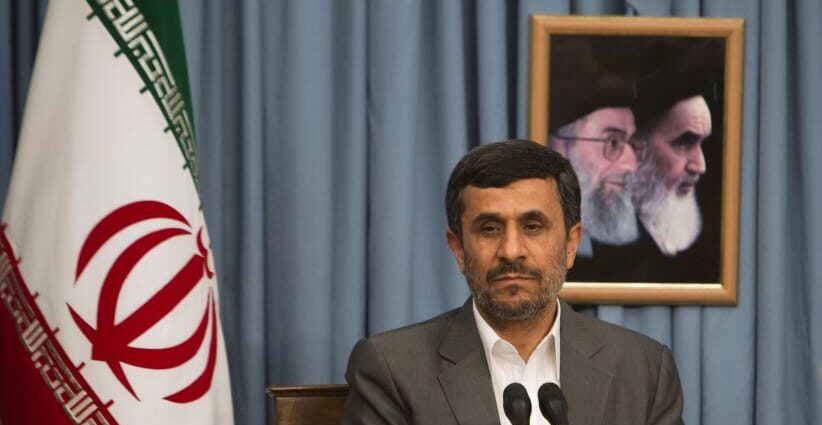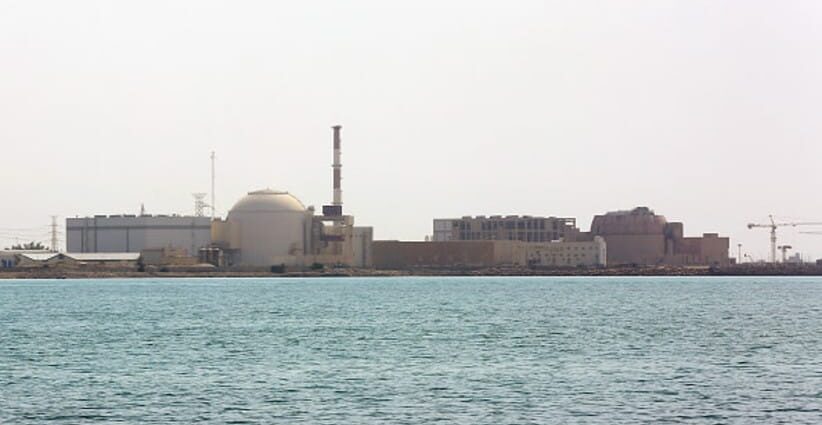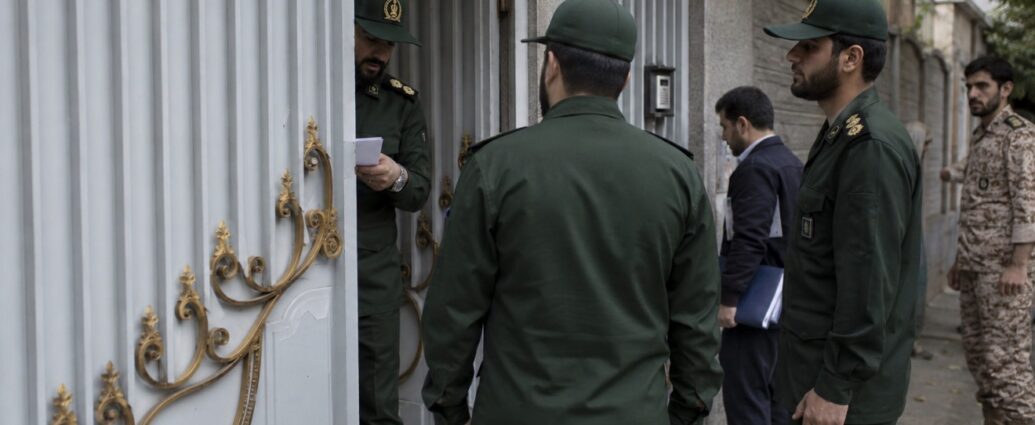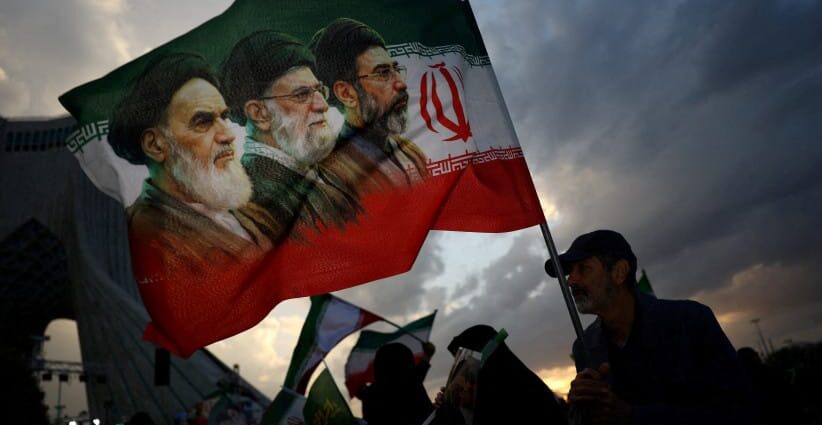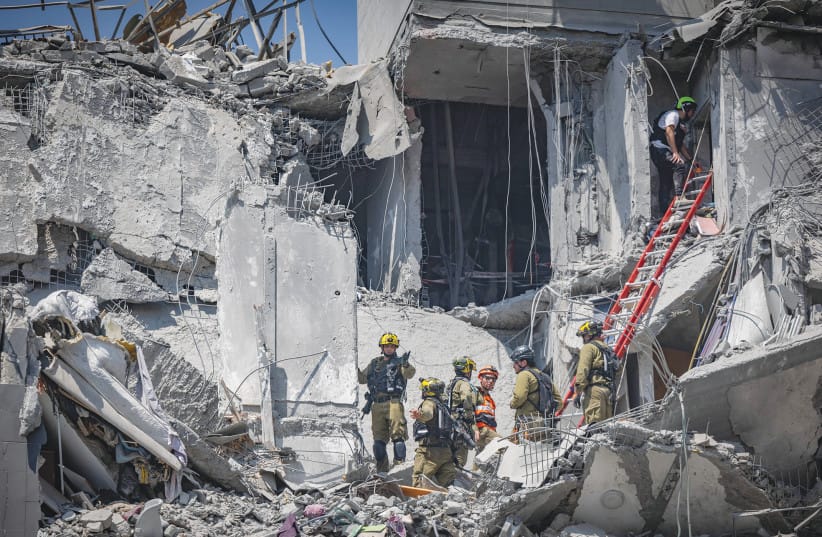
Two men were indicted for a plot to assassinate two German Jewish community leaders on behalf of the Iranian Regime and its Islamic Revolutionary Guard Corps (IRGC), the German Federal Public Prosecutor General announced on Thursday.

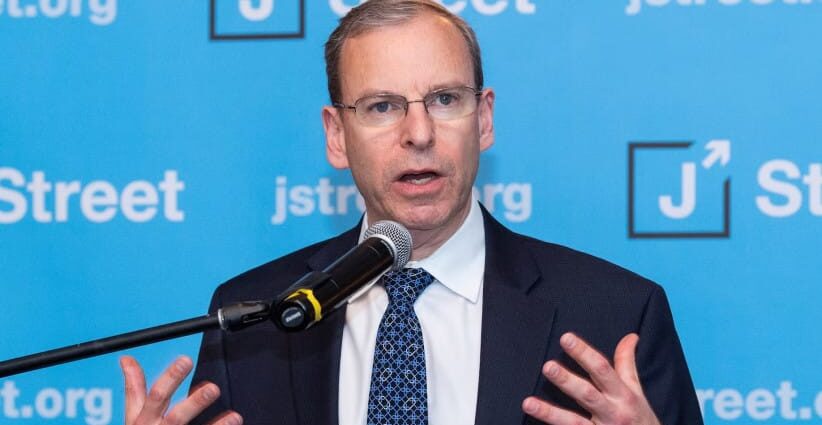
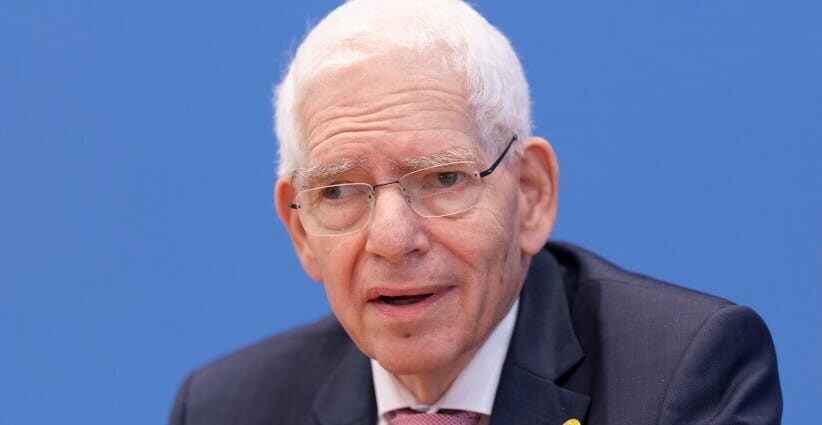
Danish national Ali S. and Afghan national Tawab M., who were arrested in Denmark in June and November, respectively, faced charges for a plot to assassinate the Central Council of Jews in Germany president Dr. Josef Schuster and German-Israeli Society chairman Volker Beck.

Ali S. allegedly worked for the IRGC‘s intelligence service and was in close communication with its Quds Force, which specializes in support for proxies and international and asymmetric warfare operations. At the beginning of last year, the Iranian operative was allegedly tasked with gathering information on two Jewish shops in Berlin for future arson attacks, and Schuster and Beck for assassination.

Last May, Ali S. allegedly contacted his co-conspirator, who agreed to provide a weapon to another party and direct them to assassinate Beck.

Ali S. was charged with espionage, espionage for sabotage purposes, and attempted participation in murder and arson. Tawab M. was charged with attempted participation in murder.

Beck, according to his organization, had been under security alert for six weeks in 2025 for fear of an attack.

German-Israeli Society calls for expulsion of Iranian ambassador

The German-Israeli Society on Thursday called for the German government to expel the Iranian ambassador and declare other diplomats persona non grata. The organization also proposed that the government freeze or confiscate Iranian leadership assets in the country, and review and punish Iranian banks and financial institutions operating in the country for IRGC and regime connections.

“Jewish life and the commitment to the Jewish and democratic state are repeatedly threatened and attacked with murder by the regime of the Islamic Republic of Iran on German soil. This must not go unpunished,” Beck said in a statement.

The Central Council of Jews in Germany did not immediately respond to requests for comment.

This post was originally published on here

Two new polls of American voters have found declining public support for Israel and growing discontent among Republicans over US President Donald Trump’s direction on Israel.

According to a New York Times/Siena poll published Monday, 38% of potential Republican voters said they would like to see the next Republican candidate for president move “in a new direction” on Israel, as opposed to following Trump’s lead.

Nearly a third of potential Republican voters also said they believed Trump had been “too supportive of Israel,” according to the poll of 1,500 voters this month, which has a margin of error of 2.8 percentage points.

The poll adds to growing signals that Israel is becoming a fault line within the Republican Party as well as on the left, where it has been increasingly divisive for years. In a sign of tensions surrounding the split by Republican leadership, Congress’s most anti-Israel Republican is facing a steep primary challenge from a Trump-backed Republican on Tuesday.

Make America Great Again (MAGA)-aligned Republicans who support Trump in particular are more likely than other Trump voters to back the Israeli government, according to a different poll released last week by Politico.

The survey asked respondents who voted for Trump whether they identified with the president’s “MAGA” movement. Just over half said they identified as MAGA.

The Politico poll, which was conducted in partnership with Public First, an independent polling company headquartered in London, found that nearly half of MAGA Trump voters say they back Israel and approve of the actions of its current government, while just 29% of non-MAGA Trump voters say the same.

Plurality of MAGA voters: Israeli Gaza action justified

The Politico poll found that 41% of MAGA Trump voters believe that Israel is justified in its military campaign in Gaza, compared to 31% of non-MAGA Trump voters. The poll surveyed 2,035 adults online from April 11 to 14 and had an overall margin of sampling error of ±2.2 percentage points.

Trump voters were also split over the perceived influence of the Israeli government over foreign policy, with 22% of MAGA voters saying they believed the Israeli government had too much influence, compared to 32% of non-MAGA voters.

When asked about the spending of the American Israel Public Affairs Committee (AIPAC), the pro-Israel lobby, on elections, a topic that has increasingly split American Jews, 20% of MAGA Trump voters said they oppose the group’s “efforts to influence US elections,” compared to 31% of non-MAGA voters. AIPAC has increasingly emerged as a bogeyman in politics.

The NYT/Siena poll found Trump’s overall approval rating had sunk to 37%, with 64% of American voters saying they believed Trump made the wrong decision entering the Iran war. Among Republicans, support for Trump’s decision to enter the war was much higher, at 70%.

More sympathy for Palestinians than Israelis

The NYT poll also found that Americans are more likely to sympathize with Palestinians over Israelis, with 37% saying they sympathize more with Palestinians compared with 35% who say they sympathize more with Israelis.

The finding is in line with a growing number since the beginning of the war with Gaza that have shown growing sympathy for Palestinians among American voters.

When asked whether the US should provide additional economic and military support to Israel, 57% of American voters overall said they opposed doing so, compared with 37% who supported it.  Among Republicans, 66% said they supported additional support for Israel, versus 30% who opposed it.

This post was originally published on here

The whole world was shocked out of its wits on September 17-18, 2024, when the Mossad brought the mighty 150,000-rocket-wielding Hezbollah terror army to its knees in an instant with a “fleet” of exploding beepers. Or, rather, almost the whole world, excluding the Mossad operatives and defense officials who ran the operation, such as “Adam Feyn,” who recently published a book in Hebrew, Hoda’ah Goralit (Fateful Message), about the operation and gave his first English-language interview about it to The Jerusalem Post.

In his interview with the Post and in his book, Feyn made a series of stunning dramatic reveals about the operation. These include how the Mossad lured a Hezbollah operative into an ambush to prevent him from exposing the beepers; the true story regarding how close Iran was to uncovering the plot; fleshing out how hard it was to get Hezbollah to lower its suspicions sufficiently for it to buy the beepers; showing how unwitting third parties were used by the Mossad to sell Hezbollah on the beepers; how the Mossad later tried to make good to such innocent third parties where it could; and how the Mossad’s gym and many other leisure areas were effectively converted into a beeper assembly line when the agency had to jump the pace of its production and had insufficient space to do so using its standard operations areas.

During the interview and in the book, Feyn also provided new insights into, and details of, key strategic moments when top Mossad or other Israeli officials gambled and took history in one direction instead of another, despite the “right” choice being covered in a haze of fog.

Feyn only recently retired from the defense establishment after decades in operations, including as one of the top managers with unique insider information about the beepers operation. He may still do other future work with the defense establishment, and so published the book under a fictional name to protect his identity. Another twist regarding the book is that Feyn wrote it as a partially fictional account, but which is meticulously based on the insider history of what actually happened, which only he and a small number of other top Mossad senior managers and defense officials know.

The best way to understand the breakdown of truth and fiction in the book is that the vast majority of the actions taken by the Mossad officials mentioned in the book, especially Mossad chief David Barnea (referred to only as the Mossad chief), actually happened, but sometimes in the book one character is a composite of multiple real agents to simplify the storytelling, which would otherwise become cumbersome and kill some of the pace. Such is the difference sometimes between Hollywood versions of intelligence operations and the real world. In both versions, the final result can be awesome and truly sweep readers or viewers off their feet. But in the real-life version, the culminating drama comes only after painstaking and agonizingly slow steps and meticulous spy tradecraft which laymen would never understand or tolerate.

The Mossad lured a Hezbollah operative into an ambush to prevent him from exposing the beepers

According to the book, around July 2024 the Mossad chief (Barnea in the real world) called the air force chief (Tomer Bar in the real world), who sent a senior air force operations colonel to a critical Mossad meeting, usually one not attended by outsiders (including the IDF). The Mossad officials at the meeting warned the colonel that a Hezbollah operative was getting too close to figuring out that the beepers were booby-trapped and requested that the air force kill him to save the operation. This was only around two months before the beepers were activated. In the book, the air force colonel responded to the Mossad officials by saying he needed the agency to trick the Hezbollah technology reviewer into leaving Beirut and also to give the air force his exact location when he left.

Next, the book said that Israeli defense and intelligence officials fooled the Hezbollah operative into traveling to southern Lebanon, where they bombed him. Questioned about such operations, Feyn told the Post, “it’s highly sensitive. The situation was problematic. There was more than one problematic situation that the Mossad had to deal with. Sometimes the problems went away on their own or more easily, and sometimes the Mossad had to act.” This operation did not end Hezbollah’s suspicions.

The book noted that the group tried to ask the manufacturer, Apollo, about the last message that the Hezbollah technology reviewer had sent to them before he was lured away and killed. This message was intercepted by the Mossad, and in any event the agency stalled Hezbollah’s review process long enough to get to the point when Israel decided to use the beepers.

How close did Iran come to blowing the beepers operation?

According to the book, in parallel to multiple Hezbollah operatives pursuing suspicions and carrying out various checks of the beepers, separately they also asked Iran to carry out its own check. This involved a specific Hezbollah operative planning a meeting with a specific Islamic Revolutionary Guard Corps official during the latter’s travels so that he could bring a beeper to Tehran. Previously, the Post has reported, based on multiple exclusive interviews, that there was a disagreement between top IDF and top Mossad officials about why and when the beepers were finally activated. The IDF narrative has been that the Iranians were about to expose the beepers, and the operation was forced into action earlier than planned and possibly earlier than ideal, according to certain parameters. In contrast, the Mossad narrative has been that there were many points when the beepers were in danger of being discovered, that mid-September 2024 was only one of these points, and that a separate major reason they were finally used was that the government had just recently taken a strategic decision to shift its primary focus from Gaza to Lebanon.

Feyn explained in his book that at the time that the beepers were activated, it was the most dangerous situation among the many episodes until then, because the Iranian checks into technology were of a higher standard than Hezbollah. He said that the same way Israel wanted the US involved in fighting Iran, because it has unique capabilities, Israel was uniquely worried about the beepers being discovered by Iran as opposed to Hezbollah.

Hezbollah debated about the suspicious devices

According to the book, Hezbollah had a robust debate about whether to purchase the beepers. There were definitely dissenting voices against the new device. They were extra suspicious when any manufacturer pitched a product, as opposed to if Hezbollah had approached a manufacturer on its own initiative, the book explained. Those opposing the new device said that Hezbollah would first need to perform a thorough check and would need to review competing options.

“One thing that helped push the deal through,” Feyn added, “was that the original communication device they [Hezbollah] had been using” would not work for much longer and was no longer being sold, “such that they needed to switch no matter what.” There was even pressure on Hezbollah, said the book, to race forward, after it had tried to drag out using the old device as long as it could. “Once they would switch to a new device, they would not switch again for a long time. They viewed every switchover to a new device as a risk, and as a trigger for a new market survey in order to reevaluate other new, available products,” said Feyn, noting that this meant the Mossad had a very short window of opportunity to penetrate the supply chain of the Lebanese terrorist group. If one tiny thing changed in the supply chain network between Taiwan and Lebanon, Hezbollah would demand explanations, including from their own people, the book indicated.

The book shows what a large challenge it was to find a person who could successfully influence Hezbollah to decide to overcome its concerns. One of the reasons the Mossad pulled off such a systematic surprise attack was that Hezbollah’s technology guardians were worried and checking for eavesdropping devices, not for explosives, Feyn noted. Keeping this advantage regarding Hezbollah’s ability to imagine how the devices might be tinkered with by inserting explosives was a major challenge. If Hezbollah found out, then once they would know about the new threat, they could become much more suspicious and better at exposing it, Feyn warned.

How ‘Theresa’ convinced Hezbollah

According to the book, in March 2024, Theresa received a call from Hezbollah to jump its order of beepers from the existing 500 per year to 5,000. This gigantic spike in Hezbollah’s volume of ordering new devices did not just happen. In the book, it was part of a campaign by senior female Mossad manager “Einat,” who connected with Theresa under the cover of a businesswoman named “Lilly.” Theresa came from an existing company which already knew and worked with Hezbollah. “The company was authentic and Israel did not control it,” which is a very powerful combination for intervening in a suspicious terrorist group’s supply chain, said Feyn.

Only through a mix of Theresa already having some contact with Gold Apollo President Hsu Ching-kuang, and Lilly coaching Theresa about how to get to and handle Hsu, did the original sale happen, and eventually blossom exponentially. All of this raises a rough ethical issue. Just as in war, militaries that follow international law seek to keep collateral civilian harm to a minimum, the Mossad tries to do the same. But this is not always possible. With the beepers operation, in the real world, the owner and CEO of BAC Consulting, a front company established for Mossad purposes, a woman named Cristiana Barsony-Arcidiacono, was one moment interviewing with NBC, and the next moment disappearing.

Without confirming specific details, Feyn told the Post that “we work on this; we try to help with collateral damage. We also soul search before we recruit and handle” someone and ask: Is this okay? Is it justified? Do the ends justify the means? In the book, the Mossad chief asked Oz to compensate and take care of persons who were unwitting agents as much as possible, to reduce the price that they would pay.

The beeper ‘assembly line’

According to the book, when the Mossad received the huge order of 5,000 beepers in March 2024, the Mossad high command did not pop its bottles of champagne. In fact, multiple top officials said they should refuse the order. They said that it would be physically impossible for the agency to produce a sufficient number of beepers fast enough. Furthermore, they said that rushing the operation could lead to errors, which could blow the entire patient, meticulous operational success to date. In the book, the Mossad chief pushed to get the 5,000 beepers. He ordered multiple divisions of the Mossad to reassign resources and personnel from other projects to help produce the beepers. Yet, top Mossad officials still objected, saying there was simply insufficient space within Mossad facilities to properly assemble that many beepers at the requested pace. In response, the Mossad chief ordered that the agency’s gym and other leisure areas be converted temporarily into beeper assembly line areas.

In a comical scene in the book, Mossad agents not in the know showed up at the gym hoping to exercise and were bewildered when they were turned away due to top-secret “gym” activities. Feyn said, “insane efforts were made to make sure this new order could happen. There is no magic. It could not be done in one moment, in one place.”

Beeper policy debates

The first debate that the book and Feyn unveiled is a previously unreported September 2019 internal Mossad debate about whether to try to develop a sabotage operation (which would eventually become the beepers operation) to be added to the existing walkie-talkie operation. According to the book, a man referred to only as “the deputy Mossad chief” (but which open sources can confirm was Barnea, around two years before he was promoted to become the chief) opened a meeting raising the idea, which almost incited rebellion from multiple top Mossad officials.

In layman’s terms, the question was whether to try to produce a risky game-changing sabotage operation against Hezbollah after the top Mossad officials present had spent half a decade to pull off a prior such operation, which was now one of their flagship successes. Previously, the Post has reported that the walkie-talkie operation started around 2014. Feyn explained to the Post that a central question that worried the Mossad officials in attendance was: “What happens if the walkie-talkies get exposed? We would lose an already built and existing capability. They [Hezbollah] would figure out both the old and new plots. The resources used up already and needed for such a new operation are not trivial to obtain. These are not regular operations and investments. This could have major consequences for the organization. The question was: is all of this justified? Eventually, the deputy Mossad chief decided to go for it,” Feyn noted.

In the book, some of the senior Mossad officials told the deputy Mossad chief that his request was impossible anyway because there was no device for Hezbollah that was large enough to be able to plant explosive material inside it. However, the book then recounts how the one senior female Mossad agent present broke ranks with her even more senior boss, telling the deputy Mossad chief that a junior female intelligence agent had recently published a report about a new device that would be large enough for planting explosives, and could be pitched to Hezbollah. A large model designed and manufactured by the Mossad was later presented to Hezbollah. Feyn confirmed that a female Mossad commander had a key role in these developments, while noting that the specific “Einat” in the book is a composite of multiple people.

Ultimately, Feyn said, the deputy Mossad chief went in the direction of this new risky device idea because “we started to understand that we could not always activate the walkie-talkies. They would only work optimally if the IDF was undertaking an invasion of Lebanon, so the two [the walkie-talkies and an invasion] are complementary and would be needed to be combined. The beepers could be used all of the time, including during routine peacetime periods,” making them more versatile as a sabotage weapon, he asserted.

Pieces of this same debate would be famously reenacted on Oct. 11, 2023, when the IDF high command pushed for carrying out a massive preemptive strike on Hezbollah. This might have changed the course of history by beating the Lebanese terrorist group nearly a year earlier. However, most Mossad sources said that the beepers were not fully developed yet then, and the walkie-talkies might have flopped if Hezbollah left most of them in warehouses where they were then being stored – awaiting a moment when Hezbollah fighters might be called to put on their battle vests and rush to the border.

Hoda’ah Goralit (Fateful Message) (credit: Courtesy)

Beepers in September or October 2024?

The book recounts a meeting at Tel Aviv military headquarters in the first half of September 2024 when the IDF chief of staff (who we know was then Herzi Halevi) held a meeting with top Mossad officials on his turf, but without the presence of the Mossad chief. According to the book and Feyn, the IDF chief said, “We should not open up a general war at a moment that is less advantageous. If you buy an engagement ring, it does not mean that you ultimately must get married,” if it turns out that the timing or some other factor is off. In the book, and according to independent sources who have spoken to the Post, Halevi made similar pronouncements at a decisive meeting with Prime Minister Benjamin Netanyahu on September 14, 2024, only three days before the beepers were activated.

Halevi knew that the beepers operation was a great potential initial strike to throw Hezbollah off, but other military timing and readiness factors were possibly even more important. Feyn told the Post, “It was a legitimate substantive disagreement. They [the IDF] were coming at it from a different perspective. They had conceptual responsibility for the ‘entire body’ of Israel. The IDF is responsible for the entire war: the sufficiency [in volume] and quality of attack munitions, the ground forces, the volume of aerial defense interceptors, the home front in a broader sense – it was not grossly unreasonable.”

But in the book and in real life, the Mossad chief (Barnea) and also Feyn argued that once the government had decided that it needed to bring the northern residents back, Israel needed to use all of its capabilities. “This weapon could have real strategic value.” In colorful fashion, Feyn added into his book one of the Mossad officials responding to Halevi that it is one thing to rethink an engagement ring in a vacuum; it is another thing to rethink an engagement if the groom has already gotten the bride pregnant. In the book, Halevi disregards this comment, and various officials present decry the Mossad official’s crudeness. But the point behind it was that the beepers operation was so far along and so close to success that it was like a woman who was pregnant and about to give birth. To call off the wedding, metaphorically, or, the Mossad official was saying, to call off the beepers operation in the real world so late in the game, would be an unthinkable, last-second wasteful decision.

Feyn argued that the defense establishment needed to assess what would be the best timing. The timing could be very strategic for how large of an impact the beepers would have, he noted. This could even have been the decisive factor, if the Mossad had proved Israel could have achieved killing far more Hezbollah officials. True, if Israel had fooled Hezbollah fighters into rushing to the border in their full gear, the walkie-talkies could have killed three times as many of them. But even if Israel missed that achievement, it had an alternate history-changing achievement. The beepers as they were actually used – even if the impact was more limited in total numbers – achieved breaking Hezbollah’s spirit.

Furthermore, the Mossad worried that if Israel had followed the IDF view and delayed springing the beepers on Hezbollah until October, such a move might have sacrificed the whole operation by exposing a number of beepers. “In any event, the prime minister decided. And it turned out to be a very correct decision. The beeper capability was tremendous,” said Feyn.

Walkie-talkies right after beepers, or wait and see?

Another debate that Feyn revealed to the Post, and which the book describes, but which was unreported until now, was whether the walkie-talkies would be used immediately after the beepers (as they were the next day in the real world), or whether Israel would take some time to observe how the beepers affected Hezbollah before deciding if and when to activate the walkie-talkie explosions. Once again, the book portrays the IDF as wanting more time, concerned about the consequences of rushing in with yet another Mossad operation.

In real time, the book says, the IDF chief thought it was possible that if Israel only hit Hezbollah with the beepers, it might take the hit without launching a massive counterstrike. But if Israel hit it consecutively with the beepers and then the walkie-talkies, this might drive Hezbollah into such a counterstrike before the IDF could launch its own general war to head off that threat. Feyn confirmed to the Post that this was a real and serious debate, and that using the two Mossad flagship sabotage operations consecutively, one right after the other, almost did not happen.

In the end, Netanyahu decided to go with the walkie-talkies the day after the beepers, and Hezbollah was thrown into even greater confusion and paranoia, helping the IDF strike it soon after with its guard down completely. But none of this was obvious or a foregone conclusion in real time.

The price paid by Mossad and defense officials’ families

Feyn readily acknowledged that “there was a price on the family. Anyone in the defense establishment who spends extended times in operations overseas knows how much of a challenge it is to preserve a loving family.”

“You can be ‘present’ even when not physically present, such as speaking on the phone to make sure children study for a test and to be really happy with them when they achieve things,” he said. Feyn stated, “We need to work on this all the time. You need to help them have a normal life. And you need their willingness, resilience, and support over many years. When you are in Israel, you cannot just go out alone or with friends on a long biking trip. The family must always come first,” added Feyn.

Part of the formula does often involve Mossad and defense officials taking a year or multiple years off to refresh themselves in the normal civilian world in between an otherwise intelligence-focused career. Both of the last two Mossad directors, Barnea and Cohen, spent time outside of the Mossad before returning for higher positions.

Ultimately, Feyn emphasized, while marriages and families with inherent problems may find it even harder under the stress, those with strong foundations can emerge even stronger in some ways.

This post was originally published on here

The IDF is investigating a suspected attempted hit-and-run incident that occurred near the Tapuah intersection in the West Bank on Thursday.

No injuries related to the attempted ramming were reported.

IDF forces in the area apprehended the vehicle suspected to have been used in the incident in Nablus, detained the suspected perpetrator, and transferred them to security forces for questioning.

This is a developing story.

This post was originally published on here

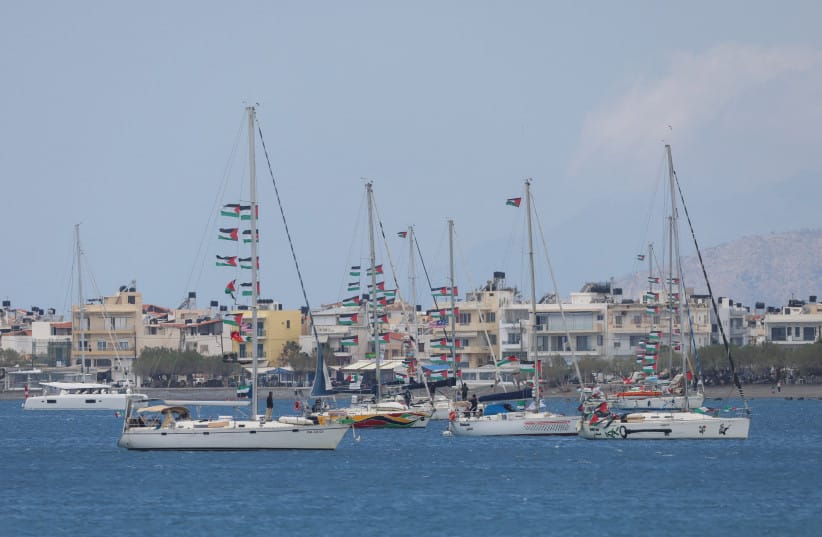
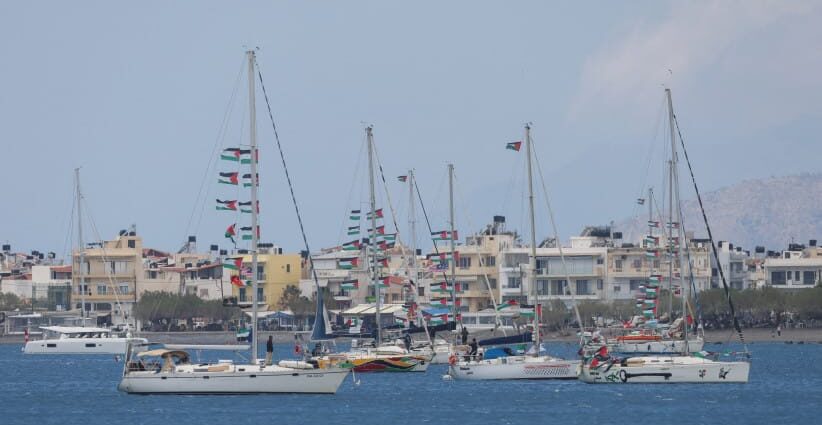
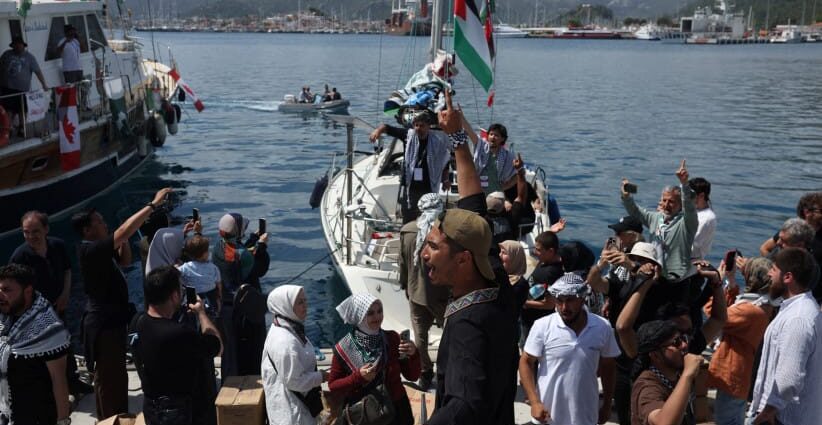
The Ashkelon Magistrate’s Court ordered the release of Israeli flotilla activist Zohar Regev on Thursday under conditions, as hundreds of foreign participants detained after Israel’s interception of the Global Sumud Flotilla and Freedom Flotilla Coalition vessels were deported from the country.

Regev, the only Israeli citizen detained in the latest flotilla case, was released after signing a NIS 5,000 self-guarantee, agreeing to report to police on demand, and being barred from entering Gaza for 60 days.

Police had initially sought harsher conditions, including a NIS 5,000 deposit and a 184-day ban on entering Gaza, until November 20, 2026.

Adalah – The Legal Center for Arab Minority Rights in Israel, which represented Regev and the foreign flotilla participants, said earlier Thursday that it had received confirmation from the Israel Prison Service and state officials that all international GSF and FFC activists had been released from Ktziot and were en route to deportation, most through Ramon Airport.

The Foreign Ministry announced on Thursday that all foreign activists had been deported after the Navy intercepted the Gaza-bound flotilla in international waters and brought the participants to Israel. Israeli officials said the flotilla was attempting to breach the naval blockade on Gaza, while organizers said they were seeking to deliver humanitarian aid and challenge the blockade.

Earlier in the week, some 430 activists had been transferred to Israeli vessels and brought toward Israel, where they were to meet consular representatives. The Foreign Ministry called the flotilla “nothing more than a PR stunt at the service of Hamas” and said Israel would continue to act under international law to prevent breaches of the blockade.

The flotilla included dozens of vessels and hundreds of activists, with the last ships intercepted west of Cyprus and later north of Port Said.

Israeli activist handled differently from foreigners 

Regev’s case was handled separately because she is an Israeli citizen. According to the police request filed with the court, she was arrested in connection with a flotilla “planned to reach the Gaza Strip,” with police listing the suspected offense as “infiltration” under the Prevention of Infiltration Law. The request also marked obstruction of investigative proceedings and danger to public security as the grounds for arrest.

At Thursday’s hearing, however, the state representative clarified that the more accurate suspicion was attempted infiltration, not completed infiltration. He also confirmed that Regev had been arrested in international waters.

Police told the court they wanted Regev released under restrictions, including the NIS 5,000 self-guarantee, a NIS 5,000 deposit, reporting to police on demand, and the 184-day Gaza-entry ban.

Regev’s attorney, Hadeel Abu Saleh, opposed the conditions and argued that the arrest itself was unlawful. She told the court that Regev was an Israeli citizen living abroad, that she had been detained at gunpoint in international waters, and that the vessel was registered in Poland.

Abu Saleh also argued that Israeli authorities could not impose restrictions based on an arrest she said was carried out without proper authority. She said Regev had been on hunger strike since her arrest and claimed she had been mistreated in detention, including over her hijab.

The hearing also exposed problems in the police filing. The state representative acknowledged that the request submitted to the court may have been flawed after the defense pointed out inconsistencies between the police’s stated reasons for the arrest and their description of where the alleged offense occurred.

Judge Talmor Peres criticized the police filing, saying the investigating unit should have been more precise. She said the main concern in the case was alleged dangerousness rather than obstruction of the investigation, and that the court’s authority to hear the case stemmed from the location of the investigating unit, not from the place where the alleged offense occurred.

Judge finds reasonable suspicion in case

Still, after reviewing the investigative material, Peres found reasonable suspicion that Regev had committed the offenses in question.

The judge ordered Regev released under conditions lighter than those requested by police: a NIS 5,000 self-guarantee, reporting to police on demand, and a 60-day ban on entering Gaza.

Peres said the conditions were slightly harsher than those imposed in a previous case involving Regev, citing the wartime context and saying that, according to the allegations, Regev had made repeated attempts to commit similar offenses.

A separate court document showed Regev signed the NIS 5,000 self-undertaking later Thursday.

The case unfolded amid mounting international criticism over Israel’s handling of the detained activists, after National Security Minister Itamar Ben-Gvir published footage from Ashdod showing detainees kneeling with their hands zip-tied. Prime Minister Benjamin Netanyahu rebuked Ben-Gvir’s conduct while defending Israel’s right to prevent the flotilla from breaching the blockade.

This post was originally published on here

Mount Sinai and the giving of the Torah stand at the seminal moment of Jewish faith. God spoke directly to three million people. Our faith is not built upon the prophecy of a lone mystic or the vision of a single individual; it rests upon a staggering moment in which an entire nation stood together and heard the voice of God.

However, even within this moment of absolute truth, not everyone heard the same broadcast. 

The foundation was shared: Every Jew received the same Torah, the same 613 commandments, and the same covenant at Sinai. Yet each person perceived a personalized dimension of the divine word. 

The word of God is so eternal and transcendent that no human being can ever fully encompass it. Different perspectives within Torah are built into the system itself. This is not a flaw. It is part of the Torah’s design.

Mount Sinai and the root of ‘machloket’

Machloket (“debate”) is not merely the product of a once-unified tradition deteriorating across generations. God presented Moses with multiple pathways through which a particular item could be viewed as impure; he was then presented with multiple pathways through which that same item could be viewed as pure.
 
Halacha demands a single course of action. An item cannot be both impure and pure in practice. Yet each position still reflects part of a broader divine truth which transcends the binary limits of human reasoning. That is precisely why we study every opinion in the Talmud, and not merely those adopted as normative halachic practice. 

Just as disagreement is woven into the halachic process, it is also built into the way Torah and commandments are applied within a particular cultural context, what we often call hashkafah. 

Torah and commandments are eternal, applying equally in every generation. Hashkafah is the manner in which eternal Torah encounters the changing conditions of history and society. God created people with different temperaments and dispositions, and different approaches and frameworks speak more deeply to different individuals.

A divisive moment

In Israel today, no issue has more sharply divided different communities than the question of haredi non-conscription to the IDF. The debate always existed, but in times of relative calm it simmered beneath the surface. During the past two and a half years of war, especially amid a severe shortage of manpower, the issue has erupted into a painful and divisive argument.

The rabbis teach that a machloket which is l’shem Shamayim – i.e., sincere and rooted in noble values – will endure. Ideological debates do not disappear easily. Arguments driven by petty interests or political maneuvering quickly dissolve once the emptiness beneath them becomes exposed. But debates about Torah study, religious culture, and service in a Jewish army touch upon profound values. These are not shallow disagreements, and they will likely take generations to resolve.

Shared values and the value of Torah study

Shavuot is not the moment to stake out already voiced positions. There is too much pain and too much strife surrounding this issue. Additionally, most people’s positions are already hardened. My own views can easily be traced to where I teach and the community in which I live.

Instead, Shavuot is a time to clarify the greater Torah values at the center of this debate, ensuring that those shared values are not blurred by the intensity of the argument itself. The first of those values is the supremacy of Torah study.

Those who serve in the IDF, as well as those who do not, agree about the larger value of Talmud Torah. It is a supreme value, equated with the entirety of the Torah commandments. Studying the will of God in order to draw closer to Him is a transcendent experience, difficult to compare to other pursuits.

Protecting our land

The current ideological debate is not about the centrality of Torah, but whether commitment to Torah study exempts someone from participating in the defense of our people and our land.

Torah study and Torah commitment are not merely personal religious experiences. They also protect our land and shape our national destiny.

Without pointing to any single miracle, it is clear that our presence in the land of God is supernatural. The degree to which we infuse this society with Torah and commandment observance shapes our security and our survival.

Debates about deferring Torah study for other pursuits have occupied great Jewish thinkers throughout the generations.

The Talmud cites Rabbi Yishmael, who validated engaging in agriculture even at the cost of reduced Torah study. 

It then cites Rabbi Shimon Bar Yochai, who advocated a life fully devoted to Torah study, supported by others. 

These discussions have unfolded throughout the centuries. However, the question of whether Torah study exempts military service, especially when there is no broad consensus about who qualifies for such an exemption, does not clearly surface in our tradition.

It is supremely important for those who combine Torah study with army service to reaffirm how central Torah study remains. 

History advances on two stages: the hidden metaphysical stage and the visible historical stage. Every page of Torah studied advances our nation and protects our land on that hidden stage. Those who serve believe that God asks us to operate on both stages, strengthening the spiritual foundations of our people while also physically defending our country.

There is a danger that those who serve and who feel deep pain toward those who invoke Torah study as an exemption may gradually become less attached to Torah study itself. In their forceful defense of integrating Torah study with military service, they may slowly weaken their own emotional connection to the supreme value of Talmud Torah.

On Shavuot, we recenter Torah study as our supreme value, even as we divert some of its precious human resources toward protecting our people and defending our land.

Preserving religious clarity

Preserving the centrality of Torah also requires intellectual honesty about the achievements of the haredi world. This divisive moment should not blur the extraordinary accomplishments of the post–World War II haredi world. After the Holocaust, the Jewish world lay in ruins, and Torah students and their teachers were not spared. Modern haredi society viewed itself as carrying the responsibility of rebuilding that shattered world of Torah greatness.

In many ways, the explosion of Torah study over the past decades has been driven by the haredi world. The broader Torah community has benefited immensely from the intensity, discipline, and publication of Torah, which this culture generated. Regardless of how one views the current haredi stance, ignoring these accomplishments would be intellectually dishonest and deeply unfair.

This painful moment cannot reshape our core values. Clarifying the difference between the values we share, such as the supremacy of Torah, and the areas in which we genuinely disagree can help ensure the amplification of those common values rather than their erosion through conflict and resentment.

There is another reason why clarifying terms is so important. Ideological struggles can create great confusion and leave lasting scars. There is concern that this debate could lead to broader religious alienation. 

Haredim are highly visible representatives of Torah study and religious commitment, and for those who strongly oppose their current stance, frustration with this issue can gradually become frustration with religion itself. This danger is especially acute for younger people forming their religious identity.

Our messaging must remain clear and unmistakable. This is not a debate about whether we value Torah study or how deeply we cherish it. It is a debate about how Torah study is balanced with what many see as the great commandment of protecting our people and defending our land. Clarifying this may help prevent confusion and alienation.■

The writer is a YU-ordained rabbi at the hesder Yeshivat Har Etzion (Gush). His latest book, Reclaiming Redemption, Volume II: Faith, Identity, Peoplehood and the Storms of War, is available at www.mtaraginbooks.com.

This post was originally published on here

On Shavuot, Jews celebrate the giving of the Torah at Mount Sinai. It is the moment that transformed a newly freed people into a covenantal nation bound not merely by ancestry or geography but also by shared responsibility, moral vision, and sacred purpose.

But this year’s arrival of Shavuot is unlike any in human history.

The age of artificial intelligence promises extraordinary breakthroughs. It also raises profound questions. And perhaps no Jewish holiday speaks more directly to this moment than Shavuot.
Because Shavuot is not ultimately about information. It is about revelation.

AI is reshaping how we think, write, learn, create, communicate, and even how we understand ourselves. Information moves instantly. Machines now generate essays, answer questions, compose music, imitate empathy, and synthesize vast oceans of human knowledge in seconds.

But the Jewish people did not receive a database at Sinai. They encountered a voice.

The Torah describes thunder, lightning, trembling, and sound. Revelation was not merely transactional. It was relational.
The giving of the Torah was not simply the transfer of knowledge from Heaven to Earth. It was the creation of a covenant between God and humankind.

Consider that distinction in the age of AI. It matters enormously.

We know how AI can generate information at astonishing speed. But information is not wisdom. Data is not meaning. Access is not transformation.

Never before has humankind possessed more knowledge at its fingertips. And never before has it felt so difficult to discern what is true, what is good, what deserves our attention, or even what it means to be human.
The challenge of our time is not informational scarcity. It is spiritual and moral overload.

Jewish tradition has long understood that wisdom is not acquired instantly. Torah is not merely downloaded. We struggle with it. We debate and internalize it. We live it.

The Talmud praises ameilut baTorah, the labor of Torah study. Meaning emerges not just from answers but from the effort of wrestling with questions. AI collapses the distance between question and answer. Torah lives precisely inside that distance.

A student today can ask AI to summarize a complex Talmudic debate and will receive an instant analysis. This is remarkable and, potentially, transformative.

 From Melbourne to Mumbai to Manhattan, AI has the capacity to democratize Jewish learning in ways that were unimaginable even a generation ago. Thousands of years of Jewish texts, once limited to elite libraries and study halls, are now accessible. That is no small thing.

But let’s not confuse digital access with the soulfulness of human interaction.
Chavruta learning is sacred. Sitting across from another person – listening, challenging, arguing, conceding, and ultimately growing together – is irreplaceable. There is beauty in this tradition; the collaborative process is perfect.

Shared struggle, humility, patience, and presence cannot be replicated by an algorithm. AI may become an extraordinary study partner. But it will never replace the glories of the human transformation that comes from this process.

When technology shapes the human soul

Because the process is perfect. Machines can process language. Only human beings can sanctify it. And this may be the deepest spiritual challenge we face.

Our fear of AI is not that machines will become human. It is that humans begin behaving like machines.

The signs are everywhere. The pressure to respond instantly. The erosion of silence. The commodification of attention. The temptation to outsource reflection.

Former US Senator Ben Sasse recently reflected that modern technology increasingly shapes not only how we communicate but also how we experience reality, suffering, mortality, and the meaning of our existence. 

He points to our discomfort with slowness, contemplation, and dependence. Yet those very qualities sit at the heart of religious life. At Sinai, revelation required attentiveness before productivity. Presence before performance.

The Torah’s vision of humanity stands in sharp contrast to the logic of technological efficiency. Judaism insists that human beings are not valuable because they are useful, optimized, or productive. Rather, human dignity flows from being created b’tzelem Elokim, in the image of God.

That principle must remain at the center of any conversation about AI. Jewish tradition is not anti-technology. On the contrary, Judaism celebrates human creativity. Building, healing, and innovation are part of humanity’s divine mandate.

But Judaism also insists that power without moral responsibility is dangerous. Remember the legend of the Golem of Prague. Humans create something powerful to serve noble purposes, only to realize the risks of unleashing forces that exceed their control. 

The lesson is not to stop creating; it is to ensure that moral wisdom evolves with the technological capability. And so the question facing humanity is not simply whether we can build more intelligent machines.

The deeper question is whether we are cultivating wise and moral human beings capable of guiding them.

Shavuot reminds us that civilization is sustained not only by intelligence but also by covenant, responsibility, and moral restraint. At Sinai, the Jewish people responded to revelation with the words naaseh v’nishma: “We will do, and we will hear.”

Action preceded complete understanding. Commitment came before mastery. That ancient response may be more relevant today than ever. Because in an age obsessed with generating intelligence, the enduring challenge is cultivating wisdom.

In a world flooded with information, Sinai still whispers humankind’s oldest and most important question: not merely what can we create, but who are we becoming?

The writer is a rabbi, nonprofit executive, and community builder working to support the next generation of Jewish leaders through Birthright Israel and New York City’s Congregation Kehilath Jeshurun.

This post was originally published on here

Israel completed the deportation of all Gaza flotilla activists on Thursday, the Foreign Ministry announced in a statement released on X/Twitter.

In the statement, the Foreign Ministry reiterated that “Israel will not permit any breach of the lawful naval blockade on Gaza.”

Earlier on Thursday, Spanish Foreign Minister Jose Manuel Albares said that 44 Spanish activists detained in Israel were expected to be released to Spain via Turkey on a 3 p.m. flight.

On Wednesday, Albares condemned Israel’s behavior towards the flotilla activists, calling out National Security Minister Itamar Ben-Gvir’s treatment of them as “monstrous, undignified, and humiliating.”

Also on Thursday, two Jordanian activists who had been on the flotilla were returned home after efforts led by the efforts led by the Foreign and Expatriates Affairs Ministry.

The flotilla was intercepted by the Israeli Navy on Tuesday night, with 428 participants from more than 40 countries detained. 

Around 90 of the detained activists began a hunger strike, according to the Global Sumud Flotilla.

Ben-Gvir raises controversy with flotilla activist video

On Wednesday, Ben-Gvir shared videos of himself harassing the detained flotilla activists in Ashdod, drawing immediate condemnation both internationally and from Israeli officials, and causing several countries, including Spain, to summon their Israeli chargé d’affaires.

In response to Ben-Gvir’s videos, Prime Minister Benjamin Netanyahu said that while Israel has the right to respond to the flotilla, Ben-Gvir’s actions were unacceptable.

Sarah Ben-Nun, Michael Starr, and Corinne Baum contributed to this report.

This post was originally published on here

US President Donald Trump said he would speak to Taiwan’s President Lai Ching-te, an unprecedented departure from diplomatic norms.

In Thursday comments to reporters at Joint Base Andrews in Maryland, Trump said he would “work on that Taiwan problem.”

“I speak to everybody. We have that situation very well in hand,” he said, adding, “I’ll speak to him.”

Later, Taiwanese President Lai Ching-te would be happy to speak with Trump, Taiwan’s foreign ministry said on Thursday.

“In addition to being committed to maintaining the stable status quo in the Taiwan Strait, President Lai is also happy to discuss these matters with President Trump,” the ministry added, without elaborating.

Trump says he will call Taiwan’s Lai

At this time, it’s unclear if the US administration has moved forward with plans for a call between the two leaders.

Trump’s comments come after he visited China last week. During the state visit, Chinese President Xi Jinping warned Trump directly that Taiwan would be a “very dangerous situation” if not handled correctly, and urged him to handle it with “extreme caution.”

Notably, China has repeatedly laid claim to Taiwan and has pressed to “reunify” the island with mainland China.

The US acknowledges China’s claims that Taiwan is part of China, but never officially recognized the Chinese Communist Party’s claims to the island.

During the meeting, Trump and Xi discussed a $14 billion arms sales deal for Taiwan, which the US Congress approved earlier this year.

The United States is bound by the 1979 Taiwan Relations Act to provide Taiwan with the means to defend itself, despite a lack of formal diplomatic ties. The two maintain robust informal ties, however.

Additionally, CNN reported that a 1982 reassurance states that the US does not consult with Beijing on arms sales.

On Thursday, a spokesperson for China’s foreign ministry said the government’s opposition to US arms sales and official exchanges between the United States and Taiwan remained consistent, clear, and firm.

China urged the United States to “handle the Taiwan issue with extreme caution and stop sending wrong signals to the separatist forces of Taiwan independence,” a spokesperson told reporters.

Taiwan’s government rejects Beijing’s sovereignty claims.

This post was originally published on here

Poland wants to ban National Security Minister Itamar Ben-Gvir from entering the country, a foreign ministry spokesperson said on Thursday, after outrage in Warsaw over the detention of Gaza flotilla activists.

Earlier, the Polish minister had summoned the Israeli chargé d’affaires over the detention of Gaza flotilla activists, including Polish nationals, demanding their immediate release and an apology.

“Poland firmly condemns the conduct of representatives of the Israeli authorities towards activists of the Global Sumud Flotilla detained by the Israeli army, including Polish citizens,” Radoslaw Sikorski said on X.

He said Poland expected its citizens to be treated in line with international standards, and that consular officials were seeking access to detainees.

A spokesperson for the ministry later said that there were two Polish nationals detained and that they would be repatriated on Thursday night.

“Today, our citizens, and not only our citizens, will leave Israel. This is very good news,” Maciej Wewior told reporters.

“Minister Sikorski has decided to ask the Ministry of Interior and Administration to ban Ben-Gvir from entering the territory of the Republic of Poland due to his actions,” he added.

The Israeli chargé d’affaires had been summoned “to convey our outrage and demand an apology for the extremely inappropriate behavior of a member of the Israeli government,” Sikorski wrote on X.

EU foreign ministers should discuss at their next meeting the adoption of sanctions against Ben-Gvir, Italian Foreign Minister Antonio Tajani also said on Thursday.

Tajani said on X he had made a formal request to EU foreign policy chief Kaja Kallas, on account of the Israeli minister’s “unacceptable actions” against Gaza flotilla activists.

Ben-Gvir draws worldwide condemnation for mistreatment of activists

On Wednesday, Ben-Gvir launched a political storm when he shared videos of himself harassing detained flotilla activists in Ashdod after Israeli forces intercepted their ships on Tuesday. 

The videos raised widespread condemnation from international officials, including the president of the European Union, US Ambassador to Israel Mike Huckabee, and Prime Minister Benjamin Netanyahu.

Huckabee called the flotilla a “stupid stunt,” but also denounced Ben-Gvir’s actions as having “betrayed dignity of his [Ben-Gvir’s] nation.”

Several countries also summoned their respective Israeli ambassadors in response to the treatment of the flotilla activists, including France, the Netherlands, Australia, New Zealand, Poland, Spain, and the United Kingdom.

Corinne Baum contributed to this report.

This post was originally published on here

Israel Police is set to deploy drones to aid in the fight against crime in southern Israel following a successful trial run near Rahat, Southern District Police Commander Chief Superintendent Haim Bublil confirmed on Thursday.

The initiative, funded by the National Security Ministry and approved by National Security Minister Itamar Ben-Gvir and Police Commissioner Danny Levi, is expected to aid police in preventing major crime, shootings, and criminal activity.

According to police sources, the drone is capable of vertical takeoff and landing, can fly for tens of kilometers over several hours, and is equipped with advanced day and night surveillance capabilities. 

It is designed to provide the police with precise, and continuous situational data in real time, all while operating quietly, allowing for covert deployment.

The drone joins Israel Police’s operational toolkit, representing a further integration of field operations, intelligence, and advanced technology in the fight against major crime.

Drone deployment comes against police struggle

“This is a game-changing tool, which provides forces in the field with broad and continuous coverage, real-time intelligence collection, and rapid closure against criminal operations,” police sources said. 

The sources added that the the initiative comes against the backdrop of severe challenges in confronting crime and violence, and aims to equip Israel Police with advanced tech in order for faster, more precise, and more effective responses.

“In the fight against crime, we are required to deploy all operational and technological capabilities at our disposal,” Bublil said. “I have instructed police forces to operate at full strength and use every means necessary to locate, prevent, and apprehend criminals.”

“The fight against crime requires us to progress, improve, and adopt new technological capabilities. Deploying a drone provides us with broader, deeper, and more effective coverage, both in intelligence and in the operational readiness of field forces.”

“Anyone choosing to engage in violence, shootings, or serious crime should know: There is nowhere to hide. The long and determined arm of the Southern District Police will reach them, and the response will be rapid, decisive, and uncompromising,” he concluded.

This post was originally published on here

I was sitting across from a senior board member at a large enterprise. He is sharp, experienced with decades of business judgment. We were speaking about the quantum threat. He put down his coffee and asked me directly: “Esti, forget the hype for a moment. What should I actually be doing, right now, as a board member?”

It’s the right question. The fact that he was asking it, rather than nodding politely and moving on, told me he was already ahead of most.

The quantum conversation has a problem. It oscillates between two extremes: breathless science-fiction on one end, and dense technical jargon on the other. Neither serves the people who need to act. Board members are not cryptographers. They don’t have to be. But they do need to understand enough to ask the right questions of management, and to know whether the answers they’re getting are serious ones.

So let me start where most briefings skip: the terminology.

QKD and PQC – two words and two completely different ideas

When quantum security comes up in board presentations, you will almost inevitably hear two acronyms: QKD and PQC. They sound similar, but they are not.

Post-Quantum Cryptography (PQC) is the answer to a software problem. Today’s most widely used encryption – the RSA and elliptic-curve algorithms that protect your internet traffic, banking transactions, and digital signatures – relies on mathematical problems that classical computers cannot solve in a reasonable time. A sufficiently powerful quantum computer could crack these problems. PQC replaces them with new mathematical algorithms, specifically designed to be hard for quantum computers to break. It’s important to understand that PQC runs on your existing hardware and existing networks. In 2024, the US National Institute of Standards and Technology (NIST) published the first three finalized PQC standards, after an eight-year global competition. The train has left the station.

Quantum Key Distribution (QKD) is a fundamentally different approach. It does not replace the math. It uses the laws of quantum physics to distribute the keys that lock and unlock encrypted data. QKD sends encryption keys encoded in individual photons. If anyone intercepts these photons, the quantum state changes, and the eavesdropping is detectable. It is a physics-based security guarantee and not a computational one. The catch is that QKD requires dedicated fiber infrastructure or satellite links, works over limited distances without repeaters, and is quite expensive to deploy at scale. It is not a drop-in replacement for how the internet works today.

Here is the practical takeaway for a board member. You can think of PQC as upgrading your locks to ones that a quantum-powered lockpick cannot open. Think of QKD as a physics-enforced courier service for the key itself. Both are important. For most enterprises, PQC is where you can start. It is deployable now, at scale, without new hardware. QKD is a longer-term consideration for the most sensitive, high-value communication links, such as inter-datacenter connections, government communications and critical infrastructures.

The key insight is that they are complementary, not competing. If a vendor tells you that QKD alone is your quantum security strategy, ask harder questions.

The threat is already here, and most boards don’t know it

The standard assumption is that Q-Day – the moment a cryptographically relevant quantum computer will be able to break today’s encryption – is still several years away. Time will tell. However, this misses the point entirely.

There are two distinct reasons why the time to act is now, and both deserve to be understood clearly by every board.

The first reason is “harvest now, decrypt later”. The bad guys, whom we refer to as adversaries, are already capturing encrypted data. Your company’s communications, your intellectual property, your strategic plans, your sensitive contracts. They cannot read them today. They are storing them for the day when they will be able to do so. 

If your organization handles data with a long shelf life, such as medical data, legal communications, defense contracts and proprietary research, some of that data may already be compromised in a way you won’t know for years.

This threat is active today, regardless of when Q-Day arrives.

The second reason is the migration timeline. A PQC migration is not something you complete over a weekend. Replacing cryptographic infrastructure across an enterprise – across all your systems, vendors, cloud platforms, APIs, legacy middleware, industrial controllers – will take years of methodical work. Google and Cloudflare have both publicly committed to completing their PQC migrations by 2029. 

The question every board should be asking management is: what is our timeline? The answer “we are monitoring the situation” is not a plan. It is a risk.

Read together, these two reasons form a single, urgent logic: the window of exposure is accumulating now, and the remedy requires years to deploy. 

The board that waits for Q-Day to act will find that the clock had already run out. 

What board members should be doing now

You do not need to understand lattice-based cryptography to exercise effective oversight and governance on this issue. Here is what you do need:

Commission a cryptographic inventory. Before your organization can migrate, it must know where its cryptographic exposure lies. This means mapping every system, application, and vendor relationship that relies on public-key cryptography. It is often called a Cryptographic Bill of Materials (CBOM). Without it, you are flying blind. Ask management whether this inventory exists and what it covers.

Demand a quantum readiness roadmap. Not a one-page slide. Ask for a dated, phased plan, identifying high-priority systems, setting migration milestones and assigning ownership. The US government has issued mandates for federal agencies and financial regulators are beginning to follow. Whether or not your regulator has acted yet, migration takes longer than the warning window.

Insist on crypto agility. One of the most important questions to ask your CISO is: can we swap cryptographic algorithms without rewriting our core systems? It matters not only for the transition to PQC today, but because the standards themselves will continue to evolve. This property – crypto agility – is not glamorous. However, it be the difference between an orderly transition and a crisis migration under pressure.

Ask your vendors. Your supply chain is part of your attack surface. If the software platforms, cloud providers, and hardware vendors your organization depends on are not on a PQC roadmap, their vulnerability will eventually become yours. Vendor quantum readiness should be a procurement criterion.

Put it on the agenda. Not as a technology briefing. Regularly, as a risk item. Quantum readiness sits at the intersection of cybersecurity, regulatory compliance, and long-term business continuity. It belongs in the same conversation as climate risk disclosure and AI governance.

Beyond security: quantum as a driver of competitive advantage

Most board-level quantum discussions focus exclusively on the risk. This is necessary, but it is only half the conversation. Quantum computing, as it matures, it is a capability to harness. The organizations that begin building literacy now will be positioned to capture that upside.

This is not a distant horizon. IBM, Google, and a range of well-funded startups are already offering early quantum computing access to enterprise clients. Governments are investing in quantum as strategic infrastructure, not basic research.

What this means for boards is a dual mandate. The defensive posture – PQC migration, crypto agility, vendor readiness – is urgent and non-negotiable. However, boards should also understand where quantum could disrupt your industry or create competitive advantage. The full question the board should ask is “are we protected and are we positioned?”

The Y2K parallel, and why it matters more this time

I have written before about the Y2K analogy, and I return to it because it is still the most instructive one. The reason Y2K did not cause the catastrophe many feared was because organizations took it seriously early enough to act. They inventoried their systems, patched old code, and treated the deadline as real.

The quantum transition is harder. The digital infrastructure we are protecting is vastly larger and more interdependent than what existed in 1999. The migration is more complex. The timeline is not as certain. The bad guys are actively collecting data.

My answer to that board member was: You do not need to understand the physics. You need to understand the urgency, ask the right questions, and refuse to accept “we’re monitoring the situation” as a sufficient response.

Quantum readiness is a governance imperative. The boards that ask the right questions today will be the ones still trusted tomorrow.

This post was originally published on here

As part of the Green Cities project, Egged and the Transportation Ministry are planning to shift two more cities away from standard fuel buses and to exhaust-free public transportation by the end of 2026.

By year’s end, Egged will operate 900 electric buses in Israel, including 200 intercity buses.

After implementing the intiative in Carmiel and Dimona around years ago, Egged and the Transportation Ministry are now expanding the initiative to Israel’s geographic extremes: Eilat in the south and Kiryat Shmona in the north.

Currently, about 40 city buses operate in Eilat, all of which will be replaced with electric buses by the end of the year. The buses have already been purchased and are on their way to Israel.

Over the past year, two electric buses were driven around as part of a pilot program to test the vehicles’ endurance in the city’s extreme heat, which can affect battery efficiency.

Charging infrastructure will be installed at Egged’s operational depot in the industrial area, funded by the Transportation Ministry. The ministry also aims to extend these routes from the city proper to the nearby Ramon Airport.

Twenty buses to be operated in Kiryat Shmona

In Kiryat Shmona, approximately 20 electric buses will be deployed.

The Transportation and Environmental Protection ministries agreed several years ago that from 2026 onward, no new diesel-powered city buses would be purchased in Israel. Due to a shortage of charging stations, the ministry allowed occasional diesel purchases this year. Egged, however, stopped buying diesel city buses over two years ago.

However, the transition is still mostly limited to suburban routes.

Although electric buses with 500 kWh batteries already exist, comparable to eight electric hybrids, their range remains limited for intercity travel, which is faster, consumes more electricity, and operates continuously with far less regenerative braking.

For now, electric intercity buses are used only on suburban routes with frequent stops, and it will take several more years before they can operate on longer routes. When that happens, they may feature solid-state batteries or fuel cells generating electricity from hydrogen.

Haifa was the first city where Egged introduced its fleet of electric buses, about five years ago, following an extended pilot test.

Preparations proved effective, and Egged modified its operational system: the night depot now has an expanded team ensuring that the buses are fully charged for the morning, in addition to computerized monitoring systems.

The bus’s battery capacity declines gradually as planned, but the bus continues to operate normally.

Egged to operate over 900 electric buses in Israel

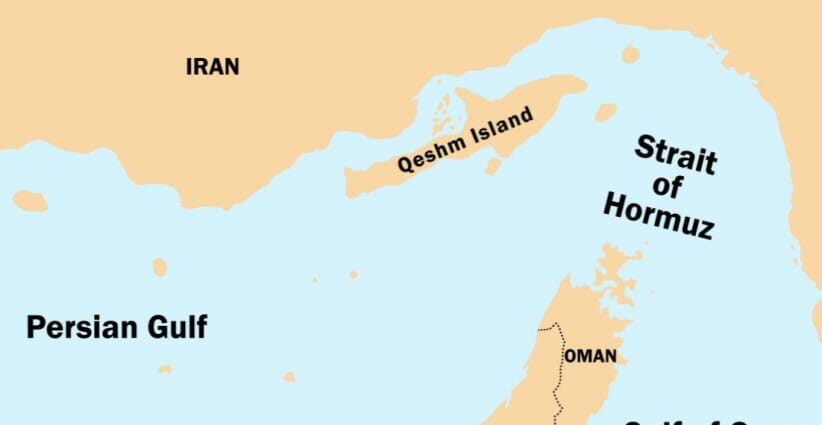
Daily operation is cheaper, especially following the price of fuel increasing with the closure of the Strait of Hormuz, though the company is still evaluating whether battery replacements beyond the manufacturer’s warranty will be required to complete the full economic calculation.

“Electrifying public transportation is one of the most strategic projects taking place in Israel in recent years, and Egged is leading it,” said Nir Landau, Egged’s Executive VP of Administration. “In cooperation with the Public Transport Authority, we will operate more than 900 electric buses by the end of the year, and that is only part of the picture: As a group, including our operations in Europe, we will reach more than 1,500 electric buses.”

“The pinnacle of this initiative is the ‘Green Cities’ project. We have already turned Dimona and Carmiel into cities where all urban transportation is fully electric, and now we continue: south to Eilat, north to Kiryat Shmona. This is a real revolution.”

“The electric buses are comfortable, quiet, and clean, and that is what residents of these cities will experience by the end of this year,” he added.

This post was originally published on here

Prime Minister Benjamin Netanyahu and US President Donald Trump had a difficult conversation on Tuesday about ceasefire talks, Axios reported on Wednesday. 

Trump reportedly called Netanyahu on Tuesday to inform him that mediators were working on a “letter of intent” to end the war and launch a month-long period of negotiations, which would include matters such as Iran’s nuclear program and opening the Strait of Hormuz. 

Two Israeli sources stated that the two leaders were in clear disagreement about how to deal with Iran moving forward. One US source briefed on the call told Axios that “Bibi’s hair was on fire after the call.” 

It is worth noting that Netanyahu has reportedly been worried during previous phases of negotiations. “Bibi is always concerned,” one source told Axios.

The Axios report came as the US sent a new proposal to Iran through Pakistani mediators. Sources close to Iran’s negotiating team told the Iranian semi-official news agency Tasnim that Tehran’s mediators were reviewing the document, but nothing had been finalized yet. 

Also on Wednesday, Trump told reporters that Iran and the US are “right on the borderline,” between restarting the war and making a deal.

“If we don’t get the right answer, it could happen very quickly. We have not got the right answer. It will have to be 100% good answers”, Trump said, adding that he would give a “few days” for talks. 

The report also mentioned that Qatar and Pakistan had drafted a revised peace memo to bridge the gaps between the US and Iran. Tehran said on Wednesday that talks were ongoing and that Pakistan’s interior minister is in Tehran for his second visit in a week to help bridge the gaps. 

According to an Arab official who spoke to Axios, the goal of the letter of intent is to try to get Iran to provide more tangible benchmarks from Iran regarding its nuclear program and clearer information from the US on how frozen Iranian funds will be released. 

“As stated previously, Qatar has been and continues to support the Pakistan led mediation efforts, we have been consistently advocating for de-escalation for the sake of the region and its people,” a Qatari diplomat told Axios.

Trump says Netanyahu ‘will do whatever I want him to do’

This comes after Trump said that Netanyahu “will do whatever I want him to do” regarding Iran, but noted that the two have a good relationship. 

“We’d have to open the Strait; that would open immediately. We’re gonna give this one shot. I’m in no hurry,” he added, referencing negotiations. 

A source with knowledge of the matter told The Jerusalem Post on Wednesday that there has been progress in talks with the Iranians on a “memorandum of understanding and principles” that would lay the groundwork for negotiations.

The sources noted that there are still gaps, and no agreement has been reached yet.

This post was originally published on here

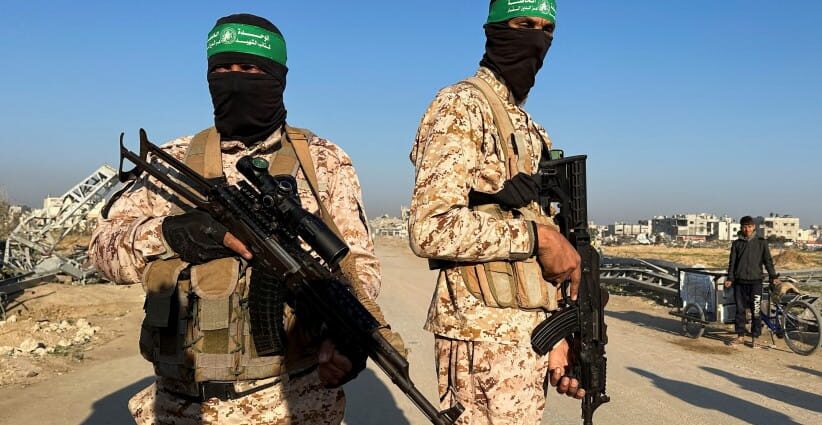
After the October 7 massacre, Israel established an elite task force to track down and kill or capture every Hamas terrorist who participated or planned the attack, from the most minor participants to their leadership, The Wall Street Journal reported on Wednesday.

The task force is called NILI, an acronym of “Netzach Yisrael Lo Yeshaker” (“The Eternal One of Israel does not lie”), signifying that no victim of the attack would be forgotten. 

“The clear message to all future enemies is to think again about the price of a terrorist operation like that,” said Shalom Ben Hanan, a former senior official in the Shin Bet (Israeli Security Agency).

NILI has a list of “thousands of names” of terrorists involved in the massacre, the WSJ reported, of which many have already been crossed off. No individual is too insignificant or too powerful to be targeted – the WSJ describes a man who drove a tractor through the border fence being killed in an air strike two years afterward, while walking down a narrow urban street, as well as the recent assassination of Izz ad-Din al-Haddad, whom IDF Chief of Staff Lt.-Gen. Eyal Zamir was called “one of the chief perpetrators of the October 7 massacre and the head of Hamas’ military wing.”

Current and former Israeli officials said that, once two pieces of evidence are found that an individual took part in the October 7, they are marked for death without trial.

Among the methods used to identify and locate terrorists are facial recognition programs based on videos posted on their social media pages, cellphone location data, and the interrogation of Gazan detainees.

‘Revenge is an important part of the discourse’

Michael Milstein, a former senior Israeli military intelligence officer on Palestinian affairs, said that “revenge is an important part of the discourse” in the Middle East.

“It is about how serious anyone in your environment sees you,” he explained. “Unfortunately, this is the language of this neighborhood.”

In addition to striking terrorists in Gaza, the task force has also assassinated Hamas leaders in Iran and Lebanon.

One security official told the WSJ that the task force prioritized terrorists whose deaths would console victims’ family members, in what they called “treatment for the soul.”

The WSJ reported that, since the ceasefire with Hamas began, the task force has been reduced to a small number of operatives who pass information on targets to commanders responsible for operations in Gaza. 

This post was originally published on here

Israel Police seized cocaine, crystal meth, ecstasy, ketamine, hallucinogenic mushrooms, and tens of thousands of shekels divided into portions on Thursday morning. Two suspects, aged 52 and 28, were arrested in the seizure.

Bat Yam Police officers and Tel Aviv District’s Light Rail Unit detectives searched two addresses in the city.

Police uncovered the following illicit substances in the raid: 600 grams of Ketamine, 111.1 grams of a solvent-type drug, 384.5 grams of cocaine, 97.5 grams of MDMA, 132 grams of crystal meth, 374 grams of “Doctor”, 13.8 grams of LSD blotters, 176 ecstasy pills, 196 grams of hallucinogenic mushrooms, and NIS 13,100 in cash.

In a separate incident on Thursday, police investigated a shooting in Ramle that killed one person and seriously injured another.

Officers believe the incident stemmed from an ongoing violent feud, a police statement said.

Police seize 26 handguns on eastern border 

In another incident, IDF Soldiers and Israel Border Police officers thwarted an attempt to smuggle 26 handguns across the border with the West Bank overnight on Wednesday.

During searches, officers found a bag containing 26 handguns and munitions.

They were transferred to the Judea and Samaria District Police for processing.

In a separate incident, Northern District Police went undercover to recover a weapon from criminals operating in Kafr Kanna. 

Officers arrested three suspects, aged 17, 20, and 21, and searched the area. In the search, the officers found a half kilogram of hashish, 140 kilograms of crystal meth, a large amount of ammunition, and a handgun.

The suspects had their detention extended by the Nazareth Magistrate’s Court on Wednesday, and the investigation is still ongoing.

This post was originally published on here

Of all the holidays in the Jewish calendar, Shavuot has often seemed like the poor relation.

Passover arrives with a full theatrical production: matzah, bitter herbs, four cups, questions, answers, songs, and enough family choreography to exhaust a small nation. 

Sukkot gives us an actual structure to build, decorate, sit in, eat in, and, for the brave, sleep in. Rosh Hashanah has the shofar. Yom Kippur has its awesome drama. Purim has costumes, The Book of Esther, mishloah manot – traditional exchange of food on Purim – and chaos.

And then there is Shavuot.

What do we have? Cheesecake. Blintzes. Flowers, perhaps. And the annual attempt to prove spiritual commitment by staying awake all night, fueled by coffee, sugar, and the hope that the shiur at 3:15 a.m. will be short.

No matzah. No sukkah. No lulav. No shofar. Poor old Shavuot can feel like the festival that missed the marketing meeting.
And yet, in truth, Shavuot may be the most important festival of all.

The irony is that the Torah itself says nothing about cheesecake, nothing about staying up all night, and, most strikingly, nothing explicit about Shavuot being “Zman Matan Torateinu” – the time of the giving of our Torah.

In the Torah, Shavuot is an agricultural festival. It is Hag Hakatzir – the festival of the harvest – the culmination of counting seven weeks from Passover, leading to the bringing of the “shtei halechem,” the two new loaves of bread, in the Beit Hamikdash (Temple). It is associated with the first fruits, the bikurim, brought by the farmer in a magnificent declaration of gratitude.

The Jew comes to Jerusalem not merely with fruit, but with memory. He recalls slavery, redemption, arrival in the Land, and then says, in effect: “Look. Here I am. Here is the fruit of the Land You promised us. Thank You.”

That is the original Shavuot. It is rooted in soil, sweat, rain, grain, fruit, labour, history, and gratitude. It is a festival of the Land of Israel.

And then came catastrophe.

With the destruction of the Second Temple, the Jewish people were exiled from their Land. The Beit Hamikdash was gone. The altar was gone. The pilgrimage to Jerusalem was gone. The two loaves could no longer be brought. The bikurim procession, with its baskets of figs, grapes, pomegranates, olives, and dates, disappeared from Jewish national life.

Passover could survive exile. We could still eat matzah in Babylonia, Spain, Poland, Morocco, or London. Sukkot could survive exile. We could still build a sukkah almost anywhere. But Shavuot? A harvest festival without a harvest. A Temple festival without a Temple. A Land festival in exile from the Land. It wouldn’t work.

The Jewish sages who rescued Shavuot 

It was Chazal – the Jewish sages – who rescued Shavuot.

They identified Shavuot with the giving of the Torah at Sinai. The Torah was given around this time of year; the precise calendrical relationship is discussed by the Sages, and it is not quite as simple as saying that the Torah itself labels Shavuot as the anniversary of Matan Torah – the giving of the torah. It does not.

But the Rabbis, with profound wisdom, gave Shavuot a new layer of meaning. They did not erase its agricultural identity; rather, they ensured that the festival could continue to speak to Jews scattered across the world, far from Jerusalem and far from the fields of Israel.

In exile, Shavuot became the festival of Torah. When we could no longer bring our first fruits to the Temple, we brought our minds and hearts to Sinai.

When we could no longer celebrate the produce of the Land, we celebrated the word of God that sustained us beyond the Land. Torah became the portable homeland of the Jewish people.

And so Shavuot survived.

But the story did not end there.

At the end of the nineteenth century and the beginning of the twentieth, Jews began to return to the Land of Israel. The First Aliyah and Second Aliyah brought pioneers who drained swamps, planted fields, built settlements, and worked the Land with blood, sweat, tears, and astonishing faith – even when that faith was not always expressed in conventionally religious language.

Suddenly, Shavuot came home.

The festival that had lost so much of its original meaning in exile began to breathe again in the fields of Eretz Yisrael.

Agricultural communities, especially the kibbutzim and moshavim, restored Shavuot as a celebration of produce, harvest, animals, children, baskets, tractors, music, dancing, and the joy of seeing the Land yield its fruit once more.

Even today, across Israel, Shavuot is marked not only by Torah study and dairy meals, but by celebrations of agriculture, creativity, and gratitude for the blessings of the Land.

Of course, we still do not have the Temple. We still cannot bring the two new loaves or the first fruits in their full halachic form.

But we can once again understand what those mitzvot – God’s commandments – meant. We can stand in the Land of Israel and look at its wheat, vineyards, orchards, markets, farms, and children, and say: this is not theoretical. This is not nostalgia. This is Jewish history made visible.

Shavuot today, therefore, has a magnificent dual meaning.

On the one hand, it is the festival of Torah. Without Torah, Jewish identity becomes sentimental, ethnic, or cultural, but ultimately rootless.

Torah is our covenant, our mission, our moral vocabulary, our argument with ourselves, our conversation with God. It is what made us a people and what continues to demand that we become worthy of that name.

On the other hand, Shavuot is the festival of the Land. Without the Land of Israel, Judaism is not complete. We survived exile, heroically and miraculously, but exile was never the ideal. The Torah constantly dreams of a people living a national life in its own Land, building a society of justice, holiness, compassion, and responsibility.

The farmer bringing bikurim was not simply saying thank you for the fruit. He was saying thank you for the Jewish destiny restored to Jewish soil.

That is why Shavuot is so powerful. It refuses to let us choose between Torah and Land. It insists that we need both.

A Jewish state without Torah risks becoming just another state: clever, strong, innovative, perhaps even successful, but spiritually unanchored. Torah without the Land risks becoming disembodied: beautiful, profound, and sustaining, but missing the national stage on which so many of its ideals are meant to be lived.

Shavuot brings them together.

It teaches that the Land gives Torah a home, and Torah gives the Land a soul.

So perhaps Shavuot does not need the dramatic props of other festivals. Perhaps its quietness is part of its greatness. It waits to be rediscovered.

Yes, enjoy the cheesecake. Yes, stay up late learning if you can. Yes, decorate the shul with flowers and read Megillat

Ruth. But do not mistake the modest packaging for a modest festival.

Shavuot is the Jewish festival of gratitude: gratitude for Torah, gratitude for the Land, gratitude for harvests ancient and modern, gratitude for the privilege of living in a generation in which the original meaning of the festival has become visible again.

For two thousand years, Shavuot was rescued by Torah.

In our time, Shavuot has been brought home by the Land.

And now, standing between Sinai and Jerusalem, between the book and the field, between heaven and earth, we can celebrate Shavuot not as the poor relation of the Jewish festivals, but as one of the richest expressions of what it means to be a Jew.

The writer is a rabbi and physician. He writes and teaches on Jewish ethics, leadership, and resilience. His work appears on rabbidrjonathanlieberman.substack.com and youtube.com/@rabbidrjonathanlieberman

This post was originally published on here

Ireland will introduce a long-promised bill seeking to curb trade with settlements in the West Bank to parliament in the coming weeks, Foreign Minister Helen McEntee said on Thursday.

Ireland has been drafting the proposed legislation for the last year and has faced pressure from opposition politicians to include a ban on services as well as goods, while Israel and lawmakers in the United States want the bill scrapped.

Sources told Reuters last October that the bill was set to be limited to goods. Earlier this year Ireland’s top government lawyer raised several “significant” legal and practical issues to ministers on whether the scope could be extended to services.

Irish FM hopes to publish anti-settlement bill

“I will bring forward a piece of legislation in the coming weeks,” McEntee told parliament, adding that she was hoping to publish the bill in tandem with Belgium, the Netherlands, and Slovenia, who have also committed to introducing bans.

“If they decide not to, then we will still continue with ours. I’m being very clear about that,” McEntee added.

Spain has already introduced similar trade curbs, the only European Union member to so far do so.

This post was originally published on here

It has come to this. When the Shavuot festival starts on Thursday night, I will be both celebrating and worrying about what is happening in Jewish communities around the world – what’s happening in Israel and the global village in general.

Simchat Torah, a festival that should be particularly joyous, will forever be associated with the Iranian-funded, Hamas-led invasion and mega-atrocity on October 7, 2023, when 1,200 were murdered, 251 abducted, and thousands wounded. It was the start of a war on seven fronts, which – despite declared ceasefires – has turned into a war of attrition.

Yom Kippur – the holiest day in the Jewish calendar – will always have a double connotation with the war launched against Israel on that day in 1973, another failed attempt by the Arab world to annihilate the Jewish state. In recent years, it has been marred by a terror attack at a synagogue in Germany and last year’s fatal attack on a British synagogue in Manchester.

Shavuot is celebrated as a harvest festival concluding the seven-week “omer” countdown that started on Passover. But its greater significance is the celebration of receiving the Torah at Mount Sinai, where the Israelites on their Exodus from Egypt became the Jewish people more than 3,000 years ago.

This festival has also been scarred by attacks on Jews in the past, including a particularly heinous attack that took place 85 years ago, on Shavuot in June 1941. In the “Farhud” (“violent dispossession”), the Jewish community in Iraq was attacked by its Muslim neighbors, incited by the former grand mufti of Jerusalem, Haj Amin al-Hussein, an anti-British admirer of Hitler.

At least 180 Jews were murdered in the two days of rioting concentrated in Baghdad, and hundreds of Jewish-owned homes and shops were destroyed. The attacks were brutal, including rape, mutilation, and murder; the victims included babies and the elderly.

Chillingly, Shlomo Mansour, who survived the farhud as a child and later moved to Israel, where he built his home on Kibbutz Kissufim, was among the oldest victims of October 7, 2023, when he was murdered by Hamas terrorists at the age of 85 and his body abducted to Gaza.

Shavuot’s history of military victory

SHAVUOT ALSO holds a different association. Call it a striking memory. On June 7, 1981, as Jews celebrated the holiday, a remarkable feat of military history took place. Then-prime minister Menachem Begin, implementing the doctrine he would become known for, ordered a bold preemptive strike to knock out the nascent nuclear plant in Iraq before Saddam Hussein could create the ultimate weapon of mass destruction.

The raid, variously known as Operation Tammuz, Operation Opera, and Operation Osirak, was so audacious that pilots later admitted that while they believed the operation itself was viable, they hadn’t expected that all the crew would make it home safely.

It was so unexpected that, according to journalist folklore, when the report of the successful strike reached the Israel Radio newsroom on the sleepy Shavuot holiday, staff were so convinced someone was playing a prank that they got presenter Emmanuel Halperin to call his uncle, prime minister Begin, to confirm it before broadcasting the item.

Incredibly, in the last year, during Operations Rising Lion and Lion’s Roar, we have become used to hearing about Israel’s skills as the IAF has dominated the skies over Iran and has, with US help, significantly reduced the immediate threats of the nuclear aspirations of the Islamic Republic’s regime. The pilots on today’s missions, however, still realize they can’t be complacent, despite the stunning successes.

Such maneuvers are evidence of impressive intelligence-gathering, along with outstanding operational skills, which send their own message. Israel’s friends and enemies are all watching, learning, and assessing the long-term ramifications.

The Middle East has undergone such changes in recent years that it is now known that Israel supplied the United Arab Emirates with Iron Dome anti-missile systems to help protect the Abraham Accords ally from the ongoing attacks from Iran. Iranian drones this week struck a UAE nuclear power plant, signaling that the Islamic Republic regime, while weakened, is still in business – the terrorism business.

Israel blamed as the root of all evil as anti-Israel sentiment grows

This week, another flotilla set out for Gaza, a self-righteous armada of far-Left, pro-Palestinian supporters and their Islamist bedfellows, united only by their anti-Israel and antisemitic sentiment. The situation in Gaza, brought about by the Muslim Brotherhood offshoot Hamas, is the rallying cry but not the reason for the voyage. It is aimed at increasing anti-Israel sentiment and delegitimizing the Jewish state, not improving the conditions of the Palestinians in Gaza.

Vessels of the Global Sumud Flotilla, which was intercepted on international waters by the Israeli Navy, sail off the city of Ierapetra, on the island of Crete, Greece, May 1, 2026. (credit: REUTERS/STEFANOS RAPANIS)

In previous flotillas intercepted by the Israel Navy, instead of the “humanitarian aid” that the participants claimed to be transporting, tellingly large numbers of condoms were found. (Note: they were not part of an anti-AIDS program. Some participants obviously took the idea of being bedfellows in the same boat seriously.)

Around the world, there has been a tendency to blame Israel – and “the settlements” – as the root of all evil, as if there were no attacks and wars before Israel’s existence. Palestinianism has become a new religion. Even local politics are colored by the Palestinian flag and wrapped in a keffiyeh. Several mayors across the UK were elected last week on a platform that had more to do with Gaza than maintaining municipal services and garbage collection.

New York City Mayor Zohran Mamdani (and his wife) has fully adopted the Palestinian cause. While Mamdani reportedly has no plans to participate in the annual Israel Day Parade, he did mark “Nakba Day,” the “catastrophe” of Israel’s independence, in a social media post that demonstrated much of the warped narrative that has developed around the Palestinian movement.

The post included a video interview with “Nakba survivor” Inea Bushnaq that was later debunked by Middle East analyst Tom Gross and historian and content creator “Josh” (@_j0sh_a_), who revealed that Bushnaq’s family was originally from Bosnia, had lived in Tulkarem (a city that remained in Jordanian control from 1948 to 1967), and had chosen to move to England.

“So, in summary, this is a European with no strong roots in the land of Israel, whose family made the decision to immigrate back to the continent of their grandparents instead of remaining under Arab control in what was part of Jordan after 1948,” read Gross’s post.

He also noted that “the video makes no mention of Arab attacks on Jews before and during the 1948 war, the invasion by Arab armies after Israel’s declaration of independence that was meant to eradicate the nascent state, the rejection of the UN partition plan that would have created a Jewish and an Arab state, or the expulsion of Jews from parts of Jerusalem that came under Jordanian control.”

More than 850,000 Jews fled or were expelled from Arab and Muslim lands in 1948, with Israel’s establishment, outnumbering the approximately 700,000 “Palestinian refugees” created at the same time, when five Arab armies invaded the newborn Jewish state.

Palestinian leaders and their supporters continue to call for the “right of return,” to enable “Palestinian refugees,” including those born generations after 1948, to move to Israel rather than a Palestinian state, thus destroying the nature and purpose of Israel as the world’s only Jewish state.

Incidentally, many viewers of Mamdani’s video noted that a “Visit Palestine” poster seen in the background was designed by Jewish artist Franz Kraus to encourage travel and immigration to pre-state Israel – a Zionist message hijacked to become a Palestinian prop.

No wonder many Jewish leaders chose to avoid Mamdani’s “Jewish Heritage Month” Shavuot celebration at Gracie Mansion this week.

Senior Iraqi Kataib Hezbollah member indicted in US

The nature of global jihad could be seen in the indictment last week in Manhattan of Mohammad Baqer Saad Dawood al-Sa’adi, a senior member of the Iraqi Kataib Hezbollah terrorist organization, acting on behalf of Harakat Ashab al-Yamin al-Islamia (HAYI), and affiliated with Iran’s IRGC-Quds Force. 

Al-Sa’adi was reportedly arrested by US authorities following his detention in Turkey. He is allegedly behind the spate of firebombings and attacks on targets in France, Belgium, Germany, the Netherlands, the UK, the US, and Canada. HAYI claimed responsibility for the stabbing attack on two Jewish men in London’s Golders Green neighborhood last month.

The threats of terrorist regimes armed with unconventional weapons have not disappeared. Knocking out the nuclear facilities of Iraq in 1981, Syria in 2007, and Iran in 2025 was not Israeli aggression. It should be cause for celebration for the entire free world – if the word “free” is to remain relevant.

This post was originally published on here

Iran’s Supreme Leader has issued a directive that the country’s near-weapons-grade uranium should not be sent abroad, two senior Iranian sources said, hardening Tehran’s stance on one of the main US demands at peace talks.

Ayatollah Mojtaba Khamenei’s order could further frustrate US President Donald Trump and complicate talks on ending the US-Israeli war on Iran.

Israeli officials have told Reuters that Trump has assured Israel that Iran’s stockpile of highly enriched uranium, needed to make an atomic weapon, will be sent out of Iran and that any peace deal must include a clause on this.

Prime Minister Benjamin Netanyahu has said he will not consider the war over until enriched uranium is removed from Iran, Tehran ends its support for proxy militias, and its ballistic missile capabilities are eliminated.

“The Supreme Leader’s directive, and the consensus within the establishment, is that the stockpile of enriched uranium should not leave the country,” said one of the two Iranian sources, who spoke on condition of anonymity because of the sensitivity of the matter.

Iran’s top officials, the sources said, believe that sending the material abroad would leave the country more vulnerable to future attacks by the United States and Israel. Khamenei has the last say on the most important state matters.

The White House and Iran’s foreign ministry did not respond to requests for comment.

Deep suspicion among top Iranian officials

A shaky ceasefire is in place in the war that began with US-Israeli strikes on Iran on February 28, after which Iran fired at Gulf states hosting US military bases and fighting broke out between Israel and Iran-backed Hezbollah in Lebanon.

But there has been no big breakthrough in peace efforts, with a US blockade of Iranian ports and Tehran’s grip on the Strait of Hormuz, a vital global oil supply route, complicating negotiations mediated by Pakistan.

The two senior Iranian sources said there was deep suspicion in Iran that the pause in hostilities was a tactical deception by Washington to create a sense of security before it renews airstrikes.

Iran’s top peace negotiator, Mohammad-Baqher Ghalibaf, said on Wednesday that “obvious and hidden moves by the enemy” showed the Americans were preparing new attacks.

Trump said on Wednesday the US was ready to proceed with further attacks on Tehran if Iran did not agree to a peace deal, but suggested Washington could wait a few days to “get the right answers.”

The two sides have started to narrow some gaps, the sources said, but deeper splits remain over Tehran’s nuclear program – including ‌the fate of its enriched uranium stockpiles and Tehran’s demand for recognition of its right to enrichment.

Iran hardens stance on enriched uranium stockpile 

Iranian officials have repeatedly said Tehran’s priority is to secure a permanent end to the war and credible guarantees that the US and Israel will not launch further attacks.

Only after such assurances are in place, they said, would Iran be prepared to engage in detailed negotiations over its nuclear program. Tehran has long denied seeking a nuclear bomb.

Israel is widely believed to have an atomic arsenal but has never confirmed or denied it has nuclear weapons, maintaining a so-called policy of ambiguity on the issue for decades.

Before the war, Iran signaled willingness to ship out half of its stockpile of uranium which has been enriched to 60%, a level far higher than what is needed for civilian uses.

But sources said that position changed after repeated threats from Trump to strike Iran.

Israeli officials have told Reuters it is still unclear whether Trump will decide to attack and whether he would give Israel a green light to resume operations. Tehran has vowed a crushing response if attacked.

However, the source said there were “feasible formulas” to resolve the matter.

“There are solutions like diluting the stockpile under the supervision of the International Atomic Energy Agency,” one of the Iranian sources said.

The IAEA estimates that Iran ​had 440.9 kg of ⁠uranium enriched to 60% when Israel and the US attacked Iranian nuclear facilities in June 2025. How much of that has survived is unclear.

IAEA chief Rafael Grossi said in March that what remained of that stock was “mainly” stored in a tunnel complex in its Isfahan nuclear facility, and that his agency believed slightly more than 200 kg ⁠of it was ​there. The IAEA also believes some is at the sprawling nuclear complex at Natanz, where Iran had two ​enrichment plants.

Iran says some highly enriched uranium is needed for medical purposes and for ​a research reactor in Tehran which runs on relatively small amounts of uranium enriched to around 20%.

This post was originally published on here

Amid the excitement surrounding tech and high-growth sectors, infrastructure is rarely considered one of the most potent investment plays. Yet, according to Navot Bar, CEO and co-founder of Keystone Infra, a publicly traded infrastructure investment company in Israel, and a member of the prestigious TA-90 index on the Tel Aviv Stock Exchange, it is a rapidly growing field that has produced excellent results.

“Keystone Infra is an infrastructure powerhouse for national infrastructure, based on public-private partnerships (PPP) between government entities and private companies to finance, build, and operate public infrastructure,” he explained. These types of partnerships, said Bar, provide very long-term, predictable cash flow with little or no volatility. One common form of such an agreement is the Build-Operate-Transfer (BOT), used for revenue-based infrastructure projects, such as toll roads, bridges, and power plants. The private company is awarded the concession to build and operate the facility, and collects user fees for a set number of years to recover its investment and make a profit.

Since its founding in 2019, Keystone Infra has expanded into several areas of vital national infrastructure in Israel, including transportation, energy, renewable energy, data centers, telecommunications, and water, in partnership with Israel’s national government. Said Bar, “Since it utilizes conventional technology, the operational risk is very low. The beauty of Keystone Infra Ltd. is that it’s publicly traded and offers an attractive risk-reward profile, with very low risk given its reliance on old-school, dependable technology. The reward is very attractive because there is certainty of a long-term cash flow.”

Historically, Bar pointed out, investment in national infrastructure projects in Israel, which run into the billions of shekels, was limited to large pension funds, insurance funds, and major infrastructure companies. “Keystone Infra  is a new animal that came to the public market, and said that we are going to do everything with public money. Today, anyone can invest in Keystone Infra —one doesn’t need billions to gain exposure to these kinds of assets. By investing in Keystone Infra stock, one can gain access to a diversified portfolio across multiple sectors, all of which benefit from the same underlying strengths and characteristics. In many ways, Keystone Infra functions like an exchange-traded fund (ETF) that holds a basket of assets offering broad exposure to a diversified portfolio through a single investment.”

Keystone Infra , said Bar, has a unique, three-layer method. “What makes Keystone Infra Ltd. stand out,” he explained, “is that we are not focused only on buying and holding operating assets that already generate income — although we do have a very strong base of those assets. These projects produce stable cash flow, backed by long-term agreements with the government and other partners, which allows us to forecast revenue many years into the future. Today, Keystone Infra receives roughly NIS 300 million annually from its subsidiaries and infrastructure projects. The company is also supported by a robust capital structure, with a loan-to-value ratio of just 26% —  a foundation that allows Keystone Infra Ltd. to pursue new acquisitions without an immediate capital raise.

AI-generated image of the data center in IPM Campus  (credit: Keystone Infra )

“The second layer is that we actively work to improve every asset we own. There is not a single investment in our portfolio that we are not constantly trying to make more efficient and more profitable. Infrastructure assets that may seem fixed — such as power plants or transportation systems — can often generate additional value through smarter management and operational improvements. For example, we can sometimes increase profitability by changing our customer profile, selling electricity directly to private-sector clients rather than only to the government. In transportation projects, improving bus routes and efficiency can increase ridership and revenue. Over time, markets, regulations, and demand patterns evolve, and if one adapts to those changes effectively, one can continue extracting more value from existing assets.” 

The third layer, said Bar, involves developing projects from the ground up instead of purchasing mature, income-producing assets. One example he mentioned is the Sorek power plant project near Rehovot, where the company won a government tender to build and operate a new power station for 25 years. “Projects at this stage involve greater risk — because you still need to build, finance, and fully develop them — but they also offer significantly higher potential returns. By the time most investors buy into mature infrastructure assets, much of the early risk has already been removed, which naturally lowers the potential upside. 

“Our overall model is built on these complementary layers: stable income-producing assets that generate reliable cash flow today; ongoing optimization of those assets to increase value over time; and early-stage development projects that can deliver much higher returns in the future. Together, this creates a balanced portfolio — one that provides dependable cash flow in the present while also building long-term growth for the years ahead.” 

What are the greatest infrastructure challenges confronting Israel today?  “Even though the country has developed rapidly since 1948,” said Bar, “we still have a major lack of infrastructure. That is because Israel is one of the last Western countries that is still growing in population.” In addition, maintaining existing infrastructure also requires investment, he pointed out. 

“If I had to point to the most critical infrastructure challenge in Israel today, it would clearly be transportation. Traffic congestion has become a constant reality across the country, at almost every hour of the day. A few years ago, people assumed that if they avoided rush hour, the roads would be clear. Today, it hardly matters whether it’s early morning, midday, or late at night — traffic jams are everywhere.” 

The obvious long-term solution, in Bar’s view, is improving public transportation and convincing people to shift away from relying solely on private cars. To achieve that, he said, the government needs to continue investing heavily in buses, trains, and dedicated public transportation lanes, making public transit faster and more efficient than driving private vehicles. 

The second major challenge is energy and electricity generation. Power demand is constantly increasing, driven not only by Israel’s population growth, but also by the long timelines required to build new power plants. That creates a major planning challenge: regulators need to anticipate demand many years in advance. But predicting the future is never simple. For example, regulators a decade ago could not fully foresee the massive rise of data centers — facilities that consume enormous amounts of electricity around the clock and create an entirely new level of energy demand. Infrastructure planning requires making long-term decisions today for realities that may look completely different ten years from now, he stated. 

Keystone Infra enjoyed record profits in 2025 across all of its key financial metrics and is uniquely positioned to bridge Israel’s infrastructure gap by investing in high-demand, supply-constrained sectors and combining stable, income-generating assets with in-house development capabilities. 

Bar will be speaking at the Jerusalem Post Annual Conference, to be held in New York on June 1, about investment opportunities with Keystone Infra. “We believe we offer one of the strongest ways to invest in Israeli infrastructure — not only because we are helping build the country’s long-term infrastructure backbone, but also because we deliver strong investment performance alongside it. For anyone seeking exposure to Israeli infrastructure, a strong economy and currency, and a high-performing publicly traded investment, Keystone Infra provides that opportunity.”


This article was written in cooperation with Keystone Infra.

This post was originally published on here

Shavuot begins in Israel on Thursday, May 21, and ends on Friday, May 22, as Shabbat begins.

For the rest of the world, Shavuot ends on May 23, when Shabbat ends.

Thursday, May 21, 2026 | 5 Sivan, 5786

New York

Light Candles for Shavuot: 7:54 p.m. (Thursday)

Light Candles for Shabbat: 7:55 p.m. (Friday)

Shabbat and Shavuot End: 9:02 p.m.

Miami

Light Candles for Shavuot: 7:45 p.m. (Thursday)

Light Candles for Shabbat: 7:45 p.m. (Friday)

Shabbat and Shavuot End: 8:42 p.m.

Los Angeles

Light Candles for Shavuot: 7:35 p.m. (Thursday)

Light Candles for Shabbat: 7:35 p.m. (Friday)

Shabbat and Shavuot End: 8:37 p.m.

Jerusalem

Light Candles for Shavuot: 6:53 p.m. (Thursday)

Light Candles for Shabbat: 6:54 p.m. (Friday)

Shabbat Ends: 8:15 p.m.

Tel Aviv

Light Candles for Shavuot: 7:13 p.m. (Thursday)

Light Candles for Shabbat: 7:14 p.m. (Friday)

Shabbat Ends: 8:18 p.m.

Haifa

Light Candles for Shavuot: 7:06 p.m. (Thursday)

Light Candles for Shabbat: 7:07 p.m. (Friday)

Shabbat Ends: 8:19 p.m.

Beersheba

Light Candles for Shavuot: 7:14 p.m. (Thursday)

Light Candles for Shabbat: 7:14 p.m. (Friday)

Shabbat Ends: 8:15 p.m.

Eilat

Light Candles for Shavuot: 6:59 p.m. (Thursday)

Light Candles for Shabbat: 7:00 p.m. (Friday)

Shabbat Ends: 8:10 p.m.

This post was originally published on here

DAMASCUS Syria witnessed a notable escalation in the rhetoric of the Islamic State group (ISIS) over the past week after the organization released a new propaganda message urging its members and foreign fighters inside Syria to “continue fighting” against the Syrian state and refrain from surrendering or leaving the country.

The appeal, circulated through platforms linked to the group, comes at a sensitive moment for Syria as the government continues efforts to consolidate security control in eastern regions and the Syrian desert, where ISIS sleeper cells remain intermittently active. Analysts say the latest message reflects an attempt by the organization to exploit ongoing security tensions and reintroduce itself as a force still capable of confrontation after years of military collapse and territorial losses.

According to the statement attributed to ISIS, the group focused particularly on inciting foreign fighters, claiming that Syrian authorities “will gradually eliminate them” and calling on them to join what it described as a “new phase of fighting.” The message also urged attacks against the Syrian army and security forces, especially in Deir ez-Zur, Raqqa, and the Syrian desert, areas that have continued to figure in sporadic ISIS operations in recent months.

Analysts following Syrian affairs believe such rhetoric represents an effort by ISIS to reaffirm both its media and military presence as it seeks to reactivate dormant cells and regroup what remains of its fighters after years of heavy losses.

ISIS first emerged openly in Syria in 2013 after expanding from Iraq amid the chaos of the Syrian conflict and deteriorating security conditions. Initially operating under the name “Islamic State in Iraq and al-Sham,” the group later split from al-Qaida and became involved in violent confrontations with Syrian opposition factions.

Between 2014 and 2015, ISIS reached the peak of its power after seizing vast territories across Syria and Iraq, most notably the city of Raqqa, which it declared the “capital of the caliphate,” in addition to large parts of Deir ez-Zor, the Syrian desert, and border areas with Iraq. At the time, the organization relied on a vast network of local and foreign fighters, as well as financing through oil revenues, taxation, smuggling, and extensive media propaganda campaigns that enabled it to recruit thousands of fighters from around the world.

During its expansion phase, ISIS evolved into one of the most extreme and organized militant groups in the region, attracting thousands of foreign fighters from Arab, Asian, and European countries, as well as from the Caucasus and North Africa.

ISIS shrinks from over 40,000 to less than 3,000 fighters

UN and Western estimates indicate that more than 40,000 foreign fighters joined ISIS in Syria and Iraq between 2013 and 2017. However, the group gradually began to decline following military campaigns launched against it by the US-led international coalition, alongside operations conducted by the Syrian army, Russian forces, and the Syrian Democratic Forces (SDF), resulting in the loss of its major strongholds and culminating in the fall of its final territorial enclave in Baghouz in 2019. Since then, the organization has shifted into a new phase based on clandestine operations and small mobile cells rather than direct territorial control.

Its attacks now rely primarily on ambushes, improvised explosive devices, assassinations, and rapid assaults targeting checkpoints and military forces, particularly across the vast Syrian desert stretching between Homs and Deir ez-Zor and in remote areas near the Iraqi border. According to a February 2025 report by the UN Security Council’s Analytical Support and Sanctions Monitoring Team, ISIS’s combined strength in Iraq and Syria was estimated at 1,500 to 3,000 fighters, most of them, including key leaders, in Syria. Those fighters are believed to operate in small cells supported by logistical networks, smugglers, and sympathizers who facilitate movement and supplies.

UN investigators and counterterrorism researchers say thousands of foreign nationals with alleged ISIS links remain in al-Hol, Roj, and SDF-run detention facilities in northeastern Syria. The unresolved status of foreign fighters has remained a major security concern, with UN monitors warning that jihadist networks in Syria continue to benefit from instability and weak state control in some areas.

Experts believe ISIS’s latest call directed at these fighters reflects fears within the organization of losing what remains of its most experienced cadres, while also attempting to remobilize them into a new project centered on guerrilla warfare and long-term attritional conflict.

In this context, Abdul Rahman Riyad, a Syrian affairs analyst who has written on security and political developments in Syria, told The Media Line that the latest message “reflects ISIS’s attempt to exploit any transitional phase or security shifts in order to reactivate its cells.” He added that the organization understands it has lost the ability to exercise broad territorial control and therefore now relies on propaganda, incitement, and a strategy of attrition through small mobile cells. He also noted that the group’s focus on foreign fighters reveals fears over the fragmentation of what remains of its human and military infrastructure.

Retired Brig.-Gen. Mustafa al-Sheikh, a security and strategic affairs expert, told The Media Line that ISIS “is no longer capable of returning in the traditional form it appeared in during 2014, but it still poses a security threat due to the flexibility of its cells and their ability to move through desert regions.” He explained that ISIS currently relies on rapid ambushes, limited nighttime attacks, and targeting military roads and supply lines, adding that “what we are witnessing today is a different version of the organization, one that depends more on guerrilla warfare and security exhaustion than on direct control of cities.”

ISIS attempting to preserve its image after setbacks

Syrian academic and political researcher Dr. Mahmoud al-Hamza told The Media Line that ISIS’s latest call carries “more propaganda and psychological dimensions than indications of a broad military comeback.” He explained that the group is attempting to preserve its image among supporters after years of setbacks, which is why it focuses heavily on mobilizing rhetoric and portraying itself as an active force despite continued security pressure. He added that ISIS benefits from any security fragility or economic and social crises to rebuild its clandestine networks, especially in desert and border regions that remain difficult to fully secure.

On the other hand, Syrian authorities insist that the threat posed by the group remains under control. A security spokesperson for the Syrian Interior Ministry told The Media Line that security agencies “continue to monitor ISIS cell movements closely” and have managed in recent months to thwart several plots and arrest individuals linked to the organization.

The spokesperson, whose name is being withheld for security reasons, stated that the recent propaganda messages “reflect the weakness the organization is experiencing more than any real strength on the ground.” He added that security forces continue operations in the Syrian desert and eastern Syria and will not allow any terrorist threat to reemerge amid intensive security and intelligence coordination aimed at preventing the exploitation of any security vacuum.

Although ISIS no longer possesses the military and political capabilities that once enabled it to establish what it called a “caliphate,” recent developments indicate that the organization’s threat has not entirely disappeared and that it continues to seek opportunities to exploit instability and security gaps in order to reactivate its armed networks inside Syria. As Syrian forces and their allies continue pursuit operations, the issue of foreign fighters and the camps scattered across northeastern Syria remains one of the country’s most complicated files, amid growing fears that these environments could become fertile ground for the resurgence of extremism in the years ahead.

This post was originally published on here

Damage caused by the United States and Israel to Iran’s military industrial bases has set the country’s ability to rebuild its combat infrastructure back months, not years, CNN reported on Thursday, citing a source familiar with recent US intelligence assessments.

Some of Iran’s military industrial base remained intact, the source added, which could serve to further accelerate Iran’s timeline for rebuilding certain capabilities.

Additional US intelligence estimates that Iran could “fully reconstitute its drone attack capability in as soon as six months,” according to another source, who is a US official, adding that “the Iranians have exceeded all timelines the IC had for reconstitution.”

This confirms additional reports that Iran had restarted some of its drone production during the ongoing ceasefire that began in April, two other sources familiar with US intelligence assessments told CNN.

Further, four other sources familiar with US intelligence assessments explained that Iran’s ability to rebuild its military infrastructure, including repairing destroyed missile sites, launchers, and its production capacity for key weapons systems, means that it continues to remain a “significant threat” to the region.

Iran receiving support from Russia, China

One of the sources told CNN that there are several reasons Iran has been able to begin rebuilding its military capabilities at such an advanced rate, including reported Russian and Chinese support and the possibility that the US and Israel did not do as much damage as they had hoped.

Throughout the conflict, China has reportedly provided Iran with missile components, two of the sources told CNN, noting that the effort has likely been slowed by the ongoing blockade in the Strait of Hormuz. 

In an interview with CBS’s 60 Minutes, however, Prime Minister Benjamin Netanyahu said that while China has been somewhat supporting Iran, “there’s not been that much support” for Iran from Moscow.

Chinese Foreign Ministry spokesperson Guo Jiakun denied the allegation during a press conference, calling it baseless.

A spokesperson for US Central Command (CENTCOM) declined to provide a comment to CNN on the matter, saying that it does not discuss matters related to intelligence.

Chief Pentagon spokesman Sean Parnell told CNN that “America’s military is the most powerful in the world and has everything it needs to execute at the time and place of the President’s choosing.”

“We have executed multiple successful operations across combatant commands while ensuring the US military possesses a deep arsenal of capabilities to protect our people and our interests,” Parnell added.

CENTCOM chief’s testimony reportedly ‘inconsistent’ with intel

CENTCOM commander Adm. Brad Cooper on Tuesday told the House Armed Services Committee that Iran’s military capabilities have been largely eliminated – a testimony  “inconsistent” with US intelligence, two sources told CNN.

“Operation Epic Fury significantly degraded Iran’s ballistic missiles and drones while destroying 90% of their defense industrial base, ensuring Iran cannot reconstitute for years,” Cooper said.

This post was originally published on here

The war between Iran and US/Israeli forces has not conclusively ended yet, but already a major Hollywood director, Michael Bay, is collaborating with Universal Pictures to make a movie about one of its most moving events.

Deadline announced that Bay is working on a feature film about the rescue mission to save two US airmen when their F-15E Strike Eagle aircraft was shot down in Operation Epic Fury in April.

A book by Mitchell Zuckoff set to be published in 2027 will be the basis for the screenplay, according to Deadline.

About a month after the conflict began, the US armed forces mounted a daring and successful rescue mission in the Zagros Mountains to rescue the crew of the plane that Iranian forces shot down.

Bay is known for some of the most thrilling action movies of all time, including The Rock, Bad Boys, Transformers, and Armageddon, as well as fact-based war movies, Pearl Harbor and 13 Hours: The Secret Soldiers of Benghazi. He worked with the US military on the latter two films to make them as accurate as possible, and would collaborate again with the military on the Epic Fury movie.

Bay told Deadline: “I’ve had an amazing partnership over my 30-year career working with the Department of War and amazing US military members. In my film 13 Hours, no rescue force answered the call for help. This film is about everyone who answered the call in one of the most complex, intricate and high-stakes operations in recent history. It celebrates the true heroism and unwavering dedication of our service members.”

Bay speculated to consult with IDF on Epic Fury film

Bay, who was raised Jewish by his adoptive parents, visited Israel in 2019, when he was directing Fauda creator and star, Lior Raz, in the Netflix film, 6 Underground. The director visited Tel Aviv and Jaffa where he met celebrity restaurateur Eyal Shani and had a drink with Raz. Next, he headed to Jerusalem, where he had a krav maga workout with Guy Katan.

Israeli film industry sources speculated that Bay would consult with the IDF, which helped the US with intelligence during the complex rescue operation, on the upcoming film.

Bay is one of the most commercially successful directors of all time, and films he directed and produced have grossed $10 billion around the world. Critics have accused him of making low-brow movies full of explosions, car chases, and fights that appeal primarily to young, male audiences, to which he reportedly replied, “I make movies for teenage boys. Oh, dear, what a crime.” 

This post was originally published on here

The festival of Shavuot is one of the Shalosh Regalim (Three Pilgrimage Festivals) – the holidays on which the Jewish nation would ascend to Jerusalem and the Holy Temple. However, unlike Passover and Sukkot, which last seven days, Shavuot is only a single-day festival. 

Its uniqueness lies in its focus on one defining moment: the day the Torah was given to the Jewish people at Mount Sinai. For this reason, it is also called the Festival of the Giving of the Torah.

The giving of the Torah was not merely a religious or national event but a turning point in human history. The Torah granted the Jewish people a complete way of life whose purpose is to connect people with their inner and spiritual worlds. The Torah does not seek to detach a person from the physical world; on the contrary, it seeks to elevate the body and life itself, transforming human actions into instruments of meaning, morality, and repair.

Torah’s eternal nature is a fundamental principle of Jewish faith

Thousands of years have passed since that moment, and there are those who view the Torah as something ancient and irrelevant to the modern, ever-changing world. Yet one of the fundamental principles of Jewish faith is that the Torah is eternal and will never be replaced. The Torah is not merely a historical memory but a living and renewing force.

The great question many ask is: What exactly is unique about the Torah of Israel? Is it merely a law book? A collection of religious instructions? And if so, why did Jews throughout the generations devote their entire lives to it and spend endless hours immersed in its study?

The answer lies in one of the most striking characteristics of the Jewish people throughout history. Despite being a relatively small nation, its contribution to the world in science, medicine, economics, culture, and human thought is vastly disproportionate to its size. Many scholars have tried to explain this phenomenon, and at times it even aroused envy and hostility. But the truth is simpler: The Torah created a culture that obligates us to engage in constant self-work, and through that, we gain the ability to contribute.

The Torah’s purpose is to create a balance in which a person is not ruled solely by impulses, power, or desire. Judaism seeks to cultivate a person of self-control, sensitivity, responsibility, and morality. Our sages expressed this in the phrase “A man’s wisdom illuminates his face” – that is, a person engaged in an inner and spiritual world radiates it outwardly as well, in his behavior, gentleness, and attitude toward others.

The modern world often measures people by external success: money, status, fame, and power. Honest, kind-hearted, and moral people may receive much less public attention, though in truth, they represent a far deeper human success.

The Torah’s focus: building better human beings

The depth of this idea is sharpened by a story about a granddaughter of the Chofetz Chaim. In her youth, she was drawn to the spirit of the Enlightenment, and, at the age of 16, she fled her home in the small town of Radin to the great city of Moscow. Many years later, after immigrating to Israel, she recounted that when she was 18, she returned to visit her grandfather and said to him: “Grandfather, why are you still sitting in darkness? Come out into the world of light!” It was during the height of the First World War. At that time, people stood astonished at the innovative sight of humans in airplanes dropping bombs from the sky.

The Chofetz Chaim replied to her with prophetic insight: “Do you see these airplanes? The day will yet come when we will reach the moon. A time will come when there will be sophisticated bombs capable of destroying an entire world. Is that what should inspire awe? In Judaism, we are not amazed by what we are capable of building; we are amazed by our ability to build ourselves. I am more impressed by individuals who succeed in changing their weaknesses than by a spacecraft reaching the moon.”

Indeed, the world has advanced in extraordinary ways scientifically and technologically. Yet, alongside all this progress, man himself has been left behind. Rabbi Yitzchak Yaacov Reines once remarked: “The more the world advances, the more the heart retreats.” Modern humanity no longer produces human beings. It does not ask anyone to change or become better; it only seeks to make life more comfortable.

Technology knows how to make life easier, but it does not know how to make a person better. The Torah, by contrast, focuses precisely on this point – the building of the human being itself. It demands that people constantly examine themselves: to become better, more moral, and more sensitive.

According to Judaism, a person may reach old age with wealth, status, and success – but if he has not worked on his character and improved his weaknesses, he has missed his primary purpose. True success is not merely what a person has achieved, but what kind of person he has become. That is called real progress.

This is also the reason for the Torah’s eternity. It is not dependent on a particular era, technology, or passing cultural fashion because it deals with something that does not truly change – the human soul.

Shavuot invites us to pause for a moment amid the constant race of life and ask not only “What have I achieved?” but, more importantly, “Who am I becoming?” 

In a world that sanctifies external achievements, the Torah comes to remind us that our greatest challenge is to build our inner world – and to become better human beings.

The writer is rabbi of the Western Wall and Holy Sites.

This post was originally published on here

The Coordinator of Government Activities in the Territories (COGAT), Maj.-Gen. Yoram Halevi, demanded on Thursday that the United Nations World Food Programme (WFP) immediately stop transferring any aid or support to the Turkish organization IHH, which has been designated by Israel as a terrorist organization.

COGAT had recently received information that WFP had transferred fuel to IHH within the Gaza Strip, prompting Halevi to write a letter to the organization’s head, Shaun Hughes.

In the letter, COGAT emphasized that Israel designated IHH a terrorist organization in 2008, and as such supporting its activities is illegal and “could carry severe consequences.”

IHH wears ‘two hats’: humanitarian activity, terrorism

IHH Humanitarian Relief Foundation is a Government-organized non-governmental organization or GONGO, meaning it is closely linked to the Turkish ruling party under President Recep Tayyip Erdogan.

According to Israel’s Meir Amit Intelligence and Terrorism Information Center, IHH has “two hats”: one hat is its work as a humanitarian organization that conducts legitimate humanitarian activity around the world; the other hat is “a radical, jihadi and pro-Hamas organization and involvement in terrorist attacks.”

In addition to its humanitarian actions in Gaza, IHH has also promoted the recent flotillas to the Gaza Strip, including the one stopped by the Israeli Navy earlier this week.

Mathilda Heller contributed to this report.

This post was originally published on here

Israel Aerospace Industries (IAI) on Thursday revealed its new DIAMOND Concept, which will allow naval fleets to grow and expand their operational capabilities without having to build new ships. 

As maritime warfare is a constantly changing arena, and producing new fleets to defend against current threats is costly and does not guarantee long-term relevance, DIAMOND is an option designed to mitigate both cost and risk.

DIAMOND is made up of several modular systems that can be installed on unused deck space of existing ships. The ships would be controlled directly by the central frigate, or “mother ship,” they are escorting.

The smaller ships will, however, be able to control their radar and fire control systems. 

Because of this, escort vessels can be rapidly adjusted to meet current mission needs, enabling operational flexibility, quick deployment, and real-time response to evolving maritime threats.

Increasing frigate’s assets in complex maritime scenarios

Such an ability allows for ships to significantly expand deck space and availability of naval forces “without the need to build new ships,” IAI explained, noting that it will also provide frigates with increased firepower and a faster response time by maneuvering the escort ships.

Further, all the systems are based on a standard container configuration and can be deployed, replaced, or reconfigured “within a matter of hours” if the situation calls for it.

According to IAI, DIAMOND integrates both offensive and defensive systems manufactured by the company, including Harpy, Harop, and Mini-Harpy suicide drones, Blue Spear cruise missiles, LORA ballistic missiles, BARAK MX advanced air defense systems, and anti-drone capabilities.

The presence of the upgraded escorts significantly increases the number of assets available to the frigate – enabling offensive and defensive missions to be carried out simultaneously while also continuing to adapt as situations unfold.

IAI leading innovative military developments 

“IAI leads innovative developments and is proud to lead the next generation of naval warfare with the unveiling of DIAMOND, a solution that combines modular architecture, increased firepower, and unprecedented operational flexibility,” said IAI President and CEO Boaz Levy. “The solution will enable navies to effectively contend with evolving threats in complex maritime arenas, with the ability to rapidly transition between defensive and offensive missions and continuously adapt to changing operational needs.”

IAI Vice President and Head of the Missiles and Space Division, Guy Bar-Lev, explained that “Modern naval warfare is shifting from a concept based on individual platforms to flexible and networked force structures.”

“DIAMOND was developed to give navies the ability to expand their combat power, survivability, and operational endurance,” he said. “This is an innovative operating concept that changes the way naval forces project power and protect strategic assets in complex and threatened combat environments.”

This post was originally published on here

Although the Prime Minister’s Office is still refraining from publicly discussing the identity of Maj.-Gen. Roman Gofman’s successor as the Prime Minister’s military secretary, the security establishment already sees the race entering its decisive phase.

Gofman himself is still awaiting his official and final appointment as head of the Mossad, but behind the scenes, the candidate picture is beginning to take shape – along with the balance of power between Prime Minister Benjamin Netanyahu, IDF Chief of Staff Lt.-Gen. Eyal Zamir, and Defense Minister Israel Katz.

According to sources familiar with the matter, the preferred candidate from Zamir’s perspective is Brig.-Gen. Barak Hiram. Zamir wants to see Hiram enter the Prime Minister’s Office as the next military secretary – a move also viewed as part of an effort to reshape the relationship between the IDF and Netanyahu’s office following Gofman’s tenure.

Security sources note that after more than a year with Gofman serving as military secretary under Zamir’s tenure as chief of staff, Zamir would like someone “more comfortable ” in the role – an officer with whom he would have a closer, better-coordinated working interface.

Hiram himself only concluded his post as Gaza Division commander about two months ago and was slated to be appointed head of the IDF Operations Directorate. According to sources, Defense Minister Katz had even signed off on that appointment, but then the option arose to name Hiram as the Prime Minister’s military secretary, and the process was put on hold pending a final decision.

Zamir pushes Politis for Washington defense attaché

Alongside Hiram, two other names are high on the list: Brig.-Gen. Guy Markizano and R.-Adm. Tal Politis. Markizano currently serves as Katz’s military secretary. Politis, a former commander of Shayetet 13 and head of the Navy’s Operations Branch, is another highly regarded candidate within the military leadership.

However, sources say that from Zamir’s perspective, there is a clear division of roles: he wants Hiram as the Prime Minister’s military secretary, while he prefers Politis to be appointed Israel’s defense attaché in Washington – one of the most sensitive and significant roles in the security establishment.

Netanyahu, according to the same sources, does not rule out this option. The attaché role in Washington is considered especially important at this time. Sources close to Netanyahu say the military connection with the US administration is critical amid the formation of the new Memorandum of Understanding (MOU) – a future security assistance agreement between Israel and the United States, with preliminary talks already underway.

“The defense attaché in Washington is not just a ceremonial post,” a source familiar with the matter said. “This is the person handling one of the most sensitive channels between Israel and the Pentagon and the US administration.”

Netanyahu’s decision waiting for Gofman’s appointment 

Meanwhile, the final decision is still awaiting Gofman’s official appointment as Mossad head. Only after that is Netanyahu expected to make a final decision on the identity of his next military secretary – a decision viewed by the security establishment as far more than just a personnel choice.

The Prime Minister’s military secretary is considered one of the most influential figures at the junction between the political echelon and the IDF. He participates in the most sensitive security discussions, has near-unlimited access to the Prime Minister’s Office, and sometimes serves as the central channel of influence between the Prime Minister and the Chief of Staff.

This post was originally published on here

Smart Shooter has secured a NIS 6.7 million agreement with Israel’s Defense Ministry to supply its SMASH Hopper lightweight remote‑controlled weapon stations to counter the drone threat plaguing the country’s northern border.

The deal covers delivery of systems, spare parts, and related services during the second half of 2026. The ministry also holds options such as the procurement of similar systems and additional services worth an additional NIS 7.9 million, which could bring the total value to about NIS 14.6 million, if fully exercised.

Weighing some 15 kilograms, the SMASH Hopper is a compact and easily deployable system designed for deployment on light vehicles, robots, fixed posts, and other mobile or stationary platforms.

Like other systems manufactured by Smart Shooter, it features a safe trigger mechanism and offers day and night capability with automatic scanning and target detection. The system can be controlled by operators at a safe distance from the threat. 

SMASH Hopper can be used for multiple mission scenarios, such as force protection, border security, anti-drone, and remote ambush, as well as low-profile operations at complex urban environments or sensitive facilities where rapid response is required.

The system is built to counter both ground and aerial threats, including small drones — a capability that has become increasingly central to IDF and global defense requirements.

‘Keeping soldiers at a safe distance’

On Saturday, IDF officer Cpt. Maoz Israel Recanati was killed in a Hezbollah drone attack in southern Lebanon.  Despite a ceasefire between the two countries, the Lebanese terror group is increasingly using small, highly maneuverable fiber-optic drones along Israel’s northern border, targeting IDF troops and civilians

Smart Shooter CEO Michal Mor said the agreement reflects the ministry’s continued confidence in the company’s technology. As drones and other battlefield challenges proliferate, Mor noted that the system addresses the “urgent” defense needs of the country.

“The remotely controlled SMASH HOPPER system enables forces to engage ground and aerial threats with high precision, while keeping soldiers at a safe distance. As drones and other rapidly evolving battlefield threats continue to challenge forces worldwide, SMASH systems are proving to be an effective operational solution for precise, controlled engagement of both ground and aerial threats,” she said.

Smart Shooter describes itself as a software‑ and algorithm‑driven company, which, it argues, gives it an advantage in responding to new threats. And while it can continuously upgrade its software to handle new threats, the core technology remains consistent across platforms.

Accuracy while moving

Smart Shooter systems are designed to help soldiers intercept drones by stabilizing their aim and tracking a moving target even under stress. The technology is optic‑based: A camera and sensor feed continuous imagery into an onboard computer, which analyzes the scene in real time. The system identifies the designated target, locks onto it, and calculates where the shooter needs to aim as the target moves. The operator presses a button to lock on, pulls the trigger, and aligns the weapon within the firing window that the system displays. 

This approach allows troops to maintain accuracy even when they are moving, fatigued, or under fire. The system is also part of a soldier’s personal gear, rather than a separate platform, allowing troops to respond quickly, without relying on additional equipment. 

This combination of simple hardware and advanced image-processing software effectively turns troops, even reservists with no training, into sharpshooters, with the first round out of every rifle hitting its target.

Smart Shooter’s technology is already deployed by forces in the United States, Israel, the United Kingdom, Germany, NATO member states, and other allied nations. The Israeli contract follows a $10.7 million US Army award last week for the company’s SMASH 3000SA rifle‑mounted fire‑control systems. 

Headquartered in Kibbutz Yagur, the company operates subsidiaries in the US, Germany, and Australia.

This post was originally published on here

Take this podcast to go: • Apple PodcastsSpotifyMore

Watch this episode with no interruptions.

In this week’s episode of the Deep Dive podcast, The Jerusalem Post’s international affairs reporter Mathilda Heller walks the host through seven days that are hard to believe happened in sequence.

London’s Metropolitan Police stripped the sign off the Nova Festival exhibit because the memorial itself had become a target. Federal prosecutors in Washington moved to seek the death penalty for the man who shot two young Israeli embassy staffers. King Charles pledged urgent action in Parliament.

Tens of thousands marched through London chanting “death to the IDF.” And in Vienna, Israel’s Eurovision contestant took the stage to the loudest boos of his life, then finished second anyway.

What sets the episode apart is how Heller refuses to settle for the official line. Speeches from King Charles and Keir Starmer get tested against what’s happening on the ground, and Mamdani’s choice of liaison faces a sharper question about whose voice he picked to represent a community he doesn’t belong to.

This post was originally published on here

An Australian man was arrested on Wednesday for the theft of Bondi Beach massacre victim and event photographer Peter Meagher’s camera in the aftermath of the attack, the New South Wales Police announced on Thursday.

The suspect, a 35-year-old Marayong resident, was also working as the tragic Hanukkah event’s photographer when he stole his peer’s camera, the police alleged.

Retired detective sergeant Meagher had been working as a freelance photographer at the December Hanukkah event when two terrorist gunmen attacked, murdering him and 14 other participants.

Meagher’s wife said in a March Facebook post that the camera had not been found in police evidence, not had been logged as lost property.

“I would very much like the camera returned… or at least a memory card,” said Virginia Meagher. “If you know anything about the camera I’d love to hear from you.”

The suspect is alleged to have stolen his fellow photographer’s camera equipment and pawned it days later.

Suspect charged with larceny, white powder found in vehicle

The Marayong man was charged with larceny for an item worth less than $2000. Police also found an unidentified white crystal powder and further electronics in his vehicle.

In late December, Meagher’s family remembered him for his volunteer work and as an avid rugby fan.

“The tragic irony that Peter spent so long in the dangerous front line as a police officer and was struck down in retirement while pursuing his passion for taking photos is hard for us to comprehend,” said the family.

This post was originally published on here

Israel Aerospace Industries and other defense companies in Israel have presented the Defense Ministry and the IDF with a range of solutions to address the threat of explosive drones operated via fiber optics.

Among the solutions proposed by the defense industries are kinetic interception systems and energy-based systems, including one that uses electromagnetic force to capture the drone and prevent it from moving.

Various other solutions were also presented, currently being tested as prototypes at the Defense Ministry’s Directorate of Defense Research & Development facility. It is estimated that the Ministry will soon decide on a series of solutions to counter the threat.

Boaz Levy, chairman of Israel Aerospace Industries, told Maariv that “given the green light from the Defense Ministry, it will be possible to enter accelerated production, and within a few weeks, an initial supply of protective means can be obtained, with broader deployment to address the threat within just a few months.”

IAI revealed that company engineers had already mobilized to find a solution even before receiving a formal request from the defense establishment. “The engineers and employees committed themselves without the company issuing a request from the board. People have children, siblings who are soldiers, friends whose sons are soldiers in Lebanon, and they understand their responsibility to find a solution. That’s why they are working to develop the technology needed,” Levy said.

Defense Ministry considering multiple approaches to combat drones

IAI stated that multiple ideas from different technological areas are being considered to counter the threat, though the maturity level of each solution is unclear. The Defense Ministry is reviewing and testing the technologies and evaluating potential combinations to address the drone challenge.

Currently, Israel’s defense industries estimate that several technological approaches could effectively counter the threat, and that the production and equipping process could be relatively short.

Hezbollah’s explosive drones have become a serious threat to IDF soldiers in the latest conflict. Just this week, several incidents led to severe injuries. On Wednesday, eight IDF soldiers were wounded. The day before, Col. Meir Biderman, commander of the 401st Armored Brigade, was seriously wounded, along with two other officers, in separate drone strikes.

This post was originally published on here

The US State Department’s oversight body is investigating the now-defunct Gaza Humanitarian Foundation (GHF) and its use of millions of dollars in emergency aid funding, the Financial Times reported Wednesday, citing three people familiar with the inquiry.

According to the report, the State Department’s Office of Inspector General (OIG) is examining a $30 million grant announced last June to the organization, which was backed by the United States and Israel to distribute aid in Gaza.

Reuters could not immediately independently verify the report.

The investigation is to determine “what money was spent and how,” including “which bucket it came from, and how it was doled out,” one of the sources explained to Financial Times. Further, GHF’s aid pricing and other services purchased with funds received from the state department are also reported to be under scrutiny.

The OIG told Financial Times that it “does not comment on investigative matters and neither confirms nor denies the existence of an investigation,” however noted a February audit of the department’s “efforts to provide food assistance to the West Bank and Gaza.”

GHF reportedly ‘unaware of inquiry’

Two people familiar with GHF’s operations said that the organization used state department funding to purchase food and logistics, Financial Times noted, while another person explained that GHF had paid “significantly more for food than the US had previously paid in the region.”

According to a GHF spokesperson who asked not to be named, the oganization was not aware of the OIG inquiry, and that food had been purchased “at reasonable prices.” However, internal GHF documents noted that transport costs had been particularly high due to the nature of the ongoing war.

GHF was “in the process of developing a plan to reduce transport costs when Israel’s government asked it to suspend operations in October because of the US-brokered ceasefire,” the spokesperson explained to Financial Times, declining to further comment on the organisation’s finances.

US officials previously questioned origin of GHF’s funds

The state department had drawn from its humanitarian assistance funds for the $30m. grant given to GHF, according to one US official, while urging other countries to provide additional funding for the aid group. 

In July 2025, several senators asked Secretary of State Marco Rubio to explain why such a large grant was given, other rules that were waived, and what GHF’s other funding sources were. 

“There should be no American taxpayer dollars contributing to this scheme,” the senators wrote in a letter to Rubio.

This post was originally published on here

The government on Wednesday approved a 250 million NIS plan to preserve heritage and antiquities sites across the West Bank, Jordan Valley, and the Judean Desert, ahead of the anniversary of the Six-Day War in June. 

The plan was announced in a joint statement from the Prime Minister’s Office, the Finance Ministry, the Tourism Ministry, the Heritage Ministry, and the National Missions Ministry.

New heritage centers, set to serve as research and educational facilities, and visitor centers will be constructed at sites in these areas in order to bolster “the connection of the Israeli public to the Jewish people’s historic assets in the region.”

Additionally, a multi-year plan worth tens of millions of shekels will be put in motion to upgrade existing infrastructure and hopefully turn the sites into major tourist destinations.

The plan also seeks to intensify efforts to prevent the looting and destruction of antiquities in the region. 

“There is a need to create a permanent, regulated civilian and tourist presence that serves as a meaningful deterrent against looting and destruction of antiquities, as well as strengthening the public’s connection to the historical identity of the region,” the statement explained.

Strengthening Jewish connection to the land

Prime Minister Benjamin Netanyahu praised the motion, noting “in almost every stone, mound, and heritage site lie thousands of years of the Jewish people’s history in the Land of Israel.”

“We are investing today in preserving our past in order to secure our future, strengthen our hold on the Land of Israel, and pass on to future generations the heritage, identity, and historical truth of our people,” he said.

The plan comes alongside the approval of over 100 new settlements and farms in the West Bank, said Finance Minister Bezalel Smotrich, adding that it is also highly important to strengthen the heritage of the Jewish people and their connection to the region.

“Contrary to international hypocrisy,” he said, “a people cannot be an occupier in its own land.”

Tourism Minister Chaim Katz and Heritage Minister Amichai Eliyahu echoed the two sentiments. 

“After many long years in which the Jewish people’s heritage sites in Judea and Samaria were neglected and at times even left vulnerable to destruction and looting, the State of Israel is today making a historic correction,” Eliyahu said. “We are restoring Jewish heritage to its rightful place, investing in the preservation of our history, and connecting future generations to the deep roots of the Jewish people in the Land of Israel.”

National Missions Minister Orit Strock added that the issue is a matter of national importance, seeing the implementation of the plan as a privilege aimed at developing the connection between the Jewish past and present. 

Plan comes against the backdrop of controversial West Bank heritage authority bill

The government’s new plan to turn the West Bank into a thriving tourist destination comes nearly a week after the controversial “Judea and Samaria Heritage Authority” bill passed its first reading in the Knesset plenum and returned to the Knesset’s Education, Culture, and Sports Committee for further deliberation.

According to the bill, the proposed authority would operate under the Heritage Ministry in a fashion similar to that of the Israel Antiquities Authority (IAA), and take on responsibilities currently belonging to the Civil Administration’s Archaeology Unit.

These responsibilities include the preservation, management, and development of antiquities and archaeological sites in the West Bank, as well as preventing looting, antiquities smuggling, and illegal excavations in the region.

Additionally, the authority would gain the ability to expropriate and acquire land it deems necessary for the preservation of these sites.

Supporters of the bill argue that such an authority is critical to protecting antiquities and heritage sites in the West Bank, while its critics claim that the move is nothing more than another attempt at annexing the region and would place Palestinians residing there under Israeli governance.

This post was originally published on here

Prime Minister Benjamin Netanyahu’s Likud continued to weaken in a new Maariv poll published Thursday, while Finance Minister Bezalel Smotrich’s Religious Zionist Party (RZP) crossed the electoral threshold for the first time in nearly six months.

The poll, conducted just before the coalition’s bill to dissolve the Knesset passed its preliminary reading, found that the coalition bloc rose by two seats to 51, while the opposition bloc fell from a 61-seat majority to 59.

The Arab parties remained unchanged at 10 seats.

In addition to Likud’s continued slide, Shas also lost one seat this week, according to the poll. Despite that, the overall coalition bloc strengthened thanks to RZP.

Within the opposition bloc, both the Together Party and Yashar! weakened by one seat each. The Reservists Party, at 1.4%, Blue and White, at 1.5%, and Balad, at 1.5%, remained below the electoral threshold.

Poll tests possible opposition mergers

Maariv also examined three scenarios in which Together, Yashar!, and Yisrael Beytenu would run as a single joint list. In each scenario, a different party leader was placed at the head of the combined slate.

The strongest result for the three-party alliance came when former IDF chief of staff Gadi Eisenkot was placed at the top of the list. Under that scenario, the joint slate received 49 seats, the same total the three parties received when running separately.

The remaining parties recorded the same results as in the separate-party scenario. As a result, the bloc map remained unchanged, with the coalition at 51 seats, the opposition parties at 59, and the Arab parties holding 10 additional seats.

The poll also found that 49% of Israelis oppose the draft law the government is seeking to advance. Only 30% said they support the bill, while 21% said they did not know.

The survey was conducted by Lazar Research, headed by Dr. Menachem Lazar, in cooperation with Panel4All, on May 19–20 among 500 respondents, representing a sample of Israel’s adult population aged 18 and over, including Jews and Arabs. The maximum margin of error was 4.4%.

This post was originally published on here

Rabbi Mara Nathan says watching an antisemitic conspiracy theorist emerge as a serious contender for a US House seat in her Texas district has been “very disorienting.”

Nathan lives and works in San Antonio, where Maureen Galindo, a local activist who has vowed to turn a local immigrant detention center “into a prison for American Zionists,” was the top vote-getter in a Democratic primary in March and now faces a runoff on Tuesday.

“It seems shocking that someone who is so virulently antisemitic and anti-Zionist has not only been given a voice, but is even now in this primary runoff,” Nathan, the senior rabbi of Temple Beth El, a 150-year-old Reform congregation, told the Jewish Telegraphic Agency.

Galindo’s extreme rhetoric has drawn national attention as the runoff in Texas’ 35th Congressional District nears,  and increasingly has also drawn condemnation from other Democrats, including some who are themselves critical of Israel and its supporters in the United States.

Democratic leaders distance themselves from candidate

Last week, the Texas Senate candidate James Talarico revealed to JTA that he would not back or campaign with Galindo if she wins the runoff against sheriff’s deputy Johnny Garcia.

Rep. Alexandria Ocasio-Cortez, the progressive leader who has been strongly critical of Israel, threw her support behind Garcia in a post on X/Twitter Tuesday, calling Galindo’s rhetoric “absolutely disgusting.”

“This bigoted garbage and antisemitism should be nowhere near our politics. If you’re in TX-35, vote for @johnnygarciatx,” Ocasio-Cortez wrote.

Also on Tuesday, Minority Leader Hakeem Jeffries and Washington Democratic Rep. Suzan DelBene issued a joint statement condemning Galindo’s rhetoric, writing that the “vile language by her is disqualifying and has no place in American politics, and certainly not in the Democratic Party.”

Republicans accused of boosting candidacy

The two Democratic leaders also accused Republican leadership of propping up Galindo in the race through the newly launched Lead Left PAC, which has spent nearly $600,000 on ads and mailers bashing Garcia and boosting Galindo.

While the PAC has not had to disclose its donors, the metadata on its website previously linked it to WinRed, a Republican donation platform, according to a Punchbowl News report. Ocasio-Cortez made the connection in her statement, saying, “The donors behind the Republican super PAC funding her should be exposed.”

Jeffries and DelBene called on Republican leadership to “immediately cease propping up this antisemitic candidacy, pull spending in the race and forcefully condemn these comments,” adding that “MAGA extremists should be ashamed of themselves.”

In a statement to The New York Times regarding funding for a mailer supporting her candidacy, Galindo suggested that the funds had come from “a billionaire zionist who made the pac to sabotage candidates.”

“Dems and Republicans uniting against me in the same week with the same message is evidence that they’re working together for the zionist billionaires that control our government and tax money,” Galindo told The Times.

Galindo, WinRed and the National Republican Congressional Committee did not immediately respond to JTA requests for comment, and attempts to reach Lead Left PAC and the Republican National Committee were not successful.

Jewish groups and lawmakers respond

The head of Democratic Majority For Israel, Brian Romick, whose organization has launched a new six-figure ad campaign backing Garcia, also took aim at Lead Left PAC’s spending on Galindo in a statement, calling on Republicans to “explain why they’re paying to keep her viable.”

“Republicans aren’t doing this by accident,” Romick said. “They are deliberately elevating one of the most grotesque antisemites in American politics this cycle because they think it helps them win.”

Several Jewish Democrats, including Sen. Jacky Rosen of Nevada and Reps. Josh Gottheimer of New Jersey and Jared Moskowitz of Florida also decried Galindo’s rhetoric. In a joint statement Wednesday, Gottheimer and Moskowitz said that, if Galindo wins the election, they would force votes to expel her from Congress “every single day we are here.”

The Jewish Federation of San Antonio did not immediately respond to a request for comment from JTA. But the federation appeared to weigh in on Galindo’s remarks in a post on Facebook last week, calling on “candidates and elected officials” to “refrain from bigoted and offensive attacks.”

Rabbi says backlash crosses party lines

The widespread condemnation has reassured Nathan that opposition to Galindo’s rhetoric extends across the Democratic party.

“It is heartening that those folks who are clearly no fan of Israel understand that you can be critical of a government without saying you’re going to put Jewish people in internment camps,” Nathan said.

Nathan said she hoped the growing attention surrounding the race would help Texans “wake up and step up for a more sane perspective in how one is going to lead our community.”

“On both sides of the aisle, what we need is for both our elected officials and people who are running to speak out against that kind of antisemitic rhetoric,” Nathan said. “Beyond the political position, the idea that you want to attack any faith or any religion, any race is really abhorrent and goes against American values and certainly Texan values.”

This post was originally published on here

The United Nations General Assembly on Wednesday voted 141-8 to adopt a resolution backing a world court opinion that countries have a legal obligation to address climate change, with Israel and the world’s biggest historical emitter the United States among those opposing it.

UN Secretary General Antonio Guterres said the vote, in which 28 countries abstained, underscored that governments are responsible for protecting citizens from the “escalating climate crisis.”

“I welcome the adoption of the General Assembly resolution on the ICJ’s advisory opinion on climate change – a powerful affirmation of international law, climate justice, science & the responsibility of states to protect people from the escalating climate crisis,” he said in a post on X.

The resolution, brought by the Pacific island Vanuatu, affirms a July 2025 advisory opinion by the International Court of Justice (ICJ) that states are obligated to reduce fossil fuel use and tackle global warming.

While not legally binding, the opinion is expected to be cited in climate-related legal cases worldwide.

Israel, US join Russia, Iran, in opposing UN resolution

Israel and the United States joined Saudi Arabia, Russia, Iran, Yemen, Liberia, and Belarus in opposing the resolution. COP31 climate summit host Turkey, India, and oil producers Qatar and Nigeria were among those abstaining.

The Trump administration has removed the US from the Paris climate agreement and other major environmental accords, and has pursued policies to boost fossil fuel production.

“The resolution includes inappropriate political demands relating to fossil fuels,” US Deputy Ambassador to the UN Tammy Bruce said, adding that Washington saw no basis for requiring the secretary-general to report on the legal issues raised.

Vishal Prasad, director of Pacific Islands Students Fighting Climate Change, which led the campaign for an ICJ opinion, called the vote a commitment to “making it a reality.”

This post was originally published on here

US President Donald Trump’s administration threatened to revoke the visas of the Palestinian delegation to the United Nations if the Palestinian ambassador refuses to end his candidacy for the vice presidency of the UN General Assembly, according to an internal State Department cable seen by Reuters.

In a cable dated Wednesday, US diplomats in its embassy in Jerusalem are instructed to deliver the message that Palestinian ambassador to the UN Riyad Mansour’s general assembly bid “fuels tensions,” risks undermining Trump’s Gaza peace plan, and would therefore face consequences from Washington if it went ahead.

“To be clear, we will hold the PA responsible if the Palestinian delegation does not withdraw its VPGA candidacy,” the cable, marked sensitive but unclassified, said, referring to the Palestinian Authority, which exercises limited self-rule in the West Bank.

Among the talking points provided in the cable to US diplomats, the State Department’s September 2025 decision to waive visa sanctions for Palestinian officials assigned to the Palestinian UN mission in New York was noted.

“It would be unfortunate to have to revisit any available options,” the cable, which was first reported by NPR, said.

The Palestinian mission at the UN did not immediately respond to a request for comment.

“We take seriously our obligations under the UN Headquarters Agreement,” a State Department spokesperson said. “Due to visa record confidentiality, we have no comment on Department actions with respect to specific cases.”

Mansour had already withdrawn his candidacy for the presidency of the General Assembly as a result of US lobbying in February, the cable said, but added that if elected to the lower-profile vice presidency, he could still preside over General Assembly sessions.

“Therefore, there is still a risk that the Palestinians could preside over GA sessions during UNGA81 unless they withdraw from the race,” the cable said, referring to the UN General Assembly’s 81st annual high-level week due to be convened in September.

“In a worst-case scenario, the next PGA might assist the Palestinians in presiding over high-profile sessions related to the Middle East or during UNGA81 high-level week,” it said.

UN General Assembly to elect president, vice presidents on June 2

The election of the UN General Assembly president and the 16 delegations that will serve as vice presidents will be held on June 2.

The Palestinian Authority, which represents the Palestinian people at the United Nations, where the delegation is officially known as the State of Palestine, is not a full member and has no vote in the 193-member General Assembly. They are an observer state, holding the same status as the Holy See (Vatican).

This post was originally published on here

Tonight, the Jewish people will celebrate Shavuot, which marks the giving of the Torah and the 10 Commandments (Aseret Hadibrot) at Mount Sinai.

They’re so intrinsic to Judaism that they appear twice in the Torah: The first time is in the Book of Exodus (Chapter 20), when the Israelites receive the laws at Mount Sinai, and again in the Book of Deuteronomy (Chapter 5), when Moses retells the events of the Exodus.

The 10 Commandments outline core ethical and spiritual obligations – two tablets that lay out the laws governing our relationship with God and those governing interpersonal relationships, as explained in the Book of Numbers.

It’s ironic that just two days before the holiday, one of the commandments – Thou shalt not bear false witness – was violated time and time again, directly on Channel 13. On Tuesday night, the station’s respected news anchor Udi Segal had the distasteful task of interviewing Tucker Carlson.

Carlson, the former Fox News contributor and a staunch supporter of Israel, has gone off the rails in recent years.

He has become a far-right proponent of conspiracy theories that spout Israeli and Jewish manipulation of American policies. His view on Israel is rooted in staunch “America First” isolationism, arguing for a complete end to US financial and military aid.

While touting the Iranian regime in Tehran, he opines unconditional support for Israel as a betrayal of the American electorate and claims the US receives no overriding strategic benefits from the relationship.

Carlson speaks out his anti-Israel ideas

The interview with Carlson, his first with an Israeli media outlet since veering over to the dark side, allowed him carte blanche to espouse his anti-Israel and anti-Zionist ideas.

Among the statements that shattered the Ninth Commandment, Carlson said Israel “is not enlightened” and “has definitely lost its morality” due to the high civilian casualties in the ongoing wars against Hamas, Hezbollah, and Iran, all entities hell-bent on Israel’s destruction.

“The reason that I have cause to comment on this and to say that it’s wrong is that I’m paying for it,” he said. “There’s no reason the United States should be sending any money at all to Israel, and particularly not to its military.”

“If Hamas does something bad, it’s bad,” he added. “It doesn’t justify Israel doing the same bad thing, nor does it justify the US. You can’t kill people who haven’t done anything wrong… That is what enlightened people are; that is the definition of an enlightened country.”

While stopping short of calling it genocide, Carlson also bought in to the narrative that Israel wantonly killed thousands of children.

“Israel has murdered all these children, thousands of children in Gaza,” he said. “But the real criminal is me, because I describe that as genocide. Okay, it’s not genocide; it’s killing innocents. It’s wrong. You can call it genocide or ethnic cleansing. You can call it a crime, a sin, an atrocity. I don’t really care.”

Further bearing false witness, Carlson accused US President Donald Trump, whom he once admired but now excoriates, of “giving in to pressure from [Prime Minister Benjamin] Netanyahu.”

“On February 28, the US followed Israel into this war, and the US secretary of state said that there was no choice, and that Israel chose the timing,” he said. “This is the definition of control.”

Carlson’s lies and distortions were bad enough, but they appeared on the screen effectively unchallenged, allowing an Israel hater to spew his venom on a national soapbox.

Lessons of Shavuot: the willingness to say ‘I don’t know.’

On Shavuot, we received laws designed to be our moral guidelines. Law requires a progression of specificity, evidence, and the willingness to say: “I don’t know.”

Carlson abandoned that progression – from questions to declarations, from inquiry to assertion, all without proof. In doing so, he abandoned the covenant to tell the truth.

A quick perusal of any recent homepage of The Jerusalem Post or print paper will sadly reveal that he is not the only one who is violating one of the commandments.

On this Shavuot, let’s strive to remember that words – and deeds – can inflict unlimited damage. Sometimes you have to go back to the basics and reinforce the simple truths and guidelines that we should all be striving to live by.

We wish all the people of Israel a Chag Sameach.

This post was originally published on here

Iran possesses modern weapons that have not yet been used in battle during conflict with the US and Israel, an Iranian military source told Russian state-owned outlet RIA Novosti on Thursday.

“We have produced modern weapons domestically that have not yet been used on the battlefield and have not actually been tested,” the source claimed.

The outlet noted that the source was commenting on Iran’s “readiness for a possible repeat attack by the United States.”

Tehran “does not lack” in ways to “repel attacks,” the source was cited as saying.

“In terms of equipment and defense capabilities, we don’t experience any shortages that would prevent us from defending our country,” the source continued.

“This time, we don’t intend to act with restraint,” they concluded.

Trump postponed Iran attack after conversation with Gulf leaders?

On Monday, US President Donald Trump wrote on Truth Social that the leaders of the UAE, Qatar, and Saudi Arabia called him, requesting that he postpone his plans to resume strikes on Iran.

In the same post, Trump said that he planned to resume the strikes “tomorrow,” i.e., Tuesday, and instructed the Pentagon and US military to cancel the planned attack.

By Wednesday, reports emerged that Trump and Prime Minister Benjamin Netanyahu held a fiery phone conversation regarding the Iran ceasefire talks.

Trump reportedly called Netanyahu on Tuesday to inform him that mediators were working on a “letter of intent” to end the war and launch a month-long period of negotiations, which would include matters such as Iran’s nuclear program and opening the Strait of Hormuz.

Two Israeli sources stated that the two leaders were in clear disagreement about how to deal with Iran moving forward. One US source briefed on the call told Axios that “Bibi’s hair was on fire after the call.” 

Amid this, three regional sources told The Jerusalem Post on Wednesday that progress had been made in recent efforts to formulate a memorandum of understanding and principles between the US and Iran, though significant gaps remain.

According to the sources, the talks have focused on outlining a framework that could enable continued negotiations while temporarily reducing tensions between Tehran and Washington. However, Israeli officials assess that even if understandings are reached at the diplomatic level, Iran’s supreme leadership is unlikely to approve concessions.

Corinne Baum and Amichai Stein contributed to this report.

This post was originally published on here

Over the past two years, the same request has reached my Jerusalem Post inbox too often to call it a coincidence. Take my name off it.

A contributor asks us to pull an op-ed he was once proud to sign. An academic who gave us a thoughtful interview asks that her name come out of it, or that the quote belongs to no one. A professional who lent us one sentence months ago writes back, apologetic and tense, asking whether that sentence can vanish from the Internet. The article can stay, they tell us, just remove me from it.

None of them are renouncing anything. They are not writing to say they were wrong about Israel, or that they have stopped being Jews. They are writing to say that being publicly attached to a Jewish or Israeli cause has become too expensive: at work, in the group chat, at the wedding of a friend whose other friends have opinions.

The easy word for this is cowardice, and the easy word is wrong. The legal scholar Kenji Yoshino has a better one. He calls it covering: not denying who you are, but turning the volume down so the world lets you pass.

The writer who asks for anonymity has not abandoned the Jewish people. He is covering, trying to stay employable and safe in a world that has quietly decided his affiliation is a liability.

Fear does not erase attachment

This is not a column about disappointment, because fear does not erase attachment. Research in Britain after the October 7 massacre found Jews feeling far less safe and, at the same time, more bound to Israel and to one another. Both rose together. The people asking us to delete their names often feel their Jewishness more fiercely than they have in years. They are not less attached. They are more exposed.

So, let me say where the failure lies, because it is not theirs. It is ours. We have built a Jewish world organized around threat. We track antisemitism, we issue statements, we pay for guards at the synagogue door, and all of it is necessary.

But a people that knows itself only as a target will not hold its children. If the whole visible content of being Jewish is hostage posters and the daily arithmetic of who is safe to talk to, no one should be surprised when a young person decides the inheritance costs more than it is worth.

That is why I am writing this on the eve of Shavuot, the festival of Matan Torah, the giving of the Torah at Sinai. It is the one date on our calendar that is not about surviving an enemy. The story has no villain, only a people standing at a mountain, choosing to receive something worth carrying. Sinai is the opposite of erasure. It is a covenant entered in public, on purpose, by name.

We need two things and keep paying for one: an emergency response to antisemitism, and a Jewish life far larger than antisemitism. The first is a five-alarm fire. The second runs on fumes, and a generation is being raised inside that gap.

Many young Jews missed the encounters that grounded the rest of us. COVID shut the borders, then war kept them shut. Birthright trips were cut short and evacuated. The March of the Living could not bring its usual numbers to Auschwitz and then to Jerusalem. For many of them, Judaism has only ever shown up as breaking news.

We cannot let October 7 become the whole of what Judaism means, the way the Holocaust once threatened to. Trauma can wake an identity. It cannot sustain one. The harder work is to turn rupture into something that generates: study, argument, song, and a joy a 19-year-old would choose on its own terms.

Judaism as portrayed in US sitcoms

YOU CAN watch that shift, against all odds, in the two American sitcoms that taught a generation what a Jew was supposed to look like.

For nine seasons, Seinfeld was the great document of Jewish detachment, a show about nothing, where Jewishness was a rhythm, and a neighborhood, and never a commitment. Its sharpest religious joke is a dentist who converts to Judaism mostly for permission to tell Jewish jokes, with Jerry protesting that this offends him as a comedian, not as a Jew. Heritage as material.

Friends did the suburban version, with Ross dressing up as the Holiday Armadillo to sneak Hanukkah past a son who only wants Santa, until Chandler shows up as Santa anyway, and the armadillo gets elbowed aside. The lesson under the gentle joke is that the tradition cannot stand on its own and must apologize for taking up space.

Here is the contrast. The real Jerry Seinfeld was never the assimilated man his show implied. He worked on a kibbutz at 16 and has said he loved Israel ever since. The detachment was the act. After October 7 he dropped it, visiting Kibbutz Be’eri and the hostage families in Tel Aviv, telling Bari Weiss it was the most powerful experience of his life and unable to finish the sentence.

When students walked out of his Duke commencement waving Palestinian flags, he did not apologize. The man who made Jewish detachment funny decided, in public and at a cost, that he was done being detached.

So, let me rewrite both shows for 2026, when the joke is no longer how to fit in but the absurdity of being asked to disappear.

Seinfeld first. George needs his name scrubbed off a letter he once signed for a Jewish community center, because the firm interviewing him runs background checks.

GEORGE: It’s gotta be gone, Jerry. All of it. Like I was never there.

JERRY: You supported a community center. With a pool.

GEORGE: I was a different man. A man with a guest pass.

JERRY: So, you want to do the right thing, you just don’t want it coming up in conversation.

GEORGE: The right thing, off the record. The hero, in witness protection.

JERRY: You spent your whole life being nothing, George. You finally stand for something, and you want it deleted.

GEORGE: It’s not deleting. It’s curating.

JERRY: Mine’s staying up.

GEORGE: Well, you’re an idiot.

Friends features Shavuot dinner

Now Friends. The gang is at Monica’s for a Shavuot dinner she has been planning for a week. Ross is trying to explain the holiday. Nobody is helping.

ROSS: So, tonight is the anniversary of the day we received the Torah at Mount Sinai.

JOEY: Is that the one with the boat?

ROSS: That’s Noah.

JOEY: The sandals guy.

ROSS: That’s also not a holiday, Joey.

CHANDLER: Could this dinner BE any more educational?

MONICA: The custom is to stay up the entire night studying. All night.

CHANDLER: Oh good, an all-nighter with no exam and no payoff. So, my 20s.

ROSS (getting heated): It’s not nothing! For thousands of years our people stood up and said yes to this, in public, knowing it would cost them, and now everyone I know just wants their name quietly taken off the list.

(Silence)

PHOEBE: That’s actually beautiful, Ross.

ROSS: Thank you.

PHOEBE: My grandmother also faked her identity. But that was for the witness protection program.

JOEY: Wait, so do we eat, or do we just feel things?

MONICA: It’s cheesecake, Joey.

JOEY (standing): I’m in.

No armadillo. Nobody dresses up as anything to make it easier to swallow. They just stay at the table.

To the people who write asking us to take their names down: I understand the fear, and I will not call it irrational, because it is not. But a name is not only a risk. It is a vote. Every byline that stays is a refusal to accept that we are welcome here only as long as we cannot be seen.

The Jews at Sinai said Na’aseh venishma, We will do and we will hear, agreeing to the terms before they knew the cost. They signed first. They were not anonymous.

This Shavuot, we could do worse than to stand where they stood.

This post was originally published on here

The stage is officially set for Josh Shapiro, Pennsylvania’s Jewish governor, to vie for reelection against GOP opponent Stacy Garrity in November.

The matchup comes as no surprise, as the two candidates won their respective primaries uncontested on Tuesday.

Shapiro enters reelection race as early favorite

Shapiro is seen as the strong favorite to win. But Garrity, who is popular among Republicans and endorsed by Donald Trump, could mount a competitive challenge. She became the only person to earn more votes than Shapiro in Pennsylvania history when she was reelected as state treasurer in 2024.

The matchup could pose a hurdle for Shapiro’s potential 2028 presidential ambitions even if Garrity loses in November. A hard-fought race in a purple state will allow Republicans to test attack strategies against Shapiro.

Israel support emerges as shared campaign issue

Shapiro is a pro-Israel Democrat in a party where supporting Israel is an increasing liability. Garrity, too, has gone to bat for Israel. As state treasurer, she has more than tripled Pennsylvania’s investment in Israel bonds. She invested $20 million following Hamas’ Oct. 7, 2023, attack on Israel, and another $25 million in July 2025.

“Israel is our greatest ally in the Middle East, and I will continue to stand by them in their fight to achieve peace,” Garrity said when announcing the $25 million investment last year.

“Israel bonds are a smart, dependable investment with a proven track record, and it’s especially important to show our support at a time when Israelis and Jews, both abroad and here in the United States, continue to face horrific acts of antisemitism,” she wrote. “I’m proud to announce this significant new investment, continuing the strong relationship between Pennsylvania, Israel, and the Jewish Community.”

Garrity is embracing her endorsement from Trump, whom she has said she believes won in her state and nationally in 2020, when Joe Biden prevailed.

Garrity criticizes Shapiro’s response to antisemitism

Garrity’s early attacks on Shapiro have implicated his record on Jewish issues. Last year, she took a shot at Shapiro in response to an article by politically conservative website Washington Free Beacon. In the story, a group of Philadelphia parents said Shapiro had “completely ignored” their pleas for help addressing antisemitism in public schools during the war in Gaza.

“I know Josh Shapiro understands the evils of antisemitism; he’s lived it,” Garrity wrote on X/Twitter. “That’s why it’s painful to see him turn away from Jewish parents begging for help as their kids face N*zi salutes and teachers praising Hamas.”

Shapiro’s team denied that the governor had neglected parental concerns. He is widely regarded as being outspoken against antisemitism and has maintained a pro-Israel outlook that includes support for US military aid to Israel. The man who confessed to committing an arson attack on Shapiro’s residence in 2025 said he thought Shapiro was contributing to violence against the Palestinian people.

This post was originally published on here

UK defense authorities disclosed Wednesday that Russian fighter jets on multiple occasions carried out dangerous interceptions of British Royal Air Force reconnaissance flights in international airspace last month, risking a possible collision in what British Defense Secretary John Healey described as “dangerous and unacceptable.”

In the first engagement, a Russian Su-35 fighter jet came close enough to the aircraft, triggering its emergency systems and disabling its autopilot, and a Su-27 in a second engagement conducted six passes directly in front of the aircraft’s nose at roughly six meters (19ft).

A pattern of risky encounters

According to the British Defense Ministry, this was the most serious interaction between Russian and British aircraft since 2022, when a Russian fighter released a missile near an RAF surveillance plane over the Black Sea. Moscow described that earlier incident as a technical malfunction, though reporting at the time questioned that explanation.

The April interception took place as NATO aircraft continue regular surveillance flights over international airspace near Ukraine and Russia to monitor military movements tied to the ongoing war in Ukraine.

The Black Sea encounter comes amid growing tensions between Russia and NATO members. Earlier this week, Lithuania briefly lifted air alerts after reported drone incursions near its airspace, while NATO jets reportedly failed to locate a suspected drone, underscoring regional security concerns.

This post was originally published on here

Survivors of several Islamist terror attacks in the UK have warned that British charities are being allowed to promote extreme Islamist beliefs and rhetoric, The Telegraph reported on Sunday.

The victims fear that the Charity Commission, the government’s charity watchdog, is not doing enough to act when organizations harbor extremists, the outlet said.

Additionally, the victims believe that the British public is at risk unless the Charity Commission does more to “shut down charities that promote hate,” the report said.

The outlet noted that the victims’ warnings come amid a “series of long-running investigations” by the watchdog into a number of charities with “alleged links to the Iranian regime and other bodies accused of promoting antisemitic propaganda.”

The British government announced plans in March to strengthen the watchdog’s powers to shut down charities that promote extremism, but these have not yet been implemented, according to the report.

The terror victims believe that the watchdog’s “slow reactions in handling such cases are undermining Britain’s ability to counter influence from hostile states and risks allowing extremist narratives to spread,” the outlet cited.

Critics of the UK government’s charity watchdog identified several cases in which they say the Commission failed to adequately address charities with alleged links to extremists.

Charity watchdog investigating Islamic Human Rights Commission Trust for ties to Iranian regime

The Islamic Human Rights Commission Trust (IHRC) has been investigated by the charity watchdog since 2017 for its alleged ties to the Iranian regime. 

The commission issued an official warning to the IHRC in March 2023 after a statutory investigation into concerns of “misconduct and/or mismanagement.” However, the case remains ongoing, and no enforcement or penalty against the IHRC has been published to date, the Telegraph reported.

The Islamic Center of England in London has also been under continued investigation by the Charity Commission, as it also allegedly holds ties to the Iranian regime.

The watchdog issued an official warning over two events held at the charity’s grounds, where a eulogy for Islamic Revolutionary Guard Corps (IRGC) Quds Force chief Qasem Soleimani, who was subject to UK sanctions and killed by a US drone strike in Baghdad in January 2020.

The Commission also opened regulatory compliance cases into the Dar Alhekma Trust and Abrar Islamic Foundation in 2024, and the investigations were expanded to examine claims that the two charities had platformed proponents of the Iranian regime. Both charities have repeatedly denied using their platforms to promote extremism. 

The length and number of open cases into charities like the IHRC and others have drawn criticism from victims of extremism in the UK over the Charity Commission’s ability to handle allegations of extremism in charities.

Steve Gallant, who tackled the Fishmonger’s Hall terror attacker Usman Khan to the ground after he killed two students in November 2019, said: “The charity sector should not be providing cover for extremist networks or hostile foreign influence. The watchdog’s reluctance to act decisively risks undermining public trust in both the regulator and the wider sector.”

Charity Commission stands by its handling of extremist investigations

The Charity Commission defended its handling of cases of extremism in charities, maintaining that it does take assertive steps to root out charities that promote extremism and abuse the UK charity networks.

The Commission is also working with the government to develop existing powers to better respond to threats, including acquiring the ability to close charities that platform extremists. 

Since the October 7 Hamas attacks on Israel, the UK Charity Commission has opened over 400 investigations into the potential misconduct of charities escalating conflict in the Middle East, and has given over 80 referrals to the UK police when the watchdog considered that a criminal offense might have been committed.

David Holdsworth, the Charity Commission’s chief executive, said: “The Charity Commission is clear that extremism and violence have no place in the charity sector and we take as robust action as possible, within the legal framework set by Parliament, to root out and tackle the few who abuse the status of charity to promote extremism and terrorism.”

In response to accusations that the commission has failed to uphold its mandate and act decisively to root out extremism in the charity sector, Holdsworth added that, “it is categorically untrue to say the Commission has not acted to investigate allegations about the charities highlighted. We have taken regulatory action in all these cases, including disqualifying trustees, while ongoing cases enable us to fully use the powers we have.”

“Protecting our democracy against the rising threats of extremism, terrorism, hate speech, or the malign influence of hostile states is a challenge for the whole of state and society. Successive governments have so far failed to put in place the strong, clear and enforceable powers to identify and tackle extremism the state needs,” he added in his interview with the Telegraph.

“Freedom requires boundaries and limits – the Commission plays its part in upholding and enforcing those limits, but we alone cannot draw and patrol those boundaries.”

This post was originally published on here

Rabbi Yishai Por, 53, from Bnei Brak, was stabbed to death inside the Chazon Ish kollel (a religious studies center) on HaAri Street while studying with his 13-year-old son on Wednesday.

Security footage reportedly showed the suspect fleeing down the stairs immediately after the attack. Israel Police said the incident appeared to be criminal in nature and that it is investigating a prior dispute between the two.

Investigators said the suspect fled immediately following the attack, triggering a large-scale manhunt.

The initial report reached the police dispatch center in the afternoon, reporting a man stabbed at the yeshiva complex. Officers arrived at the scene, collected evidence, took witness statements, and began investigating the circumstances.

Magen David Adom teams provided initial medical treatment on site and evacuated Por to Sheba Medical Center at Tel Hashomer while he was unconscious and suffering from a penetrating back wound. He was pronounced dead shortly after arrival.

Suspect fled scene as police launched investigation

Sources familiar with the investigation said the stabbing took place in front of Por’s son, who was studying with him inside the kollel.

Police were investigating a prior dispute between the suspect and victim, reportedly related to a disagreement over Torah study.

Por had not filed any complaint against the suspect in the days leading up to the attack.

Police also said the suspect was a street drifter with a history of mental health issues who, according to testimonies, had recently been staying in the kollel complex.

Police continued searching for the suspect into Wednesday evening and said the investigation remained ongoing.

This post was originally published on here

A team from the Palestinian legal aid group Adalah, along with a team of volunteer lawyers, visited Ashdod Port and provided legal counsel to hundreds of flotilla participants on Wednesday night, collecting testimony that claimed high levels of violence as well as sexual abuse and psychological torment.

Almost all of the detainees are being transferred to Ketziot Prison, Adalah noted.

The violence towards the detainees led to serious and widespread injuries, including at least three people who were hospitalized and later released, Adalah said.

The lawyers documented dozens of participants with suspected rib fractures who were also suffering from breathing difficulties.

Reports also indicate that authorities frequently used tasers, as well as evidence that rubber bullets used during the takeover of the flotilla vessels caused injuries.

The legal team claims that many testimonies indicate that the flotilla activists were violently attacked both aboard the vessels and during the transfer between the vessels and Ashdod Port.

Additionally, authorities forced the activists to remain in stress positions while they were transferred throughout the port, Adalah said.

This included being forced to walk while completely bent forward as guards forcefully pushed their backs downward, the organization noted.

Further, the activists were forced to sit on their knees inside the boats for extended periods of time, it added.

In addition, the participants were subjected to severe humiliation, including sexual harassment and humiliation. This included several female participants having their hijabs torn off by Israeli authorities, Adalah stated.

Ben-Gvir denounced for mocking, harassing detained flotilla participants

Earlier on Wednesday, National Security Minister Itamar Ben-Gvir shared videos of himself harassing the detained flotilla activists.

In response, Israeli and international leaders denounced him and his videos.

This included Prime Minister Benjamin Netanyahu, Foreign Minister Gideon Sa’ar, former prime minister Naftali Bennett, Israel’s Ambassador to the US Yechiel Leiter, opposition leader Yair Lapid, and other Israeli politicians.

Global condemnation came from Italy, Spain, France, the Netherlands, Britain, Ireland, Canada, and others.

Corinne Baum and Reuters contributed to this report.

This post was originally published on here

At least two people were killed, and approximately 10 were injured in a fatal car accident involving several vehicles on Highway 7, near the Sorek Interchange, east of Ashdod, late Wednesday night.

The two people killed were identified by Magen David Adom as a 15-year-old boy and a 20-year-old woman.

MDA confirms fatalities and multiple injuries

Five people were transferred to Samson Assuta Ashdod University Hospital and Kaplan Medical Center, Rehovot, for further medical treatment.

Three of those, a 16-year-old girl, a 20-year-old woman are unconscious, and a 17-year-old boy, who remains conscious. All three have serious injuries, MDA said.

The other two transferred to the hospital are suffering light injuries, MDA added.

Emergency response teams called to the scene provided medical treatment to the injured, while police officers began collecting evidence.

Initial reports of the accident were received by authorities at approximately midnight. Several rescue services were dispatched to the scene.

Emergency teams dispatched to Highway 7 scene

MDA noted that it was providing medical treatment to the injured, including those who remain unconscious.

The identity of the two deceased remains unknown, according to a statement from Israel Police.

This post was originally published on here

As the IDF continues to face a severe shortage of combat fighters and the government has avoided pressuring the haredi sector to join the military in larger numbers, an ongoing increase in female combat fighters has been one of the few bright spots.

The Jerusalem Post recently interviewed multiple IDF officers and soldiers from a course for training a mixed female and male hi-tech artillery and firepower unit, who are part of that effort to maintain the military’s strength and ranks.

This special hi-tech “Eitam” unit has been crucial both to protecting IDF soldiers invading southern Lebanon during the current war as well as to guiding artillery, drones, and elements of the air force in quickly counterattacking Hezbollah cells which have been launching aerial threats at those IDF soldiers.

It also helped identify, locate, and coordinate defense measures against Iranian aerial threats, with some interviewees playing an especially important role during the June 2025 war.

Interviewed via Zoom during a military drill, the officers and soldiers were helmeted and armed with their guns and other equipment.

Lt. “S” is a female combat logistical support officer and a former combat soldier.

Her unit 611 “combines men and women. We are equal. The battalion is dedicated to artillery and other firepower. We act on all of the fronts from the North to Eilat.”

We prepare them for all scenarios from A to Z

“We can attack with drones and also identify and locate drones and aerial threats on defense,” explained S.

S is on a five-year special track, having served as both a non-commissioned and a commissioned officer, which has given her more experience than many people in her position.

“I provide support to encourage and boost the female combat fighters. I handle medical issues, weapons, food, equipment, and technological issues to ensure that my company can function non-stop over an indefinite and extended period,” she said.

Next, she stated, “I am working with the soldiers 24 hours a day and seven days a week. I am helping them learn their roles, including serving with them in the field – this is not merely supporting them from headquarters at a distance.”

“During Operation Rising Lion in June 2025, there was a threat to the state. I worked with the soldiers on all of the fronts, especially on defense from aerial threats,” she stated.

Further, S noted that, “There has been lots of pressure lately. We have been super busy with lots of nearby threats.  But despite stressful moments that were physically challenging, the soldiers performed well and stood shoulder to shoulder. My job was to help them stay stable and to provide a professional, cool, and collected voice for them.”

“But there is pressure all of the time. Israel is always under threat, and our fighters do not know where or when they will ‘meet’ the threat, so we prepare them for all scenarios from A to Z,” she cautioned.  

Continuing, she stated that, “The female fighters are an inseparable part of the larger artillery and firepower forces. It’s not just a gimmicky headline. They are an operational force to help the State of Israel, no matter the religious status, race, or gender of a soldier – we have a mission, and we do it not only 100% of the time, but 200%.”

“You need to have a lot of confidence, dedication, and motivation, because no one forces women to become combat soldiers. To succeed practically speaking, in the end, you have to perform some functions at a higher level than male soldiers,” she said.

Moreover, S declared, “I was very determined to serve as a female combat soldier and not to be pushed out. I always did my best, so it should not matter whether I am a man or a woman.”  

“I saw that the country needed more combat soldiers. So if I were physically able to be one, I had the will to do it, so I did. There are never enough combat soldiers– male or female,” she warned.

Combat soldiers “help hold the country up in a very substantial way. I am not saying others do not, but joining as a combat soldier cannot be taken for granted. I really admire all female combat soldiers – along with all of the combat soldiers. I want to help raise their spirits,” S remarked.

In addition, she said, “Even before I drafted, I had a need to contribute a lot and wanted to have the feeling of serving, that I am helping defend my home and my country. What really stays with me is if I know people can sleep at night because of me.”

Despite the philosophical views, have female soldiers really been able to keep up with their male counterparts in all areas?

She responded, “Between men and women in the unit, there is complete equality. Women play the same roles as men. There is no difference. They are right next to each other and providing support. Sometimes the women even raise the morale of the men since some women have a deeper and stronger ability to stay focused, though also sometimes the men raise the spirits of the women.”

Could women serve in the IDF’s most elite special forces like the General Staff Reconnaissance Unit (Sayeret Matkal)?

“Women can do anything. There is nothing to stop them. If they are needed in the General Staff Reconnaissance Unit, if they meet the very high standards, and if they are motivated, then nothing can stop the power of a strong-willed woman,” S answered.

One of three cadets in the artillery combat course, “D,” told the Post that, “During the exercise, we learned a lot. I am on a path to being an officer. I work on training new recruits, providing support, especially regarding broader technology, and also sometimes relating to weapons.”

“I have already served for over 18 months, and have at least around two more years of service. I expect to be involved in helping with more operations in the field,” said D.

Next, she recounted, “From the time that I was 16 years old, I knew I wanted to be a female combat soldier. My family was very concerned about this, especially because of the war since October 7. But I still decided to join the artillery combat command and have been very happy and never looked back.”

Regarding the ongoing development status of women in the IDF, she said that the situation is “much better than it was. As more time passes, more women will get to participate in combat units. There is more of a guarantee that their motivation will continue, all of which is very positive. We can see women having more and more influence in combat roles and throughout the IDF.”

“Y,” a male artillery combat course cadet, in the mixed unit, was also part of the drill.

He told the Post that, “The military drill is going well. We dealt with a few different kinds of topography. We addressed different scenarios at the highest levels of difficulty so that there will be no scenario where we will be caught by surprise.”

For example, “Lebanon has special challenges, and our responses need to be creative and to learn about each challenge, to really experience them.”

Y has been serving for around two years and has at least one more year to serve.

Asked about what he has learned from serving with women, he responded, “All of us need to think much more about ‘the other’s perspective. We don’t always have the same needs. Just like we need to respect religious needs like kosher food, shabbat, and Jewish holidays, there must also be respect for the needs of both women and men. We have to think about how we will deal with this.”

“With keeping kosher, it involves thinking about how people use a common use toaster on the base and with women it can have to do with the layout of rooms and private spaces,” he noted.

Female soldiers are one of the few bright spots of growth for recruiting

The bottom line, he said, was that “our enemy is the same and our mission is the same.”

“G,” another female artillery combat course cadet, has been in the IDF for over 18 months

According to G, “The military drill has been very intensive with the scenarios we are handling being very serious. It’s much more intensive than a regular day.”

“I was in operational units, and yet the training scenarios were sometimes even harder than the real world. Also, now that I am training soldiers, I have much more responsibility,” said G.

Regarding women in combat, G said that “Women can always do more. It is not just a responsibility for the IDF. It’s a down payment on being socially responsible. There are not enough combat soldiers, and there can be more female combat soldiers. I came from a pre-IDF service military academy, so I encourage female soldiers to continue serving.”

G did not always think this way. “My attitude before was that I thought maybe women would not be able to contribute enough, but then I saw that they could,” G remarked confidently.

The group interview ended mid-military drill as the interviewees were about to be “attacked” by drones as part of the combat scenario.

But as the IDF continues to cope with being ignored by the haredi sector and the vast losses of killed and wounded soldiers from three years of war, female combat fighters, such as those in the mixed artillery unit who spoke to the Post, are one of the few bright spots of growth for recruiting.

This post was originally published on here

Israeli basketball player Raz Adam, 26, was pronounced dead following a car crash in the Hula Valley within the Galilee Panhandle on Wednesday.

Adam was driving his vehicle during the crash, which occured on Highway 90.

The driver of the other vehicle, a 39-year-old man, was lightly injured and evacuated by Magen David Adom paramedics to the Ziv Medical Center in Safed.

Adam was born in October 1999 in Netanya, Israel, and most recently played for Hapoel Galil Elyon, which he joined last year.

He began his professional career at Elitzur Netanya, and played for Hapoel Tel Aviv, one of Israel’s largest teams, from 2020 until 2023.

He also competed for Israel in the FIBA U20 EuroBasket in 2018 and 2019, winning the tournament both times.

Raz played alongside Deni Avdija in under-20 youth basketball tournament

One of his 2019 teammates, Deni Avdija, won the tournament’s most valuable player (MVP) and has since joined the Portland Trail Blazers in the NBA, competing in the NBA All-Star Game earlier this year.

This post was originally published on here

The 38-year-old Partizan Belgrade midfielder and former captain of the Israeli national team announced his retirement on Wednesday via a video posted to social media, bringing the curtain down on an illustrious career spanning two decades across Israel and Europe.

“Sometimes in life everything works out exactly the way you wanted, sometimes everything falls apart,” Natcho shared in an emotional message.

“After more than 500 games and hundreds of goals and assists, my journey is coming to an end. I couldn’t imagine myself playing anywhere else after Partizan. This stadium has become my home.”

From Tel Aviv to History-Maker

Natcho began his journey in Hapoel Tel Aviv’s youth academy, breaking into the senior team at age 18 and making his debut on November 18, 2006, against Maccabi Netanya. Under coach Eli Gutman, he blossomed into a key playmaker alongside stars like Itay Shechter and Gili Vermut, helping the club secure the State Cup and qualify for the Europa League.

In March 2018, Natcho cemented his legacy in a watershed moment for Israeli sports when he, a Circassian Muslim from the town of Kafr Kama located in the Lower Galilee, was named the permanent national team captain ahead of a friendly against Romania, becoming Israel’s first-ever non-Jewish captain. He went on to record 88 appearances for the national team, ranking fifth all-time.

View this post on Instagram

A post shared by Bibars Natcho (@bibars66)

Despite his leadership, Natcho’s role as a non-Jewish captain frequently placed him at the center of complex tensions within Israeli soccer, most notably regarding his personal decision not to sing the national anthem because its lyrics celebrate the “Jewish soul.”

This cultural divide was further highlighted when coach Guy Levi sparked massive backlash by publicly stating he would not sign Arab players to Beitar Jerusalem to avoid provoking the club’s fanatical fanbase. Ultimately, these controversies underscored the intense societal pressures Natcho had to navigate throughout his groundbreaking international career.

Domination in Europe

At age 22, the gifted midfielder embarked on a highly successful European career. He spent four years at Rubin Kazan, where his stand-out performances included a memorable brace against Chelsea in the Europa League.

After a brief stint with PAOK Thessaloniki, he returned to Russia with CSKA Moscow, where he played another four seasons and captured the Russian Premier League championship.

Following a season with Olympiacos, Natcho moved to Partizan Belgrade in 2019, where he spent the final chapters of his European career as a beloved icon.

Widely regarded as an intelligent player and a natural leader, he captained multiple clubs across various European leagues. Among his many accolades, he finished as the top assist provider in the 2013/14 Europa League season and was honored with the President of the State of Israel’s decoration in 2023.

The veteran midfielder will play his final professional match this coming Saturday, making his farewell appearance in a Serbian league clash against Radnik Surdulica at the Jomska Stadium.

This post was originally published on here

In a world searching for stability, it is dangerous to leave one of the world’s most critical trade routes in the hands of Egypt. The geopolitical reality of the Middle East is unstable, and Egypt is part of the problem.

It is time to bring back the “Ben-Gurion Canal” project: a strategic shipping corridor connecting Eilat to the Mediterranean Sea near Ashkelon or Ashdod, creating a viable alternative to the Suez Canal.

This is no longer merely an engineering idea. It is a geopolitical doctrine.

Egypt was the first Arab country to sign a peace agreement with Israel, yet over the years, it has also become the spearhead against any warming of relations between Israel and the Arab and Muslim worlds.

I witnessed this firsthand while serving as head of Israel’s mission in Doha between 1999 and 2001. Even then, Egypt worked behind the scenes to block closer ties between Israel and the Arab states. This is not a temporary policy. It is a deeply rooted strategic mindset.

Additionally, for many years, Egypt has had a long-standing willingness to turn a blind eye to weapons smuggling into the Hamas-controlled Gaza Strip.

During the recent confrontation with Iran, Egypt chose to position itself politically against the American, Israeli, and Gulf-led alignment, despite the severe economic and regional consequences such a position could have created for Cairo itself.

The reason is simple: Egypt fears Israel’s growing regional strength more than it fears Iran. From Cairo’s perspective, any shift in the regional balance of power in Israel’s favor is viewed as a strategic threat.

A country driven by regional ego and balance-of-power calculations cannot remain the sole guardian of a global trade artery. That is precisely why Israel must think differently.

Ben-Gurion Canal is a major economic opportunity

The “Ben-Gurion Canal” could transform Israel from a regional transit state into an international infrastructure powerhouse. Not merely a canal, but an entire economic corridor: new ports, logistics hubs, industrial zones, jobs, dramatic development of the Negev, and energy production along the route.

Even if Egypt attempts to slash transit prices through the Suez Canal, that will not be the central issue. The true value of this project lies not only in shipping tolls but in creating a new strategic engine of growth for Israel and for the global economy.

Today, the world is searching for stability: energy stability, security stability, and supply-chain stability. In this reality, the question is no longer whether the world needs an alternative to the Suez Canal.

The real question is whether Israel has leaders bold enough to withstand Egyptian pressure and do what is right for Israel and for the international economy.

The writer is a former strategic planning minister in the Prime Minister’s Office.

This post was originally published on here

The United States has removed Francesca ​Albanese, a UN expert on the ‌Palestinian territories, from its list of sanctioned individuals, according to the US Treasury Department website.

The removal comes a week after a federal judge temporarily blocked the sanctions, finding that the Trump administration likely violated her free-speech rights by imposing the measures ​after she criticized US ally Israel’s war in ​Gaza.

This is a developing story.

This post was originally published on here

Czech Foreign Minister Petr Macinka said that his nation will stand with Israel and do everything it can to block European Union sanctions against Israel while speaking at a press conference during Foreign Minister Gideon Sa’ar’s solidarity visit to Prague on Wednesday.

“The Czech Republic will stand by Israel from this moment on; we will not allow any more trade sanctions, even if we have to block it as a single country,” Macinka asserted at the joint press conference held with Sa’ar. 

He added that the Czech Republic “will certainly not allow any suspension or freezing of Israel’s association agreement with the European Union, either in full or in any part of it.”

The Czech position on any potential suspension of EU-Israel ties is a clear “no,” Macinka continued. “We will also look for groups on issues where voting requires a qualified majority, so that no further aggressive steps by the European Union will harm the State of Israel.”

Sa’ar decries left-wing governments forcing the EU to take ‘radical anti-Israeli stance’

Sa’ar also addressed the sanctions and attempts to sever ties with Israel, describing them as “an attempt by certain left-wing governments in Europe to drag the EU into a radical anti-Israeli stance.”

“In their radical campaign, these governments are breaking all the rules and working against Europe’s consensus-based policy,” Sa’ar continued, accusing anti-Israel EU members of doing so “in order to win applause from the most radical and terrorist states in our region.”

The same hostile governments, Sa’ar stated, are also harming the EU’s relationship with the US, prompting him to ask if Europe’s allies include the Islamic regime in Iran, radical Islam, and Palestinian terrorism.

“I know that this is not the policy of the Czech Republic,” he asserted.

He praised the Czech Republic and some other European governments for maintaining a friendly relationship with Israel, highlighting how important it is for them to understand that “strategic relations with Israel directly benefit Europe – in security, economy, technology, and more.”

Sa’ar called on Israel’s remaining allies in the EU to prevent the organization from being dragged into radical anti-Israel positions that may work against Europe’s interests. 

This post was originally published on here

Seven IDF soldiers were injured after an explosive drone impact in southern Lebanon, the IDF announced on Wednesday.

One soldier was severely injured, one officer was moderately injured, and two soldiers were moderately injured.

An additional officer and two soldiers were lightly injured in the same incident.

The injured soldiers were evacuated to a hospital for medical treatment, and their families were notified of the incident.

Earlier on Wednesday, the IDF announced that the 401st Brigade Commander, Col. Meir Biderman, was severely injured, and one reserve officer was moderately injured by another explosive drone impact in southern Lebanon.

An additional non-commissioned officer was lightly injured during the same incident.

The injured soldiers were also evacuated to a hospital for medical treatment, and their families were notified of the incident.

The IDF announced that, as Biderman undergoes treatment for his injuries, his position will be temporarily filled by the current Brigade Chief of Staff, Col. (Res.). H.

Previous 401st Brigade Commander killed in combat in Gaza

Biderman’s predecessor and the 401st Brigade’s previous commander,  Col. Ehsan Daxa, was killed in combat in northern Gaza on October 20, 2024.

According to a Walla report at the time, Daxa was killed after his tank hit an explosive device.

This post was originally published on here

As padel continues its rapid rise on the international stage following its inclusion in the program for the 2027 European Games in Istanbul, the Nova Tribe Community Association has expanded its sports activities with the launch of a new padel group for survivors of the Nova community and bereaved families.

The association, which already operates successful community programs in soccer, basketball, tennis, and table tennis, recently launched a pilot program in padel after growing demand for communal sports activities. According to the organization, participation exceeded expectations from the very first sessions.

Padel, a fast-growing racket sport that combines elements of tennis and squash, is played in doubles on an enclosed court and has become one of the world’s fastest-growing sports due to its accessibility and social nature. The sport has also gained momentum in Israel in recent years.

Training sessions are being held at the Padelir – Padel Israel Ramat Gan complex at the National Park in Ramat Gan, on courts built by the municipality at an investment of approximately NIS 5 million. The project currently operates on four courts, with plans for expansion in the near future. The sessions are overseen by the facility manager and coach Roy Shapir, together with coach Lior Schwartzberg.

Approximately 20 regular players are currently taking part in the activity, with participation continuing to grow weekly. Alongside active members of the Nova Tribe community, the initiative has also drawn newcomers seeking connection and support through sports.

‘Empowering spaces for the survivors and bereaved families’

“We are working to create empowering spaces for the survivors and bereaved families that allow a return to routine alongside strengthening the community,” said Riff Peretz, CEO of the Nova Tribe Community Association. “The expansion of the sports department and the addition of padel express the healing power of physical activity and shared action. We thank the Ramat Gan Municipality and the mayor for their cooperation, and we will continue developing additional initiatives in Israel and around the world as part of our commitment to the community.”

Peretz also said the association hopes the program could eventually produce elite athletes. “We aspire that in the future, a padel player from our community will reach the Olympics and represent us with pride. For us, this is not only a sporting aspiration, but also a statement about the ability to grow, advance, and achieve.”

Carmel Shama-Hacohen, mayor of Ramat Gan, emphasized the municipality’s ongoing support for the Nova community. “Our responsibility as a society is not limited to standing firm in the face of challenges, but also in our ability to see, embrace, and accompany those who carry pain within them,” he said. “Sports are a significant component in healing the soul. Padel provides breathing space and a strong platform for creating emotional and social connections through sport. Ramat Gan will continue to stand beside the community, strengthen, listen, and help build the road forward together.”

National Park chairman Lir Levy added, “The National Park is a place where it is possible to stop for a moment, breathe, and be together. For the survivors of the Nova community, this gathering through sports, movement, and community is a space for genuine strengthening. We see this as a mission and will continue opening the park’s gates to initiatives that create healing, belonging, and hope.”

The padel project is managed by Paz Amar, head of sports for the Nova Tribe Association, together with padel group manager Ilay Edri and a professional coaching staff accompanying the activity. For more information about the Nova Tribe Community Association and its sports activities, please visit www.tribeofnova.com.

This post was originally published on here

Barney Frank, for years the progressive conscience of his party who died on Tuesday night, had one last piece of advice for Democrats as he entered hospice care earlier this month: Repudiate litmus tests – except for Israel.

The United States should cut off weapons sales to Israel as long as Prime Minister Benjamin Netanyahu does not relieve Palestinian suffering, Frank told the Jewish Telegraphic Agency this month, using his imminent death to state bluntly what he believed other Democrats could not.

“It’s what the Democrats should be doing, it’s what America should be doing, and it should be what the Democrats are advocating, is giving an ultimatum that [Netanyahu] either changes things substantially in Gaza and the West Bank, or we cut off any aid,” the onetime congressional powerhouse said in a May 8 phone call from his home in Ogunquit, Maine.

“I’ve been talking about the importance of repudiating positions from the left and from the far left, but the Israel one is almost 180 degrees” different, he said. “It’s the one area where we are not doing enough in terms of making our position clear.”

Jewish lawmakers criticizing Netanyahu’s Israel was extraordinary a decade or so ago but has become commonplace. Frank’s plea, however, came from a lawmaker who grew up in a Zionist household and who was throughout a decades-long career in the US House of Representatives solidly pro-Israel, albeit with occasional deviations from the pro-Israel lobby’s orthodoxy.

In one of his final interviews, he acknowledged being heartbroken by Israel under Netanyahu, recalling his family’s support for the struggle to shuck off the British mandate and create a Jewish state.

“We had a ‘boycott Britain’ bumper sticker on our car,” he said. His older sister, Ann Lewis, brought the family into the Zionist fold after a summer at a Habonim camp. “During my congressional career, I was very supportive, emotionally as well as politically and for a while earlier in this century, I volunteered and traveled at the request of Hillel to a couple of college campuses to defend Judaism and Israel.”

That would be hard to do in the current moment, he said. “I guess I held on longer than I should have to, ‘Well, we can work with them, etc’,” he said. “But it’s become clear to me, particularly due to what they’re allowing to happen in the West Bank, that it is important morally and politically to repudiate the policy of supporting Israel’s military activity.”

From the home he shared with his husband in Ogunquit, Frank in his final days took calls from the media well ahead of the scheduled publication of his book, “The Hard Path to Unity.”

He freely admitted he was doing a virtual publicity tour because his survival until the September launch date was unlikely. He knew he was leveraging his decline to be heard, and he didn’t mind that at all.

“Frankly, if I weren’t dying, people wouldn’t be paying as much attention,” Frank told The New York Times earlier this month.

His message in many of those conversations: Don’t make or break viable Democratic candidates on issues like transgender rights or Medicare for all.

“The key to liberal democracy being able to come back is to get rid of the perception, that we have allowed to grow, that the entire Democratic Party is committed to a series of very drastic social reconstructions that go beyond the politically acceptable,” he told the Times.

Asked at the outset of his interview with JTA if that advice extends to the pressure from some of the Democratic base on candidates to pledge to cut assistance to Israel, he offered a vigorous “almost the opposite” because of his conviction that the party should be more vocal in its opposition to the current Israeli government.

Frank was a fighter during his congressional career from 1981 to 2013. The leadership made him the lead antagonist to Newt Gingrich during Gingrich’s consequential speakership in the 1990s. Frank ascended to the leadership of the House Financial Services Committee at a key time, during the late 2000s financial crisis. He coauthored the last major banking reform bill, 2010’s Dodd-Frank.

He was a progressive lion, championing the battles against income inequality and for civil rights. He came out in 1987 as gay, the first sitting member of Congress to do so. He had a reputation as a curmudgeon, once silencing a Holocaust survivor for exceeding his time in congressional testimony.

Incremental moves bring change

Frank believed that incremental moves are more likely to bring about change than full-on advocacy for far-reaching changes. He had noted in interviews that the same-sex marriage he enjoyed with his husband came about because of a slow roll of change in LGBTQ rights, including ones he championed, like allowing gays to serve openly in the military.

The onetime leading progressive endorsed moderates in this year’s elections, backing AIPAC-supported US Rep. Haley Stevens in the Michigan Senate primary. In his own state’s Senate race, he also backed Gov. Janet Mills, who recently ceded the primary to Graham Platner, an ascendant figure on the party’s left.

Frank believed anti-Israel orthodoxies could be as damaging as the far-left orthodoxies he decried. He remained appalled at voters disgruntled with the Biden administration’s pro-Israel policies who stayed away from the polls or even voted for President Donald Trump, and he used their example as one of two to illustrate why purity tests backfire. (The other is voters who faulted President Joe Biden for not doing enough to address climate change.)

“People who voted against [Kamala] Harris because they thought the administration had been too supportive of Israel achieved exactly the opposite of what they wanted,” Frank said, referring to the former vice president who faced Trump in 2024. “She would have begun by now to have cut back substantially on aid to Israel.”

He made clear in his interview that he rejected the extremes of Israel criticism emerging among Democrats, including accusations it has committed genocide in the war Hamas launched in 2023, and the argument that it should not exist as a Jewish state.

“Genocide is trying to wipe out the whole people,” he said. “The Holocaust was killing every Jew. Israel is not trying to kill every Palestinian. What they’re doing – I do not think its genocide, but it’s certainly unacceptable, morally and very damaging, politically.”

But he argued that in order to effectively confront the anti-Israel left in the party, Democrats must address what he says is the main enabler of its rise: Netanyahu and his policies.

“Netanyahu has been their enabler,” he said of prominent anti-Israel Democrats, including New York Mayor Zohran Mamdani and Michigan Senate primary candidate Abdul El-Sayed.

Frank was especially exercised by attacks by some settlers on Palestinians in the West Bank, attacks he said are enabled by Netanyahu and his coalition partnership with far-right patrons of the extremist settlers.

“My recommendation to Democrats would be to say, if Netanyahu does not reverse the harassment of Palestinians in the West Bank and substantially cut back on the military attacks, America should announce that we are no longer going to supply him with arms or be otherwise supportive,” he said.

“We’ve now gone to the point where supporting Israel has become unpopular, and that’s all Netanyahu’s doing,” Frank said. “No question that what he’s done is legitimize opposition to the whole notion of Israel, beyond disagreement with the specific actions.”

He sympathized with Jewish voters who feel alienated by Democrats and who could never bring themselves to vote for Trump (whom he reviled – he told reporters that his one regret is that he will not live to see Trump implode.) But he said the way forward is to cut off Netanyahu.

“I understand the dilemma people face if the choice is supporting Israel and everything that Netanyahu is doing and repudiating that,” he said. “We should make it clear that the right position here is to support Israel’s right to exist, but to be unwilling to facilitate what they’re doing militarily and to give them an ultimatum.”

Frank said the United States should actively support Netanyahu’s opposition as a means of leverage. He cited as an example the campaign he helped lead for the release of the spy for Israel Jonathan Pollard.

Frank spearheaded congressional pressure on President Barack Obama in 2010 mostly because he believed Pollard’s sentence was unjust. But he also thought that it would serve as an incentive to Netanyahu to cooperate more closely with the Obama administration on other issues. (The Obama administration engineered Pollard’s parole in 2015 and he now lives in Israel.)

Instead, Netanyahu became even more confrontational and moved further to the right. Now, Frank said, he would dangle the prospect of Pollard’s release before the Israeli electorate as a means of ousting Netanyahu.

“I now think America’s effort should be to support the opposition to Netanyahu,” he said.

This post was originally published on here

The High Court of Justice has rejected a petition filed by AIDA, an umbrella organization representing 19 international non-governmental aid organizations operating in Gaza and the West Bank, against government NGO registration requirements.

The petition followed Israel’s request that the organizations provide lists of their local employees, as required under Israel’s NGO registration and security screening procedures. The organizations refused and filed a petition challenging the registration framework.

Many of the NGOs, such as Doctors Without Borders, have expressed concerns that sharing staff information could jeopardize staff safety, referencing the number of aid worker deaths in Gaza.

The Israeli government has stated that the framework is a security-driven regulatory system designed to ensure humanitarian aid is delivered safely, transparently, and without exploitation by terrorist organizations. It was based on the fear that some Gaza-based NGOs have operational overlap with Hamas or other terror groups.

The procedure prohibits the operation of organizations linked to terrorism, incitement, delegitimization campaigns against Israel, Holocaust denial, or denial of the October 7 massacre.

As of March 2026, 129 registration applications had been submitted to the inter-ministerial team. Of those, 30 were approved, 19 were denied, 47 remain under review, and 34 organizations have yet to begin the registration process.

‘Israel won’t allow terrorism to operate under the guise of humanitarian aid’

On Tuesday, Chief Justice Yitzhak Amit dismissed the petition and granted the organizations a final 30-day period to submit the required documentation, including the employee lists.

Organizations that comply will have their applications reviewed under the registration procedure. Organizations that fail to submit the required materials will be required to cease operations in Gaza and the West Bank immediately.

The Court ruled that the state’s requirement to receive information regarding local employees, including Palestinian staff members, constitutes a legitimate and proportionate security measure.

“The information requirement… is a limited and proportionate measure, deriving from the state’s fundamental duty to protect its security and the security of its residents, while enabling the continued humanitarian activity of international aid organizations,” the Court stated.

The justices further emphasized that security screening “falls within the core sovereign powers of the state.”

Diaspora Affairs and Combating Antisemitism Minister Amichai Chikli welcomed the ruling: “The rejection of the petition sends a clear and unequivocal message – the State of Israel will not allow terrorist activity to operate under the guise of humanitarian aid.”

“We will continue acting decisively to ensure that only legitimate and transparent organizations are permitted to participate in humanitarian operations in the region,” added Director General of the Ministry Avi Cohen-Scali.

This post was originally published on here

The Knesset’s move toward early elections has placed a new legal spotlight on one of the government’s most sensitive powers: the appointment of ambassadors and consuls general.

Attorney-General Gali Baharav-Miara is expected to issue guidelines on government conduct during the emerging election period, Kan political correspondent Michael Shemesh reported Wednesday. Those guidelines could determine whether the government may continue making senior diplomatic appointments, including to high-profile embassies and consulates, while Israel moves toward elections.

The question is especially sensitive because ambassadorial and consul-general appointments sit between two legal categories. On one hand, they are part of the state’s routine diplomatic work. Israel must continue to maintain embassies, consulates, and relations with foreign governments. On the other hand, these are senior public appointments, often carrying political, diplomatic, and public significance.

Under Israeli law, the government does not lose its authority merely because the Knesset begins the process of dissolving itself. The Knesset may continue legislating until the new Knesset is sworn in, and the government continues to serve until a new government is formed. The Israel Democracy Institute has noted that the law itself does not impose automatic limits on a caretaker government’s powers in order to avoid a governance vacuum. 

However, Supreme Court rulings and attorney-general directives have narrowed what is considered reasonable during an election period. Governments are expected to act with restraint, especially when dealing with senior appointments, major policy decisions, or steps that could bind the next government. The IDI has noted that specific limits apply to senior appointments during election periods under the Attorney-General’s directives. 

That means a new ambassador or consul general can possibly be appointed, but the legal burden becomes heavier. 

The central test is necessary. If a diplomatic post is vacant, strategically important, and cannot remain unfilled until after the election, the government may be able to justify the appointment. A career Foreign Ministry diplomat chosen through the regular professional process would likely be easier to defend.

Tougher scrutiny for Israeli politicians

A political appointment would face much tougher scrutiny.

Ambassadors and consuls general are often Israel’s public face abroad. In major capitals, at the United Nations, or in cities with large Jewish communities, the person chosen can affect Israel’s diplomacy, public messaging, Diaspora relations, and relations with host governments. The attorney-general could therefore ask whether the appointment is urgent, whether the process was already underway, whether the candidate was selected professionally, and whether the appointment can reasonably wait until after the elections.

Consuls general may be especially sensitive in some cases. Israel’s consul general in New York, for example, is not merely an administrative diplomat. The position is central to relations with American Jewish organizations, political leaders, universities, donors, media outlets, and public diplomacy in the United States. A last-minute political appointment to such a post could be challenged as an attempt by an outgoing government to shape Israel’s foreign representation before voters have their say.

The formal process also matters. According to the Prime Minister’s Office, the Ministerial Committee for Foreign Service Appointments examines candidates for ambassador and consul-general positions from among Foreign Ministry employees before government approval. A candidate who goes through that professional track would likely stand on stronger legal ground than an external political nominee.

The attorney-general’s role

The attorney-general’s role is important because her legal interpretation binds the executive branch. The Israel Democracy Institute has explained that the attorney-general is considered the authorized interpreter of the law for the government and state agencies, and that her interpretation is binding on the executive branch under Supreme Court precedent. 

In practical terms, Baharav-Miara could tell the government that certain diplomatic appointments may proceed, while others should be delayed until after the election. She could also distinguish between professional appointments already in the pipeline and new political nominations made after the Knesset began moving toward dissolution.

A likely legal dividing line would look like this: routine staffing and professional diplomatic appointments may continue when needed, while high-profile political appointments to ambassadorial or consul-general posts would be far more vulnerable to being frozen, delayed, or challenged in the High Court of Justice.

The broader question is timing. If the attorney-general treats the preliminary dissolution vote as the beginning of an election period, the restrictions could begin immediately. If she waits until the dissolution bill passes its final readings, the government may still have a short window to push through appointments.

Either way, the legal principle is clear. Israel’s diplomatic service can continue to function. The government can fill essential posts. But as elections approach, it becomes harder to justify senior diplomatic appointments that look political, rushed, or unnecessary.

This post was originally published on here

Kurds have suffered a century of betrayal and abuse. Sheikh Said launched the Kurdish resistance movement against the Turkish Republic in 1925. Kurdish fighters gained control of Bingöl, Diyarbakır, Erzurum, Mus, and Urfa.

However, they faced an overwhelming force and were defeated. Said and his associates were sentenced to death on June 28, 1925. Turkish authorities executed Sheikh Said, hanging him from a lamppost and concealing his burial place.

Northeastern Syria, known as “Rojava,” is populated by Kurds and other ethnic and religious minorities, including Chaldean Christians. Since the outbreak of the Syrian civil war in 2012, Kurds have run it as a self-declared autonomous region, protected by Kurdish-led armed forces. 

Islamic State swept through in 2014, capturing cities and villages with little resistance until it reached the city of Kobani, next to the Turkish border. Atrocities were widespread, such as beheading, torture, and sexual violence. Ethnic cleansing occurred in the villages surrounding Kobani. 

ISIS seized 80% of Kobani and imposed a brutal siege that lasted for months. Supported by the US-led military coalition, Kurds fought heroically and broke the siege in early 2015.

The Islamic State’s crimes were notorious, including the mutilation of the Kurds in the Women’s Protection Units (YPJ). Farida Khalaf, a Yazidi woman, was abducted by ISIS as a teenager in 2014 and sold into slavery as part of the Yazidi genocide. Kurdish politicians and civil leaders, including some who espoused reconciliation with Turkey, were murdered by the Syrian National Army.

The SNA launched military operations against the Kurdish-led Syrian Democratic Forces-controlled territories beginning in 2016. It captured a swath of territory running along hundreds of kilometers of the border between Turkey and Syria. The SDF fought valiantly, repelled ISIS, and declared victory in 2019.

Turkey considers the largest component in the SDF – the People’s Protection Units (YPG) – an extension of the Kurdistan Workers’ Party (PKK), which has fought for Kurdish rights in Turkey for decades and is listed by Ankara as a terrorist organization.

As the Assad regime collapsed in late 2024, the Turkish-backed SNA launched a new offensive to capture territory west of the River Euphrates from the SDF. Operation Peace Spring seized territory from the SDF to create a “safe zone,” displacing tens of thousands of Kurds. Power stations, refineries, telecommunications, and critical infrastructure near the Tishrin Dam were destroyed by Turkish drones and warplanes.

Both sides accused each other of war crimes. Turkey claimed that the SDF sent civilians to conflict-ridden areas as human shields. It accused the SDF of using “violence and terror” to pursue “its own separatist agenda.” 

On November 30, 2024, the SNA announced Operation Dawn of Freedom, aiming to expand Turkish-controlled territory, weaken the SDF, prevent Kurdish autonomy in post-Assad Syria, and support the Turkish initiative to establish a 30-km.-deep buffer zone in the north from al-Bab to Tel-Rifaat. 

Around 100,000 Kurdish civilians fled SNA-occupied territories throughout Aleppo governorate, which resulted in a humanitarian crisis. The remaining SDF-controlled towns in the northern Aleppo countryside were besieged and cut off from communication.

According to the Syrian Observatory for Human Rights (SOHR), more than 200,000 Syrian Kurds were driven from al-Shahbaa and other parts of Aleppo. Turkish airstrikes supported the SNA offensive, targeting SDF positions in Aleppo, Al-Hasakah, and Mambij. 

On December 6, 2024, the SNA launched an offensive targeting the city of Manbej, the last SDF-controlled area west of the Euphrates. Residents of Manbej and Kobani were deprived of water and electricity. Civilians in Shehba experienced robbery and extortion from SNA forces. 

According to SOHR, tens of wounded combatants were extrajudicially executed by Turkish-backed forces. In April 2025, Kurdish forces withdrew to the eastern bank of the Euphrates River while government security forces deployed to the Tishrin Dam to establish a barrier between SDF and SNA forces.

About 40,000 ISIS family members and up to 10,000 jihadist fighters were held in SDF-controlled camps and prisons in the northeast. SDF Commander Mazloum Abdi indicated, “If Turkey attacks, we will have no choice but to redirect our forces.”

Chaos accompanied the SDF’s withdrawal from al-Hol camp, with ISIS exploiting the disorder resulting from the transition. A security vacuum resulted as ISIS declared a “new phase” against Syria’s authorities. ISIS branded the government and its leader Ahmed al-Sharaa as “apostates.”

Arab tribal forces sympathetic to Damascus rose up in Raqqa, Aleppo, and Hasaka. They accused the Autonomous Administration of North and East Syria (AANES) of abusing Arab rights in education and local administration. 

When the SNA attacked on January 4, 2026, 15 years of self-rule ended in a fortnight. In an attempt to appease Syria’s Kurdish community, Sharaa issued a decree recognizing Kurdish identity and language rights, restoring citizenship to Kurds stripped of nationality, and declaring Nowruz a national holiday on January 16. 

It led to an integration agreement on January 30 combining a permanent ceasefire with a phased plan to fold the northeast’s military and civilian institutions into the state.

These measures represented Syria’s first formal recognition of Kurdish national rights since its independence in 1946. The announcement read, “The Syrian Ministry of Local Governance is granting significant authority to governors, including the hiring and firing of employees, approving investments and deals. The decision is the outcome of negotiations with the SDF, which requested greater decentralization.” 

The northeast is vital to Syria. It holds Syria’s most consequential oil and gas resources, grain-producing land, and key cross-border routes.

The agreement was supported by the Trump administration’s envoy, Tom Barrack. Kurds felt betrayed when the US withdrew its support. Without US assistance, the SDF could not continue as an autonomous project. 

Beginning in January 2026, the AANES lost 70% of its territory and at least 1,000 fighters. Many Kurds were displaced, and other minorities were left vulnerable. The US withdrew its support in December 2025. 

Without US air power and weapons, the SDF was overwhelmed by jihadis working with the Syrian Armed Forces. On January 29, SDF Commander Mazloum Abdi and Syria’s interim President Sharaa signed an integration agreement.

It requires the SDF to integrate into all of Syria’s security and civilian structures. The SDF cannot rely on Damascus’s goodwill. A US-led monitoring mechanism is needed to ensure compliance with these commitments. The US may also consider a fund for disarmament. demobilization, and reintegration benefiting Kurds and other minorities, such as Druze and Alawites, who were victims of state-sponsored violence.

Kurds must adjust to the reality of an emboldened Turkey

Defeat is a lesson in humility. The Kurds are not going to give up their way of life, but they must adjust to the new reality of an emboldened Turkey and an Islamist Syria. Kurdish self-criticism includes a critique of political philosopher Murray Bookchin’s theories, which served as the ideological basis for the PKK and the Rojava revolution. 

Bookchin espoused libertarian principles and values of equality, freedom, and sustainability. He envisioned a society linked through highly decentralized self-governing institutions, with power distributed to entities at the local level.

Kurds in Rojava envisioned a system of self-government based on Bookchin’s ideas, which emphasized decentralization, ecological justice, and gender parity in local administration. In March 2005, founding PKK member Abdullah Öcalan issued the “Declaration of Democratic Confederalism in Kurdistan,” which called for grassroots “democracy without the state.”

Tribal elites announced the creation of the “Council for Cooperation and Coordination in Jazira and the Euphrates” in April, aimed at unifying tribal voices against what they called the SDF “hegemony.”

Bookchin’s romantic ideals had broad appeal to Öcalan, the PKK, and the SDF. However, the Rojava revolution proved impractical and premature. The demise of the Autonomous Administration in North and East Syria marked the end of the democratic confederation, or at least a delay in its realization.

Society in the Middle East has not yet evolved to embrace decentralization and grassroots democracy. For Arabs and Turks, federalism is a bridge too far.

Kurds have suffered betrayal and abuse from the 1923 Treaty of Lausanne to the present. Their national aspirations have repeatedly been denied and their identity suppressed. While Kurds would prefer to exercise their right to self-determination, this is not possible under the current conditions. Instead, they are forced to seek a modus vivendi with Damascus and accommodation with their Arab neighbors in Syria.

The January 29 agreement between Sharaa and the SDF’s Abdi should be closely monitored by evaluating its 14 points. This can be carried out by the Kurds themselves in cooperation with representatives of the international community who are sympathetic to their cause. The evaluation process could take place over six months, with final and periodic reports.

Damascus is already dragging its feet in fulfilling its obligations, so without continuous evaluation and implementation reviews, the Kurds may find their interests betrayed again. The United States does not appear inclined to fully support Kurdish goals, meaning the Kurds will need to organize an implementation and review mechanism on their own, in consultation with civil society and international NGOs.

The writer is an Academic Visitor at Oxford University’s St. Antony’s College. He previously served as a senior official at the UN and the State Department during the Clinton, Bush, and Obama administrations.

This post was originally published on here

Three regional sources told The Jerusalem Post on Wednesday that progress has been made in recent efforts to formulate a “memorandum of understanding and principles” between the US and Iran, though significant gaps remain.

According to the sources, the talks have focused on outlining a framework that could enable continued negotiations while temporarily reducing tensions between Tehran and Washington. However, Israeli officials assess that even if understandings are reached at the diplomatic level, Iran’s supreme leadership is unlikely to approve concessions.

The prevailing assessment of Israeli officials is that Supreme Leader Mojtaba Khamenei is expected to reject any compromise perceived as limiting Iran’s strategic nuclear capabilities or regional influence.

At the same time, military coordination between Israel and the United States has continued intensively amid the possibility that US President Donald Trump could ultimately order military action against Iran if diplomatic efforts collapse.

Israel believes strikes on Iran are ‘if’ not a ‘when’

Prime Minister Benjamin Netanyahu held another conversation with Trump on Tuesday, according to two officials familiar with the matter.

Netanyahu also continued on Wednesday with discussions with the defense echelon. Parallel discussions are also continuing between senior Israeli IDF officials, including Chief of Staff Eyal Zamir, and US Central Command, including Admiral Brad Cooper, regarding operational preparedness and planning if the US president gives the ‘green light’.

Israeli officials stressed that despite ongoing diplomatic contacts, the military option “remains on the table” for Trump. “We still think that the question regarding a strike is ‘if’ and not ‘when,’ but Trump holds the cards,” one official said.

This post was originally published on here

Former prime minister Naftali Bennett sharply criticized Prime Minister Benjamin Netanyahu on Wednesday during his first public visit to the Knesset in years since leaving politics, saying that Netanyahu’s coalition was harming the IDF by encouraging draft evasion and not providing the military with more soldiers amid its manpower crisis.

“We are shouting the fighters’ cry: Give the IDF soldiers so it can win.

“The soldiers and reservists are being worn down under the burden of the missions. They are forced to abandon positions they captured simply because there are not enough soldiers. It cannot go on like this,” Bennett said.

The remarks came during the first faction press conference he held at the Knesset since merging parties with opposition leader Yair Lapid to form the Together Party, which is led by Bennett. Together is trailing Netanyahu’s Likud in recent polls.

Bennett said on his way to the Knesset that he was attempting to stop the outgoing government from legislating “the disgraceful draft exemption law.”

He arrived after the coalition’s bill to dissolve the Knesset passed its preliminary reading on Wednesday in the Knesset plenum, amid the crisis in Netanyahu’s coalition with the ultra-Orthodox parties over the controversial haredi draft bill, which began to be revised shortly before the vote.

Critics argue that the government’s draft bill is primarily intended to appease the haredi parties in Netanyahu’s coalition and would do little to increase enlistment.

IDF’s urgent manpower shortage

The IDF has repeatedly warned of an urgent manpower shortage, particularly after more than two years of war.

In a direct address to Netanyahu, Bennett said he had three words to say to the “outgoing prime minister: It’s over. Let it go.”

Bennett also met with Yisrael Beytenu leader MK Avigdor Liberman during his visit to the Knesset, amid reports of mergers between parties in the opposition bloc.

The two released a statement saying they would continue a dialogue between both sides with the aim of replacing the government and forming a new one that would be “Zionist, statesmanlike, and liberal.”

Lapid spoke at the press conference after Bennett, where he said the election campaign “started today.”

“These will be elections between hope and fear. Between the fighters and draft evasion, between cleanliness and corruption, between those who take responsibility and those who only shift blame onto others,” Lapid said.

He added that the lawmakers in Yesh Atid had for four years “prevented the government from destroying the foundations of the state” and that the group will now be those who rebuild the country.

“That moves us from fear to hope,” Lapid said.

This post was originally published on here

Attention is shaped by experiences that leave a mark.

Millions of people choose Apple products in a market filled with comparable, and often lower-cost, alternatives. The choice is rarely driven by technical specifications alone. Apple has trained consumers to associate its products with trust, simplicity, and a certain standard of experience. The device becomes part of how a person works, communicates, creates, and sees themselves.

Nike has built a different kind of emotional imprint. Its products are tied to ambition, discipline, and the belief that effort says something about who a person is. A pair of shoes becomes connected to the story someone wants to tell about their own potential.

These brands reflect a broader pattern in human behavior. People return to experiences that make them feel something about themselves. They remember what feels meaningful, and form attachments around experiences that become part of their identities.

Young people grow up surrounded by this kind of emotional design. Their attention is constantly shaped by platforms, products, and communities that compete for relevance. Jewish education operates in that same environment and must earn its place in that competition for attention.

If Jewish education is meant to shape identity over time, it has to understand what makes an experience “sticky.”

The brain gives priority to what feels meaningful

There is a scientific reason emotional experiences leave a strong imprint.

Decades of research in cognitive neuroscience, including the work of Prof. James McGaugh, have shown that emotionally arousing experiences are more likely to be consolidated into long-term memory. Emotional significance activates the amygdala, which in turn strengthens memory consolidation in the hippocampus.

More recent research out of Boston College continues to reinforce this understanding, showing that emotionally significant experiences are more likely to be encoded and later retrieved, with coordinated activity between the amygdala and hippocampus shaping how those memories are stored and prioritized. 

For education, there is a very practical implication to this understanding. This is why people remember the field trip, the performance, or the teacher who made the material feel alive. Jewish education should be designed around this understanding.

Modern Jewish identity has been shaped by memory of adversity

Jewish identity today is being shaped in real time. In the period following the Hamas-led terrorist attacks on October 7, 2023, Jewish communities around the world have faced a sharp rise in antisemitism, public hostility, and social pressure. Many young Jews are encountering moments that force them to define their identity – on social media, on campus, and in public spaces.

These experiences are encoded and carried forward, shaping identity over time. 

Research on emotional memory helps explain why these moments carry such weight. Negative experiences tend to create strong, focused memories tied to survival, while positive experiences are more likely to be integrated into identity and revisited over time.

Jewish education cannot control the external environment. It can shape the internal experience, which makes the work of building meaningful, positive Jewish memory more urgent. 

Much of modern Jewish identity has been shaped by the memory of adversity. Those memories carry responsibility and weight. Jewish education must also build positive emotional memory, grounded in joy, pride, belonging, and connection.

Children should not only know what the Jewish people endured. They should feel what Jewish life gives them.

Sinai offers a model of immersive Jewish experience

At Mount Sinai, the Jewish people experienced national revelation. The experience was physical, all-encompassing, and completely immersive. The Torah describes a moment filled with sensory intensity: thunder and lightning, a thick cloud, and the sound of a shofar growing louder. It goes further, describing how the people “saw the sounds and the flames,” a phrase that conveys an experience that crossed the boundaries of the senses.

The scale and intensity of the moment created a lasting imprint, reinforced by the fact that it was experienced as a community. This may be the most poignant example from our tradition that establishes the power of experience in identity formation.  

Jewish education must translate that kind of immersive, shared experience into environments that young people encounter every day, and those moments cannot remain occasional or reliant on any one individual. They have to be designed, repeated, and embedded in how students learn.

From individual moments to intentional systems

Anyone who has been through school can name the teachers who remain in their hearts and minds. They are the educators who created moments that carried meaning beyond the lesson. Many Jewish schools already have educators who do this exceptionally well. The opportunity is to make that level of engagement consistent. 

When schools design intentionally for experience, they raise the baseline for every classroom. Impact should be embedded in structure rather than dependent on individual style. 

This kind of design is not unique to education. Brands invest heavily in shaping experiences that leave a lasting impression, knowing that those moments influence what people remember and build long-term loyalty. 

If Judaism is the identity we are helping to shape, Jewish education must be designed around meaningful experience from the outset. 

What should students feel during a Jewish holiday? What role should they play? What memory should remain?

A lesson on a Jewish holiday might move beyond explanation into experience, incorporating music, food, and storytelling that engages multiple senses to create a shared moment. 

The answers will vary across settings. A Sunday school, a day school, and a camp each operate with different strengths and constraints.

The work is to build repeatable frameworks that create meaningful experiences. Multi-sensory rituals, opportunities for participation, and moments that can live beyond the classroom and extend into the home.

The real test comes after graduation

The impact of Jewish education is measured in what students choose later.

Will they seek out the Jewish community when they are in college? Share Shabbat dinners with friends? Speak with confidence about Jewish identity in public spaces? Stay connected to the institutions that shaped them?

These outcomes grow from meaningful experiences encoded in memory. 

Young people today are surrounded by experiences competing to shape what they value. Businesses have created their designs around this reality for decades. They invest in creating moments that leave an imprint, because they understand that emotionally meaningful experiences are more likely to be remembered.

The question now is whether Jewish education will be designed for it with the same level of intention. Will it create experiences that young people carry forward, or content that is left behind? What young people pay attention to, and what stays with them over time, ultimately shapes how they understand themselves and their place within the Jewish people. 

Engagement is where this process begins. For it to endure, it has to deepen. The next phase of this work is about understanding who carries those experiences forward, and how.

The writer is the COO of the Yael Foundation, which nurtures and expands accessible, high-quality educational opportunities to Jewish children globally.

This post was originally published on here

Iranians limited to the Islamic regime’s domestic websites are struggling with feelings of isolation and depression, particularly as the applications made available to them do not allow them to connect with relatives outside Iran, engage with entertainment, or properly carry out the research needed for their education, according to a new study published by the Iranian digital rights monitoring organization Filterbaan.

Based on 20 in-depth semi-structured interviews with 16 adults and four teenagers from different cities across Iran, Filterbaan reported that Iranians are suffering from the emergence of an “existential divide.” The divide between their right to unrestricted access compared to their limited options is leaving them suffering with feelings of isolation, anger, humiliation, and depression.

“If this continues long-term, we will see a major wave of suicide and depression, and a large wave of migration,” one of the study’s respondents theorized.

For teenagers, losing access to the World Wide Web has meant losing “a space for inspiration and learning.”

Domestic applications, like Shad, Eitaa, Baleh, and Sky Room, are unstable, slow, and ineffective, the study noted. Many teachers have been forced to rely on files rather than live remote teaching, as a result, limiting opportunities for questions and interactions.

“I study architecture at a vocational high school, and I constantly need to search for things, but now I just can’t. Aparat has become so crowded that uploading anything there barely works. … We resisted for a long time against installing Iranian apps. Now we’ve installed Shad, Eitaa, and Baleh. We were forced to,” a 17-year-old student complained.

Additionally, the teenagers described the uncomfortable reality that accompanies the self-censorship they are forced to employ while using domestic messaging apps. The constant fear of monitoring alerted researchers to the concern that the next generation will never be exposed to the concept of free communication.

“There is always a man in a suit reading what we say. We speak in code. We see each other more in person. We can’t send pictures because they see them,” a 17-year-old respondent shared.

Economic conditions preventing working-class Iranians from accessing alternative internet access

The majority of those interviewed described the shutdown of the international internet as a “social injustice” and a “violation of a natural right.” Adding to that feeling of injustice is the economic restrictions preventing many working-class households from accessing online space.

Prices for a VPN now reportedly range from 150,000 toman per gigabyte to 3 million toman per gigabyte. The report noted that only those whose income is completely tied to internet access are still willing to pay the high costs.

For those unable to afford the internet, they have abandoned the online sphere altogether, relying on only satellite TV and text messages. Those who are forced to make this decision are left “angry, frustrated, exhausted, and depressed.”

Further complicating the issue is that buying a VPN is a high-risk transaction, with no oversight or formal mechanisms for accountability. Internet users are forced to rely on anonymous sellers that their service works and that their privacy is safe.

Filterbaan filtered respondents into three categories. Firstly, the group who spend between one and three million tomans per gigabyte because their work seriously depends on it. The second group is the ‘Left Behind’; older individuals without the means to afford VPNs and so rely on domestic alternatives with little satisfaction. Finally, the third group are classified as ‘shared users’ who rely on a network of friends and family members to collectively pay for VPN subscriptions.

Notably, people in the ‘Left Behind’ group described being made to use domestic services with terms such as “humiliation,” “torment,” “helplessness,” and “backwardness.”

Nearly all those from all three groups said they were considering emigrating with internet restrictions being the final straw in a country where individual freedom is so tightly restricted.

While Iranians are increasingly looking at Starlink as a “golden opportunity,” the legal and economic risks have largely prevented it from becoming a popular option so far. A group of individuals would likely need to join together to purchase a Starlink device, but fear of surveillance and or citizen reporting is preventing such action, according to the study.

“People are afraid of being labeled spies or being arrested or even executed, and of having their devices confiscated. Even those who have it don’t tell others. Especially these days, during wartime conditions, we’ve heard a lot about people ‘informing on others,’ unfortunately, even neighbors,” one respondent commented.

Deep psychological harm inflicted through digital isolation

In addition to the severe layoffs caused by the blackout, the removal of recreational applications, and the disruption to education, Filterbaan asserted that the internet restriction had led to deep psychological harm. Interview subjects reported experiencing depression, burnout, and feelings of falling behind in the modern world.

“A part of the means of living has been lost. Entertainment and recreation are like clean air — you don’t die immediately without them, but you can’t deny the psychological damage caused by their absence,” one 52-year-old respondent explained.

Those with family outside the country have also struggled with the lack of communication, harming their mental health.

“Two of my aunts live in America, and my mother used to video call them several times a week… Now she has lost all of that, and it has made her depressed. She keeps asking me why they won’t reconnect the internet,” a 39-year-old respondent said.

This post was originally published on here

The judicial ombudsman on Wednesday upheld complaints against Supreme Court President Isaac Amit and Justices Khaled Kabub and Yechiel Kasher over their handling of a wartime protest petition on Shabbat, finding that the panel wrongly issued substantive decisions during the Jewish day of rest.

Retired judge Asher Kula, the public complaints commissioner against judges, ruled that the complaints were justified regarding the timing of the decisions and the way the court managed the case from Friday into Saturday.

The decision did not address the substance of the High Court’s orders on the right to protest during wartime, but whether the court should have continued handling the petition on Shabbat.

The petition, filed by activist Itamar Greenberg and the Association for Civil Rights in Israel, sought to require police and the Home Front Command to allow demonstrations during the war, particularly near protected spaces. It came after protests against the war were dispersed under Home Front Command gathering restrictions.

The High Court held an urgent hearing on Friday, April 3, during Passover recess, before demonstrations planned for Saturday night. At the end of the hearing, the state was asked to update the court by 11 a.m. Saturday, after Home Front Command inspected four protest sites.

On Saturday, Home Front Command said it would allow up to 150 protesters at Tel Aviv’s Habima Square, split between two locations, while leaving the general 50-person limit in place at the other requested sites.

Court issued new decisions on Shabbat

The court then issued decisions during Shabbat, including one directing the state to provide operational considerations, another ordering a new balance between security needs and freedom of protest, and a later interim order requiring police to allow gatherings of at least 600 people at Habima and at least 150 at the other sites.

The justices asked Kula to dismiss the complaints, arguing that the case involved “pikuach nefesh,” protection of life, or at least prevention of serious harm. They said the demonstrations were expected to take place regardless, while police, protesters, and Home Front Command required real-time guidance.

The panel also said it tried to avoid Shabbat proceedings by setting the hearing for Friday, and declined a request to hold a full hearing on Saturday, instead issuing limited decisions after telephone consultation.
Kula rejected that position.

He wrote that while courts may act on rest days in exceptional cases involving danger to life or irreparable serious harm, the circumstances here did not justify “intensive judicial activity” on Shabbat, including three substantive decisions.

He said the court should have set a clearer procedural framework before Shabbat, explained in real time why the case met the exceptional threshold, and sought alternatives that would have avoided violating Shabbat.

“The expectation from a panel of Supreme Court justices hearing a petition of this kind is that they wrap themselves both in their ‘Jewish robe’ and their ‘democratic robe,’” Kula wrote.

“The public expects the hearing to be conducted while protecting the foundational values of the State of Israel, with Shabbat as a guiding light and cornerstone of their conduct,” he added.

Kula emphasized that Shabbat’s special status is anchored in Basic Law: Israel, the Nation-State of the Jewish People, and has long been recognized in Supreme Court case law.

He also said that even if the Hours of Work and Rest Law does not directly apply to judges, it does apply to state employees and court staff affected by judicial orders requiring activity on Shabbat.

The commissioner found that the judges’ conduct harmed proper case management and public trust in the judiciary.

This post was originally published on here

Spotify declined a request by the International Legal Forum to remove a song from its application that the ILF argued spread antisemitic conspiracy theories and violated the audio media platform’s guidelines on hate content.

In an email reviewed by The Jerusalem Post, Spotify said on Monday that it did not believe that Chris Webby’s rap song Raw Thoughts VII met the threshold for removal under the platform’s rules.

The song, which has garnered almost three million collective plays since being uploaded to Spotify, YouTube, and Apple Music on March 4, the rap song details a shadowy cabal causing all the world’s ills and engaging in child sacrifice, before ultimately revealing the culprit to be the Jewish people and Israel.

“Once Upon A Time In A Rewritten History, Thirteen Bloodlines Rose To Power, Wickedly, They Came From Ancient Lands With Depravity, And Vices Like Usury And Rape And Ritual, Sacrifices. They Worshipped Evil Gods But They, Kept The Secrets Hidden, As They Infiltrated And Hijacked Other Religions. They Conquered Other Countries, And They Printed All The Money, While They Plotted On The Plan For The Control Of Everybody,” begins the song, not explicitly accusing Jews.

The song breaks into a ramble about deceased financier and convicted sex offender Jeffrey Epstein, and names several celebrities and politicians supposedly involved in a pedophilic sex ring. Halfway through the segment, the music of the Jewish folk song Hava Nagila is woven into the piece.

“Well, Gee, Who Could That Be? What A Mystery? Even With The Evidence There’s Not A Single Hint To See, And These Conspiracies Have Been Mistaken All Along, So, I Guess We’ll Never Know Just What Is Really Going On,” said Webby, revealing the evil force. “But Before You Call It Antisemitism, Try To Listen And Think How I Said Those Families Infiltrated Religions. At The Head Of Every Snake Is A Servant Of Satanism. Sit, The Vatican Been Human Trafficking Since The Beginning But One Little Country Has Become Their Seat Of Power Where They Plot On Pandemics And Wars And Twin Towers. Babylonian Talmudism Has Been Their Recipe And They Been Sacrificing The F**king Children For Centuries, And They Don’t Give A Fu*k About Us, We’re Just Goy Cattle, Sub-human, Only Here To Be Destroyed, And Extorted And Abused And Ruled Over With Lies. But Don’t Forget Guys, They’re Our Greatest Allies.”

Antisemitic tropes and calls for violence

ILF had argued to Spotify that the song contains multiple antisemitic tropes and calls for violence, including lyrics stating “It’s time to load this chamber, And aim at the head of the monster now,” and to burn US President Donald Trump “with the rest of ’em” if he is found to be complicit.

“Taken together, these elements form a cohesive and highly recognizable antisemitic narrative framework: that Jews constitute a secretive, malevolent collective exercising illegitimate control over global systems while engaging in morally depraved conduct,” read the ILF letter to Spotify. “We note that Spotify’s policies prohibit content that promotes hate, incites violence, or targets individuals or groups based on protected characteristics, including religion and ethnicity. The above content appears to be in clear violation of those standards.”

ILF said that it was disappointed by Spotify’s decision, with ILF CEO Michal Cotler-Wunsh saying that the platform’s “failure” to enforce its policies was dangerous, “not just for the Jewish community, but for all.”

“Online antisemitism is not just harmless chatter relegated to dark corners of the internet – it spills onto campuses and into the streets, causing rising real-world harm,” said Cotler-Wunsh. “The selective application of any rules in any spaces renders them useless and negates their ability to protect anyone.”

The song by Webby is the seventh in a series of songs that give the artist’s thoughts about politics and society. Most did not touch upon the Jewish people, but in Raw Thoughts VI, Webby started to sing about the Jews, but was self-censored.

This post was originally published on here

Two months after being stabbed on his way from a shelter to his home in Ramat Gan, Rabbi Gedaliahu Ben-Shimon met for the first time with the Hatzalah volunteers who saved his life. 

At the Hatzalah organization’s recognition evening, Ben Shimon described how everything happened in seconds, immediately after returning from the shelter following a siren.

“Exactly two months ago, as I tried to return home from the shelter after a siren, right at the entrance to the religious council in the city center, an Arab terrorist attacked me, shouted ‘Allahu akbar,’ and stabbed me. I shouted ‘Shema Yisrael.’ That’s how it was: he shouted ‘Allahu akbar,’ and I shouted ‘Shema Yisrael, help help.’”

With a choked voice, he described the terrifying moments he’s experienced since that evening. “I wouldn’t wish anyone to look that fear in the eyes. Suddenly, when I need it most, I’m on the floor, and everything goes black. He’s right above me, shouting that I’m surrendering. I can’t breathe, I can’t breathe, until I truly meet the angels.”

At the scene, critical minutes were spent fighting for his life. Volunteer Bentzi Forgas, an ICU nurse at Ichilov Hospital, immediately contacted the hospital from the field, alerting the surgical team to prepare for Ben-Shimon’s arrival, including blood units. Hatzalah said the rapid response of the volunteers was decisive in the first minutes following the stabbing.

Rabbi’s wife thanks volunteers’ wives

The rabbi’s wife also attended the emotional event, distributing bouquets to the volunteers’ wives in recognition of the support they give their spouses during rescue operations. She additionally presented special thank-you bouquets to the wives of the two volunteers who saved her husband’s life.

Hatzalah CEO Rabbi Yaakov Yosef said during the evening, “This evening is dedicated to the women who enable volunteers to be available for any call, at any hour. Gedaliahu Ben Shimon’s story illustrates just how critical every second is and how the dedication of volunteers and their families actually saves lives.”

Chairman Rabbi Asher Shlomovitz added, “Seeing a person who was saved come specifically to thank those who rescued him is the strongest reminder of the meaning of Hatzalah. Behind every call response is an entire family mobilized to save lives, and this evening is a salute to them.”

This post was originally published on here

The tanker crew gathered their courage and carefully navigated along a route designated by Iran, hugging the coastline and maneuvering their hulking vessel between island checkpoints through the Strait of Hormuz.

The 330-meter-long Agios Fanourios I, laden with Iraqi crude oil and bound for Vietnam, had been bottled up off the coast of Dubai since late April. But on May 10, it set off for the Strait after a direct deal with Iran overseen by Iraq’s prime minister.

Iran’s orders to the tanker were part of a complex, multi-tiered mechanism that the country has deployed for clearing vessels through the Strait of Hormuz. With Iran now in de facto control of the strait, the system can involve government-to-government arrangements, intense vetting by the Iranian government, and sometimes fees in exchange for safe passage, Reuters has found.

In Vietnam, Iraq, Greece, and beyond, the ship’s progress was monitored closely, including by two people interviewed by Reuters. Periodically, the transponder went dark, but the Agios Fanourios I sailed on. Not far away that same day, another ship was hit with a projectile, causing a small fire, according to a British maritime safety agency.

Late on May 10, screens lit up with the icon for the Agios Fanourios I. But as the tanker passed Hormuz Island, it was stopped by Islamic Revolutionary Guard Corps speedboats, according to an Iranian official.

The IRGC fighters patrolling the strait, who had initially let the vessel through, now ordered the ship to halt. The Iranian official said there was a suspicion of smuggled cargo, and they wanted to inspect the ship.

Several hours later, the vessel received Iranian authorization to continue, turning what is typically a five-hour transit through the strait into a two-day ordeal.

“Once we were informed Agios passed Hormuz, we breathed a sigh of relief,” said one of the people monitoring the journey.

No payments were made, said the ship’s manager, Eastern Mediterranean Shipping, and six people with knowledge of the passage.

“We have reasons to believe that Iranians turned a blind eye to the transit of Agios Fanourios I, following pressure from Iraq and Vietnam,” Konstantinos Sakellaridis, operations manager for Eastern Mediterranean Shipping, wrote in a response to questions from Reuters.

Iran’s government did not respond to a request for comment about the new mechanism or the journey of the Agios Fanourios I.

Iran’s grip on the Strait of Hormuz, the conduit for about a fifth of the global oil supply, has thrown the world economy into turmoil.

To reveal how Iran has been consolidating control over this strategic chokepoint in recent weeks, Reuters interviewed 20 people with knowledge of the evolving mechanism, including Asian and European shipping sources and Iranian and Iraqi officials, reviewed Iranian documents related to the vetting process, and analyzed movements of ships.

Taken together, they offer rare insight into how the Iranian scheme functions, with the powerful Islamic Revolutionary Guard Corps playing a central role.

All the sources asked not to be named because of the sensitivity of the subject. Some of the details of the journey of the Agios Fanourios I could not be independently verified, but they corresponded with accounts from multiple other maritime officials involved in managing and navigating the same route for both cargo ships and tankers.

Ships are sometimes charged security and navigation fees

By early May, around 1,500 vessels with about 22,500 sailors aboard were trapped in the Gulf, according to the US military. That maritime bottleneck stems from Iran’s ability to strike ships in the strait from along the coast. Its grip has transformed the conflict into what the head of the International Energy Agency described as the world’s worst-ever energy crisis. The US Navy has responded by imposing its own blockade of Iranian ships and cargo with a cordon outside the strait.

Only a trickle of vessels has passed through the waterway. Between April 18 and May 6, fewer than 60 ships made it through, according to unpublished analysis by US firm SynMax Intelligence. Before the war, some 120 to 140 ships traversed the strait on a typical day, about half of them oil tankers.

American citizens are prohibited from engaging in transactions with the Iranian government under US sanctions laws. Non-Americans may also face “secondary sanctions” for dealing with Iranian entities. In addition, many Western governments maintain their own sanctions and restrictions relating to Iran.

The US Treasury Department issued a statement on May 1 warning “about the sanctions risks of making these payments to, or soliciting guarantees from, the Iranian regime for safe passage.”

The new Iranian mechanism includes a tiered system giving preference to ships linked to its allies Russia and China, followed by countries such as India and Pakistan with close ties to Tehran, and then government-to-government agreements that let vessels like the Agios Fanourios I pass, Reuters found.

“The department is prepared to take action against any foreign company supporting illicit Iranian commerce,” the US Treasury Department said in response to questions from Reuters about the system.

Reuters could not independently determine how many vessels have used the scheme so far. Iran has said ships linked to the United States or Israel, which launched aerial attacks on Iran in late February, may not cross the strait.

Two European shipping sources said some vessels that aren’t covered by government-to-government deals are paying Iranian authorities upwards of $150,000 to secure safe passage through the Strait of Hormuz.

Ships are sometimes charged security and navigation fees, which vary according to cargo, two senior Iranian officials told Reuters. Neither official provided specific figures, but one said, “Not all countries are subject to these charges.”

Reuters could not independently confirm the sums being levied on vessels or the total amount that has flowed into Iranian coffers.

‘’This is the new norm’

Under international maritime law, governments cannot charge for safe passage through a strait. But there can be fees associated with security or services, as long as ships of all countries are treated equally.

These payments and the names of ship owners who have paid Iranian authorities to extract their vessels are closely guarded secrets, as such payments would violate US economic sanctions on Iran’s government. Reuters could not determine how the money was transferred or to which Iranian entity.

In addition to possible charges, violators would also lose their insurance coverage for making payments that could benefit the IRGC, because it is an internationally designated terrorist organization, according to two maritime insurance experts.

Ship owners’ willingness to deal directly with Iran despite the risks shows the degree to which the strait is under the Islamic Republic’s control, said Danny Citrinowicz, a former Israeli intelligence officer who specializes in Iran research and analysis.

“The straits will be blocked or opened up only by the approval of the Iranian regime,” said Citrinowicz, who is now at Israel’s Institute for National Security Studies think tank. “Some will get through because of political alliances, others will have to pay, others will be turned back. This is the new norm.”

In a response to the Reuters findings about Iran’s new control mechanism, China’s Ministry of Foreign Affairs called for Hormuz to be opened and said it was concerned about “future arrangements for the strait.”

“Such arrangements should comply with international law and practice, and take into account the legitimate security concerns of coastal states and the legitimate demands of regional countries and the international community,” the ministry’s statement said.

The Iranians repeatedly ask about the crew’s nationality

Outside of government agreements, the process to secure Iranian permission to transit involves a detailed vetting procedure conducted by the Islamic Revolutionary Guard Corps, Iran’s elite fighting force, according to three Iranian sources and a European shipping source. The IRGC reviews a so-called affiliation document supplied by a ship owner or operator and submitted through an intermediary, the sources said.

“The affiliation check is to identify if the vessel has any connection to the US or Israel,” said the European shipping source. It takes about a week for the Guards to review documentation, and during the process, they may want to physically inspect the ship, the source said.

The IRGC requires ship owners to disclose details including the value of the ship’s cargo, the flag, its origin and destination, the registered owner and manager, and nationalities of the crew, according to documents reviewed by Reuters that were sent to shipping industry sources by Iran’s Persian Gulf Strait Authority.

The authority was set up in recent weeks to approve and tax vessel transits.

The vetting is carried out by Iranian state institutions, including the Ports and Maritime Organization, the Ministry of Industry, Mine and Trade, the national shipping organization, and the security overseer of the Supreme National Security Council, according to the three senior Iranian officials.

The IRGC, which has broad oversight over Iranian security, is also involved in evaluating the ships, the officials said.

Bilateral arrangements for passage include an additional step: Countries contact Iran’s foreign minister to request permission. The minister forwards these to the Supreme National Security Council, which includes the IRGC and representatives of Supreme ‌Leader Mojtaba Khamenei, one of the officials said.

“A decision is then made and communicated to the relevant bodies, including the IRGC,” the official said. He added that the IRGC provides the coordinates and instructions needed for safe passage.

For the Agios Fanourios I, Iraq’s government worked alongside its state-owned oil marketer, SOMO, to hammer out a deal with Iran under the supervision of then-Iraqi Prime Minister Mohammed Shia al-Sudani, according to two sources with knowledge of the arrangement.

The Malta-flagged tanker Agios Fanourios I, an oil tanker that sailed through the Strait of Hormuz, arrives in Iraq?s territorial waters off Basra,Iraq April 17, 2026.  (credit: REUTERS/Mohammed Aty/File Photo)

Three Iraqi oil ministry officials said they transmitted the manifest and crew information of the Agios Fanourios I to the Iranians before passage.

The Iraqi government did not respond to a request for comment about its arrangements with Iranian authorities or specifics about the Agios Fanourios.

Other countries have worked out different arrangements. Among them is India, which imports about 90% of its oil needs and about 50% of its gas, much of which passes through Hormuz.

New Delhi uses its embassy in Tehran to liaise with Iranian authorities, including the IRGC and the Iranian navy, which vets ships India wants to sail out of the Gulf, according to an Indian shipping ministry official.

“Once everything is verified, the ship captain is given a route to follow, and the ship sails out of the area with guidance from the Iran navy. The captains are strictly told to follow the given route,” the official said. Ships are told to turn off their location transponders and not use satellite communications, he added.

After Iran grants permission, the Indian Navy directly contacts shipmasters of Indian-flagged vessels in the Gulf and gives them waypoints, said an Indian shipping industry source with direct knowledge of the process.

“The Indian Navy also told us that if the Iranians ask you to stop, then you should stop. If they ask you to move, you should move,” the source said, “And we’ve been following those instructions.”

So far, 13 Indian-flagged vessels have cleared the Strait of Hormuz, while 13 remain stranded west of the waterway, India’s Shipping Ministry said on May 14.

India, Russia, Pakistan, and Vietnam did not respond to requests for comment about Iran’s control of the strait.

The ship was told to steer carefully for fear of sea mines

For many vessels, the route out of the Gulf and through the Strait of Hormuz involves clearing multiple Iranian waypoints, often staffed by armed personnel, according to two shipping industry sources and three Iranians.

The Agios Fanourios I steered past Iranian military checkpoints at Abu Musa, Greater Tunb, and Larak. Reuters verified those coordinates from the ship’s publicly available location data and multiple sources aware of similar journeys.

When it neared Hormuz Island, by the mouth of the strait, the vessel was briefly stopped by the IRGC speedboats, according to the Iranian official familiar with the incident that day. He said there was information about possible smuggled cargo on board.

The information proved to be incorrect, he said, and after a brief period of confusion and an inspection of the ship, the Agios Fanourios I continued its journey.

Similarly, chaotic communication was the likely cause for an attack on two Indian-flagged ​ships attempting to cross the ⁠Strait of Hormuz last month, the Indian shipping industry source said. The incidents have frightened Indian sailors stuck in the Gulf.

“These ships don’t have armor or anything of that sort,” said the Indian shipping source. “The bullets pierce through.” The only targets for the shooters, he added, are the crew quarters: “They can’t shoot at the tanks because these are carrying flammable liquids.”

An Indian sailor who made it through the Strait of Hormuz aboard a bulk carrier said the ship waited in the Gulf before his shipping company secured permission from the IRGC. It was then instructed to approach Larak Island, and the Iranian navy established contact.

Naval officials ordered the captain to display the vessel’s flag and divulge ship details, then began discussions with the shipping company. The Iranians repeatedly asked about the crew’s nationality, the sailor said.

“After a couple of hours, the captain received a route from the IRGC,” he said. Escorted by smaller Iranian navy boats, the ship was told to steer carefully for fear of sea mines. “It was a frightening sight,” he said. “Even in my wildest dreams, I cannot imagine going to sea again during a war.”

But even for vessels that make it through the Strait of Hormuz, the ordeal isn’t necessarily over.

A day after it exited Iranian waters, the Agio Fanourios I was snared in the US Navy’s blockade. For six days, the tanker drifted in a tight triangle as the American military ran through its paperwork.

“US forces directed the Malta-flagged vessel to turn around as part of our enforcement of the ongoing blockade,” said Capt. Tim Hawkins, spokesperson at US Central Command.

Sakellaridis, the operations manager for Eastern Mediterranean Shipping, said Vietnam pressured the United States to let the ship pass. There was no reason for it to be stopped to begin with because, he added, the “vessel and cargo had no Iranian involvement.”

Reuters could not determine how many other ships have been halted by the Americans since the blockade was put in place on April 13.

The Agio Fanourios I was released on May 16 without explanation. It is now bound for Vietnam, loaded with 2 million ⁠barrels of crude.

This post was originally published on here

Former Cuban President Raúl Castro has been indicted in the United States, a senior Trump administration official said on Wednesday, in a move that marks an escalation in Washington’s pressure campaign against the Caribbean island’s communist government.

The indictment comes as US President Donald Trump has pushed for regime change in Cuba, where Castro’s communists have been in charge since his late brother Fidel Castro led a revolution in 1959.

It represents the latest instance of Trump’s Justice Department using criminal prosecution to target his political adversaries at home and abroad. Historically, US indictments of foreign leaders are rare.

The US has effectively imposed a blockade on Cuba by threatening sanctions on countries supplying it with fuel, triggering power outages, and exacerbating its worst crisis in decades.

Castro, 94, served as Cuba’s defense minister before assuming the presidency in 2008 after his brother fell ill. Fidel died in 2016.

Raúl Castro stepped down from the presidency in 2018 but remains a powerful figure in Cuban politics.

Havana has not commented directly on the threat of an indictment, though Foreign Minister Bruno Rodriguez expressed defiance in public comments on May 15.

“Despite the (US) embargo, sanctions and threats of the use of force, Cuba continues on a path of sovereignty towards its socialist development,” Rodriguez said.

Trump says ‘Cuba is next’

Born in 1931, Raúl Castro was a key figure alongside his older brother in the guerrilla war that toppled US-backed dictator Fulgencio Batista. He helped defeat the US-organized Bay of Pigs invasion in 1961.

The filing of the criminal case against a US adversary like Castro recalls the earlier drug-trafficking indictment of imprisoned former Venezuelan President Nicolas Maduro, an ally of Havana’s.

The Trump administration cited that indictment as a justification for the January 3 raid on Caracas by the US military in which Maduro was captured and brought to New York to face the charges. He has pleaded not guilty.

Trump says Cuba’s communist government is corrupt, and in March threatened that Cuba “is next” after Venezuela.

Cuban President Miguel Diaz-Canel said on Monday that any US military action against Cuba would lead to a “bloodbath” and that the island does not represent a threat.

This post was originally published on here

US President Donald Trump said Prime Minister Benjamin Netanyahu will “do whatever I want him to do. He’s a very good man,” when asked about their relationship by reporters on Wednesday.

While praising Netanyahu, Trump took a swipe at Israel’s domestic politics and referenced his repeated requests to President Isaac Herzog to grant the prime minister a pardon.

“Don’t forget he’s a wartime prime minister, and he’s not treated right in Israel, in my opinion. They have a president over there who treats him very poorly,” he said.

Trump then affirmed that the pair were coordinating efforts on Iran. Additionally, when asked about whether or not he’d consider a limited deal with Iran that covered just the Strait of Hormuz, he said, “We’d have to open the Strait; that would open immediately. We’re gonna give this one shot. I’m in no hurry.”

“Ideally, I’d like to see a few people killed, as opposed to a lot. We could do it either way, but I’d like to see few people killed.

“I just wonder whether or not they have the good of the people because some of the things they’re doing, to me, means they don’t have the good of the people, and they have to have the good of the people. There’s a lot of anger now in Iran because people are living so badly. There’s a lot of foment that we haven’t seen before; so much, and we’ll see what happens.”

Trump says negotiations will happen after alleging he might strike Iran

When asked whether it is taking longer than expected to make a deal with Iran, Trump strongly disagreed.

“Let’s put it this way, you were in Vietnam 19 years. You were in Afghanistan and these other places 10 years. You were in Iraq, how long were you in Iraq, 12? 12 years. You were in Korea for seven years. World War II was different; that was four years. I’m in for three months, and much of it has been a ceasefire.”

On Tuesday, Trump said that he had considered ordering a military strike on Iranian power plants and infrastructure, only to cancel it “one hour away” from execution at the request of Gulf allies to give diplomacy one last chance.

The Foreign Minister of Saudi Arabia released a statement on Wednesday praising Trump’s restraint.

“The Kingdom of Saudi Arabia highly appreciated the US President Donald Trump’s decision to give diplomacy a chance to reach an acceptable agreement to end the war, [and] restore the security and freedom of maritime navigation in the Strait of Hormuz.”

Later, a source with knowledge of the matter told The Jerusalem Post on Wednesday that there has been progress in talks with the Iranians on a “memorandum of understanding and principles” that would lay the groundwork for negotiations.

The sources noted that there are still gaps, and no agreement has been reached yet.

A separate source told the Post that mediators hope that the new proposal submitted by the Iranians will help advance the process.

This post was originally published on here

The two teenage gunmen who killed three people at the Islamic Center of San Diego, California, on Monday blamed all the world’s issues on the Jews.

The Jerusalem Post obtained a copy of the 75-page manifesto found in the possession of the two teens, both found dead, apparently from self-inflicted gunshot wounds, after the attack. The shooters were identified as Caleb Liam Vazquez, 18, and Cain Lee Clark, 17.

While the targets of the shooting were Muslims, the manifesto indicates a deep and pervasive neo-Nazi antisemitism.

The rambling manifesto repeatedly espouses antisemitic views, especially those that derive from white replacement theory. The white replacement theory (also known as the Great Replacement) is a far-right conspiracy theory that claims that there is a deliberate plot to actively cause the extinction or genocide of the white race. This plot is often ‘traced’ to Jews.

The manifesto outright states that all issues in the world “can be traced back to or be caused by one group, the Jews.”

In the section called the ‘the universal enemy,’ the shooters wrote that “The Jews across all of time have been behind an extremely disproportionate amount of the world’s problems, whether that be from war, famine, exploitation of children, rise in degeneracy, infighting of peoples, political killings, the separation of family, the departure from the Church, the White race’s replacement, mass immigration, central banking systems, and so on.”

They go on to accuse Jews of infiltrating systems of government, gaining a monopoly control on banking,  causing plagues and famine, and “acting out their satanic barbaric rituals often on the native [white] people.”

Shooters call the Holocaust a ‘complete fabrication’

Later on, the shooters describe the Holocaust as a “complete fabrication.”

“Now for the very famous and supposedly very tragic historical event known as the Holocaust, where, as this fact will constantly be pushed down everyone’s throat, a poor, innocent six million Jews were brutally and systematically killed. This fact, which we have all practically been forced to believe, is nothing short of a complete fabrication.”

Jews are also blamed for Jeffrey Epstein‘s sexual assault offenses.

“Epstein Island is the most disgusting, vile, evil thing of our modern day, and yet, it is nothing new. It is just Judaism in its purest form scaled up to an attraction of sorts to blackmail those who will not bend to their will willingly,” the manifesto states.

In addition to the above, Jews are blamed for race mixing, the porn industry, and LGBT ideologies.

Apparently, “after the Jew, the most evil creature in this world is the woman. This is because, after Jews, women tend to cause all the problems in the world.”

Shooter claims Middle Eastern immigrants are ‘invading white countries’

Interestingly, Caleb Liam Vazquez, one of the shooters, said “let me preface this by saying I don’t hate Muslims, at least not really.”

“What I do hate is the religion of Islam itself, and what I hate more than that is seeing them here, invading my country. I recognize that with the Middle Eastern immigrants invading our White countries, it is typically the worst they have to offer from the worst of the worst Middle Eastern countries, though this is no excuse,” Vazquez said, despite having killed Muslims.

Also interestingly, Vazquez clearly believed he would die while perpetrating an act of terror. He wrote, “I am 18 years old and will possibly remain this age forever, only you know.”

He expresses views aligned with incel culture, blaming women for not dating him.

The two teenagers appeared to have met online, but discovered they both lived in the San Diego area and met in person, Mark Remily, the special agent in charge of FBI San Diego, said Tuesday.

The two were wearing Nazi symbols during the deadly attack. Swastikas, Atomwaffen-linked imagery, and the phrase “Race War Now” were found on weapons and gear connected to them.

This post was originally published on here

The Supreme Court on Wednesday accepted journalist Omri Assenheim’s appeal against lower court decisions requiring him to hand over all raw materials from his interview with Eli Feldstein, ruling that the police request was too sweeping and that journalistic privilege may extend beyond the identity of a source.

In a precedential decision authored by Supreme Court President Isaac Amit, and joined by Justices Alex Stein and Khaled Kabub, the court held that Israel Police may not demand the entirety of a journalist’s raw materials and only afterward decide what is relevant to an investigation.

Such a request, Amit wrote, was a “fishing expedition – and not with a fishing rod, but with a net.”

The decision does not end the police effort to obtain material from the interview. Rather, the court ordered police to submit a new, narrowed, and concrete request by June 3, explaining, at least “at the level of headings,” which materials they seek and why they are necessary. Assenheim may respond by June 11.

The dispute stems from Assenheim’s three-part KAN 11 interview with Feldstein, aired in December, which touched on the Bild case – the investigation into the alleged leak of a classified IDF document to the German newspaper Bild, allegedly in an effort to influence public opinion on hostage negotiations. Feldstein claimed, in the interview, that Prime Minister Benjamin Netanyahu’s chief of staff, Tzachi Braverman, met him late at night in a car in the Kirya parking lot as the affair was unfolding, and allegedly told him he could “shut off” the investigation. 

Following the broadcast, police opened a separate investigation into the so-called “midnight meeting.” Braverman has denied wrongdoing.

Supreme Court limits police access to Assenheim’s interview materials
 

Police and Netanyahu aide Yonatan Urich had sought the full raw interview materials. Lower courts accepted the police request, finding that the material was relevant to the investigations and that the needs of the criminal probes outweighed Assenheim’s claim to journalistic privilege.

The Supreme Court took a different path.

Amit ruled first that Urich – a suspect in the Bild affair – had no right to initiate such a request, as the legal statute that allows for it in the first place is intended for law enforcement and prosecution authorities, not suspects seeking to shape their own investigations.

He also said that a journalist ordered to hand over material must be allowed to fight the order before complying. The heart of the ruling, however, was the scope of journalistic privilege.

Until now, Israeli case law had largely framed the privilege as protection for confidential sources and information that could expose them. Amit ruled that the privilege may also cover off-the-record material and raw journalistic materials created through trust-based relationships between a journalist and a source, including material left “on the cutting-room floor.”

The privilege remains relative, not absolute. Courts may still order disclosure when the material is relevant, necessary, and essential to justice. But before reaching the privilege question, Amit held that police must first satisfy a stricter preliminary threshold when seeking journalistic material: they must show concrete relevance and necessity and that less intrusive investigative steps were exhausted. 

In this case, Amit found, police had not met that burden. Their explanations shifted during the proceedings, and their request for all documents, recordings, objects, and anything directly or indirectly related to the interview was too broad.

Stein added that journalistic privilege applies only within the boundaries of legality and cannot shield a journalist or source who knowingly violates laws concerning state secrets.

This post was originally published on here

The High Court of Justice appeared deeply skeptical of Justice Minister Yariv Levin’s refusal to cooperate with Supreme Court President Isaac Amit, pressing Levin’s attorney over whether the minister was effectively attempting to decide who heads the judiciary.

The hearing was held after the court required Levin to explain why he should not be ordered to work with Amit on judicial administrative appointments that, by law, require cooperation between the justice minister and the Supreme Court president.

The case is now at the stage in which the court is considering whether to issue a binding order requiring Levin to act.

At the center of the dispute are appointments that do not go through the Judicial Selection Committee but require agreement between the justice minister and the Supreme Court president: court presidents and vice presidents, senior registrars, acting judges, and judges or retired judges to parole committees.

Levin has refused to recognize Amit as Supreme Court president, arguing through his privately retained attorney, Yoram Sheftel, that the position is vacant.

Levin refuses to recognize Amit as Supreme Court president

He has claimed that Amit’s appointment is invalid because the Judicial Selection Committee session in which he was chosen was held without the required quorum, because Levin did not publish Amit’s appointment in the official gazette, and because Levin did not sign Amit’s appointment certificate alongside President Isaac Herzog.

Levin has refused to recognize Amit as Supreme Court president, arguing through his privately retained attorney, Yoram Sheftel, that the position is currently vacant.

He has claimed that Amit’s appointment is invalid because the Judicial Selection Committee session in which he was chosen was held without the required quorum, because Levin did not publish Amit’s appointment in the official gazette, and because Levin did not sign Amit’s appointment certificate alongside President Isaac Herzog.

Justice Ofer Grosskopf noted that other appointments made during the same committee meeting, including that of Justice Noam Sohlberg as deputy Supreme Court president, were published by Levin and treated as valid.

If Levin’s quorum argument is correct, Grosskopf asked, would that not mean the minister knowingly published appointments he believed were illegal?

Representing the attorney-general’s position, attorney Omri Epstein told the court that Levin’s refusal to cooperate with Amit has no legal basis and that the appointment itself did not depend on Levin’s ceremonial signature.

Epstein said Levin’s proposed alternatives, including steps that would bypass Amit or rely on Sohlberg instead, were unlawful because they would allow the justice minister to take powers assigned by law to the Supreme Court president.

Dozens of judicial administrative appointments have been delayed

The sharpest exchange came when Sheftel suggested that, as a practical solution, Amit could transfer the relevant powers to Sohlberg.

Grosskopf responded that the heart of the case was the separation of powers.

Describing Levin’s position, Grosskopf said, “The justice minister will be able to determine who stands at the head of the judicial branch.”

“That is separation of powers according to the minister,” he added.

“The justice minister will hold the functioning ability of the judiciary by the throat unless it accepts his choice of Sohlberg as the one who stands at its head,” Grosskopf summarized.

Sheftel denied that this was Levin’s position, but he said that Amit should transfer his powers to Sohlberg in order to resolve the deadlock.

According to Kasher, Levin was effectively saying: “I created a catastrophe, so save the judicial system, the hostage, by giving up and doing what I want.”

Sheftel answered, “You understood correctly,” adding that after a year and a half of deadlock, the parties should be practical.

Kasher replied that when one side causes serious damage and then demands that the other side be “practical” by accepting its terms, “there are names for that, and out of respect for the justice minister I will not say them.”

The broader significance of the case goes beyond the personal dispute between Levin and Amit. Dozens of judicial administrative appointments have been delayed, including 27 vice president positions, according to the state’s representative.

This post was originally published on here

Two months after being stabbed on his way from a shelter to his home in Ramat Gan, Rabbi Gedaliahu Ben-Shimon met for the first time with the Hatzalah volunteers who saved his life. 

At the Hatzalah organization’s recognition evening, Ben Shimon described how everything happened in seconds, immediately after returning from the shelter following a siren.

“Exactly two months ago, as I tried to return home from the shelter after a siren, right at the entrance to the religious council in the city center, an Arab terrorist attacked me, shouted ‘Allahu akbar,’ and stabbed me. I shouted ‘Shema Yisrael.’ That’s how it was: he shouted ‘Allahu akbar,’ and I shouted ‘Shema Yisrael, help help.’”

With a choked voice, he described the terrifying moments he’s experienced since that evening. “I wouldn’t wish anyone to look that fear in the eyes. Suddenly, when I need it most, I’m on the floor, and everything goes black. He’s right above me, shouting that I’m surrendering. I can’t breathe, I can’t breathe, until I truly meet the angels.”

At the scene, critical minutes were spent fighting for his life. Volunteer Bentzi Forgas, an ICU nurse at Ichilov Hospital, immediately contacted the hospital from the field, alerting the surgical team to prepare for Ben-Shimon’s arrival, including blood units. Hatzalah said the rapid response of the volunteers was decisive in the first minutes following the stabbing.

Rabbi’s wife thanks volunteers’ wives

The rabbi’s wife also attended the emotional event, distributing bouquets to the volunteers’ wives in recognition of the support they give their spouses during rescue operations. She additionally presented special thank-you bouquets to the wives of the two volunteers who saved her husband’s life.

Hatzalah CEO Rabbi Yaakov Yosef said during the evening, “This evening is dedicated to the women who enable volunteers to be available for any call, at any hour. Gedaliahu Ben Shimon’s story illustrates just how critical every second is and how the dedication of volunteers and their families actually saves lives.”

Chairman Rabbi Asher Shlomovitz added, “Seeing a person who was saved come specifically to thank those who rescued him is the strongest reminder of the meaning of Hatzalah. Behind every call response is an entire family mobilized to save lives, and this evening is a salute to them.”

The University of Haifa launched a new program to help discharged Druze soldiers bridge the gap between military service and life afterward, the university announced in a press release on Tuesday.

The four-month-long “Northern Radiance” program began in April and currently hosts 19 participants. For the duration of the program, participants are introduced to higher education and learn professional skills, readying them for future studies or jobs.

The curriculum includes several preparatory and enrichment courses, preparation for the psychometric university entrance exam, career counseling, and more.

Additionally, participants gain an advantage in future admissions at the university. The program also includes social activities, trips throughout Israel, and lectures from leading academics.

During the course of the program, which is being held in partnership with the IDF Human Resources Directorate, the Defense Ministry’s Population Administration, and with the support of the Jewish Federation of Chicago and the Jewish Federations of North America, participants can receive extensive support from the university, including living stipends, tuition scholarships, and personal laptops. 

University of Haifa rolls out program to help Druze after IDF service

University of Haifa President Gur Alroey praised the program, dubbing it an “expression of deep gratitude” towards Israel’s Druze population, of whom many serve in the IDF.

“We see the program participants as the next generation of leadership in Israeli society, and we are proud to provide them with the tools to lead meaningful change in their personal lives and in their communities,” he added.

Israel’s Druze population, mostly concentrated in the Galilee and in the Golan Heights, makes up less than 2% of Israel’s population. While Arabic-speaking, the ethnoreligious group’s theology diverged from Islam over a millennium ago.

In contrast to Arab Israelis, Druze citizens of Israel are required to enlist at age 18, and often serve in elite roles. Druze also generally have a higher socio-economic status and are more likely to pursue higher education than Israeli Arabs.

This post was originally published on here

Just ahead of the Shavuot holiday, the “Bikkurim Conference,” which serves as the second youth conference of Hashomer Hachadash Youth, opened with hundreds of participants from the organization’s various programs spread throughout the Gaza Envelope region, building landscaped seating and gathering areas alongside stories of heroism commemorating fallen Israelis.

Founder and CEO of Hashomer Hachadash, Yoel Zilberman, said, “With great excitement, and after several months of preparation, we are opening our second youth conference with a meaningful and unique activity led by Hashomer Youth. The idea to establish these landscaped areas and seating benches was born from a group of teenagers in Hashomer Hachadash Youth, who initiated this emotional, important, and unique project in which all of the organization’s boys and girls are now taking part.

“Our youth are extraordinary. They are the future generation of leaders in Israel for the coming decades. Just as you see them today in the Gaza Envelope, tomorrow you will meet them in Kiryat Shmona, the Golan Heights, or the Jordan Valley.”

During the conference, the boys and girls of Hashomer Hachadash Youth and the Adam Ve’adama network are presenting agricultural produce that they cultivated and prepared themselves, continuing the organization’s longstanding Shavuot tradition.

This post was originally published on here

After pledging to convert an ICE detention center into a prison for Zionists, TX 35 Democratic primary candidate Maureen Galindo faced backlash from critics within her party and assured that her position did not mean putting all Jews into internment camps.

In a Thursday social media post, Galindo promised to write legislation that proclaimed Zionism antisemitic, and promised to turn the Karnes County Immigration Processing Center into  a prison for “American Zionists and former ICE officers.”

“It will also be a castration processing center for pedophiles, which will probably be most of the Zionists,” Galindo added.

She explained in the same Instagram post that ICE officers and Zionists would be imprisoned because they controlled human trafficking in South Texas, and rejected any claims of antisemitism against her because Zionists were fake Jews committing against the indigenous Jews, “the Semites.”

“[Democratic primary candidate] Johnny Garcia is paid by Zionist terrorism and trafficking: Israel, ICE, and Prison industry profits,” Galindo said of her election opponent. “Johnny Garcia is being paid to put Jews and Mexicans in concentration camps via Zionist trafficking networks.”

Bexar County Sheriff’s Deputy Garcia responded in a video statement on Tuesday, saying that comments about jailing based on their beliefs and targeting Jewish community members had no place in the Democratic Party. He accused a Republican PAC of funding Galindo and called on Republicans to take ownership of her comments.

“We should be bringing people together, not spreading hate, division, or dangerous rhetoric that pushes people away from our party and our communities,” said Garcia.

Galindo’s comments condemned as antisemitic

Democrat congresspeople, including Texas representative Lizzie Pannill Fletcher, slammed Galindo for her comments, and House Democratic Leader Hakeem Jeffries and DCCC Chair Suzan DelBene released a joint statement condemning her and blaming Republicans for propping her up.

“House Republican leadership must immediately cease propping up this antisemitic candidacy, pull spending in the race, and forcefully condemn these comments. This vile language by her is disqualifying and has no place in American politics, and certainly not in the Democratic Party. To embrace and uplift a fringe candidate with antisemitic — and extremely dangerous — rhetoric and views in order to win an election is beyond the pale,” Jeffries and DelBene said on Tuesday. “Texans will not be fooled and will reject her at the ballot box next week.”

New Jersey Congressman Josh Gottheimer said on X on Tuesday that her remarks came “straight out of the Nazi playbook,” and New York Congresswoman Alexandria Ocasio Cortez called the comments “bigoted garbage.”

Galindo defends her statements

Galindo defended her statements in a Tuesday video, arguing that wanting to put “billionaire Zionists” in prison was not the same as proposing putting all Jews in internment camps. She explained that Jews were distinct from Zionists, who wanted to create “white supremacist religion [sic] states.”

“I don’t care what religion you are. If you are a Zionist, meaning that you believe that you are just entitled to land, or someone’s just entitled to land based on religious beliefs and that you’ll kill all of the Semites for it, then yeah, I think you’re a danger to humanity and belong in prison,” said Galindo.

The Democratic primary candidate, who faces down her opponent in a runoff election on May 26, has expressed conspiracy theories about Zionist control of ICE, human trafficking, and San Antonio for weeks.

On Tuesday, she also said that a vote for Garcia was a vote for a “continued Zionist takeover of San Antonio AI Surveillance Prison state.” She also suggested that Garcia should be tried for treason because he supposedly “took money from Israel.”

ICE is trained by the IDF, and the DHS was based in Israel, Galindo said in a Texas Public Radio interview, and she claimed that Israel could conduct a genocide in the US and take over the country.

“They run the Epstein networks, and they control DHS, because that was the whole point of DHS and ICE, was for the Israelis to occupy America with a domestic military,” the politician said in a May 8 Instagram post.

Journalists contacting the politician about her remarks were part of a “billionaire Zionist” media network that also controlled drug and weapon trafficking in Texas, she said on May 12.

Galindo has defended herself from accusations of antisemitism by repeatedly claiming that Zionist Jews were not real Jews. Zionists are European colonizers, according to Galindo, in contrast to the “indigenous people to the Middle East and Northern Africa Region,” whom she dubbed Semites. Consequently, Zionism was supposedly the real antisemitism, he said in a Thursday social media post, gushing about the support she was receiving over such comments. 

This post was originally published on here

Last weekend, my IDF Palmar medical evacuation team and I were treating and extracting two soldiers from Lebanon. One, Capt. Maoz Yisrael Recanati (24), did not make it, killed a month before his wedding; the other did, but will need a lot of surgeries.

Yet I read that the “ceasefire will be extended for another 45 days.” Try to explain that to the family and fiancée of Maoz.

There is no ceasefire in Lebanon.

I feel like I am in an Orwellian novel. US President Donald Trump, Prime Minister Benjamin Netanyahu, and the mainstream media are hawking the ceasefire. Yet, the reality could not be more different. Nineteen-year-old young men are fighting and dying in this very hot and unfinished war against the terrorist Hezbollah entity, which is hell-bent on completing the slaughter of the seventh of October.

It is not only IDF soldiers being targeted, but also Israeli civilians who are still here in the sparsely inhabited North, where entire cities and kibbutzim are ghostlike in stillness. Whatever our government and the American administration are trying to sell the world, the reality is that the North of Israel has been left to its own fate for almost two-and-a-half years, and that we are in a war of attrition with one of the Iranian regime’s terrorist proxy forces.

I never dreamed – when I forced my way back into the IDF, despite being very much aged out, as a combat medic in October 2023 – that I would still be serving more than two-and-a-half years later in May 2026!

I spent a lot of time in Lebanon decades ago during my regular service, when I served as a lone soldier in the Givati Brigade, during the time the IDF maintained a security zone in south Lebanon. Our mission statement always then ended with the same sentence: “Our mission is to defend the northern communities.”

It is amazing how nothing seems to have changed in over two decades!

Hezbollah is the obstacle to peace between Israel, Lebanon

The only way for a real and genuine peace to exist between Lebanon and Israel is to topple the regime that is funding and supporting the terrorist Hezbollah. As long as they exist, no matter whether you declare a “ceasefire “or not, there will never be true peace. One cannot appease evil. It must be destroyed, for good to triumph.

Israel is fighting three wars concurrently, against Iran, Hamas, and Hezbollah. All these wars are currently in a state of pseudo ceasefire. We must be allowed to win these wars. Because without a conclusive and unconditional victory, we will remain in this constant state of tension and will not be able to function psychologically or financially. The entire multibillion-dollar tourism industry has been paralyzed for almost three years.

So, why do the reservists, like me, keep on returning to fight this long war?

We recognize that this is the right thing to do. We acknowledge that these are the values we were raised on. We feel it is an honor to serve our people and our country. We cannot say, “Let someone else do it.” Nothing would get done. We realize that there is an existential threat over our very existence. We understand that this is yet another “we do not have a choice” war. We know that there are tens of thousands of ultra-Orthodox draft evaders.

We are fighting for our family. We are fighting for our hearth and home. We are fighting for our people. We are fighting for our country. We are fighting for our beliefs and values. We are fighting for Western civilization. We are fighting for the forces of light and right.

We need to be able to conclusively defeat our foes and not have endless “ceasefires” that are not even worth the paper they are written on. Like Nazi Germany, the Iranian terror regime and its proxies must be defeated for the sake of the future of the world.

The writer is a combat medic, currently in his 10th reserve deployment since October 2023. He has served for hundreds for days in the Palmar medical extraction unit. Recently he published a memoir on his experiences, Heroes of PALMAR, How One IDF unit Revolutionized Combat Medicine in Gaza (Gefen: 2026). The book is available on Amazon.com or Gefen.com.

This post was originally published on here

National Security Minister Itamar Ben-Gvir on Wednesday shared videos of him harassing detained flotilla activists in Ashdod after Israeli forces intercepted their ships on Tuesday. 

In the video, he can be seen forcing the head down of a flotilla activist after she yelled, “Free, free Palestine,” to which he responds, “Shut up!” and continues walking. 

In a separate clip, he is depicted as waving an Israeli flag while shouting out: “Welcome to Israel! We are the owners of the house.” 

In another clip, he can be heard speaking over Israel’s national anthem, Hatikvah, as the flotilla activists kneel on the floor with their heads down. He also included several clips of the activists being perp walked with their hands zip-tied together. 

In response to Ben-Gvir’s video, Foreign Minister Gideon Sa’ar accused the far-right minister of damaging Israel’s reputation. 

“You knowingly caused harm to our State in this disgraceful display – and not for the first time. You have undone tremendous, professional, and successful efforts made by so many people – from IDF soldiers to Foreign Ministry staff and many others. No, you are not the face of Israel.” Sa’ar wrote on X.

Later, several IDF officials told Israeli public broadcaster KAN News that Ben-Gvir “exploited his position to get attention.”

Italy summons Israeli ambassador over Ben-Gvir’s actions

Italy’s government said on Tuesday that Israel’s treatment of flotilla activists trying to take aid to Gaza was unacceptable and that it would summon the Israeli ambassador for an explanation.

A strongly worded statement by Prime Minister Giorgia Meloni and Foreign Minister Antonio Tajani said Italy “demands an apology for the treatment” of the activists and the “total disrespect” for the Italian government’s requests.

“The images of Israeli Minister Ben-Gvir are unacceptable. It is inadmissible that these protesters, including many Italian citizens, are subjected to treatment that harms their personal dignity.

Meloni added that her government was “immediately taking, at the highest institutional levels, all necessary steps to secure the immediate release of the Italian citizens involved.” 

This is a developing story. 

This post was originally published on here

Israeli private intelligence agency Black Cube will double the office space it is leasing in Tel Aviv. “Globes” has learned that the company has leased the 19th floor in Tel Aviv’s Discount Tower, in addition to the 26th floor, where it already has its offices.

Black Cube, which currently has about 200 employees, was founded by former officers in the Israeli Intelligence Service in 2010 — Avi Yanus and Dan Zorella — and specialized in business intelligence worldwide On its website the company describes itself as offering, “Specialized intelligence services for litigation, arbitration and high-profile white-collar cases.” Among other things, investigations and allegations have been published about the company’s involvement in various political campaigns, the most recent of which, it is alleged, was conducted in Slovenia.

Slovenia’s prime minister on Tuesday accused “foreign services” of interfering in Sunday’s election after a report ​alleged officials from Israeli private spy firm Black Cube visited the country in December and met the ‌main opposition contender.
A group of journalists and activists from the non-governmental 8 March Institute allege that representatives of Black Cube, including its CEO Dan Zorella and adviser Giora Eiland, the former head of Israel’s National Security Council, met conservative populist Janez Jansa on December 22 in Ljubljana, ​based on flight records and other intelligence.

Slovenia’s Intelligence and Security Agency on Monday confirmed the arrival of Black Cube representatives in December but could not confirm whether they met Jansa, the leader of the opposition SDS party, which leads in polls.

In 2018 the company was accused of attempting to influence the Hungarian elections by recording NGO employees in Hungary and individuals related to Hungarian-American billionaire George Soros

The company operates from Discount Tower on Yehuda Halevi Street in Tel Aviv, where it currently rents a 1,000-square-meter floor, and has branches in London and Madrid. The company recently leased the 19th floor in the tower, to expand its operations and hire about 40 new employees, whom the company is currently recruiting. 

Black Cube will pay NIS 2 million per year to lease the 19th floor, which is about NIS 167 per square meter per month, for 5 years.

Reuters, Jerusalem Post Staff contributed to this report

This post was originally published on here

The IDF is reviewing the details of an attempted ramming attack in the area of Ofra in the West Bank after the incident was reported on Wednesday afternoon.

This is a developing story.

This post was originally published on here

Israeli law enforcement officials confiscated approximately NIS 20 million worth of cigarettes smuggled into the West Bank through the port of Ashdod, police announced Wednesday morning. 

The investigation into the smuggling began after customs officials were alerted to two containers at the port whose customs declarations appeared to be false, claiming they contained “household goods.”

Maritime Police and customs agents then launched an undercover operation, closely following the containers as they were loaded onto trucks and began traveling toward the West Bank. After some time, the officers pulled the trucks over and arrested the drivers, who are east Jerusalem residents. 

The suspects and the containers were brought back to the Ashdod customs department for questioning and inspection, respectively. 

IDF indicts two soldiers for smuggling cigarettes, stealing ammo, tax offenses linked with Gaza

In an unrelated but similar incident, the IDF’s military prosecution filed two additional indictments against two suspects ranked Sergeant First Class for offenses linked with smuggling goods into Gaza, tax offenses, and other offenses, the military said earlier this month.

The indictments followed joint investigations by Shin Bet (Israel Security Agency), Israel Police, the Military Police’s Special Investigations Unit, and the Israel Tax Authority.

The first defendant was involved in an extensive network of smuggling cigarettes and other goods into the Gaza Strip, along with their father and colleagues in their military unit, from February 2024 until January 2026, the indictment says.

Additionally, they took hundreds of rounds of ammunition and magazines from military stockpiles and sold them to civilians for thousands of shekels.

The second defendant was contacted by the first at the end of 2024, requesting that they carry out smuggling cigarettes into the Gaza Strip, the indictment says.

The two smuggled approximately 50 cartons of cigarettes over a period of several months, which generated approximately NIS 750,000.

This post was originally published on here

South Korean President Lee Jae-myung accused Israel of illegally detaining a South Korean citizen who was present on the Gaza aid flotilla.

A humanitarian aid flotilla carrying activists — including South Korean activist Kim Dong-hyun — was intercepted by Israeli forces while attempting to reach Gaza on the afternoon of May 18.

During a Cabinet meeting and emergency economic review meeting held at the Blue House on Thursday, President Lee said, “There are at least minimum international norms, and they are violating all of them.”

He called Israel’s actions “too inhumane and excessive.”

“What is the legal basis for this seizure? Is that Israeli territorial water? Isn’t Gaza unrelated to Israel? Did the ship violate Israeli sovereignty?” he asked the cabinet.

“How countries at war deal with each other is not really our business, but is it justifiable to seize, arrest, and detain a third-country ship carrying aid workers or volunteers?”

‘This has gone far beyond acceptable limits’

National Security Director Wi Sung-lac said the matter would be reviewed separately, but President Lee replied “We’ve tolerated too much already. This has gone far beyond acceptable limits.”

Referring to Prime Minister Benjamin Netanyahu, Lee said: “Hasn’t the ICC effectively recognized him as a war criminal and issued an arrest warrant?”

Wi replied, “I’m not sure whether he has officially been designated a war criminal, but there is an arrest warrant,” to which President Lee responded: “Then he’s a war criminal.”

Lee then told Wi that South Korea should evaluate whether it should arrest Prime Minister Netanyahu if he enters the country’s territory.

“We’re talking about this because our citizens were taken,” he continued. “Whether those activists followed government recommendations or not is our internal matter, but our citizens were detained for reasons that may not be legally justified under international law, right?”

This post was originally published on here

Iran’s former president, Mahmoud Ahmadinejad, is back in the news in a way few would have predicted. The New York Times reported that an early war goal of the Israel and US strikes on Iran on February 28 was to create a kind of regime transition and have Ahmadinejad return to lead Iran. How this would have happened is unclear. With the death of Iran’s Supreme Leader, it was believed that Ahmadinejad had the religious clout to take up the reins. How would he take over the presidency with Masoud Pezeshkian still in office?

What has raised some eyebrows is the fact that Ahmadinejad was seen as an implacable foe of Israel, a key supporter of the nuclear program, and also a pusher of Holocaust denial. Why would anyone tap what seems like a far-right nationalist populist figure to run Iran? Some have argued that this was the Maduro scenario again, removing a foe of the US and bringing in someone who could do a deal. The question is whether Ahmadinejad was that type?

Let’s assume for a moment that the report is even partially accurate. This requires us to understand who Ahmadinejad is today and who he was. Ahmadinejad was born in 1956 in a village about a two-hour drive southeast of Tehran in Semnan province. He was from a pious and poor family that soon moved to Tehran. An exemplary student, he went to the Iranian University of Science and Technology in Tehran and studied engineering in the 1970s. After the Iranian Revolution, he began to play a political role and served in political positions in northwestern Iranian provinces, which are Kurdish- and Azeri-majority areas. He became mayor of Tehran in 2003. He was seen as a natural opponent to Iran’s reform-minded President Mohammad Khatami.

Ahmadinejad came to power in 2005 in an election against Akbar Rafsanjani. Ahmadinejad won votes in central Iran, whereas Rafsanjani performed better in peripheral, minority-populated areas. Radio Free Europe noted, when Khatami left office, that “The tenure of Iran’s pro-reform President Mohammad Khatami ended today as his successor Mahmud Ahmadinejad was formally installed as president. Khatami came to power in 1997 with huge support, especially among youth and women, to whom he had promised more rights. In 2001, he was re-elected with some 70 percent of the vote. However, many of his one-time supporters have criticized Khatami for failing to deliver on his promises. Other observers, though, say that during Khatami’s eight-year tenure, some positive changes took place.”

The year 2005 was a key time for Iran in the region. The US had invaded Iran after 9/11 and then invaded Iraq in 2003, essentially putting US forces on two fronts with Iran. The Iranian leader sent US President George W. Bush a letter in 2006. During a press conference with then-United Kingdom Prime Minister Tony Blair at the White House in May 2006, Bush said, “Well, I read the letter of the President, and I thought it was interesting. It was, like, 16 or 17 single-spaced typed pages of — but he didn’t address the issue of whether or not they’re going to continue to press for a nuclear weapon. That’s the issue at hand.”

The Iranian nuclear issue is not new

It was clear that the Iranian nuclear issue was a key challenge for the Bush administration. Meanwhile, the US was doing the “surge” in Iraq. Iran was threatening US troops in Iraq as well, with the use of special explosive devices called EFPs. By 2008, the US military would see a forty percent rise in the use of these deadly weapons that were linked to Iran.

Ahmadinejad also went to the UN in 2005 to give the annual United Nations General Assembly speech. The Bush Administration had seriously considered denying the Iranian leader a visa, an extraordinary breach of diplomatic protocol, after allegations of Ahmadinejad’s involvement in the seizure of the U.S. Embassy in Tehran in 1979 and the 15-month hostage crisis that followed,” Brookings noted. At the time, “Tehran had just reopened its uranium conversion plant, the first step in its breach of an agreement with European powers to suspend worrisome nuclear activities and the revival of its ongoing standoff with the international community.”

As such, Ahmadinejad’s speech was watched closely. “The speech can be credited with expediting the Bush administration’s effort to prompt action by the UN Security Council against Iran’s nuclear program, and with drawing new derision within Iran over Ahmadinejad’s claims of divine intervention during the speech itself.” The Iranian leader alienated the US and the West. The nuclear program wasn’t the only thing. He also engaged in questioning the Holocaust or denying it. He told NPR in 2009 that accounts by survivors of the Shoah were the “opinion” of “just a few.” He also compared the Holocaust to Israel’s policies. “I can see that genocide is happening now under the pretext of an event that happened 60 years ago…Why should the Palestinian people make up for it?”

His speeches at the UN led to more scrutiny and harmed Iran’s image. Brookings, in a piece about Ahmadinejad leaving office, noted that his last speech at the UN in 2012 was “replete with disjointed philosophical musings over the failings of the international system and the inequities of capitalism, but it contained little of the provocation that has brought the Iranian president such renown.” By this time, Ahmadinejad had lost his clout among Iran’s religious clerics. He had once been tapped by Ayatollah Ali Khamenei to run a more centralized, robust presidency.

Now he was weaker. “Ahmadinejad eventually overstepped, and like each of his predecessors, his personal ambitions proved no match for a system constructed to ensure its own preservation and the unchallenged prerogative of the supreme leader. For the past 18 months, Ahmadinejad has been increasingly marginalized within the Islamic Republic, reduced to playing a convenient foil for intra-elite skirmishing while Khamenei toys with the notion of simply eliminating the presidency altogether,” Brookings noted. By 2013, he was out of office. It was a changed world at this time. US President Barack Obama wanted to do outreach to Iran. They were already pivoting, and appeasement of Russia and Iran would be key to US policy to reach a deal with Tehran. Ahmadinejad was not helpful in this.

A kind of fetish and foil in the US

By this time, the Iranian leader had become a kind of fetish and foil in the US. He was invited to speak at Columbia University. Some Americans wanted to meet the Iranian leader. He was seen as so bad, he must be good, was the logic. US comedy skits mocked the Iranian, with one portraying him as gay. Apparently, the theory was that if his conservative views were mocked, this would de-fang him.

His post-presidency has been more interesting. He was supposed to retire from politics and return to academia. An outwardly modest man, he hadn’t appeared to profit much from his career. But he continued to dabble in politics in 2017 and 2020, seeking the limelight. This must have chaffed the regime because he was briefly arrested in 2018 for “inciting unrest.” He became popular on social media, taking up various causes, including backing Black Lives Matter in the US. He also commented on US sports. “When I was a student, I played two sports on the collegiate level: soccer and field hockey. I know the special feeling these young men have, and I congratulate them and their families on this achievement,” he wrote in 2019 when the University of Virginia became National Champions. He commented on the NFL and the University of Michigan. He even replied to comments about US sports. The entire odyssey of the former Iranian hardliner took many by surprise.

But Ahmadinejad wasn’t done yet. Somehow he has turned up in the pages of the ‘Times’ included in the Israeli and US plan for a future Iran. This has included stories that an airstrike was aimed at setting him free from house arrest. However, he was reportedly wounded in the strike. He has not been seen since, although he is reported to be alive. An article in The Atlantic in early March noted that he remained useful as a potential opponent or critic of the regime. The Atlantic article noted, “It is possible that Israel or the United States wanted to kill Ahmadinejad, but aimed poorly. That would be peculiar, because it would mean that the United States and Israel placed near the top of their kill list a politician who was no longer a friend to the regime. The alternative possibility, that Narmak was bombed to free Ahmadinejad, raises other questions. Why free Ahmadinejad only for him to go into hiding after? Why free him at all, given how long he has been out of power?”

This post was originally published on here

Sid Rosenberg does not really do still. New York’s most combative radio host — four hours a day, five days a week on 77 WABC — does confrontation, conviction, and the kind of bluntness that has made him one of the most listened-to voices in the city. It has also, on occasion, made him one of the most controversial.

“October 7 changed the whole map,” he told The Jerusalem Post. “And after October 7, you follow it up with Mamdani, and there’s a reason why antisemitism is up 182%. There’s your answer right there.”

For Rosenberg, 57, who grew up Jewish in New York, the transformation in his home city has been jarring. He recalls little antisemitism from his youth. “Every once in a while, you read a story about a Jewish kid getting his yarmulke knocked off or getting pushed down in the street,” he said. “But now we get five or six of those a day, every day. It’s terrible.”

That shift, according to Rosenberg, is political. He places the blame squarely on what he describes as Democratic permissiveness in major liberal cities — a culture in which pro-Palestinian protests, conducted under the banner of free speech, have, in his view, crossed into something far more dangerous. “The fact that they allow these pro-Hamas rallies on the streets of New York as if that’s free speech — when they’re glorifying October 7 — it’s pretty pathetic,” he says. “They’ve normalized it and made it okay.”

His critique of Mayor Zohran Mamdani, New York’s Muslim mayor elected in 2025, is relentless and unsparing. “We’ve got a mayor in the city who is a radical, doesn’t like the Jewish people, doesn’t even try to hide it,” Rosenberg says. He is under no illusions about where that kind of language can lead him. In March, it led him to an uncomfortable place.

Rosenberg sparked a firestorm when he posted on social media, calling Mamdani an “America-hating, Jew hating, Radical Islam cockroach running our once beautiful city.” The backlash was swift and coordinated. Senate Minority Leader Chuck Schumer called the remarks “dangerous and dehumanizing” and “a disgusting display of bigotry and Islamophobia.” Within hours, Rosenberg’s feed was flooded with near-identical condemnations from senior officials across the city.

Setting the record straight 

Rosenberg apologized the following day and deleted the post. But he is keen to set the record straight on what that apology did and did not mean.

“I was not forced to do anything,” he told the Post. “But by Monday night, my Twitter account was filled with the Attorney General, the Governor, former Mayor de Blasio, Senator Schumer, the Speaker of the City Council — all of them came on my Twitter page with almost identical tweets. It’s almost like City Hall put this together.

“I decided to apologize. But even the day that I apologized, I was very, very rough on Mamdani during that four-hour show. My intense scrutiny of the mayor hasn’t relented even a little. I hate the guy.”

Mamdani, for his part, addressed the remarks publicly, saying the language was “painfully familiar” to him as a Muslim New Yorker and connecting it to a broader pattern of dehumanization directed at his community. Rosenberg is unmoved, insisting the episode exposes what he sees as a glaring double standard in American public discourse.

“If you’re Sid Rosenberg, and you’re pro-Israel, and you’re Jewish, and Donald Trump’s one of your friends, then no matter what you say, they’re going to take you to a different level,” he said. “When they’re talking about the intifada — let’s globalize the intifada — there are no repercussions. Me, if I call somebody an insect, it’s like I just went out and killed a whole bunch of people.”

That friendship with Trump is not mere rhetorical decoration. Rosenberg described a genuine, if sporadic, relationship with the president, and a moment that clearly meant a great deal: being called on stage at the White House Hanukkah celebration this past December. “He said, I know you fight for Israel, I know you fight for the Jewish people,” Rosenberg recalled. “He called up about three or four people that night. Elizabeth Pipko, some Holocaust survivors, and Mark Levin. And I was one of them.”

“There’s never been a president that comes even close,” Rosenberg said of the incumbent in the White House. “Moving the embassy to Jerusalem, recognizing the Golan Heights, getting all of our hostages out — which was something that nobody thought anybody could do — the Abraham Accords. This guy has done more for Israel in his tenure than probably the last 15 presidents combined.”

On the current confrontation with Iran, however, Rosenberg strikes a more complicated note. He is fully supportive of the military action — “this president showed the courage that many presidents have not” — but candid about the domestic mood. “About two-thirds of the American people are lost right now,” he says. “They’re like, why am I paying five dollars at the gas tank? Why hasn’t inflation come down? It’s in the President’s best interest to wrap this thing up as soon as possible. We cannot afford to lose the House and the Senate in the midterms.”

Rosenberg is also looking forward to returning to Israel in June, after visiting the country for the first time only after the October 7 attacks.

“The Israeli people are the most resilient people that God has ever created,” he told the Post. “And I would say to Israelis: don’t lose the faith. The PR war, you’re losing it, and badly. All you hear about are the college campuses that are hating Jews. But I really believe the overwhelming majority of Americans love the Jewish people, love Israel, know what’s right compared to what’s wrong.

“Right now, with Trump in America and Bibi in Israel, it’s not going to get any better than that ever,” he stated. “That is the best one-two punch, I believe, not just in my lifetime, but maybe in the history of both countries.”

Sid Rosenberg will appear at The Jerusalem Post’s Annual Conference in New York on June 1.

For ticket, visit: https://conferences.jpost.com/new-york-2026

This post was originally published on here

In November 2025, when US President Donald Trump met Syrian President Ahmed al-Sharaa at the White House, there was a moment of laughter between the leaders: Trump had given the Syrian leader some of his Trump cologne. “It’s the best fragrance,” he said.

At the time, Trump said he also gave Sharaa some of the fragrance for the Syrian leader’s wife. Trump joked about whether Shara’a had more than one wife. Trump also seemed to spray that male version of the cologne on the Syrian foreign minister.

Now, more Trump-branded scents have arrived in Syria. Syria’s president wrote on X that “Some meetings leave an impression; ours apparently left a fragrance. Thank you, Mr. President @realDonaldTrump, for your generosity and for topping up this precious gift. May the spirit of that meeting continue to shape a stronger relationship between Syria and the United States.”

The cologne came in two cases: red and black, with a note from the American leader. “They are all talking about the picture we took when I gave you this great cologne,” it said.

The cologne diplomacy comes at an important time for Syria. Syria is playing a pivotal role in the region. It is helping countries with exports amid the conflict with Iran. It is working with Turkey, Iraq, and the Gulf. It is serving as a bridge and peacebuilder. It is also seeking closer ties with NATO countries and the G7. For instance, Damascus has sought to join the G7 talks in Paris. As part of this, there is more support in the G7 for financial reforms with Syria. Reports also say that Turkey wants to invite Syria to a NATO meeting.

Syrian president meets Turkish intelligence org. director

Syria’s President Ahmad al-Sharaa met with the Director of the National Intelligence Organization of Turkey, İbrahim Kalın, at the People’s Palace in Damascus on Tuesday, May 19. “During the meeting, the two sides discussed developments in the region and ways to enhance cooperation and coordination between the two countries. Foreign Minister, Asaad Hassan al-Shaibani, and General Intelligence Apparatus Chief Hussein al-Salamah attended the meeting,” Syrian state media said.

Syria’s Minister of Foreign Affairs and Expatriates, Asaad Hassan al-Shaibani, also met with the United Kingdom’s Special Envoy to Syria, Ann Snow. She is wrapping up her important diplomatic mission. “During the meeting, al-Shaibani praised Snow’s efforts in strengthening and developing bilateral relations between the two countries, commending her role in enhancing dialogue and cooperation throughout her tenure,” SANA said.

Syria wants to build on US ties

Syria values the close ties with the US. It wants to build on them. It knows there is some concern in Washington on various issues. For instance, Syria knows that working on ties with Israel will be helpful because the US is very close to Israel and focused on Israeli relations currently. It also knows there may be some concern about the treatment of minorities in Syria, such as Christians, Kurds, Druze, and Alawites. As such, Damascus is trying to navigate complex challenges. It is trying to integrate Kurdish forces and manage the situation in southern Syria with the Druze in Suwayda.

Two bottles of cologne won’t sort all this out, but it is a symbol of the unique ties between Syria and the US that have developed between Sharaa and Trump. These are ties that were brokered by Saudi Arabia and Turkey. As such, the White House is listening closely to voices in the region that see Syrian success as a potential win for the region. 

This post was originally published on here

Two exposés of Middle Eastern sexual violence appeared last week. The Civil Commission on Oct. 7 Crimes by Hamas against Women and Children issued the 300-page report, “Silenced No More.” In heartbreaking detail, superstar lawyers, researchers, medical experts, and forensic professionals conclusively detailed the systematic barbarism of Hamas terrorists and other Gazans that day. 

The second, a 3,500-word New York Times hit piece wobbling on 14 questionable sources, made absurd claims, conveying animus, not authority. Sadly, guess which got more attention – even among American Jews.

If columnist Nicholas Kristof and his editors at the Times cared about Israelis – and, frankly, Palestinians – they would have tried proving their allegations about Israeli torture by respecting basic journalistic standards, writing as rigorously as “Silenced No More.” Anyone seeking to solve the all-too-common global problem of prison sexual violence should make the case judiciously, using reliable sources.

So when serious columnists like Kristof instead commit journalistic malpractice, you wonder, “What’s going on?” He echoed Hamas operatives, ignored that some sources keep changing their stories, and made the biologically impractical charge that dogs raped prisoners – without even quoting one veterinarian willing to claim on the record that dogs can do such absurdities.

Exaggerating so wildly is the tell of the bigot. The purpose is to delegitimize, joining the Bash-Israel-Firsters. That’s why instead of a Reformer’s Waltz, working with Israel to change, we saw the Delegitimizer’s Dance, cha-cha-ing to the beat of haters, propagandizers, fabulists, and sexual sickos projecting their perverse fantasies of hurting Jews, onto “the Jews.”

Importance of taking accusations seriously

Especially after the Hamas-led terrorist attacks on October 7, 2023, many Zionists understand the importance of taking accusations of sexual torture seriously. The complicit silence of many leading feminists following Hamas’s mass rapes and mutilations was particularly painful. Dr. Cochav Elkayam-Levy, who chaired the October 7 Civil Commission, lamented that the barbarism “wasn’t just denied by social media trolls. It was denied by people like Prof. Judith Butler of UC Berkeley, who said, ‘I’m not sure; I haven’t seen the evidence of the rape.’ When is a rape victim ever questioned in that way by a feminist scholar?”

When first hearing that the New York Times alleged sexual torture against Palestinians, many Israelis were primed to take the charges seriously – even endorse an investigative commission. That’s what democracies do when citizens commit crimes, which happens especially during wartime. That’s why the International Criminal Court (ICC) operates by the principle of complementarity. If a governing entity investigates accusations properly, a case becomes inadmissible elsewhere. The ICC should respond when, as with Hamas and its October 7 crimes, the governing entity is “unwilling” to prosecute any wrongdoers.

Yet Kristof violated journalism 101 – and logic. His editors failed to vet ludicrous charges. That changed everything.

First, the column had to be refuted. Second, I highlighted the Jew-hatred underlying the “dog rape” charge. This anatomical mismatch joins a long line of lurid anti-Jewish accusations casting Jews in a weirdly sexual light. Those blood libels then rouse barbarians to justify assaulting Jews. 

Finally, the column is so shoddy, reeking of the anti-Israel lynch-mob mentality, that anyone taking even one sentence seriously risks delighting the haters who will declare Israel guilty of every charge – and more.

That’s not defensive, it’s reasonable. And it’s not the thoughtful democrat’s fault, but the vicious critic’s recurring sin.

Constructive critiques should pass “The Sweaty Palm Test.” Embarrassing allegations should worry patriots that their beloved but inevitably imperfect nation has slipped. That should trigger our evolutionary “flight” response – which mature democrats then overcome to improve their society.

Five years ago, as Hamas rockets pounded Israel, I heard that some 250 Jewish studies and Israel studies professors signed a petition criticizing Israel. My palms went sweaty. “These people know Israel and the conflict,” I thought. “Did they write the kind of devastating critique I could write about us, if I were unhinged?”

While reading, my palms went stone cold dry – but my jaw clenched. These professorial propagandists spewed cliché-ridden oppressed-oppressor hogwash about Zionism as “ethno-nationalist” shaped by “settler colonial paradigms” that imposed “unjust, enduring, and unsustainable systems of Jewish supremacy,” blah, blah, blah.

I flipped from flight to fight. That foolish petition, which wouldn’t have passed my freshman composition class, inspired Natan Sharansky and me to out the “un-Jews.”

“Un-Jews” are Jews like these professors, on the Jewish dole, who, forgetting the basics of subtlety and solidarity, bovinely jumped on the bandwagon of anti-Israelism and often anti-Zionism. Un-Jews aren’t thoughtful students struggling with Israel’s difficult dilemmas, amid their peers’ irrational pressure. It’s those Jewish communal leaders and intellectuals joining a long tradition of Jewish underminers and worse – in this case, undoing the core consensus since 1948 that links Israel, Zionism, Judaism, and the Jewish people.

In an ideal world, we would “Ben-Gurion” it. The legendary Zionist leader urged Jews in the 1940s to fight the Nazis as if the British weren’t harassing Jews in Palestine – and resist British harassment as if there were no Nazis. I wish we could fight the delegitimizers and perfect Israel simultaneously. But we’re fighting a multifront war for survival. So, first, we must defeat our enemies, militarily and ideologically.

Our American allies, Jewish and non-Jewish, should boycott the New York Times – canceling subscriptions simultaneously on one day. Synagogues, schools, and Jewish Community Centers should host seminars critiquing the article, showing its distortions – as part of a broader media training. And activists should pursue legal avenues, stock sell-offs, and other pressure points.

Meanwhile, we will keep trying to make the best Israel possible, not because of external national-character assassins, but because of our internal old-new moral compass.

The writer is an American presidential historian and a senior fellow in Zionist thought at Jerusalem’s Jewish People Policy Institute. Last year, he published To Resist the Academic Intifada: Letters to My Students on Defending the Zionist Dream, and The Essential Guide to Zionism, Anti-Zionism, Antisemitism, and Jew-hatred, available on the JPPI website. Next month, he will publish The Essential Guide to the US-Israel Partnership, the 250th Anniversary Edition.

This post was originally published on here

The majority of Lebanese civilians want to see a peace agreement reached with Israel, according to a new poll conducted by the International Information Company in Lebanon, first published by the Lebanese news outlet Al-Jadeed on Monday.

The data, collected from 2,000 respondents across Lebanese sects and regions between April 28 and May 5, found that Druze showed the highest support for a peace agreement with Israel at 84%, followed by Maronite respondents at 77% and Orthodox Christians at 72%.

While the majority of respondents supported a peace agreement, Lebanon’s Muslim population was less supportive. A slight majority of Sunnis (52%) wanted a deal, while 92% of Shi’ites said they would oppose such a move.

Despite wanting a peace deal, a slight majority of 59% said they opposed Beirut normalizing ties with Jerusalem. A sweeping majority of Shi’ites (94%) and Sunnis (74%) said they opposed normalization, while 58% of Maronites, 49% of Orthodox Christians, and 79% of Druze said they would support normalization.

Though normalization remains a divisive issue, the poll noted that it was growing in popularity, with support for such a move standing at only 13.2% in August 2025.

Regarding the theoretical opening of an Israeli embassy in Lebanon, 20.9% of respondents said they would support the move, 11.1% were neutral, and 66.6% opposed it. Only the Druze majority held a positive attitude toward the prospective embassy (70.1%), while 42.3% of Maronites and 31.9% of Orthodox Christians said the same.

Additionally, only 43% of respondents said they would support direct contact between Lebanese Prime Minister Nawaf Salam and Prime Minister Benjamin Netanyahu. Again, Druze (80.7%), Maronites (72.3%), and Orthodox Christians (69.5%) were more open to such direct communications, while 92.5% of Shi’ites and 54.4% of Sunnis were opposed.

Following Beirut’s decision to legislate an arms ban for non-state actors, the respondents were questioned on whether they supported disarming Hezbollah. A slight majority of 58% supported taking away Hezbollah’s military capabilities, while 34% were opposed.

A large majority of Shi’ites (88%) opposed Hezbollah’s disarmament, in addition to 70% of Sunni respondents. Conversely, 89% of Orthodox Christians, 87% of Maronites, and 77% of Druze said they agreed with the need to disarm the Iran-backed terror group.

Israel, Hezbollah share blame for war among Lebanese, poll shows

Asked who was to blame for the latest round of conflict, which saw Hezbollah break an existing ceasefire on March 2 and attack Israel in response to the assassination of Iran’s Ayatollah Ali Khamenei, the blame seemed to be equally distributed, the respondents indicated. Around a third of respondents (32.9%) blamed Israel, while 32.8% blamed Hezbollah, and 12.1% said that everyone bears responsibility.

The Druze majority, at 61%, blamed Hezbollah, as did half of the Orthodox Christians, while 57.7% of Shi’ites blamed Israel without attributing any attributing blame to Hezbollah. 39.1% of Sunnis pointed the fault at Hezbollah, and 33% claimed Israel was to blame.

The majority polled did not seem to believe Israel’s return to war against Hezbollah had been due to the Iranian group’s attack on civilian communities; rather, 64.5% said they believed Israel’s ambitions were to seize control over Lebanon’s oil, water, and other resources, and 54.7% said they believed Israel would have attacked Lebanon even if Hezbollah didn’t launch an aerial assault. 

This post was originally published on here

The European-Israeli conflict is the world’s oldest and fiercest, dating back to the Greek conquest of Judea in 332 BCE.

Today, there is a golden opportunity to address it: For the first time, there are recognized representatives of both Europe – the EU, and of the Jews – the State of Israel.

Convening a Truth and Reconciliation Commission (TRC), with the possible mediation and leadership of the United States, could provide Europe and Israel with tools to turn around the conflict, starting with agreeing on some core truths:

The more basic one is that for 2,300 years, Europe opposed Judaism. Such opposition was always funneled through the most relevant aspect of Judaism at the time. When Jews were in Judea, Europe obliterated the Jewish Temple and deported the Jews. 

For the next 2,300 years, it persecuted and murdered Jewish refugees in Europe, and when Jews went to the modern state of Israel, Europe refunneled the entirety of its opposition through the Jewish state and Zionism.

From falsities to truths

European guilt-free life today is enabled by a set of self-deceptions:

Europeans do not feel responsible for the burning of the Jewish Temple and the deportation of the Jews. Per their narrative, this was done by the Romans, not them.

Similarly, Europeans do not take responsibility for their repeated attempts to eradicate the Jews in the following centuries. For example, they believe that in the 15th Century, it was the Church, not Spain, who committed genocide against the Jews, and that in the 20th Century, it was the Nazis – we Europeans were their victims as well, they argue.

In this realm, Europeans still fail to acknowledge how consistent the holocaust was with European sentiments of the time.

Truths – 20th Century attempt to eradicate Judaism

During the late 19th Century, Jewish settlers immigrated to major cosmopolitan centers in Western Europe. In the following decades, Europeans accused them of corrupting Europe through colonizing European art, music, and culture.

Moreover, Jews have been engaging in “settler violence” – for example, reducing safety standards in coal mines they purchase, which led to injury and deaths of Europeans. This, while allegedly exploiting European financial and capital markets.

Such views were so mainstream that France went into existential turmoil in the early 20th Century during the Dreyfus Affair: Much of the French government, military, press, and intellectuals got together to put an end to what the publisher of French newspaper La Libre Parole (Free Speech) called “Jewish France.”

Similar voices were heard throughout Europe, such as by opera composer Richard Wagner, who warned about the imminent danger posed by Jewish pollution to Europe.

And so by the mid-20th Century, the idea of arresting Jews, sanctioning them, boycotting their businesses, and taking other measures to end the “Jewish occupation of Europe” had broad support throughout Europe.

Consequently, it is no surprise that when Germany invaded European countries, many locals chose to collaborate. The French, Dutch, Italians, and other Europeans arrested Jews and delivered them to the Nazis.

Guilt suppression is not limited to the continent: The UK has not begun the internal dialogue about its responsibility in the last century’s assault on Judaism.

Britain was given a League of Nations mandate to usher in a Jewish homeland, but sought Palestine for itself. It therefore incited local Arabs against the Jews, promoted nascent Muslim national sentiments (today’s Palestinians), and, instead of facilitating Jewish immigration, as it was legally obliged to do, Britain cruelly blocked Jews from coming in.

Consequently, instead of boarding ships to safety in the Jewish homeland, European Jews boarded inhumane trains to the death camps.

Britain has yet to acknowledge its responsibility in the last century’s attempt to eradicate Judaism. Yet what is more concerning is that neither the UK nor Europe began the conversation about their responsibility in the 21st-century attempt to eradicate Judaism.

Truths – 21st Century attempt to eradicate Judaism

Since its formation in 1993, the EU has invested billions of Euros to incite the global population against the Jewish state.

While the 20th Century’s attempt to eradicate Judaism was a physical one – killing Jew by Jew, the 21st Century one is an ideological one. As described in my book, The Assault on Judaism, we are in the midst of a fast-moving attempt to negate the idea of the Jewish state, and through it, negate the idea of Judaism.

Years ago, I discussed with German friends the “German moral dilemma” of paying taxes. Innocent German citizens become collaborators in the assault on Judaism by funding NGOs that incite against the Jewish state.

For example, the German government funds “Breaking the Silence.” The 21st Century version offers incentives to Israeli soldiers who turn against their brethren and “confess” their nation’s hideous crimes. In the 20th Century, Germany sought to incentivize Jews to “break the silence” about Jewish crimes of that time, and in the 15th and 16th Centuries, Spain tried the same (the Inquisition “hotline”).

As the contemporary assault on Judaism became integral to the European mindset, Europeans recycle 20th-century rationalizations: they are not against the Jews, only against “settlers’ violence”, “occupation,” and “the Jewish state’s pollution of humanity.” This leads to a new “European moral dilemma” – where were you during the 21st-century assault on Judaism?

The European interest: Reconciliation with the Jews

Can Europe pivot, and after 2,300 years, take steps towards reconciliation with the Jews?

Europe needs this more than Israel: For over 2,000 years, Jews had complete dependency on Europe, which decided if Jews would live or die. Today, Europe is the one that has the dependency: On the United States, and to some extent, on its “model ally” Israel.

Indeed, Israel can contain European sanctions, humiliation, and various other forms of European state-sponsored antisemitism.

Yet, Europe may not be able to sustain the self-inflicting damage caused by its assault on Judaism – for example, recognizing a Palestinian state had no impact on Israel, but fueled Muslim national sentiments in Europe.

On the other hand, reconciliation with the Jews would allow Europe to benefit from life-saving and humanity-altering innovations produced by the Jewish state, without built-in European interference (“was the scientist a settler?”)

Moreover, as it becomes evident that Europe uses the assault on Judaism (“little war criminal”) as a proxy assault on America (“big war criminal”), Europe can not afford to lose the protection of the United States.

President Trump ended eight conflicts. The EU should ask him to lead a Truth and Reconciliation Commission that would halt the 2,300-year-old European-Israeli conflict.

The writer is the author of the new book From Survival to Peace (2026). He is also the author of The Assault on Judaism: The Existential Threat is Coming from the West (2024), and of Judaism 3.0: Judaism’s Transformation to Zionism (2022). He is chairman of the Judaism 3.0 think tank. For his geopolitical analysis, visit EuropeAndJerusalem.com.

This post was originally published on here

Protests broke out across Lebanon on Tuesday as the long-awaited General Amnesty Law is set to be approved during a plenary session scheduled for Thursday, according to Lebanese media reports.

The drafted law, which aims to tackle Lebanon’s overwhelmed judicial systems and severely overcrowded prisons, would see sentences reduced and potentially thousands of prisoners who have spent years in pre-trial detention released.

The COVID-19 pandemic, Lebanon’s economic struggles, and war have severely disrupted the judicial process, leaving many in a state of detained limbo where their pre-trial detention has extended beyond what the sentence for their crime would be. Parliament first debated the draft law in April, and the amnesty is understood to be relevant for those imprisoned before March 1, reportedly barring a number of serious offenses, according to L’Orient Today.

As of 2023, 80% of those detained in Lebanese prisons were awaiting trial, according to Lebanon’s Interior Ministry. At that time, detention centers across Lebanon had a capacity of 4,760, but held 8,502 people, with only 1,094 having received an actual sentence, according to Lebanon’s Internal Security Forces. Human Rights Watch warned that the overcrowded conditions created a healthcare risk, and the prisons could only offer subpar treatment options, with food supply heavily endangered by the government’s debt.

Lebanese MP Melhem Khalaf told LBCI on Wednesday that 106 detainees have waited 12 years so far for their day in court, in some cases longer than their potential sentences.

General Amnesty Law exposes divides in Lebanon

While the potential legislative move could alleviate some of the country’s financial burdens, it has exposed a number of contentious issues and sectarian divides in Lebanese society. Of particular issue is the law’s potential inclusion of Islamist detainees, Lebanese citizens who fled to Israel after the South Lebanon Army’s collapse in 2000, and individuals convicted of crimes against Lebanese military personnel.

The families of 18 Lebanese soldiers killed in the 2013 Abra clash wrote to Lebanese President Joseph Aoun on Sunday to request that those involved in the slaughter be excluded from the deal. The deadly clash, which left 29 dead, saw members of the Lebanese Armed Forces attacked by heavily armed terrorists loyal to the radical Sunni cleric Sheikh Ahmad al-Assir in a two-day battle in Sidon.

Islamists’ families protest for inclusion in deal

While the victim’s families have been vocally opposed to the Islamists’ release, the families of those detained have frequently protested over the past few months to see them included in the deal. In February, they blocked highways and have frequently protested outside Sidon’s Aisha mosque, demanding their relatives’ release “without exception,” according to the National News Agency.

The Islamists’ families protested across the country on Tuesday in Tripoli, Akkar, Arsal, and Khaldeh, claiming that the exclusion of Islamist terrorists from the law constituted “unjust and inequitable” treatment, according to L’Orient Today. Many of the protesters blocked roads and burned tires before being moved on by the Lebanese military.

While the law does not specifically exclude Islamist terrorists with blood on their hands, it requires the relatives of murder victims to waive their personal legal rights.

Additionally, Christian groups have reportedly worked to see members of the Southern Lebanese Army who fled to Israel after the IDF’s withdrawal in 2000 allowed to return to the country. Supporters of the move note that the SLA personnel and their families have spent two decades in exile and claim they should be allowed to return as part of the framework.

While the SLA officials have not taken any action against the Lebanese state, Al-Modon noted that their inclusion in the amnesty would be particularly contentious given the ongoing war against Israel and Hezbollah. 

This post was originally published on here

The US Treasury Department’s Office of Foreign Assets Control (OFAC) imposed sanctions on an Iranian foreign currency exchange house and associated front companies on Tuesday, saying they oversee hundreds of millions of dollars on behalf of already-sanctioned Iranian banks.

“Iran’s shadow banking system facilitates the illicit transfer of funding for terrorist purposes,” said Scott Bessent, Secretary of the Treasury. “As Treasury systematically dismantles Tehran’s shadow banking system and shadow fleet under Economic Fury, financial institutions must be alert to how the regime manipulates the international financial system to wreak havoc.”

The sanctioned exchange house, Ebrahimi and Associates Partnership Company, also known as Amin Exchange, is one of several exchange houses that oversee “a sprawling network of foreign front companies” in order to allow sanctioned Iranian banks to receive funds from oil and petrochemical sales, the treasury explained.

The officials running Amin Exchange were named as Turkish, Iranian, and Dominican national Yousef Ebrahimi and his brother, Mahmoud; Iranian national Samad Nemati; and Turkey-based Iranian national Ali Hazrati Chakherlo.

“Senior shadow banking network officials, including exchange house owners and their families, routinely maintain multiple foreign citizenships, often obtained from offshore jurisdictions through citizenship-by-investment schemes,” the Treasury explained. “These foreign identity documents, which can cost hundreds of thousands of dollars, allow such individuals to travel freely and establish new companies overseas. They also demonstrate how shadow banking personnel personally enrich themselves and live lavishly at the expense of the Iranian people.”

The sanctioned front companies included five in China and three in the United Arab Emirates.

US sanctions ships involved in Iran oil 

OFAC also sanctioned 19 ships involved in Iranian oil shipments on Tuesday, stating that they generated hundreds of millions of dollars for Iran.

The vessels sanctioned by the Treasury were not Iranian-flagged, but have shipped millions of barrels of Iranian petrochemicals, naptha, and oil since 2025.

This post was originally published on here

Israel and the United States went into Operations Roaring Lion and Epic Fury with the goal of reinstating former Iranian president Mahmoud Ahmadinejad as the nation’s new leader, according to a Tuesday New York Times report citing US officials briefed on the matter. 

An associate of Ahmadinejad told the NYT that the Americans viewed Mr. Ahmadinejad as someone who could lead Iran and manage “Iran’s political, social, and military situation.”

Ahmadinejad served as Iranian president from 2005 until 2013. Following this, he has been barred three times from running for president again by an unelected 12-member Guardian Council, in 2017, 2021, and 2024. After the 2017 disqualification, he reportedly also became a vocal critic of Ali Khamenei.

He is also known, per the NYT, for his hard-line anti-Israel and anti-American views.  

Ahmadinejad’s freedom of movement had been restricted following the mass anti-regime protests in January, according to a March report by The Atlantic. His phones were reportedly confiscated, and the number of his bodyguards was raised to approximately 50.

The March Atlantic report also revealed that the joint Israel-US strike on Ahmadinejad’s home was an attempt to free rather than assassinate him. Following this discovery, an associate of the former Iranian president told the NYT he did indeed view the strike as a jailbreak attempt.

The plan to reinstall Ahmadinejad was initially developed by Israel and had been discussed with him, the NYT claimed. However, the report said the plan ultimately failed after he was wounded during the jailbreak attempt and his whereabouts and condition since the strike are unknown. Since his alleged escape, Ahmadinejad has delivered a few public addresses, including a congratulatory message on Mojtaba Khamenei’s rise to the position of supreme leader.

Ahmadinejad would have been an unusual choice

The NYT reported that Ahmadinejad would have been a highly unorthodox choice to replace the current Iranian regime, noting that during his term as president, he was known for his calls to “wipe Israel off the map.” He was also a strong proponent of Iran’s nuclear program, the NYT noted.

Neither US nor Israeli officials commented on the matter directly when asked by the NYT

“From the outset, President Trump was clear about his goals for Operation Epic Fury: destroy Iran’s ballistic missiles, dismantle their production facilities, sink their navy, and weaken their proxy,” White House spokeswoman Anna Kelly told the NYT in response to a request for comment about the regime change plan and Ahmadinejad.

“The United States military met or exceeded all of its objectives, and now, our negotiators are working to make a deal that would end Iran’s nuclear capabilities for good.”

The spokesperson for Israel’s Mossad was also contacted by the NYT for a comment and declined.

Ahmadinejad expresses support for Trump, Pahlavi royal family

Despite being vocal about his distaste for the US and Israel, Ahmadinejad praised US President Donald Trump in a 2019 NT interview. 

“Mr. Trump is a man of action,” Ahmadinejad said in 2019. “He is a businessman, and therefore he is capable of calculating cost-benefits and making a decision. We say to him, let’s calculate the long-term cost-benefit of our two nations and not be shortsighted.”

What is more, the NYT reported that people close to the former Iranian president have been accused of spying for Israel and having close ties to Western powers. Esfandiar Rahim Mashaei, Ahmadinejad’s former chief of staff, was put on trial in 2018, and the judge in the case publicly asked about his links to British and Israeli spy agencies, according to the NYT.

 In 2024, Iran International reported that Ahmadinejad said that he would be open to economic relations and talks with the United States under a Trump presidency. 

He has also been vocal in his support of the Iranian monarchy, whose head, Crown Prince Reza Pahlavi, has been outspoken against the Iranian regime. 

“They [The Pahlavi monarchy] contributed to the country even before the [Islamic] revolution took place,” Ahmadinejad reportedly said in 2017. “While we may have reservations about certain methods they employed, they also aimed to address inflation and improve welfare during that period.”

Miriam Sela-Eitam contributed to this report.

This post was originally published on here

When people think of waves, they usually picture waves the height of skyscrapers rolling onto the shores of some exotic destination, with young surfers walking barefoot on golden sand. Now, add another powerful dimension to this image of ultimate freedom: trauma therapy.

I remember myself at the beginning of the journey; a 25-year-old student with a deep love for the sea, surfing, and people. Back then, I did not speak about trauma, emotional regulation, or the connection between body and mind. Yet even then, I understood that the connection between surfing and an educational therapeutic process has the power to change lives.

Only those who spend time in the waves truly see what happens to people when they encounter the sea. I’ve watched teenagers arrive tense, angry, lonely, distrustful, and completely closed off, and then have their emotional state change through their encounter with the waves. I realized that what happens in the water extends beyond the waves and carries over into life itself.

Today, in Israel’s reality, filled with national and personal crises, this feels more relevant than ever. Since October 7, and even long before, we have been living in a country where many people are coping with deep pain stemming from bereavement, trauma, anxiety, loneliness, and often the feeling that even their own body is no longer a safe place.

In this reality, there is no single solution that fits everyone. That is precisely why I believe so strongly in therapeutic surfing as a component of recovery and rehabilitation, and why we developed a therapeutic protocol at HaGal Sheli.

Surf Therapy, as we understand it, is a complete therapeutic framework that integrates three dimensions: surfing, psychoeducation, and therapeutic group work. In my opinion, it is precisely this combination that gives it such profound potential for change.

The first component is the body. Trauma extends beyond the mind and lives in the body, appearing in breathing patterns, hypervigilance, difficulty relaxing, and an ongoing sense of threat. This is where the sea can counteract this. It constantly requires shifts between effort and release, tension and relaxation, and the search for stability within uncertainty, helping strengthen emotional regulation amongst people who have experienced trauma.

Experience alone is not enough; a person also needs to understand what they are going through. This is where psychoeducation becomes essential. One of the most important aspects of trauma work is the ability to name the experience. When a person understands what hypervigilance is, what avoidance means, why their body reacts the way it does, and why intrusive thoughts keep returning, something begins to reorganize internally. The confusion starts to ease, shame begins to lessen, and they begin to understand that they are having a human response to a severe injury. This understanding restores a sense of control and grounding within them.

Then comes the third component: the group. Trauma tends to isolate. It causes people to feel that no one can truly understand them, or that if they speak about their pain, they will be a burden to others. Within a therapeutic group, the opposite occurs. A person discovers they are not alone and that others recognize the very feelings they were ashamed of. The group acts as a space where one can speak, remain silent, break down, and grow stronger, without judgment. The group cannot erase the pain participants feel, but it can change how they carry it, allowing them to process it together.

Through this work, understanding gains a physical dimension, personal experience gains words, and the group holds both together while rebuilding a sense of capability and confidence. That is the heart of HaGal Sheli.  

If at the beginning of the journey I only felt this intuitively. Today, through years of work, theory, and research, I know it to be true. At HaGal Sheli, we have developed comprehensive research that supports these insights and can serve as a foundation for others to learn, deepen their understanding, and help people through surf therapy. When practiced within a professional and carefully structured framework, surf therapy can reach people on multiple levels simultaneously and meet them where they need it most.

Omer Tulchinsky is the Co-founder and Curriculum Director at HaGal Sheli (My Wave) 

This post was originally published on here

The coalition’s bill to dissolve the Knesset passed its preliminary reading on Wednesday in the Knesset plenum, amid the crisis in Prime Minister Benjamin Netanyahu’s coalition with the ultra-Orthodox parties over the haredi draft bill. Passage of the bill begins the process to move the election date forward slightly from October 27.

The coalition’s bill will now be brought to the Knesset’s House Committee for debate and will need to pass a total of three readings to come into effect.

The bill proposes to determine the election date in debates held in the committee.

The opposition will still bring forward a separate Knesset dissolution bill of its own for a vote afterwards.

The coalition bringing forward the dissolution bill, rather than the opposition, grants the government greater control over the process of dissolving the Knesset and determining the election date.

Even if elections are moved forward from the current scheduled date of October 27, they cannot take place in August because at least 90 days must pass after a Knesset dissolution bill is approved before elections can be held.

This means the election date could be moved up to either September or mid-October.

Controversial haredi draft bill returned for debate

Ahead of the vote, the controversial haredi draft bill returned for debate in the Knesset’s Foreign Affairs and Defense Committee early Wednesday morning.

Pushing to move forward with the draft bill, after progress on it was halted, was seen as Netanyahu’s final effort to persuade the haredi parties not to vote in favor of dissolving the Knesset.

Despite plans to resume advancement of the draft bill, Degel Hatorah spiritual leader Rabbi Dov Lando and MK Moshe Gafni met on Sunday evening and stated that their position in favor of dissolving the Knesset remained unchanged.

Lando’s spokesperson told The Jerusalem Post on Wednesday that his stance to dissolve the Knesset was the same.

The coalition tensions began on Tuesday last week after Netanyahu reportedly told the haredi parties that the draft legislation did not currently have enough support within the coalition to pass. This led the parties to push for the Knesset to be dissolved.

Degel Hatorah’s spiritual leader wrote in a letter to the faction’s Knesset members that, “We no longer have trust in Netanyahu.”

The haredi draft bill currently being advanced in the Knesset’s Foreign Affairs and Defense Committee remains highly controversial. Critics argue that the legislation is primarily intended to appease the haredi parties in Netanyahu’s coalition and would do little to increase enlistment. A group of coalition MKs has vowed not to vote for it for that reason.

Urgent manpower shortage after more than two years of war

The IDF has repeatedly warned of an urgent manpower shortage, particularly after more than two years of war.

There are numerous reports that the haredi parties are seeking to set the election date in September, ahead of the High Holy Days, to increase haredi voter turnout.

Netanyahu reportedly opposed the move and instead sought to keep elections in late October, allowing the coalition more time to advance legislation during the Knesset’s final session and potentially achieve military goals.

The coalition has fast-tracked several controversial bills this week, scheduling marathon committee meetings to advance as much legislation as possible ahead of a potential Knesset dissolution.

This post was originally published on here

Hundreds of pro-Palestinian flotilla activists were brought to Ashdod Port after the Israeli Navy intercepted Gaza-bound vessels attempting to breach Israel’s naval blockade, Adalah – The Legal Center for Arab Minority Rights in Israel said Wednesday morning.

According to Adalah, its attorneys, alongside volunteer lawyers, were allowed into Ashdod Port to hold legal consultations with the detained participants, who had been aboard vessels affiliated with the Freedom Flotilla Coalition and the Global Sumud Flotilla. 

The group said the activists included international solidarity activists, human rights defenders, and medical volunteers who had set sail toward Gaza to deliver humanitarian aid and challenge the blockade.

Adalah accused Israel of unlawfully intercepting civilian vessels in international waters and taking the participants into Israeli territory against their will. Israel rejected the flotilla’s framing, with the Foreign Ministry saying overnight that “another PR flotilla has come to an end.”

All 430 activists have been transferred to Israeli vessels and are making their way to Israel, where they will be able to meet with their consular representatives,” the ministry said shortly after midnight.

The ministry added that the flotilla was “nothing more than a PR stunt at the service of Hamas,” and said Israel would continue to act in accordance with international law and prevent any breach of the naval blockade on Gaza.

All 50 boats had been intercepted in the eastern Mediterranean by Tuesday evening 

By Tuesday evening, the GSF said all 50 boats had been intercepted in the eastern Mediterranean, with 428 participants from more than 40 countries detained. The Foreign Ministry said the activists would be able to meet consular representatives.

The flotilla was the latest attempt by activists to challenge Israel’s naval blockade of Gaza, amid continued international criticism over the humanitarian situation in the enclave. Israel has repeatedly described such flotillas as provocations rather than meaningful aid missions, while activists and rights groups argue that the sailings are meant to protest the blockade and draw attention to conditions in Gaza.

Renewed blockade run after previous attempt failed

The flotilla departed from Turkey last week as part of a renewed blockade run after a previous attempt was intercepted by the Israeli Navy in April. Last week, organizers said 54 vessels and more than 500 activists were expected to leave Marmaris, Turkey, following the detention and deportation of key organizers from an earlier attempt.

By Monday, the flotilla had included dozens of vessels, some organized by IHH, the Turkish group behind the 2010 Mavi Marmara flotilla. Ahead of its expected arrival, Prime Minister Benjamin Netanyahu had held consultations with senior defense officials.

On Tuesday, the Navy intercepted most of the flotilla west of Cyprus, with the last vessels stopped later in the day after scattering north of Port Said and near Cyprus; if the remaining vessels had not been stopped, they could have reached Gaza by Tuesday night.

Adalah said its legal team would challenge the legality of the detentions and demand the immediate release of the flotilla participants.

Michael Starr contributed to this report. 

This post was originally published on here

About 59,000 years ago, a Neanderthal suffered from an awful toothache caused by a deep cavity in one of the molars on the lower jaw.

The tooth, recently discovered inside a Siberian cave, bearing signs of dental surgery apparently performed with a small stone tool to remove decay and relieve pain, represents the earliest-known example of invasive dental surgery, according to a new study published by archaeologist Ksenia Kolobova of the Institute of Archaeology and Ethnography of the Siberian Branch of the Russian Academy of Sciences.

The study published earlier this month in the journal PLOS One.

“This is important because it proves Neanderthals possessed sophisticated cognitive abilities, including planning, precise motor skills and deliberate medical strategy, challenging the outdated view that such complex behavior was exclusive to modern humans,” Kolobova said.

“The procedure required diagnosing the source of pain, understanding that removing decayed tissue could bring relief, deliberately selecting an appropriate stone tool and executing precise drilling with controlled finger movements,” Kolobova said.

Procedure shows Neanderthal’s advanced cognitive abilities

That tooth has now been discovered inside a Siberian cave, bearing signs of dental surgery apparently performed with a small stone tool to remove decay and relieve pain.

Researchers said this tooth shows Neanderthals were capable of performing such complex dental procedures tens of thousands of years before our own species did so – more evidence showing the cognitive abilities and technical skills of these extinct close cousins of Homo sapiens.

The tooth was unearthed in Russia at Chagyrskaya Cave, the site of a rich assemblage of Neanderthal fossils on the left bank of the Charysh River in the foothills of the Altai Mountains in southern Siberia.

At the center of the molar is a deep hole reaching into the pulp chamber, where the nerve endings and blood vessels were located. Telltale marks on the tooth and the shape of the hole indicate this was deliberate modification and not accidental damage, the researchers said, while evidence of routine wear indicated this individual lived for a considerable period of time using this tooth post-surgery.

Experiments performed on three modern human teeth showed that a hole of this shape bearing the same patterns of microscopic grooves could be created by drilling into the molar with a stone tool similar to ones found inside Chagyrskaya Cave, the researchers said.

The molar showed that the Neanderthal who underwent the dental procedure was an adult, though the researchers do not know the individual’s gender.

“This is consistent with modern understanding of the treatment of deep carious lesions,” said anthropologist and study lead author Alisa Zubova of the Peter the Great Museum of Anthropology and Ethnography, or Kunstkamera, in St Petersburg.

Surgery would have been extremely painful

There also is evidence that Neanderthals, including the individual whose molar this was, used toothpicks to remove food from their teeth.

Until now, the oldest evidence of dental surgery was a Homo sapiens tooth found in Italy dating to about 14,000 years ago with a cavity that was scraped and cleaned with a stone tool.

Neanderthals, more robustly built than Homo sapiens and with larger brows, were intelligent, with evidence that they created art and used complex group-hunting methods, symbolic objects and spoken language.

They disappeared roughly 40,000 years ago. Most people today carry a small amount of their DNA due to ancient interbreeding between Neanderthals and Homo sapiens.

Neanderthals occupied Chagyrskaya Cave between approximately 59,000 and 49,000 years ago. It served as a base camp for butchering and eating bison and horse meat, and as a living space where domestic life unfolded, including raising children, as shown by baby teeth found there.

Study co-author Lydia Zotkina, a traceologist at the Institute of Archaeology and Ethnography, noted that this surgery would have been painful to endure.

“It seems to me that this is also evidence of astonishing willpower. Do you know many people who could perform such an operation without anesthesia or special equipment? Or those who could endure it themselves? Every time I think about this, I am filled with admiration,” Zotkina said.

The molar’s hole covered almost the entire chewing surface.

“Experimental replication showed that a rotating or hand-drilling motion with a small stone tool would have been the most effective technique,” Kolobova said.

Zotkina performed these experiments using a small tool made of jasper, a type of quartz. Similar jasper tools have been found in Chagyrskaya Cave dating to the Neanderthal occupation.

“We also hypothesized that the resulting cavity might have been filled,” perhaps with a substance such as wax, Zotkina said, though no such evidence was found.

This post was originally published on here

For the first time since the start of negotiations between the United States and Iran, the sides have exchanged “formulas” regarding Iran’s nuclear program, Walla has learned. However, despite progress in the talks, Israel and the US have increased their readiness for a possible resumption of war against Iran.

It was also reported that recently, joint situation assessments and coordination between the US military and the IDF have been extended, as part of preparations for the possibility of renewed fighting with Iran.

In addition, command centers have been selectively reinforced, as part of the rise in alert levels and to prepare for various scenarios.

US, Israel view exchange as Iranian weakness

At this stage, the exchange of “formulas” between the parties is interpreted by Israel and the US as an Iranian weakness: at the start of the negotiations, Supreme Leader Mojtaba Khamenei refused any compromise, whereas now, under heavy pressure, he is willing to do so.

However, it is still unclear how US President Donald Trump will choose to act going forward. According to assessments, if Trump does not get what he wants from the talks, he may escalate pressure on Iran – potentially even declaring war or launching a military signaling operation against the regime.

The security establishment is also preparing for the possibility of a broader war, which could include strikes on Iran’s national infrastructure.

This post was originally published on here

Dror Bin, CEO of the Israel Innovation Authority, announced on Tuesday that he will conclude his five‑year tenure in the coming months, following a planned transition process intended to ensure continuity as the IIA prepares for new leadership.

Bin has led the IIA since 2021, during a period marked by global economic turbulence, the COVID‑19 pandemic, and the economic impact of the Israel-Hamas War. 

Throughout these challenges, the IIA under Bin, oversaw major national efforts to support Israel’s hi‑tech sector, an industry that today represents roughly 20% of Israel’s GDP and about 60% of its exports. The Israeli hi-tech sector employs hundreds of thousands of people, both directly and indirectly, across the local economy. 

According to the IIA, Bin expanded investment in Israeli technology companies and research infrastructure, launching several major funding frameworks, including the Startup Fund, the new Yozma Fund, and the Applied Research Fund. These initiatives were designed to help local entrepreneurs and technology companies continue to grow despite global market slowdowns and market uncertainty.

A central focus of the IIA under Bin was strengthening Israel’s position in deep‑tech and artificial intelligence (AI). 

The IIA invested in advanced R&D infrastructure and supported the development of emerging technology companies. At the same time, it worked to broaden innovation activity across Israel’s geographic and social periphery through a network of innovation centers. 

International partnerships with governments, multinational corporations, and research institutions were also expanded.

The IIA additionally advanced programs aimed at increasing the hi‑tech talent pool, promoting innovation within the public sector, and deepening collaboration between academia, industry, and government.

Reflecting on his tenure, Bin said he believed this was “the right time” to step down, noting that despite the complicated situation facing the country, its hi-tech ecosystem “continues to demonstrate resilience, strength, and adaptability, even amid considerable uncertainty, and is well positioned to address the challenges and opportunities of the years ahead.” 

Bin notes with pride that, along with the Authority’s employees, government ministries, entrepreneurs, investors and tech companies, the IIA had laid the “critical foundations” for future growth, particularly in AI, deep‑tech, and the broader innovation ecosystem to “ensure Israel’s continued position at the forefront of global innovation.”

The IIA’s’s council is expected to appoint a search committee in the coming period to identify candidates for the next CEO. 

The committee will issue a public call for applicants, who will be evaluated based on senior executive experience in hi‑tech, familiarity with innovation and the Israeli economy, and the ability to lead strategic initiatives, both domestically and internationally.

Bin will remain in his position as CEO during the transition period,  and will overseeing the handover process to ensure organizational stability and continued progress inon the IIAAuthority’s strategic initiatives.

This post was originally published on here

When Yehia Kassem, chief correspondent for the Arabic-language Al-Hurra channel, entered Southern Lebanon to cover the recent escalation, he witnessed firsthand what many Lebanese have already encountered; widespread destruction, Hezbollah’s terror infrastructure embedded beneath civilian areas, and mass displacement of residents.

“You could see how this area has truly become a battleground,” Kassem said, referring to both his reports- one on the near-empty border town of Al-Khiyam whose residents were instructed to evacuate, and the other on the advanced tunnel Hezbollah built, disguised as a clothes store in the area.

Kassem’s rare on-the-ground reporting in Arabic from an area controlled by Hezbollah for decades caught attention across the Arab world. The reports quickly gained traction with nearly 250,000 views in just 24 hours. After they were broadcast and circulated on social media- exposing the organization’s military activity, a debate was sparked, with some expressing condemnation for presenting what they called the ‘Zionist narrative,’ while others acknowledged Hezbollah’s actions and ties to Iran.

“Who allowed you to go inside Al-Khiyam? Did you get permission from the people there- the owners of the land?” read one post on X.  Another wrote, “This is none of your business, leave us alone. It is our territory and we are free to build tunnels.”

Some even denounced the images as a “lie”, claiming they were taken from “Occupied Palestine” (Gaza).

Serving Israeli interests and affiliating with the ‘enemy’

Others accused Al-Hurra, a US-based outlet supported by Washington, of serving Israeli interests and affiliating with the ‘enemy’. The fact that Kassem was accompanied by the IDF’s Arabic-speaking spokesperson, Lieutenant Colonel Ella Waweya- known as Captain Ella, and interviewed an officer inside the tunnel seems to have drawn further criticism.

“Some people have a hard time facing the facts,” Kassem told The Jerusalem Post on Tuesday. “My job is to bring reality as it is. We (Al-Hurra) were the first Arabic-speaking media outlet to get inside Southern Lebanon to show what’s happening there. Unfortunately, there is a lot of disinformation spreading today, and our duty as journalists is to describe what we see without filters or fear of criticism,” he said.

“I believe it’s important to expose the truth, even if it is inconvenient or disturbing to some people,” Kassem noted.

“You have to report impartially and not worry about whether people will like it or not. At the core of our work is the commitment to accuracy- not popularity. Telling people only what they want to hear is just wrong,” he added.

Kassem explained that media outlets are supposed to be critical and expose different sides of the story. “Just a few days before my story in Lebanon, I did a report on the ongoing attacks by settlers against Palestinians in the West Bank and how no one has managed to stop this phenomenon،” he stressed.

Presenting Hezbollah as a legitimate organization instead of questioning it

However, when it comes to the Iran-backed group Hezbollah, he said, some simply present it as a legitimate organization instead of questioning its record of terror practices.

“When I went down into the tunnel 25 meters underground, I saw how many resources had been invested in it. It was advanced and sophisticated,” he said, citing Hezbollah’s military buildup, which has not only posed a threat to Israel but also brought repeated rounds of war upon Lebanon over the years.

Reactions to Kassem’s reports from Southern Lebanon were mixed as some viewers expressed resentment towards Hezbollah’s actions. “They (Hezbollah’s militants) hide among innocent residents and use their homes to fight the enemy. Then, in the moment of confrontation they flee as rats,” said one comment. “When there are strikes, civilians are killed and then they (Hezbollah) come out of hiding and claim victory, wrote another on social media.

Kassem noted that some people even showed curiosity and a desire to learn more. “Our report made Arabs living in the region think and realize that reality is complex- not simply black or white,” he said.

“It led people to want to know more and seek credible information,” he highlighted. “I can see now that people are thirsty for more details and perspectives that they usually cannot find in the platforms they usually consume. So, it has opened a window for those who look for sides of the story that are usually less familiar to them, and this is good thing,” Kassem concluded.

This post was originally published on here

Russian President Vladimir Putin said on Wednesday that Russia was ready to cooperate with partners, including the United States, and that he had discussed this with Chinese President Xi Jinping during his visit to Beijing.

Russia and China said in a joint declaration on Wednesday that attempts by some countries to dominate global affairs in the spirit of the colonial era had failed but that the world was in danger of a return to the “law of the jungle”.

“The global situation is becoming more complex,” they said in a declaration released by the Kremlin in Russian. “The global peace and development agenda is facing new risks and challenges, and there is a danger of fragmentation of the international community and a return to the ‘law of the jungle’.”

“Attempts by a number of states to unilaterally manage global affairs, impose their interests on the entire world, and limit the sovereign development of other countries, in the spirit of the colonial era, have failed.”

Comparison of ceremony in China for Putin and Trump visits has no point, Kremlin says

The Kremlin said that there was no point comparing the ceremony in China for the visits of President Vladimir Putin and US President Donald Trump, and that people should focus on the content.

“There is a point in comparing the content,” Kremlin spokesman Dmitry Peskov told state television Kremlin reporter Pavel Zarubin when asked about comparisons with the Trump visit.

“It is not always easy to compare the content as not everything is shown on the surface. However, the main value lies in the content, not in the ceremonial aspects,” Peskov added.

China’s Xi, Russia’s Putin praise ties at Beijing talks; energy in focus

China and Russia’s leaders lauded the progress in their strategic ties on Wednesday as they met in Beijing for summit talks, where Moscow is expected to push for stronger energy ties.

President Xi Jinping welcomed President Vladimir Putin with an honor guard and a gun salute at the Great Hall of the People, as children waved Chinese and Russian flags. Alongside formal talks, the pair are expected to cap the day with an intimate meeting over tea.

Coming on the heels of US President Donald Trump’s visit to the Chinese capital, the optics and outcomes of the summit between the Chinese and Russian presidents will be closely scrutinized and compared.

Xi said the two countries should focus on a long-term strategy and promote a “more just and reasonable” global governance system, according to a transcript from the Chinese state news agency Xinhua.

“The reason China-Russia relations have reached this level is that we have been able to deepen political mutual trust and strategic cooperation,” Xi said at the start of his meeting with Putin. Putin said their relations were helping to ensure global stability and stressed that Russia remained a reliable energy supplier amid disruptions in the Middle East.

“Even against the backdrop of unfavorable external factors, our cooperation and economic ties continue to demonstrate good…dynamics,” said Putin, who added that he had invited Xi to visit Russia next year.

Xi, Putin get casual over tea

Xi is known for hosting visiting leaders over tea, but the setting and manner of such encounters can be seen as signals of the Chinese leader’s regard for his guests.

When Xi hosted Putin for talks in May 2024, the pair ditched their ties as they spoke over tea outdoors in Zhongnanhai, a former imperial garden that now houses the offices of the ruling Communist Party and ​the government.

In contrast, Trump’s stroll through a secret garden and tea with Xi in the same compound, as well as a tour of the Temple of Heaven last week, appeared more choreographed.

“Beijing is loving the optics of this. They’re loving being the center of world attention, and they will be playing it for their domestic audience for all that it’s worth,” said Graeme Smith, a senior fellow at the Australian National University’s Pacific Affairs department.

The rare back-to-back visits to Beijing by the leaders of two major countries deeply at odds with each other politically, militarily and economically have been hailed by Chinese state media as recognition of China’s global standing in an increasingly fragmented world order.

High expectations for China-Russia ties

Putin, who has called Xi a “dear friend” and been labeled an “old friend” by the Chinese leader, arrives at a time when bilateral trade is improving after a downturn last year. Two-way trade rose 16.1% in the first four months of this year over the same period in 2025 in value terms.

Trade between China and Russia was worth 1.63 trillion yuan ($240 billion) in 2025, down 6.5% from a record in 2024 and marking the first decline in five years.

Putin has acknowledged the need to reverse the downtrend, a nod to China’s importance as an economic lifeline for sanctions-hit Moscow as the war in Ukraine takes a toll on its economy. He is accompanied by a delegation including deputy prime ministers, ministers and heads of state corporations and major banks.

The Kremlin has set “serious expectations” for Putin’s visit, which, alongside talks, will include a signing ceremony and a banquet followed by a tea where the two leaders will discuss key international issues in an informal setting.

Some 40 documents are expected to be signed and a 47-page joint statement on their strengthening partnership will be issued, according to the Kremlin.

Negotiations on the Power of Siberia 2 gas pipeline, which is due to link Russia to northern China, are also likely to be on the cards, industry experts said.

The so-called “no limits” ​partnership between China and Russia has strengthened since the West imposed ​sanctions to punish Russia for the war in ​Ukraine.

Energy supply shortages linked to the conflict in Iran may back Russia’s case for the pipeline as a long-term gas source, but Beijing may want to stick to its supply diversification strategy.

This post was originally published on here

A new study from the Hebrew University of Jerusalem claimed that Hamas’s October 7 massacre was part of a careful plan to destabilize Israel and spark a wider regional war against it.

The study, titled “The Strategic Origins of Hamas’s October 7 Attack” was authored by Dr. Daniel Sobelman, and is based on top-secret Hamas documents seized by Israeli forces during the war.

During the years before the attack in 2023, the study stated that Hamas’s strategy shifted from defensive to offensive, with Khalil al-Hayyah, a member of Hamas’s Political Bureau, saying in 2021 that “We are not a defensive resistance but an offensive one.”

Another prominent finding of the study was that Hamas discussed concrete scenarios in which the October 7 attack, combined with action from Hezbollah and unrest across Israel and the West Bank, could “quickly collapse” Israel’s military and domestic front.

Internal disputes made Israel weak, Hamas leader claimed

Internal disputes and protests during the period, Hamas leader Yahya al-Sinwar reportedly said, were melting “the glue that keeps together the pillars of the [Israeli] entity,” making the country “weaker than a spider’s web.”

Israel’s failure, the study stated, was one of imagination, labeling Hamas as a “terrorist organization” and not an organized army capable of advanced and methodical strategy.

Hamas’ miscalculation, on the other hand, was not correctly predicting Iran and Hezbollah’s responses to the October 7 attack. The study noted that Hamas had hoped to trap its allies into a war with Israel, but that Iran and Hezbollah were “deeply surprised” by the timing and scale of the massacre.

This post was originally published on here

The Haifa District Court, sitting as an admiralty court, accepted the state’s request and ordered 11 vessels seized during the October 2025 Sumud flotilla transferred to state ownership, according to a partial judgment issued Monday.

The ruling comes as Israel again faces an international confrontation over Gaza-bound flotillas, after the Navy intercepted the latest Global Sumud Flotilla this week. The Foreign Ministry said all 430 activists aboard the current flotilla were being brought to Israel, while organizers said all 50 vessels were intercepted. Israeli officials have described the flotilla as a public-relations stunt in service of Hamas, while activists said they were trying to break Israel’s naval blockade of Gaza and deliver humanitarian aid.

Boats were on their way to violate Israel’s maritime blockade of the Gaza Strip

Senior Judge Ron Sokol ruled that the state may confiscate the 11 vessels, which were among dozens of boats seized by the Navy on October 1-2 and October 8, 2025, while, according to the court, they were on their way to violate Israel’s maritime blockade of the Gaza Strip. The state filed its confiscation request on November 9, 2025, under the 1864 Naval Prize Act and wartime regulations governing admiralty proceedings.

The decision applies only to the vessels marked in the case as numbers 26, 29, 30, 31, 32, 33, 34, 35, 36, 37, and 51 – not to all 52 vessels listed in the wider proceedings.

The state argued that the owners of the 11 boats did not respond to the confiscation request for roughly six months.

According to the decision, formal notice was served to the owners of two vessels, Saad Umm and Alaa Al Najjar, but no response was filed. For the other vessels, the state said it could not complete formal service: French authorities did not provide ownership details for several boats; two vessels were owned by Libyan owners who could not be served; and the owner of Soul of My Soul, which bore an Italian flag, could not be located despite attempts to find an address.

Sokol accepted the state’s position, writing that although formal service was not completed for all the boats, there was “no doubt” the owners knew the vessels had been seized, both because of the public attention surrounding the seizure and because the boats had been held by the state for more than six months.

“The owners’ disregard of the confiscation proceedings for such a long period indicates that they do not object to the confiscation request,” Sokol wrote.

State must turn to the court without delay after seizing a vessel

The court said that under maritime prize law, the state must turn to the court without delay after seizing a vessel, so the court can decide what should be done with it. Since many months had passed since the seizure, Sokol wrote, the appropriate order was to confiscate the boats and transfer them to state ownership.

However, the transfer is not immediate. Sokol ordered the state to first submit or correct a survey identifying the vessels, after noting difficulty matching the names and numbers in the confiscation request with those appearing in the survey previously submitted by the state.

Once the corrected survey is filed, ownership of the 11 vessels will be transferred to the state. The state must notify the court within 15 days of the filing of the survey and the transfer of ownership.

The ruling lands amid renewed focus on Israel’s naval blockade enforcement. The current Turkish-backed flotilla included more than 50 vessels and some 500 participants, and was part of the Global Sumud Flotilla’s second blockade-running attempt after a previous effort in April was intercepted by the Navy

This post was originally published on here

Head of the IDF’s personnel planning branch, Brig.-Gen. Shai Tayeb warned of severe manpower shortages in the IDF, and tens of thousands of draft evaders, as debates to advance the controversial haredi (ultra-Orthodox) draft bill resumed early Wednesday morning in the Knesset’s Foreign Affairs and Defense Committee.

The renewed dissensions came amid the crisis in Prime Minister Benjamin Netanyahu’s coalition with the ultra-Orthodox parties over the legislation.

Representing the IDF’s stance, Tayeb said there was a need for 12,000 soldiers to fill the manpower gap. He also said that ahead of January 2027, when the first soldiers who enlisted for only 30 months of service will be discharged, this gap is expected to widen to around 17,000 soldiers. 

While he added that the number of recruits is also rising due to some sanctions placed on draft evaders, he said that there is a” serious” amount of the population avoiding service.

“We are soon expected to reach around 80, 000- 90,000 draft evaders,” Tayeb told the panel.

Tayeb also noted that no updated outline of the draft bill was published or given to lawmakers ahead of the committee meeting. The committee discussed two bills in preparation for their second and third readings: the haredi draft bill and a separate bill extending mandatory military service from about 30 months to 36 months.

Haredi draft bill debates resume ahead of Knesset dissolution vote amid coalition crisis

Advancement on the draft legislation had been halted for months, but resumed directly before the bill to dissolve the Knesset was scheduled to be brought forward for its preliminary reading in the plenum in the afternoon.

Pushing to move forward with the draft bill is seen as Netanyahu’s final effort to persuade the haredi parties not to vote in favor of dissolving the Knesset, which would begin the process of moving the election date up slightly from October 27.

The coalition tensions began on Tuesday last week after Netanyahu told the haredi parties that the draft legislation did not currently have enough support within the coalition to pass. This led the parties – Shas and United Torah Judaism – to push for the Knesset to be dissolved.

There are numerous reports that the haredi parties are seeking to set the election date in September, ahead of the High Holy Days, to increase haredi voter turnout.

Netanyahu reportedly opposed the move and instead sought to keep elections in late October, allowing the coalition more time to advance legislation during the Knesset’s final session and potentially achieve military goals.

Despite plans to resume advancing the draft bill, Degel Hatorah faction spiritual leader Rabbi Dov Lando and MK Moshe Gafni reconvened on Sunday evening and stated that their position in favor of dissolving the Knesset remained unchanged.

This means the election date could be moved up to either September or mid-October.

The coalition has fast-tracked several controversial bills this week, scheduling marathon committee meetings to advance as much legislation as possible ahead of a potential Knesset dissolution.

Deputy Foreign Minister Sharren Haskel (New Hope-United Right) told The Jerusalem Post on Sunday that coalition lawmakers were under “massive pressure” from Netanyahu’s coalition to support the haredi draft legislation. She added that one of the aspects of the pressure was the threat to “publicly shame Likud members who vote against the law.”

Deputy Foreign Minister Sharren Haskel (New Hope-United Right) told The Jerusalem Post on Sunday that coalition lawmakers were under “massive pressure” from Netanyahu’s coalition to support the haredi draft legislation. She added that one of the aspects of the pressure was the threat to “publicly shame Likud members who vote against the law.”

A separate Likud coalition source familiar with the matter also told the Post that throughout the weekend, the Prime Minister’s Office had been counting coalition lawmakers expected to support the conscription bill while holding talks aimed at securing a majority.

Opposition leader Yair Lapid vowed on Monday that any Likud MKs who support the haredi draft bill due to pressure from Netanyahu “will not fall under the radar.”

“We will buy billboards all across the State of Israel, and if you support this law, on every corner of the country there will be a sign with your face on it, and underneath it will be written: ‘Supported draft evasion from the IDF during wartime,’” Lapid said.

Highly controversial bill, which critics say is intended to appease ultra-Orthodox factions

The haredi draft bill being advanced in the Knesset’s Foreign Affairs and Defense Committee remains highly controversial. Critics argue that the legislation is primarily intended to appease the haredi parties in Netanyahu’s coalition and would do little to increase enlistment. A group of coalition MKs has vowed not to vote for it for that reason. 

Haredi party leaders have pushed for legislation that would not increase ultra-Orthodox enlistment. 

The committee is set to discuss two bills in preparation for their second and third readings: the haredi draft bill and a separate bill extending mandatory military service.

The IDF has repeatedly warned of an urgent manpower shortage, particularly after more than two years of war.

IDF Chief of Staff Lt.-Gen. Eyal Zamir warned in March that the military could soon collapse if there is no solution to the manpower shortage, saying in a cabinet meeting that he was raising “ten red flags” over the matter.

This post was originally published on here

The family of Haymanut Kasau, an Ethiopian girl who has been missing since February 25, 2024, heard updates on her disappearance case from the media instead of the police, the family said on Monday.

This came despite the fact that only days earlier, the media had reported on the case, and the family had met with police officials and been informed that there had been no progress.

“So far, we have not been given any information,” the family stated. “It is appropriate that we receive the updates directly from the officers in charge. Haymanut must return home now.”

Netanyahu compares Kasau to October 7 hostages

Last week, Prime Minister Benjamin Netanyahu promised that the state would continue its mission to find Kasau, comparing the mission to return her home to the mission to return hostages from Gaza after October 7, 2023.

Kasau, nine years old at the time of her disappearance, was last seen near an absorption center in Safed. She had been spotted on security camera footage at the center’s entrance. The child immigrated from Ethiopia with her family in 2021 and lived in Safed.

Search efforts were initially halted about three weeks after her disappearance and later resumed. Kasau’s family has long argued that all signs pointed to an abduction.

Keshet Neev contributed to this report.

This post was originally published on here

Murder victim Tair Rada‘s mother, Ilana Rada, has accused the police of “dragging their feet” on reopening the investigation into her daughter’s murder, N12 reported on Wednesday.

“I think they’ve reached the bottom of the bottom here,” Ilana told N12. “It’s not possible for the state to release someone who was accused of murder, pay him compensation, and stand behind this ruling – but leave the murder case unknown, as if it doesn’t matter who murdered Tair.”

Ilana was referring to the 2023 acquittal of Roman Zadarov, the custodian at the Katzrin school where Tair had been murdered in 2006. Zadarov had confessed to killing Tair following a mental breakdown, but retracted his confession days after giving it, with the court noting numerous inconsistencies in his confession and the evidence in the case.

Ilana’s lawyer, Tal Ben-Even, noted that last year the police had established a committee to assess whether to reopen Tair’s case. “This is an unusual thing,” Ben-Even stated. “They have invented something here which doesn’t exist: A committee to investigate whether to open the case.”

“I don’t know of anything like this,” the attorney added, “Either they open the case or not.”

Police not investigating new evidence, attorney claims

Ben-Even claimed that the police had not looked into new pieces of evidence that have arisen in recent years, thanks to modern technologies.

“We are all Ilana Rada,” Ben-Even said. “There is a 14-year-old girl who was murdered 20 years ago whose murder case has not been solved or even opened. This truth is of no interest to any of the leaders of the law enforcement agencies.”

The police rejected Ilana and Ben-Even’s allegations, claiming that the case was complicated and that their investigative forces were working to uncover the truth.

This post was originally published on here

US Secretary of Homeland Security Markwayne Mullin dispelled rumors of ICE “rounding up” people at FIFA World Cup events this summer, telling CBS News that the agency would likely still have a law-enforcement presence.

Since US President Donald Trump took office again in 2025, Immigration and Customs Enforcement (ICE), which enforces immigration law, has come under increased scrutiny as Trump scaled up the arrest and deportation of undocumented immigrants in the country.

While ICE has had a presence at major sporting events since its inception in 2003, as the US gears up to co-host the World Cup, many have asked whether the agency’s role in the competition could include immigration duties.

Speaking to CBS News, Mullin confirmed that it would not be the case and that the agency would focus on other crimes.

“It’s Immigration and Custom[s] Enforcement,” he said.

“So what do you find at a tremendous number of sporting events? Counterfeit products, counterfeit tickets. You have counterfeit clothing being sold on the streets,” he said, arguing that “the Democrats” have “made them some type of villain.”

Mullin added that sometimes, law enforcement encounters major criminals at sporting events, such as suspects in murder cases or drug trafficking. In those cases, he said, arrests could be made.

Mullin: ‘We’re in there to do our job’

“We’re always going to do that. But we’re not there solely for that purpose. We’re in there to do our job,” said Mullin. “We’re not there to go round up masses of individuals, but we are always looking for the worst of the worst. We’re going to continue to do that.”

In April, the New York Times reported that senior FIFA officials had asked FIFA President Gianni Infantino to request a moratorium on ICE raids for the duration of this summer’s tournament.

Infantino’s close friendship with the President led anonymous FIFA officials to believe that Trump could be persuaded to make several policy adjustments to keep the World Cup on track.

This post was originally published on here

One of the human casts found nearly 65 years ago in Pompeii’s Garden of the Fugitives was a doctor caught amongst the fleeing crowd with a case of medical equipment, Pompeii Archaeological Park revealed in a statement earlier this week.

The doctor’s identity followed a new analysis of archaeological finds kept in the park’s storage warehouses – including a small case that had been hidden within the cast of one of the victims from the garden.

According to the park, the box is made of “organic material with metal elements” and holds a fabric bag filled with bronze and silver coins, and a “series of instruments compatible with a medical kit.”

Through X-ray and CT scans conducted at the Casa di Cura Maria Rosaria nursing home located in Pompeii, researchers were able to clearly define the medical instruments. Inside the case, they found a small slate tablet used to prepare medical or cosmetic substances, and small metal instruments believed to be surgical tools. 

Further, the CT scans also showed previously unknown details of the case, including its sophisticated closing mechanism, which features a toothed wheel.

“Already two thousand years ago, there were those who did not practice medicine only during consulting hours, but who were simply doctors at all times, even at the moment of fleeing the eruption, thwarted by the pyroclastic cloud that struck the group of fugitives trying to leave the city through Porta Nocera,” said Gabriel Zuchtriegel, director of Pompeii Archaeological Park.

“This man carried his tools with him to be ready to rebuild a life elsewhere, thanks to his profession, but perhaps also to help others,” Zuchtriegel added. “We dedicate this small but significant discovery to all the women and men who today continue to carry out this profession with a very high sense of responsibility and service to the community.”

What is the Garden of the Fugitives?

Located in the southeastern section of Pompeii Archaeological Park, the Garden of the Fugitives had once been part of a flourishing insula, or city block, but had been converted into a vineyard in the years leading up to Vesuvius’ eruption. 

The vineyard had included a covered triclinium, an ancient Roman formal dining room that was made up of three couches arranged around a central table, meant for outdoor banquets.

The site was discovered in 1961 by Italian archaeologist Amedeo Maiuri and his team, uncovering a total of 13 human casts, belonging to both adults and children.

To date, several other casts from the garden have been identified by researchers, including a merchant, through the bones of his wrist; a mother and her two children, aged two and five; a young couple and their infant daughter (12-14 months), deemed the youngest victim found in Pompeii; and a teenage servant. 

All 13 are believed to have been killed by the eruption’s pyroclastic cloud in their desperate attempt to escape through the city’s southern Nocera Gate.

The casts of the 13 victims can be viewed today near the back wall of the garden, encased in glass.

Archaeologists use AI to generate image of Pompeii victim 

In late April, Italian archaeologists working with the archaeological park used artificial intelligence to reconstruct the appearance of one of the victims for the first time, based on remains recently discovered just outside one of the city’s southern gates.

The use of AI in such a project sparked a wave of mixed feedback online. 

While some praised the archaeological use of AI to reconstruct the individual’s features, others slammed the act, arguing that artificial intelligence cannot replicate humanity, and asked why the park did not reach out to local artists to depict the individual instead.

The remains were found lying next to a terracotta mortar that he presumably used as protection.

Archaeologists believe the man was killed by a shower of volcanic rocks in the early hours of the second day of the eruption while trying to escape towards the sea. 

He was also carrying a lamp and 10 bronze coins, the park said.

Reuters contributed to this report.

This post was originally published on here

US and Nigerian forces carried out joint military strikes that eliminated a senior ISIS official in Nigeria, according to statements from Nigerian and US officials, in a “strategic” blow to the organization.

Nigerian President Bola Tinubu said in a statement on Saturday that Abu-Bilal al-Minuki was killed “along with several of his lieutenants” in a joint strike with the US on his compound in the Lake Chad Basin in the Borno state of Northeastern Nigeria. 

Abu-Bilal al-Minuki was the “second in command of ISIS globally” and “the most active terrorist in the world,” Trump said in a post on Truth Social following the strikes. 

The following day after the initial strike on al-Minuki’s compound, US and Nigerian forces returned with more strikes on ISIS positions in Northeast Nigeria, eliminating militants in the region. No Nigerian or US personnel were harmed in either of the operations. 

The joint military operations in Nigeria take place as ISIS has shifted its focus to the Sahel region of sub-Saharan Africa, with nearly 90% of its attacks taking place there, according to reporting from the BBC. 

The group’s focus on the Sahel has taken place in coordination with Boko Haram’s long-running campaign in the Borno state of Nigeria. Boko Haram began its campaign to impose Islamic rule in Nigeria in 2009 and has continued since it pledged allegiance to the Islamic State (ISIS) in 2015.

Who was Abu-Bilal al-Minuki?

Before Boko Haram pledged allegiance to ISIS, al-Minuki was a senior-level leader in the group, according to intelligence released by the Nigerian Army.

Nigerian officials classified al-Minuki as a “key” operational figure for ISIS’s terror operations around the world.

“Al-Minuki provided strategic guidance to the ISIS global network on media and financial operations as well as the development and manufacturing of weapons, explosives, and drones,” the statement read. “His death removes a critical node through which ISIS coordinated and directed operations across different regions of the world.” 

Nigerian Army intelligence has also stated that al-Minuki has been a part of attacks against “ethnic and religious minority communities.” In 2018, he was linked to the kidnapping of 110 school girls in Nigeria’s Northeastern Yobe State. Of the victims, five girls were killed during the ordeal, 101 were returned, and one remains missing.

This post was originally published on here

An outbreak of a rare, lethal strain of Ebola virus has killed 131 people in the Democratic Republic of the Congo (DRC) and Uganda, as the World Health Organization (WHO) declares a global health emergency.

DRC and WHO officials have identified over 500 cases in the DRC and recorded one confirmed death from the disease in neighboring Uganda as of Wednesday.

Dr. Anne Ancia, a WHO senior emergency officer, told the BBC in an interview that the more the agency investigates the outbreak in Central Africa, the more apparent it is that the virus has spread to other areas.

The London-based MRC Center for Global Infectious Disease Analysis published models indicating a “substantial” under-detection of initial cases and noting that it could not rule out the possibility of over 1,000 cases already.

A statement on the group’s findings suggested that the current Ebola outbreak is “larger than currently ascertained” and that its “true magnitude remains uncertain.”

The type of Ebola virus causing the latest outbreak is a rarer strain known as Bundibugyo. The relative novelty of the Bundibuyo strain has resulted in far fewer field tests, and no vaccine or targeted treatment currently exists.

WHO officials fear the scarcity of test kits and treatments could compound the difficulty of containing the outbreak.

Headaches, muscle soreness, fatigue, and internal bleeding

Ebola is an illness caused by a group of viruses known as orthoebolaviruses, with the first cases recorded in 1976 in modern-day South Sudan and the DRC, according to health experts at the WHO.

There are multiple strains of the Ebola virus, but the Zaire strain is the most common, which is what makes this current outbreak more difficult to treat and contain, analysts from the New York Times reported.

Ebola is among a group of diseases characterized as hemorrhagic fevers. Symptoms begin with headache, muscle soreness, and fatigue, and can later worsen to internal bleeding and failure of the liver and kidneys, according to the Centers for Disease Control (CDC).

Strains of the Ebola virus can be contracted through contact with an infected person’s bodily fluids, such as blood or vomit. 

The Bundibugyo Ebola strain behind the latest outbreak in the DRC is much rarer than the Zaire strain, which infected over 28,000 people between 2014 and 2016. The Bundibugyo strain has only caused two other outbreaks before now and has a mortality rate of 30-50% according to the WHO. 

This post was originally published on here

Former Civil Service Commissioner Daniel Hershkowitz has announced his withdrawal from the race for the position of State Comptroller.

The race now pits Prime Minister Benjamin Netanyahu‘s attorney Michael Rabilo against former Supreme Court Justice Yosef Elron.

On Tuesday, Ynet reported that five coalition MKs had revoked their recommendation for Rabilo, including MK Eli Dellal, who had initially signed up 10 MKs to support Rabilo.

Later on Tuesday, MK Merav Ben-Ari announced on X/Twitter that she would submit signatures from Yesh Atid and the Together Party in support of Elron, calling him “an example of a person who reached the pinnacle of the judicial system through hard work, integrity, and decency.”

Likud will support Rabilo, MK claims

Ben-Ari also claimed that Likud, “a spineless bunch, servants of a leader who get offended when I call them lackeys,” would be supporting Rabilo.

“The Likud of today has no connection whatsoever to advancing Mizrahim or simply to advancing worthy people to important positions,” she said. “They only promote those loyal to the supreme leader and still dare to call themselves a democratic party.”

Tzvi Jasper contributed to this report.

This post was originally published on here

Scientists developing a potential vaccine for hantavirus halted key research efforts after running out of funding during trials in 2016, despite promising early results and amid renewed global concern following a deadly outbreak linked to a cruise ship in South America, according to a recent Bloomberg report.

The report came in the wake of increased attention on hantavirus after the World Health Organization (WHO) confirmed multiple infections and at least three deaths connected to an outbreak involving the Andes strain of the virus aboard the MV Hondius cruise ship, which left Argentina on April 1. 

Unlike most hantaviruses, which spread through contact with infected rodents, the Andes variant can spread from person to person, raising concerns among infectious disease experts about broader transmission risks, according to the WHO.

María Inés Barría, a virologist and researcher at Universidad San Sebastián in Chile, developed antibodies to treat hantavirus and successfully neutralized it in 2016.

After successful animal testing, the lab was ready to begin testing on human subjects when they ran out of money and had to end their research prematurely. 

Hantavirus outbreak renews global interest in combating the virus

Global attention has peaked with the discovery of an outbreak of the Andes strain of hantavirus on a cruise ship, and the need for vaccines and effective antibodies has risen.

Kartik Chandran, a professor at the Albert Einstein College of Medicine, has been incrementally developing a vaccine and an antibody treatment. The research Chandran is conducting on the virus is in its early stages, but results have shown effectiveness in protecting against the Andes strain in early trials.

Chandran told Bloomberg that the results indicate they are ready to move on to testing in humans.

“We are engaged in a number of conversations with various parties,” he said. “The goal would be to have something available should there be another outbreak. I’m optimistic that we’ll learn from the current situation and be positioned for hantaviruses down the road.” 

However, with so few cases of hantavirus, conducting clinical trials in humans would be difficult for researchers, Chandran told Bloomberg

The race to develop vaccines

The race to develop a vaccine is more intense back in Chile, where there have been 39 confirmed infections and at least 13 deaths, according to the Chilean Health Ministry. 

The source of the outbreak on the MV Hondius cruise ship that departed from Argentina remains a mystery. However, before headlines began reporting on the viral outbreak aboard a cruise ship, Chile was already laying the groundwork to develop a vaccine, but funding dried up, and the global COVID-19 crisis diverted resources.

The virus had gone largely overlooked outside southern Chile in part because it is rare and geographically concentrated, Barría said. “It has always been a public health problem here, but without a solution,” she added.

As the outbreak on the cruise ship draws global attention, the race to develop a vaccine has been restarted, but Barría has said the researchers need funding and time.

“The key factor that’s preventing further progress is funding and resources,” she told Bloomberg.

“We have made significant advances, but we’ve reached a stage that is much more expensive and requires a different level of investment, as well as specific infrastructure that we are currently lacking.” 

On top of the need for funding, Barría also estimated that her team at Universidad San Sebastián in Chile would need one to two years to return to the place they were before the Covid-19 pandemic and funding troubles interrupted their research.

This post was originally published on here

The US is pursuing a second criminal investigation into ousted Venezuelan President Nicolas Maduro, raising the possibility that he could face additional charges, according to a Justice Department official and another source familiar with the matter.

The second investigation, run out of the US Attorney’s Office in Miami, has been ongoing for months, according to the two sources, who spoke on the condition of anonymity to discuss a pending investigation.

The Florida probe was active at the time that President Donald Trump ordered the US military raid that captured Maduro, 63, and his wife, Cilia Flores, 69, in January, according to the DOJ official. It has examined potential money laundering allegations, according to the other source.

A lawyer for Maduro and a Justice Department spokesperson did not immediately respond to a request for comment.
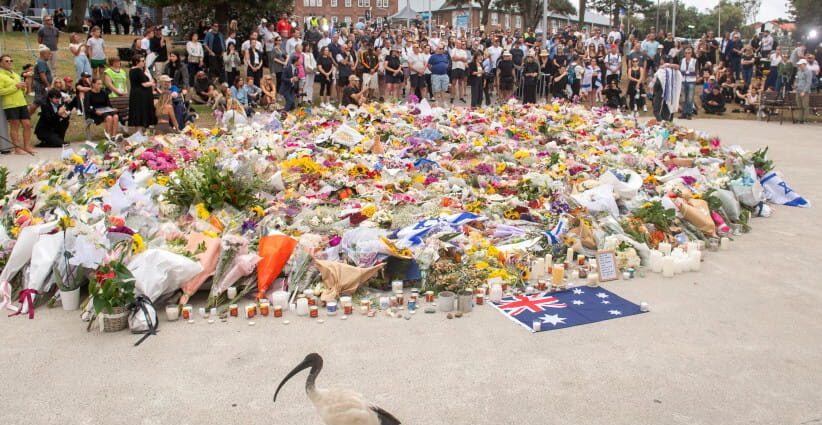
CBS News was first to report on the second investigation run out of Florida. It is not clear if that probe will lead to additional charges.

Maduro has plead not guilty to drug trafficking charges against him

Maduro has already been charged in federal court in Manhattan with narcoterrorism conspiracy and other offenses tied to alleged drug trafficking. He has pleaded not guilty and is awaiting trial in a Brooklyn jail.

The New York indictment, originally filed in 2020, was cited as legal justification for the US special forces raid in Caracas that deposed Maduro as Venezuela’s leader.

The Florida investigation could give the Justice Department a fallback option if it faces legal complications in Maduro’s New York case. Trump in March suggested that Maduro will face additional charges in the US.

The same US Attorney’s Office in Miami on Monday unsealed money laundering charges against Maduro ally Alex Saab. The office is also expected on Wednesday to charge former Cuban President Raul Castro over the downing of planes piloted by a Cuban exile group in 1996.

Saab’s arrest and deportation suggested a new level ​of collaboration between US and Venezuelan law enforcement under acting President Delcy Rodriguez, Maduro’s former vice president.

This post was originally published on here

Vice President JD Vance reassured Americans on Tuesday that US President Donald Trump‘s war with Iran will not become a “forever war,” using a White House briefing to defend his boss’s policies as speculation about his potential successor builds.

Standing in for press secretary Karoline Leavitt, who is on maternity leave, Vance fielded questions from journalists for nearly an hour in a mostly measured manner, a contrast to Trump’s more confrontational style.

He declined to rule out using taxpayer money to compensate people convicted of assaulting police officers during the January 6, 2021, attack on the US Capitol, dismissed European concerns over Washington scrapping troop deployment to Poland as overblown, and called a reporter’s suggestion that Trump’s recent stock purchases raised corruption concerns “absurd.”

The White House briefing room has emerged this month as an informal audition stage in the race to succeed President Donald Trump in 2028. Vance’s appearance at the podium came about two weeks after Secretary of State Marco Rubio, his possible future rival, drew wide attention for his debut briefing.

“Marco’s right, this really is chaos,” Vance quipped as reporters who packed the room shouted for his attention.

When a reporter referred to Vance as “a potential future candidate,” he rushed to correct her.

“I’m not a potential future candidate,” he said. “I’m a vice president, and I really like my job, and I’m going to try to do as good of a job as I can.”

Iran war presents political test

Vance, 41, a former Marine who has long argued against US entanglements in foreign wars, on Tuesday said any escalation with Tehran in the absence of a diplomatic solution would serve long-term US security interests.

“This is not a forever war,” he said. “We’re going to take care of business and come home.”

The Iran conflict is likely to loom over the political futures of both Rubio and Vance. Since it began on February 28, it has shut down a large chunk of the global oil trade, sending US gas prices about 50% higher and raising alarm among Republicans defending congressional majorities in the ⁠November midterm elections.

In a Reuters/Ipsos poll published on Tuesday, Trump’s presidential approval rating fell to nearly its lowest level ​since he returned to the White House, with many Republicans souring on his handling of Americans’ cost-of-living concerns.

The poll, conducted between May 15-18, showed some 34% of Americans have a favorable view of Vance, and 33% said the same of Rubio. In January 2025, 42% of respondents in a Reuters/Ipsos poll said they had a favorable view of Vance.

Even as both men downplay their 2028 ambitions, Trump has continued to fuel the succession talk. At a Rose Garden dinner last week, the president polled guests on his possible successors.

“Who likes JD Vance?” he asked. “Who likes Marco Rubio?”

Both questions drew strong applause. Trump said the men running together would make “a perfect ticket,” but added he was not offering either of them his endorsement.

Rubio’s recent turn at the White House podium drew praise from Trump. Republicans and even some Democrats noted his smooth performance, which included quips with reporters and a 1990s hip-hop reference to describe Iran’s negotiating position.

A State Department video capturing his remarks that he hoped America would be a place where “anyone from anywhere can achieve anything” went viral and fueled further speculation of a 2028 bid.

Vance, who has spent the last few weeks campaigning across states including Iowa, Maine, and Missouri and raising money for Republican candidates, also tried out some humor on Tuesday in a reference to his wife, Usha Vance, who is pregnant with their fourth child.

“I told Karoline I would stand in for her today for the White House press briefing on the condition that when Usha has our baby in July, she would be vice president for a couple of weeks,” Vance said.

This post was originally published on here

A proposed US pact with Saudi Arabia on its development of nuclear power lacks the strictest guardrails that Democratic lawmakers had urged, according to a US State Department letter sent to one of the senators.

The administration of US President Donald Trump said last year that it was pursuing a civil nuclear pact with Saudi Arabia to boost US industry and strengthen diplomatic ties.

However, nonproliferation advocates are concerned because Crown Prince Mohammed bin Salman, the de facto ruler of Saudi Arabia, has said that the kingdom would seek to develop nuclear weapons if regional rival Iran did so.

A dozen Democratic US lawmakers wrote to Secretary of State Marco Rubio in March urging him to push for a UN protocol – that Washington has backed for decades – that grants the UN’s International Atomic Energy Agency broad oversight of a country’s nuclear energy activities, such as the power to carry out snap inspections at undeclared locations.

But a State Department letter dated May 18 to Democratic Senator Edward Markey, a copy of which was seen by Reuters, says the pact only requires Washington and Riyadh to forge a less onerous “bilateral safeguards agreement.”

Lawmakers urged Rubio to push for ‘gold standard’

The lawmakers had also urged Rubio to push for voluntary “gold standard” non-proliferation protections in any agreement with Saudi Arabia. Rubio had supported a gold standard for Saudi Arabia when he was a senator.

That standard, which Saudi Arabia’s neighbor the UAE agreed to in 2009 before it built its first nuclear power plant, bans enrichment of uranium and reprocessing of nuclear waste, both of which can be pathways toward developing fissionable material for nuclear weapons.

But the letter makes no mention of the gold standard.

The State Department’s Paul Guaglianone, a senior legislative affairs official, said in the letter to Markey that the agreement was in “final review” prior to Trump’s signing of it.

The agreement “lays the legal foundation for a decades-long, multi-billion-dollar civil nuclear partnership between our two countries that advances several priority economic and strategic objectives,” Guaglianone wrote.

The White House did not reply to questions about when Trump would sign the agreement, or how it would ensure safety, but referred to a statement by Energy Secretary Chris Wright from last November saying the agreement has a “firm commitment to nonproliferation.”

The State Department said it could not discuss details of the proposed agreement as it was undergoing final review prior to signing, but a spokesperson said the draft contains all of the terms required by law, and reflects “a shared commitment by the United States and Saudi Arabia to strong nuclear safety, security, and nonproliferation standards.”

The Saudi embassy in Washington did not immediately respond to a request for comment.

‘Selling out national security’

Markey said the Trump administration was “selling out national security” because the proposed pact lacks sufficient safeguards.

“Trump is giving nuclear-weapon-wannabe Saudi Arabia nuclear technology without the strongest safeguards, which is the same technology that the Trump administration went to war with Iran over,” Markey said in a statement.

Once Trump signs the agreement and sends it to Congress, the Senate and the US House have 90 days to pass resolutions opposing it. If they do not, the deal would go into effect and allow the US to share nuclear power technology with Saudi Arabia.

Henry Sokolski, executive director of the Nonproliferation Policy Education Center, said Washington should push for stricter standards, including for enriching uranium, given that reactors can operate for decades. “If you let a country make nuclear fuel, you’d better hope they are your friend forever,” he said.

This post was originally published on here

Southampton, with Israeli goalkeeper Daniel Peretz, have been thrown out of Saturday’s Championship playoff final – known as the richest game in world soccer – after being found guilty of spying on semi-final opponents Middlesbrough in one of the harshest punishments imposed in the English game.

Tuesday’s decision by an English Football League-appointed Independent Disciplinary Commission dramatically rewrites the second-tier promotion race and hands Boro an unlikely reprieve after they lost 2-1 on aggregate to Southampton in the semis.

Middlesbrough have now been reinstated and will face Hull City at Wembley on Saturday in a match routinely dubbed the richest in world soccer because of the financial windfall attached to promotion to the Premier League.

Even a single season in the Premier League, followed by immediate relegation, is estimated to be worth around 200 million pounds ($268.10 million) over three seasons through broadcast revenue, sponsorship, and parachute payments.

Southampton admitted the charge of illegally spying on an opponent within 72 hours of a scheduled match, and also admitted to similarly filming training sessions involving Oxford United in December and Ipswich Town in April during the regular season.

Southampton failed to win any of those games.

The club had made no statement by midnight, but multiple reports said they were planning to appeal the severity of the punishment.

The EFL had said in announcing Southampton’s expulsion that the club could appeal and that “parties are working to try and resolve any appeal on Wednesday 20 May.”

The EFL said that, subject to the outcome, it could result in a further change to Saturday’s fixture, leaving the south-coast club with a glimmer of hope.

Unprecedented ruling, players may have legal case against club

The unprecedented ruling may open a Pandora’s Box of legal issues, with some media reports saying Southampton’s players could have a case against their club for loss of earnings if they are denied a shot at reaching the Premier League.

Other reports said clubs that had failed to reach the playoffs could seek some form of compensation.

Southampton’s allocation of some 37,000 tickets to the Wembley showcase had sold out earlier on Tuesday.

While the club had remained silent, Southampton fans had plenty to say, with some leaping to the club’s defense, while others voiced shame.

Spying or not, we won fair and square on the pitch,” supporter Melissa Earley Gordon told Southampton newspaper The Daily Echo. But Martin Sanders, who runs a Saints fan channel on YouTube and had booked tickets, travel, and hotel for the final, told the newspaper he felt let down.

“Ashamed, disgusted, gutted, let down. Massively let down,” he said. “I am awaiting the club’s statement to see what the club has to say. I am appalled. I think the fans have been let down, I think the players have been let down.

Calls for Southampton’s expulsion came after training session

Middlesbrough had called for Southampton’s expulsion after having a training session at their Rockliffe Park site filmed 48 hours ahead of the first leg of their playoff semi-final, which ended 0-0, and welcomed the decision.

“We believe this sends out a clear message for the future of our game regarding sporting integrity and conduct,” Middlesbrough said in a statement.

“As a club, we are now focused on our game against Hull City at Wembley on Saturday.”

Southampton were relegated from the Premier League last season and struggled in the early part of this campaign, but staged a storming finish, going unbeaten in 19 league games to finish fourth and enter the playoffs.

The south-coast club is the first to fall foul of the Football League’s Regulation 127 – brought in after Leeds United were found guilty of spying on Derby County seven years ago, an offense for which they were fined 200,000 pounds.

This post was originally published on here

The Trump administration is fighting Minnesota’s decision to outlaw prediction markets like Kalshi and Polymarket.

The Commodity Futures Trading Commission sued the state to block its new bill, signed into law Monday by Gov. Tim Walz, that, among other things, makes it illegal to host prediction markets or offer or advertise “event contracts” for a wide range of events.

The Minnesota law covers athletic events, esports events, and games of skill as well as trading on the outcomes of emergencies, assassinations, short-term weather events, popular culture events, or even “whether a person will make a particular statement.” Violators could be charged with felonies.

Minnesota was the first state to enact any outright ban on prediction markets. Critics of Kalshi, Polymarket, and similar companies say the idea of trading “event contracts” amounts to gambling on real-world outcomes while skirting gambling regulations.

Experts also believe insider trading can run rampant in these contracts, as some outcomes can be either manipulated or known in advance by certain individuals.

Law was set to go into effect in August

The law was to go into effect Aug. 1, but CFTC chairman Michael Selig said in a statement that it “turns lawful operators and participants in prediction markets into felons overnight.”

The Trump administration’s CFTC has sued five other states – Arizona, Connecticut, Illinois, New York, and Wisconsin – for their attempts to limit prediction-market companies from offering sports contracts in their states.

Sports betting is regulated by the states, and the entry of prediction markets into sports may threaten the business of others operating legally in that space.

This post was originally published on here

The only Republican to refrain from supporting Israel in the immediate aftermath of Hamas’s October 7, 2023, attack will exit Congress following a decisive primary loss on Tuesday.

Rep. Thomas Massie, who has represented Kentucky’s 4th Congressional District since 2013, lost to Ed Gallrein, an endorsee of US President Donald Trump who drew support from pro-Israel PACs.

Massie conceded the election on Tuesday night – but not without a dig at Gallrein’s purported relationship to Israel.

“I would’ve come out sooner, but I had to call my opponent and concede. And it took a while to find Ed Gallrein in Tel Aviv,” he said in his concession speech.

With almost all ballots counted on Tuesday night, Gallrein had drawn 55% of the votes.

The result means that Massie, the most anti-Israel Republican in Congress and the only Republican to vote at times with far-left Democrats on measures opposing Israel, will leave Congress at the end of the year.

The Republican Jewish Coalition, which long opposed Massie, congratulated Gallrein in an extensive statement that cast the primary as a referendum on the Republican Party’s recent divide over Israel. The party is increasingly split between acolytes of Trump and those who believe Trump has been too accommodating to Israel.

Matt Brooks: ‘No place’ for anti-MAGA Republicans

“Kentucky Republicans sent an unmistakable message: there is no place in the Republican Party for those who turn their back on the MAGA agenda,” said CEO Matt Brooks.

He added, “We know that Ed Gallrein, a 5th-generation Kentucky farmer, decorated Navy SEAL, and true MAGA patriot, will serve with honor and distinction, as he has his entire career.”

Brooks criticized both Massie’s record in Congress and his behavior as a candidate, saying, “Notably, Massie’s conduct throughout this campaign – trafficking in antisemitism and bottom-of-the-barrel nativism at a time when Jew-hatred is on the rise – was wildly unacceptable and outrageous from an elected member of Congress.”

Pro-Massie campaign ad condemned for antisemitism

A widely condemned pro-Massie campaign ad last week claimed that a Gallrein win would bring “trans woke madness” to Kentucky at the behest of billionaire Jewish Republican donor Paul Singer. The ad placed a rainbow Star of David next to a photo of Singer’s head.

The ad came amid a blitz that watchdogs say made the race the most expensive congressional contest in US history, with an estimated $32.6 million spent, according to the advertising-tracking firm AdImpact. That includes $5 million from a PAC affiliated with the Republican Jewish Coalition and a reported $2.6 million from PACs affiliated with the American Israel Public Affairs Committee, the pro-Israel lobby.

Massie’s record in Congress has placed him far outside the Republican mainstream. In October 2023, he voted with the progressive “Squad” against a resolution expressing support for Israel in the wake of the October 7 attack. The next month, he was the only member of Congress from either party to vote “no” on a resolution affirming Israel’s right to exist. Last year, Massie called for ending all US military aid to Israel.

This post was originally published on here

Donald Trump’s presidential approval rating fell to nearly its lowest level since he returned to the White House, hit by a drop in support among Republicans, according to a new Reuters/Ipsos poll.

The four-day poll, which closed on Monday, showed 35% of the country approved of Trump’s job performance, down a percentage point from a Reuters/Ipsos poll earlier this month and just above the low point of his presidency – 34% – seen last month. Trump started his current term in January 2025 with a 47% approval rating.

The president’s popularity has taken a hit this year as Americans suffer from surging gasoline prices since Trump ordered strikes on Iran in February alongside Israel.

The war shut down a large chunk of the global oil trade, sending prices at the pump for Americans about 50% higher and raising concern among Trump’s Republican allies, who will be defending their congressional majorities in the November midterm elections.

Discontent is spreading within Trump’s party, with 21% of Republicans now disapproving of the president’s performance, up from 5% just after he took office in January 2025. Some 79% of Republicans in the poll said Trump was doing a good job, down from 82% earlier in the month and 91% at the start of his term.

One in five approve of Trump’s stewardship over cost of living

Republicans have soured in particular on Trump’s handling of the cost of living for Americans, an issue he promised to address during his 2024 campaign, after a bout of high inflation bedeviled his predecessor, Democrat Joe Biden. Only 47% of Republicans give Trump a thumbs up on the cost of living, compared to 46% who say he’s doing a bad job. Among Americans overall, just one in five approve of Trump’s stewardship over the cost of living.

The poll, which was conducted online, gathered responses from 1,271 adults nationwide and had a margin of error of 3 percentage points for Americans overall and 5 points for Republicans.

Republican political strategists said the downward turn in Trump’s popularity could be a sign of flagging enthusiasm among Republican voters ahead of the November elections, when control of both chambers of the US Congress will be up for grabs.

“The bigger concern I would have is that Republicans don’t seem to be as motivated to turn out in midterm elections as Democrats do right now,” said Jeanette Hoffman, a Republican consultant. Hoffman said it remained unclear how much impact Trump’s declining numbers might have, with four out of five Republicans still backing him. “80% is still a pretty big number,” she said.

Trump’s support within his party has held more firmly for his immigration policy, another issue central to his 2024 presidential election campaign and which has animated core supporters, a group he refers to as the Make America Great Again movement, or MAGA. Some 82% of Republicans approve of Trump’s handling of immigration, little changed from last year.

Trump also came to office on promises to avoid what he called “forever wars” like the US military interventions in Iraq and Afghanistan, which occupied US troops for most of the last quarter-century.

Trump argues conflict with Iran is successful

He has argued that the conflict with Iran has been a success, touting strikes that killed the country’s leader and many senior politicians. A fragile ceasefire has been in place since April, but Iran has largely refused to allow oil tankers to pass through the Strait of Hormuz, which, before the war, saw a fifth of the global oil trade.

Just 62% of Republicans approve of how Trump is handling the situation in Iran, while 28% disapprove, according to the latest Reuters/Ipsos poll. Democrats overwhelmingly disapprove, as do two-thirds of independents.

Overall, just one in four respondents in the poll – and about half of Republicans – said the US military action in Iran has been worth it.

This post was originally published on here

Allegations of “catastrophic” sanitary conditions have been made at an IDF base in Haifa, with up to 13 rats being spotted in a single day, according to a report by N12 News. 

Appeals have been made for months, according to an anonymous source who works in the base’s kitchen. He explained that rats are seen entering through holes in the walls, air-conditioning ducts, and plumbing systems. “Everything here is rotten and exposed,” he said.

According to N12, the allegations were made at the Haifa Naval Training Base, which houses approximately 1,200 female and male soldiers. Despite the allegations, there hasn’t been an adequate response, the source said. 

He recalled an incident in which he was preparing lunch for the soldiers: “We took a pot out of the refrigeration room to start heating it. I came to stir it with a large spoon, and suddenly I lifted the spoon and saw a rat inside the pot. It was one of the most shocking things I have ever seen,” he said. 

‘Rats gnaw through containers’

Rats are also seen gnawing into meal trays intended for soldiers who don’t eat at the dining hall, he continued. “The rats simply gnaw through the lids of the food containers. If we see a bite mark or dirt, we throw everything away. But it is impossible to know about everything,” he explained. 

It’s become customary for kitchen staff to start the day by documenting conditions at the base, the source said. “We arrive at 5 a.m., photograph the time and date, enter the refrigeration rooms, and see the rats running into the holes in the walls.”

According to the IDF, renovations were carried out in the kitchen, which the source explained consisted of sealing openings in the walls and in the refrigeration rooms, said N12. 

“They [the rats] come back every time,” he said. “The building is very old, the plumbing is rotten, and the ceiling is old. This is simply not a place that should be operating a kitchen.”

IDF handling the matter, military assures

According to the report, the military assured that it is handling the matter and that, following the incidents, an exterminator will visit the base weekly.

However, according to the source, the kitchen employees bought rap traps because the military’s solutions were insufficient. “They bring an exterminator, put down plastic traps, and it does not help at all,” he explained. 

“What interests them [the military officials] is that there should be bread and that tables should be cleaned. I say there have been rats in the kitchen for months, and it simply does not interest anyone,” he claimed.

“The real solution is to close the kitchen and carry out a thorough renovation,” he concluded. “It is impossible to continue like this.”

Signs of rats in the food at the Haifa Naval Base. (credit: SCREENSHOT/N12)

The IDF responded that the images showing a rat in a pot and gnawed food containers were from several months ago and that the situation has been handled, N12 reported. 

It also said that routine inspections are carried out by army health officials, alongside pest control and regular preventive measures, to maintain the base’s cleanliness and the soldiers’ health.

While renovations are underway, soldiers are receiving catering from an external provider, the military added.

This post was originally published on here

Sharply criticizing J Street and implying that US Senator Bernie Sanders should not be called a Jew may not have been Israeli Ambassador Yechiel Leiter’s most diplomatic moment. But it was perhaps his most candid – articulating what many Israelis and their supporters quietly believe.

“How can you be pro-Israel and advocate for an arms embargo on a state that’s fighting a seven-front war against Iranian proxies?” Leiter asked of J Street, which bills itself as pro-Israel, pro-peace, and pro-democracy.

His comments in Washington referred to the lobbying organization’s call to end military aid to Israel, including support for weapons systems such as Iron Dome.

“If they said that they were pro-Palestinian, I wouldn’t have a problem meeting with them,” he said. “I meet with pro-Palestinian groups. But when you come and say in such a two-faced manner, ‘We’re pro-Israel, we’re pro-democracy,’ there’s a democratically elected government in Israel. You don’t like [Prime Minister Benjamin] Netanyahu, make aliyah, vote in the next election, and express yourself. Don’t say you’re ‘pro-democracy’ and decry and defy the position of the democratic government of Israel.”

Even as we reject Leiter’s reference to J Street as a “cancer” – believing it is possible to disagree without resorting to toxic rhetoric – we agree with the thrust of his criticism.

Israel is now in the 956th day of a war forced upon it on October 7. The very least it could expect from an organization calling itself pro-Israel is not to lobby against the sale of arms needed to defend itself or accuse it of genocide. That’s a low bar, and one that J Street failed to clear.

J Street lobbies Congress from far-Left position

Since its 2008 founding, just before Barack Obama’s presidency, J Street has served as a convenient vehicle through which Democratic administrations could pressure Israel while touting Jewish political backing.

Its head, Jeremy Ben-Ami, gave voice to this role in a 2009 interview, using an American football metaphor and saying that the organization’s “number one agenda item is to do whatever we can in Congress to act as the president’s blocking back.”

In other words, J Street would lobby Congress on behalf of Obama’s Middle East policies – policies that tilted overwhelmingly toward the Palestinians – counter opposition from AIPAC, and give Democratic lawmakers political cover to side with the administration against Netanyahu.

Along the way, J Street adopted a far Left position on Israeli politics even as the Israeli public repeatedly rejected that approach at the ballot box. Yet, the organization continued to portray itself as the arbiter of what was best for the Jewish state, arrogantly signaling that it knows the country’s interests better than Israel’s elected government.

In August, Ben-Ami said he could no longer defend Israel against accusations of genocide. Pro-Israel indeed.

Ben-Ami’s reaction to Leiter’s criticism was predictable.

“Instead of disparaging friends of Israel who disagree with its government and calling us names, Israel’s ambassador to the United States should be engaging seriously with us.”

Really?

Ben-Ami is complaining that his organization is being disparaged, even as he and J Street have spent years disparaging the very state Leiter represents.

Bernie Sanders is ‘not a Jew’

Speaking about legislation J Street supported in April to block the sale of bulldozers and 1,000-pound bombs to Israel, Leiter said one US senator reminded him that the sponsor of that legislation was Jewish.

“The sponsor is not a Jew,” Leiter said of Sanders, though not mentioning him by name. “The sponsor is a Communist, who may have Jewish pedigree. That doesn’t make him a Jew.”

Harsh words, certainly. But the criticism is not unwarranted.

Sanders is the prototype of the anti-Israel activists who leverage their Jewishness to lend legitimacy to their attacks. Sanders and others like him have done enormous damage to Israel’s standing by employing some of the harshest rhetoric against the country while benefiting from the credibility their Jewish identity gives them as critics.

Seven of the 10 Jews in the Senate, all Democrats, voted with Sanders in a failed attempt to block the arms sales to Israel. They surely understood the signal they were sending: if Sanders sponsors the resolution, and senators such as Adam Schiff and Jon Ossoff vote for it, then it must be kosher.

But it is not. And those advancing that type of agenda – J Street and Sanders – deserve to be called out, even if doing so is undiplomatic.

This post was originally published on here

A Philadelphia Democratic primary on Tuesday could poise Chris Rabb – a progressive state lawmaker who is staunchly critical of Israel – to become the newest member of Congress’s “Squad.” 

Rabb has made opposition to Israel and AIPAC, the pro-Israel lobbying group, a focal point of his campaign in Pennsylvania’s Third Congressional District. 

He also recently made headlines when it was reported that his Instagram account had shared a post saying the Bondi Beach massacre was a false flag by “Zionists.” He disavowed the post, saying it was shared by a former staffer.

Rabb’s top two opponents are Sharif Street, a state senator who’s garnered support from J Street and figures in the political establishment such as Sen. Cory Booker, and Ala Stanford, a pediatric surgeon who has faced scrutiny for being boosted by a group that’s alleged to be a shell organization for AIPAC.

The victor will become the Democratic nominee for a November general election; they are almost assured to win in the country’s “bluest House district.”

At a time when Democratic voters are overwhelmingly sympathizing with Palestinians over Israelis, the turnout for Rabb, who has centered pro-Palestinian advocacy in his bid for Congress, could signal how those sentiments translate to electoral results.

Efforts to install a new “Squad” member have so far fallen short this cycle, though those candidates – like Nida Allam in North Carolina – were up against incumbents, or, as in the case of Kat Abughazaleh in Illinois, lacked Rabb’s experience in elected office.

Rabb endorsed by several ‘Squad’ members

Rabb’s campaign has picked up momentum in recent weeks. He’s been endorsed by a number of left-wing House representatives, including Alexandria Ocasio-Cortez, Ilhan Omar, Rashida Tlaib, Ro Khanna, and Summer Lee, who is also from Pennsylvania. He also rallied alongside the progressive streamer Hasan Piker, a staunch critic of Israel who has been accused of antisemitism, in Philadelphia.

If elected, Rabb’s platform would make him one of Congress’s farthest left candidates on Israel. He supports a complete embargo on arms sales to Israel. He posted on X/Twitter last week that “the Nakba never ended,” and said he would co-sponsor a resolution with Omar and Tlaib to “recognize the Nakba and reaffirm Palestinian refugees’ right to return.” 

Maryland Rep. Jamie Raskin, who is Jewish and has sponsored the Block the Bombs to Israel Act, endorsed Rabb. He has also been endorsed by anti-Zionist group Jewish Voice for Peace, and a slew of left-wing groups, including Democratic Socialists of America and the Working Families Party, as well as groups that explicitly work to counter AIPAC, such as Track AIPAC and PAL PAC.  

The super PAC American Priorities, which seeks to be a counterweight to AIPAC’s super PAC, United Democracy Project, has spent more than $400,000 boosting Rabb, according to FEC filings.

Pennsylvania Gov. Josh Shapiro, who is Jewish and supports a continued US-Israel relationship, was reportedly rumored to be working behind the scenes to quietly derail Rabb’s campaign; Shapiro has not publicly weighed in on the race and did not respond to a request for comment.

The latest polling data from this race was collected in early April, showing Stanford leading with 28%, Rabb trailing by 5 percentage points, and Street in third at 16%. But much has changed in the weeks since those polls, including a significant mobilization from the left to back Rabb.

The poll was also conducted by 314 Action Fund, a political action committee that endorsed Stanford. A few weeks after the polling was released, Drop Site News, which has an anti-Israel bent, reported that the group is operating as a shell organization for AIPAC, the way other groups did in Illinois races earlier this year. AIPAC did not immediately respond to a request for comment.
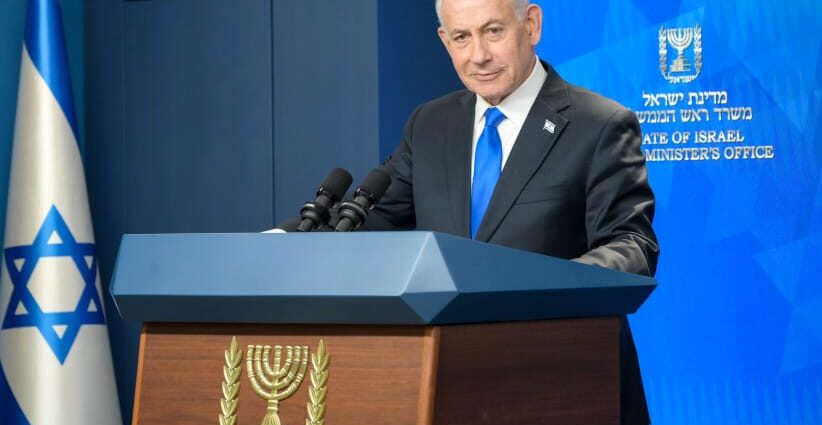
Stanford: ‘Genocide’ term ‘hurtful’ to Israelis

Stanford’s reported support from AIPAC has thrust her into the spotlight on Israel. During a tense moment at a candidates’ forum last month, Stanford was pressed by an audience member on whether she believed Israel was committing a genocide.

She refused to use the term to describe Israel’s military actions, and said, “For Israelis who have been accused of committing it, it’s hurtful for them.”

Stanford has been endorsed by the district’s representative, Dwight Evans, who is retiring at the end of this term, and a handful of other US House representatives, including Madeleine Dean and Chrissy Houlahan from Pennsylvania. Hawaii’s Jewish governor, Josh Green, also endorsed Stanford.

Meanwhile, Street has the chance to become Pennsylvania’s first Muslim member of Congress. He has been critical of Israeli Prime Minister Benjamin Netanyahu, saying he should be prosecuted for war crimes, but is far more moderate on Israel than Rabb and has made the subject less central to his campaign messaging. Like Stanford, he has not referred to Israel’s military actions as a “genocide” and advocates for a two-state solution, as well as continued US aid to Israel.

Booker traveled to Philadelphia on Monday to stump for Street.

Street is the son of former Philadelphia mayor John Street and has the support of several state legislators and City Council members, as well as the Philadelphia City Democratic Committee. Rue Landau, the only Jewish member of the City Council and its first openly LGBTQ member, has endorsed Street. 

Street is listed as “primary approved” on the website of liberal pro-Israel advocacy group J Street, which has recently drifted to a position that advocates for continued weapons sales, but a phasing out of military subsidies, to Israel.

This post was originally published on here

The Jewish holiday of Shavuot, which begins on Thursday evening, is a celebration of nature, water, and renewal.

With this in mind, the Keren Kayemeth LeIsrael-Jewish National Fund (KKL-JNF) extended an invitation for Israelis to experience some of its most beautiful water hiking trails across the country.

These trails, fitting for both novice and expert hikers, include magnificent water features, such as springs and streams.

KKL-JNF Chairman Eyal Ostrinsky invited the Israeli public to “explore the springs and streams found across the country, and enjoy the green landscapes that KKL-JNF preserves and nurtures throughout the year.”

The organization’s water trails involve all the elements one might need for their holiday adventure. 

As a reminder, the KKL-JNF asks that all visitors bring a garbage bag to collect their trash, wear proper footwear and headwear, and bring plenty of drinking water.

Sataf Trail: Ancient agriculture, flowing springs

The Sataf Trail, which encompasses two trails, is situated in the Jerusalem hills.

The journey includes ancient agriculture and the springs of Ein Sataf and Ein Bikura.

Novices can choose the easier, shorter Village Trail (Shvil HaKfar), while more advanced hikers can attempt the Baal Trail (Shvil HaBaal), which allows visitors to explore the area’s ancient agricultural systems more deeply.

Regardless of the choice, all hikers who complete their respective trails will wind up at the central site to witness water from the springs flowing through still-operational ancient irrigation channels.

The scenic Springs Trail

Another Jerusalem-area gem is the Springs Trail of the Aminadav Forest.

The hike’s rich natural landscape includes natural springs, woodlands, and high points offering terrific views of the Jerusalem hills, Nahal Sorek, and Nahal Refaim.

Springs Trail (Shvil HaMaayanot) in Aminadav Forest. (credit: Ilan Shacham)

Like the Sataf Trail, ancient agricultural elements and small pools of water can be observed.

The Tzaanan Pool

While not a trail, the Tzaanan Pool is a beautiful water feature amongst the lush greenery of the Maresha Forest in the Beit Guvrin region. 

The site, located east of Kiryat Gat, is largely unknown and therefore rarely crowded, making it a pristine spot for those looking for something more private.

The moderate temperatures that accompany the Shavuot period make the shady site an ideal place to visit for the holiday.

The accessible Nahal HaShofet Trail

The newly renovated Nahal HaShofet trail, located in northern Israel, is perfect for those looking for a more accessible hiking experience.

The trail, which features beautiful greenery, a stream, and a waterfall, is suitable for both wheelchair users and families with strollers.

Visitors will enjoy the shade and historical sites, with the Shavuot season bringing with it blooming wildflowers.

The Jordan Park: Fun for the whole family

The Jordan Park (Park HaYarden) is situated along the Jordan River (Nahal HaYarden) near the Sea of Galilee (Kinneret) in northern Israel. 

Like other trails, it includes ancient agricultural works and historical sites, and, uniquely, cycling trails and an overnight campground with organized utilities.

Jorden Park. (credit: KKL-JNF PHOTO ARCHIVE)

The Shavuot season brings with it shade and cooler water temperatures for the whole family to enjoy.

The Ein Jezreel Spring

The Ein Jezreel Spring is a simple natural site beneath a large eucalyptus grove, its gentle waters flowing into a pristine natural pool.

The enjoyment begins even before arriving at the spring, with the access road traversing fields and orchards, as well as even more ancient agricultural systems.

This post was originally published on here

US forces identified at least 10 mines planted by Iran in the Strait of Hormuz, CBS News reported on Wednesday, citing US officials with knowledge of the matter. 

The mines were discovered following a recent US intelligence assessment. 

A previous CBS report from March said there were at least a dozen underwater mines in the Strait, according to US intelligence reports. 

Officials had said the mines were Maham 3 and Maham 7 Limpet mines, both manufactured in Iran, CBS reported. 

The Maham 3 is a “moored naval mine that uses magnetic and acoustic sensors to detect nearby vessels without physical contact,” explained the report. It analyzes movement to determine the best time to activate, holding the capacity to engage targets within 10 feet. 

The Maham 7, on the other hand, is known as a “sticking mine,” explained CBS. It is designed to rest on the seabed and relies on a combination of acoustic and three-axis magnetic sensors to detect nearby vessels. This mine targets medium-sized ships, landing craft, and smaller submarines.

The latest US assessments didn’t reveal the type of mines recently discovered, the report added. 

Safe route for commercial ships

The US Navy has spent weeks clearing mines from a route in the Strait of Hormuz meant for the safe passage of commercial ships. 

The US warned that transiting the normal route could be “extremely hazardous” due to mines laid by Tehran, added CBS.

Iran announced this week that it is working with Oman to create a joint “mechanism” to control traffic through the Strait, said the report. 

This post was originally published on here

US Treasury Secretary Scott Bessent on Tuesday called on allies to more forcefully disrupt Iran‘s financing networks and said the Treasury would scrub its sanctions list of outdated designations to make it easier for financial institutions to root out the most sophisticated terrorist financing schemes.

Bessent told an anti-terrorism financing conference after G7 finance leaders met in Paris that participants needed to “stand with us in full measure” against Iran.

“That will require, for example, our European partners to join the United States in taking action against Iran by designating its financiers, unmasking its shell and front companies, shuttering its bank branches, and dismantling its proxies,” Bessent said. “It will require those of you in the Middle East and Asia to root out Iran’s shadow banking networks.”

Bessent told Reuters in an interview that Iranian bank branches in Europe were not taking deposits, but “that branch manager is doing something. Just close it.”

His comments came as the Treasury imposed fresh sanctions on Iran’s shadow tanker fleet and an Iranian foreign currency exchange house and what called other front companies.

The move came after Iran said its latest peace proposal to the United States over the US-Israel-Iran war that started February 28 involves ending hostilities on all fronts, including Lebanon, the exit of US forces from areas close to Iran, and reparations for destruction caused by the conflict.

US Treasury steps up sanctions

As the Trump administration tries to pressure Tehran to reopen the Strait of Hormuz to unlock vital oil flows disrupted by the US-Israeli attacks on Iran, the US Treasury has stepped up its sanctions efforts through a program dubbed “Economic Fury.” It aims to disrupt Iran’s shadow banking networks and has frozen nearly half a billion dollars’ worth of cryptocurrency linked to Iran’s regime.

To make this more effective, the Treasury will modernize its sanctions architecture because “our adversaries adapt and innovate” by creating new shell companies.

Most US Treasury sanctions are imposed on individuals, companies, and other entities that are added to its Specially Designated Nationals List, which contains tens of thousands of designees that are cut off from the dollar-based financial system and see assets frozen. Anyone who transacts with designated entities risks being sanctioned themselves.

“To sharpen national security outcomes, Treasury is tailoring our sanctions program for the 21st century. We are reviewing outdated and obsolete designations to help financial institutions focus on the most sophisticated terrorist financing and sanctions evasion schemes,” Bessent said.

He said the most effective sanctions are aggressive and targeted, and those left in place too long could create unintended consequences.

“Sanctions are meant to change behavior, not to punish populations,” Bessent said. “Sanctions left in place for years with no visible and tangible changes in behavior can have generational impacts that are nearly impossible to predict.”

He said the Treasury’s approach would “maintain agility to maximize effectiveness” and cited examples of easing sanctions on Syria and Venezuela after regime changes as examples of how the Trump administration intends to adjust sanctions.

This post was originally published on here

The Trump administration is planning to tell NATO allies this week that it will shrink the pool of military capabilities that the US would have available to assist the alliance’s European nations in a major crisis, three sources familiar with the matter said.

Under a framework known as the NATO Force Model, the alliance’s member countries identify a pool of available forces that could be activated during a conflict or any other major crisis, such as a military attack on a NATO member.

While the precise composition of those wartime forces is a closely guarded secret, the Pentagon has decided to significantly scale down its commitment, said the sources, who requested anonymity to speak candidly about the plans.

US President Donald Trump has made clear he expects European countries to take over primary responsibility for the continent’s security from the US. The message to allies this week is a concrete sign of that policy being implemented.

Several details were unclear, such as how quickly the Pentagon plans to shift crisis-mode responsibilities onto European allies. The sources said, however, that the Pentagon plans to announce its intention to lessen its commitment at a Friday meeting of defense policy chiefs in Brussels.

Pentagon policy chief Elbridge Colby has said publicly that the United States will continue to use its nuclear weapons to protect NATO members, even as European allies take the lead on conventional forces.

The US will likely be represented by Alex Velez-Green, a key aide to Colby, the sources said. Adjusting the NATO Force Model has emerged as a key priority of Colby’s team heading into the next NATO leaders’ summit, which will take place in Turkey in July, one of the sources added.

A NATO spokesperson directed a request for comment to the United States. The Pentagon did not immediately respond to a request for comment.

Alliance under strain 

The NATO alliance is under unprecedented strain, with some European countries concerned that Washington may withdraw outright. A major adjustment to the forces the US would make available during wartime will only intensify those concerns.

In the past few weeks, the Trump administration has announced plans to cut some 5,000 US troops from Europe, including a decision to cancel a deployment of an Army brigade to Poland, a surprise decision that was slammed by US lawmakers.

One of the sources and another source familiar with the matter said aides on Capitol Hill were aware of and concerned about the Pentagon’s plans to narrow its commitments under the NATO Force Model.

A senior NATO diplomat said, however, they still believed there is an understanding that the United States would come to Europe’s aid if it were in trouble.

Trump and many of his aides have slammed European allies for not spending enough on their militaries and relying on the US for conventional defense, and they point out that the US still has tens of thousands of troops in Europe.

The president’s ambition to take control of Greenland, a Danish overseas territory, has further inflamed transatlantic tensions, as has an ongoing spat between Trump and German Chancellor Friedrich Merz, who has sharply criticized Trump’s war with Iran.

European allies generally counter that they are rapidly beefing up their military capabilities, but that doing so cannot be done overnight.

Rubio to visit NATO, India, amid strained ties

US Secretary of State Marco Rubio will travel to Sweden for a meeting of NATO foreign ministers this week where he will discuss the need for “greater burden sharing” by the alliance, and then visit India, the State Department said on Tuesday.

Under President Donald Trump, US ties with both NATO and India have been strained, with the president repeatedly threatening to pull out of the alliance and imposing high tariffs on India.

Rubio will stop in Helsingborg on May 22 and “discuss the need for increased defense investment and greater burden sharing in the Alliance,” State Department spokesperson Tommy Pigott said in a statement.

He will also meet counterparts from the Arctic Seven nations: Canada, Denmark, Norway, Sweden, Finland, and Iceland. 

The goal of the meetings is to discuss “shared economic and security interests,” Pigott said.

Rubio will visit India from May 23 to 26, stopping in Kolkata, Agra, Jaipur, and New Delhi for talks on energy security, trade, and defense cooperation, he said.

The Trump administration has repeatedly criticized NATO members for not contributing more to joint military efforts. Friction has deepened after European countries declined to send ships to help secure the Strait of Hormuz and over Trump’s earlier proposal to acquire Greenland, a semi-autonomous Danish ​territory.

European leaders have agreed that Europe should take on more responsibility for its own security.

NATO countries last year set new spending targets of 3.5% of GDP on core defense and 1.5% on broader measures such as cybersecurity, infrastructure, and logistics.

Trump and Indian Prime Minister Narendra Modi enjoyed warm ties during Trump’s first term, but relations cooled after India was hit last year with some of the highest US tariffs, ⁠many ​of which were rolled back. The two countries are now working on a trade deal aimed at avoiding further tariff hikes.

India is also a member of the Quad grouping with the United States, Japan, and Australia. Japan’s Jiji Press reported Foreign Minister Toshimitsu Motegi will visit New Delhi on May 26 for a Quad meeting expected to focus on strengthening supply chains for critical minerals in response to China.

The State Department statement made no mention of a Quad meeting.

In an April call, Trump ​and Modi stressed ‌the importance of keeping the Strait of Hormuz, which serves as a conduit for 40% of India’s crude oil imports, open and secure.

This post was originally published on here

US President Donald Trump on Tuesday revealed previously undisclosed details about his new bunker-like White House ballroom, saying it would have a drone base on the roof and a military hospital as part of a six-story subterranean complex.

Amid the bang and clang of construction, Trump took a group of reporters on a tour of the project to try to bolster his argument that the US Congress should allocate $1 billion to pay for security enhancements to the building.

Democrats and some Republicans are balking at the request, calling it extravagant as Americans grapple with spiraling gasoline prices and other fallout from Trump’s war on Iran ahead of the November midterm elections.

Trump, a billionaire real estate developer, did not hold back in describing previously unknown details about the project, which at 90,000 square feet stands to dwarf the adjacent White House, built in the late 18th century.

Trump has argued that the ballroom is needed for large events of 1,000 people, far more capacity than the White House entertainment spaces can accommodate. He pressed his case for the ballroom after an apparent assassination attempt at a Washington hotel where he was attending a media gala, arguing that it would be a much more secure venue.

Trump detailed the ballroom’s security features, describing a bunker-like structure with a hardened roof able to withstand a direct attack.

‘A bulldozer cannot knock it over’

He said that titanium fencing recently installed around the ballroom was so strong that “a bulldozer cannot knock it over.” The roof, he said, would be constructed of “impenetrable steel.”

Beneath the ballroom, there will be a complex extending six stories deep, he said, pointing to two that were already under construction.

The underground complex would include a military hospital and research facilities, although Trump did not explain the focus of the research. The White House declined to provide further details.

He spoke excitedly about the installation of a drone base on the roof, “set up for unlimited numbers of drones.”

“The entire roof is built for military,” he said. “They have a massive drone capacity. Not only is it drone-proof, if a drone hits it, it bounces off, it won’t have any impact. But it’s also meant as a drone port that would protect all of Washington.”

The ballroom’s windows would be four inches thick and made from a special kind of glass.

“You can see through it as though it doesn’t exist,” he said.

This post was originally published on here

Irish novelist Sally Rooney, who drew headlines in 2021 for refusing a Hebrew translation of one of her books, is now publishing her latest novel in Hebrew through an Israeli publisher approved by boycott activists.

The Hebrew translation of Intermezzo, due out next month, will be published by November Books in collaboration with the left-wing Israeli news sites +972 Magazine and Local Call. The arrangement was announced this week alongside an interview Rooney conducted with Palestinian-Irish activist Samir Eskanda for The Guardian.

Rooney’s decision marks an unusual but not unprecedented attempt to work within the framework of the Boycott, Divestment and Sanctions movement, or BDS, which has long called on artists and cultural figures to avoid working with Israeli institutions it considers complicit in Israeli government policies toward Palestinians.

In 2021, Rooney declined to sell the Hebrew translation rights to her novel “Beautiful World, Where Are You?” to the Israeli publisher that had previously published her books in Hebrew. At the time, she said she supported the BDS movement and would not work with an Israeli publisher unless it was willing to “publicly distance itself from apartheid and support the UN-stipulated rights of the Palestinian people.”

That move prompted backlash in Israel and beyond, including calls to boycott Rooney’s work. Israeli bookstore chains reportedly removed some of her books from shelves.

Now, Rooney, 35, says she believes publishing Intermezzo in Hebrew through November Books is compatible with the boycott campaign because the publisher does not operate in West Bank settlements, does not receive Israeli government funding, and has endorsed Palestinian rights.

“Though my refusal to work with complicit Israeli publishing houses made the contractual side of things more complex, I was, of course, never boycotting the Hebrew language or any language,” Rooney told The Guardian. “I’m very pleased that Intermezzo will soon be available in Hebrew with November Books.”

Author remains in contact with BDS founding arm

Rooney added that she had stayed in contact with PACBI, a founding arm of the BDS movement that advises artists on cultural boycott issues, “to try to ensure that I was upholding both the letter and the spirit of the institutional boycott.”

Haggai Matar, the executive director of +972, said BDS is willing to work with Israeli publishers if they express that they are not “complicit” with the Israeli state, do not accept government funding, nor operate within the settlements.   

BDS also demands that its targets recognize the rights of Palestinians under international law, including the right of return of Palestinians seeking to reclaim their former homes in modern-day Israel. While Israel and many of its supporters consider such claims an existential threat, Matar said it “can be implemented in all sorts of ways.”  

Asked why +972 was eager to help publish Rooney’s book, Mattar told the Jewish Telegraphic Agency that it was an opportunity to “dispel myths that BDS is antisemitic or aimed at all Israelis.”

“To take someone as famous as Sally and as outspoken on the Palestinian issue was a great opportunity to say, ‘Look, Israelis aren’t outcasts. This is not about our identity.’ It is an attempt by Sally and the BDS movement to not be involved with organizations that are complicit with apartheid or war crimes. Once you act and say that you aren’t, you are not subject to boycott at all.”  

Since October 28, 2024, more than 7,000 writers have signed onto a boycott of “complicit” Israeli literary institutions. The boycott said it had evaluated 98 Israeli publishers and found that only November Books met its exemption criteria.

November Books is a small Israeli nonprofit that distributes its books mostly through independent bookstores. It has previously published Hebrew translations of works by Ta-Nehisi Coates and Naomi Klein, both of whom support the boycott. 

“Our task as a movement is to channel anger at Israel’s genocide in Gaza into the most meaningful initiatives,” said Rooney. Israel denies that the war in Gaza is a genocide, and supporters have called the war in Gaza a proportionate response to the Hamas attacks of October 7, 2023, in which 1,200 people were killed in Israel, and 251 were taken hostage. 

Rooney also acknowledged what she described as inconsistencies in her earlier decisions. Rooney said that while she had supported BDS as a consumer, she had initially sold Hebrew translation rights for her first two novels to an Israeli publisher before concluding that mainstream Israeli cultural institutions were implicated in state policies she opposed.

“By the time it came to selling the rights for my third book in 2021, things had changed,” Rooney said. “I had come to a better understanding of the complicity of the Israeli culture sector in that apartheid system.”

Rooney’s novels, nearly all of which are global bestsellers, have been translated into more than 40 languages and adapted for television by the BBC and Hulu.

Jewish authors targeted since Oct. 7

The literary world has become a nasty, if bloodless, battleground since October 7. Jewish writers say they have been targeted as “Zionists” even when their views on Israel aren’t public, bookstores have canceled publicity events for Jewish authors, and it has become more difficult to publish works with Jewish themes.

Meanwhile, Rooney asserted that “people” had warned that her decision to boycott Israel would harm her career, suggesting to her that she “had no idea what I was up against.”

“In reality, I have gone on writing and publishing happily since 2021,” she said.

Matar rejects the criticism that the cultural boycott, by targeting the literary and artistic community, only harms politically liberal voices and their ability to shape public opinion.

BDS, he told JTA, is a “nonviolent tool asking a publisher ‘to stand by us and not participate in our oppression.’ These are very minimal demands, not silencing or too heavy a burden.” 

This post was originally published on here

The US Senate advanced a war-powers resolution on Tuesday that would end the Iran war unless US President Donald Trump obtains Congress’ authorization, a rare rebuke of the Republican leader 80 days after US and Israeli forces began striking Iran.

The vote on a procedural measure to advance the resolution was 50 to 47, as four of Trump’s fellow Republicans voted with every Democrat but one in favor. Three Republicans missed the vote.

The result was a victory for lawmakers who have been arguing that Congress, not the president, should have the power to send troops to war, as spelled out in the Constitution. However, it was only a procedural vote, and the resolution faces steep hurdles before going into effect.

Even if it eventually passes the 100-member Senate, the resolution must also pass the Republican-led House of Representatives and garner two-thirds majorities in both the House and Senate to survive an expected Trump veto.

Democratic Senator Tim Kaine of Virginia, who sponsored the resolution, said a ceasefire offered Trump an ideal opportunity to make his case to Congress, as the president has said Tehran has made a new proposal to end the US-Israeli war that began on February 28.

“That’s the perfect time to have a discussion before we start a war again. The president is receiving peace and diplomatic proposals that he is throwing into the trash can without sharing them with us,” Kaine said during the debate before the vote.

Trump’s Republicans blocked seven previous attempts to advance similar resolutions in the Senate this year. They have also stopped three war-powers resolutions by narrow votes in the House this year.

Multiple votes

Senator John Fetterman of Pennsylvania was the only Democrat to vote against the measure. Republicans Rand Paul of Kentucky, Susan Collins of Maine, and Lisa Murkowski of Alaska voted in favor, as did Senator Bill Cassidy of Louisiana, days after he lost his primary to an opponent backed by Trump.

The war-powers vote was the second in the Senate since the conflict hit a deadline on May 1, 60 days after Trump formally informed Congress that the conflict had started, for Trump to come to Congress about the war.

Under a 1973 US war-powers law passed in response to the Vietnam War, a US president can wage military action for only 60 days before ending it, asking Congress for ​authorization or seeking a 30-day extension due to “unavoidable military necessity regarding the safety of United States Armed Forces” while withdrawing forces.

Trump declared on May 1 that a ceasefire had “terminated” hostilities against Iran.

Despite that assertion, the US has been blockading Iranian ports and striking Iranian ships, and Iran has been effectively blocking the Strait of Hormuz and attacking US ships.

Democrats, and a few Republicans, have called on Trump ​to come to Congress for authorization to use military force, noting that the US Constitution says that Congress, ​not the president, can declare war. They have expressed concerns that Trump may have led the country into a long conflict without setting out a clear strategy.

Republicans and the White House say Trump’s actions are legal and within his rights as commander in chief to protect the US by ordering limited military operations.

Some congressional Republicans have accused Democrats of filing the war-powers resolutions only because of their partisan opposition to Trump.

This post was originally published on here

The United Arab Emirates said on Tuesday that six drones had been launched against it from Iraq in the past 48 hours, including one that caused a fire at a nuclear power plant in the Gulf state on Sunday.

The UAE’s defense ministry said in a statement that it had intercepted all but one of the drones. It said three in total had been targeting the Barakah Nuclear Power Plant, which is the Arab world’s first commercial nuclear power station.

The drone that penetrated the UAE’s defenses hit an electric generator outside the inner perimeter of the plant, the ministry said.

After that drone strike, the UAE’s Federal Authority for Nuclear Regulation said the plant remained safe and that no radioactive material had been released due to the attack.

UAE has full right to respond to attacks, say Emirati officials

Emirati officials have said the UAE has the full right to respond to such “terrorist attacks.”

Iraq is home to powerful Iranian-backed militia groups, which have claimed attacks against “enemy bases in Iraq and the region” during the US-Israeli war on Iran.

Later at the United Nations in New York, the UAE ambassador to the world body, Mohamed Abushahab, told a Security Council meeting called to discuss the attack on the Barakah plant that it was not an isolated incident.

He did not identify a perpetrator, but said it occurred “in a wider regional context, in which persistent cross-border attacks by one state and its proxies have pushed the region toward heightened escalation and dangerous confrontation.”

Russia and China, which have long been supportive of Iran, criticized the attack at the Security Council, with China’s envoy expressing “great concern” and Russia’s UN ambassador saying that strikes on peaceful nuclear facilities in any country were “categorically unacceptable.”

The head of the UN’s International Atomic Energy Agency, Raphael Grossi, told the meeting the attack threatened the nuclear safety of the UAE and caused great concern throughout the Gulf.

Direct hit could result in high release of radioactivity

“In case of an attack on the Barakah Nuclear Power Plant, a direct hit could result in a very high release of radioactivity to the environment,” he said.

“A hit that disabled the lines supplying electrical power to the plant could increase the likelihood of its reactors’ cores melting, which could result in a high release of radioactivity.”

While hostilities during ‌the Iran conflict have scaled down since a ceasefire came into effect in April, drones have been launched from Iraq towards Gulf countries, including Saudi Arabia and Kuwait.

Saudi Arabia said on Sunday it had intercepted three drones coming from Iraqi airspace and that it would take any necessary measures in response to efforts to violate its sovereignty and security.

Iraq said its air defenses had not detected any drones being launched from its airspace.

This post was originally published on here

Israel’s Negev Desert was officially recognized as an international wine region on May 11, listing it as a protected geographical indication labeled “Negev,” according to a press release.

The recognition, based on research demonstrating the uniqueness of the region’s wines, follows a four-year initiative led by the Merage Foundation Israel, a private philanthropic foundation that aims to strengthen Israeli society.

The foundation’s Executive Director, Nicole Hod Stroh, described the recognition as a “deeply personal milestone.”

“As someone who made aliyah from Colombia and has spent many years advancing regional development and economic growth in the Negev, I see wine tourism as a modern and meaningful expression of contemporary Zionism,” said Stroh.

“This recognition strengthens the region’s economic and tourism potential while positioning the Negev internationally as an innovative, high-quality wine region,” she continued. “I have no doubt that in the coming years the Negev will become a sought-after wine tourism destination alongside leading wine regions around the world.”

The newly-designated wine region stretches from the southern Israeli city of Kiryat Gat to the resort city of Eilat on the country’s southern tip. 

The Negev follows the Judean Hills region’s recognition several years ago (Israel’s first), joining major international wine regions such as Champagne, Chianti, Bordeaux, and Napa Valley.

Recognition to promote Israeli wine industry

At present, the Negev collectively produces over a million bottles of wine each year via over 60 wineries. The region’s new status is expected to boost wine tourism and strengthen the global position of Israel’s wine industry.

Negev Wineries Club Director Irene Benjamin said the region’s new status is a “major achievement” for Negev wineries and Israel’s wine industry in general.

“Through my work with the Negev Wineries Consortium, I witness daily both the unique challenges of producing wines in desert conditions and the extraordinary professionalism and dedication of the region’s growers and winemakers,” said Benjamin. “This international recognition marks an important milestone in the development of the region and further strengthens its place on the global wine map.”

This post was originally published on here

Global wine consumption fell to a 27-year low in 2025, according to research by the International Organization of Vine and Wine.

Meanwhile, the wine cooler has moved from a niche product to a central product in Israeli homes.

With the world drinking less, a separate trend has emerged, primarily amongst the younger population: quality over quantity.

Specifically, the younger generation drinks more moderately; their wine consumption is a choice rather than just another drink.

As the Jewish holiday of Shavuot approaches, we can see this trend at work in Israeli home design. Wine takes the stage alongside cheese on this dairy-heavy holiday, with new stylish wine stands becoming central pieces that upgrade the table.

The new pieces, while practical, maintain their artistic value. One example is a stand shaped like a figurine that holds both a wine bottle and a corkscrew. Another, more natural-looking example is a wooden stand that creates a winery atmosphere.  

Other, more elaborate stands hold wine glasses alongside the bottle, saving space on an already crowded Shavuot table.

Development of Israel’s wine culture

Wine-related gadgets have become popular as well, including wine-temperature thermometers and air-pressure bottle openers.

In the case of the thermostat, the device found its way into private households after originally being used only by full-on wine connoisseurs. 

All these details show an upward trend in Israeli wine culture, one based on the enjoyment of wine rather than on its quantitative consumption alone. 

This post was originally published on here

“It’s a dark time in Europe, like in the Holocaust,” Jewish Israeli Shalev Ben Yakar told The Jerusalem Post on Tuesday after he was gang-attacked in Golders Green, London.

Ben Yakar was assaulted at around 02:00 am on Monday morning. The Metropolitan Police told the Post that no arrests had been made by Monday night, but that the assault was being treated as an antisemitic hate crime.

Ben Yakar had stepped out of his apartment late at night in order to talk to friends from South America when the group of five or six men heard him speaking in Hebrew.

The group of men chased him, cursing and shouting in Arabic, before catching him. They then dragged him across the road, tore his clothes, and beat him until he almost lost consciousness.

He wasn’t wearing anything identifiably Jewish, such as a kippah, so he believes he was recognized purely because he was speaking Hebrew.

‘It’s a dark time in Europe, like in the Holocaust.’

“They kicked me in the face, on the back, on the legs. I have a scar,” he told the Post.

“They took my left shoe. Only the left one. And I was thinking about that today and how it’s a dark time in Europe, like in the Holocaust. It’s very difficult to take my shoe like that,” he said.

After the attack, he went to the neighbor’s house, and the neighbor called the police.

Today, he is suffering from bruises and a headache, but said he received treatment from the Hatzola doctor soon after the assault.

He also spoke with the Met today, but cannot speak much on the matter as the investigation is ongoing.

Despite multiple trips to the capital, he said this was his first time experiencing anything akin to antisemitism.

However, Ben Yakar said the incident won’t stop him from coming back to London, a city that he loves.

“I’ve been thinking that I want to fight for the community because the community here is incredible. They care so much about me and are so interested and gave me a big hug. So I want to, to fight for them.”

“Of course I am scared to be in London now, but it’s not gonna stop to me,” he concluded.

This post was originally published on here

NATO is not drawing up any plans for a potential mission in the Strait of Hormuz and would need a political decision to do so, its top commander said on Tuesday, amid suggestions by some members that the alliance could play a role there.

Any decision to launch a mission would require the approval of all NATO‘s 32 members, and several have already signaled opposition, although no formal proposal has been presented so far, according to diplomats.

“The conditions under which NATO would consider operating in the Strait of Hormuz are ultimately a political decision,” said US Air Force General Alexus Grynkewich, NATO’s Supreme Allied Commander for Europe.

“The political direction comes first, and then the formal planning happens after that. Am I thinking about it? Absolutely … But there’s no planning yet until the political decision is taken,” he told reporters in Brussels.

Iran began blockading the critical Gulf waterway after the United States and Israel launched military action against the country in February. The blockade has pushed up the prices of oil, driven up shipping costs, and squeezed supplies of raw materials.

US President Donald Trump has berated NATO members for not being willing to help open the Strait. European nations have said they do not want to be drawn into the war, which was launched without consulting them, but are ready to help secure the Strait after the war.

So far, France and Britain have taken the lead in putting together a coalition of countries that could help ensure safe transit through the Strait once the situation there stabilizes or the conflict is resolved.

 Alliance members divided so far over possible Hormuz role

But some countries say NATO could have some role to play, even if it is not leading a mission, according to diplomats, speaking on condition of anonymity to discuss internal deliberations.

“Some allies believe NATO should play a role in Hormuz. NATO has a lot of maritime capabilities,” said one European diplomat.

However, multiple countries are opposed or hesitant about NATO involvement in the region, four diplomats told Reuters.

“Many allies do not see a role for NATO as such in that endeavor,” said one of the diplomats.

Another diplomat added that “in my understanding, the key reason is the reluctance to be seen to become a party to the conflict.”

“Several allies support a NATO Hormuz mission, but the opposition is clear – that’s why we have a coalition (rather than a NATO mission),” said a fourth diplomat, adding: “I don’t think there will be a formal NATO mission.”

This post was originally published on here

“At no point was live ammunition fired,” said the Foreign Ministry in response to claims by activists aboard the Global Sumud Flotilla that Israeli forces opened fire on at least two of its vessels. 

The flotilla was making a renewed attempt to deliver aid to Gaza after earlier missions were intercepted by Israel. 

According to a Foreign Ministry post on X/Twitter, no aid was found on the boats. 

Video from the flotilla’s livestream showed soldiers firing shots at two of the boats. The Foreign Ministry clarified that after multiple warnings, “non-lethal means were employed toward the vessels, not toward protesters, as a warning.” No protesters were injured during the incident, it added. 

The Global Sumud Flotilla later said that all 50 boats in the flotilla had been intercepted in the eastern Mediterranean, with 428 participants from more than 40 countries detained, including 78 Turks.

The Foreign Ministry said all 430 activists had been transferred to Israeli vessels and were en route to Israel, adding that activists would be allowed to meet their consular representatives.

‘PR stunt at the service of Hamas’

“This flotilla has once again proved to be nothing more than a PR stunt at the service of Hamas,” the Foreign Ministry wrote in a post on X on Tuesday. 

The Foreign Ministry said on X on Monday that it “will not allow any breach of the lawful naval blockade on Gaza.”

Speaking in Ankara late on Monday, Turkish President Tayyip Erdogan condemned the intervention against the “voyagers of hope” in the flotilla and called on the international community to act against Israel’s actions.

Ships from the Global Sumud Flotilla had set sail for a third time on Thursday from southern Turkey, after earlier attempts to deliver aid to Gaza were intercepted by Israel in international waters.

The group previously said that 426 people were taking part in the flotilla from 39 countries.

The US Treasury said on Tuesday it was imposing sanctions against four people associated with what it described as the “pro-Hamas” flotilla.

Treasury Secretary Scott Bessent described the flotilla as a “ludicrous attempt to undermine President Trump’s successful progress toward lasting peace in the region” in a post on X on Tuesday.

“[The] Treasury will continue to sever Hamas’ global financial support networks, no matter where in the world they are,” he concluded. 

Pro-Palestinian activists say Israel and the US wrongly conflate their advocacy for Palestinian rights with support for Hamas terrorists.

This post was originally published on here

The security guard slain at the Islamic Center of San Diego was hailed on Tuesday as a fallen hero who sacrificed his life to keep 140 school children inside the mosque safe by engaging two gunmen in a shootout that deterred the teenage suspects and helped thwart their attack.

The security guard was publicly identified by police as Amin Abdullah, also known to friends as Brian Climax, who opened fire on the two gunmen on Monday as they ran past him in the parking lot of the mosque complex and then paused to return fire, according to San Diego Police Chief Scott Wahl.

Abdullah was ultimately fatally shot in the parking lot, along with two other men who helped distract the suspects after they entered the building and drew them back outside as law enforcement officers were closing in on the scene en masse, Wahl said.

In the midst of the confrontation, it was Abdullah who transmitted the radio call that activated security lockdown protocols at the mosque, which Wahl also credited with preventing further bloodshed at the complex.

The gunfight and the security alert gave others in the building time to take shelter behind locked doors, Wahl said.

Minutes before officers from around California’s second-most-populous city converged on the mosque, the two suspects, aged 17 and 18, fled the complex by car. They were found dead in their vehicle a short time later, several blocks away, apparently from self-inflicted gunshot wounds, police said.

All three victims prevented more deaths

Wahl said all three victims, including an elder leader of the mosque community, played a role in preventing more lives from being lost, but he singled out Abdullah for special praise of his “heroic action,” adding that at first, “I had no idea how heroic those actions were.”

“His actions, without a doubt, delayed, distracted, and ultimately deterred those two individuals from gaining access to the greater areas of the mosque where as many as 140 kids were within 15 feet of these suspects,” Wahl said at a morning news conference.

Taha Hassane, the imam and director of the Islamic Center, called all three of the victims “our martyrs and our heroes.”

Police and FBI officials have said that they are investigating the attack as a hate crime but have declined to offer details about a possible motive.

FBI special agent Mark Remily said on Tuesday that one of the suspects did leave behind a manifesto, but he declined to characterize it in detail.

“Anti-Islamic writings” were found in a vehicle connected to the two suspects, according to a Department of Justice official with knowledge of the investigation.

The Islamic Center is the largest mosque in San Diego County, California, and houses the Bright Horizon Academy.

This post was originally published on here

“Anti-Islamic writings” were found in a vehicle connected to the two teenage suspects in Monday’s shooting at the Islamic Center of San Diego that killed three people, according to a US Justice Department official with knowledge of the investigation.

The alleged gunmen have been identified as Caleb Vasquez, 18, and Cain Clark, 17, the official told Reuters. They were found dead in their car after the shooting, apparently from self-inflicted gunshot wounds, police said on Monday.

Their names and the contents of the writings were previously reported by local media.

Police said on Monday that the attack was being investigated as a hate crime but declined to offer further details about a possible motive.

According to an FBI agent, the shooters appear to have been radicalized online. 

Over 30 guns, crossbow, seized

The agent added that police have seized over 30 guns and a crossbow in searches of residences connected to the attack. 

The guns used by the suspected shooters belonged to a parent of one of the individuals, reported the San Diego Police chief.

Clark’s mother is cooperating with authorities, the DOJ official added. Officers sprang into action on Monday after a call from one of the boy’s mothers, who described her son as suicidal and said he had run off with three of her guns and her vehicle, according to police.

Police initially raced to a local shopping mall and the boy’s school before calls came in about the shooting at the mosque.

The Islamic Center is the largest mosque in San Diego County and houses the Bright Horizon Academy. All students were safe and accounted for after Monday’s attack.

A fundraising effort organized by CAIR San Diego with the Islamic Center of San Diego has raised over $1.7 million for the family of slain security guard Amin Abdullah, who authorities have credited with preventing further bloodshed.

San Diego Mayor Todd Gloria told CNN on Tuesday that security would be beefed up across the city.

“There’s always a concern about other sick and twisted individuals who will take inspiration from this tragedy and try and replicate,” he said. “No expense will be spared in protecting the people of this city.”

This post was originally published on here

The Bondi Beach terror attack on Jewish people celebrating Hanukkah in December 2025 shocked the community in Australia, New Zealand, and around the world. For New Zealand Jews, the incident felt very close to home, as strong familial ties bind the two communities.  

The Royal Commission on Antisemitism and Social Cohesion (the Bondi Commission) is currently holding public hearings on the mass shooting, which claimed fifteen innocent lives and injured more than forty others. It has been described as Australia’s worst such incident since the 1996 Port Arthur Massacre and the deadliest terrorist incident in the country’s history.

The Commission’s interim report, released at the end of April and containing fourteen recommendations, was met with cautious approval from the Jewish Australian community. The fact that antisemitism is being treated as a national security and social cohesion issue is welcome. Jewish leaders, however, are insistent that the report must lead to lasting institutional and political change rather than simply platitudes and temporary attention.

As the scourge of antisemitism surges globally, the findings of the commission will have significance for Jewish communities everywhere. One of the issues to emerge from the hearing is when anti-Zionism becomes antisemitism. When we have politicians and public figures donning keffiyah and chanting “from the river to the sea” and yet able to declare with a straight face, “I’m not antisemitic, I am anti-Zionist”, the pertinence of this question becomes clear. 

One of the testimonies at the Bondi Commission was delivered by Jewish Studies Teacher Sharonne Blum, who described the bewilderment of her students at the fact that when neo-Nazis demonstrated at the Victorian Parliament House, they faced legal consequences and the force of law, and yet when Palestinian protesters hurled hateful slurs and libels at Jews at the Sydney Opera House, they were given a free pass.

This example highlights the need to understand why antisemitism is treated differently from anti-Israel animosity. 

Blum articulated the lessons she taught her students to assist them in navigating the anti-Jewish hate they face on a daily basis. Echoing the work of a new group of anti-anti-Zionist scholars and academics, Naya Lekht, Andrew Pessin, Adam Louis-Klein, and Joshua Dabelstein, amongst others, she explained the “long arc of history of anti-Jewish vilification.”

The evolution of antisemitism

There have been different eras of Jew hatred in which the Jew is constructed as a villain opposed to the moral currency of the age. In the era of anti-Judaism, the Jews were constructed as the villains because they opposed Christianity. In the era of antisemitism, the Jews were cast as the villains in opposition to the era’s highest moral virtue: racial purity and national vitality. The Jew thus represented the antithesis of racial and national purity.

She argues that we are now in the anti-Zionism era, in which Israel and Zionism are portrayed as villains because they are said to stand in opposition to what this era elevates as its highest moral virtues: decolonization, anti-racism, and, more broadly, human rights.

In reality, none of these accusations against Jews can be upheld when scrutinized, whether under the anti-Zionist, antisemitic, or anti-Judaic regimes. They are manifestations of the Jew-hatred that Jonathan Sacks described as a mutating virus. 

Sadly, New Zealand is not immune to this virus, even though positioned at the “ends of the earth.” An anecdotal example is both enlightening and alarming. 

A friend who teaches a Year 13 course on religion and war commented that he had taught his students about Pacifism, Just War Theory, and the Crusades using the works of Augustine and Aquinas. He thought he would add some perspective by introducing an article by the Jewish philosopher and theologian Rabbi Moses Maimon, known as Rambam or Maimonides (1138–1204 CE).

The teacher remarked, ‘About three minutes in, the students began laughing and taking photos of the article. When I asked why they were doing this, the response I got was “We are reading Zionist propaganda in class.”

That these students would label the work of a 12th-century Jewish philosopher as Zionist propaganda, when political Zionism is a product of the late nineteenth century, is truly astounding. They had not merely confused a medieval Jewish source with modern Zionism.

They had absorbed a more corrosive assumption: that Jewish thought itself is politically suspect, and that “Zionist” is a label sufficient to discredit it. It is not surprising that young people have absorbed these assumptions, given the sustained portrayal of Zionism in activist, academic, and online discourse as uniquely illegitimate and morally toxic. 

Anti-Zionism seeks to legitimize antisemitism

Anti-Zionism is not about criticism of Israel, its leaders, or its policies, all of which can be entirely legitimate and in which Israelis themselves vigorously engage. Anti-Zionism is an ideology that rejects the legitimacy of Jewish sovereignty altogether and assigns collective blame to Jews in relation to the existence of a Jewish state. 

In practice, anti-Zionism frequently functions not merely as opposition to Israeli policy, but as a moral framework through which hostility toward Jewish collective identity is expressed and legitimized. These ideas did not arise spontaneously on social media after October 7.

Modern anti-Zionism has an intellectual and political genealogy stretching back decades, shaped by Soviet propaganda allied with Arab and non-aligned groupings and UN institutional campaigns. In addition, elements of post-colonial frameworks in academia migrated into activist networks and popular discourse.  
 
Some strands of Indigenous and anticolonial activism absorbed the anti-Zionist narrative. When Māori politician Willie Jackson declared in New Zealand’s parliament in December 2023 that Māori were pro-Palestinian and that their heroes were Nelson Mandela, Fidel Castro, and Yassir Arafat, he was referencing an activist heritage linked to the “Red-Green” alliance of radical Leftists and political Islamists. 

Furthermore, within academia, post-colonial theories such as settler colonialism have propagated the view that Jews are foreign colonizers of their ancient homeland, a claim that sits uneasily alongside the archeological, historical, literary, and genetic evidence of continuous Jewish connection and presence in the land. 

Israel fails to meet the settler colonial model. There is no metropole seeking economic extraction or imperial expansion. The expulsion of Jews from Middle Eastern and North African communities complicates the binary of “European settler” versus “native.” Zionism is better understood not as a settler-colonial project, but as the national revival of a dispersed Indigenous people returning to their homeland after centuries of foreign rule.

Whatever criticisms may be made of Israeli governments or politicians, the historical experience of Jewish return does not fit neatly into the classical settler-colonial model of a foreign metropole implanting a population for imperial extraction.

New Zealand cannot afford to be complacent in dealing with Jew-hatred, whether antisemitic or anti-Zionist. The government recently approved a motion without notice presented by the ACT Party, stating: “That this House condemn all incidents of antisemitism in New Zealand, and affirm that antisemitism has no place here.”

However, when ACT Party Member of Parliament, Simon Court, posted this news on social media, he was inundated with hateful comments, including accusations of Jewish control, being paid off, and Holocaust denial. Among the comments: “It’s not antisemitism – just criticism of genocide, war crimes & colonialism”, “Has Bibi’s office infiltrated our shores much?” “If you want to know who controls you, look to who you aren’t allowed to criticize.”

This may be dismissed as the unfortunate downside of social media ignorance. However, official data indicates that we have an antisemitism problem in this country, in line with other Western nations. 

The New Zealand Jewish Council recently released its Annual Report on Antisemitism in New Zealand. According to NZ Police, New Zealand Jews are disproportionately targeted relative to other ethnic and religious groups. The number and severity of reported antisemitic incidents in New Zealand reached unprecedented levels following the 7 October 2023 terror attacks in Israel.

There were a total of 143 antisemitic incidents in 2025, the highest number ever recorded in a single year in New Zealand. Incidents were more severe and included five assaults (the most assaults in any year). One disturbing example was an assault on a kindergarten child by a teacher.  

There has also been a large number of individual Jewish New Zealanders targeted with antisemitic hate mail sent to private homes. Prominent non-Jewish Israel supporters have also been targeted.  

As a nation, we need to take stock and watch carefully what is unfolding over the ditch. The Jewish teacher, Sharonne Blum, concluded her testimony at the Bondi commission hearing by expressing how heartbroken she was for her students, who are made to feel excluded and dehumanized as 15-year-olds in the diaspora.

She had also made a promise to herself that she would not finish her speech without mentioning that six months earlier she had buried her husband and sprinkled the soil of Israel in his grave. This act exemplifies the depth of feeling many Jewish people have for Israel. Israel is in their hearts and is core to their identity. These were her final tear-filled words: “That is Zionism.”  

The writer is the director of the Indigenous Embassy Jerusalem.

This post was originally published on here

On the opening night of his world tour beginning in Amsterdam on Saturday, global superstar Harry Styles backed a brief pro-Palestinian chant from the crowd.

It was his first public comment on the Israeli-Palestinian conflict, after years of expressing an affinity for Jewish culture.

The Amsterdam concert was the first of his Together, Together tour, held at the Johan Cruijff Arena.

Following Styles’ remarks about “changing the world together,” in between songs, an attendee shouted, “Viva, Viva Palestina” (meaning, “Long Live Palestine”), to which Styles replied, “Correct.”

It’s the first time the 32-year-old has made any public remarks on the conflict, but one of Styles’ tour charity partners is Choose Love, a humanitarian organization that works with displaced communities around the world, including those from Gaza.

Styles is newly engaged to actor Zoe Kravitz, who is Jewish, and as a teenager, he often tweeted transliterated Hebrew well-wishes for various Jewish holidays.

While competing on the British talent show The X Factor in 2010, where he rose to stardom, Styles stayed with the Orthodox Jewish Winston family, with whom he became close and considers mentors. In 2014, Styles announced that his New Year’s resolution was to learn Hebrew.

Pro-Palestinian solidarity at concerts

Saturday’s show was the latest demonstration of pro-Palestine solidarity in the concert space since the October 7, 2023, Hamas attack on Israel.

Some performers have integrated pro-Palestine activism into their concerts by creating large displays with flags and visuals accusing Israel of genocide. Others have called for an end to the war in Gaza, and some have dedicated entire concerts to raising funds for Palestinian charities.

Other articles, including some who are Jewish, have faced hecklers making pro-Palestine comments who were later removed by security.

In Britain, a member of the Irish band Kneecap faced terrorism charges for holding a Hezbollah flag, though they were later dropped. Kneecap has been vocally pro-Palestine since they formed in 2017.

This post was originally published on here

The Embassy of the Republic of Somaliland will be based in Jerusalem, the African country’s new Ambassador to Israel, Mohamed Hagi, announced on X/Twitter on Tuesday afternoon.

“The Embassy will be opened soon,” Hagi wrote.

Israel, in turn, will be opening an embassy in Hargeisa, he added.

Both countries’ opening of their respective embassies reflects “growing friendship, mutual respect, and strategic cooperation between our two peoples,” Hagi said.

Foreign Minister Gideon Sa’ar reacted to the announcement on X/Twitter, thanking the Somaliland president for his decision to establish the embassy in Jerusalem.

“The opening of the embassy in Jerusalem will be another significant step in strengthening relations between our countries and nations. We will work together to implement this decision soon,” he added.

“This will make the Somaliland Embassy the eighth embassy in Jerusalem,” he noted.

Somaliland ambassador presents credentials to President Herzog in state ceremony

In a state ceremony on Monday, Hagi presented his credentials to President Isaac Herzog at the President’s Residence in Jerusalem, calling the moment the beginning of an important new partnership between the two countries.

“I was pleased to welcome this morning the first-ever ambassador of Somaliland to Israel, Dr. Mohamed Hagi, who presented me with his credentials,” Herzog said.

Herzog noted that the ceremony also included a symbolic first at the President’s Residence.

“Ambassador Hagi was also excited by our orchestra, which played the national anthem of Somaliland for the first time at the President’s Residence in Jerusalem,” he said.

“This new and important partnership between our countries will lead to a future of cooperation in a variety of fields – for the benefit of both our peoples and the entire region,” Herzog added.

Tobias Siegal contributed to this report.

This post was originally published on here

Israeli has “definitely lost its morality,” Conservative pundit Tucker Carlson told Channel 13 in an his first interview in recent years with Israeli media, broadcast on Tuesday night.

Carlson pointed at the civilian casualties Israel has inflicted during recent wars against Hamas, Hezbollah, and Iran as examples of its lost moral compass.

When it was pointed out that Israel acts in self-defense, Carlson pivoted to describing how his qualm is with the fact that the United States funds Israel’s military.

“The reason that I have cause to comment on this and to say that it’s wrong is that I’m paying for it,” he said. “There’s no reason the United States should be sending any money at all to Israel, and particularly not to its military.”

Tucker Carlson claims Israel is not a democracy

Carlson also claimed that Israel is not a democracy “in any sense” because of the millions of Palestinians who live in the West Bank and Gaza who do not have the right to vote.

When confronted with past occasions of him referring to Israel’s actions in Gaza as “genocide,” Carlson rebutted. 

“Israel has murdered all these children, thousands of children in Gaza. But the real criminal is me because I describe that as genocide. Ok, it’s not genocide. It’s killing innocents. It’s wrong. You can call it genocide or ethnic cleansing. You can call it a crime, a sin, an atrocity. I don’t really care.”

This post was originally published on here

Fears over a broader regional war and attacks on Gulf infrastructure led the leaders of Saudi Arabia, the United Arab Emirates, and Qatar to intensify efforts to persuade US President Donald Trump to delay any potential strike on Iran.

Trump wrote in a post on Truth Social on Monday that he originally planned to strike Iran on Tuesday.

“I have been asked by the Emir of Qatar, Tamim bin Hamad Al Thani, the Crown Prince of Saudi Arabia, Mohammed bin Salman Al Saud, and the President of the United Arab Emirates, Mohamed bin Zayed Al Nahyan, to hold off on our planned Military attack of the Islamic Republic of Iran, which was scheduled for tomorrow, in that serious negotiations are now taking place,” the president tweeted.

He added that “in their opinion, as Great Leaders and Allies, a Deal will be made, which will be very acceptable to the United States.”

According to regional analysts, Gulf leaders fear that even a limited American strike on Iranian energy or military infrastructure could provoke retaliatory attacks targeting desalination facilities, electrical grids, oil infrastructure, and shipping lanes throughout the Gulf.

Saudi Arabia concerned over infrastructure strikes, Iranian civil war

Saudi Arabia is worried that if Trump strikes the energy and electricity infrastructure in Iran, the Iranians still have the capability of striking back and destroying desalination plants, electricity generation plants – the infrastructure of Saudi Arabia – which cannot be fully defended,” Bernard Haykel, professor of Near Eastern Studies, Princeton University and Senior Fellow at the Foundation for the Defense of Democracies, told The Jerusalem Post.

“In the summer, if you lose water desalination, you’re in deep trouble. It could cause a humanitarian crisis,” Haykel said.

He also added that Saudi leaders’ concerns go beyond immediate retaliation and include fears that military escalation could destabilize Iran itself.

“They don’t want a failed state in Iran because a failed state in Iran could lead to a Libya-like situation with civil war. That’s also something that could very seriously destabilize the region,” he said.

According to Haykel, Riyadh and other Gulf capitals have consistently favored de-escalation and negotiated arrangements with Tehran over military confrontation.

“They would like to come to some sort of detente, a de-escalation agreement with the Iranians,” he said. “This has been their position from the very beginning. They were against the war to start with, and they’ve been trying to reach an accommodation with the Iranians and a negotiated settlement.”

Haykel argued that Gulf governments believe Iran’s regime faces greater long-term danger from internal pressures than from external military action.

“The Saudis believe, like I do, that the real threat to the regime is domestic, not external,” he said. “If you leave the regime in place, the people in Iran will eventually take care of it.”

At the same time, Haykel said Gulf states remain deeply skeptical that Washington would sustain a prolonged campaign against Iran if retaliation intensified.

“I don’t think they really think that Trump cares about them,” he said. “They are worried that he would just leave, declare victory, and leave, and then they’re stuck with Iran and control of Hormuz and extorting them.”

The Strait of Hormuz remains one of the Gulf states’ central concerns. Roughly a fifth of the world’s oil passes through the strategic waterway, and Gulf officials fear that any Iranian effort to disrupt shipping there could have catastrophic global economic consequences.

“There are different priorities for each actor,” said William F. Wechsler, senior director of Middle East Programs at the Atlantic Council and senior director of the N7 initiative. “For Trump, it is the nuclear file; for Israel, it is proxies and rockets; for the Gulf, it is Hormuz and shorter-range weapons like drones.”

Gulf governments united over opposition to escalation

Wechsler said Gulf governments remain united in opposing any “great escalation” of the conflict despite divisions on other regional issues.

“The governments of the Gulf are divided on many issues but united in their opposition to a great escalation in the war,” he said. “They are understandably concerned about the potential for Iranian strikes on their energy production facilities, electrical grids, and water systems being successful.”

Such attacks, he warned, “would bring great immediate hardship and raise unwelcome questions about the long-term sustainability of their national economic models.”

While many Gulf leaders privately favor weakening or even replacing the Iranian regime, Wechsler said they doubt Washington has either the strategy or the willingness to achieve that outcome militarily.

“Most Gulf governments would prefer an outcome that removes the Iranian regime,” he said, “but are skeptical that the US has a plan, much less the capacity, to achieve that objective in the near term.”

This post was originally published on here

The coalition’s bill to dissolve the Knesset is scheduled to be brought forward for its first vote in the plenum on Wednesday amid the crisis in Prime Minister Benjamin Netanyahu’s coalition with the ultra-Orthodox parties over the haredi draft bill.

Passage of the bill would begin the process to move the election date forward slightly from October 27.

Coalition Whip Ofir Katz’s office confirmed to The Jerusalem Post on Tuesday that the vote is set for Wednesday. Katz had submitted the dissolution bill last week with the backing of coalition factions.

The opposition will still bring forward a separate Knesset dissolution bill of its own for a vote on Wednesday, opposition coordinator MK Meirav Ben-Ari’s (Yesh Atid) spokesperson told the Post on Tuesday.

If the coalition’s bill passes in the Knesset plenum, it will be brought to the Knesset’s House Committee for debate and would need to pass a total of three readings to come into effect. The bill proposes to determine the election date in debates held in the committee.

Knesset dissolution requires 90 days before voting can occur

Even if elections are moved forward from the current scheduled date of October 27, they cannot take place in August because at least 90 days must pass after a Knesset dissolution bill is approved before elections can be held.

This means the election date could be moved up to either September or mid-October.

The haredi parties may make an agreement with Netanyahu to vote in favor of the coalition’s bill, rather than the opposition’s, Dr. Assaf Shapira, an expert at the Israel Democracy Institute and head of the Political Reform Program, told the Post last week.

Shapira added that the coalition’s bill, rather than the opposition’s proposal, passing grants the government greater control over the process of dissolving the Knesset and determining the election date.

Ahead of the vote, the controversial haredi draft bill is scheduled to return to the Knesset’s Foreign Affairs and Defense Committee for debate early Wednesday morning.

Pushing to move forward with the draft bill, after progress on it was halted, is seen as Netanyahu’s final effort to persuade the haredi parties not to vote in favor of dissolving the Knesset.

Deputy Foreign Minister Sharren Haskel (New Hope-United Right) told the Post on Sunday that coalition lawmakers were under “massive pressure” from Netanyahu’s coalition to support the haredi draft legislation. She added that one of the aspects of the pressure was the threat to “publicly shame Likud members who vote against the law.”

Despite plans to resume advancement of the draft bill, Degel Hatorah spiritual leader Rabbi Dov Lando and MK Moshe Gafni met on Sunday evening and stated that their position in favor of dissolving the Knesset remained unchanged.

Coalition tensions mount over draft legislation

The coalition tensions began on Tuesday last week after Netanyahu reportedly told the haredi parties that the draft legislation did not currently have enough support within the coalition to pass. This led the parties to push for the Knesset to be dissolved.

Degel Hatorah’s spiritual leader wrote in a letter to the faction’s Knesset members that, “We no longer have trust in Netanyahu.”

The haredi draft bill currently being advanced in the Knesset’s Foreign Affairs and Defense Committee remains highly controversial. Critics argue that the legislation is primarily intended to appease the haredi parties in Netanyahu’s coalition and would do little to increase enlistment. A group of coalition MKs has vowed not to vote for it for that reason.

The IDF has repeatedly warned of an urgent manpower shortage, particularly after more than two years of war.

There are numerous reports that the haredi parties are seeking to set the election date in September, ahead of the High Holy Days, to increase haredi voter turnout.

Military and parliamentary priorities guide timing of elections

Netanyahu reportedly opposed the move and instead sought to keep elections in late October, allowing the coalition more time to advance legislation during the Knesset’s final session and potentially achieve military goals.

The coalition has fast-tracked several controversial bills this week, scheduling marathon committee meetings to advance as much legislation as possible ahead of a potential Knesset dissolution.

The bill to split the role of the attorney-general into different positions was approved to be advanced on Tuesday ahead of its first reading after months of debate in the Knesset’s Constitution, Law and Justice Committee.

Shortly after the vote, another committee meeting on the contentious bill to establish a politically appointed investigative committee to probe government failures during the October 7 massacre took place.

Marathon committee meetings have been conducted this week on the communications reform bill, which calls for sweeping reforms to Israel’s broadcasting sector and still must pass its second and third readings.

The controversial bill to grant the Chief Rabbinate authority to determine prayer arrangements at the Western Wall will also be brought before a Knesset panel for advancement for the first time on Wednesday.

Bills have been rushed to at least pass their first reading before the dissolution so they can continue from where they left off, due to the Knesset’s continuity motion policy.

If the bill does not pass its first reading, then when the new Knesset is formed, the legislation does not hold that status, and progress on it would be reversed.

This post was originally published on here

Ongoing archaeological excavations at a necropolis on the Nile River’s west bank have uncovered a plethora of previously unrecorded individuals and ancient Egyptian artifacts, the Egyptian Tourism and Antiquities Ministry announced on Friday.

The excavations, which began in November 2025, are taking place in the area of Draʻ Abu el-Naga’s necropolis, located on the Luxor West Bank in Egypt

It has been focused on the southeastern part of the tomb of Roy, an 18th Dynasty royal scribe and his wife, which has been covered in debris from archaeological missions from over a century ago.

In the courtyard between the tomb of Roy and the nearby tomb of Baki, archaeologists have discovered a collection of 10 wooden coffins hidden within a burial shaft. All 10 were found to be in good condition, bearing a variety of scenes and texts.

According to preliminary studies, four of the coffins date to the 18th Dynasty, including one bearing the name of Merit, believed to be a chantress of Amun.

A second coffin, dating to the Ramesside period (the 19th and 20th Dynasty periods), bears the name Padi-Amun (“he who Amun gave”), who was a priest in the Temple of Amun.

The remaining coffins dated to the Late Period of Egypt, circa 664–332 BCE, which encompassed the 26th-31st dynasties.

Several of the mummies had been damaged ahead of their reburial, indicated that the remains had possibly been disturbed in antiquity. This lead researchers to believe that the burial shaft had been used to protect the coffins after they’d been moved from their original burial places. 

New tomb belonging to priest of Amun found 

The Egyptian mission also discovered a previously unknown tomb belonging to a “purification priest of the Temple of Amun,” named Aa-Shefi-Nakhtu. 

The newly unearthed tomb is located in the southern corner of Baki’s courtyard, and includes a small open courtyard, a rectangular shaft, an offering chamber decorated with funerary texts and scnes of offering, and a burial chamber.

Inscriptions inside the tomb detail Aa-Shefi-Nakhtu’s father, named Padi-Amun, who held the same title of purification priest. They also include the names of two women, Isis and Ta-Kaft, who are described as Chantresses of Amun. 

In a third tomb, numbered DP91, archaeologists uncovered a sandstone pyramidion bearing the name of its suspected owner, Benji, who was a “scribe and noble,” and depicting him in a devotional pose.

Benji’s original tomb has yet to be found.

Mohamed Abdel Badie, Head of the Egyptian Antiquities Sector at the Supreme Council of Antiquities, explained that the find suggests that Benji’s tomb could be located nearby, and that it had originally been topped by a mudbrick pyramid that was destroyed over time.

The individuals discovered in the tombs haven’t ever been mentioned in historical sources, according to Abdelghaffar Wagdy, director-general of Luxor Antiquities

“The inscriptions uncovered within them have also documented new titles and functions mentioned for the first time,” he said.

Over 30 mummified cats unearthed at necropolis

Buried, mummified animals, including over 30 mummified wild and domestic cats, were also discovered within layers of debris south of the tomb of Baki.

According to researchers, the burial likely dates to the Ptolemaic period, when animal mummies were offered as symbolic offerings for protection, before being buried in small pits upon completion of the religious ritual or celebration.

This discovery “reflects the richness of the archaeological site and the diversity of the finds uncovered, as well as the wide range of periods to which they belong,” the ministry stated.

Wagdy went on to note that the artifacts and tombs are currently being restored and preserved as the excavations are continued.

This post was originally published on here

At least one soldier who was killed in the Iranian strike on a US military outpost in Kuwait could have survived if requests for medical supplies weeks before had not been ignored, survivors said, in a report CBS published on Tuesday. 

According to several soldiers, neither their unit nor the facility was prepared for the strike, which killed six US soldiers and wounded 20, the day after the war began on March 1. 

The unit had expressed concerns weeks before about both the number of medical personnel on hand and the availability and accessibility of medical supplies, CBS wrote. They received no response.

Additionally, Master Sergeant Ann Marie Carrier told CBS that the Army had no plan for a mass-casualty event and that there were no run-throughs or rehearsals before the start of Operation Epic Fury

“We didn’t have any training,” Carrier said. “There was really nothing in place for something like that to happen.” 

Civilian vans used to reach local hospital 

According to CBS, Carrier described the aftermath of the strike as unorganized and chaotic, with soldiers commandeering civilian vans and trying to find a local hospital for the wounded. 

Major Stephen Ramsbottom told CBS that he believed one of the fallen soldiers, Master Seargant Nicole Amor, could have survived if there had been more medical personnel and supplies at the post. 

Amor was one of the wounded who had to be transported in a civilian van. According to Carrier, when they set out for the hospital, Amor was still breathing. However, while a medic did join them, he did not have the proper supplies to treat or stabilize her, and she was no longer breathing when they reached the hospital.  

“I think if she would have gotten an ambulance, I think she might have lived,” Ramsbottom told CBS. 

US intelligence warned as early as January that the post would be an Iranian target, CBS cited several sources as saying, and several soldiers began to ask leadership for more drone defense

The post was structured with concrete barriers around the building to shield soldiers from mortar and rocket fire, but it had little in the way of aerial defense, soldiers said. 

“We had no overhead protection to keep anything from falling on us. We had a tin roof. That’s all we had,” Ramsbottom said. 

However, they were told not to worry about protection, he added. 

Pentagon claims drone got through fortified defenses

The Pentagon has maintained that the department had taken great steps to protect US soldiers before and during Operation Epic Fury. 

“No plan is ever perfect, but accusations suggesting blatant disregard for the safety of our forces are unfounded and inaccurate,” wrote Captain Tim Hawkins of US Central Command in a statement, according to CBS. 

Defense Secretary Pete Hegseth described the drone as a “squirter” the day after the attack, explaining that it had squirted through the defenses of a protected unit. 

Hawkins wrote that an investigation into the attack is ongoing. 

This post was originally published on here

Less than a week after US President Donald Trump traveled to China, Russian President Vladimir Putin also arrived in China for a diplomatic visit. 

This seems calculated on Putin’s part: he doesn’t want his Chinese partner to drift toward America. 

Notably, there is a lot of history here. In 1972, US President Richard Nixon visited China, a major symbol of the US making inroads as Beijing pursued policies different from Moscow’s.

A lot has changed since Nixon went to China. China did appear to be closer to the US orbit for decades, but that began to change in the late 1990s and early 2000s. Russia also underwent changes: the collapse of the Soviet Union led Moscow to shift policies in the 1990s, but it shifted back towards greater hostility to the US in the 2010s. 

Putin seeks to keep China close after Trump visit

The last few decades have seen increasingly negative relations between the US, China, and Russia. China is concerned that this could lead to an inevitable clash. For Moscow, the clash is already happening in Ukraine.

Nevertheless, nothing is ever as simple as it seems. Russia has had hopes that the Trump administration might shift its course on Ukraine. This comes after Putin said earlier this month that he believes the war could end soon. 

On the other hand, China has had its ups and downs with the Trump administration. Things weren’t going well in 2019 during the first administration, when there was a trade war. When some of the war was reduced in December 2019, COVID-19 broke out. 

The current Trump administration has been hyper-focused on the Middle East this year with the Iran war. In 2025, the US was focused on peace deals, including in Pakistan, Gaza, and other places. 

China is reportedly supposed to be Trump’s 2026 focus of 2026.  Moscow hopes the US gets sucked into a long conflict with, and saw that  with Iran. As such, Putin leaped at an opportunity to go to China to shore up relations when Trump left.

Many headlines in international media are focused on China and Russia’s relationship. For example, the Associated Press reported that Putin is “reaffirming” ties. Putin appears to believe China-Russia ties are at an unprecedented level and that his ties with Xi are unshakeable.

But the messaging from Beijing may be more complex. The Independent says that Chinese President Xi Jinping told Trump that “Putin might regret invading Ukraine.” China is clearly the stronger player today. 

This is, to some extent, a huge historical reversal of fortune. China has been a rising power for decades. During the Deng Xiaoping era, the concept in China was a slogan: “hide your strength and bide your time.” This began to change, especially under Hu Jintao, who updated the phrasing of this strategy in a 2009 speech. It was Hu who pushed for a larger Chinese navy.

China has been an important country for a very long time. However, it entered a malaise in the 19th century as Europeans came to dominate parts of Asia. A victim of the Opium Wars and internal strife, such as the Boxer Rebellion, it was a weak and divided 20th century, and was also defeated by the Japanese in several conflicts.

 It’s known that Japanese foreign policy in Manchukuo, an area Japan controlled in what is now northern China, viewed China and Russia as threats. At the time, Russia was Communist, and China was run by the nationalists led by Chiang Kai-shek.

That has all changed now, but essentially China’s policy of working with Russia continued throughout the post-1945 era and continues to this day, despite the hiatus of the Nixon visit and what the US called “triangular diplomacy.”

Putin doesn’t want any kind of America “triangular” diplomacy resurrected that would drive a wedge between Beijing and Moscow. He wants to be in China’s orbit and a partner in blocs such as BRICS, the China-led SCO, and other non-Western arrangements. So long as the Ukraine war goes on and Iran conflict simmers, Putin feels he is still in a decent position. 

Things can change, though. The White House has been tough on historic allies in Europe and on the Five Eyes allies, Britain, Canada, New Zealand, and Australia, and China may see an opening.

Xi seeks to pry the US away from the West and avoid what he has called the Thucydides trap. That trap is seen in Beijing as the possibility that an erratic US policy may lead to conflict.

Certainly, one issue for China in that setup is Taiwan’s future, but it is not the only issue. So long as the US is erratic, Beijing is concerned. But Beijing is also concerned that its friends in Moscow, Iran, and Venezuela are weaker than they appeared.

Chinese media is reporting a new breakthrough in space technology and a sell-off in US Treasury bills. There is talk in China about the personal rapport between Putin and Xi. China has sent an aircraft carrier to kick off drills in the Pacific “amid tense Japan ties,” the South China Morning Post says. All of this matters because it illustrates how China is positioning itself in the world. Putin will need to be careful lest his visit turn out less impressive than Trump’s.

This post was originally published on here

US Vice President JD Vance said on Tuesday that the United States and Iran have made a lot of progress in their talks, and neither side wants to see a resumption of the military campaign.

“We think that we’ve made a lot of progress. We think the Iranians want to make a deal,” Vance told reporters at a White House briefing.

Vance said he had just spoken to Trump, who stressed that the core issue for the US is that Iran can never have a nuclear weapon. If that happens, Vance said, countries around the Gulf would want their own weapons, and other countries across the world would as well.

“We want to keep the number of countries that have nuclear weapons small, and that’s why Iran cannot have a nuclear weapon,” he said.

US working to ensure Iran will not rebuild nuclear weapons capacity

The United States wants Iran to work with Washington on a process to ensure that the Iranians would not rebuild their nuclear weapons capacity in the years to come.

“That’s what we’re trying to accomplish in negotiations,” he said.

Trump is under pressure to reach an accord that would reopen the Strait of ​Hormuz – a key route for global supplies of oil and other commodities. Trump has previously expressed hope that a deal was close on ending the conflict, and similarly threatened to renew military strikes ‌on Iran ⁠if it did not reach an accord.

When asked if Russia could take possession of Iran’s enriched uranium, Vance said: “That is not currently the plan of the United States government. The Iranians have not raised it.”

This post was originally published on here

Major (res.) Itamar Sapir, 27, from Eli, was killed in combat in southern Lebanon, the IDF announced on Tuesday.

Sapir was the deputy commander of a company in Battalion 7008.

N12 reported that Sapir was killed on Tuesday morning, when Hezbollah terrorists fired out of a church towards IDF soldiers operating in the area.

Sapir is the tenth soldier killed in Lebanon since the start of the ongoing ceasefire, N12 reported.

Former prime minister Naftali Bennett mourned Sapir in a post on X/Twitter, revealing that the fallen soldier left behind a wife and a one-and-a-half-year-old son.

IDF soldiers killed in southern Lebanon

On Saturday, the military announced that Capt. Maoz Israel Recanati, 24, from Itamar, was killed during combat in southern Lebanon.

According to the Prime Minister’s Office, he was due to marry his fiancee in about a month.

On Friday, the IDF stated that Staff-Sgt. Negev Dagan, 20, from Dekel, was killed during combat in southern Lebanon. 

This post was originally published on here

A Gaza flotilla leader tied to an alleged Hamas front group, as well as leaders of a Popular Front for the Liberation of Palestine-linked network, were sanctioned by the Department of the US Treasury’s Office of Foreign Assets Control (OFAC) on Tuesday.

Global Sumud Flotilla steering committee member and Popular Conference for Palestinians Abroad (PCPA) General Secretariat member Saif Abukeshek, PCPA acting General Secretary and president Hisham Abu Mahfuz, Samidoun Europe coordinator Mohammed Khatib, and Samidoun Madrid and Alkarama Palestinian Women’s Movement founder Jaldia Abubakra have been designated.

“The pro-terror flotilla attempting to reach Gaza is a ludicrous attempt to undermine President [Donald] Trump’s successful progress toward lasting peace in the region,” said Secretary of the Treasury Scott Bessent. “Treasury will continue to sever Hamas’ global financial support networks, no matter where in the world they are.”

Abukeshek and Abu Mahfuz were added to the list of specially designated nationals (SDN) for their association with the PCPA, which was sanctioned by OFAC in January for allegedly serving as a front group for Hamas.

The former activist has gained prominence as a leader of the Gaza flotilla movement with the GSF. He participated in the recent flotilla, only to be intercepted by the Israeli Navy on April 29.

Detained for questioning about his connections to Hamas

He was detained for questioning about his connections to PCPA and Hamas until his deportation last Sunday.

Khatib and Abubakra were added to the SDN list for their roles as officers of Samidoun, which was designated a terrorist front by the US and Canada in October 2024.

Abubakra, who participated in the flotilla in August, was also noted by the Treasury to have played a key role in the establishment of a “Samidoun partner organization in 2021.”

This is possibly a reference to Masar Badil, the Palestinian Revolutionary Path, which was founded that year and is led by Samidoun co-founder Khaled Barakat, who was also sanctioned in 2024. 

This post was originally published on here

The Islamic regime held mass public weddings across Tehran for couples who registered their willingness to sacrifice their life as part of the war against Israel in a state-sponsored program, according to footage aired by state TV.

Those who signed up for the “self-sacrifice” scheme have agreed to carry out actions like forming human chains around power stations to either convince the United States and Israel not to strike the sites or cause the maximum number of civilian casualties.

The wedding ceremonies were held late on Monday and included hundreds of couples, according to the state media reports.

According to images published by Agence France-Presse, couples arrived at Imam Hossein Square in pink military jeeps mounted with machine guns and were married on a stage.

The regime has alleged that millions of people have already registered for the campaign, including parliament speaker Mohammad Bagher Ghalibaf and President Masoud Pezeshkian.

Couples registered their willingness to sacrifice their lives

“Certainly, the country is at war, but young people also have the right to marry,” one bride said in a video published by the Mehr news agency.

The agency reported 110 couples took part in the Imam Hossein Square ceremony alone.

“These mass weddings are, in essence, pure wartime theatre. The regime is broadcasting resilience and popular mobilization at a moment when the ceasefire is fragile, and President Trump is still openly threatening further strikes,” security analyst Roger Macmillan told The Jerusalem Post.

“The ‘self-sacrifice’ framing is deliberate. It draws directly on the Basij martyrdom culture that sustained Iran through the Iran-Iraq War. The regime knows the internal power of that imagery. Couples married under IRGC banners, arriving in military vehicles all lands powerfully with its domestic base, even if it means nothing militarily.  It is perhaps mostly for internal consumption…”

Macmillan stressed the importance of images of Supreme Leader Mojtaba Khamenei at the ceremony, noting it is yet another event where he has failed to materialize and exists only as a “symbolic” figure of importance.

“This is propaganda, but it is functional propaganda. It is designed to hold domestic cohesion together during a period of real uncertainty, and on those terms, it is probably working,” he concluded.

This post was originally published on here

The last stragglers of the activist flotilla ships were intercepted on their way to Gaza on Tuesday after most of their fleet had been interdicted by the Israeli Navy on Monday, according to the Global Sumud Flotilla, and the tandem land convoy was reportedly halted by Libyan forces.

About six vessels were intercepted on Tuesday afternoon, north of Port Said. After the Vanguard ship, the Andros, had been stopped, other ships scattered, according to the GSF tracking platform, but were eventually all stopped.

On Instagram, the GSF claimed that shots were fired by Israeli naval commandos, but no one was reported wounded. N12 news site reported that the fire was from warning shots, using rubber bullets.

GSF placed their hopes with another straggler contingent of the Sirius and the Cabo Blanco, which reportedly attempted to flank from the north, coming down from the direction of Cyprus and west of Haifa. The pair, the final vessels in the flotilla, were interdicted as the sun began to set.

Israel intercepts final Gaza flotilla ships as activists scatter near Egypt

If they had not been stopped and continued at their previous speed and trajectories, the vessels could have reached Gaza by Tuesday night.

The Israeli Navy intercepted most of the 54 vessels and 500 activists on Monday, west of Cyprus. Among those detained was Irish President Catherine Connolly’s sister, according to the Irish Times.

The GSF said in a press release that it expected that hundreds of its detained activists would arrive at about 4:30 pm Tuesday at a port in “occupied Palestine.”

On Instagram, GSF criticized the Joint Rescue Coordination Center, Cyprus, asserting that it did not heed its international legal obligations by responding to SOS alerts from one of its vessels.

In tandem with the flotilla, a land convoy of 30 vehicles and 200 activists said that it faced a deployment by the Libyan National Army to prevent them from crossing Sirte.

GSF and the Maghreb Sumud Organization said that negotiations between the forces and the convoy, mediated by the Red Crescent, had been suspended. A convoy delegation opted to drive ahead to Sirte to deliver a missive of “demands.”

“A military force now blocks unarmed civilians from delivering aid to a besieged population,” GSF said in a press release. “This is not a grey area. It is a violation of international humanitarian law, and those responsible will be held accountable.”

The convoy set out on Saturday from Zalitan, but on Sunday stalled on the outskirts of Sirte, where a June convoy was disbanded after Libyan forces would not let them pass.

The convoy said that it had to consider the security situation, as there were already indications that forces were again gathering to stop them. Later on Monday, the convoy said that it was continuing on its journey to Egypt.

The interceptions came weeks after the interception of the flotilla on its first blockade run attempt. On April 29, around 20 ships were stopped, and the activists were deposited on Greek shores, besides two activist leaders who were detained for questioning until last Sunday.

One of the two was GSF steering committee member and Popular Conference for Palestinians Abroad (PCPA) General Secretariat member Saif Abukeshek, who was deported last Sunday.

On Tuesday, the US Treasury sanctioned Abukeshek for his connection to PCPA, which was designated a Hamas front in January.

The activist fleet had departed from Marmaris on Thursday, claiming that they were drawing attention to a naval blockade stifling Gaza and bringing aid.

Israeli authorities have claimed that no humanitarian aid was found on the vessels they interdicted, and that sufficient aid was entering Gaza daily.

The flotilla had originally set out from Barcelona on April 15, after their April 12 launch date was disrupted by stormy weather. The flotilla met with additional vessels in Italy before sailing with 56 vessels on April 26 to attempt their first blockade run of the year.

This post was originally published on here

The Islamic regime’s latest wave of financial crackdowns is aimed at shielding its loyalists while ensuring that Iranians who do not subscribe to the regime’s Shi’ite ideology or fall in line with the regime’s demands continue to bear the brunt of the country’s deepening economic crisis, experts told The Jerusalem Post on Tuesday.

Even prior to the latest measures, the regime’s Gozinesh process has ensured that only those who subscribe to the doctrine of Velayat-e Faqih (guardianship of the Islamic jurist) and demonstrate commitment to the state religion are eligible for opportunities that provide financial stability.

Religious and ethnic minorities, as well as government critics, are barred from public-sector employment, from becoming candidates for the judiciary, and from studying at universities.

These longstanding mechanisms have reinforced a system in which those deemed disloyal to the state or outside its ideological framework are disproportionately exposed to economic hardship, whether these issues are the result of war, sanctions, or manufactured by the regime as a means of control.

In recent weeks, the regime has begun a campaign to seize the private property of those it deems traitors. “It is a way of punishing them, and it is a way of exerting the regime’s total control yet again,” Roger Macmillan, a security analyst and former director of Iran International, commented to the Post.

Regime authorities seized the assets of 129 individuals described as separatists and “enemy agents” allegedly working with the United States and Israel, West Azerbaijan judiciary chief Nasser Atabati told the judiciary’s Mizan Online.

‘We are fighting, and we must accept the hardship that comes with it’

The semi-official Tasnim News Agency also reported on Saturday that authorities in Yazd province confiscated the assets of 51 people it accused of collaborating with hostile networks, including Israel.

While the regime has withheld information about the individual people it took from, Iranian academic Ali Sharifi-Zarch confirmed to the National Public Radio that his home in the Yazd province and two other properties were confiscated as punishment for a X/Twitter post he made in January that stated Ayatollah Ali Khamenei was not his leader.

“It might seem very strange in the US, in Europe, that somebody tells [you], ‘OK, your property is just simply taken by the government because of a few tweets.’ But in the Islamic Republic, [this] behavior – it’s very normal,” he said.

Dr. Menachem Merhavi, a researcher specializing in modern Iran and Shia Islam, noted that seizing properties had been an early tool used by the Islamic regime against those connected to the Pahlavi dynasty, but that Ruhollah Mostafavi Musavi Khomeini ensured such seizures fell out of practice.

Merhavi continued that while the seizures might have been part of the regime’s efforts to survive despite its dire financial condition, it was likely more of a warning to the Iranian majority, who don’t support the regime, to stay quiet.

The Islamic regime also introduced “Internet Pro” as a way for selected citizens to access a heavily filtered internet.  The service costs citizens 150-300 million rials per gigabyte, according to a newly published report by the Iranian digital rights monitoring organization, FilterBan. 

A warning to the Iranian majority

White SIM cards, which offer less restricted access to an even more select group of members of Iranian society, can cost 440 million rials, according to Iran International. While the prices may be considered affordable to those in the West, the minimum monthly wage in Iran is 166 million rials as of March.

Merhavi said that while he couldn’t be certain how much money would be raised through selling Internet Pro, or where said money would be used, he “wouldn’t be surprised if some of it goes to the pockets of some high-ranking IRGC officials.”

Hyperinflation has also significantly affected the average worker’s level of disposable income, making the internet an unaffordable luxury to many. Some reports suggest that the inflation rate has now exceeded 70%.

“Almost no one around me, like my family, has a VPN because it’s too expensive for them and they prefer not to have one and follow the news via satellite. Those who have a VPN are the ones who use it for their work,” one person based in Tehran told FilterBan.

Macmillan explained that those who have access to the internet now are those who can afford it, and they are likely the middle and upper-class professionals who support the regime.

This population can continue online activities, including what is needed for their careers and businesses, which has somewhat shielded them from feeling the full impact of the economic fallout caused by the 90-day internet shutdown.

Merhavi added that the class-based digital divide is another way to distinguish and reinforce the “oligarchy” that exists today, and that the socialist ideology once used to fuel the Islamic revolution has firmly left. The digital divide has decided who can access information, educational material, and opportunities.

Economies less dependent on digital space have also been crushed by the regime’s decision not to reach an agreement with the United States. Iran International reported that government-subsidized fuel prices had dramatically increased to as much as 50 million rials for 70 liters of fuel, forcing many to seek black market alternatives.

Esmail Saghab Esfahani, vice president and head of Iran’s Strategic Energy Policy and Management Organization, said last week that Iran had “no choice but to conserve” fuel after damages caused by Israeli and American strikes.

On Monday, Iranian President Masoud Pezeshkian said that the war had seen damages of around 230 million cubic meters of gas infrastructure destroyed, in addition to power plants and steel manufacturing sites damaged beyond use.

Calling for reduced consumption of gas, electricity, and water, Pezeshkian said, “We are fighting, and we must accept the hardship that comes with it.”

It is not uncommon for such price increases to lead to an inflationary cost of goods, which seems to be the case, according to recent reports from Al Jazeera and publications from the Jerusalem Institute of Strategy and Security

This post was originally published on here

A captured Hamas military document found by IDF troops in the Gaza Strip in early 2025 shows how the terrorist organization used the ceasefire to train new fighters for a possible renewed war with Israel.

The document, which was revealed on Tuesday, outlines a compressed seven-day training course for 121 new recruits in Hamas’s Shejaia Battalion, including weapons training, battlefield first aid, counter-drone instruction, and lessons drawn from the October 7 massacre.

The training program was designed around a tight schedule, apparently due to Hamas concerns that the ceasefire could collapse. Recruits were instructed in the use of Israeli weapons, including M16 rifles and Tavor assault rifles, as well as attacks on tanks and armored personnel carriers from short and long range.

The document also described combat documentation meant for later distribution on social media as part of Hamas’s psychological warfare against Israel. The course reportedly included operational lessons from Hamas’s October 7 attack and procedures for protecting information security.

Izz ad-Din al-Haddad sought to restore Hamas command structures

One of the central findings was Hamas commander Izz ad-Din al-Haddad’s effort to rebuild the organization’s operational frameworks at the platoon, company, and battalion levels after heavy losses and damage to its chain of command.

The document further shows that recruits underwent ideological and religious instruction, including lectures and an oath of loyalty to the Izz ad-Din al-Qassam Brigades, Hamas’s military wing. The oath reportedly emphasized obedience, equipment protection, and information security.

Israeli assessments indicate that the same recruitment and training model may have been repeated in other Hamas battalions during pauses in the fighting. The document said that similar training took place in three additional battalions, with 12 instructors assigned to each.

The findings align with recent Israeli security assessments that Hamas has continued attempts to rebuild its military wing during the ceasefire. The Post reported last week that the IDF was preparing possible plans for renewed fighting in Gaza while officials warned that Hamas was partially rehabilitating its military capabilities.

The document points to an organized Hamas effort to use pauses in combat for accelerated but structured military training ahead of a renewed confrontation with Israel.

This post was originally published on here

Hundreds attended the festive opening night of the recently concluded fourth Rahat Film Festival at the city’s cultural hall.

Shai Carmeli-Pollak’s Ophir-winning drama, The Sea, kicked off three days of cinema, culture, meetings with filmmakers, and tours, bringing some 4,000 visitors to the city.

The festival typically combines film screenings, encounters with creators, local culture, and tours of the city. It brings to the screen stories, filmmakers, and movies from the Mediterranean region and Middle Eastern countries.

This time, the festival was led by artistic directors Yousef Abo Madegem, a Rahat-born director who won the 2024 Jerusalem Film Festival’s Best Israeli Feature for his debut feature, Eid, and Daniel Alter, a director, producer, and strategic consultant for culture and the arts.

The opening event was attended by Rahat Deputy Mayors Amar al-Huzayel and Yousef Abu Jaffar, as well as many guests and dignitaries, including representatives of government ministries, culture and film professionals, project partners, and representatives of public bodies.

In addition to the screenings, this year’s festival included tours of Rahat in cooperation with the Bedouin tourism initiative Desert Magic, which operates through the Western Negev Regional Cluster.

The tours allowed visitors to get a close look at the city’s culture, hospitality, and unique story.

Rahat Film Festival fosters community, cultural connections through cinema

Lior Kalfa, the director of the Socioeconomic Development of Bedouin Society in the Negev Department at the Diaspora Affairs and Combatting Antisemitism Ministry, said: “The Rahat Film Festival is an example of cultural activity that succeeds in connecting people, communities, and stories through the universal language of cinema.”

According to Kalfa, “The connection between culture, tourism, and local development creates a significant engine here for the city of Rahat and for Bedouin society in general.”

The festival included screenings of narrative and documentary films dealing with identity, belonging, shared life, and the realities of life in the region.

Among the films shown were collaborative works by Jewish and Arab filmmakers, as well as personal stories exploring the complexities of life in Israel and the Middle East.

One of the notable films at the festival was Open Wound by Abo Madegem, a documentary about a personal conflict arising from the events of October 7. It presents the tension between human connections, identity, and the realities of life in the region.

The festival was held in conjunction with the Rahat Community Center, under the direction of Fuad Ziadna, and in partnership with Rahat’s Culture and Arts Department, headed by Fadi Ziadna.

Film festival becomes Rahat cultural cornerstone

Over the years, they have worked to advance significant cultural events in the city, including the film festival, which has become an integral part of Rahat’s cultural activity.

Fuad Ziadna said: “We are proud to see how the festival has become an urban tradition that brings a diverse audience to Rahat and strengthens the city’s place on the cultural map of Israel.”

“For us, this is an opportunity to continue creating human and cultural encounters through cinema, creativity, and dialogue,” he added.

In recent years, Rahat has continued to establish its status as a center of culture, art, and tourism in Bedouin society and in the Negev as a whole, with a series of initiatives and cultural events throughout the year, including the opening of the city’s art gallery.

The film festival is a central part of the developing cultural activity in Rahat, and this year, it also connects with tourism and the city’s local story.

Ben-Shalom Richardson, the founder of the Bedouin tourism initiative Desert Magic, said: “The combination this year between the festival and the tours of the city allowed visitors to get to know the culture, the people, and the stories of the place up close.”

“Bedouin culture and tourism offer a rich world of hospitality, tradition, and a unique human experience. The connection to the festival created a special encounter between cinema and life itself,” she continued.

The festival was also held in collaboration with the Rahat Municipality, the Agriculture and Raw Food Security Ministry, Mifal Hapayis, and the Culture and Sport Ministry.

This post was originally published on here

Hamas leadership is planning to intensify efforts to kidnap Israeli soldiers, and has framed kidnappings as the only effective means of securing the release of Palestinian prisoners, according to an internal message published Monday by Israeli Public Broadcaster KAN News. 

The letter, circulated internally among Hamas operatives in Gaza, came after a new law was passed by the Knesset that would impose the death penalty on convicted terrorists.

In the document, Hamas described the proposed legislation as a “fascist law,” and urged members of the organization’s military wing to escalate and carry out “active operations.”

The internal communique reportedly emphasized what Hamas described as the strategic importance of abducting Israeli soldiers, calling it “the only path” to securing the release of Palestinian prisoners held by Israel. 

“The campaign against the guards is not being waged within the prison walls alone, but is your own campaign in the field,”  the statement published by Kan read. “Increase your level of alert, and our response will be an act that the enemy will see with his own eyes before he hears about it, because freedom is taken by force of arms.”

The group also referenced the legacy of Hamas founder Sheikh Ahmed Yassin and former military commander of the terrorist group, Mohammed Deif, portraying prisoner exchanges as a central pillar of the organization’s doctrine.

“Remember the martyred commander Mohammad Deif, who turned the release of prisoners into a fighting doctrine,” the statement said.

Hamas warns harm to prisoners could lead to escalation

Hamas further warned that harm to Palestinian prisoners could trigger broader escalation with soldiers in the Gaza envelope.

“Any harm to the life of a prisoner is an explosive that will lead to the eruption of a volcano,” the letter read.

The report did not specify whether Israeli defense officials assess the message as reflecting concrete operative orders or as broader propaganda aimed at motivating terrorists inside the Gaza Strip.

This post was originally published on here

Europol, the official law enforcement agency of the European Union, announced on Monday that it had disrupted 14,200 online posts linked to Iran’s Islamic Revolutionary Guard Corps.

The IRGC, designated a terrorist group by the EU in February, had created an online presence to spread propaganda, recruit supporters, and raise funds.

Authorities from 19 countries, including Bosnia and Herzegovina, the United States, and Sweden, joined forces to identify and disrupt IRGC-linked content online.

The joint efforts saw authorities coordinate from February 13 until April 28 to carry out joint referrals to online platforms and share intelligence on the IRGC’s online activities across mainstream social media, streaming services, blog sites, and websites.

The IRGC spread its propaganda in multiple languages, including in Arabic, Bahasa Indonesia, English, French, Persian, and Spanish, and featured material that ranged from speeches praising martyrdom to AI-generated videos glorifying the IRGC and calls to avenge its former supreme leader, Ayatollah Ali Khamenei.

The IRGC spread its propaganda in multiple languages

Europol noted that the investigations led to new discoveries regarding the interconnectedness of IRGC-linked websites’ operations and online architecture.

The investigations also led to content affiliated with the Islamic regime’s proxies, including Hamas, Hezbollah, and the Houthis, being discovered and removed.

The IRGC relies on a network of hosting service providers across multiple jurisdictions, from Russia to the United States, which enables it to maintain its online presence.

The European authorities also identified the use of cryptocurrency transactions to sustain and amplify their online reach.

This post was originally published on here

The IDF Home Front Command is updating the warning system on its mobile phone and smart TV applications, aiming to clarify the type of event and issue clearer instructions, it announced on Tuesday.

The update comes after “implementing lessons and insights gained from recent campaigns,” and aims to “optimize the way life-saving guidelines are delivered to citizens during emergencies in a simple, clear, and visual manner,” HFC’s announcement read.

The new security guideline system on HFC’s applications will include a dedicated color system, an icon, and an instruction, depending on the type of warning, among other changes. The color system follows a “traffic light” style of Red, Yellow, and Green alerts.

A Yellow alert accompanied by a dedicated sound would indicate a potential incoming threat. This would include instructions, such as “move closer to a protected space,” and would indicate an early warning rather than an immediate threat.

A Red alert will be accompanied by a siren sounding and will indicate that the threat is imminent and immediate protection is required. It will come with instructions, such as “enter the nearest protected space.”

A Green alert will also be accompanied by a dedicated sound, indicating that the event has ended and the danger has passed.

Lockscreen alerts, notifications streamlined for ease of understanding

Other changes include an upgrade to lock screen alerts and notifications on a mobile phone. These are “designed to display clearer, faster, and more accessible information regarding the type of event and the required action, even without opening the application,” HFC said.

Another change is a distinction between local alerts in your area and alerts in your areas of interest. This is due to the HFC application allowing users to set up to 10 areas of interest across Israel, so users receive a notification whenever an alert is triggered in one of those locations.

The change means that users will be able to immediately identify whether the alert is for their current location or for an area of interest.

This post was originally published on here

Prime Minister Benjamin Netanyahu has requested to cancel Wednesday’s cross-examination for diplomatic or security reasons.

The prosecution and judges both agreed to his request.

The reason for the cancellation was passed to the judges in a sealed envelope.

This is a developing story.

This post was originally published on here

The Israel Electric Corporation (IEC) has unveiled what it says is the world’s first robotic drone‑based system, capable of installing and removing warning balls on high‑voltage transmission lines. In moving away from manned platforms, this  novel approach marks a significant shift in how the national grid is maintained.

Developed with Israeli company Kronos, the system uses a drone equipped with a specialized robotic payload to attach orange aviation‑warning markers to ground wires at heights of 20 to 70 meters. These markers are required by the Civil Aviation Authority and the Israeli Air Force to alert low‑flying aircraft to the presence of power lines. They are especially necessary in flat agricultural areas.

The company installs thousands of warning balls each year as part of the ongoing grid expansion and routine maintenance. Weather and environmental wear require periodic replacement of existing markers.

Until now, the IEC relied on helicopters or elevated work platforms for the work. Those methods not only involved high operational costs, complex logistics, but significant safety risks for crews working near live high‑voltage infrastructure.

The new drone‑mounted system uses a redesigned warning ball featuring an automatic click and clamp mechanism, allowing operators on the ground to install or remove the markers without physical contact with the wires. 

According to the IEC, the process enables precise placement while eliminating the need for workers to perform hazardous tasks at height.

IEC officials said the technology is expected to gradually replace traditional installation methods, improving worker safety and reducing costs associated with helicopter operations and manpower deployment.

Herzl Friedman, the IEC’s vice president of engineering and strategy, said that the development reflects the company’s broader approach to integrating advanced technologies into grid operations.

“This development reflects a broader philosophy at the IEC, where technological innovation must first and foremost serve the safety of our employees, as well as the continuity and reliability of the power grid,” he explained.  

“Integrating such technological developments allows us to perform complex tasks more accurately, efficiently, and safely, while reducing our dependence on heavy equipment and complicated logistical processes.”

The company notes that the system is expected to bring about substantial savings in installation and maintenance costs while significantly streamlining work processes and manpower allocation. It also has export potential, positioning Israel as a leader in automated grid‑maintenance technologies.

In April, the IEC unveiled an advanced maintenance robot designed to operate in a high-voltage line environment. The project was carried out in cooperation with the Israeli company Axioma Robotics.

This post was originally published on here

The International Criminal Court in The Hague is expected to issue arrest warrants against three senior political figures and two senior IDF commanders, according to estimates in Israel on Tuesday.

The political figures expected to be targeted are Defense Minister Israel Katz, Finance Minister Bezalel Smotrich, and National Security Minister Itamar Ben-Gvir.

The IDF commanders expected to be targeted are IDF Chief of Staff Lt.-Gen. Eyal Zamir and IDF Southern Command Chief Maj.-Gen. Yaniv Asor.

The arrest warrants are expected to be issued to investigate alleged war crimes in the Gaza Strip during the Israel-Hamas War.

In 2024, the ICC issued arrest warrants for Prime Minister Benjamin Netanyahu and then-defense minister Yoav Gallant over the allegations.

The IDF’s Southern Command’s area of operations includes the Gaza Strip and surrounding areas.

Haaretz cited diplomatic source saying ICC seeking arrest warrants, court issued denial

On Sunday, a report initially published by Haaretz said that the ICC had quietly sought arrest warrants against several Israeli officials.

The report cited a diplomatic source that said the officials included three politicians and two IDF officials, but did not name them.

The ICC denied issuing any new arrest warrants in a statement later on Sunday.

Meanwhile, on Tuesday, Smotrich held a press conference in which he reacted to reports that the ICC was about to issue an arrest warrant for him.

During the conference, he stated that he would use his influence to evacuate a Palestinian village in the West Bank.

“Immediately after I finish speaking here, I will sign an order to evacuate Khan al-Ahmar, within my authority as a minister in the Defense Ministry. I promise all our enemies: This is only the beginning,” he said.

Shir Perets and James Genn contributed to this report.

This post was originally published on here

The Senior Appointments Advisory Committee must reconvene to fill in the missing parts of its recommendation of IDF Maj.-Gen. Ronen Gofman, and submit an updated opinion within one week. 

The decision, issued by a three-panel composed of Justices Dafna Barak-Erez, Ofer Grosskopf, and Alex Stein, serves as an interim decision that could shed light on what information was known to Gofman and when, and, most importantly, whether a breach of public integrity applied to the Mossad chief candidate.

On Monday, the High Court of Justice ordered that the classified affidavit submitted by Brig.-Gen. “G” in the petitions against Gofman’s appointment as Mossad chief should be transferred, without delay, to the relevant respondents who hold the proper security clearance – in this case, the government and Prime Minister Benjamin Netanyahu.

Gofman denies involving minor in IDF operation

The petitions focus in part on the Ori Elmakayes affair, involving claims that Elmakayes, who was then a minor, was used in an IDF-linked influence operation connected to the 210th Division while Gofman commanded it.

G’s affidavit was later declassified, revealing that he told the High Court of Justice that incoming Gofman denied in 2022 having approved the transfer of intelligence materials from his division to Telegram channels.

G said he did not know at the time who stood behind the Telegram pages, and was not aware of Elmakayes’s name or his connection to them. For that reason, he wrote, Elmakayes’s name did not come up in the conversation. That point appears to narrow the dispute around whether Gofman was asked directly about Elmakayes himself.

This post was originally published on here

US President Trump said that he was “an hour away” from making the decision to attack Iran today before several Middle Eastern governments called to ask him to wait several days, while talking to reporters on Tuesday.

“We were all set to go. We were going to be striking. It would have been happening right now,” Trump said. 

He added that a call on Monday specified that they were close to a deal. 
 
Saudi Arabia, Qatar, the UAE, Kuwait, Bahrain, and “a few of the others” were working with the US “like a team,” Trump said.

Trump said that he would be waiting as few as two days or as long as until early next week. 

He warned that if Iran were to have a nuclear weapon, it would lead to a “nuclear holocaust,” in which Iran would bomb first Israel and then the rest of the Middle East.

This is a developing story. 

This post was originally published on here

The US military investigation into a blast at a girls’ school in Iran is “complex,” given that it was located on an active Iranian cruise missile site, US Central Command (CENTCOM) chief Adm. Brad Cooper testified on Tuesday before Congress.

Reuters first reported that an initial, internal US military investigation showed US forces were likely responsible for the destruction of the ​girls’ school in Minab. The Pentagon has since elevated the probe.

The incident took place on February 28, on the first day of the conflict, and killed 168 children, mostly ⁠girls, Iranian officials say.

Iran has hanged dozens, targeted Middle East civilians

Cooper also stated that Iran has hanged dozens of people since the start of the ceasefire, and has targeted civilians in the Middle East thousands of times.

Earlier this week, Cooper announced that Iran’s ability to threaten its neighbors and US interests has been dramatically reduced by US bombings, and Tehran’s defense industry has been set back by 90%.

Cooper declined to directly address reports by Reuters and other news organizations that Iran, which stockpiled arms in underground facilities, had retained significant missile and drone capabilities. Those reports cited US intelligence sources.

Jerusalem Post Staff contributed to this report.

This post was originally published on here

Israel Police arrested a man suspected of throwing an improvised explosive device at Rachel’s Tomb last week, the police announced on Tuesday.

The suspect, a resident of Bethlehem, was taken to the Shin Bet (Israel Security Agency) for questioning.

Police arrest four terror suspects near Hadera

On Monday, police confirmed that officers had arrested four suspects near Hadera shortly after receiving a report that a Palestinian Authority resident allegedly intended to carry out a terror attack in the area.

A large number of officers from the Hadera station in the Coastal District launched searches and set up roadblocks after receiving the report, according to police.

The suspected woman was located a short time later inside a vehicle near Nahal Hadera, together with three other passengers, police said.

Shir Perets contributed to this report.

This post was originally published on here

Over a hundred boys who lost a parent, including during the October 7 War, celebrated their bar mitzvah in a joint event at the Western Wall on Sunday, Colel Chabad Rabbi Sholom Duchman told The Jerusalem Post on Tuesday.

The 125 boys enjoyed a day-long celebration, proceeding down to the Western Wall, accompanied by their families, where they were called up to the Torah.

According to a press release, before the Torah readings, Colel Chabad gave the boys new tefillin. A celebratory dinner and gala were later held at Jerusalem’s Binyanei Hauma International Convention Center.

The boys have lost parents due to tragic circumstances, including illness, terrorist attacks, accidents, and the October 7 War, Duchman and Colel Chabad explained.

Through the hardship, Duchman said that the charity accompanied the bereaved families for years, providing financial aid, tutors, and counseling. One woman, Anat, lost her husband five years ago to the Coronavirus pandemic, and spoke of the mixed emotions in celebrating the bar mitzvah of her only child.

“We have experienced a lot of loss and pain over the last five years, so this event is a blessing for my son, giving him a wonderful celebration during this very special time,” said Anat.

‘Each and every one of you is a hero’

President Isaac Herzog attended the event, according to Colel Chabad and his office, imparting a message of resilience to the boys and their families.

“From too young an age, you have been exposed to immense pain and have had to grow up too quickly. All of you have grown out of hardship; you have learned to grow amidst the pain and alongside it. You are not only coming of age, you are also overcoming – and each and every one of you is a hero,” said Herzog.

“Today, together with the fragmentation, we rejoice with you from the depths of our hearts. We are proud of you, and we wish that you will continue to grow, to rejoice, to flourish, to dream, to dare, and to succeed,” he concluded.

The event had originally been set to take place before Passover, but was rescheduled due to wartime restrictions on public gatherings. Duchman told The Post that the celebration took months to prepare for, but that Colel Chabad had been involved with the families for years, providing financial aid, tutoring, counseling, and even vacations.

“You should always remember that this is not simply a ‘coming of age’ experience that we typically think of for a bar mitzvah,” Duchman told the boys during the dinner.

“You are carrying a message of faith and hope, and that light can win out over darkness. I know that each of your parents is looking down from above with incredible pride, and that their souls are in the room dancing along with all of us.”

Dr. Jonathan Donath, founder and president of DailyGiving.org,  a micro charity initiative that gives daily donations to multiple organizations, including Colel Chabad, celebrated with the boys at the Western Wall.

“Speaking on behalf of the more than 24,000 daily givers in 51 countries who contribute to Daily Giving, we know that the sensitivity and impact that Colel Chabad has for the people it helps is so incredibly moving,” said Donath.

“Witnessing the level of compassion and intentionality at this event, where every kid is able to feel so cared for, gives us great honor to be bringing happiness to families who have experienced such loss and sadness.”

Duchman said that it was a privilege to be able to support boys and girls who had suffered such a loss. His organization also held a similar bat mitzvah event for girls earlier in the year.

The event has been running annually for about 28 years, and has its roots in the large bar and bat mitzvah events for new Russian immigrants. As the post-Soviet Union collapse aliyah trickled away, the focus shifted to orphans.

Colel Chabad has been operating in Israel since 1788, according to Duchman, who was tasked to run the program by Lubavitcher Rebbe Menachem Mendel Schneerson almost five decades ago.

This post was originally published on here

The gap between funding pledges and disbursement for US President Donald Trump‘s Gaza rebuilding plan must be closed urgently, the US president’s “Board of Peace” has said in a report, identifying a potential cash crunch in a plan estimated to cost $70 billion.

Trump set up the Board of Peace to oversee his ambitious plan to end Israel’s war in Gaza and rebuild the shattered territory. Trump has said it would also tackle other conflicts.

The UN Security Council has recognized the board, though many major powers have not joined Washington’s main Middle Eastern allies and some middling and smaller states in signing up.

Reuters reported in April that the board had only received a small fraction of the $17 billion pledged by members for Gaza, preventing the president from moving ahead with his plan.

The board denied that report, saying in a statement it was an “execution-focused organization that calls capital as needed” and that there “are no funding constraints.” The money is meant to pay for reconstruction and fund the activities of a new US-backed transitional Gaza government.

In a May 15 report to the United Nations Security Council, viewed by Reuters on Tuesday, the board said that “the gap between commitment and disbursement must be closed with urgency.”

It added: “Funds committed but not yet disbursed represent the difference between a framework that exists on paper and one that delivers on the ground for the people of Gaza.”

The board also called on countries and organizations that are not part of the Board of Peace to make contributions to Gaza’s reconstruction without delay, and urged any country that has made pledges to “accelerate disbursement processes.”

The report did not say how much money it had received or how large the gap was, though it said the amount pledged remained at $17 billion. The Board of Peace did not immediately respond to a request for comment.
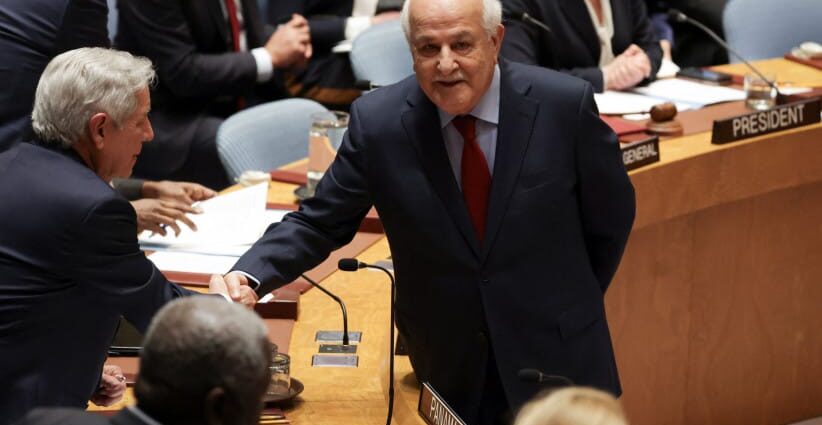
Gaza reconstruction expected to cost over $70 billion

The United States, Saudi Arabia, the United Arab Emirates, and Qatar are among the states that have pledged funds to the board. Others include Morocco, Uzbekistan, and Kuwait.

Gaza’s reconstruction after more than two and a half years of Israeli bombardment is expected to cost more than $70 billion. It is a key element of Trump’s plan for Gaza’s future, but it has been held up as the plan has appeared to stall.

Despite an October ceasefire, Hamas is refusing to lay down its weapons, and Israel has kept troops in a large swathe of Gaza while continuing to conduct air strikes.

In its report, the board said that 85% of Gaza buildings and infrastructure had been destroyed and that an estimated 70 million tonnes of rubble would need to be cleared.

US considering asking Israel for PA tax money

Reuters reported on May 15 that the US was considering asking Israel to give some tax money it is withholding from the Palestinian Authority ​to the Board of Peace to fund reconstruction.

Many states are hesitant to finance Gaza’s reconstruction through Trump’s board over transparency and oversight concerns and would rather fund efforts through traditional institutions like the United Nations, European, and Asian officials say.

Under the board’s charter, member states would be limited to three-year terms unless they pay $1 billion each to fund the board’s activities and earn permanent membership. It is unclear whether any state has paid the fee.

This post was originally published on here

Amid attempts by some in Israeli society to prevent women from serving in combat roles in the IDF, the air force is quietly establishing a special commando unit, similar to the General Staff Reconnaissance Unit, composed entirely of female soldiers.

The “Arad” unit is the air force’s new intervention force, created due to lessons learned from the October 7 massacre and Operation Iron Swords. The Air Force recognized the need for a dedicated, rapid-response combat force capable of handling infiltration, raids, and terror incidents within and around Air Force bases.

Investigations of October 7 revealed that some Nukhba forces planned attacks on air force bases, including Hatzerim and Tel Nof, and terrorist cells were found with maps of air force bases. These bases are strategic assets of Israel and must be protected to ensure operational continuity at all times.

The new unit operates under the 7th Wing, the air force’s special forces wing, which also includes units such as 669 (airborne rescue) and Shaldag. “Arad” is intended to be a first-response intervention force that arrives at an incident first, isolates the scene, engages the threat, and stabilizes the situation until additional forces arrive.

All-women unit represents shift in IDF mindset

The unit is unique in the IDF landscape as the first air force combat unit composed entirely of women. An IDF official said that its creation represents a broader shift in the mindset of the IDF, and the air force in particular, toward integrating women into significant and complex combat roles.

The air force noted that after the war, there was a significant increase in the number of women motivated to join combat roles. The unit was established to build a high-quality, professional, and dedicated force capable of delivering operational impact, not merely as a symbolic measure. Female recruits are expected to undergo training lasting eight months to a year, covering small-arms warfare, marksmanship, urban warfare, terror-response scenarios, hand-to-hand combat, navigation, camouflage, and mental resilience, making it one of the toughest and most complex training tracks in the IDF.

The air force highlighted that the unit’s main purpose is rapid response, moving from routine to extreme situations within minutes. Recruits must react quickly to infiltration or complex threats at air force bases or other strategic Israeli facilities. As such, training is designed around realistic operational scenarios simulating potential events at air force installations.

Future Arad commanders to be recruited from unit

The first unit commander is a lieutenant-colonel with operational experience in the Shaldag unit. The air force says this reflects the intent to make “Arad” a high-standard unit with procedures that mirror those of elite special forces. The command and training staff also consists of veterans from elite combat units, with plans to fill the lion’s share of future leadership positions with women promoted from within the unit.

The name “Arad” was chosen for its symbolic meaning – both as a type of metal historically used for shields and weapons and as a symbol connecting warfare, intelligence, and technology.

The air force sees the unit as part of a broader shift since the war: moving beyond an exclusive focus on aerial power to recognizing the need for fast, multidimensional ground responses to protect strategic assets and military bases.

This post was originally published on here

As a former diplomat and, before that, a tour guide, and as the daughter of Holocaust survivors, I struggle to decide what troubles me most about harassment against Christian institutions, clergy, and symbols here in Israel: the damage to tourism? The harm to foreign relations? Or the betrayal of our own historical memory as a persecuted and humiliated minority, and the moral imperative not to treat others in the same way?

Many Jews in Israel, possibly most of them, grew up with a family story about persecution in the Diaspora. The Holocaust was the ultimate horror, but even aside from it, and without pogroms, the Inquisition, or expulsions, there was no shortage of daily humiliations: being forced off the sidewalk, wearing distinctive clothing, having skullcaps torn off, and beards cut. 

Lacking the power to resist, we could spit (secretly) at a church, whisper insults (secretly) about a priest, and pride ourselves (secretly) on our moral superiority over those who wielded physical force, while we focused on spirit, ethics, and learning.

Part of that learning is the biblical commandment, frequently repeated in the Torah, to remember that we were strangers in the land of Egypt, which was first mentioned near the giving of the Torah itself. We are warned that when we ourselves possess power, we must not forget our suffering as a minority and act accordingly. 

A Jew who harms Christian institutions, clergy, or symbols violates not only a civic norm but also a supreme moral and religious principle. Moreover, it is doubtful that the authorities are doing enough to combat the phenomenon through education and enforcement, thereby weakening Israel’s moral standing when demanding action against attacks on Jews and Jewish institutions abroad.

The damage it will do

Christianity is the world’s largest religion. In many countries, including Western democracies, Christians constitute the majority, and these incidents generate negative international attention. Israeli diplomats are already facing enormous challenges these days, and this indefensible phenomenon only makes their work harder.

The damage is also economic. In “normal” years, more than half of the tourists visiting Israel are Christians. They provide direct employment to tens of thousands of people and indirectly support hundreds of thousands more.

Reports of harassment will influence decisions about whether to visit; hostility will discourage repeat visits, while a positive experience affects not only the tourist but also their wider community back home.

Some may ask: What about history, about the suffering inflicted upon us under the inspiration and leadership of churches, supposedly as punishment for what was done to Jesus two thousand years ago? This argument is not foreign to me. 

My late father devoted his final years to writing a book about Christianity and the Holocaust of Hungarian Jewry. Following extensive research, he concluded that the widespread collaboration of locals with the Nazis was at least partly rooted in what they had heard regularly in churches.

It is doubtful that changes in the Church’s attitude toward Jews and Judaism can erase the vast amount of Jewish blood spilled in Christianity’s name throughout the centuries.

Those who spit at, assault, curse, or otherwise abuse Christians, and those who enable such behavior or at least do not do enough to prevent it, may believe they are avenging their ancestors.

In reality, they undermine Israel’s standing as a state governed by law, damage its foreign relations, harm tourism and the economy, and above all, reveal that they have learned nothing from being descendants of a persecuted and powerless minority.

The writer was Israel’s first ambassador to the Baltic states after the disintegration of the Soviet Union, ambassador to South Africa, and congressional liaison officer at the embassy in Washington. She is a graduate of Israel’s National Defense College.

This post was originally published on here

Finance Minister Bezalel Smotrich said Tuesday that the International Criminal Court (ICC) had issued an arrest warrant against him, calling it a “declaration of war,” and announced that in response, he would sign an official order to evacuate the Palestinian village  Khan al-Ahmar, located in the West Bank.

“The Palestinian Authority opened a war, and it will receive war. I will immediately sign an order to evacuate Khan al-Ahmar,” he said in a press conference, and later published the official signed document.
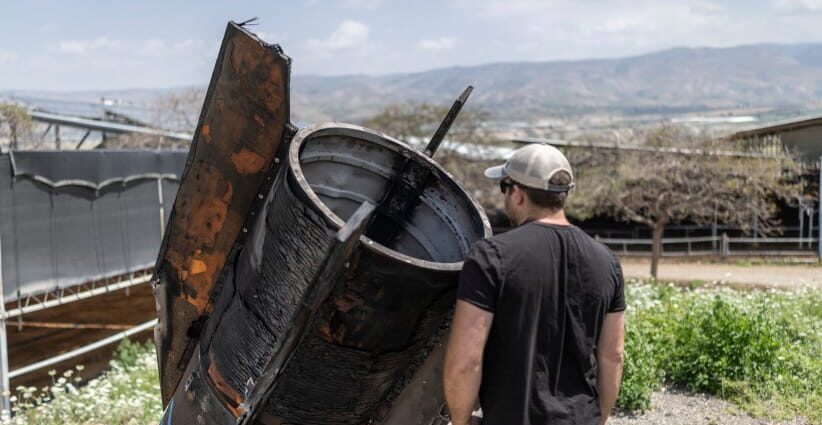
His statements came following reports that the ICC was investigating additional Israeli political and military leaders for alleged war crimes and crimes against humanity committed against Palestinians in the West Bank. It was reported that Smotrich was one of the officials with an arrest warrant filed against him. 

Smotrich said that on Monday night, he “was informed that a secret request for an international arrest warrant was submitted against me by the chief prosecutor of the so-called ‘antisemitic court’ in the Hague.”

He vowed “to all of Israel’s enemies” that signing the order to evacuate the village was “only the beginning.”

The Khan al-Ahmar Bedouin village has been part of an ongoing dispute for years, with right-wing ministers and settlement movement leaders calling for it to be cleared for Israeli settlement expansion. 

In May 2018, the High Court of Justice determined that residents could be evicted, but the decision was then postponed. The United Nations, ICC, and other international groups stated that the demolition of the village would be a violation of international law and could constitute a war crime.

Smotrich accuses ICC of acting as PA voice

Smotrich said that by issuing the arrest warrants, the ICC was acting as the “voice of the Palestinian Authority.”

The ICC had issued arrest warrants for Prime Minister Benjamin Netanyahu and then-defense minister Yoav Gallant in 2024 amid investigations into allegations of war crimes in Gaza during the Israel-Hamas War.

Smotrich addressed those warrants as well, stating that “issuing arrest warrants against the prime minister is a declaration of war.”

He added that “issuing arrest warrants against the defense minister and the finance minister is a declaration of war.”

“Against a declaration of war, we will respond with war. I am not a submissive Jew. The Palestinian Authority started a war, and it will receive war.” 

He vowed that the arrest warrants against him would not succeed and defended his role as a government minister.

“As a sovereign and independent state, we will not accept hypocritical dictates from biased bodies that consistently stand against the State of Israel, against our biblical, historical, and legal rights in our homeland, and against our right and duty to self-defense and security,” he said.

“On a personal level, [the arrest warrants] do not move me. I am willing to pay personal prices to serve my people.”

“But on a national level, they are not harming Benjamin Netanyahu or Bezalel Smotrich. They are trying to harm us as the leadership of the State of Israel,” he added.

“From now on, any economic or other target that I can act against within my authority as finance minister and as minister in the Defense Ministry will be attacked. Not words and gimmicks – actions,” Smotrich said.

Smotrich heads Settlements Administration, draws criticism

The far-right minister is the head of the Settlements Administration, a Defense Ministry body established in 2023 that oversees West Bank settlements and advances construction and housing in the area.

Smotrich’s statements calling for West Bank annexation often draw sharp international condemnation, as well as criticism for harming Israel’s global standing.

Under the 1990s Oslo Accords between Israel and the Palestinian Authority, the West Bank was divided into three areas: A, B, and C, with Area C under full Israeli control.

Israel’s roughly 500,000 “settlers” live mainly in Area C, with most settlements considered legal under Israeli law and built on state land through government-approved decisions.

Since the start of the current government’s term in 2022, over 51, 000 housing units have been approved for deposit and final authorization in the West Bank, according to Smotrich’s office at the end of 2025.

This post was originally published on here

At least two people were lightly wounded on Tuesday when a drone launched by Hezbollah hit a parked vehicle and exploded in northern Israel without a siren sounding beforehand.

Earlier today, the IDF intercepted a “suspicious aerial target” launched at an IDF position in southern Lebanon, and no sirens sounded as is protocol when projectiles do not enter Israeli territory.

Three Israelis wounded by explosive Hezbollah drone in northern Israel, two in serious condition

Two civilians were seriously injured, and one other was lightly injured after an explosive drone struck Rosh Hanikra on Thursday.

The drone reportedly hit a parking lot in the area, causing an explosion.

The wounded were evacuated to Galilee Medical Center in Nahariya for treatment.
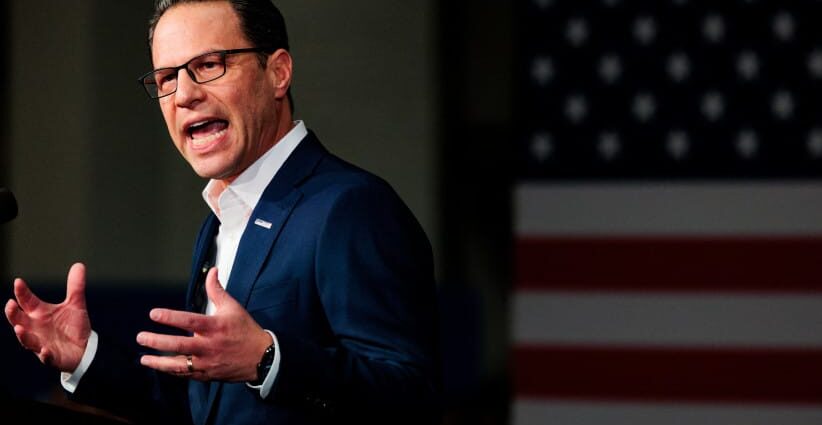
The IDF confirmed that the drone had been launched by Hezbollah, saying the incident constitutes “a blatant violation” of the ceasefire understandings between Israel and the Iran-backed group.

Tobias Siegal contributed to this report.

This post was originally published on here

One Syrian soldier was killed, and a number were wounded by a car bomb that exploded outside a Defense Ministry building in Damascus, the ministry said in a statement carried by state media.

Soldiers had discovered a different bomb near the building in the capital’s Bab Sharqi district and were trying to dismantle it when the car bomb went off nearby, the ministry said.

Around 12 injured, transferred to hospitals

Syria’s health ministry said emergency and ambulance teams had responded to the explosion. Around 12 people were wounded.

The injured were being transferred to nearby hospitals, and medical teams were continuing to provide treatment and monitor their condition, it said.

No group immediately claimed responsibility for the attack.

This post was originally published on here

Iraq is concerned about US pressure regarding Iranian-backed militias in Iraq.

As such, Baghdad and even the militias are trying to put out messaging that distances the militias from recent incidents. One incident is the US detention of a Kataib Hezbollah member, who was taken from Turkey to the US to face charges. In addition, Saudi Arabia has said three drones flew from Iraq in an attack on the Kingdom. Iraq is worried that these continued attacks will lead to pressure on the new government to dismantle the militias.

Shafaq News in Iraq has provided new details on Baghdad’s moves in recent days.

“The Iraqi government condemns the targeting of Saudi Arabia and expresses its readiness to cooperate with Riyadh in the investigation,” Shafaq noted on Monday. This follows Saudi anger on Sunday over the drone attacks.

Reports also indicate that Iranian-backed militias are suspected of being behind a large number of attacks in Saudi Arabia. New reports also indicate Saudi Arabia and Kuwait responded to attacks during the Iran conflict in March.

Iraq has asked Saudi Arabia to share information on drones. According to Shafaq, Iraq said, “We have not detected any indications. The Iraqi Ministry of Foreign Affairs expressed its concern on Monday regarding reports of three drone attacks targeting facilities in Saudi Arabia, stressing Iraq’s rejection of any threat to the security of brotherly countries.”

Meanwhile, the ministry in Baghdad said that it had received information and “that the competent Iraqi authorities received initial information about Saudi Arabia being targeted by three drones, noting that they have begun verification and investigation procedures to determine the circumstances of the incident.”

Iraq claims it did not detect anything with its limited air defense systems. Iraq also didn’t detect two Israeli bases in the country, according to recent reports in The Wall Street Journal and The New York Times.

Iran moves to unify Shi’ite parties amid Iraqi political disputes

“The Iraqi Foreign Ministry affirmed Baghdad’s commitment to its firm position based on respecting the security and sovereignty of brotherly countries, and rejecting any actions that would threaten their stability or harm fraternal relations with them,” the report at Shafaq said.

“The ministry stressed Iraq’s keenness to continue coordination and consultation with Saudi Arabia in a way that enhances the security and stability of the region and serves the common interests of the two countries,” it continued.

Meanwhile, Iran is working to unify Shi’ite parties in Iraq. This comes after a new prime minister was appointed there.

“On Monday, an informed political source revealed that prominent Shi’ite leaders are making moves within the coordination framework, in parallel with Iranian contacts, to contain the escalating disputes within the Shi’ite bloc after the incomplete vote of confidence for Prime Minister Ali Faleh al-Zaidi’s government, amid expectations that the commander of the Iranian Quds Force, Ismail Qaani, will be sent to Baghdad again,” Shafaq said.

Kataib Hezbollah is also denying links to Mohammad Baqer Saad Dawood al-Saadi, whom the US Justice Department accused of being “an Iraqi national and senior member of Kataib Hezbollah, a US-designated foreign terrorist organization.

“Al-Saadi was charged by complaint with six counts of terrorism-related offenses for his activities as an operative of Kataib Hezbollah and Iran’s Islamic Revolutionary Guard Corps (IRGC), including his involvement in nearly 20 attacks and attempted attacks throughout Europe and the United States.”

In Iraq, Kataib Hezbollah is denying links to Saadi. “The abductee, Mohammad Baqer al-Saadi, is not a member of Kataib Hezbollah and will return to his homeland with his head held high, as he is among the supporters and lovers of the [Tehran-led Axis of] Resistance,” said Abu Mujahed al-Asaf, a senior commander and spokesperson for the group, in a statement shared on his official Telegram channel, according to Rudaw media.

Rudaw added other details. “In an indirect signal to the US and Israel, the Kataib Hezbollah spokesperson further noted that the ‘enemy’ is aiming at a ‘new escalation’ against the Islamic Resistance in Iraq and the Popular Mobilization Forces, which comprise Iran-aligned armed groups.

“Asaf cited an alleged reconnaissance operation by Washington and Tel Aviv from Jordan, while vowing that the response to ‘American’ actions ‘will be across various fields,’ warning that ‘the patience of the men of the Resistance is no longer unending in the face of the continued violations and transgressions that target the sovereignty of Iraq and its sons.’”

Iraq’s response to Saudi claims and the Kataib Hezbollah statement show how Iraq is trying to avoid new US pressure and sanctions. It also doesn’t want conflict with Saudi Arabia.

In any renewed fighting with Iran, Iraq will likely become a frontline again. More than 1,000 attacks were carried out by Iran and Iranian-backed militias in Iraq. Attacks targeted US diplomatic facilities, as well as Kurdish Iranian opposition groups, and also Saudi Arabia.

This post was originally published on here

Fantasy Life, which opens in theaters throughout Israel on Thursday, is an engaging, offbeat Jewish-American dramedy that borrows some of the tropes from early Woody Allen comedies but has more emotional depth.

The movie is more reminiscent of the films of Noah Baumbach, Nicole Holofcener, and Lisa Cholodenko at their best, or even, at moments, of James L. Brooks.

In particular, the Baumbach vibe makes sense because the movie is the debut feature of Matthew Shear, an actor and screenwriter who has appeared in several of Baumbach’s films, including While We’re Young and The Meyerowitz Stories.

Shear plays Sam, a law school dropout crippled by his frequent panic attacks, who loses his job as a paralegal.

He’s on more psychotropic medications than you can imagine, and is understandably close to his psychiatrist, Dr. Finman, who is played by Judd Hirsch (Taxi, Ordinary People).

This doctor doesn’t bat an eye when Sam tells him he thinks that a particular moment of anxiety was caused by his “internalized antisemitism.”

A perfect movie for anyone who wants to forget real-world problems

In this cinematic universe that Shear has created, it makes perfect sense that his doctor would hire him to work as a babysitter for his three precious granddaughters.

Once he takes the job, Sam’s neurotic ruminations are interrupted by a fascination with the family of the children he is caring for.

Shear is very good at depicting the strange intimacy that can develop in work situations like this, where a babysitter is almost, but not quite, part of the family.

He also convincingly depicts how overwhelming it can be for a guy like Sam, who is no longer so young yet can barely pay his rent, to be in the orbit of people who seem to have everything.

Sam’s shrink’s son, David (Alessandro Nivola), is a successful musician who travels the globe, but is so down-to-earth and charming that even if you’d like to hate him, you can’t.

David is married to Dianne (Amanda Peet, best known for The Whole Nine Yards, Something’s Gotta Give, and Please Give), an actress struggling with depression who once had a promising career but who hasn’t worked in 10 years.

Dianne is independently wealthy as well and is taking as many medications as Sam. Like her husband, Dianne seems to have it all, and as Sam gets to know her, there is instant and very inconvenient chemistry between them.

It might seem like this is a setup for a typical rom-com, and it could have been, but it doesn’t develop in the predictable rom-com way.

Her character could so easily be seen as an entitled diva

Sam and Dianne open up to each other about their anxieties and are suddenly emotionally intimate with each other, which is strange for both of them, because they aren’t used to being honest with anyone except the therapists they pay.

Peet, who is extremely beautiful but is also a born comedian, has been candid in interviews promoting the film about the fact that she, like Dianne, has not had the career she thought she would when she first started in movies a couple of decades ago.

Her character could so easily be seen as an entitled diva, but Peet does a beautiful job getting us to understand and identify with this woman who has had so much handed to her but can’t seem to figure out how to enjoy it.

As Sam tries to pull himself together and figure out what he wants from his connection with Dianne, the movie moves back and forth between an upper-class Brooklyn neighborhood and Martha’s Vineyard.

Viewers get to enjoy the homes and the scenery as much as Sam, while sharing his feelings of not really belonging in any of them.

In addition to Shear, Peet, and Hirsch, Fantasy Life features a great supporting cast, including Zosia Mamet (Girls), Andrea Martin (My Big Fat Greek Wedding), Holland Taylor (Two and a Half Men), and Bob Balaban (Seinfeld, Capote).

The film won the Audience Award and the Special Jury Award for Performance for Amanda Peet at the SXSW Film & TV Festival and the Best Ensemble Cast award at the San Diego International Film Festival.

Fantasy Life is a promising debut for Shear, and a perfect movie for anyone who wants to forget real-world problems by spending a couple of hours with some neurotic but very appealing New Yorkers.

This post was originally published on here

Watch this episode without interruptions.

In the latest Defense and Tech by the Jerusalem Post podcast, host Anna Ahronheim sits down with Ghil Hardy, VP of Business Development at Cando and the ROM360 initiative.

Cando, whose tagline is “You dream it, we drone it,” delivers a 360-degree turnkey solution combining products, services, and AI analytics, built by founders who include former IDF leaders who helped establish Israel’s UAV units.

The highlight of this episode is the discussion on how drones can impact the future of health. Hardy mentioned that Cando is conducting tests in order to make future organ transportations via drone a reality.

Hardy shares a striking example of how drones moved from “critical” to “existential”: when a ballistic missile knocked out cameras, generators, and communications at a major piece of northern Israeli infrastructure, Cando’s team rigged Starlink from a reinforced shelter and streamed live drone footage to the chairman of the board stranded in Rome and to the Ministry of Defense.

Things get provocative when Ahronheim presses Hardy on autonomous airspace. He pushes back on the idea that a human must always be “in the loop,” and his answer for which city in the world is ready today for full drone delivery and air taxis might surprise you.

This post was originally published on here

Israelis filed 30,366 complaints to the Public Complaints Commission in 2025, a 41% increase from the previous year, with the sharpest rise linked to failures in the Labor Ministry unit responsible for daycare and after-school subsidy approvals, according to a State Comptroller report published on Tuesday.

Of the complaints in which the commission reached a decision, 56% were found justified – the highest rate since its establishment. Another 7,429 complaints were resolved without a formal decision.
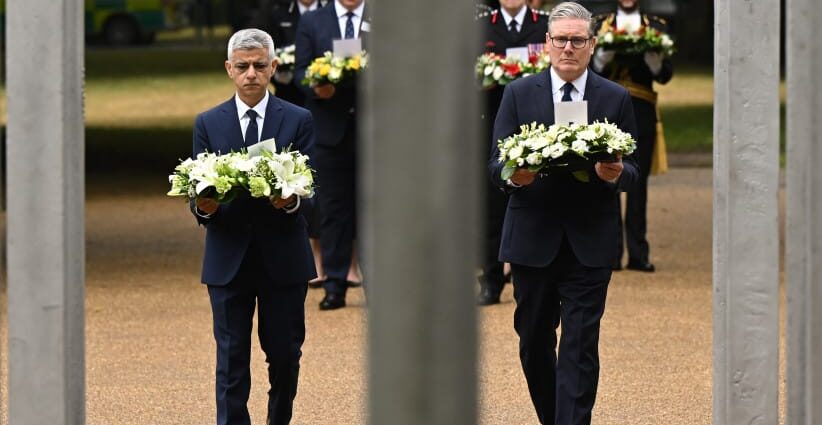
The report points to where Israelis most often encountered state failure in 2025: long waits, unanswered phones, unclear decisions, outdated systems, and delays that left families paying full prices while waiting for the state to determine whether they were entitled to assistance.

The Labor Ministry received the highest number of complaints, with 7,082 filed against it. Most dealt with subsidies for daycare centers and family daycare frameworks, and 91% of complaints against the ministry were found justified.


It was followed by the Transportation Ministry, with 2,298 complaints; the National Insurance Institute, with 1,581; the Tax Authority, with 1,119; the Population and Immigration Authority, with 994; the Education Ministry, with 940; Israel Police, with 932; the Health Ministry, with 687; Jerusalem Municipality, with 609; and the Justice Ministry, with 550.

Across all complaints, 29% dealt with public service, 19% with daycare and family daycare subsidies, and seven percent with education and higher education.

Around one-fifth of complaints against bodies under the commission’s authority concerned local government.

The number of untreated requests points to a substantial failure

The war also continued to affect the complaint map.

The report said the rise in complaints against the Tax Authority was mainly linked to people harmed by enemy fire, while wartime-related cases also contributed to the rise in complaints against the National Insurance Institute.

In 2025, complainants and others affected by the commission’s decisions received roughly NIS 12 million.

The most significant section of the report focused on the Labor Ministry’s Senior Division for Encouraging Parental Employment, which handles subsidy levels for supervised daycare centers, family daycare centers, and after-school frameworks.

In 2025, the commission received 6,931 complaints against the division, compared with 824 in 2024 and 771 in 2023 – an unprecedented 740% increase from the previous year, according to the report.

Of the complaints examined, 91.1% were found justified, far above the overall justified-complaint rate.

The failures included an unavailable or closed call center, major delays in setting subsidy levels, faulty handling of reservists’ applications, delays affecting residents of Gaza border communities, repeated mistakes in setting subsidy levels for siblings, incorrect implementation of ministry rules, online service failures, lack of reasoning in decisions, and poor treatment by call-center representatives.

The subsidy criteria for the 2024-2025 school year were published only in November 2024, roughly four months after the school year began. The delay left many parents not knowing what subsidy level they would receive, while they were required to pay full tuition in the meantime.

Most complaints against the division dealt with subsidy levels – 5,676 of which 88.8% were found justified. Complaints regarding the call center’s lack of availability were found justified at a rate of 100%, and complaints about online services at a rate of 95.1%.

The Labor Ministry told the commission it faced several barriers, including the late publication of subsidy criteria, the need to await High Court rulings, outdated computer systems, and an unusual concentration of applications submitted in a short period.

It said it had taken steps to improve the system, including receiving salary data directly from the National Insurance Institute, updating subsidy amounts after more than a decade, adding call-center staff, and using a voice bot to reduce calls.

But the comptroller found that the problems persisted.

In February 2025, State Comptroller and Ombudsman Matanyahu Englman wrote to Labor Minister Yoav Ben-Tzur and asked him to ensure that the ministry met the standards set in its contract with the call-center operator, reopened the call center, gave parents substantive answers, and set subsidy levels without delay.

After visiting the Beersheba call center in May 2025, Englman found that it was receiving around 9,000 calls a day and that wait times ranged from 54 minutes to two hours.

“The number of untreated requests and the volume of complaints received by the Public Complaints Commission and by the Labor Ministry point to a substantial failure in the call center’s ability to fulfill its purpose and provide proper service to Israeli parents,” Englman wrote to the labor minister.

The report also highlighted failures affecting groups already under wartime strain. The commission received 211 complaints from reservists regarding poor handling of requests for subsidy levels and registration of their children in supervised frameworks.

Some said the delays and failure to give registration priority caused financial distress on top of the personal burden created by reserve service. Following the commission’s intervention, the report said, those complaints were handled.

The commission also received 106 complaints from residents of Gaza border communities regarding registration, subsidy levels, and poor call-center service.

Nearly 80% were found justified, including complaints over delays in implementing a government decision granting residents of Gaza border communities a favorable subsidy level without income testing, subject to other conditions.

Shows a broad failure in the state’s ability to provide basic, timely service

The Labor Ministry said the benefit was not automatic and that its computer systems could not identify applications by residential address before processing began.

The commission found that the delay undermined the purpose of the government decision, which was meant to strengthen civilian resilience in communities near the border, and called on the ministry to create a mechanism to identify and prioritize those applications.

The comptroller called on the Labor and Finance Ministries to urgently improve the response given to parents, draw lessons before the next school year, and correct the flaws raised by the complaints.

The recommendations included improving call-center availability, shortening wait times, ensuring professional and consistent answers, fixing outdated computer systems, reducing repeated document demands, publishing clear guidance, providing reasons for decisions, and making sure parents can challenge decisions meaningfully.

The Labor Ministry said it received an additional NIS 4m. in 2025 to add call-center representatives and open a direct WhatsApp channel. It also said it hired an outside company to review subsidy procedures, was developing a new computer system, and was examining AI tools to shorten case-handling times and improve service.

Still, the report said that despite the steps taken, the commission continued to receive hundreds of complaints about call center unavailability and delays in setting subsidy levels, including 241 complaints in the last quarter of 2025 alone.

For the comptroller, the issue is not only due to one ministry’s backlog.

The complaints show a broader failure in the state’s ability to provide basic, timely service to citizens – particularly parents, reservists, and residents of communities already carrying the burden of war.

This post was originally published on here

Attorney-General Gali Baharav-Miara filed an indictment against Likud MK Tally Gotliv on Monday for allegedly disclosing and publishing confidential information in violation of the Shin Bet law, after Gotliv publicized the identity of the partner of protest leader Shikma Bressler, who the indictment says was a Shin Bet employee.

Under the Knesset Members Immunity Law, a copy of the indictment was submitted to Knesset Speaker Amir Ohana and the Knesset House Committee chair, giving Gotliv the opportunity to ask the Knesset to grant her immunity from criminal prosecution.

Shortly before the indictment was announced, Gotliv wrote on X/Twitter: “Roaring applause to Miara,” adding that she intended to convince MKs that “the exposure of Bressler’s partner was done as part of and for the purpose of fulfilling my role.” She added: “As is known, they do not intimidate me.”

A-G indicts Gotliv

According to the indictment, Gotliv published on January 24, 2024, a screenshot from the website Edna Karnaval that included the full name of Bressler’s partner and claims tying him to alleged contacts with then-Hamas leader Yahya Sinwar before the October 7 massacre. Edna Karnaval is described by the indictment as having a “critical and blunt” style, especially toward public officials.

The screenshot, according to the indictment, included a headline alleging that Mossad chief David Barnea had received information from the Americans that they had intercepted calls between Bressler’s partner and Sinwar four days before October 7. The article further claimed that Barnea had summoned Bressler to a meeting, and that the Prime Minister’s Office had later issued a denial of Gotliv’s earlier statements.

Gotliv added in her own post: “Edna Karnaval reports that the US intercepted calls between Shikma Bressler’s husband and the great murderer Yahya Sinwar several days before the inferno,” referring to October 7. She continued: “Remember that I wrote here about a meeting between Bressler and the Mossad chief? Remember that the Prime Minister’s Office issued a denial of my words, and I clarified that I stand behind my words? My sources are iron!”

The indictment says the post received more than 400,000 views, over 1,000 comments, over 1,000 likes, and more than 500 shares. It says Gotliv’s X account had more than 65,000 followers at the start of the relevant period, and more than 90,000 by the time the indictment was filed.

Prosecutors alleged that Gotliv revealed and published the name of the Shin Bet employee and his relationship with Bressler “knowingly, deliberately, continuously, demonstratively, and repeatedly.” The indictment says the post remained available online from the time of publication until the indictment was filed, and that Gotliv did not remove it from her account.

The indictment further says Gotliv stood by the publication, repeatedly published similar statements in which she again identified Bressler’s partner as a Shin Bet employee, and publicly stated that she had no intention of removing or apologizing for what she had written.

The Mossad denied the claim at the time, calling it a “recycled falsehood” and saying Barnea had “never met, spoken to, or invited Shikma Bressler to a meeting.” JPost previously reported that Bressler filed a NIS 2.6 million defamation suit against Gotliv and others over the allegations, while the State Attorney’s Office later rejected Gotliv’s claim that parliamentary immunity shielded her from questioning.

The filing comes after Defense Minister Israel Katz signed a certificate of confidentiality earlier this month, clearing a procedural obstacle that had delayed the case. Israeli media reported that the certificate was needed for the criminal proceedings because the case involves Shin Bet information and the identity of a security-service employee.

Gotliv has repeatedly framed the matter as a political and legal fight over her work as an MK. In her post ahead of the indictment, she wrote that the attorney-general had acted after Katz signed the confidentiality certificate, and said she had not yet received the indictment, adding that she expected to read it “soon at one of [Miara’s] mouthpieces.”

The charge listed in the indictment is revealing and publishing confidential information under the Shin Bet law. If Gotliv asks the Knesset to grant her immunity, the matter is expected to move first through the Knesset process before the criminal case can proceed in court.

This post was originally published on here

IDF Brig.-Gen. “G” told the High Court of Justice that incoming Mossad chief Maj.-Gen. Roman Gofman denied in 2022 that he had approved the transfer of intelligence materials from his division to Telegram channels, according to a newly declassified affidavit submitted in the petitions against Gofman’s appointment.

The affidavit was filed as part of the High Court petitions challenging Prime Minister Benjamin Netanyahu’s appointment of Gofman as the next Mossad chief. The petitions focus in part on the Ori Elmakayes affair, involving claims that Elmakayes, who was then a minor, was used in an IDF-linked influence operation connected to the 210th Division while Gofman commanded it. The High Court had requested G’s affidavit in order to clarify a May 2022 inquiry he conducted with Gofman.

G served as head of the IDF Intelligence Directorate’s Operational Activation Division from August 2021 to September 2024. In the affidavit, he said that under his authority was the operational process for using intelligence materials for influence operations, and that his account relied on a contemporaneous summary of the conversation prepared by his assistant, who listened to the conversation.

According to the affidavit, the matter began with a May 15, 2022, meeting chaired by the then-head of Military Intelligence, after the Shin Bet (Israel Security Agency) raised the need to rule out the possibility that IDF personnel had allegedly passed intelligence material to unauthorized Telegram channels as part of an approved influence operation.

G wrote that the purpose was to determine whether the conduct, if it had occurred, was part of an initiated IDF influence operation or whether there was a possible espionage concern. He said the Shin Bet had updated at the time that, alongside several 8200 soldiers, two additional IDF figures had been linked to the Telegram channels: an officer in the 210th Division Intelligence Department and a noncommissioned officer in Central Command’s Intelligence Department.
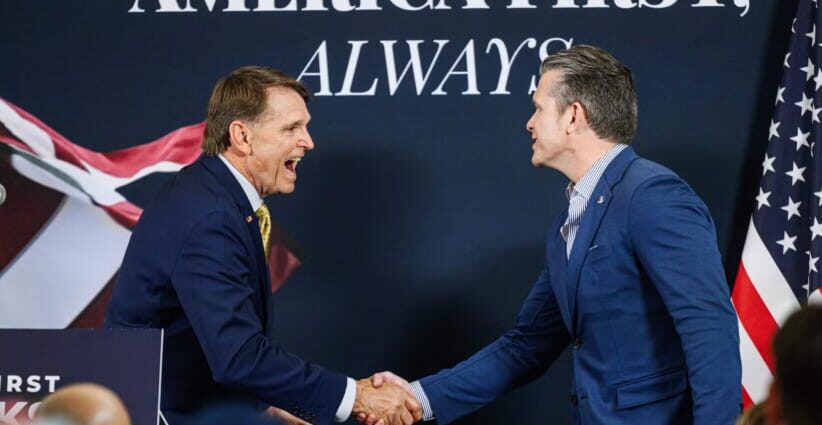
Following that meeting, G wrote, the head of Military Intelligence instructed him to hold a clarification call with Gofman, who was then commander of 210th Division. The IDF Information Security Department was instructed to conduct a separate clarification with Central Command.

G said the conversation with Gofman was short and preliminary. Its purpose, he wrote, was to clarify whether Gofman knew of anyone in the division allegedly transferring intelligence materials to Telegram channels as part of an approved influence operation, and whether any such transfer had been done with Gofman’s knowledge.

The inquiry was not meant to examine the broader operational conduct of the division’s influence activity or the detailed relationship with the Telegram channels, G wrote.

IDF Brig.-Gen. unaware of Elmakayes’s name, connection

G also said he did not know at the time who stood behind the Telegram pages, and was not aware of Elmakayes’s name or his connection to them. For that reason, he wrote, Elmakayes’s name did not come up in the conversation. That point appears to narrow the dispute around whether Gofman was asked directly about Elmakayes himself. 

During the call, G said he asked Gofman whether he knew of a connection between someone in the division and two Telegram channels. Gofman replied that he did not know of such a connection, according to the affidavit.

G then asked who under Gofman’s command would know of such a connection if it had existed without Gofman’s knowledge. Gofman answered that influence activity in the division was led by the division’s information security officer and UN liaison officer, according to the affidavit.

Gofman also said that the division’s influence activity was based only on open-source materials, or OSINT, and was generally conducted with influence actors on the Syrian side, G wrote.

Use of intelligence material would require Gofman’s personal approval, affidavit says

According to the affidavit, Gofman further said that any use of intelligence material required his personal approval, and that, with near-total certainty, such a move would not have been carried out without his approval.

Gofman asked to check the matter with his subordinates in order to provide a definitive answer, G wrote, but G told him not to do so because the investigation was still underway and such a check could harm it.

G said he later updated the head of Military Intelligence and the IDF Information Security Department that Gofman’s answer to whether he had approved the transfer of intelligence materials to the Telegram channels was negative.

The affidavit also addressed recent reports regarding G’s later role in the Mossad. G wrote that since the May 2022 call, he had not exchanged a word with Gofman about the issue in any way, and had not asked or initiated any approach to Gofman regarding his continued work in the Mossad.

N12 had reported that Gofman had acted to examine the possibility of keeping G in the Mossad, despite an earlier decision that G was expected to leave the organization, and that the matter raised concern inside the Mossad because G had been asked to submit an affidavit in Gofman’s High Court case.

The affidavit was initially submitted under a “top secret” classification. The Attorney-General’s Office told the court that the classification had been set by the military, not by the attorney-general. After an urgent appeal to the IDF, the state informed the court that the classification could be removed subject to several limited redactions.

The affidavit is expected to be central to the High Court’s consideration of the petitions. The case has become one of the most sensitive disputes surrounding a senior security appointment, coming ahead of Gofman’s expected entry into the Mossad role on June 2.

This post was originally published on here

The contentious bill to split the role of the attorney-general into separate positions, initiated by MK Simcha Rothman (Religious Zionist Party), was approved for advancement to first reading in the Knesset’s Constitution, Law, and Justice Committee.

The bill was approved by the committee in a unanimous vote, with nine in favor. Opposition lawmakers said that the vote was unlawful during a heated debate on the matter; however, the committee’s legal advisor permitted it to go ahead with it.

The bill is expected to be brought to the Knesset plenum soon for a vote on its first reading, following marathon committee meetings held in recent weeks.

First vote on Knesset dissolution anticipated for Wednesday 

The advancement of the legislation comes ahead of the expected first vote on the Knesset dissolution on Wednesday, amid the crisis in Prime Minister Benjamin Netanyahu’s coalition with the haredi (ultra-Orthodox) parties.

If a bill is passed in its first reading, progress can continue from where it left off, due to the Knesset’s continuity motion policy. If the bill does not pass its first reading, then when the new Knesset is formed, the legislation does not hold that status, and progress on it would be reversed.

Rothman’s bill passed its preliminary reading in the Knesset plenum in October. Various other versions of bills to divide the attorney-general’s role were submitted with it at the time.

The Constitution Committee merged ten private bills on Monday into one so that all would fall under the version proposed by Rothman.

As part of advancing the legislation, the committee is also required to make amendments to the country’s Basic Law: The Government, Basic Law: The Knesset, and Basic Law: The Judiciary.

Deputy Attorney-General Gil Limon attended the committee meeting ahead of the vote, where he warned against advancing the legislation.

 “This law is not only a split bill, it is an abolition bill. It abolishes the role of the attorney-general as we know it as a gate-keeper.”

 “This is a role of great importance in normal times, and even more so in special circumstances, one of which is election periods, which highlight the attorney-general’s combined functions. In our understanding, going into elections with a politicized attorney-general means a risk to democratic elections,” he said.

Legal scholars have warned that the bill proposal would place unprecedented power in the government’s hands over its principal legal challenge.

Those who oppose the bill argue that the attorney-general’s independent position is essential to the rule of law.

Attorney-General Gali Baharav-Miara has similarly warned that the proposed appointment methods would politicize the office, undermining its role as a protector of democracy.

Efforts to split the A-G’s role have circulated for three decades but never materialized, mainly due to judicial opposition.

Gali Baharav-Miara was appointed to the position during the previous government’s tenure.

The current government has repeatedly clashed with Baharav-Miara, claiming that she was intentionally blocking policy initiatives. She has been accused of conducting “witch hunts” against the government.

Sarah Ben-Nun contributed to this report.

This post was originally published on here

Pakistan’s Senate has asked the Anti-Narcotics Force (ANF) to provide details about any officials allegedly linked to a cocaine-trafficking case after Karachi police arrested a woman accused of running a drug distribution network, according to police and Senate committee statements. 

Authorities say the suspect, identified as Anmol and also known as “Pinky,” was detained in a joint operation with intelligence agencies in Karachi and is under investigation for supplying cocaine in several major cities, including Karachi, Lahore, and Islamabad

The arrest has raised concerns in political and security circles after investigators said the suspect, during questioning, identified alleged clients as senior officials and other influential figures.

In response, the Senate Standing Committee on Interior Affairs held an emergency meeting in Islamabad last Wednesday and asked the ANF to provide the names of any officials allegedly linked to the network. 

Karachi Police on Saturday presented Pinky before a court, which approved an extension in her physical remand and sent her back into police custody until May 22 for further interrogation. 

This time, the accused was seen outside the court with a white sheet covering her face, while several female police officers surrounded and escorted her. 

A video of the “drug queen” has gone viral on social media. In the footage, female police officers are seen forcibly placing a sheet over her face, while she is shouting that she is being forced to give a statement that she supplies drugs (cocaine) to individuals in Bani Gala, Islamabad. 

A broader crackdown is being prepared 

It is worth noting that Bani Gala is known as the official residence of former Prime Minister Imran Khan. 

In the video, it can also be heard that she claims she was arrested in Lahore 22 days ago. However, The Media Line contacted Karachi Police spokesperson Syed Rehan Ali Shah regarding the matter, but he did not respond.

Committee Chairman Faisal Saleem Rehman said no one accused in the case should be protected because of rank, office, or influence.

He said the committee had directed ANF Director General Maj. Gen. Abdul Moeed to urgently submit the names of any senior figures the suspect allegedly identified, so authorities could begin legal proceedings and refer those needing treatment to rehabilitation programs. 

The case has quickly expanded beyond a routine drug operation, becoming a politically sensitive test of Pakistan’s willingness to pursue organized narcotics trafficking when powerful people may be involved. It has also raised fresh questions about how a suspect, long known to law enforcement, was able to continue operating despite multiple cases and repeated investigations. 
 
Authorities said police seized cocaine worth millions of rupees, along with chemicals, other narcotics, and weapons, during the raid.

Investigators say Anmol ran a mobile cocaine-processing operation in Karachi and used a distribution network designed to avoid detection, including assigned riders and female couriers who delivered drugs to clients in upscale neighborhoods. 

A senior police officer involved in the investigation told The Media Line that Anmol’s network was not confined to Karachi but also operated in Lahore and Islamabad. Investigative sources said its clients included students, young people, businesspeople, and other influential individuals, and that drugs worth hundreds of thousands of dollars were sold daily. 

Investigators said the suspect stated during questioning that she supplied narcotics at private parties and played a role in drawing young men and women into addiction. They said she entered the drug trade at an early age, beginning as a dealer at about 15 and continuing for nearly 16 years. 

According to investigative officials, Anmol bought cocaine for about $35 to $55 per gram, mixed it with chemicals, and resold it for roughly $145 to $160 per gram. Authorities allege that she became skilled at processing cocaine and increasing its volume through chemical mixing. One investigator said she could turn 200 to 300 grams into nearly a kilogram, while a single so-called “cocaine egg” could sell for up to $2,850. 

Police said they also found a drug-processing site in Karachi. During the raid, authorities seized several bottles of red wine and more than 15 so-called Golden Cap cocaine eggs, according to officials familiar with the investigation. 

The suspect had reportedly been known to law enforcement for 15 years. Investigators said she burned the fingerprints on both hands with acid in an attempt to conceal her identity, raising further questions about how she was able to remain active for so long. 

Police and media reports say more than a dozen criminal cases have been registered against Anmol, with some outlets putting the number at 15. Despite that record, officials said she remained at large in several investigations, raising questions about whether she benefited from official protection, negligence, or corruption within law enforcement agencies.

The case has already led to disciplinary action. Police officers accused of giving the suspect special treatment in custody and during court appearances were suspended after her alleged statements became known. 

ANF spokesperson Kanwal Noor told The Media Line that she could not comment at this stage. She said further updates would be provided when appropriate.

Officials familiar with the investigation said a broader crackdown is being prepared against people linked to the network, including suspected facilitators and any officials found to have enabled, protected, or ignored its activities. They said the inquiry is likely to expand beyond drug trafficking into questions of law enforcement accountability, institutional oversight, and possible abuse of office. 
 
Pakistan has long struggled with narcotics trafficking because of its proximity to Afghanistan, one of the world’s main opium-producing regions, and because traffickers often exploit weak enforcement, porous borders, and corruption. Cocaine has traditionally been associated with wealthier urban consumers, and the allegations in the Anmol case suggest a market centered on private gatherings and affluent neighborhoods rather than street-level dealing alone. 

That distinction is part of what makes the case politically sensitive. If investigators confirm that senior officials or other influential figures were regular clients, the case could expose a drug network protected not only by traffickers but also by people able to obstruct or delay investigations. 

‘Ensure the law’s full and strict implementation’

Fareed Virani, a Karachi-based political observer familiar with the case, told The Media Line that the suspect’s influence “is far more entrenched than initially suspected, casting a long shadow that threatens to stall the pursuit of justice.” 

Virani said there were concerns the case could lose momentum as public attention fades. He added that the outcome depends on whether investigators follow the evidence with transparency, impartiality, and determination, particularly as specialized teams review phone records, financial transactions, and bank data. 

He warned that because the investigation may reach powerful circles, there could be pressure behind the scenes to weaken evidence, slow the inquiry, or conceal sensitive information. The case had moved beyond a routine criminal investigation, he noted, and had become a test of the state’s willingness to confront entrenched influence. 

Saeedain Khan, a senior attorney at the Federal Shariat Court and the Lahore High Court, told The Media Line that the case of the alleged ‘drug queen’ is no longer just a news story: “It is increasingly becoming a serious question mark over Pakistan’s law enforcement agencies, accountability system, and overall social structure.” 

Khan said the case raised a central question for enforcement agencies: how such an organized network was able to allegedly operate for years despite the presence of multiple institutions responsible for combating narcotics trafficking. 

He added that the alleged damage extended beyond corruption and policing. “More alarmingly, this network has contributed to thousands of young people falling into drug addiction, turning what appears to be an individual criminal case into a major social tragedy,” he said. 

“The law exists, and it is now imperative that the authorities ensure its full and strict implementation to bring the alleged drug queen to justice. Otherwise, this menace could continue to destroy our future generations,” Khan warned. 

For now, the arrest has given investigators a rare opportunity to examine a network they say combined street-level distribution, affluent clients, cocaine processing, and possible official protection. Whether Pakistan’s institutions pursue the case fully or allow it to lose momentum will determine whether it becomes a turning point or another short-lived scandal. 

This post was originally published on here

The IDF’s Northern Command has destroyed 60% of Hezbollah terror infrastructure in Lebanese villages, including areas where the IDF has operational control in southern Lebanon, a senior IDF Northern Command officer told Walla on Monday. 

The officer emphasized that the army operates unrestricted, using both air and ground strikes. “Everywhere we identify an enemy, we attack,” he added.

The IDF divides its mission into two zones: up to the Forward Defense Line and north of it. Up to the Forward Defense Line, forces aim to destroy enemy infrastructure and clear the area of militants. Beyond the Forward Defense Line, operations are conducted in a targeted manner.

The Israeli military employs a wide range of weapons against militants in southern Lebanon, including shoulder-fired and anti-tank missiles, precision-guided munitions, accurate mortars, and airstrikes from fighter jets and drones. “There’s no way I identify an enemy and don’t attack it,” the officer said. He added that Hezbollah is struck daily with “painful blows” and that orders exist to expand operations.

Hezbollah relies on drones, rockets, and mortar shells

Most of Hezbollah’s activity in the area, aside from drone use, relies on rockets and mortar shells. “They don’t want to face me directly; they don’t want contact,” the officer said. IDF estimates place hundreds of militants from other organizations between the FDL and the Litani River, and the army is actively seeking and striking them. “Most of their force is expressed through drone operations and high-trajectory fire,” he said. “There is also occasional anti-tank fire, and that basically sums up their use of force. These are the three main things.”

Within the IDF-controlled zone up to the FDL, 60% of targeted structures across roughly 600 square kilometers in 63 villages have been destroyed. “Every enemy or terror infrastructure within the [Forward Defense] Line is destroyed. Not a single one will remain. We operate systematically, in an orderly, very organized manner against enemy infrastructure,” the officer said.

He continued, “We have documentation of all their activities, documentation of what we found, documentation of underground infrastructure we uncovered, all in a very organized way. And any such infrastructure we find and identify, we destroy.”

The officer noted that many homes contain weapons, underground facilities, tunnels, or incitement materials. “Every second house contains something – arms, underground facilities, tunnels, incitement materials—so we will not allow this to happen again.”

This post was originally published on here

Explosions were heard in Iran’s Qeshm Island on Tuesday afternoon, the semi-official Iranian Mehr News Agency said, adding the cause was unknown, and no official entity has commented yet.

The island is located between the Persian Gulf and the Strait of Hormuz.

On Monday night, drones were spotted in the skies over Qeshm Island, Islamic Revolutionary Guard Corps-affiliated Tasnim News Agency reported at the time.

This led to air defenses being activated, according to the outlet.

Pro-regime activists shout ‘Death to Israel, UAE,’ IRGC-linked media reports

The IRGC-affiliated outlet, along with other pro-regime media, also shared footage appearing to show pro-regime protesters flying Iranian flags and chanting “Death to Israel,” and “Death to the United Arab Emirates.”

Additionally, local media reported that Qeshm Island’s air defense systems were also activated on Tuesday morning.

Trump planned resuming airstrikes on Tuesday before Gulf leaders requested he postpone, president says on Truth Social

The reported explosion follows a Monday Truth Social post in which US President Donald Trump mentioned that leaders of Gulf states had requested that he hold off on striking Iran.

Trump was originally planning to carry out the strikes on Tuesday, he wrote.

The leaders mentioned in the post were Qatari Emir Tamim bin Hamad Al Thani, Saudi Crown Prince Mohammed bin Salman Al Saud, and UAE President Sheikh Mohamed bin Zayed Al Nahyan.

“Based on my respect for the above-mentioned leaders, I have instructed Secretary of War, Pete Hegseth, the Chairman of the Joint Chiefs of Staff, General Daniel Caine, and the United States Military that we will NOT be doing the scheduled attack of Iran tomorrow,” Trump said.

This post was originally published on here

Opposition MKs Ram Ben-Barak and Elazar Stern (Yesh Atid) sent a letter to MK Boaz Bismuth (Likud) demanding an urgent committee discussion after Channel 14 presenter Shimon Riklin disclosed sensitive security information during a live broadcast concerning an alleged Israeli-American strike in Iran on Monday.

During the segment, Riklin indicated that he possessed information he was not permitted to publish. “It does not matter who hinted it to me. They hear me. I cannot speak,” he said.

Channel 14, which is widely identified with Israel’s right-wing media sphere, has previously faced criticism over alleged violations of military censorship restrictions.

Former IDF chief of staff Gadi Eisenkot also criticized the publication, calling it “lawlessness and trafficking in state security.” He demanded a thorough investigation into the source of the information, saying it could have come only from senior government officials.

Channel 12 diplomatic correspondent Yaron Avraham accused Riklin of causing “real damage to national security and handing our enemies intelligence information live.”

The current criticism follows previous claims against Riklin and other Channel 14 presenters regarding alleged censorship violations. The Committee of Three, which handles appeals related to military censorship, ruled about two years ago that Riklin had published prohibited security information and that the publication caused “real security damage.”

Channel 14’s conduct regarding Netanyahu

Additionally, it is important to note the gap between Channel 14’s conduct when political considerations appear to serve Prime Minister Benjamin Netanyahu and its criticism of rival media outlets perceived as critical of Netanyahu.

Channel 12 News reporters have recently come under attack by Channel 14 over various security-related reports. For example, Yaakov Bardugo claimed that Channel 12 News broadcast information on the morning of the strike on Iran and demanded an investigation into the source of the leak.

At the same time, numerous complaints have recently been filed with the police regarding the channel’s severe incitement.

This post was originally published on here

Kurdish families who were displaced from northwest Syria in 2018 are returning to their hometowns. This has been a slow process. In 2018, Turkey launched an offensive along with Syrian rebel groups into the Kurdish areas of Afrin. At the time Ankara claimed the Kurdish region was run by “terrorists.” Ankara had pushed several Syrian rebel groups to create the Syrian National Army, essentially a proxy force of Ankara.

After the invasion, around 150,000 Kurds were forced to flee. The Syrian rebel groups included extremists and they were involved in abuses, including the kidnapping of Kurdish civilians. After the Syrian regime of Bashar al-Assad fell in 2024, there were attempts to change things in Afrin. With Turkey less concerned about alleged “terrorists” and with a new Ankara-friendly government in Damascus, things began to move in a new direction.

While Damascus did clash with the US-backed Kurdish-led Syrian Democratic Forces, there has now been some accommodation. In March 2024, the SDF leader Mazloum Abdi met with Syrian leader Ahmed al-Shara’a. New clashes in January led to an agreement to integrate the SDF into the new Syrian security forces. Now, with the agreement, more Kurds have been able to return to Afrin. This has been a trickle over the last year.

Several other groups have returned from Kurdish-held areas in recent months

Rudaw, a Kurdish media network, reported that “a convoy carrying 623 displaced families returned from the Kurdish town of Kobane in northern Syria to Afrin on Tuesday, a local official said.” The report says that “several other groups have returned from Kurdish-held areas in recent months under the auspices of interim authorities in Damascus, but this marks the first group to return home from Kobane. Mohammed Mohammed, administrator of Kobane’s central district, told Rudaw on Tuesday that all Afrin families living in Kobane who had registered their names were scheduled to depart at 10 am.”

This is important for Kurds. Afrin is a beautiful, mountainous area in northwest Syria. Turkey invaded it, in part, because the SDF had taken Manbij, and Ankara believed the Kurds in Syria were seeking to unify their areas in eastern Syria with Afrin. The Kurds in Afrin thus paid a price for geopolitics and other regional power politics. In 2019, it should be recalled, the US had said it would leave Syria and let Ankara invade areas near Sere Kaniyeh. Now things have changed. Turkey is a member of NATO, so it was hard for Washington to ignore Turkey’s pressure. The new government in Damascus is close to Turkey and wants to run Afrin. Therefore, civilians can return now that Syria is no longer divided.

Turkey has held talks with the Kurdistan Workers Party (PKK), and this has reduced Ankara’s concerns about terrorism as well.

Rudaw says that “the families had been displaced multiple times over recent years. Many first fled Afrin in 2018 during a Turkish-backed offensive on the Kurdish city, which is located in northwest Syria. They were displaced again in 2024 following the fall of dictator Bashar al-Assad’s regime, and once more in January amid renewed clashes between Syria’s new army and Kurdish forces in northeast Syria (Rojava).” The report notes “Rudaw understands that five previous convoys carrying more than 2,400 families had already returned to Afrin from the cities of Hasaka and Qamishli.”

Ilham Ahmad, co-chair of foreign relations for the Kurdish-led Democratic Autonomous Administration of North and East Syria (DAANES), was involved in the process. The AANES is the civilian component of the SDF. Rudaw added that “in April, more than 800 Kurdish families returned to Afrin, according to Hawar News Agency (ANHA), which is affiliated with the Rojava authorities. The returns followed earlier convoys of 400 families and 200 families on March 9 and April 4, respectively.”

This post was originally published on here

Six firefighting teams from the Afula area were operating Tuesday to contain a fire in an open area near the Nof Gilad neighborhood in Beit She’an, Israel Fire and Rescue Authority’s Northern District said.

Four aircraft from the Elad aerial firefighting squadron were assisting ground crews as firefighters worked to prevent the flames from reaching nearby homes and buildings, the service added.

The fire spread quickly, endangering nearby structures

According to the fire service, the blaze spread quickly through the open area and endangered structures close to the fire line.

Afula station commander Deputy Fire Chief Asher Biton said the combined work of ground crews and firefighting aircraft helped limit the spread of the blaze.

“This is a fire in an open area that spread quickly and endangered nearby homes and buildings,” Biton said. “Thanks to the combined activity of the ground crews and firefighting aircraft, the fire is currently contained, and the teams are continuing to operate at the scene until control of the incident is achieved.”

This post was originally published on here

After it was canceled on Monday, the hearing in the criminal trial of Prime Minister Benjamin Netanyahu resumed on Tuesday morning, but will be shortened due to “security reasons.”

The hearing began with an announcement from presiding judges Rivka Friedman-Feldman, Moshe Bar-Am and Oded Shaham that it would end at 1:30 p.m. instead of 4:30 p.m. 

The trial is currently in its defense phase, as Netanyahu gets questioned by the prosecution over perceived inconsistencies in his testimonies or with the submitted evidence. The prosecution is in the last stages of cross-examination, and has estimated it needs a few full-day sessions to complete questioning. 

The case in question is Case 2000, the media bribery case involving Netanyahu and Yediot Aharonot publisher and owner Arnon “Noni” Mozes. 

Netanyahu is charged in the case with fraud and breach of trust

The case centers on conversations between Netanyahu and Mozes. According to the indictment, the two discussed a possible arrangement under which Mozes would improve Netanyahu’s coverage in Yediot in exchange for steps that would limit Israel Hayom, a rival newspaper whose free distribution posed a major economic threat to Yediot. 

Netanyahu is charged in the case with fraud and breach of trust, while Mozes is charged with offering and promising a bribe. Both deny the allegations.

The broader trial, which began in 2020, includes three cases. Netanyahu is charged with fraud and breach of trust in Cases 1000 and 2000, and with bribery, fraud, and breach of trust in Case 4000. He has denied wrongdoing and has repeatedly argued that the cases against him are politically motivated.

This post was originally published on here

Investigators from Lahav 433 – The National Crime Unit summoned three political, diplomatic, and military reporters from three different news outlets to provide testimony in the “Qatargate” investigation on Monday, The Jerusalem Post confirmed.

Per Ynet, which first reported on the matter, the testimonies were gathered as supplementary investigative work before a decision is made regarding pre-indictment hearings and indictments themselves.

Per the reports, the three journalists were questioned regarding their working relationships with Eli Feldstein, a former advisor to Prime Minister Benjamin Netanyahu and spokesman for the Prime Minister’s Office and a central suspect in the investigation.

The journalists were named in the report as Itamar Eichner from Yediot Aharonot, Amir Bohbot from Walla, and Amichai Stein from i24 and the Post.

The three were summoned for open testimony – rather than for an investigation under caution. Other military, political, and diplomatic reporters have been summoned in the past under the same conditions throughout the investigation.

The prosecution refused to comment on the case.

Feldstein was arrested, alongside Yonatan Urich, a senior advisor to Prime Minister Benjamin Netanyahu, in March 2025 under investigation in what is dubbed the ‘Bild’ case.

It concerns the alleged illicit leak of classified intelligence on Hamas hostage negotiations from Israeli military channels into the German daily Bild, allegedly to influence the Israeli public debate on the talks. The case also examines whether people around Netanyahu allegedly later tried to manage or obstruct the fallout. 

As the investigation progressed, a separate but related case came to light, dubbed ‘Qatargate,’ which concerns alleged Qatari influence inside Netanyahu’s orbit during the hostage talks – and whether that crossed from political and public relations work into criminal conduct.

The “Qatargate” case file was transferred to the prosecution back in January for evidence review. Per reports, authorities may be interested in summoning other relevant figures – including senior ones – for testimony before moving forward. 

What is ‘Qatargate’ and why is it a scandal in the Prime Minister’s Office?

In the “Qatargate” case, authorities are investigating whether aides in the prime minister’s circle were involved in a campaign to improve Qatar’s image in Israel – and in some accounts to push negative messaging about Egypt – while Doha was serving as a central mediator in hostage talks with Hamas.

Authorities allege that aides received illicit payments from Qatari-linked sources in order to promote this pro-Qatari messaging. Charges under consideration include bribery, contact with a foreign agent, and money laundering.

The main suspects include Feldstein, Urich, and Israel (Srulik) Einhorn, who was an independent advisor to the prime minister and ran the PR company Perception. Through this company, allegedly, Einhorn, along with Urich and – tangentially – Feldstein, worked to feed journalists information dressed as being provided by intelligence sources that reflected positively on Qatar.

Einhorn is currently in Belgrade, Serbia, serving as an advisor to Serbian President Aleksandar Vucic. The Israel Police has issued an arrest warrant for him as part of the investigation.

Perception was also hired to promote the FIFA 2022 Qatar World Cup, which faced a public relations controversy over human rights scandals, particularly allegations of poor workers’ rights and anti-LGBTQ policies in the Gulf state.

Sarah Ben-Nun and James Genn contributed to this report.

This post was originally published on here

The Islamic Republic will soon vote on a bill that would see whoever kills US President Donald Trump, Prime Minister Benjamin Netanyahu, and or CENTCOM commander Brad Cooper awarded with a €50 million sum, Ebrahim Azizi, the chairman of Iran’s national security commission, told state TV on Thursday.

The bill, titled  “Reciprocal action by military and security forces of the Islamic Republic,” is one of several pieces of legislation aimed at formalizing the threats made by the regime against world leaders.

“We believe the vile president of the United States, the ominous and disgraceful Zionist prime minister, and the CENTCOM commander must be targeted and subjected to reciprocal action,” Azizi said, claiming the action was a necessary retaliation for the assassination of Iran’s former supreme leader, Ayatollah Ali Khamenei.

‘The president of the United States must be dealt with by any Muslim or free person’

“This is our right,” he asserted. “Just as our Imam was martyred, the president of the United States must be dealt with by any Muslim or free person.”

Mahmoud Nabavian, an Iranian Shia cleric and Member of Parliament, confirmed Azizi’s statement on the upcoming vote. Nabavian claimed there had been threats made against the new supreme leader, Ayatollah Mojtaba Khamenei, and warned that Iran’s response to such a killing would be “devastating.”

The Iranian group Blood Covenant previously raised $40 million to offer as a bounty on Trump’s life, following the June bombing of three nuclear sites. The US-based Middle East Media Research Institute (MEMRI) think tank reported that Blood Covenant runs “under the aegis of the Iranian regime.”

Trump has survived multiple attempts on his life during his second term in office. In 2024, the US Justice Department charged an Iranian man in connection with an alleged plot ordered by Iran’s Islamic Revolutionary Guard Corps.

US Defense Secretary Pete Hegseth also claimed in March that an Iranian official who had planned an assassination attempt on Trump had been killed in an American airstrike.

“Iran tried ⁠to kill President Trump and President Trump got the last laugh,” Hegseth told reporters.

This post was originally published on here

The threat of Hezbollah’s fiber-optic drones has claimed the lives of three soldiers and a civilian over the past month, and injured many more fighters, and the IDF has admitted that there is no comprehensive solution to the problem. Just last week, Prime Minister Benjamin Netanyahu chaired a discussion on the subject, in which it was decided to allocate NIS 2 billion from the Defense Ministry’s budget for efforts to find solutions, “Globes” has learned.

The fiber-optic drones are almost completely immune to communications jamming and advanced electronic warfare means, which makes them a lethal weapon for which there is no effective answer, and not only in Lebanon – the army in Ukraine faces a similar threat.

The length of the drone’s optical fiber ranges from 10 to 20 kilometers on average and allows commands to be transmitted between the operator and the drone, which is why it flies at a higher speed than a drone based on wireless communication. These drones are also much cheaper. A “Globes” investigation found that such a drone costs only about $300 on Chinese website AliExpress.

Hezbollah’s extensive use of these droners has put Israel’s security forces under great pressure to find a quick fix to the problem, but a solution does not yet exist. Thus, dozens of solutions are being tested simultaneously by different units. The IDF announced at the end of last week that it would equip its combat units with wire mesh, and these were distributed to the forces, to covering 158,000 square meters, and at the same time an additional purchase of about 188,000 square meters was made. The hope there is that in addition to the physical obstacle, technological capabilities and interception means will be able to disrupt the lethality of the drones.

Attempt to develop systems that will reduce lethality

During the discussion held with the prime minister last week, it became clear once again that there is no holistic solution, and the approach of the Ministry of Defense is to try to develop and acquire a variety of systems that can together reduce lethality. However, due to differences between the Ministry of Defense and Ministry of Finance over the defense budget, which has already reached NIS 143 billion this year, and the Ministry of Finance fears that it will be breached, Netanyahu decided to allocate NIS 2 billion from the approved Ministry of Defense budget, to expedite development and acquisition of such systems.

The budgetary source, it emerged comes from a small NIS 4 billion fund set up and reserved in the Ministry of Defense budget for the Prime Minister’s prioritization, and the NIS 2 billion that will now be diverted comes in part from this fund.

However, budgetary allocations are one thing, reality is another. As long ago as 2017, the drone threat was defined as critical. In response to an inquiry by the State Comptroller’s inquiry back then, Netanyahu told the media that “the issue of drones is recognized and being addressed, and the State of Israel is one of the pioneers in the world in providing a response to the problem.”

The same statement also noted that the Netanyahu held a discussion on the issue in May 2017, and in June a cabinet meeting was held — in addition to professional discussions within the framework of the National Security Council. “The Prime Minister instructed the National Security Council, together with the Ministry of Defense and the Ministry of Public Security, to promote national preparedness for the issue of drones. Netanyahu has already contacted other countries that are facing the same problem,” a statement said.

The cabinet assigned the responsibility for finding solutions to the Ministry of Defense, along with establishing a new unit in the Magan administration. In 2021, the Comptroller showed how the terrorist organizations Hamas and Islamic Jihad in Gaza, as well as Hezbollah in Lebanon and Iran, had equipped themselves with drones, but with the exception of Ben Gurion Airport, the government’s preparations yielded no solutions.

In 2017, the last time the Israeli government recognized the threat of drones, NIS 150 million was allocated to the project. Due to a dispute, work was frozen for six months, and the budget shrank, according to the State Comptroller, to NIS 80 million, after the police and Shin Bet withdrew from the project. This time, it is hoped that not only will the entire budget be used, but that there will also be one body managing it — a body with teeth.

This post was originally published on here

Israeli Ambassador to the United States Yechiel Leiter sharply criticized J Street overnight Tuesday in Washington, accusing the liberal Jewish advocacy group of being “duplicitous” over its stance on US military aid to Israel.

“The worst thing about J Street is it’s duplicitous,” Leiter said at a National Task Force to Combat Antisemitism gathering at the Museum of the Bible. “How can you be pro-Israel and advocate for an arms embargo on a state that’s fighting a seven-front war against Iranian proxies?”

“They are like a cancer in the heart of the Jewish community,” he added.

J Street, which describes itself as the “political home of pro-Israel, pro-peace, pro-democracy Americans,” recently changed its position on American security assistance to Israel and called for phasing out direct US military aid, including funding connected to systems such as Iron Dome.

Dispute centers on US aid and democratic legitimacy

Leiter said the organization could not present itself as both pro-Israel and pro-democracy while opposing Israel’s elected government and supporting members of Congress who seek to block weapons transfers to Israel.

“If they said that they were pro-Palestinian, I wouldn’t have a problem meeting with them. I meet with pro-Palestinian groups,” Leiter said. “But when you come and say in such a two-faced manner, ‘We’re pro-Israel, we’re pro democracy,’ there’s a democratically elected government in Israel.”

“You don’t like Netanyahu, make aliyah, vote in the next election, and express yourself. Don’t say you’re ‘pro-democracy’ and decry and defy the position of the democratic government of Israel,” he said.

Leiter also criticizes Jewish US politicians

Leiter also criticized Jewish politicians in the United States who oppose Israeli policy, appearing to refer to Sen. Bernie Sanders without naming him.

“Don’t be fooled by the fact that they appear to be Jewish,” Leiter said. “One senator told me that the sponsor is a Jew. The sponsor is not a Jew. The sponsor is a Communist, who may have Jewish pedigree. That doesn’t make him a Jew.”

“It’s amazing that we have some of these people, who remember their Jewish pedigree only when they’re bashing the State of Israel,” he added.

Leiter called on Israel supporters in the United States to create a political environment in which candidates distance themselves from J Street and compete to show closeness to AIPAC.

“You’ve got to create an atmosphere where there’s going to be competition among candidates who say, ‘I don’t have anything to do with J Street,’ and have competition among candidates who say, ‘I’m proudly affiliated with AIPAC,’” Leiter said.

This post was originally published on here

If hostilities turn into renewed fighting, Iran may fire tens or hundreds of missiles per day to “effectively confront the enemy and also change the calculation on the other side,” Hamidreza Azizi, an expert on Iranian security issues at the German Institute for International and Security Affairs, told the New York Times on Monday.

This NYT report comes after US President Donald Trump told reporters that there was a “very good chance” the United States could reach an agreement with Iran to prevent Tehran from obtaining a nuclear weapon.

Earlier on Monday, Trump mentioned in a Truth Social post that leaders of Gulf states had requested that he hold off on striking Iran.

Trump was originally planning to carry out the strikes on Tuesday, he wrote.

In light of this, Azizi explained to the NYT that a future Iran conflict would look different from the recent war, which began at the end of February 2026. 

In February, Iran was prepared for a long-lasting war, Azizi told the NYT, adding that the Islamic State rationed its use of missiles in order to hold out for several weeks. 

A ‘short but high intensity’ war with Iran

If war breaks out now, he said, Iranian leaders will aim to be fighting a “short but high intensity” war in which they will need to defend their energy infrastructure from coordinated heavy strikes. 

Azizi also said that Iran may target Gulf oil fields, refineries, and ports as a way to damage the global economy and put pressure on the United States. This could also put the Gulf nations in a difficult position, forced to participate in a war that they intended to avoid. 

Beyond Hormuz: The Bab al-Mandab Strait

Iran may also try to leverage the Bab al-Mandab Strait the same way it has leveraged control over the Strait of Hormuz, Azizi told the NYT, noting that this would “make the United States focus on two maritime fronts instead of one.”

The Bab el-Mandab Strait, which connects the Red Sea with the Gulf of Aden and the Indian Ocean, is already considered a significant vulnerability. The Houthis, an autonomous proxy of the Islamic regime, carried out a number of attacks from Yemen’s territory in support of Hamas.

Yemen expert Inbal Nissim-Louvton previously told the Post that fears of the Houthis closing or otherwise disrupting the strait have likely led to the Gulf nations electing to absorb Iranian attacks without responding in kind.

What did Trump write in his recent Truth Social post about Iran relations?

In a Monday post on Truth Social, Trump said, “There seems to be a very good chance that they can work something out. If we can do that without bombing the hell out of them, I would be very happy.”

He added, regarding the possible agreement, “It’s a very positive development, but we’ll see whether it amounts to anything.” Trump also pointed out that there have been prior times when US officials thought a deal was imminent, but he reiterated that this time is “a little bit different.”

The leaders mentioned in the post were Qatari Emir Tamim bin Hamad Al Thani, Saudi Crown Prince Mohammed bin Salman Al Saud, and UAE President Sheikh Mohamed bin Zayed Al Nahyan.

“Based on my respect for the above-mentioned leaders, I have instructed Secretary of War, Pete Hegseth, the Chairman of the Joint Chiefs of Staff, General Daniel Caine, and the United States Military that we will NOT be doing the scheduled attack of Iran tomorrow,” Trump said.

“Serious negotiations are now taking place, and that, in their opinion, as Great Leaders and Allies, a Deal will be made, which will be very acceptable to the United States of America, as well as all Countries in the Middle East, and beyond,” he wrote.

“This Deal will include, importantly, NO NUCLEAR WEAPONS FOR IRAN!” he added.

Trump has “further instructed them to be prepared to go forward with a full, large-scale assault of Iran, on a moment’s notice, in the event that an acceptable Deal is not reached,” he added.

James Genn, Shoshana Baker, and Danielle Greyman-Kennard contributed to this report.

This post was originally published on here

Operation Roaring Lion, aka Epic Fury against Iran has been fought and continuously recorded, via data, as well as with aircraft, missiles, drones, cyber operations, air defenses, and naval assets. 

Every alert, interception attempt, missile trajectory, satellite image, hospital admission, cyber incident, shipping disruption, public warning, social media video, damage assessment, and emergency call has become part of a vast wartime data layer: classified, commercial, or open source; noisy, partial, or manipulated. Taken together, it forms one of the most important strategic assets emerging from the conflict.

Can this data be turned into institutional learning, better operational readiness, improved resilience, and responsible AI capabilities?

For the defense tech and dual-use ecosystem, this creates a new category of opportunity: technologies that help governments, militaries, and critical national systems learn faster, decide better, and adapt under pressure.

Modern militaries and national security organizations suffer not from lack of data but from fragmentation, classification barriers, incompatible systems, weak metadata, poor data governance, and limited ability to convert experience into structured knowledge. 

Conflict monitoring organizations have been maintaining datasets of strike events, locations, and patterns since February 28. Commercial satellite providers, open-source investigators, and journalists are analyzing damage from space. Cyber-intelligence firms are tracking cyber operations, hacktivist activity, and claimed attacks connected to the war. 

Data is not only collected by militaries. It is also collected by governments, emergency services, hospitals, telecom companies, satellite firms, cyber companies, social platforms, shipping trackers, insurance companies, journalists, and citizens.

An opportunity and a risk

The opportunity is enormous. If properly structured, wartime data can support after-action reviews, scenario planning, AI training, force design, civil-defense planning, logistics resilience, cyber defense, intelligence fusion, and procurement decisions. 

The risk is equally serious. If the data is incomplete, biased, manipulated, or poorly contextualized, it can produce the wrong lessons. 

This is where AI becomes both powerful and dangerous.

According to reporting by CBS News and others, the US military used Anthropic’s Claude AI model during the Iran campaign, including through Palantir’s Maven Smart System. The Pentagon did not fully detail how the tool was deployed, but the strategic significance is clear: generative AI is no longer only a back-office analytical tool. 

That should be a wake-up call for every defense organization. If AI can help compress weeks of planning into much shorter operational cycles, then the quality of the underlying data, the chain of human responsibility, and the governance around such systems become strategic issues, not technical details.

The faster AI moves data toward action, the more important it becomes to preserve human judgment, legal review, auditability, and clear responsibility for every decision.

AI should not be treated as a magical layer placed on top of messy wartime data. The quality of the output will depend on the quality, provenance, and governance of the underlying information. In defense environments, this means every dataset must be tagged, validated, classified, access-controlled, and linked to its source, time, confidence level, and operational context.

War data usage

The first major use of war data should be organizational learning. AI can assist in extracting recurring patterns from operational reports, maintenance logs, command decisions, intelligence assessments, medical data, cyber events, and civil-defense responses. It can identify repeated bottlenecks and compare them across units, regions, or phases of the conflict.

The second use is simulation and training. Wartime data can feed realistic training environments. Instead of relying only on theoretical scenarios, defense organizations can build simulation models based on actual patterns. AI can then generate variations of these scenarios to train commanders, emergency authorities, cyber teams, and national decision-makers.

The third use is operational acceleration with boundaries. The reported use of the large language model (LLM) Claude in the Iran campaign shows that AI is moving from retrospective analysis into real-time or near-real-time support. In high-tempo operations, this can become a decisive advantage.

The real lesson from the reported use of Claude in the Iran campaign is that wartime data is no longer only evidence of what happened. It is becoming an active input into what happens next.

The fourth use is civil resilience. In the Iran war, as in other modern conflicts, the home front is not separate from the battlefield. Data from its systems can reveal where warnings were effective, where citizens did not respond as expected, which municipalities were better prepared, where infrastructure was fragile, and where public communication failed.

AI can support this by helping authorities model population behavior, prioritize resilience investments, improve emergency messaging, and identify vulnerable communities.

The scene where a ballistic missile fired from Iran hit and caused damage in Beersheba in June: Missiles may have stopped falling, but a far more insidious, silent, and sophisticated assault continues – cyber warfare and phishing, the writer warns. (credit: YONATAN SINDEL/FLASH 90)

The fifth use is cyber defense. The cyber dimension of the war has generated its own stream of indicators, incident reports, threat-actor claims, malware signatures, DDoS patterns, phishing campaigns, and attacks on civilian and industrial systems. AI can help security teams triage incidents, correlate events, detect coordinated campaigns, and distinguish between real attacks and propaganda claims.

But here too, the challenge is trust. A responsible cyber-AI architecture must therefore separate confirmed incidents, probable incidents, and unverified claims.

The sixth use is strategic investment. Defense technology investment should be driven not only by intuition or fear, but by evidence. Wartime data can show where capability gaps actually emerged: air defense saturation, drone detection, hardened infrastructure, cyber resilience, logistics, medical evacuation, command-and-control, energy continuity, or information operations.

This is where defense tech companies and investors should pay close attention. The most important start-ups after this war may not be the ones that simply promise “AI for defense.” They will likely be the companies that solve specific learning problems and secure human-machine decision support.

Dual-use lessons

From the perspective of a dual-use defense technology investor, this is one of the most important lessons of the war. The next generation of defense tech will not be defined only by new platforms, sensors, or effectors, but by the ability to transform operational data into trusted, deployable capabilities.

For the dual-use ecosystem, the opportunity is not simply to build more AI tools. It is to build the infrastructure of learning: secure data fusion, classified AI environments, simulation engines, battle-damage assessment tools, cyber-intelligence automation, civil-resilience analytics, and human-machine decision-support systems. These are not niche capabilities. They are becoming the connective tissue between operational experience, national resilience, and future force design.

For governments, the implication is clear: The war data must not disappear into disconnected archives.

Israel and its allies should build a structured wartime data-learning architecture. Such an architecture would separate classified and unclassified data, preserve provenance, define access rights, maintain audit trails, protect privacy, and allow approved AI systems to support learning without exposing sensitive information. It should connect military, civilian, cyber, emergency, and infrastructure data in a controlled way.

Transformation project

This is not only a technology project. It is an organizational transformation project.

It requires legal frameworks, security standards, data ownership rules, responsible AI governance, and clear accountability. It also requires cultural change. Defense organizations are often excellent at collecting data but weaker at sharing, structuring, and reusing it across silos. AI will not solve that by itself. In many cases, it will expose the weakness more sharply.

The public dispute between the Pentagon and Anthropic illustrates this point. Reuters reported that the Pentagon designated Anthropic as a supply-chain risk after disagreements over safeguards, including limits related to autonomous weapons and domestic surveillance. The integration of commercial AI into defense operations will force governments, companies, and militaries to define new rules of responsibility.

In the past, defense organizations bought platforms, sensors, and weapons. Now they are also integrating commercial AI systems that shape how information is interpreted, prioritized, and acted upon. That changes the nature of procurement, oversight, and accountability. 

This is also why the relationships between governments, traditional defense primes, and dual-use start-ups will become increasingly important. No single actor owns the full data picture, and no single organization can build all the tools required to learn from it.

The countries that learn fastest from this war will not necessarily be the countries that collected the most data. They will be the countries that know how to turn data into validated lessons and validated lessons into capability.

That is the real defense-tech challenge.

The war with Iran is producing a massive operational memory. 

Some of it is held by states. Some by companies. Some by citizens. Some by adversaries. The strategic question is whether democratic defense ecosystems can organize this memory faster, more responsibly, and more intelligently than their enemies.

The next advantage in defense may not come only from a new platform, missile, or sensor. It may come from the ability to learn from every sensor, every event, every failure, and every decision, and to convert that learning into better human judgment.

AI can help. But only if the data is trustworthy, the governance is serious, and the human decision-maker remains at the center.

Because in modern war, the battle does not end when the firing slows. A second battle begins: the battle over learning.

This post was originally published on here

A US jury on Monday ruled against Elon Musk in his lawsuit against OpenAI, finding the artificial intelligence company not liable to the world’s richest person for having allegedly strayed from its original mission to benefit humanity.

In a unanimous verdict, the jury in Oakland, California, federal court said Musk brought his case too late. The jury deliberated for less than two hours.

The three-week trial had widely been seen as a critical moment for the future of OpenAI and artificial intelligence generally, both in how it should be used and who should benefit from it.

The verdict simplifies the path for OpenAI to proceed with a possible initial public offering that could value the business at $1 trillion.

But OpenAI’s public face, Chief Executive Sam Altman, must also address the challenges to his reputation from some extremely personal testimony during the trial, including multiple witnesses describing him as a liar.

Musk said he will appeal, repeating his claim that Altman and OpenAI President Greg Brockman viewed OpenAI as a means to great wealth.

“Altman & Brockman did in fact enrich themselves by stealing a charity. The only question is WHEN they did it!” Musk posted on X. “Creating a precedent to loot charities is incredibly destructive to charitable giving in America.”

US District Judge Yvonne Gonzalez Rogers, who oversaw the trial, said in court after the verdict that Musk may face an uphill battle in an appeal, because whether the statute of limitations ran out before he sued was a factual issue.

“There’s a substantial amount of evidence to support the jury’s finding, which is why I was prepared to dismiss on the spot,” the judge said.

Musk was an early investor in OpenAI

In his lawsuit, Musk accused OpenAI, Altman, and Brockman of manipulating him into giving $38 million, then going behind his back by attaching a for-profit business to its original nonprofit and accepting tens of billions of dollars from Microsoft and other investors.

Marc Toberoff, a lawyer for Musk, said the verdict could encourage other startups that begin as nonprofits but have greater ambitions to raise money, create for-profit entities to scale, and make their officers and directors rich.

“It’s a brand new formula for Silicon Valley,” he told reporters.

OpenAI was founded by Altman, Musk and several others in 2015. Musk left its board in 2018, and OpenAI set up a for-profit business the next year.

Musk has since founded his own artificial intelligence startup, xAI, which is now part of his SpaceX rocket and satellite company.

OpenAI countered that it was Musk who saw dollar signs, and waited too long to claim OpenAI breached its founding agreement to build safe artificial intelligence to benefit humanity.

Musk had a three-year statute of limitations to sue, and OpenAI’s lawyers said his August 2024 lawsuit came too late because he knew several years earlier about OpenAI’s growth plans.

Bill Savitt, a lawyer for OpenAI, told reporters after the verdict that Musk’s lawsuit was an “after-the-fact contrivance that bears no relationship to reality,” and a “hypocritical attempt to sabotage a competitor.”

Jurors, he said, “kicked it exactly where it belongs, which is to the side.”

Dan Ives, an analyst at Wedbush, said the verdict removed a significant overhang to a potential OpenAI IPO.

“This is a huge win for Altman and OpenAI despite the scrapes and bruises on Altman’s persona and leadership,” he said.

Monday’s verdict followed 11 days of testimony and arguments where Musk’s and Altman’s credibility came under repeated attack.

Microsoft had faced an aiding-and-abetting claim. A Microsoft executive testified that the company has spent more than $100 billion on its partnership with OpenAI.

“The facts and the timeline in this case have long been clear and we welcome the jury’s decision to dismiss these claims as untimely,” a Microsoft spokesperson said.

AI integrated in education, technology, legal resarch, and more

People use AI for myriad purposes such as education, facial recognition, financial advice, journalism, legal research, medical diagnoses, and harmful deepfakes.

Many people express distrust of the technology and worry it could displace people from their jobs.

Each side accused the other of being more interested in money than serving the public.

Musk said OpenAI failed to prioritize AI’s safety, and wrongfully tried to enrich investors and insiders at the nonprofit’s expense. He also said Microsoft knew all along that OpenAI cared more about money than being altruistic.

Steven Molo, another Musk lawyer, reminded jurors in his closing argument that several witnesses questioned Altman’s candor or branded him a liar, and that Altman did not give an unqualified yes when asked during the trial if he was completely trustworthy.

“Sam Altman’s credibility is directly at issue,” Molo said. “If you don’t believe him, they cannot win.”

Sarah Eddy, another lawyer for the OpenAI defendants, accused Musk and his legal team in her closing argument of resorting to “sound bites and irrelevant false accusations.”

SpaceX is preparing an IPO that could exceed OpenAI’s in size.

This post was originally published on here

US President Donald Trump said on Monday that TrumpRx.gov, a government-backed website that lists discounted prescription drugs, will begin featuring generic medicines, including widely used drugs such as cholesterol treatment atorvastatin and diabetes drug metformin.

More than 600 generics will be available through the website, Trump said, part of an effort by the administration to expand access to lower-cost medicines.

TrumpRx, launched in January, is part of Trump’s most-favored-nation pricing deals with drugmakers aimed at lowering prescription drug costs to levels seen in other developed nations. It initially only featured branded medicines. The site does not sell drugs directly but rather sends patients to other sites to buy the medicines.

⁠More than ​90% of medicines sold in the US are generics, ​according to the US Food and Drug Administration.

“I’m thrilled to announce that we’re increasing the number of drugs available on TrumpRx by nearly seven times, adding over 600 affordable generics to the website,” Trump said at a White House event, attended by billionaire Mark Cuban.

Mark Cuban sells discounted medicines through online pharmacy

Cuban sells discounted medicines directly to consumers through his Cost Plus Drugs online pharmacy.

The generics and their prices will be listed separately from discounts on high-cost branded drugs, the White House said. Prices at local pharmacies and discounts from Amazon Pharmacy, Cost Plus Drugs, and GoodRx will be integrated into TrumpRx.

Controlled substances and drugs with FDA-mandated restrictions known as risk evaluation and mitigation strategies, or REMS, will not be available on the website, nor will drugs not commonly sold directly to consumers.

Trump secured agreements with 17 major pharmaceutical companies to align US prescription prices with those in other developed nations in exchange for three-year tariff exemptions on imports.

The administration says the deal is expected ​to generate $64.3 billion in federal and state ‌savings in the next 10 years.

While Trump has pledged to make prescription drugs cheaper for Americans than anywhere in the world, prices on the website are not lower than those paid in the United Kingdom, ​according to a Reuters comparison of publicly available prices.

How much consumers will save is uncertain. The website is targeted at consumers looking to buy drugs without using insurance, meaning that most purchases would not count toward patients’ insurance deductibles.

This post was originally published on here

The US Centers for Disease Control and Prevention said on Monday that one American tested positive for Ebola as part of its work in the Democratic Republic of Congo, where there is an outbreak of a rare strain of the virus, but advised that the immediate risk in the US was low.

The CDC did not name the individual, but the Serge Christian mission organization said one of its medical missionaries, Dr. Peter Stafford, was exposed while treating patients at Nyankunde Hospital in the DRC.

“The person developed symptoms over the weekend and tested positive late Sunday,” Dr. Satish Pillai, the incident manager for the agency’s Ebola response, told reporters on a media call.

The CDC is working with the US State Department to move the American to Germany for treatment and care, said Pillai, adding that six other people who were exposed were also being moved to Germany.

Medical personnel were rushing on Monday to the front lines of a new Ebola outbreak in eastern Democratic Republic of ​Congo, where late detection of the virus and quick spread have alarmed health experts. There have been 105 suspected deaths and 393 suspected cases, the Congo Health Cluster said on Monday.

Serge said Stafford was one of three missionaries, including his wife, who were caring for patients, but that the other two remain asymptomatic.

CDC deploying technical experts to outbreak area

The CDC is deploying technical experts from its headquarters in Atlanta to the outbreak area, Pillai said.

The US is working to develop a monoclonal antibody therapy as a potential treatment for this strain of Ebola, he said, with the work taking place in the Biomedical Advanced Research and Development Authority, known as BARDA.

The US has the capacity to test for the virus through its public health laboratory network, said Pillai, and the risk to the United States remains low.

However, cuts to the agency under the Trump administration and the official withdrawal of the United States from the World Health Organization this year will hamper response efforts, former CDC Director Dr. Thomas Frieden, who led the agency through the 2014-2016 Ebola outbreak in West Africa, said in an interview with Reuters.

“I’m very concerned about the ability of the US government, especially the CDC, to respond to emergencies like this. The CDC has been hollowed out. There are thousands and thousands fewer staff, many of whom worked on problems like this.”

Frieden said that when the West Africa Ebola outbreak a decade ago was first identified, there were 40 cases, and that outbreak had been going on for weeks or even months, and ultimately resulted in more than 28,000 reported cases and 11,300 deaths.

When the current outbreak was first identified, there were as many as 400 cases. “It’s already in two or three countries. It’s in places that are very hard to access. So this is going to be really tough to manage, and that’s why global collaboration is so very important,” he said.

CDC travel restrictions

The CDC said earlier on Monday it was suspending the entry of some travelers for 30 days to reduce the risk of Ebola spread.

The order applies to travelers who have departed from, or were present in, the DRC, Uganda, and South Sudan during the past 21 days, regardless of their country of origin, the agency said in a statement.

The measures will not apply to US citizens, US nationals, lawful permanent residents, members of the US military, government personnel overseas, their spouses and children, according to the order.

Other exemptions include individuals whom customs officers determine should be excepted from the order, and non-citizens to whom it would apply but are approved to enter by the Department of Homeland Security.

Dr. Jeanne Marrazzo of the Infectious Diseases Society of America said interventions such as limiting travel can be valuable when done in coordination with other countries, but policies that “single out non-US citizens won’t prevent viruses from crossing our borders.”

A key risk with this virus, however, is its long incubation period, which can extend up to 21 days, potentially allowing exposed individuals to travel internationally while asymptomatic, thereby evading routine symptom-based screening measures, the CDC said.

It issued the order under Title 42, a section of US public health law that grants federal health authorities the power to prohibit migrants from entering the country to prevent the spread of contagious diseases.

The agency said it would also screen and monitor travelers arriving from areas affected by Ebola outbreaks in the region and ramp up contact tracing, laboratory testing capacity and hospital readiness nationwide.

Pillai said the US government was still working on its final plans for DRC World Cup athletes and international travel hubs. Houston is serving as the host site for the DRC team during the World Cup, which begins next month, and several US cities will be hosting other teams.

The CDC will also coordinate with airlines and port-of-entry officials to identify and manage travelers who may have been exposed to the virus.

This post was originally published on here

China is the greatest source of regional unease and instability due to its ongoing military activities, Taiwan’s Premier Cho Jung-tai said on Tuesday, as the Chinese navy announced it had sent a carrier task force into the Western Pacific for training.

China, which views democratically governed Taiwan as its own territory, has stepped up its military and political pressure and has rebuffed repeated calls for talks from President Lai Ching-te, labeling him a “separatist”.

Speaking to reporters in Taipei ahead of Wednesday’s second anniversary of Lai taking office, Cho expressed concern about what China was up to.

“The People’s Republic of China continues to conduct military exercises of various scales and types in the Taiwan Strait region, the Indo-Pacific region, the South China Sea, and even around Japan, affecting navigational safety,” he said.

“This is the greatest source of regional unease and instability.”

China’s Taiwan Affairs Office did not immediately respond to a request for comment on Cho’s comments.

Chinese carrier group

China’s armed forces operate almost daily around Taiwan, and on Tuesday its navy said that a carrier task group, led by the Liaoning, had been sent to the “relevant waters” of the Western Pacific, though it did not give an exact location.

The ships will carry out live firing and other drills to “test and enhance the realistic combat training capabilities of the forces”, it said in a statement.

“This is a routine training organized in accordance with the annual plan, which aims to enhance the military’s capability to fulfill its missions, and is fully in compliance with international law and practice.”

Cho reaffirmed Taiwan’s sovereignty, independence

Cho reiterated that the Republic of China, Taiwan’s formal name, is a “sovereign and independent country”, and again called for talks.

“We still hope for healthy and orderly exchanges between the two sides of the Taiwan Strait, and for dialogue based on equality and dignity. This has been our consistent principle.”

On Wednesday morning, Lai will hold a news conference to mark his second year in office.

In addition to delivering remarks for the anniversary, Lai will outline the administration’s “future national vision and policy direction”, his office said in a brief statement.

Lai also faces domestic challenges given that the opposition holds the most seats in parliament and has used its majority to stymie government plans, especially defense spending, and pass its own legislation.

On Tuesday, a move by parliament to impeach Lai failed, a largely symbolic vote given it needed two-thirds of lawmakers to support it and the opposition lacked the numbers for that.

This post was originally published on here

At least two people were killed and four others injured in a shooting in the southern Spanish city of El Ejido overnight, police said on Tuesday, adding that a suspect had been arrested.

The two people who had died were related to the man suspected of carrying out the shooting, a Civil Guard police spokesperson said, without going into further detail.

Two of the injured are under 18, El Pais newspaper reported.

 This is a developing story.

This post was originally published on here

Mass public protests over voting in last weekend’s Eurovision Song Contest prompted the resignation on Monday of the head of Moldova’s public radio and television broadcaster.

Many hundreds of fans took to social media to denounce the voting of Moldova’s jury in Saturday’s contest, which gave only three votes to neighboring Romania.

Moldova, before achieving independence in 1991, was once a part, in turn, of the Russian empire, Greater Romania, and the Soviet Union. It shares strong linguistic and cultural ties with Romania.

“This was my decision,” Vlad Turcanu, director general of Moldovan Radio and Television, told a hastily-called news conference.

“We distanced ourselves from the jury’s voting, but it is still our responsibility, my responsibility in the first instance, as head of this institution.”

The resignation was a dramatic demonstration of the role played by social media in one of Europe’s poorest countries, whose president has denounced Russia’s invasion of neighboring Ukraine and is vowing to join the European Union by 2030.

Moldova’s jury, selected by the public broadcaster, gave the maximum 12 points to the entry from Poland, which finished 12th.

Moldova awarded Israel ten points

Ten points went to Israel, the second-place finisher in the contest, jolted by boycotts by five countries over the Israel-Hamas war. Bulgaria was declared the winner.

Television viewers, whose votes are also factored into the contest’s final standings, awarded 12 points to Romania, represented by Alexandra Capitanescu.

Viewers also expressed outrage that the jury had awarded no points to the Ukrainian entry in the contest.

“The only thing that matters is votes by ordinary people,” former Defense Minister Anatol Salaru wrote on Facebook. “This was a vote among brothers. The rest is an unimportant detail.”

Moldova’s entry, Satoshi, said the mass public support for Romania “reflects the real opinion of our society.”

This post was originally published on here

San Diego Mayor Todd Gloria issued a sharp condemnation on Twitter/X of the deadly shooting at the Islamic Center of San Diego on Monday, saying that anyone who incites such violence “will be met with the full force of the law.”

“Anyone who seeks to do harm here should understand the response will be swift and you will be brought to justice,” the mayor added. “No one in our city should ever have to fear for their safety in a house of faith.”

Two teenage gunmen opened fire on Monday at the Islamic Center of San Diego, California, killing a security guard and two other men outside the mosque before the suspects were found dead, apparently from self-inflicted gunshot wounds, police said.

US President Donald Trump was apprised of the situation as it was unfolding on Monday, and said in a press conference that “It’s a terrible situation. I’ve been given some early updates, but we’re going to be going back and looking at it very strongly.”

San Diego Police Chief Scott Wahl said local law enforcement and the FBI were investigating the attack on the largest mosque in San Diego County as a hate crime.

‘Hate has no place in California’

California Governor Gavin Newsom issued a statement on Twitter/X, sending condolences to those impacted by the shooting. “Hate has no place in California,” Newsom wrote, “and we will not tolerate acts of terror…To the San Diego Muslim community: California stands with you.”

New York City Mayor Zohran Mamdani, the city’s first Muslim mayor, also expressed his sympathies on Twitter/X, condemning Islamophobia and calling for unity against anti-Muslim hatred and violence. He noted that the New York Police Department would be increasing its presence at New York City mosques “out of an abundance of caution.”

Reuters contributed to this report.

This post was originally published on here

 An Orthodox rabbi speaking at a mass prayer rally on the National Mall on Sunday condemned antisemitism as “utterly un-American,” drawing applause as the only non-Christian speaker at the event.

Rabbi Meir Soloveichik leads Congregation Shearith Israel in New York City and is a senior fellow at the Tikvah Fund, the conservative Jewish think tank. He also sits on the Religious Liberty Commission that US President Donald Trump convened last year.

Soloveichik links ‘God Bless America’ to Jewish history

Speaking to the crowd gathered for a rally on the National Mall called “Rededicate 250,” which aims to place faith at the center of celebrations marking the United States’ 250th anniversary, Soloveichik described the Jewish history behind one of America’s most iconic songs.

“God Bless America” was written by Irving Berlin, who as a child witnessed his home village in Russia burned in a pogrom and later sought to thank the country that gave him refuge, Soloveichik said.

He noted that decades after writing the lyrics, Berlin revived the song as Nazi Germany expanded its ambitions in Europe in the late 1930s, premiering it on the radio the day after the Kristallnacht pogrom in 1938.

“At the very moment when darkness deepened abroad, America raised its voice, united in the song that Irving Berlin wrote,” Soloveichik said.

A few moments later, he added: “The prayer that is ‘God Bless America’ was carried by American soldiers who defeated evil, liberating Europe and the world. And it is a reminder, as hatred of Jews makes itself manifest again, that antisemitism is utterly un-American.”

Event draws mixed reactions from Jewish groups

The rally, along with Trump’s call for Jews to observe “Shabbat 250” the day before, drew mixed reactions from American Jews.

Some, particularly in the Orthodox Jewish world, welcomed efforts to promote Shabbat observance and public expressions of faith. Others argued that the events represented an inappropriate merging of religion and state, while also appropriating Jewish traditions in service of Christian nationalism.

Soloveichik did not directly address the controversy during his four-minute speech. However, he argued that the enduring popularity of “God Bless America” reflected a deeper element of American identity.

“The power and popularity of ‘God Bless America’ reveals to us,” he said, “that America’s passion for prayer and its love of liberty are always intertwined.”

Irving Berlin’s legacy extended beyond patriotic songs

In addition to “God Bless America,” Irving Berlin also wrote “White Christmas,” one of the most enduring Christmas songs in American culture.

Less widely known was an anti-lynching anthem Berlin wrote around the same period that “God Bless America” became nationally popular.

Berlin also dedicated songs to Ellin Mackay, the Catholic socialite he married in 1926 in an interfaith union that sparked national attention and tensions within their families.

This post was originally published on here