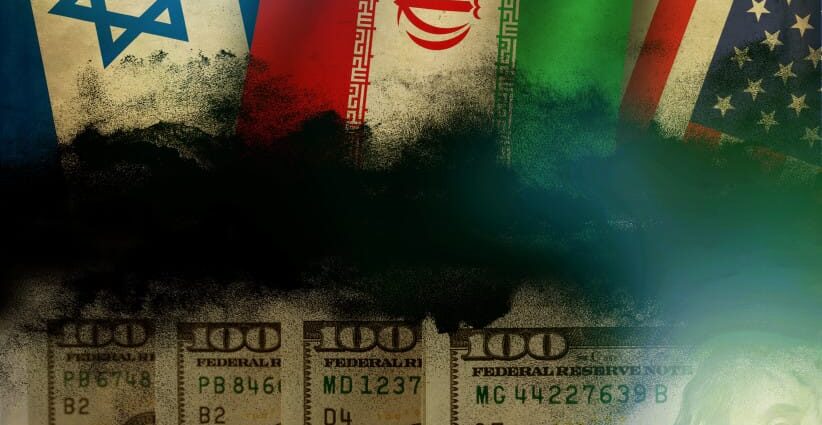
Iran is demanding the immediate release of $12 billion in frozen assets held in Qatar as a precondition for continuing the talks with the United States, Iran International reported on Sunday night, citing an informed source with direct knowledge of the negotiations.

It is also the only immediate obstacle to further advancing negotiations on the potential Memorandum of Understanding (MOU) between the two countries, according to the source.

Further, the source emphasized that one of Tehran’s broader requests is that all its assets be unfrozen as part of any eventual comprehensive agreement.

In April, a senior Iranian source told Reuters that the US had agreed to release Iranian frozen assets ​held in Qatar – a claim a US official swiftly denied.

A second Iranian source said the United States had agreed to release $6 billion of frozen Iranian funds held by Qatar, Reuters reported.

What does the MOU include?

The MOU – labeled the ‘Islamabad Declaration’ according to Al Arabiya –  that both parties would sign would start a 60-day ceasefire extension, and would include the possibility of further talks and an extension during the two-month period.

If the MOU is approved by Iran’s Supreme National Council, it will be sent to Mojtaba Khamenei for final approval.

According to Al Arabiya, final negotiations regarding a peace deal will come only after both parties sign the MOU and agree to the 60-day ceasefire.

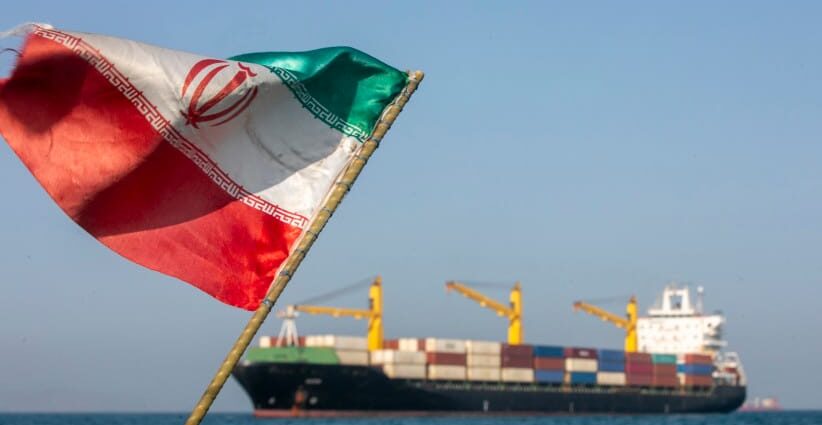
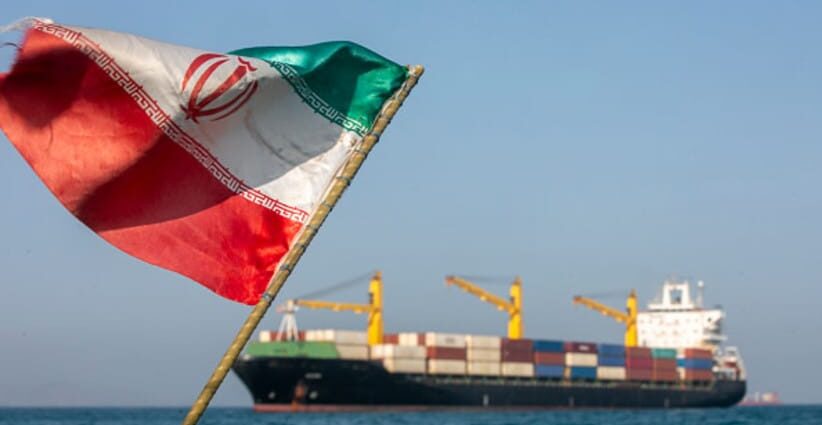
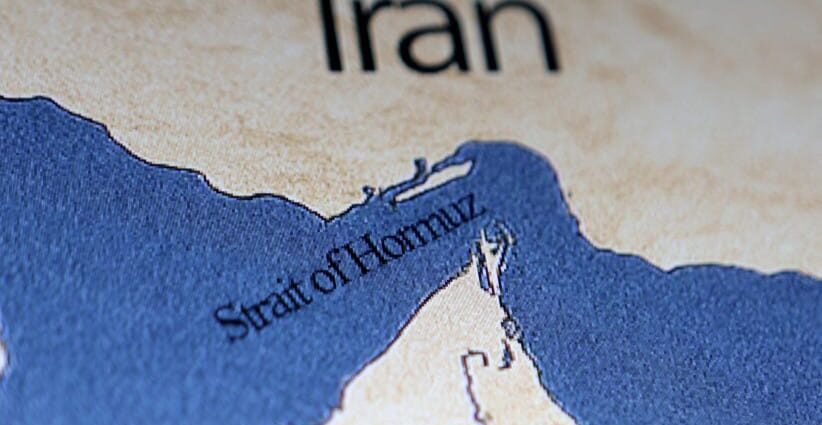
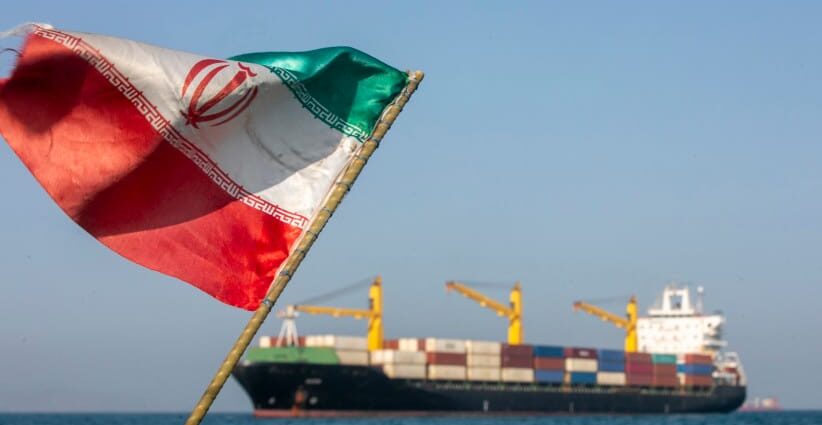
One important element of the deal is the reopening of the Strait of Hormuz. According to Axios, the current draft of the MOU specifies that the Strait would be open without tolls, and Iran would clear the mines it had deployed there.

In exchange, the US would lift its blockade on Iranian ports and waive some sanctions it had imposed, allowing the country to sell oil freely.

Issues relating to Iran’s nuclear capabilities and enriched uranium stockpile would still be largely under negotiation, although the MOU would call for Iran to cease any pursuit of nuclear weapons.

According to Iranian media, the deal would include Washington waiving sanctions on Iranian oil, and both sides agreeing not to attack each other or their allies.

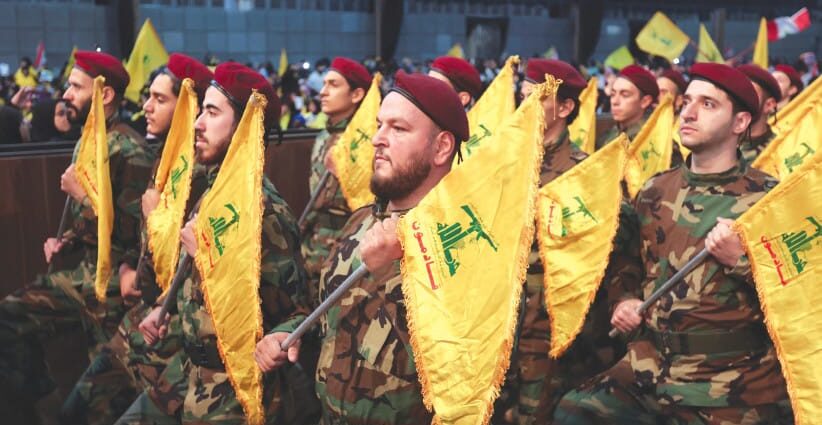
Another issue the MOU addresses, Axios reported, is the ongoing war in Lebanon between Israel and the Hezbollah terrorist group. It specifies that the war will end, with a US official telling Axios it would not be a “one-sided ceasefire,” and that if “Hezbollah behaves, Israel will behave.”

Iran’s central bank chief heads to Qatar after talks about frozen funds

Iran’s Central Bank Chief Abdolnaser Hemmati traveled to Qatar, Iran’s state media reported on Monday, saying the visit follows talks with a Qatari delegation in Tehran regarding Iran’s frozen funds.

Iran has been pushing in negotiations for its frozen funds abroad, including in Qatar, to be released.

Iran’s Ghalibaf, Araghchi, in Doha to meet Qatari PM, sources to Reuters

Iranian Parliament Speaker Mohammed Bagher Ghalibaf and Foreign Minister Abbas Araghchi are in Doha to meet the Qatari Prime Minister and Foreign Minister Mohammed bin Abdulrahman Al Thani, an official briefed on the visit told Reuters on Monday.

The Iranian officials are meeting with the Qatari PM to discuss the terms of a potential ceasefire deal with the US, the official said.

The discussions will primarily focus on the Strait of Hormuz and Iran’s enriched uranium stockpile, the officials briefed Reuters.

Jerusalem Post Staff and Reuters contributed to this report.
This post was originally published on here

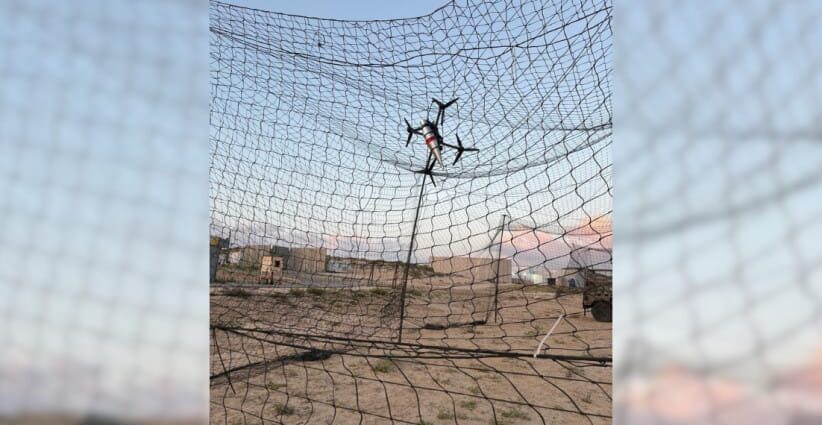
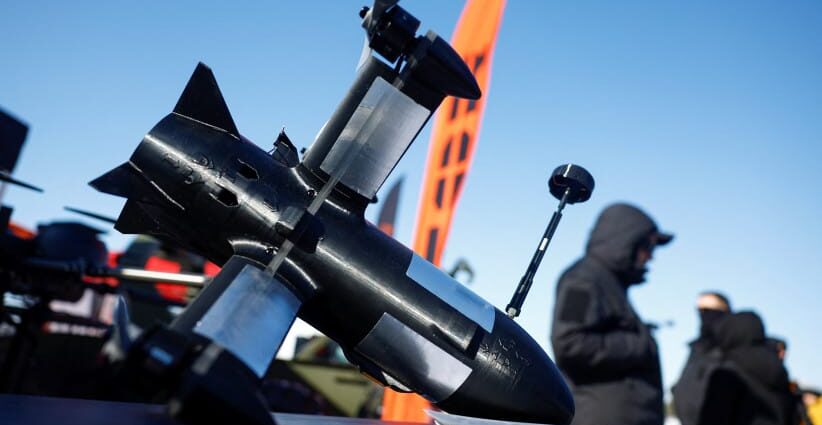
A Hezbollah drone launched from Lebanon struck the roof of a home in Metula on Monday, causing damage to the building but no injuries.

The IDF is currently investigating the incident.

The Upper Galilee Regional Council confirmed in its own Monday statement that no one had been injured in the strike, adding that a fire had started at the impact site.

Later on Monday, the region experienced several drone intrusions within approximately one hour. As a result, there were two reported shrapnel falls in Shomera. 

The IDF announced shortly afterward that a number of “suspicious aerial targets” entered Israeli airspace. Contact was subsequently lost with the targets, but no wounded were reported. The military also confirmed that several explosive drones entered Israeli territory near the Lebanese border, one of which fell in Shomera. 

Zamir, Smotritch threaten to strike Beirut after drone attacks

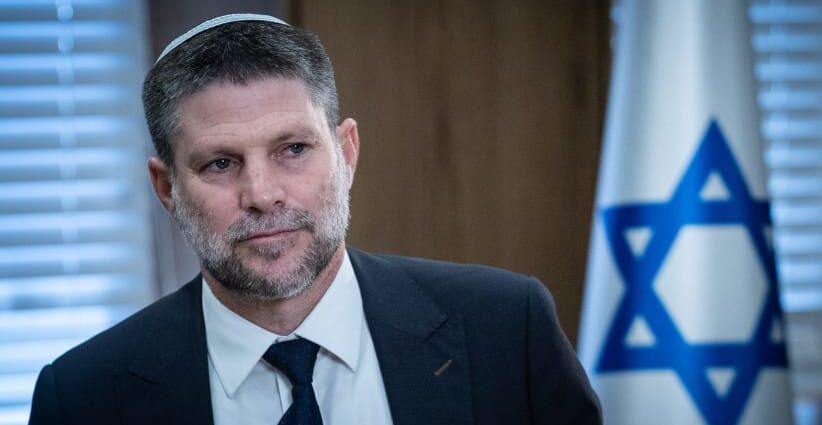
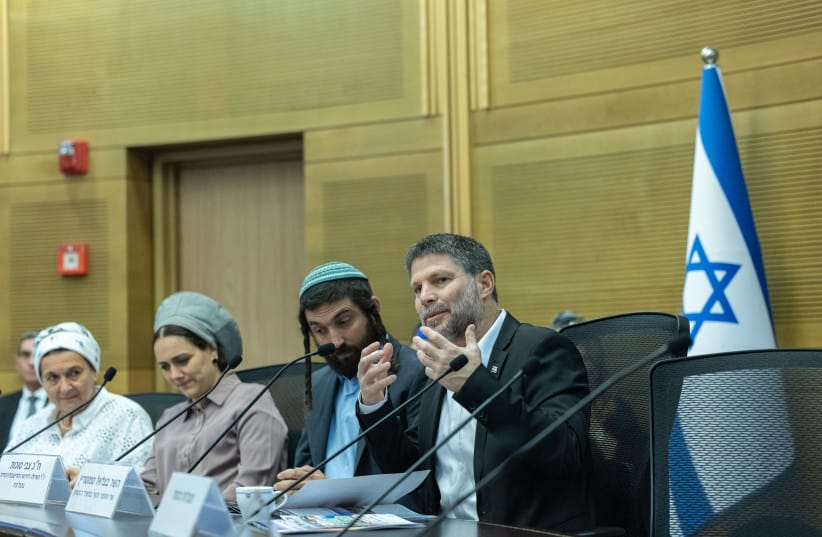
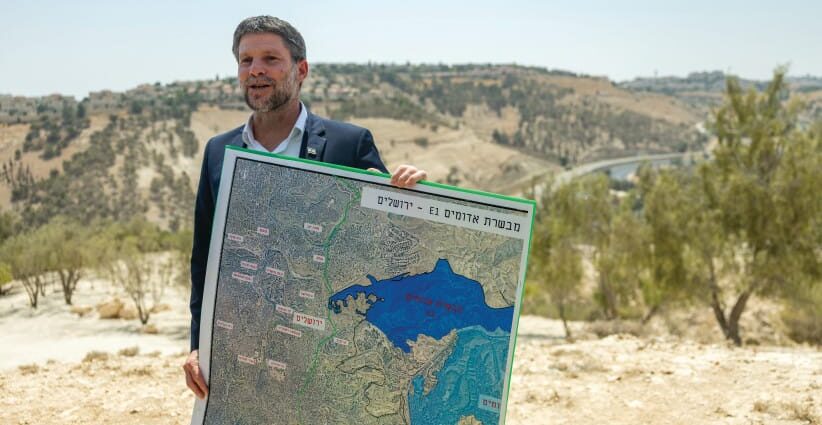
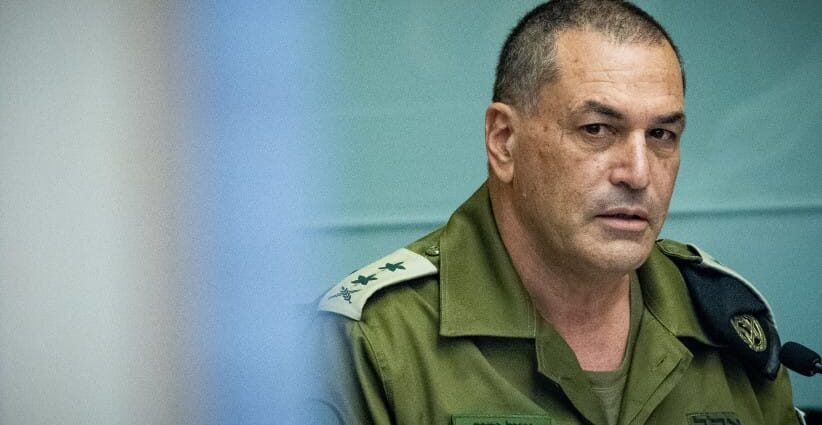
Meanwhile, IDF Chief of Staff Lt.-Gen. Eyal Zamir and Finance Minister Bezalel Smotrich threatened to attack Beirut in response to the damage caused by Hezbollah’s drone attacks.

“We must put an end to the threat of Hezbollah’s explosive drones,” Smotrich said in a Monday statement. “For every explosive drone, ten buildings in Beirut should fall.”

Leader of the Blue and White party, MK Benny Gantz, addressed the threat of Hezbollah’s explosive drones, claiming that “the best defense against Hezbollah is an attack” during a party meeting, Ynet news reported on Monday. 

According to him, “if explosive drones continue to crash in Israel, no plane should take off in Beirut.”

 Amichai Stein contributed to this report.

This post was originally published on here

IDF Chief of Staff Lt.-Gen. Eyal Zamir said that Israel should attack Beirut in response to Hezbollah’s drone attacks on Israeli troops in southern Lebanon during a Security Cabinet meeting on Monday, sources confirmed to The Jerusalem Post.

Zamir arrived at the meeting after visiting Israel’s Northern Command on Sunday, where he conducted a situational assessment and approved operational plans for continued fighting against Hezbollah.

Later, he visited the 401st Brigade and was present at the brigade’s headquarters when Sgt. Nehoray Leizer was killed by an explosive drone.

Smotrich: For every drone, 10 Beirut buildings should fall

“We must put an end to the threat of Hezbollah’s explosive drones,” Finance Minister Bezalel Smotrich said in a Monday statement. “For every explosive drone, ten buildings in Beirut should fall.”

A strategic threat is not answered by defense alone, but by changing the rules and the equation,” he added, pointing out the recent two billion NIS defense budget he had approved to address the ongoing drone threat. 

National Security Minister Itamar Ben-Gvir echoed Smotrich’s sentiment in a Monday post to X/Twitter. 

“It is forbidden to normalize the reality of explosive drones; it is time for the prime minister to bang on Trump’s table and inform him that we are returning to war in Lebanon,” Ben-Gvir wrote. “We need to cut off electricity in Lebanon, conquer Dahiyeh, and return to an intense war.”

This post was originally published on here

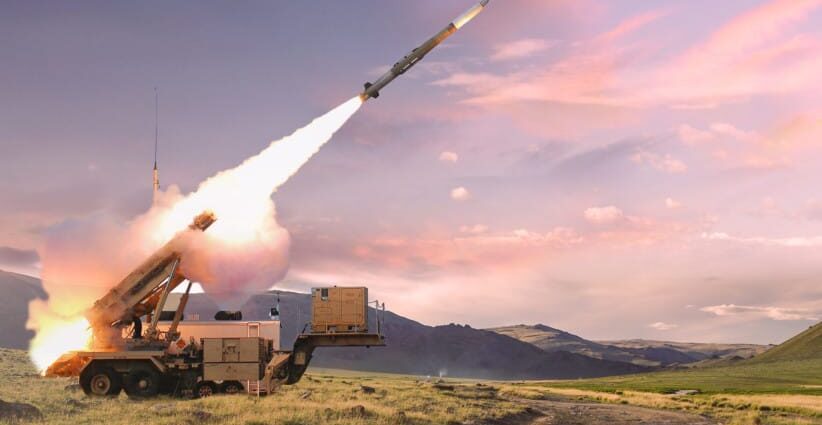
With reports that the United States expended more than half of its overall Terminal High Altitude Area Defense (THAAD) interceptors during Operation Epic Fury (Operation Roaring Lion) against Iran, Lockheed Martin has broken ground for a new munitions production center in Troy, Alabama.

The THAAD is designed to intercept threats both outside and inside the atmosphere-occupying a crucial middle tier of the United States defensive air defense layers. The system is built on a hit-to-kill method where it relies on the kinetic energy from the collision to destroy the hostile missile during its terminal phase of flight. The system can detect and track missiles at distances over 2,000 kilometers and engage the target at altitudes up to 150 kilometers.

According to a press release by Lockheed Martin, the facility will add 87,000 square feet of production space for THAAD interceptors and “future work with Next Generation Interceptor (NGI).” The infrastructure, Lockheed said, forms part of its broader $9 billion investment plan over the next decade to grow the overall production capacity of munitions and to modernize over 20 of its facilities across the United States.

“This partnership is critical to surging our munitions capacity, and Lockheed Martin has leaned in aggressively. Today is a testament to that partnership and that progress,” said the Honorable Michael Duffey, Under Secretary of War for Acquisition and Sustainment, during his remarks at the groundbreaking ceremony.

In addition to the US, THAAD is operated by the United Arab Emirates and the Kingdom of Saudi Arabia which inaugurated its first batteries in July of last year. 

During the month-long war with Iran, The Washington Post quoted several American officials as stating that over 200 THAAD interceptors were fired in defense of Israel, roughly half of the Pentagon’s total inventory. 

Many US allies have raised concerns over the possible depletion of the interceptor stockpiles, with the US not having enough production to replenish the levels used during the war with Iran at the current rate in the short term.

A US Congress study published in the midst of the war shed worrying light on the inventory of interceptors available to the US, saying that “there is concern that the rate of use of THAAD interceptors during Operation Epic Fury has further reduced the limited stock of interceptors.”

“It could take three to eight years to replenish the THAAD missile stockpile, each of which costs an estimated $12.7 million.” The Foreign Policy Research Institute (FPRI), which provided some of the materials to the Congressional Research Service (CRS), found that the first days of the current US Operation Epic Fury were more intensive than the opening of any other air campaign in the history of the US military, with 5,197 munitions across 35 types carrying a munitions-only replacement bill of $10 – $16 billion in four days.

In January Lockheed Martin signed a framework agreement with the US Department of War to quadruple the production of THAAD interceptors from 96 to 400 per year.

Understanding the urgency, Lockheed Martin Chairman, President and CEO Jim Taiclet said at the ceremony in Troy that the company “is ready now to meet the urgent demand to expand production capacity. We have already invested well over a billion dollars in this expansion, which directly strengthens deterrence and helps ensure our service members and allies have the capabilities they need when they need them.”

This post was originally published on here

In recent days, as yet another roller-coaster ride of news has unfolded, with rumors of an Iran deal, there has been renewed talk of several countries joining the Abraham Accords. This is presented as a rumor, linked to the White House’s current talks about reaching an Iran deal.

US Senator Lindsey Graham wrote on X that “if, in fact, as a result of these negotiations to end the Iranian conflict, our Arab and Muslim allies in the region agreed to join the Abraham Accords, it would make this agreement one of the most consequential in the history of the Middle East. Saudi Arabia, Qatar, and Pakistan joining the Abraham Accords would be beyond transformative for the region and world. It is a brilliant move by President Trump.”

His comment has raised eyebrows in the region. The question about the expansion of the Abraham Accords has been in the news since the first Accords were signed in 2020. At the time, there was widespread optimism that the Accords between Israel, the UAE, and Bahrain would expand rapidly. Indeed, there was movement in Sudan, Morocco, and other countries.

However, over time, it became clear that while some countries with existing amicable ties to Israel might “join” the Accords, securing new agreements with countries such as Saudi Arabia would be a long shot.

New ‘Abraham Accords’ phenomenon not grounded in reality

Nevertheless, when the Biden administration came into office, there were reports every few months about how Saudi Arabia “might” now join. Every few months, the reports would appear in the media, get the usual news cycle, and then fade. Then they would come back again, like a planet in the solar system rotating around the sun.

This phenomenon of “new Abraham Accord” members never seemed to need to be grounded in reality. Saudi Arabia, for instance, has always said that any move to join the Accords will need to be linked to Israel shifting its stance on Palestinian rights and statehood. Riyadh has been supporting an Arab peace initiative for more than two decades.

However, while Riyadh has been flexible and clear in its demands, Israel’s ruling coalition is often seen as inflexible in the Gulf. Israel elected a more right-leaning government that included voices antagonistic toward prospective Abraham Accords members in 2022. The October 7 War has only made things more difficult. In some ways, Iran’s backing of the October 7 war was designed to prevent the expansion of the Accords. On the other hand, there was ample opportunity to listen to the concerns of countries such as Saudi Arabia.

In recent years, instead of there being more movement toward peace and regional integration, there have been articles quietly arguing that Israel will be confronting the “Sunni” states of Saudi Arabia and Turkey, once the Iran war is complete. This presents a new set of emerging enemies for Israel to confront.

Instead of making it seem like the Accords might expand and lead to move peace and stability, these kinds of articles tend to raise concerns in places like Riyadh. The same is true in Doha, where they can read numerous articles slamming Qatar. The idea that Qatar would join the Accords at the same time it is being slammed seems questionable.

Saudi Arabia is watching other developments. Not only is there more violence and clashes in the West Bank, but Riyadh is concerned about the chaos that the Iran war has unleashed. Voices in the Gulf have been critical of what they see as Israel’s support for this conflict. They also wonder about some of the other choices being made in Jerusalem. For instance, Israel’s Prime Minister recently said he had visited the UAE. This was not a public or official visit, apparently, and the UAE pushed back on the report. This kind of report does not make the Gulf countries comfortable.

Gulf countries tend to be cautious, and they care about protocol, respect, and ceremony. As such, the first Abraham Accords countries had already expressed concern in 2021 about being used as a campaign stop ahead of Israeli elections. They don’t want to be seen as being used. They want to feel like partners.

It is believed that back in 2020, when the UAE and Bahrain were moving toward normalizing ties with Israel, they consulted with Saudi Arabia. At the time, Saudi Arabia’s Crown Prince Mohammed Bin Salman was close to the leader of the UAE, Mohammed bin Zayed. Saudi Arabia also plays a key role in the security of Bahrain, having backed the monarchy there during the Arab Spring. Saudi Arabia is a big state in the Gulf. It doesn’t always agree with Qatar or the UAE, but Saudi Arabia is taken seriously in the region and the world. It sees itself as the leading Muslim country in the world. As such, it wants to be accorded respect.

Tensions between Riyadh and Abu Dhabi

Recently, there have been tensions between Riyadh and Abu Dhabi. But the tensions are sometimes presented as being worse than they are. The UAE is portrayed as having a unique set of ties with Israel. This can work toward trade with India and other corridors in the region. It could also dovetail with Israel’s policies regarding recognition of Somaliland. As a more conservative power, Riyadh is cautious in these issues. The UAE, once called “little Sparta,” is seen as more adventurous. This has also led to the UAE’s involvement in Libya, Sudan, Yemen, and other conflicts. The Saudis led the UAE into Yemen in 2015, against the Houthis, but their views diverged.

Therefore, the Abraham Accords, likely backed by Riyadh in 2020, have since moved on. Over the last half-decade, Riyadh has examined whether the Accords met expectations. They may have met with some expectations, but there is a sense in the Gulf that much is to be desired. Had they accomplished what was expected or led to peace and integration and movement in terms of better conditions for the Palestinians, it is likely they would have expanded.

Today, there is still a “wait and see” approach in the Gulf. It’s possible the Trump administration can move things more into the “see” category. However, that will likely require more than just some talk and rumors in the run-up to a new deal. It would likely require more foundational aspects and understandings.

The tone of Graham’s post has prompted reactions in the Gulf. The senator wrote, “to Saudi Arabia and others: Now is the time to be bold for the future of a new Middle East. I expect, as Trump has suggested, you will, in fact, join the Abraham Accords, effectively ending the Arab-Israeli conflict. If you refuse to go down the path suggested by President Trump, it will have severe repercussions for our future relationships and render this peace proposal unacceptable. Further, it would be seen by history as a major miscalculation.”

He added, “President Trump: Stick to your guns in getting a good deal with Iran. Equally important, stick to your guns in insisting Saudi Arabia and others join the Abraham Accords as part of these negotiations.”

It remains to be seen what comes next. 

This post was originally published on here

Syria’s new government is holding a type of limited election in Kurdish areas of eastern Syria.

Syria had already held types of limited elections in other areas of Syria last year. However, areas outside government control did not hold a vote. This included Suwayda and also the areas governed by the Syrian Democratic Forces and its civilian component, the Democratic Autonomous Administration of North and East Syria.

In January, clashes between the Syrian government and SDF led to the SDF withdrawing and agreeing to a deal with Damascus. This was based on a roadmap agreed in March 2025. This paved the way for Syria to move its interior ministry forces into areas such as Hasaka in eastern Syria.

Now, Syria is moving forward with a limited vote. The voting system is complex and isn’t a direct election. This has led to complaints that Damascus is using a top-down approach to create an electoral college of handpicked people who are “elected” but, in fact, do not stand for office as one would expect in the US or UK.

Syrian state media SANA said “voting began Sunday in several districts in northeastern and northern Syria to elect members of the country’s People’s Assembly, according to Syria’s Higher Committee for People’s Assembly Elections. Polling opened in the Hasakah and Qamishli districts in Hasakah province, as well as the Ain al-Arab district in Aleppo province.”

Ain al-Arab is known as Kobane. Ain al-Arab is his Arabic name; Kobane is his Kurdish one.

The report at SANA added that “the committee said 12 candidates were competing for two seats in Ain al-Arab from an electoral body of 100 members, while 13 candidates were contesting three seats in Hasakah from a pool of 150 electors. In Qamishli, seven candidates are competing for four seats in an electoral body consisting of 207 members.”

 ‘Isn’t really representative of the views of any community or party at all’

As can be seen, the number of actual voters is quite small. There is also a lack of clarity on parts of the process. This is leading to questions and concerns about the election process and outcomes.

Nevertheless, Syrian officials appear to see it as a success and a stepping stone to the next part of any democratic process. The previous civil authority, the DAANES, did not have elections. It essentially functioned as a one-party state linked to the far-left PYD party, a mostly Kurdish organization.

The other political actors were linked to the SDF, the military arm, as well as the YPG, a Kurdish group which has links to the Kurdistan Workers Party (PKK) in Turkey. This led Ankara to view most political institutions linked to the YPG as “terrorists” because Ankara views the PKK as terrorists. As such, all the groups linked to the AANES were seen as terrorist groups in Ankara.

When the new government of Syria took power, it was run by Hayat Tahrir al-Sham (HTS), a mostly Arab conservative rebel group. That HTS and the SDF would find an accommodation seemed complex, since one was a conservative Islamic Arab group and the other a far-left Kurdish group.

According to reports, the PYD has boycotted the recent poll in Syria. This means that those elected are from different groups. Some Kurds were elected. Several are linked to the KNC, a Kurdish centrist party that was opposed by the PYD.

“In the al-Malikiyah district, two candidates secured the allocated seats uncontested after no additional candidates registered. Voting is scheduled to continue until around midday and may be extended by one hour if minimum turnout requirements are not met. Ballot counting will begin immediately after polling closes, with preliminary results expected later Sunday,” SANA noted.

Many commentators have pointed out the drawbacks of this current election.

Meghan Bodette, Director of Research at the Kurdish Peace Institute, noted on X that “this election shows what a small group of predominantly men over age 40 who were chosen by the government think about each other. That isn’t really representative of the views of any community or party at all.”

She added that “Five Kurds and six Arabs will represent Hasakah, Kobane, Qamishlo, and Derik in the Syrian parliament.” Furthermore, she noted that three Kurds have been elected in Afrin, which would mean only eight Kurds will have been elected in the recent elections. She notes that some Kurds could still be appointed. “Syriac-Assyrian, Armenians, and Yezidis in former DAANES territory got no seats at all.”

The National Context also noted that “results from Syria’s parliamentary elections in Hasakah province and Kobani have confirmed our reporting from last week: In Hasakah, of the nine contested seats, Arabs won five and Kurds four. A tenth seat (in the Ras al-Ayn area) had already been won by an Arab candidate in elections held last year. The president will appoint the remaining five seats for the province.”

Much more will need to be done in Damascus regarding governance and elections

Aliza Marcus, author of the new book ‘Resurgence and Revolution: The PKK and the Kurdish Fight in Turkey and Syria,’ wrote on X that “this tactic of boycotting elections rarely has any positive impact for those boycotting. I’m not surprised the PYD chose this route — it allows them to unite people around the idea of the parliament’s (for them) lack of legitimacy. But at the same time, they get no say.”

Wladamir van Wilgenburg, co-author of ‘The Kurds of Northern Syria: Governance, Diversity and Conflicts (Kurdish Studies),’ noted on X that “Five Kurdish candidates won parliamentary seats today, none from the PYD, which boycotted the election. The KNC appears to have gained influence, alongside Arab tribal representatives with reported links to Damascus. Seems the Shammar tribe was also left out.”

The results of this election will be watched closely. However, it is clear that much more will need to be done in Damascus regarding governance and elections. This limited vote is only the beginning. If the voting ends here, then much will be lacking in terms of democracy. 

This post was originally published on here

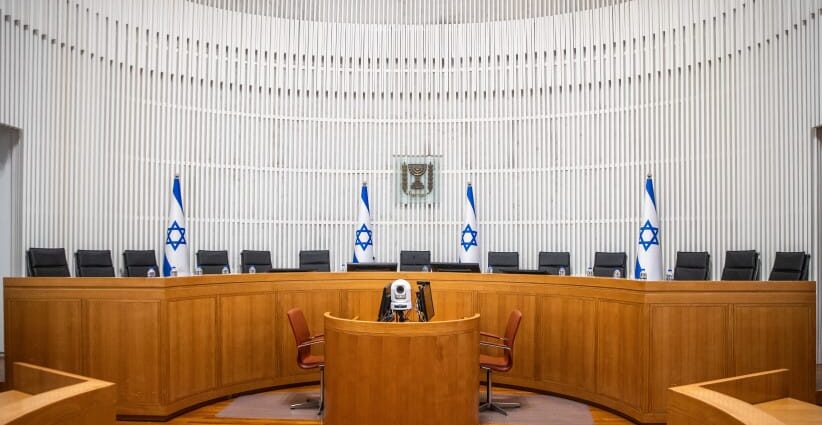
The High Court of Justice was set to hear on Monday morning a petition challenging the state’s handling of discharged soldiers and reservists who died by suicide after their military service, in cases where their deaths may have been connected to their service in the Gaza war.

The hearing, scheduled to begin at 9 a.m., was set to be held before Justices David Mintz, Gila Canfy-Steinitz, and Yechiel Kasher, with bereaved families expected to attend.

The petition, filed in January by the Jerusalem Institute of Justice and Forum Yahalomey Krav, an advocacy organization for war-related post-trauma, is directed against Defense Minister Israel Katz and IDF Chief of Staff Lt.-Gen. Eyal Zamir. It asks the court to halt implementation of the recommendations of a committee headed by former IDF Manpower Directorate chief Maj.-Gen. (res.) Moti Almoz.

At the heart of the case is a painful legal and moral gap: When a soldier is killed while in active service, the path to military burial and recognition as an IDF fallen soldier is clear. But when a soldier or reservist returns from war, is discharged or no longer under an active call-up order, and later dies by suicide, allegedly because of trauma from that service, the state says the legal answer is not the same.

The Almoz Committee was appointed to examine the response given to families of such soldiers in circumstances that may be connected to their military service. According to the state, the committee recommended an interim support track for families while the formal recognition process is examined, including IDF accompaniment, assistance in approaching the Defense Ministry, and military elements at a civilian funeral, such as commanders in uniform, a military wreath, and participation by unit representatives.

But the committee did not recommend automatic recognition as IDF fallen soldiers, nor full military burial. The petitioners say the committee instead created a lesser category of “died after service.” They argue that this creates an intolerable hierarchy between physical and psychological wounds. In their view, if the causal link between combat service and death can be shown, there is no principled difference between a soldier who dies later from a physical injury sustained in service and a soldier who dies later from post-traumatic injury caused by service.

They are also challenging what they describe as a limited and inadequate process, arguing that the committee’s conclusions were adopted without proper participation by public representatives, organizations representing post-traumatic soldiers, and the bereaved families most affected.

Attorney calls case ‘moral and public struggle’

In comments sent ahead of the hearing, JIJ attorney Gai Akoka, who is representing the families, called the case “a first-of-its-kind moral and public struggle in Israel,” saying the court should cancel the committee’s conclusions and rule that such soldiers and reservists should be recognized as IDF fallen soldiers, “just like a fighter who fell on the battlefield.”

Avi and Ola Pankinsky, whose son Gil Pankinsky, a Shayetet 13 fighter, died by suicide in November 2024, said ahead of the hearing that since their son’s death, they had felt “transparent” to the state and the army that sent him to difficult missions.

“We hope the High Court will correct the historical injustice and the fracture in our hearts,” they said, calling for full recognition for Gil and for other families whose loved ones died after “their souls broke on the battlefield.”

State asks court to dismiss petition

The state, in its preliminary response on behalf of the defense minister and chief of staff, asked the court to dismiss the petition, saying that it did not minimize the pain of soldiers struggling with mental trauma or of families whose loved ones died by suicide – especially amid the consequences of the war – but argued that the law currently gives military burial only to those who were in active military service at the time of death, along with specific categories set out by statute.

The state also stressed that the specific legal recognition is a separate question from military burial. A family may still seek recognition if it can prove a causal link between the soldier’s service and death, but that process requires a factual and medical examination, especially in suicide cases where the link to service can be complex.

In other words, the state’s position is that the Almoz Committee did not close the door on recognition, but rather created a temporary support framework for families during the period between the death and the Defense Ministry’s final decision.

For the petitioners, that is precisely the problem: They say the state’s response offers symbols and accompaniment, but stops short of the recognition they believe the soldiers and families are owed.

This post was originally published on here

As negotiations between Washington and Tehran remain deadlocked, US President Donald Trump convened a high-level meeting Friday with senior US national security officials, including the CIA director, secretary of defense, and vice president, to discuss scenarios for a possible return to military confrontation with the Islamic Republic.

At the same time, Qatar and Pakistan launched last-minute, ultimately fruitless mediation efforts to prevent further escalation.

Sources close to the White House say Trump has grown increasingly frustrated with the stalled diplomacy and is now weighing the option of a “decisive final military operation” as a way to end the crisis.

Although no final decision has yet been made, the confrontation appears to be approaching a potentially dangerous turning point, raising a deeper strategic question: Does the CIA, in coordination with Mossad, now see regime change not as a distant aspiration but as an increasingly realistic objective?

If one moves beyond merely examining the “behavior of the regime” and confronts the larger question, who exactly is the United States truly dealing with in Iran’s regime?, one arrives at a dilemma that America’s intelligence community, particularly the CIA, has wrestled with for decades.

The United States still speaks to the Islamic Republic’s “diplomatic façade,” while real authority remains concentrated within the ideological-security structure of the IRGC and, outwardly, the office of Khamenei.

When the upheaval of 1979 succeeded in Iran, the CIA did not truly understand who Khomeini was, nor did it fully grasp that the ideological engine driving him, the dictatorship of the Shiite cleric and the doctrine of Velayat-e Faqih, would ultimately give birth to a religious dictatorship and a Shiite Islamic caliphate in Tehran.

The CIA also failed to accurately foresee that America’s most loyal and strategically important ally in the Middle East, the late Shah of Iran, Mohammad Reza Pahlavi, would ultimately lose power. Even after the 1983 bombing of the US Embassy in Beirut, the CIA still appeared unable to fully comprehend the mushroom-like rise of Islamist terrorism across the region. That reality cannot simply be concealed or erased from history.

During the years 1975–1978, whenever SAVAK, one of the CIA and Mossad’s closest intelligence partners during the Cold War, warned the CIA that the KGB stood behind both Marxist terrorist movements and Islamist militant networks, those warnings were frequently dismissed or underestimated.

Khomeini’s inner circle also cultivated the illusion that the CIA had orchestrated a coup in Iran in 1953 and removed a so-called “popular prime minister.” Yet few ever asked a more fundamental question: when exactly had that prime minister been elected by the Iranian people, under what election, and through what constitutional authority?

Under Iran’s constitutional monarchy, the Shah possessed the legal authority to appoint and dismiss prime ministers. That populist prime minister had ruled under martial law, attacked and burned opposition newspapers, and effectively paralyzed the national parliament. Had he succeeded, Iran itself could very likely have fallen into the orbit of the Soviet Union in 1953.

What remains remarkable is that even figures close to Khomeini later acknowledged maintaining contacts with the United States and the CIA between 1953 and 1979. In that sense, the narrative of the so-called “CIA coup” in Iran gradually evolved into a repetitive, mythologized, and politically convenient tale. The late Shah himself later wrote in his memoirs that the CIA neither protected him nor stood by its longtime ally, and that in 1979 it ultimately “stabbed him in the back.”

Creating a ‘new Middle East’

Now, after 47 years, the CIA, in coordination with Mossad, may have assumed responsibility for a campaign against the Islamic Republic in pursuit of what many describe as a “new Middle East.”

On the first day of the attack, Tehran’s dictator, Ali Khamenei, was removed from the scene. Since 2001, following the September 11 attacks and the formal launch of the war on terror, the CIA has gradually removed a series of obstructive figures from its path: from Imad Mughniyeh (2008) and Osama bin Laden (2011) to Qassem Soleimani (2020) and Ali Khamenei (2026).

In each of these historic eliminations, cooperation with Mossad reportedly continued in various forms.

But why did the Tehran regime not collapse after the humiliating death of Ali Khamenei? Because regime change was never Washington’s primary objective. Nor has genuine political will for regime change ever truly existed within Washington’s strategic establishment. Even though, over the past 47 years, with the rise of the radical Khomeinist Shiite caliphate in Tehran, America effectively surrendered the Iranian arena to Soviet influence, while the regime itself increasingly fell under the dominance of Russophile networks and figures.

Under these circumstances, the CIA now confronts several major dilemmas. Iran’s formal government is no longer the true center of power. In practice, the presidency, the foreign ministry, and even parliament have gradually evolved into ceremonial, hollow, and largely ineffective institutions.

Strategic decisions, regarding nuclear activity, chemical and biological capabilities, regional terrorism, military structures, and security networks, are ultimately made by the regime’s core power structure.

In reality, the Trump-Netanyahu strikes accelerated the emergence of a military junta in Iran, making any future negotiations significantly more difficult because power no longer hides solely behind the façade of the Shiite clerical establishment.

To put it differently: America negotiates with the state Iran presents, not the system that actually rules it. It has not been long since Trump correctly designated the IRGC as a terrorist organization.

Many of Khomeini’s followers, who had received military and terrorist training in Yasser Arafat’s camps in Palestine, later became founders of the Islamic Revolutionary Guard Corps, an institution that, notably, does not even contain the word “Iran” in its name.

Over the course of this 40-day war, America’s security establishment gradually came to realize that Iran increasingly resembled a military garrison disguised as a nation-state.

IRGC has ‘become the system’

The IRGC is no longer merely a military force; it has evolved into an ideological army, an economic empire, a vast network of intelligence organizations, an internal security apparatus, and the mafia-like engine driving regional terrorism. Even during the ceasefire period, the IRGC effectively emerged as the de facto actor shaping the succession to Khamenei.

One particularly striking detail was that individuals affiliated with the IRGC, some of whom reportedly appeared on CIA watchlists, continued to participate openly within Iran’s diplomatic delegations in Pakistan, while the CIA observed the situation without any meaningful response.

And this is the crucial point: the IRGC no longer protects the system. It has become the system.

Throughout 1,400 years of Islamic caliphates, succession crises have repeatedly shaped the destiny of regimes and ruling structures. Following Khamenei’s death, Iran entered that same historical pattern. Yet after 37 years of dictatorship, the removal of Khamenei did not lead to the collapse of the structure itself.

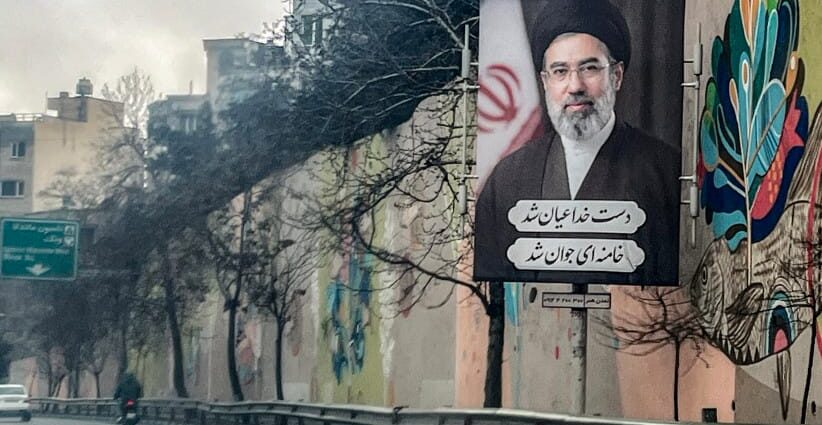
Although the power structure became increasingly fragmented, the IRGC steadily absorbed authority into its own hands. They raised cardboard images of Mojtaba Khamenei and claimed he remained alive, hoping to preserve the regime’s security cohesion, maintain internal control, and ensure institutional survival.

The IRGC did not merely manufacture a symbolic leader. It reconstructed command centers, intelligence networks, financial structures, and security command systems while simultaneously shaping the broader architecture of Iran’s future order.

The CIA likely understands this transformation. Washington’s politicians do not.

Certainly, elements within the American intelligence community understand that “civilian diplomacy” in Iran is deeply constrained and that the real nucleus of power prioritizes regime survival above all else. The elimination of individual commanders or officials means little to the system itself. Amid economic collapse and the broader destruction of Iran, survival remains the regime’s overriding objective.

Yet Washington still feels compelled to pretend that Iran’s foreign ministry remains the regime’s principal actor — even though its leadership itself emerges from the broader IRGC structure. This contradiction becomes increasingly visible when Iran’s foreign minister resembles little more than a puppet figure with virtually no authority over the regime’s actual strategic direction.

What exists in Washington today is an ongoing conflict between intelligence realism and diplomatic theater, a taboo contradiction that major media institutions continue to reinforce and reproduce.

One must also openly acknowledge another deeply uncomfortable reality: the United States fears the collapse of the Islamic Republic as much as it fears its survival. Washington simultaneously fears a nuclear-armed Iran and an uncontrolled Iranian collapse that could destabilize the Persian Gulf and the broader region. This dual fear has produced a state of strategic paralysis.

Many in Washington fear the collapse of the Islamic Republic more than the consequences of its continued survival. Meanwhile, the demands and aspirations of the Iranian people themselves were neither prioritized nor meaningfully represented in negotiations between Washington and Tehran.

The central problem is no longer Iran’s diplomacy. The deeper problem is that America may still be negotiating with institutions that no longer truly govern Iran. Washington does not negotiate with Ahmad Vahidi or with the real nucleus of power directing events inside the country. Instead, it continues wasting time speaking to political puppets.

Washington still speaks to the façade of the Iranian state while the security apparatus quietly absorbs the state itself. For these reasons, the CIA’s dilemma in dealing with Iran’s hardline power structure has not been successful, and likely will not be.

The central challenge facing Washington is no longer Iran’s nuclear program alone. It is whether the United States is ultimately prepared to acknowledge that the institutions it negotiates with may no longer be the institutions that truly govern Iran.

This post was originally published on here

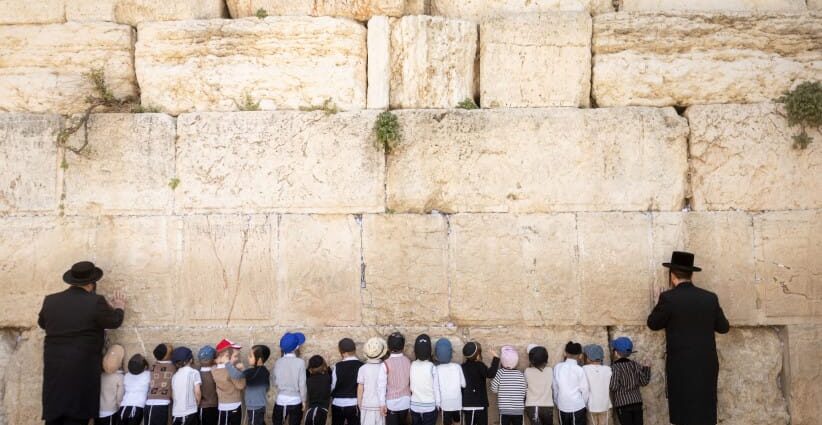
What can we take away from Shavuot? This past holiday of Shavuot, some 100,000 people came to the Western Wall, according to data released by the Western Wall Foundation and local police. I was privileged to be among them. 

At dawn, I participated in a festive and moving morning service with 100 students from the Nefesh Yehudi organization, most of whom were taking part in this service for the first time.

We were surrounded by tens of thousands of people, different groups from across Israel and the entire world. I noticed the diversity of the people in attendance: tourists standing next to Israelis, children next to seniors. Most had walked to the Wall after having devoted the entire night to Torah study. 

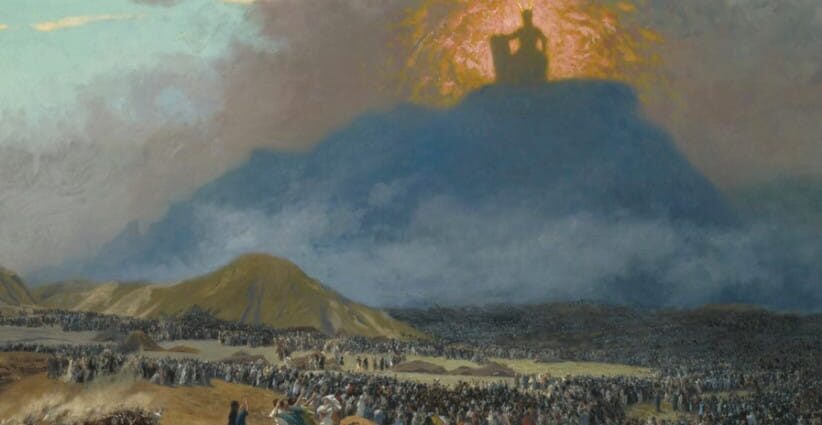
Shortly after five in the morning, as the sun began to rise over the Western Wall Plaza, everyone recited the Ten Commandments, which we received on this day thousands of years ago at Mount Sinai.   

Of course, this wasn’t taking place only at the Western Wall; it was happening throughout the Jewish world. 

Maybe you were at home with your children, at a neighborhood synagogue, with friends or family, or even outside Israel. Regardless of whether you experienced a moving or challenging holiday, each and every Jew, no matter where they were, received the Torah and, specifically, his or her own portion in the Torah. 

But what can we take away from this? Where do we go from here? 

On Shavuot, it is customary to make a new commitment to Torah study. Our Sages explain that Shavuot is considered a “Rosh Hashanah” for the Torah, and that a new year of Torah study is about to begin. It is an appropriate time to dedicate ourselves to learning a specific part of the Torah or to join a Torah class. 

In this way, we can find a practical way to continue the Revelation at Sinai by incorporating it into our daily lives. Following Shavuot, I encourage you to think of ways to continue receiving the Torah every day.

The Mishnayot Campaign in Johannesburg

Meir Raff is the principal of an elementary school in Johannesburg, South Africa. A few years ago, one of the teachers in his school read an article I had written about a project in the northern city of Ma’alot, where all the residents of the city completed the study of the entire Torah together. 

That teacher suggested that the school do something similar, and so the principal launched the Mishnayot Campaign.

To be part of the project, each child learns Mishnayot whenever he wants, and however much he wants.

This is not a contest where children compete against one another, and one winner is announced at the end. Everyone contributes something to the shared total, and everyone wins. 

A child in first grade can learn one Mishnah, while a child in sixth grade can learn a thousand Mishnayot.

“The success has been tremendous,” Meir Raff shared. “Children sit together during recess and after school to learn a Mishnah. They meet on Shabbat to learn together. 

“Parents tell me that their child asks them to come home early from work so they can learn Mishnayot together. They’ve even sent me pictures of children learning Mishnah on the school bus or in bed. All the teachers, even the secular studies teachers, have felt a positive change in the school.”

Some of the children were not the strongest students in the class, but this campaign turned them into leaders. It gave them a sense of capability, he added.

At the beginning of the campaign, the principal announced a goal of 5,000 Mishnayot, but the children passed that goal very quickly, and the school realized that a major celebration was in order. 

They rented a hall with an orchestra and held a moving event, with dancing, a certificate for every child, a great deal of Simchat Torah, and many tears of emotion.

The week before Shavuot marked the third year that the school celebrated the completion of the campaign.

“The 63 children in this small school have learned a total of 25,678 Mishnayot, dedicated to the success of the Jewish people,” Meir Raff wrote. 

“I’d like to recommend that everyone implement what I have learned through my position as a principal: We need to make Torah a joyful, exciting experience, so that each one of us can acquire our own portion in Torah.”

Parashat Naso: At Peace with Ourselves and the World

The following was written by Rabbi Jonathan Sacks, zt”l, on Birkat Kohanim, the Priestly Blessing, which appears in Parashat Naso, the Torah portion that is read this week outside of Israel (In Israel we are up to Behaalotecha).

“The famous Priestly Blessing ends with the words: ‘May Hashem lift His face toward you and grant you peace.’ 

The knowledge that Hashem turns His face toward us is the deepest, ultimate, and absolute root of peace. It means knowing that we are not just another face in the crowd, because God relates to us as individuals. Each of us is unique.

“The competition, jealousy, and hatred in the world come from a lack of inner security. These things are not signs of faith, but of a great emptiness where faith should be. Faith means that I believe that God cares about me. That I am here, in this world, because He wanted me to be here. This is the deepest inner source of peace.

“In order to merit God’s blessing, we do not need to prove ourselves. We only need to know and internalize that His face is turned toward us. When we are at peace with ourselves in this way, then we can begin to make peace with the world.”

With Love

And another thought: Did you ever pay attention to the blessing that the kohanim say before the actual Priestly Blessing?

After they are called up to the bimah, the kohanim wrap themselves in their prayer shawls and say: “Blessed are you, Hashem, our God, King of the Universe, who has sanctified us with the holiness of Aaron and commanded us to bless his people Israel with love.”

Why love? We do not say, “to light Shabbat candles with love,” or “to eat matzah with love.”

But in order to bless and to be blessed, we have to open our hearts and love. 

This is the prerequisite for the abundance and goodness with which the kohanim bless the people. We need a generous eye, a giving spirit, and a sense of identification with the community. That is what brings blessing into our lives.

Want to read more by Sivan Rahav Meir? Google The Daily Thought or visit sivanrahavmeir.com

This post was originally published on here

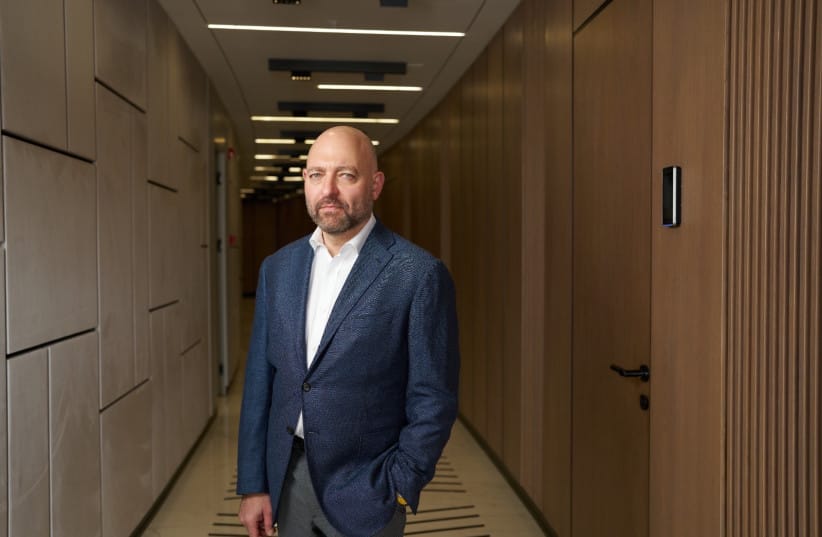
Kirill Rubinski, the Jewish CEO of the Azerbaijani group NEQSOL Holding, has spent much of his career moving between worlds that do not usually sit easily together: Soviet Moscow and Paris, Jewish identity and Muslim-majority Azerbaijan, private equity and strategic infrastructure. 

Now, as the newly appointed CEO of one of the region’s largest conglomerates, he is turning those unlikely crossings into a business strategy.

The Amsterdam-headquartered group spans telecommunications, energy, mining, and construction across 11 countries, serving over 25 million customers and employing more than 15,000 people. Its portfolio includes Vodafone Ukraine, Azerbaijan telecom operators Bakcell and AzerTelecom, Ukraine’s UMCC titanium producer — acquired in one of Ukraine’s most significant wartime privatizations — and Norm, the largest cement producer in the South Caucasus.

“Azerbaijan has only 10 million people, that’s why so much of the business is outside the country,” Rubinski told The Jerusalem Post.

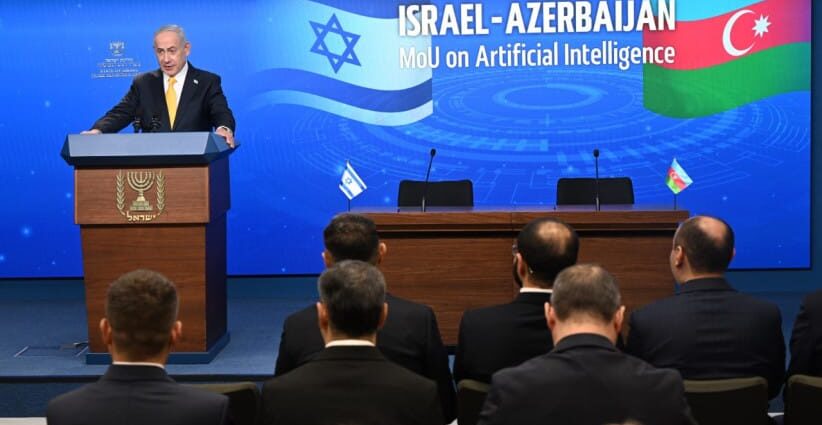
For Israel, the most immediate significance lies in technology. NEQSOL has just completed replacing one of its telecom billing systems with technology from Amdocs, the Israeli-founded telecom software company. The project is expected to be finalized in June 2026.

For Rubinski, the Amdocs partnership is not an isolated procurement decision. It is part of a broader view that Israel can become a more important partner for NEQSOL across telecoms, healthcare, education and digital infrastructure.

“Israel is one of the world centers for technology and all types of pioneering digital innovation,” he said. “Not only Azerbaijan, but all the countries in the world have a lot to win working with Israel.”

That approach comes against the backdrop of one of Israel’s most durable but understated regional relationships. According to Kepler data reported by JNS, Azerbaijan accounted for 46.4% of Israel’s crude oil imports in 2025, making it Israel’s largest oil supplier by a wide margin and one of its most significant Muslim-world partners. The relationship has remained largely pragmatic and security-driven, built around energy, defense, technology and regional connectivity rather than public diplomacy.

As a Jewish CEO working in a Muslim-majority country, Rubinski said the experience has been less complicated than he expected. “It’s something that I expected to be more sensitive, at least palpable. But the Muslim side, like Muslim religion or traditions in Azerbaijan, are much less visible. Azerbaijan feels much more on the western side of the world than Turkey.”

The local Chabad rabbi, who has been in Baku for a decade, Rubinski noted, “confirms that it’s been extremely easy for him.” In the workplace, the separation is clear. “If people want to pray, they can close the door and pray in their own office. There is a space to pray, but nobody will come and pray in the lobby. It’s a clear separation between religious and secular life.”

He drew an unusually sharp comparison with France, where he lives.

“I feel much safer in Azerbaijan than in France,” he said. “The level of aggression against Jews, the level of antisemitism is incomparable between France and Azerbaijan. 

“In Azerbaijan, it’s something that will never be tolerated. In France, it’s absolutely normal practice now.”

That sense of practical tolerance, Rubinski said, is also reflected inside NEQSOL. “We have Azerbaijanis, Germans, people from the UK, the US, Turkish, Brits, Spanish, from everywhere. More than 15 nationalities are working in our group. A truly international team.”

Who is Rubinski?

Rubinski was born in Moscow and moved to Paris at the age of eight, when his father, a scholar and senior Soviet diplomat, was appointed first counselor at the Soviet embassy in France. 

His father was among the few Jews to graduate from MGIMO, the elite Soviet institute for international relations, at a time when Jewish enrollment was tightly limited. Rubinski later enrolled at the same institution in 1986, was drafted into the Soviet army, and spent two years in Siberia before completing his studies.

President Ilham Aliyev, who has led Azerbaijan since 2003, was once Rubinski’s professor at MGIMO. “For two years, I was passing exams [for] him.” 

Rubinski spent a decade in investment banking at Crédit Lyonnais, working on oil and gas deals from Venezuela to Qatar and Russia. 

His American team was devastated in the September 11 attacks. “Ninety-two people from my team died,” he recalled. 

“The whole business collapsed, and I had to rescue it. Instead of moving the practice from the US to Europe, I had to close positions in the United States because there was literally no expertise left.” 

Kirill Rubinski, the Jewish CEO of the Azerbaijani group NEQSOL Holding (credit: Courtesy)

Rubinski later moved into private equity, completed a $1.2 billion exit in 2012, and spent five years working with Victor Pinchuk, the Ukrainian-Jewish billionaire and founder of EastOne Group. 

More recently, Rubinski managed family office investments, including early exposure to OpenAI and SpaceX. He initially approached NEQSOL as a potential co-investor. 

However, the company’s sole shareholder and founder Nasib Hasanov, had a different proposal. “He said the company needs a CEO, why don’t you come and manage the company for a few years?” Rubinski recalled. “That looked interesting.”

Expanding to Israel

For NEQSOL, Israel is becoming part of that international growth map. Beyond Amdocs, Rubinski said that the group was looking at Israeli partners for a healthcare expansion in Azerbaijan, with Hadassah Medical Center among the institutions being considered. 

He also wants to extend NEQSOL Academy — which funds top Azerbaijani students at Western universities and currently partners with Bocconi University in Milan — to Israeli universities.

“I personally know the dean of Tel Aviv University. I’ve been there many times,” he said, adding that the Technion University is also on his list.

Rubinski’s cultural ambitions are more unexpected, but equally specific. “The Batsheva Dance Company that I’m a big fan of, [and] the Tel Aviv Ballet — I would love to bring them to Baku. I would be proud and happy to sponsor it.”

The company’s most strategically important infrastructure project is the Digital Silk Way, a submarine fiber-optic cable being laid across the Caspian Sea. Implemented together with Kazakhstan’s state telecom company, Kazakhtelecom, it aims to connect Central Asia and China to Europe through Azerbaijan, Georgia, the Black Sea, and Bulgaria.

“This will be an alternative internet connection; high-speed broadband for all those countries east of the Caspian, bypassing Russia,” Rubinski said.

For countries seeking alternative trade, data, and energy routes after Russia’s invasion of Ukraine, that bypass matters considerably.

“One of the best assets of the country is its geographical position — being able to service flows, transportation, data, oil and gas, energy,” Rubinski said. 

“It gives a unique opportunity to be in the middle of world politics, and be somehow an intermediary between countries which don’t necessarily have a perfect relationship.”

That corridor logic is also pushing NEQSOL toward the wider Middle East. Rubinski said the group was in active discussions with Bahrain, where he recently met with government ministers and the head of the state property fund. 

Perhaps the most politically sensitive development is NEQSOL’s quiet business engagement with Armenia, after decades of conflict between the two countries.

“A sort of ceasefire — I cannot say peace — was signed,” Rubinski said. “And surprisingly, there are real business talks between the two countries.”

The head of one NEQSOL industrial group recently traveled to Armenia as part of a business delegation, he said — the first such trip in 35 years of conflict. “I wouldn’t say the cooperation is expanding astronomically, but there is a real development there.”

For a Jewish executive leading an Azerbaijani-rooted conglomerate with growing ties to Israel, Central Asia and the Gulf, that may be the larger story: not symbolism, and not sentimentality, but infrastructure, capital and security interests moving faster than regional politics. 

This post was originally published on here

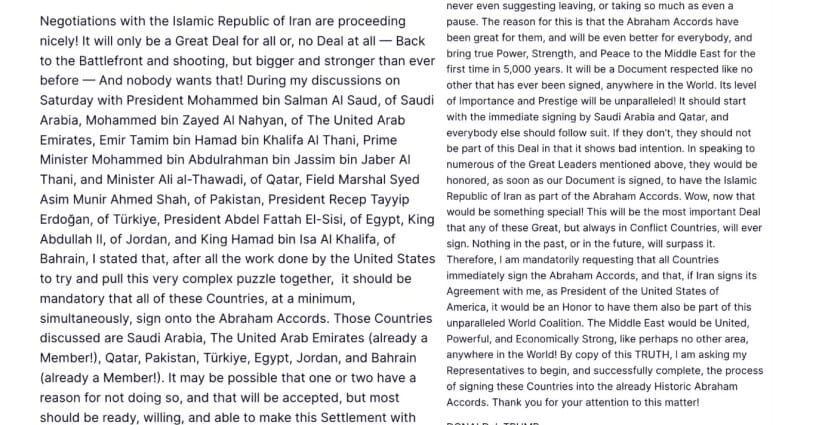
US President Donald Trump “mandatorily” requested on Monday that all countries involved in the Iran negotiations sign the Abraham Accords.

“By copy of this TRUTH, I am asking my Representatives to begin, and successfully complete, the process of signing these Countries into the already Historic Abraham Accords,” Trump posted on his Truth Social account.

The request was directed at Saudi Arabia, Qatar, Turkey, and Pakistan, with Trump noting that the other countries involved were already parties to the accords.

“It should be mandatory that all of these countries, at a minimum, simultaneously sign onto the Abraham Accords,” said Trump.

“It may be possible that one or two have a reason for not doing so,” he continued, “but most should be ready, willing, and able to make this Settlement with Iran a far more historic event than it would otherwise be.”

Trump: Iran joining accords would be ‘something special’

President Trump further noted that Iran joining the accords would be an “honor,” with countries involved in the talks agreeing with that sentiment.

“They would be honored, as soon as our Document is signed, to have the Islamic Republic of Iran as part of the Abraham Accords,” said Trump. “Wow, now that would be something special!”

Trump said that negotiations with Iran are “proceeding nicely,” describing the talks as a “complex puzzle.”

He emphasized that the United States would either achieve a “great deal or “no deal,” in which case, the US would head “back to the battlefront and shooting, but bigger and stronger than ever before.”

This post was originally published on here

US President Donald Trump is utilizing right-wing influencers and media figures identified with the MAGA camp to explain the outlines of the deal with Tehran and prevent a political rebellion within the president’s conservative base, according to Monday reports.

Additionally, according to sources familiar with the matter, the White House has in recent days asked Republican members of Congress to post messages on social media supporting the emerging agreement with Iran. While some agreed to the request, others expressed concern about the need to “defend the deal” when they return from recess in Washington, according to a senior party aide.

This battle is taking place as Trump himself is trying to project full confidence in the negotiations. The president made clear that, from his perspective, if an agreement is signed, “it will be good and proper, not like the one made by Obama,” adding: “I don’t make bad deals.”

Meanwhile, a senior White House official said that “no uranium, no deal,” referring to the issue of Iran’s enriched nuclear material. According to the official, “we are not going to surrender,” and although the sides “agreed in principle to a framework” and are “95% of the way there,” final understandings have not yet been reached.

According to the official, “We have an agreement regarding the nuclear stockpile and the Strait of Hormuz, but negotiations are still underway over the wording. There is no agreement until there is an agreement.” The official added that a possible deal would be based on the principle of “No Dust, No Dollars,” meaning that without fully addressing the issue of nuclear material, Iran would not receive significant economic relief.

White House aims to present deal as going beyond Iran

The White House is trying to present the agreement as a broad strategic achievement that goes far beyond the Iranian issue alone. According to officials familiar with the details, the administration hopes that new regional understandings will also lead to possible progress with Arab states on the Abraham Accords. The president himself raised this demand during a conference call he held with Arab and Muslim leaders on Saturday.

One figure who has stood out in his support for the move is Republican Sen. Lindsey Graham, considered one of the most hawkish voices in the party. Graham argued that if Saudi Arabia, Qatar, and Pakistan join the Abraham Accords as part of the regional move, “it would make this agreement one of the most consequential in the history of the Middle East.”

However, some within the Republican camp fear that Iran is managing to emerge from the war stronger from a strategic standpoint. The criticism focuses mainly on the Strait of Hormuz. While Trump is presenting the understandings as an achievement that will lead to the opening of the strategic shipping route, Iran continues to send messages that Tehran still sees itself as controlling the world’s most important maritime passage.

Netanyahu presents united front with Washington

Prime Minister Benjamin Netanyahu also sought to project a united front with Washington over the past day, announcing that he had spoken with Trump about “the memorandum of understanding to open the Strait of Hormuz,” as well as the expected negotiations with the Islamic Republic. According to Netanyahu, he and the American president agreed that any final deal must include “the dismantling of uranium enrichment sites, and the removal of enriched nuclear material from Iranian territory.”

Netanyahu said Trump again affirmed to him Israel’s right to defend itself “on every front, including in Lebanon.” Despite the cautious optimism in the White House, US officials stressed that the president is still preserving a full military option. “We have operational flexibility,” the senior official noted, “and strikes can be resumed if no agreement is reached.”

This post was originally published on here

Lawmakers from the haredi (ultra-Orthodox) party United Torah Judaism were instructed by spiritual leader Rabbi Dov Lando on Sunday evening to stop cooperating with the coalition’s efforts to advance the controversial haredi draft bill, once again setting back progress on the legislation.

The progress on the contentious haredi draft legislation has become intertwined with the push for the haredi parties – Shas and United Torah Judaism – to dissolve the Knesset and move up the election date slightly from October 27 to September to better fit scheduling amid the High Holy Days.

Lawmakers in the Degel Hatorah faction within United Torah Judaism were told not to push for the coalition’s haredi draft legislation, Lando’s spokesperson told The Jerusalem Post on Monday.

Lando’s decision came amid doubts about whether the bill can pass, as multiple coalition lawmakers have spoken out against the legislation and vowed not to vote for it. They have warned that it would not solve the IDF’s manpower crisis and could severely harm Israel’s security. 

Lawmakers against the legislation had been under pressure from Prime Minister Benjamin Netanyahu‘s coalition to support the bill. 

Lando’s spokesperson criticized Netanyahu on Monday, saying it was no longer possible to rely on the legislation’s passage.

“If Netanyahu really wanted to pass this law, it already would have happened. We know that party leaders tend to break promises and not stick to what they said before elections,” Lando’s spokesperson said in a Monday Army Radio interview.

The renewed outline of the haredi draft bill was reportedly expected to be published on Sunday evening, after the coalition had resumed progress on it last week.

Netanyahu moving forward with draft bill in final bid against Knesset dissolution 

Pushing to move forward with the draft bill, after progress on it was halted, was seen as Netanyahu’s final effort to persuade the haredi parties not to vote in favor of dissolving the Knesset, which would allow the coalition more time to pass legislation in its final Knesset summer session before the elections.

After the haredi parties’ stance on the bill shifted on Sunday evening, the coalition is now reconsidering whether to advance the haredi draft bill, which had been planned to advance rapidly, according to a Monday Kan News report.

The possibility that the coalition will no longer advance the bill comes after Government Secretary Yossi Fuchs had expressed his firm belief that it would be possible to secure a majority to pass the haredi draft bill in remarks made on Thursday. 

Meanwhile, there have still been no committee meetings set to advance the Knesset dissolution bill.

If the coalition intended for the Knesset dissolution bill to pass quickly in three readings, it could expedite its passage.

The coalition had submitted its own bill to dissolve the Knesset, which passed its preliminary reading last week and still must undergo three more readings to become law. 

The coalition’s submission of its own dissolution bill has been viewed as a way for Netanyahu to control the pace and timing of the elections, as it grants the government greater control over the process.

The bill proposes determining the election date in committee debates.

Even if elections are moved forward from the current scheduled date of October 27, they cannot take place in August because at least 90 days must pass after a Knesset dissolution bill is approved before elections can be held.

Directly ahead of the preliminary reading vote on the dissolution, the haredi draft bill had returned to the Knesset’s Foreign Affairs and Defense Committee for debate.

Draft legislation lacks coalition support

The coalition tensions began after Netanyahu told the haredi parties that the draft legislation did not currently have enough support within the coalition to pass. This led the parties to push for the Knesset’s dissolution.

Degel Hatorah’s spiritual leader wrote in a letter to the faction’s Knesset members that, “We no longer have trust in Netanyahu.”

Critics of the haredi draft bill say it is primarily intended to appease the haredi parties in the coalition and would do little to increase enlistment.

Haredi party leaders have pushed for legislation that would not significantly increase enlistment from the ultra-Orthodox population to the IDF.

The IDF has repeatedly warned of an urgent manpower shortage, especially after more than two years of war.

In March, IDF Chief of Staff Lt.-Gen. Eyal Zamir said the IDF could soon collapse if there is no solution to the manpower shortage.

This post was originally published on here

Prime Minister Benjamin Netanyahu has told confidants in private conversations that Israel has little ability to influence Donald Trump’s decision-making on Iran as the US president negotiates a deal in the nearly three-month-old war, two sources said.

Netanyahu’s comments, described to Reuters by two Israeli officials with knowledge of the conversations, come as Israel has largely been left out of talks to reach an initial deal to halt a war that began with joint US-Israeli bombardment.

Both the US and Iran have played down hopes for an imminent breakthrough in talks, and they remain at odds over Iran’s nuclear ambitions, Tehran’s demands for the lifting of sanctions, and Israel’s war in Lebanon with Hezbollah terrorists.

Netanyahu is demanding the right to continue operations against perceived threats on all fronts, including Lebanon, a caveat that could derail a deal if Iran insists on a complete halt to Israeli military operations in southern Lebanon.

One of the Israeli officials, involved in Netanyahu’s private conversations, said the Israeli leader had expressed concerns about the memorandum of understanding currently being negotiated. Both of the sources spoke on condition of anonymity to discuss private conversations.

The agreement would see Iran open the Strait of Hormuz in exchange for the US lifting its naval blockade, a senior Trump administration official said, with further negotiations on nuclear issues to follow. The US and Iran have been holding indirect talks mediated by Pakistan.

Iranian sources have told Reuters that in future ​stages, “feasible formulas” could be found to resolve the dispute ​over its highly enriched uranium stockpile, including ⁠diluting the material under the supervision of the UN nuclear watchdog.

Despite the agreement not immediately addressing Israel’s concerns over Iran’s nuclear program and stockpile, Netanyahu acknowledges that Israel “has no maneuver to influence the president right now,” the Israeli official said.

Netanyahu’s office did not immediately respond to a request for comment.

Trump, Netanyahu speak as preparations for renewed Iran strikes continue

Trump and Netanyahu have spoken by phone at least three times in the last week, a period during which Israeli officials said the country had made preparations for a return to joint air strikes with the US on Iran, targeting energy infrastructure.

After the first of their three conversations, on Tuesday night, Trump was asked by reporters what he told Netanyahu.

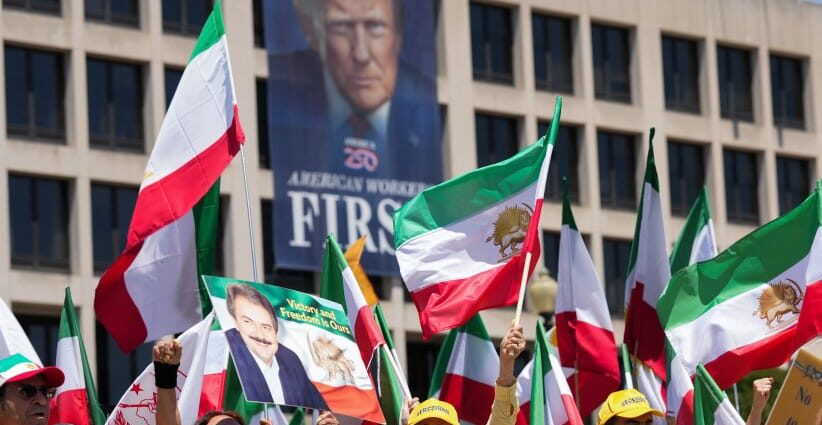
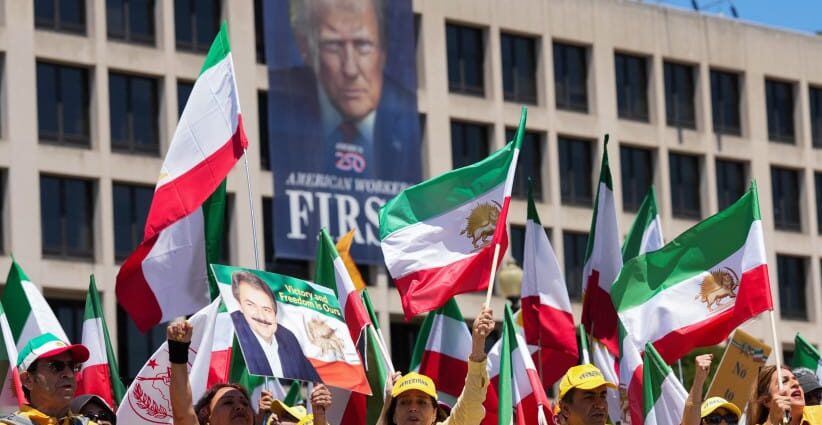
Iranian Americans and supporters of the National Council of Resistance of Iran take part in a march passing in front of the U.S Department of Labor building with a banner with the image of U.S. President Donald Trump, in Washington, DC, US, May 16, 2026. (credit: KEN CEDENO/REUTERS)

“He’s a very good man, he’ll do whatever I want him to do,” Trump said.

The two men spoke again on Friday night. On Saturday, after Trump held a joint call with leaders from the Gulf, Turkey, and Pakistan to update them on the status of the Iran negotiations, Trump and Netanyahu spoke for a third time.

After that call, Netanyahu, who had yet to publicly comment on any emerging deal with Iran, said in a statement that he and Trump discussed the “memorandum of understanding to reopen the Strait of Hormuz and the upcoming negotiations toward a final agreement on Iran’s nuclear program.”

Netanyahu said he and Trump “agreed that any final agreement… means dismantling Iran’s nuclear enrichment sites and removing its enriched nuclear material from its territory.”

He also said Trump “reaffirmed Israel’s right to defend itself against threats on every front, including Lebanon.”

Lebanon fighting continues despite ceasefire

Israel and Hezbollah have continued fighting despite an April 16 ceasefire, struck after the US and Iran agreed to a broader truce.

Israeli troops have remained deployed across a swathe of southern Lebanon, and the military has continued to carry out air strikes targeting Hezbollah, while the terrorists have fired drones towards troops and into northern Israeli towns.

The deal’s emergence comes at a sensitive time for Netanyahu ahead of a national election he is projected to lose. His opponents have criticized him for having failed to achieve his stated objectives in the war.

At the start of the US-Israeli attacks on Iran on February 28, Netanyahu said Israel aimed to create the conditions to topple Iran’s clerical government, eliminate its nuclear and ballistic missile capabilities, and cripple its ability to project power across the region.

Trump gave a final order to launch the Iran operation after Netanyahu argued in a conversation with the US president for their forces’ joint killing of Supreme Leader Ali Khamenei, Reuters has reported. Khamenei was killed in the first strikes.

Israeli and US war objectives have diverged since then, with the US focused on reopening the Strait of Hormuz, which before the war had carried a fifth of global shipments of oil and liquefied natural gas.

In a CBS TV interview this month, Netanyahu stressed that more needed to be done to ensure enriched uranium exits Iran, that it ends its support for regional proxies, and that it stops producing ballistic missiles.

“…there’s work to be done,” Netanyahu said.

This post was originally published on here

US President Donald Trump slammed recent critics of the rumored 60-day ceasefire agreement with Iran, saying people “know nothing about the potential deal I am making with Iran, things that haven’t even been negotiated yet,” in a post on Truth Social on Monday.

“laugh at all of the Dumocrats, RINOS, and Fools… weak and ineffective people,” he wrote, naming Senator Thom Tillis, Bill Cassidy, and Congressman Thomas Massie.

Republican lawmakers and former Trump administration officials have claimed the deal could hand Tehran a strategic victory and undermine the results of the US campaign against the Islamic Republic.

The reported framework, which has not yet been finalized, would extend the current ceasefire for 60 days while further negotiations take place on issues including Iran’s nuclear program and the Strait of Hormuz.

Trump insists his deal will be ‘exact opposite’ of Obama-era JCPOA

“People that have totally lost their way, constantly supporting bad policy and even worse candidates, but are constantly critical of each and every fantastic win I have. These people should go home and rest, they do nothing but create division and loss. In other words, they are losers!” Trump wrote.

“The deal with Iran will either be a great and meaningful one, or there will be no deal.”

Trump also insisted his deal would be “the exact opposite” of the Joint Comprehensive Plan of Action (JCPOA) negotiated by the “failed Obama Administration,” which he said opened a direct path for Iran to attain a nuclear weapon.

Corinne Baum and Jerusalem Post Staff contributed to this report.

This post was originally published on here

Seventy-year-old Israeli chess grandmaster Yehuda Greenfeld, the most decorated deaf chess player in the world, took first place at the World Deaf Chess Championship in Spain this month, winning two gold medals.

Greenfeld’s position has secured him a spot at the 2027 Deaflympics in Austria.

During the tournament, Greenfeld, along with fellow players Saar Yanko and bronze medalist Evgeny Shvetsyuk, competed alongside hundreds of chess players from 43 countries, though several countries withdrew from the event due to Israel’s participation.

View this post on Instagram

A post shared by Israel (@stateofisrael)

Greenfeld holds multiple world championships

Greenfeld’s record includes multiple European and world championship titles, and his name has become synonymous with chess for deaf athletes worldwide.

Before the tournament, Greenfeld expressed hope that the Israeli delegation’s presence in Spain, given the current climate, would help improve relations between the two countries and Europe in General.

“Yehuda is a symbol of willpower, perseverance, and inspiring Israeli representation,” said Jimmy Hatzbani, chairman of the Israel Deaf Sports Association. “Even at 70, he is coming to compete against the best in the world and is not afraid of any opponent.”

This post was originally published on here

At first glance, the strategic rivalry between the United States and China appears nearly absolute. The two superpowers compete over trade, artificial intelligence, military influence, semiconductors, rare minerals, maritime dominance, and the future architecture of the international order.

Yet amid this intensifying competition, there are at least two issues on which Washington and Beijing should, in theory, share a profound common interest: preventing Iran from obtaining nuclear weapons and preventing Tehran from gaining the ability to disrupt the major maritime arteries of the Middle East.

Both issues are deeply connected to Israel and to the broader strategic balance in the region. For the United States, they have long stood at the center of its confrontation with the Islamic Republic. Washington has repeatedly used sanctions, covert action, military deployments, and direct force to contain Iran’s nuclear ambitions and to secure freedom of navigation in the Persian Gulf and the Red Sea.

Less obvious, however, is why China should care just as deeply.

Why China cares

A nuclear-armed Iran would not merely alter the Middle Eastern balance of power. It could embolden radical Islamist movements across Asia, including separatist sentiments among Muslim minorities in western China – a scenario Beijing views as an existential threat to domestic stability. China has invested enormous resources in maintaining tight control over sensitive regions such as Xinjiang, and the emergence of an ideologically empowered Iran possessing nuclear weapons would introduce a dangerous new variable into that equation.

Equally important is the maritime dimension. China’s global economic rise depends heavily on uninterrupted trade routes stretching from East Asia through the Indian Ocean and into Europe. The Strait of Hormuz and the Bab al-Mandab Strait are critical choke points within this network.

Any Iranian ability – whether direct or through proxies – to close these waterways, harass shipping, or impose de facto “tolls” on international commerce would severely undermine China’s Belt and Road Initiative and threaten the reliability of the supply chains upon which China’s export economy depends.

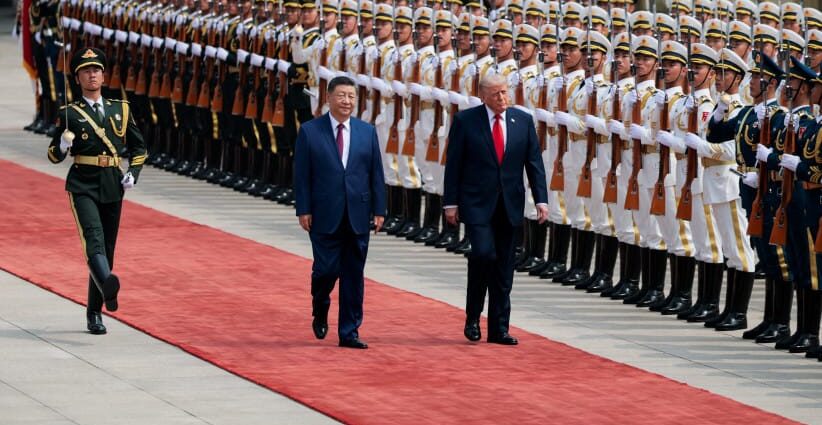
For these reasons, one might have expected last week’s Trump-Xi summit in Beijing to produce a dramatic joint declaration affirming a common determination to prevent Iranian nuclearization and ensure freedom of navigation in the Middle East.

That did not happen.

While US President Donald Trump made strong unilateral statements regarding Iran, Chinese President Xi Jinping avoided publicly endorsing them. Still, diplomacy is often defined less by what leaders say publicly than by what they discuss behind closed doors.

China’s approach to diplomacy

China traditionally avoids direct military involvement in foreign conflicts. It is highly unlikely that Chinese naval forces would join an American-led maritime coalition in the Gulf, just as it is implausible that Chinese bombers would participate in strikes against Iranian nuclear facilities. Beijing’s strategy has always relied on influence exercised quietly through economic leverage rather than overt military intervention.

Yet China possesses enormous behind-the-scenes power over Iran. Beijing remains one of Tehran’s most important economic lifelines. If China chose to restrict arms-related cooperation, reduce strategic investments, tighten financial channels, or quietly scale back economic engagement, the pressure on Iran could become overwhelming. Such measures, even if unofficial, could significantly influence Tehran’s calculations.

But geopolitics never comes free.

If Chinese pressure were ultimately to force Iranian concessions on nuclear weapons or regional maritime aggression, the result would inevitably be celebrated in Washington as a historic victory for Trump and the broader MAGA worldview. Beijing is unlikely to facilitate such an outcome without extracting a strategic price of its own.

And that raises the most intriguing – and controversial – possibility of all: Taiwan.

China’s leadership may calculate that meaningful cooperation with Washington on Iran deserves reciprocal American flexibility on Beijing’s core national objective. It is therefore conceivable that quiet understandings regarding Taiwan’s long-term status formed part of the broader strategic backdrop of the Beijing summit.

History offers precedents. More than three decades ago, British prime minister Margaret Thatcher accepted the transfer of Hong Kong to China under the “one country, two systems” formula. One cannot entirely dismiss the possibility that the US may eventually contemplate a similarly gradual framework regarding Taiwan.

For now, such ideas remain speculative. But in an era of grand-power bargaining, the most consequential agreements are often the ones never mentioned in official communiqués.

The writer is an emeritus professor at the Technion-Israel Institute of Technology where he has served in various leadership positions. He also serves as a member of the board and as a strategic consultant to some companies and organizations.

This post was originally published on here

Israeli police raided a cannabis nursery in Rehovot on Sunday, arresting two suspects and seizing hundreds of plants and tens of thousands of shekels, the police announced on Monday.

The police stated that the operation had come after weeks of investigations, and that the two suspects were thought to have been involved both in growing the drugs and in dealing them from an apartment in Yehud.

Over the course of the raid, police said they seized approximately NIS 25,000 in total from both the nursery and the apartment. Also seized were over 400 marijuana seedlings, around 7.3 kg. of plant matter suspected to be cannabis, and around 1 kg. of substance suspected to be hashish.

The two arrested suspects, aged 39 and 42, are residents of Yehud and Kiryat Ono. They were interrogated and imprisoned, and the police are expected to request an extension of their detentions in court.

Police arrest two in massive Bat Yam drug seizure

Last week, Israel Police seized cocaine, crystal meth, ecstasy, ketamine, hallucinogenic mushrooms, and tens of thousands of shekels divided into portions in Bat Yam.

Two suspects, aged 52 and 28, were arrested in the seizure, after Bat Yam Police officers and Tel Aviv District’s Light Rail Unit detectives searched two addresses in the city.

Corinne Baum contributed to this report.

This post was originally published on here

A Gaza flotilla participant and well-known New York City anti-Israel activist said on Sunday that the primary objective of the blockade run on Gaza last week was not to deliver humanitarian aid, but to confront the Israel Defense Force (IDF) and draw attention to the Palestinian cause.

In a Palestinian Youth Movement NYC Instagram video, Adalah co-vessel organizer Rosa Martinez said that the goals of the April and May flotillas had been misrepresented in the media as “some sort of humanitarian aid mission.”

“I think that’s kind of flattening what it is that we’re doing. Yes, there is aid. The aid that we have isn’t sufficient to the structural issues in a post ‘ceasefire’ Gaza,” said Martinez, who is also known by the forename Rudy, said upon his return to the United States. “For me, as someone who, I think at this juncture in history, is very wedded to direct action, I feel like directly confronting the Israeli occupation forces [IDF] at sea as we try to break this 20-year genocidal siege… is a historic responsibility.”

Martinez continued that for him the priorities of the activist mission were “engaging with the IOF directly, putting the spotlight back on Gaza, ’cause it has fallen off the headlines.”

The activist also argued that the effort opened his movement to expanded tactics.

Martinez, who was arrested on May 18 when his vessel was interdicted by Israeli naval forces along with 54 other Global Sumud Flotilla ships, said that his four-day detainment was a “waking nightmare,” but argued that it was a fraction of what Palestinians endured.

Flotilla activist faces criminal charges for protest activity

The activist is no stranger to arrest for his activism, having participated in the City University of New York protest encampments, which the New York Post reported in 2024 caused $3 million dollars of damage.

Martinez is one of the so-called CUNY 8, who faced a series of charges including burglary in the third degree, criminal trespass in the third degree, criminal mischief in the fourth degree, and possession of burglar’s tools.

“The Palestinian resistance wanted to put more pressure on the Zionist entity and its American ally. Every public and private college in the US has money in Israel,” Martinez said in an interview last February with Al Fida’i. “I have zero regrets. I would do everything the same, with the same people.”

Gaza activist calls October 7 ‘one of the greatest days of my life’

Martinez is also well known for his confrontation with pro-Israel influencer Rachel Herman in December 2023, in which he described the October 7 Massacre as “one of the greatest days of my life.”

“One of the greatest days in the history of decolonization,” Martinez said while wearing a Popular Front for the Liberation of Palestine pin.

This post was originally published on here

Representatives of IDF personnel stationed in southern Lebanon contacted fishermen on the Sea of ​​Galilee over the past week, asking to purchase or receive donations of fishing nets to bolster defenses against the threat of Hezbollah drone attacks, according to a Sunday report by Israeli public broadcaster KAN News.

The effort was reportedly a personal initiative from soldiers in the field, and was not part of an organized procurement process for the IDF or the Defense Ministry, KAN noted.

In recent weeks, soldiers have used various methods to contend with the threat, including shade nets, soccer nets, and fishing nets. However, not all types of nets are effective against explosive drones.

The IDF is reportedly working to create a uniform standard of defense against the drone threat, according to KAN, while also placing an organized order for nets to be installed on buildings, vehicles, and protected positions.

Yonatan Shalev, who will run in the upcoming elections with Naftali Bennett’s Together Party, commented on the report, saying, “As someone who almost died a few days ago from an explosive drone strike on the building where we were staying in Lebanon, I am ashamed to read such a report, and am forced to admit that it is true.”

“I am ashamed that no one here is learning from mistakes, and mainly worried about what will happen in the next round in a few days,” he added

Menahem, a veteran fisherman from the Galilee area, told KAN, “Those trying to solve the problem do not understand how to properly manage this issue.” 

He also added that he personally knows groups that have a large supply of fishing nets.

“Kibbutz Ein Gev wants to help. If they want fishing nets, they should contact me, and we will find a solution.”

“This is to save lives and help the IDF,” Menahem added. “The Ein Gev fishermen always do this.”

Hezbollah’s growing drone threat

Hezbollah Secretary-General Naim Qassem recently praised the organization’s first-person view (FPV) drones, claiming they made Israeli forces “dizzy.” 

He also highlighted several recent drone attacks on IDF soldiers during a speech on “Resistance and Liberation Day,” which commemorates the IDF’s withdrawal from southern Lebanon on May 25, 2000.

This past Saturday evening, the IDF announced that Staff-Sgt. Noam Hamburger was killed by an explosive drone strike near the Lebanese border. 

On Wednesday, Col. Meir Biderman, the 401st Brigade Commander, was severely wounded in another explosive drone attack. The IDF stated that he would be temporarily replaced by the brigade’s current chief of staff, Col. (res.) H. 

In the same incident, a reservist officer sustained moderate injuries from another drone strike, while a non-commissioned officer was lightly wounded. In total, at least seven IDF soldiers were injured by drones on Wednesday.

James Genn contributed to this report.

This post was originally published on here

The Home Front Command has developed the capability to issue advanced warning for attacks launched from Lebanese territory, N12 News reported on Sunday.

The window of preparation provided by the new advanced warning will vary by the geographic area targeted by the attacks, and the system is expected to be implemented within the next few days.

In March, Home Front Command Chief Maj.-Gen. Shay Klepper informed local authority leaders that the issue of warning time for Lebanese attacks is of significant concern to him, N12 reported.

He stated, “There are areas under investigation; we need to reassess our strategy,” adding that, “If we can provide more time, we will.”

At the time, Klepper also announced that he had convened a team of experts to investigate solutions for extending the warning time

Later that month, he also stated that the time window from the moment a siren sounds to when residents need to take cover in areas adjacent to the Lebanese border would be extended.

Siren time extended for northern Israeli communities

Earlier this month, Klepper announced again that the siren time would be extended further for several northern Israel communities.

“The move is part of an orderly, responsible process based on accumulated experience,” he stated. “The extension of the times is intended to enable optimal preparation in times of emergency, thereby strengthening the level of security and protecting the lives of residents.”

The warning time had already been extended since the start of Operation Roaring Lion and the IDF’s intensified counterterrorism operations in southern Lebanon.

On Tuesday, the Home Front Command announced that it is updating the warning system on its mobile phone and smart TV applications, aiming to clarify the type of event and issue clearer instructions.

The new security guideline system on HFC’s applications will include a dedicated color system, an icon, and an instruction, depending on the type of warning, among other changes. The color system follows a “traffic light” style of Red, Yellow, and Green alerts.

James Genn contributed to this report.

This post was originally published on here

In hindsight, from the moment that Israel partially lost the US’s backing for the war over the invasion of Rafah in May 2024, it became inevitable that the International Criminal Court would go after some Israeli officials regarding the conduct of the war with Hamas.

The ICC Prosecutor’s office had been threatening to do so since only a few weeks into the war, as soon as Israel started its large counter-strike bombing campaign and invasion of northern Gaza.

But it was not inevitable that the ICC Prosecutor would go after Israelis relating to the settlement enterprise and Betzalel Smotrich.

All prior war crimes tribunals have been for genocide, crimes against humanity, and general mass intentional killing.

They have not prosecuted people or officials for building houses, let alone in disputed territories (meaning where the houses being built could be recognized, even by the UN, as legal if the Israeli-Palestinian conflict ended with an agreed-upon split of the West Bank).

Betzalel Smotrich has made many highly problematic statements that could be construed as incitement against Palestinians.

But he has no direct power over the IDF in the way that Prime Minister Benjamin Netanyahu and former defense minister Yoav Gallant (the ICC has issued arrest warrants for both in 2024) or top IDF generals have had.

There is no real viable case under the ICC’s own Rome Statute against Smotrich for the conduct of the IDF war in Gaza.

In contrast, Smotrich can be held accountable for Israeli settlement policy in the West Bank.

He has not only been a Minister in the Defense Ministry for handling settlement policy, but has both directly and indirectly pushed through a revolution of new settlements and outposts in the West Bank, some of which have been totally legitimate, but some of which have led to controversial evictions of prior Palestinian residents.

Usually, the process does not involve the IDF bulldozing Palestinian residential structures, though that does happen in two main cases: It happens occasionally in areas where the military says Palestinians built new structures without permits, or in order to counter a wave of terror from a specific area where IDF Central Command determines that it cannot secure the area without removing some structures occupying the adjacent high ground (a subset of this is demolitions of terrorist houses, but that is usually only one at a time and not a neighborhood.)

Both of these cases can be considered problematic.

When the IDF in recent years issued new permits for Jews in the West Bank and did not for Palestinians, how can Smotrich complain when Palestinians lose patience and build illegally on barren, unoccupied land? While there could be some logic to temporarily commandeering certain residential structures to put down a temporary terror wave, can Smotrich and some Israeli military officials truly justify utterly destroying a neighborhood or a large swath of Palestinian trees and greenery as proportional against such a temporary terror wave?

But problematic as some of these actions may be, they have either legal or security logic to them, making it very difficult to criminalize them.

ICC likely to persecute Smotrich over settler violence

Rather, the ICC’s latest case against Smotrich is likely about the unofficial space he has created in allowing several hundred or more anarchists (the name the IDF has given them) to intimidate and burn Palestinians villages and agriculture in certain areas to make it easier for certain extremist Jews to seize those areas by force, also unofficially.

Typically, there will be a weak and somewhat isolated Palestinian village or agricultural area, which some Jewish extremists will target by deliberately building a new “farm” nearby with no authorization from the IDF.

Over time, the Jewish farmer or some associates will engage in a series of attacks on the nearby Palestinians.

Under the influence of Smotrich and, of course, National Security Minister Itamar Ben-Gvir, Israeli authorities have either avoided or been weakened enough to be unable to stop large amounts of these activities (although there are occasions when they succeed at stopping them and arresting some Jewish extremists).

 (From R-L) Finance Minister Bezalel Smotrich, MK Zvi Sukkot, MK Limor Son Har-Melech, Settler activist Daniella Weiss, attend a Gaza settlement conference at the Knesset, July 22, 2025. (credit: Chaim Goldberg/Flash90)

This is one area of focus of the ICC where Israel could have a real problem.

ICC aiming at Israeli settlement enterprise

But again, this is not the main issue.

The main issue is that the mix of these worsening trends may have finally led the ICC to feel that the entire settlement enterprise is within its reach after nearly 25 years in which it left such battles to purely theoretical advisory opinions of the International Court of Justice (ICJ).

The ICJ has ruled against Israel’s settlement enterprise multiple times, but without any teeth or mechanism for enforcement, since the US has blocked any real concrete movement on the issue at the UN Security Council.            

But the ICC is not bound by the UN Security Council and has enforcement powers.

In other words, seeking an arrest warrant against Smotrich could be the beginning of a Pandora’s box in which Jews living in the settlements eventually come under the same scrutiny for traveling the world and doing global business that some IDF officials have come under.

In the past, The Jerusalem Post has interviewed NGO officials who also talked about criminalizing Israelis living within the Green Line who provided utilities and other services to West Bank settlements.

Around 125 countries, including most of the West, are members of the ICC.

Smotrich could be the ICC poster boy for criminalizing the entire Israeli-Palestinian conflict, which would also put Jerusalem at a distinct disadvantage in any future talks about setting borders, however distant such talks might seem at this moment.

What should Israel be doing about it?

First, the legal, diplomatic, and public relations battles regarding the IDF and regarding the settlement enterprise can be separate and distinct.

Israel should do all it can to defeat legal charges against its conduct in Gaza by filing jurisdictional appeals, by publicizing the results of its own thousands of probes into its soldiers, and by pressing the ICC diplomatically to find an exit from a battle where it will achieve little.

Yet, the fights over the settlement enterprise will be different.

On the one hand, Israel has an advantage in that such issues have never been prosecuted as war crimes. In addition, there are other similar cases, such as with Turkey in Northern Cyprus, that the ICC has avoided prosecuting, and for which Israel can claim arbitrary discrimination.

On the other hand, the solution to the settlement enterprise problems is as much political and diplomatic as anything else.

When Israel was viewed by the world as not trying to change the status quo and open to peace initiatives, the West did not support the ICC getting involved in the settlement issue, and the ICC stayed out of it.

Trying to bring an ICC case against Smotrich relating to the settlements may be a major stretch in legal terms, but he has created such a problematic global brand that it is more popular internationally than going after IDF soldiers.

Removing him from authority in this area in whatever future government takes over (there are many strong cabinet ministries without West Bank authorities) would be a start.

Returning to peace talks of any kind, however unrealistic and however distant any concessions might be, could also improve Israel’s standing on the issue.

Finally, there is no question that Israel getting a handle on the lawlessness of extremist Jews in the West Bank is of primary importance, not just for blocking ICC intervention, but for Jerusalem to uphold its own rule of law.

Without major changes in Israeli policy in this area, the arrest warrant against Smotrich could be Israel’s darkest legal hour, with cascading consequences the likes of which cannot yet even be fully foreseen.

This post was originally published on here

Prime Minister Benjamin Netanyahu’s testimony in his criminal trial resumed Monday morning at the Tel Aviv District Court building, with his cross-examination continuing in Case 2000, the media-bribery case involving Yediot Aharonot publisher Arnon “Noni” Mozes.

Shortly after the hearing began at its regular time, Netanyahu’s attorneys entered a meeting with presiding judges Rivka Friedman-Feldman, Moshe Bar-Am, and Oded Shaham. Following the meeting, the court said the hearing would end at 1:45 p.m. instead of 4:30 p.m. due to “security-diplomatic schedule reasons.”

Netanyahu was summoned to testify Monday through Wednesday this week, after last week’s testimony was repeatedly shortened or canceled at his request due to security and diplomatic needs, which were presented to the judges confidentially, including in closed meetings and through sealed material.

The prime minister is nearing the end of his testimony, after close to 90 hearings on the witness stand. The prosecution has estimated that only several full days of cross-examination remain, after which Netanyahu’s defense attorney is expected to conduct a shorter redirect examination.

The hearing comes as Netanyahu has yet to publicly respond to President Isaac Herzog’s offer to mediate negotiations toward a possible plea deal.

Netanyahu charged with fraud, breach of trust

Case 2000 centers on conversations between Netanyahu and Mozes, who headed one of Israel’s most powerful media groups. Netanyahu is charged in the case with fraud and breach of trust, while Mozes is charged with offering and promising a bribe.

According to the indictment, despite years of deep hostility between Netanyahu and Mozes, the two held several rounds of meetings between 2008 and 2014. Prosecutors say the two discussed advancing their mutual interests: more favorable coverage of Netanyahu and his family in Yediot Aharonot outlets, and legislative restrictions on Israel Hayom, Yediot’s main competitor, which would have carried major financial significance for Mozes and his media group.

The core of the case is a recorded December 2014 conversation, ahead of the 20th Knesset election, in which prosecutors allege Mozes offered Netanyahu a bribe by proposing a significant shift in Yediot’s coverage in exchange for Netanyahu using his governmental power to advance legislation limiting Israel Hayom.

Prosecutors say Netanyahu did not refuse the offer or end the conversation. Instead, they allege, he continued a long and detailed discussion with Mozes and created the impression that he might use his power as prime minister to promote legislation that would benefit Mozes, even though he did not intend to actually advance the bill.

Both Netanyahu and Mozes deny the allegations against them.

This post was originally published on here

Iran’s Supreme Leader Ayatollah Mojtaba Khamenei is hidden in a secret location with little access to the outside world, US officials disclosed to CBS on Sunday.

According to US intelligence, Khamenei is only reachable through a “labyrinth” of couriers, causing difficulties and delays during the ongoing negotiations between the US and Iran, the officials said.

Even the highest officials in the Iranian government are unaware of his location and are not able to directly contact him.

“This is why you see people saying things like, ‘The supreme leader has agreed to the framework,’ or ‘We’re waiting to hear back on the final deal points.’ Every piece of information he receives is dated, and there’s a lot of latency to his responses,” one official said.

Most Iranian leaders holed up in bunkers

The sources added that the majority of Iranian leaders spend weeks at a time inside fortified bunkers in attempts to avoid being taken out by Israeli and US strikes.

“Watching them try to figure out how to talk to each other is almost like watching a sitcom. They are completely exasperated,” one official said. 

Shortly after his ascension in early March, Khamenei was reported by Iranian state media as having been wounded during Israeli-US airstrikes on Tehran amid operations Roaring Lion and Epic Fury.

A person familiar with the matter told The Jerusalem Post at the time that Khamenei remained capable of carrying out his duties and managing state affairs.

By mid-April, three people close to his inner circle were telling Reuters that Khamenei was still recovering from severe facial and leg injuries that he suffered in the February 28 airstrike that killed his father and predecessor, Ayatollah Ali Khamenei.

However, the sources pointed out that Khamenei remained “mentally sharp” and continued to participate in meetings with senior officials via audio conferencing.

Amichai Stein and Reuters contributed to this report.

This post was originally published on here

The best deal the US and Iran could reach on the nuclear issue may resemble the Joint Comprehensive Plan of Action (JCPOA) reached during the Obama administration, former senior defense official and Iranian nuclear expert Avner Vilan warned in an interview with 103FM on Monday.

“At best, we will get an agreement like Obama’s deal (the JCPOA). There is a period in which the Iranians do not advance toward a nuclear weapon and are under supervision, which is fine,” he said.

“But regarding ballistic missiles, what we hit, we hit. They were not part of the agreement, and the Iranians will be able to take the money they receive and build themselves up.”

According to Vilan, emerging contacts between the United States and Iran could produce only a partial agreement, one that reopens the Strait of Hormuz, eases pressure on Tehran, and pushes the nuclear question to a later stage.

Israel is closely watching the possibility of an interim arrangement, particularly amid reports that Iran could reopen the Strait of Hormuz as part of a broader understanding with Washington.

“As it appears, the most urgent issue is reopening Hormuz. The Iranians need pressure relief,” Vilan said.

He said the reported framework could include the release of Iranian funds held in the West, followed by a 60-day period in which talks would begin on the nuclear program. Iran would then either accept or reject a nuclear arrangement that could include the removal of enriched uranium, in exchange for the lifting of US sanctions.

“That is the best result they could receive,” Vilan said. “If and when they reach that point, the regime will survive for a very long time because it will have a continuing economic oxygen line. Nobody is talking about the missiles or the proxies.”

Vilan warns deal could reinforce Iranian regime

Vilan warned that economic relief could end up strengthening the Iranian regime rather than weakening it.

“Regime change does not look like it is going to happen. On the contrary, we are even strengthening it. It is beginning to receive money,” he said.

Addressing Iran’s 60% uranium enrichment is necessary, but not sufficient for a professionally sound nuclear deal, Vilan noted.

“The 60% is perhaps the most urgent issue and a necessary condition, but it is not enough for a good nuclear agreement from a professional standpoint,” he said. “We need to ensure Iran is far enough away from obtaining a weapon.”

That, he said, means ensuring Iran has no nuclear material, that its centrifuges are under supervision, and that it does not have fortified sites where it can conduct industrial-scale enrichment.

“We need to make sure Iran has no path to advance toward nuclear material for a bomb,” Vilan said.

Trump faces three paths with Iran

Vilan said US President Donald Trump now faces three possible paths in dealing with Iran.

The first, he said, is a return to intensive fighting. “He can go back to heavy fighting, hit them hard, but in the end, we will probably return to roughly the same point.”

The second option is a staged agreement, beginning with what Vilan described as “Hormuz for Hormuz,” which could later develop into a nuclear deal. He warned, however, that such a process may stall and leave the sides in an interim situation.

The third option is simply to wait, but Vilan said Trump does not appear interested in that course at this stage.

“We understand that Trump does not want to wait right now,” Vilan said, citing pressure over oil prices, Gulf states’ concerns over instability, and the possibility that Iran could wait out the current US administration.

Vilan warned that the situation could shift quickly and that time may not be working in Israel’s favor.

“Time is not necessarily on our side,” he said. “It is possible that in another 24 hours, we will have a completely different conversation about a return to fighting.”

This post was originally published on here

Around 20 people were injured in Japan after a man sprayed an unidentified substance into the Ginza Six luxury shopping mall in Tokyo, AFP reported on Monday.

At least two people on stretchers were put in an ambulance after the attack, an AFP reporter witnessed, although the public NHK broadcaster reported that the injuries appeared to generally be light.

“By the time I arrived, the commotion had already started, and I thought there might have been a small fire or something,” a 70-year-old woman who was at the mall told NHK.

She had approached an ATM on the ground floor, where the man was said to have sprayed the substance, when she felt her throat start “stinging and hurting,” describing it as feeling “scratchy, almost numb.”

Police investigating mall spraying incident

The road in front of the mall was blocked off following the incident, although shoppers continued to enter and exit the mall using side entrances.

A firefighter at the scene said that police are investigating the incident.

This post was originally published on here

A Royal Air Force jet carrying British Defense Secretary John Healey had its signal jammed after it flew past the Russian border last week, The Times reported on Sunday.

Healey was returning from a visit to British soldiers stationed in southeast Estonia.

Alongside Healey, several political and military advisers, a lieutenant-general, two photographers, and a Times reporter were on board the flight.

The Times added that at the moment, it is unclear whether Healey was deliberately targeted.

According to the Times, the attack disabled the jet’s GPS for the remainder of the three-hour return flight. 

Without shutting down and rebooting the jet completely in order to restore satellite signal, which is impossible to do while in the air, the pilots were forced to rely on “revisionary inertial navigation systems to calculate their location.”

The jam reportedly caused parts of the cockpit’s dashboard to malfunction as well. 

One of the pilots described the matter to the Times as a rare incident that he hadn’t experienced “in a long time.”

Similarly, a defense source told the Times that the incident was a “reckless” move by Russia that had the potential to disrupt a civilian plane.

The RAF is “well prepared to deal with this,” the source added.

Russian fighter jets intercept British RAF planes over Black Sea

The incident comes only days after UK defense authorities disclosed that Russian fighter jets had on multiple occasions carried out dangerous interceptions of RAF reconnaissance flights in international airspace last month.

The interceptions risked a collision in what Healey had described as “dangerous and unacceptable.”

In the first engagement, a Russian Su-35 fighter jet came close enough to the aircraft, triggering its emergency systems and disabling its autopilot, and a Su-27 in a second engagement conducted six passes directly in front of the aircraft’s nose at roughly six meters.

According to the British Defense Ministry, this was the most serious interaction between Russian and British aircraft since 2022, when a Russian fighter released a missile near an RAF surveillance plane over the Black Sea.

Jerusalem Post Staff contributed to this report.

This post was originally published on here

Israel Police arrested a Kiryat Ono resident on Sunday, a senior and well-known floor gymnastics trainer, on suspicion of serious sexual offenses committed against a 22-year-old woman over several years, beginning when she was only 12 years old.

Police opened an investigation three days earlier after receiving a complaint concerning suspected sexual offenses committed against the young trainee.

As part of the investigation, and after collecting evidence and findings, the 51-year-old suspect was arrested Sunday morning in accordance with a court order.

The coach was questioned on suspicion of rape, indecent assault, extortion by threats, and solicitation of a minor. At the end of his questioning, the suspect was jailed.

Coach suspected of sexual crimes against victim’s sister

The complainant also claimed to investigators that the suspect committed sexual offenses against her 20-year-old sister as well. Police are currently examining the allegations as part of the ongoing investigation.

At the same time, the suspect’s wife, 48, was also questioned on suspicion of conspiracy to commit a crime and was later released.

Police are expected to bring the suspect to a remand extension hearing at the Tel Aviv Magistrate’s Court on Monday morning, while also requesting that he be barred from practicing his profession.

This post was originally published on here

Dozens of haredi (ultra-Orthodox) protesters attempted to storm the Oz military police station in Jerusalem after a suspected IDF deserter was arrested overnight between Sunday and Monday, Israel Police said.

The protesters gathered outside the station, the police stated, causing chaos and damaging the tires of three police cars.

Officers from the station, as well as members of the police’s Special Patrol Unit and Border Police officers, prevented the protesters from entering and dispersed them “through the usage of force and by means of dispersal of demonstrations.”

One Border Police officer was lightly injured during the altercation, the police said.

“The Israel Police views seriously the inappropriate behavior of the rioters, who arrived at the scene with the aim of causing damage and disrupting the activities of the forces,” the police stated, “And therefore the police acted decisively, with zero tolerance and a heavy hand against any manifestation of violence and violation of public order, in order to maintain law and order.”

Democrats party leader Yair Golan blamed Prime Minister Benjamin Netanyahu’s government for the altercation, claiming that it was a result of its “policy of evasion.”

“While our finest sons and daughters risk their lives on the front lines, the coalition provides tailwind to violent lawbreaking by deserters,” he stated in a post on X/Twitter.

“The rule of law must be enforced with an iron fist, and anyone who raises a hand against the security forces belongs behind bars and bolts.”

Jerusalem haredi groups plan Tuesday protests

On Sunday, members of the anti-draft Jerusalem Faction (Peleg Yerushalmi) hung posters inviting the community to a series of protests scheduled in Jerusalem for Tuesday.

The protests are due to last “from the early hours of the morning for all the hours of the day,” and target both IDF recruitment and the imprisonment of haredi deserters and draft dodgers.

“All those whose feet stood on Mount Sinai will be there at the demonstration of rage,” the posters declared.

This post was originally published on here

Sgt. Nehoray Leizer was killed in battle while fighting in southern Lebanon, the IDF announced early Monday.

Leizer, 19, from Eilat, served in the 601st Combat Engineering Battalion in the 401st Armored Brigade, the military said. His family has been notified.

According to initial assessments, Leizer was killed by an explosive drone launched by Hezbollah.

An additional soldier was severely wounded during the incident and was evacuated to the hospital for treatment. His family has been notified.

On Saturday, the IDF announced the death of Staff Sgt. Noam Hamburger, who was killed by an explosive drone strike near the Lebanese border. 

Hamburger had served as a technology and maintenance soldier in Battalion 9 of the brigade. 

During the incident in which Hamburger fell, another IDF soldier was severely wounded, and a non-commissioned officer was lightly wounded.

401st Brigade Commander severely wounded

On Wednesday, 401st Brigade Commander Col. Meir Biderman had been severely wounded in an explosive drone strike. The IDF said he would be temporarily replaced by the brigade’s current chief of staff, Col. (res.) H.

In the same incident, a reservist officer was moderately wounded by another explosive drone impact, while a non-commissioned officer was lightly wounded.

This is a developing story.

Amir Bohbot contributed to this report.

This post was originally published on here

There is a familiar temptation in Washington whenever talks with Iran begin to move.

Declare progress. Lower the temperature. Find a formula. Announce a framework. Move on to the next crisis.

That temptation is understandable. Americans are tired of Middle East wars. Markets want the Strait of Hormuz open and energy prices stable. Diplomats want signatures. Presidents want deliverables.

A piece of paper that promises calm can look like statesmanship after months of conflict, disruption, and fear of a wider war.

Israel cannot afford to judge Iran by the mood of the moment.

Will Trump’s Iran deal block the threat?

US President Donald Trump said over the weekend that an agreement with Iran had been largely negotiated and was awaiting finalization.

If that agreement leads to the real dismantling of Iran’s nuclear infrastructure, verified removal of enriched uranium, strict inspections, and a durable end to Tehran’s race toward nuclear capability, it would be a major diplomatic achievement.

If it offers sanctions relief, access to frozen assets, reopened ports, and diplomatic normalization while leaving Iran’s core capabilities alive, it would reward Tehran for dragging the region to the edge and surviving long enough to be paid.

That is the litmus test.

The issue is whether diplomacy blocks the threat or repackages it in softer language.

Israel has seen this movie before. The 2015 nuclear agreement was sold to the world as a breakthrough. In Jerusalem, it looked like a dangerous bargain: temporary restrictions, sunset clauses, insufficient attention to missiles, and almost no serious answer to Iran’s regional network of terror proxies.

The debate over that deal was a dispute over time. How much time would Iran gain? How much infrastructure would it keep? What would happen when restrictions expired?

Those questions remain central today.

Iran’s nuclear program is inseparable from its missile arsenal, regional proxies

Iran’s nuclear program cannot be separated from the regime’s ballistic missile arsenal or from Hezbollah in Lebanon, the Houthis in Yemen, militias in Iraq, and the wider machinery Tehran built to surround Israel and pressure the region.

A narrow agreement that freezes one file while funding the rest of the system would create the illusion of progress and the reality of danger.

Washington should therefore make several principles clear.

First, Iran must not receive sanctions relief before verified concessions. Promises from Tehran are not security. Verification is security. Dismantlement is security. The transfer of enriched uranium out of Iran, the closure of pathways to weaponization, and intrusive inspections must come before economic rewards.

Second, no agreement should allow Iran to preserve enrichment as a sovereign trophy. Zero enrichment is the standard that matches the scale of the threat. Anything less risks turning a future Iranian sprint toward nuclear capability into a question of political timing rather than technical possibility.

Third, missiles and proxies must be part of the conversation. Iran’s regional strategy is not a side issue. It is the system through which the regime converts money, ideology, and weapons into pressure on Israel, Arab states, international shipping, and American interests.

Any deal that frees up money while leaving that system untouched will strengthen the very forces that made diplomacy urgent.

Fourth, Congress must see the details. A consequential agreement with Iran cannot be managed through ambiguity, leaks, and celebratory statements.

The American people, and America’s allies, deserve to know what Iran is giving up, what it is receiving, and what enforcement mechanisms will exist when Tehran violates the spirit or letter of the agreement.

Last, Israel must be fully consulted. This is a strategic necessity.

Israel lives with the consequences of Iranian power in a way Washington does not: it faces Hezbollah rockets, Iranian weapons transfers, cyberattacks, and terror plots. A deal negotiated over Israel’s head would weaken trust and invite future confrontation.

Diplomacy backed by pressure can serve the region. Diplomacy funded by illusions will endanger it.

The West cannot buy calm by financing Iran’s next phase. A serious deal must leave Iran weaker, more constrained, and further from a nuclear weapon on the day after it is signed. Anything else would turn temporary quiet into a strategic gift for Tehran.

This post was originally published on here

One week after Noam Bettan came in second place in the Eurovision Song Contest, Noel Curran, CEO of the European Broadcasting Union (EBU), sent an official letter to MK Hanoch Milwidsky, chairman of the Knesset Finance Committee, expressing “deep concern” over a bill currently under discussion regarding Israel’s public broadcasting network KAN.

The bill seeks to abolish KAN’s fixed budget, which is currently established by law, and moves instead to place funding decisions under government oversight. 

In his letter, Curran warned that reducing KAN’s financial autonomy may erode public trust domestically and weaken the global perception of Israeli broadcasting. Such changes could harm Israel’s democratic image and how its media environment is viewed worldwide.

Curran emphasized that Israel’s membership in the international media community and participation in major events, such as the World Cup, the Olympic Games, and the Eurovision Song Contest, rely on maintaining independent public broadcasting.

He highlighted Israel’s recent success in Eurovision as a demonstration of this connection, as it provided positive international visibility for Israel and strengthened its cultural ties to other participating nations.

Curran also expressed appreciation for KAN’s contributions to the EBU, particularly regarding news exchanges with union members and its role in the Eurovision Song Contest.

He stated, “Especially in recent years, KAN has operated under exceptionally challenging circumstances while continuing to provide an essential public service to the audience. Maintaining the conditions that enable independence and autonomy is therefore important not only for the corporation itself but also for preserving the values and partnerships that form the foundation of participation in the international public media community.”

EBU targeting KAN in Eurovision?

Earlier this month, KAN faced international criticism after the EBU accused the Israeli broadcaster of violating Eurovision’s voting rules. They claimed KAN encouraged the public to vote multiple times for Israeli contestant Noam Bettan.

The advertisement from KAN instructed viewers to vote ten times for Israel and provided instructions on how to cast their votes. Following a warning from the EBU, KAN removed the advertisement. However, Israeli Eurovision fans responded to the EBU’s accusations, arguing that Israel was being unfairly targeted.

In a letter to the EBU, fans challenged the allegation that the voting rule was violated by stating, “the EBU’s own voting regulations officially allow viewers to cast up to ten votes per user.”

The public letter also described the removal of the advertisement as unjustified and labeled it “a case of targeted harassment against the Israeli team to appease external political pressure.”

This post was originally published on here

Amid ongoing updates on the progress of negotiations between the US and Iran, top IDF officers confirmed on Sunday that several branches of the military have reduced the number of reserve soldiers in the General Staff’s headquarters.

Some officers received a message that they must remain attentive and alert to any calls to return to service, but do not have to come to the headquarters.

Senior IDF officers claim that, in their assessment, Israel’s political echelon has been excluded from the core of the US-Iran negotiations.

Despite the many updates on a potential deal, it is impossible to know whether there has truly been progress or whether each side is merely trying to pressure the other.

At the same time, the head of Military Intelligence, Maj.-Gen Shlomi Binder, is leading intelligence-gathering and research efforts to build a clear picture of Iran’s Islamic Revolutionary Guard Corps (IRGC) efforts to rebuild military capabilities damaged during Operation Rising Lion and Operation Roaring Lion.

Binder is also making efforts to revalidate the model for warning about developments in Iran.

IDF prepared for potential of Iranian surprise attack

The IDF has not ruled out the potential of a scenario in which the Iranians suspect that the White House may give up on negotiations in favor of resuming attacks on Iran. In which case, Tehran may launch a preemptive surprise attack consisting of ballistic missiles and unmanned aerial vehicles.

Therefore, any unusual activity in the area is being carefully and sensitively examined. At the same time, the task of identifying potential military targets throughout Iran continues.

A senior IDF officer told Walla that despite the fog surrounding the US-Iran negotiations, the IDF is maintaining a high level of alert.

“We are maintaining forces at a high level of alert for a period of days so that if a political echelon decides to renew attacks, we will be prepared to make the transition. At the same time, we are definitely preparing for a surprise attack scenario,” the officer said.

The defense establishment estimated that the current Iranian regime, led by Mojtaba Khamenei, will not compromise on its nuclear ambitions, which it sees as a guarantee for its continued existence. If Tehran decides to compromise on nuclear issues in a deal with the US, it may only be postponing its development the inevitable until after Trump’s presidential term ends.

Concerns regarding Hezbollah inclusion in US-Iran deal

At the same time, another source of concern is that the US president will bend to Iranian pressure and include Hezbollah in the ceasefire agreement.

The defense establishment has strongly opposed this possibility and insisted on separating any agreement with Iran from an agreement with Lebanon on Hezbollah.

A security source declared, “Israel will not compromise on anything less than disarming Hezbollah. Otherwise, they will recover, and we will return to the same point.”

This post was originally published on here

After six years of being overtaken by the rising level of the Sea of ​​Galilee, Gofra Beach’s sulfur spring was finally reopened in mid-May after the water line lowered enough to reveal the mineral-rich pool.

The last time the spring was accessible was in 2020, before rainy conditions caused the Sea of ​​Galilee’s water level to swell and underwater pebbles blocked the spring’s flow.

The spring’s waters have naturally occurring healing properties due to the presence of sulfur and minerals, such as boron, fluorine, and chloride, which are infused into the water deep underground before it bubbles to the surface at a temperature of around 31 degrees.

Gofra Beach offers facilities for visitors to enjoy springs, recreation

Before the spring’s reopening, a small, 20cm deep wading pool was constructed on the beach to allow Gofra Beach’s visitors to enjoy the warm, healing water.

Gofra Beach’s mineral-rich sulfur spring reopened in mid-May after being revealed by the lowering of the Sea of ​​Galilee’s water line. (Credit: Gofra Beach, Kinneret Cities Association)

The pool, which was constructed with permission from the Water Authority, was designed to direct all of the spring’s trickling water into one area.

According to the Kinneret Cities Association, Gofra Beach is one of the most popular beaches on the Sea of ​​Galilee. The 900-meter-long strip of beach has facilities available for recreation and camping, as well as a boating channel.

This post was originally published on here

Experts trying to prevent a tank of hazardous chemicals from exploding in Southern California found a “potential crack” in the container that might be reducing the pressure, a fire official said on Sunday.

Since Friday, officials have warned that the tank, which contains methyl methacrylate, a flammable chemical used in plastics and manufacturing, could rupture and spill up to 7,000 gallons (26,500 liters) of toxic material or explode and endanger other tanks on the GKN Aerospace site.

Evacuation orders were issued on Friday for an area in Garden Grove, a suburb roughly 30 miles (48 kilometers) south of Los Angeles. Tens of thousands of people are covered by the evacuation orders.

TJ McGovern, interim fire chief of the Orange County Fire Authority, said in a video message posted on social media that a team of specialists on Saturday night found “a potential crack in the tank, which could potentially be relieving some of the pressure in there.”

Discovering the potential crack was “positive intel,” McGovern said.

Authorities are still trying to determine whether the possible crack has relieved pressure in the tank, a spokesperson for the Orange County Fire Authority told Reuters. Lowering the pressure could help avert an explosion, he said.

Officials focused on measuring pressure of tank

Although officials for now are focused on measuring pressure, the spokesperson said, the crack eventually could allow authorities to gradually drain the chemicals.

On Saturday, Craig Covey, division chief of the Orange County Fire Authority, said the tank’s internal temperature was increasing by about one degree an hour and had reached as high as 90 degrees. But early on Sunday, EPA Administrator Lee Zeldin told CNN’s “State of the Union” program that local officials were working to stabilize the tank by keeping its temperature under 85 degrees Fahrenheit.

“I’m being told this morning that the most likely scenario is one of a low-volume release, where the local authorities are going to be able to monitor, neutralize, and contain the threat,” Zeldin told CNN.

Crews were preparing for a possible spill by looking for ways to dike, dam, and divert the liquid into a holding area at the commercial site, rather than allow it to reach storm drains, river channels, or the ocean, Covey said.

Health officials have said they ​were concerned that ⁠vapor from the chemical could cause severe respiratory problems with prolonged exposure. Air monitors deployed in Garden Grove were not detecting any chemicals or pollutants on Sunday, the EPA said.

No chemical leak detected

Sensors located around the tank itself have not picked up any chemical leaks in the air, the fire authority spokesperson said.

The Orange County Fire Authority and the Garden Grove mayor’s office did not respond to requests for comment on Sunday. On Saturday, officials said firefighters were exploring whether a heavy flow of cooling water might slow the curing process inside the tank enough to reduce pressure and prevent an explosion.

The incident began on Thursday at the GKN Aerospace facility, which specializes in the manufacturing and testing of windows and canopies for commercial and military aircraft, according to its website.

California Governor Gavin Newsom on Saturday declared a state of emergency for Orange County.

This post was originally published on here

Among the Intelligence Directorate, Izz al-Din al-Haddad was defined as an extremely cautious person, bordering on paranoid. He was someone who did not sleep in the same place twice, who implemented decisions at the front lines of terrorist activity against Israel with obsessive attention to micro-tactics, and who survived for many years while in the crosshairs of the IDF and Shin Bet.

But last Friday, at 7:45 p.m., al-Haddad made the biggest and final mistake of his life.

He emerged above ground to an apartment in the heart of Gaza City to meet his family. He was certain the tentacles of Israeli intelligence would not reach him there. He was wrong.

Now, after the dramatic targeted killing of the man who had become the de facto commander of Hamas’s military wing and the organization’s leader in the Gaza Strip, Walla received an exclusive look into the military intelligence behind the operation.

A dramatic turning point came in the Gaza Strip even before the ceasefire agreement led by US President Donald Trump, reflected by a series of compromises to which Hamas’s leadership agreed.

The dramatic turning point in the Gaza Strip, as it was marked in the IDF Intelligence Directorate, was reflected in a series of compromises to which Hamas’s leadership agreed. This was even before the ceasefire agreement led by US President Donald Trump, and came as a direct result of the massive pressure the IDF exerted on the ground.

Massive military pressure exerted by the IDF on the ground matured into the return of all living hostages and hostage remains to Israel, alongside agreement on the principles of the American framework, which included the reconstruction of the Gaza Strip and the IDF’s withdrawal from deep inside Palestinian territory, subject to Hamas’s disarmament.

According to a Military Intelligence assessment, under the command of Maj. Gen. Shlomi Binder, Hamas was very weak at the time, with a shaky hold on Gaza. That is why it agreed to a shift that stood in complete contrast to the previous policy and plans of its senior leadership.

That is not the situation today. Hamas succeeded during the ceasefire period in expanding its base of support on the Palestinian street in Gaza, and has defined it as “stable.”

‘The Izz al-Din al-Haddad file’

At the same time, Military Intelligence emphasizes that the threat from the Gaza Strip has decreased dramatically, thanks to the IDF’s achievements and the insistence of Southern Command chief Maj. Gen. Yaniv Asor on maintaining those gains through targeted killings and proactive operations, with the assistance of Military Intelligence units and based on the deployment along the Yellow Line.

Therefore, when examining Hamas up until last Friday at 7:45 p.m., moments before the targeted killing, Military Intelligence saw al-Haddad as Hamas’s most important and central figure in terms of leadership, military affairs, diplomacy, governance, and familiarity with Israel.

To look inside al-Haddad’s file in Military Intelligence, Walla spoke this week with a 35-year-old officer holding a sensitive position in the Intelligence Directorate.

He began his IDF service as a combat soldier, advanced through the ranks, was discharged, and later returned to service because that was what felt “most meaningful, and what interested” him.

Along the way, he held positions in the Planning Directorate before moving to the Intelligence Directorate. In the past, he dealt with the northern arena. Over the past two years, among other things, he has researched and examined Hamas’s activity in depth across all arenas, not only in the Gaza Strip, but also in Judea and Samaria, Lebanon, Turkey, and elsewhere.

“Izz al-Din al-Haddad is from the generation of commanders who carried out the October 7 massacre. He filled all the most important roles that could be filled along his path, but certainly and certainly throughout the war. In the end, he was the Gaza brigade commander, which is the largest and most significant brigade in Hamas,” said the officer holding the sensitive position in Military Intelligence.

Referring to the narrative that formed around the arch-terrorist in Israeli public discourse, and to his attitude toward the hostages, the officer added, “in the end, it really came from a very, very utilitarian place. It must be understood that this was a very mission-oriented person, who took his role very seriously, and as someone who was truly entrusted to a large extent with this issue of the hostages. He saw them as a tool he needed to preserve for Hamas’s interests. Therefore, he also treated them accordingly, so that he could fulfill Hamas’s interests and excel in carrying out his role. He used them both to protect himself, and also to ensure that Hamas would get what it wanted.”

The manhunt for al-Haddad lasted many years. He was in the crosshairs of the IDF and Shin Bet many times, including since October 7. In Military Intelligence, this was defined as a “window for opportunities.”

Hamas terrorists gather during a public event in Khan Younis, Gaza, on February 1, 2025.  (credit: MOIZ SALHI/Middle East Images/AFP via Getty Images)

Military Intelligence rejected the assessment that al-Haddad developed an illusion of immunity or felt too safe because of the ceasefire, and that complacency led to his “big mistake.”

The reality is more complex. The Intelligence Directorate clarified that other senior Hamas officials, who felt no sense of security and were extremely cautious, also ultimately made a critical mistake and were eliminated.

‘In the end, get to everyone’

Ultimately, what led to al-Haddad’s major mistake was his decision to meet his family in an above-ground apartment in the heart of Gaza City.

He believed it was secret and that the details would be kept far from the tentacles of Israeli intelligence. This was despite the fact that intelligence officials had defined him as “very cautious, bordering on paranoid.”

The officer holding the sensitive position added, “In the end, like, we get to everyone. It doesn’t matter how you turn it around.”

A profile that was placed on the desk of the head of Military Intelligence, Maj. Gen. Binder, defined al-Haddad as a high-level leader who was highly influential on several levels. He had a strong ability to divide his attention, was a micro-tactical manager “at the most extreme levels,” and, while doing so, also knew how to make people appreciate and respect him.

Military Intelligence further claimed that this was also how he saw himself: as a senior figure. He was always defined by Hamas’s senior leadership as highly dominant, and it was said that “it did not go to his head” at any stage.

His presence stood out even more in the training sessions that preceded October 7, when he went to oversee their progress together with Raad Saad, a senior figure in the military wing who was eliminated during the war, in what, in hindsight, turned out to be preparations for the massacre.

In addition, he was defined as deeply religious and deeply ideological, even compared with other figures in the organization.

He saw armed “resistance” as the central and only path against Israel. Even if he was prepared to make certain concessions, they were intended to preserve Hamas’s survival and ensure that it would continue to exist.

According to the officer holding the sensitive position, if al-Haddad could have, he would have carried out October 7 again with the same level of cruelty that he himself planned.

When al-Haddad took control of the military wing, he pushed with full force to advance clear processes throughout the Gaza Strip: rebuilding military and governing capabilities, preparing for an Israeli attack, and, as was his habit, drilling down to the smallest details.

He was dominant in his influence and did not for a moment abandon the connection between the political leadership, the broader policy and ideology, and the field.

His evil was reflected in his Military Intelligence file as a highly controlling figure, one who led and approved matters down to the smallest details, including massacres and violence against Palestinian merchants who did not comply with Hamas policy, shooting at clans in the Strip that challenged Hamas, executions in the streets in the name of deterrence, and the pursuit of figures suspected of collaborating.

For the security establishment, his targeted killing was not just another tactical operation, but a critical strategic move aimed at changing the balance of power in the Strip.

Military Intelligence’s updated assessments outline a deep leadership vacuum at the top of Hamas. As of now, there is no figure in the military wing who can enter the role smoothly. Even Mohammed Odeh, who was marked in Palestinian reports as a successor, would struggle to fill the vacuum.

Hamas predicted to continue challenging IDF in Gaza

At the same time, Military Intelligence assesses that Hamas will continue to challenge Israel in the Gaza Strip even after the targeted killing, and that the spirit of resistance will be preserved, even from within the tunnels, safe apartments, and under the heavy pressure exerted by the IDF.

“Hamas is an Islamic military resistance movement. It is deep in its DNA, and even if there is another commander who will be willing to take pragmatic considerations over a short period of time, and even if he is less dominant as a leader, in the end, the ideology is the same ideology,” said the officer holding the sensitive position in Military Intelligence.

The officer noted that within Hamas, there is a belief in the prophecy of Sheikh Ahmed Yassin, who was eliminated by the IDF, according to which the State of Israel will not exist in 2027.

According to Military Intelligence assessments, Hamas will make all kinds of changes and speak about justifications for the claim: why it did not happen in 2027, and will lead the public to 2028 or another year on the calendar.

But this was, and remains, a very deep belief that the Zionist entity and the “occupation,” as Hamas perceives it, “will disappear and be erased from the world.” This perception is reflected in Hamas’s charter, and its leaders say this from every possible platform even today.

Toward the end of the conversation, Walla asked the officer: If his friends outside military service asked him what the most significant impact of al-Haddad’s targeted killing was, what would he say in simple language?

This is what he answered: “Serious organizations need serious leadership, and I think that by getting rid of him, I think there are no other leaders of his stature at the top of Hamas today. I distill it to this, that I think there will be a challenge here in command of the military wing, and there may also be a delay in the processes it is trying to advance, and I think it is truly important that until Hamas disarms, in the end no one is immune, certainly not the commander of the military wing, and I think that has a lot of strategic value,” he clarified, and with that the officer ended the conversation.

This post was originally published on here

In a recent speech on nutrition, the nation’s top health official offered a perhaps surprising explanation for what is ailing Americans. 

“We’re engaged right now in spiritual warfare and… the malevolent forces want to drive us apart and end our connection to each other,” Robert F. Kennedy Jr. said on March 5.

It’s not clear whether Kennedy was speaking metaphorically, given that he had frequently talked about his own spiritual crises over the years. But he was using language many thought was targeted at those who believe that modern science is no match for the unseen “malevolent forces” assailing Americans’ physical and mental well-being.  

According to recent polling, 54% of Republicans and 37% of Democrats believe in the literal existence of demons. A Marist Poll found that the number of Americans who claimed to have actively been in the presence of a ghost or spirit doubled between the 1990s and the 2020s, from roughly 24% to 30%. 

TikTok is awash in tarot readers, crystal healers, astrology influencers, and wellness gurus promising access to unseen forces. Influencers peddle alternative COVID cures and supernatural explanations for current events. Essayists and social sciences are attributing the popularity of the occult, the supernatural, and conspiracy-minded thinking to a rejection of institutional authority. In a period of profound economic and political instability, they suggest that people seek metaphysical answers when official explanations feel insufficient.

But if this all feels very 2026, a new exhibit at YIVO Institute for Jewish Research suggests we’ve been here before.

YIVO exhibit showcases history of Jewish mystic practices

“Jews Are Magic,” opening this month at YIVO’s Manhattan headquarters, explores the Jewish fascination with mysticism, fortune telling, amulets, psychics, and occult practices. While the exhibit reaches back to the biblical and Talmudic periods, its main focus is on the mid-19th to early 20th centuries. In the face of increasing urbanization, oppression in Russia, and the pull of assimilation, Jews in Eastern Europe and New York’s Lower East Side, no less than their non-Jewish neighbors, found solace in the occult. 

“In this time period, when people commonly think that sort of magic is getting left at the wayside and people are becoming more modern, they’re just as engaged with these unseen realities as they were beforehand,” said Samuel Glauber, a specialist on the Jewish occult and adviser to the exhibit. 

And it wasn’t just the huddled masses. Writers, intellectuals, and scientists were fascinated by the supernatural, adding a sheen of respectability to fortune-telling, seances, and what Sigmund Freud called the “uncanny.”

The exhibit includes palm-reading manuals, amulets against the evil eye, fortune-telling guides, and advertisements for Jewish psychics drawn from YIVO’s archives. They promise to help readers and clients find romance, settle lawsuits, and cure illness. One display includes heavily used Yiddish divination books whose margins still contain penciled calculations from long-ago readers trying to conjure their futures.

At least in theory, Jewish tradition forbids such practices. The exhibit opens with an admonition in Deuteronomy against consulting with an “enchanter, or a witch, or a charmer, or a consulter with familiar spirits.” Nevertheless, folk religion flouted these prohibitions, and many rabbis went along.

“Officially, these kinds of materials are, at some level, considered unacceptable,” Eddy Portnoy, YIVO’s senior academic advisor and director of exhibitions, said on a tour of the exhibit on Wednesday. “Yet a lot of rabbis participate in this.”

Some of the exhibit’s most poignant artifacts are drawn from a cache of roughly 5,000 kvitlekh, or handwritten petitions, sent to Rabbi Eliyahu Guttmacher, a 19th-century Polish rabbi and mystic known as the “Tzaddik of Grodzisk.” The letters were discovered in an attic in 1932 by YIVO collectors and offer an intimate archive of Jewish anxiety on the edge of modernity.

After Guttmacher reportedly cured a child believed to be possessed by a demon, Jews from across partitioned Poland began writing to him seeking help with illness, infertility, poverty, bad luck, and psychological torment. The letters blur the line between religion, folk healing, and occult practice. Guttmacher’s responses haven’t survived, but a nearby display case includes various spells written by other rabbis, meant to ward off the evil eye and often invoking kabbalah, the Jewish mystical practice that offered rabbis an acceptable foothold in the esoteric.

Hustlers are stars in ‘Jews Are Magic’

The stars of “Jews Are Magic,” though, are the flamboyant hustlers, healers, and self-invented mystics who turned Jewish occultism into performance art and entrepreneurial spectacle.

Among the most colorful is Naftali Herz Imber, best remembered today as the poet who wrote the words that became “Hatikvah,” Israel’s national anthem.

NAFTALI HERZ Imber, before writing the poem that became “Hatikvah,” worked as a clairvoyant known as “The Mahatma” and “The Apostle of the Kabbalah and the Emissary of the 37 Masters.” (credit: YIVO/JTA)

Long before that, however, Imber was touring America in flowing robes as a clairvoyant known as “The Mahatma” and “The Apostle of the Kabbalah and the Emissary of the 37 Masters.”

Imber’s career as a clairvoyant eventually collapsed into alcoholism, bar fights, and arrests, but his wit apparently never deserted him. Thrown out of a Zionist congress for bad behavior, he reportedly shrugged and said: “They still have to sing my song.”

Another standout is Khayem-Mordkhe Shiller-Shkolnik, perhaps the closest thing prewar Poland had to a celebrity psychic.

Born in a shtetl near Lublin in 1874, Shiller-Shkolnik fused occultism with the language of modern science and self-improvement. He advertised expertise in hypnosis, telepathy, handwriting analysis, phrenology (skull-reading), and “psycho-phrenology,” a discipline of his own invention.

Glauber, the Miriam Barr Librarian for Jewish & Near Eastern Studies at Washington University, said practitioners like Shiller-Shkolnick took advantage of the burgeoning market for mass-market periodicals and books to become their era’s influencers.   

“He was a master of press advertisement,” Glauber said. “The amount of coverage he was able to generate for himself was really incredible.”

On the Lower East Side, celebrity psychic Abraham Hochman operated out of 169 Rivington Street, where he dispensed prophecies, published manuals, and built a small business empire that included custom wedding contracts, a wedding hall, and a Catskills hotel.

YIDDISH ADVERTISEMENT for Professor Abraham Hochman’s Clairvoyancy services. Reprinted in ''Der shlisl tsu der nevu’e'' (''The Key to Prophesy'') 1909. (credit: YIVO Institute for Jewish Research)

Hochman specialized in finding runaway husbands – a genuine social crisis in immigrant Jewish New York.  

In one celebrated case, Hochman told a woman exactly where and when she would find her missing husband: on the corner of Pitt and Grand Streets at 10 p.m. She arrived with a police officer and found the man leaning against a lamppost precisely where Hochman “predicted.”

Portnoy acknowledges that many such stories are almost certainly exaggerated or invented. But that, he says, misses the point.

“These people are having real problems, and they haven’t had solutions,” he said. “Having tried other things, they finally decide to approach these wonder workers who can work their magic.” 

The exhibit’s most tragic figure may be Erik Jan Hanussen, born Herschel Steinschneider to a Jewish family in Vienna. Reinventing himself as a Danish aristocrat and celebrity clairvoyant, Hanussen became one of Europe’s most famous hypnotists during the Weimar years, hosting lavish séances and publishing a newspaper called The Clairvoyant News.

By the early 1930s, he had insinuated himself into Nazi circles and allegedly befriended members of the SS. Communist journalists exposed his Jewish origins, and Hanussen’s body was later found dumped by the roadside, apparently by the very movement he thought he could manipulate.

Modern Jews maintain connections to occult practices

It is tempting to treat these stories as colorful relics of an immigrant past – quaint tales of gullible Jews and charismatic hucksters. But “Jews Are Magic” insists on something more unsettling: The allure of the occult never disappeared.

The Hasidic press continues to carry advertisements for spiritual healing, and Sephardic Jews in Israel have an ongoing tradition of seeking help and protection from wonder rabbis.

And both Glauber and Portnoy see a poignant similarity between the Yiddish-speaking amulet-makers and Jewish fortune-tellers and today’s wellness influencers and conspiracy mongers.

“Anytime people feel the pressure of the world, this is something they always turn to,” he said. “Because it’s entertaining, but it also provides a hopeful window into something else.”

Jews Are Magic: Occult Practices from Palmistry to Professional Psychics opens May 26 at the YIVO Institute for Jewish Research, located at the Center for Jewish History in New York City.

This post was originally published on here

“I don’t think I would change a thing,” said Beitar Jerusalem captain Yarden Shua after the curtain came down on the 2025/26 Israeli soccer season, one that ultimately ended with Hapoel Beersheba atop the table, three points clear of Beitar after a gripping title race that stretched from the opening weeks until the very end.

The Southern Reds were the better team over the course of the campaign and delivered results in the moments that mattered most. Ran Kozuk’s side took eight out of a possible 12 points in four meetings with Beitar, winning once at Turner Stadium and once at Teddy Stadium during the regular season before drawing both championship playoff clashes. Each time Beitar climbed into first place, Beersheba responded with the composure and consistency of a champion to reclaim control of the race.

There were certainly other matches that haunted Beitar along the way, including a pair of draws against relegated Ashdod, a home draw with Hapoel Haifa, and a damaging 3-0 loss at Maccabi Haifa late in the season. But the reality was simple: if you want to be champions, you have to beat the champions, and Beitar managed only two points against Beersheba all year.

The championship playoffs became a sprint after the ceasefire in the Iran war allowed the league to resume at full speed, with teams playing every three or four days for over a month. In the end, it was survival of the fittest, and Beersheba proved to be exactly that. Kozuk’s club had the depth, experience, and quality needed to withstand the pressure of a title chase, especially after narrowly missing out last season.

The southern side also possessed arguably the league’s most valuable player in Kings Kangwa, whose knack for producing decisive moments repeatedly tilted matches in Beersheba’s favor. Whether it was Igor Zlatanovic leading the line or Javon East coming off the bench to change a match, Beersheba had options few teams in Israel could match. Players such as Ofir Davidzada, Roi Levy, and goalkeeper Ofir Marciano provided critical depth and experience whenever called upon.

That depth ultimately separated the clubs. Beitar had key contributors throughout the campaign, but injuries and a thinner bench eventually took their toll. Roie Elimelech admirably stepped in for the injured Nana Antwi during the title race, while Dor Hugi delivered several huge performances, including a dramatic win in Petah Tikva earlier in the season. However, when midfielder Adi Yona went down injured, Beitar clearly lost an important piece of its puzzle.

Beitar leaps forward under coach Itzhaki, director Cohen

Despite falling short, Beitar’s season represented a massive step forward for the club under head coach Barak Itzhaki and sporting director Almog Cohen. Together, the pair transformed into a legitimate contender and restored belief among supporters that the club could once again compete at the top of Israeli football.

Itzhaki deserves enormous credit for building a side that not only challenged for the title but played an exciting brand of football throughout the year. Cohen’s work in assembling the squad was equally impressive, particularly with the additions made during the season. Luka Gadrani arrived in late September to strengthen the back line, while Boris Enow, Gonzalez, and Antwi all became key contributors on both ends of the pitch.

At the center of Beitar’s resurgence were Shua and Omer Atzili, whose creativity and leadership carried the club into a title race that few expected at the start of the campaign. The fact that Beitar remained in contention until the final stretch after years away from the summit represented a major achievement in itself.

Now attention turns to the future, and both clubs could see significant changes over the summer. Kozuk and Itzhaki are expected to receive improved contracts after outstanding seasons, but roster turnover appears inevitable. Kangwa is likely to attract strong interest abroad, while Shua could also depart should the right offer arrive from Europe.

Beersheba hopes to welcome back Dan Bitton after his heart issue interrupted his season, though uncertainty naturally remains whenever such health concerns are involved. Beitar, meanwhile, may part ways with several veterans and foreign players, including Dor Micha, Grigori Morozov, Ailson Tavares, Hugi, and potentially either Gil Cohen or Ori Dahan. Gonzalez may also move on, meaning the club will likely need to bring in new foreign reinforcements before next season begins.

Neither side can afford to stand still. Beersheba will need to evolve to defend its crown, while Beitar must continue to strengthen if it hopes to take the final step from contender to champion.

Next season expected to be even more competitive

And next season’s race could become even more competitive. Hapoel Tel Aviv made major strides after earning promotion from the Leumit League, while neither Maccabi Tel Aviv nor Maccabi Haifa is expected to endure another disappointing campaign. Instead of a two-team battle, Israeli football could soon have five legitimate title contenders.

That competitiveness has already fueled unprecedented fan interest across the country. Attendance figures surged this season, with packed stadiums becoming the norm week after week. The quality of play, combined with dramatic title and relegation races, created one of the most compelling seasons Israeli football has seen in years.

For Beitar, planning for next season has already begun. With the title now out of reach, the club has shifted its focus toward building a deeper and more balanced squad while also preparing for European qualification matches in either the Europa League or Conference League, depending on the outcome of the State Cup final between Beersheba and Maccabi Tel Aviv.

Although Beitar still has one league match remaining against Hapoel Tel Aviv, Itzhaki intends to use the opportunity to evaluate players whose futures remain uncertain. Yet even after a season that exceeded expectations, the coach made clear that improvement remains essential.

While Itzhaki admitted he could not identify one specific thing he would have changed this year, he emphasized that growth must always continue regardless of results. Even if Beitar had won the title, he said, the club would still need to improve.

Itzhaki explained that after every training session and every match, he challenged himself to become better, adding that his relationship with Cohen has been central to the club’s progress. The two constantly push one another, creating what the coach described as a healthy environment that benefits the entire system.

Beitar can certainly take pride in what it accomplished, just as Beersheba did last season when it narrowly missed out on the title. But now the Jerusalem club must respond the way Beersheba did – by using the disappointment as motivation to take the next step.

It was a season filled with drama, tension, highs, and lows, one that showcased the growing strength of Israeli football. But before the curtain fully closes, Beersheba still has one final objective: completing the double by defeating Maccabi Tel Aviv in Tuesday’s State Cup final before heading into a short summer break ahead of training camp, which begins again in just a month.

See more Israeli sports coverage at www.sportsrabbi.com/en

This post was originally published on here

It was only natural that as soon as news broke Saturday night of the skeleton of a deal with Iran, the immediate questions were whether it was good or bad, whether it cemented an American or Iranian victory, and what it meant for Israel.

The problem with answering those questions is that the details of the agreement are so sketchy – and changing so rapidly – that any definitive judgment is premature. There is no written document, only media speculation based on unnamed sources about what may or may not be included.

Another complication is that assessments of the agreement are naturally filtered through the prism of politics. Die-hard supporters of US President Donald Trump and Prime Minister Benjamin Netanyahu are portraying the agreement in positive terms, seeing the glass as half-full. Their opponents, meanwhile, are predictably painting the emerging deal as an unmitigated disaster.

Nevertheless, something is clearly on the table. So is it a good deal or a bad one?

According to Trump’s own social media posts, a Memorandum of Understanding is being discussed. According to various reports, the MoU would extend the current ceasefire by either 30 or 60 days.

During that period, the Strait of Hormuz would reopen without tolls, the blockade of Iran’s ports would end, Iran would be allowed to sell oil again, and talks on Tehran’s nuclear program would commence. The ceasefire would also extend to Lebanon, halting the fighting there.

The New York Times quoted US officials as saying Iran agreed to give up its stockpile of highly enriched uranium. Reuters, however, simultaneously quoted Iranian officials denying any such commitment.

In short, much remains unclear.

What does appear clear, however, is that there is no indication that Iran’s ballistic missile program or its support for regional proxies is part of the agreement.

Does the deal fulfill Trump and Netanyahu’s objectives for the war?

So how should the deal be judged?

One useful way is to measure it against the objectives Trump and Netanyahu themselves laid out when they launched the attack on February 28.

Shortly after the joint US-Israel opening strike – which decapitated much of Iran’s senior political and military leadership within minutes – Trump released an eight-minute video on social media saying the operation’s objective was to “defend the American people by eliminating imminent threats from the Iranian regime.”

More specifically, he declared: “This terrorist regime can never have a nuclear weapon.”

That overarching goal still appears aspirational.

Trump has demonstrated seriousness about preventing Iran from obtaining nuclear weapons. But as of now, there is still no definitive resolution regarding Iran’s 460 kilograms of highly enriched uranium.

Various reports suggest different scenarios: some say Iran will relinquish it, others say it will not. And that says nothing about Iran’s lower levels of enriched uranium, which, if not removed or destroyed, could eventually be enriched to weapons-grade.

In other words, while the war has undoubtedly set back Iran’s nuclear program by years – through the killing of scientists and the destruction or severe damage inflicted on facilities such as Fordow, Natanz, and Isfahan – no one can credibly claim the program has been totally eliminated.

Iranian missile program remains functional

TRUMP ALSO said in that original video: “We’re going to destroy their missiles and raze their missile industry to the ground. It will be totally obliterated again.”

Iran’s missile program has indeed been severely degraded, though intelligence estimates vary significantly regarding the extent of the damage. Still, neither Iran’s missile stockpile nor its manufacturing capabilities have been obliterated.

Initial Israeli estimates and some Pentagon assessments suggested that between 50% and 70% of Iran’s ballistic missile launchers were destroyed or disabled, alongside hundreds of stored missiles.

More recent US intelligence reporting, however, indicates that Iran may still retain up to 70% of its missile stockpile and has regained access to much of its underground missile infrastructure.

Severely damaged? Yes. Obliterated? No.

Trump also vowed: “We’re going to annihilate their navy.”

Again, the reality is more nuanced. The US-led campaign severely degraded Iran’s naval capabilities, with US Central Command reportedly assessing that more than 90% of Iran’s largest naval vessels were destroyed.

Yet Iran still retains significant numbers of smaller, highly maneuverable boats that remain capable of threatening shipping through the Strait of Hormuz.

Trump further said one of the campaign’s objectives was ensuring that Iran’s regional proxies could no longer destabilize the Middle East or the wider world.

That objective, too, remains unmet and was left out of the agreement.

While Hamas is still reeling from Israel’s post-October 7 offensive, and the Houthis have remained relatively quiet, Hezbollah continues firing on Israeli forces in southern Lebanon and on Israeli communities near the northern border. Iran has also made clear that any end to the war with Iran must include an end to the fighting in Lebanon.

That would be a bitter pill for Israel to swallow.

After October 7, Israel can scarcely tolerate leaving intact an organization committed to its destruction directly on its border. If Israel agrees to end the fighting in Lebanon while refraining from acting against Hezbollah’s efforts to rebuild and rearm, it risks repeating the pre-October 7 mistake of ignoring an enemy openly preparing for the next war.

No regime change in Iran

Finally, Trump addressed the Iranian people directly in that same video: “To the great proud people of Iran, I say tonight that the hour of your freedom is at hand.”

He stopped short of explicitly calling for regime change, though he added, “When we are finished, take over your government. It will be yours to take.”

Well, that has not happened.

Weeks into the campaign, the Iranian regime remains standing – perhaps one of the war’s greatest disappointments for those hoping military pressure would trigger internal collapse.

That does not mean the regime will necessarily survive in the long term. Iran’s severe economic strain could yet drive large numbers of people back into the streets, as happened in January.

But for now, the goal of regime change – articulated far more explicitly by Netanyahu than by Trump – has not materialized, even as Washington and Tehran appear to be edging toward an agreement.

Netanyahu said the joint US-Israel operation would “create the conditions for the brave Iranian people to take their destiny into their own hands.”

At least for now, this agreement does not create those conditions. Not by a long shot.

“My brothers and sisters, citizens of Israel, a short while ago, Israel and the United States embarked on an operation to remove the existential threat posed by the terrorist regime in Iran,” Netanyahu said on February 28.

Now, on the cusp of some kind of agreement between Iran and the US – with Jerusalem in the uncomfortable position of having little choice but to accept whatever Trump decides – it is clear that Iran has been weakened.

Its nuclear program has been set back. Its military capabilities have been degraded. The existential threat it poses has been reduced. But weakened is not neutralized, set back is not dismantled, degraded is not destroyed, and reduced is not removed.

This post was originally published on here

By the middle of last week, senior Israeli officials and their counterparts in the Gulf states had rarely appeared more divided over one question: What will US President Donald Trump decide regarding the war with Iran?

In Israel, the prevailing conclusion was that Trump was going to strike. “It’s not a question of if, but when,” senior Israeli officials said. Israel also raised its level of military alertness in anticipation of a potential attack.

In contrast, the consensus in the Gulf states was entirely different: “President Trump may threaten to strike, but he does not want to attack, and he will find a way to reach an agreement.”

Gulf officials advanced a compelling argument: Trump does not want oil prices to surge to $250 per barrel just months before the US midterm elections for Congress and the Senate in November. Avoiding a regional energy crisis, they argued, would remain a top priority.

As of Sunday, it appears that the Gulf officials were right.

Over recent weeks, leaders across the region – from the Gulf states to Israel – understood that President Trump had little desire to launch a military attack. However, in Jerusalem, the assessment was that negotiations would eventually reach a dead end, leaving no path to an agreement and making military action inevitable.

The Gulf states viewed the situation differently. Their growing assessment was that even if an attack did occur, it would likely be limited in duration – perhaps significant in scope, but not aimed at toppling the Iranian regime. Such an operation would allow the president to declare victory and move on.

The Gulf countries, meanwhile, understood that they would bear much of the immediate cost. Lacking defensive systems comparable to Israel’s Iron Dome and Arrow missile defenses, they could face missile and drone attacks against critical infrastructure, energy facilities, and water desalination plants.

Some might even be forced to respond directly to Iran. Yet in the end, the Iranian regime would remain in place, and they would be the ones left to deal with it.

Gulf States pressured Trump against attacking

As a result, an informal coalition emerged – from Qatar to the United Arab Emirates – with a clear message for Trump: do not attack.

Some of these countries likely preferred that Trump continue his strategy of maritime pressure and economic sanctions against Iran. But the unifying message was unmistakable: exert maximum pressure on the American president to refrain from launching another military operation against Tehran.

Trump himself made a remark several days ago that has taken on greater significance in recent days: “If there’s a deal that’s good for the Gulf states, it’s good for me as well.” In other words, he had no intention of being more hawkish than America’s Gulf partners.

Under the emerging framework agreement with Iran, all US forces would remain deployed in the region, and Trump would retain the option of striking Iran should it violate the agreement or stall the negotiations.

But if the president was not genuinely interested in starting a war now, despite having no shortage of justifications, why would he choose to do so 60 days from now, on the eve of the congressional and Senate midterm elections?

Besides, there is always another option: he can simply post once again, “The deadline has been extended.”

This post was originally published on here

Hezbollah Secretary-General Naim Qassem denounced the concept of the terror group disarming during his speech on “Resistance and Liberation Day,” which commemorates the IDF’s withdrawal from occupying southern Lebanon on May 25, 2000.

“There is no such thing as exclusivity of weapons or disarming Hezbollah,” he said.

Further, he argued that Hezbollah’s disarmament would remove Lebanon’s “defensive capability, and the capability of the resistance and its people, as a prelude to extermination.”

“Disarmament is extermination, and this is something we cannot accept,” he said.

He also said that Israel’s withdrawal was the “first liberation that took place in the Arab region without an agreement with the Israeli entity.”

He also praised Hezbollah’s first-person view (FPV) drones, which he said made Israel “dizzy,” while listing several attacks on IDF soldiers. In his list, he claimed that the attacks killed several named officers, while the IDF said they were injured.

US not an honest actor due to Israel ties, Hezbollah chief says

Qassem also denounced the US, stating that it is not a mediator, nor an honest actor, as it “manages Israel according to its interests.”

During the anti-US portion of his address, he criticized Washington’s sanctions on Hezbollah MPs, the Iranian ambassador in Lebanon (who Beirut declared persona non grata), and other Shi’ite officials.

He laid out four premises which, in his view, must be in place before Hezbollah and Lebanon can proceed.

Firstly, that Israel is “an expansionist enemy that wants all of Lebanon and the region.”

Secondly, all Lebanese factions must unite to confront Israel’s “aggression.”

Thirdly, all Lebanese factions should prevent strife and work towards stability.

Fourth, stop Israeli “aggression,” achieve a complete Israeli withdrawal from Lebanon, deploy the Lebanese military south of the Litani River, return Hezbollah “prisoners,” and “reconstruction” of infrastructure.

“If the government is incapable of securing sovereignty, it should leave,” he argued.

Qassem also rejected direct negotiations between Beirut and Jerusalem. “I advise you – leave direct negotiations and act coy towards the US. Tell them – stop asking us for anything, then they will run to you and beg you to come.”

Qassem also discussed the sanctions placed on the Hezbollah-run financial institution al-Qard al-Hassan. He stated that it has no relation to “banking or economic work,” and that it is merely an institution that “gives loans to those in need.”

He also said that Hezbollah has “no relation” to the institution.

Palestine to remain Hezbollah’s ‘compass,’ Qassem says

Further, he explained that “Palestine will remain the compass” for Hezbollah’s policies. “We will remain supportive and backing,” he added.

He also denounced the assassination of Hamas military wing chief Izz ad-Din al-Haddad, and the Global Sumud Flotilla’s seizure by the Israel Navy.

Discussing the strikes on Iran as part of operations Roaring Lion and Epic Fury, he said, “They attack. The aggression is clear before the whole world.”

“The Islamic Republic will succeed in defending itself from this aggression,” he added.

Qassem also denounced the Kingdom of Bahrain and its arrest of Islamic Revolutionary Guard Corps-linked activists. “What is the King of Bahrain doing? 41 scholars and opinion leaders are thrown into prisons because they have a cultural and intellectual direction, they have a political direction, and an opinion,” he said.

“Bahrain must return to its senses and release the detainees, because injustice does not continue and does not settle,” he said.

Rubio condemns Hezbollah for call to overthrow Lebanese government

US Secretary of State Marco Rubio condemned the Hezbollah terrorist group after it called for the overthrow of the Lebanese government on Sunday.

“Hezbollah has ignored repeated calls from the legitimate Government of Lebanon to cease its attacks and respect a ceasefire,” Rubio stated. “Instead, it has continued firing on Israeli positions and moving fighters and weapons into southern Lebanon.”

Rubio further accused Hezbollah of “actively trying to drag Lebanon back into chaos and destruction.”

The US stands behind the Lebanese government, he promised.

This post was originally published on here

An intelligence operation believed to be run by the Iranian regime is attempting to use Telegram to recruit people in Britain to organize anti-Israel protests and publish anti-Zionist and antisemitic posters, The Times reported on Friday.

A reporter from the London-based outlet carried out an investigation into the matter by posing as a pro-regime sympathizer based in the British capital. He was in contact with a suspected Iranian agent for over two weeks after following a link posted on a public Telegram channel, which claimed to be linked to the regime’s intelligence services.

During their conversations, the suspected Iranian agent claimed that they were handling several UK-based operatives, as well as being in communication with various people based in Israel.

The agent offered money in exchange for planning and organizing anti-Israel demonstrations in London, and also asked the undercover reporter to try to recruit others from their social and work contacts, The Times reported.

“Anyone with any ability should declare it and explain what their abilities and access are so we can make a plan for them,” the agent reportedly said.

Anti-Israel, US posters include Epstein allegations, Kahanists, ‘No Kings’ anti-Trump imagery

The agent sent copies of several images that he wanted posted, including one that blamed “mass starvation” in Iran on “Epstein and the Kahanists,” according to the report.

Another image utilized the “No Kings” protests against US President Donald Trump at the time.

The reporter told the agent that they had some “basic coding skills,” which led the agent to ask if they could create an online petition against the “genocide” of Iranian children, The Times said.

The agent later offered money in exchange for organizing a protest against Israel and the US in London.

Israeli prosecutors have linked the same Telegram account that the agent initially advertised on to a man from Holon who was recruited by Iranian handlers to photograph military bases and recruit others in exchange for money, according to indictments.

The Iranian embassy and Telegram did not respond to the outlet’s request for comment.

The interactions between the suspected agent and undercover reporter highlight a method by which Iran and other hostile states are likely attempting to hire petty criminals via social media for operations on foreign soil, the outlet noted.

Emergence of Hakarat Ashab al-Yamin al-Islamiya linked with Iranian-hired petty criminals

In recent months, a group calling itself Hakarat Ashab al-Yamin al-Islamiya (HAYI) has claimed several arson attacks against Jewish and Israeli institutions in Western Europe, particularly in London. Some analysts have commented that HAYI is likely a front group for such Iranian-hired petty criminals.

HAYI is also believed to be linked with the Islamic Revolutionary Guard Corps.

This post was originally published on here

Leader of the Yisrael Beytenu party, MK Avigdor Liberman, warned against any deal with Iran, calling it a “catastrophe” as developments on the framework emerged, while sharply criticizing Prime Minister Benjamin Netanyahu for allowing US President Donald Trump to control issues concerning Iran and Lebanon without pushing for Israel’s stance.

He warned that any agreement with Iran “would leave all the ayatollahs in power,” making the remarks in a Saturday evening N12 interview. Later on Sunday, Netanyahu said that he discussed an agreement with Trump to reopen the Strait of Hormuz and negotiate towards a final agreement on Iran’s nuclear program.

“Trump is putting the entire State of Israel through a campaign of humiliation with Netanyahu’s blessing,” Liberman said.

“Netanyahu turned Israel into a banana republic,” he added, explaining that Israel would not strike in Lebanon because “the United States forbade it.”

Liberman said that while there were many beneficial things Trump had done, it was important that Israel knew how to stand its ground on matters related to the Iran deal.

“Of course, it’s possible to say no to the president of the United States,” he said, noting that he would be able to do so if he were prime minister.

Liberman explains danger of Iranian nuclear capabilities

He further elaborated on the danger of the Iranian regime having the ability to produce nuclear weapons.

“We need to understand that when it comes to producing a nuclear bomb, any advanced country today could produce one, for example, Germany or Japan. It’s a political decision. Maybe it would take them a month and a half, at most three months,” he added.

“There is already all the technological infrastructure, all the knowledge, available manpower,” he said.

Liberman explained that “nobody is worried about Japan or Germany because they have responsible, balanced elected leadership. In Iran, it’s the opposite: there is a fanatical leadership whose supreme goal is the destruction of the State of Israel, and it doesn’t matter what kind of agreement is being discussed.”

He also noted that he had defined goals “to bring down the October 7 government and to become prime minister” and called to pass a law for universal conscription on the government’s first day if elected.

Liberman has served in key security and diplomatic positions in previous governments, including as defense, foreign, and finance minister.

In 2018, he resigned as defense minister from Netanyahu’s government in protest over a ceasefire agreement with Hamas following a round of heavy rocket fire from the terrorist group toward Israel.

Israeli officials have also raised concerns that the agreement could limit Israel’s freedom of action in Lebanon and potentially restrict its ability to act against Iranian threats.

Benny Gantz criticizes Lebanon’s inclusion in Iran deal

Leader of the Blue and White party, MK Benny Gantz, also criticized the emerging Iran deal, focusing on the inclusion of Lebanon in the agreement.

Gantz warned that “under no circumstances should Israel accept a ceasefire in Lebanon as part of an agreement with Iran.”

He explained that it is “unacceptable that exactly when the Lebanese public is beginning to understand that Hezbollah is harming them, the State of Israel would allow Hezbollah to be turned into the defender of Lebanon.”

“Accepting a ceasefire in Lebanon as part of an agreement with Iran would be a strategic mistake that we would pay for years to come,” Gantz said.

“This is exactly the kind of case where Israel needs to tell the United States: no,” he added.

Amichai Stein contributed to this report. 

This post was originally published on here

A suspect in the months-long antisemitic and threatening graffiti spree at San José State University was arrested on Wednesday, the administration and SJSU Police Department (SJSUPD) announced on Thursday.

Since fall 2025, threatening messages and racist graffiti targeting Jewish, Muslim, black, and Asian students have appeared across the campus, which SJSU President Cynthia Teniente-Matson said in a statement had caused “real harm” to the student body.

“The acts have targeted individuals and communities we proudly welcome to SJSU, and I hope you all join me in condemning hate and violence while standing in solidarity with our community,” Teniente-Matson said on Thursday.

Incidents began in October with racist and discriminatory messages found in student housing and on residents’ bulletin boards, according to a dedicated official university webpage created to track the incidents. The following month, antisemitic, anti-Asian, and anti-Muslim graffiti and threats of violence were found in the bathroom of MacQuarrie Hall, leading to the opening of an investigation and increasing foot patrols.

Senator Bill Cassidy said in a March 20 statement that the fall incident included drawings of swastikas and threats of mass shootings.

On March 4, threats were scrawled in the same hall’s bathroom, according to correspondence between the California State University Chancellor’s Office and Cassidy, threatening a terrorist attack on March 11.

“SJSU, Sorry, But for Allah 3/11 Will Be 9/11,” was graffitied alongside “Kill All Jews,” according to Cassidy. Other messages seemed to promise the “goal” of “five Jews min[imum]” and to “make [Al Qaeda leader] Osama [Bin Laden] proud.”

University increases efforts to end threatening graffiti

In response, University police bolstered their manpower and began to work with other law enforcement agencies.

Similar threats were made again on March 24 with graffiti threatening violence against Jews in bathroom stalls, according to the SJSUPD. Further threatening graffiti was discovered in the bathrooms again on April 3 and April 8.

Two more messages were left on April 28, at the Student Union and the Art Building, threatening an attack on May 4.

The suspect was arrested on Wednesday following investigations by multiple law enforcement agencies, including the FBI. In addition to a ban from campus, the suspect faces multiple counts, including felony vandalism, felony publishing threats, and potential hate crime enhancements. 

This post was originally published on here

The controversial bill seeking to establish a new civilian authority to oversee antiquities and heritage sites within the West Bank and Gaza would constitute a “significant deviation” from current Israeli policy and could violate international law, serving as a way for the government to initiate “creeping annexation,” Knesset Education, Culture, and Sports Committee legal advisor Tami Sella warned on Sunday.

The comments came as lawmakers prepared to advance the legislation toward final votes in the committee.

The contentious bill aimed at creating a new civilian authority to oversee antiquities and heritage sites within the West Bank passed its first reading in mid-May. The proposal is seeking an update to allow authority over the Gaza Strip as well.

The bill is expected to be brought for a vote on Monday in the Knesset Education, Culture, and Sports Committee. If it passes the committee vote, it will advance to its final second and third readings in the plenum to become a law.

A representative of the National Security Council called on the bill to be brought for discussion before Prime Minister Benjamin Netanyahu.

The legal advisor to the committee warned the panel on Sunday that direct legislation by the Knesset in the area is considered “highly exceptional.”

Legislation contradicts interim agreements

“The authority to enact it is not free from doubt, and because it applies broad civilian powers even in Areas A and B [of the West Bank] and the Gaza Strip, it contradicts the interim agreements, violates the rules of international law, and could even raise constitutional questions regarding Basic Law: The Military due to the removal of subordination to the Defense Minister,” Sella stated.

Under the Oslo Accords, Israel’s authority extends only to Area C, where it maintains both civil and military control. For Areas A and B, civil governance falls to the Palestinian Authority, which has its own Culture Ministry overseeing preservation efforts.

“Beyond the fact that applying civilian powers in these territories contradicts international agreements incorporated into Israeli and regional law, it also raises substantial implementation and enforcement difficulties,” said Sella.

“Furthermore, anchoring this permanent state responsibility in legislation could strengthen international claims of a process of ‘creeping annexation,’” Sella told the panel.

The bill, sponsored by MK Amit Halevi (Likud), proposes the establishment of a “Judea and Samaria Heritage Authority” that would operate under the Heritage Ministry in a fashion similar to that of the Israel Antiquities Authority (IAA), and require the appointment of a council and director.

While supporters of the bill argue that it is critical to protect antiquities and heritage sites in the West Bank, critics say that the legislation would be nothing more than another annexation attempt that would place Palestinians residing in the region under Israeli governance.

The advancement of the controversial legislation comes while the Knesset dissolution bill, which passed its preliminary reading on Wednesday, has still not progressed in the Knesset’s house committee.

The coalition has fast-tracked several controversial bills, scheduling marathon committee meetings to advance as much legislation as possible ahead of a potential Knesset dissolution.

The passage of the Knesset dissolution bill began the process of moving the election date forward slightly from October 27.

The dissolution bill was submitted last week by coalition whip Ofir Katz and had the backing of coalition factions. It must be brought to the Knesset’s House Committee for debate and will need to pass a total of three readings to come into effect.

The bill proposes determining the election date in committee debates.

Even if elections are moved forward from the current scheduled date of October 27, they cannot take place in August because at least 90 days must pass after a Knesset dissolution bill is approved before elections can be held. Every week that the Knesset dissolution bill is not advanced impacts when the election date can be set.

The coalition’s submission of its own dissolution bill has been viewed as a way for Netanyahu to control the pace and timing of the elections, as it grants the government greater control over the process.

Opposition coordinator MK Merav Ben-Ari sharply criticized the antiquities bill for being advanced even though no progress has been made on the Knesset dissolution bill yet.

She said on Sunday regarding the antiquities bill that, “Instead of the [house] committee meeting to discuss [Knesset] dissolution, after 110 MKs voted in favor, this is what they are dealing with.”

This post was originally published on here

On June 12, 2014, three teenage boys, Eyal Yifrah, 19, Naftali Fraenkel, 16, and Gil-Ad Shaer, 16, who were students in a high school yeshiva in the West Bank, hitchhiked a ride home.

They realized too late that the car that picked them up was driven by Hamas terrorists. One of the boys managed to send a message via social media, but that was the last time anyone heard from them.

An intensive search operation was mounted by the IDF, Shin Bet (Israel Security Agency), and the Israel Police.

Eighteen days after their abduction, the bodies of the three boys were discovered near Hebron.

In the interim, their parents had spoken at international forums and to influential world leaders, and were supported in their endeavors by the Israeli government, religious organizations in Israel, and major Jewish organizations around the world.

There was a huge outpouring of concern, followed by profound national and international grief after the tragic discovery.

In an extraordinarily impressive display of national unity, thousands attended the funeral in Modi’in, where the three young victims of Hamas were eulogized by president Shimon Peres and Prime Minister Benjamin Netanyahu.

Among the people who had been in constant contact with the parents – Iris and Uri Yifrah, Rachel and Avi Fraenkel, and Bat-Galim and Ophir Shaer – was Nir Barkat, who was then the mayor of Jerusalem.

Jewish Unity Prize established in memory of three murdered boys

The issue of national and international Jewish unity and solidarity during the search period frequently cropped up in conversations that Barkat had with the parents, and together with them and the Gesher organization, it was mutually decided to establish an annual Jewish Unity Prize in recognition of that unity and in memory of the three boys.

President Isaac Herzog, in his address to all involved with the prize, both directly and indirectly, referred to a similar outpouring during the time that Israel was doing everything possible to bring home the hostages seized by Hamas and taken to Gaza.

He wished that he could say that the same kind of solidarity exists today.

Unfortunately, he said, Israel is currently witnessing a horrible wave of violence that is being perpetrated by lawless fringe elements sitting on the sidelines of society and inflicting acts that are contrary to every basic norm – moral, legal, or Jewish.

Referring to such people as anarchists, criminals, and extremists, Herzog said that it is not permissible to abuse prisoners, nor to take the law into one’s own hands. He also condemned attacks on Christians and Muslims, saying that it was forbidden to assault people of other faiths.

The prize is awarded to individuals and organizations dedicated to advancing mutual respect and tolerance who work towards creating harmony in the societies in which they live.

The award ceremony is always conducted at the residence of the President of Israel.

Barkat, who is now the Economy and Industry Minister and chairman of the prize committee, was present at this year’s ceremony on Sunday, as he has been every year since the prize was initiated.

Israeli scouts receive 2026 unity award

This year’s recipients of the award were the Israeli Scouts, mixed groups of religious and secular youths, whose educational and cultural activities are carried out together. From an early age, they are a model of a shared society based on a broad Jewish identity and mutual respect.

A civil society initiative between residents of the Negev and those of Gush Etzion, who, despite the geographic distance between them and differences in lifestyles and religious beliefs, meet to dialogue, take tours together, and find points of consensus.

This helps strengthen Israeli solidarity in the knowledge that, whatever their differences, they have a common destiny.

The Natur Educational Institute is a pluralistic pre-military study center where religious and secular students are immersed in religious and secular studies and in social interaction. It prepares them for leadership roles in mixed religious and secular communities.

The Municipality of Eilat, which absorbed thousands of displaced Israelis over the past two-and-a-half years and created new mixed communities throughout the city, gave the people who had been evacuated from their home communities a sense of solidarity with the residents of Eilat through resilience programs and social and cultural initiatives.

The Straus-Amiel Institute, part of the Ohr Torah network, trains spiritual and educational leaders to serve as emissaries to Diaspora Jewish communities to strengthen Jewish identity and their connection to Israel through bridge-building efforts.

This year, there were also two honorable mentions:

The first is to Rabbi Yonatan Reiss, the founder and head of the haredi (ultra-Orthodox) hesder yeshiva network Chedvata, which integrates willing young haredi men into meaningful service in the IDF and subsequently into the workforce while maintaining their Torah-true identities and building bridges of shared responsibility for the benefit of the nation.

The second honorable mention went to Druze spiritual leader Muaffaq Tarif, who works arduously to advance shared values of peace, harmony, and acceptance of the other among the mainstream and all of Israel’s minorities of different faiths and backgrounds through regular meetings of religious leaders.

Both Reiss and Tarif received sustained applause and standing ovations. With the haredi draft law still unresolved, the crowd at the President’s Residence was pleasantly surprised to see a video in which many young haredi men were in their IDF uniforms.

Reiss wears the traditional black kapota (frock coat) of the ultra Orthodox.

Tarif, who came with six members of the Druze spiritual forum, was applauded long and loud. Given the problems that the Druze have with the Nation State law, the Druze delegation was delighted – and it showed.

Barkat noted that the Israeli population is confronting some very serious challenges, such as rising antisemitism in the world and elections in Israel. Both demand that Israelis work together for the common good, he said.

This post was originally published on here

Israeli officials warned that the emerging agreement between Iran and the United States is “a bad deal,” saying it fails to address key threats posed by Tehran beyond its nuclear program.

“The framework agreement is not good, and even if a final agreement is signed and all enriched uranium is removed from Iran, which is a big ‘if’, the deal does not address the issue of Iran’s missile program or its network of regional proxies,” one official said.

Officials in Jerusalem are also concerned that the agreement could curb Israel’s freedom of action in Lebanon and potentially restrict its ability to act against Iranian threats across the region.

“Nothing is final yet, but this is an agreement that could affect whether and how we are able to operate,” an Israeli official told The Jerusalem Post.

Prime Minister Benjamin Netanyahu convened a small group of ministers and senior security officials on Sunday evening to discuss the emerging deal.

Israel warns US-Iran emerging deal inadequate to deal with proxies

Israel’s assessment is that US President Donald Trump currently wants to reach an agreement with Iran, and that the only figure who could ultimately block it is Iranian Supreme Leader Mojtaba Khamenei.

“In the end, the decision will come down to him. It is possible that, just as his father rejected a new nuclear agreement at the last minute in 2022, he could take the same course of action,” an Israeli official said.

However, a senior US official told reporters that America assumes that Khamenei has at least “in principle, given his approval to the agreement.”

A Trump administration official told reporters on Sunday that there was a “broad commitment” on the principles of the proposed agreement, and that the Trump team feels positive about where negotiations stand.  The official also noted that efforts to close a deal were still underway. 

However, White House officials also told reporters that they did not expect a deal to be reached on Sunday and believed that Khamenei would take several days to approve any deal. 

Israel’s defense establishment’s working assumption is that Iran’s current regime will never fully abandon its nuclear program. Rather, Israeli officials believe Tehran will pursue agreements it sees as useful for buying time and delaying confrontations that could weaken its capabilities.

According to experts, if Iran agrees to give up 460 kilograms of uranium enriched to 60%, transferring the material to a third party, such as the US or Russia, would be the simpler part of the process. The greater challenge would be creating a reliable inspection and monitoring mechanism for nuclear facilities across Iran, particularly regarding the restoration or production of centrifuges.

It is also unclear what will happen to nuclear infrastructure that sustained significant damage in strikes by the IDF and the US military.

Any agreement that allows Iran to leave its nuclear infrastructure in place under the label of a “civilian project” would be viewed in Israel as a failure of the campaign.

In addition, defense officials confirmed to Walla that one of the sticking points in the agreement is the demand by the extremist regime in Tehran to include Hezbollah in the ceasefire agreement and prevent Israel from continuing its military campaign. Senior defense officials strongly oppose this demand.

Corinne Baum and Tzvi Jasper contributed to this report. 

This post was originally published on here

Iran’s Islamic Revolutionary Guard Corps (IRGC) used a United Arab Emirates (UAE)-based company to buy Chinese satellite equipment linked to its drone program, the Financial Times reported on Sunday.

Leaked commercial contracts and shipping records from the company show that the IRGC’s Aerospace Force reportedly acquired a Chinese-made 4.5-meter motorized satellite antenna manufactured by StarWin in late 2025. 

The technology was reportedly sent from Shanghai to the Iranian port of Bandar Abbas aboard the Chinese container ship Zhong Gu Yin Chuan. 

After landing in Dubai on August 28, 2025, the ship left behind a container, which was then collected on November 23, 2025, by the Iranian Rama III, according to the Financial Times.

This ship’s GPS showed that the Rama III sailed from the Persian Gulf, pausing briefly off the coast of Oman; however, upon reviewing satellite imagery from the same day, the Financial Times found that the ship was not in its reported position, indicating that the vessel may have been “spoofing.”

Satellite footage shows vessel entering Bandar Abbas port

Four days later, on November 29, the Financial Times reported that satellite imagery of Bandar Abbas showed a vessel of the same size and color as the Rama III entering the port.

The shipment, which was dated October 2025 and described in customs documents seen by the Financial Times as “antenna and accessories,” weighed nearly 1.8 tonnes split across six cases.

According to a contract seen by the Financial Times, Telesun – a self-described “UAE-based provider of fixed and mobile satellite communications systems across the Middle East and North Africa” – acquired the equipment on behalf of Ertebatat Faragostar Kish (EFK), an Iranian telecommunications company working on a project for Iran’s Saman Industrial Group.

Telesun, the UAE’s Foreign Ministry, and Iran’s London embassy did not respond to the Financial Times’s request for comment.

Chinese companies reportedly planning clandestine arms sales to Iran

Two weeks ago, The New York Times, citing US officials, reported that Chinese companies have been plotting to carry out clandestine arms sales to Iran, transporting weapons through other countries to hide the origin of the materials.

According to the report, the US has gathered intelligence indicating that Chinese companies have been in communication with Iranian officials regarding arms sales.

It is unclear whether any weapons have been shipped yet or how many sales have been approved by Chinese officials, and, according to the NYT, US officials briefed on the matter disagree on those specifics.

The anonymous US officials shared that at least one of the countries China was planning to use to hide the origin of the weapons shipments was in Africa.

US officials allegedly do not believe that the Chinese government has formally approved of moves to supply finished weapons to Iran, but they noted that it is unlikely that the government did not know about communications between Iran and Chinese companies.

Goldie Katz contributed to this report.

This post was originally published on here

Watch this episode without interruptions.

Listen wherever you get your podcasts.

Days after burying yet another graduate killed in Lebanon, Rabbi Dr. Kenneth Brander sat down with the Jerusalem Post’s senior field reporter, Sam Halpern, to discuss leading one of Israel’s largest Modern Orthodox educational networks during its most painful chapter in a generation.

As president and rosh HaYeshiva of Ohr Torah Stone, Brander carries a staggering ledger: 26 students killed since October 7th, plus 39 first-degree relatives. His own son has logged over 400 days of reserve duty. A vice provost spends half his week at the office and half in Lebanon. The numbers shape every position Brander takes, and he does not soften any of them.

The rabbi argues bluntly that the Haredi refusal to serve violates clear halacha (Jewish law) and leaves “blood on the hands” of those who opt out while grandfathers fight in their place. He defends the rise of women in combat units as a moral consequence of that failure, condemns the soldiers who smashed a Jesus statue in Lebanon, and explains why his flagship schools reroute their Jerusalem Day march away from the Muslim Quarter.

“We’re not going to allow our ability to be sovereigns to make us bullies,” he tells Halpern. “It tarnishes the souls of my students.”

What lifts the interview above standard commentary is Brander’s willingness to defend his community fiercely and criticize it honestly in the same breath. He unpacks the dangerous misuse of “Amalek” by politicians and extremists, recounts the murder of one of his own students, and walks through the interfaith work taking him from Jerusalem to the UAE to Indonesia, alongside the mental health infrastructure his network built to catch the teachers, spouses, and emissaries falling outside the government’s safety net.

This post was originally published on here

The New York Times has long been notorious for its severe bias and hatred against Israel and the Jewish people. 

The Times’ systematic failures to report on the Holocaust in the 1940’s and the Times’ cartoon in 2019 depicting Israeli Prime Minister Benjamin Netanyahu as a dog leading a blind, kippah-wearing President Trump are just two of the more infamous examples, among the Times’ daily diet of deceptive, distorted articles falsely portraying Palestinian Arab terrorists as victims of Israeli misdeeds.

The Times reached new lows on May 11 by publishing Nicholas Kristof’s disgusting, false, unverified, sexual abuse blood libels against Israel, including Kristof’s preposterous, anatomically impossible assertion that Israel trains dogs to rape Palestinian Arabs.

After Jews protested these blood libels, the Times defended and refused to retract Kristof’s falsehoods. Further, the Times doubled down by printing a front-page opinion section headline and a two-page spread of Kristof’s false Palestinian Arab accusations.

The New York Times’ treatment of the moral, philanthropic, human-rights-abiding Jewish people and Jewish State amounts to “Jews-drop dead,” moreover, the Times’ publication of Kristof’s blood libels on May 11 was surely deliberately and maliciously timed to detract attention from Israel’s release, on the very same day, of the thoroughly-documented 284-page report, “Silenced No More: Sexual Terror Unveiled: The Untold Atrocities of October 7 and Against Hostages in Captivity,” by The Civil Commission on October 7 Crimes by Hamas Against Women and Children.

The Civil Commission’s report detailed verified, real, systematic, widespread, depraved sexual atrocities committed by Hamas and accompanying Gazans on October 7 and thereafter – including gang rapes, disfigurement of faces and genitals, torture, mutilation, and other unimaginable cruelties.

The Civil Commission reviewed over 10,000 contemporaneous photographs and videos (including the videos Hamas and accompanying Gazans took of their own atrocities) and over 430 testimonies and interviews.

No verified evidence or journalistic integrity

By contrast, Kristof’s op-ed had no verified evidence or journalistic integrity. As Honest Reporting and others have explained, Kristof relied on Euro-Med Human Rights Monitor (a designated, main Hamas operative with a history of making false allegations against Israel); Sami al-Sai (whom Kristof called a “freelance journalist” without revealing that al-Sai regularly celebrates October 7 and other Palestinian murders of Israeli civilians); anti-Israel activist Issa Amro; and anonymous, unverifiable supposed sources.

Further, al-Sai’s and Amro’s invented stories radically changed and contradicted themselves from one telling to the next. And The New York Times spread yesterday continues its habit of serving as a propaganda mouthpiece for the unverified lies of the same and additional Palestinian Arab terrorists, terror-promoters, and propagandists.

Like Euro-Med, additional NGOs that Kristof cited (PCATI – the so-called Public Committee Against Torture in Israel; B’Tselem and Breaking the Silence) are part of the network of foreign-funded anti-Israel NGOs that manufacture stories to smear and demonize Israel, even after their allegations demonizing Israel have been repeatedly proven false. 

Former Israeli defense minister Moshe Ya’alon condemned Breaking the Silence for inventing “malicious” fabrications, and stated that investigations of Breaking the Silence’s allegations found that the allegations “turned out to be groundless.”

Such NGOs moreover have no compunction about supporting terrorists, such as PCATI’s support for Samer Arbid, the commander of the PFLP cell that murdered Rina Shnerb, and Breaking the Silence’s tweet after October 7 blaming “our Jewish supremacist govt.”

JNS chief Jonathan Tobin accordingly correctly wrote that: “The Kristof piece is a classic case of ‘mirroring’ in which criminal regimes and movements attempt to falsely claim that their opponents are committing the very crimes of which they themselves are guilty.”

The Israeli leaders mentioned or alluded to in Kristof’s op-ed thus deserve to prevail in their planned defamation lawsuit against The New York Times for printing such malicious, incendiary Der Sturmer-style fabrications.

What can be done now, after The New York Times refused to restore any semblance of journalistic integrity, rejected demands to apologize, refused to retract its shameful blood libels, and instead doubled down on them?

Many pro-Israel citizens have already terminated their subscriptions to The New York Times in response to the paper’s previous outrages. (The only people we know who still subscribe do so solely to learn what the enemy is saying.)

But if readers are still subscribing to The New York Times for the crossword puzzles or because they believe in the Times masthead, it’s time for them to get their puzzles and news from other sources. They should also be sending letters to the Times, complaining and correcting

It’s time for much stronger remedies. ZOA accordingly calls for all government press conferences and offices to deny credentials and entry to The New York Times.

ZOA agrees with Jonathan Tobin’s clarion call that: “No one in public life – be they Jewish or not – should treat [New York Times] employees as if they are credible journalists or answer their queries. 

Times reporters should no more be entitled to credentials to cover government or any other sector of public life than would those who work for rags produced by hate groups that also traffic in blood libels against Jews or anyone else. The paper deserves to be shamed and shunned at least until the unlikely event of its retracting Kristof’s article.

There should be no reticence about making it clear that [The New York Times] is helping to incite the growing toll of antisemitic violence against Jews in this country and around the world.”

The writer is the National President of the Zionist Organization of America (ZOA).

This post was originally published on here

In the last weeks, The Jerusalem Post published three opinion papers slamming France for undermining Israel, adopting a double standard on Israel, and thus betraying moral values, and using Israel as a scapegoat to justify its foreign policy difficulties in the Middle East. I cannot remain silent anymore; enough is enough.

France is a popular target in Israel these days. We are not the only ones, but it bites harder. It has often been so when we had diverging opinions, especially on Lebanon. But what saddens me is the feeling of deepening and somehow staged hostility towards France, whereas both our countries eventually struggle against common challenges and threats.

I have loved Israel for a long time, and it was my dream to serve as ambassador here. I arrived in August 2023 full of enthusiasm, but a few weeks later, on October 7, the dream was slashed, and since then, I have lived this war among you, shared your anxiety and pain. I know what happened in your hearts and in the Jewish soul. 

I was horrified at the savagery of the pogrom, the biggest antisemitic massacre since the end of WWII. I shared your indignation. I felt the rising rage. I understood this would lead to a war on all fronts.

France was shocked too. We instantly remembered Bataclan and Nice. We knew Islamist terror and the necessity to fight it. We had classified Hamas and Hezbollah’s armed wing as a terror organization alongside the EU.

France supported Israel’s right to self-defense

We fought ISIS in Syria and Iraq. We supported the right of Israel to defend itself, and we contributed to your defense with our military assets in the region, including during the 12-day war last June. We commemorated the hostages and the victims of October 7 – more than 50 of whom were French, in the sole national remembrance ceremony organised for them abroad.

We are not smooth. We continuously demonstrated commitment against terrorism. We are hardliners on Iran’s nuclear program, and even the US found us too hawkish sometimes.

And yet we are painted here as treacherous, unreliable, and irrelevant, especially since France recognized the State of Palestine last September, and even more since the beginning of the war with Iran, to which we made clear from day one we would not participate.

Of course, it is your right to criticize us. But what isn’t normal is that I hear the same talking points all the time. I hear them from leaders and within weeks, everybody repeats them without a blink of nuance. 

One thing I always cherished in Israel – and indeed in Jewish culture – was the constant taste for debate and controversy, the unlimited richness of arguments. I feel like it’s gone. Differing is now being unfriendly. Full-stop.

This absence of debate in Israel makes the country vulnerable. First, it increases your predictability for your opponents. This time, Iran and Hezbollah were prepared because they learned from your previous, more successful operations. 

Second, it leads to poorer decisions, like diving into massive destruction campaigns, turning Gaza into Dresden (a comparison I have heard from your officials), South Lebanon into a desert, and devastating entire sectors of Beirut or Tehran, for what? 

Thirdly, by rejecting all foreign partners’ opinions, it alienates them, and it damages good decision-making. We are not always right, but statistically, we cannot always be wrong.

I am no angel. I consider the use of force to be sometimes necessary. I know strength is key to sound diplomacy and policies. But I have experienced war in Afghanistan before, and I know it is not pretty. I learned the hard way that force alone solves nothing unless it is used with a clear, viable, and accessible political outcome in mind.

Israel is at war, and war creates anger against moderate voices, especially those speaking from abroad. While understandable, it is rarely wise, as it leads to further isolation. And I am worried to see Israel more and more isolated from the Europeans, and even now from a growing part of the American public opinion.

At the end, we are family, and this family feud is bad for all of us. So yes, we are French, we have our flaws, a big mouth, and the irritating habit of speaking our mind, including (and especially) to our friends and allies. 

But we are not against Israel. We constantly stood for the right of this country to exist and live in peace. We are honest in acknowledging the rise of antisemitism at home and committed to fighting it in words and action.

What we are against are endless wars. We are also against being dragged into wars launched by others without consulting us, while they pretend to serve our security interests. What we support is the aspiration of people to dignity, security, and freedom: that goes for the Israeli people, but also for the Lebanese and Palestinian people.

Israel will not get out of the deadlock in which it is currently bogged down by accusing France and other Western powers of moral betrayal. Rather, Israel should have the courage and the honesty to acknowledge that it is the recent decisions it adopted without prior consulting or coordinating with us that create those difficulties. 

Of course, Israel is an adult nation; it does not need prior vetting of all its decisions. But we are adults too, and when we are not consulted, and we disagree, it is only legitimate that we voice it. Instead of discarding our concerns and resorting to the groundless moral argument, maybe you should genuinely listen and try to hear and understand what we say.

Partners are here to support, but also sometimes to express disagreement. That’s how France thinks and acts, and with due respect, that does not make us irrelevant. Look at what is happening in Lebanon. 

We pressed for a ceasefire and direct talks between Israel and Lebanon. We got a rebuff, only to do that very thing a week later, after Iran pushed the US to order it, with a situation on the ground that seems like déjà vu. So sorry to speak my mind, but in this matter, it’s Israel who made a mistake; it’s Emmanuel Macron who was right.

The writer is the French ambassador to Israel.

This post was originally published on here

Iran has agreed in principle to a proposal that would include disposing of highly enriched uranium, a senior administration official told US reporters in a briefing on Sunday. 

The official noted that efforts to close a deal were still underway. 

The final agreement could see Iran reopening the Strait of Hormuz in exchange for the US lifting the blockade on Iranian ports.

CBS reported that the agreement would also see the US make accommodation for sanctions relief in exchange for Iranian accommodation on nuclear enrichment.  

The administration official told reporters that there was a “broad commitment” on the principles of the documents, and that the Trump team feels positive about where negotiations stand. 

This is a developing story.

This post was originally published on here

US President Donald Trump claimed that American relations with Iran were improving as reports of a developing 60-day ceasefire emerged on Sunday.

“Our relationship with Iran is becoming a much more professional and productive one. They must understand, however, that they cannot develop or procure a Nuclear Weapon or Bomb,” Trump wrote in a Truth Social post. 

Trump also said that he told US negotiators not to “rush into a deal” with Iran.

“The negotiations are proceeding in an orderly and constructive manner, and I have informed my representatives not to rush into a deal in that time is on our side. The Blockade will remain in full force and effect until an agreement is reached, certified, and signed,” he added. 

“Both sides must take their time and get it right. There can be no mistakes!” he added. 

Trump calls on Middle Eastern countries to join Abraham Accords

The president then thanked all Middle Eastern countries assisting with mediation efforts and called on them to join the Abraham Accords for peace with Israel.

“I would like to thank, thus far, all of the countries of the Middle East for their support and cooperation, which will be further enhanced and strengthened by their joining the Nations of the historic Abraham Accords and, who knows, perhaps the Islamic Republic of Iran would like to join, as well!”

GOP Lawmakers, Rubio spar over Iran deal 

The Truth Social post comes after Trump’s Saturday phone call with Prime Minister Benjamin Netanyahu, during which Netanyahu stressed that Israel would preserve freedom of action against threats on all fronts, including Lebanon.

“In last night’s conversation with President Trump, the Prime Minister emphasized that Israel will maintain freedom of action against threats in all arenas, including Lebanon, and President Trump reiterated and supported this principle,” an Israeli political source told Reuters on Sunday, asking not to be named.

According to the Israeli source, the US is updating Israel on the negotiations with Iran.

“President Trump made it clear that he will stand firm in negotiations on his consistent demand for the dismantling of the Iranian nuclear program and the removal of all enriched uranium from its territory,” the source said, “and that he will not sign a final agreement without these conditions being met.”

Since then, several US lawmakers stated that any deal that leaves Iran with influence over the Strait of Hormuz, access to funds, or nuclear capabilities would represent a failure.

In response, Secretary of State Marco Rubio said that Trump’s commitment to ending the war “shouldn’t be questioned by anybody.”

“The idea that somehow this president, given everything he’s already proven he’s willing to do, is going to somehow agree to a deal that ultimately winds up putting Iran in a stronger position when it comes to nuclear ambitions is absurd,” Rubio said at a press conference in India.

“The President wants the world to be in a place where it no longer has to fear or worry about an Iranian nuclear weapon,” he said, adding that there was “good news made on that front.”

“The President’s preference is to find a diplomatic way that these problems can be solved. He would much rather have the Department of State solve this problem than the Department of War solve it, but the problem will be solved one way or the other,” Rubio said. 

This post was originally published on here

The United States must not allow the nuclear issue to be sidelined in any agreement that would ease financial pressure on the Islamic regime, experts told The Jerusalem Post on Sunday, warning that control over the Strait of Hormuz would amount to a much-needed “lifeline” for Tehran.

In Tehran’s counter-proposal sent to Pakistan on Saturday, according to Axios, the Islamic regime reportedly demanded the unrestricted sale of its oil, the reopening of the Strait of Hormuz, an end to Israel’s war against Hezbollah in Lebanon, the withdrawal of US forces from the region, and the release of some of the regime’s frozen assets.

In return, Washington and Tehran would sign a memorandum of understanding under which, for 60 days, no tolls would be imposed on vessels passing through the Strait of Hormuz.

Iran would also reportedly sweep some of the mines it laid. According to some reports, the sides would also discuss a nuclear agreement at some point.

While the reported version of the agreement would rely largely on the US relinquishing much of its leverage in the initial phase, with the understanding that it could lead to Tehran dismantling its nuclear facilities at a later stage, Dr. Raz Zimmt, director of the Iran and Shi’ite Axis research program at the Institute for National Security Studies (INSS), told the Post that any terms favorable to Tehran should only be accepted if they include firm, concrete commitments on ending uranium enrichment and transferring its existing stockpile.

He said that even if there were sanctions relief or the unfreezing of Iranian assets, it would not be enough to “solve Iran’s deep economic crisis.” At the same time, he acknowledged that the reported terms of the deal would provide “some kind of lifeline to the Iranian regime.”

The Islamic Republic’s financial woes have already led to significant internal unrest, igniting the violently suppressed January protests. The situation is understood to have only worsened since the regime installed an internet blackout, restricting access to global markets and online platforms needed by many.

Maj. (res.) Alexander Grinberg, an Iran expert from the Jerusalem Institute of Strategy and Security, agreed with this assessment, telling the Post that ending the US blockade cannot solve the regime’s budgetary crisis, though its ability to collect “mafia-style” protection money from ships in Hormuz would be a concerning development.

Companies would be unwilling to enter Iran thanks to the regime’s internet blackout, hyperinflation, and general instability, providing little relief to Tehran, he continued.

More concerning to Zimmt than the potential financial “lifeline” is the absence of any clear guarantee regarding Iran’s nuclear disarmament or a genuine halt to its nuclear ambitions.

“If there was an ability to reach a good deal with Iran, which would be sure to block Iran’s path toward nuclear weapons, then one could argue that even if that means some kind of sanctions relief, it would be okay,” he commented.

“But right now we see a preliminary agreement or possible agreement between Iran and the United States in which Iran has made no commitment whatsoever to give up its nuclear capabilities, at least not in this first stage.

“Nobody can really guarantee that it’s going to be possible to reach a detailed agreement with Iran,” he added.

Iran unlikely to make or keep commitment to give up nuclear capabilities

Grinberg was doubtful Iran would ever make or keep to such a commitment, describing the trade-off as “theoretically but not practically possible.” Agreeing to a US term would signal a type of “surrender” to the US, which would be interpreted by both its allies and enemies as a sign that it is in a weakened state.

The Iranian regime “cannot afford to behave more reformist than the reformists,” Grinberg said, claiming such an action would likely lead to internal attempts at a takeover from both the regime’s opponents and its more hardline supporters, who would be religiously against such a settlement.

Another potential issue with the terms demanded by Iran is its insistence that Jerusalem end its war against Hezbollah, even though the conflict does not involve US forces.

While Israeli officials like MK Benny Gantz have warned against such terms, aware that Israeli civilians living next to the Lebanese border would pay the price of continued attacks from the Iran-backed terror group, Zimmt suggested that Prime Minister Benjamin Netanyahu may already have accepted that Washington would need to accept and impose such a condition.

He warned that if Hezbollah launched a full-on offensive against Israeli forces in southern Lebanon, the agreement could leave Israel “constrained” in how it can respond.

Despite “the many advantages” of joining forces with the US against Iran, Zimmt said there would always be differences between Washington’s and Jerusalem’s agendas, differences that could force Israel to compromise on its own national security needs.

“The number one priority from the US point of view right now in the war against Iran is the Strait of Hormuz, while from the Israeli point of view, it’s always been the issue of the nuclear issue,” he commented.

US ‘blinked first’ in negotiations with Iran

Dr. Menahem Merhavi, a fellow at the Harry S. Truman Institute for the Advancement of Peace at the Hebrew University of Jerusalem, told the Post that the US “blinked first” by signaling to Tehran that it was unwilling to put “boots on the ground” to reopen the strait.

This, he said, has pushed Washington into negotiations with “fewer cards to play with.”

Though he described Washington’s restraint as “frustrating,” he said Tehran’s portrayal of itself as a winner in the conflict was little more than smoke and mirrors.

“Iran is even more diminished and weaker than before the war. It has lost its immunity from outside attacks,” Merhavi said.

Merhavi suggested that Washington’s reluctance to use direct military force stemmed not from fear of Iran’s military capabilities, but from “concern of the repercussions for Iran’s immediate neighbors,” who “probably pressed” the US not to take such a step after months of aerial attacks.

From the perspective of the Gulf states, which have endured months of Iranian attacks with less time to respond and without Israel’s defense advantages, Zimmt suggested that they have likely concluded that an agreement to end the war under the current terms is worth pursuing.

The regime’s intactness has meant that, in their view, the gains of months of conflict have amounted to limited success, even if Tehran itself has been significantly weakened, he said.

Needing to adjust to the reality of Iran remaining their neighbor, Zimmt assessed that Gulf states would likely continue to adopt the increasingly common view that Israel is the “destabilizing force in the region.”

This, he said, could create new obstacles for expanding the Abraham Accords and other regional security arrangements, which are seen as important tools for addressing the regime’s growing threat.

Such an assessment, he added, was not extended to the United Arab Emirates, an Abraham Accords state, which increased its collaboration with Israel and used the war period to advance its defensive capabilities and security cooperation.

Zimmt’s assessment was aligned with that of Dr. Arash Azizi, a Gulf analyst and Iranian-American historian, who told the Post that the “warpath” promoted by Trump and Netanyahu over the past few years had made the situation “worse, not better.”

Azizi said that member states of the Gulf Cooperation Council have come to see the war as largely unproductive. In his view, this has strengthened a preference for de-escalation, renewed regional relationships, and a broader effort to find “a way to live with Iran in the neighborhood.”

This post was originally published on here

An Iran-linked cyber espionage group targeted entities in the US, Israel, and the United Arab Emirates during a months-long campaign that coincided with the recent regional escalation, Palo Alto Networks’ Unit 42 said in a new report.

The group, known as Screening Serpens, is also tracked under the aliases UNC1549, Smoke Sandstorm, and Iranian Dream Job. Unit 42 described it as an Iran-nexus advanced persistent threat (APT) group aligned with Iranian intelligence objectives.

According to the report, the group targeted entities in the US, Israel, and the UAE, and likely two additional Middle Eastern entities. The research focused on cyberattacks carried out from mid-February through April 2026.

Unit 42 said the timing of the campaigns closely aligned with the regional conflict that began in the Middle East on February 28, 2026, as well as with Operation Roaring Lion. During the investigation, researchers identified six new remote access Trojan (RAT) variants that were developed and deployed between February and April 2026.

The six RAT variants were grouped into two new malware families, called MiniUpdate and MiniJunk V2. Unit 42 said the malware was used in parallel espionage campaigns and that the timing of the deployments indicated two coordinated waves of cyberattacks. At least one variant was compiled and deployed with specific timing instructions.

The most significant development in the group’s latest campaign was its use of a technique called AppDomainManager hijacking, Unit 42 said. The technique manipulates the initialization phase of .NET applications, allowing attackers to disable an application’s security mechanisms through a legitimate configuration file before the application fully starts.

That left targeted organizations exposed to the multi-functional RATs deployed in the attack, according to the report.

Iranian hacking group uses social engineering

Screening Serpens primarily targets technology-sector professionals through highly tailored social engineering, often using fake recruitment lures that impersonate trusted brands and hiring platforms, Unit 42 said. In one campaign, attackers used fake job documents and a “Hiring Portal” archive to trick technical personnel into launching the infection chain.

In another campaign that appeared to target an Israeli entity, the malware was delivered via an archive file that impersonated an installer for a popular video conferencing platform. Unit 42 said it found no indication that the impersonated organization’s infrastructure had been breached, adding that the attackers appeared to have used the brand only for impersonation.

Screening Serpens focuses on Middle East targets

The report said that Screening Serpens has been active since at least 2022 and has demonstrated increased technical capabilities and operational resilience in its recent activities. It has historically focused on regional targets in the Middle East, while more recent campaigns showed expansion into additional arenas.

“As of April 2026, Screening Serpens activity shows no signs of slowing down and has continued to orchestrate sustained, adaptive global cyber campaigns,” Unit 42 said. The company warned that organizations should expect further attempts in the near term and strengthen their defenses against potential compromise.

This post was originally published on here

On May 18, 2026, the General Committee and the Plenary Session of the 79th World Health Assembly (WHA) respectively decided to reject the so-called proposal of “inviting Taiwan to participate in the WHA as an observer” submitted by certain countries. This has been the 10th year in a row that the WHA has rejected the so-called proposal concerning Taiwan.

China’s decision not to approve the Taiwan region’s participation in this year’s WHA has wide support and understanding from the international community. 

The overwhelming majority of countries in the international community have reaffirmed to the Chinese side that they uphold UNGA Resolution 2758, firmly support the one-China principle, and oppose Taiwan’s participation in the WHA. 

They expressed their support for China’s position through various means, such as writing to the World Health Organization (WHO) director-general. It shows that commitment to the one-China principle is where global opinion trends and the arc of history bends, and what the greater national interests entail.

The international community’s commitment to the one-China principle is not to be challenged or shaken.

Taiwan independence vs the one-China principle

Not long ago, the Democratic Progressive Party (DPP) authorities once again acted against the prevailing trend. Relevant personnel published an article in Israeli media hyping up “Taiwan’s participation in the WHO,” while distorting and challenging UNGA Resolution 2758.

Their manipulation of the WHA is not genuinely about advancing health cooperation, but rather about expanding so-called “international space” and promoting “Taiwan independence” separatist activities.

The international community has long seen clearly the true nature of the DPP authorities, and that separatist acts advocating “Taiwan independence” met with widespread public rejection and are doomed to fail.

China’s position on the Taiwan region’s participation in the activities of international organizations, including the WHO, is consistent and clear. That is, it must be handled in line with the one-China principle, which is also a fundamental principle as demonstrated by the UNGA Resolution 2758 and WHA Resolution 25.1.

China’s Taiwan region, unless given approval by the central government, has no basis, reason, or right to participate in the WHA. Due to the DPP authorities’ persistent separatist stance, the political foundation for the Taiwan region to participate in the WHA no longer exists.

Taiwan’s participation in the WHA

The Chinese central government attaches great importance to the health and well-being of our compatriots in Taiwan. Under the prerequisite that the one-China principle is upheld, the Chinese central government has made proper arrangements for the Taiwan region’s participation in global health affairs, and the Taiwan region’s medical and health experts can participate in the WHO technical meetings.

Over the past year alone, the central government has approved the applications of 18 medical and health experts from the Taiwan region to participate in WHO technical activities, covering various topics including immunization strategy, vaccine development, mental health, and digital health.

Under the framework of the International Health Regulations, the Taiwan region has unimpeded and full-fledged information exchange mechanisms with the WHO and countries in the world, and it can promptly access and report to the WHO concerning information related to health emergencies.

The two sides across the Taiwan Strait also have an unimpeded information-sharing mechanism for infectious disease outbreaks and have held events such as the Hospital CEO Forum.

These efforts fully demonstrate the Chinese central government’s utmost sincerity to address the health issues that our compatriots in Taiwan care about, that the Taiwan region has sufficient and unimpeded channels to participate in the WHO’s communication and cooperation in the technical domain, and that the rights of the people in Taiwan regarding health are duly protected.

Compared with a handful of countries’ political manipulation that trumpets Taiwan’s participation in the WHA, the central government’s proper arrangement and concrete actions are truly conducive to the livelihood and well-being of our compatriots in Taiwan. The so-called “gap” in global anti-epidemic efforts is nothing but a politically driven lie.

The Taiwan question concerns China’s sovereignty and territorial integrity, China’s core interests, and the national sentiments of 1.4 billion Chinese people. Any attempt to challenge the one-China principle or create “two Chinas” or “one China, one Taiwan” will never succeed. 

We hope Israeli friends will remain clear-eyed, not be misled or deceived by “Taiwan independence” separatist forces, resolutely oppose any form of “Taiwan independence,” and firmly support the Chinese government in realizing national reunification.

The writer is the Chinese ambassador to Israel.

This post was originally published on here

Democratic Party fundraising platform ActBlue ended the facilitation of donations for TX-35 Democratic primary candidate Maureen Galindo, the politician said, in the wake of scrutiny for her campaign promise to imprison Zionists.

ActBlue did not immediately respond to a Jerusalem Post query about the deactivation of its fundraiser, but as of Sunday, the donation page for Galindo was still not accepting donations.

“Thank you for your interest in making a donation. At this time, the fundraiser is not accepting donations. This may be temporary,” read the ActBlue donation page.

Galindo’s website shifted to the Quick Contribute platform to gather donations, and on Instagram proclaimed that ActBlue had shut down her donation page over “lies and defamation.”

“Close all internment camps!” Malindo said on Friday, referencing ICE facilities. “Arrest pedophile billionaire Zionists!”

Democrats condemn Galindo for threat of imprisoning Zionists

After social media posts last Thursday in which  Galindo pledged to turn the Karnes County Immigration Processing Center into a prison for “American Zionists and former ICE officers,” several major Democratic figures condemned her.

On Wednesday, Democratic Party Representatives Josh Gottheimer and Jared Moskowitz said that if Galindo entered Congress, they would force a vote to expel her every day.

“Maureen’s insane, antisemitic views – including putting Americans in concentration camps  – have no place in our party or country,” the congressmen said in a joint statement.

House Democratic Leader Hakeem Jeffries and Democratic Congressional Campaign Committee Chair Suzan DelBene released a Tuesday statement condemning her and blaming the Republican Party campaign for propping her up.

Galindo claims media twisted her words

Galindo issued a press release on Friday, arguing that she had never uttered the words “internment camps” and that the media had twisted and misrepresented her words.

“She does want Karnes ICE facility to be turned into a prison for the billionaire Zionists who have profited off genocidal prison state materials and trafficking. Prosecution has nothing to do with religion,” Galindo clarified in her statement. “It’s their behaviors and actions that will be judged. It’s also true she wants a whole department and TV channel of exposing pedophiles and yes, sending them for castration at Karnes Prison, then moved to prisons with violent criminals.”

Galindo has claimed that Zionists sought to conquer the US using Immigration and Customs Enforcement and the Department of Homeland Security to occupy the country, asserting that the former was trained by the IDF and the latter was based in Israel.

The politician has also claimed that the “billionaire Zionists,” which supposedly orchestrated human trafficking in southern Texas, also controlled her Democratic primary opponent, Bexar County Sheriff’s Deputy Johnny Garcia, and called for him to be put on trial for treason.

Galindo has defended herself from accusations of antisemitism by repeatedly claiming that Zionist Jews were not real Jews. Zionists are European colonizers, according to Galindo, in contrast to the “indigenous people to the Middle East and Northern Africa Region,” whom she dubbed Semites. Consequently, Zionism was supposedly the real antisemitism, she said in a social media post last Thursday, gushing about the support she was receiving over such comments.

Galindo faces Garcia in a runoff election on Tuesday.

This post was originally published on here

President Isaac Herzog described an ongoing process of “brutalization” in Israeli society during the awards ceremony for the Jerusalem Unity Prize 2026 at the President’s Residence in Jerusalem on Sunday.

“I wish I could speak today only about unity,” Herzog stated, “But to my great sorrow, we are living through days in which violence is not the only thing rearing its head. Alongside it, at the margins of our magnificent Israeli society, a terrible process is creeping in – a terrible process of brutalization. It is a slow and disturbing process, one that threatens to enter the mainstream of Israeli society, and we will not allow it.”

Among the examples of the ongoing and spreading violence, Herzog cited the increasing murder rate among Arab Israelis, as well as the violence caused by “a lawless mob in Judea and Samaria.”

He also referenced recent violent acts carried out against Christians and Muslims, labeling the actions “disgraceful and ugly conduct by extremists.”

“I stand here and say aloud: unity begins with humanity,” Herzog declared. “Preserving human dignity, the image of God in every person, is the foundational condition for the entire edifice we are building. Even in the most just of all wars, we must preserve the image of God within us, and within every person who lives among us, or alongside us.”

Herzog criticizes Ben-Gvir for flotilla behavior

At the end of his speech, Herzog also alluded to the viral video from last week of National Security Minister Itamar Ben-Gvir harassing and abusing detainees from the Global Sumud Flotilla.

“It is forbidden to abuse detainees, however contemptible they may be,” he announced. “It is forbidden to take the law into one’s own hands. It is forbidden to harm people of other faiths and their symbols. And we cannot tolerate this brutalization that is emerging from the margins of our society and threatening us all.”

Ben-Gvir reacted to Herzog’s comments on his actions, announcing on X/Twitter that “A president who calls hundreds of thousands of citizens of the State of Israel beasts is not fit to be president. Period.”

“I am proud of the changes I led in the prisons, with the end of the terrorists’ kindergarten, with the fact that the prisons have turned into real prisons,” Ben-Gvir stated. “And of the fact that Israel no longer turns the other cheek to terror supporters.”

This post was originally published on here

Kurds in the Kurdistan Region of northern Iraq are concerned that a possible deal between the US and Iran may not cover Iraq and will not stop Iran’s attacks on Kurdish groups.

There are many Kurdish Iranian dissident groups that have members in the Kurdistan Region of northern Iraq. Since the war began in late February, there have been more than 810 attacks on the Kurdistan Region by Iran and Iranian proxies in Iraq.

On May 24, the Kurdish Rudaw media noted that “two Iranian Kurdish armed groups said on Saturday that Iran had targeted their bases in Erbil province with drones. No casualties were reported.”

The report went on to say that “the attack on the Komala Party took place late Saturday in Khalifan district and involved at least four attack drones, a senior Komala official, Amjad Panahi, told Rudaw.’

In addition, the Kurdistan Freedom Party (PAK) was also targeted in Erbil’s Darashakran area. Four drones attacked the site. No casualties had been reported by the morning.

“Panahi said in a statement that since the outbreak of the Iran war with the US and Israel on February 28, Iran has targeted their bases with 79 missiles and drones.”

This means that around 750 attacks have targeted other sites of Kurdish opposition groups, as well as the US Consulate and other places.

Attacks against Kurds continue even amid ceasefire

There are around seven Kurdish Iranian opposition groups. These include the Democratic Party of Iranian Kurdistan, PAK, Khabat, the Kurdistan Free Life Party, and three branches of Komala. One branch of Komala remains on its own, while two have joined the other Kurdish parties in a coordination committee.

There is now a new talk of a possible deal that might involve Iran and the US and could lead to reduced tensions in the Strait of Hormuz and even Lebanon.

In Iraq, the US is pressuring the central government to rein in Iranian-backed militias. The militias have also threatened the Gulf. Even after the ceasefire in April, there have been almost daily attacks on the Kurdistan Region.

This post was originally published on here

Prime Minister Benjamin Netanyahu spoke with US President Donald Trump, who agreed that Iran’s nuclear enrichment sites will be dismantled, he wrote in an X/Twitter post on Sunday.

The two leaders discussed the “Islamabad Declaration” – a memorandum of understanding to reopen the Strait of Hormuz and negotiate towards a final agreement on Iran’s nuclear program, Netanyahu said.

They agreed that “any final agreement with Iran must eliminate the nuclear danger,” Netanyahu wrote.

This means that Iran’s nuclear enrichment sites must be dismantled, and any enriched nuclear material removed from its territory, the prime minister added.

“My policy, like President Trump’s, remains unchanged: Iran will not have nuclear weapons,” he stated.

US, Israel worked together against Iranian threat, Netanyahu says

Additionally, he thanked Trump for his “unwavering commitment to Israel’s security, including during Operation Roaring Lion and Epic Fury, when American and Israeli forces fought shoulder to shoulder against the Iranian threat.

He also said that Trump “reaffirmed Israel’s right to defend itself against threats on every front, including Lebanon,” adding that the “partnership between us and our two countries has been proven on the battlefield and has never been stronger.”

This post was originally published on here

Spanish police arrested four Global Sumud Flotilla activists at Bilbao Airport on Saturday after clashes broke out following the return of members of the Spanish delegation from Turkey, according to Spanish reports and videos circulating online.

Footage from Bilbao Airport, in Spain’s autonomous Basque Country, showed officers dragging activists across the terminal floor and striking them with batons.

The incident came after Spain summoned Israel’s chargé d’affaires on Wednesday over National Security Minister Itamar Ben-Gvir’s controversial video taunting detained flotilla activists. Spanish Foreign Minister Jose Manuel Albares condemned what he described as the “monstrous,” “inhumane,” and “disgraceful” treatment of activists aboard the Gaza-bound flotilla.

Israel’s Foreign Ministry seized on the Bilbao footage to strike back at Madrid, demanding an explanation from the Spanish government while accusing the flotilla activists of bringing disorder wherever they go.

“We demand an explanation from the Spanish government regarding its treatment of the flotilla anarchists,” the ministry said.

FM Sa’ar denounces videos, summons Spanish mission head to explain

Additionally, Foreign Minister Gideon Sa’ar directed the ministry to summon the Spanish charge d’affaires to a meeting in order to clarify the videos.

In a separate post on X/Twitter, the ministry wrote: “The flotilla anarchists are driving the Spanish police crazy.”

“The flotilla anarchists bring provocation and chaos everywhere. Here they are in Greece,” it added in another post.

According to Spanish newspaper El País, the four people arrested were accused of serious disobedience, resisting arrest, and assaulting a police officer.

The confrontation seemingly began after six members of the Spanish flotilla delegation posed for cameras following their arrival from Turkey. A person waiting in the terminal attempted to approach the group but was stopped by a police officer, sparking unrest that led to the arrests.

The Basque Security Department said its Interior Department had opened an investigation to determine whether the officers’ actions complied with current regulations.

Flotilla, Basque party condemn police response

Spanish-Basque left-wing party EH Bildu condemned what it called the “harsh” police response, saying violence against activists engaged in “solidarity” and “defense of human rights” was unjustified.

“The violence used against an action symbolizing solidarity and the defense of human rights is completely unjustified. It is unacceptable to beat and arrest people in the Basque Country who were kidnapped by Israel,” the party said in a statement on X.

EH Bildu said it would request the urgent appearance of Basque Security Minister Bingen Zupiria before the Basque parliament to explain the police action. The party also called for the immediate release of the four detainees and demanded an end to what it described as hostility toward solidarity actions.

Global Sumud Flotilla also condemned the incident, claiming in a statement that police used force after a family member waiting in the arrivals terminal attempted to cross a barrier to embrace one of the returning activists. “What should have been a moment of relief and familial comfort after such a harrowing experience was interrupted by even more brutality,” the group said.

The airport clashes unfolded as Spain was already facing a separate wave of unrest, with tens of thousands marching in Madrid on Saturday to demand Prime Minister Pedro Sanchez’s resignation over a series of corruption scandals. Officials said at least seven police officers were injured, while three people were arrested after masked protesters tried to push through barriers near the Moncloa Palace, Sanchez’s official residence.

Anna Barsky and Reuters contributed to this report.
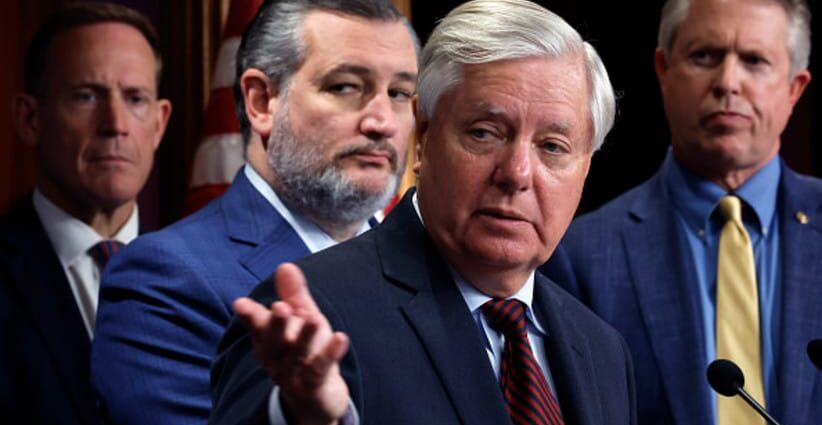
This post was originally published on here

A former California hotel staffer claims that he was fired on Friday after harassing Israeli guests and publishing footage of the incident, but the hotel said on Saturday that he had resigned.

A hotel staffer, identifying as Ryan Smith on a GoFundMe fundraiser, said in a Thursday Instagram post that he had said “free Palestine” to a pair of Israeli guests at the Oceanpoint Ranch in Cambria.

An Israeli woman confronted him, according to the video published by Smith, telling him that he should be “completely objective” to paying guests.
 
Smith expressed shock when the guest said that she was a Zionist after he had used it as a slur, and then demanded to know if her partner had served in the IDF.

“Are you a baby killer?” asked Smith.

The Israeli man said that he refused to interact with the hotel staffer and continued on, but his partner expressed concern about staying at a hotel where he worked.

Called for others to “give them hell”

“I won’t stay here, certainly he’ll break into our room and do something,” the woman said in Hebrew.

Smith claimed on Instagram that the woman threatened to call the police because “the only thing these cowards can do is hide behind the pedo[phile] regime that runs the country.”

Alongside the video, Smith called for others to “give them hell” if one saw them in California, and that if he “could’ve he would’ve.”

“I’ve never stared into the soul of the devil like I did tonight,” wrote Smith. “The woman (dual citizen of Israel) proceeds to confront me after I see [sic] ‘free Palestine‘ as they leave the lobby. She then takes a step further and proceeds to admit to being a Zionist.”

Smith later opened a fundraiser, claiming that he had been “let go” from his job, and asked for donations to support him while he sought new employment. As of Sunday morning, Smith raised $11,773 dollars.

“The world needs to be set free, and I believe peace and love will overcome,” Smith said on his fundraiser web page.

The Oceanpoint Ranch did not immediately respond to a query from The Jerusalem Post, but said in a Saturday social media post that Smith had “unilaterally resigned” from his position after the hotel opened an investigation into the incident.

“The events in the video do not reflect the professionalism and hospitality that our team members are trained to deliver to all our valued guests,” said Oceanpoint Ranch.

“Our team remains committed to fostering a respectful environment for all of our guests, employees, and community.”

This post was originally published on here

The Iranian army downed an Israeli spying and surveillance drone in the Hormozgan province, Iran’s Mehr news agency reported on Sunday, as expectations rose that a memorandum of understanding regarding a peace deal between Iran and the US could be imminent.

The wreckage of a shattered Orbiter drone, an Israeli product, was discovered in cooperation with Iranian naval forces, the agency claimed.

This is a developing story.

This post was originally published on here

The High Court of Justice is set to convene on Tuesday for a follow-up hearing on petitions against the government’s decision to close Army Radio, as Attorney-General Gali Baharav-Miara argued that the move cannot be viewed as a narrow decision about one military station, but as part of a wider government effort affecting Israel’s free press.

The hearing will be held before Justices Dafna Barak-Erez, Alex Stein, and Yechiel Kasher, after the court ordered the government in February to explain why its December decision to shutter the 75-year-old station should not be canceled.

The court’s conditional order focused on the way the decision was made, rather than only on whether the government had the authority to make it. The decision was originally set to take effect on March 1, but was frozen by an interim court order pending judicial review.

Baharav-Miara did not file a new substantive position ahead of Tuesday’s hearing, instead telling the court that her January response should be treated as her main arguments.

In that position, the attorney-general said the decision to close Galatz suffers from fundamental legal defects: first, because such a major change to Israel’s media landscape should be anchored in primary legislation, and second, because the decision-making process itself was flawed.

The case concerns a government decision approved on December 22, 2025, which ordered the closure of Army Radio and the end of its broadcasts within roughly two months.

The station reaches close to one million listeners a day

The move followed recommendations by an advisory committee appointed by Defense Minister Israel Katz.

The government has argued that Army Radio is an anomaly: a military unit, funded by the state, that also operates as a national news and current-affairs broadcaster. Katz has argued that there is no justification for a military station to engage in political and public affairs broadcasting.

But Baharav-Miara argued that Galatz, whatever its unusual origins, has long since become part of Israel’s public broadcasting system.

According to estimates cited in her filing, the station reaches close to one million listeners a day and is one of only two nationwide Hebrew public radio stations with a full news desk and current-affairs programming.

That, she argued, means the government cannot treat its closure as a simple internal military or administrative matter.

In plain terms, the attorney-general’s argument is this: When the government wants to remove a major public media outlet from airwaves, especially one that broadcasts news and criticism of the government and the military, it must do so through the Knesset and after a serious, careful process – not through a cabinet decision passed on a short timetable.

Her position, however, also places the closure inside a much broader context. The Attorney-General warned that the decision comes amid a series of government and legislative moves affecting Israeli media, including efforts concerning the public broadcaster, commercial news regulation, and government conduct toward media outlets critical of it.

She argued that these moves, taken together, raise serious concerns over pressure on independent journalism and could create a chilling effect on other media bodies.

The attorney-general’s position does not deny that Galatz is unusual. On the contrary, she acknowledged that a military station broadcasting news and criticism of the government and army is an “anomalous” product of Israel’s history.

But, she argued, that history also matters. After more than 75 years, Galatz is no longer only a military unit. It is also a functioning public broadcaster, part of what she described as the “ecosystem” of Israeli journalism.

Katz adopted the harsher option

The government’s decision also came after a previous committee, appointed in 2023 by then-defense minister Yoav Gallant and headed by then-Defense Ministry director-general Eyal Zamir, recommended keeping the station inside the IDF while introducing reforms meant to reduce the tension between its military framework and journalistic work.

Baharav-Miara argued that those reforms were still being implemented when Katz appointed a new committee in 2025, which ultimately recommended either closing the station’s news and current-affairs division or closing the station entirely.

Katz adopted the harsher option.

The petitioners argue that this sequence matters. Their claim is not only that the government reached the wrong outcome, but that it failed to properly explain why one professional process was abandoned and replaced by another that reached the opposite conclusion within a short time.

A separate petition filed by the Army Radio workers’ committee and the Histadrut labor federation focuses on the employees who would be directly affected by the closure.

According to their filing, Galatz employs 84 civilian IDF workers, including journalists, editors, technicians, and producers, some of whom have worked at the station for decades. The filing also said that some 50 additional workers are employed as consultants.

For those employees, the petitioners said, the government decision means dismissal and loss of livelihood.

The workers’ committee and Histadrut argued that the state, acting both as sovereign and as employer, was required to consult meaningfully with workers’ representatives before making such a decision. They said that did not happen.

According to their filing, the government did not present the workers with a real closure plan, did not examine alternatives with them, and did not hold substantive negotiations before approving the move.

They argued that one worker’s representative was briefly heard in a way that amounted to “marking a V.”

The workers’ petition also claims that the advisory committee’s process was tainted by prior public statements made by some of its members against Galatz.

The petitioners cited, among other things, alleged comments and reposts portraying the station as hostile to the state. Those claims are presented by the petitioners as evidence that the committee had effectively reached its conclusion before properly examining the issue.

The government’s full position for Tuesday’s hearing had not yet been filed. 

The court said earlier that the government must explain how the decision was formulated, what considerations were weighed, and whether the process met the standards required of administrative action.

That means Tuesday’s hearing is expected to focus less on whether Galatz should exist in its current form, and more on a more basic question: whether the government did the work required before deciding to shut down a national broadcaster, silence a major public media outlet, and send dozens of workers home.

This post was originally published on here

For months, US President Donald Trump has framed himself as the world leader who was willing to confront the Islamic Republic more aggressively than any Western leader before him.

The president spoke openly about supporting Iran’s protesters, warned Tehran that America’s patience had run out, and encouraged Iranians to keep pushing against a regime that for nearly half a century has ruled them through religious repression, political domination, public executions, and fear.

“Iranian Patriots, KEEP PROTESTING – TAKE OVER YOUR INSTITUTIONS!!!” Trump wrote on social media in January, after the regime’s brutal crackdown on anti-government demonstrations. “HELP IS ON ITS WAY.”

This came after thousands – estimates range from 30,000 to 40,000 – protesters were killed in two days alone on the streets of Iran between January 8-9.

Across the country, many believed Washington had finally understood the true nature of the Islamic Republic and the desperation of the Iranian people living beneath it.

What did Iranian citizens get out of the war with Israel, US?

Now, only months later, those same Iranians are watching Trump move toward an agreement with the very regime he once appeared determined to isolate and weaken, and they feel betrayed.

Reports over the weekend that the US and Iran are close to finalizing a framework agreement over the Strait of Hormuz and a broader ceasefire arrangement may have reassured markets worried about energy prices and regional escalation.

Gulf states are pushing for calm, and oil traders want stability. Trump himself is facing political pressure over the economic impact of the war and rising fuel costs ahead of the midterm elections later this year.

But while US negotiators, through Pakistani mediator efforts, discuss shipping lanes, sanctions relief, or uranium enrichment clauses, the Iranian people are once again being left to hang out to dry and at the mercy of the same regime that massacred them so mercilessly only months ago.

The Islamic Republic and those who rule it are good at playing this game. They have a way of dealing with the West that Western leaders still do not understand, despite all the examples and proof needed from the past. It is why Tehran has already begun framing the negotiations as a victory against the enemy.

Iranian Foreign Ministry spokesman Esmail Baghaei posted an image to X/Twitter on Saturday night as news of the deal was announced. It was loaded with symbolism from Persian history.

It depicted the relief at Naqsh-e Rostam showing the Sasanian king Shapur I standing over the defeated Roman emperor Valerian, believed to be the only Roman emperor ever captured alive.

“In the Roman mind, Rome was the undisputed center of the world,” Baghaei wrote. “Yet the Iranians shattered that illusion; when Marcus Julius Philippus (Philip the Arab) marched east against Persia, the campaign did not result in Roman victory – it ended in a peace established on Sasanian terms: the emperor had to come to terms!”

It is not difficult to see the symbolism in his message. The regime wishes to project that the US, the modern Rome, has been “brought to its knees” by the regime and has been forced to seek peace with the victorious republic.

And from the regime’s perspective, why would it not believe that?

Those who rule from Tehran, those who have had unfiltered access to the internet while the rest of the country has been barred from the internet for 86 days, know the truth of how much damage has been done to the regime, despite proclamations of victory.

And yet now, on the brink of a victory, Trump is pulling back. He is giving the regime time to breathe, time to regroup, and time to release its vengeance on its own people.

Trump has spent the past month and a half holding the threat of continued military action over Iran, since the six-week campaign – led by Israel and the US, which began on February 28 – ended last month.

Reports of imminent strikes came and went, and threats were issued and softened. Critics have mocked the pattern with the phrase “Trump Always Chickens Out,” arguing that Tehran learned how to wait out Washington’s pressure until political and economic considerations overtook strategic ones.

And it seems that moment has finally arrived.

The regime has always been patient in this way: it survives by absorbing pressure, enduring isolation, and waiting for the international community to lose focus or simply give up. Then, once external attention shifts elsewhere, it turns inward again against its own population.

And here we are again.

According to Amnesty International, Iran carried out at least 2,159 executions in 2025, the highest number recorded anywhere in the world and part of a global surge in executions driven overwhelmingly by the Islamic Republic. More than 200 executions have reportedly already taken place in 2026.

This is the regime Trump is now attempting to stabilize through negotiation.

This is the regime that shut down the internet, sealed off cities, deployed Basij forces to checkpoints, and reportedly brought in Iraqi militias to help suppress unrest.

This is the regime whose judiciary chief, Gholam-Hossein Mohseni-Ejei, ordered that death sentences and confiscations be issued “more frequently” in April.

This is the regime whose senior IRGC representative Abdollah Haji-Sadeghi warned Iranian youth only weeks ago that “the era of mercy is over.”

Nothing about the ideological structure of the Islamic Republic has changed, despite Trump’s claims of “new people” meaning a “new regime.” The people sitting across the negotiating table today are not “new people.”

They are the same system, the same security apparatus, the same hardliners who wish to wipe Israel off the map and call the US the “Great Satan,” and the same revolutionary movement that has spent decades funding proxy warfare across the region and terrorizing its own citizens.

That is why many Iranians inside and outside the country have spent months pleading with the West not to leave the regime standing once the fighting subsided.

For months, Iranian dissidents and ordinary citizens alike have pleaded with the West not to leave the regime standing once the pressure eased. That fear is fully justified.

There is, of course, nothing wrong with wanting an end to war, but there is a difference between ending a war and pretending the underlying problem has disappeared.

The Islamic Republic has repeatedly shown that it uses diplomacy to buy time rather than to moderate itself.

US Secretary of State Marco Rubio warned about exactly this years ago when opposing Barack Obama’s nuclear deal, arguing that Tehran would use sanctions relief and negotiations to strengthen its military and regional capabilities while continuing its long-term strategic ambitions.

More than a decade later, it is difficult to argue that Rubio was wrong.

Once the headlines move on from the Strait of Hormuz and oil markets stabilize, the regime will still be there. The prisons will still be there, and the executions will still take place.

Will the Iranian people be willing to take to the streets again, only to be gunned down as they were in January?

For many of them, the man who once promised that ‘help is on its way’ now looks like another Western leader who has betrayed them, willing to leave them alone with the Islamic Republic.

This post was originally published on here

Slovenia has voted in a strongly pro-Israel prime minister, marking a striking political shift after Slovenia’s recent hostility towards the Jewish State.

Janez Janša was re-elected PM on 22 May. This is his fourth time in the role, having previously served as PM from 2004-2008, from 2012-2013, and from 2020-2022. Janša leads the right-wing Slovenian Democratic Party.

Under Janša’s predecessor, Robert Golob, Slovenia became one of the most hostile countries towards Israel, alongside Ireland and Spain. In May 2024, Slovenia announced its recognition of a Palestinian State, and in July 2025, Itamar Ben-Gvir and Bezalel Smotrich were also sanctioned under his government. Slovenia then imposed a travel ban on Prime Minister Benjamin Netanyahu. It also imposed an arms embargo on Israel and boycotted the 2026 Eurovision Song Contest in Vienna due to Israel’s participation.

Janša’s success – securing 51 votes in the 90-seat parliament – therefore marks a significant change in Slovenia’s political landscape.

Janša is a long-time supporter of Israel. He condemned Golob’s recognition of Palestine as a state, calling it “illegal.” He has repeatedly supported Israel’s rights to defend itself, making statements such as “Israel has the unequivocal right to defend itself against Hamas’ attacks, we stand with Israel.”

Pro-Israel Janez Janša sworn in as Slovenian PM 

He has strongly condemned each and every one of Iran’s attacks on Israel and its civilian population.

In October 2024, he said, “We regret that the rockets falling on Israel were also paid for with the help of money ($2 billion) that the Iranian regime laundered in the largest Slovenian state bank, NLB, during the reign of the Tanja Fajon party.”
 
He has also repeatedly called out antisemitism and terror support within the Slovenian left and wider society.

Following the antisemitic terrorist attack against the Jewish community in Sydney during a 2025 Hanukkah celebration, Jansa said, “Antisemitism has no place anywhere in the world. Our hearts are with the families of the victims, the global Chabad family, and with the Jewish community in Australia and all over the world.”

Jansa recently wished Chag Pesach Sameach to the Jewish community in Slovenia and around the world during Passover 2026.

Yossi Dagan, head of the Shomron Regional Council, is a friend of Jansa, and the two recorded a joint video in recent weeks where the new Slovenian PM said: “I send greetings to the residents of Judea and Samaria.”

Jansa has previously said he would move his country’s embassy to Jerusalem (from its current place in Tel Aviv).

While not yet clear, it has been hypothesized that Slovenia may withdraw its recognition of Palestinian independence.

This post was originally published on here

The mayor of Paris, Emmanuel Grégoire, has proposed granting honorary citizenship of the city to the civilians of Gaza and the West Bank, as well as to Palestinian journalists. 

He first revealed this in an interview with Le Nouvel Obs, but has since confirmed it on social media.

Deputy Mayor of Paris Audrey Pulvar will present the proposal to grant the honorary citizenship of Paris during the next Paris Council meeting in June, where the council will vote on it.

“As we did for Kyiv and Nagorno-Karabakh, Paris stands for the rights and voices of those who are suffering, while defending peace, international law, and the two-state solution,” said Gregoire.

The vote is expected to receive support from the city’s left-wing governing coalition, including environmentalist groups that supported similar initiatives in the past.

A meeting ‘to strengthen cooperation between Paris and Palestinians’

“Through this gesture, the Mayor of Paris expresses the city’s solidarity with civilian populations suffering a horrific humanitarian situation in Gaza and the continued expansion of settlements in the West Bank,” his office told the French news magazine.

“Paris has always associated its name with the freedom of peoples and with human dignity. It chooses civilians over violence, law over arbitrariness, and life over destruction.”

Regarding the extension of citizenship to journalists, the office of the mayor said, “Palestinian reporters on the ground have paid a considerable price. Honoring them means honoring the fundamental right of societies to know the truth.”

Grégoire met with the ambassador of Palestine on April 21. He said afterward on X that the meeting was “to strengthen the concrete cooperation between Paris and the Palestinian territories.”

Ambassador Hala Abou Hassira said it reflects Paris’ commitment to the Palestinian people, to respect for international law, and to a just and lasting peace.

Gregoire said that he has also always condemned the terrorist attacks of October 7, 2023, against Israeli civilians.

This post was originally published on here

When Dr. Nadia Khir decided to leave her traditional Druze village to study medicine in 1985, she set out on an unprecedented path, becoming Israel’s first female Druze physician and unknowingly blazing a trail that countless women have followed since.

“I wanted to do something revolutionary,” she told The Jerusalem Post in an interview, after receiving a reward of special recognition for her contributions to the advancement of Druze women from philanthropist Miriam Adelson.

Khir’s revolutionary legacy did not come easily, as her decision to leave the village of Julis and pursue an unconventional path was initially met with resistance from her community.

“It was a very, very, very traditional community,” she told the Post.

In Khir’s community, women and girls were not allowed to leave their villages to study.

Khir spoke with male relative to convince her family

“There was a mentality that we should keep our women safe in the village, because Druze all over history felt threatened,” she explained.

Restricted by societal pressure to stay in the village, Khir had to convince her family to allow her to pursue her dreams.

“I wanted my brother’s permission, but I was afraid to talk to him. I did not have the courage,” she told the Post. Instead, she sought out a male relative who had left the village to study at the University of Haifa to speak to her brother.

“I told him, please ask my brother if he would let me go and learn medicine. He talked to my brother and said to him, don’t worry, I will be near her,” Khir recalled, adding that the relative managed to convince her brother.

Convincing her religious mother was more difficult, she stated. “It was difficult to come and say, ‘Mom, I’m going to learn medicine,’ because it was forbidden.”

With support from her brother, Khir finally won the approval of her family.

In 1986, she applied and was accepted to the Technion-Israel Institute of Technology, one of Israel’s top universities.

While medical school welcomed her ambition, she still needed the acceptance of her community. Pursuing such an unconventional path carried the potential that Khir’s family would be punished by the village for her choices.

Khir specifically feared that her mother would be banned from the local khilwa, the Druze house of prayer.

“If someone has broken the rules, they do not let them get into this holy place,” she explained. “Let’s say I break the rules. I’m not religious, so they punish my mother.”

In a chance encounter one day, she met Sheikh Faraj Fadoul, one of her village’s religious heads, and took the opportunity to ask for his advice.

“Uncle,” Khir said, addressing Fadoul as family, as members of her tight-knit Druze community often do. “I want to study medicine. I know that my mother will be punished. What should I do? I have been accepted to the Technion.”

Fadoul pondered the issue for a moment before directly telling Khir to “just go and learn,” ensuring that her mother would not be punished for the decision.

“He found the solution for me. Without this, I could not be a doctor,” she asserted. “The promise that he made to me was real. He did not punish my mother.”

Week after week, her mother was continually welcomed to the khilwa, and she began her studies at the Technion, confronted by cultural differences that set her apart from her classmates.

Khir had received the majority of her education up until university in Arabic. While she studied Hebrew and English in school, the level of vocabulary used in medical school was unfamiliar to her.

But Khir’s dedication to raising her family’s economic status and helping people kept her motivated.

“After six years, I made the practical [clinical] year, the seventh year, and then became the first Druze woman doctor in Israel,” she beamed.

For her clinical year of medical school, Khir specifically chose a hospital located in an area near her village that allowed her to interact with and treat Druze patients.

While patients were often surprised to see a female Druze doctor when Khir first began practicing medicine, her treatment opened some patients’ minds. She showed them that Druze women did not have to sacrifice their ambition for the safety of their villages. Druze women in Israel could safely pursue education and build successful careers while uplifting their community.

Khir recounted that eventually, even those in the religious community who were originally skeptical of her decisions sought out her care. “When I became a doctor, the religious society was the first to come and have medical help from me.”

Education for Druze women ‘entirely transformed’

IN THE four decades since Khir’s first day of medical school, the experience for Druze women seeking education has entirely transformed.

Khir’s own daughters have followed in her footsteps, with one in the process of completing medical school and two pursuing degrees in engineering.

Reflecting on the hardships she overcame, Khir told the Post that her daughters faced significantly fewer obstacles, “not from society, not from their economic status, [and] not from having anyone who should give them permission to go and study.

“All of them, every Druze woman nowadays… who wants to study at university, they can go, and they can study, and no one says anything.”

Khir said that she feels proud and satisfied watching young Druze women work toward their goals today, the tangible effect of the social change she helped enact.

Now, having her contributions to the advancement of Druze women recognized by Adelson, Khir expressed deep gratitude for Adelson’s advocacy for the release of all hostages previously held by Hamas in Gaza.

She added that the recognition feels like more than personal praise.

“This recognition is for the Druze community,” she stated. “This is for the Druze society, who have sacrificed a lot of soldiers over the last three years.”

This post was originally published on here

Prime Minister Benjamin Netanyahu offered advertising executive Yuval Horowitz, one of the creators of the IDF’s October 7 atrocities film, the role of managing Likud’s election campaign.

Horowitz received the offer before Operation Roaring Lion, though the appointment now appears unlikely to move forward.

Horowitz, vice president of creative in Keshet’s commercial division, joined the IDF Spokesperson’s Unit in the first days of the war. He later received a Chief of Staff’s Award for his work during the fighting.

The film, officially titled Bearing Witness to the October 7th Massacre, was compiled by the IDF Spokesperson’s Unit from raw footage documenting the Hamas-led massacre of October 7, 2023.

The Jerusalem Post previously reported that the film included footage captured from body cameras worn by Hamas members on October 7 and contained scenes of extreme violence.

The Jewish Telegraphic Agency later reported that the 47-minute film was compiled from Hamas body-camera recordings, dash cams, CCTV footage, and victims’ phone videos. Due to its graphic nature, the film has generally been shown only in private, invitation-only screenings for policymakers, journalists, diplomats, and community leaders around the world.

Horowitz also headed the public diplomacy team during Netanyahu’s address to the United Nations and was responsible for the QR code initiative that directed viewers to documentation of Hamas’s October 7 atrocities.

Horowitz wore special hostage pin with QR code at Netanyahu’s UNGA speech

During Netanyahu’s UN General Assembly address in September 2025, he wore a special hostage pin embedded with a QR code linking to a website documenting the October 7 Hamas atrocities, the Post reported. Members of the Israeli delegation also wore the same pin.

The QR code effort was part of a broader Israeli campaign in New York during the UN General Assembly. The Prime Minister’s Office and the Prime Minister’s Spokesperson’s Unit placed “Remember October 7” visuals on billboard trucks and digital screens near the UN headquarters and Times Square, according to the Post.

No response has yet been received from Horowitz or Likud.

This post was originally published on here

More than a decade after tens of thousands of foreign Islamic State (ISIS) supporters arrived in Syria, some of the last foreigners appear to be leaving, including a group of Australian supporters that has been in the spotlight for months.

Rudaw Kurdish media reported that seven Australian women and 14 children recently arrived in Damascus from the Roj camp in northeast Syria (Rojava), marking the departure of the last known Australian group from camps housing families linked to ISIS.

ISIS took over part of Syria and Iraq in 2014 and committed a genocide against Yazidis and other groups. Many foreigners flocked to join the group, including many women and men from the West. In some cases, these foreigners raised families in Syria.

When ISIS collapsed in 2019 after years of fighting the US-backed Syrian Democratic Forces, these foreigners ended up in camps. They mostly ended up in Al-Hol and Roj camp, and some 20 detention facilities. Now, as the SDF is integrating with the Syrian security forces, the ISIS families have mostly left eastern Syria.

The Australians have proven a complex case because Australia apparently doesn’t want them back. In February, NPR reported that Australia’s government had banned an Australian citizen with alleged ties to ISIS from returning home from a detention camp in Syria.

NPR also noted that the Australian citizen, a woman, was planning to join another 33 Australians – 10 women and 23 children – in flying to Australia from Damascus. The group tried to leave the Roj camp, only to be sent back by the Australian government.

Australian citizens attempting to return home despite exclusion order

Australian Home Affairs Minister Tony Burke stated that the Australian government had acted on news that the group planned to leave Syria and that the woman, whom he did not identify, had been issued with a temporary exclusion order, and her lawyers had been provided with the paperwork.

Now they are trying to go home again.

“I just don’t know how many of them are going to arrive in Australia,” Jamal Rifi told the Australian Broadcasting Corporation (ABC) on Friday.

“Nobody could stop those kids once they reach adulthood from coming back, because they are Australian citizens and they either come now with their mothers or they come later on their own and then into adulthood, [when it would] be even more difficult for our security and agencies to keep tabs on their behavior, ideology or action,” Rifi noted.

Rudaw reported that the group had been confirmed to have arrived in Damascus, but it was unclear whether they would return to Australia this month.

The report noted that in May, “four women and nine children returned to Australia after spending years in the camp. According to ABC, three of the women were arrested and charged by the Australian Federal Police upon arrival in Melbourne and Sydney.”

Sheikhmous Ahmed, a Kurdish official dealing with the camps, had said they were empty in February.“For this purpose, coordination has taken place with the High Commissioner for Refugees regarding their transfer,” Ahmed said.

As of late February, the Roj camp housed 730 foreign families from around 42 countries, according to Kurdish authorities. The camp also held 15 Iraqi families and 11 Syrian families, with a total population of approximately 2,225 people, Rudaw reported.

Rudaw had previously reported that 11 of the families had tried to go home via Lebanon but had been sent back, despite having been issued Australian passports.

UK arrests ISIS-linked citizens

Australia isn’t the only country to try to keep its citizens away if they have ISIS ties. The UK and others did the same thing. 

BBC noted in May that three women were arrested after spending years detained in Syria, reporting that “Australia is not alone in its reluctance to help these women and children: many others, including the UK, have also been wrestling with questions of security, rehabilitation and political responsibility.”

Australia’s prime minister had also spoken about this issue before, stating, “If you make your bed, you have to lie in it.”

However, the issue of the children is more complex. The children are not at fault for their parents’ support of ISIS. In theory, the children should have the right to return to a normal life in their parents’ home country. It remains to be seen how this will play out. What is clear is that now eastern Syria is no longer the dumping ground for ISIS members and their families. They have left the camps and will end up somewhere else. The international community largely ignored them so long as their detention could be outsourced to the SDF.

This post was originally published on here

The Islamic Republic will continue funding and supporting its network of proxies, Iranian Foreign Minister Abbas Araghchi promised in a message sent to Hezbollah chief Naim Qassem, the regime official confirmed on Telegram.

Naming Hezbollah explicitly, Araghchi promised the regime “will not abandon support for movements seeking rights and freedom until the very last moment.”

He added that a ceasefire in Lebanon was a key term in any potential ceasefire deal with Washington, though the war against Hezbollah is being fought by Israel and not the US.

Maj. (res.) Alexander Grinberg, an expert on Iran from the Jerusalem Institute for Strategy and Security, explained to The Jerusalem Post that for Tehran, abandoning proxies at this junction would be “political suicide,” and that ending its support would signal to both its allies and enemies that it is significantly weakened.

While he said Iran would always “try” to support its proxies, the depth of its support has changed and will change based on its own abilities. He said the regime was no longer able to smuggle weapons to Hezbollah through Syria and must now rely on crypto-payments as a means of financial support. This support, he said, would continue for as long as possible despite Tehran’s economic struggles.

Lebanon becomes sticking point in US-Iran deal talks

Araghchi’s promise to Hezbollah comes in tandem with US President Donald Trump’s announcement on Saturday that a deal had been “largely negotiated,” though US officials speaking to Axios suggested that issues surrounding nuclear disarmament were still being discussed.

Hezbollah violated an existing ceasefire between Israel and the terror group in response to the assassination of Ayatollah Ali Khamenei. The decision to drag Lebanon into another war, as it did on October 8, 2023, has led to a new array of domestic legislation aimed at demilitarizing the terrorist organization, motivated in part by the large-scale displacement brought on by the conflict.

While Iran may push to see Lebanon included in a potential agreement, Israeli officials have commented that Washington cannot make such a deal on behalf of Jerusalem, noting that civilians living in northern Israel will be left paying the price for such an arrangement.

MK Benny Gantz, addressing the reports of Lebanon being an Iranian condition in a ceasefire deal, commented that “Israel has an obligation to protect its residents regardless of any external factor” and such an agreement would be “a strategic mistake that we will pay for for years to come.”

He urged, “Israel needs to say to the US: ‘No.’”

KAN also reported that Prime Minister Benjamin Netanyahu is concerned about the inclusion of Lebanon in an agreement with Tehran. A political source told the public broadcaster that Netanyahu communicated to Trump that “Israel will maintain freedom of action against threats in all arenas, including Lebanon.”

While Netanyahu may have communicated Israel’s intentions to continue securing its northern border by ensuring Hezbollah cannot rebuild past the Litani River, a US official indicated to Axios that Trump may still be willing to include Lebanon in the agreement.

“Bibi has his domestic considerations, but Trump has the interests of the US and the global economy to think about,” the US official commented.

This post was originally published on here

The High Court of Justice will convene at 4 p.m. Sunday for a follow-up hearing on Justice Minister Yariv Levin’s handling of the Judicial Selection Committee, as dozens of judicial posts remain empty and the election clock threatens to freeze the process altogether. 

The hearing, before Justices Ofer Grosskopf, Alex Stein, and Gila Canfy-Steinitz, centers on whether Levin can continue advancing appointments in stages of his choosing, or whether the court should order him to bring vacancies across the judiciary to a vote.

The petition was filed by the Movement for Quality Government in July 2025. It asks the court to compel Levin, who chairs the committee, to convene it for appointments needed throughout the court system.

Levin says he has not neglected the issue. In an affidavit filed last week, he said he had already advanced nearly 200 appointments of judges and registrars through broad agreement, and was now moving “urgently, efficiently and decisively” to fill trial-court vacancies.

The petitioners say that is not enough. They argue that Levin has unlawfully tied further appointments to a broad consensus among committee members, even where the law does not require it, leaving large parts of the judiciary short-staffed.

Election timeline narrows window for judicial appointments

The case has become more urgent as elections approach. Candidates’ names must be published in the state gazette 45 days before the Judicial Selection Committee can vote on them. Once the election period begins, ordinary appointments are generally frozen, leaving only a narrow window to complete the process.

In February, the High Court issued a conditional order requiring Levin to explain why he would not convene the committee to fill vacant judicial posts across all levels of the judiciary. After a May 3 hearing, the justices ordered him to provide a timetable for appointments in the magistrates’ and district courts, rejecting his partial update as insufficient.

Levin’s latest affidavit lays out a limited plan. He said that after the war with Iran and the home-front emergency delayed the process, he asked committee members on April 17 to submit candidates for vacant posts and set June 7 as the first possible meeting, given the 45-day publication requirement.

He said he then decided to prioritize juvenile, traffic, and family courts, as well as magistrates’ court vacancies in the North and Haifa districts. Candidate lists for 36 positions were published on May 10, with committee meetings set for June 25 and June 30. Additional lists were published on May 17 for magistrates’ courts in the South and for senior registrar posts nationwide.

Levin said this amounted to a major response to the system’s needs. He blamed the earlier delay on a minority of committee members, saying efforts to reach an agreed list of appointments had been “torpedoed” by some Israel Bar Association representatives.

But Levin also acknowledged that the approaching election creates “real difficulty” in completing the work needed for district court and labor court appointments before the Knesset is dissolved. As an interim step, he said he was seeking temporary appointments to the Haifa and Beersheba district courts from a list supported by most committee members.

The affidavit also made clear that Levin does not intend to convene the committee to appoint Supreme Court justices “as long as the veto imposed by some committee members on his candidates is not removed.” Since Supreme Court appointments require seven of the committee’s nine members, Levin argued there is no point in convening the committee if the required majority cannot be reached.

Court shortages grow amid fight over appointments

The Movement for Quality Government, in its Wednesday response, said Levin’s position proves the problem rather than solves it. The group argued that the law does not give Levin, or any other committee member, a veto over appointments, and does not allow him to refuse to convene the committee until all members agree in advance.

MQG also argued that Levin’s plan ignores major shortages already known to him, including four vacancies in the Tel Aviv District Court, three in the Central and Jerusalem district courts, seven in the Central Magistrate’s Court, and five in the Tel Aviv Magistrate’s Court.

According to earlier state figures cited in the case, 51 judicial posts are currently vacant across the system, with another 15 expected to open by the end of 2026. The Courts Administration has warned that the shortage is delaying hearings, slowing urgent decisions, pushing back cases, and increasing the burden on sitting judges.

Levin warned the High Court against turning the conditional order into a final order, saying such a ruling would not only interfere with his authority to convene the committee but would also dictate the committee’s agenda, timetable, and method of selecting judges. In practice, he argued, it would turn the Supreme Court into the committee’s chair.

MQG rejected that framing, saying Levin’s staged approach would allow him to leave major vacancies unresolved until the next Knesset, when a controversial amendment changing the committee’s composition is set to take effect. The amendment, passed in March 2025, increases political influence over judicial appointments, but applies only from the next Knesset.

Sunday’s hearing is expected to turn on whether Levin’s publication of some candidate lists and scheduling of limited meetings is enough to satisfy his legal duty, or whether the court will impose a firm timetable before the election period closes the window for appointments.

This post was originally published on here

Emek Medical Center in Afula declared on Sunday the death of the victims of a light aircraft crash in northern Israel.

The crash occured near Moshav Tel Adashim, between Nazareth and Afula.

The men had initially been found by Magen David Adom (MDA) in a field alongside the wrecked plane, unconscious and in critical condition. 

Both men were evacuated to Emek Medical Center while unconscious and receiving CPR.

Firefighters at the scene worked to contain a fuel leak from the plane in order to prevent a blaze from igniting.

‘Very serious incident’

“This is a serious incident,” said MDA paramedic Maor Atedagi. “We arrived at the scene with ambulances, intensive care vehicles, and immediate response motorcycles.”

The plane had crashed in a field, severely damaging its fuselage, Atedagi shared, adding that the two men had been lying nearby with no pulse or breath.

“We immediately began performing advanced CPR and evacuated them in MDA intensive care vehicles to the hospital in critical condition,” Atedagi said. 

Eli Ashkenazi contributed to this report.

This post was originally published on here

A bomb blast hit a shuttle train carrying Pakistani security personnel and their families in the southwestern province of Balochistan on Sunday, officials said, in the latest major attack claimed by separatist militants.

The explosion killed at least 24 people and injured around 70, according to three provincial government and security officials, who spoke on the condition of anonymity as they are not authorized to speak to the media.

The attack was the latest in a series of major strikes on trains, security forces, and infrastructure in the mineral-rich province that borders Iran and Afghanistan, where Pakistan has launched counterinsurgency operations after some of the deadliest violence in years.

The separatist militant group Baloch Liberation Army, or BLA, said in a statement to media that it carried out the attack and described it as a suicide bombing. Reuters could not independently verify the claim.

The shuttle train was carrying passengers from Quetta’s cantonment area to connect with the Jaffar Express long-distance train when the blast struck near a railway track in the provincial capital, Pakistan’s railways ministry said in a statement.

The explosion derailed the engine and three coaches, while two coaches overturned, the ministry said, adding that security forces had cordoned off the area and rescue operations were underway.

Burnt-out vehicles, twisted metal, and debris

A security official said an explosives-laden vehicle hit one of the train’s bogies in a residential area, and that some of those killed were residents of a nearby apartment building.

Images from the scene showed burnt-out vehicles, damaged residential buildings, twisted metal, and debris scattered near the railway track, with smoke rising from the wreckage.

Prime Minister Shehbaz Sharif condemned what he called a “heinous bomb explosion” in a post on social media website X. He expressed condolences for the victims’ families and said the nation stood with the people of Balochistan.

In March 2025, BLA militants hijacked the Jaffar Express train, taking hundreds hostage before a military operation ended the day-long standoff. The military said 21 hostages, four troops, and all 33 attackers were killed.

Earlier this year, Pakistani forces killed 145 militants in a 40-hour operation after coordinated attacks across Balochistan left nearly 50 people dead, provincial officials said.

This post was originally published on here

More than 20 people are trapped under the rubble of a building under construction in the Philippines that collapsed on Sunday, officials said, as rescue efforts continued.

Five people were confirmed trapped, including two in contact with rescuers, and 18 more were feared under the rubble, officials said.

“We have five confirmed trapped victims, and we have a figure of 18 workers from the list of construction workers on duty today, but no feedback yet from their families. This brings the estimated number of trapped victims to 23 as of today,” Maria Leah Sajili, information officer at the regional Bureau of Fire Protection, told a press briefing.

At the site of the collapsed multi-story building under construction in the city of Angeles, north of the capital Manila, rescuers were seen clambering over a mound of concrete slabs and mangled steel, covered in green netting, searching for survivors.

The number of rescued, including those in the vicinity, remained at 24, with no deaths reported, Sajili said.

Cause of collapse still under investigation

Among the rescued was a 51-year-old Malaysian national who was staying in a nearby budget hotel, which was damaged when the concrete structure collapsed, Jay Pelayo, the Angeles city information officer, told Reuters in a phone interview.

He had earlier told DZBB radio that 30 to 40 people were feared trapped, based on information from a site foreman who was among those who escaped.

Officials said the cause of the collapse is under investigation, but records showed the building was intended as a nine-story condo-hotel under the approved permit, but a 10th floor for a pool was being constructed.

Ambulances were on standby, and fire trucks had been deployed to assist in the rescue, Pelayo said, adding that moving the concrete debris was a challenge for rescuers.

This post was originally published on here

The death toll has risen to three with 17 missing following flooding in the Chongqing municipality of southwestern China, China’s state-run Xinhua reported.

That was as of 2:30 pm (0630 GMT) on Sunday, after Chongqing’s Yongchuan district was hit with sudden extreme rainfall from Saturday night through the early hours of Sunday, Xinhua said.

Rescue work is underway.

China’s state planner allocated 20 million yuan ($2.94 million) in central budget outlays for disaster recovery and the restoration of infrastructure and public services in Chongqing, the National Development and Reform Commission said on its public Wechat account on Sunday.

This is a developing story.

This post was originally published on here

Republican lawmakers and former Trump administration officials sharply criticized reports of an emerging 60-day ceasefire agreement with Iran, warning that the proposed deal could hand Tehran a strategic victory and undermine the results of the US campaign against the Islamic Republic.

US President Donald Trump said Saturday that a peace agreement involving the US, Iran, and several Middle Eastern countries had been “largely negotiated,” adding that the deal would include the reopening of the Strait of Hormuz. Trump also said he had spoken separately with Prime Minister Benjamin Netanyahu, describing the call as having gone “very well.”

The reported framework, which has not yet been finalized, would extend the current ceasefire for 60 days while further negotiations take place on issues including Iran’s nuclear program and the Strait of Hormuz.

Several senior Republicans responded with alarm, arguing that any deal that leaves Iran with influence over the strait, access to funds, or nuclear capabilities would represent a failure.

“I am deeply concerned about what we are hearing about an Iran ‘deal,’ being pushed by some voices in the administration,” Sen. Ted Cruz wrote on X/Twitter.

Cruz said Trump’s decision to strike Iran was “the most consequential decision of his second term,” but warned that ending the conflict on the reported terms would be a mistake.

“If the result of all that is to be an Iranian regime — still run by Islamists who chant ‘death to America’ — now receiving billions of dollars, being able to enrich uranium & develop nuclear weapons, and having effective control over the Strait of Hormuz, then that outcome would be a disastrous mistake,” Cruz added.

Sen. Lindsey Graham warns deal could shift regional balance

Sen. Lindsey Graham also raised concerns, warning that the reported terms could alter the balance of power in the region and pose long-term risks to Israel.

“If a deal is struck to end the Iranian conflict because it is believed that the Strait of Hormuz cannot be protected from Iranian terrorism and Iran still possesses the capability to destroy major Gulf oil infrastructure, then Iran will be perceived as being a dominant force requiring a diplomatic solution,” Graham wrote.

“This combination of Iran being perceived as having the ability to terrorize the Strait in perpetuity and the ability [to] inflict massive damage to Gulf oil infrastructure is a major shift of the balance of power in the region and over time will be a nightmare for Israel,” he continued.

Graham added that such an outcome would raise questions about the purpose of the war itself.

“Also, it makes one wonder why the war started to begin with if these perceptions are accurate,” Graham wrote. “I personally am a skeptic of the idea that Iran cannot be denied the ability to terrorize the Strait and the region cannot protect itself against Iranian military capability.”

Former Secretary of State Mike Pompeo compares ceasefire deal to Obama-era Iran pact

Former Secretary of State Mike Pompeo criticized the reported deal by comparing it to the Obama-era Iran nuclear agreement.

“The deal being floated with Iran seems straight out of the Wendy Sherman-Robert Malley-Ben Rhodes playbook: Pay the IRGC to build a WMD program and terrorize the world,” Pompeo wrote.

Pompeo said the alternative was “straightforward: Open the damned strait. Deny Iran access to money. Take out enough Iranian capability so it cannot threaten our allies in the region.”

Sen. Roger Wicker, chairman of the Senate Armed Services Committee, also condemned the proposed agreement.

“The rumored 60-day ceasefire – with the belief that Iran will ever engage in good faith – would be a disaster,” Wicker wrote on X. “Everything accomplished by Operation Epic Fury would be for naught!”

The criticism underscored growing concern among Republicans that the ceasefire could leave Iran in a stronger position after months of conflict, even as the Trump administration presents the emerging framework as a potential diplomatic breakthrough.

Iranian state media has disputed parts of Trump’s account, including the claim that the agreement would fully reopen the Strait of Hormuz, saying the waterway would remain under Iranian control. Final details of the agreement have not yet been announced.

This post was originally published on here

Thirteen youths were arrested on suspicion of breaking onto the Temple Mount premises and attempting to offer a Shavuot sacrifice on Friday.

Officers from the Jerusalem District’s David Sub-District arrested the youths, claiming that they charged through a Temple Mount gate, breaking through police barricades, as well as the police officers stationed there.

Police further stated that soldiers pursued them, caught them, and quickly removed them from the Temple Mount before detaining them for questioning.

The youths allegedly entered the compound with the intention of performing a sacrificial ritual for the Shavuot holiday. While fringe activist groups frequently attempt to smuggle live animals, like goats or lambs, onto the mount during various festivals for sacrificial purposes, this Shavuot incident is different in a distinct way.

The “Shavuot sacrifice” they intended to offer were loaves of bread, as per the biblical commandment found in Leviticus 23:17 – “From the land upon which you live, you shall bring two loaves of bread as a wave offering.”

This type of offering is specific to the holiday of Shevuot

This Friday’s incident marks the third time in a span of just two months that Jewish activists have been arrested for attempting to revive sacrificial rituals at the volatile site.

Just weeks earlier, on May 1, Jerusalem District police arrested 21 people who attempted to smuggle a goat through one of the compound’s gates with the intention of performing a Passover sacrifice. 

Public Jewish prayer, and especially rituals like sacrifice, has been prohibited at the Temple Mount since the 1967 “Status Quo” laws were established over fears that Jewish worship at the flashpoint would trigger severe disturbances and threaten national security.

Outside of secular legal prohibition, Halacha and the Rabbinate explicitly forbid ascent to the Temple Mount because of the uncertainty of the location of the Temple’s “Holy of Holies,” which no one save for the High Priest is permitted to enter once a year, on Yom Kippur.

This post was originally published on here

The United States continues to update Israel on negotiations over the Memorandum of Understanding (MOU) aimed at solving the Iranian nuclear issue, reopening the Strait of Hormuz, and launching talks toward a final agreement on remaining disputed issues, a diplomatic source stated on Sunday.

During US President Trump’s phone call with Prime Minister Benjamin Netanyahu on Saturday night, Netanyahu stressed that Israel would preserve freedom of action against threats on all fronts, including Lebanon, the source said.

Trump made clear that he would stand firm in negotiations on his demand for the dismantling of Iran’s nuclear program and the removal of all enriched uranium from Iranian territory.

This is a developing story.

This post was originally published on here

I do not know whether it was a coincidence or fate that I began my work at the Gulf Organization for Industrial Consulting on the very first day of Iraq’s brutal invasion of Kuwait in 1990. I still remember it was a Thursday, and when I heard the news, I was on the street in central Doha buying breakfast. A deep anxiety settled over me for months afterward.

As a child I had traveled across Gulf cities accompanying my late father on his trips to Qatar, Bahrain, and Kuwait, and my main reason for joining the Gulf organization, headquartered in Doha, was belief in joint Gulf action and integrated industrial and economic projects after witnessing repeated disappointments in broader Arab cooperation: soaring promises and marginal results, from the Arab Common Market to the Joint Defense Agreement.

My work there deepened my attachment to the Gulf Cooperation Council as both an idea and a framework for collective resilience against challenges. I also remember conducting an analytical study on foreign investment and its obstacles, where the numbers revealed competition and rivalry among Gulf states. The challenge was how to build a comprehensive framework that would make investment policies integrated rather than fragmented and competitive. It was a dream, and it remains one.

Now, 35 years later, between the Iraq-Iran War and the current war between the US, Israel, and Iran, what does the picture look like, and is concern justified?

Looking objectively at Gulf economies before the current war, during it, and amid the current truce, we see that in 2025 the six GCC economies – Saudi Arabia, the UAE, Kuwait, Qatar, Bahrain, and Oman – posted relatively strong performance before the conflict erupted. Real growth remained positive, driven by robust non-oil activity, especially in Saudi Arabia and the UAE. Employment improved, unemployment fell in emerging sectors, and the states attracted record foreign direct investment thanks to regulatory reforms and major projects.

Diversification successes were especially visible in manufacturing, transportation and logistics, tourism, and, to a lesser degree, modern agricultural technology. Initial IMF projections for 2026 were optimistic, expecting GCC growth between 3.2% and 4.5%. But with the outbreak of war on February 28, 2026, the Gulf economy faced a severe supply shock caused by disruptions in the Strait of Hormuz, through which roughly 20% of global oil supplies pass, along with wider supply-chain instability.

Oil prices rose because of geopolitical risk, but exports and production in some Gulf states declined while shipping and insurance costs surged. Some countries consequently faced expected contractions in sectors such as tourism, real estate, and construction, all highly sensitive to geopolitical instability. Naturally, the impact was most severe on countries heavily dependent on Hormuz as an export route.

Still, GCC states initially responded by raising oil production where possible, drawing on strategic reserves, and redirecting exports through alternative routes. Later, diversification efforts accelerated in renewable energy, alternative logistics, and trade with Asian and European markets. Overall, the Gulf states showed resilience thanks to financial reserves, food stockpiles, and advanced infrastructure.

Saudi Arabia, in particular, demonstrated remarkable agility by extending transportation and logistics systems westward and northward across its territory, practically embodying the concept of shared Gulf depth, as trade shifted smoothly from Gulf ports to the Kingdom’s western coast. The non-oil private sector also showed notable flexibility, helping preserve partial growth despite difficult conditions.

Geopolitically, the war produced both convergence and divergence within the GCC. On the one hand, the shared threat pushed for greater coordination on energy and food security. On the other hand, individual national responses emerged as each country pursued its own relationships with powers such as the US, China, and Russia. Differences among member states clearly did not disappear, suggesting that Gulf unity becomes strongest during external crises but still faces challenges that require serious effort to overcome. There is no meaningful alternative.

During the current fragile truce, the Gulf economy has seen partial recovery. Growth expectations remain below prewar levels, but non-oil sectors continue driving recovery across most states. Risks nonetheless remain, including high insurance costs and investor hesitation, especially in private capital flows. Returning to the starting point, the slogan “Our Gulf Is One” still carries powerful symbolic value against external threats, yet struggles to evolve into deep economic and political integration amid increasingly divergent and sometimes conflicting national interests.

In the 1990s, we discussed avoiding duplication in petrochemical plants and steel smelters; today, every state pursues its own path in data centers and artificial intelligence initiatives, to cite just one example. The new reality imposed by the war is not entirely temporary. Persistent geopolitical risks and competition for global markets are pushing the region toward more aggressive individual diversification alongside selective and limited collective cooperation. This transition may continue even after the war ends. To avoid that outcome, we need a firmer return to making “Our Gulf Is One” a reality. I would argue it remains the least costly and most rewarding alternative. 

Al Bilad, Bahrain, May 10

– Ihsan Ali Buhulaiga

Hantavirus: A new Coronavirus?

El Watan, Egypt, May 10

Global panic over hantavirus has revived fears of another coronavirus-style outbreak. Yesterday, it was the bat; today, it is the rat. Could a disease long endemic to South America become a global pandemic, just as COVID spread from China?

Yesterday, attention focused on a Chinese research lab; today, people are pointing fingers at a ship in the Atlantic. These are questions that require clear answers.

So, what exactly is hantavirus? Hantavirus refers to a group of viruses that primarily live in rodents, especially mice and rats, and are usually transmitted to humans through inhalation of particles contaminated by infected rodents’ urine, saliva, or droppings. People may contract it while cleaning enclosed spaces infested with rodents, or in farms, forests, and rural areas.

The disease is not new and has been known for decades, but it returned to headlines after cases and deaths were reported aboard a cruise ship in the Atlantic in 2026. Its real danger lies not in how quickly it spreads, but in the severity of illness in some patients.

There are two main forms: one causes hantavirus pulmonary syndrome, while the other causes hemorrhagic fever with kidney failure. Symptoms typically begin with fever, muscle pain, headache, vomiting, or diarrhea, but can rapidly develop into severe pneumonia, respiratory distress, circulatory collapse, and respiratory failure requiring intensive care and ventilators.

Mortality rates can be relatively high in certain strains, especially the Andes strain in South America. According to the WHO, the Americas recorded around 229 cases and 59 deaths in 2025, a fatality rate of roughly 26%.

But can it spread between people? Generally, no. Most hantaviruses spread only from rodents to humans, although the Andes virus can rarely spread between humans through prolonged close contact, such as between spouses. This limited possibility is what made the cruise-ship incident so alarming. The story began with the deaths of two Dutch tourists who had been in the area. Has it reached the level of a pandemic like COVID? Will we return to masks, shutdowns, and all the restrictions of the coronavirus years? So far, the answer is no.

The WHO has clearly stated that the global risk remains low and that this is not the beginning of a new pandemic or another COVID. At the time of writing, only around eight cases were linked to the cruise ship, and experts stress that the virus does not spread easily through the air between people like influenza or coronavirus.

So why the fear and constant headlines? The answer lies in the high mortality rate, the limited human-to-human transmission seen in some strains, and the absence of a definitive treatment or widely used vaccine. Public-health logic says any animal virus capable of adaptation deserves close monitoring. Still, the current situation resembles “a contained outbreak under observation,” not a global pandemic scenario.

The next question concerns us directly: does every mouse, including the common Egyptian rat, carry hantavirus? The answer is no. Hantaviruses are linked to specific rodent species, and each strain is usually associated with a particular type of rodent. The mouse must belong to a species capable of carrying the virus and actually be infected with it. The best-known carriers include deer mice in North America, cotton rats, rice rats, and certain wild rats in Asia and Europe. Ordinary house mice in many countries, including Egypt, may not carry dangerous strains at all.

Transmission usually occurs not through bites, as with rabies, but through inhaling dust contaminated with rodent waste while cleaning enclosed areas, warehouses, or abandoned places. That is why most cases occur among farmers, warehouse workers, forest residents, and people cleaning neglected spaces.

What about cats and dogs? So far, they are not considered major carriers, though they may sometimes bring infected rodents into homes. There are currently no known hotspots or outbreaks of hantavirus in Egypt comparable to those in parts of the Americas or Asia, but rodents in general carry many diseases, making pest control and hygiene essential.

So how do we protect ourselves? If you find rodent droppings, do not sweep them dry or blow them away. Spray disinfectant first, wear gloves and a mask, ventilate the area well, and wash your hands afterward. The greatest danger usually comes from contaminated dust becoming airborne during cleaning, not simply from seeing a mouse. We all hope COVID remains the last global pandemic and that hantavirus stays contained. – Khaled Montaser

When the media succeeds

Al Mada, Iraq, May 9

The 1991 Gulf War was the first war broadcast live. Viewers sat in front of their televisions watching bombs fall on Baghdad, and coalition aircraft dominate Iraqi skies. It was the first war to enter homes and cafés directly, after CNN founder Ted Turner decided to transform the concept of news itself. Instead of fixed news bulletins, he wanted viewers immersed continuously in events and changed the way people consumed news.

Before I became occupied with the death of CNN’s founder, I had intended to write about the disappearance of Iraqi media star Ibrahim Al-Sumaidaie, the so-called “maker of prime ministers,” who still has not appeared to explain his role in selecting the new prime minister, Ali al-Zaidi, or to shout at television hosts that he is “the best prime minister.”

Until Sumaidaie reappears, allow me instead to speak about Ted Turner, who moved through many jobs after working at his father’s advertising company before founding the world’s largest television news channel. His unrealized dream had been to stand before Hollywood cameras, which he partially fulfilled by marrying actress Jane Fonda in a love story that lasted years before ending in divorce. Yet Fonda never forgot what she called his “untamed genius.” In his memoir Call Me Ted, Turner describes the suffering he experienced after their separation, recalling the moment he returned home and found she had left with all her belongings. “Our closets faced each other,” he wrote, “and when I saw her empty side, I sat between them and cried.”

Turner presented world events as they unfolded in real time, and his network had enormous influence on global politics.

He once told journalists he preferred to be known as “television’s Kissinger.”

We speak of Ted Turner while living in a country whose satellite channels often descend upon us to turn media into a tool for spreading chaos. These channels seek to hijack people’s thinking and manipulate their emotions through programs, debates, and news built on sectarian and political incitement, convinced that sensationalism means insulting viewers’ intelligence. Whenever I watch Iraqi talk shows and their fabrications, I think of how these channels try to trap viewers in the shouting and delusions of guests who treat the public as enemies conspiring against the symbols of the political order.

– Ali Hussein

Translated by Asaf Zilberfarb. All assertions, opinions, facts, and information presented in these articles are the sole responsibility of their respective authors and are not necessarily those of The Media Line, which assumes no responsibility for their content.

America will win the war against Iran, even if it lasts a year

An-Nahar, Lebanon, May 10

The Islamic Republic of Iran is facing five overwhelming crises: currency collapse, government paralysis, massive unemployment, severe food shortages, and the shutdown of oil wells. Over the past year, the Iranian currency has lost 96% of its value, with the dollar rising from 42,000 rials to between 1.5 million and 1.8 million. Because of President Donald Trump’s blockade, Iran can no longer export anything, from oil to food and industrial goods, while the US Treasury has frozen Iranian bank accounts and overseas assets.

Since the war began, the government itself has been effectively paralyzed, given that 80% of its budget depends on exports. Trump’s blockade has devastated the regime’s primary source of income. The US Navy has intercepted more than 38 Iranian ships and could have destroyed them, but Trump, according to one political source, wanted to be “kind.”

Iran is also facing unemployment approaching 50% to 60% of the labor force, especially as one-third of workers depend on the state sector, which itself is nearing bankruptcy. The halt in exports has eliminated millions of jobs, while the US and Israel have destroyed major sectors, including steel, petrochemicals, and thousands of factories tied to multiple industries.

The Iranian government fears its own people and has therefore restricted Internet access for over 60 days, crippling the digital economy and small businesses. Meanwhile, food shortages are worsening, as Iran relies heavily on imported wheat, rice, corn, and soybeans.

Oil presents another crisis. If Iran cannot export its oil, it may have to shut down its aging oil fields entirely, a technically dangerous process that could lead to explosions and months-long shutdowns. Fuel shortages are already severe inside the country.

Iranian politicians and the Revolutionary Guard fear mass protests and potentially a revolution that could topple the regime. Trump, meanwhile, is expected to maintain the blockade and possibly resume bombing campaigns. According to the same source, Iran has already lost the war despite continuing resistance.

Economically, Iran has not experienced such a crisis since the regime’s founding 47 years ago. The Revolutionary Guard increasingly recognizes that economic warfare can be as devastating as missiles. Forty-one oil tankers carrying 69 million barrels have been immobilized by US forces, while Trump’s blockade has effectively killed Iran’s currency, economy, and trade. Inflation has reached 70% and continues rising, unemployment has surged, foreign-exchange reserves are nearing depletion, and trade has nearly stopped.

Billions of dollars remain frozen abroad, while major industries have been wrecked by the war. The rial’s collapse and shattered supply chains have caused prices to double every five or six months. Steel and petrochemical plants, the backbone of numerous industries, have been bombed. Without steel, there is no construction, and without petrochemicals, there is no textile industry. The government appears headed toward bankruptcy because most of its budget depends on exports. Ultimately, unemployment may soon reach 50%, foreign-currency reserves are close to exhaustion, and prices could eventually double daily.

Without a deal or settlement, Iran faces economic collapse and internal explosion. Why, then, will America win the war, and why must it win? According to the source, the war has devastated Iran, and reconstruction will require 12 years. Trump’s blockade has impoverished workers, many of whom no longer receive salaries. If Israel and the US resume attacks on the remaining refineries, ports, and power stations, Iran could be “sent back to the Stone Age.”

America will also win because Iran is “Hezbollah with a state,” lacking the defenses to stop American aircraft and missiles. In Hormuz, Iran’s harassment of shipping amounts to piracy. If the US does not defeat Iran, how will it deter it? Victory, the source argues, would place the entire Middle East firmly in America’s orbit, securing control over oil and gas and reinforcing the petrodollar system. After Venezuela and Iran, Washington could then turn its full attention to China. For these reasons, the US will win the war whether it lasts one month, two months, or an entire year. 

–  Sarkis Naoum

Translated by Asaf Zilberfarb. All assertions, opinions, facts, and information presented in these articles are the sole responsibility of their respective authors and are not necessarily those of The Media Line, which assumes no responsibility for their content.

This post was originally published on here

Iran has denied agreeing to give up any enriched uranium in a US ceasefire deal, stating it had not yet accepted any action on the nuclear issue, a source told Reuters on Sunday morning.

The source added that the nuclear issue is not part of the preliminary agreement.

The statement came after The New York Times published that Iran expressed a willingness to give up a certain amount of its stockpile.

The Memorandum of Understanding (MOU) – labeled the ‘Islamabad Declaration’ according to Al Arabiya –  that both parties would sign would start a 60-day ceasefire extension, and would include the possibility of further talks and an extension during the two-month period.

If the MOU is approved by Iran’s supreme national council, it will be sent to Mojtaba Khamenei for final approval.

According to Al Arabiya, final negotiations regarding a peace deal will come only after both parties sign the MOU and agree to the 60-day ceasefire.

One important element of the deal is the reopening of the Strait of Hormuz. According to Axios, the current draft of the MOU specifies that the Strait would be open without tolls, and Iran would clear the mines it had deployed there.

In exchange, the US would lift its blockade on Iranian ports and waive some sanctions it had imposed, allowing the country to sell oil freely.

Issues relating to Iran’s nuclear capabilities and enriched uranium stockpile would still be largely under negotiation, although the MOU would call for Iran to cease any pursuit of nuclear weapons.

One US official told Axios that the deal might not last the full 60 days if the US believes that Iran is not serious about the nuclear negotiations.

“It will be interesting to see how far Iran will be truly willing to go, but if they are capable of and want to change their trajectory, this next phase will force them to make some critical decisions on what they want to be as a country,” the official said.

According to Iranian media, the deal would include Washington waiving sanctions on Iranian oil, and both sides would agree not to attack each other or any allies.

Hossein Shariatmadari, editor-in-chief of Iran’s conservative Kayhan newspaper, claimed that Iran should charge transit fees on vessels passing through the Strait of Hormuz, according to Iran International.

“The Strait of Hormuz is part of Iran’s territorial waters, and we retain the legal right to collect transit fees from ships and vessels passing through our territorial waters,” Shariatmadari wrote, Iran International reported. “The United States also collects fees at maritime chokepoints.”

“It is as if our sovereignty over the Strait of Hormuz, which is the country’s definite and legal right, does not exist.”

Agreement to include end to Lebanon war

Another issue the MOU addresses, Axios reported, is the ongoing war in Lebanon between Israel and the Hezbollah terrorist group. It specifies that the war will end, with a US official telling Axios it would not be a “one-sided ceasefire,” and that if “Hezbollah behaves, Israel will behave.”

“Bibi has his domestic considerations, but Trump has the interests of the US and the global economy to think about,” the official said.

This is a developing story.

This post was originally published on here

Rafael Advanced Defense Systems has introduced Storm Shield, a compact electronic warfare (EW)  suite designed to give unmanned aerial vehicles the kind of survivability traditionally reserved for manned aircraft. 

The system, revealed at the AOC Electronic Warfare Conference in Helsinki, is designed to protect UAVs operating inside anti‑access/area‑denial (A2/AD) environments.

While UAVs have grown more capable in sensors, endurance, and autonomy, they have remained largely exposed to modern air‑defense networks. As radar systems, passive detection arrays, and electronic counter‑countermeasures have advanced, drones without active protection have become vulnerable at precisely the moment they are being asked to shoulder more of the operational burden.

During Operation Roaring Lion, aka Epic Fury, several American and Israeli drones were downed by Iranian systems. The US Congressional Research Service, quoted by Stars & Stripes, said that the United States lost 24 MQ-9 Reaper drones at a cost of around $30 million per aircraft. Israel is reported to have lost over a dozen.

Hostile forces continue to acquire sophisticated technology, and aerial platforms must have suitable self-protection tech to detect threats and effectively counter them. To increase survivability, platforms must be able to automatically and autonomously detect and identify threats and react with as short a response time as possible – while allowing the aircrew to continue with their mission.

Lightweight, autonomous EW suite

Rafael’s Storm Shield is a lightweight, fully autonomous EW suite that continuously monitors the electromagnetic spectrum, detects and analyzes hostile emissions, and responds with tailored deception techniques. Its architecture provides 360‑degree coverage, ensuring that protection is maintained regardless of platform orientation or maneuvering, a critical factor for drones performing dynamic ISR or strike missions.

At the core of the system is an AESA‑based transmitter paired with Digital RF Memory (DRFM) technology, the same foundation behind Rafael’s larger airborne and naval EW systems such as Light Shield, Sky Shield, and X-Guard.

These capabilities, already validated in operational combat environments, have been miniaturized to meet the strict size, weight, and power constraints of unmanned platforms. The system is fully programmable, allowing mission‑specific software configurations, and its modular design enables integration across a wide range of UAV classes. 

The system’s wide frequency coverage allows it to address a broad spectrum of radar threats, while its direction‑finding capabilities support self‑protection and broader situational awareness. Its autonomous operation reduces operator workload, enabling drones to react faster than human‑in‑the‑loop systems.

This post was originally published on here

Indian Prime Minister Narendra Modi’s five-nation tour from May 15 to 20 moved through the United Arab Emirates, the Netherlands, Sweden, Norway, and Italy, but Rome gave the trip its clearest strategic message. The stop in Italy showed how New Delhi is trying to widen its options in a more fragmented world by combining trade, technology, defense, connectivity, and corridor politics into a single diplomatic approach.

In Rome, India and Italy elevated their relationship to a Special Strategic Partnership and adopted a joint declaration that stretched across trade, investment, supply chains, critical minerals, clean technologies, semiconductors, ports, maritime security, defense industrial cooperation, innovation, space, migration, and the India-Middle East-Europe Economic Corridor (IMEC). They also reaffirmed their aim of raising bilateral trade to €20 billion by 2029.

That upgrade gives Italy a more important place in India’s Europe strategy than the usual diplomatic courtesy visit. Italy is a major EU economy, a Mediterranean state, a NATO member, and one of the Western governments that has shown a strong political interest in IMEC. For India, Rome is a useful bridge to Europe and a possible gateway to the Mediterranean route that New Delhi wants to turn into a strategic asset.

The official India-Italy declaration was unusually dense in practical detail. The two governments said they wanted to build resilient supply chains, expand industrial and technology partnerships, and deepen cooperation in sectors including textiles, clean technologies, semiconductors, automotive, energy, tourism, pharmaceuticals and medical technologies, digital technologies, steel, ports, and infrastructure. They also called for stronger links among stock exchanges, investment funds, banks, insurers, and other financial institutions.

The relationship is also being built through institutions, not just headlines. The leaders agreed to hold annual meetings, including on the sidelines of multilateral events, and to use the Joint Strategic Action Plan 2025-2029 as the main operational framework for the relationship. That plan had already been adopted in 2024, but the Rome declaration gave it renewed political force and placed it at the center of bilateral follow-up.

IMEC takes center stage in Modi-Meloni meeting

IMEC sat at the center of the meeting. Modi and Italian Prime Minister Giorgia Meloni reaffirmed their commitment to the corridor, described its transformational potential, and encouraged the first IMEC ministerial meeting to take concrete steps in 2026. The declaration presents the project as a route not only for goods, but for a wider set of commercial, digital, and strategic links between India, the Gulf, and Europe.

The maritime dimension was just as important. India and Italy welcomed a memorandum of understanding on maritime transport and ports and directed their ministries to create a joint working group to implement it. They also agreed to launch a dialogue on Maritime Security to improve cooperation, coordination, information sharing, and best practices. The message was clear: connectivity is not being treated as a separate technical subject, but as part of a security agenda.

The technology agenda followed the same pattern. The leaders announced the creation of INNOVIT India, an innovation hub in India aimed at strengthening the two countries’ innovation ecosystems, supporting startup acceleration, improving market access and business matching, and deepening university collaboration and talent mobility. The declaration identifies fintech, healthcare, semiconductors, logistics and supply chains, agritech, energy, quantum computing, and artificial intelligence as priority fields.

They also highlighted cooperation in supercomputing, renewable energy, green hydrogen, the sustainable blue economy, and space. That breadth is one reason the meeting mattered: it was not just a symbolic reset. It was a practical attempt to connect industrial policy, advanced technology, and strategic geography into a single relationship.

For Rajat Ganguly, editor-in-chief of the Journal of Asian Security and International Affairs, the Rome stop fits a larger shift in Indian foreign policy. “I see this as India’s growing confidence in what I call a polyalignment foreign policy,” he told The Media Line. “What this effectively means is that India does not want to get pushed into one particular corner or another. A lot of people are saying that India should be more strongly in favor of BRICS against the US. This is not India’s approach to foreign policy right now. India wants to be a good partner with multiple actors.”

BRICS is a grouping of major emerging economies seeking greater economic and diplomatic influence in a more multipolar global order. It was launched by Brazil, Russia, India, and China with a first formal leaders’ summit in 2009; South Africa joined in 2010, and the bloc expanded again in 2024 and 2025 to include countries such as Egypt, Ethiopia, Iran, the United Arab Emirates, and Indonesia.

A VISIBLE EXPRESSION of friendship. Prime Minister Benjamin Netanyahu greets Indian Prime Minister Narendra Modi at the Knesset on Wednesday, marking Modi’s first visit to Israel in nearly a decade. (credit: MARC ISRAEL SELLEM/THE JERUSALEM POST)

India balances ties with Israel, Iran, and the West

Ganguly said the logic is evident in India’s ability to keep different relationships separate, even when they point in different directions. “You could have India-US on one side, India-Russia on one side. … India is very close to Israel, but India is also very close to Iran,” he said. “From India’s point of view, that is probably the most useful thing: to have multiple partners, multiple friends, and not allow the difficulties between friends, let’s say, to affect their relationship with India. Iran and Israel are a classic example. India wants to have beneficial relations with both.”

That logic helps explain why Italy matters to New Delhi. Ganguly described Italy as an important trade partner and a pro-India voice inside the European Union. “Italy is a very important trade partner, and you may remember this new trade route from India to the Gulf, then on to Israel, then Greece and Italy into Europe,” he said. “If you look at it from that point of view, then obviously Italy is very, very important for India. Italy is also a voice within the European Union that is very pro-India.”

The personal chemistry between Modi and Meloni also plays a role, in Ganguly’s view. “I think Meloni’s position on many different things probably aligns quite well with Modi and his ideas,” he said. “As two prime ministers, they are probably quite aligned in terms of their political ideology, in terms of their outlook for the world, for Europe, and for India. From Modi’s point of view, Europe is very important as an alternative power center.”

He also argued that Meloni has tried to show independence even from leaders she once strongly supported. “Meloni used to be a very big Trump supporter,” Ganguly said. “But what she is also asserting is that she is autonomous. She supports Trump when it is good for Italy. But if she is required to criticize Trump because Trump is doing things that are not good for Italy, she will do that,” adding, “What it shows is that she has got a spine, that she is not going to bend backward for anybody.”

Leo Goretti, associate dean at Rome Business School, places India in a somewhat different but overlapping frame. He described the country as a “swing country” in the global system, standing between the democratic West and a broader group of states seeking to reshape the international order from outside its traditional center.

He painted India as “halfway between the link with the democratic and Western world and the positioning within a front of countries that somehow claim a reform of the multilateral system, of the international liberal order, starting from the outside, like the BRICS.” In his view, India is a key country, and trying to maintain a dialogue, a partnership relationship, if not friendship or even an alliance with India, is crucial for Western countries.

For Goretti, the India connection also gives Meloni a chance to project Italy as more than a reactive European middle power. “All this means that at this moment India can actually represent an interlocutor through which Meloni can try to relaunch the country’s foreign policy, which in recent months has seen Italy in a rather difficult situation, more reactive than proactive,” he told The Media Line.

He was careful not to portray that as a break with the West. “In my opinion, this Italian government also contains different positions on this issue,” Goretti said. “I believe that the perspective of Prime Minister Meloni is a perspective that she has coherently carried out over time: the search for a united Western front. I consider it an extremely complicated perspective, if not impossible, with Trump actually translating it into concrete politics.”

Goretti added that Meloni’s approach remains tied to a Western framework even if Washington no longer seems fully invested in the same idea. “My impression is that Meloni’s position tends to be continuous in this effort to keep the Western front united,” he said, “while emphasizing the fact—and this is the paradox—that the main exponent of that front, the United States, does not seem at this moment to be interested in this type of politics, and hence all the frustrations and failures of the case.” 

He also pointed to pressure points inside the Italian right, where some smaller currents favor a more openly multipolar reading of world politics. “There are minority components, let’s say, in the area of the radical right, both inside and outside the government, that probably have a perspective much more linked to this ideal of a multipolar world, in which … one tries to navigate between the Russian power policy, the American one, potentially also the Chinese one, etc.,” he said. “But I believe that this is a component that, at this moment, is quite a minority, which, however, is destined to become more and more noisy before the next elections.”

 BRICS is considering a new currency. (credit: SHUTTERSTOCK)

BRICS divisions emerge over Middle East disputes

The Rome meeting took place the same week that BRICS foreign ministers met in New Delhi and failed to issue a joint statement due to disagreements over the Middle East. Reuters reported that rivals Iran and the UAE were among the countries unable to agree on a common text, and India issued only a chair statement that referred to “differing views among some members” on West Asia and the Middle East.

That episode underlined the limits of treating BRICS as a coherent anti-Western bloc. “India, as one of the founding members, is the classical balancer,” Ganguly said, adding that “India is basically saying that BRICS should not be like a Cold War institution, where it is almost zero-sum politics: that BRICS is anti-America, anti-West, and therefore BRICS is in conflict with the West and with the US. We do not want that.”

He noted that the bloc’s internal differences are becoming harder to manage as its membership grows. “Right now, there are 10 members, and it was not possible to get all 10 members to agree on a joint communique at the end of the meeting, particularly because the UAE and Iran did not see eye to eye,” he said. “Therein lies the problem: India’s perception of BRICS is very different from Russia’s and China’s. It is also very different from Iran’s and the UAE’s, for example.”

For Goretti, that broader uncertainty is pushing both India and Europe to diversify their partnerships. He argued that the transatlantic relationship no longer looks as stable or automatic as it once did, which is why countries such as Italy are looking harder at India and other middle powers. The answer, in his view, is not to abandon the West but to avoid overdependence on a single power axis.

That is where the India-EU relationship becomes relevant to the Italy story. The European Commission says negotiations on the Free Trade Agreement (FTA) concluded on January 27, 2026, and that the agreement would eliminate or reduce tariffs on over 96% of EU goods exports while saving around €4 billion a year in duties. The commission also says the EU and India relaunched negotiations in 2022 for a separate Investment Protection Agreement and an Agreement on Geographical Indications.

The Rome declaration folded that wider European track into the bilateral relationship by welcoming the conclusion of the FTA negotiations and the India-EU Comprehensive Strategic Agenda. It also backed the India-EU Trade and Technology Council as a platform for cooperation in trade, critical technologies, and economic security.

Even with all that ambition, IMEC remains the hardest piece of the puzzle. India and Italy both described the corridor as transformational, but the project depends on stability across the Gulf and the eastern Mediterranean, where conflict and disruption remain live risks. The declaration expressed deep concern over the situation in West Asia and the Middle East, welcomed the ceasefire announced on April 8, 2026, and called for de-escalation, dialogue, diplomacy, freedom of navigation, and the resumption of global flows through the Strait of Hormuz.

Goretti said that if instability continues across Yemen, Hormuz, and Iran, the corridor will remain difficult to realize. “It is certain that if there is an arc of instability and war that involves Yemen, the Strait of Hormuz, and Iran, this represents a huge problem for such an ambitious project,” he said. He also noted that current disruptions already affect routes between India and Europe.

That is the basic tension at the heart of the Modi-Meloni meeting. The strategic direction is clear. The relationship is broader than before. The institutional structure is more serious than in earlier phases. But the route on which much of the wider vision depends still runs through one of the most volatile regions in the world. Italy can help give the project political backing, but it cannot by itself provide the stability needed to make it work at full scale.

Ganguly argued that India’s westward push will continue through a chain of relationships rather than a single corridor. “India’s presence in the Middle East is going to grow through the UAE, through Israel, and through very, very good ties with Saudi Arabia now,” he said. “From the Middle East, there will be Cyprus and Greece, and then into Italy and into Europe.”

He said the common thread is that India does not see these relationships as mutually exclusive. “India would say, no, no, no, each relationship is completely independent,” he said. “What we use to judge each relationship is whether it is good for India. And only India will decide what is good for India.”

That is why the Rome stop stood out. It was not simply a friendly meeting between two leaders with some political chemistry. It was a practical move in a larger strategy of diversification, corridor-building, and strategic autonomy. India and Italy are trying to connect trade, technology, defense, mobility, and maritime security in a single framework, while also fitting that framework into broader India-EU and Indo-Mediterranean politics.

Regional instability threatens IMEC ambitions

What remains uncertain is how much of that ambition can be implemented in a geopolitically strained environment. The declaration is detailed. The targets are concrete. The cooperation is broad. But the stability needed to support IMEC, smooth trade flows, and sustained maritime access still depends on a region where conflict can quickly spill across borders and disrupt plans.

For Europe, that is part of a larger shift. Goretti said the last year and a half has been a wake-up call for those who believed the transatlantic relationship would remain the unquestioned backbone of foreign and security policy. He argued that Europe now needs to broaden its portfolio of partners, including India, the Gulf states, Brazil, and other middle powers, to avoid being squeezed into a pure US-China rivalry.

That broader logic is the real frame for Modi’s tour. The Gulf still matters for energy and connectivity. The Netherlands still matters for trade and technology. Sweden and Norway still matter for innovation and green transition. Italy matters because it links all of those themes to the Mediterranean and to the question of how Europe and Asia will connect in the years ahead.

The meeting in Rome, then, was less about one friendship than about an emerging pattern. India and Italy are both trying to hedge against uncertainty by deepening ties, widening options, and building practical cooperation around supply chains, advanced technology, and connectivity. Whether that framework becomes a functioning alternative to older routes and older assumptions will depend less on diplomatic declarations than on the ability of the wider region to avoid another round of disruption.

This post was originally published on here

Architect Israel Goodovitch, former Tel Aviv city engineer, died Friday at the age of 92.

Goodovitch was one of the most prominent and outspoken figures in Israel’s planning and construction world, known for his direct style and numerous professional disputes with the planning establishment over the years.

His son Dekel, who is also an architect, eulogized him in a social media post, talking about his father’s absolute commitment to the profession.

“My father, before he was a father, was first and foremost an architect,” Dekel wrote. “It was not a workplace or a profession; it was his life’s mission.”

“His architecture was sacred work for all of society, with the goal of building for it a better place, a more special place, one that went beyond the drafting paper, past all boundaries.”

He spoke about his father’s all-encompassing approach, which began “in the morning with concrete and ended late at night with the design of a wooden chair,” noting that Goodovitch would often act unconventionally.

“Dad was always above the law. The law of gravity, building laws, and social norms. He soared to heights, freed himself from technical and bureaucratic limitations, and flew to the great sun. Now that he is truly in the heavens, he can finally rest a little from struggles and reunite with all those he loved and did everything for,” Dekel wrote.

Technion, University of Tokyo alumnus

Goodovitch was born in Haifa in 1934. He studied at Tichon Hadash Tel Aviv and at the Technion-Israel Institute of Technology’s Faculty of Architecture, and went on to earn a master’s degree from the University of Tokyo.

Abroad, he designed two stadiums in South Africa (among them the national stadium in Bophuthatswana), the sports hall in Tzemach named after Col. Gideon Bendel, the Jewish community center and Chabad’s Great Synagogue in Moscow, as well as buildings in New York.

In Israel, he designed the Aviv Towers in Tel Aviv, residential neighborhoods in Or Yehuda and Ramat Hasharon, and developed master plans for various areas, including Katzrin and the Bedouin sector, among other projects.

His work focused mainly on two regions of the country: Tel Aviv and the desert.

In the Negev, he served from 1967 to 1975 as the official in charge of rural planning at the Housing Ministry.

During that time, he designed the Hazeva Field School, whose beehive-shaped buildings gained worldwide recognition. He also designed the Na’ama Field School in Sharm el-Sheik and the Steel Division (Ha-Plada) memorial monument in Yamit.

From Tel Aviv city engineer to appearing on Big Brother

From 1999 to 2000, he served as Tel Aviv city engineer and remained publicly active in later years.

In 2013, he ran for city council at the head of the “State of Tel Aviv” list. In 2014, he was appointed chairman of the executive board of the Israel Architecture Archive association, and in 2015, he briefly appeared on the reality show “Big Brother.”

Alongside his architectural work, which he carried out for decades with his late wife, Arella, he published several books, most notably “Architecturology” (1967) and “40X40 Forty Towers, Forty Years.”

Additionally, in 2016, Ariel University announced a prize named after Goodovitch, which he himself would award.

The prize was awarded to students whose research papers focused on the history of architecture in Israel, from the beginnings of mid-19th-century settlements to the present, with a focus on architecture, urban and rural planning, public and private space, and landscaping.

This post was originally published on here

A peace agreement has been “largely negotiated” among the United States, Iran, and several Middle Eastern countries, US President Donald Trump announced on Saturday.

Among the countries included in Trump’s peace agreement were Saudi Arabia, the United Arab Emirates, Qatar, Pakistan, Turkey, Egypt, Jordan, and Bahrain.

He added that he had separately conducted a call with Prime Minister Benjamin Netanyahu, which “likewise, went very well.”

While the majority of the deal’s details have yet to be publicized, Trump said one element they would include was the reopening of the Strait of Hormuz.

Early on Sunday, Iran’s Fars news agency reported that the Strait of Hormuz would remain under Iran’s control, citing the latest text exchanged between Iran and the US, and dismissed Trump’s announcement as “incomplete and inconsistent with reality.”

Pakistani Prime Minister Shehbaz Sharif congratulated Trump on his “extraordinary efforts to pursue peace.”

Two Pakistani sources involved in the talks also told Reuters that the deal being negotiated is “fairly comprehensive to terminate the war.” One also said that if the US accepts the memorandum of understanding, further talks could take place after the Eid holiday ends on Friday.

Report claims US, Iran to sign 60-day ceasefire extension

Earlier on Saturday, The Financial Times reported that the US and Iran were on the verge of agreeing to a 60-day extension of the current ceasefire, during which most issues that arose in the negotiations would be addressed.

The report noted that the terms of this deal would include the gradual reopening of the Strait of Hormuz, a key issue raised by both the US and Iran after each country imposed closures and blockades of the waterway.

Tobias Holcman and Reuters contributed to this report.
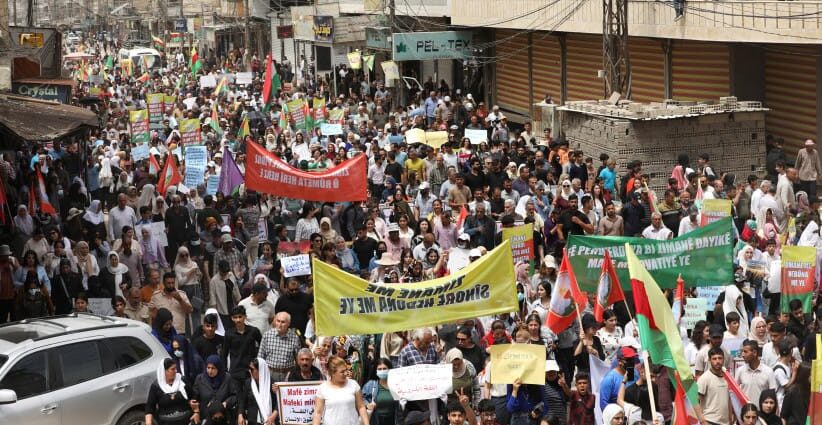
This post was originally published on here

Six previously undiscovered Bronze Age mines in southwestern Spain may help explain where the metal used in Scandinavian artifacts from the period was sourced. 

The mines were found in early February 2026, during a joint archaeological survey between Sweden’s University of Gothenburg and Spain’s University of Seville and the local Provincial Archaeological Museum of Badajoz, in Extremadura, Spain.

The six mines ranged in size, stretching from smaller “extraction areas” to much larger and “substantial mining environments.”

One of the mines located near Cabeza del Buey features a longitudinal trench-like cut measuring about seventy meters long by three meters wide. The shape and style of the mine display an “organized extraction of copper-bearing ore.”

Ahead of the survey, Professor Johan Ling of the University of Gothenburg had conducted several research projects in attempt to figure out where the metal used in the Bronze Age artifacts were from. 

Mines held veins of multiple ores

Lead isotope and chemical analyses of the artifacts revealed that much of the metal used had likely originated in southwestern Spain, though the exact location remained undefined.

During the survey, researchers found veins of copper, lead, and silver – all metals central to Bronze Age economies and trade networks – within the mines, suggesting that these newly unearthed mines may be the source of the metal.

Inside one of the mines, archaeologists also discovered approximately 80 grooved stone axes, which were used to crush and process the mined ores. 

Twenty Bronze Age mines found in past decade

“The newly discovered Bronze Age mines identified over the past ten years – both by other research teams and through the approximately 20 new mines documented by our research group between 2024 and 2026 – are transforming our understanding of how interconnected Europe was already 3,000 years ago,” Ling said. 

Ling explained that the discoveries “demonstrate that metal extraction in southwestern Europe was far more extensive and organized than previously recognized.”

He added that it also “provide[s] archaeological context to research pointing to ‘long-distance connections during the Bronze Age.’”

“The discovery of the new Bronze Age mines in Extremadura represents only the tip of the iceberg,” Ling went on. “In this region – as well as in Andalusia – we estimate that as many as 150 prehistoric mines may still remain undocumented and uninvestigated.”

“This has the potential to fundamentally reshape our understanding of the Bronze Age world system, in which copper mining operated as one of the key engines of the era.” 

The survey was conducted as part of the University of Gothenburg’s Maritime Encounters project, a multi-year initiative (2022-2027) aiming to fill the gaps in research recently opened by archaeological and DNA studies along the Atlantic façade from Norway to Iberia.

This post was originally published on here

China will send an astronaut to its space station on Sunday for a year, a record length for the country, enabling the study of long-duration human physiology in space as Beijing works towards its ambition of a crewed moon landing by 2030.

The Shenzhou-23 vessel is scheduled to launch at 11:08 p.m. (1508 GMT) using the Long March-2F Y23 carrier rocket from Jiuquan Satellite Launch Center in northwest China, with three Chinese astronauts on board.

Payload specialist Li Jiaying, a former Hong Kong police inspector, will be the first astronaut from the city to take part in a Chinese space mission. The other crew members are Commander Zhu Yangzhu and Pilot Zhang Yuanzhi, both from the People’s Liberation Army’s astronaut division.

One of the three is to stay on the Tiangong space station for a year, one of the longest space missions ever, but short of the 14-1/2 month record set by a Russian cosmonaut in 1995. That astronaut will be decided later, depending on the progress of the mission, the China Manned Space Agency said on Saturday.

China has sent astronauts to its space station almost a dozen times, but this launch comes amid an accelerating race to the moon with the US, which has warned about what it alleges are Beijing’s plans to colonize and mine lunar territory and resources.

Beijing has strongly rejected these claims.

CHINA, US SET SIGHTS ON MOON

NASA is seeking to achieve a crewed moon landing in 2028, two years ahead of China. The US aims to establish a long-term lunar presence as a stepping stone to eventual human exploration of Mars.

In April, four NASA astronauts made a historic trip around the moon as part of the Artemis II mission, flying farther from Earth than anyone before in the world’s first crewed lunar mission in half a century.

On Friday, Elon Musk’s SpaceX made a largely successful, uncrewed test flight of its next-generation Starship rocket, which is designed to enable more frequent Starlink satellite launches and to send future NASA missions to the moon.

China, with less than four years until its 2030 deadline, faces a tall order of developing entirely new hardware and software specific to its lunar mission, proving it is mission-ready. That will ensure its astronauts, used to the relative safety of Tiangong in low-Earth orbit, can safely make the riskier transition to the moon’s surface.

China’s Shenzhou missions have been sending trios of astronauts to the station for six-month stays since 2021. The Chinese space agency is training two Pakistani astronauts, one of whom could join an expected mission to Tiangong this year on a short-duration basis.

Goal of permanent lunar base by 2035

The previous mission, Shenzhou-22, was launched ahead of schedule in November to return three Chinese astronauts to Earth after their Shenzhou-20 vessel was damaged by space debris in orbit.

China has only sent robots to the moon, but its successive Shenzhou missions highlight the country’s rapidly improving space capabilities. In June 2024, China became the first country to recover lunar samples from the moon’s far side, using robots.

A successful crewed landing before 2030 would boost China’s plans to establish a permanent base on the moon by 2035 with Russia.

The Chinese lunar program’s chief scientist, Wu Weiren, has said Beijing’s public timeline is intentionally conservative.

Over the past year, Beijing has been carrying out safety tests of hardware developed for the 2030 mission, including heavy-lift Long March-10 rockets, the Mengzhou spacecraft, and the Lanyue lunar lander.

The Shenzhou-23 flight will execute the first autonomous rapid rendezvous and docking procedure with the core module of Tiangong in preparation for the 2030 mission, which hinges on an automated lunar-orbit rendezvous between the Mengzhou capsule and the Lanyue lander.

Scientists will also study the physiological effects of radiation exposure, bone density loss, and psychological stress in space for the extended duration of the Shenzhou-23 mission.

Beijing is conducting the world’s first human “artificial embryo” experiment in space, having sent samples of human stem cells to the Shenzhou-22 crew on the Tiangong this month, state media reported. The experiment is intended to study the long-term residence, survival, and reproduction of human beings in space.

This post was originally published on here

Iran will base their squad in the Mexican border city of Tijuana during this year’s World Cup after soccer’s world governing body FIFA approved a request to move the training camp from Arizona, the head of Iran’s football federation said on Saturday.

“We will be based in the Tijuana camp, which is near the Pacific Ocean and on the border between Mexico and the United States,” Iran’s soccer federation President Mehdi Taj said in a video posted on its Telegram social media account.

Taj added that the move would help avoid visa-related complications and that the squad would be able to travel directly to Mexico aboard Iran Air flights.

FIFA did not immediately respond to a request for comment.

Iran will play their first two Group G matches in Los Angeles, against New Zealand on June 15 and Belgium on June 21, before facing Egypt in Seattle on June 26.

Their players and staff had yet to receive US visas

“The total distance between us and the venue of our games in Los Angeles is 55 minutes by flight,” Taj said, adding that Tijuana was closer to their match venues than the team’s previously planned camp in Arizona.

Iran has faced uncertainty for months over travel and security arrangements for the World Cup, which will be co-hosted by the United States, Canada, and Mexico.

Iranian officials said this month that their players and staff had yet to receive US visas, less than a month before the tournament’s start.

Taj said FIFA had been asked for guarantees over visas, security, and the treatment of the Iranian delegation.

The World Cup runs from June 11 to July 19.

This post was originally published on here

Many dedicated Israel educators believe that keeping pace with the latest headlines from Jerusalem and Gaza delivers a meaningful connection to the Jewish state. 

There is virtue to their position, as long as they don’t get carried away. Chasing the news cycle may feel urgent and relevant, but it falls short of genuine Israel education.
 
True Israel education does more than report. 

It transmits the constant principles that have defined Zionism since its earliest days. 

It immerses students in the full sweep of Jewish and Zionist history, from the biblical kingdoms through two thousand years of exile and longing, from the stirrings of modern Zionism at the end of the 19th century to the desperate struggles of the Yishuv, the miracle of 1948, and the difficult decades that followed. 

It offers a broad, elevated perspective that reveals patterns and purpose amid the chaos of events.

Teaching current events serves a more immediate function. It keeps students aware of what is happening right now. It functions as a briefing, helping young Jews stay connected to the world. 

No one wants our children detached from the realities shaping people’s lives. 

Yet a briefing, no matter how detailed, cannot substitute for education. Without historical grounding and ideological depth, students see only fragments. They understand the symptoms but not the underlying condition. 

The risk runs deeper than incomplete knowledge.

Beyond the news cycle

When our classrooms obsess over the latest developments, we unintentionally suggest that Zionism has already completed its work. The state was founded, the army was built, and sovereignty was achieved. 

Now the story reduces to crisis management, another attack, another debate, another wave of condemnation. The grand, ongoing drama of Jewish return and renewal slips away.

Students absorb the quiet sense that the Zionist project reached its climax decades ago, and everything since is simply a reaction. 

The events of the October 7 massacre during Simchat Torah in 2023 illustrate the gap between these two approaches with painful clarity.

A current-events lesson often begins and ends with the horror itself. On that quiet Shabbat morning, Hamas terrorists smashed through the border fence. They murdered more than 1,200 people and seized 251 hostages. 

The images that emerged seared themselves into our collective memory. Students leave the class informed, shaken, and angry. They grasp what happened and feel the raw wound.

But they often lack the framework to answer the deeper questions of why this savagery? What does it reveal about the Jewish condition in our time? How should we respond not just as mourners but as Zionists?

Israel education approaches the same day differently. It situates October 7 within the long continuum of Jewish vulnerability and resilience. The massacre did not emerge from nowhere. 

It echoed the pogroms that convinced Herzl and Jabotinsky of the necessity of Jewish power, the Arab riots of 1929 that tested the Yishuv’s will, and the Holocaust that proved exile offered no permanent shelter. 

It confirmed, in the most brutal way imaginable, the foundational Zionist insight that a people without sovereignty will always remain at the mercy of others. Yet the response reaffirmed Zionist principles in action. 

Reserve soldiers left their civilian lives within hours. Communities pulled together across political divides. Debates raged, not over whether to fight, but how to fight while remaining true to Jewish ethics. 

The biblical command “If someone comes to kill you, rise early and kill him first” found new meaning in the fields surrounding Gaza.

Students who receive this fuller education see both the tragedy and the affirmation. They understand that October 7 did not disprove Zionism; it reconfirmed its urgent necessity. 

The Jewish people did not return to the land merely to escape history but rather to engage it as free actors. 

They learn that Israel’s successes, technological ingenuity under fire, democratic debate amid crisis, continued immigration even as sirens sounded, flow from the same values that built the state. They also confront the failures honestly. This honesty deepens the students’ attachment.
 
The same principle applies across every flashpoint. Teaching judicial reform or settlement policy as breaking news produces heated but shallow discussion. 

Placing those issues within the century-long Zionist argument over the character of the Jewish state gives students perspective. A briefing on diplomatic agreements or boycott campaigns keeps students current. 
Connecting them to the enduring tension between security and morality equips students to think as heirs to a tradition, not spectators to headlines.

Teaching Israel in context

Educators who mistake the news cycle for curriculum may produce engaged followers of events, but they miss the opportunity to form rooted Zionists. Young people flooded with daily updates often react with passion yet lack the intellectual steadiness needed when facing sophisticated criticism or their own doubts. 

Those who have internalized the long view move differently. They carry the quiet confidence that comes from knowing Israel’s full story, including its light and its burdens, its triumphs and its ongoing struggles.
This does not mean discarding current events. They have an essential place, but only as an illustration within a larger framework. 

The thoughtful teacher weaves today’s crisis back into the tapestry, teaching how it echoes 1948, how Zionist values shape our choices, and how Jewish history prepares us for what lies ahead. 

Only then does the present enlighten rather than overwhelm the student. Jewish teaching has always favored depth over immediacy. The Torah embeds every incident in covenant and destiny. 

The sages argued across generations, never allowing the crisis of the hour to erase eternal questions. Zionism emerged from precisely this kind of honest, unflinching engagement with reality. Our classrooms must honor that inheritance.

Israel educators must teach the unchanging principles. They must teach the history that gives every headline its weight and offer the broad view that transforms raw information into understanding. 

When they do this, students will not merely follow events as they unfold. They will see their own place within the continuing Jewish story, a story that did not conclude with independence and will not be defined by any single massacre or victory. 

They will emerge not as consumers of news but as conscious participants in a living Zionism, connected to Israel not only by emotion but by knowledge and conviction.

The Jewish people have never needed this more. In a world that often reduces Israel to soundbites and slogans, we owe our students the fullness of their heritage. That fullness remains the surest foundation for both understanding and love.

The writer is a Zionist educator at institutions around the world. He recently published the book Zionism Today.

This post was originally published on here

Police fired tear gas and clashed with protesters in central Belgrade on Saturday, as tens of thousands gathered to demand early elections and an end to the more than decade-long rule of Serbia’s populist President Aleksandar Vucic.

People crowded into Slavija Square, one of the capital’s main junctions, in a fresh eruption of demonstrations that started a year and a half ago when a deadly roof collapse triggered a youth-led movement against alleged corruption and mismanagement.

Officers in riot gear cordoned off Belgrade city hall, about a kilometer away, before sporadic clashes broke out between protesters and police near the presidency building and outside a park where Vucic’s supporters have been camping since March last year.

Police fired tear gas and stun grenades as they pushed back protesters farther down the street. Protesters set fire to bins filled with rubbish.

Interior Minister Ivica Dacic said 23 people were detained, Tanjug news agency reported.

Dacic said some police officers were injured in clashes but gave no details on the severity of the injuries or the number of police officers affected.

‘This government is afraid of those who are defending their dignity and rights’

Many in the crowds wore badges with red hands reading, “Your hands are bloody,” and banners saying, “The students are winning.”

Anti-government protests started after an awning collapsed at a railway station in the northern Serbian city of Novi Sad on November 1, 2024. Protesters, opposition leaders, and rights watchdogs say it was a sign of broader mismanagement.

Vucic and his allies deny accusations of corruption and crackdowns on critics, and say they have taken action to punish those responsible for the roof collapse.

On Saturday, before the clashes broke out, Mirjana Nikolic, rector of Belgrade’s University of Arts, told the cheering crowd: “This government is … afraid of those who are defending their dignity and their rights.”

Police estimated the crowd in the square and surrounding streets at 34,300. The Archive of Public Gatherings, a group that monitors public gatherings, put the number at around 100,000.

“I came here to show how many of us there are, how many unhappy citizens there are and that it is a high time to organize election to make things better,” Dragan Djuric, a 55-year-old farmer from the town of Sabac, said at the rally.

This post was originally published on here

Over seventy days into the war against Iran, the Islamic Republic is neither defeated, decapitated, nor negotiating from weakness. The most consequential decisions about the next phase of this conflict are being made not in Tehran’s civil government but inside a military institution that neither the United States nor Israel had fully understood.

The central analytical failure of the  campaign against Iran was the assumption that destroying its central command would produce “institutional collapse.” The US and Israel designed a decapitation strategy against a military that had spent at least 17 years specifically engineering itself to survive decapitation.

US Gen. Dan Caine, chairman of the Joint Chiefs of Staff, told reporters at a Pentagon press conference on May 4 that Iran’s command structure was “very fractured” and that it was “struggling to maintain control down echelon at the edge.”  Nevertheless, the CIA confirmed this week that, even after 70 days of the most intensive American air campaign since Iraq 2003, Iran’s military capacity has not collapsed. 

This is because when supreme leader Ali Khamenei was killed on February 28, the system did not pause, panic, or surrender; it activated the “fourth successor protocol,” which designates three to seven replacements for every critical position.

A “fractured” command collapses under sustained pressure. On the other hand, a “distributed” command becomes more resilient under it. 

Iran’s Mosaic Defense doctrine, formalized under Islamic Revolutionary Guard Corps commander Mohammad Ali Jafari in 2008, had already restructured the IRGC into 31 provincial commands, one for Greater Tehran and one for each of Iran’s 30 other provinces. 

Each operates as a self-sustaining military entity with its own intelligence apparatus, weapons stockpiles, communication systems, and pre-delegated authority to act without direction from central command. 

The fourth successor protocol designates three to seven replacements for every critical position. When Supreme Leader Khamenei was killed on February 28, the system did not pause, panic nor surrender. It activated.

Iranian Foreign Minister Araghchi confirmed the architecture on March 1 when he wrote: “Our military units are now, in fact, independent and somewhat isolated, and they are acting based on general instructions given to them in advance.” That statement was not an admission of weakness. It was a description of the doctrine executing exactly as designed.

The information war Iran is winning

Iran blocked internet access for its 92 million citizens on February 28, the day the war began. That shutdown has been sustained for 70 consecutive days, the longest recorded internet blackout in Iranian history, imposing an estimated nine billion dollars in economic damage on Iranian businesses.

And yet Iran’s Foreign Minister has posted on X/Twitter daily since February 28. Iran’s parliament speaker has run a financial warfare operation on X/Twitter throughout the conflict. IRGC-linked accounts have posted culturally aware viral animated Lego videos, missile strike claims, and geopolitical analysis throughout the war. Iranian officials have appeared on international podcasts in clear, unaccented English. The government whose country’s internet is dark for its citizens has maintained a perfectly functional global broadcast operation throughout.

This is a controlled broadcast environment with a global microphone and zero domestic accountability. Every statement coming from Iranian officials on X is state-curated messaging that no Iranian citizen can fact-check, contradict, or respond to from inside the country

When Western media amplifies an Iranian government post about ceasefire proposals, missile strikes, or Hormuz status, it is distributing a one-way state broadcast produced behind a digital wall. 

The narrative war is being fought with precision. Iran’s civilian government condemns IRGC strikes. The IRGC denies having conducted them. A map claiming military control over UAE territorial waters was released the same day the denial was issued. One rail fires. The other condemns. Both go to the same destination while creating plausible deniability. 

A woman walks past the mural showing U.S. flag with barbed wire and the Statue Of Liberty with skull face in Tehran, Iran June 25, 2019. (credit: Nazanin Tabatabaee/Nazanin Tabatabaee/West Asia News Agency via REUTERS)

What Iran has actually built during the war

Iran has passed parliamentary legislation establishing a new legal framework for the Strait of Hormuz, formalizing its claim to enforce transit authority as a sovereign right rather than a temporary military measure. This legislation does not disappear with a ceasefire. It becomes the foundation for Iran’s permanent maritime governance posture regardless of how the kinetic phase resolves.

IRGC-linked media published this week a formal three-step governance model for the Hormuz submarine internet cables. The cables carry more than $10 trillion in daily financial transactions. 

The proposal requires foreign operators, specifically naming Google, Meta, and Microsoft, to obtain Iranian permits and pay tolls, operate under Iranian law, and assign maintenance and repair rights exclusively to Iranian companies. This is not a threat. It is a published regulatory framework, legally grounded in Iran’s non-accession to UNCLOS and its claim to sovereign authority over the seabed beneath the strait. Not a single technology company listed on the NYSE and London Stock Exchange with Gulf data center exposure has priced this risk into current valuations.

Iran has simultaneously rerouted its trade architecture away from UAE ports and toward Pakistan’s Gwadar port, a facility operated by China under the Belt and Road Initiative. Approximately $45 billion in annual Iranian trade that previously flowed through Dubai’s Jebel Ali is now redirecting through a Chinese-operated port in a nuclear-armed state, which Washington needs as its primary peace broker. 

The blockade that was declared a “tremendous success” has produced the permanent activation of a Chinese infrastructure asset as Iran’s primary import gateway.

Iran’s partnership architecture has solidified in ways that were not possible before February 28. Russia has provided HQ-9 air defense systems, technical assistance, and diplomatic cover. 

China has blocked secondary sanctions on refiners buying Iranian oil through a formal blocking rule, the first invocation of that regulatory tool in Chinese history. 

Pakistan has opened six overland corridors to Iranian trade, deployed jets to Saudi Arabia under a mutual defense pact, and mediated the ceasefire that both Washington and Tehran publicly credited to Islamabad’s army chief. 

The Iran war made Pakistan into a regional power. It reinforced Russia’s strategic partnership with Tehran. It activated China’s blocking rule infrastructure that Washington will face again in any future sanctions campaign.

The scenarios being discussed in Western media, “deal or no deal,, ceasefire or resumption, miss the structural reality that neither available outcome resolves the fundamental problem.

Scenario one: A partial diplomatic framework is reached before the US midterms in November. Iran accepts enrichment constraints short of full dismantlement. Washington calls it denuclearization. Iran calls it sovereignty preserved. Both sides declare victory for their domestic audiences. The Hormuz legislative framework remains. The submarine cable governance proposal remains. The Gwadar trade corridor remains. The Pakistani and Chinese partnerships remain. Iran signs a piece of paper that restricts its enrichment timeline and receives partial sanctions relief. The strategic architecture built during the 70 days of war remains permanently in place.

Scenario two: The ground invasion phase begins. The legal architecture was cleared when Congress accepted ‘terminated.’ The Marines on USS Tripoli and USS Boxer are pre-positioned. Kharg or Abu Musa Island seizure plans are likely written. The Venezuelan model, targeted operations creating internal conditions for regime change rather than a traditional occupation, is the template being discussed. Israel struck the China-Iran Railway 10 months after it opened, establishing the doctrinal precedent that BRI infrastructure in combatant states is a legitimate target. A ground campaign would target not the Iranian military, which has survived seventy days of the most intensive American air campaign since Iraq 2003, but the political conditions inside Iran that Washington hopes will produce a different government.

Neither scenario is straightforward.

World’s second-largest lithium deposit

This war was not primarily about Iran’s nuclear program. 

Iran sits on the world’s second-largest lithium deposit, discovered in Hamedan province in 2023. It holds 85 million tons of newly discovered rare earth elements. Its total proven mineral reserves are valued at $770 billion. The 21st century runs on lithium and rare earths the way the 20th century ran on oil. China controls ±85% of global rare earth processing and ±60% of global lithium processing. 

An Iran under American-aligned governance would represent the single largest resource acquisition in American history and would simultaneously break China’s monopoly on 21st-century critical mineral supply chains.

If Iran survives this war with its institutional architecture intact, the demonstration effect for every mineral-rich developing nation currently calculating whether to align with Washington or hedge toward Beijing is more strategically consequential than any military outcome.

Iran does not need to win this war. It needs to not lose it in a way that validates the American model of force as the instrument of resource acquisition.

AJ Jaff is a senior strategic security analyst with 20 years of experience across corporate security, military policing, and geopolitical intelligence. He covers defence, intelligence, and conflict analysis. 

Follow him @aj_geo_analysis on X.

This post was originally published on here

Near the end of his book Introduction to the Zohar: The Wisdom of Truth, Rabbi Yehuda Leib HaLevi Ashlag writes a sentence that is hard to read even now. 

“All of the glory of the people of Israel in Poland and Lithuania has been reduced to a handful of refugees in the Holy Land. We, those who remain, must now repair the horribly distorted situation.” 

He was not writing after the Holocaust. He was writing inside it. What he believed that repair required is what this volume contains.

Introduction to the Zohar: The Wisdom of Truth, translated by Yoel Finkelman, is Rabbi Ashlag’s introduction to the foundational text of Jewish mysticism, the Zohar. 

Known as the Baal HaSulam, Rabbi Ashlag spent his life building what he called a ladder toward that text, a commentary precise enough that any serious person could begin to climb it.

Six questions

He opens the book with six questions, none of them rhetorical. What is the purpose of creation? Why does a God who desires only to give create creatures who suffer? When we look at ourselves, we feel defective and low, yet we know we were made by a perfect Maker. How do we reconcile that? His method for answering them is unusual: Look at the end of the action, not the middle. Begin with what God intended when He created.

Infinite good

What God intended, he argues, was to bestow infinite good on His creatures. But infinite pleasure requires infinite desire to receive. And that desire to receive is the one thing not already present in God because from whom would God receive? It is the single genuinely new thing in creation. The entire material world, he writes, is “nothing other than the desire to receive.” This is less a mystical claim than a description of ordinary experience: we want, we pursue, we acquire, we want again.

Difference in form

The Baal HaSulam then reaches for an image to explain what that desire does to us spiritually. Think of a stone quarried from a mountain. In the physical world, an ax separates the stone from the rock face. In the spiritual world, there is no ax. What separates two things is the difference in form. Two people who love the same things and hate the same things cleave together as one body. Two people of opposite nature are as distant as east from west. God gives; we receive. That difference in form is what separated the soul from its Source, and closing it is what a human life is for.

The only thing that can be cured

Here is where the book turns. The desire to receive is not the disease. It is the only thing that can be cured. A person cannot repair what is not within him. The desire had to be given to us in its raw, selfish form precisely so that we could do something with it: redirect it, through the practice of Torah and the commandments, away from the self and toward something larger. Every act performed with genuine intention moves the needle. The transformation is gradual, and the Baal HaSulam is precise about what happens when it stalls. The suffering built into human life, he argues, is the alternative route to the same destination for those who don’t choose the other path.

He draws the connection between that framework and the catastrophe he is living through with the directness of a man who has nothing left to protect. When Jews abandon the inner life of their tradition, performing its forms without genuine intention, the forces of destruction in the world are strengthened. He is not speaking in metaphor. He names what he has witnessed: “Each and every one who remains must commit his entire being to increasing the study of the internal aspect of Torah and granting it its rightful place.”

Rabbi Shimon bar Yochai

The Zohar, the book that all of this introduces, was composed in the 2nd century by Rabbi Shimon bar Yochai. The Baal HaSulam says he never investigated the question of authorship because anyone who genuinely understands what the Zohar contains cannot doubt that its author was at least at the level of that Tanna. If he were told it was written by one of the 48 prophets, he writes, that would make more sense than attributing it to a lesser figure. If he became convinced Moses himself received it at Sinai, he would be satisfied. He is positioning you before you open the Zohar itself: Know what you are approaching.

Entrance to the tomb of Rabbi Shimon Bar Yochai, to whom the  Zohar is attributed. (credit: Wikimedia Commons)

The book closes with a line from the Zohar itself: “The Zohar will bring them out of exile in mercy.” 

A ladder is not a destination

He named his commentary on the Zohar “HaSulam,” “the ladder,” and explained that a ladder is not a destination. If you rest on the rungs, you never reach the attic. Finkelman’s translation is precise without being reductive, and the editorial additions orient without intruding. I have spent years around Jewish texts. This one told me something about what they are all pointing toward that I had not found expressed so clearly anywhere else.■

INTRODUCTION TO THE ZOHAR: THE WISDOM OF TRUTH
By Rabbi Yehuda 
Leib HaLevi Ashlag
Translated by Yoel Finkelman
Maggid Books and Share
134 pages; $25

This post was originally published on here

What impact have American Jews had on the practice of Judaism in Israel? The answer to that question is the focus of Adam S. Ferziger’s latest book, Agents of Change: American Jews and the Transformation of Israeli Judaism. Ferziger is a noted scholar of Orthodox Jewish culture in the United States and Israel, as well as a professor at Bar-Ilan University.

In this ambitious work, he traces the contributions of North American trailblazing educators who made aliyah to the Jewish state between the mid-1960s and the early 1980s and helped lay the foundations for the moderate stream of Orthodox Judaism in Israel.

Ferziger focuses on eight individuals who, in his estimation, transformed Israeli Judaism and had a correspondingly major impact on North American Jewish life as well.

“Their innovative positions,” writes Ferziger, “have found extensive expression in areas that have been at the center of Orthodox debates since the late 20th century, including the role of women in religious and public life, LGBTQs, interactions with non-Orthodox denominations and nonobservant Jews, religious leadership and the authority of the state rabbinate, religious conversion, perceptions of Jewish experience outside Israel, and attitudes toward academic Jewish studies – including biblical criticism.”

The author points out that while the accomplishments of those leaders were initially peripheral to mainstream Israeli religious life, they eventually succeeded in cultivating numerous students who, inspired by their teachings, translated and adapted their religious outlook into Israeli terms. 

In other words, “a ‘recalibration’ process transpired that facilitated the refinement and amendment of concepts and positions that can be traced to 20th-century American Modern Orthodox Judaism through ongoing interaction with Israelis and their native contexts.”

Also felt in the US and Canada

Moreover, Ferziger posits that the influence of these trailblazers’ accomplishments has also been felt in North America, due in part to the many college-age and postgraduate students who spent gap years in Israeli institutions and have served as conduits for their ideas upon their return to the US and Canada.

Selecting the top Jewish educational leaders is a little like picking an all-star team in baseball. There will always be those who disagree with the selection and suggest that others should have been chosen.

Rabbi Aharon Lichtenstein at Yeshivat Har Etzion. (credit: GERSHON ELINSON/FLASH90)

Therefore, Ferziger discusses at length why he did not include other significant English-speaking figures. Ultimately, he says, the figures he selected were American immigrants who not only taught and wrote about Judaism but also spent their time building and leading Israel-based educational institutions.

The top eight

His list includes two women: Malka Bina, founder of Matan Women’s Institute for Torah Studies; and Rabbanit Chanak Henkin, founder and dean ofta Nishmat

The rest are rabbis whose names have become bywords: Rabbi Dr. Aharon Lichtenstein, rosh yeshiva of Yeshivat Har Etzion; Rabbi Shlomo Riskin, chief rabbi of Efrat and founder of the Ohr Torah Stone institutions; Rabbi David Hartman, philosopher and founder of the Shalom Hartman Institute; Rabbi Daniel Tropper, co-founder of Gesher, which fosters dialogue among different sectors of the Jewish people; Rabbi Nachum Eliezer Rabinovitch, head of Yeshivat Birkat Moshe; and Rabbi Chaim Brovender, founder of Midreshet Lindenbaum – originally known as Yeshivat Hamivtar and Michlelet Bruria.

Malka Bina, founder of Matan  Women’s Institute for Torah Studies. (credit: Courtesy Bina family)

B-G’s visit to the US

Ferziger sets the stage for the increased interest among young American Jews in the Zionist enterprise with his fascinating March 1960 description of then-prime minister David Ben-Gurion’s visit to the US. During his nine-day visit, he spoke to students at Brandeis University, at the Conservative-affiliated Jewish Theological Seminary (JTS), the Reform movement’s

Hebrew Union College-Jewish Institute of Religion, and at Yeshiva University (YU).

One of the main thrusts of Ben-Gurion’s visit, Ferziger explains, was promoting one-year study programs in Israel for college youth. 

While the sight of American Jewish college students coming to Israel for a year of study is considered commonplace today, 60 years ago the very idea was considered most unusual.

Ben-Gurion delivered his remarks at JTS and YU in Hebrew and interacted directly with the students. At the conclusion of his visit to JTS, he told them, “If I may beseech you, anyone who is willing to settle in the Land of Israel, I encourage you to do so.”

At YU, he said, “To the outstanding, the daring, the pioneers, among you… I want to share the hidden subversion in my proposal… Certainly a year in the land will benefit you and American Jewry… but I have a scheme; many of those who shall come to Israel will not return and will remain there. This is what I intended to share with you this morning: Everyone should come for at least a year, the best of you for eternity.”

One of the students in attendance, and editor of the YU newspaper, then known as Steven Riskin, would rise to prominence as a leading rabbi and educator and later make aliyah in 1983.

Rabbi Lichtenstein

Ferziger presents cogent descriptions of the accomplishments and contributions of the eight educators to Israeli religious life, and, justifiably, places a special focus on the work of Rabbi Lichtenstein, titling the section “The Game-Changer.”

“It is imperative to emphasize why Lichtenstein’s arrival was such a critical moment in the emergence of Israeli Moderate Orthodoxy,” he writes. “At base, he was undeniably an extraordinary Torah scholar with a superb rabbinical pedigree, who was nurtured by and maintained relationships with some of the leading traditionalist authorities of the time. His own Talmudic lectures charted new analytic directions within the same conceptual approach as Lithuanian-style haredi [ultra-Orthodox] and RZ [Religious Zionist] yeshivot in Israel and throughout the world. Thus, in contrast to other like-minded figures, regardless of one’s opinion of his ideological positions and policies, it was harder to simply dismiss him as insufficiently grounded in core sources of religious knowledge and commitment.”

The book’s second section, “Dimensions of Israeli Moderate Orthodox Judaism,” discusses distinct specific aspects of Israeli moderate Judaism, including, among others, Rabbi Aharon Lichtenstein’s evolving worldview of the non-Orthodox world, and how it has changed over the years; Orthodox feminism, biblical scholarship, and Orthodox Judaism in Israel and North America, as well as Reform and Conservative synagogue-centers in Tel Aviv. 

Moderate Orthodox Judaism

Part Three, “Homeland and Beyond,” focuses on the dissemination of Israeli moderate Orthodox Judaism and pays particular attention to the work of Rabbanit Michelle Farber in the popularization of the Daf Yomi (Talmudic) study for women, as well as the accomplishments of the Torah MiZion movement, which has also served to inculcate moderate religious values in communities around the world. 

Interestingly, one of the most important sections of the book is the appendix, in which Ferziger provides a list of the Israel-based students and protégés of the eight educators, thus lending ample proof not only of their accomplishments but also of their enduring influence on future generations.

While many olim sometimes despair of their seeming inability to influence and effect change in Israeli society, it is inspiring to read of the impact these particular individuals have had on the Jewish world. 

Agents of Change is well written, thorough, and particularly relevant for English-speaking olim. The book might have gained a more personal dimension – and been further strengthened – had Ferziger actually interviewed some of the educators he discusses, allowing them to offer their own reflections on their accomplishments. 

However, despite this minor quibble, it is a most worthwhile read.

AGENTS OF CHANGE 
AMERICAN JEWS 
AND THE TRANSFORMATION 
OF ISRAELI JUDAISM
By Adam S. Ferziger
NYU Press
472 pages; $37

This post was originally published on here

There was enormous satisfaction in the Sailing Association following the fantastic achievement on Saturday evening at the iQFOiL Open European Championships, as Hebrew media reported that windsurfer Tamar Steinberg won gold and Shahar Tibi finished behind her with the silver medal.

“I am happy to win the competition,” Steinberg said shortly after her victory. “Over the past few months, I felt that I was in good shape. I wanted to come to the competition and make that happen. Until now, I had been a world championship runner up, and I already wanted to win a major target competition. I was concentrated and focused. I knew I needed to give it my all. I did not have my best abilities on the water today, but it happened because I felt I needed to do it. I feel that I have to be the best during this period, because while others are fighting for the country as soldiers, I am an outstanding athlete. Shahar Tibi finished second and showed great ability. The boys also competed well. We have a great women’s and men’s team.”

The championship website stated that while Steinberg won gold, Tibi came in third and took bronze.

Israeli windsurfing coach praises team

National team coach Shahar Zubari continued to excel and said, “Tamar was goal-oriented and committed to the process. She wants to get to Los Angeles focused on a medal, and all the target competitions along the way are very important. She did things in an impressive way. Tamar makes things look easy, but she works very hard. It is great that Shahar Tibi is second in Europe and Daniela Peleg finished fourth among the Europeans and sixth overall. We have a committed team and an excellent association behind us.”

Steinberg added regarding her goals: “Clearly, the goal is Los Angeles 28. We are four great girls. Each one is a favorite. My goal is to be good all the time. I always want to be at the top. My goal is to arrive in Los Angeles as a clear and natural candidate for the gold medal.”

The young champion elaborated and said: “I am already in my fourth year in the senior ranks, even though I am still not 20, so I feel experienced. We are at a high level and have a lot of power in the team. There will be tough competition for the ticket to the Olympic Games. I continue to work through the national team and believe things will work out in my favor.”

Sharon Kantor is recovering from an injury, coach says

Zubari said that Sharon Kantor is returning from injury and therefore did not travel to the competition. “Everyone will need to be at their best in order to represent Israel in Los Angeles.” Regarding the successful women’s team he coaches, he said: “I am there for each of the athletes equally. I have been in the role for five years. The athletes understand the advantage of being part of a national team.”

Sailing Association chairman Shai Buber added, “We have the best team in the world. The new windsurfing model has already been around for four years, and the Chinese have entered it strongly. We need to continue working hard. I see Tamar’s investment. This achievement did not come out of nowhere. These moments make all the investment by the association worth it.”

This post was originally published on here

Activists on the Global Sumud Flotilla, which was intercepted by Israeli forces en route way to Gaza, were allegedly beaten, tortured, and sexually assaulted while in detention, according to CNN, citing Palestinian legal aid group Adalah, which collected testimony from the activists. 

Israeli forces arrested 430 people on board 50 ships in international waters on Tuesday to halt a flotilla of volunteers trying to bring aid supplies to the Gaza Strip.

Global Sumud Flotilla organizers said the group had documented at least 15 cases of sexual abuse, with the worst occurring on one Israeli landing craft, which had been converted into a makeshift prison with barbed wire and shipping containers.

A statement from the organizers added that activists had been subjected to “multiple accounts of rape,” and “forcible penetration by a handgun,” according to CNN.

The IDF wholly rejected allegations of abuse by Israeli military personnel, telling CNN that the soldiers’ “orders require respectful and appropriate treatment of flotilla participants on the intercepted vessels, and there are clear and established procedures in this regard.”

“Any concrete complaints submitted to the IDF on the matter will be examined thoroughly,” the IDF added in its comment to CNN. 

Additionally, Israel Prison Service told CNN that the “allegations raised are false and entirely without factual basis,” and that it “rejects generalized allegations aimed at portraying systematic unlawful conduct.”

Flotilla activists testify to mistreatment at the hands of Israeli forces 

Mi Hoa Lee, an activist from Spain, said she was forced into the darkened container on the ship, according to a video interview included with the flotilla’s statement.

“Four men started beating me in the face against the wall, and I fell down and then stood up again, again to the floor, stood up again, and they started tasering me for more than one minute,” she said, pointing to her ribcage, hips and back where she said they applied the taser.

“Then they kept beating me until I almost lost my conscience,” she added.

Two days with no running water

Ilaria Mancosu, an Italian activist, told Reuters the flotilla members were removed from their boats to two so-called prison ships. Those put on one of the ships suffered more violence than the other, she said. They were locked in a container and beaten by five soldiers, suffering fractures to the ribs and arms. Some had serious injuries to their eyes and ears caused by tasers.

She said they spent two days on the prison ships with no running water and used cardboard and plastic to keep warm at night, since they had no blankets and were stripped of most of their clothes. Once on land they were made to kneel for several hours and kicked and shoved if they moved or spoke. They were then taken to a prison where they were moved from room to room periodically to keep them from sleeping, she said.

This post was originally published on here

It is not difficult to find hostile actors across international media, anti-Israel activists, and foreign governments eager to exacerbate the reputational damage Israel has suffered since October 7, 2023, and the subsequent wars that ensued, using it as a tool to further isolate Israel, regardless of its actions.

But too often, one minister in the Israeli government goes out of his way to make their job painfully easy.

National Security Minister Itamar Ben-Gvir’s conduct surrounding the interception of the Gaza-bound flotilla this past week perfectly encapsulated the decision-making process that has plagued his tenure: He once again chose to neglect his responsibilities as a member of the cabinet by appeasing his far-right base with social media clips, handing Israel’s critics exactly the images, rhetoric, and symbolism they wanted.

In videos shared by Ben-Gvir himself and by Israeli journalists, the minister is seen taunting detained flotilla activists while condoning and encouraging the harsh treatment displayed by some officers in the footage.

One video posted by the minister shows officers forcing an activist to the ground after she chants “free, free Palestine.”

National Security Minister Itamar Ben-Gvir visits detained Global Sumud Flotilla activists at Ashdod Port on May 20, 2026. (Credit: Via section 27A of the Copyright Act)

Another clip shows Ben-Gvir threatening the activists in Hebrew as they kneel on the floor with their hands zip-tied behind their backs. In another, he waves Israeli flags while declaring, “Look at them now. See how they look now, not heroes and not anything… Welcome to Israel! We own this place.”

Flotilla was always a provocation, Ben-Gvir gave them what they wanted

The flotilla itself was always designed as a provocation. Its organizers sought confrontation and publicity, hoping to produce images that would fuel accusations against Israel and reignite international outrage over the war in Gaza.

Then came Ben-Gvir, giving them precisely what they wanted.

The footage spread rapidly across international media and social networks, and the diplomatic backlash was immediate.

US Ambassador to Israel Mike Huckabee said Ben-Gvir had “betrayed the dignity” of Israel. Israeli envoys were summoned for clarification in Italy, France, Canada, the Netherlands, and the United Kingdom, among others.

On Saturday, France joined Italy in banning Ben-Gvir from entering the country, with Foreign Minister Jean-Noel Barrot urging the rest of the European Union to follow suit.

The national security minister’s actions proved a step too far even for Ben-Gvir’s fellow cabinet members.

Foreign Minister Gideon Sa’ar issued a stark condemnation of Ben-Gvir’s conduct, accusing him of knowingly harming Israel through a “disgraceful display – and not for the first time.”

Prime Minister Benjamin Netanyahu also rebuked Ben-Gvir in statements released in both Hebrew and English, itself a rarity, saying the minister’s actions were “not in line with Israel’s values and norms.”

Yet, Netanyahu has thus far avoided calls to dismiss the national security minister, despite years of mounting controversies and repeated incidents that have damaged Israel diplomatically and internally.

With political considerations mounting, it is not difficult to understand why. Netanyahu is determined to prolong his coalition’s survival for as long as possible, and Ben-Gvir remains politically useful.

Additionally, the prime minister will almost certainly need Otzma Yehudit’s support if Likud hopes to form another coalition after the next election.

Ben-Gvir’s outrageous behavior in the flotilla incident serves as a, hopefully final, reminder that during his tenure, he has behaved exactly as his critics warned he would when he first entered government.

For nearly four years as national security minister, aside from a brief interruption last year, Ben-Gvir has repeatedly undermined Israel’s standing abroad while inflaming tensions at home.

His conduct has consistently turned sensitive security and diplomatic situations into opportunities for political theater.

His rhetoric and policies have also made it easier for those seeking to vilify Israel, portraying him as the face of the country and its people.

Since October 7, Israel has been fighting not only a military war, but also a political and diplomatic one. A government minister who repeatedly sabotages that effort is both a political inconvenience and a liability.

If Netanyahu truly wants Israelis to believe that his decisions are guided solely by what is best for the State of Israel, then Ben-Gvir cannot remain in power for even one more day.

This post was originally published on here

The US has launched sanctions against nine individuals accused of enabling Lebanese terrorist organization Hezbollah’s efforts to undermine Lebanon’s sovereignty, the US State Department announced on Thursday.

The sanctioned individuals have impeded moves to disarm Hezbollah, according to the State Department, and include members of the Lebanese parliament, Iran’s ambassador to Lebanon, and Lebanese security officials “who have abused their roles to benefit a terrorist organization.”

The State Department asserted that in supporting Hezbollah, the individuals furthered the Islamic regime in Iran’s agenda in Lebanon and actively obstructed the Lebanese people’s path to peace.

“Hezbollah’s continued commitment to terrorism and refusal to disarm prevent the Government of Lebanon from delivering the peace, stability, and prosperity that its people deserve,” the US press release continued.

US offers $10 million reward for disruption of Hezbollah financing

The State Department also reiterated that its Rewards for Justice program offers up to $10 million for information leading to the disruption of networks that finance Hezbollah terrorism.

The US also issued a warning to anyone shielding or collaborating with Hezbollah, stating that they “should understand that they will be held accountable.”

“A stable, secure, and independent Lebanon requires the full disarmament of Hezbollah and the restoration of the Lebanese government’s exclusive authority over security matters throughout the country,” the State Department asserted.

The US Department of the Treasury additionally released a statement regarding the sanctions, in which Treasury Secretary Scott Bessent reiterated the importance of disarming Hezbollah.

“Treasury will continue to take action against officials who have infiltrated the Lebanese government and are enabling Hezbollah to wage its senseless campaign of violence against the Lebanese people and obstruct lasting peace,” Bessent vowed.

This post was originally published on here

Two people were reported to have been shot after numerous gunshots were heard outside the White House on Saturday evening, US media confirmed.

ABC News reported that the White House North Lawn had been cleared by Secret Service, and that reporters had been told to “sprint into the White House Press Briefing Room.”

The Secret Service Office of Communications announced on X/Twitter that there had been “reports of shots fired near 17th Street and Pennsylvania Avenue NW,” and that the agency was “working to corroborate the information with personnel on the ground.”

FBI Director Kash Patel stated that the FBI was on the scene assisting the Secret Service.

Reporters on social media claimed to have heard between 20-30 shots.

Suspect taken down, reported to be in critical condition

Reuters cited a US law enforcement official who stated that a suspect had been taken down and brought to the hospital, after approaching a checkpoint near the White House and opening fire on officers there.

The scene had been contained, and no law enforcement personnel were injured, the official added.

The suspect was identified as an emotionally disturbed person, the official said, adding that a “stay-away order” had been issued to the suspect previously.

CBS reported that two people, including the suspect, had been wounded during the event. The shooter, law enforcement sources told CBS, was in critical condition, while the second victim was in serious condition.

Both wounded parties were taken to a nearby hospital, where CBS later reported that the shooting suspect had died.

CBS also reported that the White House lockdown had been lifted.

Trump announces peace agreement between US, Iran, in hours before shooting

Only a few hours before the shooting, US President Donald Trump had announced that he was “in the Oval Office at the White House,” where he said a peace agreement had been “largely negotiated” among the United States, Iran, and several Middle Eastern countries.”

The shooting also came approximately one month after Trump and his wife, Melania, were evacuated from the White House Correspondents’ Dinner by Secret Service after shots were fired outside of the ballroom where the dinner was being held.

The shooting suspect, armed with a shotgun, a handgun, and several knives, fired at a Secret Service agent, an FBI official told Reuters, adding that the agent was hit in an area covered by protective gear and was not harmed and that the suspect was taken to the hospital for evaluation.

This is a developing story.

Reuters, Tzvi Jasper, Miriam Sela-Eitam, and Hannah Brown contributed to this report.

This post was originally published on here

Dozens of right-wing protesters gathered outside the home of IDF Chief of Staff Lt.-Gen. Eyal Zamir in a community in the Sharon region, following an incident in which a soldier wearing a “Messiah” patch was jailed after Zamir visited the guard post and saw him.

The protesters held signs reading “traitor, enemy of Israel,” played loud music, and waved Israeli flags. Dozens of activists took part in the protest.

Knesset members respond, supporting Zamir and condemning the government

Opposition leader Yair Lapid responded to the incident in a Twitter/X post, saying: “The shocking attack on the chief of staff is a direct result of the incitement by Knesset members and ministers in the government against the IDF, its commanders, and its fighters.” 

Taking a stance similar to Lapid’s, former prime minister Naftali Bennett held the current government responsible for inciting the incident, writing: “[The government] promotes the draft-dodging law, attacks on the chief of staff and other top security officials, and incites against anyone who dares to speak the truth.”

Yashar! party chairman and former IDF chief of staff, Gadi Eisenkot, also posted a response on Twitter/X post, saying: “The shocking calls outside the home of the IDF chief of staff are crossing a bright red line, a severe warning sign for the future of Israeli society… Calling the IDF chief of staff, the commander of the IDF who has tied his fate to the security of the state, a ‘traitor’ and an ‘enemy of Israel’ is a deep disgrace.”

“It is inconceivable that during wartime, protesters are standing outside the home of the IDF chief of staff and calling him a ‘traitor,’” wrote MK Chili Tropper, who recently left Benny Gantz’s Blue and White party and is expected to join Eisenkot’s Yashar! “Whoever harms IDF commanders harms IDF soldiers,” Tropper added. “Reckless people, some of whom hold official positions and some of whom hold microphones in their hands, are tearing us apart from within, weakening the IDF, and echoing lies.”

IDF soldier sentenced to month in prison for wearing ‘Messiah’ patch during IDF chief’s visit

An IDF soldier was sentenced to 30 days in military prison after IDF Chief of Staff Lt.-Gen. Eyal Zamir caught him wearing a “Messiah” patch on his uniform, the military confirmed on May 13.

Zamir had been touring the West Bank when he encountered several soldiers who were behaving inappropriately and failing to follow military discipline.

In addition to the soldier sentenced to 30 days of prison, the platoon commander was given a suspended sentence of 14 days detention, the company commander was reprimanded, and the battalion commander was given a formal mark on his record.

National Security Minister Itamar Ben-Gvir criticized the decision to punish the soldier, arguing that the move was excessive and damaging to morale.

“While our heroic and sacred soldiers are fighting on the front lines and risking their lives for the people of Israel, the chief of staff is taking an unnecessary step and sending a self-sacrificing soldier to military prison for wearing a Messiah patch on his uniform.

“This punishment is unnecessary and harms fighting spirit. Even if the chief of staff believes it is inappropriate to wear such a patch, there is no reason for such a severe and disproportionate punishment.”

Tzvi Jasper contributed to this report.

This post was originally published on here

What do you know! At least one Democrat likes ICE detention centers. Maureen Galindo, running for the position to represent Texas’ 35th Congressional District, thinks they’re the perfect place to be used as internment camps for “American Zionists.” 

Yes, you heard right! As one of her campaign promises, Texas Democrat Maureen Galindo has pledged to round up and imprison Jews in concentration camps, if they identify as Zionists. 

Not only that, but within those revamped ICE facilities, she will institute castration, since, in her mind, all Jewish men qualify as pedophiles. Has Dr. Josef Mengele managed to reincarnate into the body of Galindo? Because it sure sounds that way.

For anyone who thought that things couldn’t deteriorate more than they have, since the October 7 massacre, it looks as if the party is just getting started. This depraved fantasy of Galindo, which should serve as ample evidence to disqualify her, not only as a congressional candidate, but as a member of the human race, is a disturbing signal that Jews are in greater danger than anyone knew.

It is not necessarily because such a disgraceful wish could be turned into reality, but because someone actually thought that they could get away with voicing such a perverted and evil desire out loud. Galindo would not have done so, had she thought her warped idea would not be met with great enthusiasm.

In her sick and twisted mind, there is an audience for this type of deviant fantasy, to the point where her maniacal promise could actually get her elected into office. It almost makes the worst of the Squad look like angelic candidates, up for sainthood. 

Because as perverse as they all are, up until now, no one has yet dared to express such an outrageous statement, devoid of all morality, displaying the utter lack of a working conscience and soul.

Who is Maureen Galindo?

So, who is Maureen Galindo, and how did she come to reveal her demonic nature which she is apparently quite proud to strut for all to see?

It’s good that you’re sitting down for this one, because you wouldn’t believe it. She is a 38-year-old mental health counselor who earned her Master’s Degree in community psychology from Concordia University in Portland, OR. Was there ever a more appropriate comeback than, “Physician, heal thyself?” Apparently, her course of studies was patterned after Mein Kampf!

It should come as no surprise that Galindo is listed as a single mother of three children, because anyone focused on castration, as a campaign pledge, might not exactly make the “Eshet Chayil” (a virtuous woman) list.

But wait, it gets better! The San Antonio resident says that “her career background of marriage and family therapy is grounded in participatory and liberation-based practices.”

For the uninformed, “liberation-based practice in psychology is a framework that views emotional distress not as an individual pathology, but as a reaction to systemic oppression, inequity, and historical trauma. It shifts the therapeutic focus from “what is wrong with you” to “what has happened to you and what are you navigating.” https://www.liberationbasedtherapy.com/blog/what-is-liberation-psychology-and-what-is-liberation-based-therapy-wmc5e 

“Pioneered by Salvadoran psychologist Ignacio Martín-Baró in the 1980s, this approach rejects the traditional, often Eurocentric, idea that an individual must conform to an unjust society. Instead, it empowers clients to understand their socio-political context, reclaim their agency, and work toward both personal and collective healing.”  

Now it’s crystal clear. Ms. Galindo is of the super-charged Woke ilk. Her studies enabled her to come up with a ghoulish ideology, directed at the motherload of all guilty parties – “The Jews!”

Her “emotional distress” was brought on by none other than Zionists whom, to her, represent the ultimate oppressors who ever walked the face of the earth. Never mind, their historical trauma. That part is overlooked when they fit the bill so well for the “worst representatives of humanity.”

Galindo is only following her mentor, Ignacio Martín-Baró, who came up with the theory that an individual need not “conform to an unjust society.” Galindo has “reclaimed her agency,” showing just how serious she is about the “collective healing” she hopes to bring to her beloved 35th Texas district. 

At the moment, she is the leading candidate among four others, garnering nearly 16,000 votes, but will that hold, after this noxious pledge she has made. 

Let’s get serious for a moment. Does this lunatic of a woman think that her insane performative disdain for Jews can really come to fruition? How does she propose to gather these Zionists and forcibly lock them up? 

By the way, to be a Jew is to be a Zionist, because every one of them who repeats the sacred phrase, found in the Passover Haggadah, “Next year in Jerusalem,” is expressing their yearning for the homeland – which is exactly the definition of a Zionist.

It would be interesting to get a glimpse of just how many supporters this nut job of a candidate has. Even more interesting would be whether or not her political party embraces her statement, willing and ready to stand behind her as she seems to be fearless in holding the distinction of having mouthed the most obnoxious, offensive and scathing words which have ever been heard from someone in the Democratic party.

While we’ve certainly seen a huge loss of support for Jews, within that party, no one could have ever predicted that this type of disgusting filth would ever make its way to the public as a campaign promise. 

Think about it. Elect me, and I pledge to imprison, torture, and mutilate the Jewish Zionists. What an incentive she thinks she’s throwing out there! If anyone needs to be locked up and forgotten, it’s a depraved woman who thinks that she can help move along her political ambition at the expense of harming an entire ethnicity.

Who will stand by her and cheer her own? Would any of us be surprised to discover that there will be some takers? Things are degrading faster than we can even keep up with the pace. 

Maureen Galindo has decided that taking up where the likes of Adolf Hitler and his ilk left off, is a winning hand that will actualize her dreams.

For the rest of us, she’s the nightmare we never thought we’d see in our lifetime!

The writer is a former Jerusalem elementary and middle school principal. She is the author of Mistake-Proof Parenting, available on Amazon, based on the time-tested wisdom found in the Book of Proverbs.

This post was originally published on here

I am not a scholar of antisemitism, but I am a journalist who spent over a decade working for Qatari media empire, including being a freelance producer for a number of documentaries for Al Jazeera (AJ) – the most-watched outlet globally. Recent data showed that from the outbreak of the US-Israel war against the Iranian regime to the pause in the military operation, AJ had more than 8.5 billion views across it various platforms. 

Many people when they hear the words “Qatari media,” they think AJ, believing it is one entity. But AJ is part of the Al Jazeera Group, which includes AJ Arabic, AJ English, research centers, and AJ Media Institute which has trained more than 75,000 media professional worldwide since its establishment (including Western journalists). Add to that powerful and modern social media platforms with hundreds of millions of followers. The most successful one is AJ+, which broadcasts in Arabic, English, French, and Spanish. In addition to Al Jazeera Group, there is also Faadat Media, another group consisting of TV channels, newspapers, and social media platforms. This includes Ana Al Arabi, which is similar to AJ+ but this one aimed at influencing Gen. Z Arabs. 

Each of these platforms are all connected to Qatar’s centers of power – and part of the same army who are tasked to take a pro-Qatari government stance; no criticism of Qatar’s rulers and domestic politics; amplifying Muslim Brotherhood and affiliated Islamist movements across the region which goes hand in hand with Qatar’s foreign policy agenda, which strongly centered on Palestinian Islamist perspective and heavily promote critics of Israel. News output and coverage is predominantly dedicated to campaign to libel, to boycott, to vilify and de-legitimize Israel. 

When it comes to report on Israel and Jews in general, all Qatari media shares a similar position They coordinate together to convene an align messaging. To ensure no journalist “step out of the line,” all key appointments at the top of the hierarchy and specifically the board of directors goes to individuals who are skilled to promote and enforce Qatar’s agenda. 

So, if you ever speculated why following the October 7 massacre, you saw a massive surge in university students in Europe, in North and Latin America shouting “globalize the intifada” and “IDF baby killers” – just tune in to one of Qatar’s octopus-media-arms. 

Qatari media and rising antisemitism

Following October 7, the West saw unprecedented rise of antisemitism, a new kind that operates much like the traditional form of antisemitism, with same vehement views about the Jewish people, historical distortions, wild conspiracies, blood libels. These falsely accused Jews of murdering Christian children in order to use their blood in the performance of religious. The Islamist-antisemitism removed the word “Jew” and replaced it with “Zionist” and “Israel.” The blood libel of “Jews killing Christian children” was to be replaced with “IDF baby killers,” basically accusing Israeli Jewish soldiers for intentionally killing Muslim babies. Jew-hatred was to be normalized in every country in the Western world. 

Qatari media propaganda and fake news were spread beyond the Arab and Muslim world and were packed as legitimate news who were repeated by mainstream western media. For years, Qatari media ran a relentless and vicious campaign against state of Israel and what it calls “Jewish supremacy.” Between 2016 to 2024, Qatari foreign lobby spending in the US per capita was over $781, whereas Israeli spending was over $20 per citizen. 

Let’s move on to education, just in the past decade, Qatar has poured over $6 billion into US universities, making it the single largest foreign donor in American academia. The $6 billion check is not to support any programs but it concentrates in fields that shape policy, influence public discourse, and train future leaders. 

In Europe, in recent years Qatar has funded 140 mosques, Islamic centers, and related projects across Europe, totaling roughly €72 million. These are not just places to pray but they function as an educational centers, designed to foster a new generation of European Muslim elite with a clear ideological objective.

For instance, the $6+ billion investment in US academia was to become Qatar’s ticket to buy power and influence over academic curricula promoting Qatar’s political agenda, it’s brand of Muslim Brotherhood Islam, and support for its allies from Hamas, to Hezbollah, to the Houthis, and to Iran. The funding also ensured that Qatar has a say in which academics get the top jobs. Regularly, we would see these “prestigious” academics pop up on AJ screen presenting their “evident” in way that enhance Hamas “moral authority” and demonize Israel. A mix of manipulated well-crafted cheery-picking facts combined with antisemitic libels all mixed together and packed as genuine facts. 

For decades, large part section of Arab, Turkish, and Iranian media discourse has been centered around the debate if “Israel has the right to exist.” There are 193 countries in the world, yet only one of them is constantly discussed if it has the right to exist. Thanks to Qatar’s grip on the media landscape and billions of investment in the West, now the annihilation of the only Jewish state has moved globally. Today, a significant number of people in the West, including academics, journalists, politicians, bureaucrats, activists, and students, are joining the debate of “does Israel has the right to exist?” None of them ever questioned the right to exist of the remaining 192 UN member states. 

“IDF baby killers” is another normalized hateful false accusation against Israel and the Jewish people in general. In 1986 to 1991, the late dictator Saddam Hussain launched a vicious genocidal Anfal Campaign against the Kurds in Iraq, my people, massacring more than 180,000 Kurdish civilians. This was a campaign of terror, where his Arab troops used chemical weapons against Kurds e.g. in the city of Halabja 1988. 

Following October 7 Hamas pogrom and the war in Gaza, the Al Jazeera media machinery began a well-orchestrated campaign: “Genocide in Gaza.” This campaign literally started within weeks of IDF military operation against Hamas. Their distortion and manipulation of events were to spread like wildfire and suddenly we see an explosion of antisemitism in every country across the western world. 

Israel was to be labelled as “Nazi-state” who is committing “war crimes” and “genocide” against the Palestinians, as well as its Jewish soldiers were to be labelled as “baby killers.” Jewish Diaspora communities were to become victims of antisemitic crimes, such as harassment and physical and verbal abuse. Synagogues were set on fire and Jewish business and homes were to be vandalized. It peaked in the last year with number of innocent Jewish civilians were murdered in the UK and the US. 

As a Kurd, whose people were butchered by four Muslim countries, I don’t recall a single incident when e.g. Iraq was accused of being a “Nazi-state” who committed “war crimes” and “genocide” against the Kurds, or had its Arab-Muslim-army labelled as “baby killers.”

Let’s take a more recent example, Sudan. According to a recent date, the Sudan war is the deadliest and most destructive conflict in the world – compared with the war in Gaza against Hamas, the war in Ukraine, and the Myanmar civil war. Yet, not a single Arab or Muslim media outlet dedicates a tiny fraction of it’s coverage talking of the immense suffering of the Sudanese people! 

Here, it evidential that “singling out” of Israel and the accusations are similar of a key theme in traditional versions of antisemitism, since they accuse the Jewish people collectively / the people of Israel of being, in effect, collectively committed to evil, Nazis, and genocidal. 

 A PRO-PALESTINIAN demonstrator holds a sign that reads, ‘Glory to the martyrs, victory to the resistance,’ on Columbia University campus, on the first anniversary of the Hamas attack on Israel.  (credit: Mike Segar/Reuters)

Therefore, I was shocked when I start seeing hateful marches week after week invading cities and towns across Europe and North America transforming Hamas’s October 7 pogrom into a “beautiful heroic resistance.” Nor I was surprised when elite universities in the US but also in the UK, Sweden, and France were turn into breeding grounds for Jew-hatred and a vehicle for Muslim Brotherhood and Iran’s Velayate-e Faqih propaganda. 

Years before October 7, numerous studies and surveys were shown there is a correlation between Islamism and radical left and the rise of contemporary antisemitism in Western societies. However, Western governments hesitate to openly address the issue for a number of reasons including the fear of being accused of Islamophobia. 

Western governments were also well aware that state of Qatar – the haven for prominent exiled Islamist figures, including the terror-listed Muslim Brotherhood, Hamas, and the Taliban – was pouring billions of dollars in variety of investments. 

Two weeks before October 7, I was in Israel, working as Israel-based producer for a film commissioned by Al Jazeera. The film director was a former colleague of mine from my time working at Al Araby Television Network (another Qatari funded media outlet). I had a good working relationship with him and the filming crew. A week or so, after October 7, I came back to Israel to report on Hamas’s October 7 massacre. My work was commissioned by the Jerusalem Center for Foreign and Security Affairs (JCFA) – my reporting generated an avalanche of hateful and smear campaign towards me. I was called a “criminal Zionist,” supporter of “baby killers,” and even received death threats.

Within days of IDF operation in Gaza, Qatari media octopus start running devoting most of its coverage to give platform to those who support Hamas narrative. Their coverage played a major role in the rise of antisemitism among Muslim diaspora communities and further radicalized “Western” Leftists. Their usage of negatively charged emotional words were to become the new-norm, headlines such as “Israel using starvation as a weapon of war,” “Israeli Occupation Forces committed a massacre in Khan Yunis, where most victims were children and women,” or “Israeli soldiers killing children,” were to be adopted even by Western mainstream media outlets as well as some politicians.

We all remember the fake story of “IDF sexually assaulting Gazan women” a story who was published by AJ and taken down within 24 hours and giving a cheap apology. The editorial management and the journalists were well aware it was a fake-story – yet they went ahead with it – because they knew Israel haters will take it as a fact. Another one was “There are 14,000 babies that will die in Gaza in the next 48 hours unless aid reach them.” The list of lies goes on… 

On the first anniversary of October 7 massacre, AJ aired a documentary called Occupation Architecture. The documentary featured anti-Zionist Prof. Ilan Pappe (for those who are familiar with Qatari media, Pappe is on their payroll – I myself interviewed him twice while working for them). The documentary refer to October 7 as the “beginning of the end” of Zionism as the “dawn after the darkness.”

Muna Hawwa, was one those who worked on that documentary. A year earlier, on the morning of October 7, Hawwa posted on her social media account the “Barrier of fear to the path of possibility has become a reality.” The following year, on March 2024, she rejected Israeli women were raped on October 7 and tweeted its “Zionist propaganda” meant to “justify genocide” in Gaza. 

Hawwa is not an isolated case, opinion pieces and news coverage on Israel are often characteristically biased. The style of reporting also differ significantly from reporting e.g. on a humanitarian story from Sudan or Ukraine. Journalists are expected to use emotionally charged words to influence their viewers by using appeal to emotion or stereotypes to favor the Palestinian side. 

Qatar fund the Muslim Brotherhood, an Islamist terrorist organization outlawed in a number of Arab countries including Egypt, Jordan, Saudi Arabia, UAE, and recently in Sudan. Western leaders have resisted the pressure to designate the Muslim Brotherhood or challenge Qatar’s behavior. 

We need to put political correctness aside and admit that the new wave of antisemitism taken grip on the Western world is an “imported one” – Radical Islam in the past decades alone, has killed and maimed hundreds of thousands of Muslim civilians across the Middle East and Africa. Countries like UAE have been front runners uprooting this murderous ideology. While western leaders been given refuge and platforms to variety of terrorist organizations and their affiliated media machinery to spread their hatred and incite against the Jews and to us all who reject their ideology. 

The fight against antisemitism requires courage and not just words. It start with standing together in moments of difficulty and fear, not just in principle but in demanding actions.

The writer is a Kurdish-Swedish journalist and researcher specializing in Middle Eastern affairs. She was an Israel-based journalist and podcast presenter for the Arabic and English series Exposing the Lies – The Voice of Truth from the Middle East at the Jerusalem Center for Security and Foreign Affairs. She previously worked as a field producer and journalist for several Qatari media outlets.

This post was originally published on here

The Toronto Jewish community continued search operations through the Shavuot holiday for a teenager who had been missing for a week, according to neighborhood watch group Shomrim Toronto and the Toronto Police Service (TPS). 

With fourteen year old Esther missing since last Friday, volunteers continued to man a Shomrim hotline and a search operations headquarters through Friday and Saturday, according to a social media post by the group.

While Esther had previously been last seen on last Friday in the Earl Bales Park area at Bathurst Street and Sheppard Avenue West, TPS updated on Thursday that she had been spotted at midnight last Saturday in the Bathurst Street and Hotspur Road area.

Police also noted Thursday that the missing teenager, who had last been seen wearing a turquoise sweater, grey sweatpants, and no shoes, had previously been diagnosed on the autistic spectrum.

A dedicated tip hotline for the case was opened on Thursday, according to TPS. Toronto City Councillor James Pasternak said on X on Tuesday that the case had been escalated to “Priority 1.”

Esther’s parents addressed their daughter in a press briefing on Tuesday, urging her to come home and assuring her no matter what happened she was not in trouble.  

“Esti, my love, If you are watching this, please come home. We love you so very much. We miss you terribly. Your family, here, across the country, and around the world are searching and praying for you every minute,” said Esther’s mother, Shira, “Your friends, classmates, and community are all worried about you and hoping to see you safe.”

Missing girl’s mother requests public aid search

Shira requested that the public aid in her search, checking personal security camera footage in the area she was last seen for any clues. 

“As a mother there is no pain worse than not knowing where your child is or whether she is safe. please help us bring our child home,” said Shira.

The mother also thanked TPS and volunteers, which included community members and strangers, who had volunteered to help search for Esther. Volunteers have been distributing flyers and conducting searches throughout the week. 

Political leaders spotlight missing girl

Awareness of the case was drawn by York Centre member of parliament Roman Baber and federal opposition leader Pierre Poilievre. 

“Let’s find Esther and get her home,” the Conservative Party leader said on X on Monday.

Esther’s mother described her daughter as kind, intelligent, and who made friends everywhere she went. She is 5″2 tall and has brown hair.

This post was originally published on here

‘You wake up in the morning. You try to pass the day, and you wake up another day, and you try to make that day finish and last and be a bit better.”

These were the words of Neora, 32, as she reflected on how she has been coping during the two and a half years during which E., her partner (and now husband), has been fighting in active reserve duty.

Born in Afula, Neora met E., 29, while they were both studying at Ben-Gurion University of the Negev, five years ago. Neora was majoring in history and literature, while E. was getting a degree in math and computer science.

She said that from “almost the get-go,” she knew E. was very different from anyone she had ever met. And he felt the same way.

However, just two weeks into dating, Neora’s brother – her only sibling – died during active military service. Shocked by the sudden loss, Neora returned to her family’s home in Afula and stayed for three months. During that time, she and E. were in sporadic contact. While she says E. wanted to be there for her, on an emotional level, she was not able to think about dating.

“I did everything automatically,” she recalled. “Studying was suddenly very easy, because I didn’t have any anxiety. It disabled a lot of nerves that I had about everything else.”

Coping with a partner at battle

A week after she finally returned to Beersheba, E. sent her a text message, and they resumed dating.

While Neora said she knew she wanted to keep seeing him, she was still in mourning, and “everything felt very numb.”

“I think my spectrum of emotion was very limited. But at the same time, he was so understanding and so patient. I think if he weren’t that patient, I wouldn’t have been able to go through with it. He didn’t push anything. Everything was at my pace. Interaction was very slow. There was no pressure whatsoever.

“Because both of us was never in a serious relationships before this, the pace just gave us a lot of breathing room. And he was very mature and very understanding about the situation, which was very surprising to me.”

After she finished university, she remained in Beersheba another year with E., while he completed his studies.

It was during this period, on October 7, 2023, that the Hamas-led mass terrorist attacks occurred. “We were at home on Friday, the night before, hosting a Shabbat dinner for friends. I went to sleep, and then, at about 5 or 6 a.m., I kept hearing something that sounded like a whistle from the window.

“I told E., and he said it was just the wind coming from the window. Then I opened the window and could tell it wasn’t the wind. About 10 minutes later, we went outside to our hallway, and all our neighbors were on the stairway.”

Then came the alarms, and the videos of terrorists infiltrating the Gaza border communities. Neora especially remembers the recording of Ella Ben-Ami telling TV reporter Danny Kushmaro that her father [Ohad] had been kidnapped to Gaza.

“I just remember thinking: ‘This is not okay.’”

Just a few hours later, E., a paratrooper, left for reserve duty. The next day, he was in Be’eri, the kibbutz on the Gaza border that, at the time of his arrival, was still swarming with Hamas terrorists.

Since that day, E. has been in and out of reserve duty constantly. He has served on all fronts – Gaza, Lebanon, “everywhere there’s a war” – and just finished his fourth tour of duty a month ago. Neora hasn’t counted, but estimates that he has served 500 days, most likely more.

“For the first two years of the war, it was very intense. It was three months in, and he would come home for maybe 24 hours. I barely received calls from him. This last year, and this round specifically, was the easiest round we had. He left for eight days, then he came back for five days, which was amazing.”

How did she cope in the early days, with a partner at battle?

“You just do. You wake up in the morning. You try to pass the day, and you wake up another day, and you try to make that day finish and last and be a bit better, and you just move on. But the first week, I was very confused. I drove to Afula and back maybe five or six times, because I didn’t know what to do.”

Added to the already isolating experience of having a partner in the reserves was that she had already lost her brother in active service.

“I think it was 100% re-traumatizing. I kept imagining E.’s death. I kept reliving the military funeral and ceremonies, and everything that has to do with death when it comes to the army. I kept seeing people knock on my door, like they did with my brother.”

If she had to sum up her coping strategy in one word, it would be “function,” she said. “We tend to function really, really well when there are intense situations.”

NEORA AND E. got engaged in the spring of 2024, and married in the December of the same year. E. was released from active duty just two weeks before the wedding. Here, Neora and her partner stand in the water during a rare break from reserve duty, holding onto a moment that will soon end.  (credit: Chen G. Schimmel/The Jerusalem Post)

Coincidentally, for the last few years, E. was in reserves every time the couple moved, leaving her to tackle setting up the new nests.

“It was a good project. I built stuff, bought furniture, furnished the house, painted the walls, and did stuff around the house. I stopped thinking; just kept moving.

“Maybe for me and E., coping means just keeping busy. I don’t know if it’s the healthiest thing, but it is what it is.”

‘It’s really lonely. And you get angry, and you get frustrated’

Only during the last six months has the couple faced the cost of war on their partnership, Neora reflected.

“We realized what these long stints did to our relationship, to our intimacy, to everything that’s between us,” she said. “Now it’s sinking in. I think I understood how much E. has to give up, what I have to give up.

“And there is a price for all of that. Whether it’s trauma, whether it’s the relationship, whether it’s friend groups, whether it’s studying. I think it’s understanding that you have to function on 80% or 70% in almost every area in your life, if not less.”

Neora acknowledges that the war has put “a big strain” on their relationship. “It makes you feel distant,” she said, explaining that she has to make the “unnatural” switch between being detached – “because you’re not seeing that person because he’s in battle” – and then back to closeness when he comes home.

“I switch it really fast when he comes back, and then you have this big expectation of, oh my God, this is going to be the best week, we’re going to have so much fun, and we’re going to spend so much quality time together. But that person has just been with 30 other men; he didn’t have a minute of peace and quiet; he wants to be quiet, he wants to have a place to adjust. 

“There’s this gap between what you need and what he needs. I want so much attention, I want to do all the stuff that we’ve been building up to, I want to do projects at home, I want to speak about finances, I want to catch up. For him, he’s just being in battle and reserve duty… I think the only thing he wants to do is relax. 

“On top of that, he has to do work stuff, and he has to do school stuff, and he has to do friend stuff, and family stuff. It feels like you’re in a constant race, and it creates a distance.

“It’s really lonely. And you get angry, and you get frustrated.”

However, she said that they make sure to talk through the difficulties and process them together.

“Maybe it’s too cheesy, but I think we both understand that we really love each other, and that we really want to spend our life together. We can look at this time as the floor on which our relationship is based on,” she said, referring to the fact that the couple’s partnership grew out of a difficult, complex period, and that they are pros at navigating challenges together.

“There are a lot of people who tell their husbands not to go [to reserve duty]. I understand that, and I really want to tell E. not to go, but I feel like it’s not my place.

“I’m so proud of what he does, of the sacrifices that he’s willing to make. I feel it’s not even my place to touch that subject, because it’s a very sacred place for him.”

Five years into the relationship, what is her favorite thing about him?

“I like how steady he is, mentally. I think that he’s very much like a tree. He really knows how to face challenges. He’s very rooted in who he is. I really appreciate that about him.”

Neora also praised how intelligent E. is, both emotionally and cerebrally, and his compassion.

“And he’s really funny… really, really funny. Sometimes annoyingly so. I think, even when we argue, we usually end the argument in laughter.”

She also admires how hardworking E. is. He finished his first degree during his reserve duty, and found a job with a technology research company in Haifa, and started working during that time. Now, he has just started his second degree. And he’s done all of this while in active military service. 

The couple became engaged in the spring of 2024 and married that December. E. was released from active duty just two weeks before the wedding.

While she hadn’t necessarily expected it, Neora said the wedding was “really happy.”

Neither of them enjoys being the center of attention, or have photos taken of them. Neora just wanted to get married in the offices of the rabbinate and “get it over with.” But they knew that for the sake of their parents, a wedding with family and friends was important.

“I was just so nervous. Because when you’re the only sibling, everything that’s happy is going to be sad as well. Like, it’s dipped in sadness… every aspect of your life.”

When they married, the tallit of Neora’s late brother was used as their huppah – a powerful statement of grief and life, love and loss.

“It was actually a really happy day,” she reminisced. “We had a lot of fun; we laughed, we danced. I felt completely free, which is unlike me.”

Two years ago, they moved to Ramat Gan and are now planning to start a family.

“I think we’re ready to do it. I really want to build a home based on what we believe in. I think that’s the most exciting part,” Neora said.

After years spent measuring time in reserve duty, funerals, sirens, and brief family visits, Neora and E. are finally beginning to imagine something gentler: a home, a family, maybe “land in the Golan, maybe some quiet.” Not an escape from what they have endured, but a life built despite it.

This post was originally published on here

The United States and Iran are on the verge of agreeing to a 60-day extension of the current ceasefire agreement, during which most issues that arose during the negotiations would be addressed, The Financial Times reported on Saturday.

The report notes that the terms of this deal would include the gradual reopening of the Strait of Hormuz, a key issue raised by both the US and Iran after each country imposed closures and blockades of the waterway.

Also on Saturday, US President Donald Trump told Axios that there is a “50/50 chance” the US signs a deal with Iran or resumes the war.

According to the report, sources close to the president said he would meet with the security cabinet on Saturday and would likely reach a decision as soon as Sunday on whether to sign the deal or resume the war.

He later told CBS that negotiations were “getting a lot closer” to finalizing an agreement, with “every day it gets better and better,” but couldn’t provide details on the current framework for the agreement.

The report comes after the Pakistan Army Chief, Field Marshal Asim Munir, left Tehran on Saturday after another round of talks with Iranian Foreign Minister Abbas Araghchi, President Masoud Pezeshkian, and Iran’s top negotiator and Parliament Speaker Mohammad Bagher Ghalibaf.

The military said in a statement that Munir’s talks with Iran’s president and other senior officials during a visit to Tehran on ending the war with Iran were highly productive.

Negotiations over the past 24 hours had resulted in encouraging progress towards a final understanding, the statement added.

Rubio says progress made on Iran

US Secretary of State Marco Rubio said on Saturday that some progress has been made on Washington’s dispute with Iran and that the US might have “something to say” on the issue in the coming days.

“There’s been some progress done, some progress made, even as I speak to you now, there’s some work being done. There is a chance that, whether it’s later today, tomorrow, or in a couple of days, we may have something to say,” Rubio told reporters during his visit to New Delhi.

Earlier on Friday, a report by Axios revealed that US President Donald Trump was considering resuming attacks against Iran if there wasn’t any significant development in the coming 24 hours, with the president “losing his patience with diplomacy.”

Iran says agreement ‘still far yet close’

Ghalibaf told Munir in their meeting that Iran’s armed forces had rebuilt their capabilities during the ceasefire and that if the US “foolishly restarts the war,” the consequences would be “more crushing and bitter.”

An Iranian Foreign Ministry spokesperson later told Iran’s State TV on Saturday that the US and Iran are “very far yet close [to reach an agreement], but US officials keep changing their positions.

The spokesperson explained that Iran’s main priority is to end the war, something that would include ending the fighting in Lebanon, while an important issue is ending the US blockade of the Strait of Hormuz.

The issue of the Strait, according to the spokesperson, has “nothing to do with America,” describing it as a matter between Iran and the Gulf States.

This post was originally published on here

For the first time in many years, I believe peace between Israelis and Palestinians may be closer than most people imagine. Not because Hamas changed. Not because the occupation disappeared. But because the strategic landscape of the Middle East has fundamentally changed.

Israel may be only one election away from peace.

After October 7, the hostages, and the war in Gaza, and the massive settlement building and ethnic cleansing taking place in the West Bank, this sounds absurd to many Israelis and Palestinians. Most Israelis no longer believe Palestinians are true partners for peace. Most Palestinians no longer believe Israel intends to end the occupation or permit genuine Palestinian independence. Yet, beneath the trauma and despair, the foundations of a regional political settlement are more developed today than at any time since the Oslo years.

The outlines of peace have long been known: two states based on the 1967 lines with agreed land swaps; security arrangements guaranteeing Israeli security and Palestinian sovereignty; Jerusalem as the capital of both states; and regional guarantees. We do not suffer from a lack of diplomatic knowledge. We suffer from a lack of political courage.

The Middle East of 2026 is not the Middle East of the past. Saudi Arabia, the Gulf states, Egypt, Jordan, Lebanon, Syria, and Morocco all have strategic interests in regional integration, economic development, and security cooperation. There is growing recognition that rebuilding Gaza and stabilizing the region cannot happen without a political horizon for Palestinians.

Military force alone cannot solve this conflict. Israel can destroy Hamas’s military infrastructure and occupy all of Gaza. But Israel cannot destroy the Palestinian national movement and aspiration for freedom, just as Palestinians could not destroy Israel through terror and violence. Each new war has ended with the same unresolved political questions.

This is why the next Israeli election matters so much

Under a different Israeli government, many things that appear impossible today could suddenly become politically possible: a serious regional initiative involving Saudi Arabia, international support for rebuilding Gaza, renewed Israeli-Palestinian negotiations, and eventual full normalization between Israel and the whole Arab world.

At the center of this possibility stands US President Donald Trump, who may be uniquely positioned to achieve what previous American presidents could not. Every American president since Jimmy Carter approached Israeli-Palestinian peace primarily as a diplomatic process. Trump approaches it as a strategic regional transaction. Unlike previous presidents, Trump has credibility with the Israeli Right. No Israeli prime minister can portray Trump as anti-Israel or weak on security.

Trump also understands that the conflict cannot be solved in isolation from the broader Middle East. Saudi Arabia, the other Gulf states, Egypt, Jordan, and Morocco are not simply observers. They are essential partners in reconstruction, regional security arrangements, and integrating Israel into a broader regional framework.

This is not Oslo revisited. Oslo attempted to build peace through gradual trust-building between Israelis and Palestinians. But Oslo did not fail because peace was impossible. Oslo was systematically foiled by its opponents on both sides. On the Palestinian side, Hamas and other rejectionist groups launched suicide bombings designed to destroy Israeli support for the peace process.

On the Israeli side, Prime Minister Benjamin Netanyahu and the Right worked consistently to weaken Oslo from its earliest days. Netanyahu built much of his political career opposing the accords and convincing Israelis that territorial compromise would bring terror and danger.

After Yitzhak Rabin’s assassination, Hamas terrorism and Israeli right-wing opposition became mutually reinforcing forces. Every Hamas bombing strengthened the Israeli Right. Every settlement expansion strengthened Palestinian rejectionists. Extremists on both sides became partners in destroying trust.

The tragedy is that Oslo actually proved Israelis and Palestinians could negotiate directly, recognize one another, establish security coordination, and begin building frameworks for coexistence. What Oslo lacked was leadership capable of defending the process against its enemies.

What may emerge now is almost the reverse of Oslo: a top-down regional framework driven by shared strategic interests between the United States, Arab states, Israel, and pragmatic Palestinians. In this framework, normalization with Saudi Arabia, reconstruction of Gaza, security guarantees, and Palestinian statehood would become interconnected parts of one larger agreement.

But none of this can happen unless Israeli politicians begin preparing the public for peace during the coming election campaign. For too many years, Israeli politics has been dominated by fear and the illusion that military force alone can guarantee our future. Politicians competed over who can sound tougher and convince Israelis there is “no partner” and therefore no alternative except endless conflict.

Responsible leadership must begin telling Israelis the truth: Israel cannot remain forever democratic, Jewish, secure, and prosperous while permanently ruling over millions of Palestinians deprived of national rights. Israeli politicians seeking to lead the country after the next election must stop exploiting fear and begin explaining what peace would look like: strong security guarantees, regional alliances, normalized relations with the Arab and Muslim world, economic opportunities, and an end to perpetual war.

At the same time, Palestinian leaders have an equally historic responsibility. Palestinians in both the West Bank and Gaza must demonstrate clearly to the Israeli public that they are prepared to end the armed struggle and pursue a durable political settlement with Israel.

Israelis need to hear Palestinian leaders say openly that there will be no permanent armed militias operating alongside a Palestinian state, no continued calls for Israel’s destruction, and no glorification of terrorists. This is especially important after October 7. No Israeli government will be able to move toward peace unless Israelis believe Palestinians are also prepared to move toward coexistence.

The Arab world also has an essential role unlike at any previous moment in history. For decades, Israelis were taught that peace with the Palestinians would produce insecurity and isolation. Today, Arab countries have the power to demonstrate the opposite: that resolving the conflict could open the door to Israel’s full integration into the Middle East.

Saudi Arabia plays the central role in this transformation. If Saudi Arabia openly commits itself to normalization with Israel within the framework of a serious political process leading to Palestinian statehood, most Israelis would understand that peace is no longer simply about ending conflict with the Palestinians. It would mean Israel becoming a legitimate and welcome partner throughout the Arab and Muslim world.

Imagine Israel integrated economically and diplomatically with Saudi Arabia, the Gulf states, Egypt, Jordan, Syria, Lebanon, and Morocco. Imagine regional infrastructure projects, energy partnerships, tourism, technology cooperation, and joint security arrangements against extremism and Iran. The Arab states can help Israelis understand that peace is not a concession leading to weakness. Peace is the gateway to regional legitimacy, prosperity, security, and normalization on a scale Israel has never experienced before.

None of this means success is guaranteed. Hamas still exists. Israeli extremists still reject Palestinian statehood. Palestinian politics remain divided. But despite everything, there is no military solution to this conflict. There never was.

There is only one future in this land: separation into two states with cooperation, security coordination, economic partnership, and mutual recognition – or endless war. Israelis and Palestinians already know the outlines of peace. The real question is whether Israelis will elect leaders prepared to pursue it, whether Palestinian leaders will prepare their people for coexistence, and whether the Arab world and the United States will help make that future politically possible.

The distance between war and peace in the Middle East may not be measured in years. It may be measured in one election.

The writer is the Middle East director of the International Communities Organization and the co-head of the Alliance for Two States.  

This post was originally published on here

At the upcoming Jerusalem Post Annual Conference, which will be held in New York on June 1, Nefesh B’Nefesh will be presented with the Jerusalem Post Award for its efforts in addressing the country’s needs through four key areas – Aliyah and Integration, National Service, National Development, and Zionist Education, ensuring long-term commitment to building meaningful lives in Israel and contributing to the nation’s growth.

Since its founding in 2002, the organization has assisted nearly 100,000 olim (new immigrants) while maintaining a 90% retention rate, positioning itself as one of the central forces shaping Israel’s future through immigration.

Working in partnership with the Aliyah and Integration Ministry, The Jewish Agency for Israel, Keren Kayemeth LeIsrael-Jewish National Fund, and Jewish National Fund-USA, Nefesh B’Nefesh has expanded far beyond the traditional framework of aliyah assistance.

Today, it operates a wide range of initiatives that address some of Israel’s most pressing national needs, from healthcare shortages and workforce gaps to strengthening the country’s periphery and supporting lone soldiers serving far from their families.

“For more than two decades, Nefesh B’Nefesh has demonstrated that aliyah is not only a personal dream but a national solution,” said Rabbi Yehoshua Fass, co-founder and executive director of Nefesh B’Nefesh. “Every doctor, teacher, engineer, young professional, and retiree who comes to Israel strengthens the fabric of the country and helps address some of Israel’s most pressing challenges.”

Nefesh B’Nefesh’s flagship initiatives

Among the organization’s flagship initiatives is the International Medical Aliyah Program (IMAP), which assists physicians and medical professionals in navigating Israel’s licensing and employment systems while encouraging them to settle in regions with critical healthcare shortages.

At the same time, programs such as Go Beyond encourage olim to build their lives in Israel’s North and South, helping revitalize communities outside the country’s major population centers.

Nefesh B’Nefesh also plays a major role in supporting thousands of lone soldiers and National Service volunteers through housing assistance, resilience programs, mental health support, and career guidance.

“Israel’s future depends not only on innovation and security but on people who are willing to build their lives here with purpose,” Fass said. “Our mission is to connect the passion and talent of Jews around the world with the evolving needs of the State of Israel, ensuring that aliyah continues to serve as a cornerstone of national growth, unity, and resilience.”

According to Tony Gelbart, co-founder and chairman of Nefesh B’Nefesh, the organization’s long-term vision has always centered on harnessing the strength of world Jewry to help advance the State of Israel.

“Nefesh B’Nefesh was founded on the belief that aliyah could transform both individual lives and the future of the State of Israel,” said Gelbart. “Today, we see that vision becoming reality as nearly 100,000 olim contribute directly to Israel’s national priorities by strengthening its healthcare, advancing education, supporting economic development, filling critical workforce gaps, and helping communities across the country thrive.”

“Israel’s greatest resource has always been its people,” he added. “Our responsibility is not only to assist people with their aliyah dreams but to turn them into reality. Today more than ever, aliyah remains one of the strongest engines ensuring the continued vibrant development of the Jewish state.”

This article was written in cooperation with Nefesh B’Nefesh.

This post was originally published on here

Olga and Ruslan Prikhodko, residents of Rishon Lezion, were found dead after relatives reported they had vanished during a trip.

Olga and Ruslan Prikhodko, a couple from Rishon Lezion in their 40s, were identified as the two people found dead Friday in a vehicle near Moshav Mishmar Ayalon in central Israel.

The couple had reportedly gone out for a trip earlier in the day. After relatives were unable to reach them despite repeated phone calls, they contacted police, telling investigators the silence was highly unusual.

Police launched searches and used cellphone location data to track the couple. By Friday evening, they were found dead in an open area between Carmey Yosef and Mishmar Ayalon, in the Gezer Regional Council.

Forensic findings widen the probe

Initial findings at the scene pointed to gunfire, and investigators first examined the possibility that Ruslan, who reportedly held a licensed firearm, shot Olga before taking his own life.

However, forensic findings at the scene led police to widen the probe rather than focus solely on the murder-suicide theory.

Police Commissioner Insp.-Gen. Danny Levy and Central District commander Dep.-Ch. Amir Cohen arrived at the scene and held a special situational assessment with investigators. Following the assessment, the case was transferred to the Central District’s central investigative unit, which continues to examine all possible avenues.

The Shin Bet was initially involved in examining the circumstances of the couple’s deaths, but the investigation was later handed over to police.

At the request of police, the Ramle Magistrate’s Court issued a sweeping gag order on details of the investigation, including any information that could obstruct the probe.

This post was originally published on here

Around the world, there’s a hodgepodge of rules determining whether the transportation authorities can extend the driver’s license of a senior citizen. Often, the driver needs an eye examination; in other cases, the person’s physical and mental health has to be assessed. A family physician may know too little to recommend or oppose a driver’s license renewal.

The car is a symbol of independence, a normal life, and the ability to “manage on one’s own.” According to data from Israel’s Central Bureau of Statistics, over 150,000 Israelis aged 75 and older hold a driving license; when including the 65-to-74 age bracket, the total exceeds 680,000 licensed drivers. Senior citizens account for about 13.8% of all licensed drivers nationwide. However, these figures don’t indicate how many are actually driving, even though they have the coveted card.

While about 82% of Israelis aged 25 to 54 hold a license, this drops to 57% for those aged 65 and over. Israeli driver’s licenses of all types include classes B (passenger cars up to 3.5 tons and up to eight passengers, excluding the driver); and C1 (commercial and small trucks, up to 12 tons).  

In Israel, drivers under 75 don’t need to undergo medical tests for their license renewal. From that age onward, medical and eye examinations are required. After age 70, licenses must be renewed every five years until age 80; thereafter, licenses have to be renewed every two years.

Those aged 70 and above have to undergo a medical examination, usually by their primary physician, as a condition for renewal; from age 75, drivers of private vehicles must undergo standard medical and vision tests. Generally, there are fewer drivers aged 75 and older.

The Medical Institute for Road Safety, run by the Health Ministry, is responsible for weeding out elderly drivers whose licenses should not be renewed due to their physical health, including visual and cognitive health.

The National Road Safety Authority, run by the Transportation Ministry, is responsible for reducing the number of injuries and deaths on the road. However, the Transportation Ministry does not have statistics regarding the number of licensed drivers over 75 who are still driving.

The Health Ministry’s Marvad assesses elderly drivers’ physical and cognitive fitness for license renewals. Conversely, the Transport Ministry’s similarly sounding Ralbad (National Road Safety Authority) aims –with limited success – to reduce traffic injuries and fatalities.

Although the ministry has announced that the elderly are more likely to be injured or killed in road accidents, it doesn’t state whether they are pedestrians or drivers.  It may be that due to an elderly driver’s physical or visual changes, he or she may be involved in more accidents.

However, older pedestrians are more likely to be killed or injured because they walk more slowly, and drivers may be impatient with them. There is also the possible deterioration of various physical and mental abilities, among them the narrowing of the field of vision, slowing of eye movement speed, and slowing of decision-making processes that can affect their driving capability.

Drivers under age 25 are involved in about 20% of all fatal traffic accidents. While young drivers make up a smaller fraction of the driving population, they are apparently involved in serious accidents at a rate 1.4 to 1.6 times higher than drivers aged 25 and older. Some are not only careless, but may also drink alcohol or take various drugs that affect their driving performance.

The issue of setting down logical regulations for allowing the elderly to renew their licenses was discussed in the article “Policy of age-related health examinations as a condition of drivers’ license renewals in OECD Countries: A systematic review,” in the Israel Medical Association Journal.

Study tries to understand when someone can’t drive anymore

The study was initiated by emeritus Prof. Francis Mimouni, a longtime epidemiologist who has worked as a senior pediatrician at Jerusalem’s Shaare Zedek Medical Center, and Dr. Sefi Mendlovic, the associate director-general of the Health Ministry, who is also a pediatrician at Shaare Zedek; they were joined by Dr. Yuval Dadon of Wolfson Medical Center in Holon.

The team searched in a variety of languages for requirements of age-related medical exams for renewal of driver’s licenses in all 38 OECD countries; of these, they found what they needed in 32 of the countries. The remaining six had no stated policies at all. Half of those countries that did set the exam threshold at age 70.

While the US lacks a unified federal policy, each of the 50 states decide their own policies, with the variation among them between ages 63 and 85. How often the applicants had to be reassessed also varied widely.

“The most important thing is the functioning of the driver and his chronological age,” Mimouni told The Jerusalem Post. “There are people who get dementia in their 50s, and there are people in their 90s who are clear-headed. To set down a uniform age limit is wrong.

“The concept of aging is different among countries. I visited Peru when the life expectancy there was 60 or even less. In Israel, the life expectancy for women is about 87, and for men at around 81. There are countries in which residents are old already at 35.”

Pressing the brakes, turning the steering wheel, and looking in the mirror all require coordination between the brain and muscles. In some elderly, but not all, this coordination becomes slower and sometimes less accurate. Medications taken for chronic diseases can also affect driving ability.

Mimouni insisted that “every country has to study its population, decide when the elderly have to be tested, what kind of tests, and who will conduct them. In Scandinavia, elderly drivers who want to continue have to undergo a cognition test; in Israel, it isn’t required.

“Some drivers can pass if they are on good terms with their primary physicians or pressure them. The general practitioner probably doesn’t know what their mental condition really is. They have to speak to the family and look at their patient’s accident record. Do they remember what day it is? Why do older drivers, like me, who have had cataract operations and have perfect vision as a result, have to undergo periodic vision tests?” Mimouni asked.

Mendlovic told the Post that he is working hard to reform the whole process. “Our medical institute had a huge backlog of requests for elderly drivers to check their health so they could renew their licenses. That was the most urgent thing to do first. Some couldn’t drive for over a year because of that.

The institute has six main branches and evaluation centers, with its main administrative headquarters located on Rehov Menachem Begin in Tel Aviv, plus two more in that city. There are also branches in Holon, Haifa, Beersheba – but none in Jerusalem, even though a 10th of the population lives there.

A few years ago, Health Ministry figures showed that only a tiny percentage of drivers aged 65 and up who were examined by the Road Safety Medical Institute had their licenses revoked or were instructed to drive under specified limitations.

“Upgrading the system has been problematic,” Mendlovic continued. “Every time, we have had to solve a new problem. We’ve been working on this for three years. We used to require older truck drivers who wanted to renew their license to see a psychologist, but we realized this was not necessary.

“We base our requirements on medical evidence. We don’t want to place the assessment burden on personal physicians, so they just have to report relevant medical or other problems to the Medical Institute for Road Safety.

“General practitioners have to inform the institute if their patients have been diagnosed with Parkinson’s disease, or have had a stroke whose effects have continued for at least a week, or some other problem that would be evidence for not approving renewal or for canceling a license.”

Mendlovic has high hopes that the institute will soon improve and speed up the assessment of elderly drivers’ capabilities, making these drivers, as well as the public, safer on the roads.

This post was originally published on here

The IDF announced on Saturday evening that Staff Sgt. Noam Hamburger was killed by an explosive drone strike near the Lebanese border.

Hamburger served as a technology and maintenance soldier in Battalion 9 of the 401st Armored Brigade, the military said. His family has been notified.

During the incident in which Hamburger fell, another IDF soldier was severely wounded, and a non-commissioned officer was lightly wounded.

The wounded soldiers were evacuated to a hospital for medical treatment, and their families were also notified, the IDF said.

PM: Hamburger fought to defend northern communities

Prime Minister Benjamin Netanyahu issued a statement Saturday night mourning Hamburger’s death.

“My wife and I send our heartfelt condolences to the family of Staff Sgt. Noam Hamburger, of blessed memory, who fell near the northern border,” Netanyahu said. “Noam, of blessed memory, from Atlit, fought bravely to defend our communities and citizens against the Hezbollah terrorist organization.”

“On behalf of all the citizens of Israel, we embrace Noam’s family and loved ones and wish a full and speedy recovery to his comrades who were wounded in the difficult incident,” he added. “May his memory be blessed.”

401st Brigade Commander severely wounded

Earlier on Wednesday, 401st Brigade Commander Col. Meir Biderman was severely wounded in an explosive drone strike. The IDF said he would be temporarily replaced by the brigade’s current chief of staff, Col. (res.) H.

In the same incident, a reservist officer was moderately wounded by another explosive drone impact, while a non-commissioned officer was lightly wounded.

In total, at least seven IDF soldiers were wounded by drones on Wednesday.

Biderman’s predecessor, former 401st Brigade commander Col. Ehsan Daxa, was killed in combat in northern Gaza on October 20, 2024. According to a Walla report at the time, Daxa was killed after his tank struck an explosive device.

This post was originally published on here

Now that Jerusalem Day has passed, once again, we have been made aware that there is a significant media theme surrounding the day, celebrating its unification, and it is mostly negative. 

For a week or two prior to it happening, we are already informed of the violence of years past, and the expectation of more violence becomes the messaging.

The media crowd at Damascus Gate gathers, video cameras set up, and with crews to follow the masses of youth into the very narrow alleyway just inside. This year, some 300 peace and human rights activists stood alongside Arab residents “to provide a protective presence.”

This year, thankfully, even Nir Hasson’s Haaretz story last Friday informed that this year’s contretemps were noticeably less violent than previously. I think it was even less than at a few soccer matches this past year in Israel.

To be clear and firm: there is no need to be violent when marching through Jerusalem’s Old City. It is criminal and immoral.

Not only does it detract from the celebrations, but it also offers up to the detractors of a united Jerusalem a media victory. It stains our joy.

Still, there is context. The day recalls the years between 1948 and 1967, when Jerusalem, for the first time in some 3,000 years, was very briefly divided. In part, the celebration seeks to ensure that never happens again, as well as denying any “East” or, for that matter, “North” and “South” Jerusalem.

During those 19 years, Jews suffered Arab violence incessantly. For example, this newspaper, then called the Palestine Post, informed its readers on March 20, 1950, that Emil Taib, a 22-year-old immigrant, was shot and wounded while walking along the railway lines near Malha.

Another example was reported in Haaretz on Sunday, July 11, 1954. Readers were informed that all Shabbat long, sporadic shooting was heard in Jerusalem coming from the Jordanian side of the border. The neighborhoods affected were in the south of the city, near Mount Zion, and even in the center of town.

Throughout the 19 years of a divided city, following the Jordanian Arab Legion conquest on May 27, 1948, not only did the city’s residents need to fear for their lives, but even the agreements Jordan, the illegal occupier of the section of the pre-1948 city lost in the War of Independence, were ignored and violated.

Separating wall on Jaffa Road

I lived in Jerusalem for some six months during 1966-67 while attending the Machon LeMadrichim program for youth movement leaders, and I well remember the huge white wall at the beginning of Jaffa Road near the municipality that sought to protect vehicular traffic from snipings from the Old City walls.

On Friday night, October 8, 1966, an apartment block suffered an explosion in the neighbourhood of Romema. Five civilians were injured, and the building suffered damage. In reaction, prime minister Levy Eshkol, confronted by a journalist at the site and asked for a response, declared that he had a notebook and was recording all the incidents. Many dozens of murders, infiltrations, robberies, and sabotage occurred during 1948-1967.

The 1949 Jordan-Israel Armistice Agreement guaranteed, at least on paper, several important items that could have led, if not to peace, then to an atmosphere of coexistence. These included resumption of the normal functioning of the institutions on Mount Scopus, the Hebrew University, and the Hadassah Hospital; free access to the Western Wall and use of the cemetery on the Mount of Olives.

None of that was fulfilled.

Thirty-four of the 35 synagogues inside the Old City were destroyed. Those not completely broken down were used as chicken houses and stables and were found in 1967 filled with dung-heaps, carcasses, and garbage. Scores of Torah scrolls were burned or ripped along with holy books.

A large section of the 2,000-year old Jewish cemetery below the road to Jericho was destroyed. Tens of thousands of tombstones were broken, and grave stones were used by the Jordanian Army stationed nearby as paving for walkways, as well as latrine covers. Part of the upper cemetery was levelled for a shortcut to a new hotel.

Thousands of Jewish residents, those who had remained after successive Arab terror attacks during the Mandate period, especially during 1936-1939, when even the Friday night walk to the Western Wall became a death trip, were ethnically cleansed from the city. The neighborhoods of Nahalat Shimon, Kfar Shiloah, the moshavim of Neveh Yaakov and Atarot, and other pockets of Jewish residency were forcibly emptied of their Jews.

The Jewish Quarter was torched in parts, and synagogues throughout the walled Old City were desecrated. All that was left was a corridor to Mount Scopus for a small security unit that was changed every two weeks.

Jews would seek to view the Old City from Mount Zion. They would not yield up their holy city, their national capital. They would not surrender their national identity and its physical proof. They would not permit an erasing of the historical record along with Jerusalem’s illegal occupation.

We Jews refused and continue to refuse the idea that Jerusalem, a city of Temples, of pilgrimage festivities and gatherings, that for 3,000 years knew no division, no East and no West, should now forever seemingly consecrate a very short 19-year-long rupture and partition forced upon it by violent aggression.

Jerusalem has a heart, and Jews will not contribute to its submission to the fallacies of historical fiction. We raise Jerusalem above our greatest joy.

Again, Jews attacking Arabs is a stain on Jerusalem Day. It minimizes the history of a divided Jerusalem with its Arab murderous terror, its violations of international legal agreements, the destruction of Jewish property, desecration of Jewish graves and institutions, as if it never happened.

Arabs do not deserve for their crimes to be forgotten.

The writer is a researcher, analyst, and commentator on political, cultural, and media issues.

This post was originally published on here

Over the last six months, the Middle East has been on edge about the chances of renewed fighting with Iran. After the US and Israel carried out strikes in June 2025, many reports suggested that fighting might happen again.

The June 2025 conflict was short. However, the conflict that began on February 28 has been much longer. After a ceasefire in early April, there have been endless reports about how the war will begin again. In addition, there are endless reports about how a deal is near.

For instance, journalist Barak Ravid posted on X/Twitter that “President [Donald] Trump tells me he’s a “solid 50/50” on Iran deal or bombing. Trump said he will meet senior advisers [Saturday] to discuss [the] latest draft agreement and may make a decision by tomorrow.”

He wrote a story for Axios about Trump’s statement. This has left many people wondering and has left the Middle East on edge.

Back on Tuesday, there were headlines about how Israel was preparing for renewed fighting.

Iran International noted this week that “hope for a limited US-Iran agreement gained momentum Friday as regional mediators intensified efforts to stabilize the ceasefire.”

The endless headlines put the Middle East through a roller coaster of hope and concern. This has gone on now for a while. It’s worth recalling that even back in October, there were already reports about “Israel and Iran on the brink: Preventing the next war.” That report appeared at the European Union Center for Security Studies.

Uncertainty is not good for the Middle East

The question for the Middle East, amid reports that Trump is holding talks with leaders in the Gulf, is whether states in the region can articulate a plan to go forward that isn’t simply lurching from crisis to crisis.

Uncertainty is not good for the Middle East. It’s not good for any region or continent, but this region is especially susceptible.

The Middle East has already gone through decades of conflict and crisis. For instance, in the 1980s, there was the decade-long Iran-Iraq War. The Iraqi regime also committed genocide against the Kurds.

In 1990, Iraq invaded Kuwait, and this led the US to assemble a coalition to eject Saddam Hussein’s Iraq from Kuwait. This, in turn, led to controversy about US troop deployments in Saudi Arabia.

Osama Bin Laden, then recently returned from years of conflict in Afghanistan against the Soviets, became more radicalized. This led him down a path of war against America that led to bombings of US embassies in Africa, and then the September 11 attacks.

Those attacks led the US to invade Afghanistan and then Iraq. This, in turn, led to conflict in Iraq and the growth of Iranian influence in Iraq. Later, after the US left Iraq, there was the Arab Spring and also a civil war in Syria.

From that war, ISIS invaded Iraq and carried out a genocide. The US deployed troops to Iraq and also to Syria with troops to fight Islamic State. Now, years later, we are dealing with the results of those conflicts, as well as the aftermath of the October 7 Hamas attacks.

The Iran war is part of the broader context of the region’s conflicts. However, it is also a challenge for many countries. Many countries in the region have sought stability in recent years.

They have sought to knit their economies into the changing world order. This means diversifying their economies and also reaching out to India, China, and other large countries.

The closure of the Strait of Hormuz and also the uncertainty of a conflict that many countries seem to have no say in is something that causes a lot of concern in the Middle East.

In the past, countries in the region have rallied to work with the US to stop instability. They did this in 1990 when it was Saddam destabilizing the region and leading to uncertainty. Gulf countries also faced off with Iran in the wake of the Islamic Revolution. They also supported the US in the war against ISIS.

Today, things are different. There is concern that it is Israel and the US that are driving uncertainty. Coordination between Washington and various Gulf countries is essential.

Israel is part of the Abraham Accords. However, the UAE’s denial after the Prime Minister’s Office said Prime Minister Benjamin Netanyahu had visited the UAE illustrates how much work needs to be done to make ties clearer.

The roller coaster over the last few months has left the region on edge. Can the White House shift gears, or is the region destined to be like this for years?

This post was originally published on here

On Thursday, May 14, as violence by far-right thugs was raging against Arabs around the now infamous Jerusalem Day, the head of Peace Now was assaulted by a far-right settler in the West Bank. These two separate incidents displayed the same violence and the same culture of impunity.

Jerusalem Day should be a proud and joyful day for Israelis and Jews around the world, celebrating the reunification of the city. 

Unfortunately, it has become a day of racist rage for the far-right thugs who terrorize the city’s Arab residents and one of shame for many Israelis or Jews, who see the Israeli flag, desecrated together with Jerusalem, become a synonym of Jewish supremacy. 

Thanks to the demonstrations against the judicial overhaul, the Israeli flag has been reclaimed by the democratic Israel, right, center, or left-wing. 

But it remains tainted on Jerusalem Day by the thugs who use it as a rallying cry for their extreme nationalism and outright racism. 

Thugs exist in every democratic country. 

The problem here is that they are not only tolerated but encouraged to act by the very government of this democracy, as illustrated by the infamous National Security Minister Itamar Ben-Gvir’s participation in this march, waving the Israeli flag on Temple Mount, yet again irresponsibly fanning the flames of confrontation.

The same impunity is at hand in the West Bank, where violent settlers have been terrorizing Palestinian civilians for months now, with minimal consequences. 

When Defense Minister Israel Katz revoked administrative detention for the settlers upon taking over Yoav Gallant’s position as his first order of business, he sent them the unmistakable message of impunity. 

Far-right Finance Minister Bezalel Smotrich, who said that the participation of Arabs in an Israeli coalition would be 1,000 times worse than October 7, is also in charge of civilian matters in the Defense Ministry. 

In other words, he is the minister of the settlers, who therefore benefit from a de facto judicial impunity from Katz and active political support from Smotrich. What could possibly go wrong?

A culture of impunity

The assault on Lior Amihai, the head of Peace Now, in the West Bank on Jerusalem Day, is a direct consequence of such a culture of impunity. 

The violence by extremist settlers is indeed not only directed at Arabs but also at the Jews, whom they deem a “fifth column” or an “enemy from within.” The logic at play is the same: a thuggish mentality that knows no bounds and wants to implement a far-right, racist agenda at any cost, including violence.

As elections loom, there is a genuine danger of violence aimed both at Arabs and at such “traitorous” Jews in the next few months, as the fear of losing power may trigger them to take measures to create chaos, assault Arabs, and intimidate their opponents while they still can. 

It is also difficult to imagine that such thugs will quietly accept the outcome of the elections and not do everything in their power to disrupt them, from intimidating Israel’s Arab citizens to attacking Zionist opposition lawmakers in order to deter them from building a coalition with Arab parties after the election.

And it is dubious that the current government whose fate hangs in the balance, is deterring extremist settlers from carrying out any actions that could help them remain in power.

What happened in Jerusalem and the West Bank on May 14 is no longer a problem of law and order. It has become a political problem that only political solutions can solve, with a change of government and a return to democratic sanity. 

These violent and racist thugs know it, and so does the government that has empowered them. That makes the stakes of the looming elections all the more decisive for the future of the State of Israel as both Jewish and democratic.

Born and raised in France, the writer is the correspondent of French Jewish radio, Radio J, and of the French paper librejournal.fr in the US, where he has been living for 16 years. He is also a contributor to the European Review. He also holds US and Israeli citizenship. His opinions are his only.

This post was originally published on here

Gadi Eisenkot, leader of the Yashar! Party, announced that he has set a goal of two million olim (immigrants) to move to Israel by the year 2048. 

How does he intend to do it? “By cutting bureaucracy and expanding incentives for both olim and returning residents.”

This is refreshing news, because what should have been a relatively simple process, has ended up being a non-ending nightmare of bureaucracy, almost meant to turn away new citizens by completely wearing them down. It wasn’t always that way.

How aliyah became a bureaucratic nightmare

It used to be that anyone desiring to live in Israel would present documents showing that at least one parent or grandparent was Jewish, in accordance to the 1950 Law of Return. That stopped being good enough the moment that the Shas Party hijacked the Interior Ministry.

Since that time, the process became increasingly difficult, to the point where many Jews were turned away, often due to being told they didn’t qualify religiously even though they qualified ethnically.

What does that mean? According to the present interpretation of the law, the adoption of another faith disqualifies a Jew from being eligible for citizenship. In other words, regardless of being born a Jew, if you are not a practicing Jew or believe in another faith, a bureaucrat from the Interior Ministry has erased your ethnicity and wiped out your peoplehood, based on your personally held beliefs.

While that may have been regrettable for those who truly wanted to live in their ancestral homeland, it is now become a critical and pressing mistake, begging to be rectified. 

That is because we have reached a time in history when all Jews are prey, whether religiously or ethnically. Potentially, it means that everyone born Jewish has a target on their back, without specifying one’s religious affiliation. That animus is, instead, based on tribal affiliation.

And that is deterring the Jewish homeland from taking in those who share the same bloodlines but not necessarily the same faith. The obvious fact is that religious affiliation is not the sole criteria for who is a Jew. Because if that were true, millions of Israeli Jews, who are unaffiliated or identify as atheists or agnostics, would also fall into the category of non-Jews, if the religious aspect is the sole factor. 

In recent years, anyone desirous of immigrating to Israel was forced to provide a letter of Jewish authenticity by a local community rabbi. Failure to do so, would automatically render them ineligible. 

Then there were cases where even a letter was not adequate. Those deemed to be “suspicious,” were requested, by the clerks, who were more like the appointed guard dogs, to provide obscure and unattainable family documents. It was their way of granting coveted citizenship only to the right type of Jews. 

Short of hiring a costly lawyer and being prepared to duke it out in court for years, the message was that not every Jew could live in Eretz Israel. But now, as synagogues and Jewish schools, throughout the world, are being torched and as any event, restaurant or other venue, frequented by Jews, has become a potential area of attack, Israel can no longer afford to turn down anyone based on their personal faith beliefs.

By doing so, they share the guilt of that person’s fate. The truth is that questions of religion or political persuasion should always be an issue between an individual and their conscience, thereby off limits to probing. These matters are highly personal and should never fall into the realm of coercion. 

Regrettably, the history of the Jewish people is one where that did happen, resulting in their exile from a host country and often even their death. When it comes to the truths one holds about God, forcing someone to change their mind or face death is an unconscionable sin which the Almighty would never pardon.

So why do it in reverse? As bad as things are, America, Europe, and Australia are not yet demanding that Jewish-born people forcibly convert to Christianity or Islam to avoid death, but when there isn’t adequate protection for Jews to live safely in those countries, they might consider making the move to Israel.

But then what happens? They get here, only to be told that if they do not return to the religion of their ethnicity – Orthodox Judaism (the only official expression of Judaism in Israel) then they must remain in the dangerous countries from where they came. 

Isn’t that the same as pronouncing a death sentence over them for not forcibly accepting a faith that may not ring true to them?

The writer is a former Jerusalem elementary and middle school principal. She is the author of Mistake-Proof Parenting, available on Amazon, based on the time-tested wisdom found in the Book of Proverbs.

This post was originally published on here

The woman who recently received a certificate of appreciation on Teacher’s Day at ORT Motzkin high school has been living in Israel for only seven years.

Gabrielle Soffer arrived in Tel Aviv on her own in 2019. She had a degree in the visual arts and psychology from New York’s Hunter College and had worked in the real estate field for nine years.

Aiming to improve her language skills before seeking employment, she registered for a residential Hebrew ulpan at Tel Aviv University, where she shared lodgings with women from Russia, Brazil, and Hungary. But not for long.

Two nights after the start of the program, she and her roommates visited a neighborhood bar. There she met Asaf Cohen, the man who would soon become her husband and father of their two boys, now two and five.

“I didn’t think it was very serious, of course, at the time. You never think that when you meet somebody at a bar. But he actually ended up being a really standout guy who helped me with every facet of my life when I was so early into my experience here. I felt uncomfortable signing documents, like at the bank, without knowing Hebrew well. And he invested in my well-being from the start,” she says.

“I often joke with my husband that we never would have gotten so serious so quickly if I hadn’t been living with three women from Europe and Latin America. It felt silly to be back in a dorm room at that point in my life. I wasn’t in my 20s anymore, and neither were they. It was very strange trying to adapt to that.”

Gabrielle grew up in Tenafly, a New Jersey borough with many Israeli expat residents and a large Jewish community center. She and her parents and sister traveled to Israel several times to visit close relatives in the Sharon.

Fond memories of those trips came back to her when, during her college years, she began to feel marginalized and unsafe as an American Jew for the first time.

“What I found at Hunter was a big anti-Israel base that would congregate every time there was the tiniest operation in Gaza. They would rally for Gaza and Palestinian rights and completely misinterpret Israel’s actions. They’d describe Israel’s regime in outrageous terms like ‘Nazi.’

“At the time, I was in a relationship with an Israeli man. And it was a really big turning point for me. I felt threatened and scared to be a Jew in New York, having to mask my identity or be careful with it. 

Further incidents of that sort made it even clearer to me that there was so much antisemitism hiding beneath the surface. In conversations with spouses of my best friends, I’d hear remarks like, ‘Those dirty Jews in Wall Street.’ It really, really hurt – but it also filled me with a sense of strengthening of my identity.”

She finished Hunter in 2010 and took a real estate sales job, eventually obtaining her license. However, by 2019 she was feeling that her career and her personal life weren’t going anywhere. It was at this point that she took another trip to Israel with her family and spent time with friends of friends in Tel Aviv. She fell in love with the city and decided to move there.

Finding purpose through teaching

Her cousins had told her that English teachers were needed in Israel, but she didn’t pursue that option right away because she wasn’t sure she could live on a teacher’s salary. Then Asaf’s mother told her about a free teacher certification course at Kibbutzim College of Education in Tel Aviv, and encouraged her to try it.

“I really liked the idea of doing something that’s more meaningful than sales, and I felt safer financially because Asaf was working, too. And I ended up loving it. Teaching came naturally to me. I felt that I could use my creative brain and my love of literature and, of course, my English, for the good of others.”

In August 2020, the newlyweds moved to be near Asaf’s parents in Kiryat Motzkin, less than a year before Asaf’s father died. Their home is down the street from ORT Motzkin, which is part of the Israel Sci-Tech Schools network. When Gabrielle saw an ad on Telegram for an English teaching position at the high school, she applied and was accepted.

After her first successful year teaching high-level students, the school’s English coordinator asked her to develop an accelerated course.

“I was excited to spend the summer creating a beautiful course that uses literature to teach vocabulary, grammar, and speaking skills. I also bring in some visual art elements, like posters for presentations, as well as one-pagers.

“When we implemented it in the fall, the students loved it, and I just kept on building it. It’s a class where they can be active and creative and express themselves.”

Gabrielle has become close with her 10th-12th graders, many of whom come from Russian-speaking homes. They often come to her to talk – in English – outside of class.

“They feel comfortable sharing really deep things with me. And I don’t take that responsibility lightly. I’m happy to be the ear for them.”

The past two and a half years have been challenging for both teachers and students, she admits, especially in the North and especially when classes must be held over Zoom. And it’s also challenging to be the mother of two preschoolers in an area with frequent sirens during wartime.

“I’m trying not to watch the news as much,” Gabrielle says. “And I’ve turned off different WhatsApp broadcast notifications because it doesn’t help me to read all of that. I’m just trying to persevere right now for the sake of my children.”

And yet, she appreciates the immediacy of life in Israel as opposed to America. “There is a directness – in how people speak, in how communities function, in how urgency and warmth exist side by side – that took some adjusting to but that I have come to love.” ■

Gabrielle Soffer Cohen, 41
From Tenafly, New Jersey,
to Tel Aviv, 2019;
to Kiryat Motzkin, 2020

This post was originally published on here

A potentially dangerous security incident was averted in the West Bank on Saturday after 23 deaf and mute Israeli civilians were rescued from the center of Nablus, Hebrew news reported.

The group, described as Jewish secular Israelis, entered the Palestinian city in six vehicles with Israeli license plates after being invited to a meal at the home of a local Palestinian resident, who is also deaf and mute, according to an initial probe into the unusual incident.

A Nablus resident spotted the group moving through the city and alerted local security officials. Palestinian security forces then intervened, provided them with protection, and escorted them to a local police station before transferring them to Civil Administration officers through coordination channels.

The Civil Administration is the Israeli military body that oversees civilian affairs and coordination in parts of the West Bank. Its officers often liaise with Palestinian authorities on security-related civilian incidents, including the safe return of Israelis who enter Palestinian areas.

All 23 Israelis were removed safely from the city and handed over for further questioning by the Judea and Samaria District Police

Growing concern over Israelis attempting to enter sensitive border zones

Following the incident, Israeli officials reiterated that entry by Israeli civilians into Area A is both illegal and life-threatening, regardless of the purpose of the visit or the identity of the hosts. Area A is the part of the West Bank under Palestinian Authority civil and security control, where Israeli civilians are legally barred from entering.

The Nablus rescue came hours before another border-related incident, in which five Israeli civilians crossed several meters into Lebanese territory before being returned by IDF troops operating in the area.

The IDF said the five were detained and transferred to Israel Police, calling the crossing a serious criminal offense that endangered both civilians and security forces.

The incidents come amid growing concern over Israelis entering or attempting to enter sensitive border zones, including recent efforts by ideological activists to approach Israel’s borders with Syria and Lebanon in calls for renewed Jewish settlement beyond the country’s recognized lines.

This post was originally published on here

Imagine hopping off the Tel Aviv-Jaffa light rail at the Salome stop just past the iconic clock tower, walking across the street, and straight to your comfortable room overlooking bustling Jerusalem Street.

At Fattal’s new Bazaar Hotel, its first property in the new Fattal Colors collection of distinctive boutique hotels, each with its own character, atmosphere, and story, you don’t have to imagine.

Each hotel in the collection, which includes Rothschild 22, Sam & Blondi, and the Nordoy Hotel (reviewed a few months ago), was chosen and designed because of its location and history.

The Bazaar, which opened a year ago but underwent two war-related shutdowns before going full throttle last month, is housed in one of the first and only Bauhaus buildings in Jaffa.

Although it seems cozy and homey, the Bazaar boasts 104 rooms and suites, along with an inviting lobby area and coffee and snack corner open 24 hours a day. Receptionist Tal seems to always be there, day or night, and provides guests with service with a smile and useful information about their stay and the surrounding areas.

The building, originally known as “Beit Muzaffar,” was commissioned by Sheikh Abdul Qader al-Muzaffar, a wealthy orchard owner and city council member, as part of the vision for modern Jaffa and was used by the British Mandate authority for public auctions and sales fairs in pre-state Palestine, thus gaining its moniker, the bazaar.

The building, reserved for historical preservation by the Tel Aviv-Jaffa Municipality, is a fine example of the integration of history and contemporary innovation.

Artistic elements and authentic pieces sourced from local creators in the nearby Jaffa market have been integrated throughout the hotel.

The hotel exhibition features works by artists who were born in, live in, or create in Jaffa. Selected works from the Dubi Shiff Art Collection, known for figurative realism paintings, are also featured, alongside archival photographs documenting Jerusalem Boulevard throughout history.

Inspired by the grand boulevards of Paris and Alexandria

The boulevard itself was inspired by the grand boulevards of Paris and Alexandria and lined with palm trees planted in 1915 by students of the Mikveh Israel Agricultural School – trees that still stand over a century later.

If you get a room facing the boulevard, it’s possible to spend hours looking out at the picturesque view down below and imagine how it appeared 100 years ago. But don’t pass up the opportunity to walk out into that history.

Steps away are so many sites and attractions, from the flea market with its myriad of alleys and colorful vendors to the beautiful Jaffa Port and its alleyways of designer shops, galleries, and eateries. And don’t forget the main attraction, the Mediterranean, with its inviting beach beckoning from a short walk away.

With so much to offer, staying in Jaffa can be an exhausting experience. So the best part is heading back to the comfortable rooms at the Bazaar, complete with all of the bells and whistles that make for a satisfying and restful stay.

Our room featured colorful Persian-style carpets, a king-sized bed, and a spacious shower with a huge nozzle that provided the required wake-up pressure and more. In the morning, the view of a tranquil Jerusalem Boulevard down below was mesmerizing.

There’s rooftop access with an even better view of the whole area, as well as a lounge and bar.

Breakfast is provided for guests at the adjacent Palette Bistro, which by night is an upscale dinner and wine establishment. Hotel guests can patronize the ample salad, cheese, and dessert buffets, all prepared fresh and delicious, and choose one entrée from the menu, including a sublime Eggs Benedict; French toast with brioche, crème fraîche, and seasonal fruits; and an overflowing Tartine d’Avocat, sourdough toast with aioli, avocado, and greens.

It’s decidedly non-kosher, with one meat-dairy dish on the breakfast menu. But Tal, the receptionist, explained that guests can stay at the hotel without a breakfast option, for a reduced fee, and head out to explore the multitude of morning dining options a short walk away.

Room prices are comparable to those of the hotels in the area, and special midweek deals are available.

The hotel provides a next-door parking plan for a fee of NIS 100 and the option to leave the parking area once during a 24-hour period. But take it from me. A fast train to Tel Aviv’s Savidor stop and a short jaunt on the light rail for five stops without the fuss and muss of traffic jams and honking horns make all the difference between arriving for your getaway frustrated or refreshed.

Convenience and comfort, just like history and innovation, go hand in hand at the Bazaar.

The writer was a guest of the hotel. The Bazaar, 22 Jerusalem Boulevard, Jaffa.

This post was originally published on here

At least seven police officers were injured in clashes with protesters, officials said, as tens of thousands of people marched through Madrid on Saturday, demanding the resignation of Prime Minister Pedro Sanchez after a series of corruption scandals.

A small group of protesters tried to break through barriers around Sanchez’s residence during the rally, which was otherwise largely peaceful.

Police detained a group of masked people on the main road approaching the Moncloa Palace, where the Socialist leader lives with his family, images on Spanish television showed. Three people were arrested, police said.

Demonstrators carried banners marked with “Resignation of the socialist mafia” and other slogans, alongside scores of gold and red national flags in the “March for Dignity”, organized by the Spanish Civil Society association.

Leaders from the opposition People’s Party and the far-right Vox party also took part.

Spain opens investigation against key officials in Sanchez’s government

A Spanish court announced on Tuesday that former Spanish Socialist prime minister Jose Luis Rodriguez Zapatero was being investigated for allegedly leading an influence-peddling and money-laundering network, in another blow to the leftist government.

Zapatero, a key ally of the current prime minister, denied any wrongdoing.

Sanchez briefly considered resigning in April 2024 after a judge opened an investigation into his wife, Begoña Gomez. He has publicly defended his family, saying the cases are politically motivated and driven by far-right opponents.

She denies any wrongdoing, ​and a Spanish prosecutor asked the investigating judge last month to close the case, which was brought by far-right groups.

Organizers said 80,000 people took part in the protest. The Spanish government representative in Madrid put the number at about 40,000.

This post was originally published on here

Prime Minister Benjamin Netanayhu is being “sidelined” by US President Donald Trump regarding Iran, The New York Times reported on Saturday.

Citing two unnamed Israeli defense officials, the NYT said that Israel is “almost entirely out of the loop” in talks between the United States and Iran.

According to the officials, Israel has been forced to use other roundabout avenues to seek information on the peace talks, including other diplomatic connections and intelligence sources within Iran.

The report comes after an Axios report on Wednesday cited a US source as saying Netanyahu’s “hair was on fire” after a phone call with Trump on the subject of the Iran talks.

According to Axios, Trump called Netanyahu on Tuesday to discuss a “letter of intent” being drafted by mediators to end the war and launch a month-long negotiation period.

The negotiations would cover matters such as Iran’s nuclear program and opening the Strait of Hormuz, Axios reported.

Axios cited two Israeli sources as saying that there was clear disagreement between Trump and Netanyahu on how to deal with Iran moving forward.

Trump: Netanyahu ‘a very good man’

Trump told reporters on Wednesday that Netanyahu will “do whatever I want him to do,” adding that the Israeli prime minister is “a very good man.”

Trump further told reporters that US-Iran negotiations are “right on the borderline” between war and peace. 

“If we don’t get the right answer, it could happen very quickly,” said Trump. “We have not got the right answer. It will have to be 100% good answers.”

Trump added that he would give Iran “a few days” for talks.

Corine Baum and Amichai Stein contributed to this report.

This post was originally published on here

France banned National Security Minister Itamar Ben-Gvir from entering the country, French Foreign Minister Jean-Noël Barrot announced on Saturday, following the controversy sparked by Ben-Gvir’s treatment of the Global Sumud Flotilla participants detained on Tuesday.

“As of this day, Itamar Ben-Gvir is banned from accessing French territory,” said Barrot, who clarified that the French government disapproves of the flotilla approach to the Gaza situation as it “produces no useful effect and burdens diplomatic and consular services, whose professionalism and dedication I salute.”

But Barrot also explained that France “cannot tolerate French nationals being threatened, intimidated, or brutalized in this way, especially by a public official.”

“I note that these actions have been condemned by a large number of Israeli government and political figures,” he added and pointed out, “They follow a long list of shocking statements and actions, incitements to hatred and violence against Palestinians.”

Barrot also asked the rest of the European Union members to follow France’s lead in banning Ben-Gvir from entering the continent, a move Italy already made last week.

Italy condemns Ben-Gvir, demands imposition of EU sanctions

Italy was the first European nation to condemn Ben-Gvir after the video of him harassing flotilla participants was published, with Foreign Minister Antonio Tajani saying Italy “demands an apology for the treatment” of the activists and the “total disrespect” for the Italian government’s requests.

“The images of Israeli Minister Ben-Gvir are unacceptable. It is inadmissible that these protesters, including many Italian citizens, are subjected to treatment that harms their personal dignity.

Italian Prime Minister Georgia Meloni added that her government was “immediately taking, at the highest institutional levels, all necessary steps to secure the immediate release of the Italian citizens involved.”

Finally, Tajani said on Thursday that he “formally requested the High Representative Kaja Kallas to include in the next discussion of the EU Foreign Ministers the adoption of sanctions against the Israeli National Security Minister Ben-Gvir.”

António Costa, president of the European Union, said in an early Thursday X post that he is “appalled” by Ben-Gvir’s “completely unacceptable” actions and called for the immediate release of the detained flotilla activists.

Ben-Gvir shared on Wednesday a video of him harassing detained flotilla activists in Ashdod after Israeli forces intercepted their ships on Tuesday. 

In the video, he can be seen forcing the head down of a flotilla activist after she yelled, “Free, free Palestine,” to which he responds in Hebrew, “Shut up!” and continues walking. 

In a separate clip, he is depicted as waving an Israeli flag while shouting out in Hebrew: “Welcome to Israel! We own this place.”

Corinne Baum contributed to this report.

This post was originally published on here

Recently, The Jerusalem Post reported that the Iranian regime hanged Hanifeh Avandi, a 24-year-old Iranian South Azerbaijani victim of child marriage, who had documented psychological problems. However, no one else reported on this atrocious case, except for a few Iranian human rights organizations. The question I find myself asking is, why did the Western media ignore her plight?

The case of Hanifeh Avandi should interest Western audiences. In fact, it should interest not just Western audiences but anyone who proclaims to care about minority rights, women’s rights, and human rights. For anyone who is crying with the Iranian people as they face increased repression during this cease-fire, this case should resonate. However, it is unfortunate that people are not paying close enough attention to what is happening inside Iran domestically.

Human rights activist Turkan Bozkurt stated in an interview, “Hanifeh Avandi was hanged at Tabriz Central Prison at dawn on April 19, 2026. She was 24 years old, Iranian Azerbaijani, and had been married by her family at the age of 17 to a severely disabled man. She killed him eleven months into the marriage.

“Her prison physician, Dr. Davari, documented in repeated medical reports that Avandi suffered from acute psychological problems, was under continuous medical supervision, and had been placed in ‘unjust circumstances’ that, in his recorded assessment, should have precluded a death sentence.”

For a child to be forced into marriage is a form of rape. If the child had preexisting psychological problems before experiencing such sexual abuse, then she definitely did not deserve the death penalty, even if she killed her husband. 

If this had happened anywhere else in the world, Avandi would have been placed in a psychiatric institution to get treatment, first for the sexual abuse she endured and then for her underlying psychological problems, which pre-existed the marriage. The death penalty would have been unimaginable. 

The world should have been outraged by her execution, yet they were deathly silent, preferring to focus on other issues, as if the execution of an Iranian South Azerbaijani child bride in the Islamic Republic did not matter.

According to Bozkurt, “The execution was carried out in secret. Iranian state and judiciary-affiliated media made no announcement, consistent with the broader pattern in which roughly 88% of executions in Azerbaijani, Kurdish, and Baluch provinces proceed without official acknowledgment. The structural conditions that produced Avandi’s case are neither unusual nor contested among researchers.”

‘The conditions that produced her death’

“Hanifeh Avandi has a name, and that alone places her in a minority,” he continued. “The conditions that produced her death, forced marriage as a child, a husband she could not leave, a legal system that gave his family the right to kill her, and a prison physician whose objections carried no binding force, are not exceptional features of her case. 

“They are the operating conditions of a system that processes thousands of women in the same way, most of whom die without documentation, without a physician’s report entering the public record, and without a rights organization learning their name in time to act.”

Sociologist Sevil Suleymani proclaimed that Hanafi’s case is not at all unusual in Iran: “We have seen this before in the case of Rahele Zamani, who was also executed, demonstrating that Hanifa is one among many women whose lives are shaped by a system that enforces child marriage and later creates structural barriers to divorce.

“Many of these women experience what can be described as structural intersectionality: the overlapping effects of gender inequality, ethnic marginalization, and class disadvantage. They often grow up with limited access to education, legal resources, and social support. Language barriers, particularly for those less fluent in Farsi, further restrict their ability to navigate legal systems or advocate for themselves.”

“At the same time, domestic violence and coercion are frequently normalized within both family and community structures, leaving women with few avenues for escape. When the state intervenes, it often does so not as a source of protection, but as an instrument of punishment,” she added.

Bozkurt concurred: “Avandi’s case sits within a documented pattern of Iranian women who were married as children, killed a forced or abusive spouse, and were subsequently executed under qisas retribution law. For instance, Rana Faraj-Oghli, 24 years old, was forced into marriage at 16 and was hanged at Tabriz Central Prison in December 2025, four months before Avandi died in the same facility. 

“Of the women whose executions IHRNGO documented in 2025, approximately 44% had killed a husband or fiancé. Across these cases, the shared structure is forced or child marriage, domestic violence or rape, absence of legal recourse, and capital punishment administered through a system that places the final execution decision in the hands of the deceased abuser’s family.”

One must ponder, where is the Me Too Movement? Where is the United Nations? Where are Human Rights Watch and Amnesty International? Where are The New York Times and The Washington Post? Where are the campus feminist protesters when we need them most? 

Why is Greta Thunberg not organizing a flotilla to save oppressed South Azerbaijani women in Iran, who are at imminent risk of facing the death penalty?

The writer is the CEO of the Dona Gracia Center for Diplomacy and an Israel-based journalist. She is the author of Women and Jihad: Debating Palestinian Female Suicide Bombings in the American, Israeli and Arab Media.

This post was originally published on here

Ukrainian President Volodymyr Zelensky said in a letter to EU leaders that a German proposal to grant Ukraine “associate” membership of the European Union was “unfair” because it would leave Kyiv without a voice inside the bloc.

German Chancellor Friedrich Merz has suggested allowing Ukraine to participate in EU meetings without a vote as an interim step to full membership of the bloc, which he said could help facilitate a deal to end the four-year-old war triggered by Russia’s invasion.

In response, Zelensky said in his letter, sent late on Friday and reviewed by Reuters, that the removal of Hungarian Prime Minister Viktor Orban – a staunch opponent of Ukraine’s EU membership – following last month’s elections created an opportunity for substantive progress in accession talks.

“It would be unfair for Ukraine to be present in the European Union, but remain voiceless,” Zelensky said in his message. “The time is right to move forward with Ukraine’s membership in a full and meaningful way.”

The letter was addressed to European Council President Antonio Costa, European Commission President Ursula von der Leyen, and Cypriot President Nikos Christodoulides, who holds the rotating chair of the EU Council.

Zelensky: ‘We are defending Europe’

Zelensky thanked European leaders for their support during the war and said that Ukraine was acting as a bulwark against Russian aggression for the entire 27-nation bloc.

“We are defending Europe – fully, not partially, and not with half-measures,” he said. “Ukraine deserves a fair approach and equal rights within Europe.”

This post was originally published on here

The recent announcement by the US Department of Justice regarding the arrest of Mohammed Baqer Saad Daoud al-Saadi, a senior figure in Iran’s proxy network, provides a stark illustration of the depth of Tehran’s operational penetration into both North America and Europe. Al-Saadi is not a peripheral operative.

He serves as a senior commander in Kataib Hezbollah, the spearhead of Iran’s proxy infrastructure in Iraq. He previously operated in close coordination with Qasem Soleimani, commander of the Quds Force, and with Abu Mahdi al-Muhandis, his principal counterpart in Iraq, both eliminated by the United States in 2020.

The Al-Saadi indictment: Tracking a transnational terror network

This case, however, extends beyond the familiar pattern of regionally confined counterterrorism operations. It exposes a transnational network operating across Canada, the United States, and Europe – underscoring the global scope of Iran’s proxy strategy.

The indictment filed against al-Saadi in a federal court in New York includes six serious terrorism-related charges and attributes to him direct involvement in nearly 20 attacks and attempted operations in the West.

Al-Saadi, who was arrested in Turkey and extradited to the United States, is assessed by the Federal Bureau of Investigation to have directed a sequence of 18 terrorist attacks across Europe within a span of just three months during 2026.

The evidence further reveals that on April 3, he was recorded instructing an undercover US agent to carry out a coordinated attack targeting a synagogue in New York, along with two additional Jewish institutions in Los Angeles, California, and Scottsdale, Arizona.

A new Iranian proxy in Western states

The exposure of this network directly links al-Saadi to the activation of a new and covert Iranian proxy operating under the name “Harakat Ashab al-Yamin.”

The organization appears to have been established and supported by the Iranian regime as a subversive response to the military campaign launched by the United States and Israel against Tehran.

The group’s operational record, some of which has been documented and publicized by the organization itself for purposes of psychological warfare, demonstrates a high degree of audacity.

Reported attacks include an assault on an American bank in Amsterdam (March 15), the arson of a synagogue in Skopje, North Macedonia (April 12), and a stabbing attack in London targeting two Jewish civilians, including a dual US-British national (April 29). 

These incidents occurred alongside a series of explosions and arson attacks targeting Jewish sites in Golders Green in London, as well as in Belgium, Amsterdam, and Rotterdam throughout the month of March.

This reality once again underscores the direct threat posed by the Iranian regime to national security in Europe. The European Union took a significant step in mid-February by designating the Islamic Revolutionary Guard Corps as a terrorist organization. However, the picture in the British arena remains more complex.

In late March, Hamish Falconer, the United Kingdom’s Minister for the Middle East at the Foreign, Commonwealth & Development Office, formally rebuked Iran’s ambassador to London, Ali Mousavi, following the prosecution of two Iranian nationals accused of spying on Jewish centers across the country. 

Despite this, official London continues to hesitate, refraining from applying a comprehensive terrorist designation to the Islamic Revolutionary Guard Corps.

Against this backdrop, a bipartisan group of US lawmakers recently urged the British government to end its hesitation. In their letter, the legislators cited the involvement of the Islamic Revolutionary Guard Corps in antisemitic attacks, intimidation campaigns, cyber operations, and assassination plots targeting regime opponents on British soil. 

The pressure appears to be yielding only partial results. During a late-April visit to a London synagogue that had been targeted in an attack, UK Prime Minister Keir Starmer pledged to introduce legislation in July to outlaw the organization in order to “ensure that the Jewish community feels safe.” In an interview with The Jewish Chronicle, he also expressed deep concern over Tehran’s growing reliance on proxy actors.

Missiles over Europe and the fragility of Western alignment

The arrest of al-Saadi, together with the exposure of the “Ashab al-Yamin” networks, leaves little room for doubt: the Iranian regime constitutes a clear and present threat to global stability and to the sovereignty of Western states.

This threat is further compounded by Iran’s advancing ballistic missile program, whose operational range already covers significant portions of the European continent – placing major cities such as London, Paris, Amsterdam, Vienna, and Rome within direct reach.

This assessment is reinforced by the Iranian launch toward the joint UK-US base at Diego Garcia on March 21, which demonstrated a strike capability of approximately 3,800 kilometers. Although one missile was intercepted en route and another disintegrated roughly 600 kilometers short of its target, the test nonetheless underscores the growing range and ambition of Iran’s missile capabilities. 

Yet, in the face of this escalating threat, the West appears fragmented and increasingly hesitant. While the United States is actively working to constrain Iranian aggression and, in practice, engaged in a military effort to contain it, key European states have adopted a posture of panicked appeasement, retreating from their original commitments. This trend reached a notable peak in the refusal by France, Spain, and Italy to authorize docking, refueling, or overflight access for US forces and transport aircraft en route to deliver critical military supplies to Israel.

Paradigm shift: Eradicating the head of the snake

These measures, driven by a European desire to avoid friction with Tehran and by internal political concerns, constitute a direct reward for the Islamic Republic’s state-sponsored terrorism.

Those who refuse to provide basing access and logistical support to their allies during a campaign against Iranian aggression reveal a broader reality: Iranian terrorism does not stop at the borders of the Middle East; it is already knocking at the gates of Europe, Canada, and the United States.

The West must awaken, recognize the total nature of the threat, and understand that the only way to ensure public security is not through the containment of proxies, but through eradicating the head of the snake in Tehran.

For Israel and the United States, the growing Iranian threat makes clear that the removal of the regime must serve as the central objective in any confrontation with Tehran, regardless of the outcome of the current war.

The writer is a lecturer in the “Politics of the Middle East” MA program within the School of Political Science at the University of Haifa, and a senior researcher at the Misgav Institute for National Security and Zionist Strategy.

This post was originally published on here

At least 90 people were killed in a gas explosion at a coal mine in China‘s northern province of Shanxi, the country’s deadliest mining accident since at least 2009.

The gas explosion occurred late on Friday at the Liushenyu coal mine in Qinyuan county, with 247 workers on duty underground, state media Xinhua reported.

The mine is operated by Shanxi Tongzhou Group Liushenyu Coal Industry, which was established in 2010 and is controlled by Shanxi Tongzhou Coal Coking Group, according to corporate database Qichacha.

Rescue operations were ongoing, and the cause of the accident was under investigation, according to the local emergency management authority in Qinyuan. Shanxi is China’s coal-mining heartland.

President Xi Jinping called for authorities to “spare no effort” in treating the injured and conducting search-and-rescue operations, while ordering a thorough investigation into the cause of the accident and strict accountability in accordance with the law, according to Xinhua.

Premier Li Qiang called for the timely and accurate release of information and rigorous accountability.

China’s stringent coal mine regulations

China has significantly reduced coal mine fatalities – often caused by gas explosions or flooding – since the early 2000s through more stringent regulations and safer practices.

In 2009, a coal and gas outburst in Heilongjiang Province killed 108 people and injured 133.

Executives of the company responsible for the mine have been detained, Xinhua reported.

Shanxi provincial authorities have dispatched seven rescue and medical teams totaling 755 personnel to the site, the emergency management bureau at Qinyuan said.

This post was originally published on here

The IDF killed several terrorists in the northern and southern Gaza Strip in two separate incidents on Friday, the military announced on Saturday.

In the first incident, Paratrooper Brigade soldiers in southern Gaza were approached by multiple terrorists who crossed the Yellow Line.

In the second, a single terrorist crossed the Yellow Line and approached soldiers of the IDF’s 14th Brigade in northern Gaza.

In both cases, the soldiers opened fire and killed the terrorists after determining them as a threat.

On Friday, the military announced three incidents involving IDF soldiers engaging Gaza terrorists.

IDF kills additional Gaza terrorists

In one incident, Northern Brigade soldiers killed a terrorist in northern Gaza.

Overnight between Thursday and Friday, soldiers of the 188th Brigade killed a terrorist in two separate incidents in southern Gaza.

In both instances, the terrorists posed a threat to the soldiers, approaching them after crossing the Yellow Line.

In addition, on Thursday, the IDF’s 454 Brigade killed a terrorist in northern Gaza in the area of the Yellow Line after soldiers identified him as a threat.

Both military statements concluded by emphasizing the Southern Command’s responsibility to remove any threat in accordance with the ceasefire agreement.

This post was originally published on here

First Daughter of the United States, Ivanka Trump, was reportedly targeted for assassination by the Islamic Revolutionary Guard Corps (IRGC), according to a report from The New York Post published on Friday. 

Sources cited by the NYP claim that IRGC-trained terrorist Mohammad Baqer Saad Dawood Al-Saadi was aiming to attack the Trump family in retaliation for the killing of Iranian military chief Qassem Soleimani in a US drone strike in Baghdad six years ago. 

Al-Saadi, a 32-year-old Iraqi national, was recently arrested in Turkey and extradited to the United States. 

Following his arrest, it was disclosed by authorities that Al-Saadi had made a “pledge” to kill Ivanka Trump and possessed a blueprint of her home in Florida, according to sources in the NYP report. 

He had also posted a map on his X account showing the area in Florida where Ivanka and her husband, Jared Kushner, reside. The accompanying message in Arabic on the X post translated to, “I say to the Americans, look at this picture and understand that neither your palaces nor the Secret Service will protect you. We are currently in the stage of surveillance and analysis. I have warned you, our revenge is only a matter of time.”

Entifadh Qanbar, a former deputy military attaché at the Iraqi embassy in Washington, told the NYP, “After Qasem was killed, he [Al-Saadi] went around telling people, ‘We need to kill Ivanka to burn down the house of Trump the way he burned down our house.’”

Qanbar further added, “We heard that he had a plan of Ivanka’s house in Florida.”

Charges against the suspected assassin

Al-Saadi is currently facing charges related to 18 attacks and attempted attacks across Europe and the United States, according to the Department of Justice (DoJ).

His previous crimes include attacks on US and Jewish targets, such as the firebombing of the Bank of New York Mellon in Amsterdam in March, the stabbing of two Jewish individuals in London in April, and a shooting at the US consulate building in Toronto, also in March, as detailed by the DoJ.

He is also accused of being linked to the bombing of a synagogue in Liège, Belgium, and arson at a temple in Rotterdam in March, and to various other foiled terror attacks in the US

Previous Iranian-linked threats against Ivanka

This is not the first time reports of Ivanka being an Iranian target have circulated in the press.

Last month, A suspected Iranian front group Harakat Ashab al-Yamin al-Islamia (HAYI) called on Americans to kill US President Donald Trump and said it had almost murdered Ivanka.

Adressing trump directly, the group posted the following statement on social-media channels affiliated with the Iranian regime. 

“Your daughter was on the verge of death 13 days ago, but our men do not kill whores… know, you fool, that retribution will pursue you, your sons, and your sons-in-law.”

Michael Starr contributed to this report.

This post was originally published on here

In the sky over western Ukraine, a bullet-shaped P1-SUN interceptor drone dived towards its target as dozens of soldiers looked on.

A cheer went up as it cut through a tow line from another drone to a balloon, which drifted away.

Ukraine’s most skilled military drone pilots squared off this week not against Russia, but against each other in a competition to win bragging rights and state-of-the-art hardware for their units.

Drone technology has transformed the war in Ukraine. Young men using video game consoles to operate strike drones packed with explosives – sometimes from command centers far behind the front line – are deeply feared by enemy soldiers.

This week’s “Wild Drones” competition – held in fields outside the spa town of Truskavets – gathered pilots from 19 of Ukraine’s best units and manufacturers of drones used on the front line.

“This is an opportunity for them to communicate with each other a little, to learn something or share something with someone, and to see from manufacturers what new products are available,” said “Grey,” the sergeant major of the Black Raven drone battalion of the 93rd Mechanized Brigade, an organizer of the event.

He asked to be identified by his military call sign.

Points for killing Russians

Ukraine has promoted the “gamification” of the war. Last year, it introduced a points system for verified drone kills. Units can spend these points to purchase equipment on the military’s DOT-Chain and Brave1 Market online platforms, nicknamed “Amazon for war.”

“It’s a bit like choosing a car. They all do different things,” said one soldier from the first battalion of the 22nd Separate Mechanized Brigade, who asked not to be identified.

The system helps to motivate soldiers by fostering competition and ensuring resources are allocated efficiently to the best pilots, officials say.

Russia’s cash bonus system incentivizes the destruction of equipment. Ukraine’s points system also rewards human targets, as Defense Minister Mykhailo Fedorov seeks to bleed Moscow’s military by killing or seriously wounding 50,000 soldiers per month. Ukraine puts the current number of Russian soldiers killed or seriously wounded each month at about 35,000, a figure that Moscow denies.

The event, founded two years ago, offered a break from the front line, where some participants have been deployed since Russia’s invasion in 2022. There was a relaxed atmosphere, with a barbecue and networking party; some participants brought their wives and families.

Participants request drone improvements

Several officers said their units were in regular contact with drone manufacturers to request improvements.

“It’s a constant, ongoing process,” said “Dym,” the call sign of the commander of the about 400-strong Black Raven unit. “If we have one version of a drone today, in three months it could be a completely different drone.”

The growing flight range of drones is constantly expanding the “Kill Zone” – currently around 15 km (nine miles) either side of the front line – where soldiers and vehicles can quickly be attacked by drones.

Several participants said that drones such as the Vampire heavy bomber – made by Ukrainian defense tech company Skyfall – were also being used to carry food, water, and medical supplies into the Kill Zone to reduce the number of humans deployed there.

Winners in each category at the event received three Vampire drones, plus batteries and systems.

A company spokesman, who asked to be identified by the call sign “Ares,” said Skyfall had the capacity to produce more than 10,000 drones per day and was constantly receiving feedback from the frontline.

“The biggest demand is automation, so fewer people can operate more drones,” he said.

This post was originally published on here

In case anybody out there hasn’t noticed, there appears to be a continuing – possibly growing – tendency among foreign artists to steer a wide berth around this country.

That may have something to with security concerns, that a fresh war could break out here at any given moment; or it could be down to less than favorable political stances on the way Israel has gone about its business in the Oct. 7 aftermath.

Either way, that leaves artistic directors of cultural events scratching their heads and scratching around to get folks to fly over and put in an appearance.

That, presumably, goes some way to explaining the lineup for this year’s International Writers Festival, which takes place at its regular venue of Mishkenot Sha’ananim in Jerusalem, May 25-28.

Mind you, the roster is hardly a shabby affair with the likes of celebrated prolific Italian scribe Erri De Luca, whose Montedidio, released in 2001, sold very well here. It is, indeed, a delightful creation which looks at life through the eyes of a 12-year-old boy in Naples as the world unfolds before his sensitive wondering eyes.

De Luca has received numerous awards over the years, and has also developed a deep, academic interest in Judaism and studied biblical Hebrew.

Elsewhere, the cast of honored guests includes a roster of A-list writers who are either Jewish or have strong links with Israel, such as award-winning American thriller author Joseph Finder; compatriot historian of Judaism and Jewish culture Steven J. Zipperstein; American novelist, essayist, and professor of literature Dara Horn; and Argentinian author Marcelo Birmajer, whose bond with Israel has a tragic side to it. His brother Rabbi Reuven Eduardo Birmajer was murdered by Palestinian terrorists in Jerusalem in 2015.

Nell Zink also has a personal track record with this country. The California-born author was married to Israeli music theorist and poet Zohar Eitan, and she spent three years as a resident of Tel Aviv. She acquired an impressive knowledge of Hebrew and comes over here on a regular basis.

Her slot in the festival takes place on the last evening, when she teams up with Israeli writer-musician-actress Sharon Kantor to talk about contemporary American literature, and how her many years of living in Germany have influenced her work.

Often, people, naturally including artists, who look in on a particular cultural and sociopolitical milieu from the outside offer perspectives of which locals are not aware.

I wondered whether that applies to Zink, and whether her 26-years-and-counting sojourn in Germany has allowed her to take a more objective stance on the culture of her country of birth. And how has being in a non-English-speaking environment affected her relationship with, and use of, her mother tongue?

“When I first started publishing, I didn’t actually have any English-speaking friends,” Zink notes. “The only people I spoke English with were my family and some old friends in the United States. I only spoke English when I was in America.”

Hence, I surmised, the rhythm, texture, and colors – and possibly vocabulary – of her literary style, especially with regard to her earlier works such as her debut offering, The Wallcreeper, which caused quite a stir in the literary world when it came out in 2014, may have taken on extraneous cultural baggage.

Zink parries that idea. She feels that any influences she may have absorbed from her physical and human surroundings were tempered by her choice literary consumption.

Writing across borders: language, identity, and influence

“It depends a lot on what you’re reading. People say ‘Garbage in, garbage out,’ but it’s like ‘Good stuff in, good stuff out.’ If I’m reading a bunch of George Eliot, I’m going to write a different kind of prose than if I’m reading the newspaper.”

The notion that what we may encounter when we read a novel may be very much a product of what the writer was ingesting him/herself when he/she “keyed in” the content came as some surprise. But, of course, we are partly the product of our physical, aesthetic, and emotional environment. Hence, it makes sense that artists necessarily demonstrate that in their work. Zink goes with that quotidian flow.

“There’s nothing wrong with that. You can influence how you’re writing by changing what you’re reading. It’s like communication. You adapt yourself linguistically.”

That can come into Zink’s bilingual equation, too. “I manage to keep the German and the English pretty separate in my head, although sometimes there will be overlaps, counterinfluences, or things that I like saying in German that, when I’m writing in English, I’ll be thinking, ‘Oh, I’d love to be able to use this German phrase. How can I find an equivalent in English?’ You know, you do get fond of German.”

With my Holocaust baggage, I can’t quite identify with that myself, but I can appreciate how the vagaries of that grammatically challenging language can leave their mark on some.

That is evident in The Wallcreeper – the title refers to a colorful bird found across an expansive region that stretches from Southern Europe to China – which features various verbs in Swiss German that deftly convey nuances that might necessitate far clunkier phrases in English.

The bird, as its name suggests, is adept at climbing vertical walls and cliff sides.
The ornithological theme is a leitmotif both in the book and – no surprises there – Zink’s own life. She tells me she was last in Israel in January when, together with some Israeli friends, she went up to our northernmost reaches, stayed at a hotel in Metula which had reopened just two days earlier after a lengthy security-imposed closure, and spent long hours espying feathered creatures stopping by at the Hula Nature Reserve and marshlands.

The titular bird – and other species – and relationships appear repeatedly in The Wallcreeper. That, for Zink, was a given, along with environmental messages she sews into the textual fabric.

“That is addressed in the book, that birds are an indicator for intact ecosystems, at least some birds,” she posits. “The wallcreeper is a sort of opportunist and likes to go where the weather is nice,” she laughs. “It moves around, and up and down the mountains. He is a role model for us all.”

He certainly is for Zink, who takes animal life and ecology in general very seriously, and would be delighted for her readers to do likewise.

“I have given them a lot of thought because I am interested in environmental issues and conservation. Birds are unlike mammals. Mammals are around us all the time, but you never see them because they’re nocturnal. There are shrews and mice and voles and weasels running around, whereas birds are out there and they’re singing and flying around. You can see them.”

Zink is of the opinion that our feathered friends could do with a social profile boost.

“People aren’t that fond of them. People look at a bird and it is as if they are looking at a fish. They just think it’s an alien being, and it has little beady eyes.”

Birds, language, and vision

She says she endeavors to redress that negative viewpoint, including through her writing.

“It has come to my attention that if you tell people more about birds and how they live, what they want, while they are singing – they have a lot of common with people.”
Indeed, there is nest building much as we set up our own homes, and we have our wooing behavioral patterns and rituals.

“They [males] try to attract a mate with a really nice nest they’ve built, and then show it to her, and then she’s like, ‘Uh-uh, I don’t like your house; this guy over here has a better house,” Zink chuckles. “You can identify with birds.”

Zink takes the ornithological-human analogy, in terms of relationships, a step further. “Most mammals have a really sexist social organization based on one male being dominant and forcing himself on females. Human beings are a more modern civilized society; they don’t do that. A man tries to attract a woman who’s going to become his mate of her own free will because she really likes him. That’s how it works with birds. The female bird has to be interested. There are funny parallels.”

The writer believes we would do well to ponder those dynamics.
“If you get people thinking about them, they get more interested in birds, and they don’t fear them anymore.”

Personally, living on a moshav, I don’t subscribe to that adverse line of thought on birds, but perhaps city dwellers have a different viewpoint on, say, pigeons that use their window ledge as a public convenience.

It is fair to say that without her ornithological pursuit, Zink might never have made it as a bona fide member of the literary crowd. The Wallcreeper ensued from correspondence she struck up with acclaimed American writer Jonathan Franzen, who also has a keen interest in birds. She saw an article Franzen had written for The New Yorker in 2010, which she greatly appreciated, but she was somewhat frustrated by the omission of any mention of the state of birds in the Balkans. And The Wallcreeper eventually came to be.

“I wrote it for the amusement of Jonathan Franzen,” Zink recalls.
The first part of the book simply poured out of her, in a torrent of keyboard punching. “I didn’t write it for publication. Why was I going to spend like a month working on it? I just wrote 40 pages in four days for the amusement of Jonathan Franzen because he’s a birdwatcher.” In fact, it was around that time that his novel Freedom, which also has a species of bird front and center in the storyline, was published.

Besides appreciating the importance of the subject matter, Franzen was duly impressed with the quality of Zink’s writing.

“He challenged me to take my writing seriously. I wanted to show him he didn’t need to tell me to take it seriously, and that I knew how to write.”

In the event, she needn’t have worried. Franzen was sufficiently taken with Zink’s storytelling ability and style to add his hefty industry standing to the marketing fray, and helped to promote the work.

The Wallcreeper follows a singular literary beat. There is an underlying staccato current to the textual continuum which forces you to pause and take stock of what you are reading, what it means, and where it is all leading. That, says Zink, was very much a direct product of the freedom she enjoyed in the absence of – then – any desire to make the content public.

The result of the writing style is alluring, as is the subject matter and how Zink conveys it. She comes across as a straight shooter who does not balk at addressing topics that may be considered unsuitable in “polite circles.” Sexual behavior and mores, left-field views of relationships, and much more are in the Zink writing mix.

Racism is also an issue that comes up in her work, particularly in her hugely successful sophomore offering, Mislaid, which followed hot on the heels of The Wallcreeper.

In a 2016 interview she gave in Paris, where she gave readings of both books at the legendary Shakespeare & Co. bookstore, Zink talked about her time living in a community in Virginia which included blacks and members of the Ku Klux Klan. That, she says, gave her some enlightening insight into race and racism.

Her latest book, Sister Europe, paints a poignant picture of the upper echelons of European society, mercilessly dipping into gender issues, relationships, and social mores.

Zink is clearly a brave soul who is not afraid of tackling contentious issues head-on. Now 62, her literary career did not start in earnest until she was into her 50s. That, presumably, offered the inestimable advantage of bringing her accrued life wisdom to the plate and investing her work with maturity and hard-earned acumen rarely found in a young prodigy.

“Because I waited so long, I never had any idea I could publish at all; I just didn’t know it was an option for me. I did have the opportunity come out with something more interesting than most people can do with their first book. When you’re 22, you just don’t have that much in your head.”

So, does it follow that Zink’s advice to young budding authors is to simply not do it, to wait?

“No!” she exclaims. “These days, my best advice to young writers would be, I don’t know, light a candle and sit out somewhere in nature and think about what it used to be like, back when people read books,” she laughs a little grimly, referencing our tendency to make do with zipping our way across the Internet universe, fueling our ever-shrinking attention spans in the process, instead of relaxing our way into the evolving storyline of an absorbing novel.

“People consume news. Their need for storytelling is satisfied by the audiovisual media that require a lot less concentration.”

All of which presents a huge challenge even for well-established authors, let alone newcomers to the craft.

Humor, of the darker, grittier ilk, is part and parcel of the Zink writing ethos.
“It is just how my brain works,” she states. “I can’t do it any other way. I can’t keep up the pathos. I’m not about to write murder mysteries that seem witless to me. This is the way I write, and people don’t seem to mind.”

The latter is somewhat open to debate. Like all art, it is very much down to a matter of individual taste and the baggage each of us brings to the work in question.

But as an artist, you can’t take potential consumer response into consideration. You have to follow your own creative line and be true to yourself, and tell your own story.

“The people who mind, they hate my books. But that’s not my problem,” she chuckles.
Then again, a work needs a third-party sounding board to complete the picture.
“Often enough, someone will come up to me and tell me they love my books, so obviously someone out there likes them.

“To be loved by everyone, you have to be kitsch, and you only live once. I only live once, and I don’t want to waste my time doing something that someone else could do. I just write in accordance with my own personality and preferences, for as long as I can get away with it.”

Judging by her book sales figures, there are quite a few out there who dig Zink’s uncompromising approach.

No doubt, her tête-à-tête with Sharon Kantor, an envelope-pushing multidisciplinary artist herself, will provide a compelling and, possibly, eye-opening slot at the festival.

For tickets and more information: fest.mishkenot.org.il/en/home/a/main

This post was originally published on here

The International Criminal Police Organization (INTERPOL) announced this week the successful completion of its largest cybercrime operation to date. Operation Ramz spanned across 13 countries in the Middle East and North Africa and resulted in the mass arrest of 201 individuals.

Operation Ramz, which ran from October 2025 to February 2026, focused on neutralizing phishing and malware threats while tackling cyber scams that have imposed significant financial burdens in the region.

The objectives of the operation included investigating and disrupting malicious infrastructure, identifying and apprehending suspects, and preventing future losses.

In addition to the arrests, 382 additional suspects were identified, and 53 servers were seized during the operation. A total of 3,867 victims were identified throughout the investigation.

According to INTERPOL’s statement, nearly 8,000 critical pieces of data and intelligence were shared among the participating countries to facilitate ongoing investigations.

INTERPOL collaborated with several cybersecurity partners during the operation, including Group-IB, Kaspersky, the Shadowserver Foundation, Team Cymru, and TrendAI, to track malicious cyber activities and pinpoint compromised servers.

Operation Ramz highlights

As part of Operation Ramz, infected devices in Qatar were identified and used to spread threats without the owners’ awareness. Following the investigation, the affected systems were promptly secured, and the owners were notified to take necessary preventive measures.

In Jordan, police uncovered a financial fraud operation involving a fake trading platform. Fifteen individuals involved were identified as victims of human trafficking, and two suspected organizers were arrested.

Omani investigators discovered a vulnerable server located in a private residence that contained sensitive information. This server was infected with malware and had critical security flaws, leading authorities to disable it.

Algerian authorities dismantled a phishing-as-a-service website, seizing a server, computer, phone, hard drives, and phishing scripts.

Moroccan authorities seized devices and banking data linked to phishing operations, resulting in three individuals facing judicial proceedings, with further investigations ongoing for others.

Neal Jetton, the Director of Cybercrime at INTERPOL, stated in the INTERPOL statement summarizing the operation, “In a world where cybercriminals exploit the digital landscape without borders, Operation Ramz demonstrates the effectiveness of global collaboration.”

He added, “INTERPOL is dedicated to working with its member countries and private sector partners to dismantle malicious infrastructure, disrupt criminal groups, and bring perpetrators to justice.”

This post was originally published on here

A mysterious meeting in Nazi-occupied Denmark in the fall of 1941 between two of the world’s most prominent physicists, Werner Heisenberg and Niels Bohr, is the setting for the play Copenhagen, which will be presented by the Ben Bard Players at the Khan Theatre in Jerusalem, May 27-28, and June 2-4, 10, and 11. Copenhagen is produced and directed by Barak Bard and stars David Golinkin as Heisenberg, Yehoshua Looks as Bohr, and Miriam Metzinger as Bohr’s wife, Margrethe. The Broadway version of the play received the Tony Award for Best Play in 2000.

Werner Heisenberg was one of Germany’s leading theoretical physicists and the person who pioneered quantum mechanics. He also formulated the uncertainty principle, which states that in the world of atoms and particles, one cannot know both a particle’s exact position and its exact speed (or momentum) at the same time with perfect accuracy.

Niels Bohr was a Jew and a pioneering Danish physicist who mentored Heisenberg in the 1920s and received the Nobel Prize in Physics in 1922. Like Bohr, Heisenberg was a Nobel laureate, having received the prize in 1932 for his work in quantum mechanics. 

In 1939, Germany began its research into the development of nuclear weapons, and Heisenberg participated in this research. In April 1940, Nazi Germany conquered and occupied Denmark. 

Bohr was then living in Copenhagen with his wife and family.

In September 1941, Nazi Germany was at the peak of its strength, controlling most of continental Europe and rapidly advancing through the Soviet Union. The Germans had begun the siege of Leningrad in early September, capturing Kyiv later that month. 

On September 30, the Wehrmacht began Operation Typhoon, its offensive to capture Moscow. 

Heisenberg traveled from his home in Leipzig to visit Bohr and met with him some time during the week of September 15-21. There is no record of what they discussed; later, both parties expressed divergent opinions about what was said. 

After World War II, Heisenberg said that he had asked Bohr whether physicists had “the moral right to work on the practical exploitation of atomic energy” and that he had formulated a plan to prevent the development of atomic weapons through a mutual agreement between German and Allied scientists.

Bohr died in 1962, and his recollections of the meeting were not revealed until 2002, when his family published the contents of 11 letters that he had written on the subject. 

In the letters, which he did not send to Heisenberg, Bohr wrote that Heisenberg was working on developing an atomic bomb for Germany and had come to Copenhagen to tell the Danes to cooperate with the Germans, since the Germans were going to win the war. 

Copenhagen is a fictional account of what may have been discussed and addresses the reasons for Heisenberg’s meeting with Bohr in Copenhagen. 

Heisenberg, played by David Golinkin (L), is greeted by Niels Bohr, played by Yehoshua Looks, with Bohr’s wife, Margarethe, played by Miriam Metzinger. (credit: Ben Bard Players)

In the play, Heisenberg, Bohr, and Margarethe are already dead, and looking back on that day, they discuss why Heisenberg went to Copenhagen.

One possible subject of the meeting, raised in the play, is Heisenberg’s supposed moral quandary: Does a physicist have a moral right to work on applications of atomic energy? Another possible reason given for his visit was to ask Bohr if he knew whether the United States was working on a nuclear bomb. 

After exchanging pleasantries and having dinner with Margrethe, the two physicists go for a stroll in a nearby park but return abruptly, after which Heisenberg leaves. Bohr is clearly disturbed about the nature of their conversation. 
The play reveals all the different theories of the visit, beginning each version with Heisenberg approaching the door, ringing the bell, and greeting Bohr and his wife before discussing the reasons for his trip.

The play is faithful to the storyline of the 2002 television version of Copenhagen, starring Stephen Rea, Daniel Craig, and Francesca Annis. Actors Golinkin, Looks, and Metzinger delivered their lines convincingly, lending the production authenticity and emotional weight. History buffs, fans of psychological drama, and anyone interested in the moral questions of scientific discovery will undoubtedly enjoy it.

Neil Bohr’s escape to Sweden

One interesting historical fact not part of the play is the escape of Bohr and his wife to Sweden by sea two years later, in September 1943, with the aid of the Danish resistance. 

The Nazis had targeted Bohr, and after arriving in Sweden, he appealed to King Gustav V to publicly announce that Sweden was prepared to offer asylum to Jewish refugees. On October 2, Swedish radio broadcast the announcement, and 7,000 Jews eventually escaped to the Swedish kingdom.

In Jerusalem conducted interviews with the play’s principals via Zoom. “One of the central questions that the play is exploring is the natural urge of science to rush forward to be able to discover whatever can be discovered, and finding out that one has walked into a territory where all of a sudden you’ve opened the Pandora’s box of destructivity,” Yehoshua Looks, who plays Neils Bohr, said.

A great deal of the tension between the two in the play’s meeting is the matter of the trust, or lack of it, between the Germans and the US, he said. “If Germany gets the bomb, America has to have the bomb. Heisenberg suggests to Bohr that if each party would tell the other that they would not create a bomb, then everything would be fine because no one would have nuclear weapons. But, as he said, “no one trusts the other.”

Looks pointed out that Bohr himself was morally conflicted. After he escaped to Sweden, he eventually went to Los Alamos, New Mexico, where he worked on the development of the atomic bomb that was dropped on Nagasaki. 
“He says to Heisenberg, ‘You didn’t kill a single human being your entire life, and I am responsible for the deaths of over 100,000 people.’”

David Golinkin, who plays Heisenberg, said that throughout the play, his character is very apologetic. “He’s saying, ‘I have no evil intentions. I strung the Nazis along. I made sure they were researching a nuclear reactor, but I didn’t tell Albert Speer [minister of Armaments and War Production in Nazi Germany] that we could produce plutonium.’ 

“He keeps saying that he did not want the Nazis to have a nuclear weapon. His intention was not to give Hitler a nuclear weapon and so on. I have no idea whether it’s true or not, but that’s the way he appears in the play.”

Miriam Metzinger, who plays Bohr’s wife, Margrethe, said that her role in the play is primarily as the defender of her husband. 

Referring to her role, she said, “Even though I’m an intelligent woman, I’m not a scientist, and so I feel shut out. My role is to be Bohr’s defender, and I’m there to prop him up when he sometimes thinks he was responsible for the deaths of all these people [in Nagasaki].” 

Margarethe’s function in the play is also to explain the arguments and discussions on the technical aspects of nuclear power in an accessible, easily understood language. 

“I think that I’m there for the audience,” she said, “because it simplifies the science. They have to break it down in terms that people can understand. Plus, I think she represents the audience’s mistrust of Heisenberg, given how we feel about people working for the Nazis at that time. 

“Margarethe is very, very aggressive towards Heisenberg, and I feel the audience is probably biased against Heisenberg. So I think that the fact that Heisenberg seems sympathetic in the play despite all of that is a testament to a very balanced playwright.”

Eighty-five years after Heisenberg and Bohr met, the world is still grappling with the issue of nuclear weapons. The concern over Iran’s nuclear ambitions and the search for its enriched uranium has been the focus of news headlines for many months, and is especially pertinent in this country. Even Iran’s suggestion that its development of nuclear power was for peaceful purposes is echoed in the play when Heisenberg says that the German development of a nuclear reactor was for peaceful use.

Should Copenhagen be considered a historical drama or a contemporary warning about the usage of nuclear weapons? All the play’s principles agreed that it addresses both issues. “We grew up with the fear of the world being destroyed during the Cold War,” Metzinger said, explaining that the fear was “happening again.”

“One of the reasons this play is so relevant,” Golinkin said, “is that in recent years, Trump and everybody else talks about ‘fake news.’ And, of course, with AI, you can easily create fake news. 

“I think that 50 or 100 years ago, people thought they could write objective history. Today, many historians say you can’t write objective history: Everybody who writes affects the history that they are writing and portrays the events differently,” Golinkin said.

“People rewrite history all the time, and this play very cleverly keeps rewriting the same scenes over and over again. There really is an uncertainty, the final core of uncertainty at the heart of things, which is in everything we remember and all the history that we write. So I think that’s a very important theme in the play, and I think that it’s true,” Golinkin noted.

“The best way to describe this play is ‘thought-provoking.’ And that’s what it does each time you read it and each time you perform it,” he concluded.

This post was originally published on here

Iraq has begun restoring the ancient Ziggurat of Ur using locally made bricks and traditional building methods, Iraqi outlet Shafaq News reported two weeks ago.

According to Shafaq, the current initiative is expected to include restoring the first level of the 4,000-year-old temple and its three main staircases, repairing cracks on the second level, and reconstruction work on the third level based on available archaeological evidence.

This marks the “seventh major restoration campaign at the ziggurat since its construction under the Third Dynasty of Ur around 2112 BCE,” Shafaq noted, adding that the work is expected to be completed by July 2026.

The ziggurat was originally constructed in honor of the Mesopotamian moon god Nanna, the patron deity of Ur.

It later crumbled during the Neo-Babylonian period, until it was eventually restored by the last Neo-Babylonian king, Nabonidus, who ruled from 556 BCE until the fall of the empire.

In 1862, Henry Rawlinson identified Ur Kaśdim – the birthplace of Abraham in Jewish tradition – with Tell el-Muqayyar, a site located near the ziggurat.

Today, it remains one of the best preserved examples of ancient Mesopotamian architecture.

Climate change putting site in danger of erosion

In a video published in early May, Reuters revealed that the Iraqi government had announced an initial budget of $382,000 to restore and save the ziggurat from climate change.

“The site is in a state of emergency,” Reuters quoted archaeologist Karrar Jamal Abed as saying. “It is directly exposed to deterioration and collapse because of weather conditions.”

Reuters reported that according to local authorities, the monument – and others like it – have been affected by harsh, dry weather which is increasing soil salinity, adding that a combination of wind and sand dunes appear to have led to erosion on the temple’s northern side.

Previously, UNESCO has warned that archaeological sites in southern Iraq are highly vulnerable to erosion caused by the elements and lack of long-term conservation measures.

Archaeologist Kadhim Hassoun Honeihin, who is overseeing the restoration, emphasized to Reuters his team’s accuracy in rebuilding the historic site.

“For the paving bricks, a sample was taken from the ziggurat and a replica of the original was made, containing the same chemical materials and physical properties,” Honeihin explained. “Regarding the mud, it was handmade on-site in Ur, and the clay was taken from an environment similar to that of the ancient city of Ur.”

Honeihin shared that he believes the ziggurat will receive regular maintenance in the future, as the site no longer has “barriers of nature or man-made structures to shield it from the full range of weather elements.”

Iraq reportedly looking to restore second monument

Shafaq also reported that Iraqi antiquities officials have also begun to advance a second preservation effort, supported by Italy, to restore and protect the Taq Kasra site (also known as the Arch of Ctesiphon) in Baghdad.

A team of Iraqi engineers and archaeologists recently visited the site to review an Italian proposal “”aimed at treating structural cracks and preserving the landmark in line with international conservation standards,” Ali Basim, director of Baghdad Antiquities and Heritage, told Shafaq.

Basim added the the preservation is most likely needed due to the increasing numbers of Iraqi and foreign tourists at the site. 

This post was originally published on here

Korean and Egyptian archaeologists working to restore the Ramesseum, one of the most significant funerary temples of ancient Egypt, have discovered several blocks belonging to one of the temple’s gates hidden under the sands. 

The blocks and the surrounding area have been documented using 3D laster scanning.

The discovery, announced by the Egyptian Tourism and Antiquities Ministry earlier this week, comes as part of f a cooperation agreement signed in 2022 between Egypt’s Supreme Council of Antiquities and the Korea National University of Cultural Heritage in South Korea.

Per the agreement, the restoration effort is set to be carried out in two phases over the course of a decade. 

According to the ministry’s statement, the first phase of the restoration project, focused on restoring the temple’s First Pylon (gate), began in 2022 and is scheduled to conclude in 2027. 

The pylon is approximately 32 meters long. 

Egypt’s Tourism and Antiquities Minister Sherif Fathy applauded the mission’s work during a recent visit to Luxor, affirming that it is “among the most prominent ongoing restoration projects” and  and that it “represents a model of fruitful international cooperation in the field of heritage preservation.”

What is the Ramesseum?

The Ramesseum, located in the in a necropolis near Luxor, serves as a religious and political record of Pharoah Ramesses II’s reign. It is the second largest temple in Egypt.

Pharaoh Ramesses II, who is also known as “Ramesses the Great”, is believed by many to have been the pharaoh in the biblical story of the Exodus.

Several of Ramesses’ victories are depicted on the temple’s walls, including the famed Battle of Kadesh that took place between the Egyptian and Hittite empires, as well as scenes of religious practices and funerary rituals. 

In late April, the ministry revealed that a statue missing both its legs and base that was found at the Tel Faraon archaeological site near El Husseiniya along the Nile Delta, is believed to depict Ramesses II.

Egypt restores, opens tombs discovered in 2015

During Fathy’s visit to area, he stopped at two restored ancient tombs that date back to the New Kingdom and contain scenes of daily life and funerary rituals.

The tombs that were opened are those of Rabuya and his son Samut from the 18th Dynasty, the first of the New Kingdom dynasties. Rabuya and Samut served as door keepers of the deity Amun.

“Today we are inaugurating two very important tombs that were discovered by chance in 2015,” said Hisham El-Leithy, secretary-general of Egypt’s Supreme Council of Antiquities.

The tombs contain scenes of activities including agriculture, harvest, crafts, bread, pottery and wine production.

This post was originally published on here

A 30-year-old suspect set himself on fire in Herzliya on Friday after noticing that police teams had arrived to question him. 

The police officers from the Glilot station had arrived as part of efforts to locate a man suspected of threatening social workers at the Herzliya Municipality and raising a stone toward staff members.

According to police suspicions, officers were operating in the Yarkon area when the suspect poured flammable material on himself and on the ground and set himself on fire.

Officers at the scene immediately called medical teams and began providing first aid until Magen David Adom paramedics arrived.

Suspect in stable condition

After receiving initial treatment at the scene, the suspect was evacuated to a hospital in serious condition, according to medical officials.

Additional officers from the Glilot station and forensic investigators from the Yarkon area arrived at the scene, collected findings and evidence, and opened an inquiry into the circumstances of the incident.

This post was originally published on here

Syria continues its efforts to strengthen its ties with various international organizations. In the last week, the country has taken part in a military exercise in Turkey and has been invited to the G7 meeting in Paris. In addition, Syria has pursued new initiatives on international human rights issues and works with the World Health Organization. The concept is to bring Syria into many key international organizations and to increase the country’s stability and investment opportunities.

The G7 summit in France will be important. It takes place in June, and, according to Reuters,Syria will attend the G7 summit in France next month as a guest nation and be represented by President Ahmed al-Sharaa, ‌three sources familiar with the matter said, marking Syria’s first participation in a summit of the group since the forum was founded in 1975.”

An invitation was sent to Syria’s president, “hand-delivered to Syrian Finance Minister Yisr Barnieh, who attended the group’s financial talks earlier this week in Paris, one of the sources said.”

In addition, Syria was involved in a recent military exercise in Turkey. This is important because Syria wants to demonstrate that its new armed forces are ready to conduct joint exercises with NATO powers, which include Turkey, a member of NATO that has a large and powerful army.

Syria “joined military exercises outside the country for the first time since the fall of the Assad government, taking part alongside troops from 50 countries in Turkey’s large-scale EFES 2026 drills as Ankara deepens its role in rebuilding Syria’s military institutions,” the New Arab noted. “The Turkish Ministry of Defense announced on Wednesday that a Syrian army unit was participating in the exercises in western Turkey as part of Ankara’s support for Syria’s reconstruction process.”

Syria continues outreach into global institutions

Meanwhile, Syria has also continued outreach to other important institutions. Syria’s SANA state media said on May 23 that “the Executive Director of the Independent Permanent Human Rights Commission of the Organization of Islamic Cooperation (OIC), Hadi bin Ali al-Yam, said the recent visit of OIC to Syria has created new opportunities for cooperation and coordination between OIC institutions and the Syrian Arab Republic.”

In addition, the Sharaa government is working with the International Committee of the Red Cross on the “Global Initiative to Galvanize Political Commitment to International Humanitarian Law.” A report at SANA added that “the step reflects the commitment of the new Syria to strengthen its responsible and active engagement in the international system and to consolidate respect for the principles of international law and international humanitarian law.”

“This decision comes in fulfillment of the sacrifices and humanitarian suffering of the Syrian people, which was a direct result of the grave and systematic violations committed by the deposed regime against the Syrian people. It embodies the approach of the new Syria, which is based on respect for international law to translate this commitment into practical steps and effective diplomatic efforts,” Syria’s Foreign Ministry said in a statement.

Finally, Syria’s Health Minister Musab al-Ali met Friday with World Health Organization (WHO) Director-General Tedros Adhanom Ghebreyesus. “The meeting took place in Geneva during the 79th World Health Assembly at the UN headquarters, according to Syria’s Health Ministry,” SANA noted.

This post was originally published on here

An explosion at a dry dock in New York City’s Staten Island killed one person and injured 36 others on Friday, as the blast occurred while firefighters were on the scene responding to a fire and attempting to rescue two people who were trapped, officials said.

Two firefighters were hospitalized, including a fire marshal who suffered a fractured temple and a brain bleed and was intubated, officials said. The other firefighter was in serious condition but had shown improvement, officials said.

“Today, a fire broke out on Richmond Terrace on Staten Island, followed soon after by reports of an explosion,” New York Mayor Zohran Mamdani said in a statement.

“What unfolded was a fast-moving emergency that claimed one life and left more than 30 civilians and first responders injured. The fire is now under control,” he added.

Officials did not provide details about the person who died except to say it was a civilian.

Mamdani opens investigation over explosion

A comprehensive investigation would begin once the fire was completely extinguished, Mamdani said.

Firefighters had responded to reports of a basement fire, and two workers trapped were on scene when the explosion occurred, officials said.

The incident took place in the Richmond Terrace section of the borough of Staten Island, a part of New York City that is across the harbor from Manhattan.

“We mourn the life that was lost today, and we hold their family in our hearts. Tonight I visited a firefighter in serious condition, as well as the family of a fire marshal who remains in critical condition. I ask every New Yorker to keep those injured, and their families, in their thoughts,” Mamdani said.

He also thanked the first responders, pointing out that they put themselves “in harm’s way so others could escape. Our city owes you a debt of gratitude.”

This post was originally published on here

So vast is the multitude of problems that plague New York’s five boroughs, over which Mayor Zohran Mamdani presides, that it is mind-blowing how he has the time or inclination to weigh in on a real estate expo which took place at a Brooklyn synagogue.

With long-standing issues of violent crime, including people being pushed onto subway tracks, along with rampant drug use on city streets, languishing homelessness, a lack of affordable housing, and an ever-growing budget deficit as the rich escape the extremely high taxes sought to be imposed upon them, the list goes on. 

But Mamdani is not as perturbed by all of the above as he is by what is happening in Israel.

His latest response to an Israeli-sponsored real estate event, which took place last week at Brooklyn’s Park East Synagogue, was to criticize the gathering, saying “he was deeply opposed to the real estate expo that included the promotion of the sale of land in settlements in the occupied West Bank.”

Perhaps I’m mistaken, but I fail to see how any of that falls under the purview of Mamdani’s already challenging job!

What should be of grave concern to the Democrat Socialist mayor is the fact that the flag of the Hezbollah terror group was unfurled in front of a Jewish institution, while keffiyeh-clad protesters chanted, “There is only one solution: intifada, revolution,” and brandished an “Abolish Israel” sign.

That kind of hateful incitement – by avowed Jew-haters hoping to send the message to anyone participating in this event that their lives are imperiled – should be troubling to a mayor whose many worthless campaign promises included protecting the Jewish community.

But like so many of the impossible commitments Mamdani has spouted, intended to win him the job, they were just empty pledges that he had no intention of keeping.

With every right to hold an event of interest to the local Jewish community, the fact that angry, hateful activists got away with their intimidation tactics, meant to frighten and threaten attendees is further evidence that Mamdani has no problem allowing New York’s Jews to experience the same kind of persecution that marked their history, but, in this case, under the guise of “peaceful protest.”

There is nothing peaceful about a screaming mob that threatens the legitimate homeland of Jews, shouting at them as they attempt to enter a house of worship – which should never be the site of angry protesters spewing hateful choruses of destruction.

Had it not been for the large police presence separating the mob, would anyone have had the slightest doubt as to what would have happened? Verbal assault would have turned into physical battery, an all-too familiar byproduct of the ugly antisemitism that seethes in the hearts of Jew-hating activists.

Although police officials assured that the mob would be adequately distanced from those trying to enter the synagogue, that was not the case, as they continued to forcibly push through, trying to gain closer access to the people and the venue, resulting in the arrest of four.

PAL-Awda, an activist group promoting “The Palestine Right to Return Coalition,” – which is proud to employ Hamas imagery – was on hand to promote the usual lying propaganda, claiming that the real estate on offer for purchase is located on stolen Palestinian land. 

It’s a pretty hard swallow, considering that there was never an official state of Palestine from which land was stolen, but why bother with historical details? 

Their hate rally was just part of a cog in the massive wheel of anti-Israel and anti-Jewish sentiment, not so different from what the world witnessed in the 1930s, well before the State of Israel ever existed.

Claiming that “the event was in direct violation of housing and anti-discrimination laws,” one has to wonder why a real estate expo, intended for Jewish residents, would break any laws, considering that anyone would have been able to purchase such land, despite the attraction being directed toward one particular community.

Is that not true of any land purchase? According to Asden Israel, a premier luxury real estate developer focusing on high-end residential projects in Israel, “Non-Jews, including foreigners and non-citizens, can legally buy private land, apartments, and commercial property in Israel” (https://asden.co.il/our-guide-to-buying-a-home-in-israel/). 

From protest to political agenda

So where does any illegality come into play?
It doesn’t, but the incendiary and false claim is, nonetheless, a handy one to hurl in the war against the right of Jews to return to their biblical and ancestral homeland.

But wait, given that the presence of Zionist Jews is so objectionable to Palestinian activists, why wouldn’t they applaud those who came to hear the real estate pitch, given the possibility of their forever leaving America the beautiful? 

The real truth is not their opposition to the Jewish homeland, which they claim was established on stolen land, but rather their overall objection to the existence of the Jewish people – not wanted in New York and not wanted in Israel. 

Their dishonesty and corrupt souls prevent them from voicing that truth, because to finally admit their antipathy for Jews would be to uncover their genocidal aspiration toward the creation of a Jew-free world, their real goal.

Of course, it would be too risky to show all their cards, so instead, they attempt to cleverly disguise their hatred in the form of protesting against a lawful real estate event directed at the Jewish community, at a time when antisemitism has picked up steam.

Why wouldn’t such an event be met with great curiosity and enthusiasm when considering the toxic atmosphere that has escalated in America’s largest Jewish-populated city, now run by a Muslim mayor who feels the need to express his own personal repugnance over an issue in which he is clueless?

Mamdani has a lot on his plate, but since he claimed to be up for the task, shouldn’t he be 100% focused on the many challenges that lie before him? 

Does he really have time and indisputable knowledge to take on the super-charged subject of Middle East land disputes, while innocent women get sucker punched on the streets of New York?

If Mamdani doesn’t take more care, he may be accused of using his public office to further his anti-Israel agenda, which he has denied having – but then what do we know?

The writer is a former Jerusalem elementary and middle school principal. She is also the author of Mistake-Proof Parenting, available on Amazon, based on the time-tested wisdom found in the Book of Proverbs.

This post was originally published on here

Graduation day is supposed to be one of the most joyful moments of a young person’s life. Years of hard work, late nights, and sacrifice, all culminating in a single morning with family in the stands and a future wide open. That is what it is supposed to be.

At the University of Michigan on May 2, Jewish students experienced something very different.

Prof. Derek Peterson, the outgoing chair of the Faculty Senate, used his commencement address to praise the student activists who have spent the past two years making Jewish life on that campus difficult. He sang out to the protesters, celebrated their cause, and urged the graduates to go out and “make good trouble.” The crowd cheered. The university’s president sat there in his regalia and watched it happen.

When the backlash came, the university’s first instinct was to scrub the video from its YouTube channel. Then, under pressure from alumni, faculty, and activists, they put it back up. Two thousand students, staff, and alumni signed letters demanding that the president retract his mild criticism of Peterson and pledge to protect what they framed as free expression. The American Association of University Professors issued a statement calling Peterson’s remarks “measured and principled.”

The struggle of Jewish students

Jewish students, who have faced years of harassment, intimidation, and targeted hostility on that campus, sat in their graduation gowns while a senior faculty member effectively told the crowd that the people making their lives hell were heroes. A university official stood at a podium and validated two years of discrimination against one specific group of students.

Imagine for a moment that the targeted group were Black students. Or Latino students. Or Asian students. If a faculty leader used a commencement address to celebrate the activists who had spent years harassing those students, screaming at them, surrounding them, making them afraid to wear any symbol of their identity on campus, no one would be drafting letters in his defense. There would be no petitions. There would be no statements from professors’ unions about “protected speech.” The outrage would be swift, total, and entirely justified.

The Jewish community has become the one exception to every rule that otherwise governs how we talk about discrimination in this country. The double standard is not subtle anymore. It is on full display, in cap and gown.

What happened in Ann Arbor also happened in other places: Cornell, Columbia, UCLA. Campus after campus has watched administrators either look away or actively legitimize the targeting of Jewish students. And when those same administrators face any scrutiny, they retreat behind the language of free speech and institutional neutrality, as if neutrality is even a coherent position when one group of students is being singled out for abuse.

There is nothing neutral about using a graduation stage to cheer the people doing the harassing.

A culture of harassment

The University of Michigan made a choice. When the president apologized for Peterson’s remarks, it was a fleeting moment of institutional accountability that the faculty almost immediately moved to reverse. When the video was quietly hidden and then restored under activist pressure, the university signaled where its sympathies lay. When more than 2,000 members of the university community rallied around the professor rather than the Jewish students, the picture became complete.

The federal government provides substantial funding to institutions like the University of Michigan. That funding comes with an expectation, embedded in law, that campuses will not tolerate discriminatory environments. Title VI of the Civil Rights Act exists for exactly this kind of situation. If the university cannot protect its Jewish students from a hostile environment, and if it celebrates the people creating that environment, the question of federal funding is entirely legitimate to raise.

Jews are being attacked around the country. Synagogues are being attacked around the country. The violence does not exist in a vacuum. It is fed by this same culture, which condones the harassment of Jewish students on campus and condones a culture in which Jewish students are told, from the graduation stage at a major American university, that the people targeting them are on the right side of history.

The University of Michigan has made its decision. But it is on the wrong side of history. Until there are real consequences, I fear it won’t recognize that.

The writer is the International CEO of Aish, a global Jewish educational movement. He formerly served as Eastern Director of the Simon Wiesenthal Center, where he oversaw the Museum of Tolerance in New York City.

This post was originally published on here

Iran is negotiating with Oman to establish a system that would allow both countries to charge ships transiting the Strait of Hormuz, even after the US warned against establishing payment methods in the waterway, The New York Times reported on Thursday.

According to the report, Iranian officials are still looking for ways to generate income from the closure of the international waterway, a key maritime chokepoint for both the energy market and other commodities sold by the Gulf States, such as fertilizers.

Iran has recently created the “Persian Gulf Strait Authority,” an organization from the Islamic regime that aims to govern the international waterway.

On Wednesday, the authority shared a map on X that “defined the boundaries of the Strait of Hormuz management supervision area,” explaining that certain areas required specific permits in order to be transited.

The US has opposed the idea of tolls being established in the Strait, with US President Donald Trump saying on Thursday that “we don’t want tolls. It’s international. It’s an international waterway.”

“It can’t happen,” said US Secretary of State Marco Rubio, adding that “it would be unacceptable. It would make a diplomatic deal unfeasible if they were to continue to pursue that.”

Iran looks for legal loophole to charge tolls in Strait of Hormuz

The discussions between Oman and Iran are centered on charging fees rather than tolls, a distinction that makes the project legal under international law.

The problem is that tolls for crossing international waterways are illegal under international law, whereas fees for services actually provided in specific ports can be charged without repercussions. The distinction in this case might be only formal, as ships don’t require docking when crossing the Strait under normal conditions.

The idea would still not be legal according to international law precedents, mainly because Iran would be forcing ships into the ports in order to cross, making free navigation of the waterway impossible.

On Wednesday, a US intelligence report shared by CBS revealed that at least ten mines were found in the Strait. 

The mines were discovered following a recent US intelligence assessment.

A previous CBS report from March said there were at least a dozen underwater mines in the Strait, according to US intelligence reports.

Ariella Roitman contributed to this report.

This post was originally published on here

An estimated 40,000 people were evacuated in Southern California on Friday after officials warned that a tank containing about 7,000 gallons of a toxic chemical at a facility in Orange County would either fail and crack open or explode

The tank contains methyl methacrylate, a “highly toxic” substance which can impact the respiratory system, and can cause skin and eye irritation, HAZMAT program manager, Division Chief Nick Freeman said. 

The chemical is also “extremely flammable, and in its current state, very reactive,” Freeman added.

While responders succeeded in cooling the tank, attempts to neutralize the chemical within failed when faulty valves rendered the solution impossible. 

Tank set to leak or explode

“Essentially, we’re at two current options and outcomes of this tank. One, it fails, and cracks, and all the product leaks out onto the ground,” Orange County Fire Authority incident commander Craig Coby told reporters on Friday. 

“The other option that was told to us is that it blows up,” he added. 

In the event of a chemical leak, which Coby refers to as “the best case scenario,” the thousands of gallons of the toxic chemical will be contained by containment and sand barriers to prevent it from entering storm drains, river channels, or the ocean. 

Hazmat teams will go in, neutralize, and mitigate the plume or toxic vapors that will be coming off the leak and return the community to their homes, Coby said. 

Coby announced that a team had been assembled “to think outside a box,” in order to find a new solution, but that the authorities did not know how much longer the tank would last. 

“We also have a set temperature where, when it reaches that point, we know the tank is going into thermal runaway, and we’re going to pull everybody out of the area, make sure it’s safe, and let the tank do what it’s going to do,” Coby said. 

This post was originally published on here

Hungary has withdrawn its intention to leave the International Criminal Court (ICC), Hungarian Prime Minister Péter Magyar announced on Friday. 

“The government withdraws Hungary’s intention to leave the International Criminal Court and bans the import of agricultural products from Ukraine,” Magyar posted on X/Twitter.

This decision comes a month after Magyar stated that if Hungary remains an ICC member and a person wanted by the court enters its territory, “that person must be taken into custody.”

The ICC issued arrest warrants for Prime Minister Benjamin Netanyahu and former defense minister Yoav Gallant for alleged war crimes and crimes against humanity in 2024. 

It is also expected to issue additional warrants against Defense Minister Israel Katz, Finance Minister Bezalel Smotrich, National Security Minister Itamar Ben-Gvir, IDF Chief of Staff Lt.-Gen. Eyal Zamir, and IDF Southern Command Chief Maj.-Gen. Yaniv Asor. 

A shift from Hungary’s previous policies

Hungary originally announced its intention to withdraw from the ICC under the then-prime minister Viktor Orban, who said Hungary had become “convinced that this court has become political.” 

Even before the decision, Hungary became the first member country of the ICC to announce that Netanyahu would be able to visit without being arrested.

Netanyahu visited the country in April of 2025 and praised Orban’s decision as “an important decision for the whole world, to stand up against a corrupt organization like the ICC.”

Anna Barsky contributed to this report. 

This post was originally published on here

Elbit will expand its ties with the German submarine manufacturer TKMS, after both companies signed a memorandum of understanding on Wednesday.

TKMS already had ties with both the Israeli Navy, to which it sold four new submarines worth billions of shekels, and Israel Aerospace Industries (IAI), with which it worked on a deal to supply the German Navy with unmanned submarine vehicles.

The latest deal will focus on advancing technological capabilities while simultaneously strengthening the strategic ties between Germany and Israel, Oliver Burkhard, CEO of TKMS, said in a statement.

“In today’s complex security environment, close cooperation between partners who share a similar worldview is essential to ensuring stability and resilience,” he added.

“By combining the technological strengths and operational experience of both companies, we aim to provide advanced solutions that will meet the evolving needs of maritime forces,” said Bezhalel Machlis, president and CEO of Elbit Systems.

Israel-Germany defense ties grow stronger

Elbit has been operating in Germany for several years, with its main maritime products sold in the country, including electronic warfare systems, the Sigal unmanned aerial vehicle (UAV), and sonar systems.

Elbit’s activities in Germany are based on the communications systems division of the German Telefunken, which it acquired in 2004.

It also already manufactures structural parts for submarines for TKMS in Israel, and has previously sold systems to the German Navy.

Germany is also one of the main contractors of Israeli defense firms, with both Elbit, Rafael, and IAI providing key systems to the German forces, such as the IAI’s Arrow-3 system and Heron TP UAVs to the German Air Force, and Rafael’s Spike anti-tank missiles.

This post was originally published on here

Over a year before Caleb Vazquez and Cain Clark murdered three men in a shooting at the Islamic Center of San Diego, Vazquez demonstrated behavior so concerning that it led local law enforcement to confiscate his father’s guns, according to a New York Times report on Friday.

According to the report, documents filed at San Diego Superior Court demonstrate that Vazquez had been on the police’s radar long before Monday’s shooting

In a January 2025 protective order, one police officer noted that Vazquez “was involved in suspicious behavior idolizing nazis and mass shooters.”

Due to his concerning behavior and involvement, a court order to temporarily confiscate weapons from the Vazquez household was filed. 

Under California law, such court orders, known as gun violence restraining orders, can be filed by police or civilians who worry that an individual may be violent.

Vazquez’s family secured weapons, sharp knives away from him

According to the NYT, court documents show that Vazquez’s parents, Marco and Lilliana Vazquez, owned a total of 26 guns, three Glock handguns, a Mossberg 12-gauge shotgun, and several rifles.

In a 2025 court affidavit, Marco Vazquez stated that “he was well aware of the seriousness of the allegations made against my son.”

Marco Vazquez claimed that before the gun violence restraining order was filed, he had voluntarily moved the weapons to a storage facility due to his own concerns regarding his son’s behavior. 

He and Lilliana Vazquez also secured all sharp knives, increased their supervision of Caleb Vazquez, and put him in therapy. Marco Vazquez pronounced that he had no intention of bringing the guns back into his home “until my wife, my son’s therapist, and I believe it is safe to do so.”

However, in court filing documents, the police stated that Marco Vazquez “would not allow officers to confirm if firearms were stored properly.”

The Vazquez family also stated that measures were taken to help Caleb Vazquez “through his mental instability,” which included encouraging him to seek help and Vazquez voluntarily spending time in multiple rehabilitation centers. 

The origin of the specific weapons used in the mosque shooting is still unknown, according to the NYT. 

Clark also grew up with guns at home, and Cain Clark’s mother had told the police that some of her guns were missing when she called to report her son as missing and possibly suicidal two hours before the shooting

After the shooting, over 30 guns were confiscated from at least one of three homes with connections to Clark and Vazquez. 

Vazquez’s family issues statement of solidarity, warns of online radicalization

The Vazquez family issued a statement on Thursday evening saying they stand with the family of the victims of the shooting, the community, and with the Muslim community as a whole. 

“As much as we mourn the child we raised and love, we mourn even more deeply for the innocent lives of Amin Abdullah, Mansour Kaziha, and Nadir Awad,” the statement read. 

“No statement can undo that pain, and no apology could ever be enough.”

The Vazquez family also stated that their son’s ideologies did not align with their own as “a diverse family that not only includes immigrants but Muslims as well.”

 “Our son was on the autism spectrum, and it is painfully clear to us now that he struggled not only with accepting parts of his own identity but also grew to resent them. We believe this, combined with exposure to hateful rhetoric, extremist content, and propaganda spread across parts of the internet, social media, and other online platforms, contributed to his descent into radicalized ideologies and violent beliefs,” they wrote. 

The Vazquezs warned against the danger of online radicalization, stating that “while there is no excuse for his actions, we have come to recognize how dangerous online spaces are that normalize hatred.”

The statement further encouraged anyone struggling with violent thoughts, anger, radicalization, or hate to seek help. 

“Do not allow anger, isolation, propaganda, or hatred to grow into violence and terror. Nothing is worth causing this kind of irreversible pain to innocent people, families, and entire communities,” it read. 

This post was originally published on here

US President Donald Trump announced on Friday that he would cancel his agenda, which included attending his son’s wedding, and flying straight to the White House due to “circumstances pertaining to the government.”

Trump said that he “very much wanted to be with my son, Don Jr., and the newest member of the Trump Family, his soon-to-be wife, Bettina,” but couldn’t due to undisclosed situations, explaining that it was vital for him to stay in Washington during “these historic moments.”

Trump’s comments came hours before making a speech in Suffern, New York, with his agenda also including a trip to his Bedminster Golf Club in New Jersey before going to the Bahamas for the wedding.

In his speech, the US president said that the conflict with Iran “will be over soon” and that “oil prices will go down,” without going into details about the current state of the negotiations.

He is due to fly back to Washington after the speech, with his agenda moved to the White House until further notice.

No deal if US insists on nuclear issue, Baghaei says

Earlier on Friday, Iranian Foreign Ministry spokesperson Esmaeil Baghaei reportedly told state media outlet Islamic Republic News Agency (IRNA) that no conclusion will be reached in US-Iran peace negotiations if the US insists on discussing Iran’s stockpile of enriched uranium.

“The negotiations are focused on ending the war, and the issues related to the nuclear issue are not going to be discussed in detail at this stage,” Baghaei stated. “Therefore, if we try to go into the details of this issue at this stage, we will not reach a conclusion.”

Baghaei claimed that US demands aimed at tempering Iran’s nuclear ambitions were “unreasonable” and “excessive,” blaming the American efforts for causing previous peace negotiations to collapse.

The semi-official Tasnim news agency also reported that an Iranian negotiator said the main focus of the negotiations currently sits on “ending the war,” and that “until this issue is finalized, no other issues will be negotiated.”

“Discussions and consultations on the disputed issues are still ongoing, and a final result has not yet been reached,” the source reportedly told Tasnim, adding that exchanges are still being made through the Pakistani mediators.

“There has been progress on some issues compared to before, but until all the disputed issues are resolved, there will be no agreement,” he emphasized, and said that reports about details of a deal were “not accurate.”

US Secretary of State Marco Rubio said on Friday that the United States has seen some progress in talks with Iran and is in constant communication with the Pakistani mediators, but there is more work to be done.

“There’s been some progress. I wouldn’t exaggerate it. I wouldn’t diminish it,” Rubio told reporters after a NATO ministers meeting in Sweden. “There’s more work to be done. We’re not there yet. I hope we get there,” he added.

Goldie Katz and Reuters contributed to this report.
This post was originally published on here

During all my years covering politics for The Jerusalem Post, many parties proudly contacted me to tell me that they had published new platforms for voters.

When they would send them to me, I would surprise them by responding that it was not news for my readers if the platform was in Hebrew.

The party spokesmen would then tell me to translate them for my readers, which was even more offensive if they had them translated into Russian.

I had to explain to the parties that if Post readers were a priority for them, they should not only write English platforms themselves but also research what English speakers in Israel cared about, put it in the platforms, and implement it.

The election beginning now is no exception.

If you count the children and grandchildren of immigrants to Israel, there are hundreds of thousands of native English-speaking voters in Israel. It’s not enough people to form a party like Russian speakers did, and I doubt that many parties will bother putting a native English speaker on their list to woo such voters.

After all, native English speakers in Israel are very diverse, and they seldom speak in one voice. The native English speakers who have been elected to the Knesset have represented many different parties.

But there is one issue that I dare suggest they can all agree on: Israel needs to make more of an effort to improve its international image, in what is perhaps the most frightening time for Diaspora Jews since the Holocaust.

This issue will not become a priority in this election if the readers of the Post who live in Israel and vote do not earnestly demand it.

Donations from American and British Jewish philanthropists who live abroad used to give them the ear of Israeli leaders.

But that ended in January 2018, when Likud MK David Amsalem – who does not speak English and resented that his colleagues who did raised money he could not – passed the Primaries Law, which facilitates state funding for party primaries and bans candidates from receiving contributions.

So that leaves the voters here in Israel. I am sure Post readers will be activists and volunteers in many parties in this election and have influence. They will go to parlor meetings and debates, ask important questions, and make their voices heard.

Americans change how they view Israel post-war

Ask the candidates what they will do about the antisemitism that has skyrocketed around the world since Oct. 7, and how much of a priority they will make addressing this threat if they play a key role in the next government.
Remind them of the numbers:

Back in 2022, before the war, 55% of Americans viewed Israel positively, and 42% negatively, according to a Pew Research study.

The latest Pew poll, published April 7, found that the numbers have flipped. Sixty percent of Americans now view Israel negatively, and only 37% positively. Eighty percent of Democrats see Israel negatively, and 41% of Republicans.

Among those aged 18-49, some 70% of Americans say they see Israel negatively – 84% of Democrats and 57% of Republicans. The shift among Republicans aged 18-29 has been the starkest: In 2022, some 61% saw Israel positively, and 26% negatively. Now only 35% said positive, and 64% negative.

The survey was conducted on March 23-29, 2026, among 3,507 US adults representing a statistical sample of the adult American population. It was fielded about a month into the very unpopular American and Israeli-led war in Iran, which, it could be argued, makes the results somewhat unfair. But no one is denying that this is a very serious problem that must be fixed immediately.

In his interview two weeks ago on 60 Minutes with Major Garrett, chief Washington correspondent for CBS News, Prime Minister Benjamin Netanyahu blamed the resurgence of antisemitism on the jealousy of Israel’s success and “a concerted effort by several states to vilify Israel primarily on social media and the standard media, too, and we have not fought back yet.”

This admission that Israel had “not fought back yet” against the international effort to besmirch the Jewish state did not make news because it was overshadowed by plenty of other headlines in Netanyahu’s 78-minute interview.

Asked if Israel’s own mistakes had contributed to the negative impression of Israel, Netanyahu said that in every war, mistakes are made; and that despite its unprecedented efforts at precision in targeting terrorists to avoid civilian casualties, Israel had made mistakes.

Picking up Garrett’s cellular phone, Netanyahu said that thanks to the power of the device, “I can paint you as a monster, and if I say it often enough, enough people will believe it.

“Israel is besieged on the media front, on the propaganda front,” he said. “We have not done well in the propaganda war. We have to fight back against these lies, this propaganda, with the only weapon we have, which is the truth. I am trying to do that now, and we will try to do that with much greater effort because we have left the battlefield to our enemies and, boy, do they lie – all the time.”

Part of “trying to do that now” is the defamation lawsuit Netanyahu and Foreign Minister Gideon Sa’ar announced last week against The New York Times for Nicholas Kristof’s column “The Silence That Meets the Rape of Palestinians.”

One could say that the damage has already been done by the column’s obviously false allegations and pathetic sourcing, which were revealed in impressive investigations by HonestReporting’s Rachel O’Donoghue and others.

When you Google “Rape Silence Israel Palestinians,” the column appears at the top, not “Silenced No More: Sexual Terror Unveiled,” Prof. Cochav Elkayam-Levy’s comprehensive 300-page study of 430 witnesses of the Palestinians’ rapes of Israelis on and since Oct. 7. The wording of the headline for the Times piece ended up making it harder for the Israeli study to be found online.

The Times has denied the Foreign Ministry’s charge that the newspaper was given the study and rejected it. But all top foreign journalists in Israel were sent the study on Sunday, May 10, at 6:42 a.m. ET with a note that it was embargoed until Tuesday, May 12, at 1:30 a.m. ET. Kristof’s column was published on Monday.

The lawsuit was denounced as a frivolous publicity stunt ahead of the election and was mocked because the case would likely be dismissed for jurisdiction reasons, whether it was filed in Israel or in New York. But nonpolitical ministry officials said legal authorities had been consulted and the lawsuit would proceed seriously, with no regard to any political timetable.

“The strategic value of Israel’s Times lawsuit has nothing to do with winning,” research analyst Eitan Fischberger explained on X. “It’s about discovery, if they can somehow get to that point – the Times’ internal emails about how this piece was vetted, what they knew about Euro-Med’s Hamas ties, and what doubts existed internally. All of that becomes potentially public. The lawsuit is just how you get there.”

In other words, Israel is fighting back, and the Times has been on the defensive, uncharacteristically issuing clarification after clarification justifying Kristof and his report and denying Israel’s statements about the timing of its publication.

Foreign Ministry spokesman Oren Marmorstein also published a letter to the Times asking for the Israel Prisons Service’s response to Kristof to be published and the response by a Times opinion editor turning down the request.

The ministry’s efforts resulted in the discourse being changed to the poor journalistic standards of the Times and not the false charges against Israel in America’s newspaper of record.

Regardless of whether such efforts are too little or too late, whichever parties form the government after this election must continue them.

Every party must be compelled to make this fight a top priority. That means not only taking action when the damage is already done but also starting to take into account public diplomacy and the fate of Diaspora Jewish communities whenever important security decisions are made.

Whether they finally start taking these important steps could depend on you.

The writer served as chief political correspondent and analyst of The Jerusalem Post, and has lectured about Israel in all 50 US states.

This post was originally published on here

In the past, The New York Times was considered one of the symbols of free journalism in the world. The newspaper built a reputation for credibility, fact-checking, and public responsibility. However, in recent years, and especially since the October 7, 2023, terrorist attacks and the war against Hamas, it appears that large parts of the international media have lost both their professional and moral compass. Instead of investigative and responsible journalism, we are increasingly witnessing political propaganda wrapped in dramatic headlines.

The latest article published by the Times against Israel crossed an especially dangerous red line. The report, by Nicholas Kristof, included severe and false accusations against IDF soldiers and the State of Israel, including claims of rape and sexual violence against Palestinian women, children, and men, as well as horrifying allegations involving “trained rape dogs.”

These are not ordinary claims within the framework of political criticism or international debate over the war. They amount to the creation of a demonic and monstrous image of Israel and its soldiers, one chillingly reminiscent of the blood libels spread against Jews in Europe for centuries.

When a newspaper with such enormous global influence publishes accusations of this kind without evidence, it not only harms the State of Israel – it endangers Jews around the world. At a time when antisemitism is surging on university campuses in the United States, on the streets of Europe, and across social media, such reporting immediately becomes a weapon in the hands of those who hate Israel and the Jewish people. Within hours, headlines become slogans at violent demonstrations; inflammatory social media posts appear; and there are calls for boycotts, hatred, and even physical violence against Jews.

Particularly troubling is the foundation on which the article relied. According to responses and investigations published afterward, one of the main sources cited by the newspaper was an organization calling itself the European Mediterranean Human Rights Monitor. The group is headed by Rami Abdu, a controversial figure whose ties to senior Hamas officials have previously been documented. 

If this was indeed a central source for such serious allegations, it represents a stunning journalistic failure. Serious journalism is supposed to verify sources, cross-check testimony, and carefully examine political and ideological interests. When a media outlet relies on people associated with a murderous terrorist organization, without clearly disclosing this to readers, it ceases to function as a journalistic institution and becomes a propaganda mouthpiece.

This is the great danger of biased media. It does not merely report reality. It creates an alternative reality. In this reality, Israel is always guilty, even when it is brutally attacked. Hamas is often portrayed as merely “one side in the conflict,” rather than as a terrorist organization responsible for one of the worst massacres against Jews since the Holocaust. At the same time, IDF soldiers fighting an organization that uses children and civilians as human shields are portrayed as inhuman killers.

Bigger problem then one article

The problem extends far beyond a single article. It reflects a dangerous process within sections of the Western media, where political ideology is gradually replacing factual truth. In the name of “human rights,” “progressivism,” or “anti-colonialism,” a moral distortion is sometimes created in which the Middle East’s only democracy is judged by impossible standards, while terrorist organizations receive understanding and, at times, even indirect legitimacy.

There is a vast difference between legitimate criticism and systematic demonization based on monstrous accusations. When an international newspaper spreads such severe allegations without solid evidence while relying on sources linked to Hamas, this is not journalism. It is antisemitic bullying disguised as investigative reporting.

In the face of such an attack, the State of Israel cannot be satisfied with condemnations and spokesperson statements alone. Prime Minister Benjamin Netanyahu and Foreign Minister Gideon Sa’ar were right to take off the gloves and file a massive defamation lawsuit against The New York Times over the enormous damage caused to Israel and the Jewish people. The damage is reputational, diplomatic, moral, and security-related on a massive scale. 

When a globally influential newspaper publishes such grave accusations against the Jewish state while using antisemitism disguised as anti-Israel rhetoric, there must be consequences.

A legal claim worth billions of dollars would send a sharp and unmistakable message: Modern blood libels against Israel can no longer be spread without accountability. Just as corporations and individuals file massive lawsuits against defamation and lies, so too must the State of Israel defend its name and its citizens.

Israel’s struggle today is not taking place only on the battlefield in Gaza or against Iran and its proxies. It is also a battle over the truth. In an era in which an edited video, a selective image, or an unverified “testimony” can become a global headline within minutes, the responsibility of the media is greater than ever. 

The moment a respected newspaper abandons fact-checking in favor of a political agenda, it ceases to be a reliable source of information. And the moment journalism becomes a tool for defaming Jews and the State of Israel through modern blood libels, it is no longer free media. It is antisemitic bullying.

The author is the CEO of Radios 100FM, honorary consul and deputy dean of the consular diplomatic corps, president of the Israel Radio Communications Association, and a former Army Radio monitor and NBC television correspondent.

This post was originally published on here

No conclusion will be reached in US-Iran peace negotiations if the US insists on discussing Iran’s stockpile of enriched uranium, Iranian Foreign Ministry spokesperson Esmaeil Baghaei told state media outlet Islamic Republic News Agency (IRNA) on Friday.

“The negotiations are focused on ending the war, and the issues related to the nuclear issue are not going to be discussed in detail at this stage,” Baghaei stated. “Therefore, if we try to go into the details of this issue at this stage, we will not reach a conclusion.”

Baghaei claimed that US demands aimed at tempering Iran’s nuclear ambitions were “unreasonable” and “excessive,” blaming the American efforts for causing previous peace negotiations to collapse.

This is a developing story.

This post was originally published on here

In recent years, Japan has gradually changed the language it uses when discussing China and Taiwan

Whereas Tokyo once sought to avoid almost any statement that could be interpreted as preparation for military confrontation, senior Japanese officials now speak openly about the possibility that a war over Taiwan could become a direct security crisis for Japan itself.

A major turning point came on November 7, 2025, when Japanese Prime Minister Sanae Takaichi stated during a parliamentary debate that a Taiwan emergency involving the use of force and naval vessels could constitute a situation threatening Japan’s national survival. 

The implication was unmistakable: Tokyo no longer views Taiwan as a distant issue, but rather as a focal point with direct consequences for Japan’s national security.

Japan’s concerns stem primarily from China’s position. 

On December 31, 2023, Chinese President Xi Jinping declared in his New Year address that China would “surely be reunified” with Taiwan. Xi has repeatedly emphasized that Taiwan’s reunification with China is a strategic and historical objective that is not open to negotiation. 

During his summit with US President Donald Trump in Beijing in May 2026, Xi further sharpened his rhetoric, warning that the Taiwan issue constituted the most sensitive and important matter in Sino-American relations and that mishandling it could lead to confrontation between the two powers.

From the perspective of both Japan and Taiwan, however, the most troubling development is not China alone, but rather the shift in the American approach. 

The shifting American posture

During the same summit, Trump avoided making an explicit commitment to defend Taiwan in the event of a Chinese attack. Asked whether the United States would protect Taiwan, he replied that he did not wish to discuss the matter. 

He also appeared to defend the Chinese president, asserting that Xi did not seek war.
At the same time, Trump emphasized that the United States should avoid being drawn into a distant war in Asia. He also reiterated his longstanding argument that semiconductor manufacturing should be returned to American territory.

Washington has not abandoned Taiwan, yet in both Taipei and Tokyo, there is a growing perception that the American commitment is no longer as unequivocal as it once appeared. 

Increasingly, regional actors believe that in the event of a direct confrontation with China, the US would act with extreme caution and seek to avoid a large-scale war whenever possible.

This perception has been reinforced by the United States’s conduct toward Iran. Despite the clear military superiority of the US and Israel, and despite Iran’s severe strategic difficulties after years of sanctions and economic erosion, Trump has thus far failed to bring Tehran to a clear breaking point. 

In the eyes of many countries, the very fact that the Iranian regime remains standing and has not capitulated to American pressure is interpreted as evidence of American indecisiveness – or at least of an unwillingness to go all the way.

Under such circumstances, any future agreement between Washington and Tehran that leaves the Iranian regime intact without a decisive outcome could be perceived internationally as proof that the US and Israel failed to secure a complete victory.

Such a message could also shape the way China and North Korea assess American resolve and Washington’s willingness to defend its allies in Asia, including Japan, the Philippines, and Taiwan.

This also carries a broader lesson for Israel. Even a state enjoying a deep strategic alliance with the United States, such as Taiwan, is discovering that no guarantees are absolute or permanent. 

American support may be extremely strong, but it is always contingent upon changing political and strategic circumstances. 

From Israel’s perspective, therefore, the conclusion must be clear: Israel needs its alliance with the United States, but it must always ensure that it retains the ability to defend itself even without direct American military intervention.

The writer is a senior fellow at the Misgav Institute for National Security and Zionist Strategy.

This post was originally published on here

Talia Chaya Timsit, an 11-year-old girl, died on Friday following a battle for her life after being injured in a bus accident on Dizengoff Street on Monday, Ichilov Hospital announced.

Hospital staff expressed their condolences to her family.

Nine others were also injured in the serious accident: a 76-year-old man and a 49-year-old woman are in serious condition, a 39-year-old man is in moderate condition, and six people sustained minor injuries.

Fire and rescue teams at the scene worked to free a person trapped inside the bus.

“She was a pedestrian,” said Magen David Adom paramedic Benjamin Parker, who treated Timsit at the scene.

“It seems she was hit by the bus and was taken to Ichilov Hospital,” said Parker. “She was injured in the head, limbs, and probably also in the chest.”

Hatzalah paramedic: I ‘don’t understand’ how this happened

Yaron Sheff, a United Hatzalah paramedic who responded to the scene, said: “I arrived at a scene where a bus had hit a tree significantly. There was still a person trapped in the bus being rescued.”

“I have 41 years of experience and still don’t understand how this accident happened,” said Sheff. “The bus went onto the sidewalk and stopped at a tree, which ultimately fell.”

A preliminary investigation at the scene indicated that one of the buses likely struck a high-voltage power pole during the collision, with many local residents reporting a power outage. Police are examining all details of the incident.

This post was originally published on here

A divided federal appeals court on Friday declined to reconsider a ruling in Columbia University graduate Mahmoud Khalil’s case that opened the door to US President Donald Trump‘s administration re-arresting and deporting the pro-Palestinian activist.

The 3rd US Circuit Court of Appeals, on a 6-5 vote, rejected Khalil‘s request to revisit a ruling a 2-1 panel of the Philadelphia-based court delivered in January that had concluded a lower-court judge had no jurisdiction to order his release from immigration detention last year.

He was among the most prominent of a number of foreign students detained last year by immigration authorities after engaging in pro-Palestinian activism on their college campuses as part of a broad effort by the Trump administration.

Six judges appointed by Republican presidents were in the majority, while five Democratic appointees voted to rehear the case, including US Circuit Judge Cheryl Ann Krause, who said the court’s decision handcuffed the judiciary’s ability to protect the civil liberties of non-citizens like Khalil.

“We cannot fulfill that role if we write ourselves out of relevance and leave the Executive Branch to check itself,” wrote Krause, who was appointed by Democratic President Barack Obama.

Lawyer: Khalil in ‘brutal detention conditions’

Baher Azmy, a lawyer for Khalil at the Center for Constitutional Rights, in a statement vowed to ask the US Supreme Court to hear Khalil’s case and overturn the 3rd Circuit’s “dangerous” decision.

“That ruling greenlights holding someone in prolonged, brutal detention conditions without access to meaningful judicial review in order to punish them and deter others from dissenting from US foreign policy,” he said.

This post was originally published on here

The Islamic Republic has increasingly targeted religious minorities, raiding their facilities and sentencing members to lengthy prison terms on vague charges, an expert from Christian Solidarity Worldwide (CSW) told The Jerusalem Post.

CSW’s Research and Advocacy Officer for the Middle East and North Africa, who can only be identified as “Mena” for security reasons, told the Post that Iran’s legislation targeting so-called “cults” has enabled the regime “to impose a range of punishments, including prison sentences of between two and five years; deprivation of civil rights, such as voting, for up to 15 years; and heavy monetary fines” for engaging in religious practices.

Mena’s comments came amid a renewed crackdown on religious minorities, following the arrest of multiple members of the Baha’i community by regime forces and statements by an official from the Yazd prosecutor’s office in early May announcing the arrest of three Christian leaders accused of running a religious “cult” linked to the “Zionist regime.”

While Iran’s ongoing internet shutdown has obscured the full scale of the arrests, human rights groups such as the Center for Human Rights in Iran have warned that regime authorities detained dozens of Baha’is in arbitrary arrests, holding many without charge and denying them communication with their families or legal counsel.

“For decades, Iran’s Baha’i community has faced severe state persecution, but since the January 2026 protests and subsequent February 2026 war, the authorities have dramatically intensified their campaign of repression,” said Bahar Ghandehari, CHRI’s Director of Advocacy. “The scale and coordination of arrests and home raids targeting Baha’i citizens in recent months point to a systematic pattern of persecution rather than isolated incidents.”

Iran’s constitution does not recognize the Baha’i faith as an official religion, according to Article 13 of the regime’s constitution. A 1991 secret legislation, exposed in 1993 by UN Special Representative Reynaldo Galindo Pohl, demanded that the religious minority community have “their progress and development be blocked.” This legislation ensured that the Baha’i community was excluded from education and kept in a near-constant state of fear.

“Iran’s Baha’i community, the largest non-Muslim religious minority, does not enjoy official recognition, and a covert 1991 Iranian government blueprint approved by the former Supreme Leader, Ayatollah Ali Khamenei, designed a program of economic, educational, and social measures to systematically extinguish the community over time,” Mena commented.

Mena: Baha’is ‘increasingly targeted with hate speech’

“Religious minorities appear to be viewed with particular suspicion and treated as threats by a theocracy that seeks to impose its strict interpretation of Shi’a Islam on the entire society,” Mena continued. “Baha’is have been increasingly targeted with hate speech, and face a raft of discriminatory and repressive policies, including denials of access to employment, further education and burial sites, and property seizures, demolitions and confiscations.“

Anisa Fanaeian, a mother of two, is one of the latest members of the Baha’i faith to be abducted by the regime.

First given an eight-month suspended sentence in 2025, she was arrested again on May 11 and sentenced to eight years by Branch 10 of the Semnan Province Court of Appeals over allegations she formed a group with the intent to disrupt national security and that she created propaganda against the state with her charitable efforts for children in Afghanistan, according to the Hengaw Organization for Human Rights.

In a letter written to her children after her first arrest, Fanaeian claimed the regime forces abducted her after she drove Afghan children to school, as she was concerned that their lack of shoes would make walking on the hot desert floor dangerous.

“Because I cared for these children in need – and clearly because I am a Baha’i – I was convicted by the Semnan Revolutionary Court of ‘forming groups to act against national security, educational activities and propagating against Sharia Islam,’ and ‘propaganda against the regime,” she wrote, according to a publication of the letter shared by CHRI.

Multiple Iranian human rights groups have also reported on the case of Romina Goli, who was arrested on May 9 and charged with “propaganda against the regime” and “propaganda activities contrary to Islamic law. Regime forces confiscated her personal devices and prayer books.

Other members of the Baha’i community were also subjected to hours-long interrogations, beatings, and had their homes raided during searches by the regime’s security forces, during which valuable items like jewelry and laptops were confiscated.

Iran’s discrimination extends to other groups

The regime’s mistreatment of religious minorities has also extended to other minority groups, Mena noted.

“Religious and political leaders also continue to speak negatively against Christianity, and the Christian community continues to experience repression in various forms, with converts to Christianity being particular targets,” Mena continued.

“The Iranian intelligence service closely monitors Christian activity and, together with the Revolutionary Guard, has raided Christian gatherings in private homes, arresting all in attendance and confiscating personal property,” added Mena. “Those arrested have been subjected to intensive and often abusive interrogations.”

The Post previously spoke with Marziyeh Amirizadeh, a young woman sentenced to death in the Islamic regime for converting from Islam to Christianity. She described similar mistreatment at the hands of the Islamic regime’s judicial officials, especially during her time at Evin prison.

While Amirizedeh’s charge of apostasy was made clear to her, Mena warned that many Christians had been sentenced to up to 15 years with “vaguely worded and unsubstantiated security-related charges” used to “silence or punish perceived dissent.”

“The excessive nature of the charges brought against members of the Christian community appears pre-determined, and they have been handed down despite a paucity of supporting evidence. From the beginning of the trial until the time of sentencing, no material witnesses are called, and no testimony is offered in support of the charges,” Mena explained.

“In many instances, the presiding judge is alleged to have shown an extremely limited understanding of Christianity, and to have been reading from papers,” Mena continued.

Reports from diaspora groups in recent weeks have claimed that human rights lawyer Bahar Saharaian, who has frequently represented Christians, has been arrested on charges of “criminal association aimed at acts against national security,” “propaganda activities against the Islamic system,” and “spreading false news.”

This post was originally published on here

United States Director of National Intelligence Tulsi Gabbard resigned from her position on Friday, posting her resignation letter to X/Twitter.

In the letter, addressed to US President Donald Trump, Gabbard said she was “deeply grateful” to Trump for giving her the position.

Gabbard cited her husband’s recent bone cancer diagnosis as a reason for her resignation, saying she “must step away from public service to be by his side and fully support him during this battle.”

Gabbard said that her resignation would go into effect on June 30, noting the “significant progress” the Office of the Director of National Intelligence (ODNI) had made under her leadership.

“I recognize there is still important work to be done,” added Gabbard. “I am fully committed to ensuring a smooth and thorough transition over the coming weeks so that you and your team experience no disruption in leadership or momentum.”

She concluded her letter by thanking Trump for his understanding, adding that she is “grateful to you [Trump] and the American people for the profound honor of serving our nation as DNI.”

Trump acknowledged Gabbard’s resignation in a Truth Social post on Friday, saying she had done an “incredible job” and that her Principal Deputy, Aaron Lukas, would be appointed Acting Director of National Intelligence.

Trump: Gabbard ‘softer’ on Iran nuclear issue

On March 30, Trump said that Gabbard was “softer” than him on curbing Tehran’s nuclear ambitions.

When asked by a reporter whether he retained confidence in Gabbard, Trump responded: “Yeah, sure.”

“She’s a little bit different in her thought process than me,” said Trump. “But that doesn’t make somebody not available to serve.”

“I would say that I’m very strong on the fact that I don’t want Iran to have a nuclear weapon because if they had a nuclear weapon, they’d use it immediately,” added Trump. “I think she’s probably a little bit softer on that issue, but that’s okay.”

Reuters contributed to this report.
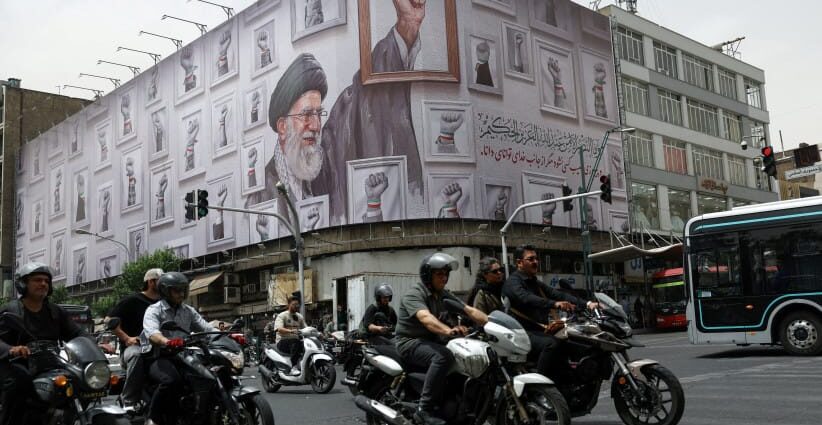
This post was originally published on here

France has drafted a UN Security Council resolution to establish an international mission to restore movement in the Strait of Hormuz and could submit it if conditions are right, the foreign ministry said on Friday, as Washington struggles to bring a text to a vote that Russia and China may say is biased against Tehran.

Control of the narrow waterway, a vital artery for global energy trade whose virtual closure has led to spiraling oil prices, is a major obstacle in talks to end the three-month-old US-Iran war.

A US-Bahraini resolution on the Strait has been under discussion for more than two weeks, with a vote repeatedly delayed as China and Russia signal they could veto it.

The US-Bahraini draft resolution demands Iran halt attacks and mining in the Strait. China and Russia vetoed a similar US-backed text in April, arguing it was biased against Tehran.

Washington has secured the support of almost 140 countries to co-sponsor its text in hopes of avoiding a veto, two European diplomats said.

France, another veto-wielding power, has so far refused to back the US text.

“There is a draft resolution between the US and Bahrain currently under discussion. This forms the basis of the current discussions. The date for the vote has not yet been announced,” France’s Foreign Ministry spokesman Pascal Confavreux said.

Macron: Working to ‘restore freedom of navigation’

France’s President Emmanuel Macron has said Paris would soon push an initiative at the UN to cement Franco-British efforts to assemble an international mission to restore freedom of navigation in the Strait once the situation permits, after consultation with Washington and Tehran.

“We are working on an international mission to restore freedom of navigation. We have also prepared, as a permanent member, a draft resolution that could be discussed if the conditions are right,” Confavreux said.

The US diplomatic push at the United Nations is in stark contrast to recent months during which it has largely acted outside the UN framework, launching military strikes against Iran without seeking council authorization and pressing allies to join ad hoc naval patrols to enforce freedom of navigation.

This post was originally published on here

Iran’s publication of a new map asserting its control over the Strait of Hormuz risks extending an already punishing ordeal for thousands of mariners trapped on ships in the Gulf.

More than 20,000 sailors are stuck on around 2,000 vessels in the Gulf, many of them unable to leave their ships, lacking adequate supplies of food and fresh water, and fearful of an uncertain future at sea in a war zone.

Sailors interviewed by Reuters in recent weeks have described the hardships and anxieties of their experience, and a federation representing them warns of dire conditions.

“The only thing we do here is plan how to spend the night and pray to God that we do not get hit during an attack,” Indian sailor Salman Siddiqui said by phone from his stranded ship last month.

Sailor suffering isolated lives

When Reuters traveled on a resupply boat to vessels moored off the Saudi coast this week, sailors on a tanker gathered by the handrail to wave, a rare moment of contact with the outside world.

For nearly three months, the sailors trapped in the Gulf have led isolated lives, each with a small group of shipmates, moving between tiny living quarters, communal dining areas, and scorching, sun-baked decks.

Tehran closed the Strait, a global oil supply route, after US-Israeli attacks on Iran began on February 28. Thousands of ships were trapped in the Gulf and, with peace negotiations stalled, Iran is doubling down on the effective blockade.

The Persian Gulf Strait Authority, a body Iran has set up to manage requests for passage, published a map on Wednesday reaffirming Tehran’s claims to a wide stretch of water on either side of the choke point.

Ship owners seeking to extricate their vessels – and often precious cargoes – must navigate a labyrinthine system of payments and permissions set up by Iran, a Reuters report showed.

“Seafarers’ vulnerability and exposure is more, let’s say, extreme because of the war,” said Mohamed Arrachedi, network coordinator for the Arab World and Iran at the International Transport Workers’ Federation.

He described cases where there had been pay delays, refusals to help repatriate sailors, a lack of provisions, and the fear of missiles and drone strikes. Some seafarers called him in tears, he said.

The ITF has been contacted by more than 2,000 sailors in the Gulf seeking help or advice to resolve disputes ranging from abandonment and pay delays to lack of supplies since the war began, he said.

Stuck at sea

From the Saudi port of Dammam, about seven large ships were visible moored out at sea – an unusually large number in normal times. As the resupply ship bobbed alongside the tanker in a stiff wind, the sailors aboard called out across the water while they winched aboard large sacks of medical goods.

Mohit Kohli, the captain of a large cargo vessel caught in the Gulf when the war began after sailing from Singapore, said that when he first heard the Strait could be closed, he “could not even fathom that this was remotely possible.”

His German-owned ship managed to secure a safe anchor off Dammam, but just over a week into the war, the crew started to see and hear the missiles and drones Iran was directing at Gulf states.

“The crew, who was usually loud and happy, were now silent. Meals got shorter. Conversations were more guarded,” he said, describing the atmosphere on board in a Reuters interview this month after his return to India.

Kohli and his shipmates were on a ship whose owners helped bring in a relief crew, he said.

Many sailors face far worse, Arrachedi said. In some of the cases he is dealing with, sailors have not been paid their meager salaries of $100 to $200 a month since last year, and shipowners are refusing to help them return home, or only doing so if they forfeit back pay, he said.

Some sailors say they have only a single meal of rice or lentils each day, and have only brief moments of internet connection to contact loved ones or seek outside help, Arrachedi added.

“They need a collective intervention because they are key for our economies, for the supply chains, but also because they are active seafarers and they are civilians,” he said.

Gulf states are making some efforts to assist sailors by facilitating supplies and crew transfers.

“Seafarers stuck on a vessel in uncertain waters, the most important thing in the world is knowing that there is a shore open to reach,” said Suliman Almazroua, president of the Saudi Ports Authority.

The authority has helped hundreds of vessels resupply with food, fresh water, fuel, and medicines, and has aided more than 500 sailors to transfer from their ships, Almazroua said, describing messages of thanks from sailors he has helped leave as the most rewarding part of his job.

This post was originally published on here

The State Prosecutor’s Office filed an indictment with the Jerusalem District Court on Wednesday against 25-year-old Jerusalem resident Israel Grossman, who is accused of aggravated intentional sabotage as an act of terror, arson, property damage, and obstructing a police officer in the course of duty in the village of Jalud, located in the Nablus district.

The prosecution is also requesting that Grossman be held in detention until the conclusion of legal proceedings, citing a series of violent incidents, including arson, a severe assault on a guard at a poultry complex, and attacks on security personnel.

According to the indictment, filed by attorney Hili Bergman of the Jerusalem District Prosecutor’s Office, Grossman participated in three separate violent incidents between February and May of this year, along with others.

In one incident, Grossman and masked accomplices arrived in Jalud armed with sticks and an axe. They vandalized property, smashed windows, and set a vehicle on fire.

In another case, the indictment states that Grossman was involved in a severe assault on a guard at a poultry complex near the village.

The assailants struck the guard with fists, kicks, and rods until he collapsed while simultaneously setting fire to a truck containing cages of live chickens, which were completely destroyed. The guard sustained serious head injuries and was hospitalized in critical condition.

A third incident involved Grossman arriving at the complex on an ATV, masked and armed with a gun replica, pepper spray, and an axe.

Suspect hit security with ATV

When police attempted to stop him, he fled, endangering officers and striking security personnel with the vehicle.

The indictment charges Grossman with aggravated intentional sabotage as an act of terror, arson, willful property damage, threats, rioting, reckless driving, and obstructing a police officer.

Authorities are also seeking to confiscate the ATV allegedly used in the offenses.

This post was originally published on here

A Qatari negotiating team arrived in Tehran on Friday in coordination with the United States to try to help secure a deal to end the war with Iran and resolve outstanding issues, a source with knowledge of the matter told Reuters on Friday.

Doha, which has worked as a mediator in the Gaza war and other areas of international tension, had till now distanced itself from playing a mediation role in the Iran war after it came under attack from Iranian missiles and drones during the latest conflict.

“A Qatari negotiation team is in Tehran on Friday,” the source said, adding that the team had traveled in coordination with the United States and was there to help “reach a final deal that would end the war and address outstanding issues with Iran.”

The Qatari Ministry of Foreign Affairs did not immediately respond to a request for comment.

Qatar’s role as trusted back-channel between Washington, Tehran

While Pakistan has served as the official mediator since fighting began, Qatar’s re-engagement reflects its longstanding role as a US ally in the region and a trusted back-channel between Washington and Tehran.

A shaky ceasefire is in place in the war that began with US-Israeli strikes on Iran on February 28, but there has been no major breakthrough, with a US blockade of Iranian ports and Tehran’s effective closure of the Strait of Hormuz complicating negotiations.

A senior Iranian source told Reuters on Thursday that no deal had been reached, but gaps have been narrowed, with Iran’s uranium enrichment and its control over the strait among the remaining sticking points.

US Secretary of State notes progress towards US-Iran deal

US Secretary of State Marco Rubio noted some progress on Thursday: “There’s some good signs,” he said. “I don’t want to be overly optimistic … So, let’s see what happens over the next few days.”

Asked on Friday about the Qatari team in Iran, Rubio told reporters on the sidelines of a gathering of NATO foreign ministers in Sweden that Pakistan was the primary interlocutor in the Iran talks and they had done an “admirable job.”

He added: “Obviously other countries have interests, because especially Gulf countries that are, you know, in the middle of all this – they have their own situation going. And we talk to all of them. I would just say that the primary country we’ve been working with on all of this, is Pakistan, and that remains the case.”

Doha’s re-engagement comes despite Iran having pounded Qatar with hundreds of missiles and drones, targeting civilian infrastructure and its vital liquefied natural gas (LNG) production facility at Ras Laffan. That attack wiped out roughly 17 percent of Qatar’s LNG export capacity. The country had already halted LNG production on March 2 following Iranian strikes.

Before the war, about 20% of global LNG trade transited the Strait of Hormuz, primarily from Qatar. Iran’s effective closure of the strait has cut off virtually all of its LNG export capacity.

Qatar is a designated major non-NATO ally of the United States and hosts Al Udeid Air Base, the largest US military installation in the Middle East.

This post was originally published on here

The United States has seen some progress in talks with Iran and is in constant communication with the Pakistani mediators, but there is more work to be done, US Secretary of State Marco Rubio said on Friday.

“There’s been some progress. I wouldn’t exaggerate it. I wouldn’t diminish it,” Rubio told reporters after a NATO ministers meeting in Sweden.

“There’s more work to be done,” he added. “We’re not there yet. I hope we get there.”

Trump would prefer ‘good deal’ with iran

US President Donald Trump would prefer to do a good deal, Rubio said. The core concern remains that Iran cannot have a nuclear weapon, and the issue of future uranium enrichment needs to be discussed, as well as reopening the Strait of Hormuz, he added.

“We’re dealing with a very difficult group of people, and if it doesn’t change, then the president’s been clear he has other options,” Rubio said.

“He prefers the negotiated option and having a good deal, but he himself has expressed concern that maybe that’s not possible. But we’re going to keep trying.”

Rubio said the United States was in constant communication with the Pakistanis, who are facilitating the talks with Iran.

There was no specific ask from the US on Friday for help from NATO on the Strait of Hormuz, but there needs to be a Plan B if Iran refuses to reopen the supply route, Rubio said after the close of the NATO meeting.

This post was originally published on here

A high-status Roman woman buried in an ornate lead coffin, named the “Lexden Lady,” went on display as part of a temporary exhibition last week at the Roman Circus Visitor Centre in Colchester, England.

The exhibit features both the woman’s remains and her coffin, and will run until May 2027.

Colchester Archaeological Trust, who had originally discovered the burial during archaeological work at the former Essex County Hospital site in 2023, announced the exhibit in a statement last Tuesday.

Her exact burial date is unclear, according to the Trust’s statement, but it was likely during the late Roman period – lasting from approximately the late 3rd century to early 5th century CE.

Initial analysis of the body and the burial suggests the woman was in her 20s and 30s when she died, and was a local of Roman-ruled Colchester. 

Possibly covered in liquid gypsum before her burial

She was buried alongside jet hairpins, a group of rare glass flasks, and other grave goods, indicating that her burial had been “carefully staged and richly furnished,” according to the Trust’s statement.

“The young woman was clearly cherished by her family and by her community,” said Robert Masefield, Archaeology Director at Tetra Tech Consulting Limited. “Over decades of working with Colchester Archaeological Trust on excavations of the Roman burial grounds around the Roman town, this is certainly the most spectacular I have seen, in terms of signifying the trappings of wealth and symbolism in death, of a fully Romanised citizen.”

Researchers also found frankincense inside the coffin, an “exotic resin” within one of the glass flasks, as well as traces of gypsum, indicating that the woman may have been coated in the plaster-like substance before her burial.

Liquid gypsum was often used in Roman funerary rituals in order to preserve the shrouded bodies of the dead. After being poured, the gypsum would gradually harden into a plaster cast and protect the textile fragments and any dyes or imprints.

The practice of using gypsum is being investigated by the British “Seeing the Dead” project, though the project’s focus is on Roman Yorkshire. Recently, the project discovered traces of Tyrian purple in preserved in cloth buried with two Roman infants in York.

These grave goods suggest the “usage of valuable imported substances in the treatment of the body after death,” the statement read.

Most fascinating, recent Roman burial found

“This is one of the most fascinating Roman burials we have worked on in Colchester in recent years,” said Adam Wightman, Director of Archaeology at Colchester Archaeological Trust. “The decorated coffin is a beautiful object in its own right, but it is the combination of the coffin, the grave goods and the scientific evidence that makes this burial so compelling.”

“Together they allow us to glimpse not just a person, but the care, ritual and belief that surrounded her burial in late Roman Colchester.”

A spokesperson for Essex Housing said that company is “delighted that this remarkable discovery, made during archaeological work at the former Essex County Hospital site, will now be shared with the public.”

They added that it is “wonderful to see an important part of Colchester’s past being preserved, studied and presented in this way.”

This post was originally published on here

The United Kingdom, Italy, Germany, France, Canada, Australia, and New Zealand issued a joint statement on Friday condemning Israel for its policies in the West Bank and the rise in settler violence, according to several of the countries’ government websites.

The statement argued that Israel’s West Bank settlements are “illegal,” saying that “International law is clear.”

“Construction projects in the E1 area would be no exception,” the statement added, noting that the project would “divide the West Bank in two.”

The countries warned businesses of “legal and reputational consequences” if they were to join the E1 project, which seeks to add approximately 3,400 housing units to Israeli settlements in the West Bank.

The statement called on the Israeli government to “end its expansion of settlements and administrative powers” in the West Bank, further calling for accountability for settler violence.

Joint statement: Investigate allegations against IDF

Additional calls were made to “investigate allegations against Israeli forces, respect the Hashemite custodianship over Jerusalem’s Holy Sites and the historic status quo arrangements, and lift financial restrictions on the PA and the Palestinian economy.”

Another condemnation was made against “those, including members of the Israeli government, who argue for annexation and forcible displacement of the Palestinian population.”

The statement concluded with an affirmation of the countries’ commitment to a two-state solution “where two democratic states, Israel and Palestine, live side by side in peace and security within secure and recognized borders.”

This post was originally published on here

The United States paused a $14 billion arms package for Taiwan due to military constraints related to the Iran war, US Navy Acting Secretary Hung Cao said during a congressional hearing on Friday.

“We’re doing a pause in order to make sure we have the munitions we need for Epic Fury,” said Cao, “which we have plenty.”

“We’re just making sure we have everything,” added Cao. “Then the foreign military sales will continue when the administration deems necessary.”

Western media outlets reached out to the US State Department and Pentagon for comment, but neither responded.

Taiwan, which China views as its own territory, has been waiting for the US to approve the new arms sale package, which US President Donald Trump said he was undecided on whether to approve following a summit with China’s Xi Jinping in Beijing last week.

Speaking to reporters in Taipei, Taiwan, Presidential Office spokesperson Karen Kuo said they had noted the remarks.

“However, at present, we have not received any relevant information about the US adjusting these military sales,” she said.

Taiwan: Acting to ensure sale proceeds

Taiwan’s defense ministry said it had also not received any notification of delays in arms sales.

The ministry continues to “monitor US security cooperation policy” and maintain close coordination and communication with the US to ensure that arms sales proceed according to plan, it said in a statement.

The US is bound by law to provide Taiwan with the means to defend itself. China has repeatedly called for the US to stop arms sales.

Taiwan’s government rejects Beijing’s sovereignty claims, saying only the Taiwanese people can decide their future.

This post was originally published on here

In his book Dance of the Omer, Rav Benji Elson describes Mount Sinai not as a distant historical event but as an experience the Jewish people physically and spiritually entered together – one we renew every year on Shavuot.

Before revelation came preparation. Before the thunder and lightning, there was acclimatization – a gradual opening of the senses to a reality charged with divine presence. The Israelites did not simply arrive at Sinai and receive the Torah in an instant. They had to work on themselves beforehand.

As Elson writes: When entering a great palace or sacred place, people instinctively slow down to absorb the energy of where they are. “You look around, notice where you are, and if you are sensitive enough, you intuit the context and energy of the space in which you just entered.” Only afterward do you begin to move through it, exploring and inhabiting it.

Moses ascends the mountain not merely to receive instruction but also to encounter the divine – and, symbolically, he takes all of us with him.

For artists who take on the challenge of depicting scenes from the Torah – particularly Moses and the giving of the Ten Commandments – the process also begins with preparation.

Huvy Elisha: Inspired by Judeo-Spanish commentary

For one of Israel’s great painters of Torah scenes, Huvy Elisha (1927-2022), born in Jerusalem’s Bukharan Quarter and educated in England, this journey toward Torah learning and biblical imagery came later in life. She was the youngest student ever admitted to London’s prestigious Saint Martin’s School of Art, entering at the age of 14.

Returning to Israel with her businessman husband and three children soon after the ecstatic victory of the Six Day War, she settled into an affluent life in Herzliya. Years later, after marrying off her children, she and her husband chose a humbler, more observant life in accordance with Halacha, moving to the ultra-Orthodox neighborhood of Mea She’arim, where they founded a synagogue below their apartment.

Robert Elisha, Huvy’s younger son and owner of Huvy’s Heart and Art Gallery on Jerusalem’s Washington Street, recalls how his mother educated him into the deeper meaning of her art.

“My mother would say, ‘I’m giving you information I know from the Torah, from Rashi and from Me’am Lo’ez.’”

Me’am Lo’ez, the Judeo-Spanish Torah commentary first published in Ladino in 1730 by Rabbi Yaakov Culi, became one of Huvy Elisha’s major inspirations. It later reached English-speaking audiences through Rabbi Aryeh Kaplan’s monumental English translation, The Torah Anthology – Me’am Lo’ez, published beginning in 1977.

“Me’am Lo’ez was written in response to the growing estrangement from the Hebrew language after the Jewish expulsion from Spain,” Elisha explained, describing where his mother found many of the lesser-known details that inspired her Torah depictions.

“You see Moses coming down from the mountain, and he’s holding the Ten Commandments. If you look carefully at the blue, you see the Torah was made out of sapphire. Moses carried with him all the parts of the first Ten Commandments that he threw down and broke. Those pieces of that precious stone were always with him and made him very rich. That was his financial base.

‘Keter Aish HaTorah,’ mixed media on canvas, 160 cm x 120 cm. (credit: Photos: Courtesy Yoram Raanan)

“Painting isn’t just about what we see, but what we learn.”
For Huvy Elisha, these spiritual insights were essential to convey.
“My mother loved to read the Me’am Lo’ez English translation,” her son recalled.

She “actually pointed out the broken Ten Commandments, telling me how everyone took gold and valuables out of Egypt. The only thing besides the sapphire shards of Torah that Moses took was Joseph in his coffin. Joseph had made the Children of Israel swear they would take him out of Egypt.

“Moses actually took Joseph’s coffin on his shoulders and walked with him. The coffin was heavy – don’t forget Moses was very tall and strong. Still, the coffin was made of a metal weighing hundreds of kilos.

“The big miracle was that he could carry the coffin. It sounds a bit ridiculous to imagine he put this on his shoulders and walked with it, but Kadosh Baruch Hu gave everyone a mitzvah. This was Moses.”

Elisha noted that in some commentaries, the coffin traveled by itself, and perhaps Moses was hovering in the air as well.

“It’s not an issue,” he said with a smile. “Moshe Rabbeinu did it. Full stop.”

Yoram Raanan: A different generation, a different approach

What makes the paintings of Yoram Raanan and Huvy Elisha so compelling in the context of Shavuot is that neither artist approaches Torah as distant history. Both paint as if revelation is still unfolding in real time. However, their paths to that vision could hardly be more different.

Raanan, 73, was born in New Jersey and trained at the University of the Arts in Philadelphia, absorbing the language of Abstract Expressionism and action painting. He pours, drips, smears, and sculpts paint across canvases laid on the floor, using his fingers, palette knives, and rags to create works pulsing with movement, light, and spiritual energy.

Yoram Raanan in his studio. The Raanan studio in Beit Meir welcomes collectors and visitors to experience the works within the atmosphere in which they were created.  (credit: Photos: Courtesy Yoram Raanan)

Huvy Elisha, by contrast, entered London’s Saint Martin’s School of Art at the beginning of World War II. Immersed in the Old Masters, she was influenced by J.M.W. Turner’s dramatic treatment of light, Impressionism, and classical draftsmanship. Her paintings are rooted in observation, storytelling, and the intimate rhythms of Torah life.

Torah: Where the artists meet

At first, the comparison seems unlikely. Yet despite their radically different techniques, the two artists meet in a profound understanding of Torah inspiration itself.

Raanan’s luminous semi-abstractions dissolve the boundary between heaven and Earth, while Huvy Elisha’s richly detailed scenes invite viewers to step directly into sacred time and divine presence. Neither artist paints Torah as a bystander. Both paint as participants.

That may explain why their work resonates so deeply around Shavuot, the festival of revelation. Like the Israelites standing at Sinai, both artists seem less interested in documenting an event than in recreating the sensation of being there – transformed by collective Jewish consciousness in the presence of Moses and the Divine.

Visual encounters

Yoram Raanan is internationally recognized for large-scale paintings bursting with color, movement, and spiritual exuberance. His Sinai imagery often feels ecstatic – revelation as radiant energy pouring into the world through intuitive play and experimentation. His enormous canvases frequently lead him toward visual discoveries he could never have foreseen when he began.

Raanan lives in the peaceful hills near Jerusalem in Beit Meir with his wife, Magazine writer and meditation teacher Me’ira Raanan, who frequently writes illuminating commentary to accompany her husband’s paintings.

Their collaborative coffee table book The Art of Revelation: A Visual Encounter with the Jewish Bible showcases 160 vibrant Abstract-Expressionist paintings inspired by the weekly Torah portions. Many of the works, lost in the devastating fire that consumed Raanan’s studio in 2016, survive today through these photographic reproductions captured on the artist’s phone.

Speaking about his process, Raanan resists overly explaining his work because, as he put it, “my whole process is basically opening possibilities and finding things in the process of the painting itself.” Much of what emerges on canvas, he said, comes “from a subconscious place, beyond me.” Rather than controlling every outcome intellectually, Raanan described himself as a kli, a “vessel” attempting to tap into a larger flow of energy and intuition.

That openness may explain why viewers often feel present inside his Sinai paintings. However, Raanan himself seems wary of reducing the works to his meanings.
“If I talk about it too much,” he said, “it makes people see it that way.”
Instead, he leaves space for viewers to encounter Sinai personally.

This approach feels deeply connected to the spiritual journey of the Omer itself. In Jewish tradition, the seven weeks between Passover and Shavuot are not simply a countdown but a process of inner preparation – an acclimatization of the soul before revelation.

In Dance of the Omer, Rav Benji Elson describes the Israelites arriving at Sinai slowly – absorbing the atmosphere and energy of the mountain in preparation for revelation.

Raanan’s work seems to function similarly. The paintings do not present Sinai as an event neatly explained but as an experience the viewer enters through color, texture, movement, sensation, and spiritual discovery.

Raanan described himself as “a physical, down-to-earth person. That helps the art be what it is – a marriage between the spiritual, physical, and temporal.”

That tension may be part of what gives his work such force. Sinai itself was both earthly and transcendent – a mountain of rock and dust suddenly charged with divine fire.

One of Raanan’s best-known works, Har Sinai 2, began unexpectedly from a postcard reproduction of a 19th-century David Roberts painting of Mount Sinai. Raanan copied the mountain’s basic form and then, as he said, “just did my usual stuff.” What emerged surprised even him.

“A lot of people did have that feeling of an event at Har Sinai,” he reflected, though he insists the work “wasn’t painted with that thought at all. It just comes from a super conscious place.”

That simple phrase – “super conscious place” – may explain why Raanan’s Sinai paintings resonate so strongly during the season of Shavuot.

Raanan joins a long line of Jewish artists who remind us that Sinai was never intended to remain a distant event. According to Jewish tradition, every Jewish soul stood there. Perhaps artists like Raanan, working intuitively from that “super conscious place,” help us remember what we felt.

Huvy Elisha: 
On Instagram – @huvyslegacy
Yoram Raanan: 
www.yoramraanan.com 
www.instagram.com/raananart 
www.facebook.com/RaananArt Photo

The writer is a Haifa-based artist, writer, and creator of Genesis Art, an intuitive art methodology inspired by Torah, personal reflection, and creativity. She developed Genesis Art during her three decades living in Japan and continues teaching and writing from Israel.

This post was originally published on here

A man, arrested for shouting “I will kill you Jews,” who then threatened to blow up Jewish schools an hour after being released from custody, was jailed in a London court on Friday after admitting antisemitic hate crimes.

Tavius Jean-Charles, 36, made repeated threats to six victims between October 2025 and March 2026, with the incidents occurring near synagogues in an area of north London with a large Jewish community, police said.

He was reported to detectives after he was observed shouting death threats on March 16 and was arrested a week later. Shortly after being released by police, he was heard saying into his phone: “It would be good if we blew up one of their schools”.

He pleaded guilty last month to seven racially aggravated public order offenses, and one count of racially aggravated criminal damage, and on Friday was jailed for five years at Southwark Crown Court.

London has seen a spate of antisemitic attacks in recent months, including the stabbing of two Jewish men as well as numerous arson incidents.

‘I will kill you Jews’

Prosecutors have promised to bring those responsible to justice more quickly with faster charging decisions and speedier evidence gathering.

This post was originally published on here

The Netherlands has put forth a motion to ban the import of goods originating in allegedly “illegal” Israeli settlements in the West Bank, according to a government press release on the matter on Friday. 

The Cabinet-proposed sanctions would prohibit Dutch nationals and legal entities in and outside of the Netherlands from importing goods produced in settlements, buying or selling the goods, and providing intermediary services relating to the goods.

Netherlands cites ‘international law’ as reason behind ban

The temporary sanctions decree, which was submitted to the Dutch Council of State for an expedited decision, is aimed at preventing “Dutch economic activities from contributing to the perpetuation of a situation that is contrary to international law,” the Cabinet claimed.

It also accused Israel of “unlawful” occupation of Palestinian territory and the Golan Heights, alleging that the expansion of settlements and increasing Israeli settler violence is “causing a continuously deteriorating situation, making a two-state solution increasingly distant.”

“The Netherlands has an international obligation not to contribute to the maintenance of the unlawful occupation,” the Cabinet asserted.

This post was originally published on here

As Israel approaches the holiday of Shavuot amid war, political division, and renewed international attacks on its legitimacy, it is worth revisiting one of the most unusual ideas in human civilization: The Jewish people became a nation before they possessed the land promised to them and enshrined in the law they received on Mount Sinai. 

Most nations in history emerged in the opposite direction. First came geography. Settlements became villages. Villages became cities. Armies defended borders. Eventually, systems of governance and laws emerged to regulate life within those borders.

More than 900 years ago, Rashi asked why the Bible begins with Creation rather than with the first Jewish commandment. His answer was strikingly political and timelessly relevant: because the Torah sought to establish the legitimacy of the Jewish people’s relationship to the Land of Israel.

If the nations accused Israel of theft, Rashi explained, the Jewish response would be that the Creator of the world determines the course of nations and sovereignty. Remarkably, one of Judaism’s foundational commentators anticipated that the legitimacy of Jewish presence in the land would one day become a central international dispute.

The Jewish story unfolded uniquely from its very start. The modern revisionist history deployed by the Palestinians and their supporters supplants a different narrative. How interesting that 900 years before these questions of Israel’s legitimacy there was a Jewish scholar who foresaw the future.

At Mount Sinai, the Israelites possessed no capital city, no sovereign territory, no army, and no kingdom. They stood in a desert between slavery and statehood. Yet before entering the Land of Israel, they received something else first: a covenant, a system of law, and a shared moral framework. Before there was sovereignty, there was responsibility.

This distinction matters far beyond theology. It may explain not only the survival of the Jewish people for thousands of years but also much of the modern struggle surrounding Israel today.

The Torah presents the Land of Israel as promised to Abraham and his descendants. Yet the promise was never presented as simple ownership detached from conduct. The biblical narrative repeatedly links permanence in the land to moral behavior, justice, and national responsibility. Sovereignty was not merely a right; it was also a test, or more importantly an individual and national commitment. 

This was revolutionary in the ancient world. Most empires conquered first and moralized later. Assyria, Babylon, Persia, Greece, and Rome expanded through force, power, and territorial control. Their legitimacy rested largely on military success and political dominance.

The Jewish model introduced something different: the idea that a nation’s survival depended not only on military strength or territorial possession but on whether it remained worthy of the covenant that bound it together.

IN THIS sense, Jewish civilization was built not merely around land but around law.

A foundation of law at the core of Jewish identity

Perhaps that is why Jewish identity survived what would have destroyed most ancient peoples. Rome destroyed Judea and dispersed the Jewish population, but it could not erase Jewish civilization itself. For nearly 2,000 years, Jews maintained a national identity without territorial continuity. Empires rose and disappeared, yet the Jewish people carried their legal, ethical, and spiritual framework across continents and generations.

The nation survived exile because its foundation was never solely geographic.

This reality makes many modern attempts to erase Jewish ties to the Land of Israel particularly striking. Increasingly, public discourse in parts of the West presents Jews as foreign colonizers disconnected from the very land where Jewish civilization originated. Demonstrators protest outside synagogues in America accusing Jews of “selling stolen land.” Some deny the existence of the Jewish temples in Jerusalem altogether. Others describe Israel as though Jewish history in the land began only in the modern era.

Such claims require a remarkable level of historical amnesia.

Jewish ties to Jerusalem and the Land of Israel are acknowledged not only in Jewish sources but throughout Christian, Roman, Byzantine, Islamic, and Ottoman history. Christianity itself emerged from Jewish civilization rooted in Jerusalem and Judea. The Hebrew Bible, which shaped much of Western civilization, is inseparable from the geography of the Land of Israel.

Even the name “Palestine” itself emerged after the Romans renamed Judea as “Syria Palaestina” following the Bar Kochba revolt, partly as an attempt to sever Jewish identification with the land after fierce Jewish resistance to Roman rule. The renaming was not an indigenous national movement; it was an imperial act of political and psychological warfare.

None of this denies that other populations lived in the land over centuries, or that Arabs who claim to be from the nation of Palestine possess their own history, identity, and human aspirations. Ironically, Arabs and Jews living in the area during the British Mandate were called Palestinians. Even this newspaper, which predated the foundation of the modern state of Israel, was originally called The Palestine Post.

But there is a difference between acknowledging Palestinian identity and erasing Jewish indigeneity altogether. Parts of the international discourse attempt not merely to criticize Israeli policy but to delegitimize the very notion of Jewish historical belonging.

That distinction matters enormously.

A COUNTRY can survive criticism. Democracies are built to withstand disagreement, protests, and political battles. But when a nation’s right to exist is denied altogether, the conflict moves beyond borders into something much deeper: legitimacy itself.

This issue has become even more urgent after October 7.

For decades, many strategic discussions surrounding Israel focused primarily on territory and borders. How much strategic depth was necessary? Would additional buffer zones provide greater security? Could territorial concessions reduce hostility?

Yet modern warfare increasingly exposes the limitations of geography alone.

Missiles ignore borders. Drones bypass terrain. Cyberwarfare penetrates from thousands of miles away. Iran projects influence through proxies across the region without sharing borders directly with Israel. The massacre of October 7 shattered assumptions that barriers alone could guarantee security.

At some point, nations are forced to confront an uncomfortable reality: If large segments of surrounding societies fundamentally reject your right to exist, no border is wide enough. This does not mean borders are irrelevant. Security zones, military positioning, and strategic depth still matter enormously. But military realities alone cannot resolve civilizational conflicts rooted in legitimacy, identity, and historical narrative.

In many ways, the current struggle surrounding Israel is not only about land. It is about whether the Jewish people are viewed as an authentic indigenous civilization returning home or as temporary intruders whose sovereignty is inherently illegitimate.

That battle is now being fought not only on military fronts but across universities, media platforms, international institutions, and social networks.

At the same time, Israel faces internal divisions that are impossible to ignore. Political polarization, protests, judicial battles, tensions between secular and religious communities, and growing distrust across sectors of society all raise difficult questions about national cohesion.

And perhaps this is where Shavuot becomes especially relevant.

The giving of the Torah at Sinai represented more than a religious moment. It represented the formation of shared responsibility before sovereignty. The Jewish people did not become a nation merely because they inherited territory. They became a nation because they accepted obligations toward one another and toward a larger moral framework.

That lesson feels profoundly relevant today.

Israel’s long-term survival will certainly depend on military strength, technological superiority, and strategic alliances. But survival may also depend on whether Israeli society can preserve a shared sense of purpose strong enough to withstand both external attacks and internal fragmentation.

The Jewish people were not sustained for thousands of years merely by borders. They were sustained by memory, covenant, law, and shared identity.

On Shavuot, Jews remember that before there was Jerusalem, before there was a kingdom, before there was even a state, there was an idea: that freedom without moral responsibility eventually collapses, and that sovereignty without purpose cannot endure.

Perhaps that is the deeper lesson of this moment.

The future of Israel will not be determined only by where its borders are drawn but by whether the nation remembers what made it a nation in the first place. This lesson that sovereignty requires moral responsibility needs to be loudly repeated to the Palestinian leadership and their supporters.

The author is an experienced global strategist and a strategic adviser at the Jerusalem Center for Security and Foreign Affairs (JCFA). He can be reached at globalstrategist2020@gmail.com.

This post was originally published on here

Ukrainian forces carried out strikes on a Russian oil refinery in Yaroslavl, approximately 700 km from the Ukrainian border, President Volodymyr Zelensky said in a statement this morning.

“In particular, overnight, the Defense Forces of Ukraine operated against targets associated with the Yaroslavl ‌oil ⁠refinery – about 700 kilometers from our territory,” he said in the statement on Telegram. 

“We are bringing the war back ⁠home – to Russia – and that’s ⁠only fair,” he added. 

The strike in Yaroslavl comes as the latest attack on Russian oil facilities this year. On Thursday, Zelensky stated that Ukrainian forces had struck another oil refinery in Syzran for the eleventh time, 700 km deep into Western Russia.

“Another Ukrainian long-range sanction against Russian oil refining – and we are continuing this line of action,” President Zelensky wrote in a post on X/Twitter announcing the strikes.

Ukrainian Special Operations Forces working in tandem with Ukraine’s Security Service carried out the attack on the refinery, which reportedly left large fires at the facilities in Syzran and Yaroslavl, according to reports from Euro News and Reuters.

Increased Ukrainian strikes on Russian territory

Since Russia invaded Ukraine in February of 2022, Ukraine has retaliated with strikes on 24 of Russia’s 33 oil refineries, according to EA Worldview. In conjunction with American and European sanctions, Ukrainian strikes have driven the Kremlin’s oil revenues down by 47%, according to analysis from EA Worldview. 

“Our responses to Russia’s prolongation of the war and its attacks on our cities and communities are entirely justified,” Zelensky said, defending Ukrainian strikes on Russian territory.

Russia has kept up relentless drone and missile strikes across Ukrainian territory with one assault recording over 1,500 drones and 54 missiles fired at Ukraine in just 48 hours the BBC reported.

Another Russian air assault saw 524 long-range drones and 22 missiles launched at the Dnipro region of Ukraine this week. According to Ukrainian officials, the drones and missiles were targeting residential areas as well as military targets.

This post was originally published on here

Everyone knows about Leonard Cohen’s visit to Israel in 1973 when he spontaneously parachuted into Israel to entertain IDF troops on the front during the Yom Kippur War. Especially since the publication of Matti Friedman’s comprehensive

Who by Fire: Leonard Cohen in the Sinai – a celebrated book that recounts that visit of the Jewish Canadian high priest of poetry to the Holy Land, and the subsequent theater performance that has evolved from it – that moment in time has been captured and dissected from every angle.

But much less is known about another eventful convergence of the stars between Israel and Cohen, some 37 years before he returned to the Holy Land in 2009 for his monumental concert at Ramat Gan Stadium, complete with the Birkat Kohanim (Priestly Blessing) bestowed upon a stunned crowd of devotees.

In 1972, a year before his historic Yom Kippur visit, a not-so-famous and professionally struggling Cohen and his band arrived in Israel for two concerts, in Jerusalem and Tel Aviv. Both shows are legend, not as much for the music as for the drama surrounding them. 

In Jerusalem, Cohen suffered an onstage crisis, spurred by ingesting a tab of LSD before the show, went offstage at intermission and shaved, coming back to perform a stunning second half.

The show in Tel Aviv, at the Yad Eliyahu sports arena, was marred by clashes between the audience and members of the event’s security detail, who were preventing them from getting close to the stage.

Snippets of film and audio from those shows have emerged over the years, along with a recounting in Friedman’s book. It was also touched on visually in a somewhat sensational and inaccurate manner in a 1974 documentary, Leonard Cohen: Bird on a Wire by Tony Palmer, which was quickly taken out of circulation upon its release, at Cohen’s request, and subsequently by Sony and the Cohen estate after an unauthorized DVD recut by Palmer was re-released in 2010. 

The irony is that extensive audio and video footage of both the Jerusalem and Tel Aviv shows exists – along with hours of Cohen at various spots in Israel, including at the Western Wall – but has remained locked up since Cohen’s death in 2016.

In March, however, the likelihood that those artifacts – along with a vast archive of Cohen’s music, art, writings, and film – would become available to Cohen’s fans increased slightly with the partial conclusion of a lawsuit brought on by his two children, Adam and Lorca, against his former manager and the trustee of the Cohen estate, Robert Kory.

For years, the children have been blocking Kory’s plan to make the archive available through donation to preeminent Canadian universities and museums. Their tactic was to accuse Kory of misconduct in his role as trustee. But in a March 24 ruling, a court-appointed referee found, after a 10-day trial, that Kory had fully and competently carried out Cohen’s wishes in his management of the estate and had committed no wrongdoing whatsoever. In fact, the referee went so far as to say that the claim of Kory’s alleged fraud was a “flaming red herring of scarlet proportion.”

The Magazine spoke with Kory about the lawsuit, Cohen’s complicated relationship with Israel, and his final trip to the Jewish state in 2009. And Robert de Young – an Australian filmmaker, literary studies academic, and archivist – whom Kory tapped in 2017 to take charge of going through the reams and reams of notebooks and hours of music and film that Cohen had left behind – delves into the projects that are ready to roll, including the holy grail of the 1972 concerts in Jerusalem and Tel Aviv.

Robert Kory arrived in Israel in 2009 with his client and friend Cohen ahead of the singer’s show at Ramat Gan Stadium.

The California-based attorney had stepped in to assist with Cohen’s affairs in 2004 following a financial disaster resulting from a previous manager stealing the singer-songwriter’s life savings. By 2008, Kory had been so successful in assisting Cohen that the bard tapped him to become his personal manager and support a late career renaissance in which Cohen rose to international stardom.

Cohen, who died in 2016 aged 82, was received like the upper-echelon artist he was over the course of 147 shows around the globe between 2008 and 2010 alone.

The audience in Ramat Gan about to receive the Priestly Blessing from Cohen. (credit: FLASH90)

When Cohen was inducted into the Rock & Roll Hall of Fame in 2008, presenter Lou Reed said, “We are so lucky to be alive at the same time Leonard Cohen is.” 

The singer’s return to the limelight was a mixed blessing, as he was not comfortable in the public eye.

“Leonard was very reluctant at first to go back on tour. From his view, touring had always been a disaster – he would say, ‘Performing is an opportunity for a thousand humiliations,’” Kory told Billboard magazine earlier this year.

When I met Kory in a big reception tent outside Ramat Gan Stadium before the 2009 show, he wore the same tailored suit and fedora as his boss, and he was on a high. He had staged a coup in arranging the Israel show because it was a low priority, given all of the lucrative opportunities that Cohen had to perform elsewhere at the height of his resurgence.

Although performing in Israel seemed to Kory like a no-brainer, given Cohen’s history with the country, it was a hard sell.

‘Leonard didn’t want to play in Israel’

“Leonard didn’t want to play in Israel at first, but he allowed me to explore the possibility and I learned there was a huge demand,” Kory told the Magazine recently, a few weeks after the court ruling in his favor.

Cohen, upset over the continuing Israel-Palestinian conflict and the ongoing struggles surrounding the future of the Jewish state, “didn’t want to play because of the politics and was troubled by making money in the middle of a conflict,” Kory said, having discussed the issue extensively with Cohen.

“So I said, ‘Well, what if we do it as a charity event?’”

Together, they devised a plan that made sense to them: to not treat the show as just another stop on a global tour but to establish a fund that would benefit coexistence efforts between Israelis and Palestinians, and also set up a sister show in Ramallah, alongside Ramat Gan.

“Leonard immediately goes to the web and finds this organization called the Parents Circle, which was founded by one of the most noble human beings I’ve met, Yitzhak Frankenthal, whose son was killed by Hamas at a bus stop, and who had an epiphany, when at first he wanted revenge, he realized that hatred can only stop in one heart at a time, and he declared that it was going to stop with his. So he set up this organization of Israeli and Palestinian parents who’ve lost their children,” Kory said.

The Ramallah concert didn’t materialize due to politics and pressure, despite the great interest in the concert among the Palestinians whom Kory met and, to his surprise, were familiar with Cohen’s work. Instead, Kory arranged for 400 Palestinian bereaved parents to attend the Ramat Gan concert, which was a huge success, both artistically and financially, raising over $3 million for the Fund for Reconciliation, Tolerance and Peace.

Kory returned to the region many times over the next couple of years to be hands-on in administering the charitable funds, but he and Cohen began souring on the prospects of their efforts bearing fruit, amid increasing tensions between Israelis and Palestinians.

“I seemed to know more Palestinians than the typical Israeli whom I met, and I had closer relationships with many wonderful people,” Kory said. “But, by 2012, Leonard discouraged me from continuing to visit Israel and the West Bank in what appeared to be an increasingly conflicted environment. Leonard feared I would get hurt because I had no real understanding of the conflict.”

“Leonard was a huge personal defender of Israel but recognized the reality of evil in the world, and he thought my views were naïve. Leonard told me, ‘You know, music doesn’t really make a difference, but it does somehow make things better,’” he recalled.

“He definitely realized the impact of his performance on the Israeli people. But he also realized the limits of what he could do as an entertainer to have any major impact on peace between Israelis and Palestinians,” Kory added. At Cohen’s request, Kory became executor of his estate.

In the last year of his life, Cohen talked more intimately with Kory about his archive and his legacy, and he asked Kory to serve not just as the trustee of his estate but to continue as a manager under a management agreement with his publishing and recording companies to continue expanding Cohen’s audience. 

“In 2016, based on the tremendous success that I’d had with Leonard, he asked me to continue managing his businesses and his intellectual property. We weren’t expecting him to pass away so quickly, but he fell. He was a prophet in the classic Old Testament sense. Maybe he had intuitions about his death. I was surprised at the intensity of his request that I commit to continuing to manage his affairs, so I agreed to do that for five, a maximum of seven years,” Kory said.

With so much material in Cohen’s archive, Kory saw an opportunity to permanently etch Cohen into the upper echelon of 20th-century artists.

Some of his efforts following Cohen’s death produced fruits. He executive-produced the film Hallelujah: Leonard Cohen, A Journey, A Song released by Sony Pictures Classics and screened at the Jerusalem Film Festival in 2022, about the history of the timeless 1984 Cohen song that has achieved a life of its own.

In addition, The Art Gallery of Ontario (AGO) hosted Leonard Cohen: Everybody Knows, an exhibition and an accompanying catalogue that showcased items from the Leonard Cohen Family Trust, which includes personal notebooks, lyrics, photographs, and artwork. 

“We also had a contract to publish five books. The first one came out in 2022 – A Ballet of Lepers – a novel that Leonard wrote when he was 21. And there are four to be drawn from unpublished work in the archive. We had his entire musical archive digitized, and we had a plan for 10 box sets with Sony, à la Bob Dylan bootleg series that has been so popular,” Kory said.

“And we had this completed film of the 1972 tour, with complete versions of concerts in Jerusalem and Tel Aviv that had never been seen before.”

KORY ALSO set in motion avenues to generate revenue from the Cohen estate, benefiting Cohen’s children and grandchildren, of which Kory earned a percentage. In the largest single transaction, he arranged the sale of Cohen’s music catalogue to the Hipgnosis publishing company for $60 million in 2022.

“As I promised Leonard, I consulted with Adam and Lorca after he died. I kept them informed. I sent them financial statements every month. I met with them quarterly. They knew everything that was going on and then, because of the bubble in music publishing, I had an opportunity to sell Leonard’s music publishing to some very good people at an extraordinary price, which I did successfully. That was in my sixth year as manager,” Kory said.

Adam, Lorca, and the Trust collected over $50 million, and Kory gained a 12.25% management fee. 

“And at that point I thought, you know, I had the film coming out. I had a five-book contract with Penguin Random House. The archive was completely digitized, and we had Canadian patrons that were going to buy the archive and give it to universities for study. Adam and Lorca stood to make an additional $15 million each. I thought, ‘My job is done, I have some other projects that are very important to me. I can turn it all over to Adam Cohen.’”

However, later that year, Adam and Lorca filed suit in probate court in California alleging that Kory had “fraudulently installed himself” as trustee in 2017, “pilfered the estate” for six years, and ran the estate like a “black box.”

To counter these broad general claims, Kory filed a petition for Approval of Accounting and Ratification of Trustee Acts in December 2023. The Probate Court appointed retired judge Glen Reiser to conduct a trial on Kory’s petition. 

After a 10-day trial, presentation of witnesses, thousands of pages of documentary evidence, and cross-examination, Reiser rejected all of Adam and Lorca’s claims in their entirety and recommended that the Probate Court approve Kory’s petition in full.

As to the claim that Kory installed himself fraudulently, the referee found that Kory performed multiple roles as trustee, business manager, and personal manager as Cohen had intended, competently, and for compensation well within industry standards. Regarding the claim that Kory pilfered the estate, the referee rejected this allegation in full and confirmed that Kory generated tens of millions of dollars for Adam and Lorca and that Kory’s fees and expenses were all reasonable, disclosed, and well within proper bounds for the services provided.

Notably, the referee also faulted Adam Cohen for blocking the sale of his father’s archive, which includes over 240 notebooks, tens of thousands of manuscript pages, original drawings and paintings, which was appraised at one point at $48 million.

According to the Variety report on the trial, Kory testified in late January and early February, saying that Leonard Cohen had warned him while he was alive that his son might interfere in the management of the estate. Kory quoted Leonard Cohen as saying that his son might commit a metaphorical “patricide” in order to get out of his shadow.

“He said, ‘Look, my son is Hamlet,’” Kory testified. “‘He’s a prince haunted by his father’s ghost, who poisons everyone he touches… I want to make sure you’re making the final decisions.’”

Kory expressed puzzlement and sadness to the Magazine over Adam’s continued refusal to allow his father’s unpublished work to see the light of day.

“I cannot explain the dynamic exactly, but Adam started to turn on me in 2022, even though I had made him and Lorca quite a considerable amount of money.”

Kory said that Cohen “would be heartbroken” to learn about the fight over his legacy and Adam’s conscious suppression of his father’s work that he had meticulously preserved for future generations to study. 

When Robert De Young was approached by Kory in 2017 to work on the Cohen archives, he was as excited as a kid in a candy shop.

De Young, with a long track record in the media, was already well familiar with Cohen, having produced two radio documentaries on the singer for ABC in Australia in the late 1990s.

“I sent them over to his manager, Kelly Lynch, at the time, with the idea of developing a documentary film about him. When I was in Los Angeles in 1998, I met with her, and she said, ‘Oh, Leonard is just downstairs, I’ll bring him up.’ This was soon after he came out of the Zen monastery he had been living in. 

“We had an hour or so together, and he was very comfortable with what I wanted to do. He started pulling artwork out of the cupboards and said, ‘Hey, Robert, if the camera crew is downstairs, bring them up.’ And I had to say, ‘Leonard, look, I didn’t even know I was going to meet you today. There’s no camera crew.’”

That documentary got snagged up in corporate difficulties, but de Young kept in touch with Cohen and his team, now helmed by Kory. After Cohen’s death, de Young was invited to the private memorial service, and shortly after, he got a call from Kory.

“He said, ‘Look, I know you’re a very experienced documentary filmmaker and an academic, and that you knew Leonard and he was very happy to work with you, so I’d like to employ you.’ And I suppose because of my media experience in audio and as a documentary filmmaker, I was particularly interested in the audio-video archive material. But because of my literary background as well, I was also interested in the notebooks.”

Only after a year and a half or so, de Young began to get a sense of the depth of the archives in terms of all the photos, artwork, notebooks, manuscripts, film, and music. So he asked Kory to hire a library science master to help rake through material and digitize as much as they could.

In parallel mode, de Young also took on the vast amounts of music in the storehouse. A big fan of the Bob Dylan bootleg series of albums that have been curated over recent decades for Sony by music archivist Steve Berkowitz, de Young went to Kory with a proposal.

“These are really interesting ways of preserving and archiving the material, but also getting really rare and unreleased material out to the public,” de Young told Kory.

“And so we sat and had a look at them, and he was obviously impressed with the packaging that Sony had done, and of course, with Steve’s production. And I said, ‘Look, we should start doing this with Leonard.’”

Kory okayed the project, and de Young brought in Berkowitz, and together they started mapping out a series of box sets. After extensively listening to hundreds of hours of music, they decided to focus on the 1972 period first.

The 21-concert date tour, which took place over the course of a month in March and April and resulted in the 1973 live album Live Songs, took place less than a year after Cohen released his album Songs of Love and Hate.

He brought a small band, which included backup singer and future star Jennifer Warnes. The tour was well received, with the only controversy taking place, of course, at the Israel stops.

“We had 11 complete unheard concerts, and about 22 hours of unseen film footage of his 1972 tour, including his shows in Jerusalem and Tel Aviv, Cohen’s first time visiting in Israel,” de Young said.

Calling it “an extraordinary concert,” de Young explained that the plan was to release the Jerusalem show in its entirety on two bonus discs, together with two curated discs drawing on the best performances of the 1972 tour.

They were documented in Tony Palmer’s 1974 film Leonard Cohen: Bird on a Wire, which was removed from distribution as quickly as it was released. Cohen sacked Palmer and re-edited the film with Humphrey Dixon, but the film was only ever screened on television by ZDF in Germany. Sony and the estate shut down the unauthorized DVD release by Palmer in 2010.

The film portrays the audience in Jerusalem at Binyanei Hauma being disgruntled at Cohen’s performance, and a German audience demanding money back due to a bad sound system.

The Tel Aviv show was marred by physical altercations between concert-goers and the security team at the Yad Eliahu sports arena.

However, the complete footage, according to de Young, told a different story.

“If you’re one of the few who saw Bird on a Wire, you get the impression that the ’72 tour was pretty shambolic, that the audio was terrible, that Leonard was drug-addled, and that crowds were unhappy and restless. Yet, when we went back and listened to the 11 complete concerts, there was hardly any feedback or static. And then when we started looking at the film footage, we realized that Palmer’s film was a completely unrepresentative and very tabloid take on the 1972 tour,” he said.

“So I think part of our ambitions for getting the ’72 box set out first was to correct that impression. Given that, I suppose the Jerusalem show had a bad reputation partially because of the Tony Palmer film. Leonard took some acid [LSD], and he wasn’t in great shape. But what’s really interesting is that he and the band went backstage, Leonard had a break and shaved, the audience sang “Hevenu Shalom Aleichem” to bring him back to the stage, and when he came back out, he did absolute killer versions of 10 songs, including the finale “So Long, Marianne,” which sees Cohen weeping as he’s singing, accompanied by the devoted Jerusalem crowd,” said de Young.

“And in Tel Aviv, the whole thing was based on a misunderstanding and confusion. Leonard didn’t know that the floor surface of the arena had just been redone, so the audience was all sitting in the bleachers. So he called on people to come down onto the floor, not as some sort of revolutionary act. And when they started coming down, the security guards pushed them back. So again, Palmer’s representation of that was very sensational.”

In addition to the audio boxed set, de Young digitized and restored the archive footage of the tour into a documentary titled Leonard Cohen 1972, with the last section devoted to the Jerusalem and Tel Aviv shows.

In an excerpt he made available to the Magazine, which was produced for the ANU Museum of the Jewish People, there is footage of Cohen mingling with shopkeepers in the Old City and overlooking the Kotel, making music backstage and in hotel rooms with his band, and the concerts themselves, interspersed with footage of Cohen’s 2009 Ramat Gan show.

“I tracked down two of the musicians – bass player David O’Connor and guitarist Peter Marshall. I wanted to retain the film very much as a 1972 time capsule, so I just wanted to use their audio. So I recorded interviews with both David and Peter,” he said.

“Jennifer Warnes did a voice-over and told me, ‘You’ve absolutely captured what that tour was like.’”

According to de Young, who has devoured and internalized everything about the 1972 tour and Cohen’s time in Israel, the bard’s experience on his first visit to the birthplace of his faith left a huge impression on him.

“I think that Leonard’s time in Jerusalem and Tel Aviv and the absolute love and devotion the audiences had for him was a big factor in his decision to return so suddenly when the Yom Kippur War broke out,” de Young said.

Will the film, the music, and the rest of the archives finally be made available to the general public? 

Adam Cohen’s attorney, Alex Weingarten, told AP that the “proceeding is far from over” and that objections to the ruling would be lodged.

Kory is no longer the trustee of the Cohen estate, but he said that a contract exists between him and the estate for the rights to complete the archive sale.

“There’s a promise by the estate to let me complete the process and, you know, make Adam another $40 million. But Adam has said publicly he doesn’t want to let that happen.

“I have this victory, but my promise to Leonard about his archive, and where he stands historically, remains unfulfilled.

“He said to me that he had some faint hope of being recognized on the lower rungs of the pantheon of great poets. And I said, ‘Leonard, you know I’m not an academic. I certainly don’t know how to make judgments in these matters, but I have my own views, and I think you should be recognized, not on the lower rungs, right? You should be recognized much higher than that.’ And so, in part, I accepted the mandate to be, to manage, to try to achieve that goal.

“Since the Variety article appeared about the court case, I have been approached by scholars and Cohen fans from all over the world who are hopeful that the archive might finally be made available. I remain hopeful this may prove true,” Kory said.

“I pray for some kind of insight from somewhere that Leonard’s archives will be allowed to see the light of day. It’s a rich source of inspiration, and it’s a tragedy that it’s not available. My goal is to let people know that this archive exists. And hopefully, out of that will arise some kind of demand for it to be seen and heard.”

As the revered songwriter sang on “If It Be Your Will,” a song from his 1984 album Various Positions that also gave us “Hallelujah”: 

If it be your will that I speak no more

And my voice be still as it was before

I will speak no more; I shall abide until

I am spoken for, if it be your will.■

This post was originally published on here

Democrats are moving to block people connected to the January 6 Capitol riots from accessing a recently created US Department of Justice’s (DOJ) $1.8 billion slush fund.

Democrat lawmakers introduced legislation this week to prevent participants in the January 6, 2021, attack on the US Capitol from receiving compensation through a newly created Justice Department fund established by the Trump administration. 

The proposed measure, titled the “No Rewards for January 6 Rioters Act,” comes amid growing scrutiny over the Justice Department’s recently announced $1.776 billion “Anti-Weaponization Fund,” which was created as part of a settlement between President Donald Trump and the Internal Revenue Service. 

The legislation was introduced in the House by Democratic Representatives Jamie Raskin, Deborah Ross, and Joe Morelle, with companion legislation introduced in the Senate by Democratic Senators Alex Padilla and Sheldon Whitehouse, according to a statement published on Padilla’s website. 

The bill would prohibit federal funds from being distributed to individuals convicted in connection with the Capitol riot, including those later pardoned by Trump. It would also block settlement agreements related to January 6 prosecutions and prevent additional reimbursement of restitution payments tied to riot-related convictions. 

Since the fund’s announcement, attorneys representing January 6 defendants have publicly discussed plans to seek compensation.

The controversial ‘slush fund,’ as critics have called it, triggered legal challenges

Reuters reported that some claimants expect payouts ranging from $1 million to $5 million for lost businesses, prison time, and legal costs associated with prosecutions under the Biden administration.

The Justice Department has said the compensation mechanism is not limited to Trump supporters or January 6 defendants and could theoretically apply to individuals from across the political spectrum who claim they were harmed by government “weaponization,” Blanche told lawmakers in a hearing this week.

The controversial “slush fund,” as critics have called it, has also triggered legal challenges.

Two police officers who defended the Capitol during the riot filed a lawsuit this week seeking to block the fund, describing it as a “taxpayer-funded slush fund” that could financially benefit individuals involved in the attack, according to a report from Reuters

This post was originally published on here

The southern Golan Heights unfolds with a scale so immense that the horizon feels less like a boundary and more like a promise stretching endlessly forward. To understand this region, one must begin with the basalt cliffs of Kfar Haruv, where the landscape opens dramatically above the Kinneret. This vista carries centuries of memory, conflict, longing, and reinvention layered into every ridge and valley. 

Politics still tries to claim ownership over this geography. Syrian leader Ahmed al-Sharaa has famously cultivated the nisba, or origin name, “al-Julani” to position himself as a displaced son of the Golan, tracing his family roots specifically to the Fiq-Kfar Haruv sector and invoking the issue publicly during high-profile diplomatic visits to Turkey as part of a broader question of unfinished sovereignty. 

However, standing on those cliffs, the rhetoric feels strangely distant. What emerges instead is something much older and more grounded: a sanctuary of hospitality, memory, and human resilience remaining stronger than slogans and manufactured identities.

The roads that wind through the southern Golan seem to move in rhythm with the land itself. Curves open suddenly into vast expanses of rolling green, volcanic rock, and sharp mountain air. Even as spring matures, Mount Hermon still holds patches of snow across its peaks, watching silently over the region like a patient guardian. The wind carries a pristine clarity, sweeping across blooming lavender fields, cherry orchards, and quiet kibbutzim with a steady persistence. 

Our journey through these heights was shaped by conversations with locals such as Liora Shimoni from the Tourism Department at the Golan Economic Association. She shared an essential perspective on the regional reality, emphasizing the balance between nationwide perceptions and the grounded experience on the plateau.

“Even during periods when national headlines focus heavily on events across the North, it remains crucial to remember that the Golan is a vast and diverse region, and as of this writing, a routine continues that allows for a full tourism experience,” she notes. “For many of our local tourism businesses, every cancellation or decision to avoid visiting directly affects livelihoods, the community, and the ability to keep growing. Right now, there is immense importance in the support of the Israeli public and international visitors for Golan tourism – to arrive, to hike, to stay, and to strengthen these local businesses, which are the beating heart of the area.” 

Within this quiet, the work of local entrepreneurs provides a restorative energy, offering a profound sense of beauty and life that complements the enduring spirit of the heights.

Dudie’s: The philosophy of the first sip

Our transition from the intensity of the South into the restorative rhythm of the Golan began with a three-hour drive from Sderot. By the time we arrived at the entrance to Givat Yoav, the atmosphere had already shifted. The pace slowed. The air cooled. At Dudie’s, a restaurant that has operated for 13 years as both a culinary landmark and social gathering point, hospitality begins with something deceptively simple: a glass of water.

Dudie is a Level 4 chef and graduate of the prestigious Tadmor Culinary School. Before returning north, he managed large-scale kitchens aboard international cruise ships for Royal Caribbean. Eventually, the polished intensity of global hospitality lost its appeal. He describes that chapter of his life as a “golden cage,” professionally rewarding but emotionally disconnected from the land and people around him.

At Dudie’s, water becomes philosophy. Every guest receives a cold glass of local “Golan Water” before ordering anything else. Dudie explains the gesture as an expression of dignity and grounding. Water, in his view, is the most basic form of healing and hospitality. The tradition also reflects sensitivity toward families traveling through the area. Parents can sit comfortably knowing their children are welcomed first with something essential rather than commercial pressure.

This sense of consideration shapes the entire restaurant. The menu celebrates local sourcing with almost ideological commitment. Vegetables arrive fresh from nearby farmers. Beef comes from pasture-raised cattle in Nov and the surrounding villages. The restaurant itself attracts an unusually broad cross-section of visitors. Secular hikers, observant families, reserve soldiers, artists, tourists, and longtime Golan residents often share the same tables.

The culinary centerpiece remains Dudie’s legendary burger, widely considered among the finest in Israel. Thick, deeply flavorful, and unapologetically simple, it reflects the quality of the Golan itself. Steaks arrive perfectly seared. Meat platters showcase the richness of local cattle raised against the volcanic terrain. Nothing feels overly designed or performative. The experience is grounded in authenticity, allowing diners to absorb the essence of the region before venturing deeper into its landscapes.

Resort Flora: Flourishing green pathways and vibrant blooms line the walking trails of Mitzpe Hashalom, immersing visitors in a quiet landscape designed to cultivate personal restoration. (credit: NOAM BEDEIN)

Mitzpe Hashalom: Rebirthing on the cliffside

Mitzpe Hashalom, or “peace outlook,” sits dramatically on a basalt cliff inside Kibbutz Kfar Haruv, overlooking the Kinneret. Established more than 20 years ago as part of the kibbutz’s tourism initiative, the site remains highly integrated into community life.

At sunset, the light shifts slowly across the lake while the Arbel cliffs and Mount Tabor appear faintly in the distance. The atmosphere feels suspended between wilderness and stillness.

The accommodations are carefully designed to blend comfort and connection to nature. The resort includes 27 family cabins, along with 12 rooms in the couples’ complex. The family cabins are surrounded by lawns, balconies, hammocks, and tall pine trees. Children are naturally drawn toward the attic lofts accessible by ladder, while parents retreat into quieter lower bedrooms.

For couples, a separate cliffside complex offers private rooms with espresso machines, stone Jacuzzis, and architecture inspired by the nearby water-therapy pools. Mornings begin with fresh breakfast baskets and picnic blankets, encouraging guests to eat outdoors beneath the trees.

The deeper restorative quality of Mitzpe Hashalom revealed itself to us at dawn. At 6 a.m., I woke to catch the sunrise over the Kinneret, only to find that the lake had disappeared completely beneath a vast cloud. The view was no longer a view in the usual sense. It felt like walking inside a cloud, with the whole basin hidden beneath a soft white blanket, and the first light beginning to move through it.

I ventured out to explore the village below, following the path down into the wilderness below the cabins. The morning was still and raw. Jackals, wild boars, cows, and a variety of birds of prey belong to this landscape, and in that hour the place felt almost untouched by time. The trail eventually led to the ma’ayan, a cold-water spring surrounded by volcanic rock and reeds. After receiving our first sip of Golan water at Dudie’s the previous afternoon, this felt like the deeper continuation of the same initiation. In the first light of our first full day in the southern Golan, I entered the spring for a ritual bathing that was shockingly cold, cleansing, and immediate – a physical beginning to the journey through the heights. 

Dudie’s Welcome: At the entrance of Givat Yoav, chef Dudie embodies the spirit of local grit by greeting arriving travelers with a glass of pure Golan water as an initial ritual of welcome. (credit: NOAM BEDEIN)

The spring’s thriving frog population carries ecological significance. Amphibians are highly sensitive to environmental disruption because of their permeable skin, making their presence an important indicator of water purity and ecological health.

At the center of the retreat lies Ruach Al HaMayim, meaning “wind over the water.” The structure combines basalt, wood, mosaics, and mineral plaster beneath a large dome designed to evoke calm, safety, and rebirth.

Inside, therapist Adi Horwitz leads Watsu sessions, also known as water shiatsu, a form of bodywork in which a therapist stretches, massages, and cradles a person floating in warm water. My wife, Adi, and I experienced the treatment ourselves, and it turned the idea of relaxation into something physical and exact. Floating in the warm pool, the body gradually stops resisting. Breath slows. Muscles loosen. The mind, usually busy arranging the next thought, begins to surrender to the rhythm of the water.

Balcony Perspective: Seasonal blooms frame the vista from the cabin balcony, showcasing the vibrant flora of the southern hills with the quiet expanse of the Kinneret resting in the background. (credit: NOAM BEDEIN)

Horwitz moved us gently through that rhythm, supporting the body while applying pressure to joints and guiding each movement with unusual sensitivity. There was no dramatic performance to it, only a steady invitation to let go. The sensation of floating remained long after the treatment ended, as if the body had briefly remembered a softer way to exist.

One staff member, we were told, arrived there in complete panic after discovering that her son, serving as a combat soldier in Jenin, had become trapped during an active military incident. Through the treatment, she gradually regained a sense of calm and grounding despite the uncertainty surrounding him.

Experiences like these have shaped the retreat’s mission. Mitzpe Hashalom hosts reservists and their partners through packages that combine overnight stays with water therapy, subsidized by the IDF. The result is a protected environment for rest and emotional recovery.

The Descent: A staircase winds downward from the resort complex, leading directly into the unscripted terrain of the plateau as sunset colors gather over the lake. (credit: NOAM BEDEIN)

The site also became a major center of solidarity following the outbreak of war in October 2023. The kibbutz tourism board immediately chose to host evacuees from northern border communities before state funding had even been arranged.

Families from places such as Kiryat Shmona, Dan, and Snir remained there for nearly a year. The retreat transformed into a functioning community hub. Hagit, one of the site managers, partnered with organizations to build a kindergarten inside a reinforced shelter. Evacuees joined the workforce as well, such as Daniel from Kibbutz Hagoshrim, who initially arrived as a chef before eventually becoming the site’s maintenance manager.

Mitzpe Hashalom now acts as a regional base camp, regularly sending guests recommendations encouraging them to support nearby wineries, restaurants, farms, and businesses across the southern Golan.

Inside the family cabin: The inviting timber interior reveals a thoughtful multi-level design featuring an attic loft for children, while the open doorway frames a direct view of green lawns and the shimmering lake outside. (credit: NOAM BEDEIN)

Ein Keshatot: The industry of life and the pulse of resilience

A short drive away lies Ein Keshatot, “the spring of the arches,” one of the most significant heritage sites in the region. Few places in Israel capture the continuity of Jewish communal life with such emotional force. The site feels ancient, yet still active and relevant.

Avishag Mironi, manager of the national heritage site, greeted us with a passion that immediately transformed the ruins into something deeply personal. Since opening in 2018, the center has become a cultural anchor for the southern Golan. Operated under the Golan Regional Council, it draws visitors from across the Jewish world. Orthodox prayer groups, secular Israeli families, Diaspora delegations, and egalitarian bar mitzvah ceremonies all gather naturally within the same ancient space.

For Mironi, this is what makes Ein Keshatot so powerful today. It is not only an archaeological site but also a living meeting point where memory becomes a communal experience. She described Ein Keshatot as a central site of the Golan Regional Council and a place that tells the story of ancient Jewish settlement in the region.

Dawn Ritual: The quiet pathway below the village winds through the soft light of early dawn, guiding the way toward the cold, purifying waters of the freshwater spring. (credit: NOAM BEDEIN)

That modern-day restoration is remarkable. The 6h-century synagogue, which collapsed in the devastating earthquake of 749 CE, was rebuilt stone by stone through groundbreaking technology. Each basalt block was scanned into a digital system, mapped through a precise three-dimensional model, and returned to its original place. The result is not a replica but a physical reassembling of a Jewish village that had vanished for centuries.

The visit begins independently at the entrance pavilion, perched on a cliff overlooking the Kinneret and the lower slopes of the Golan. A five-minute film introduces the story of the site with impressive professionalism, suitable for children and adults alike. From there, families follow a circular walking route of about 40 minutes through the ruins of the ancient Jewish village, beginning near the spring and its arches, then moving from site to site until reaching the restored synagogue.

For us, this became one of the most meaningful family experiences of the journey. My sons Lavie, 10, and Eitam, 7, each held the map with real excitement, moving through the site as if piecing together a living puzzle. The optional family treasure-hunt game gave them motivation to look closely, answer questions, and move with curiosity from one part of the village to the next. The interactive, engaging experience is geared toward families, allowing children to participate actively with archaeology rather than simply walking past stones and signs.

A Gathering at Ramot: Travelers and locals from across the country gather outside the vibrant artisan caravans of Lol Art, enjoying a shared communal experience overlooking the Sea of Galilee. (credit: NOAM BEDEIN)

The final stop, inside the restored synagogue, was extremely moving. The rows of chairs set within the ancient structure made it possible to imagine a Jewish ceremony taking place there today, against the backdrop of the Golan Heights and the Kinneret. Standing there carried the emotional force of other great world heritage sites that I have visited, from Angkor Wat in Cambodia to ancient ruins in Antigua, Guatemala; yet here, the connection felt immediate and personal. The boys were thrilled to complete the treasure hunt, open it after answering the questions, and receive a small prize at the end.

Below the synagogue lies the spring that once sustained the community’s daily life and local industry. Massive Roman arches surround pools used for processing flax into luxury white linen, while the surrounding volcanic terrain supported olive cultivation and regional trade. These details give the ruins a rare human texture: prayer above, work below, and an entire village economy held together by water, agriculture, and faith.

Even this restored landscape has been touched by the current war. A drone strike ignited fires that damaged surrounding vegetation and historic trees. In response, Taglit-Birthright groups continued arriving throughout the crisis, volunteering to replant and restore damaged areas. For Mironi, that act of renewal belongs to the same story as the synagogue itself: a place broken by history, rebuilt through determination, and still gathering people around it.

Ancient World Wonder Feeling: Walking alone through the massive black stone pillars brings ancient history alive, feeling very much like exploring famous world wonders like Angkor Wat in Cambodia or the ruins of Antigua in Guatemala. (credit: NOAM BEDEIN)

Today, alongside these ancient remains, a modern coffee truck called Mala serves visitors against the same sweeping landscape. Founded by Ze’ev and Anat after years of traveling through Asia, the small café embodies the region’s dialogue between ancient continuity and contemporary searching. Fresh coffee, local pastries, and quiet conversation now coexist beside the industrial heart of a Byzantine-era village.

Susita: The skeletal grandeur of Hippos

The journey continues toward Susita National Park, known historically as Hippos. The ancient city rises dramatically atop a flat mountain overlooking the Sea of Galilee, commanding one of the most breathtaking views in the entire region.

The ruins feel almost skeletal against the landscape. White limestone columns stand beside black volcanic basalt, while sharp mountain winds move freely through collapsed streets and open courtyards.

Culinary Art: Celebrated as one of the top food trucks in Israel, the culinary counter attracts a diverse crowd eager to experience unique specialties anchored by their signature 72-hour slow-baked dough. (credit: NOAM BEDEIN)

The most striking surviving structure is the basilica, once the largest roofed building in the Roman city. Positioned beside the forum, it served as the center of civic life where commerce, legal proceedings, and guild meetings took place.

The basilica originally consisted of a vast central hall surrounded by four aisles. Rows of towering columns supported a gabled roof rising 17 meters high, allowing the building to host hundreds of people simultaneously. Although constructed during the late 1st century CE, the entire structure collapsed in the earthquake of 363 CE.

Today, the remaining columns frame the blue expanse of the Kinneret with tranquil elegance. Walking through the ruins feels strangely intimate, despite the monumental scale. Silence dominates the mountaintop. Only the wind breaks the stillness, weaving through the ancient pillars and connecting the geological violence that formed the Golan with the architectural ambitions of the civilizations that once flourished here.

Ramot: The culinary alchemy of the chicken coop and the cabin

Ramot sits at a transitional elevation where the lower Golan rises gradually above the Kinneret.  The community combines agriculture, hospitality, and food culture in a way that feels strongly tied to family history.

At LOL ART, sisters Daniele and Or transformed the family’s old chicken coop into a creative bakery and gathering space. The coop once belonged to their beloved parents, Nava and Moïse, pioneers of the Jewish community in the Golan and among the founders of Moshav Ramot, who arrived here in 1972. Moïse, who is no longer with them, remains at the heart of the place. The café was founded by Tal, Or’s partner, in his memory and in his name.

The experience at the café is defined by a respect for slow, intentional processes. The bakery works its dough for 72 hours before shaping it into its signature Garmoshka, or “accordion,” a pastry filled with berry coulis and custard cream. Another unique creation, the Nut Cube, combines silky hazelnut filling with flavors reminiscent of Kinder chocolate.

The sisters’ food truck, acclaimed as one of the best in the country, has developed a strong reputation across Israel. Vegetable patties made from zucchini and carrots sit alongside salmon bagels made out of local croissants.

On Fridays, the atmosphere becomes particularly lively. Reserve soldiers on leave, families, local residents, artists, and travelers gather together throughout the space.

Visitors often move between the café and the LOL ART workshops, where participants create basalt-inspired pieces through hands-on sanding and painting sessions. The facility regularly hosts large group events, which include IDF units participating in team-building and restorative workshops.

As evening approaches, the journey naturally shifts toward Habikta, or “the cabin,” a meat restaurant managed by Gadi Azoulay as part of his larger hospitality complex.

Azoulay’s approach to food remains uncompromisingly tied to the land. Beef is sourced directly from cattle raised on the open volcanic pastures surrounding nearby villages like Nov. Every cut carries the flavor of the terrain itself.

The dinner platters reflect the rugged honesty of the Golan. Preparation remains restrained and direct, allowing the meat’s quality to dominate the experience. Alongside restaurant service, Azoulay also prepares specialized Shabbat meals for guests staying in cabins and nearby accommodations.

This tradition allows travelers to carry the spirit of the region into the quiet rituals of Friday evening. The restorative atmosphere of the Golan extends beyond restaurants and landscapes into the intimate rhythms of shared meals and pockets of calm. 

The restorative mission of the southern Golan

The southern Golan ultimately reveals itself as much more than a travel destination. It operates as a landscape of restoration where history, trauma, beauty, and resilience remain in constant dialogue.

At Ein Keshatot, ancient ruins rise again through advanced technology and collective determination. At Mitzpe Hashalom, warm and cold mineral waters help exhausted visitors reconnect with themselves amid the pressures of war and uncertainty. In restaurants, bakeries, springs, and lavender fields, local residents continue to insist on life, creativity, and human connection.

Every encounter throughout the region reinforces the same grounding realization: Healing emerges through connection. Connection to land. Connection to memory. Connection to community.

Beneath the watchful peaks of Mount Hermon and across the volcanic basalt of the heights, the southern Golan offers something increasingly rare in modern life. It provides silence without emptiness, resilience without performance, and beauty that asks nothing of the viewer except presence.

In that stillness, even the hardest basalt begins to feel unexpectedly soft.

This post was originally published on here

The IDF’s Gender Affairs Advisory Unit received 2,420 reports of sexual assault and harassment in 2025, 350 more complaints than in 2024, the military reported to the Knesset on Tuesday.

The data revealed that more than 700 of the complaints filed resulted only in disciplinary hearings, while 42 indictments were filed against offenders, and 21 others faced disciplinary trials.

The IDF reported that 10% of cases were investigated by the Military Police or the Israeli Police, while 59% were handled through disciplinary and command channels, including disciplinary trials and hearings, some of which resulted in removal from positions.

22% of cases were “inconclusive or not fully pursued,” while 4% were not handled due to “external circumstances.”

Forty-eight victims who initially reported their assault later chose to withdraw it. 

Additionally, 60 civilian contractors were banned from entering IDF bases for their actions. A warning call was held with an additional 71 employees. 

‘The data is deeply disturbing’

“The data that reached me is deeply disturbing,” said Opposition coordinator MK Merav Ben-Ari (Yesh Atid), who initiated the hearing.

“Particularly in light of the significant increase in the number of sexual harassment complaints.” 

She added that the IDF must actively prevent the phenomenon as much as possible and support victims throughout their entire military service.

The Knesset hearing was held within the Foreign Affairs and Defense Committee, mandated by a law requiring the IDF to report to the Knesset on the scope of sexual harassment within the military and on the handling of such cases.

During the hearing, IDF representatives pointed to steps taken over the past year, highlighting “technological tools and the improvement and accessibility of the reporting and treatment network.”

The IDF noted that it has a dedicated WhatsApp hotline for “a fast, discreet, and professional response directly to victims.”

The military also highlighted the “safeguarding boards” hung across bases and stickers placed “inside every single restroom stall in the IDF.”

This post was originally published on here

Iran’s foreign minister met Pakistan’s interior minister on Friday to discuss proposals to end the US-Israeli war, Iranian media reported, with Tehran and Washington still at odds over Tehran’s uranium stockpile and controls on the Strait of Hormuz.

Two days after presenting the Iranians with the latest US message in the negotiations, Syed Mohsin Naqvi held another round of talks with Iranian Foreign Minister Abbas Araqchi in Tehran, the semi-official Tasnim and ISNA news agencies reported.

Naqvi was facilitating communication to try and achieve a framework for ending the war and resolving differences, ISNA reported.

US Secretary of State Marco Rubio told reporters on Thursday that there had been “some good signs” in the talks, but there could be no solution if Tehran enforced a tolling system in the Strait of Hormuz, which it effectively closed to most shipping after the war began on February 28.

“There’s some good signs,” Rubio said. “I don’t want to be overly optimistic… So, let’s see what happens over the next few days.”

A senior Iranian source told Reuters on Thursday that gaps had been narrowed, although uranium enrichment and the Strait of Hormuz remained among the sticking points.

Trump: ‘The US will recover Iran’s stockpile of uranium’

The war has wreaked havoc on the global economy, with the surge in oil prices stoking fears of rampant inflation. About a fifth of the world’s oil and liquefied natural gas shipments traveled through the Strait of Hormuz before the war.

The US dollar was near its highest level in six weeks on Friday amid the uncertainty over the peace talks, while oil prices climbed as investors doubted the prospects of a breakthrough.

“We’re coming to the end of week 12, we’re six weeks in the ceasefire, and I’m just not really that convinced we’re any closer to a resolution between the US and Iran,” Tony Sycamore, a market analyst at IG, said of the Middle East war.

US President Donald Trump said the US would eventually recover Iran’s stockpile of highly enriched uranium, which Washington believes is destined for a nuclear weapon, though Tehran says it is intended purely for peaceful purposes.

“We will get it. We don’t need it, we don’t want it. We’ll probably destroy it after we get it, but we’re not going to let them have it,” Trump told reporters at the White House on Thursday.

Two senior Iranian sources told Reuters before Trump’s comments that Iranian Supreme Leader Ayatollah Mojtaba Khamenei had issued a directive that the uranium should not be sent abroad.

The US president also railed against Tehran’s intentions to charge fees on ships using the strait.

“We want it open, we want it free. We don’t want tolls,” Trump said. “It’s an international waterway.”

Trump faces domestic pressure ahead of November midterm elections, with Americans angry over the surge in fuel prices and his approval rating near its lowest level since he returned to the White House last year.

Tehran submitted its latest offer to the US earlier this week.

Tehran’s descriptions suggest it largely repeats terms Trump previously rejected, including demands for control of the Strait of Hormuz, compensation for war damage, lifting of sanctions, release of frozen assets, and the withdrawal of US troops.

World’s worst energy shock

The International Energy Agency says the conflict has produced the world’s worst energy shock.

It warned on Thursday that the peak of summer fuel demand, coupled with a lack of new supply from the Middle East, meant the market could enter the “red zone” in July and August.

Traffic through the strait has fallen to a trickle compared with 125 to 140 daily passages before the war.

Iran has said it aims to reopen the strait to friendly countries that abide by its terms, which could potentially include fees.

“It would make a diplomatic deal unfeasible if they were to continue to pursue that. So it’s a threat to the world if they were trying to do that, and it’s completely illegal,” Rubio said.

Trump and Israeli Prime Minister Benjamin Netanyahu said their war aims were to curb Iran’s support for regional militias, dismantle its nuclear program, destroy its missile capabilities, and make it easier for Iranians to topple their rulers.

But Iran has so far retained its stockpile of near-weapons-grade enriched uranium, and its ability to threaten neighbors with missiles, drones, and proxy militias.

This post was originally published on here

One of the most challenging aspects in Judaism is how to relate to the concept of revelation. The uncompromising claim by Orthodox Judaism that the Torah is not a book written by human beings but is the result of a revelation of God’s will requires a formidable amount of faith in the face of today’s widespread skepticism and secularity.

Over the last few hundred years, a major argument has erupted concerning the divinity of the Torah’s text. Since the days of Spinoza’s 17th-century Tractatus Theologico-Politicus, we have witnessed numerous Bible scholars dissecting the Torah in every way possible, concluding that the traditional Jewish claim of its divinity is unfounded and far-fetched.

Throughout the many years, religious scholars have unsurprisingly responded with heavy artillery. They have written profound papers showing that the arguments of Spinoza and others were mistaken and often lacked intellectual objectivity. In our days, a sincere but problematic attempt has been made by some mathematicians and Jewish outreach programs to prove the Torah’s divinity through “Torah codes,” which presumably are found within the biblical text.

But is this the right approach? If the Torah is indeed the ultimate divine word as Judaism maintains, is it at all possible or even advisable to take an academic approach to verify its divinity? Wouldn’t the fact that it is divine make it totally unreceptive to academic scrutiny and proof? Isn’t this similar to studying organic matter by applying accepted criteria used by scientists when studying inorganic phenomena?

Moreover, scholars, as well as teachers in outreach programs, should ask themselves when they look for definite proofs whether they are violating the prohibition “You shall not test the Lord, your God, as you tested Him in Massah” (see Deuteronomy 6:16 and Exodus 17:7).

On the other hand, if we don’t want to use the academic approach, what approach are we able to take? Or are we asked to just believe this claim without any verification? A kind of Credo quia absurdum (“I believe because it is absurd”), originally attributed to theologian Tertullian in his De Carne Christi (c. 203-206).

The possible meaning of this statement is that what is sometimes foolish to a human being may be true to God (New Testament: Corinthians 1:17-31).

The phrase inspired a celebrated bon mot by American cultural critic H.L. Mencken: “Tertullian is credited with the motto Credo quia absurdum – ‘I believe because it is impossible.’ Needless to say, he began life as a lawyer.”

This kind of approach seems to contradict Judaism’s fundamental belief that one should make use of one’s God-given intelligence and reason even when it comes to matters of belief. To believe because it is absurd is not an option.

What, then, are the means by which to grasp or reject the Torah’s divinity?

Why are we not as convinced as our forefathers, who did believe in its divinity? Is this due to the fact that we are more intellectually sophisticated than they were? Or that our studies have now proven beyond doubt the absurdity of this belief? Many of us may be of this opinion, but we should ask ourselves whether we are guilty of self-deception.

Rabbi Yaakov Tzvi Mecklenburg (1785-1865), in his monumental work HaKetav ve-HaKabbalah, seems to touch on this problem and shows us a way that is neither academic nor the result of blind faith.

Commenting on the quality of the revelation at Sinai and quoting the verse “And the appearance of God’s glory was like a consuming fire (aish ochelet) on the mountaintop before the eyes of the Israelites” (Exodus 24:17), the venerable rabbi asks what is meant by the expression “a consuming fire.” Doesn’t this indicate a destructive force? Why not just say that God is like fire?

Reminding us of the fact that at Sinai the entire nation of Israel had risen to the level of prophecy immediately following a life of misery and spiritual slavery in Egypt, he continues:

“The truth is that the people of Israel were not all equal in their spiritual level. And they did not all see or perceive the same kind of revelation at Sinai. Rather, each one was able to receive this revelational experience only in accordance with the spiritual condition of his or her soul. Every Jew saw something, but what they experienced was directly proportional to the preparation they had put into it. When a person was less prepared, he or she experienced only a minimal level of revelation at Sinai; and the one who prepared more received more.

“This is the meaning of ‘a consuming fire.’ The perception of God’s greatness is exactly the same as the way fire takes hold of various objects. There are materials that are intrinsically combustible, so that when you touch them with a flame, an enormous fire erupts. But there are other items that are fire-resistant, and when you put a flame to them, nothing happens. Just as nature has made certain materials receptive to fire, so it is with the Sinai revelation.

“A flame grows or diminishes depending on the combustibility of the material with which it comes in contact. So it is with the Jew and with all people. Their receptivity to the divinity of Torah is proportionate to the condition of their souls.”

I would suggest that the reason we are nowadays confronted with so much skepticism concerning the Torah’s divinity is not only because of intellectual sophistication and academic biblical studies (which are often very subjective) but also because of a lack of spiritual receptivity, which is developed through labor of the soul.

Torah not seen as purely academic

This may seem like a convenient escape when dealing with the issue at hand. But, in truth, it touches on the very essence of people’s spiritual condition. As with music and art, the Torah cannot be approached from the perspective of academic learning. It is the soul’s language that is at stake. Fire cannot penetrate where no spark burns. Or as the common expression goes, “Like attracts like.”

Aristotle once said, “The slenderest knowledge that may be obtained of the highest things is more desirable than the most certain knowledge of lesser things.”

It would be wise for all parties concerned to stop trying to affirm or deny the Torah’s divinity and first ask: Are we or are we not made of material that is combustible with the inner world of the Torah, which could possibly open the way for us to recognize the divinity of Torah?

Only when we have transformed ourselves and our souls into spiritual fire can we ask questions concerning the Torah’s divinity and come up with honest answers.

As long as our souls are not open to the possibility that we could recognize its divinity, we cannot reject or accept this claim. This is the fundamental question we need to ask ourselves on Shavuot.

The writer is the author of many books, such as the bestseller Jewish Law as Rebellion. www.cardozoacademy.org

This post was originally published on here

Israeli Ambassador to the US Yechiel Leiter sharply criticized Women’s Advancement and Social Equality Minister May Golan on Thursday evening over remarks she made against MK Gilad Kariv and Reform Judaism.

This comes after her comments on Thursday, in which she lashed out at Kariv (Democrats) following reports that Rafi Kedoshim had been appointed as her adviser.

“What Rafi Kedoshim does, you won’t achieve in another 200 lifetimes while marching with the Women of the Wall or officiating dog weddings in your delusional synagogues,” the Likud MK said.

Leiter slams May Golan’s comments ‘in the strongest terms possible’

Her comments sparked a scourge of condemnations from Leiter and several other Israeli politicians.  

Leiter, who described himself as an Orthodox Jew and Israel’s representative in the United States, said Golan’s remarks were unacceptable and said he would meet Reform movement leaders to apologize on behalf of Israel.

Golan rejected Leiter’s criticism, saying she was glad the ambassador had time to respond to her comments but accused him of taking them out of context. She said her remarks were directed only at Kariv personally and not at any Jewish community.

The incident comes amid renewed debate in Israel over relations with non-Orthodox Jewish movements, including Reform and Conservative Judaism.

Kariv says remarks targeted Reform Jews worldwide

Kariv said Golan had not merely insulted him personally, but had defamed millions of Reform Jews in Israel and around the world. He described the remarks as antisemitic and accused the government of legitimizing hostility toward non-Orthodox Jewish streams.

“May Golan, a minister in Israel, is spreading ugly antisemitic libels against millions of Reform Jews in Israel and throughout the Jewish world,” he wrote in a post after the incident. 

“This is the most anti-Zionist and antisemitic government in Israel’s history. They have turned fanaticism and bullying into a way of life. They spit in the face of anyone who holds beliefs different from their own.” 

Anna Kislanski, CEO of the Israel Movement for Reform and Progressive Judaism, also condemned Golan’s comments, saying they reflected ignorance, incitement, and contempt toward millions of Jews. She said the remarks harmed the strategic connection between Israel and Diaspora Jewry.

This post was originally published on here

An Israeli company will work alongside the state of New Jersey to create a “new Silicon Valley” in the state, with a technology hub announced last week that aims to bring artificial intelligence and high-tech companies to the United States.

The new center, developed by the Israeli company SOSA, will be called NJ BASE, established near Manhattan, and will prioritize companies in AI, cyber, fintech, life sciences, and advanced manufacturing.

According to those in charge of the project, the main objective is to provide foreign companies interested in expanding their operations in America with a “soft landing ” in the US.

In the first phase of the program, approximately 20 foreign companies will be integrated, with participating companies receiving fully funded workspaces and six months of business support.

The center will host exposure days, meetings with investors, and events that will connect the foreign companies with the public and business sectors in New Jersey.

Connect global entrepreneurs with New Jersey

Uzi Sheffer, CEO of SOSA, said that the venture aims to “connect global startups with the verified needs of the New Jersey corporate system.”

“The main goal is to produce real business results for the participating companies,” he added.

The New Jersey Economic Development Authority (NJ EDA) is the government organization responsible for the project, with senior government officials and diplomats from several countries participating.

Evan Weiss, CEO of NJ EDA, explained that the state is “working to strengthen its position as a global destination for technological innovation, through investments in entrepreneurship, collaborations, and professional workforce development.”

The collaboration comes amid increasing competition among US states to attract foreign technology companies, in an attempt to establish new growth centers away from the familiar technology hubs.

This post was originally published on here

For the past six months, I have been sitting in rooms with haredi (ultra-Orthodox) rabbis, educators, and politicians speaking about the future of haredi education.

Again and again the conversations circle the same difficult recognition: the reality for which earlier generations built no longer fully exists. The community itself has changed. The young people have changed. The pressures of life have changed. The assumptions on which the old structures rested no longer correspond to the world standing before us.

Yet recognizing this and acting upon it are not the same thing. Because breaking is one thing. Carving again is another.

It is one thing to acknowledge that reality has shifted. It is another thing to accept responsibility for shaping what comes next. The moment you begin carving, your own hands become implicated in the future. Suddenly the burden is no longer theoretical. It becomes human. Immediate. Historical.

The significance of Shavuot

Shavuot is called “zman matan Torateinu,” the time of the giving of our Torah. We celebrate revelation. We stay awake through the night learning. We stand for the Ten Commandments as though we ourselves are once again at the foot of Sinai.

But the tablets given on Shavuot did not survive Shavuot.

Moses carried them down the mountain and shattered them before they were ever read. The whole tablets, the ones eventually placed in the Ark, only came later, after rupture, after silence, after 40 days spent carving beneath the tent.

The festival of revelation contains within it the memory of shattering.

Moses comes down carrying certainty. The words are clear. The covenant is clear. Revelation has taken form in stone. Then he sees the world below him.

He sees the calf and the dancing. And suddenly he understands that the tablets can no longer be given as they were. The people standing beneath the mountain are no longer the same people who stood there trembling when the commandments were given.

The tablets themselves were perfect. But the ground had changed, and suddenly Moses is confronted with the realization that the thing he carries in his hands no longer fully corresponds to the reality before his eyes.

Perhaps that moment matters more than revelation itself, because revelation is not the hardest part. The hardest part comes afterward, when the world changes shape and the language that once held reality together no longer entirely holds.

A shift in reality

I think many Israelis know this feeling now.

Not only because of the scale of what happened on October 7 but because many of the assumptions on which Israeli life had come to rest suddenly seemed far less solid than we imagined. Assumptions about security, about the limits of hatred, about what Jewish power could guarantee, about the permanence of prosperity, about how fractured a society could become while still remaining safe, perhaps even the assumption that Jewish history itself had finally become normal.

We discovered that some of the ways we had understood ourselves no longer fully matched the reality standing before us. And once you begin to sense that, another realization follows close behind: If the ground itself has shifted, then repeating the old words more loudly will not be enough.

That is the terrifying thing about Moses standing with the tablets in his hands.

He is not simply confronting sin. Israel had failed before. What he confronts is the possibility that reality itself has changed in a way that the original form can no longer survive untouched. And what makes the moment harder still is that God never tells him what to do.

Moses must decide alone. No new revelation descends from the mountain. No voice explains how covenant survives rupture. No certainty arrives to bridge the distance between the world above and the world below – only Moses standing between them.

He had been commanded to bring the tablets down intact. Instead he makes a judgment that every generation eventually fears having to make: that carrying yesterday’s forms unchanged into altered reality can itself become a kind of falsehood.

Only afterward comes the astonishing rabbinic response: “yishar kochacha she’shibarta,” your strength was well used in breaking them.

Refusing to recognize changed reality can become its own form of idolatry.

And then, after the breaking, comes the command: P’sal lecha. Carve for yourself.

God does not hand Moses a second set of tablets.

The first tablets were given whole from above. The second require human hands. Human carving. Human responsibility. Human participation in shaping the vessel capable of carrying truth after rupture.

After the shattering, faithfulness itself may require the courage to carve again.

The Torah places both sets of tablets together inside the Ark, the whole and the shattered side by side in the Holy of Holies.

The broken tablets were not hidden away. They traveled with the people through every generation that followed. The whole and the shattered. Neither alone was the covenant. Together they were.

And so we sit in those rooms, none of us yet knowing what we will carve. Only knowing that what we inherited cannot be carried forward untouched, and that the carving has somehow become ours.

P’sal lecha. Carve for yourself.

The writer is a businessman active in communal life in Israel and abroad and an oleh from England.

This post was originally published on here

Here’s something you don’t see every day in diplomacy: the prime minister of one country saying he visited another country, only for that country’s foreign ministry to deny the visit ever took place.

Yet that is exactly what happened last week when the United Arab Emirates issued a statement rejecting claims made a day earlier by Prime Minister Benjamin Netanyahu’s office that he had secretly visited the UAE and met with its leader, Sheik Mohammed bin Zayed, and that the meeting had resulted in a “historic breakthrough” in relations between the two countries.

The UAE foreign ministry called the Prime Minister’s Office statement “entirely unfounded,” adding that relations between the two states “are public” and “not based on non-transparent or unofficial arrangements.”

Coming so soon after reports that Israel sent an Iron Dome battery to the UAE during the war with Iran, along with personnel to operate it, and amid reports that the heads of both the Mossad and the Shin Bet (Israel Security Agency) had visited Abu Dhabi in recent weeks for high-level coordination, the episode of the Netanyahu – or non-Netanyahu – meeting left some scratching their heads.

It was a fly in what otherwise appeared to be the heady perfume of blossoming Israel-UAE ties.

And it was a fly spawned in domestic Israeli politics.

The UAE did not take kindly to being a player in an Israeli political game

According to a Channel 12 report, Netanyahu announced the visit to avoid being upstaged by former prime minister Naftali Bennett, who was reportedly scheduled to visit the kingdom the next day.

What’s the problem? The Emirates did not take kindly to being a bit player in an Israeli political game. It wants to manage the optics of this rapidly expanding relationship and not be turned into a political trophy for Netanyahu.

But the political theater surrounding the disclosure obscured a much larger story: despite occasional hiccups over optics and timing, relations between the two countries are deepening dramatically as a result of the war with Iran.

The relationship between Israel and the UAE has moved well beyond the symbolism of the Abraham Accords. What began in 2020 as a breakthrough in normalization with Arab states, even though the Palestinian issue has not been resolved, is, under the pressure of the wars with Iran – both last year’s and the current conflict – evolving into something far more consequential: a strategic partnership shaped by security coordination, intelligence sharing, air defense cooperation, and even discussions about the region’s postwar architecture.

CNN quoted Yoel Guzansky, a fellow at the Institute for National Security Studies, as saying that the UAE is one of the countries closest to Israel globally. “It’s not just security. It’s tourism, science, investment, trade. There is no Arab country closer.”

This closeness also goes a long way toward explaining why the UAE was hit so hard by Iran during the recent war, absorbing more ballistic missiles and drone attacks than any other country in the region, including Israel.
While the relationship may not be only about security, security is clearly its beating heart.

Middle East Eye, a London-based digital platform that is decidedly pro-Palestinian and sharply critical of Israel, reported this week that Israel and the UAE have established a fund to jointly acquire and develop new weapons systems as part of a new defense partnership, and that this was the agreement cemented by Netanyahu’s visit to the Gulf state.

Guzansky told the website that this type of venture is a logical next step in the relationship.

“Israel will need UAE money. We have the technology, but we lack the resources. The UAE has the resources, but lacks the technology,” he said.

The growing closeness of the relationship, evident in talk of a joint fund, made the Emirati irritation over Netanyahu’s disclosure noteworthy but not alarming. It also points to a larger shift in UAE strategy that the war with Iran has accelerated.

Abu Dhabi is increasingly acting less like a conventional member of an Arab consensus and more like a state determined to chart its own course, even when that means breaking with the other Gulf countries.

Its decision last month to leave OPEC after some 60 years may have been framed primarily as an economic move, but it also reflected something political: a willingness to step outside existing structures and define its interests with far greater freedom.

In that sense, the deepening relationship with Israel is not just about shared threat perceptions or military utility. It is also about autonomy and independence.

The UAE wants Israel’s technology, intelligence, and the practical benefits of closer security coordination. But it also wants to remain in control of the relationship, which is precisely why the Netanyahu episode seemed to irritate it.

The issue was not that the relationship is fragile. It was that Abu Dhabi does not want to be cast as a prop in Israeli domestic politics, or folded into a narrative of a new Israeli-led regional order it does not itself define.

Cinzia Bianco, a visiting fellow at the European Council on Foreign Relations who specializes in the Gulf states, framed the UAE’s decision to leave OPEC as an expression of a strategic shift accelerated by the Iran war and an indication that the UAE is now “increasingly unbound by Arab and Muslim consensus politics or inherited institutions such as OPEC.”

One of the reasons for this willingness to go it alone is deep disappointment in the Arab world’s response to Iran’s attacks on it.

“Israel’s counter-drone lasers and its Iron Dome system were crucial in intercepting over 95% of Iranian projectiles targeting the UAE,” she wrote. “For Abu Dhabi, this stands in stark contrast to what many Emirati officials see as a complete lack of tangible Arab solidarity during the crisis.”

Riyadh may well welcome seeing Iran weakened

Tareq al-Otaiba, a former official at the UAE’s national security council, wrote in an article for the Arab Gulf States Institute that the current crisis, which he dubbed the region’s most significant since the 1990 Iraqi invasion of Kuwait, “is not only testing the Gulf’s air defenses, it is exposing the hollowness of Arab solidarity.

“In the face of Iranian aggression, several states have stepped up to provide real assistance to the UAE. Primarily, the United States and Israel have proved to be true allies by offering support through extensive military aid, intelligence sharing, and diplomatic backing. The same support has not come from the Arab world.”

While the UAE appears to be moving steadily closer to Israel as a practical security partner, Saudi Arabia is not. Rather, it is charting a different course.

Riyadh may well welcome seeing Iran weakened and its regional reach curtailed, but it is also wary of any outcome that leaves Israel emerging from the conflict as the Middle East’s dominant power.

Witness what happened after the 12-Day War last June when the US and Israel significantly degraded Iran’s nuclear capabilities. One might have thought that this would have led to a Saudi-Israel opening. It didn’t. In fact, there was an uptick in anti-Israel and even antisemitic rhetoric from Saudi officials, religious figures, and the media.

How to explain this phenomenon? While Saudi Arabia welcomes the weakening of Iran and thwarting its plans to become the Middle East hegemon, it does not want to see Israel’s power in the region increase, nor does it want to do anything that would serve to increase the country’s reach, which normalizing ties with it would necessarily do.

So while the UAE is forging closer ties with Israel as a bulwark against Iranian aggression in the future, Saudi Arabia is looking in other directions – strengthening its ties with Pakistan and Turkey. The three countries drafted a trilateral defense agreement in January, signaling the emergence of a new Sunni axis in the region.

Reuters reported this week that Pakistan has deployed some 8,000 troops, a squadron of fighter jets, drone units, and a Chinese-operated air defense system to Saudi Arabia as part of a confidential mutual defense pact signed late last year.

So, rather than lean toward Israel, this is all an indication of how Saudi Arabia is looking elsewhere for security guarantees.

The UAE is moving toward deeper operational coordination with Israel, while Saudi Arabia is maneuvering to preserve a regional balance in which neither Tehran nor Jerusalem becomes too powerful. The way for it to do that is to look to Ankara and Islamabad for defense support, not Jerusalem – something that would be highly unpopular on the Saudi street.

The current war, as a result, is not only degrading Iran’s power; it is also exposing the region’s new strategic fault line.

The UAE is increasingly turning to Israel as a security partner that can deliver when it matters. Saudi Arabia, meanwhile, is hedging – looking to Pakistan and Turkey rather than Jerusalem because it wants Iran weakened, but not at the price of seeing Israel emerge as the region’s new heavyweight.

And that growing split – between the UAE moving closer to Israel, and Saudi Arabia building alternative security alliances with countries like Pakistan and Turkey – may become one of the defining fault lines of the postwar Middle East.

This post was originally published on here

US Secretary of State Marco Rubio will meet NATO allies on Friday for the first time since President Donald Trump called the alliance into question due to divisions over the Iran war and Washington announced plans to pull 5,000 troops from Europe.

Before leaving for a meeting of NATO foreign ministers in Sweden, Rubio said Trump was “very disappointed” in alliance members who had not allowed the US to use bases on their territory for the war, signaling out Spain in particular.

“You have countries like Spain denying us the use of these bases – well then, why are you in NATO? That’s a very fair question,” Rubio told reporters in Miami. “In fairness, other countries in NATO have been very helpful. But we need to discuss that.”

Trump has fiercely criticized NATO members for not doing more to help the US-Israeli military campaign. He has said he is considering withdrawing from the alliance and questioned whether Washington was bound to honor its mutual defense pact.

NATO officials have stressed the US did not ask the 32-member alliance to take part in the Iran war, but many members have honored commitments to allow US forces to use their airspace and bases on their territory.

European concerns about Trump’s attitude toward NATO were also exacerbated this year by Trump’s push to acquire Greenland, a territory of fellow NATO member Denmark.

Europeans say they are ready to help with Hormuz 

At the gathering in the Swedish town of Helsingborg, European ministers are expected to try to placate the US by stressing they are ready to help with freedom of navigation in the Strait of Hormuz when conditions permit and to take more responsibility for European security. Iran has restricted traffic through the Strait during the war.

European fears about the US president’s commitment to NATO have been heightened by the decision to withdraw 5,000 troops from Europe, which US officials linked to German Chancellor Friedrich Merz’s criticism of Trump’s Iran war strategy.

Washington’s allies have also been confused and unsettled by the way the decision was communicated. US officials initially said the troops would be withdrawn from Germany, but later said they would delay deploying a brigade to Poland.

The United States has also said a planned deployment of long-range Tomahawk missiles to Germany will no longer go ahead. In addition, it plans to tell NATO allies it will shrink the pool of military capabilities the US makes available to the alliance in a crisis, three sources familiar with the matter told Reuters.

NATO’s top commander, US Air Force General Alexus Grynkewich, sought this week to reassure European allies about the recent decisions, saying further drawdowns would stretch over years to give allies time to develop capabilities to replace them.

“As the European pillar of the alliance gets stronger, this allows the US to reduce its presence in Europe and limit itself to providing only those critical capabilities that allies cannot yet provide,” he told reporters at NATO headquarters on Tuesday.

This post was originally published on here

Republican leaders of the US House of Representatives unexpectedly canceled a vote on Thursday on a resolution seeking to end the Iran war unless US President Donald Trump obtains Congress’ authorization, two days after a similar measure advanced in the US Senate.

The vote had been scheduled to take place late Thursday afternoon, just before lawmakers left Washington for their Memorial Day recess.

The House had blocked three previous war powers resolutions in close votes earlier this year, with near-unanimous support from Republicans, underscoring the strong backing for the Iran war and the president within his party.

But the margins had become increasingly narrow, the last resolution failed on a tie vote, as weeks passed since the US and Israel began striking Iran on February 28. Thursday’s measure looked likely to pass, given expected defections by a handful of Republicans and the absences of others.

“We had the votes without question, and they knew it,” Representative Gregory Meeks, the top Democrat on the House Foreign Affairs Committee, told reporters after the vote was canceled.

He said the chamber’s Republican leaders had delayed the vote until early June, after the Memorial Day recess.

Democracts, some Republicans, call on Trump to seek approval from Congress

Democrats, and a few Republicans, have called on Trump ​to come to Congress for authorization to use military force, noting that the US Constitution says that Congress, ​not the president, can declare war. They have expressed concerns that Trump may have entered the country into a long conflict without setting out a clear strategy.

Most Republicans, and the White House, say Trump’s actions are legal and within his rights as commander-in-chief to protect the US by ordering limited military operations to stop imminent threats.

Republicans control narrow majorities in both the House and Senate.

On Tuesday, the Senate advanced a separate, but similar, war powers resolution, in a rare rebuke of Trump. That procedural vote on whether to advance the measure for further votes was 50 to 47, as four of Trump’s fellow Republicans voted with every Senate Democrat but one in favor. Three Republicans missed that vote.

This post was originally published on here

IDF forces from the Netzah Yehuda Battalion arrested on Wednesday three terrorists planning to carry out a shooting attack, the military announced. 

The suspects, who were arrested in the city of Hebron, were involved in a terrorist organization affiliated with Hamas that operates in the West Bank city. 

Forces from Battalion 932 and Reserve Battalion 5016 carried out the nighttime operation, which prevented an attack in the immediate future, the military said.

Suspect planning new terror organization arrested

In another operation, a suspect was arrested by the Ephraim Regional Brigade for promoting terrorist activities in the village of Deir al-Ghusun, located near Tulkarm in the West Bank.

The terrorist was suspected of planning to establish a terror organization, said the IDF

All terrorists were transferred for further investigation, added the military.

This post was originally published on here

Tehran has sent a new proposal to the United States that includes the exit of US forces from areas close to Iran, reparations for destruction caused by the US-Israeli war, the lifting of sanctions, the release of recently frozen funds, and an end to the US maritime blockade in the Strait of Hormuz.

Iran’s army warned there would be a new price to pay if the war resumed. Army spokesman Mohammad Akraminia said:

“If the enemy is foolish enough to fall into the Zionist trap again and launches new aggression against our beloved Iran, we will open new fronts against it.”

Iran has never offered to stop arming its terrorist proxies, nor has it officially agreed to eliminate its enriched uranium so it cannot build a nuclear bomb. Its plan is simply a lie.

US President Donald Trump withdrew from Barack Obama’s nuclear deal with Iran, which was a horrible, one-sided deal that should never have been made.

Trump is the greatest US president in Israel’s history and a brilliant negotiator, but Iran has nothing to negotiate with except lies and threats.

Iran is stalling for time because the regime is on life support and trying to survive. The best proposal it has offered is a temporary freeze on nuclear enrichment for 15 years.

The danger of a nuclear Iran

At the Israel Government Press Office Christian Media Summit in 2023, hosted by the Friends of Zion Museum, I stated:

“Iran is rushing toward an atomic bomb. If Osama bin Laden had possessed one, New York City and Washington, DC, would have been vaporized. If Adolf Hitler had one, we’d all be speaking German.”

The United States must take Kharg Island. Why? Because Kharg Island is not just an oil terminal. It is the economic heartbeat of the Iranian regime and the financial artery that keeps the ayatollahs alive.

Kharg Island is called the Orphan Pearl. Over one billion barrels of oil annually are shipped through the island, and over a quarter of a trillion dollars has been moved out of Iran by Iran’s mullahs, what I call the Islamic Mafia, into shell corporations.

The countdown to the regime’s fall

Two years ago, I put up billboards all over Israel. The billboards displayed a countdown clock similar to the one in Tehran that counts down the days until Israel’s destruction. The Iranian regime set its clock for the year 2040.

I wanted to send a message back to Tehran: regimes built on terror do not last.
I put up billboards around Israel with a countdown clock set to October 28, 2028, predicting the end of the ayatollahs’ regime in Iran.

October 28 is a famous date in Iran because it recognizes Cyrus the Great Day.

The poison chalice

The only solution is to squeeze Iran tighter. The mullahs cannot be reasoned with through negotiations.

The good news is that the world’s tolerance for terror is extremely low, and the business of terror is being exposed. Islamic wokeism is collapsing. The Iranian people themselves are exhausted by decades of corruption, isolation, and religious tyranny. That is why the vast majority of the Persian people have turned against the regime. That is also why some of the most popular words heard in Iran are “Uncle Trump” and “Bibi.”

Ayatollah Khamenei once referred to his forced acceptance of a ceasefire in the Iran-Iraq War as “drinking the poison chalice.” He did it because economic collapse and military pressure had left him no choice.

Iran needs to drink the poison chalice again.

You can’t negotiate with demons

You cannot kill a demon with a bullet.The ideology driving terror in Iran will not disappear. This is an ideological war, a media war, a proxy war, and a spirit war. It is a battle against principalities and powers, against demonic spirits.

And you can be sure of one thing: demons lie.

Iran has no intention of honoring its promises. The spine of the regime will have to be broken, either economically or militarily.

The writer has written 120 books and is a #1 New York Times best-selling author. He is the founder of the Friends of Zion Museum in Jerusalem, the Ten Boom Museum in Holland, and Churches United with Israel, the largest Christian Zionist network in America, with more than 30 million followers.

This post was originally published on here

Iran could potentially be planning a surprise attack involving missiles and unmanned aerial vehicles against Gulf States and Israel, intelligence officials warned on Thursday.

The possibility of a preemptive Iranian attack was raised following a situational assessment with top military leaders and Defense Minister Israel Katz

The warnings come as the US and Iran continue ceasefire negotiations, with US President Donald Trump and Prime Minister Benjamin Netanyahu reportedly disagreeing about how to move forward with Iran.

Security officials noted that Tehran might attempt to act before the US and Israel decide that the diplomatic path is no longer viable and launch a surprise attack similar to the one at the start of Operation Epic Fury and Operation Roaring Lion. 

The Air Force and IDF’s Operations Directorate, under the direction of Maj. Gen. Hidai Zilberman and other senior officials, conducted a series of discussions with American counterparts to improve readiness, including the transfer of intelligence on unusual Iranian activity. 

Additionally, IDF Chief of Staff Lt.-Gen. Eyal Zamir conducted security briefings with military commanders as part of an overall situational assessment, both defensive and offensive.

Zamir has also maintained conversations with American counterparts to coordinate a response in the event of an attack from Tehran. 

Joint IDF-US military operations stronger following assessment 

A military source told Walla that a thorough review was conducted following US-Israeli operations regarding the detection, identification, and interception of a range of threats from Iran. 

The assessment helped to strengthen joint IDF-US military operations, including missile interceptions, state-military cooperation, integration of technologies and software improvements, and reinforcement of troops. 

Over the past month, the volume of US military equipment being transferred to Israel has increased sharply. 

This post was originally published on here

A second group of Australian women and children linked to the Islamic State (ISIS) extremist group has departed a refugee camp in northeast Syria and may be returning to Australia, the Australian Broadcasting Corporation reported on Friday.

The broadcaster said a bus carrying the group left the Al-Roj camp on Thursday afternoon under escort by a convoy of Syrian government officials. The group is expected to reach Damascus, though it remains unclear when they might travel to Australia, the report said.

Australia’s home affairs ministry did not immediately respond to a request seeking comment.

The Australian government has previously ruled out providing direct assistance for the return of Australian families linked to ISIS, but has acknowledged “very serious limits” to preventing citizens from re-entering the country.

Earlier this month, four women and nine children linked to ISIS returned to Australia after spending seven years in detention camps. Upon arrival, Kawsar Ahmad, 54, and her daughter Zeinab Ahmad, 31, were charged with slavery offenses, while 32-year-old Janai Safar faced terror-related charges.

The return of the women drew criticism, with opponents accusing Australia’s center-left government of failing to prevent their repatriation.

Between 2012 and 2016, some Australian women traveled to Syria to join their husbands who were allegedly members of ISIS. Following the collapse of the caliphate in 2019, many were detained in camps, while others returned home.

In January, the United States began moving detained ISIS members out of Syria after the collapse of the Kurdish-led Syrian Democratic Forces, which had been guarding several detention facilities housing ISIS fighters and affiliated civilians, including foreigners.

This post was originally published on here

Then-US president Ronald Reagan went to Berlin on June 12, 1987, and demanded, “Mr. Gorbachev, tear down this wall.” The Berlin Wall was the symbol of what Reagan branded the “evil empire.” It stood for less than 30 years and was gone within 30 months of the president’s appearance.

US President Donald Trump on Sunday spoke to thousands of predominantly conservative white Evangelical followers who were gathered on the National Mall, demanding he tear down Thomas Jefferson’s wall, the one that has stood as a foundation of American democracy for 250 years, and declare the United States a Christian nation.

They want him to accelerate his dangerous efforts to tear down what the author of the American Declaration of Independence and the Constitution called the “wall of separation” between religion and state.

The United States had just broken away from a nation that had a state religion, and the head of the church was also the king. The founding fathers didn’t want to replicate that.

God and the Bible are not mentioned in the Constitution. Instead, the Bill of Rights specifically erects the wall of separation. Many of the founding fathers didn’t call themselves Christians but deists, indicating they believed in a supreme being but identified with no specific religion.

The founders were deeply committed to the separation of religion and state because they had seen what happened in Europe, where the blending of the two often led to religious wars and persecution not only of dissenting Christians but also of Jews, Muslims, atheists, free thinkers, and others who didn’t share their beliefs, Matthew Taylor of Georgetown University’s Center on Faith and Justice, told MS NOW.

US ‘not in any sense founded on the Christian religion’

In 1797, the US Senate unanimously ratified the Treaty of Tripoli, which explicitly declared the United States is “not in any sense founded on the Christian religion.”

But that doesn’t seem to trouble Trump and his Christian Nationalist flock, who believe America was founded as a Christian nation and that its explicitly Christian culture must be preserved.

Religious celebrations have been held on the National Mall in the past; Sunday’s is believed to be the first one organized by the White House, funded by taxpayers, and featuring top government officials.

Rev. Paula White-Cain, Trump’s faith adviser, assured supporters the celebration would not include leaders “praying to all these different Gods,” The Washington Post reported.

The event had the trappings of a religious revival meeting. Trump, appearing by video, read a Bible passage “often cited by those who believe America was founded as a Christian nation,” according to the Associated Press.

It is not clear if he was reading from one of the personally endorsed Chinese-printed versions that he is peddling at $59.95 or the $1,000 personally autographed one.

Featured speakers were some of the most devout religious zealots in the government. Speaker of the House Mike Johnson “preached” of “sinister ideologies” sowing “confusion and discord” in the nation, The Washington Post reported.

US Defense Secretary Pete Hegseth, who regularly hosts Pentagon prayer services and preaches the fictional gospel from Quentin Tarantino’s movie Pulp Fiction, appealed to the crowd by video to pray to “our Lord and Savior Jesus Christ.”

Sen. Tim Scott (R. South Carolina) told the gathering, “Our rights don’t come from the government. No, our rights come from God.” Hegseth said the same thing.

The founding fathers would have been appalled to hear such ignorance after they fought and sacrificed so much to get out from under the yoke of a country that demanded obedience to a state religion, and where the king and head of the church were one man.

What were they praying for on the Mall Sunday? They want to “return God to the classroom.” Trump and his administration actively support prayer in public schools and institutions, teaching the Bible in classrooms (preferably the one Trump gets royalties for), posting the Ten Commandments, and public funding for religious schools.

Trump, who has posted on his social media outlet memes of himself as Jesus and as a pope, and has said of himself, “I am the chosen one,” brought them to Washington to celebrate the nation’s 250th birthday with a “rededication of our country as One Nation Under God.”

The prayer rally was not for all Christians. It was largely organized – with White House help and taxpayer money – by politically conservative Evangelical Protestants who embrace Christian nationalism.

Trump himself is not an Evangelical; he was raised Presbyterian but now calls himself a nondenominational Christian. He does not regularly attend church services, and scholars who have spoken with him say he appears to have only a superficial knowledge of the Bible and Christian teaching.

But he has successfully forged strong political ties with conservative Christians, particularly Evangelicals. 

Christian nationalism is seen as a threat to those who do not share its brand of faith, notably more liberal Protestant sects, plus Mormons (who are not considered Christian by some traditional Evangelicals), as well as Jews, Muslims, free thinkers, atheists, and others who don’t share their beliefs. Even Catholics.

The president has been feuding with Pope Leo XIV, who has criticized the administration’s “extremely disrespectful” immigration policies and “unacceptable” threats to destroy Iranian civilization. Trump and Vice President JD Vance, a recent Catholic convert, told the pontiff to mind his own business and stick to theology, and leave politics and waging war to them.

Trump biographer Timothy O’Brien has said the president “has never been a spiritually or religiously serious person.” Many believe his declarations of religious belief are transactional, more political tools than guiding principles. He has railed against “atheists, globalists, and Marxists,” terms often considered antisemitic dog whistles.

Many of his followers also subscribe to the great replacement theory, which holds that white Christian Americans are under threat by “others” – Jews, blacks, other people of color, non-Europeans, and non-Christians – who are flooding this country with the intention of supplanting them.

The First Amendment and the Bill of Rights have made it possible for Jews to survive and thrive in the United States, and enjoy the same freedom and opportunity as everyone else.

Jews in America have more freedom to practice their religion as they see fit than in any other country, including Israel, where religious political extremists often have been able to hold the government hostage to their demands.

Israel celebrated Jerusalem Day at the Western Wall this month to commemorate reunification; it also needs a Jefferson wall of its own to enshrine respect for all beliefs and preserve its democracy.

Here in America, the assault on basic democratic principles continues, with Christian nationalism increasingly in the forefront – a change that should worry a Jewish community facing a rising threat of antisemitism.

The writer is a Washington-based journalist, consultant, lobbyist, and former legislative director at the American Israel Public Affairs Committee.

This post was originally published on here

The IDF unveiled a new cyber defense division on Wednesday that will serve as a technological-operational hub for developing the military’s information and artificial intelligence technological systems.

The new division, which will be called “Alumot,” will include soldiers in combat roles, technology professionals, information researchers, and artificial intelligence experts, and will operate alongside other IDF branches to provide technological solutions to real operational challenges.

“The establishment of the unit expresses the need to continue and deepen the IDF’s information advantage in the combat space and in the learning competition against the enemy,” the military said in a statement.

“The combination of the soldiers in the field and the advanced technological capabilities of the IDF is what made many of the war’s achievements possible,” said the IDF’s Communications and Cyber Defense commander Major-General Aviad Dagan.

“The battlefield is evolving before our eyes and requires us to learn and innovate at all times. The ‘Alumot’ unit will work to develop and make available the information and artificial intelligence capabilities we have to the warriors on the front lines,” he added.

An exclusive May report from The Jerusalem Post revealed that Matzpen, the IDF unit most responsible for integrating and disseminating artificial intelligence and “big data” across the military, played a critical role in transforming the air force’s effectiveness during the recent war with Iran.

Its commander, Col. Rotem Beshi, told the Post in an exclusive interview that a new system, managed by Matzpen and known as the LOCHEM system, handled all the planning for attacks on Iran, starting with coordination with the air force’s special, relatively new Iran unit.

Dagan piloted fighter jets striking Iran during war

Dagan, who previously served as commander of the Israel Air Force’s Hatzerim Air Base, was one of the two major generals who returned to flight duty and participated in airstrikes against Iran during Operation Rising Lion in June.

Walla confirmed that Dagan and Maj.-Gen. (res) Tal Kelman participated in an unspecified number of airstrike runs during Operation Rising Lion.

Kelman, who is no longer on active duty in the IDF, previously served as IAF Chief of Staff and head of the IDF’s Strategy and Iran Directorate.

Yonah Jeremy Bob and Amir Bohbot contributed to this report.
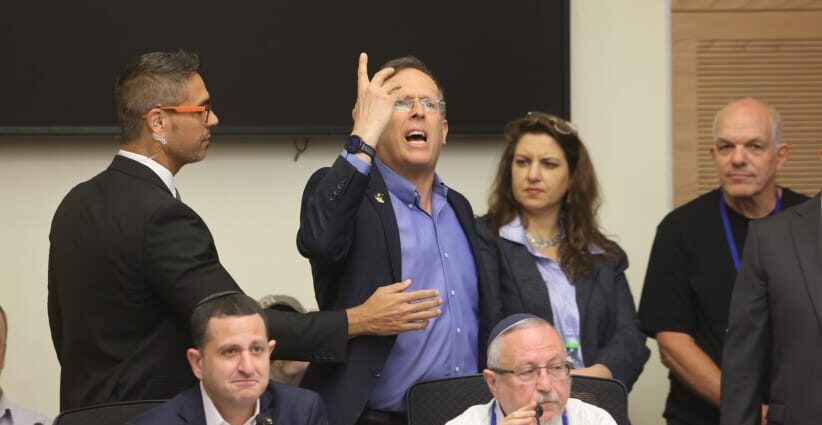
This post was originally published on here

The IDF struck on Monday a Hezbollah weapons production site embedded in a former civilian medical clinic and meters away from a Mosque, the military said. 

The site was located in the southern Lebanese city of Tyre. 

The IDF was able to determine the presence of weapons due to secondary explosions that occurred within the building following the military’s strikes on the facility.  

Advance warnings were issued to mitigate harm to civilians, with precise munitions and aerial surveillance also put in place. 

“The Hezbollah terrorist organization continues to operate from within and close to civilian and medical infrastructure,” said the IDF, “including religious sites and medical clinics, and cynically exploits them in order to execute terror attacks against Israeli civilians and IDF soldiers.”

IDF strikes infrastructure, rocket launch sites in Tyre

Additionally, the military struck Hezbollah infrastructure sites located in the city of Tyre last week. 

In late March, the IDF issued evacuation orders after identifying Hezbollah operatives launching heavy rocket fire from within the city’s residential neighborhoods. 

The IDF’s military Arabic spokesperson, Col. (res.) Avichay Adraee said that the terror group had fired around 120 rockets from Tyre’s outskirts. 

This post was originally published on here

The US reportedly used double the number of interceptors against Israel-bound Iranian missiles than those deployed by the IDF, according to a Thursday report by The Washington Post

The report, which cites US officials who spoke on the condition of anonymity, notes that the US deployed some 200 Terminal High Altitude Area Defense, or THAAD, interceptors against Iranian missiles targeting Israel, representing roughly half of its total THAAD interceptors.

Additionally, it used more than 100 Standard Missile-3 and Standard Missile-6 interceptors, which are operated by the US Navy and were deployed aboard ships in the Mediterranean Sea during the war.

In contrast, Israel used fewer than 100 Arrow 3 missiles and around 90 David Sling interceptors, with many targeting attacks from the Houthis in Yemen and Hezbollah in Lebanon rather than Iranian ballistic missiles, the latter more sophisticated and powerful.

“Both Israel and the United States carried the defensive burden equitably during Operation Epic Fury, which saw both countries employ fighter aircraft, counter-UAS systems, and various other advanced air and missile defense capabilities with maximal effectiveness,” said Sean Parnell, the Pentagon’s chief spokesman.

“Operations Roaring Lion and Epic Fury were coordinated at the highest and closest levels, to the benefit of both countries and their allies,” the Israeli Embassy in Washington added in a statement.

US allies raise concerns over stockpile depletion

Many US allies have raised concerns over the possible depletion of the interceptor stockpiles, with the US not having enough production to replenish the levels used during the war with Iran at the current rate in the short term.

Japan and South Korea are among the most concerned countries, with both nations facing threats from China and North Korea that could only be deterred with the help of US forces in the region.

A March report from the beginning of the war with Iran pointed out that the US was considering moving some of its THAAD interceptors from South Korea to the Middle East.

In June 2025, prior to Operation Midnight Hammer, which targeted Iranian nuclear sites, the US deployed three of its eight Patriot batteries to the Middle East to brace for potential Iranian retaliation, with the system returning to South Korea in October 2025.

A US Congress study published on March 25th on the THAAD system shed worrying light on the inventory of interceptors available to the US in the near future, saying that “there is concern that the rate of use of THAAD interceptors during Operation Epic Fury has further reduced the limited stock of interceptors.”

The study noted that the US will need years to replenish its stock, as current production rates are insufficient to sustain air defenses for allied nations during prolonged conflicts.

Assaf Gilead/Globes/TNS contributed to this report.
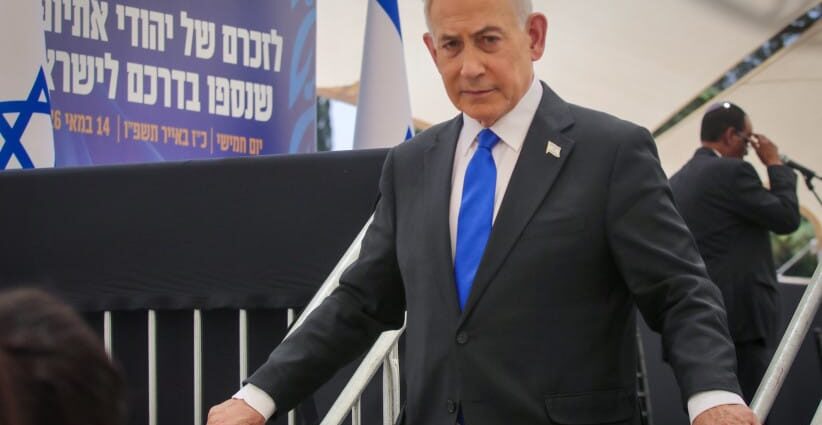
This post was originally published on here

The Intern, which premiered on Tuesday and will run on Thursdays on Hot 3, Hot VOD, and Next TV, is a polished medical suspense drama starring Niv Sultan, best known for Tehran.

She plays Hadas, an ambitious and very promising surgical resident who becomes upset by the politics of organ donation at the hospital where she works.

When a former classmate of hers is denied a kidney he needs to save his life, she takes matters into her own hands.

She finds a way to obtain a kidney and also to operate on him, in contravention of every rule the hospital has. Obviously, Hadas must hide this from her boss, played by Tzahi Grad.

Her father was also a senior surgeon there, and she is an insider who is initially above suspicion, but jealous rivals among her colleagues soon begin finding clues about what has happened.

The series brings to mind a very interesting movie about illegal organ sales in London, Stephen Frears’ Dirty Pretty Things, and the sitcom/medical drama Royal Pains.

In Royal Pains, Mark Feuerstein played an idealistic doctor who went rogue over a similar issue and found himself kicked out of the hospital where he worked.

Everything to do with organ donations tends to be dramatic, and now that the phenomenon of altruistic organ donations is better known, it turns out that the people who make such donations can have a say in who receives their organs.

While there are some new angles in The Intern on organ donation, much of the plot and the characters are pretty familiar.

Sultan is good and very convincing as a brilliant surgeon-in-training, and the storyline about her caring for her mentally disabled sister works well.

But squeamish viewers should know that the series features very graphic depictions of surgery, like The Pitt, and be warned in advance.

The series was created by Endemol Shine Israel, in collaboration with The North Road Company and SIPUR.

KAN 11 running new black comedy

ANOTHER NEW Israeli series now running on KAN 11, Finders Keepers, is a black comedy about adult siblings – played by Shai Avivi (Burning Man, Here We Are), Yael Sharoni (who played Yifat on Srugim), and Ofer Shechter (The ’90s) – in dire need of money, who hope to inherit their late father’s modest investments and apartment.

They are thrown for a loop when it turns out he left his apartment, the biggest asset, to a young prostitute (Liron Ben- Shlush), and they must overcome their conflicts – and they have plenty of conflicts – to try to find a way to get the apartment for themselves.

It was created by Guy Koren and Erez Drigues, an actor/writer who was caught up in a #MeToo scandal, so this is a comeback of sorts for him.

There is a certain kind of Israeli drama or comedy in which characters constantly bicker and belittle each other, and Finders Keepers is one of them.

Some reviewers have found it all hilarious, and you might, too, but I’m not captivated by this kind of humor. If I want to see people bickering in Israel, I can find that anywhere I go; I like to see something a little different on television.

Third season of Euphoria streaming on HBO Max

AS THE third season of Euphoria continues on HBO Max, it has moved away from its core focus of telling the stories of Rue (Zendaya) and her equally troubled high-school classmates.

In fact, it has gotten into quasi-Quentin Tarantino territory, as some of the former high schoolers get caught up in the world of crime.

While this new focus worked in the early episodes of the new season, it has moved into a fever pitch of sadism and cruelty with a focus on the pimp and strip club owner, Alamo (Adewale Akinnuoye-Agbaje), for whom Rue now works, who speaks in aphorisms, as so many criminals do on screen.

It’s also become a repository for a kind of torture porn. In one sequence, after Alamo suspects Rue of robbing him, he has his henchmen bury her up to her neck in the desert, then rides at her on a horse, wielding a polo mallet, and we wait in suspense to see if he will beat her to death with blows to her head.

It’s a scene reminiscent of one in the Holocaust film The Painted Bird, in which a boy is buried up to his neck as crows eye him, seemingly about to peck him to death.

This sadism infuses the entire show now, and when Cassie (Sydney Sweeney) gets a package, your mind will instantly go to a similar scene from the movie Seven, and you just know that something horrible is inside.

The series is very popular, so I guess people enjoy all this, but I feel Euphoria had more impact when it was about the relationships among the characters, and about Rue’s inability to shake her drug problem, as well as the inability of the adults around her to help her.

Now it’s mostly over-the-top cruelty in scene after scene. There is some showbiz satire following Cassie’s career as an aspiring actress, and a parody of the influencer scene.

Mother-daughter dramedies to take over Netflix

NETFLIX IS featuring two dramedies with very different mothers, daughters, and sisters: Postcards from the Edge (available starting May 22) and In Her Shoes, which it added recently.

Both of these feature wonderful performances by Shirley MacLaine (and both are also available on Apple TV+).

Postcards from the Edge is a 1990 film starring MacLaine and Meryl Streep that is truly as fresh as the day it was released.

The movie, directed by Mike Nichols (The Graduate), was based on a largely autobiographical novel by Carrie Fisher, the late Star Wars actress who was the daughter of movie star Debbie Reynolds and singer Eddie Fisher.

It tells the story of a complicated relationship between a mother and a daughter, both in show business.

Streep was trying to shake her image as an actress who played only heavy dramas and used interesting accents, while in Postcards, she portrayed a frazzled, self-deprecating character.

Suzanne (Streep) is a struggling actress with substance abuse issues who has grown up in the shadow of her egotistical mother, Doris (MacLaine), once a huge star from Hollywood’s golden age.

After Suzanne overdoses, a court orders her to live with her mother following her rehab, so she can continue to work on what looks like a not-too-funny cop comedy.

That’s the basic setup, and it’s great fun to watch these two actresses work together as they rehash the past and try to cope with each other in the present.

There are also several musical numbers, and it was one of the first times Streep sang in a movie, performing a country-western song and Ray Charles’s “You Don’t Know Me.”

MacLaine gave it her all when she sang the showbiz anthem “I’m Still Here.” The movie features a stellar supporting cast, including Rob Reiner as one of the producers of the cop movie, Gene Hackman as its director, and Richard Dreyfuss as the doctor who pumped Suzanne’s stomach.

On top of that, Dennis Quaid plays the guy she was doing drugs with when she overdosed, and Annette Bening plays one of her first prominent roles as another girlfriend of Quaid’s character.

But what you’ll remember most are the emotionally resonant scenes between Streep and MacLaine.

In Her Shoes (2005) is based on a best-selling novel by Jennifer Weiner, and, like Postcards, it’s the story of how two women, in this case, sisters, eventually figure out that neither is as perfect or as flawed as the other thought she was.

Toni Collette plays Rose, a frumpy but very successful lawyer who has no luck with men, and Cameron Diaz, in what was her best performance to date, as Maggie, her gorgeous, promiscuous sister who has dyslexia and can’t get a decent job.

They grew up in the shadow of grief over the loss of their mentally ill mother and have always bonded over their dislike for their annoying stepmother.

Just as in Postcards, they are forced to live together, but here it’s only briefly, and Maggie takes off to find their grandmother (MacLaine), who is in an assisted-living facility in Florida.

There is a great supporting cast playing residents there, including Jerry Adler, Francine Beers, and Norman Lloyd, and Mark Feuerstein of Royal Pains also shows up.

This post was originally published on here

The former prosecutor who led the investigation into a mysterious 2015 death that unnerved Argentina’s Jewish community has been charged with concealing evidence in the case.

Viviana Fein was indicted on May 12 on charges of “aggravated concealment” over her handling of the investigation into the death of Alberto Nisman, a special prosecutor appointed to investigate the 1994 bombing of the AMIA Jewish community center in Buenos Aires that killed 85 people.

On Jan. 18, 2015, Nisman was found dead in his Buenos Aires apartment with a bullet hole above his right ear, having been shot at point-blank range. His body was discovered hours before he was scheduled to present evidence before Argentinian lawmakers, accusing then-President Cristina Fernández de Kirchner and other senior officials of allegedly covering up Iran’s role in the AMIA attack.

At the time, Fein declared Nisman’s death a suicide, but in May 2016, she slightly amended her view, saying that he may have been forced to kill himself. Then, in 2017, forensic investigators issued a report stating that Nisman was assassinated. Jewish institutions have also maintained that he was murdered.

Under the Argentine Penal Code, a person charged with aggravated concealment must not have actively participated in the original crime but joined in the aftermath, and Judge Julián Ercolini ruled that Fein allegedly failed to properly preserve the crime scene at Nisman’s apartment.

Evidence potentially contaminated

According to court filings, dozens of people entered and exited the apartment without proper controls, potentially contaminating evidence and compromising the investigation.

The controversy surrounding the handling of the original crime scene has persisted for years. Judicial investigations and expert reports described the apartment as chaotic in the hours after Nisman’s death, with allegations that evidence may have been mishandled or destroyed.

Fein, who could face up to three years in prison if found guilty, has denied any wrongdoing. A week prior to her indictment, her attorney, Lucio Simonetti, demanded the charges be dropped, stating that in the case of a cover-up, “There must necessarily be a connection between the perpetrator of the underlying crime and the person covering it up, since it is absurd to assume that someone would cover up for a complete stranger.”

He added that the ruling “says nothing about any prior relationship existing between my client and the individuals who allegedly took part in the supposed murder of Natalio Alberto Nisman.”

The prosecution comes as Argentina’s government takes a newly aggressive stance against Iran and Hezbollah, which are widely understood to have planned the bombing. Since Javier Milei, a conservative supporter of Israel, was elected in 2023, the country has officially declared Iran and Hezbollah responsible for the AMIA attack and another attack two years earlier on the Israeli embassy; designated Iran’s Revolutionary Guard a terrorist organization; and decided to pursue a trial in absentia for suspects implicated in the case.

This post was originally published on here

The United States will be sending an additional 5,000 troops to Poland, US President Donald Trump said on Thursday.

Trump, in a Truth Social post, cited his relationship with Poland’s conservative nationalist president, Karol Nawrocki, as the reason behind his decision to send additional troops.

The announcement comes two days after US Vice President JD Vance told reporters a US troop deployment to Poland had been delayed.

The US had been reviewing its troop presence in Europe and had long been expected to scale it back following demands from Trump that NATO take a larger ‌role in the defense of Europe.

Decision based on Nawrocki’s win, says Trump

“Based on the successful Election of the now President of Poland, Karol Nawrocki, who I was proud to Endorse, and our relationship with him, I am pleased to announce that the United States will be sending an additional 5,000 Troops to Poland,” Trump said in the post.

Trump hosted Nawrocki at the White House in May last year and backed him at a crucial moment ahead of the Polish election in which Nawrocki went on to defeat the candidate of Polish Prime Minister Donald Tusk’s pro-European, centrist party.

He met Nawrocki again at the White House in September and said at the time that the US could increase its troop presence in Poland and pledged to secure the country’s defense.

This post was originally published on here

“There’s an orgy of antisemitism, an absolute, shameless orgy of antisemitism, overtaking the West,” Hungarian Jewish director Laszlo Nemes told Jonathan Freedland of The Guardian in a piece published earlier this week.

Nemes, who is now at the Cannes Film Festival promoting his latest movie, Moulin, is best known for his first feature film, Son of Saul (2015).

Son of Saul is a hauntingly graphic and frightening drama about a member of the Sonderkommando unit at Auschwitz. It won the Oscar for Best Foreign Language Film and the Grand Prix at the Cannes Film Festival.

Nemes told The Guardian that he didn’t think that the movie would be so well-received if it came out today.

“I don’t even think it would make the [Oscar] shortlist today… Because of the politicization of cinema, because anything that’s Jewish is now considered… Nobody would touch it with a 10-foot pole,” he said.

Another reason festival decision-makers might have shunned the film today is that it was developed in Israel, at the Sam Spiegel International Film Lab in Jerusalem. It is the best-known of the lab’s films.

Jewishness and the Holocaust being hijacked by an occupation

Speaking about those who call for a boycott of Israel, he said, “I think it’s all anti-humanist regression. And because it’s not identified as this, I think it’s very effective at spreading.”

“And one of its very potent vectors has been antisemitism… The Jew has always been [portrayed as] the sort of internal enemy, and I think now [the idea of] the Jew as the internal enemy of the West has reached the dimensions of European antisemitism before the takeover by the National Socialist [Nazi] Party,” Nemes continued.

Asked whether he really thought antisemitism had gotten that bad, he answered, “I think it’s getting there.”

When he was asked whether the boycott calls against Israel were due to civilian casualties in Gaza, rather than antisemitism, Nemes replied, “We know how totalitarian mindsets work.”

“This kind of ideology always attaches itself to the sense of being on the right side of history, being on the righteous side,” Nemes added. “There’s a very strong, moralizing, puritan surface on which this ideology can attach itself.”

He said he thought that the ideological climate had affected the reception of his previous film, Orphan.

This movie is about a Jewish boy in Hungary in the 1950s who discovers that his mother had to make a horrible compromise to survive the war, and that his birth father is a brutal gentile man.

Orphan, which premiered at the Venice Film Festival in 2025, has yet to find a US distributor.

“Even some response from the media smells of an ideological standpoint,” Nemes said. “People [would] ask me about Gaza, instead of, you know, asking about the movie. [They would ask] if I signed this or that petition.”

[It’s] tiring to hear the overclass of Hollywood lecture us morally

If film industry professionals were so concerned with humanitarian causes, he went on to say, then one wonders why they said nothing about the killings of hundreds of thousands in Syria and the starvation of millions in Yemen, among other issues.

“[It’s] tiring to hear the overclass of Hollywood lecture us morally. You know, from their pools and luxury homes in the Valley and Hollywood hills,” Nemes said.

“Do I really have to listen to millionaires lecture the world about morality?” he asked. “I don’t think anybody wants that.”

Nemes also discussed the issue of what he called the West’s apathy regarding Hamas’s control over and oppression of the people of Gaza – an issue which was unlikely to be raised at Cannes by anyone else.

“Had [the elite] really cared about the people in this region, they would have revolted against these people being ruled by a totalitarian death cult that’s actually killing its own population and at unprecedented levels,” he said.

According to Nemes, they choose to criticize Israel instead: “There’s this obsession with Jews.

While he said he enjoyed Jonathan Glazer’s movie about the commandant of Auschwitz and his family, The Zone of Interest, he reiterated criticisms he made of that director’s Oscar acceptance speech.

During that address, Glazer spoke about “Jewishness and the Holocaust being hijacked by an occupation.”

In his interview with The Guardian, Nemes said, “I didn’t feel that he was responsible at all. I thought he wanted to please that overclass of Hollywood with the line of good, righteous thought.”

“I don’t believe that he understands anything about the reality of the region, yet he feels the need to do it. And I think it’s very presumptuous, very condescending,” the Hungarian director continued.

Despite his general pessimism about the place of Jewish creators in the world of art and culture, Nemes may find some consolation in the fact that his new film, Moulin, has attracted considerable attention at Cannes, even if the reviews have been mixed.

It is a biopic about Jean Moulin, a leader of the French Resistance who was captured and tortured by Gestapo chief Klaus Barbie.

While it was shown at the main competition at Cannes, it is not predicted to win any major awards. 

This post was originally published on here

The US decision to remove Francesca ​Albanese, a UN expert on the ‌Palestinian territories, from a list of sanctioned individuals is temporary and does not reflect a policy change, the State Department said on Thursday.

The US imposed sanctions on Albanese in July 2025 over what it said were her efforts to prompt the International Criminal Court (ICC) to take action against US and Israeli officials, companies, and executives.

Trump administration likely violated free speech, ruled judge

Earlier this month, a federal judge temporarily blocked the sanctions, finding that the Trump administration likely violated her free-speech rights by imposing the measures ​after she criticized US ally Israel’s war in ​Gaza.

“The Government has appealed the court’s order,” the State Department said in a statement.

“In the event the DC Circuit stays or overturns that order, the Government intends to restore Ms. Albanese’s name to the SDN List,” it said, referring to the list of Specially Designated Nationals.

This post was originally published on here

A Paris appeals court on Thursday found Airbus and Air France guilty of corporate manslaughter over the 2009 Rio-Paris plane crash that killed 228 passengers and crew in France’s worst air disaster.

The verdict is the latest milestone in a legal marathon involving two of France‘s most emblematic companies and relatives of the mainly French, Brazilian, and German victims.

Relatives of some of the 228 passengers and crew who died when the Airbus A330 vanished in darkness during an Atlantic storm gathered to hear the verdict after their 17-year legal battle to pinpoint blame for France’s worst air disaster.

The court ordered the companies to pay the maximum fine for corporate manslaughter, €225,000 ($261,720) each, following prosecutors’ request during the eight-week trial.

In 2023, a lower court had cleared the two companies, both of which have repeatedly denied the charges.

The maximum fines, amounting to just a few minutes of either company’s revenue, have been widely dismissed as a token penalty. But family groups have said a conviction would represent a recognition of their plight.

Further appeals seen likely

French lawyers have predicted further appeals to the country’s highest court, potentially dragging the process out for years more and prolonging the ordeal for relatives.

Flight AF447 vanished from radar screens on June 1, 2009, with people from 33 nationalities on board. The black boxes were recovered two years later after a deep-sea search.

In 2012, BEA crash investigators found the plane’s crew had pushed their jet into a stall, chopping lift from under the wings, after mishandling a problem with iced-up sensors.

Prosecutors, however, focused on alleged failures within both the planemaker and the airline. Those included poor training and failing to follow up on earlier incidents.

To prove manslaughter, prosecutors needed not only to establish that the companies were guilty of negligence but to pull the threads together to demonstrate how this caused the crash.

Under the French system, last year’s appeal proceedings involved a completely new trial with evidence reviewed from scratch. Any further appeals following Thursday’s verdict will shift the focus from the AF447 cockpit to the intricacies of law.

This post was originally published on here

Shavuot, by all reason, should be the pinnacle of Jewish holidays. After all, this was the cataclysmic “day the Earth stood still,” when the Torah was given to Moses – and, by extension, to the entire Jewish people – on Mount Sinai. God-given law was being passed down to humanity, and the world would never be the same again.

The scene was dramatic and spellbinding, as, amid thunder and lightning, with the great shofar sounding in the background, the 10 Commandments – the basis of our beliefs – were finally revealed.

Say the rabbis: Birds stopped in mid-flight, waterfalls were suspended, and all went silent so that the majestic divine voice could be heard without interruption, and the message could be indisputably transmitted. And yet, despite all this hoopla, Shavuot remains the “poor sister” in the family of festivals.

Rosh Hashanah, with the shofar its icon, and Yom Kippur, with the 25-hour fasting its trademark, are the acknowledged, dramatic Days of Awe. Sukkot has its lulav (palm branch) and etrog (citron) to wave, its unique sukkot to dwell in, and the revelry of Simchat Torah. Purim brings out raucous partying and audacious costumes, while Hanukkah is aglow as it basks in the light of its beloved hanukkiah, as we bid goodbye to our diets amid eight oily days of doughnuts and latkes.

But Shavuot? Where are its visible signs of celebration? We don’t make pilgrimages to Mount Sinai, there are no truly outstanding foods to lust for (with apologies to cheesecake), and even the study of Torah is an everyday occurrence to most people of faith. In fact, the Torah never even provides the date of Shavuot, only identifying the festival as it relates to Passover’s conclusion.

Furthermore, while all the other holidays have their own Talmudic tractate, Shavuot has none. Rosh Hashanah, Yom Kippur, Sukkot, Purim, and Passover each have a tractate specifically devoted to it; even Hanukkah has a small section within Gemara Shabbat. Shavuot? Nada!

Ah, but you will tell me that there is indeed a tractate named Shevuot. True, but it is not about the holiday; it is part of the larger Order of Damages section of the Talmud focused on laws regarding sacred vows and oaths (shevuot). The Festival of Shavuot connects to the completion of seven weeks – also called shavuot – of Counting the Omer, which begins after the second day of Passover.

But I want to suggest that perhaps, in the dual meaning of the term “shavuot” – “weeks” and “oaths” – there is an important connection between Shavuot, the holiday, and shevuot, the vows, after all.

For what are we commemorating on this festival? It is the moment we stood up as one and swore to God, soon after the 10 Commandments were given: “Na’aseh venishma” – “We shall observe [the mitzvot], and we shall listen to them.” We made a sacred promise to follow the Torah, to make it our “guidebook and God-book” for all of eternity.

Pledge of allegiance

I have vivid memories of reciting the Pledge of Allegiance every morning in our Jewish day school when I was a child. We would line up at the beginning of class, face the Stars and Stripes as we placed our right hand over our hearts, and recite, along with the teacher:

“I pledge allegiance to the Flag of the United States of America, and to the Republic for which it stands, one nation, under God, indivisible, with liberty and justice for all.”

Composed in 1892 by Baptist minister Francis Bellamy, the pledge gained popularity throughout the early 1900s. The controversial phrase “under God” was added in 1954, in legislation signed by president Dwight D. Eisenhower. It led to numerous legal battles over whether this brief statement imposed religious beliefs on non-observant citizens. As a result, a number of states chose to either delete the words or make them optional.

We Jews have our own “pledge” which we recite every morning – the “Modeh Ani.” This one-line sentence reads “Modeh ani lefanecha, Melech hai vekayam, shehehezarta bi nishmati behemla, raba emunatecha.” It means, “I give thanks – or testimony – before You, the living, eternal King who has restored my soul to me with compassion; abundant is Your faithfulness.” Thus, after emerging from our semi-comatose state of sleep, we begin our day by acknowledging that there is a God who faithfully watches over us, who guards and guides us each day.

Others suggest that our daily recitation of the “Shema” is also a type of vow, as we proclaim the oneness of God – “Hear, O Israel, the Lord is our God, the Lord is One” – and then list a number of essential mitzvot (e.g., loving God, mezuzah, tefillin) we are to perform. In fact, in the traditional text, the letters ayin and dalet in the words “Shema” and “ehad” are enlarged, forming the Hebrew word “ed,” which means “witness” or “testimony.”

There is also the statement of loyalty to Israel – as a Jewish, democratic state – that is administered only in certain specific situations to selected individuals: naturalized citizens, non-Jews seeking citizenship, diplomats, and civil servants.

A number of legal experts have questioned the requirement of non-Jews to declare their allegiance to a religion not their own, while others are reluctant to affirm Israel’s form of government as truly “democratic.”

I am not advocating that we institute an official, across-the-board pledge; Israelis don’t react well to policies crammed down – or forced from – their throats. In fact, making such a pledge a strict requirement for all citizens – even the Jewish, democratic ones – may have the exact opposite effect. It may cause the populace to resent yet another government-instituted ordinance.

What I am suggesting is that we voluntarily take upon ourselves a sentence or two each day, a verbal reminder to ourselves that we are amazingly fortunate to reside in the reborn, free State of Israel. An affirmation that we are blessed to have such a courageous army defending us, that we can live Jewishly without fear, that we have the merit of living in an age of redemption that our ancestors could only dream about.

Pledges are just words, yes. But words, in Jewish belief, create reality. Indeed, the Hebrew term for “word” is “mila,” which also is the term for ritual circumcision; the brit milah is, in itself, a physical statement that we are proud Jews.

Our forebears stood at the foot of Mount Sinai, in a barren and desolate desert, as they made their pledge. We, who inhabit one of the most unique and beautiful places on Earth, should certainly do no less.

The writer is director of the Jewish Outreach Center of Ra’anana. rabbistewart@gmail.com

This post was originally published on here

As Jews around the world celebrate Shavuot and commemorate the giving of the Torah at Mount Sinai more than 3,300 years ago, the haftarah for the festival offers a stirring lesson on revelation, holiness, and the meeting point between heaven and Earth.

Drawn from the opening chapter of the Book of Ezekiel, the haftarah describes one of the most extraordinary prophetic visions in all of Tanach. Ezekiel recounts how “the heavens were opened” and he beheld a stunning revelation of the Divine Presence, complete with heavenly creatures, fiery brilliance, and the celestial chariot of God.

At first glance, the connection to Shavuot appears obvious. Just as the Torah reading recounts the revelation at Sinai, so, too, does the haftarah describe a moment of divine revelation.

But perhaps the sages intended to convey something deeper.

Both Sinai’s and Ezekiel’s visions revolve around the same revolutionary idea – namely, that Judaism seeks to bridge the divide between the spiritual and the physical, bringing heaven down to Earth while elevating mankind upward toward the divine.

Indeed, the opening verse of the haftarah emphasizes this point with striking language: “The heavens were opened, and I saw visions of God” (Ezekiel 1:1).

Similarly, at Mount Sinai, the barrier separating the earthly and the heavenly realms was momentarily lifted as God descended upon the mountain and revealed His Torah to the people of Israel.

Holliness entering the physical world

As the midrash teaches (Midrash Tanhuma, Va’eira 15), prior to the giving of the Torah there existed a decree separating the spiritual and the physical worlds: “The upper realms could not descend to the lower realms, and the lower realms could not ascend to the upper realms.”

But at Sinai, that decree was annulled.

Suddenly, holiness could enter the physical world in a direct and transformative way. And mankind, through Torah and mitzvot, could elevate ordinary material existence toward sanctity.

That idea lies at the very heart of Judaism.

Unlike other belief systems that seek spiritual greatness through withdrawal from the physical world, Judaism insists that holiness is achieved specifically within this world.

The Torah was not given to angels in heaven but to human beings of flesh and blood. It was given to people who eat and sleep, work and marry, build homes and raise families.

Its purpose was never to escape physical existence but to sanctify it.

This concept echoes throughout Jewish life.

We sanctify food through the laws of kashrut and blessings before and after eating. We elevate time through Shabbat and the festivals. We transform physical objects into vehicles for holiness, such as mezuzot, tefillin, and sukkot.

Even the most mundane aspects of life can become infused with sanctity, when guided by Torah. This is precisely what Sinai introduced into human history.

The giving of the Torah was not merely the transmission of commandments. It was the fusion of heaven and Earth.

Perhaps this also explains why the revelation at Sinai took place not in Jerusalem or within the Land of Israel but in the barren wilderness.

A desert appears empty, dry, and devoid of life. Yet specifically there, God revealed His presence.

The message is profound: Holiness is not confined to specific locations or lofty spiritual settings. The task of the Jew is to create sanctity wherever he may be. Indeed, one can transform even a spiritual desert into sacred ground.

This idea is reflected powerfully in Ezekiel’s vision itself, in which he repeatedly emphasizes movement. The heavenly creatures surge forward with energy and purpose. The wheels of the divine chariot move in harmony. 

Holiness in Judaism is not passive or detached from life. It demands action. The Torah calls upon us not merely to contemplate spirituality but to bring it into the world through our conduct and behavior,

Indeed, one of the great dangers in religious life is the temptation to divide existence into separate compartments: the sacred and the secular, the spiritual and the practical.

But Judaism rejects such a sharp distinction. The goal is not to flee from the physical world but to elevate it.

That is why Jewish law governs not only prayer and ritual but also business ethics, interpersonal conduct, and everyday behavior. How one speaks, eats, works, and treats others all become expressions of divine service.

The Kotzker Rebbe was once asked where God dwells. He famously replied: “Wherever man lets Him in.”

That is the enduring message of Shavuot.

At Sinai, heaven opened and touched the Earth. But the revelation was not intended to remain confined to a single moment in history.

Rather, each generation is called upon to continue the process by drawing holiness into the world around us.

In an age consumed with materialism, distraction, and superficiality, Shavuot reminds us that human existence must aspire to something higher.

The Torah challenges us to recognize that beneath the routines and pressures of daily life lies the potential for sanctity.

And perhaps that is the deepest meaning of Shavuot: that through Torah, even the finite world of man can become a dwelling place for the Infinite.

This post was originally published on here

Government Secretary Yossi Fuchs said on Thursday that he believed the coalition would be able to secure a majority to pass the contentious haredi (ultra-Orthodox) draft bill, amid mounting opposition within Prime Minister Benjamin Netanyahu’s coalition from lawmakers warning that the legislation would do little to resolve the IDF’s manpower crisis.

Fuchs made the remarks in a Thursday Kan Reshet Bet interview, the day after the haredi draft bill returned to the Knesset’s Foreign Affairs and Defense Committee for debate after being stalled for months. 

Progress on the legislation resumed hours before the bill to dissolve the Knesset passed its preliminary reading amid the crisis in the coalition with haredi parties over the bill. The tensions began last week when Netanyahu told the haredi parties that no majority existed to pass the bill, which caused them to push for the Knesset’s dissolution.

Fuchs expressed confidence that the coalition would ultimately secure the necessary majority, noting that other controversial legislation had appeared not to have a majority at first, but ultimately passed

He used as an example the death penalty for the terrorists bill, which was sponsored by the Otzma Yehudit party led by National Security Minister Itamar Ben-Gvir.

Fuchs explained that there were lawmakers in the coalition who objected to the death penalty bill, but only a couple of days before the proposal was brought to a vote, a majority was secured, and it passed in March.

There are a few more lawmakers who are “on the fence” over the haredi draft bill, Fuchs said, but added he believed there would soon be enough support for it.

Fuchs dismisses Haskel comments

Deputy Foreign Minister Sharren Haskel (New Hope-United Right) is a leading critic within the coalition against the legislation and has warned that the bill could endanger Israel’s security, as it would not enforce haredi conscription and fail to provide a solution to the IDF’s manpower shortage crisis.

Fuchs dismissed comments from Haskel and from the group of coalition lawmakers who also object to the bill.

“The coalition leadership and the prime minister do not manage legislation according to what Sharren Haskel thinks,” Fuchs said.

Haskel had told The Jerusalem Post this week that coalition MKs were under massive pressure to support the haredi draft bill. One aspect of the pressure was the threat to “publicly shame Likud members who vote against the law,” she said.

Another Likud source familiar with the matter told the Post that, over the weekend, the Prime Minister’s Office had been counting coalition MKs expected to support the bill while holding talks aimed at securing a majority.

Opposition leader Yair Lapid on Monday said any Likud MKs who support the haredi draft bill due to pressure from Netanyahu “will not fall under the radar,” vowing to put up billboards with pictures of the lawmakers, alongside the text: “Supported draft evasion during wartime.”

Fuchs added in the interview that nearly 100 committee meetings were held on the bill over the past two years, and that the government’s stance was to pass the legislation.

He defended the bill, saying that it was “the only tool that will change reality,” along with passing an additional bill to increase the amount of mandatory service to 36 months.

Fuchs had attended the Knesset meeting on Wednesday, where he told the panel that the government was requesting to move forward with the current outline of the legislation for its final second and third readings.

Warning of IDF manpower shortage

During that same discussion, Brig.-Gen. Shai Tayeb, head of the IDF Planning Directorate, warned that the IDF has a severe manpower shortage, and there are tens of thousands of draft evaders.

Tayeb said 12,000 soldiers were needed to fill the manpower gap. By January 2027, when enlistees serving 30 months will be discharged, this gap is expected to widen to about 17,000.

Advancing the bill again after progress was halted on it was believed to be Netanyahu’s final effort to persuade the haredi parties not to vote in favor of dissolving the Knesset, which set in motion a process to move the election date slightly forward from October 27.

Critics of the haredi draft bill say it is primarily intended to appease the haredi parties in the coalition and would do little to increase enlistment. 

Haredi party leaders have pushed for legislation that would not increase haredi enlistment.

The IDF has repeatedly warned of an urgent manpower shortage, particularly after more than two years of war.

In March, IDF Chief of Staff Lt.-Gen. Eyal Zamir said the IDF could soon collapse if there is no solution to the manpower shortage.

This post was originally published on here

The US Government’s Wednesday charges against former Cuban President Raúl Castro are over 30 years in the making, and could be grounds for a military operation on the island. 

Castro was charged with conspiracy to kill US nationals, destruction of an aircraft, and four counts of murder for deciding to shoot down two civilian aid planes in 1996. 

According to the indictment, the two planes, which belonged to the Cuban-American aid group Brother to the Rescue, were outside of Cuban airspace when they were downed. 

“All orders to kill by the Cuban military traveled through [the armed forces’] chain of command with [Raúl Castro] and Fidel Castro as the final decision makers,” prosecutors said.

Five other Cuban citizens were charged in connection.

Castro was the country’s defense minister at the time. 

While Castro stepped down from Cuban politics in 2021, he is still viewed as an extremely powerful figure in the country. Cuba’s communist party is currently led by President Miguel Díaz-Canel, who hit out at the indictment in a statement. 

Castro: US strike would trigger ‘bloodbath’

He said that if the US were to strike Cuba, “it would trigger a bloodbath with incalculable consequences, plus the destructive impact on regional peace and stability.

“Cuba poses no threat, nor does it have aggressive plans or intentions against any country. It has none against the US, nor has it ever had any, something the government of that nation knows full well, particularly its defense and national security agencies,” he added. 

After Trump kidnapped former Venezuelan president Nicolas Maduro, he began to say that Cuba would be next.

In March, he said that he believed he would have “the honor of taking Cuba.” 

“Taking Cuba in some form, yeah,” he said. “Taking Cuba. I mean, whether I free it, take it – I think I could do anything I want with it, if you want to know the truth.” 

On Wednesday, he seemed to switch tactics, claiming that he didn’t think that a takeover would be necessary. 

“It’s a failing nation. You see that. It’s falling apart. They have no oil, they have no money,” Trump said on Wednesday. “But we’re there to help, we’re there to help the families, the people.”

Notably, acting US Attorney-General Todd Blanche said that “we expect he [Castro] will show up here, by his own will or another way.”

When asked by reporters how the US plans to try Castro, Blanche doubled down and said that there is a warrant out for Castro’s arrest. 

“This isn’t a show indictment,” he said, adding that “there’s all kinds of different ways” to bring Castro to the country to face trial. 

The indictment, further, spares no criticism of the Castro regime. 

“The Castro Regime established and maintained control over Cuba and her people through a reign that eliminated dissent, preserved their power, territory, and reputations, and, through expropriation and nationalization of private business, funded those objectives,” the indictment reads.

Rubio: Regime change ‘great benefit’ to US

Perhaps most vocal about the administration’s goal of regime change in the communist nation is Secretary of State Marco Rubio, the son of Cuban immigrants. 

In January, he testified to Congress that “we would love to see the regime there change,” and said it would be of “great benefit” to America. 

The indictment comes after CIA Director John Ratcliffe went to Havana to meet with Cuban officials in an extremely rare meeting. Ratcliffe reportedly told CIA officials that the US was prepared to engage with Cuba on economic and security issues if Havana made “fundamental changes.”

Lawrence Gumbiner, Trump’s envoy to Havana during his first term, suggested that a structure similar to what happened in Venezuela would be possible in Cuba in an interview with CBS News last week. 

“The first steps would be economic openings,” Gumbiner said. “I think the clear message will be like it is with Ms. [Delcy] Rodriguez, that you will do as we say, or else.” 

He did say that the “or else” carries the promise of a military threat. 

However, Gumbiner noted that while some members of the administration, such as Rubio, would want full-scale regime change, it would require a significant amount of American-backed effort.

“It’s important to realize that Trump, he does not want to do nation-building,” Gumbiner told CBS.

“Rebuilding Cuba would be a nation-building exercise if you want to redo it in a democratic, pluralist model. Whereas, making economic changes piecemeal is easier.” 

He then went on to say that Trump likely views action with Cuba as an opportunity for US businesses rather than a chance for true regime change. 

“Whether it’s shipping, whether it’s transportation, whether it’s tourism, whether it’s construction, I think Trump sees Cuba as kind of virgin territory, where it’s been kind of dormant for six decades, and where the US business community can come in and really dominate the scene.”

This post was originally published on here

Two of Bondi Beach Massacre hero Ahmed Al Ahmed’s brothers were charged with threatening communications, according to the New South Wales Police, with local media reporting that they sought to extort him for money.

The 33-year-old and 35-year-old men were arrested last Monday and charged for using a carriage service to menace/harass/offend, said NSW police, and appeared at the Bankstown Local Court on Wednesday.

9News reported that Hozifa and Sameh Al Ahmed tried to extort $200,000 from their brother, who was wounded after disarming one of the terrorists during the December attack on a Hanukkah event that claimed the lives of 15 people.

‘Give us $100,000 each’

 “I will put your head under my boot, break your other arm, and smash your face. We will only leave if you give us $100,000 each,” Hozifa allegedly said on May 7, according to 9News.

A GoFundMe fundraiser for the 44-year-old raised over AUD $2.6 million dollars to support him after he was hospitalized. 

This post was originally published on here

US President Donald Trump vowed on Thursday that the United States will eventually recover Iran’s stockpile of highly enriched uranium despite comments from Iran that it will not hand over the material.

“We will get it. We don’t need it, we don’t want it. We’ll probably destroy it after we get it, but we’re not going to let them have it,” Trump told reporters at the White House.

Iran is believed to possess about 900 pounds of highly enriched uranium, which Trump says was buried by US and Israeli airstrikes nearly a year ago.

Retrieving the uranium is part of Trump’s central objective in his war on Iran, that Tehran will not be allowed to develop a nuclear weapon.

“I can think of nothing more important than the fact that we cannot let Iran have a nuclear weapon,” Trump said.

Iran’s Supreme Leader has issued a directive that the country’s near-weapons-grade uranium should not be sent abroad, two senior Iranian sources told Reuters.

Trump added that the US does not want tolls on the Strait of Hormuz. “We want it free,” said Trump. “We don’t want tolls. It’s international. It’s an international waterway.”

Rubio: Hormuz tolling would make Iran deal unfeasible

A diplomatic deal between the US and Iran would be unfeasible if Tehran implemented a tolling system in the Strait of Hormuz, US Secretary of State Marco Rubio told reporters on Thursday.

“No one in the world is in favor of the tolling system. It can’t happen. It would be unacceptable. It would make a diplomatic deal unfeasible if they were to continue to pursue that. So it’s a threat to the world if they were trying to do that, and it’s completely illegal,” Rubio said.

He also told reporters there had been some progress in talks with Tehran to end the US-Israeli war on Iran, but that Washington was dealing with “a system that itself is a little fractured.”

Rubio: There are ‘some good signs’

“The president’s preference is to do a good deal,” said Rubio. “I’m not here to tell you it is going to happen for sure, but I’m here to tell you we are doing everything we can to see if we can get one.

“There’s some good signs,” Rubio said. “I don’t want to be overly optimistic… So, let’s see what happens over the next few days.”

Rubio added that Trump has “other options” if no deal is reached, saying, “I’m not going to elaborate on what those are, but everybody knows what those are.”

Jerusalem Post Staff contributed to this report.

This post was originally published on here

Director-General of the Gaza Board of Peace Nickolay Mladenov published his “roadmap” for implementing US President Donald Trump’s peace plan for the Gaza Strip in a series of posts on X/Twitter.
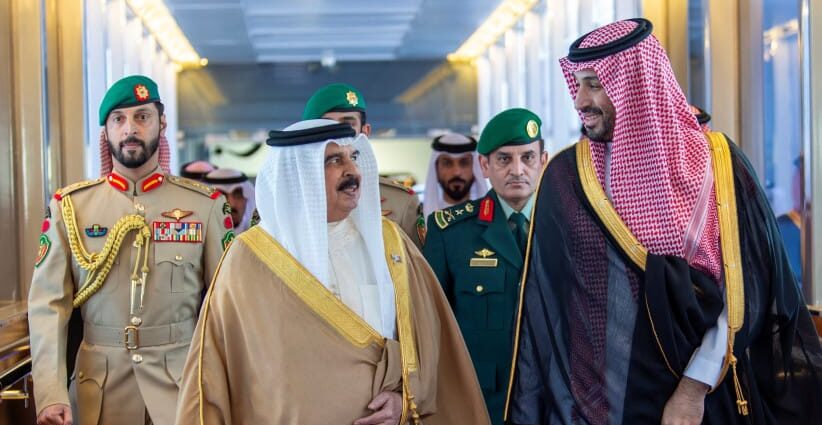
The proposed “Roadmap to Complete the Implementation of President Trump’s Gaza Comprehensive Peace Plan,” Mladenov stated, contains 15 points covering topics including Hamas disarmament and IDF withdrawal from Gaza.

Mladenov detailed that Hamas will not be expected to immediately surrender or unilaterally disarm under the proposed plan. Instead, the disarmament would happen in phases through a Palestinian-led and internationally verified process. 

Weapons confiscated during disarmament would not be handed over to Israel, Mladenov clarified. Arms would be transferred to the National Committee for the Administration of Gaza (NGAG), the Palestinian technocratic committee charged with handling civilian administration in the Gaza Strip.

As the incremental disarmament of Hamas is verified, Israeli troops are expected to withdraw from Gaza in phases on an agreed-upon timeline, Mladenov explained.

Under the proposed plan, the facilitation of Hamas disarmament and IDF withdrawal would be supported by the International Stabilization Force (ISF).

According to Mladenov, “the purpose of the ISF is to reduce friction during the transition and support stability while Palestinian transitional institutions assume responsibility on the ground.”

Reconstruction of Gaza to proceed when stability is verified 

Mladenov also detailed that a “Social Peace Agreement” would be implemented as part of the roadmap, including “commitments to stop internal killings, prohibit reprisals, ban armed demonstrations, and end displays of armed force.”

Efforts to reconstruct areas of Gaza that were destroyed during the Israel-Hamas War will begin as other points of the plan are implemented. Financing and rebuilding will not move forward until a functioning administration under the NCAG can be verified.

“The faster implementation progresses, the faster Gaza can begin rebuilding homes, schools, hospitals, infrastructure, and economic life at scale,” Mladenov stated.

Mladenov emphasized that each step of implementing the plan depends on each party fulfilling its obligations and announced that a verification mechanism will be created to ensure that such obligations are fulfilled before proceeding to further steps.

This post was originally published on here

Yitzhak Ben Hebron, the last survivor of the 1929 Hebron massacre, passed away on Thursday.

Yitzhak, who was a child at the outbreak of the riots that led to the massacre, left behind a large family and a legacy connected to the Jewish community in Hebron. He was born into a family that had lived in Hebron for a long time.

In August 1929, when he was about four years old, his life changed beyond recognition.

At the height of the bloody events, Arab rioters launched a planned massacre against the Jewish community in the city. During the attack, 67 of the 800 residents of the city’s Jewish community were murdered, and dozens more were injured.

Yitzhak and his family, during the attack, Yitzhak and his family found an escape route through the window of the Avraham Avinu Synagogue, and thus managed to escape the rioters who were raiding the neighborhood and escape death.

Among the survivors were many who had been protected and hidden by Arab residents. The survivors were evacuated from the city, which led to the interruption of Jewish continuity in Hebron.

Yitzhak spent adult life protecting Jews in Israel

As an adult, Yitzhak changed his last name to Ben Hebron.

In his youth, he enlisted in the Hebrew Settlements Police and served as a policeman before the establishment of the state of Israel. As part of his role, he worked to protect the settlements and later took an active part in the Israeli campaigns.

After the Six-Day War, Ben Hebron was among the first Israelis to return to renew Jewish settlement in Hebron.

His son, Amishav, was the first Jewish child born to the Jewish families who established a settlement in Hebron.

Over the years, he made sure to preserve and tell about the memory of the destroyed community.

In recent years, he has lived in Ashkelon with his family.

With the death of Yitzhak Ben Hebron, the chapter of direct testimony from the survivors of the massacre in Hebron was closed.

This post was originally published on here

Ukraine has shored up its air defense system as the war with Russia drags on, the BBC reported on Thursday.

As the war has ground on for four years, Ukraine has built a more sophisticated, layered air defense system. While at the start, it had relied on old Soviet-era systems, Western countries have introduced it to more sophisticated systems, such as Patriot air defense missiles.

While there are still major gaps in Ukraine’s defense system, such as the lack of missile interceptors for the Patriot system, Ukraine has begun producing its own defense systems.

One of the most notable achievements of Ukraine’s homegrown defense tech is the Sky Map software, which uses radar, sensors, and video feeds to detect threats and assist air defense systems.

At first, Ukrainians used phones fitted to telegraph poles to listen for approaching drones. Now, they use more complex sensors to detect them. 

The Sky Map software is currently being used by the US to help defend an American base in Saudi Arabia.

Ukraine producing hundreds of interceptor drones a day

Another weapon that Ukraine has become particularly adept at producing is cheap interceptor drones. Ukraine produces up to 1,000 of these large bullet-shaped drones a day. According to Ukrainian estimates, they took out some 30,000 Russian drones in March.

They’re also considerably cheaper than the drones they are designed to attack. The BBC report noted that one such type of drone, the P1-SUN interceptor, can be 3D-printed for around $1,000, as compared to the nearly $50,000 Shahed attack drones it is designed to take down.

Private companies in Ukraine are also signing up to be a part of the system.

“We need to cover all of Ukraine and see all the targets. So accordingly, we use all the resources we have,” Lt.-Col. Yuriy Myronenko, an inspector general at Ukraine’s Ministry of Defense, told the BBC.

One such company is Carmine Sky, which offers air defense to private-sector clients. It has already built a network of towers mounted with remotely controlled machine guns in Kharkiv, close to the Russian border.

Their recruits tend to be ordinary Ukrainians who receive a few weeks of training before they can remotely operate one of the machine guns.

The company’s spokesperson told the BBC that the recruits’ jobs aren’t difficult and are similar to playing a video game. However, they supplement parts of Ukraine’s air defense system.

“We’re integrated into the military system,” Carmine Sky’s spokesperson said. “This is not the Wild West, so we follow the instructions and commands of the military.”

He also pointed out that private companies like the one he works for can scale more quickly than the public system. According to the report, although these private companies are new, they’ve already shot down dozens of drones.

Russian attacks on Ukraine designed to overwhelm defense systems

While hundreds of civilians are still dying in Russia’s ever-increasing attacks, which are designed to overwhelm Ukraine’s defense systems, Kyiv is getting better at defending its citizens.

For example, the report noted that from May 14 to 15, Russia launched over 1,500 drones and over 50 missiles at Ukraine.

The event marked Russia’s largest aerial assault on Ukraine to date, and killed 27 people.

However, Ukrainian President Volodymyr Zelensky said in his address that over 93% of the drones were intercepted. While it didn’t prevent the deaths of the 27 people, Ukrainian figures from May 14, 2025, show that Ukraine was only able to intercept half of the drones that were fired at it last year.

“We are now, unfortunately, the best in the world,” Myronenko told the BBC.

This post was originally published on here