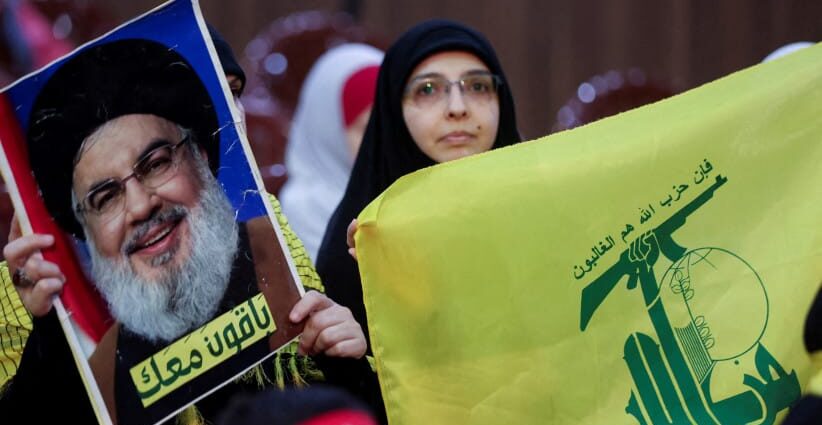
The buzz of the Israeli drone was constant that day, and every time Ahmad Turmus looked up, it seemed to be circling over him, like an all-too-patient bird of prey.

So when the phone rang as he was visiting family one Monday afternoon in February, Turmus wasn’t too surprised that the person speaking accented Arabic was an Israeli military officer.

What surprised him was the question.

“Ahmad, do you want to die with those around you or alone?”

According to family members interviewed, Turmus answered with one word before hanging up: “Alone.”

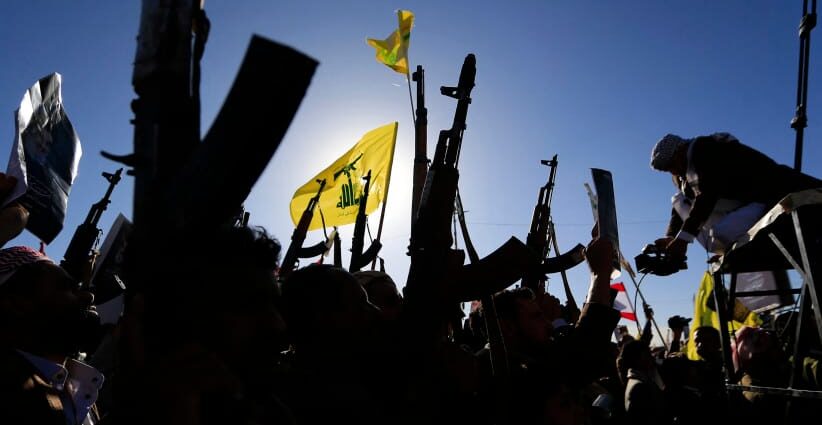
The targeting of Turmus, which Israel acknowledged, demonstrates how, time and again, its military has mastered an intelligence war for which Hezbollah appears to have no answer.

Ever since the spectacular pager attacks of September 2024, when Israel remotely detonated explosives hidden in pagers carried by Hezbollah members, foot soldiers, support personnel, field commanders, chiefs of staff, and even a revered secretary general have been felled by a targeting system powered by artificial intelligence.

IDF AI system permits near-omniscient Hezbollah tracking

The system, which fuses data from smartphones, security and traffic cameras, Wi-Fi signals, drones, government databases, and social media, has granted Israel what seems an almost omniscient ability to track Hezbollah cadres’ every movement.

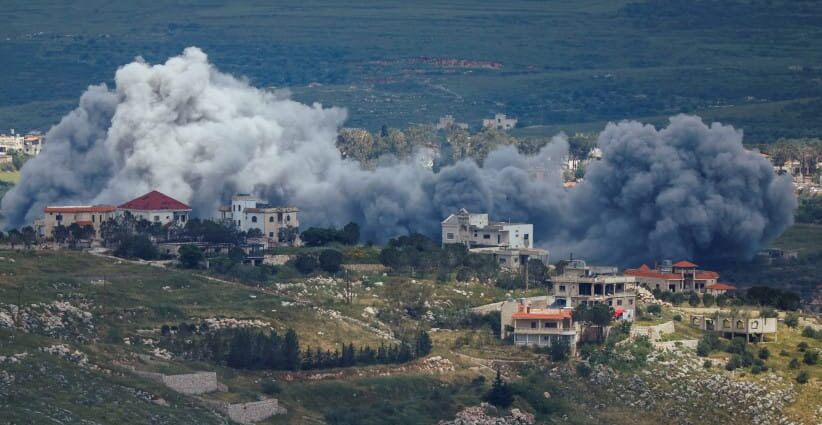
Turmus, 62, was serving as a liaison between Hezbollah and residents of Talloussah, a small village less than three miles from the Israeli border, which had turned into a battlefield during Israel’s campaign against Hezbollah in 2024.

Throughout the 15-month ceasefire that followed, he spent his time coordinating with repair personnel and civil defense crews to get the village running, even as Israeli strikes persisted across south Lebanon.

His family described him as a former fighter for the militant Islamist group, but who, in his older age, had taken an administrative role. Israel said it was working on “military and financial matters… to rehabilitate Hezbollah terrorist infrastructure.”

Whatever his role, he too was now ensnared in Israel’s kill chain – the culmination of an intelligence-gathering process that began years ago.

There are multiple ways Turmus could have landed in the military’s cross-hairs – none of them a smoking gun on its own, but all potential grist for the algorithm that eventually picked him to be killed that February day.

For one, he lived in Talloussah, a Shiite-dominated village supportive of Hezbollah. This meant that the movements of Turmus and other residents were constantly under the surveillance of Israeli drones.

According to an AI specialist who worked with defense firms until he raised concerns about the use of such systems in Gaza, the drones’ cameras probably filmed and recorded his face, along with the make and license plate of his car and his home.

The drones could have used cell-site simulators, known as “stingrays,” to masquerade as cellphone towers and trick his smartphone into connecting, granting them access not only to Turmus’s data but his movements in real time.

Even if Turmus had switched SIM cards, he would still have been tracked, said the AI specialist, who was granted anonymity to discuss his work.

“It’s a massive data pipeline: phone metadata, location pings, SIM card swaps, app usage, social media behavior, sometimes even banking or facial recognition inputs. A lot is ‘scraped’ from commercial platforms, mobile networks, partner intelligence agencies, or spies on the ground,” the AI specialist said.

Once collected, platforms such as Palantir’s Maven standardize, tag, and score all data, linking it to identities across devices and accounts. Palantir has spoken openly about its work with the Israeli military.

Then AI can build a timeline of a subject’s activity and map their network of relationships.

Turmus could have been flagged there, too: One of his sons was a Hezbollah fighter killed in early 2024, and another was injured in the pager attacks.

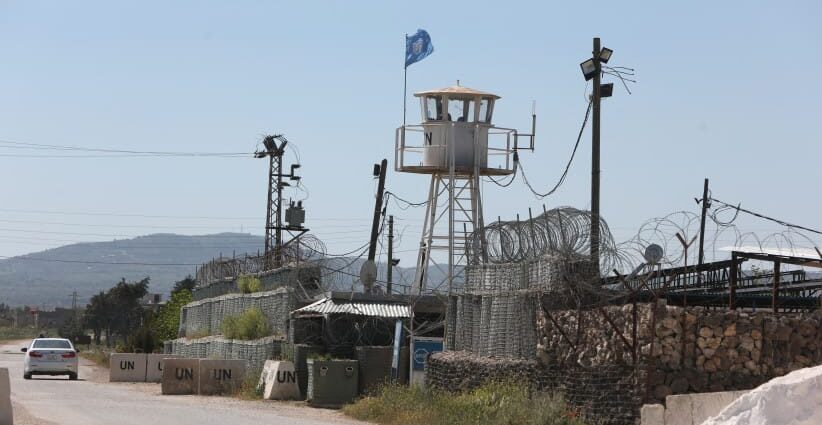
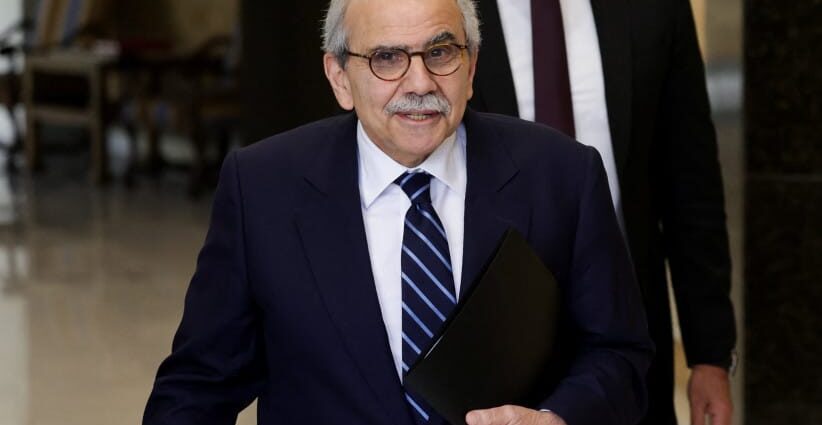
Tracking Turmus would have been made easier by Israel’s deep and cumulative intelligence infiltration of Lebanon, said retired Gen. Mounir Shehadeh, who served as the Lebanese government’s coordinator to the United Nations peacekeeping mission in Lebanon.

Much of the country’s data infrastructure, including databases with information on mobile phone subscribers or vehicle registrations, has been accessible to the Israelis for two decades. They also hacked into Hezbollah’s terrestrial network and its signal corps, he said.

Hezbollah’s involvement in the civil war in Syria from 2011 to 2024 further compromised the group’s security.

“These factors allowed Israel to construct a precise target bank encompassing both field commanders and high-ranking leadership figures,” Shehadeh said.

The AI comes in at this stage. Rapidly processing terabytes of data, it detects patterns and compares them to the movements of a known threat or someone who has shown up near flagged zones. It also analyzes deviations from a subject’s routine. All this is used to create a so-called threat profile.

The result, according to an Israeli colonel interviewed in a February 2023 Israeli military article on AI in combat, is a system capable of quickly finding targets.

“The system does this process in seconds, while in the past it would have taken hundreds of investigators several weeks to do,” said the head of the Israeli military’s Artificial Intelligence Center, identified only as Col. Yoav.

But one concern, the AI specialist said, is that these systems rely on data rather than logic to determine whether someone is dangerous. If that information is flawed, then it will keep repeating the same mistakes, but “faster and with more confidence.”

“It creates this illusion of certainty, and that’s dangerous because it turns correlation into action without always having context,” the specialist said.

“It’s not like a lab,” he added. “So how does the system know who’s who? And when it flags someone, is it a human decision or just an algorithm flipping a switch?”

Another problem is that such systems rely on tracking mundane, routine activities, such as who is talking to whom, or where and when they’re traveling, to calculate the probability that someone is a combatant, potentially leading to false positives, said Vasji Badalic, a professor at the Institute of Criminology in Slovenia, who wrote a 2023 research paper on the rise of metadata and big-data driven targeting processes.

“Relatives, or people engaging in propaganda or finances – they’re not combatants, but the machine recognizes them as such because they have similar communication patterns,” Badalic said.

“Where do they put the threshold that divides combatants and civilians?”

The effort to deploy machine learning to suss out targets or anticipate events in a war zone is not new. During the Iraq war under former US president George W. Bush, the US military hoovered phone metadata and processed it to look for what it deemed suspicious activity.

The National Security Agency also developed a behavioral profiling program, SKYNET, to identify al-Qaeda couriers in Afghanistan.

By 2019, companies like Amazon and Microsoft had developed sufficient “compute” – computing power – to run the math on more complex scenarios that would improve forecasting.

The US military in Afghanistan used those advances to develop Raven Sentry, an AI trained on reports of insurgent attacks stretching back to the ‘80s, along with ancillary information such as the amount of street lighting in various areas.

By the time the US pulled out of Afghanistan in 2021, the model’s predictions on locations of upcoming attacks achieved a 70% success rate, putting it roughly on par with human analysts, according to Col. Thomas W. Spahr, who wrote about Raven Sentry at the US Army’s War College.

Despite Israel’s success in Lebanon, there are signs that Hezbollah is adapting to being in Israel’s AI-fueled sights.

During the current conflagration, which began after the group struck Israel in response to its killing of Iran’s Supreme Leader Ayatollah Ali Khamenei and repeated violations of the 2024 ceasefire, Hezbollah returned to its guerrilla warfare roots, adopting smaller unit sizes with a decentralized structure. It also relied on more secure, albeit less convenient, forms of communication, according to Shehadeh, the retired general.

What action triggered the algorithm to move Turmus from surveillance to the kill list is unclear. In his role as a liaison, he was a noncombatant member of Hezbollah, and family members said he didn’t even bother changing phones. 

On February 15, a day before he was killed, he turned off his smartphone and left it at home while he went to a municipal meeting in a nearby village the next day. The phone call from the Israelis came soon after he went home to Talloussah and turned on his smartphone.

When he hung up, his face changed, family members told The Times. He told them the Israelis were after him and that they should leave the house and let him die alone. They pleaded with him to try to escape and to give him some disguise so he could leave.

But Turmus refused. He went to the door.

“They know my face. There’s nothing we can do against this,” he said. 

His wife was walking in as he left, but he didn’t acknowledge her, family members said, so she wouldn’t try to stop him.

He got in his car, started it up, and drove off. Less than 30 seconds later came the shriek of the two missiles that lanced through Turmus’s car.


This post was originally published on here

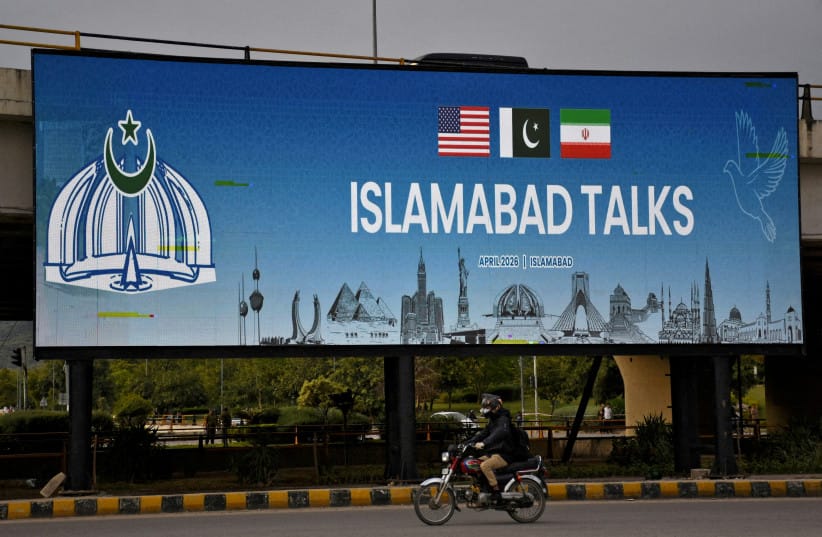
Iran’s response to the latest US proposal during ceasefire negotiations has been submitted to Pakistani mediators, Tehran’s official news agency IRNA reported on Sunday.

According to the Iranian outlet, the negotiations are focusing on “ending the war in the region.”

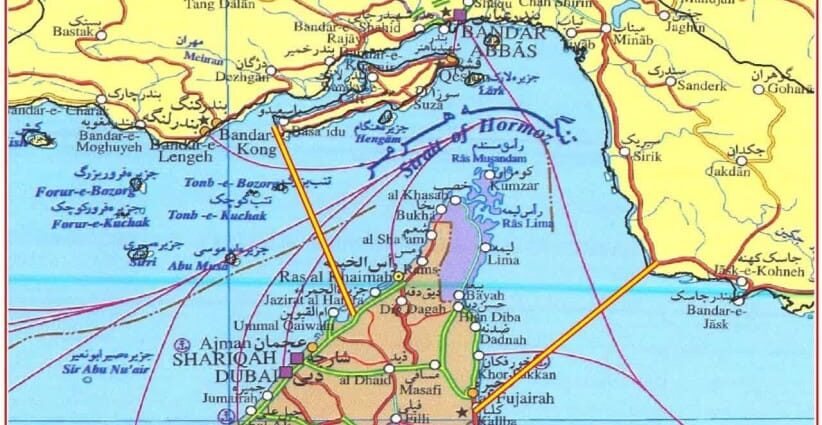
Tehran’s response focused on ending the war in all arenas, particularly Lebanon, Iranian state television reported. Additionally, the semi-official ISNA reported that it also focused on maritime “security” in the Persian Gulf and Strait of Hormuz.

Iran’s response was “conveyed to the US,” a Pakistani diplomatic source told Al Jazeera later on Sunday.

Tehran’s response follows on from US President Donald Trump telling Fox News on Wednesday that Iran has one week to respond to Washington’s proposed peace deal.

“They want to make a deal. We’ve had very good talks over the last 24 hours, and it’s very possible that we’ll make a deal,” Trump told reporters in the Oval Office on Wednesday, saying later, “it’ll be over quickly.”

An Iranian Foreign Ministry spokesperson told CNBC later on Wednesday that the proposal was currently being “evaluated.”

Last Sunday, Trump said that he had reviewed the Iranian’s latest peace proposal and that it was “not acceptable.”

Iran’s 14-point peace plan includes lifting sanctions, blockade

Earlier last Sunday, Al Jazeera reported that Iran has a 14-point plan for the ceasefire negotiations.

The plan contains three main stages with a 30-day phase aimed at transforming a ceasefire into a complete end to the war. It was presented as a rebuttal to the US’s nine-point peace plan.

The Iranian draft reportedly calls for the US to lift sanctions on Iran, end its blockade on Iranian ports, withdraw US forces from the region, and cease all hostilities, including Israel’s war in Lebanon, Al Jazeera reported at the time.

Danya Saperstein and Jerusalem Post Staff contributed to this report.

This post was originally published on here

The Koum Family Foundation has donated $200 million to Shaare Zedek Medical Center in Jerusalem, the largest single donation ever made to an Israeli hospital, the hospital announced in a statement.

The gift will fund the construction of a new medical tower at the hospital and will lead to the official renaming of the institution as Koum Shaare Zedek Medical Center

The foundation was established by Jan Koum, the co-founder of WhatsApp. The hospital said the donation followed months of strategic discussions between Shaare Zedek’s leadership and the foundation.

“We are proud to partner with Shaare Zedek Medical Center, an institution that defines medical excellence in Jerusalem and beyond,” Koum said in the statement. “This gift reflects our confidence in a future of medical innovation and research that will benefit patients in Israel and around the world.”

The partnership was led by Shaare Zedek President Prof. Jonathan Halevy, Director-General Prof. Ofer Merin, and Akiva Holzer, the hospital’s director of special projects, together with Yana Kalika, president of the Koum Family Foundation.

Shaare Zedek said the donation would support the development of a 24-story medical tower covering more than 1.5 million square feet. The tower is expected to include expanded surgical and emergency care facilities, significant underground protected spaces, and a rooftop helipad for direct helicopter access.

The hospital said the project was in advanced planning stages and had been approved by the Israeli government and the Jerusalem Municipality. It is being designed and planned by Mochly-Eldar Architects, with Margolin Bros. Engineering and Consulting serving as the project manager.

Hospital: Expansion will meet growing medical needs

Shaare Zedek said the expansion was intended to meet growing medical needs in Jerusalem and the surrounding region. The hospital treats more than one million patients annually and has expanded in recent years to more than 1,000 inpatient beds, according to the statement.

“This is truly a special moment in Shaare Zedek Medical Center’s 124-year-old history,” Halevy said. “This record donation by The Koum Family Foundation reflects remarkable confidence in our hospital, our staff, the city of Jerusalem, the nation of Israel, and a heartfelt embrace of Zionism.”

Halevy said the hospital was grateful that “one of the Jewish world’s great philanthropic visionaries has chosen to link his name with Shaare Zedek’s unique brand of medical excellence.”

Merin said the donation was “a mark of honor for every employee of our hospital.”

“This partnership will allow us to forge ahead with the construction of our new medical tower, which will set a new standard for Israeli healthcare and further establish our hospital’s position as a national and global leader of advanced and compassionate medicine,” Merin said.

He added that the hospital was grateful to Koum and the foundation “on behalf of the Shaare Zedek staff, patients and families, and indeed of all the people of Jerusalem.”

This post was originally published on here

New York Rep. Alexandria Ocasio-Cortez downplayed questions over her desire to run in the 2028 Presidential Elections during a political forum in Chicago on Friday.

When questioned about running for the presidency, she said, “My ambition is to change the country

The Bronx congresswoman’s response comes amid widespread speculation that she will announce a bid for the White House in the Democratic primaries.

The question was pitched by Democratic strategist David Axelrod while he hosted a conversation at the University of Chicago’s Institute of Politics.

“What’s funny is they assume my ambition is a title or a seat,” Ocasio-Cortez told Axelrod. “My ambition is to change this country. Presidents come and go. Senate, House seats, elected officials come and go.”

“But single-payer healthcare is forever,” she continued, referencing her longstanding platform supporting national, universal healthcare, before launching into a list of her other policy positions.

‘Living wage, workers’ rights are forever,’ AOC says

“A living wage is forever, workers’ rights are forever, women’s rights, all of that,” she said, discussing her views on economic, racial, and social issues.

“To a finer point to your question is that when you aren’t attached, when you haven’t been fantasizing about being this or that since the time you were seven years old, it is tremendously liberating,” she added.

“Conditions change radically all the time. So I make my response less to an attachment to some positional title or position and working backward from there,” she concluded. 

An April Harvard CAPS/Harris poll showed former vice president Kamala Harris as the frontrunner among Democratic candidates, supported by 24% of voters, followed by California Governor Gavin Newsom with 12% of voters’ support.

Ocasio-Cortez and former transportation secretary Pete Buttigieg followed, each at 9%.

This post was originally published on here

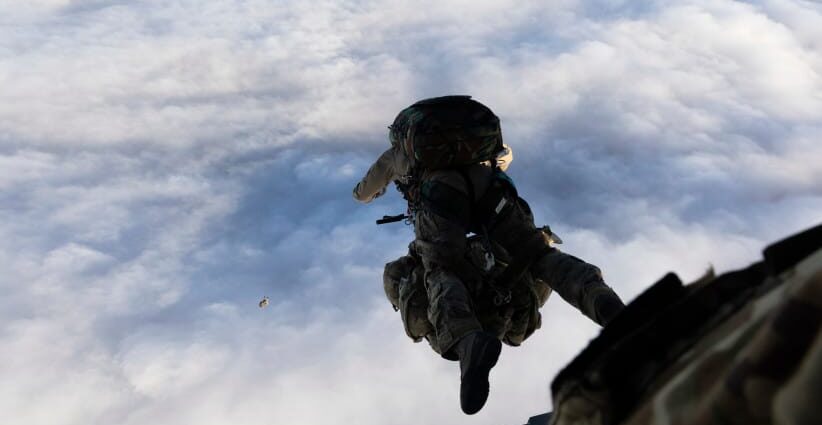
British paratroopers have dropped onto Britain’s most remote overseas territory, Tristan da Cunha, along with medics and medical supplies, after a case of suspected hantavirus was confirmed there

A team of six paratroopers and two military clinicians from 16 Air Assault Brigade jumped from an RAF A400M transport aircraft that flew 6,788 km (4,218 miles) from RAF Brize Norton air base in Oxfordshire to Ascension Island, then another 3,000 km due south to Tristan da Cunha.

Dropped alongside them on Saturday were oxygen supplies and other medical aid. The A400M was refueled mid-flight by a supporting RAF Voyager.

The operation is the first time the UK military has deployed medical personnel to provide humanitarian support via a parachute jump, the Ministry of Defense said in a statement.

The supplies were primarily destined for a British man who, UK health authorities say, was a passenger on the cruise ship that was hit by a hantavirus outbreak and that docked at the island between April 13 and 15. The WHO said the man reported symptoms compatible with hantavirus on April 28 and that he is stable and in isolation.

Airdrop the only method of delivering care to world’s remotest inhabited island

“With oxygen supplies on the island at a critical level, an airdrop with medical personnel was the only method of getting vital care to the patient in time,” the Ministry of Defense statement said.

Tristan da Cunha, home to only around 200 people, is halfway between South Africa and South America. It is the world’s remotest inhabited island, more than 2,400 km and a six-day boat ride from St Helena, its nearest inhabited neighbor. It usually relies on a medical team of two for its healthcare needs and is normally only accessible by boat, as it has no airstrip.

Polymerase chain reaction (PCR) tests were previously delivered by military plane on May 7 to Ascension Island, where another British man from the cruise ship had disembarked before being medically evacuated to South Africa.

“The arrival of paratroopers, medical personnel and medical supplies from the sky has hopefully reassured the people of Tristan da Cunha,” said Brigadier Ed Cartwright, Officer Commanding 16 Air Assault Brigade.

This post was originally published on here

The Ministerial Committee for Legislation approved on Sunday bills that would overhaul the way Israel appoints and removes senior civil servants, replacing much of the current professional screening system with a model that would give ministers and the government far broader control.

The proposals, submitted by Likud MK Shalom Danino and backed by Justice Minister Yariv Levin, would apply to a long list of senior posts, including the IDF chief of staff, police commissioner, Shin Bet chief, Mossad chief, Israel Prison Service commissioner, civil service commissioner, attorney-general and deputies, ministry directors-general, and any post requiring government approval.

Under the current system, most civil service jobs are filled through public tenders. Senior posts exempt from tenders are generally still reviewed by professional committees that examine qualifications, suitability, integrity, possible political ties, and other safeguards.

The bills would replace that system with a new process. A minister would choose a candidate at their discretion and send the name to a government-appointed qualifications committee. That committee would have seven days to determine only whether the candidate meets the formal threshold requirements for the job.

The candidate would then go to a Knesset hearings committee made up of two coalition MKs, two opposition MKs, and a chair elected by the Knesset. Its recommendations would not bind the government, and if it failed to act within the bill’s timetable, the government could proceed without them.

The bills would also allow the government to remove a senior civil servant “at any time,” according to its “exclusive discretion,” after allowing the official to present a response. Senior officials’ terms would also end within 100 days of a new government being formed, unless the new government decides to extend them.

Levin framed the legislation as a governance measure.

Levin: Government should work with loyal officials

“It is time for an elected government to be able to work with public officials who are committed to its policy,” Levin said. “This is an important stage on the way to fixing the systems and restoring governance.”

Danino said the bills were meant to create an orderly process for senior appointments, arguing that the authority to dismiss officials is part of the government’s constitutional power to manage the executive branch.

But Deputy Attorney-General Gil Limon, writing on behalf of Attorney-General Gali Baharav-Miara, urged Levin to oppose the bills, saying they would make a “dramatic and far-reaching” change to senior appointments and dismissals and lead to the “complete politicization” of those posts.

Limon wrote that the bills would cancel, “in one stroke,” decades of laws, government decisions, and civil service procedures meant to preserve a professional and apolitical public service.

“The public service is not a pool of jobs for those close to the government, but a central tool in the state for realizing the rights and welfare of citizens,” the opinion reads.

The Attorney-General’s Office said the main problem was not only broader government discretion but also the removal of existing checks that distinguish among political trust positions, professional roles, and independent gatekeeper posts.

The opinion warned that the proposals would turn even sensitive law enforcement, security, regulatory, and legal positions into de facto trust positions of the serving government.

On dismissals, Limon wrote that the bills would remove safeguards currently meant to protect senior officials from arbitrary firing. Instead, he said, every senior official’s decisions would become “conditional,” because the government could end the official’s tenure at any time or after a change of government.

The Civil Service Commission also strongly opposed the bills, according to the opinion, warning that they would undermine the civil service’s professionalism, state orientation, and apolitical nature.

The committee’s approval does not enact the bills into law, but gives them coalition backing ahead of the legislative process in the Knesset.

This post was originally published on here

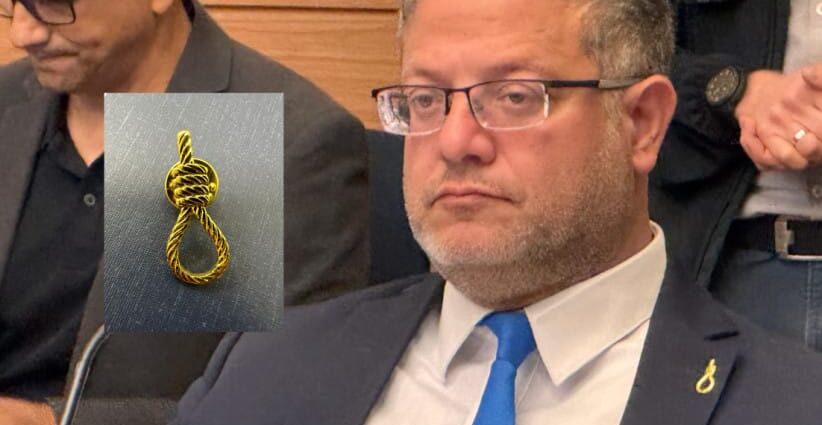
Everyone is talking about the hangman’s noose cake that National Security Minister Itamar Ben-Gvir received from his wife, but most critics appear to be missing the real point.

The uproar in the Israeli media was ostensibly justified. Many wondered how a nation that champions the sanctity of life – distinguishing itself from an enemy that glorifies death – has reached a point where a popular leader turns a hangman’s noose into a positive symbol. Others emphasized the painful gap between the minister’s poor, even negative, record on fighting crime and securing public safety, and the casualness with which he celebrates his latest provocation.

Yet all failed to touch upon the core issue, focusing instead on the marginal subject, the minister himself. The real issue is not Itamar Ben-Gvir – it is the relationship between our era’s chaos and information overload and the elected officials it produces.

The most profound work on this subject is Martin Gurri’s The Revolt of the Public.

Gurri outlines a pessimistic analysis rooted in the understanding that today’s massive information overload – unprecedented in human history – generates three central phenomena: the rise of the “shouting class,” the emergence of “perpetual negation” (the public’s immense capacity to reject the status quo without a corresponding ability to offer a positive alternative), and a deep erosion of the legitimacy of governing institutions.

Chaos politics in a collapsing institutions

Today, the people who are supposed to legitimize those institutions have a front-row seat to every flaw and failure, which forces governments to choose between entrenchment and dispensing promises of meaningful reform that, once they fail to materialize, only deepen the crisis.

Within this vicious cycle, the first politician to become a true “native” of the chaotic media world was Donald Trump, though a remarkably similar talent can be seen in Ben-Gvir.

With extraordinary media instinct, Ben-Gvir doesn’t merely put out fires – he masters the realm of chaos. He understands that institutions are indeed faltering, and so he signals to the public that he is not part of them, going so far as to openly degrade those very institutions. He enlists himself in the cause of “perpetual negation,” building his power by rallying against phenomena that most of the public despises, rather than through on-the-ground achievements that would require far harder work.

Employing a strategy associated with Steve Bannon – Trump’s former confidant and a strategic mastermind – Ben-Gvir knows how to “flood the zone.” He doesn’t try to extinguish media fires; he decides where the next ones will start. The noose cake is just one example of how Ben-Gvir operates not in the field of statecraft, but in the media arena, where he dictates – with exceptional skill – what and who we will be talking about.

The question we must therefore ask ourselves is not merely who this minister is and how he operates, but what Israeli society is. What is our political and media structure, and how can we change the dynamic dragging us toward the abyss?

This requires a long journey of repair, beginning, above all, with dismantling the convenient lie that a voter’s only alternative is to support a bad candidate from their own camp or one from the opposing side.

The responsibility lies with every voter to hold their representatives accountable and replace them with the best people who share their values.

A right-wing voter who watches the rise in crime with genuine concern cannot excuse themselves by claiming things would be worse under the Left. They must ask: who are the right-wing representatives actually worthy of a chance to lead real change?

Only when every political camp engages in that kind of internal soul-searching can we begin to tackle the enormous challenges before us.

The writer is the CEO of the Ribo Center.

This post was originally published on here

For nearly five decades, the Iranian regime has exported terror around the world while brutally repressing its citizens at home. Today, Tehran’s rare moment of genuine strategic vulnerability has created an opening for Europe to play a more decisive role.

Increasing pressure on the regime would serve Europe’s self-interest while complementing the US strategy of coercive diplomacy and helping to drive Iranian concessions at the negotiating table.

And yet, Europe has reacted hesitantly, at best, to the US and Israeli military campaigns that have degraded key elements of the regime’s war-making machine and set back its efforts to acquire a nuclear weapon.

The refrains are familiar: appeals to international law, assertions that “this is not our war,” and complaints about a lack of consultation. In the immediate aftermath of the escalation, such arguments were understandable. The growing alienation across the Atlantic is real and concerning.

What Europe gains to lose

Europe has as much at stake in this war as the United States – if not more. The vulnerability of global energy flows, underscored by the ever-present threat to the Strait of Hormuz, directly affects European economies.

Iran’s network of proxies threatens European citizens and specifically targets its already vulnerable Jewish communities, as seen in the March arson attack on Jewish volunteer ambulances near a London synagogue. Moreover, Tehran’s military cooperation with Russia ties the regime directly to the war in Ukraine.

While European governments cannot be expected to carry the main burden of military operations, they can and should take concrete and immediate measures to maximize pressure on Tehran.

First, the European Union should finally designate Hezbollah in its entirety as a terrorist organization. No other group better exemplifies Iran’s projection of power beyond its borders. Founded, funded, and directed by the Islamic Revolutionary Guard Corps, Hezbollah remains its most potent destabilizing force worldwide.

As Lebanon edges toward a historic peace agreement with Israel, the EU‘s continued equivocation on Hezbollah undercuts that fragile progress. Lebanese President Joseph Aoun himself said on April 27 that Hezbollah betrayed the country by dragging it into a war to serve foreign – namely Iranian – interests.

This hesitation is particularly striking given Europe’s own exposure on the ground. Under the mandate of the United Nations Interim Force in Lebanon (UNIFIL), European troops have long operated in a dangerous environment shaped by Hezbollah’s aggression.

The recent deaths of two French service members are a case in point. Yet, rather than moving decisively against the source of that instability – Hezbollah – European foreign ministers instead debated possible sanctions against Israel earlier this month.

Ending the artificial distinction between Hezbollah’s so-called political and military wings would send a clear signal to Tehran, strengthen Aoun’s hand as he pursues normalization with Israel, and materially enhance the protection of European citizens and personnel.

Second, Europe must rigorously enforce its designation of the IRGC and close the persistent enforcement gaps across the continent. Despite the EU’s important step last January to blacklist the IRGC, with a number of key European countries like Ukraine following suit, networks linked to Tehran or inspired by its antisemitic and extremist ideology continue to operate with alarming latitude.

Most dangerously, this has long been the case in the United Kingdom, which has inexplicably resisted the necessary step to proscribe the IRGC, despite overwhelming evidence and the urgent warnings of its Jewish community. Prime Minister Keir Starmer’s April 24 promise to proscribe the IRGC must now be fully enacted and implemented.

Beyond disrupting Iranian activities in Europe, this measure will also constrain a key supporter of Russia’s war against Ukraine. To their credit, France, Germany, and the UK triggered snapback sanctions last summer over the regime‘s escalating nuclear program, demonstrating that Europe can act with clarity when it chooses to do so. The task now is to build on that momentum.

Third, Europe should move toward genuine diplomatic isolation of the regime. Why, at a moment like this, are Iranian officials still moving with ease through European capitals? If it is serious about a foreign policy grounded in safeguarding human rights, Europe should impose painful costs on regime officials.

More decisive action is called for

Expelling ambassadors and other diplomats would have been warranted after the mass killings just months ago, when Basij forces murdered thousands of unarmed Iranian protesters, according to credible human rights organizations.

But it is imperative now.
Europe has shown before that it can act with unity and resolve, most clearly in its response to the 2018 Salisbury poisoning, in which Russian agents used a nerve agent in an assassination attempt on UK soil. In that case, more than 25 countries across Europe and allied democracies rightly responded by expelling Russian diplomats in a coordinated response. 

On Iran specifically, European governments have enacted robust sanctions and supported accountability measures at the UN Human Rights Council. However, more decisive action is needed.

Rarely has the Islamic Republic been more isolated, more constrained, and more vulnerable. Now is precisely the time to increase pressure, not ease it. Moments like this do not last.

The Iranian people are watching closely, and they will remember who stood with them against their tormentors and who chose caution over clarity.

The writer is the director of US diplomatic engagement and US-Europe Affairs at the American Jewish Committee.

This post was originally published on here

Some 150 startups were created by IDF reserve veterans, 18x Elite Impact, the entrepreneurship program focused on promoting companies founded by former soldiers, revealed at its one-year anniversary event on Sunday.

These represent an important part of Israel’s 1,000 reported new projects, according to estimates from the Innovation Authority, which also accounts for secretive startups without public seed funding rounds.

In comparison, according to the authority’s latest report, some 500 startups pursued seed funding rounds in 2024, while 178 did so in the first half of 2025.

The program helped the entrepreneurs raise over $15 million in investment since it was created last year, with the companies led by former soldiers who fought in the last wars in Gaza, Lebanon, and Iran.

“We believe the same focus and mission-oriented mindset that epitomizes an elite soldier can, with the right support, make an extraordinary entrepreneur,” said Mike Silberg, Managing Director and Founder, 18X Elite Impact.

Veterans often find reintegration into civilian life complicated. Through our work at 18X, we are trying to help lift that burden. Our program helps reservists find and develop the energy and expertise within them, channeling it into entrepreneurship. This restores purpose and creates camaraderie, while at the same time unlocking successful business ideas and job opportunities,” he added.

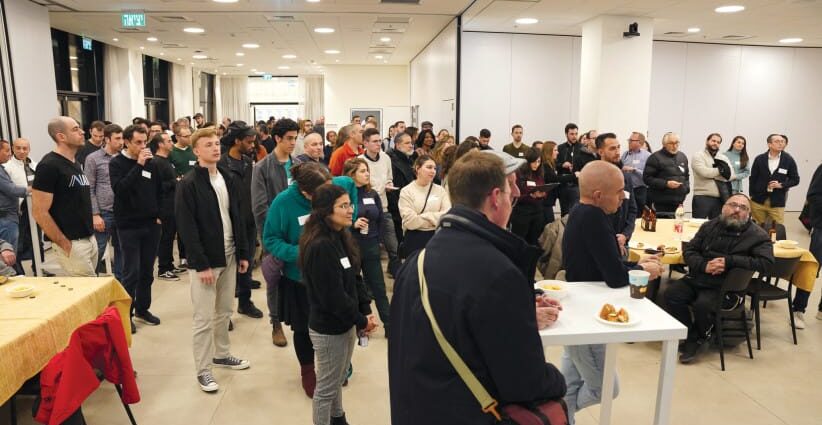
The program’s “Summit Day,” which marked the one-year anniversary, was held on Sunday in Tel Aviv in collaboration with the Innovation Authority and hosted by leading Israeli law firm Arnon Tadmor-Levy.

During the summit, 12 selected startups from the program presented their projects to an audience of top-tier venture capitalists, industry leaders, and government officials. 

High-tech industry leaders coaching IDF reservists

The program helped the reservists create their new startups, thanks in part to its network of 400 investors who actively participate.

Among their leading figures are Nadir Izrael, CTO and Co-Founder of Armis; Noam Bardin, former CEO of Waze; Aviv Kohavi, Former IDF Chief of Staff; and Daniel Bernard, a veteran tech investor.

Kohavi, in particular, personally mentored Or Ben-Shabat, CEO & Founder of DCA (Digital Combat Academy). “Mentoring a reservist like Or through 18x Elite Impact has shown me that this same excellence is now the engine of our civilian resilience,” he said.

“Seeing Or translate the leadership he displayed in combat into a tangible contribution to the Israeli economy is deeply moving. Our reservists defended the state with their lives; now, through entrepreneurship, they are building its future,” he added.

Bernard, who also worked as a mentor in the program, explained that the best founders are those who can navigate uncertainty with total composure. “These reservists have been tested in ways few civilians will ever experience. My role is simply to provide the framework and the network; the grit and the vision are already there,” he commented.

This post was originally published on here

The Syrian government, led by President Ahmed al-Sharaa, has reshuffled some of the country’s cabinet members. This is important because it is part of the government’s attempt to demonstrate transparency and to assert its authority.

The new government has been in power for roughly a year and a half since the fall of the Assad regime. During that period, Damascus faced many challenges.

The changes were announced by Syrian state media. There are questions about whether this means Damascus is being more inclusive or merely moving some appointments around. The government has provided some details on the appointments, but so far, there is not much in-depth coverage of the individuals.

The reshuffle also included the appointment of new governors for several key provinces. “President Ahmad al-Sharaa issued on Saturday four decrees appointing new governors for the provinces of Quneitra, Homs, Latakia, and Deir Ezzor as part of ongoing administrative changes,” SANA state media noted.

Ghassan Elias al-Sayyed Ahmad was appointed governor of Quneitra, which is important because it borders the Golan and, therefore, is where Israeli forces are operating.

Israel has established a buffer zone inside Syria, taking control of the 1974 ceasefire buffer zone and carrying out raids into Syria.

As such, the new governor will have to deal with local complaints by residents of this area who have complained about Israel’s actions. Some locals have been detained by Israel.

Additional new governors appointed

In addition to Quneitra, Murhaf Khaled al-Naasan is the governor of Homs, a large province in Syria that stretches across the country from the city of Homs to the Iraqi border.

The area near Iraq is restive, and this province requires a lot of work, as part of it is desert.

A former US base at Tanf used to border this province. Some of the former US-trained forces later joined Syria’s interior ministry and 70th Division. Keeping the area near the Iraqi border secure will be important.

The report also said that Ahmad Ali Mustafa was appointed governor of the coastal province of Latakia, which is home to many Alawites, the minority group from which the former regime was drawn.

The Assad family was Alawite, and many members of the minority served in the government. There have been attacks on Alawites and also kidnappings since the fall of the regime. The new governor will need to rein in any extremists.

In addition, Ziad Fawaz al-Ayesh has been appointed governor of Deir Ezzor. No information was given on the background of these men. Deir Ezzor is a province in central Syria along the Euphrates.

Deir Ezzor is a key area and has many Bedouin tribes. ISIS was once powerful along the Euphrates, and that means that the governor here will need to keep extremists in check and deal with complex tribal politics.

In addition to the new provincial leaders, the government has appointed Basel Hafez al-Suwaidan as Minister of Agriculture. He was born in 1984 and has a degree in agriculture from the University of Damascus.

He later completed further engineering work in Idlib, where Sharaa led Hayat Tahrir al-Sham before coming to power. He previously served as Deputy Minister of Agriculture and Assistant Minister for Administrative and Financial Affairs. Later, he led what was called the “Illicit Gains Committee.”

In addition, Sharaa has appointed Abdulrahman Badr al-Deen al-A’ma as Secretary-General of the Presidency of the Republic. He was previously the governor of Homs, which explains why that position has been replaced. Born in 1987, he is one of many young men in the new administration.

He has a Master’s Degree in Business Administration and received a “Diploma in Human Resources Management – The American Institute of Business and Development,” the government says. He has also served as Director of the Central Planning Authority.

In addition, Sharaa appointed Khaled Fawaz Zaarour as Minister of Information. Born in 1990, he was educated in Lebanon, where he received a PhD in Digital Media. This appointment appears to be a technocratic appointment to professionalize the ministry.

“Held several academic and media positions, including: Dean of the Faculty of Media at Damascus University (2025) and Lecturer at Syrian and Lebanese universities (2015–2024),” Damascus says.

The appointments are important. It shows that Syria is being transparent and willing to replace people in various positions.

This will be important for the government’s legitimacy. However, real legitimacy will come from elections, and Syria still needs to try to incorporate areas such as eastern Syria and find a way to work with the Druze in Sweida. These appointments are cementing control in other areas.

This post was originally published on here

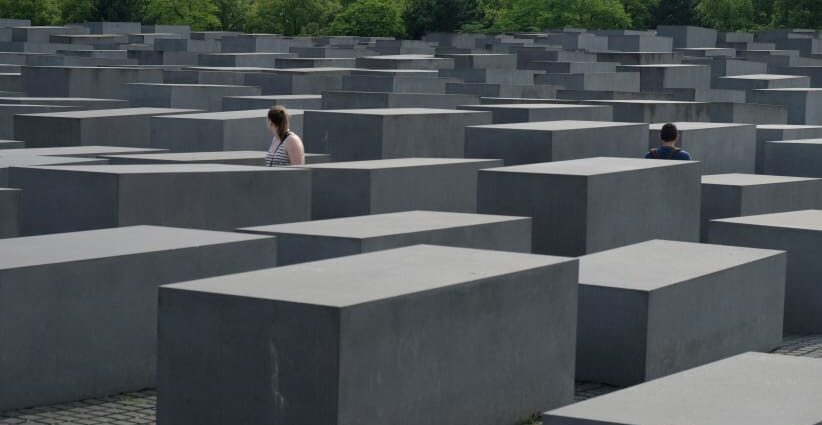
The Memorial to the Murdered Jews of Europe was discovered vandalized on Tuesday morning, according to the Berlin Police and the German Holocaust Memorial’s caretaking organization.

A stele at the Berlin memorial was discovered covered in green graffiti containing “inflammatory content,” according to a Wednesday police statement. The graffiti was covered by the site’s security, and a cleaning service was commissioned.

The investigation was taken over by state security, and there are no suspects. The Foundation Memorial to the Murdered Jews of Europe told The Jerusalem Post on  Thursday that the agency was reviewing the incident as antisemitic and seditious damage.  

“The Foundation strongly condemns this act of insult,” the organization said on Thursday.

On April 26, in the Berlin-Pankow borough, several instances of antisemitic graffiti on apartment buildings were discovered, according to Berlin Police.

Defaced memorial says ‘Only a dead Jew is a good Jew’

“Kill all Jews” was painted on one wall, according to a photograph published by Israel’s ambassador to Germany, Ron Prosor. According to Judische Allgemeine, Jewish community members also saw a graffiti swastika and the statement “Only a dead Jew is a good Jew.”

In March, a Syrian man was convicted of stabbing a Spanish tourist at the Berlin Holocaust memorial last February. According to JTA, at the time, the asylum seeker and aspiring terrorist organization member told arresting officers that he wanted to kill Jews.

This post was originally published on here

IDF Chief of Staff Lt.-Gen. Eyal Zamir pushed the Knesset Foreign Affairs and Defense Committee (FADC) in a closed session on Sunday to draft large numbers of haredim into the military, as well as to pass other laws to expand the IDF.

In late March, a warning Zamir gave at a security cabinet meeting about this issue was leaked, in which he said the IDF could soon collapse if there is no solution to the manpower shortage.

“I am raising 10 red flags before the IDF collapses into itself,” Zamir said during that cabinet meeting, The Jerusalem Post confirmed.

The leaking of the remarks set off a public political storm, including various moves by FADC Chairman Boaz Bismuth to either claim Zamir supported Bismuth’s policies on haredim in the IDF (Zamir does not) or to summon the IDF chief to clarify his warning. 

Zamir put off responding during the Iran war, but finally agreed to speak to the FADC by around mid-May.

Relations and trust between the sides are low, given leaks from the FADC against Zamir and the IDF, and Bismuth’s categorization of Zamir’s actions as not in line with the government’s policies. 

IDF sources also told the Post at the time that there was tremendous concern due to the severe manpower shortage, especially amid the ongoing war.

IDF: More soldiers needed

Even in peacetime, Israel would still need more soldiers – not fewer – on the border in Gaza, Lebanon, Syria, and the West Bank, the sources said.

If the government does not add more soldiers, there will be gaps, they added.

There has also been no law set in place to significantly increase haredi (ultra-Orthodox) conscription into the army, contributing to the lack of manpower.

Following the debate sparked by Zamir’s leaked remarks, IDF Chief Spokesman Brig.-Gen. Effie Defrin said publicly that the military needed around 15,000 more soldiers, including half of them combat fighters, by early 2027. 

Further, Zamir told the FADC on Sunday that it needed to pass bills to extend mandatory and reserve service.

Some analysts have said this might not have been necessary if the current government had started drafting haredim after the October 7 invasion by Hamas.

But given the lack of progress regarding that draft, even if a new law were passed now to draft haredim – and no political analysts believe this will happen, given Prime Minister Benjamin Netanyahu’s reliance on haredi political support – Zamir believes extending mandatory and reserve service would be necessary during the next couple of years of transition.

This post was originally published on here

The United Arab Emirates’ air defenses dealt with two drones coming from Iran on Sunday, the Defense Ministry said, the latest in renewed attacks on the oil-rich Gulf country.

The UAE has reported being attacked in the past days by Iran after four weeks of relative calm since a ceasefire in the Iran war was announced by the United States.

Iran has denied carrying out operations against the UAE in recent days, yet it warned of a “crushing response” if any actions were launched from the UAE against it.

The attacks prompted the UAE to shift to remote learning for schools last week, but authorities said on Sunday that in-person learning would resume from Monday.

Using Strait of Hormuz as ‘pressure tool’ will deepen crisis, Qatari PM tells Iran

Qatar‘s prime minister told Iran’s foreign minister that using the Strait of Hormuz as “a pressure tool” would only deepen the crisis in the Gulf, the Qatari foreign ministry said on Sunday.

Prime Minister Mohammed bin Abdulrahman al‑Thani also told Iran’s Abbas Araghchi in a phone call that all parties in the conflict should respond to mediation efforts to end the war.

Al-Thani is also Qatar’s foreign minister. The ministry did not say when the call took place.

This post was originally published on here

Nearly three weeks after the fatal stabbing of Yemanu Binyamin Zalka, 16 teenagers were indicted Sunday in connection with his murder on the eve of Independence Day.

The indictments, filed by prosecutors to the Central District Court in Lod, were split into two cases. The first charges the main suspect, a 15-year-old boy identified only as “H,” with murder, with prosecutors alleging that he acted with indifference to the possibility of Zalka’s death.

The second indictment charges 15 other minors, all between the ages of 14 and 16, with aggravated assault with intent to cause serious harm – an offense that carries a sentence of up to 20 years in prison.

The suspects were also charged with additional offenses, including obstruction of justice and evidence tampering. The prosecution requested that all of them be remanded until the end of legal proceedings.

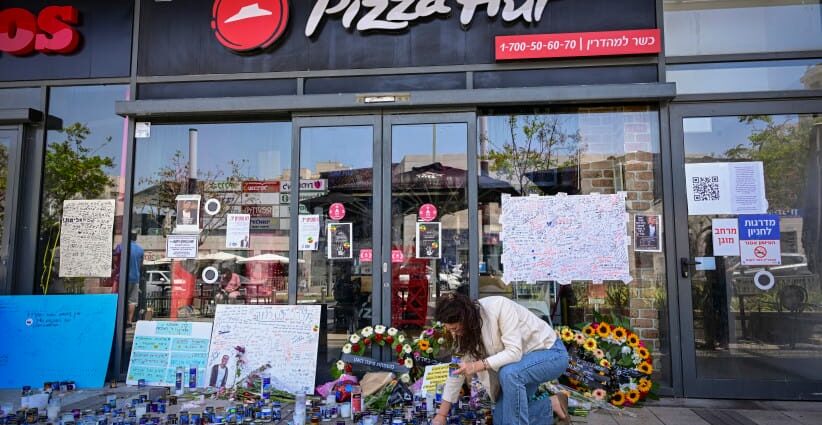
The case has drawn widespread shock and prompted renewed discussion about teen violence, both because of Zalka’s young age and because, according to the indictment, the fatal confrontation began over a trivial argument at the Pizza Hut branch where he worked.

On Saturday night, hours ahead of the planned indictments, dozens gathered outside the prosecution’s offices in Tel Aviv in support of Zalka’s family, demanding that all the teens involved be charged with murder committed jointly – not only the teen accused of carrying out the stabbing.

Yemanu’s sister, Yaros, said at the protest, “Anyone who so much as touched my brother is a murderer, not just the one who stabbed him. The prosecution has not internalized that if the others walk free, they will kill again without hesitation.”

According to the indictment, the group met on the evening of Tuesday, April 21, to celebrate Independence Day. At some point, some of the teens began discharging snow spray toward a group of girls, one of whom ran toward the nearest shelter: a Pizza Hut branch located in a shopping center on Independence Street in Petah Tikva.

She entered the restaurant covered in snow spray, while three of the boys followed her inside, spraying the floor and counter of the pizza shop.

Workers at the restaurant, including Zalka, rebuked them and asked them to leave the premises. Zalka escorted them outside, where an argument broke out.

During the exchange, H allegedly told Zalka, “Come over here if you’re a man, come to where there are no cameras.” Zalka demanded that they leave.

‘Cold, calculating nature’

The teens began shouting and cursing at Zalka, while two other workers came out and tried to calm the situation down. According to the indictment, H told the two staffers that Zalka had offended him and threatened to stab him.

He allegedly said that he would “come back at the end of the shift and settle the score with him,” that he would “screw him,” and that he “would be willing to serve time for it.”

The teens left the pizza shop but remained nearby, as more of their friends arrived. About two hours later, at around 1 a.m., Zalka and one of his coworkers walked out and were in the shopping center area near the pizza shop.

At that point, H approached Zalka and resumed the argument.

The group then began crowding around Zalka, prosecutors said, preparing for an attack, including by wrapping sweatshirts around their heads and readying the snow spray cans.

Another teen, identified only as “N,” approached Zalka aggressively, and an intense argument broke out between the two.

When N pushed Zalka to the ground, prosecutors said, “that was the signal that launched the violent attack.”

The rest of the group joined in, punching and kicking Zalka, throwing snow spray cans at his head, and thrusting them toward his back and collarbone.

H, who had been standing off to the side, then ran back toward the circle with a knife in his hand. Zalka noticed and managed to distance himself from the group.

But H noticed as well, approached him, and stabbed him violently, according to the indictment.

Zalka immediately fell to the ground. Even then, the group continued to strike him with their hands and with the spray cans as he tried to protect his head. H, who saw this from nearby, ran off.

At that point, Zalka could no longer lift himself off the ground.

As Zalka lay dying, the group ran away after one of his coworkers urged them to leave him alone, once they realized he would not fight back. The teens did not call emergency services.

Zalka was eventually evacuated to Rabin Medical Center-Beilinson Campus in Petah Tikva in critical condition, having lost a massive amount of blood. He died the next day from the fatal stabbing wound at the age of 20.

The prosecution said the cold and calculated nature of the teens’ actions reflected the alarming level of danger in the case.

The Central District Attorney’s Office said it “views the incident and its grave consequences with great severity, and attaches paramount importance to combating the phenomenon of violence among teenagers.”

It added, “Their dangerousness is glaring, after they brutally and viciously attacked the late Zalka, who was stabbed over a trivial matter, when all he sought to do was maintain order at his workplace.

“For the offense of murder, the court has the authority to impose a life sentence on the stabber, while for the other minors, it may impose heavy and significant prison sentences. We will do everything in our power to see that justice is fully served.”

Other than the main defendant, the teens were charged with a series of additional offenses, including aggravated assault with intent to cause serious harm, committed jointly. Three of them were also indicted for obstruction of justice and evidence tampering.

After the details of the indictment were publicized Sunday morning, Zalka’s family sharply criticized the prosecution’s decision not to charge all the teens with murder.

“The prosecution this morning chose the side of the criminals. Instead of understanding the gravity of the moment and filing indictments with unprecedented charges that would prevent the next murder, they chose to go easy and let Yemanu’s murderers off cheaply,” the family said.

They argued that the suspect had understood exactly what evidence needed to be concealed in order to reduce his legal exposure, and called the prosecution’s position that there was insufficient evidence “a disgrace.”

They also claimed that, in their view, the evidence showed planning, execution, and premeditated intent to murder.

“But while everyone sees reality clearly, the prosecution chooses to be blind and to enable the next murder,” the family said.

This post was originally published on here

Attorney-General Gali Baharav-Miara told the High Court of Justice on Sunday that Prime Minister Benjamin Netanyahu’s decision to appoint Maj.-Gen. Roman Gofman as the next Mossad chief cannot stand, arguing that the process that cleared him was fundamentally flawed.

The position was filed ahead of a Tuesday hearing on petitions challenging the appointment. Netanyahu appointed Gofman to head the Mossad beginning June 2 for a five-year term, after the Advisory Committee for Senior Appointments approved the appointment by a majority vote.

According to Baharav-Miara, however, the committee’s approval was not enough for Netanyahu to rely on.

“An examination of the committee’s decision and the full circumstances of the matter shows that substantial flaws were found, both in the process conducted by the committee, in the factual basis on which the committee majority’s opinion relied, and in the conclusions it formulated on that basis,” the attorney-general wrote.

“This is sufficient to warrant the cancellation of the prime minister’s decision regarding the appointment.”

At the center of the petitions is the affair involving Ori Elmakayes, who was a minor at the time and, according to the filing, was activated in 2022 by Division 210, then commanded by Gofman, without going through the authorized intelligence bodies.

The attorney-general said there was no dispute that Gofman knew the division was activating an Israeli citizen, approved the activation itself, and that neither he nor the division had authority to do so without approval.

Elmakayes was arrested in May 2022, held in full detention until July, and then spent a lengthy period under electronic monitoring, house arrest, and other restrictions. The indictment against him was canceled in late 2023 at the prosecution’s request.

The senior appointments committee was split on the issue. Three members found no integrity flaw in Gofman’s conduct, while committee chairman and former Supreme Court president Asher Grunis reached the opposite conclusion.

Grunis found that integrity flaws had been found and that it was not appropriate to appoint Gofman as Mossad chief. His full opinion is classified, though a public summary was attached to the committee’s decision.

In a separate request filed ahead of the hearing, the petitioners also asked the court to allow the classified materials to be submitted in a closed-door session. They said the documents include classified material, secret committee transcripts, and a classified minority opinion, which they argued show the depth of the flaws in the committee majority’s decision and its factual basis.

Baharav-Miara argued that the affair was unusual by any measure and required a particularly careful examination, especially because the appointment concerns the head of the Mossad – one of the most sensitive positions in the state.

Instead, she said, the committee majority’s decision suffered from deep problems.

Among other things, the attorney-general said the majority members signed their opinion before Grunis’s dissent had been written, and before two members had reviewed several classified documents that were significant to understanding the full picture. After later reviewing the material, they said their view had only been strengthened, but did not explain why, she said.

Baharav-Miara also criticized the committee for not hearing directly from Elmakayes, despite the fact that his activation was at the center of the case. Instead, the committee relied in part on media interviews he had given.

The committee also did not hear from another relevant officer, identified as Brig.-Gen. P., who had served in a central Military Intelligence role at the time.

The attorney-general said the committee failed to properly examine what happened before Elmakayes’s arrest, when the IDF checked whether he had been activated by military officials, including Division 210.

Grunis found that the division, and specifically Gofman, had not given an accurate answer when asked a direct question on the matter, calling it a significant integrity flaw.

A-G’s position does not diminish Gofman’s military service

Baharav-Miara further argued that the committee relied on an incomplete picture when it accepted Gofman’s explanation of his conduct after Elmakayes’s arrest.

According to the attorney-general, the picture that emerges from Grunis’s analysis is severe: the division activated a minor in an irregular way, bypassed the authorized bodies, and later effectively turned its back on him after his arrest.

She emphasized that her position did not diminish Gofman’s long military service, his contribution to the state, or his conduct on October 7.

But, she said, the question before the court was whether the conduct described created a flaw that disqualifies him from serving as Mossad chief.

In her view, the answer is yes.

The filing said the flaws went to the root of the appointment and cast a heavy shadow over Gofman’s integrity and, by extension, over his appointment to lead the Mossad.

Baharav-Miara concluded that Netanyahu’s decision to appoint him was extremely unreasonable, could not stand legally, and should be canceled.

This post was originally published on here

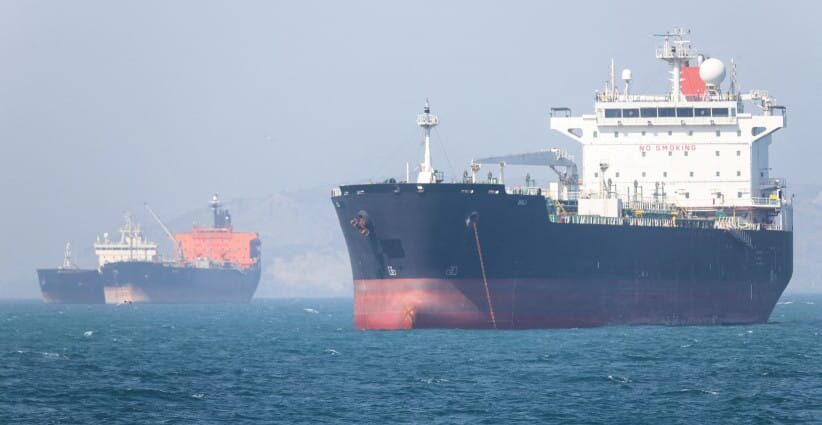
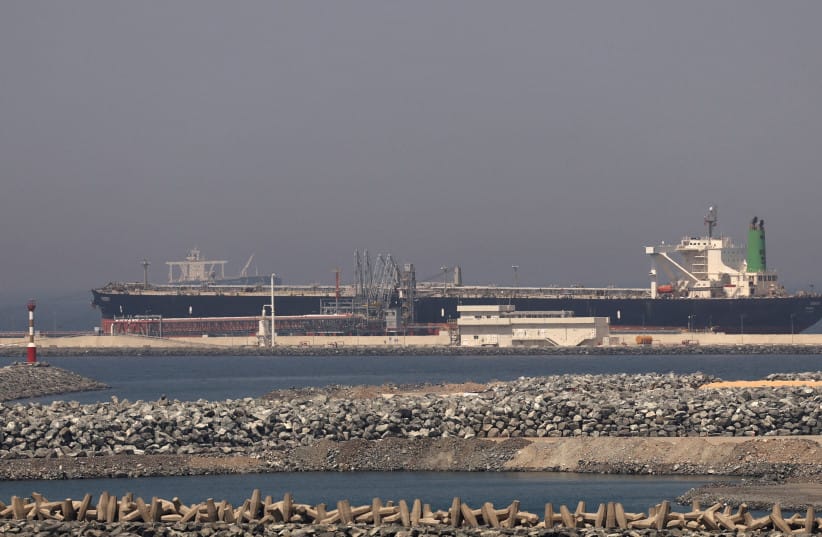
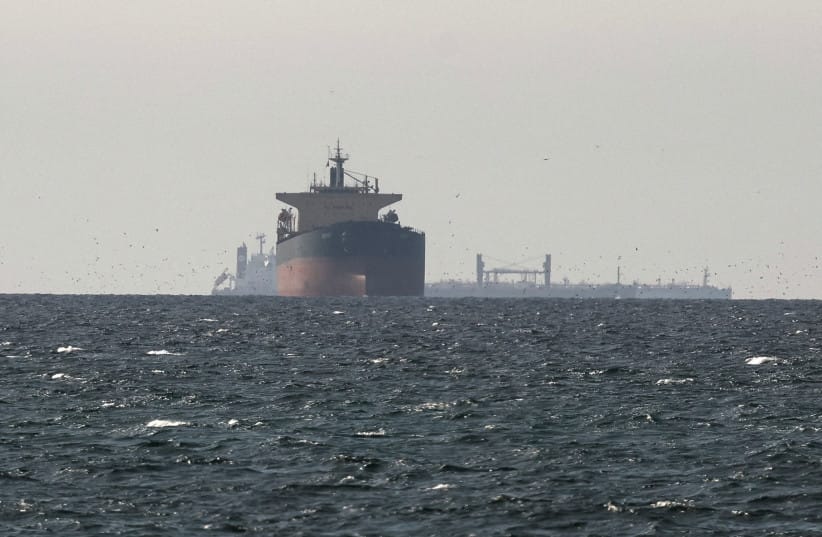
A commercial cargo vessel coming from Abu Dhabi was struck by a drone on Sunday morning off the coast of Doha, the Qatari Defense Ministry confirmed in an afternoon statement, confirming an earlier report from the UK Maritime Trade Operations (UKMTO).

The incident sparked a small fire, which was extinguished, the ministry said, noting that no injuries were reported.

After the fire was put out, the ship continued its journey toward Mesaieed Port to dock. 

Shortly after the strike, Iranian Army Spokesperson Mohammad Akraminia told Iran’s Tasnim news agency that vessels from countries that comply with US sanctions against Iran would face difficulties crossing the Strait of Hormuz.

Iranian lawmakers have said they are drafting a bill to formalize Iran’s management of the Strait of Hormuz, with clauses including forbidding passage to vessels of “hostile states.”

Qatari tanker crosses through Hormuz

On Saturday night, ship-tracking data showed that the Qatari tanker, Al Kharaitiyat, would move to break through the naval blockade imposed by Iran.

Al Kharaitiyat was filled at the Ras Laffan plant earlier this month and is currently believed to be in transit between Oman and Iran, with Pakistan as its destination.

If successful, this fuel transit would be Qatar’s first export from the region via the Strait since the start of the Iran War.

Qatar, one of the world’s largest suppliers of liquefied natural gas, has made numerous other attempts to transit the Strait of Hormuz during the blockade; however, its ships have been forced to return each time. 

Shortages resulting from the blockade have sent shockwaves through the global market, with oil prices soaring worldwide. The International Energy Agency (IEA) has called this the “largest supply disruption in the history of the global oil market.”

This post was originally published on here

It’s not easy to find Purete, and we drove around Kibbutz Kvutzat Kinneret (near Tiberias) twice before parking and asking directions. When we finally arrived, it did not look like the chef restaurant it advertised itself to be; it was more like a laid-back kibbutz eatery with lots of plants and a cozy vibe.

“The chef restaurant is shown by what’s on the plate, not what’s in the building,” chef Tomer Tiv said. “I wanted a place that is intimate and makes you feel like you are somewhere else.”

Tiv studied at Le Cordon Bleu in London and worked as a chef in several Michelin-starred restaurants in London before returning to Israel. After his return in 2010, he became the executive chef of the Canaan spa in Safed and a private chef. He says his customers come from all around the country.

The first thing I noticed when I entered the small restaurant was that almost everyone there was drinking wine from very large wine glasses – already a good start. The house wine was Har Odem Volcanic, an excellent choice from the nearby Golan Heights.

There is a private area attached to the restaurant, where a group of doctors was (somewhat ironically) listening to a lecture on GLP-1 weight loss drugs. But that didn’t stop them from digging into Tiv’s excellent food.

Digging in

My favorite husband, Cliff, and I shared two appetizers and two main dishes. The menu is relatively small, but I’d rather go to a restaurant with a smaller number of dishes done well than a larger menu that is not as good.

The sigarim (cigars) filled with smoked asado on a bed of hummus were crispy and juicy (NIS 80). Definitely a winner. My husband’s sea bass ceviche (NIS 78) looked like a painting, including edible flowers. It was a bit spicy for my Ashkenazi palate, but my husband loved it.

Purete has a smoker, and I was tempted by the Smokehouse Platter of asado, brisket, lamb spare ribs, and pargit, which comes with salad, bread, and eggplant carpaccio (NIS 240 per person).

But I can never resist filet mignon (NIS 238), which in this case was two medallions of medium-rare soft filet on a sweet potato puree. I finished every bite. Cliff went with the entrecôte (NIS 190), a large portion that was juicy and not too fatty. The meat comes fresh from the nearby Golan Heights, and you can taste the difference between fresh meat and the frozen meat that is sold in most supermarkets. Each bite was really special, and I kept eating past the point where I was full. The meat went perfectly with the wine, and we enjoyed a lovely evening.

I was too full for dessert, but my chocoholic husband powered through and ordered the Ferrero Rocher dish (NIS 58), and for the sake of my readers, I managed a bite. Delicious.

Purete is highly recommended if you are traveling anywhere near the Kinneret.■

Purete
Kvutzat Kinneret
Hours: Mon.-Thurs., 6 p.m.-10 p.m.
Tel: 054-222-1977
Kashrut: Rabbanut Emek Hayarden. The meat is Beit Yosef.

The writer was a guest of the restaurant.

This post was originally published on here

In recent days, a new AI tool for investors has reached Israel — the beta version of Google Finance.

The new tool includes a customized display of investment portfolios and advanced market analysis. The interface has also been upgraded to allow for more convenient tracking of real-time data and comparing stock performance against key indices. Google’s new model features the latest advances in the AI race, in which each company is looking for its own niche to dominate.

Another such example is OpenAI’s new tool for creating images. This is after the company closed its video generator Sora. Anthropic, for its part, continues to expand in the field of code writing, and recently shook up software stocks with new models in the cybersecurity field, which even managed to stress the major central banks.

Alongside tech developments, the balance of power and collaborations in the market are changing. An example of this can be found in OpenAI and its main cloud provider, Microsoft.

The two recently announced a new partnership agreement in which revenue-sharing payments from OpenAI to Microsoft will continue until 2030, regardless of OpenAI’s technological progress. OpenAI will pay Microsoft 20% of every subscription purchase on ChatGPT.

Google is looking for its own niche to dominate

As part of the agreement, Microsoft remains OpenAI’s primary cloud provider, but the AI company will be able to serve its products on any cloud provider, including Amazon and Google. Microsoft will also continue to hold an IP license for OpenAI’s AI models until 2032, but the license will no longer be exclusive.

This post was originally published on here

Watch this episode with no interruptions.

When Israeli novelist and journalist Lihi Lapid signed with HarperCollins, one of the storied “Big Five” publishing houses, she was living the dream every fiction writer chases.

Lapid’s debut novel, On Her Own, was being translated into English, was already being adapted into a television series, and was set to launch in Manhattan in May 2024. But in a candid, deeply personal conversation with The Jerusalem Report editor-in-chief Ruth Marks Eglash, Lapid reveals what really happened in the months leading up to her publication date.

HarperCollins searched for three months and could not find a single Manhattan bookstore willing to host her launch. One store eventually offered to let her come into the back storage room, sign copies in private, and have them quietly placed on shelves. “A lot of times, the most horrible things are quiet,” Lapid tells Eglash. “It just vanished.”

The interview moves well beyond one author’s experience into the broader, uncomfortable terrain of how the literary world has treated Israeli and Jewish writers since October 7.

Lapid described daily petitions calling for Israeli books to be pulled from translation and Israeli films removed from festivals, even when the authors themselves were vocal critics of the Israeli government.

Anti-Zionism affects literature

On Her Own contains no politics. It is a family story about an aging mother grieving the son she lost in the army decades earlier. None of that mattered. What did matter, Lapid found, was where she went next. A small Jewish publishing house run by Zibby Owens picked up her earlier book, retitled it I Want It to Be Wonderful, and rushed it to print.

Within a week, it was on the USA Today bestseller list, a sharper commercial result than anything the big five machine had delivered.

The conversation widens from there into some of the most urgent questions facing Jewish creative life today. Should Israeli authors keep fighting for space in the mainstream, or build their own parallel channels? How did Israelis and Diaspora Jews each discover, after October 7, how badly they need one another? And why, Lapid asks, does the world insist on casting Israel as Goliath when Israelis see themselves as David?

She also offers the writing advice handed down by her famous mother-in-law, novelist Shulamit Lapid, a single sentence aspiring writers will want to hear in her own voice. In the closing minutes, she opens up about life at home as her husband, Yair Lapid, joins forces with Naftali Bennett ahead of yet another Israeli election.

It is a rare, unguarded look at what it costs to be an Israeli storyteller right now, and why Lapid, unmistakably, is not done telling.

This post was originally published on here

The Iranian regime has enlisted the aid of foreign militias to man checkpoints across Tehran in order to support its security forces in order to keep civilian protests down, the Telegraph reported on Friday, citing videos circulating on social media. 

According to the Telegraph, which has confirmed the videos with accounts from several Tehran residents, members of the Iraqi Popular Mobilization Forces militia have been seen conducting vehicle searches and enforcing “ hijab regulations” in cities across the country.

The PMF, also known in Arabic as “Hashd al-Shaabi,” is also reportedly conducting neighborhood patrols alongside the regime’s security forces.

“Right now, for several nights here, there are people at our neighborhood checkpoint who don’t speak Persian,” the Telegraph quoted a resident from Tehran as saying. “They wear Hashd al-Shaabi uniforms and only communicate with gestures and a few broken words of Arabic or Persian.”

The Afghan Fatemiyoun militia has also been reportedly deployed alongside the PMF in Iran’s streets.

“Before it was just Basij [militia], but now the composition has changed. Several people with clear Arabic military uniforms are standing there, and they behave much more harshly,” the resident was quoted as saying. 

“It’s like they have no restrictions. Even the Iranians don’t say anything to them.”

Further, the Telegraph noted other reports from Karaj, a city west of Tehran, where residents have encountered foreign personnel manning checkpoints with “less restraint than their Iranian counterparts” and who communicate mainly through gestures and in Arabic.

Iran’s government has not officially acknowledged the role of these foreign militias.

Regime imposing terror in the streets

In an interview with 103FM in late April, social media expert Effi Banai said that footage emerging from Iran paints a complex and increasingly tense picture.

“We see the pressure on the regime on social media,” Banai said. “They have brought in militias from abroad, from Pakistan, Iraq, and Afghanistan.”

He explained that the militias “go around in trucks, in civilian clothing, carrying machine guns. The soldiers speak Arabic rather than Persian, [which the locals notice and comment about on social media].”

“They are imposing terror in the streets so that people won’t go out and protest. The regime knows its people are hungry, desperate, and are afraid they will take to the streets again.”

This post was originally published on here

Following disclosures by the Wall Street Journal and Qatari media about IDF operations in Iraq related to the war with Iran, The Jerusalem Post can now disclose matters that were previously kept under the radar.

Already on April 6, the Israeli censor permitted the Post to publicize some details from an interview with IDF Hatzerim Air Force Base Chief Brig. Gen. “R”, who commands both F-15 and F-16 squadrons.

Asked to describe relations with the US Air Force, he responded, “It is truly historic and unprecedented. Israel has never worked directly operationally with any other country’s air force. The US also has never worked with another country like this – military relations are truly intimate.”

“I was personally on the way to attack Iran, and was refueling over Iraq with US forces talking to them in English and telling the whole story of my mission,” he then added as a side point for color.

Suffice to say that Brig. Gen. R was far from the only Israeli pilot to fly through Iraqi airspace.

The Iraqi government’s fury over the incident

These were not the only details which had been revealed to the Post.

The Post had also learned that IDF special forces rescue units had been clandestinely placed in Iraq in order to have the capability to jump into action to rescue any IDF pilots who might crash-land if they were shot down.

Only now that the Wall Street Journal and Qatari media are reporting more details about the IDF presence that temporarily existed in Iraq, and the Iraqi government’s furor over the incident (or at least that it was made public) has gone public, the Post can now confirm the various details about a small Israeli rescue team being established in Iraq.

In the end, no Israeli pilots were shot down, so the Israeli rescue team did not need to act, but it was there to be ready for the worst-case scenarios, and American pilots were shot down and had to be rescued by US forces in real time.

None of this is the first time that Israel has acted regarding Iraq.

Prior to the October 7 war, occasionally the Israeli censor allowed publication about limited Israeli attacks on Iranian forces who were trying to use Iraqi territory to position themselves to be able to launch an arsenal of missiles against the Jewish state from Iraqi territory.

Foreign media reported even more occasional Israeli attacks to remove such threats.

This post was originally published on here

The social revolution we called Women’s Lib had already made inroads in my Westchester County, New York, public school world in the early 1970s. 

By 1973, I’d persuaded my mother to sign my eighth-grade report cards “Nancy I. Klein” instead of “Mrs. Sidney B. Klein,” though we eighth-grade girls did sew both the boys’ and girls’ costumes for our class production of H.M.S. Pinafore. 

Meanwhile, a few miles north of where I lived, Susan Kleinman and the other eighth-grade girls at her coed Jewish day school were still sewing the boys’ costumes for the Salute to Israel parade in 1978. The previous year, these girls had turned 12 without fanfare, as bat mitzvah celebrations had not yet caught on. 

As Kleinman notes in her novel All Afternoon, set in 1978, feminism was “slow in coming” to the fictional New Jersey town of River Ridge. Presumably, this was also true in other Modern Orthodox enclaves of that era.

The protagonist, Marilyn Weisfeld, is a Shabbat-observing, kosher-keeping suburban mom who provides a quintessentially “Suzy Homemaker” experience for her husband and four daughters, having abandoned her literary dreams for marriage and motherhood 20 years earlier. When marriage proves unfulfilling physically and emotionally, Marilyn buries her disappointments in a quest for domestic perfection.

Feminism arrives slowly in Suburban world

Yes, Marilyn feels annoyed when her insecure college professor husband, Jerry, springs last-minute dinner guests on her. But she wouldn’t dream of saying no to whipping up a lavish meal on short notice – or even asking him to do the dishes afterward. When the youngest Weisfeld daughter ruins the dinner party by appearing in the dining room covered in vomit, it’s not Jerry who jumps up to help Marilyn change and bathe the child, but Jerry’s old friend and object of envy, Henry Goldfarb, a successful novelist living in Manhattan.

It soon becomes apparent that Henry has always carried a torch for Marilyn. Following the disastrous dinner party, they become entwined in a secret relationship that catalyzes Marilyn to take another look at the professional dream she gave up and begin to calculate the cost of reclaiming it.
 
Kleinman nails the little details in Marilyn’s gradual transformation, for instance, when she tosses her “Mrs. Jerry Weisfeld” note cards, experiments with takeout food for Shabbat, and boldly plans a bat mitzvah for her second daughter. The pop-culture context is on target as well, from a Pink Floyd poster in a teenage daughter’s room to the final episode of the Carol Burnett Show.

Marilyn could have symbolized many suburban moms of that time. By placing her in a Modern Orthodox community, the author creates a simultaneous opportunity to examine that milieu in the era of rising feminist sensibilities. 

The portrait she paints of River Ridge is not flattering: gossipy Shabbat meal conversations, petty one-upmanship between parent subcommunities in the day school, advertisements for local women’s new cottage industries masquerading as Purim gift basket items:

“When Marilyn took off the shiny wrapping, she saw half a dozen samples of Carol Hackman’s ersatz cakes with her business card – Carol’s Cake Walk – stapled to each little Baggie, along with a rose-shaped candle from Paula Zuckerbrodt and a perfume sample from Doris Ellenbogen, who had recently become an Avon lady. Since when do candles and perfume belong in shalach manos? … 

“Digging deeper, the girls found a coupon for Edna Karp’s math-tutoring business, SohCahToa Consultants, and a $10 gift certificate to the outlandishly expensive shoe boutique – Sole Train – that Bobbi Popkin had just opened (against zoning-board regulations) in her basement. Not a single hamantasch.”

Jerry gets brownie points for playing Torah trivia with his daughters on Friday nights, but, in general, he’s a useless parent and husband, every bit the “schmuck” Henry declares him to be. I would have liked Jerry to be a more nuanced character, but perhaps Kleinman was making the point that women in 1978 often chose to remain in bad marriages for financial security and to avoid the scandal of divorce. 

How many women, like Marilyn, felt stupid “for having believed that going to college would set her on the path to some bright and shining future,” only to discover that a bachelor’s degree did not help her fold laundry, coordinate carpools, and chop celery? How many, like Marilyn, nevertheless still felt proud to turn a recipe from Madhur Jaffrey’s Indian cookbook (published in 1973) into a kosher “Chicken Tikka Marilyn” by substituting Coffee Rich for cream?

Part of what makes this book a highly entertaining page-turner is Kleinman’s skillful management of Marilyn and Henry’s relationship. She maintains a tantalizing undercurrent of sexual tension while avoiding predictability in the plotline. 

This isn’t a cheesy potboiler but rather a novel of substance that gives an honest, thoughtful look into a pivotal period in modern social history, from a unique Jewish perspective. Those of us who raised our children in River Ridge-like communities decades after this story takes place will recognize how things changed – or didn’t.  ■

Susan Kleinman will be featured, along with Rachel Tzvia Back and Nora Gold, at Literary Modi’in’s June Author Event, June 14 at 8 p.m. in person and over Zoom. Registration: juliezuckerman.com/event-info/literary-modiin-june-2026-author-event/form

ALL AFTERNOON:
A NOVEL
By Susan Kleinman
Volume 36 Books
320 pages, $17

This post was originally published on here

An individual was killed by a Frontier Airlines plane at Denver International Airport (DEN) on Friday after jumping the perimeter fence and attempting to cross the runway as the plane was taking off.

The pilots immediately halted takeoff, alerted air control of the collision, and reported an engine fire. 

“We’re stopping on the runway,” the pilot can be heard as saying in a recording posted by the ATC.com app, which covers air traffic radio. “We just hit somebody. We have an engine fire.”

One of the plane’s engines appears to be coated in blood, according to a photograph circulating on social media.

Emergency personnel responded to the scene, and all 224 passengers were safely evacuated using emergency slides as a precaution before being returned to the terminal to depart on separate flights.

Twelve people reported minor injuries, five of whom were evacuated to local hospitals. 

DEN confirmed the incident in a Saturday social media post, noting that the individual, who still remains unidentified, “is not believed to be an employee of the airport.”

US Transportation Department Secretary Sean Duffy described the individual as a trespasser who “breached airport security at Denver Int’l Airport, deliberately scaled a perimeter fence, and ran out onto a runway” in a Saturday X/Twitter post condemning the individual’s actions.

“No one should EVER trespass on an airport,” Duffy added.

He added that local law enforcement, aided by the Federal Aviation Administration (FAA) and the Transportation Security Administration (TSA), is investigating the incident. 

This post was originally published on here

Shulamit Newman – in Hebrew, Ne’eman (“faithful”) – was a Jerusalem icon, a fixture synonymous with the City of Gold. 

My mother’s cousin, who lived into her 90s, seemed to be everywhere. She popped up at the President’s Residence on Sukkot. She was “old friends” with notable dignitaries. She would dress in blue and white on Independence Day, and in red, white, and blue on the Fourth of July.

She first came to Israel after she graduated high school, and she knew that someday she would come back to live here. In the 1970s she became a proud olah, arriving on the ship SS Queen Anna Maria with her husband and five children, aged three to 13. Her mother, father, and aunt came as well.

Along with her husband, Yehoshua, they became fixtures at the Israel Center, establishing tours to places throughout the country, and ending each expedition with “something sweet” – homemade chocolates, made lovingly by Shulamit.

The two were so committed and so full of love for the Land of Israel, for God, for their family, for every Jewish soul, and for each other.

Coming to Jerusalem just doesn’t feel right without Shulamit there. The city, once called Shalem (“whole”), doesn’t feel whole without her beautiful soul. Ironically, her name, Shulamit, as pointed out by Rav Zev Leff at her shloshim, denotes shleimut, which means “completion” or “wholeness.” There is a hole in Jerusalem without her.

No one made a blessing like Shulamit. The smallest piece of cake – with her first sip of coffee in the morning – and her blessing rang out, thanking the creator of the universe for each tiny taste of His sustenance.

Shulamit was my cheerleader, always buying The Jerusalem Post, sometimes multiple copies, to carefully read every article I wrote, commenting insightfully on every observation and quote included. She devoured every word, even my technical articles about drone warfare. There was nothing that didn’t pique her interest, and there was nothing that didn’t evoke a creative and analytical response.

Passionate about learning Torah

Her entire life, she remained sharp and focused. She could speak about style, trained in fashion design by her mother, and she expressed herself with her own clothing choices. She absorbed Torah like a sponge, actively participating in lectures and dragging her caregivers to programs in venues throughout Jerusalem, at all hours of the day and night. She went to rock concerts produced by her daughter-in-law. She could argue politics and win every time. She was simply everywhere.

Someone who rarely slept, she would call my mom in the US to schmooze in the wee hours of Israel time, and visit her whenever she made the long trip back to New York.

Her love for her family was replenished constantly, her phone ringing with each of her loving children, grandchildren, and extended relatives, especially prior to each Shabbat and holiday – and she always had something special and unique to say to each one of them. If they didn’t check in, she called them.

Appropriately, her shloshim ceremony turned out to be on Remembrance Day. Conspicuously missing from the observance, which began with the two-minute siren, was Shulamit herself. Attended by Jews from all different walks of life, it was an event she wouldn’t have wanted to miss. The gravity of Remembrance Day, the sadness, was palpable as everyone stood respectfully, remembering the fallen soldiers, their souls ascending as the siren wailed.

Those soldiers were revered by Shulamit, and her friends and family remembered them along with the special and holy woman who was achingly no longer with us.

Always together, with husband, Yehoshua.  (credit: Courtesy the Newman family)

I look forward to the day of resurrection – and believe it with all my heart – as I know Shulamit did. Soon Jerusalem will be complete – with our Sanctuary and with Shulamit and Yehoshua, their offerings of lollipops and chocolates, their golden spirits ushering in the new shleimut.

Until then, Jerusalem misses its Golden Girl.

This post was originally published on here

While global attention remains fixed on missile salvos and air-defense battles across the Persian Gulf, defense planners in Beijing are quietly harvesting the most valuable strategic resource modern warfare can produce. The ongoing conflict has generated volumes of analysis on interceptor depletion rates, air defense saturation, and the resilience of hardened infrastructure. Largely overlooked, however, is the third party positioned to benefit most from this fighting. China is not a direct combatant, maintains a calculated distance from formal weapons supply networks, and has yet to expose a single soldier to retaliation. What it is doing is something far more consequential: using the Middle East as the most significant military research and development laboratory on the planet.

The evidence of Chinese technological integration into this conflict is no longer circumstantial. Officials within the US Defense Intelligence Agency have assessed that Iranian forces are actively exploiting datasets provided by Chinese artificial intelligence firms to refine their precision strike planning. 

MizarVision, a prominent Chinese geospatial AI start-up backed by state-run research institutes, has systematically published AI-enhanced satellite imagery of Western military assets. The platform can automatically detect and classify stealth aircraft, hardened shelters, and naval movements across wide operational theaters.

Intelligence reporting indicates that MizarVision algorithms successfully tracked movements of the USS Gerald R. Ford carrier strike group, B-52 bombers, and F-22 Raptor stealth fighters stationed at regional air bases. By fusing commercial tracking signals with sub-meter-resolution imagery from satellite networks, including China’s Jilin-1 constellation, these platforms automate reconnaissance tasks that previously required substantial human and technical resources. 

Under Chinese national security law, the boundary between commercial geospatial analytics and military intelligence support is, in practical terms, nonexistent. For Iranian operators, this technology reduces dependence on vulnerable domestic reconnaissance assets and  considerably tightens their operational kill chain.

The greater strategic danger lies in what the People’s Liberation Army (PLA) extracts from the volumes of telemetry and electronic warfare data generated during these engagements. Chinese military engineers are systematically leveraging tactical lessons from active combat to develop their own autonomous systems. 

This effort is grounded in a core PLA doctrine known as Systems Destruction Warfare. The objective is not simply destroying individual aircraft or armored columns but paralyzing the data networks and sensor nodes that connect those platforms and give them operational meaning.

In this context, cheap loitering munitions are not merely explosive projectiles. They function as disposable, high-volume sensors. Every missile intercept, every electronic warfare spoofing attempt, and every radar response from Western defense systems generates data that feeds directly into Chinese machine learning models being trained for future operations in contested environments, with the Taiwan Strait the obvious reference point.

The battlefield results are already prompting a severe technological reckoning. Inexpensive Iranian drones have neutralized advanced radar arrays and air defense subsystems valued at over a billion dollars. Several long-range reconnaissance platforms, including MQ-9 Reapers and Hermes 900 UAVs, have been downed. This cost asymmetry provides exactly the real-world validation Beijing needs for its strategic modernization programs. When a cheap autonomous drone destroys a billion-dollar radar system, it forces every defense ministry to question whether the expensive, exquisite platform model remains viable.

Regional militaries are adapting, though not without friction. Defense procurement strategies are pivoting sharply toward mass and autonomy over traditional heavy platforms. Recent defense tenders reflect a significant shift toward acquiring large quantities of first-person-view assault drones. 

Simultaneously, defense establishments are working to purge Chinese components from their supply chains. Heavy reliance on Chinese-manufactured drone hardware and dual-use technologies has created serious data security vulnerabilities that no military engaged in active hostilities can responsibly tolerate.

Russia plays a supporting role in this architecture. Moscow has reportedly provided Tehran with supplemental satellite intelligence and advanced drone technologies, building on prior military exchange arrangements. The resulting arrangement is strikingly efficient: Iran absorbs the kinetic risk on the ground; Russia provides additional intelligence and material support; China collects the strategic harvest without ever exposing its own forces.

This conflict is no longer a contained regional episode. It is a live stress test of Western military architecture, conducted under conditions that suit Beijing, at a cost that China does not bear.

Every radar emission pattern identified, every logistical weakness exposed in basing posture, and every intercept threshold mapped flows into a growing dataset being prepared for the next war, the one China intends to fight on its own terms. 

The United States and its regional partners are paying for these lessons in lost hardware and depleted interceptor stockpiles. China is auditing the exam for free. 

Israel, which has the most direct stake in the operational lessons being extracted here, has every reason to be watching this dynamic as carefully as the missiles themselves.

The author, a fellow at the Middle East Forum, is a policy analyst and writer based in Morocco. Follow him on X: @amineayoubx

This post was originally published on here

Israel’s Mer Group has announced that it secured a €32 million agreement to supply homeland security, aerial, and intelligence solutions to a government in West Africa. The deal marks the latest step in the company’s presence across the continent, where demand for integrated security and communications systems has been increasing in recent years.

The new contract, to be executed over 24 months, includes a full package of operational technologies, professional support, and long‑term guidance. According to the company, the project’s profitability aligns with similar defense‑sector agreements, underscoring an appetite by African governments for advanced homeland‑security solutions and intelligence systems.

“The transaction constitutes another layer in the implementation of the group’s growth strategy, which focuses on the military-defense sector, and serves as further tangible evidence of the strong demand in the field for our solutions in military technologies and homeland security, as well as for the quality of the unique solutions offered by Mer Group,” CEO Avi Shechter said.

On paper, the deal looks like another win for an Israeli company that has built a global business around intelligence systems, cyber tools, and communications infrastructure. 

But Mer Group did not disclose to Defense & Tech by The Jerusalem Post which West African state was receiving the systems, what specific technologies are involved, or how they will be used.

Many defense companies don’t share confidential details of contracts that can be considered controversial or at the request of customers. But, in a region where governments can sometimes struggle with democratic accountability, terrorism, civil‑military tensions, and internal conflict, the lack of transparency surrounding the company’s African engagements and the nature of the technologies being deployed can raise concerns about the potential for misuse.

According to a 2021 article by Africa Report, Mer Group provides services to the national intelligence agency of the Democratic Republic of the Congo and also has contracts in Guinea, Nigeria, and the Republic of Congo.

The company is reported to have previously delivered systems related to border control, national command centers, cybersecurity infrastructure, and telecom and fiber-network developments across Africa. This dual presence of defense and communications has helped Mer Group build long‑term relationships with African governments and state‑owned operators.

While many African governments face real threats such as terrorism, insurgency, or organized crime and require modern tools to confront them, when powerful surveillance and intelligence technologies are exported without transparency, accountability, or public debate, there are risks that can extend far beyond any battlefield.

In 2018, Mer Group was reported by The New York Times as having been paid $8 million by the DRC to lobby against the levying of additional sanctions for human rights violations and widespread corruption under then-president Joseph Kabila. 

Founded in 1982 and publicly traded since 1992, Mer Group employs around 650 people and operates across Latin America, the United States, Africa, Europe, Asia, and Israel. Its portfolio spans intelligence systems, cyber solutions, military technologies, telecom infrastructure, and data‑center construction.

The latest secretive West Africa deal adds to a wave of new military‑defense agreements that the company has signed since the beginning of this year, totaling roughly NIS 275 million. 

These contracts feed into Mer Group’s growing order backlog, which stood at NIS 843 million at the end of 2025. Most of the new agreements are scheduled for execution over the next four years, providing long‑term revenue visibility.

“We continue to work toward further expanding our activity in the military-defense sector, as well as in additional fields, including data centers and communications infrastructure,” Shechter said.

This post was originally published on here

A common mistake made when teaching or studying the Land and State of Israel is misunderstanding its true role in the larger context of Judaism. All too often, people incorrectly accentuate Israel’s place in Jewish tradition. Zionists have a responsibility to understand Israel’s role in Judaism accurately. 

Misunderstanding Israel’s role has had drastic consequences for the Jewish people. Overemphasizing its importance has led to a false sense of security and mistaken assumptions that the Jewish people wouldn’t lose the land. Underemphasizing the land’s importance has brought the Jewish people to harsh persecution outside of the land amid a refusal to move to the land. 

The Jewish nation rests on three pillars: people, leadership, and land. Every nation in history has claimed the same three. Yet ours has always carried something more: a divine dimension, rooted in Torah, that transforms each element into something enduring. This is why we outlasted every empire that has tried to bury us.

Our people are bound not by blood alone, nor by culture in the ordinary sense, but by covenant. The mitzvot – circumcision, Shabbat, the dietary laws, the entire ordered rhythm of Jewish life – are not customs. They are the architecture of our identity. When Haman plotted our destruction, he understood this perfectly: “There is a certain people,” he told the king, “whose laws are different from those of any other people” (Esther 3:8). 

Bonds that remain 

That difference proved stronger than exile, stronger than pogroms, stronger than the furnaces. From Spain to Yemen, from the Pale of Settlement to the mellahs of Morocco, Jews kept the same calendar, recited the same prayers, and lived by the same moral code while kingdoms rose and crumbled around them. Torah was our portable homeland. No other nation has ever done this.

Leadership, too, bears a different stamp. Maimonides, in the Laws of Kings, paints a portrait of power that feels almost paradoxical: the king is to be honored, yet he must remain humble, “lowly and empty at heart.” He carries the nation’s burdens as a nurse carries an infant. He speaks gently to his people. He never lifts his heart above his brothers.

The ideal Jewish leader is a shepherd, not a master. This vision of authority, subordinate always to Torah, has guarded us against the worst excesses of power. It is governance infused with moral restraint and divine accountability.
But it is the land that reveals the deepest distinction.

Israel: Not just a piece of territory

The Land of Israel is not mere territory. It is not another piece of real estate to be measured by square kilometers, strategic value, or natural resources. This is the ground where Jewish consciousness was born. Here, on these hills and in these valleys, our language took form, our laws were given, and our story entered history. Every ridge, wadi, and ancient terrace carries the imprint of revelation and response.
The Torah itself insists on this uniqueness. Unlike Egypt, whose fields are watered by human effort from the Nile, the Land of Israel “drinks rain from heaven” (Deuteronomy 11:11). Its fertility, seasons, and very rhythm of blessing and curse are directly tied to the moral and spiritual state of its inhabitants. 

“It is a land your God cares for,” says Moses in Deuteronomy, “The eyes of your God are always upon it, from the beginning of the year to the end of the year” (11:12). This is not poetic flourish. It is a statement of metaphysical reality. The land lives under constant divine attention.

Scripture goes further. The Torah declares that the land belongs to God; we are merely tenants in it (Leviticus 25:23). The prophets call it God’s own inheritance, His sacred portion (Zechariah 2:12). Its borders are not arbitrary lines drawn by conquest or diplomacy. They are part of the covenant itself. When we live in this land according to its laws, it responds. When we stray, it grows restless. This relationship is intimate, almost personal.

There is a sanctity to the land that cannot be replicated anywhere else. The land speaks to the Jewish people in a language older than memory. It is where our collective “I” was first formed, at Sinai, in the wilderness, and in the long struggle to settle and guard these hills. To be here is to stand inside the covenant in its most concrete form.

The early secular Zionists performed miracles of ingenuity, courage, and state-building. They drained swamps, built cities, and revived a language. Their achievements deserve deep respect. Yet their vision of “a nation like all others” was incomplete. 
Raw nationalism, however heroic, eventually crumbles. What sustained us through 2,000 years of wandering was never mere peoplehood. It was Torah’s divine imprint upon our people, our leadership, and above all, this land.

The Torah’s divine imprint

Today, as the modern State of Israel faces renewed existential threats, Zionists cannot afford to forget this duality. Israel is not just another country fighting for survival. The Jewish people remain bound by covenant. Jewish leaders are called upon to shepherd with humility. 

This idea must apply equally to secular and Torah-observant Jews. To the secular Jew, Israel can not be understood separately from Jewish tradition. To ignore Jewish history and attempt to recreate a “new Israel” is to invite the disaster that always comes from the arrogance borne of hubris.

For the Torah-observant Jew, the role of Israel within the larger context of the Torah is obvious, but understanding Israel properly is challenging. 

The Jewish people couldn’t go up to the Land of Israel immediately after leaving Egypt. They had to stop at Mount Sinai to receive the Torah. Without the Torah putting Israel into the context of Jewish tradition, the role of the land would be misunderstood. Similarly, the

Torah couldn’t be given in Israel because the people wouldn’t have understood it as they entered the land. 

This land remains under God’s constant gaze. To ignore any part of this reality is to invite the fate of every transient empire. To embrace it fully is to affirm the Jewish people’s place as the eternal nation, pillars resting not on human frailty, but on the rock of the covenant.
The writer is a Zionist educator at institutions around the world. He recently published the book Zionism Today.

This post was originally published on here

The ballroom US President Donald Trump is building on White House grounds, portrayed as a privately funded gift to the nation, may actually cost taxpayers billions.

In November 2025, Trump told reporters at the Oval Office that the new ballroom would use “No government funds,” insisting that it would be funded by private individuals with “Not one penny being used from the federal government.”

The 90,000 square-foot space that the President insisted would cost the public nothing is now set to cost taxpayers $1 billion in security enhancements that are tied to the project.

Spokesperson Davis Ingle explained in a prepared statement that “Congress has rightly recognized the need for these funds, due in part to the recent assassination attempt on President Trump at the White House Correspondents’ Dinner.”

When he first announced the plans for a ballroom last year, Trump insisted that it would improve state dinners and White House parties, at no cost to the public.

In January, Trump took to Truth Social, saying, “This is a GIFT (ZERO taxpayer funding!) to the United States of America, of 300 to 400 Million Dollars (depending on the scope and quality of interior finishes!), for a desperately needed space.”

The President raised millions of dollars in corporate contributions to pay for it and demolished the East Wing of the White House to create space, but as construction proceeded, the White House began discussing the ballroom’s security.

NBC: Ballroom to include medical facilities, bomb shelter

The administration’s filings show that the project will include underground medical facilities and a bomb shelter, according to reports by NBC News.

The opposition wants to halt the project’s progress

Democratic senators say that the new funding proposal suggests that Americans were misled when Trump told them the ballroom would cost them nothing.

Senator Chris Coons said in an interview with NBC, “This is tragically another example of President Trump promising one thing and doing another – of saying he was going to do something great for the American people and instead demolishing the historic East Wing without any serious consultation or public input. And now we discover the total cost is going to be well more than $1 billion.”

However, Republican senators supported the project. “I guess as long as liberals insist on shooting presidents, it will take a lot of resources to protect presidents. I’m fine with it,” said Senator Kevin Cramer.

In June, a federal appeals court will hear arguments on a challenge to US District Judge Richard Leon’s order blocking Trump’s administration from continuing construction without congressional approval. 

Until the decision in mid-June, construction will continue.

This post was originally published on here

Watch this episode with no interruptions.

Two and a half years after October 7, Dr. Cochav Elkayam-Levy is preparing to release the document she believes will close the debate over whether Hamas committed systematic sexual violence that day.

In a candid sit-down with The Jerusalem Report editor-in-chief Ruth Marks Eglash, the chair of the Civil Commission on October 7 Crimes by Hamas Against Women and Children describes the 300-page report, built on survivor testimonies, forensic analysis, and footage filmed by the terrorists themselves, as “a watershed moment, really a moment of before and after.”

Once it is released, she tells Eglash, “The question won’t be whether this happened, but what are the consequences?”

The conversation moves past the now-familiar denials, including professor Judith Butler’s claim that she had not seen the evidence and a senior UN official’s public dismissal as recently as November 2025, and into the original conceptual work that has come out of the commission’s two and a half years of documentation.

Elkayam-Levy walks Eglash through “kinocide,” the term her team coined with former Canadian justice minister Irwin Cotler and the Raoul Wallenberg Centre for Human Rights, for the systematic weaponization of family bonds, and through the new report’s three phases: the attack, the abduction, and captivity in Gaza.

Kinocide effect

For the first time, she tells Marks Eglash, the report documents cases in which family members were sexually abused or threatened in front of one another on October 7, and a case from captivity in which relatives were forced to commit sexual acts on each other.

Survivors of parallel atrocities in Sudan, Sierra Leone, and the Yazidi communities, she says, asked her commission to record their suffering alongside Israel’s: “Until we heard you, we felt we were living on a different planet.”

What Elkayam-Levy reveals about the human cost of the work is among the interview’s most affecting material. She describes the forensic image-analysis sessions her team has had to absorb, the proofreaders rereading the worst pages again and again, and her insistence that the documentation does not “haunt” them only out of “respect to the victims.”

She tells Eglash she expects the new report to be carried into courts, parliaments, and feminist scholarship by others, as the commission’s earlier Kinocide report was.

The UK Parliament has already cited that one. “We cannot prevent what is not known,” she says, and that line anchors her case for why a 300-page legal document still matters, even as the world’s attention has moved elsewhere.

This post was originally published on here

Israeli analytical center Dor Moriah has published the first stage of its new research initiative, Visions of Israel’s Future – 2030, presenting findings from an expert survey that paints a deeply divided picture of the country’s political, social, and institutional trajectory ahead of the October 2026 elections.

The project, designed to examine where Israel may be headed by the end of the next Knesset term, consists of two sequential studies. The newly released first phase surveyed 12 Israeli specialists in politics, economics, security, law, media, and civil society. The second phase, now underway in cooperation with the Geocartography Sociological Center, will measure how broadly those elite perspectives are reflected among the general public.

According to Dor Moriah researchers, the timing of the study is deliberate. October’s parliamentary election is being framed not as a routine political contest, but as a vote likely to shape the country’s path through the end of the decade.

“The Knesset elected this fall will determine much of Israel’s direction through 2030,” the report states. “What kind of country Israel will be when that term ends is no longer a rhetorical question.”

A country transformed since the October 7 massacre

The report argues that Israel has entered a new era since the Hamas-led attacks of October 7, 2023, and the war that followed. Long-standing internal tensions, it says, were intensified rather than resolved by the national crisis.

Researchers note that political polarization had already escalated during the judicial reform battle that divided Israeli society in 2023. The war, rather than healing those divisions, exposed what the report calls “internal contradictions that had previously been managed  – or simply ignored.”

Another major trend highlighted in the study is outward migration. Once politically sensitive and rarely discussed openly, emigration has become a measurable social phenomenon, the report says.

Citing figures from Israel’s Central Bureau of Statistics, Dor Moriah notes that an average of 76,000 citizens left the country annually in 2024 and 2025 – roughly double the level recorded five years earlier. Over the same period, immigration to Israel reportedly fell by threefold.

Those demographic changes, researchers suggest, could have long-term political consequences beyond the immediate electoral cycle.

Inside the expert survey

The first phase of the project was conducted in late March and early April 2026. Twelve experts participated, including political scientists, a historian, an economist, a sociologist, security analysts, a lawyer, a journalist, a human rights advocate, and a civic activist.

Participants represented a wide ideological spectrum, from the political left to the religious right. Each was asked the same series of questions on domestic politics, geopolitical strategy, economic development, and Israel’s institutional future.

Dor Moriah emphasized that the study was not intended as a representative poll or prediction model. Instead, its purpose was to map the competing frameworks through which influential Israelis understand the country’s future.

“Our objective was to understand which visions of the future actually shape thinking within Israel’s expert community,” the report said, “where those visions converge, and where they diverge irreconcilably.”

Experts see different countries

The report’s central conclusion is stark: many Israeli experts appear to be describing fundamentally different versions of the same country.

According to researchers, respondents often agreed on the facts of current events but interpreted them through entirely different ideological and moral frameworks.

A secular political scientist, for example, might describe present challenges as the “erosion of the social contract,” while a religious security analyst might frame the same developments as a “loss of national direction.”

Both positions, the study says, are internally coherent  – but they rely on different assumptions about authority, legitimacy, identity, and truth.

This fragmentation goes beyond normal partisan disagreement, researchers argue. It reflects a deeper weakening of shared civic language and common national purpose.

Areas of consensus remain

Despite the divisions, the survey identified several points of broad agreement across ideological lines.

Most participants viewed Israel’s dependence on the United States as an unavoidable strategic reality. At the same time, the idea of a fully “multi-vector” foreign policy, balancing multiple global powers, was widely regarded as unrealistic.

Experts also broadly agreed that the country’s brain drain – particularly among educated professionals and younger skilled workers  – poses a serious long-term threat.

“These areas of agreement matter,” the report notes. “They mark the ground that Israel still shares.”

Demography as destiny?

Perhaps the study’s most consequential warning concerns the relationship between ideology and migration.

Researchers found that the social groups most associated with a secular-liberal vision of Israel’s future are also those most likely to consider leaving the country. Those groups often form the core of Israel’s highly educated professional class, including sectors linked to universities, medicine, law, and high technology.

If that trend continues, Dor Moriah argues, the balance within key national institutions could gradually shift.

Bodies that currently function as moderating forces – including the High Court, the military, academia, and the tech sector  – may change not mainly through legislation or political confrontation, but through demographic replacement as one segment of society exits and another expands.

Why October 2026 matters

The report concludes that the upcoming election is not merely a contest between parties or coalitions, but between competing national futures.

As Israelis prepare to vote, the second stage of the project will seek to determine how deeply these elite visions resonate among ordinary citizens and which communities are most aligned with them.

Together, the two studies aim to answer what Dor Moriah describes as the defining question of the decade: whether Israel still possesses a social contract strong enough to sustain itself as a single political project through 2030.

With six months until the election, that question may soon move from academic debate to political reality.

The writer is a senior researcher at the Dor Moriah Policy Institute, a blogger, and a sports journalist at the “Israel Sport” website.

This post was originally published on here

Two Singaporean nationals missing for days were confirmed dead on Sunday from the eruption of Mount Dukono on Indonesia’s Halmahera island, the local rescue agency said.

Rescuers found the bodies around the crater rim, and evacuation was underway, agency head Iwan Ramdani told Reuters.

“Evacuation of the bodies is still hampered by eruptions that continue to occur and bad weather,” Iwan said, adding rain was falling in the area.

Some 150 personnel, with two thermal drones, have been deployed since Sunday morning, Iwan said, with the search focused on an area about 100-150 meters from the crater rim.

Mount Dukono in North Maluku province, bordering the Pacific Ocean, began erupting on Friday, spewing ash as high as 10 km. It has continued to erupt at a lower scale.

Seventeen people survived eruption

The area around the crater was still blanketed in volcanic ash, Iwan said, adding that the search area is about 1.25 km from the victims’ last known location.

Rescuers had found backpacks suspected to belong to the two Singaporeans, and the authorities on Saturday confirmed that one Indonesian hiker, who had gone missing, was dead.

Seventeen people, including seven Singaporeans and 10 Indonesians, survived the incident.

The seven surviving Singaporeans will fly home on Sunday, Singapore’s Foreign Ministry said in a statement. It was unclear when the bodies of the two who died would be returned.

Indonesia’s volcanology agency reported at least four eruptions as of Sunday, with one sending ash 1.3 km high. The agency is maintaining the third-highest alert level for Mount Dukono and bans any activities within 4 km of the crater.

This post was originally published on here

The war involving Iran has driven up fuel and fertilizer costs across parts of Asia, forcing farmers to reduce planting and raising concerns over crop yields later this year, The Washington Post reported on Saturday.

The disruptions have hit farmers entering key sowing periods, particularly those dependent on urea fertilizer and imported fuel. Supply pressure linked to the Persian Gulf and the Strait of Hormuz has limited access to key agricultural inputs, the report said.

Thai rice farmers have delayed or reduced planting as production costs rise above expected sales revenue. One farmer cited in the report said planting and harvesting would cost roughly $33,000, while the crop would be expected to sell for about $22,000.

Urea, a nitrogen-based fertilizer widely used to increase yields, has become a central concern. A large share of global urea supply has effectively been removed from the market, while spot-market prices have risen sharply since February, The Washington Post said.

The disruption has affected Thailand, the Philippines, Bangladesh, and Australia, where farmers have begun major planting periods. Some farmers are reducing fertilizer use, leaving land unplanted, or scaling back cultivation, the report said.

Fertilizer shock reaches rural farms

UN Food and Agriculture Organization officials warned that the impact could widen as India and Brazil, two major agricultural producers, increase fertilizer demand in June. Without timely shipments, countries could face yield losses and higher commodity prices, The Washington Post said.

Thailand’s government has said the country has sufficient fertilizer reserves for the planting season. Fertilizer shops in central Thailand, however, said they had been out of urea for weeks, while efforts to secure alternative supplies from Russia were expected to face long shipping delays, according to the report.

Farmers are also facing weaker export demand. The Middle East accounted for a significant share of Thailand’s rice exports in 2025, but shipments to Gulf countries have stalled since the conflict began, contributing to a domestic glut and lower rice prices, The Washington Post said.

Many Thai farmers were already dependent on loans before the war disrupted agricultural markets. Higher input costs and lower crop revenue could push farmers deeper into debt, agricultural representatives warned.

The report ended with farmers and agricultural leaders describing the crisis as beyond their control, while urging farmers to continue through the season despite mounting financial pressure.

This post was originally published on here

In professional intelligence doctrine, a peddler is not a double agent. He is not even technically an agent at all.

The CIA’s foundational doctrinal text draws the line without ambiguity: “Peddlers, fabricators, and others who work for themselves rather than a service are not double agents because they are not agents.” 

The logic is exacting. An agent operates under the direction of a service. A peddler answers to no handler, serves no patron, and works for no one but himself, selling access, intelligence, and legitimacy to competing buyers simultaneously, none of whom know about the others.

Keep that definition in mind. It is the only framework that explains Qatar.

Proxy framework

Iran has always thought in terms of proxies. That is the world it built: Hamas, Hezbollah, the Houthis, organizations receiving weapons, training, money, technology, and strategic cover in exchange for advancing Iranian interests. Tehran appeared to read Qatar through the same lens.

Not because it ran Doha like an operator runs an asset but because within Iran’s conceptual universe, Qatar looked like a variation on the same pattern. Not an armed organization but a wealthy state with global media, direct access to Washington, and the capacity to mediate, finance, and legitimize positions. 

To Tehran, Qatar looked like a soft state proxy.

That is precisely where the proxy framework breaks down. The pattern plays out across three fronts: Hamas, Hezbollah, and the United States. On each one, Iran supplies hard power. Qatar supplies something else entirely.

Iran supplied Hamas with hard power: weaponry, manufacturing technology, military financing and training. According to The Wall Street Journal, hundreds of Hamas and Palestinian Islamic Jihad operatives were trained by the Islamic Revolutionary Guard Corps before the October 7, 2023, terrorist attacks. 

American officials have long confirmed Tehran’s sustained support for Hamas’s military wing in both funding and infrastructure.

Qatar operated against the same target with entirely different instruments. Since 2018, a Qatari envoy has entered Gaza carrying cash, $30 million monthly, divided among fuel, civil servant salaries, and direct transfers.

Hamas’s political bureau has operated out of Doha since 2012. The arrangement is documented in captured Hamas files, including the Haniyeh-to-Sinwar letter of 2021, which reveals discreet Qatari assistance to the organization’s leadership.

The direct financial link between both tracks is documented in a US Treasury designation from October 2023, identifying a Hamas operative based in Qatar who transferred tens of millions of dollars to Hamas’s military wing through Iranian-linked channels.

Same target, two completely different languages – and the same logic governs every other front.

Diplomatic capital

Hezbollah received from Iran what Hamas received: command, weapons, training, and deep integration into the Iranian apparatus. What it received from Qatar was something Iran could not provide: not rockets but what Hezbollah needed to survive, recover, and consolidate politically. 

After the 2006 war, Doha pledged $300 million toward reconstruction in Shi’ite-majority towns in the south, the areas identified with Hezbollah itself. Contemporary field reporting captured the ground assessment in April 2007: “They all came, but in the end it was the Qataris who paid.”

Two years later, Qatar brokered the Doha Agreement, which granted Hezbollah and its allies an effective veto over Lebanese government decisions, structural entrenchment purchased with Qatari diplomatic capital. 

In September 2021, the US Treasury Department, acting in explicit coordination with the Qatari government, exposed a Hezbollah financing network that included real estate entities operating out of Doha itself.

Iran builds the muscle. Qatar supplies the money, the political oxygen, and the legitimacy.

The architecture extends to the United States, and the division of labor is identical. Ayatollah Ali Khamenei wrote to American university students in May 2024, declaring they had become “a branch of the Resistance Front,” explicitly folding American campuses into Iranian recruitment language. 

The Justice Department has documented a sustained IRGC campaign of assassination plots, infiltration operations, and espionage against American citizens and officials on US soil, including the 2026 conviction of an IRGC operative for plotting to murder American political figures.

Peddler, not proxy

Qatar works the same arena through entirely different instruments. 

In 2020, the Justice Department concluded that AJ+, Al Jazeera’s American digital platform, is required to register under FARA as an agent of the Qatari government, a determination that has never been fully enforced. 

Department of Education data places Qatar among the largest sources of foreign funding to American universities. Research reports have linked financial presence to the radicalized campus environment and the expansion of anti-Israel and antisemitic protest movements.

Iran attempts to recruit, infiltrate, and coerce. Qatar operates through institutions, narrative, lobbying, and endowments. That is not a proxy’s method but a peddler’s.

This raises the question of what Qatar actually wants from Iran. The answer is neither its victory nor its collapse. 

The optimal Qatari outcome is an Iran that is contained but not destroyed, under sanctions, under supervision, non-nuclear, constrained from becoming a fully rehabilitated energy competitor. An Iran dangerous enough to justify Qatar’s value as a mediator, yet weak enough not to overshadow Doha in the gas markets or in regional legitimacy.

Not a client’s triumph. Not a client’s funeral. A client kept permanently dependent.

The Iranian strike on Ras Laffan in March, which Qatar’s Foreign Ministry condemned as a violation of its sovereignty and international law, can be read as more than economic punishment. It reads as a signal. 

Ras Laffan is Qatar’s economic lifeline, not a US military installation. Striking it imposes costs on Doha directly. Tehran may have concluded what this analysis argues: that it was never facing a subordinate, but that it was facing a peddler who had been selling it a service while simultaneously constraining it.

That brings the question back to Washington. Qatar has invested more than $8 billion in the development of Al Udeid Air Base for American use, and during US President Donald Trump’s May 2025 visit to Doha, it announced commitments exceeding $38 billion in potential additional security investment.

The base, the university money, the media platform, and the mediation channel each arrives through a different institutional door. The question is not whether Washington sees them. The question is whether it connects them before Qatar has finished shaping the answer.■

Aviram Bellaishe, an expert in regional geopolitics, Middle Eastern affairs, and Arabic language and culture, who served for 27 years in Israel’s security apparatus, is vice president of the Jerusalem Center for Security and Foreign Affairs.

This post was originally published on here

Syrian President Ahmed al-Sharaa announced a series of government changes in late-night presidential decrees published by state news agency SANA.

Sharaa appointed Khaled Zaarour as information minister, replacing Hamza Mustafa, who was moved to the foreign ministry.

As agriculture minister, he named Bassel Sweidan, who also heads a committee tasked with reaching settlement agreements with business tycoons linked to the Assad-era elite.

Sharaa replaced governors in the provinces of Homs, al-Quneitra, and Deir Ezzor, the eastern province where most of Syria’s oil fields are located.

No official reason given for change

The reshuffle is the first since the ouster of Bashar al-Assad and comes around a year and a half into the five-year transitional period set out in Syria’s constitutional declaration.

No official reason was given for the changes, but protests and social media campaigns have emerged in recent months over worsening economic conditions and what critics describe as poor government performance.

Sharaa also appointed a new secretary-general for the presidency, a post previously held by one of his brothers, a move that had drawn criticism from opponents who accused the administration of favoring nepotism over merit.

This post was originally published on here

Apple reached a $250 million settlement on Tuesday with consumers after a dispute over its AI capabilities, with some iPhone owners eligible for up to $95 in compensation.

In the settlement, Apple denied wrongdoing but agreed to compensate customers who purchased iPhone 16  and some iPhone 15 phones between June 2024 and March 2025.

Last year, customers filed several class-action lawsuits against the tech giant, alleging the company misled them about the capabilities of its AI platform. These lawsuits were consolidated into a single case by a California federal court last year. 

The dispute between the parties dates back to 2024, when Apple announced its personal intelligence system, Apple Intelligence. At the time, Apple released advertisements showcasing the system’s supposed abilities, including an improved version of its voice assistant Siri.

However, Apple Intelligence features weren’t available on new iPhone models shipped in September 2024 and were instead rolled out gradually afterward. Even then, plaintiffs say AI summaries and other features promised to consumers were often inaccurate and unreliable. 

“Apple promoted AI capabilities that did not exist at the time, do not exist now, and will not exist for two or more years, if ever, all while marketing them as the breakthrough innovation,” lawyers in one of the lawsuits wrote, accusing the company of trying to match other tech companies’ AI achievements without actually creating a capable product.

‘Enhanced Siri never came’

“The iPhone 16 was delivered to consumers without “Apple Intelligence,” and Enhanced Siri never came,” the lawyers wrote.

Throughout the lawsuits, Apple denied wrongdoing, and a company spokesperson was quoted by the BBC as saying that the lawsuit focused on “the availability of two additional features,” among other aspects of Apple Intelligence.

“We resolved this matter to stay focused on doing what we do best, delivering the most innovative products and services to our users”, she said.

This post was originally published on here

A car bombing at a police post in northwestern Pakistan, followed by an ambush on police personnel rushing to the scene to provide backup, has killed at least 12 officers, police said on Sunday.

Images after the attack on Saturday showed the structure had been reduced to rubble, with bricks, charred wreckage, and mangled vehicles scattered around the area.

Police official Sajjad Khan said in a statement that the bodies of 12 officers had been recovered from the collapsed outpost, and three personnel were found alive and rushed to the hospital.

A police official who asked not to be identified said militants first rammed into the post with an explosive-filled car and then entered the premises and began firing on any remaining officers.

“Other law enforcement personnel were sent to help the police, but the terrorists ambushed them and caused some casualties,” he said.

Ittehad-ul-Mujahideen claims responsibility for attack

Police sources said the militants also used drones in the attack.

Ambulances from rescue agencies and civil hospitals rushed to the scene, with officials saying a state of emergency had been declared in government hospitals in Bannu.

A militant alliance known as the Ittehad-ul-Mujahideen claimed responsibility for the attack.

Militant attacks have the potential to reignite fighting along Pakistan’s border with Afghanistan. The worst fighting in years erupted between the allies-turned-foes in February, with Pakistani airstrikes ​inside Afghanistan that Islamabad said targeted militant strongholds.

Fighting has since eased, with occasional skirmishes breaking out along the border, but no official ceasefire has been brokered.

Islamabad blames Kabul for harboring militants who use Afghan soil to plot attacks in Pakistan.

The Taliban has denied the allegations and said militancy in Pakistan is an internal problem.

This post was originally published on here

Detained Global Sumud Flotilla activists Thiago Avila and Saif Abu Keshek were released from Ashkelon’s Shikma detention facility on Sunday, according to the Israel Ministry of Foreign Affairs

The two activists, who have been on hunger strike since their detention, were handed over to the immigration authority, which deported them to an undisclosed location.

Adalah claimed that Avila and Abu Keshek have been unlawfully held by Israel for over a week since they were taken into custody last Thursday.

The organization also claimed that the pair was held under harsh conditions and isolation despite the ‘clearly civilian nature’ of their expedition.

Attorney Hadeel Abu Salih of the Adalah Center argued that since they were detained from a vessel flying the Italian flag, they must be subject to Italian jurisdiction, calling their detention a violation of international law. 

Both were detained on suspicion of affiliation with terrorists

Israel’s foreign ministry said that Abu Keshek, a Spanish national, was suspected of affiliation with a terrorist organization, while the Brazilian Avila was suspected of illegal activity. Both had denied the allegations.

Abu Keshek and Avila were the only two activists detained for an extended period by Israel after the Israeli Navy halted the flotilla’s mission to Gaza by intercepting more than 20 boats.

Yoav Etiel contributed to this report.

This post was originally published on here

The cruise ship, which was hit by a deadly hantavirus outbreak, arrived early on Sunday near the Port of Granadilla in Tenerife, Reuters footage showed, where it will anchor for the evacuation of passengers and some crew.

The passengers, none of whom has displayed signs of infection, will be tested by Spanish health authorities to ensure they remain asymptomatic and then transported to land in small boats, according to Spanish officials.

Sealed-off buses will then take passengers to the Spanish island’s main airport, about 10 minutes away, where they will board flights to their respective countries.

All passengers on the luxury cruise ship MV Hondius are considered high-risk contacts as a precautionary measure, Europe’s public health agency said late on Saturday as part of its rapid scientific advice.

The agency urged symptomatic passengers to be prioritized for medical assessment and testing on arrival, adding that they may be isolated in Tenerife or medically evacuated to their home country, depending on their condition.

The evacuation is expected to begin between 7:30 and 8:30 a.m., according to Spanish authorities.

WHO director arrives in Tenerife

Spanish nationals are set to disembark first, with other nationalities to follow in groups, government officials said on Saturday. Thirty crew members will remain on board and sail to the Netherlands, where the ship will be disinfected.

The ship left for Spain on Wednesday from the coast of Cape Verde, after the World Health Organization and the European Union asked the country to manage the evacuation of passengers following the detection of a hantavirus outbreak.

WHO Director-General Tedros Adhanom Ghebreyesus arrived on Saturday evening in Tenerife, in the Canary Islands, alongside Spain’s interior and health ministers and its minister for territorial policy, to coordinate the ship’s arrival.

The WHO said on Friday that eight people had fallen ill, including three who died – a Dutch couple and a German national. Six of these people are confirmed to have contracted the virus, with another two suspected cases, the WHO has said.

Hantavirus is usually spread by rodents, but can, in rare cases, be transmitted person-to-person. The WHO has said the risk to the wider global population is low, but the risk to passengers and crew on the ship is moderate.

This post was originally published on here

In the very calculated world of politics, there must always be a thoughtful and careful measuring of how sympathetic or aligned one can be towards the victims of a great tragedy suffered by them.

That is because political standing is everything. Are the victims on the right side of social media, or are they a marginalized, scorned group, whose stock is losing value with each passing day?

Much to our regret, these are the intentional and strategic considerations when determining whether someone is worthy of sympathy and compassion, unlike the authentic, heartfelt human response of feeling the pain of others.

Weighing up the possible cost is a must these days. Will commiseration and consolation result in the loss of crucial voting blocs? Or will it alienate potential supporters whose sensitivities might be offended?

As painful as it is to admit, this is what has become of society – no longer able to express genuine consoling without first doing the math in one’s head.

Such was the case, following the unthinkable events of October 7 and the silence that echoed from Norway, when King Harald V desired to send a personal condolence but was stopped by the Foreign Affairs Ministry, saying that such a message should come from the government. Sadly, one never came.

It took more than two years before realizing that the deliberate oversight was a grave mistake, resulting in a feeling of betrayal by the Norwegian Jewish community, who has sensed an unwelcoming atmosphere. 

‘Worried about the situation for Jews in Norway’

Just recently, Joel Ystebo, member of the Norwegian Parliament for the Christian Democratic Party, said, “I’m seriously worried about the situation for Jews in Norway and especially in Oslo right now.”

Is it any wonder that thoughts of aliyah are now being seriously considered by Norwegian Jews?

Or what about the UK Prime Minister Keir Starmer, who has presided over a continuously downward spiraling of the safety of his Jewish community? Police can no longer guarantee the safeguarding of those citizens who are literally being hunted down regularly, singled out for their ethnic ties to the Jewish state?

It took the torching of four Jewish ambulances and the stabbing of two, from that same community, before he finally came out and said, “If you support people who say ‘globalize the intifada,’ you are calling for terrorism against Jews.” 

Where has he been for the last two and a half years, as massive protests were taking place throughout his country, using that same despicable “globalize the intifada” phrase? Did he think the hatred would subside in what was nothing more than a passing phase?

Why has anyone been able to get away with such inflammatory language, meant to wage verbal and physical war against their own neighbors, whose families have lived there for generations?

There is only one answer. It is because weak leaders, whose principal concern is to remain in power, are disingenuous enough to put their own political interests first, causing them to think twice about just how effusive they can be without losing their backers.

It is the reason that Rahm Emmanuel, a Jewish Democrat, is also willing to appear to sell out his ancestral homeland, by suggesting that no more support be forthcoming from the US. After all, it might negatively impact his potential 2028 run for the presidency.

The same is true for most everyone in the Democratic Party, who has come to understand that showing sympathy towards Jews will be too high a price for them to pay if they hope to be seen as the hardliners their supporters expect them to be.

The only exception has been Pennsylvania Sen. John Fetterman, who has been harshly criticized for his immovable support of Israel, to the point where his own party members have attempted to discredit him, suggesting that his sanity has been compromised.

Everyone knows that people can be fickle, but the intentional and cold calculating need to regulate one’s reactions to catastrophic events, which require an honest, heartfelt response, is tantamount to being reduced to a programmed robot, whose comeback has been pre-determined, based on predictable data.

Who needs AI when we are willingly turning ourselves into manufactured creatures that find the optimum outcome to maximize the success of what they hope to achieve?

The problem is that once you have abandoned your honesty and ability to feel and act in accordance with your heart and conscience, you become an easily manipulated object, able to be controlled and swayed by those to whom you’ve granted power over you.

It is the selling out of one’s sincerity and a complete relinquishing of character that is actually a disqualifying metric for anyone who aspires to real leadership and the respect of others.

Because most people can distinguish a phony from the genuine article, especially when injustice is systematically met with cowardly silence.

In the end, even voters who supported those kinds of candidates know exactly who they are – which is why they often attempt to strong-arm them into compromising their values, as they remind them that were it not for their support, they would not remain in power.

Emmanuel Macron is such a person, considering how far he has gone to appease his Muslim migrant constituency, making sure that he appears tough when it comes to his position on Israel.

Recently accused of “betraying his moral values,” France’s president was described as being “hypocritical, showing moral weakness, and even open hostility toward Israel and its allies, by calling for an end to the war against Iran.” 

Although knowing full well that a nuclear Iran would be disastrous, not only for the region, but for the entire world, one can only come to the conclusion that his insistence on halting the war is a political calculation, solely based on the mounting pressure being placed upon him by those who put him in power.

Failing to meet the measure of a great leader, Macron cares nothing for the slaughter of innocent Iranians nor the devastating effects on his own country that would result from a nuclear-empowered extremist regime.

Such calculations may be necessary for the political survival of leaders, but it’s important to remember that it also comes at the cost of losing their souls.

The writer is a former Jerusalem elementary and middle school principal. She is also the author of Mistake-Proof Parenting, available on Amazon, based on the time-tested wisdom found in the Book of Proverbs.

This post was originally published on here

The latest Iran-linked espionage indictment should not be treated as a marginal security story in a country already dealing with many others.

A civilian and three soldiers were indicted Friday after allegedly maintaining contact with Iranian intelligence operatives and carrying out security-related assignments at their direction before their enlistment.

According to security authorities, the suspects photographed public and security-related sites across Israel, including train stations, shopping centers, security cameras, and the Israel Air Force technical school. They were also allegedly asked to purchase weapons.

The reference to weapons moves the case beyond a familiar pattern of photographs and online tasks, but the pattern itself is already troubling enough. This is not only about espionage in its more familiar form: classified documents, secret meetings, or formal access to sensitive material.

It is also about ordinary Israeli spaces being turned into intelligence material. Train stations, streets, schools, neighborhoods, and security cameras are not abstractions, but are rather the infrastructure of daily life.

At a time when Israel’s confrontation with Iran remains highly sensitive, these cases deserve more public attention.

Law enforcement and security agencies have been active. The Shin Bet (Israel Security Agency), police, Lahav 433, Military Police, and prosecutors have repeatedly exposed and charged alleged Iran-linked recruitment cases. Prior cases reported in these pages showed a recognizable pattern: Telegram contacts, vague offers of paid “work,” cryptocurrency payments, requests for photographs, and tasks that may begin with something that looks minor before moving toward something far more serious.

That is exactly why the issue needs to be understood earlier. Harsh punishments already exist, including one case of a 10-year prison sentence.

But punishment after the fact cannot be the only answer. By the time an indictment is filed, the information may already have been passed on. A photograph of a road, a camera, a base, a public building, or a routine may appear harmless to the person taking it. In the hands of a hostile intelligence service, it may become part of something larger.

Preventing espionage recruitment on the home front

The goal should be prevention: people should understand the risk and the consequences well enough that they do not even consider trying.

That requires enforcement, including fast investigations, visible prosecutions, and meaningful sentences. It also requires public clarity that “I only took a picture” is not a serious excuse when the person requesting it is suspected of acting for an enemy state.

It also requires awareness. Israelis, especially teenagers and young adults who live much of their lives online, need to recognize how this recruitment can look before the first message arrives. Schools should discuss it, as should army preparation programs, while the media should explain the recruitment pattern without sensationalizing it. Parents should know that this is not only a story about hardened criminals – it can begin as a job offer, a chat, or a small online task.

Beyond that, though, there is also a deeper question of values surrounding this issue.

No cost-of-living crisis, no debt, no alienation, no anger at the government, and no political despair can justify endangering neighbors and country for payment. If money is tight, there are other ways to seek help. They may be humiliating, exhausting, or insufficient, but they do not involve giving information to an enemy.

That boundary has to remain clear. At the same time, leaders cannot demand civic responsibility while doing too little to strengthen the civic life that supports it.

If the state wants citizens to feel bound to it, it must make life here more livable. It must invest in education that builds judgment, responsibility, and a sense of belonging, not only test scores. It must build institutions that people trust. It must show, through conduct and priorities, that public life is not only about ego, elections, and survival.

Iranian recruitment efforts appear to rely on ordinary pressures: financial need, online isolation, recklessness, resentment, or the belief that a small task is not a serious act. Israel’s answer should not come only after arrests.

It should be a steady public message, backed by enforcement and education: some things are not for sale, not even for a photograph.

This post was originally published on here

The soldiers who accidentally shot three Israeli hostages during the Israel-Hamas War had orders to shoot all men they saw on sight, and to “use their judgment” when it came to women and children, one of the soldiers told a hostage’s mother in a new episode of Hamakor on Channel 13.

Yotam Haim, 28, Samer Talalka, 25, and Alon Shamriz, 26, were all taken captive during Hamas’s attack on October 7, 2023. In December that same year, IDF soldiers accidentally shot and killed all three in Gaza, despite them waving a white flag and calling out “Help” in Hebrew.

Two of the hostages, Talalka and Shamriz, had been shot and killed immediately. The third, Yotam, had been wounded in the hand and fled. Soon afterward, he returned to the location where the other two hostages had been killed, raising his arms in surrender, and was killed.

Iris Haim, Yotam’s mother, had long questioned the official military narrative of that day’s events. According to Hamakor, she was crucial in their uncovering of the truth of the military’s actions and orders.

“The Israeli government says that it is most important to bring the hostages [home]. The soldiers don’t have pictures of the hostages. So how will they know what they’re looking for?” she said.

One soldier, D., who had been on-site, told Iris that the commander in the area had given the soldiers an order to hold their fire after two of the hostages had been shot, but hadn’t provided enough time for the order to be conveyed to all the troops before calling for the third hostage to come out.

“It was a matter of seconds,” D. said, explaining how he wasn’t able to communicate the commander’s order to soldiers positioned further away from the commander.

“The commander knew that the ordinary soldiers didn’t have a walkie-talkie, and that you would in fact need to run to them,” Iris challenged D.’s story. “How did he expect you to do that?”

Brigade Commander admits IDF protocol calls for killing unarmed terrorists

Col. Israel Friedler, commander of the brigade, also admitted to Iris that it was standard procedure for Hamas terrorists to be killed by soldiers even if they had no weapons on them. 

However, Friedler also attested to Iris that all the soldiers had heard the order to hold their fire, and that they had done so anyway in a “very serious error.”

The soldier who shot Yotam denied Friedler’s claim in a phone conversation with Iris, saying that they hadn’t received notification of the order by the time he fired the shot.

This post was originally published on here

IDF’s Home Front Command Chief Maj.-Gen. Shay Klepper met with representatives from Israel’s emergency services on Wednesday, in order to promote the organizations’ cooperation and synergy in the wake of lessons learned during Operation Roaring Lion.

“The strength of emergency organizations is not measured only by the ability of each body individually, but rather by our ability to act together, as one force, in real time,” Klepper stated.

“The partnership between the Home Front Command and all emergency and rescue bodies is a cornerstone in the ability to protect the citizens of the State of Israel and provide them with rapid, professional and life-saving responses in times of emergency.”

Organizations represented at the meeting in addition to Home Front Command included the Israel Police, the Fire and Rescue Authority, and Magen David Adom.

Home Front Command adjusting security procedures during ceasefire

During the ongoing ceasefire between Israel and Iran, as well as the increasingly strained one between Israel and Hezbollah, Home Front Command has been adjusting its protocols to better protect the citizens of Israel.

On Thursday, the time required to reach a shelter from the onset of a siren was extended for several communities in northern Israel.

“The move is part of an orderly, responsible process based on accumulated experience,” Klepper stated at the time. “The extension of the times is intended to enable optimal preparation in times of emergency, thereby strengthening the level of security and protecting the lives of residents.”

This post was originally published on here

Israel Police discovered around $400,000 in a car on Highway 40 last week, while conducting an ongoing crackdown against violent and financial crime in Israel, the police announced.

According to the police, the driver of the vehicle, a man from Rahat, was arrested under suspicion of money laundering and tax offenses, and the money was confiscated.

In a separate raid conducted by Rahat police and Border Police forces, four other suspects were arrested for questioning, and two pistols and ammunition were discovered and confiscated.

Police take down protection racket group

Last month, eleven suspects were arrested in a coordinated operation targeting an alleged protection racket that extorted contractors at construction sites in Rishon LeZion, including the national Shafdan Wastewater Treatment Plant project, Israel Police confirmed.

Police said the monthly fees ranged between NIS 8,000 and NIS 10,000 per site. Contractors who refused to pay reportedly experienced theft of heavy machinery and damage to equipment, reinforcing the scheme’s coercive nature.

Shir Perets contributed to this report.

This post was originally published on here

On his first day in office, New York City Mayor Zohran Mamdani revoked executive orders designed to assist city agencies in identifying and preventing antisemitic discrimination based on a perceived association with Israel. 

The following morning, prominent Jewish organizations, including the Anti-Defamation League and the American Jewish Committee, issued a joint statement denouncing the move. 

Mamdani’s administration has remained defiant about reinstituting any sort of definition of antisemitism, let alone one that recognizes the all-too-common points of intersection between anti-Zionism and anti-Jewish bigotry. 

Meanwhile, it has gone out of its way to target businesses with an apparent connection to Israelis or the State of Israel.

In early January, Mamdani attempted to prevent the sale of a large, rent-controlled housing portfolio to the Israeli-owned real estate company Summit Properties USA. 

City officials argued in court that Summit Properties USA was financially ill-suited to renovate and maintain the low-income rental units in question, yet never once provided an alternative to the judge presiding over the case – who rejected their effort out of hand.

A month later, drone manufacturer Easy Aerial also became the target of City Hall’s anti-Zionist activism. The company’s CEO, Shahar Abuhazira, alleged at the time that board members of the Brooklyn Navy Yard informed him privately they would not renew his company’s lease at the industrial park due to pressure from the mayor’s office. 

‘Supply chain of genocide’

Since September 2024, anti-Zionist activists have staged weekly protests at Easy Aerial’s offices, accusing the company of being an active participant in a “supply chain of genocide”. 

Easy Aerial’s drones, utilized by the IDF for perimeter security, are neither designed as weapons of war nor physically capable of carrying more than a few kilograms, yet this did not stop the mayor’s office from treating the protestors’ claims as authoritative and acting accordingly.

Those concerned about Israel’s long-term security should take notice of Easy Aerial’s abrupt exit from NYC. With weapons sales to Israel quickly becoming a third rail for the Democratic Party, the Israeli government may struggle to secure military equipment from the next US administration. In such a scenario, partnerships with private manufacturers might carry increased importance in maintaining the IDF’s operational readiness.

In response to recent events, the New York-Israel Chamber of Commerce has launched the NYICC Coalition – a business alliance of Jewish, Israeli, and Israel-affiliated businesses. Its ability to effectively combat antisemitism, however, rests in large measure on the extent to which City Hall shifts course to properly confront the issue or continues making it worse. 

When a legal representative for the NYPD was recently asked if his department would classify a kosher restaurant vandalized with the phrase “Kill the Zionists” as a hate crime, he answered eerily reminiscent of the Ivy League presidents’ infamous 2023 testimony on Capitol Hill, telling lawmakers the answer would depend on the context.

The NYICC Coalition also faces a broader political climate in which younger Americans appear increasingly hostile to Jewish businesses. In the latest Yale Youth Poll, 21% of American registered voters aged 18-22 and 19% of those aged 23-29 somewhat or strongly agreed with the statement, “It’s appropriate to boycott Jewish American-owned businesses to protest the war in Gaza.” 

The result raises the obvious question of how much more support there is among young Americans for boycotting Israeli American-owned businesses. Unlike some progressive spaces post-October 7, mainstream Jewish organizations continue to recognize the inherent bigotry in holding a people collectively responsible for the actions of a government. 

The IHRA working definition, Jerusalem Declaration on Antisemitism, and Nexus Document all explicitly denounce such prejudice.

As Jewish, Israeli, and Israel-affiliated businesses attempt to adapt to Mamdani’s political agenda, Israel’s Foreign Ministry should work with diaspora communities residing in other major US cities to forestall similar situations. 

Its Foreign Ministry could help ensure future initiatives against antisemitism are anchored in durable legislation rather than executive orders easily reversible with the stroke of a pen. 

A common complaint leveled by individuals hesitant to adopt the IHRA definition is that it inherently serves as a tool for suppressing free speech. This concern is easily addressed through legislation that incorporates the IHRA definition as a reference point for identifying antisemitism and explicitly denounces its use as a means of restricting 1st amendment rights.

And Mamdani’s actions as mayor should also serve as a cautionary tale for Israel’s Foreign Ministry not to take the numerous legislative wins against antisemitism achieved in the last decade for granted. 

Quintupling its budget for public diplomacy will not change the hearts and minds of a generation of Americans whose opinions about Israelis have already been solidified through hours of daily use on TikTok and Instagram. 

The next decade will also necessitate a thoughtful approach to lawfare to maintain and expand protections for Israelis residing or conducting business abroad.

The writer is an intern with the antisemitism and delegitimization research team at the INSS, he is also a master’s student in security and diplomacy studies at Tel Aviv University.

This post was originally published on here

At the precise moment influential Jewish voices were publicly debating whether Shabbat itself had become obsolete, the US president did something almost politically unimaginable: he formally inserted Shabbat into America’s 250th anniversary celebration.

In an official White House proclamation recognizing Jewish American Heritage Month, US President Donald Trump called on Americans to celebrate their “faith and freedom” and “especially on Shabbat to celebrate our 250th year.”

Not innovation. Not activism. Not identity politics.

Shabbat.

The symbolism of that moment was extraordinary.

At one of the most culturally fragmented moments in modern American life, the White House unexpectedly elevated one of Judaism’s oldest civilizational institutions as part of a national milestone celebration.

Orthodox Jews spent decades fighting to preserve Shabbat from secular erosion. Few imagined they would one day hear an American president publicly elevate it during a national anniversary celebration.

And yet that is precisely what happened.

Only weeks earlier, parts of modern Jewish discourse were openly questioning whether traditional structures like Shabbat still belonged in contemporary life. While some dismissed those conversations as internet provocation, they revealed a deeper tension quietly unfolding inside modern Jewish identity itself.

Increasingly, many Jews are eager to embrace Jewish symbolism while distancing themselves from the religious civilization that gave those symbols meaning in the first place.

Since October 7, Jewish identity has surged visibly across public life. Influencers, celebrities, activists, and public figures proudly wear Magen David necklaces, wave Israeli flags, post hostage graphics, and publicly defend Jews against rising antisemitism.

In many ways, that visible Jewish pride has been important and admirable.

Yet at the very same time, many openly broadcast lifestyles fundamentally detached from the structures that preserved Jewish continuity across generations. Public Jewish pride increasingly coexists alongside open disregard for Shabbat, kashrut, covenantal obligation, and the religious framework that historically sustained Jewish civilization itself.

That contradiction matters.

Because Judaism was never built solely on symbolism. It was built on transmitted obligations, discipline, memory, continuity, and covenant.

World still sees Jews as a collective

October 7 forced many Jews to rediscover an uncomfortable reality: the world still sees Jews collectively, whether individual Jews personally embrace Judaism or not. But once that awakening occurs, another question inevitably follows: what exactly is the substance of the identity now being defended so passionately?

A Jewish star without Judaism eventually becomes jewelry.

A map of Israel without Torah eventually becomes geography.

And a civilization detached from the practices that sustained it eventually becomes spiritually fragile.

That is precisely why the America 250 proclamation resonated so deeply with many Jews across the spectrum. 

The US president was not celebrating vague ethnicity or generic multiculturalism. He publicly elevated a distinctly Jewish institution that preserved Jewish continuity for thousands of years: Shabbat itself.

That distinction matters because the modern Jewish crisis is not fundamentally about visibility. Jews today are often highly visible. The deeper crisis is whether Jewish identity can remain rooted once it is reduced primarily to politics, aesthetics, slogans, and performance.

For years, many Jewish institutions operated under the assumption that Judaism would survive by becoming less demanding, less distinct, and more interchangeable with contemporary culture. Ritual became optional. Obligation became uncomfortable. Identity increasingly shifted from covenant toward aesthetics and politics.

But the current cultural moment suggests many Jews are not starving for less Judaism.

They are starving for more permanence.

The uncomfortable truth is that modern Jewish culture increasingly celebrates Jewish visibility while resisting Jewish restraint. Jewish identity is proudly displayed, politically defended, and aesthetically marketed, yet the covenantal structures that preserved Jewish civilization are often treated as optional, outdated, or burdensome.

But civilizations are not preserved through aesthetics alone.

Every enduring civilization requires structures strong enough to outlive comfort, trend cycles, political movements, and social media performance. Judaism was no exception.

The Jewish people survived exile, persecution, pogroms, forced conversion, terrorism, and genocide because Jewish civilization maintained structures powerful enough to preserve identity across generations.

Shabbat stood at the center of that framework.

For thousands of years, Jews stepped away every single week from commerce, distraction, public pressure, and endless labor in order to reconnect with family, prayer, learning, and community.

That weekly return to covenant became one of the central mechanisms of Jewish continuity itself.

That is why the White House proclamation struck such a nerve. Not because Americans suddenly became religious overnight. And not because a national movement spontaneously materialized on its own.

What happened instead was culturally revealing.

The moment Shabbat was publicly elevated within the America 250 conversation, many Jews reacted with genuine surprise and emotion. The proclamation spread rapidly through Jewish communal spaces, where people openly expressed disbelief that a sitting American president had formally inserted Shabbat into a national anniversary celebration.

Recognizing the deeper symbolic significance of the moment, I helped launch the independent grassroots “250 Shabbat” initiative designed to transform a fleeting headline into actual participation. 

The goal was simple: encourage Jews from all backgrounds to reconnect, even in small ways, with the institution that preserved Jewish continuity for thousands of years.

To join the 250 Shabbat initiative:

https://chat.whatsapp.com/D2pfJc22Pd807PX8GOcsiA?mode=gi_t

The response revealed something many Jewish leaders still fail to understand.

People are increasingly exhausted by performative identity without substance beneath it.

The deeper irony is that while parts of modern Jewish culture increasingly treat Shabbat as expendable, broader society may be beginning to recognize its necessity again.

Because the question confronting modern Jewish life is not whether the Jewish people will survive.

The Jewish people always survive.

The real question is whether Jews themselves still recognize the eternal foundation that made that survival possible in the first place.

The writer is an author, activist, and political strategist. Following the White House proclamation encouraging Americans to observe Shabbat during America’s 250th anniversary year, she helped launch the independent grassroots “250 Shabbat” initiative. She hosts the Silent Revolution podcast on Spotify and Apple Podcasts. Follow her on Instagram @lindaadvocate and on X @lindargalgi.

This post was originally published on here

New reports of explosions late Thursday and early Friday near Iran’s Bandar Abbas, Qeshm Island, and other parts of Hormozgan province put new pressure on a fragile US-Iran diplomatic track that had yet to produce even a temporary settlement.

As of May 8, 2026, Washington and Tehran were reportedly still working toward a short-term memorandum rather than a full peace agreement, mediated by Pakistan, with Iran still reviewing the latest proposal. The framework under discussion would aim to halt the fighting, stabilize shipping through the Strait of Hormuz, and open a 30-day negotiation window, while leaving unresolved core disputes over Iran’s nuclear program, ballistic missile arsenal, proxy networks, and expanded control over maritime passage.

What has emerged instead is a landscape of partial gains, exposed vulnerabilities, and shifting alignments. The United States demonstrated military reach but lost political confidence among allies and voters. Iran suffered serious blows but preserved the regime and key coercive tools. Israel restored parts of its deterrence but failed to translate battlefield achievements into a political endgame. Gulf states moved further apart, with the UAE and Saudi Arabia increasingly pursuing different models of power. Pakistan gained diplomatic relevance, while Qatar’s mediation role became less exclusive. China and Russia absorbed pressure but also gained diplomatic and strategic space in a more fractured international order.

Gulf states sit at the core of the war’s main contradiction. They rely on US protection, but their ports, airspace, energy infrastructure, and commercial corridors become exposed whenever Washington escalates against Tehran.

According to Iranian state and semiofficial media, explosion-like sounds were heard late Thursday and early Friday near Bandar Abbas, Qeshm Island, and other parts of Hormozgan province. Reuters reported that Iran’s Fars news agency said the origin and precise location of the sounds near Bandar Abbas were not immediately known. US Central Command later said US forces had intercepted Iranian missile, drone, and small-boat attacks on three US Navy destroyers transiting the Strait of Hormuz and carried out self-defense strikes on Iranian military facilities, including missile and drone launch sites, command-and-control locations, and intelligence, surveillance, and reconnaissance nodes.

Iran accused the United States of violating the ceasefire by targeting Iranian vessels and coastal areas, while Iranian state media said Iranian forces exchanged fire with “enemy units” on Qeshm Island. CENTCOM said no US assets were struck. Iranian claims that US vessels suffered significant damage were not independently confirmed. Reports suggesting Emirati involvement in strikes inside Iran also remained unconfirmed.

The renewed reports around Hormuz matter because they expose the central weakness of the emerging diplomatic track: It seeks to pause fighting without resolving Iran’s maritime leverage, Washington’s dependence on force, Israel’s lack of a political endgame, or the Gulf states’ vulnerability to retaliation.

Those reports do not confirm a full return to the first phase of direct strikes and maritime confrontation. But they show that the conflict has already produced new armed exchanges before any political settlement has been consolidated.

US: Military reach without political control

Washington’s strongest card remains its capacity to shape the battlefield and global energy flows. The US and Israel eliminated key Iranian regime and military figures, while US airstrikes destroyed significant portions of Iran’s nuclear and ballistic missile production infrastructure. The crisis also forced China and other importers to reassess their energy exposure. But the broader American strategy produced uncertain results. Iran’s regime survived, its missile capabilities were damaged but not eliminated, and the fate of its enriched uranium stockpile remained unresolved. Its regional posture was weakened but not broken. Instead of producing a decisive diplomatic surrender, the war pushed Washington back into negotiations under pressure from Gulf allies, energy markets, and disrupted shipping.

US President Donald Trump’s handling of the conflict also came under growing domestic pressure. A Reuters/Ipsos poll published April 28 found Trump’s approval at 34%, the lowest level of his current term, while only 34% of Americans approved of the US conflict with Iran. A Fox News poll released five days earlier showed a somewhat higher level of support for the military campaign, at 45%, but still found a 55% majority opposed to US action in Iran. An NPR/PBS News/Marist Poll published May 6, based on interviews conducted April 27–30, found that 81% of Americans said current gas prices were placing either a major or minor strain on their household budgets, while 63% said Trump deserved a great deal or a good amount of blame for the increase. The domestic backlash mattered because Iran did not need to defeat the United States militarily to affect Washington’s calculations. By threatening shipping through the Strait of Hormuz and adding pressure to global energy markets, Tehran could raise the political and economic cost of the war for the United States, Europe, and Gulf states.

Operation Project Freedom, the US-led operation to escort commercial shipping and reopen the Strait of Hormuz, became the clearest operational test of Washington’s position. Saudi Arabia and Kuwait reportedly halted or restricted American use of bases and airspace in their countries after the operation began. The restrictions were later eased, but the episode showed that Washington could no longer assume automatic Gulf alignment in a military escalation with Iran.

A cargo ship docked at the Port of Fujairah, as the U.S.-Israel conflict with Iran limits marine traffic in the Strait of Hormuz, in Fujairah, United Arab Emirates, May 6, 2026.  (credit: REUTERS/AMR ALFIKY/FILE PHOTO)

New reports of explosions near Bandar Abbas, Qeshm Island, and other sites in Hormozgan province, Iranian claims of clashes with US naval forces, and confirmed US self-defense strikes on Iranian military facilities sharpened that perception. The UAE said three people were wounded after its air defenses engaged two Iranian ballistic missiles and three drones, though it was not immediately clear whether all were successfully intercepted. Commercial vessels belonging to third countries were also targeted or endangered. Reports circulated of attacks affecting US naval assets, although US Central Command denied some of those claims.

Even without accepting every contested report, the strategic damage was clear: A US-led operation designed to reopen one of the world’s most important waterways had become another sign of how difficult it was for Washington to guarantee Gulf security without widening the war.

Cyril Widdershoven, senior adviser at Blue Water Strategy and a geopolitical energy analyst, told The Media Line that the current US-Iran framework falls well short of a settlement. “In my eyes, not at all. It should be seen only as a pause mechanism. The reported framework would end hostilities, open a short negotiating window, ease restrictions on the Strait of Hormuz, address sanctions, and begin nuclear talks. Reality shows that this is not peace at all, but crisis management under pressure. All critical issues remain unresolved, including missile programs, proxy networks, IRGC [Islamic Revolutionary Guard Corps] influence, and regional competition. If these issues are not addressed and resolved, the agreement will serve only as a tactical reset rather than a strategic solution. The likelihood of a relapse into confrontation remains high.”

Washington showed it could strike Iran, but it did not prevent Iran from imposing costs on Gulf infrastructure, shipping, energy markets, and allied territory. Widdershoven described the deal as both necessary and damaging for perceptions of US power. “For the Gulf, the current deal is all three. It is a compromise because nobody can afford permanent Hormuz paralysis. A necessity because the oil, LNG [liquefied natural gas], shipping, and insurance markets are cracking and will continue to do so. A failure because Iran may receive economic oxygen while core strategic capabilities remain intact. Washington now could be only buying time, as it stabilizes markets and avoids escalation. For most Gulf countries, the current US deal will make it seem as if there is no longer a basis to trust US deterrence and security.”

At the level of NATO, the war amplified disagreements that had already emerged during the Ukraine conflict over military burden-sharing, strategic priorities, and energy vulnerability. Several European governments remained reluctant to become directly involved in a broader maritime confrontation in the Gulf, fearing another energy shock at a time when Europe was already dealing with economic stagnation, industrial pressure, and unresolved dependence on external suppliers. Roughly one-fifth of global petroleum consumption and a significant share of LNG exports transit through the Strait of Hormuz. Insurance premiums for shipping crossing the Gulf surged during the peak of the escalation, while energy traders and European policymakers discussed contingency plans in case of prolonged disruption.

Rajat Ganguly, editor-in-chief of the Journal of Asian Security and International Affairs and a political analyst, told The Media Line that the war forms part of a broader weakening of Western cohesion. Offering a sharply critical view of US policy that remains contested in the European security debate, Ganguly linked the war to the fallout from Ukraine and the Nord Stream sabotage, for which no conclusive public finding has established US responsibility. “America used the Ukraine war to go after another peer competitor of America, which was Germany. Germany has been destroyed by the Ukraine war. Biden destroyed one of the Nord Stream pipelines, which used to bring very cheap Russian gas to Germany. It created energy security for Germany and through Germany to central Europe.”

Ganguly argued that the Iran conflict deepened existing doubts about Washington’s alliance management. “Trump is probably going to destroy NATO. And then, as he said, the Greenland issue is not over yet. He might decide to confiscate Greenland. So that would be another thing that he can do.”

For the United States, the war produced mixed results: greater pressure on Iran and China, but also deeper uncertainty among allies, voters, and Gulf partners.

The Gulf: Protection without immunity

Gulf states rely on US protection, but that protection does not make them immune to retaliation. Their ports, airspace, energy infrastructure, and commercial corridors become exposed whenever Washington escalates against Tehran. Iranian attacks toward the Emirates appeared to resume after the latest reported escalation, reinforcing the vulnerability that has run through the entire conflict.

Tankers sail in the Gulf, near the Strait of Hormuz, as seen from northern Ras al-Khaimah, near the border with Oman’s Musandam governance, amid the US-Israeli conflict with Iran, in United Arab Emirates, March 11, 2026. (credit: REUTERS/STRINGER)

Widdershoven said the crisis exposed a basic Gulf dilemma. “The Gulf did not act as a single bloc. Some countries wanted a hard deterrence against Iran, while others feared escalation. Several Gulf states were much more concerned about the threat to trade, LNG credibility, ports, aviation, and investment confidence. The crisis exposed the old Gulf contradiction: everyone wants US protection, but nobody wants their economy turned into a battlefield.”

The most visible rupture is between Saudi Arabia and the UAE. Reports that the UAE would leave the Organization of the Petroleum Exporting Countries (OPEC) effective May 1, 2026, weakened confidence in the broader OPEC+ alliance and deepened existing tensions with Saudi Arabia. But the split was not only about oil quotas. It reflected two competing models of Gulf power.

Widdershoven said the Saudi-UAE split now reflects competing models of Gulf power. “The split is no longer only about oil quotas but, in reality, about two different state models. The Kingdom wants strategic centrality, price stability, and regional leadership. Abu Dhabi wants optionality, route control, access to technology, and freedom from cartel discipline. The UAE’s departure from OPEC has turned a quiet rivalry into a structural divergence.”

He added, “The divergence is already evident across several domains, including ports, logistics, defense partnerships, and capital allocation. Saudi Arabia is still looking at internal capacity, while the UAE externalizes power through networks. The risk is that competition will increasingly spill into overlapping geographies such as the Red Sea and Horn of Africa.”

That divergence was already visible in Sudan, Yemen, port politics, Red Sea strategy, and relations with Israel. Saudi Arabia still seeks regional centrality and leadership, but the UAE is building optionality: alternative corridors, Fujairah bypass capacity, non-OPEC flexibility, logistics networks, maritime infrastructure, Israeli defense technology, and deeper links across the Indian Ocean.

Widdershoven said the UAE appears to have gained more than most regional actors, though the outcome remains messy. “At present, there are no clean winners. The UAE is the relative strategic winner because it has used the crisis to validate its long-standing bet on alternative corridors, Fujairah, ports, logistics, Israel-tech links, and non-OPEC flexibility. Iran is the tactical winner if it gains sanctions relief without dismantling core capabilities. Saudi Arabia is the uncomfortable loser: still central, but less able to command Gulf discipline. Qatar loses some diplomatic shine. Global markets remain exposed.”

Closer UAE security cooperation with Israel fits this model, Widdershoven said. “The UAE is not simply reacting to war. It is building a post-Hormuz architecture that includes Israeli security technology, Indian Ocean trade depth, Fujairah bypass capacity, Red Sea/Horn links, and energy-logistics diversification. It is pragmatic, being too systematic to be temporary.”

He continues, “All cooperation in place, cybersecurity, surveillance, missile defense, and maritime domain awareness point to institutionalization. Even if political optics fluctuate, the underlying infrastructure and intelligence links are likely to persist. It is no longer an ideology-based axis but one centered on technology and trade resilience.”

Saudi Arabia, by contrast, appears more cautious. Riyadh pressured Washington over Project Freedom and resisted becoming a platform for escalation that could expose its territory, oil infrastructure, Red Sea routes, and Vision 2030 projects to Iranian or Houthi retaliation. This does not mean Saudi Arabia has moved toward Iran strategically. It means Riyadh wants deterrence without becoming the battlefield.

Kuwait’s restrictions on US access similarly showed that smaller Gulf states are recalibrating. They want US protection, but not unlimited exposure to Iranian retaliation. For the Gulf, the outcome is protection without immunity.

Iran: Damaged, not defeated

Tehran appears to have lost commanders, infrastructure, and economic stability, but it retained the assets that mattered most for coercion: missiles, maritime leverage, domestic control, and diplomatic delay.

People drive past an anti-US billboard depicting U.S. President Donald Trump and the Strait of Hormuz, in Tehran, Iran, May 4, 2026.  (credit: MAJID ASGARIPOUR/WANA/REUTERS)

The war damaged parts of the regime’s leadership and military infrastructure while exposing vulnerabilities inside the Islamic Republic. The closure and disruption of the Strait of Hormuz damaged Iran’s own economy as well as global shipping, insurance, and energy markets. The crisis also accelerated domestic repression, with rights groups describing continued executions, severe pressure on detainees and families, and internet restrictions that limited the ability of citizens and journalists to document events inside the country.

At the same time, Tehran preserved major sources of leverage. It kept the regime in place. It retained significant missile capabilities despite strikes. Its enriched uranium stockpile remained unresolved. It maintained parts of its proxy architecture, even if weakened. It imposed costs on US allies in the Gulf. And it turned the Strait of Hormuz from a strategic chokepoint into a bargaining instrument and revenue mechanism.

Iran’s creation of a Persian Gulf Strait Authority to vet and tax vessels seeking passage through Hormuz marked a significant change. Before the war, Tehran could threaten the Strait; during the crisis, it began institutionalizing control over maritime passage. This gave Iran both economic and diplomatic leverage. Even if the new system remains legally contested and operationally fragile, it showed that Iran used the crisis to claim a form of authority it did not previously exercise openly.

Ganguly argued that even heavy bombing could not resolve the question of Iran’s enriched uranium stockpile. “America and Israel underestimated that these 450 kilos of enriched uranium are so well hidden and so protected that even if you drop the biggest conventional bombs, the bunker busters, they would not be able to destroy that stockpile of uranium. Iran would retain it. The only way you could destroy it would be through a ground invasion. You would have to occupy the country and then try to get your hands on the material and destroy it.”

He said US planners misunderstood the nature of the Iranian state. “America has no clue that Iran is a civilizational state. We are talking about Persian civilization, which goes back thousands of years. These people have endured a lot of hardship throughout their history. They are very proud people. They do not simply give up and surrender because bombs are falling on their heads.”

The planning appeared to rely on a chain of assumptions that did not hold, Ganguly said. “On what basis did the US make this calculation that if they went and dropped bombs, the uranium stockpile would be destroyed, the regime would collapse, the people would rise up in revolt, and they would put Reza Pahlavi in power and be able to control Iran? And Russia and China would not intervene on Iran’s side? And the IRGC would just give up without fighting back? These are all American miscalculations.”

Instead, Iran appears to have moved into a less centralized wartime structure, which Ganguly said had been anticipated in Tehran’s contingency planning. “There was always this perception in Iran that an attack like this would come. So, I think nobody was surprised that Ayatollah Khamenei, before he died, prepared a detailed plan of how Iran would react if its leaders were to be killed. And the IRGC was scattered into 31 or 32 autonomous commands all over the country. The mosaic model, as it is called, happened.”

Internal resilience did not mean Iran emerged unscathed. Its economy suffered from the closure of Hormuz, and its own energy and export infrastructure faced pressure. But Tehran played its strongest cards effectively: the Strait, missiles, regional escalation, domestic coercion, and diplomatic delay. It also managed to frame itself in parts of the global media space as a state resisting US-Israeli aggression, even while tightening control at home.

That coercive apparatus is central to understanding the regime’s survival. The absence of large-scale anti-regime uprisings did not necessarily reflect legitimacy; it also reflected fear, exhaustion, executions, and an information environment shaped by internet shutdowns and security pressure. Rights groups cited in the reporting said executions had continued during the crisis, and the war environment gave the regime more room to suppress dissent away from international scrutiny.

Support from China, Russia, and North Korea is another contested but important part of the picture. Ganguly said Washington had expected Moscow and Beijing to protest diplomatically but avoid deeper involvement. “The other big miscalculation, if you ask me, was the reaction of Russia and China. I think America probably thought that Russia and China would protest diplomatically. They would condemn this, but they would not physically intervene in a strategic way. But we know now that they have. Russia has provided Iran with military hardware; so have the Chinese. And Iran has even got quite a lot of North Korean drones and other stuff made by North Korea. So North Korea, China, and Russia did provide military hardware to Iran.”

For Iran, the outcome is severe damage without strategic surrender.

China: Energy risk and US volatility

Beijing has been facing real pressure from disruptions to Iranian and Venezuelan oil flows, especially where transactions bypass the dollar. The United States used the war and related sanctions to attack one of Beijing’s strategic vulnerabilities: energy security. China buys large volumes of discounted oil from Iran, Venezuela, and Russia, and some of those flows are structured outside traditional dollar-centered mechanisms. Disrupting them gives Washington a bargaining chip ahead of Trump’s planned meeting with Xi Jinping next week.

Chinese President Xi Jinping attends the opening session of the Chinese People's Political Consultative Conference (CPPCC), at the Great Hall of the People in Beijing, China March 4, 2026.  (credit: REUTERS/FLORENCE LO)

Ganguly frames this as part of the deeper contest between American hegemony and Chinese power. “One thing they have talked about is this paranoia, almost this fixation, that the US is locked in a hegemonic competition with China,” he said. “China’s Belt and Road Initiative, started under President Xi in 2013, has led China to become a major player in Latin America, in Venezuela, in the Middle East, and elsewhere.”

He said Iran and Venezuela fit into that broader strategic picture because of their energy ties to Beijing. “Take Iran as an example: 90% of Iranian oil goes to China. The same story applies to Venezuela. Probably 80-90% of Venezuelan oil was bought by the Chinese,” Ganguly said. “So by attacking Venezuela and Iran, I think America’s game plan is to disrupt this oil supply to China, which would undoubtedly create economic pressure for China.”

But Beijing also gained diplomatically. While Washington projected military power and coercive rhetoric, China increasingly projected itself as a stable and predictable actor focused on continuity of trade, long-term infrastructure, and controlled diplomacy. This contrast became especially visible in Europe and parts of the Gulf, where policymakers worried about the volatility of Trump’s rhetoric, the possibility of sudden escalation, and uncertainty surrounding American commitments.

Ganguly said the conflict also reflected deeper anxiety in Washington over changes in the global financial order, including the growing role of BRICS. The grouping originally included Brazil, Russia, India, China, and South Africa and has since expanded. “The development of BRICS and the serious discussion taking place within BRICS about abandoning the American dollar as the currency of international trade has deeply unnerved the United States. The idea is that countries would no longer use the American dollar for trade, but instead use the Chinese yuan or other local currencies. Within BRICS, there are also countries supporting the creation of a common BRICS currency.”

For China, the war brought energy pressure but also a diplomatic opportunity.

Russia: Energy relief and a weaker NATO

Moscow also benefited from the crisis in indirect but important ways. First, the war revived the attractiveness of discounted Russian energy. As Hormuz became unstable and Gulf energy flows more uncertain, buyers in Asia and elsewhere had stronger incentives to look again at Russian barrels, despite sanctions. Moscow did not need to defeat sanctions entirely; it needed the crisis to make its energy exports harder to ignore.

Russian President Vladimir Putin delivers a speech during a military parade on Victory Day, marking the 81st anniversary of the victory over Nazi Germany in World War Two, in Red Square in central Moscow, Russia, May 9, 2026. (credit: KREMLIN.RU/HANDOUT VIA REUTERS)

Pressure also increased on Europe. After cutting much of its dependence on Russian energy following the Ukraine war, Western Europe now faced renewed concerns over high prices and disrupted oil and LNG supplies tied to the Hormuz crisis. That did not mean Europe was returning fully to Russian energy, but it strengthened Moscow’s argument that Western sanctions had left Europe more vulnerable.

Ganguly said Russia’s position has been strengthened by expectations that failed to materialize. “If you think about the massive sanctions imposed on Russia, everybody expected Russia to collapse. That did not happen. In some ways, Russia surviving the sanctions can be seen as a victory. We kept hearing during the Ukraine conflict that the Russian military was demoralized and close to collapse. That did not happen.”

The possibility of transferring Iranian enriched uranium to Russia remains contested and would require separate verification before being stated as fact. If Moscow becomes part of any future mechanism for storing, supervising, or transferring Iranian enriched uranium, Russia would move from being a spoiler or outside supporter to becoming a central node in nuclear diplomacy. That would give Moscow leverage not only over Tehran but also over Washington, Europe, and Israel.

That pressure also brought Russia and China closer strategically. Both powers benefited from observing US and Israeli military operations, missile defense performance, Gulf vulnerabilities, and the behavior of American allies under pressure. Even if Moscow and Beijing do not form a formal alliance, the conflict reinforced a shared interest in weakening US dominance and accelerating alternatives to Western-controlled financial, military, and diplomatic systems.

A weakened NATO is also strategically useful for Russia. If Trump’s rhetoric, European hesitation, and transatlantic disputes continue to erode alliance cohesion, Moscow gains a less unified Western front. The same applies to energy vulnerability: The more Europe fears supply shocks and US unpredictability, the more Russia can present itself as an unavoidable strategic factor.

For Russia, the war offered higher energy relevance, closer ties with Iran, and a less cohesive Western front.

South Asia: Pakistan rises, India balances

Islamabad is one of the clearest diplomatic beneficiaries of the crisis. Its role as mediator in the current US-Iran track gave Islamabad a level of diplomatic relevance it had not enjoyed in years. For Washington, Pakistan offered access, military credibility, proximity to Iran, and relationships with both Saudi Arabia and elements of the wider Muslim world. For Tehran, Pakistan was less politically branded than Qatar and less directly associated with Israeli or Gulf pressure. For Saudi Arabia, Pakistan remained a familiar security partner with Islamic legitimacy and military weight.

A man rides his motorbike past a billboard installed alongside a road as Pakistan prepares to host the U.S. and Iran for peace talks, in Islamabad, Pakistan, April 10, 2026.  (credit: WASEEM KHAN/REUTERS)

Widdershoven said Pakistan became more useful because of the kind of leverage required in wartime diplomacy. “Diplomatic influence is currently focused on the transactional. Qatar is still relevant, but Pakistan has offered something different: military credibility, proximity to Iran, links to Washington, relations with Saudi Arabia, and a less politically branded mediation channel. In a high-volatility environment, the Pakistani option became much more acceptable. Pakistan’s involvement is a sign of a shift toward mediators who can combine diplomacy with implicit security leverage. In a wartime scenario, this is preferred.”

Pakistan’s rise also affects India. New Delhi maintained its balancing posture throughout the crisis, preserving ties with Washington, Moscow, Israel, Iran, and the Gulf. Some Indian-linked shipping reportedly received selective passage or more flexible treatment during the Hormuz disruption, reflecting India’s tactical diplomacy and its importance to multiple sides. But Pakistan’s emergence as the central mediator was uncomfortable for India, given the historic rivalry between the two nuclear-armed neighbors.

Ganguly said India’s balancing strategy gives it room to maneuver but also carries risks. “India is the classic fence sitter. It is not committing fully to one side or the other. Some might say this allows India to benefit from multiple relationships. India can be friends with Israel, buy Iranian oil, do business with the United States, and also buy cheap oil from Russia. But this strategy also has limits. There will come a point when India will not be able to continue doing this indefinitely.”

Ganguly offered a speculative political reading of Pakistan’s sudden prominence, interpreting it partly through Trump’s frustration with Indian Prime Minister Narendra Modi. “Trump is not being able to get his way with Modi. And therefore, he is trying to teach Modi a lesson by saying, if you are going to play hardball with me, I will promote the Pakistanis.”

The India-Pakistan angle goes beyond mediation. It shows how the Iran war has widened the diplomatic field beyond the traditional Gulf and US-Israel-Iran triangle. Pakistan gained relevance by being useful in a specific wartime context. India retained flexibility but saw its rival gain diplomatic visibility.

Israel: Battlefield gains without a day-after plan

Militarily, Israel gained. Politically, it remains stuck. Its deterrence improved after operations in Lebanon and Iran. The shekel strengthened against the dollar on hopes of a US-Iran ceasefire deal. Israel also reportedly deepened defense cooperation with the UAE, including reported transfers of laser, surveillance, and air defense-related technologies to help intercept Iranian missiles and drones.

Yet Israel remains diplomatically isolated in key arenas. Gaza, Lebanon, and Tehran are all still open chapters. Hamas remains the dominant force in Gaza. Hezbollah has been severely degraded but not eliminated. Iran has been hit but not strategically neutralized. Israel’s military achievements have not translated into a clear political framework for the day after.

IDF Chief of Staff Lt.-Gen. Eyal Zamir visits the 36th Division in southern Lebanon, published April 29, 2026. (credit: IDF SPOKESPERSON'S UNIT)

Michael Milshtein, head of the Palestinian Forum at the Dayan Center in Tel Aviv, told The Media Line that Israel’s military achievements have not delivered the outcome promised by the government.

“If you ask the prime minister or the government about this question, the answer will be ‘total victory’ and that ‘we are very close to total victory,’” Milshtein said. “But let us admit that almost three years after this ongoing war started, the three prominent arenas of this war remain open, and there is no total victory or total defeat of the enemies—not Hezbollah, not Iran, not the Palestinians, not Hamas.”

He said many Israelis recognize the gap between Israel’s military accomplishments and its broader strategic position.

“We are standing in front of an open front with no defeat of the enemies,” he said. “I think a broad part of the Israeli public understands that there have been dramatic military achievements and really impressive moves, but they also understand that there is no total victory.”

According to Milshtein, Israel has not converted battlefield gains into a coherent postwar plan. “It is not enough only to achieve military victories. You also need to translate these achievements into strategy. Unfortunately, we became stuck in a situation where we could not really do that, mainly because of the leadership’s insistence on not speaking about the day after or about strategy.”

Polling showed that the same tension was visible inside Israeli society. The Israel Democracy Institute found broad Jewish Israeli support for the campaign against Iran, including 93% support for Operation Roaring Lion in early March and continued majority support for pressing the war into late April. But other surveys pointed to growing doubts about the government’s ability to turn military pressure into a decisive result. A March survey by Reichman University’s Institute for Liberty and Responsibility found that while 65% of Israelis still supported the decision to go to war, only 37% expressed high confidence in the current leadership’s ability to manage the campaign, and respondents rated the IDF far higher than Netanyahu or the government. The polling captured the political tension Milshtein described: many Israelis backed confrontation with Iran, but confidence in the government’s broader management of the war was more fragile.

Milshtein said Israeli expectations of regional alignment do not match Arab political realities. He argued that Israel’s belief in a common anti-Iranian front with Sunni Arab states does not erase the centrality of the Palestinian issue in Arab diplomacy.

That issue remains central to Saudi calculations, he warned. “There is one very prominent condition of the Arab world regarding negotiations with the Palestinians. Until there are negotiations with the Palestinians, I do not see the Saudis mainly promoting normalization with Israel. Unfortunately, we still believe in this misconception that we can promote relations with the Arab world even if there are no negotiations with the Palestinians.”

Israel has also become dangerously dependent on Trump personally, Milshtein said. “Israel, like a gambler, decided to rely totally on Trump – not only on the American administration, but on Trump personally. The other problem is that many ideological figures leading this government, mainly from the religious Zionist camp, do not really think there is any importance to external, diplomatic, or international relations.”

For Israel, the outcome is battlefield success without strategic closure.

Qatar and Turkey: Smaller openings in a fragmented order

Doha remains important on issues such as Gaza and the Taliban, but the Iran war reduced the exclusivity of Qatar’s mediation role. Pakistan’s rise as a mediator showed that in high-risk wartime diplomacy, neutrality alone may not be enough.

Widdershoven said Qatar’s role has narrowed in the new wartime environment. “Doha has clearly lost its monopoly on mediation. For issues such as Gaza and the Taliban, Qatar remains important. However, in the Gulf-Iran war environment, Pakistan is much more useful. Qatar’s perceived neutrality has now become its weakness. Geopolitical tensions have hardened, and neutrality alone may no longer suffice.”

Turkey has remained more ambiguous. Ankara criticized Israeli military operations and attempted to position itself diplomatically between NATO, the Gulf, and the broader Muslim world, while also benefiting from the fragmentation of the regional order. Widdershoven said Ankara is also positioned to benefit. “Turkey will exploit diplomatic and defense openings.”

Qatar remains useful where communication channels matter. Pakistan became useful where wartime diplomacy required proximity, military credibility, and Saudi ties. Turkey is trying to preserve room for maneuver across multiple blocs.

The next round: Why the pause may not hold

Current diplomacy leaves two possibilities open: a temporary deal that reduces immediate pressure, or a relapse into confrontation if core issues remain unresolved. Iran has not yet formally accepted all US terms, while President Trump has publicly signaled optimism. The reported framework may halt fighting, ease restrictions on Hormuz, and reopen nuclear talks, but it does not resolve the structural drivers of the conflict.

Fresh reports of explosions near Bandar Abbas, Qeshm Island, and other sites in Hormozgan province, confirmed US self-defense strikes on Iranian military facilities, renewed Iranian claims of naval clashes near the Strait, and the UAE’s report of another Iranian missile and drone attack suggest that the relapse scenario may already be taking shape before the diplomatic track has produced a durable result.

Even if a temporary agreement is reached in the coming days, the consequences of the war are already reshaping not only the region but the international system itself. The UAE is redesigning trade and energy routes beyond Hormuz. Saudi Arabia is recalibrating its dependence on Washington while facing strategic competition from Abu Dhabi. Europe is reassessing its energy vulnerabilities and its dependence on American security guarantees. China is accelerating efforts to position itself as a stable and predictable alternative pole of power. Russia has regained influence through energy diplomacy and geopolitical positioning. Iran has institutionalized influence over maritime routes while surviving militarily and politically. Israel is adapting to the reality of a prolonged multifront confrontation rather than a decisive closure.

Widdershoven said the emerging order is unlikely to resemble the old one. “This is not a peace settlement. It is a pressure valve. Nothing fundamental has changed on the ground yet. The Gulf is not returning to the old order. It is entering a fragmented system in which route control, storage, security technology, and diplomatic optionality are becoming the decisive variables.”

Ganguly said any renewed fighting could broaden quickly. “Once the fighting resumes, there are always two lines of escalation. One is the horizontal escalation, meaning targets that had not been hit before will now be targeted, including desalination plants. Then comes the vertical escalation risk, where more and more lethal weapons begin to appear because the lesser weapons have failed to achieve the objective.”

The diplomacy now being discussed may still reduce the immediate pressure. But the Strait of Hormuz was never only a battlefield; it was the test of whether force could create a political settlement. So far, it has shown the opposite.

This post was originally published on here

Charges were unsealed on Wednesday in connection with a decade-long insider trading scheme involving 30 defendants, including corporate attorneys and other financial professionals, according to a release from the Massachusetts District Attorney’s Office.

Nineteen of the defendants were arrested on Wednesday and are set to appear in court in various cities across the US. Two of the defendants, according to the Massachusetts DA, are located in Russia and Israel and considered fugitives. 

“With today’s arrests, the FBI has dismantled a large-scale, decade-long, international organized criminal network of corporate attorneys and financial professionals who are accused of stealing and trading on material, non-public information from several of our nation’s leading law firms, including one right here in Massachusetts,” said Ted E. Docks, Special Agent in Charge of the Federal Bureau of Investigation, Boston Division.

“Everyone charged today is accused of scoring significant profits from expected market moves and making out like bandits… Anyone who engages in insider trading fundamentally undermines the trust necessary for our financial markets to function.”

The defendants are alleged to have stolen and used confidential information on nearly 30 merger and acquisition deals from several premier US law firms.


The release included a 2022 text exchange between two of the defendants, Gavryel Silverstein and Simon Fensterszaub, using coded language. “How’s the rabbi??” Fensterszaub asked, allegedly referring to a deal involving iRobot. “He’s stable,” Silverstein responded.  “U shouldn’t be worried.”

Both Silverstein and Fensterszaub are among 16 defendants charged with two counts of conspiracy to commit securities fraud, two counts of securities fraud, and one count of conspiracy to commit money laundering.

Ensuring a ‘level playing field for all investors’

“The trading on unannounced financial news alleged here not only violated the securities laws, but it also took advantage of the special access and ethical duties that come with a law license,” said United States Attorney Leah B. Foley.

“If the American people believe that trading is only for the connected, they will keep their investment and retirement savings out of the markets, which will hurt our economy. Today’s charges, the result of a years-long investigation with our law enforcement partners, are part of my office’s ongoing efforts to ensure a level playing field for all investors.” 

This post was originally published on here

Peru’s Attorney General’s Office has launched a preliminary criminal investigation against a former IDF soldier from Battalion 424 “Shaked” of the Givati Brigade, according to the Hind Rajab Foundation. According to a statement from the Belgian-Palestinian organization that tracks Israelis traveling abroad, the First Supraprovincial Criminal Prosecutor’s Office for Human Rights and Counterterrorism ordered the opening of a 15-day preliminary investigation on April 28, 2026.

The allegations include war crimes, crimes against humanity, and genocide committed in the Gaza Strip during IDF service.

The organization claims the young man is currently in Peru, which would allow local authorities to exercise jurisdiction. The complaint was submitted through Peruvian attorney Julio César Arbizu González, who has previously acted on behalf of the organization.

According to the organization, there has been no official statement from Peruvian authorities confirming the matter.

Soldiers’ Use of Cyberspace

A special IDF directive titled “Soldiers’ Use of Cyberspace” was designed specifically to prevent complaints of this kind against soldiers. “Do not photograph or publish images in uniform or from operational areas, avoid documentation that could be interpreted as harm to a civilian population, and consider the international implications of every post or image,” the IDF emphasized.

However, despite the guidelines and amid a lack of meaningful IDF enforcement regarding information soldiers share online, the HRF foundation, established about two years ago, has already filed around 80 complaints in approximately 29 countries. Most have been completely ignored. In Peru, Chile, Belgium, Romania, Portugal, and Greece, various proceedings have been opened against soldiers following these complaints, although in practice, only Peru has shown a relatively clear indication of progress beyond the receipt of a complaint.

This post was originally published on here

DAMASCUS In a major security escalation that shook the Syrian capital and its outskirts, the Islamic State (ISIS) officially claimed responsibility for the assassination of prominent Shi’ite cleric Sheikh Farhan Hassan al-Mansour, preacher and imam of the Sayyidah Zaynab shrine.

The attack, which took place on May 1, 2026, revived memories of the group’s past hit-and-run operations targeting carefully selected religious and military figures, demonstrating its ability to breach heavy security fortifications in one of Syria’s most sensitive areas.

Last Friday morning, a powerful explosion echoed through the southern suburbs of Damascus. A correspondent for The Media Line in Damascus reported at the time that the blast targeted al-Mansour’s vehicle while he was traveling near the Safir Al-Zahra Hotel area surrounding the shrine.

A Syrian security source who inspected the scene told The Media Line that an explosive device had been planted underneath the vehicle and detonated remotely, killing the cleric instantly and injuring several of his aides, as well as civilians who happened to be nearby.

The Media Line’s Damascus correspondent said ISIS claimed responsibility for the bombing through its official channels and its weekly newsletter, Al-Naba. In a brief statement, the group described al-Mansour as one of the “imams of the Rafida” – a derogatory term used by extremists to refer to Shi’ites – claiming that the assassination was part of what it called an act of “revenge” and a continuing campaign targeting religious figures associated with the former Syrian regime and its allies.

The choice of both the target and the location carries significant strategic symbolism. The Sayyidah Zaynab shrine is not only one of the most important religious sites for Shi’ites but also, for years, served as a political and military symbol of Iranian and Hezbollah influence in Syria before that presence diminished following the fall of the Assad regime in December 2024.

The ability to reach and assassinate the shrine’s leading cleric in the heart of his own stronghold sends a powerful message that ISIS sleeper cells still possess the capacity to monitor, maneuver and strike deep inside Damascus.

Syrian authorities increase security measures after assassination

Following the bombing, Syrian authorities imposed heightened security measures across Damascus and its countryside. Several Syrian bodies, including the Supreme Islamic Shi’ite Council, mourned al-Mansour, describing him as a “martyr of the pulpit” known for his moderate positions and calls for unity.

Local media sources in Damascus later reported that authorities dismantled a three-member cell in the Sayyidah Zaynab area suspected of providing logistical support and facilitating the operation.

The attack comes at a critical transitional moment for Syria, as ISIS appears to be exploiting vulnerabilities created by the redeployment of military forces and the preoccupation of security agencies with broader political challenges.

Analysts say the group has shifted from its former strategy of territorial control – which effectively collapsed in 2019 – to a campaign of “qualitative attrition” based on assassinations and ambushes aimed at undermining public confidence and exposing the state’s inability to protect key figures.

The assassination of al-Mansour presents Syrian security agencies with a renewed challenge. While ISIS remnants remain largely hidden in pockets of the Syrian desert, the group has once again demonstrated that its operational reach can extend into vital urban centers, raising questions about the effectiveness of current counterterrorism strategies and the potential for sleeper cells to reshape the security landscape.

This post was originally published on here

Russia is using the Caspian Sea to ship drone components to Iran in order to help the Islamic Republic rebuild its offensive capabilities, the New York Times reported on Saturday, citing US officials.

The report stated that the Caspian Sea has now become a vital trade route between the two allies. Russia is now sending goods that would traditionally travel through the Strait of Hormuz to ports along the Caspian Sea.

Iranian officials have noted that the regime is seeking to open alternative trade routes due to the blockade of the Strait of Hormuz. The report stated that there are currently four ports in the Caspian working day and night to bring in supplies such as wheat, corn, animal feed, and sunflower oil.

One Russian businessman went so far as to say that he believes that cargo tonnage in the Caspian could double by the end of the year.

“Against the backdrop of instability in the Middle East, Caspian routes to Iran look much more attractive,”  said Vitaly Chernov,  head of analytics for a company that tracks Russia’s maritime industry.

Russia, Iran use Caspian to evade sanctions

The report noted that trade in the Caspian Sea is difficult to track from a distance. Ships that regularly traverse it turn off their tracking, and only the five nations that border it have access to the Caspian.

Additionally, while Moscow and Tehran are public about trading goods like wheat, their defensive trade is a different story. 

“If you’re thinking about the ideal place for sanction evasion and military transfers, it’s the Caspian,” said Prof. Nicole Grajewski of Sciences Po in Paris.

While Russia’s shipping of drone parts may not be instrumental in Tehran’s military capabilities, it helps rebuild the regime’s offensive capabilities. The report noted that 60% of its drone arsenal was used during the war between Israel, Iran, and the US. If the shipments continue, Tehran can rebuild its arsenal more quickly, informed sources told the NYT.

The trade has flowed both ways in years past. The NYT noted that during the onset of the war in Ukraine, Iran shipped Russia Shahed drones to use on the battlefield, even though the Kremlin had already developed an improved version of the drone.

“For American policymakers, the Caspian is a geopolitical black hole; it’s almost like it doesn’t exist,” senior Hudson Institute fellow Luke Coffey told the NYT. He added that the nations that border the Caspian are fragmented for US military planners:  Central Command controls Iran, Turkmenistan, and Kazakhstan, while European  Command controls Azerbaijan and Russia.

The Caspian Sea’s potential importance came into focus in 2022, when the Russian military used ships there to fire into Ukraine.

Iran also used the Caspian Sea at the outset of the Ukraine war to resupply Russian troops with ammunition.

“Russia and Iran have found ways around the sanctions regime,”  Anna Borshchevskaya, an expert on Russia’s Middle East policy at the Washington Institute, told the NYT.

“That’s exactly why the Israelis bombed the port. Because they understood that through this small, very important trade route, Russia can provide a lot of help to Iran.”

This post was originally published on here

After making threats to kill Jews on a North London bus, a Hackney man was charged on Friday, according to the Crown Prosecution Service, Metropolitan Police, and North and East London Shomrim.

Fifty year old James Agius was charged with religiously aggravated harassment and using threatening words for the alleged abuse of Orthodox Jews on a bus traveling through Stamford Hill on Thursday.

The Met told The Jerusalem Post on Friday that Agius was suspected of making threats to kill. Shomrim said on X on Thursday that a male suspect had boarded a bus in Hackney and threatened to kill Jewish children while also claiming to possess a knife. The Met said that a search of the suspect yielded no weapon.

“Shame Hitler didn’t kill you,” the suspect said, according to the Shomrim. “You should all go in the gas chambers.”

Man detained by public, Shomrim volunteers

The bus driver reportedly stopped the bus and activated an emergency alarm. Members of the public and Shomrim volunteers intervened and helped detain the man, according to the Jewish neighborhood watch group.

“The Met takes incidents of this nature incredibly seriously,” said the law enforcement agency. “The incident is being treated as an antisemitic hate crime and our enquiries continue.”

The threat of using a knife against London Jews comes following last Wednesday’s stabbing attack in Golders Green, in which two Jewish residents were wounded.

This post was originally published on here

An Oxted man was charged on Friday for sending threatening messages to the Israeli embassy to the UK, a Muslim organization, and a member of parliament’s office, according to the Crown Prosecution Service and the Surrey Police.

Thirty-year-old Nick Daly faces nine counts of offensive messages for allegedly sending eight anti-Muslim messages to a Muslim organization and one antisemitic message to the Israeli embassy, and a count of threatening death or harm for messages he allegedly sent to an MP’s office. The messages were allegedly sent between January 27 and Thursday.

Upon search of Daly’s residence, police said that they found a weapon and cannabis. He was consequently charged with one count of possession of an offensive weapon in a private place, and possession of a controlled drug.

Israeli embassy faces frequent attacks

The threat against the Israeli embassy in the UK is the latest made against the diplomatic mission. On April 17 videos were published online by alleged Iranian front group Harakat Ashab al-Yamin al-Islamia claiming that they had used drones to drop hazardous chemicals on the embassy. Police closed down the area, finding two jars of a benign substance.

Three men were arrested in relation to the April 17 Kensington Gardens incident. A 31-year-old Potters Bar man was arrested on suspicion of preparing an act of terrorism last Wednesday. Last Sunday a 37-year-old Devon man was arrested under the same suspicion. A 39-year-old Ealing man was arrested on April 21, but he was released without charge.

A knife-wielding failed asylum seeker who attempted to break into the Israeli embassy in London last April was convicted of planning a terrorist attack last Friday. Abdullah Sabah Albadri was convicted of one count of preparation of terrorist acts, and two counts of possession of a bladed article. The 34 year old man attempted to gain entry into the diplomatic mission, armed with two knives and a martyrdom note that explained that he intended to die “for the glory of God.”

This post was originally published on here

After a Salford man threatened to cut the throats of Jewish men while they were on their way to synagogue on Wednesday, the suspect was charged with multiple hate crime offenses on Friday, according to the Crown Prosecution Service and Salford Police.

Sixty-five-year-old Wayne Kelly pleaded guilty to charges of racially aggravated common assault, two charges of racially aggravated intentional harassment alarm, and two charges of racially aggravated harassment before a Manchester Magistrates Court judge on Friday.

While walking his dog on Wednesday evening, Kelly came across a group of Jewish men and shouted antisemitic abuse at them, according to CPS. The victims contacted a Jewish volunteer helpline and local residents came to help. Kelly reportedly continued to shout abuse, threats, and referring to historic atrocities against Jews. He allegedly threatened to go home to retrieve knives so that he could cut their throats. Kelly removed his coat and moved toward one of the victims with clenched fists, but another Jewish man stepped between them and prevented a physical assault.

Salford police said on Facebook Thursday that they had arrested the suspect at the scene of the incident. CPS said that Kelly had continued to shout antisemitic abuse at a nearby Jewish child as he was being led to the police vehicle.

One of the victims later told officers that he recognized Kelly from a previous March 12 incident, when the offender had banged on his car and shouted antisemitic abuse while he was parked on the street, according to CPS.

Police chief denounces antisemitic behavior

“In this targeted attack, Wayne Kelly hurled vile antisemitic abuse at Jewish men who were on their way to a synagogue. Not content with shouting abuse, Kelly also threatened the man and made references to historic atrocities committed against Jewish people,” CPS Chief Crown Prosecutor Sarah Hammond said in a press statement. “The strength of the evidence left Kelly with little option but to admit the offenses.”

Salford Police Superintendent Yanica Weir said on Facebook on Thursday that the force would “not tolerate this kind of behavior and intimidation against any members of our community. We will come after offenders.”

The swift prosecution comes after the CPS announced on Monday that it was updating its legal guidelines to facilitate quicker charging decisions regarding hate crime incidents. The guidelines were updated in response to a wave of antisemitic incidents in the UK. 

This post was originally published on here

A Leytonstone resident was arrested in relation to the Golders Green Hatzalah ambulances arson on Thursday, the Metropolitan police announced on Friday, reportedly the ninth arrest in relation to the attack that sparked a wave of arson attacks against London Jewish, Israeli, and Iranian dissident sites.

The 48 year-old man was taken into custody on suspicion of conspiracy to commit arson, following the March 23 incident in which four Jewish emergency service ambulances were set ablaze.

“The attack on the Hatzalah ambulances caused considerable community concern and we have been working continuously to investigate this incident,” Counter Terrorism Policing London head Commander Helen Flanagan said in a press statement. “Our aim is to arrest and charge all those responsible for the arson attacks and other incidents targeted at Jewish, Israeli and Iranian sites in recent weeks.”

The Met said that the newest arrest brought the total of people arrested in relation to the wave of attacks to 31. Eight had been charged, and one had been convicted for the arson attempt against the Kenton Synagogue.

Hamza Iqbal, 20, Rehan Khan, 19, and a 17-year-old boy were charged for the ambulance arson on April 3, according to the Crown Prosecution Service. Eighteen year old Dagenham resident Judex Atshatshi was charged for the incident on April 17.

A Portsmouth man was arrested Thursday for involvement in the Finchley Reform Synagogue arson attempt, making him the third to have been arrested in relation to the April 15 incident. The Met said Friday that he was bailed until July.

London hit by wave of arson attacks

The same day as the Finchley synagogue attack,  suspected arsonists threw a burning container into the carpark of the news outlet Iran International, but the fire died out on its own.

A building that once was the premises of a Jewish group, still with the organization’s name on the window, was the target of an arson attempt on April 17. Three bottles containing accelerants were placed next to a building and set alight. The bottles failed to fully ignite, but minor damage was caused to the shopfront. The same day a burning container was thrown into the carpark of Iran International’s office. On April 19, the Kenton United Synagogue was firebombed, causing minor smoke damage to a room, but no injuries. Last Monday, arsonists set a fire at the Golders Green memorial wall for Iranian protesters. On Tuesday, a former synagogue in east London was targeted in an arson, but it caused little damage.

Most of the attacks were claimed by Harakat Ashab al-Yamin al-Islamia, with the most high profile being the Golder Green stabbing attack last Wednesday, in which a 45 year old Somali born terrorist wounded two people before being subdued by police and Jewish neighborhood watch volunteers.

This post was originally published on here

Public opinion in the Gaza Strip is shifting, with more and more residents supporting the disarmament of Hamas, according to a KAN News report citing Western intelligence findings on Saturday.

According to KAN, the majority of the Gazan public supports the push for the terrorist organization to give up its weapons, seeing disarmament as a  “way out” of long-term turmoil and violence.

Social desire to fully end the war with Israel and begin the reconstruction of the Gaza Strip is outweighing the previously prevailing support for Hamas’s extremist ideology.

On the ground reports, according to KAN, indicate a significant drop in support for terrorist acts and violent “resistance” as a means of advancing the interests of Gazan civilians.

The report asserted that the majority of Gazans are shifting to oppose Hamas remaining in power. Instead, they are increasingly supportive of searching for alternative civilian leadership.

Hamas continually refuses disarmament

Meanwhile, Hamas has continually refused to disarm in accordance with the October 2025 ceasefire deal, preventing any progress from being made in the Gaza Strip.

According to a KAN report on May 3, negotiations between the terrorist organization and the Gaza Board of Peace have reached an impasse.

Director-General of the BoP Nickolay Mladenov and Hamas’s delegation are stuck on the disarmament issue, according to Palestinian sources cited by KAN. 

Tobias Holcman contributed to this report.

This post was originally published on here

A large wooden platform, dated to be older than Stonehenge, was found hidden beneath a man-made stone island in Scottish loch, the University of Southampton announced on Tuesday.

The artificial island, also known as a “crannog,” is located in Loch Bhorgastail on the Isle of Lewis.

“Crannogs are small artificial islands that are typically thousands of years old,” explained archaeologist Dr. Stephanie Blankshein of the University of Southampton. “Hundreds [of crannogs] exist in the lochs of Scotland and many remain unexplored or undiscovered.”

The study, which took place over several years, revealed the over 5,000-year-old layered timber construction tucked below the stone capping of the island, as well as hundreds of Neolithic pottery shards floating in the water nearby – indicating that the platform had been first built during this period.

“While we still don’t know exactly why these islands were built, the resources and labour required to construct them suggests, not only complex communities capable of such feats, but also the great significance of these sites,” Blankshein said. “Large quantities of pottery, often still containing food residue, and worked stone found on and around the islands, suggest their use for communal activities such as cooking or feasting.”

Using stereophotogrammetry, a technique that calculates the 3D shape and position of objects by analyzing the differences between photographs taken from different viewpoints, researchers were able to study the the crannog as a single continuous structure both above and below the waterline – a perspective not possible using only a land or underwater survey. 

The analysis found that the crannog started out as a circular wooden platform, measuring at around 23 meters across, and topped with brushwood. During the Middle Bronze Age, about 2,000 years later, a second layer of brushwood and stone were added, with a third being layered atop some 1,000 years later during the Iron Age.

An ancient stone causeway leading from the loch’s shore to the crannog has also since been found, submerged in the waters of the loch.

Archaeologists use new technique to discover platform

Most notable about the fieldwork, was the archaeologists’ new technique for using stereophotogrammetry in shallow water in order to examine the loch bed surrounding the crannog, recently published in the journal Advances in Archaeological Practice.

Successfully using stereophotogrammetry in shallow water is not easy, noted Professor Fraser Sturt, director of the Southampton Marine and Maritime Institute.

“Fine sediments, choppy conditions, floating vegetation and distorted or reflected light all hinder shallow water imaging,” explained Sturt. “Photogrammetry is very effective in deep water but runs into problems at depths of less than a metre. This problem is a well- known frustration for archaeologists.”

In order to circumvent this, researchers used two small waterproof cameras with low light performance and a wide field of view in order to provide overlapping images to compensate for any missing or disrupted data.

A diver then carefully manoeuvred the cameras through the water, matching the pace and position of a drone launched above.

“By combining stereophotogrammetry, drone technology and some innovative post-processing of the data, we have managed to set out an accessible approach that is portable and cost effective,” Blankshein wrote.

This post was originally published on here

Three people were arrested for seriously assaulting a young man and causing injuries to his face and body near Bloomfield Stadium in Tel Aviv on Saturday. 

Tel Aviv Police officers were in the area of the stadium in preparation for a soccer game when they witnessed the assault.

The three suspects, Tel Aviv residents in their 20s and 30s, were arrested immediately and transferred to the Jaffa Police for questioning regarding the incident.

Five arrested for carrying weapons, pyrotechnic devices near stadium

Earlier on Saturday, five other suspects were arrested near the stadium on suspicion that they were planning on bringing weapons to the soccer game.

Police officers searched the suspects and their scooters and found numerous assault weapons, pyrotechnic devices, and stones. 

The suspects, aged 16 to 22, were arrested and transferred to a police station for questioning. 

Israel Police emphasized that it will “take strong action against all manifestations of violence and attempts to disrupt order” in preparation for the soccer game.

This post was originally published on here

Israel built a secret military base in a remote part of the Iraqi desert to support an airstrike in the war against Iran, according to a Wall Street Journal report on Saturday evening.

Several people familiar with the matter, including top US officials, told the WSJ that the IDF built the outpost shortly before Operation Roaring Lion began in February. It housed special forces from the Air Force and served as a logistics facility. IDF troops were stationed there in case pilots were shot down over enemy territory. 

The Jerusalem Post could not verify the report at this time. 

IDF nearly launched airstrikes against Iraqi troops who discovered secret base

The report also noted that the IDF nearly launched strikes against Iraqi troops that had almost discovered the secret base.

On March 4, a local shepherd spotted unusual activity, including helicopter flights, and tipped off the Iraqi military.

One official told the WSJ that the IDF drove the Iraqi military away with airstrikes. One Iraqi soldier was killed in the incident. 

A US source told the WSJ that American forces were not involved in the matter.

Baghdad condemned the incident at the time and went so far as to file a complaint with the United Nations.

This post was originally published on here

Israel and the US prioritized the degradation of Iran’s nuclear weaponization abilities during Operation Roaring Lion and Operation Epic Fury over the targeting of nuclear enrichment sites, an Institute for Science and International Security (ISIS) analysis of satellite imagery revealed on Thursday.

According to the analysis, little new damage was dealt to Iranian nuclear enrichment facilities already destroyed in strikes carried out during the 12-day war in June of 2025.

Instead, facilities and infrastructure related to the weaponization of enriched uranium, such as development sites, were targeted.

One such target analyzed by the institute was the Min Zadai site, which is suspected to have played a key role in Iran’s attempts to recover nuclear weapons capabilities after the June 2025 strikes.

On March 3, the IDF announced strikes on the complex, describing the site as a partially underground “nuclear headquarters” where nuclear scientists were developing key components for nuclear weapons systems. 

Reporting by the French newspaper Le Monde suggested that the Min Zadai complex was involved in the metallurgy of nuclear weapons cores. 

Another such site is Taleghan 2, a highly fortified facility within Iran’s Parchin military complex that has been used in Iran’s nuclear weapons testing and development of advanced explosives.

Weaponization-tied Tehran universities targeted 

Universities with connections to Iran’s development of nuclear weapons were also targeted.

Tehran’s Malek Ashtar University, which the IDF directly tied to nuclear weaponization, and an adjacent laboratory-type building connected to the university by a footbridge, were heavily damaged in strikes.

The university-adjacent laboratory was built right next to the Mojdeh site, a nuclear site destroyed by Israeli strikes in June 2025.

Imam Hussein University, a key Islamic Revolutionary Guard Corps (IRGC) university, was struck on March 10 for hosting an underground weapons research and development complex used by the IRGC for experimentation and testing related to ballistic missiles. 

In addition to at least four sites specifically tied to nuclear weaponization by the IDF, the ISIS analysis identified three other targeted sites likely to have also been used in the development of nuclear weapons. 

The destruction of key weaponization sites, according to the institute, likely significantly increased the time it would take for Iran to complete the production of nuclear weapons.

This post was originally published on here

Traces of Tyrian purple were discovered in cloth buried in the coffins of two Roman infants, the University of York announced in late April, the first time the imperial dye has been found in York. 

The burials date to nearly 1,700 years ago, from the late third or early fourth century CE, the statement explained, noting that one of the infants was buried alongside two adults in a stone coffin, while the second was interred in a lead coffin.  

Both were coated and preserved in gypsum, which preserved the purple-dyed fabric and flecks of gold from the remains of tassels. 

The find aligns with the Roman funerary ritual of pouring liquid gypsum over the shrouded bodies of the dead – a practice being investigated by the “Seeing the Dead” project. After being poured, the gypsum would gradually harden into a plaster cast and protect the textile fragments and any dyes or imprints.

“For the first time we now have confirmation of the use of this costly dye in Roman York, indicating that the city’s wealthy inhabitants had access to expensive and exotic commodities from the other end of the empire,” said Professor Maureen Carroll, “Seeing the Dead” project director from the University of York’s archaeology department. 

“This remarkable discovery tells us a lot about the importance of children in Roman York and the willingness of the family to give their baby the best possible send-off in tragic circumstances.”

Tyrian purple: Ancient color of royalty

Locating traces of Tyrian, a color valued up to three times the price of gold in the Roman period, in infant burials not only indicated that the two had most likely belonged to families of significant social standing, but also challenged the idea the Romans did not mourn infant deaths.

Tyrian’s costly nature comes from the difficulty of its creation – made in a process similar to that of tekhelet, the blue dye traditionally used in Judaism to color strings of the tzizit, by crushing murex snails and then exposing the fabrics to UV light to create blue or leaving them in the dark to achieve the rich imperial purple.

Dr. Jennifer Wakefield, a postdoctoral research assistant in the university’s archaeology department, added that “races of purple were not always visible on the gypsum surface but chemical analysis has rewarded us with surprising results.”

This post was originally published on here

The political tragedy of Benny Gantz continues to strike him time and again. Now, as the anti-Netanyahu bloc begins to take shape ahead of the 2026 elections, Gantz’s political role appears to be fading away.

Gantz’s standing in the polls is dire, with his Blue and White party not even close to crossing the electoral threshold, while members of his party – elected to the Knesset largely because of him – are abandoning him one after another. 

The latest was Chili Tropper, perhaps his closest political confidant, a departure that symbolizes the decline of a politician who began as a meteoric figure and now seems to be nearing the end of his political career.

For nearly two decades, the anti-Netanyahu bloc has tried to present a governing alternative to him, an effort that has repeatedly ended in electoral failure. Aside from the farcical “brothers’ alliance” between Naftali Bennett and Yair Lapid after the 2021 elections, no politician has managed to defeat Netanyahu in an election while leading a major party. 

The politician who came closest to defeating Netanyahu – and unquestionably challenged him across three election campaigns and again after the October 7 massacre – was Gantz. In the April 2019 election, he led Blue and White to a peak achievement of 35 seats (26.1% of the vote), tying with Likud, an accomplishment that firmly established him as the undisputed leader of the center-left bloc.

After Netanyahu failed to form a government, Gantz succeeded in the September 2019 election in making Blue and White the largest party in the Knesset with 33 seats (26%), one more than Likud. 

In the 2020 election, after neither side again succeeded in forming a government, Gantz managed to maintain the same number of seats and even increase Blue and White’s share of the vote (33 seats, 26.6%). 

However, Netanyahu and Likud finished with three more seats, and Gantz’s achievement ended in disappointment.

Gantz’s political decline

From that point, Gantz’s political decline began. Although he undoubtedly acted with statesmanship and national responsibility when he decided to join a unity government with Netanyahu and Likud while the COVID-19 pandemic was hitting Israel, his voters punished him for it. 

Before the 2021 election, most believed Blue and White under his leadership would collapse and fail to cross the electoral threshold, yet Gantz surprised observers by winning eight seats, preserving his position as defense minister in the Bennett-Lapid government. 

Gantz hoped that his alliance with Gadi Eisenkot and Gideon Sa’ar in the 2022 election would make him a realistic candidate for prime minister, but the three-way venture ended in bitter disappointment with only 12 seats. 

However, thanks to the judicial reform initiative and the protests that erupted in response, Gantz’s statesmanlike conduct restored him to the forefront of politics. Suddenly, Gantz was seen as someone capable of uniting different parts of the nation, something clearly reflected in the polls with a rise of roughly 15 seats. 

After October 7, Gantz surged to 37 seats in the polls, largely at the expense of right-wing voters who had lost faith in Netanyahu. Thus, after joining the emergency government, Gantz came to be viewed by many as Israel’s de facto leader. 

Yet he quickly succumbed to petty politics and chose to leave the government during wartime, a move that cost him politically. Since then, Gantz has lost not only nearly all of his support in the polls but also his political partners, including Eisenkot, who effectively replaced him as the leading figure of the center-left camp.

In conclusion, the days when Gantz represented a viable governing alternative are over. Other politicians within the bloc have taken his place, while he has been left without electoral support or political allies. 

In every politician’s career, there comes a moment for self-reflection and recognition that the time has come to hand back the keys and retire. 

For Gantz, that moment has arrived. It would be better for him to accept this quickly before he further humiliates himself.

The writer is a lecturer and research fellow at the University of South Wales, UK. Author of Collapse: Israeli Labor Party 1992-2024.

This post was originally published on here

On a recent family visit to London, I took the opportunity to see Arthur Miller’s Broken Glass. It was the second time I had seen a production of this play, which portrays the rise of Hitler’s Germany in the 1930s.

The story is projected through the eyes of a Jewish woman living in the United States, who suddenly becomes paralyzed. No physical reason can be found for her inability to walk or even stand. A psychotherapist enters the scene, and what evolves is that the woman has become traumatized when learning about what was happening to Jews in Germany, this being the period of deep economic recession within the country. The Jew became the scapegoat, resulting in Jew-hatred.

Among the many laws introduced against Jews was one where Jewish children were expelled from schools solely because they were Jewish. My late husband, John, was one of those children.

Other laws were introduced, segregating Jews from the general population, culminating with Kristallnacht – The Night of Broken Glass (November 9-10,1938) – when synagogues throughout Nazi Germany were set aflame, as well as Jewish-owned businesses, shops, and homes. John, at the age of 10, watched as the synagogue in Bamberg, where his father was the rabbi, was torched.

There was something about this recent production of Broken Glass that I found exceptionally powerful, unlike the performance I had seen 20 years earlier. Could it be that the world in which we Jews find ourselves today is not the same world of 20 years ago?

When history feels uncomfortably present

Currently, antisemitism is rearing its ugly head at a level unprecedented in recent times.

The United Kingdom, my birthplace, where I lived until we made aliyah in 1998, has seen an upsurge in antisemitism which accelerated following October 7, 2023 – the day when 1,200 Israelis were barbarically murdered by Hamas. Does this sound illogical? For sure, but logic has no place with those who have decided it is in order to hate Jews even when we are the victims of a massacre.

Recently, the UK has seen the murder of two Jews in Manchester – home to the second-largest number of Jews in Britain; the killings took place on Yom Kippur at the Heaton Park Synagogue. Since then, there have been further attacks on two London-based synagogues. Claiming credit for these assaults is the pro-Iranian group Harakat Ashab al-Yamin al-Islamiyya.

One telling aspect of antisemitism within Britain is that symbols of being Jewish are hidden; this includes the fact that no longer can a Jewish day school feature the word “Jewish” publicly; no longer can children attending Jewish day schools wear a uniform depicting either a Magen David or a menorah while traveling on public transportation.

How is the UK’s Jewish community coping with the ever-increasing antisemitism? I found out more as a guest at the Annual Dinner in aid of the UK’s Community Security Trust, an organization that protects British Jews from terrorism and antisemitism. CST works closely with the police force and receives financial support from the government.

This year’s dinner attracted some 1,200 guests – the largest number ever – with a waiting list of many more anxious to attend. Without doubt, the number of participants reflects the deep concern regarding the increase in antisemitic acts throughout the country.

The guest speaker was the UK’s home secretary, Shabana Mahmood, whose opening remarks referred to the attack that very morning on four Hatzola ambulances in Golders Green – an area of London with a predominance of Jewish residents.

Mahmood said, “Today, Jews in this country are being forced to live a smaller life: They are hiding the signs of their faith; they are fearful as they send their children to school… or even when they attend a hospital appointment. And, of course, they attend synagogues that require physical security…”

Mahmood announced that £7 million had been committed to combat antisemitism in schools, colleges, and universities. Jewish students, on campuses throughout the world, are fearful of the anti-Zionist verbiage that no longer hides itself under the banner of hatred of Israel but is openly antisemitic.

What was the impact of Mahmood’s speech on those at this dinner? Many felt that while the words were strong, the action remains weak.

Contributing to the rise of antisemitism in the UK is the consistent anti-Israel bashing that is prevalent on the UK’s BBC and Sky TV.

An example is the manner in which Israel’s defensive war against Hezbollah – whose military wing is recognized as a terrorist organization by numerous countries – is projected. No mention is made of Hezbollah’s consistent bombardment – with missiles, rockets, and drones – of the Israelis living in the North of Israel.

These are the same Israeli citizens who spent some 18 months away from their homes in the aftermath of the Hamas massacre of Jewish civilians on Oct 7. These families returned to their northern cities, where many do not have adequate protection from the barrage of rockets fired on a daily basis. And this in addition to the psychological trauma too many are experiencing.

Bottom line: The misinformation that TV viewers are fed contributes to the increasing rate of antisemitism.
Two weeks ago in Watford, a city close to London, an attack took place on a Jewish-owned shop where, in the words of the BBC, “a fire door had been set alight and antisemitic graffiti had been scrawled on the building….” The police described it as an isolated incident and not linked to arson attacks on the Jewish community in London.

Nine days ago, two Jews were stabbed close to a synagogue in Golders Green; they were hospitalized – initially in serious condition. However, unlike what happened in Watford, this time the attempted murder was called a terrorist act.

Broken glass – the performance that moved me profoundly – evoked feelings of comparison to our painful past. My thoughts were endorsed on reading the words of the play’s assistant director, Alessandra Davison, in the booklet that accompanied the production, titled “Looking Away: Antisemitism, Appeasement and the Road to Genocide.”

Davison wrote: “Although it is often more comfortable for nations to view the Holocaust as an isolated event within Nazi Germany, its origins are far broader. While Hitler’s regime certainly orchestrated the mass genocide that occurred, the conditions that enabled it were shaped by decades of social prejudice and persistent inaction against antisemitism across Europe and beyond….”

Do these words ring bells? As attacks on synagogues and Jewish-owned businesses increase – not only in the UK but throughout the free world, the ring of the bells becomes louder.

Fortunately, for us Jews it is not yesterday but today; we are the privileged generation to be blessed with our own Jewish state, whose rebirth 78 years ago we celebrate. Am Yisrael chai.■

The writer is president of Israel, Britain and the Commonwealth Association and has chaired public affairs organizations in Israel and the UK.

This post was originally published on here

Britain said on Saturday it was deploying its warship HMS Dragon to the Middle East in preparation for a potential multinational effort to protect shipping in the Strait of Hormuz once conditions allow.

HMS Dragon, an air defense destroyer, was sent to the Eastern Mediterranean in March, shortly after the start of the Iran war, to help defend Cyprus. 

Its relocation to the Middle East follows France’s deployment of its carrier strike group to the southern Red Sea, as the two countries work together on a defensive plan to restore confidence in the trade route.

“The pre-positioning of HMS Dragon is part of prudent planning that will ensure that the UK is ready, as part of a multinational coalition jointly led by the UK and France, to secure the Strait, when conditions allow,” a spokesperson for Britain’s Ministry of Defense said.

UK to send warship to Middle East 

As the US and Iran inch toward a potential off-ramp from their 10-week war, France and Britain have been working on a proposal to lay the groundwork for safe transit through the Strait once the situation stabilizes.

The plan would require coordination with Iran, and a dozen countries have indicated a willingness to participate.

Britain’s ability to participate in any protective mission will be limited by the stretched Royal Navy, which is much smaller now than in the past and has had to retire some ships before replacements became available.

This comes as the US Central Command (CENTCOM) continues its blockade of Iranian ports. 

“As of today, CENTCOM forces have redirected 58 commercial vessels and disabled 4 since April 13 to prevent the ships from entering or leaving Iranian ports,” CENTCOM stated in a post on X/Twitter.

This post was originally published on here

There are moments in a parent’s life when pride and pain arrive together, indistinguishable.

I experienced that moment recently while reading a formal submission to an Australian Royal Commission. It was not written by a distant public figure or an anonymous witness. It was written by my son, Rabbi Dan Lieberman, Chief Rabbi of the Perth Hebrew Congregation.

A Royal Commission is not a panel discussion. It is not a symbolic gesture. It is the most serious instrument a democracy possesses when it believes something has gone fundamentally wrong.

In countries like Australia and the United Kingdom, Royal Commissions are rare. They are convened when ordinary systems fail, when a problem is no longer isolated, no longer containable, and no longer ignorable. They carry legal force: the power to compel testimony, to subpoena evidence, to expose systemic breakdown.

Societies do not reach for a Royal Commission unless they believe they must.

Which is why this moment matters.

Because when antisemitism becomes the subject of a Royal Commission, two truths are being acknowledged, whether explicitly or not.

The first is that this is no longer a collection of unfortunate incidents. 

It is something deeper, more entrenched, a structural problem serious enough to demand national scrutiny.

The second is even more striking: it is recognised as such.

Not dismissed. Not minimised. Not explained away. But recognised.

And yet, there is a dissonance here that should trouble us.

If antisemitism is serious enough to warrant a Royal Commission, serious enough to trigger the most powerful investigative machinery of the state, then how is it that, on the ground, so many of the experiences described still feel ignored, downplayed, or inadequately addressed?

How can something be both officially acknowledged as a national concern and yet, in daily life, treated as marginal?

That gap, between recognition and response, is where trust begins to fracture.

And it is precisely that gap that my son’s submission exposes.

‘Deeply concerning pattern of antisemitism’

He writes with restraint, almost deliberately so: “This submission… reflects not isolated incidents, but what I believe to be a broader and deeply concerning pattern of antisemitism.” 

Not isolated, but a systemic pattern.

Dan did not arrive in Australia by accident. He came seeking safety after leaving the United Kingdom following an antisemitic attack in which “an incendiary device was placed underneath my car.” For a time, Australia seemed to offer what Britain no longer could, a tolerant, pluralistic society.
But then came the shift.

“In May 2021,” he writes, “I was verbally abused, threatened, and physically pursued… who accused me of killing children in Gaza.” A sentence that captures something now painfully familiar: distant conflicts imported into local streets, with Jews made collectively responsible.

After October 7, the change accelerated.

He describes his experience as a University Chaplain. On campuses, Jewish students found their concerns “frequently minimised or not substantively addressed.” In schools, there was “verbal abuse, intimidation, and social exclusion.” 

And then, the line that no parent or grandparent should ever have to read.

“My sons, then aged 12 and 14, were subjected to explicit antisemitic abuse by a passing motorist.” 

The offender was caught. He pleaded guilty.

But justice does not erase what follows.

“One of my sons remarked that it is impossible to be openly Jewish in Australia.” 

That sentence should not be allowed to pass quietly.

Not because it is dramatic, but because it is spoken by a child. A child is already learning that identity carries risk. A child is already calculating visibility.

The next day, at a football match, two players responded to his gesture of sportsmanship with just two words: “Heil Hitler.” 

And still, the submission remains measured, controlled, and almost understated.

“I now find myself engaging in heightened vigilance,” he writes, describing anxiety, disrupted sleep, and fears for his community. 

This is not how Jewish life in the Diaspora is meant to feel in the 21st century.

But perhaps the most telling line is not about hostility, but about absence.

“Since October 7, I have not received messages of solidarity…” 

No outrage. No reassurance. No reaching out.

This is where the issue deepens.

Because a Jewish Diaspora community can endure hostility. It has done so for centuries.

What is far harder to endure is indifference.

And here lies the uncomfortable truth.

If a society must convene a Royal Commission to investigate antisemitism, it is acknowledging that something is deeply wrong. But if, at the same time, those living through it feel unheard, unprotected, or alone, then recognition without response becomes its own kind of failure.

This is not only an Australian story. It is a Diaspora story.

Across Europe, North America, and beyond, Jews are asking similar questions. Can we live openly? Can our children be visible? Can identity exist without fear?

And increasingly, the answers are uncertain.

But this is not a call to retreat. I am not beating the drum for aliyah as an escape (although it is one option).

If anything, it is a call to clarity and to defiance.

Because there is something profoundly powerful in the act of testimony. In speaking. In documenting. In refusing to allow these experiences to disappear into the background noise of public life.

A Royal Commission exists because a society believes it can confront its failures and correct them.

My son’s submission is not simply a record of what has happened. It is a demand that Australia live up to its own ideals.

And it is a warning to the rest of us.

The Jewish future has never depended solely on the goodwill of others. It has depended on an insistence, quiet, but unyielding, that we will live as Jews, openly and without apology.

If a child can say, “It is impossible to be openly Jewish,” then the response cannot be to become less visible.

It must be to ensure that such a sentence becomes unthinkable.

One of my other sons recently remarked with brutal clarity that “Europe cannot be trusted to house Jews”.

The question is not whether Jews will endure. We always have and we always will.

The question is whether the societies in which we live will prove themselves worthy of that endurance.

The writer is a rabbi and physician. He writes and teaches on Jewish ethics, leadership, and resilience. His work appears on rabbidrjonathanlieberman.substack.com and youtube.com/@rabbidrjonathanlieberman

This post was originally published on here

One IDF reservist was severely injured, and two reservists were moderately injured after explosive drones launched by Hezbollah terrorists fell within Israeli territory near the Lebanese border on Saturday.

The soldiers were evacuated to a hospital for medical treatment, and their families have been notified of the incident. 

Hezbollah launched additional explosive drones at Israeli forces operating in southern Lebanon. One drone hit an unmanned IDF engineering vehicle, damaging it but causing no injuries. The Air Force also intercepted several Hezbollah projectiles launched at Israeli troops.

The IDF emphasized that these incidents constitute a Hezbollah violation of ongoing Israel-Lebanon ceasefire understandings

IDF strikes over 80 Hezbollah infrastructure sites

Earlier on Saturday, the IDF announced that it had struck over 85 infrastructure sites belonging to Hezbollah over the past 24 hours.

IDF strikes over 85 Hezbollah sites in 24 hours. May 9, 2026.

The strikes were carried out both from the air and on the ground, hitting various locations, including weapon storage facilities, launchers, and structures used by Hezbollah to further their terrorist activities against Israeli civilians and IDF soldiers.

In the Beqaa Valley, the IDF targeted an underground site utilized by Hezbollah for the production of weapons intended to harm IDF soldiers and Israeli civilians. 

Additionally, Hezbollah operatives who were involved in advancing terrorist actions against IDF soldiers in southern Lebanon were also struck.

This post was originally published on here

Detained Global Sumud Flotilla activists Thiago Avila and Saif Abu Keshek are expected to be released from Shikma detention facility on Saturday. They will then be handed over to immigration authorities until their deportation. 

Shin Bet informed the Adalah legal center, which is aiding in the defense of the activists, of the expected release, and the Adalah team will monitor developments to ensure that the release and eventual deportation take place.

Adalah claims activists unlawfully held in harsh conditions

Adalah claimed that Avila and Abu Keshek have been unlawfully held by Israel for over a week, since they were taken into Israeli custody in the early hours of Thursday. 

Throughout their detention, Adalah claimed the pair were held in isolation and allegedly faced harsh conditions, despite the clearly civilian nature of their mission.

The two activists have been on hunger strike since their detention, with Abu Keshek intensifying his protest and even refusing to drink water on the evening of May 5.

Attorney Hadeel Abu Salih of the Adalah Center argued in a court hearing that the activists were detained from a vessel flying the Italian flag and were therefore subject to Italian jurisdiction. He claimed that the detention constituted a violation of international law, especially in light of the statement of condemnation issued by Italy in response to the arrest of the activists.

The Adalah Center has, for some time, represented the activists and the Global Sumud Flotilla’s activities, and will continue to do so.

This post was originally published on here

This week marks the 59th anniversary of the Six Day War. It was a moment that returned us to Jerusalem and to the biblical homeland of the Jewish people. We look back at historical milestones for many reasons. 

Firstly, they remind us that in a world often clouded and unsettled, God’s guiding hand still breaks through. Over the past two and a half years, there have been moments in which His presence felt unmistakably near, set alongside periods of deep darkness and concealment. We pray for a future that more closely resembles the clarity and triumph of those six days in 1967.

We also look back because it provides perspective. As difficult as the present can feel, that broader view reminds us how much has been built and secured. In the weeks before June 1967, the country braced for catastrophe. Egyptian president Gamal Abdel Nasser spoke openly of driving the Jews into the sea. Families sent women and children abroad to safety in Europe and the United States. Mass graves were prepared in public parks, in anticipation of heavy losses.

Set against those days, the present, as frightening as it may seem, looks different. Our current strain is real, but we are not as exposed as we were then.

Finally, we look back to understand how those moments shape our present. Tracing the line between earlier events and current struggles reminds us that we are living chapters in a much longer story. We are the “past” of the future. Generations will look back at our experiences and measure how they shaped their own struggles and, hopefully, their successes. What we live now will echo forward long after us.

How did those defining, history-altering six days in 1967 shape the reality we now inhabit, and how do they continue to mold the struggle we are still living through?

A cultural revolution

The state was founded upon a largely secular agenda, shaped in part by Marxist and socialist visions that sought to build a new, egalitarian society. In that early vision, there was also an effort to recast Jewish identity, to move away from religion in order to form a new profile of the Jew. The image of the defenseless victim of exile was deeply uncomfortable, and religion was often seen as bound up with that past.

Close to 80 years after the founding of the state, Israel feels like a very different country. Many Israelis, even without full halachic observance, carry a deep spiritual attachment to Jewish life. They observe some mitzvot, even if not all, and the language of tradition has reentered the public space. The recent war has both drawn out and revealed this reality, as religious expression has surfaced among soldiers and across broader Israeli society.

During this lengthy war, religious Israelis have played a prominent role in the defense of the country and have borne a painful share of its losses. Setting aside the still-thorny issue of haredi non-enlistment, religious Jews today are far more integrated into the center of Israeli life than they were during the state’s earlier decades.

There are many factors behind this cultural transformation. It has unfolded across decades, expressed in different stages, most visibly in the political and social upheaval of 1977 that brought Menachem Begin to power. However, the opening moment in this process was the war of 1967.

Something about the return to the landscapes of the Bible stirred a deep chord within the national consciousness. Returning to Tel Aviv and Haifa in 1948 carried its own significance, but returning to the terrain of our ancestors touched something more elemental within the Israeli spirit.

In 1967, deeply secular Israelis stood at the Western Wall with tears streaming down their faces, acknowledging that for the first time in their lives they felt something unmistakably spiritual, even a brush with the presence of God.

Jews come home

Israel was meant to be a home for all Jews. The dream of gathering exiles from across the globe is woven deeply into Zionist ideology. Yet in the first decades of the state, aliyah remained limited. Many who arrived did so under pressure, fleeing persecution in Arab lands in the wake of 1948. 

Far fewer came from Western societies. Jews there had built strong and comfortable communities, and they saw little reason to move to a young country that was financially fragile and militarily threatened. This dimension of the Zionist dream, for a time, seemed stalled.

At this stage in our history, thank God, a majority of the world’s Jewish population resides in Israel. Aliyah has increased, even if it has not yet reached the levels we would hope for. Several factors have contributed to this growth, most notably Israel’s emergence as a strong and stable economic force. It is not difficult to imagine a near future in which Israel rivals, and in some areas surpasses, leading Western economies.

Recent surges of antisemitism have also played a role, reminding many Jews of the fragility of life in the Diaspora.

Alongside these practical considerations, something deeper has shifted. Israel is no longer viewed merely as a refuge or an option among many, but increasingly as the center of Jewish life and a core anchor of Jewish identity. That renewed connection has expressed itself in concrete ways: summer visits, gap year programs, and the purchase of homes and property, all reflecting a deeper investment by Diaspora Jewry in the long-term future of Israel. The current war has only intensified this trend, stirring a renewed sense of Jewish identity and connection to Israel among Jews across the world.

Much of this change can be traced to the aftermath of 1967. The decisiveness of that victory restored a measure of Jewish pride, while the reunification of Jerusalem anchored that moment within a larger sweep of Jewish destiny. The war of 1967 can rightly be seen as the point at which the Jewish world renewed its engagement with the State of Israel.

Today, this feels almost self-evident, but it was not so during the state’s earlier decades. A broader recognition has taken hold that, without Israel, the Jewish future stands on uncertain ground. The shift in consciousness that now feels so natural began to take shape in the wake of 1967.

The US-Israel alliance

The past two and a half years have underscored the importance of the alliance between Israel and the United States, but that relationship took shape in its current form only after 1967. In the early decades, American support was cautious and restrained, and Israel relied much more heavily on France for arms and military cooperation.

The Six Day War marked a turning point. Israel’s decisive victory demonstrated both military capability and strategic value at the height of the Cold War, reshaping how it was viewed in Washington and laying the foundation for a much closer partnership.

Over the decades that followed, that alignment deepened, strengthened by shared concerns, including the rise of Islamic fundamentalism, which threatens Israel directly and challenges the broader Western world. The alliance also provided critical political and diplomatic backing and helped open pathways to warmer ties with parts of the Arab world. It is hard to imagine Israel’s growth over these decades without that support.

At the same time, the past years have also exposed potential strains. The relationship remains vital, but its future is less settled than it once seemed. The foundations laid in 1967 are still in place, even as the current moment feels more uncertain. We hope that this bond continues to endure with strength and clarity. ■

The writer, a rabbi at Yeshivat Har Etzion, was ordained by Yeshiva University. His latest book, Reclaiming Redemption, Vol. II: Faith, Identity, Peoplehood, and the Storms of War, is available at mtaraginbooks.com.

This post was originally published on here

Negotiations with Lebanon represent an important diplomatic opportunity that could strengthen Israel’s security and reshape regional and, potentially, global stability.

However, based on historical experience, a sober and cautious approach to this is required.

It is important to remember the repeated failures of agreements signed with Lebanon in which ceasefires were violated by Hezbollah, under whose auspices the terrorist organization restored and rebuilt its military capabilities in areas previously cleared of terrorist activity by the IDF.

Therefore, alongside advancing negotiations, Israel must continue military operations against Hezbollah to eliminate the threat along its northern border and prevent the organization from exploiting the negotiation process with Lebanon.

Illusion of separation

Allocating the five key ministerial portfolios in the Lebanese government – treasury, health, labor, administrative development, and environment – to Hezbollah and the Amal Movement raises serious questions about Lebanon’s stated commitment to eradicating terrorism. 

This control over core civilian portfolios enables Hezbollah to sustain its dawah system through patronage and recruitment of loyalists, reinforcing its political and social power. 

Without dismantling the terrorist organization’s political and military structures, any military gains will remain temporary.

Hence, even if pragmatic forces in Lebanon are seeking change, their influence remains limited as long as Hezbollah and the Amal Movement – a terrorist organization responsible for the abduction of Ron Arad and attacks on El Al aircraft – continue to have access to state resources. 

Since the 1960s, Lebanon has remained a structural obstacle to a durable security arrangement, rooted in the deep integration of terrorist organizations in its political system.

Unlike the PLO (1968-1982), which operated as an external terrorist organization, the Amal Movement and Hezbollah (1970s/1980s-present) are embedded within Lebanon’s institutions, despite official narratives that portray them as distinct from the state.

While Nabih Berri, the speaker of the Lebanese Parliament and the leader of the Amal Movement, moved in the 1980s from militant activity to formal political office, this shift reflects functional repositioning rather than ideological transformation. 

His continued alignment with Hezbollah and Iranian interests, reportedly supported by over $500,000 per month in Iranian funding, indicates sustained integration within the same strategic axis under a political guise.

In the existing structure, the demand to disarm Hezbollah becomes a paradox: the state is required to act against a factor that is itself a partner in the state and in the decision-making mechanisms, including budgets.

State resources that continue to flow, directly or indirectly, to terrorist organizations strengthen their power. 

Consequently, under Lebanon’s current parliamentary structure, the government is part of the framework sustaining a radical Shi’ite axis.

Lebanon’s responsibility

While Lebanon benefits from legal international protection as a sovereign state, its official resources are still being channeled to a terrorist organization operating from within its institutions.

Moreover, as agreements are signed with the Lebanese state as a sovereign actor, responsibility is often attributed to Hezbollah, a non-state actor.

Granting access to Hezbollah and the Amal Movement at the center of power undermines trust in the Lebanese government. In practice, the parliamentary alliance with Hezbollah is maintained.

Despite the fact that Hezbollah is officially designated as a terrorist organization in most Western countries, it is not officially designated as such by the State of Lebanon.

Lebanon cannot evade responsibility for the terrorism and human rights violations originating from its territory. 

Continued patronage of an internationally active terrorist organization undermines both regional stability and the broader global order.

Senior Lebanese government officials, for one, including Berri, present a pragmatic public stance while simultaneously engaging in rhetoric that delegitimizes the State of Israel. 

In addition, demands for an IDF withdrawal from southern Lebanon – Hezbollah’s stronghold – further cast doubt on Lebanon’s willingness to dismantle the organization.

This, in particular, raises the question of whether Beirut’s political system is structured to restrain Hezbollah, or to preserve its influence.

Banin Charity Association

Lebanon’s Social Affairs Minister, Haneen Sayed, a Sunni who is considered to be “independent,” channeled funds to the Banin Charity Association, which is linked to Hezbollah.

He said that this was aid for displaced Shi’ites from southern Lebanon. Many of these people are Hezbollah supporters. 

The key question remains: Who will control these mechanisms after Hezbollah’s military dismantling? Without taking apart its political power, terrorism will not disappear – it will simply change form.

Power and pressure

The full dismantling of Hezbollah is a long-term vision that will depend on the implementation of initial stages on which focus must first be placed. 

One concerns Hezbollah as a military organization. This must be put to an end, alongside curbing its political power, including that of Berri’s, even at the cost of internal instability in Lebanon.

This effort will require coordination between Israel, the United States, and regional partners such as Saudi Arabia and the UAE. 

France’s intervention in the Lebanese issue did not contribute and may even have caused more harm than benefit.

A decisive component of this strategy would be a comprehensive arms embargo enforced across land, sea, and air routes, including from Syria and Turkey, alongside sustained efforts to disrupt Hezbollah’s global financial and logistical networks.

Drying up Hezbollah’s sources of power, be they economic, logistical, and political, is a more realistic and effective course of action than taking it down by force via the Lebanese Army.

Significantly, this military has not demonstrated the ability or willingness to confront the organization and is partly tainted by cooperation with it.

With this in mind, three initial steps are thereby essential:

1. The establishment of dedicated Lebanese military units separate from the current structure, under the direct authority of Lebanese President Joseph Aoun, which will operate in parallel with the existing army units.

2. After Hezbollah and the Amal Movement are removed from Lebanon’s Parliament, an ambitious Marshall Plan-style reconstruction program should be launched under the government’s and presidency’s leadership.

3. The formation of an international coalition to deconstruct Hezbollah’s global financial activity.

Israel’s contribution will be a declaration that it has no territorial ambitions in Lebanon and that it is ready for direct negotiations with Lebanon.

As for the issue of Mount Dov (the Shaba Farms), Israel will not need to compromise on leaving the area because it is not considered part of Lebanon.

However, any Israeli withdrawal from southern Lebanon must be contingent upon the full dismantling of Hezbollah’s military and political structures. 

Only under these conditions can a sustainable arrangement be achieved, one that enables long-term security. 

They would also allow for economic, transportation, and infrastructure (like water and electricity) cooperation, as well as for energy collaboration in the Mediterranean Sea and Lebanon joining the Abraham Accords.

Israel will consider a return to the historical international border (the Blue Line) only after Lebanon demonstrates sustained and verifiable long-term security stability. 

Without such conditions, an immediate return to the Blue Line could create a security vacuum and further destabilize the region.

In a regional aspiration, a security-strategic alliance with Jordan, and limited cooperation with Syria – if there is proven change in its security behavior – could be developed with Gulf backing and integrated into broader regional frameworks.

Danny Ayalon is a former Israeli deputy foreign minister, Knesset member, and ambassador to the US.

Moran Alaluf is an analyst on Middle East affairs and counterterrorism, and a specialist on Iran and Hezbollah.

This post was originally published on here

For Hanin Ghaddar, returning to Lebanon would mean more than just going home. It would signal that something once unthinkable may finally be within reach: a country loosening itself from Iran’s grip and edging, however cautiously, toward peace with Israel.

A veteran Lebanese journalist from a Shi’ite family in a village in southern Lebanon, Ghaddar was targeted by Hezbollah and forced to leave her homeland in 2016. And despite growing up with her country being at war with Israel, she is optimistic about the prospect of peace.

“I believe a peace agreement will be signed. We are on our way there,” Ghaddar, a senior fellow at the Washington Institute, told The Jerusalem Report in a recent interview.

“It will not happen immediately,” she said. “It will take time and will be accompanied by difficulties, particularly over the issue of Hezbollah’s disarmament. But in the end, there is a good chance there will be peace between the two countries.”

Shift beneath the surface

Her optimism endures despite – or perhaps because of – her experience with Hezbollah. After leaving Lebanon for the United States, Ghaddar was sentenced in absentia by a Lebanese military court to six months in prison for “defaming the Lebanese army.”

The charge stemmed from remarks she made during a panel discussion in Washington, where she spoke out about the growing power of the Iran-backed militia Hezbollah, describing how the Lebanese military clamped down on Sunni groups while showing preference to Shi’ite groups such as Hezbollah.

Hezbollah launched a media campaign against her, and the ruling drew widespread attention from human rights groups and journalists. It was later overturned after her appeal, aided by American pressure.

As Israel and Lebanon have recently begun holding historic diplomatic talks, Ghaddar noted that support for – or opposition to – peace with Israel cuts across sectarian lines in Lebanese society.

“In every community – Shia, Sunni, Christian, or Druze – you’ll find people who want peace and others who reject it,” she said. “Belonging to a particular religious or ethnic group doesn’t define your view on peace with Israel. Even within the same community, opinions can be divided. It’s mixed.”

What matters more, she explained, is ideology.

“Typically, those who oppose peace with Israel fall into two main groups: Hezbollah affiliates, and what we call in Lebanon the ‘leftists’ – those who are usually anti-Israel and see it as an enemy. Among them are also pro-Palestinian voices.”

War fatigue

In recent years – and especially after the October 7 massacre, when Hezbollah dragged Lebanon into a new war with Israel – a shift has begun to emerge within Lebanon’s Shi’ite community, Ghaddar said.

Some Shi’ites no longer want their future tied to Hezbollah and the “resistance,” which for them has come to mean endless wars.

“People don’t want wars anymore,” she explained. “They’ve seen the toll it has taken on their lives – so many losses, so many families displaced – and they don’t want to keep paying the price for wars that have nothing to do with them.”

Another factor behind the shift, Ghaddar said, is a growing sense that the idea of “resistance” has failed.

“People have realized that the concept of resistance has completely failed. They now see that Hezbollah has been serving Iran and trying all that time to protect it rather than the state of Lebanon. That has caused damage and suffering both to individuals and to the country as a whole,” she added.

Still, even among those who support peace with Israel, Ghaddar emphasized, this does not necessarily mean full and immediate normalization. More often, it simply means an end to war – a tool for achieving stability and calm. Others view peace as a path to economic development and trade.

Despite this shift, many remain afraid to express their views publicly.

“People are talking about it – this issue comes up in private discussions – but it’s not something most are willing to say in public,” she said.

Other Lebanese observers also point to a decline in Hezbollah’s public support.

“For the first time, I can see that people in the country want peace, because they believe it is the only way to stop the conflict and end Iranian dominance,” said Pierre Diab, a journalist and analyst on Lebanese affairs, who hails from a predominantly Christian village in southern Lebanon and served as an officer in the South Lebanon Army. He moved to Israel following the IDF withdrawal from the country in 2000.

The son of a slain Hezbollah fighter sits on his coffin as it is carried during a funeral ceremony last month in Lebanon. After more than two years of war with Israel, analysts believe that Hezbollah now lacks power and legitimacy.  (credit: Adri Salido/Getty Images)

“The turning point was the recent war, when Hezbollah decided to join the fighting against Israel in support of Iran,” Diab said. “It was as if people woke up from a dream into a nightmare of more destruction and displacement.

“There are families that have rebuilt their homes three or four times in past rounds of war, only to see them destroyed again. So they ask: what for?” he continued. “In the past, when [Hassan] Nasrallah was alive and leading Hezbollah, people viewed him as a hero who fought for their cause and their land, so they were willing to sacrifice.”

But following Nasrallah’s assassination by Israel in September 2024, Diab said, people began asking who were they fighting, dying, and suffering for? For [Iranian supreme leader Ali] Khamenei and the ayatollahs in Tehran?

“I believe that more than half of the Lebanese people want an end to conflict with Israel, including about a third of the Shi’ite population,” he estimated.

Peace without illusion

However, Diab said he was uncertain that public sentiment would align with the political interests of Lebanon’s leadership.

Both he and Ghaddar agreed that, despite its threats, Hezbollah currently lacks the power or legitimacy to plunge Lebanon into another civil war. The organization has been unsettled by the prospect of direct negotiations with Israel, prompting it to incite against Lebanese leaders, accusing them of treason and threatening retaliation.

“As for assassinations against [the Lebanese] leadership, it’s a possibility – but Hezbollah is also very isolated today,” Ghaddar noted.

“Who would fight whom in a civil war?” said Diab. “Today, the divide is less sectarian; it’s Hezbollah on one side and the Lebanese army on the other. I believe the army can disarm Hezbollah if it receives the order.”

Diab said that Lebanese President Joseph Aoun, who has called for direct negotiations with Israel – a move welcomed by Prime Minister Benjamin Netanyahu and reportedly encouraged by US President Donald Trump – has refrained from deploying the army on a large scale to avoid internal unrest.

Ghaddar also stressed that disarming Hezbollah is ultimately a political decision that must be implemented by the Lebanese army. She questioned, however, whether the current military chief, Rodolphe Haykal, would be willing to confront the organization.

“He doesn’t want to dismantle Hezbollah, and that’s a problem,” she said. “He can be replaced by another commander who will do the job… and if that doesn’t work, someone else will have to do it.

“Hezbollah has a lot of weapons, and it will take a long time to disarm it,” Ghaddar said, arguing that it would be a mistake to wait for full disarmament before pursuing peace.

“Both processes should take place simultaneously,” she said. “This way, Hezbollah will continue to lose support and become even more isolated. Its ability to translate military power into political gains will diminish, and it will increasingly be seen as an illegitimate militia.”■

This post was originally published on here

Extending the ceasefire without the supreme leader

Al-Masry Al-Youm, Egypt, April 26

Assessing the extension of the ceasefire with Iran is inseparable from understanding the deeper meaning of the absence of supreme leader Ali Khamenei, a figure whose role approached sanctity within Iran’s political structure. This is not merely a leadership transition but a structural test of the system established since 1979. The uncertainty surrounding his successor – lacking comparable religious authority or political weight – intensifies the moment, especially amid ambiguity about his actual role in decision-making.

The doctrine of Guardianship of the Islamic Jurist was never administrative; it fused political authority with religious legitimacy, so any disruption does not just create a vacuum but forces a reconfiguration of power itself. Historically, Iran relied on a supreme authority balancing the Revolutionary Guard, elected bodies, and clerical institutions. Its erosion produces not smooth transition but competing centers of power, redefining “national interest,” weakening cohesion, and increasing strategic unpredictability.

The Revolutionary Guard emerges as the most capable actor to fill the gap, not only militarily but as a vast security-economic network. But its rise fragments authority rather than stabilizing it, privileging execution over coherence and risking incoherent strategy, especially as negotiators may lack a full sovereign mandate.

Simultaneously, the decline of mediating figures like Ali Larijani, former speaker of the Parliament, removes mechanisms that once absorbed tensions, making conflict within decision structures sharper and less containable.

This internal fragmentation directly shapes foreign policy: negotiations with Washington become extensions of incomplete domestic decision-making rather than coherent diplomacy, complicating implementation of any agreement – especially given US demands on enrichment, missile programs, and strategic assets. Washington thus adopts a dual approach of military deterrence and economic pressure, anchoring its Gulf presence while managing rather than resolving conflict.

Nowhere is this tension clearer than in the Strait of Hormuz, where Iranian threats to navigation intersect with US efforts to deny Tehran oil revenues, creating a persistent “chokepoint” dynamic driving up energy prices and destabilizing supply chains. 

In this environment, reopening the strait – rather than achieving comprehensive peace – appears the maximum realistic outcome. The result is a prolonged security equation: entrenched US military presence vs Iran’s leverage through disruption, producing enduring instability and recurring cycles of escalation rather than resolution, with global economic consequences that continue to accumulate.

– Amr Helmy

A Lebanese-Israeli summit after the war

Nida Al Watan, Lebanon, April 25

Israel has revived talk of a summit in May in Washington bringing together Prime Minister Benjamin Netanyahu and Lebanese President Joseph Aoun under US President Donald Trump’s sponsorship, with Trump himself expressing hope the meeting would occur during the current three-week ceasefire extension. That timeline points to May 17 – a date loaded with history, recalling the 1983 Lebanon-Israel agreement that ultimately collapsed under regional pressure.

Reports from Israeli outlet i24NEWS suggest Netanyahu could travel to Washington within weeks, “if the security situation allows,” a caveat that has fueled speculation about renewed conflict even as Israeli strikes against Hezbollah intensify following alleged ceasefire violations.

Meanwhile, Israel continues advancing plans for a buffer zone in southern Lebanon, effectively reshaping post-2000 realities after its withdrawal under UN Resolution 425. Broader Israeli strategic thinking, as reflected in The Economist, reveals internal doubts: former intelligence minister Dan Meridor, quoted by the journal, acknowledged the public’s desire for total victory despite unrealistic objectives, warning that reliance on military solutions alone invites failure.

Since October 7, 2023, political and military accountability has remained absent, with Netanyahu resisting an independent commission of inquiry while consolidating a far-right coalition and advancing an emerging doctrine of preemptive action – striking capabilities rather than waiting for intent. This doctrine now shapes operations not only in Lebanon but across Gaza, Syria, and against Iran, even as military leaders privately complain of fighting without an overarching strategy.

Analysts note that the only remaining constraint may be Trump’s influence. Ultimately, all roads lead back to Washington, where the Iranian file oscillates between escalation and negotiation, with Hezbollah positioned as a potential lever for expanding conflict. The looming date of May 17, 2026, thus becomes more than symbolic: a possible turning point where past failed peace efforts meet present ambitions for a new regional order – raising the question of whether tentative diplomatic images could evolve into a historic summit. – Ahmed Ayash ■ 

The Strait must not remain hostage to US-Iran negotiations

Asharq Al-Awsat, UK, April 26

Since the outbreak of war on February 28, navigation through the Strait of Hormuz – through which roughly 30% of global oil exports, 20% of liquefied natural gas, and significant shares of fertilizers and petrochemicals pass – has nearly halted, triggering severe economic disruption. In 2025 alone, some 30,000 vessels crossed the strait, carrying over $600 billion in energy exports. Prolonged closure could push global losses beyond $8 trillion annually.

With Islamabad talks stalled, affected states must pursue coordinated international action to reopen the passage rather than allowing it to remain hostage to negotiations marked by deep divisions – not only between Washington and Tehran but within Iran itself.

Public disputes between the Revolutionary Guard and civilian officials underscore internal fragmentation, intensified by war, over both negotiation substance and the very principle of engaging the US. Trump’s extension of a temporary ceasefire aimed to allow Tehran to unify its stance, yet was quickly undermined by Iranian attacks on commercial vessels and continued rejection of reopening the strait under ongoing US naval pressure.

Allowing Iran to control an international waterway would set a dangerous precedent unseen since Portuguese dominance in the 16th-17th centuries, ended only by international intervention, after which international law prohibited such control.

Even if talks resume and yield agreement, they may be partial or delayed, especially since Iran seeks leverage ahead of US elections while Washington presses for concessions. In this context, Gulf states and other affected countries must prioritize neutralizing the strait through international mechanisms grounded in maritime law.

A proposed UN Security Council resolution reflects this approach, though blocked by Russia and China – despite both now facing consequences of closure. Alternative initiatives, such as the UK-French-led Hormuz coalition, remain contingent on a durable ceasefire, leaving uncertainty about timing. Thus, only a UN-backed framework offers a viable path to ensuring free navigation, potentially establishing a model for other strategic waterways.

– Abdulaziz Hamad Aluwaisheg

A Lebanese image that captures Iranian audacity

Al Rai, Kuwait, April 26

Sometimes a single image can define the political meaning of an event in a country like Lebanon. Against the backdrop of more than a million displaced people and the rubble of over 55 towns and villages in the south, the Islamic Republic chose Beirut, Lebanon’s capital, to commemorate the 40th day since the death of supreme leader Ali Khamenei, who was killed in US-Israeli strikes on February 28.

The scene itself reflects audacity of the highest order, especially as Iran’s Ambassador Mohammad Reza Raouf Sheibani – deemed persona non grata by the Lebanese government – sat prominently in the front row, despite never having formally presented his credentials to the government. His continued presence alone signals the extent of Iranian disregard for Lebanon and its people, rooted in a broader sense of regional superiority.

The image of those seated in the front row, including Lebanon’s health minister and representatives of Hezbollah within the government, distills Tehran’s ongoing bet on maintaining control over Lebanon and preserving it as a strategic asset. It underscores Iran’s insistence that it has not withdrawn and remains ready to challenge the Lebanese state while demonstrating its enduring influence.

This approach is not new; it dates back to the Revolutionary Guard’s arrival in Ba’albek in 1982, when it established a foothold under the pretext of confronting Israel, targeting Lebanese state institutions from the outset.

Over time, Iran expanded its reach through kidnappings, attacks on US assets, and systematic efforts that ultimately drove Washington out of Lebanon, notably after the 1983 bombings of the US embassy and marine barracks. Following Syria’s withdrawal in 2005, Iran effectively filled the vacuum, consolidating its dominance across the country.

Today, however, the image of Khamenei’s commemoration reveals something deeper: an inability to accept that Lebanon may be breaking away from Iran’s orbit amid shifting regional and international realities, especially as conflict has reached Iranian territory after years of projecting power outward through proxies like Hezbollah.

The loss of Syria as a strategic bridge has further weakened Tehran’s regional posture and disrupted the “crescent” linking Tehran to Beirut. Yet Iran continues to project defiance, using Lebanon as a stage to signal resilience while masking strategic decline. 

In the end, the image speaks clearly: audacity cannot conceal underlying weakness, and Iran’s behavior in Lebanon reflects not strength but a refusal to acknowledge a changing region in which Lebanon may yet reclaim its sovereignty.

– Kheirallah Kheirallah

Translated by Asaf Zilberfarb. All assertions, opinions, facts, and information presented in these articles are the sole responsibility of their respective authors and are not necessarily those of The Media Line, which assumes no responsibility for their content.

This post was originally published on here

The United States and Iran are reportedly inching toward an understanding that would trade billions in sanctions relief for limits on uranium enrichment and an end to the mutual blockades around the Strait of Hormuz. Such a deal would be a mistake.

If this happens, after the envisioned month of talks, it would be a reprisal of the Obama-era Joint Comprehensive Plan of Action (JCPOA) that Trump walked away from in 2018. It would give the despicable Iranian regime new life and more runway months after it is believed to have massacred tens of thousands of protesters – which was the ostensible reason for American action to begin with.

Let’s carefully unpack the situation.

Giving the regime oxygen would be infuriating and dispiriting, but not indefensible; the democratic world deals with plenty of oppressive governments, from Azerbaijan to Rwanda to China to North Korea. 

The world even deals with (and perhaps especially with) horrible regimes that have finagled a nuclear weapon, like North Korea. We cannot police the world and school every tyrant.

But what cannot be accepted is regimes that not only oppress their own people but also endanger others as well. Iran falls under that category in two ways.

The first is arguable: the long-range ballistic missile program, which has emerged as far larger, more dispersed and more resilient than thought when Prime Minister Benjamin Netanyahu last year declared it, together with the nuclear program, destroyed “for generations.” It has offensive capability stretching to Europe, yes, but Iran can claim it needs it as a defensive deterrent. That’s not crazy for a country that was just attacked, including an unprecedented head-of-state assassination. So: somewhat complicated.

The second reason, however, is indisputable: Iran’s longstanding support for proxy militias that have undermined the region. Hamas, which started a cataclysm with the October 7 massacre, is probably the main reason the Israeli-Palestinian peace process failed. 

Hezbollah undermines Lebanon, sparked destructive wars with Israel, and prolonged the murderous Assad regime in Syria. The Houthis are responsible, by fighting and disease, for almost half a million deaths in Yemen. 

Iraq’s Shi’ite militias are an affront to that country. Iran’s funding, arming, training and guiding of these terrorists is utterly intolerable.

The current iteration of the Islamic Republic, essentially now run by the most hardline wing of the Revolutionary Guards, will accept no limits on any of this. That comes from many reasons: built-in fanaticism; the climate of fear where no competing regime figure can afford to be seen as conciliatory; and the famous Persian acumen for deal-making. But mainly it comes from hubris at the success of the blocking of the Strait of Hormuz.

That strategy – which the United States either did not foresee, which would be incredible, or did not prepare adequately for – badly disrupted the global economy, effectively reframed the conflict as the “War of Hormuz,” and caused fissures between the United States and the rest of the West, indeed most of the world.

Sure, it also brought on an American blockade of all of Iran’s ports, which effectively shut down all exports, crushed Iran’s economy, and would bring a rational regime to a breaking point. But Iran is betting that it can outlast the West, and if the United States agrees to the framework that is being reported, and if the subsequent talks and deal are limited to the nuclear file, then that bet will turn out to have been correct.

This will ensure that Iran will reprise the tactic whenever threatened, and could spark imitators elsewhere, at other global choke-points for maritime trade.

So, even as many will understandably rejoice at a stabilizing of global markets and an end to kinetic warfare around the Persian Gulf, we are at a very dangerous juncture.

Anything said in public during a tense standoff amid secretive negotiations is suspect. But every sign available, especially the pressure on the Trump Administration from Republicans concerned about the war’s unpopularity ahead of the midterm elections, suggests momentum will grow for a deal that includes the following parameters, which we might call The Capitulation:

A return to the status quo ante bellum (how it was before the war)  in the Strait of Hormuz, including an end to the US blockade.

Iran agrees not to enrich uranium beyond civilian levels and to massive verification and inspection. This would be in place for a certain number of years.

Significant unfreezing of assets and removal of sanctions.

This would be, in effect, a reprisal of the JCPOA. Trump will claim that the inspection regime is better, and this will be nonsense.

Now here’s what should happen instead, and might be called the Terms of Victory:

The US should insist on an ironclad promise to end all support for proxy militias.

The US should insist on a cap on the missile program.

The US should insist on compensation to those killed in the rioting, punishment for officials who were involved in the massacre, and a promise to never harm protesters again.

In theory, the US might be willing to offer civilian enrichment; this is theoretically Iran’s right as a signatory to the Nuclear Non-Proliferation Treaty, so the “no enrichment” demand was also on shaky ground. 

Also, one might consider, through gritted teeth, amnesty to the criminals responsible for the massacres and the outrages and plunder of the Iranian people’s treasure (estimated by The New York Times at a trillion dollars sacrificed over the years for the quixotic nuclear ambition).

If Iran agrees to all these things, it is reasonable – but still problematic – to agree to the other parts. If Iran does not, then the US will have to live with no nuclear agreement either – as it has done since 2018. 

The total blockade of Iran should continue, grinding its economy into dust, and the world will have to simply deal with the economic fallout.

Importance of the US’s relationship with NATO allies

In such a scenario, Trump would be wise to make up with his NATO allies, and fast. He should walk back his pointless attacks, end support for far-right parties in Europe, and apologize for his outrageous threats to invade Denmark to seize Greenland.

Europe, in turn, needs to be part of an effort to throttle the regime, without a return, necessarily, to the bombing campaign that so offended them. Every possible support would be offered to opposition movements and potential turncoat regime insiders. Regime infighting and renewed protest will eventually deal the regime the coup de grace – its final blow.

My experience in international journalism, like any basic knowledge of history, says this: Despicable and despised regimes at first seem invulnerable, then don’t; they crumble slowly, and then, when you least expect it, collapse suddenly. They leave behind a smoldering heap, a period of chaos, and a cautionary tale.

The writer is the former Cairo-based Middle East editor and London-based Europe/Africa editor of the Associated Press, the former chairman of the Foreign Press Association in Jerusalem, and the author of two books.

This post was originally published on here

The road to Arab al-Aramshe on Israel’s northern border consists of a series of vertigo-inducing switchbacks. This is route 8993, and it winds around the hills that lead up to the border. The ravines here are steep, marked by rocky outcroppings and large caves, one of which, Keshet, is located near Kibbutz Adamit and features a natural arch.

On May 9, the northern border was on alert for possible escalation amid clashes with Hezbollah. Even though there is a ceasefire between Israel and Lebanon, there are daily clashes with Hezbollah. The IDF now controls a buffer zone inside Lebanon, where villages have been evacuated. Hezbollah has innovated by using First Person View (FPV) drones to attack troops.

On May 6, Israel eliminated a commander of Hezbollah’s Radwan force in a strike in Beirut. On May 8, Hezbollah retaliated with rocket fire toward the Krayot, an urban area north of Haifa. On Saturday, May 9, the attacks continued. The IDF said “an explosive drone launched by the Hezbollah terrorist organization was located in northern Israel, in proximity to the Israel-Lebanon border. No injuries or damage were reported. Security forces are currently operating at the scene to neutralize the drone. Further handling of the incident has been transferred to the Israel Police.”

The IDF also carried out numerous strikes in Lebanon. “In order to remove threats, in the past 24 hours, the IDF struck more than 85 Hezbollah terrorist organization infrastructure sites from the air and on the ground. Among the targets struck were weapon storage facilities, launchers, and structures used by the Hezbollah terrorist organization to advance terrorist activities against Israeli civilians and IDF soldiers,” the IDF said.

Despite all this fighting, the northern border in Israel appears outwardly quiet. North of Nahariya, on the road that leads to Rosh Hanikra, there are a dozen cars, and some people have come to look out over Israel’s tranquil Mediterranean coastline. The water is a turquoise blue in some areas. The rocky coastline is made up of brownish rocks that knife their way into the water.

Near Achziv, which was once a busy tourist beach, people are fishing. The fishermen do not mind the threat of rockets and killer drones. At Rosh Hanikra, a middle-aged couple has put out lawn chairs near their small caravan. They are having a beer, enjoying a warm afternoon. There is no sense of war. Neither is their sense of war for the young men on motorcycles revving their engines and trying to pop their front wheels up, annoying everyone else around.

After Rosh Hanikra, the road passes through Shlomi. It was here, during Passover in 2023, that rockets were fired at Israel by terrorist groups in Lebanon. Hezbollah was being appeased, and its provocations did not result in a strong response, with the group setting up a tent in Mount Dov to challenge Israel’s control and dispatching a terrorist to the Megiddo junction. We all preferred quiet over confrontation, even with Hezbollah looming over the border, like a coming storm.

The situation has changed

Now the situation has changed. The IDF has pushed into Lebanon from its perch on the hills above Shlomi. This line of hills borders the area near the border communities of Adamit, Arab al-Aramshe, Zarit, and Shtula. During the war that began with the Hamas attack on October 7, 2023, most of these border communities were evacuated, and the people who remained were largely cut off from the outside world.

In those days, much of the border road and nearby routes, such as 8993, were in a military zone. Arab al-Aramshe, an Arab village named after a Bedouin tribe, was one exception where people remained. But they were an island amidst the maelstrom of war.

Now the roads are open. Many armored shelters dot the landscape near bus stops and communities. There is a sense of peace and safety. The border fence has become a wall now. Memories of the war and previous wars mark the landscape. Near the Keshet cave, there is a stone in memory of Ehud Goldwasser and Eldad Regev, the two Israeli soldiers who were killed and their bodies kidnapped by Hezbollah in 2006.

I have been on the northern border throughout the war. After October 7, I came to Shtula soon after it was evacuated. It was under fire by anti-tank guided missiles at the time. Today, the Shi’ite communities on the other side, such as Ayta ash Shab, are empty. The ATGM threat appears to have ended for now. The FPV drone threat has replaced it, but because they work on optic fiber tether, they don’t have a long range. Nevertheless, there is still a threat here.

Leaving the border road, the route passes Shomera and then descends to the 899, the major east-west route in the upper Galilee. It’s near the border, but not a border road, and passes the large Christian village of Fassuta and ends near Sasa, where it intersects with the 89.

Stone in stone in the memory of Ehud Goldwasser and Eldad Regev, the two Israeli soldiers who were killed and their bodies kidnapped by Hezbollah in 2006. (credit: SETH J. FRANTZMAN)

Here one can see Mount Meron, the highest peak in the Galilee, as well as the peak of Mount Adir. Adir has a view of much of southern Lebanon. The roads here have signs that warn of falling rocks. There are no warnings for falling missiles. For northern residents who want to live a normal life, and for the few tourists coming up here, that’s a good sign.

On June 8, 2024, I was driving in this same area when news came that Noa Argamani had been freed in an operation in Gaza. She was freed along with Shlomi Ziv, Almog Meir Jan, and Andrey Kozlov from captivity in Nuseirat in Gaza. This was rare good news in the spring of 2024. Today, all the hostages are home. This is a weight off many shoulders. This is part of the peace that’s slowly growing.

Leaving the border road and Sasa, the wider road 89 traverses the green hills down toward the Druze town of Hurfeish. Here, I decided to stop for lunch at Meet and Eat. It serves hamburgers. Outside on the road, the Druze flag is flying next to the Israeli flag. There is a sense that things are returning to normal here. Nevertheless, the lack of tourists and visitors is apparent. 

This post was originally published on here

A Palestinian family was forced to remove a body from a grave near the settlement of Sha-Nur in the West Bank on Friday after local Israeli settlers began to dig it up, claiming the burial was too close to the Israeli settlement border.

On Friday evening, a Palestinian family held a funeral for a family member who had passed away at over eighty years old. They buried the body in their family plot in a cemetery not far from the new settlement in Sha-Nur, with the ceremony being approved by the security forces.

According to the IDF, settlers from the neighboring settlement arrived shortly after the burial and began digging up the grave to exhume the body. The settlers claimed that the grave was too close to the settlement, and the Palestinian family, noticing the settlers’ actions, quickly tried to prevent the exhumation.

IDF forces arrive at the scene of the burial

IDF forces were dispatched to the cemetery following reports of a conflict.

Upon their arrival, IDF forces reportedly confiscated digging tools from the Israelis and remained at the scene to prevent further altercations. 

The IDF confirmed in a statement that the settlers were the ones who initially removed the body from the grave. They also noted that when the soldiers arrived at the scene, the body was already outside the grave.

Palestinian sources allege that Israeli soldiers supported the settlers in their actions, ordering the family to relocate the body. However, a military source countered that claim, stating that the soldiers did not interfere with the family’s decision to exhume the body; that decision was ultimately made by the deceased’s family, who transferred the body to an alternative burial site in a nearby village.

The IDF also stated that it condemns any actions that harm public order, the rule of law, and the dignity of individuals, including the deceased. “The issue of coordinating the funeral and managing the event will be investigated by the commanders, and lessons will be drawn accordingly,” it added.

This post was originally published on here

British police have charged two men with religiously aggravated harassment offenses after they were alleged to have traveled to a Jewish area of north London to film antisemitic social media videos.

The two men, Adam Bedoui, 20, and Abdelkader Amir Bousloub, 21, are due to appear at Thames Magistrates’ Court, a statement from the Crown Prosecution Service said on Saturday.

This is a developing story.

This post was originally published on here

‘People change,” the press “agent” of the front organization for the terrorist group MEK wrote to me, trying to convince me – or himself – that he was not taking blood money for promoting these terror groups. 

In fact, there has been no history, ever, of an Islamic terrorist group “changing,” only using different tactics, titles, and the Islamic principle of taqiyya – lying to infidels. In my mind, the “agent” is a traitor of the US and the West, selling out to make a buck. 

Who is the “agent” selling out for, why, and why does it matter? 

The People’s Mojahedin Organization of Iran (MEK) is one of the most prominent and controversial Iranian opposition groups. Founded in 1965, it evolved from a student-led Marxist revolutionary movement to an exiled organization advocating for regime change in Iran. 

MEK’s history is of violent confrontations, exile, and robust international public relations and lobbying. Its front organization, the National Council of Resistance of Iran (NCRI), seeks to pasteurize its terrorist origins and position it as a legitimate player in the broader Iranian landscape.

MEK and NCRI are one and the same. It’s a hand-in-glove relationship. Rather than a legitimate opposition, they represent a disgruntled and isolated – and very well-funded – terrorist group. They are nothing more than wolves in different wolves’ clothes. Sadly, there are many Western leaders who are in their pockets, literally, and others like their “agent” who are on the payroll. 

When one speaks of the red-green alliance, the MEK/NCRI is the embodiment of that. They blend radical Islam with Marxist revolutionary ideology. MEK always emphasized armed struggle against oppression to achieve its goals. Massoud Rajavi joined in the late 1960s and rose to the leadership after the Shah’s regime executed the founders and other leaders. 

The MEK participated in the 1979 Islamic Revolution, supporting Ayatollah Ruhollah Khomeini. It gained popularity for its anti-monarchy stance and organizational strength, but it had a fallout with supreme leader Khomeini and, after being violently put down by the Islamic Revolutionary Guard, it turned to terror inside Iran, leading to a brutal crackdown against its members and supporters. Its leaders fled Iran to protect themselves. 

Rajavi fled to Paris, establishing NCRI as part of its underground network. It relocated to Iraq in 1986, allying with Iraqi president Saddam Hussein during the Iran-Iraq War. This, and participating in the killing of Iranians in order to carry out its terrorist goals, alienated many Iranians and fueled accusations of collaboration with arch-enemy Hussein. Still today, MEK is widely unpopular and viewed with hatred, as treasonous, by many Iranians. 

Through the 1990s and early 2000s, MEK was designated as a terrorist organization by the US, the UK, the EU, and Canada. But after purportedly renouncing violence in the early 2000s, with no confirmed terrorist acts for which it took credit for over a decade, the West delisted it as a terror group. 

Rebranding terror: Same ideology, new packaging

These decisions were driven largely by geopolitical considerations and challenges in relocating MEK members from Iraq to Albania. After all, nobody wants a terrorist group in their backyard, so a thick coat of whitewash, a slick PR campaign, and international declarations of “reform” made it suddenly palatable.
 
But more than actually renouncing terror, the reversal was the product of well-funded, intense lobbying, and a media smoke and mirrors scheme, such as that which their “agent” is involved in. It bears repeating that there are no known instances of Islamic terrorist groups truly renouncing their ideology or use of terror to achieve their goals. 

Today, MEK/NCRI supporters worship Maryam Rajavi, Massoud’s wife. Massoud has been missing for two decades and is presumed dead. They view her words as gospel, her 10-point plan for Iran as coming from Mount Sinai. 

On the surface, they claim to support a plan for Iran rooted in secular democracy, gender equality, and non-nuclear policy. But follow Iranians in Iran and in the diaspora, and you’ll more often than not find them deriding and delegitimizing MEK/NCRI and Rajavi. 

Further accusations of MEK/NCRI being cultlike are echoed in the absolute uniformity of “thought” that they present, minimally as if they are reading from the same script, or in fact being brainwashed. 

After a personal encounter that became a heated on-air debate with one of their speakers placed by the “agent,” I confronted their “agent” when I heard about him promoting them. “I heard you’re promoting NCRI. Is that correct?” Usually, a publicist helps clients formulate the talking points. In this case, the “agent” has been indoctrinated by the client. 

After he admitted it, he peddled that they are “former” terrorists, as if singing a John Lennon anti-war song, insisting “people change.” 

I had a prior relationship with the “agent” and challenged him, “I remember exactly where I was when you called me to ask about them. Your take on who they are and what they represent is mistaken. They are misleading you and the world. You’re being used. Shame that you are placing booking terrorists over integrity.”

Rather than defending himself or responding to the substance, he wrote, “And the baby Shah has integrity,” echoing a crude reference to Crown Prince Reza Pahlavi, whom tens of millions of Iranians support and hope will return to restore Iran from the darkness of the past 47 years. 

The “agent” is now an expert on who has legitimacy in Iran, referring to the “baby Shah,” according to the script of his masters who pay him to promote them.■

The writer heads the Genesis 123 Foundation, building bridges between Jews and Christians. Reach him at 
FirstPersonIsrael@gmail.com.

This post was originally published on here

The government of Bahrain arrested 41 individuals linked with the main Islamic Revolutionary Guard Corps (IRGC) in the country, Bahrain’s Interior Ministry announced on Saturday.

According to a statement shared by Bahrain’s state media, the 41 individuals worked as the “core” of the terrorist organization in the country.

The men were accused of “espionage with foreign entities and sympathy with blatant Iranian aggression,” with them being arrested by the Bahraini authorities.

“Investigations continue to take the necessary measures against anyone found to be involved in the activities of this organization and to have committed illegal acts,” Bahrin’s Interior Ministry said in its statement.

Bahrain pushes to punish Iran for war

Bahrain was one of the Gulf States most affected by the war with Iran, with several strikes targeting its civilian and energy infrastructures during the month-long combats.

The kingdom was also heavily hit economically by the closure of the Strait of Hormuz, with them pushing during the last couple of weeks for a US-proposed UN resolution demanding Iran stop attacks and laying mines in the Strait of Hormuz.

UN Security Council members began closed talks on Tuesday on a text the US drafted with Saudi Arabia, the United Arab Emirates, Kuwait, and Qatar, which, if it were to pass, could lead to sanctions against Iran, and potentially authorize force, if Tehran fails to halt attacks and threats to commercial shipping.

Fresh exchanges of fire on Monday underscored the stakes as the US and Iran struggle for control of the narrow waterway, a vital artery for global energy and trade, shaking a fragile four-week-old truce and reinforcing rival maritime blockades.

A previous Bahraini resolution, backed by the United States and that appeared to open a path to legitimizing US military action against Iran, failed last month after Russia and China exercised their vetoes in the 15-member Security Council.

This post was originally published on here

Russia held its most scaled-back Victory Day parade in years on Saturday due to the threat of attack from Ukraine, where victory for Moscow’s forces has proven elusive more than four years into the deadliest European conflict since World War Two.

The May 9 parade on Red Square marks Russia’s most revered national holiday – a time to celebrate the Soviet Union’s victory over Nazi Germany and to pay homage to the 27 million Soviet citizens, including many from Ukraine, who perished.

Once used to show off Russia’s vast military, including its nuclear-capable intercontinental ballistic missiles, the parade this year had no tanks or other military equipment rolling over the cobbles of Red Square.

Soldiers and sailors, some of whom have served in Ukraine, marched and cheered as President Vladimir Putin looked on, seated beside Russian veterans in the shadow of Vladimir Lenin’s Mausoleum.

Fighter planes will fly above the towers of the Kremlin, and Putin is due to make a speech before laying flowers at the tomb of the Unknown Soldier.

“In general, everything is as usual, except for the demonstration of military equipment,” Kremlin aide Yuri Ushakov told reporters.

After Russia and Ukraine accused each other of violating unilateral ceasefires they had each declared in recent days, US President Donald Trump announced a three-day ceasefire from Saturday to Monday, which was supported by the Kremlin and Kyiv. The two sides also agreed to exchange 1,000 prisoners.

“I’d like to see it stop. Russia-Ukraine – it’s the worst thing since World War Two in terms of life. Twenty-five thousand young soldiers every month. It’s crazy,” Trump told reporters in Washington.

He added that he would “like to see a big extension” of the ceasefire. There were no reports of ceasefire violations from either Moscow or Kyiv.

Russia, which invaded Ukraine in 2022, had warned that any attempt by Kyiv to disrupt Saturday’s event would lead to a massive missile strike on the Ukrainian capital. Moscow told foreign diplomats to evacuate their Kyiv staff in the event of such an attack.

Ukrainian President Volodymyr Zelenskiy issued a tongue-in-cheek decree “allowing” Russia’s May 9 military parade to proceed and saying Ukrainian weapons would not target Red Square.

Security was tight in Moscow. Reuters pictures showed soldiers with guns atop pickup trucks and roads blocked around the center of the capital, which, along with the surrounding region, has a population of 22 million.

War in Ukraine haunts Russia’s parade

After Nazi Germany invaded the Soviet Union in 1941, the Red Army eventually pushed Nazi forces back to Berlin, where Adolf Hitler killed himself, and the Red Soviet Victory Banner was raised over the Reichstag in May 1945.

Nazi Germany’s unconditional surrender came into force at 11:01 p.m. on May 8, 1945, marked as “Victory in Europe Day” by Britain, the United States and France. In Moscow, it was already May 9, which became the Soviet Union’s “Victory Day” in what Russians call the Great Patriotic War of 1941-45.

But this year’s parade comes amid a wave of anxiety in Moscow over the conflict’s ultimate outcome in Ukraine.

The war has killed hundreds of thousands of people, left swathes of Ukraine in ruins, and drained Russia’s $3 trillion economy, while Russia’s relations with Europe are worse than at any time since the depths of the Cold War.

“The crisis is still deepening gradually, but any sharp movement can send the economy (and not only the economy) into a tailspin,” jailed pro-war Russian nationalist Igor Girkin, who has criticized the Kremlin for its conduct of the war, said in a post on Telegram.

Girkin, a former Federal Security Service officer, used a naval analogy to say that Russia’s leaders were more worried about being kicked out of their cabins than about a shipwreck.

Kremlin spokesman Dmitry Peskov this week dismissed CNN and other Western media reports that Putin’s protection had been intensified because of fears of a coup or assassination. Russian officials have dismissed reports of a coup plot as nonsense.

CNN cited an unidentified European intelligence agency as saying that Putin’s former defense minister, Sergei Shoigu, was seen as a potential coup leader.

Security Council Secretary Shoigu, who attended an online Security Council meeting chaired by Putin on Friday, was at the parade on Saturday, sitting beside some of Putin’s most powerful officials.

This post was originally published on here

The Al-Qard Al-Hasan Association, which works as Hezbollah’s bank and funding source, resumed its operations on Saturday, according to a report by Saudi-owned Al-Arabiya network.

The report said that, even after the IDF targeted 30 of the organization’s branches in recent clashes, the branch in the Haret Khreik neighborhood in southern Dahiyya, Beirut, resumed operations.

Additionally, Al-Qard Al-Hasan reportedly contacted the Lebanese government to allow the bank to operate, something that was banned in Lebanon during the war between Israel and Hezbollah.

Sources close to Lebanon’s Interior Ministry said they did not receive official documents from the Central Bank or legal authorities authorizing it to act against the association, but decided to cancel its permits preemptively at the beginning of 2026, regardless.

Lebanon’s ban on Al-Qard Al-Hasan

In July 2025, the Central Bank of Lebanon issued a ban on all financial institutions in the country from conducting transactions with Al-Qard Al-Hassan, following pressure from the United States. It should be noted that the association has been under US sanctions since 2007.

The Lebanese Central Bank said it didn’t ban the association but only issued instructions to commercial banks not to do business with it.

Lawyer Majid Harb, who previously filed a complaint against Al-Qard Al-Hasan, sharply criticized the Lebanese state and claimed that “the policy of cutting corners and the fear of state institutions from Hezbollah have brought us to the current situation, in which the expansion of the association is damaging Lebanon’s financial reputation.”

Hezbollah, on the other hand, claims that the association’s activities did not stop at all during the war and were adapted to the situation through an alternative mechanism, out of the need to provide funds to the public.

This post was originally published on here

Much of the criticism directed at Israel goes far beyond policy to a question of legitimacy, challenging the idea that a long-dispersed people can reconstitute a sovereign state in its ancestral homeland. This shadows Israel in ways that shape the entire debate, setting it apart. 

Yet while Zionism is unusual, it’s not without parallel, and one can be found, hiding in plain sight, in nearby Greece. Modern Greece shares more than a blue-and-white flag with Israel: both were forged through a European intellectual awakening, sustained by powerful diaspora communities, and won through bloody territorial wars that featured mass displacement of populations.

Moreover, the roots of both peoples predate most of their neighbors in surprising locations around the region. Greek and Jewish communities were established in Odessa before the Slavs, in Constantinople before the Turks, and in Alexandria before the Arabs. They were, in some cases, the original inhabitants, yet centuries of displacement left both as minorities.

When the modern Kingdom of Greece was formally established in 1830, following the success of the Greek War of Independence against the Ottoman Empire, it had only 750,000 people, and most ethnic Greeks still lived outside it, concentrated in Constantinople, Smyrna, and across the Black Sea. 

Many Muslims – primarily Turks but also Albanian Muslims – were killed, expelled, or fled from areas that became Greece. By the early 1830s, the Muslim presence in the core territories of the new state had largely disappeared. No college students today protest in howling outrage.

Establishment of Israel similar to Greece

The establishment of Israel in 1948 followed a similar demographic pattern: a state with a small core population, surrounded by a larger diaspora and shaped by war and population movement. At independence, Israel had roughly 800,000 people, including about 650,000 Jews and 150,000 Arabs who remained within its borders after the war. The Arabs at this time, by the way, did not call themselves Palestinians.

Famously, the 1948-49 war produced a major refugee crisis. About 700,000 Palestinian Arabs left or were expelled from the territory that became Israel, while at the same time and in the following years, almost a million Jews left or were expelled from Arab countries across the Middle East and North Africa, mostly resettling in Israel.

As in Greece in the 1830s, the new state represented only part of the broader national population. Even after the decimation of European Jewry by the Nazis, most Jews still lived outside Israel – in Europe and the Americas mostly – just as many Greeks remained outside the early Greek kingdom.

Fascinatingly, at the start of the Greek Revolution, Athens had around 5,000 residents, comparable to the Jewish population of Jerusalem at the time. Greek cultural life centered in Constantinople and Smyrna. Athens became the capital for symbolic reasons rather than demographic weight, a pattern echoed in Israel’s attachment to Jerusalem.

At the start of the Greek Revolution, an Ottoman mosque stood within the Parthenon ruins. After independence, Muslims left Athens, and the mosque was demolished. In 1948, a mosque and shrine stood on the Temple Mount. Jewish residents were expelled from the Old City of Jerusalem, dozens of synagogues were destroyed, and Islamic structures remained – and are a flashpoint to this day.

In both cases, the state gradually became more demographically concentrated around its core national group, shaped by war, displacement, and the absorption of large refugee populations tied to the same conflict.

Later events intensified these trajectories. The Pontic genocide between 1914 and 1923 killed about 300,000 Greeks and drove survivors into Greece, expanding the refugee population created by earlier conflicts. The Holocaust followed a similar trajectory in Jewish history. Zionism had developed decades earlier, with Herzl publishing Der Judenstaat in 1896 and early settlement underway before World War I. The destruction of six million Jews transformed support for statehood into a decisive political outcome, culminating in the UN partition vote.

The parallels extend into the ideas that made both projects possible, often driven by diaspora networks that proved decisive in both cases. The Greek revolutionary society Filiki Eteria, founded in Odessa in 1814, drew leadership and funding from communities across Europe and the Mediterranean. 

Hovevei Zion, founded in Odessa in 1881, played a similar role in organizing early Jewish settlement in Palestine. Philhellenism and Zionism drew on ancient identity: Greek revolutionaries and their backers invoked Themistocles and Leonidas – Zionists Judah Maccabee and Bar-Kochba.

Atrocities also played a central role in mobilizing support. The massacre of tens of thousands of Greeks on the island of Chios in 1822 shocked European publics and brought support. Russian pogroms in Kishinev and Odessa in 1903 and 1905 had a similar effect on Zionism.

Statehood in both cases also carried territorial ambition. The concept of Megali, or “Greater Greece,” emerged after 1830 and guided expansion across successive wars. Greece consolidated its territory through the 19th and 20th centuries, including the transfer of the Dodecanese islands in 1948. Its legitimacy as a state has remained stable within international institutions. Obviously, Israel has tried to expand its borders – albeit in a much smaller area – as well.

And, of course, religion functioned as a central vehicle of identity in both cases. Under the Ottoman millet system, Greek identity aligned with Orthodox Christianity, and Jewish identity remained tied to religious classification. This structure carried into citizenship policies. Greece established pathways for ethnic Greeks to claim citizenship, and Israel enacted the Law of Return in 1950, granting Jews the right to immigrate.

Despite all these parallels, the two movements’ standing in the international system diverged.

That begins with how each war was fought and decided. Support for Greece extended beyond diplomacy. At the Battle of Navarino in 1827, British, French, and Russian fleets destroyed the Ottoman and Egyptian navies, securing the Greek position. 

In 1948, Israel faced invasion by neighboring armies under an international arms embargo and relied on improvised weapons procurement, including shipments from Czechoslovakia.

Greece’s legitimacy is embedded in international life, while Zionism remains contested. Tragically, and infuriatingly, this has seemed to gain traction in the West since the October 7 attacks by Hamas, which massacred over 1,200 people in Israel. 

It begs the question: How can this be? Let’s sharpen that question: Is it really about Israel’s brutal response and nothing else?

The answer, I believe, lies in the most striking divergence of all: how the Muslim world dealt with the emergence of Greece.  Mainly, Turkey absorbed Muslim populations displaced from Greek territories, while Greece absorbed Greek refugees. 

In 1948, Israel fully absorbed Jewish refugees from across the region – but Arab states did everything possible to keep the refugees from Palestine apart, often denying them basic rights and citizenship, to this day.

This central fact – an ever-growing population of four- and fifth-generation “refugees,” often genuinely living in miserable conditions, has turbo-charged the propaganda assault on Israel.

The Arab world had its own nefarious reasons for so mistreating the Arabs of Palestine – and it is currently in a state of transition. But why have many in the world, in both the extreme Left and the extreme Right, gone along, treating Israel as if it were born in some extraordinary original sin? Reflection is desperately needed.

The writer is a partner at Bessemer Venture Partners and the founder of the venture capital firm’s Israel office.

This post was originally published on here

Senior Israeli officials state that significant gaps still exist between the US and Iran, with the key question for Israel not just being what the Iranians are willing to offer to reach a deal and end the conflict, but how much US President Donald Trump is prepared to concede in order to achieve a diplomatic success.

“While there is some movement, it isn’t necessarily leading to a breakthrough,” Israeli sources noted in private discussions. “This progress is largely driven by pressure. Each passing day puts more strain on the Iranian economy, but it also impacts Trump. Gas prices in the US remain high, which the public is feeling in their wallets. Republicans are starting to grow concerned as they observe the polls, which are not looking promising for the upcoming midterm elections.”

Israel is closely monitoring statements from the White House. Prime Minister Benjamin Netanyahu speaks with US President Donald Trump nearly every day, with their last conversation taking place late Wednesday night into Thursday.

Recently, Trump mentioned that there is a “very good chance” of reaching an agreement with Iran, even suggesting that Iran’s enriched uranium stockpile could be transferred to the United States.

Meanwhile, reports from the US indicate that both sides are close to finalizing a short, 14-point understanding document. This document aims to formally end the latest confrontation and open a 30-day window for detailed negotiations regarding the nuclear program, sanctions, and the Strait of Hormuz.

Israel is not rushing to embrace American optimism

However, several key issues remain unresolved, particularly concerning monitoring. Will Iran allow for surprise inspections? Will the monitoring mechanisms be stricter than those outlined in the Obama agreement? Furthermore, is the freeze on uranium enrichment intended to be permanent, or is it only a temporary limit on enrichment levels? These are critical questions for Jerusalem.

For Israel, if Iran retains its knowledge, infrastructure, and centrifuges, even under a temporary freeze, it could swiftly resume progress toward developing a military nuclear capability in the future.

As a result, Israel is not rushing to embrace American optimism. “All this talk about an agreement being close is just part of the ritual,” sources say. “Whenever drafts are exchanged, there’s always mention of progress. The real question is whether there’s actual movement toward closing the gaps. According to our estimates, the gaps remain unchanged. If there has been any progress, it’s not significant.”

In Jerusalem, officials believe that political pressure on Trump is increasing. “He’s at his lowest approval rating since taking office,” the sources note. “Although he’s not up for re-election himself, Republicans are looking ahead to the upcoming elections, and they’re not pleased. This situation directly affects their prospects.”

This pressure isn’t just political. In the US, there are growing concerns about regional instability, particularly around the Strait of Hormuz. Any further escalation could send oil and fuel prices skyrocketing again, hurt the US economy, and drag the administration into a broader military conflict, exactly the scenario Trump has been trying to avoid from day one.

The core issue in the negotiations centers around enriched uranium. The United States is insisting on a complete freeze of uranium enrichment for an extended period, coupled with the removal of Iran’s stockpile of enriched uranium. Publicly, Iran indicates that these demands are far from acceptable, with a senior member of the Iranian parliament even describing the draft as “the US wish list.”

‘When disputes remain unresolved, they kick the can down the road’

In Israel, officials stress that the debate extends beyond whether Iran will halt enrichment for a specific timeframe. A more pressing concern is what Iran will retain afterward. “This is precisely the discussion we had during the Obama agreement,” sources note. “If you allow Iran to maintain its enrichment capabilities, including its centrifuges and knowledge, you leave it with the capacity to resume enrichment whenever it chooses.”

According to Israeli estimates, the Americans are currently advocating for a multi-phase agreement model: an initial agreement now, with more difficult issues postponed for later. In Jerusalem, officials view this as a warning sign. “They resort to multi-phase agreements when they can’t reach a tangible agreement,” the sources say. “That’s what we observed in Gaza: when disputes remain unresolved, they kick the can down the road.”

Israel’s concern is that the first phase will essentially become the main agreement. This might involve lifting some sanctions, allowing money to flow into Iran, and the international community celebrating a “historic breakthrough,” all while critical issues remain unaddressed. For Israel, this represents a dangerous scenario: an interim agreement that provides Iran with economic relief without dismantling its capabilities.

“For Israel, the worst-case scenario is a bad deal,” the sources say. “Any deal that gives Iran money without dismantling its enrichment capabilities is problematic.”

In Jerusalem, officials acknowledge that the current situation is not necessarily unfavorable for Israel. No agreement has been reached, sanctions remain in place, and there is no direct escalation between Israel and its adversaries at this time. According to sources, “If this situation could continue for months, it wouldn’t be a bad situation from Israel’s perspective. However, it’s clear that this cannot go on indefinitely.”

Behind the scenes, Israel is attempting to assess how committed Trump really is to the positions he has outlined. Netanyahu and Trump communicate frequently, but Israeli officials express uncertainty about whether the American president is presenting his final stance or leaving himself room to maneuver until the last moment.

This uncertainty also stems from Trump’s character. Israeli analysts believe he is looking for a deal that can be marketed as a quick diplomatic victory. “The big question is whether Trump will feel enough pressure to compromise,” the sources say. “Currently, our assessment is that the Iranians have not offered him enough for him to declare a deal.”

This post was originally published on here

The organization Harakat Ashab al-Yamin al-Islamiya (The Islamic Companions of the Right Hand) claimed responsibility for the stabbings of two Jewish men in London’s Golders Green neighborhood on April 29. This group, referred to by its initials “HAYI” in the UK, has recently come onto the radar of law enforcement and intelligence agencies across Europe, after it claimed to have carried out a series of attacks on Jewish and Iranian opposition targets across the continent in recent weeks.

The emerging evidence suggests that this organization is a front for elements operating on behalf of the Iranian regime. Given the nature of the attacks, HAYI appears most likely to be linked to the Islamic Revolutionary Guards Corps (IRGC). No clear evidence or details of the process by which the group is managed have yet been made public. But a number of indications suggest that HAYI is not simply a convenient moniker for individuals acting at their own behest in support of Tehran. 

Rather, it appears to offer an example of what some analysts have termed “gig economy” terrorism. This refers to a process whereby a state agency hires individuals not necessarily deeply organizationally or ideologically linked to the state in question, to carry out acts of violence on its behalf, usually in return for financial remuneration, and often on an ad hoc or one-off basis.

Claiming responsibility for terror attacks

THE TELL-TALE evidence, in the public domain, of direct state involvement in HAYI derives from the timing of its claims of responsibility and other online activity. Specifically, HAYI claimed responsibility for arson attacks on April 15 against the Finchley Reform Synagogue in north London, and the Volant Media Offices, the media company that owns Iran International, the high-profile Iranian opposition TV channel. 

London’s Metropolitan Police did not confirm the attack on the Volant offices until the following morning. But at approximately the same time that the attack was taking place, an Iran-linked Telegram channel carried a claim of responsibility from HAYI, reading “targeting the building of the terrorist opposition channel Iran International in London.”

Similarly, other claims of responsibility and statements by HAYI have been first circulated on known IRGC-linked channels, in a way that would be impossible without direct links. Aymenn Jawad al-Tamimi, a British-Iraqi expert on jihadist groups at the Middle East Forum, told me: “Harakat Ashab al-Yamin’s claims and statements are consistently circulated first on ‘pro-resistance’ Iraqi Telegram channels, undermining the notion that this propaganda is some kind of Israeli or Western psy-op intended to cover for false-flag attacks against Jewish targets in the West.” 

Tamimi is referring to the oft-circulated claim by some supporters of the Iranian regime that HAYI is a creation of Israel, intended to distract attention from Israel’s own activities.

The type of activities undertaken by HAYI would further suggest an IRGC link. The Iranian regime maintains two state entities that carry out violent activity and acts of terror abroad. These are the IRGC and the Ministry of Information and Security, commonly abbreviated to MOIS in English, and known by Iranians as the “Ettela’at.” 

While the distinction is not watertight, the MOIS tends to engage in high-profile, professional-level attacks, such as the attempted bombing in 2018 of an Iranian opposition conference. That attack was carried out by an Iranian diplomat, Assadollah Assadi, working with three other European-based regime supporters.

Arson attacks on European synagogues and media channels, and building links with locals – either activists or people seeking monetary gain – tend to fit more with the IRGC nexus. In this regard, it’s worth noting that the IRGC often makes use of its various Arab franchise and proxy groups (such as Lebanese Hezbollah and the Iraqi Popular Mobilization Forces) in managing relationships with other organizations.

Thus, both Lebanese and Iraqi personnel are present in Yemen and are actively engaged in assisting the Houthis in their training and military activities. Networks and representatives of these groups may be similarly engaged with HAYI.

IRGC most likely to be operating the organization conducting terror attacks in Britain, Europe

THE PUBLICLY available evidence suggests that the Iranian IRGC is the body most likely to be operating this organization, which is currently engaged in a campaign of terror on British and European soil. The individuals arrested so far for involvement in this campaign are non-Iranians, without a long history of involvement in activity on behalf of the Tehran regime.

HAYI claimed responsibility for an arson attack that torched four ambulances belonging to the Hatzolah Jewish charity in north London on March 23. Four individuals have now been arrested and charged with arson; three of them have been named. They are Hamza Iqbal, 20; Rehan Khan, 19; and Judex Atshatshi, 18. A fourth person arrested has not been named because he is a minor. 

According to British media reports, Iqbal, Khan, and the unnamed individual are British and Pakistani citizens. The three individuals arrested for the attack on Iran International also included a 16-year-old boy.

Essa Suleiman, 45, has been arrested for the May 1 Golders Green stabbing attacks, for which HAYI has also claimed responsibility. Suleiman is Somali-born, but holds British citizenship. It is worth noting that HAYI’s claim of responsibility did not include privileged information; it is possible that the group chose to claim responsibility after the fact. This remains to be ascertained.

None of these individuals is Iranian. What is known about their biographies, along with the age of some of the suspects, suggests that they are not veteran or trained IRGC operatives. 

Given the clear Islamic affiliations of many of those named, it is possible, and even likely, that they acted out of some element of ideological or religious commitment. But their recruitment by HAYI and those behind it seems likely to have followed the ad hoc, disposable approach typical of “gig economy” terrorism.

This parallels the recruiting pattern used by the Iranians to enlist Israeli spies

THIS TYPE of recruitment, it’s worth noting, parallels the recruiting pattern adopted by the Iranians in their use of Israeli nationals for espionage and terror activity in Israel over the last three years. The use by states of criminal networks and unaffiliated individuals is part of the landscape of modern conflict. Given the technical challenges of remaining long off the grid, unobserved, or under an assumed identity in the modern context, this type of recruitment has obvious advantages. 

As in other variants of the “gig economy,” it also has a positive aspect for the employer, who has no commitment or responsibilities regarding the employee. One intelligence officer colorfully observed to me: the difference between utilizing such individuals and sending state employees is like the difference between using a piloted aircraft or a drone.

So the IRGC, the evidence would suggest, is running an active antisemitic terror campaign on British soil, yet it hasn’t been proscribed in Britain. The current British government has committed to enacting emergency legislation to finally ban the group. It remains to be seen if this will materialize.

Keir Starmer’s government is heavily dependent on the support of British Muslims; this may be affecting its decision-making, though it is still considered impolite in British political discussion to point this out. 

The US and Israel’s battle with Iran is “not our war,” the British prime minister said this week. In the meantime, attacks on Jewish targets on British soil by HAYI, an organization clearly backed by the Iranian state, are taking place on a weekly basis.

This post was originally published on here

The White House might stop freely promoting artificial intelligence technology, with reports from both The Wall Street Journal and The Washington Post indicating that the US government will adopt a more cautious stance after witnessing the capabilities of Anthropic’s Mythos, the latest generation of AI models.

According to the Thursday WSJ report, US Vice President JD Vance was “alarmed” after a call with the heads of the biggest artificial intelligence companies, with the Mythos model among the most worrying because of its ability to find software vulnerabilities on its own.

The main factor, according to the WSJ, is that these new models could target critical infrastructure administered by local authorities rather than the national government, with the local governments lacking the tools to disrupt such attacks when they occur.

US National Economic Council Director Kevin Hassett said the Trump administration was working on a way to regulate how high-tech companies introduce new AI models to the market, with the main proposal being a system similar to the FDA’s for testing new drugs.

This would, according to Hassett, guarantee that “they’re released to the wild after they’ve been proven safe,” while an official working on the project told The Washington Post that the details of how it would work are “still being hashed out.”

From ‘safety’ being a problem to a necessity

Nathan Calvin, general counsel and vice president of state affairs at Encode, a nonprofit AI advocacy group, told The Washington Post that officials started hearing the words “safety” and “AI” in the White House, something that was seen as taboo for the Trump administration up to now.

“We just heard a bunch of top Cabinet officials saying the words ‘safety’ and ‘AI’ in the same sentence, which is not how the admin was talking about these issues even a few months ago,” said Calvin.

The White House addressed the topic, saying that it was “exploring the balance between advancing innovation and ensuring security” alongside the top AI developers in the US.

Israel’s use of AI

In December 2023, the government of Israel introduced an “AI Policy on Artificial Intelligence Regulation and Ethics” that aims to apply “soft regulations” to the sector without impeding the development of these technologies.

“These principles we have published facilitate development and responsible innovation, enabling the use of AI, while safeguarding basic rights and the public interest,” said Ofir Akunis, the then-Innovation, Science and Technology Minister.

In September 2024, the Innovation Ministry launched a national expert forum on AI, with experts from academia, industry, and leading civil society organizations to help develop a government strategy and policy to promote the safe use of artificial intelligence.

At the military level, the IDF implemented during the recent wars a unit responsible for integrating and relaying artificial intelligence and “big data” intelligence, with its commander, Col. Rotem Beshi, telling The Jerusalem Post that it played a critical role in transforming the air force’s effectiveness during the recent war with Iran.

A new system managed by Matzpen, known as the LOCHEM system, handled all the planning for attacks on Iran, starting with working with the air force’s special, relatively new Iran unit, said Beshi.

Yonah Jeremy Bob contributed to this report.

This post was originally published on here

Don’t be afraid of the dark.

Even minimal artificial light at night (ALAN) – at intensities equivalent to standard street lighting – disrupts the natural immune rhythms of wild rodents, leading to a 2.35-fold increase in mortality, according to a first-ever study at Tel Aviv University.

The study was conducted at TAU’s Zoological Garden (the I. Meier Segals Garden for Zoological Research) on two species of local mammals – the golden spiny mouse (Acomys russatus) and the common spiny mouse (Acomys dimidiatus). While the disruptive effect of artificial light on circadian rhythms is well documented, little research on the effects on immune function has been conducted until now. Their research is the first in the world to prove the connection between ALAN and weakened immunity in mammals.

Just last month, researchers at Beersheba’s Ben-Gurion University of the Negev, headed by Yael Lehnardt, published a study showing that the impact of noise on the natural world disrupts the behavior of animals, especially birds. Now, artificial lighting at night has been cautioned against as well.

The ALAN study was carried out by doctoral student Hagar Vardi-Naim at the George Wise Faculty of Life Sciences. It was supervised by Prof. Yariv Wine, head of the Applied Immunology Laboratory at the Shmunis School of Biomedicine and Cancer Research, and Prof. Noga Kronfeld-Schor, who heads the Ecological and Evolutionary Physiology Laboratory at the School of Zoology.

The disturbing findings were published in the journal Environmental Pollution under the title “Artificial light at night disrupts immune rhythms in wild rodents under semi-natural conditions.”

Kronfeld-Schor, who is rector of TAU’s School for Environment and Sustainability and a former chairman of the zoology department, told The Jerusalem Post in an interview that, compared to other types of pollution, ALAN is relatively easier to deal with – if municipalities and various public buildings agree to turn down the lights at night. 

She urged that not only non-human animals but also children and adults go to sleep at night in darkness, without a night light, as “illumination that is not moonlight weakens the immune system. Children are not afraid to go to sleep in the dark,” she insisted.  

The researchers examined the effects of artificial lighting on the immune systems of the two related species of mice. The animals were taken from the Judean Desert to outdoor enclosures at TAU’s Zoological Garden, where some of them were exposed to ALAN. Both live in the Israeli desert, sharing the same geographical habitat, but they differ in the time that they’re active. While the golden spiny mouse is energetic during the day, the common spiny mouse is frisky at night.

“All the mice that were exposed to ALAN died,” said Kronfeld-Schor. “We conducted pathology exams and found that their immune systems had stopped working to protect the body. What we found is relevant to all mammals.” These immune systems are meant to act as a complex, multi-layered defense network that protects the body from viruses, bacteria, parasites, and foreign substances, while ensuring a constant state of functional integrity in the tissues.

She urged staying away from cellular phones and other screens, especially those producing blue light, before going to bed; if necessary, they can be put in night mode. Municipalities and public institutions can switch to yellow light and reduce the level of illumination. 

“We were called in by the Jerusalem Biblical Zoo, where the Givat Masua neighborhood is being expanded, to advise how to protect the animals. We tried to reduce the light at the Western Wall at night, but the authorities there opposed this, they claimed, for security reasons or because people liked it that way. There is light contamination everywhere in Israel, even at Mitzpe Ramon in the Negev, which is recognized as a destination for stargazing and astro-tourism.”  

Israel hasn’t passed any legislation on limits for ALAN, but even if there were laws, they would be difficult to enforce,” continued Kronfeld-Schor. “Our study brought us many positive reactions from colleagues in the US and Europe.”

‘Regulated by an internal biological clock’: Vardi-Naim

Vardi-Naim explained that “large parts of every mammal’s body, including our own, are regulated by an internal biological clock. With a 24-hour rhythm based on the natural light-dark cycle, this biological clock signals to various organs and physiological systems, including the immune system, what they should do at different times of day. 

“For example, the levels of certain white blood cells (lymphocytes) rise and fall in the blood, and the body produces more or fewer antibodies at specific times. Such oscillations can enhance the immune response to bacteria or viruses, but for this, the body has to know the time. Light pollution changes the natural light-dark regime, disrupts the central clock’s synchronization with environmental time, and changes these patterns, rendering time almost meaningless.”

They kept the spiny mice in enclosures that simulated a natural environment as much as possible, said Vardi-Naim. Half of the enclosures were illuminated at night with white LED, the most common type of lighting used today, at a relatively low intensity that simulates street lighting, while the control group was exposed only to natural light-dark conditions – the sun, moon, and stars.

The researchers measured the percentage of lymphocytes in the mice’s blood at several points in the 24-hour cycle and found a pattern similar to the human rhythm, with the levels in the blood rising during rest hours – between two and four in the morning. 

In addition, they discovered a very clear 24-hour lymphocyte rhythm. They found that the number of antibodies produced in response to an antigen (a substance that evokes the immune system’s response, such as a virus or vaccine) is time-dependent.

“We saw that animals exposed to an antigen during their rest hours produced far more antibodies than those exposed during their active hours,” Vardi-Naim continued. 

“Exposure to light pollution, however, completely muddled these rhythms.  Instead of a daily cycle of peaks and lows in the level of lymphocytes and immune response, we observed a complete flattening of the daily patterns. This means that the immune system loses its natural timing, and consequently, its response to infections, environmental stress, or vaccination might be less than optimal, possibly increasing the animals’ vulnerability over time.”

In addition, extensive and rapid mortality was observed among the mice exposed to light pollution, with a 2.35 times higher risk of death compared to the control group. The researchers note that even though the exact cause of death could not be determined, the rise in mortality occurred alongside disruption of immune and hormonal rhythms, thus suggesting a likely connection between damage to biological timing and reduced survival.

Vardi-Naim emphasized that the spiny mice in the study are only one example and that the findings have implications for all living creatures, including humans and the whole ecosystem. 

“Our results show that ALAN is not merely an aesthetic environmental change, but an active biological factor capable of disrupting critical physiological mechanisms. Chronic exposure to ALAN disrupted the timing of the mice’s immune and endocrine systems and impaired their survival under conditions that otherwise simulated the natural environment. 

“We believe that light pollution should be regarded as an environmental health risk with broad implications, not only for wildlife but also for human health and the ecosystem as a whole. Studies show that animals with weakened immune systems can transmit diseases to humans, and it is possible that the human immune system responds in a similar way. The study underlines the need to include biological considerations in lighting policies and to reexamine ALAN scope and intensity in both urban and open spaces.”

The team stressed that by studying animals that live in conditions close to their natural environment rather than in sterile laboratory settings, their research highlights the value of using wild models to understand how the immune system functions in the real world.

This post was originally published on here

Patients with many chronic diseases are prescribed by their personal physician and specialists a large number of pills to be swallowed daily. The phenomenon is called polypharmacy, which carries the potential for increased risk and severity of adverse reactions.

Deprescribing can reduce adverse events and even hospitalizations, although evidence on even more serious outcomes, including death, is mixed, according to research published in the latest issue of the Rambam Maimonides Medical Journal (RMMJ) published by the Rambam Health Care Campus in Haifa.

“Polypharmacy is a common condition that occurs when a person is prescribed multiple medications to treat different diseases or chronic symptoms,” they wrote. “This can lead to a number of problems, including errors in taking or storing medicines, inappropriate prescriptions, drug interactions, and unwanted side effects. To prevent these problems, it’s very important to keep an accurate list of all prescribed medicines, including over-the-counter medications and supplements, and to periodically review this list with a doctor or pharmacist.”

Sometimes doctors aren’t aware of what others have prescribed or have not reassessed the patient’s condition to determine if he or she still needs to take them.

“As the medication experts responsible for the close monitoring of their patient, doctors, nurses, and pharmacists play a crucial role in the process of medication deprescribing,” wrote Dr. Carla Matos and Cindy Pinheiro of the Faculty of Health Sciences at Fernando Pessoa University in Porto, Portugal

“They are involved in the therapeutic process and contribute to the appropriate use of medications and the proper discontinuation of those that no longer benefit the patient or are harmful. This role is particularly important for vulnerable groups, such as older people, who often take chronic medication.”

Better quality of life, lower healthcare costs

Drug deprescribing involves reducing the number of prescribed drugs that are no longer needed or that may be causing harmful effects. Medical professionals with expertise in this field should periodically review medications and communicate with prescribers to adjust drug therapy. The aim is to optimize drug therapy and improve quality of life, they stressed.

Conducting a meta-analysis, the researchers reviewed the literature on polypharmacy and the importance of suspending unnecessary or harmful medications in older people. They surveyed articles from 2023 to 2025 that appeared in these journal databases: Science, PubMed, and Scopus.

Some 116 journal studies were identified for possible consideration. After applying the inclusion and exclusion criteria, 79 papers were selected. Key findings from the included studies were extracted and synthesized for this narrative review.

They said they concluded that a multidisciplinary team “should play a pivotal role in this process by reviewing patients’ therapeutic regimens, identifying inappropriate medications, and deprescribing to reduce harm and enhance care.  Their intervention can support more appropriate medication use, may improve patients’ quality of life, and has the potential to reduce healthcare costs.”

The population of older adults has been increasing globally, and the population of octogenarians is expected to grow steadily. This is especially true in Israel, where life expectancy is among the highest in the world – with women living 85.5–85.7 years and men 81.0 to 81.7 years, ranking fourth in the OECD. This represents a significant recent increase to a total average of 83.8 years.

Taking five medications or more daily is common in Israel, with prevalence estimates ranging from 37% to 51% in some reports. It is considered highly prevalent, often ranking among the highest in European surveys, with increased risk seen in older women, those with several chronic conditions, and the frail population, according to the Survey of Health, Ageing, and Retirement in Europe (SHARE).

Aging involves a decline in the functional reserve of multiple organs and systems, resulting in different pharmacokinetics, which is the study of how the body interacts with a drug throughout its exposure, to determine drug concentration, optimize dosage, and minimize toxicity. Thus, older adults often have several chronic diseases at the same time and reduced drug tolerance, thereby increasing the prevalence and severity of adverse effects. In addition, their increased comorbidities place older adults at significant risk of potentially inappropriate drug prescribing.

Their study dealt specifically with the issue of polypharmacy in frail older adults, focusing particularly on certain drugs that are widely used by this age group. It also considers the role of healthcare professionals in identifying inappropriate medications and managing withdrawal.

The presence of two or more chronic health problems, known as multimorbidity, is quite common in older people and influences the therapeutic management carried out by both healthcare providers and patients. Because this is very common in older adults and more frequent among the poor, it has become a growing concern worldwide.

Polypharmacy can be influenced by several factors, including the patient, the disease, the prescription, as well as patient-related factors such as level of education, socioeconomic status, smoking, obesity, place of residence, and ethnicity.

In the 65 to 69 age group that the researchers studied, the prevalence of polypharmacy was 24% in the most deprived group, compared to just seven percent in the least deprived group. Although the use of multiple medicines increases with age, men and women have almost identical rates of polypharmacy. Thus, polypharmacy is a problem that affects individuals of all age groups, but is particularly prevalent in older adults.

Proton pump inhibitors and proton pump inhibitors are drugs widely used for gastrointestinal problems, but several adverse effects connected with their prolonged use have been described, including cardiovascular disease, the development of dementia, Clostridium difficile infection, hip fractures, and pneumonia, they noted. 

“Prescribing of these drugs has increased significantly in recent years, especially in older adults; however, several observational studies suggest that around two-thirds of patients receive inappropriate prescriptions without a gastrointestinal diagnosis.”

They studied not only medications for physical illnesses, but also for psychiatric disorders. Mental illness affects one-third of the European Union’s population and represents a major burden on healthcare systems, according to the team. 

“Older people are particularly vulnerable to the adverse effects of psychotropic medicines due to age-related changes in pharmacokinetics and pharmacodynamics, high sensitivity to the effects of medication, and multiple comorbidities. Psychiatric disorders are more common in institutionalized older adults, and potentially inappropriate medication is a serious problem among hospitalized older people.”

Thus, they insisted that it was vital to include deprescribing plans in routine care to mitigate these consequences, especially those associated with high-risk medications such as antipsychotics, antidepressants, benzodiazepines, and others frequently used in people with dementia. “Doctors require specific skills and knowledge in geriatric care, and geriatric assessment should include frequent review of prescribed and non-prescribed medications used by older adult patients,” they concluded.

This post was originally published on here

A collection of artifacts dating from the Ptolemic to the Byzantine period were discovered during excavations in the Muharram Bek neighborhood of Alexandria last week, the Egyptian Tourism and Antiquities Ministry announced, showing the changing nature of the city’s population throughout history.

Among these finds were several statues of Greek and Roman dieties, including Bacchus (Roman god of wine and revelry), Asclepius (Greek god of medicine), and a headless statue believed to depict the Roman wisdom goddess Minerva.

Several coins, lamps, pottery vessels, and amphorae fragments were also unearthed, reflecting the flourishing nature of ancient Alexandria’s commerce and connections with the surrounding Mediterranean region.

One of the most impressive discoveries at the site, according to Dr. Hisham El-Leithy, Secretary-General of Egypt’s Supreme Council of Antiquities, was that of a circular public bath from the Late Ptolemaic era, as well as the remains of a Roman villa with mosaic flooring.

The site “presents a comprehensive model of the development of residential and service architecture in ancient Alexandria,” said Mohamed Abdel Badi, Head of the Egyptian Antiquities Sector at the Supreme Council of Antiquities.

Finds supports effort to reconstruct ancient Alexandria’s layout

According to the ministry, the artifcat’s discovery helps support the ongoing effort to formally reconstruct the layout of ancient Alexandria based on recent archaeological findings, based on the research of 19th century Egyptian cartographer Mahmoud Bey al-Falaki.

Hisham Hussein, Head of the Central Administration of Lower Egypt Antiquities, said that the find “contributes to filling an important archaeological gap in the southeastern sector of ancient Alexandria, an area that has not received sufficient study previously.”

“It also confirms that the area was within the urban boundaries of Alexandria until the Byzantine era, before its importance declined later due to changes in urban planning,” Hussein added.

Alexandria is one of the “most important historical metropolises,” affirmed Egyptian Tourism and Antiquities Minister Sherif Fathy, noting the collection found “reflects the historical and cultural importance of the city as one of the most prominent cultural centers of the ancient world.”

Professor Ibrahim Mustafa, head of the archaeological mission and director of the Central District, stated that initial restoration work for the artifacts has already started ahead of being transferred for research.

He also noted that currently conversations are being held regarding the possibility of displaying some of the artifacts found at the Graeco-Roman Museum in Alexandria, as well as continuing excavations at the site.

This post was originally published on here

Some 337 stolen antiquities were returned to Italy by the United States on April 29, including two from the Federal Bureau of Investigation (FBI), in one of the largest returns of stolen cultural property to take place recently.

The artifacts, ranging from ancient Roman sculptures to Greek, Etruscan and Egyptian pieces, were presented at the headquarters of Italy’s Carabinieri cultural protection unit following an array of investigations, many centered on New York.

Among the most significant items unveiled at the ceremony were a marble head of Alexander the Great dating to the first century CE, which was stolen from a Rome museum in 1960.

Also recovered were a bronze sculpture looted from the Roman town of Herculaneum, two Egyptian basalt statues, Roman coins, jewelry, ceramics and architectural fragments spanning from the fifth century BCE to the third century CE.

In its own statement on April 30, the FBI announced that one of the two artifacts it returned to Italy in the ceremony was an ancient Roman marble epitaph discovered by a Tulane University professor in her New Orleans backyard in May 2025.

According to Dr. D. Ryan Gray at the Preservation Resource Center of New Orleans, the second century inscription was for a sailor named Sextus Congenius Verus, and had previously been reported as missing from the city museum in Civitavecchia, Italy.

The funerary stone was turned over to FBI New Orleans, who in turn relinquished the relic to the organization’s Art Crime Team in November 2025. 

The second artifact returned to Italy by the FBI was located by FBI Boston, though the organization did not detail what it was.

Italy, US strengthen memorandum of understanding on cultural heritage

“There’s no country in the world that has history and culture like Italy, and the United States will always do whatever it takes to help bring these wonderful artifacts back to your very special country,” US Ambassador to Italy Tilman J. Fertitta told reporters at the handover ceremony.

Italian authorities said many of the objects were taken from clandestine excavations or stolen from cultural institutions before being funneled into the international art market.

Italy and the United States last year renewed a memorandum of understanding tightening US import restrictions on Italian archaeological material, strengthening customs controls and expanding information-sharing.

The United States is one of the main markets for global antiquities, with an array of auction houses, private collectors and museums interested in acquiring rare artifacts.

“Sometimes they do not pay enough attention as to why these antiques are up for sale. That can be a very costly mistake,” said an official from the Italian Culture Ministry, who was not authorized to talk to the press.

“We know what is missing and are getting much better at finding it,” she added, predicting more returns in the future.

This post was originally published on here

US President Donald Trump told reporters on Saturday that the United States would initiate renewed operations in the Strait of Hormuz if peace talks with Iran fail to move forward.

“We may go back to Project Freedom if things don’t happen,” said Trump, “but it would be ‘Project Freedom Plus,’ meaning Project Freedom plus other things.”

Trump did not elaborate on what elements may be added to Project Freedom.

Trump added that Pakistan had asked the US “not to do” Project Freedom.

On Tuesday, Trump announced that he would pause Operation Project Freedom, which was initiated to guide ships through the Strait under US military escort.

According to an NBC News report on Thursday, pressure from Saudi Arabia also played a role in Trump’s decision to pause the operation.

Also on Saturday, a reporter asked Trump if he thought Iran was “slow-rolling” talks, to which the President replied, “We’ll find out soon enough.”

US strikes Iranian oil tankers, military facilities

On Friday, US forces disabled two Iranian-flagged oil tankers attempting to violate the US blockade of the Strait of Hormuz by firing precision munitions into their smokestacks, US Central Command (CENTCOM) announced on Friday, saying the vessels were “no longer transiting to Iran.”

The ships had attempted to enter an Iranian port on the Gulf of Oman when US forces disabled them.

On Thursday, the US also carried out retaliatory strikes on Iranian military facilities after Iran launched missile and drone attacks on US ships in the region, CENTCOM confirmed.

“US forces intercepted unprovoked Iranian attacks and responded with self-defense strikes as US Navy guided-missile destroyers transited the Strait of Hormuz to the Gulf of Oman,” wrote CENTCOM.

James Genn and Reuters contributed to this report.

This post was originally published on here

Border Guard officers and Northern District detectives, carrying out a search for illegal weapons in Nazareth, arrested a suspect moments after he committed a shooting in April, Israel police announced on Friday.

On April 10, detectives and officers were conducting operations to thwart criminal activity and locate illegal weapons when they heard the sound of gunshots coming from a nearby street.

The officers moved to locate the source of the gunshots and spotted a suspicious person running away from the area of the shooting.

The suspect, dressed in all black, engaged the officers in a foot chase, during which the officers fired warning shots before catching up to and arresting the 28-year-old suspect.

A gun cartridge was found in the suspect’s coat pocket during the arrest.

Suspect’s gun found

During a search of the area, the gun suspected to have been used in the shooting was also located. 

Medical teams located the victim of the shooting and provided first aid before transporting him to the hospital in moderate condition.

An indictment was filed in the Nazareth District Court by the Northern District Attorney’s Office following an intensive investigation by the Northern District police into the incident.

This post was originally published on here

The United States Centers for Disease Control and Prevention (CDC) has classified the ongoing hantavirus outbreak as a “level 3” classification on Friday, according to a report by ABC News.

Citing multiple sources, the report said the CDC activated its Emergency Operations Centers, indicating the assembly of an emergency response team.

According to ABC, the team may include epidemiologists, scientists, and physicians.

The report noted that a “level 3” designation is standard at this stage and is the lowest CDC emergency activation level, with the agency actively monitoring the virus‘s progress.

Also on Friday, two new suspected cases of hantavirus were reported as experts race to contain an outbreak that began on a luxury cruise ship.

The cruise left Argentina in March with around 150 passengers and stopped in the Antarctic and other locations before heading north to waters off Cape Verde, west of Africa, where it has been briefly held this week after news of the cases emerged.

US response could be hindered by WHO withdrawal

NBC News reported on Friday that the US withdrawal from the World Health Organization (WHO) could hinder the country’s response to a possible hantavirus outbreak.

The report cited health officials as saying that, with the US out of the organization, it might not have immediate access to surveillance data on the virus and contact-tracing information for cases linked to the cruise ship that carried the first reported cases of the deadly virus.

This type of tracking could help prevent further infections, according to the report.

Ariella Roitman and Reuters contributed to this report.

This post was originally published on here

US intelligence assessments indicate that Iranian Supreme Leader Mojtaba Khamenei is playing a critical role in Iran’s war strategy despite remaining in hiding, according to a CNN report on Saturday.

Citing multiple sources familiar with US intelligence assessments, the report stated that Khamenei is likely involved in directing ongoing US-Iran negotiations, after reportedly having been injured at the start of the US and Israel’s war against Iran.

While the intelligence assessments found that precise authority within the Iranian regime is still unclear, Khamenei is reportedly working alongside other senior Iranian officials. 

Other sources suggest Khamenei playing minimal role

While US intelligence indicates that Khamenei is actively involved in diplomatic strategy, a separate source familiar with the situation told CNN that there is evidence suggesting that Khamenei is actually playing a smaller role.

According to the source, Khamenei may be further removed from important decision-making processes and only sporadically accessible for communication.

Due to Khamenei’s alleged inaccessibility, senior Islamic Revolutionary Guard Corps (IRGC) officials and Iranian Parliament Speaker Mohammad Bagher Ghalibaf are essentially running the regime, the source stated.

An additional source familiar with the US intelligence assessments told CNN that, regarding Khamenei, “there is no indication he is actually giving orders on any ongoing basis, but nothing proving he is not.”

To date, US intelligence has not been able to confirm Khamenei’s whereabouts since he took over the role of supreme leader from his father, Ayatollah Ali Khamenei, who was killed in the same strike that injured him. 

One source told CNN that the ambiguity regarding Khamenei’s location and condition stems from the supreme leader’s hesitance to use electronic communication.

Instead, he is only communicating with those who visit his unknown location in person or using a courier to send messages, the source added.

Khamenei holds meeting with Iranian president

On Thursday, Iranian President Masoud Pezeshkian claimed he had met with Khamenei.

In a video broadcast by Iranian state media, Pezeshkian described the meeting, saying, “What struck me most during this meeting was the vision and the humble and sincere approach of the supreme leader of the Islamic Revolution.”

Following the meeting, two sources told Reuters that Khamenei remains mentally sharp as he recovers from his injuries.

This post was originally published on here

About halfway through Michael, the new blockbuster biopic of Michael Jackson, there is a scene in which Jackson (played by his nephew Jafaar) and his lawyer, John Branca (Miles Teller), are sitting with the president of his record label. It’s early in Jackson’s Thriller album cycle, with “Billie Jean” released as a single and the “Thriller” video filmed, setting the scene sometime in 1983.

Seated in front of several gold records, CBS Records’ head honcho Walter Yetnikoff (played under heavy makeup by Mike Myers) congratulates Jackson on his breakout moment and asks what he can do for him. Jackson and Branca tell Yetnikoff they want just one thing: for Jackson to be featured on MTV, then a brand-new station broadcasting music videos.

Yetnikoff tells them that it’s “not possible” because MTV rarely plays Black artists. Jackson retorts that he is a “proud Black artist” who makes his music for everyone, and that he “won’t be shoved to the back of any bus by MTV or anyone.”

Yetnikoff says he has tried, and Jackson tells him, “Please try harder.” So Yetnikoff asks his secretary to get MTV founder and executive Bob Pittman on the phone.

The executive is then heard on the phone threatening, in colorfully profane terms, to pull all of CBS’s artists from the network unless Pittman agrees to run “Billie Jean” in the next 10 minutes and, subsequently, put the music video in heavy rotation.

In the next scene, it’s clear that the threat worked. Jackson would remain an MTV staple for many years after that.

So who was Walter Yetnikoff? And did things really go down the way Michael says they did?

Walter Yetnikoff’s story

Yetnikoff was one of the music industry’s most colorful figures. Born into a Jewish family in New York in 1933, Yetnikoff became president and CEO of CBS Records in 1975, after spending the first half of the 1970s running CBS’s international division.

Running CBS during a pivotal time for the music business, he shepherded artists such as Billy Joel, Bruce Springsteen and Gloria Estefan, in addition to Jackson, with whom he began working at the start of his solo career in the late 1970s. Yetnikoff wasn’t known for having a great ear for music, but he excelled at the business side of the music industry and at advocating for his artists.

Yetnikoff was the subject of two well-known books: Frederic Dannen’s Hit Men: Power Brokers and Fast Money Inside the Music, published in 1990, and his 2004 memoir, Howling at the Moon: The True Story of the Mad Genius of the Music World, written with David Ritz. Also, a 1980 movie called One Trick Pony, which starred Paul Simon, had actor Rip Torn playing a fictionalized version of Yetnikoff named “Walter Fox.”

The Michael version of Yetnicoff is heard calling the MTV executive “that schmuck” – a Yiddish term in keeping with what both books about Yetnikoff make clear: his Jewish identity was front and center.

“The heart of Yetnikoff’s persona was his Brooklyn Jewishness. An outsized number of label bosses were Jews from Brooklyn, but Walter wore his ethnicity like a gabardine,” Dannen wrote in Hit Men.

Later, Dannen wrote, “He would stay late into the night, banging away at the phone, screaming in Yiddish. He shattered glassware, spewed a mixture of Yiddish and barnyard epithets, and had people physically ejected from the building.”

A profile in New York magazine in 1990, after Yetnikoff had fallen out of favor in the music world and given up the hard drinking that had caused him problems at home and at work, cited an array of Jewish antecedents to paint his picture.

“To cut an appropriate figure in the loud-and-dirty rock world, the shy Brooklyn Jew fashioned an indelible caricature for himself – the Orchard Street discounter as music-biz superman, a little Mel Brooks mixed with a lot of Jackie Mason, and dashes of Meir Kahane and Captain Lou Albano,” said the profile, by Eric Pooley. “He could be a mensch – warm, caring, generous – but he could also be a monster.”

So, did Yetnikoff really bring this famous rage to breaking the race barrier at MTV? And did it happen the way the movie “Michael” depicts?

By Yetnikoff’s own account, the answer is yes.

In Howling at the Moon, he wrote that “I screamed bloody murder when MTV refused to air [Michael Jackson’s] videos. They argued that their format, white rock, excluded Michael’s music. I argued they were racist assholes – and I’d trumpet it to the world if they didn’t relent.”

He goes on to say that, “with added pressure from Quincy Jones, they caved in, and in doing so, the MTV color line came crashing down.”

Elsewhere in the book, Yetnikoff quotes Jacqueline Kennedy Onassis, who was trying to get him to write his book with her at Doubleday, as calling him “the guy who got MTV to break the color barrier and play videos by Black artists.”

“Don’t really know if Walter was bragging or accurate,” David Ritz, his co-author on “Howling at the Moon,” told JTA. “I have a feeling he was being accurate, but I can’t prove it.”

The Jackson family and estate, it’s clear, give Yetnikoff credit for getting Jackson’s music on MTV.

“It is difficult today to imagine the level of cultural apartheid at the music channels in 1983 when MTV refused to play Michael Jackson’s short film Billie Jean. But Yetnikoff was ferocious on Michael’s behalf and didn’t hesitate to play corporate chicken with the powerful music channel,” the Jackson estate said in a media statement after Yetnikoff’s death at age 87 in 2021.

“In short order, Billie Jean was added to MTV in heavy rotation, opening the floodgates for Michael’s extraordinary success and also for a whole generation of black artists. Walter forced that to happen, and with that decision, the wall came tumbling down.”

The family and estate were heavily involved in the movie’s production. But there doesn’t seem to be much evidence for the exact circumstances of the scene in the movie – Yetnikoff making that phone call to MTV, with Jackson and Branca sitting in his office in New York.

Dannen told JTA in an interview that, as told in the movie, “the story sounds fishy to me,” although he did remember an incident – included in Howling at the Moon – when Yetnikoff “had to coerce Jann Wenner into putting Jackson on the cover” of Rolling Stone, another music industry institution that hadn’t always given fair weight to Black artists.

Some on the MTV side have disputed the account. “It never happened,” Les Garland, then an MTV executive, has said, according to The New York Times. “Folklore, man, folklore.”

Garland, in a 2017 letter to Digital Music News, stated that “No, MTV did NOT refuse to air black musicians.” And indeed, the network had played a handful of Black artists, though not prominently, in its early years. But Jackson was not the only artist to push for more racial inclusion on MTV.

“Superfreak” singer Rick James had been pushing for videos by Black artists, declaring in an early-’80s interview, “MTV don’t play Rick James, they don’t play Michael Jackson, they don’t play the Commodores, they don’t play Earth, Wind, and Fire, they don’t play Stevie Wonder,” going on to even use the same “back of the bus” metaphor that Jackson used in the movie.

David Bowie famously called out MTV, live on its air, over the same issue, also in 1983 – yielding an unconvincing response from Mark Goodman, a Jewish VJ, about how the network was trying to “do what we think not only New York or Los Angeles will appreciate, but also Poughkeepsie or some town in the Midwest that would be scared to death by Prince, which we’re playing, or a string of other Black faces and Black music. We have to play the music that we think an entire country is going to like.”

Bob Pittman, the then-MTV executive named in the movie as the recipient of Yetnikoff’s phone call, did not respond to an email from JTA requesting comment.

Arts industries are filled with historical examples of Jewish executives and creators going to bat for Black inclusion. George Gershwin, for example, insisted that the characters in Porgy and Bess be played by Black actors rather than white actors in blackface, while the Jewish sitcom creator Norman Lear was responsible for one of the first shows to focus on a Black family, The Jeffersons. Both men tied their advocacy to their experiences and values as Jews.

If Yetnikoff was motivated by his Jewish identity or a sense of justice to crusade for Jackson, the books about him, including his own, don’t say so. Dannen noted that Yetnikoff strongly pushed for all of his artists, including Jackson.

“At the Grammys, when Jackson won the Grammy for… Album of the Year, he took Yetnikoff up on stage with him, which was a big deal.” Dannen told JTA. Yetnikoff’s Guardian obituary noted that at those Grammys, Jackson had called the label boss “the best president of any record company.”

Jackson went on to work with other Jewish producers and executives throughout his career. He performed in Israel during the Dangerous tour in 1993, visiting an Israeli army base and even donning an IDF uniform.

In 1995, he drew allegations of antisemitism after releasing the song “They Don’t Care About Us,” which included the lyrics “Jew me, sue me, everybody do me, kick me, k*** me, don’t you black or white me.” Under fire, he denied any antisemitism and agreed to change the lyrics. He also partook in the early 2000s fad of non-Jewish celebrities embracing Kabbalah, even sporting a red string during his 2005 criminal trial.

Yetnikoff, too, had a spiritual side. In his biography, he frequently wrote about God, whom he referred to as “Heshie.” Why?

“I’m not exactly sure why. Maybe because Heshie is a familiar Jewish name that I could easily say,” he wrote. ‘‘When a rabbi pointed out to me that perhaps I wanted to say Hashem, I wondered whether my unconscious was playing games with me. Either way, I was trying to connect.’’

The biography was meant as a bit of a mea culpa after a career characterized by the kind of rage shown in that scene in “Michael.” And indeed, Yetnikoff made enemies along the way. But Dannen said the movie’s depiction, which shattered worldwide box-office records for a music biopic during its opening weekend, pointed to a quieter impact as well.

He noted that Jackson’s first solo album, Off the Wall, was nominated for an award in the R&B category, despite not really being an R&B record – a dynamic he said “shows sort of the residual racism of the music business” that assumed any Black artist was making traditionally Black music. But by the time “Thriller” came out, Jackson was being ranked in the pop category.

“I would like to believe that Yetnikoff exerted some influence in that area,” Dannon said. Indeed, in the Michael scene, Yetnikoff says that “Thriller” is dominating the charts – both R&B and pop.

This post was originally published on here

What could be more instantly recognizable than Jewish music, right?

Many of us – of the predominantly Ashkenazi English-speaking community, that is – would probably cite some lilting bittersweet klezmer air or other, or might go so far as to venture into cantorial realms. But if you think either, or both, of those sonic domains cover all traditional Jewish musical bases, attendance of the Days of Jewish Music festival, on May 12-15, will summarily disabuse you of that viewpoint.

The forthcoming edition is the 14th rollout of an intriguing and enlightening and – yes – highly entertaining program that dips into numerous areas of Jewish musical endeavor. The festival was founded by Yuval Rabin, an internationally celebrated organist, who serves as perennial artistic director.

Notwithstanding his sterling and highly appreciated work in classical climes, Rabin maintains broad open parameters when it comes to programming the festival agenda. And, while he says he is not interested in a thrills-and-spills take on sonic cultural output, he has clearly gone for broke this time around.

It all begins with the labeling. “There is something very humble, very modest, in the name [of the festival]. It is Days of Jewish Music,” he says slipping into an almost apologetic sotto voce register. “These are days devoted to Jewish music, that’s all. We are just saying, these are days of…,” leaving us to fill in the elliptical extension.

Rabin prefers to let his musical choices do the talking for him.

While he opts for an underwhelming marketing ethos, the actual content over the four-day schedule is anything but. When it comes down to musical brass tacks, Rabin is hardly restrained, as indicated by the plethora of offerings from all parts of the cultural stylistic spectrum.

“This year, the festival is the most grandiose we have ever had. It is not just that it will take place over four days [up from three]; we have a full 14 concerts. That’s a lot.”

But before we get into the rich musical pickings, there is the encouragingly blatant nature of the 2026 edition’s no-nonsense remedial philosophical intent, indicated by the “Melodies of Hope” banner.

“The title connects with the spirit of the times,” Rabin notes with a rueful chuckle. “That connects with hope, hope for many things,” he adds, before getting into deeper historical cultural waters.

“There is a Yiddish song the title of which translates to ‘Why Does the Cantor Sing?’ It is a humorous song which starts with the words that, when he is happy, he sings because he is happy. And when he’s sad he sings because he’s sad.”

There’s no arguing with that rationale. Ultimately, it appears, it is a basic matter of vocational pragmatism. “Why does he sing?” Rabin expands. “He sings because he’s a cantor. That’s what a cantor does,” he laughs.

The madrigal singers will perform works by Israeli composer Yehezkel Braun; Renaissance-Baroque Jewish Italian composer Salamone Rossi; the Diwan music of Yemen; and pop-rock artists Yehudit Ravitz and Shlomo Gronich.  (credit: YOEL LEVY)

‘To connect with ourselves, both in joy and in sadness’

Joking aside, Rabin means business as he unpacks the titular subtext. “Music helps us to connect with ourselves, both in joy and in sadness. I intentionally say ‘to connect with ourselves.’ We can connect with the place where we really are at the time. When we are happy, music distills the joy; and when we are sad it accentuates that emotion.”

Rabin says, life in these parts being what it palpably is, we can all identify with that. “Every Israeli is familiar with that. On the eve of Remembrance Day, people sing remembrance songs at hundreds of locations up and down the country, literally hundreds. Why is that? Because it helps us connect with the core of Remembrance Day.”

But it is not all doom and gloom. There is an upbeat flip side.

“Music helps us connect with joy at weddings, for example.” There is a conundrum in there, too. “There is a prohibition on playing music during periods of mourning because music brings joy.” Hang on a moment, didn’t we just say music helps to distill feelings of sadness? “The answer is that music helps us bond with our different elements, with our different emotional states.”

The festival programming, Rabin says, takes all the above into consideration. “‘Melodies of Hope’ imparts that succinctly. We say we are not sad; we are hopeful. We are hoping for better days. We have no idea what will happen two days from now.” That is all too pertinent. “We don’t really know if the festival will open on May 12, but we hope there is no question mark over that.” God willing.

All the above, and much more, is in there for the taking across the four days, with concerts, lectures, and workshops scheduled at halls and rooms at Bar-Ilan University, with three extramural shows lined up at the Ramat Gan Museum of Israeli Art, a 15-minute drive from the campus.

Rabin has done himself proud in his artistic directorial capacity for the 2026 event.

The program roams far and wide in pure musical terms, with an abundance of academic and other areas of interest addressed in the roster of lectures and workshops. There are concerts and talks that draw on cultural backdrops from Persia, the Balkans, Tunisia, Turkey, Yemen, and the vast dominions of Ladino.

The repertoires encompass liturgical material and texts lifted straight out of the Bible, as well as late Renaissance-early Baroque charts by late 16th- and early 17th-century Jewish Italian composer Salamone Rossi.

Iranian-born Israeli singer Maureen Nehedar brings the sounds and spirit of her country of birth to the festival. (credit: Michael Tyopol)

There is a richly deserved tribute to Hungarian-born Israeli composer, educator, and ethnomusicologist Andre Hajdu, marking the first decade since his death. The salute includes a musical slot featuring a leading member of Hajdu’s very many former disciples, conductor-pianist Omer Arieli, who also heads the Jerusalem Opera company, which he established together with his illustrious teacher. Arieli’s instrumental efforts will be supported by several of Hajdu’s singing sons.

That set will be followed by a session with Bar-Ilan University lecturer, composer, conductor, and musician Prof. Gideon Lewensohn expounding on the intriguing theme of musical sustainability according to Hajdu’s line of thought.

The set, which takes place under the aegis of the local arm of the International Council for Traditions of Music and Dance ethnomusicology forum, also includes an address by educator-musician Meir Yaniger, who will enlighten his audience about improvisational and compositional motifs in Hajdu’s approach to instruction. Another of Hajdu’s former students, Noam Peleg, will delve into the Mishnaic aspects of her feted teacher’s layered oeuvre.

Jerusalem Opera Company director, conductor-pianist Omer Arieli, contributes to the Andre Hadju tribute. (credit: Viktoriya Vucheva)

Rabin also benefited from Hajdu’s learned teachings, as well as his egalitarian take on music, and works that feed off widely divergent cultural and historical baggage and dynamics.

That accommodating philosophy put me in mind of another giant of the local music scene, Prof. Michael Wolpe, who is universally revered as an educator, composer, musician, and artistic director. His Desert Sounds Festival, which has been taking place way beyond the music consumer beaten track, at his home patch of Kibbutz Sde Boker in the Negev for the past 30 years, perennially features concerts with classical fare by the likes of Beethoven, Mozart, and Schubert, as well as rock music and material of various ethnic ilks.

Rabin happily goes along with the Hajdu and Wolpe flow. It also happens that the apple and tree proximity adage is applicable here. “Michael, who is a dear person, was my first teacher of the principles of music at the academy,” Rabin recalls. “We have interfaced many times over the years, professionally, and there is a lot of mutual love and respect between us.

“I am really a disciple of his. And that is part of what this festival [at Bar-Ilan] is about. We are not interested in judging artists and music, who is better than whom, or who is more respected or artistic, and who is less so. There are no comparisons or grading. The works and artists are just different from each other. That’s all.”

There is hierarchy here. “You can’t say which is tastier, chocolate or, say, a good whiskey. They are just different. You can’t compare them, just like you can’t compare Tunisian or Iraqi music with hassidic music.”

It is very much about getting away from pigeonholing and divides.

“I am repeatedly asked if Eastern music is more [sophisticated] or less sophisticated than Western music. In many ways, the music of the Sephardi communities is far more sophisticated than Western music,” says Rabin. There is an enigmatic element to the equation. “The simplicity of the music allows you to make it far more sophisticated; and complex music is, in many senses, far simpler. It is so sophisticated in itself that there are things in it that have less room to be sophisticated.”

While that drew us into somewhat ethereal technical realms, the message was taken on loud and clear. I recall being told off by late great pioneering modern jazz drummer Max Roach, in no uncertain terms, quite a few years ago now, for getting into labeling styles of jazz, such as bebop, hard bop, avant-garde, etc. “Music is just music,” he barked at me. That lesson has stayed with me, and resonates in the DNA of Rabin’s festival.

Hajdu was a perfect example of that practice. “Andre was music,” Rabin definitively posits. That applied equally to the way he went about his educational business. “He was music in many senses, in his compositional and research work, and also in his teaching.”

Egalitarianism was the name of the game in the latter field, too. “That was part of his teaching on a high level, and also with small children – he wrote charts for children who were just starting out on piano. It was very important for him to be relevant for the younger generation as well, and not just talk to those who had already studied.”

Hajdu also left his polished personal mark on the Days of Jewish Music. “Andre Hajdu performed at the festival just a few months before he died,” says Rabin. “He was very sick at the time. He had a project with [cantor] Asher Hainovitz called Or Haganuz [hidden light]. It was cantorial passages for which Hajdu rewrote the piano accompaniment. There is a recording of that, a studio recording.”

Fourteen long years into the festival’s growing timeline, Rabin is now in a position not only to plan future editions but also to cast a seasoned look back at the performances and academic slots, and at the folk that pop along to the university campus for the festival as well.

“There are people who come back year after year. I meet them at the festival, and I can pick out their faces, and we happily greet each other,” Rabin notes with some satisfaction. “There are people who, for me, realize my vision for the festival. They give themselves to the festival, right through the days and simply dive in.”

That suits the eclectic thinking behind the programming and Rabin’s “ulterior motive” to draw people into musical fare they hadn’t previously encountered. “I see them coming out of concerts smiling from ear to ear, and they tell me they wouldn’t have dreamed of going to hear music of such or such a genre or style. But that is what happens in this framework, and people really enjoy it.”

That is essential to art, all art, regardless of discipline. Art, by definition, has to bring something new to the culture consumer table, and must constantly seek out new ground. It then naturally follows that audiences are likely to have themselves a new listening experience and venture into – for them – uncharted territories.

“I don’t expect them to suddenly prefer that [new] kind of music above all others; but, possibly, if they hear something like that on the radio, they won’t switch to another station,” Rabin suggests.

The man has a salient point. After all, even Mozart was once the new kid on the block – “kid” being the operative word here, as he was writing music by the age of five and performing it in public a year later. And weren’t the Impressionists initially summarily rejected by the Salon, the then power-that-be of the Parisian art world?

There are compelling slots dotted across the program. Tom Fogel, for example, will talk about Diwan song from the Jewish community of southern Yemen, as part of the lecture batch devoted to personalities and musical traditions from the Diaspora; while composer, lecturer, and musician Prof. Alon Schab will take a learned look at the Diaspora and Germanic elements in the oeuvre of veteran pop-rock artist Shlomo Gronich. Later, Erez Nataf will moderate a workshop about Tunisian Jewish vocal music.

One of the more intriguing aspects of, for example, Sephardi music in the broader sense is the number of performers and researchers with Ashkenazi roots who have taken to the field like the proverbial duck to water.

One such is Orit Perlman, a graduate of the University of Minnesota and trained cantor. The second day of the festival sees her front a concert at the Ramat Gan Museum (4:30 p.m.) with her latest album of Ladino material titled Merendjenas (eggplants).

“I am delighted when people like Orit are drawn to music they weren’t necessarily born into. That is perfectly legitimate,” says Rabin.

Ladino is a multifarious spoken and musical language, encompassing numerous idioms from across its vast geographic and cultural domain, which stretched from the Iberian Peninsula eastward to this end of the Mediterranean and southward into North Africa. Perlman’s audience in Ramat Gan will get snapshots of many of those facets that feature on the record.

With such a dizzying, if not downright bewildering slew of material in the festival lineup, how can one possibly say, with any degree of authority, what constitutes Israeli music? Rabin first points me in the direction of educator, composer, conductor, and researcher Avi Bar-Eitan’s berth in the four-day program.

“He wrote his doctorate on Israeli song as an interim form between the artistic song – lied [classical art song in German] – and folk songs. You can find that in the songs of [20th-century Israeli composer-songwriter Mordechai] Zeira, and certainly in the songs of [Zeira contemporaries Sasha] Argov and [Moshe] Wilensky. Many of their works tread the line between the art song and the approach of music that is meant to be more popular.”

Bar-Eitan will expound on the klezmer music of Eastern Europe, New York swing jazz, tango music, and French chanson. His learned words will be interspersed by live performances of the aforesaid by clarinetist Gilad Harel and accordion player Ilya Magalnyk.

With the likes of seasoned jazz saxophonist Daniel Zamir and Iranian-born singer Maureen Nehedar also in the mix, one could say there is something for almost everyone at the Days of Jewish Music.

And with ticket prices set at NIS 35, besides the free events, it is also an eminently affordable offering for one and all.

For tickets and more information: (03) 731-6561 and www.goshow.co.il/pages/minisite/663

This post was originally published on here

The US Treasury on Friday announced sanctions against 10 individuals and companies, including several in China and Hong Kong, over accusations they aided Iran’s efforts to secure weapons and the raw materials needed to build its Shahed drones and ballistic missiles.

The Treasury move, first reported by Reuters, comes days before US President Donald Trump plans to travel to China for a meeting with President Xi Jinping and as efforts to end the war with Iran have stalled.

In a statement, Treasury said it remained ready to take economic action against Iran’s military industrial base to prevent Tehran from reconstituting its production capacity.

Treasury said it was also prepared to act against any foreign company supporting illicit Iranian commerce, including airlines, and could impose secondary sanctions on foreign financial institutions that aid Iran’s efforts, including those connected to China’s independent “teapot” oil refineries.

Sanctions aimed at cracking down on Iranian threat

Brett Erickson, managing principal at Obsidian Risk Advisors, said Treasury’s actions were aimed at cracking down on Iran’s ability to threaten ships operating in the Strait of Hormuz and regional allies.

Iran shut the Strait of Hormuz, a narrow chokepoint between Iran and Oman through which a fifth of the world’s ​crude oil and liquefied natural gas passes, after the US and Israel attacked a large number of targets in Iran on February 28. Shipping through the crucial waterway has ground to a near ⁠halt since the war began, sending energy prices sharply higher.

Iran is a major drone manufacturer and has the industrial capacity to produce around 10,000 a month, according to the British government-funded Centre for Information Resilience.

Erickson said the sanctions were still narrowly focused, giving Iran more time to adapt and reroute procurement to other suppliers. Treasury was also not yet going after Chinese banks that were keeping Iran’s economy going, he added.

This post was originally published on here

The Department of Government Efficiency’s (DOGE) cancellation last year of the majority of federal humanities grants, including to several Jewish projects, was unlawful and unconstitutional, a federal judge ruled Thursday.

In her 143-page ruling, US District Judge Colleen McMahon called out the agency created by US President Donald Trump specifically for its targeting of Jewish projects, including Holocaust research.

“At a time when the specter of antisemitism has reemerged from the shadows, for our Government to deem a project about Jewish women disfavored because it centered on ‘Jewish cultures’ and ‘female’ voices is deeply troubling,” wrote McMahon, who was appointed by President Bill Clinton in 1998. She was referring specifically to a canceled “project on Jewish women subjected to slave labor during the Holocaust.”

Appointees to DOGE, originally overseen by Elon Musk, swiftly overhauled multiple federal agencies in early 2025. That included the National Endowment for the Humanities, where DOGE personnel canceled a wide swath of grants by using the artificial-intelligence software ChatGPT to identify projects they deemed “DEI” – shorthand for diversity, equity, and inclusion.

A lawsuit brought by the Authors Guild and a consortium of scholarly groups found during court proceedings that many Jewish grants were classified as “DEI” under DOGE’s rubric. At the same time, the NEH followed up its widespread grant cancellation by awarding its largest grant ever, $10.4 million, to the Tikvah Fund, a politically conservative Jewish group.

DOGE cuts based on ‘viewpoint discrimination’

McMahon ruled that DOGE engaged in illegal “viewpoint discrimination.”

“Put simply, the Government terminated the grant because the grant sought to empower and amplify the voices of Jewish women who were victims of Nazi persecution,” she wrote. “The Government may have its reasons for disfavoring that perspective, but the First Amendment does not permit it to divest someone of a government benefit.”

Several other terminated Jewish grants were mentioned in the judge’s ruling, including projects to “recover and analyze ancient writings attributed to Moses but excluded from the canonical Hebrew Bible”; a short-fiction anthology by Jewish writers from the former Soviet Union; and multiple projects about Jewish women during the Holocaust. The ruling cited them alongside other cancelled grants focusing on Black Americans, Native Americans, and Asian Americans.

“A grant funding the study of the experience of Jewish women during the Holocaust is not wasteful because it concerns Jewish women,” McMahon wrote at one point. “Yet that is precisely how DOGE treated them – deeming grants wasteful because they related to Blacks, women, Jews, Asian Americans, and Indigenous people.”

At the same time, she noted that other grants for Jewish projects were not canceled, including one “proposing to study ‘Council of Jewish Federation records dating 1916 to 1999.’”

The ruling orders the NEH to reinstate the terminated grants.

The NEH did not immediately respond to a request for comment. In a statement to The Washington Post on Friday, the White House signaled that it planned to fight McMahon’s ruling.

“The district court’s ruling is egregiously wrong,” White House spokesperson Davis Ingle said in the statement. “It conflicts with clear Supreme Court precedent, and provides yet another example of liberal judges trying to reinstate wasteful federal spending at the expense of the American taxpayer. The Trump Administration expects to [be] vindicated as this litigation proceeds.”

The Authors Guild celebrated the ruling.

“We are gratified that justice was done,” Authors Guild president Mary Rasenberger said in a statement, “and we will be watching closely to make sure every one of these grants is restored.”

This post was originally published on here

Chilean President José Antonio Kast told Israeli President Isaac Herzog on Friday that he intends to return Chile’s ambassador to Israel within a few weeks, a step that will mark a significant change in relations between the two countries. 

Herzog met with Kast during the inauguration ceremony of Costa Rica’s President, Laura Fernández Delgado. 

It was Herzog’s first diplomatic meeting with world leaders attending the ceremony. 

Herzog and Kast discussed strengthening relations between Israel and Chile, as well as possibly restoring cooperation to its previous state, with joint efforts in agriculture, health, artificial intelligence, and technology. 

Kast explained that he faced demands from the Chilean population to address the “Palestinian issue,” clarifying that he instead intends to focus on Israel-Chile diplomatic relations. 

He added that his government is currently working against terrorism and antisemitism in Chile. 

Chile’s moves protested ‘violations’ of humanitarian law

The Chilean ambassador to Israel was recalled in October 2023 by former President Gabriel Boric following the onset of the war with Gaza. Chile had announced that the move was meant to protest “violations of international humanitarian law.”

Boric’s government later escalated actions against Israel when military and embassy attaches were also removed. 

Herzog said following the meeting that the discussion was “for the benefit of both of our countries.”

Honduran President Nasry Asfura also mentioned that he intends to return Honduras’ ambassador to Israel, who had left the country at the beginning of the war. Asfura discussed security and health issues with Herzog, promising to work cooperatively on them. 

This post was originally published on here

Boaz Berman founded dance troupe Mayumana in 1996. The troupe mixes rhythm, music, and dance and has had many successful partnerships with other dance groups, performing all over the world. Until recently, that is.

“After Oct. 7, we had groups that didn’t want to work with us anymore,” explains Berman. “We used to work in Spain a lot. Everyone knew us. We formed a partnership with a Spanish cast and production. Suddenly, they refused to continue working with anything that connects them with Israel. 

“They asked us to publish that we support Palestine, and when we answered that we don’t mix politics – we do art – they dissolved the affiliation. They said they cannot work with us anymore.

“This was a big blow,” he adds. “We have been working with people from all over the world – Spain, South America, and Australia. Political opinions should not be a part of the show.”

Berman is, unfortunately, not the only artist being affected by what is a “not so silent” boycott of Israel. Artists and academics interviewed for this article confirm that no matter what their politics are, Israelis from many different arenas are being affected.

One academic, who asked not to be named, questioned whether writing an article about the boycotts might actually do more harm than good.

“The more we talk about it, the more friends and colleagues we lose,” he warns. “Researchers refuse to publish with us. Submissions from Israelis are rejected in the arts and humanities, even the sciences. We are at the lowest point in these vicious boycotts if the war continues.

“Anyone who cooperates with you is a brave person,” he says.

“Israel is a damaged product, persona non grata. Fewer and fewer people are invited to European events and affiliations,” he states.

But if we ignore these boycotts, how will we ever be able to address the situation? How can we encourage young people to go into the arts, music, and sciences? Which is why, after speaking to this academic, I decided: “The article must go on.”

Full disclosure: As an author who has hit walls while pitching my book and screenplay about a woman who “accidentally” joins the IDF, I had my own experience with rejection. An executive and former colleague at a motion picture studio advised me to “shelve it.” 

“Private Benjamin does the IDF?” she said. “Forget it. I can’t sell anything pertaining to Israel these days. Put it away until the situation changes.”

Several agents I reached out to confided that no publisher in their right mind will touch a novel with an Israeli hero or storyline these days. 

A well-known international publisher, who refused to go on record, told me she got serious “hate mail” on social media after publishing a book by a hostage documenting his experiences of the Hamas-led mega-attacks on Israel on Oct. 7, 2023. 

“Art used to be what brought us together,” adds Berman, “but now they use the art platform to air their extreme political opinions. Now, if you have something that connects you to Israel, you are not considered a human being. Prior to Oct. 7, people were sending us offers. When they hear we are based in Tel Aviv, they refuse to talk to us anymore.

“We had demonstrations outside of theaters where we were performing overseas before,” he continues. “Back then, I went out and tried to talk to them. They told me that they didn’t know why they were there, but they got paid 50 euros to stand there with a sign. Now it feels more dangerous. We feel hatred.” 

Michal Bar-Asher Siegal, a professor of Talmud and vice president of Global Engagement at Ben-Gurion University, is tasked with connecting the university with other academic institutions around the world. She oversees contracts for faculty and student exchanges.

She said only one-third of the agreements they had from two years ago are in effect today.
“When I talk to universities that want to shut us down, I put time and effort into explaining that boycotting academia is the stupidest thing you can do,” she says. “We have Arab students sitting beside Jewish students. By canceling programs, they are damaging coexistence. They hurt the people who would benefit from it the most.”

BANNED FROM Venice Biennale: Central Pavilion’s colorful facade. The celebrated art festival’s international jury resigned over Israel’s and Russia’s participation in the event, which is set to open May 9 with contemporary art from 99 nations. (credit: SHUTTERSTOCK)

Bar-Asher Siegal says she is doing the best she can to move things forward with her academic peers at other universities. “The State of Israel has to realize that this is a real danger,” she says. “If Israeli academia gets shut down, scholars will leave Israel, doctors will leave. When scholars from one field leave, the entire field dies in Israel.”

Despite the difficulties, some artists and professors are fighting the boycotts in various ways, working hard to bring Israeli messages and personalities to the world. But it isn’t easy.

Solutions to counter the hate

One solution, suggested by Dov Maimon, senior fellow at the Jewish People Policy Institute, is to play to Israel’s supporters, the evangelists, the individuals and countries that already like us, instead of reaching out to the ones who hate.

“Jews want to be loved in the eyes of the other,” explains Maimon. “People don’t love us. It’s like a girlfriend who is just not that into you. 

“We don’t need them. We must stop looking for love. It’s a big sickness of the Diaspora. Some 800 million evangelists, Argentina, Panama – we have allies; we just must find a strategy to reach out to all our allies. The strength lies with us.”

Bar-Asher Siegal says that the problem is that Israel, which was once considered to share European values, is no longer perceived that way.

What exactly are European values?

“European values are defined in the European Union agenda,” Bar-Asher Siegal says. “It’s about liberal and democratic views. Laws and proclamations made by this government go against these values.”

Counters Maimon: “Europe and Israel drew opposite lessons from the Holocaust. Europeans concluded that collective identities – nations, borders, religion – are dangerous. Their answer was to move beyond all that: fewer borders, post-national ideals, universal individual rights.

“Jews concluded the opposite: Minorities can’t trust superpowers to defend them. A people without a state, an army, and sovereignty is defenseless. Israel was built on that lesson.

“The real question is whether Israel can afford the John Lennon ‘Imagine’ model in a region where our neighbors don’t share those values. And frankly, these so-called “European values” – secularized Christian values – are no longer working in Europe itself.

“Europeans see Israel as a mirror held up to their pacifist ideals. What reflects back horrifies them. Rather than question their model, they recoil, terrified of being contaminated by what Israel represents.”

When asked about entertainers who may be planning to support Israel, Alon Amir, who has represented delegations at the Eurovision song contest, was concerned about a possible backlash. “It’s a double-edged sword,” he says. “We want to promote the people who support us – but we don’t want to hurt them by exposing them to the hatemongers.

“We, as Israelis, know how to deal with it,” he points out. “[Others] may be caught off guard. It is important to show how much we appreciate their support.”

He mentions that Anne Marie David, who won Eurovision for Luxembourg in 1973, is scheduled to perform in Israel on May 14 in Nazareth with the Ra’anana Symphony Orchestra.

Appreciate that it takes a certain mettle on their part to side with Israel when the rest of the world is against us. The supporters who love us must be stoic and brave to face the backlash that comes with taking our side. Jews and Israelis should show them our love.

Berman says, “Argentina is the only place I don’t feel any hate. We are trying to do something local with them. There were major terror attacks there, but the president is a huge supporter.” This, he says, makes all the difference.

Since people who used to be in touch don’t want to connect anymore, Berman says his dance troupe is focusing on working more locally. “Hopefully, things will turn around, and we can tour again, even though for now, internationally, it doesn’t look good.”

Winning the culture war 

The Creative Community for Peace (CCFP), a nonprofit, promotes the arts as a means to peace, to support artistic freedom, and believes in artists and their ability to affect lives and effect change. 

It was founded by David Renzer, CEO and former chairman of Universal Music Publishing Group, together with David Shnur, the worldwide executive and music president of Electronic Arts. The board of the group is made up of independent entertainment executives. The CCFP advisory board is global, with members from many countries, including Spain and Germany.

According to Ari Ingel, entertainment attorney, music manager, and executive director of CCFP, artists are particularly “soft targets,” as they are frequently active on social media – engaged with fans and vulnerable to threats of boycotts, unlike business moguls like the CEO of Unilever or Coca-Cola, who aren’t engaging with fans online.

Boycotts have been around for years, notes Ingel. When CCFP was formed, entertainers signing to do shows were getting bombarded with demands to cancel. But, he says, the campaigns have become louder and more aggressive. Social media amplifies the noise and creates a threatening atmosphere for anyone who dares to voice a pro-Israel opinion. 

He says that these are coordinated campaigns designed to silence any artist who positively stands up for Israel. When a favorable or supportive comment for Israel is made, a large, willing, and well-funded activist community uses bots, trolls, and fake accounts to counter the pro-Israel comment, to commandeer the usually massive social media account of the celebrity.

Anti-Zionist or antisemitic?

He cites Pink as an example. The singer made pro-Israel statements and was promptly attacked by the BDS crowds on social media, who commandeered her influential feed as a bully pulpit. “Later, when she wrote on her status, ‘Happy Hanukkah,’ they overran her social media. And this is how ‘anti-Zionist’ rhetoric shifted to antisemitism.”

As I write this article, I receive news that a planned benefit concert to raise funds for victims of the antisemitic shooting attack on Sydney’s Bondi Beach has been canceled. The event was scrapped after a majority of the 50-member Australian Hellenic Choir voted against performing alongside the Sydney Jewish Choral Society.

Many members cited political objections to sharing the stage with the Jewish choir, while others said they did not feel safe participating in a joint performance with Jews. Note, they said “with Jews” – not “with Israelis.” 

The Venice Biennale, often called the “Olympics of the art world,” is one of the world’s oldest and most prestigious contemporary art exhibitions. Founded in 1895 and held in Venice, the art biennale alternates every other year with the Architecture Biennale. This week, it was announced that the international jury for the 61st Venice Biennale (2026) ruled that Israel and Russia are ineligible for its top prizes, including the prestigious Golden Lion for Best National Pavilion. 

The jury stated it will not consider works from countries whose leaders face charges of crimes against humanity at the International Criminal Court. While the statement did not name specific countries, the rule effectively applies to Israel and Russia. Critics argue the measure does not go far enough, as they continue to demand the full exclusion of both nations’ pavilions. Israel’s representative has objected, calling the policy discriminatory.

The three pillars of the CCFP are to counter the cultural boycott of Israel; counter antisemitism; and build bridges, not between the vocal activists but among groups that may be misinformed and reflect the messaging of activists who have no understanding of the issues.

“We can’t change every mind, but we can change the people who are willing to learn, engage, and make changes,” Ingel says.

“There are actually only a small minority of activists who are very loud,” he notes. “The large, silent majority doesn’t harbor ill will toward Israel. Activists obsessively post. As for the anti-Zionist Jewish community – they make it seem like there’s a 50/50 divide, but over 88% support Israel’s right to exist as a Jewish state. The anti-Zionist Jewish community is less than 10%.”

Proof of the “silent majority,” Ingels says, is the Netflix hit Fauda. “The established streaming show would likely not get picked up as a new show being pitched today. That demonstrates that there is a silent majority – the masses are still watching. BDS won’t influence the head of Netflix to pull Fauda. It generates too much money and has become a number-one show.”

CCFP pushes back using technology, legal methods, but most of all, people. Its robust network of top entertainment figures are frequently able to shut down boycott campaigns before they gain momentum.

When musician Roger Waters, a vociferous critic of Israel, signed to BMG Music, the CCFP went straight to the top – to CEO Thomas Coesfeld, the head of Bertelsmann, the conglomerate media company that owns BMG. Shortly afterward, BMG parted ways with Waters, largely due to his controversial comments regarding Israel, Ukraine, and the United States. BMG canceled its plans to release Waters’s re-recorded version of The Dark Side of the Moon.

“You have to hold people accountable for their actions,” says Ingel. “When you foment extreme antisemitism, and there are documented repercussions, you make it stop. We can’t change every mind, but we can change the people who are willing to learn, engage, and make changes.”

The best defense: a good offense

If only established hits and artists can succeed in this environment, where does that leave tomorrow’s Jewish and Israeli talent? The artists? The musicians? The dancers? The performers? Will they ever get a chance to bring their art to the world? 

Art reflects life – the good, bad, pretty, and ugly. It connects us, creates understanding and coexistence. If artists are stifled and only one-sided rhetoric is allowed, the damage will extend far beyond Israel; it will impoverish cultural discourse worldwide.

As the Start-Up Nation, Israel must now focus its efforts on creating new opportunities for emerging Jewish and Israeli talent, within Israel and beyond, with new ways to disseminate their art to the people and countries who love and appreciate us. 

“Being silent is one of the horrible realities that has gotten us to this point now,” says engineer Joel Monta. “There’s an industry against Jews. It’s financed, well planned, and the funding comes from domestic and international sources.”

Monta, who divides his time between Israel and Europe, founded the initiative to combat what he calls a “tsunami of lies” and rising antisemitism, particularly in Europe. One group of musicians and songwriters came together to counter the falsehoods. 

“If a picture is worth a thousand words, a song is worth a thousand pictures,” he says. Working with around two dozen professionals and passionate amateurs, including Christian collaborators and overlooked talent from TV singing contests, the group formed Right Side Music and Make American Music Great Again, a platform streaming music that is aimed at Christian and conservative audiences. 

Additionally, they recently launched a song list of 20 popular hit “pro-Israel” songs that are being offered free of charge for pro-Israel official and unofficial organizations.

The project, which, according to its website, is backed by conservative Republicans, blends Judeo-Christian values with a strong defense of Israel. It produces songs across genres, from country ballads and faith-based tracks to pulsating techno aimed at younger listeners. Recent releases directly confront propaganda released by anti-Israel activists. 

Monta believes music offers a powerful, fast-moving tool in the information war. “In a divided world,” he says, “these melodies offer harmony – and a path to victory for the truth.”

Songs can be accessed at right-side-music.com.

This post was originally published on here

A 15-year-old boy was arrested for throwing a brick at a school security guard and injuring a girl in Jaffa on Tuesday.

On Tuesday afternoon, police in Jaffa responded to a report of a violent incident at the entrance gate to a local school.

After the police collected evidence and began investigating the incident, the 15-year-old arrived at the gate and argued with a security guard.

As the argument escalated, the boy picked up a brick and threw it at the security guard. The brick missed the security guard, instead hitting and injuring a nearby girl in the leg.

The girl was transported to a nearby hospital for treatment.

Tel Aviv Prosecution Unit files indictment after investigation

Police officers on the scene arrested the boy and took him in for questioning at the police station. 

On Thursday, police completed their investigation into the incident, and the youth branch of the Tel Aviv Prosecution Unit filed an indictment against the 15-year-old.

This post was originally published on here

Russia and Ukraine confirmed on Friday that they had agreed to a three-day ceasefire announced by US President Donald Trump that will run from May 9 to May 11.

Trump’s announcement on Truth Social also said each country, locked in more than four years of conflict, would be exchanging 1,000 prisoners of war.

Both Kyiv and Moscow have accused the other of violating ceasefires declared separately this week as Russia readies to hold a Victory Day parade on May 9 that marks the 1945 Soviet victory over Nazi Germany.

“This Ceasefire will include a suspension of all kinetic activity, and also a (prisoner) swap of 1,000 prisoners from each Country,” Trump wrote.

“This request was made directly by me, and I very much appreciate its agreement by President Vladimir Putin and President Volodymyr Zelensky. Hopefully, it is the beginning of the end of a very long, deadly, and hard fought War.”

Trump added that talks were continuing to move towards an end of the war “and we are getting closer and closer every day.”

Zelensky, writing on Telegram, confirmed the ceasefire had been arranged as part of US negotiating efforts and that humanitarian issues remained a key priority.

“That is why today, within the framework of the negotiation process mediated by the American side, we received Russia’s agreement to conduct a prisoner of war exchange in the format of 1,000 for 1,000,” Zelensky wrote.

Zelensky also issued a tongue-in-cheek decree “allowing” Russia’s May 9 military parade to proceed and saying Ukrainian weapons would not target Red Square.

Kremlin aide Yuri Ushakov, speaking to reporters on Putin’s behalf, said Russia had also agreed to Trump’s initiative.

“An agreement on this matter was reached during our telephone discussions with the US administration,” he said.

Earlier, Russia and Ukraine had accused each other of violating ceasefires that each had separately declared.

The two sides are still pummeling each other with missiles, drones, and artillery, with no end to the war in sight. Peace talks are stalled, with Ukraine rejecting Putin’s demand that it surrender territory it has successfully defended since 2022.

Separate Ukraine-Russia ceasefires

Putin had unilaterally declared a two-day ceasefire on Friday and Saturday to cover the Victory Day commemorations – Russia’s most revered national holiday.

Kyiv responded that a ceasefire just for the holiday was inappropriate and called instead for an indefinite truce to begin two days earlier, which Moscow ignored.

The Russian defense ministry said 264 Ukrainian drones had been downed in the early hours of Friday, while Moscow Mayor Sergei Sobyanin said the capital had been targeted, and officials said the Urals region of Perm had been attacked with drones.

Ukraine said it had struck a Russian oil refinery in Perm for the second day running and hit another oil facility in the city of Yaroslavl. Zelensky said Russian forces continued to strike Ukrainian positions overnight.

Russia has warned that any attempt by Ukraine to disrupt the Red Square parade on Saturday would trigger a massive missile strike on Kyiv. Moscow has told diplomats that if Ukraine did attack the event, they should evacuate the Ukrainian capital.

The Soviet Union lost 27 million people in World War Two, including many millions in Ukraine, but pushed Nazi forces back to Berlin, where Adolf Hitler killed himself, and the red Soviet Victory Banner was raised over the Reichstag in May 1945.

This year’s parade in Moscow – usually a show of Russian military might with intercontinental ballistic missiles and tanks – will have no military equipment on display.

The Kremlin has said Russia is stepping up security around Putin in case of a Ukrainian attack on the event, at which Putin will give a speech. He is later due to meet visiting foreign dignitaries, including those from Laos, Malaysia, and Slovakia.

Moscow’s troops have now been fighting in Ukraine for well over four years – longer than the Soviet involvement, from 1941-45, in what Russians refer to as the Great Patriotic War.

Russia, which controls about 19.4% of Ukraine, has seen its advances slow this year, taking just 700 square km in the first four months of the year, according to pro-Ukrainian maps.

This post was originally published on here

Spanish Prime Minister Pedro Sanchez presented controversial United Nations envoy Francesca Albanese with the “Commander’s Cross of the Order of Civil Merit” on Thursday, one of Spain‘s highest civilian honors.

The ceremony took place at the Prime Minister’s residence in Madrid, Moncloa Palace, where the award was officially given in recognition of Albanese’s work in “documenting alleged violations of international law in Gaza,” according to a report from Euractiv.

During the event, both Sanchez and Albanese underscored the importance of “protecting international law and the independence of multilateral institutions.”

Sanchez praised Albanese’s advocacy, especially her critiques of Israeli actions, stating, “Public responsibility also entails a moral obligation not to turn a blind eye.” He further described her as “a voice that defends the conscience of the world.”

However, Albanese‘s critics view her portrayal of international events as extreme. As the UN Special Rapporteur for the Palestinian Territories, Albanese’s fierce criticism of Israel has sparked controversy.

The US has imposed sanctions on her, and European countries like France and Germany have accused her of fostering antisemitic sentiments.

Sanchez urges EU to shield Albanese from sanctions

Spain’s involvement in this matter extends beyond merely awarding honors. Sanchez revealed that he had reached out to European Commission President Ursula von der Leyen, urging the EU to shield Albanese and officials at the International Criminal Court from US sanctions within EU territories. Sanchez argued that these sanctions jeopardize key international justice institutions.

Euractiv reported that he called on Brussels to immediately activate a “Blocking Statute” to protect European citizens and officials from the consequences of foreign sanctions. Sanchez is now working to build support for this initiative among other EU member states.

This move aligns with Sanchez’s broader stance on Israel. He has been a vocal critic of Israeli military actions in Gaza and Lebanon, and has implemented a full arms embargo on Israel. Sanchez has also advocated for the EU to suspend its association agreement with Israel, citing ongoing violations of international law.

This post was originally published on here

A suspected oil spill covering dozens of square kilometers of sea near Iran’s main oil hub, Kharg Island, has been seen in satellite imagery this week, with Maariv on Friday citing an Iranian official as denying the report.

According to Maariv, the Iranian official said the claim was “false” and part of the enemy’s “psychological warfare,” claiming the spill seen in the area originated from oil tanker waste that was discharged into the sea by a European tanker, damaging the environment.

The likely spill, appearing in images as a grey-and-white slick, covered waters to the west of the 8-kilometer-long island, as shown in images from Copernicus’s Sentinel-1, Sentinel-2, and Sentinel-3 satellites on May 6-8.

“The slick appears visually consistent with oil,” said Leon Moreland, researcher at the Conflict and Environment Observatory, who estimated that it was covering an area of approximately 45 square km.

Louis Goddard, co-founder of consultancy Data Desk, which focuses on climate and commodities, agreed that the images likely showed an oil slick, which he said was potentially the largest to occur since the start of the US-Israel war on Iran 70 days ago.

The US military and Iran’s mission to the United Nations in Geneva did not immediately respond to requests for comment on the images.

The cause of the possible spill and the point of origin are currently unknown, Moreland added, noting that images from May 8 showed no evidence of additional active spills.

Kharg Island a hub for 90% of Iranian oil exports

Kharg Island, where US forces said they had destroyed military targets earlier in the war, is the hub for 90% of Iran’s ​oil exports, much of which is bound for China.

The US Navy has been blockading Iran’s ports in an attempt to stop Tehran’s tankers from entering and exiting, while US and Iranian forces have clashed in the Gulf.

The war has also trapped hundreds of ships in the Gulf and caused the world’s biggest disruption to crude oil supply, as well as hitting global supplies of oil products and liquefied natural gas.

Maariv contributed to this report.

This post was originally published on here

Russian dogwear entrepreneur Natalia Kukovinets has had to switch messaging apps multiple times to stay in touch with customers, one of many web-dependent businesses struggling with the Kremlin‘s widening internet crackdown.

Restrictions on popular messenger apps such as Telegram, curbs on VPNs, and security-linked mobile internet shutdowns have affected much of Russia this year, but the unpredictable outages pose a particular headache for many small companies, with billions of dollars in digital sales at risk.

Despite state efforts to rein in its use, Telegram remains one of the top messengers. It has been the only source of sales for Kukovinets’s Wag’n Tails brand since Russian authorities restricted Meta‘s Instagram in 2022 and WhatsApp in February.

“Telegram is basically everything when it comes to client communication,” said Kukovinets, standing in her Moscow workshop where she makes embroidered hats and clothes for dog-lovers.

But “it has become harder to track incoming requests. It does not work without a VPN turned on, and notifications often do not come through,” she said, wearing a custom t-shirt declaring: ‘Peace, friendship, puppy’.She is not the only one feeling the squeeze. Around 2.9 million small- to medium-sized firms and 14.1 million self-employed individuals use messaging apps for business, state news agency Interfax reported last September.

Nevertheless, this week the Kremlin said it would not compensate businesses for losses resulting from its days-long shutdown of mobile internet coverage in Moscow. It jammed coverage in the capital for nearly three weeks in March and regularly blocks it elsewhere.

Russian President Vladimir Putin has said such internet restrictions are essential for security. But the policy has faced rare pushback from the business elite and over two-thirds of Russians believe it has made life more difficult, according to a March survey by independent pollster Levada.

‘The customers started shouting’

Moscow restaurant Skrepka said a restrictions-linked glitch in April left it unable to process the many online orders for its traditional iced Easter cakes.

“Telegram was down, so the customers started shouting,” said manager Daria Teterina. “It was a reputational loss.”

There is no official data on the economic impact of the various internet curbs. But goods and services sold via digital platforms totalled 11.5 trillion roubles ($153.74 billion) in 2025, the Association of Internet Trade Companies, an industry body, said in March.

“When I’m in the city center, I don’t see messages until much later,” said Anton Belykh, who runs Moscow-based property firm DNA Realty. “Overall, it creates a lot of inconvenience. Clients lose revenue, communication becomes more difficult, and both we and our clients end up losing money.”

The Kremlin has rejected criticism that the measures represent a return to the repressive information control of the Soviet era and says they are temporary.

But it appears unlikely that access to messaging apps will return to normal any time soon. The authorities are pursuing a criminal case against Telegram’s founder. They are also promoting a state-backed messenger called MAX, though some Russians are wary of using it and refuse to download it.

Belykh said just 2-3% of his clients communicated with him via MAX, while Kukovinets of Wag’n Tails and the restaurant manager said they would continue using Telegram when possible.

“There is… a risk that not all our customers would be ready to move to platforms that are currently allowed. So we made the decision to stay with Telegram,” said Kukovinets.

This post was originally published on here

 President Donald Trump and Defense Secretary Pete Hegseth on Friday released dozens of previously classified files on alleged UFO sightings and alien life to provide what they called “unprecedented transparency” to the American people.

The disclosure of the long-sought documents and photos of “unidentified anomalous phenomena” will be followed by future releases as more materials are declassified, the US Defense Department said in a statement.

Trump was the latest US president to release reports on UFOs that date back to the 1940s and were first disclosed in the late 1970s. Experts said the batch of around 160 files released on Friday contained new videos of known sightings but gave no conclusive evidence of extraterrestrial life. 

The files include a 1947 report on “flying discs,” a photo of “unidentified phenomena” taken from the moon’s surface during the Apollo 12 lunar mission in 1969, and a transcript of the Apollo 17 crew describing unidentified objects seen from the moon in 1972.

 ‘Bright particles’ during Apollo 17

Apollo 17 mission pilot Ronald Evans reported “a few very bright particles or fragments or something that go drifting by as we maneuver,” based on the transcript.

“Roger. Understand,” mission control replied.

“These files, hidden behind classifications, have long fueled justified speculation – and it’s time the American people see it for themselves,” Hegseth said in a statement.

The release of the records is likely to fuel fresh debate over government secrecy and the possible existence of life in the cosmos.

“Whereas previous Administrations have failed to be transparent on this subject, with these new Documents and Videos, the people can decide for themselves, ‘WHAT THE HELL IS GOING ON?” Trump said in a statement. “Have fun and enjoy!”

The move was welcomed by US Representatives Tim Burchett and Anna Paulina Luna, both proponents of declassifying UFO files. Luna said an additional tranche of material was expected in around 30 days.

“The files show that UAPs are not simply a matter of speculation or public curiosity,” Harvard University astrophysicist Avi Loeb said in an email to Reuters. “The government has collected records.”

The images from Apollo 12 and 17 were fascinating but could have resulted from asteroid impacts on the lunar surface, Loeb said. He added that more interesting material was likely still to come, but would take longer to declassify.

 Distraction from political problems?

Some critics cast the UFO disclosures as a distraction from Trump’s political woes, including the unpopular US military campaign against Iran and public pressure to release further files tied to convicted sex offender Jeffrey Epstein.

“I really don’t care about the UFO files. I just don’t. I’m so sick of the ‘look at the shiny object’ propaganda,” former Republican US Representative Marjorie Taylor Greene wrote on X.

UAP investigator Mick West said the administration of former President Joe Biden disclosed much of the same information as Friday’s release. West, who produces software to analyze UAP videos, said the files provided no new evidence on the possible existence of alien life.

“They’re evidence of us not being able to identify a small white dot that’s a long distance away,” said the Sacramento, California-based analyst, adding that shapes in UAP videos were often camera lens diffraction from bright light.

This post was originally published on here

Even before the war in Iran, Qatari media outlets faced a structural dilemma: how to consistently cover events with a pro-Islamist bias while simultaneously maintaining a facade of balanced and credible journalism.

One solution adopted by Al Jazeera (AJ) was to emphasize “business as usual” and the absence of protest, relying on reports of a “continuing routine” and occasionally on external commentators. This created an impression of stability, even when tensions simmered beneath the surface.

Nevertheless, Al Jazeera did occasionally report on demonstrations and even instances of Iranian violence, indicating a certain level of complexity in its coverage.

This complexity faced a true litmus test following the Iranian attacks on Qatar. At that time, expectations arose for a shift in Al Jazeera’s editorial line.

In practice, such a change hardly materialized: the network continued to provide a platform for pro-Iranian narratives, partly through interviews with high-ranking officials such as the Iranian foreign minister and commentators who promoted Tehran’s position.

Convenient narrative masking a coordinated media system

In the face of growing criticism – both from outside and within Qatar, including on social media – a new explanatory narrative began to emerge. According to this narrative, Al Jazeera primarily targets an international audience, and therefore, presenting the Iranian narrative is externally directed. In contrast, Qatari media outlets catering to the local audience, led by Qatar TV, provide more state-aligned coverage tailored to internal Qatari sensitivities.

This narrative was particularly convenient for the Qatari leadership: on one hand, it allowed Qatar to continue positioning itself as a regional shaper of public opinion through Al Jazeera and other outlets like Al Araby Television Network (ATN); on the other hand, it helped soften domestic and Gulf criticism regarding a stance that was often perceived as pro-Iranian.

However, there is reason to doubt the validity of this narrative. The Qatari media system is institutionalized, coordinated, and well connected to the country’s centers of power.

Evidence of this can be found in appointments and personal ties at the top of the media hierarchy – such as familial links between media executives and government officials – as well as the existence of coordinating forums, such as editorial committees that convene specifically during times of crisis to align messaging.

In this context, internal evidence – such as that provided by Suzan Quitaz, one of the coauthors of this article – could shed light on how this coordination mechanism actually operates behind the scenes:

I joined Qatari media in 2014. Already from my second interview panel it was obvious that ATN was no different from AJ or any other Qatari media outlet. They are all part of a multiarmed octopus of networks guided by the Qatari regime’s policies, functioning as an influence power center that controls the narrative and reshapes the global discourse in a way that advances Qatar’s political agenda, including whitewashing the image of its allies, from President Recep Tayyip Erdogan to the ayatollahs in Iran.

As in any other interview, I was asked why I should get the job. The gentleman who interviewed me was an Egyptian who previously worked for BBC in London.

I said, “I want to cover Israeli affairs and introduce Israel to our audience.”

He replied, “We have thousands who already cover Palestine.”

I replied, “Precisely, but what I am offering is to cover Israel.”

I was corrected a few times that it’s “Palestine,” not “Israel.” I left the channel in late 2020.

In July 2023, I was approached by a former colleague, who had left ATN to open his own production company. He wanted me to work with him as an Israel-based producer on a film about Avraham Stern for AJ.

I agreed after receiving assurances that the film would give both sides of the story a fair representation. I was in charge of covering the Israeli side of the story. We had a good working relationship. We used the same filming crew that I used for a film I did for Al Araby (2020) in Israel. My part on the film was concluded shortly before October 7.

A week after October 7, I had to come back again to Israel to report for an Israeli outlet on Hamas atrocities.

The director of the AJ film blocked my number and name-called me on social media. Needless, to say the film’s narrative was to be revised to fit with the narrative of “the poor Palestinians” who have been fighting against “the wicked, evil Israel” for decades.

In late January 2025, I was approached by a well-known Palestinian director who, like many Qatar media people, has his own production company. His company has done many documentaries for AJ, ATN, and other Qatari channels. I have worked with him previously.

He wanted me to work with him on a film for AJ about “IDF soldiers and possible war crimes.” He told me that I would be covering the Israeli side. Only, I realized that his so-called investigative documentary had already reached the conclusion that “IDF soldiers are committing war crimes,” and he wanted to use me as a tool to prove that. I declined.

My managing director at ATN in Doha had his own production company which made documentaries for both AJ and ATN. Senior staff are often rotated within the Qatari media empire. This includes some of its most influential program hosts.

So, my question to the Israeli government is why revoke the press credentials of one part and leave the other to roam freely?

From this multitentacled octopus, it is crucial to learn the lesson of critical media consumption regarding Qatari outlets. If a message is broadcast across the various forms of Qatari media concerning Iran, it is because someone in Doha was interested in promoting it in one way or another. The viewer must remain alert to the manipulation being practiced on them.

Ariel Admoni is a researcher of Qatari policy at the Jerusalem Institute for Strategy and Security.

Suzan Quitaz is a journalist and researcher of Middle Eastern affairs. She previously worked as field producer and journalist for several Qatari media outlets.

This post was originally published on here

Six months before his assassination in Tehran, Hamas political bureau head Ismail Haniyeh explained the goals of the Oct. 7 attack in a dramatically clear manner.

Speaking to the International Union of Muslim Scholars in Doha, he provided the usual false accusations about Israel plotting to harm the Aqsa Mosque. He complained about Arab and Muslim countries that had been ready to normalize relations with Israel.

But he also justified the attack, which killed more Jews than any since the Holocaust, by saying that until Oct. 7, the Palestinian cause was being marginalized around the world.

“The international community, global decision-making circles no longer invoke the Palestinian cause,” he said. According to a clip from the speech provided by the Middle East Media Research Institute, he called for not just a “jihad of the swords” and a “financial jihad” but also “verbal jihad, which is jihad by the tongue,” to liberate Jerusalem.

To that end, Hamas cultivated ties with a group of Gazans who contributed photographs, and often words, to the world’s top media outlets. Hamas trained young journalists and gave them prizes for loyalty.

But only those who were most trusted were given unfettered access to the biggest news that Hamas wanted the world to see. One of those events was the release of the coffins of the Bibas family on February 20, 2025.

There were small coffins for redheaded children Ariel and Kfir, who were four years old and nine months old, respectively, when they were kidnapped from Kibbutz Nir Oz on Oct. 7. And there was a larger coffin for their mother, Shiri, which contained the body of a random Gazan woman and caused massive anguish among Israelis and people around the world who cared about the family and wanted its misery to finally end.

One of the freelancers carefully selected by Hamas to photograph the coffins up close was Saher Alghorra, a contributor to The New York Times, who had proven his ability to deliver the terrorist organization’s narrative to the world in the most respected international media outlet.

The pictures Alghorra sent the Times depicted masked Hamas pallbearers carrying Shiri’s coffin, which was adorned with a sign featuring two pictures: one of her, and one of Prime Minister Benjamin Netanyahu.

Near Netanyahu’s face, the words “the murderer” were written in English, Hebrew, and Arabic. Near Shiri’s were the words “arrest date 7/10/23.”

The photographs were pure propaganda. So were other pictures Alghorra took that made it look like Israel was purposely targeting civilians and starving Gazans, including small children.

When journalism becomes propaganda

He also photographed convicted Palestinian murderers arriving at Nasser Hospital in Gaza in October 2025 after being released from Israeli prisons. In his caption, Alghorra labeled them “prisoners,” the same word he used to describe Shiri, Ariel, and Kfir Bibas, as well as Oded Lifschitz, an 83-year-old peace activist released at the same time after he was kidnapped from his home and murdered in captivity.

For those propaganda pictures, the Pulitzer Prize Committee announced on Monday that Alghorra would receive this year’s prize for breaking news photography.

Pulitzer administrator Marjorie Miller said Alghorra was being given the prize for “his haunting, sensitive series showing the devastation and starvation in Gaza resulting from the war with Israel.”

Miller neglected to mention that Alghorra had justified the Oct. 7 attacks, referring that day to “the Palestinian resistance in Gaza firing thousands of missiles toward the occupied territories in response to settlers’ attacks and incursions into Al Aqsa Mosque” in a caption highlighted by the media watchdog HonestReporting.

As executive director and executive editor of HonestReporting, I initiated a campaign two years ago to discourage the Pulitzer Prize from being given to Gazan photographers who infiltrated Israel on Oct. 7. The photos in Reuters’ winning bid that year did not include pictures from that day, in part because we called into question the physical and ethical boundaries crossed to obtain them.

Last year, we brought to the world’s attention the audacity of giving the Pulitzer Prize for commentary to a Gazan poet who excused the abduction of Israelis by Hamas, and we called for the award to be rescinded.

Mosab Abu Toha, who also spread antisemitic content and fake news on his social media platforms, won the top honor in journalism for his essays published in The New Yorker describing the war.

In virulent social media posts, Abu Toha disparaged female Israeli hostages, questioned their hostage status, and implicitly justified their abduction.

“How on earth is this girl called a hostage?” he wrote. “This is Emily Damari, a 28 [-year-old] UK-Israeli soldier that Hamas detailed on 10/7… So this girl is called a ‘hostage?’ This soldier who was close to the border with a city that she and her country have been occupying is called a ‘hostage?’”

I reached out to Damari and got her to write a heartfelt letter, in which she pleaded with the Pulitzer Committee to take back the prize after he mocked her 471 days in Hamas captivity. She reminded the committee that she and her friends had been abducted from their homes on Kibbutz Kfar Aza as civilians.

“You claim to honor journalism that upholds truth, democracy, and human dignity, and yet you have chosen to elevate a voice that denies truth, erases victims, and desecrates the memory of the murdered,” Damari wrote. “Do you not see what this means? Mosab Abu Toha is not a courageous writer. He is the modern-day equivalent of a Holocaust denier. And by honoring him, you have joined him in the shadows of denial. This is not a question of politics. This is a question of humanity. And today, you have failed it.”

Abu Toha also cast doubt on the IDF’s forensic evidence that showed that the Bibas children were killed by their captors, and slammed the BBC for reporting it.

In his social media posts months after winning the prize, Abu Toha continued to bash the BBC for reporting Israel’s side at all. He used profanities like: “F*** you BBC” and “Who gives a f*** what Israel says.”

While the Pulitzer Committee never rescinded the prize to Abu Toha, it did react to the campaign I initiated at HonestReporting: The committee simply eliminated the award for commentary and decided to stop giving it.

From this year on, there are prizes for opinion pieces, but the last Pulitzer winner for commentary will be its most shameful and profane.

After awarding it to Alghorra this year, the Pulitzers may as well drop the pretense next year and rename the “breaking news photography” category for what it really is: the Pulitzer Prize for Propaganda.■

The writer served as chief political correspondent and analyst of The Jerusalem Post and has lectured about Israel in all 50 US states.

This post was originally published on here

Israel and Lebanon will resume negotiations with two days of intensive talks facilitated by the US on May 14 and 15, the US State Department announced on Friday. 

Delegations from both countries will meet in order to form a “comprehensive peace and security agreement that substantively addresses the core concerns of both countries,” according to the State Department press release. 

Discussions are expected to address the delineation of borders, concrete pathways for humanitarian relief and reconstruction, and “the full restoration of Lebanese sovereignty throughout its territory,” it continued. 

The statement also added that “comprehensive peace is contingent on the full restoration of Lebanese state authority and the complete disarmament of Hezbollah.” 

Salam commits to negotiating for peace, not normalization

Earlier on Friday, Lebanese Prime Minister Nawaf Salam stated that the Lebanese government is “committed to ensuring that weapons are solely in the hands of the state, in accordance with the decisions of the Lebanese government,” in an interview with Al-Jazeera, according to a report by Lebanese Broadcasting Corporation International (LBCI).

Salam said he believed that negotiations between Israel and Lebanon could end the conflict between the two countries, adding that Lebanon would propose an end to Israeli strikes on the region, the release of prisoners, and a phased withdrawal from southern Lebanon. 

Salam had assured reporters on Wednesday that Lebanon was not heading towards normalization, but towards peace with Israel, LBCI reported.

He added that the meeting did not mean the Israel-Lebanon talks were completely divorced from those between the US and Iran.

“Lebanon succeeded in establishing that it is negotiating on its own behalf, but this does not mean the Lebanese track is completely separate from the negotiations track in Islamabad,” LBCI cited Salam as saying.

Rubio emphasizes importance of disarming Hezbollah

US Secretary of State Marco Rubio addressed the importance of disarming Hezbollah while speaking to reporters on Friday. 

“We want the relations between Israel and Lebanon, its legitimate government, to be very strong. The impediment to that is Hezbollah,” Rubio said. 

Rubio explained that the US aims to empower the Lebanese government to be able to deal with the threat of Hezbollah, and called on other countries to help equip the government and to help cut off Hezbollah’s financing. 

“We all share the same goal, which is a strong Lebanese government that doesn’t have an armed Hezbollah operating within its national territory,” Rubio stated. 

This post was originally published on here

US attacks on Iranian oil tankers were a “violation of the ceasefire and American terrorism,” said an Iranian military source, according to a report by semi-official Tasnim News.

The source added that there are currently no clashes in the region, but warned that if the US attempted to re-enter the Persian Gulf, it would “receive a decisive response again.” Because of this, there is a possibility of the resumption of conflict in the region, the source warned. 

Additionally, Iran’s Foreign Ministry Spokesman Esmaeil Baghaei warned against “adventurism and roguish behavior” in a post on X/Twitter on Friday. 

“Scheming and naive euphemisms such as ‘a light slap’ would not erase the profound disgrace born of narcissism, greed, reckless miscalculation, and lawless irresponsibility,” said the post, adding that “disjointed, delusional tweets no longer hold any sway over reality.”

US struck Iranian military sites

The US carried out retaliatory strikes on Iranian military facilities on Thursday, according to reports from US Central Command (CENTCOM).

The strikes “eliminated inbound threats and targeted Iranian military facilities responsible for attacking US forces, including missile and drone launch sites; command and control locations; and intelligence, surveillance, and reconnaissance nodes,” CENTCOM added.

US President Donald Trump called the retaliatory strikes on Iran “just a love tap,” adding that the ceasefire with Tehran is still in effect. 

In a post on Truth Social, Trump said that Iranian missiles and drones “dropped ever so beautifully down to the Ocean, very much like a butterfly dropping to its grave!”

In a later post on Friday, Trump posted an image of a US ship striking an Iranian plane with the caption, “Lasers, Bing, Bing, GONE!”

This comes as Qatari Prime Minister Sheik Mohammed bin Abdulrahman Al Thani arrives in Washington, DC, for talks with US Vice President JD Vance. 

The talks are set to cover negotiations with Iran, as well as plans for regional stability.

This post was originally published on here

Key to discussions about rebuilding Israel’s reputation around the world is the question of purpose. What does Israel have to offer the world? Is there something more than hi-tech ingenuity that makes Israel admirable?

The answer is resilience. Israeli society enjoys a sense of righteousness and grit, and the Israeli state possesses military and economic might, which make Israel a model for the world.

This is a theme that ought to dominate Israeli public diplomacy (hasbara) in the coming years.

Resilience is the ultimate essential commodity for facing bleak global realities. The world-at-large is threatened by very bad state actors like Russia, China, and Iran, with hard military conflicts ahead; by hegemonic transnational movements such as radical Islam that seek to undermine Western societies from within and pose a growing terrorist peril; by corrosive ideologies that contradict the values of Judeo-Christian civilization and classic democratic creed; and by distorted historical narratives that delegitimize the foundations of national sovereignty.

The stability of modern life is also threatened by the epidemics of drug use and depression, and family and community dissolution; by technologies that destroy privacy and promote distrust; and by global economic interdependence that crushes entire classes and countries, and which fuels hatred and violence.

Israel is an exemplar for how to deal with all these challenges to national health and existential danger. It is a country that, throughout its nearly 80 years, has successfully confronted extreme security threats and ideological delegitimization by carrying grand historical-ideological awareness and a stirring national identity, developing deep patriotism that embraces the pride and privilege of fighting for the country, inculcating love of the land and of neighbor, and maintaining religious faith.

Israel has also made the hard choices and sacrifices that are necessary for sustaining heavy-duty national defense and a robust economy, and the results are amazing.

In all, Israel is resilient. It thrives while its haters flounder. It is a paradigm of how to stand strong and uphold a noble cause with clarity, something that the rest of the embattled world needs to rediscover.

Israeli youth optimistic, passionate about  future of the country

Consider the identity statistics. According to every poll conducted over the past decade, Israeli youth believe deeply and optimistically in the future of this country, with 90% planing to stay here, no matter what. Over 85% think that the IDF is the most moral army in the world. At least 65% say it would be worthy to die for the country, if necessary.

More than 75% categorically prefer to buy “Blue & White” (Israeli-made products), and 84% prefer to buy from Israeli or international companies that contribute to the war/national effort.

More than 60% say that social solidarity, volunteerism, and family values are what make Israel great. This, even though over 80% of high schoolers think the chances for peace with the Palestinians are minimal to nil. 

In short, our youth know that Israel is more than the sum total of conflict with the Palestinians or with Iran, and believe that Israel will manage and even prosper.

The determined sentiments of Israeli youth are of a piece with the resilience demonstrated by broad segments of the Israeli public. This ranges from muscular mothers holding down the home front to the hundreds of thousands of Israelis (and Diaspora Jews) who are volunteering in myriad ways during wartime to make up labor shortfalls in fields, factories, and hospitals, and to heal and rehabilitate the war widows, the many wounded, and the displaced.

This overall buoyancy stems from the grand historical-ideological awareness and other markers of devotion I described above. Indeed, Israeli society is undergirded by a “civil religion” of sorts – a latent faith that buttresses public and political life. 

It is what the late, great Lord Rabbi Dr. Jonathan Sacks (the most prolific Jewish philosopher of our day) calls public theology: a sense of national purpose and identity that is shared by almost all Israelis.

This is not an empty convention. Regardless of how or whether they adhere to religious ritual, Israelis understand themselves as holding a moral bond, and as being chosen – yes, chosen! – for a task. They feel a responsibility for advancing Jewish civilization, which the Bible roots in building an exceptional polity in Zion. And thus, Israelis will fight unflaggingly for their freedom.

Moreover, the Jewish People aspire to be an instrument for broadcasting essential values to the world. Among others, this explains why Israelis are among the first to fly across the world to provide aid in times of natural disaster; why they are so proud of their global medical and scientific contributions; and why scholarly international academic collaborations are essential to their soul. Yes, even now, when parts of Western academia want to boycott Israelis and Jews.

No one can claim that life in Israel has been carefree or lighthearted since the October 7 massacre and the ensuing wars on seven fronts. But as longevity and happiness studies show (in which Israel ranks among the highest in the world), there are motivators in life that can overcome duress and turn challenges into blessings.

Israelis are not superheroes. But they are people who love their land, believe in their country and their historical mission, adore their children, and are intent on seeing their families, neighbors, and brethren protected, defended, and supported.

Israel is big, powerful, and wealthy enough to fiercely defend its way; and at the same time, big, powerful, and wealthy enough to be educated, generous and tolerant. Secure in its heritage, Israel is confident about its abilities and capable of contributing to the world.

Consider the economic statistics. Despite a three-year-long war footing, the International Monetary Fund still expects Israel’s economy to grow by 3.5% in 2026 (compared to 2.3% for the US and 1.3% for the EU). Israel’s GDP is forecast to outperform all G7 countries, too. 

The Tel Aviv Stock Exchange is booming (outpacing major international indices such as the S&P 500 and Nasdaq Composite).

Foreign investment continues to play a decisive role in Israel’s economic strength, staying high despite the recent wars, as has hi-tech merger and acquisition activity (almost $100 billion in 2025). Egypt and Israel have signed the biggest natural gas deal in Mideast history, worth $35 billion. The UAE and Morocco have reached multi-billion-dollar defense deals with Israel.

Israel itself is expected to invest $120 billion over the coming decade to develop an arms industry not dependent on foreign suppliers; atop $50 billion a year in direct military spending.

In short, possessing a sense of purpose has always been central to community and nation-building in any society. It provides direction and spirit, and generates the hardiness necessary for confronting enemies.

Traditional American political discourse knew this, and sought to place redemption, liberty, morality, and Divine covenant – themes explicitly drawn from the Exodus story – at the center of public life.

The Founding Fathers of America also possessed an abiding belief in the essential goodness and uniqueness of America, what is known as conviction in American “exceptionalism.” They all shared the sense that something great, even miraculous, was at work in America, and this informed an “evangelical” (eager) American responsibility to lead the world.

Alas, the 44th president of the USA, Barack H. Obama, was not comfortable with American leadership in world affairs. He explicitly viewed America’s past to be arrogant and high-handed. He set out to “fundamentally transform” America’s place in the world; to strip the United States of its superior position; to drag America down from its “imperious” perch.

He thought that he would be leaving the world a better place by cutting unexceptional  America (and unremarkable Israel) down to size. Alas, he was quite successful in doing so.

His intellectual mold is what, among others, cobbles the West’s ability to today confront, say, modern Islamofascism or Russian/Chinese imperialism. 

It is what prevents the renewal of Western resolve to defend itself, a tenacity that can only come from profound intellectual, moral, and societal rearmament, as well as concrete military rearmament. It is also what prevents certain Western elites from identifying with Israel and its heroic, successful struggles.

Time to reverse this. It is time to flaunt the resilience of Zion. There are enough smart and searching citizens of the world, and hopefully Western leaders, who will take heart and take example from Israel’s brave path. Israel the resilient – this is critical branding for the country’s advocacy going forward.

The writer is managing senior fellow at the Jerusalem-based Misgav Institute for National Security & Zionist Strategy. The views expressed here are his own. His diplomatic, defense, political, and Jewish world columns over the past 30 years are at davidmweinberg.com.

This post was originally published on here

‘How many Jews does it take to change a light bulb?”

“What? Change?!”

We all know that famous joke. That stubbornness, that biblical quality of stiff-neckedness has characterized our tenacity under stress and our refusal to bow to despots or despair over the centuries.

However, the ability to change, to adapt to new circumstances to survive, has been the key to our longevity. As we migrated from country to country and continent to continent, we maintained that delicate balance between fitting in within new, diverse societies while still holding fast to our eternal traditions.

Change can be frightening, even fatal, if carried too far – but it is a necessary component of progress and perseverance. As ancient Greek philosopher Heraclitus said, “Change is the only constant in the universe.” 

We – here in Israel, if not worldwide – are in need of change and in desperate need of healing. Our society has been torn apart at the seams, and we are hurting. The fiber of the people of Israel is stretched to its limit, and we must do something to right the wrongs and cure the ills before they become terminal.

The central problem we face is the ongoing disparity between those who do National Service and those who do not. This is a uniquely modern Israeli phenomenon, unknown for 2,000 years.

For centuries, we lived with risk, bound to the whims of our host countries, without an army to defend us. But the bold decision to seize our destiny and return to our own land comes with its own dangers and its own special responsibilities.

This has become even more acute since Oct. 7, when war crossed our borders and every home became a target for missiles and misfortune.

No more exemptions

We no longer have the luxury of maintaining only a “professional army” while others sit out the conflict. We need every citizen to do his or her share in defending the nation.

It is a wonderful, Fiddler on the Roof dream to sit at the eastern wall and study Torah, oblivious to the outside surroundings. But it currently is neither practical nor halachicly permissible. The Torah explicitly forbids us to “stand idly by our brother’s blood” (Lev. 19:16) and reminds us that “no one’s blood is redder than another’s” (Yoma 82). The haredi establishment’s utter refusal to defend the state is a sin against God, as well as the nation. 

The horrific scene of thousands of arrogant yeshiva students blocking the highway and holding signs that read “We prefer to die rather than serve in the IDF” is an unforgivable insult and lack of gratitude to the many thousands of soldiers who risk their lives on a daily basis, as well as their courageous wives who must manage for months without them.

While there are indeed many sources stating that Torah study protects the Jewish people, other equally reliable sources (e.g., Sotah 8:7) require everyone to join the battle when existential danger is at hand – even “the bridegroom from his chamber and the bride from her wedding canopy.” 

The Torah records that during the worldwide famine, Jacob sent his sons to Egypt to buy food. Rashi comments that, in reality, Jacob had more than enough food to survive. But, he says, it would not have been appropriate for the family to enjoy its prosperity while everyone else suffered. So, too, the refusal of any segment of the population to exclude itself from the national need – particularly in war – is a failure of moral and spiritual integrity.

As long as the present government is held hostage by one specific sector – one that is primarily concerned for its own, partisan good – there will only be ongoing strife, dissension, and polarization. We need change, and we need to heal that open wound.

Sgt. First Class Yona Betzalel Brief was born in Jerusalem to American immigrant parents. He grew up in Modi’in, where he attended yeshiva high school and volunteered with special-needs kids. He spent 18 months studying Torah in the Bnei David pre-military academy, and in April 2021 enlisted in the IDF, achieving his goal of joining the Duvdevan unit. He later completed training as a combat medic. 

On Oct. 7, 2023, Brief and his comrades were sent to the hard-hit Kibbutz Kfar Aza, where they fought terrorists while working to protect residents. While going house to house, Brief’s commanders were fatally wounded, and when Brief rushed to try to save them, he was shot 13 times in the legs, back, and arms. He tied tourniquets on himself and dragged himself to safety. 

After several hours, he was airlifted to Ramat Gan’s Sheba Medical Center, where he fought for his life for the next 417 days. Both his legs were amputated above the knee; he had more than 20 surgeries and spent part of the time in a medically induced coma.

But he also spent much of the time awake and entertaining visitors from around the world, singing, praying, and providing inspiration to them – even participating in the brit milah of his nephew at his bedside. Ultimately, his wounds were too severe, his liver failed, and Brief died on November 26, 2024.

In commenting about the upcoming election, Brief’s mother, Hazel – who stayed at her son’s bedside and did not sleep in her own bed for more than a year – made the following impassioned plea:

“We are a nation of walking wounded. We carry trauma, grief, and exhaustion in our bodies and our homes. Our children spend endless days on reserve duty; our grandchildren are growing up with one parent at home instead of two. We once said, ‘Together we shall prevail,’ but somewhere along the way, our togetherness was fractured.

“The leaders we choose in the coming election must be more than policy-makers. They must be healers – leaders who can mend a divided people, soothe a wounded nation, and help us find peace within ourselves so we can stand strong against the dangers around us.

“We are fortunate to have people who embody this spirit, individuals such as Naftali Bennett, Chili Tropper, Gadi Eisenkot – who lost a son and two nephews in the war – and Yuli Edelstein, a former prisoner of Zion. Some of them stood beside us during Yona’s 417-day fight for life, and they continue to support not only our family but many others as well.

Naftali Bennett sat in Yona’s ICU room many times, sharing stories of growing up as the child of immigrants. He played guitar and sang with us. He bore witness to our hopes and pain. He highlights the need for a shared commitment for all young adults to fully serve our nation. Chili visited us weekly in the ICU and would go on to sit with wounded soldiers in rehab. We need healer leaders who will honor our wounds, remember our fallen, listen to many voices, and help us rebuild our sense of togetherness.
 
“In this election, we stand at a pivotal crossroads: a chance to choose healing, support, and unity. Only by reclaiming our togetherness can we rise stronger, conquer the threats beyond our borders, and mend the fractures within our very souls.”

The last of the 39 actions prohibited on Shabbat is makeh b’patish, “the final hammer blow” that completes a vessel. Over the past 78 years, we have built a magnificent vessel called the State of Israel. 

Unparalleled in history, it has welcomed our far-flung people and has been the wellspring of daily miracles, the kind predicted by the prophets, yet only dreamingly imagined by our ancestors.
 
If we are to complete that holy vessel, we must heal, we must change, and we must unite in common cause to prevail over our enemies and bring the dream to its full reality. ■

The writer is director of the Jewish Outreach Center of Ra’anana. rabbistewart@gmail.com

This post was originally published on here

Spanish Prime Minister Pedro Sánchez, whose face and anti-war messaging were plastered on Iranian regime missiles in March (according to footage distributed by Iranian state Tasnim News Agency) and who regularly receives direct thanks and praise from Hamas, is in the news again, posturing against Israel. This time, he is calling the detention of two Global Sumud Flotilla members “kidnapping” and demanding Prime Minister Benjamin Netanyahu return a Spanish citizen “illegally detained.” 

Sánchez’s passionate remarks on the subject were delivered last week at a PSOE (Spanish Socialist Workers’ Party) rally in Málaga and were reported by news outlets.

Meanwhile, in Israel, following an appeal, the two he referred to, Palestinian-Spanish-Swedish national Saif Abu Keshek and Brazilian Thiago Ávila, have been further detained by the Beersheba District Court until Sunday, suspected of aiding the enemy during wartime, of contact with a foreign agent and terrorist elements, and of additional terrorism-related offenses.

Sánchez permanently withdrew his country’s ambassador from Israel in March, four decades after the 1986 establishment of diplomatic relations between the State of Israel and the Kingdom of Spain. He also attempted to isolate the Jewish state from Europe last month, insisting that the European Union’s failure to sanction Israel over its military action in Gaza and Lebanon had weakened the collective “credibility” and “legitimacy” to defend Ukraine against Russia’s full-scale invasion, according to Euronews. 

It was only Germany and Italy’s refusal to play ball that blocked the European Union from suspending the EU-Israel association agreement. Additionally, Sánchez not only disallowed his country’s participation in Eurovision but has also forbidden its broadcast in Spain on its 70th anniversary.

Deep crisis

For his take on the situation, The Jerusalem Post spoke to influential Spanish businessman David Hatchwell – president and co-founder of the Hispanic Jewish Foundation, co-founder of Action and Communication on the Middle East (ACOM), former president of the Jewish Community of Madrid, and former vice president of the Federation of Jewish Communities of Spain. ACOM has defeated the anti-Israel boycott, divest, and sanctions (BDS) movement in over 90 cases in Spanish courts.

“We are living through the deepest crisis in the relationship between Spain and the Jewish people in 500 years,” Hatchwell said.

Speaking from Madrid, he contrasted Sanchez’s attitude with two “great gestures by Spain toward Israel and the Jewish people,” the 1986 normalization of the Spain-Israel relationship and “the fantastic gesture of reconciliation between Spain and its past made in 2015, with the law giving nationality to descendants of Sephardim.”

Hatchwell defined the present time as “the most painful moment in our relationship, because right now we are led in Spain by the most anti-Israel and, definitely, the most antisemitic government in the West.”

While Spain finally accepted the International Holocaust Remembrance Alliance’s definition of antisemitism in 2018, antisemitism in Spain has grown exponentially since Sánchez came to power.

“During the last two or three years, antisemitism has been flying in terms of incidents,” Hatchwell underlined. “The national plan to fight antisemitism is a joke. It has not been put into motion and serves only as a whitewashing tool.”

“And although we know that, traditionally, antisemitism came from ignorance and prejudice, today it comes from constant media intoxication, including social media,” he noted.

Because of the targeted misinformation around Gaza, Hatchwell told the Post, “a generation of people today, of all ages, have been fed the trope of the Jews committing genocide.”

“Spaniards are generally tolerant, easy going, and fun-loving people. They also have great sympathy for underdog narratives. It is very difficult for them as for Europeans in general, to understand Israel and its dilemmas,” he explained.

Never won an election

Sánchez has never won an election. As head of the other main party, PSOE, he took over (2018 to 2020) after ousting then-prime minister Mariano Rajoy in a no-confidence motion due to corruption in the ruling Partido Popular (PP) party. Since then, he has remained in power thanks to coalition agreements.

From 2018 to 2020, Sanchez’s deputy prime minister was Complutense University of Madrid political science professor Pablo Iglesias, who co-founded the Podemos party in 2014, capitalizing on the 2011 anti-establishment movement, Indignados, aka 15-M. 

At the time, the Post visited the 15-M encampment at Madrid’s Puerta del Sol and witnessed, among posters for social initiatives, a sign reading: “Israel, asesino” (Israel, murderer).

The UK journal New Left Review defined Podemos’s core group as “intellectuals and publicists… radicalized in the 1990s,” whose “presentational skills were first honed on community TV” with “hands-on confidence gained working with radical governments in Bolivia, Ecuador, or Venezuela.”

From 2013 to 2019, Iglesias developed a following among the young and progressives who were fed up with the old political order, and hosted the talk show Fort Apache, which focused on political topics from a radical Left perspective. It was broadcast on HispanTV, the Iranian government’s Spanish-language television channel, launched in 2011 by then-Iranian president Mahmoud Ahmadinejad and broadcast via Spanish satellite company Hispasat. 

By the time Iglesias began his show, EU sanctions against the Islamic Republic of Iran Broadcasting (IRIB) had caused Spain to cancel HispanTV’s satellite transmission and it had gone online. Iglesias also hosted talk shows on El Público TV media platform, airing anti-Israel interviews and referring to Israel as an “illegal state.”

According to political analyst Sergio Castano, a professor at the International University of La Rioja, HispanTV was created to serve Iran’s soft power strategy aimed at political influence in Latin America and Spain.

“Iranian TV channel HispanTV has acted as the voice of Iran for its Spanish-language audience since it began broadcasting. The creation of the medium was part of Iran’s foreign policy agenda,” Castaño wrote on the Uruguay media platform Diálogo Político in 2024.

The Institute for National Strategic Studies publication NDU Press identified Iglesias as “a bridge within the Iranian-Bolivarian network,” aimed at undermining US influence in South America. 

The Iranian-Bolivarian network is a strategic alliance between Iran, Venezuela, and other South American countries – notably Bolivia – with Iranian proxy groups such as Hezbollah, designed to influence the West.

Under former Venezuelan presidents Hugo Chávez and Nicolás Maduro, Venezuela became a key hub for Iran’s Quds Force and Hezbollah activity in the region.

Except for Argentina, where, in 1994, Hezbollah carried out a terror attack on the Jewish community center of the Asociación Mutual Israelita Argentina, killing 80 people, wounding 300, and shedding light on the nature of the Islamic regime, there had not been much mainstream information about Iran in Latin America.

“For Iran, the task of finding new international allies was very complicated,” Castaño wrote in March last year. However, “the good rapport with the government of Hugo Chávez [in Venezuela] made it easier for Iran to extend a comprehensive soft power strategy in Latin America.” 

To this end, Iran increased the diplomatic and cultural activity of its embassies in Argentina, Brazil, Uruguay, Venezuela, and Mexico, and established others. However, that was not enough to gain sympathy in Latin America, Castaño explained.

“Following the strategy deployed by other countries, such as the Russian news channel RT, the government of Tehran created HispanTV. Through its Spanish-language television channel, Iran deploys its narrative and tries to build a story aimed at Spanish-speaking people,” he noted.

Despite Iran’s ideological principles being the antithesis of the ideas of the South American Left, and “the great distance that separates both realities… common interests based on the rejection of the United States and the formation of an alternative world order have allowed the consolidation of ties between Iran and several Latin American countries.”

Last month, the political analyst concluded: “Iran has woven in Latin America an adaptable network based on Hezbollah and alliances with organized crime, allowing it to maintain influence despite international pressure and political changes.”

The beginning of the fall

“The beginning of the fall of Spain began with Zapatero,” Hatchwell pointed out. He was referring to PSOE member José Luis Rodríguez Zapatero, Spanish prime minister from 2004 to 2011, who, he said, had been collaborating with the Venezuelan regime and had visited Venezuela 37 times in the past three years, “whitewashing this narco-state.”

Not all PSOE leaders have been anti-Israel, however. 

Felipe González, 84, Spain’s first socialist premier and its longest-serving democratically elected leader (1982-1996), addressed Hamas directly last year: “You don’t want women and children killed in Gaza? Release the hostages!” His speech can be found on YouTube.

González became the first Spanish leader to visit Israel after hosting the 1991 Madrid Peace Conference to restart Arab-Israeli negotiations. He spoke at the Knesset and met with then-prime minister Yitzhak Shamir. Previously, González had visited Israel incognito in the 1970s, meeting with Labor Party members.

Power pacts

To remain in power, Sánchez has formed alliances with several groups. His current coalition, formed in 2023, has been decried by the mainstream Spanish public since its inception, for the amnesty pacts he signed to achieve it.

Hatchwell explained, “Today, Spain is led by a coalition financed by Iran, which is composed of radical left-wingers, Catalan and Basque independentists, and terrorists who have never answered for their crimes. The Catalan independence parties hate Spain, and 10 years ago, the old pro-terrorist Bildu people were part of [Basque terrorist group] ETA that killed close to 1,000 Spaniards between 1968 and 2010.

“And, by the way, they are the traditional allies of organizations such as the PLO, Abu Nidal, the People’s Front for the Liberation of Palestine, and radical organizations in Latin America. 

“So that is the coalition that Pedro Sánchez put together; it hates Spain, it hates Israel, and it hates America,” he emphasized.

BDS hub

Over the years, the Political Science and Sociology Department at “La Complutense,” Iglesias’s alma mater and Podemos’s incubator, became a prominent hub for the anti-Israel BDS campaign, with its student delegation approving a 2023 motion to declare the faculty an “Israeli-apartheid-free space.” 

An appeal by ACOM obtained a 2024 ruling from Madrid’s Contentious-Administrative Court that the student body’s declaration was illegal and discriminatory, but that did not change attitudes.

Celebrated by Hamas and Iran

Sánchez, Hatchwell said, “used the war in Gaza to become a champion of Palestinian rights, and never said a word about the legitimacy of Israel’s fight against Hamas. And now he is doing the same with Iran, saying that this is an illegitimate war. So he has become greatly celebrated by Hamas, by Hezbollah, by the Houthis, and by the Iranian regime.”

The Spanish prime minister understands that public opinion is strongly anti-war. It was widely opposed to the Iraq war against Saddam Hussein, and later felt misled when weapons of mass destruction were not found. Playing on those sensitivities, Hatchwell said, “is why Sánchez positioned himself as the pro-Palestinian leader in the world. 

“And now, with Iran, he is doing exactly that, even challenging [US President Donald] Trump, because he understands that the Spanish population is very anti-war, anti-American, and prone to conspiracy theories.

“Maybe 95% of the media is controlled by the government, and that gives him a strong element to be able to come out as the ‘White Knight’ of Palestinian rights.”

Hatchwell additionally noted that, over the past year, “pro-government journalists” in Spain had been conducting “a harassment campaign against me, in an attempt to intimidate a very vocal Jew.”

Spain’s narratives around Iran ignore internal realities, he said, including the recent executions of “some 40,000 people” and nuclear enrichment developments.

“Iran uses terrorism internationally as one of its levers,” Hatchwell warned. “It also relies heavily on international media influence. The reason it has not engaged in large-scale international terror attacks is because it still believes global opinion is relatively favorable to it. If that changes, it will escalate operations through its international networks.”

Looking to the future

“Spain, like the rest of Europe, is in big trouble,” Hatchwell warned. He argued that a coalition between the Center Right Partido Popular (PP) and the right-wing Vox could stabilize the country “if, this time round, the government would be willing to carry out reforms in education, identity, security, tax, and labor policy.”

He further highlighted that Spain could benefit from closer ties with the Americas, “where 550 million Spanish-speakers share language and cultural links.”

“We can look toward that side of the world and less toward Europe,” Hatchwell pointed out, indicating political shifts in Latin America, including Argentina, Chile, Ecuador, Paraguay, El Salvador, and Guatemala, “and possibly Colombia in the next election; this is a trend that is taking place.”

He also referenced emerging international agreements involving Latin American governments and Israel.

Corruption and scandal

Although not reflected in the media, Sánchez’s popularity ratings are plummeting, according to Center Left sources in Madrid and Toledo who spoke to the Post on condition of anonymity. They are afraid that continued government by Sánchez will ruin their country and their lives, referring to him as a “sinverguenza” (shameless person).

“Now in Spain, it turns out that the burka is for liberated women,” one of them told the Post. 

In July, a report in El Mundo quoted opposition PP President Alberto Núnez Feijóo accusing Sanchez in Parliament of having “benefited financially from an abominable business,” in reference to the pre-2013 businesses run by his father-in-law, in “the sex and erotica industry via the company known as San Bernardo 36 SL.” That newspaper is not the only one reporting on the issue.

The prime minister himself is continuously accused of corruption. His wife is facing charges of corruption and influence peddling; his public appearances are often met with calls for him to resign, according to videos shared on social media; and the country appears to be moving toward the Right, with the next election coming up in 2027 at the latest.

“Sánchez’s government is at its lowest point in terms of popularity,” Hatchwell said. “It has never had so few votes in the congressional chambers in terms of representation, so it is very weak and there have been very serious corruption scandals affecting the prime minister’s surroundings, starting with his wife, continuing with his brother, and then involving the two people closest to him, who have practiced real endemic corruption throughout – first his party, and then in abuse of power with respect to the government.”

Additionally, ”Sánchez is being accused by his former business crony, socialist Victor de Aldama [currently a key figure in a corruption case], of being funded by Venezuela to protect the Maduro regime,” he said.

Local bully

“Sánchez has understood, like few leaders, the political weaknesses of Spain’s political system and, as prime minister, he has acted like a local bully, upping the ante, a policy that has worked for him in Spanish affairs,” Hatchwell told the Post. “However, his attacks against Israel and the US have taken him into uncharted waters where, judging by history, he won’t have as much success.”

Brave judges

Regarding whether Sánchez might manage another term in office, Hatchwell opined that although the outcome of the 2027 election is naturally uncertain at this point, there is one element that Sánchez does not fully control, and that is the judicial system.

“There are cases continuing against him despite pressure. A few brave judges are maintaining them, preserving checks and balances.”

Something to look out for

“In the coming weeks, the conclusion of an investigation will be presented at the South New York District Court where former prime minister Zapatero, Sánchez’s mentor, may very well be indicted as a collaborator of the Venezuelan regime by the testimonies of Nicolas Maduro, [his key ally] Alex Saab, and [his former intelligence chief Hugo] ‘Pollo’ Carvajal,” Hatchwell concluded.

This post was originally published on here

Jehad Abu Sneineh is a worldly and well-traveled man.

Perusing his social media, one can find no shortage of posts featuring him in different cities around the world. In between posts about fitness, Abu Sneineh can be seen traversing such exotic locales as Georgia, Turkey, and Japan.

But no matter where he goes, Jerusalem is always in his heart. It is where he was born, and it is where he always returns. He knows just how unique Jerusalem is: Its diversity and its historic and cultural importance set this place apart. And, as such, he is a passionate advocate for equality among all those who live here.

Abu Sneineh is a mainstay in the Jerusalem activist scene. Whether it’s going to protests on the streets with the Israeli Jewish-Arab grassroots organization Standing Together (“organizing Jewish and Palestinian citizens of Israel against the occupation and for peace, equality, and social justice”) or getting together with writers at Kotvim B’Yachad (“a community bringing together Jewish and Palestinian writers”), he’s there, fighting for the causes he believes in, in the city of his birth. And he was very eager to talk about it all.

In Jerusalem sat down with him to hear all about it. As always, the opinions expressed by the interviewee are his own.

What brought you to Jerusalem?

I was born in Jerusalem, and I’m from the Mount of Olives area.

What got you into activism?

I was following the activist organization Standing Together on Instagram because of what they promote: equality and stopping the wars, specifically in Gaza

At the time, I was really depressed because of all of the videos coming out of Gaza. It was inhumane, and I felt that I needed to do something about it.

I started going to protests with them, which let me meet them and become acquainted with more activist groups. 

They are some incredible human beings, and we bonded over some of our shared beliefs.

The first protest I went to was one of the most brutal protests in terms of how the police clashed with the demonstrators. That helped me see that we [Jewish and Arab Israelis] were even more alike than I thought. We Arabs get the same severe treatment from the police whenever we try to protest, if not worse. 

Since then, I started to go out more and more and was committed to going to every Saturday night protest during the war.

I went to protests against the demolitions of Palestinian houses in Silwan, issues relating to the Arab communities in the West Bank, and land theft. I attended protective presence activities in some West Bank communities, peace memorials, and, just recently, I went to a protest against the war in Iran and Lebanon. Many of the slogans at that protest were about that and settler violence that is supported by the government.

Well traveled. (credit: Courtesy Jehad Abu Sneineh)

I also recently went to a protest in front of the Knesset against the death penalty [for terrorists]. That protest, as usual, got repressed by the police.

You’re a very well-traveled person. What’s something about Jerusalem that makes it different from everywhere else in the world?

Take everything you can think of and multiply it by four. Everything gets impacted by the different religions, languages, ethnicities, and cultures. And that’s without mentioning the political situation.

Many people here speak at least two to four languages. And when you deal with someone, you need to figure out their background.

To me, Jerusalem feels like the center of the world. It’s so central to Judaism, Christianity, and Islam. As a result, so many different important events happen here.

Jerusalem is the city of ends and beginnings. It might cause a world war, or world peace. That’s what makes it different from everywhere else.

Why should more people pay attention to activist efforts in Jerusalem?

The work we do here is important and is especially impactful because this city is the center of the issues. We may not be so many in number, but we could be more effective than thousands of other activists somewhere else who show compassion to the causes here.

And on the other hand, being at the center of the issues also puts us at the most risk.

What advice do you have for anyone trying to get involved in activism and coexistence efforts in the city?

Without activism, there’s no social justice. It doesn’t matter how big or small the numbers are, because showing up is already a sign that someone cares.

We welcome everyone regardless of their background. Whether Jewish or Palestinian, Christian or Muslim, it doesn’t matter. So long as they have values and humanity in their heart.

At a small scale, we fight for coexistence and for equal rights. And we wish that one day, we can take it to a larger scale and achieve the true peaceful life we all strive for.

This post was originally published on here

Russia regrets a decision by an Israeli company to refrain from purchasing Russian grain, the foreign ministry said on Friday.

The decision is counter to the Israeli authorities’ commitment to maintaining Russian-Israeli economic cooperation, the ministry said.

A vessel carrying grain that Ukraine says was stolen by Russia did not unload in Israel, Israeli media reported in April, after Kyiv requested Israel to seize the cargo.

Russia says Israeli firm caved in to Ukrainian pressure over disputed grain

Russia accused Israeli authorities on Friday of caving in to pressure from Ukraine in a dispute over a consignment of grain that was turned away from an Israeli port last month.

Ukraine says the grain in question was stolen by Russia from regions of Ukraine that Moscow’s forces have seized in the war.

In a statement, the Russian Foreign Ministry rejected what it called “the absurd and unsubstantiated claims made by the Ukrainian side.”

It said it deplored the Israeli importer’s decision not to allow the grain to be unloaded at the port of Haifa.

“Moscow regretted this step, clearly taken under pressure from Kyiv,” the statement said.

“This runs counter to the Israeli authorities’ declared commitment to maintaining Russian-Israeli economic cooperation and threatens Israel’s own food security.”

Ukraine said at the time that the fact that the cargo had been turned away was a welcome development that showed the effectiveness of its legal and diplomatic actions.

This post was originally published on here

Swiss voters are evenly split on whether to back a referendum proposal to restrict Switzerland‘s population to 10 million, an opinion poll showed on Friday.

The Swiss government is opposed to the initiative championed by the right-wing Swiss People’s Party (SVP) that goes to a vote on June 14, saying it will damage cooperation with the European Union, its key trade partner, and hurt the economy.

The proposal stipulates the permanent resident population must not exceed 10 million before 2050, and that Switzerland should end its freedom of movement accord with the EU.

The new survey by polling firm GfS Bern for public broadcaster SRG conducted from April 20 to May 3, showed 47% of 19,728 respondents in favor of the proposal and 47% against.

The rest expressed no opinion. The poll had a margin of error of plus or minus 2.8 percentage points.

A survey published by another polling institute in late April showed a slight majority in favor of the initiative.

Concern about rapid population growth and pressure on public infrastructure has fed support for the proposal, although business groups warn it will jeopardize prosperity.

Population nearly at 9 million

Switzerland’s population recently breached the 9 million mark, and official data show foreign nationals accounted for more than 27% of the total by 2024.

The SVP, Switzerland’s biggest party, opposes closer integration with the EU, depicting it as a threat to Swiss sovereignty and a source of excess regulation.

Swiss lawmakers are debating a Swiss-EU deal struck in late 2024 that would deepen joint economic integration.

The government wants Switzerland to consolidate ties with the EU to help protect the economy amid uncertainty fuelled in part by the trade policies of President Donald Trump’s administration. In 2025, Washington hit Switzerland with the highest tariffs in Europe.

This post was originally published on here

Two new suspected cases of hantavirus were reported on Friday, one in Spain and the other on the remote South Atlantic island of Tristan da Cunha, as experts race to contain an outbreak that began on a luxury cruise ship.

The announcements in locations thousands of miles apart will fuel concern about a cluster of cases so far associated with three deaths, though the World Health Organization has repeatedly said the risk to the wider public is low and the virus does not transmit easily.

A 32-year-old woman in the southeastern Spanish province of Alicante has symptoms consistent with a hantavirus infection and is being tested, Spanish health authorities said.

She was briefly sitting on a plane behind a Dutch woman who had contracted the virus on the MV Hondius, Secretary of State for Health Javier Padilla told reporters. That Dutch woman left the flight in Johannesburg feeling ill before it took off on April 25 and later died in the hospital.

A British man was also suspected of having the disease on Tristan da Cunha, the UK Health Security Agency said. Officials there said he was a passenger on the Dutch-flagged ship, which made a stop on the island from April 13 to 15.

“Based on the dynamics of this outbreak, based on how it is spreading and not spreading amongst the people on the ship, the people who have disembarked, as well, we continue to consider the risk as low for the general population,” Anais Legand, WHO technical officer for viral threats, said in an online briefing.

Both newly suspected cases are linked to the original cluster of cases, officials said. 

 First ship-borne cluster of cases

The cruise left Argentina in March with around 150 passengers and stopped in the Antarctic and other locations before heading north to waters off Cape Verde, west of Africa, where it has been briefly held this week after news of the cases emerged.

WHO officials have confirmed that some of the cases on the ship are caused by the Andes strain of hantavirus, the only strain that can spread between people, usually through prolonged, close contact with a person who is showing symptoms.

Three people – a Dutch couple and a German national – have died following the outbreak, the first of its kind on a ship. 

Four others confirmed to be infected, two Britons, a Dutch, and a Swiss national, are being treated in hospitals in the Netherlands, South Africa, and Switzerland, and a fifth case is suspected, according to the World Health Organization.

Those WHO figures do not include the suspected cases on Tristan da Cunha or in Spain. The U.N. health body said it would provide an update later on Friday.

The ship, with around 150 passengers and crew on board, is currently heading to the Canary Islands, where they will be screened and disembarked, under new guidelines still being finalized by WHO and other health officials.

Cruise operator Oceanwide on Thursday said there were no people with symptoms of a possible infection remaining on board the ship, which was expected to dock in Tenerife early on Sunday.

 Contact on plane was ‘very brief’

The cruise ship stopped at Tristan da Cunha between April 13 and 15, with passengers disembarking to go on nature tours and visit the local shop and pub, according to online footage of the tour.

The UK Health Security Agency did not provide further details about the British passenger with suspected symptoms.

The UK Minister for the Overseas Territories, Stephen Doughty, said in a statement posted earlier on Tristan da Cunha’s local government website that an islander had been hospitalized and his wife was self-isolating.

It was not immediately clear if he was referring to the same person.

Tristan da Cunha, home to only around 200 people, is halfway between South Africa and South America and the world’s remotest inhabited island, more than 1,500 miles and a six-day boat ride from St Helena, its nearest inhabited neighbor.

The Spanish woman has “mild respiratory symptoms” and had been to a hospital where she will be tested for the virus, with results expected 24 to 48 hours later, according to a statement on the regional health department’s website.

Padilla said the woman was sitting two rows behind the cruise ship passenger, but their contact “was brief” because the passenger had only been “on board for a short time.”

Padilla added that Valencia’s regional health authorities were tracing the people the woman had been in contact with over the past few days.

The US Centers for Disease Control and Prevention has classified the hantavirus outbreak as a ‘level 3’ emergency response, the lowest level of emergency activation.

Other experts have also stressed the low probability of a widespread contagion, but the outbreak has put authorities on high alert as they urge all who have been in contact with passengers who left the Hondius to watch out for possible symptoms.

Several US states have said they are monitoring asymptomatic residents ​who have returned ⁠home after disembarking from the cruise ship.

Singapore, on Thursday, isolated and tested two residents who had been aboard the ship. 

This post was originally published on here

During the 2025 and 2026 wars with Iran, and with some attacks on Iranian agents in between, the Mossad and the IDF eliminated or busted not only local Iranian agents overseas, but many of their spymaster handlers in Iran itself.

If that is true, why are there still so many terrorist incidents against Jews pushed by Iran happening in England and elsewhere?

And are the post-October 7 shaky relations between Israel and the UK and other countries partially responsible?

The answers, which The Jerusalem Post had discussed with a mix of current and former Mossad sources and a variety of other counterterrorism and British officials, are complex.

Even though the attacks that have taken place recently indicate the network has taken significant hits, it would never have been realistic to suddenly eliminate decades of Iranian investment in a global terrorist network.

Furthermore, while British-Israeli relations are shakier in the diplomatic and political spheres than they have been in a long time, intelligence cooperation between the Mossad, the IDF, the Shin Bet, MI6, MI5, and other British authorities is still strong.

But that is at the 30,000-foot level, looking at the whole forest. What about down below in the trees?

How have Israeli attacks on Iran intelligence chiefs in Tehran and local agents affected Iranian terror plans?

During the 2026 war with Iran and Hezbollah, the Mossad and the IDF worked together to kill top Iranian managers in IRGC units 840, 1800, and 4000.

The Post has learned that Israeli intelligence managed to kill some managers in IRGC unit 800.

Units 400 and 840 are part of the IRGC Quds Force focused on international terrorism, including against Jews, usually controlled more directly by Iran’s supreme leader.

Before the war, upon receiving an order from the supreme leader, IRGC Quds Force Unit 400 would recruit foreign operatives for the international terror execution team, train and prepare them in Iran, and then dispatch them to the target location through a third country, in order to obscure Iran’s fingerprints.

Quds Force Unit 840 focuses on managing intelligence assets in target countries and maintaining ties with criminal organizations and dormant cells composed of local operatives from a distance. Unlike Unit 400, which trains agents in Iran, this unit relies on foreign operatives and mercenaries from local crime organizations completely from a distance.

Units 800 and 4000 are more directly controlled by the general IRGC intelligence apparatus, which is not part of the Quds Force.

Unit 800 handles foreign intelligence in a broader sense, while Unit 4000 focuses on “external enemies.”

While Units 400 and 840 may be more directly responsible for the operations side of international terrorism against Jews, the other units also often contribute to aspects of that terrorism.

Unit 1800 is a specialized unit within Hezbollah, established to coordinate and support Palestinian militant organizations in terrorist attacks against Israel.

It also acts as a liaison for transferring funds, training, and military equipment on behalf of Iran’s IRGC, which funds and directs the unit.

Throughout the war, Israel managed to kill dozens of top Iranian intelligence officials. Simultaneously, the Mossad worked with numerous foreign countries to bust local Iranian agents.

One would think that the unique cumulative power of killing the managers at home and busting the local agents in the field would have hobbled attempts to commit terrorism against Jews globally.

But this is not what has happened.

The UK counterterrorism framework

Barak Seener, associate research fellow at the Henry Jackson Society and founder of the Gulf Futures Forum, told the Post that the internal chaos in Iran is providing it with an extra incentive to export terrorist activities, probably at an increased rate.

“As Iran feels more constrained, especially by the US blocking the Strait of Hormuz – which will have an enormous economic toll on Iran – and as its IRGC forces have been really eroded, they will attempt to lash out in unconventional means, which will mean an increase in IRGC activity internationally,” Seener said.

Most recently, on April 29, two London Jews were wounded in a knife attack in the heavily Jewish Golders Green neighborhood. The perpetrator was arrested under suspicion of attempted murder.

This was the second declared terrorist attack on Britain’s Jewish community in seven months, following the Islamist terrorist attack at Heaton Park Synagogue in October 2025, in which Melvin Cravitz and Adrian Daulby were killed.

Besides those two attacks, several premises linked to Britain’s Jewish community and to those who oppose the Iranian regime have been targeted in a series of recent arson attacks claimed online by the group Harakat Ashab al-Yamin al-Islamiya (Islamic Movement of the Companions of the Right).

To date, the group has claimed 17 attacks on Jewish, Israeli, or Iranian dissident sites since March 9. Of these, seven have been in London, five of which involved arson. The Golders Green attack was the first to be declared a terrorist incident.

The UK’s Counter Terrorism Policing is leading the investigations into all these incidents, but it appears that London is the epicenter of Ashab al-Yamin’s activity.

Deputy Assistant Commissioner Vicki Evans, the senior national coordinator of Counter Terrorism Policing, said on April 19 that the CTP is actively investigating whether Iran is using criminal proxies as a tactic in London.

She also mentioned Ashab al-Yamin from a Metropolitan Police podium for the first time, and warned anyone considering getting involved that the UK is considering prosecuting offenses under the National Security Act, which comes with a significant sentence and lifetime restrictions.

National Security Act 2023 was brought in to counter threats from foreign states using espionage, cyberattacks, sabotage, and political interference. Right now, prosecutions under that law are quite rare, mainly because it is new. It primarily targets people working with or on behalf of foreign governments.

The threat from Iran is something UK officials have warned about repeatedly, and Iran is one of the real-world examples of the kind of behavior the act is designed to stop.

It is worth noting that the punishment for national security offenses is severe: Espionage offenses carry up to life imprisonment; assisting a foreign intelligence service carries up to 14 years in prison; and sabotage offenses also carry up to 14 years.

Terrorism and security specialist Roger Macmillan told the Post that this is “incredibly serious” for the youths involved, as they are essentially being groomed by an actor they know nothing about.

“For a 16-, 17-year-old kid, this is no longer a slap on the wrist; this has life-altering repercussions for them, if they’re charged under the National Security Act,” he said.

“There’s a high degree of grooming of children to conduct these attacks. Once they’ve done the attack, the recruiters have dropped them; they don’t care. They potentially just delete their own accounts and move on to something different.”

Seener told the Post that combating the threat from Ashab al-Yamin and its brand of sporadic terrorism is made more difficult because the UK will not proscribe the IRGC as a terrorist organization.

“So, on one hand, the Met’s taking it seriously; but on the other hand, the Labour government’s not abiding by its own manifesto to proscribe the IRGC as a terrorist organization,” explained Seener. “And Ashab al-Yamin is functioning very much like the IRGC, not only in terms of its targets, but in terms of how it reaches out to criminal gangs, how it operates via Telegram. It’s kind of the same shadowy organization, but under a different name.”

Mossad-MI6 cooperation, which grew in 2000s, will continue despite tensions

It is well known that since the Israel-Hamas War started in 2023, there have been major tensions between Jerusalem and London over the intensity of the IDF’s counter-war in response to Hamas’s invasion of southern Israel.

The sides have also disagreed over the Israeli-US war with Iran in 2026.

These tensions existed before British Prime Minister Keir Starmer and his Labour Party took power in July 2024, but his foreign policy has led to banging heads with Prime Minister Benjamin Netanyahu even more than their Conservative Party predecessors did.

Asked about whether this conflict may have pushed even Israeli-UK intelligence cooperation off the rails, Mossad sources told the Post that “British and Israeli spies work together well even when government feuding hits new levels.”

“Intelligence operatives are looking at the raw threat data. They will recommend intelligence cooperation, if there is no interference from the political agenda,” in order to thwart terrorist plots.

This was an interesting response given that Israel recently canceled a French Defense Ministry delegation which had planned to visit the Jewish state, showing that at least in that case, toxic politics has infected defense ties.

One question that has arisen is whether, at some later point, if relations destabilize enough that intelligence ties are affected, Israel might consider carrying out its own covert operations in England, as it did in Europe prior to the 1980s.

Sources responded that “we are less likely to see assassinations like the 1980s and 1970s [merely] due to complications with broader bilateral relations.”

Giving a broader assessment, Mossad sources explained that “there has been a paradigm shift since the 2000s. The Mossad understood we need to rely on allies and operate with them. We can’t do everything blue and white.”

“Israel started to focus more on the convergence of intelligence and diplomatic relations, not just for one specific country but as a general attitude,” said sources.

There have been news reports about Israeli intelligence cooperation with local intelligence agencies in Azerbaijan, the UAE, Uzbekistan, many countries in Asia, in Europe, and elsewhere.

For example, sources said that “Israel uses proxies in Iran to complete many missions. Some colleagues are more willing to help, some work directly together, and some less. It also depends on the political climate of the country.”

Obviously, sources said, when diplomatic relations are closer, intelligence sharing can hit even higher levels, such as with the US. But in general this trend of greater global intelligence cooperation is viewed as irreversible, whether with England or most other countries.

This means that the Mossad and partner agencies like MI6 will share intelligence and might even jointly plan aspects of a raid, but that the host country still runs the show for actual operations, and Israeli agents would not take actions in allied countries without coordination and authorization.

Most importantly, Mossad sources said that, broadly speaking, they still feel Jewish communities in England, the Netherlands, Germany, and other European countries are secure. They feel that the local intelligence agencies are on the case of maintaining security for their citizens, Jewish or otherwise, even if not always to the best standard, and even if they do not always say so publicly enough.

There are some countries regarding which the Post raised larger questions, such as in Spain, where the government has allowed the posting of websites that track and potentially target Jewish businesses, conflating Jewish with Israeli, and ostensibly with hostility to the businesses.

Yet, generally speaking, sources still felt that “there is a lot of noise in the media,” and that European intelligence agencies are working with Israel, however imperfectly, to try to protect their citizens.

Of course, Iran has also targeted some countries with less cooperation with Israeli security.

On April 7, Iranian-sponsored local terror agents tried to attack the Jewish community via the Israeli Consulate in Istanbul.

“They have been desperate to go attack something. An eye for an eye. They went after really soft targets just to get some payback,” said Mossad sources.

Sources said “Istanbul was a desperate attempt. You just release something to show you’ve done it. Very unprofessional. The consulate had been closed for a while. They attacked the back side of the consulate in a complex of four buildings.

“They were shooting [without aiming] God knows where, just demonstrating some sort of force abroad around Jewish communities. They will hook up to anyone local who will work for money or whatever various agendas or motivations,” said the sources.

Sources continued, “The lethality will be more disorganized. It will still exist. Disorganized does not mean not lethal. They will try to ramp it up for any opportunity they have. These things take lots of planning. Istanbul wasn’t very well planned. There will be more disorganized attempts, whether they are lethal or not. Some might still be ‘successful.’”

Even amateur terrorists – if they “gather the right intelligence, the right people, and gather explosives” – can harm people, and since they are amateurs with more sporadic activity, sometimes they are harder for security forces to identify, if they do not make a very conspicuous mistake.

Jewish community’s role in its own security

Dave Rich, head of policy at the UK’s Community Security Trust, told the Post that this style of warfare makes it “far harder to intervene and anticipate beforehand, because if they’re just putting out adverts on the dark Web for ‘here’s a certain amount of money to go and burn someone’s car,’ there’s loads of people who would take that money, and it’s very hard to track them.”

Rich said that, to a certain extent, this type of “gig economy” terrorism indicates “a decline in Iran’s capabilities internationally,” meaning that the “potential lethality is reduced compared to what they did in Buenos Aires 30 years ago.

“If you look at Iranian terrorism against Jewish communities around the world in years gone by, such as the AMIA bombing in Argentina or the Burgas bombing in Bulgaria, they were carried out by either Iranian operatives, Hezbollah operatives, or people who’d been trained, who were ideologically and operationally trained by Hezbollah or by Iran to carry out these attacks. Whereas now, there are quite a few cases around the world where evidence has emerged showing [Iran] is paying local criminals who aren’t ideologically aligned at all,” Rich said.

Following the arson attacks in Hendon and Harrow, CST set out security reminders asking the community to secure buildings by checking all doors, gates, and windows, and ensuring all fire and smoke alarms are recently tested.

The Jewish security group Shomrim also announced that it has increased patrols across Stamford Hill, with additional visibility around synagogues, schools, and community locations.

While it said there is currently no intelligence suggesting any specific threat to Stamford Hill, it stressed the importance of staying alert.

It also released the following safety advice: Keep synagogue entrance doors closed and ensure doors are shut behind you. Refrain from placing zmanim posters or schedules outside synagogue entrances. And report suspicious behavior immediately.

Though heightened measures are being put in place to protect the community, Rich told the Post that the threat of this kind of activity was never underestimated.

“This is reflected in the significant and sustained investment that both we and the government have made in security infrastructure, guarding, and protective measures at Jewish locations. Those arrangements were put in place in recognition of the potential threats the community faces.

“We are a large, vibrant, and active community with a significant number of buildings, and these attacks appear to be crude and unsophisticated in nature,” he said. “Completely preventing this type of low-level, opportunistic attack is extremely difficult, despite extensive security measures, and the priority remains ensuring that the model continues to adapt to emerging risks.”

Mossad sources warned that sometimes local governments and the Jewish communities lacked adequate funding and resources – even if they had good intentions – for competing with Iranian-sponsored terrorists.

In an incident in Birmingham, sources stated, the local authorities had the wrong intelligence and made faulty assumptions which led them to “canceling something [attendance of Maccabi Tel Aviv fans at the team’s UEFA Europa League match against Aston Villa on November 6, 2025] which could have happened.”

They added that “the British attitude is still too weak toward Iran. They don’t fully see it as a specific danger to them as much as it being a general danger.”

Ultimately, while Israel made unique progress against terror managers in Tehran, and while the Mossad and MI6 still work together despite diplomatic tensions, and the British Jewish community is trying some self-help, without a much harsher and sustained crackdown by the UK government, Iranian terrorism against Jews in England is probably not going away anytime soon.

This post was originally published on here

US forces disabled two Iranian-flagged oil tankers attempting to violate the US blockade by firing precision munitions into their smokestacks, US Central Command (CENTCOM) announced on Friday. 

The M/T Sea Star III and the M/T Sevda were attempting to enter an Iranian port on the Gulf of Oman when US forces disabled them.

The vessels are no longer transiting to Iran, CENTCOM said

UAE intercepts Iranian missiles, drones

The United Arab Emirates air defenses engaged two ballistic missiles and three drones launched from Iran on Thursday, the UAE Defense Ministry announced in a post on X/Twitter.

Three people were moderately injured in the attack, bringing the total number of injuries within the UAE since the onset of “the blatant Iranian attacks” to 230, according to the ministry’s statement. 

Iranian Foreign Minister accuses US of reckless military adventure

Iran’s Minister of Foreign Affairs, Abbas Araghchi, responded on X to a published analysis from US intelligence that claimed that Iran’s missile inventory capacity after the war is at 75% compared to its pre-war levels. 

Araghchi asserted, “Every time a diplomatic solution is on the table, the US opts for a reckless military adventure.” 

He further stated, “The CIA is wrong, our missile inventory and launcher capacity are not at 75% compared to Feb 28. The correct figure is 120%.”

“As for our readiness to defend our people: 1,000%”

Rubio claims Iranian claim on Hormuz sets dangerous precedent

US Secretary of State Marco Rubio said that the US should get a response from Iran on its proposal to end the war on Friday. 

“We’ll see what the response entails. The hope is it’s something that can put us into a serious process of negotiation,” Rubio told reporters in Rome on Friday.

Rubio also addressed the incident in which the US carried out retaliatory strikes on Iranian military facilities on Thursday night, telling reporters that the strikes were  “separate and distinct from Operation Epic Fury,” which had been declared as complete. 

While Operation Epic Fury was an “offensive operation,” the incident on Thursday was “the US respond[ing] defensively to protect itself,” Rubio clarified. 

Additionally, Rubio warned that allowing Iran control over the Strait of Hormuz could set a global precedent, calling for international support for the US’s resolution at the United Nations regarding the waterway. 

“Is the world going to accept that Iran now controls an international waterway? Because if the world is prepared to accept that, then be ready because there’s like 10 other countries that are going to start to do the same thing,” he said. 

Reuters contributed to this report. 

This post was originally published on here

Redding, California, native and Hebrew University master’s student Elyssa King is 24, and she has a big idea. Actually, her idea is more than an idea– it’s a way to harness everyone’s big ideas with a business called Seed. She went to Inspiraction’s Builders event in March to take her idea to the next level.

“Seed is my idea for an incubator for capturing companies before they go to market,” King explains. “Before there is a prototype or a business plan. I want to help the person with a napkin in his pocket and an idea in mind to help him see if it is worth doing.”

The student with a background in business describes her future enterprise as a “polymarket for ideas,” allowing others to vote on ideas and say yes or no in a public space.

Liam Ratner, the founder of Inspiraction, is a product of homeschooling. He developed AI projects and algorithms for trading futures while still in high school. Before he made aliyah at age 14, he had completed high school curricula on his own.

He created the Jerusalem-based not-for-profit and the Builders event for people like King. Ratner, a 21-year-old investor and inventor himself, is also in the process of founding a defense-tech start-up, but the multi-talented wunderkind is devoted to harnessing the creativity of Israel’s youth, bringing new ideas to market, and helping Israel grow.

“Our goal is to create a community of builders and creators,” explains Ratner, who sponsored the event, which featured sushi and feedback from mentors in midtown Jerusalem on April 16.

Inspiraction is designed to help people ages 18 to 30 who are inventors or builders. The event program offered pitch opportunities, investors, and mentors, and a special app that enabled the experts to give feedback to the builders.

One of the mentors at the event, Margarita Lapidus, a seasoned marketing strategy and brand growth leader for the Canadian toy and entertainment company Spin Master, was duly impressed by the young entrepreneurs.

‘Incredible diversity of ideas’

“What I loved most was the incredible diversity of ideas,” she says. “[Ranging] from digital and tech products like apps, an online real estate broker in Latin America, to beautifully human concepts like a signature homemade broth, special food tours offering cultural and historical immersion through flavors of local neighborhoods, or a one-of-a-kind cookie designed to connect people because you have to share it – since you simply can’t eat it alone.”

Ratner is busy putting together teams of mentors, funders, and inventors for future events.

“Our next event is going to be [the] Thinkers One Night Think Tank,” he says. “So far, we have entertained some really cool platform ideas, and I look forward to working with more. Twenty men and women attended the Builders event with businesses in various stages of development. Some were just ideas, others in incubation, some were seeking investors, and a few already had customers. The business models were from various sectors, such as tech, real estate, the food industry, healthcare, nonprofits, and influencer advocacy movements.”

Each presenter was invited to pitch his or business, while others used the Feedback App to share their thoughts and critiques.

Aryeh Lev, a 21-year-old son of immigrants, brought his idea of a new real estate app, especially for olim, particularly English-speaking ones. Anticipating an influx of new Israelis due to political and security situations worldwide, he is committed to making the process of finding a home here more kinetic.

“I’ve developed a system to intake potential buyers and expose them to a curated short list of properties that suit their needs,” he says. “My parents are currently renting, which gave me the idea.

“On the other end, we work with sellers and brokers,” he explains. “The business makes money on the buyer’s commission. Our software platform creates compatibility scores. We have developed a hybrid model.

“The app lets you find your home quickly,” he continues. “We are the [real estate agent]; we split commission with the [agents] and receive compensation for referrals to mortgage brokers, foreign currency platforms, and other related services. The program creates a unique profile based on your request, and compatibility scores will reflect by number how the property matches up or doesn’t to the person’s needs.”

So far, Lev has created a network of brokers and real estate agents and is working on a domain. He was extremely excited about the Builders event.

“Builders gave me the inspiration to put together the idea to defragment the Israeli real estate market. I am sure that the right business model can make money in the Israeli market. My mentor feedback was positive, and I received constructive critiques on the online platform,” he says. “I also met with investors who were interested. The experience of going up and pitching, using a deck, was very helpful.”

Lev hopes to have his business launched by the end of the year. He is also working on a new Israeli For Sale By Owner platform in English, Hebrew, Russian, Spanish, and French.

Meanwhile, King is still in conversation with connections she met at the event.

“They said my presentation went well and asked great questions in the feedback about logistics, particularly about gamifying it – creating some buzz.”

She is hoping to start up her business before the year’s end.

The next event, Thinkers, will feature a 10-second pitch session, and focus groups that will help thinkers take their concept from idea stage to game plan to action. Along with other Inspiractors, participants will leave the event with a team of others to build their businesses.

“Seeing these young people buzzing with ideas is a powerful reminder that our country’s future is in good hands,” Lapidus says.

Inspiraction is planning to host a speed-networking event in Jerusalem on June 4 for builders, thinkers, and creators.

This post was originally published on here

The family of the late Yemanu Binyamin Zalka accused the prosecution on Friday of taking a lenient approach towards the indictment of the murder suspect of 21-year-old Zalka and called on the public to protest the expected decision. 

“The prosecution intends to file a lenient indictment for the murderer,” said the family in a released statement. “The entire country was horrified when it saw the brutal murder of Yemanu, but for the prosecution, that is not enough.” 

The family claimed that the expected sentence for the primary suspect will allow him to be released in a few years and “start a new life while Yemanu rots in his grave.” 

It also criticized the prosecution for failing to take the opportunity to create a new reality and deter the violence epidemic the country is currently facing. “They chose to stick to the dry law. At this rate, the next murder is just around the corner,” added the statement. 

Several minors indicted with serious charges, say police

The family’s remarks come following the recent completion of the murder investigation. Police in the Central District transferred the case file to the Central District Attorney’s Office with recommendations to indict several minors with serious charges, said police.

The main suspect, a 15-year-old boy, is expected to be charged with murder committed with indifference, following claims by investigators that no evidence was found pointing to advanced planning, said officials. 

Zalka’s family members called on the public to attend a rally on Saturday at 8:30 p.m. outside of the Central District Prosecutor’s office in Tel Aviv to protest the anticipated decision. The family hopes that the protests will convince prosecutors to change the suspect’s charges to premeditated murder. 

This post was originally published on here

Some 30 vessels from the Gaza-bound flotilla that set sail from Crete are now heading toward Turkey, according to flotilla organizers, a week after the Israeli Navy intercepted more than 20 boats and detained activists involved in the mission.

The flotilla leadership is set to hold an emergency meeting in the Turkish port city of Marmaris after Israel’s naval operation disrupted the mission last week, when 22 vessels were intercepted, and two of the flotilla’s leaders were taken to Israel and jailed.

“Despite the illegal abduction of our friends, the occupation’s psychological warfare, and the looming presence of military surveillance and aggression, the flotilla remains intact, and the mission remains the same: to stand with the Palestinian people in pursuit of freedom and basic rights,” the organizers said Friday morning.

However, a Greenpeace vessel that had accompanied the flotilla has left the convoy and continued on its own route.

Representatives from more than 50 countries are expected to arrive in Marmaris for a symposium and conference on Saturday and Sunday. The meetings aim to develop an updated legal strategy and revised operational plans for the flotilla’s disrupted mission.

Two detained activists set for Sunday hearing

Palestinian activist Saif Abu Keshek, 44, and Brazilian activist Thiago Ávila, 39, are being held at Shikma Prison in Ashkelon and have been on hunger strike for about a week. They are expected to appear before a judge again on Sunday.

Israel is expected to seek a third extension of their detention. The two are suspected of serious security offenses, including alleged cooperation with terrorists.

This post was originally published on here

Iranian soccer chief Mehdi Taj said on Wednesday he will meet with FIFA President Gianni Infantino in the next three or four days, during which he will seek assurances that his country will be respected at the World Cup in the United States.

Canada, which is co-hosting the June 11 to July 19 World Cup with the US and Mexico, said it refused entry to Taj last week because of his links to the Islamic Revolutionary Guard Corps (IRGC).

Taj said on Tuesday that Iran would not take part in the tournament if FIFA could not guarantee respect for the country’s institutions in the US, where the team will be based and play all three of their group matches.

“We will tell (FIFA) what our expectations are. If they can address them, we will definitely participate,” the FFIRI president told state broadcaster IRIB in Tehran on Wednesday.

“But if there is no guarantee that they will be addressed, then no one has the right to insult us or the pillars of our system.

“And if they continue on the path of disrespect, and even ask our players those kinds of questions, we may make a different decision.”

Both the US and Canada classify the IRGC as a “terrorist entity” and have made it clear they will not admit people with links to the elite military force.

Taj, who served as a high-ranking official with the IRGC before moving into soccer administration, received backing from Iran’s Foreign Ministry spokesperson, Esmail Baghaei, for his stance on Wednesday.

“Look, our national football team is not ‘traveling’ to the United States, rather we are going there to take part in the FIFA World Cup,” Baghaei told reporters in Tehran.

“Therefore, it is FIFA’s responsibility to provide all the necessary facilities and conditions.

“Host governments also have a very clear obligation under FIFA regulations to provide the necessary arrangements and issue the required visas without taking political considerations or motives into account.

“We hope that FIFA, if only for the sake of preserving its own credibility, will certainly take the necessary measures.”

Iran’s World Cup participation in question after Operation Roaring Lion

Iran’s participation in the World Cup has been in question since the US and Israel launched air strikes on the Islamic Republic in late February, triggering the war in the region.

Taj also said a wider 30-man squad for the tournament would be selected this week before being cut to the final 26 players after a training camp in Turkey.

Iran coach Amir Ghalenoei told state media that the squad planned to arrive in the US 14 days before the start of the tournament, after the two-week camp.

Ghalenoei said he would like the squad to have two or three warm-up matches, but attempts to set up friendly internationals had proved tricky with teams pulling out at the last minute.

The squad will therefore remain in Tehran for another week before heading to Turkey, where Iran played friendlies against Costa Rica and Nigeria in late March, on May 16.

Team Melli is scheduled to get its campaign underway against New Zealand in Los Angeles on June 15. The team’s US base will be at the Kino Sports Complex in Tucson, Arizona.

This post was originally published on here

A political party led by Naftali Bennett, Gadi Eisenkot, and Avigdor Liberman would win 47 seats, three fewer than the parties would receive if they ran separately, a Maariv poll published Friday found.

However, the combined list would still open a wide lead over Prime Minister Benjamin Netanyahu’s Likud, which would receive 25 seats.

Under the three-party alliance scenario, the opposition bloc would reach 61 seats, compared with 49 for Netanyahu’s coalition and 10 for the Arab parties.

The main beneficiary of such a merger would be the Democrats, which would rise from 10 to 14 seats, preserving the opposition bloc’s narrow majority.

A separate scenario tested by Maariv found that a merger between Yisrael Beytenu and Yashar!, headed by Avigdor Liberman, would receive 25 seats, one more than the parties would gain separately.

In that scenario, Bennett’s Together would fall by two seats to 24, while the Democrats would rise by one seat to 11. The bloc map would remain unchanged, with 60 seats for the opposition, 50 for the coalition, and 10 for the Arab parties.

Alternatively, if Eisenkot were placed at the head of the Yisrael Beytenu-Yashar! alliance, the list would rise to 27 seats, three more than the parties would receive separately. It would become the largest party, ahead of Likud, which would fall by one seat to 25.

Full opposition merger falls short of majority

The poll also tested a full merger of four opposition parties, including the Democrats, but excluding the Arab parties. Such a list would win 60 seats, leaving it one seat short of a Knesset majority.

In that scenario, Likud would rise by one seat to 27, Otzma Yehudit would fall by one seat to eight, and the Netanyahu coalition bloc would stand at 50 seats.

Without mergers, and amid uncertainty over a possible US-Iran agreement and continued fighting in Lebanon, the political blocs remain unchanged from the previous poll. The Zionist opposition parties would receive 60 seats, Netanyahu’s coalition 50, and the Arab parties 10.

The Reservists Party, Religious Zionist Party, Blue and White, and Balad would all fail to cross the electoral threshold.

The poll also found that 68% of Israelis fear for themselves and their families because of crime and violence on Israel’s streets. Another 26% said they were not afraid, while 6% said they did not know.

Finally, a majority of Israelis, 56%, said they disagreed with Finance Minister Bezalel Smotrich’s claim that the formation of the change government with Mansour Abbas was more serious than the October 7 massacre. Some 33% agreed with him, including 59% of coalition voters, while 11% said they did not know.

The survey, conducted by Lazar Research under Dr. Menachem Lazar in cooperation with Panel4All, was conducted on Wednesday and Thursday, May 6-7, among 503 respondents representing Israel’s adult population aged 18 and over, Jews and Arabs. The maximum margin of error was 4.4%.

This post was originally published on here

Politicians, said Emma Goldman, will promise you heaven before being elected, and once elected, will give you hell.

It was no reason to be the radical anarchist she was, but her insight was nonetheless true. Then again, this does not mean politicians should not make promises. They should make promises and keep them.

Sadly, that’s not what is happening in our unfolding electoral contest. Yes, every candidate will readily tell you that he (no “she” in this race, so far) is better than the rest, and some will also fire an occasional broadside like “I will close down Channel 14” (Yair Golan) or “I will fire politically driven police officers” (Naftali Bennett). But these aren’t plans.

A political plan is, for instance, what then-opposition leader Yitzhak Rabin presented before his landslide victory in spring 1992, when he promised to build highways and interchanges, raise social spending, hike teachers’ and doctors’ pay, and pass a universal healthcare law. Whether or not one liked these ideas, they added up to a plan. What matters is not that Rabin fulfilled every promise of his plan. What matters is that it made him win.

Can today’s opposition produce such a plan’s equivalent, and if so – what should it say?

Much more daunting than before

LED BY FOUR prime ministerial contenders, the task ahead of today’s opposition is much more daunting than what Rabin faced last century.

Rabin’s rival, Yitzhak Shamir, was easier to defeat than Benjamin Netanyahu, though it should be noted that when defeated, Shamir was the same age, 76, that Netanyahu is now. Much more crucially, the national mood those days, though clouded by the First Intifada, was nothing like the anger, perplexity, and despair that the past three years’ events have spawned. People now need more than a new face. They need a new spirit.

Yes, Ariel Sharon trounced Ehud Barak despite having presented no plan, but that worked because everyone knew who Sharon was, and how badly Barak had failed. Now, that kind of evasion can’t work.

Israelis are craving a gospel. And the gospel should not be about any candidate’s appearance, eloquence or pizazz. It should be about a plan, a plan of four parts. The first will be about our postwar recovery.

Promise of massive construction in the western Negev

THE PLAN will open with a promise of massive construction in the western Negev and the northern border, crowned by generous assistance to devastated businesses and farms. Titled “No One is Left Behind,” this program will undo Netanyahu’s failure to furnish Galilean houses with the bomb shelters that they deserve more than any other Israeli.

Having agreed on this, the four candidates will then proceed to their plan’s second item: constitutional reform.

Two candidates, Bennett and Yisrael Beytenu leader Avigdor Liberman, did say that they would pass a constitution. That’s a good start, but it’s short on details. The candidates don’t need to present a prospective constitution’s text, or even its guidelines. What they should say is how they would assemble a constitutional convention, what issues they will ask it to tackle, and under what deadline.

The candidates can agree that they will give this forum, say, one year to draft a blueprint that will delineate the Supreme Court’s power, stipulate the justices’ selection system, define the judiciary’s relations with the executive branch, and prescribe the kind of majority that constitutional amendments would require. The blueprint will then be reviewed by the government and taken to a referendum.

There is, of course, much more to be said about this challenge, but such a statement is more than enough in terms of a commitment that the four candidates can share and present.

The plan’s third part should be an education revolution.

Anyone who has rubbed shoulders with our school system knows it is sick. Too many schools are too big, too many teachers are substandard, too many students are violent, and scholastic achievements are steadily declining.

The four candidates can jointly promise their government will shrink schools, cap the number of students per classroom, let schools run their budgets independently, and empower principals to freely hire, fire, and salary teachers according to their skills, motivation, and performance.

The plan’s fourth item should be a social contract.

The past three years’ events brought to a boiling point the absurdity whereby a minority who neither work nor serve get from the state as much, and in some ways more, than the majority who do work and serve.

Netanyahu’s aspiring successors have long detected the public’s wrath in the face of this travesty of justice. They did not, however, present a plan of action, least of all one they collectively debated and endorsed. Now is the time to do that, by vowing that any funding to any educational institution will be given only to those who send their graduates to some kind of national service.

Such, in brief, will be the plan’s four practical parts. But above and beyond the plan’s clauses will hover its overarching aim, which should also be the opposition’s chief promise: national reconciliation.

Personal, deliberate, and merciless

THE NETANYAHU era’s most revolting feature has been the prime minister’s personal, deliberate, and merciless effort to create a rift in Israeli society.

Netanyahu’s pitting of Israeli citizens, classes, institutions, and tribes against one another has been so brazen, consistent, and effective that its damage is second only to his political responsibility for the October 7, 2023, disaster.

Reversing this damage is thus the most urgent aim that should guide Netanyahu’s aspiring successors. The era of social injustice, civic abuse, and political audacity can be brought to an end by a coalition of patriots who will restore mainstream Israelis’ control of Israel’s future and destiny.

That, in fact, should be the foursome’s name for their prospective coalition. “The reconciliation government” might sound a bit clunky in English, but the Hebrew memshelet hapiyus will sound sharp, inspire action, and instill hope.

www.MiddleIsrael.net

The writer, a Hartman Institute fellow, is the author of Ha’Sfar Ha’Yehudi Ha’Aharon (The Last Jewish Frontier, Yediot Sefarim, 2025), a sequel to Theodor Herzl’s The Old New Land.

This post was originally published on here

For anyone who has driven abroad and then returned to Israel, the experience can feel disorienting. Israeli driving is often described in the same breath as chaos, improvisation, and instinct. It is a system that somehow works, until it doesn’t.

This past Wednesday morning, on a highway in Jerusalem, I encountered a moment that forced me to rethink not only driving norms, but the meaning of patriotism and responsible citizenship in Israel today.

Driving in the middle lane, I was startled when a small Peugeot truck ahead of me came to an abrupt and inexplicable stop. There was no traffic in front of him, no visible obstruction. My immediate instinct was defensive: check the left lane, maneuver around him, avoid what could easily have become a chain-reaction collision.

As I passed, I glanced over to understand what had caused such a dangerous and unexpected move. The driver, a man perhaps in his 60’s, was already stepping out of his vehicle. His purpose became clear almost instantly: he was retrieving a large Israeli flag that had fallen onto the highway, partially trapped beneath his front tire.

Like many Israelis, especially after three decades of living here, my initial reaction was not charitable. I cursed him. I judged him. How could someone be so reckless, so self-centered, to endanger others over what appeared, in that split second, to be a piece of cloth?

But as I continued driving, something shifted.

What if he had served in the IDF, risking his life for what that flag represents?

What if he had lost friends, close friends, who died under that same flag?

What if his son or granddaughter is currently deployed in Gaza, Lebanon, or elsewhere, defending the very sovereignty that the flag symbolizes?

The questions came in waves, each one eroding my certainty, replacing anger with discomfort, and then, unexpectedly, with respect.

Because the truth is simple: he refused to run over the flag.

No one would have blamed him if he had. Under those conditions, most drivers would have. It would have been rational. Efficient. Safe.

But he didn’t.

And in that decision, however flawed in execution, there was something deeply revealing about the kind of patriotism that still exists in Israel.

What does patriotism look like today?

That moment stayed with me because it collided with a broader question Israel must confront, especially now: What does patriotism mean in a deeply polarized society, during one of the longest and most complex wars in our history?

Israel today operates under conditions that blur traditional boundaries between war and peace, home front and battlefront, domestic discourse and international perception. This is not theoretical. It is structural.

We are no longer living in an era where what is said in Hebrew stays in Hebrew.

Every statement, every accusation, every political attack made for domestic consumption is instantly translated, amplified, and weaponized globally. The firewall between internal debate and international public diplomacy has collapsed.

This collapse creates a new strategic reality: internal discourse is no longer just internal. It is part of the battlefield.
And yet, our political and media ecosystems continue to behave as if this distinction still exists.

When Israeli politics ‘runs over our flag’

The metaphor from that highway moment is unavoidable.

Today, in Israeli public life, “running over the flag” has taken on a different meaning.

It is not about literal disrespect; it is about rhetorical and strategic behavior that damages Israel’s standing in the world for the sake of short-term political gain.

It occurs when:

• Politicians frame their opponents in ways that are picked up internationally as evidence of systemic failure or illegitimacy.

• Media personalities blur the line between critique and delegitimization.

• Influencers and public figures amplify narratives that serve partisan objectives but weaken Israel’s global position.

This is not a call to suppress criticism. Democracies depend on it.

But there is a profound difference between constructive criticism and destructive amplification, between strengthening the system and eroding it in ways that adversaries can exploit.

In today’s environment, those distinctions matter more than ever.

Because every internal fracture is no longer contained, it is broadcast.

Elections, media, and the incentive to divide

As Israel moves closer to another election cycle, these dynamics intensify.

Campaign messaging is no longer confined to rallies and party broadcasts. It is embedded in algorithm-driven ecosystems, social media feeds, targeted ads, and digital platforms where political messaging often appears indistinguishable from news.

The incentive structure is clear: outrage drives engagement.

And engagement drives visibility.

This creates a dangerous feedback loop where the most extreme, divisive, and delegitimizing messages are rewarded, both domestically and internationally.

In such an environment, “responsible citizenship” risks being redefined not as contributing to the collective good, but as winning at all costs.

Including, metaphorically speaking, running over the flag.

The urgent need to redefine responsible citizenship

Israel cannot afford this trajectory.

If the external and internal arenas are now one continuous space, as they clearly are, then responsible citizenship must be redefined accordingly.

This is not a legal question. It is a societal one.

A modern definition of responsible citizenship in Israel must include:

1. Awareness of consequence: Understanding that domestic rhetoric has global implications. Words spoken for local political gain do not stay local.

2. Red lines in public discourse: Establishing informal but widely respected boundaries that distinguish legitimate critique from narratives that endanger national standing.

3. Collective accountability: Citizens, across the political spectrum, must actively reject and call out behavior that prioritizes division over cohesion.

This means:

• Challenging media narratives that cross into delegitimization.

• Engaging directly, through feedback, calls, and public commentary, when discourse becomes destructive.

• Refusing to normalize rhetoric that undermines Israel’s position globally.

Learning from the road

There is a paradox embedded in Israeli driving culture.

On the one hand, it appears chaotic. On the other, it functions because of an unspoken social contract.

We assume, often without thinking, that the driver next to us will stay in their lane.

Not because it is guaranteed, but because without that assumption, the entire system collapses.

We drive, despite distractions, because we trust, at least minimally, that others will not suddenly swerve into us.

This is not blind faith. It is learned behavior.

A shared understanding of limits.

A collective agreement on what is acceptable and what is not.

From peace to social cohesion

In a traditional sense, we speak of peace as the absence of conflict.

But in today’s Israel, a more relevant definition may be social cohesion, the ability to maintain a shared sense of purpose and truth even amid deep disagreement.

This does not require uniformity of opinion.

It requires agreement on certain fundamentals:

• That the legitimacy of the state is not a political variable.

• That internal disputes should not become external weapons.

• That there are lines we do not cross, even when it is politically advantageous to do so.

Truth, in this context, is not about eliminating disagreement.

It is about preserving a core set of shared realities that hold the society together.

A choice we cannot avoid

The man on the highway made a choice.

It may not have been the safest one.

But it was deliberate.

He refused to run over the flag.

Israel now faces a similar choice, not on the road, but in its public life.

Will we allow our political and media discourse to continue operating without regard for the strategic consequences of a world where domestic and international arenas are fully intertwined?

Or will we redefine the boundaries of responsible citizenship in a way that reflects this new reality?

Because in the end, the question is not whether disagreements will exist. They always will.

The question is whether, in the process of expressing them, we are willing to run over the very symbol and substance of what holds us together.

The author is experienced global strategist and is a strategic adviser and diplomacy fellow at the Jerusalem Center for Security and Foreign Affairs (JCFA). He can be reached at globalstrategist2020@gmail.com.

This post was originally published on here

Prime Minister Keir Starmer vowed on Friday to fight on to deliver on his promise to bring “change” to Britain after his Labour Party suffered heavy losses in local elections that deepened doubts over his ability to govern.

Just under two years after winning a landslide national election, Starmer saw voters punish his Labour government, dealing it a blow in some of its traditional strongholds in former industrial regions in central and northern England.

The main beneficiary was the populist Reform UK party of Brexit campaigner Nigel Farage, which gained more than 350 council seats in England, and could form the main opposition in Scotland and Wales to the pro-independence Scottish National Party and Plaid Cymru in results later on Friday.

The early results confirmed the fracturing of Britain’s traditional two-party system into a multi-party democracy, in what analysts say represents one of the biggest transformations in British politics in the last century.

The once-dominant Labour and Conservative parties were losing votes to Reform, to the left-wing Green Party at the other end of the political spectrum, and to the nationalists in Scotland and Wales.

 ‘I am not going to walk away’ says Starmer

Despite the losses, Starmer’s allies signaled their support for a man whose popularity ratings have sunk to among the worst for any British leader, and the prime minister visited one bright electoral spot for his party to say he would press on.

“I am not going to walk away,” he told reporters in Ealing, west London, where Labour retained control of the council. He said voters were more concerned about the pace of change rather than his leadership.

He promised to set out the steps needed to change Britain – signaling the latest reset by a government that has struggled to translate its vision for the country to voters or tackle a cost-of-living crisis that has been compounded by conflicts in Ukraine and Iran.

But there was no denying the scale of the losses for Labour in elections for 136 local councils in England, and the devolved parliaments in Scotland and Wales – the most significant test of public opinion before the next general election due in 2029.

“The picture has been pretty much as bad as anyone expected for Labour, or worse,” said John Curtice, Britain’s most respected pollster.

Some Labour lawmakers have said if the party performs poorly in Scotland, loses power in Wales, and fails to hold many of the roughly 2,500 council seats it is defending in England then Starmer will face renewed pressure to quit or at least set out a timetable for his departure.

Starmer’s allies warned it was not the time to move against him, with defense minister John Healey saying the last thing voters wanted was “the potential chaos of a leadership election” and that he believed the British leader could still deliver.

Insurgent parties fracture two-party system

Reform UK leader Farage said the results so far represented a “truly historic shift in British politics.”

Labour was wiped out in some early results.

The party lost control of the council of Tameside in Greater Manchester in northern England for the first time in almost 50 years after Reform picked up all 14 seats Labour was defending.

In nearby Wigan, which it has controlled for more than 50 years, Labour lost every one of the 20 seats it was defending to Reform.

Reform also took control of a London borough for the first time, winning 30 of the 43 council seats in Havering, in the east of Britain’s capital.

While incumbent governments often struggle in mid-term elections, pollsters forecast that Labour could lose the most council seats since Conservative former Prime Minister John Major lost more than 2,000 in 1995, when his government was mired in endless corruption scandals.

The Reform UK party added 367 council seats in England in early results. Labour lost 254 seats and the Conservative Party was down 146 seats.

Most of the results — including for the Scottish and Welsh elections — are due to be declared later on Friday.

Scandals erode Starmers Authority

Starmer, a former lawyer, was elected in 2024 with one of the largest parliamentary majorities in modern British history offering stability after years of political chaos.

But his time in office has been marked by policy U-turns, a rotating cast of advisers and the appointment of Peter Mandelson as Britain’s ambassador to the United States who was fired nine months into the job over his links to the late convicted U.S. sex offender Jeffrey Epstein.

Any move to oust him might not be imminent. Two frontrunners to succeed him if he goes – Greater Manchester mayor Andy Burnham and former Deputy Prime Minister Angela Rayner – are not yet in positions to mount leadership bids, and other rivals seem unwilling to move against him for now.

This post was originally published on here

Two soldiers were moderately wounded, and an additional soldier was severely wounded in two separate incidents involving explosive drones launched by Hezbollah, the IDF confirmed on Friday.

In the first incident, an explosive drone launched by Hezbollah fell in Israeli territory, severely wounding one soldier and moderately wounding another.

In the second incident, a number of drones were launched toward IDF soldiers operating in Southern Lebanon, moderately wounding one soldier.

All of the soldiers were evacuated to receive medical treatment, and their families have been notified.

IDF announced killing of Hezbollah Radwan commander in Beirut

On Thursday, the IDF announced that the air force killed the Radwan special forces commander in Beirut, Ahmad Ghaleb Balout, the highest-ranking official Israel has killed from Hezbollah since November 2025.

Shortly after, the IDF canceled events in the northern border towns, as they were concerned that Hezbollah might escalate its attacks in response to the killing of Balout.

On Friday, the IDF stated it was preparing for the possibility of rocket fire from Hezbollah toward northern Israel, and urged the public to remain vigilant.

The military clarified that there has been no change to the Home Front Command’s guidelines at this time.

This post was originally published on here

Vietnam’s ruling Communist Party plans to revamp its propaganda efforts by drafting in social media influencers and artificial intelligence experts while adopting new formats such as podcasts and targeted content, internal documents seen by Reuters show.

Building a network of at least 1,000 influencers and 5,000 AI experts by 2030 to disseminate “positive” content is among the measures being considered by authorities in the one-party Southeast Asian nation, according to a draft prepared in April.

The strategy’s key aim is to “create ‘ideological immunity’ for the entire society against harmful, toxic and false information,” the document said.

Rapid technological changes call for a new approach to spread the party’s ideology among new generations, it added.

Domestic media have mentioned some aspects but Reuters is reporting the full strategy for the first time, based on the unpublished draft by the party’s propaganda committee, along with additional information.

Vietnam’s security apparatus is gaining power

The effort comes at a time when Vietnam’s security apparatus is gaining power under party chief and president To Lam, a former head of the public security ministry who has become the country’s most powerful leader in decades.

It aims to further strengthen the party’s grip on public narratives in Vietnam, where media freedom is consistently ranked among the world’s worst, and authorities control public debate by directing news coverage and censoring social media.

Posters of dissenting views face fines or detention, while a specialised military unit combats information it deems harmful through online posts and comments.

The draft calls for at least 80% of information in the Vietnamese language online space to be positive by the end of the decade, with AI used to ensure the removal within 24 hours of at least 90% of content that infringes party guidelines.

AI tools developed by Vietnamese tech companies will help “lead social discussion” while policy will be explained more simply through formats such as podcasts, short videos and specific content for social media and targeted groups, it says.

External influencers and officials trained in digital skills will help communicate with young people and a public that increasingly prefers visual content in short videos, it adds.

Vietnam is one of Facebook’s largest markets globally, while millions also use other platforms, such as TikTok. By October, it had 79 million active social media user identities, or nearly 80% of the population, data provider DataReportal said.

Media told to ‘be more creative’

Additional party guidance from May urges more creativity by traditional state media in covering the activities of senior leaders and cites influencers as an example.

Use of influencers is also being considered to help counter market downturns, the public security ministry said in an internal proposal in March on market reforms, which Reuters reported last month.

Some have already been recruited, one influencer told Reuters, adding that he had declined to join the plan in order to preserve his autonomy.

Party requests typically involve publishing approved material and posts or promoting official activities, he said.

Participants could expect perks such as sponsored trips, but not financial compensation, said the person, who sought anonymity for fear of repercussion.

In April, the Communist Youth Union’s central committee invited Vietnamese influencers on a study trip to China, the latest such visit in recent months, he added.

Encouraging creativity boosts the risks of initiatives that are out of step with the party’s views, however.

“My Uncle”, a song released in April and dedicated to To Lam, likened him to Communist Vietnam’s late founding leader Ho Chi Minh, known as Uncle Ho. The song provoked party unease.

“Uncle leads the way, enlightening the path for our nation,” sang performer Du Thien, who has 850,000 Facebook followers, accompanied by video of Lam meeting Chinese leader Xi Jinping and Russian President Vladimir Putin.

Soon after, state media were told not to cover “improperly oriented” cultural products that could undermine the prestige of communist leaders and ideology, people familiar with the matter said. Du Thien could not be reached for comment.


This post was originally published on here

The Kehillat Israel Synagogue is set to reopen for the first time since its damaging by the Palisades fire last January, with a rededication ceremony scheduled for next Friday.

“This is more than a physical reopening,” said Senior Rabbi Amy Bernstein. “It is a moment to gather again in a familiar space that has been transformed to meet our community members where they are now, a place of calm, reflection, and belonging.”

The congregation said in a press release that its almost 900 families will welcome the return of their Torah scrolls back into the synagogue’s sanctuary, which was remodeled to accommodate 400 people.

“Returning home as a community is deeply emotional and personal for me,” Cantor Chayim Frenkel, who is marking 40 years of service with Kehillat Israel the same day as the rededication, said in a statement. “Music and prayer have carried us through these past 16 months. Now, to be welcomed back into our cherished holy space, my family’s spiritual home for the past 40 years, is a blessing.”

The synagogue building had survived the fire, but had sustained significant smoke damage. The community had continued to gather for prayer services in several temporary locations across Los Angeles.

The fire that caused 12 deaths, destroyed thousands of buildings, and caused tens of thousands of Californians to evacuate also took the homes of 250 Kehillat Israel congregant families. A further 250 were forced to temporarily relocate.

KI Board of Trustees President Matthew Ross said in a press release that the congregants, clergy, and staff had relied on one another since the devastating fire.

‘A long road to reopening’

“It’s been a long road to our reopening, but now that we’re back in our reimagined building, we’re excited once again to have a central gathering place for our beloved community.”

Jewish Californian communities, like the rest of the state’s residents impacted by the fires, have been working to rebuild in the wake of the Palisades and Eaton Fires.

The Pasadena Jewish Temple and Center was completely destroyed, but its Torah scrolls were rescued by community members. According to the synagogue’s website, they have salvaged what they cold, cleared the site, and secured temporary housing for their prayer services and school. They are still working to get city approvals and permits to rebuild.

A Jewish Federation of Los Angeles January report estimated that 45,000 to 59,000 Jewish households and 122,000 to 171,000 Jewish residents were impacted by the two fires, which collectively claimed 27 lives. Synagogues reported to JFEDLA that 1,000 congregants lost their homes, and more than 50 Jewish owned businesses were destroyed.

JFEDLA said in December that it had allocated over $9 million in funding to Jewish and non Jewish programs and charities to benefit those impacted by the fires.

In October, Jonathan Rinderknecht was arrested and charged with maliciously setting the Palisades and Lachman fires. CNN reported on Wednesday that the alleged arsonist had been inspired by vigilante murderer Luigi Mangione, who shot and killed UnitedHealthcare CEO Brian Thompson in 2024. Rinderknecht is set to face trial in June. According to the California Central District US Attorney’s Office, the Palisades fire was “one of the most destructive wildfires in Los Angeles history.”


This post was originally published on here

Parashat “Behar” opens with a unique and challenging commandment: Just as a person has a day of rest every seventh day, so, too, one must let the land rest for an entire year, during which the soil is left to lie fallow.

This commandment is not merely an agricultural instruction; it expresses a deep, fundamental principle in the Jewish worldview. According to Kabbalistic thought, reality is built of six directions: the four cardinal directions, above and below, and to them is added the central point, the seventh element, which serves as the unifying center of gravity.

For this reason, the structure of the world in Jewish tradition revolves around the number seven: the seven days of the week; the seven weeks of the Counting of the Omer, connecting Passover to Shavuot; the seven-year shmita cycle in which the land rests; the seven days of mourning; and the seven days of celebration for a bride and groom. About this, the sages said: “All sevenths are beloved” (Leviticus Rabbah 29:11).

Yet a simple question arises, especially in earlier generations when a person’s livelihood depended entirely on the produce of his field: Where will the food come from during the sabbatical year? The Torah itself raises this question and answers it in its own words:

“The land will give its fruit, and you will eat your fill and dwell securely upon it. And if you say, ‘What will we eat in the seventh year? We will not sow, nor gather our crops,’ I will command My blessing for you in the sixth year, and it will produce enough for three years” (Lev. 25:19-21).

However, examining these verses raises two questions.

First, a promise has already been given: “The land will give its fruit, and you will eat your fill.” Since the Torah’s promise will surely be fulfilled, why does the concern arise, “What will we eat?”

Second, one who asks “What will we eat?” thereby revealing a lack of faith, receives a special promise of blessing. So where is the blessing for those who do not ask at all?

The answer reveals a profound distinction. A person who places his trust fully in his Creator does not require an abundance of produce. A small amount suffices, and the blessing rests within the food itself. As Rashi explains: “He eats a little, and it is blessed within his intestines.” By contrast, one who feels the need to ask “What will we eat?” requires more tangible security, and thus is promised a blessing of increased yield: “I will command My blessing.” However, this blessing comes together with increased labor and effort.

This idea also appears in parashat “Behukotai,” in the blessings promised to Israel if they follow God’s ways:

“Your threshing will last until the vintage, and the vintage will last until the sowing; you will eat your bread to satisfaction and dwell securely in your land” (Lev. 26:5).

Rashi explains: “Your threshing will last until the vintage – there will be so much grain that you will be occupied with it until the grape harvest, and with the harvest until the time of sowing; ‘you will eat your bread to satisfaction.’ One eats a little, and it is blessed within him.”

Here, too, the question arises: If there is such an abundance of produce, why is an additional blessing needed, that one eats little yet is satisfied?

The answer reveals a fundamental principle: In Judaism, the true blessing lies not in quantity but in quality. It is better to have little with blessing than abundance without satisfaction. In the sabbatical year, as in life in general, the ideal is quality; quantity is sometimes only a secondary solution.

To seek quantity is to lack an appreciation in quality

THE DIFFERENCE between quantity and quality begins in one’s mindset. A person focused on externals constantly seeks more of everything. Even if proven rationally that he has enough, he will continue chasing greater quantity. By contrast, when money and livelihood are seen as a means rather than an end, one can be content with a small amount that carries blessings and makes room for more meaningful pursuits.

This was also the case with the generation of the desert when the Children of Israel were sustained by the manna from heaven. Each day, an exact portion descended for each family according to its needs, and it sufficed completely because it was blessed within them, creating a sense of fullness. This reality freed a person from the endless pursuit of quantity and allowed focus on spirituality. In this way, that generation became prepared to receive the Torah.

A story illustrating this in our own times involves Rabbi Aharon Yehuda Leib Shteinman, of blessed memory, who told a group of students seeking to understand the foundations of Judaism: “When I was a child, the shop near us had a very limited selection – bread, butter, milk, and a few fruits and vegetables. You are growing up in a generation with dozens of types of dairy desserts in the refrigerator. Is it any wonder that it is harder for you to connect to spirituality?”

The message is clear: In a generation of nearly unlimited abundance, where possibilities are almost endless, it becomes harder to recognize the value of quality. The pursuit of quantity obscures the true goal – to live a life with meaningful content.

When a person learns to focus on quality, he suddenly discovers how much good already exists in his life. From there, he can draw closer to the truth and direct himself toward what truly matters. ■

The writer is rabbi of the Western Wall and holy sites.

This post was originally published on here

A Michigan resident was sentenced to 20 years in prison on Thursday after being convicted of two charges related to attempting to provide material support to the Islamic State (ISIS), according to the United States Department of Justice (DOJ). 

Aws Mohammed Naser, 38, was convicted following a five-week trial last year, during which the jury unanimously found that he tried to provide material support to ISIS in the form of personnel (including himself) and services. Additionally, Naser was found guilty of being a felon in possession of a destructive device.

Evidence presented during the trial showed that Naser became radicalized in his early twenties and often shared extreme Salafi-Jihadist ideological content on his YouTube channel. 

In that time, he reportedly formed a close relationship with one Russell Dennison, an aspiring Salafi-Jihadist preacher, and the two traveled together to Iraq in early 2012.

Naser returned to Michigan in late 2012. After returning to the United States, Naser began preparing to join Dennison in Syria, fighting for ISIS forces. He consumed large amounts of terrorist propaganda in preparation, researched weapons, and watched violent videos, including footage of beheadings.

Naser reportedly continued to communicate with ISIS members and discussed available travel routes through Lebanon and Turkey in order to assist the terror group’s requests to acquire firearms and funding.

Bomb making in the basement

The FBI reportedly searched Naser’s home and vehicle in October 2017. In his basement, they discovered a bomb-making lab, multiple drones, tools, and drone parts. In this lab, the authorities recovered a ready-to-assemble destructive device that included the precursor chemicals and components needed to create a TATP-based improvised explosive device (IED).

US Attorney Gorgon referred to Naser in a press statement quoted by the DOJ as a ‘self-professed ‘soldier of the Caliphate’ and ‘son of the Islamic State’.

“We welcomed this traitor into our Nation with open arms. And he repaid us by building a bomb and helping our great enemy,” He said.

“Those who support terrorism or violent extremism against the United States should expect a lengthy prison sentence. Today’s outcome sends that message without question,” said Jennifer Runyan, Special Agent in Charge of the FBI Detroit Field Office stated in reference to Nasers sentencing. 

“Threats against our homeland and endangering American lives are what the FBI works day in and day out to prevent. Thanks to the thorough investigative work of our FBI Detroit Joint Terrorism Task Force and partner agencies, this defendant was identified, disrupted, and brought to justice,” she added.

This post was originally published on here

A civilian and three IDF soldiers were indicted Friday after being arrested in March on suspicion of maintaining long-term contact with Iranian intelligence operatives and carrying out security-related tasks at their direction before their military enlistment, the Shin Bet, Israel Police, and Military Police confirmed in a statement.

The arrests were carried out in a joint operation by the Shin Bet, the Asher District investigative unit, Lahav 433, and the Military Police Criminal Investigation Division. According to authorities, the suspects allegedly photographed sites across Israel and transferred the footage to their handlers.

The investigation found that one of the suspects allegedly recruited the others and directed them to carry out various photography missions across the country. Authorities said the suspects were also asked to purchase weapons.

Suspects shared photos of public sites, Air Force technical school

As part of the alleged assignments, the suspects documented and sent photographs and videos of train stations, shopping centers, security cameras, and other sites. They also allegedly transferred footage of the Israeli Air Force technical school, where some of the suspects had studied.

Investigators said some of the suspects independently approached the handler to request security-related tasks. Some were also allegedly involved in vandalism of property as part of their contact with foreign handlers.

The case adds to a series of Iranian recruitment efforts inside Israel, including cases involving soldiers, reservists, and civilians accused of gathering intelligence or carrying out missions for Iranian operatives. 

This post was originally published on here

A few months before Australia’s conservative Liberal Party suffered its worst election defeat last May, Sydney stockbroker Angus Aitken donated A$230,000 ($165,000) to the party, a political cause he thought he would support for life.

This year he is changing teams, committing A$1.1 million to populist anti-immigration party Pauline Hanson’s One Nation as he turns away from a conservative establishment racked by infighting and dismal polling.

Aitken is not alone: encouraged by mining billionaire Gina Rinehart, some of Australia’s wealthiest voters are shifting support from the Liberal-National coalition to an outsider party that has, until recently, relied on small donations.

Since launching in 1997, One Nation has had only a peripheral presence in parliament with its hardline anti-immigration stance and antagonism toward environmental and progressive social issues. After US President Donald Trump’s 2024 re-election, the party emulated his plans for mass deportation of visa overstayers and wholesale deregulation.

“The biggest change I reckon you’ll see in the next 12 to 18 months is the groundswell of business and wealthy people supporting One Nation who have been frustrated with the Coalition,” said Aitken, who met Trump at his Mar-a-Lago residence in March as a prize in a One Nation fundraiser.

‘People are just sick of all the red tape’

“People are just sick of all the red tape and shit across their individual segments of business. They think this is the person and the party that’s going to cut through some of that,” he added, referring to Hanson and One Nation.

Political researchers say reasons for the shift include the high turnover in Liberal leaders, and a split in the coalition partners over energy and hate speech policies.

It also reflects a broader global realignment, with high-net-worth donors in Britain and France increasingly backing populist parties as traditional center-right rivals fragment.

One Nation has benefited from “coalition chaos, a general decline in support for major parties in Australia and internationally, then things like frustration with the cost of living (and) housing crises, as well as the changing media environment,” said Jordan McSwiney, a researcher at University of Canberra’s Centre for Deliberative Democracy, who studies far-right politics.

One Nation on track to win its first House of Rep

Opinion polls suggest One Nation is on track to win its first House of Representatives seat off the Liberals at a by-election on Saturday.

While that would not directly affect the majority of center-left Prime Minister Anthony Albanese, it would mark a significant advance for One Nation on the national stage after a strong showing in a recent state vote.

Party leader Pauline Hanson, a senator, now claims higher personal approval than Albanese or conservative opposition leader Angus Taylor, polls show. Hanson’s party, which barely featured in the May 2025 federal election, has ranked second nationally – ahead of the conservative coalition – since the start of this year.

Though Hanson, a flame-haired former fish and chip shop owner, has been a fixture of Australian politics for three decades, her party has never held more than four of 76 Senate seats.

Pollsters currently view it as unlikely One Nation will win enough lower house seats to form a government in the next federal election scheduled for 2028, but polling suggests it could double its Senate representation, giving it more sway over which bills get passed.

Mark Riboldi, a social impact researcher at University of Technology, said that while the conservative coalition fought for its life, it was unsurprising wealthy voters were hedging their bets on which party would form the opposition.

One Nation and Hanson did not respond to Reuters questions about Rinehart and One Nation’s changing donor base.

A spokesperson for Liberal leader Taylor was not immediately available for comment.

Big donations for One Nation

While Australian Electoral Commission data shows publicly listed companies are sticking with donations to the major political parties, One Nation’s appeal to some wealthy private sector figures – led by Rinehart – has grown.

Rinehart, Australia’s richest person, had been a vocal supporter of then Liberal Party leader Peter Dutton, including providing him flights on her private aircraft at least twice ahead of the 2025 election.

After Dutton lost his seat, Rinehart has focused her largesse on One Nation, last month donating a Cirrus G7 plane worth about A$1.5 million. Hanson also disclosed that two representatives of Rinehart companies – Hancock Agriculture CEO Adam Giles and Hancock Energy executive director Ian Plimer – had given her party A$500,000 each, far exceeding One Nation’s previous record donation from an individual of A$100,000.

Rinehart has held several events per week aimed at converting Liberal donors to One Nation, including A$15,000-a-seat dinners and a fundraiser culminating in the March visit to Mar-a-Lago, said five people familiar with the events.

One Nation representatives also took about 20 flights on Rinehart’s Gulfstream G700 jet and other company planes, including at least one to Florida, electoral commission records show.

A spokesperson for Rinehart declined to comment on the businesswoman’s relationship with One Nation but sent a statement criticizing the “billions being spent on green energy” and “inadequately-screened immigrants straining the accommodation supply (and) putting strain on our hospital emergencies,” among other issues.

Rinehart, who rode a iron ore export boom to a personal fortune of about A$40 billion, has occasionally weighed in on politics including a 2012 complaint during a speech that Australia’s minimum wage was too high.

She began attending Trump events during his first term and has used her ties to the US president to attract other wealthy donors to One Nation.

Doug Tynan, chief investment officer at GCQ Funds Management, met Trump at a One Nation fundraiser after donating A$100,000.

“The donation was made in the days following the Bondi tragedy and because I feel it should be illegal to burn the Australian flag,” said Tynan. He didn’t say why the Bondi attack, where Islamist gunmen shot dead 15 people at a Jewish celebration last December, drew him to the party.

“I was also keen to take Mrs Rinehart up on the opportunity to travel to Mar-a-Lago to meet Donald Trump,” Tynan added.

This post was originally published on here

Police in the Central District have completed their investigation into the killing of Yemanu Binyamin Zalka, 21, who was fatally stabbed outside a pizzeria in Petah Tikva on Independence Day eve, and transferred the case file to the Central District Attorney’s Office with recommendations to indict several minors on serious charges, police said.

According to officials familiar with the investigation, the main suspect, a 15-year-old boy, is expected to be charged with murder committed with indifference. Investigators have not found evidence indicating that the killing was planned in advance, the officials said.

At least four suspects are expected to face charges of murder committed jointly, according to the case file transferred by the Sharon Serious Crimes Unit. Prosecutors are also expected to file indictments against 13 other teenagers, aged 14 to 17, on charges of aggravated assault with intent to cause serious injury.

Three of the teenagers have already been released to house arrest, while prosecutors are expected to request that 10 others remain in custody until the end of legal proceedings.

Police described the investigation as one of the most complex handled recently by the Central District. Over the past several weeks, 19 minors from the Sharon region were arrested on suspicion of involvement in the violent brawl outside the Petah Tikva pizzeria that ended in Zalka’s death.

According to police, some of the suspects attempted to escape and hide after the incident. Additional people were arrested during the investigation on suspicion of assisting suspects and obstructing the probe.

Central District Commander Assistant Chief Amir Cohen met with Sharon Serious Crimes Unit Commander Ohad Goldberg to praise the investigative team.

“I am proud of you and your people,” Cohen said. “You conducted a professional, thorough, and comprehensive investigation, out of a deep commitment to uncovering the truth, bringing those involved to justice, and giving some comfort to the dear Zalka family.”

Israel Police said it “shares in the family’s grief and will continue to act resolutely against serious violent offenses, particularly youth crime.”

Family demands justice after killing

Zalka’s father, Balta, and his mother spoke publicly on Thursday night for the first time since the murder, saying, “Our hearts are dead. Instead of bringing him to the wedding canopy, I buried him. He was a child who was like a flower. He was murdered over nothing. Where is our security?”

Zalka’s father added that he had spoken to teachers and principals who have said they are afraid to leave their homes.

“We demand a just trial. They must receive the harshest possible punishment and spend the rest of their lives in prison,” he pressed.

Final charges are expected in the coming days, after prosecutors review the evidence collected by police. The key legal question will be the role each suspect allegedly played in the violent confrontation that ended with Zalka’s death.

This post was originally published on here

Is war returning to Gaza? That is the question being quietly debated inside Israel’s security establishment.

In the IDF Southern Command, for example, senior officers are adapting and redrafting operational plans for a renewed offensive, including conquering the part of Gaza not currently under Israeli control.

And the reason is simple: Hamas is back. Not in the sense that it can immediately launch another October 7-style attack against Israel – the IDF still maintains control over significant parts of the Strip, including the buffer zone and the “yellow line” established after the war – but it is rebuilding, reconstituting itself and rearming.

Talk to commanders who have spent time in Gaza in recent months, and they all describe the same picture: Hamas operatives are openly moving around, humanitarian routes are being used to try to smuggle in weapons, terror infrastructure is slowly being rebuilt, and the organization is once again tightening its grip over the civilian population. Its finances, depleted during the war, are also recovering. Fear – Hamas’s most powerful weapon against Gazans themselves – is back.

Hamas did not build the capabilities for the October 7 massacre in just a year or two. It took decades. First came rudimentary rockets. Then, the longer-range rockets. Then tunnels. Then, precision explosives. Then, the elite infiltration units. Israel watched much of it happen in real time and convinced itself it could contain the threat, an illusion that was shattered on October 7.

Now Israeli officials fear the same cycle may already be restarting because the dilemma facing Israel is not simple. The first option is to return to war – to launch another massive ground invasion, reconquer the remaining areas of Gaza, and attempt once again to dismantle Hamas completely.

The problem is that Israel already tried this. For two years, the IDF operated in Gaza with the objective – as delineated by the prime minister – to destroy Hamas. 

Extraordinary military force was employed, thousands of terrorists were killed, and almost the entire leadership was decapitated. Yet Hamas survived. Why would trying the same thing again yield a different result?

The second option is to avoid another war and try to manage the situation – maintain the status quo, work alongside the “Board of Peace” led by US President Donald Trump, deepen regional cooperation, and hope that eventually enough diplomatic and economic pressure will force Hamas to disarm and relinquish control.

Maybe that works. Maybe it does not.

For now, we know that Hamas refuses to disarm and that, as long as this is the case, the Board of Peace will not advance other Gaza reconstruction initiatives. But that is fluid, and over time, the demands on Israel will almost definitely shift. Pressure will mount to scale back operations, then it will be to scale back the presence of forces, and then it will be to leave the Gaza Strip completely.

There is another problem as well – if Israel restarts the war, much of the world will not understand why. From the outside, the ceasefire and the return of the hostages created the perception that the war was over. If Israel suddenly launches a new offensive, many will not understand why and will view it as unprovoked Israeli aggression.

The reason is that there has not been any serious public diplomacy campaign. No systematic effort to educate allies or international audiences about Hamas’s reconstitution, and no clear explanation why Israeli commanders believe time is again working in Hamas’s favor.

This situation, though, touches on a deeper issue – how did Israel even find itself here?

How is it possible that after the deadliest massacre of Jews since the Holocaust, after two years of war against the organization responsible, Hamas still exists and still controls half of Gaza?

Military force alone will not defeat Hamas

Part of the answer lies in a truth many Israelis continue to struggle to accept: military force cannot alone solve our problems. While military force is essential, and there was never a more legitimate war than the one after October 7, wars are not won only by force. They also require a political strategy.

Here is just one small example: Early in the war, Israeli forces seized Shifa Hospital, uncovering tunnels, command centers, and evidence that hostages had been held beneath and inside the facility. Hamas fighters were eliminated, and the area was cleared.

Then, months later, we awoke one morning to the news that Israeli forces had surrounded Shifa, where about 1,000 terrorists had taken refuge. It didn’t make sense. Just a few months ago, it was empty. How did it suddenly return to being a terrorist refuge?

The answer was that while Israel cleared the area militarily, it left a vacuum, refusing consistently throughout the war to work with any alternative entity that could control Gaza. And in the Middle East, vacuums do not remain empty for long. Hamas filled it again.

That pattern repeated itself throughout the war – Israel would enter an area, dismantle terror infrastructure, withdraw, and then watch Hamas slowly return.

To some extent, the same thing happened in Lebanon. Israel fought Hezbollah, agreed to a ceasefire in November 2024, and assumed deterrence would hold. But there was no broader political architecture established afterward. No alternative mechanism. Then, after the war with Iran broke out at the end of February, Hezbollah resumed firing rockets into Israel once again.

Even with Iran, when the recent war was over, the Israeli public largely felt like the country had failed, despite most of the defense establishment viewing the operation as a significant military success

The reason was that the moment the fighting transitioned into diplomacy and ceasefire negotiations, the Israelis lost confidence. If force did not get the Iranian regime to give up its uranium, then why would negotiations?

And that may be one of the deepest strategic problems Israel faces today: there is no belief in political processes.

There are a number of factors behind this, but one of them is that Israelis are deeply traumatized by the failure of what was the last political process to try and end our longest conflict – the Oslo Accords.

While peace with Jordan was reached after the Oslo Accords were signed in 1993, this agreement with the Palestinians is remembered as such a failure that it impacts Israelis’ ability to consider political agreements as pathways to stability.

That disenchantment is what shapes the nation’s approach to war and is why Israeli discourse revolves almost exclusively around phrases like “total victory,” “crushing the enemy,” and “victory for generations.” The language is always military, and the solutions are always military.

But if October 7 taught Israel anything, it should be that military force alone cannot sustainably solve these conflicts.

Yes, Israel must remain powerful, must act preemptively against emerging threats, and must be prepared all the time to deploy military force, but after so many years of war, it should be obvious that military power by itself does not create political reality.

And unless Israel begins to think seriously about what follows the fighting – in Gaza, Lebanon, Syria, and beyond – it may continue winning battles while repeatedly finding itself dragged back into the same wars.

The writer is a co-founder of the MEAD policy forum, a senior fellow at JPPI, and a former editor-in-chief of The Jerusalem Post. His latest book is While Israel Slept.

This post was originally published on here

The European Union is moving closer to imposing new sanctions on Israeli settlements in the West Bank, the EU Ambassador to Israel,  Michael Mann, confirmed on Thursday.

Speaking at the annual conference of the Berl Katznelson Foundation, titled “A Year of Decision and Correction,” Mann strongly indicated an upcoming political shift regarding sanctions on extremist settlers. 

Mann addressed the recent political changes in Hungary, which he suggested could lead to new actions against Israel. Hungary had previously blocked sanctions against Israel, but following Viktor Orbán’s election defeat, its policy is expected to change. 

“For a long time, we had plans in Brussels to impose additional sanctions on extreme settlers in the West Bank. This was blocked by one country’s vote.”

“I’m not sure I can confidently say that this will change now, but it definitely seems like this is the direction,” Mann said during the conference.

Settlements are ‘red line’ for the EU

The ambassador also discussed other potential sanctions, including a French-Swedish initiative to ban imports from the settlements.

“There are, of course, other initiatives on the table aimed at persuading Israel to change its policies. We have received some requests from Israel, and discussions are taking place in Brussels about whether it is possible to lift the blockade on these steps. There may be progress,” Mann added.

He emphasized that for the EU, the settlement issue is a “red line,” and the union will do “everything in its power” to stop settlement expansion, which may include additional sanctions.

A senior European official who is familiar with the details told N12 about the sanctions issue, “It seems increasingly likely that sanctions will soon be imposed on the settlements, especially now that the Hungarian veto has been lifted and there is a shift in sentiment across the continent. Europe is growing weary of the situation in the West Bank and wants to convey a clear message to Israel.”

The official also warned N12 of an increasing rift between Israel and its European allies. 

The European Union Foreign Ministers’ Council is scheduled to meet on May 11, where actions against Israeli settlements could potentially be approved. 

In Israel, more severe measures, such as completely canceling the association agreement that governs relations between the EU and Israel, have been successfully blocked.

This post was originally published on here

Having given Silicon Valley free rein to roll out the technology, US President Donald Trump is now considering introducing government oversight amid growing fears of an AI-powered cyberattack, as White House officials told AI company executives about plans for a working group of tech and government officials to examine potential oversight procedures in meetings last week.

White House officials said that the review process may be similar to the procedure being developed in Britain, which assigns several government bodies to ensure that AI models meet certain safety standards.

The administration’s previous position

These discussions mark a sharp pivot in the president’s attitude towards AI technology. 

Speaking at an AI event in July 2025, Trump said, “We’re going to make this industry absolutely the top, because right now it’s a beautiful baby that’s born, we have to grow that baby and let that baby thrive. We can’t stop it. We can’t stop it with politics. We can’t stop it with foolish rules and even stupid rules.” 

Over his second term, Trump has found himself increasingly isolated in his stance on AI as concerns mount about the threats that the technology may pose to jobs, education, privacy, and mental health.

Concerns about the increased use of AI in daily life have united Democrats and Republicans –  a Pew Research Center poll in 2025 found that 50% of Republicans and 51% of Democrats are more concerned than excited about the technology’s development and increasing popularity.

What prompted the sudden change in attitude

Last month, the technology start-up Anthropic announced a new AI model called Mythos.

Mythos is incredibly powerful at identifying security vulnerabilities in software. Anthropic declined to release the model to the public, stating that doing so could lead to a cybersecurity “reckoning.”

The White House doesn’t want to be held responsible for any political repercussions if a devastating AI-enabled cyberattack were to occur, according to administration reports.

They are also analyzing whether the new models could have cyber-capabilities useful to the Pentagon or US intelligence agencies.

White House leadership’s position on regulation

The changing policy on AI coincides with a leadership change within the White House. In March, David Sacks, the White House AI and crypto czar, stepped down from his role, leaving Treasury Secretary Scott Bessent to fill in his position.

These regulatory moves take the administration away from the stance that Vice President JD Vance outlined at the international AI gathering in Paris last year, where he warned that “excessive regulation of the AI sector could kill a transformative industry just as it’s taking off.”

“The AI future is not going to be won by hand-wringing about safety,”  he added, “It will be won by building.”

It is not yet known to what extent the industry will be regulated by the Trump administration’s new plan.

This post was originally published on here

A few years ago, a video emerged of former UK Labour Party leader Jeremy Corbyn saying: British “Zionists… don’t want to study history” and despite “having lived in this country for a very long time, probably all their lives, they don’t understand English irony either.”

The comments, made in 2013 and publicized five years later when Corbyn was making a bid to become prime minister, have been on my mind as a wave of antisemitic attacks hits the UK, the country I left for a life in Israel more than 45 years ago.

The sense of irony and history were on display on the front page of the British Jewish News weekly last Friday. The cover was designed as a mock Bingo board, featuring a photo of the stabbing attack last week in Golders Green, where two identifiably Jewish men were seriously wounded by a Somali-born man.

Lacking, perhaps, characteristic British understatement, the paper’s headline stated: “Bull$# @ # bingo” “Jews bleed. Cue the clichés…”

Among the standard phrases heard by the suffering community, after the fifth attack on Jewish targets just that week: “This is not who we are as a country,” “We stand with the Jewish community,” “We must choose unity at a time like this,” “Our hearts go out to the victims and their families,” and, the most clichéd of all: “Our thoughts and prayers are with you.”

The thoughts and prayers seem to have been fleeting. The same trite words were said after two people were murdered on Yom Kippur at a synagogue in Manchester.

Corbyn, by the way, soon discovered that people didn’t fall for that ruse of referring to “Zionists” instead of “Jews.” Following the uproar, he said: “I am now more careful with how I might use the term ‘Zionist’ because a once self-identifying political term has been increasingly hijacked by antisemites as code for Jews.”

Takes one to know one.

Corbyn came out from under a rock or somewhere to publish on X/Twitter last week: “The stabbing of two Jewish men is horrifying. So too is the attack on a Muslim man the same day, ignored by much of our media. All human lives are equal – and we should oppose all hatred and violence wherever it appears. That’s how we build a safe & peaceful society for all.”

British journalist Nicole Lampert Brockman posted a Facebook response about “this sort of dog whistle attack in which Jews are somehow being seen as hogging the limelight in our own oppression. How dare we!

“It’s a bit like the people who attack us for making the Holocaust – the genocide of the Jews – all about Jews. Apparently that’s ‘Jewish supremacist’ behaviour…

“All forms of racism are equally abhorrent… But that’s not what is going on here. This is about trying to hint that Jews are whinging. That the threat against us isn’t as dangerous as being made out. That there’s some nefarious reasons why this attack is being made all about antisemitism.”

Global wave of antisemitism

The wave of antisemitism is global – like global jihad. It has taken a toll in countries once considered tolerant and calm, like Canada and Australia (where the Royal Commission on Antisemitism and Social Cohesion is examining the Bondi Beach massacre, where 15 people were murdered at a Hanukkah party by an apparently ISIS-inspired father and son). Friends in places ranging from New Zealand to Belgium express emotions starting with “concern” and escalating to “fear.”

Discussions of moving, trying to find a safe place to live as a Jew, are not theoretical. Countries once considered a good place to live are becoming good places to leave. British Jews aren’t scared they will be kicked out of their homes (like the expulsion of 1290), but some are worried there will come a day when they no longer feel they can live there. And, yes, the comparisons with Germany in the 1930s are being made.

For many, even during a war, Israel is looking like an attractive option. I, for one, appreciate the irony. It must be my British upbringing.

The Iran-sponsored, Hamas-led invasion and mega-atrocity of October 7, 2023 – the barbaric attack on Israel – continues to serve as a weapon for Israel’s destruction. The red-green alliance – the Progressive Left and Islamists – uses and distorts Israel’s response to attack the Jewish state and Jews everywhere.

Add to that the hatred of the far-Right, and you have a toxic mix that doesn’t threaten Israel’s existence so much as the nature of the West. There is a moral inversion that portrays Israel – and by extension all Jews – as “baby killers” and “genocidal” monsters. 

Every act that Hamas and Islamic Jihad perpetrated against Israelis in their homes, on the streets, and at the Supernova music festival – the rapes, the mutilations, the burning, the beheadings, the abductions; these acts familiar from jihadist ISIS videos – have been twisted into a blood libel in which the Jews are the guilty ones. 

Palestinian supporters screaming “From the river to the sea, Palestine will be free” (i.e., there will be no Jewish state) accuse Israel of “apartheid,” “genocide,” and “ethnic cleansing.” And can there be greater irony than Brits accusing Israelis of “colonialism”?

The attacks in the UK and in several European countries have been linked to the Iranian terrorist group Harakat Ashab al-Yamin al-Islamia (HAYI). Apart from mobilizing local operatives to perpetrate the physical attacks, the Iranian regime is also spreading its message of hate online and in media networks. This inevitably leads to blood on the streets – Jewish blood and the blood of other “infidels.”

There have been some brave voices who have spoken out. Among the most notable British non-Jews who know history and want to stand on the right side of it are former army officers Richard Kemp and Andrew Fox, and journalists Douglas Murray, Brendan O’Neill, and Tom Slater.

They have more moral courage than the Green Party leader Zack Polanski, who uses his nominal Jewishness to justify outrageous verbal attacks on Israel; spoke about the need to discuss whether British Jews suffer from “a perception of unsafety” or “actual unsafety”; and whose electioneering is more about “Palestine” than Britain.

As O’Neill wrote on the British online magazine Spiked: “There is a determined effort to draw a moral distinction between ‘real antisemitism,’ like that in Golders Green, and anti-Zionism. No, no, no. Anti-Zionism is the foul soil in which violent Jew hate has taken root. It is the most menacing hate movement of our time. 

“It has power and clout. It is the ideology of the new ruling class. It is ruthlessly communicated through the digital highways and popular culture. And it is hanging a target sign around the necks of Jews everywhere on Earth. It must be defeated, urgently.”

MP Zarah Sultana, a co-founder with Corbyn of Your Party, condemned the Golders Green stabbing as “deeply shocking” and a “stark reminder of the very real danger antisemitism poses on our streets” along with the obligatory “our thoughts are with the victims.” This led writer J.K. Rowling, to retort: “I assume this is a different Zarah Sultana MP to the one who was recently filmed clapping along to loudspeaker chants for Intifada, on a street in Surrey.”

The voices of support from King Charles and others are welcome, but not enough. The additional funding for the Community Security Trust, the replacement of the Hatzolah ambulances, and the visit by Prime Minister Keir Starmer to a Jewish community do not prevent the next crime.

There needs to be a real reversal in the climate – antisemitism in all its guises needs to be called out. The online hate needs to be halted; antisemitic sermons in mosques and toxic activities on university campuses need to come to an end. Freedom of expression is important, but as the saying goes: “The right to swing my fist ends where the other man’s nose begins.”

Nice phrases are meaningless if they are not translated into action, enforced by the police and the courts. Jews – people – are being killed, and it starts with the blood libels and the marches with the slogan “Globalize the Intifada.” The Intifada looks like this: stabbings, firebombings, car rammings, and suicide bombings by “martyrs.”

Jews and non-Jews alike should turn out on Sunday to “The Standing Strong: Extinguish Antisemitism” rally in London. We need to show that antisemitism is unacceptable – not just mourn and bemoan the results.

This post was originally published on here

British broadcaster and environmentalist David Attenborough turned 100 on Friday and said he had been “completely overwhelmed” by birthday greetings in a worldwide outpouring of affection for the British wildlife broadcaster.

“I had rather thought that I would celebrate my 100th birthday quietly, but it seems that many of you have had other ideas,” he said in an audio message released by the BBC.

“I’ve been completely overwhelmed by birthday greetings from preschool groups to care home residents and countless individuals and families of all ages.”

The centenarian, a regular host of environmental and nature documentaries on the British public broadcaster, the BBC, is notable within the industry for not having joined boycotts against Israel.

At the sidelines of the United Nations Climate Change Conference (COP26) in Glasgow, he spoke with then-prime minister Naftali Bennett, who wrote that it was an honor to meet Attenborough.

During the conversation, Attenborough told Bennett that “the world relies on Israel to come up with solutions for climate change,” Bennett wrote on X/Twitter at the time.

Attenborough family’s ties with Holocaust survivors, Kindertransport

Growing up, Attenborough’s parents worked to rescue Jews from Nazi Germany in the build-up to the Holocaust and World War II. His family eventually hosted two sisters, Irene and Helga Bejach, who arrived as part of the Kindertransport in August 1939.

Attenborough, along with the rest of his family, treated them “like sisters” as they lived in their Leicester home for seven years. Attenborough, along with his older brother Richard, kept in touch with Irene and Helga, as well as their respective families, all their lives.

In May 2021, amid an escalation of conflict between Israel and Gazan terror groups, a fake quote began circulating online which claimed that Attenborough said that “I am not aware of any animal that is so cruel as the Israelis,” among other alleged denouncements against the IDF. However, none of these statements were true, with both the BBC and Attenborough denying them, as well as independent investigatory bodies, such as Snopes, also issuing “fake news” declarations vis-à-vis the quotes.

Meanwhile, the Natural History Museum paid tribute to Attenborough by naming a species of parasitic wasp after him. The newly-named Attenboroughnculus tau species is native to Chile’s Patagonian lakes region, according to the BBC.

As another part of the celebrations, a butterfly farm in Stratford-upon-Avon will release 100 morpho butterflies into the farm’s Rainforest Flight Area.

Attenborough also reacted to receiving birthday wishes, saying he was “completely overwhelmed.”

“I had rather thought that I would celebrate my 100th birthday quietly, but it seems that many of you have had other ideas,” he said in an audio message released on Thursday.

“I have been completely overwhelmed by birthday greetings, from pre-school groups to care home residents, and countless individuals and families of all ages,” he continued.

“I simply can’t reply to each of you separately, but I’d like to thank you all most sincerely for your kind messages, and wish those of you who have planned your own local events: Have a very happy day,” he added.

Reuters contributed to this report.

This post was originally published on here

While the precise operational details regarding the recent war involving Israel, the United States, and Iran remain highly classified, one reality is undeniable: Both Israel and the US have successfully executed highly accurate operations across vast distances. Feats of this magnitude can only be accomplished by maintaining a continuous, unbroken flow of data to striking forces thousands of kilometers away.

The true lethality of modern warfare does not stem simply from ingenious new tactics or novel kinetic weaponry. Rather, it lies in the seamless collection, transmission, and processing of information between thousands of combatants in real time. 

In ancient times, the Phalanx formation provided Alexander the Great with a revolutionary tactical advantage through the physical synchronization of men acting as a single, devastating unit. Today, the core concept remains exactly the same, but the scale has expanded exponentially. 

Modern military superiority relies on the absolute synchronization of air, land, sea, and special operations units. The invisible force enabling this ultimate synchronization is the Electromagnetic Spectrum (EMS).

The myth of a clean spectrum

The foundational rule of spectrum management used to be elementary: avoid frequency overlap at all costs. Assigning distinct systems to distinct frequencies prevented signal interference. 

In the modern battlespace, however, this basic principle is almost obsolete. Much like the civilian sector – where a single person might simultaneously broadcast from a phone, smartwatch, laptop, earbuds, and Bluetooth trackers – a modern combat unit is saturated with active EM emitters. 

This creates an incredibly dense and noisy local environment. Compounding this challenge is the military’s absolute need for operational flexibility. To ensure life-saving transmissions cut through the noise, modern systems cannot rely on static channels; they must dynamically calibrate their EM emission characteristics, constantly adjusting power levels and frequencies on the fly to reach their targets.

The double-edged sword of jamming

The enemy, of course, relies on the spectrum too. Stripping them of this asset cripples their operational capacity, making the EM jammer one of the modern battlefield’s most vital weapons. Yet jamming is inherently a double-edged sword. A powerful jammer that disrupts an adversary’s communications can easily cause “electromagnetic fratricide,” unintentionally blinding your own units in the process. 

Unlike the physical territories of land, sea, or air, the EM spectrum cannot be walled off or permanently occupied; it is a shared, borderless domain.

Ultimately, the spectrum itself is just invisible infrastructure. Its true value lies in the advanced systems designed to exploit it. But technology is agnostic. Because the underlying hardware and principles are known and accessible to both sides of a conflict, the race for spectrum dominance is relentless, making the precise management of these EM resources an absolute necessity for survival.

The three dimensions of spectrum control

With EM resources being incredibly scarce, commanders must fit their tactical pieces together like a complex puzzle. While the spectrum is a non-physical space governed by frequencies, its actual use is heavily bound by physical constraints, such as the location of the unit and the wattage of the transmitter. Therefore, planning a military operation requires a strategy to “divide and conquer” the spectrum.

The first step is frequency separation – distinguishing military equipment from common commercial bands. The 2.4 GHz frequency, for example, is the standard for Wi-Fi; it will inevitably be flooded by civilian and enemy noise, making it highly unreliable. 

When separate frequencies aren’t available, forces use time differentiation. By synchronizing devices to transmit on the same frequency at alternating milliseconds, they can share a single EM resource without colliding. 

Finally, there is physical separation. This involves spacing out the hardware geographically to prevent interference, but it remains the most difficult strategy to implement, as it directly restricts the mobility and operational flexibility of the combat units.

InfiniDome has become a leader in the field of GPS protection technology aimed at safeguarding platforms from disruption in the skies and on the battlefield. (credit: InfiniDome)

The cognitive leap: AI in the spectrum

Securing a tactical victory requires absolute control and synchronization of the electromagnetic space. Yet, this invisible battlefield is crowded with civilian and military traffic alike. This congestion creates a critical blind spot: How do you identify a threat when the airwaves are already full? Today, artificial intelligence is bridging that gap. In the realm of spectrum warfare, AI algorithms are designed to constantly hunt for answers to four questions: Has a new transmission appeared? What is it? Where is it coming from? And what is its intent?

Because popular frequencies are almost entirely occupied at all times, finding a hostile signal is like finding a needle in an electromagnetic haystack. 

A raw spike in energy means nothing on its own; it could be anything from a nearby Wi-Fi router to an enemy drone link. AI solves this by learning the “scenery.” Over time, the system maps the normal, chaotic patterns of a shared civilian-military environment. It doesn’t need to know exactly who is transmitting; it just learns what normal looks like. 

When an unknown, irregular signal breaks that pattern, the AI acts as an immediate tripwire.

The challenge doesn’t end at detection. In a dense EM environment, a suspicious transmission rarely arrives cleanly; it is mashed together with countless other regular signals. AI is utilized to mathematically untangle this mess, differentiating the distorted signal from the background noise to reveal its original, uncorrupted shape. 

Once the pure signal is isolated, the AI references its learned libraries to classify the transmission, turning raw, chaotic noise into actionable military intelligence.

Engineering for a contested battlespace

In the modern defense industry, designing a new platform requires evaluating its electromagnetic footprint from the ground up. Planners must actively avoid relying on highly trafficked spectral resources. Yes, it costs considerably more, in time and capital, to engineer proprietary tools that shift a device away from cheaper, readily available commercial frequencies. 

But that initial investment is the ultimate difference between a system functioning or failing when the battlefield becomes hopelessly saturated with noise. 

Ultimately, modern military designers must assume that access to the spectrum will never be guaranteed. Building layered redundancies and fallback systems is no longer an optional luxury; it is a vital prerequisite for surviving the inevitable moments when the EM spectrum is aggressively denied.

Dr. Omer Kaspi is a System Engineering consultant in the defense industry. He is a lecturer and researcher at Afeka College of Engineering and head of the Product Management specialty at Shenkar College of Engineering, Design and Art
 

This post was originally published on here

Even though Norway is one of the European countries most critical of Israel, what happens in the diplomatic arena is not necessarily reflect in defense procurement. Germany has begun supplying Norway with Leopard 2A8NOR tanks in the first sale of the advanced platform, which also carries Israeli technology.

Each 2A8-series tank has the Eurotrophy system, the European version of Israeli company Rafael Advanced Defense Systems Trophy, active protection system for military armored vehicles.

Eurotrophy is a joint venture by Rafael, Germany’s KMW and General Dynamics Land Systems Europe for the production, marketing and sale of Trophy systems in Europe. Trophy has been operational since 2010. In 2018, Trophy was sold to the US Armored Forces and in 2021, it was selected for the German Leopard and British Challenger tanks.

The system is currently installed on 16 platforms around the world, but it had not been operated on any major scale to protect tanks until the war which began in October 2023, with hundreds of maneuverable systems in the field. In meeting the challenge of anti-tank missiles, which military experts define as unprecedented, the system is successfully withstanding attacks from Hezbollah on Israel’s northern front.

Trophy has been operational since 2011 and according to Rafael’s website, the company has sold over 2,000 platforms which have seen over 2 million hours of operations. As threats to armored vehicles evolve, from RPGs to advanced anti-tank guided missiles, the integration of active protection systems like TROPHY is seen as essential for maintaining battlefield dominance. 

Installed on the Merkava IV and Namer APC, Trophy was used extensively by the IDF, especially during the recent Israel-Hamas War. The system has also been installed on over a dozen different platforms around the world including the US Army’s Abrams MBTs, the UK’s Challenger MBTsas well as the Boxer, Patria AMV and others.

In January, EuroTrophy GmbH, the German subsidiary of Israel’s defense group Rafael Advanced Defense Technologies, announced that it had signed a €330 million contract with KNDS Deutschland to supply its Trophy active protection system (APS) for the Leopard 2 A8 main battle tank programs of Lithuania, the Netherlands, the Czech Republic, and Croatia.

APS systems such as Trophy are designed to detect and intercept any anti-tank threats before hitting the platform, including anti-tank guided missiles, RPGs, drones and more. Developed as a result of cooperation between the IDF and Rafael, the company describes it as “the world’s only combat-proven active protection system.” 

This post was originally published on here

In recent months, the Food and Drug Administration (FDA) blocked studies demonstrating the safety of several vaccines, the New York Times reported Tuesday, citing a spokesman for the Department of Health and Human Services who confirmed the report.

Two of the withdrawn studies, carried out by the department in recent years, found that serious side effects to commonly used COVID vaccines were rare. In the studies, which cost taxpayers millions of dollars, scientists in the department analyzed millions of patient records.

In October, scientists were ordered to withdraw the two studies despite medical journals having already accepted them, the Times reported.

Department of Health and Human Services spokesman Andrew Nixon said in an email, as quoted by the Times, that “The studies were withdrawn because the authors drew broad conclusions that were not supported by the underlying data. The F.D.A. acted to protect the integrity of its scientific process and ensure that any work associated with the agency meets its high standards.”

Anti-vaccination stance within GOP is common

Donald Trump’s administration’s relationship with vaccines has been spotty in the past, and segments of the GOP have echoed skepticism about vaccinations, especially concerning COVID. Conspiracy theories surrounding vaccines, such as the claim that they can cause autism, are scientifically unfounded but grew increasingly popular during the pandemic, a part of a larger phenomenon of health misinformation in the modern era.

During the 2024 presidential election campaign, Trump promised to give anti-vaccine activist Robert F. Kennedy, Jr. a prominent role in the White House’s health care section. Days after winning the election, Trump announced he would nominate Kennedy for Secretary of Health and Human Services, despite over 75 Nobel laureates and 17,000 doctors publicly opposing the move.

Apart from anti-vaccine theories, Kennedy has spread claims that chemtrails are designed to harm people and that circumcision causes autism, among other debunked or unsupported theories. Despite this, the Senate confirmed his appointment in a vote close to party lines.

Since then, Kennedy has made significant reforms in how the US government handles vaccines. In February 2025, Kennedy forced the Centers for Disease Control and Prevention (CDC) to stop advertising flu vaccinations. In December, an advisory committee made up largely of his appointees voted to end the CDC’s recommendation that newborns receive Hepatitis B vaccinations. 

When Kennedy removed all 17 members of the Advisory Committee on Immunization Practices, which advises the CDC on vaccines, Dr. Georges Benjamin, executive director of the American Public Health Association, called Kennedy’s mass ouster “a coup.”

“It’s not how democracies work. It’s not good for the health of the nation,” Benjamin told The Associated Press.

This post was originally published on here

Now that the first two episodes of the much-anticipated series, Unconditional, have been shown both on Keshet’s Channel 12 in Israel and on Apple TV worldwide, I can write a full review of this highly addictive, intricately constructed series, full of twists and turns.

Unconditional, which Adam Bizanski and Dana Idisis created, is about a mother, Orna (Liraz Chamami), whose daughter, Gali (Talia Lynne Ronn), a 23-year-old who finished her army service not long ago, is arrested in a Moscow airport and accused of drug trafficking. This happens while the two are stopping over on their way home from a trip to India.

Orna is a young mother who had her daughter at the age of 18, and she and Gali looked forward to this mother-daughter trip with special intensity, because they have been living with an unusual stressor for years.

That stressor turns out to be Gali’s father, Benni (Yossi Marshek), who was diagnosed with early-onset Alzheimer’s disease years ago. At 53, he can no longer function, although he still lives at home. 

Orna alternates caregiving duties with a devoted Russian housekeeper, and Gali also pitches in. Both mother and daughter long to lose themselves in new sights, sounds, and tastes.

This backstory is introduced gradually, and the first episode shifts between Gali’s arrest and flashbacks to their trip through India. 

From early on, it becomes clear that this is going to be more than the story of a mother’s attempt to free a daughter who had a few joints in her luggage. 

The possibility is raised early on that Gali is no innocent victim, and this is the element that gives the series its edge. 

Unconditional asks: How well do we know our adult children? Gali displays a certain willfulness and assertiveness that would annoy most parents, but is not uncommon. But in this case, her actions might be a sign that she is involved in something criminal, something far more serious than carrying around some drugs for her personal use.

As Gali is dragged off, she breaks away from the airport security personnel and whispers something in Orna’s ear, something that clearly puzzles and frightens her mother. 

Later, what she tells her mother in that moment becomes the first clear sign that Gali is familiar with the inner workings of the Russian criminal justice system. 

In flashbacks to India, it turns out that after a joyful mother-daughter reunion, Orna joins Gali, even though her daughter has already been traveling around India by herself. 

Gali tells her mother she wants to spend two days with a friend and asks Orna to go to a resort on her own. 

Orna is hurt and says she didn’t take all those malaria shots to spend days with a stranger, so she tags along with Gali, but the friend never shows up.

This incident is one of the memories from the trip that haunts Orna as she tries to figure out what is happening to Gali. 

In Moscow, she is not allowed to see her daughter, nor is the public defender assigned to her case, who insists that the best outcome Orna can hope for is that her daughter will accept a plea bargain and will only get two years in prison. 

However, Orna wants to see her daughter before telling the lawyer to make any deals, and a predatory hustler who came to her pretending to be a lawyer seems to be the only one who can help. A terrifying odyssey inside a prison does not bring Orna any closer to Gali or a decision, either.

Back in Israel, she starts a campaign to try to get the attention of Israel’s Foreign Ministry, whose representatives are not very helpful, and the public to help her fight for her daughter. 

Orna’s husband no longer works, and they were never wealthy, so this crowdfunding campaign is necessary. They live in Kiryat Motzkin, a middle-class suburb of Haifa, where Benni used to run a brake-importing business. 

She also enlists the help of Dori (played by French-Israeli singer Amir Haddad), an old friend and a Shin Bet (Israel Security Agency) agent, with whom she had an affair. 

He helps Orna try to make sense of the bombshell clue she discovers early on – this is in the trailer, so it’s not a spoiler – that Gali had three Polish men’s passports hidden so deeply in a Bambi-like stuffed animal that even the Russian police didn’t find them.

The series is greatly enhanced by Chamami’s excellent performance as Orna. She has had key roles in the series Bad Boy, in which she played a no-nonsense prison official, and in another show called Manayek, in which she played a policewoman. 

Orna is the perfect fit for the leading role, and she holds our interest and sympathy from the beginning. 

In a low-key way, the actress conveys the character’s utter panic and helplessness as she is forced to confront an uncaring, venal Russian prison system and judgmental, indifferent bureaucrats at home. We then cheer for her as she finds strength. 

Lynne Ronn is a newcomer, and she does not seem to be acting at all. She comes across as one of those poised, confident female soldiers you might sit next to on a bus. 

The rest of the supporting cast, including Haddad, who is sexy as the knowing security service agent, and Marshek, who is touching as the befuddled Benni, are all good.

Although I rarely comment on credit sequences, the one here is extremely effective and sets the tone for the entire series.

 It consists of illustrations from what appears to be a children’s book, in the style of a Russian folktale, depicting a girl setting out into the snowy woods, where she encounters various wild animals, including a wolf in sheep’s clothing, an owl, and a bear that drags her away. 

As I watched Unconditional, I assumed at first that the female figure was meant to symbolize Gali, but soon I came to see it as a stand-in for Orna, a woman who has lived an unremarkable life until now, and finds resourcefulness and courage she didn’t know she had when her daughter is taken from her. 

Unconditional is the hero’s journey of a devoted parent who may be sacrificing herself for a child who has deliberately endangered them both, which makes this dark story even darker.

New episodes air on Keshet’s Channel 12 on Monday and on Apple TV on Friday.

Thelma and Louise: License to Live

IF YOU want to delve further into the girl-power theme, Thelma and Louise: License to Live is a new documentary that will be shown on Yes Docu and Yes VOD starting on May 14.

It examines the legacy of what directors Léni Merat and Joséphine Petit call “a feminist Western.”

After about half an hour of hearing people talk about how great Thelma & Louise was, I became restless and just wanted to see it again. It is available on Apple TV+. 

The movie, a runaway hit 35 years ago, was directed by Ridley Scott and tells the story of two ordinary women, played by Geena Davis and Susan Sarandon, who become unlikely outlaws.

While the film was entertaining on every level, it also sparked a debate because of its central plot, in which Louise (Sarandon) kills a man who is raping Thelma (Davis). 

They decide to head for Mexico because they are sure no one will believe them. Some commentators felt it was justifying and encouraging violence by women. 

The filmmakers seemingly put to rest that argument neatly by contrasting the number of victims of Thelma and Louise – one – with the dozens massacred by male action heroes in blockbuster movies that no one said were meant to glorify murder.

The juiciest tidbit is about Brad Pitt, then an unknown, who plays a hitchhiker whom Thelma eagerly beds. 

Three other actors competed for the role, but Davis said that Pitt was unquestionably the best. The also-rans? Grant Show, who went on to star in Melrose Place, Mark Ruffalo, and some guy named George Clooney. Screenwriter Callie Khouri won the film’s sole Oscar.

This post was originally published on here

Iran does not have an active military dolphin unit, US Secretary of Defense Pete Hegseth confirmed this week, amid concerns about Iran laying underwater mines in the Strait of Hormuz.

However, Hegseth said he would neither “confirm nor deny whether [the US] has kamikaze dolphins.”

Dolphins serving in the military may sound like a conspiracy, but it’s a widely used detection system. They are among the most intelligent animals on Earth, possessing large brains, complex social structures, and remarkable problem-solving abilities, and have been trained by militaries worldwide to detect underwater objects and protect ports.

Scott Savitz, who previously worked with the now decommissioned US Navy mine warfare command, told CNN that whilst there are no “kamikaze dolphins” in the navy, they “use marine mammals to help detect objects under water and to protect ports by detecting intruders.”

Dolphins serving their countries

Other countries also have dolphins serving in their militaries; Russia has used them to guard ports, and, according to BBC reports, in 2000, Iran purchased dolphins for a similar program.

Although dolphins live for around 20-40 years, Iran’s dolphins from 2000 would likely be past retirement age, and there is no indication that the country has an active dolphin unit in its Navy.

Last month, the Wall Street Journal reported that Iran was considering implementing true “kamikaze dolphins,” arming the mammals with mines and sending them towards ships attempting to cross the Strait as a unique method to stop the US from opening it back up.

“The Day of the Dolphin” in real life?

The US Navy has had a dolphin program for almost 70 years, training bottlenose dolphins and California sea lions to detect and recover objects underwater.

The Marine Mammal Program webpage explains that “Mines and other potentially dangerous objects on the ocean floor that are difficult to detect with electronic sonar, especially in coastal shallows or cluttered harbors, are easily found by the dolphins.”

It adds that “for now, technology is no match for the animals.”

The dolphins aren’t typically used in active combat environments like the Strait of Hormuz; rather, they are brought in to detect mines once fighting has finished.

Before the project’s declassification in the early 1990s, many animal rights activists were concerned that the dolphins were being utilized as weapons, much like what the WSJ reported Iran is looking to do; however, since its declassification, it has become clear that the US Navy doesn’t use “kamikaze dolphins.”

The dolphins remain unharmed and are reportedly free to leave the program whenever they enter open waters for training or operations.

This post was originally published on here

A close friend of mine serves in an elite combat reserve unit. One of the soldiers in his unit is Druze. Several members of their team were killed shortly after the October 7 massacre. Several more were wounded.

When the Druze soldier had recovered, more than a year later, from his own wounds, he convened a seudat hodayah, a thanksgiving meal, and composed the text himself. My friend WhatsApped the invitation to me.

It opened: B’shevach v’hodayah la-Hashem yitbarach (In praise and thanksgiving to God, may He be blessed) and continued in the cadences of a hesder yeshiva graduate, the Hebrew of a religious-Zionist son returning whole from the front. My friend asked him why he had written it in that language. He said he liked it. He said he connected to it.

A Druze reservist, halachically not a Jew by any rabbinic standard, reaching for the highest religious register in modern Hebrew to mark the most consequential moment of his own life. The older sorting categories cannot account for this. He is one of the Reshuffled.

I have been trying to think of a name for this phenomenon for months. New York Times columnist Bret Stephens called them the October 8 Jews: the cohort awakened on the morning after the massacre.

Jewish-American podcaster Dan Senor, in his June essay in Commentary, refused the term, worrying it implied these were not Jews until that morning. He was right to refuse. The alternative he offered, a Jewish “adrenaline” he warned would fade, undersells what is happening here, and so does the awakening frame itself.

The October 7 massacre did not awaken Jews. It moved them. The mistake in the October 8 reading is to imagine traffic flowing in one direction, from disengaged toward engaged, from secular toward religious, and from indifferent toward attached.

That is one lane on a much wider highway. Every other lane is moving too. The deeply religious are loosening. The deeply secular are tightening. The Right is fracturing. The Left is realigning. The Diaspora is showing up. Israelis are turning inward. Some Jews are doing teshuva. Other Jews are doing the opposite of teshuva. Both are Reshuffled.

The deck is the same. October 7 dealt a different hand to every one of us.

I know religious-Zionist women who have started using their phones on Shabbat. They have not stopped being religious. They keep Shabbat in every other respect. The phone sits face down. They glance at it twice an hour.

They do this because their husbands are in Khan Yunis, or their sons are in Lebanon, and they want to know that the men they love are alive. They tell their rabbis what they are doing. The rabbis, mostly, understand. The label says Orthodox. The practice has loosened.

I know members of secular kibbutzim that were attacked on October 7 who began praying when their friends were taken into Gaza. Some of them are still praying. Are they religious? They will tell you no. The label says secular. The practice has tightened.
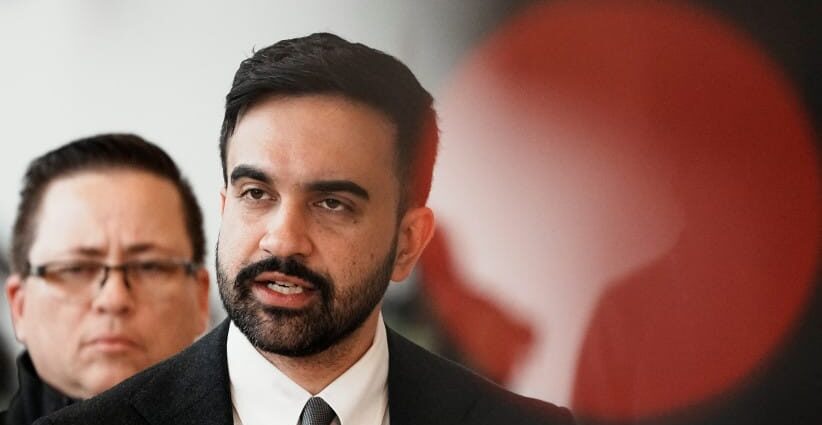
I know hesder yeshiva graduates with biblical verses tattooed on their forearms. The tattoo is a violation of Halacha. The verse is a declaration of belonging. Both are true at once. The man wearing the verse keeps Shabbat, lays tefillin, learns Daf Yomi, and is a Reshuffled Jew because the act of getting that tattoo could not have happened in his community three years ago.

There are roughly 10 to 13 Knesset seats’ worth of National-Religious voters who can no longer be predicted by the parties built for them, Bar-Ilan University sociologist Asher Cohen said this week on Army Radio. They are right-wingers. Most of them will not vote for the Likud. A smaller faction was considering Naftali Bennett, although Cohen believes most of them will not, ultimately, follow through. They will not vote for the Religious Zionist Party either, because that party did not oppose the haredi exemption from the draft.

This group has the highest rate of combat soldiers and reservists in Israeli society. They have buried their sons. They will vote, in the next election, on the question of who will share the burden, not on the question of which side of the political map they stand on. They have always stood on the same side. They have just stopped letting that side decide for them.

Earlier this year, a taxi driver told me he had been a left-wing voter and a vocal opponent of the judicial reform until October 7. After October 7, after the army’s failures became clear, after he watched what he called “the same people who said the army would protect us” tell him next that the courts would, he became an activist for the reform.

There is a man on the Tel Aviv Left who wants Bennett to be prime minister. The same Bennett who once led the Yesha Council, the political body of the settler movement. The man on the Tel Aviv Left did not change his mind about settlements. He changed his mind about who he could trust to fight a war.

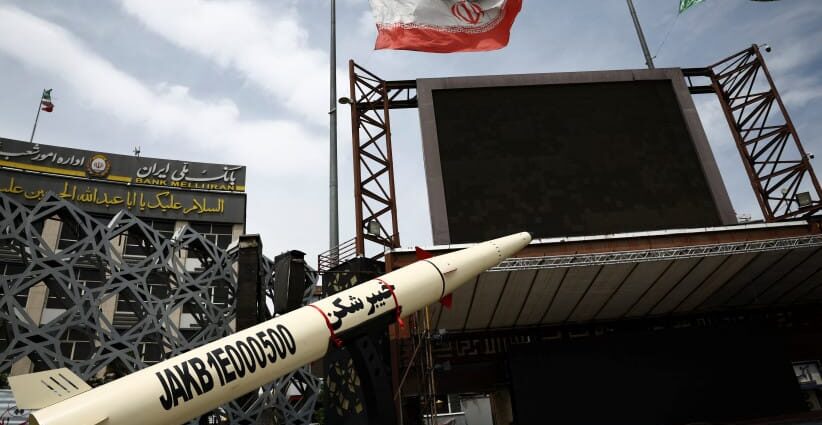

We are all unexpectedly reshuffled 

I myself never invested time in the judicial reform debate. I have a more critical perspective on it now than I did. Each of us, I think, is a Reshuffled Jew on something we did not expect to be Reshuffled on.

The data is starting to catch up to the anecdote, but it captures only one lane. Jewish People Policy Institute’s most recent survey found that 31% of Israeli Jews and 38% of those under 25 are praying more since October 7, without changing how they describe their religious identity. The same survey found that one in five secular Jews report a decrease in their belief in God.

Both findings are the Reshuffling. Tzohar performed 747 bar mitzvahs in 2023, 999 in 2024, and was on pace for 1,218 last year, drawn largely from families who do not consider themselves religious. Rabbi David Stav, Tzohar’s chairman, said he was seeing a search for meaning. “People are looking for something meaningful,” he told The Times of Israel. “The connection with God comes through prayers, comes through behaviors, not necessarily through religion in the traditional sense.”

That is the Israeli highway. The Diaspora highway runs alongside it, with traffic in directions of its own. The American Jewish Committee’s 2024 survey found that 57% of American Jews feel more connected to their Jewish identity since October 7. Nineteen percent began wearing visible Jewish symbols.

Dan Loeb, the hedge-fund manager who never had a bar mitzvah, launched the Simchat Torah Challenge, a weekly commitment to read the Torah portion in memory of the murdered. About 15,000 people signed up within months.

A young mother in California named Suzy who had drifted from her synagogue for a decade came back, started lighting Shabbat candles, and discovered her five-year-old had been watching. “I forgot one Shabbat,” she told an interviewer. “She asked, ‘Where’s my prayer?’”
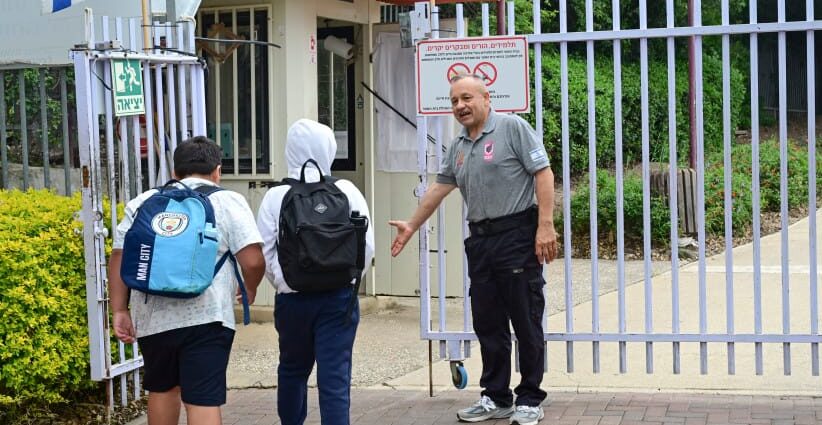
Other American Jews are moving the other way. They are looking, in the words of one I quoted in JTA last year, for a synagogue that embraces non-Zionists. They are leaving political coalitions. They are quitting boards. They are showing up at Chabad Houses and J Street meetings in the same week. The Reshuffling does not have a destination.
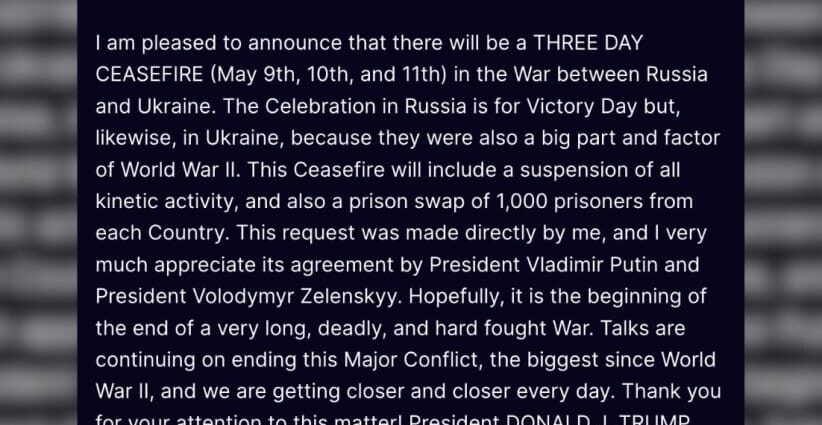
The American Jew is becoming more visibly Jewish without becoming more religious. The Israeli Jew is becoming more religious without becoming more visibly Jewish, because in Israel, visibility was never the variable. The two roads run in opposite directions and meet at the same place.

The Reshuffled are not a soft cohort. They are also the British Jew who, two years on, is more attached to Israel, more morally conflicted about Gaza, and less safe in his own city than at any point in his adult life. They are the Israeli reservist who distrusts the government and reports for duty anyway.

The labels did sorting work. In their absence, every Jew is doing more of the work himself.

The institutional question follows. The legacy organizations of Jewish life were built for a population that sorted itself by labels. They are not yet built to receive the religious-Zionist mother whose phone is face down on a Shabbat table, or the hesder yeshiva graduate with a verse on his arm, or the secular kibbutznik who has started praying, or the Tel Aviv leftist who has changed his mind about Bennett but not about settlements, or the Druze reservist composing in yeshiva Hebrew.

One reason Chabad has succeeded with so many of these Jews is almost embarrassingly simple: It does not begin by asking which box they belong in.

These days, I often think of a story I heard early in the war. A non-Jewish Russian atheist in Israel, the father of two soldiers, walked into a jewelry shop the morning his sons were called up. He bought each of them a silver Magen David necklace. He told them it was for protection. He did not pick a label. He did not have to.

The deck had been shuffled around all of us.

This post was originally published on here

The reports that the US and Iran are close to inking a deal to formally end the war that has engulfed the region, with Israel at its center, for the last two months, are both encouraging and alarming.

A one-page document containing a 14-point memorandum of understanding was in Iran’s hands, and US President Donald Trump on Wednesday said the Iranian regime had a week to respond. The one-page document would reportedly require an end to hostilities and the start of a 30-day negotiation period.

According to a variety of reports, key points on the burgeoning deal include both countries lifting their respective blockades on the Strait of Hormuz. That would come in exchange for a US removal of sanctions and an Iranian commitment to a 15-year moratorium on uranium enrichment.

Iran would additionally agree to transfer its stockpile of highly enriched uranium outside of its borders, potentially to the US. Several key terms in the potential agreement remain contingent on a future final comprehensive agreement and must still be negotiated.

US Secretary of State Marco Rubio said the negotiations with Iran were “highly complex and technical.”

“We have to have a diplomatic solution that is very clear on the topics they are willing to negotiate on and the extent of the concessions they are willing to make at the front end in order to make it worthwhile,” he said, adding that some of Iran’s senior leaders are “insane.”

That goes without saying, as Israel has learned the hard way over the past few decades of sounding the alarm about Iran’s nuclear ambitions. This has been felt in a more physical sense through the bombardment of missiles aimed at killing huge swaths of Israeli civilians both in last June’s mini-war and in March during the current conflict.

If an agreement can be reached that will indeed set a 15-year moratorium on nuclear enrichment and include the transfer of Iran’s enriched nuclear stockpile outside its borders, it will truly be a major turning point.

Nuclear or not, Iran will always aim to destroy Israel

Despite the pummeling Iran took during the March war, however, changing its stripes and agreeing to cast aside its nuclear aspirations aimed at leveling the Jewish state is a dubious prospect at best.

An Iranian official said the proposal was “more of a wish list than a reality.” On Wednesday, the semi-official Tasnim News Agency said the text contained “unacceptable clauses” and was propaganda “aimed at justifying Trump’s retreat from his recent hostile action.”

While Israel certainly wants an end to the war with an Iran that no longer poses a threat to its existence, what’s alarming about this process is that the government in Jerusalem seems to have no say in the process and is totally relying on Trump’s negotiating team, Steve Witkoff and Jared Kushner, to represent its interests.

Although Israeli officials said they were unsurprised by the developments, Prime Minister Benjamin Netanyahu is likely understandably concerned over the deal at hand. He worries about the likelihood that Iran will not honor the agreement, along with the implications for Israel’s ongoing efforts to remove the Hezbollah threat from its northern border.

Whether it was a coincidence or a message that Israel is not going to let its hands be tied in Lebanon, the IDF attacked Hezbollah’s Radwan special forces in Beirut on Wednesday. This was the first attack in Lebanon’s capital in weeks, following the ceasefires with Iran on April 7 and with Hezbollah on April 17.

On Thursday, the IDF confirmed the killing of Hezbollah’s Radwan commander in Beirut, Ahmed Ghaleb Balout, who had directed dozens of attacks against Israeli soldiers in southern Lebanon during the war, including anti-tank missile fire and explosive-device attacks.

Balout was also working to rebuild Radwan’s capabilities, including Hezbollah’s long-planned “Conquer the Galilee” invasion plan, the IDF said, adding that it would continue acting against threats to Israeli civilians and troops.

That’s the crux of the matter. An agreement between the US and Iran could theoretically weaken Tehran’s proxy in Lebanon, Hezbollah. But it’s far from a foregone conclusion.

That’s why, along with the impression that the Lebanese government appears unwilling or unable to do anything about Hezbollah, Israel must maintain the freedom to act to safeguard the North – even if it results in a diplomatic conflict with Trump and the US.

This post was originally published on here

The US’s withdrawal from the World Health Organization (WHO) could hinder the country’s response to a possible hantavirus outbreak, NBC News reported, citing health officials.

Health experts say that with the US out of the organization, it might not have immediate access to surveillance data on the virus and contact tracing information for cases linked to the cruise ship that carried the first reported cases of the deadly virus.

This type of tracking could help prevent further infections, according to the report.

With Centers for Disease Control and Prevention (CDC) experts no longer part of the teams sequencing the virus, the US might have to learn about results secondhand, Professor of Global Health and Epidemiology at George Mason University Amir Albert Roess warned.

Trump administration ‘working closely to mitigate risk’ of hantavirus

According to the CDC website, the State Department has been in direct contact with passengers on the cruise ship, and the government is “working closely with our international partners to provide technical assistance and guidance to mitigate risk.”

The organization clarified that the risk to the American public was extremely low at the time.

US President Donald Trump told reporters on Thursday he had been briefed on the hantavirus and expressed hope that it was under control.

“It’s very much, we hope, under control,” Trump said.

When asked whether Americans should be concerned about any spread of the virus, Trump replied: “I hope not.” He added that a report on the virus was expected on Friday.

NBC said that WHO officials are exchanging information with the US under international health regulations requiring countries to report public health threats of “international concern.”

Anaïs Legand, the WHO’s technical lead for viral hemorrhagic fevers, said that the organization has “very positive, regular interaction almost every single day” with the US, according to NBC.

However, the coordinator for global health security during the Biden administration, Stephanie Psaki, said the US often received advance updates on disease outbreaks, the report said.

“By the time the information is shared publicly… the experts at WHO and CDC often already knew it for days or weeks,” Psaki said.

The US formally left the WHO in January after 78 years as a member.

Trump announced the US’s departure from the WHO shortly after he took office last year, citing mishandling of the COVID-19 pandemic, according to the report. 

The US transitioned from being one of the organization’s top donors to terminating all funding to the WHO, pulling staffers from its offices, and severing participation in its committees and working groups.

Experts also worry that the WHO can’t draw on the CDC’s resources and expertise to respond to the outbreak, NBC said.

Responses to global threats are more effective when the US government is involved, Psaki said, even when many actors with the capacity and willingness to contain the threat are involved. 

Evacuations from the ship carrying passengers infected with the virus could begin as early as Monday, with 150 passengers still on board.

Reuters contributed to this report. 

This post was originally published on here

Jewish real estate mogul Steven Roth compared New York City Mayor Zohran Mamdani’s “tax the rich” rhetoric this week to racial slurs and pro-Palestinian rhetoric on an earnings call for his company, Vornado Realty Trust.

“I consider the phrase ‘tax the rich’ when spit out with anger and contempt by politicians both here and across the country, to be just as hateful as some disgusting racial slurs and even the phrase, ‘from the river to the sea,’” Roth said, referring to the phrase commonly used at pro-Palestinian protests that many Jewish groups consider antisemitic.

The remark by Roth, who has long been a notable philanthropist to Jewish causes, adds to mounting tensions between New York business leaders and Mamdani over his recently announced “pied-à-terre” tax on second homes valued at more than $5 million.

During the call on Tuesday, Roth also expressed support for Ken Griffin, the CEO of Citadel, whose $238 million penthouse was featured in a video by Mamdani announcing plans for the tax last month.

“We are all shocked that our young mayor would pull this stunt in front of Ken’s home and single him out for ridicule,” Roth said. “The ugly, unnecessary video stunt is personal for Ken and sort of personal for me.”

A longstanding source of friction between Mamdani and NYC Jews

Roth’s comments touched on a longstanding source of friction between Mamdani and some New York Jewish leaders, who have criticized the mayor over his views on Israel and his previous defense of the phrase “globalize the intifada,” another common pro-Palestinian slogan viewed by some as a call to violence against Jews.

In the wake of Mamdani’s election, some Jewish business leaders, including Dave Portnoy, the Jewish founder of Barstool Sports, said that they planned to leave the city altogether, citing the mayor’s fiscal policies and concerns about antisemitism under his leadership.

In a statement responding to Roth’s comments, Mamdani’s office said that he wanted all New Yorkers to succeed, including “business owners and entrepreneurs who create good-paying jobs and make this city the economic engine of America.”

“That does not negate the fact, however, that our tax system is fundamentally broken. It rewards extreme wealth while working people are pushed to the brink,” the statement continued.

“The status quo is unsustainable and unjust. If we want this city to become a place that working people can afford, we need meaningful tax reform that includes the wealthiest New Yorkers contributing their fair share.”

This post was originally published on here

US authorities on Thursday investigated a potential chemical attack that took place during a pro-Israel festival at George Washington University, Washington, DC, on Tuesday.

GW students were celebrating Israel Fest when individuals dropped vials containing an unknown substance into the crowd.

The event was organized by GW for Israel, a student group on campus.

According to a statement made by the university, at least one student was injured. As part of its investigation, the university said that it “will examine, among other things, whether individuals were targeted based on their Jewish faith.”

Jonathan Turley, a law professor at GW, said it took a long time for the school to reveal what happened during the event, according to a report by ABC’s 7News.

“Parents are likely to wonder why they get a fire truck on campus but have to wait until the following week to hear about a possible hate crime against a Jewish student,” he said.

The report said that students recalled the event starting to smell like rotten eggs after the vials were dropped, leading them to believe that the capsules were a kind of stink bomb.

The university is working with law enforcement and will “utilize all available avenues to investigate these concerning reports thoroughly and hold any perpetrators who are identified accountable to the fullest extent,” according to its statement.

“Acts like this have no place in our community, which is a safe and inclusive place for individuals of all backgrounds, perspectives, and experiences,” it added.

This post was originally published on here

The man who lobbed gasoline bombs at a pro-Israel rally last year in Colorado, setting several people aflame, including a woman who later died from her burns, was sentenced on Thursday to spend the rest of his life in prison, but said he wished to be executed.

Mohamed Soliman, 46, an Egyptian national, pleaded guilty to 101 charges brought by state prosecutors, including first-degree murder, then apologized in court and decried his own crimes as contrary to “the teachings of Islam” in a statement before his sentence was pronounced.

He still faces separate hate-crimes charges in federal court that carry a possible life sentence or the death penalty.

Dressed in white-and-orange-striped jail garb and seated beside his attorney with his hands shackled in his lap, Soliman said he regretted that Colorado lacked capital punishment.

“I ask the prosecution from the federal case to impose the death penalty,” he said in pre-sentencing remarks, delivered through an Arabic interpreter near the end of the three-hour proceeding livestreamed from the Boulder County District Court.

Judge Nancy Salomone sentenced him to the maximum penalty of life in prison without the possibility of parole under two definitions of first-degree murder.

A total of 2,128 additional years in prison was tacked onto his life term as the symbolic maximum sentence carried by the remainder of the charges, including attempted murder, assault, and criminal use of explosives and incendiary devices.

The sentencing followed victim impact statements presented in court by more than a dozen people who took turns recounting the horror of the attack and its aftermath. Most said the trauma they experienced 11 months ago haunts them still, shattering their sense of safety and security.

Egyptian national threw two Molotov cocktails at rally supporting Israeli hostages held in Gaza

Soliman admitted that he tossed two Molotov cocktails at people taking part in a peaceful rally in downtown Boulder staged by Run For Your Lives, a group organized to draw attention to the plight of Israeli hostages seized by Hamas terrorists from Gaza on October 7, 2023.

Prosecutors said Soliman also used a makeshift blowtorch fashioned from a spray bottle during his attack. He yelled “Free Palestine” as the gasoline bombs he lobbed at the crowd burst into flames outside a municipal courthouse in the heart of Boulder’s popular Pearl Street shopping district.

Prosecutors said Soliman had disguised himself as a gardener as he approached the rally and had carried a crate containing 16 more gasoline bombs that went unused.

Authorities identified a total of 29 victims, including 14 who were burned or injured while fleeing, and 15 who were close enough to be considered targets of attempted murder. One victim, 82-year-old Karen Diamond, died of her injuries later that month. Her husband also suffered severe burns but survived.

According to affidavits filed in court by prosecutors, Soliman told investigators after his arrest that he wanted to “kill all Zionist people” and had planned his attack for a year, but delayed going through with it until after his daughter had graduated from high school.

According to prosecutors, he used Molotov cocktails instead of a gun because his non-citizen status blocked him from buying firearms. Soliman in court said he sought to obtain a gun for self-defense only.

Public Defender Kathryn Herold, speaking on Soliman’s behalf before he addressed the court, said her client was making “no excuses” for his crime, adding he had “felt overwhelmed for the suffering in the world and he acted on that impulse.”

According to a court filing by defense lawyers, Soliman offered to plead guilty in the federal hate-crimes case in return for a lifelong prison sentence, but the government has yet to decide whether to accept his proposal.

In his pre-sentencing allocution in Boulder on Thursday, Soliman insisted he bore no ill will toward Jews. Near the end of his lengthy statement, he lamented the “thousands of families who have lost their families in Palestine and Gaza,” and said the “enemy is Zionism.”

Judge Salomone called his choices “acts of terror,” telling the defendant: “Your words notwithstanding, you chose to victimize these people because they were members of the Jewish community.”

Soliman, who lived with his wife and five children in Colorado Springs before the incident, also asserted that his family members were completely unaware of his intentions beforehand.

The family was taken into immigration custody last June after his arrest and transported to a detention facility in Texas. They were held until a court-ordered release on April 23, more than 10 months later.

The children and their mother, who subsequently divorced Soliman, were re-arrested on April 25, just after returning to Colorado. They were freed again when attorneys intervened a day later, according to court documents.

This post was originally published on here

Three female soldiers from the IDF’s Border Protection Corps spoke with Channel 12’s ‘Uvda,’ in interviews broadcast on Thursday evening, discussing the event one year ago in the Gaza Strip that heavily altered their lives.

The soldiers, Maj. Nurit Rokach, Linor, and Stav, came under fire from 11 terrorists while in a jeep inside the Gaza Strip in April 2025. Stav was a driver, Linor a medic and drone operator, and Rokach was the company commander.

On April 19, 2025, they were driving alone in an unarmored jeep in the Gaza Strip, near Beit Hanun, without an accompanying convoy.

“I said several times that I do not want to bring vehicles into Gaza without a convoy,” Stav said.

“I immediately understood that a rocket-propelled grenade was fired at us,” Rokach said. “It passed through me. You feel a lot of pain,” Linor added.

“It was the scariest moment in my life. They kept shooting at us while I kept driving,” Stav recalled.

The vehicle overturned with the three soldiers still inside and under fire.

Linor recounted how she felt hurt that she was a medic, yet could not do anything after losing her leg in the incident.

Similarly, Rokach, as the commander, said she felt helpless in a way she had not before. “I had no doubt that I had lost my right leg. The thigh in my left leg was injured. I could not move, and I had no way to help them, which was very frustrating,” she said.

Terrorists, however, did not approach the vehicle, but continued to shoot from a distance.

“It was me alone. I understood that it was me against 11 terrorists. It truly was a suicide mission,” Stav said, after realizing her two colleagues were severely wounded.

She was able to place a tourniquet on Linor, and radio communications understood that terrorists were in the area, and three soldiers were wounded and needed medical evacuations.

One soldier killed, two severely wounded, during rescue operations

However, during rescue operations, a tracker, CWO G’haleb Sliman Alnasasra, was killed, and two others were severely wounded.

Following the explosion that killed Alnasasra, the three soldiers were evacuated, eventually reaching a military helicopter.

Discussing their rehabilitation processes, Rokach and Linor said that they did not understand how important having two legs is. “You need to get out of bed, learn how to sit down anew,” Rokach said.

Stav, in particular, remains angry at the military’s senior echelons for allowing them to operate in a dangerous area without appropriate combat support.

Rokach had been previously injured by terrorist gunfire during Hamas terror infiltrations into Urim base during the October 7 massacre.

“It was clear to me from October 7 that Hamas was not done with me – that something would happen,” she said.

Linor also lost a close friend who fell defending the Urim base on October 7.

This post was originally published on here

Former prime minister Naftali Bennett filed a NIS 2m. defamation lawsuit Thursday against Environmental Protection Minister Idit Silman (Likud), MK Ohad Tal (Religious Zionist Party), and the right-wing broadcaster Channel 14 for claims that he took psychiatric medications to function.

The lawsuit was filed in the Petah Tikva Magistrate’s Court.

In the lawsuit, Bennett accused Channel 14 of being a “television propaganda channel masquerading as a journalistic news outlet,” adding that its content consists of positive coverage of Prime Minister Benjamin Netanyahu and his coalition.

He also accused the news outlet of attacking Netanyahu’s political rivals using “fabrications presented as ‘facts,’ as well as extreme and biased opinions.

Bennett also accused Silman of telling political activists at a conference ahead of elections that he was “both confused and stuttering” from the beginning, stating he was in a “really, really, poor mental state.”

The lawsuit’s claim quoted Silman saying, “Everyone around him knew this; they would put pills for him into all kinds of little red boxes, supposedly so he could function.” Silman also claimed that the person actually running the prime minister’s office during Bennett’s term was Yair Lapid and his entire team.

Silman previously served as Bennett’s coalition chairwoman and was one of the key figures in bringing down his government. She has been a member of the Likud party since 2022.

The lawsuit accused Channel 14 of broadcasting Silman’s statements on May 4, 2026, and amplifying the alleged lies on its platforms.

“The defendant’s slanderous statements… constitute blatant lies,” said the lawsuit. “The plaintiff never took medication for his mental functioning,” it continued.

“These are falsehoods fabricated by the defendant in order to justify her disgraceful defection from the plaintiff’s party, and to please the person who appointed her as a minister in exchange for her defection, while attempting to save the fading political careers of both of them, which are nearing their end in the upcoming elections,” the filing added.

The statement also called Silman’s claims “cheap and wild smears invented by a desparate political in order to mislead the public regarding the plaintiff’s mental state.” It added that Bennett is “a person who has dedicated all his strength to public service for many years.”

Statements, broadcasts, damaged Bennett’s electoral chances, lawsuit claims

It also claimed that Silman’s statements and Channel 14’s broadcasting of these damaged Bennett’s chances of being elected prime minister.

Additionally, Tal was accused of escalating Silman’s lies on May 5, 2026, when, in a post on X/Twitter, he referred to the pills as “psychiatric medications,” claiming that these accusations meant to cast doubt on the plaintiff’s fitness to serve as prime minister.

“Yesterday we discovered that Naftali Bennett takes psychiatric medications while completely hiding it from the public,” said the now-deleted post. “Now it is clear how an Israeli citizen was willing to sell the country to the Muslim Brotherhood and Hamas for the prime minister’s chair. Wishing you a full recovery, Naftali.”

Bennett claimed that Tal’s comments constitute defamation.

Silman also commented on the pills on her X account, stating, “Naftali, maybe take a calming pill. I understand the polls are stressful…”

Channel 14 commented on the lawsuit, claiming that “Bennett’s attempt to prevent the publication of a recording that is of public interest joins Yair Golan’s plan to silence media outlets that do not obey them.” 

“Instead of hiding behind lawyers, Naftali Bennett is expected to come to the studio and provide answers to the public,” the news channel stated.

This post was originally published on here

Hamas terrorists have been conducting training in areas of Turkey, Israel’s public broadcaster KAN News reported on Thursday.

The operatives, who wear civilian clothing, regularly participate in training sessions on the use of small arms and tactics at public shooting clubs, as well as training in drone operations. They have even received official licenses to fly drones in Turkey, the report said.

The goal is reportedly to complete their training before transferring them to Lebanon, Jordan, and the West Bank in order to carry out attacks in future conflicts with Israel.

This is by no means the first instance of coordination between Turkey and Hamas.

Israel clamps down on Iran-backed Hamas money-laundering network in Turkey

Last December, the IDF and Shin Bet (Israel Security Agency) exposed an Iranian-sponsored money laundering network run by Hamas in Turkey.

According to an IDF statement, documents from the organization indicated that Hamas operates a network of money exchange involving Gazans located in Turkey, utilizing the country’s financial institutions for terroristic purposes.

These Gazans, who manage to transfer hundreds of millions of dollars, are reportedly directly connected to Iran and to senior members of the Islamic regime. 

According to the IDF’s statement, the launderers also conduct extensive economic activity in Turkey – involving the transfer of funds from Iran to Hamas.

This post was originally published on here

New York state is set to ban law enforcement from wearing masks while on duty, Governor Kathy Hochul said on Thursday, a move that is likely to be challenged by the Trump administration.

The announcement was made as Hochul, a Democrat, said an agreement had been reached with state lawmakers on New York’s 2027 budget, which included sweeping immigration changes.

Blake G. Washington, the state’s budget director, expects the bills to be passed by the Democratic-led legislature as soon as next week.

Under that agreement, state law enforcement will be prohibited from working with US Immigration and Customs Enforcement on federal immigration efforts. It will also ban ICE from entering schools, healthcare facilities, homes, and other sensitive locations without a judicial warrant.

“We’re also banning law enforcement officers from wearing masks, except in rare circumstances where there’s a genuine operational need, like a gas mask,” Hochul said.

It will ban ICE from entering facilities without a judicial warrant

“No members of state, local, or federal law enforcement wear masks during ordinary operations,” she said.

The US Department of Homeland Security, which has federal oversight of immigration operations, did not immediately respond to a request for comment.

Other Democratic states, including California and New Jersey, have rolled out similar efforts prohibiting ICE from wearing masks while carrying out Republican President Donald Trump’s aggressive immigration campaign.

The US Justice Department sued those states, challenging the bans. A federal judge struck down the California ban in February, saying that it “unlawfully discriminates against federal officers.”

This post was originally published on here

The White House called Star Wars star Mark Hamill “one sick individual” on Thursday after an AI-generated image of US President Donald Trump in a shallow grave was posted on one of the actor’s social media accounts.

“If Only” was inscribed on an image of Trump lying with his eyes closed, adjacent to a gravestone surrounded by daisies, with the inscription “Donald J. Trump 1946-2024.” The image was posted on Hamill’s verified Bluesky account.

Hamill, who played Luke Skywalker in the classic Star Wars films that debuted in 1977, wrote that Trump “should live long enough to witness his inevitable devastating loss in the midterms, be held accountable for his unprecedented corruption, impeached, convicted & humiliated for his countless crimes.”

“Long enough to realize he’ll be disgraced in the history books, forevermore,” the actor added.

The White House responded on X/Twitter, calling Hamill “one sick individual.”

“These Radical Left lunatics just can’t help themselves,” a post from the White House press team said. “This kind of rhetoric is exactly what has inspired three assassination attempts in two years against our President.”

Hamill clarifies remarks

Hamill later removed the gravestone image and sought to clarify his remarks.

“Actually, I was wishing him the opposite of dead, but apologize if you found the image inappropriate,” he wrote on Bluesky.

Last month, a man stormed a security checkpoint and fired a shotgun outside the White House Correspondents’ Association dinner in what authorities said was an attempt to assassinate Trump.

Trump was shot in the ear in 2024 at a rally in Pennsylvania. The shooter was killed by the Secret Service.

Also in 2024, a man was found hiding in bushes with weapons close to where Trump was golfing. He was convicted of attempted assassination in February.

This post was originally published on here

I remember distinctly my mother, a Polish-Israeli, calling me to say that she heard Paweł Jabłoński, Poland’s then-deputy foreign affairs minister, say on the radio that Israeli officials have consulted with their Polish counterparts on “curbing the judiciary” and “managing its judicial issues.”

Seeing her two homelands bond publicly over authoritarianism and disdain for political liberties caused her great embarrassment. Israelis, to their credit, came to the right place for advice: since 2015 and the electoral win of the Law and Justice Party (pol. Prawo i Sprawiedliwość or PiS) till their removal from power in 2023, Poland’s government has been pursuing an overhaul of the Constitutional Tribunal, the Supreme Court, and the National Council of Judiciary, as well as lower courts.

Even with two years of a new government behind us, the fight for free judiciary is far from over. All three of the bodies mentioned above, although to a varied extent, are still captured by partisan appointees who continue to rule in favor of their de facto masters and ultra-conservative policies. Elected in August with PiS’s support, President Karol Nawrocki has also blocked attempts at removing unlawfully instated judges.

“How tragic that the only thing Poland can offer now, is advice on weakening the courts” – said my mother – “and how tragic that Israel is willing to listen.”

Put aside the controversial law nearly criminalizing discussion of the participation of Poles in the Holocaust; when it had come to the judiciary, Poland and Israel became unexpected allies. I remember protesting against the overhaul in Tel Aviv and feeling profound deja vu as just a few years earlier we yelled out the same chants on the streets of Polish cities.

However, it’s not only the democratic backsliding that the two countries have in common. When I was dealt my own SLAPP, for a climate protest I organized, it was only the remnants of free judiciary that struck it down.

Similar news comes out of Israel too: often, it is the courts that continue to serve as the last bulwark against the repression of the civil society. I then realized that Polish and Israeli cases can serve each other as an inspiration not only in fighting democracy, but, more importantly, in fighting for it.

Independent courts are not bohemians’ pastime. They are essential to the state’s survival.

Autocrats around the world have long been positioning themselves as fighting the corrupt elites in the name of the people. PiS have done that using a two-fold strategy: one narrative said that the judicial “reform” was crucial because the judiciary itself is. They claimed that “endless talking” and “sounding the alarm” on the overhaul is a hobby and concern only for the wealthiest, university educated and leftist Poles. This is an important distinction: PiS have managed to convince the public for a long time that the act itself is of utmost importance, but discussing and opposing it, is a sign of privilege and boredom. In a system, where PiS governed by itself, it was the only political party which could act. The rest of us, who wouldn’t stop talking about it, got the branding of spoiled big-towners. 

Talking about the character of the law is not enough. The conversation about “Polish democracy” as an idea hasn’t resonated with many Poles, because they viewed the question itself as sort of elitist. I suppose that talking in abstract about the “Israeli democracy” can only get you so far too; ultimately, it’s not only the democratic basis we fight for, but also the material effects which independent courts bring. I wish the pro-democracy movement in Israel would talk more about the tangible benefits of due-process and protecting all of us from tyranny. 

Defend judges as people.

History shows us that democracy doesn’t die by this or that law. Those who want to kill it, win rather by intimidation, ostracizing, and fatigue. The former Polish government struck gold when it framed the judicial overhaul as the last step of the decommunization of the political system. It was an effective trick because most Poles support such policies. And it’s also true that many high-level judges in Poland were either educated in the Polish People’s Republic or somehow associated with its former officials. Judges were branded then as a caste; people who haven’t been served justice yet and who must be replaced. Importantly, this anti-communist schtick did not stop PiS from nominating to high offices its own members with a communist past. 

But when the government attacked judges as a group, the society stood behind them as people. Judges such as Paweł Juszczyszyn or Igor Tuleya, have gone from being unknown experts to national symbols of the struggle for independent courts. The Poles understood that in defending the system, one doesn’t only defend laws or institutions, but also individuals who face threats and intimidation. Uplifting the voices of judges, lawyers, clerks and students allows for the fight to become more concrete and personal. It also lets new voices emerge who are unbound by the partisan divisions. With a little luck, they can become exactly what’s needed in convincing the unconvinced. 

European Union flags fly outside the European Commission headquarters in Brussels (credit: YVES HERMAN/REUTERS)

Reach out for help abroad.

What saved us many times in Poland was the fact that our country is a member of the European Union. This meant that there were extra international institutions in place to safeguard the democratic institutions at home. Independent judges and law associations made use of that fact early on: the EU has not only supported the movement vocally, shared know-how and grants and released legal opinions, but also put direct pressure on the Polish government by making the flow of funds dependent on pro-democratic reform.

Moreover, the free-courts movement managed to convince the people that the overhaul boils down to a question of belonging in the European Union as well as the broadly-defined West. Poles, even though many take issue with the EU, are at large a euroenthusiast society and the rift between Warsaw and Brussels seriously scared them. 

Israel isn’t in the same position but it is, in many ways, dependent on the international community when it comes to military aid and trade, most notably on the United States. It might sound naïve to believe that after President Donald Trump publicly called for pardoning Benjamin Netanyahu, the American administration could push in favor of the pro-democracy movement. But it doesn’t mean that Israeli activists should not strive to externalize the struggle towards liberal politicians in US and Europe.

Concrete and precise sanctions, such as linking the flow of military aid on giving up the overhaul, is necessary. This is not the case of “meddling in internal politics,” if the majority of Israelis oppose the overhaul and which threatens their basic rights. Americans and others need to realize that Israel, which has independent courts, is in their interests, as it allows democracy to bloom, political overreach to be curtailed and internal disputes to be adjudicated. It goes without saying that the region does not need yet another full-on autocratic regime. 

Remember that the real fight begins after the overhaul is stopped.

When PiS lost its parliamentary majority in 2023, the civic society in Poland was jubilant. As the government seemed invincible, we really thought that Poland was becoming the next Belarus. More than two years into the rule of a new government, those who abused the Polish judiciary have not been held to account. PiS have used clever lawyerly tricks to entrench their appointees in the Constitutional Tribunal, the Supreme Court and the National Council of Judiciary. They made it so that their removal is not possible without breaking some laws in the process. Some politicians have also defected to Hungary, most notably former justice minister and the face of the assault on courts, Zbigniew Ziobro, and his deputy, Marcin Romanowski (the latter has even, quite grotesquely, received a political asylum). Even now, after Viktor Orban’s electoral defeat, it might take months for Ziobro and Romanowski to be extradited to Poland; if they won’t find another hideout in the meantime, that is. 

The new government got trapped between two forces: some of its supporters demand, to put it blandly, to see PiS apparatchiks behind the bars. The ineffectiveness in restoring the highest courts to their legal function angers them greatly. On the other hand, Donald Tusk, Poland’s Prime Minister since 2023 and one of Poland’s most iconic politicians, has a reputation amongst its opponents of a cruel man. He’s worried that harsh action would in turn make him appear without remorse for democratic norms. He’s also afraid that serious consequences for PiS figures would scare the public, as jail-time sentences for politicians have been a line that even the previous government did not dare to cross. 

In Israel, the fight against the judicial overhaul is still in an earlier stage, but the possibility of a new government is not far from reality. Israelis will need to figure out how to restore trust in the institution of the Supreme Court and judiciary in general while satisfying the need of the people to see those responsible for the attempt at its dismantling punished. The Polish example shows that once the overhaul is completed, it is extremely hard to undo it without crossing some societal, political or legal red lines.

The crisis around the judiciary sparks some valid discussion around its role too: does it really serve the interests of all citizens? Who is being left out of the conversation? What breeds indifference? Those are the type of questions that a new Israeli prime minister, whoever it will be, will need to confront themselves with. 

The writer, based between Berlin, Tel Aviv and Warsaw, is a freelance journalist covering the Israeli-Palestinian conflict for several Polish newspapers. He also works for the Shipyard Foundation, one of the largest democracy-safeguarding NGOs in Poland and pursues a history and sociology degree at the Humboldt University. He’s the author of a mini-reportage “Smolanim. Voices of the Israeli Left in a post-October 7th world” and in 2019, he co-created the Fridays For Future movement in Poland, which mobilized hundreds of thousands of students to skip school in demand for a worldwide implementation of scientifically accurate climate policy.  

This post was originally published on here

An Israeli reservist in his 30s who spent months serving in Gaza won the NIS 15 million first prize in the national lottery and said he plans to use part of the money to establish a nonprofit.

The winner arrived at the Mifal Hapayis lottery headquarters about two weeks after the April 18 draw, in which he won the jackpot.

“For some time, I have had a feeling that it was only a matter of time until I won, even though I rarely fill out a form,” he said. “Before the draw, I bought a Double Lotto ticket, and something made me add a regular Lottomat form as well.”

The winner said he checked the numbers on the lottery app shortly after the draw.

‘ I could not come right away to collect the prize’

“I checked the numbers against the form and immediately understood that I had won,” he said. “I did not tell anyone. I went for a walk around the neighborhood to process the news. The first thing that crossed my mind was that this is a very big responsibility, to make the right decisions.”

He added that his arrival at the lottery headquarters was delayed because of his current military service.

“I am in reserve duty, so I could not come right away to collect the prize,” he said.

Asked what he intended to do with the money, the winner said he planned to proceed carefully.

“I am a calm and thoughtful person, and I have a plan I would like to fulfill, to establish a nonprofit,” he said. “Giving and helping others are very important to me, and I feel a deep connection to that. As for myself, I will take the time to consult and think about what is right to do.”

The winner said that after collecting the prize, he was returning to reserve duty.

“For now, I am going back to the reserves, and I will have enough time to continue planning my plans,” he said.

This post was originally published on here

Cornell University President Michael Kotlikoff and student protesters are trading accusations after an incident in which protesters surrounded the president’s car following an on-campus debate about Israel.

The protesters, from a group called Students for a Democratic Cornell, released a video appearing to show that President Michael Kotlikoff had backed up into one of them while a protester shouted that the car ran over his foot.

In response, Cornell released its own video depicting what it said was a “harassment and intimidation incident,” its enhanced version of which it said offered “complete footage of the parking lot interactions, instead of clips to support a narrative.” That video shows students surrounding the president’s car as he tries to exit his parking space. After he eventually departs, the students continue to mill around with no obvious indication of injury to any of them.

In a statement of his own, Kotlikoff said that despite being surrounded by protesters who banged on his car windows, he waited until his backup camera showed a clear path before maneuvering out of the spot.

Pro-Palestinian protesters harass Cornell’s Jewish president

“The behavior I experienced last night is not protest,” Kotlikoff said in his statement, released Friday night. “It is harassment and intimidation, with the direct motive of silencing speech. It has no place in an academic community, no place in a democracy, and can have no place at Cornell.”

In an Instagram post, the protesters rejected Kotlikoff’s claims that they banged on his car and that they had previous records of misconduct on campus. They also reiterated their allegation that he had struck them.

The incident marks a relatively rare example of a clash between a university and pro-Palestinian student protesters two years after the student encampment movement roiled campuses across the United States, including at Cornell. The Ivy League university, like many others, enacted new rules designed to constrain protests that have kept demonstrations at bay amid pressure from the Trump administration to curb what it said was antisemitism among protesters. In November, Cornell agreed to pay $60 million to resolve federal antisemitism allegations.

Kotlikoff became Cornell’s president in early 2025, saying at the time that he was “very comfortable with where Cornell is currently,” following “two relatively peaceful semesters” in which there were only isolated incidents that violated university rules around protest. He soon rejected pro-Palestinian students’ demands to cut ties with the Technion University in Israel. But he also urged the campus to foster academic debate around the Israeli-Palestinian conflict.

The event that preceded his clash with students on Thursday represented a striking example of such debate. Sponsored by an ideologically diverse array of groups, including the pro-Israel advocacy groups StandWithUs and the Zionist Organization of America, as well as the campus chapter of Students for Justice in Palestine, which has previously been suspended for violating university rules, the event was the second in a two-part “Israel-Palestine Debate Series.”

The series was organized by the Cornell Political Union according to a format its website says it has long maintained. The format features a lecture by a speaker followed by formal responses from students and an audience debate.

In the first event, held earlier in April, the Israeli historian Benny Morris lectured on the topic “The American-Israeli Alliance Serves America’s Interests.” Morris is a liberal Zionist critic of the Israeli government whose work has included foundational research on the founding of the state, arguing that many Arabs were expelled, rather than fled, during the 1948 war.

The second, on Thursday, featured the pro-Palestinian Holocaust historian Norman Finkelstein, who lectured on the topic “Israel Was Not Justified in Its Response to October 7th.” Finkelstein, who has criticized Morris for showing a pro-Israel bias, has compared the plight of the Palestinians to that of Jews during the Holocaust, and Students for Justice in Palestine posted a picture of its members posing with him on Thursday.

Kotlikoff offered introductory remarks at the event, which promoted a no-technology policy designed “out of respect to students who will be given the opportunity to speak openly on a divisive topic.”

This post was originally published on here

The US Department of Defense estimates that Iran has lost nearly five billion dollars in oil revenue as a result of the US blockade of the Strait of Hormuz, Axios reported early Saturday morning. 

According to Pentagon officials, over 40 vessels carrying oil and other contraband have been redirected by the US military since the blockade began on April 13th. 

Two ships have been seized by the US, and 31 tankers carrying 53 million barrels of Iranian oil are stuck in the Gulf of Oman with a value of over $4.8 billion, Axios wrote. 

Iran running out of oil storage

Iran is also running out of storage capacity for the oil it is producing, and may reach capacity within 15 to 60 days, The Jerusalem Post reported on Thursday. 

“The blockade is working to perfection,” a US official told the Post. “There is no economic trade going into or out of Iran.”

U.S. forces patrol the Arabian Sea near M/V Touska on April 20, 2026, after firing upon the Iranian-flagged vessel that the U.S. accused of attempting to violate the U.S. naval blockade of Iranian ports near the Strait of Hormuz. (credit:  U.S. Navy via Getty Images)

As a result, Iran has been forced to store all the oil it extracts in various ways, the official said, adding that this includes onshore storage and floating storage aboard vessels, particularly Very Large Crude Carriers. VLCCs are supertankers designed for longer-distance transport and typically carry about two million barrels of crude oil.

It is estimated that once Iran’s storage capacity is exhausted, it could create conditions more favorable for a potential agreement between the US and Iran.

US Navy acting like pirates, Trump says

US President Donald Trump said on Friday the US Navy was acting “like pirates” in carrying out Washington’s naval blockade of Iranian ports during the US and Israel’s war against Iran.

Trump made the comments while describing the seizure by US forces of a ship a few days ago.

“We took over the ship, we took over the cargo, we took over the oil. It’s a very profitable business,” Trump said in remarks on Friday evening. “We’re like pirates. We’re sort of like pirates, but we are not playing games.”

Some of Tehran’s vessels have been seized by the US after leaving Iranian ports, along with sanctioned container ships and Iranian tankers in Asian waters.

Amichai Stein and Reuters contributed to this report.

This post was originally published on here

The “noble” Iranian population will safeguard the regime’s nuclear and missile technologies as “national assets,” a Thursday speech attributed to Iranian Supreme Leader Ayatollah Mojtaba Khamenei read.

The speech was read on Iranian state TV by a broadcaster and posted on Khamenei’s official X/Twitter account.

Iranians will “safeguard these assets just as they do their maritime, land, and airspace borders,” the speech continued.

“A new chapter for the Persian Gulf and Strait of Hormuz is unfolding,” it read.

“Today, it has been proven to not only the global public opinion but even to the rulers of countries that the US’s presence and establishment in the Persian Gulf is the main source of instability in the region,” it stated.

A man walks next to a poster with a picture of Iran's new Supreme Leader, Mojtaba Khamenei in Tehran, Iran, March 22, 2026 (credit: MAJID ASGARIPOUR/WANA (WEST ASIA NEWS AGENCY) VIA REUTERS)

“The US’s flimsy bases lack the resilience and capability even to ensure their own security, let alone provide any hope for US’s dependents and the US-worshippers in the region,” the speech continued.

“The brilliant future of the Persian Gulf region will be a future without the US where the progress, comfort, and prosperity of its nations are served,” it added.

‘American foreigners belong at the bottom of Strait of Hormuz,’ speech attributed to Khamenei says

“We share a ‘common destiny’ with our neighbors surrounding the waters of the Persian Gulf and the Sea of Oman. These foreigners from thousands of kilometers away, who are greedily carrying out transgressions in the Persian Gulf and Sea of Oman, have no place here except at the bottom of its waters,” the speech stated.

“Iran will put an end to the hostile enemy’s exploitation of the Strait of Hormuz,” it stated, adding that Iran’s management of the strait would “ensure the security of the Persian Gulf.”

The gulf has “provoked the greed of many devils over the centuries,” including “repeated aggressions carried out by European and American foreigners,” it said.

Most recently, this includes the “saber-rattling of the Great Satan, the US,” it concluded.

A similar statement was read in early April.

Khamenei is believed to be seriously wounded following Israeli and US airstrikes on Tehran.

This post was originally published on here

On the surface, the streets of Tehran appear to have returned to normal. Cafés are open, and traffic jams in the capital have resumed their usual pace. However, beneath this routine lies a nation on the brink of financial collapse, one that even the most brutal crackdowns may not contain.

While the streets are full of people, their pockets are empty. The Iranian rial has become a liability that citizens are desperate to offload.

“There is simply crazy inflation in the market because nobody wants to hold the Iranian currency,” explains Prof. Amos Nadan, head of the Dayan Center at Tel Aviv University, adding, “This currency is fundamentally unstable.”

Even before the recent military escalations, Iran was grappling with an inflation rate of approximately 70 percent—the highest since World War II. Today, the numbers tell the story of a struggling middle class. The new monthly minimum wage stands at over 160 million rials, a figure that sounds astronomical until it is converted to its actual value: a mere $104.

An Iranian woman walks past an anti-USA and anti-Israel mural, in Tehran on April 21 2026, amid a ceasefire in the region.  (credit:  ATTA KENARE / AFP via Getty Images)

The human cost of this devaluation is staggering

“The truth is that this might not be the end. Because when there isn’t much economic activity in Iran—as there wasn’t during the war—there isn’t much opportunity for the currency to weaken dramatically,” says Eyal Hashkes, a strategic consultant and author of The Swords of Economy. “The moment life returns to full normality, we will see an even more significant weakening of the rial.”

The human cost of this devaluation is staggering. Daily necessities have become luxury items. A single kebab in a restaurant now costs between five and six million rials, while a basic meal of chicken and rice can cost up to four million.

“We are seeing very difficult cases across many fields—child prostitution and other extremes just to bring food home,” notes Prof. Nadan. “This is a population that is suffering, especially the poor, in a very severe way.”

Iran’s economic woes were not caused by the war; they were merely accelerated by it. Long before the first shots were fired, the country suffered from a chronic energy crisis, forced rolling blackouts, and a persistent drought that dried up the nation’s reservoirs. These problems led to massive riots in January, which the regime suppressed with lethal force, resulting in the deaths of tens of thousands of protesters.

In an attempt to stifle dissent, the regime has kept the internet largely paralyzed. This digital blackout has cost the economy an estimated $37 million per day due to the inability to process online payments and disruptions to export chains.

According to Eyal Hashkes, the only way for Iran to emerge from this stagnation is to remove economic sanctions. Without external investment, Iran cannot grow. “Without removing sanctions, it will be impossible to regrow the economy.”

To further destabilize the regime’s ability to fund its military proxies, Israel targeted key industrial sites during the conflict, focusing on steel and petrochemical plants. While the strikes were defined as attacks on the military industry, the collateral damage to the civilian economy was immense. “The attacks on steel facilities and other industries like petrochemicals led to a decrease of billions, or even tens of billions, in potential annual revenue for Iran,” says Hashkes.

Perhaps the most significant pressure point remains the maritime blockade of the Strait of Hormuz. For weeks, the flow of goods from Iranian ports has ground to a halt. Tehran’s primary lifeline—oil—is no longer reaching its main customer, China.

“Something like 85 percent of Iran’s exports is oil,” says Prof. Nadan.

The crisis is reaching a logistical breaking point. Analysts estimate that by mid-May, Iran will have completely run out of storage space for its unexported oil. When that happens, the regime will have to make a choice that could haunt it for decades: shutting down the wells.

“In the future, Iran will run out of storage for all this oil,” Hashkes says. “When that happens, they will have to start turning off the wells. After a well remains inactive for a long time, it often cannot simply be turned back on—it takes years of rehabilitation.”

Prof. Nadan adds that the oil’s quality is at risk. “If you don’t pump the oil, it begins to lose its quality. We remember the COVID-19 period, when prices turned negative just to keep the pumps moving. Iran is entering a new cycle of hardship,” he says.

The Central Bank of Iran recently estimated that it would take at least 12 years to rehabilitate the national economy—and that is assuming the war ends today. As the pressure builds, the question in Jerusalem and Washington is no longer whether the Iranian economy will break, but whether the Iranian people will break the regime before it does.

This post was originally published on here

The Palestinian Authority has continued making payments to terrorists and their families, despite promises to end the pay-for-slay programs, the US State Department informed Congress last month, the department confirmed on Wednesday.

A total of $156 million was paid out to the families, a fraction of the $214 million the PA promised to distribute to them. $126 million went directly to Palestinian terrorists, including those released from Israeli custody, and $30 million to the families of Palestinian terrorists who died committing their acts of terrorism.

“The PA continues to provide a system of compensation in support of terrorism through new mechanisms and under a different name,” the State Department wrote in the report, based on information provided by Jerusalem, open source information, and non-governmental organizations.

Payments continued despite Palestinian Authority President Mahmoud Abbas legislating changes to the West Bank’s welfare system last year, shifting payments to a needs-based model rather than stipends scaled to the length of a terrorist’s sentence.

“Despite changing the mechanisms, the PA continued payments and benefits to Palestinian terrorists and their families,” the State Department wrote.

 Palestinian Authority President Mahmoud Abbas addresses the Turkish parliament during an extraordinary session on August 15, 2024 in Ankara, Turkey. (credit: Serdar Ozsoy/Getty Images)

Under the Taylor Force Act (2018), Washington is unable to offer economic aid to Ramallah until it ends pay-for-slay payments and its statements of public support for terrorism.

The PA’s payments to terrorists, including those who have killed American citizens, have continued despite the rapidly deteriorating economic crisis in the West Bank. The Jerusalem Post reported earlier this week on strikes planned in hospitals over the PA cutting wages to $650 for April, down from the 80% it has been paying since tax revenue began being withheld in 2022.

Finance Minister Bezalel Smotrich announced earlier this week that approximately NIS 590 million was deducted from the PA to cover both debts to the Israel Electric Corporation and water and environmental corporations, as well as funds that the PA had transferred to terrorists.

Citing comments made by Palestinian officials after the Bondi Beach attack in Australia, IMPACT-se reports on antisemitic and pro-terrorist content in the PA education system and PA officials honoring terrorists released into Egypt. The report determined Ramallah had failed to end its pro-terror ideological positioning.

PLO publishes list of prisoners who have yet to receive pay-to-slay salary

PA Finance Minister Estephan Salameh’s February statement, “We have not abandoned any Palestinian resident, whether they are prisoners or families of martyrs and wounded. This is a clear fundamental issue,” was also cited in the report as evidence that Ramallah has continued to fail in meeting the requirements to receive US funds.

In January, as was reported by the Israel-based research institute Palestinian Media Watch (PMW), the Palestinian Liberation Organization’s Commission of Detainees and Ex-Detainees Affairs had published a list of 52 released Palestinian prisoners who needed to take administrative steps in order to continue or begin receiving monthly salaries from the PA/PLO.

The terrorists listed included Ahmad Dahidi, an orchestrator of the 2003 murder of Eli Biton; Ahmad Abu Awad and Ahmad Al-Shibani, terrorists implicated in constructing the bomb for the 2003 Afula mall suicide bombing; and Saed Zaid, a terrorist implicated in the 2003 shooting of Amit Mintin.

PMW director Itamar Marcus told The Post that the organization was able to track PA funds reaching terrorists in Jordan, Lebanon, and Syria, not just the West Bank. 

This post was originally published on here

National Religious Broadcasters (NRB) has asked the Federal Communications Commission (FCC) to investigate ABC Television over remarks made during the April 23, 2026, broadcast of Jimmy Kimmel Live!, saying the comments raise concerns about the normalization and potential incitement of political violence. 

The request centers on a segment presented as a parody of the upcoming White House Correspondents’ Dinner, during which host Jimmy Kimmel referenced First Lady Melania Trump. In his monologue, Kimmel said, “Our first lady, Melania, is here. Look at Melania, so beautiful. Mrs. Trump, you have the glow of an expectant widow.” 

The White House Correspondents’ Dinner took place on April 25, 2026. That evening, an attempted attack targeted President Trump and other federal officials. The incident marked the third attempted attack on President Trump’s life in the current period and followed other violent acts, including high-profile political assassinations and multiple school shootings across the country. 

Melania Trump responded in a post on X, writing, “It’s time for ABC to take a stand” regarding Kimmel. She added, “Enough is enough. Kimmel’s rhetoric is designed to divide our country.” 

She added, “His monologue about my family is not comedy, and it deepens the political sickness within America. People like Kimmel should not be given the opportunity to enter our homes every evening to spread hate.” 
NRB General Counsel Michael Farris said existing law allows limits on speech that incites violence. 

US PRESIDENT Donald Trump and first lady Melania Trump, next to White House Press Secretary Karoline Leavitt, attend the annual White House Correspondents' Association dinner in Washington, DC, US, April 25, 2026. (credit: REUTERS/JONATHAN ERNST)

“While the FCC is bound by the First Amendment of the Constitution and federal law (47 U.S.C. § 326) to respect freedom of speech, Supreme Court precedent makes clear that speech which incites violence is not protected. Under Brandenburg v. Ohio (1969), speech loses constitutional protection when it encourages lawless action, is intended to produce such action, and is likely to result in imminent harm.” 

Concern about broader patterns of violence

NRB President & CEO Troy A. Miller said the group’s request reflects concern about broader patterns of violence. “We should be relieved that lives were spared Saturday evening; but relief can’t become complacency. We’re seeing a pattern of violence in this country that didn’t appear overnight.” 

He added, “When influential voices joke about death or treat political opponents as disposable, it contributes to a culture where violence feels thinkable to the already unstable. National platforms carry real weight, and with that comes responsibility. That’s why this warranted action.” 

NRB said it is seeking a full FCC review to determine whether federal law or commission precedent was violated.  

This post was originally published on here

US President Donald Trump on Wednesday told Axios that Iran will remain under a naval blockade until the Islamic regime agrees to a deal that addresses US concerns about its nuclear program.

The blockade is “somewhat more effective than bombing,” Trump told the outlet.

“They are choking like a stuffed pig. And it is going to be worse for them. They can’t have a nuclear weapon,” he added.

“They want to settle. They don’t want me to keep the blockade. I don’t want to [lift the blockade], because I don’t want them to have a nuclear weapon,” he said.

Meanwhile, US Central Command (CENTCOM) has begun preparing plans for a “short and powerful” wave of strikes on Iran, hoping to break the negotiating deadlock, three sources with knowledge told Axios.

US President Donald Trump mimics firing a gun during a news conference in the White House briefing room about the war in Iran on Monday, April 6, 2026.  (credit: Tom Williams/CQ Roll Call/JTA)

Trump sees continuing the blockade as the primary means to gain leverage

After the wave of strikes, which would likely include targeting infrastructure, the US would press the regime to return to the negotiating table and show more flexibility, according to Axios.

Trump sees continuing the blockade as the primary means to gain leverage over Tehran, but would consider military action if Iran does not give in, sources told Axios.

Trump declined to discuss any military plans during the 15-minute phone conversation with Axios, the report noted.

However, a senior Iranian security source was cited by Iran’s English-language state-run broadcaster, Press TV, as saying that the US naval blockade will “soon be met with practical and unprecedented action.”

Iran’s military has shown restraint in order to give diplomacy a chance, the source said.

Iran wants to provide Trump with an opportunity to end the conflict, but emphasized that Iran’s military “believes that patience has its limits and that a punishing response is necessary” if the blockade continues.

This post was originally published on here

The US’s acting ambassador to Ukraine, Julie Davis, is set to leave her post in the coming weeks due to disagreements with President Donald Trump, the Financial Times reported Tuesday, citing people familiar with the matter.

According to the State Department’s deputy spokesman Tommy Pigott, Davis is set to depart Kyiv and retire in June, though he denied accusations of a rift between Davis and Trump as the reason for her departure.

“Ambassador Davis has been a steadfast proponent of the Trump administration’s efforts to bring about a durable peace between Russia and Ukraine,” Pigott said. “She will continue to proudly advance President Trump’s policies until she officially departs Kyiv in June 2026 and retires from the Department,” he added.

According to the Financial Times, however, Davis decided to step down out of frustration with Trump’s lack of strong support for Ukraine. Sources cited by the paper also said she felt “blindsided” by his October decision to nominate Republican donor John Breslow to replace her as ambassador to Cyprus, a position she has held since 2023.

US President Donald Trump gives a speech during the State Arrival Ceremony on the South Lawn on day two of the State Visit of King Charles III and Queen Camilla to the United States of America, on April 28, 2026 in Washington, DC.   (credit: CHRIS JACKSON/POOL VIA REUTERS)

Trump’s decreased support for Ukraine

Joe Biden’s ambassador to Kyiv, Bridget Brink, also resigned shortly after Trump’s inauguration due to disagreements over Trump’s reduced support for Ukraine. While Biden sent over $100 billion in military aid to Ukraine during his term, Trump severely limited aid packages to Ukraine, often saying that doing so works to prolong the conflict with Russia. 

On the campaign trail for the 2024 election, Trump famously promised to end the war in a day. Talks between the US, Ukrainian President Volodymyr Zelensky, and Russian President Vladimir Putin are at a hard impasse. 

In addition to withholding arms and funds, Trump has also opened to the idea of territorial concessions as a means to end the war, a solution that Zelensky has rejected time and time again, viewing it as a loss of Ukraine’s sovereignty and incompatible with international law.

This post was originally published on here

US President Donald Trump claimed that Iran has informed him that they are in a “state of collapse” as they figure out their leadership situation, in a post on Truth Social on Tuesday.

He added that Iran also wants the US to open the Strait of Hormuz “as soon as possible.”

US President Donald Trump posts on Truth Social on April 28, 2026. (credit: SCREENSHOT/TRUTH SOCIAL)

Trump’s post came ahead of a CNN report that Iran is expected to submit a new peace proposal to the US through Pakistani mediators within the next few days.

Sources familiar with the US-Iran mediation process told CNN that Iranian Foreign Minister Abbas Araghchi will consult Iranian regime leaders on the proposal upon his return to Tehran, following a visit to Russia.

The process of putting together the new proposal will be slow due to difficulties in communicating with Supreme Leader Mojtaba Khamenei, who is currently in hiding, the sources said. 

Trump unhappy with previous Iranian proposal

On Monday, a US official told Reuters that Trump was unhappy with Iran’s latest proposed deal for ending the war because it did not address the issue of Iran’s nuclear program

The Iranian proposal would delay the discussion of Iran’s nuclear program until the war, which is currently on hold due to a US-Iran ceasefire agreement,  is officially ended and the ongoing dispute over the Strait of Hormuz is solved. 

According to the official, Trump wants the nuclear issue dealt with from the outset.

This post was originally published on here

A US official said on Monday that President Donald Trump is unhappy with an Iranian proposal because it did not address Iran’s nuclear program.

“He doesn’t love the proposal,” the US official said, referring to Trump.

Earlier in the day, Trump discussed the proposal with his top national security aides. The US-Iran conflict remains in a stalemate, with energy supplies from the region reduced. 

A SATELLITE image shows a closer view of the Natanz Nuclear Facility with new building damage, amid the US-Israeli conflict with Iran, near Natanz, Iran, March 2, 2026. (credit: VANTOR/HANDOUT VIA REUTERS)

Dispute over nuclear issues

Iranian sources earlier on Monday said the proposal would set ‌aside discussion of Iran’s nuclear program until the war has ended and disputes over shipping from the Gulf are resolved. Washington has said nuclear issues must be dealt with from the outset.

Work to bridge gaps between the US and Iran has not halted, sources from mediator Pakistan have said.

But hopes of reviving peace efforts have receded since Trump announced this weekend he had scrapped a visit ⁠by his special envoy Steve Witkoff and son-in-law Jared Kushner to Islamabad, the Pakistani capital.

This post was originally published on here

Turkey has approached the United States and Lebanon with a proposal to help broker an arrangement involving Hezbollah, according to two sources familiar with the matter who spoke to The Jerusalem Post.

The initiative includes an offer by Ankara to act as a mediator and take an active role in addressing the Hezbollah issue. The proposal reflects Turkey’s broader effort to expand its diplomatic reach and position itself as a regional power broker. The US administration has not yet provided a clear response, with officials neither accepting nor rejecting the offer.

In recent years, Turkey has sought greater involvement across the Middle East, particularly in areas bordering Israel. In the Gaza Strip, Ankara aimed to participate in a planned CMCC peacekeeping force expected to be deployed following “Trump’s 20-point plan,” but Israel vetoed the inclusion of Turkish troops.

In Syria, Turkey has emerged as a significant actor since the rise of President Ahmed al-Sharaa. At the same time, Israel has worked to prevent the establishment of Turkish military bases in the country.

Lebanon ‘hesitant’ to accept Turkish influence

According to one source, the reaction in Beirut has been “not very enthusiastic.” The Lebanese government is hesitant to embrace the initiative, citing concerns over expanding Turkish influence in the country – an outcome that could further complicate Lebanon’s fragile political balance.

Israel Ambassador to the US Yechiel Leiter, US Ambassador to Lebanon Michel Issa, Lebanon Ambassador to the US Nada Hamadeh Moawad, US President Donald Trump, US Secretary of State Marco Rubio, and US Vice President JD Vance in the Oval Office, April 23, 2026. (credit: Reuters/Kylie Cooper)

Before the current Iran-US ceasefire, Turkey said that any agreement with Iran should include Lebanon. More recently, Turkey delivered 360 tons of aid to displaced civilians through the port of Beirut.

More than one million people have been displaced from southern Lebanon and Beirut since the start of the war.

“Turkey will always stand by Lebanon, and its friendly people,” Turkish Ambassador Lütem said at the event. “Turkey has consistently supported Lebanon through its official institutions and non-governmental organizations.”

This post was originally published on here

A group of pro-Palestinian organizations has filed a complaint with the Canada Revenue Agency (CRA) accusing 11 Jewish schools of “promoting the Israeli military and potentially aiding and abetting illegal military recruiting.”

The complaint was submitted on April 22, 2026, by Palestinian and Jewish Unity, Ontario Palestinian Rights Association, Canadian Foreign Policy Institute, and Just Peace Advocates.

The organizations are essentially formally asking the tax regulator to investigate whether a registered charity or nonprofit has broken Canadian charity/tax rules.

Given that many private schools are registered charities, the complaint is asking the CRA to examine whether those schools’ activities are consistent with the rules required to keep charitable status.

It comes just months after The Maple’s Davide Mastracci, who formerly released the Find IDF Soldiers project, unveiled his new project called GTA to IDF, which doxes institutions that Canadian-Israeli soldiers attended and their involvement with them.

Complaint alleges schools’ support for Israel violates CRA’s rules

The aim of GTA to IDF is to highlight what role Canadian institutions may play in promoting Israel and the IDF.

The complaint also comes two months after the influential French-language Canadian paper La Presse published an article about publicly subsidized Jewish private schools in Montreal hosting active or former Israeli soldiers as speakers.

Parents at the time told The Jerusalem Post that they were “appalled” at the newspaper for allowing a “so-called journalist to publish an article which puts students attending the school at risk.”

The pro-Palestine groups alleged that the 11 schools’ support for Israel is in contravention of the CRA’s rules for registered charities, which state, “increasing the effectiveness and efficiency of Canada’s armed forces is charitable, but supporting the armed forces of another country is not.”

They also cited the Foreign Enlistment Act, which says that recruiting or inducing any person or body of persons to enlist or accept any commission in a foreign military is illegal.

The 11 schools are Associated Hebrew Schools of Toronto (AHS), Bnei Akiva Schools of Toronto (BAS Toronto), Toronto Heschel School, Netivot HaTorah Day School, TanenbaumCHAT, Bialik Hebrew Day School, Leo Baeck Day School, Bialik High School, Herzliah High School, and Hebrew Academy.

The complaint also targets any donors who gave more than $5 million to one or more of the associated schools. Unsurprisingly, the complaint leans heavily on information provided on The Maple’s GTA to IDF database.

GTA to IDF, for example, wrote that AHS twins with Israeli schools, enabling peer-to-peer relationships and joint projects like bridge-building competitions and visits from Israeli delegations.

The school’s online accounts also praise IDF soldiers, and the school brings soldiers in to speak to students.

The groups then revealed the top donors to the schools and how much they gave.

This process was repeated for all the other schools, listing the alleged promotion of Israel’s military and then the top 10 donors. “Religious Zionist” culture is portrayed negatively, as are any fundraisers for Israel in any way.

The groups then said that, according to both domestic and international law, the CRA has the responsibility to ensure Canadian taxpayers are not subsidizing war crimes or assisting the aiding and abetting of recruiting for a foreign military.

“With the report that 1,500 Canadians are serving in the Israeli military and given the age of joining the military in most cases is shortly after the end of high school, this is indeed a serious concern.

“It is even more serious if Canadian taxpayers are subsidizing the illegal recruiting of these individuals through charity tax breaks. This taxpayer contribution is supporting individuals who serve in a military committing war crimes and genocide, making the individuals plausibly guilty of war crimes and crimes against humanity.”

Earlier this year, some of these same groups took aim at Jewish summer camps for their “explicit support for the Israeli military” and “genocide.”

“When children’s camps support a genocidal state, it’s time for gigantic change,” the groups [including Canada BDS] wrote in a joint statement in February.

The groups claim to have “identified” at least 17 summer camps throughout Canada that “support the State of Israel in some way.” Of the 17, 10 are in Ontario, three in Quebec, and one each in Alberta, British Columbia, Manitoba, and Nova Scotia.

It is worth noting that one of the individuals on the Just Peace Advocates’ Board of Directors is Jonathan Kuttab, the co-founder of Al-Haq.

Al-Haq is a designated terror organization in Israel and is sanctioned by the US for “directly engag[ing] in efforts by the International Criminal Court (ICC) to investigate, arrest, detain, or prosecute Israeli nationals, without Israel’s consent.”

The Post reached out to all 11 schools and to the CRA for comment.

This post was originally published on here

Iran’s Supreme National Security Council held a meeting following a report from intelligence agencies with concerns over popular protests returning to the streets, Iran International reported early Tuesday morning, citing sources familiar with the gathering.

Security agencies fear that the economic crisis, widespread unemployment, and rising prices will lead to protests. They also raised the alarm over the possibility of supporters of Crown Prince Reza Pahlavi taking to the streets. 

Recent actions by the government have drastically increased unemployment, with the internet outage leading to unemployment of about 20 percent of the internet-dependent workforce, security agencies warn. They also cautioned that two million more private sector employees will be unemployed by the end of spring, Iran International reported. 

The report presented to the council described the Iranian economy as critical, Iran Intl wrote, arguing that Iran’s economy cannot withstand more than six to eight weeks of the US- imposed naval blockade, which has now been in place for two weeks. 

Popular protests inevitable, may pose real risk to Islamic Republic

Additionally, Iran International sources shared that the council discussed the closure of industries and production centers in the oil, petrochemical, and steel sectors, which is estimated to take years to rebuild.  

A woman walks past a billboard with a graphic design about the Strait of Hormuz on a building, amid a ceasefire between US and Iran, in Tehran, Iran, April 27, 2026.  (credit: Majid Asgaripour/WANA/via Reuters)

The stopping of economic activity due to the closure of financial markets, including banks, stock exchanges, and exchange markets the real price of goods is not known, these sources added. 

With all these conditions in place, security agencies have said that popular protests are inevitable, Iran Intl reported. 

Members of the Supreme National Security Council, considering these factors, fear that protests during talks with the US or after the ceasefire extension could pose a real risk of the fall of the Islamic Republic, Iran International wrote. 

This post was originally published on here

Britain‘s King Charles and Queen Camilla arrived in the United States on Monday for a four-day trip, welcomed by self-proclaimed royal fan Donald Trump even as the US president has differed with the British government over the war in Iran.

The state visit, by far the most high-profile and consequential of Charles’ reign, marks the 250th anniversary of the US Declaration of Independence from British rule, and is the first visit to the country by a British monarch in two decades.

Charles and Camilla touched down at Joint Base Andrews, where they were greeted by diplomatic, state, and federal officials as well as senior members of the British embassy and accepted flowers from the children of British military families stationed in the United States.

They proceeded to the White House, where they were greeted by Trump and first lady Melania Trump, who exchanged kisses on the cheek with the king and queen while the president shook their hands. The four stood briefly for photographers before retreating inside for a private tea.

The week’s schedule also includes a Tuesday address to Congress, a lavish state dinner at the White House, and a Wednesday stop in New York City. The Washington events take place with much of the capital city still on edge following the White House Correspondents’ Association dinner shooting on Saturday

US President Donald Trump and first lady Melania Trump welcome Britain's King Charles and Queen Camilla on the day of an afternoon tea at the White House in Washington, DC, US, April 27, 2026.  (credit: REUTERS/Suzanne Plunkett/Pool)

 Differences over Iran

While Trump is an unabashed fan of the British royal family who regularly describes Charles as a “great man,” he has had differences with the British government of Prime Minister Keir Starmer.

Starmer is hoping the visit will shore up the future of the two allies’ “special relationship,” which is at its lowest point since the Suez Crisis in 1956.

The long-planned visit has become enmeshed in a political spat between the two countries over the US-Israeli war on Iran, which led Trump to voice deep displeasure with the British government for failing to support the offensive.

 September 11 remembrance

The 77-year-old king, who is still undergoing treatment for cancer, on Tuesday will become the second British monarch to address the US Congress.

The royals will then head to New York City, where they will commemorate those killed in the September 11, 2001, attacks ahead of the 25th anniversary, while the queen will also mark the centenary of children’s stories featuring Winnie the Pooh.

The trip concludes in Virginia with the king meeting those involved in conservation work, a nod to his half-century of environmental campaigning. 

Britain’s ambassador to the US, Christian Turner, said the visit would underscore the shared history, sacrifice, and common values between the two countries, adding that the approach would be very British: “Keep calm, carry on.”  

While Trump has in recent days eased his criticism of Britain over its response to the Iran war, an internal Pentagon email set out how the US could review its position on Britain’s claim to the Falkland Islands as punishment for its lack of support, further straining ties.

One issue Charles will try to avoid during his visit is the Jeffrey Epstein scandal. Royal sources have said it was not possible for the royal couple to meet any victims of Epstein during the tour, as some have requested, to avoid impacting any potential criminal cases.

Charles’ brother, Andrew Mountbatten-Windsor, whose reputation and royal standing have been destroyed by his links to the late US sex offender, is facing police inquiries over his connections. The former Prince Andrew has denied any wrongdoing.

This post was originally published on here