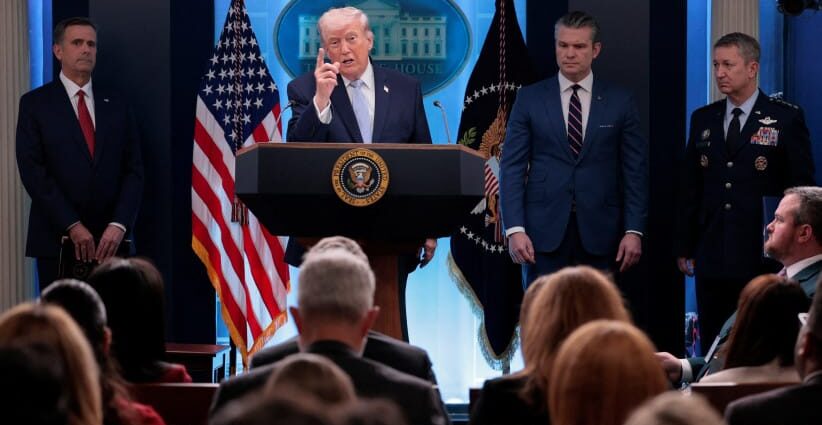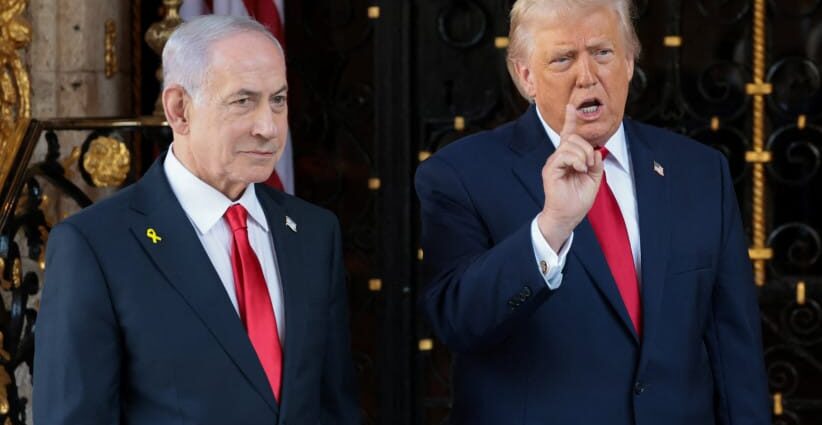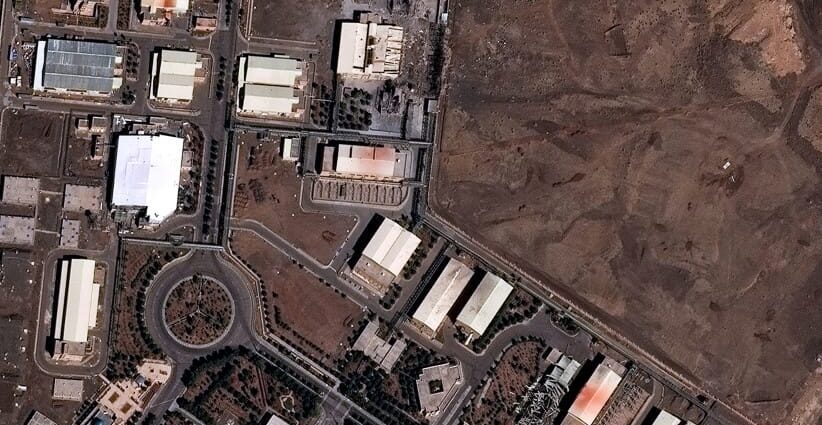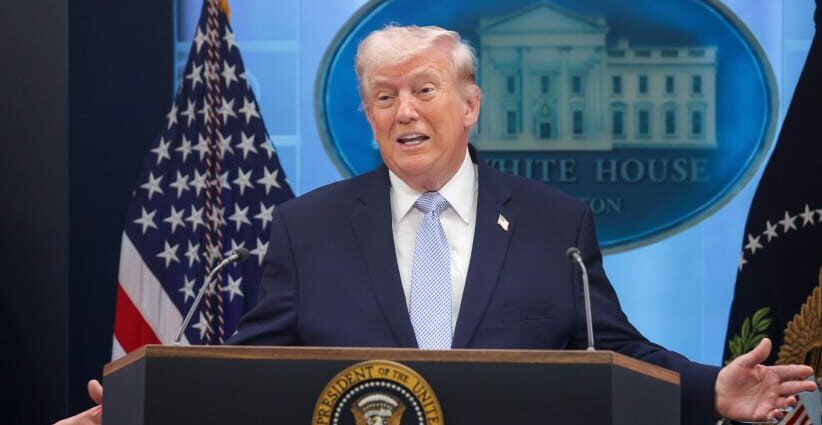
The US House of Representatives narrowly defeated a Democratic-led resolution aiming to stop the Iran war until hostilities are authorized by Congress, but the effort to rein in US President Donald Trump’s military campaign failed by the closest possible margin.

The House voted 212 to 212 on the war powers resolution, meaning it failed because it needed a majority to pass, despite more Republicans backing the effort.

Three of Trump’s fellow Republicans – Tom Barrett of Michigan, Brian Fitzpatrick of Pennsylvania, and Thomas Massie of Kentucky – backed the resolution, and one Democrat – Jared Golden of Maine – opposed it.

It was the third House vote this year on an Iran war powers resolution, and the first since the conflict hit a 60-day deadline on May 1 for Trump to come to Congress about the war. Trump declared then that a ceasefire had “terminated” hostilities against Iran.

There have also been seven failed votes in the Senate.

The votes have been getting tighter, with Trump’s fellow Republicans holding just a slim majority in both chambers. The last House war powers resolution failed on April 16 by 213-214, with one member voting “present.”

In that vote, just one Republican supported the resolution.

They also have been getting more narrow in the Senate, where a war powers resolution was blocked by 50-49 on Wednesday as three Republicans joined every Democrat except one in voting to advance the measure.

Democrats cite constitutional authority

Democrats have called ​on Trump to ⁠come to Congress for authorization to use military force in the Iran conflict, noting that the US Constitution says only the legislature, not the president, can declare war.

They warned that Trump may have pulled the country into a long conflict without setting ⁠out a ​clear strategy and railed against higher prices for gasoline, food, and other products since the joint US-Israeli air strikes on Iran on February 28.

US producer prices posted their biggest increase in four years in April, boosted by soaring costs for goods and services since the war began.

“It is time for the president to come to us, and it is time for us, I believe, to end this war,” Representative Gregory Meeks, the top Democrat on the House Foreign Affairs Committee, said in a House debate.

White House cites Commander-in-Chief powers

Republicans – and the White House – say Trump’s actions are legal ​and within his rights as commander-in-chief to protect the US by ordering limited military operations when the country faces an imminent threat.

Some congressional Republicans have accused Democrats of filing ​war powers resolutions only because of their partisan opposition to Trump.

“It is 100% about theatrics,” Representative Brian Mast of Florida, chairman of the Foreign Affairs Committee, said during debate. He accused Democrats of giving hope to Iran’s Islamic Revolutionary Guard Corps by filing war powers resolutions.


This post was originally published on here

Alan Bauer was not thinking about litigation when he picked his son up from a Jerusalem sidewalk in March 2002. He was thinking about whether the boy was alive. 

A Palestinian suicide bomber had detonated behind them on King George Street. Bauer had been walking home with his seven-year-old son after a day that began with a doctor’s appointment and ended at his office. The blast threw him forward. When he turned around, the child who had been holding his hand was gone. 

“We were hand in hand a minute ago, a second ago,” Bauer told The Media Line. “Anyway, I turn around, and I don’t see him.” 

Bauer found him face down on the pavement. Both survived, but his son suffered a serious head injury and later required emergency surgery and rehabilitation. Bauer was wounded by shrapnel in his arm. More than two decades later, the attack has returned to the center of a US courtroom fight after a federal appeals court reinstated a $655.5 million judgment against the Palestinian Authority (PA) and the Palestine Liberation Organization (PLO). 

For Bauer, the ruling is not only about compensation. It is about forcing a legal and political reckoning with what he says was a PA-linked attack carried out not by an outside faction, but by people connected to the PA’s own security and political apparatus. “The entire attack was Palestinian Authority people,” Bauer said. “It wasn’t Hamas, it wasn’t Islamic Jihad. These were people who were formally paid by the Palestinian Authority.” 

The victims first won the case in 2015, when a New York jury found the PA and PLO liable and awarded $655.5 million in damages to American families harmed in attacks during the Second Intifada. But that ruling was later thrown out on appeal, not because the evidence at trial was rejected, but because the court said that US courts lacked personal jurisdiction over the PA and PLO. 

That changed after Congress amended the law and the US Supreme Court upheld the new jurisdictional framework. In March, the Second Circuit reinstated the original judgment, putting the $655.5 million verdict back in force. The victims have not yet collected the money, leaving enforcement as the next stage of the fight. 

Bauer said, for him, the legal battle began months after the bombing, when he read Israeli reporting based on military indictments that detailed who was involved in the attack. “The bomber, as I mentioned, was a policeman,” Bauer said. “The one who sent him was an intelligence agent. The bomb itself actually came from the Intelligence Bureau of the Palestinian Authority.” 

He also alleged that senior Palestinian figures were connected to the attack’s support network. Marwan Barghouti, he said, provided money shortly before the bombing. Bauer also said Hussein al-Sheikh, now a senior PA official, was named by those involved as having provided money and weapons and as having written the letter of responsibility for the al-Aqsa Martyrs Brigades after the attack. 

The lawsuit was filed in 2004 on behalf of American families affected by seven attacks. According to Bauer, 11 families were originally part of the suit, though one was later removed before trial. Discovery did not begin until 2014, and the case reached trial the following year. “We won completely,” Bauer said. “All 24 counts, they were found guilty. “There was a large judgment, tripled… $655.5 million.”

The victory did not last. In 2016, the Second Circuit Court of Appeals reversed the verdict on jurisdictional grounds, finding that US courts lacked personal jurisdiction over the PA and PLO. Bauer said the victims found themselves “lost in space,” not because the facts had been rejected, but because the Palestinian defendants argued they were not sufficiently present in the United States. “They said the Palestinian Authority is not at home,” he said. “They don’t have, there’s no jurisdiction over them because they don’t have enough of a presence in the US.” 

That jurisdiction fight pushed the case out of the courts and into Congress. Lawmakers first tried to solve the problem by tying US jurisdiction to the PA’s acceptance of American aid, but Bauer said the Palestinians avoided that trigger by refusing the money. Congress then took a different route, focusing on the PA’s payments to terrorists who had killed or wounded American citizens. 

Under that law, the PA was given 120 days to stop the payments or be treated as having consented to US jurisdiction. “The law was signed by President Donald Trump, went into 2019, became the law, 120 days passed, and they kept paying the terrorists,” Bauer said. “But they can’t stop paying the terrorists.” 

The issue eventually reached the US Supreme Court. Bauer said the Biden administration’s Department of Justice came in on the victims’ side, arguing that the law was constitutional, and that President Trump’s administration maintained that position before the court. The Supreme Court ruled 9-0 in favor of the legal framework, sending the case back to the lower courts. “The Department of Justice under Biden came on our side,” Bauer said. “The Trump administration, they continued being on our side. And the Supreme Court heard our case, with the US arguing with our lawyer, Kent Yalowitz. And we won 9-0.” 

When the case returned to the Second Circuit, Bauer said the court had two choices: revive the old verdict or send the victims back to trial. “Either a new trial, which nobody on our side wanted, it would be more flying back and forth, going through the whole process again, or to return the verdict,” he said. “So a month ago, approximately, the Second Circuit, 3-0, they returned the verdict.” 

Nitsana Darshan-Leitner, founder of Shurat HaDin, the Israel Law Center, told The Media Line that the reinstated judgment was the result of a legal fight that lasted more than two decades and required not only courtroom persistence but legislative changes in Washington. “Now we have a final judgment against the Palestinian Authority for $655 million after 22 years of litigation. 

‘They were our employees, but they were rogue employees’

Darshan-Leitner said the PA’s defense was that the attackers may have been on its payroll, but had acted on their own. “They said, ‘Indeed, they were our employees, but they were rogue employees,’” she said. “’They did the attacks after work hours. It wasn’t our policy to kill Israelis. We were against killing Jews.’” 

But Darshan-Leitner said that the argument collapsed when placed against the PA’s ongoing payments to imprisoned terrorists and families of attackers. “If they were wrong employees, how do we keep paying their salary until today?” she said, describing the argument her side made before the jury. “You promote them in rank every three years, you pay stipends to the families of the suicide bombers, you call town squares and streets in the name of the suicide bombers. This is not how you treat wrong employees.” 

The case now moves into the question of collection. Darshan-Leitner said the PA and PLO have assets and revenue streams that can be pursued, including a PLO mission building in New York, tax revenues held by Israel on behalf of the PA, Palestinian bank accounts, and investment funds. “First of all, they do have the money,” she said. “But let’s say they will come and say they don’t have the money. We are going to demand from the State Department to enforce the judgment.” 

She said the judgment could also be paid over time. “If they cannot pay it all at once, we can do it over payments,” Darshan-Leitner said. “Monthly payments of $20 million a month will not bankrupt the Palestinian Authority. This is what we did in previous cases against the Palestinian Authority.” 

Darshan-Leitner said her broader goal is not only compensation for victims, but pressure on the systems that finance and reward terrorism. “We go after the deep pockets, because we want to, not only to get the money for the victims, but we want to influence,” she said. “I don’t believe you can influence a terrorist that goes with a mission to kill someone.” 

Bauer described the case in similar terms. He said the years of litigation exposed what he considers a false distinction often made in Western diplomacy between Hamas and the Palestinian Authority. “One of the canards of the Intifada was ‘Hamas is bad and the Palestinian Authority is good,’” Bauer said. “’The Hamas guys, they’re crazy. They’re murderers. They’re exploding terrorists. The PA, they want peace.’ And unfortunately, nothing could be further from the truth.” 

He said the PA and Hamas have different structures and ideologies, but that both have used violence against Israelis and Jews. “They’re both terrorist organizations,” Bauer said. “Each has its own goals. Sometimes they work together. Sometimes they hate each other.” 

For Bauer, the issue remains current because several Palestinian figures linked in his view to Second Intifada violence are still treated internationally as political actors. He pointed especially to Barghouti, whose release has been demanded by supporters who portray him as a future Palestinian leader. “He’s never said, ‘I will never be involved in another terror attack,’” Bauer said. “’I apologize to all those whom I harmed.’” 

The case also highlights an uneasy record of US involvement. Bauer said Congress was consistently supportive of terror victims and that the Justice Department eventually backed the plaintiffs before the Supreme Court. But he sharply criticized the State Department, saying it had repeatedly been more concerned about the stability of the PA than about enforcing a judgment for American victims. 

“The Congress always was very supportive,” Bauer said. “The laws were passed. President Trump signed them. The Department of Justice has always been very supportive of terror victims and anything to help hold terror groups responsible. The Department of State has, let’s say, been more reticent on the good times, actually opposed to us and the bad times.” 

PA claims to have changed payment laws

The Palestinian Authority has said in recent years that it has amended or repealed its formal prisoner-payment law. Darshan-Leitner said courts should not accept that claim without proof. “In my current cases, they come and say we canceled the law, we don’t have this policy anymore, but the court doesn’t take their word,” she said. “The court asks them to prove that they don’t pay the terrorists.” 

Asked whether they continue paying, she answered: “Yes, yes, yes, they keep paying.” 

She said new cases filed after October 7 will test those claims directly, because the PA will have to show whether its payment system has truly changed or whether it has only been rebranded as welfare or social support. That question has become more than a legal dispute. It goes to the heart of whether the PA can still be presented internationally as a reformed governing body while victims argue in court that its own structures rewarded the violence that injured them. 

For Bauer, the judgment comes after a personal process that began with survival, not lawsuits. In the weeks after the bombing, his family’s focus was simply getting through each day. His son was initially blind and unable to move his left side, Bauer said, though his vision and movement later returned. The boy went through physical therapy, hydrotherapy, electrotherapy, and other rehabilitation. “Thank God his vision came back, as did his motion on his left side,” Bauer said. “This day, over 20 years later, he still limps a little bit.” 

Bauer himself wrote a memoir the year after the bombing, describing how the attack took only seconds but altered every part of family life. In the interview, he put it more directly. “At that point, we started a completely new life,” he said. “Up to that point, we had one life. And that ended. You close the book, seal it.” 

Now, after 22 years in court, Bauer said the verdict gives the law “teeth,” especially for American victims harmed abroad. “You can’t hold al-Qaida. Al-Qaida has no representative,” he said. “But something like the Palestinian Authority that specifically does have an office in New York with the UN, they have facilities also in Washington. They can’t run away anymore.” 

The PA and PLO may still seek further review. But Bauer said the plaintiffs have already endured the trial, the appeal, the legislative fight, the Supreme Court, and the return to the Second Circuit. “Our lawyer joked for the Supreme Court that our lawsuit could have already gone to law school,” Bauer said. “By the time it reached them.” 

For Darshan-Leitner, the reinstated verdict is part of a wider legal strategy: follow the money, force institutions to account for the attacks they enabled, and treat financial infrastructure as part of the machinery of terrorism. “The one who sent him has to pay,” she said. “I’m not going after the individuals. I want to direct the other one that I want to find responsible.” 

For Bauer, the case has returned to where he and the other plaintiffs stood in 2015: with a judgment in hand, but still waiting for payment. After 22 years of litigation, he said the ruling gives the law “teeth.” What remains is whether the Palestinian Authority and PLO will be made to pay it. 

This post was originally published on here

Dozens of haredi (ultra-Orthodox) protesters arrived Thursday night at the Ashkelon home of Brig.-Gen. Yuval Yamin, the head of the military police, in a demonstration against the arrests of haredi draft dodgers by the military police. 

Police arrived at the scene in an attempt to disperse them.

The IDF denounced the protests, saying, “We strongly condemn any attempt to harm security forces personnel and their families,” according to a report from N12 News. 

Protest against haredi draft bill increase

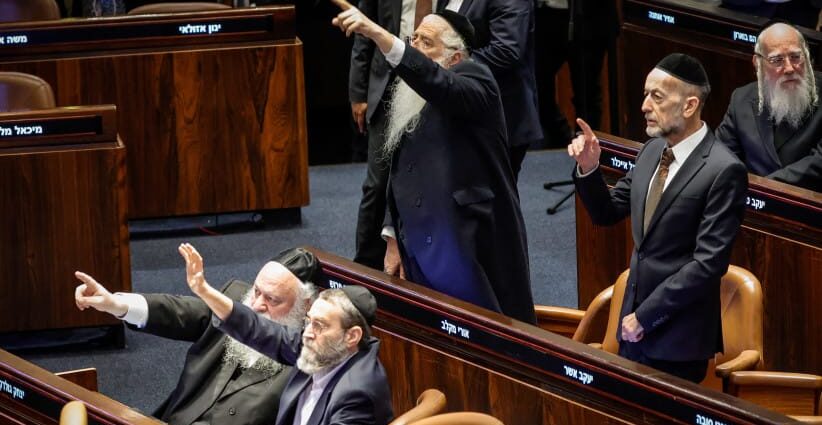
Groups of ultra-Orthodox men have repeatedly conducted protests amid increasing tensions regarding a haredi draft bill in the Knesset. 

Last week, haredi protesters broke into Yamin’s yard at a time when his family was home.

Protestors also blocked the Bar-Ilan street area of Jerusalem on Sunday, disrupting public order and movement in the area, according to police statements. 

The police said that, while freedom of expression and lawful protests are allowed, it would not permit a “blatant violation of public order.” 

Earlier this week, IDF Chief of Staff Lt.-Gen. Eyal Zamir pushed for large numbers of haredim to be drafted into the military, citing manpower shortages. 

The IDF “must grow, and quickly,” he said, arguing that additional manpower is not only a matter of burden-sharing but also of operational capability amidst expanding IDF missions. 

Zamir warned during a security cabinet meeting in late March that the IDF could soon collapse if there is no solution to the shortage.

This post was originally published on here

A United Kingdom-based Hamas and Muslim Brotherhood-linked network is behind the global pro-Palestinian campaign, copying the slogans, ribbons, and hostage posters from the Israeli October 7 Massacre hostage advocacy campaign to cast Palestinian security prisoners and convicted terrorists as hostages.

The Red Ribbons campaign, which first appeared in mid-November, has since been claimed by British activist Adnan Hmidan, who has extensive ties to organizations linked to Hamas and the Muslim Brotherhood. Red Ribbon Instagram posts, such as an April 8 advertisement for a panel in which he appeared alongside Fatah terrorist Nael Barghouti, list Hmidan as the campaign founder.

Hmidan, for whom the Independent Press Standards Organisation determined in 2024 there was enough evidence for the Telegraph to legitimately describe him as “pro-Hamas,” holds high positions in several British organizations, many of which have been leveraged to advance the Red Ribbons campaign. Hmidan is the Palestinian Forum in Britain (PFB) chairman, according to a 2026 article on its website; Hmidan is listed as the editor in chief of Al Arab in UK news outlet (AUK), and on LinkedIn is listed as a presenter for Al Hiwar TV and a former media consultant for Human Appeal International.

The AUK outlet has been used extensively as a vehicle for the Red Ribbon campaign, with posts such as a Sunday Instagram graphic warning about National Security Minister Itamar Ben Gvir’s execution law and a February campaign tie-in for International Women’s Day.

Palestinian Forum in Britain has also heavily promoted the Red Ribbon campaign, with social media posts bearing the red ribbon symbol being published almost weekly.

Protests marking Palestinian Prisoners Day, organized by the Forum and the Palestine Coalition in the UK, prominently featured large red ribbons on the podium.

According to a November AUK article, Hmidan served as the Forum’s vice president under the presidency of Zaher Birawi. The Forum said in a March article that Hmidan was replacing Birawi as its leader. The organization was also led by Ziad el Aloul in 2015, according to the Palestinian Return Centre and the UK Companies House.

Former PFB head sanctioned by US Treasury for terror ties

Birawi was sanctioned by the US Department of the Treasury’s Office of Foreign Assets Control (OFAC) in January, which contended that he was a senior official and founding member of the Popular Conference for Palestinian Abroad (PCPA), which was allegedly a front for Hamas.

The Israeli government alleged in 2022, along with its designation of PCPA as a terrorist branch, that Birawi was a leader of EuroPal Forum, another banned alleged Hamas front. Indeed, a 2020 Samidoun petition listed him as the EuroPal chairman.

According to a 2019 Israeli government report, Birawi went on a delegation with British anti-Israel activists and Muhammad Sawalha to meet then Hamas Prime Minister Ismail Haniyeh.

Sawalha, alleged by the Israeli government to be a senior Hamas West Bank official who fled to the UK, was co-director of Britain 2 Gaza with Birawi, according to the UK Companies House.

Birawi and Sawalha also shared the title of former director of the Muslim Association of Britain, which, according to the Center for the Study of Islam and Democracy and the UK Companies House, was founded by senior Muslim Brotherhood official Dr. Kamal El Helbawy. MAB was blacklisted by the United Arab Emirates as a terrorist group in 2014, according to Al Arabiya and the WAM Emirates News Agency. PFB hosts frequent events with MAB, according to its website.

Like Birawi, El Aloul was also associated with the Hamas front group PCPA, according to a January 25 AUK article serving as the sanctioned group’s spokesperson. A person named Ziad Aloul was mentioned by the BBC in 2005 as an MAB envoy.

Hmidan, as a presenter on Al Hiwar TV, is also tied to extremists through the channel. He has presented the Red Ribbon campaign on the Arabic language channel.

Al Hiwar TV regularly hosts terrorists, including frequent appearances of Sawalha, according to a 2025 Community Security Trust Report. The Times reported in 2023 that Sawalha was hosted on the channel’s late-night talk show London Chat, which is hosted by none other than former PFB head and PCPA official Birawi.

The former MAB director in 2011 also hosted Nael Barghouti, a terrorist involved in the murder of a bus driver, and released in both the 2011 Gilad Schalit and the February 2025 October 7 Massacre hostage deals.

Al Hiwar TV founder considers Hamas leader ‘friends’

Al Hiwar TV was founded by Azzam Tamimi, according to a TRT World Forum profile, and according to Middle East Eye, the channel’s chairman and editor-in-chief.

Tamimi told Haaretz in 2012 that he had the “great honor to be close to Hamas,” though he was unfortunate to not have a leadership role. He explained that “all the leaders of Hamas are my friends,” including childhood friend and senior Hamas official Khaled Mashal.

Palestine Studies described Tamimi as “close enough to Hamas” to be able to confidently title his 2007 book “Hamas: A History from Within.” Tamimi was also called a “Hamas special envoy” by Malaysian government news outlet Bernama in 2006.

In 2014, Egyptian outlet Al-Masry Al-Youm described Tamimi as an official in the Muslim Brotherhood, entrusted by the group’s international umbrella organization to control Al Hiwar TV. Tamimi has been a guest of PFB events and also served as spokesman for MAB, according to a 2003 Al Jazeera article.

Hmidan’s media experience extends beyond AUK and Al Hiwar TV. According to his LinkedIn and personal website, he served as a media consultant for Human Appeal International (HAI) from 2011 to 2022.

HAI has been sanctioned by the Israeli government since 2008 as a Hamas fundraising front, according to the country’s national gazette. According to backups of the InterPal website, Human Appeal International is listed as part of the 101 Days Campaign, which OFAC sanctioned as an alias of Union of Good in 2008 for being a Hamas front. HAI claimed that it was added to the 101 Days Campaign website list without its knowledge, as reported in a 2015 Telegraph article.

WikiLeaks published a 2003 cable to the CIA from the then US ambassador to the UAE, warning that a UAE NGO with the same name as HAI had been linked to providing support to Hamas and other terrorist organizations. The Telegraph reported that HAI claimed that the UAE and UK branches are divisions of the same organization. HAI has denied all connections or support to Hamas.

Red Ribbon campaign affiliate head denied entry to Canada

One of the greatest proponents of the Red Ribbon campaign has been the Global Alliance for Palestine, with steering committee members Palestinian National Initiative General Secretary Dr. Mustafa Barghouti and former Greek Finance Minister Yanis Varoufakis publishing video calls to action for Hmidan’s project.

GAP’s secretary general, Anas Altikriti, also joined the campaign in January. Altikriti is also intricately connected to the network that is tied to the Red Ribbon campaign.

Altikriti, who was denied entry into Canada for the 2026 Muslim Association of Canada convention on Monday, is an official of MAB, according to a Tuesday Instagram post by MAB. Like Sawalha and Birawi, he has served as the organization’s director, according to the UK Companies House.

He shared another affiliation with Birawi, according to the UK Companies House, as Altikriti, Birawi, and Tamimi are listed as former directors of an organization called Islam Expo. Altikriti is also the director of the Cordoba Foundation, which, like MAB, was blacklisted by the UAE in 2014.

Red Ribbon backed by Greta Thunberg

Backed by a web of organizations with links to Hamas or the Muslim Brotherhood, the Red Ribbon has found purchase among celebrities such as actor Khalid Abdalla and climate activist Greta Thunberg, who promoted the campaign on Instagram on February 13 and November 23, respectively. The campaign is ongoing. Red ribbons and Palestinian “hostage” posters were put up in Basel on Tuesday, and Women for Palestine UK sold red ribbon pins in January for a fundraiser.

The campaign seeks the release of 9,100 Palestinian “hostages,” held in prison or detention by Israel.

While many of the campaign materials on its website feature Palestinians held under the controversial administrative detention power, the campaign regularly advocates on behalf of convicted terrorists.

In a February 2 Instagram post, it presented PFLP cell commander Walid Daqqa as an exemplar of “Palestinian prisoners and hostages,” and in a March 17 post, it advocated for the release of Fatah arch terrorist Marwan Barghouti.

On April 17, it celebrated the release of Ramadan Mashahrah, who, according to the SAFA Press Agency, was convicted of being a member of the Hamas Izz ad-Din al-Qassam Brigades. The posters on the Red Ribbons website include Hebron mayor Tayseer Abu Sneineh, who was previously convicted for involvement with a 1980 terrorist attack that killed six civilians.

This post was originally published on here

Beitar Jerusalem and Hapoel Beersheba played to a dramatic 1-1 draw at Teddy Stadium in a match that may not have crowned a champion, but certainly left the Southern Reds firmly in the driver’s seat with just three games remaining in the season.

When Yarden Shua’s blistering strike flew past Ofir Marciano and into the Beersheba goal in the 78th minute, it felt as though a massive weight had been lifted off the shoulders of the Beitar faithful.

For the first time all season, the yellow-and-black had finally taken a lead against their direct title rivals. In their fourth meeting of the campaign, Barak Itzhaki’s squad had finally broken through and looked poised to earn a statement victory that would have sent them to the top of the table with destiny fully in their own hands.
Instead, the fairy tale ending was short-lived.

Just minutes after Shua sent Teddy Stadium into ecstasy, Beersheba responded like a championship-caliber side. Luka Gadrani failed to clear the danger inside the box, and Kings Kangwa punished the mistake, firing home the equalizer in the 81st minute past Miguel Silva to stun the 30,000 supporters into silence. While Ron Kozuk’s side couldn’t find a winner, the draw was enough to keep Beersheba two points clear atop the table and firmly in control of its own fate after having fallen just short to Maccabi Tel Aviv in last season’s title race.

The visitors probably should never have found themselves trailing in the first place. Beersheba controlled much of the opening 70 minutes and dictated the pace of play, but Itzhaki’s side came alive late in the match and began creating the kinds of opportunities they had struggled to produce for most of the evening.

The game itself was rough and tumble, not necessarily the highest quality football of the season, but perhaps that was to be expected with teams playing every three to four days at this stage of the campaign. The level may have suffered, but every side in the championship playoff is dealing with the same physical and mental demands.

The match also took a toll physically. Beersheba lost Helder Lopes to injury barely a minute into the contest, forcing Matan Baltaxa into the game early. Beitar later suffered a blow of its own when Nana Antwi hobbled off and was replaced by Roie Elimelech, who had not featured in months. Both players were set to undergo MRI examinations, with initial assessments suggesting their seasons could potentially be over.

Beersheba created the first chances of the game through Muhamed Abu Romi, Amir Ganach, and Kangwa, while Beitar struggled to generate sustained pressure. Kangwa continued to threaten throughout the opening half, feeding Ganach for another chance while Ziv Ben Shimol and Omer Atzily came close for the hosts, but the sides went into halftime scoreless.

The Southern Reds continued to press after the break as Guy Mizrachi tested Silva, while Kangwa’s chip shot and another long-range effort kept Beitar pinned back. Itzhaki eventually introduced Timoti Muzie for an ineffective Yarin Levy, and slowly the momentum began to shift.

As Kozuk’s team continued pushing forward, Shua stole the ball at midfield and burst downfield before slipping a perfect pass to Atzily, who skied his effort over the bar. Moments later, Muzie forced Marciano into a save as Beitar suddenly found energy and belief.

Then came Shua’s moment of brilliance. Left unmarked at the top of the box, the Beitar captain took a marvelous pass and unleashed a rocket beyond Marciano to hand the hosts a 1-0 lead.

Kozuk immediately reacted with a triple substitution, introducing Miguel Vitor, Roie Levy, and Shai Elias, and the move paid off almost instantly with Kangwa’s equalizer.

Title race remains open heading into last week of season

As the clock ticked down, Beersheba pushed for all three points through a series of corner kicks, but neither side could find the winner as the title race remained wide open heading into the final week and a half of the season.

“We’re disappointed,” Itzhaki admitted afterward. “These were difficult halves from a football standpoint. It wasn’t a great football match, but there were chances for both sides. After we scored, we needed to know how to protect the lead. Obviously, we should have won; it would have given us a huge boost. In games like these, even when the football isn’t great, you need to know how to win. We were there, and we lost it.”

“At the end of the day, it’s a good result, especially after going behind,” Kozuk said. “It keeps things in our hands, and we’re grateful for that. The players raised their level after Beitar took the lead, and this was one heck of a battle. We played well. We came into a situation like this at Teddy Stadium with an amazing crowd and a huge responsibility on the players, and we showed our football, especially in the first half.”

Shua still believes Beitar can complete the job.

“We scored, and for the moment we were in first place, but there was a mistake on the pitch, and that was it,” the Beitar captain said. “It’s very difficult to play every few days, but everyone is in the same situation. I still believe that we will finish in first place.”

Marciano also praised his team’s mentality after conceding late.

“The match is ninety minutes long,” the Beersheba goalkeeper said. “We conceded late, but you could see our body language, and we felt that we could respond. We focused on ourselves and knew what we needed to do in that situation.”

Prior to the match, Itzhaki was asked whether there was a specific coach he had played under whose influence he might draw upon. While he said no particular memory came to mind, the way the match unfolded carried echoes of a famous European night from a decade ago.

Back in 2015, Maccabi Tel Aviv lost 2-1 to Viktoria Plzen in the first leg of a Champions League qualifier, with Itzhaki scoring late to keep hopes alive. In the return leg, Slavisa Jokanovic executed a masterful game plan as Maccabi absorbed pressure before making decisive substitutions around the 70th minute, eventually leading to an Eran Zahavi brace that turned the tie around.

This time, Itzhaki didn’t have a Zahavi available, but Shua’s goal certainly carried shades of the legendary striker. Unlike that night in Czechia, however, the lead did not hold.

The draw leaves the title race delicately poised heading into the final stretch. Beersheba will visit Hapoel Tel Aviv on Friday afternoon, while Beitar heads to Bloomfield Stadium on Saturday night to face Maccabi Tel Aviv. Afterward, Itzhaki’s side will travel to Petah Tikva, while Beersheba hosts Maccabi Tel Aviv at Turner Stadium before closing the season at home against Maccabi Haifa. Beitar, meanwhile, finishes the campaign at home against Elyaniv Barda’s Hapoel Tel Aviv.

There is also the looming Israel State Cup final between Beersheba and Maccabi Tel Aviv still waiting on the horizon, adding yet another layer of pressure and intrigue to a season that has already delivered drama nearly every week.

Kozuk knows better than anyone how difficult these closing stages can be after last season’s disappointment, and his squad now faces the challenge of balancing expectation with execution as the finish line approaches.

As thrilling as the title race has become, history is not on Beitar’s side. It’s extremely difficult to win a championship without beating your direct rival, and the Jerusalem club has taken just two points from a possible 12 against Beersheba this season.

Still, no one expected Beitar to be in the title hunt this late into the campaign. Three games remain, the gap is only two points, and the championship race will go right down to the wire.

Elsewhere around the league, Hapoel Tel Aviv edged Hapoel Petah Tikva 1-0 thanks to Mor Buskila’s 74th-minute winner, clinching European qualification for next season.

“This is a step along the way,” Hapoel Tel Aviv coach Elyaniv Barda said. “Our ambitions don’t stop. We want to bring this club back to its glory days. To secure European qualification with three rounds still to go is an excellent achievement.”

Maccabi Tel Aviv cruised past Maccabi Haifa 3-0 in the Israeli Classico as Sagiv Yehezkel, Dor Peretz, and Ido Shahar all scored in the first half to keep the yellow-and-blue firmly in the title picture as well.

“The first half was excellent,” interim coach Kenny Miller said. “We played bravely and got back to ourselves after the derby. At big clubs, you always have to press and always look for the next goal.”
Barak Bachar did not mince words after the defeat.

“We were soft,” the Maccabi Haifa coach admitted. “We could have conceded five or six goals in the first half.”

Hapoel Jerusalem secured its Premier League status for next season with a 1-0 win over Ashdod SC thanks to Matan Hozez’s goal, a result that simultaneously relegated the port-city side.

“This was the kind of match I expected, a battle until the very end,” Hapoel Jerusalem coach Lior Zada said. “Everyone showed commitment and gave everything.”

Elsewhere, Maccabi Netanya and Hapoel Haifa drew 1-1, Ironi Tiberias defeated Maccabi Bnei Reineh 1-0, while Kiryat Shmona thrashed Bnei Sakhnin 4-0 behind goals from Joan Halabi, Adrian Ugarriza, Yair Mordechai and Ori Shnaper.

See more Israeli sports coverage at www.sportsrabbi.com/en

This post was originally published on here

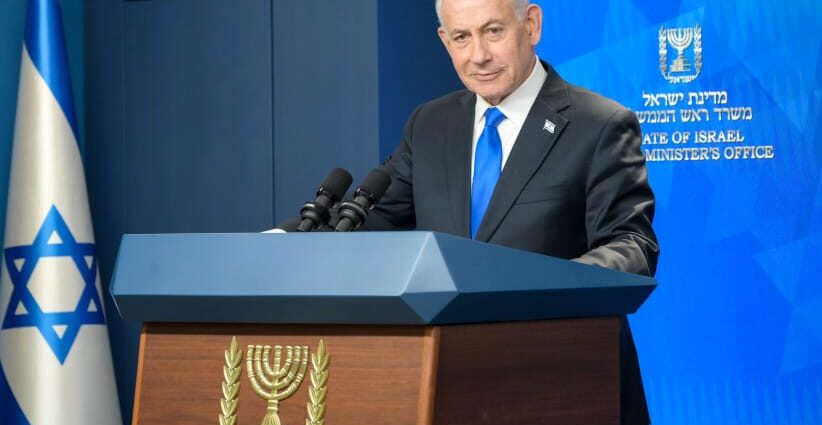
Prime Minister Benjamin Netanyahu, Finance Minister Bezalel Smotrich, and Education Minister Yoav Kisch presented a comprehensive national outline for the education system on Wednesday, allocating NIS 1.1 billion to summer programs this year, the Government Press Office confirmed.

The program is designed to address the academic and emotional toll of Operation Roaring Lion. The conflict, which has led to widespread school closures, has left students across the country with significant gaps in their education.

“After an especially challenging year, this is a significant national statement regarding our commitment to the children of Israel,” Kisch noted

The record-breaking NIS 1.1 billion budget results from a supplementary allocation of NIS 600 million from the Finance Ministry to the existing summer programs budget. 

The outlined educational framework applies to preschool through the 9th grade and combines Science, Technology, Engineering, and Medicine (STEM) programs, AI education, and emotional and social support.

Plan divided into specialized tracks to ensure age-appropriate support

For kindergarten through 3rd grade, summer school will be extended to run for the full month of July, in part to assist parents with child care.

For 4th to 6th grades, a “Summer Plus” program is being launched. This initiative offers academic reinforcement in small groups, focusing on language, mathematics, and English, while strengthening learning skills and AI literacy.

The 7th to 9th grade program includes a “Summer Preparatory Program” that will run between 21 and 30 June. The program focuses on AI proficiency, mathematics, and English while incorporating STEM initiatives and boot camp days.

“During the upcoming summer vacation, we will operate special frameworks for Israel’s children, from kindergarten through ninth grade. Within this framework, we will train them in the field of AI, which is changing the entire world,” Netanyahu said.

“I want the students of Israel to be the best at ‘ChatGPT,’ to be the best at ‘Claude,’ and in many other fields, even before their matriculation exams. Of course, we will also assist all students in closing learning gaps that accumulated during the war.”

Kisch said that “the education system is currently piloting 40 schools with artificial intelligence. We are currently finalizing the details and will roll out to all schools.”

Regarding the focus on AI education, Netanyahu said, “I know that the future of all of Israel’s children is inextricably linked to AI.

“Within this framework, we will train them in the field of AI, which is changing the entire world.”

This major investment is not merely a remedial measure; it is a strategic maneuver to maintain Israel’s qualitative edge in the global hi-tech landscape. By integrating advanced AI platforms like ChatGPT and Claude into the curriculum, the government is aligning this summer initiative with broader national AI goals. 

“As Finance Minister, I stood together with my colleague, the education minister, stating that the program will focus on boosting academic capabilities and integrating AI systems,” Smotrich said.

“The program will allow parents to go out to work after a complex year, while simultaneously focusing on advancing academic skills in core subjects,” he continued.

“I emphasized an important point which I view as a national educational mission: The integration of AI systems, starting with the higher grades. We will utilize this program to implement a pilot for AI-based learning,” he added.

This post was originally published on here

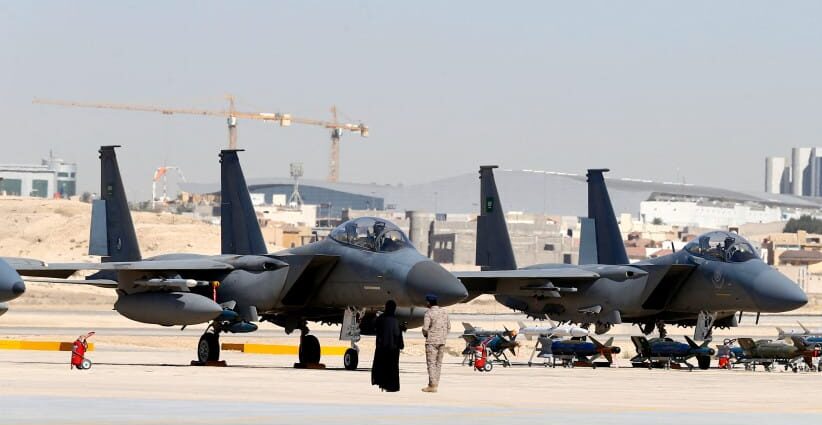
The Gulf states were victims of Iranian attacks during the war that began with US and Israeli airstrikes on Iran on February 28. Iran lashed out, attacking a dozen countries in the region.

Iran’s major target was the United Arab Emirates, but it also attacked Saudi Arabia, Bahrain, Israel, Oman, Qatar, the autonomous Kurdistan Region of Iraq, Kuwait, Jordan, and other countries.

In addition, Iran targeted US bases and made it clear that it can strike wherever it wants.

During the conflict, the Gulf states created the impression that they were taking blows without responding. They were able to increase the effectiveness of their air-defense systems. The feeling was that they wanted to stay out of the war, even though they had a right to respond.

Iran’s narrative was that some of the Gulf states hosted US forces, or in the case of the UAE and Bahrain, had signed the Abraham Accords with Israel. Therefore, Iran could target them at will.

Some perceptions of the Gulf’s role have now changed. Some Gulf states have taken a more proactive role to both defend themselves and also to build up their strength, according to media reports this week.

Saudi Arabia struck militias in Iraq

“Saudi fighter jets bombed targets linked to powerful Tehran-backed Shi’ite militias in Iraq during the Iran war, while retaliatory strikes were also launched from Kuwait into Iraq, multiple sources familiar with the matter said,” Reuters reported.

This was part of a broader series of responses across the Gulf, the report said.

Saudi Arabia struck Iran

Saudi Arabia also struck Iran, according to another report that cited Western officials.

“Saudi Arabia launched numerous, unpublicized strikes on Iran in retaliation for attacks carried out in the kingdom during the Middle East war, two Western officials briefed on the matter, and two Iranian officials said,” Reuters reported.

This was said to be the first time that Riyadh has carried out direct action against Iran. In September 2019, Iran attacked Abqaiq, a city in Saudi Arabia. That means Riyadh has had the right to respond for years.

UAE struck Iran and received Iron Dome

The United Arab Emirates struck several Iranian sites in April, The Wall Street Journal reported Tuesday. According to the France 24 news channel, this included “an oil refinery on Lavan Island in the Persian Gulf.”

“As Tehran unleashed its drones and missiles against the Emirates, Israel sent Iron Dome anti-air missile batteries to the UAE, as well as personnel trained to use them, to help the country stave off further attacks,” France 24 reported.

The report cited analysts who explained why the UAE and Saudi Arabia had retaliated.

Sending the Iron Dome system to the UAE was an example of the positive relationship created by the Abraham Accords, US Ambassador to Israel Mike Huckabee said.

On Wednesday, the Prime Minister’s Office said: “In the midst of Operation Roaring Lion, Prime Minister [Benjamin] Netanyahu secretly visited the United Arab Emirates, where he met with UAE President Sheikh Mohamed bin Zayed. This visit has led to a historic breakthrough in relations between Israel and the UAE.”

The UAE pushed back about this statement and appeared to deny the visit took place as described. The importance of the Israeli claim, however, is that it somewhat indicates UAE-Israel ties have improved during the war.

Kuwait confronts Iran in Gulf

Iran had tried to attack a Kuwaiti island in the Gulf, Kuwait said Tuesday. Several Islamic Revolutionary Guard Corps members were said to have been detained for involvement in the incident.

“General Secretariat of the Organization of Islamic Cooperation (OIC) strongly condemned the hostile infiltration of Kuwait’s Bubiyan Island by armed elements of the Iranian Revolutionary Guard Corps (IRGC) and their clash with the Kuwaiti Armed Forces, which resulted in the injury of a member of the Kuwaiti Armed Forces,” Saudi Arabia’s official Saudi Press Agency (SPA) reported.

The Associated Press reported: “Kuwait said on Tuesday that Iran launched a failed attack earlier this month on an island where China is helping build a port in the Gulf Arab country. The accusation came just hours before US President Donald Trump was to depart for Beijing on a high-stakes visit over the Iran war and other issues.”
Kuwait was also said to have struck militias in Iraq.

Crackdown on IRGC and Hezbollah in the Gulf

As Gulf countries weighed military responses, they have also detained people linked to Iranian activity. This has included a number of cells busted in Bahrain.

Meanwhile, the UAE cabinet added 16 individuals and five Lebanon-based companies to its local terrorist list over links with Hezbollah, the UAE’s official news channel, WAM, reported.

“The move forms part of the UAE’s ongoing efforts, both domestically and internationally, to disrupt and dismantle networks linked to the financing of terrorism and related activities, whether direct or indirect,” the report said.

The Bahraini Interior Ministry said an organization linked to the IRGC and the Wilayat Al-Faqih Shi’ite political ideology consisted of members of the dissolved “Islamic Scholars Council,” London-based newspaper Asharq Al-Awsat reported.

“The members of the organization had formed and led a terrorist organization, financed terrorism, coordinated with Iran and groups in Iraq and Lebanon classified as terrorist organizations, and received military training in support of those activities, said the ministry in a statement carried by Bahrain’s state news agency BNA,” the report said.

This post was originally published on here

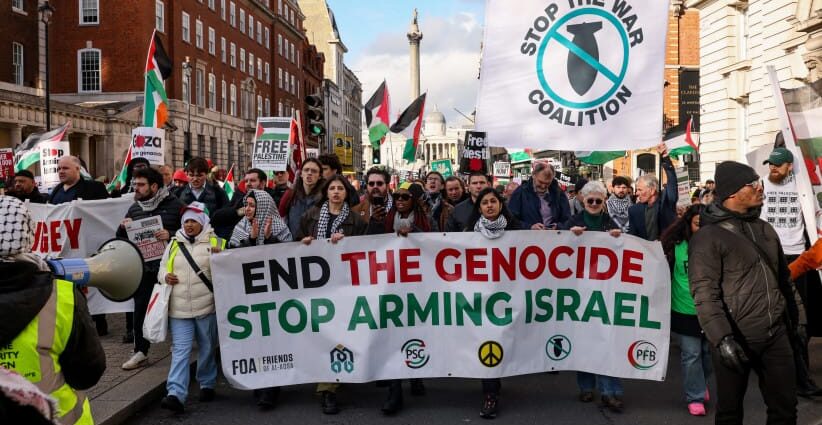
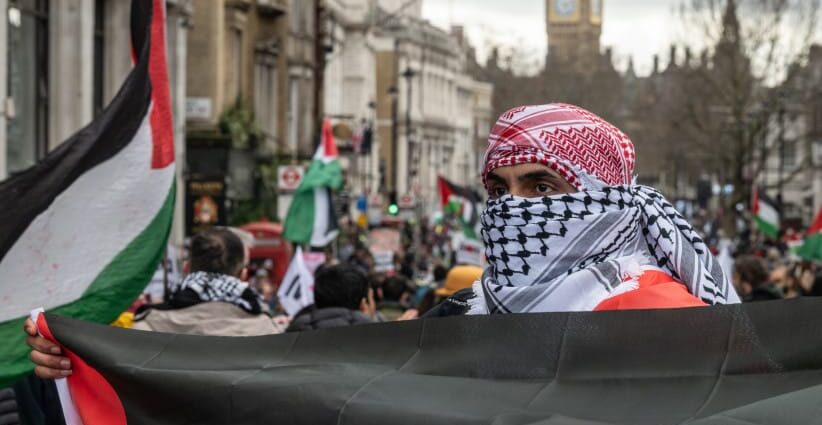
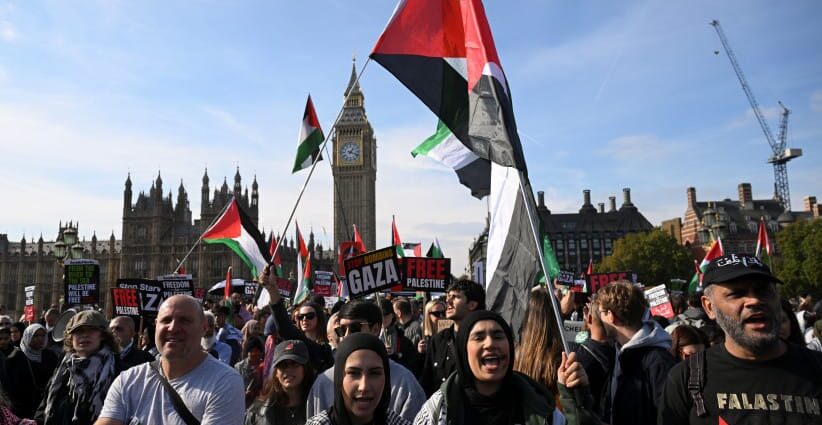
London’s Metropolitan Police are planning to deploy 4,000 police officers to maintain order during the Nakba Day protest on Saturday – one of many that will be taking place worldwide to mark the so-called “Palestinian catastrophe” of 1948.

Although Nakba Day is officially on Friday, March 15, the annual London protest, organized by a coalition of groups including the Palestine Solidarity Campaign, Stop the War, and others, will take to the streets on Saturday.

On Wednesday, Deputy Assistant Commissioner James Harman said that Saturday “has the potential to be one of the busiest days for policing in London in recent years.”

He said that the 4,000 officers will take a “zero-tolerance approach,” supported by specialist resources, including live facial recognition, helicopters, drones, dog units, police horses, armored vehicles, and dedicated investigative teams.

He noted that the UK’s terrorism threat level has been raised to severe. In recent weeks and months, he said, the UK has seen terrorist attacks and a sustained campaign of arson targeting Jewish Londoners against a backdrop of increasing hate crime, in particular, antisemitism.

“Taken together, these factors give us significant cause for concern heading into the weekend and require a policing plan that provides us with the most assertive grip on the movement of large groups, and the potential for disorder and other criminality that arises as a result,” he said.

While he said many come to protest with good intentions and no desire to commit offenses or spread hate, “many others do not.”

Notably, on the same day, the “Unite the Kingdom” protest organized by activist Tommy Robinson will also take place. Harman noted that some of these events have included anti-Muslim behavior, and that the police is preparing for that as well.

The Nakba Day protest will form up in Exhibition Road in Kensington before heading to Waterloo Place via Brompton Road and Piccadilly. A rally with speeches will take place at the end of the march. Speakers include British-Palestinian surgeon Ghassan Abu-Sittah, MP Zara Sultana, and MP Diane Abbott.

PSC, which is organizing, said the protesters will be marching against Israel’s “racist system of oppression, including ethnic cleansing, settler-colonialism, apartheid, and genocide” and in support of “the inalienable rights of the Palestinian people, including the refugees’ right to return home.”

“We march against the far right in Britain who glorify Israel’s racism and brutality,” the group said in a statement.
Coaches will depart from most major UK cities to bring protesters to the event.

The Palestine Coalition [Palestine Solidarity Campaign, Palestinian Forum of Britain, Stop the War Coalition, Friends of Al-Aqsa, Muslim Association of Britain, and Campaign for Nuclear Disarmament] filed a complaint against Metropolitan Police Commissioner Mark Rowley last Wednesday over two media interviews, in which he accused the groups of antisemitism.

The complaint, sent to the London Mayor’s Office, says Rowley “acted in a racially discriminatory way in inferring that protests against fundamental violations of international law by Israel and by Britain are antisemitic.”

Nakba Day protests set to take place in US, France

London is just one of many cities to play host to Nakba Day protests. In the US, Within Our Lifetime has called for supporters to “flood the streets of New York” on Friday to mark 78 years of “genocide” and “resistance.”

“Everything happening in Gaza today is not new. It has been happening since 1948, now on a larger scale for the world to see. Proof was never the problem, because we know this is how colonization operates. This is what they do to indigenous people,” WOL leader Nerdeen Kiswani said on X/Twitter. “Palestine is not an anomaly; it is a litmus test, a moral compass, and what is allowed to happen in Gaza will not stop there.”

In Dearborn, dozens of far-left and pro-Palestinian organizations are collaborating for a Friday protest to commemorate “the mass displacement and ethnic cleansing of over 750,000 Palestinians in 1948.”

“We demand an end to the ongoing Nakba! We will continue the struggle until the full liberation of our people and return,” Palestinian Youth Michigan said in a Wednesday Instagram post.

A protest is set to be held in Brussels in front of the Israeli embassy in Belgium, according to social media posts by Brussels Against Genocide and Bruzelles Pantheres. The Argentine Committee of Solidarity with the Palestinian People is holding marches through a main Buenos Aires street, warning about a continued Nakba. South African activist groups are set to dedicate their weekly Friday picket to Nakba Day.

Not all groups will be holding their protests on Friday. In Montreal, the local Palestinian Youth Movement chapter has planned its protest on Saturday, saying on Instagram on Tuesday that they would “reaffirm that we will continue to fight, until liberation and return.”

In France, Urgence Palestine is set to hold a protest in Paris on Saturday, declaring that the cause was a “compass of freedom and struggle.”

Some organizations are set to hold multiple events to commemorate Nakba Day. According to Palestine Action Group Sydney, Australian groups are holding events across the continent, from Friday in Canberra and Sydney to Sunday in Perth, Brisbane, and Adelaide. Palestinian Youth Movement Boston is holding a Nakba week, with lectures planned on Wednesday and Sunday, and a protest in front of the Israeli consulate on Friday.

Some anti-Zionist Jewish groups have also taken up the banner of Nakba Day. International Jewish Anti-Zionist Network UK has called for Friday protests at the Israeli Embassy.

“All out for Nakba day!” IJAN UK said on Instagram on Thursday. “Solidarity with the Palestinian struggle for liberation.”

This post was originally published on here

Diaspora Jews should not be branded as “traitors” for choosing to remain outside Israel, Diaspora Affairs Minister Amichai Chikli said Tuesday in an interview with The Jerusalem Post Editor-in-Chief Zvika Klein at the Tel Aviv Conference at Tel Aviv University.

The Tel Aviv Conference, titled “Israel’s Future,” was presented by organizers as a forum for public debate, professional analysis, and democratic discourse at a decisive moment for Israeli society.

Chikli made the remarks after Klein asked him about a recent column by journalist Hagai Segal in Makor Rishon, in which Segal criticized American Jews who do not immigrate to Israel and reportedly called them “traitors.”

“That attack on Diaspora Jewry does not serve us,” Chikli said. “I would not use the language of threats.”

The interview was repeatedly interrupted by boos and shouting from the audience, as Chikli defended the government’s record on the haredi draft law, the war, Diaspora Jewry, and political polarization in Israel.

Interview between The Jerusalem Post Editor-in-Chief Zvika Klein and Diaspora Affairs Minister Amichai Chikli at the Tel Aviv Conference, May 14, 2026. (CREDIT: COURTESY OF TEL AVIV UNIVERSITY)

As the audience interrupted the discussion, Klein appealed to the crowd to allow the conversation to continue.

“We spoke here about the polarization index,” Klein said. “I ask you to respect the speakers.”

Israel becoming center of world Jewry, Chikli says

Chikli said Israel was becoming the demographic center of the Jewish world, arguing that Jews in Israel made up 37% of world Jewry in 2000, 45.5% today, and would reach some 68% by Israel’s centennial year.

“Israel is becoming the largest center of world Jewry,” he said.

He then issued a stark warning about the future of Jewish communities in the West.

“It is important to say, painfully, that Diaspora Jewry in Western Europe and North America is dying,” he said. “What keeps the statistics in the US stable are the Orthodox communities, especially the haredi ones, which have high fertility. Outside that circle, the number of Jews is shrinking.”

Chikli said his ministry was trying to strengthen Jewish education among non-Orthodox streams, but added that the situation was “very difficult” because of intermarriage and antisemitism.

Speaking about his own family background, Chikli said his parents immigrated from France and that his father had previously moved there from Tunisia.

“For a child, it is paradise to grow up in the Land of Israel and speak Hebrew,” he said. “I am grateful to my father, who at age 19 left his entire family.”

“To Diaspora Jews I say: However hard it will be for you, for your children it will be paradise here,” he added.

Chikli defends draft bill

Chikli was also asked about reports that Prime Minister Benjamin Netanyahu would not advance the haredi draft bill.

“When I was an opposition MK in the previous government, Benny Gantz asked me not to vote against the law that he viewed as his flagship law,” Chikli said. “That law set a target of 2,100 haredi recruits per year within five years.”

The current bill, he said, was far more ambitious, aiming for “8,000 people in the first year and a half” and “50% of the draft cohort within five years,” while also including personal sanctions and excluding civil service tracks.

Asked why he had opposed the proposal, Chikli said he had wanted higher targets given the current reality, but denied outright opposition.

“I said we need a law with higher targets in the current reality,” he said. “It is incorrect that I opposed it. It simply was not the optimum from my perspective.”

He added that legislation should be advanced with the backing of haredi rabbinic leadership.

“In the end, you cannot draft anyone by force,” Chikli said. “Every young person in the State of Israel should enlist, but the road there is long and must be managed wisely.”

War achievements and political polarization

Asked whether the current government was a full right-wing government, Chikli answered: “Certainly, it is a right-wing government.”

He cited what he called a “revolution in Judea and Samaria,” saying the government had advanced more than 100 new communities.

On the war, Chikli rejected claims that Israel had failed to achieve its objectives.

“There are enormous achievements,” he said. “Hamas, Hezbollah, and Iran are in the most difficult situation in their history.”

In Gaza, he said, “50% of the territory is held by IDF forces,” and Hamas had been reduced “from a large commando force to a survival force.”

“We do not have everything we wanted, and the enemy still challenges us with guerrilla warfare,” Chikli said. “But the achievements are tremendous.”

The sharpest confrontation came when Klein asked whether he understood why a significant share of right-wing voters seemed to be seeking another political home.

“Everyone is looking for a home,” Chikli said. “The question is whether we learned anything from October 7.”

Chikli accused Netanyahu’s opponents of reviving what he called “the boycott bloc” after MKs left Benny Gantz’s party when he said he would not boycott a Likud-Netanyahu government.

At that point, the audience began shouting and interrupting.

“A public that demonstrates so much hatred and desire to boycott the other side should be ashamed of itself,” Chikli said. “You cannot conduct discourse this way.”

He said three events had led Israel to October 7: the Oslo Accords, the disengagement from Gaza, and the “containment doctrine” advanced by right-wing governments.

Asked whether the government was doing enough to bridge polarization in Israeli society, Chikli said he opposed demonstrations outside private homes and road blockages “from the Right and the Left.”

“We crossed every red line in recent years,” he said. “When my children, in first and third grade, get off the school bus on the way home and a protest vigil is waiting for them, that is unacceptable.”

Chikli said Israeli society had to move away from political boycotts.

“You cannot boycott the largest national party and expect unity,” he said.

This post was originally published on here

The coalition has scheduled to fast-track controversial legislation ahead of the potential passage of the bill to dissolve the Knesset, which was submitted by Prime Minister Benjamin Netanyahu’s coalition late on Wednesday night in a move that could bring the election date forward from October 27.

The tensions come after the crisis in Netanyahu’s coalition with the haredi (ultra-Orthodox) parties over the controversial conscription law.

Amid the push to advance controversial legislation, it was reported that the Prime Minister’s Office was advancing a five-year plan for the haredi community that is expected to transfer billions of shekels to the sector while entrenching the policy for many years, according to a Thursday Kan News report.

The report stated that 25% of the Education Ministry’s construction budget would be allocated to haredi educational institutions, while NIS 44 million would be transferred annually to a “dropout prevention” program aimed at preventing enlistment in the IDF.

The intention would be to bring the plan for government approval before the vote on dissolving the Knesset, as the ability to approve it becomes more limited afterward, the report added.

The Finance Ministry said that “it was not familiar with the matter” when asked about the plan by The Jerusalem Post.

The Education Ministry and a spokesperson from the Prime Minister’s Office did not respond to the Post’s request for comment.

Dr. Assaf Shapira, an expert at the Israel Democracy Institute and head of the Political Reform Program, spoke to the Post on Thursday about the implications of the coalition submitting the Knesset dissolution bill, explaining how it would affect coalition legislation and some political considerations.

Shapira explained that the bill being submitted by Netanyahu’s coalition, rather than the opposition, grants the government greater control over the process of dissolving the Knesset and determining the election date, though the difference is “not hugely significant.”

Shapira said the bill could be passed very quickly if the coalition wants to move fast, though the process could also be slowed down depending on Netanyahu’s political considerations.

Shapira added that there was also a framing element behind the coalition’s decision to advance its own dissolution bill, as it would politically appear better for Netanyahu to bring the legislation forward himself rather than have it pass through the opposition with support from the haredi parties.

The fight over the election date is largely seen as due to the haredi parties reportedly pushing for September elections. Netanyahu, however, is reportedly seeking them at the end of October as planned, which would grant the government more time to advance its legislation.

Constitution, Law, and Justice Committee chairman MK Simcha Rothman has accelerated discussions on the contentious bill to split the role of Israel’s attorney-general into three different positions, scheduling more discussions next week, a Knesset spokesperson confirmed to the Post.

There are also marathon meetings scheduled on the controversial communications reform bill, which calls for sweeping reforms to Israel’s broadcasting sector.

Shapira said that, typically, after the Knesset dissolution bill passes, legislative advancement is halted, though there is some flexibility.

“Stopping controversial legislation during election periods, that’s mostly a very established custom,” Shapira said. “The Knesset’s legal adviser has also said that’s how things should work. But it’s not formally anchored in law.”

“So the question is whether the coalition will nevertheless try to continue legislating during the election period.”

The haredi parties have reportedly been pushing for an earlier election date that better aligns with the High Holy Days and increases turnout among haredi voters.

Haredi parties’ considerations regarding election date.

Shapira also addressed reports about the considerations haredi parties have regarding the election date.

“Elections are almost always on Tuesdays. So, people are talking about September 1 [as a major date for consideration]. The following week is already very close to Rosh Hashanah, so that probably won’t happen. Then there’s September 15, but that’s already close to Yom Kippur and Sukkot.”

“During the holiday season, most ultra-Orthodox Israelis are in the country, except if it’s too close to Rosh Hashanah, because some travel to Uman. Small logistical considerations like that.”

He noted that there shouldn’t “be too much weight given” to the matter of moving up the elections, because, in practice, the difference would be a matter of a few weeks. “We’re talking about October or September,” he explained.

Elections could not be held in August since 90 days are required to have passed from the time the bill is approved.

Shapira also noted that both Netanyahu and the haredi parties benefit from the drama of the Knesset dissolution.

“The ultra-Orthodox parties can show they’re standing their ground, and Netanyahu can show he’s not surrendering to them. It works politically for both sides,” he said.

This post was originally published on here

Haifa Port inaugurated a new cruise terminal this month as Israel’s maritime tourism sector prepared for a gradual return to activity following years of security disruption, the port announced. 

The new terminal, built at an investment of more than NIS 16 million, is expected to begin operating with the opening of the cruise season on May 14. The port said the project was part of its effort to strengthen Haifa’s position as Israel’s main maritime gateway for cruise tourism.

The terminal is designed to handle two large cruise ships at the same time, serving both outbound cruises from Haifa and incoming tourism. According to Haifa Port, the upgraded facility will have capacity for up to one million passengers a year, double the number recorded during Israel’s peak year for cruise traffic.

As part of the project, the port expanded and established several central passenger areas, including a duty-free shop covering some 600 square meters, a security screening area of about 1,300 square meters, a check-in area of about 1,000 square meters, and a border control area of about 1,200 square meters with 28 stations. Electrical and communications infrastructure at the terminal was also upgraded.

Work on the terminal began before Operation Rising Lion and continued during the conflict while the port maintained regular activity, according to the statement.

The port said the summer 2026 season marked a step toward renewed growth in Israel’s cruise industry, following a complex security period that sharply affected tourism.

International cruise companies expected to gradually return to Haifa

The Israeli cruise company Mano Maritime is expected to operate from Haifa this summer. Haifa Port officials said they expect international cruise companies that previously visited the port to return gradually in the coming years. About 30 international cruise companies called at Haifa Port in 2023, which the port described as Israel’s peak year for cruise tourism.

“Haifa Port and its owners are committed to continuing to advance cruise tourism in Israel, precisely during a challenging security period,” said Capt. Sumit Chauhan, president of Haifa Port. “This investment reflects our optimism about the future, our long-term commitment to the Israeli economy and the North, and our belief that cruise tourism will continue to grow and connect Israel to the world.”

Zohar Rom, vice president of cruises at Haifa Port, said the port was preparing for the return and growth of Israel’s cruise sector after several difficult years.

“The new terminal will allow the reception of two large ships simultaneously and a capacity of about one million passengers a year, alongside a significant upgrade to the passenger experience and infrastructure at an international standard,” Rom said. “We expect international cruise companies to return to operating from Israel after the war period and are preparing accordingly.”

This post was originally published on here

The Gur Hasidic community in Arad issued an internal notice instructing students from the community to separate boys and girls during rides on a public bus line.

The directive, aimed mainly at parents and students, was framed as an effort to “strengthen the boundaries of modesty and holiness” in the city.

According to the notice, the arrangement was made in cooperation with local institutions and with the support of Rabbi Volkovitz. It said boys would ride the bus first during peak hours, and girls would be able to use the line only after the boys had disembarked.

The notice instructed passengers to board through the rear door and sit at the back of the bus “in order to allow the students to travel separately.”

Arad Municipality said the directive was an internal instruction issued by the Ger Hasidic community to its students due to heavy bus crowding. The municipality said the instruction did not apply to all residents of Arad.

The Transportation Ministry said neither the ministry nor public transportation companies were party to the matter, as long as it involved internal community guidelines regarding members’ personal preferences for when to use public transportation.

Transportation Ministry says buses must remain open to all

“Public transportation in the State of Israel is public, equal, and accessible to all citizens,” the Transportation Ministry said. “Men and women are permitted to use it at any time and on any line, without distinction.”

The ministry added that it is strictly forbidden to prevent a passenger from boarding a bus, to instruct a passenger on where to sit, or to discriminate against a passenger for any reason, particularly on the basis of gender.

The ministry said that if cases of coercion, discrimination, denial of service, or disruption to passengers are brought to its attention, the National Public Transportation Authority may impose financial sanctions on public transportation operators for failing to comply with the traffic supervisor’s directives and established procedures.

This post was originally published on here

One thing I’ve learned in half a century in Washington observing politics and politicians is that the worst wounds are self-inflicted. Don’t take my word for it, though I have some scars. You can ask Bill Clinton, Richard Nixon, Newt Gingrich, Kristy Noem, Pam Bondi, and recently-resigned-in-disgrace Representatives Eric Swalwell, Tony Gonzales, and Sheila Cherfilus-McCormick.

Israel is suffering from that affliction as well, with a dramatic reversal of its historic place in American hearts. Polling data shows more Americans today sympathize with the Palestinians than with Israelis, and the gap is widening, especially among younger voters. Antisemitism is also growing, notably among those under 50.

Anger is mounting about the ongoing, unfocused war with Iran, and Israel’s role in precipitating it; as well as Israel’s tactics in Gaza, which have led even some supporters to express outrage over the alarming civilian death toll. These are big reasons why Israel has plunged to pariah status in American politics. But the erosion of support began long before these events.

The growing hostility toward Israel, and particularly its current leadership, is bipartisan but most noticeable among Democrats and – most disturbing – among many Jewish voters. There are deepening divisions, from hostility to indifference, within the Jewish community about Israel.

Candidates who once enthusiastically vied to show who could be more pro-Israel are becoming an endangered species. Support for Israel has become a contentious issue among the crowd of Democratic primary candidates to represent the nation’s largest Jewish district and replace retiring Rep. Jerry Nadler, a yeshiva graduate and dean of the Jewish delegation.

Foreign aid to Israel, once on autopilot with a wall-to-wall bipartisan consensus that saw politicians compete to show who loved Israel more, is in deep trouble. Lawmakers are increasingly looking for ways to condition and even eliminate the $3.8 billion in annual aid, as well as restrict the weapons sold to the Jewish state.

Netanyahu’s actions led to this reversal

This shocking reversal of fortune can’t be blamed on Hamas, Hezbollah, Iran, the Palestinians, Islamists, antisemites, left-wing progressives, or right-wing isolationists. They may try to take credit or be assigned blame, but it was really an inside job.

It didn’t happen overnight; it has been building for years. If you must pick a turning point, it was March 3, 2015. That’s when the prime minister of Israel, Benjamin Netanyahu, in partnership with the Republican leadership of the House of Representatives, gave a speech to the Congress attacking the Democratic president and his nuclear agreement with Iran.

There is no historical precedent for a foreign leader using such a platform to attack a sitting president, much less take a leadership role in the opposition party’s campaign to defeat his landmark foreign policy achievement.

Netanyahu’s obsession with Iran struck a responsive chord in US President Donald Trump, who saw an opportunity to shred the legacy of his bete noire, Barack Obama.

More than any single player, Bibi bears responsibility for the loss of American support among most Democrats, a growing number of Republicans, and increasingly within the Trump administration.

Netanyahu, who has been obsessed with the potential Iranian nuclear threat, had a willing partner in Trump, especially because both men despised Obama. Trump ripped up his predecessor’s Iran pact in large part at Bibi’s urging. In June 2025, together the two governments, in Trump’s word, “obliterated” Iran’s nuclear program. But Bibi wanted more.

On February 28, they again went to war against Iran, but this time it was an open-ended, unfocused, and incredibly costly campaign. Trump declared victory “in the first hour,” but the conflict is in its third month, and no amount of hype will erase the bad news. For all his boasts and bravado, Trump is no longer demanding “unconditional surrender,” but a face-saving deal to halt the slide in his approval ratings, reverse the soaring prices of gasoline, and prevent a Blue Wave in November’s congressional elections.

I sometimes wonder whether Trump actually believes what he’s saying about winning this war, or if he understands how badly it is going at home and in the rest of the world, and just wants out. If reality somehow does ever penetrate his veil of self-hype, that could put Netanyahu in the bullseye of his wrath.

Secretary of State Marco Rubio was the first to lay responsibility at Netanyahu’s door in the first days of the war, but Trump quickly walked that back and said it was his idea. The Strait of Hormuz may be blocked, but not the flow of leaks from the administration – and they’re leading to Bibi.

The unpopularity of the war

The war is highly unpopular across the political spectrum and at every gas pump (unless you’re an oil company). And nowhere more than among the MAGA faithful and “America First” isolationists. Vice President JD Vance, Trump’s heir apparent, let it be known he was “skeptical” about going to war (publicly, he’s on board today), and he does not share his boss’s strong support for Israel, having voted as a senator against emergency aid right after the Hamas-led terrorist attacks on October 7, 2023.

This war is popular in Israel, where Iran is seen as the country’s leading existential threat. But in the United States, it is viewed largely as an unnecessary war of choice. And rightly or not, many in America see Netanyahu as the driving force.

That only further erodes Israel’s standing in the United States, and particularly on Capitol Hill. As noted, the erosion and divisiveness have tracked Netanyahu’s leadership for many years. It has been exacerbated by his deep plunges into partisan American politics.

AIPAC, the American Israel Public Affairs Committee, has been Bibi’s enabler for decades. They seem to be in sync, avoiding any light between them. Once the bastion of bipartisan defense of the US-Israel alliance, the lobby has clearly moved to the Right, eschewing its longstanding refusal to rate and endorse candidates. Gone are the days when Congress was seen as friends and potential friends; today, enemies are named, and millions of dollars are poured into defeating them.

The catalyst for rupturing the wall-to-wall bipartisan consensus was Netanyahu’s decision to throw his lot with Republicans and the party’s influential Evangelicals and the religious Right. The Democrats and Jews could be taken for granted, went the reasoning. Besides, when the going gets tough, one Israeli official explained, the Christian Zionists send prayers and money, and the Democrats and Jews give us advice.

Netanyahu has done more damage to Israel’s support in America and its international stature than all its enemies, including the one he blamed in Sunday’s 60 Minutes interview – social media.

In that appearance, he left the impression that he wants Trump to more aggressively attack Iran’s nuclear, missile, and terror assets than the war-weary president and the wearier nation prefer.

Another major contributor to Israel’s shrinking support has been Netanyahu’s increasingly autocratic rule. It is reflected by his formation of the most extreme coalition in Israel’s history, a collection of ultra-nationalists, ultra-religious bigots, and racists. Its signal issue (before the Gaza war) – ending the nation’s independent judiciary – has further eroded the nation’s democratic stature and alienated its friends.

The greatest threat to Israel’s survival is not Iran’s nuclear ambitions, Hamas fantasies, or Hezbollah’s dreams. The real damage to Israel’s stature and support has been an inside job.

The writer is a Washington-based journalist, consultant, lobbyist, and former legislative director at the American Israel Public Affairs Committee.

This post was originally published on here

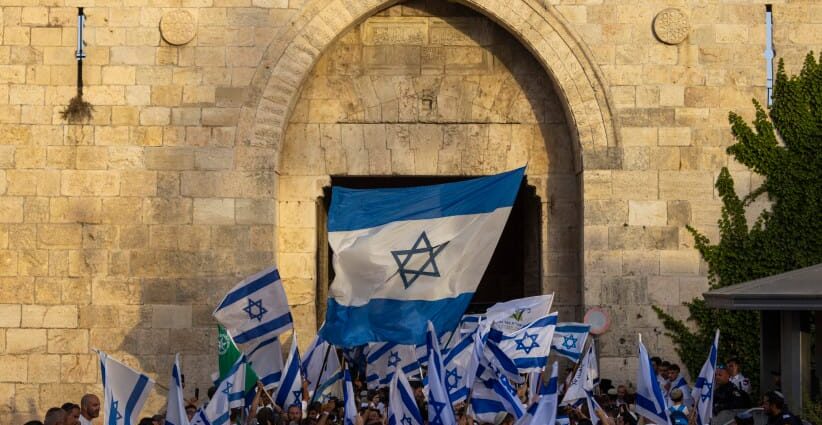
Israel marked its 59th Jerusalem Day celebration on Thursday with a flag march through the Old City and festivities nationwide.

ISRAELIS CELEBRATE Jerusalem Day, May 14, 2026. (Credit: Sam Halpern)

The day comes to celebrate the reunification of Jerusalem following the Six-Day War in 1967. This year it also fell on May 14, which is also the anniversary of the Israeli Declaration of Independence.

ISRAELIS CELEBRATE Jerusalem Day, May 14, 2026. (Credit: Sam Halpern)

Tens of thousands of people poured into Jerusalem to celebrate the holiday and participate in the annual flag march, in which thousands bearing Israeli flags march through the streets of the Old City, including the Muslim Quarter, ending at the Western Wall.

ISRAELIS CELEBRATE Jerusalem Day, May 14, 2026. (Credit: Sam Halpern)

Ben-Gvir declares sovereignty over Temple Mount

Before the march, National Security Minister Itamar Ben-Gvir ascended the Temple Mount in the Old City, declaring it to be “in our hands,” and stressing that he had “restored sovereignty on the Temple Mount thanks to determination and deterrence.”

ISRAELIS CELEBRATE Jerusalem Day, May 14, 2026. (Credit: Sam Halpern)

Later that afternoon, the Israel Police announced that they had arrested a suspect who had been planning a terror attack during the Jerusalem Day celebrations.

ISRAELIS CELEBRATE Jerusalem Day, May 14, 2026. (Credit: Sam Halpern)

There were also several reports of Israeli activists from across the political spectrum who clashed in Jerusalem’s Old City ahead of the flag march.

Jerusalem Post Staff contributed to this report.

This post was originally published on here

Along a meandering river in a warm, arid region that is now Thailand, roughly 113 million years ago, a plant-eating behemoth almost 90 feet long browsed in the treetops with little fear of predators because of its sheer size. This was Nagatitan chaiyaphumensis, the largest-known dinosaur from Southeast Asia.

Researchers have unearthed skeletal remains of Nagatitan, a member of the dinosaur lineage called sauropods known for having a long neck, long tail, small head, and four columnar legs.

The fossils of this Cretaceous Period dinosaur were first spotted by a villager in Thailand’s northeastern province of Chaiyaphum. Scientists over a period of years then dug up spine, rib, pelvis, and leg bones, including a front leg bone – the humerus – measuring 5.8 feet long.

Based on the dimensions of its humerus and femur, the corresponding hind leg bone, the researchers estimated Nagatitan’s body mass at 25 to 28 tons. Its head and teeth were not among the fossils recovered, but the researchers have a good idea of its feeding preferences based on other sauropods.

“Nagatitan was probably a bulk browser that focused on consuming high volumes of vegetation that required little to no chewing, such as conifers and possibly seed ferns,” said Thitiwoot Sethapanichsakul, a University College London doctoral student in paleontology and lead author of the research published on Thursday in the journal Scientific Reports.

The climate was probably subtropical, with some forests, as well as savanna-like and shrubland habitats. Nagatitan lived alongside other dinosaurs and flying reptiles called pterosaurs. The rivers were teeming with crocodiles, fish, and freshwater sharks.

The ecosystem’s largest predator was a relative of the giant African meat-eating dinosaur Carcharodontosaurus, probably about 26 feet long and around 3.5 tons.

“At that size, it was dwarfed by Nagatitan. At full size, Nagatitan likely had very little to fear in terms of predation,” Sethapanichsakul said.

Predators probably avoided attacking healthy adults of any large sauropod species because of the danger of being squashed. But they may have targeted old or sick adults or vulnerable babies.

“Indeed, sauropods are known to have grown very quickly after hatching, and this probably relates to the dangers of predation. The sooner sauropods could become large, the safer they were because they would have been more difficult to tackle,” University College London paleontologist and study co-author Paul Upchurch said.

Largest land animals in Earth’s history

Sauropods included the largest land animals in Earth’s history. Nagatitan was huge by any standard, but not on the scale of some South American sauropods, such as Argentinosaurus and Patagotitan, which topped 100 feet long.

Nagatitan’s name references Naga, a serpent-like being in some Asian religious traditions, prominently depicted in various Thai temples. In all, 14 named dinosaurs are known from Thailand.

The names of several large sauropods include the word titan. Sethapanichsakul said it might be appropriate to call Nagatitan Southeast Asia’s last “titan” because the region became a shallow sea later in the Cretaceous, meaning no more sauropods would live there.

Nagatitan provides insight into sauropod diversity in the region. Not many sauropods are known from Southeast Asia, and Nagatitan is the largest and the geologically youngest of them. Nagatitan belonged to a subgroup of sauropods that possessed bones with lots of internal air sacs and thin walls, traits that lightened their skeletons.

This group originated around 140 million years ago, achieved global distribution, and, around 90 million years ago, became the only sauropods left worldwide, thriving until the dinosaur age ended 66 million years ago due to an asteroid impact.

Nagatitan lived at a time when Earth’s atmospheric carbon dioxide levels were rising, coinciding with high global temperatures.

“Sauropods seem to have become particularly large at this time, with gigantic forms living in South America, China, probably North Africa, and now with Nagatitan, a fairly large one in Southeast Asia,” Upchurch said.

“This possible relationship between large body size and high climatic temperatures is not fully understood, but it’s likely that the high temperatures had an impact on the plant fodder that was important to sauropods, which were very large-bodied herbivores. Nagatitan gives a glimpse of the period leading up to the eventual peak in body size and temperatures about 10 to 15 million years later,” Upchurch said.

This post was originally published on here

Israel will take legal action against The New York Times over a column penned by Nicholas Kristof, which included allegations of serious sexual abuse of Palestinians in Israeli prisons, the Prime Minister’s Office said in a Thursday statement.

The PMO, which referred to the accusation as “one of the most hideous and distorted lies ever published against the State of Israel,” said Prime Minister Benjamin Netanyahu and Foreign Minister Gideon Sa’ar instructed officials to begin preparing a defamation lawsuit against the publication.

“They defamed the soldiers of Israel and perpetuated a blood libel about rape, trying to create a false symmetry between the genocidal terrorists of Hamas and Israel’s valiant soldiers,” Netanyahu wrote on X/Twitter.

“Under my leadership, Israel will not be silent.”

Netanyahu has previously accused international outlets of amplifying false claims about Israel’s conduct in Gaza, telling foreign media in August that “Hamas lies” were being repeated abroad.

The planned lawsuit would focus on whether statements in the article crossed the legal threshold from opinion or criticism into actionable defamation. It was not immediately clear where the lawsuit would be filed, what damages would be sought, or whether Israeli state institutions or individual officials would be listed as plaintiffs.

NYT doubles down in support of op-ed author

On Wednesday, the New York Times issued a statement affirming its support for Kristof’s controversial op-ed, saying he “draws together on-the-record accounts and cites several analyses documenting the practice of sexual violence and abuse conducted by various parts of Israel’s security forces and settlers.”

His “deeply reported piece of opinion journalism starts with a proposition to readers: ‘Whatever our views of the Middle East conflict, we should be able to unite in condemning rape,'” the news outlet stated.

“The accounts of the 14 men and women he interviewed were corroborated with other witnesses, whenever possible, and with people the victims confided in – that includes family members and lawyers,” the outlet said.

This post was originally published on here

Defense Minister Israel Katz condemned FC Barcelona soccer star Lamine Yamal on Thursday after the right midfielder was seen waving a Palestinian flag during the team’s victory parade in their home city. 

The parade, attended by thousands of fans, took place on Monday after Barcelona won its 29th Spanish league title in a 2-0 win over rivals Real Madrid. 

“Lamine Yamal chose to incite against Israel and foment hatred while our soldiers are fighting the terrorist organization Hamas, an organization that massacred, raped, burned, and murdered Jewish children, women, and elderly on October 7,” Katz wrote on X. 

“Whoever supports this type of message should ask themselves: Does he consider this humanitarian? Is this moral? ” he asked. “As the Minister of Defense of the State of Israel, I will not remain silent in the face of incitement against Israel and against the Jewish people.”

“I expect a great and respected club like @FCBarcelona to distance itself from these statements and make it unequivocally clear that there is no place for incitement or for support of terrorism,” Katz concluded.

View this post on Instagram

A post shared by CNN (@cnn)

Lamine Yamal was a critical part of FC Barcelona’s triumphant season 

The team’s coach, Hansi Flick, said at a press conference on Tuesday, “These are things that I don’t normally like. I have talked to him about it and told him that if he wants to do it, it’s his decision; he’s 18 years old. We are dedicated to playing football, and we have to take into account what people expect from us.”

Yamal, at 18 years old, was a major asset to Barcelona’s success this season, scoring 16 goals in 28 matches.

This post was originally published on here

The Barcelona soccer team issued a statement distancing the organization from star player Lamine Yamal after he caused a stir by waving a Palestinian flag at the team’s victory parade in Barcelona on Monday. 

Yamal, at 18 years old, was a major asset to Barcelona’s success this season, scoring 16 goals in 28 matches. The parade in question was attended by thousands of fans celebrating the team’s 29th Spanish league title in a 2-0 win over rivals Real Madrid. 

FC Barcelona’s statement, written in Hebrew, was specifically aimed at its Israeli fans. It clarified that Yamal’s actions did not constitute any political statement on behalf of the organization. 

“We would like to emphasize that the moment in question was not planned in advance by any party associated with FC Barcelona,” the statement added, “but rather occured spontaneously.”

The statement noted that video footage of the “moment” would not be posted on any of the club’s official social media channels. 

View this post on Instagram

A post shared by CNN (@cnn)

“FB Barcelona is proud to represent a global community of fans from many different backgrounds, cultures, and nationalities, including the Israeli community,” the group said. “On behalf of FC Barcelona, we sincerely appreciate the Israeli fan community, the Israeli soccer players, and your continued support of the club over the years.”

Israel’s defense minister condemns soccer star Lamine Yamal for flying Palestinian flag

Defense Minister Israel Katz condemned FC Barcelona soccer star Lamine Yamal in a statement on X on Thursday. 

“Lamine Yamal chose to incite against Israel and foment hatred while our soldiers are fighting the terrorist organization Hamas, an organization that massacred, raped, burned, and murdered Jewish children, women, and elderly on October 7,” Katz wrote. 

“Whoever supports this type of message should ask themselves: Does he consider this humanitarian? Is this moral? ” he asked. “As the Minister of Defense of the State of Israel, I will not remain silent in the face of incitement against Israel and against the Jewish people.”

“I expect a great and respected club like @FCBarcelona to distance itself from these statements and make it unequivocally clear that there is no place for incitement or for support of terrorism,” Katz concluded.

This post was originally published on here

Iran’s ability to threaten its neighbors and US interests has been dramatically reduced by US bombings, and Tehran’s defense industry has been set back by 90%, a senior US admiral said on Thursday.

Admiral Brad Cooper, head of US Central Command (CENTCOM), sought to underscore the tactical successes of the military campaign against Iran that he oversaw, saying the war had dramatically reduced the danger Iran posed to the broader Middle East.

Cooper declined to directly address reports by Reuters and other news organizations that Iran, which stockpiled arms in underground facilities, had retained significant missile and drone capabilities. Those reports cited US intelligence sources.

Iran can no longer threaten US

Iran has a significantly degraded threat, and they no longer threaten regional partners, or the United States, in ways that they were able to do before, across every domain,” Cooper told a US Senate committee.

“They’ve been significantly degraded.”

Cooper also said Iran was no longer able to transfer arms and other resources to its main allies in the region: Hezbollah in Lebanon, the Houthis in Yemen, and Hamas in Gaza.

“Those transfer paths and methods have been cut off,” he said.

“Taking on the disarmament of Hezbollah is a tall order,” Cooper said. “They’ve been funded by Iran for decades with billions of dollars, and Hezbollah is inculcated into every fabric of the Lebanese society.”

“I think right now, our continued commitment, with modest dollars to the Lebanese Armed Forces, is helpful. They have, in particular, several units that can do more. We have to be; I believe our commitment could be to provide the necessary funding so they can do more.”

This post was originally published on here

The relationship between Israel and Diaspora Jewry must be urgently strengthened, World Jewish Congress President Ronald S. Lauder said in an interview with The Jerusalem Post as the organization marked 90 years since its founding in Geneva.

Reflecting upon the WJC’s historic mission and contemporary challenges, Lauder warned that Israel could no longer take Diaspora Jews for granted, calling them “among the most important ambassadors of the Jewish state throughout the world.”

“The bond between Israel and the Diaspora cannot be taken for granted,” Lauder told the Post. “It must be nurtured, respected, and protected for future generations. We must repair any cracks before it’s too late.”

The comments came as the WJC formally marked 90 years since its founding in Geneva with a week of events and meetings focused on rising antisemitism, global extremism, and the security of Jewish communities worldwide.

Lauder, who took over the presidency of the WJC from Edgar Bronfman in 2007, said he understood early on that antisemitism in the modern era would increasingly be expressed through hostility toward Israel.

“I understood very early that the new antisemitism would increasingly become antisemitism directed against or motivated by animosity toward the State of Israel,” he told the Post. “That realization shaped much of my work from the very beginning.”

He said this led him to focus beyond Europe and the United States, including by building relationships in the Middle East and across the broader Arab world.

“Securing the future of the Jewish people also means advancing the standing and legitimacy of Judaism in the Arab world,” Lauder said.

At the same time, he said, the Israeli-Arab conflict must eventually move toward resolution, arguing that without long-term regional stability, threats facing Israel and Jewish communities would continue to evolve.

When asked whether the wave of antisemitism after the October 7 massacre represented a temporary surge or something deeper, Lauder said the threat had been building long before Hamas’s attack.

“The warning signs were already on the wall,” he said. “What we are witnessing is not simply a religious conflict. It is far deeper than that.”

Lauder said Israel’s enemies were driven by “radical extremist ideologies” that also targeted the Western world.

“The enemies of Israel are driven by radical extremist ideologies that oppose the Western world itself, Christians and Jews alike,” he said. “These are forces that reject democracy, tolerance, and freedom.”

He said that the American administration understood the danger.

President Donald Trump understands the meaning of this threat and the broader consequences of ignoring the root of the problem,” Lauder said.

Lauder also praised Trump’s record on Jewish and Israel-related issues, saying he believed the president had shown a deep understanding of Jewish values and Israel’s importance.

“I have said this before, and I will say it again: President Trump is one of the presidents who has most deeply understood Jewish values and the importance of the State of Israel,” he said. “In my opinion, he is the most pro-Zionist president I have known since President Ronald Reagan.”

Turning to Iran, Lauder said the threat remained unresolved.

“The mission is not yet complete,” he said. “Iran remains one of the central threats to global stability and to the security of Israel and the Jewish people.”

Lauder said he believed that Trump would deal decisively with the Iranian threat.

“The president of the United States understands this clearly, and I believe with all my heart that he will bring this issue to a decisive resolution,” he said.

‘Only education can truly bridge the gaps’

Lauder also reflected on his long investment in Jewish education, particularly through the Lauder schools, which were established to help rebuild Jewish identity in communities devastated by the Holocaust and decades of communist rule.

“Only education could truly bridge the gaps created by history and rebuild Jewish continuity,” he said.

The goal, he added, was never simply to build schools, but to restore “belonging, confidence, and the foundational values of the Jewish people.”

“When we opened the first Lauder kindergarten in postwar Eastern Europe, many people believed it was impossible,” he said. “Today, seeing thousands of graduates, thriving Jewish communities, and young families rebuilding Jewish life, proves that education remains the strongest guarantee of the Jewish future.”

Lauder also said that Holocaust restitution work remained unfinished, with stolen Jewish property, dormant bank accounts, art, and other assets still not returned to their rightful owners.

“There is still Jewish property stolen during the Holocaust that has never been returned,” he said. “There are still dormant bank accounts, works of art, and assets that rightfully belong to Jewish families.”

Restitution, he said, was also a moral issue.

“Restitution is not only about money or property,” he said. “It is about dignity, historical truth, and moral responsibility.”

He said the next generation would have to continue the effort.

“This work will not end with my generation,” Lauder said. “The next generation will have to continue this mission until justice is achieved wherever possible. I am sure more information will come to light in the future that will allow justice to be done.”

When asked what he would tell his mother if she walked into his office today, Lauder said his work had been guided by the values she imparted to him.

“I would tell her that, thanks to the Jewish values she gave me, love of humanity, hard work, responsibility, and commitment to our people, I dedicated my life to helping lead and strengthen the Jewish people around the world,” he said.

“Everything I have done has been guided by those values,” Lauder added. “I hope I have made her proud.”

This post was originally published on here

The IDF on Thursday revealed that it, led by the Ground Technology Division, has been supplying the Lebanese army with anti-explosive drone barbed wire, as Hezbollah’s drone threat continues to grow and expand. 

To date, the military has issued approximately 158,000 square meters of anti-explosive drone barbed wire, equivalent in size to about 20 football fields.

Further, the IDF is in the process of procuring an additional 188,000 square meters of the wire.

This is a developing story.

This post was originally published on here

An Israeli citizen, 32, suspected of mailing drugs from Holland to Israel, as part of an international smuggling network, was arrested in the Netherlands, Israel Police announced on Wednesday. 

The 32-year-old’s arrest followed a multiple-month-long joint investigation by the Israeli and Dutch police.

According to the investigation’s findings, the suspect is believed to be part of an organized international smuggling network that smuggles large quantities of drugs from Europe to other countries across the globe. 

Further, from the way the drugs were packaged and disposed of, police surmised that the organization had a high level of planning, coordination, and operational capability.

Police noted that the investigation is still ongoing, and additional suspects are expected to be arrested in Israel and other European countries.

IDF indicts two soldiers for smuggling cigarettes into Gaza

The IDF’s military prosecution filed two additional indictments against two suspects ranked Sergeant First Class for offenses linked with smuggling goods into Gaza, tax offenses, and other offenses, the military said on Tuesday.

The indictments followed joint investigations by Shin Bet (Israel Security Agency), Israel Police, the Military Police’s Special Investigations Unit, and the Israel Tax Authority.

The first defendant was involved in an extensive network of smuggling cigarettes and other goods into the Gaza Strip, along with their father and colleagues in their military unit, from February 2024 until January 2026, the indictment says.

Additionally, they took hundreds of rounds of ammunition and magazines from military stockpiles and sold them to civilians for thousands of shekels.

They are also charged with drug offenses and obstructing legal practices, the military noted.

This post was originally published on here

Jerusalem remains one of Israel’s most complex cities, but new data published ahead of Jerusalem Day points to a capital that is not only growing, but functioning better by several key measures – even as housing prices, negative migration, and gaps between its communities continue to shape daily life.

The Jerusalem Institute for Policy Research, an independent research institute focused on Jerusalem and its diverse communities, published its annual statistical report on the capital city.

The picture that emerges is not one of simple success or decline. Migration from Jerusalem remains negative, but has improved; construction is at record levels, but prices are still rising; Arab women and ultra-Orthodox (haredi) men are entering the workforce at higher rates, but from low baselines; and residents report growing satisfaction with municipal services, even as some of the city’s deepest questions remain national in scope.

At the end of 2024, Jerusalem’s population stood at 1,050,200 residents, including 997,900 Israeli residents and 52,300 foreign residents. Among Israeli residents, 60% were Jewish and 40% were Arab, according to the Institute’s data.

One area in which the data shows movement is east Jerusalem. Public transportation use in the east of the city rose to 19.7 million ride validations in 2025 – a 12% increase – even as validations citywide fell by 5%. Arab students made up 39% of Jerusalem’s education system, with the Institute noting a rise over the past five years in the share studying within official and recognized frameworks, in part due to a shift from private education.

But Tagel Comay, COO of the Jerusalem Institute for Policy Research, said the strongest sign of change in east Jerusalem is employment, particularly among women.

“When we talk about integration, the place where we see it most – and where it will continue to develop – is employment,” Comay told The Jerusalem Post in an interview on Thursday. “Employment among women in east Jerusalem rose to 33%. That is a lot. It is still not enough, it is still very little, but it is a huge and difficult increase.”

Labor-force participation among Arab women aged 25-64 rose from 23% in 2019 to 33% in 2025. Comay said the shift cannot be explained by one factor alone.

“It is a combination of processes,” she said. “One of the clearest trends is the link between declining fertility and rising employment. In east Jerusalem, fertility has fallen significantly, while women’s participation in the workforce has risen.”

Economic pressures and broader social changes in east Jerusalem

She also pointed to economic pressures and broader social changes inside east Jerusalem, including changes in family structure and the status of women in a largely traditional and patriarchal society.

At the same time, Comay cautioned against reading the data as proof of full integration between east and west Jerusalem.

“I cannot say there is a clear trend of two-way movement,” she said. “That is not the situation.”

The data also highlights Jerusalem’s distinct haredi character. In 2024, 46% of the city’s expanded Jewish population defined itself as haredi, compared with 16% nationally. Only 13% of Jerusalem’s Jewish population defined itself as secular, compared with 44% nationally. In Hebrew education, 64% of students studied in private haredi education, while 36% studied in state, state-religious, and state-haredi frameworks.

Still, Comay warned against assuming that the composition of first-grade classrooms can simply be projected forward into the city’s long-term demographic future.

“When you look at first grade, you really see a huge rise in haredi first-grade classes,” she said. “But when you look at older ages, a different picture emerges.”

One explanation, she said, is that larger haredi families often leave Jerusalem as their children grow older, moving to haredi or haredi-majority cities outside the capital, including Beit Shemesh and Betar Illit.

“I would not look at education and first grade and say, this already tells us the whole demographic future,” Comay said. “It is not that simple.”

Rather than describing Jerusalem as a city dominated by one group, Comay described it as “a city without a majority.”

“It is not like Tel Aviv, where there is a clear secular majority and all the rest are smaller groups,” she said. “Here, even though there is a high percentage of haredim, when you also look at Arabs and the other Jewish populations, there is no clear absolute majority of one population.”

That, she said, is part of what makes Jerusalem compelling.

“There are all kinds of populations of all kinds of sizes,” she said. “It is not one population that is the largest and sets the tone. That is what makes this city so interesting to me.”

Haredi men’s labor-force participation also rose from 44% in 2019 to 51% in 2025, according to the Institute.

Asked whether that pace is enough for Jerusalem’s economic needs, Comay said, “It is always not enough. We always want more prosperity, more economy, more businesses, more new businesses.”

But she added that Jerusalem also shows economic resilience, particularly in business survival.

“Business survival is a very important measure,” she said. “It is important that new businesses open, but it is also interesting to see how many businesses hold on, especially in the past few years of all the crises we have experienced.”

Jerusalem’s housing data tells a similarly mixed story. By the end of 2025, the city had issued building permits for some 8,200 housing units, amounting to 10% of all permits in Israel. Construction began on approximately 6,900 apartments, an all-time high, and 4,100 apartments were completed.

Yet housing prices continued to rise, and the construction boom has not yet translated into immediate relief for residents.

“Construction and housing processes take time,” Comay said. “The prices we see now reflect years of insufficient construction in Jerusalem, which created very high demand and very low supply. The city is building now, but the gap has not yet closed.”

She said the Institute expects expanded supply to eventually affect prices, though the impact will depend on where housing is built and for whom.

“We expect there will be a decline in apartment prices, because as there is more supply, it will take time,” she said. “It very much depends on which areas it will be. These are things the data cannot tell us now; we will see it in a few years.”

Migration is one of the city’s biggest challenges

Migration remains one of Jerusalem’s ongoing challenges, though the trend improved in 2024. Some 11,500 residents moved into Jerusalem from other localities, while 19,500 left for other localities, leaving a negative intercity migration balance of 8,000. That was an improvement from negative balances of 11,300 in 2023 and 15,500 in 2022.

The broader migration balance also improved, standing at negative 6,500 in 2024, compared with negative 9,800 in 2023. At the same time, the number of Jerusalem residents leaving Israel remained high, at about 5,200 in both 2023 and 2024, compared with 1,500 in 2022.

Still, the Institute’s data shows residents reporting higher satisfaction with life in the city. According to the Central Bureau of Statistics’ social survey, 81% of Jerusalem residents said they were satisfied with their residential area in 2022-2024, compared with 74% in 2018-2020. Some 65% rated the municipality’s performance as good or very good, compared with 43% previously, and satisfaction with cleanliness rose to 63%, compared with 42%.

Comay stressed that these are CBS surveys, not municipal polling.

“Satisfaction with the conduct of the municipality and with services has risen significantly,” she said.

She said those findings should not be treated as proof that Jerusalem’s problems have been solved, but they do suggest that residents experience the city as more functional than its problems alone might indicate.

“Are these the solutions to everything? Clearly not,” Comay said. “There are real deep problems here, some of which require more work and municipal work, and some of which require national decisions, really. The eyes of all of Israel need to be on this city for it to succeed in all this complexity.”

Some of Jerusalem’s challenges, she added, are not only municipal, but national by definition.

“Jerusalem is also a capital city,” she said. “There are issues here that are national. If a decision is made about east Jerusalem one way or another – even where you send a garbage truck is also a national issue. Not everything is only local.”

For Comay, the current data does not show a city in collapse, nor a city whose challenges have disappeared. It shows a capital absorbing pressure, changing unevenly, and continuing to function through complexity.

“The people here are surviving, and you see the resilience,” she said. “Those who are suffering now are the people who know how to manage, Israelis who can deal with everything – and that is something very Jerusalemite in my eyes.”

This post was originally published on here

Leader of the Yisrael Beytenu party, MK Avigdor Liberman, said on Thursday that he was concerned Prime Minister Benjamin Netanyahu would soon initiate an unnecessary military operation solely for election purposes, after the coalition submitted a bill to dissolve the Knesset.

Liberman made the remarks during a visit to Kibbutz Be’eri, one of the southern communities bordering Gaza that was brutally attacked by Hamas terrorists during the October 7 massacre.

He said that he had “every reason to be concerned that the prime minister of October 7, together with the submission of the bill to dissolve the Knesset, will initiate a military operation not intended to achieve victory, but intended solely for election purposes.”

There has been a recent crisis within Netanyahu’s coalition over the haredi (ultra-Orthodox) draft bill, which led both the opposition and the coalition to submit a bill to dissolve the Knesset.

Passage of the bill could move elections up to September or mid-October, instead of the currently scheduled date of October 27. The legislation is expected to be brought to a vote next week.

Meanwhile, MK Nissim Vaturi (Likud) said on Thursday that Israel was “closer than ever to a return to fighting against Iran” in a Kol Berama interview.

“If it were this coming weekend, I would still fly abroad;  next week, I would think twice,” Vaturi added. He is also a member of the Knesset Foreign Affairs and Defense Committee.

Liberman said that military officials also bore responsibility for ensuring an unnecessary operation was not initiated. “The lives of our soldiers are at stake. There must not be a military operation carried out solely for election purposes,” he added.

Liberman noted he hoped for an election soon, “perhaps already in September.”

“We will send this malevolent government, the government of October 7, home.”

Liberman then warned that Hamas was rearming in Gaza because Israel had failed to eliminate the terror group in previous rounds of war.

“The government of October 7 is lying to the residents of the Gaza border communities and to the citizens of the State of Israel. Before our eyes, we are seeing the beginning of the reconstruction of the Gaza Strip without Hamas intending to disarm,” he said.

Hamas is recruiting new terrorists, training, and preparing

Liberman added that Hamas was recruiting new terrorists, training, and preparing for another round of fighting.

“The funding no longer comes through suitcases of cash, but through trucks arriving with the approval of the Israeli government. Hamas’s grip over the Strip has never been tighter than it is today,” he said.

“There can no longer be ceasefires or security buffer zones. It does not help. Just as we saw Hezbollah use the time to strengthen itself, Hamas is also growing stronger every day.”

Liberman has been a vocal critic of Netanyahu’s military policy, arguing that Israel has failed to achieve what he describes as a “decisive victory.”

Last week, Liberman launched a campaign calling for a decisive military outcome on all fronts, including against Iran, Hezbollah, and Hamas.

Yisrael Beytenu is one of the opposition parties seeking to replace Netanyahu in the upcoming elections. The party holds a hawkish security stance, supports expanding Israeli settlements in Judea and Samaria, advocates universal conscription (including drafting the haredi population), and strongly supports separating religion and state.

Sharon Sharabi, brother of former Hamas hostage Eli Sharabi, recently joined Yisrael Beytenu ahead of the elections, along with wounded reserve soldier Capt. (res.) Israel Ben-Sheetrit. Both joined Liberman on the tour to Kibbutz Be’eri.

Liberman has served in several senior government positions, including defense minister, foreign minister, and finance minister. In 2018, he resigned as defense minister from Netanyahu’s government in protest over a ceasefire agreement with Hamas, following heavy rocket fire from Gaza toward Israel.

This post was originally published on here

A colonel in the IDF was suspended after coming under investigation for sexual harassment, Army Radio reported on Wednesday.

The investigation was initiated by a complaint from a female officer who served under him. 

“Following a complaint about an incident of a sexual nature by an officer with the rank of lieutenant colonel, a Military Police Investigation was opened,” an IDF spokesperson stated.

“Upon completion, the findings will be forwarded to the Military Prosecutor’s Office for review. In light of the investigation, the officer was suspended from his position by his commanders. The IDF views any sexual harassment with great seriousness and will continue to act resolutely to eradicate any phenomenon of this type.”

Military defense attorney indicted for numerous sexual offenses

Last month, the State Attorney’s Office filed an indictment with the Lod District Court against military defense attorney Idan Dvir, 42, of Netanya, accusing him of exploiting his position as counsel to commit multiple sexual offenses against 10 women, including female soldiers, women awaiting enlistment, and an undercover police agent.

According to the indictment, Dvir faces 10 counts that include rape, attempted rape, an indecent act by force, multiple counts of indecent acts, attempted procurement for prostitution under aggravated circumstances, sexual harassment, providing false information, and destruction of evidence.

Sarah Ben-Nun contributed to this report.

This post was originally published on here

The UK government will take “urgent action to tackle antisemitism and ensure all communities feel safe,” King Charles III pledged during the King’s Speech on Wednesday.

The King’s Speech is the centerpiece of the State Opening of Parliament in the UK, where the monarch reads a speech written by the government, outlining its legislative agenda for the upcoming session.

During Wednesday’s speech, King Charles presented 37 upcoming bills, including the following: the Tackling State Threats Bill, new legislation to tackle the growing threat from foreign state entities and their proxies, including Iran’s Islamic Revolutionary Guards Corps (IRGC); the National Security Bill, which will aim to protect British people from extreme violence, criminalize the creation ⁠and sharing of the most harmful online material, and add “polygraph testing as an available license condition for state threat offenders”; and the Cyber Security and Resilience Bill, which sets out to improve the country’s defenses against cybersecurity threats.

King Charles also said his ministers will “continue to promote long-term peace in the Middle East and the two-state solution in Israel and Palestine.”

However, it must be noted that not all the bills in the King’s Speech will pass through the UK Parliament.

In a statement on Wednesday, the Jewish Leadership Council said, “As we move into this new legislative session, these words must be backed up by action.”

The JLC welcomed the Tackling State Threats Bill but says it awaits the details of the legislation, hoping it will be “robust enough” to tackle the threat Iran poses on UK soil.

Adrian Cohen, the acting president of the Board of Deputies of British Jews, said that the King’s Speech “reflects the ongoing seriousness and urgency of the situation,” but said the BOD will continue to push for “swift and decisive government action on all these priorities.”

A ‘clear, forceful King’s Speech’

The American Jewish Committee commended King Charles for delivering a “clear, forceful King’s Speech that highlights the urgent need to confront rising antisemitism in the UK and strengthen protections for British Jewish communities.”

It also welcomed the introduction of legislation to address threats from foreign state entities, but said it expects these powers to be “enacted without delay.”

“British Jews must be able to live full, open lives in safety and security, without fear,” it added.

On Thursday, King Charles made an unannounced visit to Golders Green to show support for Britain’s Jewish communities. Golders Green is home to a sizable Jewish population and has borne the brunt of the recent spate of antisemitic incidents across London.

Last month, two Jewish men were stabbed in the area in an attack being treated by police as terrorism. In other incidents in Golders Green, four Jewish community ambulances were torched, and a memorial wall was targeted.

During his Thursday trip, King Charles met the two stabbing victims at a Jewish Care charity center, as well as other religious and civic leaders.

“Thank you, Your Majesty, for coming today to Golders Green to bring comfort and encouragement to our Jewish community!” Britain’s Chief Rabbi Ephraim Mirvis said on X/Twitter.

The visit was the king’s latest demonstration of backing for the Jewish community, after he visited a synagogue in Manchester following an attack last year that left two worshipers dead, and agreed in March to become the patron of the Community Security Trust.

This post was originally published on here

Professor Beinart,

As CUNY colleagues, I’ve always valued our civil, if spirited, exchanges. We’ve disagreed sharply on Israel and Jewish identity, but you’ve always struck me as a man of principle whose critiques of Israel flow from a deep commitment to Jewish ethics. That’s why I write this as a friendly wake-up call, not an attack.

The Left that you’ve courted – and whose rhetoric you’ve sometimes echoed – is turning on Jews in ways that have nothing to do with Israel. Your own positions, once a bridge to the antisemitic fringe, have now become so mainstream on the Left that they no longer need you or your Jewishness to launder their hate. 

Sooner or later, they will come for you, too. The question is: Will you still be standing with them when they turn, or will you take a stand arm-in-arm with the Jewish community and me right now?

Antisemitic incidents

Consider what just happened at the Park Slope Food Coop in Brooklyn, a quintessential left-wing institution. 

During a meeting about lowering the threshold for a boycott of Israeli goods, a member named Michael Huarachi declared: “Jewish supremacism is a problem in this country.” He compared Jews to Nazis. Some 50 people applauded. 

Longtime Jewish member Ramon Maislen stood up and called it out: “Applauding a speech that labels Jews as supremacists is not principled. It is wrong.” The room fell silent.

Note the language: not “Israeli supremacism,” but “Jewish supremacism… in this country.” This was mainstream progressive applause in a socialist-leaning coop. Other Jewish members have reported being called “Nazi,” shouted at with “Sieg Heil,” or told they “smelled of Palestinian blood.” The pro-BDS faction shrugged it off as “diverse viewpoints.”

This is part of a broader pattern. Left-wing and Islamist-aligned activists increasingly traffic in classic antisemitic tropes about Jewish power and supremacy detached from any specific Israeli policy. Progressive podcaster Briahna Joy Gray tweeted about the Epstein files: “The mainstream media’s disinterest in the rampant Jewish supremacy in these documents is fascinating.” 

Similar rhetoric appears in activist spaces, invoking “Jewish supremacy” as a domestic American problem. Anti-Defamation League audits and campus reports document harassment of visibly Jewish students – kippah-wearers and Orthodox Jews – not for their views on Gaza, but for their Jewish identity. 

The harassment takes form in swastikas on dorms, assaults on Jewish diners told “Hitler was right,” and vandalism of synagogues and kosher businesses with no connection to Israel.

These attacks don’t require knowledge of anyone’s views on Israel. They target Jews as Jews.

Your own work has, unfortunately, helped normalize elements of this worldview. You’ve rejected American Jews’ “idolatry” of Israel and called for a post-Gaza “reckoning” that frames Jewish victimhood narratives as enabling oppression. 

In activist circles, you’ve challenged what some call “Jewish supremacy” in the context of Zionism. These positions put you at odds with the overwhelming majority of Jews worldwide. By framing Jewish ethnicity, ancestry, indigeneity, heritage, and connection to the Land of Israel as the problem, you’ve given intellectual cover to those who see any assertion of Jewish particularism as illegitimate.

Once, your voice as the “good Jew” – progressive, critical of Israel, Orthodox yet anti-Zionist – was uniquely useful to the Left. You humanized their cause and shielded it from charges of Jew-hatred.

But that era is over.

Your influence and the positions you pioneered have gone mainstream. Progressive coalitions now routinely echo the same rhetoric about Jewish power and supremacy without needing a Peter Beinart intermediary. In short, to them (your quick wit and sharp brain notwithstanding): you’re becoming expendable.

Antisemitism on the Right

To be clear, I have publicly and consistently rejected the antisemitic and isolationist fringe on the Right, the so-called “Woke Reich” associated with figures like Tucker Carlson and Megyn Kelly. But that fringe remains very much marginal. 

The mainstream Right, by contrast, has overwhelmingly stood with the Jewish community and Israel. Republican-led congressional committees have held multiple high-profile hearings exposing campus antisemitism and holding university leaders accountable, all while those on the Left unfathomably reject.

Just last month, in April 2026, Senate Republicans stood united in defeating resolutions introduced by Sen. Bernie Sanders to block arms sales to Israel. Forty out of 47 Senate Democrats voted to prohibit the sale of military equipment to Israel. 

This was not a vote on foreign aid. It was a direct effort to prevent the United States from selling any defensive arms to a key ally. Congress has used this mechanism in the past against adversaries such as Iran, North Korea, Syria, and Cuba, or to restrict sales to Saudi Arabia during the Yemen conflict. Treating Israel this way, nearly akin to viewing it as an enemy, reveals how far the position has shifted.

History offers a chilling precedent. In the early 1930s, the Verband nationaldeutscher Juden (Association of German National Jews), led by decorated World War I veteran Max Naumann, rejected Zionism as disloyal and insisted that Jewish identity must be erased in favor of nationalism. 

These Jews welcomed Hitler’s rise as a “national awakening,” supported the regime, and argued Nazi measures targeted only “un-German” elements. They believed that by discarding Jewish particularism, including ties to Jewish ethnicity, culture, and the Land of Israel, they could prove their loyalty and be accepted as true Germans.

It didn’t work.

In November 1935, just weeks after the Nuremberg Laws stripped Jews of German citizenship, the Gestapo dissolved the group as “hostile to the state.” Max Naumann was arrested and imprisoned in the Columbia concentration camp. The “good,” patriotic, anti-Zionist Jews who had distanced themselves from their people received no protection. They shared the same fate as the wider Jewish community they had scorned.

Peter, like the leaders of the VnJ, you have made rejection of Jewish Zionism and particularism central to your public identity. In doing so, you distance yourself from the overwhelming majority of Jews who see these elements as core to our peoplehood. You position yourself as the “good Jew” acceptable to the progressive Left because you have shed the “problematic” parts of Jewish identity.

The same dynamic is playing out today. The progressive Left’s problem isn’t really Israel – it’s Jews and the belief in a broader “Jewish supremacy.” Like it or not, that includes you. Your support for them won’t shield you when usefulness wanes.

I implore you to reaffirm that Jewish peoplehood and identity are not supremacist sins, but legitimate expressions of a people’s right to exist, live, and thrive like any other. I believe with all my heart that the Jewish community – your community – will welcome you back.

Please wake up before it’s too late, my friend. The new Left is coming.

The writer is a CUNY professor of law.

This post was originally published on here

A federal judge on Wednesday temporarily blocked US sanctions against Francesca Albanese, a United Nations expert on the Palestinian territories, claiming that the Trump administration likely violated her free-speech rights by imposing the measures.

The sanctions barred her from entering the US and banking there. 

Albanese, an Italian lawyer who is the UN special rapporteur on the Palestinian territories, recommended the International Criminal Court (ICC) pursue war-crimes prosecutions against Israeli and American nationals.

Albanese’s husband and daughter, who is a US citizen, sued the Trump administration in February, alleging that the US sanctions are “effectively debanking her and making it nearly impossible to meet the needs of her daily life.”

In a post on X/Twitter following the decision, Albanese thanked her family for “stepping up” in her defense. 

US District Judge Richard Leon in Washington found that Albanese’s residency outside the US does not undercut her protections under the First Amendment of the US Constitution and that the Trump administration sought to regulate her speech because of the “idea or message expressed.”

Albanese has decried the sanctions as part of a broader US strategy to weaken international accountability mechanisms.

Albanese accused of support for terrorism in US sanctions

In July 2025, US Secretary of State Marco Rubio announced the sanctions against Albanese.

In a press release at the time, Rubio described Albanese’s engagement with the ICC as a “gross infringement on the sovereignty” of the US and Israel, given the fact that neither country is party to the Rome Statute, the treaty that established the ICC.

“Albanese has spewed unabashed antisemitism, expressed support for terrorism, and open contempt for the United States, Israel, and the West,” Rubio’s statement continued.

Rubio accused Albanese of “making extreme and unfounded accusations,” asserting that the US will not tolerate such campaigns of political warfare that threaten the sovereignty of the US and its allies.

This post was originally published on here

On paper, the statistics are straightforward enough: the religious Zionist community makes up a relatively small percentage of Israel’s population, yet its men serve disproportionately in combat units and reserve duty. But statistics rarely capture what happens after midnight, when exhausted mothers finish another day of work, put children to bed alone, and prepare for another morning shaped by uncertainty. 

For Frieda Ross, President of World Emunah, these moments have become the rhythm of everyday Israeli life. “The women are still part of the workforce, and they still have to take care of the home and the children when their partners are away,” Ross says. “When we talk about resilience, I think one of the things that’s most important is to highlight their strength, how much they carry on their backs.” 

That message is expected to be a prominent feature when Emunah representatives appear at the upcoming Jerusalem Post New York Conference. But in conversation, Ross and her colleagues quickly move beyond the language of resilience alone. What emerges instead is a portrait of an organization focused on continuity: childcare centers functioning under fire, schools improvising wartime support systems, and women quietly building social infrastructure while the country remains in prolonged crisis. 

“Everything is intertwined,” Ross says. “The daycare is important, the resilience of the children in the homes is important, and continued education is important. Everything affects everything.” Today, Emunah’s leaders increasingly frame the organization as a long-term investment in women’s leadership, particularly within the religious Zionist community. 

Ross points to one initiative launched decades ago: a businesswomen’s network created by professional religious Zionist women in their 30s. “They shared professions, abilities, and contacts. They used each other almost in a barter system, and that club is still active today.” 

Now, nearly three decades later, Emunah has launched a new initiative aimed at younger women entering politics, business, and professional leadership. The program, called Rishonot, provides mentorship, networking, and leadership tools to women around the country. 

But even those programs rarely remain confined to networking alone. World Emunah Director Meira Lerner describes how one woman from the business council was instrumental in opening a jewelry studio inside one of Emunah’s residential homes for at-risk youth. “The purpose wasn’t just jewelry-making,” she explains. “The kids learn responsibility and work ethic. How to run a business, essentially.” 

As these teenagers assist in running the studio, their skills grow into confidence, which in turn opens new possibilities. “It’s been a tremendous success,” Lerner smiles, noting that Emunah’s work encompasses multiple generations in more ways than one. The women who once built professional support systems for themselves are now creating opportunities for vulnerable children, children who may someday become leaders in their own right. But if professional empowerment forms one pillar of the organization’s work, the war has placed another issue at the center of its public message: the burden carried by religious Zionist families during Israel’s prolonged military campaigns. 

Ross notes that although the national religious community represents a relatively small percentage of Israel’s population, its men make up a significant share of combat units and reserve service. “The husbands are away on reserve duty,” she says, “And the women are still part of the workforce. They still have to take care of the home and the children.” 

The result is a form of strain that is both national and deeply intimate. Women become, simultaneously, sole parents, emotional anchors, financial providers and caretakers of communal morale. “We represent a specific sector of society,” Ross says. “And these women are going through a very, very difficult time.” 

Yet unlike the dramatic images that dominate television broadcasts, the labor these women perform is largely invisible. It happens in kitchens, schools, WhatsApp groups, and daycare centers. It happens at 6 a.m., before work, and at midnight, after the children are asleep. And it continues, regardless of war. One of the clearest examples came when schools across Israel repeatedly shifted into emergency modes and to distance learning. 

In Pardes Hanna, where Emunah operates both a children’s home and a high school, staff members improvised their own support network. “Some of the teachers from the high school came to the home on their own,” Lerner recalls. “They came to help the kids with distance learning, with questions, just to be there. No one instructed them to come.” 

That willingness to continue functioning under impossible conditions is foundational to Emunah’s leadership. The daycare centers remained open whenever authorities allowed them to operate, even though many staff members themselves had relatives serving in the military. 

“The teachers were also mothers, sisters, daughters of people serving in the army,” Ross says. Still, the doors opened. If there is a unifying theme running through the conversation, it is foresight – Emunah is not just reacting but planning ahead.” That planning now includes one of the organization’s newest and most sensitive initiatives: a treatment center for women and children leaving shelters for abused women. 

The project remains in its early phases, Ross notes, but its purpose is clear: to help women transition from protected shelters back into everyday life. “It will support these women with counseling and whatever assistance they need to reenter the real world,” she explains. “We all face moments where, one second, you’re waiting for sirens and rushing into a safe room, and the next, someone snaps their fingers and says, ‘Okay, carry on with your life.’ That is their daily struggle in a nutshell, and I wish returning to normal was as simple as that. For women leaving abusive environments, stepping out from a secure space into a potentially unpredictable or unsafe world can be challenging. The new treatment center will be built upon years of counseling experience already integrated into the organization. 

Emunah has run family counseling centers across Israel for many years, including in Sderot, an area that experienced rocket attacks long before October 7 shifted the national focus. “The attacks on the Gaza envelope didn’t start on October 7,” Ross states. “People in Sderot have been suffering for many years.” She recalls one counselor in Sderot who continued phone sessions with patients on October 7, even as her own sons fought in the army. “The counseling experience is deeply rooted in the organization,” Ross adds. 

Lerner concludes by widening the lens even further. Beyond welfare services and emergency response, she says, Emunah also sees itself as part of a broader effort to preserve and elevate women’s role within Zionism itself. “People sometimes think of Zionism only as history, but it’s constantly evolving.” Women, she argues, are shaping that evolution in real time – as municipal leaders, emergency responders, educators, and community organizers. “One of our responsibilities,” she says, “is to highlight where women are having such strong impact.” 

Perhaps that is the story Emunah ultimately intends to bring to New York: Resilience not as an abstract Israeli virtue, but a daily labor performed overwhelmingly by women whose contributions often remain out of frame. Women who continue teaching during wars, who sustain homes while partners fight, build systems that outlast crises, and plan for the next generation while carrying the current one. Or, as Ross puts it more simply: “Everything affects everything.”

Written in collaboration with World Emunah

This post was originally published on here

US President Donald Trump is on a historic visit to China. This could potentially have major ramifications for the world order. China and the US are signaling they want to seek accommodations on certain policies. The goal is to avoid a clash and possible conflict. China is a rising power. Some analysts believe the US is a declining power. As such, there is a chance that, in terms of global affairs, this will naturally lead to clashes. On the other hand, it might be that neither the US nor China will rise or fall in a predictable way. The meetings in China, therefore, have a lot of impact on the Middle East.

China is an emerging power in the Middle East. Beijing has been treading carefully in the region. It doesn’t want to be involved in conflict. Let’s examine five reasons the US-China meetings matter for the region:

China’s emerging role in the Middle East

China has been playing a greater role in the region. It has been doing this incrementally. For instance, it has sent its navy to the region in recent years. It has also been involved in aiding talks between Iran and Saudi Arabia in recent years. That means it has sought to bring stability to the region. China was wary of conflict zones, such as Syria. However, it has been more deeply involved in the Gulf, seeking out partnerships and investments.

China’s role is ambiguous at the moment. Is it only about investment, or will there be a military component? China, for many years, has been increasing its relationship with Israel. This included investments in Israel as well. However, the US viewed this with concern. In recent years, Beijing has been much more critical of Jerusalem. This means that it appears now that Israel’s attempt to work more closely with Russia and China, at the expense of working with the West, has shifted.

As China shifts gears in the region, it wants to extend economic partnerships with non-Western groups such as BRICS and the SCO. His ties are with the China-Russia partnership. As such, in the geopolitical space, China is a rising power in the region, and it has close ties with countries like Pakistan. It will likely have closer ties with Saudi Arabia, Syria, and other countries in the future.

China’s role in mediation with Iran

China has had increasingly close ties with Iran over the last decade. This included a 25-year deal intended to foster Iran-China partnerships. Most of this deal was unrealized. It appears that Beijing was cautious and concerned about Iran’s potential to destabilize the region. China doesn’t want to be dragged into conflict. Beijing has been critical of the US and Israeli attack on Iran. As such, China’s leader, Xi Jinping, has a chance to work with President Donald Trump on Iran deals. The deals reportedly include China agreeing that Iran should not have a nuclear weapon and that the Strait of Hormuz should remain open, according to the White House. Arab News reported this, citing a White House statement, the report said.

“Xi Jinping said earlier that trade talks were making progress at the start of a two-day summit but warned that disagreement over Taiwan could send relations down a dangerous path,” the report noted. China could become a major peacemaker. China could be playing the role that the US played in the early 20th century.  The Treaty of Portsmouth formally ended the 1904–1905 Russo-Japanese War, and it was brokered with US support. It was signed on September 5, 1905. This could be China’s model now.

China-Israel relations in the spotlight

When the war in Iran began on February 28, there were articles examining how it might affect China. A quick defeat of Iran would show that Israel and the US were dominant powers in the region. Countries in the region, particularly Saudi Arabia, appear concerned at this outcome. Iran has not folded. This enables China to wait and see what comes next. China once had better ties to Israel. Those ties began to get worse around 2021. It was in those years that China also pivoted to helping Saudi-Iranian ties.

China is nonplussed with Israel. On May 12, Ynet noted that “Chinese Foreign Ministry spokesman Guo Jiakun on Tuesday rejected Prime Minister Benjamin Netanyahu’s claims that China aided Iran’s missile program.” The report added that “Guo was asked about Netanyahu’s remarks in an interview with CBS’ ‘60 Minutes,’ in which he said China had provided Iran with “a certain amount of support and certain components for missile production,” adding that he ‘didn’t like it.’ Netanyahu declined to elaborate ahead of the planned summit between President Donald Trump and Chinese President Xi Jinping.”

This means that China is watching Israel closely. It likely views Israel through the same lens it uses for the US. It knows Israel and the US have increasingly close military ties. It also knows that Israel had sought out closer ties to non-Western powers between 2015 and 2023. However, October 7 has changed many things. Israel has close ties with India, which is often seen as a rival to China. Israel has close ties with South Korea and Singapore. Israel historically has ties in Asia with Western allies, but has also worked on ties with countries such as Vietnam and those in Central Asia. China watches Israel’s moves closely, and Beijing is likely impressed with Israel’s technology advances.

China-Gulf influence

As the Iran conflict continues, China will benefit from ties with the Gulf. This is particularly true of ties with Saudi Arabia. China is seen as a rising power and one that can bring stability and investment. There is concern in the region that the US war with Iran has spread chaos and instability. Countries like Saudi Arabia want to hedge now on what comes next in the world. Saudi Arabia has been a close US friend since the 1930s. However, it now understands that this century will bring new challenges.

Gulf media is watching developments surrounding the Trump visit. One report says that the conflict is “fast tracking” China’s influence in the Gulf and the region. Meanwhile, an Associated Press report noted that “Kuwait said on Tuesday that Iran launched a failed attack earlier this month on an island where China is helping build a port in the Gulf Arab country. The accusation came just hours before Trump was to depart for Beijing on a high-stakes visit over the Iran war and other issues.” This is important. Countries want to make it clear to China that Iran’s actions are also a threat to stability. Iran will want to try to smooth things out and emerge as the responsible power.

China may benefit from trade deals and munitions

An article in the South China Morning Post on the eve of the Trump visit noted that “US missile shortages could strengthen China’s hand during Trump visit.” This messaging is clear. The messaging is that the US has wasted a lot of munitions in the war on Iran. China has watched closely. If the US had landed a knockout blow, China might feel it should be worried. The US’s presence in Iran can benefit China.

On the other hand, China wants to secure trade and oil deliveries. As such, China may be concerned that the continued US blockade of Iran and the Iranian blockade of the Strait of Hormuz could affect China’s dominance and its need for oil and other trade passing through the Strait of Hormuz. Iran will also feel that if it can’t secure trade routes, its future may be in jeopardy.

China historically was not a major naval power. It is primarily a land power. However, over the last few decades, it has invested heavily in shipbuilding and naval power. Iran does not have good land infrastructure links with its neighbors. This is partly due to geography. Building land links to Central Asia is difficult. Also, its neighbors in that area are mostly poorer and less developed. As such, Iran has to search for maritime trade to secure its future. The Gulf is important for this. The disruptions in recent years in the Red Sea and now in the Strait of Hormuz have led China to rethink its role in the world. 

This post was originally published on here

National Security Minister Itamar Ben-Gvir ascended the Temple Mount in Jerusalem’s Old City on Thursday ahead of the planned Jerusalem Day flag march.

Ben-Gvir declared the Temple Mount to be “in our hands” amid rising tensions ahead of the flag march, stressing he had “restored sovereignty on the Temple Mount thanks to determination and deterrence.”

Later, Ben-Gvir arrived at Jerusalem’s Damascus Gate, along with the police chief.

On Thursday afternoon, the Israel Police announced that they had arrested a suspect who had been planning a terror attack during the Jerusalem Day celebrations.

POLICE ARREST a suspected terrorist, May 14, 2026. (Credit: Police Spokesperson’s Unit)

The police located the suspect at a carwash after receiving intelligence about his plans. The suspect was arrested and taken in for interrogation by the Shin Bet (Israel Security Agency).

Left-wing activists clash with youths, settlers

Earlier on Thursday, Israeli activisits from across the political spectrum clashed in Jerusalem’s Old City ahead of the flag march.

In one outburst of violence, a group of youths got into an altercation with Old City residents and left-wing activists from the Standing Together movement, including throwing chairs at them. 

In another case, the left-wing activists were escorted out of the Old City by Israel Police during what the activists referred to as a “solidarity guard” meant to provide protection to local Arabs and Palestinians over fears of violence during the march.

The activists, Standing Together added, were there to prevent “extremist settlers” from harming Palestinian residents of the old city during the march.

One video on social media showed participants in the flag march singing, “May your village burn” as they walked through the Old City.

Police closed down roads in Jerusalem on Thursday afternoon, announcing that they would reopen them as the flag march progressed. 

The police also announced that they had arrested 13 people, Jews and Arabs, in the wake of the altercations throughout the day.

Earlier this week, Democrats MK Rabbi Gilad Kariv warned the Israel Police that this year’s Jerusalem Day flag march poses a serious risk to non-Jewish residents of Jerusalem.

Kariv cited recent racist and nationalistic attacks on Christians in recent weeks, along with the long history of the flag march resulting in violence and chaos in the Muslim Quarter, as evidence of the increased risk this year.

This post was originally published on here

The military police have exposed a string of abusive veteran commanders in the Israel Air Force, who maintained a “tradition” of violence against younger commanders, KAN reported on Thursday.

Investigators found that the older commanders were inflicting “initiation ceremonies” on younger commanders, in which they were beaten and degraded.

Four of those involved had indictments filed against them, all of whom received sentences ranging from 26 to 50 days of detention, between 45 days and three months of suspended sentence, and demotion to the rank of Private, KAN reported. In addition, three of them were fined between 500 and 1,500 shekels.

“The IDF views any act of violence seriously and has a zero-tolerance policy on the matter, through a thorough investigation of the suspicions and bringing those involved to justice, as necessary,” an IDF spokesperson said in response.

IDF sergeants indicted for smuggling goods into Gaza

On Tuesday, the IDF’s military prosecution filed two additional indictments against two suspects ranked Sergeant First Class for offenses linked with smuggling goods into Gaza, tax offenses, and other offenses.

The indictments followed joint investigations by Shin Bet (Israel Security Agency), Israel Police, the Military Police’s Special Investigations Unit, and the Israel Tax Authority.

James Genn contributed to this report.

This post was originally published on here

Iraq has convicted Ajaj Ahmed al-Tikiri, who was also known as Hajaj Nukrah Salman, a notorious prison official during the Saddam regime era. This is important for Iraq because it continues to show that Baghdad can get some justice for victims of the Saddam era. Tikriti was known for the mass murder and torture of Kurdish civilians during the genocidal Anfal campaign launched by Baghdad against Kurds.

A video posted online in Iraq shows the prison where the abuses occurred and shows the accused, in a yellow prison suit, walking around. One social media account noted “Iraqi judiciary: A death sentence has been issued against Hajaj al-Tikriti after he implemented brutal policies that included the torture and starvation of elderly civilians, women, and children to the point of death, burying them in mass graves, humiliating detainees, and the forced disappearance of their relatives, totaling (1068), as part of an organized criminal project.”

Kurdistan24, a Kurdish channel, noted that this will bring some peace of mind for the victims of the Anfal campaign. The accused was known as the “butcher of Nukrah Salman.”The report added that “in a historic moment for justice and the memory of the Anfal atrocities, a Baghdad court has issued a death sentence against the notorious former official of the Nugra Salman prison.”

Al-Tikri was on the run for 20 years

Ahmed al-Tikiri, whose last name refers to Tikrit, Saddam Hussein’s hometown, was found in 2025. He had been on the run, apparently, for 20 years. A court of appeals in Baghdad issued a ruling on May 14. It heard from victims and their relatives.

Ayad Kakeyi further told Rudaw Media Network on Wednesday that “the testimony of the accused had significantly strengthened the prosecution’s case, as he clearly confessed to his crimes.” This has made it easier for the court to reach a final decision,’ Kakeyi said, adding that “the evidence against the accused is also very strong.”

The report went on to note that “Iraqi officials last week reported that the former prison warden admitted during interrogation to multiple crimes, including sexual assault, starving prisoners, and direct involvement in killings inside Nugra Salman, a remote desert prison in southern Iraq used during the Anfal campaign against the Kurds.”

This is important for Iraq and for the Kurdish minority. It shows Baghdad is serious about justice. It also shows that perpetrators cannot assume they will be able to hide and get away with crimes. It comes as Kurds continue to push for a larger political role in Baghdad and as the Kurdistan Region in northern Iraq struggles against Iranian attacks. Tikriti confessed to “killing innocent people, torturing them, and carrying out assaults against them,” the Rudaw report noted. 

This post was originally published on here

Dozens of vessels embarked from Turkey for Gaza with the Global Sumud Flotilla on Thursday, as part of a second blockade run since 20 of the activist armada’s vessels were intercepted by the Israeli Navy in April.

Ships associated with the Gaza flotilla were traveling south of the GSF departure point from Marmaris, according to the activist group’s ship tracker, with Marine Traffic confirming several ships had set out to sea. GSF had also uploaded an Instagram story of at least two vessels sailing.

Some vessels that had set out with the flotilla on April 15 did not appear to be joining in the second blockade run attempt after their interception near Crete on April 29. Green Peace’s Arctic Sunrise appeared to be near Crete, according to GSF and other online tracking platforms.

GSF Steering Committee member Saif Abu Keshek, who had been detained in Israel on April 30 and deported on Sunday, had announced at a Wednesday press conference that 54 vessels and over 500 activists would embark from Marmaris.

“We sail one day before the Nakba, not only to commemorate the anniversary of the Nakba, but to act on it,” said Abu Keshek.

Abu Keshek had been detained alongside GSF Steering Committee member Thiago Avila, who did not appear to be joining the latest journey, and was reportedly interrogated for ties to proscribed organizations.

The other 173 activists were deposited on Greek shores in coordination between the country’s government and its Israeli counterparts.

The Foreign Ministry alleged that the flotilla was a propaganda stunt and that the ships carried no humanitarian aid.

‘Why do we sail?’

Fifty-six vessels had embarked from Italy on April 26, on a voyage to challenge the Israeli blockade of Gaza, with the declared mission of raising awareness and mobilizing further activism against the blockade. Israel maintains the blockade around Gaza to prevent the smuggling of arms and munitions and the movement of terrorist organizations.

“Why do we sail? To bring an end to the longest-running siege in modern history,” GSF said in a Thursday Instagram post.

The flotilla had arrived in Italy to absorb a contingent of 25 vessels, with the original armada of 39 ships embarking from Spain on April 15. The flotilla had originally been set to depart from Barcelona on April 12, but was prevented by stormy weather. 

This post was originally published on here

Prime Minister Benjamin Netanyahu decried the recent violence inflicted on Ethiopian Jews, condemning the murders of Yemanu Binyamin Zalka and Destao Tsakol, during his address at the state memorial ceremony for Ethiopian Jews who died on their journey to Israel.

During his speech, Netanyahu said he had called for the “full weight of the law” to be brought against the murderers, and promised to continue to fight against “manifestations of violence, racism, and discrimination of any kind.”

“I do not say this as lip-service,” he added, “I attribute the highest importance to achieving these goals.”

Netanyahu also promised that the state would continue its mission to find Haymanut Kasau, an Ethiopian girl who went missing two years ago, comparing the mission to return her home to the mission to return hostages from Gaza after October 7, 2023.

“I want to say something else regarding the vile behavior of those murdering youths,” Netanyahu stated. “They are dust, dust at your feet. They are considered as nothing compared to the youth of the Ethiopian community, who enlist heroically in the defense of Israel, in the War of Redemption, and throughout the years.”

“I am in awe of them,” he added.

Netanyahu also recounted the story of Gadi Marsha, an Ethiopian boy who walked hundreds of kilometers in order to reach Israel in 1979. 

Marsha went on to enlist in the IDF, becoming the first Jewish tracker officer in IDF history, before being killed on the Gaza border.

“In Gadi’s footsteps follow many, many youths of ‘Beta Israel,'” he concluded Marsha’s story. “Their right to be among the builders of the state, among the defenders of the state, that right inspires immense awe.”

Ethiopian integration succeeding, Netanyahu says

Integration for Ethiopians in Israel was succeeding at a high level, Netanyahu said. He cited the rates of high school education and participation in gifted programming, as well as a rise in the average wage and a general “closing of social gaps” among the Ethiopian community.

“All of this does not mean we have already reached the ‘rest and the inheritance,’” he said. “There are ongoing challenges that the government, local authorities, the community leadership, and I, as Prime Minister, face with combined forces. But there is a clear and sharp direction here: We are establishing the optimal integration of Israeli citizens of Ethiopian descent into Israeli society.”

Several initiatives to promote Ethiopian heritage were also announced during Netanyahu’s speech, including a visitors’ center and a spiritual center in Jerusalem, and a “house for the preservation of the heritage of Ethiopian Jews” in Ariel. Netanyahu also stated that the government was making an effort to locate and preserve ancient sacred Ethiopian texts.

“As we mark 59 years since the unification of our capital Jerusalem, we will continue to watch over it,” Netanyahu concluded. “The memory of those who perished, who came from Ethiopia, will also be enshrined with us in our hearts from generation to generation.”

This post was originally published on here

“Pope Leo XIV has brought shame upon the Christian world,” an Iranian-American Christian writer whose life was saved by Pope Benedict XVI after the Islamic regime sentenced her to death for converting, told The Jerusalem Post on Wednesday.

Marziyeh Amirizadeh was sentenced to execution by hanging in Iran in 2009 for converting to Christianity and for apostasy. Pope Benedict’s intervention, she said, is what led to her release after nearly 250 days in Tehran’s notorious Evin Prison.

Her comments to the Post came after Pope Leo bestowed a special honor on the Iranian ambassador to the Holy See, along with several other diplomats, for their years-long service.

“In 2009, I was imprisoned and sentenced to death by hanging solely because of my Christian faith by the same regime that Pope Leo XIV now praises and awards. At that time, Pope Benedict XVI stood on the side of justice and condemned the persecution of Christians in Iran, sending a message against the actions of the Iranian government,” she continued. “It is deeply shameful that while the world knows how the ruling ayatollahs have killed and imprisoned countless Iranians for demanding freedom, and continue to execute innocent people, the Vatican chooses to insult millions of Iranians by honoring representatives of that regime.”

While the US embassy claimed that the honor did not imply the pope’s support for the regime, the state-run Islamic Republic News Agency bragged that officials had praised “the Iranian embassy’s activities in advancing peaceful coexistence, wisdom, tolerance, and interfaith dialogue.”

“By honoring representatives of the Islamic Republic, he has chosen to stand alongside a regime responsible for the suffering, imprisonment, and killing of countless innocent Iranians,” Amirizadeh said. “He turns a blind eye to the brutal repression, executions, and persecution carried out by the Iranian authorities while presenting their representatives as promoters of ‘peace’ and ‘dialogue.’”

Born only a year before the Islamic revolution, Amirizadeh has no memories of a free Iran. Instead, she recalled a childhood colored by forced Islamization.

While her family was not practicing Islam at home, “the system of brainwashing” meant she couldn’t avoid being subjected to its brutal rhetoric from the moment she started school at age 7.

“I remember every morning they force children to stand in lines to say, ‘Death to America, Death to Israel,’ before going to classes,” she recounted, adding how they would inspect girls for nail polish or a single strand of hair peeking out of their hijabs.

In Quran class, she would listen to the teacher “describe how to treat infidels,” how non-Muslims would all burn in hell, and how only the return of Imam Muhammad al-Mahdi would spare the millions of non-Muslims from the fire if they failed to convert during their lifetimes. During prayers, girls were taken to a separate room and forced to display their sanitary napkins to teachers to prove they were menstruating, which prevented them from joining the rituals.

She was told that God would create a noose of hair to hang her by if she allowed men to see her hair, and molten lead would be poured down her throat in Jannam if she was not a good Muslim woman.

The same lessons she learned in school, that America was an imperialist force that needed to be destroyed and Jews were evil occupiers of Islamic Palestinian lands, would follow her home as she watched state TV parrot the same narratives.

In the streets, Amirizadeh would “walk with fear” as the Basij morality police would stop women to check their hair was fully covered, their clothes were not too colorful, their shoes were the right type, and their nails were clear.

Despite the fear, shame, and violent rhetoric, Amirizadeh was “thirsty” for a relationship with God. This led her to completely dedicate herself to Islamic life for two years, pray Namaz multiple times a day, and read the Quran.

“I was a teenager at that time, and I was searching to see if he’s going to respond to me, if he’s going to show Himself to me. But nothing happened, because it was just practicing nonsense Arabic words, but the only good thing that came out of that it opened my eyes to a lot of verses in the Quran,” she said, pointing to a verse in Surah An-Nisa, which legitimizes beating a wife.

Her disillusionment with Islam came after years of waiting to see a vision of God that never appeared. It was only when she turned 18 that she had a dream of a white horse descending from the sky and Muslims practicing the sacrifice of Ashura turning into “beast-like savages” that she said she understood God was showing her the “true face” of Islam.

“God revealed to me what Islam is and then his amazing love, which was shocking to me, because I was speechless, I could not describe the love that I experienced,” she described. “It was more beyond the earthly love that we experienced, and I was just crying, and I remember for weeks I was just insane. I wanted to die. I wanted to go to him, to God, and experience that love again and again.”

Amirizadeh didn’t initially realize she wanted to be a Christian, but was introduced to the faith a few years later by a friend. After receiving a bible from this friend, something that alone could lead to an execution in Iran, she began having vivid dreams of Jesus Christ and dedicated herself entirely.

“After having such an encounter, I started telling everyone about Jesus. I started evangelizing all my friends, my family members, and everyone I would see. I would tell them that Jesus is the truth and share my experience with them because I was so desperate. I wanted my people, everyone, to know that Jesus is the truth,” she recounted.

Amirizadeh reported for apostasy, arrested by IRGC

One of the underground churches connected her with a church in the UK, which selected her to study theology in a special program in Turkey.

Reinvigorated and sure of her life’s mission after returning from the program, she started secretly distributing 20,000 Bibles across the country at night. She explained that she began by speaking to the women subjected to temporary marriages, whom she said were unaware they were being made religiously-sanctioned sex workers.

After more than four years of preaching, someone reported Amirizadeh and a friend for apostasy. The Islamic Revolutionary Guard Corps (IRGC) demanded she appear at a local station one day, claiming that there was a problem with her car’s paperwork. While she said she was aware there was something wrong, she had little choice but to comply.

At the station, the first question the IRGC asked her was, “Are you a Christian?” She responded, “Of course.”

Without much warning, the officer “immediately got mad,” handcuffed her, and went to her apartment without any warrant, where they arrested her friend after finding a few Bibles.

For 14 days, the pair were held in an “underground dungeon” with cells too narrow for two people to stand, she recounted. Forced to sleep on concrete floors with urine-soaked blankets, Amirizadeh said she finally started to see the true extent of the regime’s brutality.

“The way that they would feed us was putting food in a very dirty big pot, and they would just kick it with their legs, not even with their hands inside that corridor. When they would open the cell doors, prisoners would attack that pot and eat with their hands, which was horrible to see, without giving us even plates or spoons. And that’s why my friend and I refused to eat for days,” she explained.

Most prisoners only spent four days in those conditions, Amirzadeh explained, but they were held for triple the standard time after she refused orders from a judge to reject Christ. For this, he said she needed to be executed immediately.

“They treated us like animals because in Islam, they believe if you convert from Islam to any other religion, you are an infidel and dirty,” she explained.

Even facing death, she began speaking to the other prisoners held in the underground cells about Christianity. “We would pray for them, and a lot of them gave their hearts to Jesus at that time in prison, and then after 14 days, they sent us to Evin Prison,” she said.

In the political prisoners’ wing of the notorious Evin Prison, Amirizadeh witnessed even more severe brutality. With the world focused on her case, the regime focused on psychologically torturing her to ensure she had no visible scars that could be proven.

Women without families to advocate for them were forced into sexual slavery when they thought they were getting jobs, and others were forced to stumble blindfolded around rooms filled with the dead bodies of murdered prisoners, Amirizadeh described. The women were served food tainted that would make them sick, sometimes finding trash or even teeth in the dishes served to them.

For the first few months, Amirizadeh was subjected to daily eight-hour interrogations and denied access to her lawyer. She said the regime did this to almost all the prisoners to extract confessions before they had the opportunity to defend themselves. Strapped and blindfolded to a metal chair during these questionings, Amirizadeh said she would hear the sounds of prison guards beating women against the cell walls.

Amirizadeh said she was only spared such treatment because her sister was quick to contact international churches. Still, the regime found ways to hurt her.

She befriended Shirin Alam Hooli, a woman detained for alleged membership in a banned Kurdish group, and the regime reduced her to a whipping boy.

“They beat her up, they kicked her stomach, they flogged her under the foot [so] that the skin came off… That was my horrible experience hearing what happened to my best friend in prison,” she described.

The regime murdered Shirin on May 9, 2010, and refused to return her body to her family for burial.

Amirizadeh claimed the regime refused to return the remains as a way to hide the rape of virgin women before their executions and added that she suspects their organs are being trafficked by the regime.

Told upon her release that Pope Benedict’s intervention had saved her, Amirizadeh was quick to flee to Turkey and then the United States, where she has now built her new life. She has published two books on her ordeal and finding God, Captive in Iran and A Love Journey with God, but has been unable to emotionally distance herself from the trauma of the Iranian people, even from thousands of miles away.

Amirizadeh had just come out of surgery when the news of the regime’s brutal suppression of the January protests reached her. She has been struggling with the fact that she couldn’t speak up on their behalf at the time, more so as she learns of the deaths of more and more of her friends. The internet shutdown has also meant she’s been unable to contact and verify the well-being of many.

“I had so much pain physically, and I was sometimes just crying and crying reading those news, it would bring all those stories that I myself experienced,” she said, displaying the single ticks next to messages she tried to send friends months ago. “…My people are asking America and Israel to help them and to hit this regime.”

While she couldn’t speak at the time, Amirizadeh has spent countless hours exposing Tehran and its proxies since the October 7 massacre in southern Israel and continues to do so today as the founder and president of NewPersia.org, whose mission is to be the voice of persecuted Christians and oppressed women, expose the lies of the Islamic regime, and restore the relationships between Persians, Jews, and Christians.

As a public speaker, she has worked to root out antisemitism from the Christian community and share what she saw in her multiple visits to Israel.

This post was originally published on here

Nearly two-thirds of Israelis (63%) support the immediate establishment of a commission of inquiry into the October 7 massacre, the May poll from the Jewish People Policy Institute (JPPI) Israeli Society Index reveals. 

The position is shared by a majority in both the Jewish (62%) and Arab (67%) sectors.

In general, some 15% of Israelis believe that forming the committee should be delayed until the war has fully ended, while even fewer (11%) believe that the decision on when to establish the committee should be left up to the government’s discretion.

When dividing along political lines, the split is even starker. A majority of left-wing (100%), center-left (99%), center-leaning (87%), and center-right (68%) respondents support the immediate establishment of the committee.

Among right-wing respondents, only 34% believe the committee should be formed as soon as possible, while the majority prefer to delay the move. Of those, a third want to wait until the war ends, and another 26% believe the government should decide on the timing.

Should judiciary be involved in the committee?

Regarding the type of inquiry committee to form, 46% of respondents prefer a state commission of inquiry, while  40% prefer a national inquiry committee.

Even so, only 5% of Israelis support a government commission of inquiry, and a similar percentage (4%) believe there is no need for an inquiry committee beyond the professional reviews conducted by the security bodies.

In the Jewish sector, there is a slight preference for a national committee over a state inquiry committee: 48% support a national committee and 42% oppose it. The poll also found that among Arabs, the majority (62%) want a state commission of inquiry headed by a judge.

The main point of contention, the poll found, is whether or not the judiciary should be involved in the inquiry committee. 

An overwhelming majority of right-wing respondents (80%) strongly prefer a national inquiry committee composed of individuals accepted by the broader population, while only 6% support a committee headed by a Supreme Court judge.

In contrast, in the left- and center-wing political camps, most respondents demand a state inquiry committee led by a Supreme Court judge, with 78% in the center, 93% in the center-left, and 94% in the left.

 The JPPI Israeli Society Index is conducted by Shmuel Rosner and Nachum Salpcov, with research and production by Yael Levinovsky and statistical consulting by Prof. David Steinberg. The data were weighted by voting patterns and religiosity to represent the views of the general Israeli public.

This post was originally published on here

China’s Xi Jinping and US President Donald Trump met this week to discuss important developments between the two countries. Xi made an interesting comment about whether the US and China could avoid the “Thucydides Trap.”
Beijing has been messaging during this recent visit that the US and China need to avoid conflict. However, China clearly believes conflict could occur. The US appears to feel the same thing. At least in this case, the cards are on the table.

The term “Thucydides Trap” often refers to the work of Prof. Graham Allison of the Harvard Kennedy School, who has written about how a war in Greece in the 5th century BCE shapes the way history unfolds between various powers.

 The Athenian historian Thucydides wrote an important classic on the Peloponnesian War, which pitted an alliance linked to Athens against one led by Sparta.

The concept is that the rise of Athens as a naval power with many colonies inevitably led to war with Sparta. “It was the rise of Athens, and the fear that this inspired in Sparta, that made war inevitable,” Thucydides is quoted as asserting. The translation from the Greek is also sometimes written as “the growth of the power of Athens, and the alarm which this inspired in Lacedaemon, made war inevitable.”

The question of this “trap” of history has been raised before. Allison wrote about it when US President Barack Obama met the Chinese president. Alan Greeley Misenheimer has also written about the potential clash with China in a 2019 paper at the Naval War College.

Misenheimer notes that “in addition, it must be said the rational imperative of US national security policy requires prudential readiness for conflict with a roster of potential adversaries, including China, along with Iran, North Korea, and Russia. Our knowledge of history and our understanding of the contemporary world demand nothing less. At the same time, Thucydides and common sense concur in demanding that a rash assumption that war is inevitable is to be resisted, not least because it can become self-fulfilling.”

How are these conflicts similar?

THE QUESTION of the Greek city-state experience and modern conflict has been explored in relation to other conflicts, such as the Napoleonic Wars and World War I. How are these conflicts similar?

In the Napoleonic Wars, a rising revolutionary France threatened the order of Europe. This led to a coalition against France that brought together England, Russia, Prussia, Austria, and other states. France also assembled allies, occupied Spain, and reorganized Germany and Italy. However, in the end, France could not stand against so many adversaries.

In the Great War, the European powers slid into war in part due to Germany’s rise. Germany had reunified in the 19th century and rapidly industrialized, building a navy that was on track to rival the Royal Navy. Germany had already defeated France, Austria, and Denmark, setting the stage for a Franco-Russian alliance, and then England joined the fray. Germany enlisted Austria-Hungary and the Ottoman Empire in its alliance system. Germany and its allies lost, although Russia did collapse during the war.

Does the Thucydides Trap actually have much in common with these conflicts? In these conflicts, a rising power was eventually overstretched, leading to ruin, at least temporarily, for the rising power. China doesn’t appear on track to end up like Germany in WWI, Russia in the Cold War, or Revolutionary France. On the contrary, China appears to be slowly gaining strength, and it doesn’t seem to be challenged by anyone.

Is China more like Athens or Sparta? As a large landed power, isn’t China more like Sparta, and the US as an overstretched global power, more like Athens?

Athens, it should be recalled, became more aggressive over time. It engaged in suppressing other city-states. It was Athens that launched the disastrous expedition to Sicily during the war. It was Athens that lashed out.

Sparta, a much more conservative state led by a king who advised against war, was the more cautious of the two. Sparta is depicted as warlike in our cliché-ridden concepts, but it was actually the least warlike country. The US war on Iran and other adventures abroad make the US appear more like Athens.

As such, this could raise concerns in Beijing. It is Beijing that is openly saying it wants to avoid the “trap” of war, a stance that mirrors the advice of the king of Sparta, Archidamus II, setting the stage for the long-term defeat of Athens. Chaos in Athens, such as the death of Pericles and the antics of Alcibiades, also didn’t help the Athenians.
As such, the story of the “trap” is more complex than is often painted. It is Beijing urging the US to be cautious. China knows that it has challenges ahead. Demographic challenges are a big issue for China. It knows Washington is also lashing out globally and that US politics is chaotic.

As such, Beijing is waiting and wondering what comes next, much like Sparta did prior to the outbreak of war in 431 BCE.

This post was originally published on here

The Israel Aerospace Industries (IAI) announced on Wednesday that its board of directors recommended merging its subsidiary, Elta Systems, into IAI. Elta is a company and division within IAI, which is controlled by IAI, with only two shares held by the state.

Elta, headquartered in Ashdod, is responsible for a wide range of advanced technologies. It is the developer and manufacturer of the “Green Pine” radar system, Israel’s high-power radar that detects distant targets and ballistic missiles from Yemen, Iran, and anywhere in the Middle East. It is also responsible for the Arrow, David’s Sling, and other interception systems.

In addition, Elta is responsible for communication systems, electronic warfare, and tactical radar systems for fighter jets and naval ships, and manufactures maritime tools, including ships such as the Super Dvora, unmanned submarines, and advanced weapon systems. More than seventy percent of the company’s transactions are with foreign clients.

According to the proposed framework, all of Elta’s activities, assets, rights, and obligations will be fully transferred to IAI without compensation, and Elta will cease to exist as a separate legal entity. Upon completion of the merger, if approved, IAI will become the sole owner of all of Elta’s operations.

Merger allows for efficiency, eliminates bureaucracy

IAI CEO Boaz Levy said, “This is a natural and necessary step that allows IAI to operate more efficiently with its customers and aligns with the policy of the Government Companies Authority, which is leading the process to obtain the required permits from the government. Implementing this move during a period of prolonged operations is a strategic step that strengthens the company’s flexibility and allows it to respond more quickly to changing needs in the global market.”

In practice, Elta operates as a division of IAI and collaborates fully with the company. No organizational changes are expected to affect Elta’s employees, and the move’s execution will reduce unnecessary bureaucracy.

The proposed merger is expected to be conducted in accordance with the Companies Law as a statutory merger. The implementation of the move is subject, among other things, to approval by the government of Israel under the Government Companies Law, as well as additional approvals as determined by the parties. The company’s management has been authorized to engage with the relevant government authorities to facilitate the process, obtain the necessary approvals, and carry out all actions required to implement it.

This post was originally published on here

A Georgian white supremacist group leader was sentenced to 15 years in prison on Wednesday for planning and soliciting racial mass killings, including a plot to poison New York City Jewish schoolchildren, the US Department of Justice announced.

After having been extradited from Moldova last May, Maniac Murder Cult (MKY) leader Michail Chkhikvishvili, also known as “Commander Butcher,” had pleaded guilty in November to soliciting hate crimes and providing instructions to make bombs and ricin to further his organization’s goals of accelerationism, ethnic cleansing, and racial supremacy.

 National Security Assistant Attorney General John Eisenberg said in a Wednesday statement that the sentencing of Chkhikvishvili had taken “a monster off our streets” and protected “our communities at least for a time.”

According to the criminal complaint, the DoJ, and past statements by the US embassy in Moldova, then-20-year-old Chkhikvishvili attempted in 2023 to solicit, unbeknownst to him, an undercover FBI agent to commit bombings and arson against Jews and racial minorities.

Murder, brutal beatings, arson, and bombings

The agent was told that they could apply to join MKY by providing videos of murder, brutal beatings, arson, or bombings. Videos posted by MKY members in private chats allegedly depicted beatings, stabbings, and other assaults.

“Poisoning and arson are the best options for murder,” Chkhikvishvili allegedly said.

The neo-Nazi leader plotted a New Year’s Eve attack in NYC, involving an operative dressed as Santa Claus handing out poisoned candy to racial minorities.

Targeting the Brooklyn Jewish community

In January, the plan evolved to target the Brooklyn Jewish community, schools, and children with ricin-based poisons on a Jewish holiday.

Chkhikvishvili provided materials and instructions to the undercover FBI agent on how to create the poison. He reportedly wanted the attack to be a “bigger action than Breivik,” referring to Norwegian neo-Nazi Anders Behring Breivik, who murdered 77 people in a 2011 Norway mass shooting and bombing.

DoJ Civil Rights Division Assistant Attorney General Harmeet K. Dhillon said in a Wednesday statement that those who plan “abhorrent acts of antisemitic and racially motivated violence … will not find refuge in the dark corners of the Internet.”

Yet Chkhikvishvili’s machinations and solicitation of terrorism extended further than the 2023 plots. Since 2021, Chkhikvishvili has distributed his Hater’s Handbook manifesto to MKY members and other radicals. The handbook encourages followers to commit school shootings, use child suicide bombers, and execute vehicle-ramming attacks against minorities during outdoor events.

In the document, a key tool in the group’s radicalization and recruitment efforts, the MKY leader claimed to have committed murders for his group’s objectives.

“I can proudly say I’ve murdered for the white race and am willing to bring more chaos to this rotten world. This book is for readers who are cruel warriors or are willing to become one and are ready to take massive actions,” read the handbook, according to the criminal complaint. “Our main goal is to spread the flames of Lucifer and continue his mission of ethnic cleansing… incredible drive of purification.”

He had consulted with the leader of the Feuerkrieg Division on how they could transport unmarked firearms into the country, bragging that “MKY is the only group so far that has done so many kills.”

Further, Chkhikvishvili bragged to his counterpart that he had worked at a private rehabilitation facility where he was “paid to torture dying Jews.”

“I think I almost killed him today, actually,” said the suspect. “If he dies soon, that’s killstrike on me [sic].”

Chkhikvishvili was extradited from Moldova to the US on May 22 after being arrested in Chișinau in July. FBI Counterterrorism Division Assistant Director Donald Holstead said in a Wednesday statement that the extradition showed “once again that those who try to harm our citizens will not be able to hide overseas from the FBI and Justice Department prosecutors.”

“The defendant recruited others to commit violent attacks against the Jewish community and racial minorities, and he will now pay a steep price for his crimes,” said Holstead.

The DoJ said that a 17-year-old Nashville school shooter live-streamed his attack last January and attributed his actions in part to MKY, with the manifesto explicitly mentioning Chkhikvishvili. One person was murdered and another wounded before the shooter committed suicide at Antioch High School.

In August 2024, another person live-streamed themselves stabbing five people outside an Eskisehir mosque in Turkey. He wore a tactical vest emblazoned with Nazi symbols and posted links to the Hater’s Handbook, with a manifesto again referencing Chkhikvishvili.

Last March, 19-year-old Nevin Thunder Young was arrested by the Manitoba Royal Canadian Mounted Police for a spate of antisemitic vandalism in Winnipeg, which included swastikas and references to MKY.

“This defendant concocted hate-fueled, mass-casualty plans and inspired others to commit attacks based on his vile rhetoric,” said NYPD Commissioner Jessica Tisch. “This violent extremist’s intentions were clear: harm and kill as many Jews and racial groups as possible.”

This post was originally published on here

Iraqi officials have approached the International Monetary Fund to secure financial assistance due to the conflict in the Middle East, a source close to the IMF said on Thursday.

Initial conversations took place last month during the spring meetings of the IMF and World Bank in Washington, and discussions are ongoing about how much funding Iraq would need and how any loan would be structured, the source said.

The war that began on February 28 between the US, Israel, and Iran, triggered Tehran’s closure of the Strait of Hormuz, has rocked the entire Middle East, wreaking damage on infrastructure and economies.

Iraq has been hard hit by the war, with most of its oil exports, which represent nearly all government income, cut off by the closure ⁠of the critical waterway, which previously carried about one-fifth of the world’s crude oil.

No comment was immediately available from the IMF or the Iraqi embassy.

Iraq owes global lender over two billion dollars

Iraq has the world’s fifth-largest petroleum reserves, and the economy is closely tied to oil exports.

Iraq’s last financial deal with the IMF was a $3.8 billion standby arrangement that expired in July 2019, of which $1.49 billion was drawn, according to the IMF’s website.

Iraq owes the global lender $2.39 billion, including some $891 million provided under a rapid financing instrument, according to the website.

This post was originally published on here

The Foreign Ministry announced on Thursday that Israel would sue The New York Times for defamation, after an op-ed penned by Nicholas Kristof was published that included allegations of serious sexual abuse of Palestinians in Israeli prisons.

The ministry added that Prime Minister Benjamin Netanyahu and Foreign Minister Gideon Sa’ar had “instructed the initiation” of the suit.

Should the process move forward, the procedure – and the chances of success – would depend largely on where the suit is filed.

If Israel files in the United States, the most likely venue would be New York, where the Times is based. US law allows foreign states to bring certain civil lawsuits in federal court against American citizens or companies, provided more than $75,000 is at stake. That could allow Israel to file the case in federal court, but it would not decide the harder question: whether the claim itself can survive under US defamation and free-speech law.

Once filed, however, the case would almost certainly face an early attempt by the Times to have it dismissed.

The paper would be expected to argue that the column was protected speech; that parts of it were opinion or commentary, not factual claims that can be proven false; and that the statements were not aimed at a specific plaintiff in the way defamation law requires.

The harder bar would be the US Supreme Court’s standard in New York Times Co. v. Sullivan. Under that ruling, public officials suing over reporting on their official conduct must show “actual malice.” In practice, that means proving that the publisher either knew the claim was false or published it while seriously doubting its truth.

That means it would not be enough to show that the column was offensive, distorted, hostile, damaging, or even wrong. A plaintiff would need to show that the Times or Kristof published a false factual assertion while knowing it was false, or while consciously disregarding serious doubts about its truth. If the case survived an early dismissal motion, discovery would likely focus on Kristof’s reporting process, sources, editing, fact-checking, internal communications, and what the Times knew before publication.

If the case is filed in Israel, the process would begin with a defamation suit under Israel’s Defamation Prohibition Law. But because the Times is an American company, the first fight would likely be over whether an Israeli court can properly hear the case against it.

Before the court could reach the substance of the article, Israel would have to formally serve the Times with the claim and establish that the case belongs in an Israeli court.

That, in itself, could become the first legal fight. Foreign defendants have often argued at the outset that they were not properly served, or that the case should not be heard at all.

Israeli law limits defamation towards public groups

The Israeli route would also raise a basic question: who exactly was defamed?

Israeli law does not treat a broad claim of defamation against the entire public or a group the same way it treats defamation against a named person or legal entity. The law states that defamation against a public or group that is not a corporation does not create grounds for a civil lawsuit or private criminal complaint. That means a lawsuit framed simply as defamation of “Israel” or “the State of Israel” could run into an early problem. The claim would likely be stronger if brought by a clearly identifiable plaintiff with a recognized legal right to sue.

There is also the question of what happens if Israel wins.

Even if an Israeli court ruled against the Times, enforcing that judgment in the US would be difficult. American law gives strong protection to speech, especially on public and political issues. Under the federal SPEECH Act, US courts generally will not enforce a foreign defamation judgment unless the foreign proceedings gave speech protections similar to the First Amendment, or unless the Times would also have lost under US defamation law.

This post was originally published on here

The internationally recognized Yemeni government and the Iran-backed Houthis will exchange more than 1,600 prisoners, the office of the UN special envoy for Yemen said on Thursday, marking the largest release of detainees since the outbreak of the war in Yemen.

The conflict erupted after the Houthis seized the capital Sanaa in 2014, prompting a Saudi-led military intervention in support of the government the following year.

Under the agreement, the Houthis will release 580 prisoners, including seven Saudis and 20 Sudanese, while the government will release 1,100 Houthi prisoners, Houthi official Abdulqader al-Mortada said in a post on X/Twitter.

The two sides agreed to hold further talks on additional releases and allow mutual visits to detention facilities. They also agreed on an implementation plan with the International Committee of the Red Cross (ICRC) to move forward with the release operation.

“The agreement includes the release of a number of coalition forces personnel, members of the armed forces and security services, fighters from various military formations and the popular resistance, as well as politicians and journalists who spent years in Houthi detention,” Yahya Kazman, head of the government negotiating delegation, said in a post on X.

Deal comes after 14 weeks of negotiations

The deal follows 14 weeks of negotiations held in Amman in line with an agreement reached by both parties in December after US-facilitated consultations in the Omani capital, Muscat.

“The issue of prisoners remains at the forefront of our priorities,” Mahdi al-Mashat, head of the Houthis’ Supreme Political Council, said, describing the deal as “a historic accomplishment”.

In April 2023, the two sides exchanged nearly 900 prisoners in a major operation coordinated by the ICRC.

The war has killed tens of thousands of people and triggered one of the world’s worst humanitarian crises.

This post was originally published on here

US President Donald Trump arrived in Beijing on Wednesday for a state visit and scheduled talks with Chinese President Xi Jinping, with trade, rare earths, Taiwan, artificial intelligence, and the Iran war expected to dominate the agenda. The visit may produce visible deliverables, but the larger test is whether either side can gain leverage while leaving the deepest disputes unresolved.

The two leaders are expected to hold bilateral talks on Thursday, with the summit focused on stabilizing economic relations, possible Chinese purchases of US agricultural goods and aircraft, rare earths, advanced chips, and the wider impact of the Iran war.

The visit follows the Busan summit in October 2025, where Trump and Xi agreed to pause the sharpest phase of their trade war. The Guardian and The Washington Post reported that tariffs on Chinese goods reached as high as 145% during the escalation leading up to the October truce. That truce reduced immediate pressure but did not settle the underlying disputes over technology controls, supply chains, market access, or strategic influence.

Taken together, the issues on the table point to a summit built around tactical bargains rather than strategic settlement: limited trade relief, managed language on Iran, guarded signals on Taiwan, and attempts by both governments to preserve leverage for the next round.

A foreign policy analyst who works on US-China strategic competition and spoke with The Media Line on condition of anonymity framed the summit as a likely continuation of Busan rather than a break from it.

“What we can realistically expect from this meeting is basically a second round of Busan,” the analyst said. “Both sides will walk out with some deliverables, a tariff extension, a rare earth license, maybe a good photo, and call it a historic result.”

“That is not stabilization of the relationship, it is calendar management,” the analyst added.

Beijing, the analyst said, is treating the talks as part of a phased negotiation, with commitments kept reversible and timed against the US political calendar. The closer Washington gets to the 2026 midterm elections, the analyst argued, the more valuable a visible diplomatic win becomes for Trump.

Dr. Elizabeth Freund Larus, a Taiwan Fellow with the Republic of China Ministry of Foreign Affairs and an adjunct senior fellow at the Pacific Forum, said she did not expect a “big climactic summit” or breakthrough. Presidential visits, she told The Media Line, usually formalize work done earlier by lower-level officials.

For Larus, the summit should be understood through the practical interests of both governments. China wants tariff relief and market stability, while Trump wants Chinese purchases of American goods and proof that his pressure campaign has delivered. Substantively, she said, the result is more likely to extend the same unresolved bargaining pattern.

“I honestly see it as more of the same rather than a breakthrough,” Larus said.

Guy Burton, author of China and Middle East Conflicts and visiting fellow at Lancaster University, also said the Beijing talks should not be mistaken for a decisive turning point in the relationship. High-level summits, he told The Media Line, are often treated as historic moments, but the main forces shaping US-China relations are structural, long-term, and already in motion.

US President Donald Trump, accompanied by Secretary of State Marco Rubio, and Secretary of Commerce Howard Lutnick, attends a bilateral meeting with Chinese President Xi Jinping, accompanied by Chinese Foreign Minister Wang Yi, in South Korea, October 30, 2025. (credit: REUTERS/EVELYN HOCKSTEIN)

Burton identified Taiwan, trade, rare earths, and Iran as central issues, but argued that the wider challenge for Washington lies in the ambiguity of its own strategic messaging. He said “the current US position often appears internally inconsistent,” making it difficult for both allies and adversaries to determine Washington’s priorities.

That inconsistency is especially visible on Iran. The war has moved from being a Middle Eastern crisis into a global pressure point affecting energy markets, sanctions enforcement, maritime security, and China’s relationship with both Tehran and Washington. Iran is expected to feature prominently in the Beijing talks, with US officials pressing China to use its influence with Tehran as the conflict strains regional diplomacy and global energy flows.

For Burton, the question is not only whether Beijing can influence Tehran, but whether Washington’s own Iran policy is clear enough to persuade China that cooperation would serve a defined objective. He said US policy has moved among several stated aims, including preventing nuclear escalation, weakening Iran’s regional influence, and broader regime-change signals, creating uncertainty for allies and adversaries.

Burton said Trump’s statements matter because he remains the American president, but Washington’s frequent shifts make US signaling harder to interpret.

Iran is one of the clearest examples of how the summit’s formal agenda and its strategic subtext overlap. China has economic interests in continued energy access from Iran, while Washington wants Beijing to help restrain Tehran or at least avoid undercutting sanctions pressure. Reuters reported that Treasury Secretary Scott Bessent said China buys 90% of Iran’s energy, while public reporting on oil-tracking data has also pointed to China’s continuing role as a major buyer of Iranian crude.

The foreign policy analyst said Beijing is likely to present itself as a useful interlocutor on Iran while avoiding sanctions enforcement that would harm its access to discounted Iranian oil. In that reading, China’s contribution would be diplomatic language and process rather than concrete pressure on Tehran.

“What is going to happen is China offers diplomatic language and process, not actual enforcement,” the analyst said. “And the final communiqué will make that legible as cooperation.”

Beyond Iran, the conflict has given Beijing a fresh military reference point as it weighs US capabilities, Taiwan contingencies, sanctions pressure, and energy security. Dennis Wilder, former senior director for East Asia in the George W. Bush administration and professor of the practice at Georgetown University, framed the Iran conflict as a demonstration of American military reach and operational capacity.

“The conflict in Iran presents a complicated picture for China,” Wilder told The Media Line. “Militarily, Xi must now realize that Trump is not reluctant to employ the US military’s formidable offensive power for distant force projection when he deems it in the best interest of the United States.”

Wilder said the Iran war would be studied closely by the People’s Liberation Army because it showcased US and Israeli use of artificial intelligence, cyber capabilities, space-based sensors, drones, satellites, and integrated battlefield data. He argued that the Chinese military is still far from matching those capabilities in real combat conditions.

“The People’s Liberation Army (PLA) is far from having the kind of informationalized joint force warfare capabilities – using artificial intelligence, cyber, space-based sensors, etc. – exhibited by the US and Israeli militaries,” Wilder said.

China’s Gulf relationships more valuable than Iranian ties

For Beijing, Iran is both an opportunity and a constraint. China has benefited from discounted Iranian oil, but its economic relationships with Gulf states are far more valuable than its ties with Tehran. Wilder said this has limited China’s willingness to openly support Iran during the conflict.

“The wars in Iran and Gaza have demonstrated the limits of China’s influence in the Middle East,” Wilder said. “Pakistan, not China, is the mediator in the Iran conflict, and China had no role in mediating the resolution of the conflict in Gaza.”

Beijing’s caution, Wilder said, reflects its larger commercial stake in the Gulf. China’s trade with the Gulf Cooperation Council reached roughly $300 billion last year, compared with an estimated $10 billion to $40 billion in trade with Iran. Chinese firms have also been expanding their presence in Saudi Arabia under the “comprehensive strategic partnership” agreement signed with Riyadh in 2023.

Taiwan remains the most sensitive strategic issue between the two powers, even if it does not formally appear in the economic negotiations. Beijing considers Taiwan part of its territory and has not ruled out the use of force, while Taiwan rejects Beijing’s claim and says only its people can decide its future.

China’s Foreign Ministry said after a November 2025 Trump-Xi call that Xi told Trump: “Taiwan’s return to China is an integral part of the post-war international order.”

For Burton, Taiwan is precisely where US ambiguity becomes most consequential. He said one of Beijing’s likely red lines will be preventing any formal strengthening of US commitments toward Taiwanese sovereignty or security guarantees beyond Washington’s traditional framework of strategic ambiguity.

“Chinese leaders will be especially attentive to whether Trump might casually concede rhetorical ground, improvise unexpectedly, or alter longstanding diplomatic formulations in ways that create instability,” Burton said.

Larus, speaking from Taipei, said concern over China remains present but should not be confused with panic. She argued that the threat environment has changed, but life in Taiwan continues without the sense of imminent crisis often suggested in Western media coverage.

“The people in Taiwan have been facing this threat from China for a very long time. It’s just that China was not able to make good on it until recently,” Larus said.

She added that people in Taiwan still question US commitments, especially in academic and government circles, and some are watching closely to see whether Trump says anything in Beijing about Taiwan independence or Washington’s position on the island’s future.

Larus also argued that Xi may have reasons to avoid military action for now, especially given Taiwan’s internal political divisions, China’s own military uncertainties, and the high risks of war.

“Xi Jinping knows he doesn’t have to strike Taiwan. He doesn’t have to. Taiwan’s not going anywhere. It’s an island. It can’t go anywhere. Its population is declining. People aren’t having kids here,” Larus said.

She said China may see less risk from political pressure and influence operations than from an invasion. Larus warned that Beijing remains skilled at cognitive warfare, social media influence, media penetration, and the cultivation of sources inside Taiwan’s military.

“China is very good, very, very good at cognitive warfare,” Larus said.

Taiwan unlikely to appear in trade text, but will affect talks

The foreign policy analyst said Taiwan is unlikely to appear in any trade text, but will still affect the atmosphere of the talks. Chinese cooperation on trade or Iran, the analyst argued, is likely to become harder when US arms sales to Taiwan or technology export controls accelerate.

“It will not appear that way in any agreement text, but it will show up in the timing of concessions,” the analyst added.

Trade, tariffs, and critical minerals form the most visible area for potential deliverables. China dominates several parts of the rare earth and critical mineral supply chain, giving Beijing leverage over industries ranging from electric vehicles and consumer electronics to defense production. The International Energy Agency’s 2025 Global Critical Minerals Outlook warned that China is the dominant refiner for 19 of the 20 strategic minerals analyzed, with an average market share of around 70%.

Those vulnerabilities became visible in 2025, when Chinese exports of rare earth magnets reportedly plunged 74% year over year in May after export licensing restrictions, according to a Wall Street Journal analysis cited by Automotive World. Ford was among the manufacturers affected by rare earth magnet supply constraints, with the Ford-focused industry reporting that some plants were temporarily shut down over the shortage.

For Burton and the foreign policy analyst, rare earths are a powerful source of leverage but not a weapon Beijing can use without cost. Burton said China wants to preserve stability and predictability, while the analyst said aggressive use of export controls could permanently accelerate allied diversification, as happened with Japan after 2010.

“That is why China uses the threat intermittently rather than going for a full cutoff,” the analyst said. “Some new US magnet production capacity is expected to start coming online in summer 2026, which would marginally reduce exposure, but real self-sufficiency is still years away.”

Beyond rare earths, trade remains central to the summit. Trump’s tariff policy has been one of the most visible features of his China strategy, but its stated objectives have ranged from industrial protection and revenue generation to retaliation against unfair trade practices. Both sides are expected to discuss a possible extension of the October truce, potential tariff relief, and Chinese purchases of US goods, including agricultural products and aircraft.

Burton said Trump’s tariff policy has mixed several objectives – protecting industry, raising revenue, and punishing unfair trade practices – that do not always point in the same direction. He added that legal challenges over presidential tariff authority could narrow the administration’s room to maneuver compared with what appeared possible a year ago.

Wilder, meanwhile, placed the summit in a broader military and strategic context. For China, the Iran war is a warning about US capabilities, but also a lesson about vulnerabilities in energy supply chains. The closure or disruption of the Strait of Hormuz reinforces long-standing Chinese fears about the Strait of Malacca, through which a large share of China’s Middle Eastern oil imports travel. China depends heavily on Middle Eastern energy flows, and any disruption in the Strait of Hormuz carries direct energy-security implications for Beijing.

A closure of the Strait of Hormuz, Wilder said, would remind China of the fragility of oil supply chains and deepen long-standing concerns about the United States’ ability to disrupt Chinese oil imports from the Middle East during a Taiwan contingency by blockading the Strait of Malacca.

He added that China is likely to look for alternative energy sources, a shift that could benefit US liquefied natural gas exporters if Beijing seeks to diversify away from vulnerable maritime chokepoints.

For Larus, China’s longer-term strategic movement may be most visible not only around Taiwan but also in the South China Sea and Central Asia. She said Beijing is building naval reach while expanding land routes to reduce exposure to US-controlled maritime chokepoints.

The summit’s importance may lie less in its formal conclusions than in the balance of leverage each side accumulates, even as major disputes remain unresolved. For Beijing, time can be an asset if negotiations are managed through temporary extensions and controlled concessions. For Washington, the challenge is to convert pressure into enforceable outcomes without giving China symbolic wins on Taiwan, sanctions, technology, or supply chains.

Final test: Which side leaves with more leverage?

Burton said the broader global order is already undergoing a structural shift, with deeper changes taking place through trade measures, military positioning, technological competition, and the erosion of the wider international order. Still, the final test of the Beijing talks may be narrower and more immediate: Which side leaves with more leverage for the next round?

The foreign policy analyst framed the issue as a question of strategic clarity.

“At the end of the day, this meeting is not about resolving the specific disputes. It is about who accumulates position while the disputes stay open,” the analyst said.

“The Americans arrive in Beijing with a transactional agenda, wanting to close line items, and the Chinese arrive knowing exactly what they are willing to concede and what they are not,” the analyst added. “That asymmetry in strategic clarity is the most important variable in the room, and it will not appear in any press release.”

This post was originally published on here

An IDF soldier was sentenced to 30 days in military prison after IDF Chief of Staff Lt.-Gen. Eyal Zamir caught him wearing a “Messiah” patch on his uniform, the military confirmed on Wednesday.

Zamir had been touring the West Bank when he encountered several soldiers who were behaving inappropriately and failing to follow military discipline.

In addition to the soldier sentenced to 30 days of prison, the platoon commander was given a suspended sentence of 14 days detention, the company commander was reprimanded, and the battalion commander was given a formal mark on his record.

The soldiers had been informed in advance of Zamir’s visit and instructed to maintain discipline, a formal appearance, and obey all military orders.

MKs object to soldier’s punishment

National Security Minister Itamar Ben-Gvir criticized the decision to punish the soldier, arguing that the move was excessive and damaging to morale.

“While our heroic and sacred soldiers are fighting on the front lines and risking their lives for the people of Israel, the chief of staff is taking an unnecessary step and sending a self-sacrificing soldier to military prison for wearing a Messiah patch on his uniform.

“This punishment is unnecessary and harms fighting spirit. Even if the chief of staff believes it is inappropriate to wear such a patch, there is no reason for such a severe and disproportionate punishment.”

Knesset Foreign Affairs and Defense Committee chairman MK Boaz Bismuth (Likud) objected to the punishment of the patch-wearing soldier as well, calling the decision “grave and scandalous.”

“Just a year ago, Chief of Staff Zamir expressed himself entirely differently,” Bismuth wrote in a post on X/Twitter, referring to a time Zamir said he would not tear patches off soldiers, instead leaving that to officers lower on the chain of command. 

“The Chief of Staff must explain what has changed since then, and whether external media and political pressures are being applied to the IDF’s senior command that he is unable to withstand. The IDF must maintain discipline, but also fairness,” Bismuth said. “Release the soldier now!”

MK Tally Gotliv (Likud) also protested the soldier’s detention, saying that “If, because of a messianic patch on the uniforms, the Chief of Staff sends a fighter to 30 days in prison, then for this severe distortion of thinking by the Chief of Staff, I would send him home!”

Tobias Siegal contributed to this report.

This post was originally published on here

China’s President Xi Jinping told US President Donald Trump on Thursday that if the Taiwan issue is not handled well, the two countries will clash or even come into conflict, pushing China-US relations into “a very dangerous place,” Xinhua reported.

Trump called Xi a great leader and a friend as they kicked off two days of talks set to cover their fragile trade truce and the Iran war, which has loomed over the visit amid faltering peace talks.

Xi additionally referred to Taiwan as the most important issue in China-US relations, according to Xinhua.

The US has repeatedly reaffirmed its firm support for Taiwan, Taiwanese cabinet spokesperson Michelle Lee said on Thursday when asked about the Beijing summit, adding that Taiwan’s government is very grateful for the support.

An unnamed Taiwan government spokesperson added that China’s military threat is the sole source of insecurity in the Taiwan Strait and the broader Indo-Pacific region.

China views democratically governed Taiwan as its territory – a claim that Taipei rejects – and opposes US arms sales to the island.

The Beijing meeting is the first visit to China by a US president since Trump’s last trip there in 2017 during his previous term.

China renews licenses for hundreds of US beef exporters

China renewed export licenses for hundreds of US beef processing plants on Thursday, customs data showed, in a possible goodwill gesture.

More than 400 US beef plants lost export eligibility over the past year as Beijing’s permissions, granted between March 2020 and April 2021, lapsed without the customary renewal, accounting for roughly 65% of the facilities that were once registered.

“This shows China has released some goodwill gestures in areas that aren’t too critical to US-China trade relations,” said Xu Hongzhi, a senior analyst at Beijing Orient Agribusiness Consultants.

The step is likely to cheer US beef producers, who were told by the White House in recent weeks that the issue would be raised during the summit.

Cargill CEO Brian Sikes is among the US CEOs accompanying Trump. Plants owned by Cargill and Tyson Foods were included in the renewal.

A casualty of the trade war between Beijing and Washington, US beef exports to China have fallen steadily to about $500 million last year, down from their 2022 peak of $1.7 billion.

Reuters could not immediately determine when the registrations were renewed.

This post was originally published on here

Two civilians were seriously injured, and one other was lightly injured after an explosive drone struck Rosh Hanikra on Thursday.

The drone reportedly hit a parking lot in the area, causing an explosion.

The wounded were evacuated to Galilee Medical Center in Nahariya for treatment.

The IDF confirmed that the drone had been launched by Hezbollah, saying the incident constitutes “a blatant violation” of the ceasefire understandings between Israel and the Iran-backed group.

Yisrael Beytenu leader MK Avigdor Liberman criticized the government’s handling of the northern front following the strike.

“The lawlessness in the North continues, creating a reality in which explosive drones are attacking not only IDF soldiers in Lebanon, but also civilians inside the State of Israel,” he said, adding, “This lawlessness must be stopped immediately.”

Attack follows IDF strikes on Hezbollah infrastructure

The incident comes shortly after the IDF said it had begun striking Hezbollah terror infrastructure sites in several areas in southern Lebanon.

Earlier on Thursday, IDF Arabic-language spokesperson Avichay Adraee issued an urgent evacuation warning to residents of several Lebanese towns, including Labaya, Sahmar, Taffahata, Kafr Malek, Yahmor in the Bekaa, Ain Tineh, Houmin al-Fouqa, and Mazra’at Sinai.

IDF to establish FPV drone factory to counter Hezbollah threat

On Sunday, Hezbollah released footage of one of its First-Person View (FPV) drones striking an Iron Dome battery on the northern border.

The IDF has struggled to respond to the FPV drone threat, which uses special cables and manual operation of the drone to outwit the IDF’s advanced technologies for jamming and tracking drones.

In an effort to counter the rising Hezbollah threat, the IDF is set to establish a factory that will produce first-person view (FPV) “suicide” drones and employ approximately 200 haredi (ultra-Orthodox) soldiers, according to a Tuesday report.

Meanwhile, as a third round of Israel-Lebanon talks is set to open in Washington on Thursday, a senior Lebanese official said Beirut would demand that Israel halt its fire. The talks come as Israel and Hezbollah continue to trade blows despite a US-backed truce announced last month, which is set to expire on Sunday.

Yonah Jeremy Bob, James Genn, and Reuters contributed to this report. 

This post was originally published on here

Greece-Israel relations are “flourishing,” Israel’s Deputy Minister of Foreign Affairs Sharren Haskel told The Jerusalem Post following a three-day diplomatic and economic mission to Athens.

The aim of the visit was to deepen the strategic partnership and alliance between Israel and Greece, with a primary focus on infrastructure projects, energy, regional connectivity, and security.

During the mission, the Deputy Minister served as a keynote speaker at the Maritime Med conference and the East Med Energy Transition Summit.

She also held a series of high-level meetings with senior Greek government officials, including Deputy Minister of Foreign Affairs Alexandra Papadopoulou, Deputy Minister of Foreign Affairs for Economic Diplomacy Harry Theoharis, and Alternate Minister of Infrastructure and Transport Konstantinos Kyranakis.

Haskel presented Israel’s commitment to advancing large-scale regional infrastructure projects, most notably the Great Sea Interconnector (GSI). This strategic initiative involves a subsea electricity cable connecting the grids of Israel, Cyprus, and Greece to mainland Europe. Additionally, Haskel emphasized the critical importance of the India–Middle East–Europe Economic Corridor (IMEC) trade corridor as a “cornerstone for global economic stability.”

“Recent months have proven beyond a doubt that we cannot rely on trade routes or energy sectors that are vulnerable to radical and irresponsible actors,” said Haskel.

“Dependency on hostile coalitions is a tangible danger to the entire free world. The GSI project and our tight strategic alliance with Greece and Cyprus are game-changers.”

Israel will be ‘critical’ to Europe’s energy security

She explained that Israel is becoming a reliable and central energy hub that will “not only ensure regional prosperity” but also “serve as a critical pillar of Europe’s energy security.”

The Deputy Minister also held a special meeting with the leadership of the Jewish community in Athens.

Haskel told the Post that the leaders expressed huge concern for the rise of antisemitism in Europe.

However, she said the Greek government has implemented many programs to tackle antisemitism, so the situation in Greece has “not been as bad.”

“The Jewish community is absolutely incredible. They’re so active and participatory in not just creating this community, which is tiny, but they’re combating challenges to make sure that what’s happening in Europe will not happen in Greece.”

Haskel also presented Papadopoulou with the “Silenced No More” report. This 300-page document, authored by the Civil Commission on Hamas’s Crimes Against Women and Children, chronicles the institutionalized and systematic sexual violence perpetrated by Hamas against men, women, and children starting on October 7th.

The meeting focused on the report’s finding that these acts of violence were not incidental but served as a deliberate strategic weapon within Hamas’s broader offensive.

“To be able to give [Papadopoulou] that, to talk about the tragedy and the weaponizing of sexual violence against women, children, and men, and the mutilation and everything that happened on October 7 – that was very meaningful,” Haskel told the Post.

“I’m really glad I had the opportunity to give that to her so that she can personally see this and gain all the evidence.”

Haskel also said that preserving the memory of October 7th and exposing the truth of the atrocities carried out is a “moral duty” that she carries with her to every diplomatic meeting.

This post was originally published on here

Prime Minister Benjamin Netanyahu testified Thursday that his medical condition was “proper” and “excellent,” as he took the stand in the defamation suit he filed against attorney Gonen Ben Itzhak and journalists Uri Misgav and Ben Caspit over publications concerning his health and fitness.

The testimony, held before Ramle Magistrate’s Court President Judge Menahem Mizrahi but moved to the Tel Aviv District Court building for security reasons, was cut short after roughly half an hour when Netanyahu left for a ceremony. Mizrahi allowed him to leave and said that another date would be set to continue his testimony.

“My medical condition is proper, and some say excellent,” Netanyahu said. “I did not suffer from pancreatic cancer. If that were the case, I would no longer be here.”

Netanyahu said he exercises, undergoes medical tests, and that his indicators were “completely normal.”

Netanyahu says his pacemaker was never activated

He said he had suffered for years from an enlarged prostate, which had been benign, including after an operation to reduce it. Toward the end of 2025, however, an additional test showed the beginning of an early-stage cancerous growth in the prostate, he said.

“It was eight millimeters,” Netanyahu said, adding that doctors told him the condition was common among men his age and that he could either live with it or treat it.

Netanyahu said he underwent five radiation treatments in January and February, after which a test showed the lesion had been fully removed and had not metastasized. He added that the matter was reported publicly last month.

He also addressed his pacemaker, saying it had never been activated because of his good condition. 

The lawsuit, filed for NIS 500,000, concerns publications from May 2024. Ben Itzhak wrote on X.Twitter that, following reports and a Netanyahu visit to Hadassah-University Medical Center in Jerusalem’s Ein Kerem, he had received information that Netanyahu had been treated for pancreatic cancer. Misgav published posts questioning Netanyahu’s appearance, speech and medical condition. Caspit published an item concerning an alleged meeting between Maj.-Gen. (res.) Amiram Levin and Netanyahu, in which Levin was said to have left disturbed and to have formed the view that Netanyahu was unfit and dangerous to the state.

Netanyahu denies that he had pancreatic cancer and argues that the publications were false and defamatory.

Under cross-examination by Ben Itzhak’s attorney, Roni Kashles, Netanyahu was asked why he filed a lawsuit rather than issuing the same statement two years earlier.

“There was malice here,” Netanyahu responded.

Asked what he had done to refute the claims beyond filing the suit, Netanyahu said he had published a denial.

“I did not see any denial,” Kashles said.

“A lawsuit is the best denial,” Netanyahu answered.

Netanyahu denies activating Shin Bet to act against Ben Itzhak

Netanyahu denied a report alleging he had sought to have the Shin Bet (Israel Security Agency) act against Ben Itzhak. He also said he had not known about Ben Itzhak’s approach to Shlomit Barnea Farago, then the legal adviser in the Prime Minister’s Office, regarding his medical condition.

Netanyahu said the important facts appeared in the medical file submitted to the court. Kashles argued that there had been a selective choice of what to present.

“No,” Netanyahu said. “What the medical team that treated me thought was appropriate to present regarding all the serious treatments I received. The central treatments were reported to the public.”

Kashles cited an interview that Netanyahu’s physician, Dr. Zvi Berkovich, gave to Misgav, in which Berkovich did not deny that cancer specialists, including pancreatic cancer specialists, participated in Netanyahu’s hernia operation.

“There is no chance that I had pancreatic cancer and they did not tell me,” Netanyahu said.

The hearing came after Mizrahi last week ordered Netanyahu to submit his updated medical file to the court in a sealed envelope, for the judge’s review only, so the court could examine when the prostate cancer was diagnosed.

In that decision, Mizrahi wrote that the timing of the diagnosis was a critical point in the dispute, after a public medical report from April 20 said an additional examination had confirmed that the cancer was discovered incidentally and at an early stage. The judge noted, however, that the report did not make clear when that additional examination took place.

The defendants deny that their publications constitute defamation.

Ben Itzhak has argued that he published his remarks after receiving no response from the Prime Minister’s Office regarding Netanyahu’s health, amid public rumors on the matter. Misgav has argued that it is permissible to raise questions regarding the medical condition of an elected official and that Netanyahu is seeking to silence a critical journalist. Caspit has argued that he did not address Netanyahu’s medical condition, that he reported on Levin’s view, and that the suit is meant to chill criticism of the prime minister.

This post was originally published on here

The High Court of Justice on Thursday permitted the Attorney-General’s Office to submit additional classified material regarding IDF Maj.-Gen. Roman Gofman, Prime Minister Benjamin Netanyahu’s candidate for Mossad chief, after the state said the information had not been placed before the court during this week’s hearing.

Gofman, currently Netanyahu’s military secretary, was approved last month by the Senior Appointments Advisory Committee and is scheduled to take office on June 2 for a five-year term.

The petitions against his appointment were filed by the Movement for Quality Government in Israel, the Movement for Integrity in Government, and Ori Elmakayes, and ask the court either to block the appointment or require the advisory committee to reconsider it.

At the center of the case is the Elmakayes affair, involving allegations that then-minor Elmakayes was used in an IDF-linked influence operation connected to the 210th Division while Gofman commanded it.

Classified material added to Gofman case

The court has not yet ruled on the petitions. Following Tuesday’s hearing, Justices Dafna Barak-Erez, Ofer Grosskopf, and Alex Stein ordered that the full protocols and materials placed before the advisory committee be submitted for their review.

They also ordered an affidavit from Brig.-Gen. “G,” the former head of the IDF Intelligence Directorate’s Operational Activation Division, regarding a May 2022 inquiry connected to the affair, including an alleged clarification he held with Gofman on the eve of Elmakayes’s arrest.

Thursday’s urgent request was submitted by the Attorney-General’s Office and signed by Deputy Attorney-General Gil Limon. According to the filing, a request to the legal advisory body attached to G’s current employer, made for the purpose of obtaining the affidavit, revealed additional material “that must be brought before the court” and that, the state argued, should have been presented by Gofman himself during the hearing.

Attorney Harel Arnon, representing Netanyahu and the government, later on Thursday requested that the court lift the confidentiality restrictions on the materials submitted by the Attorney-General’s Office, calling for “a transparent process.”

Deputy Attorney General Gil Limon attends a Constitution, Law and Justice Committee meeting at the Knesset, the Israeli parliament in Jerusalem, March 23, 2026. (credit: OREN BEN HAKOON/FLASH90)

The court granted the request but clarified that the new material may not be used to expand the case beyond the existing issues before it.

Attorney-General’s Office opposes appointment

The justices wrote that the submission “will not serve as a change of front or as an addition to what has already been presented,” meaning that the material may be submitted only in relation to the Elmakayes affair and not as a basis for introducing a new line of argument against the appointment.

The decision also stated that, if possible, a paraphrase approved for publication should be attached to the classified material.

According to Channel 13, the information concerns conversations Gofman allegedly had with G’s superiors at his current place of employment that could affect G’s future there. The report could not be independently verified.

The Attorney-General’s Office has opposed the appointment, arguing that the Elmakayes affair casts a shadow over Gofman’s integrity and that the decision to appoint him suffers from extreme unreasonableness.

At Tuesday’s hearing, however, the justices pressed the petitioners and the state on the evidentiary gap between the claims regarding the affair and what Gofman knew at the time. Stein also questioned what legal source required the advisory committee to hear directly from Elmakayes, noting that the court was not itself acting as a trial court tasked with determining disputed facts.

The advisory committee, by contrast, has asked the court to dismiss the petitions. It has argued that its majority decision was well-founded and that the affair did not amount to an integrity defect warranting disqualification.

Committee chairman and former Supreme Court president Asher Grunis was the lone dissenting voice in the committee, finding flaws related to the Elmakayes affair and concluding that it was not appropriate to appoint Gofman as Mossad chief.

The petitions remain pending as the court reviews the advisory committee materials, G’s affidavit, sealed investigative materials submitted by Elmakayes’s lawyers, and the additional classified material now permitted for submission.

This post was originally published on here

Unfortunately, there is still no serious political will inside Washington for regime change in Iran. Yet Israel’s long-term survival is inseparable from regime change in Tehran. As long as these Islamist fanatics remain in power, there will be no meaningful change in the Islamic Republic’s hostility toward Israel, the United States, or the West itself.

The regime’s ideology is built not on coexistence, but on permanent confrontation, antisemitism, revolutionary expansionism, and the export of instability across the Middle East.

At the same time, the central demand of the Iranian people continues to be ignored. Millions of Iranians did not rise up, sacrifice, suffer imprisonment, torture, and death merely to replace one dictator with another extremist from the Islamic Revolutionary Guard Corps (IRGC). They rose up for the end of the Islamic Republic itself.

The danger now is that Washington may ultimately accept a cosmetic transition in which figures such as Ahmad Vahidi — a sanctioned terrorist accused in the AMIA bombing and deeply tied to decades of bloodshed against Jews, Israelis, Americans, and Iranians alike — emerge as de facto power brokers in a post-Khamenei structure. That would not represent transformation. It would merely preserve the machinery of terror under a different face.

The Iran war is far from over

The war between the United States, Israel, and the Islamic Republic has not truly ended. It has merely entered a more dangerous phase shaped by temporary arrangements, proxy escalation, and strategic exhaustion. Both Washington and Tehran appear to be pursuing a temporary agreement designed not to solve the crisis, but merely to freeze it while the region remains deeply unstable.

The fundamental questions remain unanswered. Iran’s nuclear program, enriched uranium stockpiles, ballistic missiles, and sponsorship of Islamist terrorism remain unresolved, even as headlines focus narrowly on reopening the Strait of Hormuz. The flames consuming the Middle East cannot be extinguished simply by restoring maritime traffic.

Many Gulf allies now quietly wonder whether President Donald Trump is ultimately searching for an exit strategy from the Middle East rather than a decisive strategic outcome. Regional governments expected Washington to finish what the war began.

At the same time, neither Washington nor Tehran appears committed to fully ending the confrontation. Iran has exploited wartime conditions to intensify executions, silence dissidents, and continue domestic repression without interruption. While diplomats speak of de-escalation, the machinery of fear inside Iran continues operating uninterrupted.

The White House never truly embraced regime change as official policy. Although Washington sought to avoid a wider regional war, the current administration increasingly appears focused on temporary crisis management rather than resolving the crisis at its roots. Yet this approach ignores the central reality of modern Iran: the Iranian people themselves demanded regime change at enormous human cost. The core demand of the Iranian people — the end of the Islamic Republic — was effectively excluded from negotiations despite costing more than 45,000 innocent Iranian lives.

This has frustrated many of America’s regional allies. Several Gulf states quietly supported American operations in hopes Washington would finish the unfinished task, yet the United States ultimately failed to address the security concerns of its own regional partners.

Meanwhile, Tehran’s propaganda apparatus celebrates survival as victory. The regime’s media machine mocks the United States while loudly declaring triumph in war, although nobody can clearly define what exactly Iran supposedly won. For the ruling elite, mere survival after Israeli and American strikes has become a form of ideological victory.

Inside Tehran, however, confidence is far weaker than the propaganda suggests. There is little genuine trust in any agreement, and many within the regime believe they still retain leverage because they do not view themselves as fully defeated. The ceasefire has effectively provided the regime breathing space — allowing Tehran time to regroup and rebuild.

One unresolved issue continues haunting the negotiations: The United States still has not succeeded in removing roughly 400 kilograms of enriched uranium from Iranian territory, even as Washington appears to have retreated from earlier demands tied directly to Israel’s long-term security. This raises an uncomfortable question: what exactly is the strategic value of a merely tactical ceasefire?

Regional powers have also complicated the equation. Countries with long-standing military and intelligence ties to Tehran, including Pakistan, have acted as intermediaries partly to preserve their own regional alliances. The result is strategic paralysis rather than resolution.

The Islamic Republic’s record of aggression spans decades. Its catalogue of crimes and destabilizing activities is far too extensive to be reduced to another temporary diplomatic formula. Endless negotiations with Tehran have repeatedly produced delay rather than transformation.

Trump himself now appears caught between contradictory instincts. He simultaneously threatens military escalation while stepping back from confrontation, creating uncertainty that confuses both adversaries and allies alike. Critics increasingly ask whether the entire 11-week war achieved any lasting strategic objective at all. Some even argue that if regime change was never seriously pursued, the war risks appearing as little more than a temporary geopolitical spectacle rather than a decisive turning point.

The deeper geopolitical reality is equally troubling. The United States and Israel largely stood alone in confronting the Islamic Republic, while much of Europe avoided meaningful confrontation under the justification of preventing regional escalation. Yet avoiding Tehran — the source of the crisis itself — does not solve the crisis.

Iran’s strategy has been brutally effective in one respect. By threatening attacks across the region and targeting neighboring states, Tehran successfully frightened many US partners into believing the costs of wider war would become unbearable. The regime intentionally raised the perceived price of conflict to strengthen its negotiating position.

At the center of the uncertainty lies a more profound question: Will the CIA and Mossad eventually pursue or publicly support a comprehensive strategy aimed at regime change in Iran? Ultimately, however, the final stage of transformation can only come from the Iranian people themselves.

As the atrocities of Iran’s regime continue, the conflict increasingly resembles a controlled state of attrition rather than a path toward peace.

This became unmistakably clear when Iran attacked US naval vessels in the Strait of Hormuz, effectively testing Trump’s willingness to return to direct war while simultaneously benefiting from the ceasefire itself. Tehran has now entered a strategy of calibrated confrontation — attacking below the threshold of full-scale war while maintaining constant pressure on Washington.

Inside Iran, the power structure itself appears increasingly unstable. Following the possible removal or death of Mojtaba Khamenei, the Islamic Republic has entered a stage of hollow political theater in which officials may be performing the role of authority without real authority actually existing. Trump risks negotiating not with a functioning government, but with what increasingly resembles a political corpse.

In practice, one institution now dominates everything: The Islamic Revolutionary Guard Corps has become the true center of power inside Iran. During wartime, IRGC influence has reached historic levels, and even civilian officials cannot accept peace arrangements without its approval.

At the same time, the United States continues maintaining naval pressure and partial maritime containment around Iran while attempting to avoid immediate resumption of total war. The Strait of Hormuz itself has become the epicenter of global instability. Iran increasingly treats commercial shipping as leverage while threatening global energy markets.

This reveals the deeper strategic reality: America’s primary challenge is no longer simply the Iranian state itself, but the IRGC’s ideological-security structure that ultimately controls all major decisions. Diplomats may negotiate, but commanders decide.

And the IRGC has little incentive for peace. The Guards have evolved into a war-driven institution that profits politically, strategically, and economically from permanent tension and controlled instability.

Meanwhile, ordinary Iranians remain trapped inside a digital prison. For nearly 12 weeks, much of Iran has experienced severe Internet censorship and blackout conditions while the regime itself continues enjoying unrestricted high-speed access to spread its official narrative.

The regime may still project defiance abroad, but internally the picture is grim. Iran’s severe economic and social deterioration has become impossible to deny, and the regime’s crisis of legitimacy is far deeper than many outside observers realize.

The ceasefire may survive temporarily. But without addressing the ideological structure of the IRGC, the unresolved nuclear threat, and the demands of the Iranian people themselves, this is not peace. It is merely the intermission before the next phase of the conflict.

The writer is a Middle East political analyst. His recent book, Tehran’s Dictator, examines the theocratic era of Ali Khamenei (1989-2026). @EQFard

This post was originally published on here

Euro-Med Human Rights Monitor, one of the primary information sources relied upon by journalist Nicholas Kristof in his controversial New York Times op-ed, is a research institute headed by a Hamas member against whom Israeli security forces have issued an administrative detention order.

This was explored in detail in a report released Wednesday by the Diaspora Affairs and Combating Antisemitism Ministry.

Kristof’s article accuses Israeli security forces of committing widespread rape and sexual offenses against Palestinian prisoners. It also includes the account of an unnamed Gaza journalist who claims Israel trains dogs to rape Palestinian prisoners.

Israel’s foreign ministry denounced the op-ed as “one of the worst blood libels ever to appear in the modern press.” The ministry also condemned the fact that the NYT decided not to publish the findings of Israel’s Civil Commission into Hamas’s systemic violence during, and since, the October 7 massacre.

Now, the Diaspora Ministry has released a report on the organization Euro-Med Human Rights Monitor, which is cited throughout the op-ed’s discussion of sexual abuse.

Euro-Med is registered in Switzerland and operates out of Geneva, presenting itself as a regional human rights body focused on the Middle East, North Africa, and Europe. However, its actual operations are overwhelmingly focused on the Palestinian arena and anti-Israel activity.

The organization operates through field documentation, submission of documents to UN mechanisms, and promotion of legal proceedings in the international arena.

Euro-Med assisted South Africa in Israel ICJ case

Euro-Med also provided the South African legal team at the International Court of Justice (ICJ) with the evidentiary infrastructure to support claims of genocide by Israel, including documentation of mass graves and evidence of alleged damage to the healthcare system in Gaza.

Euro-Med is also engaged in training activists. As part of its activities, the organization operates the “WikiRights” project in the Gaza Strip, which targets young Palestinian men and women and provides them with “in-depth training in human rights research and documentation, as well as professional editing on Wikipedia.”

The Diaspora Ministry report indicates that Euro-Med promotes allegations of “systematic sexual violence” and calls for Israel’s inclusion on the UN “blacklist.” Furthermore, it appears that Euro-Med does not operate solely as a documentation body, but rather as a multi-layered system that integrates: Field documentation, legal framing, international lobbying, broad media distribution, and training a network of activists.

The ministry says this pattern allows the organization to extend its influence beyond mere reporting into decision-making circles, parliamentary discourse, international legal frameworks, and global public opinion.

The founder and chairman of the organization is Ramy Abdu, against whom the Israeli Defense Minister signed an administrative detention order in November 2020, under the Counter-Terrorism Law. The order was issued due to Abdu’s activities as a board member of ‘IPalestine’, which Israel designated as a terrorist organization affiliated with Hamas.

In a post published on 31 January 2026, Abdu wrote: “Israel will continue to kill and displace Palestinians under any circumstances, even if they are defenseless. Regardless of promises, our people and their resistance must never lay down their arms. Never.”

The seizure order expired in August 2022.

In a post published on 31 May 2025, Abdu wrote: “If October 7 is perceived as a justification for genocide and displacement, then by that same logic, what Israel has done, the siege on Gaza, control over lives, killing hundreds every year in cold blood, decades of occupation, and the expansion of settlements, justifies a million October 7ths.”

Euro-Med’s founder and chairman, Ramy Abdu, had shared the dog rape allegation for many years.

Other members of the organization’s leadership and other senior officials have expressed positions that include support for or justification of narratives identified with Hamas.

Former board chair Mazen Kahel appears on a 2013 list, published by Israel, of Hamas’s “main operatives and institutions” in Europe.

Richard Falk, chair of the organization’s board of trustees, served for six years as the UN Special Rapporteur on the situation of human rights in the Palestinian territories.

In his article Remembering October 7, in October 2025, Falk said, “labeling Hamas as a terrorist organization is an obstacle to a political solution… the events of October 7 should be framed as an ‘act of Palestinian resistance’ stemming from the ongoing blockade and Israel’s refusal to recognize the results of the 2006 democratic elections.”

In an interview with the Qods News Agency, April 2024, Falk said “There were exaggerated claims by Israel about “barbaric behavior (by Hamas)… without an international investigative commission, it cannot be determined whether the acts committed invalidate Hamas’s legitimacy as a resistance movement.”

“It is regrettable to hear that The New York Times, which for years served as a symbol of quality journalism, falls victim time and again to the Palestinians’ wholesale lies,” said Diaspora Minister Amichai Chikli. “The Euro-Med organization, which the newspaper chose to cite, is headed by none other than a Hamas member and terrorist involved in the ‘Gaza Tribunal’ initiatives, which work to promote international pressure against Israel.”

Director General of the Diaspora Ministry, Avi Cohen-Scali, said: “The New York Times is providing a platform for the ideology of a murderous terrorist organization.”

“The report reveals a method of operation that feeds lies, ideological agendas, and incitement against the State of Israel in an attempt to shape an anti-Israel and antisemitic narrative.”

This post was originally published on here

A mysterious and ancient stone tunnel was recently discovered near Kibbutz Ramat Rachel in southern Jerusalem during preventative excavations ahead of the construction of the new neighborhood promoted by the Israel Land Authority (ILA).

The find, announced by the Israel Antiquities Authority (IAA) on Thursday morning, is expected to measure approximately 50 meters long, 5 meters high, and 3 meters wide.

“We were excavating in relatively rocky and exposed terrain when suddenly we discovered a natural karstic cavity,” said Dr. Sivan Mizrahi and Zinovi Matskevich, excavation directors on behalf of the IAA. “To our amazement, as the excavation progressed, this cavity developed into a long tunnel. Parts of it are still collapsed, so the tunnel has not yet revealed all of its secrets.”

After descending a set of ancient stairs from the surface, archaeologists found themselves standing at the hewn opening of the tunnel, which was filled with sewage that had apparently flowed into it over hundreds or thousands of years.

“The quarrying was executed meticulously. It is clear that whoever carved this tunnel invested tremendous effort, careful planning, and possessed the capabilities and resources necessary to achieve this goal,” Mizrahi and Matskevich said.

The age of the tunnel is also a mystery to researchers, the excavation directors explained, “since not even the smallest find was uncovered that could indicate when it was created.”

Even so, the two noted that the tunnel is only a few hundred meters from two other important historical sites: an Iron Age (First Temple period) public building in Jerusalem’s Arnona neighborhood and Tel Ramat Rachel, which is home to settlement remains from both the Iron Age and the Islamic period. 

Purpose of tunnel is currently unknown

Yet the purpose of the tunnel remains unclear.

Initially, researchers proposed that the tunnel was an ancient water installation built to reach a nearby spring. 

This assumption, however, was ruled out for several reasons: The lack of plastering on the tunnel walls, a common practice for water infrastructure in order to prevent seepage; following a consultation with a geologist, who explained that there are no known underground water sources in the surrounding area; and because the tunnel bears no indication of water accumulation.

The second possibility floated by researchers was that the tunnel belonged to an underground agricultural or industrial installation. However, upon further examination, the scale of the work and the absence of comparable sites in the vicinity made this explanation unlikely.

Currently, the assessment is that the tunnel was dug to reach a chalk layer suitable for quarrying building stone or for lime production. A possible ventilation shaft carved into the tunnel’s ceiling, as well as quarrying debris discovered on the tunnel’s floor, support this theory, although it too remains uncertain.

Alternatively, the tunnel may never have been completed, leaving its intended purpose and nature unknown.

Reminder of Jewish connection to Jerusalem

Dr. Amit Re’em, a Jerusalem District archaeologist at the IAA, added that the discovery, on the eve of Jerusalem Day, joins many others “being uncovered every day, hour by hour, throughout the city.”

“Usually we have explanations for the discoveries we uncover, but sometimes, as in this case, we stand astonished and amazed,” Re’em said.

Heritage Minister Amichai Eliyahu echoed the sentiment, noting that “during Jerusalem Day week, this special discovery reminds us of the deep and ancient connection of the Jewish people to Jerusalem.”

“Beneath the city’s soil, extraordinary enterprises of life, creativity, and construction are revealed time and again, testifying to generations of people who lived and worked here and left their mark,” he said. “Jerusalem is not only the present-day capital of the State of Israel – it is also the heart of the historical story of the Jewish people, which continues to be uncovered before our eyes.”

The tunnel is expected to be incorporated into a public archaeological park built near the new neighborhood being planned by the Israel Lands Authority.

The neighborhood, to be built north of the kibbutz on approximately 58 dunams, is expected to include 488 housing units, thousands of square meters designated for employment and commercial use, an elementary school, and kindergartens.

This post was originally published on here

Diplomats gathered in Jerusalem on Wednesday ahead of Jerusalem Day for a joint event hosted by the Jerusalem Center for Applied Policy (JCAP) and the Jerusalem Winery, in partnership with Deputy Mayor Adir Schwartz.

The event brought together members of the international diplomatic community and highlighted Jerusalem’s role as Israel’s capital and as a growing center for diplomacy, governance, innovation, and research.

The evening also marked the launch of a new booklet, Jerusalem: A Strategic Base for Diplomats, designed to introduce foreign diplomats and their families to the city’s tech sector, educational institutions, and essential services.

JCAP and the Jerusalem Winery also unveiled a special Jerusalem map created for the event, while guests received a Jerusalem pin and a replica of the priestly blessing inscription discovered in the City of David.

The emotional centerpiece of the evening came when Panama’s Ambassador to Israel, Ezra Cohen, shared a personal story about his father, Moshe Cohen.

In 1948, Moshe Cohen fought in Jerusalem’s Jewish Quarter during the War of Independence, where he was captured by the Jordanian Legion. The ambassador, visibly moved, reflected on returning to Jerusalem, not as a soldier, but as a diplomat representing Panama. He stood near the ancient city walls where his father had once fought.

“There is no better day to say that I feel privileged to continue my family’s legacy, not with weapons, but with diplomacy,” Ambassador Cohen said. “Happy Jerusalem Day to all, and may blessings flow from Jerusalem to the entire world.” 

Deputy Mayor: Jerusalem holds ‘exceptional value’

The event was also attended by additional ambassadors, diplomats, and senior officials from both Israel and abroad, as well as representatives from the Jerusalem Municipality and Israel’s Foreign Affairs Ministry.

Deputy Mayor Schwartz added his comments at the event, saying the city offers “a powerful solution to Israel’s public diplomacy challenges.”

“The city’s unique blend of the ancient and the modern, sacred and secular, historical and innovative, gives it exceptional value,” said Schwartz. “Alongside our partners at JCAP, we will continue strengthening Jerusalem’s global standing and economy.”

Chaim Silberstein, Founder and President of the Jerusalem Center for Applied Policy, added, “In recent years, Jerusalem has increasingly become a city with strategic depth, not just for Israel, but for countries and international organizations seeking proximity to key decision-making centers, innovation, and influence.”

Ben Avrahami, the editor of the new publication, further highlighted, “Jerusalem offers a rare and unique combination; government institutions, academic centers, innovation, culture, and history, all converging in one urban space.”

One of the most memorable moments of the evening came when David Brownstein, Deputy Ambassador of the United States to Israel, urged foreign diplomats to advocate for relocating embassies to Jerusalem. He emphasized the importance of Jerusalem to the US diplomatic presence.

“The fact that the United States has three sites in Jerusalem shows just how crucial this city is to us,” said Brownstein. “We are in the process of moving all assets and personnel from Tel Aviv to Jerusalem. This is the heart of public diplomacy. The miracle continues, and we’re proud to be a part of it.” 

“Give a push to moving the embassies to Jerusalem,” concluded Brownstein.

Gideon Hashel, Ambassador and Chief of Protocol at the Ministry of Foreign Affairs, also spoke about the political significance of Jerusalem, saying it would be “a failure of humanity” if Jerusalem were to become a political issue.

“Israel has a sovereign right to declare its capital, and its capital is Jerusalem,” said Hashel. “This is not up for negotiation.”

This post was originally published on here

The resurgence of antisemitism across the world is not only a Jewish problem; it is a crisis for Western civilization.

The Anti-Defamation League (ADL) Global 100 Survey found that 46% of adults worldwide hold significant antisemitic beliefs – more than double the level recorded a decade ago and the highest since the ADL began tracking global antisemitism.

The survey found that 24% of Americans said recent attacks against Jews were “understandable,” 30% believe Jews have too much influence in politics and media, and 27% said American Jews should answer for the actions of Israel. Together, these findings point to a deeply troubling reality: The oldest hatred is once again finding new expressions.

Jew-hatred is no longer a fringe phenomenon but a growing social and civilizational challenge affecting both Jewish communities and the moral foundations of Western society. Yet history also teaches us something else: Antisemitism grows where moral foundations weaken, where truth becomes relative, and where societies lose their spiritual memory.

Confronting Jew-hatred requires more than security measures, legislation, or public condemnation. These are necessary, but they address symptoms rather than the root cause of the sickness. To truly confront antisemitism, we need to reinforce the Judeo-Christian covenantal foundation that shaped Western civilization.

There are tragic and painful chapters in the history of Jewish-Christian relations that cannot and should not be ignored. For centuries, theological hostility and political persecution caused deep wounds to the Jewish people. But recent decades have also witnessed something extraordinary: a historic reconciliation and rediscovery of shared covenantal roots.

Millions of Christians around the world have come to understand that their faith is inseparable from Israel, the Hebrew Scriptures, and the Jewish people. They recognize that Christianity did not emerge in opposition to Judaism, but from within it. Jesus, the apostles, and the earliest believers were Jews. The ethical foundations that shaped much of Western civilization – the sanctity of life, justice, human dignity, and responsibility before God – are rooted in revelation given through Israel.

Jew-hatred thrives where these values erode

When societies abandon biblical foundations, the Jew once again becomes the scapegoat for social frustration, political instability, or ideological extremism. The Jewish people have historically been attacked by both the far right and the far left, by fascist movements and totalitarian revolutions, by religious fanaticism and militant secularism alike.

The hatred remains remarkably persistent, which is why strengthening Jewish-Christian relations is both a strategic and moral necessity.

Every church that teaches the Jewish roots of the Christian faith helps immunize the next generation against antisemitism. Every partnership between rabbis and pastors helps rebuild trust where suspicion once existed. The Jerusalem Prayer Breakfast is a unique initiative hosted by members of Israel’s parliament, the Knesset, both in Israel and abroad.

Since its inception in 2016, when former president Reuven Rivlin endorsed the vision, the Jerusalem Prayer Breakfast has grown in ways that far exceed what we could have planned or imagined.

As we prepare to gather for the 10th Jerusalem Prayer Breakfast in Israel, we will already have convened 30 Jerusalem Prayer Breakfast gatherings abroad, bringing the global total to 40. From Europe and North America to Africa, Asia, Australia, and beyond, these gatherings have strengthened a worldwide network of Jews and Christians committed to standing with Jerusalem and with one another.

Strengthening the Judeo-Christian alliance will not solve every conflict or erase every difference between Jews and Christians. Nor should authentic differences be denied. But covenantal friendship does not require uniformity. It requires mutual respect, moral courage, and a shared commitment to defend the spiritual and moral foundations upon which free societies stand.

The battle against Jew-hatred is ultimately not only about protecting Jews. It is about defending the soul of Western civilization itself.

Albert Veksler is the global director of the Jerusalem Prayer Breakfast, CEO and founder of JPBM Consulting, and executive director of Global Aliyah.

This post was originally published on here

State prosecutors filed an indictment on Thursday against Ahmad Daas, 27, an Israeli citizen from Tira, accusing him of maintaining contact with a hostile foreign agent and passing information to the enemy with the intent to harm state security during wartime.

The indictment, filed in the Central District Court in Lod, charges Daas with contact with a foreign agent and four counts of passing information to the enemy with intent to harm state security.

According to the indictment, Daas was employed as a truck driver for a transport company, a job that required him to travel throughout the country, including to sensitive sites for loading and unloading work. Prosecutors allege that he used those work routes to carry out documentation tasks for a hostile foreign agent, whom he knew was operating against Israel.

The alleged contact took place between mid-March and April, during the war with Iran; Tehran had fired more than 200 ballistic missiles at military and civilian targets in Israel, killing 15 people, wounding 1,050 others, and causing significant property damage.

The indictment says the foreign agent initially used the name “Abu Bakr” on Telegram, later also using the name “Nasser Kadem,” and moved the conversation with Daas to the encrypted messaging app Session. The agent allegedly told Daas he lived in Iraq, asked him to photograph “important places” and places where Jews gather, and specifically sought documentation of IDF bases and other strategic locations.

Prosecutors allege that Daas sent the agent locations and footage of sensitive sites, including Ashdod Port, a power station in Ashdod, the Israel Aerospace Industries building in Ashdod, and Tira, the municipality, and its police station, from different angles. In one exchange, after sending a location in northern Israel, Daas allegedly told the agent that the spot was where the Shayetet 13 naval commando unit was based and that training took place there.

The indictment further alleges that Daas did not merely passively send images but understood the purpose of the documentation. Prosecutors say he knew the foreign agent wanted the sites to be struck and intended that they be harmed as a result of the material he sent.

Prosecutors: Suspect had hostile ideology toward Israel

In one exchange cited in the indictment, the agent asked Daas whether there were new sites. Daas allegedly replied that there were, but said he would not send them yet because he was waiting for “results” at the place he had already documented, adding that he wanted that location to be the first target.

Unlike several recent Iran-linked cases in which suspects were allegedly recruited for payment, prosecutors say Daas rejected the agent’s offer of money. According to the indictment, he did so because he was acting out of ideological hostility toward Israel.

The case was investigated by the Shin Bet (Israel Security Agency) and Israel Police. The indictment joins a widening series of cases in which Israeli authorities have alleged that Iranian or Iran-linked actors used Telegram, encrypted messaging applications, cryptocurrency, and online “work” offers to recruit Israeli citizens and residents for intelligence-gathering, sabotage-related, or propaganda missions inside the country.

In prior cases, suspects were accused of photographing military-linked or strategic sites, sending live locations, filming missile impact areas, collecting personal or sensitive data, and carrying out assignments that began as apparently simple documentation tasks before escalating into more serious security allegations.

The Shin Bet has warned that such recruitment efforts have sharply intensified during the war. In its annual report published in January, the agency said 25 Israelis and foreign residents were indicted in 2025 for spying for Iran, while 120 separate Iranian espionage incidents were thwarted that year.

This post was originally published on here

Israel’s Defense Ministry signed a contract with Elbit Systems subsidiary Cyclone to develop an extended-range capability for the F-35 “Adir” fighter jet, in what Defense & Tech by The Jerusalem Post understands is the first time F-35s will be equipped with external fuel tanks.

The deal, valued at over $34 million, or more than NIS 100 million, was signed through the Defense Procurement Directorate and will cover the development and integration of external fuel tanks for the Lockheed Martin-manufactured aircraft.

The ministry said the contract is part of its broader force buildup strategy, led by Defense Minister Israel Katz and Defense Ministry Director-General Maj.-Gen. (res.) Amir Baram.

The tanks will be based on an existing Cyclone design originally developed for the F-16 fighter jet, read a statement issued by the ministry.

The new capability is expected to extend the F-35’s operational range, reduce its reliance on aerial refueling, and enhance operational flexibility during long-range missions. Defense & Tech by The Jerusalem Post understands that it would be the first time F-35s are equipped with external fuel tanks on the stealth aircraft flown by over a dozen nations worldwide.

D&T understands that the aircraft with external fuel tanks will undergo rigorous testing to determine whether the additional fuel tanks affect the aircraft’s stealth capabilities, an important component of fifth-generation aircraft.

Israel expands airpower for ‘intense security decade’

Earlier this month, Israel announced a blockbuster decision to double the size of its F-35 fleet from 50 to 100 and its new F-15IA fleet from 25 to 50.

The decision reflects a radical post-October 7 world: Israel will increase defense spending over the next 10 years by NIS 350 billion, in addition to annual defense spending that has risen from under NIS 100 billion to nearly NIS 150 billion.

According to the  Defense Ministry, these steps reflect a strategy aimed at strengthening Israel’s readiness for what the ministry described as an intense security decade ahead, while maintaining the country’s aerial and strategic superiority in the region.

Yonah Jeremy Bob, Anna Ahronheim, and Tobias Siegal contributed to this report. 

This post was originally published on here

Beirut penned a letter to the United Nations in late April, complaining that Tehran had violated diplomatic protocol and was conducting unauthorized activities on Lebanese territory, according to a copy of the letter released by Arab and Lebanese media on Wednesday and authenticated by a statement later issued by the Lebanese foreign ministry.

In a statement to local media, the foreign ministry said the letter was not a formal complaint but a response to letters Tehran sent to the Security Council, according to the Lebanese media site L’Orient Today.

In the letter, dated April 21, 2026, Beirut accused Tehran of violating the 1961 Vienna Convention on Diplomatic Relations and interfering in Lebanon’s sovereign decision-making, including by refusing to recall former diplomats no longer welcome in the country.

Tehran refused to recall its ambassador to Lebanon after Beirut declared Mohammad Reza Shibani persona non grata.

Under Article 9 of the Vienna Convention, “The receiving State may at any time and without having to explain its decision, notify the sending State that the head of the mission or any member of the diplomatic staff of the mission is persona non grata or that any other member of the staff of the mission is not acceptable. In any such case, the sending State shall, as appropriate, either recall the person concerned or terminate his functions with the mission… If the sending State refuses or fails within a reasonable period to carry out its obligations under paragraph 1 of this article, the receiving State may refuse to recognize the person concerned as a member of the mission.”

Lt.-Col. (res.) Sarit Zehavi, the founder and president of the Alma Research and Education Center, told The Jerusalem Post that she was unsure if the letter was a sign that Beirut is ready to confront Iran’s influence in the country, but said she thought it was likely an indicator Lebanon was “afraid” of “direct confrontation” if it challenged Iran.

While Beirut may be seeking help from the UN to enforce international conventions on Iran, Zehavi warned that the UN’s “capability to enforce anything is very, very low” and Iran’s allies will likely “get into the picture” there.

IRGC accused of illegal acts against Lebanon

The letter also accused Iran’s Islamic Revolutionary Guard Corps (IRGC) of “illegal acts committed in open defiance of decisions by the Lebanese government.”

Tehran alleged that it informed Beirut of the presence of its officials in Beirut’s Ramada Hotel, which Israel struck in March. In addition to hosting key commanders of Iran’s elite Quds Force of the Revolutionary Guards, the hotel was also holding a number of individuals displaced by the war, some of whom were injured in the attack.

The foreign ministry denied that it had coordinated the IRGC visit with the Iranian embassy and disclosed that some of those killed were not registered as diplomats, which also violates the Vienna Convention. In particular, Beirut denied knowing that Ahmad Rasouli and Amir Moradi, two of those killed, were in the country.

Rasouli had the senior position of chief of intelligence in the IRGC’s Palestine Corps, and images of Moradi, released by Iranian state media after his death, showed him in IRGC military garb.

“The Iranian conduct, namely, deploying Islamic Revolutionary Guards Corps personnel in Lebanon under the guise of diplomatic activity, violates the principle of good faith,” the Lebanese UN representative wrote.

Article 10, as noted by the letter, requires states to inform the host country of “The appointment of members of the mission, their arrival and their final departure or the termination of their functions with the mission.”

Finally, Beirut complained that the IRGC’s March 11 announcement of joint operations with Hezbollah was “highly concerning.” In “Operation Eaten Straw,” Hezbollah planned to launch around 600 rockets and missiles in coordination with Iran at Israeli territory, according to the Institute for National Security Studies.

This allegedly coordinated attack came less than two weeks after Beirut banned Hezbollah from carrying out military activities.

This post was originally published on here

Take this podcast to go: • Apple PodcastsSpotifyMore

Watch this episode without interruptions.

A landmark report by the Civil Commission on October 7 Crimes by Hamas Against Women and Children, made waves this week, drawing widespread attention to the systematic atrocities committed during the Hamas attack.

Spanning over 300 pages, the report meticulously documents the use of sexual violence as a deliberate tool of war, as well as the torture of family members to inflict deeper psychological trauma on victims. It was, by any measure, a sobering and necessary reckoning with the events of that day.

Yet the conversation surrounding the report was quickly overshadowed. A New York Times opinion piece entered the discourse with its own set of claims, this time focused on alleged abuses on the other side of the conflict, including accusations of Israeli forces using trained dogs to sexually assault Palestinian prisoners.

The timing proved explosive, and what could have been a focused moment of accountability for Hamas’s documented crimes devolved into the familiar cycle of Israel-Palestine finger-pointing that has long plagued coverage of the conflict.

The episode raises an uncomfortable question: Is journalism serving the public, or undermining it? Ruth Marks Eglash, editor in chief of the Jerusalem Report, joined Jacob Laznik to unpack the media dynamics at play.

The concern isn’t simply about which story gets told, but about when and how, and whether the news cycle, by design or negligence, is preventing society from fully processing some of the most serious human rights violations of our time.

This post was originally published on here

Russia is establishing a “full-fledged partnership” with Afghanistan’s ruling Taliban and is encouraging other countries in the region to expand cooperation with Kabul, a senior Russian security official was quoted on Thursday as saying.

Russia last year became the first country to formally recognize the Islamist Taliban government that seized power in August 2021 as US-led forces staged a chaotic withdrawal from Afghanistan after 20 years of war.

Interfax news agency quoted Russian official Sergei Shoigu as saying cooperation with Kabul was important for the security and development of the region.

Shoigu, who is secretary of Russia‘s Security Council, said Moscow was building a “pragmatic dialogue” with the Taliban that included security, trade, culture, and humanitarian support.

He was speaking at a meeting with his counterparts from the Shanghai Cooperation Organization (SCO), a 10-member grouping that includes China, India, Iran, Pakistan, and several ex-Soviet states.

The SCO should revive its contact group with Afghanistan, Shoigu added.

Russian ban on Taliban lifted in 2025

The Taliban was outlawed by Russia as a terrorist movement in 2003, but the ban was lifted in April 2025.

Russia sees a need to work with Kabul as it faces a major security threat from Islamist militant groups based in a string of countries from Afghanistan to the Middle East.

This post was originally published on here

Prince Harry has said a rise in antisemitism in Britain is deeply troubling and that whatever anger people felt about events in the Middle East, nothing could justify hostility towards people or faiths.

In an article for the New Statesman magazine, Harry, 41, made thinly-veiled criticism of policies of the Israeli government, but said legitimate protest should not spill over into hatred.

“Across the country, we are seeing a deeply troubling rise in antisemitism,” King Charles’ younger son wrote on Thursday. “Jewish communities – families, children, ordinary people – are being made to feel unsafe in the very places they call home. That should alarm us, but also unite us.”

Britain has seen a surge in antisemitism against the country’s 290,000 Jews since the October 7, 2023, Hamas attack on Israel that triggered the Gaza war, with a spate of arson attacks on Jewish sites in London in recent weeks and two Jewish men stabbed in April in what police are treating as a terrorist incident.

Some politicians and Jewish community leaders said the antisemitism has been fanned by extremist messages at pro-Palestinian protests. On Saturday, London police said they were planning an “unprecedented” operation ahead of expected large pro-Palestinian and anti-immigration rallies.

In his article, Harry, who did not reference Israel directly, said there was “deep and justified alarm at the scale of loss in the Middle East” and that images of destruction from Gaza, Lebanon, and elsewhere had “shaken people to their core.”

“We have seen how legitimate protest against state actions in the Middle East does exist alongside hostility toward Jewish communities at home – just as we have also seen how criticism of those actions can be too easily dismissed or mischaracterized,” Harry, who now lives in California, said.

Prince Harry: ‘Nothing’ can justify it

“Nothing, whether criticism of a government or the reality of violence and destruction, can ever justify hostility toward an entire people or faith,” he added.

The prince was himself pilloried for wearing a Nazi uniform to a costume party 20 years ago, and he also acknowledged this.

“I am acutely aware of my own past mistakes – thoughtless actions for which I have apologized, taken responsibility and learned from,” he said.

This post was originally published on here

When Noam Bettan takes the stage to represent Israel as he sings the song, “Michelle,” at the final of the 70th Eurovision Song Contest in Vienna on Saturday night, millions will be watching around the world, and especially in Israel, home to many of the competition’s most devoted fans.  

Bettan has spent the time between the first semifinal on May 12, in which he performed brilliantly and flawlessly, and the final, enjoying the historic city with his backup dancers, and mostly rehearsing for his Saturday night performance.

With the poise of an experienced ambassador, he has navigated the challenges of representing Israel at any international competition in 2026 and at Eurovision in particular. As he performed on Tuesday, several protesters screamed, accusing Israel of genocide, and were dragged away from the auditorium.

But if Bettan was distracted, he didn’t let it show in his performance, which showcased his technique and his ability to convey emotion through his singing. He was a popular Israeli singer before, but after Tuesday, he truly became a star. “Michelle,” which had been in sixth place in the Eurovision betting tables, jumped to fourth.

Since the video for the song was unveiled, Israel has been predicted to win the televoting, as it did last year, when Israel’s contestant, Yuval Raphael, and her song, “New Day Will Rise,” came in first in the audience vote. In 2024, Eden Golan and her song, “Hurricane,” took second place in the televoting.

But the winner is determined by 50% of the audience’s votes and 50% by national juries, who tend to be far less sympathetic to Israel than the audience. Raphael finished second overall, and Golan fifth, despite their success with fans.

After last year, several countries alleged that Israel must have cheated, and so there were some rule changes instituted that were designed to make it more difficult for Israel to advance to the final. One was that strict limits were imposed on campaigns promoting contestants. Another was that televoters could vote only 10 times, not 20 as previously allowed.

National juries to vote in final

But an even more important change was that the national juries now vote in the semifinals as well as the final, and their votes make up 50% of the result.

There was trepidation among the Israeli delegation, which is sponsored by KAN, Israel’s public broadcaster, that despite Bettan’s talent and the elaborate staging of “Michelle,” in which the singer and five dancers perform in a giant revolving diamond, the negatively disposed national juries would put the kibosh on Israel’s dream of making it to the final.

But Bettan overcame that challenge. The vote breakdown between the juries and the public wasn’t released yet, as it will be on the night of the final, but obviously Bettan did well enough overall.

These rule changes weren’t enough for some countries that did not feel Israel should be allowed to compete, and five of these, Spain, Slovenia, Holland, Iceland, and Ireland chose to boycott the competition, and Slovenia, Ireland, and Spain announced they would not even broadcast the competition.

Their absence will make the final go more quickly and hasn’t hampered Israel’s efforts to do well in the least, although there are serious security threats against the Israeli delegation. Reportedly, both the Shin Bet and Mossad security agencies are working with the FBI and the Austrian police to ensure the safety of the Israeli delegation.

It’s been reported that demonstrations are anticipated ahead of the final, which comes just a day after Nakba Day, which for some Palestinians is marked as a day of mourning over the establishment of the state of Israel. Channel 12’s Elad Simchaoff, who is in Vienna covering the contest, said that when the Israeli delegation travels around the city, streets have to be closed, and the delegation is accompanied by a police motorcade, as if for a head of state.

But the Israeli delegation and Israeli fans expect this, and most put it out of their minds. Eurovision gives Israelis a yearly get-out-of-the-war-zone pass to spend a week or more focusing on the glitzy extravaganza, which was founded in 1956 to provide a forum for peaceful competition among nations and in which Israel has taken part since 1973.

Long before Israel won an Olympic medal, long before millions around the world tuned in to Israeli series such as Fauda and Tehran, Israelis were major competitors at Eurovision, taking home the top prize four times: for two years in a row in 1978 and 1979 with wins for Izhar Cohen and the Alphabeta for the song “A-Ba-Ni-Bi,” and Milk and Honey for “Hallelujah,” respectively.

In 1998, Israel won again with Dana International’s “Diva,” the first win for an openly transgender contestant. The LGBTQ+ community has always had a special fondness for the contest, where performers with various sexual orientations were welcomed and celebrated even before they came out openly, and Eurovision has been called “the gay World Cup.” In 2018, Netta Barzilai became Israel’s fourth Eurovision winner with her rousing rendition of “Toy.”

Eurovision has taken place in Israel three times, in Jerusalem in 1979 and 1999, and in Tel Aviv in 2019. In 1980, when Israel would have hosted following its 1979 win, the dates conflicted with Memorial Day, and there was also a financial issue with Israel’s public broadcaster, which did not have the funds to host two years in a row.

Eurovision is known for its wild costumes and elaborate lighting effects. It has launched the careers of many performers, notably the Swedish superstar pop group ABBA, who won with “Waterloo.” Other big hits that won at Eurovision include “Ding-a-dong,” by Teach-In, and “Save Your Kisses for Me,” by Brotherhood of Man.

Stars who were born with a Eurovision win or who became much bigger following their Eurovision appearances include Celine Dion, France Gall, and Lulu.

Israel has often sent its top performers. Ilanit, a major Israeli singer, was Israel’s first representative, and in the second year Israel took part, it sent an early incarnation of the supergroup, Kaveret, who performed under the name Poogy and sang their hit, “I Gave Her My Life,” wearing vests they bought in a Jaffa flea market and looking sweet and scruffy.

They were sure they would win until ABBA performed. Another Israeli superstar, Ofra Haza, performed in the contest in 1983 and came in second with her moving song, “Chai,” which was especially emotional for many fans because the contest took place in Germany that year. In 2009, Israel sent Noa and Mira Awad, a Jew and a Christian Arab, to compete. The duo performed the song, “There Must Be Another Way,” which celebrates coexistence.

This year, while thousands of Israelis are walking around humming “Michelle,” the winner on Saturday is predicted to be Finland, for a song that includes a much-praised violin solo, while Greece, with a comic song sung by a guy in a tiger suit, is expected to take second place.

There are some worries that if Finland does take the top prize and hosts the contest next year, Israel will not be welcome, because thousands of Icelandic performers have signed petitions over the past few years calling for Israel to be banned.

But, as a doctor I once knew who worked with seriously mentally ill patients liked to say, we’ll jump off that bridge when we get to it. For now, Israelis can look forward to a few more days during which they can skip headlines about the war with Iran resuming, and bask in the glow of Bettan’s polished performance of “Michelle.”

No matter what the final tally is, Bettan and the staging of “Michelle” have impressed viewers around the world, and from that point of view, he – and we – have already won.  

This post was originally published on here

The United Kingdom Maritime Trade Operations (UKMTO) said on Thursday it received a report of an incident 38 nautical miles (70 km) northeast of the United Arab Emirates port of Fujairah.

It said the vessel was boarded by unauthorized personnel while at anchor and is now heading toward Iranian territorial waters.

The incident comes as India said on Thursday that an Indian-flagged ship had been attacked off the coast of Oman on Wednesday, and all crew on board were safe.

“The attack… is unacceptable and we deplore the fact that commercial shipping and civilian mariners continue to be targeted,” India’s foreign ministry said in a statement.

The statement did not say who had carried out the attack.

Chinese supertanker breaks through Hormuz blockade

A Chinese supertanker sailed through the Hormuz on Wednesday after being stranded in the Gulf for over two months, LSEG and Kpler ship-tracking data showed.

The Very Large Crude Carrier Yuan Hua Hu is now anchored off the Gulf of Oman, near where the US Navy has set up a blockade on Iranian ships, LSEG data showed.

The crossing came before US President Donald Trump and Chinese President Xi Jinping met in Beijing on Thursday, and after Iranian Foreign Minister Abbas Araghchi visited the city last week.

The incident marks the third known passage by a Chinese oil tanker through the Strait of Hormuz since the US-Israel war with Iran began in late February, based on ship-tracking data.

This post was originally published on here

Iran hosted a World Cup departure rally attended by thousands of fans in Tehran’s Enqelab Square on Wednesday night, even though concerns remain about the team’s entry into the United States and its ability to compete in the tournament.

The players, who will continue their preparations at a training camp in Turkey next week, were cheered by the crowd as they made patriotic statements from a stage, and the kit they will wear at the June 11 to July 19 tournament was unveiled.

“This is the best send-off in the last four World Cup campaigns,” Iranian FA (FFIRI) President Mehdi Taj told state TV.

“The players are with the people, and the crowd stands with the country’s dignity, honor, and strength. Whatever the result, may Iran’s flag be raised there and defended.”

Iran’s participation in the World Cup has been in question since the US and Israel launched air strikes on the Islamic Republic in late February.

Taj was refused entry to co-host nation Canada for the FIFA Congress two weeks ago because of his connection to the Islamic Revolutionary Guard Corps (IRGC), triggering fears that there may be issues for some of the Iranian delegation getting into the US

As in Canada, the IRGC is classified as a “terrorist entity” in the US, and Secretary of State Marco Rubio has said no one with ties to the organization would be admitted to the country.

Iran: FIFA must intervene

Iran has placed responsibility for getting the players and team officials into the US, where Team Melli are scheduled to play all three World Cup group matches, firmly in the hands of tournament organizers FIFA.

“Nothing has arrived yet regarding the visas. We hope it will definitely be handled within this timeframe,” Hedayat Mombeini, the FFIRI secretary-general, told state TV at the rally on Wednesday.

“FIFA has made promises, and hopefully those promises will lead to results, and the players will receive their visas on time.”

Reports that some Iraqi players had been refused US visas, which were quickly refuted by the White House and the Iraqi Football Association on Wednesday, further fueled Iranian concerns.

“I just heard that news as well,” Mombeini added.

“I hope FIFA steps in… we have always believed sport should be separate from politics. So in my view, FIFA has a duty to step in and make sure entry for all members of all World Cup teams is facilitated.”

Iran will play Gambia in a World Cup warm-up in Antalya on May 29, and Mombeini said the FFIRI was arranging another friendly for the training camp in Turkey.

This post was originally published on here

US Energy Secretary Chris Wright informed lawmakers that Iran is “frighteningly close” to developing nuclear weapons during a Senate Armed Services Committee hearing, CNN reported on Wednesday.

“They are weeks, a small number of weeks away to enrich that to weapons-grade uranium,” Wright asserted, referring to Iran’s current uranium stockpile. “There’s still a weaponization process that happens after that, but they’re quite close to constructing nuclear weapons.”

According to Wright, Iran retains a uranium stockpile enriched as high as 60%, with CNN noting that weapons-grade uranium must be enriched to approximately 90%. 

Wright stressed that he considers even 20%-enriched uranium “very concerning,” given the size of Iran’s stockpile. 

According to CNN, several officials from US President Donald Trump’s administration have used Iran’s enriched uranium stockpile, reportedly at least 11 tons, as the justification for the Iran war, with Trump himself demanding that Iran give up the uranium as part of any potential peace deal. 

Wright: ‘Wise’ to pursue entire stockpile

Wright told lawmakers that pursuing all of Iran’s enriched uranium is a “wise strategy” for putting an end to the country’s nuclear enrichment program. 

“Ultimately, the goal is to prevent future enrichment of uranium as well,” said Wright. “Yes, to have a safe world, we need to end their nuclear program.”

This post was originally published on here

The Israel Police announced on Thursday that they had solved the attempted assassination of Arraba Mayor Ahmad Nassar, who was shot in the northern Israeli city on March 8.

Police filed a prosecutor’s declaration against the suspected shooter, a 26-year-old Arraba resident, as well as against the alleged person who sent him, a 56-year-old relative of the mayor, police said.

According to the investigation, the shooting was allegedly linked to garbage disposal tenders in the city.

During the attack, the mayor was shot seven times and seriously wounded. Dr. Anwar Yassin, who serves as head of a local committee in Arraba, was moderately wounded in the shooting.

Police said investigators collected evidence tying the 56-year-old suspect to the case, alleging that he dispatched the shooter to carry out the attack.

The prosecution is expected to file an indictment against both suspects in the coming days.

Violence in Arab society has ‘crossed a red line’

The shooting initially prompted widespread condemnation from civil society groups and local activists, who warned that the attack marked a dangerous escalation in violence within Arab society.

Following the March incident, the Abraham Initiatives said that violence in Arab society had “crossed a red line” by targeting a public official.

“This is not only an Arab problem, this is what collapse looks like,” the organization said at the time. “An attempted murder of a mayor is an attack on the most basic institutions of government in the state.”

The organization called on the government to act urgently, warning that the incident was “not just a matter of governance, but a real threat to Israeli democracy,” and urged police to apprehend the shooters and bring them to justice.

The Forum of Families of Murder Victims in Arab Society, which is organized and supported by Standing Together, also condemned the shooting, saying at the time that “crime is continuing at full force.”

“The crime organizations are afraid of nothing, certainly not of the failing Israeli police,” the forum said. “As we presented to the President of the State, a fundamental change is required in the state’s approach to the surging crime and its direct impact on Arab society. Abandoning citizens to violence and crime is the real existential threat to all of our lives.”

This post was originally published on here

US President Donald Trump called China’s Xi Jinping a great leader and a friend as they kicked off two days of talks on Thursday set to cover their fragile trade truce, the Iran war and US arms sales to Taiwan.

“You’re a great leader, sometimes people don’t like me saying it, but I say it anyway,” Trump told Xi as they sat across from each other, flanked by their delegations.

“There are those who say this may be the biggest summit ever … It’s an honor to be with you. It’s an honor to be your friend and the relationship between China and the USA is going to be better than ever before,” Trump said.

Xi told Trump: “Each country’s success represents an opportunity for the other, and a stable China–US relationship benefits the entire world. When we cooperate, both sides benefit; when we confront each other, both sides suffer.”

With his approval ratings dented by his entanglement in the Middle East, Trump’s hotly anticipated trip to China – the first by a US president to America’s main strategic rival since his last visit there in 2017 – has taken on added significance.

Joining him on the trip are a group of CEOs looking to resolve issues with China, including Elon Musk and Nvidia CEO Jensen Huang, a late addition. Trump has said his first request to Xi will be to “open up” China to US industry.

Kicking off the pomp-filled two-day summit, Trump was greeted by Xi on the red carpet outside the imposing ceremonial building, with the leaders shaking hands and smiling warmly.

A brass band played the national anthems before the leaders strolled past rows of military honor guard and children waving flowers and US and Chinese flags, with Trump occasionally patting Xi on the back.

The power dynamic has shifted since Trump’s last visit to Beijing when China went out of its way to lavish Trump and buy billions in US goods, said Ali Wyne, senior adviser for US-China relations at International Crisis Group.

Back then “China was trying to persuade the United States of its growing status… This time around it’s the United States, unprompted, of its own volition, that is acknowledging that status,” Wyne said, pointing out Trump revived the term ‘G2’, referring to a superpower duo, when he last met Xi on the sidelines of an APEC meeting in South Korea in October.

This week’s meetings will provide plenty of face time between the leaders: they are scheduled to hold talks at The Great Hall of the People, tour the UNESCO heritage site Temple of Heaven and attend a state banquet on Thursday, before taking tea and lunch together on Friday, according to the White House.

Trump enters the talks with a weakened hand.

US courts have hemmed in his ability to levy tariffs at will on exports from China and other countries. The Iran war has also boosted inflation at home and escalated the risk that Trump’s Republican Party will lose control of one or both legislative branches in November’s midterm elections.

Though the Chinese economy has faltered, Xi does not face comparable economic or political pressure.

Nevertheless, both sides are eager to maintain a trade truce struck last October in which Trump suspended triple-digit tariffs on Chinese goods and Xi backed away from choking global supplies of rare earths, vital in making items from electric cars to weapons.

They are also expected to discuss forums to support mutual trade and investment and dialog on AI issues.

Washington looks to sell Boeing airplanes, farm goods and energy to China to cut a trade deficit that has long irked Trump, while Beijing wants the US to ease curbs on exports of chipmaking equipment and advanced semiconductors, officials involved in the planning said.

Aside from trade matters, Trump is expected to encourage China to convince Tehran to make a deal with Washington to end the conflict. But analysts doubt that Xi will be willing to push Tehran hard or end support for its military, given Iran’s value to Beijing as a strategic counterweight to the US.

US Secretary of State Marco Rubio told Fox News aboard Air Force One that it was in China’s interest to help resolve the crisis as many of its ships are stuck in the Gulf and a slowdown in the global economy would hurt Chinese exporters.

US arms sales to Taiwan in focus for talks

For Xi, US arms sales to Taiwan, the democratically governed island claimed by China, will be a top priority.

China reiterated on Wednesday its strong opposition to the sales, with the status of a $14-billion package awaiting Trump’s approval still unclear. The US is bound by law to provide Taiwan with the means to defend itself, despite a lack of formal diplomatic ties.

“Trump doesn’t really have that many of the cards to play. But I don’t think that Trump actually sees the situation that way,” said Ronan Fu, an assistant research fellow at Taiwan’s top government think tank, Academia Sinica.

“I don’t think that Trump is going to just let Beijing basically ask for whatever they want and then the US will make any concession that Beijing requests.”

Xi has a reciprocal visit tentatively planned for later this year, which would be his first visit to the United States since Trump retook office in 2025.

This post was originally published on here

Secretary of State Marco Rubio has surged past Vice President JD Vance as the current favorite for the Republican Party’s 2028 presidential nomination, a recent national poll from AtlasIntel found.

The survey, which was conducted between May 4 and 7, showed that Rubio received 45.4% of the support.

Vance, in turn, is supported by 29.6% those surveyed as their favorite candidate, while Florida Governor Ron DeSantis is in third place, at 11.2%.

However, 10.3% said that they would not vote for any of the named options, which also included Vivek Ramaswamy, Greg Abbott, Tim Scott, Brian Kemp, and Donald Trump Jr.

This represents a swing since December’s poll, when Vance led with 46.7%, and Rubio trailed at 22.6%.

Rubio’s surge follows a period of intense diplomatic activity

Rubio has recently engaged in high-stakes negotiations regarding the war in Ukraine, spearheaded new sanctions against the Cuban regime, and played a role in navigating diplomacy with Iran during the recent blockades of Operation Project Freedom.

“Who likes JD Vance? Who likes Marco Rubio? It sounds like a dream team to me!” US President Donald Trump quipped during a Rose Garden event at the White House on Monday, contributing to the Rubio momentum.

While Rubio leads the primary field, his standing with the broader electorate remains a hurdle. He currently holds a 46% positive and 51% negative favorability rating among the general public. 

AtlasIntel was rated the most accurate pollster of the 2020 and 2024 US election cycles.

Majority of poll respondents opposed US strikes on Iran during Op. Epic Fury

The poll also queried respondents’ views towards the US strikes on Iran as part of Operation Epic Fury, beginning on February 28.

Out of those surveyed, 59.2% said that they opposed the decision to launch strikes, while 38.9% supported it.

However, 45.6% believe that the death of former supreme leader Ayatollah Ali Khamenei is a positive development, while 15.5% said it was a negative development. Meanwhile, 31.8% said it was neither positive nor negative, and 7.1% said they did not know.

Additionally, 67.8% of those surveyed believe that the strikes increase the likelihood of terror attacks against US citizens, while 11.5% said it decreased the risk posed.

A majority, at 58.5%, said that they believe the strikes increased Iran’s motivation to develop nuclear weapons, while 18% said they think it decreased the Islamic regime’s motivation, and 13% said they believe it had no effect.

Further, 33.8% said they believe the strikes had no effect on Iran’s capacity to develop nuclear weapons, while 27.6% said they believe it “significantly compromised” the regime’s ability, 21.7% said it “somewhat compromised” their ability, and 8.6% said they believe it “completely eliminated” Iran’s capacity to develop nuclear weapons. A far lower 3.7% said that they believe it increased Iran’s capacity to develop nuclear weaponry.

The survey also found that over half of those surveyed, at 55.3%, believe that Israel had “a lot of influence” on the US’s decision to strike Iran, bolstered by an additional 13.9% who believe Israel had “quite a bit of influence” on the matter.

This contrasts with the 23.9% who believe that Israel had “not that much influence,” and the 4.8% who believe that Israel had “no influence at all” on the Trump administration’s decision.

This post was originally published on here

Europe is not always fair to Israel, which sometimes is judged by standards not consistently applied to bloodier regimes, more reckless armies, or states that make no effort to preserve democratic life under existential threat.

But not every crisis that lands on Israel’s doorstep was delivered there by foreign bias.

The European Union’s decision this week to advance sanctions against violent West Bank settlers, alongside sanctions against senior Hamas figures, is being denounced in Jerusalem as distorted moral equivalence.

That criticism is justified. Israeli citizens, even those accused of grave crimes, are not Hamas terrorists, and the Jewish communities of Judea and Samaria are not terrorist organizations. Jewish historical and religious attachment to the land is not a crime, and neither Europe nor anyone else gets to erase it with a sanctions list.

That being said, Israel still has to acknowledge what is happening inside its own house.

Extremist violence becomes a national issue

For years, Jewish extremist violence against Palestinians in the West Bank was treated as a marginal irritant, a fringe embarrassment, or a public-relations problem.

It is now a strategic-security problem, a moral problem, and a Jewish problem.

The IDF in January acknowledged it had failed to sufficiently reduce Jewish extremist violence against West Bank Palestinians in 2025. It reported 867 “nationalistic” Jewish incidents that year, up from 682 in 2024.

Former Shin Bet director Ronen Bar reportedly told Israeli leaders the language of “nationalistic crime” was no longer adequate, adding that it had to be called Jewish terrorism.

Those words should have shaken the country. Instead, too much of the political system treated them as another front in the war between “Left” and “Right.”

And this is exactly the trap. Condemning Jewish terrorism is not left wing. Demanding that Palestinian civilians not be assaulted, expelled, harassed, shot at, or terrorized in the name of Israel is not anti-settlement; rather, it is the bare minimum of Jewish sovereignty.

A state that cannot enforce laws against its own extremists forfeits moral authority. A government that tells the world it is fighting barbarism while allowing masked Jewish youths to burn fields, attack villages, intimidate shepherds, or clash with soldiers is weakening Israel’s case with its own hands.

Israel has seen this danger before

This is not new. Israel has seen where this poison leads. Baruch Goldstein’s 1994 massacre of Muslim worshipers in Hebron should have been enough to burn Kahanist glorification out of public life forever.

The 2015 Duma arson attack, in which Ali Dawabsheh and his parents were murdered, should have been enough to end every excuse about “isolated youth.”

Each time, after the shock and condemnation, the country found a way to move on. That pattern has helped the problem endure.

The usual sentence, that these extremists “do not reflect the broader community,” may be true, but it is no longer sufficient. If the broader community does not reflect them, then the broader community must help defeat them.

Rabbis, council heads, cabinet ministers, educators, police commanders, and parents must say not only that such violence is wrong; they must say it is a desecration of Judaism and a threat to Israel’s security.

Elections and accountability

This matters especially ahead of elections. Israeli voters will be asked again to choose not only policies, but also a moral direction. Politicians who excuse, minimize, fund, embrace, or wink at Jewish extremism should have to answer for it.

National Security Minister Itamar Ben-Gvir’s record and rhetoric cannot be separated from the atmosphere in which law enforcement in the West Bank has struggled. Security officials have said as much.

The public should ask more than slogans about “governance.” Governance over whom? Only over Arabs? Only over political opponents? Or also over Jews who endanger Palestinians, soldiers, Israel’s diplomacy, and its Jewish soul?

Israel can reject Europe’s hypocrisy and still confront its own failure. Actually, it must do both.

The question is not whether Jews belong in Judea and Samaria. The question is whether Jewish power there will be governed by law, restraint, responsibility, and reverence for human life, or hijacked by an extremist theology dressed up as patriotism.

If Israel refuses to answer that honestly, others will answer it for us. And their answers will be far harsher than anything we would write ourselves.

This post was originally published on here

London police said on Wednesday they would mount an “unprecedented” operation this weekend to prevent violence and serious disorder when two large protests – anti-immigration and anti-Israel – take place in the British capital.

At least 80,000 people are expected in London on Saturday for the two demonstrations – an anti-Israel march marking Nakba Day and another ‘Unite the Kingdom’ rally organised by activist Stephen Yaxley-Lennon, better known by his pseudonym Tommy Robinson.

With the soccer FA Cup final also being staged at Wembley in the northwest of the capital, and against a backdrop of global tensions, recent antisemitic attacks, and a raising of Britain’s terrorism threat level, police said they would be using “the most assertive possible use of our powers” to forestall trouble.

“The scale of the operation is unprecedented in recent years,” Deputy Assistant Commissioner James Harman told reporters, saying it would involve some 4,000 officers backed up by helicopters and dog units, and with armed police vehicles in reserve. 

Antisemitic attacks rising across UK

London has recently seen a spate of arson attacks on Jewish sites, and two Jewish men were stabbed last month in an incident being treated as terrorism.

Large anti-Israel marches – of which there have been 33 since Hamas’s October 7 massacre – have been blamed for fuelling antisemitism, with prosecutions for those behind offensive chanting and holding placards that incite hatred.

Meanwhile, rallies fronted by Robinson have led to anti-Muslim chanting and violence, Harman claimed.

Last September, about 150,000 protesters attended a ‘Unite the Kingdom’ event, one of the largest such demonstrations of its kind seen in London, when Musk appeared by videolink.

Ahead of Saturday’s protests, British Prime Minister Keir Starmer said the government had banned seven foreign “far-right agitators” from being allowed into Britain to attend Robinson’s event.

Robinson says he has been targeted by the state for exposing wrongdoing, but his critics say he is little more than a far-right rabble-rouser with a string of criminal convictions.

“We need to be mindful this Saturday of the history of football hooligan groups supporting causes fronted by Stephen Yaxley-Lennon,” Harman said.

This post was originally published on here

A week after a university commencement speaker was canceled because of a tweet claiming that Israel trains dogs to rape Palestinian prisoners, the allegation leapt into the pages of The New York Times.

The columnist Nicholas Kristof included the claim in a column alleging widespread sexual abuse against Palestinian prisoners in Israeli prisons.

Detailing the account of an unnamed Gaza journalist who says guards summoned a dog when he was imprisoned in 2024, Kristof writes, “He tried to dislodge the dog, he said, but it penetrated him.” Linking to a range of pro-Palestinian sources, he notes that other prisoners had recounted similar experiences elsewhere.

Israel has rejected all of the allegations in Kristof’s column, which has elicited condemnation from Jewish groups for what they say is a “a modern-day blood libel” even as some say they believe it is important to take seriously claims of abuse in Israeli prisons. The New York Times has stood behind the column and said Kristof’s column reflects rigorous reporting and standards.

Related: Kristof column alleging Israeli abuse of Palestinian prisoners sparks outrage, scrutiny and debate among Jews

Neither Israeli officials nor The New York Times have commented specifically on the dog-rape claim, and the newspaper and Kristof did not respond to the Jewish Telegraphic Agency’s requests for comment. But a canine training expert said the allegations seem implausible if not completely impossible.

James Crosby, a retired police lieutenant and canine aggression expert affiliated with Harvard University’s Canine Brain Project, told JTA that it was “highly unlikely that anybody is going to be able to train a dog to successfully commit a sexual assault.”

Crosby said dogs can be trained to carry out some behaviors that could be seen as sexual but he was much more skeptical of the central claim that Kristof described.

“You could train the physical behaviors of jumping up and moving the hips back and forth and so forth. That is not necessarily sexual behavior from a dog,” Crosby said. “The actual penetration and so forth, I think that would be a lot more problematic.”

Israeli human rights groups have separately alleged both sexual assault in security prisons and the use of dogs to intimidate and assault Palestinian prisoners.

Kristof defends claims made in controversial NYT op-ed

Kristof is defending the claim that the two phenomena happen in tandem, tweeting on Tuesday, “To those who say that canine rape is impossible, despite the many Palestinians who have described it, I’d note that at least three different medical journal articles discuss rectal injuries in humans from anal penetration by dogs. Sigh.”

A handful of records in medical literature have concluded that injuries to humans came from being penetrated by a dog. A review of the cases included in PubMed, a medical research database, showed that most reflect instances where humans forced dogs to perform sexual acts on them, but one 2019 case report from Uruguay described injuries to a 6-year-old girl that a physician attributed to the family’s pet.

Crosby said that he was unsure if it was biologically possible to train a dog to have an erection on command, but stopped short of saying that training dogs to rape humans was “impossible.”

“I’m not saying it can’t happen because, I mean, I’m a retired police officer, and I’ve also been dealing with fatal dog attacks and dog stuff for a long time, and there are always people out there that are twisted enough to do what you don’t think they can,” Crosby said. “The depths of human stupidity and nastiness are just always unplumbable.”

Whatever the case, it’s clear that the dog-rape claim has escalated rapidly as a charge against Israel in recent months.

The accusation has circulated for nearly two years but became turbocharged only in the last month, according to Travis Hawley, a Jewish self-described “open source intelligence” analyst who works as a contractor for the U.S. Department of Homeland Security and is also affiliated with the Network Contagion Research Institute, a center affiliated with Rutgers University that produces research about how information spreads online. The institute referred him to JTA.

After seeing the discourse about Kristof’s column, Hawley decided to trace the claim’s path on social media. He shared his findings with JTA on Tuesday.

Hawley found that the claim made a brief splash on social media in 2024 before falling dormant until last month. The 2024 cycle stemmed from an interview with the director general of the Hamas-run Gaza Health Ministry posted by Al Jazeera’s Arabic-language X account in June, according to his research. The official said that Israelis “made these dogs carry out vile actions against these detainees.”

Al Jazeera’s post got relatively little traction on its own. But days later, the account “Suppressed News” shared it in English, increasing the spread and introducing the word “rape” into the online discourse.

The account TrackAIPAC, which opposes the Israel lobby’s influence on U.S. politics, shared that post, Hawley found, as did the journalist Ryan Grim, whose coverage often criticizes Israel, and Briahna Joy Gray, a former press secretary for Bernie Sanders’ 2020 presidential campaign who has frequently shared anti-Israel posts that have drawn allegations of antisemitism.

After the June 2024 cycle, the claim simmered online but was relatively inconspicuous compared to more prominent allegations against Israel, including that it was deliberately starving Palestinians in Gaza, a claim that Israel similarly rejected as a blood libel.

Then in March, Israeli authorities dropped charges against Israeli prison guards who had been accused of sexually assaulting prisoners at the Sde Teiman detention facility, in an incident caught on video that had shocked many Israelis, roiled the country’s security establishment and fueled allegations that Israel was seeking to cover up abuse.

Hawley found that Sde Teiman’s return to the news cycle provided “the contextual hook the dormant June 2024 dog-rape narrative needed to re-ignite.”

Weeks later, Euro-Med Human Rights Monitor, a Geneva-based NGO that Israel has accused of having affiliations with Hamas, issued a report promoting the allegation.

The organization is frequently cited by critics of Israel, and some of its claims have overlapped with those of independent sources. But its reports have also argued that Israel exhumes Palestinians to steal their organs – a claim with no evidence that medical experts say is impossible.

‘Dog rape’ allegations spread across NGOs, social media by anti-Israel activists, organizations

Euro-Med’s founder and chairman, Ramy Abdu, had shared the dog rape allegation during the 2024 wave. Now his organization said it had interviewed former prisoners who had experienced the phenomenon themselves.

Just days later, the claim had its biggest moment online yet, when an Israeli living in the United States, a former UCLA researcher and prominent online anti-Israel influencer named Shaiel Ben-Ephraim posted that an Israeli source had confirmed the dog rape allegation to him. He did not name the source or offer any additional evidence.

Ben-Ephraim had long faced challenges to his credibility from pro-Israel voices, in part connected to his admitted record of misconduct. But Hawley said Ben-Ephraim’s post, which echoed comments the Israeli had made on a pro-Palestinian podcast days earlier, appeared pivotal to the claim’s ascendance.

He said Ben-Ephraim had injected a crucial element to the claim structure: that Israelis, and not just Palestinians and their allies, believed the dog rape claim.

Before April, “it wasn’t some acceptable narrative. It was allegations and bots and stuff like that,” said Hawley, who emphasized that he could not say whether the allegation was true. “It took a couple viral moments in the last two months before you could call it, I guess, mainstream.”

Hawley’s findings lined up with those published independently last week by Eli Kowaz, an American-Israeli analyst who formerly worked at the Israel Policy Forum. Kowaz published an essay arguing that the dog rape allegation was not credible, several days before Kristof’s column.

“You can hold two things at once: that Israeli detention conditions have produced credible, documented abuse allegations warranting serious investigation – and that a viral claim about trained rape dogs, built on a collapsed case and an advocacy podcast, does not meet any serious evidentiary bar,” he wrote. “Choosing which claims to believe before examining them tells you what the ‘evidence’ was ever actually for.”

Days after Ben-Ephraim’s tweet, the dog-rape claim had such reach that Ramy Elghandour, a bio-tech entrepreneur who had been invited to give the commencement address at Rutgers University’s engineering school, included it in a tweet condemning Israel.

“They’ve committed genocide,” Elghandour wrote in the tweet, a response to a Democratic lawmaker’s vow not to allow additional military aid to Israel. “They’re running dungeons where they train dogs to sexually assault prisoners … Weapons embargo is the absolute minimum.”

His invitation to speak was rescinded, but the claim was still climbing. Days later, Kristof’s column was published, bringing the claim to a vast audience including many people who would not previously have been exposed to it but who may have followed Kristof’s award-winning, impactful career as a columnist reporting about the Darfur genocide, human trafficking and global poverty. As evidence, Kristof’s column cited the Euro-Med report and linked to Ben-Ephraim’s post.

The prominence of the platform surprised even Hawley, who routinely watches discourse cycles reach unexpected heights. “To go from very obvious anti-Israel-narrative people, and then to the New York Times directly, is like, OK, how do we make that big jump?” he asked.

To some critics of Kristof’s column, the answer is that a well oiled pro-Palestinian propaganda machine had worked exactly as intended.

“His attempt to slip a salacious ‘dog rape’ trope from reportedly Hamas-linked operatives into the paper under the guise of an opinion piece is a failure of basic gatekeeping,” tweeted Albert Aaron, a pro-Israel Jewish New Yorker who posted that he was canceling his subscription, in one representative social media comment.

“Kristof quotes people who celebrated October 7 and want Israel destroyed, and will lie to achieve that goal. We know how the lies in this story made their way into it, where they came from and what purpose they serve,” Haviv Rettig Gur, an Israeli commentator, said in a viral post in which he described feeling a sense of relief to encounter what he believed were obvious lies in Kristof’s column. One of them, he said: “Dogs did not rape anyone.”

Claims of dogs trained to rape have been attached in the past to some of history’s most vicious figures. The journalist Lawrence Wright wrote that Egypts used dogs to rape prisoners under the regime that fell during the Arab Spring in 2011.

Ingrid Olderock, a Chilean-born German, is known as “The Dog Lady” because of allegations that she trained German shepherds to rape female dissidents during the dictatorship of Augusto Pinochet in Chile.

And JTA reported in the 1980s about allegations that Klaus Barbie, the Nazi Gestapo leader known as the “Butcher of Lyon” for his brutality, had trained a dog to rape women.

Some who are inclined to believe the dog rape allegation about Israel say the stories about Barbie have difficult implications for those who reject the claim.

“Dogs were used to rape humans during the Holocaust. I did not expect Israeli propaganda to turn into literal Holocaust denial,” tweeted the progressive journalist Ziad Jilani in response to a Jewish physician who had written, “Dogs cannot anatomically rape humans. As a physician, I thought I would just point that out. Why are antisemites such idiots?”

The Pinochet example and others like it that allege canine rape of women is not relevant in the case of the prisoners Kristof spoke to, Rabbi Natan Slifkin argued in a Substack essay on Wednesday. Slifkin runs Israel’s Biblical Museum of Natural History, which reflects his passion for and expertise in zoology.

“Without getting into gruesome detail, suffice it to say that the stories were not comparable. There are physical differences between male and female humans, and physical and behavioral differences between male humans and male dogs, alongside other differences in circumstances and in the descriptions of what happened in each case,” Slifkin wrote.

Noting that allegations have also circulated that the Israeli military has trained sharks and eagles to surveil and attack Palestinians, he continued, “The general view of experts in canine behavior … is that dogs cannot be trained to rape men.”

While Crosby, the dog scientist, said he was familiar with accounts of law enforcement and military personnel using dogs to intimidate individuals, citing the illegal use of dogs at Abu Ghraib prison in Iraq, he said he had never encountered an example in his research of a dog raping a human being. If misconduct involving dogs is taking place in Israeli prisons, he said, he is skeptical of the specific claims of rape.

“I would be more focused on the idea that they’re doing it as a form of intimidation and harassment,” Crosby said, “rather than literally having the animals sexually abuse somebody.”

This post was originally published on here

The New York Times on Wednesday night issued a statement affirming its support for Nicholas Kristof’s controversial op-ed published on Monday, which included allegations of serious sexual abuse of Palestinians in Israeli prisons.

Kristof “draws together on-the-record accounts and cites several analyses documenting the practice of sexual violence and abuse conducted by various parts of Israel’s security forces and settlers,” the NYT statement read.

His “deeply reported piece of opinion journalism starts with a proposition to readers: ‘Whatever our views of the Middle East conflict, we should be able to unite in condemning rape,'” the news outlet stated.

“The accounts of the 14 men and women he interviewed were corroborated with other witnesses, whenever possible, and with people the victims confided in – that includes family members and lawyers,” the outlet said.

“Details were extensively fact-checked, with accounts further cross-referenced with news reporting, independent research from human-rights groups, surveys, and in one case, with UN testimony,” it added.

“Independent experts were consulted on the assertions in the piece throughout reporting and fact-checking,” the statement concluded.

Israel slams NYT opinion article on Palestinian abuse, ignoring Oct. 7 sexual violence

On Tuesday, Israel’s Foreign Ministry denounced the timing of the op-ed, particularly as the outlet decided not to publish the findings of Israel’s Civil Commission into Hamas’s systemic violence during, and since, the October 7 massacre.

“Aware of the report and its release date, the night before its release, the NYT ran a shameful attack on Israel, belittling Hamas’ sexual crimes. That tells you everything about the NYT’s agenda,” the ministry wrote on X/Twitter.

The ministry, in a previous X/Twitter post on Monday, denounced the op-ed, calling it “one of the worst blood libels ever to appear in the modern press.”

“In an unfathomable inversion of reality, and through an endless stream of baseless lies, propagandist Nicholas Kristof turns the victim into the accused,” the ministry wrote.

Additionally, activists from both Israel and Palestinian society have downplayed the validity of the author’s sources, claiming heavy bias and a lack of accuracy.

Gazan-born anti-Hamas activist Ahmed Fouad Alkhatib wrote on X/Twitter that while he believes that sexual abuse did occur in Israeli prisons, “some cited entities and individuals, including the Euro-Med Human Rights Monitor and Shaiel Ben Ephraim, have troubling records on accuracy, conduct, and associations.”

“They are not credible sources, even if the article relied on others as well. Many Palestinian testimonies were anonymous due to shame and fear of retaliation for reporting sexual torture, which complicates verification but does not automatically invalidate their claims,” Alkhatib added.

The Jerusalem-based NGO Monitor investigated ties between “the worst and most cited NGO, Euro-Med Human Rights Monitor,” and Hamas terrorists.

The organization shared photographs of Euro-Med Monitor’s founder, Ramy Adbu, at a 2013 panel alongside Hamas leader Osama Hamdan.

Abdu was identified by Israel as one of Hamas’s “main operatives and institutions in Europe,” NGO Monitor wrote.

He had stated that “Israel has an insatiable appetite for drinking the blood of Palestinian children,” according to the watchdog.

Abdu and Mazen Awni Issa Kahel, Euro-Med Monitor’s chair from 2015 until 2019, were pictured alongside Hamas head Ismail Haniyeh in 2011.

NGO Monitor also criticized Save the Children, saying that the op-ed claims to have surveyed minors who were “between 12 and 17 years old when they were detained.” Those surveyed, if the events claimed even occurred, likely included child soldiers who were recruited and trained by Hamas and other terror groups to carry out attacks, NGO Monitor said.

Additionally, the Committee to Project Journalists, which the op-ed’s author called “a respected American organization,” has a history of “laundering terrorists as ‘journalists’ and being forced to remove neutralized terrorists from its list of journalists killed in Gaza,” NGO Monitor said.

This post was originally published on here

Opposition leader Yair Lapid responded to coalition whip Ofir Katz’s bill to dissolve the Knesset, saying “We are ready. Together,” in a Wednesday night post to X/Twitter.

Blue and White leader Benny Gantz also reacted to the bill, saying, “This is the beginning of the end of the worst government in the history of Israel, and the sooner the better. But the question is not only when the elections will be, but mainly what will happen here after them.”

He added that the Israeli government must establish a broad Zionist unity government that will lead Israel forward.

Additionally, Democrats leader Yair Golan posted a GIF of Arnold Schwarzenegger’s character in the 1985 movie Commando putting on camouflaged war paint, appearing to prepare for battle.

‘This is the beginning of the end of the worst government in the history of Israel’

Against the backdrop of the coalition’s crisis following the conscription law, Katz submitted the proposal so that the coalition could control the process of dissolving the Knesset.

This is because, if the opposition had submitted the proposal, the process would have become more legally complex.

This post was originally published on here

Morocco‘s Royal Armed Forces announced on Thursday that search teams working in coordination with US forces had found and recovered the remains of a US servicewoman who had been missing since May 2 in the Cap Draa area.

The armed forces added in a post on X/Twitter that the body was located on May 12 at a rocky cliff site in the area, following intensive search operations.

The US’s Africa Command (AFRICOM) corroborated the announcement and identified the soldier as Spc. Mariyah Collington, 19, an air and missile defense crewmember.

Announcement follows locating remains of additional missing soldier earlier this week

The remains of another US soldier, 1st Lt. Kendrick Lamont Key Jr., were recovered from the Atlantic Ocean on Sunday.

Both soldiers were participating in African Lion joint military exercises at the time of their disappearances and were reported missing near the city of Tan Tan in southern Morocco.

According to an Associated Press report, they fell off a cliff during off-duty time while on a recreational hike.

After the disappearances were discovered, US, Moroccan, and other partner forces launched coordinated search-and-rescue operations, including ground, air, and maritime assets, to locate the service members.

Shoshana Baker contributed to this report.

This post was originally published on here

The US military is considering renaming its Iran war campaign “Operation Sledgehammer” if the ongoing ceasefire collapses and US President Donald Trump decides to resume active combat operations against the Islamic regime, NBC News cited two US officials as saying on Tuesday.

Any new military combat operations against Iran would be conducted under a new operation name, a White House official familiar with the discussions told NBC.

“Operation Sledgehammer” is not the only name being considered for renewed active combat operations, the officials said.

If Trump resumes a bombing campaign, the US military presence in the region is far larger now than when Operation Epic Fury began in February, two officials told NBC.

“We are in a better spot now than on February 27. We have more firepower and capability,” one of the officials added.

Meanwhile, US Central Command (CENTCOM) continues to enforce a blockade of the Strait of Hormuz.

Renaming the operation could allow Trump to argue that Operation Sledgehammer is separate from Operation Epic Fury, which began on February 28, and thus, would not warrant seeking Congressional approval for continued military action after 60 days of operations, NBC reported.

The Trump administration, however, is still arguing that the 60-day threshold outlined as part of the 1973 War Powers Resolution has not passed, as Operation Epic Fury’s active combat operations ceased after 40 days when the ceasefire was announced, NBC noted.

A Pentagon spokesperson directed NBC’s inquiries to the White House. The White House did not respond to NBC’s request for comment on the matter.

Rubio announces end of Operation Epic Fury, says US has concluded offensive stage of Iran war

Last Tuesday, US Secretary of State Marco Rubio said that Operation Epic Fury has ended and that the US has transitioned to taking defensive action in enforcing its blockade of Iranian ports.

“Operation Epic Fury is concluded. We achieved the objectives of that operation,” Rubio told reporters, saying that the offensive stage of the war with Iran was “over.”

“We are only responding if attacked first. This is a defensive operation,” Rubio said. “If no shots are fired at these ships and no shots are fired at us, we’re not firing shots, but if we’re fired on, we will respond.”

Reuters contributed to this report.

This post was originally published on here

Irish comedy writer Graham Linehan accused Ireland’s public broadcaster of “disgraceful antisemitism” over its decision not to air this year’s Eurovision Song Contest because of Israel’s participation – even as his work will get prime airtime as a result.

Instead of airing the annual international song contest’s finale Saturday, which Ireland and four other nations have boycotted this year over Israel’s participation, the country’s public broadcaster, RTÉ, is scheduled to air an episode of “Father Ted,” a beloved Irish sitcom that Linehan co-created.

“I am disgusted that Father Ted is being used as a fig leaf to cover RTE’s disgraceful antisemitism,” Linehan wrote in a post on X on Tuesday. He later added that the broadcaster was “turning Father Ted into an antisemitic dogwhistle.”

Linehan, who has become a prominent anti-transgender activist in recent years, also posted an online petition on Monday calling for the resignation of RTÉ Director General Kevin Bakhurst over the broadcaster’s decision not to air the Eurovision finale because of Israel’s participation.

“I did not give my permission for Father Ted to be used as a prop in an antisemitic political gesture. I object to it in the strongest possible terms,” Linehan wrote. “This is not the Ireland I know. This is not the Ireland that gave Father Ted to the world. RTÉ’s institutional antisemitism is poisoning Irish public life, normalizing Jew-hatred under the guise of solidarity, and it must be confronted.”

Linehan’s petition, which had garnered over 4,000 signatures by Wednesday afternoon, comes months after RTÉ announced plans to boycott the competition in December, writing in a statement at the time that its participation “remains unconscionable given the appalling loss of lives in Gaza and the humanitarian crisis there.”

Israel’s Eurovision contestant met with chants of ‘stop the genocide’

On Tuesday, Israel’s Eurovision contestant Noam Bettan was met by chants of “stop the genocide” as he performed his song “Michelle” in Vienna. Bettan’s semifinal qualified him to perform in Saturday’s finale, where he will compete against entrants from 25 other countries.

Bettan told the BBC that he was shocked by the protests and hoped that the public broadcasters of Iceland, Ireland, Spain, the Netherlands, and Slovenia would return for next year’s competition.

“It’s bad for them,” Bettan said. “They’re losing the opportunity to be in this amazing experience. So I am full of hope that next year they can sing and spread their light.”

This post was originally published on here

The Ukrainian capital Kyiv came under a massive attack from Russian drones and missiles early on Thursday, officials said.

Tymur Tkachenko, the head of the capital’s military administration, said debris from falling drones had struck buildings in different districts of the city, including residential buildings.

Unofficial Telegram channels posted videos of parts of apartment buildings ablaze. There were no immediate reports of casualties.

Ukraine’s air force also said Russian missiles had targeted other regions in the country, including Kharkiv, Sumy, and Chernihiv in northern Ukraine and the central region of Poltava.

This is a developing story.

This post was originally published on here

Chinese companies have been plotting to carry out clandestine arms sales to Iran, transporting weapons through other countries to hide the origin of the materials, according to a New York Times report citing US officials on Wednesday.

According to the report, the US has gathered intelligence indicating that Chinese companies have been in communication with Iranian officials regarding arms sales. 

It is unclear if any weapons have been shipped yet or how many sales were approved by Chinese officials, and according to the NYT, US officials briefed on the matter disagree on those specifics.

The anonymous US officials shared that at least one of the countries China was planning to use to hide the origin of the weapons shipments was in Africa. 

According to the report, Iran has not used any Chinese weapons against Israel or US forces since both countries launched Operation Roaring Lion and Operation Epic Fury against the regime in Tehran.

US officials allegedly do not believe that the Chinese government has formally approved of moves to supply finished weapons to Iran, but they noted that it is unlikely that the government did not know about communications between Iran and Chinese companies.

China has significantly aided Iran over the course of the war, providing intelligence on US forces in the region and supplying Tehran with dual-use materials used in the production of drones and missiles.

On April 10, CNN reported on US intelligence that indicated that Beijing was preparing to supply Iran with man-portable air-defense systems (MANPADs), a type of anti-aircraft missile system.

Two sources told CNN at the time that there were already signs that China was attempting to conceal the origin of the arms by routing the shipments through other countries.

US officials, Trump urge Beijing to halt weapons sales to Iran

US officials, according to the NYT, have been increasingly pushing for more pressure to be put on Beijing to reduce its support for Iran. They reportedly believe that Chinese efforts to supply Tehran with arms are unacceptable and want the Chinese government to block arms sales.

The NYT report came as US President Donald Trump arrived in Beijing on Wednesday for the first American presidential visit to China in almost a decade to meet with Chinese Communist Party (CCP) head Xi Jinping.

Trump has previously attempted to dissuade Xi from continuing the arms transfers.

After China’s plan to ship MANPADS was revealed, Trump told Fox Business Network that he had personally written a letter to Xi asking him to block such sales.

“I wrote him a letter asking him ​not to do that, and he wrote me a letter saying ⁠that, essentially, he’s not doing that,” Trump said of the incident.

Shoshana Baker and Reuters contributed to this report.

This post was originally published on here

Albrecht Weinberg, a survivor of multiple Nazi concentration camps, passed away earlier this week, aged 101, Associated Press reported on Wednesday.

Weinberg, despite losing much of his family in the Holocaust, returned to live in Germany 14 years ago.

Weinberg, who was born in Rhauderfehn in 1925, passed away in the town of Leer, not far from his birthplace in northwest Germany. This was just weeks after a film about his life, “Es ist immer in meinem Kopf” (“It is always in my head”), premiered, AP noted.

The Mayor of Leer, Claus-Peter Horst, eulogized Weinberg, saying, “Since returning from New York to his East Frisian home 14 years ago, Albrecht recounted tirelessly and with incredible energy his terrible experiences during the Nazi era and warned again and again against forgetting.”

Weinberg survived multiple concentration and death camps, including Auschwitz, Mittelbau-Dora, and Bergen-Belsen. He was also subject to multiple death marches near the end of the war, according to AP.

Israel’s Ambassador to Germany, Ron Prosor, also eulogized Weinberg on X/Twitter, saying that while Weinberg is no longer with us, “he remains with us forever.”

“Albrecht was a bridge – between past and present, between pain and hope, between the dead he could never forget and the young people he encouraged to seek the truth. Whoever met him could never forget him,” Prosor wrote, adding that he got to know Weinberg well.

The next generation can only read it out of the book

He would tirelessly teach students and others about his life experiences and the horrors of the Holocaust. 

“I sleep with it, I wake up with it, I sweat, I have nightmares; that is my present,” he said last year, adding that he was deeply concerned about what could happen in the near future, after he is gone. Weinberg believed that the loss of a generation of eyewitnesses to the Holocaust was a dangerous inevitability.

“When my generation is not in this world anymore, when we disappear from the world, then the next generation can only read it out of the book,” he said.

In 2017, Weinberg was awarded Germany’s Order of Merit, but recently returned it in protest against Germany’s new migration policies pushed by a right-wing party, which turn away migrants at the border.

This post was originally published on here

The third round of talks between Israel and Lebanon will open in Washington on Thursday, and for the first time, military representatives will also participate. The talks, which will take place at the State Department, come just before the expiration of the three-week ceasefire between Israel and Lebanon announced by US President Donald Trump.

The Lebanese delegation will be led by Lebanon’s former ambassador to the United States, Simon Karam; the current Lebanese ambassador to the US, Nada Hamadeh Mouawad; and Lebanon’s military attaché in Washington.

The Israeli delegation will be led by Israel’s Ambassador to the United States, Yechiel Leiter, and will also include a representative from the National Security Council, IDF Head of Strategy Brig.-Gen. Amichai Levin, and the acting Israeli military attaché in Washington.

An Israeli official told The Jerusalem Post that the talks aim “to discuss a framework for an agreement in greater depth.” 

Representing the American side will be US Ambassador to Israel Mike Huckabee, Secretary of State Marco Rubio’s adviser Michael Needham, and US Ambassador to Lebanon, Michael Issa.

The Trump administration is pressuring Lebanon to take a significant step in order to advance the negotiations. One of Washington’s demands is that Beirut repeal the 1955 law prohibiting normalization with Israel. This demand was also raised with Lebanese officials by Leiter, and President Trump reportedly made the same request to senior Lebanese leaders.

“The Americans are telling the Lebanese: it is time for Beirut to offer something in return as well. So far, Israel has maintained the ceasefire and has taken significant measures to improve the atmosphere, and without action from the Lebanese side, it will be difficult to continue the ceasefire,” a source familiar with the details told the Post.

Third and fourth discussion dates decided

The talks are scheduled to begin on Thursday at 4:00 p.m. Israel time, and at the end of the day, both sides will consult with their leaders before returning for another round of discussions on Friday.

Before the meeting, Lebanon’s Foreign Ministry submitted an official complaint to the UN Security Council on Wednesday against Iran, accusing Tehran of interfering in Lebanon’s internal affairs and dragging the country into a devastating war it did not choose.

In the complaint, the Lebanese foreign ministry denied Iranian claims that the transfer of Iranian diplomats to the Ramada Hotel in Beirut, which was later targeted by Israel, had been coordinated with Lebanon. The ministry also revealed that some of the Iranian officials killed in the strike had never been formally registered in Lebanon as diplomats. The complaint further details additional violations allegedly committed by the Iranian embassy in Beirut.

Lebanon is demanding that the United Nations hold Iran to account for repeated violations of its international obligations.

Meanwhile, Hezbollah officials called on Lebanese President Joseph Aoun on Wednesday to hold a national referendum on direct negotiations with Israel and the possibility of signing a peace agreement. Hezbollah official Nawaf al-Moussawi, who oversees resources and border affairs for the group, told Qatar’s Al-Araby channel that “President Joseph Aoun has been cornered, and therefore a referendum must be held to determine what the majority of the Lebanese people support.”

Moussawi further claimed that President Trump is preparing an ambush for the Lebanese president during his upcoming visit to the United States. 

He added: “It is shameful to shake hands with someone who is still killing your people [Netanyahu], whose hands are stained with blood – the man destroying homes in Lebanon – and to offer him peace while part of Lebanon’s land remains occupied. You would become a partner of the enemy in its aggression.”

This post was originally published on here

A national conference dedicated to repairing Israeli society and building a shared civic future opened Wednesday at the International Convention Center in Jerusalem, as President Isaac Herzog warned that division had become the country’s most urgent internal threat.

The President’s Conference for a Shared Israeli Future, titled “Time to Talk | Building Together,” was convened as part of Herzog’s broader effort to rebuild trust, strengthen social cohesion, and move Israeli discourse from crisis toward repair ahead of Israel’s 80th anniversary.

“This is not just a conference,” Herzog said in his opening remarks. “A movement has arisen here that says, ‘Enough! We are sick of the hatred, the division, the labeling, the curses, the violence, and the shaming.”

Herzog said the initiative was meant to promote “mutual recognition,” “mutual respect,” dialogue, listening, and a desire “to build a shared Israeli tomorrow.”

The conference brought together partners in Herzog’s “Time to Talk: The President’s Initiatives for a Shared Israeli Future,” an effort launched at the beginning of his presidency to encourage dialogue among institutions, civil society groups, social leaders, young change-makers, and community heads from across Israeli society.

Herzog thanked the initiative’s partners, including the Jewish Federations of North America, Combined Jewish Philanthropies of Boston, the Maimonides Fund, and Maala, Business for Social Responsibility.

Herzog warns of rising tensions ahead of elections

He said the President’s Residence had developed a “large network of activities and initiatives,” including “Values in Sport,” which promotes respect through sports; “Voice of the People,” which seeks to strengthen Jewish leadership in Israel and the Diaspora; the President’s Climate Forum; HaMerchav (The Space), a dialogue initiative; and a forum focused on combating boycotts and public shaming.

“This family came to provide a response to the greatest disease of Israeli society and its greatest danger: division,” Herzog said.

Citing a survey published Tuesday in Yedioth Ahronoth by the Agam Institute at Tel Aviv University, Herzog said Israelis identified division as the country’s greatest threat and rated the level of division at 8.9 out of 10.

“There are fuel fumes in the air,” he said, adding that 70% of the public had said it was willing to compromise to preserve unity, while warning of “a small but very dangerous minority” that threatens violence.

“The answer to this danger, when there are fuel fumes in the air, and we are entering elections, is here, in this tremendous movement of ‘Time to Talk,’” Herzog said. “I will go from one end of the country to the other to do everything to lower the flames and enable respectful discourse in Israeli society.”

Herzog also linked Israel’s internal cohesion to its relationship with Diaspora Jewry, saying Jews abroad were facing “a hell of unimaginable antisemitism” and looking to Israel for stability and responsibility.

“They want to hear us, and they want to know they have our backing,” he said.

Jewish leaders stress unity and shared responsibility

The conference included lectures, panels, and dialogue forums on core questions facing Israeli society. A dedicated panel addressed relations between Israel and the Diaspora and included a special conversation with Israeli actress Gal Gadot. The event was moderated by Ofer Hadad, Netali Shem Tov, and Sivan Sisay Yosef, and was scheduled to conclude with a performance by Yuval Raphael, a survivor of the Nova massacre and Israel’s representative at Eurovision 2025.

Rebecca Caspi, senior vice president and director general of the Jewish Federations of North America’s Israel office, told the conference that “words matter, and actions have power,” warning that antisemitic and anti-Israel rhetoric around the world had translated into violence against Jewish communities. She said North American Jewish communities had been forced to divert major resources from community-building programs toward growing security needs.

Caspi said Jewish Federations had worked since October 7 on two fronts: mobilizing public support for Israel and fighting antisemitism, while also providing “historic” support on the ground in Israel of more than $900 million. That support, she said, had included a loan fund for small businesses damaged by the war, assistance for thousands of businesses supporting more than 34,000 people, and the establishment of a national support system for reservists’ families.

“Reconstruction is not only a matter of infrastructure or systems,” Caspi said. “It begins and ends, like every truly important thing, with people.”

Rabbi Marc Baker, president and CEO of Combined Jewish Philanthropies of Greater Boston, described the Israel-Diaspora relationship as a central part of Jewish peoplehood. Speaking on behalf of the Boston Jewish community and Jewish communities across the US, Baker said that bringing Americans and Israelis together creates “a spark of Jewish peoplehood,” rooted in the understanding that Jews are family.

Baker said October 7 had marked “the beginning of an awakening” for Israelis and North American Jews, forcing both communities to recognize their vulnerability and their shared Jewish fate. He invoked Rabbi Joseph B. Soloveitchik’s distinction between a “covenant of fate” and a “covenant of destiny,” saying the Jewish people must invest in both survival and a shared future.

“We are too small to drift away from one another,” Baker said. “At the end of the day, we are all we have.”

Conference focuses on rebuilding Israeli society

Herzog closed his remarks by calling on Israelis to make a shared civic commitment.

“We have paid terrible prices for division in the past,” he said, “and together with the wonderful young generation that is here, we can build a shared Israeli future and tomorrow.”

This post was originally published on here

Coalition whip Ofir Katz submitted a bill to dissolve the Knesset with the full backing of coalition faction leaders, he announced on Wednesday after the opposition brought forward the same bill on Tuesday amid the crisis in Prime Minister Benjamin Netanyahu’s coalition over the haredi (ultra-Orthodox) draft bill.

According to the proposal, the date of the elections will be determined during discussions in the Knesset House Committee.

The bill to dissolve the Knesset is expected to be brought for a vote next week on Wednesday, opposition coordinator MK Merav Ben-Ari’s (Yesh Atid) office told The Jerusalem Post earlier on Wednesday.

The move could lead to early elections before October, as the haredi faction Degel Hatorah called for the Knesset to be dissolved over disagreements on the draft bill on Tuesday. The opposition then brought forward bills to disperse the Knesset.

Bennett calls for Knesset to dissolve

Former prime minister Naftali Bennett, a leading rival candidate against Netanyahu in the upcoming election, praised the possibility of dissolving the Knesset. He said that doing so would be” the only good thing this government has done for the people.”

“In recent years, Likud has become the executive arm of [Shas party leader Arye] Deri and [United Torah Judaism leader Yitzhak] Goldknopf, Bennett said.

“An alliance built on harming IDF soldiers is destined to collapse. That is what you are seeing now,” he added.

The remarks came on Tuesday, as Bennett outlined his plans for the country if elected alongside opposition leader Yair Lapid, at the first major campaign event of their newly merged Together party.

This post was originally published on here

A group of Jewish students at Sarah Lawrence College say they faced fierce resistance after trying to establish a campus chapter of J Street U following the October 7 attacks.

Student Senate rejects J Street U chapter

Last fall, Toffler and another Jewish student tried to change the situation. They decided to form a campus chapter of J Street U, the college arm of the liberal pro-Israel group. With the help of a faculty advisor, they tried to make the club a campus reality.

Nearly two dozen such J Street U chapters have formed nationwide since Oct. 7, as students have sought to promote the group’s self-described “pro-Israel, pro-Palestinian and pro-peace” outlook as an alternative to anti-Israel activism surging on campuses — as well as to hawkish campus pro-Israel activism.

But when the students applied to the student government at Sarah Lawrence, an elite progressive liberal arts college in New York’s Westchester County, to make J Street U an official club, they encountered fierce resistance.

After voicing their strong opposition to the group, the Student Senate rejected the J Street U application,  the first time a J Street campus chapter has ever been rejected anywhere, according to the group. (The final vote tally was not included in the meeting minutes.) When the students appealed the decision, the senate rejected the appeal as well. And though some faculty and alumni supportive of the students have tried to lobby Sarah Lawrence’s administration to intervene, the college leadership has so far chosen not to.

The Sarah Lawrence J Street rejection offers a window into how campus politics around Israel have evolved since Oct. 7. Two years after anti-Israel protests roiled campuses, even Jewish groups that support Palestinian statehood and sharply oppose Israeli government policies can be treated as beyond the pale.

According to several Sarah Lawrence students and faculty members, it’s rare but not unprecedented for the student senate to reject a student club application. But what happened in deliberations over the J Street U application, they said, was shocking.

Student senators compared recognizing the group to approving “a white supremacist organization,” according to an audio recording and transcript of the meeting obtained by the Jewish Telegraphic Agency.

One senator said they were concerned about “the whole Zionist language” of the group, “that’s still furthering the same logic of Israeli sovereignty and self-determination when there is no existence or security for Israel that’s not contingent on Palestinian displacement, on apartheid, on genocide.”

The application was rejected. The Jewish students appealed to the same body. In March, their appeal was rejected, too.

Faculty and Jewish leaders criticize decision

The Student Senate did not return several JTA requests for comment.

The case, according to J Street, marks the first time a J Street U campus chapter has been blocked from forming.

“We are proud of the work students do to create spaces for dialogue and diverse perspectives on the Israeli/Palestinian conflict,” Jeremy Ben-Ami, J Street’s president, told JTA in a statement. “J Street has long opposed efforts to curb speech and free expression on campus, and we encourage Sarah Lawrence’s administration to approve the chapter’s application.”

At other schools where student governments have recently taken aim at Jewish groups — such as when The New School’s student government tried to block funding to the campus Hillel last month — administrators have rejected their decisions.

Sarah Lawrence’s senate bylaws allow for the intervention of the school’s dean or other leadership to “grant … recognition of the organization” in cases “when it is in the best interests of the college.” Despite prodding from local J Street allies, President Crystal Collins Judd has not stepped in. On Monday, faculty members delivered a petition to Judd, drawing on those bylaws in calling on her to intervene to permit the campus J Street U chapter. Yet so far, the president has opted not to take action.

Sarah Lawrence’s administration “does not intervene in the process unless there is a clear violation of policy,” the school’s dean of students, Dave Stanfield, told JTA. Stanfield also said it was “not unusual for organizations to be denied recognition.”

He suggested that students hoping to form a J Street U chapter should explore other means of activism or try again next year.

“For students who may be disappointed by this outcome, including those nearing graduation, there are multiple avenues for community-building, programming, and engagement on campus,” he wrote in an email. “For students returning next academic year, they can reapply for organization recognition.”

Toffler graduated on Friday. “I am sad that we never got recognition as a club,” they said. “I think we could have positively contributed to the political conversation on campus.”

Jewish faculty, too, were upset about how the J Street students were treated.

“I was immediately alarmed,” Matthew Ellis, an endowed chair of Middle East studies at the college, told JTA when he heard about the rejection. “That just smacked of very obvious, blatant political discrimination.”

Campus tensions over Israel continue to deepen

For the past few years, Ellis said, he had already been struggling to promote responsible campus dialogue about “the complexities of Zionism.” Some students have been receptive, he said, but a hardline pro-Palestinian contingent “has taken up all the space on campus.”

“And then the J Street thing happens,” he recalled. “I just put my palm to my head: ‘Jesus, what is going on?’”

Rejecting the J Street U chapter, the faculty petition argues, violated Sarah Lawrence’s “Principles for Mutual Respect” and its policy to “foster honest inquiry, free speech, and open discourse.” The petition, circulated to a limited number of faculty members, has garnered more than 20 signatures.

“We, the faculty, and I, very much including myself, have clearly not been successful in helping students understand that the only community worth belonging to is a community in which everyone welcomes disagreement rather than trying to shut it down,” novelist Brian Morton, a longtime Sarah Lawrence professor, told JTA.

“This should be one of the bedrock ideas of higher education,” he added, “but somehow we’re failing to get it across.”

This post was originally published on here

Just two weeks after Turkey’s parliament made recommendations on how to advance the country’s peace process with Kurdish militants, the Iran war broke out, plunging the Middle East into fresh instability and bringing new doubts on both sides.

Turkey has warned of the risk of new Kurdish mobilizations in Iran and Iraq and, according to a government official, played a key role in quashing a short-lived US-Israeli idea to back a Kurdish militant ground invasion of Iran from Iraq.

Since then, Ankara and the Kurdistan Workers’ Party (PKK) have dug in to watch the fallout of the war, each refusing to move next and stalling efforts to end the four-decade conflict, according to interviews with Turkish officials, lawmakers, and representatives of the northern Iraq-based PKK.

For now, both President Tayyip Erdogan‘s government and the militant group are unwilling to take bold steps – especially with the region destabilized, the interviews show.

The government appears reluctant to enact legislative reforms, including a potential amnesty for former PKK fighters, and to give the group’s jailed leader an official role in the peace process. Ankara says the PKK must fully disarm first.

The PKK, which announced its dissolution last year, says doing so would leave it exposed, so legislation must come first. Senior PKK officer Murat Karayilan was quoted as telling the PKK-linked Firat News Agency that it would be “irrational” to lay down arms without Turkish legal guarantees at a time that war “drones and missiles are flying overhead”.

Waiting for democratic reforms

Erdogan says the peace process will carry on. But some stakeholders are frustrated that no legislative steps have been taken three months after a parliamentary commission urged reforms.

“It is unequivocal that there is a pause, but not a complete halt,” said Gulistan Kilic Kocyigit, a senior lawmaker from the pro-Kurdish DEM Party.

The government’s demand for a full disarmament now is “unrealistic,” and it has given no clear reason for delaying democratic reforms, she said. “I believe that they are, to some extent, waiting for developments in Iran and the broader Middle East.”

Failure to achieve peace would prolong one of the world’s longest-running conflicts, which has killed more than 40,000 people since 1984 and spilled into Syria.

Peace process hit by war fallout

Turkey has warned it was closely monitoring Kurdish militant groups in the region, including factions historically linked to the PKK, amid the war.

In late April, pro-government newspaper Turkiye Gazetesi reported that Turkey’s spy chief made a presentation to ruling AKP party members showing that the PKK had taken no further disarmament steps beyond a symbolic weapons-burning ceremony last summer, delaying the peace process.

Asked about delays, Zagros Hiwa, PKK political wing spokesperson, told Reuters that Turkey had “unilaterally frozen” the peace process in part to boost the ruling party’s political prospects.

A Turkish presidency spokesperson referred to Erdogan’s recent speeches on the matter. In these, he has repeated that the peace process is disconnected from domestic politics and has good momentum as it reaches a key crossroads. He has also dismissed “pessimists”.

Turkey to hold new elections

The stakes are high for Turkey’s long-time leader. The collapse of a previous 2013-2015 peace effort was followed by one of the deadliest phases of the conflict. The PKK is deemed a terrorist organization by Turkey, the United States, and the European Union.

Some opinion polls show Turks, including ethnic minority Kurds – who could be critical in Erdogan’s reelection campaign – are growing less convinced that peace will ultimately be achieved. A Konda Barometer survey in December found 79% of respondents believe the state was wrong to engage with PKK leader Abdullah Ocalan, including 62% of Erdogan’s ruling AKP party voters.

Erdogan’s nationalist ally, MHP leader Devlet Bahceli – who sparked the peace process – said last week Ocalan should be granted an official role to get things back on track.

The government has yet to respond.

This post was originally published on here

A prominent Jewish donor to Republican politicians has become the target of a new ad tied to Kentucky’s GOP congressional primary.

The one-minute spot criticizes the candidacy of Republican Ed Gallrein, a retired Navy Seal backed by President Donald Trump, who is running against incumbent Rep. Thomas Massie in Kentucky’s 4th district. Among Gallrein’s donors is Paul Singer, the billionaire hedge fund manager at Elliot Management.

The ad claims that Singer, 81, will bring his “trans madness to Kentucky.” It describes him as a “major pro-gay, pro-trans activist who works with far-left, hardcore Democrats,” and shows a Star of David overlaid with the rainbow Pride flag. It also shows drag queens, multiple Pride flags, and the logo of the LGBTQ advocacy group the Human Rights Campaign.

Singer, who is Jewish, is a major Republican donor. His son is gay, and Singer is a longtime advocate for gay rights.

The stereotype that Jews are responsible for promoting an LGBTQ agenda has proliferated on the far right, according to antisemitism watchdogs.

The Kentucky ad was paid for by Hold the Line PAC, a group “focused on Religious Liberty, 2A, and Restoring Election Integrity,” according to its website. (HoldtheLinePAC.com is distinct from HoldtheLinePAC.org, a Democratic PAC.) It encourages viewers to vote for Massie, who has held the seat since 2012.

Ad sparks backlash over antisemitic imagery

The ad has drawn widespread condemnation. “This ad is totally insane! As if homophobia wasn’t enough, you had to make it antisemitic, too, using a Star of David to label the Jew. I’ll always call out hate when we see it,” tweeted Rep. Josh Gottheimer, a Jewish Democrat from New Jersey, about the ad.

It comes at a time when the Star of David is associated for many Americans not just with Judaism but with Israel, which is increasingly unpopular among voters in both parties.

Massie, the Kentucky incumbent, is one of the most anti-Israel Republicans in Congress, criticizing U.S. support for Israel and voting against a resolution condemning the Boycott, Divestment, and Sanctions movement. In 2023, Massie voted against a resolution that equated anti-Zionism with antisemitism.

Most recently, he voted against continued funding for the Iron Dome defense system in Israel and did not support American intervention in Iran. (He has also drawn allegations of antisemitism for comments unrelated to Israel, such as when he compared COVID measures to the Holocaust in a 2021 Twitter post.)

Singer’s political and Jewish philanthropy

Singer, meanwhile, is one of the top Jewish donors to political causes. He gave $8.8 million to Republican candidates during the 2020 election cycle. Though Singer was a Trump skeptic during the president’s first term, he warmed up during his second term. Bloomberg reported Singer gave $14.5 million to the Senate Leadership Fund and $8 million to the Congressional Leadership Fund.

Singer also gave $2.5 million to United Democracy Project, the super PAC affiliated with AIPAC, the pro-Israel lobby. The hedge fund manager’s foundation also gives more broadly to Jewish and pro-Israel causes. In 2018, the Paul E. Singer Foundation gave $1 million to help provide security to Jewish institutions in the wake of the Tree of Life synagogue shooting in Pittsburgh.

Jewish candidates have faced similar attacks before

The anti-Gallrein TV spot is not the first time a candidate has smeared a Jewish opponent with stereotypes that perpetuate negative tropes about Jews involved in politics. In one example, Republican Senate candidate David Perdue in Georgia ran a flyer campaign in 2020 that appeared to show an elongated nose on his Jewish opponent, Democrat Jon Ossoff. Ossoff won the election.

This post was originally published on here

French authorities are examining whether a foreign interference campaign aimed at a hard-left party ahead of March’s municipal elections was carried out at least in part by an obscure Israeli firm called BlackCore, according to three sources familiar with the matter.

French intelligence agencies are now investigating who may have commissioned the alleged BlackCore campaign to smear three France Unbowed candidates in a campaign that included deceptive websites and social media accounts alleging criminal behavior, as well as disparaging digital ads, two of the sources said.

Reuters could not independently establish who was behind BlackCore, verify where it was based, or find any reference to the company in Israeli corporate records.

BlackCore did not respond to repeated messages sent via a contact form on its website and its LinkedIn page – both of which were subsequently taken offline.

French prosecutors either did not return messages or declined to comment on BlackCore’s alleged activities. Viginum, a disinformation detection service within the French prime minister’s office, also declined to comment.

What is Blackcore technology?

BlackCore has described itself on its website and LinkedIn page as “an elite influence, cyber, and technology company built for the modern era of information warfare.” It said it provided governments and political campaigns with “cutting-edge strategies, advanced tools, and robust security to shape narratives.”

Reuters reviewed BlackCore documents in which the company claimed credit for a separate social media operation carried out on behalf of an African government. The documents were undated but referred to an operation that began in January this year and extended for 14 weeks. An individual provided the documents to Reuters on condition that certain details about them were withheld.

After Reuters asked Facebook owner Meta Platforms about the African operation outlined in the documents, the company said the “network” behind it was tied to the disinformation campaign launched ahead of the French municipal elections. Meta stopped short of identifying a culprit.

Meta told Reuters it had removed a network of accounts and pages for violating its rules against “coordinated inauthentic behavior.” It said the rogue activity originated in Israel and “primarily targeted France.”

Two of the sources who had knowledge of BlackCore’s alleged French disinformation campaign said they were also aware of the company’s work in Africa, without elaborating.

Google and TikTok independently identified aspects of the French disinformation operation while policing their respective networks, according to two other sources. Neither provided further detail.

Alphabet-owned Google did not return messages seeking comment.

TikTok did not directly address questions about BlackCore but said it had removed an account identified by Reuters as having promoted one of the bogus sites used in the alleged French smear campaign. The account broke its rules on deceptive behavior, TikTok said.

LFI diviodes opinion

The operation targeted Marseille mayoral candidate Sébastien Delogu, Toulouse contender François Piquemal and their Roubaix counterpart David Guiraud, according to French authorities and the candidates themselves.

Its broad outlines were first exposed by newspaper Le Monde in March, when Viginum revealed a “foreign digital interference” scheme with “limited” reach targeting a “French political party” and its candidates in Marseille, Toulouse and Roubaix.

Satirical and investigative news outlet Le Canard ​Enchaine later reported authorities suspected an Israeli firm, but did not name it.

BlackCore’s alleged disinformation campaign underlines how fraught even local elections have become as France and other nations struggle with increased political polarization and threats to democracy.

Polls show France Unbowed – known by its French acronym LFI – divides opinion.

The pro-Palestinian party is regularly accused of antisemitism by some Jewish community leaders and political rivals – claims it denies – while many business figures fret about its high tax-and-spend policies.

Still, LFI retains a solid 10-15% base of support that analysts say could be enough for it to reach the second round of France’s next presidential election, due to be held in April 2027.

With polls suggesting the far-right National Rally party is almost certain to make the second round, French centrists fear a potential far-right versus hard-left run-off.

LFI said Viginum alerted it to foreign interference aimed at its candidates, and said it was cooperating with investigators.

“We expect the upcoming (presidential) election to be the scene of attacks of this kind,” the party said in a statement.

“Technological developments will probably multiply this risk considerably.”

Israel’s Foreign Ministry told Reuters it was not aware of BlackCore. It did not address the question of whether the French government had been in touch over the election interference allegations. France’s foreign ministry did not respond to requests for comment.

Candidates smeared

Delogu, who withdrew from the second round of the Marseille election to avoid splitting the left-wing vote, filed a defamation lawsuit in March after a now-extinct site named “Sophie’s Blog” targeted him, alluding to unspecified sexual misconduct. QR codes – barcodes that can be scanned with a smartphone to send users to a website – were also posted around Marseille, pointing to the blog. Reuters was unable to identify or contact the blog’s author.

Yones Taguelmint, Delogu’s lawyer, declined to share the complaint, but confirmed that it related to the blog and the QR codes. The Marseille prosecutor’s office did not respond to requests for comment.

Guiraud, who won his election in Roubaix, was targeted by “Facebook pages linked to the same ecosystem,” Viginum said. Guiraud did not respond to requests for comment.

Piquemal, a lawmaker who led a leftist alliance in Toulouse but lost in a narrow run-off vote, said he went to police after he was targeted by anonymous social media accounts, websites, and disparaging ads in local newspaper La Depeche du Midi.

Piquemal said he hoped the criminal probe would reveal who was behind the attacks. He said he believed he was targeted for his pro-Gaza advocacy and because he was “capable of winning the third-largest city in France.”

La Depeche, in a March 21 editorial, said it would take legal action against those behind the ads. It did not respond to requests for comment.

Toulouse Prosecutor David Charmatz did not respond to questions about BlackCore, but said Piquemal’s criminal complaints were too recent to have generated any leads.

After losing the election, Piquemal sought to have the result annulled due to the alleged foreign interference. The Toulouse Administrative Court has yet to deliver a verdict.

This post was originally published on here

Former prime minister Naftali Bennett on Tuesday called to dissolve of the Knesset and outlined his plans for the country if elected, alongside opposition leader Yair Lapid, at the first major campaign event of their newly merged Together party ahead of elections expected no later than October.

Addressing thousands of supporters at a Tel Aviv expo, Bennett pledged that a future government led by the alliance would establish a constitution, reform Israel’s education system, draft haredim (ultra-Orthodox) into the IDF, and “rebuild” the country in the aftermath of the October 7 attacks.

Organizations said that approximately 3,500 people attended the event. As leader of the Together party, Bennett received repeated standing ovations from the crowd as he spoke about his plans for the country if elected prime minister.

He and Lapid joined up on the stage and embraced.

Together has been trailing Netanyahu’s ruling Likud party in recent polls, and leads the opposition bloc seeking to replace him.

Bennett has long been considered a right-wing figure, while Lapid has placed his Yesh Atid Party as centrist on the political spectrum; the two spoke on the importance of uniting the blocs.

WATER BOTTLES at the Together party's Tel Aviv expo, May 12, 2026. (credit: Chen G. Schimmel/The Jerusalem Post)

Bennett said that Together would make bold foundational moves, and that the party would establish a constitution for the country “in the spirit of the Declaration of Independence.”

He said that if, in 1948, when the Declaration of Independence was signed, “the far Left, the far Right, the religious, and the secular all managed to agree on that declaration; then [a constitution] is possible.”

He also said a government led by him would carry out “bold economic reforms that will lower the cost of living.”

Bennet calls for education system reform

At the core of Bennett’s plan, he announced a reform of the country’s education system, which he said he was presenting for the first time.

Bennett called to establish one education system for all Israeli children and ensure that haredi education institutions would include core subjects, such as math, English, and science.

“We will put an end to separatism. All Israeli children will study a broad shared core curriculum. They will learn Hebrew, English, mathematics, civics, Bible studies, Jewish and Zionist heritage. All Israeli children.”

“Yes, it sounds imaginary. Believe me, it’s not. Every Israeli child will be educated on the importance of military and national service. Every Israeli child will understand they are part of a Jewish and democratic state,” he said.

He also noted that the change would be done not by force, but rather by halting funding to “schools that teach children not to serve the state.”

“We will establish excellent, well-funded state-haredi schools. Those schools we will fund. The others we won’t,” he said.

Speaking on the issue of drafting haredim into the IDF, Bennett said that his government “will integrate our ultra-Orthodox brothers into employment and military service with love and Israeli solidarity.”

 “Don’t let anyone tell you it’s impossible to draft haredim. Of course it’s possible. You’ll see.”

When asked a question by a wounded reservist in the crowd, Bennett jumped off the stage and embraced him. He vowed that his government would ensure that wounded soldiers and those suffering from post-traumatic stress disorder would not be neglected and would receive adequate government assistance.

Bennett criticized the state’s treatment of wounded soldiers, saying the current system forces them to fight bureaucracy and hire expensive lawyers to secure benefits. “The state sent you to fight for us,” he said. “So why is the state against you?”

He also vowed to establish a state commission of inquiry into government failures surrounding the attacks.

Lapid lauds Bennett’s leadership

Lapid took to the stage beforehand, where he expressed his full belief in Bennett’s ability to be prime minister.

According to the agreement between the two, Bennett would serve as prime minister for the full term, if elected, with no rotation government as was done after the 2021 elections, when their government was dissolved one year after its formation.

“Can Bennett lead a group of strong and good people who will bring the change that is as necessary as the air we breathe?

“The answer is ‘Yes,’” Lapid told the crowd.

“Have we learned from the mistakes of the past so that this will be a strong and stable government? The answer is ‘Yes,’” he added.

Lapid also spoke on the importance of coming together despite different political viewpoints. He noted that the country has been divided for four years, since the beginning of the current government’s term.

“Sometimes, hope is born when two friends talk in the middle of the night and say to each other: ‘Brother, we must save our country.’ That’s what Bennett and I did.”

“Bennett and I don’t pretend to agree on everything. He’s a right-winger, I’m a centrist, we have disagreements, and that’s good,” he added.

“Together is not just a union of parties. We are uniting the Israeli Center with the liberal Right in order to bring the State of Israel back together. Give us a chance, and we will win these elections and establish a government of light.”

This post was originally published on here

Former prime minister Naftali Bennett on Tuesday called to dissolve of the Knesset and outlined his plans for the country if elected, alongside opposition leader Yair Lapid, at the first major campaign event of their newly merged Together party ahead of elections expected no later than October.

Addressing thousands of supporters at a Tel Aviv expo, Bennett pledged that a future government led by the alliance would establish a constitution, reform Israel’s education system, draft haredim (ultra-Orthodox) into the IDF, and “rebuild” the country in the aftermath of the October 7 attacks.

Organizations said that approximately 3,500 people attended the event. As leader of the Together party, Bennett received repeated standing ovations from the crowd as he spoke about his plans for the country if elected prime minister.

He and Lapid joined up on the stage and embraced.

Together has been trailing Netanyahu’s ruling Likud party in recent polls, and leads the opposition bloc seeking to replace him.

Bennett has long been considered a right-wing figure, while Lapid has placed his Yesh Atid Party as centrist on the political spectrum; the two spoke on the importance of uniting the blocs.

WATER BOTTLES at the Together party's Tel Aviv expo, May 12, 2026. (credit: Chen G. Schimmel/The Jerusalem Post)

Bennett said that Together would make bold foundational moves, and that the party would establish a constitution for the country “in the spirit of the Declaration of Independence.”

He said that if, in 1948, when the Declaration of Independence was signed, “the far Left, the far Right, the religious, and the secular all managed to agree on that declaration; then [a constitution] is possible.”

He also said a government led by him would carry out “bold economic reforms that will lower the cost of living.”

Bennet calls for education system reform

At the core of Bennett’s plan, he announced a reform of the country’s education system, which he said he was presenting for the first time.

Bennett called to establish one education system for all Israeli children and ensure that haredi education institutions would include core subjects, such as math, English, and science.

“We will put an end to separatism. All Israeli children will study a broad shared core curriculum. They will learn Hebrew, English, mathematics, civics, Bible studies, Jewish and Zionist heritage. All Israeli children.”

“Yes, it sounds imaginary. Believe me, it’s not. Every Israeli child will be educated on the importance of military and national service. Every Israeli child will understand they are part of a Jewish and democratic state,” he said.

He also noted that the change would be done not by force, but rather by halting funding to “schools that teach children not to serve the state.”

“We will establish excellent, well-funded state-haredi schools. Those schools we will fund. The others we won’t,” he said.

Speaking on the issue of drafting haredim into the IDF, Bennett said that his government “will integrate our ultra-Orthodox brothers into employment and military service with love and Israeli solidarity.”

 “Don’t let anyone tell you it’s impossible to draft haredim. Of course it’s possible. You’ll see.”

When asked a question by a wounded reservist in the crowd, Bennett jumped off the stage and embraced him. He vowed that his government would ensure that wounded soldiers and those suffering from post-traumatic stress disorder would not be neglected and would receive adequate government assistance.

Bennett criticized the state’s treatment of wounded soldiers, saying the current system forces them to fight bureaucracy and hire expensive lawyers to secure benefits. “The state sent you to fight for us,” he said. “So why is the state against you?”

He also vowed to establish a state commission of inquiry into government failures surrounding the attacks.

Lapid lauds Bennett’s leadership

Lapid took to the stage beforehand, where he expressed his full belief in Bennett’s ability to be prime minister.

According to the agreement between the two, Bennett would serve as prime minister for the full term, if elected, with no rotation government as was done after the 2021 elections, when their government was dissolved one year after its formation.

“Can Bennett lead a group of strong and good people who will bring the change that is as necessary as the air we breathe?

“The answer is ‘Yes,’” Lapid told the crowd.

“Have we learned from the mistakes of the past so that this will be a strong and stable government? The answer is ‘Yes,’” he added.

Lapid also spoke on the importance of coming together despite different political viewpoints. He noted that the country has been divided for four years, since the beginning of the current government’s term.

“Sometimes, hope is born when two friends talk in the middle of the night and say to each other: ‘Brother, we must save our country.’ That’s what Bennett and I did.”

“Bennett and I don’t pretend to agree on everything. He’s a right-winger, I’m a centrist, we have disagreements, and that’s good,” he added.

“Together is not just a union of parties. We are uniting the Israeli Center with the liberal Right in order to bring the State of Israel back together. Give us a chance, and we will win these elections and establish a government of light.”

This post was originally published on here

The White House refuted reports that the United States denied visas for five members of Iraq’s national team ahead of next month’s World Cup.

The State Department sent a statement on Wednesday to Front Office Sports in response to online reports involving five players, including Luton Town forward Ali Al-Hamadi.

“Currently, there are no known issues affecting the Iraq National Team players, and they remain on track to compete in the World Cup,” the statement reads. “We maintain daily communication with FIFA and will continue to prioritize these players in accordance with the President’s Executive Order, ensuring an incredible and safe tournament.”

The Iraq Football Association also quashed the rumors that had circulated on social media on Tuesday.

“The news is false, and the truth is that all the national team players have obtained entry visas to America,” it said, per the Iraqi news site The New Region, adding that the players are also in the process of getting Canadian visas.

Iraq is in a tough Group I for this summer’s FIFA World Cup in North America, along with France, Senegal and Norway. Iraq is scheduled to play games in Foxborough, Mass. (June 16 vs. Norway), Philadelphia (June 22 vs. France) and in Toronto (June 26 vs. Senegal).

The Iranian team and FIFA

Rumors about the Iraqi team’s visa issues have surfaced amid the ongoing debate between the Iranian team and FIFA over Iran’s participation in the World Cup.

After protests against the Iranian team’s ties to Iran’s Islamic Revolutionary Guard Corps (IRGC) and calls for the team to be banned from competing, FIFA President Gianni Infantino confirmed earlier this month that Iran will play its originally scheduled World Cup matches this summer in the United States.

Infantino made the announcement during his opening remarks on Thursday at the FIFA Congress in Vancouver, BC, one day after members of Iran’s delegation to the congress were denied entry into Canada.

“Of course, Iran will be participating at the FIFA World Cup 2026, and of course, Iran will play in the United States of America,” Infantino said. “The reason for that is very simple, dear friends, is because we have to unite. We have to bring people together. It is my responsibility.”

Iranian soccer chief Mehdi Taj said on Wednesday he will meet with Infantino in the next three or four days, during which he will seek assurances that his country will be respected at the World Cup in the United States.

Canada, which is co-hosting the June 11 to July 19 World Cup with the US and Mexico, said it refused entry to Taj last week because of his links to the IRGC.

Taj said on Tuesday that Iran would not take part in the tournament if FIFA could not guarantee respect for the country’s institutions in the US, where the team will be based and play all three of their group matches.

“We will tell (FIFA) what our expectations are. If they can address them, we will definitely participate,” the FFIRI president told state broadcaster IRIB in Tehran on Wednesday.

This post was originally published on here

I don’t mean that sarcastically. Well, I do. But it really is an achievement. 

Most countries enter Eurovision hoping to win. Britain enters it the way most British people go into the sea in April: they do it. They don’t like it. And they come out worse than they went in.

I’m a Mancunian. My city gave the world Oasis, the Smiths, Joy Division, the Stone Roses, and New Order. Look further afield and see that Britain has produced the Beatles, Bowie, Queen, Adele, Amy Winehouse, Dua Lipa, Stormzy, and more. The UK doesn’t have a music problem. Britain is half the reason popular music exists.

So why does the BBC keep submitting Eurovision entries that sound like they were assembled by a focus group of people who have never heard a British song?

Well, the truth is, they sort of are.

The man who keeps co-writing Britain’s Eurovision songs lives in Denmark. Thomas Stengaard wrote Denmark’s 2013 Eurovision winner, “Only Teardrops.” He’s since branched out. 

He co-wrote last year’s UK entry, “What the Hell Just Happened?” for Remember Monday, with his Danish collaborator Julie Aagaard. The same pair is behind this year’s entry, “Eins, Zwei, Drei,” performed by Sam Battle under the stage name Look Mum No Computer. Parts of it are in German.

The BBC is sending an entry partly in German, written by Danish specialists, to represent the country that produced the Stone Roses, launched SNL UK with Wet Leg, and that has spent the last twenty years exporting more pop music than any nation that doesn’t have Beyoncé in it.

This is not a competence problem.

The BBC and British music

The BBC has been finding excellent British music for almost 20 years. BBC Introducing, the platform launched in 2007 to support unsigned UK talent, has broken Florence and the Machine, Ed Sheeran, George Ezra, Ellie Goulding, Lewis Capaldi, Glass Animals, Royal Blood, IDLES, Arlo Parks, Little Simz, PinkPantheress, Wet Leg, and Lola Young. It is, by any reasonable measure, one of the most successful music discovery operations in the world.

In October 2024, the BBC announced that BBC Introducing would help find the UK’s 2025 Eurovision entry. They went through that process. The result was Remember Monday, with a song by Stengaard and Aagaard, finishing in 19th with zero votes from the European public.

So we know the network exists. We know the talent exists. We know the BBC is perfectly capable of producing live music brilliantly when it wants to. None of these things is the bottleneck.

What’s missing is the confidence to believe that an actual British song, written by actual British people, performed by an actual British artist, could win Eurovision.

We know it can, because three years ago it almost did.

In 2022, Sam Ryder finished second at Eurovision with “Space Man.” He scored 466 points, the highest tally a UK entry has ever produced. He won the jury vote outright. He came within a televote of beating Ukraine in a year when Ukraine was the entire continent’s emotional preference. Liverpool hosted the following year on Ukraine’s behalf. It wasn’t a freak result – it was a deliberately engineered one.

Sam Ryder from United Kingdom performs during the final of the 2022 Eurovision Song Contest in Turin, Italy, May 14, 2022. (credit: Yara Nardi/Reuters)

The BBC had brought in TaP Music, the management company behind Dua Lipa, Lana Del Rey, and Ellie Goulding. Ben Mawson, who used to manage Dua Lipa, publicly stated that his starting question had been, “Why do we do so badly every year?” 

His team set three criteria: the right song, a voice that could carry it live, and a label willing to pay for proper staging. They weren’t looking for a famous name. They were looking for the right name. They found a TikTok singer from Essex with a song co-written by Amy Wadge, who wrote “Thinking Out Loud” with Ed Sheeran. Mawson described the song as a track that “references a legacy of British pop with a bit of Elton, a bit of Queen, a bit of Bowie.”

That is what a British Eurovision entry sounds like when the people choosing it actually believe in British music.

What did the BBC do with this proof of concept? They lost TaP Music after one more attempt. They went back to old habits. 

Mae Muller finished 25th in 2023 with a song she’d written in a normal studio session without knowing it was going to Eurovision. Olly Alexander finished 18th in 2024 with zero public votes, and told Graham Norton afterwards that the next UK entrant should “get themselves a really good therapist.” Remember Monday flopped in 2025, and now we have “Eins, Zwei, Drei.”

Finding talent elsewhere

You don’t need to be a music industry executive to see what’s happened here. The BBC discovered the formula, panicked, and went back to outsourcing the problem to people in Copenhagen. The country that produced Sam Ryder is now sending a song with a German chorus and Danish songwriters because somewhere inside Broadcasting House, somebody decided that’s safer than trusting British music to be British.

It isn’t safer. It loses. Look Mum No Computer opened at 20/1 with the bookies in February. At the time of writing, he’s at 80/1, sitting in 17th place in the outright betting. None of this is Sam Battle’s fault. He’s an interesting experimental musician who was placed in an awkward position by a selection process that long ago lost its nerve.

Saturday night in Vienna will produce another joke at the UK’s expense. Graham Norton will deliver the gentle British self-deprecation that has become the BBC’s only consistent contribution to Eurovision. Someone in the BBC press office will start drafting a statement about “next year.” The bookies will collect their money.

And then, at some point, the BBC will have to answer a serious question: if the license fee is paying for music programming, and that music programming is among the best in the world, and the BBC’s own discovery platform has launched some of the biggest British pop careers of the last fifteen years, why is the public broadcaster spending license-fee money to lose Eurovision with a song written by Danes?

I don’t know if the BBC can answer that question. I do know that Sam Ryder is touring his second album, that Wet Leg are headlining festivals, and that British music has rarely been in healthier shape. None of this is making it to Vienna.

The writer is the social media manager of The Jerusalem Post.

This post was originally published on here

The World Food Programme said on Wednesday it had halved emergency food assistance in Syria due to funding shortages, warning that millions remained vulnerable despite signs of stabilization in parts of the country.

The UN agency’s biggest donor, the United States, has slashed its foreign aid under President Donald Trump, and other countries have also made or announced cuts in development and humanitarian assistance.

The WFP said in a statement that the number of people receiving emergency food aid in Syria fell to 650,000 in May from 1.3 million, while scaling back operations in all 14 Syrian governorates to just seven.

Meanwhile, 7.2 million people in Syria remain acutely food insecure, including 1.6 million facing severe hunger, the WFP said. Many households were already reducing meal portions, eating less nutritious food or skipping meals altogether, it added.

“The reduction in WFP’s assistance is driven solely by funding constraints, not by a decrease in needs,” Marianne Ward, the WFP’s country director in Syria, said in the statement.

 WFP halts bread subsidy program

The WFP also halted a bread subsidy program that had supported more than 300 bakeries with fortified wheat flour, helping provide subsidized bread to up to four million people daily in some of Syria’s most vulnerable areas.

Syria has faced a deep economic crisis after more than a decade of conflict that devastated infrastructure, displaced millions, and battered livelihoods. Although fighting has eased in many parts of the country since the ouster of former President Bashar al-Assad at the end of 2024, aid agencies say humanitarian needs remain severe.

The WFP said it requires $189 million between June and November to sustain and restore assistance inside Syria.

It said funding shortages were also affecting Syrian refugees in neighboring countries.

In Jordan, the agency halted cash-based food assistance for 135,000 Syrian refugees living in host communities, while maintaining reduced support for around 85,000 refugees in camps. In Egypt, support for 20,000 Syrians has been reduced, while many refugee households in Lebanon remain heavily dependent on aid.

This post was originally published on here

Due to there being no South African Jews for a Free Palestine (SAJFP) group in Durban, non-Jewish activists wore shirts denoting affiliation with the anti-Israel Jewish group at a Friday protest in front of the Durban Holocaust and Genocide Centre.

Members of the South African Palestine Movement (SAPM) wore SAJFP shirts in front of the Holocaust center, according to a SAPM Instagram post, since “in the absence of a local” SAJFP chapter, their organization wished to stand with “all Jewish voices across the world who reject Zionism, apartheid, and genocide, and who continue to call for a Free Palestine. Solidarity knows no borders, faiths, or races; humanity stands united for justice.”

The South African Jewish Board of Deputies said on Facebook, Tuesday, that the incidents cross from anti-Israel activism into “political theater.”

“Apparently, when there were no Jews available for the protest, the protesters improvised some. The incident exposed a growing problem: fringe Jewish voices are repeatedly used to provide cover for campaigns directed at Jewish communal spaces. In Durban, even that cover had to be manufactured,” said the Board of Deputies.

“The irony is striking. Activists seemingly understood that protesting outside a Holocaust and genocide center as non-Jews targeting a Jewish institution would look deeply uncomfortable. So instead, they dressed the protest in borrowed Jewish legitimacy.”

The Board argued that groups like SAJFP represented a fringe of South African Jewry, yet they were amplified as if they represented the broader Jewish community.

“A costume is not a community. And wearing a t-shirt is not the same as representing South African Jews,” said the Board.

Protest at Holocaust center demanding to recognize supposed genocide in Gaza

The Durban Holocaust Centre has seen frequent protests, with SAPM demanding that the organization recognize a supposed genocide in Gaza.

“A center built on the promise of ‘Never Again’ is silent while Gaza burns,” the group said in a Friday Instagram post. “’Never Again’ means never again for anyone.”

SAJFP has expressed similar sentiments, writing on Holocaust Remembrance Day that if the Holocaust was to mean anything, it had to mean “Never again for anyone.”

“We see the painful parallels between the Nazi Germany Holocaust and the realities faced by Palestinians today,” said SAJFP on April 14. “Israel’s actions insult the memory of the Holocaust, and this should concern the Jewish community in whose name these atrocities are being committed.”

The group compared Gazan children facing food insecurity during the October 7 War to that of Jews starving in concentration camps, Israeli soldiers prompting captured Palestinian men to strip down to Jews lining up for gas chambers, and instances of soldiers engaging in vandalism to those of Kristallnacht.

In October, South African anti-Israel groups protested the Johannesburg Holocaust and Genocide Centre, demanding that the museum recognize the situation in Gaza as a genocide and adopt Boycott, Divestment, and Sanctions (BDS) policies.

This post was originally published on here

Heritage Minister Amichai Eliyahu tapped Esther Shreiber, CEO of the INEXTG Group, to be the next director of the Israel Antiquities Authority (IAA), which would make her the first woman to ever serve in the position.

Her appointment will soon be submitted for approval by the IAA’s council and the government. 

Eliyahu’s decision was made after a thorough selection process by committee that examined dozens of candidates for the role, according to the statement.

The committee was chaired by Itai Granek, Director-General of the Heritage Ministry, and included IAA Council Chair Joshua Shwartz, former Wix Vice President Batsheva Moshe, former Rehovot Municipality Director-General Moshiko Erez, and IAA archaeologist Prof. Avi Solomon.

She holds a bachelor’s degree in the History of the Jewish People from the Hebrew University of Jerusalem, a master’s degree with honors in Public Administration and Policy from the University of Haifa, and is a Stern Prize recipient for studies of the Second Temple period. 

Mixing politics with archaeology could harm Israel’s standing

In a Wednesday interview with Ynet, Aharon Meir, an archaeologist and professor with Bar-Ilan University’s Land of Israel Studies and Archaeology Department, noted that while he personally congratulates Shrieber on her appointment, there is concern among those in the archaeological community that she is “not suitable for the position” and was not chosen for “objective, professional and impartial reasons.”

According to him, there were at least three more suitable candidates, each with archaeological background and “proven abilities at the level of managing government ministries,” who were passed over. 

It is important to note that, like Shrieber, neither current IAA Director Eli Escozido, nor his predecessor, former Shin Bet (Israel Security Agency) deputy director Israel Hasson, have backgrounds in archaeology either.

“According to the committee, she ran a Chabad-related organization in the field of bringing hearts closer [to Judaism] and returning to repentance, and nothing more,” Meir told Ynet.

He noted that while he is not privy to the protocols and the selection process, he believes that Shrieber was chosen because she is “more suitable for the Minister of Heritage’s agenda” and warned that introducing political and ideological considerations into the IAA’s work could harm Israel’s international standing within the field of archaeology.

Further, Meir explained in the interview that the tension between Eliyahu and Escozido is well known within the archaeological community and has been reflected in the IAA not receiving its full state-designated budget.

Addressing the widespread backlash regarding Shreiber’s appoitnment, Eliyahu slammed the crirics in a Wednesday post to X/Twitter, explaining that Shreiber is a “professional who knows full well the meaning of every pottery shard that emerges from this soil.”

“In addition, Mrs. Shreiber is also a manager who led an organization of 700 employees with a budget of over 100 million shekels per year while proving that she knows how to take a vision and turn it into reality.”

He wished Shreiber luck in the new position “despite the mockers. And despite the slanderers. We trust you in your mission to propel the Israel Antiquities Authority from the past, into the future. Your success is the success of the entire Jewish people.”

This post was originally published on here

 When Palestinian-Syrian journalist Qusai Amameh published a report on the redevelopment of Damascus’ Mount Qasioun – a project involving plans for a five-star hotel and luxury commercial complex overlooking the capital – he expected debate over corruption, transparency, and reconstruction priorities.

Instead, much of the backlash focused on something else: that he is Palestinian.

On May 3, Syria Shift, a platform critics say is linked to Syria’s Information Ministry, published a video titled “The Palestinian Filter,” attacking Amameh, editor-in-chief of the Syrian platform Street. Rather than addressing his reporting, the segment framed his Palestinian identity as the real issue, raising a deeper question now facing many Palestinians in Syria: Who gets to belong, and who gets treated as an outsider?

Fayez Abu Eid, director-general of the Action Group for Palestinians of Syria, told The Media Line that such incidents reflect a broader problem in how Palestinians are discussed online.

“As political debate has moved onto social media and digital platforms, it’s become easier for criticism to cross the line into hostility, especially toward Palestinian refugees in Syria. There’s a difference between criticizing a person or a political position and blaming an entire community. When people start speaking in broad generalizations, it can fuel prejudice and deepen stereotypes.”

The video triggered a wave of anger and criticism from journalists, activists, and Palestinian rights advocates, many of whom accused the platform of promoting discrimination and collective suspicion against Palestinians. Under mounting public pressure, Syria Shift later removed the video from its platforms, a move many saw as evidence of the backlash it had generated.

For many Palestinians, the controversy reflected something larger unfolding across post-Assad Syria. As Alawites are viewed through the lens of the former regime and Druze are accused of separatism, Palestinians say they, too, are increasingly being treated not as part of Syria’s social fabric, but as a community under suspicion.

That fear deepened in April, when Syrian security forces detained Palestinians across Damascus and its countryside following protests against an Israeli law imposing the death penalty for certain Palestinians convicted of deadly terrorism offenses. At least 30 were taken from Khan al-Shih camp alone, while others were arrested in Jaramana, al-Huseiniyeh, Rukneddine, and al-Hamah. Many were taken to undisclosed locations. No official explanation was given.

For activists and rights groups, the arrests were not an isolated security measure but part of a broader atmosphere in which Palestinians are once again being asked to prove they belong.

The law, championed by National Security Minister Itamar Ben-Gvir, passed the Knesset on March 30 by a 62-48 vote and drew condemnation from Palestinian leaders and rights groups, who said it entrenched a discriminatory system of punishment. Its passage reverberated across the region.

Thousands of Syrians demonstrated from Damascus to Daraa in solidarity with Palestinians and against Arab normalization with Israel.

In Damascus, protesters broke away from a larger rally at Umayyad Square and stormed the United Arab Emirates (UAE) embassy. The UAE condemned “riots, acts of vandalism, and assaults” at its mission and head of mission residence.

PROTESTERS GATHER outside the office of the United Nations High Commissioner for Refugees to condemn the Israeli death penalty law for Palestinians convicted of lethal attacks, in Damascus, Syria, April 1, 2026. (credit: REUTERS/YAMAM AL SHAAR)

US Special Envoy to Syria Tom Barrack urged Damascus to safeguard all diplomatic missions and continue what he called “the courageous work of reconciliation,” describing Syria’s regional reengagement as a defining chapter. The Syrian Foreign Ministry said the violence did not represent the Syrian people.

“Just as the authorities tried to impose central control over the Druze, Alawites, and Kurds, it is natural that they would seek the same with Palestinians: ensuring full loyalty, preventing any independent political space, and eliminating any force that could be seen as a future source of concern,” Ryan Maarouf, a Syrian journalist from As Suwayda, told The Media Line.

Maarouf said Damascus reads Palestinian political expression through an Israeli lens.

“The Palestinian file in Syria is not only a social or legal issue. It is also tied to Israel’s security file, because any political or organizational Palestinian presence can be read by Israel as a threat, which makes the authorities even more sensitive toward it,” he said.

After the recent attack on the UAE Embassy in Damascus, Palestinians were again broadly implicated by some commentators. Some pro-government voices used the incident to incite against Palestinians and revive old accusations that they represent a political and security burden. They were portrayed not as refugees with historic ties to Syria, but as a destabilizing external force.

Human rights groups warned that Palestinians are increasingly being framed either as a security threat or as part of the old regime’s legacy, leading to greater scrutiny and social exclusion. Activists said the speed with which collective blame resurfaced showed that the Amameh case was not isolated, but part of a wider atmosphere in which Palestinians are treated as permanent outsiders.

“During the years of war, Palestinians in Syria paid a severe humanitarian price, even though many tried as much as possible to stay out of the conflict,” Abu Eid said. “More than 7,500 Palestinians were arrested by the former regime’s security forces, around 1,500 died under torture, and the fate of more than 5,000 remains unknown to this day.”

Yarmouk camp, on the southern edge of Damascus, was founded in 1957 for Palestinians displaced during the 1948 Arab-Israeli war. By 2011, it had about 160,000 residents, making it the largest Palestinian refugee community in Syria. The Free Syrian Army entered in December 2012; the Assad regime besieged the camp the following July, cutting off food and medicine. More than 160 people died of starvation. A 2018 regime offensive destroyed most of the camp, including most facilities run by the UN Relief and Works Agency for Palestine Refugees in the Near East (UNRWA).

A social worker who lives in Yarmouk camp, speaking on condition of anonymity for safety reasons, told The Media Line that Palestinians had not yet felt direct measures on the ground, but that media and social media discourse close to the authorities had grown sharper. “There is a growing feeling that some voices are trying to demonize Palestinians and portray them as an obstacle to Syria’s stability, and this is causing real concern among Palestinians in Syria,” the social worker said.

UNRWA’s 2026 humanitarian appeal reports that 92% of Palestine refugees in Syria, more than 384,000 people, face food insecurity, up from around 63% in March 2024. It also says that roughly 30%, more than 125,000 people, remain in protracted internal displacement.

New Syrian government retains suspicion of Palestinians

Abu Eid said the suspicion has continued under the new government.

“Even today, many Palestinians feel they are viewed with suspicion or treated through broad narratives that ignore the diversity of their positions and experiences during the war,” he said. “This feeling grows stronger when decisions affecting them are issued and then later amended or apologized for.”

That fear intensified last year after reports that official documents had replaced the term “Syrian Palestinian” with “Palestinian resident.” The social worker said the changes went further. “The description ‘Syrian Palestinian’ was replaced with ‘resident Palestinian,’ and the original place of registration was removed in favor of classifying them as ‘foreigners,’” the social worker said. “This created serious fears for us as Palestinians, because we consider ourselves Syrians as well, not only Palestinians.”

Syrian authorities described the changes as a technical error, but Palestinian groups said they struck at their legal identity.

“When terms like ‘Palestinian resident’ appeared instead of ‘Syrian Palestinian,’ many people did not see it as a simple technical issue,” Abu Eid said. “They understood it as a possible sign of a deeper change in the legal approach to Palestinians and a warning that their long-established rights could be weakened.”

Maarouf went further. “When the label ‘Palestinian resident’ appeared instead of ‘Syrian Palestinian,’ I do not see it as merely a technical mistake, but rather as a way of testing public reaction to any future change related to the legal and social status of Palestinians,” he said.

Palestinians in Syria have historically occupied a distinct legal position. Under Law 260 of 1956, many Palestinian refugees were granted rights similar to those of Syrians in work, education, public services, and residence, while retaining their Palestinian nationality and remaining excluded from political rights such as voting or running for office.

“Palestinians in Syria lived for decades almost as Syrians. They served in the army, owned homes, and built full lives,” Maarouf said. “Presenting them today as an external party or a temporary guest is not just an administrative issue, but a clear political message.”

In Lebanon, Palestinians cannot own property, practice dozens of professions, or gain citizenship; UNRWA reports that more than 80% live below the poverty line.

A joint April analysis by Syrians for Truth and Justice, the Syria Justice and Accountability Center, and Justice for Life documented presidential decrees and ministerial decisions throughout 2025 that amended laws and restructured state institutions without parliamentary action. The reclassification of Palestinians as “foreigners” has raised concern that Damascus is moving toward the Lebanese model of permanent legal marginalization.

The Information Ministry launched a media code of conduct in February to regulate hate speech, presenting the post-Assad period as a new era of professionalism. But critics say pro-government media and online networks have often treated minorities, including Druze, Alawites, Kurds, and Palestinians, through the lens of loyalty and suspicion.

That pattern has produced documented violence. The US Commission on International Religious Freedom said in its 2026 Annual Report that the transitional authorities “exhibited systematic and ongoing tolerance for egregious violations of religious freedom” throughout 2025 and recommended Syria for designation as a Country of Particular Concern. On March 7, 2025, fighters loyal to the transitional authorities or operating under the Defense Ministry killed at least 1,500 Alawite civilians in two days in summary executions along the Syrian coast. A July 2025 escalation in Suwayda displaced about 187,000 Druze, according to Syrians for Truth and Justice.

In March, Kurdish civilians returning from Nowruz celebrations in Afrin were attacked by groups that coerced them into stepping on Kurdish flags while General Security personnel watched without intervening. The attacks came two months after a presidential decree recognized Kurdish cultural rights and criminalized ethnic incitement.

The Action Group for Palestinians of Syria said monitoring of the April detention campaign suggests several possible pretexts, including alleged affiliations with the Islamic State group, alleged ties to remnants of the Assad regime, and the UAE embassy attack. The Interior Ministry had already arrested two individuals in connection with the embassy incident. Spokesman Nour al-Din al-Baba accused them of ties to the former Syrian regime. Some Khan al-Shih detainees were later released; others remain in detention.

“Any fair approach to Palestinians in Syria must recognize both realities at once: They are part of the Syrian social fabric, but they are also a refugee community with a unique legal and historical status,” Abu Eid said. “Ignoring either side makes the issue far more dangerous and unstable.”

This post was originally published on here

AL-KHIAM, Lebanon – Even though three soldiers and one civilian have been killed by exploding drones launched from Lebanon since the ceasefire went into effect there on April 17, the IDF does not view the threat as a strategic challenge with far-reaching ramifications, but rather as a tactical problem for which solutions are steadily being developed.

That, at least, was the common theme running through remarks made by three different officers from Givati’s Sabar Battalion to journalists visiting their position Wednesday in the destroyed southern Lebanon town of al-Khiam, some six kilometers from Metula and the northern border.

The journalists were shown a tunnel dug 25 meters beneath a clothing store in the center of the town that was uncovered during fighting there in early March. Inside, troops found a command and communication center, along with a cache of weapons.

The deputy commander of the Sabar Battalion, identified only by the first initial of his name, “L,” said he believes the drone threat is being “exaggerated beyond proportion, mainly by those back at home trying to understand what is happening.”

L stressed that the threat is real, and that after the October 7 massacre, no threat can be dismissed.

“But it is not a threat that impacts us,” he said. “It does not slow down our operations. It is a tactical threat, not a strategic one.”

That message was echoed almost verbatim by two company commanders at the site as well, indicating that the IDF is trying to send a reassuring message to a concerned home front.

L said he hears that concern even from his own family: that the drone threat, while real, is not as dangerous as many perceive it to be. This is despite the fact that in addition to the four people killed by the drones, the weapon has wounded another 50 over the past month.

The comments came even as the journalists on the tour were huddled inside the ruins of one of the destroyed buildings in the former town because of a drone sighting in the area. That particular drone was eventually shot out of the air by a soldier using his personal rifle.

IDF has made ‘adjustments’ to deal with drones

L said the IDF has made adjustments to deal with the drones. He declined to elaborate. Nevertheless, it is known that the military has deployed nets to protect soldiers and positioned observers to continuously scan the skies, which is how Wednesday’s drone, the one that sent the journalists scrambling for cover, was detected.

“The drones do not affect our operational work,” L said. “We have made adjustments. We operate somewhat differently now, with adaptations that I won’t elaborate on. But at this point, the threat is manageable.”

One of the company commanders, Capt. “M,” said despite the drone threat, the IDF is operating in the area with “complete freedom of action.”

“Their impact is very, very small compared to how it is portrayed because we protect ourselves,” he said. “We have capabilities, which I won’t reveal here, that we use against drones.”

M said Hezbollah’s growing reliance on drones reflects not strength but weakness.

“It shows how desperate and afraid they are, and how much they don’t want to engage the IDF in direct combat,” he said.

This post was originally published on here

An Israeli woman was killed, and several other Israelis were injured on Wednesday in a serious traffic accident involving a tourist minibus and a bus in La Chorrera, Panama

According to an Israeli source, four Israelis were injured in the crash, three of them seriously.

Local Panamanian media reported that the tourist minibus struck the rear of a bus traveling toward Panama City that had stopped on the side of the road to pick up passengers.

ZAKA said its emergency hotline received a report on Wednesday about the crash, in which an Israeli citizen was killed at the scene, and several other Israeli citizens were evacuated in moderate-to-serious condition to a local hospital.

The organization’s International Unit contacted its local team in Panama to assist at the scene and at the hospital, and to support the victims and their families, ZAKA said.

Efforts underway to return victims of Panama crash to Israel

Baruch Nidaam, head of ZAKA’s International Unit, said the organization was working with the Foreign Ministry to return the body of the Israeli woman to Israel as soon as possible for burial, and to arrange for the wounded to be flown to Israel for medical treatment.

“Immediately after receiving the report, we began working together with the Foreign Ministry to bring the deceased woman to Israel as soon as possible for burial and a funeral, and to fly the wounded to Israel for treatment,” Nidaam said. “The International Unit teams are in contact with local authorities, who are working as quickly as possible to release the victims to Israel.”

ZAKA said it “shares in the family’s heavy grief” and wished the injured a speedy recovery.

This post was originally published on here

An unknown thief snatched the 800-year-old skull believed to be of Saint Zdislava of Lemberk from a display box in a church in the northern Czech Republic and ran away with the relic, the Police of the Czech Republic said in a Tuesday statement.

Based on the investigation conducted so far, police have determined that the crime occurred between 6:00 p.m. and 6:15 p.m.

A fuzzy security camera photo showed a man dressed in black wearing light colored shoes with what police said was the skull of Zdislava of Lemberk in his hands running between the benches in the Saint Lawrence and Saint Zdislava basilica in Jablonne v Podjestedi, 110 km north of Prague, on Tuesday.

Police had originally identified the suspect as a man but a spokeswoman later said that they were not sure and were evaluating material from the security camera.

In its statement, police have urged the public to reach out with any information that may aid them in locating the thief and the skull.

Additionally, while the monetary value of Saint Zdislava of Lemberk’s skull is currently being reviewed, police note that its historical value is “incalculable.”

“This is devastating news,” Prague Archbishop Stanislav Pribyl told news agency CTK. “The skull was revered by pilgrims who traveled to Jablonné, where St. Zdislava lived and worked more than 750 years ago.”

“I cannot believe that someone practically in broad daylight steals from church a relic whose value is above all historical and also spiritual for believers.”

Who was Saint Zdislava of Lemberk?

Saint Zdislava of Lemberk was born on January 1, 1220, and died 32 years later, on January 1, 1252. She was known for her generosity and work for the poor. 

She was was beatified by Pope Pius X in 1907 and canonized by Pope John Paul II in the Czech Republic in 1995.

She is believed to have been an incredibly pious child, giving charity from a young age. At seven, she is told to have run away from home to pursue the life of a hermit in penence and prayer in the forest before being found by her family.

At the age of 15, she was forced, against her wishes, to marry nobleman Havel of Markvartice, who owned Lemberk Castle, where her name comes from. Together, they had four children.

Havel is described to have had an incredible temper, but despite this, Zdislava continued to give charity until her death. 

This post was originally published on here

“Seven months since the ceasefire, the door to Gaza’s future is still closed,” Nickolay Mladenov, director-general of the Board of Peace, said following his meeting on Wednesday with Prime Minister Benjamin Netanyahu.

“This is not what was promised to the Palestinians, and it is not what they deserve,” Mladenov added. “Furthermore, this does not provide Israel with the security it needs to move forward – as the Israeli public also wants.”

According to Mladenov, “There is a ceasefire, and it holds, but it is not perfect. It is far from perfect. There are violations every day, some of which are very serious and significant. And let’s be honest about these violations and what they actually mean: the meaning is that civilians are still being killed. Families are living in fear. Delays and restrictions continue to affect humanitarian access and the daily lives of many Palestinians.”

Mladenov later addressed the chaotic situation in the Gaza Strip: “We are asking the political leadership currently managing Gaza to step aside. This is required by the Security Council decision and the 20-point plan. For those who respect the law and carry out their work, there is room in the new structure. For those who cannot accept this framework, the plan offers safe passage to third-world countries.”

He further emphasized, “We are not asking Hamas to disappear as a political movement. As a political movement or as a political party that renounces armed activity, it can participate in Palestinian national elections. This roadmap preserves this possibility.”

Mladenov noted that “what is not negotiable is the existence of armed factions or militias with their own command and control structures, with their own weapon caches or tunnel networks, alongside the transition to Palestinian Authority rule – this is not a political demand. It is a necessary condition of the process.”

Gaza reconstruction already in advanced stage

Regarding Gaza’s reconstruction process, Mladenov said, “Reconstruction planning is already in an advanced stage. We are working sector by sector. We are publishing plans, coordinating with donors, and are ready to start in earnest once conditions allow. In fact, our forecasts are that tens of thousands of jobs in the public sector will be created during the first phase.”

When asked when the technocratic government (the National Committee, in official terms) would enter Gaza, Mladenov replied, “This is not an announcement of coercion. I want to be very clear. It is exactly the opposite of coercion. It offers the Palestinians in Gaza, for the first time in a long time, a real choice. The National Committee is ready to enter, govern, and protect wherever coercion is removed, and the conditions are right.”

This post was originally published on here

Prime Minister Benjamin Netanyahu visited the United Arab Emirates to meet with President Mohammed bin Zayed at the beginning of Operation Roaring Lion, the Prime Minister’s Office announced on Wednesday.

This was the first publicly announced meeting between the two since the signing of the Abraham Accords in 2020.

“This visit has led to a historic breakthrough in relations between Israel and the UAE,” the PMO said.

Israel coordinated with UAE during Iran war

Earlier on Wednesday, it was reported that Mossad chief David Barnea and Shin Bet chief David Zini also visited the UAE at various points during Operation Roaring Lion to coordinate regarding the war.

Another confirmation of Israeli-UAE cooperation during the war came from United States Ambassador to Israel Mike Huckabee, who last week said that Israel had sent the UAE Iron Dome batteries to defend itself against Iranian attacks.

The UAE was also behind some recent strikes on Iranian assets, The Wall Street Journal reported on Monday, including the attacks on Lavan Island’s refinery at the beginning of April.

Shir Perets, Tobias Holcman, and Shoshana Baker contributed to this report.

This post was originally published on here

The IDF struck Hezbollah terror infrastructure in southern Lebanon on Thursday, including weapons storage facilities, loaded and ready-to-fire launchers, and operations facilities.

Hezbollah terrorists used the infrastructure sites that were struck to advance terror attacks against IDF soldiers operating in southern Lebanon and against the State of Israel, according to an IDF statement.

The IDF also targeted a number of rocket launchers directed toward areas in which IDF soldiers are operating and toward Israeli territory.

According to a Reuters report citing Lebanon’s Health Ministry, twelve people, including two children, were killed in the strikes on southern Lebanon.

Israel’s attacks on Wednesday included three drone strikes targeting vehicles well beyond the main theater of conflict in the south, on the coastal highway some 20 km (12 miles) south of Beirut, security sources in Lebanon told Reuters.

Israel’s strikes counter an increase in Hezbollah suicide drone attacks and rocket attacks on both IDF troops and Israeli civilian areas over the past month.

Hezbollah calls for an end to negotiations between Israel and Lebanon

On Tuesday, Hezbollah leader Naim Qassem announced that the terrorist group would not surrender and called for an end to the direct negotiations between Israel and Lebanon, in a written message to Hezbollah terrorists.

Qassem asserted the terror group’s commitment to remaining on the battlefield, saying Lebanon would not return to the state of affairs that existed before March 2.

Claiming that Israel and the US seek to annex Lebanon as part of “Greater Israel,” Qassem added that “no matter how great the sacrifices, they are less than the cost of surrender.”

Reuters and Danya Saperstein contributed to this report.

This post was originally published on here

The Dominican Republic has designated Hezbollah and the Iranian Islamic Revolutionary Guard Corps (IRGC) as terrorist organizations, its Foreign Affairs Ministry announced in a Tuesday statement.

The designation was made in the framework of the Dominican Republic’s commitment to fighting global terrorism, the Inter-American Convention against Terrorism, and United Nations Security Council resolutions.
“The Government of the Dominican Republic reiterates its willingness to continue strengthening its cooperative relations with the United States of America and with the other states of the hemisphere, in favor of regional security, stability, and prosperity,” the Foreign Ministry said in a statement that also detailed measures against drug trafficking and law enforcement cooperation with the US.

Israeli officials welcome the move

Israeli Foreign Minister Gideon Sa’ar said on X/Twitter on Tuesday that the designation was part of an international front against terrorism.

“This important decision sends a clear message against the terrorist policies of Iran and its proxies and demonstrates a commitment to regional and global security,” said Sa’ar.

Israeli Ambassador to the United Nations Danny Danon also echoed the sentiment on social media on Wednesday.

“This is an important decision that aligns with dozens of countries that have already done the right thing,” Danon said. “The world increasingly understands that the terror led by Iran is not only a threat to Israel – it is a global threat.”

Leaders discuss regional cooperation

Dominican Republic President Luis Abinader had met with Israeli President Isaac Herzog this week, according to the Caribbean nation’s foreign ministry. They reportedly discussed Israeli cooperation with agriculture, irrigation, and business development, and an upcoming Latin American Forum Against Antisemitism.

This post was originally published on here

Saudi fighter jets bombed targets linked to powerful Tehran-backed Shi’ite militias in Iraq during the Iran war, while retaliatory strikes were also launched from Kuwait into Iraq, multiple sources familiar with the matter said.

The strikes are part of a broader pattern of military responses around the Gulf that remained largely hidden during a conflict that has drawn in the wider Middle East since joint Israeli-US strikes on Iran on February 28.

Those attacks triggered Iranian strikes on Gulf states and Israel that have rattled the global economy and shut the Strait of Hormuz, through which a fifth of global oil and liquefied natural gas flows.

The sources for the strikes from Saudi Arabia and Kuwait include three Iraqi security and military officials, a Western official, and two people briefed on the matter, one of them in the US.

The Saudi strikes were carried out by Saudi air force fighter jets on Iran-linked militia targets near the kingdom’s northern border with Iraq, one Western official and the person briefed on the matter said. The Western official said some strikes took place around the time of the April 7 US-Iran ceasefire.

They targeted sites from which drone and missile attacks were launched at Saudi Arabia and other Gulf states, the sources said.

Citing military assessments, the Iraqi sources said rocket attacks were launched on at least two occasions from Kuwaiti territory on Iraq. One set of strikes hit militia positions in southern Iraq in April, killing several fighters and destroying a facility used by Iran-backed militia Kataib Hezbollah for communications and drone operations, they said.

Reuters could not determine whether the rockets from Kuwait were fired by the Kuwaiti armed forces or the US military, which has a large presence there. The US military declined to comment. The Kuwaiti information ministry and the Iraqi government did not immediately respond to requests for comment.

Saudi Arabia also hit Iran

A Saudi foreign ministry official said Saudi Arabia sought de-escalation, self-restraint and the “reduction of tensions in pursuit of the stability, security and prosperity of the region,” but did not address the issue of strikes on Iraq. A spokesperson for Iraq’s Kataib Hezbollah also did not immediately respond to a request for comment.

On Tuesday, Reuters reported that Saudi Arabia launched strikes directly on Iran during the war in retaliation for attacks on the kingdom, the first time Riyadh is known to have hit Iranian soil. The UAE also carried out similar strikes on Iran, three people familiar with the matter said.

But hundreds of the drones that targeted the Gulf emanated from Iraq, all the sources said.

Militia-linked Telegram channels repeatedly posted statements during the war claiming attacks on targets in Gulf states, including Saudi Arabia and Kuwait. Reuters could not independently confirm their authenticity.

Sustained attacks from a second front in Iraq prompted Saudi Arabia and Kuwait to lose patience with the militias, which collectively command tens of thousands of fighters and arsenals including missiles and drones.

Kuwait summoned Iraq’s representative in the country three times during the war to protest cross-border attacks, as well as the storming of the Kuwaiti consulate in the city of Basra on April 7. Saudi Arabia also summoned Iraq’s ambassador on April 12 to protest attacks.

Iraq-gulf ties defined by suspicion

Gulf Arab relations with Iraq have long been defined by suspicion. Ties were severely damaged in 1990 when Iraqi President Saddam Hussein’s forces invaded Kuwait and fired Scud missiles at Saudi Arabia, and they remained strained for decades.

The 2003 US-led invasion of Iraq deepened Gulf concerns by empowering Shi’ite political factions and armed groups closely tied to Tehran, turning Iraq into a key node in Iran’s regional network of proxies.

Gulf states have repeatedly accused Baghdad of failing to rein in those groups, which operate with significant autonomy and have launched attacks across borders.

A China-brokered détente between Iran and Saudi Arabia in 2023 had offered hope for broader regional stabilisation. But the outbreak of war has severely tested those gains, drawing Gulf states into a conflict they had sought to avoid and exposing the limits of diplomatic progress made in recent years.

In March, Saudi Arabia and Kuwait had warned Baghdad via diplomatic channels to curb rocket and drone attacks by pro-Iranian groups against Gulf states, according to two Iraqi security officials and a government security adviser.

Iraqi forces say they intercepted some attempted attacks, including the seizure of a rocket launcher west of Basra intended to strike Saudi energy facilities.

But Iran-backed militias continue to fly surveillance drones along Iraq’s borders with Kuwait and Saudi Arabia, conducting reconnaissance and feeding intelligence to Iran, according to four Iraqi security sources and a person briefed on the matter.

“They are gathering information on what has been damaged, what is still working. They are preparing for the next strike,” the person briefed on the matter said.

This post was originally published on here

I had a heart attack last week while on my way to participate in an Israeli-Palestinian-European meeting in Warsaw. The heart attack came at 1:00 a.m., before the conference had even opened. I spent a week in a Polish public hospital where I received top-notch medical care, fully comparable to Israel’s best hospitals. I underwent a catheterization procedure and had a stent inserted into one of my arteries.

It was, without question, the worst week of my life. But now I am home.

The Israeli insurance company, PassportCard, handled everything professionally, and their medical team stayed with me throughout the entire ordeal.

During a long conversation with a young woman cardiology resident in the hospital, I tried to understand how and why I had reached the point of suffering a heart attack. True, I am no longer a young man – I actually celebrated my 70th birthday in the hospital. But until now, I considered myself relatively healthy.

I eat a classic Mediterranean diet. I do not smoke. I drink very little – a bit of wine on Shabbat. I exercise almost every day: 45 minutes on the treadmill, the length of a Netflix episode, walking six kilometers per hour on a 10-degree incline. I have more energy than my children, who are in their 30s.

Living under stress

As we discussed my life, the answer became painfully simple: stress.

How many people living between the river and the sea are not living under constant stress? Which of us – Israelis or Palestinians – has not experienced years of trauma, and now deep post-trauma? Of course, some have suffered far more than others. Gazans above all. Then Israelis living near Gaza and Lebanon and the Palestinians in the West Bank, and then the rest of us.

As for me, since October 7, I was deeply engaged behind the scenes in efforts to secure the release of Israeli hostages and to end the war. I was in constant contact with hostage families, with Gazans I have known for years, with Hamas leaders, with Israeli officials involved in negotiations, and later with the Americans, Egyptians, and Qataris engaged in mediation efforts.

For almost the entire duration of the Israel-Hamas War, I did not have a single truly restful night of sleep. I woke up constantly thinking about the hostages, about Gaza, about all of us.

I never thought of myself as someone living with trauma. My way of coping with extreme pressure has always been through action – by becoming more engaged, more determined, more relentless in trying to find solutions to the problem. Every new idea became another initiative to bring the hostages home and end the war.

Since the official end of the war, my energy has been focused on pushing all sides toward the implementation of US President Donald Trump’s 20-point plan. Those who know me know that once I commit to something, I do not let go.

Physically, I knew I had gained weight over the past three years, though unsuccessfully I tried to lose it. But I never felt stress in a physical sense, or perhaps I simply ignored it. I rarely got sick. I had no unusual pains beyond those that naturally accompany age. At no point did I truly recognize how much my health was deteriorating. Like too many of us, I ignored the flashing warning signs in my blood test results – and so, apparently, did my doctor.

What happened to me should not come as a surprise. We all absorb stress, trauma, and post-trauma differently. My body responded with a heart attack. For others, the damage is emotional, psychological, or behavioral. But I do not believe that any person living in this land is untouched by the physical and emotional consequences of the abnormal reality in which we live.

For years, we have spoken about two traumatized peoples trapped in a conflict fueled by competing victimhood. The need to claim exclusive ownership over suffering has prolonged this conflict far too long.

Perhaps the road to healing begins when we recognize not only our own pain but also the pain we have inflicted on others.

I have always believed that empathy and compassion are stronger forces than hatred and revenge. Hatred deepens trauma and feeds stress. Empathy strengthens the soul and creates the possibility of reconciliation.

I have lived through enough decades of this conflict. During all these years, I personally have lived in peace with my Palestinian neighbors. I am not blind to the violence or to the losses. I have lost too many people close to me because of this conflict. But I refuse to allow those losses to blind me to the suffering of people on the other side.

My life’s work has been helping both peoples understand the futility of endless war. It is painfully obvious that no one achieves victory through the killing of others.

Neither we nor the Palestinians will ever truly be free until both peoples are free and secure – each living peacefully in their own state beside the other.

And perhaps, eventually, even the language of “separation” will give way to the understanding that cooperation between two states and two peoples is the only sustainable future.

There is no other way. And I refuse to accept that our destiny is to live forever with this level of stress, trauma, and post-trauma.

The writer is the Middle East director of the International Communities Organization and the co-head of the Alliance for Two States.  

This post was originally published on here

This Thursday night ushers in Jerusalem Day – Judaism’s most minimalist holiday – let’s call it J-Day! – lacks a defining home ritual – even Shavuot has learning and cheese-cake. Moreover, it’s increasingly defined by a polarizing Old City march – the right soft-pedals the boorish behavior of a few, the left ignores the good intentions of the many.

One secret of Jewish survival has been having rituals all Jews can observe, capturing each holiday’s eternal, unifying meaning, from lighting Shabbat candles to eating matzah. J-Day is too important to be so ritually neglected – and thus often ignored. 

This J-Day, Israelis should vow to visit Jerusalem’s holy trinity of Jewish rootedness: The David Citadel Museum, the City of David excavations, and the Western Wall – including the Tunnels and the Davidson Center. 

Jews abroad should make “JerusAlbums” – online albums celebrating their first visit to Jerusalem, or a relative’s first visit, or the first images they ever encountered of the holy city.

Jerusalem Day ostensibly commemorates the reunification of Jerusalem, 59 years ago, during the 1967 Six Day War. But it celebrates much more. It celebrates King David’s decision to make this city the Jewish people’s forever capital 3,000 years ago. 

It carries the story of the Jewish people’s deep ties to their homeland and their roller-coaster ride through history, culminating in today’s ongoing marvel of Jewish sovereignty, the State of Israel. 

With Israel-bashing and Zio-whacking an increasingly popular global sport, simply marking this moment, toasting this city, refutes the haters without being defensive or apologetic.

It’s hard to convey the majesty and magic of this city, the largest city by area, with over 1.1 m. people,  growing 4.1% annually. It’s one of the developed world’s youngest cities, with a third of Jerusalemites under 18.

People have lived here for 7,000 years – archaeologists have unearthed homes and tools from 5,000 BCE. Today, with one of three residents working for non-profits, Jerusalem is Civil Society Central, not just the capital of Israel and the Jewish people.

The character of Jerusalem

A proud Jerusalemite-by-choice, I feel blessed to call this city “home.” My Jerusalem is commuting through history, passing within one mile: the 2,700-year-old First Temple burial caves where the oldest known surviving biblical text – the priestly blessing – was found behind today’s Menachem Begin Center; the Old City’s Walls; Montefiore’s 1857 windmill; the rebuilt house Herzl visited in 1898; and Jerusalem’s City Hall. 

My Jerusalem is my British friend who doesn’t wear his kippah in London but wears it here “because Jerusalem is a holy city.” My Jerusalem is jogging past an Arab woman in hijab, as she’s pushing her baby stroller, and breaks into a huge, proud smile when I say “hello.” 

My Jerusalem is our mayor, Moshe Lion, who keeps the streets clean and leads prayers magnificently. My Jerusalem is watching soldiers leave Sunday morning, and return Friday – while seeing friends keep supporting the families of eight fallen soldiers and murdered victims since October 7 in our neighborhood alone. And, my Jerusalem is enjoying over 300 sunny days annually, without Tel Aviv’s humidity – or Montreal’s frost.

Highlighting just one archaeological discovery made since J-Day 2025 captures Jerusalem’s significance. Shortly before the Tisha B’Av fast, mourning the destruction of the First Temple in 586 BCE and Second Temple in 70 CE, archaeologists near the Western Wall, working with the Davidson Center and the City of David, discovered a brass coin from 69 CE – the fourth year of the First Jewish Revolt against Rome. 

The inscription reads “LeGe’ulat Zion” – For Zion’s redemption – that mystical name of a mountain that defines the entire city, which the Bible mentions 152 times. 

The ancient Hebrew script surrounds a goblet – evoking the kiddush prayer sanctifying wine that Jews say every Sabbath. The flip side features one lulav – a palm frond – and two etrogim – the special citrus – also beautifying the Sukkot festival.

Consider how many stories, values, insights, hopes, and dreams that little coin carries! We can’t name the people who held it, who used it, either as currency or to communicate who they were, what drove them, and the freedom they craved. We don’t know whether they were annoyingly optimistic like me or despairingly pessimistic like too many around me today. 

Experts speculate that emphasizing “redemption” reflects their sense of doom, contrasting with earlier coins proclaiming “For Zion’s liberation.” It could be a broader mood shift. Maybe it’s more idiosyncratic.

Amid many doubts, we do know that this little coin with its very big message survived.

We also know that they hoped to redeem Zion then – amid impending historic disaster – and we’re redeeming Zion now. They were rooted in the land of Israel, the faith of Israel, the people of Israel, the traditions of Israel, as we are today. 

They connected Jewish religious holidays, the Jewish people, the Jewish land – without making all these modern distinctions – religion, faith, nation, people, homeland, state. It all harmonized together. And they, like us, yearned for a better, safer, kinder world.

Rabbi Yitz Greenberg observes that Israel’s founding has added joyous holidays to Jews’ sometimes too-mournful calendar. Even better, Jerusalem Day and Independence Day break the mostly depressing period of counting the Omer. That recalibrates us, now that we live in better times, with a Jewish army protecting our thriving Jewish state.

Jerusalem has long exuded hope, faith, purity, pride, and possibility. It’s time to make Yom Yerushalayim a highlight of the Jewish year, with special rituals capturing just how Jerusalem enriches our lives, no matter where we live.

The writer is an American presidential historian and Zionist activist born in Queens, living in Jerusalem. Last year he published, To Resist the Academic Intifada: Letters to My Students on Defending the Zionist Dream and The Essential Guide to October 7th and its Aftermath. His latest E-book, The Essential Guide to Zionism, Anti-Zionism, Antisemitism and Jew-hatred, was just published and can be downloaded on the website of JPPI – the Jewish People Policy Institute.

This post was originally published on here

The statement issued from Rabbi Dov Lando, the leader of the Lithuanian-haredi public, was highly unusual in the context of Netanyahu’s relations with the haredim.

After the prime minister made clear to haredi representatives that, at this stage, there did not appear to be a coalition majority for the conscription law, Rabbi Lando ruled that efforts should be made to dissolve the Knesset.

He also added a sentence from which it is difficult to walk back: “All sorts of talk about a bloc no longer exists.”

The haredi parties’ dream

That statement reflects a deep crisis of trust between Netanyahu and his haredi partners, the most severe between them in years. After Agudat Yisrael, Degel HaTorah is now also publicly signaling that its trust in Netanyahu has been almost completely eroded. The political alliance that was once considered Netanyahu’s most stable anchor, his exclusive political asset, can no longer be taken for granted.

From the first day of this Knesset term, the haredi parties demanded an arrangement that would secure the status of yeshiva students. Netanyahu promised to address the issue, but the moment of decision was postponed time and again: first because of the judicial overhaul, then because of the war, and later because of the concern that even a softened law would not survive either the Knesset or the High Court of Justice.

Has Netanyahu lost the ability to deliver?

United Torah Judaism and Shas now understand “something new”: Netanyahu no longer has the same ability to deliver as he did in the past. Within Likud, there has long been no guaranteed support for a conscription law in the form the haredim had dreamed of, certainly not after October 7, after hundreds of days of reserve duty, and after a deep shift in the public mood.

Even among traditional right wing voters, including many families of soldiers and reservists, patience has sharply declined for any arrangement that would be seen as a sweeping exemption. 

In recent months, some in the haredi parties still tried to believe that they could buy more time: another delay, another compromise formula, another attempt to pass a partial law. Gradually, however, everyone fell in line with the Ger Rebbe’s firm position, who demanded elections and an end to making do with promises. From the haredi leadership’s perspective, Netanyahu’s approach has run its course.

Still, the harsh rhetoric about the “death of the bloc” does not necessarily point to an immediate, uncontrolled rupture. The more likely scenario at the moment is a relatively agreed-upon dissolution of the Knesset, coordinated around an election date acceptable to Netanyahu as well. The haredim will shorten his term by several weeks, perhaps by less than two months, and that will be the full extent of their “severe punishment.” Political punishment, but relatively cheap.

When will the elections be held?

The practical meaning of the current drama is already becoming clear in the Knesset corridors. Next week, the opposition is expected to bring the bill to dissolve the Knesset to a vote, after the move was postponed this week. If the bill passes its preliminary reading, it will be sent to the Knesset Committee, where the battle over the date will unfold.

Until just a few days ago, the possibility of elections in September seemed relatively remote. Now, it is considered a far more realistic scenario. The haredim have no interest in dragging the country through many long months of campaigning. They have their own political calculations.

What will Netanyahu do?

For Netanyahu, early elections pose a tangible danger. He cannot be sure he will win, and an election loss could end his rule and greatly narrow his room for maneuver in the face of his criminal trial. As long as he is prime minister, he has political, public, and institutional power. The day he loses the office, the possibility of a future arrangement, a pardon, or retirement on more comfortable terms will become much more difficult.

That is why Netanyahu is expected to try to control the pace of events and prevent an uncontrolled deterioration. Even if the bill to dissolve the Knesset passes, he will still have room to influence the process through Knesset committees, talks with the haredim, and attempts to set the election date that is most convenient for him.

At this stage, the haredim’s ability to determine whether the country goes to elections is already relatively limited. Once the trust between them and Netanyahu has broken down, it is very difficult to return the system to its starting point.

The day after the elections

The political system already understands that the major question is shifting to the day after the elections: whether the haredim will be willing to recommend Netanyahu again and return him to the Prime Minister’s Office.

Another concern has also joined the discussion over early elections, one being heard more and more recently in the political and security establishment: a possible erosion of public trust in the results. Not necessarily fraud in the old sense of the word, but rather influence operations, the spread of false information, foreign interference attempts, and campaigns designed from the outset to damage the legitimacy of the results.

The Shin Bet has a clear role here. The Shin Bet Law tasks it with protecting against terrorism and espionage, as well as safeguarding state institutions and the democratic order from threats both at home and abroad. In the current political situation, protecting the integrity of the elections and public trust in the process is not merely a technical matter for the Central Elections Committee. It is a national security and state responsibility in every sense.

At a time when public discourse is heating up, the coalition is wobbling, and elections already look like a practical possibility, it would have been appropriate for the head of the Shin Bet to state clearly, in his own voice, that protecting the integrity of the elections and public trust in the results will be a central objective of the organization in the coming months.

The crisis over the conscription law now goes far beyond the question of military service. It has become a test of the alliance between Netanyahu and the partners on whom his rule has rested for more than a decade. It is also a test of the entire political system: whether it can reach especially explosive elections without the struggle for power further eroding public trust in the rules of the game.

This post was originally published on here

Coalition members are trying to rush through bills as quickly as they can, ahead of the threatened dissolution of the Knesset, N12 reported on Wednesday.

Constitution, Law and Justice Committee chairman MK Simcha Rothman, from the Religious Zionist Party, has accelerated discussion on the bill to split the role of Israel’s attorney-general into three different positions, weakening their political influence, the report detailed.

Rothman plans to introduce the bill for an initial vote in the Knesset sometime next week.

“Godwilling,” he said when asked by The Jerusalem Post about this report.

Degel Hatorah spiritual leader threatens to dissolve Knesset

On Tuesday, Rabbi Dov Lando, the spiritual leader of the haredi (ultra-Orthodox) Degel Hatorah faction, gave a green light to work toward dissolving the Knesset “as soon as possible” over the haredi conscription bill, in a move that could cause early elections ahead of October.

The opposition has pushed to bring the bill to dissolve the Knesset to the plenum as early as Wednesday, though it is expected to be brought for a vote next week.

Opposition parties Yesh Atid, Yisrael Beytenu, the Democrats, and Ra’am subsequently stated that they were in favor of bringing a bill to disperse the Knesset.

Keshet Neev contributed to this report.

This post was originally published on here

The morning after his Tel Aviv rally, Naftali Bennett went to the Kotel. He had spent the night before on the Expo stage telling the country he meant to remake it: one constitution, one school system, one nation. Hours later, he was at the stones in Jerusalem, surrounded by an entourage the size of a sitting prime minister’s. Young religious women came up for selfies and got the easy warmth of the Bayit Yehudi days, when Bennett led the religious-Zionist party, and they had grown up watching him at their high schools and seminaries. He wrote a note in his own hand and pressed it into the wall. The prayer was for our soldiers to come home safely. Our photographer, Marc Israel Sellem, caught it all.

Both moments were sincere. That is the story. I have watched Bennett for fifteen years. Two things about him have stayed constant the whole time, and the religious-Zionist world has never forgiven him for either.

The first is that he wears the kippah, the small skullcap that signals an observant Jew, as a personal biography. He does not wear it as a political program.

The second is that every party he has built has been a vehicle, designed to win one election and ship a small list of reforms. He has never built a movement.

These sound like two separate things. They are the same move.

Take the kippah first. Before Bennett, every religious-Zionist leader who reached the cabinet wore the kippah as a declaration. Zevulun Hammer, the long-serving education minister of the 1980s, used his to keep the religious school system separate and growing. Effi Eitam, the ex-general turned politician of the early 2000s, wore his to argue for holding every inch of biblical land. The world they came from, organized for decades around a party called the Mafdal or National Religious Party, was built on a quiet contract. A religious minister sat at the cabinet table carrying his sector’s commitments. The sector kept its schools, its rabbinate, its settlement enterprise. The kippah on the minister’s head was the receipt.

Bennett showed up wearing the kippah and refused the contract. He once said, with what some at the time heard as arrogance, that he wanted to be the first prime minister of Israel to wear one. The line turned out to be honest. He meant the symbol. The receipt never interested him. Inside every party he led, he was always more flexible on religion and state than the people around him. He quietly favored a softer draft law for ultra-Orthodox men years before saying so publicly. The old guard of the Mafdal sensed it early. Ordinary religious-Zionist voters figured it out more slowly and then began to feel betrayed. The line you still hear from his old base, that Bennett drifted to the left, was always wrong. He never drifted. He just never belonged to them the way they thought he did.

Now the second move. Israeli political parties are usually homes for particular tribes. Likud is the home of the nationalist right, and the working-class families Netanyahu has held for two decades. Shas is the home of traditional Sephardic Jewry. The old Mafdal was the home of religious-Zionist families. Even Yesh Atid, which began as a one-man brand around the former television anchor Yair Lapid, eventually became a home for a particular kind of secular middle-class Israeli voter.

Bennett has never built a home. Bayit Yehudi was a vehicle. Yamina was a vehicle. Bennett 2026 was a vehicle. Together, his new merger with Lapid, is a vehicle. He builds parties the way American tech founders build companies. A founder. A small team of competent operators. A list of two or three big reforms. An expectation that the whole thing ships, and then gets replaced. Brands change. The product is always the same. The product is Bennett.

This is why his last government collapsed. In 2021, he formed a coalition that stretched from his own right flank to the Arab Islamist Ra’am party on his left. It lasted a year before two of his own MKs walked out and brought it down. His old base read those defections as the body’s antibodies kicking in against a vehicle that had no tribe behind it.

The Bennett 2026 response to that collapse told you everything about him. He did not go looking for a tribe. He went looking for better hiring. He brought in HR consultants to vet every applicant for his party list. His first two recruits were chosen for what they had done in their previous jobs. Keren Terner had served as director-general at the finance ministry. Liran Avisar Ben Horin came from corporate leadership. Bennett was building a team. A movement leader who had lost comrades would have done something else entirely.

October 7 disrupts Bennett bet on competence winning out

So the kippah and the vehicle are one move. If your religion is biography, you owe no movement anything. Movements need shared commitments held over years. Vehicles only need shared goals for the cycle. Bennett’s whole political career is one long bet that Israeli politics can run on competence and contract rather than tribe and identity.

Until October 7, the bet had a real chance. The country was tired of crisis. Bennett’s pitch of quieter government and a few large reforms appealed to voters on the soft right who had stopped trusting Netanyahu.

October 7 changed the ground under him. Israel did not soften into a republic. It hardened into its tribes. Religious-Zionism moved further toward the hard right of Bezalel Smotrich and Itamar Ben-Gvir, the two ministers most identified with the government’s settler agenda. The ultra-Orthodox dug in around their draft exemptions. The secular center split into rival camps led by Lapid, the former army chief Gadi Eisenkot, and the veteran politician Avigdor Liberman. A Maariv poll published Friday put a hypothetical Bennett-Eisenkot-Liberman list at 47 Knesset seats, three fewer than the parties earn separately. The anti-Netanyahu bloc holds at 61 either way. The untribed Israeli voter Bennett needs is rarer now than at any point in his career.

His answer this week was to raise the stakes. On the Expo stage, he asked Israel to live as one nation under one constitution and one school system. That is the kippah-as-biography move applied at the national scale. Religion stays private. The state becomes the common rulebook. It is the most ambitious version of his project he has ever offered.

The Kotel stop the next morning was a reminder of what he is still good at. The young women want the selfie. The handwritten note speaks for every soldier’s family. The entourage already moves like a prime minister’s. He looks ready for the job.

Whether the country is ready for the kind of leader he insists on being is the entire 2026 election.

This post was originally published on here

A Chinese supertanker carrying two million barrels of Iraqi crude sailed through the Strait of Hormuz on Wednesday after being stranded in the Gulf for more than two months due to the US-Iran war, LSEG and Kpler ship-tracking data showed.

The Very Large Crude Carrier Yuan Hua Hu is now anchored off the Gulf of Oman, near where the US Navy has set up a blockade on Iranian vessels, LSEG data showed.

The crossing comes as US President Donald Trump and Chinese President Xi Jinping are due to meet over the next two days, and after Iranian Foreign Minister Abbas Araqchi visited Beijing last week.

The voyage marks the third known passage by a Chinese oil tanker through the Strait of Hormuz since the US-Israeli war with Iran began on February 28, based on ship-tracking data.

Iran tightens its grip on the strait

Iran has appeared to tighten its control over the strait in recent days, cutting deals with Iraq and Pakistan to ship oil and liquefied natural gas from the region, according to sources with knowledge of the matter.

Other countries are exploring similar deals, sources said, in a move that could help entrench Tehran’s control of the waterway.

The Chinese VLCC is owned and operated by COSCO Shipping Energy Transportation’s 600026.SS Hainan unit and chartered by Unipec, the trading arm of Chinese state oil major Sinopec 600028.SS.

COSCO Shipping Energy Transportation and Sinopec did not immediately respond to requests for comments.

The Yuan Hua Hu loaded nearly 2 million barrels of Basrah Medium crude at Iraq’s Basrah terminal in early March and has remained stranded inside the Gulf until now, according to the tracking data. It is bound for Asia.

Chinese-flagged VLCCs Cospearl Lake and He Rong Hai exited the Strait of Hormuz on April 11.

A vehicle carrier, Xiang Jiang Kou, also sailed through the strait in the past 12 hours and broadcast a message on its AIS public transponder saying “Chinese vessel and crew”, according to satellite analysis from data analytics specialists SynMax and separate data on the MarineTraffic platform. The vessel was operated by a Singapore-registered group Xin Yin Chuang Yuan 6 Tiajin.

Trump said he does not  need China’s help with Iran

Trump has said he does not expect to need China’s help to end the war in Iran and ease Tehran’s grip on the Strait of Hormuz, in remarks made before he arrived in Beijing on Wednesday.

Speaking before departing from Washington, Trump played down the role China could have in resolving the conflict, in which both sides have blocked maritime traffic through a waterway that normally carries one-fifth of the world’s oil supplies.

“I don’t think we need any help with Iran. We’ll win it one way or the other, peacefully or otherwise,” he told reporters.

Iranian officials have signaled they see that control as a long-term strategic goal. An army spokesperson said supervision of the waterway could generate revenue amounting to twice Iran’s oil income, while strengthening its foreign policy leverage.

“After this war ends, there will be no place for retreat,” the spokesperson said, according to comments carried by ISNA news agency.

More than one month after a tenuous ceasefire took effect, US and Iranian demands to end the war remain far apart.

Washington has called for Tehran to scrap its nuclear program and lift its chokehold on the strait, while Iran has demanded compensation for war damage, an end to the US blockade, and a halt to fighting on all fronts, including in Lebanon, where Israel is battling Iran-backed Hezbollah. Trump has dismissed those positions as “garbage.”

This post was originally published on here

Israel is concerned that US President Donald Trump may reach a “bad deal” with Iran, and is trying to influence negotiations to address key issues, Israeli officials told CNN.

“The primary concern is that Trump will grow tired of talks and cut a deal – any deal – with last-minute concessions,” one source said. 

While Trump and Israel are aligned in terms of preventing Iran from achieving a nuclear weapon, tertiary concerns such as its ballistic missile capabilities and its regional proxies are seemingly not at the forefront of the current US-Iranian negotiations. One source told CNN that these issues are “probably off the table,” and not included at all in early diplomatic drafts.

Officials raised the concern that a partial deal, one that would lead Israel to view the war as incomplete, could give the Iranian regime a chance to stabilize through the lifting of economic pressure and sanctions.

“Our hand is on the pulse,” one senior official told CNN. “We will be happy if there will be no deal, we will be happy if the siege on Hormuz continues, and we will be happy if Iran gets a few more strikes.”

The US and Israel are still coordinating their actions against Iran, the sources said, including planning potential strikes on Iranian energy facilities, infrastructure, and leadership if the US-Iran talks fail.

Prime Minister Benjamin Netanyahu does not fully trust Trump envoy Steve Witkoff and Trump’s son-in-law Jared Kushner and, as such, has been relying on direct communication with Trump, sources reported.

Iran deal may include sunset clause on nuclear capabilities

One element of a deal discussed during negotiations is a “sunset clause,” which would allow certain restrictions to expire after a specified period. Once this period ends, Iran would be free to pursue some nuclear capabilities again. Israel, sources said, is pushing to avert this possibility by adding two additional clauses: one that would fully prohibit uranium enrichment during the sunset period, and the other that would mandate the dismantling of the Fordow facility and Pickaxe Mountain site, where Iran is suspected to be attempting to advance its nuclear capabilities.

Olivia Wales, a White House spokesperson, told CNN that Trump “holds all the cards” in the Iran negotiations, and that Iran “knows full well their current reality is not sustainable.”

“Their ballistic missiles are destroyed, their production facilities are dismantled, their navy is sunk, and their proxies are weakened,” she stated. “Now, they are being strangled economically by Operation Economic Fury and losing $500 million per day thanks to the United States Military’s successful blockade of Iranian ports.”

This post was originally published on here

Rumors have been floating around Israel this week that Kanye West wants to make amends for his flagrantly antisemitic statements by performing a show here.

According to a report published recently on the Hebrew-language website, Mako, Kanye West wants to perform in Israel and is negotiating terms for an appearance here.

But many in the Israeli music industry have expressed doubts over whether West’s latest dream will become reality.

West’s history in Israel and antisemitic fallout

West last performed in Israel in September 2015 and also visited the country in April of that year with his then-wife, Kim Kardashian, to have their daughter baptized at St. James Cathedral in the Armenian Quarter of the Old City of Jerusalem. Kardashian is of Armenian descent, and holding the baptism in Jerusalem was reportedly very important to her.

Later, the couple divorced, and West began making rabidly antisemitic statements, including saying he would go “death con 3” on Jews in 2022.

He made a music video called “Heil Hitler,” with Nazi imagery in 2025, which received millions of views on YouTube. He also sold swastika T-shirts through his website and bought ads during the Super Bowl broadcast to promote sales of the shirt. Rolling Stone reported that his anti-Jewish hatred had turned him into a “cultural and business pariah.”

But in November 2025, he met with Israeli Rabbi Yoshiyahu Pinto and expressed remorse for his antisemitic statements. In 2026, West published an open letter in The Wall Street Journal and apologized for his antisemitism, saying he had a brain injury and that he was bipolar. “I lost touch with reality…I’m not a Nazi or an anti-Semite. I love Jews.”

In April, he said, “I know it takes time to understand the sincerity of my commitment to rectifying the situation.”

Israeli music industry pushes back

But music-industry insiders in Israel said they doubted that a show by West could or should take place. Producer Gadi Oron told Walla Tarbut that he got an offer to bring West to Israel about two months ago, but after a few days he turned it down because it was not possible in the timeline that was suggested. “Kanye West really wants to come to Israel, because he has been rejected by several countries in Europe, where the market is strongest, and they are having difficulty completing the European tour,” Oron told Walla.

“I received the specifications for the show and the conditions. It turns out that it is a 360 show. Such a show can only be presented at the Ramat Gan Stadium.” It turned out that this stadium wouldn’t be available when West wanted to come, and that there were other logistical issues that made the concert impossible, he said.

Shaul Mizrahi, owner of the Barbie Club in Tel Aviv, told Walla that bringing West to Israel was in bad taste, saying that the motivation on the part of Israeli producers would be greed. “Any producer who dares to bring him to Israel, I will call for a boycott,” he said.

This post was originally published on here

Southern Command chief Maj.-Gen. Yaniv Asor presented a plan to Chief of Staff Eyal Zamir for a return to fighting in Gaza, along with options for continued operations in the Gaza Strip, Walla reported on Wednesday.

The plan for resuming combat also includes evacuation measures and the relocation of the population to new humanitarian zones. A security source familiar with the details of the plan told Walla that the plan, which was developed by the Southern Command in collaboration with the Air Force, Intelligence Directorate, and Operations Directorate, also includes a phased plan for various scenarios.

The source further noted that the collapse of the ceasefire, providing room for mediation talks with Hamas, including a renewal of fighting, largely depends on developments with Iran. According to him, signing a last-minute agreement with the Ayatollahs’ regime could bring the IDF closer to resuming fighting against Hamas in Gaza, while the renewal of fighting with Iran or in Lebanon against Hezbollah could delay the fighting to an unknown date.

Security sources estimate that the chances of the Iranian regime reaching an agreement on the nuclear project are “slim to none,” and therefore, the security-political reality simultaneously makes the three arenas – Iran, Lebanon, and the Gaza Strip – extremely volatile. According to estimates, the renewal of fighting depends on the priorities set by the political leadership.

Meanwhile, the IDF’s Operations Directorate, led by Maj.-Gen. Itzik Cohen, has ordered the transfer of Division 98 from Lebanon to the Gaza Strip.

US Gaza Strip envoy pushing Trump’s points plan

It was also reported to Walla that the US envoy to the Gaza Strip, Nikolay Mladenov, has been exerting significant efforts behind the scenes to promote US President Donald Trump’s “points plan,” which includes, among other things, the demilitarization of the Gaza Strip and transferring authority from Hamas to another entity. However, the plan has not made any progress so far.

Mladenov is currently engaged in a “last-ditch effort,” which includes confidential talks aimed at bringing about a turnaround, but Israeli security sources have expressed pessimism to the political leadership regarding the likelihood of Hamas disarming. At this stage, according to information presented by the IDF’s Intelligence Division head to Defense Minister Israel Katz, Hamas continues to operate to partially rehabilitate the Gaza Strip under its control, including rehabilitating the military wing and preparing for war against Israel.

This post was originally published on here

The Deportation Monument on the Putlitz Bridge, a Holocaust memorial for Jews sent to concentration and death camps, was vandalized on Tuesday evening in the latest defacement of the site.

The memorial for Berlin Jews deported from the Moabit station during the Holocaust was defaced with several graffiti tags, according to the Berlin Police.

The memorial for the 32,000 deported Jews has faced repeated vandalism since its creation, with it being splashed with white paint and covered in parcel tape in August. In November 2024, Berlin Police said that a memorial wreath laid at the site had been thrown over the railway railing and that candles had been destroyed. According to the  Center for Jewish Art, the memorial was damaged by a bomb in 1992 and was restored the following year.

The deportation memorial’s defacement is also the latest in a series of recent antisemitic vandalism incidents in the German capital.

Berlin faces a series of antisemitic graffiti incidents 

The Memorial to the Murdered Jews of Europe was discovered vandalized last Tuesday morning, according to the Berlin Police and the German Holocaust Memorial’s caretaking organization.

A stele at the Berlin memorial was discovered covered in green graffiti containing “inflammatory content.”

On April 26, in the Berlin-Pankow borough, several instances of antisemitic graffiti on apartment buildings were discovered, according to Berlin Police.

“Kill all Jews” was painted on one wall, according to a photograph published by Israel’s ambassador to Germany, Ron Prosor. According to Judische Allgemeine, Jewish community members also saw a graffiti swastika and the statement “Only a dead Jew is a good Jew.”

Mathilda Heller contributed to this report.

This post was originally published on here

The IDF, Defense Ministry, and defense contractors are set to complete a series of capability tests on Wednesday, drawing on both local and international sources, to deal with fiber-optic and racer drones.

A security source reported that efforts are underway around the clock to develop solutions to be presented to Defense Minister Israel Katz.

This announcement comes amid reports that Prime Minister Benjamin Netanyahu will meet this evening with senior defense officials to discuss the threat posed by drones.

On Wednesday morning, it was revealed that the head of the Intelligence Directorate, Maj.-Gen. Shlomi Binder, has allocated some of the brightest minds in the intelligence community, including knowledge centers within the Special Operations Division and brilliant minds from both regular and reserve members of Unit 81 – the IDF’s elite technological-operational intelligence unit specializing in research, development, and the production of boundary-pushing technological means for special missions. These teams are working to analyze the threat in southern Lebanon and to promote creative solutions for dealing with the fiber-optic suicide drones.

According to IDF sources, several new operational methods are currently under examination.

Zamir: ‘Every solution’ will be deployed to counter Hezbollah drones

In parallel, IDF Chief of Staff Lt.-Gen. Eyal Zamir held a comprehensive discussion on fiber-optic drones and the lethal racing drones operated by Hezbollah in Lebanon, which pose challenges for detection, identification, and interception. He emphasized the need for the IDF to unite forces with the Defense Ministry, particularly with the Directorate of Defense Research & Development, to accelerate solutions without resource constraints. The Chief of Staff also instructed that, subject to safety conditions, “every solution in the field will be deployed in southern Lebanon and along the border.”

It was further decided to advance the integration of various types of radar and to create synergy between ground-force and air-force sensors to enhance detection and warning capabilities. Additionally, Maj.-Gen. Nadav Lotan, Commander of the Ground Forces, as reported by Walla, said that a series of field tests will soon take place on IDF firing ranges to evaluate technological solutions from both Israel and abroad, and that cooperation efforts are being explored.

Just yesterday, an IDF spokesperson announced that an IDF soldier was moderately injured and a reserve soldier was lightly injured from a drone strike near the Lebanon border. The soldiers were evacuated for medical treatment at a hospital, and their families were notified.

This post was originally published on here

President Isaac Herzog on Wednesday again pressed for negotiations toward an agreed resolution in Prime Minister Benjamin Netanyahu’s criminal trial, saying that Israel’s deepest internal crises should, where possible, be handled through dialogue rather than further rupture.

Speaking at the President’s Conference for a Shared Israeli Tomorrow, Herzog addressed what he called “the elephant in the room” – Netanyahu’s request for a presidential pardon and the possibility of a plea arrangement.

“It is important for me to say why I am demanding dialogue toward an arrangement, and why I am demanding contacts toward an arrangement,” Herzog said.

“Because I truly believe that on these heavy issues, which scorch the heart of Israeli society and divide it, the right way, as much as possible, is to reach understandings and arrangements.”

Herzog added that the matter was difficult for all involved, including the parties themselves. “But once one side said it was willing to come into the room, I also expect the other side to enter the room,” he said.

Prosecutors open to preliminary talks

The comments came after Herzog’s legal team invited Netanyahu’s defense attorneys and the prosecution to preliminary talks meant to test whether a plea arrangement could be explored before the president considers the pardon request itself.

Attorney-General Gali Baharav-Miara and State Attorney Amit Aisman informed Herzog’s office earlier this month that they were prepared to hold contacts with Netanyahu’s defense team, while making clear that any such talks would take place without preconditions and without affecting the continued progress of the trial.

Netanyahu formally requested a pardon in November 2025, while his trial was still ongoing and without admitting guilt, a posture that has raised legal and public questions over whether such a pardon could be granted before conviction.

Netanyahu was indicted in 2019 on charges of bribery, fraud, and breach of trust in Cases 1000, 2000, and 4000. He denies all charges. His testimony began in December 2024, and the trial is currently in the cross-examination stage, after testimony resumed following a hiatus during the Iran war.

Herzog warns against rising political tensions

Herzog also tied his appeal for restraint to the broader political moment, as Israel moves toward elections amid renewed coalition turbulence over the haredi (ultra-Orthodox) draft law.

Haredi coalition factions have threatened to advance the dissolution of the Knesset after Netanyahu reportedly indicated that legislation regulating haredi military service would not be advanced before elections. Israel is required by law to hold elections no later than October 27, 2026.

“We are now entering elections,” Herzog said. “I have already said there are fuel fumes in the air when you enter elections, certainly in a society with so much polarization.”

Still, he said, much of the public wanted the temperature lowered, even if it did not know how to translate that desire into political action.

“I think the silent majority is ready to enlist with full force, including to tell its elected officials: lower the flames,” Herzog said.

This post was originally published on here

A group of 15 Parliamentarians from around the world committed to recognizing Jerusalem’s sovereignty at a Knesset conference ahead of Jerusalem Day on Thursday.

The event was attended by senior public officials, including Speaker of the Knesset Amir Ohana and Mayor of Jerusalem Moshe Lion, alongside ambassadors from Argentina, Paraguay, Malawi, Guatemala, Panama, and Fiji. The Jerusalem Post was also present.

During the conference, approximately 15 parliamentarians from various countries, including the US, Japan, Australia, and several European and African nations, delivered speeches. The lawmakers presented operational commitments to advance Jerusalem’s status within their respective national institutions.

Knesset Speaker Amir Ohana opened the conference by speaking of Jerusalem as one of the world’s great symbols of coexistence, “a city where Jews, Christians, and Muslims live and worship freely together, a city where shofar blasts mingle with church bells and the Muslim call for prayer, a city where rabbis, priests, and imams, each clothed in the garments of their faith, walk side by side through the same streets.”

However, he stressed that work needs to be done to maintain Jerusalem’s status, and said Israel must continue working to ensure that more nations recognize Jerusalem as its capital and move their embassies there.

MK Dan Illouz praised all parliamentarians, leaders, and public representatives from around the world who have chosen to stand alongside Jerusalem. He stated that there is “one historical truth,” and the Jewish people have an “eternal right to their capital.”

He condemned attempts to apply political pressure to create a “hostile foreign presence” in the heart of Israel’s capital and to “erase the historical connection between Jewish people and Jerusalem.”

“Today, the truth itself is under attack. Standing with Jerusalem right now is not merely a political gesture. It is a profound moral choice,” he said.

“It is no coincidence that we led legislation against foreign interference in Jerusalem. It is no coincidence that we acted against entities operating against the State of Israel from within our capital, because Jerusalem is not a political bargaining chip. It is the beating heart of our nation.”

Director of the Knesset Christian Allies Caucus and President of the Israel Allies Foundation, Josh Reinstein, told those gathered, “Today’s event combining the work of the Knesset Christian Allies Caucus with the Jerusalem Caucus provides a powerful platform for lawmakers to share their concrete plans and commitments, such as advocating for Jerusalem as Israel’s undivided capital in their own parliaments and governments.”

International caucus leaders voice support

The forum was then joined by chairs of Israel caucuses around the world.

Chair of the Australian-Israeli Caucus, MP Andrew Wallace, expressed sadness that his country does not recognize Jerusalem as the capital of Israel.

He spoke of his personal resonance with Jerusalem as a Catholic.

“It is a place woven deeply into my faith. It is the city of King David, the place where our Lord Jesus walked, taught, suffered, and rose again. It’s a sacred ground. It’s holy to Jews, Christians, and many others,” he said.

Wallace said he sees his role as chair of the Israel Caucus in Australia to try and foster similar groups in the Pacific, and to continue to advocate for Israel within parliament and across his party.

European Union Parliamentary Israel Allies Caucus chair, Bert Jan Ruissen, called Jerusalem the “internal heartbeat of the Jewish people” and the “cradle of Christianity.”

“As a Christian, I see it as a biblical duty to support and protect the Jewish people,” he said. “At a time when the State of Israel is threatened in its very existence, we pray for peace for Jerusalem and the disappearance of the deep-seated hatred against the Jews, not only in Israel, but also here in Europe.”

European leaders warn against antisemitism

In his own election manifesto, Ruissen stressed that Jerusalem must remain the undivided capital of Israel, and that the EU should move its embassy to Jerusalem.

Chair of Portugal Parliamentary Israel Allies Caucus, Chega MP Pedro Frazão, said no propaganda campaign or diplomatic pressure and no wave of antisemitism will ever erase the truth of Jerusalem as the heart of the Jewish people

“So at this time here in Europe, when antisemitism is once again growing across Europe and also across the world, like a poisonous shadow that is creeping through the streets of our civilization, I believe that silence is no longer acceptable.”

He said Chega, his party, rejects antisemitism in all its forms, “whether it comes from academic activism or even disguised under the false language of anti-Zionism.”

“For us, for my political party, the right of the Jewish people to live safely in their own land with secure borders and dignity is a non-negotiable principle.”

Chega – now the second largest party in Portugal – supports the transfer of the Portuguese embassy to Jerusalem.

Ghana-Israel Caucus chair, the Honourable Emmanuel Kwasi Bedzrah, said Ghana is pushing hard to move its embassy to Jerusalem.

He also said the Ghanaian president will come to Israel next year to sign the declaration of the move.

“We want to be the first African country to move our office to our embassy to Jerusalem,” he added.

The first African nation to actually announce the move of its embassy to Jerusalem was the Democratic Republic of Congo in 2023; however, the move has not yet taken place.

Reverend Carlos Tembe, of the Mozambique-Israel caucus, said his country also recognizes Israel and Jerusalem as the capital of the Jewish people.

Tembe, who has just been elected the second vice president in the Mozambican parliament, is now in a position to help more with the cooperation, friendship, and solidarity with Israel in parliament.

“The Israel Allies Foundation operates in Mozambique primarily on the spiritual level, but now, because now I am MP in the parliament, I can work as well as a friend of Israel in our parliament,” Tembe said.

MP Julius Moilinga, chair of the South Sudan forum, said he looks forward to organising a parliamentary visit to Jerusalem led by his caucus’s speaker or himself as chairman.

He said he supports legislation to affirm Jerusalem as the capital city of Israel.

Moilinga also spoke of how, since Israel’s recognition of South Sudan’s independence in 2011, both nations have worked together to address the key development challenges and collaborative efforts, including agriculture, technology, education, health, power, electricity, and infrastructure.

“This partnership not only benefits the people of South Sudan, but also makes our relationship between Israel and South Sudan very strong,” he said.

“Our sovereignty in Jerusalem is not a subject for negotiation, but an existing fact that we must strengthen through diplomatic channels,” said MK Illouz.

“As we approach the 60th anniversary of the city’s unification, we are building an international coalition that will recognize our indisputable right to our united capital.”

This post was originally published on here

BUCHAREST — Israeli Deputy Prime Minister and Justice Minister Yariv Levin called on Romania to move its embassy to Jerusalem on Wednesday, telling a joint session of the Chamber of Deputies and Senate that “the Romanian flag deserves to be raised in the city of the great kings David and Solomon.”

Levin thanked Romania‘s parliament for condemning Hamas after October 7 and said Israel is fighting to defend democratic values, women’s rights, and freedom. Not all seats were filled; quiet conversation ran through the chamber as speakers took the podium. Among those present were a group of schoolchildren, seated in the gallery.

Levin’s message to Europe’s leaders was blunt. “Follow the Romanian way. Be Romanian.”

Levin has blocked Supreme Court appointments and moved to remove Israel’s attorney general as part of a judicial overhaul that critics say undermines democratic checks on government power.

MP Silviu Vexler, president of the Federation of Jewish Communities in Romania and co-sponsor of the Solidarity Day legislation alongside a representative of Romania’s German minority, addressed Levin by name and invoked his late father, Prof. Aryeh Levin, an Israel Prize-winning linguist, saying he had taught that you cannot speak before you understand, and cannot understand before you listen.

Romanian Chamber Speaker calls Israel closest ally in region

Before the plenary, Chamber Speaker Sorin Grindeanu had welcomed Levin in a smaller meeting with deputies. Grindeanu, who led a parliamentary visit to Israel in February, told the delegation that Romania considers Israel its closest ally in the region. “Our friendship and our cooperation are, from my point of view, stronger than ever,” he said.

Senate President Mircea Abrudean opened the formal session with a warning about antisemitism spreading across Europe. “Democracy must never capitulate in the face of extremism,” he said.

Levin put a number on the bilateral relationship: direct flights he helped establish in 2019, during his time as tourism minister, drove Romanian visitors to Israel past 120,000 a year. Israel is now Romania’s third-largest tourism source.

The warm reception came amid political turbulence in Bucharest. Romania has been without a functioning government since May 5, when a no-confidence vote toppled Prime Minister Ilie Bolojan, leaving the country in caretaker status with no clear successor yet named.

The exhibition “Her Pain, Her Power: Voices of October 7th,” dedicated to Israeli women affected by the Hamas attack, opened after the session in parliament. Schoolchildren who had attended the plenary were among the first to walk through it.

This post was originally published on here

As Israel faces political turbulence and continued security uncertainty over the confrontation with Iran, a KAN 11 poll published Tuesday night found that a united Naftali Bennett-Yair Lapid political framework is the only party currently positioned to challenge Prime Minister Benjamin Netanyahu’s Likud.

According to the poll, Likud, led by Netanyahu, would receive 26 seats, while Bennett’s Together Party, which has merged with Lapid, would win 25. Just behind them is the figure Bennett and Lapid had strongly sought to bring into their ranks: former IDF chief of staff Gadi Eisenkot.

The poll was published amid a political storm that intensified Tuesday, after it emerged that Netanyahu had pushed to advance legislation extending military service without also advancing the haredi enlistment bill. Haredi parties viewed the move as a breach of coalition understandings and as grounds to begin the process of dismantling the government.

The dispute centers on the long-stalled haredi draft legislation, one of the most sensitive issues facing the coalition. Ultra-Orthodox parties have demanded a law regulating the status of yeshiva students, while the government’s effort to move forward with an extension of mandatory service, without resolving the haredi draft issue, deepened tensions inside the coalition.

For the haredi factions, the sequence of legislation was the central point of contention. Advancing a bill that lengthens service for those already serving, while leaving the enlistment issue unresolved, was seen as violating the political balance Netanyahu had sought to maintain among his coalition partners.

Likud coalition stability shaken by haredi threats

The latest crisis sharpened the political stakes reflected in the KAN 11 poll. Although Likud remains narrowly ahead of Bennett and Lapid’s joint party, the numbers show how fragile Netanyahu’s position could become if the haredi parties escalate their threats and the opposition continues to consolidate.

For Netanyahu, the risk is twofold: a tightening electoral map and an increasingly unstable coalition. Even before any formal move to dissolve the Knesset, the dispute over military service has exposed how dependent the government remains on resolving an issue that has divided Israeli politics for years.

This post was originally published on here

Prime Minister Benjamin Netanyahu on Wednesday denied testimony linking him to alleged 2009 efforts to reach an understanding with Yediot Aharonot publisher Arnon “Noni” Mozes, as his cross-examination continued in Case 2000 at the Tel Aviv District Court.

The hearing, which was shortened at Netanyahu’s request and set to end at 1:30 p.m., focused on claims that intermediaries close to Netanyahu discussed possible limits on the weekend edition of Israel Hayom in exchange for improved coverage of Netanyahu and his family in Yediot Aharonot.

Case 2000 centers on conversations between Netanyahu and Mozes. Netanyahu is charged in the case with fraud and breach of trust, while Mozes is charged with offering and promising a bribe. Both deny wrongdoing.

Deputy State Attorney Yonatan Tadmor questioned Netanyahu over testimony by former Netanyahu spokesman Nir Hefetz, who said he had discussed with Netanyahu in 2009 the possibility of meeting Mozes and conveying that Netanyahu could control or moderate the number of Israel Hayom copies distributed on weekends.

Hefetz testified that, after consulting with Sara Netanyahu, he prepared a page of talking points for a possible message to Mozes. According to Hefetz, when he later showed the page to Netanyahu at the Knesset, Netanyahu became alarmed by its contents and shredded it.

Netanyahu said Wednesday that he did not remember such a conversation.

“I can’t refer to things Hefetz said he heard from my wife,” Netanyahu said, adding that he did not remember a discussion about limiting the weekend edition.

A possible arrangement involving improved press for Netanyahu’s family

Tadmor also presented conversations between Hefetz and businessman Arnon Milchan, in which the two discussed a possible arrangement involving Israel Hayom’s circulation and improved treatment for Netanyahu’s family.

Netanyahu rejected the suggestion that those conversations reflected his position or authorization.

“People talk every day, quote me and say they are acting in my name,” Netanyahu said. “There are people here trying to solve a problem and raising ideas.”

Judge Rivka Friedman-Feldman noted that, at least on its face, the proposed solution depended on Netanyahu.

“So what?” Netanyahu replied. “They try all kinds of scenarios.”

Tadmor pressed Netanyahu on whether Hefetz and Milchan, both people close to him, would have advanced such ideas without his knowledge. Netanyahu said he had not been aware of the details of their conversations and was not part of them.

“I did not ask for immunity for my wife,” Netanyahu said, referring to the claim that Mozes would provide protection from negative coverage of Sara and Yair Netanyahu in exchange for limits on Israel Hayom. “I did not speak to them and I have no connection to conversations that took place without my knowledge. They are fantasizing and creating all kinds of scenarios. It did not go through me, it was not on my behalf or with my knowledge.”

When Tadmor asked whether Netanyahu was saying Hefetz acted behind his back throughout the matter, Netanyahu pointed to other parts of the trial in which, he said, Hefetz acted without informing him.

“He wants to be the peacemaker,” Netanyahu said.

The questioning later moved to Netanyahu’s meetings with Mozes in 2013. Tadmor asked why those meetings were not documented. Netanyahu responded, “You didn’t search well enough,” and added that some people ask that meetings with them not be recorded.

Netanyahu confirmed that Yediot Books CEO Dov Eichenwald had assisted him during coalition talks with then-Labor leader Shelly Yacimovich and Shas chairman Eli Yishai. Netanyahu said Eichenwald had initially come to ask for help promoting a book, and during that conversation said Mozes could help in forming a government.

“He said Noni has influence over all the central players in Israeli politics,” Netanyahu said. “He wanted to help me form a government.”

Netanyahu said the two did not discuss Israel Hayom in that context.

Tadmor argued that Netanyahu knew he would be expected to give something in return on Israel Hayom. Netanyahu denied that, saying the meetings did not begin that way. Tadmor noted that Netanyahu’s formal response to the indictment stated that the conversations were also intended to discuss the Israel Hayom issue.

Netanyahu said Mozes raised the issue of “dumping,” referring to Israel Hayom’s free-distribution model, and floated ideas for addressing it. Netanyahu said he listened but did not act.

“He wanted a solution to dumping,” Netanyahu said. “He raised all kinds of ideas to solve the problem. I heard the things, and that’s it.”

This post was originally published on here

A revised version of a controversial bill to establish a politically appointed investigative committee to probe government failures during the October 7 attacks removed wording calling for a “full, thorough, and independent investigation” into the attacks, as was shown during a Knesset Constitution, Law, and Justice Committee meeting advancing the legislation on Wednesday.

Bereaved families accused the government of attempting to whitewash government failures through the revision, as lawmakers resumed debates on the contentious government bill.

Committee legal adviser Adv. Dr. Gur Bligh read out the updated purpose clause and asked why the words “a full, thorough, and independent investigation” had been removed.

Sponsor of the bill, MK Ariel Kallner (Likud), argued that the reason for changing the wording was to make the legislation “more concise and the purpose clearer.”

He claimed it would “allow equal management and address the public dispute.”

“The goal is for all parts of Israeli society to see themselves represented on the commission. There is no question whatsoever that this is meant to be a thorough, independent, and autonomous investigation,” Kallner added.

The October Council, a forum for bereaved families affected by the attacks, slammed the changed wording, saying that the “truth [about the bill] has come out.”

“Even in its original version, the law for a political whitewash commission was riddled with flaws, which the legal adviser to the Constitution Committee highlighted throughout the discussions,” the forum stated.

“Now, the government has chosen to delete the words ‘to ensure that a full, thorough, and independent investigation takes place,’ and it is clear to all of us why.”

“For nearly a thousand days, they have refused to establish a state commission of inquiry, insisting on appointing their own investigators and predetermining the conclusions.”

Bereaved families push to halt the advancements bill

Bereaved families arrived at the Knesset, where they pushed to halt the advancements bill, and called for an official state commission of inquiry to be conducted to investigate the attacks.

Opposition lawmakers have boycotted all committee discussions on the bill, stating in the past that they refused to partake in discussions on the legislation.

The revision comes as the committee returned to discussions on the bill at the beginning of its Knesset summer session. This is expected to be the last session term before elections, during which the government will pass legislation it has been advancing.

The bill, which passed in its preliminary reading in December, seeks to promote a new investigative framework that diverges from the traditional independent state commission of inquiry mechanism overseen by the Supreme Court. It still must pass three additional plenum readings to become law. 

The make-up of the bill differs from the traditional state commission of inquiry mechanism set out in the 1968 Commissions of Inquiry Law.

A state commission of inquiry is considered the most authoritative and independent investigative system under Israeli law. It operates entirely outside the political echelon, with members appointed by the Supreme Court’s chief justice, and has the power to subpoena witnesses and issue personal recommendations regarding individuals.

Under the framework laid out in Kallner’s bill proposal, Supreme Court appointments would be replaced by members selected through a Knesset-led process.

The commission would comprise about six members, according to the bill. Lawmakers would first be given a limited period to reach an agreement on all appointments in a vote requiring a supermajority of 80 Knesset members.

If no agreement were reached in the supermajority vote, the coalition and the opposition would each appoint three members to the committee.

However, if the opposition refuses to participate, a scenario widely viewed as likely, Knesset Speaker Amir Ohana (Likud) would be empowered to select who would be in the opposition’s slots – an aspect of the bill that is considered highly controversial.

Netanyahu is among the only major officials who have not resigned following the October 7 massacre. The political echelon has repeatedly blocked a state inquiry into the events surrounding that tragic day, despite polls showing huge public support for this type of investigation.

Netanyahu released a 55-page document in February that outlined answers he gave to State Comptroller Matanyahu Englman as part of the investigation into the October 7 Hamas attack.

The prime minister’s answers point to failures among officials in the security establishment and appear to deflect his role in the outcome of the attacks. Opposition leader Yair Lapid accused Netanyahu of manipulating and selectively editing the documents to evade responsibility.

There has been a divide over what kind of investigation should be conducted and who should lead it. Amid the ongoing rift between the government and the judiciary, Netanyahu has repeatedly spoken out against judicial appointments overseeing investigations.

Leading rival candidate in the upcoming elections, Naftali Bennett, and other opposition party leaders have vowed to conduct a state commission of inquiry into the October 7 election if elected. 

In the Knesset this week, Lapid, Yisrael Beytenu leader MK Avigdor Liberman, Democrats leader Yair Golan, and Blue and White leader MK Benny Gantz signed a document with the October Council, in which they committed to forming a state commission of inquiry in the next government after elections.

In October, the government voted in favor of Netanyahu’s proposal to change the official name of the Israel-Hamas War from Operation Swords of Iron to War of Revival.

This decision also sparked controversy, with critics saying that framing the war as a “revival” was a way for the government to evade responsibility for the failures on October 7.

This post was originally published on here

The Hind Rajab Foundation (HRF) has filed a disciplinary complaint against a German Senior Federal Public Prosecutor for dismissing a criminal complaint against a German-Israeli IDF soldier.

The HRF claimed that the “unjustified dismissal” shielded soldier Shimon Avichai Zuckerman from genocide charges.

HRF first filed a criminal complaint against Zuckerman, a member of the 8219th Battalion, in June 2025. The allegations against Zuckerman mainly focus on the destruction of buildings in Gaza.

Zuckerman reportedly documented his involvement in the demolition of Gaza through multiple video montages, posted on social media, showing him preparing explosive charges, counting down to detonations, and proudly observing the destruction of buildings he had rigged.

Germany has a duty to investigate and prosecute its own citizens for international crimes

HRF claimed that, under Section 1 of Germany’s Code of Crimes against International Law (VStGB), the German state has a mandatory, non-discretionary duty to investigate and prosecute its own citizens for international crimes committed anywhere in the world.

However, the German Federal Public Prosecutor dismissed the case on 8 April 2026. HRF subsequently filed an appeal against the decision and submitted a new 164-page investigative report detailing Zuckerman’s alleged criminal conduct.

It has now also filed a complaint against the Federal Public Prosecutor’s decision to close the case without investigation, which HRF says violates the principle of legality (Legalitätsprinzip) and the principle of official investigation (Offizialmaxime). 

“By accepting a suspect’s self-serving narrative as the basis for dismissal, the Prosecutor has abdicated the state’s duty to uncover the truth and transformed the Federal Prosecutor’s office from a guardian of justice into a shield for genocide,” the organization said.

HRF also said the case dismissal represents a “deliberate act of state complicity.”

“Zuckerman is not merely a suspect; he is a German citizen who is fully aware of his alleged crimes and has openly called upon the Israeli state to shield him from prosecution. By accepting his claims without independent verification and refusing to initiate an investigation, German authorities are effectively acting as an extension of that shield.”

Dyab Abou Jahjah, General Director of the HRF, said: “The Federal Prosecutor has reduced the German legal system to a farce by accepting the unverified claims of a suspect accused of genocide.”

“Zuckerman is a German citizen who is openly calling for protection from the Israeli state, and Germany is complying. This is not justice. It is state-sponsored impunity.”

Natacha Bracq, Head of Litigation at HRF, said the organization has “proof” of Zuckerman’s German nationality and “evidence of his crimes” and therefore that the Federal Prosecutor’s refusal to act “breaches the most fundamental duties of the German state. We are filing criminal complaints against Zuckerman and his unit again in Germany and across the globe. They will not get away with this. Germany must choose: stand with the law, or stand with the perpetrators.”

HRF issued the following demands: an immediate criminal investigation into Zuckerman under Sections 6, 7, 9, and 11 of the VStGB; an arrest warrant for him; and disciplinary sanctions on the Senior Public Prosecutor who dismissed the complaint for breach of official duties.

The Jerusalem Post reached out to the Public Prosecutor for comment.

This post was originally published on here

Volleys of gunshots were heard at the Philippine Senate on Wednesday and people were told to run for cover, Reuters witnesses heard, as chaos mounted in anticipation of an attempt to arrest a top senator wanted by the International Criminal Court.

It was unclear what was happening or who fired the shots. More than 10 military personnel in camouflage fatigues had earlier arrived at the Senate building, some carrying assault rifles, Reuters journalists saw.

It was not immediately clear why troops were there, and military officials could not immediately be reached for comment. It was unclear if other security personnel were inside the building.

It came as Ronald dela Rosa, the chief enforcer in former Philippine President Rodrigo Duterte’s bloody “war on drugs”, said on Facebook his arrest was imminent and urged people to mobilize to prevent his handover to the ICC.

Rosa calls on the public to block his arrest

Dela Rosa, who has taken refuge in his legislative office since Monday, called on the public to turn out and block his arrest, saying that law enforcement agents were on the way following the ICC’s unsealing of an arrest warrant.

The warrant, dated November and made public on Monday, seeks the arrest of the former police chief on charges of crimes against humanity, the same crimes 81-year-old Duterte is accused of as he awaits trial in The Hague following his arrest last year.

“I am appealing to you, I hope you can help me. Do not allow another Filipino to be brought to The Hague,” dela Rosa said in a video posted on Facebook from his Senate office.

Dela Rosa, 64, was Duterte’s top lieutenant overseeing a fierce crackdown during which thousands of alleged drug dealers were slain, with human rights groups accusing police of systematic murders and cover-ups.

Police reject the allegations and say the more than 6,000 killed in anti-drugs operations were all armed and had resisted arrest.

This is a developing story.

This post was originally published on here

Mossad chief David Barnea visited the UAE at least twice during Operation Roaring Lion to coordinate regarding the war, the Wall Street Journal reported on Wednesday, citing Arab officials and a source familiar with the matter. Barnea reportedly flew to the UAE in March and April.

According to KAN News, Shin Bet chief David Zini also visited the UAE, and the two countries were coordinated on security issues during the war.

The report comes just after the WSJ published that the UAE was behind some of the recent strikes against Iranian assets, such as the attacks on Lavan Island’s refinery at the beginning of April.

According to the report, which cited sources informed in the matter, the UAE carried out the strikes secretly as a response to Iran targeting Emirati civilian and energy infrastructures.

Iran later sent another barrage of drones and missiles against both the UAE and Kuwait in response to this attack, even if there was no official confirmation of who was behind it at that time.

Israel and the UAE have continued to grow their partnership in the shadow of the Iran war, with United States Ambassador to Israel Mike Huckabee confirming that Israel sent Iron Dome batteries to the United Arab Emirates to use in defense against Iranian attacks during an interview at a Thursday Tel Aviv University conference.

“Can I say a word of appreciation for the United Arab Emirates… they were the first Abraham Accords member,” Huckabee said when asked about a potential expansion of the Abraham Accords.

“Look at the benefits,” he said. “Israel just sent them Iron Dome batteries and personnel to help operate them. How come? Because there’s an extraordinary relationship between the UAE and Israel.”

More players in Iran war revealed

On Tuesday, Reuters revealed that Saudi Arabia launched numerous, unpublicized strikes on Iran in retaliation for attacks carried out in the kingdom during the Middle East war, marking the first time the kingdom is known to have directly carried out military action on Iranian soil.

The attacks, launched by the Saudi Air Force, were assessed to have been carried out in late March, the two Western officials said. One said only that they were “tit-for-tat strikes in retaliation for when Saudi [Arabia] was hit.”

Reuters was unable to confirm what the specific targets were.

In response to a request for comment, a senior Saudi foreign ministry official did not directly address whether strikes had been carried out.

Tobias Holcman, Shoshana Baker and Reuters contributed to this report.

This is a developing story.

This post was originally published on here

The UAE is looking to increase its role in Syria via investment. Of the many countries that embraced the new government in Damascus, the UAE has taken a more cautious approach.

On May 12, a large UAE delegation held meetings in Syria. This illustrates how Abu Dhabi is moving toward investment and important ties with Damascus.

The UAE’s more cautious approach contrasts with those of Turkey and Saudi Arabia, which have gone all-in on working with the Ahmed al-Sharaa government. The UAE, which tends to be concerned about political Islam, especially the Muslim Brotherhood, has been taking more of a public ‘wait and see’ approach.

This may be because Abu Dhabi had appeared to believe the Assad regime would integrate into the region after 2020, only to realize it was very weak when it fell in December 2024.

On May 12, Syrian state media noted that “Syria’s President, Ahmad al-Sharaa, received a high-ranking delegation from the United Arab Emirates on Tuesday at the People’s Palace in Damascus, headed by the Minister of Foreign Trade, Thani al-Zeyoudi.”

The report noted that “the delegation included Omar al-Darei, chairman of the General Authority for Islamic Affairs, Endowments, and Zakat, and State Minister Noura al-Kaabi, along with senior government officials and business leaders.”

Sharaa received the delegation on May 12. SANA noted that “earlier today, in the presence of President al-Sharaa, the second day of the first Syrian-Emirati Investment Forum was held at the People’s Palace. The event, organized by the Syrian Investment Authority, aims to explore prospects for investment and economic cooperation between the two brotherly countries.”

UAE expanding ties with Syria

Key talks discussed expanding economic and investment cooperation. There was a two-day Syrian-Emirati Investment Forum at the People’s Palace in Damascus. “The second day of the forum includes dialogue sessions focused on investment opportunities and economic partnership between Syria and the United Arab Emirates across multiple sectors.”

Syria’s Economy Minister Nidal al-Shaar praised the visit by the Emiratis, which illustrates confidence in Syria. “The two sides agreed on practical steps aimed at moving toward deeper development and investment cooperation,” he said.

A Syrian-Emirati Business Council is expected to expand cooperation in economic legislation, investment regulations, technology, digital transformation, governance, and digital payment systems, according to Syrian state media.

“The talks also addressed cooperation in microfinance programs supporting small businesses, vocational training initiatives, and the development of modern industrial zones,” SANA added.

UAE State Minister for Foreign Trade Thani bin Ahmed al-Zeyoudi said that Damascus held a special historical and cultural significance.

“Al-Zeyoudi said trade exchange between Syria and the UAE reached $1.4 billion in 2025, describing the figure as evidence of expanding economic opportunities between the two countries,” SANA noted.

The UAE trip has been greeted with warmth in Syria, as Damascus wants diverse investment. It doesn’t want to be completely beholden to only one country. As such, investment from Turkey, the UAE, Saudi Arabia, Europe, and other countries is important.

The Gulf doesn’t always agree on many policies, but various countries in the region want Syria to succeed because it has historically been an important country.

The Syrian civil war was seen as a disaster by many countries, and some took an approach of basically re-embracing the Assad regime when it appeared to be returning to control Syria after 2018. Assad had been out in the cold after 2012. The regime was weak, however, and it collapsed in December 2024.

While some have been concerned about the role of Hayat Tahrir al-Sham and Ahmed Sharaa in running Syria, worried about his past connections to extremists, many countries have given Damascus the benefit of the doubt.

As such, the UAE’s new moves represent a regional trend. Since the UAE also has positive ties with Israel, this could aid Israel-Syria talks. Recently, Syria’s foreign minister mentioned Israel-Syria relations, in terms of the fact that Syria appears open to discussions, but also wants Israel’s aggressive actions near the Golan to be reduced.

This post was originally published on here

A pro-Iran hacker group has claimed responsibility for a DDoS cyberattack against the Spotify music streaming platform on Tuesday, according to a report from the McCrary Institute for Cyber and Critical Infrastructure Security.

Users reported issues accessing Spotify on Wednesday evening around 8 p.m., according to the report, which cited Downdetector. 

Spotify, in turn, referred users to a post on the company’s website, posting on X that, “We’ve received some reports mentioning that the app, support site, and the Web Player are slow or not working properly. This is being investigated.”

The Islamic Cyber ​​Resistance in Iraq – 313 Team claimed responsibility for the attack a short while later, writing on Telegram that they  “carried out a massive cyber attack targeting Spotify’s main servers, causing a major disruption to the website and completely disabling the application,” per the McCrary Institute report.

Israelis receive threatening WhatsApp messages, likely from Iranian hackers

Also on Monday, Israelis all over the country received threatening text messages via WhatsApp. The messages, written in English, were sent from business accounts that appear legitimate, such as those for a cake shop or other businesses, yet were actually sent by hackers who took control of existing accounts or created fake ones. 

The National Cyber Directorate was briefed on the details and is examining the source of the messages, as the pattern of activity aligns with that of the Iranian hacker group Handala, which typically combines cyberattacks with psychological warfare targeting citizens to undermine their sense of personal security. 

The message sent to many citizens was written in English and included direct political and military references. It read, “Netanyahu, leader of the Epstein cult, is trying to maintain his position of authority by committing another act of reckless foolishness. This is a warning to you, the Jewish residents of the occupied territories: Prepare for a barrage of Sayid Majid missiles if you do not put an end to this foolishness. You will soon be spending weeks in your shelters, so stock up now. Hack Handala.”

Hezbollah, Iranian hacktivists publish target list of IDF Egoz veterans as ‘senior officers’

On Sunday, a target list of a few dozen IDF Egoz commando unit veterans and reservists was published by the Iranian regime-backed hacktivist group Handala, which claimed that they had exposed the identities of 60 senior officers.

Handala said on its website that the commandos would now become targets for the “resistance’s shadows.”

While the hacktivist group claimed they had exposed 60 senior Egoz officers, the 48 men they presented appeared to be veterans and reservists. Many openly advertised their past affiliation with Egoz on social media, and according to their LinkedIn profiles, they did not serve beyond their mandatory service. The most senior seen by The Jerusalem Post was an NCO. None appeared to be officers, and they had already established careers outside the military.

Dr. Itay Gal and Michael Starr contributed to this report.

This post was originally published on here

Iraq’s Chief of Staff, Lt. Gen. Abdul Amir Rashid Yar Allah, visited a desert region of the country southwest of Najaf and Karbala on March 12. The goal of the visit was to demonstrate that Iraq can secure its own desert regions. The unstated reason for the visit is that this is an area that The Wall Street Journal had claimed there was a “secret” Israeli base in March. Iraq’s narrative is that the Iraqi army and Iranian-backed militias are now searching in the desert for a base that Iraq says did not exist.

Because of this, Yar Allah conducted a field supervision and secured the area of Al-Nukhib. This is a desert town basically in the middle of nowhere on Iraq’s Route 22, which runs from Najaf to the Saudi border at Arar. “In the context of his ongoing field follow-up on various sectors, Mr. Chief of Staff of the Army, First Lieutenant General of Special Forces Staff Abdul Amir Rashid Yar Allah, on Tuesday, May 12, 2026, conducted field oversight of the security measures for the Al-Nukhayb Desert within the responsibility sector of the 41st Brigade affiliated with the Karbala Sacred Operations Command, accompanied by his deputy for operations, the commander of ground forces, the director of military intelligence, and the director of the media cell, with the commander of the Karbala Sacred Operations and a number of General Staff officers receiving them,” Iraq’s Ministry of Defense said.

The report said that the general inspected a site of an “incident” to review a “criminal event.” The report says he “issued a series of directives and recommendations to the military units, emphasizing the importance of maintaining the highest levels of readiness and preparedness to confront various security challenges.” He then “affirmed the inaccuracy of what was circulated in some media outlets regarding the presence of unlicensed forces inside the Al-Nukhayb Desert, clarifying that those claims were not based on facts or field evidence, especially in light of the repercussions the region has witnessed related to the regional conflict during the recent period.”

Iraq is saying that both nothing happened and that something happened

In essence, Iraq is saying that both nothing happened and that something happened. Iraq’s army is now being told to “defend” the desert and the homeland so that “Iraq will not be a launchpad or arena for aggression against neighboring countries.” Meanwhile, Iraq’s Defense Ministry also denied to Rudaw “claims that Israel had set up a ‘clandestine military outpost’ in a southern Iraq desert, describing the allegation as an exaggerated account of a single engagement that took place in early March.”

Iraq’s Major General Tahseen al-Khafaji, Director of Media and Moral Guidance at the ministry, said that “on March 3, we were alerted to the presence of armed individuals.” Iraq says it deployed to the area on March 4, and there was an airstrike in which one Iraqi soldier was killed. “Khafaji further noted that, while a small foreign force may have briefly established a presence in the area amid the broader regional conflict involving the United States, Israel, and Iran, a follow-up Iraqi mission on March 5 found no evidence of any installation.” Iraq claims “there was no base, no airstrip, nor any sign that any administrative or military work had been conducted there.”

The Iranian-backed militias, known as the Popular Mobilization Forces, had launched their own operation alongside the army. They sent the 2nd Brigade, which is linked to Badr, an organization that is close to Iran’s IRGC. This comes as Badr continues to pressure the Iraqi prime minister-designate Ali al-Zaydi. “[Member of Parliament] Shaker Abu Turab Al-Tamimi, from the Badr parliamentary bloc, revealed on Tuesday that disagreements continue within the Coordination Framework forces regarding the distribution of ministries, warning that Prime Minister-designate Ali Al-Zidi will fail to form a government if he does not present his cabinet by next Thursday,” Shafaq News said.

There is pressure from the US for Iraq to disarm Iranian-backed militias. The militias are not going to disarm, and they now appear to be pressuring the incoming prime minister. “An informed political source revealed on Tuesday that the insistence of some armed factions on refusing to disarm is behind the delay in announcing the government cabinet, while a political researcher attributed the delay in announcing the formation to the disagreements of some blocs over the distribution of ministerial portfolios, suggesting that al-Zidi might withdraw from the premiership on that basis,” Shafaq said.

This means that the large hunt in southern Iraq for what Iraq says is a nonexistent secret base may have larger repercussions in Baghdad. Iraq continues to show difficulty coordinating government formation and its security forces. 

This post was originally published on here

During an interview on 103FM, former prime minister and former IDF chief of staff Ehud Barak criticized Netanyahu for presenting what he called an unrealistic vision to US President Donald Trump. He referred to a meeting between the two leaders where Netanyahu reportedly suggested that military action against Iran could lead to regime collapse, stating: “We will act, the regime will crack, there is an opportunity to eliminate the leadership, this will topple the regime.” Barak dismissed these claims, arguing that such expectations were far from reality.

Despite some military achievements, Barak emphasized that key strategic objectives remained unachieved. “My clear assessment is that there was hubris here,” he said, warning that overconfidence had placed Israel in a precarious position. Barak highlighted that Hezbollah remains a formidable force in Lebanon, Hamas continues to grow stronger in Gaza, and Iran’s nuclear capabilities are still a serious threat. “None of the major goals were achieved,” he added.

Barak also warned of the potential consequences of Netanyahu’s “victory” rhetoric, questioning the credibility of Netanyahu’s claims that Hezbollah had been “thrown back for decades” or that Israel had “removed the threat” posed by Hamas. According to Barak, Netanyahu’s optimistic statements were not grounded in reality. “The lack of seriousness is so transparent,” he remarked.

Turning his attention to Israel’s deterrence strategy, Barak acknowledged that Israel’s enemies had been weakened since October 7, but noted that the current approach was creating diplomatic friction. “The IDF has proven its capabilities and made enemies think twice before messing with Israel,” Barak stated. However, he cautioned that Israel’s military actions in Gaza, Lebanon, and Syria were beginning to alienate key regional allies, including Egypt and Jordan. Barak explained that Israel’s expansionist policies were causing concern among the Gulf states, which feared the IDF’s growing territorial ambitions.

Barak also voiced concerns about the upcoming elections, warning of the potential for election interference. He spoke of the possibility that Netanyahu might manipulate events in order to secure his grip on power. “If four or five days before the elections, Netanyahu is not sure he is going to win, I wouldn’t rule out a fabricated crisis,” Barak speculated. He referred to the potential for a “ticking bomb in Iran” or a resurgence of Hamas or a third intifada to disrupt the electoral process. “He’ll announce a state of emergency and postpone the elections by another six months.”

Barak further predicted that advanced technologies, such as deepfakes, could be used to spread disinformation on election day. “We’re expecting a flood of these things,” he warned, referencing the phenomenon of deepfake videos, which can be used to create false narratives. “There will be videos released on election day that no one will be able to prove are fake.”

Potential for civil unrest during election counting

Finally, Barak discussed the potential for civil unrest during the election counting process. He suggested that disruptions could lead Netanyahu to declare the elections incomplete and extend his tenure. “No one will be able to stop the rioters,” Barak said, warning that such actions could lead to widespread distrust in the election results.

In closing, Barak emphasized the importance of preparing for these eventualities in advance. He proposed that Israel’s legal authorities, including the Shin Bet and the police, should be ready to act if Netanyahu attempts to overstep his authority and undermine democratic processes. “Talk about it beforehand,” Barak urged, “so that Netanyahu knows that there will be consequences if he manipulates the system.”

This post was originally published on here

A total of 574 candidates were elected on Gaza-related or Muslim issues in the recent British local elections, according to an analysis by the Henry Jackson Society.

In other words, these are individuals whose campaign focused on Muslim transnational grievances, rather than local issues.

The 574 sectarian-style candidates were elected across 58 councils. This far exceeded HJS’s predictions ahead of polling day; HJS research had previously identified 170 sectarian-style candidates standing across more than 30 councils.

For context, this means that over 1 in 10 candidates who were elected to English local councils are Muslim sectarians.
 
Broken down by party, 351 of the candidates were from the Green Party, 133 were Independents, 84 from the Labour Party and 6 Liberal Democrats.

HJS noted that this distribution shows that this phenomenon cuts across traditional party boundaries and is better understood as a distinct mode of political mobilization rather than as something confined to any one party alone.

The wider pattern elucidated by HJS was that sectarian-style electoral success is associated with wards combining higher voter turnout, younger population profiles and larger Muslim population share.

Among some of the 574 candidates are Mohammed Suleman, who was elected as a Green to Newcastle despite being suspended for antisemitism.

Saiqa Ali, a Green candidate for Lambeth, was elected despite being arrested on suspicion of stirring up racial hatred by posting antisemitic statements online.

Green Party candidate for Manchester, Shams Syed, previously admitted he had “no interest in politics” apart from Gaza. He was elected.

“The focus after the results may be on which political leaders are fighting for survival, but the real battle is for the integrity of local democracy,” said Emma Schubart, Research Fellow, Henry Jackson Society.
 
“With 574 sectarian-style candidates elected, it is clear that this form of politics is gaining ground and cannot be ignored.”

She noted that local elections are increasingly being used to fight political battles on issues councils have no power to resolve – and that risks distorting democratic accountability.

Local councils have no power over foreign policy

The fact that local councils have no power over foreign policy was confirmed in a letter by Local Government Minister Alison McGovern on Tuesday.

McGovern’s letter was in response to a request for clarification regarding the Local Government Pension Scheme Investments in Conflict Zones.

While McGovern said she recognized that local authorities are concerned about investments linked to conflict zones, she said that “decisions on boycotts, divestment and sanctions are matters of UK foreign policy and are for central government, not local authorities.

“It is therefore not appropriate for local authorities to adopt investment policies that go beyond or differ from UK Government sanctions or foreign policy positions,” she added.

Nevertheless, the aforementioned 574 candidates were elected on the basis of Muslim transnational grievances – such as the situation in Gaza.

According to both HJS and Shadow Equalities Minister Claire Countinho, the success of these sectarian candidates is at least in large part thanks to endorsement from ‘The Muslim Vote’ campaign.

The Muslim Vote is a sectarian Muslim political campaign group aimed at making the Muslim voice “heard across the political spectrum – on issues like Palestine and much more,” according to its website.

‘Peace in Palestine’ is listed as one of its three high level pledges – with the stated aims as “Ceasefire, recognition of the State of Palestine, lifting the siege and occupation of Gaza, strengthening laws barring bilateral British trade with Settlements, denying Visas to Israeli politicians and militants involved in settlement expansion, and sanctions on all companies named by the UN as operating in occupied territories [sic].”

The Muslim Vote has scores of partner organizations, three of which have been empirically linked to terror organizations. The first of the three is the Palestine Forum in Britain, whose chair, Zaher Birawi, has been sanctioned by the US Treasury for ties to Hamas and as part of a network allegedly used to support Hamas overseas. The second is Islam Channel, a UK-based Islamic TV channel licensed by Ofcom but which has been investigated and sanctioned for broadcasting antisemitic hate speech. The third is the Muslim Association of Britain, which has reported historical ties to the Muslim Brotherhood and Hamas and has been described by UK officials as a group of concern under counter‑extremism definitions.

While not linked to terror or hate speech as such, three others – MEND, Islam21C and Prevent Watch – have all been alleged to have radical opinions and promoted antisemitism.

In a letter to X, Countinho cited some of the sectarian candidates as evidence that the Muslim Vote campaign is explicitly promoting sectarianism and antisemitism.

“These are not the views of moderate Muslims in Britain,” she said.

This post was originally published on here

Take this podcast to go: • Apple PodcastsSpotifyMore

Watch this episode without interruptions.

The latest episode of The Jerusalem Dispatch podcast delves into the growing concerns surrounding Jewish communities in the diaspora, particularly focusing on the atmosphere in the UK. 

Co-host Ruth Marks Eglash, back from a trip to London, shared her insights into the heightened sense of vulnerability among British Jews. Her visit coincided with a terrorist attack in Golders Green, sparking deeper conversations about the increased security measures around Jewish institutions and the growing discomfort felt by the community. 

Many of the individuals Ruth spoke with expressed a sense of alienation in their own country, reflecting broader concerns about the safety and future of Jews in Britain.

Political polarization in the UK

The episode also touched on the political polarization in the UK, with Jews caught in the middle of the ideological divide, notably the Green Party’s rise and its problematic stance on Israel. 

Eglash recounted the situation in New York, where protests outside a synagogue intensified amid political tensions. The conversation highlighted the pressure on Jewish communities to navigate these challenges, especially as antisemitic rhetoric rises across different political spectrums.

On a more personal note, the hosts discussed their experiences with Israeli and Jewish literature, including the struggles of authors with pro-Israel sentiments to get their work recognized. Eglash shared her own journey of publishing a novel and the challenges of promoting it in a climate of increasing anti-Israel sentiment in the literary world.

The episode concludes with reflections on the broader implications of these cultural and political shifts, especially for Jewish authors, as well as the ongoing impact of the conflict with Iran and Hezbollah on Israel’s international standing.

This post was originally published on here

US President Donald Trump‘s administration said on Tuesday that Immigration and Customs Enforcement official David Venturella, who worked at private prison company GEO Group before rejoining ICE, will be the agency’s new acting director.

“Dave Venturella will serve as acting ICE director following Todd Lyons’ departure,” the Department of Homeland Security, which oversees ICE, said in a statement.

Lyons, ICE’s current acting head, will leave the federal government on May 31, DHS said in April. ICE has operated for years with directors serving in an “acting” capacity. The agency has been without a Senate-confirmed director since early 2017.

Since taking office early last year, Trump has cracked down on immigration, with rights groups saying the government’s actions violate due process and free speech rights and create an unsafe environment, especially for ethnic minorities.

ICE has been at the heart of Trump’s crackdown with its immigration detentions and attempted deportations. ICE agents’ fatal shooting of two US citizens in Minnesota, Alex Pretti and Renee Good, in January sparked nationwide protests.

Trump has justified the crackdown by saying it aims to cut illegal immigration and improve domestic security.

Venturella has worked at ICE under Republican and Democratic administrations. He has also worked at GEO Group, a private prison firm that operates more than a dozen federal civil immigrant detention centers across the country. He rejoined ICE last year.

ICE detention conditions criticized by rights groups

Rights advocates have raised concerns about ICE detention conditions. At least 18 deaths have been reported in ICE custody in the first four months of 2026, following 31 ​deaths last year, ​a two-decade high.

Rights groups recently criticized the year-long detention of Palestinian American woman Leqaa Kordia, who suffered ​a seizure in detention and said she was ​chained while in ⁠the hospital.

They also condemned the detention of Hayam El Gamal and her five children, aged 5 to 18, who all reported their health deteriorated while in custody.

Kordia, who lost ⁠175 family ​members during Israel’s assault on Gaza, was released in March, and the ​El Gamal family last month.

The government denies mistreatment, saying detainees are allowed medical care ​and due process.

There have been leadership changes at DHS in recent weeks. Trump fired former DHS chief Kristi Noem in March, replacing her with Markwayne Mullin.

This post was originally published on here

Border Police forces on Monday located 18 drug greenhouses containing more than 10,000 cannabis plants and dozens of kilograms of material suspected to be marijuana in southern Israel.

The plants were packaged and prepared for distribution alongside the tools needed to grow the drugs.

The officers destroyed everything found at the scene and dismantled the greenhouses, seizing the suspected drugs and transferring them for further investigation.

The event took place as part of a wider operation to locate and destroy illegal drug greenhouses across southern Israel.

Health Ministry changes medical cannabis guidelines as police crack down on illegal production

As police continue to crack down on illegal cannabis production and distribution, the Health Ministry published a wide-ranging set of recommendations that could significantly change how medical cannabis is prescribed and used across Israel earlier this month.

The surge in cannabis use, particularly since the outbreak of the war, prompted the formation of a professional committee led by Dr. Gilad Bodenheimer as more Israelis seek relief from pain, anxiety, and trauma. The ministry stressed that broader access must be matched with increased responsibility to ensure treatment effectiveness and minimize harm.

One of the central recommendations is a gradual phase-out of smoking cannabis within three years. The committee determined that smoking is not an acceptable medical delivery method due to inconsistent absorption and inherent health risks.

Dr. Itay Gal contributed to this report.

This post was originally published on here

Hezbollah has created a systematic action plan to occupy Beirut in order to push out pragmatic elements, Walla learned on Tuesday.

At the same time, the defense establishment is recognizing increasing pressure on Hezbollah Secretary General Naim Qassem, who claimed that Israel is preparing for a move to take over large areas in Lebanon.

Over the past two days, Northern Command Commander Major General Rafi Milo presented to IDF Chief of Staff Lt. Gen. Eyal Zamir significant progress in maneuvering and the pace of destroying terrorist infrastructure in dozens of Lebanese villages in southern Lebanon.

According to sources in the security establishment, Hezbollah is convinced that Israel is plotting a move to divide Lebanon, within the framework of which, in Hezbollah’s view, the Lebanese state will lose large areas of territory.

This imaginary scenario, in Hezbollah’s eyes, increases the pressure on Qassem, who is forced to divide fighting forces between Beirut, southern Lebanon, and the Beqaa Valley.

According to Israeli estimates, the more the IDF intensifies its attacks, the more pressure will fall on Qassem. 

Hezbollah to push out forces that support normalization with Israel

Walla learned that, against the backdrop of the growing criticism in Lebanon against the terrorist organization, such as that of the Lebanese president, the prime minister, and the speaker of parliament, Hezbollah has a systematic plan of action to occupy the city of Beirut and push back the pragmatic forces that support rapprochement with the West and normalization with Israel.

According to security sources, the Iranian regime has dramatically reduced the transfer of funds to Lebanon. Combined with the painful blows inflicted by the IDF on Hezbollah’s individuals and economic assets, including banks, money changers, and gas stations, Hezbollah is in one of its most difficult periods economically.

In addition, it is having difficulty supporting hundreds of thousands of Lebanese civilians who fled dozens of villages under IDF control, and those who abandoned their homes for fear of the expansion of the fighting zones.

This post was originally published on here

A Peruvian prosecutor accused leftist presidential candidate Roberto Sanchez of financial crimes, local media outlet RPP reported on Tuesday, hours after electoral authorities said Sanchez was still on track to advance to the country’s presidential runoff vote.

The prosecutor called for Sanchez to be imprisoned for five years and four months if convicted and requested that he be disqualified as a candidate, RPP said.

Sanchez was “accused of the alleged crimes of making false statements in administrative proceedings and falsifying information regarding campaign contributions, based on financial reports submitted by his party in 2020 and 2021,” RPP reported.

The accusation was made after vote counting for the first round of Peru‘s presidential election, held last month, showed the leftist candidate advancing to a runoff against conservative rival Keiko Fujimori, with 99.76% of ballots tallied. The final result of the vote count will be announced by May 15.

Treasurer, not Sanchez, responsible for party’s financial reports

RPP quoted Sanchez’s lawyer rejecting the accusation and saying that the party’s treasurer, not Sanchez, was responsible for the party’s financial reports.

RPP said a judge would decide on May 27 whether Sanchez would go on trial.

This post was originally published on here

Jason Collins, the first openly gay active player in the NBA, has died at the age of 47 after battling cancer, his family said on Tuesday.

Collins revealed in September that he was undergoing treatment for a brain tumor and later disclosed he had stage four glioblastoma, an aggressive form of brain cancer.

“We are heartbroken to share that Jason Collins, our beloved husband, son, brother, and uncle, has died after a valiant fight with glioblastoma,” the family said in a statement.

Collins came out publicly in 2013, making headlines

Collins made headlines in 2013 when he became the first active male athlete in one of North America’s four major professional sports leagues to publicly come out as gay.

The center played 13 seasons in the NBA. He was selected 18th overall by the Houston Rockets in the 2001 draft, then was traded to the then-New Jersey Nets on draft night. He also had stints with the Memphis Grizzlies, Minnesota Timberwolves, Atlanta Hawks, Boston Celtics, and Washington Wizards.

Collins helped the Nets reach back-to-back NBA Finals in 2002 and 2003 alongside teammates Jason Kidd and Richard Jefferson.

After a first-person essay in Sports Illustrated disclosing he was gay, Collins received widespread support across the sports world, including from then-US President Barack Obama.

“Jason changed lives in unexpected ways and was an inspiration to all who knew him and to those who admired him from afar,” his family said. “Our family will miss him dearly.”

Arn Tellem, Collins’ former agent and current vice chairman of the Detroit Pistons, said the former player’s decision to come out changed lives.

“Jason’s legacy stands as a beacon for tolerance, dignity, respect, inclusion, compassion, and understanding,” Tellem said in a statement. “He left this world better than he found it.”

This post was originally published on here

Two rare and ancient coins allegedly smuggled from Israel were returned to the country by the United States earlier this week the Israel Antiquities Authority (IAA) revealed on Wednesday.

The coins were formally repatriated during a handover ceremony in New York City on Monday following an international operation conducted by the IAA’s Theft Prevention Unit in cooperation with Homeland Security and the Antiquities Trafficking Unit at the Manhattan District Attorney’s Office.

After being illegally excavated and smuggled from Israel, the two coins were brought to the US and recently put up for auction. 

Intelligence received of the potential sales by the IAA’s Theft Prevention Unit was quickly passed on to American authorities, which then led to the opening of an investigation against both the auction houses facilitating the sales and the sellers.

Evidence was rapidly collected and the two coins were confiscated from the auction house in order to be returned to Israel. 

One of the coins, depicting the seven-branched menorah that stood in the Temple in Jerusalem on one side, was minted during the reign of the last Hasmonean king, Mattathias Antigonus, who ruled in Jerusalem from 40 to 37 BCE.

This is not only one of the earliest artistic renditions of the menorah, but is the only Jewish coin to depict the seven-branched candelabrum. 

On its other side, the coin bears a depiction of the showbread table, another sacred object used in the Temple.

According to the IAA, Antigonus’s choice as king and high priest to portray distinctly Jewish symbols on coins minted during his reign most likely stemmed from his desire to gain support from his subjects as he struggled against his rival Herod, who enjoyed the Romans’ political and military support.

Due to the coin’s rarity and as the last coin marking Hasmonean independence, coins of its type are defined as an “Item of National Importance” and are banned from being exported outside of Israel.

The second coin returned to Israel is a silver tetradrachm dating to the Persian period, over 2500 years ago, that was minted in Ascalon (modern day Ashkelon).

It is the second of its kind ever to be found, making it one of the rarest ancient coins that were minted in Israel. The other coin of its kind is housed in the Israel Museum’s coin collection.

Much like the Hasmonean coin, it is banned from being removed from Israel due to its rarity.

Its design is inspired by the ancient Athenian tetradrachm – the standard currency in the Eastern Mediterranean during this period. 

One side of the coin depicts the helmeted Greek goddess Athena, while the other side portrays an owl spreading its wings. In the upper right corner above the owl are the letters “Aleph” and “Nun” written in Phoenician script – an abbreviation for the name of its mint, Ascalon.

Antiquities smuggling: A dangerous international phenomenon

“These extraordinary coins represent an important piece of history that is finally coming home,” said Colonel Matthew Bogdanos, chief of the Manhattan District Attorney’s Office’s Antiquities Trafficking Unit at the handover ceremony. “Furthermore, they represent an extraordinary partnership between the Antiquities Trafficking Unit in New York and the Israel Antiquities Authority. This is a partnership that should serve as a model for the return of looted cultural heritage around the world.”

Dr. Eitan Klein, Deputy Director of the Antiquities Theft Prevention Unit, who represented the country at the repatriation ceremony in New York, noted that the illegal antiquities trade is a widespread international phenomenon that requires international cooperation between countries and enforcement agencies to end.

The illegal antiquities trade is a “distressing international phenomenon, which constitutes an economic engine promoting antiquities looting and untold damage to cultural heritage assets,” echoed Ilan Hadad, an archaeologist and inspector in charge of antiquities commerce at the IAA’s Theft Prevention Unit.

“For the sake of money, thousands of years old antiquities from the State of Israel are looted, smuggled and sold abroad,” he said, noting that the IAA is diligently working to fight the phenomenon in order to “preserve and protect the historical heritage of the State of Israel.”

Heritage Minister Amichai Eliyahu praised the coins’ return and the US’s cooperation “not only in the security arena, but also to bring home our historical story.”

“The theft of antiquities is an attempt to erase this history of ours and cut us off from our roots. They will not succeed,” Eliyahu said. “We will continue to act resolutely together with partners around the world to stop this phenomenon and to protect our heritage.”

This post was originally published on here

A Russian cargo ship, Ursa Major, which sank after a series of explosions in unexplained circumstances, may have been carrying two nuclear reactors bound for North Korea, according to a CNN report on Tuesday.

The circumstances surrounding the Ursa Major’s sinking have been shrouded in mystery since the incident occurred on December 23, 2024. Evidence from a Spanish-led investigation revealed the circumstances surrounding the sunken ship may point towards military intervention to prevent Russia from sending nuclear technology to North Korea.

Military activity around the wreckage site has heightened curiosity about its cargo and destination. United States nuclear “sniffer” aircraft have surveyed the site of the incident twice in the past year, according to publicly accessible flight data. The Ursa Major was part of Russia’s “Ghost Fleet” of vessels evading sanctions and was traveling from St. Petersburg to Vladivostok via the Mediterranean Sea, according to the ship’s public manifest. 

The manifest also stated that the cargo on board consisted of only two large “manhole covers,” 129 empty shipping containers, and two Liebherr cranes. The ship was also escorted by two Russian Navy ships, the Ivan Gren and the Aleksandr Otrakovsky, according to a statement from the Spanish Government released earlier this year. 

When the Ursa Major slowed dramatically, Spanish responders radioed to check if the vessel and crew were in distress. Twenty-four hours later, the ship veered sharply off its course and issued a call for help, according to the Spanish investigation. The crew reported the ship had sustained three explosions on its starboard side, near the ship’s engine room, killing two crew members and leaving the ship stranded at sea. 

The 14 surviving crew members were rescued by Spanish authorities before one of the Russian military vessels escorting the Ursa Major ordered nearby ships to stay 2 nautical miles away from the incident site and demanded the immediate return of the crew. However, Spanish authorities insisted they needed to conduct rescue operations and begin investigating the explosion.

The Ursa Major was thought to be stable and recoverable, according to CNN. However, at 9:50 p.m., Ivan Gren (one of the Russian Military escorts of the Ursa Major) fired red flares over the scene, which were followed by four explosions detected by the Spanish National Seismic Network. By 11:10 p.m., the Ursa Major had sunk, according to the investigation. 

Unusual circumstances surrounding the wreckage

The surviving Russian crew members were brought by Spanish authorities to the port city of Cartagena immediately following their rescue, where they were debriefed by police. According to the investigation, the crew and the ship’s captain were fearful of discussing the ship’s cargo and route.

Igor Vladimirovich Anisimov, the captain of the Ursa Major, reportedly came “under pressure to clarify what he meant by ‘manhole covers,’” found in the ship’s public manifest, the Spanish statement read. 

“He finally confessed that they were the components of two nuclear reactors similar to those used by submarines. According to his testimony and without being able to confirm it, they did not contain nuclear fuel,” the statement added. 

The Spanish investigation concluded that the items registered as “manhole covers” were likely nuclear reactor hulls used for nuclear propulsion, similar to those found in submarines.

The investigation reported that the ship’s captain, Anisimov, believed his route would be redirected to Rason, a North Korean port, to deliver the two reactor hulls. 

A week after the incident, Russian military vessels returned to the scene of the wreckage for five days before four more explosions were recorded, potentially aimed to destroy the remains of the Ursa Major on the sea floor, a source close to the investigation told CNN. 

CNN also reported on the US interest in the wreckage site. State-of-the-art US military aircraft known as “nuke sniffers” (usually based at Offutt Air Force Base in Nebraska) have been recorded surveying the wreckage scene twice over the last year, once on August 28, 2025, and again on February 6, 2026. 

Kris Pierce, a spokesman for the base in Nebraska, told CNN the aircraft’s role “supports nuclear debris collection and analysis.”

“We cannot provide additional details regarding specific flight routing, mission findings, or any partner-related coordination,” Pierce added.

Another “nuke-sniffer” took a similar flight path a year before the Ursa Major sank, suggesting the surveys conducted by the US military may be routine, according to analysts at CNN.

Sources close to the investigation told CNN that the Ursa Major’s captain, Anisimov, told Spanish authorities he did not recall hearing an explosion on December 22 when the ship abruptly slowed. The following day, three explosions near the engine room killed two crew members whose bodies were not recovered. 

The Spanish investigations suggested the explosion was potentially made by a Barracuda supercavitating torpedo, a high-speed torpedo that only the US, Russia, Iran, and a few NATO member states are believed to possess. 

This post was originally published on here

The Tel Aviv District Court approved a one-time allocation of about NIS 200,000 from the Ida Abush public endowment to purchase laptops and essential equipment for children from low-income families in northern Israel and conflict-line communities, the Justice Ministry’s Corporations Authority announced this week.

The request was submitted jointly by the public endowment’s trustee and the Registrar of Endowments at the Justice Ministry, after they formulated a plan allowing urgent emergency assistance while preserving the endowment’s original public purposes.

A public endowment is a trust designated for public purposes. Under the court-approved framework, the funds will be directed toward the remote learning needs of children affected by the security situation in the North.

The court found that the proposed use had a substantive connection to the endowment’s goals and allowed a flexible, purpose-based interpretation of those goals under emergency circumstances.

The allocation will be limited, targeted, and one-time only, with safeguards intended to ensure the endowment can continue to fulfill its purposes in the future.

Funds to be distributed through the Socio-Economic Forum

The distribution will be carried out through the Socio-Economic Forum, according to the Justice Ministry statement.

The Registrar of Endowments said the ruling reflects a responsible and advanced regulatory approach, under which public endowment funds, estimated at billions of shekels, are intended to serve the public both over time and in moments of immediate need.

The decision comes as education in northern Israel has faced prolonged disruption since the outbreak of the war, with thousands of students displaced and dozens of schools damaged or unable to operate normally.

The Endowments Unit at the Corporations Authority said the plan was reviewed carefully and includes balances and restrictions meant to unlock the public value of endowment funds without undermining their long-term purposes.

The unit said it views the arrangement as a practical model and encouraged trustees to examine similar frameworks with the Registrar of Endowments in appropriate cases.

This post was originally published on here

Florida intends to shut down the controversial federal migrant detention center known as “Alligator Alcatraz,” the New York Times reported on Tuesday, citing a federal official and three people familiar with the facility’s operations.

According to the report, officials told vendors on Tuesday afternoon that the facility was closing and that detainees would be moved by the start of June. The facility, which cost about $250 million to build, would be broken down over the following weeks, according to the sources cited in the report.

Florida Governor Ron DeSantis‘ office did not immediately respond to a request for comment.

Agency continues to evaluate needs, requirements

A spokesperson for DHS, asked about the New York Times report, said the agency continues to evaluate detention needs and requirements to ensure they meet the latest operational requirements.

“Any reports that DHS is pressuring the state to cease operations at Alligator Alcatraz are false,” the spokesperson said.

Immigration and Customs Enforcement had held an average of about 1,400 detainees at the facility from October 1, 2025, through early April of this year, according to agency statistics. Advocates criticized the conditions in the facility, saying bright lights remained on 24 hours a day, detainees were denied medicine, and the remote location made it challenging to obtain legal counsel.

The facility was opened under former Homeland Security Secretary Kristi Noem‘s tenure and is located 37 miles (60 km) west of Miami in a vast subtropical wetland that is home to alligators, crocodiles, and pythons – imagery that the White House leveraged to show its determination to remove migrants.

US President Donald Trump, who has a home in Florida, has for a decade made aggressive immigration and border policies central to his political agenda.

This post was originally published on here

Democratic lawmakers on Tuesday pressed FBI Director Kash Patel over a media report that episodes of excessive drinking interfered with his ability to lead the premier US law enforcement agency, drawing an angry response from Patel.

At a hearing before a Senate budget panel, Patel defended his leadership of the FBI against Democratic accusations that his conduct, including the reported drinking, had undermined national security and demonstrated poor judgment.

It was Patel’s first appearance before Congress since his beer-drinking celebration at the Milan Winter Olympics and the publication of an article in the Atlantic magazine drew renewed scrutiny to his tenure. Both matters were raised in the hearing.

Violent crime has fallen, FBI arrests have increased

Patel testified in support of the Trump administration’s proposed $12.5 billion 2027 budget for the FBI and defended his performance, saying violent crime had fallen over the past year while FBI arrests had increased.

Senator Chris Van Hollen, a Democrat from Maryland, questioned Patel about the Atlantic report, which detailed instances of “conspicuous inebriation and unexplained absences” during his tenure that had alarmed officials at the FBI and the Justice Department. Patel has sued the Atlantic and its reporter over the article, accusing them of defamation. The magazine has said it stands behind its reporting.

“If true, they demonstrate a gross dereliction of your duty and a betrayal of public trust,” Van Hollen said at the start of the hearing.

Patel, who was nominated to the post by US President Donald Trump, denied what was reported in the article, calling it a “total farce.”

He then accused Van Hollen of “slinging margaritas in El Salvador on the taxpayer dollar,” a reference to the senator’s trip last year to visit Kilmar Abrego, a Salvadoran migrant from Maryland who was imprisoned in El Salvador following wrongful deportation by the Trump administration.

Van Hollen responded that Patel’s statement was “provably false.” Photos of the trip showed Van Hollen and Abrego with cocktail glasses on a table, but Van Hollen later said the glasses were placed there by Salvadoran government officials to undermine the credibility of the meeting.

This post was originally published on here

DNA recovered from Neanderthal teeth found in Stajnia Cave in southern Poland shows the oldest known group of Neanderthals ever found in Central Europe, according to a new study.

The study, published in Current Biology in May, analyzed DNA taken from eight of the nine teeth discovered at the site, finding that at least seven different Neanderthals had lived at the site at one time.

Using molecular branch shortening, a technique that calculates age based on the rate at which DNA mutations accumulate over time, researchers were able to place all seven individuals as living roughly within Marine Isotope Stage 5 (MIS), approximately 130,000 to 71,000 years ago. 

Radiocarbon dating was not used as the teeth are from over 100,000 years ago, the study explained.

Notably, three of the teeth – two belonging to children and one to an adult – taken from different sediment layers within the cave, all shared identical mitochondrial DNA. Meaning that they all either belonged to the same individual or that their owners shared a common female ancestor.

According to the study, finding identical DNA in teeth from different sediment layers shows that the dirt in the cave was extensively disturbed over the years. 

“This is an extraordinary result because, for the first time, we are able to observe a small group of at least seven Neanderthals from Central-Eastern Europe who lived around 100,000 years ago,” said Andrea Picin, professor at the University of Bologna and coordinator of the research.

“In most cases, Neanderthal genetic data come from single fossils or from remains scattered across different sites and periods. At Stajnia, by contrast, it has been possible to reconstruct a small group of individuals, providing for the first time a coherent genetic picture of Neanderthals in this part of Europe.”

Findings contradict 2024 study

The DNA identified from the teeth at the Stajnia cave is not unique to Poland, the study explained, but is related to genetic material found in Neanderthal from southeastern France, the Iberian Peninsula, and the Caucasus region. 

Additionally, the study noted that the findings from Stajnia Cave contradict those of a 2024 study on a Neanderthal known as “Thorin,” who was discovered at Mandrin Cave in southern France.

Researchers found that Thorin’s mitochondrial DNA places him on the same branch of the Neanderthal family tree as that of individuals whose teeth were found in the Polish cave, which, using molecular dating, would mean he lived around 100,000 years ago.

The 2024 study, however, used radiocarbon dating and estimated Thorin’s age at approximately 42,000 to 50,000 years ago.

“Our study is a reminder that the oldest chronologies must be treated with great caution,” explained Sahra Talamo, professor at the University of Bologna and co-coordinator of the study. “When radiocarbon values approach the limit of calibration, it is essential not to assign more precision than the data can actually support.” 

“In such cases, the comparison between archaeology, radiocarbon dating, and genetics becomes crucial.”

This post was originally published on here

Meta employees distributed flyers at multiple US offices on Tuesday to protest the company’s recent installation of mouse-tracking software on their computers, according to photos of the pamphlets seen by Reuters.

The flyers, which appeared in meeting rooms, on vending machines, and atop toilet paper dispensers at Facebook’s offices, encouraged staffers to sign an online petition against the move.

“Don’t want to work at the Employee Data Extraction Factory?” they asked, according to the photos seen by Reuters.

The pamphlet distribution comes about a week before Meta is set to lay off 10% of its workforce.

It is the most visible sign to date of a nascent labor movement brewing within the social media giant, as at least some staffers begin channeling their rage over the company’s plans to reshape its workforce around AI into labor-organizing efforts.

For months, Meta employees have seethed on internal platforms and online forums over the company’s plans for deep layoffs this year — which it confirmed to staffers more than a month after Reuters first reported them — and the introduction of mouse-tracking software that many employees see as tantamount to helping design their own bot replacements.

Meta defends tracking software

Meta spokesperson Andy Stone asked for comment on the matter and pointed Reuters to an earlier statement the company had issued on the mouse-tracking technology.

“If we’re building agents to help people complete everyday tasks using computers, our models need real examples of how people ​actually use them — things like mouse movements, clicking buttons, and navigating dropdown menus,” it said.

The pamphlets and the petition both cite the US National Labor Relations Act, saying “workers are legally protected when they choose to organize for the improvement of working conditions.”

In the UK, a group of Meta employees has begun organizing a unionization drive with United Tech and Allied Workers (UTAW), a branch of the Communication Workers Union.

The employees set up a website to recruit members using the URL “Leanin.uk,” a reference to former Chief Operating Officer Sheryl Sandberg’s best-selling book encouraging women to seek equal footing in the workplace.

A UTAW representative confirmed the UK campaign to Reuters.

“Meta’s workers are paying the price for management’s reckless and expensive bets. While executives chase speculative AI strategies, staff are facing devastating job cuts, draconian surveillance, and the cruel reality of being forced to train the inefficient systems being positioned to replace them,” said Eleanor Payne, an organizer with UTAW.

This post was originally published on here

Israeli defense tech developer Smart Shooter has secured a $10.7 million contract with the US Army to supply its AI-powered SMASH fire control systems, the company announced this week. The deal will provide American soldiers with advanced “one-shot, one-hit” technology designed as a counter-drone weapons system. 

The contract comes amid increased efforts to defend frontline troops against the rising threat of small, low-cost drones. By integrating artificial intelligence and computer vision into soldier-mounted sights, the SMASH system allows even non-specialist infantry to lock onto and neutralize fast-moving aerial targets, according to the company’s statements. 

Smart Shooter CEO, Michal Mor, stated in the company’s announcement of the agreement that, “as drone threats evolve in scale, accessibility, and complexity, armed forces increasingly require proven, field-ready systems that can be rapidly deployed and effectively operated at the tactical edge.” 

This latest contract builds on a $13.4 million contract signed in May 2025 between Smart Shooters and the US Army with the US Department of Defense’s premier army-led task force, JIATF-40. SMASH systems are expected to be delivered in the third quarter of 2026, according to a statement from Smart Shooter.

“We remain committed to supporting US military requirements with reliable solutions that enhance precision, survivability, and mission effectiveness,” she added in the company’s announcement. 

Expanding Israeli defense-tech sector

The contract between Smart Shooter and the US Department of Defense marks the latest win for the Israeli defense tech sector. 

The Stockholm International Peace Research Institute (SIPRI) published its global arms imports and exports of countries earlier this year, in which Israel surpassed the UK to become the 7th largest exporter of arms and defense tech in the world, according to data collected from 2021 to 2025. 

Israeli defense exports have grown consistently over the last decade. In 2024, Israeli defense exports totaled $14.7 billion in revenue, a 72% increase from $8.55 billion in 2020, according to the Israeli Defense Ministry. 

This post was originally published on here

US Senate Republicans are planning to turn the political fight over funding for US President Donald Trump’s White House ballroom into an issue of the president’s safety, according to an Axios report on Tuesday.

The construction of the ballroom will reportedly cost US taxpayers $1 billion, despite Trump previously claiming that the project would use “no government funds” and be privately funded.  

According to the Axios report, Senate Majority Leader John Thune, a Republican, insisted that the funding is necessary to secure the ballroom facility and to guarantee that the Secret Service has sufficient resources to protect the president. 

“You’ve got a president where there have been three assassination attempts in just the last two years,” Thune said to reporters on Monday, adding that the funding is a “security-related matter.”

The most recent attempt on Trump’s life was made on April 26 during the White House Correspondents’ Dinner in Washington DC. 

The suspected shooter was able to run through a security checkpoint at the event while carrying a shotgun, a pistol, and knives, firing a shot at a Secret Service agent before being tackled and arrested.

Two sources told Axios that Secret Service director Sean Curran attended a Senate GOP lunch on Tuesday as the Senate considers potential security enhancements to the ballroom and funding for presidential security.

Secret Service to receive $500 million of ballroom budget

During lunch, the White House distributed a document containing a line-by-line breakdown of the $1 billion ballroom and renovation plan, which Axios saw and reviewed.

The document stated that $220 million would be allocated for “hardening” security at the White House, including adding bulletproof glass, drone-detection technology, and other threat-detection systems. 

The Secret Service is set to receive $500 million, according to the Axios report. The funding is intended to be used for updating training for the “modern threat environment,” improving security for Secret Service protectees, and funding for their “work to counter drones, airspace incursions, unmanned systems, biological threats, and other emerging threats through investments in state-of-the-art technologies.”

This post was originally published on here

An elected Supreme Court justice in Pennsylvania announced Monday night that he has left the Democratic Party and registered as an independent, citing concerns about antisemitism.

In a statement, David Wecht, who is Jewish and served as Pennsylvania’s Democratic Party chair from 1998 to 2001, said he believed antisemitism has moved from the fringe of the Democratic Party to the mainstream.

“Nazi tattoos, jihadist chants, intimidation and attacks at synagogues, and other hateful anti-Jewish invective and actions are minimized, ignored, and even coddled,” he wrote. “Acquiescence to Jew-hatred is now disturbingly common among activists, leaders, and even many elected officials in the Democratic Party.”

Wecht wrote that he had long understood that antisemitism “always festered on the fringe” of the right, a fact that hit home in 2018 when a far-right shooter killed 11 people at the Tree of Life synagogue in Pittsburgh, where he and his wife were married in 1998.

“In the years that have followed, that same hatred has grown on the left,” he said in his statement. “It is the duty of all good people to fight this virus, and to do so before it is too late.”

Wecht previously made national headlines for his 2020 ruling against an effort to overturn President Joe Biden’s victory in Pennsylvania.

Through a spokesperson, Wecht declined to be interviewed about his exit from the Democratic Party.

Tensions among Democrats over antisemitism

Wecht’s comments come as Democrats wrestle with a range of internal tensions over antisemitism.

The ascent of Graham Platner, an oyster farmer who recently covered up a Nazi Totenkopf skull-and-crossbones tattoo, to become Maine’s Democratic candidate for Senate, and the increasing coziness between some progressive politicians and Hasan Piker, the leftist streamer who has said he favors Hamas over Israel, have particularly alarmed some members of the Jewish community.

Wecht is the son of renowned forensic pathologist Cyril Wecht, who was involved in investigating the assassination of President John F. Kennedy. Wecht’s mother, translator Sigrid Ronsdal, spent the first six years of her life living under Nazi occupation in Norway.

“I know David and his legendary father, Cyril,” Pennsylvania Sen. John Fetterman, who has clashed with his Party over Israel, tweeted following Wecht’s announcement. “As I’ve affirmed, I’m not changing my Party – but I fully understand David’s personal choice. The Democratic Party must confront its own rising antisemitism problem.”

This post was originally published on here

As mourners gathered Tuesday for the funeral of Abraham Foxman, they were saying goodbye not only to one of the most influential Jewish leaders of the last half-century, but to one of the dwindling number whose moral authority was forged in the Holocaust itself.

Foxman, who died Sunday at 86, spent decades as one of the world’s most recognizable Jewish advocates, serving for nearly 30 years as the ADL’s top professional and another two decades before that in its leadership ranks. Presidents sought his counsel. Antisemites sought his absolution. Popes welcomed him. Prime ministers argued with him.

Many of the speakers at Park Avenue Synagogue credited his accomplishments to his outsized personality, his sense of humor, and his intuitive leadership skills. And yet his past hung heavy over the funeral, which also served as an elegy for the last generation of survivors and how, like Foxman, they shaped Jewish communal life in the years after World War II and the founding of Israel. Born in Poland, Foxman survived the war in the care of his Catholic nanny.

“His life story of rising from the ashes is our story,” said Israel’s president, Isaac Herzog, in a video tribute. “It is the story of our people born in the world at war. The Holocaust shaped Abe’s character and defined his mission to combat antisemitism and hypocrisy, to call up racism and bias, to speak up for the Jewish people and a Jewish democratic state of Israel.”

Others recalled that beyond fighting antisemitism, Foxman’s past inspired him to build a communal juggernaut that championed pluralism, democracy, and civil rights.

“He knew exactly what the absence of those things looked like,” said Stacy Burdett, a former ADL colleague, referring to the Holocaust. “Abe lived in our world as a moral witness, not just to what human beings can survive, but to what they’re obligated to defend.”

Packing the sanctuary were Jewish communal leaders, former ADL colleagues, and bold-face Jewish activists such as the lawyer Alan Dershowitz and the New England Patriots owner Robert Kraft.

An affectionate Jewish warrior

When they weren’t recalling Foxman’s early trauma and subsequent accomplishments, eulogists painted a portrait of a Jewish communal warrior as a consummate hugger.

Thomas Friedman sent a video tribute, recalling how they met when the future New York Times columnist was a camper, and Foxman was a counselor at Herzl Camp in Webster, Wisconsin. Friedman said that no matter how often or angrily they disagreed over something Friedman had written, usually about Israel, Foxman would sign off with affection.

“It’s true, if Abe really disagreed with you, you always knew because his text would end ‘love you, hugs,’” said Burdett. “The more strongly he disagreed, the more hugs and the more emojis.”

Former White House domestic policy adviser Susan Rice, in a video tribute, recalled shouting matches with Foxman during the Biden administration that left aides outside her office terrified.

“And when Abe and I emerged laughing and hugging,” she said, “we both had to reassure my team that all was fine, that we loved each other, and not to worry.”

Rice credited Foxman with helping shape the Biden administration’s national strategy to combat antisemitism and thanked him for defending her when others attacked her personally for administration positions on Iran and Israel.

But even as his children and grandchildren recalled Foxman as a family man, the shadow of the Holocaust fell across the synagogue’s ornate, Moorish-style sanctuary.

“You were a hidden child,” his daughter Michelle said, “and at the same time, you sought to hide the trauma from your children.”

She said she learned much of her father’s Holocaust story not from conversations at home but from his speeches, interviews, and articles.

Foxman, who became ADL’s national director emeritus when he stepped down in 2015, was certainly among the last survivors to lead a major Jewish organization.

Fewer and fewer of those witnesses remain; according to the Claims Conference, as of January 2026, an estimated 196,600 Jewish Holocaust survivors are still alive. Nearly all are “child survivors” who were born after 1928.

In discussing how Foxman’s childhood shaped his activism, Sarah Bloomfield, director of the United States Holocaust Memorial Museum, recalled his traumatic childhood. His Polish Jewish parents fled to present-day Vilnius after the Nazi invasion of Poland; when Vilnius too came under Nazi control, his parents left him in the care of his nanny, who baptized him as a Catholic.

“This is what he said: ‘I’m only here because one Polish woman made a choice to save a Jewish child,’” Bloomfield recalled Foxman telling her. “She risked her life to protect the life of another human being, a Jewish child in Hitler’s Europe. Her name was Bronislawa Kurpi.”

Rabbi Elliot Cosgrove, senior rabbi of Park Avenue Synagogue, said Foxman was less interested in the “logistics” behind his survival than in the “singular moral act” of his rescuer. “In a world consumed by fire,” Cosgrove said, “one human being chose courage, one person chose decency, one person chose light.”

His grandson Gideon recalled asking Foxman how his history shaped his life’s work.

“He said that he felt obligated to make something of himself so that all the other Jewish children who perished in the Holocaust didn’t die in vain,” Gideon said.

And up until the end, said Burdett, Foxman was still feeling that obligation, shaped by a cataclysm that for many is becoming a distant memory, when recalled at all.

She recited his remarks last year during Yom Hashoah ceremonies at the US Capitol.

“As a [Holocaust] survivor, my antenna quivers when I see books being banned, when I see people being abducted in the streets, when I see government trying to dictate what universities should teach and whom they should teach,” Foxman said at the time. “As a survivor who came to this country as an immigrant, I’m troubled when I hear immigrants and immigration being demonized.”

This post was originally published on here

US President Donald Trump said on Tuesday that Americans’ financial struggles are not a factor in his decision-making as he seeks to negotiate an end to the Iran war, saying that preventing Tehran from acquiring a nuclear weapon is his top priority.

Asked by a reporter to what extent Americans’ financial situations were motivating him to strike a deal, Trump said: “Not even a little bit.”

“The only thing that matters, when I’m talking about Iran, they can’t have a nuclear weapon,” Trump said before departing the White House for a trip to China. “I don’t think about Americans’ financial situation. I don’t think about anybody. I think about one thing: We cannot let Iran have a nuclear weapon. That’s all. That’s the only thing that motivates me.”

Trump’s remarks are likely to draw scrutiny from critics who argue the administration should balance geopolitical objectives with the economic impact on Americans, particularly as cost-of-living concerns remain a top issue for voters ahead of the November midterm elections.

Asked to elaborate on the president’s comments, White House Communications Director Steven Cheung said that Trump’s “ultimate responsibility is the safety and security of Americans. Iran cannot have a nuclear weapon, and if action wasn’t taken, they’d have one, which threatens all Americans.”

Trump is under growing pressure from fellow Republicans who fear economic pain caused by the war could spark a backlash against the party and cost it control of the House of Representatives and possibly the Senate in November.

Iran conflict raises gas prices, contributes to inflation

Rising energy costs linked to the Iran conflict have pushed up gasoline prices and contributed to inflation.

US consumer inflation in April posted its largest gain in three years, according to data released on Tuesday.

Trump framed his approach as a matter of national and global security, suggesting economic concerns were secondary to preventing nuclear proliferation.

US intelligence assessments, however, indicate that the time Iran would ​need to build a nuclear weapon has not changed since last summer, when analysts estimated that a US-Israeli attack had increased the timeline to nine months to a year, according to three sources familiar ‌with the matter. The assessments of Tehran’s nuclear program remain broadly unchanged even after two months of war.

Trump’s allies have echoed his argument that the risks posed by a nuclear-armed Iran outweigh short-term economic hardships.

Iran denies seeking nuclear weapons and says its program is for peaceful purposes, though Western powers suspect it aims to develop the capability to build a bomb.

This post was originally published on here

A piece of artwork looted by the Nazis has resurfaced in the home of the family of a Dutch SS collaborator, according to a report in The Guardian detailing the findings of an art detective.

Portrait of a Young Girl, by Dutch artist Toon Kelder, was in the collection of Jewish art collector Jacques Goudstikker before it was taken when the Nazis invaded the Netherlands.

According to the report, the painting has hung in the home of Hendrik Seyffardt’s family for decades, leading to what art detective Arthur Brand describes as “the most bizarre case of my entire career”.

Brand was reportedly approached by a man who had only recently realized he was related to Seyffardt, who was one of the highest-ranking Dutch Nazi collaborators during World War II.

The man also revealed that the looted artwork had been hanging in the hallway of Seyffardt’s granddaughter’s home for years.

The granddaughter acknowledged to the unnamed relative that the painting had been stolen, but told him it was unsellable and asked him not to tell anyone, according to Brand.

The man told Dutch newspaper De Telegraaf that he felt ashamed that his family was displaying the painting and that “the painting should be returned to the heirs of Goudstikker,” which led him to contact Brand.

According to De Telegraaf, Seyffardt’s descendants had considered returning the painting after learning that it had been looted. 

“I received it from my mother. Now that you confront me like this, I understand that Goudstikker’s heirs want the painting back. I didn’t know that,” another relative told De Telegraaf.

Brand launches investigation into looted painting

The Guardian detailed that Brand then launched his own investigation into the piece. He discovered that the painting had a Goudstikker label on it and a 92 carved into the frame. While searching the archives of a 1940 art auction at which some of the looted Goudstikker art was sold, he discovered that Portrait of a Young Girl was item 92 in the auction.

Brand concluded that Seyffardt had purchased the painting at the auction and passed it down to his family. 

According to The Guardian, lawyers representing the Goudstikker family confirmed that the artwork was stolen and requested its return.

In a post on X/Twitter on Monday, Brand shared that Seyffardt’s family had handed the painting over to him and a journalist.

This post was originally published on here

Israeli airline Arkia announced on Sunday that it will add flights to Saigon (Ho Chi Minh City), expanding its operations in Vietnam.

The new flights are set to begin in October 2026 and will join the airline’s Hanoi route, which was launched earlier this year.

Arkia CEO Oz Berlowitz described the new route as “the right move,” following the success of the Hanoi route.

“The new route to Saigon is another step in the implementation of Arkia’s strategic plan to expand its long-haul flight operations and deepen our activity in the East,” said Berlowitz, adding that the route will “provide Israeli passengers with the opportunity to travel throughout the country in a more convenient and flexible way.”

Arkia’s Vice President of Commerce, Sapir Ifargan, noted the significance of the new route in strengthening Israel’s connection with the Far East.

An increasingly popular destination for Israelis

“We are attentive to the high demand from the Israeli public for Vietnam, and are pleased to announce the expansion of Arkia’s operations in the country with the launch of the new route to Saigon,” said Ifargan. “The combination of Hanoi and Saigon will allow our customers to enjoy a more convenient, flexible, and complete travel experience in one of the most sought-after destinations among Israelis.”

Arkia attributed Vietnam’s popularity amongst Israeli travelers to its culture, landscapes, unique urban atmosphere, and diverse local cuisine.

The new flights to Saigon will operate weekly, departing Tel Aviv on Thursdays and departing Saigon on Saturday nights, joining weekly Tuesday flights to Hanoi.

This post was originally published on here

The nonpartisan Congressional Budget Office estimated on Tuesday that US President Donald Trump’s Golden Dome missile defense shield could cost about $1.2 trillion to develop, deploy, and operate over 20 years, a figure that dwarfs a $185 billion price tag offered by the program’s Pentagon director.

Golden Dome envisions expanding ground‑based defenses such as interceptor missiles, sensors, and command‑and‑control systems while ​adding space‑based elements meant to detect, track, and potentially shoot down incoming threats from ​orbit. These would include advanced satellite networks and orbiting weapons.

The CBO estimated acquisition costs alone for the system would total just over $1 trillion, with the space-based interceptor layer, a constellation of 7,800 satellites, accounting for about 70 percent of acquisition costs.

The system would cover the entire United States, including Alaska and Hawaii, and would have the capacity to fully engage an attack from a regional adversary such as North Korea.

However, the CBO warned the system could be overwhelmed by a full-scale attack from Russia or China.

“The President’s so-called ‘Golden Dome’ is nothing more than a massive giveaway to defense contractors paid for entirely by working Americans,” said US Senator Jeff Merkley (D-OR), Ranking Member of the Senate Budget Committee.

The Pentagon’s Golden Dome office did not respond to a request for comment.

US Space Force awards contracts for development

The US Space Force has awarded contracts worth up to $3.2 billion to 12 companies to develop space-based missile defense interceptor systems. Unlike existing ground-based systems, the Space-Based Interceptor (SBI) program deploys weapons in orbit, enabling the US military to engage and destroy threats earlier in their flight path.

Ultimately, companies could win lucrative SBI production contracts worth $1.8 billion to $3.4 billion annually, the Pentagon said in a presentation. But up front SBI development costs are high with industry players expected to self-fund what executives have estimated to be at least a $200 million to $2 billion effort.

Major defense contractors, including Lockheed Martin, Northrop Grumman, RTX, and Boeing, are expected to compete for various components of Golden Dome.

An executive order to establish Golden Dome was signed on January 27, 2025, and set an aggressive timetable to field a comprehensive homeland missile-defense system by 2028.

This post was originally published on here

The United States believes Iran has regained access to a majority of its missile sites, according to a New York Times report on Tuesday.

The NYT cited senior US officials, who warned that Iran’s active missile sites include 30 along the Strait of Hormuz, posing a threat to US naval ships in the area.

According to the report, Iran can still use the missile stockpiles in non-operational sites by launching them with mobile launchers, with the country maintaining roughly 70% of its mobile launcher inventory.

The report additionally cited US military agencies, which claimed that 90% of Iranian underground missile facilities are at least partially operational.

In addition, Iran’s current missile stockpile still stands at around 70% of its prewar stockpile, according to the NYT report.

WSJ: Iran retains ability to reactivate launchers

On April 11, The Wall Street Journal reported that Iran still retains thousands of short-range ballistic missiles and has the ability to reactivate their launchers, citing a US intelligence assessment.

The report came amid statements by US Defense Secretary Pete Hegseth that Iran’s arsenal has been “depleted and decimated.”

According to the WSJ, Iran’s short and medium-range missile stockpile remains in the thousands despite a massive depletion since the start of Operation Epic Fury, with such missiles possibly able to be dug out of bombed storage sites, such as those mentioned in the Tuesday NYT report.

This suggests that Iran retains plenty of ammunition to hit its neighboring countries. Notably, The Jerusalem Post previously reported that Iran retains a maximum of 1,000 missiles that are capable of reaching Israel.

This post was originally published on here

Magen David Adom announced the establishment of a new dedicated mental health emergency response unit on Monday, launching it in partnership with Israel’s Health Ministry, following a successful pilot program.

The Israeli emergency service system said it is evaluating a phased expansion of the program with the Health Ministry, aiming to accelerate its rollout over the coming years. MDA said the new unit will help improve care for mental health-related emergencies.

MDA Deputy Director-General of Medicine and Blood Services, Dr. Raphael Strugo, described mental health emergencies as “some of the most complex and emotionally charged situations our teams face.”

“As the number of crises increases, MDA is committed to ensuring these individuals get the care they need,” said Strugo. “By embedding mental health professionals directly into our emergency response, we’re giving our teams the tools to provide the highest quality care, even in the most difficult moments.”

Until now, such incidents were handled by standard medical teams, EMS dispatchers, and police, MDA said. Under the new system, mental health-related calls will be transferred to a specially trained mental health dispatcher for evaluation.

The dispatcher would have access to a mental health crisis intervention unit, which would work with other units to carefully manage the situation and determine further care.

The crisis intervention units will comprise a specialized paramedic and a mental health nurse. MDA noted that calls will still involve police where necessary, such as those involving violence or self-harm.

Israel facing rise in mental-health emergencies

Israel has faced a sharp rise in mental health-related emergencies over the past year, according to MDA, which reported a roughly 45% rise in calls from 2024 to 2025.

MDA noted that many such calls are linked to the war and the related psychological issues, including anxiety and post-traumatic stress.

This post was originally published on here

Brig.-Gen. (res.) Dedi Simchi announced this week that he has decided to enter the political arena. In a conversation with Ben Caspit and Yinon Magal on 103FM, he addressed his decision, stating that it is a move aimed at influencing from within.

“I don’t know what else I am doing, but I made the decision to enter and influence from the political arena,” Simchi said. “In my opinion, it’s no longer possible to sit on the sidelines. I really don’t know if I am establishing a party. I am examining all the options and will ultimately choose the best one.”

When asked about his political move, Simchi said: “From our research, people want connections, and that’s what needs to be done. It’s possible, and we’ll do it. All the external players competing outside the lines are talking, but a large portion of them are still keeping their cards close to their chest.”

Regarding the possibility of being appointed to the Likud party, he replied: “All options are relevant. I think we need to stop talking in blocs. I see myself as the unifying bloc; I believe it’s possible to unite the blocs. I am not ruling out anything. I am talking to everyone.”

On the political system, Simchi added: “Anything related to the Arab parties is irrelevant in the coming years. They made a fatal mistake by not explicitly condemning what happened on October 7 from every possible platform, and not recognizing Israel as a state, not the state of Israel, but as the state of the Jews.”

He also mentioned that he had previously spoken with Benjamin Netanyahu, saying: “The last time I spoke with Netanyahu was when he offered me the role of national project manager two years ago.” He added, “There is an Arab population here, and if they want to live with us, that’s fine. The State of Israel is a Jewish and democratic state.”

Regarding his political future, Simchi stated: “The plan is to know when elections will be held and make operational decisions. I think we need to create a broad Zionist government, and it is possible to do so. I am not naive.” He further addressed rumors about a potential alliance with Brig.-Gen. (res.) Ofer Winter, saying, “Ofer and I have been good friends for decades; we fought together in Gaza. I think he’s a serious guy. We are talking, but there are no agreements for now.”

‘We need to respect the rules of democracy’

Simchi emphasized: “I will pass the electoral threshold clearly… We will go with whatever the people decide. We need to respect the rules of democracy. If the prime minister is elected by the people, then democracy is democracy all the way. The only thing that could change a democratic decision is a commission of inquiry. The people of Israel will have their say.”

He also addressed the conscription law, saying, “I think the current conscription law is the beginning of something good. It needs to be fixed and improved. I don’t want to get into all the nuances. Overall, this law starts an excellent process. Drafting the haredim is important, and so is the Arab population, but it requires a cultural change.

“I think with a few nonessential amendments, we can pass this law and begin drafting,” added Simchi. “If they recruit 100,000 haredim, there will be another 100,000 kosher supervisors, and that’s not what we want. To get people to enlist in Golani, the Hashmonaim, pilots, 8200, that’s a cultural change.”

Finally, Simchi addressed the appointment of Roman Gofman as head of the Mossad, saying, “I think it’s a mistake, and if the Grunis Committee approved his appointment, then it should be approved. The same person who opposed Gofman also opposed Miara, and in the end, we are supposed to be a law-abiding state. It doesn’t look good, and it’s clear to me that he wants a Mossad head who comes from within the Mossad.”

“If he had something to say, he should have said it to the prime minister in the context of the good relations between them, in my opinion, and not done what he did,” continued Simchi. “It seems inappropriate to me. The same things were said about Meir Dagan, and after seven years, they said he was the best Mossad head. If they said Gofman’s judgment was flawed, and he took for himself and his family, that’s one thing, but if I see that we need to stop a galloping horse, I prefer a galloping horse to a lazy ox.”

This post was originally published on here

South Korea is reviewing a phased contribution to efforts to ensure safe navigation through the Strait of Hormuz, Defense Minister Ahn Gyu-back said on Wednesday, signaling support steps short of military participation, Yonhap News Agency reported.

Ahn told a press conference with South Korean media correspondents in Washington that he had conveyed Seoul’s position at a meeting with US Secretary of Defense Pete Hegseth on Monday.

“We said at about this level that, fundamentally, we will participate as a responsible member of the international community and that we will review ways to contribute in a phased manner,” Ahn said, according to Yonhap.

Ahn said possible forms of phased support could include expressions of political support, personnel dispatches, information-sharing, and the provision of military assets, while stressing that no detailed discussions had taken place on expanding South Korean troop involvement.

“There was no deep discussion on something like specifically expanding our military’s participation,” he said, adding that any decisions would need to follow domestic legal procedures.

Attack in South Korean ship

The meeting between South Korean and US defense chiefs came a day after Seoul denounced an attack on a South Korean-flagged vessel near the Strait of Hormuz last week.

South Korea’s presidential office strongly condemned the incident but said it was still investigating responsibility for the attack.

At the meeting, Hegseth said Washington expected allies to “stand shoulder-to-shoulder” amid rising global threats, citing US President Donald Trump‘s authorization of what he called Operation Epic Fury as evidence of the administration’s resolve.

He praised Seoul’s plans to increase defense spending and assume greater responsibility for the security of the Korean Peninsula, calling it an example of alliance burden-sharing.

Separately, Ahn told reporters Hegseth expressed understanding over South Korea’s position on a conditions-based transfer of wartime operational control (OPCON) from the United States, and the goal of completing the transition at an early date.

According to Yonhap, Ahn also said that the two sides exchanged views on other alliance issues, including plans to build nuclear-powered submarines.

He said there had been no discussion during the talks about a reduction in US forces stationed in South Korea or about the strategic flexibility of US troops stationed in the country.

This post was originally published on here

Memphis Grizzlies forward Brandon Clarke has died at the age of 29.

Clarke’s death was announced Tuesday by the Grizzlies and his representation, Priority Sports. A cause of death was not immediately known.

“We are heartbroken by the tragic loss of Brandon Clarke,” the Grizzlies said in a statement. “Brandon was an outstanding teammate and an even better person whose impact on the organization and the greater Memphis community will not be forgotten. We express our deepest condolences to his family and loved ones during this difficult time.”

Clarke played in just six games during the 2023-24 season due to a torn Achilles and suited up for just two this campaign. He was out at the start of this season due to a right knee injury. He returned in mid-December and injured his right calf in his second game.

The Grizzlies ruled Clarke out for the rest of the season on March 24.

He was always there as the most supportive friend

“We are all beyond devastated by the passing of Brandon Clarke,” Priority Sports said in a statement. “He was so loved by all of us here, and everyone whose life he touched. He was the gentlest soul who was the first to be there for all of his friends and family.

Our hearts are so broken as we think about his mom, Whitney, his entire family, and all of his friends and teammates. From high school to San Jose State to Gonzaga to the Grizzlies, Brandon impacted everyone who was part of his life.

“Everyone loved BC because he was always there as the most supportive friend you could ever imagine. He was so unique in the joy he brought to all of those in his life. It’s just impossible to put into words how much he’ll be missed.”

On April 1, Clarke was arrested on four charges, including possession of and trafficking a controlled substance. He was also charged with two driving offenses – improper passing and fleeing in a vehicle or conveyance with speeding.

Clarke had career averages of 10.2 points and 5.5 rebounds in 309 games (50 starts) since he was selected by the Oklahoma City Thunder with the No. 21 overall pick in the 2019 NBA Draft. He was traded to the Grizzlies shortly afterward.

“We are devastated to learn of the passing of Brandon Clarke,” NBA commissioner Adam Silver said in a statement. “As one of the longest-tenured members of the Grizzlies, Brandon was a beloved teammate and leader who played the game with enormous passion and grit. Our thoughts and sympathies are with Brandon’s family, friends, and the Grizzlies organization.”

This post was originally published on here

Palestinian contractors from Gaza, who were scheduled to reach the Israeli-controlled side of the strip in order to work on rebuilding Rafah, were blocked by Hamas last week, KAN reported on Tuesday.

The passage was facilitated by the IDF and the US-led Civil-Military Coordination Center as part of initial efforts to build a new Palestinian city in Rafah, often referred to as “Emirates City” in diplomatic circles.

The project was named after being funded by the United Arab Emirates, which has pledged approximately $1.2 billion towards Gaza’s recovery. This specific project is aimed at housing tens of thousands of displaced Gazans.

However, the contractors were threatened at gunpoint by Hamas militants, who refused to permit them passage to the site. The contractors, who came from various parts of the Strip, were forcibly turned away.

Hamas views the UAE-funded project not just as aid, but as a political maneuver to replace its authority, having previously labeled the board as “international guardianship.”

‘We are approaching a resumption of fighting in Gaza’

This marks the first time Hamas has actively blocked activity approved by Trump’s Board of Peace, which is attempting to move forward with rebuilding the strip and reestablishing civilian governance.

This is seen as proof that Hamas is taking advantage of the ceasefire to strengthen its own position. They have refused to agree to disarm or transfer their power to civilian governance. 

Israeli officials have reportedly warned the US that fighting in Gaza could be resumed if the situation persists.

The incident underscores ongoing frictions with Hamas, potentially signaling a breakdown of the status quo and current de-escalation efforts.

Clause 13 of the Trump Plan mandates that any interference with reconstruction by armed factions is a violation of the ceasefire, effectively giving Israel the legal “green light” to restart operations.

This post was originally published on here

A Toronto resident was charged on Tuesday for vandalizing a Jewish center’s menorah after being identified by The Jerusalem Post.

Phoenix-born Jeffrey Johnston was charged with mischief to property under $5000 for intentionally knocking over a menorah in front of the Yorkville Jewish Centre as he was walking by on April 10, according to the Toronto Police Service.

TPS released photographs of the man on Monday, appealing for public assistance in identifying him. X/Twitter OSINT account Leviathan shared with the Post that a man who appeared to be the suspect had been interviewed by Rebel News journalist David Menzies, who identified a possible name. The Post verified the spelling and name of the interview subject, who had shared the video on his social media. Johnston wore a similar jacket with badges, glasses, and earphones as in the security footage released by TPS.

“Investigators would like to thank the public for their assistance in this investigation,’ said TPS. “The accused was identified as a result of tips received from the public.”

Johnston’s X account is full of antisemitic images, Nazi imagery, and quotes from Nazi leader Adolf Hitler. In his street interview with Menzies, Johnston declared that the government in the US and Canada was controlled by Jews, said he was praying for the Iranian regime, that Jews controlled the media, and denied the Holocaust.

The suspect claimed that only 200,000 Jews died in the Holocaust, and that the concentration camps had hospitable conditions.

“Hitler’s very misunderstood. And another Hitler’s going to rise,” said Johnston. “The only people that Jews hate more than Jesus is Hitler.”

Rabbi: Menorah symbol of pride, resilience

Rabbi Meir Dubrawsky said on Instagram on April 13 that he had chosen to leave the menorah outside the Jewish center as a symbol of Jewish pride and resilience.

“I knew, deep down, that there was a chance something like this could happen. I hoped it wouldn’t. But in the world we’re living in today, we can’t ignore that reality.”

Dubrawsky said that the center would build a bigger menorah and would not be intimidated. The rabbi also noted on April 17 that a woman walking by attempted to raise the menorah and succeeded, with the help of another passerby.

“This moment says everything,” wrote Dubrawsky. “The darkness doesn’t get the final word. The light does.”

This post was originally published on here

The Arthur Rubinstein International Piano Master Competition, named after the legendary Polish-Jewish pianist and devoted supporter of the State of Israel, is widely recognized as one of the world’s premier musical tournaments.

Since its founding in 1974, it has launched the careers of contemporary luminaries such as Daniil Trifonov and Emanuel Ax.

While the competition is traditionally held every 3 years in Tel Aviv, the 18th edition features a unique bifurcated structure due to ongoing security concerns in Israel.

The opening stages took place between April 28 and May 4 at the Casals Forum of the Kronberg Academy in Germany.

Originally slated for mid-May, the final stages have been postponed to between September 3 and September 9. These concluding rounds are set to take place at the Tel Aviv Museum of Art and the Charles Bronfman Auditorium.

There, all six finalists – Roman Fediurko, Uladzislau Khandohi, Stanislav Korchagin, Philipp Lynov, Jinhyung Park, and Dmitry Yudin – will perform chamber music and classical concertos with the Israel Camerata Jerusalem. They will do so before the final orchestral showdown with the Israel Philharmonic Orchestra.

The jury comprises some of the most decorated pianists of the modern era, including Martha Argerich and Daniel Barenboim. As for the panel’s chairman, Arie Vardi, a recipient of the Israel Prize, will fill the role. According to artistic director Ariel Cohen, the geographic distribution of this year’s competitors remains consistent with previous years. There will be 16 competitors from East Asia, 10 from North and South America, and 13 from Europe, among them five Israelis.

A curated repertoire: Jewish interwar composers

This year’s competition is distinguished by a significant thematic shift: in addition to the staple works of the Western classical repertoire, all competitors were required to perform works by “Jewish interwar composers.”

The term refers to individuals whose careers were either truncated by the Holocaust or profoundly altered by the Second World War.

Consequently, much of this repertoire had historically lacked the performative and scholarly attention it deserved.

To foster intellectual engagement, the competition’s opening stages featured recorded panel discussions broadcast during intermissions.

Uladzislau Khandohi. (credit: YOEL LEVI)

In a discussion filmed at the Tel Aviv Museum of Art – and in a subsequent interview with The Jerusalem Post – Prof. Michael Wolpe, a renowned composer and authority on Jewish and Israeli music, addressed the “delayed revival” of this repertoire.

While interest began to stir in the late 1970s, Wolpe noted that it was not until the 1990s that a “true flowering” occurred, particularly regarding the composers of Theresienstadt, such as Erwin Schulhoff.

He posited that these composers “slipped through the cracks” of music history, as their work was neither part of the established 19th-century canon nor fully integrated into the postwar avant-garde.

Wolpe said that post-World War II institutions prioritized two ideological extremes. On the one hand, there was a movement of restoration, which allocated massive budgets to preserve “artistic monuments” from Bach to Mahler.

Dmitry Yudin. (credit: YOEL LEVY)

On the other hand was the new avant-garde, which funded noncommunicative modern music that sought to sever ties with the past entirely.

Further, Wolpe noted that even in Germany – frequently characterized as the capital of classical music – the postwar generation was effectively voting with their feet.

By shifting their engagement toward contemporary pop and rock, these younger audiences have been signaling a clear rejection of traditional budgetary priorities that favor established classical institutions.

Identity and aesthetics: A four-tiered typology

The relationship between these composers and their Jewish identity varied significantly, based on their geographic origins and personal experiences.

Wolpe cited Viktor Ullmann as a primary example of “metamorphosis.” This symphonist evolved from an assimilated secularist to a composer who synthesized Czech, Jewish, and German identities, as in his Piano Sonata No. 7.

While Wolpe’s observations provide a historical framework for the delayed revival of these works, the repertoire of this year’s competition suggests a more nuanced internal landscape.

When examining these composers, a distinct four-tiered typology emerges in how they synthesize their Jewish identity and musical aesthetics.

Philipp Lynov. (credit: YOEL LEVY)

The first group of composers represented an approach of secular assimilation. This category primarily comprised Dutch composers, such as Henriëtte Bosmans, Leo Smit, Mischa Hillesum, and Frans Weisz, all of whom exhibited little to no overt affinity for Jewish liturgical or folk traditions in their music.

For these artists, identity was likely a biographical fact rather than a stylistic influence, reflecting a deeply integrated European existence.

A second group, largely consisting of Czech composers such as Pavel Haas, Schulhoff, and Ullmann in his middle period, displayed a clear tendency toward Moravian folk music and Slavic rhythmic structures.

Here, identity was primarily filtered through the regional and geographic folk traditions of the composers’ immediate surroundings.

The third group comprised composers who worked in two channels, such as Mieczysław Weinberg and Alexandre Tansman.

Stanislav Korchagin. (credit: YOEL LEVY)

These artists occasionally produced explicitly Jewish works, such as Weinberg’s Piano Sonata No. 2 or Tansman’s Rapsodie Hébraique, yet in the majority of their output, they diverged from their own heritage in favor of a purely modern Western aesthetic.

The final group diverged from European Jewish traditions, drawing upon Middle Eastern and nascent Zionist elements.

Examples include Ullmann’s Piano Sonata No. 7, which integrated a song by Yehuda Sharett, and Mario Castelnuovo-Tedesco, whose compositional techniques prefigured later Israeli styles, as well as Tansman’s later reflections in “A Visit to Israel.”

All in all, the 18th Arthur Rubinstein International Piano Master Competition has provided a vital platform for the rediscovery of these gifted composers, whose works embody the untold heritage of European Jewry.

By integrating this repertoire into the rigorous demands of an international tournament, the competition has been introducing much-needed performative attention to a musical legacy long sidelined by history.

As the focus shifts to the final stages in Tel Aviv this September, the performances remain available via live stream on the Arthur Rubinstein International Music Society website and YouTube, providing a rare opportunity for global audiences to engage with this historically significant music.

This post was originally published on here

Noam Bettan, Israel’s Eurovision contestant, will compete in the 70th Eurovision Song Contest final on Saturday night, after his song, “Michelle” was chosen in the first semifinal in Vienna on Tuesday night.

Bettan gave a dynamic, confident performance of the catchy song, surrounded by five female dancers, and it was selected as one of the 10 songs out of 15 that were performed in the semifinal that will advance to the final. 

Now, Bettan will go on to compete on May 16 in the final.

After the performance, an exuberant Bettan, dancing and wrapped in an Israeli flag, spoke to KAN 11, saying, “People of Israel, I am speaking to all the Jews around the world: Thank you very much. Thank you for all the love. When there were boos against us, it was nonsense; within a second, they were drowned out by something so much stronger, by humanity and by love, and that is what matters. We look at the good, we look at the light. I love you. Thank you very much for all the love. Am Israel Chai, truly. We will meet in the final, and I love you.”

Before the semifinal began, in a relaxed interview with KAN Eurovision commentators Akiva Novick and Asaf Liberman, Bettan said that he and the backup dancers needed “the support of their people” in order to succeed, and in an earlier interview during the KAN 11 news broadcast, he said that he wanted not only, “To make Israelis proud, and to make Jews proud all over the world.”

And he certainly did. Despite a mishap in one of the late rehearsals in which a camera collided with dancer Lihi Freud, Bettan and his dancers performed beautifully in this song about walking away from a maddening woman. The song was written by Nadav Aharoni and Tzlil Klifi, along with last year’s contestant, Yuval Raphael, and Bettan himself.

After performing, he thanked the crowd in the three languages he sings in the song, English, French, and Hebrew.

Israel’s history of Eurovision semifinal success

Israel has been in every final since 2014, except for 2022, when Michael Ben David failed to make it to the final round. But after Yuval Raphael’s success with the song, “New Day Will Rise” last year, when she won the televote and finished second overall, a number of countries alleged Israel must have cheated, and so there were some rule changes instituted that were designed to make it more difficult for Israel to advance to the semifinals and to do well in the final.

Key among these changes was the fact that the national juries, which are far less friendly toward Israel than audiences, now vote in the semifinals, and their votes make up 50% of the result.

But the rule changes weren’t enough for some countries that did not feel Israel should be allowed to compete at all, and five countries, Spain, Slovenia, Holland, Iceland, and Ireland chose to boycott the competition, and Slovenia, Ireland, and Spain announced they would not even broadcast the competition.

While in the television broadcast, no boos were heard; apparently, there was some jeering. The BBC’s commentator Rylan Clark addressed the “controversy” on air, saying that Israel’s participation led other countries to withdraw. Following the performance, co-commentator Angela Scanlon said that “some of the audience seemed to be giving their opinions on Israel’s continued participation.”

In place of Eurovision, Slovenia’s RTV aired a film series, Voices of Palestine. RTVE in Spain is stuck with music, showing a special, The House of Music. National Irish broadcaster, RTÉ, opted for particularly local content and showed Home of the Year Scotland, Father Ted – a cult Irish sitcom from the 90s – and The Light in the Hall, a Welsh drama.

The Dutch and Icelandic public broadcasters are still screening the competition despite their countries having withdrawn from competing.

But the upside of their absence was the fact that the broadcast was shorter, not a small consideration in a competition with dozens of participants.

The competition is known for glitzy outfits and flashy production numbers, and at the first semifinal, the competitors did not disappoint. Bettan wore head-to-toe black leather, while his backup dancers wore brown-and-white leather body suits and white leather boots.  Part of “Michelle” is performed inside a large, diamond-like structure.

Finland’s Linda Lampenius and Pete Parkkonen, who lead in all the betting tables, gave a well-received performance of their song, “Liekinheitin,” with Linda Lampenius playing violin, surrounded by pyrotechnics. It was the first time in 27 years that a performer got permission to play an instrument live on stage, according to Novick and Lieberman, and 

Greece, which placed second in most betting tables, featured the artist Akylas performing the song “Ferto” in a number that seemed like an 80s music video, with the singer dressed as a tiger.

The second semifinal will take place on May 14. Both the second semifinal and the final will be broadcast in Israel on KAN 11.

People anywhere in the world can vote for their favorites (for a small fee) on www.esc.vote

This post was originally published on here

The mayor of Arcadia, California, Eileen Wang, has been charged in federal court with acting in the United States as an illegal agent of the People’s Republic of China, the US Justice Department announced Monday.

Wang, 58, agreed to plead guilty to one felony count, which carries a maximum sentence of 10 years in prison, according to federal prosecutors.

According to her plea agreement, Wang worked from late 2020 through 2022 with Yaoning “Mike” Sun, 65, of Chino Hills, California, at the direction and control of PRC government officials to promote Chinese government interests in the United States.

Prosecutors said the two operated US News Center, a website that presented itself as a news outlet for the local Chinese American community while publishing pro-PRC content directed by Chinese officials.

Assistant Attorney General for National Security John A. Eisenberg said elected officials in the United States “should act only for the people of the United States that they represent,” adding that Wang’s undisclosed relationship with a foreign government was “deeply concerning.”

Wang and her partner shared pre-written material from China

Federal prosecutors said Wang received pre-written material from a PRC official through WeChat in June 2021, including content denying genocide and forced labor allegations in Xinjiang.

Minutes later, Wang allegedly posted the material on her website and sent the link back to the PRC official, who thanked the group for publishing it quickly.

In another instance, prosecutors said Wang edited an article at the request of a PRC official and later sent a screenshot showing the article had been viewed 15,128 times.

Federal prosecutors also cited Wang’s communication with John Chen, described in court documents as a high-level member of the PRC intelligence apparatus. Chen was sentenced in November 2024 to 20 months in prison after pleading guilty in New York to acting as an illegal PRC agent and conspiracy to bribe a public official.

The case comes amid continued US concern over Chinese influence and espionage activity, including previous Justice Department cases involving alleged Chinese agents, reported activity at a Chinese “secret police station,” and warnings from US officials about Beijing-linked influence operations. 

Wang admitted that she did not notify the US attorney general that she was acting as an agent of the PRC and did not disclose on her website that some content had been posted at the direction of Chinese government officials.

This post was originally published on here

Timing is everything. Our late-night arrival at Vienna International Airport came just hours before heavy snowfall forced the airport to close. By morning, the Austrian capital lay beneath a thick blanket of white, transforming rooftops and spires into a winter postcard. Few cities in Central Europe rival Vienna for architectural grandeur; in fresh snow, it feels almost theatrical.

Vienna also rewards those willing to look beyond its imperial façades. Its beauty is undeniable, but its true character lies in the layers of history embedded within its institutions, museums, and neighborhoods – stories that stretch from Enlightenment optimism to the darkest chapters of the 20th century. It is a city that invites admiration, but also demands reflection.

A compelling example is the Josephinum Medical Museum. Founded in 1785 by Emperor Joseph II as a military academy for surgeons, the building stands as a testament to the Habsburg commitment to scientific advancement.

Its restored 18th-century lecture hall, adorned with frescoes honoring the fathers of modern medicine, anchors a collection that includes exquisite Italian wax anatomical models, early surgical instruments, rare medical texts, and even what are believed to be fragments of Ludwig van Beethoven’s skull.

Yet the museum does not shy away from confronting uncomfortable truths, examining how antisemitism infiltrated the medical establishment and how Nazi-era experimentation continues to challenge modern medical ethics.

The city’s intellectual legacy continues at the Sigmund Freud Museum, located in Freud’s former apartment and practice at Berggasse 19. Rather than meticulously reconstructing the space as it once appeared, museum director Monika Pessler has opted for a more reflective approach.

Visitors ring a bell to enter each section, echoing the experience of Freud’s patients. Most striking is the absence of the famous psychoanalytic couch. The empty space invites contemplation – not only of Freud’s groundbreaking theories on dreams, the unconscious, and the ego, but also of why he was forced to flee Vienna in 1938.

Room by room, the museum traces the birth of psychoanalysis while acknowledging the fate of Freud’s family and the former residents of Berggasse 19, very few of whom survived the Shoah.

Today, Vienna is home to a vibrant Jewish community of roughly 10,000, most visibly in the Second District, Leopoldstadt. Once the heart of Jewish Vienna, the area hums again with life. Kosher restaurants and bakeries line the streets, including the Israeli street-food eatery Veahavta, known for its excellent pastries.

Synagogues, schools, community centers, and a strong Chabad presence frame the neighborhood, and on Friday afternoons, the sidewalks fill with shoppers preparing for Shabbat.

Leopoldstadt is also layered with memory. Stolpersteine – small brass plaques embedded in the sidewalk – commemorate former residents deported and murdered during the Holocaust. Lampposts crowned with Stars of David mark the sites of synagogues destroyed during Kristallnacht in 1938.

On Tempelgasse, four imposing columns outline the footprint of the once-grand Leopoldstadt Temple. In front of them stands ESRA, a psychosocial center originally established to support Holocaust survivors and today serving traumatized migrants of all faiths – a powerful symbol of continuity and renewal.

Vienna’s evolving Jewish identity

TWO CULTURAL initiatives further reflect the district’s evolving Jewish identity. Theater Nestroyhof Hamakom, originally built in the 1890s, has reinvented itself multiple times – most recently emerging as a dynamic cultural hub exploring Jewish and intercultural themes.

Nearby, Yung Yiddish Wien serves as a European branch of the Yung Yiddish project in Tel Aviv. Founded by Prof. Kriszta Eszter Szendroi, the intimate center is dedicated to preserving and promoting the Yiddish language through its library and performances, including klezmer concerts and literary evenings. Although secular in nature, it stands opposite a Satmar synagogue and yeshiva, where Yiddish remains a living, everyday language.

In Vienna’s First District, the Jewish narrative takes institutional form at the Jewish Museum Vienna, which operates across two sites. The Dorotheergasse location presents a comprehensive account of Jewish life in the Austrian capital.

Its top floor houses more than 30,000 objects, many rescued from synagogues destroyed in 1938. Look closely, and you can still see the scars and burns of that terrible night. On one side of the gallery stands a striking collection of Viennese antisemitic artifacts, displayed facing mirrors so visitors must confront their own reflections while examining them – a curatorial choice that underscores the enduring relevance of the past.

A five-minute walk away, the museum’s Judenplatz site showcases the archaeological remains of the medieval main synagogue, destroyed in 1421 during the Vienna Gesera, a brutal persecution ordered by Duke Albert V. Through virtual reality, visitors can visualize how the synagogue once appeared at the heart of a thriving medieval Jewish quarter.

Outside stands the city’s principal Holocaust memorial, designed as a vast library of untitled books, symbolizing both the “People of the Book” and the estimated 65,000 Austrian Jews who were murdered.

A broader sweep of Vienna’s story – from Roman times to the present – can be found at the Wien Museum. Recently restored, the museum traces the city’s imperial heritage and modern evolution with clarity and nuance. Passionate guide Gerhard pauses along the chronological pathway to highlight Vienna’s Jewish narrative, beginning with Shlom, a Münzmeister (financial adviser) to Duke Leopold V who was murdered by Crusaders in 1196.

The exhibits follow the community through cycles of protection and persecution, from medieval expulsions to Enlightenment-era emancipation, and the rising antisemitism that accompanied Jewish efforts to integrate into broader Viennese society.

The museum does not shy away from complexity. Karl Lueger, Vienna’s long-serving mayor, is presented as both a transformative modernizer and an openly antisemitic figure whose rhetoric influenced later generations, including Adolf Hitler.

The rise of National Socialism, the Anschluss, and Austria’s role as a testing ground for Nazi deportation policies are examined in unflinching detail. Perhaps most thought-provoking is a white circular room lined with closed cupboard doors. Each door opens to reveal how Vienna grappled with its wartime past after 1945 – silence, denial, restitution, and eventual reckoning. Multiple exits lead to galleries on contemporary Vienna, yet all paths circle back to the same central space – an architectural reminder that the Shoah cannot be compartmentalized or avoided.

Step back and breathe

VIENNA CAN be intellectually demanding; at times, one needs to step back and breathe. The city’s legendary coffeehouse culture offers precisely that pause – an opportunity to sit with a hot Wiener Melange and a slice of apple strudel while absorbing the weight of what has been seen.

Culturally curious visitors can also explore the Globe Museum at Palais Mollard, home to a remarkable collection of terrestrial and celestial globes. The same ticket includes entry to a charming, small Esperanto museum, a reminder of earlier European dreams of shared language and understanding.

Vienna, like many European capitals, is working steadily toward a more sustainable tourism footprint. A stay at the boutique Altstadt Vienna offers a glimpse of how this commitment is put into practice.

The small luxury hotel has earned the Austrian Ecolabel, reflecting its focus on regional and seasonal produce, careful management of water and energy consumption, and a serious approach to waste reduction. Sustainability here is not a slogan but an operating principle woven into the guest experience.

For dining, reserve a table at Tian, the Michelin-starred vegetarian restaurant on Himmelpfortgasse – literally “Heaven’s Gate Street.” “Tian,” Chinese for “heaven,” lives up to its name with mouthwatering refined plant-based cuisine that highlights biodiversity, hyper-local sourcing, and deep respect for natural processes.

Its philosophy has also earned it a Michelin Green Star, underscoring Vienna’s growing reputation as a city where culinary excellence and environmental responsibility go hand in hand.

Finally, a small but profound institution ties together Vienna’s medical heritage and the shadow of National Socialism: the Viktor Frankl Museum. Frankl – a neurologist, psychiatrist, and survivor of multiple Nazi camps – developed logotherapy, which posits that the primary human drive is the search for meaning.

Located next to his former apartment on Mariannengasse, the museum explores both his life and enduring influence. It does more than recount biography; it gently challenges visitors to consider how they themselves respond to suffering, responsibility, and freedom.

Vienna is a city of beauty and elegance, but also of memory and moral reckoning. A short visit can be deeply thought-provoking – perhaps even transformative – offering not only history and culture but an invitation to find meaning amid the layers of the past.

The writers were guests of the Vienna Tourist Board (www.wien.info/en). They host The Jerusalem Post Podcast Travel Edition.

This post was originally published on here

Iranian Crown Prince Reza Pahlavi called on the United States to abandon attempts to negotiate with the Islamic Republic and instead fully support regime change on Tuesday, arguing that Tehran is incapable of reform and that the current moment presents a historic opportunity to topple the regime.

Speaking at the POLITICO Security Summit in Washington DC, Pahlavi said Western governments had spent years pursuing a failed strategy of appeasement that ultimately emboldened Tehran and strengthened its regional proxy network.

“Appeasement has failed,” Pahlavi told host Dasha Burns. “The regime was to some extent emboldened. Previous administrations allowed the regime to have access to billions of dollars that they obviously did not spend on the people of Iran and their needs, but to further strengthen their proxies.”

Pahlavi argued that the Islamic Republic was “inherently incapable” of coexistence with the democratic world and warned that its activities extend far beyond the Middle East.

“It’s not just about Hamas or Hezbollah or the Houthis,” he said. “They have networks and sleeper cells operating on European and Western Hemisphere soil, including the United States” – something recently documented in a report by the National Union for Democracy in Iran. 

The royal also repeatedly stressed that he believes negotiations with Tehran will fail because the Islamic Revolutionary Guard Corps (IRGC) effectively controls the country.

“The regime has been weakened, but it’s the radical elements that are the most in charge,” he said. “It’s the IRGC that controls everything ultimately.”

Asked whether he supported US boots on the ground in Iran, Pahlavi rejected the idea, saying “the boots on the ground in Iran are the Iranian people themselves.” However, he argued that outside powers must continue to provide support and protection to enable Iranians to rise up against the regime.

Over the course of two days in January, some 40,000 Iranian protesters were likely killed by the regime, although the total number is difficult to verify due to stringent restrictions placed on the internet in the country. Since US and Israeli military action began against Iran on February 28, a renewed internet blackout has left the country over 70 days without internet, leaving many in the diaspora to wonder about the fate of their friends and family. 

On stage, Pahlavi also criticized what he described as mixed messaging from Washington, saying the US administration could not simultaneously encourage popular resistance while pursuing negotiations with Tehran.

“You cannot have it both ways,” he told those gathered. “You cannot say, ‘people, we’ll keep you on ice, and we’ll tell you when we’re ready. In the meantime, we are attempting to figure out something else.’”

“If you’re really serious about it, people have already proven that they’re willing to sacrifice their lives for their liberation,” he added. “They just hope that this time they’re not alone, that they’re not going to be thrown under the bus yet again.”

The strikes against Iran were part of a ‘liberation campaign,’ not an attack against Iranians

Throughout the discussion, Pahlavi strove to highlight that the Israeli and American strikes against Iranian targets were part of what he called a “liberation campaign” rather than an attack on the Iranian nation itself.

“The campaign that was led both by the Israelis and the Americans was to that extent successful, to at least hurt the regime and diminish its capability to counteract against the people,” he said.

“The narrative is controlled completely by the regime,” he said. “The majority of Iranian people look at this as a liberation campaign.”

Pahlavi also commented that Tehran was attempting to “ride the storm” in the hope that political leadership changes in Israel and the United States would ease pressure on the regime, with leaders in Iran “trying to buy time so there’s no longer a Bibi Netanyahu in Jerusalem or a Donald Trump in the White House.”

Pahlavi also said his movement was planning for what he described as a “smooth and stable transition” toward a secular democratic system, which has been well documented in the Iran Prosperity Project, including efforts to encourage defections from the regime’s military and security apparatus. He claimed thousands of people within Iran’s system had already made contact with his network but were waiting for clearer signals from the international community before openly defecting.

He also dismissed criticism over his legitimacy and exile from Iran, saying millions of Iranians continued to support him despite nearly five decades outside the country.

“I don’t think it is for any foreign government to designate who and what should be the alternative,” the exiled royal stated. “It should be for the Iranian people to decide that.”

This post was originally published on here

A major forgery operation being run by a Palestinian gang in the West Bank was uncovered on Tuesday, with Israel Police and IDF troops arresting five suspects and seizing a large number of forged documents.

The suspects used advanced technological equipment to forge official paperwork and forms of ID, such as driver’s licenses, checks, and state documents.

The forged cards and documents were then sold to anyone interested, resulting in Palestinians allegedly using the supplies to illegally enter Israel. 

Some of those who entered had previously been barred from the country for security reasons.

Forged ID cards hidden in walls, mattresses, and under rocks 

When searching the suspect’s home, forces located and seized items that had been hidden inside walls, beneath rocks, or inside mattresses.

Police found forged identity cards, Rav-Kav public transportation cards, credit cards, checks, driver’s licenses, court protocols, and additional materials. 

Forces also confiscated production equipment, mobile phones and laptops, airsoft pistols, large sums of cash, and a luxury vehicle belonging to the main suspect.

The police confirmed the investigation is still ongoing.

This post was originally published on here

The Jewish world must stop spending vast sums trying to persuade antisemites and instead invest in Jewish education, World Jewish Congress President Ronald S. Lauder told Jewish leaders in Geneva, warning that global Jewry faces “another dark hour” 90 years after the organization was founded in the same city.

Speaking to the WJC Governing Board as the organization marked the anniversary of its 1936 founding, Lauder drew a direct parallel between the Jewish leaders who gathered before World War II to warn of the danger from Nazi Germany and the threats facing Jewish communities today.

“Ninety years ago, one of the darkest hours for the Jewish people was coming, and it is no accident that we are back here exactly 90 years later,” Lauder said, according to a copy of his remarks. “Because today, in 2026, we face another dark hour.”

Lauder said Jewish communities worldwide were facing a surge of antisemitism from Australia and Canada to the UK, France, and the US, adding that it had become dangerous to be visibly Jewish in major Western capitals.

“We either move forward as one people ready to fight the fight of our lives, or suffer consequences that I don’t even want to contemplate,” he said.

‘You can’t educate an antisemite’

Lauder said Jewish organizations in the US had spent more than $600 million since the October 7 massacre fighting antisemitism through advertisements, media campaigns, and public messaging.

“Has it helped?” he asked. “Has all that money stopped, or even slowed down, the hatred against us? The answer is ‘No.’”

He argued that antisemites were not lacking facts but were committed to narratives that blame Jews and Israel for global problems.

“You are wasting your breath trying to reason with them,” Lauder said. “You can’t educate an antisemite.”

The WJC president called for what he described as a complete change in course, saying Jewish institutions should stop focusing their energy on antisemites and redirect resources toward the next generation.

“We stop concentrating on the antisemites, and we start focusing on our children,” he said. “Take all the money that’s been spent on this media circus and spend it on Jewish education.”

Lauder cited the Jewish schools he helped establish in Eastern Europe nearly 40 years ago, saying they had become “catalysts for the revival of Jewish communities.” More than 50,000 students had graduated from the schools, he said, producing “proud Jews” active in their communities.

“That is exactly what we have to do for all Jewish children everywhere,” he noted.

Warning to Europe and Western governments

While Lauder said that education was the long-term answer, the current crisis required immediate political action. He accused governments in Europe of lacking the courage to confront antisemitism and extremism.

“All of these problems cannot be fixed by the Jewish people alone,” he said. “We need the help and courage of governments to stand up to this.”

Politicians are afraid of losing votes, he said, comparing today’s political weakness to appeasement before World War II.

“We are facing the greatest crisis since World War II,” Lauder said. “And all we see in government after government is Neville Chamberlains and no Winston Churchills.”

Lauder also urged Jews to build stronger alliances with Christian communities, saying Jews and Christians both face the threat of Muslim extremism.

“What the world has to realize is that today it’s the Jews, and tomorrow it’s everyone else,” he said. “What starts with the Jews never ends with the Jews.”

Lauder praises Döpfner, criticizes media

Lauder also used the gathering to introduce Axel Springer CEO Mathias Döpfner, whom he called a “righteous gentile” and a rare media leader willing to defend Israel publicly.

“This is especially true in journalism and media right now, when it is hard to tell the difference between the BBC and Al Jazeera,” Lauder said.

“When journalism distorts the news about Israel every day, Mathias holds fast,” he added.

The WJC’s strength lay in its access to heads of state and senior officials, and the organization deals directly with national leadership in ways other Jewish organizations cannot, he explained.

He noted that he became WJC president in 2007 and said that his current term, which has three years remaining, would be his last.

“I need your support in this, the greatest fight of our generation,” Lauder said.

“I will fight for you with every ounce of my strength, to my dying breath.”

This post was originally published on here

Iran’s wartime economic crisis has triggered mass layoffs across multiple industries, with Iranian officials estimating that some two million people have lost work “directly or indirectly” due to the conflict and a prolonged nationwide internet blackout, according to a report by The New York Times.

Businesses across Iran have begun laying off workers as the country’s economy struggles under the combined pressure of war-related disruptions, sanctions, infrastructure damage, and the government-imposed internet blackout.

Iranian Deputy Labor Minister Gholamhossein Mohammadi said the conflict had already resulted in the loss of more than one million jobs and left another two million people “directly or indirectly unemployed,” according to statements given to Tasnim.

“A strange and overwhelming vortex of economic problems has emerged, and it continues to grow more complex,” Amir Hossein Khaleghi, an economist in Isfahan, told the New York Times. Before the war, Iran was “already in a very poor economic situation, facing a set of mega-crises,” he added. 

The layoffs have affected sectors including manufacturing, steel production, petrochemicals, transportation, retail, and Iran’s technology sector, where companies dependent on internet access have struggled to continue operating during the blackout, according to the New York Times.

Iran’s internet restrictions entered their fourth month, causing severe disruptions to businesses and online services across the country. Analysts cited by Reuters estimated the blackout was costing the Iranian economy as much as $80 million per day.

Kamva, an Iranian e-commerce company, announced it would be ceasing its operations entirely last month in the wake of the war with the US and Israel.

“After two wars and months of internet shutdown, we could no longer bypass the crisis,” the founder, Hadi Farnoud, said in a post on X. “This time, it was impossible to continue.” 

Iranian business leaders warned that as many as 3.5 million industrial jobs could eventually be at risk if the economic situation continues to worsen.

Some factories have either reduced production or halted operations entirely

Reporting by the New York Times in Iran suggested that some factories have either reduced production or halted operations entirely due to shortages of raw materials, electricity disruptions, and transportation problems linked to the conflict.

“In practice, some of these units do not have real production,” Bahram Zonoubi Tabar, a labor council official in Iran’s Fars province, was quoted as saying in an interview with the Iranian Labor News Agency

Reuters has separately reported growing concern among Iranian business owners over the impact of internet restrictions, with many small businesses, online retailers, and technology firms reporting major financial losses since the blackout began.

Jason Tuvey, deputy chief emerging markets economist at Capital Economics, told Radio Free Europe/Radio Liberty that “the [Iranian] economy will have to remain extremely depressed” even after the immediate conflict ends.

Iran’s government has not released comprehensive national unemployment figures since the latest escalation in fighting began.

This post was originally published on here

Security guards at Tsalmon Prison in northern Israel found swastika graffiti in the prison yard, according to a Tuesday announcement from the Israel Prison Service.

Guards found the swastika drawn on a wall during a routine patrol. The drawing was in a bathroom stall accessible from the yard. 

After reviewing security footage, prison officials identified the culprit as a prisoner with foreign citizenship. The prisoner was punished, the IPS added, though the statement did not detail the punishment

Brazilian activist claims torture during detention in Israel after flotilla interception

Brazilian activist Thiago Avila returned to Sao Paulo on Monday following his detention and deportation from Israel, where he alleged he was tortured and witnessed abuses of Palestinian prisoners during 10 days in custody.

Avila and Spanish national Abu Keshek were part of the second Global Sumud Flotilla that launched from Spain on April 12, attempting to break Israel’s blockade of Gaza by delivering aid. The two men were arrested and taken to Israel after Israeli forces intercepted the flotilla, while more than 100 other pro-Palestinian activists were taken to Crete.

Avila claimed that he and Abu Keshek suffered “all kinds of violations” during their detention, adding that Palestinian prisoners in nearby cells experienced worse treatment.

This post was originally published on here

This year’s Jerusalem Day flag march poses a serious risk to non-Jewish residents of Jerusalem, Democrats MK Rabbi Gilad Kariv warned the Israel Police on Tuesday.

“To our regret, this parade – which ends with a mass rally in the Western Wall Square – has become an arena for acts of violence, hatred, looting, and racism in recent years,” he wrote in a letter to Israel Police Commissioner Danny Levi. “The numerous acts, which leave destruction and fear on the streets of the Muslim Quarter and other areas of the Old City, are causing local residents to lock themselves in their homes and close their businesses.”

Kariv cited recent racist and nationalistic attacks on Christians in recent weeks, along with the long history of the flag march resulting in violence and chaos in the Muslim Quarter, as evidence of the increased risk this year.

“The sovereignty of the State of Israel in its capital city and the special status of Jerusalem should come first and foremost in the ability to ensure a decent lifestyle free from fear of violence and hatred,” he wrote.

MK demands police crack down on flag march violence

In order to prevent violence this year, Kariv requested that the police ensure the march takes place outside of the Muslim Quarter, on roads where the risk to non-Jewish residents is lessened. He also requested that officers escorting the march act to quell any racist or violent acts, including the shouting of racist slogans towards Palestinians in the Old City, which Kariv said have occured in previous years.

“Our unequivocal expectation – anchored in the provisions of the law – is that the police will detain marchers who make racist chants and remove them from the Old City,” Kariv stated. “It is appropriate that clear instructions in this spirit be conveyed to the relevant units and their commanders.”

If the march’s path continued along its usual path, Kariv threatened that he would show up in person and monitor the police’s response to “those actions which stand in stark contrast to the holiness of Jerusalem and its position as the nation’s capital.”

Kariv also said that he planned to host a discussion with the Immigration, Absorption, and Diaspora Affairs Committee on Wednesday, on the topic of the recent harassment of Christian clergy, in order to ensure the police are prepared to protect them.

This post was originally published on here

Hungary’s new Prime Minister, Peter Magyar, granted veto power to four key ministers on Tuesday as his center-right government took office following the parliamentary confirmation hearings for his ministers.

Magyar and his ministers took their oath of office the same day, completing the formation of his cabinet.

Magyar said the health, justice, education, and finance ministers would have veto power over government decisions because they faced what he called the most complex tasks in the upcoming government cycle.

EU agreed to sanction several Israeli settlers

Shortly after his inauguration, the EU agreed to sanction several Israeli settlers who committed acts of violence against Palestinians.

Predecessor Viktor Orban often used a veto to block EU sanctions on Israel.

The most significant change in the sanctions list is its focus on institutional and financial bodies, not only individuals.

The central target is Amana, a major settlement organization, with asset freezes and transaction bans expected to complicate its activity with financial institutions.

This post was originally published on here

Having taught the story of Israel for years, I’ve watched students grapple with a question that cuts to the heart of Zionism’s founding purpose: why does Israel’s Law of Return ground the right of immigration not in religious observance, but in Nazi Germany’s definition of Jewish identity? 

The answer is as simple as it is sobering. The Nazis didn’t ask questions. They didn’t care whether you kept Shabbat or hadn’t set foot in a synagogue in decades. To them, it was a matter of blood – and they murdered six million Jews for it. 

That lesson is now under threat. And it is not only a historical one. 

Across major American cities and European capitals, a violent epidemic of antisemitism is making the same brutal calculation. The thugs attacking Jews on the streets of Paris, London, New York, and Los Angeles are not stopping to inquire about levels of observance. They are not checking whether their victim davens three times a day or belongs to an Orthodox shul. 

To them, a Jew is a Jew – and that is reason enough to attack. The barbaric hatred hunting Jews around the world today is indifferent to denomination, just as it was in 1933. Jewish blood is Jewish blood.

A bill now advancing through the Knesset has apparently not absorbed this lesson.

Championed by Religious Zionism MK Simcha Rothman, the proposed amendment to the Law of Return would recognize only conversions performed “in accordance with Halacha” – effectively slamming the door on Jews who converted through Reform or Conservative movements. 

It is a bill that mistakes theological gatekeeping for national policy. Worse, it betrays a foundational principle that Israel was built to embody: Never Again.

To understand why, we must return to the law itself. When David Ben-Gurion and Israel’s founders drafted the Law of Return in 1950, just five years after the liberation of the death camps, they made a deliberate and profound choice. 

They did not define eligibility by religious practice, by denominational affiliation, or by the approval of any rabbinical authority. They defined it by the same criterion the Nazis had used – ancestry – and then inverted its logic entirely.

Where Nazi law marked Jews for death, Israel’s founding law marked them for refuge. Where Nazi ideology said Jewish blood was a curse, Zionism said it was a claim – a claim on a homeland, on safety, on belonging.

The message was clear: if you were Jewish enough to be killed by the Nazis, you are Jewish enough to be a citizen of the world’s only Jewish state.

The 1970 amendment extended this further, granting the right of return to any grandchild of a Jew, regardless of whether they themselves were halachically Jewish. The message was unambiguous: if the world’s murderers would come for you because of your Jewish lineage, Israel would take you in because of it.

Rothman’s bill guts that logic entirely. By restricting citizenship eligibility to those who converted through Orthodox channels, it introduces precisely the kind of hierarchy of Jewish legitimacy that Israel’s founders refused to construct. 

It says, in effect, that some Jews are more Jewish than others – that a Reform Jew who risked her life to convert, who raised Jewish children, who stands with Israel in its darkest hours, is less entitled to refuge than the rabbinate’s stamp of approval would suggest.

Majority of Jews in Diaspora are Reform, Conservative

Reform and Conservative Jews constitute the majority of organized Jewish life in the Diaspora – the communities most actively fighting antisemitism, most engaged in Zionist education, and most likely to send their children to Israel on gap years and programs. 

To invalidate their conversions for the purpose of citizenship is not a statement of religious principle. It is a political capitulation to a narrow ultra-Orthodox constituency at the expense of the Jewish world. It fractures the very covenant Israel made with the Jewish people when it declared itself a state.

The stakes could not be higher. At a moment when Diaspora Jews are under physical assault – when synagogues need armed guards, when Jewish students are being driven off campuses, when wearing a Star of David in certain neighborhoods of London or Marseille is an act of courage – Israel is considering whether to tell some of those Jews that they are not welcome enough to come home. That is not a theological position. 

It is a national betrayal. 

Israel was not founded to adjudicate who is Jewish enough. It was founded because the world had just spent twelve years demonstrating that the question of who is Jewish would always be answered – violently – by someone else. The Law of Return was Israel’s answer: we will decide, and our answer will be as broad as our enemies’ hatred.

That answer must not be narrowed now. Not by coalition politics. Not by rabbinical gatekeeping. Not while Jewish blood is still being spilled in the streets of cities that were supposed to be safe.

Israel must be a home for all Jews. That is not a liberal position or a conservative one. It is the founding promise of the Jewish state – and it is not negotiable.

The author holds a PhD in International Relations from Northeastern University.

This post was originally published on here

In 1897, on a balcony in Basel, Theodor Herzl stood still while history reorganized itself beneath him. Inside the First Zionist Congress, delegates argued over language, land, feasibility, and funding. Outside those walls, Europe debated a colder question: whether Jews were a permanent anomaly in the modern nation-state. Herzl understood that what Europe openly called Die Judenfrage — the Jewish Question — was not about etiquette or theology. It was about power. A people without sovereignty would always depend on others’ mercy, and mercy is not infrastructure.

A year earlier, in The Jewish State, Herzl had made his wager. The Jewish condition, he argued, was political, and therefore its solution had to be political. Emancipation had not erased suspicion; assimilation had not guaranteed safety. The answer was not tolerance; it was normalization. Jews had to become a nation like other nations — capable of defending themselves, cultivating their culture, and shaping their destiny.

And it worked.

A Jewish state exists. A Jewish army exists. Hebrew is spoken not only in prayer but in playgrounds, courtrooms, laboratories, and cafés. Jews are no longer stateless wanderers negotiating survival from empire to empire. Herzl solved the problem of survival. But in solving it, he transformed the Jewish condition. The old Jewish Question asked whether Jews could survive without power. The new Jewish Question asks whether Jews can retain legitimacy with power.

Legitimacy is not applause. It is not favorable headlines, trending hashtags, or international resolutions. It is the moral right to exist without being placed on permanent probation. It is the right to defend without apology, to be particular without being labeled supremacist, and to exercise sovereignty without being treated as a historical accident. Criticism of Israeli policy is legitimate in any democracy. Debate over borders, leaders, and strategy is healthy. But something different happens when Jewish sovereignty itself — not policy — is framed as uniquely immoral among nations. That is the move from political criticism to civilizational doubt.

Antisemitism has always adapted to Jewish reality. In medieval Europe, Jews were condemned as a theological threat. In the nineteenth century, they were cast as racial contaminants. In the twentieth century, they were accused of orchestrating global conspiracies. In the 21st century, Jewish nationhood itself is frequently described as illegitimate — colonial, inherently unjust, fundamentally disqualified. Before 1948, Jews were accused of being rootless. After 1948, Jews are accused of being rooted in the wrong place. The accusation evolves; the refusal of Jewish normalcy remains.

The Iran war has made the point unavoidable. Jewish power remains indispensable; without sovereignty, Jews would once again be left to the mercy of others. But the war has also exposed the limits of power. A state can intercept missiles, strike enemies, and defend its citizens. It cannot, by military force, make the world understand why Jewish sovereignty is morally legitimate. Worse, the backlash revived old poisons in new language: ISD found that antisemitic content surged after the US and Israeli strikes on Iran, with narratives emphasizing Jewish political control, backlash against Israel or Zionism, and classic antisemitic tropes. Israel can win battles and still lose the vocabulary war if Jews themselves cannot explain the moral coherence of Jewish power. The battlefield is not only military. It is civilizational.

The New Jewish Question therefore arises not only from external hostility. It also emerges from internal uncertainty — from weakened familiarity with Israel and a thinning understanding of Zionism itself. A Jewish Federations of North America survey found that only about one-third of American Jews identify as Zionist, even though nearly nine in ten support Israel’s right to exist as a Jewish and democratic state. That gap cannot be dismissed as semantics. Many Jews affirm the achievement of Zionism while distancing themselves from its meaning. If Zionism denotes the Jewish right to self-determination in the ancestral homeland, then confusion about the word reflects confusion about the idea. And confusion about the idea reflects educational failure, not merely linguistic discomfort.

When a generation inherits sovereignty but hesitates to name the movement that made it possible, the problem is not branding. It is formation. Identity becomes negotiable when literacy is shallow. Legitimacy cannot be sustained by people unsure how to define themselves. That examination begins with questions — not rhetorical ones, but diagnostic ones.

1. Do Jews still believe we are a people?

Herzl’s revolution was peoplehood. If peoplehood dissolves into private spirituality or cultural nostalgia, sovereignty becomes abstract. Abstract sovereignty cannot withstand ideological assault.

2. Are we educating Jews to defend Jewish nationhood?

Can Jewish students articulate Jewish indigeneity, Jewish continuity in the Land of Israel, and the moral case for self-determination? If not, that is not a messaging problem. It is an educational gap.

3. Have we invested more in reacting to antisemitism than in forming Jewish identity?

Monitoring hatred is necessary. But formation is foundational. A civilization defined primarily by its enemies risks forgetting how to define itself positively.

4. Are we comfortable with Jewish power?

Exile conditioned Jews to survive through accommodation. Sovereignty requires psychological adjustment. If Jewish strength is softened instinctively to avoid controversy, legitimacy erodes from hesitation before it erodes from hostility.

5. Have we mistaken acceptance for security?

Decades of integration created comfort. But comfort is not sovereignty. Acceptance is not infrastructure.

6. Is Diaspora Jewish life structurally deep enough?

Israel guarantees refuge. It does not automatically guarantee global resilience. Without Hebrew literacy, historical grounding, and lived Zionist experience, identity becomes thin — and thin identities fracture.

7. Do we understand the shift from survival to legitimacy?

Herzl feared physical extinction. Today, the risk is psychological erosion — inheriting sovereignty without the vocabulary to justify it.

8. Have our institutions built architects of confidence — or managers of vulnerability?

Reports, statements, and advocacy campaigns are necessary. But do they cultivate civilizational depth, or perpetuate a cycle of reaction without formation?

9. Can sovereignty survive without a story?

The Hebrew revival was civilizational resurrection. If that story is not internalized, sovereignty becomes defensively held rather than confidently owned.

10. Do we believe Jewish normalcy is a moral good?

Herzl sought a nation like other nations — imperfect, contested, human. Yet Jewish normalcy is often treated as an anomaly. If Jews internalize that suspicion, delegitimization succeeds without coercion.

We made assumptions. That integration would protect us. That sovereignty would legitimize us. That advocacy could replace formation. It didn’t. Jewish literacy thinned while confidence hollowed. We treated legitimacy as automatic instead of something that must be built, taught, and defended.

Herzl feared Jews would disappear without power. We risk erosion because too many Jews cannot explain the power they have. The Iran war proved sovereignty is indispensable. The backlash proved it is not enough. Survival was secured by power. Legitimacy will be secured only by conviction — and conviction must be taught.

That is the New Jewish Question.

The writer is the founder and CEO of The Israel Innovation Fund (TIIF) and author of the forthcoming book: What is Zionism: Why Never Again Is Not Enough!

This post was originally published on here

A controversial bill aimed at creating a new civilian authority to oversee antiquities and heritage sites within the West Bank passed its first reading in the Knesset plenum overnight, between Monday and Tuesday.

Twenty-three MKs voted in favor of the bill while 14 MKs opposed it. It will return to the Knesset Education, Culture, and Sports Committee for further deliberation before being presented for its second reading. It must pass three readings in the plenum to become a law.

The West Bank is home to over 2,600 archaeological and heritage sites, the most famous of which include the Cave of the Patriarchs in Hebron, the Qumran Caves in the Judean Desert, and Sebastia (the capital of the ancient Kingdom of Israel) – as well as several Christian and Muslim archaeological sites, including the Church of the Nativity.

The bill, sponsored by MK Amit Halevi (Likud), proposes the establishment of a “Judea and Samaria Heritage Authority” that would operate under the Heritage Ministry in a fashion similar to that of the Israel Antiquities Authority (IAA), and require the appointment of a council and director.

As well, the bill seeks to ensure “a permanent budget for financing the authority’s activities within the budget of the Ministry of Heritage.”

Should the bill pass, it would shift responsibility currently belonging to the Defense Ministry to the Heritage Ministry.

Currently, oversight of the West Bank’s antiquities and heritage sites belongs to the Civil Administration’s Archaeology Unit – a branch of the Defense Ministry’s Coordinator of Government Activities in the Territories (COGAT) – and its staff officer, Benyamin Har Even.

It is responsible for the preservation, management, and development of antiquities and archaeological sites in the West Bank, as well as preventing looting, antiquities smuggling, and illegal excavations in the region. 

According to the bill, these responsibilities, as well as the ability to expropriate and acquire land needed for preservation, would be passed to the proposed Judea and Samaria Heritage Authority. 

Under the Oslo Accords, Israel’s authority extends only to Area C, where it maintains both civil and military control. For Areas A and B, civil governance falls to the Palestinian Authority, which has its own Culture Ministry overseeing preservation efforts.

Criticism, praise of the bill

Supporters of the bill argue that the bill is critical to protecting antiquities and heritage sites in the West Bank and that without the formation of a formal authority, the risk of them being destroyed rises significantly. 

“This is one of the laws that is most important for me to advance here,” committee chairperson MK Zvi Sukkot (Religious Zionist Party) said of the bill in February. “Jewish history is found less on Dizengoff and more in Shiloh.”

“The heritage of the Jewish people today lies desecrated beneath the ground,” he continued, giving the example of Joshua’s Altar on Mount Ebal, saying there is “Arabic graffiti on the altar and people hold barbecues there.”

Antiquities are being destroyed and disappearing under our hands, almost on a daily basis, and we want to put order to this issue,” Sukkot added.

Critics of the bill argue the opposite, with many claiming the move to be nothing more than another annexation attempt that would place Palestinians residing in the region under Israeli governance.

Ahead of the bill’s approval by the Knesset’s Education, Culture, and Sports Committee in February, committee legal advisor Tami Sella warned that Knesset legislation had never granted such responsibility over the West Bank to a government organization.

“Even in the few cases in which Knesset legislation has addressed the area [West Bank], it has almost always applied personally to Israelis, primarily to create uniformity between the law applicable to Israelis in the area and in Israel,” Sella had said, noting that here, the bill “deviates from the principle of territorial sovereignty.”

“This legislation is not worthy in my view, first and foremost because it is part of creeping annexation,” MK Gilad Kariv (The Democrats) had stated at the time. “The bill uses archaeology as a tool to take over land and expel Palestinians from their homes.”

This post was originally published on here

The EU’s decision on Monday to sanction settlement organizations under the guise of “settler violence” was predictably praised by Belgian Foreign Minister Maxime Prévot.

“These sanctions send a clear message,” he posted on X. “Extremism and violence carry consequences.”

Ah, if only that were true.

If it were true, if extremism and violence carried consequences, then Belgium would not have been one of a number of Western democracies announcing in the fall of 2025 that they would, less than two years after Palestinian terrorists carried out mass acts of unspeakable barbarism, recognize a Palestinian state.

If extremism and violence did indeed carry consequences, then Belgium, along with Britain, France, Canada, and Australia, would not have rewarded the Palestinians with statehood recognition.

No, this measure is not about sending a message about the consequences of extremism and violence. What it is, instead, is the continuation of an effort to delegitimize the entire settlement enterprise and to draw a distorted equivalence between settlers and Hamas.

“EU foreign ministers just gave the go-ahead to sanction Israeli settlers over violence against Palestinians,” the EU’s foreign policy chief Kaja Kallas posted on X. “They also agreed new sanctions on leading Hamas figures.”

There you have it – quintessential European Union even-handedness. Yes, we are sanctioning Israeli settlers, but we are also sanctioning leading Hamas figures. As if they are similar.

Israeli leaders reacted furiously. Foreign Minister Gideon Sa’ar called the move “arbitrary and political,” and condemned what he termed the EU’s “completely distorted moral equivalence.”  Prime Minister Benjamin Netanyahu said Europe had “exposed its moral bankruptcy by drawing a false symmetry between Israeli citizens and Hamas terrorists.”

That phrase – “false symmetry” – gets to the heart of the issue. The problem is not merely the sanctions themselves, but the worldview underpinning them: one that increasingly blurs the line between a democratic ally fighting terrorism and the terrorists themselves.

Let’s be clear: there are acts of violence by Jews against Palestinians in Judea and Samaria, and they are deplorable. They should be unequivocally condemned and fully prosecuted under the law. Denying that such incidents occur would be dishonest and counterproductive.

But acknowledging the existence of violent incidents is not the same thing as accepting the grotesquely inflated narrative that has grown around it.

That was one of the central arguments made in a recent report by Gabi Siboni and Erez Winner for the Jerusalem Institute for Strategy and Security. The report argued that the issue has been systematically magnified by the anti-Israel UN body OCHA, by NGOs such as Breaking the Silence and B’Tselem, by selected European governments, and by large segments of the media.

The report did not claim there was no violence. In fact, it explicitly stated that violent acts by Jews against Palestinians “do occur” and “warrant unequivocal condemnation and full enforcement by the authorities.” But it argued that the scale and portrayal of the phenomenon have been radically distorted.

According to the study, while OCHA recorded thousands of alleged incidents involving Palestinians between 2023 and 2026, many of the cases categorized as “settler violence” involved things such as Jewish visits to the Temple Mount, hikes, archaeological activity, infrastructure work, or unverified Palestinian complaints. The report noted that only a small percentage of the allegations ultimately corresponded to cases that met the threshold for a police investigation.

The distortion becomes even more glaring when viewed in context. The report cited IDF data showing that between 2019 and 2022 there were 24,808 incidents of Palestinian stone-throwing and Molotov cocktail attacks against Jews – not including shootings, stabbings, or explosive devices. Yet it is “settler violence” that has become the focus of international sanctions campaigns and diplomatic outrage.

Why? Because this is not fundamentally about violence. It is about delegitimization.

Settler violence used to delegitimize Jewish settlement

Siboni and Winner argued that the campaign surrounding “settler violence” has become “a structured political instrument” designed to “delegitimize Jewish settlement in Judea and Samaria, generate international pressure on Israel, and lay the groundwork for a Palestinian state.”

Europe remains deeply attached to the two-state paradigm, even as much of the Israeli public – particularly after October 7 – has concluded that this is not something in their best interests.  And that conclusion was not driven by settler violence, but by Palestinian extremism and terrorism.

A look at some of the organizations reportedly targeted by the EU further exposes the true aim of the sanctions. The inclusion of Amana and Regavim suggests this is not solely or even primarily about violence; Amana is tied to settlement development and financing, while Regavim focuses on opposing illegal Palestinian construction on state land, including projects supported by the EU.

That is what this is really about.

Sa’ar made that point directly, saying Israel “will continue to stand for the right of Jews to settle in the heart of our homeland,” and arguing that “no other people in the world has such a documented and longstanding right to its land as the Jewish people have to the Land of Israel.”

It is, however, also a disturbing sign of where things are headed. The EU, for a wide variety of reasons, including domestic politics and pressure from increasingly radical constituencies, is chomping at the bit to clamp down on Israel. Netanyahu himself suggested as much, saying European politicians are increasingly “coerced by their radical constituencies.”

For years, Hungarian leader Viktor Orbán effectively kept his finger in the dike, blocking many anti-Israel initiatives from reaching consensus within the EU. But with his recent ouster and the election of Péter Magyar, the dike has been unplugged.

In their study, Siboni and Winner suggested practical ways Israel could counter what they described as the false perception of rampant, unbridled settler violence: publishing transparent and verified data, aggressively exposing false complaints, tightening oversight over foreign-funded NGOs, and shifting to a much more proactive public diplomatic strategy.

Alongside that, however, Israel also needs traditional diplomatic action. It must cultivate other European leaders willing to stick a finger in the dike. Israel maintains strong ties with a number of EU states- including the Czech Republic, Romania, Bulgaria, the Baltic states, and others  – and needs to cultivate those alliances aggressively to thwart these kinds of resolutions.
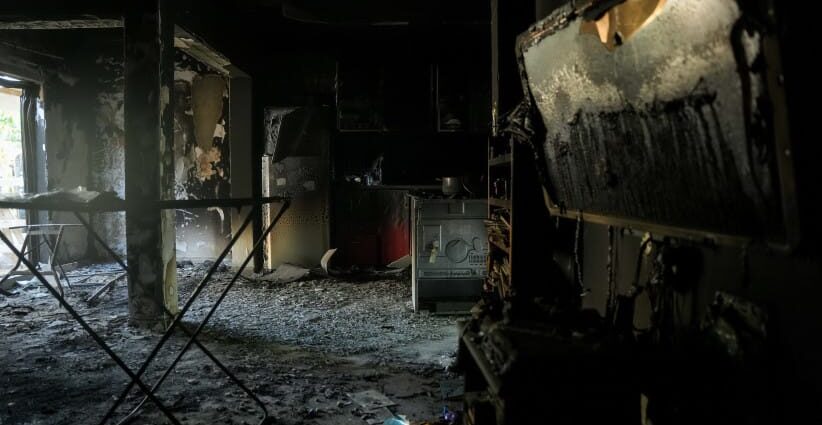
Europe can criticize Israel, just as Israel can criticize Europe. But when that criticism crosses the line into moral distortion, it loses credibility.

When the EU adopts a narrative that inflates fringe violence into a defining characteristic of the more than 900,000 Jews living beyond the Green Line, including Jerusalem, while downplaying decades of Palestinian terrorism, it ceases to be an honest broker, loses its ability to be taken seriously in Israel, and instead becomes a political actor advancing a predetermined outcome. That is the real story behind these sanctions – and why Israel must push back hard against them.

This post was originally published on here

National Security Minister Itamar Ben-Gvir sent a letter to Deputy Attorney-General Gil Limon demanding an immediate discussion to advance expelling illegal immigrants in southern Tel Aviv, as well as other parts of the country, Maariv reported on Sunday.

In the letter, Ben-Gvir claimed that there are thousands of illegal immigrants who have not been expelled from Israel, even though, according to him, there is a legal and practical framework in place that could facilitate this.

As a result, Ben-Gvir wrote, Israel has been dealing with a phenomenon of crime, violence, and harm to personal security in recent years.

He also referred to the SSQ gang, a criminal outfit that consists of both minors and adults, mostly of Sudanese, Eritrean, and Filipino origin, with some Israeli members, which frequently commits serious violent offenses.

He also referred to the Foreign Ministry’s legal opinion, which determined that illegal immigrants and asylum seekers from third-world countries could be expelled without difficulty, as well as to previous rulings and procedures that allowed advancing this process.

His letter also states that immediate action should be taken to deport illegal immigrants and asylum seekers in cases where they commit a criminal offense or pose a threat to public security.

He concludes with a demand to convene an urgent discussion on the matter and bring about an operational plan to expel the illegal immigrants and asylum seekers who have, in his words, “already been residing in Israel for nearly two decades.”

“Residents of southern Tel Aviv, and all Israeli citizens, should not continue to pay the price. It is time to stop dragging our feet and advance a real plan for the expulsion of illegal infiltrators from the State of Israel,” he said.

Ben-Gvir reached out to Shin Bet Chief David Zini for technological assistance

At the end of April, Ben-Gvir reached out to Shin Bet (Israel Security Agency) Director David Zini and requested that he join the fight against SSQ operating in Tel Aviv. “The police are doing everything they can to handle the issue, but they need the advanced technological means of Shin Bet to fight this war,” sources close to Ben-Gvir explained.

At the same time, Ben-Gvir was interviewed on 103FM and said that he approached the attorney-general about expelling illegal immigrants and asylum seekers.

“Most of the members of the SSQ gang have been arrested. The court is also guilty, and the attorney-general, to whom I asked, ‘Let’s expel them,’ we brought her 30-40 cases dealing with violent illegal immigrants, including youths. To this day, only one was expelled,” he said during the interview.

This post was originally published on here

The European Union Aviation Safety Agency (EASA) issued a revised Conflict Zone Advisory on Tuesday, extending its recommendation to airlines to not fly to Israel until May 27, 2026.

The extension effectively “freezes” the return of low-cost and national European airlines, including Lufthansa Group, Wizz Air, and other carriers.

Though previous extensions usually occurred in increments of five to seven days, this one is a longer, fifteen-day extension.

In a previous advisory in early April, the EASA cited risks of “ongoing military activity” in the region, recommending a halt on flights to Israel and the Middle East and Persian Gulf region as a whole. 

They cite ceasefire instability and hostilities in Lebanon and the Gulf, and will revise the recommendation should the situation stabilize.

“Freeze” on the return of low-cost and national European airlines

“While the overall level of risk has decreased in the region, the sustainability of the ceasefire remains uncertain in the longer term, with a possibility of rapid escalation. Therefore, close monitoring and up-to-date risk assessments remain essential to ensure the safety of flights,” the EASA wrote in a statement.

“EASA, together with the Commission and Member States, will continue to closely monitor the situation, with a view to assessing whether there is an increase or decrease of the risk for EU aircraft operators due to the evolution of the threat and risk situation.”

This post was originally published on here

Saudi Arabia launched numerous, unpublicized strikes on Iran in retaliation for attacks carried out in the kingdom during the Middle East war, two Western officials briefed on the matter, and two Iranian officials said.

The Saudi attacks, not previously reported, mark the first time that the kingdom is known to have directly carried out military action on Iranian soil and show it is becoming much bolder in defending itself against its main regional rival.

The attacks, launched by the Saudi Air Force, were assessed to have been carried out in late March, the two Western officials said. One said only that they were “tit-for-tat strikes in retaliation for when Saudi [Arabia] was hit.”

Reuters was unable to confirm what the specific targets were.

In response to a request for comment, a senior Saudi foreign ministry official did not directly address whether strikes had been carried out.

Uncontrolled escalation carries unacceptable costs

The Iranian foreign ministry did not respond to a request for comment.

Saudi Arabia, which has a deep military relationship with the United States, has traditionally relied on the US military for protection, but the 10-week war has left the kingdom vulnerable to attacks that have pierced the US military umbrella.

The Saudi strikes underscore the widening of the conflict – and the extent to which a war that began when the US and Israel launched airstrikes on Iran on February 28 has drawn in the broader Middle East in ways that have not been publicly acknowledged.

Since the US and Israeli strikes, Iran has hit all six Gulf Cooperation Council states with missiles and drones, attacking not only US military bases but also civilian sites, airports, and oil infrastructure, and closed the Strait of Hormuz, disrupting global trade.

The United Arab Emirates also carried out military strikes on Iran, the Wall Street Journal reported on Monday. Together, the Saudi and Emirati actions reveal a conflict whose true shape has remained largely hidden – one in which Gulf monarchies battered by Iranian attacks began hitting back.

But their approach has not been identical. The UAE has taken a more hawkish stance, seeking to impose costs on Iran and engaging in public diplomacy with Tehran only rarely.

Saudi Arabia has meanwhile sought to prevent the conflict from escalating and has stayed in regular contact with Iran, including via Tehran’s ambassador in Riyadh. He did not respond to a request for comment.

The senior Saudi foreign ministry official did not directly address whether a de-escalation agreement had been struck with Iran, but said: “We reaffirm Saudi Arabia’s consistent position advocating de-escalation, self-restraint and the reduction of tensions in pursuit of the stability, security and prosperity of the region and its people.”

The Iranian and Western officials said Saudi Arabia made Iran aware of the strikes, and this was followed by intensive diplomatic engagement and Saudi threats to retaliate further, which led to an understanding between the two countries to de-escalate.

Ali Vaez, the Iran Project Director at the International Crisis Group, said retaliatory Saudi strikes on Iran, followed by an understanding to de-escalate, would “show pragmatic recognition on both sides that uncontrolled escalation carries unacceptable costs.”

Such a sequence of events would show “not trust, but a shared interest in imposing limits on confrontation before it spiraled into a wider regional conflict.”

The informal de-escalation took effect in the week before Washington and Tehran agreed to a ceasefire in their broader conflict on April 7. The White House did not respond to a request for comment.

One of the Iranian officials confirmed that Tehran and Riyadh had agreed to de-escalate, saying the move aimed to “cease hostilities, safeguard mutual interests, and prevent the escalation of tensions.”

Long at odds, Iran and Saudi Arabia – the two leading Shi’ite and Sunni Muslim powers in the Middle East – have backed opposing groups in conflicts across the region.

A China-brokered détente in 2023 saw them resume ties, including a ceasefire between the Iran-backed Houthis in Yemen and Saudi Arabia that has since held.

With the Red Sea remaining open to shipping, Saudi Arabia has been able to continue exporting oil throughout the conflict, unlike most Gulf states, and so has managed to remain relatively insulated.

In an op-ed in Saudi-owned Arab News over the weekend, former Saudi intelligence chief Prince Turki al-Faisal captured the kingdom’s calculus, writing that “when Iran and others tried to drag the kingdom into the furnace of destruction, our leadership chose to endure the pains caused by a neighbor in order to protect the lives and property of its citizens.”

Saudi Arabia’s strikes followed weeks of mounting tension.

At a press conference in Riyadh on March 19, Saudi Foreign Minister Prince Faisal bin Farhan said the kingdom “reserved the right to take military actions if deemed necessary.”

Three days later, Saudi Arabia declared Iran’s military attaché and four embassy staff members persona non gratae.

By the end of March, diplomatic contacts and the threat by Saudi Arabia to take a more hawkish approach akin to the UAE and retaliate further led to an understanding to de-escalate, the Western sources said.

From more than 105 drone and missile attacks on Saudi Arabia in the week of March 25-31, the number fell to just over 25 between April 1-6, according to a Reuters tally of Saudi defense ministry statements.

Projectiles fired at Saudi Arabia in the days leading up to the wider ceasefire were assessed by Western sources to have originated in Iraq rather than Iran itself, indicating Tehran had curtailed direct strikes while allied groups continued to operate.

Saudi Arabia summoned Iraq’s ambassador on April 12 to protest against attacks from Iraqi soil.

The Saudi-Iranian communication continued even as strains emerged at the start of the broader ceasefire between Iran and the US, when the Saudi defense ministry reported 31 drones and 16 missiles fired at the kingdom on April 7-8.

The spike prompted Riyadh to consider retaliation against Iran and Iraq, while Pakistan deployed fighter jets to reassure the kingdom and urged restraint as diplomacy gathered pace.

This post was originally published on here

Every time a new AI model is released, the conversation immediately turns into a competition: Which model is smarter? Faster? More powerful?

But as AI moves from experimental tools into real operational environments, we are asking the wrong question.

The real winner of the AI race will not be a single model. It will be the infrastructure that knows how to manage them all.

We are already seeing this shift at the highest levels. The Pentagon’s recent move toward integrating multiple AI models into parallel operational systems signals something much bigger than another technology adoption cycle. It reflects a broader understanding that AI is no longer a standalone tool. It is becoming an ecosystem.

Instead of relying on one “winning” model, organizations are beginning to operate multiple systems simultaneously, each designed for different tasks, workflows, and objectives. In practice, this means AI is evolving into a layered environment of autonomous agents, connected tools, sensitive organizational data, and real-time decision-making.

That changes the challenge entirely.

The focus is no longer just on the models themselves, but on the orchestration layer sitting above them – the infrastructure responsible for routing tasks, governing interactions, enforcing policies, and maintaining visibility across increasingly complex AI environments.

For the Israeli tech ecosystem, this transition is particularly significant

Israel has become one of the world’s leading hubs for SaaS and cybersecurity innovation, and companies are moving aggressively to integrate AI into everyday workflows. But many organizations are adopting AI faster than building the systems needed to manage it safely.

Most enterprises today already operate dozens, sometimes hundreds, of interconnected platforms across cloud, identity, SaaS, and internal systems. Adding autonomous AI agents into that environment introduces an entirely new level of operational complexity.

The problem is not necessarily the AI itself. The problem is visibility.

Once multiple AI systems begin operating in parallel, interacting with sensitive information and making decisions across organizational environments, human oversight alone is no longer enough. Security teams can no longer realistically track in real time how data moves between systems, which permissions are being used, or how one autonomous process influences another.

This creates a new kind of attack surface, one that moves faster than traditional governance models were designed to handle.

And importantly, the vulnerabilities themselves are not new.

The security gaps AI exposes are often the same issues organizations have struggled with for years: dormant accounts, excessive permissions, unmanaged credentials, disconnected SaaS applications, and fragmented visibility across systems.

The difference is speed.

AI-driven attackers can now identify and exploit these weaknesses exponentially faster than before. What previously took weeks of manual discovery can now happen in minutes.

That is why the conversation around AI governance needs to evolve.

The challenge ahead is not simply adopting AI tools. It is building an operational framework capable of governing an ecosystem of autonomous systems moving at machine speed.

This is ultimately a shift in mindset. We are moving from managing individual software tools to managing interconnected AI ecosystems.

And in that world, the goal is no longer to identify the “smartest” model.

The goal is to build an environment that is just as fast, adaptive, and intelligent as the systems operating inside it.

Because in the AI era, the greatest risk may not be adopting the wrong technology but having no way to manage the right one.

This post was originally published on here

The Reservists Party, led by former communications minister Yoaz Hendel, has outlined its Returning from the Battlefield program ahead of the upcoming elections, aimed at addressing post-traumatic stress disorder nationwide following the October 7 Hamas attacks in 2023 and the ensuing war.

Hendel presented the main points of the national post-trauma plan during a Sunday press conference alongside members of the Reservists Party who were wounded physically and mentally in combat

The plan was said to be written with the assistance of mental health professionals, experts in supporting disabled IDF veterans, and combat soldiers suffering from post-traumatic stress.

Hendel’s party is composed of reserve soldiers, their families, wounded veterans, bereaved families, and civilian volunteers. Reservists was established in September 2025, ahead of national elections scheduled to take place no later than October this year.

The party presents itself as a response to the leadership vacuum following the Hamas attacks of October 7, 2023, and advocates for universal conscription. Among its central principles is a refusal to join any government that includes parties whose members do not serve in the IDF.

Reservists has also recently launched a campaign against haredi (ultra-Orthodox) and Arab parties ahead of the elections, calling to bar those who do not serve in the IDF from voting and from running for Knesset.

At the core of the PTSD initiative, the party proposes legislation establishing a dedicated fund for rehabilitation with an annual budget of approximately NIS 1 billion.

Ministerial committee, ‘big brother’ support program, and accommodations after combat

The plan includes establishing a ministerial committee for IDF personnel wounded physically or struggling mentally.

It also calls for a “big brother” support program which would provide emotional, legal, and rehabilitative assistance, as well as making processing and resilience workshops an integral part of reserve service.

Additional components of the plan include academic assistance and accommodations after combat, along with reintegration into employment. It would also regulate the legal fees charged by attorneys and push for the creation of a council for NGOs working in the field of PTSD.

Hendel said while presenting the plan that “the most important national mission for us is a generation that has experienced the most difficult war we have known.”

“Hundreds of days, high intensity, complex missions, and difficult sights. It is heavy and difficult for anyone, and returning home from battle is a mission that not everyone understands how complex it is,” he said.

He added that there are thousands of people in the country who cannot return to routine life, relationships, work, “or even the simple aspects of everyday living.”

“The serving public is also the productive public, the engine of the economy. The people of Israel, as usual, create solutions when the state is absent, with the help of amazing organizations, but this cannot be the working plan.”

Hendel called on all Zionist parties to sign onto the framework so it could be passed as quickly as possible.

Shlomi Damari, a bereaved family member and reserve combat soldier, also spoke about the struggle of returning from combat.

“There are wars that end on the day the firing stops. And some wars continue long after the battle is over. I know, in my own body, the sleepless nights. The heart palpitations. The silence that no one hears. There are people among us walking around with a bleeding soul, with an invisible injury,” he said. “And we must not accept this. And we must not get used to it. And we must not ignore it.”
Damari called on the government and all state institutions to adopt the plan.

“This is not a political issue. It is a matter of human life. Whoever knew how to send us to fight must also know how to fight for us when we return,” he said.

Tehila Peretz, a reserve casualties officer, noted, regarding nationwide PTSD, that the country has “never faced an event of this magnitude.”

“The state called us to fight, and now we demand that it be there for those who need it on the day after as well,” said.

This post was originally published on here

The Knesset unanimously approved a bill last night in its second and third readings, initiated by the chairman of Degel HaTorah, MK Moshe Gafni. The law mandates that police water cannons use only clean water, without any added substances, dyes, or odohttps://www.jpost.com/israel-news/crime-in-israel/article-895634rs.

Additionally, any use of a water cannon to disperse a demonstration must be recorded with full visual documentation, ensuring appropriate image quality and audible sound.

Individuals claiming injury or damage resulting from the use of a water cannon are entitled to request the documentation from the Israel Police.

“The law is intended to protect the rights of protesters, and especially the environment and residents in areas where public order is being disrupted,” says MK Moshe Gafni.

“I thank the initiators of the bill, my faction colleagues MK Uri Maklev and former MK Eliyahu Baruchi, who led the proposal in its early stages. As of today, the water cannon will no longer be a tool for punishment, but solely a tool for dispersing disturbances.”

“For the past three and a half years, the Israel Police have systematically violated orders and regulations regarding the use of water cannons against protesters,” says MK Gilad Kariv.

“Passing this law sends a clear message to the police regarding their obligation to allow freedom of protest, avoid harming protesters, and end selective enforcement and surrender to the political dictates of Ben Gvir and his associates.

“Alongside this law, we will continue our efforts in the Knesset and the streets to ensure the police internalize the importance of freedom of speech and that officers acting against the law do not enjoy immunity.”

MK Naama Lazimi also commented, saying, “As someone who has personally experienced the impact of a water cannon several times, and seen firsthand the injuries caused by disproportionate use, I know these tools were not meant to keep order—they were meant to break the spirit.

“We are restoring safety to the public sphere and making it clear: governmental power must be restrained and transparent. Freedom of expression is a supreme value that no water jet can overcome.”

This post was originally published on here

OpenAI Chief Executive Sam Altman is expected to take the witness stand on Tuesday to defend his company against Elon Musk’s lawsuit accusing him of betraying the ChatGPT maker’s founding mission to serve the public good.

The trial may determine the future of OpenAI and its leadership, after the company raised hundreds of billions of dollars from large technology companies and investors to build its computing power ahead of a potential $1 trillion initial public offering.

It also marks a clash among tech giants, with Musk, the world’s richest person, portraying himself as a defender of ordinary people from the perils of AI and Silicon Valley titans who care more about money.

In his lawsuit, Musk accused Altman and OpenAI of persuading him into giving $38 million, only to see the nonprofit abandon its mission to benefit humanity and instead become a for-profit corporation. Musk accused Altman and OpenAI President Greg Brockman, who is also a defendant, of trying to “steal a charity.”

OpenAI has tried to show that Musk knew about the for-profit plan but wanted control of the company, and is suing now because he regrets missing out on potential riches.

Musk is seeking about $150 billion in damages

Musk is seeking about $150 billion in damages from OpenAI and Microsoft MSFT.O, a major investor, to be paid to an OpenAI nonprofit. He also wants the removal of Altman and Brockman from their roles.

Bret Taylor, chairman of OpenAI, testified on Tuesday that OpenAI received a formal takeover offer from a consortium led by Musk’s rival company xAI in February 2025, six months after Musk sued.

“I was surprised,” Taylor said. “This proposal was to acquire this non-profit by a group of for-profit investors, which felt contradictory to the spirit of the lawsuit.”

Testimony in the trial before US District Judge Yvonne Gonzalez Rogers in the Oakland, California, federal court may conclude this week. Jurors could begin deliberating whether the defendants are liable by May 18. Rogers would determine any remedies.

The faceoff has transfixed many in Silicon Valley and beyond, with testimony at times focusing on the clashing personalities and leadership styles of Musk and Altman.

Former OpenAI chief scientist Ilya Sutskever testified on Monday that he spent about a year gathering evidence for OpenAI directors that Altman had displayed a “consistent pattern of lying.”

Microsoft Chief Executive Satya Nadella, whose company is a major OpenAI investor, testified on Monday that the investment was a “calculated risk.”

Others who have testified include Brockman, former OpenAI technology chief Mira Murati, and Shivon Zilis, a former OpenAI board member who is also the mother of four of Musk’s children.

Musk testified early, saying: “If you have someone who is not trustworthy in charge of AI, I think that’s a very big danger for the whole world.”

He also said OpenAI was his idea before executives looted it, and that while he knew there were discussions about making OpenAI a for-profit enterprise, Altman assured him it would remain a nonprofit.

This post was originally published on here

Israel is not prepared to adequately protect Israeli sports fans abroad, the State Comptroller’s Office concluded in its Security of Israeli Sports Teams and Fans Abroad audit.

The comptroller notes a significant increase in antisemitic events and violence directed at Israelis abroad, and a sharp increase in efforts by terror organizations to carry out attacks against Israeli and Jewish targets worldwide.

This, in turn, means “the risks to Israeli fans abroad are increasing,” the comptroller said.

One of the main examples given in the audit – which is not publicly available in full – is the incident in Amsterdam during the UEFA Europa League match on November 7, 2024, between Maccabi Tel Aviv and Ajax.

Around 2,700 Israeli fans attended the match, and after the game, groups of Muslims in various parts of the city attempted to physically harm Maccabi fans, resulting in multiple injuries.

According to the Foreign Affairs Ministry, the attack was believed to be a coordinated effort.

The Sports Ministry reported that over 30 injured Israelis were evacuated to hospitals for treatment that night, with many others too afraid to seek medical help and instead stayed in their hotels. The attacks included stabbings, hit-and-runs, and physical violence.

Coined the “Amsterdam Event,” this is considered a turning point in terms of violence against Israeli sports fans, the audit said.

 Readiness for a mega-event involving Israelis abroad

Following the Amsterdam Event, several investigations were conducted by the National Security Council, the Foreign Ministry, and the Sports Ministry. These investigations revealed several gaps and made key recommendations.
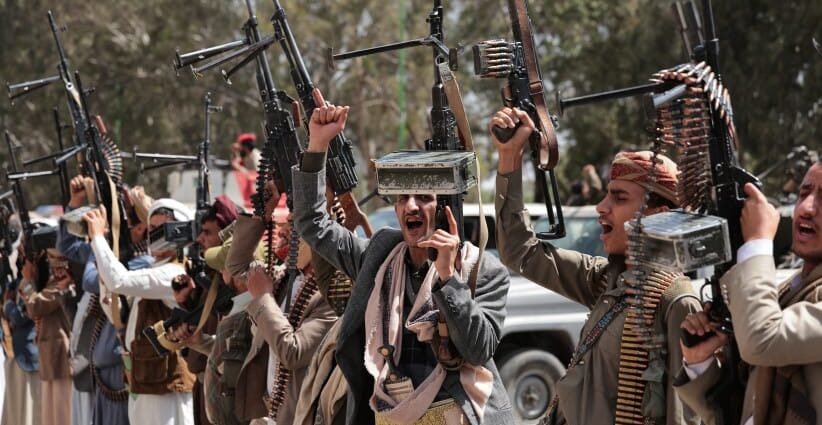
The inter-ministerial procedure for evacuating Israelis abroad from March 2024 sets out an inter-agency process for collaboration between various bodies to ensure that Israelis abroad can be returned to Israel swiftly in different scenarios. This procedure should be practiced annually under the responsibility of the Foreign Ministry, in coordination with the NSC.

However, the comptroller found that, by August 2025, the Foreign Ministry and the NSC had still not conducted a drill on the inter-ministerial procedure for evacuating Israelis abroad, even though the procedure was supposed to be practiced annually.

Overall, the comptroller said the Amsterdam Event serves as a case study for national readiness in handling emergencies involving Israelis abroad in extreme situations.
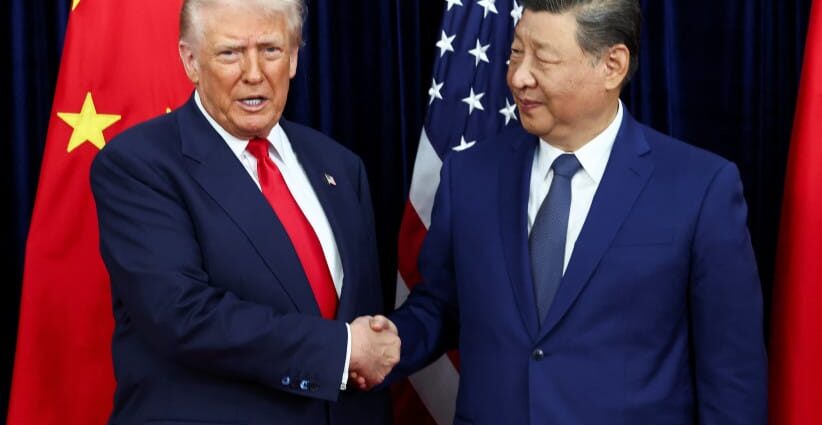
It also said that the response during the Amsterdam Event was inadequate, raising concerns about Israel’s readiness to handle large-scale events with numerous casualties.

Given the security situation and the threats to Israelis abroad, the comptroller recommended that the Foreign Ministry review national readiness for a mega-event involving Israelis abroad.

The comptroller also recommended that the NSC review its readiness to evacuate and return Israelis swiftly during an emergency abroad, as the procedure for such evacuations may be assigned to the NSC by the prime minister or political leaders in exceptional cases.

This post was originally published on here

A target list of a few dozen IDF Egoz commando unit veterans and reservists was published by the Iranian regime-backed hacktivist group Handala on Sunday, which claimed that they had exposed the identities of 60 senior officers.

Handala said on its website that the commandos would now become targets for the “resistance’s shadows.”

“The Egoz Unit, whose name means ‘walnut’ in Hebrew, has long tried to hide behind this tough-sounding name, pretending to be invincible. But today, these ‘empty walnuts’ have been cracked open for all to see,” wrote Handala. “Maybe it’s time they give up guerrilla warfare and take up walnut picking instead. They might be more successful at that.”

While the hacktivist group claimed they had exposed 60 senior Egoz officers, the 48 men they presented appeared to be veterans and reservists. Many openly advertised their past affiliation with Egoz on social media, and according to their LinkedIn profiles, they did not serve beyond their mandatory service. The most senior seen by The Jerusalem Post was an NCO. None appeared to be officers, and they had already established careers outside the military.

“No way to escape,” Handala threatened on X/Twitter. “We come for you one by one.”

Handala said on X that the expose had been coordinated with Hezbollah, who it claimed had been provided with the “exact coordinates of all Egoz unit bases” to be used by the Lebanese terrorist organization’s drone units.

Previous attempts to ‘expose’ secret agents

On April 25, Handala had published a similar “expose” of 100 “senior officers” and “secret agents” ostensibly belonging to the Maglan unit. The group also targeted US military personnel last Monday, claiming to publish a list of US Navy officers, and on April 28, the names of over 2,000 Marines deployed to the Middle East were released.

The group has also offered bounties on the heads of Israeli academics, government officials, journalists, and defense personnel in December.

In March, the US Department of Justice seized four web domains associated with Handala target lists and information dumps, alleging that the organization was a front for Iranian cyber warfare.

“Iran thought they could hide behind fake websites and keyboard threats to terrorize Americans and silence dissidents,” said FBI Director Kash Patel. “We took down four of their operation’s pillars, and we’re not done. The FBI will hunt down every actor behind these cowardly death threats and cyberattacks and will bring the full force of American law enforcement down on them.”

Handal dismissed the threats, restoring its archives to new websites and calling the seizure of its domains a “desperate attempt.”

This post was originally published on here

When Russian President Vladimir Putin said recently that the war in Ukraine was “approaching its end,” many in the West immediately interpreted it as a sign of Russian weakness.

After more than three years of war, any Russian talk of a ceasefire is usually viewed through the same lens: economic pressure, military exhaustion, or political strain inside Moscow. But the Kremlin’s language suggests something more significant.

Putin has never described this war as a limited conflict over territory alone. From the beginning, he framed it as part of a broader confrontation with the Western-led order that emerged after the collapse of the Soviet Union.

That matters because it changes how Moscow measures success.

The central question for the Kremlin may no longer be whether Russia can capture more land in Ukraine. It may be whether the war has already achieved its larger geopolitical purpose. And in some important ways, the world has already changed.

Europe has lost access to the cheap Russian energy that helped power its industrial economy for decades. Germany, once the economic engine of Europe, continues to struggle with the consequences. NATO has expanded, but Europe has also become more dependent than ever on American military and financial support.

At the same time, Russia has strengthened ties with China, India, and key powers across the Middle East despite Western attempts to isolate it.

This is not a traditional Russian victory. But it is also not the same world that existed before 2022.

From Putin’s perspective, the invasion of Ukraine was never only about Kyiv. It was about stopping a geopolitical order that Moscow believed had steadily weakened Russia’s position for more than three decades.

Whether the West accepts it or not, the war has already reshaped global politics in ways that may prove difficult to reverse.

Russia’s growing limits

Still, the Kremlin understands the risks of continuing the war indefinitely.

Russia’s economy has survived sanctions better than many expected, but it is increasingly functioning as a war economy. Defense spending continues to rise while civilian sectors face growing pressure. Hundreds of thousands of educated Russians, including technology workers, entrepreneurs, and academics, have left the country since the invasion began.

Perhaps most importantly, Russia is becoming increasingly dependent on China.

What Moscow once presented as a partnership between equals is gradually evolving into a relationship where Russia needs Beijing far more than Beijing needs Russia. Even within parts of the Russian elite, that reality is causing concern.

Putin may still maintain firm political control, but he also understands the danger of turning Russia into a permanently militarized state defined by endless conflict.

That may explain the recent shift in rhetoric. The Kremlin could be moving from a strategy of expansion to one of consolidation.

Why peace could divide Europe

Ironically, a ceasefire may create more problems for Europe than the continuation of the war itself. As long as the fighting continues, Europe remains relatively united. There is a clear threat, a shared mission, and political justification for economic sacrifice. But once the war slows or freezes, difficult questions will quickly return.

Who will pay for rebuilding Ukraine? Can the European Union realistically absorb a country of that size and level of destruction? Will European governments maintain sanctions on Russia if economic pressure inside Europe deepens? And will some countries quietly begin reconsidering their economic relationship with Moscow?

These divisions have been contained during wartime. They may become much harder to manage during peace.

In many ways, the war itself has become one of the West’s last major unifying forces. But the larger issue extends far beyond Ukraine.

If the war ends without a decisive Russian defeat, many countries will draw a powerful conclusion: It is possible to challenge the international order, use military force to change realities on the ground, absorb severe sanctions, and survive.

China is studying that lesson in relation to Taiwan. Iran is studying it in the Middle East. Other authoritarian regimes are studying it as well.

In that sense, the war in Ukraine may not represent the end of an era but the beginning of a new one – a world shaped less by Western dominance and more by long-term competition between rival powers and regional blocs.

When Putin now speaks about ending the war, he does not sound like a leader seeking reconciliation. He sounds like a leader who believes the global system has already shifted enough in Russia’s favor.

And from the West’s perspective, that may be the most dangerous outcome of all.

The writer is an entrepreneur and investor, host of The Owl podcast, and co-founder of the Masad HaAretz Institute.

This post was originally published on here

Anti-Israel graffiti was discovered on Tuesday at the Israeli café in the city of Vienna, Austria, just before the Eurovision semifinal set to take place on Tuesday night.

The phrases “Free Palestine,” “Death to the IDF,” and “Boycott Israel” were found written on one of the bathroom walls. Vienna Police Department officers arrived at the scene, and the graffiti was quickly erased.

Each country participating in Eurovision received a café designed to suit its country. The café where the anti-Israel graffiti was spray-painted was the one that resembles Israel.

Liza Vigenstein, the owner of the café, told Walla, “All that happened so far is that someone wrote something silly on the bathroom walls. Things like this happen everywhere, and they’re not pleasant. Vienna is safer than Berlin. The whole city is filled with security.”

Vigenstein agreed with the statement that the cafés hosting the Swedish or Greek delegations likely don’t need such security.

Eurovision 2026 semifinal set to air

The first Eurovision 2026 semifinal will air on Tuesday night, but a preview of the results was already seen on Monday when judges from 15 participating countries, along with Italy and Germany – part of the Big 4, the four countries that automatically advance to the final – were revealed.

Noam Bettan, Israel’s representative, gave an excellent vocal performance on Monday, despite technical issues beyond his or the delegation’s control. During rehearsal, dancer Lihi Freud, who plays “Michelle,” was injured by the cameraman while they were in a diamond-shaped element with Noam, but she completed the performance with impressive professionalism.

This post was originally published on here

The legal conflagration before the High Court of Justice over whether Prime Minister Benjamin Netanyahu’s appointment of Roman Gofman as the next Mossad chief can go through is already high-stakes on its face.

But the issues at stake are even larger than they seem.

Currently, the IDF, Shin Bet, and Mossad all say unequivocally that the police under Itamar Ben Gvir, which is to say under Netanyahu’s government, can no longer be trusted to protect the law and national security in all cases.

Police Chief Daniel Levy came from the police, but in a side position with much less responsibility, a role that no one would have been given the chief role in the past.

When Netanyahu appointed David Zini as Shin Bet chief, he placed an outsider in charge of the agency for the first time in many years. Zini was also an outsider, and aspects of his record raised questions about whether his loyalty to the prime minister would override his commitment to the law.

In that case, Attorney-General Gali Baharav-Miara defended Zini’s appointment even though a number of former Shin Bet chiefs opposed the appointment.

There have also been recent appointments in the IDF of outsider-style officials, such as the head of COGAT, amid accusations that the decisions are more about their loyalties to Netanyahu than their qualifications.
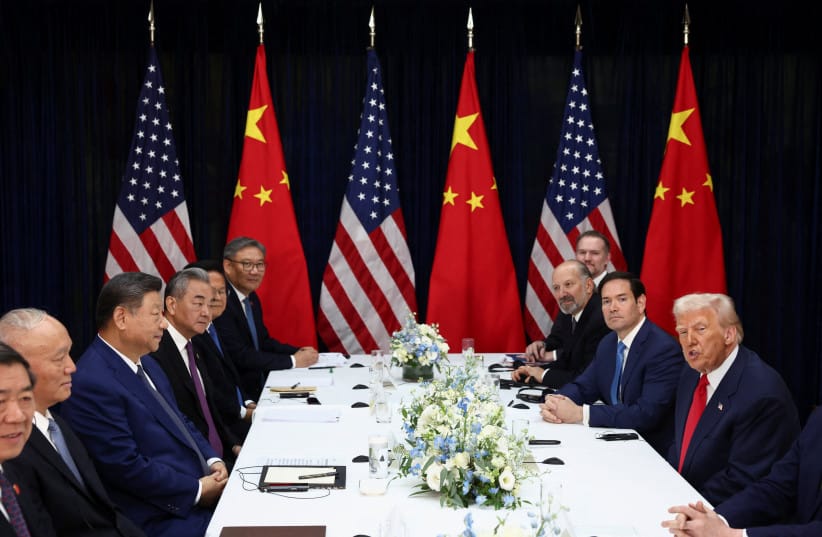
Netanyahu, through Defense Minister Israel Katz, has even blocked IDF Chief of Staff Lt.-Gen. Eyal Zamir refused to appoint a new IDF chief defense attache liaison to the US, because Zamir refused to promote to the post a lower-ranking candidate whom Katz and Netanyahu wanted.

Current battle over Gofman’s Mossad appointment

This is the context of the current fight over Gofman’s appointment.

As with Zini, Gofman is a decorated IDF major general and a member of the IDF high command; 15 years ago, there was a Mossad chief with such a background.

But since then, and for most of Mossad’s recent decades, the chiefs have all come from within the organization, partly because the skills required to succeed are highly specialized.

Put bluntly, can Gofman be trusted with knowing how to run a global ring of spies when he has never managed even a small ring as part of his various portfolios?

And as with all of the above-mentioned figures, there are questions about Gofman potentially being too loyal to Netanyahu, and questions about his ethics due to a scandal in which a 17-year-old Israeli was held for an extended period by the Shin Bet and under house arrest because either Gofman or Gofman’s subordinate commander did not tell the agency that Elmakayes was working for them.

How Elmakayes’s situation was handled led outgoing Mossad chief David Barnea to take the unprecedented step of publicly opposing his successor’s appointment, implying that otherwise Gofman may cut future Mossad spies loose as he allegedly did with Elmakayes.
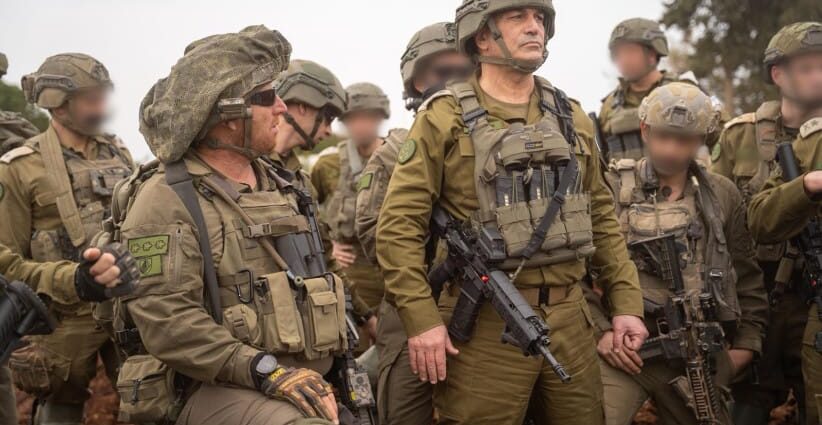
The legal establishment, along with Baharav-Miara and Barnea, have all hoped that the High Court would intervene this time to block the appointment.
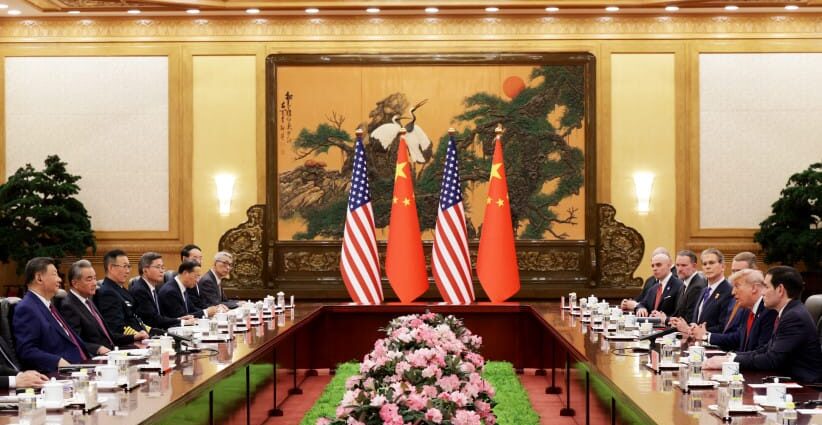
The three justices, including Daphna Barak-Erez, and especially including Ofer Groskopf and Alex Stein, made it pretty clear on Tuesday that they are searching for any reason they can find to stay out of this battle.

Their reasons are numerous.

Looking at the specific case and context, though the above figures oppose Gofman’s appointment, IDF chief Zamir and the official vetting committee (by a split vote) supported his appointment.

According to comments by all three justices, especially Groskopf and Stein, the evidence available does not prove that Gofman knew everything that was happening with Elmakayes.

Rather, the evidence proves that at a minimum, one of Gofman’s subordinates, Col. Tzur, knew that Elmakayes was a minor and had been arrested for work which related to undercover psychological warfare activities he had undertaken for the IDF.

The justices repeatedly pressed the lawyers seeking to torpedo Gofman to show evidence that he for sure knew all of these facts, as opposed to that he should have known these facts.

As Stein put it, Gofman did receive a reprimand for the incident because it occurred within his broader command area, but was continued in the line of promotions because his level of responsibility was seen by the IDF as indirect and, therefore, not a deeper ethical issue.

Lawyers seeking to block Gofman gave a number of examples in which comments that Gofman or Tzur made, on the basis of common sense, seemed to strongly hint that he knew far more than he admitted when probed by the IDF when the incident played out in the 2020-2022 time period.

This same evidence convinced former chief justice and conservative Asher Grunis (the dissenting vote in the vetting committee) that Gofman was lying and that he should not be appointed the next Mossad chief.

But the current serving justices suggested that much more unambiguous proof would be needed to challenge the appointment.

Part of the reason undoubtedly has to do with the fact that there is no Israeli law regulating the appointment of the Mossad chief.

Unlike the police, IDF, and even the Shin Bet, the Mossad serves entirely in the shadows, mostly overseas, carrying out espionage which their host countries would view as illegal if they knew about it, and at least until now, it was thought better to keep them off the books.

The lawyers trying to stop Gofman’s appointment said that the absence of any regulation made it all the more important that whoever the chief is has an unimpeachable record.

Probably, even in a politically calmer time period, Gofman would still win on this issue because there is so little authority for the courts to rely on to intervene, and because the charges against Gofman may not be a smoking gun.

Add in that this is the most politically charged time period in history for the judiciary, and the likelihood that they would intervene on a national security issue going to the heart of the prime minister’s powers was always going to be extremely low.

Currently, the court is trying to hold the line on getting judges appointed, on integrating haredim into the IDF, and on its general authority to review government decisions that are at least unpopular and look like new power grabs.

In contrast, the prime minister has sole authority to appoint the director of the Mossad based on whatever factors the premier sees fit to weigh in terms of national security.

Gofman may be qualified and may turn out to be a great Mossad chief, like Meir Dagan before him, who came to the spy agency from the IDF in 2002.

But what does it say that an Israeli prime minister can appoint outsiders to every post that the existing agency officials suddenly oppose so strongly, after never intervening before, even when some outgoing and incoming chiefs disliked each other?

Some will say disrupting the existing agencies is important to clean house after October 7.

There are two problems with this argument. First, specifically for the Mossad, it had nothing to do with October 7 – a fact which explains why Netanyahu allowed Barnea to serve out his full five-year term.

Second, many of those same IDF and Shin Bet officials who failed on October 7 then managed to run the table on Hamas, Hezbollah, Iran, and Syria.

That is not to say that top officials did not need to resign – and the IDF chief, Shin Bet chief, and IDF intelligence chief of October 7 all did resign.

But it exposes the idea of needing to clean house in a wider way as more of a populist and political argument.

The real question, assuming the High Court does not intervene, is, after Gofman is appointed, should a future Knesset pass clearer regulations to make it harder to politicize (or have the appearance of politicizing) future defense establishment appointments.

Failure to do so, even if the current candidates are qualified, could seriously undermine national security in the long term.

This post was originally published on here

A proposed amendment to Israel’s Law of Return has pushed one of the country’s oldest arguments back to the center of public debate: Who gets to decide which conversions count for citizenship in the Jewish state?

The proposal, promoted by religious coalition lawmakers, would make recognition of conversion for Law of Return purposes dependent on halachic or Orthodox standards. In practice, that could exclude Reform and Conservative conversions that over the years have gained recognition through the courts and through state practice.

Backers of the bill say they are not trying to open a fight with liberal Judaism abroad. They describe the legislation as a correction to a system they believe has drifted too far from the original purpose of the Law of Return and has allowed conversion to become, in some cases, a shortcut around Israel’s immigration rules.

“The Law of Return was meant to help the Jewish people and Jewish communities in the diaspora,” Israeli lawmaker Simcha Rothman said.

During an extended conversation with The Media Line, Rothman repeatedly referred to what he described as “conversion hopping” cases in which individuals allegedly seek out little-known communities abroad to undergo extremely lenient conversion procedures before applying for Israeli citizenship.

“You have a person who cannot immigrate under normal Israeli immigration laws,” Rothman said. “Then he goes to some community nobody has heard of, converts under an ‘everything goes’ process, comes back with a paper saying he’s Jewish, and the courts start recognizing it.”

Designed to target liberal Jewish movements?

Rothman rejected accusations that the proposal is designed to target liberal Jewish movements abroad. While acknowledging that some Jewish communities in the US would likely view the initiative negatively, he argued that the practical impact would be relatively limited because only a small percentage of immigrants arrive through non-Orthodox conversions.

“It’s clear to me there are communities abroad, especially in the United States, that will feel hurt by this,” Rothman said. “But in practice, it affects a very, very small percentage of immigrants.”

The conversion bill is advancing against the backdrop of another recent Law of Return case. In that ruling, the Supreme Court said non-Jewish children of immigrants are not entitled to automatic citizenship and must instead apply through Israel’s regular naturalization track. The decision did not deal with conversion, but it added to the same larger argument now unfolding around the law: how far Israel’s immigration framework should extend beyond those recognized as Jewish by religious authorities.

That argument is not new. Israel has lived for years with a split between immigration status and religious status. Some immigrants enter legally under the Law of Return, receive citizenship, and only later discover that the Rabbinate does not regard them as Jewish for marriage. That problem became much more visible in the 1990s, after the large immigration wave from the former Soviet Union brought many people with Jewish family ties who did not meet Orthodox definitions of Jewish status.

For Rothman and other backers of the bill, the gap is no longer a technical inconvenience. They argue it has become a doorway for legal confusion and, in some cases, abuse of the system.

Part of their argument rests on history. A January 1960 Interior Ministry document reviewed by The Media Line defines a Jew for registration purposes as either “someone born to a Jewish mother” or “someone converted according to halacha.” For coalition lawmakers backing the proposal, the document reflects Israel’s original administrative understanding before later judicial rulings expanded recognition to non-Orthodox conversions.

Rothman argued that lawmakers themselves should not decide religious doctrine, but that the state should rely on the Chief Rabbinate as the authority responsible for determining conversion standards.

“The legislator does not determine halacha,” Rothman said. “The body authorized to determine halacha in the State of Israel is the Chief Rabbinate.”

To explain the principle, Rothman compared the issue to Israel’s kosher certification system.

“The state does not decide what kosher is,” he said. “The Rabbinate decides. The law simply says you cannot call non-kosher food kosher.”

Opposition lawmakers and liberal Jewish groups see the proposal very differently.

“The attempt to paint the change to the Law of Return as ‘preventing abuse’ is nothing more than a smokescreen,” opposition lawmaker Efrat Rayten of The Democrats party told The Media Line. “The real goal here is strengthening the power, money, and control of the most hardline religious establishment.”

Rayten argued that the legislation should not be viewed as an isolated legal amendment, but as part of a broader political and ideological trend inside the current coalition.

“This proposal does not stand on its own,” she said. “It is part of a much broader effort to change the face of the state.” She linked the initiative to disputes involving rabbinical courts, gender separation policies, and growing religious influence inside public institutions and the military. “It is a coordinated effort to turn Israel into a de facto halachic state,” she said.

For critics of the proposal, the concern extends beyond conversion procedures themselves. They argue that citizenship policy directly affects Israel’s relationship with Jewish communities worldwide, including millions of Jews who identify with Reform and Conservative movements.

The American Jewish reaction is likely to be watched closely. In the US, where most Jews do not identify as Orthodox, the issue touches a familiar point of friction with Israel: decisions made through Israel’s religious establishment can affect Jews abroad who do not live under that authority. Pew Research Center has put Orthodox identification among American Jews at about 9%, a small share compared with the Reform, Conservative and unaffiliated public.

The difference helps explain why debates that sometimes appear technical inside Israel often resonate very differently abroad.

The conversation also carries particular sensitivity across the Americas, where many organized Jewish communities identify as traditional or Masorti (Conservative) rather than strictly Orthodox. Asked about Masorti communities, Rothman argued that many conversions linked to those communities are already conducted according to Orthodox standards in order to ensure broader recognition across the Jewish world.

“Most conversions done for traditional communities, both in Israel and abroad, are carried out according to halacha,” Rothman said. “Even many rabbis serving traditional communities are themselves Orthodox.”

Rayten warned that the proposal risks creating deeper divisions between Israel and large segments of diaspora Jewry at a time when relations are already under pressure.

“When you control the exclusive gate into the Jewish people, you also control enormous budgets, jobs, and the national identity of the state,” she said. “This turns Judaism from a broad national home into a closed club for whoever they believe belongs there.”

The bill will not move forward immediately. Prime Minister Benjamin Netanyahu requested that the Ministerial Committee for Legislative Affairs postpone discussion of Rothman’s proposal, alongside a separate mortgage subsidy bill.

The delay does not remove the proposal from the agenda. It gives the coalition more time to examine one of the most sensitive religion-and-state measures currently before it, while avoiding an immediate vote on a bill that has already drawn concern from opposition lawmakers and Jewish communities abroad.

What began as a dispute over conversion standards has quickly become a test of authority: whether Israel’s elected lawmakers, courts, or religious establishment will shape the legal meaning of Jewish identity, and what that will tell Jewish communities abroad about their place in the state built in their name.

This post was originally published on here

Israel entered the multi-front war it finds itself in now nearly three years ago with weakened domestic weapons-production capabilities, gaps in certain weapons stockpiles, and no full, budgeted policy for preserving domestic arms production lines, State Comptroller Matanyahu Englman found in a report published Tuesday.

The report examined Israel’s ability to preserve domestic production of weapons, raw materials, components, and infrastructure used by the defense establishment and the IDF.

According to the comptroller, over the past two decades, certain domestic production capabilities for raw materials used in weapons manufacturing were damaged or lost, while some weapons production lines were weakened because of insufficient orders and a preference for cheaper procurement from abroad.

The issue became more urgent after the outbreak of the war, the report said. As the IDF’s demand for weapons and components rose, several countries – including some described as friendly to Israel – imposed embargoes or restrictions on the supply of weapons, raw materials, spare parts, and components.

At the same time, global demand for such materials had already increased following the Russia-Ukraine war, further complicating procurement.

Procurement target was lower than the operational need

The comptroller found that on the eve of the war, the IDF’s stock of certain weapons was below the procurement target set for the end of 2024. In another case, the target itself was lower than the operational need identified for that period.

The report also found that from December 2016 until the outbreak of the war, the Defense Ministry had not ordered certain weapons, except for one type ordered in June 2023 for delivery by the end of 2024. Most orders for a certain type of weapon were placed only after the war began, according to the comptroller.

Englman’s report said the political echelon had not set a comprehensive, budgeted policy before the war for maintaining domestic weapons-production independence. Former defense ministers discussed parts of the issue, but the report found that they did not address the full range of capabilities required, set priorities, approve a fully budgeted plan, or bring the matter before the National Security Council or the prime minister.

The security cabinet also did not hold a dedicated pre-war discussion on domestic weapons-production independence or on preparations to accelerate domestic production in an emergency by purchasing raw materials and components during routine times, the report found. 

The NSC did not recommend that the issue be brought before the cabinet ahead of the war.

The comptroller also criticized the Defense Ministry’s internal work. Domestic production-capability mappings approved in 2021 and 2022 were carried out without the IDF’s participation, the report said. They also did not include a full review of the components, raw materials, and manufacturing technologies used to produce weapons in Israel.

As a result, the comptroller found, the defense establishment lacked a full picture of whether certain weapons could be manufactured entirely in Israel, what it would cost to do so, and which capabilities should be prioritized.

The report further found that before the war, the Defense Ministry had not prepared a structured plan to reduce risks created by reliance on foreign procurement. Such a plan could have included mapping alternative suppliers, signing state-to-state supply agreements, or purchasing stocks of critical raw materials.

ON THE operational implications, the comptroller and the IDF presented sharply different assessments.

The comptroller found that the lack of sufficient domestic production capacity and missing stocks of certain weapons and raw materials had operational significance during the war, including harm to the pace of certain IDF operations and risk to soldiers in specific circumstances.

The IDF, however, said that its combat capabilities were not harmed and that soldiers’ lives were not endangered because of ammunition or weapons stocks. The military said it had been fighting continuously on multiple fronts for more than two years, while achieving “unprecedented” accomplishments, and that it had carried out numerous processes to address gaps and prepare for possible shortages.

The IDF also said it maps and prioritizes operational weapons needs, but that responsibility for procurement composition and weapons production rests with the Defense Ministry.

Domestic munitions production is at the core of the Defense Ministry’s strategy

The Defense Ministry said in response that domestic munitions production is the core of its strategy and at the top of its priorities.

The ministry said that since the outbreak of the war, and particularly over the past year, it has worked to close years of gaps and is advancing a broad, multi-billion-shekel plan to achieve domestic weapons-production independence.

According to the ministry, it has established new production infrastructure and expanded production lines in around 20 critical fields together with the defense industries. The ministry said emergency measures over the past year led to a production acceleration of hundreds of percentage points, including through management of critical raw materials, resolving bottlenecks, and training dedicated personnel in the defense industries.

The ministry also said it is advancing a plan to accelerate Israeli procurement and maximize domestic munitions production in critical components as part of the “Shield of Israel” force-building plan, approved by the prime minister and defense minister, at a scope of NIS 350 billion over a decade.

The report comes amid a broader post-October 7 reassessment of Israel’s defense posture. Recent defense planning has included a NIS 350 billion force-building framework, including plans to expand Israel’s F-35 and F-15 fleets. Separate expected talks with the US are set to address a long-term shift from traditional military aid toward joint defense and technology partnerships.

Englman recommended that the security cabinet examine the recommendations of the Nagel Committee on the defense budget and force-building, including those dealing with increasing domestic weapons-production independence, expanding production infrastructure, and strengthening technological superiority.

He also recommended that the Defense Ministry draw lessons from repeated findings on the erosion and loss of weapons production lines, monitor essential production lines together with defense industries, and include raw-material production lines in that oversight.

The report further recommended that the Defense Ministry, IDF chief of staff, and deputy chief of staff set a budget, funding sources, and an action plan for purchasing stocks of raw materials, long-lead items, and discontinued or soon-to-be-discontinued components during routine times, so that Israeli defense industries can accelerate weapons production during emergencies and wars.

Englman also called on the Defense Ministry, the IDF, and the NSC to regularly update the mapping of domestic production capabilities, set priorities, budget them, and bring the issue before the security cabinet as part of multi-year defense planning.

Yonah Jeremy Bob contributed to this report.

This post was originally published on here

Kuwait’s Foreign Ministry announced Tuesday that four members of Iran’s Islamic Revolutionary Guard Corps were captured earlier this month after trying to infiltrate Bubiyan Island, Kuwait’s largest island.

According to the Kuwaiti Ministry of Interior, the four individuals, two of whom identified themselves as Naval Colonels, were reportedly tasked with carrying out hostile operations within Kuwaiti territory.

The clash, wherein the armed Revolutionary Guardsmen attempted to infiltrate the island via a fishing vessel, resulted in the injury of a member of the Kuwaiti Armed Forces. 

The island is host to major civilian and military installations, including ports, power plants, and substations.
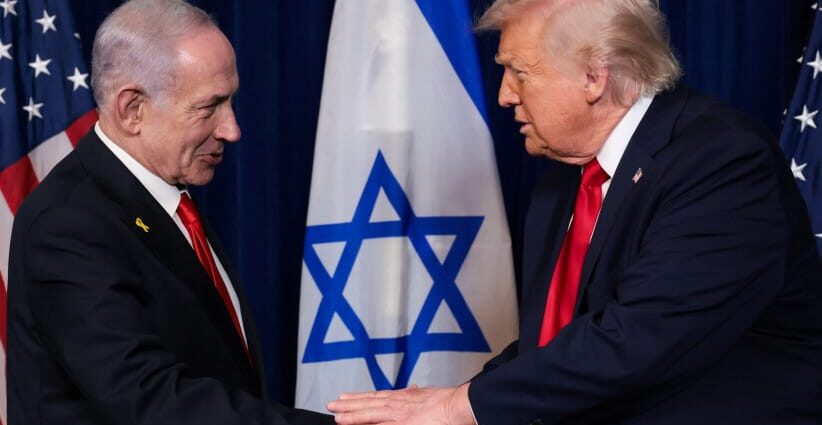
In its statement, the foreign ministry condemned the IRGC’s actions, decrying them as a hostile infringement upon their sovereign territory, while demanding that the Islamic Republic of Iran “immediately and unconditionally halt its illegitimate hostile acts.”

“The State of Kuwait reserves its full and inherent right to self-defense in accordance with Article (51) of the Charter of the United Nations, and to take any measures it deems appropriate to defend its sovereignty and protect its people and residents on its territory,” the announcement says. 

The incident raises concerns about further escalation in the Gulf

The incident raises concerns about further escalation in the Gulf, as the Kuwaiti Navy and Coast Guard were reportedly put on high alert.

Two additional members of the infiltrating force have reportedly evaded capture.

Iran has yet to officially respond to Kuwait’s accusations.

This post was originally published on here

An Israeli-Cypriot cyber company has developed a tool to de-anonymize Starlink users, and is expected to reveal it at the upcoming ISS World Europe conference, Intelligence Online reported on Monday.

The tool, Stargetz, is intended to function alongside another of the company’s tools, a VPN de-anonymizing tool called VPNz.

The company, Targeteam, claimed that Stargetz does not intercept communication traffic or breach Starlink’s encryption in order to identify the system’s users. As such, Targeteam hopes to avoid legal and public disputes over its tool’s usage.

Intelligence Online reported that Targeteam employs engineers with a background in the military and elite Israeli cyber companies such as Cognyte and UTX Technologies, but the details of the team are intentionally kept heavily under wraps, with employees requested not to possess active LinkedIn profiles.

US sends Starlink to Iran protesters 

Starlink, a subsidiary of Elon Musk’s SpaceX, is a satellite-internet network that can be accessed through small, portable Starlink terminals.

The United States smuggled thousands of Starlink terminals into Iran in January as the Iranian regime cut off internet service in the country as part of a brutal crackdown on anti-regime protests, according to a report published by the Wall Street Journal.

Goldie Katz contributed to this report.

This post was originally published on here

The second of two assailants who viciously attacked two Jewish students on the DePaul University campus in 2024 has been arrested.

Kasem Noubani, 24, appeared in Cook County Court last week on counts of aggravated battery and two counts of a hate crime. The same charges were filed against the other attacker, Adam Erkan, who pleaded guilty in November 2025.

The incident in question took place on November 6, 2024, while Max Long, a US-born IDF lone soldier reservist, and Michael Kaminsky, a first-generation American Jew, were standing on campus with a sign encouraging people to ask them questions about being Jewish on campus, about serving in the IDF, and Israel-Palestine.

Erkan approached Kaminsky and Long to talk to them, and Noubani then attacked them from behind. Both assailants were wearing ski masks. Long was continually punched in the back of the head, even when he fell to the floor, and Kaminsky sustained an injury when he intervened.

Long suffered a brain injury and a cyst near his spinal cord, and Kaminsky has required two surgeries.

Prosecutors said DNA taken from the ski mask matched Noubani’s

A DePaul public security officer stationed just 10 feet away at the time did not intervene. After the attackers fled, he came to ask if they were okay.

While Erkan was in April 2025, the hunt for Noubani had taken over a year and a half. In fact, only after his arrest was his identity revealed.

Noubani was arrested in Arkansas after he was questioned by police at a traffic stop and was then extradited to Illinois. Prosecutors said DNA taken from the ski mask matched Noubani’s.

“The arrest of the second attacker, the coward who ambushed me from behind, is a significant step toward justice,” Long told The Jerusalem Post on Tuesday. “We cannot allow violence and intimidation to become normalized. Those responsible must be held accountable.”

Kaminsky concurred: “The arrest of the second individual who violently attacked Max and [me] in a hate crime attack on DePaul’s campus back in November 2024, while we attempted to engage in constructive dialogue, is a step toward justice and accountability for the entire Jewish community,” he told the Post.

“This individual took what could have been an opportunity for discussion and turned it into violence. They attempted to send a message to all Jewish students on campus and across the nation that we should not feel safe anywhere we go. Unfortunately for him, his message was not received as intended,” Kaminsky said.

“While we did everything in our power to ensure this never happens again to another student, he was the one who had to run and hide.

We are so thankful for law enforcement’s efforts to track down and arrest the second individual and look forward to the next steps,” he continued.

Long added that, for the Jewish community in Israel and across the Diaspora, “communities that have lived through years of war, terror, antisemitism, and targeted attacks,” every arrest “sends a message that justice still matters.”

“I’m grateful to law enforcement for continuing to pursue the perpetrators. I hope this serves as a deterrent to others who think hatred and violence are acceptable,” Long concluded.

This post was originally published on here

As major maneuvers multiply ahead of the elections in Israel within the Zionist opposition, one theme unites them (excluding Yair Golan’s left-wing party “The Democrats”): the refusal to govern with Arab parties. 

Besides making the formation of a coalition requiring more than 61 deputies very unlikely in view of the polls, this marks a shift compared to the experience of governments led by Naftali Bennett and then Yair Lapid between 2021 and 2022.

While acknowledging his previous choice to govern with them, Bennett, among others, justified this reversal by the terrorist attack of October 7, which would explain the reluctance of the Israeli people to support such a configuration today. 

This ostracism is both a capitulation to the far Right, which continues to demonize Israeli Arabs and warn against such an alliance, and a tremendous gift to extremists within Israeli Arab society who warn against any integration into the Israeli political game.

Coalition vs opposition

Extremely unpopular since October 7, Prime Minister Benjamin Netanyahu and his partners are consistently projected to be defeated in voting intentions by the opposition (Zionist parties and Arab parties). Polls consistently grant 50-52 seats to the outgoing coalition and 58-60 to the opposition Zionist parties. 

In fact, Netanyahu’s goal is less about winning the election than not losing it, by keeping the Zionist opposition below the 61-seat mark. 

His other related objective, hammered home continuously, is to make any alliance with Arab parties unacceptable. 

This is to prevent it from forming a government and allowing him to remain in power at the helm of a caretaker government, as he did between 2019 and 2021, when four successive elections ended in a stalemate with no 61-seat majority emerging from them.

This attitude by Bennett, Lapid, or Gadi Eisenkot plays into Netanyahu’s strategy. It reflects a caution bordering on cowardice and is an insult to Israeli Arabs who sincerely want to participate in integrating into Israeli society. 

An insulting and racist attitude

As for the argument about October 7, it is as absurd as it is insulting. Absurd because Arabs were also victims of the Hamas terrorist attack, and some Israeli Arab politicians have supported the families of hostages far more than Israeli government ministers. 

It is insulting because it implicitly equates every Arab with Hamas terrorists, similar to antisemites who portray Jews worldwide as “genocidal Zionists and Netanyahu’s henchmen” (without equating Netanyahu and Hamas, of course).

Above all, it is a complete misunderstanding of the evolution of Israeli society. The caution of Bennett or Lapid is indeed contrary to the profound changes in the place of Israeli Arabs and their growing integration into Israeli society. 

Contrary to obsessive critics of the Hebrew state, Israel is not an apartheid society. First, because Arabs have the right to vote and be elected, and second, because they also represent 25% of doctors, 50% of pharmacists, and nearly 20% of higher education graduates in Israel (this last percentage aligns with their demographic weight in Israel).

The glass ceiling is, therefore, more political than societal, despite the persistence of racism and mistrust among some Israeli Jews. The role of Israeli Jewish politicians should be to accompany this evolution, not to reject it toward civic secession, and to push for a true partnership with them.

This is not only the only electoral strategy to defeat the ruling coalition but also – and above all – the way to symbolically turn the page on the current government, the most extremist in the country’s history, and open a new chapter in Israel’s history. 

This chapter would be one of civic partnership between Jews and Arabs. It would honor Israel’s Declaration of Independence, which wished to ensure “complete equality of social and political rights to all its citizens, without distinction of belief, race or sex.”

Netanyahu has always known how to surf on others’ fears to conquer power and stay there. He fully intends to renew this approach for these elections, which should mark his repudiation after the catastrophic failure of October 7. 

Likely unable to win, he wants to prevent his opposition from doing so. It is up to the latter to avoid the traps set by a man who may be a poor geopolitical strategist but remains a master of political tactics.

Born and raised in France, the writer is the correspondent of French Jewish radio, Radio J, and of the French paper librejournal.fr in the US, where he has been living for 16 years. He is also a contributor to the European Review UK. He holds US and Israeli citizenship. His opinions are his own.

This post was originally published on here

US President Donald Trump made new comments about the Kurds on May 11, when he said that the Kurds had disappointed the administration. He said he was “very disappointed” and accused Kurds of taking and only fighting hard “when they get paid.”

The comments did not specify which Kurdish group he was speaking about, and came after two months of reports about the US backing of Kurdish Iranian opposition groups, including claims that the US sought to transfer weapons to be used against the Iranian regime.

The new comments follow several other times that Trump has been questioned about claims that weapons sent never made it to Iran.

Trump said he was disappointed, apparently referring to weapons transfers involving Kurdish opposition groups. He claimed that only “some guns with ammunition” had been sent and added that the weapons “were supposed to be delivered, but they kept it.”

Trump hinted he had been skeptical from the start about an operation to move weapons into Iran via Kurdish groups. While noting that the Kurds generally enjoy a good reputation in the US Congress, Trump said Kurdish fighters “fight hard when they get paid.”

Trump also expressed doubt that the weapons or the groups involved would ever successfully reach Iran.

The latest comments seem to imply that Trump was skeptical of arguments that Kurdish opposition groups might play a major armed role in fighting the regime. He also seemed to think that any weapons transfers via a group were unlikely to move beyond the group. While Trump spoke broadly about “the Kurds,” no one in the administration has specified which Kurdish group may have received arms.

A lot of the reporting about Kurdish groups since the war began on February 28 has been misleading. For instance, early reports suggested Kurdish Iranian opposition groups had launched an offensive. In fact, they had not.

Later, reports claimed that this information had been leaked. The leaks appeared to dovetail with claims about weapons transfers.

It’s worth noting the complexity of the various Kurdish groups involved. First of all, there are tens of millions of Kurds living in four countries: Turkey, Iran, Iraq, and Syria. The Kurdish areas all border each other, connecting in the mountains, which is the Kurdish homeland. As such, the Kurdish groups in this area all have connections with one another.

Different Kurdish groups have different political affiliations and circumstances in each country

WHERE THERE are major differences among Kurds is primarily in their political parties and the different circumstances they have in each country. For instance, in Iraq, Kurds were subjected to genocide in the 1980s. In Turkey, the government denied that Kurds existed for many years and suppressed their language. In Syria, Kurds didn’t even have citizenship in many cases during the Assad regime era.

Kurds in Iran have opposed the Islamic regime since the 1980s. The Kurds in Iran have also fought for independence since the 1940s. The Islamic regime has assassinated Kurdish leaders over the last few decades.

Many Kurdish opposition groups had to go into hiding. When the Kurdistan Region of northern Iraq became an autonomous region, many Kurdish Iranian opposition groups set up camps or small bases there.

The autonomy of the Kurdistan Region in Iraq gave Kurds fleeing Iran some safety, which is important because in the 1980s and 1990s, it had been different; Kurds from Iraq had fled to Iran. The current president of the Kurdistan Regional Government, Nechirvan Barzani, lived in Iran for a time.

The Kurdish region of Iraq has other links to Iran.

While the ruling Kurdistan Democratic Party (KDP) in Erbil tends to have closer ties with Turkey than with Iran, the smaller Patriotic Union of Kurdistan (PUK) is closer to Iran.

PUK dominates Sulimaniyeh on the border with Iran and is therefore politically and geographically close to Iran. The Kurdish Iranian opposition groups recently formed a coalition. This was accelerated by the protests in December and January.

The coalition brings together the Democratic Party of Iranian Kurdistan (KDPI), the Kurdish Freedom Party (PAK), the Kurdisatan Free Life Party (PJAK), Komala, and Xhabat parties. KDPI and PJAK often claim to be the largest Kurdish Iranian opposition groups. Komala, which had three branches, is also a large party.

The Kurdish parties all have different ideologies. PJAK is a far-left group with links to the Kurdistan Workers Party (PKK). KDPI is historically close to the KDP.

While many readers will find this alphabet soup of parties hard to follow, what matters here is that there are many parties. If the US sought to move weapons to one of the groups, or even to the coalition of parties, it would likely be hard to ensure the weapons were evenly distributed.

This would be hard if only the Kurdish army groups were involved. If one were trying to move weapons from northern Iraq, via Kurdish groups, to Iran, the process would be even harder.

There is another factor involved.

The PUK is close to Iran’s leadership and likely opposes any action by Kurdish opposition groups entering Iran from areas the PUK controls. Iran and its IRGC are very active in the Kurdish areas of western Iran. As such, the PUK likely would work to prevent or interdict any operation.

This means moving weapons in this area would be incredibly complex. It would require a lot more than just trucking them to a group and saying, “Here you go.”

Arming rebel groups is complex. It requires knowing the groups, usually setting up infrastructure and camps for training, and having people knowledgeable about the region to make it work. In history, the arming of rebel groups has often not worked, especially when the West has tried to do it.

There are exceptions to that rule.

The Mujahedin in Afghanistan were successful in the 1980s. However, that operation took many years and required support from Pakistan and other countries. In other examples, such as arming the Contras or other groups, things have not gone as planned.

The US does have a successful model in working with the Kurdish-led Syrian Democratic Forces in Syria. However, the SDF grew out of an existing group, the People’s Protection Units (YGP), which was highly disciplined.

The US Central Command and Operation Inherent Resolve worked with the SDF to defeat ISIS. This took many years. The US effort to arm Syrian rebel groups was largely unsuccessful. Therefore, it is worth noting that even when the US military, such as CENTCOM or other US elements, is involved, arming groups are complicated.

Trump’s skepticism about the weapons and what might happen is well-reasoned. His blame of the Kurds appears unfair. The Kurds are not one group. There are many groups. When he says that Kurds only fight when paid, he is mistaken.

The Kurdish Peshmerga fought ISIS and received very low pay. The SDF was not well paid, or even paid at all. Therefore, most Kurdish groups have been fighting for decades without pay. The Kurdish Iranian groups that already exist are not being paid.

They live in small, poor, dusty camps and train for years out of devotion to the cause. Whatever comes next in terms of the US and the Kurdish groups will require some attempt to heal the skepticism that has emerged.

This post was originally published on here

It’s a simple proposition: Whatever our views on the Middle East conflict, we should all be able to agree that dogs cannot be trained to rape human beings.

Yet this is exactly what a New York Times “opinion” piece posing as an in-depth journalistic investigation, perhaps to avoid any real journalistic accountability, published on Monday claims, based on anonymous testimonies and a report by a well-known anti-Israel organization that has proven ties to Palestinian terror.

Putting aside the bias of Euro-Med Human Rights Monitor, a Geneva-based advocacy group that the NYT gently points out is “often critical of Israel,” the newspaper’s long-time columnist Nicholas Kristof seems to have become confused about whether he is an opinion writer or a news reporter, and has gone ahead and dabbled in a bit of field reporting himself.

And why not? In a post-factual world, it seems, anything is acceptable. An opinion piece can be an investigation with unverified claims and a half-hearted attempt to get a response from the accused party. It can also feature clearly bogus claims that Israel has trained dogs to rape Palestinian prisoners held in its jails.

While the impossible assertion about dogs has been shared broadly in recent weeks by anti-Israel conspiracy theorists on social media, to see it displayed front and center in a New York Times article, peddled by one of its most-trusted columnists and featured prominently on the powerful media outlet’s website, is mind-blowing.

In this tumultuous post-October 7 period of war and violence, there are Palestinian prisoners – many of whom were involved directly in the atrocities carried out in Israel on that horrific day – who report being treated roughly, abused, and even raped.

It must also be said that Israel’s prison service, now under the command of National Security Minister Itamar Ben-Gvir, a proud racist, has been called on to take a harsher stance in its handling of Palestinian prisoners, and, likely, any such despicable acts have gone either unacknowledged or unpunished.

Yet Sari Bashi, an Israeli-American human rights lawyer who is the executive director of the Public Committee Against Torture in Israel, and who was interviewed for Kristof’s opinion column, points out that there is no “evidence that it has been ordered.” She said she believes, however, that there is “persistent evidence that the authorities know it’s happening and are not stopping it.”

‘It’s impossible to know how common sexual assaults against Palestinians are’

And even Kristof himself admits that “it’s impossible to know how common sexual assaults against Palestinians are” – though that does not stop him from going on for almost 4,000 words about the total certainty that Israelis “systematically employ rape and sexual torture” to humiliate Palestinian prisoners and that Israel allows, even enables, Israeli settlers to sexually assault Palestinian civilians in the West Bank.

The famed New York Times columnist even goes so far as to call on the US to “condition arms transfers on an end to sexual assault,” arguing that “we could send a moral and practical message that sexual violence is unacceptable no matter the identity of the victim.”

Maybe it would also send a message to other departments of his own newspaper that the Israeli victims of Hamas’s systematic sexual violence and rape on October 7, and afterward, as Israeli hostages languished in Gaza, also deserve to have their stories told?

Kristof’s column was published and promoted prominently on the NYT’s website, even including a separately produced video clip, one day ahead of a monumental Israeli report into Hamas’s systematic sexual crimes on October 7, which over the past two-and-a-half years have been downplayed or outright denied by a multitude of human rights and women’s rights activists, organizations, and officials.

The report by the Civil Commission on October 7th Crimes by Hamas against Women and Children was distributed to media outlets in Israel, including the NYT, weeks ahead of its publication on Tuesday. It was picked up by many journalists and platforms, but was somehow skipped by The New York Times.

It’s disappointing that the newspaper prefers baseless claims of Israeli rape dogs over actual reports on atrocities.

This post was originally published on here

US President Donald Trump said that he is “100% confident” that Iran will stop enriching uranium and will hand over the enriched material that it possesses to the US during a radio interview broadcast on Tuesday morning.

The comments were made on Sid Rosenberg’s Sid & Friends show on New York’s TalkRadio 77 WABC.

Trump also emphasized that Washington will not allow Iran to obtain nuclear weapons, and claimed that his relationship with Prime Minister Benjamin Netanyahu is “excellent.”

“We don’t have to rush anything. We have a blockade which allows them no money. It’s a very simple thing: we cannot let them have a nuclear weapon, because they’d use it,” Trump said.

“If [the nuclear weapon] explodes, it would be an unimaginable disaster,” Trump continued.

Trump claims Iran could have achieved nuclear weapons four years ago

The US president also claimed that Iran would already have achieved nuclear weapons if his previous administration had not withdrawn from the Joint Comprehensive Plan of Action (JCPOA) nuclear deal, initially signed by then-president Barack Obama.

“If I had not canceled the agreement, they would have had nuclear weapons four years ago,” Trump said. “It was a sure path to nuclear weapons, and there was nothing you could have done to stop it,” he added.

Trump also said that the Iranians had pledged to stop enriching uranium. “They’re going to stop, and they told me they’re going to give us the dust.”

“Dust” is a term that Trump has repeatedly used to refer to enriched nuclear material, including uranium.

Trump also said that he “gets along great with Bibi [Netanyahu]. We were partners in the truest sense of the word.”

“You wouldn’t have Israel without me,” he said.

Meanwhile, Defense Secretary Pete Hegseth addressed a congressional committee, saying that “Iran has effectively tried to use the North Korea strategy, with such overwhelming capabilities, conventionally, that no one would dare prevent them from pursuing a nuclear weapon.”

“It took President Trump to have the courage to make that historic decision, and hopefully we can get that across the finish line with negotiations, which are ongoing right now,” Hegseth added.

This post was originally published on here

The IDF’s military prosecution filed two additional indictments against two suspects ranked Sergeant First Class for offenses linked with smuggling goods into Gaza, tax offenses, and other offenses, the military said on Tuesday.

The indictments followed joint investigations by Shin Bet (Israel Security Agency), Israel Police, the Military Police’s Special Investigations Unit, and the Israel Tax Authority.

The first defendant was involved in an extensive network of smuggling cigarettes and other goods into the Gaza Strip, along with their father and colleagues in their military unit, from February 2024 until January 2026, the indictment says.

Additionally, they took hundreds of rounds of ammunition and magazines from military stockpiles and sold them to civilians for thousands of shekels.

They are also charged with drug offenses and obstructing legal practices, the military noted.

Other offenses the first defendant was charged with include: assisting the enemy, bribery, smuggling goods under aggravated circumstances in association with others, tax offenses, money laundering, and additional offenses, the military said.

The second defendant was contacted by the first at the end of 2024, requesting that they carry out smuggling cigarettes into the Gaza Strip, the indictment says.

Smuggling cigarettes for hundreds of thousands of shekels

The two smuggled approximately 50 cartons of cigarettes over a period of several months, which generated approximately NIS 750,000.

The second defendant was charged with several serious charges, including assisting the enemy, bribery, smuggling goods under aggravated circumstances in association with others, tax offenses, money laundering, and additional offenses, the military said.

The identities and other personal details of the defendants, including identifying factors and the unit in which they serve, are under a media embargo, the military said.

This post was originally published on here

In 1240, a Jewish convert to Christianity stood before King Louis IX of France for the sole purpose of disproving and maligning Judaism. His name was Nicholas Donin – and he would become a model for a recurring and destructive pattern in Jewish history.

The setting was a “disputation,” a debate, about Judaism and Jewish thought. On one side were four of the most distinguished rabbis of France – Yechiel of Paris, Moses of Courcy, Judah of Melun, and Samuel ben Solomon of Chateau-Thierry. On the other side was Donin, a converted Franciscan monk.

At the time, there were genuinely great Christian theologians, such as Francis of Assisi, Thomas Aquinas, and, later, John Hus, who could have represented the Christian side in the debates. Yet, in all cases, the person who “volunteered” to “dispute” – to denounce Judaism – was, like Nicholas Donin, a convert from Judaism. During the 200 years afterward, there were two other such debates, one in Barcelona in 1263, and another in Tortosa in 1414. In both cases, representing the church were Jewish converts to Christianity.

I was thinking about Donin after seeing the election of Avi Lewis as the leader of the New Democratic Party in Canada. Today, the leaders of the most anti-Israel parties in the United States, Canada, and the UK are Jews: aside from Lewis, Jill Stein, and Zack Polanski lead the Green Parties in the US and the UK, respectively. And, like Donin, all three cite their “Jewishness” to denigrate and vilify other Jews and deny, or even justify, the antisemitism, code-worded as “anti-Zionism,” which is rampant today.

One can certainly criticize the actions and policies of the government of Israel; I, and many others, frequently do. But what leads Jews of all people to be the most vociferous critics of Israel’s very right to exist? Why do they, of all people, feel the burning need to lead the charge against the Jewish right to self-determination? Why try to “disprove and malign” Zionism and Jews who live in Israel?

The phenomenon of Jewish self-flagellation is complex, and as the disputations show, has a long history. Social psychologists have claimed that the persecution, discrimination, and marginalization that Jews have faced for millennia have led some to internalize the negative perceptions propagated by the broader society. 

This internalized antisemitism has contributed to feelings of shame, guilt, or self-loathing, a sense of inferiority or self-doubt due to societal pressures or traumatic experiences related to Jewish identity. Historians have noted that Jews in the Middle Ages converted not only due to the persecution and violence of the Inquisition, but also as a result of being socially ostracized, hoping conversion would mean gaining acceptance.

But why, after October 7, 2023, the worst massacre of Jews since the Holocaust, is Jewish self-flagellation raising its ugly head? Why are Jews leading the most extreme parties that are leading the political persecution of other Jews?

Our history of persecution also led many Jews in the last century to align with social justice movements. These movements were initially motivated by the very valid objective of fighting for the rights we all expect in a liberal democracy. However, the extreme Left has transfigured social justice into a “religion of intersectionality” – the claimed interconnected nature of social categorizations such as race, class, gender, and sexuality, excluding and even invalidating the narratives of anyone not falling within their definition of the oppressed. 

History rewritten against Jewish presence in Israel

In the world of “intersectionality,” Zionism is presented as another form of white European nationalism, and the Jewish right to self-determination is characterized as colonialism. The intersectionalist has rewritten history to deny 3,300 years of continuous Jewish presence and spiritual connection with the Land of Israel, let alone the fact that over 50% of Israel’s population is comprised of Jews from Arab countries who were brutally persecuted and became refugees absorbed by the State of Israel. Palestinians are characterized as the oppressed – the indigenous people of color – and Jews as the white European invaders.

Deviating from the narrative of “intersectionality” in the Israeli-Palestinian conflict means that one is subject to the 21st century’s form of “inquisition,” resulting in being unceremoniously dumped from the social justice camp. Instead of being tried in the courts of Paris, Barcelona, and Tortosa, today’s disputations take place in the pages of The New York Times and the Guardian, and on the grounds of Columbia University. As in the Middle Ages, that “inquisition” is leading to violence: synagogue shootings in Canada, stabbings, and actual or attempted arson attacks against Jewish sites in the UK, and physical attacks and harassment throughout the United States.

So, why do certain Jews still crave that certain kind of “acceptance” – in this case, the acceptance that only being part of the intersectional movement can provide?

First, there is the “survivor’s guilt” of being part of a very successfully acculturated minority in Western countries, while other minorities continue to lag. How is it possible that we are successful and other minorities are not? How is it possible that the relatively young Israel is a successful OECD country, while other developing countries are not? 

It must be our fault because we must have done too little and now need to deny our own right to self-determination because others failed in theirs. And, if another Jew acts in a way inconsistent with the views of the movement, we must feel “collective guilt” and publicly make amends for the perceived harm done.

Second, as during the Middle Ages, there is the “peer pressure” to be part of the new religion – the desire for acceptance by others compels Jews to distance themselves from a fundamental part of their own Jewish identity, the connection to the Land of Israel, and to denounce Zionism. That is why the people who lead every demonstration against Israel and Jews have been screamingly silent about the massacre bythe Iranian regime of 40,000 of its own people, the persecution and murder of millions by Islamic fundamentalists in Nigeria, and the slaughter of tens of thousands of Uyghurs in China.

The disputations of the Middle Ages had far-reaching consequences.  Similar to today, they served as platforms for the propagation of antisemitic myths and blood libels, such as the intentional killing of children, poisoning of resources, and the harvesting of organs. Similar to today, Jews faced violence or other forms of persecution if they did not acquiesce to the arguments presented by their counterparts. Similar to today, they demonized Jews and justified their persecution.

Karl Marx once said that “history repeats itself, first as a tragedy, then as a farce.” Unfortunately, in the current repetition of history, the farce of the modern Nicholas Donins is the tragedy of our people.

The writer, currently an MA student of medieval history at the Hebrew University of Jerusalem, is a retired Israeli venture capitalist and nonprofit leader.

This post was originally published on here

A new poll conducted among active Likud members provides a rare glimpse into the mood at the heart of the base: very high loyalty to Prime Minister Benjamin Netanyahu, alongside a clear reservation about personal, family, and political moves he may seek to advance.

In the Likud list for the 26th Knesset, according to the poll of members, Tali Gottlieb leads with 71.5% of approval among Likud voters. Following her are Amir Ohana with 69.9%, Moshe Saada with 61.6%, Eli Cohen with 56.6%, and Boaz Bismuth with 54.8%. The top ten also include Amichai Chikli, Israel Katz, Miri Regev, Yariv Levin, and Shlomo Karhi.

The first data Likud always checks is who is strong in the field. The survey shows that the members continue to reward those seen as ideological fighters, loyal to the right-wing line and Netanyahu, but at the same time, new preferences are emerging at the top.

Ohana is the biggest winner: second place on the list and the leading candidate to replace Netanyahu if he does not run, with 26.1%, ahead of Israel Katz, who got 18.1%.

Netanyahu himself still enjoys deep control within the party. 75.1% of the members prefer him for Likud leadership, 74.6% support advancing a pardon for him, and 76% believe his position has strengthened due to the security campaign. However, compared to January, when his support was above 80%, a slight erosion is evident – especially among his most loyal supporters.

The most significant crack is Netanyahu’s demand for ten reserved slots on the list. Only 48.9% support it. On the other hand, 51.1% do not fully accept the demand: 31.4% are willing to accept only 2-3 reserved spots, and 10.5% oppose any reserved slots altogether. In Likud, where discipline toward the leader is part of the political DNA, this is an exceptional figure.

The possibility of reserving a spot for Yair Netanyahu also faces broad rejection: 64.2% of the members oppose it, and only 20.6% support it. When asked which public figures they would like to see joining the Likud list, Yair Netanyahu received only 6.9%. The message from the field is clear: Netanyahu the father maintains his power; an attempt to promote his son is viewed entirely differently.

The relationship with the Prime Minister’s inner circle is also complex on other issues. Only 37.2% believe his family and close circle strengthen his position, while 29.6% think they weaken it, and 33.2% are unsure. Regarding Ziv Agmon’s statements, 36.7% are disappointed, and only 33.2% are satisfied.

The issue of ultra-Orthodox enlistment also shows clear discomfort. Only 32.3% support advancing the draft exemption law before the elections, 40.9% oppose it, and 26.9% are uncertain. Nearly two-thirds, therefore, do not explicitly support the measure – a figure that illustrates the gap between the demands of the ultra-Orthodox partners and the mood within Likud itself.

Near-unanimous support for war among Likud members

In the security arena, support for the war is almost unanimous: 94.7% believe it was necessary. Satisfaction with the results, however, is much lower: only 55.9% expressed great or very great satisfaction.

Additionally, 44% do not believe or are unsure about statements regarding Iran and Hezbollah’s weakness. Even among the members, it turns out, support for the campaign’s initiation does not erase questions about the achievements at its conclusion.

In the broader political landscape, Likud remains very stable. 85.2% of members say there is a high to certain probability they will vote for Likud, and 77.3% completely rule out voting for a new party that might be formed by Gilad Erdan, Moshe Kahlon, and Yuli Edelstein.

In the end, Netanyahu still controls Likud, but the members are no longer signing him a blank check. The list they envision – Gottlieb at the top, Ohana strengthening, and Barkat weakening – tells the story of a loyal, right-wing, combative base that is also willing to set limits: no to ten reserved spots, no to Yair Netanyahu, and not necessarily to a deal with the ultra-Orthodox at any cost.

The survey was conducted in May 2026 among active Likud members, a group of about 120,000 people, who do not represent the general Likud voter base. The research was carried out by Dr. Nimrod Nir from the Agam Institute and Asa Shapira, among active members as listed in the updated register as of December 2025. The final sample included 1,097 respondents after duplicates were removed, bots were filtered, and all participants were verified to be in the updated voter registry. According to the pollsters, the respondents’ socio-demographic characteristics were similar to those of the general Likud membership. The sampling error is 3.899% with a 95% confidence level.

This post was originally published on here

Syria has dismantled a Hezbollah-linked cell, its Interior Ministry said Tuesday. It posted images of the raids, showing how important Damascus considers this development.

“Syria’s Interior Ministry announced Tuesday it had foiled a large-scale terrorist plot and dismantled a cell linked to Hezbollah militia that was planning to destabilize the country,” Syrian Arab News Agency (SANA), Syria’s official news agency, reported.

This is important because it highlights how Syria is committed to security. Damascus wants to create stability and also prevent any threats from Iran or from other extremist groups.

Prior to the rise of the new Syrian government, the country was a major target for Iranian expansion in the region.

Under the Assad regime, Hezbollah was invited into Syria to help aid the regime in the Syrian civil war. Hezbollah entered Syria in large numbers around 2012-2013 via Qusayr, a city in western Syria near the Lebanese border.

After intervening to help Assad, Hezbollah began to develop its own networks. It worked with Iranian-backed militias that began to flow into Syria via Al-Bukamal, an eastern city on the Euphrates River near the Iraqi border.

Those militias built a base called Imam Ali. They also used homes in Al-Bukamal as facilities.

Hezbollah diminished in Syria since Assad’s fall

Some of those areas were later targeted in airstrikes. Although no country took credit for those strikes, the militias often blamed Israel and the US. Israel had launched what was called the Campaign Between the Wars to reduce Iranian entrenchment in Syria.

Hezbollah’s role in Syria was a key component of the Iranian entrenchment. In addition to bolstering the Assad regime and working with Iraqi militias, it also established networks near the Golan Heights.

These networks expanded after the Syrian regime returned to areas near the Golan in 2018. Hezbollah cells began to bring in drones and other weapons to threaten Israel.

When the Assad regime fell suddenly on December 8, 2024, Hezbollah was already facing challenges. It had suffered major losses at the hands of Israel in September-November 2024. As such, it was unable to help Assad when the regime suffered losses due to a Syrian rebel offensive in late November.

Therefore, Hezbollah’s role in Syria has been diminished since the fall of the Assad regime. It has been working very quietly via some cells and continues to try to smuggle weapons to Lebanon.

The Syrian government of Ahmed al-Sharaa, however, has done a good job cracking down on Hezbollah. The crackdown is continuing, as the raids this week indicate.

The Syrian Interior Ministry “said in a statement that the specialized units, in cooperation with the General Intelligence Service, succeeded in delivering a preemptive and decisive blow to a terrorist plot that was targeting the security of the country and its symbols,” SANA reported.

The recent raids were more widespread than in the past. They took place throughout Syria, including in Damascus, Aleppo, Homs, Tartus, and Latakia.

This indicates a widespread Hezbollah conspiracy. The “members infiltrated Syrian territory after receiving intensive specialized training in Lebanon,” the report said, adding that a person Syria says was involved in assassinations was detained.

“Preliminary investigations indicated the cell was preparing to carry out coordinated attacks, including assassinations targeting high-ranking government figures,” SANA reported.

“Authorities also seized a cache of weapons and equipment, including improvised explosive devices, RPG launchers with munitions, automatic rifles, grenades, and various ammunition, as well as surveillance and technical equipment such as specialized optics and cameras. Officials said the findings indicated the cell was in an advanced stage of readiness to carry out its plans.”

The report comes at an important time for Syria. The country is trying to deal with several major issues.

For instance, it is seeking to integrate Kurdish forces in eastern Syria. In southern Syria, the Druze area of Sweida continues to be self-governing. Jordan recently carried out several airstrikes near Sweida, sending a message that Amman was concerned about drug smuggling in the area.

Meanwhile, Syria is also forming a committee for elections in the Kobani and Hasakah areas, which had been controlled by the US-backed Syrian Democratic Forces. The SDF is a Kurdish-led group that is supposed to integrate with the Syrian security forces based on a January 29 agreement.

With all these developments, Damascus is showing that it can confront a number of threats and continue to stabilize the country.

This post was originally published on here

What is the state of Israel’s economy after nearly three years of war? As Israel increases its defense budget, weans itself off US aid, and halts the hiring of most Palestinian workers, can its industries continue to survive and thrive?

At this year’s Jerusalem Post Annual Conference, Minister of Economy Nir Barkat will share his vision for Israel’s economic future and the resilience of the country’s business ecosystem.

Despite the ongoing seven-front war, The Economist ranked Israel as the OECD’s third best-performing economy in 2025.

Israeli business outlet Globes highlighted several factors behind the achievement. First, Israel’s stock market recorded the highest gains among OECD countries in 2025, rising by 53.3%. Second, Israel achieved GDP growth of 3.5%, ranking fourth among OECD nations.
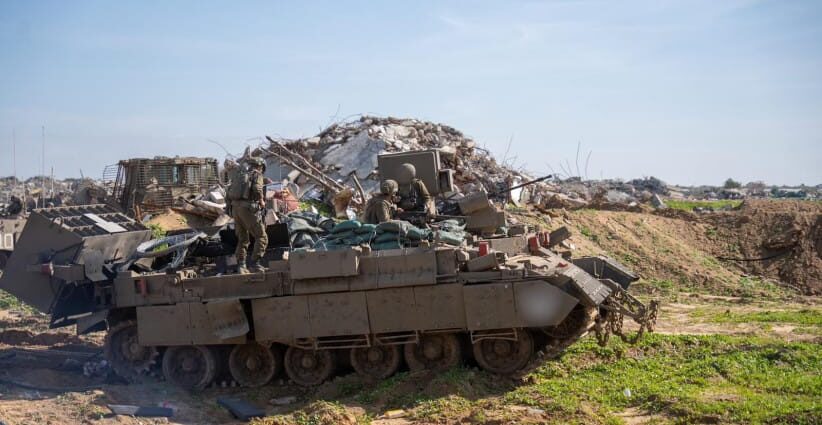
So what is behind Israel’s economic resilience during one of the most difficult periods in its history?

Barkat will discuss what many are calling Israel’s “secret sauce” and explain how the country plans to adapt to growing economic and security challenges in the years ahead.

For more information about the June 1 Annual Conference in New York and to secure tickets, visit www.jpost.com/NY26.

.

This post was originally published on here

Despite an attack while speaking to reporters by US President Donald Trump on Monday against Kurdish groups for allegedly failing to help with a local uprising against the Iranian regime, sources have confirmed to The Jerusalem Post that he himself ultimately vetoed the idea.

Foreign sources have widely reported that the Mossad proposed the possibility of helping to facilitate toppling the regime aligned with turning out mass protests, following the US and Israeli bombing campaign against the regime’s forces.

Further, foreign sources have widely reported that Turkey pressed Trump not to go forward with the option.

Previously, the Post reported that IDF Chief of Staff Lt.-Gen. Eyal Zamir, Mossad Director David Barnea, and IDF Intelligence Directorate Chief Maj.-Gen. Shlomi Binder met with top US defense officials and, in some cases, via video conference with Trump, to help convince the US president to join the war.

However, top US defense officials opposed the Kurdish plan from the start, which also led Trump, along with other factors, to oppose the plan.

Trump publicly confirmed providing weapons to Kurds

Strangely, Trump publicly confirmed providing weapons to the Kurds on Monday, but then veered off into claims that they had failed to rise up despite ample evidence and a record that he himself vetoed the idea.

It was unclear why the US president made the claim, though he has tried to avoid blame for the Islamic regime remaining in power.

This post was originally published on here

Prime Minister Benjamin Netanyahu and US President Donald Trump’s relationship has been fraying after Netanyahu talked Trump into a war against an Iranian regime presented as too weak to fight back effectively, according to an analysis published in the Guardian on Saturday. 

The Guardian cited former Israeli diplomat Alon Pinkas as calling Netanyahu a “conman” who used Venezuela as an example of what the US and Israel could do in Iran. 

Netanyahu presented the Islamic Republic as a regime on the brink of collapse, with people prepared to rise up against the government, and the Islamic Revolutionary Guard Corps (IRGC) too weak to really attack US bases and allies, according to Pinkas, telling Trump that together, a war could be won in a matter of days. 

Despite US intelligence and military officials warning of the risk of Iranian attacks on US allies in the Gulf and of the possibility of the Strait of Hormuz being closed, the Guardian reported that Netanyahu and members of the Trump administration, including Secretary of Defense Pete Hegseth, argued that the IRGC would not have the strength to do so. 

By the end of March, when US bases had been attacked, the strait had been closed, and the Iranian people did not rise up against their government, “there were signs that Trump was very disappointed with Netanyahu,” Pinkas told the Guardian

Trump expresses disappointment with Netanyahu 

Trump’s references to Israel and Netanyahu in public statements diminished, and Israel began to be left out of the loop regarding negotiations, according to the Guardian

The Guardian also referenced Trump’s condemnation of the Israeli strikes on Iran’s South Pars gasfield, when Trump said that he had told Netanyahu “not to do that.” 

Trump also announced that Israel was “prohibited” from bombing Lebanon by the US, adding “enough is enough,” in a public rebuke to Netanyahu after the Prime Minister said that the ceasefire agreed upon between the US and Iran did not include Lebanon. 

The Guardian also cited former US ambassador to Israel Daniel Shapiro as saying Trump wants the war to have been resolved before his upcoming trip to China. 

“Otherwise, he will be in the position of a supplicant seeking Xi Jinping’s help to get them to convince Iran to accept his terms or to make concessions they haven’t made,” Shapiro told The Guardian. 

However, according to the Guardian, even if Netanyahu is forced to accept a temporary peace deal that is unfavorable to him, it will only be a matter of time until Trump is focused elsewhere, and Israel will have more freedom. 

Former national security advisor to Trump, John Bolton, has also pointed out that Trump and Netanyahu’s political bond is too strong to easily dissolve, and said that Trump is “still giving Netanyahu a pretty free hand in Lebanon.”

Pinkas agreed with this analysis, telling the Guardian that the war in Iran is expected to hurt both politicians in the upcoming elections. 
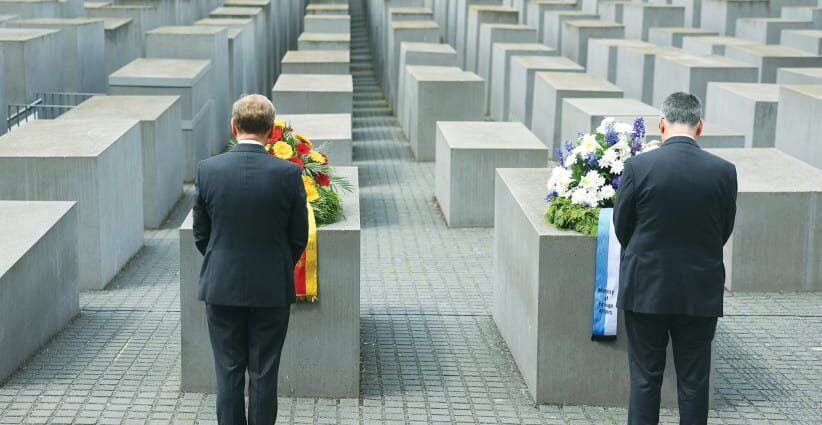
“This affects Netanyahu politically, and this affects Trump politically. In other words, they have screwed each other pretty badly,” Pinkas told the Guardian.

This post was originally published on here

US President Donald Trump said that the US has Iran’s enriched uranium surveilled, and is prepared to take action if it receives intelligence that action is being taken at the site in an interview with Full Measure on Sunday. 

When asked where the US is in the war without acquiring the uranium, Trump responded that the US would attain it “at some point,” and that the Space Force has the site under surveillance.  

“If anybody gets near the place, we will know about it, and we’ll blow them up,” Trump said. 

Trump reiterated his commitment to stopping Iran from ever acquiring a nuclear weapon and emphasized how close Iran was to such a goal before his intervention. Mentioning the attack on Iran, which took place in June of 2025, Trump claimed the operation stopped Iran when they were only two weeks away from a nuclear weapon. 

“If we didn’t do that, they would have already blown up Israel,” Trump said. 

The Jerusalem Post has previously reported that Iran was not two weeks away from a nuclear weapon, as Trump stated, but was rather weeks away from having enough enriched nuclear uranium. Notably, the other elements for finishing a nuclear weapon would have taken at least one year, if not two. 

Trump downplays effect of Iranian blockade on US

Trump also discussed the Strait of Hormuz, saying that the US does not rely on the waterway and that its operations there are done to aid allies in the region. 

“We don’t need the strait. We were doing it to help Israel, Saudi Arabia, Qatar, UAE, and others,” Trump said. 

Trump added that the US was now producing more oil and gas than Russia and Saudi Arabia combined and that he expects that number to double by the end of the year. 

Iran at ‘full readiness’ to protect nuclear sites

An Iranian military spokesperson said that Iranian forces were on “full readiness” to protect nuclear sites storing uranium in an interview with state news agency IRNA on Saturday. 

Brig. Gen. Akrami Nia told IRNA that Iran considered that the US might try to remove the uranium through infiltration or an airborne operation. 

‘You go in and you take it out’

Prime Minister Benjamin Netanyahu emphasized the importance of extracting enriched uranium in an excerpt from an interview that will air on CBS later on Sunday. 

“We’ve degraded a lot of it. But all that is still there, and there’s work to be done,” Netanyahu said, and added that the best course forward is “you go in, and you take it out.” 

Yonah Jeremy Bob contributed to this report.

This post was originally published on here