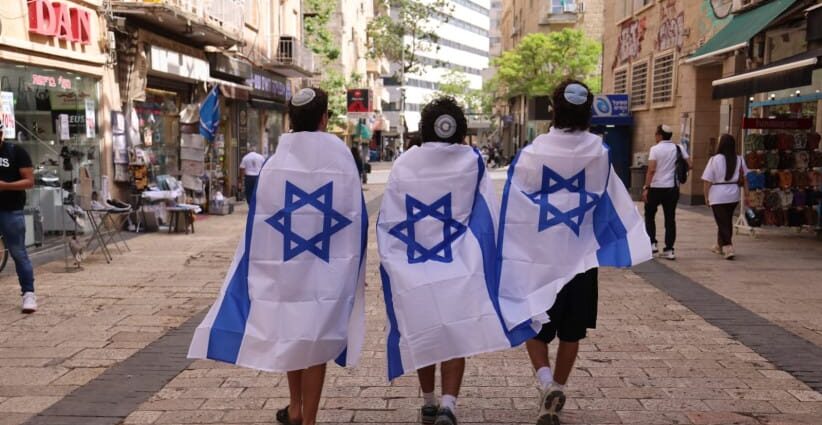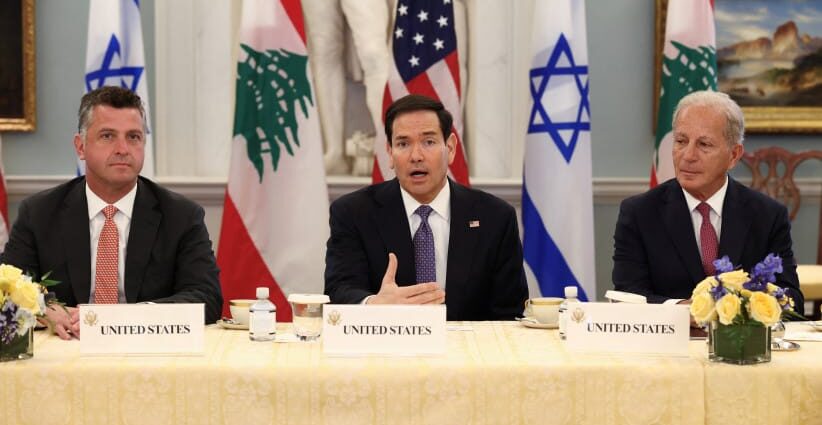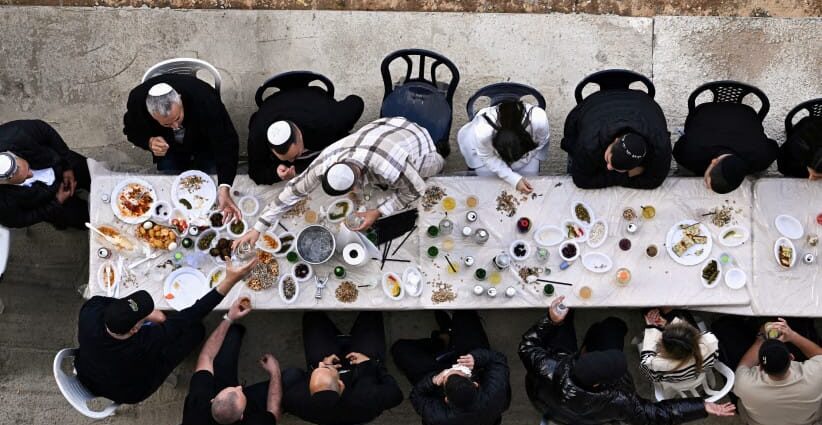
Jewish US lawmakers are warning of a sharp rise in antisemitic threats and harassment since October 7, with Rep. Jared Moskowitz revealing voicemails sent to his office calling to “kill Jews and threatening that he would be “going down.”

Moskowitz played several voicemails during an interview with CNN’s Sara Sidner on Friday as he described what he said was a sharp rise in antisemitic hostility targeting Jewish lawmakers since Hamas’s October 7 attack on Israel.

Moskowitz says antisemitic threats have become constant

“We seem, Sara, to have passed a Rubicon now with these antisemitic threats,” Moskowitz said. “It used to be once in a while you’d see a swastika on a building, once in a while, you know, someone would say something online. Now it’s every day, all the time, on podcasts, online, in the media, in the halls of Congress, and they’re trying to get Jews.”

CNN played multiple voicemail messages during the interview, with Sidner warning viewers that the recordings were “deeply disturbing.”

Moskowitz, who is Jewish, said a police officer has been stationed outside his home around the clock since a man was sentenced to prison in 2024 for plotting to kill him.

One caller said: “The US government needs to kill Jews, you kill these f–cking nasty Jews, kill every single f-cking Zionist scumbag.”

Another voicemail said: “F-ck Israel, let them f-cking burn to the ground. You’re going down, too, sir.”

Jewish lawmakers report growing threats and harassment

Moskowitz is not the only Jewish lawmaker to report rising antisemitic threats in recent weeks.

“It’s no longer a Republican and a Democrat issue,” Rep. Max Miller, a Jewish Republican from Ohio, told Axios this week. “Both ends of our parties are wackadoos who hate Jews.”

According to Axios, Miller received threats warning that “antisemitism is on the rise because you guys think you own the f-cking world.”

New York Democratic Rep. Jerry Nadler and Ohio Democratic Rep. Greg Landsman have also reportedly received antisemitic messages in recent months.

Jewish California Rep. Brad Sherman told The New York Times last month: “Across the board, we have never seen anything like this in my lifetime in public office. It’s like you turned the volume up from two to 10.”

Debate grows over antisemitism in US political discourse

The warnings from lawmakers come amid growing debate in the United States over antisemitic rhetoric in political movements on both the left and the right.

Moskowitz told CNN that criticism of Israeli Prime Minister Benjamin Netanyahu or Israeli government policy often quickly turns into broader hostility toward Jews.

“Listen, if you don’t like Netanyahu, great, go out and criticize him all day long,” Moskowitz said. “But don’t let people into your tent that you know are threatening to kill my family or my kids.”

The increase in threats also comes amid broader concerns over political violence in the United States.

Last year, Pennsylvania Gov. Josh Shapiro’s residence was set on fire hours after his family hosted a Passover seder, while Miller reported that a man attempted to run him off the road while calling him a “dirty Jew.”

Moskowitz urged Americans to speak out against antisemitism regardless of political affiliation.

“We need good people to not be quiet,” he said.

This post was originally published on here

A new exhibition from the University of Haifa opened last weekend at the Silk Road Virtual Museum, an international initiative that tells the story of the Silk Road through dozens of heritage sites and archaeological finds from across the region.

The museum is home to exhibits from Africa, Europe, the Middle East, and Asia, stretching from Italy’s Venice to the ancient Tibetan and Majapahit empires.

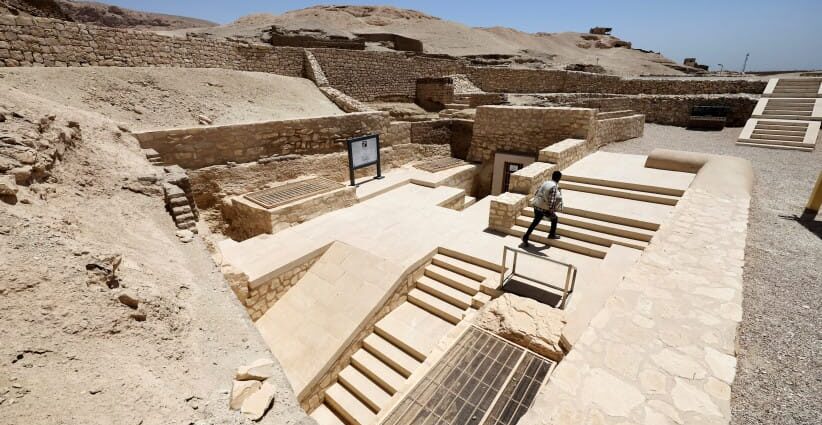
The University of Haifa’s exhibit, titled “From Trash to Treasure – Nahal Omer,” displays a collection of rare, well-preserved textiles and seeds discovered at the Nahal Omer archaeological site in the Arava in southern Israel, situated along the route of the ancient Spice Road.

It is the first exhibit from Israel to be featured in the museum. It was curated by Prof. Guy Bar-Oz, Prof. Gideon Avni, and doctoral student Nofar Shamir-Shapir from the University of Haifa’s Cultural Heritage Department.

Nahal Omer is a small agricultural village dating back to the Early Islamic period (mid-7th to 9th century CE) which was first surveyed in 1932. The most recent excavations began in 2020, when archaeologists excavated nearby middens (ancient trash heaps) and discovered the site’s remarkable connection to the trade route.

Almost 4,000 fabric fragments found 

Excavation was carried out in thin layers, the exhibit explains, in order to identify different layers and types of ancient debris in the dirt. The dug-up sediment was carefully run through a sieve on site, and any finds were then sorted and recovered by hand to preserve smaller or delicate materials.

Nearly 3,900 textile fragments were found preserved at Nahal Omer. 

Using Scanning Electron Microscopy (SEM) to study the fibers at an extremely high magnification, researchers found that while most of the fragments were cotton, other textile pieces were made of wool, linen, and silk. 

The fragments included decorated cotton textiles from India and Bukhara in Central Asia, felt strips made from the hair of Bactrian camels native to the Central Asian deserts, and pieces of silk originating from China. 

Additionally, more than 200 fragments of ikat fabrics – a technique of patterning textile where yarn is tied together and dyed before being woven –  were found at the site. According to the exhibit, the fragments found in the Arava likely did not originate there, citing similar textiles found in the region.

Region part of broad, int’l network

“Differences in fiber type, weave, and pattern suggest that some fabrics may have connections with weaving traditions known from Egypt and the eastern Mediterranean, others with Arabia and Iran, and still others with Central and South Asia,” a sign in the exhibit reads. “These links remain tentative, but the variety of techniques – ikat, zilu, fine cottons, wools, and dyed silks – indicates more than a purely local repertoire.”

Also found at the site were seeds, which, once identified, could reveal what the local plant life was like and what was traded and used at the site.

“Beyond its archaeological significance, the exhibition also offers a contemporary perspective on regional connections and cross-cultural links,” Bar-Oz said.

“It highlights that over a thousand years ago, the region already hosted extensive ties of trade, movement, and exchange of knowledge between the Middle East, Asia, and the Far East, and serves as a reminder that the region was part of a broad international network of cultural and economic connections in antiquity.”

The complete “From Trash to Treasure – Nahal Omer” exhibit can be viewed here.

This post was originally published on here

Iran does not intend to “surrender” as it enters into diplomatic dialogue with the Unietd States, Iranian President Masoud Pezeshkian said in a Twitter/X post on Monday. 

“Dialogue does not mean surrender,” Pezeshkian said. “The Islamic Republic of Iran enters into dialogue with dignity, authority, and the preservation of the nation’s rights, and under no circumstances will it retreat from the legal rights of the people and the country.”

This comes as a response to US President Donald Trump, who said on Monday he had paused a planned attack against Iran after Tehran sent a peace proposal to Washington, and that there was now a “very good chance” of reaching a deal limiting Iran’s nuclear program.

After Iran sent the US a new peace proposal, Trump said he had instructed the US military that “we will NOT be doing the scheduled attack of Iran tomorrow, but have further instructed them to be prepared to go forward with a full, large scale assault of Iran, on a moment’s notice, in the event that an acceptable Deal is not reached.”

No such attack had previously been announced, and Reuters could not determine whether preparations had been made for strikes that would mark a renewal of the war Trump started in late February.

Trump previously expressed hope that Iran deal was close at hand

Under pressure to reach an accord that would reopen the Strait of Hormuz, Trump has previously expressed hope that a deal was close on ending the war, and similarly threatened heavy strikes on Iran if Tehran does not reach a deal.

In his post, he said the leaders of Qatar, Saudi Arabia, and the United Arab Emirates had requested that he hold off on the attack because “a Deal will be made, which will be very acceptable to the United States of America, as well as all Countries in the Middle East, and beyond.” He did not offer details of the agreement being discussed.

Speaking to reporters later, he said the United States would be satisfied if it could reach an agreement with Iran that prevents Tehran from obtaining a nuclear weapon.

This post was originally published on here

Israel’s education minister appears to have found a political response to a national schooling crisis: Challenge the data and the body that produced it before the public can fully reckon with the depth of the failure.

According to reports, only 3% of ninth-grade students who took Israel’s national science assessment reached the high standard set by the Education Ministry. More than half were reportedly at a low or medium-low level.

The picture is not much better elsewhere: Reported results in sixth-grade math and English and in ninth-grade English also showed large gaps between Israeli pupils and the ministry’s own expectations.

They should have led to a serious public reckoning over what Israeli children lost during the COVID pandemic years, what they have lost during the war years, and what they are still losing in overcrowded classrooms, unstable schools, and systems that do not teach core subjects seriously enough.

Instead, Education Minister Yoav Kisch has focused his response on the instrument that exposed the crisis.

Israel can’t be ‘advanced’ while treating schooling as a PR problem

Kisch has accused the National Authority for Measurement and Evaluation in Education of serious failures and misleading publications. He has argued that until the matter is clarified, RAMA’s publications cannot be relied upon. He says the issue is not only the poor results themselves but also alleged flaws in RAMA’s conduct and publication process.

Kisch has reportedly ordered officials to advance the creation of internal measurement and evaluation units inside the Education Ministry. Critics say the move could weaken the independence of the very body meant to measure student achievement.

RAMA Director-General Gal Alon has pushed back, reportedly accusing Kisch of trying over time to influence how achievement data is published and saying he has no authority to prevent publication of the results.

The scandal is not only that Israeli students performed terribly, which is frightening enough. It’s also that the minister responsible for the education system appears more focused on challenging the publication of embarrassing results than on presenting a clear plan to address them.

Israel cannot speak endlessly about being a Western democracy, the Start-Up Nation, an advanced economy, and a regional power while treating basic schooling as a public-relations problem. Democracies require citizens who can read, reason, argue, and assess information.

Modern economies require workers who can handle mathematics, English, science, and technology.

A country that depends on hi-tech, intelligence, medicine, engineering, and military sophistication cannot afford an education minister whose response to bad data appears to be escalating the fight with the officials responsible for measuring it.

The international evidence is already bleak. In PISA 2022, Israeli 15-year-olds scored below the OECD average in mathematics and science, with mathematics at 458 (OECD average 472) and science at 465 (OECD average 485).

In TIMSS 2023, Israeli eighth-graders fell 32 points in both mathematics and science from 2019, with RAMA describing the decline as the sharpest among participating OECD countries and Israel’s lowest performance since 2007.

Kisch can dispute methodology. He can demand reviews. He can ask hard questions about test length, curriculum alignment, sampling, and presentation. In fact, a serious minister would do exactly that.

Damage control dressed up as governance

But a serious minister would also do it transparently, after publication, with independent experts – not by weakening RAMA and building a more convenient measurement system inside the ministry he runs.

The children sitting in Israeli classrooms today will be the adults expected to run hospitals, defend borders, pay taxes, build companies, judge evidence, and keep this country democratic. They will inherit a state already strained by war, inequality, sectoral gaps, and global isolation.

Withholding their test results will not make them more literate. Challenging RAMA will not teach them algebra. Turning national assessment into a political battlefield will not produce one more engineer, doctor, teacher, or informed voter.

Kisch’s job is not to protect the ministry from the numbers. It is to protect Israel’s children from becoming them. If the education minister is ashamed of the results, good. He should be. But shame is only useful when it leads to responsibility.

In this case, responsibility means publishing the data, protecting the integrity of the measurements, and presenting a serious recovery plan. Anything else is not leadership. It is damage control dressed up as governance.

This post was originally published on here

US President Donald Trump’s administration on Monday created a nearly $1.8 billion fund to compensate victims of political “weaponization” to settle a lawsuit Trump had filed against his own government over the alleged mishandling of his tax records.

The agreement resolves an unprecedented lawsuit filed by Trump, in which he sought $10 billion from the Internal Revenue Service, arguing it should have done more to prevent a former contractor from leaking his tax returns to the media.

Trump will receive an apology but no financial payment.

DOJ creates ‘Anti-Weaponization Fund’

Instead, the Justice Department will set up a pool of money controlled by his allies that can dole out payments to those who claim to have suffered “weaponization or lawfare” by the US government. Those terms have frequently been used by Trump and his allies to describe the criminal cases against them, including those arising from the attack on the US Capitol on January 6, 2021.

Trump’s lawsuit, and the resulting settlement, has been widely criticized as an attempt to direct taxpayer money to his own purposes.

“This case is nothing but a racket designed to take $1.7 billion of taxpayer dollars out of the Treasury and pour it into a huge slush fund,” Representative Jamie Raskin of Maryland, the top Democrat on the House Judiciary Committee, said in a statement.

The Justice Department said there are no partisan requirements to file a claim with the “Anti-Weaponization Fund.” The total sum, $1.776 billion, is a nod to the signing of the US Declaration of Independence in 1776.

“It is this Department’s intention to make right the wrongs that were previously done while ensuring this never happens again,” said Todd Blanche, the acting attorney general who formerly served as Trump’s defense attorney in three criminal cases.

Federal prosecutors who worked on cases against Trump and his political allies repeatedly rejected claims that the cases were politically motivated or an abuse of the legal system.

Blanche will appoint four of the five members of the commission who will decide the merits of the claims.

Critics call settlement unprecedented

The commission can authorize payments to those who demonstrate they were targeted for “improper and unlawful political, personal and/or ideological reasons,” according to the settlement agreement. As examples, it cites Biden-era moves that conservatives have condemned, including prosecutions of activists for obstructing access to abortion clinics.

Trump, at a White House event on Monday evening, said he was not involved in the creation of the fund, though the settlement was signed by his personal lawyers.

“These were people that were weaponized and really treated brutally by a system that was so corrupt,” Trump said of those eligible for payments.

Critics call arrangement unprecedented

Legal experts described the arrangement as highly unusual, both because of the nature of Trump’s lawsuit against the IRS and because funds of this scale typically are either created by an act of Congress or supervised by a court.

“This is completely unprecedented for a variety of reasons,” said Rupa Bhattacharyya, a former Justice Department lawyer who oversaw a fund for victims of the September 11, 2001, attacks. “For taxpayer money to be given to the executive branch to dole out in a way with such little restriction just lends itself to abuse and corruption.”

Settlement raises legal and political questions

The fund could trigger a new legal fight over whether it usurps Congress’s power to decide how US taxpayer money is spent. The payouts are set to come from a separate fund Congress set aside to settle and pay legal claims against the US government.

As part of the settlement, Trump will also drop administrative claims against the government over the FBI search of his Mar-a-Lago resort for classified documents in 2022 and the investigation into potential ties between his 2016 presidential campaign and Russia.

The IRS lawsuit arose from former IRS contractor Charles Littlejohn’s leak of Trump’s tax returns to media outlets, including the New York Times and ProPublica, in 2019 and 2020. Littlejohn was later convicted and sentenced to five years in prison.

These returns showed that Trump paid little or no income taxes in many years, the Times reported in 2020.

The litigation against the IRS raised novel legal questions, including conflicts of interest, about whether a president can sue his own government.

US District Court Judge Kathleen Williams in Miami, who oversees Trump’s lawsuit, wrote last month that it was unclear whether the parties to the lawsuit were “truly antagonistic to each other.” Williams, late on Monday, granted Trump’s request to dismiss the case.

This post was originally published on here

Hours after US President Donald Trump postponed a planned military attack on Iran on Monday, he told reporters that there was a “very good chance” the United States could reach an agreement with Iran to prevent Tehran from obtaining a nuclear weapon.

“There seems to be a very good chance that they can work something out. If we can do that without bombing the hell out of them, I would be very happy,” he stated.

Earlier on Monday, Trump mentioned in a Truth Social post that leaders of Gulf states had requested that he hold off on striking Iran.

Trump was originally planning to carry out the strikes on Tuesday, he wrote.

The leaders mentioned in the post were Qatari Emir Tamim bin Hamad Al Thani, Saudi Crown Prince Mohammed bin Salman Al Saud, and UAE President Sheik Mohamed bin Zayed Al Nahyan.

“Based on my respect for the above-mentioned leaders, I have instructed Secretary of War, Pete Hegseth, the Chairman of the Joint Chiefs of Staff, General Daniel Caine, and the United States Military that we will NOT be doing the scheduled attack of Iran tomorrow,” Trump said.

“Serious negotiations are now taking place, and that, in their opinion, as Great Leaders and Allies, a Deal will be made, which will be very acceptable to the United States of America, as well as all Countries in the Middle East, and beyond,” he wrote.

Trump holds firm on no nuclear weapons for Iran

“This Deal will include, importantly, NO NUCLEAR WEAPONS FOR IRAN!” he added.

Trump has “further instructed them to be prepared to go forward with a full, large-scale assault of Iran, on a moment’s notice, in the event that an acceptable Deal is not reached,” he added.

In an interview with the New York Post on Monday, Trump stated that he is “not open” to making any concessions to Tehran following Iran’s disappointing response to peace deal negotiations. 

 “I can tell you they want to make a deal more than ever because they know what’s going to be happening soon,” Trump said. 

 When asked about his previous comment on Friday, in which he expressed a willingness to accept a 20-year moratorium on Iranian uranium enrichment, Trump replied, “I’m not open to anything right now.”

Reuters contributed to this report.

This post was originally published on here

Israeli jiu-jitsu fighter Yoav Manor captured a bronze medal over the weekend at the prestigious Abu Dhabi Grand Slam tournament, but the competition ended with a tense scene on the podium involving Kuwaiti gold medalist Jassim Alhatham.

Competing in the under-77 kilogram division, Manor completed an impressive day on the mats with three victories in four matches to secure a spot on the podium while representing Israel ahead of next month’s European Championships in Romania.

According to witnesses at the venue, the sporting celebration quickly turned confrontational after Alhatham allegedly refused to shake Manor’s hand or pose with him for the traditional medal ceremony photograph.

Members of the Israeli delegation said the Kuwaiti competitor told Manor, “You Israelis are killing children,” and added, “If you had reached the final, I would not have competed against you.”

Despite the tension, tournament organizers and hosts from the United Arab Emirates reportedly attempted to calm the situation and persuade the Kuwaiti athlete to remain for the ceremony, but he ultimately chose to leave the podium area.

Manor remained focused on his achievement after a demanding day of competition against opponents from around the world.

‘Yoav Manor brought great honor to Israeli sports today’

“Abu Dhabi Grand Slam is a very prestigious competition organized by the AJP and managed by the United Arab Emirates,” said Amir Buaron, coach of Israel’s national jiu-jitsu team. “Yoav, a member of Israel’s under-21 national team, came to the tournament as part of his preparation for the European Championships that will take place in June in Romania.”

Buaron praised Manor’s performance and composure throughout the incident.

“Yoav had an excellent tournament: three victories, one loss, and a bronze medal,” he said. “Unfortunately, the opponent refused to shake his hand and take a picture with him, and even called him a ‘child killer.’ Yoav continued trying to shake his hand and behave like a sportsman.”

The Israeli coach also highlighted the response from the Emirati hosts.

“It’s important to emphasize that the hosts from the United Arab Emirates welcomed us wonderfully and even apologized for the behavior,” Buaron added. “We will always be on the side that shakes hands, embraces, and preserves the spirit of sport.”

Arik Kaplan, president and CEO of the Ayelet Association for Non-Olympic Sports, also praised Manor’s conduct following the incident.

“Yoav Manor brought great honor to Israeli sports today,” Kaplan said. “Not only because of the athletic achievement on a prestigious international stage, but especially because of his respectful and appropriate behavior in the face of hostile and unsportsmanlike conduct from another athlete.”

Kaplan added, “Yoav showed character, restraint, and values. That is the Israeli spirit and what we want to see from our athletes – excellence on the mat and respect off it.”

This post was originally published on here

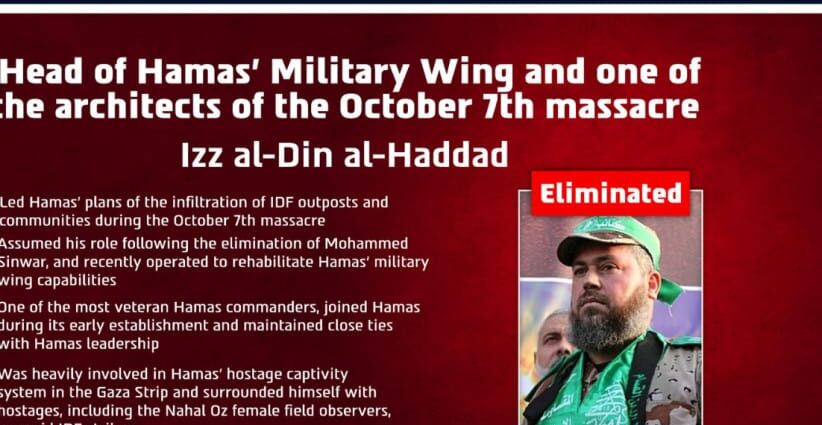
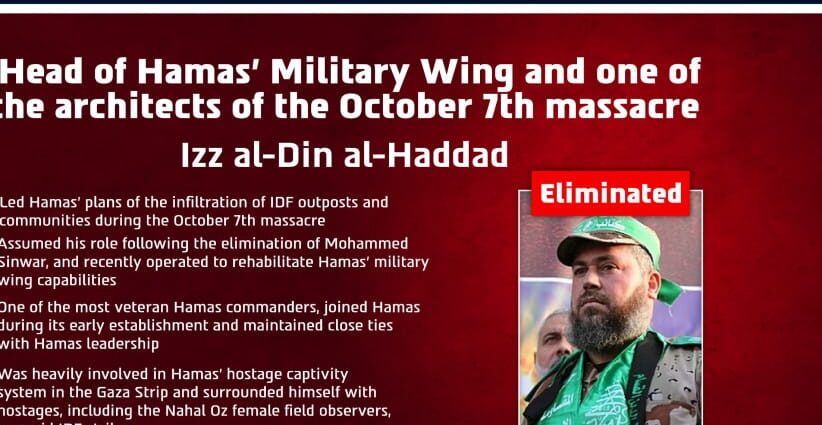
In the Middle East, defining moments are not always measured by the size of an explosion or the number of casualties. Sometimes, they are measured by the reaction that follows. After Benjamin Netanyahu and Defense Minister Israel Katz confirmed the killing of Haddad, one of Hamas’s most prominent military council commanders, what drew attention inside Gaza was not only the assassination itself, but the silence that followed it.

Silence in Gaza speaks louder than slogans

In previous years, funerals of senior Hamas commanders often turned into massive public displays of loyalty and defiance. Streets would fill with crowds, chants, and military symbolism. This time, however, many Gazans noticed something different. The turnout appeared smaller, public enthusiasm seemed weaker, and social media reactions revealed emotions rarely expressed so openly before: exhaustion, indifference, and in some cases, even schadenfreude.

These reactions did not come only from Hamas’s political opponents or from civilians devastated by years of war and economic collapse. Some also appeared to come from individuals previously associated with Hamas’s own social environment. Many revived old conversations about internal rivalries, repression, and the atmosphere of fear that has shaped life in Gaza for years.

In a politically closed and deeply conservative society like Gaza, shifts in public opinion are not always expressed through demonstrations or polls. Sometimes they are reflected in whispers, in silence, or in what people choose not to do. For many Gazans, the relatively weak public response to Haddad’s funeral carried a deeper political and social message.

The growing collapse of factional legitimacy

Questions are now growing inside Gaza about whether Hamas still possesses the same solid popular base that once gave the movement its legitimacy after taking control of the Strip in 2007. After years of war, blockade, displacement, and economic collapse, many Gazans no longer view political factions through the same ideological lens. Priorities have changed. People increasingly want electricity, safety, freedom of movement, jobs, and education more than revolutionary slogans.

At the same time, Hamas recently allowed Fatah to hold its eighth conference inside Gaza under the protection of Hamas-controlled police forces, while statements attributed to Yasser Abbas, son of Palestinian Authority President Mahmoud Abbas, accused Hamas of carrying out a “military coup” against the Palestinian Authority. For many Gazans, this contradiction raised difficult questions. How can Fatah continue to describe Hamas as its political and military rival while simultaneously coordinating with it on the ground in Gaza?

For residents who lived through the violent 2007 Hamas-Fatah split, such scenes reinforce the growing belief that Palestinian division has evolved into a closed political system in which both sides reproduce their own power structures while ordinary civilians remain excluded from meaningful political representation.

On social media, many Gazans criticized Fatah’s eighth conference as yet another recycling of aging leadership figures incapable of offering a realistic vision for Gaza’s future or involving younger generations in political decision-making. Yet frustration is no longer directed at Fatah alone. Hamas itself is facing what may be the deepest crisis of public trust since it seized control of Gaza nearly two decades ago.

Old internal Hamas rivalries resurface

Following Haddad’s death, discussions resurfaced around the case of Mohammed Shtaywi, a senior commander in Hamas’s military wing who was killed in 2016 under highly controversial circumstances. Hamas claimed at the time that he had been executed over security and moral accusations, but his family rejected the official narrative and publicly accused influential figures within Hamas, including Yahya Sinwar and other military leaders, of orchestrating his killing as part of an internal power struggle.

After Haddad’s assassination, activists from Gaza revisited Shtaywi’s story as a symbol of long-standing internal divisions within Hamas. Some online reactions from individuals perceived as close to Hamas expressed indirect satisfaction over Haddad’s death, viewing him as part of a harsh internal era marked by repression, internal purges, and hidden rivalries.

The anger was not limited to Hamas’s political enemies or civilians affected by war. It also appeared among families and individuals who believe that years of internal conflict within Hamas itself left deep wounds inside Gazan society. For some, Haddad’s death revived memories of former Hamas members and insiders who disappeared, were imprisoned, or were eliminated during years of factional tension and internal disputes.

Such transformations are not unique in the history of armed movements or authoritarian systems. In Syria, for example, during the rule of Bashar al-Assad, moments of quiet public relief occasionally emerged after the fall or death of figures once considered untouchable pillars of the regime. Similar patterns have appeared in other ideological or militant systems throughout the Middle East, where internal fractures often surface first within the ruling movement’s own support base before becoming visible politically.

Comparable dynamics could also be seen historically among factions linked to the Iranian Revolution after 1979, as well as among armed political groups in Lebanon and Iraq, where prolonged control, internal rivalries, and authoritarian structures gradually eroded trust even among traditional loyalists.

Gazans searching for life beyond ideology

Today in Gaza, that erosion has become increasingly visible. Many residents no longer feel genuinely represented by any political faction. Even those who still retain some organizational loyalty have become more willing to criticize their own leaders openly or indirectly, especially after the most recent war and the unprecedented scale of destruction, displacement, and civilian suffering.

On a personal level, I still remember meeting Haddad in the streets of Jabalia after the “We Want to Live” protests. He told me then: “You want to overthrow a movement blessed by God?” I replied: “If the results of your rule were truly a blessing, people would already be thanking God for them.” The exchange ended calmly, with a tense smile rather than confrontation, but it remained for me a reflection of the widening gap between the rhetoric of power and the daily suffering of ordinary Gazans.

In Gaza today, people no longer fear only war or Israel. Increasingly, they fear the continuation of the same political reality without change. For years, many Gazans believed Israel preferred Hamas to remain in power as part of a strategy of managing the conflict. The assassination of senior Hamas military figures has complicated that perception. Yet for ordinary people, the central question is no longer who kills whom, but who can rebuild a normal life amid endless destruction.

Gazans today are not searching for another ideological victory. They are searching for an end to permanent collapse. They want civilian leadership capable of rebuilding society rather than merely managing conflict. They want schools without fear, jobs without dependency, and families able to live without constant displacement.

For that reason, the funeral of Haddad may ultimately represent more than the death of a military commander. It may reflect a deeper social and political turning point inside Gaza itself, one suggesting that fear is slowly weakening, that traditional factional loyalty is eroding, and that many Gazans, despite everything, are beginning to search for a different future, even if its shape remains uncertain.

This post was originally published on here

Two teenage gunman opened fire on Monday at the Islamic Center of San Diego in California, killing three men outside the mosque, one of them a security guard, before the two suspects were found dead, apparently from self-inflicted gunshot wounds, police said.

All of the children who were attending a day school that is part of the mosque complex – the largest in San Diego county – were accounted for and safe after the shooting, which erupted shortly before 12 noon PDT (1900 GMT), according to San Diego Police Chief Scott Wahl.

Wahl said the FBI was called in to assist in the investigation of the incident, which the police chief said authorities were treating as a hate crime.

Victims and shooters found by police

Scores of law enforcement officers called to the Islamic Center encountered the bodies of three men shot dead outside the building, including a security guard who Wahl credited with likely having helped prevent further bloodshed.

A short time later, police discovered the bodies of two teenage males, aged 17 and 19, in a vehicle in the middle of a street, dead from apparently self-inflicted gunshot wounds, the chief said at an afternoon news conference.

He said investigators were still piecing together details of what precipitated the shooting and how the violence transpired.

Shots were also fired at a landscaper a couple of blocks away in what apparently was a separate shooting incident, though police did not say whether a connection had been ruled out. The landscaper was not injured, Wahl said.

This post was originally published on here

When customers of Iran’s largest crypto exchange needed to move billions of dollars, networks created by two of the industry’s biggest players served as conduits.

And from the early stages of President Donald Trump’s flagship digital currency venture, the same two players lent credibility to the startup.

According to Reuters-analyzed data, Iran’s Nobitex exchange has processed at least $2.3 billion since 2023 on Tron and BNB Chain, blockchains established by crypto billionaires Justin Sun and Changpeng Zhao. Users of Tron and BNB Chain pay fees to use the blockchains, which serve as secure, tamper-resistant record keepers.

Iranian money has kept moving through those two digital ledgers during the US and Israeli war against the Islamic Republic.

Sun and Binance, the crypto exchange owned by Zhao, are both prominent backers of World Liberty Financial, the crypto firm co-founded by Trump and his family.

There’s no suggestion that the Trump family knew of Nobitex’s use of Tron and BNB Chain.

Still, the Iran transactions highlight the potentially conflicted position in which the Trumps’ sprawling business interests have placed the US presidency. The family-owned Trump Organization real-estate empire, for example, continues to pursue foreign deals.

The use of the blockchains by institutions in a country the United States is at war with is a “dramatic irony,” said John Reed Stark, a former chief of the Securities and Exchange Commission’s Office of Internet Enforcement. “The entities doing crypto financing through these platforms are the very ones that the president is trying to defeat in the war.”

The administration denies that Trump’s businesses pose any conflict of interest. “Reuters’ bizarre attempts to link President Trump to Iran’s banking system are totally laughable,” said Anna Kelly, a White House spokeswoman. She referred Reuters to World Liberty for further questions.

A spokeswoman for World Liberty said the company has no relationship with Nobitex and follows US law. “World Liberty does not own, operate, or control Tron in any way, and has no authority over transactions conducted on it,” she said.

Nobitex, which is used extensively by sanctioned Iranian institutions and ordinary citizens, has processed more than $2 billion on Tron since January 1, 2023, according to a Reuters breakdown of public blockchain data from crypto analytics firm Arkham.

Since 2023, Nobitex has also processed at least $317 million on BNB Chain, a blockchain formerly known as Binance Smart Chain that was developed by Binance, the world’s biggest crypto exchange.

Reuters is reporting the data from Arkham, which did not respond to a request for comment, for the first time.

Blockchain links

Since the Iran war started in February, crypto worth at least $22.6 million has moved through Nobitex on BNB Chain, and at least $550,000 has moved via Tron.

Reuters reported on May 1 that Nobitex is controlled by two brothers from a powerful Iranian family that has close ties to the new supreme leader. Under the brothers’ leadership, the exchange has grown from a startup into a central node of a parallel Iranian financial system used to evade Western sanctions. Reuters found that its users have included Iran’s central bank and the Islamic Revolutionary Guard Corps, known as the IRGC.

About $7.8 billion in crypto flowed between Nobitex and the Binance exchange between 2018 and 2022, Reuters reported in 2022. About three-quarters of the Iranian funds that passed through Binance were in Tron’s cryptocurrency. Nobitex encouraged clients to use Tron’s crypto to trade anonymously without “endangering assets due to sanctions,” Reuters reported.

Four crypto analysts, including two specialists in Iran’s use of digital assets, reviewed Reuters’ calculation that Nobitex has handled at least $2.3 billion in transactions via BNB Chain and Tron. All said it was sound.

 A representation of the cryptocurrency is seen in front of Binance logo in this illustration taken, March 4, 2022.  (credit: REUTERS/DADO RUVIC/ILLUSTRATION)

One of the Iran specialists, independent researcher and investigator Rich Sanders, said the true volume was likely significantly higher because flows are visible only for wallet addresses known to be owned by Nobitex. The Iranian company has publicly said it switches addresses to make tracing and intercepting transfers harder.

Presented with a detailed summary of this article, spokespeople for both Binance and BNB Chain told Reuters that Binance neither operates nor controls BNB Chain.

“BNB Chain is a public, permissionless blockchain maintained by an independent global community of validators,” BNB Chain spokeswoman Ana Nicoara said in a statement to Reuters. “It is not an exchange, not a company, and not Binance.”

The Binance spokesperson said the firm was “an initial contributor and incubator” of BNB Chain and provided early operational support. The operations and intellectual property of the BNB Chain website, which is the primary interface for users and developers of the blockchain, were transferred to a company called BNB Chain Technology Holding Limited in 2023, the spokesperson added.

Corporate records from Abu Dhabi, however, document ongoing ties between Binance and BNB Chain Technology. The filings, reviewed by Reuters, show that Zhao, the Binance founder and majority shareholder, is BNB Chain Technology’s only listed shareholder.

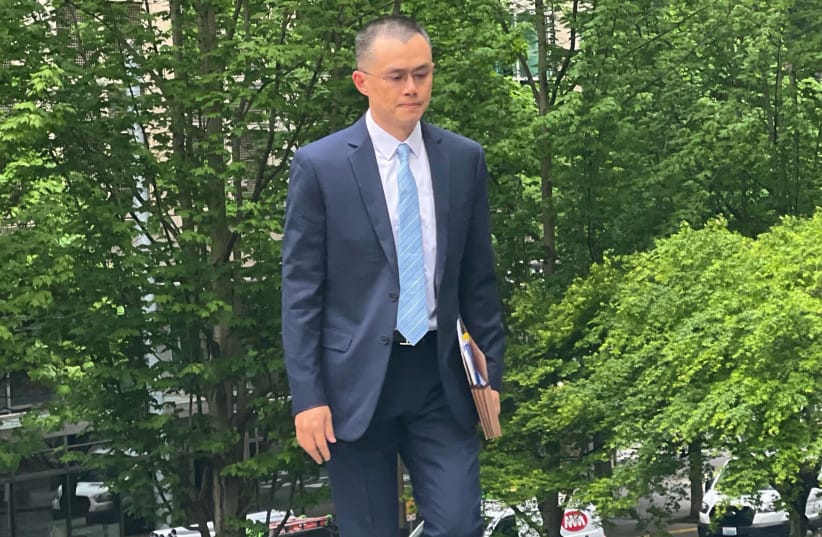
 Binance founder Changpeng Zhao, who pleaded guilty to failing to implement a program to prevent money laundering, arrives for his sentencing in federal district court in Seattle, Washington. (credit: REUTERS/Deborah Bloom)

Relations between Tron’s founder, Sun, and World Liberty have recently turned sour. Sun in April ​sued World Liberty, accusing it of extortion for allegedly pressuring him to invest in its stablecoin. World Liberty countersued in early May, alleging defamation.

Asked about Nobitex’s use of Tron, a spokeswoman for Tron said it is a technology provider and is unable to “monitor and investigate every user and every transaction” or prevent their trading. Nonetheless, Sun helped create an initiative that works with law enforcement, the spokeswoman said, without offering details. The initiative has frozen “hundreds of millions” in funds, including those “tied to sanctioned entities and terror financing,” she said.

In statements to Reuters, Nobitex denied having direct Iranian government connections or assisting the state, and said that any illicit funds moving through the exchange did so without management approval or awareness.

The US Treasury Department, Iran’s government, and its central bank did not respond to requests for comment about the ties between Binance, Tron, and illicit Iranian funds.

A BANK’S CHAINS

Crypto exchanges such as Binance are platforms where people buy, sell, or trade digital assets. Blockchains such as BNB Chain and Tron are public ledgers that record transactions and the digital “wallets” used to make them. Some exchanges, like Binance, have launched blockchains and issued their own digital tokens.

Like other blockchains, Tron and BNB Chain host a variety of crypto tokens, from coins issued by Tron and Binance themselves to stablecoins such as Tether, whose value is pegged to other assets. The Iran-linked transactions make up a small fraction of these networks’ overall volume.

Sanders and the other Iranian crypto specialist, who requested anonymity, said that among those to use Tron and BNB Chain was the Central Bank of Iran. The United States sanctioned the central bank in 2019 for allegedly providing billions of dollars to the IRGC and Lebanon’s Hezbollah.

The central bank bought more than $500 million of Tether via Tron between November 2024 and June 2025, according to a report in January by blockchain analysis company Elliptic and the two Iran specialists. In the first six months of last year, around $347 million of the total was sent to Nobitex using Tron, Elliptic told Reuters.

The central bank also converted the tether to different coins and used other blockchains – including BNB Chain – to cover its tracks, the Iran specialists said. Some of that crypto was converted back to tether and routed to Nobitex and other exchanges, Sanders and the other Iran specialist added.

Since its founding in 2018, Nobitex has processed between tens of millions and hundreds of millions of dollars in transactions linked to sanctioned groups, including Iran’s central bank and the Islamic Revolutionary Guard Corps, according to estimates by crypto analysts looking at sanctioned wallets.

It is unclear whether Tron and BNB Chain were aware their networks were used by the central bank and Nobitex, which has not been specifically sanctioned. Doing business with Iranian entities falls under general Western sanctions. Reuters could not determine why the United States has not sanctioned Nobitex.

Tether, the company that issues the stablecoin by the same name, said it had frozen multiple wallet addresses associated with Nobitex at the request of Israel. Israel’s National Bureau for Counter Terror Financing did not respond to a request for comment.

Tether said crypto exchanges and platforms are responsible for compliance in trading on secondary markets.

  US president-elect Donald Trump seen with a Tron crypto coin (illustrative) (credit: REUTERS/SARAH MEYSSONNIER, SHUTTERSTOCK)

A CRYPTO-FRIENDLY WHITE HOUSE

Trump’s return to the White House in January 2025 – and his embrace of crypto – shaped the fortunes of the president’s family, Sun and Zhao.

Members of the Trump family have launched a string of crypto businesses, including World Liberty, that generated hundreds of millions of dollars in income in 2025, Reuters reported last year.

As World Liberty struggled to attract investors after its launch in October 2024, Sun, the founder of Tron, invested tens of millions of dollars in World Liberty’s WLFI tokens, lending momentum to the fledgling company.

In early 2025, an Abu Dhabi investment firm, MGX, bought a $2 billion stake in Binance. Soon after, World Liberty announced the purchase would be made in its USD1 stablecoin.

Binance’s acceptance of the World Liberty Financial stablecoin gave credibility to the newly launched token and was cited by World Liberty as evidence of “extraordinary, worldwide demand” for USD1. MGX’s acquisition could also yield millions of dollars annually for the Trumps, according to the Reuters report last year.

MGX has said it chose USD1 after evaluating several stablecoins, and that Binance had requested the use of crypto in the transaction.

  A representation of the virtual cryptocurrency Bitcoin is seen in this picture illustration taken October 19, 2021.  (credit: EDGAR SU/ REUTERS)

In October 2025, Trump pardoned Zhao, the founder and former CEO of Binance, wiping away his federal conviction for failing to maintain an effective anti-money-laundering program. Lawyers for Binance and Zhao, who has retained his majority stake in the company, have said there was no connection between the use of USD1 and the pardon.

Since taking office, Trump has launched a suite of crypto-friendly policies, and US regulators have paused enforcement actions against crypto companies and moguls. The Securities and Exchange Commission settled a lawsuit against Sun for alleged fraud in March for $10 million without Sun admitting any wrongdoing.

Sun’s current portfolio of 4 billion WLFI tokens is worth roughly $266 million, according to Reuters calculations based on the latest WLFI price. Sun has also invested in Trump’s meme coin and has used his crypto platforms to boost USD1, World Liberty’s second cryptocurrency.

For its part, Binance has continued to support USD1, enabling the token’s trading with other cryptocurrencies and incentivizing users to hold it. Arkham data shows Binance now holds $3.8 billion of the Trump token.

This post was originally published on here

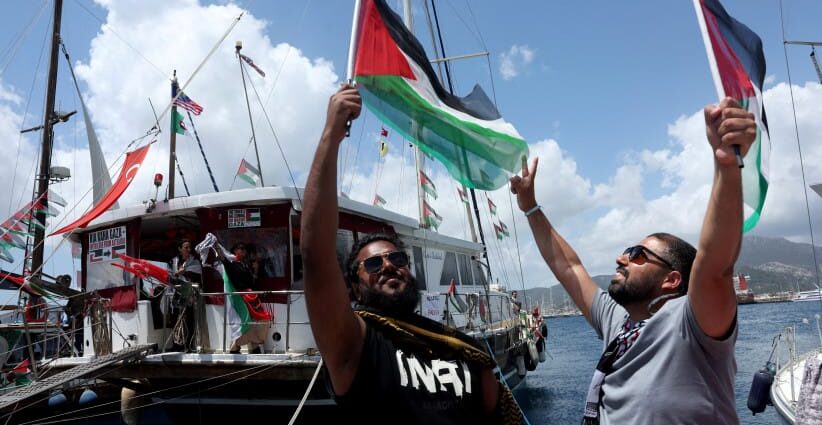
Around twenty Gaza flotilla vessels pushed ahead on their journey to the Gaza Strip, the Global Sumud Flotilla said in a press release on Monday evening, after Israeli naval forces intercepted almost half their ships.

GSF said that the Israeli strategy to force the activist fleet to submit had failed, as small sailboats and motorboats had managed to slip through the maritime perimeter. According to the GSF ship tracker, 27 vessels were still sailing.

“The presence of more than 20 active vessels on the water stands as a historic rebuke to an illegal siege that has relied on absolute military impunity for decades as it has abused, occupied, genocided, and ethnically cleansed the Palestinian people,” said GSF.

Israeli naval forces, including commandos from the elite Shayetet 13 unit, began taking control of boats participating in the flotilla on Monday morning, according to videos and accounts posted to social media by activists aboard the vessels.

Prime Minister Benjamin Netanyahu held a preliminary security consultation regarding the flotilla, which includes Hamas supporters, before the interception, an Israeli official told The Jerusalem Post. 

During the takeover of the flotilla, Netanyahu, along with Defense Minister Israel Katz and IDF Chief-of-Staff Lt.-Gen. Eyal Zamir, spoke to the commander of Flotilla 3 and praised the soldiers.

“I think you are doing an outstanding job, both with the first flotilla and with this one, and effectively neutralizing a malicious plan designed to break the isolation we have imposed on Hamas terrorists in Gaza,” Netanyahu said.

“You are doing this with great success, and I must say also quietly, and certainly with less prominence than our enemies expected – so, heartfelt congratulations. Keep going until the end. The water looks absolutely wonderful. I would love to be out there with you.”

Footage and posts published by flotilla participants showed armed Israeli troops boarding the vessels and detaining activists on board. They were reportedly being transferred to a larger Israeli Navy vessel before being taken to Ashdod.

There was no immediate official Israeli military statement confirming the full scope of the operation or the number of vessels intercepted.

Turkish flotilla includes 53 vessels, over 500 participants

The Turkish flotilla, which includes 53 vessels and some 500 participants, was organized by the IHH, the same group behind the Mavi Marmara flotilla. In addition to the naval flotilla, a 30-vehicle land convoy set out from Libya to Gaza on Saturday as part of the GSF.

The flotilla is an element of the Global Sumud Flotilla (GSF), which departed Turkey for Gaza on Thursday on its second blockade run, the first of which occured in April and ended with 20 of its vessels intercepted by the Israeli Navy.

The interception of the 54 vessels and almost 500 activists occurred west of Cyprus, and about 250 nautical miles from the coast from the flotilla’s destination of Gaza, where the activists sought to run the Israeli naval blockade.

According to GSF social media and ship tracker, about 30 vessels and at least 46 activists were detained by the naval force.

The activist group earlier called the incident an act of “extrajudicial high-seas piracy” in a press statement, coming four days after the flotilla embarked from Turkey on its second attempt since its first interception near Crete on April 29.

Organizers claim the flotilla constitutes a peaceful and humanitarian mission, claims that Israel has repeatedly challenged.

GSF rejected the claims of any of its members being violent as a pretext to carry out “war crimes and crimes against humanity against an unarmed, non-violent civil society mission composed of doctors, journalists, and humanitarians.”

The activists have claimed, in addition to their objective of raising awareness about the ongoing Israeli blockade of the Hamas enclave, that they were bringing humanitarian aid to a starved Gaza Strip.

Coordination of Government Activities in the Territories rejected claims that Gaza was deprived of aid on social media, asserting that in contrast to the 600 aid trucks entering the Strip daily, there was no aid on the vessels.

The interception of the flotilla was connected to the halt of the simultaneous land convoy that had set out from Zalitan on Saturday. The Maghreb Sumud Organization said on Sunday night that it had stopped in Sirte because it understood that Libyan forces would not allow it to pass. The city was the end point for the previous land convoy in June.

The flotilla had first been intercepted on April 29, with two of its leading activists detained for several days and the rest deposited on Greek shores.

The flotilla had originally set out from Barcelona on April 15, after their April 12 launch date was disrupted by stormy weather. The flotilla met with additional vessels in Italy, before sailing with 56 vessels on April 26 to attempt their first blockade run of the year.

Foreign Ministry: Flotilla is a ‘provocation’ serving Hamas

The Foreign Ministry said on X ahead of the interception that the flotilla served no humanitarian purpose, but was instead a provocation led by “two violent Turkish groups,” the Mavi Marmara and Humanitarian Relief Foundation.

“The purpose of this provocation is to serve Hamas, to divert attention from Hamas’s refusal to disarm, and to obstruct progress on President [Donald] Trump’s peace plan,” the MFA said on X. “Israel calls on all participants in this provocation to change course and turn back immediately.”

GSF rejected the claims of any of its members being violent as a pretext to carry out “war crimes and crimes against humanity against an unarmed, non-violent civil society mission composed of doctors, journalists, and humanitarians.”

The activists have claimed, in addition to their objective of raising awareness about the ongoing Israeli blockade of the Hamas enclave, that they were bringing humanitarian aid to a starved Gaza Strip.

Coordination of Government Activities in the Territories rejected claims that Gaza was deprived of aid on social media, asserting that in contrast to the 600 aid trucks entering the Strip daily, there was no aid on the vessels.

The interception of the flotilla was connected to the halt of the simultaneous land convoy that had set out from Zalitan on Saturday. The Maghreb Sumud Organization said on Sunday night that it had stopped in Sirte due to the understanding that Libyan forces would not allow them to pass. The city was the end point for the previous land convoy in June.

“Once again, a provocation for the sake of provocation: another so-called ‘humanitarian aid flotilla’ with no humanitarian aid,” the ministry said.

The ministry said two “violent” Turkish groups, Mavi Marmara and IHH, were involved in the flotilla, adding that IHH had been designated as a terrorist organization. It added that the purpose of the flotilla was “to serve Hamas, to divert attention from Hamas’s refusal to disarm, and to obstruct progress on President Trump’s peace plan.”

The ministry also cited the Board of Peace, which oversees humanitarian activities in Gaza under UN Security Council Resolution 2803, saying the body had made clear that the flotilla was “only about publicity.” Israel said that since October 2025, more than 1.58 million tons of humanitarian aid and thousands of tons of medical supplies had entered Gaza.

“Israel will not allow any breach of the lawful naval blockade on Gaza,” the ministry said, calling on participants “to change course and turn back immediately.”

Miriam Sela-Eitam, Shir Perets, and Reuters contributed to this report.

This post was originally published on here

The controversial bill to place the Western Wall under the authority of the Chief Rabbinate is expected to advance rapidly in the Knesset and is the only way for the holy site to be protected in accordance with Jewish law, leader of the far-right Noam party, MK Avi Maoz, told The Jerusalem Post in a Sunday interview. 

Moaz sponsored the legislation, which is scheduled to advance in the Knesset’s Constitution, Law and Justice Committee on Wednesday after passing its preliminary reading in February.

“We have one Western Wall, and we have one Judaism’

The bill seeks to grant the Chief Rabbinate authority to determine prayer arrangements at the Western Wall. It also proposes the rabbinate as the official representative of Judaism and says that the Religious Affairs Ministry would need to consult it regarding the enactment of regulations.

“We have one Western Wall, and we have one Judaism, and we will not allow the Western Wall to be divided into pieces, a Sephardi Wall, an Ashkenazi Wall, a Reform Wall, a Conservative Wall,” Maoz told the Post.

Progressive Jewish groups have strongly condemned the bill, warning that it would significantly undermine religious pluralism and freedom of worship at the holy site.

Critics also say it would essentially undermine the High Court’s ruling to upgrade the site’s egalitarian prayer plaza.

Regarding such comments and claims that the legislation would be divisive, Maoz said that he has received many responses from Diaspora Jews supporting the Rabbinate’s ruling on prayer arrangements.

“I think that overall I am protecting the sanctity of the Western Wall according to the will of most of the Jewish people, both those in Zion and those in the Diaspora,” he said.

He added that he was aiming to prevent worshipers from coming to the site and not praying ”according to the custom of Israel for generations.”

Rabbinate to be the only authority to rule on matters relating to Kotel prayer

Maoz said that the Chief Rabbinate would be the only authority best positioned to rule on matters relating to prayer at the Wall.

“The Chief Rabbinate is the highest halachic authority in the State of Israel. It is also the state authority; it is also recognized by the State of Israel in law; therefore, I think it is the one that should determine what is considered behavior in a holy place and what is considered desecration of a holy place,” he said.

Maoz said that he “had no doubt” that after the legislation was passed, the Western Wall would be a unifying place.

He said he hoped the legislation would pass in its first reading before the potential upcoming dissolution of the Knesset amid the crisis in Prime Minister Benjamin Netanyahu’s coalition.

If a bill is passed in its first reading, progress can continue from where it left off, due to the Knesset’s continuity motion policy. If the bill does not pass its first reading, then when the new Knesset is formed, the legislation does not hold that status, and progress on it would be reversed.

Maoz also said that if the Knesset did not dissolve early, it would likely be possible to finalize and pass the legislation in its second and third readings by the end of the summer session in July.

Regarding the Knesset dissolution, Maoz said that he was not in favor of dissolving the Knesset and holding earlier elections.

Maoz not in favor of dissolving the Knesset

Regarding the Knesset dissolution, Maoz said that he is not in favor of dissolving the Knesset and heading to earlier elections.

Maoz became the leader of the ultra-conservative Noam party (opposing homosexuality and the LGBTQ community in general) after its establishment in 2019. He ran jointly with the Religious Zionist Party in the 2022 elections and then split off from the technical bloc. Maoz left the coalition in 2025.

As the sole representative of the Noam faction in the Knesset, he said he did not sign the proposals to dissolve the Knesset, neither those of the coalition nor the opposition.

“I think elections should be held on time. The fixed date is October 27; if not that day, it can be [moved slightly earlier to] October 19 or October 20.”

Speaking about his plans for his party ahead of the elections, Maoz said he hopes to “make connections to different populations, who feel they are not represented today.”

He added that his plans for the next government were to become the education minister.

“In education, there needs to be more Judaism, zero progressivism, and I think we need to restart the status of teachers,” Moaz said. “I think we need to restore the respect of students toward their teachers, and I think we need to raise teachers’ salaries.

“The teaching profession needs to be respected today in the State of Israel, and I am going to make a revolution in education, unlike anything that has been done since the establishment of the state,” he said.

Regarding how his party would run in the elections and whether it would merge with others, Maoz said that he was considering options but that there was still time to decide whether or not to join an alliance.

“We will see if we need alliances or not, but that is still in the future, since I support elections being on time, so we still have at least three-and-a-half months until that date.”

When asked with which parties he would be open to join a coalition, he answered that he belonged to the right-wing and “faith-based” bloc. He did not directly address the question about his plans.

Maoz also noted that, in his opinion, the current government had “tried to do many things that are not so Zionist.” He said, “I think we need to continue the reform, to bring the State of Israel to be a Jewish state.”

Regarding his stance on the West Bank, Moaz said that the bill he had proposed in October, to apply Israeli sovereignty over the area, which had advanced in its preliminary reading, was now “frozen by the government.”

“I think the government is wasting a historic opportunity,” he said, about the bill being stalled.

Speaking on the spike in Jewish settler violence in the West Bank, Maoz said that he was against violence everywhere and that it “must be dealt with.”

This post was originally published on here

A Jewish man was assaulted by several men in London before dawn on Monday, the Metropolitan Police told The Jerusalem Post.

Police said that they arrived at the scene of the incident in Golders Green within six minutes of being summoned and spoke to the victim. The man, in his 20s, had to go to a hospital for injuries to his face and back.

Police said that no arrests had been made by Monday night, but that the assault was being treated as an antisemitic hate crime.

The Jewish Chronicle identified the victim as 22 years old Israeli Shalev Ben Yakar.

The group of men chased him, shouting in Arabic

Ben Yakar told the Chronicle that he had stepped out of his apartment late at night in order to talk to friends from South America without disturbing his roommates, but when a group of five or six men heard him speaking in Hebrew, they attacked him.

The group of men reportedly chased him, shouting in Arabic, before catching him. The Chronicle reported they dragged him across the road, tore his clothes, and beat him until he almost lost consciousness.

Pictures of the victim show wounds across his forehead, nose, and cheeks, with bruises across his back and face. 

This comes just weeks after two Jewish men were stabbed in Golders Green.

“This is yet another appalling attack in the heart of the Jewish community in Golders Green,” said the Jewish Leadership Council. “Our thoughts are with the victim and his family.”

JLC called for a robust response from law enforcement.

The Community Security Trust told The Jerusalem Post that it is providing support to the victim and his family.

“This was a violent and appalling attack in the heart of Golders Green,” CST said.

The Jerusalem Post reached out to the victim for comment.

This post was originally published on here

The Israeli government moved to establish an inter-ministry team to look into the seizure of properties in the Jewish Quarter of Jerusalem‘s Old City belonging to Arab residents of the city, according to a Monday N12 News report.

Dozens of homes belonging to Arab families are in danger of being evacuated, per N12.

The report claimed that these houses belong to Arabs who “refused to evacuate after the [reunification] of Jerusalem in 1967” after local authorities issued expropriation notices, which themselves cited the British Mandate-era 1943 Land Ordinance.

The ordinance, originally established under British rule and later enacted into law by the Knesset after Israel’s founding, authorizes the finance minister to expropriate real estate for public purposes, establishing legal grounds for such seizures today.

Which areas are in danger of being expropriated?

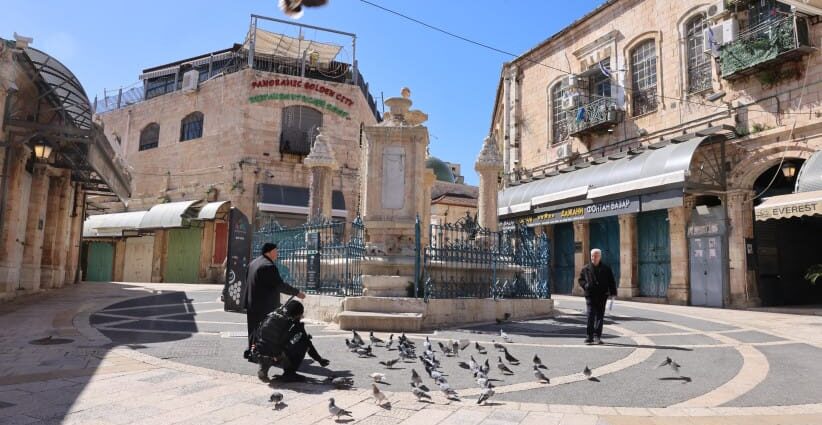
The government’s efforts will focus on Chain Gate Street, a major commercial and tourist center which lies on the border between the Jewish and Muslim quarters and is very close to the Temple Mount, N12 reported.

Ir Amim activist group member Aviv Tatarsky told N12 that Chain Gate Street has several important buildings, including Jerusalem Waqf institutions and Jerusalem’s first library, which opened in the 19th century.

Ir Amim is a non-profit organization that describes itself as seeking “to render Jerusalem a more equitable and sustainable city for the Israelis and Palestinians who share it and to help secure a negotiated resolution on the city through sustained monitoring, reporting, public and legal advocacy, public education and outreach to re-orient the public discourse on Jerusalem,” according to their website.

“The government thinks it can simply expropriate [the street],” Tatarsky said. “The state is working to Judaize the Old City – an act that could draw global criticism.”

“Officially, on paper, this is territory that belongs to the state,” a source in the Jerusalem Affairs and Jewish Tradition Ministry told N12. “The goal of the team that will be established is to study the issue and understand the gap between the decision that was made nearly 60 years ago and the reality on the ground.”

Hamas responds to the possible expropriation, calls for intensifying resistance 

The Hamas terror organization issued a statement on Telegram on Monday denouncing the report.

“The occupation government’s decision to expropriate dozens of residential buildings in the vicinity of al-Aqsa Mosque in the Old City of Jerusalem represents a dangerous step that directly targets the Palestinian existence,” the terror group wrote.

“We call for strengthening the support for the people of Jerusalem, intensifying all means of resistance and confrontation against the colonial-settlement projects, and reinforcing presence in the Old City and in the vicinity of the blessed al-Aqsa Mosque,” the statement added. 

This post was originally published on here

At least 11 people were injured when a bus crashed into a tree and an electric pole on Dizengoff Street in Tel Aviv on Monday evening.

Among those injured were an 11-year-old girl in critical condition, a 49-year-old woman and a 76-year-old man in serious condition, a 39-year-old man in moderate condition, and seven people in light condition.

Medics and paramedics treated and evacuated the wounded to Wolfson Medical Center and Tel Aviv Sourasky Medical Center, Magen David Adom said.

The wounded included pedestrians and passengers on the bus, Magen David Adom said. 

Cause of accident not immediately known

MDA paramedic Binyamin Parker described the crash as “very serious” and said the 11-year-old girl was unconscious, without a pulse, and not breathing when emergency teams reached her.

At least ten people were injured after a bus crashed into a tree and an electric pole on Dizengoff Street in Tel Aviv-Yafo, May 18, 2026. (CREDIT: FIRE AND RESCUE AUTHORITY)

“She had severe injuries to her body after being hit by a bus,” Parker said. “We provided life-saving medical treatment and evacuated her to the hospital in critical condition while fighting for her life.”

MDA said the child suffered multisystem trauma and was evacuated while undergoing CPR. Parker said additional MDA teams treated 10 other wounded people at the scene, including two people in serious condition and one in moderate condition.

United Hatzalah paramedic Yaron Schiff, who was at the scene on Dizengoff Street, said the bus had struck a tree “in a significant way” and that a trapped person was still being extracted from the vehicle.

“I have 41 years of experience, and I do not understand how the accident happened,” Schiff said. “The bus went up onto the sidewalk, stopped at the tree, and the tree collapsed.”

The cause of the crash was not immediately clear, but witnesses and passengers told officers at the scene that the driver lost control of the vehicle and ran off the road.

Residents in the area reported a power outage following the outage.

This is a developing story.

This post was originally published on here

Nearly 80% of Gazans are interested in emigrating from the Gaza Strip, according to a recent survey the Coordinator of Government Activities in the Territories (COGAT) shared with senior Israeli officials.

The findings, seen by The Jerusalem Post, underscore growing frustration among Gaza’s civilian population as Hamas continues to refuse to disarm – a key condition in the plan presented by US President Donald Trump and a central element in efforts toward postwar reconstruction.

As part of the survey conducted by COGAT, respondents were asked which issues they would like “additional information about for the Palestinian public.”

Nearly 80% said they were interested in receiving information about mechanisms for relocating to a third country through the Rafah and Kerem Shalom crossings. Another 17.5% sought additional information about food supplies and humanitarian aid, while only around 2.5% expressed interest in medical humanitarian issues.

Israeli officials viewed the findings as evidence that a substantial portion of Gaza’s population is focused primarily on opportunities to leave the territory, as prospects for reconstruction and long-term change remain remote.

Since the war began following the October 7 massacre, more than 44,000 Gazans – including medical patients and individuals holding visas for third countries – have exited the Strip through the Rafah and Kerem Shalom crossings. Approximately 2,500 departed through Rafah after the crossing reopened in February under the ceasefire arrangement.

Some Israeli officials believe the true number of Gazans interested in leaving may be significantly higher.

“It is possible that some respondents did not fully understand the question or may have been reluctant to express their views openly,” an Israeli security official said during the discussion.

COGAT oversees delivery of 30,000 aid trucks into Gaza

Additionally, COGAT facilitated the entry of 30,000 humanitarian aid trucks into Gaza between May 10 and May 14, according to a Monday release.

This operation included a large shipment of engine oil to ensure the continued operation of UN humanitarian facilities.

The group also reported that over 440 tons of medical equipment were delivered to Gaza during the week, including 10 trucks of medicine and medical supplies provided by the World Health Organization (WHO).

COGAT also supported approximately 130 Gazans who were evacuated to Jordan via the Kerem Shalom Crossing.

Jerusalem Post Staff contributed to this report.

This post was originally published on here

Dozens of US military refueling aircraft are expected to remain stationed in Israel’s Ben-Gurion Airport at least until the end of 2027, according to a report by N12 on Monday. 

The aircraft and US military personnel required to operate them will be stationed in and around Ben-Gurion Airport and are already creating significant logistical challenges for the airport, according to N12.

Last week, N12 reported that Civil Aviation Authority head Shmuel Zakay sent a letter to Transportation Minister Miri Regev, claiming that “Ben-Gurion is operating like a military base, not as a civilian airport.”

What is more, the presence of the US military aircraft could affect flight prices as it may deter foreign airlines from re-establishing regular flights to and from Tel Aviv.

Reports of the aircraft being stationed at the airport first emerged amid the start of operations Roaring Lion and Epic Fury as the Israeli and American air forces conducted airstrikes against the Iranian regime.

Ben-Gurion Airport employee fired for photographing US military planes 

An employee at Ben-Gurion Airport was fired after photographing US military planes operating from the airport and posting the images on a WhatsApp group, Ynet reported in late April.

The incident almost caused a serious disagreement between the US military and the IDF, the report said.

However, the Israel Airports Authority (IAA) responded to Ynet’s report, saying that “The information is inaccurate. This was a temporary employee who worked for two months and was fired due to a disciplinary violation, in accordance with protocols.”

Additionally, an IDF soldier who was in the area also photographed the US military planes, and is suspected of posting images online, Ynet added.

James Genn contributed to this report.

This post was originally published on here

Watch this episode with no interruptions.

Israeli naval forces, led by the elite Shayetet 13 commando unit, moved on the Global Sumud Flotilla (GSF) on Monday, boarding vessels and detaining activists in an operation that was still unfolding as footage emerged from the scene.

The video, captured on the activists’ own cameras and shared in their posts, showed Israeli forces stepping onto the decks as detainees were transferred to a larger Israeli Navy vessel and routed toward the port of Ashdod on Israel’s coast.

The interception followed a public demand earlier that day from Israel’s Foreign Ministry calling on the convoy to change course and turn back immediately. The flotilla did not turn back. The Navy went in.

What makes this story bigger than the boarding itself is the case Israel began building before a single commando hit the water.

The Foreign Ministry framed the convoy not as a humanitarian mission but as a “provocation for the sake of provocation,” naming two Turkish groups behind it, Mavi Marmara and IHH, and noting that IHH has been designated as a terrorist organization. The ministry’s accusations went further still, tying the flotilla directly to two of the most contested issues currently on the table: Hamas’s refusal to disarm, and President Trump’s peace plan.

According to Israel, the boats were sent to divert attention from the disarmament question and to obstruct progress on that specific diplomatic effort.

This post was originally published on here

Watch this episode with no interruptions.

Israeli naval forces, led by the elite Shayetet 13 commando unit, moved on the Global Sumud Flotilla (GSF) on Monday, boarding vessels and detaining activists in an operation that was still unfolding as footage emerged from the scene.

The video, captured on the activists’ own cameras and shared in their posts, showed Israeli forces stepping onto the decks as detainees were transferred to a larger Israeli Navy vessel and routed toward the port of Ashdod on Israel’s coast.

The interception followed a public demand earlier that day from Israel’s Foreign Ministry calling on the convoy to change course and turn back immediately. The flotilla did not turn back. The Navy went in.

What makes this story bigger than the boarding itself is the case Israel began building before a single commando hit the water.

The Foreign Ministry framed the convoy not as a humanitarian mission but as a “provocation for the sake of provocation,” naming two Turkish groups behind it, Mavi Marmara and IHH, and noting that IHH has been designated as a terrorist organization. The ministry’s accusations went further still, tying the flotilla directly to two of the most contested issues currently on the table: Hamas’s refusal to disarm, and President Trump’s peace plan.

According to Israel, the boats were sent to divert attention from the disarmament question and to obstruct progress on that specific diplomatic effort.

This post was originally published on here

A Gaza land convoy sought to pass through Sirte on Monday, according to the Maghreb Sumud Organization, after it had stopped in the city’s outskirts on Sunday evening, after they expressed fear that Libyan forces were amassing at Sirte to intercept them.

The Global Sumud Flotilla said on Sunday that the convoy had been paused while security risks were evaluated, just over a day after it had set out from Zalitan as part of an activist journey for Gaza, complementary to the concurrent Gaza flotilla

“We need the world to act and demand safe passage,” GSF said on Instagram on Sunday.

Video published by the MSO on Monday showed the participants had erected tents next to buses and vehicles in the outskirts of the city where the June land convoy had been stopped under similar circumstances. Organizers had said at the time that Egyptian authorities had communicated to Libyan factions that the convoy would not be permitted entry into its territory.

The convoy of 200 participants and thirty vehicles, most of them mobile homes, had set out from Zalitan for Rafah on Saturday, reaching Sirte’s outskirts on Sunday morning.

GSF Steering Committee member Ahmed Ghaniya said at a press conference that their mission was to bring humanitarian aid to Gaza, which was bereft of food and materials.

“We are here due to the urgent need of our brothers and sisters in Gaza for relief and aid, and to shine a spotlight on them,” said Ghaniya. “We are on clear paths, and whatever routes are designated for us, we will follow them. Our goal is clear: to reach Gaza and break the siege.”

The new convoy is significantly smaller than the Maghreb Resilience Convoy

The newest land convoy is a tenth of the size of the 300-strong Maghreb Resilience Convoy that departed from Tunis in June.

Activists concurrently also attempted a march to Rafah from Egypt, but around 200 participants were arrested and deported upon their arrival at the Cairo airport or at their hotels. Some activists attempted to protest the Egyptian denial of their march, with clashes occurring with security forces outside the Ismailia checkpoint.

The land convoy’s pause came at the same time that its maritime counterpart was intercepted at sea. On Monday, GSF announced that several vessels and activists had been detained by Israeli naval forces.

In response to the flotilla, Coordination of Government Activities in the Territories said on X that claims about Gaza being deprived of humanitarian aid were false.

“Approximately 600 aid trucks are facilitated into Gaza every single day,” said COGAT. “If you want to actually help the people of Gaza, choose coordination over theater.”

Yonah Jeremy Bob and Mathilda Heller contributed to this report.

This post was originally published on here

A Gaza land convoy sought to pass through Sirte on Monday, according to the Maghreb Sumud Organization, after it had stopped in the city’s outskirts on Sunday evening, after they expressed fear that Libyan forces were amassing at Sirte to intercept them.

The Global Sumud Flotilla said on Sunday that the convoy had been paused while security risks were evaluated, just over a day after it had set out from Zalitan as part of an activist journey for Gaza, complementary to the concurrent Gaza flotilla

“We need the world to act and demand safe passage,” GSF said on Instagram on Sunday.

Video published by the MSO on Monday showed the participants had erected tents next to buses and vehicles in the outskirts of the city where the June land convoy had been stopped under similar circumstances. Organizers had said at the time that Egyptian authorities had communicated to Libyan factions that the convoy would not be permitted entry into its territory.

The convoy of 200 participants and thirty vehicles, most of them mobile homes, had set out from Zalitan for Rafah on Saturday, reaching Sirte’s outskirts on Sunday morning.

GSF Steering Committee member Ahmed Ghaniya said at a press conference that their mission was to bring humanitarian aid to Gaza, which was bereft of food and materials.

“We are here due to the urgent need of our brothers and sisters in Gaza for relief and aid, and to shine a spotlight on them,” said Ghaniya. “We are on clear paths, and whatever routes are designated for us, we will follow them. Our goal is clear: to reach Gaza and break the siege.”

The new convoy is significantly smaller than the Maghreb Resilience Convoy

The newest land convoy is a tenth of the size of the 300-strong Maghreb Resilience Convoy that departed from Tunis in June.

Activists concurrently also attempted a march to Rafah from Egypt, but around 200 participants were arrested and deported upon their arrival at the Cairo airport or at their hotels. Some activists attempted to protest the Egyptian denial of their march, with clashes occurring with security forces outside the Ismailia checkpoint.

The land convoy’s pause came at the same time that its maritime counterpart was intercepted at sea. On Monday, GSF announced that several vessels and activists had been detained by Israeli naval forces.

In response to the flotilla, Coordination of Government Activities in the Territories said on X that claims about Gaza being deprived of humanitarian aid were false.

“Approximately 600 aid trucks are facilitated into Gaza every single day,” said COGAT. “If you want to actually help the people of Gaza, choose coordination over theater.”

Yonah Jeremy Bob and Mathilda Heller contributed to this report.

This post was originally published on here

One day before Israeli naval forces began seizing boats participating in the latest Gaza-bound Global Sumud Flotilla on Monday morning, Israeli Jewish and Arab activists launched their own smaller, counter flotilla in a message that Israelis could respond in kind and would safeguard their territorial sovereignty.

“We did our own flotilla,” said Arab-Israeli activist Yoseph Haddad, the organizer of the flotilla. Speaking on board one of the three ships in the Israeli “Hasbara” flotilla as it sailed in the waters outside of Herzliya, he asserted that the Gaza-bound flotilla would not reach its intended destination.

“We send a clear message to all the ‘terror flotilla’ activists,” he continued, addressing the participants in the GSF. “You are not welcome here. You will not be able to enter Gaza.”

He went on to assert that, despite the GSF’s claims, it was not bringing in any aid and that the activists on board were Hamas supporters.

Haddad went on to call on everyone around the world who wanted to support the Palestinians in Gaza to “free Gaza from the terrorist organization Hamas.”

The participants in the Israeli flotilla included a group of prominent pro-Israel figures, including Golda Daphna, Hallel Abramowitz-Silverman, Cindy Seni, Marwan Jaber, Ashley Waxman Bakshi, and 12-year-old activist Ben Carasso.

Noting that it had no intention to violate the sovereignty of other countries, but rather to make a symbolic statement, the “Hasbara” flotilla remained in Israeli waters, not far from where it set sail from the Herzliya Marina. It remained out for several hours before returning to port.

On board, the activists waved signs mocking the GSF, which, in previous runs, had been unsuccessful in reaching Gaza and carried little aid.

One sign read, “Is Gaza free yet?” Another stated, “I was promised a sandwich,” a reference to the online trope that Israelis, and in some usages, Jews as a whole, assert they were promised something 3,000 years ago whenever they want it.

It also referred to the sandwiches Israeli forces distributed to the participants in the last Gaza flotilla when it was intercepted.

Haddad: We will show the world the difference between us and them

Haddad expounded on the purpose of the flotilla when speaking to The Jerusalem Post, which was on board the vessel with him.

“If we encounter the ‘Marmara II’ flotilla, the ‘terror flotilla,’ our mission is actually to show the world the difference between us and them,” he said. “They’re going to shout ‘terrorists, baby killers,’ all this nonsense, and we’re going to shout ‘peace.’ We’re going to shout about the partnership between Jews and Arabs in Israel, and we’re going to show that partnership from here.”

Israeli activists on board one of the vessels of the Israeli 'Hasbara' flotilla. May 17, 2026. (credit: SAM HALPERN)

Haddad went on to double down on his statement that the GSF was a “terror flotilla,” adding, “They are part of a terror flotilla, and they need to know that, and the world needs to know that.”

The GSF is linked to the Turkish IHH Humanitarian Relief Foundation, a proscribed terror group in Israel with ties to the Muslim Brotherhood, Hamas, and al-Qaeda.

Haddad also had a message for Turkish President Recep Tayyip Erdogan, who, in recent months, has been escalating his rhetoric against Israel. In 2024, Erdogan went as far as to suggest that Turkey may attempt to invade Israel.

Turkish President Erdogan a ‘terror supporter,’ Haddad says

“He’s a terror supporter,” Haddad told the Post. “This is not me saying this. He himself admitted this time after time in his speeches, supporting Hamas, even giving them shelter in Turkey. And, of course, talking about invading Israel and coming to ‘free Jerusalem.’”

He went on to say that Israelis were a different kind of people, noting that during the 2023 earthquake that hit Turkey, a disaster that resulted in some 60,000 deaths, Israel was one of the first countries to assist in rescue and aid efforts.

“This is the difference between us, human beings who sanctify life, and your government – not your people – your government, that sanctifies death.”

This post was originally published on here

One day before Israeli naval forces began seizing boats participating in the latest Gaza-bound Global Sumud Flotilla on Monday morning, Israeli Jewish and Arab activists launched their own smaller, counter flotilla in a message that Israelis could respond in kind and would safeguard their territorial sovereignty.

“We did our own flotilla,” said Arab-Israeli activist Yoseph Haddad, the organizer of the flotilla. Speaking on board one of the three ships in the Israeli “Hasbara” flotilla as it sailed in the waters outside of Herzliya, he asserted that the Gaza-bound flotilla would not reach its intended destination.

“We send a clear message to all the ‘terror flotilla’ activists,” he continued, addressing the participants in the GSF. “You are not welcome here. You will not be able to enter Gaza.”

He went on to assert that, despite the GSF’s claims, it was not bringing in any aid and that the activists on board were Hamas supporters.

Haddad went on to call on everyone around the world who wanted to support the Palestinians in Gaza to “free Gaza from the terrorist organization Hamas.”

The participants in the Israeli flotilla included a group of prominent pro-Israel figures, including Golda Daphna, Hallel Abramowitz-Silverman, Cindy Seni, Marwan Jaber, Ashley Waxman Bakshi, and 12-year-old activist Ben Carasso.

Noting that it had no intention to violate the sovereignty of other countries, but rather to make a symbolic statement, the “Hasbara” flotilla remained in Israeli waters, not far from where it set sail from the Herzliya Marina. It remained out for several hours before returning to port.

On board, the activists waved signs mocking the GSF, which, in previous runs, had been unsuccessful in reaching Gaza and carried little aid.

One sign read, “Is Gaza free yet?” Another stated, “I was promised a sandwich,” a reference to the online trope that Israelis, and in some usages, Jews as a whole, assert they were promised something 3,000 years ago whenever they want it.

It also referred to the sandwiches Israeli forces distributed to the participants in the last Gaza flotilla when it was intercepted.

Haddad: We will show the world the difference between us and them

Haddad expounded on the purpose of the flotilla when speaking to The Jerusalem Post, which was on board the vessel with him.

“If we encounter the ‘Marmara II’ flotilla, the ‘terror flotilla,’ our mission is actually to show the world the difference between us and them,” he said. “They’re going to shout ‘terrorists, baby killers,’ all this nonsense, and we’re going to shout ‘peace.’ We’re going to shout about the partnership between Jews and Arabs in Israel, and we’re going to show that partnership from here.”

Israeli activists on board one of the vessels of the Israeli 'Hasbara' flotilla. May 17, 2026. (credit: SAM HALPERN)

Haddad went on to double down on his statement that the GSF was a “terror flotilla,” adding, “They are part of a terror flotilla, and they need to know that, and the world needs to know that.”

The GSF is linked to the Turkish IHH Humanitarian Relief Foundation, a proscribed terror group in Israel with ties to the Muslim Brotherhood, Hamas, and al-Qaeda.

Haddad also had a message for Turkish President Recep Tayyip Erdogan, who, in recent months, has been escalating his rhetoric against Israel. In 2024, Erdogan went as far as to suggest that Turkey may attempt to invade Israel.

Turkish President Erdogan a ‘terror supporter,’ Haddad says

“He’s a terror supporter,” Haddad told the Post. “This is not me saying this. He himself admitted this time after time in his speeches, supporting Hamas, even giving them shelter in Turkey. And, of course, talking about invading Israel and coming to ‘free Jerusalem.’”

He went on to say that Israelis were a different kind of people, noting that during the 2023 earthquake that hit Turkey, a disaster that resulted in some 60,000 deaths, Israel was one of the first countries to assist in rescue and aid efforts.

“This is the difference between us, human beings who sanctify life, and your government – not your people – your government, that sanctifies death.”

This post was originally published on here

The IDF killed Palestinian Islamic Jihad commander Wael Mahmoud Abd al-Halim in a targeted strike in Lebanon on Sunday night, the military announced on Monday. 

The strike was conducted in the Baalbek area of Lebanon’s northwestern Bekaa region. 

Halim spearheaded the integration of PIJ terrorists into Hezbollah’s combat operations, according to the IDF.

The military noted that “steps were taken to mitigate the risk of harm to civilians” before the strike. 

IDF confirms death of Hamas military chief following Gaza strike

Hamas military leader Izz ad-Din al-Haddad was killed in an Israeli strike on Friday in the Gaza Strip, the IDF confirmed on Saturday, following an earlier Reuters report that Hamas had confirmed his death.

IDF Chief of Staff Lt.-Gen. Eyal Zamir described the operation as a “significant operational achievement.”

“In every conversation I held with the hostages who returned, the name of the arch-terrorist Izz ad-Din al-Haddad, one of the chief perpetrators of the October 7 massacre and the head of Hamas’ military wing, came up again and again,” Zamir said in a statement released on Saturday. “Today, we succeeded in eliminating him.”

The IDF will continue to pursue our enemies, strike them, and hold accountable everyone who took part in the October 7 massacre,” added Zamir. “We will not relent until we reach them all – this is our duty to all those who returned and to all citizens of the State of Israel.” 

Amir Bohbot and Ariella Roitman contributed to this report.

This post was originally published on here

The IDF killed Palestinian Islamic Jihad commander Wael Mahmoud Abd al-Halim in a targeted strike in Lebanon on Sunday night, the military announced on Monday. 

The strike was conducted in the Baalbek area of Lebanon’s northwestern Bekaa region. 

Halim spearheaded the integration of PIJ terrorists into Hezbollah’s combat operations, according to the IDF.

The military noted that “steps were taken to mitigate the risk of harm to civilians” before the strike. 

IDF confirms death of Hamas military chief following Gaza strike

Hamas military leader Izz ad-Din al-Haddad was killed in an Israeli strike on Friday in the Gaza Strip, the IDF confirmed on Saturday, following an earlier Reuters report that Hamas had confirmed his death.

IDF Chief of Staff Lt.-Gen. Eyal Zamir described the operation as a “significant operational achievement.”

“In every conversation I held with the hostages who returned, the name of the arch-terrorist Izz ad-Din al-Haddad, one of the chief perpetrators of the October 7 massacre and the head of Hamas’ military wing, came up again and again,” Zamir said in a statement released on Saturday. “Today, we succeeded in eliminating him.”

The IDF will continue to pursue our enemies, strike them, and hold accountable everyone who took part in the October 7 massacre,” added Zamir. “We will not relent until we reach them all – this is our duty to all those who returned and to all citizens of the State of Israel.” 

Amir Bohbot and Ariella Roitman contributed to this report.

This post was originally published on here

The Islamic regime officially launched the Persian Gulf Strait Authority, a body it will use to claim authority over the Strait of Hormuz, on Monday.

Official regime X/Twitter accounts shared the new social media page for the body, claiming it would provide “real-time updates on the #Hormuz_Strait operations and latest developments.”

Ebrahim Azizi, the chairman of Iran’s Parliament National Security and Foreign Policy Committee, said on Saturday that the body would offer “specialized services” in exchange for a fee.

Ships seeking to transit the route will be required to disclose ownership, insurance, crew manifests, and cargo before being granted a permit, according to the Israeli maritime intelligence and risk management company Windward. All Israeli-linked vessels are banned, and US ships face severe restrictions under the body’s rules.

There is also a ban on “enemy” military equipment, Iran’s First Vice President Mohammad Reza Aref claimed, according to Al Jazeera.

“We had given up our right of sovereignty over the Strait of Hormuz, and we previously allowed the passage of military equipment that was intended to be used against us through the Strait of Hormuz. We will not permit that again,” he said.

Ships reportedly pay USD 2m. each as Tehran starts charging Strait of Hormuz tolls

Some vessels are reported to have already paid $2 million for their transit.

J.P. Morgan warned that Iran could achieve $70-90 billion in annual revenue if allowed to charge a toll in the Strait of Hormuz in its 16th annual Eye on the Market Energy Paper: Fighting Words report published last month.

The Office of Foreign Assets Control (OFAC) warned in early May that both American and foreign persons who make the payment may face sanctions.

OFAC noted that the requested payments may come in the form of “fiat currency, digital assets, offsets, informal swaps, or other in-kind payments, such as nominally charitable donations made to the Iranian Red Crescent Society, Bonyad Mostazafan, or Iranian embassy accounts.”

This post was originally published on here

The Islamic regime officially launched the Persian Gulf Strait Authority, a body it will use to claim authority over the Strait of Hormuz, on Monday.

Official regime X/Twitter accounts shared the new social media page for the body, claiming it would provide “real-time updates on the #Hormuz_Strait operations and latest developments.”

Ebrahim Azizi, the chairman of Iran’s Parliament National Security and Foreign Policy Committee, said on Saturday that the body would offer “specialized services” in exchange for a fee.

Ships seeking to transit the route will be required to disclose ownership, insurance, crew manifests, and cargo before being granted a permit, according to the Israeli maritime intelligence and risk management company Windward. All Israeli-linked vessels are banned, and US ships face severe restrictions under the body’s rules.

There is also a ban on “enemy” military equipment, Iran’s First Vice President Mohammad Reza Aref claimed, according to Al Jazeera.

“We had given up our right of sovereignty over the Strait of Hormuz, and we previously allowed the passage of military equipment that was intended to be used against us through the Strait of Hormuz. We will not permit that again,” he said.

Ships reportedly pay USD 2m. each as Tehran starts charging Strait of Hormuz tolls

Some vessels are reported to have already paid $2 million for their transit.

J.P. Morgan warned that Iran could achieve $70-90 billion in annual revenue if allowed to charge a toll in the Strait of Hormuz in its 16th annual Eye on the Market Energy Paper: Fighting Words report published last month.

The Office of Foreign Assets Control (OFAC) warned in early May that both American and foreign persons who make the payment may face sanctions.

OFAC noted that the requested payments may come in the form of “fiat currency, digital assets, offsets, informal swaps, or other in-kind payments, such as nominally charitable donations made to the Iranian Red Crescent Society, Bonyad Mostazafan, or Iranian embassy accounts.”

This post was originally published on here

Only a few hours had passed since Prime Minister Benjamin Netanyahu’s office announced his sensational visit to the United Arab Emirates in March 2026, his meeting with President Sheikh Mohammed bin Zayed al-Nahyan – a visit that, according to the statement, had led to a “historic breakthrough” – when the Emirati Foreign Ministry issued a sweeping denial.

Once again, Netanyahu repeated his familiar ritual of publicizing a meeting with a senior Arab figure – a meeting that was supposed to remain secret. Among other examples are the leak regarding his meeting with Sultan Qaboos bin Said of Oman in 2018 and his meeting with Saudi crown prince Mohammed bin Salman in 2020.

Netanyahu has a long history of leaks. During his tenure at Israel’s Foreign Ministry in the United States, he learned that leaking is a central tool for achieving political goals. Since then, he has made greater use of this tool than any other politician in Israel.

When he served as opposition leader in 1995, he leaked what became known as the “Shtauber Document” from the Knesset podium – a highly classified document written in the IDF Planning Directorate by Major General Zvi Shtauber (though in fact authored by his deputy, Brigadier General Shlomo Brom) in preparation for talks between the Israeli and Syrian chiefs of staff.

The aim was clearly to sabotage the negotiations by accusing the Rabin government of planning concessions in the Golan Heights.

Former Knesset member Ran Cohen asked then-attorney general Michael Ben-Yair to strip Netanyahu of his parliamentary immunity for violating criminal law, but the request was denied because Netanyahu enjoyed immunity as a member of parliament.

Israel’s High Court of Justice also rejected Cohen’s petition, ruling that Netanyahu had not acted with premeditated intent but rather in response to a debate with Shimon Peres in the Knesset plenary, and therefore the leak fell within the scope of his parliamentary duties.

This ruling, alongside the dismissal of many other petitions concerning leaks, effectively gave a “green light” to leakers in the Knesset, who could rely on immunity protections.

Netanyahu confirms Israel destroyed Syrian nuclear project

Two decades later, once again in opposition, Netanyahu became the first to confirm that Israel had destroyed the Syrian nuclear project in September 2007, despite the prime minister Ehud Olmert government’s efforts to conceal the matter in order not to humiliate Syrian President Bashar al-Assad and provoke retaliation.

Another famous leak involved the IDF presentation shown during a cabinet meeting in the course of Operation Protective Edge in August 2014. It is widely accepted among those involved that the leak originated in Netanyahu’s office and was intended to legitimize the decision not to enter and occupy Gaza, on the grounds that this had been the military’s recommendation.

Leaks serve several purposes: enhancing a politician’s ego, undermining a political rival, garnering legitimacy for a particular policy, or floating an idea as a “trial balloon.” For example, the leak from Netanyahu’s office to the German newspaper Bild in 2024 was intended to influence Israeli public opinion regarding a hostage deal with Hamas. 

The specific leak regarding Netanyahu’s visit to the Emirates was motivated by ego and political considerations tied to the approaching election campaign. It is also possible that the earlier leak, one month before, claiming that Israel had sent an Iron Dome battery with operational teams to the Emirates, reported by The Wall Street Journal, likewise originated from Israeli sources.

An interesting question is why the Emirates would seek to conceal a meeting with the leader of a state with which it already maintains diplomatic relations.

The answer lies in the fact that the Emirates shares common interests with Israel against Iran, yet the aggressive policies of Netanyahu’s government – particularly in the West Bank – have eroded his legitimacy in the Arab world.

Nevertheless, it is difficult to understand why Arab leaders repeatedly fall into the trap of holding secret meetings with Netanyahu, given his poor track record on confidentiality.

This leak is particularly serious for three reasons. First, it harms an ally that, throughout the war, continued cooperating with Israel and largely refrained from condemning it – unlike most Arab states, some of which even recalled their ambassadors. 

Second, the tensions between Saudi Arabia and the Emirates, exposed during the war, left the Emirates vulnerable to criticism over its ties with Israel and claims that its policies align – or are even coordinated – with Israel, particularly regarding conflicts in Somaliland, Sudan, and Libya.

The leak, therefore, provides “tailwind” to accusations made by Saudi Arabia and others against the Emirates. One can easily imagine the Saudi crown prince relishing the embarrassment of his Emirati rival. Finally, and most importantly, the leak damages trust between the parties – the cornerstone of any bilateral relationship, especially between leaders.

Israeli leaders across generations have a long history of leaks. Levi Eshkol, Shimon Peres, Menachem Begin, Ariel Sharon, and many others regularly leaked information. In this respect, Netanyahu is not unique – but he has surpassed them all.

Journalist Ben Caspit wrote of him that he is “the most sophisticated leaking machine since the invention of politics,” emphasizing that he says this “knowingly and responsibly, and I invite him to sue me.”

Leaks can cause severe damage to interstate relations. In the worst cases, they can even contribute to assassinations. For example, the assassination of Lebanese president-elect Bashir Gemayel in September 1982 was partly linked to his cooperation with Israel. 

Although he and the Maronites repeatedly insisted that the relationship remain secret, Israeli leaders often publicized it for their own interests. The final blow came when news of Bashir’s meeting with Begin was publicized just days before his assassination.

Another possible consequence is the severing or suspension of ties. After the leak concerning Netanyahu’s meeting with the Saudi crown prince, reports stated that it had “damaged prospects for strengthening relations between the countries in the near future.”

In practical terms, visits by Mossad chief Yossi Cohen to the kingdom were canceled, and bilateral contacts were temporarily frozen.

Another example was the leak by foreign minister Eli Cohen regarding his meeting with the Libyan foreign minister. Libya’s prime minister quickly denied having approved the meeting. Following the leak, the foreign minister and her family were forced to flee the country. Presumably, this also marked the end of the special channel that had begun developing with Libya.

The common denominator in all these leaks is the prioritization of personal political interests over the national interest.

The Prussian statesman Otto von Bismarck famously said that “politics is the art of the possible.” Under Netanyahu, however, it sometimes seems that “anything is possible in politics.” 

Yet diplomacy operates according to accepted norms of conduct, and violating the trust of an ally crosses one such line. Those who do not respect that principle are unworthy of receiving respect in return.

The writer teaches in the Department of Islamic and Middle Eastern Studies at the Hebrew University of Jerusalem, is a board member of Mitvim, and a member of the Coalition for Regional Security. He is currently completing a study on political leaks in Israel.

This post was originally published on here

Only a few hours had passed since Prime Minister Benjamin Netanyahu’s office announced his sensational visit to the United Arab Emirates in March 2026, his meeting with President Sheikh Mohammed bin Zayed al-Nahyan – a visit that, according to the statement, had led to a “historic breakthrough” – when the Emirati Foreign Ministry issued a sweeping denial.

Once again, Netanyahu repeated his familiar ritual of publicizing a meeting with a senior Arab figure – a meeting that was supposed to remain secret. Among other examples are the leak regarding his meeting with Sultan Qaboos bin Said of Oman in 2018 and his meeting with Saudi crown prince Mohammed bin Salman in 2020.

Netanyahu has a long history of leaks. During his tenure at Israel’s Foreign Ministry in the United States, he learned that leaking is a central tool for achieving political goals. Since then, he has made greater use of this tool than any other politician in Israel.

When he served as opposition leader in 1995, he leaked what became known as the “Shtauber Document” from the Knesset podium – a highly classified document written in the IDF Planning Directorate by Major General Zvi Shtauber (though in fact authored by his deputy, Brigadier General Shlomo Brom) in preparation for talks between the Israeli and Syrian chiefs of staff.

The aim was clearly to sabotage the negotiations by accusing the Rabin government of planning concessions in the Golan Heights.

Former Knesset member Ran Cohen asked then-attorney general Michael Ben-Yair to strip Netanyahu of his parliamentary immunity for violating criminal law, but the request was denied because Netanyahu enjoyed immunity as a member of parliament.

Israel’s High Court of Justice also rejected Cohen’s petition, ruling that Netanyahu had not acted with premeditated intent but rather in response to a debate with Shimon Peres in the Knesset plenary, and therefore the leak fell within the scope of his parliamentary duties.

This ruling, alongside the dismissal of many other petitions concerning leaks, effectively gave a “green light” to leakers in the Knesset, who could rely on immunity protections.

Netanyahu confirms Israel destroyed Syrian nuclear project

Two decades later, once again in opposition, Netanyahu became the first to confirm that Israel had destroyed the Syrian nuclear project in September 2007, despite the prime minister Ehud Olmert government’s efforts to conceal the matter in order not to humiliate Syrian President Bashar al-Assad and provoke retaliation.

Another famous leak involved the IDF presentation shown during a cabinet meeting in the course of Operation Protective Edge in August 2014. It is widely accepted among those involved that the leak originated in Netanyahu’s office and was intended to legitimize the decision not to enter and occupy Gaza, on the grounds that this had been the military’s recommendation.

Leaks serve several purposes: enhancing a politician’s ego, undermining a political rival, garnering legitimacy for a particular policy, or floating an idea as a “trial balloon.” For example, the leak from Netanyahu’s office to the German newspaper Bild in 2024 was intended to influence Israeli public opinion regarding a hostage deal with Hamas. 

The specific leak regarding Netanyahu’s visit to the Emirates was motivated by ego and political considerations tied to the approaching election campaign. It is also possible that the earlier leak, one month before, claiming that Israel had sent an Iron Dome battery with operational teams to the Emirates, reported by The Wall Street Journal, likewise originated from Israeli sources.

An interesting question is why the Emirates would seek to conceal a meeting with the leader of a state with which it already maintains diplomatic relations.

The answer lies in the fact that the Emirates shares common interests with Israel against Iran, yet the aggressive policies of Netanyahu’s government – particularly in the West Bank – have eroded his legitimacy in the Arab world.

Nevertheless, it is difficult to understand why Arab leaders repeatedly fall into the trap of holding secret meetings with Netanyahu, given his poor track record on confidentiality.

This leak is particularly serious for three reasons. First, it harms an ally that, throughout the war, continued cooperating with Israel and largely refrained from condemning it – unlike most Arab states, some of which even recalled their ambassadors. 

Second, the tensions between Saudi Arabia and the Emirates, exposed during the war, left the Emirates vulnerable to criticism over its ties with Israel and claims that its policies align – or are even coordinated – with Israel, particularly regarding conflicts in Somaliland, Sudan, and Libya.

The leak, therefore, provides “tailwind” to accusations made by Saudi Arabia and others against the Emirates. One can easily imagine the Saudi crown prince relishing the embarrassment of his Emirati rival. Finally, and most importantly, the leak damages trust between the parties – the cornerstone of any bilateral relationship, especially between leaders.

Israeli leaders across generations have a long history of leaks. Levi Eshkol, Shimon Peres, Menachem Begin, Ariel Sharon, and many others regularly leaked information. In this respect, Netanyahu is not unique – but he has surpassed them all.

Journalist Ben Caspit wrote of him that he is “the most sophisticated leaking machine since the invention of politics,” emphasizing that he says this “knowingly and responsibly, and I invite him to sue me.”

Leaks can cause severe damage to interstate relations. In the worst cases, they can even contribute to assassinations. For example, the assassination of Lebanese president-elect Bashir Gemayel in September 1982 was partly linked to his cooperation with Israel. 

Although he and the Maronites repeatedly insisted that the relationship remain secret, Israeli leaders often publicized it for their own interests. The final blow came when news of Bashir’s meeting with Begin was publicized just days before his assassination.

Another possible consequence is the severing or suspension of ties. After the leak concerning Netanyahu’s meeting with the Saudi crown prince, reports stated that it had “damaged prospects for strengthening relations between the countries in the near future.”

In practical terms, visits by Mossad chief Yossi Cohen to the kingdom were canceled, and bilateral contacts were temporarily frozen.

Another example was the leak by foreign minister Eli Cohen regarding his meeting with the Libyan foreign minister. Libya’s prime minister quickly denied having approved the meeting. Following the leak, the foreign minister and her family were forced to flee the country. Presumably, this also marked the end of the special channel that had begun developing with Libya.

The common denominator in all these leaks is the prioritization of personal political interests over the national interest.

The Prussian statesman Otto von Bismarck famously said that “politics is the art of the possible.” Under Netanyahu, however, it sometimes seems that “anything is possible in politics.” 

Yet diplomacy operates according to accepted norms of conduct, and violating the trust of an ally crosses one such line. Those who do not respect that principle are unworthy of receiving respect in return.

The writer teaches in the Department of Islamic and Middle Eastern Studies at the Hebrew University of Jerusalem, is a board member of Mitvim, and a member of the Coalition for Regional Security. He is currently completing a study on political leaks in Israel.

This post was originally published on here

Hamas has named Mohammed Ouda as the new leader of the Izzadin al-Qassam Brigades, its military wing, following the assassination of Izz ad-Din al-Haddad, London-based Saudi state-owned outlet Asharq al-Awsat reported on Monday.

Ouda served as head of military intelligence for the Qassam Brigades during the October 7 massacre.

Ouda was reportedly offered the role of military head after the assassination of Mohammed Sinwar in May 2025, but turned it down.

He was selected for the role in part because he is one of the last remaining council members who had an active role in planning and supervising the October 7 attack.

One of Hamas’s last living core council members

According to the Saudi outlet, the only remaining member of Hamas’s core council is home front commander Imad Aqel, who did not participate in the attack.

Ouda formerly served under Mohammed Deif, and his work with Hamas began around the First Intifada that broke out in 1987. Deif was head of the Qassam Brigades during the October 7 Massacre and was assassinated by Israel in 2024.

Ouda has survived several assassination attempts, before and after the current war, but during most attempts, he was not at the location targeted.

This post was originally published on here

Hamas has named Mohammed Ouda as the new leader of the Izzadin al-Qassam Brigades, its military wing, following the assassination of Izz ad-Din al-Haddad, London-based Saudi state-owned outlet Asharq al-Awsat reported on Monday.

Ouda served as head of military intelligence for the Qassam Brigades during the October 7 massacre.

Ouda was reportedly offered the role of military head after the assassination of Mohammed Sinwar in May 2025, but turned it down.

He was selected for the role in part because he is one of the last remaining council members who had an active role in planning and supervising the October 7 attack.

One of Hamas’s last living core council members

According to the Saudi outlet, the only remaining member of Hamas’s core council is home front commander Imad Aqel, who did not participate in the attack.

Ouda formerly served under Mohammed Deif, and his work with Hamas began around the First Intifada that broke out in 1987. Deif was head of the Qassam Brigades during the October 7 Massacre and was assassinated by Israel in 2024.

Ouda has survived several assassination attempts, before and after the current war, but during most attempts, he was not at the location targeted.

This post was originally published on here

Israelis love drama. Better, they are addicted to drama.

How else to explain the fascination with whether the haredi (ultra-Orthodox) parties are going to pull down the government on Wednesday, or whether they will allow Prime Minister Benjamin Netanyahu one last chance to push through the controversial haredi conscription law?

The intense interest in this question suggests an addiction to drama precisely because, at this point, it really doesn’t matter all that much. The elections must be held by October 27, so how much difference does it make if they are held then or brought up to September 1 or September 15, the two alternative dates being discussed?

Will those additional 42 or 57 days – or, conversely, a term shortened by a month and a half – really make that much of a difference?

Granted, the government will try to use those extra weeks to push through controversial legislation, first and foremost, splitting the attorney-general’s position. But will what has not been accomplished in four years suddenly be completed in those final, frenetic days?

The answer is almost certainly no. So, why the excitement? Why, after four years of failing to pass a haredi conscription law, and after repeatedly threatening to leave the coalition over the issue, only to repeatedly back down, are the haredi parties suddenly going to bring down the government now?

Why did the head of Lithuanian Jewry, Rabbi Dov Lando, instruct United Torah Judaism to pull the plug on the Netanyahu government and say last week, “We have no confidence in the prime minister; we do not feel like his partners. Elections are needed as soon as possible”?

Part of the reason is political positioning.

The haredi parties want to be able to go to their constituents and say: “Look, we brought down the government over an issue important to you: preserving exemptions for yeshiva students.” They could also say – though they won’t, because it sounds far less noble – “preserving draft exemptions for those not studying in yeshivot as well.”

Such a message is not just slogan‑making; it is a way of demonstrating that the parties are still fighting for their base, not quietly acquiescing to the status quo.

Some might assume that such a declaration is unnecessary, and that the haredi parties can count on the haredi public to vote for them regardless. But the numbers suggest otherwise.

Since 1999, there have been 11 Knesset elections. During that period, the haredi parties – Shas and United Torah Judaism, with Agudat Yisrael and Degel Hatorah sometimes running together and sometimes apart – performed best in 1999, when they won 22 seats together. In 2015, they won only 13. In most of the other elections, they have hovered between 16 and 18 seats combined.

In other words, haredi representation has remained relatively stable for a quarter of a century, even as the haredi population has ballooned from roughly 400,000 to 500,000 in 1999, or about 10% of the population, to some 1.4 million in 2025, roughly 14.3%.

That the parliamentary strength of the haredi parties has not grown in tandem with the community’s demographic growth indicates that demographics do not automatically translate into political power.

A great deal can happen that could affect Netanyahu’s political fortunes

There are several reasons for this, including that some haredim vote for other parties – e.g., religious-Zionist or broader right-wing lists – lower turnout stemming from internal disputes, or disillusionment with politicians. What this means is that even for UTJ and Shas, voters in Bnei Brak and Betar Illit cannot simply be taken for granted. The parties need to demonstrate that they are fighting for their constituents’ interests.

Bringing down the government even a month before the end of its term enables it to say: “We have principles, and we fought for them.” It lets them cast the rupture as a moral stand over the conscription issue.

The flip side of this manufactured drama is the question of why Netanyahu is now so concerned about the haredim leaving the government that he is once again trying to push through a bill wildly unpopular with much of the non-haredi public.

He has said he will advance the long-stalled legislation on Wednesday, the same day a preliminary vote on dissolving the Knesset is expected.

To understand his rationale, however, one has to look beyond the opposition’s claim that this is merely about squeezing another 42 to 57 days out of the current term. It also goes beyond the belief that a great deal can happen geopolitically in that window – such as regime change in Iran – that could dramatically affect Netanyahu’s political fortunes. Those are secondary considerations.

To understand what else is driving Netanyahu, it is necessary to look at another part of Rabbi Lando’s statement ordering UTJ to move toward dissolving the government.

“We no longer have any trust in Netanyahu,” Lando said. “From this point forward, we will do only what is best for haredi Judaism and the yeshiva world. We must act to dissolve the Knesset as soon as possible. The concept of a bloc no longer exists as far as we are concerned.”

The “bloc” he referred to is the long‑standing alignment between the haredi parties and Likud that has characterized Israeli politics – aside from a few BRIEF exceptions, such as the Rabin era in the early 1990s – since Menachem Begin’s 1977 victory.

For decades, the Likud has counted on the haredi parties as coalition partners, and the haredi parties have counted on the Likud as a reliable, if not always ideal, anchor.

Even with that arrangement intact, the arithmetic of the next Knesset will be difficult for Netanyahu. Without it, it becomes almost impossible.

That is why Netanyahu needs to demonstrate that he fought for the haredim, even if the outcome is uncertain. By advancing the draft bill yet again, he can tell the haredi parties that whatever happens, he did try to deliver on their core demand. He can also tell his own base that he has not abandoned a critical part of the right‑wing constituency.

The irony is that the drama currently consuming Israeli politics may ultimately be less about whether elections are held in September or October than about whether the old political compact between the Likud and the haredi parties can survive after the October 7 massacre.

The extra 42 to 57 days are not, in and of themselves, game-changers.

What could prove far more consequential, however, is the signal this showdown sends about the future of the Right-haredi alliance – and, with it, the broader balance of power in Israeli politics.

This post was originally published on here

Israelis love drama. Better, they are addicted to drama.

How else to explain the fascination with whether the haredi (ultra-Orthodox) parties are going to pull down the government on Wednesday, or whether they will allow Prime Minister Benjamin Netanyahu one last chance to push through the controversial haredi conscription law?

The intense interest in this question suggests an addiction to drama precisely because, at this point, it really doesn’t matter all that much. The elections must be held by October 27, so how much difference does it make if they are held then or brought up to September 1 or September 15, the two alternative dates being discussed?

Will those additional 42 or 57 days – or, conversely, a term shortened by a month and a half – really make that much of a difference?

Granted, the government will try to use those extra weeks to push through controversial legislation, first and foremost, splitting the attorney-general’s position. But will what has not been accomplished in four years suddenly be completed in those final, frenetic days?

The answer is almost certainly no. So, why the excitement? Why, after four years of failing to pass a haredi conscription law, and after repeatedly threatening to leave the coalition over the issue, only to repeatedly back down, are the haredi parties suddenly going to bring down the government now?

Why did the head of Lithuanian Jewry, Rabbi Dov Lando, instruct United Torah Judaism to pull the plug on the Netanyahu government and say last week, “We have no confidence in the prime minister; we do not feel like his partners. Elections are needed as soon as possible”?

Part of the reason is political positioning.

The haredi parties want to be able to go to their constituents and say: “Look, we brought down the government over an issue important to you: preserving exemptions for yeshiva students.” They could also say – though they won’t, because it sounds far less noble – “preserving draft exemptions for those not studying in yeshivot as well.”

Such a message is not just slogan‑making; it is a way of demonstrating that the parties are still fighting for their base, not quietly acquiescing to the status quo.

Some might assume that such a declaration is unnecessary, and that the haredi parties can count on the haredi public to vote for them regardless. But the numbers suggest otherwise.

Since 1999, there have been 11 Knesset elections. During that period, the haredi parties – Shas and United Torah Judaism, with Agudat Yisrael and Degel Hatorah sometimes running together and sometimes apart – performed best in 1999, when they won 22 seats together. In 2015, they won only 13. In most of the other elections, they have hovered between 16 and 18 seats combined.

In other words, haredi representation has remained relatively stable for a quarter of a century, even as the haredi population has ballooned from roughly 400,000 to 500,000 in 1999, or about 10% of the population, to some 1.4 million in 2025, roughly 14.3%.

That the parliamentary strength of the haredi parties has not grown in tandem with the community’s demographic growth indicates that demographics do not automatically translate into political power.

A great deal can happen that could affect Netanyahu’s political fortunes

There are several reasons for this, including that some haredim vote for other parties – e.g., religious-Zionist or broader right-wing lists – lower turnout stemming from internal disputes, or disillusionment with politicians. What this means is that even for UTJ and Shas, voters in Bnei Brak and Betar Illit cannot simply be taken for granted. The parties need to demonstrate that they are fighting for their constituents’ interests.

Bringing down the government even a month before the end of its term enables it to say: “We have principles, and we fought for them.” It lets them cast the rupture as a moral stand over the conscription issue.

The flip side of this manufactured drama is the question of why Netanyahu is now so concerned about the haredim leaving the government that he is once again trying to push through a bill wildly unpopular with much of the non-haredi public.

He has said he will advance the long-stalled legislation on Wednesday, the same day a preliminary vote on dissolving the Knesset is expected.

To understand his rationale, however, one has to look beyond the opposition’s claim that this is merely about squeezing another 42 to 57 days out of the current term. It also goes beyond the belief that a great deal can happen geopolitically in that window – such as regime change in Iran – that could dramatically affect Netanyahu’s political fortunes. Those are secondary considerations.

To understand what else is driving Netanyahu, it is necessary to look at another part of Rabbi Lando’s statement ordering UTJ to move toward dissolving the government.

“We no longer have any trust in Netanyahu,” Lando said. “From this point forward, we will do only what is best for haredi Judaism and the yeshiva world. We must act to dissolve the Knesset as soon as possible. The concept of a bloc no longer exists as far as we are concerned.”

The “bloc” he referred to is the long‑standing alignment between the haredi parties and Likud that has characterized Israeli politics – aside from a few BRIEF exceptions, such as the Rabin era in the early 1990s – since Menachem Begin’s 1977 victory.

For decades, the Likud has counted on the haredi parties as coalition partners, and the haredi parties have counted on the Likud as a reliable, if not always ideal, anchor.

Even with that arrangement intact, the arithmetic of the next Knesset will be difficult for Netanyahu. Without it, it becomes almost impossible.

That is why Netanyahu needs to demonstrate that he fought for the haredim, even if the outcome is uncertain. By advancing the draft bill yet again, he can tell the haredi parties that whatever happens, he did try to deliver on their core demand. He can also tell his own base that he has not abandoned a critical part of the right‑wing constituency.

The irony is that the drama currently consuming Israeli politics may ultimately be less about whether elections are held in September or October than about whether the old political compact between the Likud and the haredi parties can survive after the October 7 massacre.

The extra 42 to 57 days are not, in and of themselves, game-changers.

What could prove far more consequential, however, is the signal this showdown sends about the future of the Right-haredi alliance – and, with it, the broader balance of power in Israeli politics.

This post was originally published on here

A resolution for the US Congress to recognize the “ongoing Nakba” was reintroduced by Congresswoman Rashida Tlaib on Thursday, the Michigan representative’s office announced in a press release.

The resolution, reintroduced into the House in time for Nakba Day, called for an official commemoration of the Nakba and for US legislators to denounce an “ongoing Nakba.”

“The Nakba never ended,” Tlaib said in a press release about the bill that had been previously introduced the same time last year.

“Today, the Israeli apartheid regime is committing genocide in Gaza, violently erasing entire communities across the occupied West Bank and Jerusalem, and bombing Palestinian refugee camps in Lebanon. It is a campaign to erase Palestinians from existence.”

The US government would adopt a policy, if the bill passed, to reject and disassociate with “denial” of the Nakba and encourage Nakba education.

The legislation would also resume aid to the United Nations Relief and Works Agency for Palestine Refugees in the Near East (UNRWA) and to end US “complicity” by prohibiting Israel from using American-made weapons against Palestinians and cutting diplomatic support.

The resolution, cosponsored by 12 congresspeople, including Ilhan Omar and Alexandria Ocasio-Cortez, described Israel as an apartheid state engaged in genocide of the Palestinians.

‘The Nakba never ended’

“Zionist militias and the new Israeli army had expelled at least 750,000 Palestinians, roughly 75 percent of the entire indigenous Palestinian population, from their homes in areas that became the State of Israel, becoming refugees living in exile,” read the resolution.

“The Nakba refers not only to a historical event but to an ongoing process of Israel’s expropriation of Palestinian land and its dispossession of the Palestinian people that continues to this day, including the systematic destruction of Palestinian homes, the construction and expansion of illegal settlements, and the confinement of Palestinians to ever-shrinking areas of land.”

Over a hundred organizations endorsed the bill, including The Institute for Middle East Understanding (IMEU), whose policy project executive director, Margaret DeReus, said in a statement that the Nakba was an “ongoing horror” that the US had been complicit in.

“This May marks 78 years of Israel’s continuous efforts to erase Palestinians from their homeland,” said DeReus. “It is the height of cruelty that while so many Americans struggle to pay for a home here in the U.S., our government sends billions to enable Israel to forcibly remove Palestinians from their homes instead.”

‘It is the height of cruelty’

One of the signatories was representative Delia Ramirez, who attended a Palestinian flag-raising ceremony at Chicago’s Daley Plaza on Saturday. The event was held to commemorate the Nakba, with American Muslims for Palestine writing on Instagram on Sunday that the flag raising was a “powerful display of visibility, resilience, and solidarity.”

Elsewhere in the country, the Palestinian Youth Movement Houston commemorated Nakba Day by staging protests on 59 bridges in the city, hanging banners from the railings. 

This post was originally published on here

A resolution for the US Congress to recognize the “ongoing Nakba” was reintroduced by Congresswoman Rashida Tlaib on Thursday, the Michigan representative’s office announced in a press release.

The resolution, reintroduced into the House in time for Nakba Day, called for an official commemoration of the Nakba and for US legislators to denounce an “ongoing Nakba.”

“The Nakba never ended,” Tlaib said in a press release about the bill that had been previously introduced the same time last year.

“Today, the Israeli apartheid regime is committing genocide in Gaza, violently erasing entire communities across the occupied West Bank and Jerusalem, and bombing Palestinian refugee camps in Lebanon. It is a campaign to erase Palestinians from existence.”

The US government would adopt a policy, if the bill passed, to reject and disassociate with “denial” of the Nakba and encourage Nakba education.

The legislation would also resume aid to the United Nations Relief and Works Agency for Palestine Refugees in the Near East (UNRWA) and to end US “complicity” by prohibiting Israel from using American-made weapons against Palestinians and cutting diplomatic support.

The resolution, cosponsored by 12 congresspeople, including Ilhan Omar and Alexandria Ocasio-Cortez, described Israel as an apartheid state engaged in genocide of the Palestinians.

‘The Nakba never ended’

“Zionist militias and the new Israeli army had expelled at least 750,000 Palestinians, roughly 75 percent of the entire indigenous Palestinian population, from their homes in areas that became the State of Israel, becoming refugees living in exile,” read the resolution.

“The Nakba refers not only to a historical event but to an ongoing process of Israel’s expropriation of Palestinian land and its dispossession of the Palestinian people that continues to this day, including the systematic destruction of Palestinian homes, the construction and expansion of illegal settlements, and the confinement of Palestinians to ever-shrinking areas of land.”

Over a hundred organizations endorsed the bill, including The Institute for Middle East Understanding (IMEU), whose policy project executive director, Margaret DeReus, said in a statement that the Nakba was an “ongoing horror” that the US had been complicit in.

“This May marks 78 years of Israel’s continuous efforts to erase Palestinians from their homeland,” said DeReus. “It is the height of cruelty that while so many Americans struggle to pay for a home here in the U.S., our government sends billions to enable Israel to forcibly remove Palestinians from their homes instead.”

‘It is the height of cruelty’

One of the signatories was representative Delia Ramirez, who attended a Palestinian flag-raising ceremony at Chicago’s Daley Plaza on Saturday. The event was held to commemorate the Nakba, with American Muslims for Palestine writing on Instagram on Sunday that the flag raising was a “powerful display of visibility, resilience, and solidarity.”

Elsewhere in the country, the Palestinian Youth Movement Houston commemorated Nakba Day by staging protests on 59 bridges in the city, hanging banners from the railings. 

This post was originally published on here

Dozens of Jewish communities in Israel and around the world marked Liberation and Rescue Day over the weekend, commemorating 81 years since Nazi Germany’s surrender and the rescue of Jews who survived Nazi persecution in Europe.

The events, marked on 26 Iyar, the Hebrew date associated with Nazi Germany’s surrender, were held this year under the theme “From generation to generation in the face of antisemitism.” They took place against the backdrop of growing concern in Jewish communities worldwide over the rise in antisemitic incidents since the outbreak of the Israel-Hamas war.

According to the organizers, memorial and prayer events were held in Argentina, the United Kingdom, the United States, Tunisia, Germany, Austria, Russia, Hungary, Belarus, Romania, and China. Rabbis, Jewish community representatives, Holocaust survivors, representatives of Allied nations, and public officials took part in the events.

The main event in Israel was held at the Western Wall in Jerusalem, with hundreds of students participating in a Mishnah study project in memory of Holocaust victims. During the ceremony, participants recited Psalms and the Yizkor memorial prayer, along with songs of remembrance. They honored the memory of those murdered in the Holocaust and the stories of the Jews who survived it.

Rabbi Moshe Lebel, head of the Torat Chaim Yeshiva and head of the rabbinical court in Moscow, said at the ceremony that the children who took part in the event and study in memory of Holocaust victims represent the continuity of the Jewish people from generation to generation. In his remarks, he also referred to the approximately 1.5 million children murdered in the Holocaust.

Another major gathering was held in Moscow, where hundreds attended an event at the Sokolniki Jewish Center, including government representatives, diplomats, Holocaust survivors, veterans, and members of the Jewish community. During the event, letters of greeting were read from President Isaac Herzog, Russian President Vladimir Putin, and Prime Minister Benjamin Netanyahu.

Jewish communities celebrate Liberation Day from Tunisia to Vienna

A ceremony was also held in Djerba, Tunisia, with hundreds of residents and students in attendance. In Bucharest, Romania, an event was held with students from the Tikva institutions and refugees from Ukraine. Additional events were held in Frankfurt, Pinsk, Minsk, Budapest, and Vienna.

In a letter sent to the events, Herzog wrote that there was “deep significance” in Jews gathering in Jerusalem, opposite the stones of the Western Wall, “to give thanks for the rescue and remember what our people endured during the darkest hours of our history.”

“Liberation and Rescue Day is not only a day of historical remembrance, but also a day of gratitude, responsibility, and faith,” Herzog wrote.

Putin wrote in his letter that the day carries “special moral value” and honors the memory of Red Army soldiers and Allied forces who helped defeat Nazism and save the Jewish people and other peoples in Europe and around the world. He added that the destructive consequences of nationalism, antisemitism, racism, and xenophobia must be remembered.

Netanyahu wrote that during the darkest days of World War II, “few could have imagined that a day would come when proud Jews would stand in a ceremony of gratitude for the defeat of the Nazi monster at the Western Wall in Jerusalem.” Netanyahu thanked the organizers of the events and noted the role of businessman Gabriel German Zakharyayev in promoting the date on the Hebrew calendar.

Zakharyayev, the initiator of Liberation and Rescue Day, said that in his view, the victory over Nazism was not only the end of one period, but also the beginning of Jewish revival after the Holocaust. He said the day also expresses gratitude to the nations of the anti-Nazi coalition that fought to liberate Europe from the Nazis.

This post was originally published on here

Dozens of Jewish communities in Israel and around the world marked Liberation and Rescue Day over the weekend, commemorating 81 years since Nazi Germany’s surrender and the rescue of Jews who survived Nazi persecution in Europe.

The events, marked on 26 Iyar, the Hebrew date associated with Nazi Germany’s surrender, were held this year under the theme “From generation to generation in the face of antisemitism.” They took place against the backdrop of growing concern in Jewish communities worldwide over the rise in antisemitic incidents since the outbreak of the Israel-Hamas war.

According to the organizers, memorial and prayer events were held in Argentina, the United Kingdom, the United States, Tunisia, Germany, Austria, Russia, Hungary, Belarus, Romania, and China. Rabbis, Jewish community representatives, Holocaust survivors, representatives of Allied nations, and public officials took part in the events.

The main event in Israel was held at the Western Wall in Jerusalem, with hundreds of students participating in a Mishnah study project in memory of Holocaust victims. During the ceremony, participants recited Psalms and the Yizkor memorial prayer, along with songs of remembrance. They honored the memory of those murdered in the Holocaust and the stories of the Jews who survived it.

Rabbi Moshe Lebel, head of the Torat Chaim Yeshiva and head of the rabbinical court in Moscow, said at the ceremony that the children who took part in the event and study in memory of Holocaust victims represent the continuity of the Jewish people from generation to generation. In his remarks, he also referred to the approximately 1.5 million children murdered in the Holocaust.

Another major gathering was held in Moscow, where hundreds attended an event at the Sokolniki Jewish Center, including government representatives, diplomats, Holocaust survivors, veterans, and members of the Jewish community. During the event, letters of greeting were read from President Isaac Herzog, Russian President Vladimir Putin, and Prime Minister Benjamin Netanyahu.

Jewish communities celebrate Liberation Day from Tunisia to Vienna

A ceremony was also held in Djerba, Tunisia, with hundreds of residents and students in attendance. In Bucharest, Romania, an event was held with students from the Tikva institutions and refugees from Ukraine. Additional events were held in Frankfurt, Pinsk, Minsk, Budapest, and Vienna.

In a letter sent to the events, Herzog wrote that there was “deep significance” in Jews gathering in Jerusalem, opposite the stones of the Western Wall, “to give thanks for the rescue and remember what our people endured during the darkest hours of our history.”

“Liberation and Rescue Day is not only a day of historical remembrance, but also a day of gratitude, responsibility, and faith,” Herzog wrote.

Putin wrote in his letter that the day carries “special moral value” and honors the memory of Red Army soldiers and Allied forces who helped defeat Nazism and save the Jewish people and other peoples in Europe and around the world. He added that the destructive consequences of nationalism, antisemitism, racism, and xenophobia must be remembered.

Netanyahu wrote that during the darkest days of World War II, “few could have imagined that a day would come when proud Jews would stand in a ceremony of gratitude for the defeat of the Nazi monster at the Western Wall in Jerusalem.” Netanyahu thanked the organizers of the events and noted the role of businessman Gabriel German Zakharyayev in promoting the date on the Hebrew calendar.

Zakharyayev, the initiator of Liberation and Rescue Day, said that in his view, the victory over Nazism was not only the end of one period, but also the beginning of Jewish revival after the Holocaust. He said the day also expresses gratitude to the nations of the anti-Nazi coalition that fought to liberate Europe from the Nazis.

This post was originally published on here

Yesterday, as a flotilla carrying international slack-tavists neared Israeli waters, I found myself doing something I know well: writing slogans.

I love protest language. Catchy phrases, compressed ideas, lines that can hold an entire argument in seven words or less. It’s a kind of puzzle — part politics, part art, part instinct for what will travel online.

Much of what I wrote was sarcastic. Some angry. Some meant to make people laugh. All of it was shaped by one reality: modern activism is visual before it is anything else. People don’t encounter political movements through policy papers anymore. They encounter them through images.

And nobody understands that better than the people on those boats.

Long before any vessel approaches Israeli waters, the story is already complete. The clips are imagined. The captions are drafted. The moral roles are assigned.

Heroes and villains. Humanitarians and oppressors. A narrative ready for circulation.

As someone who has spent years inside activist spaces, I recognize the formula immediately.

Fighting the narrative: The Israeli counter-flotilla takes to the sea

And that recognition is part of why I joined a counter-flotilla — led by Arab Israeli activist Yoseph Haddad, with Persian Israelis, Druze Israelis, and others representing the country’s layered identities.

Not because I believe boats resolve conflicts. Not because I think slogans replace policy. But because I am exhausted by how easily activism becomes performance — how quickly real suffering gets translated into content.

Yesterday I spent hours writing slogans, painting signs by hand, and loading Israeli flags onto a boat. I thought about what would photograph well, what would make people pause, what would turn into a shareable image in seconds.

One of the signs read: “Moral theater on the dock. Real life isn’t TikTok.” It was held by Tiktoker Golda Daphna, herself a content creator working in the same attention ecosystem she documents.

It was meant to be funny. It was also meant seriously. Because that is what so much of this has become.

Activism now competes in the attention economy. Every cause is shaped — consciously or not — for virality. Every image is designed to travel faster than context can follow.

The flotilla toward Gaza is no exception. It arrives with cameras ready, narratives prepared, and symbolism fully activated before it even reaches the water. That doesn’t mean the suffering it points to isn’t real. It is. But the translation of that suffering into a global media event often flattens more than it reveals. Real humanitarian work is rarely cinematic. It is coordination, infrastructure, negotiation, logistics. It does not naturally produce viral clips.

Spectacle does.

And spectacle travels farther than nuance.

That imbalance matters.

Because protest is a form of storytelling, and storytelling shapes moral perception long before facts are examined. The question is not only what is being shown — but what is being left out. What frustrates me is not the act of protest itself. I am a protester. I have been one for all of my life. It is the certainty of the narrative being staged: who is cast as innocent, who is cast as cruel, and how quickly complexity is discarded in favor of clarity that feels good online.

That is why I wanted another image in the world.

Not a replacement truth. Not a counter-myth. Just something closer to the messiness of reality.

On our boat, Israelis and Arab Israelis stood together. We did not leave Israeli waters. We did not try to manufacture confrontation. We were not there to perform heroism. We were there to say something simple: supporting Palestinians should not require legitimizing Hamas.

That matters to me deeply.

Because the conversation about this conflict has become so flattened that it often cannot hold contradiction anymore. People are forced into roles: oppressor or liberator, victim or villain. Entire societies reduced to symbols.

But real life refuses those categories.

Real life is Israelis and Arabs standing on the same deck. It is grief after October 7 existing alongside a desire for the war to end. It is acknowledging Palestinian suffering without ignoring the role Hamas plays in prolonging it.

And it is also recognizing that many Israelis are exhausted by war, by fear, and by the way their reality is constantly filtered through distant screens. After a few hours, we returned to shore. The signs came down. The cameras turned off. The sea went quiet again.

But the question remained.

What happens when activism becomes indistinguishable from performance? What gets lost when every cause is shaped first for visibility, and only second for truth? I don’t think symbolism is meaningless. I’ve spent too much of my life making it to believe that.

But symbolism without honesty becomes theater. And theater, on its own, rarely builds peace.

You can care about Palestinian civilians without empowering movements that excuse extremism. You can oppose suffering without turning it into spectacle. And you can insist on coexistence without erasing Israeli pain.

That is the space I was trying to put back into the water yesterday.

Not a slogan. Not a role.

Just reality, refusing to be simplified.

The writer is an activist and content creator. Raised in Jerusalem and living in Tel Aviv, she has become a leading voice on and offline for Liberal Zionism. A third-generation IDF veteran with over a decade in Israel Advocacy, Hallel has created and executed content for dozens of major organizations. She is an associate at the Tel Aviv Institute.

This post was originally published on here

Yesterday, as a flotilla carrying international slack-tavists neared Israeli waters, I found myself doing something I know well: writing slogans.

I love protest language. Catchy phrases, compressed ideas, lines that can hold an entire argument in seven words or less. It’s a kind of puzzle — part politics, part art, part instinct for what will travel online.

Much of what I wrote was sarcastic. Some angry. Some meant to make people laugh. All of it was shaped by one reality: modern activism is visual before it is anything else. People don’t encounter political movements through policy papers anymore. They encounter them through images.

And nobody understands that better than the people on those boats.

Long before any vessel approaches Israeli waters, the story is already complete. The clips are imagined. The captions are drafted. The moral roles are assigned.

Heroes and villains. Humanitarians and oppressors. A narrative ready for circulation.

As someone who has spent years inside activist spaces, I recognize the formula immediately.

Fighting the narrative: The Israeli counter-flotilla takes to the sea

And that recognition is part of why I joined a counter-flotilla — led by Arab Israeli activist Yoseph Haddad, with Persian Israelis, Druze Israelis, and others representing the country’s layered identities.

Not because I believe boats resolve conflicts. Not because I think slogans replace policy. But because I am exhausted by how easily activism becomes performance — how quickly real suffering gets translated into content.

Yesterday I spent hours writing slogans, painting signs by hand, and loading Israeli flags onto a boat. I thought about what would photograph well, what would make people pause, what would turn into a shareable image in seconds.

One of the signs read: “Moral theater on the dock. Real life isn’t TikTok.” It was held by Tiktoker Golda Daphna, herself a content creator working in the same attention ecosystem she documents.

It was meant to be funny. It was also meant seriously. Because that is what so much of this has become.

Activism now competes in the attention economy. Every cause is shaped — consciously or not — for virality. Every image is designed to travel faster than context can follow.

The flotilla toward Gaza is no exception. It arrives with cameras ready, narratives prepared, and symbolism fully activated before it even reaches the water. That doesn’t mean the suffering it points to isn’t real. It is. But the translation of that suffering into a global media event often flattens more than it reveals. Real humanitarian work is rarely cinematic. It is coordination, infrastructure, negotiation, logistics. It does not naturally produce viral clips.

Spectacle does.

And spectacle travels farther than nuance.

That imbalance matters.

Because protest is a form of storytelling, and storytelling shapes moral perception long before facts are examined. The question is not only what is being shown — but what is being left out. What frustrates me is not the act of protest itself. I am a protester. I have been one for all of my life. It is the certainty of the narrative being staged: who is cast as innocent, who is cast as cruel, and how quickly complexity is discarded in favor of clarity that feels good online.

That is why I wanted another image in the world.

Not a replacement truth. Not a counter-myth. Just something closer to the messiness of reality.

On our boat, Israelis and Arab Israelis stood together. We did not leave Israeli waters. We did not try to manufacture confrontation. We were not there to perform heroism. We were there to say something simple: supporting Palestinians should not require legitimizing Hamas.

That matters to me deeply.

Because the conversation about this conflict has become so flattened that it often cannot hold contradiction anymore. People are forced into roles: oppressor or liberator, victim or villain. Entire societies reduced to symbols.

But real life refuses those categories.

Real life is Israelis and Arabs standing on the same deck. It is grief after October 7 existing alongside a desire for the war to end. It is acknowledging Palestinian suffering without ignoring the role Hamas plays in prolonging it.

And it is also recognizing that many Israelis are exhausted by war, by fear, and by the way their reality is constantly filtered through distant screens. After a few hours, we returned to shore. The signs came down. The cameras turned off. The sea went quiet again.

But the question remained.

What happens when activism becomes indistinguishable from performance? What gets lost when every cause is shaped first for visibility, and only second for truth? I don’t think symbolism is meaningless. I’ve spent too much of my life making it to believe that.

But symbolism without honesty becomes theater. And theater, on its own, rarely builds peace.

You can care about Palestinian civilians without empowering movements that excuse extremism. You can oppose suffering without turning it into spectacle. And you can insist on coexistence without erasing Israeli pain.

That is the space I was trying to put back into the water yesterday.

Not a slogan. Not a role.

Just reality, refusing to be simplified.

The writer is an activist and content creator. Raised in Jerusalem and living in Tel Aviv, she has become a leading voice on and offline for Liberal Zionism. A third-generation IDF veteran with over a decade in Israel Advocacy, Hallel has created and executed content for dozens of major organizations. She is an associate at the Tel Aviv Institute.

This post was originally published on here

Opposition leader Yair Lapid vowed on Monday that any Likud MKs who support the contentious haredi (ultra-Orthodox) draft bill due to pressure from Prime Minister Benjamin Netanyahu’s coalition, “will not fall under the radar.”

“We will buy billboards all across the State of Israel, and if you support this law, on every corner of the country there will be a sign with your face on it, and underneath it will be written: ‘Supported draft evasion from the IDF during wartime,” Lapid said.

Lapid made the remarks at a faction press conference in the Knesset on Monday, ahead of the first vote to dissolve the Knesset, expected for Wednesday. 

He said that in the past two days, Netanyahu and his office have been exerting a massive pressure campaign on coalition MKs to convince them to support the draft legislation. 

“All of this just to gain a few more days in office,” he noted

Voting in favor of the haredi draft bill “will not pass under the radar”

Deputy Foreign Minister Sharren Haskel (New Hope-United Right) confirmed to The Jerusalem Post on Sunday that lawmakers were under “massive pressure” from Netanyahu’s coalition to support the haredi draft legislation.

She also said that one of the goals of the pressure was to “publicly shame Likud members who will vote against the law.”

It was announced on Sunday that the controversial haredi draft bill was scheduled to return to the Knesset agenda this coming Wednesday to advance it ahead of its final readings, amid the crisis in Netanyahu’s coalition with the haredi parties, who have pushed for the legislation to pass.

Pushing to move forward with the draft bill was seen as an effort by Netanyahu to appease the haredi parties after he reportedly told them last week that the haredi legislation did not currently have enough support within the coalition to pass.

This led the haredi parties to push for the Knesset to be dissolved, which could trigger slightly early elections ahead of the October 27 scheduled date. 

Lapid said that voting in favor of the haredi draft bill “will not pass under the radar.”

“Anyone who supports the draft evasion law should take into account that there will not be a single Israeli who does not know about it. Your children will know, your neighbors will know, there will not be a single Likud voter who does not know that you abandoned IDF fighters,” he said.

The IDF has repeatedly warned of an urgent manpower shortage

The opposition leader added that all lawmakers were aware of the IDF’s manpower shortage and that the draft bill being advanced by the coalition was “a humiliation to Zionism, a betrayal of IDF fighters, and a complete surrender to haredi political interests.”

“Despite this, Netanyahu is summoning Likud MKs to his office and telling them, ‘Don’t worry, no one will remember that you supported the law. By the time elections come, they’ll forget.’”

“I say to those Likud members: They will not forget. We will make sure they do not forget,” he added.

Shortly after Lapid’s press conference, opposition factions said that they were withdrawing all their proposals from the Knesset plenum’s agenda for the day so as not to continue “sustaining this dysfunctional Knesset.”

“We call on everyone to support the bill to dissolve the Knesset that will be brought forward this coming Wednesday and to go to elections as soon as possible,” the statement from the opposition faction added.

Former prime minister Naftali Bennett, who leads the Together party, which recently merged with Lapid’s Yesh Atid, met with Yashar party leader Gadi Eisenkot on Sunday evening, Bennett’s office said in a statement. 

It was added that during their meeting, the two discussed the steps required within the “correction and hope” bloc ahead of the dissolution of the Knesset.

Bennett and Eienskot agreed to continue meeting again soon, the statement added.

Bennett and Lapid have called on Eisenkot to join their party, though the Yashar! leader has not accepted the offer. 

The haredi draft bill currently being advanced in the Knesset’s Foreign Affairs and Defense Committee remains highly controversial. Critics argue that the legislation is primarily intended to appease the haredi parties in Netanyahu’s coalition and would do little to increase enlistment.

The IDF has repeatedly warned of an urgent manpower shortage, particularly after more than two years of war.

Despite plans to resume advancement on the draft bill, Degel Hatorah spiritual leader Rabbi Dov Lando and MK Moshe Gafni met on Sunday evening and stated that their position in favor of dissolving the Knesset remained unchanged.

Numerous reports have stated that the haredi parties are seeking to move the election date up to September, ahead of the Jewish High Holidays, to increase haredi voter turnout.

Netanyahu reportedly opposed the move and instead sought to keep elections in October, allowing the coalition more time to advance legislation during the Knesset’s final session.

Even if elections are moved forward from the current scheduled date of October 27, they cannot take place in August because at least 90 days must pass after a Knesset dissolution bill is approved before elections can be held.

Meanwhile, the coalition has fast-tracked several controversial bills this week, scheduling marathon committee meetings to advance as much legislation as possible ahead of a potential Knesset dissolution.

This post was originally published on here

Opposition leader Yair Lapid vowed on Monday that any Likud MKs who support the contentious haredi (ultra-Orthodox) draft bill due to pressure from Prime Minister Benjamin Netanyahu’s coalition, “will not fall under the radar.”

“We will buy billboards all across the State of Israel, and if you support this law, on every corner of the country there will be a sign with your face on it, and underneath it will be written: ‘Supported draft evasion from the IDF during wartime,” Lapid said.

Lapid made the remarks at a faction press conference in the Knesset on Monday, ahead of the first vote to dissolve the Knesset, expected for Wednesday. 

He said that in the past two days, Netanyahu and his office have been exerting a massive pressure campaign on coalition MKs to convince them to support the draft legislation. 

“All of this just to gain a few more days in office,” he noted

Voting in favor of the haredi draft bill “will not pass under the radar”

Deputy Foreign Minister Sharren Haskel (New Hope-United Right) confirmed to The Jerusalem Post on Sunday that lawmakers were under “massive pressure” from Netanyahu’s coalition to support the haredi draft legislation.

She also said that one of the goals of the pressure was to “publicly shame Likud members who will vote against the law.”

It was announced on Sunday that the controversial haredi draft bill was scheduled to return to the Knesset agenda this coming Wednesday to advance it ahead of its final readings, amid the crisis in Netanyahu’s coalition with the haredi parties, who have pushed for the legislation to pass.

Pushing to move forward with the draft bill was seen as an effort by Netanyahu to appease the haredi parties after he reportedly told them last week that the haredi legislation did not currently have enough support within the coalition to pass.

This led the haredi parties to push for the Knesset to be dissolved, which could trigger slightly early elections ahead of the October 27 scheduled date. 

Lapid said that voting in favor of the haredi draft bill “will not pass under the radar.”

“Anyone who supports the draft evasion law should take into account that there will not be a single Israeli who does not know about it. Your children will know, your neighbors will know, there will not be a single Likud voter who does not know that you abandoned IDF fighters,” he said.

The IDF has repeatedly warned of an urgent manpower shortage

The opposition leader added that all lawmakers were aware of the IDF’s manpower shortage and that the draft bill being advanced by the coalition was “a humiliation to Zionism, a betrayal of IDF fighters, and a complete surrender to haredi political interests.”

“Despite this, Netanyahu is summoning Likud MKs to his office and telling them, ‘Don’t worry, no one will remember that you supported the law. By the time elections come, they’ll forget.’”

“I say to those Likud members: They will not forget. We will make sure they do not forget,” he added.

Shortly after Lapid’s press conference, opposition factions said that they were withdrawing all their proposals from the Knesset plenum’s agenda for the day so as not to continue “sustaining this dysfunctional Knesset.”

“We call on everyone to support the bill to dissolve the Knesset that will be brought forward this coming Wednesday and to go to elections as soon as possible,” the statement from the opposition faction added.

Former prime minister Naftali Bennett, who leads the Together party, which recently merged with Lapid’s Yesh Atid, met with Yashar party leader Gadi Eisenkot on Sunday evening, Bennett’s office said in a statement. 

It was added that during their meeting, the two discussed the steps required within the “correction and hope” bloc ahead of the dissolution of the Knesset.

Bennett and Eienskot agreed to continue meeting again soon, the statement added.

Bennett and Lapid have called on Eisenkot to join their party, though the Yashar! leader has not accepted the offer. 

The haredi draft bill currently being advanced in the Knesset’s Foreign Affairs and Defense Committee remains highly controversial. Critics argue that the legislation is primarily intended to appease the haredi parties in Netanyahu’s coalition and would do little to increase enlistment.

The IDF has repeatedly warned of an urgent manpower shortage, particularly after more than two years of war.

Despite plans to resume advancement on the draft bill, Degel Hatorah spiritual leader Rabbi Dov Lando and MK Moshe Gafni met on Sunday evening and stated that their position in favor of dissolving the Knesset remained unchanged.

Numerous reports have stated that the haredi parties are seeking to move the election date up to September, ahead of the Jewish High Holidays, to increase haredi voter turnout.

Netanyahu reportedly opposed the move and instead sought to keep elections in October, allowing the coalition more time to advance legislation during the Knesset’s final session.

Even if elections are moved forward from the current scheduled date of October 27, they cannot take place in August because at least 90 days must pass after a Knesset dissolution bill is approved before elections can be held.

Meanwhile, the coalition has fast-tracked several controversial bills this week, scheduling marathon committee meetings to advance as much legislation as possible ahead of a potential Knesset dissolution.

This post was originally published on here

The Croatian president will not approve the proposed ambassador of the State of Israel “due to the policies of the current Israeli government,” the Office of the President of the Republic of Croatia said on Monday.

The official statement came after Israeli media reported that Croatian President Zoran Milanovic has been refusing for seven months to approve the appointment of Israel’s ambassador to the country, Nisan Amdor, despite the Israeli government approving Amdor’s appointment back in November 2025.

Following established diplomatic practice, the Office of the President of the Republic of Croatia has until now refrained from publicly commenting on the matter.

However, it said in a statement on Monday that the State of Israel “broke this unwritten rule by publishing the name of its proposed ambassador [Amdor] even though that individual had not yet received the approval of the president of the Republic of Croatia.”

Given the actions of the Israeli side, the Office of the President confirmed that the proposed ambassador of the State of Israel “has not received, and will not receive, the approval of President Zoran Milanovic due to the policies of the current Israeli government.”

First time Croatian president has withheld approval

The office said that granting or withholding approval for proposed ambassadors is a sovereign right of the Republic of Croatia, and that the decision is made by the president of the Republic.

“Any public or political pressure, in this case from the Israeli side, will not change the president’s decision,” the office said.

This marks the first time in Croatian history that a Croatian president has withheld approval of an ambassador’s appointment.

Israel’s current ambassador to Croatia, Gary Koren, is concluding his term at the end of May and returning to Israel.

Accused of ‘unacceptable, hate-filled language’

Israel’s Foreign Ministry told The Jerusalem Post on Monday that it is working with the Croatian Foreign Ministry and the Croatian government to resolve the issue of the status of Israel’s next ambassador in Zagreb.

The Croatian president has been accused of making anti-Israel and antisemitic statements in the past.

In October 2025, Milanovic refused to meet with Foreign Minister Gideon Sa’ar during Sa’ar’s official visit to Zagreb.

He said that Sa’ar’s visit was unacceptable while Israel’s “genocide against the people of Gaza” continued.

“If I had met with someone from that government, it would mean accepting Israel’s violence, ethnic cleansing, and war crimes,” Milanovic said.

Then, in March 2026, Sa’ar accused Milanovic of “unacceptable” and “hate-filled language” after the Croatian president said, “We don’t want other people’s infections and germs in Croatia, neither Israeli nor Iranian.”

Sa’ar wrote on X/Twitter: “The Croatian president’s offensive rhetoric is unacceptable. His hate-filled language about Israel and Zionism reflects an antisemitic approach.”

Aside from this, Croatia and Israel have relatively good relations. Croatian Foreign Minister Gordan Grlic-Radman met with Sa’ar just 10 days ago in Berlin. Following the meeting, Sa’ar said, “Great meeting my friend Croatia’s FM Gordan Grlic-Radman during our visits to Berlin. I invited him to visit Israel soon.”

Additionally, Croatia opposed suspending the Association Agreement and did not recognize a Palestinian state.

This post was originally published on here

The Croatian president will not approve the proposed ambassador of the State of Israel “due to the policies of the current Israeli government,” the Office of the President of the Republic of Croatia said on Monday.

The official statement came after Israeli media reported that Croatian President Zoran Milanovic has been refusing for seven months to approve the appointment of Israel’s ambassador to the country, Nisan Amdor, despite the Israeli government approving Amdor’s appointment back in November 2025.

Following established diplomatic practice, the Office of the President of the Republic of Croatia has until now refrained from publicly commenting on the matter.

However, it said in a statement on Monday that the State of Israel “broke this unwritten rule by publishing the name of its proposed ambassador [Amdor] even though that individual had not yet received the approval of the president of the Republic of Croatia.”

Given the actions of the Israeli side, the Office of the President confirmed that the proposed ambassador of the State of Israel “has not received, and will not receive, the approval of President Zoran Milanovic due to the policies of the current Israeli government.”

First time Croatian president has withheld approval

The office said that granting or withholding approval for proposed ambassadors is a sovereign right of the Republic of Croatia, and that the decision is made by the president of the Republic.

“Any public or political pressure, in this case from the Israeli side, will not change the president’s decision,” the office said.

This marks the first time in Croatian history that a Croatian president has withheld approval of an ambassador’s appointment.

Israel’s current ambassador to Croatia, Gary Koren, is concluding his term at the end of May and returning to Israel.

Accused of ‘unacceptable, hate-filled language’

Israel’s Foreign Ministry told The Jerusalem Post on Monday that it is working with the Croatian Foreign Ministry and the Croatian government to resolve the issue of the status of Israel’s next ambassador in Zagreb.

The Croatian president has been accused of making anti-Israel and antisemitic statements in the past.

In October 2025, Milanovic refused to meet with Foreign Minister Gideon Sa’ar during Sa’ar’s official visit to Zagreb.

He said that Sa’ar’s visit was unacceptable while Israel’s “genocide against the people of Gaza” continued.

“If I had met with someone from that government, it would mean accepting Israel’s violence, ethnic cleansing, and war crimes,” Milanovic said.

Then, in March 2026, Sa’ar accused Milanovic of “unacceptable” and “hate-filled language” after the Croatian president said, “We don’t want other people’s infections and germs in Croatia, neither Israeli nor Iranian.”

Sa’ar wrote on X/Twitter: “The Croatian president’s offensive rhetoric is unacceptable. His hate-filled language about Israel and Zionism reflects an antisemitic approach.”

Aside from this, Croatia and Israel have relatively good relations. Croatian Foreign Minister Gordan Grlic-Radman met with Sa’ar just 10 days ago in Berlin. Following the meeting, Sa’ar said, “Great meeting my friend Croatia’s FM Gordan Grlic-Radman during our visits to Berlin. I invited him to visit Israel soon.”

Additionally, Croatia opposed suspending the Association Agreement and did not recognize a Palestinian state.

This post was originally published on here

An hour after accepting the credentials of five new ambassadors to Israel, President Isaac Herzog on Monday welcomed an ambassador of a different kind – Noam Bettan, Israel’s ambassador of song.

Only two days earlier, Bettan had won second place at the annual Eurovision Song Contest in Vienna, despite protest demonstrations against Israel, boos, and pro-Palestinian placard and flag bearers, thus bringing pride and glory to Israel and a huge boost to his career.

It would appear that, newswise, Eurovision holds far greater interest for the Israeli media than the state’s bilateral and multilateral relations.

Only three reporters attended the presentation ceremonies, along with fewer than half a dozen press photographers.

However, more than 20 press representatives were present when Bettan arrived with his entire Israeli Eurovision entourage. Herzog asked them all to introduce themselves and share their experiences. The word “wow” was repeated several times. Appreciation was voiced for the camaraderie and team spirit.

Bettan said he had been uplifted by the sense of unity and solidarity and therefore had been able to give his performance his best shot.

Camaraderie and team spirit

Members of the team noted that even people from countries not well disposed toward Israel came backstage to say how impressed they were with Bettan’s delivery and the song itself.

Herzog concurred, admitting that he had cheered on Saturday night as he sat in front of his TV, watching as the votes came in.

It was interesting to observe that the president is no less au fait with Israel’s pop scene than he is in the diplomatic and political arenas.

Bettan reiterated his mantra about love, solidarity, and unity, urging everyone to keep loving each other despite stressful times, concluding his remarks with “Am Israel Hai.”

There was consensus that music is the best means of breaking down the walls of animosity. The proof was in Eurovision in Vienna.

This post was originally published on here

The US is examining the possibility of establishing a secure artificial intelligence base in Israel’s Negev Desert as part of a broader effort to protect advanced technology from Chinese espionage and cement American dominance in the AI race, Michael Doran and Zineb Riboua of the Hudson Institute wrote in a Wall Street Journal op-ed published last week.

According to Doran, a senior fellow at the Hudson Institute, and Riboua, a research fellow at the same Washington-based think tank, American and Israeli officials are discussing a joint initiative known in Israel as Project Spire. The proposed facility would combine the security standards of a US military installation with the research and engineering culture of a major technology hub.

The plan, as described in the op-ed, centers on three Israeli-proposed sites in the western Negev. Israel would reportedly provide the land through a long-term lease for American use, while the facility itself would be designed to host research and development, major server infrastructure, dedicated energy systems, chip design, AI model training, and potentially advanced semiconductor production.

The strategic logic behind the project is not simply to build another tech campus. Doran and Riboua argue that the next stage of the US-China competition will require protected zones where trusted allies can work together on AI without exposing sensitive technology to theft. In their framing, Project Spire would be the first node in a network of hardened AI bases, allowing American companies and allied researchers to collaborate inside secure perimeters governed by strict US standards.

Israel seen as an unusually strong candidate

The op-ed links the project to the Trump administration’s Pax Silica initiative, which is described as an economic-security framework meant to strengthen trusted supply chains, reduce dependence on China, and protect the infrastructure behind advanced computing. The writers cite a January 16, 2026, declaration signed in Jerusalem by US Undersecretary of State Jacob Helberg and Erez Askal, head of Israel’s National AI Directorate, as a possible foundation for the initiative.

Israel, the writers argue, is an unusually strong candidate for the first such base because of its concentration of cyber, intelligence, military technology, chip architecture, and applied AI expertise. They also point to the presence of major American technology companies in Israel, including Nvidia, Intel, Google, and Microsoft, as evidence that the country already sits deep inside the US-led technology ecosystem.

The Negev, in their view, would also offer strategic continuity. The region already has a history of advanced US-Israeli industrial cooperation, including Intel’s long-running manufacturing activity in Kiryat Gat. A new AI base would build on that foundation while moving into a more sensitive domain: the computing power, energy capacity, software development, and chip capabilities needed for the next generation of artificial intelligence.

Doran and Riboua present the project as a way to strengthen both economies. Technologies developed at the base would remain under American ownership, they write, while still allowing production and scaling to take place in the US. That structure, they argue, would create high-value jobs in both countries and help American firms maintain leadership over critical AI systems.

The proposal is also framed as a response to the vulnerability of existing supply chains. Taiwan remains central to global semiconductor production but is exposed to geopolitical pressure from China. Other allies, including Britain, Japan, South Korea, and India, each have major strengths, but the writers argue that Israel offers a rare mix of operational speed, technological depth, battlefield-driven innovation, and trust with Washington.

If approved, Project Spire could become a model for similar secure AI facilities in other allied countries. The core idea is that the US would not retreat from global technological cooperation, but would move it into controlled environments where intellectual property, military applications, and sensitive infrastructure are better protected.

For Israel, the project would mark a significant expansion of its role in the AI and semiconductor race. For Washington, it would test whether a close ally can host a strategic technology base designed not only to produce innovation, but to shield it.

This post was originally published on here

Demand for mental health treatment in Israel has risen by approximately 240% over the past two years, Clalit Health Services said in a Monday statement, pointing to the mounting psychological toll of the war and prolonged national trauma.

The figures were presented during a visit by the Knesset Health Committee to Clalit-Beilinson Hospital, where lawmakers met with senior health officials to discuss the pressures facing Israel’s medical system, wartime preparedness, and new tools being used to handle the growing need for psychiatric and psychological care.

Clalit, Israel’s largest healthcare organization and the provider for more than half of the country’s population, said it had recruited 290 new mental health professionals since the start of the war and expanded some 40 mental health clinics across the country.

Health Committee chairman MK Yonatan Mashriki said the committee would work to advance additional government investment in mental health services, telemedicine, and home hospitalization, with particular attention to Israel’s peripheral regions, where access to care is often more limited.

Committee members briefed on planned fortified medical complex

The visit also focused on how hospitals are adjusting to the demands of prolonged conflict, including repeated missile fire and the need to maintain medical services during emergency scenarios.

Committee members toured Beilinson’s underground emergency hospital facilities and were briefed on the planned “Tower of Hope,” a fortified medical complex expected to open in 2027. The project, estimated at more than NIS 2 billion, is set to bring advanced cardiac and neurological care into one protected facility.

Clalit CEO Prof. Eytan Wirtheim said the war had forced hospitals to rethink emergency medicine, moving beyond preparations for conventional mass-casualty incidents and toward the realities of blast injuries, sustained attacks, and uninterrupted care under fire.

Hospital officials also presented medical technologies being developed or used at Beilinson, including AI-based systems aimed at improving stroke detection, earlier identification of pancreatic cancer, analysis of chest pain associated with cardiac events, and detection of malignancies affecting the vocal cords.

Health officials warned lawmakers that the mental health surge is only one part of a broader strain on Israel’s medical system. They cited shortages of doctors and nurses, mounting pressure on psychiatric services, and widening gaps in healthcare access between central Israel and the periphery.

A dedicated mental health emergency response unit

Earlier this month, Magen David Adom and Israel’s Health Ministry announced the establishment of a new dedicated mental health emergency response unit, following a successful pilot program.

The Israeli emergency service system said it is evaluating a phased expansion of the program with the Health Ministry, aiming to accelerate its rollout over the coming years. MDA said the new unit will help improve care for mental health-related emergencies.

The Jerusalem Post staff contributed to this report. 

This post was originally published on here

The High Court of Justice on Monday ordered that the classified affidavit submitted by Brig.-Gen. “G” in the petitions against IDF Maj.-Gen. Roman Gofman’s appointment as Mossad chief should be transferred, without delay, to the relevant respondents who hold the proper security clearance – in this case, the government and Prime Minister Benjamin Netanyahu.

The decision, issued by Justices Dafna Barak-Erez, Ofer Grosskopf, and Alex Stein, came after Attorney-General Gali Baharav-Miara submitted G’s affidavit to the court in a sealed envelope, saying it had been classified “top secret” by the military and not by her office.

The court said that before any decision is made on the classification of the affidavit, it must be passed “in the appropriate manner” to the respondents who have the required clearance. The court also ordered that it be updated once this has been done, after which it will decide how the case should proceed.

The affidavit has become the latest procedural flashpoint in the petitions challenging Netanyahu’s decision to appoint Gofman as the next head of the Mossad. Gofman, currently Netanyahu’s military secretary, was approved by the Senior Appointments Advisory Committee and is scheduled to take office on June 2. The petitions center on the Ori Elmakayes affair, in which Elmakayes, then a minor, was allegedly used in an IDF-linked influence operation connected to the 210th Division while Gofman was its commander. Elmakayes was later detained and indicted, but the case against him collapsed.

Controversy around soldier’s operation when Gofman was IDF division commander

G’s affidavit was requested by the court after last week’s hearing, in order to clarify a May 2022 inquiry related to Gofman and the Elmakayes affair. The Attorney-General’s Office told the court that the affidavit was signed before a Military Advocate General’s Corps lawyer who serves as the legal adviser to the IDF Intelligence Directorate, and that no one from Baharav-Miara’s office was involved in preparing it or speaking with G.

A-G askes to submit additional classified material to investigation

Baharav-Miara also asked to submit additional classified material, including her initial position sent to the head of the senior appointments committee, documents from the Shin Bet (Israel Security Agency) investigation file, and a letter from outgoing Mossad chief David Barnea. She argued that the previous High Court hearing had taken place without the court seeing the full classified material.

Netanyahu and the government, represented by attorney Harel Arnon, sharply opposed the request. Arnon argued that the court had asked for an affidavit only, and accused the attorney-general of trying to expand the case by submitting material that had not been before the appointments committee. He also argued that there was no classified material in Israel that the prime minister could not review, and asked the court to order that the affidavit be transferred to Netanyahu’s side and to dismiss the petitions.

Monday’s decision did not resolve the petitions or rule on the substance of the affidavit. It instead narrowed the immediate question to access: who may see the classified material before the court decides its next step.

This post was originally published on here

The United Arab Emirates’ withdrawal from OPEC and OPEC+ did not appear to be a technical move tied only to production quotas. It amounted to an explicit political statement that Abu Dhabi will not stay in a collective framework when it believes the strategic and economic costs outweigh the benefits.

Having expanded its production capacity in recent years, the UAE viewed continued collective restrictions as a barrier to realizing its full oil potential, which imposed a political and economic limit on its ambitions as a rising energy power.

This step is linked to broader changes driven by regional developments, particularly the fallout from the war Iran waged on the Gulf and the direct, deep impact it had on the UAE’s security calculations.

Anwar Gargash, diplomatic adviser to the UAE president, described the recent Iranian aggression as severe, deliberate, and calculated, calling it a decisive turning point for the region.

The postwar phase means Emirati interests can no longer be managed with previous tools or reliance on collective frameworks that may fail to provide protection, deterrence, or match the scale of the threat.

From this perspective, the withdrawal from OPEC is part of a broader need to adapt to new strategic conditions, based on the view that the UAE’s security and interests can no longer be tied to collective decisions that do not reflect its priorities or the threat level it faces.

The war prompted not only a review of relations with Iran but also a deeper reassessment of reliance on traditional balances and of how far organizations and alliances remain effective when a state faces a direct threat.

‘Crises liberate decision-making’

Gargash summed up this vision when he said: “The prepackaged narratives some promote are inherently flimsy, while strategic independence remains the UAE’s unwavering, non-negotiable choice. Our compass is the national interest and the stability and prosperity of the region. Media campaigns are fleeting and boomerang on those who run them. Crises liberate decision-making; they do not constrain it.”

If we look at the move apart from its technical aspects, it amounts to more than a simple adjustment inside an oil organization. It sends political messages about how Abu Dhabi manages alliances, limits its commitments, and measures their value.

The first message is that the UAE now views alliances as tools, not as permanent obligations. It does not treat an organization or bloc as permanent but as an instrument that serves security, prosperity, and standing. If that framework becomes a constraint or allows others to limit its freedom of movement, review or withdrawal becomes a legitimate sovereign option.

That interpretation is incomplete without addressing a central question about the state’s ability to bear the consequences of such decisions and whether it has the means to make independence workable, not merely rhetorical. 

The second message is that Abu Dhabi wants to show it can absorb the cost of an independent decision. Small and medium-sized states often rely on collective institutions to compensate for limited weight.

The UAE, by contrast, is acting on the premise that it has accumulated enough instruments of power through finance, investment, ports, assertive diplomacy, and bilateral partnerships to replace some advantages once provided by collective frameworks.

The third message is directed broadly, not at a specific party: partnership with the UAE no longer means automatic acceptance of arrangements that do not serve its national priorities, even when they come from major partners or frameworks where Abu Dhabi has operated for decades.

This message directly echoes Gargash’s statement that the national interest, along with the stability and prosperity of the region, serves as their guiding compass, and that crises liberate decision-making rather than constrain it. The withdrawal from OPEC is therefore a practical application of that doctrine, not merely a circumstantial step.

Many once believed the UAE, because of its size and position, would remain obliged to stay in all traditional frameworks regardless of their declining utility, but events have proved the opposite.

The UAE has shown it can take steps once thought to be outside its political capacity or margin of maneuvering, and that it is ready to bear the consequences when the national interest requires it.

For this reason, leaving OPEC may not be the final step. It could signal the start of a wider effort to redefine relations with regional organizations and traditional Arab arrangements if they no longer provide the cover, protection, or political return the UAE needs in the coming phase. This does not mean Abu Dhabi is heading toward a break with its neighbors.

Instead, it is moving toward a new model of staying where there is genuine benefit, reviewing where costs accumulate, and exiting where membership burdens decision-making and interests.

Available indicators suggest Abu Dhabi is moving toward more selective and flexible external relations, based on diversifying partnerships, distributing risk, and increasing room to maneuver. Instead of tying itself to a single axis or framework, it will seek to manage a wide network of regional and international relationships according to the issue, the interest, and the opportunity at hand.

In this model, relationships will be built less on political sentiment or slogans and more on precise calculations of benefit, security, and where economy, investment, energy, and logistics can be converted into lasting influence.

The future of Emirati relations appears less tied to traditional binaries of friend and foe and more to the logic of the useful partner, the workable path, and the arrangement that preserves independence while maximizing gains.

On the whole, the UAE’s withdrawal from OPEC is not a declaration of anger; it is a declaration of principle. The principle is simple but far-reaching: no membership has any value if it does not serve the national interest, and no alliance has any meaning if it turns into a constraint on sovereign decision-making.

In this sense, the Emirati step does not signal a withdrawal from the world but a desire to engage it from a position of greater independence, confidence, and ability to choose what suits it and leave what does not.

The writer is a UAE political analyst and former Federal National Council candidate.

This post was originally published on here

IDF Central Command chief Maj.-Gen. Avi Bluth on Monday signed an amendment to the West Bank’s security regulations, allowing the approved death penalty law for terrorists to go into effect.

The Knesset plenum passed the bill on March 30 with 62 lawmakers in favor, 48 against, and one abstaining. 

Under the new law, military courts may impose a death sentence with a simple majority vote rather than requiring a unanimous decision. 

The legislation also removes the authority to pardon or commute sentences issued by military courts. The law does not apply to Israeli citizens. 

Prior to the amendment being signed, Defense Minister Israel Katz had instructed the IDF to begin implementing the law’s provisions across the defense system in the region.

Bluth’s signing marks the start of a significant policy change within the defense establishment since the October 7 massacre.

“The era of leniency is over,” Katz explained. “Terrorists who murder Jews will not sit in prison under comfortable conditions, will not wait for deals, and will not dream of release: they will pay the heaviest price.”

Ben-Gvir: Israel to not show restraint against terror

Katz applauded National Security Minister Itamar Ben-Gvir and Prime Minister Benjamin Netanyahu for leading and supporting the law.

“Today, with the Central Command chief signing the amendment, we are turning this new policy into reality,” Katz said. “Our message to every terrorist is clear: whoever raises a hand against a Jew, or harms IDF soldiers or Israeli civilians, Israel will pursue them, reach them, and bring them to justice to the fullest extent.”

“We promised, and we delivered,” Ben-Gvir said, adding that “after October 7, Israel is changing the equation. Against murderous terror, we do not back down or show restraint; we act decisively.”

“A terrorist who murders Jews must know that their end will not be in a release deal, but with the death penalty.”

What is the death penalty for terrorists bill?

Ben-Gvir has pushed for the legislation since the start of his tenure as national security minister, repeatedly stating that its passage was a condition of Otzma Yehudit’s coalition agreement with Netanyahu.

The updated outline of the bill proposes that executions for terrorists would be carried out by hanging, implemented by the Israel Prison Service.

The bill stipulates that a terrorist who intentionally kills a person as part of an act of terrorism will be sentenced to death.

From the outset, Ben-Gvir wanted an automatic death penalty for terrorism convictions, and that was the outline passed in the first reading.

The revised version stipulates that a judge would decide between capital punishment and life in prison.

Terrorists from the West Bank, however, would still get the automatic death penalty, barring specific appeals.

Keshet Neev and Media Line Staff contributed to this report.

This post was originally published on here

Violence by hooligan groups, religious factions, political mobs, or any other group is illegal, cannot be excused, and must be condemned and punished under the law. That is a basic norm of any civilized society. It applies whether the perpetrators are politically motivated youth, religious extremists, sports hooligans, or demonstrators.

Yet when violence is linked to Israel, there is a troubling tendency to generalize isolated incidents and recast them as proof of an official, state-sanctioned policy. In that context, the phrase “settler violence” has gained currency. It is often used not simply to describe criminal acts by individuals but to suggest that Israel as a state encourages or condones violence against Palestinians. That is a misleading claim.

There is no Israeli policy that authorizes or promotes violence against Arabs. Such conduct is illegal in Israel, just as it is elsewhere, and law-enforcement authorities are expected to act against it. If enforcement is weak or inconsistent, that may justify criticism of the authorities. But lax enforcement is not the same thing as an official policy of sanctioning violence. To use the term “settler violence” as though it describes an Israeli government practice is therefore inaccurate and unfair.

Discussing violence in Israel

A wider problem is the readiness to attach loaded buzzwords to Israel in ways that amplify hostility and misrepresent facts. Terms such as “genocide,” “apartheid,” “colonialism,” “illegal occupation,” “mass starvation,” and “indiscriminate violence” are often repeated as if they were settled descriptions, even when the legal and factual basis is contested. Such language can be effective rhetorically, but it also distorts public understanding by imposing inflammatory labels on complex realities.

This pattern is especially visible when comparing how violence is discussed in relation to Israel versus other societies. Around the world, football hooliganism causes assault, property damage, riots, injuries, and deaths. It has occurred in countries across Europe, South America, North America, Africa, and elsewhere.

Major political demonstrations and marches in Western capitals also sometimes turn violent, with attacks on police, damage to public property, and assaults on symbols or institutions. Yet these incidents are not typically used to brand entire countries as officially sponsoring “sports violence” or “demonstration violence.”

That contrast matters. The problem is not that violence elsewhere is ignored; it is condemned, as it should be. The problem is the double standard applied to Israel, where sporadic criminal acts by fringe groups are presented as though they reflect a national doctrine. That framing is not only misleading; it also suggests a selective moral outrage that is directed at Israel in a way not applied to others.

Criminal violence in various contexts

The comparison is even more striking when one considers that violence at sporting events and political demonstrations in many countries is sometimes more widespread, frequent, and destructive than the acts of extremists in Israeli communities. In those cases, no one seriously argues that the state itself is promoting violence. The conduct is treated as criminal behavior by individuals or groups, not as a defining feature of the country’s policy.

By contrast, “settler violence” is frequently deployed as a label that implies exactly that kind of state responsibility. It transforms incidents into an accusation of official policy and uses that accusation to intensify criticism of Israel as a whole. That is why the term is problematic. It does not merely describe; it judges, imputes, and generalizes.

The same double standard appears in the political reaction. European and North American officials frequently condemn incidents of violence by Israeli extremists as threats to regional security and peace. They demand that Israel, as the governing authority, protect civilians and bring perpetrators to justice. Those are legitimate demands.

But where is the equivalent language when hooligans riot at major sporting events, or when mass demonstrations turn violent, or when public property is vandalized and police are attacked in other countries?

None of this means that violence committed by Israelis should be minimized or excused. It should be investigated, prosecuted, and prevented. The point is that it must be described accurately. Individual criminal violence should be called: criminal violence. It should not be converted into a political slogan that imputes collective guilt to an entire society or state.

In that sense, the phrase “settler violence” is not a neutral description. It is a politically charged catchphrase that often serves to single out Israel and imply a level of state complicity. A serious discussion of violence requires precision, consistency, and fairness. Without those standards, language becomes a weapon, and the facts are pushed aside.

The writer served as the legal adviser to Israel’s Foreign Ministry and as Israel’s ambassador to Canada. He presently heads the international law program at the Jerusalem Center for Security and Foreign Affairs.

This post was originally published on here

In a time marked by constant stress, processed foods, and information overload, many seek a real way to achieve physical and emotional harmony. The Amechaye Health Retreat provides a special five-day program in Israel between 31/5/2026-4/6/2026, that blends cutting-edge medical insights, natural health practices, and spiritual depth in a supportive and positive setting.

>> For further details and reservation 

For the first time in Israel, Rabbi Yuval HaCohen Asherov will give two lectures each day for three days in a row. Known for his rare talent to connect Torah wisdom with a deep understanding of the human body and natural healing, Rabbi Asherov’s talks focus on boosting the immune system, emotional strength, managing stress, blood pressure, diabetes, and exploring the strong link between faith and health.

On the final day, attendees will participate in an open Q&A session, encouraging direct and personalized guidance. 


Joining the program is Dr. Rachel Shapira, an experienced cancer researcher with decades of expertise in genetics and oncology. Her lecture is titled: “Cancer Is Not Cured – Cancer Is Prevented.” In this thought-provoking session, Dr. Shapira will explore the biological foundations of cancer development and emphasize prevention through informed lifestyle choices, early awareness, and strengthening the body’s natural defense systems.

The retreat will also feature a special performance by internationally acclaimed singer Dudu Fisher, who starred in the Broadway production of Les Misérables. His inspiring performance adds an emotional and uplifting dimension to the experience.

 Dudu Fisher (credit: Iris ahuva pykoski)

Amchaye Health Retreat (Credit: Iris ahuva pykoski)

Participants are invited to bring recent blood test results and schedule a personal consultation with Sigalit Behar, a specialist in chronic conditions, for individualized guidance rooted in natural health principles.

Additional amenities include a heated swimming pool with separate hours for men and women, women’s yoga sessions, men’s breathing and movement exercises, and optional professional body treatments.

Sign up today!

The retreat will take place at the beautiful Nir Etzion Resort Hotel, offering a peaceful natural setting overlooking the Carmel mountains, the perfect environment to reset both body and mind.

We are expecting approximately 70 participants, and we are happy to share that new registrations are coming in every single day. Due to high demand and limited room availability, we encourage you not to wait until after Shavout.

Secure your place now. The responses from previous retreats have been extraordinary. Many participants describe the experience as “life-saving.” One participant shared: “By the fourth day of the retreat, my blood pressure levels had already dropped significantly.”

We warmly invite you to explore our website and read numerous impactful testimonials from past Amechaye retreat participants who have undergone genuine, meaningful health transformations. Amechaye is not just a retreat; it offers a chance to pause, reset, and reconnect with a healthier, more balanced lifestyle.

>> Save your spot today 

For more details, call us at 055-211-9918.

This article was written in cooperation with Amechaye Health Retreat

This post was originally published on here

Prime Minister Benjamin Netanyahu’s coalition has exerted “massive pressure” on coalition lawmakers in recent days to vote in favor of the contentious haredi draft bill, Deputy Foreign Minister Sharren Haskel (New Hope-United Right) told The Jerusalem Post on Sunday.

Haskel is a leading critic within the coalition against the legislation and has warned that the bill could endanger Israel’s security, as it would not enforce haredi conscription and fail to provide a solution to the IDF’s manpower shortage crisis.

Haskel spoke to the Post after it was announced that the controversial bill was scheduled to return to the Knesset agenda this coming Wednesday to advance it ahead of its final readings, amid the crisis in Netanyahu’s coalition with the haredi parties, who have pushed for the legislation to pass.

Haskel told the Post that over the weekend, “phone calls were made to almost all coalition members in order to check their positions and pressure them to vote on the conscription law.”

She also noted that one of the goals of the pressure was to “publicly shame Likud members who will vote against the law.”

Many lawmakers refuse to support draft bill

“Because some of them oppose it behind the scenes but not publicly,” she explained.

Pushing to move forward with the draft bill was seen as an effort by Netanyahu to appease the haredi parties after he reportedly told them last week that the legislation did not currently have enough support within the coalition to pass.

Haskel said there was a large group of lawmakers refusing to support the draft bill.

Regarding the Knesset dissolution bill, which had been scheduled for Wednesday amid tensions, Haskel said that Shas leader Aryeh Deri had agreed to give Netanyahu another week to advance the conscription law. 

She added that it was possible the dissolution bill would not be brought to a vote this week, depending on developments surrounding the legislation.

Haskel said she was leading a “bloc of resilience” inside the coalition to oppose the law and vote against it, adding that she firmly believed it would not pass.

She also said she would not support dissolving the Knesset, arguing that it was wrong for the haredi parties to break apart the coalition bloc over the issue.

Haskel pledged that potential harm to state security was a “red line” for her and said she would maintain her stance regarding the draft bill “no matter what the cost will be.”

A separate Likud coalition source familiar with the matter also told the Post that throughout the weekend and on Sunday, the Prime Minister’s Office had been counting coalition lawmakers expected to support the conscription bill while holding talks aimed at securing a majority.

Haredi draft bill remains ‘highly controversial’

The haredi draft bill currently being advanced in the Knesset’s Foreign Affairs and Defense Committee remains highly controversial. Critics argue that the legislation is primarily intended to appease the haredi parties in Netanyahu’s coalition and would do little to increase enlistment.

The IDF has repeatedly warned of an urgent manpower shortage, particularly after more than two years of war.

Despite plans to resume advancement on the draft bill, Degel Hatorah spiritual leader Rabbi Dov Lando and MK Moshe Gafni met on Sunday evening and stated that their position in favor of dissolving the Knesset remained unchanged.

Numerous reports have stated that the haredi parties are seeking to move the election date up to September, ahead of the Jewish High Holidays, to increase haredi voter turnout.

Netanyahu reportedly opposed the move and instead sought to keep elections in October, allowing the coalition more time to advance legislation during the Knesset’s final session.

Even if elections are moved forward from the current scheduled date of October 27, they cannot take place in August because at least 90 days must pass after a Knesset dissolution bill is approved before elections can be held.

Meanwhile, the coalition has fast-tracked several controversial bills this week, scheduling marathon committee meetings to advance as much legislation as possible ahead of a potential Knesset dissolution.

This post was originally published on here

Prime Minister Benjamin Netanyahu’s testimony in his criminal trial was canceled again on Monday morning, after the Jerusalem District Court accepted a last-minute request from his defense team citing undisclosed security and diplomatic reasons that prevented him from appearing.

The hearing, which had been scheduled to continue at 9:30 a.m. in the Tel Aviv District Court building, was expected to focus on Netanyahu’s cross-examination in Case 2000, the media-bribery case involving Yediot Aharonot publisher Arnon “Noni” Mozes.

According to the request submitted by attorney Noa Milstein on behalf of Netanyahu’s legal team, the prime minister could not attend the hearing because of “security and diplomatic reasons” that were detailed to the court in a sealed envelope. The filing said the schedule presented to the judges showed Netanyahu would be unable to testify throughout the day, until late evening.

The prosecution opposed a full cancellation. In its response, the state said that while it understood the court had already ruled the hearing could not begin before noon, the trial should resume once the events detailed in Netanyahu’s request ended, and continue into the evening.

Since Iran war, most of Netanyahu’s testimony days have been shortened or canceled

Later Monday morning, after reviewing the updated notice and additional material submitted for their review, the panel headed by Judge Rivka Friedman-Feldman canceled the hearing entirely. The next hearing was set for Tuesday at 9:30 a.m.

The decision came after a series of recent disruptions in Netanyahu’s testimony. Since court activity resumed following the war with Iran, most of Netanyahu’s scheduled testimony days have either been shortened or canceled.

Monday’s cancellation also came as Netanyahu is managing a broad set of simultaneous pressures: regional security volatility after the Iran war, renewed concern over escalation involving Iran and its proxies, and a domestic coalition crisis centered on the haredi draft bill. 

In terms of the trial, Netanyahu is in the final stretch of his testimony, after dozens of court appearances. He has testified in 87 hearings, with the prosecution estimating that roughly seven full days of testimony remain, followed by a shorter redirect examination by his defense attorney.

Case 2000 centers on conversations between Netanyahu and Mozes. According to the indictment, the two discussed a possible arrangement under which Mozes would improve Netanyahu’s coverage in Yediot Aharonot in exchange for steps that would limit Israel Hayom, a rival newspaper whose free distribution posed a major economic threat to Yediot Aharonot. Netanyahu is charged in the case with fraud and breach of trust, while Mozes is charged with offering and promising a bribe. Both deny the allegations.

The broader trial, which began in 2020, includes three cases. Netanyahu is charged with fraud and breach of trust in Cases 1000 and 2000, and with bribery, fraud, and breach of trust in Case 4000. He has denied wrongdoing and has repeatedly argued that the cases against him are politically motivated.

The repeated delays have unfolded in parallel with President Isaac Herzog’s effort to explore whether the sides can enter talks toward a possible plea arrangement. Herzog has urged dialogue between Netanyahu’s defense team and the prosecution before he considers Netanyahu’s separate pardon request, while Attorney-General Gali Baharav-Miara has said her office is prepared to hold contacts without preconditions and without halting the trial.

For now, however, the criminal proceeding remains formally on track – even as the practical pace of Netanyahu’s testimony continues to depend on a shifting security, diplomatic, and political calendar.

This post was originally published on here

Iran’s police chief, Ahmadreza Radan, claimed the regime’s security forces arrested more than 6,500 individuals accused of espionage since the war started at the end of February, according to Sunday reports from the Islamic Republic’s state media.

“The process of identifying and arresting elements linked to the enemy is ongoing, and police have not stopped their operations against those who have caused unrest,” Radan said, adding that none of those arrested during the January protests have been released.

Protests erupted across Iran in January in response to the country’s dire economic crisis. While the regime initially took an understanding tone toward the protests, it quickly began violently suppressing demonstrations. Human rights groups have claimed tens of thousands of protesters were killed by the regime’s security forces, though the regime has maintained that “foreign-backed rioters” killed 3,117 people.

Radan also claimed that the regime’s security forces had killed “166 armed and professional thieves” who were taking advantage of wartime conditions and who resisted arrest.  

“This process is ongoing, and we promise our people that just as we are present on the battlefield, we will not abandon the field of public security and will remain by the people’s side,” Radan said.

Statement likely made to invoke fear

Roger Macmillan, a counterterrorism and security analyst, explained to The Jerusalem Post that the statement was likely made “to instill fear and to make people exceedingly worried about what they have on their phones.”

Iranians will likely now fear that any photos or content they have on their personal devices will be used as an excuse for the regime to arrest them, he explained.

“They can arrest you, and they will arrest you on that charge, charge you, and more than likely execute. There have been a number of executions already [and] this number is only going to increase as the Islamic Republic becomes even more concerned about its future or lack thereof,” Macmillan theorized. “This is just another repressive tool that they have to use against their people.”

This post was originally published on here

Being a woman in Iran means beginning an endless struggle from the very moment you are born,” Kosar Eftekhari told The Jerusalem Post late on Sunday night.

Eftekhari felt that “endless struggle” from the moment she was forced to wear the chador (Islamic covering) at only eight years old until she left Iran after being shot in the eye by the regime’s security forces for protesting the brutal murder of 22-year-old Kurdish-Iranian girl Mahsa Amini.

“A country ruled by a misogynistic and anti-human regime called the Islamic Republic is not a place where being a woman is easy,” she commented.

Until she turned 18, Eftekhari lived in Mamqan, a small town in the Mamqan District in the East Azerbaijan province, “where the black chador for women was not a choice, but an unwritten obligation.”

While the majority of women were never brave enough to remove the covering, Eftekhari rejected it despite it making her “the subject of attention in the alleys and streets.” She said she took her strength and bravery from her mother, who fought to be a working woman despite the social pressure and legal discrimination pushing her into the role of housewife.

Eftekhari knew she had to act after security forces brutally murdered Amini

Her love of theater took her from her small town and saw her study in the capital, where the regime’s security forces are most concentrated. Despite this, Eftekhari said she knew she had to act after security forces brutally murdered Amini for the simple crime of not wearing a head covering properly.

“I was certain that I was in danger. I was fighting with empty hands, armed only with my voice, against heavily armed agents of the Islamic Republic,” she said, describing the reality faced by those who participated in the Women, Life, Freedom protests in 2022. “The Islamic Republic was spraying bullets at and killing my unarmed fellow citizens. I expected either to be killed by the bullets of the Islamic Republic, or for us, the people of Iran, to win in the streets and witness the fall of the Islamic Republic, or I thought that even if I were not killed, I would certainly be wounded by the agents of the regime. But until that day, I did not know that the Islamic Republic also shoots pellets into people’s eyes.”

Eftekhari had already spent six days in the national security detention center for participating in the demonstrations, but she continued to attend the protests after she was released.

“Even the smallest gathering, just four people standing together, was enough for the security forces to attack,” she recounted. “They beat people brutally with batons simply for standing together and talking. They arrested them violently, without hesitation.”

On October 12, 2022, she joined a large crowd calling for justice, expecting the same routine beatings and arbitrary arrests she had already experienced but the security forces decided to escalate their force, firing into crowds as a means to disperse protests through intimidation and violence. A pellet was shot directly into her face, blinding her in one of her eyes.

She was taken from the protest by the same security officials who attacked her and transferred to Torfeh Hospital in Tehran, where she said she was kept under intense security conditions. From there, the regime transferred her to Imam Hossein psychiatric hospital, despite not suffering from any psychiatric conditions that would warrant such a hospitalization.

“I did not want to go there at all. It was deeply frightening for me. I was left sitting for hours in a waiting corridor, surrounded by the terrifying sounds of psychiatric patients. It had only been a few days since I lost my eye, and I was already in that environment,” she recounted. “After long, heavy hours, two men in white medical coats came, but they did not feel like doctors. They felt like interrogators.”

The men attempted to pressure her into saying she was suicidal, and were forced to release her when she didn’t bow to the pressure that would have allowed them to institutionalize her.

After that experience, Eftekhari fled Iran to Germany, where she has been repeatedly harassed by supporters of the regime.

“Today I am experiencing frightening things even in Germany. I no longer feel safe here because of the presence of Islamic extremists and supporters of the Islamic Republic. I know that in a democracy, promoting terrorism is forbidden. But how is it possible that in Western countries, groups connected to regimes like the Islamic Republic and organizations like Hamas are allowed to openly spread their propaganda in the streets?” she said, explaining how she was fearful she became at seeing the flags of the same regime that attacked her flown openly in the streets.

Eftekhari was assaulted last week during a demonstration in an interaction that has now gone viral. Recordings of the incident showed men surrounding her while screaming “Allahu Akhbar” (“God is greatest”) and “Khamenei Akhbar” (“[Mojtaba] Khamenei is the greatest”) and a woman with a Palestinian sticker on her face attempted to grab at her.

“A few days ago, I was attacked and beaten in the streets by Islamist individuals and Hamas supporters. My only ‘crime’ was that when I saw the flag of the Islamic Republic, I shouted: ‘The Islamic Republic shot my eye.’ That alone was enough for them to attack me,” she told The Post. “These are people who are not even Iranian, yet Khamenei is like an idol to them. This is dangerous for the West.”

She cautioned, “If European leaders foolishly continue promoting Islamism within their societies, one day in history we will witness the destruction of democracy and human rights in Western countries.”

Eftekhari explained that she wanted to see the same value for human life experienced in the West installed in Iran, though she feared the Islamist extremism enforced in Iran was being imported into Europe.

She said she wanted to see Israel and the US return to striking Iran, but to limit their attacks to military infrastructure and nuclear facilities, so that civilian lives would be largely untouched.

“The lives of the Iranian people are my red line, because I love the people of Iran,” she concluded. “But in my opinion, we have now reached such a level of suffocation that we need targeted military action by Israel and the United States, because for 47 years we have fought a regime like ISIS with empty hands, and we have been killed, executed, and oppressed.”

This post was originally published on here

While the Palestinian Authority (PA) sometimes coordinates with Israel in counterterrorism operations, the Palestinian leadership body has continued to promote violent rhetoric and fund terrorist organizations, according to a report published by the US State Department presented to Congress this week.

Reflecting on actions and statements made from June 2025 to May 2026, the report noted that the PA took actions that contradicted its commitments under United Nations Security Council Resolutions 242 and 338. The resolutions call for Palestinian recognition of the State of Israel and its “right to live in peace within secure and recognized boundaries free from threats or acts of force,” in exchange for an Israeli withdrawal “from territories of recent conflict.”

The State Department noted that recent statements and actions taken by senior members of the Palestinian Liberation Organization are incompatible with the recognition of Israel and its right to live free from threats.

PA President Mahmoud Abbas, the report referenced, took a year and a half to condemn Hamas’s October 7 massacre in which 1200 people were killed, and hundreds abducted. Fatah Central Committee Secretary Jibril Rajoub also told Sky News Arabia in October 2025 that he could not condemn the Hamas invasion, and positioned the attacks as part of an armed struggle in response to Israeli actions.

Abbas’s advisor, Mahmoud al-Habbash, also condemned Hamas’s actions in July 2025, but only for its consequences for the people of Gaza and not for the brutality the terror group demonstrated on Israeli civilians.

State Dept. says changes made by PA are ‘insufficient’

The PA has also continued to incite and delegitimize Israel in its education system despite promises to reform, the report noted.

Head of the PA Directorate of Education in North Hebron, Bassem Jaber, defended in a November 2025 interview on the official PA television station a map published in Palestinian textbooks which presents the entire land of Israel as “Palestine.”

“They confiscated…maps of Palestine. This is the map of Palestine, and they asked why we didn’t write the word Israel on it? We are in the state of Palestine, and this is the map of Palestine, and we educate our children according to the Palestinian curriculum,” he told the interviewer.

The State Department asserted that there were insufficient changes to the Palestinian curriculum over the assessed period and that children were still being taught to accept antisemitic ideologies, glorify violence and terrorism, and not recognize the Jewish state in PA-run or regulated schools.

As addressed in a previous report presented to Congress, the PA has maintained its “pay-for-slay” policies, which compensate terrorists and their families who have or are serving time in an Israeli prison. Israel reported that the PA paid out roughly $160 million in 2025, including $125 million to Palestinian terrorists and $29 million to the families of Palestinian terrorists.

Abbas admitted during the Eighth General Conference of Fatah last week that the PA intended to continue to make payments to “prisoners” [terrorists] and required funds being withheld by Israel to do so.

Despite failing to meet its obligations for the recognition of a Palestinian state, the report accuses Abbas of trying to internationalize the Israeli-Palestinian conflict to prematurely push forward statehood.

Abbas claims Palestinian State ‘committed to implementing reforms’

On November 25, 2025, Abbas stated in remarks delivered on his behalf at the UN during the “International Day of Solidarity with the Palestinian People” that “the Palestinian State [continued its] full commitment to implementing all the reforms it has pledged to undertake in order to strengthen a free, independent, and democratic Palestinian state, committed to a culture of peace and dialogue.” Similar claims were made when Abbas attended the annual political conference of Italy’s Brothers of Italy party in Rome.

“Our Palestinian people aspire to live in their homeland in freedom and dignity, in a modern state that believes in democracy, the peaceful transfer of power, pluralism, equality, and the rejection of violence,” he said at the Italian conference in December, 2025.

Though the State Department stressed insufficient changes were made, the report did note that the PA had on some occasions collaborated with Israel to combat security threats.

During the reporting period, PA officials maintained contact with Israeli counterparts and actively shared information on terrorist threats and intensified efforts to disrupt Hamas’s political and terrorist activities in the West Bank following the signing of the  Egypt of the Declaration for Enduring Peace and Prosperity in Gaza in October.

The report’s findings will likely mean that Ramallah will not be able to receive funds from Washington under the 2018 Taylor Force Act. This would likely continue to cause financial strain in the West Bank, which has already seen school hours reduced to three days a week, and public sector employees have received only 80% of their wages for years.

This post was originally published on here

American anti-Israel groups held Nakba Day protests over the weekend, and while they were mostly peaceful, violent extremism and support for terrorist organizations were present at rallies across the country.

Within Our Lifetime’s march through Manhattan saw a Hezbollah flag, a flag bearing the face of deceased Hamas spokesman Abu Obeida, and an Irish flag with the silhouette of a gunman waved alongside banners calling for resistance and revolution, according to videos published by the organization.

“The Nakba lives in every bombing campaign, every demolished home, every checkpoint, every prison cell, every refugee camp, every child buried beneath the rubble, funded by the United States, carried out by Israel, supported by the Gulf countries and every other disgusting complicit actor in the international community,” WOL leader Nerdeen Kiswani said at a speech in Washington Square Park. “But the struggle also continues to live with every resistance fighter, with every Palestinian mother who continues to bear children.”

Activists from a campaign to free Tarek Bazrouk, a self-described “Jew hater” who was sentenced to 17 months in prison for three separate hate crime assaults of Jewish pro-Israel activists, said that on Nakba Day, they wished to uplift those imprisoned for championing their cause. They called for the release of Bazrouk and the Holy Land Five, a group of former Islamic charity organization officers convicted in the US of financing Hamas.

Palestinian Youth Movement, New York City, and Palestinian Assembly for Liberation Al-Awda in New York City and New Jersey (PAL-Awda) organized another protest in Brooklyn on Saturday, with the latter on social media calling the event a demonstration to “dismantle the genocidal Zionist entity.”

Activists praise Oct. 7 massacre

With an Abu Obeida flag waving in the background, a PYM NYC activist related in an Instagram video that while the day marked 78 years of “ongoing genocide” and “ethnic cleansing,” it also marked “78 years of the promise of return, the promise that every single Palestinian will return to every single inch of Palestinian land.”

“From Gaza to Jenin, from Nablus to Tulkarem, from al Quds, to Haifa, to Akko, the Palestinian people will never give up this promise, and us here in the diaspora will continue to organize our people until all our prisoners are free, and until every single inch of our land is free, and we return to a free Palestine from the river to the sea,” said the PYM activist.

In Seattle, Tariq El-Tahrir Youth and Student Network, Nidal Seattle, Students United for Palestinian Equality and Return at the University of Washington, and Seattle Students for Justice in Palestine hosted a Sunday rally.

“Long live Operation Al Aqsa Flood,” read a banner belonging to the Seattle Revolutionary Youth, referencing the Hamas operational name for the October 7 Massacre.

Activists with a Hezbollah flag and a flag featuring Abu Obeida marched alongside the banner praising the October 7 Massacre, which also featured the face of Popular Front for the Liberation of Palestine airplane hijacker Leila Khaled.

SJP: UCLA ‘complicit in ongoing Nakba’

In Los Angeles, the SJP chapter at UCLA staged a Friday “die in” and marched through the campus, chanting “Resistance is glorious, we will be victorious.”

“The blood of the martyrs is the seed from which resistance blooms,” read the caption accompanying one of the SJP UCLA Instagram videos.

A spokesperson for the group said on Monday that the University of California was complicit in an ongoing Nakba, and demanded that the university system divest all funds from companies and institutions connected to Israel.

“Gaza is our compass, and Al-Aqsa is the north star. Join our fight, and may we see a liberated Palestine within our lifetimes!” said the Keffiyeh-clad student activist.

At a protest organized by PYM LA, a banner called to “crush Zionism” and “break the empire.”

Activists in Washington DC carried Iranian and Palestinian flags, according to a video uploaded by the Party for Socialism and Liberation, chanting that there would be no peace on “stolen land.”

One activist performed the Hamas inverted triangle, denoting the targeting of an enemy, over the Capitol building, according to a social media post shared by Jewish Voice for Peace DC Metro. 

This post was originally published on here

Shauki Abu Latif, who was elected head of the Rama Local Council and later suspended amid legal proceedings, was convicted by the Haifa District Court on Monday after admitting, as part of a plea agreement, to assisting extortion by threats, fraud, and breach of trust.

The case centered on the collection of protection money from factory owners in the Rama area, who, according to the amended indictment, had been subjected for months to gunfire, arson, and threats on their lives.

The factory owners turned to Abu Latif because of his position as head of the local council and his ties to members of the Abu Latif family, hoping he could help stop the violence.

According to the indictment, Abu Latif instead relayed messages from the extortionists to the factory owners. The messages stated that the original “debt” had been higher, but had been reduced to NIS 1 million in exchange for ending the violence.

Prosecution to seek 11 months jail sentence

The money was to be paid in installments. The first payment, NIS 40,000 in cash, was handed over in Abu Latif’s office, according to the indictment.

Under the plea agreement, the prosecution said it would ask the court to sentence Abu Latif to 11 months in prison, along with a suspended sentence, a fine, and a finding that his actions carried moral turpitude. 

The court has not yet sentenced Abu Latif or ruled on whether his actions carried moral turpitude.

The case was filed in 2023; at the time, the indictment alleged that factory owners had turned to Abu Latif and others for help after violent incidents against them. The case was part of a broader police investigation into protection-money collection in the North.

This post was originally published on here

President Isaac Herzog welcomed Somaliland’s first-ever ambassador to Israel, Dr. Mohamed Haji, at the President’s Residence in Jerusalem on Monday, calling the moment the beginning of an important new partnership between the two countries.

“I was pleased to welcome this morning the first-ever ambassador of Somaliland to Israel, Dr. Mohamed Haji, who presented me with his credentials,” Herzog said.

Herzog noted that the ceremony also included a symbolic first at the President’s Residence.

“Ambassador Haji was also excited by our orchestra, which played the national anthem of Somaliland for the first time at the President’s Residence in Jerusalem,” he said.

“This new and important partnership between our countries will lead to a future of cooperation in a variety of fields – for the benefit of both our peoples and the entire region,” Herzog added.

Latest step in warming ties

The ceremony marked the latest step in the warming of ties between Israel and Somaliland. Last month, Israel’s cabinet confirmed Michael Lotem as Israel’s first ambassador to Somaliland, following the establishment of official relations between the sides in December 2025. Lotem is currently serving as a non-resident ambassador, reflecting the early phase of diplomatic engagement.

Foreign Minister Gideon Sa’ar visited Somaliland in January in what was described as a historic diplomatic visit, and Somaliland announced in February that Haji would serve as its first ambassador to Israel.

The relationship also carries wider strategic significance. Somaliland’s location near the Red Sea and across from Yemen has drawn Israeli interest amid the continued threat posed by the Iran-backed Houthis.

Somaliland officials have said cooperation with Israel could include security ties, intelligence gathering, and technology partnerships, while Netanyahu previously said Israel would seek immediate cooperation in agriculture, health, technology, and the economy.

Shir Perets contributed to this report. 

This post was originally published on here

Take this podcast to go: • Apple PodcastsSpotifyMore

Watch this episode with no interruptions.

In this rare personal interview, Alon traces a life shaped by one absence, and by the extraordinary decision of his father’s surviving unit to skip their own victory parade and knock on the doors of every bereaved family instead.

Ten of those men became his surrogate fathers. Their promise: “You will never stand alone.” Years later, Alon would follow his father into the paratroopers, convincing his widowed mother to sign a military waiver to make it happen. He also shares a little-known story from the battle itself: with no orders, his father’s unit buried 17 fallen Jordanian soldiers and carved in English: “Buried here 17 brave Jordanian soldiers, Army of Israel, June 1967.”

Jordanian officers later came quietly to visit. Now director of Ammunition Hill for nearly 17 years, Alon connects generations: veterans, students, soldiers, and after October 7th, 22,000 displaced civilians who found shelter and strength at the site. His mission: making sure the other 99% of these men’s lives, not just the battle, is never forgotten. Alon Wald is director of Ammunition Hill National Memorial Site in Jerusalem. The son of Captain Rami Wald, killed there in 1967 at age 32, he served as a paratrooper and IDF officer before dedicating his career to preserving and teaching his father’s generation’s legacy.

This post was originally published on here

On Saturday night in Vienna, Noam Bettan walked onto the Eurovision stage carrying the hopes of Israeli fans on his shoulders. He also carried the weight of another year in which Israel’s place in the competition had been openly challenged, debated, and, in some quarters, opposed outright, leading to the boycott of the competition by five countries – Spain, Slovenia, the Netherlands, Ireland, and Iceland.

Bettan delivered a complete performance with the song “Michelle”. He was vocally assured and visually polished on stage, marking his second flawless outing of the week, following a strong semifinal during which boos were heard.

Bettan earned Israel second place overall. More telling, perhaps, was the public response. Israel received 220 points from the televote, briefly rising to first place during the voting sequence.

It is the third consecutive year that Israel has performed strongly with the public. Eden Golan finished second in the televote in 2024. Yuval Raphael went one step further in 2025, winning the public vote outright. And now Bettan has finished near the very top.

Three different artists with three very different songs, and yet the same outcome. Millions of viewers hold Eurovision where it should be – as a singing competition to enjoy rather than a platform to accentuate political views.

It would be easy to propose a coordinated campaign – as some critics have suggested – to explain Israel’s success.

If the campaign went ahead, it would be difficult to explain the consistency across multiple years, formats, and rule changes. This year, for example, voting limits were tightened, and greater scrutiny was placed on promotional activity, in part due to claims that previous Israeli successes were driven by online mobilization.

Exclusive questioning of Israeli participation a slippery slope

Questioning the right of Israel, and only Israel, to take part is a slippery slope. Other countries promoted their artists online, but only Israel’s campaign was questioned and censored.

After Raphael won the televote, there were calls for an investigation, and the European Broadcasting Union (EBU) conducted one, finding no irregularities in the voting.

There are no calls today to investigate why Bulgaria, which won the entire contest and led in the televote, did so well. We know where it leads when there are certain rules for Jews and other rules for everyone else.

Despite all that, Israel still performed strongly both on stage and in the results.

There is, in that sense, a growing disconnect between institutional attitudes and public sentiment.

Several countries, including those that boycotted the competition, pushed to have Israel excluded from the competition altogether because of Israel’s war against Hamas. The EBU ultimately rejected those calls, but the pressure formed part of the environment in which Bettan had to perform.

No other country has to deal with the external pressures and absurdity like Israel.

And Bettan handled himself with grace and poise throughout the entire week. He encountered the tension directly, both on the streets and on stage, where there were boos during rehearsals and in the semifinal. There were protests in Vienna, including a large demonstration timed to coincide with Nakba Day. The atmosphere was, at times, openly hostile.

And yet, when the final came, none of that mattered.

Bettan’s ‘Michelle’ an upbeat departure from former entries

“Michelle” itself marked a departure from Israel’s previous two entries. In 2024 and 2025, the songs bore the emotional weight of October 7 and a country at war. Bettan’s entry was an upbeat, multilingual pop song about love that focused more on normality than national trauma.

Offstage, Bettan was grace personified. Speaking after the performance, he stated, “I felt good, I felt I gave 100% in real time, it was crazy, it was fun, we’re done now… I love you, Am Israel Chai!”

At 28, with years of experience behind him, Bettan still found himself stepping onto that stage as the public face of Israel at a particularly charged moment.

Eurovision always comes with pressure, but this year, politics once again dominated the lead-up. The fact that he handled it with such composure, kept his focus, and delivered on the night says a great deal about him.

The boos that had accompanied earlier moments did not define the performance, nor the result. Rather, the music did.

Israel can take pride in that. And in Noam Bettan, who represented the country with professionalism and restraint, and blocked out all the outside noise to deliver a stellar performance.

Congratulations, Noam. You did the country proud.

This post was originally published on here

IDF reservist soldiers on the border with Lebanon are compelled to enter Lebanese territory, putting themselves at risk, despite not being eligible for benefits associated with the added risk, KAN News reported on Sunday.

The soldiers had recently been ranked at ‘Tier B,” a step down from “Tier A,” which is given to soldiers who serve in particularly dangerous positions, including crossing the border, and provides various benefits.

The soldiers, who serve under a medical unit, had their ranking shifted without explanation or a change in their operational duties, KAN reported.

“We are constantly on high alert,” N., who serves in the unit, told KAN. “We cross the border to evacuate casualties and are under constant threat from drones and UAVs. It’s insulting and shows that our lives are being disregarded.”

On Thursday, KAN reported, the unit had evacuated wounded in Rosh Hanikra while under warning of potential gunfire.

IDF claims issue is ‘under review’

An IDF spokesperson claimed that the issue is under review.

“As part of the process, the option of participation of these forces in activities that would allow them to be included in the tier is being considered,” the spokesperson stated.

This post was originally published on here

The Prime Minister’s Office’s unusual decision to confirm that Prime Minister Benjamin Netanyahu had visited the United Arab Emirates during the war with Iran was driven by concern that former prime minister Naftali Bennett was also expected to travel to Abu Dhabi, N12 reported on Sunday.

According to the N12 report, first published on its main evening broadcast, Netanyahu’s office feared that if Bennett’s planned visit became public while Netanyahu’s own wartime trip remained classified, it would create the impression that Bennett was a welcome guest in the UAE while Netanyahu was not.

The PMO confirmed last Wednesday that Netanyahu had visited the UAE at the beginning of Operation Roaring Lion and met with Emirati President Sheikh Mohammed bin Zayed Al Nahyan, describing the visit as a “historic breakthrough” in ties between the two countries. The UAE Foreign Ministry later denied that any such visit by Netanyahu or Israeli military officials had taken place, saying claims of undisclosed visits were baseless unless issued by official Emirati authorities.

N12 reported that Abu Dhabi had explicitly requested that the meeting remain confidential and that the public confirmation from Jerusalem triggered serious diplomatic tensions. The report said the decision to disclose the visit was not motivated by diplomatic considerations, but by a political calculation connected to Bennett.

Netanyahu was unwilling to allow Bennett’s visit to be public while his own remained hidden

Two sources familiar with the matter, who were cited by N12, said Bennett was expected to visit the UAE and meet bin Zayed and other senior Emirati officials. Netanyahu, the report said, was unwilling to allow a situation in which Bennett’s visit would be public while his own remained hidden.

The report added that the military censor had preferred to keep Netanyahu’s visit under wraps, but the PMO authorized publication despite what N12 described as accepted diplomatic norms in relations with the UAE. Bennett’s alleged visit has not been officially confirmed, and his office told N12 it would not confirm the details or address whether such a visit had taken place. Netanyahu’s office denied the report.

The episode comes at a sensitive political moment for Netanyahu. Bennett’s reported UAE plans came as the former prime minister has reemerged as Netanyahu’s most serious political challenger ahead of a possible election. A KAN 11 poll published last week found that a united Naftali Bennett-Yair Lapid framework was the only party currently positioned to threaten Likud, with Netanyahu’s party receiving 26 seats and Bennett’s Together Party, merged with Lapid, reaching 25.

That context made the UAE issue politically explosive. Netanyahu has long presented the Abraham Accords and ties with Gulf states as one of his signature diplomatic achievements. A public perception that Bennett could secure access to Abu Dhabi while Netanyahu’s own visit remained secret would have risked undercutting one of the prime minister’s central foreign-policy arguments at a time when the opposition is trying to frame him as politically weakened.

The UAE’s denial also reflected a broader regional sensitivity. N12 reported that Abu Dhabi was concerned about being seen as openly aligned with the anti-Iran axis at a time of heightened security tensions. The issue became more delicate after reports of Israeli-UAE coordination during the Iran war, including claims that Mossad chief David Barnea and Shin Bet chief David Zini visited the UAE and that Israel provided Iron Dome batteries to help protect the Gulf state. 

This post was originally published on here

US Central Command (CENTCOM) played a role in regional air defense that helped intercept “more than 6,000 one-way attack drones and over 1,500 ballistic missiles aimed at US forces, Israel, and Arab partners,” during the recent Iran conflict.

US Central Command head Admiral Brad Cooper provided these numbers to the Senate Committee on Armed Services on the Posture of CENTCOM on May 14. His statement is worth examining because it sheds light on important regional cooperation. In case of a new round of conflict, this will matter even more.

First of all, Cooper spoke about CENTCOM’s role in the region, including the recent Operation Epic Fury.

“In less than 40 days of major combat operations, USCENTCOM forces systematically dismantled what Iran spent four decades and tens of billions of dollars building,” he said.

The US and Israel carried out widespread strikes that destroyed Iranian air defenses, the country’s navy, and thousands of other targets.

Iran also responded. The US capitalized on partner contributions to regional air defense during the conflict.

“USCENTCOM has undertaken a focused effort to structurally integrate its partners to enable them to take on a greater role in deterring regional aggression. Underpinning this effort is the continuous process of enhancing partner capacity, proficiency, and interoperability at a common high standard,” Cooper said.

This is important. There has been talk over the last several years about integrating defenses. This has dovetailed with talk in some media about an “Arab NATO.”

Importance of air defenses in region

After the Abraham Accords and Israel’s move to be under CENTCOM, many things have changed. There is now an increased ability to coordinate air defenses. Israel has some of the most advanced air defenses in the world. It has pioneered Iron Dome, and it has worked with the US to develop David’s Sling and Arrow, among other systems.

Reports, such as at the publication Axios, indicated that Israel deployed Iron Dome to the UAE.

Now CENTCOM has provided important information on the coordination of air defenses in the region.

“To this end, USCENTCOM established Air Defense Combined Command Posts with each Patriot-equipped partner and built on this foundation by creating Combined Air Defense Augmentation Teams (CADATs). These CADATs include teams of US Army air defenders working within partner Patriot units to ensure timely reception of indications and warnings, operational readiness, and deconfliction of shot doctrine,” Cooper said.

CENTCOM implemented something called the Middle East Air Defense, Combined Defense Operations Cell (MEAD-CDOC), which Cooper said is “hosted at Al Udeid Air Base in Qatar. This structure addresses key tactical and operational lessons learned over the past two years.”

“Staffed primarily by partner personnel, the MEAD-CDOC expands integrated air defense coordination from the tactical to the operational level, linking the Combined Air Operations Center with partner nation Air Operations Centers and Air Defense Operations Centers. The goal is to serve as the regional operational hub for an effective Middle East air defense umbrella.”

Unprecedented, invaluable cooperation

During Epic Fury, the role of this cooperation was validated.

“A combined Middle East Air Defense (MEAD) network, a concept the region had exercised for years but never fully operationalized. During the operation, for the first time in history, US air defenders operated shoulder to shoulder with partner air defenders across national systems, operationalizing the CADAT program,” the head of Central Command noted.

The results were impressive. More than 6,000 one-way attack drones and 1,500 ballistic missiles were intercepted. Iran targeted numerous countries in the region, including the UAE, Israel, Saudi Arabia, Jordan, Kuwait, Bahrain, Qatar, Oman, and Iraq.

“Each intercept represented lives saved, ultimately thousands, and together constituted the largest integrated air defense umbrella ever fielded,” Cooper said.

The effort has been described as “unprecedented and invaluable,” the CENTCOM head noted. He also said that the MEAD concept showed that “true air defense interoperability is achievable and cost-effective relative to its impact. It also played a central role in limiting the damage caused by Iran’s missile and drone attacks. The effort further highlighted the willingness of regional partners to share the burden of air defense, increasing strategic flexibility for the Joint Force.”

He told the Senate Committee on Armed Services that CENTCOM “argues that continued development of MEAD, and adapting the concept to other theaters, represents one of the highest-leverage investments the United States can make in regional and global deterrence.”

This is an important development and appears to build on the success of CENTCOM’s joint training with countries in the region. This includes Israel and other countries. It may pave the way to closer work together. The lessons from the many successful interceptions will also help confront future threats. 

This post was originally published on here

Saudi Arabia says that it has intercepted three drones that “‌entered ⁠its territory from Iraqi ⁠airspace,” the country’s defense ministry said in a Sunday evening post to X/Twitter.

The attack follows a drone attack in the area of Abu Dhabi’s Barakah nuclear plant on Sunday. The two attacks could be connected, although it is too early to tell.

Saudi Arabia’s Arab News noted that the Kingdom of Saudi Arabia’s “defense ministry spokesman Major General Turki Al-Maliki ⁠said that ‌it would ‌take the necessary ‌operational ‌measures to respond to ‌any attempt to violate its ⁠sovereignty ⁠and security.”

The report went on to say that “Al-Maliki added it will also take action to ensure the safety of citizens and residents on Saudi territory. While ‌hostilities during ‌the Iran conflict have largely been scaled down since ‌a ceasefire came into effect ⁠in ⁠April, drones have been launched from Iraq towards Gulf countries.”

The context here is that there is supposed to be a ceasefire with Iran. However, in recent days, there have been rumors of renewed conflict. Therefore, it’s possible that Iranian-backed proxies, such as militias in Iraq, are preparing new attacks and testing new routes for their drones.

The militias in Iraq, who are usually called the Popular Mobilization Forces or Hashd al-Shaabi, have been on alert in the last week due to claims in the Wall Street Journal and New York Times about Israel using two sites in Iraq as temporary airstrips. The pro-Iranian militias have claimed to be patrolling the southern desert in Iraq near the Saudi border. This would position them to carry out drone attacks from the safety of the large desert south of Najaf.

Saudi Arabia condemns drone attack on UAE

Meanwhile, “Saudi Arabia has condemned a drone attack that targeted an electricity generator in the UAE located outside the perimeter of the Barakah nuclear energy plant in the Al-Dhafra region of Abu Dhabi,” Arab News noted.

“The Foreign Ministry said the attack threatens regional security and stability, and expressed its solidarity with the UAE and support for all measures to preserve its sovereignty, security, and territorial integrity,” the Saudi Press Agency reported.

There is widespread condemnation of the attack from Kuwait, Bahrain, and other countries.

“Kuwait said targeting peaceful nuclear energy facilities is a clear violation of international law and poses a risk to civilians, the environment, and security,” the report said. The UAE has also condemned the drone attack on Saudi Arabia, according to the UAE’s Al-Ain media. 

This post was originally published on here

The head of the village of Jadeidi-Makr council and another man reported to be his deputy were shot early on Monday morning, Israeli media reported.

Shortly after midnight, emergency services, including Magen David Adom, received a report about a shooting incident targeting two men in the village of Jadeidi-Makr. MDA stated that the two victims were men, one aged 49 in moderate condition, the other aged 50 in serious condition.

Large forces from the Western Galilee station arrived at the scene and are currently conducting a manhunt for the suspects, while collecting evidence from the scene and deploying roadblocks.

Police open investigation into shooting

According to a report by Li Ayish, the crime reporter for i24NEWS, the two men who were shot are the head of the council and his deputy. The two were evacuated in serious and moderate condition to the Galilee Medical Center. Police have opened an investigation.

MDA paramedic Hareth Khalib said from the scene of the incident: “We saw a 49-year-old man who was wounded by gunfire while conscious. We provided him with life-saving medical treatment and evacuated him to the hospital in moderate condition. Another wounded person, a man in his 50s, was evacuated from the scene while conscious and suffering from severe gunshot wounds to his body, with his condition serious.”

This post was originally published on here

In anticipation of the United States’ upcoming 250th anniversary, thousands of people gathered on the National Mall on Sunday for “Rededicate 250: A National Jubilee of Prayer, Praise & Thanksgiving.”

The day-long, faith-focused rally transformed the historic space into a venue for prayer and national reflection.

Billed as a historic rededication of the country as “One Nation under God,” the celebration of America’s founding featured a lineup of high-profile conservative figures and prominent faith leaders.

The gathering was organized by Freedom 250, a public-private partnership backed by the White House to launch events celebrating the nation’s 250th anniversary. 

The event drew high-profile support from top US officials. In video messages and live appearances, Republican leadership underscored the role of faith in American governance.

US President Donald Trump and Vice President JD Vance drove the initiative, which was originally announced back in February. 

While the tone of the event was predominantly evangelical Protestant, organizers highlighted a broader coalition of faith leaders.

Notably, the program included prominent Jewish representation. Rabbi Meir Soloveichik, a leading Orthodox rabbi who serves on the administration’s Religious Liberty Commission, participated alongside high-profile Catholic figures, including Bishop Robert Barron and retired New York Archbishop Timothy Dolan.

Over the previous weekend, the Trump administration hosted a Shabbat gathering at the White House, following the president’s urging of American Jews to observe the holy day in honor of the nation’s 250th anniversary. The events seem to reflect an ongoing theme of the administration, tying America’s founding to its Judeo-Christian roots. 

Government partnership sparks constitutional debates

While the day was defined by prayer and music for those in attendance, the event’s scale and its backing by a government-supported partnership sparked standard constitutional debates off-stage regarding the boundaries between church and state.

The event did not conclude without drawing criticism. Critics, including some constitutional law experts, were divided over the legality of the federal government organizing a sectarian prayer event. 

Critics, legal watchdogs, and progressive religious organizations raised concerns that a government-backed initiative leaned heavily into a specific theological framework. According to the AP, the Rev. Adam Russell Taylor, a Baptist minister leading the progressive Christian group Sojourners, expressed concern that the event projected a narrow ideological viewpoint that could conflict with the nation’s commitment to pluralistic religious freedom.

Some speakers directly addressed the ideological friction from the stage. Southern Baptist Pastor Robert Jeffress leaned into the conversation, stating, “If being a Christian nationalist means loving Jesus Christ and loving America, count me in.”

Conversely, defenders of the event compared the jubilee to traditional, non-coercive presidential Thanksgiving proclamations, noting that public participation was entirely voluntary.

This post was originally published on here

Germany’s intelligence service refers to the image of a watermelon slice as one of the identifying symbols of secular pro-Palestinian antisemitism and extremism. This appears as part of a new webpage on the website for Germany’s Federal Office for the Protection of the Constitution (the BfV) called ‘Secular pro-Palestinian extremism.’

BfV defines secular pro-Palestine extremism in Germany as very heterogeneous, comprising different organizations (older and newer ones), individuals, and networks. These are, however, said to be united by their hostility towards Israel, whose right to exist they refuse to recognize.

BfV explains that pro-Palestinian individuals and groups in Germany act as a link between the various extremist spectrums, creating ideological connections between left-wing and Islamist actors, but also with right-wing extremists.

“A pronounced hatred of Israel and antisemitism serve as the primary unifying elements,” BfV says, adding that these groups are overall seeking Israel’s destruction.

The main point of reference for these groups’ and individuals’ antisemitic agitation is “the existence of the State of Israel, which is usually equated with the Jews.”

Aside from outlining the different actors in this bracket, such as the Popular Front for the Liberation of Palestine (PFLP), Samidoun – Palestinian Prisoner Solidarity Network, and the BDS movement, the BfV also outlines symbols and identifying marks of secular pro-Palestinian extremism.

One of these is the symbolism of the sliced watermelon, alluding to the colors of the Palestinian flag. It also provides the example of when the outline of the entire state of Israel is depicted in the colors of the Palestinian flag (as a sliced watermelon), “thereby denying Israel’s right to exist.”

Hidden messages, antisemitic codes and ciphers

Other symbols include Hamas’s inverted red triangle, which the BfV notes was originally used in Hamas propaganda as a target marker, as well as slogans such as ‘from the River to the sea’ and ‘yalla yalla intifada.’

BfV says ‘from the river to the sea’ “does not constitute a binding call for armed struggle against Israel” but “can also be interpreted as a call for the elimination of the State of Israel.”

BfV also condemns the chant ‘Baby killer Israel’ as a “slogan based on antisemitic conspiracy theories and invoking the medieval ‘ritual murder’ allegation.”

While Germany has put in place bans on or restrictions on gatherings, BfV notes that these are repeatedly disregarded, for example, through the display of prohibited symbols or anti-Israel and anti-Semitic statements.

Furthermore, BfV notes that the often aggressive atmosphere among participants frequently culminates in physical altercations. Outside of the demonstrations, property damage is often committed, primarily in the form of graffiti with anti-Israel content.

Particularly in Berlin, “the protest hotspot,” BfV says that a hard core has formed within the secular pro-Palestinian scene, comprised to a considerable extent of extremist individuals and groups.

“This core is increasingly appearing more emotionally charged and radicalized at pro-Palestinian events,” BfV explains. “Secular pro-Palestinian extremists, in particular, act as mobilization drivers, participating in pro-Palestinian protests as organizers and participants, or through speeches, slogans, and banners containing anti-Israel and anti-Semitic content. The aim is to amplify the protests and expand them across Germany.”

At the same time, BfV released an 80-page document named ‘Hidden Messages, Antisemitic Codes and Ciphers’ with the stated goal of sensitizing readers to “encrypted forms of antisemitism,” explaining their origins and dangers, and providing practical examples from the BfV’s own departments.

While it is aimed at teachers, educators, and interested citizens, it explicitly says it is not a full dictionary or legal rulebook for decoding antisemitism.

The document refers to antisemitism as “one of the most powerful and longest-lasting bridge phenomena.”

It says Jew hatred has the power to bring together actors who otherwise have little in common, with Jews or Israel serving as a shared enemy image.

It specifically says the October 7 Hamas attack showed how shared enemy images can have an effect, saying parts of the left to far left scene expressed solidarity with what they described as a “Palestinian liberation struggle,” helping make Hamas terror socially acceptable in some protest contexts.

The particular focus of the report, as mentioned, is on the use of codes and ciphers as tools of indirect communication. This kind of cryptic antisemitism is challenging as it often cannot be understood from the wording or image alone, and requires historical knowledge or familiarity with certain political subcultures. This means insiders can decode the message immediately, while outsiders may find it harmless.

However, the BfV stresses that no single word or image can always be decoded automatically, and full context is important.

For example, not every use of words like “globalists” is automatically antisemitic, but repeated patterns, coded references, and context can reveal antisemitic meaning.

On the topic of ‘globalists,’ one of the report’s main examples is finance coding.
Terms like “Globalists,” “high finance,” BlackRock, Soros, and Rothschild are identified by BfV as codes to suggest a hidden Jewish financial elite.

The report says references to Larry Fink, George Soros, or Rothschild can function as stand-ins for Jews as a collective, turning criticism of capitalism or globalization into a conspiracy about Jewish control.

Linking to this – the report’s second major category – is the myth of a Jewish world conspiracy. BfV gives examples such as puppet master imagery, the “Great Reset,” the “Kalergi Plan,” Freemasons, and “the powers that be.”

BfV uses the example of a caricature in which an Arab figure is revealed as a puppet controlled by a man marked with a Star of David.

The third main category in the report is titled “Poison, blood, and distorted images.” This focuses on antisemitic conspiracies, often connected to medieval blood libel. These are often coded with terms such as “Illuminati,” the eye symbol, “adrenochrome,” and “occult child sacrifice.”

Connected to this is dehumanizing language and imagery, predominantly that which identifies Jews as not human. A key example provided by BfV is the octopus image, in which George Soros is shown as the head of an octopus whose tentacles reach into institutions, countries, politicians, and topics such as the WEF, WHO, EU, Ukraine, Democrats, and Antifa. The BfV says this draws on the old conspiracy narrative of Jewish global control.

The final two main categories are ‘Holocaust inversion and victimhood’ and ‘Israel as the projection screen for old antisemitic myths.’

The former looks at coded attempts to present Germans or other groups as the “true victims” or terms such as “cult of guilt,” and the use of yellow star imagery by anti-vaccine protesters.

BfV says, “These examples denigrate the remembrance culture supported by the majority of the German population as a tool of oppression.”

BfV says these narratives create a perpetrator-victim reversal, portraying Holocaust remembrance either as a “genocide” against Germans or as a “protective shield for Israel.”

The final focused section is titled “Projection surface Israel: All antisemitic myths in one state,” in which BfV identifies the core pattern as the claim that Jews are collectively responsible for Israel’s actions and that Israel is “the ultimate evil in the world.”

Why are codes so dangerous?

BfV says codes and symbols are dangerous in a very covert way.

It explains that the moment someone encounters a code, it begins to trigger a process in their mind. Most often, the messages are directed at people who already share a similar worldview. However, codes can also serve as an entry point into antisemitic ways of thinking for people who are still in a “gray area” and have not yet fully adopted such views.

People who do not (yet) understand the codes can then gradually become accustomed to antisemitic messages.

Reflecting on the case studies, BfV says codes ultimately operate on four different levels.

The first level is the emotional level. The purpose is to bypass rational thinking and instead trigger instinctive reactions in the subconscious. Most often, they evoke negative emotions such as fear (for example, by portraying an alleged “secret power”). Anger and moral outrage may also be provoked (such as through depictions of suffering children).

The second is the cognitive level: they establish interpretive frameworks that make messages appear plausible. Characteristics here are codes with strong recognizability that connect to existing narratives (for example, through the use of Nazi imagery). Also significant is the construction of enemy images through seemingly clear distinctions between “good” and “evil.”

The third is the moral level. Here, BfV says codes can gradually undermine democratic values and pave the way for exclusion and violence. The central tool here is dehumanization, through which other people are denied dignity (for example, if Jews are portrayed as monsters). Dehumanization can then, in turn, lower inhibitions against verbal abuse and physical attacks.

In some contexts, BfV says codes can also contribute to the normalization of antisemitism (for example, through the public display of symbols such as the red triangle).

And the fourth level is action; many of the case studies in the document directly target the level of action. This means they encourage viewers to leave their passive role and become active themselves. Ultimately, BfV says there is also a risk that such codes can mobilize direct violence. By creating the perception of an immediate threat, they can create fertile ground for physical attacks.

The report ends with a broader warning: “Antisemitic images develop their effect in broader society precisely because they are often passed on and spread unrecognized, are not questioned, or are simply played down.”

The BfV said the brochure aims to sensitize readers to antisemitic codes and strengthen judgment, calling this “a necessary foundation for standing up for democratic principles.”

This post was originally published on here

From my vantage point as an investor in cyber and AI, the map of threats facing Israel today is not only changing, it is becoming more complex and more connected.

Israel’s threat map in 2026 is no longer defined by a single front. It is a system.

Missiles from the north. Drones from multiple directions. Cyberattacks targeting infrastructure. Information warfare spreading in parallel. All of it happening at once.

This is the new reality. Not sequential threats, but simultaneous pressure across physical and digital domains.

Iran and its network of proxies have built a coordinated system. Hezbollah has evolved from rocket fire to precision capabilities and low-cost drone systems. Hamas continues to adapt. The Houthis extend the battlefield further across the region.

The most important shift is not only scale. It is cost.

A drone that costs hundreds of dollars can force the use of interceptors that cost tens of thousands. A cyberattack built on widely available tools can disrupt systems worth billions. The asymmetry is structural, and it favors the attacker.

At the same time, cyber has become a primary battlefield. Attacks are no longer isolated incidents. They are integrated into broader campaigns, combined with kinetic operations and electronic warfare.

For Israel, this creates a clear challenge. Defend faster. Defend at lower cost. Defend across multiple layers at once.

The Response Is Increasingly Technological

Artificial intelligence is now central to intelligence gathering and decision-making. Cyber defense is moving from static protection to continuous, adaptive systems. Autonomous detection and response are becoming standard. Secure communications and resilient data infrastructure are no longer optional.

But the most important part of this story is not only found in large defense contractors. It is found in young companies.

Many of the most relevant technologies are being built by founders who come from elite military intelligence and cyber units. They have already operated systems in real environments, under pressure, and against capable adversaries.

They are not building theory. They are building solutions.

Low-cost defense systems. AI-native cybersecurity platforms. Autonomous infrastructure. Real-time sensing and decision systems.

These companies often see their first validation in government or defense environments. But their real growth comes from global commercial markets.

This Is the Essence of Dual-Use

Technology proven under the toughest of conditions, then scaled for use around the world. This is also where opportunity lies.

The global economy is becoming dependent on secure infrastructure. Data, communications, energy, mobility. All of it requires protection. All of it requires intelligence.

Israel has a structural advantage here. Not only because of talent, but because of necessity. The environment forces speed, depth, and execution.

Aurelius Is Built Around This Intersection

The focus is straightforward. Identify technologies that are validated under real-world conditions, and back them as they scale into global markets.

Government adoption is not the end market. It is the starting point. From there, companies expand into enterprises, infrastructure, and large-scale commercial systems.

In cybersecurity and AI, this model has already produced some of the most important companies of the last decade. The current environment is accelerating it.

This is not a temporary cycle driven by conflict. It is a structural shift.

The line between defense and civilian technology is narrowing. Security is becoming a core layer of every system. Every company, in some way, is becoming a security company.

Israel is not only responding to threats. It is shaping the technologies that will define how the world addresses them.

For investors, builders, and policymakers, the message is clear. The next generation of global infrastructure will be built on technologies which are first tested under pressure.

And many of them will come from Israel.

Alon Lifshitz is the Founding Partner of Aurelius Capital

This post was originally published on here

Hamas is looking to exploit the Hajj, the annual Islamic pilgrimage to Mecca, in order to collect financial donations under a humanitarian or religious guise, Israeli public broadcaster KAN News reported on Thursday, citing Palestinian sources familiar with the details.

This year, Hajj begins on the evening of May 24 until Friday, May 29.

Hajj is the perfect time of year for Hamas to attempt such an operation, as the season is defined by large-scale movement that is difficult to monitor, allowing for the transfer of funds or gold assets with minimal suspicion.

According to the Palestinian sources, Hamas’ exploitation may include collecting jewelry as well as cash, to later smuggle from Saudi Arabia to Egypt, and later into the Gaza Strip, using intermediaries.

In Egypt, the sources explained, the smuggled finances will be laundered or “redirected” using various methods before being transferred to Gaza.

The proposed methods include electronic transfers, digital wallets, exchange companies, informal money-transfer systems, and the use of front men to split the transferred amounts to reduce exposure, KAN reported.

Hamas leadership elections end without political leader selection

Hamas failed to elect a new political leader, the terror group announced on Saturday night, promising another round of elections would soon take place.

The current race will likely position either Hamas leader abroad, Khaled Mashal, or senior Hamas politician Khalil al-Hayya as Hamas’s new leader.

The failed process comes as Hamas attempts to reassemble some level of order after much of its senior leadership was assassinated during the most recent war with Israel. Since former Hamas leader Yahya Sinwar was killed in October 2024, there has been no permanent head of the organization’s political wing.

Hamas media advisor Taher al-Nunu told Al Jazeera that Israeli assassinations had forced the group to restructure, and relevant vacancies would be filled according to the “consultative mechanism and silent elections.”

Danielle Greymen-Kennard contributed to this report.

This post was originally published on here

The Trump administration is reportedly encouraging the UAE to become more directly involved in the war against Iran, with some officials suggesting Abu Dhabi seize Iran’s Lavan Island according to a report from the Telegraph.

A former senior Trump security official told the Telegraph that using UAE forces would avoid putting US troops in the line of fire.

“Go take ’em!” the official said. “It would be UAE boots on the ground instead of the US.”

The push comes amid disclosures about the UAE’s increasing engagement in the Iran conflict and its growing ties with Israel.

The UAE has faced heavy Iranian retaliation since Israel and the US began striking Iran in late February, including a reported more than 2,800 missiles and drones.

The attacks have become a turning point for the UAE, pushing it to reassess its defense strategy, alliances, and regional role. The war has strengthened the UAE’s ties with the US and Israel, while deepening tensions with Gulf neighbors, particularly Saudi Arabia and Qatar.

According to the Telegraph, the UAE reportedly asked Saudi Arabia and Qatar to join counterattacks against Iran early in the war, but those efforts were unsuccessful.

Iran claims UAE “active partner” in attacks

Reports cited in the Telegraph also claim the UAE struck Iranian targets, including Lavan Island, in early April, though Abu Dhabi has not confirmed this.

Iran has accused the UAE of being “an active partner” in the aggression against them, while the UAE rejected Iran’s claims and said it reserves the right to respond to threats.

UAE-Israel ties expanding amid Iran war

UAE-Israel ties have reportedly expanded during the conflict. Earlier this month, United States Ambassador to Israel Mike Huckabee confirmed that Israel sent Iron Dome batteries to the United Arab Emirates to use in defense against Iranian attacks during an interview at a Thursday Tel Aviv University conference.

It was also recently disclosed that Prime Minister Benjamin Netanyahu visited the UAE in March at the beginning of Operation Roaring Lion, and that talks produced a “significant breakthrough,” though Abu Dhabi denied the visit took place.

Dr. Burcu Ozcelik, a researcher at the Royal United Services Institute, a defense and security think tank, was cited in the Telegraph as stating that the war has “accelerated a US-Israel-UAE alignment.” However, Dr. Ozcelik added that this new alignment and deeper military cooperation with Israel could lead other Arab states to view the Emirates as complicit in Israel’s campaign in Gaza.

This post was originally published on here

Several months after a US-mediated ceasefire entered into effect, Hamas leader in the Gaza Strip Izz ad-Din al-Haddad made a series of critical mistakes that enabled Israel to track and ultimately kill him, security sources told Walla on Saturday.

The reported errors came as peace envoy Nickolay Mladenov was working to advance efforts to demilitarize Gaza, transfer control of the Strip from Hamas to a third party, and secure the withdrawal of IDF forces from Palestinian-controlled areas.

According to reliable sources in the defense establishment, Haddad initially hid and moved through a highly complex tunnel network. He insisted that only a very small circle know his movements and locations, and usually traveled from place to place through the underground system.

The sources said Haddad was also the Hamas figure who pushed at the last minute to enter the ceasefire, after realizing that IDF ground forces, encouraged by Defense Minister Israel Katz, had surrounded the core of Gaza City, where he was hiding.

Haddad understood that if Hamas’s leadership rejected the ceasefire, his days would likely be numbered, and that the military systems Hamas had built since ousting Fatah from Gaza could begin to collapse, the sources said.

Defense officials claimed Haddad had effectively pleaded for the ceasefire. In exceptional cases, shortly before the fighting stopped, he would emerge from the underground network into buildings and look outside, in direct violation of the security rules he had set for himself.

Haddad cracked under pressure, Israel spotted him

That type of error, according to the sources, helped the Israeli intelligence community locate and eliminate much of Hamas’s senior leadership. Haddad, too, appeared to break under pressure and violate his own operational discipline.

Haddad, who often received policy and operational instructions for Gaza from Khalil al-Hayya, was tempted to go above ground and move through the streets of Gaza when Israel’s attention was focused on Iran and Lebanon.

Like a senior fugitive seeking to prove control, Haddad reportedly showed his face in a limited and calculated way to maintain authority on the street and signal that he did not fear Israeli intelligence or Israel Air Force missiles.

Some defense officials, however, assessed that his primary motivation was longing for his family, including his wife and children, after a prolonged period underground. Haddad had also been responsible for Israeli civilians and IDF soldiers held captive.

Despite this, he continued to live as one of Israel’s most wanted men, distancing from his inner circle anyone suspected of loyalty problems.

Military Intelligence officials identified the windows of time in which Haddad “made mistakes,” traced his new movement patterns, and presented senior defense officials with opportunities in which there was a high probability of targeting him.

In isolation, Haddad expanded Hamas influence, funding, range of attacks

At the same time, Haddad had built a well-oiled financial mechanism in Gaza. Defense officials said he was accumulating power, money, and influence as part of a broader plan to rebuild Hamas’s military wing, tighten links between Gaza and the West Bank, expand the range of attacks, restore Hamas’s influence on the Palestinian street, and block any diplomatic move that could weaken the group.

In the end, Haddad was killed above ground in a hideout apartment in Gaza City’s Rimal neighborhood, surrounded, among others, by members of his family.

When people attempted to flee the building in vehicles, the IDF struck again to prevent escape by Haddad’s associates or any survival attempt by Haddad himself.

This post was originally published on here

The drone attack on the civilian Barakah Nuclear Power Plant, which supplies electricity to the United Arab Emirates, was intended to “send a message” to the Emiratis, two sources familiar with the details of the strike told The Jerusalem Post on Sunday.

According to one of the sources, the drone deliberately targeted one of the facility’s energy suppliers in order to convey the message: “We can also strike the nuclear reactor itself and trigger a nuclear incident.”

The UAE, at this point, is not directly blaming Iran for the attack and is investigating whether Tehran or the Houthis in Yemen are behind the incident. “In any case, it’s Iran who ordered the attack,” the two sources told the Post.

Anwar Gargash, senior adviser to UAE President Mohammed bin Zayed Al Nahyan, wrote on X/Twitter that the attack on the nuclear facility – “whether carried out directly by those responsible or through one of their proxies – represents a dangerous escalation and a dark development that violates all international laws and norms.”

Gargash said that the attack demonstrated disregard for the lives of civilians in the UAE and across the wider region. “This prohibited escalation once again highlights the nature of the challenges facing the region in confronting the forces of evil, chaos, and destruction. No one will bend the will of the United Arab Emirates.”

This follows authorities in the UAE responding to a fire caused by a drone strike on an electrical generator outside the inner perimeter of the Barakah Nuclear Power Plant in the Al Dhafra Region, as confirmed by the Abu Dhabi Media Office earlier on Sunday.

No injuries were reported, radiological safety levels were unaffected, and the Federal Authority for Nuclear Regulation confirmed the plant’s essential systems are operating normally.

The UAE’s Foreign Ministry later said in a statement that the incident was a “terrorist attack” that “constitutes a “dangerous escalation, an unacceptable act of aggression, and a direct threat to the country’s security.”

The UAE’s Defense Ministry said that investigations were underway to determine the source of the drone attack. It added that three drones were launched from the country’s western border, and only two were successfully intercepted. The final drone struck the generator.

The statement did not give any indication of how the drone strike happened.

IAEA says UAE radiation levels normal after drone strike near Barakah plant

The International Atomic Energy Agency said the UAE told it that radiation levels at the Barakah plant remained normal after the incident.

“The IAEA is following the situation closely, and is in constant contact with the UAE authorities, ready to provide assistance if needed,” the UN nuclear watchdog said.

The UAE has faced repeated missile and drone attacks during the Israel-US-Iran conflict.

The UAE’s Foreign Ministry said on Friday that it categorically rejected what it called Iranian allegations and attempts to justify attacks on the UAE, adding that it reserved its sovereign, legal, diplomatic, and military rights to respond to any threat or hostile act.

This post was originally published on here

Prime Minister Benjamin Netanyahu said that the IDF has been mitigating the threat of drones against Israel for the past six years at his direction during a Sunday afternoon cabinet meeting.

“At my request, the IDF installed canopies on the tanks. That was one measure,” Netanyahu said, adding that the IDF and the Defense Ministry had done “a great deal over the years,” thwarting “many hundreds, if not thousands, including UAVs, thousands of attempted drone and UAV strikes against our forces.”

Netanyahu stated that the IDF was succeeding in their efforts against the drones.

“Every time there is a new threat, they succeed in neutralizing it,” he said.
This comes after a KAN News report emerged on Sunday morning that the IDF is incapable of destroying the current threat of Hezbollah drones.

The prime minister announced the formation of a new team to combat the Fiber-Optic/First-Person View (FPV) drones Hezbollah is using, labeling them “a specific type of threat.”

The team comprises individuals from the Defense Ministry, others from the defense industries, and those from the civilian sector.

Netanyahu met with the team three times in the past two weeks and told them they had an unlimited budget. 

“Whatever it costs, it costs. You also have no limits, as far as I know, to your creativity and imagination, because you are the best in the world,” Netanyahu said he told the team.

Netanyahu says Israel ‘very close’ to killing all who planned October 7 massacre

Netanyahu also said that Israel was “very close” to killing everyone involved in planning the October 7th massacre. 

“We have Hamas in our grip,” the prime minister said.

He reiterated Israel’s accomplishments, including the elimination of Hamas leader Izz ad-Din al-Haddad over the weekend and Israel’s recovery of all hostages held in Gaza.

Netanyahu added that Israel was monitoring the situation in Iran, and that he would be speaking on Sunday, as he does “every few days” with US President Donald Trump.

Miriam Sela-Eitam contributed to this report. 

This post was originally published on here

It’s only natural to want to applaud the extension of a ceasefire.

After all, who doesn’t want a ceasefire: a halt, if only temporary, to rockets falling, drones buzzing, and bombs exploding?

The problem is that the US State Department’s Friday announcement – following another round of negotiations between Israel and Lebanon in Washington – extending the ceasefire between the two countries is something of a fiction.

Why? Because it is not the government of Lebanon that decided to wage war against Israel, first on October 8, 2023, and then again on March 2, 2026. It is Hezbollah, the terrorist organization that owns a commanding stake in the country, and whom the rest of the shareholders either cannot – or do not want, out of sympathy – to control.

And it is Hezbollah that is firing drones at Israeli soldiers in southern Lebanon, there to prevent the terrorist organization from once again setting up a base of operations directly on Israel’s border, with the expressed intent of, at some point, launching an October 7-style invasion of the Upper Galilee.

Israel and Lebanon are formally in a state of war, and have been since 1948, so talks between the governments, through their ambassadors in Washington, are not insignificant. But a ceasefire with Lebanon doesn’t mean much, since their armies aren’t fighting one another.

Hezbollah’s ‘mini state’

The problem, of course, is the mini-state inside Lebanon run by Hezbollah.

According to various media reports in Lebanon, one of the principles now under discussion as part of the ceasefire is placing decisions of “war and peace” solely in the hands of the Lebanese state – an implicit acknowledgment that those decisions are currently not in the hands of the Lebanese state at all, but in Hezbollah’s.

And the very fact that the Lebanese presidency reportedly needed Parliament Speaker Nabih Berri to relay its ceasefire with Israel to Hezbollah for its approval underscores the central reality of this conflict: Hezbollah is not subordinate to the Lebanese state; the Lebanese state must consult with Hezbollah almost as though it were a parallel sovereign.

Hezbollah’s acquiescence is needed not only to end attacks on Israel and IDF forces in southern Lebanon, but also to disarm and give up attempts to rebuild southern Lebanon as a Hezbollah foothold. And the chances of that happening are roughly the same as Hamas disarming. In other words, not very good.

Which means that the cease-fire is a fiction. But it is by no means a harmless fiction, because it ties Israel’s hands.

Despite the IDF’s efforts to present the Lebanese drones as merely a tactical challenge that will eventually be overcome through technological means and operational adjustments, the drone attacks are significant.

First of all, they are killing and injuring soldiers – seven have been killed, and more than 50 injured since the current ceasefire was announced on April 17.

Second, the drone attacks make it more challenging for the IDF to operate in southern Lebanon. And thirdly, they sap the morale of soldiers, reservists, and their families, who cringe at the thought that their loved ones are sitting ducks to a weapon Israel has so far been unable to neutralize.

They aren’t sitting ducks. The IDF is figuring out ways to defend against the drones, though – as the casualties indicate – those defenses are not foolproof. But the psychological impact cannot be discounted.

Israel needs to fight back hard against the drones, and there are different ways to do it.

One is through the development of technological antidotes, though that will take time. Another is to strike the entire production, supply, and storage chain of Hezbollah’s drone capabilities throughout Lebanon.

And the third is, as former National Security Adviser Meir Ben-Shabbat argued Friday in Makor Rishon, through disproportionate use of force.

Israel, he suggested, needs to “create a disproportionate equation making clear that the use of explosive drones against us will trigger Israeli strikes in Beirut.”

The logic behind this approach is straightforward: the current restrictions on Israel’s use of force in Lebanon effectively take Beirut out of the game and establish a maximum price Hezbollah knows it can tolerate.

That, Ben-Shabbat argued, enables Hezbollah to exploit one of its key advantages – explosive drones – while preventing Israel from fully using its air-power superiority.

Ceasefire restricts Israeli options

So why hasn’t Israel acted in this way?

Because the cease-fire – the one US President Donald Trump is keen on preserving while exploring ways to end the war with Iran – restricts Israel’s military options.

Israel is not using its full force in response to these attacks. It is not sending fighter planes to strike Hezbollah strongholds in Beirut or in the Bekaa Valley because of the understandings surrounding this cease-fire.

One of Israel’s central concerns going forward is preserving its “freedom of action” in southern Lebanon. And rightly so. From Jerusalem’s perspective, the key issue is not merely stopping fire temporarily, but preventing Hezbollah from once again exploiting a lull in the fighting to rebuild its military infrastructure along the border.

During the height of the Oslo negotiations in the early 1990s, when talks with the PLO continued even as buses were exploding in Israeli cities, the oft-heard mantra was: “We will continue negotiations as if there is no terrorism, and fight terrorism as if there are no negotiations.”

Ben-Shabbat argues that a version of that same logic is now reemerging in Lebanon: negotiations with the Lebanese state proceeding even as Hezbollah continues attacking Israeli forces.

The problem then, as now, is that negotiations detached from the realities on the ground do not end terrorism. Rather, they create space for the terrorists to adapt, regroup, and strike again.

This post was originally published on here

Prime Minister Benjamin Netanyahu and US President Donald Trump spoke on Sunday about the president’s visit to China. 

The pair also discussed developments with Iran. 

“For Iran, the Clock is ticking, and they better get moving, FAST, or there won’t be anything left of them. TIME IS OF THE ESSENCE,” Trump wrote on Truth Social after the call. 

Trump also spoke to Israel’s Channel 13, saying that he thinks “the Iranians should be afraid of what’s going on right now,” and told Axios that he thinks Iran still wants a deal. 

He said he is waiting for an updated Iranian proposal he hopes will be better than the one offered several days ago, Axios reported. 

Trump declined to give a deadline for the negotiations. 

Netanyahu said earlier that he would speak to Trump on Sunday evening. 

“Our eyes are also wide open regarding Iran. I will speak today, as I do every few days, with our friend President Trump,” he said in a statement.

 “I will certainly hear his impressions from his trip to China, and perhaps other matters. There are certainly many possibilities; we are prepared for any scenario.”

Trump claims Xi supports opening Hormuz strait after China slams US’s war with Iran 

Trump returned to the US on Saturday after his state visit to China, where he and Chinese President Xi Jinping agreed to a series of tariff, agricultural, and aircraft deals.

The Chinese Commerce Ministry described the deals as “preliminary” and said that the two sides had agreed to establish an investment board and a trade board to negotiate reciprocal, product-specific tariff reductions, as well as broader cuts on unspecified goods, including agricultural products.

Notably, during his visit, Trump said that Xi agreed that Iran needs to open the Strait of Hormuz, and that Tehran cannot have a nuclear weapon. 

However, China’s foreign ministry expressed frustration with the Iran war, calling it a conflict “which should never have happened, has no reason to continue.”

Trump also said he was considering lifting US sanctions on Chinese oil companies buying Iranian oil. China is the biggest buyer of Iranian oil.

“I’m not asking for any favors because when you ask for favors, you have to do favors in return,” Trump said when asked by a reporter on Air Force One whether Xi had made a firm commitment to put pressure on the Iranians to reopen the vital strait.

Iran would welcome Chinese input, Iranian Foreign Minister Araghchi said on Friday, adding that Tehran was trying to give diplomacy a chance but did not trust the US, which has curtailed previous rounds of talks by launching air strikes.

This post was originally published on here

Israel’s military manpower crisis is expected to deepen unless legislation extending mandatory service advances separately from the haredi (ultra-Orthodox) draft bill, as the IDF faces a widening gap between wartime operational needs and the number of soldiers available to meet them.

Defense officials raised a red flag on Sunday that by the end of the year, units could face a severe manpower shortage, with an emphasis on a lack of thousands of regular-service combat soldiers.

The issue has become more urgent as the haredi conscription bill returned to the Knesset agenda on Sunday, ahead of its final readings and amid a coalition crisis over a possible vote to dissolve the Knesset.

While the haredi draft bill has become one of the central political fights threatening Prime Minister Benjamin Netanyahu’s coalition, defense officials have also pushed for a separate extension of mandatory service, arguing that the current model no longer matches the demands placed on the military since October 7.

The IDF is operating across multiple arenas while also dealing with heavy casualties, high reserve use, and growing erosion among both regular and reserve forces. Many reservists who once served far more limited periods have been called up repeatedly since the war began, with annual reserve burdens now reaching roughly 80 to 100 days for some combat soldiers.

Regular soldiers, meanwhile, are spending more time in operational employment and less time training, leaving units with some combat soldiers remaining almost continuously on the line rather than rotating between operational duty, training, and recovery.

Timing gap leads to staffing concerns in combat formations

One of the main concerns centers on the first cohorts enlisted under the shorter service framework. Soldiers who enlisted in July 2024 are due to complete 30 months of service in January 2027, while replacement manpower may only reach units later in the cycle.

Without a legislative fix, that timing gap could create recurring drops in unit staffing, especially in combat formations already stretched by the war. The January 2027 drop could amount to nearly 4,000 soldiers at once, before recovering roughly two months later.

The concern is that without legislation soon, the shortage will become harder to manage and could disrupt the army’s personnel pipeline. The IDF has sought to advance legislation extending mandatory service, but the measure has become entangled with the politically explosive haredi conscription bill.

Critics of the haredi bill argue that its current outline would not significantly increase enlistment, while several coalition lawmakers have said they would oppose it in its present form.

The manpower pressure is not only a matter of enlistment numbers, but of sustainability. Higher motivation and increased combat recruitment since the war have not been enough to ease the burden across the force, as casualties, attrition, expanded missions, and repeated reserve call-ups continue to absorb much of the added manpower. The result is a military that has grown in certain areas, but remains under strain in the units carrying the main operational load.

The emerging defense position is that no single measure will solve the shortage. Extending mandatory service, expanding the reserve framework, increasing haredi enlistment, widening combat recruitment among women and other populations, and building limited permanent-service models are all being treated as parts of the same manpower answer.

The IDF is increasingly relying on women in combat roles, with female combat enlistment rising from 547 in 2012 to more than 5,200 in 2025.

Without movement on those tracks, the burden is expected to remain concentrated on the same regular and reserve soldiers already carrying much of the war effort.

Keshet Neev contributed to this report.

This post was originally published on here

The government approved the establishment of a dedicated unit within the Aliyah and Integration Ministry to assist olim (new immigrants) serving in the IDF, the ministry confirmed on Sunday.

The new unit will specialize in guidance and support for new immigrant soldiers, with an emphasis on lone soldiers, the statement read, adding that the assistance will follow new immigrants before, during, and after their military service.

According to the statement, the unit’s establishment follows a significant rise in the number of new immigrants who have chosen to make aliyah since October 7, 2023, many of whom have enlisted in the IDF, including in combat roles.

In addition, the unit will assist families of soldiers residing outside Israel through guidance, mediation, and support.

The statement emphasized that the new unit will not detract from the IDF’s authority, nor that of the Defense Ministry or any other official body.

Furthermore, the statement noted that the unit’s purpose is to strengthen coordination, reduce gaps, and create a complementary support framework for Olim in the military.

Sofer, Katz, and Chikli promote the move

The move was promoted by Aliyah and Integration Minister Ofir Sofer, Defense Minister Israel Katz, Diaspora Affairs and Combatting Antisemitism Minister Amichai Chikli, and the Health Ministry.

Sofer mentioned that, since October 7, he had met with parents of lone soldiers from France, the United Kingdom, and the United States. “From these conversations, the need became very clear for a broader, more accessible, and better coordinated support framework for their children, who are serving here alone on behalf of the State of Israel,” he said.
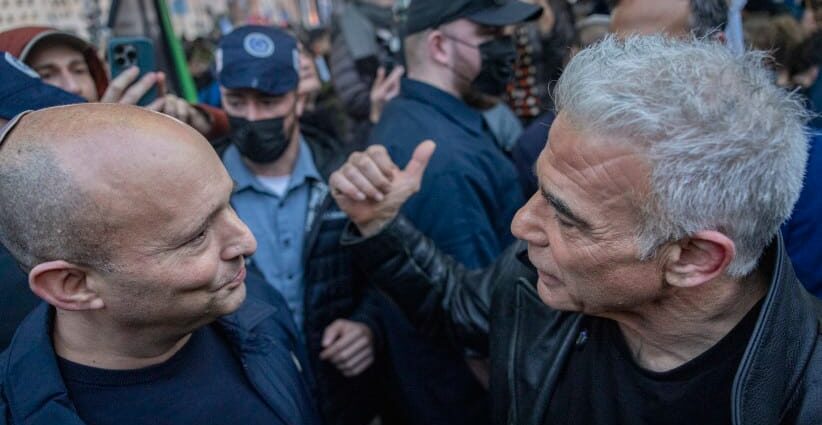
“The immigrants who choose to come to Israel, especially during this time, enlist in the IDF and contribute to the security of the state, embodying Zionism, mutual responsibility, and a deep commitment to the Jewish people and the State of Israel,” he continued. “It is our duty to ensure they are never left alone, not before their service, not during it, and not afterward.”

Katz described the new immigrants who choose to serve in the IDF as symbols of “Zionism and dedication,” adding that he considers their decision to enlist as an “immense contribution to the security of the State of Israel.”

Chikli: We must ensure lone soldiers ‘are not left alone’

“Our commitment is to embrace them, accompany them before their service, during it, and after their discharge, and ensure that no immigrant soldier is left alone,” said Katz. “At the same time, we will work to create pathways that strengthen aliyah to Israel and encourage more immigrants to come to Israel, enlist in the IDF, and take part in defending the country.”

Chikli described the challenges faced by lone soldiers as “far more difficult and complex” than those faced by native Israelis in the IDF.

“The government resolution is intended to bridge this gap and provide the lone soldier and their family with a supportive network that will help them successfully navigate their military service, integrate optimally into Israeli society, and above all, ensure they are not left alone,” said Chikli.

This post was originally published on here

The government unanimously approved a proposal to encourage countries around the world to recognize Jerusalem as Israel’s capital and to display the recognition by moving foreign embassies to Jerusalem, it confirmed on Sunday. 

The proposal, put forth by Foreign Minister Gideon Sa’ar and Deputy Prime Minister and Justice Minister Yariv Levin, includes allocating budgets from both ministries to incentive packages for relocating embassies, encouraging meetings and delegations in Jerusalem, and fostering cooperation in additional fields.

Incentives include participation in funding the establishment or relocation of embassies, as well as housing and planning solutions.

The proposal follows diplomatic efforts led by Sa’ar to transfer and open embassies in Jerusalem.

US support for embassy relocation

The Trump administration has been extremely supportive of this push, with the move of the US embassy set in motion during US President Donald Trump’s first term and a proposal to allocate land for the construction of a permanent US Embassy approved by Israel in March.

During an event last Wednesday, America’s Deputy Ambassador to Israel, David Brownstein, urged foreign diplomats to advocate for relocating embassies to Jerusalem and emphasized the importance of the city to the US diplomatic presence.

“We are in the process of moving all assets and personnel from Tel Aviv to Jerusalem. This is the heart of public diplomacy,” Brownstein said.

“Give a push to moving the embassies to Jerusalem,” he added.

Countries that relocated their embassies include Paraguay and Fiji.

Ecuador opened a representative office in Jerusalem in December.

Anna Barsky contributed to this report.

This post was originally published on here

After two-and-a-half years of unceasing war, the IDF is short thousands of combat soldiers. It cannot afford to forgo the service of women, whether on the home front or the front line. It cannot afford to forgo the service of religious soldiers in any combat unit. And yet, extremist rabbis are calling for women to be removed from the IDF, or at the very least reassigned to noncombatant roles.

On the other end of the ideological spectrum is the “Tel Aviv faction,” which demands that religious soldiers’ beliefs be ignored and that mixed service for men and women be imposed even in every tank and in every unit.

Both camps may tear the IDF and Israeli society apart. Extremism must not be allowed to win.

A transformation in the IDF

Since 1995, when Alice Miller petitioned the High Court of Justice to allow her to try out for the air force pilot training program, the IDF has undergone a dramatic transformation in women’s service. The reality of most military roles being closed to women is long gone. Today, the IDF is open to women serving in almost all positions, including in special units, the Armored Corps, and other tactical forces.

This worthy revolution, which gives women full and justified equal opportunity, is not self-evident in the IDF’s diverse landscape. In Home Front Command units, integrating women is generally easier to implement. In tactical and special forces units, the challenge is much greater. Sustained, physically intense service by men and women around the age of 20, involving stints of close and unavoidable contact or shared stays in small, enclosed spaces for days and weeks at a time, is not without challenges.

Even apart from religious concerns, how many men would be pleased to know that their partner was spending long weeks of reserve duty with another man in the intimacy of some remote guard post, and vice versa?

But the deeper challenge lies in the clash between equality at any price and adherence to Jewish law. For observant soldiers, even those accustomed to women’s company in civilian life, serving with women in the same tank or infantry unit can mean a breach, sometimes stark, of halachic boundaries.

This challenge has vexed the IDF and its religious soldiers ever since meaningful integration of women began. As that integration reached combat formations, the challenge intensified. At times, it has resulted in confrontations with rabbis and religious servicemen threatening to refuse to serve in mixed units if the process advanced.

Solving the challenges

The solution the IDF crafted in 2016, through dialogue and cooperation with rabbis and women’s organizations, was the Joint Service Order, an attempt to shape a military space shared by men and women that does not devolve from an asset to a liability. But none of this prevented the latest explosion.

Several days ago, in its ruling in the Kliger case, the High Court elbowed the IDF in the ribs and demanded faster integration of women into the Armored Corps. In response, several rabbis announced that, if this were to happen, they would instruct their students not to serve there. The moderate Tzohar organization joined in, calling on the army and the rabbis to speak out – and was met with a torrent of criticism. Politicians and online influencers attacked it for siding with “benighted” rabbis and daring to oppose the “religion of equality.”

Once again, on the liberal side, too, it became clear that some refuse to acknowledge the other and their values. While every fair-minded jurist – and the court itself – understands that equality is never absolute, they demand equality to the bitter end. Like the extremist rabbis, the “Tel Aviv faction” will not rest until women serve in each and every IDF unit, whatever the cost.

One can only hope that, in this ongoing struggle, too, the IDF and Israel’s security will not fall victim to the extremists. As the past has shown, dialogue and the design of orders and spaces that allow everyone to serve are the solution that will enable women and religious soldiers alike to contribute as much as they can to Israel’s security, without violating their values.

The writer is director-general of the Jewish People Policy Institute and a senior lecturer in law at the Peres Academic Center.

This post was originally published on here

It was yet another thrilling weekend for Israeli soccer as both Hapoel Beersheba and Beitar Jerusalem won their respective away games at Bloomfield Stadium, taking the title race into the penultimate matchday neck-and-neck.

Beitar Jerusalem defeated Maccabi Tel Aviv 2-1 as substitute Timoti Muzie scored the game winner in the 80th minute to keep Barak Itzhaki’s team in the championship race.

After a goalless first half, Dor Peretz’s header gave Kenny Miller’s Tel Aviv squad a 1-0 lead, but Omer Atzili found the equalizer via a Yarden Shua through-ball. Muzie then scored the winner after Gonzalez sent him a beauty of a pass to claim victory and stay two points behind Beersheba and in the title hunt with a pair of matches to go. Next up for Beitar is a match at Hapoel Petah Tikva, scheduled for Tuesday evening at Moshava Stadium.

Izhaki spoke about the conquest after the match.

“All of the teams have so many games one after the other, and we have to do our best to conserve our energy and play the way we are supposed to, which will lead to the results. It wasn’t pleasant to have to come into the game five points behind Hapoel Beersheba because they played a day before, but we all have to have the right mindset. Right now destiny is not in our hands, but we will do the maximum that we can.”

Miller spoke about the defeat for his side.

“We still have a lot to play for, including a Cup final, so we will be approaching the rest of the games the same way. Not coming away with anything from this game was robbery; we should have won the game and put it away earlier. We will play the same way against Beersheba as we did here, and we played very well. We have given up some goals the past few games, the exact same way, and that needs to be addressed.”

Muzie reflects on win

The game’s hero, Muzie, also reflected on the win.

“Our character beliefs need desire, we stayed with our game plan and I’m happy that we have been able to comeback yet again. It was a great ball from Gonzalez and I even could have scored beforehand but I made sure to do so the second chance I had. We will do the maximum that we can to keep pace and win the title.”

Hapoel Beersheba, meanwhile, blanked Hapoel Tel Aviv 2-0 as second-half goals by substitutes Ofir Davidzada and Amir Ganach against a 10-man Tel Aviv side allowed the Southern Reds to move closer to capturing the league championship.

Beersheba now prepares to host Maccabi Tel Aviv on Tuesday night at Turner Stadium.

Loizos Loizou had the game’s first chance as Beersheba’s keeper, Ofir Marciano, made the save, while at the other end Eliel Peretz’s attempt was caught by Assaf Tzur. Andrian Kraev was booked for his first yellow card after a foul on Muhammad Abu Romi, and soon thereafter, Kings Kangwa put a free kick into the box, which Djibril Diop headed over the goal in the 23rd minute.

Kraev picked up his second yellow card and was sent off when he fouled Kangwa, leaving Elyaniv Barda’s team with 10 men in the 30th minute. However, it didn’t stop Stav Turiel from helping Xander Silva produce a prime opportunity in front of the goal that just came up short as the match headed into the break deadlocked at 0-0.

Several substitutions from both teams

Both teams made substitutions to begin the second half, with Javon East and Amir Ganach coming on for Beersheba, and El Yam Kancepolski entering for Hapoel Tel Aviv. Lucas Ventura and Kangwa each had chances from the area, and at the other end, Diop almost put in a Turiel cross into his own goal in the 58th minute.

The two teams made more substitutions with Amit Lemkin, Shachar Piven, and Daniel Dappa all entering the fray for the hosts, while Miguel Vitor and Davdizada came in for the visitors.  The subs paid dividends almost immediately as Davdizada got the ball from Kangwa, came down the left side of the pitch, and slotted the ball past a diving Tzur to give Beersheba a 1-0 lead in the 71st minute. The Southern Reds doubled the advantage 10 minutes later when Ganach just got the ball over the goalline to polish off the victory.

“Some difficult things happened to us today,” Hapoel Tel Aviv coach Elyaniv Barda said. “Playing 80 minutes with 10 players, [especially when] that was a very soft second yellow card and the first yellow too. If you came with the approach of not giving yellow cards, then it should be the same for both sides. The red card decided the game; today, we didn’t know how to play well with 10 men.”

“The win was most important for us, and we may be close to winning the championship,” Hapoel Beersheba Head Coach Ron Kozuk said. “The red card helped us a bit, but it wasn’t the deciding factor. The guys were a bit tied and that’s why I made some substitutions at halftime and soon thereafter. I understand the exhaustion, and I have to tip my hat to the guys for their effort.”

Also, Maccabi Haifa and Hapoel Petah Tikva played to a 1-1 draw. The Greens opened the scoring via Guy Melamed in the first half, but Yonatan Cohen found the equalizer late in the second half to split the points.

See more Israeli sports coverage at www.sportsrabbi.com/en

This post was originally published on here

The main sign of the Nova Music Festival Exhibition in London has been removed at the request of London police following concerns over the potential for antisemitism and terrorism. The festival organizers confirmed this to The Jerusalem Post on Sunday.

For the first time on its international tour, the Nova Festival Exhibition will be showcased in the UK for six weeks from 20 May to 5 July. It has previously been shown in New York City, Los Angeles, Buenos Aires, Miami, Toronto, and Washington, D.C., where it collectively brought over half a million visitors.

The Nova Exhibition describes itself as an in-depth remembrance of the brutal massacre at The Nova Music Festival on October 7th, 2023. It intends to serve as both a memorial and a call to remembrance. It uses original staging, burnt-out vehicles, and personal items to recreate the scene. It also features first-hand witness phone footage from the day, bullet-riddled structures, porta-loos, and survivor testimonies.

The London exhibition’s main sign, installed in the area in recent days as part of preparations for the official opening this week, was removed at the request of London’s Metropolitan police due to concerns about antisemitic incidents, public disorder, and protests ahead of the exhibition’s opening.

According to sources familiar with the matter, London police sought to minimize any early exposure of the exhibition’s exact location, out of concern that attempts could be made to organize extreme protests or security incidents around the site before it officially opens to the public. 

The exhibition’s location is being kept strictly confidential

As a result, it was decided that the sign would only be reinstalled on the official opening day later this week, the organizers told the Post.

At this stage, the exhibition’s location is being kept strictly confidential and has not yet been officially disclosed to the general public. 

The decision was made as part of an unprecedented security operation being led by London police in cooperation with various security agencies and the Nova exhibition organizers in the city. Police officials responsible for counterterrorism are said to be working in full coordination with the exhibition organizers and are preparing for a range of scenarios, including terrorism threats, hostile attacks, and attempts to disrupt the event.

Police will deploy both visible and undercover officers around the exhibition site and access routes, alongside advanced technological systems designed to detect threats in real time and prevent harm to visitors.

The exhibition has generated significant international interest and is expected to attract thousands of visitors.

The Post reached out to the Met for clarification. 

This post was originally published on here

Cuba has more than 300 military drones and has discussed using them to attack the southernmost point of the US’s continental territory, the US base in Guantanamo Bay, and American ships in the Caribbean, Axios reported on Sunday, citing US intelligence.

The report also stated that Iranian military advisers were recently in Havana, though Cuba has been acquiring various attack drones from Iran and Russia since 2023. US intelligence indicates that Cuba’s intelligence officials were seeking to learn how Iran “resisted” the US during previous skirmishes, as well as Operation Epic Fury.

“When we think about those types of technologies being that close, and a range of bad actors from terror groups to drug cartels to Iranians to the Russians, it’s concerning,” one official told Axios. “It’s a growing threat.”

Russia and China both reportedly have espionage facilities on the island for collecting signals intelligence, the report added.

The report also mentioned that US officials estimate that as many as 5,000 Cuban soldiers have fought for Russia in the war in Ukraine. Some of those who fought informed Cuban leaders of the benefits of drone warfare. Moscow reportedly paid Havana about $25,000 a head for the soldiers deployed to Ukraine.

“They’re part of the Putin meat grinder. They’re learning about Iranian tactics. It’s something we have to plan for,” the senior official told Axios.

Cuba bolsters ties to Russia, Iran as Castro regime edges closer to collapse

The reports of Cuba strengthening ties to Russia and Iran come as the Castro regime comes closer than ever to falling apart.

Cuba’s electrical grid suffered a partial collapse early Thursday morning, the country’s grid operator, UNE, said, cutting power across eastern Cuba and testing the patience of Cubans already exhausted by seemingly interminable blackouts amid a US fuel blockade.

The Caribbean island of nearly 10 million people has reached a tipping point this month, as summer heat sets in and the vast majority – including in the capital Havana – now suffer without electricity for 20 hours or more each day.

The blackouts dramatically worsened in January after US President Donald Trump threatened tariffs on any nation supplying the island with fuel. Venezuela and Mexico, once the country’s top suppliers of crude oil, have since cut off shipments.

Trump has predicted Cuba would “collapse” and has said he wants to oust the current communist-run government. He also previously threatened that Cuba “is next” after the fall of Nicholas Maduro in Venezuela.

What will Trump do to Cuba? 

The intelligence gives insight into the Trump administration’s policy towards Cuba, given CIA Director John Ratcliffe’s recent travels to Cuba. Ratcliffe, during a rare visit to Havana on Thursday, delivered a message from Trump that the US would engage with the government on economic and security issues “only if it makes fundamental changes.”

“Director Ratcliffe made clear that Cuba can no longer serve as a platform for adversaries to advance hostile agendas in our hemisphere,” one CIA official said. “The Western Hemisphere cannot be our adversaries’ playground.” 

Additionally, the Department of Justice announced plans to unseal an indictment against Raúl Castro, the country’s leader and brother of revolutionary leader Fidel Castro, for ordering a strike in 1996 on a Florida-based aid group called Brothers to the Rescue.

Additional sanctions against Cuba are also expected to be announced within the next few weeks.

While Cuba can’t close the Straits of Florida to threaten global shipping, and doesn’t possess the same military capabilities as it did during the 1962 Cuban Missile Crisis, US officials are uncomfortable with its physical proximity to the US.

“No one’s worried about fighter jets from Cuba. It’s not even clear they have one that can fly,” one senior US official said.”But it’s worth noting how close they are – 90 miles,” the official added. “It’s not a reality we are comfortable with.”

This post was originally published on here

Shipping giants CMA CGM and Hapag-Lloyd have suspended all bookings to and from Cuba until further notice, they said separately on Sunday, with both citing a US executive order issued on May 1.

“Following the US Executive Order issued on May 1, CMA CGM has decided to suspend its bookings to or from Cuba until further notice,” the French shipping giant said in an emailed statement. It added that it was “closely monitoring the situation” and would adapt its operations in compliance with applicable regulations. 

A Hapag-Lloyd spokesman said the German company was similarly suspending Cuban orders “due to compliance risks associated with the US president’s executive order of May 1.”

The Cuban government did not immediately respond to a request for comment.

The temporary suspension of new orders by two of the world’s largest shipping companies could jeopardize as much as 60% of Cuba’s shipping traffic by volume, two sources with direct knowledge of the situation said, a major blow to a country already nearing collapse amid a US oil blockade that has throttled the island of fuel.

Shipping from China, northern Europe, Mediterranean would be impacted

Shipping of goods from China would be most impacted by the order, the sources said. Northern Europe and the Mediterranean would also be severely impacted, the sources added, though all global shipping to Cuba would be affected.

The Trump executive order on May 1 broadened existing US sanctions on commerce with Cuba to include “any foreign person” operating in the “energy, defense and related materiel, metals and ⁠mining, financial services, or security sector of the Cuban economy, or any other sector of the Cuban economy.”

This post was originally published on here

A Turkish flotilla of 53 vessels, organized by the IHH, the same group behind the Mavi Marmara flotilla, is reportedly en route to Israel.

The flotilla is an element of the Global Sumud Flotilla (GSF), which departed Turkey for Gaza on Thursday on its second blockade run, the first of which occured in April and ended with 20 of its vessels intercepted by the Israeli Navy.

The IHH’s flotilla is expected to reach Israel’s shores within 48 hours. Prime Minister Benjamin Netanyahu is scheduled to hold an operational meeting on the matter with senior defense officials.

An Israeli official told The Jerusalem Post that Netanyahu held a preliminary security consultation on Sunday regarding the Turkish flotilla, which includes Hamas supporters and intends to breach the naval blockade on Gaza.

The previous flotilla to be intercepted included Brazilian activist Thiago Avila and Spanish national Abu Keshek, who were both detained in Israel for questioning under suspicion of aiding the enemy and contact with a terrorist group. 

Both Avila and Keshek were deported earlier this month, joining the other over 100 participants who were deported soon after the naval interception.

In addition to the naval flotilla, a 30-vehicle land convoy set out from Libya to Gaza on Saturday as part of the GSF.

GSF: Convoy includes doctors, nurses, engineers, builders

200 participants from 25 countries are participating in the convoy, according to GSF, which said in a press release that the delegation includes doctors, nurses, engineers, and builders.

A previous, much larger land convoy that departed Tunisia in June was denied passage by Libyan forces, according to France 24, while a concurrent 200-member strong group was deported from Egypt upon arrival.

The Gaza Strip has been under a strict Israeli blockade since the Hamas terrorist organization, which largely runs the strip, committed its October 7 massacre in 2023 in southern Israel, with the ensuing war leaving much of the Strip’s population dependent on humanitarian aid.

Michael Starr contributed to this report.

This post was originally published on here

Two United States EA-18G Growler military aircraft collided mid-air during an airshow in Idaho on Sunday, local media reported.

According to the report, Mountain Home Air Force Base has been locked down due to the Gunfighters Air Show crash.

First air show since the most recent crash

All four crew members safely ejected from the jets, local media noted.

A spokesperson for the base told Reuters that emergency responders are on the scene and an investigation is underway.

This is the third major incident in 23 years at the Gunfighters Air Show, with the most recent being a fatal 2018 civilian glider crash.

This is their first airshow since a hiatus resulting from the 2018 incident.

This is a developing story.

This post was originally published on here

The recent statement by the spiritual leader of United Torah Judaism, Rabbi David Landau, calling for the dissolution of the Knesset and declaring his loss of confidence in Prime Minister Benjamin Netanyahu carries far-reaching political implications. 

It could not only precipitate early elections and bring an end to the long-standing alliance between the Right and the ultra-Orthodox parties, but also relegate the latter to the opposition for years to come, particularly in light of their insistence on preserving the status quo regarding the conscription of haredim into the IDF.

For decades, much of the Israeli public has operated under the assumption that no government can be formed without the ultra-Orthodox parties, and that their political influence exceeds their demographic weight. Indeed, Israel’s political history since the 1992 elections suggests that, regardless of whether the Right or the center-left prevailed, the ultra-Orthodox parties, Shas and UTJ, have typically played a pivotal role in coalition governments. 

Following the Labor Party’s decisive victory under Yitzhak Rabin in 1992, a center-left coalition was formed with Shas, then an emerging force within haredi society. Despite the seemingly incongruous partnership, given that Shas represented Mizrahi haredim, a constituency that already leaned toward the political Right, Rabin chose to include the party to bridge social and political divides. 

This partnership dissolved within a year, following the indictment of Aryeh Deri and a High Court ruling requiring his dismissal. These developments also aligned with Shas’s discomfort with the emerging Oslo Accords, which ran counter to prevailing sentiment within the ultra-Orthodox public.

A similar pattern unfolded after the 1999 elections, when Ehud Barak brought both Shas and UTJ into his coalition, expecting that their participation would help stabilize his government as he pursued negotiations with the Palestinians. Yet this partnership also proved short-lived. UTJ withdrew after Barak permitted the Israel Electric Corporation to carry out work on Shabbat, while Shas exited following his decision to attend the Camp David Summit. 

Although the haredi parties remained outside the government for much of Ariel Sharon’s tenure, from 2001 to 2006, they soon returned to their familiar role as key coalition partners, first under Ehud Olmert, and then throughout most of Netanyahu’s premierships, with the notable exception of the period between 2013 and 2015. 

Since the 2015 elections, they have become an integral component of Netanyahu’s bloc. In the most recent elections, they secured a combined 18 seats, nearly double their strength compared to three decades ago.

Yet the events of the October 7 attacks appear to have fundamentally altered the political landscape. Before Hamas’s attack, Israeli society and leadership operated under the assumption that Iran and its network of proxies could be contained, even as they steadily expanded their military capabilities. In this context, the issue of haredi conscription remained largely peripheral. 

IDF calls for expanded recruitment

In the post-October 7 reality, however, amid a protracted war that has stretched on for over two years, the limitations of this approach have become unmistakably clear. As the IDF calls for expanded recruitment to sustain its operational capacity and relieve an overburdened reserve force, the longstanding exemption of haredim from military service has moved to the center of public debate.

This moment could have served as a turning point for haredi leadership, a chance to recalibrate and call upon their public to share in the national burden. Instead, figures such as Deri, Yitzhak Goldknopf, and Moshe Gafni have chosen to maintain the existing course. 

This stance is increasingly perceived by the broader Israeli public as untenable. As a result, it is entirely plausible that, following the 2026 elections, the ultra-Orthodox parties will find themselves excluded from governing coalitions and consigned to the opposition for an extended period.

The writer is a lecturer and research fellow at the University of South Wales, UK. Author of Collapse: Israeli Labor Party 1992-2024.

This post was originally published on here

Former finance minister Moshe Kahlon is set to admit that he failed to ensure that serious financial irregularities at UnetCredit were properly reported to the public while he served as chairman of the company, as part of a plea agreement filed with the Tel Aviv District Court’s Economic Department.

The agreement was filed alongside a broader indictment in the UnetCredit case, one of the major corporate collapse cases to emerge from Israel’s non-bank credit sector in recent years.

UnetCredit was a public company that provided non-bank credit and whose shares were traded on the Tel Aviv Stock Exchange. The case centers on what prosecutors describe as a pattern of concealment, circular financing, and misuse of the public company’s funds by controlling shareholders and other senior figures.

Under Kahlon’s plea agreement, he will admit to violating reporting duties under the Securities Law. The sides will ask the court to sentence him to a suspended prison term, a NIS 180,000 fine, and an 18-month restriction on serving as an officer in a public company.

The plea agreement remains subject to court approval.

Kahlon, who previously served as finance minister, served as chairman of UnetCredit Financial Services from June 2021 until his resignation in June 2022.

The main indictment was filed against Tzachi Azar, Shlomo Aizik, Shai Penso, compliance officer Yoav Tzabar, financial adviser David Ben-Naim, attorney Ido Malin, Nazareth branch operator Yitzhak Avitar, and the public and private UnetCredit companies.

The charges, each according to the defendant’s alleged role, include fraud and breach of trust in a corporation, aggravated fraud, and violations of reporting duties under the Securities Law.

The 2020 share allocation deal

At the center of the case is a 2020 share allocation deal. According to the indictment, UnetCredit’s public company allocated two million shares, worth NIS 50 million, to the private company held by its controlling shareholders and to several advisers.

The deal was presented to the company’s institutions as if the money used to buy the shares would come from outside sources connected to the controlling shareholders. Prosecutors allege that this was not what happened.

Instead, according to the indictment, the public company’s own money was routed through a circular transaction, creating the appearance that the private company had paid for the shares. In effect, prosecutors allege, the public company funded the purchase of its own shares, and the controlling shareholders and others fraudulently obtained shares worth tens of millions of shekels.

The indictment says the affair reflected the mixing of the controlling shareholders’ private business interests with the affairs of the public company, while concealing critical information from the company’s board, committees, and shareholders.

A separate part of the case concerns serious alleged irregularities at UnetCredit’s Nazareth branch, where a substantial part of the company’s activity took place.

According to the indictment, the irregularities included missing checks worth millions of shekels, suspected fictitious check-discounting transactions, and conflicting claims about where the missing funds had gone.

Prosecutors say those problems were known to several company officials before they were brought to Kahlon’s attention in early 2022.

The indictment against Kahlon focuses on what happened after he was allegedly told about the Nazareth branch.

According to the indictment, Kahlon was told in January 2022 about a NIS 10 million shortfall at the branch, including two missing checks worth NIS 5 million. He was also told about further claims of missing funds and competing explanations over who was responsible.

In March 2022, while the company was preparing its financial reports, Kahlon was allegedly told additional details about the missing funds. Prosecutors allege that he asked whether the matter should be brought to the board, but instructed that the report not be rushed.

Despite that, prosecutors say, when the board approved the company’s 2021 financial statements, Kahlon did not disclose the information he had about the missing funds and irregularities at the Nazareth branch, even though the information was material.

He also signed the financial statements without those details being included, according to the indictment.

The issue surfaced more fully on May 29, 2022, after the board approved UnetCredit’s first-quarter financial statements. Tzabar then told the board that checks at the Nazareth branch had found NIS 22 million in shortfalls. He estimated that NIS 10 million could not be collected, said some of the missing money may have been transferred to the private UnetCredit company, and noted that checks worth around NIS 5 million had disappeared.

Following that disclosure, the company’s auditors withdrew their approval of the first-quarter financial statements. The next day, the board appointed accountant Ofer Alkalay as an external examiner.

The company later reported suspected financial discrepancies at one of its branches, initially estimated at NIS 5 million to NIS 7.6 million. It also reported Kahlon’s resignation on June 16, 2022, following the financial exposure that had been discovered.

As the affairs became public, trading in UnetCredit’s shares was suspended, the company was removed from stock exchange indexes, its credit rating was downgraded, and its auditors withdrew their approvals of the company’s financial statements for 2020-2022.

The indictment also attributes personal withdrawals of around NIS 400,000 from the public company to Azar.

This post was originally published on here

Israel built two secret bases in Iraq’s desert during the ongoing war with Iran, The New York Times reported on Sunday morning, citing unnamed Iraqi officials.

The base was allegedly discovered on March 3 by a Bedouin shepherd in the country’s western desert. 

The report comes a week after the Wall Street Journal reported, citing several people familiar with the matter, on a first secret military base Israel had built in a remote part of the Iraqi desert to support an airstrike in the war against Iran. 

According to The Wall Street Journal, the base housed special forces from the Air Force and served as a logistics facility. IDF troops were stationed there in case pilots were shot down over enemy territory.

The report also noted that the IDF nearly launched strikes against Iraqi troops that had almost discovered the secret base.

On March 4, a local shepherd spotted unusual activity, including helicopter flights, and tipped off the Iraqi military.

One official told The Wall Street Journal that the IDF drove the Iraqi military away with airstrikes. One Iraqi soldier was killed in the incident. 

A US source told The Wall Street Journal that American forces were not involved in the matter.

Base predates Operation Roaring Lion

Unlike the first base, the reported second base “predated the current war between the United States, Israel, and Iran” and was used in June 2025 during Operation Rising Lion, The New York Times claimed.

Furthermore, the report stated that Israel had begun preparations to build the base in 2024.

This is a developing story.

This post was originally published on here

Many people have never heard of Simon of Trent (Saint Simon), a Christian child born in Italy, whose disappearance and death in 1475 were falsely blamed on the Jewish community. Nearly a dozen Jewish men were immediately executed, and the blood libel spread far beyond Italy into Germany and across Europe, fueling persecution, expulsions, and inciting hatred against Jewish people for generations.

Nor have most people heard of another infamous antisemitic conspiracy theory: the accusation that Jews poisoned wells during the Black Death in the 1300s. Across Europe, Jewish communities were tortured, burned alive, expelled, or massacred after being falsely accused of causing the horrific pandemic.

These lies did not remain confined to the Middle Ages.

Most people have never heard of the Ibn Mashal conspiracy myth that circulated in Morocco in the late 17th century, portraying Jews as exploiters of Muslims. That narrative fueled antisemitic suspicion and demonization of Jews, which, as so often happens, eventually contributed to violence and murder.

Blood libels and other antisemitic conspiracy theories resurfaced throughout history, including in Nazi propaganda, where they were weaponized to deepen hatred against Jews and justify persecution and mass murder.

And propagandists know exactly what they are doing.

They have always understood that if a lie is repeated often enough, it can shape public perception, fuel hatred, and eventually incite violence.

Hatred of Jews taught in schools throughout Middle East

In far too many places throughout the Middle East, including areas ruled by Hamas and the Palestinian Authority, antisemitic incitement against Jews has been documented in schools, media, sermons, and children’s programming. When children are repeatedly taught that Jews are evil or that violence against Jews is righteous, hatred becomes normalized across generations.

This is why Jews take dangerous lies about the Jewish people so seriously.

We call it antisemitism, and we confront it assertively because history has taught us what happens when lies about Jews are normalized, amplified, and repeated often enough. The pattern is tragically familiar: first come the accusations, then the bullying and dehumanization, then the violence.

We are witnessing this escalation again today, particularly in the aftermath of the October 7, 2023, Hamas massacres in Israel.

Jews have been targeted, isolated in ghettos, persecuted, expelled, and murdered repeatedly throughout history. Sometimes simply for existing, and other times because lies created mistrust, fear, and hatred that spiraled into deadly consequences.

That is why the antennas of the Jewish people are always up. There is a reason. There is a deep history.

Fast forward to today. Sensationalized stories and false accusations about Jews and Israelis do not exist in a vacuum. 

Take the recent allegations in a The New York Times op-ed that included claims about Israeli dogs being trained to rape prisoners in Israeli jails. The article relied heavily on sources tied to Hamas or individuals with records of glorifying violence against Israelis. Yet even the most far-fetched accusations can spread rapidly because they reinforce narratives that too many people are already predisposed to believe.

Jews understand this dynamic. So do those who exploit it.

Some people wonder, “Why are Jewish people so sensitive about negative stories involving Jews or Israel?”

Because Jews have experience with the consequences of lies and demonization. We know that words matter. History has repeatedly shown that portraying Jews as monstrous or uniquely evil can and does lead to discrimination, violence, and even murder. 

As Holocaust educators often remind us, “The Holocaust did not begin with gas chambers. It began with words.”

This principle should apply to everyone, not only Jews. Reckless hatred, dehumanization, and propaganda aimed at any group of people can have devastating consequences. We should all be more careful with our words and more willing to challenge dangerous falsehoods before they spread.

Nothing good comes from turning human beings into monsters in the public imagination. We must stand together against those who spread hateful propaganda and say, with conviction:

“Not on our watch.”

The writer is a daughter of Holocaust survivors. She is the CEO and co-founder of StandWithUs, a 25-year-old international organization that supports Israel and fights antisemitism through education.

This post was originally published on here

As the world confronts the challenges of population aging and healthcare workforce shortages, digital transformation in healthcare is no longer optional but essential. 

Taiwan has introduced the “Healthy Taiwan” vision, placing “driving digital healthcare” at its core. By integrating big data, artificial intelligence, and cloud technologies, the system aims to improve healthcare quality and efficiency while moving toward a new healthcare model centered on holistic, person-centered care.

Taiwan benefits from both a robust ICT industry and the National Health Insurance (NHI) system’s foundation, which has accumulated high-quality healthcare data over time and laid a critical foundation for smart healthcare development. 

Building on this, we have introduced a national digital health platform known as the “3-3-3 Framework.” It integrates three major health spaces, three key health data standards, and three national AI governance centers to establish a comprehensive digital health infrastructure. 

Under this framework, we are promoting the integration of electronic medical records across more than 400 hospitals nationwide and adopting international standards, such as Fast Healthcare Interoperability Resources (FHIR), to ensure cross-institutional interoperability. Within a Zero Trust cybersecurity framework, healthcare data can be securely shared and effectively utilized.

With these policies in place, tangible results are already emerging. In chronic disease management, the “Family Physician Platform,” which incorporates AI-based risk prediction, supports physicians in delivering personalized care, facilitating a shift from reactive treatment to proactive health management. 

In terms of healthcare data integration, the MediCloud system provides real-time access to patient records and medication information, while enhanced visualization of examination results and AI-assisted medical imaging interpretation improve healthcare quality and patient safety.

Personal health management has also been strengthened. The “My Health Bank” platform has surpassed a 50% adoption rate, and it can integrate data from wearable devices, encouraging individuals to take a more active role in managing their health. 

In the digitalization of cancer treatment, Taiwan utilizes the FHIR standard to exchange Next-Generation Sequencing (NGS) data, accelerating the review process for catastrophic illness certification and related medical use, thereby improving access to timely treatment. In addition, the promotion of virtual health insurance cards, e-prescriptions, and telemedicine services is effectively overcoming temporal and geographical barriers, expanding access to rural and home-based care.

Taiwan has established a comprehensive governance framework to advance clinical AI development. Nineteen national medical AI centers have been established, covering responsible governance, clinical validation, and impact evaluation, ensuring that AI is safe and reliable across the entire process – from development to application. 

To date, more than 50 AI medical products have received regulatory approval, supporting early cancer detection, prediction of cardiac events, and clinical decision-making support. Taiwan also has 13 hospitals ranked among Newsweek’s “World’s Best Smart Hospitals 2026,” placing second in Asia and demonstrating strong international competitiveness. 

In addition, Taiwan is advancing federated learning platforms that enable cross-institutional and cross-border AI model validation without transferring sensitive data. It has also begun collaborating with partners in Southeast Asia to establish trusted international data-sharing models.

Diseases know no borders, and global health governance requires comprehensive collaboration. Taiwan has established a smart healthcare ecosystem driven by data, enabled by AI, and supported by interoperable standards, extending medical services from hospitals into communities and daily life and realizing holistic care. Taiwan’s practical experience demonstrates that we are capable of contributing to the international community.

Taiwan excluded from WHO

However, Taiwan continues to be excluded from full participation in the World Health Organization and its related mechanisms. United Nations General Assembly Resolution 2758 and World Health Assembly Resolution 25.1 neither mention Taiwan nor exclude Taiwan from participating in the WHO and the WHA.

We sincerely urge WHO and relevant stakeholders to support Taiwan’s inclusion in the global health system, thereby strengthening its completeness and resilience. Taiwan will continue to advance smart healthcare through digital innovation and contribute to global health and well-being. 

Together, we can realize the vision of health as a fundamental human right as outlined in the WHO Constitution, as well as the commitment of the UN’s Sustainable Development Goals to leave no one behind.

The writer is the health and welfare minister of Taiwan.

This post was originally published on here

A drone appeared to cause a fire near a nuclear power plant in the United Arab Emirates on May 17. Abu Dhabi said that a fire was caused by a drone strike on an electrical generator outside the inner perimeter of the Barakah Nuclear Power Plant in the Al Dhafra region, the Abu Dhabi Media Office said on Sunday. This raises concerns that Iran could increasingly threaten the UAE amid regional tensions.

The Associated Press noted that it had sparked a fire at the plant’s perimeter. “There were no reports of injuries or radiological release, but it highlighted the risk of renewed war as the Iran ceasefire remains tenuous.” There was no claim of responsibility, but it is plausible that Iran or Iranian proxies are behind the attack. This comes amid rumors of a potential renewal of conflict with Iran and an increased focus on the UAE’s role in the region.

Arab News noted that “the UN watchdog has expressed ‘grave concern’ over a drone strike near the UAE’s nuclear plant on the outskirts of Abu Dhabi. Authorities in Abu Dhabi responded to a fire incident that broke out in an electrical generator outside the inner perimeter of the Barakah Nuclear Power Plant in the Al-Dhafra Region following a drone strike.”

The report added that the situation is being followed closely by the International Atomic Energy Agency. “No injuries were ‌reported, radiological safety levels ⁠were unaffected, and ⁠the Federal Authority for Nuclear Regulation confirmed the plant’s essential systems are operating normally, the Abu ‌Dhabi ‌Media Office said on Sunday,” Arab News added. Authorities noted that “the fire did not affect the safety of the power plant or the readiness of its essential systems, and that all units are operating as normal.”

The UAE appears to be increasingly in Tehran’s sights. Iran had already concentrated a large number of missile and drone attacks on the UAE since the US and Israel began strikes on Iran in February.

The UAE’s Minister of Foreign Affairs, Khalifa Shaheen Al Marar, who was participating in the BRICS Foreign Ministers’ meeting, said on May 15 that “his Excellency underscored the UAE’s categorical rejection of any allegations or threats targeting its sovereignty, national security, or independent decision-making, reaffirming that the UAE reserves its full sovereign, legal, diplomatic, and military rights to respond to any threat, allegation, or hostile act.”

The UAE’s minister went on to “emphasize that since February 28, 2026, the UAE has been subjected to repeated and unjustified Iranian terrorist attacks. The UAE’s air defenses have intercepted around 3,000 attacks involving ballistic missiles, cruise missiles, and drones that deliberately and directly targeted civilian facilities and critical infrastructure, including airports, ports, oil facilities, desalination plants, energy networks, service facilities, and residential areas.”

Renewed fighting will lead to Iranian retaliation

What is clear is that Iran is continuing to make it clear that any renewed fighting will lead to retaliation. Iran’s parliament speaker, Mohammad Bagher Qalibaf, who has been serving as a negotiator between Iran and the US, is apparently being tasked with handling Iran’s ties with China. This comes after US President Donald Trump went to China. Meanwhile, The Telegraph in the UK has said that the US has prodded the UAE to seize an Iranian island.

Iran is worried about reports that fighting could resume in the region. Iran is also monitoring neighboring countries. It has threatened Kuwait and other Gulf states. Reports now indicate some Gulf states have been more active in the war than previously reported. Iran is therefore closely watching Saudi Arabia, the UAE, and Kuwait.

It is also likely watching Iraq after reports in The Wall Street Journal and The New York Times about Israel establishing what the NYT says were two possible sites, and the WSJ initially said it was one site amid tensions and conflict with Iran. What matters is that Iran is messaging that it will target countries or groups that work with Israel. Iran has targeted Kurdish opposition groups in northern Iraq, for instance. It has continued these attacks despite the ceasefire that began last month.

Iran to continue threatening UAE?

It’s possible the drone incident on May 17 was an Iranian message that it will increase its list of targets in the UAE. Meanwhile, the UAE’s Al-Ain media reported on May 17 that the conflict could resume. It claims, “according to the same source, Israel is on high alert in anticipation of a possible resumption of war with Iran, as the Israeli army continues its preparations to resume the war, and the possibility that Iran will target Israel with strikes.”

The report went on to note that Israeli media were discussing this. “According to the plans, the planned strike is expected to include damage to national infrastructure, energy sites, and power plants, and Israeli aircraft will also attempt to target high-ranking Iranian officials,” Al-Ain claimed.

This is all part of regional messaging. Iran is messaging through aggression and words.  

This post was originally published on here

IDF Maj.-Gen. Roman Gofman sharply rejected on Friday the Attorney-General’s latest classified update to the High Court of Justice, accusing Gali Baharav-Miara’s office of trying to cast doubt on his integrity in the petitions against his appointment as Mossad chief.

In a response submitted to the court, Gofman’s lawyer, Ohad Shalem, wrote that the Attorney-General’s conduct was “very severe,” arguing that her office had repeatedly claimed to hold classified documents, while, according to Gofman, those materials contained “no secret,” no integrity flaw, and nothing relevant to the petitions.

The filing comes as the High Court considers petitions challenging Prime Minister Benjamin Netanyahu’s decision to appoint Gofman, currently his military secretary, as the next head of the Mossad. Gofman was approved by the Senior Appointments Advisory Committee and is scheduled to enter the post on June 2 for a five-year term.

The petitions center on the Ori Elmakayes affair, in which Elmakayes, then a minor, was allegedly used in an unauthorized IDF-linked influence operation connected to the 210th Division while Gofman commanded it. Elmakayes was detained and indicted, but the case against him later collapsed.

The latest dispute concerns a brigadier-general identified only as “G,” who is expected to submit an affidavit in the case, regarding a May 2022 inquiry connected to the Elmakayes affair, including an alleged clarification G held with Gofman on the eve of Elmakayes’s arrest.

Gofman allegedly acted to keep G in role

According to Channel 13, the Attorney-General’s classified update concerned claims that Gofman acted to keep G in his Mossad role during Gofman’s handover period, despite a previous decision by outgoing Mossad chief David Barnea that the officer would end his service this summer.

Channel 13 reported that the Mossad’s legal adviser passed information to the Justice Ministry that raised suspicion of improper conduct by Gofman during his handover process. According to Channel 13, the events began on April 15, when Gofman met with the head of the division in which G serves, and the question of G’s continued tenure was raised.

Channel 13 further reported that on May 12, while the High Court was hearing the petitions, Gofman visited the same division and later told the division head that he had checked the matter and that, from his perspective, there was no impediment to G remaining in his role and that he would consider it. According to Channel 13, the Attorney-General viewed the matter as a reporting failure and believed Gofman was obligated to bring the meetings and their contents to the court’s attention because of their possible effect on the pending legal proceeding.

Gofman rejected that framing in his court response. According to his filing, the issue arose as part of a pre-set Mossad handover schedule and a broader personnel discussion, not as an improper approach to G. Gofman said the head of the relevant division raised G’s request to remain in his position, and that he replied that he could make decisions on personnel matters only after formally entering office, as he would with other personnel issues raised during the handover.

Gofman further claimed that once he understood G might be asked to submit an affidavit in the High Court proceedings, he asked that no one contact G about decisions concerning his future until after the petitions were decided. According to Gofman, this was done to preserve the integrity of the proceeding and avoid contaminating it. He also said he did not meet G alone, did not speak with him privately, and did not discuss the petitions with him.

The response also argued that Gofman could not have been expected to update the court about the issue during the May 12 hearing, because the agreement to allow G’s affidavit into the case arose only during that hearing. Gofman’s lawyer added that, from their perspective, the relevant material concerning G had already been before the appointments committee for months.

Gofman also claimed that the speed with which the Attorney-General’s classified update leaked to the media raised questions about her office’s conduct and concern that it was an attempt to indirectly influence G’s affidavit.

The High Court later said that the classified update did not, at that stage, change the decisions already given regarding the appointment, but allowed Gofman to submit a short response nonetheless.

In previous filings, the Attorney-General argued that Netanyahu’s decision to appoint Gofman could not stand, saying the committee process that cleared him was flawed and based on an incomplete factual picture. Gofman and the committee have rejected that position, with the committee arguing that there was no basis for judicial intervention in its approval of the appointment.

Gofman asked the High Court to dismiss the petitions as soon as possible after G’s affidavit is submitted.

This post was originally published on here

Newly published data points to a troubling rise in violence, attacks in public spaces, and incitement against Israel’s LGBTQ community, a study recently published by the Nir Katz z”l Center for Violence, Discrimination, and Homophobia Reporting of The Aguda – The Association for LGBTQ+ Equality in Israel found.

The report reflects a worrying trend of carefully planned lynch ambushes carried out through dating apps.

The 2025 homophobia report presents concerning data showing that members of the LGBTQ community are experiencing a growing loss of personal security.

Among the report’s main findings are the number of reported lynchings, stabbings, and cases of extortion by threats, with at least one physical assault reported per week on average. Another troubling figure is the rise in physical violence against LGBTQ people compared with previous years, including the finding that roughly half of the incidents reported in public spaces were physical assaults.

The Nir Katz z”l Center for Violence, Discrimination, and Homophobia Reporting has operated since 2012, with the aim of monitoring, documenting, handling, and providing support in every case of harm against the community. Its work includes assisting victims, mediating contact with police, tracking complaint handling, and identifying patterns and trends.

This is the 13th report compiled by the center. For the first time, it also includes data from a nationwide study on homophobia conducted by the Israeli Institute for Gender and LGBTQ Studies.

In 2025, lynchings carefully planned through dating apps, as well as stabbings in the hearts of major cities, became recurring incidents. The trend points to a pattern that begins with fake profiles created on dating platforms used by the community. Victims are then identified, and meetings are arranged under the pretense of getting acquainted, before the encounters end in violence by multiple attackers, often reaching life-threatening levels.

In 2025, the reporting center documented 322 reports. The number of inquiries to the legal department on homophobic matters stood at 110, bringing the total number of homophobic inquiries recorded this year to 432.

The reporting center also documented 2,634 homophobic talkbacks, or online comments, collected from articles across the internet, whether or not the articles dealt with the community.

The Aguda’s online advocacy department documented 1,325 pieces of homophobic content across the internet, including posts on social media.

A sharp rise was also recorded in calls to the Aguda’s hotline, with 3,863 inquiries received in 2025. The monthly average stood at about 322 inquiries, rising during the summer months and peaking in July with 578 inquiries.

The trans community accounted for more than half of all reports to the reporting center this year, at 54%, up from 43% in 2024.

Half of the incidents reported in public spaces this year were physical assaults. This marked a significant escalation compared with the 2024 homophobia report, in which physical incidents in public spaces accounted for 32% of reports.

A concerning rise was also recorded in extortion and threats in public spaces, which accounted for 13.5% of all reports this year, compared with only 3% in 2024. An increase in extortion and threats was also recorded through the Aguda hotline, indicating a broader trend.

The data in this year’s report point to growing fear among community members about reporting incidents or filing complaints with the police. At the same time, social media is saturated with violence and hatred, alongside documentation by community members of homophobic incidents.

The findings of the Israeli Institute for Gender and LGBTQ Studies research, which examined exposure to homophobia, present a worrying picture and add weight to the data received by the reporting center.

Study shows widespread exposure to homophobia

The findings show that an overwhelming majority, 91% of study participants, experienced homophobia at some frequency, while 79% experienced homophobia on social media.

The figures also show that 76% experienced homophobia in public spaces, 65% at school, 53% in private spaces, 51% during military or national service, and 49%, about half of respondents, experienced homophobia in interactions with state institutions.

Forty-seven percent of study participants experienced homophobia at a very high frequency, often or almost always, in at least one space, whether in public, on social media, in contact with government institutions, or elsewhere.

Forty-one percent experienced some form of homophobia in all three spheres of harm: private, public, and institutional.

People on the trans spectrum were exposed to homophobia and transphobia to a greater degree in every space examined: 87.5% on social media, 91% in public spaces, 79% at school, 69.5% in state institutions, 71% in private spaces, 62% during a year of service or national or military service, 66% in medical institutions, 58% in local authority institutions, and 54% in educational and higher education institutions.

A significant rise was found in exposure to homophobia in Israel. While the previous study conducted by the research institute found that 36% of participants experienced high-intensity homophobia, the current study found that 47% experienced high-intensity homophobia.

From the last quarter of 2024 through the end of 2025, more than 20 serious assault cases organized through the community’s dating platforms were documented by the reporting center.

The homophobia reporting center was the first to point to the trend of planned and organized assaults and attempted lynchings against members of the community through dating apps. The attacks followed a clear, repeated method: creating a fake profile on one of the dating platforms, with an emphasis on Grindr, identifying a potential victim, and corresponding with him under the pretense of an introductory meeting.

The attacks involved planned and preorganized assaults by groups of attackers, usually groups of five to 10 people, who were masked and armed with various weapons. The victims were attacked with brutal violence, and most required medical treatment. The motive, according to the report, was a hate crime against men who are attracted to men.

The trend revealed in the report is unprecedented in scope and frequency in Israel over the past year and a half.

Data on assaults and attempted lynchings

Most of the incidents took place in public spaces. Northern and central Israel were the main hotspots for harm, and the victim’s age did not appear to be a determining factor. Those attacked ranged across different age groups, young and old alike.

In addition, 92% of victims identified as gay. All of the victims were cisgender men, and in all cases, physical harm or attempted physical harm was involved.

Aguda chairman Nimrod Gorenstein said, “This year’s homophobia report proves that the surging violence and loss of personal security in Israeli society does not skip over the LGBTQ community. Behind the graphs and data stand the testimonies of thousands of members of the LGBTQ community who this year experienced more violence and discrimination on the basis of their LGBTQ identity, and this report makes their voices heard.

“Similar to other forms of hatred and demonization against other minority groups, homophobia reduces its victims to simple definitions and narrow boxes based on their sexuality and identity. The Aguda has taken upon itself the mission of fighting the dehumanization of LGBTQ people and continuing the struggle until every person in the LGBTQ community in Israel will no longer have to suffer discrimination, harassment, violence, or humiliation based on identity.”

This post was originally published on here

Hezbollah may resort to assassinating political rivals in Lebanon as its grip on the country weakens, according to a Meir Amit Intelligence and Terrorism Information Center (ITIC)-affiliated expert who spoke with The Jerusalem Post on Sunday.

In recent months, Hezbollah has faced growing restrictions on its power, including new legislation limiting its ability to legally possess weapons and conduct military activity, as well as Beirut’s participation in talks with Jerusalem in Washington. The measures were introduced after Hezbollah dragged Lebanon into another war by launching attacks following the February 28 assassination of Ayatollah Ali Khamenei.

According to a recent ITIC assessment, Hezbollah is acutely aware of Beirut’s fears of a potential civil war and has repeatedly hinted at or directly threatened such a scenario. The report noted that Hezbollah Secretary-General Naim Qassem warned in August that civil war “could happen,” while recent weeks have seen the group intensify its rhetoric against Lebanese President Joseph Aoun and Prime Minister Nawaf Salam.

In April, Mahmoud Qamati, deputy chairman of Hezbollah’s political council, declared that once the group concluded its campaign against Israel, a “popular tsunami will sweep away this government, its political sins and its policies.”

Hezbollah supporters have also circulated online imagery portraying Aoun and Salam as Zionist collaborators. On May 3, the Hezbollah-affiliated “Hezbollah Field” Telegram channel published images depicting Aoun dressed in religious Jewish garb alongside the caption: “A prime minister who is a loyal servant of Zionism and a hostage to Zionist agendas.”

Warnings against Hezbollah’s Unit 121

Last month, Beirut reportedly received warnings from Jerusalem indicating there was an active threat against Aoun’s life, according to Lebanon’s independent Murr Television. Lebanese media outlets affiliated with Beirut said the threats were taken seriously, prompting additional checkpoints near locations associated with American officials.

Despite the threatening rhetoric, Dror Doron, the author of the ITIC assessment and a former senior analyst in the Prime Minister’s Office, told the Post that the first assassination would likely be a symbolic attack carried out by Unit 121 to intimidate Beirut into complying. He predicted the unit would most likely target a mid- to high-level Christian opposition figure or possibly the foreign minister, with the killings escalating further if needed.

While Hezbollah has never acknowledged the existence of Unit 121, which is believed to be responsible for numerous political assassinations in Lebanon, ITIC noted that a high-profile assassination would fit the group’s longstanding pattern of eliminating figures who challenge its system of control. The elite unit is believed to have carried out the 2005 assassination of former Lebanese prime minister Rafik Hariri, as well as the killings of members of Lebanon’s internal security forces who investigated the truck bombing that killed Hariri and the country’s former finance minister. Last year, the IDF’s Arabic-language service also revealed five additional assassinations allegedly carried out by the unit.

Asked whether assassinating an elected official could further damage Hezbollah’s already precarious standing in Lebanese society, Doron said Qassem subscribes to a radical IRGC-driven ideology, making him more likely to order an assassination despite the “problematic consequences” it could have for Hezbollah.

Referencing a letter leaked in recent days, sent by Hamas to assassinated Hezbollah leader Hassan Nasrallah on October 7, Doron stressed that Iran and its proxies ultimately carried out the costly 2023 invasion to derail Saudi-Israeli normalization.

“From the point of view of Iran and its proxies, Israeli-Arab peace is a strategic threat, and all means must be used to prevent such a development,” he said, explaining how Qassem would likely justify carrying out an assassination despite the potentially disastrous consequences for Hezbollah.

“Hezbollah is more concerned right now with a political and diplomatic move toward peace with Israel than an actual move against its weapons,” he continued. “This is a strategic threat to its core ideology of resistance and the notion of fighting Israel.”

This post was originally published on here

Prime Minister Benjamin Netanyahu has approved a proposal to establish a Defense Ministry complex on the site of the demolished UN Relief Works Agency (UNRWA) complex in Jerusalem, Defense Minister Israel Katz announced on Sunday in a post on X/Twitter.

According to Katz, the new Ammunition Hill complex will include an IDF recruitment office, an IDF museum, and an office for the Defense Minister.

“Today, on Jerusalem Day, we liberated a new area in Jerusalem when the government led by Prime Minister Benjamin Netanyahu approved my proposal to establish a Defense Ministry complex… in place of the demolished UNRWA complex,” said Katz.

“We outlawed this terrorist-supporting UN organization [UNRWA] and took the area, and now on its ruins we are building and strengthening Jerusalem – the eternal capital of the Jewish people,” continued Katz.

UNRWA’s Jerusalem headquarters was demolished in January due to “the implementation of existing Israeli legislation concerning UNRWA-Hamas,” according to the Foreign Ministry.

UNRWA’s ties with the Hamas terrorist organization have been continuously exposed since the Gaza war began on October 7, 2023, with some UNRWA operatives even taking part in the October 7 massacre itself.

In addition, numerous tunnels and other terrorist infrastructures were found under UNRWA buildings in Gaza.

Right-wing MKs Ben-Gvir, Malinovsky celebrate UNRWA HQ demolition

National Security Minister Itamar Ben-Gvir celebrated the building’s demolition, calling it a “very important day for Jerusalem’s governance.”

“For years, these terror supporters were here, and today they are banished with everything they built,” said Ben-Gvir.

Yisrael Beytenu MK Yulia Malinovsky, an initiator of a bill to sever ties with UNRWA, said of the demolition, “redemption has come to Zion!”

United Nations Secretary-General Antonio Guterres criticized the Jerusalem building’s demolition, describing Israel’s actions against UNRWA as “wholly unacceptable.”

Guterres added that Israel’s actions were against international law, according to Deputy UN Spokesperson Farhan Haq.

This post was originally published on here

Discussions on the coalition’s controversial haredi (ultra-Orthodox) draft bill were scheduled on Sunday to return to the Knesset’s agenda for advancement this coming Wednesday, ahead of its final readings, amid the crisis in Prime Minister Benjamin Netanyahu’s coalition with the haredi parties.

The rescheduling of the contentious draft legislation comes after the first vote on the bill to dissolve the Knesset was set for Wednesday, a move that had the backing of both the coalition and opposition parties and could trigger elections slightly earlier.

In response to the reports that Netanyahu was again advancing the draft bill, a statement was released saying that members of Knesset from Degel HaTorah – a faction within the haredi United Torah Judaism party – were still in favor of dissolving the Knesset.

The statement said they had been instructed by their spiritual leader, Rabbi Dov Lando, to support the dissolution of the Knesset and “not be drawn into political games.”

Tensions between the haredi parties and Netanyahu’s coalition escalated last Tuesday, when it was reported that Netanyahu informed representatives of United Torah Judaism that the coalition did not have the majority needed to pass the haredi conscription bill.

That led Degel HaTorah’s spiritual leader to write in a letter to the faction’s Knesset members that “We no longer have trust in Netanyahu.”

“Steps must be taken to dissolve the Knesset as soon as possible. All kinds of talk about a ‘bloc’ no longer exist,” the letter added.

Source to ‘Post’: PMO holding talks to secure majority

A coalition source familiar with the matter told The Jerusalem Post that over the weekend and throughout Sunday, the Prime Minister’s Office had been counting who in the coalition would vote in favor of the conscription bill and holding talks to secure a majority.

Opposition leader Yair Lapid sharply criticized Netanyahu and the reports that the haredi legislation was being advanced again.

“Prime Minister Benjamin Netanyahu knows he is facing defeat in the elections and will do everything he can in order to gain a few more days in the Prime Minister’s Office,” Lapid wrote in a post on X/Twitter.

Lapid added that Netanyahu’s “attempt to ‘sell out Israel’s security’ and try to pass an exemption-from-service law is another act of betrayal toward IDF soldiers and reserve service members.”

The haredi draft bill being advanced in the Knesset’s Foreign Affairs and Defense Committee is highly controversial. Critics argue that the legislation is primarily intended to appease the haredi parties in Netanyahu’s coalition and would not increase enlistment.

Several coalition lawmakers have stated that they oppose the bill’s current outline for that reason and would vote against it. The IDF has repeatedly warned of an urgent manpower shortage, especially after more than two years of war.

The opposition brought forward a bill last week to dissolve the Knesset in an attempt to trigger early elections, with the support of the haredi parties.

Late Wednesday night, the coalition also submitted its own bill to dissolve the Knesset, with the full backing of party leaders in Netanyahu’s coalition.

The coalition’s dissolution bill has been viewed as a way for Netanyahu to control the pace of the process and the timing of the elections. 

Reports last week said the haredi parties were seeking to move the election date up to September, ahead of the Jewish High Holidays, while Netanyahu opposed the move and instead sought to keep elections in October.

Even if elections are moved up from October 27, they cannot take place in August or earlier because at least 90 days must pass after the Knesset dissolution bill is approved before elections can be held.

This post was originally published on here

Capt. Maoz Israel Recanati, 24, from Itamar, was killed during combat in southern Lebanon, the IDF announced on Saturday.

Recanati was a Platoon Commander in the Golani Brigade’s 12th Battalion and was posthumously promoted from lieutenant to captain. According to the Prime Minister’s Office, he was due to marry his fiancée in about a month. 

The IDF did not specify when Recanati was fatally wounded. 

“The entire people of Israel bows its head in mourning over Captain Maoz Yisrael Recanati, of blessed memory, a platoon commander in the Golani Brigade’s 12th Battalion, who fell in battle in southern Lebanon,” Prime Minister Benjamin Netanyahu said in a statement. 

“My wife and I send our heartfelt condolences to the family of Maoz, of blessed memory, a heroic fighter who courageously led his soldiers against our enemies. 

IDF soldiers killed by Hezbollah

Several other soldiers have been announced as having been killed in Lebanon by Hezbollah terrorists over the last week.

On Friday, the IDF announced that Staff-Sgt. Negev Dagan, 20, from Dekel, was killed during combat in southern Lebanon.

Dagan was wounded when Hezbollah terrorists fired a mortar towards his unit, operating near the Litani River. One of the mortar shells exploded near Dagan.

On Monday, the military announced that First Sergeant (res.) Alexander Glovanyov, 47, from Petah Tikva, was killed on Sunday after a Hezbollah drone hit the tank carrier he was driving near the Israel-Lebanon border.

A preliminary investigation showed that Hezbollah terrorists had launched a fiber optic drone toward Israel. The drone had hit Glovanyov’s tank carrier near an IDF outpost on the Israeli side of the border.

This post was originally published on here

Noam Bettan strode confidently onto the stage at the 70th Eurovision Song Contest in Vienna on Saturday night, after a year in which Israel faced an unprecedented campaign to ban it  from the competition,  and gave a brilliant performance of the song, “Michelle,” winning over an audience which sang along, and coming in second overall. Poland’s jury gave Israel 12 points. Israel received 123 points from the national juries, a strong showing compared to last year, and received 220 points from the audience, putting it briefly in first place during the reading of the results, which elicited some boos from the audience. 

The winning song was “Bangaranga” by DARA from Bulgaria, and “Eclipse” by Delta Goodrem of Australia came in third place.

It was a triumphant finish in the song contest for Israel in a year filled with boos and boycotts, when many European governments, broadcasters, and artists did all they could to stop Israel from sending a performer.

Bettan reveled in achieving a second flawless performance, after the first one in the semifinal. During the time between his final performance and the announcement of the winner, he told KAN 11, “Wow, wow, wow. That was crazy, I felt more emotional than the previous times… I felt good, I felt I gave 100% in real time, it was crazy, it was fun, we’re done now… I love you, Am Israel Chai!”

Israel has been a major player in Eurovision since it began taking part in 1973, and has won four times, in 1978, 1979, 1998, and 2018. But this year, five countries – Spain, Slovenia, the Netherlands, Ireland, and Iceland — decided that because of the war against Hamas that began on October 7, 2023 and ended with a ceasefire and the release of all the living hostages in October 2025, Israel should be booted from Eurovision.

They demanded that the European Broadcasting Union (EBU), the body that oversees the song contest, vote at its general assembly on whether Israel could continue to participate. The EBU declined to vote but instead instituted several changes to the rules which made it harder for Israel to do well. The most significant change was that the semifinals, which had previously been determined by audience voting, would be judged half by the audience and half by the national juries. The national juries are far less sympathetic to Israel. Last year, for example, Israel’s contestant Yuval Raphael won the audience voting with 297 points but received only 60 from the juries.

Other rule changes included that audience members could vote only 10 times, not 20, and strict controls on media campaigns, since many in Europe seemed convinced that an Internet campaign sponsored by the Israeli government was the deciding factor in Raphael’s audience-vote win, rather than because people simply liked the song.

This year, the delegation from KAN, the Israeli public broadcaster which sponsors Israel’s participation in the song contest, received a reprimand from Martin Green, Eurovision’s managing director, over some social media posts promoting Bettan. It may seem absurd that in a flashy extravaganza in which millions are spent and earned (it costs almost one Euro for every vote cast), it is forbidden to promote artists on social media, but that’s Europe in 2026, when it comes to Israel. Media campaigns for contestants from other countries, both this year and last year, went unremarked upon.

But in the end, all of that was just background noise and the only sound worth listening to was Bettan’s singing, and the only images that will linger will be Bettan standing tall, indifferent to the scattered boos, surrounded by five beautiful dancers, who strutted around the eye-catching revolving diamond in the center of the stage. The talents of all who put together the performance for KAN were on display here, and it was a number that combined melodious singing, polished and sexy dancing, and elaborate stagecraft that fit right in with the spirit of Eurovision.

During the previous two years since the war began, Israel’s songs, “Hurricane” in 2024 sung by Eden Golan and “New Day Will Rise” in 2025 by Raphael, a survivor of the killings at the Nova Music Festival, referenced the Hamas massacre which took 1200 lives on a single day, and looked wistfully to a better future while honoring the memories of those who were lost. But “Michelle,” by Bettan, Raphael, Tzlil Klifi, and Nadav Aharoni, is a fun up-tempo pop tune, sung masterfully by Bettan in English, French, and Hebrew, about a beautiful but maddening young woman. The song announces, through its lyrics and staging, that Israelis still live normal lives in the midst of nearly three years of war, and that it is time once again to think of romance and young love.

Bettan, with his diffident smile and soft voice, exemplified a certain kind of Israeli masculinity, with a neatly trimmed beard and mustache, dressed like a typical Tel Aviv hipster in black leather. But Bettan, the son of French immigrants to Israel, who was raised in Ra’anana, also has a traditional side, and was photographed in Vienna praying and saying the Friday night kiddush prayer. He is the image of the best Israel has to offer, and he seemed to mean every word of “Michelle”’s very catchy lyrics about a tormented love story.

While at age 28, he has eight years of experience as a performer, nothing could possibly prepare anyone for the pressure he faced as the public face of Israel in Europe in 2026. But he sailed through the multiple gauntlets placed in his way by hostile factions in the Eurovision community with flying colors. For his calm and grace in the midst of a very intense storm, he has earned our gratitude. We can all be proud of the way he conducted himself, and  of his talent.

Speaking to KAN 11’s Amit Harari before the final, he said, “I feel good, I’m excited, I’m relaxed at the moment.”

There was a large anti-Israel protest in Vienna’s main square on Friday, which coincided with Nakba Day, on which some Palestinians protest the establishment of the state of Israel,  and again on Saturday. Ynet reported that hundreds of protesters attended the protest, which was billed as a “concert against genocide,” with a motto against Israel’s participation in Eurovision: “Song Protest – No Stage for Genocide.” Anti-Israel musician Roger Waters was reportedly involved in organizing the protest.

But fans turned out to support Israel as well, and these included former Culture Club frontman Boy George, who performed with San Marino’s Senhit this year. They did not make it to the final, but Boy George posed for photos with Bettan and sent messages of encouragement to him. 

Eurovision broadcast flashy and nostalgic

The Eurovision broadcast was filled with the traditional mix of flash and nostalgia. Hosted by television presenter and singer Victoria Swarovski (and heiress to the Swarovski jewelry brand fortune) and Austrian actor and screenwriter Michael Ostrowski, it featured appearances by many past participants, including Alexander Ryback and Lordi. During the time the votes were being tallied, there was a video interview with American-Jewish music icon Billy Joel about the inspiration behind his hit song, “Vienna,” which was then performed by Austrian singer and Eurovision veteran César Sampson. Mentalist Lior Suchard announced the results of Israel’s jury, which gave 12 points to Australia’s Delta Goodrem for her song, “Eclipse.”

Before taking the stage on Saturday night, Bettan received a video greeting for Gal Gadot, who told him not to let the booing rattle him: “They don’t have any power over you… You’re amazing and you’re talented and we’re all behind you, waiting for you to go on tonight.”

Loud boos were heard during Bettan’s rehearsal on Saturday, and he told KAN 11 that they were “the loudest I ever heard.” But he said that there were many fans who cheered him on, “And we’re doing it for them.” And for us.

This post was originally published on here

A land convoy set out from Libya to Gaza on Saturday as part of the simultaneous Gaza flotilla effort, according to the Global Sumud Flotilla, with thirty vehicles making the journey from Zalitan to Rafah.

Two hundred participants from 25 different countries are participating in the convoy, riding in the 20 mobile homes, 7 ambulance or medical transport vehicles, and other locomotives that comprise the motorcade. GSF said in a press release that the delegation includes doctors, nurses, engineers, and builders. 

GSF Steering Committee member Ahmed Ghaniya said at a press conference that the next destination of the convoy was Sirte, with the support of local hosts and the Libyan Red Crescent. 

“We are here due to the urgent need of our brothers and sisters in Gaza for relief and aid, and to shine a spotlight on them,” said Ghaniya. “We are on clear paths, and whatever routes are designated for us, we will follow them. Our goal is clear: to reach Gaza and break the siege.”

Mavi Marmara blockade run participant Ahmet Aydan Bekar appeared to be involved in the land convoy, saying in a statement that no matter how difficult the path, the activist group was resolved to break the Israeli and Egyptian blockade on the Hamas-occupied Gaza Strip.

“We are here to put an end to the injustice being inflicted upon our brothers and sisters in Palestine, for the sake of the thousands of children, women and men who have been massacred and continue to be killed. We are here to urge the world to uplift and amplify the voices of Gaza and do our best to try to break the illegal siege imposed upon it,” said the Turkish national. We will keep speaking out, we will keep talking, and we will keep fighting for the oppressed everywhere. God willing, we will meet in Jerusalem.”

Past flotilla participant and Nelson Mandela’s grandson, Nkosi Zwelivelile Mandela, said on Instagram that the mission was to bring humanitarian aid to Gaza, with a broader goal of opening the free flow of aid into the Strip. He also noted that they demanded the release of all “Palestinian prisoners” and the realization of a “free Palestine from river to sea.”

“We say to the Israeli entity that it doesn’t matter to us how many times we are intercepted, arrested and tortured. We will not be silenced,” said Mandela.

Mandela and GSF noted that the convoy would move in tandem with a flotilla of 54 vessels that had set out from Turkey on Thursday, as part of a second blockade run after 20 of the activist armada’s vessels were intercepted by the Israeli Navy in April.

Egypt blocks activists from Gaza strip

The newest land convoy is a tenth of the size of the 300 strong Maghreb Resilience Convoy that departed from Tunis in June. The thousands of activists stalled in Sirte, according to France 24, denied passage by Libyan forces. Ultimately the convoy organizers disbanded the convoy and returned to Tunisia, they said on Facebook at the time, relating that Egyptian officials had rejected their proposals to enter the country. 

Activists concurrently also attempted a march to Rafah from Egypt, but around 200 participants were arrested and deported upon their arrival at the Cairo airport or at their hotels. Some activists attempted to protest the Egyptian denial of their march, with clashes occurring with security forces outside the Ismailia checkpoint. 

The Israeli Coordination of Government Activities in the Territories said on Saturday night that 600 aid trucks entered Gaza daily with humanitarian aid.

“There are no restrictions on humanitarian aid to Gaza,” COGAT said on X.

Yonah Jeremy Bob and Mathilda Heller contributed to this report.

This post was originally published on here

Five Israelis, including one active duty IDF reservist, were arrested on Friday night after they allegedly damaged and vandalized Palestinians’ vehicles in the West Bank, police announced on Saturday. 

As a result, the reservist’s weapon was confiscated, and he was dismissed from reserve duty, according to Ynet. 

The incident occured on Friday afternoon near the Palestinian village of Shukba, according to police, and led to an outbreak of violence between Israelis and Palestinians.

The IDF initially responded to the incident, according to Ynet, and called in the Border Police when they were unable to de-escalate the incident alone. 

Later in the evening, the reservist and five others were arrested for suspected involvement in the incident and taken to the Modi’in Illit police station for questioning. 

“The Israel Police and the IDF condemn violence of any kind,” the police statement added. “We will act resolutely to arrest the rioters, investigate, and bring them to justice.”

Police investigate brutal beating of an animal in the West Bank

Also on Friday, police opened an investigation in response to a video circulating online of a person brutally beating an animal in the Palestinian village of Attara in the West Bank.

The suspect is not the animal’s owner, who was summoned to the police station to file a complaint and provide additional information and evidence to aid in the investigation. 

“Actions are being taken using all the tools available to the police to reveal the suspect’s identity and complete the investigation,” police said. 

This post was originally published on here

One of the allegations made in the criminal complaint against Kata’ib Hezbollah senior official Mohammad Baqer Saad Dawood Al-Saadi, following the US Department of Justice announcement of his arrest on Friday, was that Iranian proxies may have been behind at least two March shooting attacks in Toronto.

In the complaint, Al-Saadi, working on behalf of the Islamic Regime proxy, told an undercover law enforcement officer that his “people” were behind two attacks in Canada, against a consulate and synagogue. 

The officer believed the consulate attack to be the March 10 shooting at the US consulate in Toronto. No injuries were caused by the early morning shooting, the Toronto Police Service said at the time, but damage was caused to the building. 

March saw three different shooting attacks on Toronto area synagogues. On March 2, after Purim celebrations ended, there was a shooting at the Temple Emanu-El synagogue, leaving multiple bullet holes in the synagogue’s front windows.

On March 6, shots were fired at the Beth Avraham Yoseph of Toronto (the BAYT), and on March 7 at the Shaarei Shomayim synagogue. 

An 18-year-old man was charged with the latter two incidents on May 6, according to the Toronto Police Service and York Regional Police. 

TPS did not immediately provide a comment on if Iranian involvement had been a line of inquiry prior to Friday.

Al-Saadi plotted to attack three US Jewish sites

Al-Saadi was allegedly behind 20 different attacks and plots in North America and Europe, many of them under the banner of Harakat Ashab al-Yamin al-Islamia (HAYI).  He was arrested, extradited, and charged on Friday for attacks on US interests in Europe and a plot to attack three Jewish sites in the US. 

Kata’ib Hezbollah is widely regarded as a proxy of the Iranian regime and the Islamic Revolutionary Guards Corps.

This post was originally published on here

The Swiss Federal Intelligence Service announced this month that it will reveal previously sealed files on the Nazi war criminal Josef Mengele, without specifying when, the BBC reported on Saturday.

Mengele, the doctor known as the Angel of Death, ran a system of experiments on Auschwitz camp prisoners, including severe torture of twins and people with disabilities, exploiting his professional status to advance Nazi racial theory. 

Mengele evaded punishment for decades until his accidental death in 1979.

Although historically Mengele’s interaction with Switzerland has been considered minimal, with a skiing visit in 1956 with his son as the most prominent publicly known connection, Swiss historian Regula Bochsler told the BBC that there was some evidence he’d been planning a trip to Europe, possibly including Switzerland.

Crucially, this trip would have occurred sometime in 1959, after an international warrant was issued for Mengele‘s arrest.

Bochsler explained that she had learned the Austrian intelligence service had warned Switzerland in 1961 that Mengele might have entered its territory under an assumed name.

She had also learned that Mengele’s wife had applied for permanent residency and rented an apartment in Zurich during that timeframe.

In 2019, Bochsler petitioned the Swiss government for access to confidential files related to Mengele’s history in the country, but was rebuffed. Another historian, Gérard Wettstein, tried again in 2025, with similar results. The files, they were both informed, were sealed until the year 2071.

“It seemed ridiculous,” Wettstein told the BBC. “As long as they are closed until 2071, it fuels conspiracy; everyone says ‘they must have something to hide’.”

The Swiss Federal Intelligence Service finally changed its mind after Wettstein took them to court, stating that “The appellant will be granted access to the file, subject to conditions and requirements yet to be defined.”

‘The administration fueled conspiracy theories’

President of the Swiss Society for History, Sacha Zala, does not believe that there will be anything relevant about Mengele in the files, instead telling the BBC that he thinks there may be references to foreign intelligence services and informants, such as the Mossad.

“It shows the stupidity of the declassification process without historical knowledge,” Zala said. “In this way, the administration fueled conspiracy theories.”

Jakob Tanner, another historian, said that the secrecy surrounding the files represented “a conflict between national security and historical transparency, and the former often prevails in Switzerland.”

“It is a problem for a democratic state that these files are still closed,” he argued.

Wettstein and Bochsler both expressed concern that, even once the files were released, they would be heavily redacted.

“I fear we will get a file that is more black than transparent,” Wettstein said, while Bochsler compared the release to that of the Epstein files, asking, “Why have these Mengele files been closed for so long?”

“Maybe we will never get to the real truth,” says Wettstein. “We will never know if he was here or not… but maybe we can have at least a clearer idea.”

Dr. Itay Gal contributed to this report.

This post was originally published on here

The Palestinian Authority is officially reinstituting its “pay-for-slay” policy, according to a Thursday statement from Israel’s Foreign Ministry citing Palestinian Media Watch.

The Foreign Ministry statement, posted on X, included a picture of a Palestinian Authority court ruling, which PMW claimed ruled in favor of a terrorist prisoner whose pay-for-slay salary had been suspended. This, PMW explained, created a legal precedent for restoring the salaries of 1,600 more prisoners.

“The terrorist’s lawyer told Hebron’s Radio Alam that the PA’s lawyers didn’t contest his entitlement to a salary, instead citing a technical rationale for the suspension,” Palestinian Media Watch wrote on X. “The lawyer countered that Pay-for-Slay is guaranteed under PA law, which was accepted by the court.”

Palestinian Authority continues to pay terrorists, US State Department report confirms

The Palestinian Authority is still making payments to terrorists and their families, despite promises to end the “pay for slay” programs, the US State Department reported Wednesday. It informed Congress last month, it said.

A total of $156 million was paid out to the terrorists and their families, the report said. $126m. was paid to Palestinian terrorists, including those released from Israeli custody, and $30m. was paid to the families of Palestinian terrorists who died committing their acts of terrorism. The PA had promised to give the families a total of $214m.

“The PA continues to provide a system of compensation in support of terrorism through new mechanisms and under a different name,” the State Department reported. The report cited information provided by the Israeli government, open-source information, and NGOs.

Payments continued despite PA President Mahmoud Abbas legislating changes to the West Bank’s welfare system last year, shifting payments to a needs-based model rather than stipends scaled to the length of a terrorist’s sentence.

“Despite changing the mechanisms, the PA continued payments and benefits to Palestinian terrorists and their families,” the State Department reported.

Under the Taylor Force Act (2018), Washington is unable to offer economic aid to Ramallah until it ends pay-for-slay payments and its statements of public support for terrorism.

Danielle Greyman-Kennard contributed to this report.

This post was originally published on here

As Israel stands on the threshold of an election, the most refreshing thing that could emerge would be a consensus that this time the results will be respected: that those who win will be allowed to govern, and those in the opposition will accept the results and move on.

On the surface, that should not be such a huge ask. Alas, that is how democracies work: elections are held, one side wins, and the other side loses. In healthy democracies, the losing side accepts the results and lets the winners govern; after all, the results express the people’s will.

Unfortunately, there is growing reason to fear that, once again, this will not happen here.

A May poll published by the Jewish People Policy Institute found that while 65% of Israelis indicate they will accept the election results, the ideological breakdown was striking.

Among right-wing and center-right respondents, nearly half characterized a possible loss as “regrettable, but life goes on,” while another 30% said they would fully respect the majority’s decision.

On the Left, however, the numbers were dramatically different: 81% of left-wing respondents said an electoral defeat would be “intolerable,” while 62% of the center-left said the same.

That is troubling.

Each party has the chance to convince the public during the campaign. But once the votes are counted, that should be the end of the story.

Election results no longer signal start of new era

Unfortunately, this country’s recent history has proven otherwise. Election results no longer signal the start of a new stage in which the winning side governs in accordance with its principles and coalition agreements. Instead, they often become the opening shot in the next election campaign.

Israel felt this intensely following the last elections and the formation of the current government. From day one, the opposition set about trying to dismantle the coalition, labeling it illegitimate and bringing throngs into the streets to protest, making the simple act of governance almost impossible.

Until October 7, when the intensity of the domestic discord subsided somewhat, the nation rallied together and beat back the enemy.

But the opposition, the Left, the Kaplan Street movement, and the anti-Netanyahu camp did not invent the wheel here, nor do they have a monopoly on delegitimizing the victorious side.

Prime Minister Benjamin Netanyahu’s Likud did much the same after Naftali Bennett and Yair Lapid formed a government in 2021.

They, too, deemed that government illegitimate, did everything possible to topple it, and did not give it a chance to govern.

The objective in both cases was identical: delegitimize the government, weaken it, and eventually bring it down. The only real difference was the arena in which that effort was waged.

Netanyahu and the Likud’s efforts were concentrated inside the Knesset, because the governing coalition’s margin was so slim that all they had to do was peel away a few dissenters – Idit Silman and Amichai Chikli, for example – to bring it down.

But when Netanyahu formed a coalition in 2022, it rested on 64 relatively disciplined seats, and the opposition concluded it could not bring down the government from within parliament. So it took to the streets – figuring that was the only way.

In the end, the anti-government protest movement failed in its primary objective, as the current government, against all odds, will either complete its full four-year term or go to elections only shortly before then. But the atmosphere created was that this government and its decisions were illegitimate, even though it was democratically elected.

One would have hoped the country had learned something from these experiences and come to understand that frustrating the elected government’s ability to govern by any means possible is unhealthy.

The JPPI poll, however, indicates this is not so.

As the campaign season kicks off, the competing parties will all declare that their foremost concern is the country’s well-being. If that is truly the case, they would do well to pledge that, come what may, whether they sit in the coalition or the opposition, they will accept the results and allow the prime minister and his cabinet to steer the country through the tempestuous waters in which it finds itself.

That does not mean genuflecting before every decision. But it does mean accepting the will of the people and respecting the direction the public, through the ballot box, signaled it wants the country to go.

This post was originally published on here

US Secretary of State Marco Rubio approved $25.8 billion in defense arms sales to Israel, Bahrain, Kuwait, Qatar, and the United Arab Emirates, Bloomberg reported last week.

According to Bloomberg, the Trump administration has already approved $8.6 billion in expedited weapons sales, without mentioning Bahrain, and is treating the additional sales as changes to earlier approvals rather than new sales. The expanded total will be announced in the Congressional Record once Congress returns next week. 

The total demonstrates the administration’s commitment to the allied countries affected by Iranian attacks during Operation Epic Fury

Bloomberg raised questions about how long it will take these countries to receive the weapons, given the massive scale of the potential sales and the US military’s known slow pace of production. 

“The only way that you really get any delivery timelines that are faster than two or three years – and that’s optimistic – is if we have it in stock,” Elaine McCusker, a former Pentagon official now at the American Enterprise Institute, told Bloomberg. “You’re definitely not going to get something for the current conflict.” 

The Gulf countries aim to purchase two variants of the air defense interceptors – the Patriot Guidance Enhanced Missile-T and the Patriot Advanced Capability-3 Missile Segment Enhancement, Bloomberg reports.

The announcement came during a ceasefire between the US, Israel, and Iran after a month-long war. The UAE alone said its air defense systems have engaged more than 2,200 Iranian drones since the war began, along with hundreds of ballistic missiles.

Composition of weapons sales

At most, the UAE would receive 600 PAC-3 MSE interceptors, Kuwait 500, Qatar 300, and Bahrain 50. By comparison, Lockheed Martin Corp. aims to produce 650 PAC-3 MSE interceptors in 2026 – and most of those are already spoken for. 

Total sales of GEM-Ts could be 150 in Bahrain, 500 in Kuwait, 200 in Qatar, and 150 in the UAE. That’s more than three times RTX Corp.’s annual production target of 300 interceptors. All of the figures represent maximum potential contracts. 

The State Department and the Pentagon didn’t respond to questions about delivery timelines, while Lockheed Martin and RTX declined to comment on production schedules.

This post was originally published on here

At least eight people were injured, four of whom are in serious condition, in a car ramming attack in the northern Italian city of Modena on Saturday, police said.

Among the injured, four were in serious condition, and two were airlifted to a hospital in Bologna, around 40 kilometers from Modena, the city’s mayor, Massimo Mezzetti, told RaiNews24.

According to several reports, one of the women injured lost both her legs.

“It seems (the driver) deliberately drove onto the sidewalk, hitting several people,” Mezzetti said.

The driver, a 30-year-old of North African origin, who had moved to the province that includes Modena, attempted to flee after the car crashed into a shop window, Mezzetti told broadcaster RaiNews24.

The fleeing driver was stopped by some pedestrians, one of whom he attacked with a knife and slightly injured. The driver was later arrested by the police.

He had been receiving treatment for psychiatric disorders, a source in Italy’s Interior Ministry said, without elaborating on the man’s motivations or whether terrorism was a factor.

The man who was stabbed by the driver told RaiNews24 he heard people falling and threw himself to the ground as the car approached. He said the driver appeared to be under the influence of alcohol or drugs. Authorities have not confirmed this.

Politicians condemn attack, call for full accountability

“I express my solidarity with those who were injured and their families,” Italian Prime Minister Giorgia Meloni posted on social media platform X/Twitter.

“What happened in Modena is extremely serious. I trust the person responsible will be held fully accountable for his actions,” she added.

Matteo Salvini, leader of the anti-immigrant League Party, also posted on X, highlighting the driver’s North African origins and calling him a “second-generation criminal.”

Foreign Minister Gideon Sa’ar also condemned the attack, expressing “solidarity to the Italian government and to the families of the victims in this difficult time, and to wish a speedy recovery to all those who have been struck by this terrible event.”

Foreign Affairs Deputy Minister Sharren Haskel echoed Sa’ar’s sentiment, coining the incident a “terror attack” and affirming that Israel’s “thoughts are with the victims and their loved ones.” 

“Terror once again targeted innocent civilians in the heart of Europe,” she wrote. “When people chant to ‘globalize the intifada’, this is what it means. “

This post was originally published on here

Israel Police officers thwarted an attempted vehicle theft in Bat Yam on Thursday night, arresting two suspects after monitoring a local parking lot as part of an operation to prevent property crimes. 

The two suspects, dressed in black, entered the parking lot and attempted to start and steal multiple motorcycles.

Police then blocked the exit route from the parking lot, leading to the suspects’ arrest at the scene. 

After apprehending them on suspicion of theft, officers conducted a search and discovered break-in tools used for starting motorized scooters and motorcycles, as well as a knife.

During further searches of the parking lot, police found three motorcycles showing signs of attempted break-ins. 

Background check on suspects

A background check revealed that one suspect was a 15-year-old minor from Lod, while the second suspect, 26, initially presented a forged identity card. It was later determined that he was an illegal resident without a residency permit. 

Both suspects, along with the evidence gathered, were taken to the Bat Yam Police Station for further investigation.

Police plan to request an extension of their remand in court.

This post was originally published on here

The International Criminal Court in The Hague has issued secret arrest warrants against several Israeli officials, Haaretz reported on Sunday, citing a diplomatic source.

According to the report, the warrants target three Israeli politicians and two military officials, though it remains unclear when they were issued.

Until now, the only publicly known ICC arrest warrants against senior Israeli figures were those issued in November 2024 against Prime Minister Benjamin Netanyahu and former defense minister Yoav Gallant.

This is a developing story.

This post was originally published on here

The USS Gerald R. Ford (CVN-78) returned to Naval Station Norfolk, Virginia, on Saturday to a cheering crowd and waiting families after a record deployment of 11 months.

CVN-78 arrived at Naval Station Norfolk, accompanied by the Arleigh Burke-class guided missile destroyers USS Bainbridge (DDG-96) and USS Mahan (DDG-72). Together, they carried over 4,500 service members from the USS Gerald R. Ford Carrier Strike Group.

During its deployment, the carrier spent a total of 326 days away from home, operating in the North Sea, the Mediterranean, the Caribbean, and the Red Sea in support of US military operations, including Operation Epic Fury against Iran.

Secretary of Defense Pete Hegseth and Chief of Naval Operations Admiral Daryl Caudle welcomed the warships and addressed the crew, expressing gratitude for their service.

Speaking on the deck of the destroyer, Hegseth said he was humbled by their extended service, describing it as “an extraordinary amount of time for naval deployment.” 

“I recognize that,” he continued. “The President of the United States recognizes that, and that’s why we’re here today – to honor your skill, your proficiency, your dedication, and your heroism.”

Presidential Unit Citation award

Hegseth also presented the crew with the Presidential Unit Citation award, the highest collective honor a military unit can receive in the US Armed Forces.

“You didn’t just accomplish a mission, you made history. You made a nation proud. You showed the world what American strength is all about.” He stated.

Admiral Caudle acknowledged the naval crew as well, stating that the record deployment time was not the norm and deserved recognition.

 “That’s not routine demand; that’s strategic demand. And the crew has answered every single time,” he remarked.

 “Stay ready, stay disciplined, stay lethal,” he concluded.

This post was originally published on here

Yisrael Beiteinu chairman and MK Avigdor Liberman accused Prime Minister Benjamin Netanyahu of endangering Israel’s national security in exchange for what he described as a personal political arrangement with US President Donald Trump, during an interview with 103FM on Sunday morning.

Liberman claimed Netanyahu’s conduct was driven primarily by efforts to cancel his ongoing criminal trial and remove the international arrest warrant issued against him.

The former defense minister alleged that the arrangement amounted to “turning Israel into a banana republic in exchange for canceling the trial and the arrest warrant.”

“How did we reach a situation where we became a banana republic?” Liberman said. “One day we [can suddenly] receive a message from President Trump announcing a ceasefire. There is a real arrangement between Netanyahu and Trump. Everything that interests Netanyahu is canceling the trial and the international arrest warrant.”

Liberman also dismissed messages from ultra-Orthodox political factions regarding possible future cooperation after the next election cycle.

“Anyone building on a coalition with Shas and United Torah Judaism is giving up in advance on universal conscription, core curriculum studies, public transportation on Shabbat, and also giving up on Yisrael Beiteinu,” he said. “There is no such thing.”
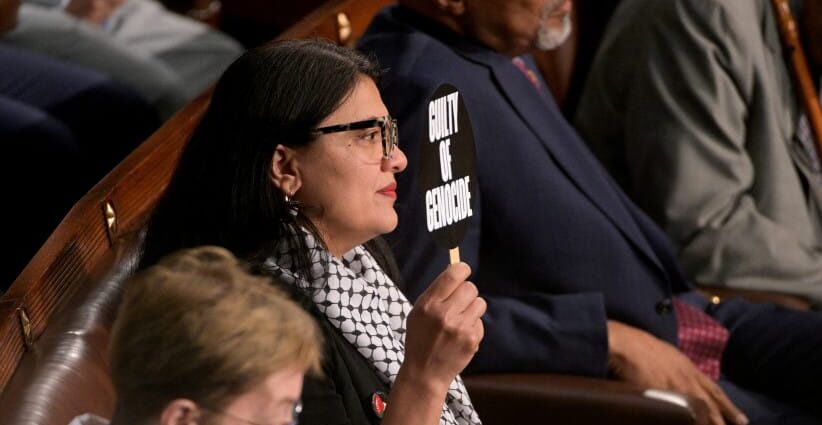
An alternative model for haredim in the public sector

Referring to Jewish philosopher Maimonides, known as the Rambam, Liberman said he supports a model in which Torah study is combined with employment and civic responsibility.

“He stated clearly that someone who studies Torah and does not work desecrates God’s name,” Liberman said. “Approval of such a system leads to idleness.”

Liberman said any coalition he joins would oppose exemptions from military or national service for draft-age citizens.

“No one will receive an exemption, not even a quarter of a yeshiva student, and not only Jews,” he said. “Everyone will report to the induction center, and the IDF will decide who is needed for military service, while the rest will perform national service.”
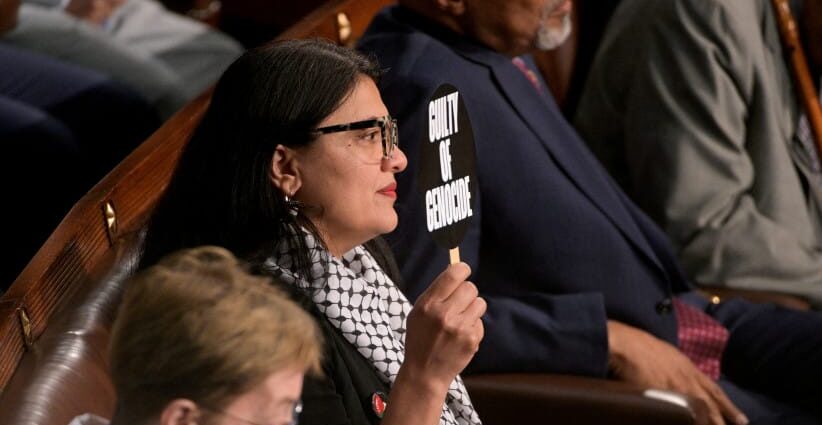
He also reiterated that Yisrael Beiteinu would not sit in a coalition alongside Shas or United Torah Judaism.

“I want to formulate clear understandings and shared guiding principles,” Liberman said. “There is no scenario in which we sit with Shas and United Torah Judaism.”

Liberman keeps options open ahead of elections

The Yisrael Beiteinu chairman declined to say whether his party would join forces with the new political movement led by former IDF chief Gadi Eisenkot.

“You are turning this into shallow journalism as if everything is personal, but that is not the essence,” Liberman said. “The essence is which flags you march under, what your worldview is, and what you are determined to achieve.”

He added that voters should focus on which leaders will uphold campaign promises after elections.

“With us, a word is a word,” Liberman said. “What we commit to before the elections, we will commit to afterward as well.”

Liberman concluded by outlining his political priorities ahead of a future election campaign.

“I have two goals, in this order: first, to bring down the government and replace it; second, to become prime minister,” he said. “That is my order of priorities, and that is how I will act.”
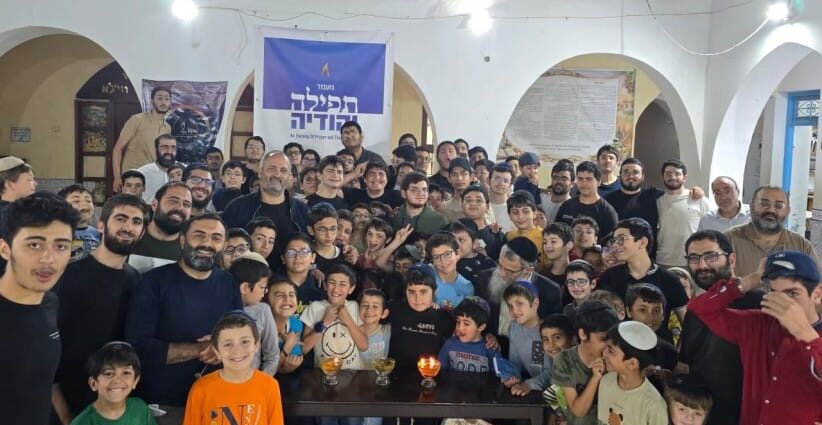
This post was originally published on here

On Friday, May 15, the Israel Defense Forces conducted an exercise near the Dead Sea in the Jordan Valley. The IDF said, “The Chief of the General Staff exercise was held to assess the IDF’s readiness for a surprise attack scenario along the eastern border in the areas of the 96th and 80th Divisions.”

This is an important drill. Images the IDF circulated showed troops operating with helicopters and also crossing urban terrain near Ein Bokek, an area of hotels on the Dead Sea. Israel’s Chief of Staff Lt. Gen. Eyal Zamir, was shown meeting with officers and following the drill closely.

There are many lessons from this drill. Let’s consider the broader ramifications. First of all, the two units involved are important but also rarely get a lot of focus in the media. The 96th is a new division established in 2025. It was established as part of the lessons of October 7. It is supposed to provide a division-level element for the Jordan Valley, essentially meaning that units that had already been deployed there will now have a division to coordinate their operations. The Jordan Valley defenses had already been bolstered in 2016 with the establishment of the coed patrol battalion called Lions of the Jordan. This is one of several similar coed units for patrolling borders, along with the Caracal and Bardelas.

The IDF’s 80th Division dates from 1979 and today is a territorial division guarding the Egyptian border and the Eilat region, including the Arava. As such, if one combines the 80th and 96th areas of responsibility, this includes the whole Jordan Valley. Israel’s land border with the Kingdom of Jordan is around 300 miles long. This is a long border, and there are increasing threats here. One threat is similar to the one on the Egyptian border and includes increased weapons smuggling, such as through the use of drones to smuggle weapons.

The lesson of October 7 is that Israel had appeared to neglect some borders. Another issue is that smart “fences” don’t accomplish everything. Israel has been upgrading fences and other technology on all its borders over the years. This included completing a fence along the Egyptian border. This has been joined now with new improvements of fencing on the Lebanon and Syrian borders, as well as along the Jordan border. There’s even more to this improvement of Israel’s capabilities. Old forts that date from the 1960s have also been upgraded, Ynet noted earlier this year.

IDF simulated Oct 7-like scenarios

What the IDF statement says about the recent drill is “during the exercise, various scenarios were simulated, including infiltrations into communities, responses to drone threats, and complex incidents near the Dead Sea.”

The IDF added that “the exercise included fighter jets and combat helicopters conducting dozens of aerial strikes within short timeframes, as well as the aerial deployment of special forces for immediate intervention in complex incidents within civilian areas. Israeli Air Force special forces also simulated a terrorist infiltration incident at a hotel in the area.” The concept is to design frameworks to deal with threats along the eastern border.

Lt. Gen. Zamir visited the site and spoke with the regional commanders, including Maj. Gen. Nadav Lotan, the head of the Ground Forces, and the head of Central Command Maj. Gen. Avi Bluth. The 80th Division commander, Brig. Gen. Israel Friedler and the 96th Division commander Brig. Gen. Oren Simcha were key to the drill. “During the visit, the Chief of the General Staff held a situational assessment, drilled the division’s troops who had been called up, and examined their preparedness for a variety of scenarios,” the IDF said.

Zamir added that “one of the main lessons taken from the October 7th massacre is the need for a high and constant level of readiness for a surprise attack on our borders, from the platoon level to the General Staff. This is what we are practicing here today – a General Staff exercise simulating defense against a wide-scale terrorist attack with complex scenarios in a challenging sector, with the mission of defending our borders and the residents of the area as our top priority.” He called this drill important and noted the lessons learned from the past. “A force capable of arriving quickly at a deadly scene can contain the incident in its initial stages and reduce its scope. We activated multi-domain reserve and standby troops, including aerial support and the deployment of special forces by air – all of this is what we are practicing today.”

He added, “This exercise includes forces from across the IDF’s units and branches, including many reservists who were called up in the middle of the night for a surprise exercise. I deeply appreciate your tremendous contribution and your repeated mobilization, time and again, in every sector.”

The message that Israel is sending is clear. It is operating on multiple fronts and is not neglecting any of its borders. In the north, the IDF is operating in Lebanon, and in Gaza, there are also operations. The same is true on the Syrian border. Israel has bolstered all these frontiers in recent years, such as establishing the new Mountains Brigade for the Hermon and Mount Dov. The brigade comes under 210th Division, which defends the Syrian border. This has improved Israel’s capabilities in the north.

As the Middle East changes, so is Israel adapting. With the conflict with Iran continuing to percolate, the eastern border with Jordan matters. Jordan is not a threat, but Iraqi militias, backed by Iran, have tried to threaten Israel in the past. As such, preparing all sorts of scenarios matters more than ever. The drill in the Jordan Valley illustrates how Israel is postured today in the Middle East. 

This post was originally published on here

German defense giant Diehl Defense, along with Rafael Advanced Defense Systems and EuroSpike GmbH, carried out firing tests of the Spike LR guided missile from the Ziesel unmanned ground vehicle (UGV), marking the first time that the missile has been successfully fired from an unmanned platform.

A total of 17 guided missiles were successfully fired from the UGV over a period of five days. The platform, Diehl said, “demonstrated impressive performance and withstood the stress of the operation.”

According to Diehl, the tests occurred just three months after the Ziesel with the Spike launcher was shown to the public at Enforce Tac 2025 in Nürnberg.

Last month, the Bundeswehr adopted a military strategy to prepare Germany for future threats and turn the military into Europe’s strongest conventional army with some 460,000 soldiers by the mid-2030s, with some 200,000 in the reserves. Along with the increase in troops, Germany aims to transform the Bundeswehr into a military that revolves around technology and innovative capabilities by 2039.

UGVs have become one of the most consequential technologies in modern warfare. Once limited to bomb disposal and remote reconnaissance, UGVs now support frontline combat, logistics, electronic warfare, and casualty evacuation across multiple conflict zones. Their rapid evolution is transforming how militaries fight, supply, and survive on increasingly lethal and electronically contested battlefields.

The Ziesel UGV is a compact tracked platform (1.6 meters long, 1.3 meters wide) that can reach speeds up to 20km/hour and can be used for logistics, casualty evacuation (CASEVAC), and reconnaissance. The platform is equipped with 11 kWh lithium-ion batteries and operates completely electrically.

Integrated onto the platform is Diehl Defense’s PLATON autonomy kit that allows for fully autonomous navigation and mission execution. With the Spike launcher integrated into the platform, it can directly participate in combat operations.

The ability of the Ziesel to enter complex battlefields might have a significant impact on anti-tank warfare, by striking armored formations from afar and without any danger to warfighters.

Diehl said that the platform is currently being tested by several armed forces, including Germany and Ukraine. 

Pinpoint precision in various ranges

Rafael has three missiles in the SPIKE family: SPIKE NLOS (non-line of sight), SPIKE ER (extended range), SPIKE MR/LR (medium/long-range), and SPIKE SR (short range). They provide pinpoint precision at extended ranges, including against non-line-of-sight targets. Operable in both offensive and defensive scenarios, it provides real-time tactical intelligence and damage assessments, allowing it to be adjusted to targets and abort missions in mid-flight. 

The Spike has been sold in various versions to 45 countries worldwide, including 20 NATO forces. The munition has been produced, supplied, and integrated onto as many as 45 different platforms, including 10 types of helicopters, ground vehicles, marine vessels, and more.

The IDF also has thousands of SPIKE missiles, including specially customized SPIKE SR rocket launchers for its infantry forces that have a reduced weight of 40 percent to provide greater flexibility to troops in the field during land maneuvers. It’s also in use by the Israel Airforce and Navy.

This post was originally published on here

Hamas failed to elect a new political leader, the terror group announced on Saturday night, promising another round of elections would soon take place.

The current race will likely position either Hamas leader abroad, Khaled Mashal, or senior Hamas politician Khalil al-Hayya as Hamas’s new leader.

The failed process comes as Hamas attempts to reassemble some level of order after much of its senior leadership was assassinated during the most recent war with Israel. Since former Hamas leader Yahya Sinwar was killed in October 2024, there has been no permanent head of the organization’s political wing.

Israeli assassinations forced restructure

Hamas media advisor Taher al-Nunu told Al Jazeera that Israeli assassinations had forced the group to restructure, and relevant vacancies would be filled according to the “consultative mechanism and silent elections.”

“The nature of elections within Hamas is not based on individual candidacy, but rather all members of the council concerned are considered candidates, while the final decision rests with the will of the voters,” he said, adding that multiple leadership positions have already been decided and will soon be announced by the relevant persons.

Hayya, based in Qatar, was responsible for negotiating a ceasefire and hostage releases after the terror group’s October 7, 2023, invasion, which launched the territory into the two-year war. He was also reported to have had a close relationship with Sinwar. Having lost multiple of his sons in the recent war, Arab supporters consider him a favorite. 

This post was originally published on here

A powerful explosion was heard in the Beit Shemesh area on Saturday, causing panic and a wave of rumors.

Many residents, alarmed by the loud blasts, initially believed it was a security incident or a military drill. However, a security official later clarified that the blast had been a controlled explosion at a private factory, as part of a planned test by the government defense company Tomer.

The company, which operates security facilities and testing areas in the Beit Shemesh area, specializes, among other things, in the development and testing of rocket engines for major defense and attack missiles, including Arrow missiles, air defense missiles, and artillery rockets.

Despite these assurances, no notice had gone out to Beit Shemesh residents.

Reports circulating of destroyed missile stockpile

Additionally, reports have circulated the theory that the explosion may have destroyed a stockpile of Arrow-3 surface-to-air missiles.

Footage on social media showed a fireball exploding in the distance, followed by panic and concern among residents as the powerful explosions lit up the entire area.

Jerusalem Post Staff contributed to this report.

This post was originally published on here

Take this podcast to go: • Apple PodcastsSpotifyMore

Watch this episode with no interruptions.

Khosro Isfahani, research director at the National Union for Democracy in Iran (NUFDI), spoke with The Jerusalem Post’s News Editor Alex Winston about the evolving state of the Iranian opposition, assessing whether the diaspora has become more unified in recent months or remains hindered by ideological and personal divisions. 

Isfahani also outlined the scope and structure of the Islamic Republic’s overseas influence networks, including activities spanning propaganda, intimidation, espionage, and alleged criminal links in Europe and North America, as detailed in recent research.

The discussion further explored the regime’s internal trajectory, including its growing reliance on the IRGC, the erosion of distinctions between so-called moderates and hardliners, and what Iran could look like in the coming decade if current trends continue. 

Speaking from Washington DC, Isfahani addressed Western policy toward Tehran, arguing that longstanding approaches of engagement have failed to produce meaningful change, while warning of the risks associated with avoiding decisive confrontation.

This post was originally published on here

Musician Yuval Vilner, 38, was named on Sunday as the suspect in cases involving alleged sexual offenses against Shay-Lee Atary and Naama Shahar.

The Tel Aviv Magistrate’s Court permitted his name to be publicized following a legal back-and-forth that reached the Supreme Court and centered on the evidentiary threshold required to support claims that publication could endanger a suspect’s life.

Vilner, who has not been indicted, was also released Sunday from house arrest under restrictive conditions, including a ban on contacting both women and a ban on leaving Israel.

In March, the court had temporarily barred publication of his name, holding off on disclosure pending further arguments over whether a psychiatric opinion was required regarding claims that publication could trigger a suicidal act.

Vilner previously studied at the Rimon School of Music and later taught there.

On Monday, Vilner’s lawyer told the court that he was withdrawing the suicide-risk claim and agreed that his client’s name could be published, but asked that the lifting of the gag order be postponed by two weeks.

Atary, Shahar, and the Association of Rape Crisis Centers in Israel, which represents and has accompanied them, opposed the delay. The publication date was ultimately set for Sunday.

Vilner’s attorney had argued in March that publication before any indictment had been filed would cause irreversible harm. He warned that in the digital era, public exposure would amount to the permanent destruction of his client’s life. Vilner himself told the court that friends had distanced themselves from him and that he had lost his job, saying publication would “collapse his world.”

Atary, who was present at that hearing, sharply criticized that argument. Outside the courtroom, she said she wanted to believe justice would be done, and rejected the idea that a suspect could avoid exposure by raising claims about his mental state when his name was about to be published. She said she herself bears scars from five suicide attempts, and questioned how the system could now give decisive weight to the suspect’s current distress.

“Fifteen years, I did not have the basic right to say the name Yuval Vilner out loud,” Atary said after the gag order was lifted. “Not in an interview, not in a post, not even in front of family members or people close to me. While he continued his life with power, money, and respect, I was the one living as if his name was explosive material, waiting to blow up my life.”

“There is something sick in a reality in which rape suspects walk free, and victims are the ones required to be silent and careful with every word, as if they were criminals,” she said. “This is the moment when people stop demanding that I pay with my life so that the reputation of the person who brutally raped me remains clean.”
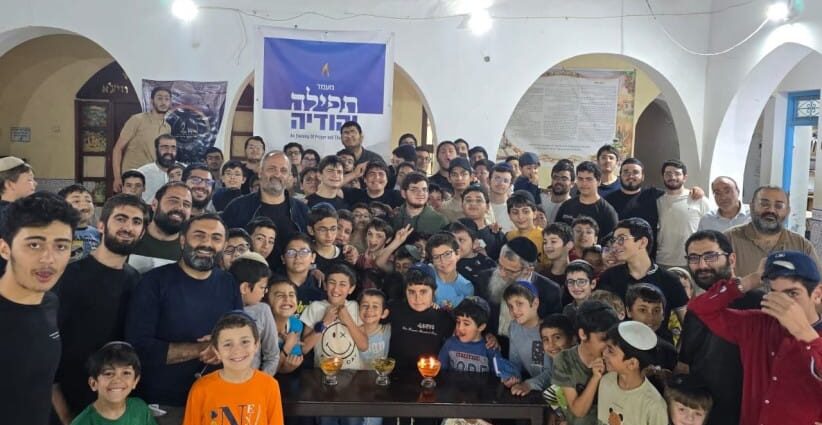
Vilner’s lawyer, Moshe Weiss, said in response that his client “will not be tried on social media and will not be convicted in headlines.”

“He is a person, like any person,” Weiss said. “He has no status, power, or influence. The monster you were told about never existed. The evidence speaks for itself, and when you see it, you will understand on your own: There is only one truth, and it will come to light.”

Attorney Hila Neubach, legal director of the Association of Rape Crisis Centers in Israel, said after the order was lifted that “no victim should have to fight for months in the legal system while the suspect misleads both her and the courts, presenting false claims as if his life is in danger, while he is already giving interviews to the media and trying to portray himself as the victim in the story.”

“We will continue to advance our bill on the matter so that victims will be entitled to know when suspects seek gag orders, and will be able to state their position from the beginning,” Neubach added. “No legal decision concerning their case should be made without their knowledge.”

Shahar also spoke last week in an interview with KAN Reshet Bet about the toll of the fight to publicize Vilner’s name.

“These weeks that I went through – this is something that destroys your soul. It feels like poison,” she said. “And what they say about it ruining his life – what do you think? That our souls are not destroyed?”

“A person’s name, in the end, is the real prison,” Shahar added. “I had faith that this would create an echo that would eventually, eventually, eventually reach the court.”

She said that, in her view, “he never thought about what he did, he was only afraid of his name being published.”

“The principle of open justice does not make this easy for me,” Shahar said, adding that she, too, had struggled with suicidal thoughts during the process.

Case originally filed in 2022

The case stems from a complaint Atary filed in 2022 over an alleged rape and fraud offense tied to an incident she says took place in April 2011 in the parking area beneath the Tel Aviv apartment where she then lived.

Atary told the Knesset Committee on the Status of Women and Gender Equality earlier this year that she was violently raped on the asphalt in the residents’ parking area beneath her shared apartment, and was later found unconscious outside her apartment door by her roommate.

Before the alleged assault, she said, she had been working a shift at a neighborhood pub, where acquaintances from Rimon School of Music were sitting at the bar. She said the last thing she remembered before the violent moments of the alleged rape was raising a small glass with them and then leaving her drink near the group.

She said she remembered nothing from that point until the moments of violence she said were “carved” into her memory.

Shahar came forward publicly about a month ago in a Facebook post, identifying herself as another complainant against Vilner.

She wrote that in October 2022, she went on a date with “a friend of friends,” and ended it “foggy and weak” in his bed, trying to resist and push him away while he used force.

“I woke up and fell asleep intermittently while he violated my body,” Shahar wrote. “I wish I did not have to write these ugly words on my beautiful page, but this is what happened.”

She said the “surprising drunkenness” she experienced that night, after what she described as not much alcohol, and the vomiting she experienced the following day, later took on a different meaning for her.

Shahar wrote that although she was “acting bravely,” she still felt fear, but said she refused to let that fear silence her.

“I remind myself that it was exactly on that fear that he built that night,” she wrote. “You silenced me for one night, not for an entire life.”

This post was originally published on here

Former MK Dr. Yousef Jabareen was elected Saturday to lead Hadash’s Knesset list, replacing longtime party leader Ayman Odeh, Israeli media reported Saturday afternoon.

Jabareen, a resident of Umm al-Fahm, defeated Dr. Shukri Awawdeh during the party’s national council meeting in Deir Hanna.

“I call for the establishment of the broadest and strongest Joint List possible. This is the need of the hour, and it is what our public demands. Therefore, the responsibility falls on all of us to act accordingly,” he said in a statement published by the party. 

“I call on all components of the Joint List to commit themselves to this mission, advance the negotiations, and become an influential and decisive political force. We will do everything to prevent the Netanyahu, Ben-Gvir, and Smotrich government from continuing for another term, and we will fight for equality, for democracy, and for peace, together with the Jewish democratic forces.”

Hadash said the vote marked the opening of its election campaign and made it the first political faction in Israel to select its list ahead of the next election.

Jabareen returns to front-line politics

Jabareen previously served as a Knesset member for Hadash and the Joint List from 2015 to 2021. During the 23rd Knesset, he chaired the Committee on the Rights of the Child and helped advance regulations on the supervision of early childhood daycare centers.

A lawyer and academic specializing in constitutional law and human rights, Jabareen previously taught at the University of Haifa and Tel-Hai College. He is married and a father of four.

Ayman Odeh and MK Aida Touma-Sliman, who have represented Hadash in the Knesset since 2015, did not run in the internal vote. Under the party constitution, which encourages leadership renewal, they would have needed a two-thirds majority to be elected again, Walla reported.

Hadash said its national council includes 966 delegates and described it as the broadest representative body of Arab and Arab-Jewish citizens in Israel.

During the Deir Hanna conference, Hadash officials described the coming election as a “decisive struggle” against the Netanyahu government and against what they called the deepening of occupation, abandonment, racism, and fascism. 

This post was originally published on here

New York City Mayor Zohran Mamdani marked “Nakba Remembrance Day” on Saturday in a social media post and included a video interview with a Palestinian New York resident, referred to as “Inea.”

“Today marks Nakba Day, an annual day of remembrance to commemorate the expulsion of more than 700,000 Palestinians between 1947 and 1949 during the creation of the State of Israel and the year that followed,” the Mamdani’s post accompanying the interview read.

In the interview, Inea, who he referred to as a Nakba survivor, describes her family leaving their home due to the “Zionists coming into Jerusalem.”

Inea went on in the video to lament her family’s displacement, and her alien status as she moved from country to country following her family’s leaving Palestine. 

The video interview was accompanied by shots showcasing the Palestinian artistry and imagery in Inea’s home. Among the art featured was a “Visit Palestine” poster created by Frank Krausz in 1936. Krausz was a Holocaust survivor and a Zionist Jew.

Among those who reacted to Mamdani’s post was Israeli activist Hen Mazzig, who recounted his family’s own story of displacement.

“My grandmother fled North Africa and Iraq after the Farhud of 1941. Six years before any war over Israel. Palestinians were expelled during a war Arab states launched against us. Over 850,000 Jews were driven from Arab lands. Almost none remain.” He said.
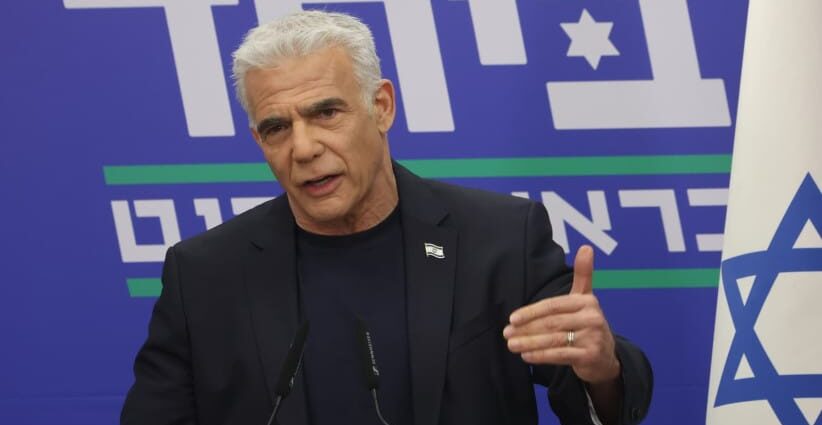
“Maybe the mayor of New York should stay out of it. Or speak to both. Don’t weaponize one trauma while actively erasing another. Especially when using this ‘Visit Palestine’ poster created by Frank Krausz, a Holocaust Survivor and a Zionist Jew,” he added.

Mamdani’s focus on the Israel-Palestine conflict

Mamdanis’ stance on the Israel-Palestine conflict has been a point of public focus since he was elected to office last November.

Mamdani began his political career by joining the Democratic Socialists of America (DSA) because of his pro-Palestinian activism, the New York State assemblyman told a 2021 conference, where he also expressed his commitment to his socialist objectives and to the Boycott, Divestment, and Sanctions (BDS) anti-Israel strategy.

“The reason that I joined the DSA, if I had to pick one, was because there was no exception for Palestine, because the same fight, the same struggle was understood to be a universal one,” said Mamdani, based on a YouTube video of the event.

Post-election polls suggested that Mamdani’s support for Palestinian rights and his anti-Israel stance drove 62% of his voters to the polls.

Several of Mamandi’s administrative staff members are vocal anti-Israel activists, and Mamandi’s wife, Rama Duwaji, was in headlines last month for liking several Instagram posts regarding Hamas’s October 7 massacre attack on Israel. 

Michael Starr contributed to this report.

This post was originally published on here

Iran has prepared a mechanism to manage traffic through the Strait of Hormuz along a designated route that will be unveiled soon, the head of the Iranian parliament’s national security committee Ebrahim Azizi said on Saturday.

Azizi added that only commercial vessels and parties cooperating with Iran would benefit from the arrangement. He said fees would be collected for specialized services provided under the mechanism.

This is a developing story.

This post was originally published on here

The Knesset returned to session this week, with some truly frightening legislation on the docket.

The proposals to formally provide the ultra-Orthodox with a de facto mass exemption from military service, and to set up an October 7 inquiry effectively controlled by the prime minister, will get most of the headlines. But I want to focus on a couple of others that I can’t help but connect to another event at the beginning of the week, not in Jerusalem but in Budapest. The inauguration of the new Hungarian Prime Minister, Peter Magyar.

Three years ago, I interviewed a Hungarian constitutional law professor, Gabor Halmai. He had been in Israel to observe and admire our pro-democracy protests against the judicial “reform.” He told me then: “Israel is a model for Hungary. What is happening on the streets, the protests. The role of constitutional scholars, spreading the idea of constitutional democracy, the importance of protecting this democracy. Nothing similar has happened in Hungary in the past 13 years.

He told me he’d been brought to tears seeing ordinary Israelis demonstrating to protect what he feared Hungary had already lost.

The morning after Hungary’s recent election, I wrote to congratulate him. Viktor Orban’s “illiberal democracy” was over – despite Orban’s control of 90% of the media, and his effective political capture of both the constitutional court (in many respects, the model for Israeli Justice Minister Yariv Levin’s “reforms”) and the Election Commission (which Halmai had sat on until experts like him were replaced by political appointees).

After the announcement that Naftali Bennett and Yair Lapid would be running together in the upcoming election, many in Israel – myself included – thought perhaps it is now time for us Israelis to learn from the Hungarians.

Bennett, Magyar similarities

Bennett is an excellent analogue for Magyar. In a country where, like Israel, truly left-wing parties are marginal, the most likely person to defeat Orban was a fellow right-winger, who agreed with Orban on the most widely supported issue – immigration – but who could make his campaign about the incumbent’s corruption, and assault on the rule of law and basic liberal freedoms. 

Similarly, Bennett agrees with Netanyahu on Israel’s closest-to-consensus issue: security. In fact, his record is more consistently hawkish than Netanyahu’s. But he can go to the electorate and say: You can have that unapologetic willingness to take the fight to our enemies, without also granting the ultra-Orthodox exemption from army service and financing their economically ruinous lifestyle; without also appointing unqualified security officials because of their personal loyalty to the prime minister; without also having Prime Minister’s Office officials moonlighting for the Qatari government; without having every government decision assessed through the prism of whether it personally benefits the prime minister and his family; and with an independent commission of inquiry into October 7 at long, long last.

But in one important respect, when Israelis ask, “What can we learn from Hungary?” they are asking the wrong question. The question assumes Israel is in the same condition as Hungary. It isn’t. Yet.

Orban succeeded in transforming his country from a liberal democracy to a quasi-autocracy. Netanyahu has not succeeded in doing the same here, despite his best efforts. As written above, Hungarians marveled at our pro-democracy protest movement that effectively prevented the judicial overhaul from being implemented.

So the more pertinent question is: Do we want Israel to end up like Hungary? With a corrupt government ruining the economy, with the media almost entirely subservient to that government, with the courts also in the pocket of the prime minister and his allies, and with elections massively tilted in the favor of the incumbent?

And here’s the really scary thing: it might happen before we have a chance to stop it at the ballot box. To return to how I began this piece, the new Knesset session opened this week with Communications Minister Shlomo Karhi planning an all-out assault on media freedom. A new bill would give the government significant control over broadcast media and news sites by establishing a new regulatory council, with a majority of members chosen by Karhi himself. 

In a direct lift from Orban’s own media-control measures, this body would have the authority to levy fines against media companies. If this legislation passes quickly, the government will be able to exercise unprecedented control over how the broadcast and online media covers the election campaigns.

Karhi is a Likud minister. It’s worth recalling that Menachem Begin was a free speech absolutist. One more indication of just how far the Likud has shifted from its liberal roots.

And there’s one more “Orbanist” move that should gravely concern anyone who wants to keep Israel as a free society: the government’s proposal to split up the role of the attorney-general.

Now, there are good arguments for dividing up the attorney-general’s responsibilities, and ways of doing so that would preserve the attorney-general’s independence and his/her power to ensure that the rule of law applies to ministers no less than to ordinary citizens. But this is not what the government intends. 

The bill would give the government the power to appoint and dismiss all three of the new positions that the AG role would be split into. For example, the new “prosecutor” position could decide to charge a minister (or prime minister) with a crime, and then simply be fired by the prime minister and replaced with someone who will cancel the decision. Likewise, the new “legal adviser” position could be fired and replaced with a yes-man if he/she gives advice the prime minister doesn’t like.

Israel is a miraculous country with extraordinary people. The last three years have shown that in abundance. We deserve, and desperately need, new leadership. Enough with the lies and the smearing of judges and other officials. Enough with tearing down the country’s democracy and claiming it is “in defense of democracy.” Elections cannot come soon enough; but let us pray that when they do, they are still free and fair.

The writer lectures and writes widely on Israeli history and politics. His research articles and op-eds have been published in a variety of media outlets in Israel, the UK, the US, and Canada. Follow him on X: @pauldgross.

This post was originally published on here

At the 79th Cannes Film Festival, which opened on May 12, considered the most prestigious festival in the world, anti-Israel sentiments were expressed by several participants, while the Iranian regime and its brutal executions of protesters and persecution of filmmakers were barely mentioned.

While Israel was being criticized, there were no Israeli filmmakers there to give their perspective. In the past, Israeli films have been prominently featured in the Un Certain Regard section, the short film categories, the Main Competition, and other sections, often winning major prizes.

But this year, the Israeli presence is limited to two Russian-born Israeli actors, Anatoliy Beliy and Vladimir Friedman, who appear in the new film, Minotaur, by Russian director Andrey Zvyagintsev, which is premiering in the Main Competition, as well as the participation of Israeli cinematographer Giora Bejach, who worked on the French film, La Bataille de Gaulle: L’âge de fer, which is being shown out of competition.  

Off the record, several Israeli directors told me their recent films had been rejected at Cannes. One said his new movie had been turned down by “every film festival you’ve ever heard of,” even though his previous movies had had world premieres at prestigious film festivals.

While there was no official boycott or blacklisting of Israelis this year, Israeli films were not part of the festival. But Paul Laverty, a screenwriter on the Feature Film Jury at Cannes, claimed that people in the film industry who have spoken against Israel since the war between Gaza and Israel began in 2023 have been “blacklisted,” a claim that is extraordinarily easy to disprove.

The BAFTA-winning Laverty noted at a press conference that the poster for the 79th Cannes Film Festival featured an image of Susan Sarandon (with her co-star Geena Davis) from the iconic film Thelma & Louise.

“Isn’t it fascinating to see some of them, like Susan Sarandon, Javier Bardem, and Mark Ruffalo, blacklisted because of their views in opposing the murder of women and children in Gaza?” the poster said. “Shame on Hollywood people who do that. My respect and total solidarity to them. They’re the best of us, and good luck to them. I just hope we don’t get bombed now, because we’ve got this poster in Cannes.”
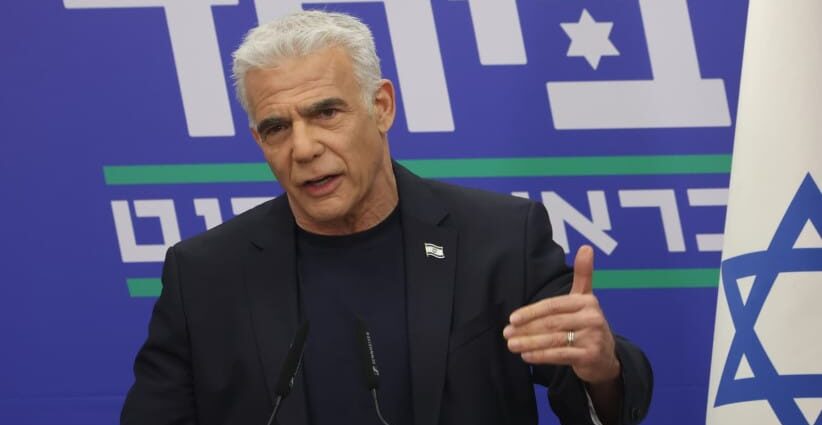
More Cannes attendees criticize Israel

But Cannes was not bombed, and others there spoke against Israel, including Hannah Einbinder, an actress best known for the series Hacks, who was at the festival to promote her latest film, Teenage Sex and Death at Camp Miasma.

Asked if she feared losing work because of her criticism of Israel, Einbinder was quoted in Deadline as saying that the risk was worth it to her: “I am under no impression that my one small career could ever measure up in comparison to even one human life.”

But despite Einbinder’s declaration that she was willing to sacrifice her “small career” to save a life, when you look at the careers of all these artists in recent years, there’s ample evidence that, if anything, criticizing Israel gives careers a boost. Let’s look at the careers of the actors Laverty mentioned – Susan Sarandon, Mark Ruffalo, and Javier Bardem – as well as Hannah Einbinder, since they intensified their criticism of Israel over the past three years.

In 2025, Einbinder won a Best Supporting Actress Emmy (out of two nominations she has received since the war began) for Hacks, a Critics Choice Award, and several other critics’ awards, and received two Golden Globe nominations.

Susan Sarandon, who claims she was dropped by a talent agency for speaking out about the war, has four upcoming projects listed on IMDb. That’s four more than two other Oscar-winning actresses her age, Sally Field and Cher.

Mark Ruffalo has been nominated for an Oscar and two Golden Globes since 2023. He has six upcoming roles, including as the Hulk in the new Spider-Man movie.

Javier Bardem was nominated for a Golden Globe for Supporting Actor for a TV role in Monster in 2025. He has roles in six upcoming movies and series, including the lead in the television series remake of Cape Fear for Apple TV, which Steven Spielberg and Martin Scorsese executive-produced.
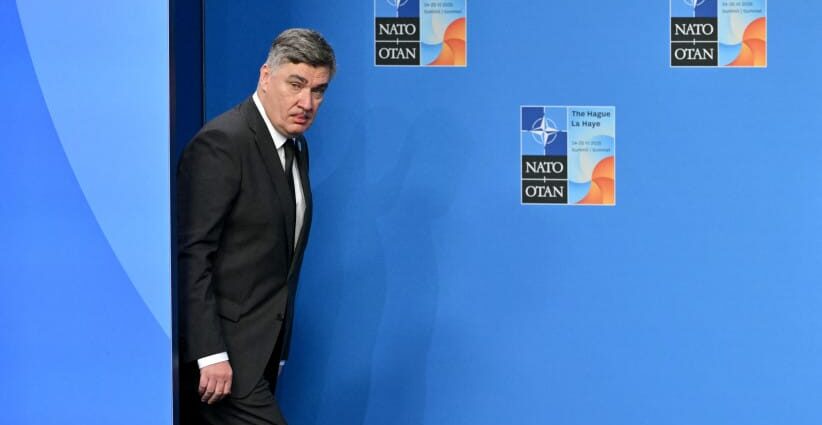
Where would these actors be if pro-Israel loyalists had not supposedly hindered their careers? Would Bardem have 12 upcoming roles, instead of six, and would he be working not only with Spielberg and Scorsese but also with George Lucas and James Cameron? Is it a sign of Israel’s power in Hollywood that Einbinder has only won a single Emmy for her performance on Hacks, and not two?

And if Israel’s supporters have so much control over Hollywood, why has Israel had 10 nominations in the Best International Feature Oscar category without a single win, the record for nominations without a win?

In addition to Israel, the currently paused war between Israel and Iran, and Iran’s brutal crackdown on protesters in the winter, during which an estimated 30,000 were killed, and the regime’s almost-daily executions of dissidents, were discussed at Cannes briefly.
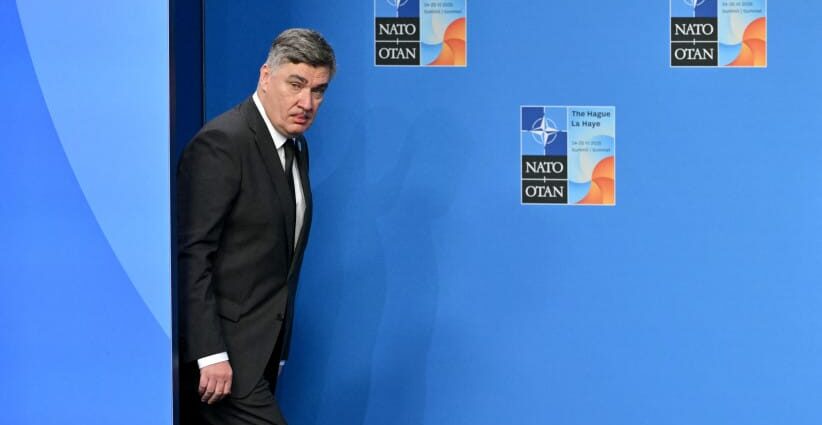
Iranian director Asghar Farhadi has a new film in the Main Competition at Cannes, Parallel Stories, an international film starring Isabelle Huppert. Farhadi, who has won two Oscars for the Iranian movies A Separation and The Salesman, and the Cannes Grand Prix for A Hero, is one of the few serious Iranian filmmakers who have not faced severe government persecution.

He leaves Iran to make movies abroad, such as Parallel Stories, Everybody Knows, and The Past, and returns home, facing no censure. His Iranian movies depict small injustices and localized corruption and may be perceived as mildly critical of local governments, but they do not openly attack the policies of Iran’s Supreme Leader or address issues that have sparked protests, such as the “Woman. Life. Freedom” movement against forced hijab.

Speaking at a press conference at Cannes last week, Farhadi addressed the killings of protesters by the government, but only after first decrying the deaths of civilians killed in attacks by the US and Israel, which he called “two tragic events”: “One of these events was the death of a number of innocent people, children, members of the civilian population who died in the war.

And before this war, we had the death of a number of demonstrators, people who went to the streets to protest, and they were equally innocent but were massacred. These two events are extremely painful and will never be forgotten.” He called the deaths of civilians “murder” and said, “Any murder is a crime.”

While he did mention the massacre of demonstrators by the government, his words were too little, too late for many in the Iranian diaspora, who expressed their feelings on social media. Human rights activist Nima Far spoke for many, saying on X/Twitter: “While protesters in Iran are tortured, shot, and hanged for simply demanding freedom, Farhadi carefully lumps everything together into one abstract, depoliticized package of ‘tragic events’ and ‘painful killings.’ This is not courage. This is calculated ambiguity from a man who knows exactly how far he can go without naming the Islamic Republic as a criminal, execution-running regime. He spoke about ‘the death of innocent people, children, members of the civilian population who died in the war’ and ‘the death of a number of demonstrators who went to the streets to protest’ as if these are two interchangeable tragedies falling from the sky. He frames executions, war casualties, and massacred protesters as morally equivalent and refuses to assign responsibility to any side.”

Far went on to say, “The same regime that lit the region on fire is also signing execution orders, running torture chambers, and ordering live fire on protesters. By equating all deaths, Farhadi blurs the line between victim and perpetrator and turns systematic state terror into a generic tragedy where no one is responsible… This is especially obscene because he is speaking from complete safety. He lives, works, and premieres films in the West.”

He also noted that Farhadi receives funding for his films from the Doha Film Institute in Qatar, and said that, “Iranians do not need another famous man on a French stage to tell them ‘any murder is a crime.’ They need people with platforms to say clearly that the Islamic Republic is running an industrial machine of execution and repression and must be confronted, not politely folded into a vague ‘cycle of violence.’”

There have been Iranian filmmakers who have spoken forcefully against the regime and made films explicitly critical of it, notably Jafar Panahi, whose movie, It Was Just an Accident, won the Palme d’Or, the top prize, at Cannes last year. He was sentenced by the Iranian government in absentia to a year in prison in Iran for “propaganda activities.” 

Mehdi Mahmoudian, who was nominated for an Oscar for his screenplay for Jafar Panahi’s It Was Just an Accident, was arrested by the Iranian government in January and held in jail for 17 days.

Other Iranian directors, including Mahmoud Rasoulof, the director of the film The Seed of the Sacred Fig, have had to flee Iran after the government ordered their arrest.

But Farhadi did not speak in support of his persecuted colleagues at Cannes this year, and it is unlikely that he or anyone else will. You can expect to hear more about Israel and Gaza, though. 

This post was originally published on here

Every year on Jerusalem Day, as Israeli flags flutter proudly across the skyline and Jews celebrate the reunification of their eternal capital, the same falsehoods about Jerusalem inevitably reappear.

We are told that Jews have no historic connection to the city. That Jerusalem was never the capital of a Jewish state. That the Temple is a Zionist invention. That Israel is an “occupier” with no legitimate claim to the city.

But slogans are not facts, and propaganda is not history. And repetition does not transform fiction into truth.

So this Jerusalem Day, amid the noise and distortion, it is worth returning to something increasingly rare in discussions about Israel: facts.

And the facts about Jerusalem are overwhelming.

Jerusalem has stood at the center of Jewish life and identity for more than 3,000 years. Circa 1000 BCE, King David made the city the capital of the Jewish people. His son King Solomon built the First Temple there more than 1,500 years before the advent of Islam. The Second Temple stood for centuries until its destruction by the Romans in 70 CE.

Our connection is not abstract, it is historical. Jerusalem is mentioned more than 660 times in the Bible, while it is not mentioned even once in the Quran. Archaeological discoveries throughout the Land of Israel further underline the Jewish connection to the city. The Tel Dan Stele, an ancient inscription discovered in northern Israel in 1993, contains the earliest known extra-biblical reference to the “House of David,” providing powerful historical evidence for the Davidic dynasty described in scripture.

And the Siloam Inscription, discovered in Jerusalem in 1880, commemorates the completion of King Hezekiah’s water tunnel in the 8th century BCE and was written in ancient Hebrew, providing direct evidence of organized Jewish life and governance in the city during the First Temple era.

Indeed, no other people in history ever made Jerusalem its national capital except the Jews. Not the Romans. Not the Byzantines. Not the Ottomans. Not the British. And certainly not the Palestinians.

The Jewish bond with Jerusalem was never merely symbolic. It was continuous, tangible, and enduring.

For nearly two millennia of exile, Jews prayed facing Jerusalem three times a day. At every Passover Seder they proclaimed, “Next year in Jerusalem.” At weddings, a glass was shattered to mourn the city’s destruction.

And despite expulsions, massacres, and foreign rule, Jews maintained a continuous presence in the city. Even after the Roman expulsion and Crusader massacres, small Jewish communities persisted. In 1488, for instance, famed Italian Rabbi Obadiah of Bartenura, whose authoritative commentary on the Mishna is studied until today, found active Jewish life in Jerusalem upon his arrival.

Indeed, by the mid-19th century, decades before the rise of modern political Zionism and long before the establishment of the State of Israel, Jews had already become the largest population group in Jerusalem.

The numbers tell the story clearly.

Jerusalem’s Jewish population numbered approximately 7,120 in 1844. By 1876, the Jewish population had risen to roughly 12,000. By the turn of the 20th century, Jews formed a clear majority.

These are not political talking points. They are historical realities.

Nor was Jewish immigration to the Land of Israel some sudden 20th-century phenomenon. Historical records indicate that by the early 19th century, more than 10,000 Jews already lived in the land. By 1890, the Jewish population had risen to approximately 43,000, and by 1914 it had reached roughly 94,000.

In other words, the Jewish return to Zion was already underway long before Theodor Herzl, long before the British Mandate, and long before the modern conflict.

The evidence is impossible to ignore

Despite this mountain of evidence, attempts to erase Jewish history in Jerusalem continue unabated.

Palestinian leaders routinely deny that the Jewish Temples ever existed on the Temple Mount, despite overwhelming archaeological and historical proof. International bodies have passed resolutions referring to Judaism’s holiest site solely by its Muslim names, as though centuries of Jewish attachment can simply be legislated away.

This is historical revisionism. But archaeology itself demolishes these falsehoods.

Excavations throughout Jerusalem have uncovered ancient Jewish coins, Hebrew inscriptions, royal seals, and remnants from the First and Second Temple periods. Ancient historians, such as Josephus, documented the destruction of the Second Temple in vivid detail. Even Roman triumphal imagery, most famously the Arch of Titus in Rome, depicts Jewish captives carrying the Temple menorah into exile.

Facts do not cease to exist simply because anti-Israel ideologues seek to erase them.

Nor should anyone forget what happened when Jerusalem was divided between 1948 and 1967 under Jordanian rule.

During those 19 years, Jews were completely barred from accessing the Western Wall and the Jewish Quarter of the Old City, despite explicit guarantees in the 1949 armistice agreements. Fifty-eight synagogues in the Jewish Quarter were destroyed or damaged by the Jordanians. Ancient gravestones on the Mount of Olives, some dating back centuries, were desecrated and used for roads, military camps, and even latrines.

The city’s reunification in 1967 ended 19 years of Jordanian control of eastern Jerusalem, with the Hashemite Kingdom’s annexation having been recognized by only two countries.

Yet, somehow it is Israel that now stands accused of restricting religious freedom.

The truth is precisely the opposite.

Since reunifying Jerusalem in June 1967, after Jordan joined the Six Day War, Israel has safeguarded access to holy sites for all faiths. Muslims pray freely at al-Aqsa Mosque. Christians maintain churches and institutions throughout the city. Jerusalem, under Israeli sovereignty, has become one of the few cities in the Middle East where Jews, Christians, and Muslims all have genuine religious freedom protected by law.

The city itself reflects that vitality.

Today, Jerusalem is home to nearly one million residents, making it Israel’s largest city. It boasts well over 1,000 synagogues, hundreds of churches, and dozens of mosques. It is the seat of Israel’s parliament, Supreme Court, and national institutions. It is a living, thriving capital, not a relic of ancient memory.

And that is ultimately what Jerusalem Day represents.

It is not merely the anniversary of a military victory. It is the celebration of an ancient people returning to its historic heart after centuries of dispersion and longing.

When Israeli paratroopers reached the Western Wall in June 1967, commander Motta Gur famously declared, “The Temple Mount is in our hands.” At that moment, Jewish history came full circle.

Jerusalem was not conquered in 1967. It was liberated and reclaimed.

At a time when lies about Israel spread with alarming speed across campuses, social media, and international forums, it is more important than ever to stand unapologetically for truth.

Jerusalem is the capital of the Jewish people because history says so. Archaeology says so. Demography says so. And 3,000 years of uninterrupted Jewish memory say so.

The facts are there for anyone willing to see them.■

The writer served as the deputy communications director under Prime Minister Benjamin Netanyahu.

This post was originally published on here

Can you identify the biblical book in which the phrase “Tower of David” appears? Do you know where Theodor Herzl’s coffin lay before it was buried on Mount Herzl? Or what happened to the animals at the Biblical Zoo during the War of Independence?

At the Tower of David Jerusalem Museum, middle school students from 33 Jerusalem schools – secular, religious, and mixed – put their knowledge to the test this week at the Jerusalem Quiz in front of their school peers, teachers, family, and friends. 

After four months of study, tours, and a deep dive into the city’s 4,000-year history, contestants tackled questions spanning pivotal moments, but also small details, in the city’s unique story, having memorized material on 30 major Jerusalem sites, archaeology, music, history, architecture, culture, and unforgettable Jerusalem trivia.

The quiz, held in honor of Jerusalem Day in the Victor and Esther Achar Amphitheater, was initiated by the Education Center of the Tower of David Jerusalem Museum. 

Inbal Sharon, director of the center, worked closely with the Jerusalem Education System (Manhi) director Arik Wurtzburger, as well as Yehuda Neuman, supervisor of Secondary Education, Jerusalem Education System, to bring study material to Jerusalem students throughout the city.

 
Eilat Lieber, director and chief curator of the Tower of David Jerusalem Museum, noted: “The renewed museum serves as an immersive, and surprising, educational space that encourages independent learning through exploration, inquiry, and discovery, making Jerusalem’s history powerfully relevant to our own times.

“The Jerusalem Quiz reflects that same spirit – bringing together teenagers from vastly different neighborhoods, schools, and communities to discover and connect to their city together. The phrase ‘Jerusalem built as a city joined together – a city that makes all Israel friends’ couldn’t ring more true.” 

Sharon was deeply moved watching the students from different schools and backgrounds form genuine bonds with one another during the on-site preparation day at the museum. 

“The very act of learning together creates an understanding and breaks down prejudice. It inspires hope for a far more united, compassionate, and tolerant future,” she commented.

The winning students weren’t just quick thinkers – they knew Jerusalem inside out. First place went to ninth-grader Ya’ara Eshkoli from Inbar High School, who admitted: “The questions were hard – you really had to remember exact details.” Second place went to David Chiret from Netiv Meir Bnei Akiva Yeshiva High School. Third place went to Omer Eylon from Keshet High School. 

Last year, Jerusalem Mayor Moshe Lion pledged that the Jerusalem Quiz would become an annual tradition. This week, the second Jerusalem Quiz took place – another step in building what is quickly becoming a new Jerusalem tradition.

“We hope that next year the Jerusalem Quiz becomes not just a national quiz open to schools across the country but international – in honor of the 60th Anniversary of the Reunification of the city,” said Lieber. 

“Visit the museum where Jerusalem’s story comes alive,” Lieber suggested, smiling, “and you may just be ready for next year’s Jerusalem Quiz!”

And now the challenge is yours: How many questions can YOU answer?

The Jerusalem Quiz

1. Twice a year, the notes are cleared from the Western Wall to make room for new ones. What happens to the old notes?

(a) They are kept in a special vault in the State Archives 
(b) They are kept in the archives of the Western Wall Heritage Foundation 
(c) They are transferred to genizah (religious burial)
(d) They are thrown away
2. Which of the following rulers built or restored the walls of Jerusalem?
(a) King Hezekiah, Nehemiah, and the Hasmoneans 
(b) King Hezekiah, Suleiman the Magnificent, and General Allenby 
(c) King Herod, Saladin, and Baybars
(d) King David, the Hasmoneans, and Suleiman the Magnificent
3. Who said to whom: ‘The Hurva has been destroyed’?
(a) Rabbi Shlomo Zalman Tzoref to his grandson Yoel Moshe Salomon
(b) The fighters of the Jewish Quarter by radio in 1948 
(c) Abdullah el-Tell to the soldiers of the Jordanian Legion
(d) Rabbi Yehuda HaHasid to members of his community
4. Who of the following are buried on Mount Herzl?
(a) David Ben-Gurion, Yitzhak Rabin, and Eliezer Kaplan
(b) Teddy Kollek, Zalman Shazar, and Levi Eshkol
(c) Herzl, Golda Meir, and Menachem Begin
(d) Menachem Ussishkin, Yitzhak Ben-Zvi, and Shimon Peres
5. In the verse added to Naomi Shemer’s song  ‘Jerusalem of Gold,’ which places are mentioned? 
(a) The wall, the Old City, the market, and the square
(b) The Temple Mount, the Western Wall, the cisterns
(c) The cisterns, the Temple Mount, Jericho Road
(d) The Dead Sea, the market, the Jewish Quarter
6. What valley separates the Temple Mount from the Mount of Olives?
(a) The Citadel Valley
(b) The Tyropoeon Valley
(c) The Kidron Valley
(d) The Valley of Hinnom
7. Who built the Second Temple in Jerusalem?
(a) King Herod
(b) The Returnees to Zion (Shavei Zion
(c) The Maccabees (The Hasmoneans)
(d) King Cyrus
8. In the Jewish Quarter, there are many historical sites each connected to a different period in Jerusalem’s history. Arrange the sites according to the historical timeline:
(a) The Cardo, the Hurva, the “Galed,” Batei Mahase Square
(b) The “Galed,” the Cardo, the Broad Wall, the Hurva
(c) The Broad Wall, Tiferet Israel, the “Galed,” the Cardo
(d) The Broad Wall, the Cardo, Tiferet Israel, the “Galed” 
9. What is the ‘Ezrat Yisrael’ in modern Jerusalem?
(a) The hassidic synagogue in the Jewish Quarter
(b) The egalitarian prayer plaza at the Western Wall 
(c) The Hebrew-learning association founded by Eliezer Ben-Yehuda
(d) The Avenue of the Righteous Among the Nations at Yad Vashem
10. During the Crusader period, the Aqsa Mosque served as:
(a) The church of the Hospitaller Order
(b) The monastery of the Teutonic Order
(c) Headquarters of the Templar Order 
(d) A hospital of the Lazarist Order
11. Who scored the first goal scored at Teddy Stadium during the stadium’s inaugural soccer match? 
(a) Moshe Sinai 
(b) Yossi Benayoun 
(c) Haim Revivo
(d) Eli Ohana
12. In which book of the Bible does the phrase ‘Tower of David’ appear?
(a) Kings I 
(b) Kings II 
(c) Psalms 
(d) Song of Songs

This post was originally published on here

What comes to mind when you think of the country of Panama?

For many, it’s the famed canal. For those paying attention to the news in the 1980s, it’s the “Noriega years.” For others, it’s an exotic vacation destination, newly kitted out with affordable kosher restaurants. 

And it is all of those things. But given Israel’s increasing proximity to Latin America as a strategic ally – in the face of increasing daylight between previous European allies – this country on the isthmus linking Central and South America is so much more. 

President Isaac Herzog’s visit to the region earlier this month, which included Israel’s historic first-ever meeting with a Panamanian president, attests to the burgeoning potential of diplomatic, business, and cultural exchanges with Latin America.

And, as we discovered in our lively conversation with Panama’s charismatic Ambassador to Israel, Ezra Cohen – an observant Jew – the country hosts a thriving, long-established Jewish community.

Ezra Cohen, the man

We sat down with Cohen, 66, in his well-appointed Jerusalem home just prior to Herzog’s Panama visit. With expansive views of the cityscape and the Knesset, it is situated close to the Mahaneh Yehuda market – which Cohen enthused he loves to stroll around. We admired the decor, which included bottles of “Panama” from the Psagot Winery, and multiple flags.

It seems inevitable that Cohen would return to serve Israel. His parents lived in the very Jerusalem neighborhood he resides in now. His father fought in the 1948 War of Independence and was taken captive as a prisoner of war by Jordan, held for nine months, subsisting on worm-infested food, and finally released in a prisoner exchange. In the 1950s, Cohen recounts with clear delight, his father and uncle both worked at The Palestine Post (now The Jerusalem Post) in the archives department.

Shortly thereafter, he went to Panama, found work, but came back to Israel to find a wife. That took him two weeks. They married three months later, and he took his bride to Panama. Cohen said his mother cried when she saw Panama and asked, “When are we going home?” But eventually they made a happy life there. 

After growing up in Panama, Cohen founded 26 public and private companies, which included the first Panamanian company to be listed on the NASDAQ. His extensive experience in the private and public sectors includes consumer electronics distribution, logistics, and fostering kosher food initiatives.

“Seventy-four years later, I came back to Israel as the ambassador during the war, during the winter, to close the circle here in Panama,” he said.

Cohen and his wife, Linda, a real estate broker, make time every day to Facetime with their children and grandchildren, and they enjoy vacation visits twice a year in Israel and three times in Panama.

The ambassador’s excitement and sense of being honored to take part in pivotal events shaping the Jewish state colored our entire discussion. In May-June 1959, then-foreign minister Golda Meir visited Panama as part of a broader Latin American tour  to strengthen diplomatic ties with supportive countries in the region. Sixty-seven years later, it’s more timely than ever.

First stop for President Herzog – the Panama Canal

“The president is going directly from the airport to the Panama Canal,” noted Cohen. “Of course, it’s going to be a VIP tour, so he is going to be able to go to the chamber where they control the locks – and he’s going to be able to open the locks.” 

Indeed, one of Herzog’s first stops was to the Miraflores Locks of the Panama Canal, which is known as one of the most significant engineering achievements in human history and remains one of the world’s most vital strategic waterways.

“This is a beautiful example of how to lead and enable freedom of navigation and maritime freedom, as opposed to what we see in the Straits of Bab al-Mandab in the Red Sea or in the Strait of Hormuz in the Gulf,” the president said at the Panama Canal, calling the situation with Iran at the Strait of Hormuz “the antithesis.”

“This is the other example,” he said. “We must all stand up firmly against any blockage of maritime capability and movement around the world.”

He also noted that Panama “understands, perhaps better than anyone, the vital importance of freedom of navigation and why it is worth fighting for.”

The canal opened on August 15, 1914, connecting the Atlantic (via Limón Bay) to the Pacific (near Panama City). With approximately 14,000 annual transits, the canal shortens routes dramatically (e.g., New York to San Francisco saves about 8,000 nautical miles vs Cape Horn) and is vital for US trade, grain, containers, and auto shipping. It is also a moneymaker for Panama; in 2025, it generated a record $5.7B in tolls.

According to the ambassador, 7% of world commerce traverses the canal.

After the red-carpet airport welcome, Herzog, and wife, Michal, were taken to the Presidential Palace (Palacio de las Garzas) for an official meeting with Panamanian President José Raúl Mulino, his wife, Maricel de Mulino, and government officials.

Then it was on to Panama City, where he met with leaders and members of Panama’s Jewish community (which, not counting Mexico, has Central America’s largest community of Jews).

The US and Panama first established diplomatic relations in 1903, after Panama separated from Colombia, with US support. The Hay-Bunau-Varilla Treaty granted the US rights to build and control the Panama Canal and a surrounding Canal Zone in perpetuity. Under presidents Jimmy Carter and Omar Torrijos, the Torrijos-Carter Treaties (Panama Canal Treaty and Neutrality Treaty) transferred full control of the canal to Panama on December 31, 1999. 

Just 10 years before, the US launched Operation Just Cause, invading Panama and removing military leader, drug trafficker, and de facto dictator Manuel Noriega, to protect US citizens and restore democracy to Panama. Free elections have been held in Panama ever since. (There is a deeper story involving the CIA unseating Noriega, Cohen noted, and interested readers may listen to one of many podcasts on the subject.)

A major geopolitical and commercial dispute surfaced in 2025 over control of two key container ports at the entrances to the Panama Canal – Balboa on the Pacific side and Cristóbal on the Atlantic side, which had operated for decades by a subsidiary of Hong Kong-based CK Hutchison Holdings.

In early 2025, US President Donald Trump claimed China was “running the Panama Canal” and vowed to “take it back.” He put pressure on Panama to reduce perceived Chinese involvement with the ports.

The Supreme Court of Panama eventually ruled the concession contracts with CK Hutchison unconstitutional and annulled them. Panama then took back control of the ports and granted temporary (18-month) operating contracts to Maersk (Balboa) and MSC (Cristóbal).

The situation is yet unresolved and still highly contentious – a proxy battle in the US-China rivalry over strategic maritime infrastructure and delaying inspections to slow international commerce. Panama has tried to balance relations with both superpowers while asserting sovereignty.

Panama and Israel – friends from the beginning

The friendship between Panama and Israel began in November 1947, with Panama’s vote in favor of the UN Partition Plan (Resolution 181). On June 18, 1948, just one month after Israel declared independence on May 14, Panama was one of the first countries in Latin America to offer support to the nascent country, issuing Resolution No. 1856, which recognized Israel as a “sovereign state, fully invested with international personality.”

During the 1948 War of Independence, Panama also facilitated the transfer of aircraft to Israel.

“I think this trip sends an even stronger message,” Cohen observed. “Israel, due to the [recent war with Iran], has realized who its real allies and friends are, as many of them turned their back during these last days. Panama, from Israel’s inception as a state, today and tomorrow will always be an ally to Israel.” While Cohen stressed that Panama prides itself in its neutrality, he noted that it has never supported the Palestinian Authority, and never will.

History of Jewish Panama

Jews arrived in Panama shortly after Spanish colonization in the early 1500s. The first arrivals, fleeing the Spanish and Portuguese Inquisitions, were conversos and marranos (crypto-Jews) – Jews forcibly converted to Catholicism but secretly practicing Judaism.

“Jewish members were part of the foundation of Panama,” Cohen said. “They were part of the designing of the flag of Panama, and were part of the establishment of the firefighters unit in Panama. So Panama and the Jewish community go back… way, way back.

“Do you know which year the first Jew arrived in Panama? 1501,” he noted. “We have the Panamanian Jewish Museum, which tells you the story about Panamanian Jewry in those days.”

Cohen said it’s documented that at 4 a.m., during the High Holy Day season, a man would walk the streets in the Jewish neighborhood, shouting, “Selihot, Selihot!”

Panama had three waves that brought Jews to its shores, according to Cohen. “First, were Jews escaping the Spanish Inquisition, the second were Jews fleeing Europe during World War II, and the third influx were Syrian Jews.”

Cohen estimates there are currently 14,000 Jews living in Panama: 10,000 Sephardi; 2,000 Ashkenazi; and 2,000 Reform.

Other estimates differ slightly, estimating between 10,000 and 12,000 Jews living in Panama. Either way, Panama is the clear leader, with the largest Jewish population in Central America (many do not count Mexico, which has around 40,000, as Central America). Costa Rica, for its part, has around 3,000 Jews, primarily in San José.

In South America, the Jewish population is more robust. Argentina leads with approximately 180,000 Jews, according to population estimates, followed by Brazil with around 120,000, Uruguay with 16,000, and Chile with 15,000-20,000. (These figures are from sources such as the American Jewish Year Book / demographer Sergio Della Pergola estimates.)

“Panama and Israel are two nations, very small in size, but very big in heart,” Cohen said. “They are looking to cooperate and work together for the betterment of the entire world.”

He said Israel’s policy this year is to strengthen its relationship with Latin American countries. “We have seen the result of the last elections, and countries like Bolivia and Chile, which were against Israel, now, with their new governments, are looking to establish very strong relationships with Israel.”

As a businessman, he understands Panama’s potential as a Jewish destination. With 52 kosher restaurants and 16 synagogues, Cohen pointed out, Panama is not only warm and welcoming to its resident Jewish communities – with Punta Paitilla its largest neighborhood – but is also an easy-to-access vacation paradise. 

With its beautiful beaches, lakes, and parks, and a short plane ride from Miami, Cohen would like to see his country become “the next Thailand” for Israelis looking for a beautiful – and secure – place to visit. Moreover, Anglos will be happy to know that about 80% of Panamanians are fluent English speakers.

Herzog’s office agrees, stating that the country has “tremendous tourism potential.”

The beachside Playa de Nado – Deer Beach – is, in fact, home to about 300 Israelis, Cohen said, and has become the most expensive place to live in Panama, at $6,000 per square meter.

The restaurants in Panama, according to Cohen, are of high quality, with outstanding kashrut standards – not to mention outstanding steak at affordable prices that would put Israelis in happy sticker shock. “When you have 52 restaurants for a population as small as the Jewish community in Panama, you realize that 70% of the customers are not Jewish but still patronize these restaurants. So they have very high culinary and cuisine standards, with low prices because of the competition.”

While Panama is primarily a Christian country, it is also home to about 15,000 Muslims, who, according to the ambassador, are peaceful neighbors.

Mutual interests

Cohen is forging more than just tourism exchanges between Israel and Panama. He said there are numerous opportunities to share interests and many opportunities for cooperation.

“Israel, for example, doesn’t have water,” he explained, “yet it’s excellent at managing water, so we must combine the two elements. Also, in terms of security, we have the canal, which we need to protect, so we’re looking for ways to ensure that it is safe, not only from imminent attacks but also from cyberattacks. 

“These are areas that Israel is expert at, and we look forward to working with Israel’s expertise. We are signing a G-to-G [government-to-government] agreement.

“Each government will assist the other in different areas,” he elaborated. “For example, Israel needs workers for agriculture and construction. We have many workers in those fields.

“At the moment, we have less than 50 people working in Israel. We want to extend that to a substantial number.

“We are also trying to look for solutions for the administration of the hospitals in Panama, administrative systems of medicines, inventory level, logistics, etc.,” he said. “Israel is an expert. So those are some of the areas we are looking to discuss during this trip.”

Drones, doctors, and dairy: the ultimate exchange

“Four months ago,” the ambassador said, “the Minister of Education of Panama, Lucy Molinar, came [to Israel] for an AI conference, and we took her to meet educators at some universities in Israel. She forged relationships with Ben-Gurion University and the University of Ariel, where they will be conducting exchange programs and creating scholarships in the fields of medicine and technology.”

Israel has also arranged fellowships for Panamanian doctors at Hadassah-University Medical Center and Ichilov Hospital.

“Israel and Panama are both active and doers,” Cohen added. “There are a lot of things we have in common, and much we can do together.”

Panama is also interested in inviting Israeli technology companies, cybersecurity, and drone companies to explore opportunities for mutual trade. 

“We share two borders with Colombia and Costa Rica, with lots of coastal waters, and surveillance is important, so it’s very much necessary to have drone surveillance systems, which Israel is an expert at,” he noted.

With Panama playing in the 2026 FIFA World Cup, the countries have arranged for the Panama soccer team to visit Israel. And they are working on more campaigns to encourage tourism in both directions. “As of now, we lack a direct flight,” the ambassador conceded. But he is hoping to change that, so what should be a 13-hour flight isn’t longer with stopovers.

As for the general temperature of the Panamanian public, Cohen said, “Since the Oct. 7 war, Israel has been in the headlines every day. Unfortunately, Israel is losing the media war because of the numbers, but in general the atmosphere in Panama is that Israel has always been an ally to Panama. And Panama has been an ally to Israel. So, there is a good feeling toward one country 
to the other. And it goes in both directions.”

Unlike Jews in other countries rushing to make aliyah, the ambassador said Panama’s Jews are not leaving in huge numbers, since Panama has a healthy economy and very little antisemitism. Still, he noted, some Panamanians are buying vacation apartments in Israel.

President Herzog’s trip to Costa Rica

“The future of Israel-Latin America relations is looking very bright,” a spokesperson for President Herzog’s office volunteered. 

After the Panama visit, President Herzog concluded his official visit to Central America after attending the inauguration ceremony of President Laura Fernández Delgado of Costa Rica on Friday, and meeting with a series of world leaders in San José. His trip also included a visit to the Centro Israelita Sionista de Costa Rica, or Israelite Zionist Center of Costa Rica, where Herzog treated the warm community to a reading of the weekly haftarah portion.

“From the president’s point of view, his trip recognized a very strong momentum in Latin America,” the spokesperson continued. He said Herzog was welcomed with cheers and received an extremely warm welcome when his name was announced and as he entered the stadium for the inauguration.

This trip comes on the heels of Argentinian President Javier Milei – known for his vocal support for Israel – becoming the first head of state and first non-Jew to receive the Genesis Prize (often called the “Jewish Nobel”), a $1 million annual award from the Genesis Prize Foundation. It recognizes outstanding achievements and contributions to the Jewish people or humanity, inspired by Jewish values. Herzog presented him with the award.

Milei donated the $1 million to launch the Isaac Accords initiative, which he models after the Abraham Accords, to boost diplomatic, security, financial, and technology ties between Israel and Argentina. Hopefully, other Latin American countries will join the initiative.

Can you spare a grand for a Panamanian Geisha coffee?

Another promising development: Panama has been known for growing coffee, but in the last decade coffee growers discovered a new seed, according to Cohen. “They tried it and industrialized this seed, and named it Geisha. The taste of this coffee is more fruity and not as bitter as regular coffee. The Asians discovered this taste and went crazy for it.”

He pointed out that Asians typically don’t drink coffee because they don’t like the bitter taste, so they drink tea, but Geisha coffee is a tea-flavored coffee.

“The problem is that the demand exceeds the supply,” he said. “Last year, at the Dubai Coffee Conference, we sold a kilogram for $30,000. So Dubai coffee shops are offering Geisha coffee for $1,000 per cup, which is bringing the coffee industry in Panama to a higher and different level. 

Coffee growers have a very nice experience of visiting and explaining how is it done, and it’s very interesting.” 

He added that he strongly recommends that Israelis visit Panama and tour its coffee-growing industry (even if you can’t afford to purchase a cup of Geisha coffee).

As for Israeli coffee? The ambassador enjoys a strong cup but drinks it with Remilk – and, much in character, is trying to bring the lactose- and cholesterol-free dairy milk company to Panama’s shores.

This post was originally published on here

A Palestinian who tried to sell a lion cub was sentenced to 30 months in prison as part of a plea deal, Israeli media reported on Wednesday. 

The West Bank man was sentenced by the Judea Military Court after pleading guilty to several offenses, including possessing a stolen M-16 rifle.

According to the man’s WhatsApp records, he tried to sell the cub for NIS 50,000 and offered to sell other animals, including a tiger. However, police couldn’t locate the cub or any of the other animals the man claimed to own.

In addition to a prison term, the man will also pay a NIS 5,000 fine.

Chief prosecutor for the Israel Nature and Parks Authority, Shai Peretz, welcomed the ruling.

“I see the sentence as a clear and unequivocal message from the military court against the illegal possession of wild animals and harm to them,” said Peretz.

“The significant punishment imposed reflects the severity of the acts and the importance of protecting wildlife, alongside the deterrence required against those involved in offenses of this kind,” he added. 

Lions often smuggled throughout Israel

Wildlife smugglers have trafficked lions in Israel before. In January, authorities transferred two cubs recovered from illegal smuggling to a wildlife reserve in South Africa.

In 2025, a video showing a person driving a car with a lion cub and monkey went viral online, leading police to seize a cub in a southern Bedouin village. 

According to Ynet, Israel Nature and Parks Authority Inspector Adva Peretz said at the time that lions, being wild animals, shouldn’t be kept in homes.

“They are social animals that require complex care,” said the inspector. “They are also dangerous and, as they grow, can pose a serious threat to humans. We will do everything possible to return them to their natural habitat.”

According to a 2025 Channel 12 report, police believe that smugglers use drones to bring animals into the country while evading border searches.

This post was originally published on here

Hamas military leader Izz ad-Din al-Haddad was killed in an Israeli strike on Friday in the Gaza Strip, the IDF confirmed on Saturday, following an earlier Reuters report that Hamas had confirmed his death.

In a statement released on Saturday, IDF Chief of Staff Lt.-Gen. Eyal Zamir described the operation as a “significant operational achievement.”

“In every conversation I held with the hostages who returned, the name of the arch-terrorist Izz al-Din al-Haddad, one of the chief perpetrators of the October 7 massacre and the head of Hamas’ military wing, came up again and again,” said Zamir. “Today, we succeeded in eliminating him.

The IDF will continue to pursue our enemies, strike them, and hold accountable everyone who took part in the October 7 massacre,” added Zamir. “We will not relent until we reach them all – this is our duty to all those who returned and to all citizens of the State of Israel.”

Prime Minister Benjamin Netanyahu and Defense Minister Israel Katz said in a joint statement on Friday evening that Haddad had been targeted. The Air Force carried out the strike after receiving intelligence from the IDF’s Southern Command and Military Intelligence Directorate on Haddad’s location, which had been identified after years of military intelligence collection. Approval was given to the IDF by government officials about 10 days prior to the attack, according to Israeli media. 

Prior to the attack, the Air Force carried out a “deception operation” approved by Brig.-Gen. Omer Tischler. The operation was intended to prevent Hamas from detecting unusual activity in the western Negev and Gazan airspace while assuring that Hamas’s military wing, as well as Haddad’s inner circle, remained on low alert. 

Head of IDF Operations Maj.-Gen. Itzik Cohen instructed the military to be ready on land, at sea, and in the air following the strike.

Haddad captor of former Gaza hostages

Haddad is the highest-ranking military commander of Hamas and the last leader of the October 7 massacre remaining in the Gaza Strip. He has been a member of the terror group’s military wing since its founding in 1987. 

Haddad was also the former Gaza hostage Liri Albag and Emily Damari’s captor. 

“Every dog gets its day, and you are a piece of a dog,” wrote Albag on an Instagram story, who was personally notified of the operation by Katz.

Damari also spoke out about the attack, saying, “It’s official, Raz al-Din al-Haddad has been eliminated! Thanks to all the security forces and those involved in the operation.”

“Shabbat Shalom to all Israel. This is a very important closure for many people. He planned October 7, murdered my friends and many other dear people, he planned my kidnapping and also held me in Hamas tunnels. With God’s help, we will reach every one of these terrorist scum,” she continued.

‘Israel will catch up with you’

“Haddad was responsible for the murder, kidnapping, and harming of thousands of Israeli citizens and IDF soldiers,” said Katz and Netanyahu’s joint statement.

“He held our hostages captive with severe cruelty, launched terrorist acts against our forces, and refused to implement the agreement led by US President Trump to disarm Hamas and demilitarize the Gaza Strip. The IDF and Shin Bet are well implementing the government’s policy of not containing threats and defeating our enemies ahead of time,” it continued.

“We will continue to act forcefully and decisively against anyone who took part in the October 7 massacre. This is a clear message to all the murderers who seek our lives: Sooner or later, Israel will catch up with you.”

Throughout the war with Gaza, Haddad moved between numerous hiding places, was heavily involved in the hostage network in the Strip, and surrounded himself with hostages in an attempt to avoid strikes from the IDF.

Under his command, Hamas murdered, starved, and abused hostages in order to protect his personal security and ensure the survival of the terror organization. 

Reuters contributed to this report.

This post was originally published on here

In a small apartment on Manhattan’s Upper West Side, Israeli-born chef Alon Shaya stands over a pan of chanterelle mushrooms, coaxing out their deep, woodsy aroma. Beside him, Celina Hecht leans in, her frail frame drawing closer to the stove as the scent rises, transporting her back to the Białowieża Forest on the outskirts of Białystok, Poland. There, as a young girl in hiding during the Holocaust, she and her twin sister, Fella, foraged for those mushrooms while danger lurked just beyond the trees.

For Hecht, the emotions evoked by the sizzling pan are complex – fear and hunger and longing intertwined with brief memories of freedom. She recalls summer days spent gathering mushrooms and wild blueberries with other women and children, most of whom did not know the secret she and Fella were concealing: their Jewish identity.

Shaya has his own connection to chanterelles. Native to Louisiana, where the chef lives and cooks, the delicate, golden-hued mushrooms appear regularly on the menus of his restaurants, many of which are located in New Orleans. But the bond between Hecht and Shaya runs deeper than a shared love of fungi. Both understand, in different ways, the power of food memory – the way an aroma or a taste can collapse time, closing the gap between past and present.

Food memory

For Shaya, it is a concept that has earned him worldwide acclaim and notoriety: The dishes of his Bulgarian-Israeli grandmother, once a source of embarrassment during his childhood in suburban Philadelphia, eventually became the foundation of his cooking. 

For Hecht, food memory is also a lifeline to her childhood – one marked by dislocation and loss, but also punctuated by the kindness of strangers and the power of belonging. In recreating the flavors of Hecht’s past, Shaya is carrying out what he has long considered his mission as a chef: reclaiming identity through food. 

It is also at the heart of his new book, Memories of a Good Meal: Recipes of Resilience Inspired by Stories of World War II Survival. Part cookbook, part historical narrative, it weaves together stories of survival – including Hecht’s – with recipes inspired by them. The dish she and Shaya are preparing – mushroom, bacon, and goat cheese salad – appears in the chapter about her, alongside chilled blueberry soup with pine nuts, rosemary, and crème fraîche; and potato dumplings with bacon and onions.

The prominence of pork is not incidental. Hecht and her sister spent the war years hidden with a Polish Catholic family, the Kaczyńskas, who raised pigs and cooked with pork regularly. To protect themselves, the girls adopted not only the family’s Catholic identity but also their eating habits, the laws of kashrut giving way to the demands of survival.

Rescued recipes

Memories of a Good Meal grew out of Shaya’s Rescued Recipes initiative, in which he partnered with Holocaust survivor Steven Fenves to recreate dishes from Fenves’s family’s cookbook, which was smuggled out of their apartment by the family’s beloved housekeeper as the Nazis, and their neighbors, descended on it. 

Until Fenves’s death in 2025, he and Shaya traveled across the US, hosting live cooking demonstrations and storytelling events that brought his memories to life.

“I felt like with Steven, we were just scratching the surface,” Shaya said in conversation with The Jerusalem Report. “His was one of millions of World War II stories waiting to be told. The book was really born out of my own desire to learn more and to share that knowledge with other people.”

To do so, Shaya partnered with cookbook author and food archivist June Hersh, whom he met through his work on Rescued Recipes. Together, they set out to assemble a collection of narratives that reflected the breadth of wartime experience. 

“We wanted the book to touch on different facets of the war, particularly those that are less well known,” he explained. “June has an encyclopedic knowledge of this period, so we started there.”

They initially gathered dozens of potential testimonies before narrowing them down using a single guiding criterion: food. 

“We were looking for stories where food really made a difference in someone’s life during that time,” Shaya said. 

They ultimately selected 10, which included a Japanese-American internment camp survivor; a Navajo code talker; and a French pastor and his wife, who led their community’s efforts to shelter – and feed – some 5,000 Jews, most of them children.

From there, the pair traveled across the globe to meet their subjects – many now well into their 90s – or, in some cases, their children, listening to accounts of survival and tracing the role food played within them, which Shaya then developed into recipes for the book.

From memory to dish

However, translating a food memory into a composed dish is not as simple as compiling a list of ingredients and instructions. That is where Shaya’s chef skills came in. While some of the recipes in the book draw directly from dishes people remember eating, most are interpretive, shaped not only by what was consumed in moments of crisis but also by what those moments came to represent.

“When you have partisan fighters surviving on potato peels, that’s not going to be the recipe that appears in the book,” Shaya said. “Instead, it becomes the inspiration for Smashed Potatoes with a Vodka Cream Sauce, which showcases not only the way potatoes were a form of sustenance for them but also how it was used to make vodka, which they would drink to keep warm, to celebrate the blowing up of a German ship, as a trading item.”

In the chapter titled “A Story of Breakfast: Salvation in the Dominican Republic,” Shaya and Hersh trace the story of European Jewish refugees who fled persecution and were resettled in the coastal town of Sosúa, where former lawyers, accountants, and merchants were forced to remake themselves as farmers and laborers. Guided by descendants of the original settlers and one surviving member, the two are led through the island, where the legacy of that unlikely experiment still lingers.

Cookbook author and food archivist June Hersh partnered with Shaya to assemble a collection of narratives that reflect the breadth of WW II experience.  (credit: Bedford & New Canaan Magazine)

Around a shared dinner table on the final night of their visit there, the menu tells the familiar immigrant story of adaptation: traditional dishes reshaped by local ingredients and conditions – potato latkes reimagined with plantains; schnitzel made from red snapper; and a chocolate-and-apricot tres leches cake.

Fusion of flavors

This coalescence of cultures defines not only the book’s recipes but also Shaya’s own cooking. His James Beard-winning approach is built on that same fusion of homeland and home, blending the flavors of Israel with the ingredients of New Orleans in dishes like blue crab hummus and duck matzah ball soup.

Back in Hecht’s kitchen, the mushrooms continue to sizzle as their aroma wafts through her home. The past feels close enough to touch, which for Shaya is exactly the point. “Making her apartment smell like that moment in time when she was a 13-year-old girl, when her family was taken away but she was able to not only survive but find moments of joy. It really is the most meaningful thing I can do as a chef,” he said.

This is the quiet ambition of Memories of a Good Meal – to take distant events, particularly those beginning to fade from collective memory, and transform them into something that can be touched, tasted, and, most importantly, shared. 

“I hope that readers will find their own way to love this book,” Shaya said, “whether that’s through the stories, the recipes, or both.

“But however they come to it, every chapter is meant to be a conversation starter – a way for people to ask what happened, why it happened, and how to prevent it from happening again.”■

This post was originally published on here

Cheese is part of numerous cultures, but in each one it has a different place. In the West, it is normally part of a meal, and there is usually a whole course devoted to it. As a Brit, I was brought up with the idea that cheese is eaten at the end of the meal, after the pudding or dessert. However, the French have a different custom. Their cheeses are served after the main course but before the desserts. 

Each gives a place of honor to cheese. The British way enables diners to enjoy a glass of port with their cheese, while the French practice allows them to continue to drink the main course’s red wine with the cheese.
 
Whatever the custom, cheese has an important place in gastronomic circles. Posh restaurants will have a cheese trolley, and very, very posh restaurants may even have a cheese sommelier.

In countries like Switzerland and the Netherlands, cheese is often served at breakfast. This is also true in Israel. The famed Israeli breakfast covers a large range of dairy products, where there are no problems with kashrut. In countries like Greece and Spain, cheese will often be served as part of the appetizers, at the beginning of the meal. I have also been at dinners here where cheese is served as a kind of first-course aperitif.

The Jewish calendar also takes cheese lovers into account. On Shavuot, it is traditional to serve dairy products, and it is the perfect opportunity to have a wine and cheese party. The phrase “wine and cheese” rolls off the tongue. They are natural partners, like bread and butter, or salt and pepper. 

This does not mean that every wine goes with every cheese. For instance, there is a common misconception that red wine is the most natural partner to go with cheese, but there can be some awful clashes. In fact, white wines can often go better and are more versatile.

There is a famous saying in the English wine trade: “Buy on an apple, sell on cheese.” This means that an apple will show up the quality of wine as it is, faults and all, whereas cheese will make a wine more palatable. So when you are buying the wine, taste it with a slice of apple; but when you are selling it, provide cheese, which will enhance the wine. Most tastings at wineries are served alongside cheese.

Wine is a world in itself, but the cheese world is even more complicated. There is such variety. Cheese may be strong flavored, high in fat, acidic, or salty. It can be hard, soft, creamy, or crumbly. It can be matured, pasteurized, or unpasteurized; made from the milk of a goat, cow, or sheep. French president Charles de Gaulle once complained in exasperation: “How can anyone govern a nation that has 246 different kinds of cheese?” And he was only talking about France!

Building the perfect wine and cheese pairing

However, to prepare a wine and cheese party is relatively easy to do. You need to decide if you want to go international or Israeli. There are plenty of good quality options here, too. I suggest choosing at least four different types of cheese as a minimum. These could be hard cheese, soft cheese, goats cheese, and blue cheese. This is enough to give the necessary variety.

The hard cheese may be something like Emmental, Gruyère, cheddar, or Parmesan. The best wines to match with this will be a full-bodied dry white wine, like an oaked-aged Chardonnay or quality red, possibly made from Bordeaux varieties. For Chardonnays, I recommend Teperberg Essence, Recanati Tel Fares Vineyard, or Carmel Mevo Betar. For reds, Shiloh Cabernet Sauvignon or Feldstein Cabernet Sauvignon would be classic. 

Darom by Yatir Cabernet Sauvignon and Barkan Platinum Cabernet Sauvignon are good value alternatives. The Kishor Tefen Metzuda and Galil Mountain Yiron would be perfect blends; but if you want something more original, the Vitkin Carignan and Jezreel Valley Argaman will also do the job.

In the same way the English add milk to lessen the tannin of the strong tea they drink, the cheese will soften the tannin of the red wine. Remember that an older, matured cheese will be tangier with a more pronounced acidity. If the cheese is older and more pungent, the wine needs to be more mature and less tannic, to avoid a clash. For this, you will need older vintages. Cheeses start bland and become stronger as they age. It is the opposite with wine. Older wines are less tannic and astringent.

The goats cheese could be a Chèvre. The options are endless because Israel excels in this category. Try to match the region of wine and cheese. There are some wonderful Israeli goats cheeses from artisan dairies. They tend to have a strong goaty character, but can go with either white or red wines. 

However, the classic combination for a young goats cheese is a varietal Sauvignon Blanc, which is very aromatic, totally dry, with a sharp, refreshing acidity. Yarden Sauvignon Blanc, Tulip Net Sauvignon Blanc, or Jerusalem SBL would be a great match. 

The Dalton Winery offers an intriguing choice of three expressions: one regular varietal (Family Collection); a Sauvignon Semillon spontaneously fermented in an amphora (White of Earth); and an oak-aged (Estate Fume). Interesting to compare. I am tempted to taste each to see which shows better with goats cheese! 

If you want something else, the Teperberg Inspire Colombard and the Tzuba Semillon Sauvignon would also do the job. An aged goats cheese will go better with a well-rounded, soft-style Merlot. Favorites of mine are the Yarden Merlot and Tura Mountain Heights Merlot. Zion Winery’s Capital Lions Gate blend (Marselan, Grenache, Caladoc) would also be perfect.

The soft cheese may be a Brie or Camembert, or something similar. If this style of cheese is too young, it will be virtually tasteless and bland. However, if it is older and runny, it can be so pungent as to be too strong for any wine. A fine balance between the creaminess and the flavor is what is desired. 

This is the hardest category to find a match. A creamy, fatty cheese will make most reds seem like water. The fat in the cheese will neutralize the tannin, but an oaky and tannic red wine will taste slightly metallic when these cheeses are ripe and runny. A Brie or Camembert would best be served alongside a lightly oaked Chardonnay with good acidity. 

Jerusalem Vintage Chardonnay, Kishor Viognier, 1848 Winery 2nd Generation Orient White (Colombard, Chardonnay, Roussanne) or Artisanal by Tabor Creation White Blend (Chardonnay, Chenin Blanc Roussanne) also fit the bill. Alternatively, a light, unoaked red wine with lots of fruit, good acidity, and no tannin is the best choice. A Beaujolais-style red or young fruity red would really be ideal. The Selected Cabernet Sauvignon, Zion Estate Shiraz, Barkan Gold Merlot, or Dalton Kna’an Red are options.

The most famous blue cheeses are Stilton and Roquefort. The classic match is to drink them with sweet wine because the saltiness of the cheese and the sweetness fit together like a hand in a glove. 

Opposites attract. A quality dessert wine would be the perfect partner. Yarden Heights Wine is the best dessert wine we have. Alternatively, a sweet, fortified dessert wine will also do the trick.

The Netofa port style wines are very good. The salt and sweetness contrast to enhance both cheese and wine. Tasting these together should be part of any course pairing food and wine, to illustrate the theory that “one plus one can equal three.” Salt accentuates tannin, so the myth that red wine goes with all cheeses is shown to be most false when a red wine is paired with a blue cheese. Note that authentic Danish Blue and the strongest Gorgonzola may just be too strong to be wine-friendly.

Dessert, presentation, and final touches

That leaves us with the dessert to eat after the cheeses. Obviously, this is likely to be… a cheesecake! No surprises there. The best wine to enjoy with the classic New York-style cheesecake is a fortified Muscat. Always ensure that the wine is sweeter than the dessert. A Moscato would be also good with this, for instance Private Collection Moscato, Teperberg Moscato, or the less expensive Buzz Moscato.

Serve the cheeses at room temperature, so take them out of the fridge in advance. Decorate the cheese platter with grapes, served cold from the fridge, chutney, some walnuts, and a few cut vegetables, like carrots and peppers of different colors. Celery also provides a crisp, refreshing partner to cheeses. Buy some crusty baguettes and cut them just before people arrive. Have some healthy crackers available, too.

As for wines, be practical. Obviously, you won’t be purchasing a wine to match every type of cheese. However, for the absolute minimum, you need a dry white wine, a medium-bodied red wine, and a dessert wine. But if you prefer semi-dry, buy it without a second thought. The Carmel Appellation Gewurztraminer or Jerusalem Vintage Gewurztraminer are pretty good.

 Also for lovers of pink, rosé wines could be chosen instead of white wines. It’s a matter of personal choice. Barkan Blush, Messody Rosé, and Recanati’s Gris de Marselan are good-quality rosés, each with its own attractive packaging.

Provide one glass for everyone, and you will have prepared the easiest party you have ever hosted. You can just eat, drink, and schmooze if you want to be informal. However, if your guests are wine geeks, you can taste each wine with each cheese and decide which goes with what, and then discuss why. Of course, you can ask your guests to contribute, by bringing cheese or wine to share the load.

There is something satisfyingly rustic about having a meal of freshly baked, crusty bread, drizzled with olive oil, alongside a variety of cheeses and a carafe of wine. Those who have enjoyed the experience of ordering a “Ploughman’s Lunch” in an English pub will know what I mean. In my English days, I would have enjoyed this with a Draught Bass or Charrington IPA.

I am a wine guy, but I started my career in beer. Shavuot also celebrates the wheat festival. What could be more appropriate than to also offer a wheat beer (Weissbier), which would be a mouth-watering match with the cheeses. The most famous brand is Weihenstephan, readily available here. It is the world’s oldest brewery, operating since 1060! Certainly, this would be a most refreshing alternative, especially as Weihenstephan is offering a beer-based sourdough bread, specially developed by baker Uri Sheft, in a joint holiday offering for Shavuot.

As the great Persian poet Omar Khayyam wrote: “A loaf of bread, a flask of wine, and thou…” Why not offer the option of a wheat beer, as well as the flask of wine, to go with your beer bread and cheese? A wheat beer and a wheat beer bread to celebrate the Wheat Festival sounds innovative and appropriate. I recommend adding this to the wine offering. Providing variety caters to more tastes.

I love a wide variety of cheeses, but there are few I don’t like. We are often made to feel guilty enjoying them too much or too often because of health reasons. How grand it is that we have our very own festival where it is a mitzvah to eat cheese, drink wine, and party with friends. Let’s make the most of the opportunity!■

The writer is a wine trade veteran and winery insider turned wine writer, who has advanced Israeli wines over four decades. He is referred to as the English voice of Israeli wine. www.adammontefiore.com

This post was originally published on here

US President Donald Trump has reportedly spoken out against Taiwan’s push for independence from China, following his two-day summit with Chinese President Xi Jinping in Beijing.

“I’m not looking to have somebody go independent,” Trump told Fox News on Friday.

When asked if Taiwan should feel more or less secure after the Beijing summit, Trump told Fox News, “Neutral. This has been going on for years,” Trump answered, noting that US policy regarding Taiwan has not changed.

He added, “We’re supposed to travel 9,500 miles to fight a war. I’m not looking for that. I want them to cool down. I want China to cool down.” He added

Despite a lack of formal diplomatic ties, the US is the most important international backer for democratically governed Taiwan, which China claims as its territory. 

On the flight back to Washington, he told reporters that he and Xi discussed the island “a lot” but did not address whether the US would defend it, the BBC reported. 

Taiwanese President Lai Ching-te has previously stated that Taiwan does not need to declare formal independence because it already views itself as a sovereign nation.

Trump also noted to reporters that Xi “feels very strongly” about the island and “doesn’t want to see a movement for independence,” according to the BBC.

Xi reportedly told Trump on Thursday that if the Taiwan issue is not handled well, the two countries will clash or even come into conflict, pushing China-US relations into “a very dangerous place,” Xinhua reported.

When asked if he expected a conflict with China over Taiwan, Trump responded, “No, I don’t think so. I believe we’ll be fine. [Xi] doesn’t want to see a war.”

US-Taiwan arms deal on the rocks?

Last year, the Trump administration approved $11.1 billion in arms sales to Taiwan, the largest ever US weapons package for the island, which was strongly condemned by Beijing.

After the Beijing summit, Trump announced that he would soon decide whether to proceed with the arms deal, noting that he and Xi had discussed the matter “in great detail.”

He added, “I need to speak to the person who is currently overseeing Taiwan; you know who he is.”

In response, Taiwan’s Deputy Foreign Minister, Chen Ming-chi, stated on Saturday that Taiwan would need to ‘clarify the exact meaning’ of Trump’s remarks.

Taiwan’s government also emphasized the importance of US arms sales on Saturday, asserting that these sales are authorized by US law and serve as a shared deterrent against regional threats. 

Although Trump indicated he had not made a decision regarding future arms sales, Taiwan expressed gratitude for President Donald Trump’s longstanding support for peace and stability across the Taiwan Strait. 

President Lai Ching-te’s spokesperson, Karen Kuo, also highlighted that Washington is legally obligated by the Taiwan Relations Act to supply weapons to Taiwan. 

In response to Trump’s comments, she stated, “Arms sales between Taiwan and the United States are not only part of the US security commitment to Taiwan, as explicitly outlined in the Taiwan Relations Act, but they also serve as a mutual deterrent against regional threats.”

Reuters contributed to this report.

This post was originally published on here

 FIFA Secretary-General Mattias Grafstrom will meet Iranian FA (FFIRI) officials in Istanbul on Saturday and offer “reassurance” over Iran’s participation in the World Cup, a source familiar with the talks has told Reuters.

Iran are scheduled to play all three World Cup group matches in the United States but the team’s participation in the June 11 to July 19 tournament has been in question since the US and Israel attacked Iran in late February.

More questions arose after FFIRI President Mehdi Taj was refused entry to Canada for the FIFA Congress in Vancouver earlier this month because of his links to the Islamic Revolutionary Guard Corps (IRGC).

Both the US and Canada, who are co-hosting the World Cup with Mexico, classify the IRGC as a “terrorist entity” and have made it clear they will not admit people with links to the elite military force.

Iran stresses right to participate

Kazem Gharibabadi, Iran’s Deputy Foreign Minister for Legal and International Affairs, said in a social media post this week that it was incumbent on FIFA to ensure that all teams and their delegations were able to get into the host countries.

“The Iranian national football team has earned its right to participate on the field in accordance with FIFA regulations,” he wrote.

“Any obstruction to the entry of players, technical staff, federation officials, or essential members of the Iranian delegation would violate the spirit and purpose of the World Cup …

“If the organizing body cannot guarantee that all qualified teams, including Iran, can enter the host country without discrimination or restriction and compete on equal terms, the credibility of the World Cup itself will be damaged.”

The source said FIFA was working closely with the relevant authorities to ensure all teams at the World Cup were able to compete in a safe and secure environment.

US President Donald Trump said two weeks ago that he was “okay” with Iran playing at the World Cup despite the conflict between the countries that was triggered by air strikes on the Islamic Republic.

Iran had asked that their World Cup matches be switched to Mexico but FIFA President Gianni Infantino insists that all games be played at the grounds originally scheduled.

The Iranian national team will leave Tehran for a training camp in Turkey on Monday before moving on to their US base at the Kino Sports Complex in Tucson, Arizona in early June.

Iran are scheduled to get their World Cup campaign underway against New Zealand in Los Angeles on June 15.

This post was originally published on here

This is my absolute favorite time of year. The weather is warm, the sky is clear, and a sea of blue-and-white flags dances from streetlights, cars, and porches.

Jerusalem Day, which we mark today, is a day that fills our souls with gratitude and hope. Whether or not we were alive in 1967, we all know the sound of our Six Day War heroes crying, “Har Habayit b’yadeinu! Har Habayit b’yadeinu!” (“The Temple Mount is in our hands! The Temple Mount is in our hands!”). We all sing Naomi Shemer’s classic, “Jerusalem of Gold.” We all understand what an incredible miracle that day was; truthfully, every day since then has been a miracle, too.

In 1967, for the first time in 19 years since the War of Independence, people were once again able to reach the Western Wall. Just days after the Old City was liberated, they made their way there on Shavuot morning to receive the Torah, in the holiest place in Judaism. 

I will never forget my first year here in Israel, walking to the Western Wall from Har Nof at 2 a.m. We started out as a small group of women walking toward the Old City. With each step, the group grew larger, until we became a sea of people walking through the night to learn Torah, reach the Old City walls, and greet the morning of Shavuot with joy and excitement.

So while this article is being published on Jerusalem Day, my heart is already moving toward Shavuot – toward Torah, toward Jerusalem, and, of course, toward the delectable dairy dishes that have become part of our Shavuot tables.

This year’s recipes are fresh, cheesy, a little nostalgic, and perfect for this special time of year.

Cheese and fruit board

One year, Shavuot began right after Shabbat, and we were hosting a crowd. I had prepared soup and other dairy delights, but since I couldn’t warm the food until Shabbat was over, everything was still heating up when my husband came home from the synagogue with some of our guests.

I was about to panic when my husband handed a bunch of different cheeses from the fridge to our friend Yonah, and said, “Here, can you please make a cheese platter so we can start with something.”

Yonah asked if we also had any fruit that he could cut up and add to the platter. Within minutes, he had created a stunning cheese and fruit board, which we passed around to the guests with some nice white wine while the rest of the food heated up.

That’s the beauty of a cheese and fruit board. No matter what kinds of cheeses or fruits you have, you can turn them into something beautiful, festive, and delicious. Add a few crackers, breadsticks, or pretzels for crunch, and you have an easy Shavuot starter that looks like you worked much harder than you actually did. 

How to build a cheese and fruit board:

Choose three or four cheeses. Use a mix of textures and flavors. This can be cream cheese mixed with dill, labneh, Tzfatit, Bulgarian cheese, feta, kashkaval, Gouda, cheddar, yellow cheese slices, Brie, Camembert, goat cheese, or fresh mozzarella balls.

Choose two to four fruits. Use what is fresh and colorful. Grapes, sliced nectarines, peaches, apples, pears, dates, or dried apricots all work beautifully.

Add something crunchy, such as round crackers, breadsticks, pretzels, or sliced baguette.

Add a few extras, such as olives, nuts, honey, jam, fresh herbs, or even a few pieces of chocolate.

How to assemble the board:

Start with a large board, tray, or platter. A round board looks beautiful, but any shape works.

Place the cheeses on the board first, spreading them out so there is cheese in a few different areas. Put any soft cheese or dip, like cream cheese with dill or labneh, in a small bowl.

Next, add the fruit. Keep grapes in small bunches, and fan out sliced nectarines, apples, or pears. Spread the colors around the board so it looks balanced.

Add crackers, breadsticks, or pretzels close to serving time so they stay crisp.

Fill in the empty spaces with olives, nuts, dried fruit, fresh herbs, honey, or jam.

Make the board look full and inviting, but it doesn’t need to be perfect. Fold or roll slices of cheese, cut some cheeses into cubes or wedges, and leave some whole for a more natural look.Keep the board refrigerated until close to serving, but take it out about 20 minutes before serving so that the cheeses can soften slightly.

Hotel celery salad

I call this “Hotel Celery Salad” because I’ve only had it at some of Jerusalem’s beautiful hotels.

Over the years, whenever we were invited to join family or friends for a meal at their hotel, this salad was always the first thing I put on my plate. And it wasn’t just me; this salad disappeared from the buffet before the meal was even over.

I finally decided to challenge myself and recreate a similar version for our own table. It feels festive enough for a holiday, yet it comes together in just minutes. It tastes fresh, crunchy, and summery, with a zesty-sweet dressing that brings it all together.

Yields 6 servings.

  • 6 to 8 celery stalks, chopped
  • 6 cucumbers, sliced
  • 2 or 3 large shallots, diced
  • 1 bunch fresh parsley, chopped
  • 1 bunch fresh cilantro, chopped
  • ¼ cup toasted sunflower seeds or pumpkin seeds
  • ¼ cup chopped pistachios
  • ¼ cup toasted sliced almonds
  • ½ cup Craisins

Dressing:

  • ½ cup fresh lemon juice, about 2 lemons
  • 1 Tbsp. lemon zest
  • 1/3 cup avocado oil or olive oil
  • 1 tsp. salt
  • ½ tsp. pepper
  • 2 cloves garlic, crushed
  • 1/3 cup honey

Toast the seeds and nuts in the oven for 6-8 minutes at 190°C/375°F, until lightly browned. Remove from the oven and let cool.

Prepare the dressing in a jar. Cover tightly and shake well.

Chop the vegetables and herbs, and place them in a large bowl. Add the Craisins and toasted nut and seed mixture.
Before serving, shake the dressing again, pour it over the salad, toss well, and serve.

Onion pashtida

Years ago, we spent Shabbat with my husband’s cousin in Modi’in. His wife, Silvana, an incredible cook, served onion pashtida for seudat shlishit. I wasn’t even hungry after her beautiful lunch, but it smelled so good that I had to taste it. Before I finished the first bite, I asked her how she made it.

A year later, I tried to recreate it from memory and made one big mistake: I didn’t cook the onions first. Let’s just say, a raw onion pashtida is not something I recommend serving to anyone, let alone a table full of guests.

After finally recovering from that kitchen trauma, I tracked down the recipe, and yes, the onions absolutely get cooked first.

The result is soft, savory, comforting, and perfect for a dairy Shavuot table.

Note: This recipe traditionally calls for sweet cream. I wasn’t able to find it, so I used 15% cooking cream and added 1/3 cup sugar when I added the cream to the onions. If you are using sweet cream, omit the sugar.

Yields a large loaf pan or 8” square dish.

  • 6 large onions, chopped
  • ½ cup butter (100 gr.)
  • 250 ml. sweet cream, 1 container
  • 1/3 cup sugar; omit if using sweet cream
  • 2 tsp. kosher salt
  • ½ tsp. pepper
  • 4 eggs
  • ¼ cup flour
  • 1 Tbsp. cornstarch
  • 50 gr. grated yellow cheese (optional)

Preheat the oven to 180°C/350°F. Grease a 20-cm. square baking dish or a long loaf pan.

Sauté the chopped onions in butter until soft and translucent, about 15 minutes. Add the cream and sugar, if you’re using unsweetened cream, and continue cooking over medium heat for another 2 or 3 minutes. 

In a separate bowl, mix the eggs, sugar, flour, cornstarch, grated cheese (if using), salt, and pepper until smooth. Add the onion and cream mixture and mix until evenly combined.

Pour the mixture into the prepared pan and bake for about 50 minutes, until the pashtida is set and lightly golden.

Let cool completely. Cover with baking paper and then foil, and keep refrigerated. Reheat uncovered before serving. 

Chocolate cottage cheesecake

This dessert doesn’t need much introduction. Cheesecake is as synonymous with Shavuot as matzah is with Passover. It’s a must-have. And for me, so is chocolate.

So here you have a deliciously rich and easy chocolate cheesecake, made with cottage cheese and topped with a thin layer of chocolate ganache for a smooth finish and extra-rich taste.

Although there are a few steps, it really is simple, and you can even spread it out by making one part each day: the crust, the filling, and then the ganache. 

Yields 9” (22 cm.) round pan.

For the crust:

  • 12 chocolate sandwich cookies
  • 3 Tbsp. melted butter

For cheesecake:

  • 100 gr. high-quality chocolate
  • 1 tsp. vegetable oil
  • 250 gr. cottage cheese
  • 1/3 cup Greek yogurt
  • 2 eggs
  • ½ cup sugar
  • ¼ cup cocoa powder
  • 2 Tbsp. cornstarch
  • 1 tsp. vanilla extract

For the ganache:

  • ½ cup of sweet whipping cream
  • 100 gr. chocolate chips or chunks

The crust: 

In a food processor or blender, pulse the cookies until they become a sand-like consistency. Add the melted butter and pulse again for about 10 seconds, until combined.

Press the crumb mixture firmly into the bottom and slightly up the sides of the prepared pan. You can use the bottom of a glass to help press it down evenly.

Bake for 10 minutes, then remove from the oven and let cool while you prepare the filling.

The cheesecake filling:

Melt the chocolate with the vegetable oil in the microwave or over a double boiler. Set aside to cool slightly.

In a high-powered blender or food processor, combine the cottage cheese, Greek yogurt, egg, sugar, cocoa powder, cornstarch, and vanilla. Blend until smooth. Add the melted chocolate and blend again until fully combined.

Pour the cheesecake mixture over the cooled crust and bake for 35-40 minutes, until the cheesecake is set around the edges and still slightly jiggly in the center. A few cracks on top are normal.

Let cool in the pan for 30-60 minutes, then refrigerate for a few hours or overnight. Remove the cheesecake from the refrigerator. You can remove it from the pan and transfer it to a serving dish, if desired.

The ganache: 

Heat the cream and chocolate pieces in the microwave or in a small pot over very low heat, stirring until smooth. Do not let it boil or overheat.

Pour the ganache over the top and smooth it with a knife. Refrigerate until the ganache is set before slicing and serving.

As we look around us, we see a flourishing land and a nation that continues to rise beyond nature and expectation. We are approaching Shavuot, the holiday of receiving the Torah, but it is also a holiday that celebrates the land and its produce.

We decorate our tables with flowers and greenery to remind us of Mount Sinai, a barren mountain that blossomed with flowers in the desert heat. Living in Israel, we can attest to what a miracle that truly is.

It is also a reminder that no Jew is barren of goodness. No Jew is without connection to God, to our land, or to our people. Sometimes we need more nurturing than others. Sometimes our tears, prayers, and hope can bring forth holiness from someone who may seem lost or lacking.

The Torah is ours forever. It is the treasure that keeps us alive and thriving. The more we treasure it, the more treasured we are.

May we see the miracles all around us and celebrate the privilege of being part of the strongest and most eternal nation in the world.

Chag sameach!

The writer is a kitchen coach who teaches women how to meal plan and cook, so they get dinner on the table and prepare for Shabbat and chag on time. Regarding coaching or food workshops: www.inthekitchenwithhenny.com

This post was originally published on here

No, this is not an article about a very popular British TV series of yesteryear. It’s about Reim Bistro (re’im means “friends”), a kosher restaurant on the border of Bnei Brak and Tel Aviv. It has been attracting large numbers of people for its innovative take on dairy dining.

Pizza and pasta are there, of course, but also some very enticing fish dishes, salads, and homemade versions of popular spreads such as tehina.

We were received by head chef and restaurateur Idan Tauber, whose youthful appearance belies the fact that he has spent many years in the food industry.

The restaurant has several different eating areas. We were shown into The Lounge, a more exclusive room off the main restaurant, where diners can enjoy quiet background music of the Sinatra/Louis Armstrong type, good lighting, and fresh flowers on the snow-white linen tablecloths.

Digging in

For starters, my dining companion chose his favorite, tzatziki (NIS 28), made from Greek yogurt, garnished with olive oil and herbs. This version came on a bed of arugula leaves and was pronounced “as good as any I have ever had.”

My starter was a dish of fish cigars (written as “sea-gar” on the menu). The coating was paper-thin crispy pastry, filled with chunks of spicy white fish. For dipping, tehina was provided; and this, we were told, is homemade in the restaurant kitchen.

A bread basket also arrived at our table, filled with fresh, home-baked whole wheat slices with thick crusts and a garlicky lemon dip, the whole dish proving to be a delicacy.

We left the rest of the menu to Tauber and had no idea what would be coming to the table.
A very large salad, Panzanella, arrived. Among the many ingredients were cherry tomatoes, purple onion, mozzarella, and croutons rather than the traditional soggy bread. Gratitude for that.

Panzanella. (credit: ALEX DEUTSCH)

Two main courses then appeared. One was tortellini pasta with portobello mushrooms and Parmesan in a rich fresh cream sauce (NIS 91).

The other dish was ceviche of sea bass mixed with cut grapes and more cream (NIS 71).
Both dishes were mouthwateringly delicious.

I drank a glass of Chardonnay from the Carmel Winery, which complemented the dairy food (NIS 61), and my companion enjoyed an ice-cold beer (NIS 31).

We rounded off this excellent meal with tiramisu and chocolate cake, both enhanced with masses of fresh cream (all desserts NIS 55).

My companion also enjoyed a very good strong cappuccino to ensure he would be wide awake for the drive home.■

Reim Bistro
4 Bar Kochva St. 
Bnei Brak
Tel: 077-997-3035
Hours: Sun.-Thurs., 11 a.m.-11 p.m.; Sat., 7 p.m.-11 p.m.
Kashrut: Mehadrin, Rav Machpud

The writer was a guest of the restaurant.

This post was originally published on here

“This is not a work of literature, for I have neither literary ability nor literary aspirations. This is not a history of the Jews of Poland; I lack data on that subject. This is not a memoir of a person or his family, because all personal elements that are of concern to me alone have been eliminated from it. This is a memoir of a Jew and his Jewish family. Actually, this is the confession of my life, sincere and true.”

These are the poignant words of Calel Perechodnik. He wrote them in 1943 while hiding in Warsaw after escaping the ghetto, knowing that he most likely would not survive the war.

Time would quickly prove him right.

Preserving testimony

Eighty-three years later, Yad Vashem is bringing his words back to life with a new – and more accurate – translation of Am I a Murderer?: Testament of a Jewish Ghetto Policeman, which it published in English on April 1, 2026, in time for Holocaust Remembrance Day.  

The aim? To ensure that Perechodnik’s important testimony is preserved – and shared.

That goal is even more critical today as the number of Holocaust survivors still present to share their experiences dwindles. 

This is not the first time that Perechodnik’s memoir has been made available to the public, noted David Engel, a professor of Holocaust history and Judaic studies at New York University, during a recent interview with The Jerusalem Report

Engel, who edited the recent version of Perechodnik’s manuscript, described how in 1993, the Polish organization KARTA released a version of the text, which was significantly altered. Whole passages were omitted; the language, critical of the Polish government, was softened. 

While that edition was corrected and re-released in 2004, the distortion reflects a broader and well-documented pattern of Polish institutional resistance to confronting the country’s wartime record, Engel explained.

The most obvious example was in 2018, when the Polish government passed legislation making it illegal to openly accuse the state of involvement in Nazi crimes, with fines and imprisonment as possible penalties.

The law was widely criticized, including by the US and Israel, as an attempt to shield a painful historical record from scrutiny, leading to Poland’s repealing the criminal provisions later that year.

Perechodnik’s firsthand account of widespread Polish complicity during the Holocaust was a direct challenge to the government’s campaign to defend the state’s long-suffering national reputation.

New confession

Engel said that Am I a Murderer?: Testament of a Jewish Ghetto Policeman is much more than a memoir; it is a genuine reckoning with conscience at a time of moral bankruptcy.

“Perechodnik mounted a general argument in favor of a moral position different from what he regarded as the flawed one he had held at the beginning of the German occupation,” Engel said. “That move is more consistent with the confessional genre than the apologetic one.”

Perechodnik describes in vivid detail the process by which Jews slowly began to lose their freedom and livelihoods: access to the bank, businesses, and homes.

He outlines the eventual move to the ghetto, the waves of deportations that followed, and the gruesome clearing of the compound on August 19, 1942 – the same day he escorted his own wife and two-year-old daughter to the boxcar that would take them to the Treblinka death camp.

What follows is equally disturbing and includes his own internment in a labor camp and his escape to a hiding place in Warsaw, where he eventually wrote his diary.

Perechodnik provides a balanced analysis of the Polish and Jewish roles throughout his narrative, and his personal experience leads him to slowly shift his beliefs based on the decisions and actions he witnessed.

A photograph of Calel Perechodnik pouring wine in a dining room.  (credit: Sophie Berkeley)

He describes the change in the Polish mentality regarding the Jewish people, from “a single brotherly bond” to a “brotherhood” that had “disappeared completely.”

However, he refuses to generalize about the Polish people as a whole, providing anecdotes that both support a more cunning and malicious Polish narrative while recognizing that not all Polish people took advantage of their Jewish neighbors.

He criticizes the naivety of the Jewish people, including himself, yet at the same time attempts to justify their submissiveness.

“It is the faith of the Jews in the cultural achievements of the 20th century, inability to understand the Huns’ mentality and their lust for blood despite all the laws of humanity and Christianity. All this blinds the Jews and renders them completely stupid. Moreover, it is hardly surprising, because one would have had to have something of the devil within him to foresee such a sequence of events,” he writes in one section.

It is precisely this layered, self-aware voice, at once accusing and forgiving, that makes Perechodnik’s manuscript so striking to those who study it today.

Rare find

Orit Noiman, head of private sector document collection at Jerusalem’s Yad Vashem, told the Report that to find such a well-documented account is quite rare.

“We can know from Perechodnik’s will, and what he wrote in his diary, that it was important for the next generation to know his story,” Noiman said.

“What we are doing now is what he asked us to do: to take those documents, keep them in a safe place, and publish them to the public.

“In the last few years, new documents have been brought to Yad Vashem,” she continued. 

“This is very unique for us, to know and see the whole picture around Perechodnik. We can see the human being behind the diary.”

Perechodnik never claimed to be a hero, nor even a writer. Yet his confession has outlasted the war, the editions that distorted it, and every attempt to soften its edges.■

This post was originally published on here

A large-scale mural honoring Druze and Iranian children killed by the Islamic regime of Iran and its regional proxies was unveiled Thursday in Webster, Texas, as Iranian-American artist Hooman Khalili sought to draw international attention to the victims ahead of the upcoming FIFA World Cup. 

The installation, titled “WOMAN. LIFE. FREEDOM.,” was unveiled between 10:00 and 11:00 a.m. at 425 Henrietta in Webster, outside Houston

The mural depicts children gathered on a soccer field and combines the stories of victims from Israel and Iran. At the center of the installation are the 12 Druze children killed on July 27, 2024, when a Hezbollah rocket struck a soccer field in Majdal Shams near Mount Hermon in northern Israel. 

The artwork also honors Iranian children killed during unrest and crackdowns carried out by the Islamic regime since 2022, including Kian Pirfalak, Sarina Esmailzadeh, and Nika Shakarami. 

“This mural is ultimately about children,” Khalili said. “Different backgrounds, different countries, different languages – but the same stolen innocence. These children share a common enemy in the ideology and violence exported by the Islamic regime and its proxies.” 

Artist Hooman Khalili meets with Naila Fakhr al-Din, the mother of Alma Fakhr al-Din, who was killed by a Hezbollah rocket in Majdal Shams. (credit: INSTAGRAM)

Khalili said the installation was timed to coincide with growing international attention on North America ahead of the FIFA World Cup, which will be hosted across the United States, Canada, and Mexico. 

Khalili: Roots of project in Israel

“The roots of this project are in Israel,” he said. “But my hope is that the tree blossoms in the United States. As the world gathers around soccer, I want the eyes of the world to also see the humanity of these children and the brutality that took their lives.” 

The mural incorporates imagery associated with Druze and Persian identity, including references to Nabi Shu’ayb, Jethro’s Tomb, the Azadi Tower in Tehran, and the Lion and Sun emblem of Persia. 

Khalili recently traveled to Majdal Shams, where he met Naila Fakhr al-Din, the mother of Alma Fakhr al-Din, and Druze spiritual leader Sheikh Rafa Halabi. The installation also includes a tribute to Iranian footballer Zahra Azadpour, who was killed during unrest in Iran in January 2026. 

This post was originally published on here

Yoel Zilberman, CEO and founder of Shomer HaHadash, has issued a stark warning about what he calls a severe loss of state control in the Negev and Galilee, claiming that criminal organizations no longer operate on the margins but now directly influence Israel’s economy, infrastructure, and personal security.

“Israel has been at war for almost three years, but while we fought at the borders, huge criminal industries were built inside the country,” Zilberman said in an interview with Maariv. “The low point we’ve reached in the Negev and Galilee is among the worst ever here.”

Zilberman described a wide-reaching system of economic and security-related crime. “There are massive water thefts, electricity thefts, fuel thefts, including jet fuel. These are costs Israeli citizens pay out of their own pockets.”

He added that alongside infrastructure theft, a large-scale drug industry operates within IDF firing zones. “Today, there are thousands of drug greenhouses in firing zones, a multibillion-shekel industry. All the water and infrastructure there is stolen from the state. It happens with full awareness.”

His primary criticism focused on the extortion phenomenon, which he says has become an integral part of Israel’s economic reality.

“You need to understand how serious the problem is,” he said. “Every industrial zone in Israel pays extortion. Every infrastructure contractor in Israel pays extortion. Almost every major infrastructure project in the country includes protection payments.”

In some cases, these payments are even built into the bids. “The state has incorporated this into its tenders. They call it ‘security’ or other names, but in reality, it’s protection money. In many places, there’s no actual security, just a security company sign.”

A state within a state

Zilberman said this reality has already created an alternative power structure within Israel.

“A state within a state has emerged,” he said. “There’s another sovereignty inside the country. Criminal organizations have taken control of the state’s most significant national infrastructure.”

“Today, there are between 300,000 and 450,000 illegal weapons in Israel,” he added. “This is an existential threat. There are areas where it already feels like entire divisions of illegal weapons.”

According to him, “The state has basically accepted this. It said, ‘I can’t deal with this world, so I’ll pay.’ That’s what bringing protection fees into tenders means.”

Zilberman described the extortion industry as one of Israel’s largest economic sectors.

“It’s probably one of the most profitable industries in Israel. It might even be more profitable than high-tech. Nobody pays taxes on it.”

Asked why the state fails to confront the phenomenon, he replied: “The state has failed. It has no strategy, no plan. There are lots of headlines and slogans, but no one comes to actually make a change.”

While criticizing the government, Zilberman distinguished between political leadership and the police on the ground.

“The police are some of the best people in the country, with incredible dedication, but they’re faced with an event far bigger than themselves.”

He said the situation has worsened significantly since the outbreak of the war. “At first, there was a short calm for a few months, but then everything exploded again, much more forcefully. Today, the situation is catastrophic. The worst ever.”

He identified the loss of deterrence as a central issue.

“Criminals understand the state has given up. More young people enter this field because they see easy money with no real fear of the system.”

He concluded with a call for a broad national initiative:

“We need a national operation to collect illegal weapons, dismantle the extortion industry, and restore state control. These are measurable. We can know where we are today and where we want to go.”

This post was originally published on here

The FBI is offering a $200,000 reward for information leading to the arrest and prosecution of former US Air Force counterintelligence specialist Monica Elfriede Witt, who is wanted on espionage charges related to Iran, the bureau announced.

Witt, 47, was indicted by a federal grand jury in February 2019 on charges including transmitting national defense information to the Iranian government. She remains at large.

The FBI said Witt defected to Iran in 2013 and is believed to have provided classified information to the regime in Tehran.

“Witt allegedly betrayed her oath to the Constitution more than a decade ago by defecting to Iran and providing the Iranian regime with national defense information, and likely continues to support their nefarious activities,” Daniel Wierzbicki, special agent in charge of the FBI Washington Field Office’s Counterintelligence and Cyber Division, said.

Witt trained in Farsi and was deployed abroad on classified missions

“The FBI has not forgotten and believes that during this critical moment in Iran’s history, there is someone who knows something about her whereabouts,” he added.

Witt served in the US Air Force from 1997 to 2008, where she was trained in Farsi and deployed abroad on classified counterintelligence missions, including in the Middle East. She later worked as a Defense Department contractor.

According to US authorities, Witt defected after attending two all-expenses-paid conferences in Iran that the Justice Department said promoted anti-Western propaganda and condemned American values.

Before returning to Iran, Witt had been warned by the FBI about her activities, prosecutors said. She allegedly told agents that she would not provide sensitive information about her work if she went back to the country.

The FBI said Witt placed “sensitive and classified US national defense information and programs” at risk.

“Witt allegedly intentionally provided information endangering US personnel and their families stationed abroad,” the bureau said. “She also allegedly conducted research on behalf of the Iranian regime to allow them to target her former colleagues in the US government.”

The renewed FBI appeal comes amid mixed reports over the fragile ceasefire between Tehran and Washington. US President Donald Trump claimed Friday that the United States and Iran had reached multiple understandings, which Tehran later refused to acknowledge. Trump also said he would accept an agreement under which Iran halts uranium enrichment for 20 years.

This post was originally published on here

The United States and Israel are preparing for joint attacks on Iran to resume as soon as next week, according to a New York Times report on Friday, citing two Middle East officials.

The officials, who wished to remain anonymous, told the NYT that the US and Israel are engaged in “intense preperations” for a potential resumption of hostilities, noting them as the most significant preperations since a Pakistani-brokered ceasefire was established in early April.

US Secretary of Defense Pete Hegseth told lawmakers on Tuesday that the US “has a plan to escalate, if necessary.”

“We have a plan to retrograde, if necessary. We have a plan to shift assets,” said Hegseth. 

US President Donald Trump told Fox News on Friday that Iran has refused to acknowledge multiple deals already agreed to. 

“Every time they make a deal, the next day it’s like we didn’t have that conversation,” said Trump. 

Included in the deal was a requirement for Iran to transfer its enriched uranium to the US, which would have to extract the deeply buried material.  

Trump: US prefers to take uranium

According to the NYT, Iranian Parliament National Security Spokesperson Ebrahim Rezaei threatened that the country may boost uranium enrichment to 90% if attacks resume.

Trump told Fox News’s Sean Hannity on Thursday that he would prefer to “get it [the uranium]” rather than leave it “entombed” in Iranian rubble.

“I just feel better if I got it, actually,” said Trump. “But it’s, I think, it’s more for public relations than it is for anything else.”

Trump added that he is not going to be “much more patient” with Iran’s leadership, adding that they can either make a deal or “get annihilated.”

“Any sane person would make a deal,” said Trump, “but they might be crazy.”

Goldie Katz and Reuters contributed to this report.

This post was originally published on here

Yashar! party chairman Gadi Eisenkot said Friday that he would be willing to sit in a coalition with haredi (ultra-Orthodox) parties, saying in a video posted to social media: “Of course. I sit with anyone who strengthens the State of Israel.”

His comments come after reports of contacts regarding a possible merger between his party and Avigdor Liberman’s Yisrael Beytenu. Earlier this month, both parties confirmed that the two were expected to meet amid reports of talks over a potential union.

“What will ultimately determine things is the interest of the bloc. We will do what is right and what will bring victory. In the meantime, we are working; there is still time before the party lists close,” a joint statement by the parties read.

Liberman, it should be recalled, has repeatedly emphasized his position on the draft law. About a year ago, he addressed the issue in an interview with 103FM.

Liberman says ‘no unity’ while ‘draft-dodging’ persists 

“There will be no unity as long as there is draft-dodging. Netanyahu is not willing to give up on the draft-dodgers. Under no circumstances is Netanyahu willing to give up [haredi parties] Shas and United Torah Judaism. I see how much money is being funneled to them to appease them,” Liberman said.

“The October 7 government is stealing money from those who serve and handing it to draft-dodgers. There are no boycotts. We will form a government, and its first decision will be the establishment of a state commission of inquiry and a draft law for everyone,” he stressed.

This post was originally published on here

A groundbreaking long-term MRI study at Ben-Gurion University of the Negev (BGU) in Beersheba shows that lower accumulation of abdominal (visceral) fat is linked with a significant slowing of brain atrophy, preservation of key brain structures, and better cognitive performance in late midlife – independent of weight loss. 

The findings suggest that the relationship between abdominal fat and brain aging is mediated primarily through glucose control and insulin sensitivity.

The study is the first to link repeated MRI-based measurements of cumulative visceral fat with long-term brain aging and cognition. The study’s findings were published in the respected journal Nature Communications under the title “Sustained visceral fat loss is associated with attenuated brain atrophy and improved cognitive function in late midlife.”

The largest and longest study to date, linking cumulative exposure to visceral fat and brain measures assessed with MRI and the rate of brain aging and cognitive function, was led by BGU Prof. Iris Shai, who is also Dean of the School of Sustainability at Reichman University and an adjunct professor at Harvard University. Leipzig University in Germany and Tulane University in New Orleans also collaborated on the research.

Dr. Dafna Pachter, the study’s first author, said: “Weight alone is not a sensitive marker of the profound metabolic changes occurring in the body. We found that even when weight loss is modest, sustained reductions in visceral fat – as measured across the entire period – are associated with preservation of brain structure and a slower rate of atrophy.” 

Body fat not necessarily bad

Body fat often gets a bad reputation, with people regarding it as always being harmful, but this isn’t true. It’s more than just a number on the scale or the calories you consume. There are several types; though often misunderstood, fat carries out functions that are both beneficial and necessary for good health. It’s the location, the types, the amount stored in your body, and the ratio between the various kinds of fat that can be dangerous. 

The main types are “brown fat,” “white fat,” and “visceral fat.” The first is composed of iron-rich mitochondria (membrane-bound subunits within a cell that perform specific functions essential for the cell’s survival) that generate most of the chemical energy needed to power the cell’s biochemical reactions. This is what produces its color. 

Brown fat stores and burns energy to help regulate body temperature by producing heat without shivering. You can’t directly increase or decrease brown fat in the body, but you can activate the fat cells through exposure to lower temperatures, nutrition, and physical activity. Brown fat is found mostly in the neck, upper back, and shoulders. The exact final amount in adult individuals varies based on genetics, diet, and lifestyle. 

Certain healthy fats, like the omega-3 fatty acids found in salmon, tuna, mackerel, sardines, herring, walnuts, flaxseed, and fish oil supplements, have been shown to promote brown fat activity. This can help increase the amount of energy your body burns at rest, which is beneficial for weight loss and long-term weight management, the researchers said.

White fat stores excess calories to be used as energy later. It helps the body absorb and store fat-soluble vitamins A, D, E, and K., and plays a role in hormone regulation by producing and releasing hormones throughout the body, such as leptin and insulin. White fat is located under your skin that you can pinch and feel on your arm. 

However, visceral fat surrounds your liver, stomach, and intestines behind the abdominal wall. If you have an excess, Shai explained, it puts pressure on these organs and promotes chronic inflammation in the body. This inflammation can trigger a cycle of metabolic issues, increasing the risk of conditions like type-2 diabetes, cardiovascular disease, stroke, and high cholesterol – even in lean people. 

Visceral fat is a type of body fat stored deep within the abdominal cavity, surrounding internal organs like the liver, pancreas, and intestines.

You can identify an excess primarily by measuring waist circumference at the navel –  over 90 centimeters for women or 102 cm. for men. You can also estimate if you have excess visceral fat by dividing your waist measurement by your hip measurement. A ratio higher than 0.85 for women or 0.90 for men suggests high visceral fat. 

An “Apple” shape – gaining weight primarily in the abdomen/trunk is more closely associated with visceral fat than a “pear” shape. An abdominal ultrasound can hint at the amount of visceral fat inside.

However, the most exact – though expensive – methods for your health fund to measure visceral fat are CT scans or MRIs, which can distinguish it from subcutaneous fat, plus blood tests for elevated triglycerides, high blood sugar, or high liver fat markers.

Fortunately, while visceral fat is dangerous, it is also highly responsive to lifestyle, including avoiding overly processed foods and instead eating more fiber; doing regular aerobic exercise, including walking, and resistance training; managing stress to lower cortisol; and getting seven to nine hours of quality sleep. Improving your lifestyle this way can significantly reduce your visceral fat in six months, but if you don’t persevere, it can return, Shai warned.

Prof. Iris Shai (credit: NIR SLAKMAN)

The study is based on advanced MRI imaging of the brain and abdomen, including 533 women and men in late midlife who were followed for five to 16 years after participating in four large, long-term, controlled dietary clinical trials: DIRECT, CASCADE, CENTRAL, and DIRECT-PLUS. 

During follow-up, repeated MRI measurements of visceral fat and brain structures were conducted, along with cognitive assessment using the Montreal Cognitive Assessment (MoCA) test – a widely used 10-minute, 30-point screening tool designed to detect mild cognitive impairment (MCI) and early Alzheimer’s.

The findings show that lower accumulation of visceral fat over the years was associated with higher MoCA scores, as well as preservation of total brain volume, gray matter volume, and the Hippocampal Occupancy Score – a sensitive marker of brain aging and memory. In parallel, a slowing in the expansion of the brain ventricles was observed, a process that constitutes a well-established marker of brain atrophy. 

“The findings point to glucose control and reduction of visceral abdominal fat as measurable, modifiable, and achievable targets in midlife – with real potential to slow brain degeneration and reduce the risk of cognitive decline,” Shai said. 

A unique longitudinal follow-up, which included three brain MRI scans over five years in a subgroup of participants, showed that persistently elevated levels of visceral fat over time were associated with a faster rate of brain volume loss, particularly in the hippocampus, and with accelerated enlargement of the brain ventricles. 

These associations were not observed for subcutaneous fat, neither superficial nor deep, nor for body mass index (BMI), highlighting the biological specificity of visceral fat. 

Moreover, the study found that reductions in visceral fat during an 18-month dietary intervention predicted better preservation of brain structures five and 10 years later, even after adjustment for weight loss and other factors. In other words, the reduction in abdominal fat itself – rather than weight loss per se – was the factor predicting long-term brain outcomes.

“The clinical implications of this work are significant. Given the global burden of obesity, cognitive decline, and dementia, identifying modifiable risk factors for cognitive decline is a critical public health priority,” they concluded.

This post was originally published on here

You may have brushed your baby’s teeth even before it was born. 

Well, not exactly, but according to new research carried out at the Hebrew University of Jerusalem (HUJI), mothers can protect their child’s teeth and gums even before birth by providing a hidden immune legacy that protects their dental condition long after they have finished weaning them. 

The new study, led by Prof. Avi-Hai Hovav and the doctor of dental medicine and doctoral student Reem Naamneh from HUJI’s Faculty of Dental Medicine, reveals how maternal antibodies act as early life architects, programming the mouth to resist aggressive bacteria and prevent bone loss associated with adult gum disease. 

By setting a healthy immune tone while the fetus is in the womb, these maternal defenses ensure that the foundation for a lifetime of oral health is laid from the very beginning.

They published it under the title “Maternal antibodies regulate the establishment of oral and salivary mucosal immunity” in the prestigious journal Nature Communications.

Link between maternal care, oral health

The team identified a significant link between maternal care and lifelong oral health. The researchers discovered that maternal antibodies do not just offer a temporary shield for newborns but actually program the offspring’s immune system to fight oral diseases well into adult life.

The research focused on the transition period after birth when the oral cavity is first exposed to a surge of microbes. To cope with this unprotected stage, mothers provide their offspring with essential immune tools through two distinct pathways: in utero transfer and breastfeeding. While both are important, they play very different roles in the body’s long-term defense strategy. 

Hovav and Naamneh showed that maternal antibodies acquired both in the womb and through breastfeeding play a pivotal role in shaping adaptive immunity in the salivary glands and the moist, protective lining of the mouth. 

The lack of in utero-derived immunoglobulin G (IgG) elevates immune activation in the salivary glands and gingiva, and alters the load and composition of the oral microbiota, leading to oral dysbiosis (an imbalance in the mouth’s microbial community, where beneficial bacteria decrease and harmful, pathogenic bacteria grow in number).

“Here, we show that maternal IgG, transferred both in the uterus and via breastfeeding, reaches the neonatal salivary glands that are immature at birth and undergo significant postnatal differentiation, with major development – especially of the parotid glands that are the largest pair of salivary glands, located just in front of and below each ear – occurring during the first three weeks,” Hovav explained in an interview with The Jerusalem Post.

“This coincides with weaning and is secreted into saliva, where it recognizes maternal oral microbes and regulates colonization,” he said. 

In humans, children who are not breastfed for at least three months or who get antibiotics that destroy beneficial antibodies are at higher risk of autoimmune diseases, asthma, food allergies, irritable bowel syndrome, obesity, and even attention-deficit hyperactivity disorder. When born, the baby transfers the beneficial antibodies to his or her saliva, where they protect the mouth, and then they move to the infant’s digestive system, continued Hovav. 

“Three months of breastfeeding is the minimum for this protection of the teeth and gums, but at least six months of nursing is recommended. In mice, the mothers nurse their babies for three weeks,” he said.

They found that IgG antibodies transferred during act as a primary architect for the mouth’s complex barrier system designed to protect against pathogens while maintaining tolerance toward the diverse microbiome that inhabits it. These antibodies reach the neonatal salivary glands and are secreted into the saliva. 

Their presence is important for maintaining a healthy balance, as they essentially teach the immune system to remain calm in the presence of friendly bacteria while preparing it for future threats.

In mice models in the lab, offspring that lacked these prenatal antibodies exhibited hyper-activated immune cells and higher bacterial loads in their salivary glands and gums. Caused by poor hygiene, high-sugar diets, or medications, this disruption leads to cavities, gum disease, and chronic inflammation, which is linked to systemic conditions like diabetes, cardiovascular disease, and experimental periodontitis in adulthood.

While prenatal antibodies focus on internal immune “tone,” those delivered through breast milk serve a different purpose. The research showed that antibodies produced for lactation are essential for the proper physical maturation of the protective lining of the mouth.

An early deficit in protective antibodies led to significant changes in adulthood, specifically an increased susceptibility to periodontitis, a condition characterized by destructive inflammation and bone loss around the teeth.

The postnatal antibodies help regulate the timing of “barrier sealing,” ensuring that the mouth’s protective lining becomes a sturdy defense at just the right moment. This process is highly sensitive to the microbial environment. The study noted that when these antibodies were absent or their effects were disrupted by antibiotics, the physical integrity of the oral barrier was compromised.

Infant formula provides complete nutrition but does not contain living immune components, and therefore it does not offer the same direct biological immune protection as breast milk, Hovav stressed.

Hovav obtained his BSc and PhD degrees from HUJI, followed by training at Harvard University. He then returned to Jerusalem to the Faculty of Dental Medicine in 2008. His research focuses on the development and function of the immune system in the oral mucosa and how the normal protection provided by the immune system is bypassed to permit the development of oral squamous cell carcinoma. 

The findings offer a new perspective on the origin of oral diseases. The team identified that maternal IgG specifically recognizes and binds to certain oral pathobionts, which are members of the normal, native microbiome that typically coexist peacefully with the host but can trigger inflammation or disease when the microbial balance is disrupted. 

Unlike opportunistic germs acquired from the environment, pathobionts are indigenous, shifting from beneficial or harmless commensals to pathogenic agents due to host genetic factors, immune system failure, or environmental changes, including diet and antibiotics. 

Among the pathobionts is the Pasteurellaceae, a group of bacteria known to promote aggressive forms of gum disease. They were named after Louis Pasteur, the renowned French chemist and microbiologist responsible for the development of vaccines, the pasteurization process, and the germ theory of disease – achievements that have profoundly shaped the scientific community and public health. 

The team said that the research findings open the door for potential preventive strategies, such as maternal immunization. By vaccinating mothers during pregnancy, it may be possible to enhance the specific antibodies passed to the child, effectively pre-programming their immune system to resist chronic oral infections later in life. 

This research suggests that the foundations of a healthy adult smile are laid even before the first tooth appears.

This post was originally published on here

The Eurovision Song Contest’s final takes place in Vienna on Saturday, with the organizers hoping the annual show of glitz and Europop will be a success despite five countries withdrawing over Israel’s participation.

The run-up to the event – a kitsch and usually good-natured competition between pop acts from countries across Europe and beyond, now in its 70th year – has been overshadowed by a boycott of the event by the public broadcasters of heavyweights Spain, the Netherlands and Ireland, as well as Iceland and Slovenia.

Those countries are protesting Israel’s participation in the wake of the country’s military offensive in Gaza, a response to the Hamas-led terror attack of October 7, 2023.

Ireland’s RTE said that to take part would be “unconscionable given the appalling loss of lives in Gaza and the humanitarian crisis there.”

Smallest contest in two decades

“We’re the world’s biggest music show, and any global event like ours, be it art or sport, is going to collide with the world sometimes,” contest director Martin Green told Reuters before the contest kicked off this week.

“We try and protect Eurovision as a neutral space where we can bring artists together through music and demonstrate that maybe the world can be better than it is sometimes.”

The boycotts cut the number of contest entries to 35, the smallest since 2003, which will almost certainly reduce the global television viewership of an event that was estimated last year at 166 million people, more than the Super Bowl’s roughly 128 million. There will be 25 countries, including Israel, taking part in Saturday’s final.

Boos from the crowd

The mood in the Austrian capital has been tense and subdued, with protests during the week over Israel’s participation drawing small crowds. Police are still bracing for protests on Saturday and anticipate possible “blockades and disruption attempts.”

A protest is due to pass the contest venue several hours before the event begins at 9 p.m. (1900 GMT).

There was a brief disruption during Tuesday’s semi-final, when one protester chanted “Stop, stop the genocide” and “Free, free Palestine” within range of a television microphone.

He and three others “were removed from the arena for disruptive behavior,” the European Broadcasting Union and Austrian national broadcaster ORF, the organizer and host, said in a joint statement.

Israel’s entrant, Noam Bettan, told Reuters he heard some booing as he took the stage.

The EBU issued a formal warning to Israeli public broadcaster KAN over videos featuring Bettan calling on viewers to vote for him up to 10 times. Such campaigns are now against the rules after a similar lobbying effort last year. KAN said it follows the rules and the videos were taken down.

Finland’s entry, “Liekinheitin,” or Flamethrower, featuring violinist Linda Lampenius and pop singer Pete Parkkonen on a burning set, is the favorite this year, followed by Australia’s “Eclipse,” sung by Delta Goodrem.

This post was originally published on here

US President Donald Trump said on Friday that Abu-Bilal al-Minuki, second in command of ISIS globally, had been eliminated in an operation conducted by US and Nigerian forces.

“Tonight, at my direction, brave American forces and the Armed Forces of Nigeria flawlessly executed a meticulously planned and very complex mission to eliminate the most active terrorist in the world from the battlefield. Abu-Bilal al-Minuki, second in command of ISIS globally, thought he could hide in Africa, but little did he know we had sources who kept us informed on what he was doing,” Trump said in a post on Truth Social.

He also thanked the Nigerian government for its partnership in the operation.

Nigeria had earlier come under scrutiny from Trump who had said that Christians there were being persecuted, which the African nation’s government denies. The US had struck what it said were Islamist bases in northwestern Nigeria on Christmas Day last year, following Trump’s accusations.

This is a developing story.

This post was originally published on here

Maureen Galindo, the housing activist and conspiracy theorist whose rants about “billionaire Zionists” have defined her pursuit of a US House seat in Texas, is within spitting distance of winning a Democratic runoff in a competitive San Antonio-area district.

But if Galindo becomes the nominee, she’ll be without the support of the state’s most prominent Democrat: US Senate candidate James Talarico.

“This antisemitic rhetoric has no place in our politics. We need leadership in both parties willing to stand up and call out hate wherever it rears its ugly head,” the Texas state representative, whose own surging campaign has garnered national attention, said in a statement to the Jewish Telegraphic Agency when asked about Galindo. 

Talarico’s campaign confirmed to JTA that he would not campaign with Galindo if she wins her May 26 runoff, in a district Democrats are hoping to flip following Republican-led redistricting in the state.

Talarico, a pastor, has sought to carve out a lane for himself as a religious progressive. While his interactions with the Jewish community have been minimal, his rejection of Galindo comes after he swore off support from the pro-Israel lobbying group AIPAC and expressed criticism of Israeli Prime Minister Benjamin Netanyahu

Galindo presents extreme antisemitism in left-wing politics

It was a forceful rebuke of an outsider candidate who has quickly personified an extreme in antisemitic rhetoric among Democrats, as the party, caught up in hopes for a “blue wave” in the midterms, is also facing a delicate moment in its relationship with Jews. 

Galindo, a sex and family therapist and single mother who rose to local prominence after fighting a proposed redevelopment project affecting her affordable housing, has so far spent only around $11,000 on her campaign. Yet she came in first in the 35th District’s heated Democratic primary in March with 29.2% of the vote.  

Her runoff opponent, sheriff’s deputy Johnny Garcia, received 27% of the vote. The third- and fourth-place finishers endorsed Galindo after conceding. Local progressives have suggested that Garcia’s early endorsement from Democratic Majority for Israel, along with his positioning as an establishment moderate, may have hurt his standing among Democratic voters, while Galindo’s anti-establishment stances may have helped her.

Asked about Talarico’s rejection of her, Galindo told JTA that his stance “says he might be Zionist affiliated, so I’ll move around him accordingly.” 

“I wouldn’t have been running with anyone anyway,” she wrote in an email. “I run autonomous campaigns so I can maintain my freedom. That’s what people like about me.”

Galindo also told JTA that “coordinated media attacks declaring my anti-Zionist rhetoric as anti-Semitic” were “causing MORE harm to the Jews of San Antonio by playing into all the stigmas that they own the media.”

“Zionists WANT us to blame all Jews to shield them from the violence they perpetrate on Semites across the Middle East,” Galindo continued. “I’m not falling for it and will continue to protect all Jews from their corrupted leaders by constantly reminding folks that its NOT ALL JEWS. We need to be LOUD about our anti-Zionism in these times to protect our neighbors.”

The candidate has also disparaged other groups, including Latino men, whom she has said have a “colonizer mentality.” 

When it comes to Jews and Zionists, the candidate has made no secret of her views.

“It’s all very complex. But it’s my perception that Zionist billionaires run the world,” she told the San Antonio Current this week, several days after The New York Times and other outlets publicized her past rhetoric to a national audience. “They’re of all religions. But especially Israeli, Jewish billionaire Zionists who disproportionately and factually own a lot of Hollywood production studios, media companies, and banks.” 

On social media this week, she wrote, “ZIOS=GENOCIDAL EUROPEAN COLONIZER FREAKS.” She has elsewhere referred to the “synagogue of Satan,” a phrase with Biblical origins that was popularized by Louis Farrakhan to promote the idea that today’s Jews are inauthentic, and said that “Israeli leaders are not real Jews.”

On Instagram, Wednesday Galindo wrote that, if elected, she would “write legislation so that all Zionism and support of Zionism is undoubtedly Anti-Semitic, since it’s Zionists harming the Semites.” The candidate added that she would turn a local immigrant detention center “into a prison for American Zionists and former ICE officers for human trafficking,” adding in parentheses, “It will also be a castration processing center for pedophiles, which will probably be most of the Zionists.”

Appearing on Texas Public Radio this week, she refuted accusations of antisemitism while reaffirming that she opposes “Zionist Jews.”

“I’m not antisemitic. In fact, my last serious relationship was with a Jewish man,” Galindo said. “I’m against Zionist Jews. When I said that the Jews who own Hollywood are doing this, do all Jews own Hollywood? No. The Zionist Jews do. The Zionist Jews own our media, our banks, and all of our politicians.”  

She added, “There’s plenty of evidence for what I’m saying in the Epstein files.”

On the same program, Garcia, Galindo’s opponent, condemned her for having made “antisemitic remarks” and said he had spoken to concerned local Jews about her rhetoric.

“It gets people to sit out of elections and lose faith in the Democratic Party,” Garcia said. “And my reassurance to them was, look, I understand how bad we lost you in 2024. We saw people leaving our party in droves. … These comments, it’s hurtful, and it does nothing good for our Democratic Party.” 

On social media, Galindo has gone after Garcia by depicting him standing in front of US and Israeli flags and saying he “took money from Israel to get into Congress & fund Israeli wars.”

Democratic Majority For Israel is mounting an 11th-hour mobilization effort against Galindo, launching a new six-figure ad campaign for Garcia. “Johnny Garcia is a coalition builder who supports a strong US-Israel relationship and has been clear in standing against antisemitism,” DMFI head Brian Romick told Jewish Insider. “His opponent, on the other hand, proudly embraces vile, antisemitic conspiracies, and if she advances, could put a Democratic House majority at risk.”

Galindo has received support from Lean Left, a new Florida-based super PAC with unclear origins that has been linked to Republicans.

Asked about Galindo, the San Antonio Jewish Community Relations Council told JTA that it “condemns any and all hateful speech, including the use of antisemitic tropes, in public discourse.” It did not name any candidate in its statement. 

San Antonio is home to an estimated 11,000 Jews, who were shaken last year by a mass shooting threat directed at a Jewish community center.

Since Galindo’s record of remarks has come to light, one of her former primary opponents rescinded his endorsement of her. “Over the course of the runoff, I have become increasingly troubled by a series of derogatory, inflammatory, and conspiratorial statements directed toward Jewish people and others,” John Lira, a former Small Business Administration staffer, said in a statement. 

Lira did not endorse Garcia, instead affirming he would “remain neutral in this runoff election.”  

This post was originally published on here

New York, the city that for decades symbolized freedom, pluralism, and acceptance of others, has undergone a deep and troubling change in recent years. The city, long-considered the largest home for Jews outside Israel, is gradually becoming an arena in which many Jews feel threatened, humiliated, and, at times, unwanted. 

At the center of the public debate is Mayor Zohran Mamdani, a politician who built a broad power base through sharp anti-Israel rhetoric, which many in the Jewish community view as crossing dangerous lines into modern antisemitism.

The latest storm erupted after Israeli model and influencer Melanie Shiraz published an account of a chance encounter at a Brooklyn cafe with Mamdani’s wife, Rama Duwaji. According to Shiraz, the conversation between them was pleasant until she mentioned that she was Israeli and Miss Israel. 

At that moment, she claimed, the attitude of the mayor’s wife changed completely. Duwaji refused to continue the conversation and asked not to be photographed with her. The post itself sparked a broad uproar on social media and among the city’s Jewish community.

The incident joins a series of posts and social media statements attributed to Mamdani’s wife, which critics have described as anti-Israel and antisemitic. Among other things, it was reported that she had previously shared a post claiming that “Tel Aviv should not exist,” and that she expressed support for content connected to figures identified with the Popular Front for the Liberation of Palestine, an organization designated as a terrorist group by the United States and the European Union. 

It was also reported that she liked posts questioning testimonies about Hamas atrocities after the Oct. 7 Hamas-led massacre in Israel. Following public criticism, she issued a partial apology and claimed that some of her old posts do not reflect her views today.

Mamdani uses harsh language on Israel

But the public debate is not focused only on the mayor’s wife. It is focused mainly on Mamdani himself. In recent years, Mamdani has become a prominent figure in the progressive camp in the United States, frequently using harsh language against Israel. He has expressed support for the Boycott, Divestment, and Sanctions movement against Israel; promoted initiatives against donations to organizations connected to Israeli settlement activity; and even stated that he would support enforcing international decisions against senior Israeli officials if they came to New York.

Mamdani is careful to state that he “opposes antisemitism.” But for many Jews in New York, the gap between those declarations and his political statements has become unbearable. It is difficult to convince a Jewish public that you are fighting hatred when you repeatedly use language that presents Israel as an illegitimate state in the eyes of many of your supporters.

The most troubling part of this phenomenon is its normalization. In the past, anti-Jewish statements were excluded from mainstream discourse in the United States. Today, under the cover of “human rights” and an “anti-colonial struggle,” the new antisemitism is gaining legitimacy in certain circles. It no longer appears only on the extreme fringes, but also on college campuses, in street protests, and in parts of the progressive political system.

Since the Oct. 7 massacre, New York Jews have reported a sharp rise in assaults, threats, and harassment. Jewish students are afraid to go to campus. Business owners hide Jewish symbols. Many families are wondering whether the city that was a safe home for them for generations still accepts them as it once did. In this atmosphere, Mamdani’s statements are not perceived merely as political criticism, but as part of a broader mechanism of delegitimization against Israel that sometimes spills over into hostility toward Jews.

New York has always been a city of immigrants, communities, and tolerance. Jews built institutions, universities, newspapers, businesses, and culture there. They were an inseparable part of the city’s DNA. Therefore, when its mayor uses language that many Jews perceive as incitement against Israel, and when those close to him are linked to extreme anti-Israel posts, many Jews feel that something basic in the city’s identity has broken.

The great tragedy is that this hatred is now disguised in seemingly moral language. Instead of shouting “Jews out,” people speak of “colonialist Zionism.” Instead of openly calling for discrimination, they portray Israelis as illegitimate. But for many Jews, the final result is very similar: fear, isolation, and a growing sense that they are becoming a target.

The fight against antisemitism cannot be selective. One cannot fight hatred against one minority while ignoring hatred against Jews and Israel. New York now faces a real moral test. The important question is this: Even after Mayor Mamdani is thrown into the dustbin of history, will the city that for many years symbolized freedom and tolerance remain that way, or will it become a place where Jews are forced to hide their identity for fear of growing hostility?

The writer is the CEO of Radios 100FM, honorary consul and deputy dean of the Consular Diplomatic Corps, president of the Israeli Radio Communications Association, and a former Army Radio correspondent and NBC television correspondent.

This post was originally published on here

The New York Times accused Israel of attempting to “undermine independent reporting and stifle journalism” after the Prime Minister’s Office announced that it would take legal action against the outlet on Thursday over a controversial column.

The column, which was written by Nicholas Kristof, included allegations of severe sexual abuse of Palestinian prisoners in Israeli Prisons and was described by the PMO as “one of the most hideous and distorted lies ever published against the State of Israel.”

The NYT fired back at the PMO, defending Kristof’s opinion column and claiming that it was “deeply reported” in a statement released on X/Twitter.

A spokesperson for the NYT alleged that the threat of legal action “is part of a well-worn political playbook that aims to undermine independent reporting and stifle journalism that does not fit a specific narrative.”

“Any such legal claim would be without merit,” the statement continued.

NYT threatened with legal action before

The NYT compared the reaction to Kristof’s column to an incident that occurred in August 2025 after they published a misleading photo of a young boy with an article about alleged starvation in Gaza.

It was later revealed that the boy in the front page photo had a preexisting medical condition that led to his unwell appearance, and he was not starving.

At the time, Prime Minister Benjamin Netanyahu stated that the NYT “should be sued” during an interview with Fox News’ Bill Hemmer. “I’m actually looking at whether a country can sue the NYT, and I’m looking into it right now, because I think it’s such a …it’s such a clear defamation,” he continued.

This post was originally published on here

A front-page article with the byline of veteran New York Times opinion writer Nicholas Kristof is the latest poisonous example of what I call the NGO “halo effect.”

Headlined “The Silence That Meets the Rape of Palestinians,” the article consists of supposedly eyewitness testimonies provided by security prisoners (suspected or convicted terrorists) mixed with quotes from “reports” or statements from politicized and far from reliable NGOs, as well as a United Nations committee that recycles their accusations.

False accusations from powerful non-governmental organizations that use human rights to demonize Israel have a history of being amplified by allies, including anti-Israel UN officials, academics, politicians, and journalists on major media platforms.

In the 25 years since the UN held an anti-racism conference in Durban, South Africa, that was turned into an antisemitic NGO horror show, this alliance has promoted non-stop blood libels and false accusations of apartheid, genocide, war crimes, and now – “sexual violence.”

As explained by the halo effect, journalists often automatically embrace NGO accusations at face value, and do not bother to verify the evidence, such as it is, presented by the organizations. 

NGO leaders and activists are typically portrayed as altruistic idealists, and unbiased – attributes which are, in most cases, long gone, as these organizations have become major political actors. 

The central group that Kristof quotes calls itself the Euro-Med Human Rights Monitor (EMHRM), whose main officials have numerous links to Hamas

The NGO spreads a constant stream of heinous blood libels and conspiracy theories, including organ-stealing accusations, as documented by NGO Monitor, as well as other sources. (With a mailing address in Geneva, EMHRM’s donors are largely hidden.)

‘Often critical of Israel’

In Kristof’s piece, this Hamas front is a core source of the accusation that Israel “employs systematic sexual violence” that is “widely practiced as part of an organized state policy.” He then refers, almost parenthetically, to the organization “as often critical of Israel” – a ludicrously misleading description. 

The fact that the article under Kristof’s name appeared simultaneously with the publication of a long-awaited 300-page definitive report documenting the systematic use of sexual violence and rape by Hamas in the October 7 atrocities raises another red flag.

Clearly, Hamas and its lobby would have a major interest in diverting attention from these barbaric actions, and the use of mirror imaging – in which Israel is accused of committing precisely the actions of terrorist organizations like Hamas – is a longstanding tactic. 

According to a number of sources, including Israel’s Foreign Ministry, the Times received an advanced text of this report and declined to cover it. 

In addition to the EMHRM contributions to the article, Kristof cites a number of other NGOs, all known for demonizing Israel with unverifiable or blatantly false claims. 

For example, he quotes the Committee to Protect Journalists (CPJ), (“a respected American organization” – again reflecting the NGO halo effect) which claims to have “surveyed 59 Palestinian journalists who had been released by Israeli authorities after the Oct. 7 attacks.” 

CPJ is also known for repeatedly erasing details, often posted by terror organizations themselves, showing that many of these “journalists” are in fact Hamas operatives. Yaacoub Al-Barsh is only one such example from this week (May 10, 2026) – CPJ claimed he was a slain journalist while Hamas memorialized him as one of its “commanders.” 

Publications by other “respected” anti-Israel NGOs quoted by Kristof include Save the Children and the Norwegian Refugee Council, which, like CPJ, claim to have conducted surveys among Palestinians allegedly abused by Israel.

These are not “surveys” based on accepted academic methodologies, and the raw data necessary to confirm the validity of their conclusions is not on the record. Instead, they appear to be a compilation of carefully selected and ideologically aligned responses used to validate the desired message.

In addition to these NGO issues, Kristof’s article raises other major questions related to the Palestinians whose accusations he repeats (again, without independent verification), and his claims to have based the “investigation” during what appears to have been an orchestrated visit to the West Bank, where he conducted interviews. 

He also includes quotes attributed to former prime minister Ehud Olmert, who immediately stated: “I have no knowledge supporting these claims…Therefore, the positioning of my quote after pages of such allegations misrepresents my views.” 

To clarify these issues, an independent professional and credible investigation of the entire affair is urgently needed. And beyond what is becoming the “Kristof” scandal, putting an end to the NGO “halo effect” among journalists, academics, and politicians is long overdue.

The writer is the founder and president of the NGO Monitor research institute.

This post was originally published on here

US President Donald Trump claimed that the US and Iran had made multiple deals, which Iran then refused to acknowledge, in an interview with Fox News on Friday. 

“We really had the confines of a deal….every time they make a deal, the next day it’s like we didn’t have that conversation,” Trump said. 

The deal included Iran giving the US its enriched uranium, Trump claimed, adding that only the US and China have the required equipment needed to extract the uranium from where it is buried beneath rubble as a result of US-Israeli strikes. 

To ensure the uranium is not extracted before a deal is reached, the US has the site under surveillance, with nine cameras focused on it from the US Space Force, the president said. 

Internal conflict within Iranian leadership

Trump attributed the troubles with negotiation to internal conflicts and uncertainties within the Iranian leadership. 

“In a way, we’ve eliminated so many leaders that it’s almost, I’m trying to figure out who the hell we are dealing with, all right?” Trump said. 

The president has expressed this sentiment repeatedly in the past weeks, telling reporters there is “tremendous discord,” and that “the leadership is very disjointed.” In one speech, Trump called Iran “the only country in the world [where] no one wants to be a leader.”

While talking to the press later, Trump said that he would accept a deal in which Iran agreed to cease uranium enrichment for 20 years, on Friday. 

“Twenty years is enough…it’s got to be a real 20 years, not a fake 20,” Trump said, adding that all the nuclear material would need to be extracted. 

When questioned whether the US would launch an operation to go into Iran to extract the uranium, Trump said that Iran would be “totally defeated,” and therefore, there would be no risk if the US were to go in. 

“At the right time, we’ll either go in, or we’ll get it,” he said. 

This post was originally published on here

There is a lot coming up on Israeli television this week, notably the new season of Fauda on Yes, on May 18, and The Intern, a medical drama starring Niv Sultan of Tehran, which will begin running on Hot on May 19.

Another new Israeli series coming up is Finders Keepers from KAN 11, airing on May 17 and May 19, with more episodes following weekly.

It’s a black comedy/dramedy about three adult siblings who haven’t been close for years and meet up after their father dies to hear his will read.

They are all struggling financially and in just about every other way, and are played by Shai Avivi (Burning Man, Here We Are), Yael Sharoni (who played Yifat on Srugim), and Ofer Schechter (The 90s). 

When they hear the will, they get a big surprise: Their father has left his apartment, his biggest asset, to someone they have never heard of, and, despite their bickering, they set out to find this mysterious beneficiary. Guy Koren and Erez Drigues created it.

BIG NEWS for fans of The Bear: the fifth and final season will be released on Disney+ on June 26, with the entire season dropping at once.

It’s refreshing that it will come out a year after season four, because premium cable series often go years between seasons. It’s been said that the series will focus on how the restaurant carries on after its founder and guiding light, Carmy (Jeremy Allen White), leaves.

The Bear has been an uneven series, and I felt that seasons two and four were much better than the others.

Disney+ has just released a Bear prequel episode called “Gary,” starring Ebon Moss-Bachrach as Richie, a character who is alternately annoying and endearing, and Jon Bernthal as Mikey, Carmy’s brother, who is seen throughout The Bear in flashbacks because he committed suicide not long before the first season opens.

Bernthal is an amazing, very sexy actor whom many first got to know in The Walking Dead, so I was looking forward to seeing more of him, but this isn’t the showcase I was hoping for.

Mikey and Richie are two screwups who egg each other on, and without the framing of the restaurant and the rest of the cast, I didn’t get into their bromance.

Taking another look at ‘Succession’

AS I’VE been working my way through the HBO Max library and rewatching such series as Entourage, The Wire, Big Love, and True Blood, I decided to take another look at a massively successful series that left me cold when it first came out, Succession.

My initial objection was that it was clearly based on Rupert Murdoch and his family, but that the characters were far less interesting than the Murdochs.

In a long New York Times article a couple of years ago, it was alleged that Murdoch’s children from his first and second marriages watched Succession for strategy tips, which piqued my interest in the series. I found the acting very engaging.

Jeremy Strong as the vulnerable, cerebral son who alternately challenges and kowtows to the narcissistic monster of a patriarch, Logan Roy (Brian Cox), has been rightly celebrated for his performance, as has Kieran Culkin as the Fredo Corleone of the Roy family.

I also enjoyed Alan Ruck, the distinctive actor who was in Ferris Bueller’s Day Off, as another sibling.

The rest of the cast, which included Holly Hunter, Danny Huston, and Eric Bogosian, was excellent. Still, I kept thinking of how warm and cuddly Logan Roy was compared to the real Rupert Murdoch, and I lost interest in the often grim machinations and rivalries among the Roy family.

At the end of the day, this is a series where people spend most of their time looking sour and feeling miserable.

FANS OF the series Rivals will be delighted to know it is coming back to Disney+ on May 15, because it is a show about media-empire competition, as well as other brands of romantic and dramatic intrigue that are actually fun.

People seduce and betray each other with gusto, and, particularly because it is set in Britain in the 1980s, it hearkens back to the spirit of classic nighttime soap operas both in America and the UK.

The series is based on the bestselling novels by Jilly Cooper, who died last year, and everything about it is over-the-top: It embraces the era of big hair, big mouths, and big egos.

The second season picks up right where the first season left off – if you need a refresher, all the episodes are still online – with Rupert Campbell-Black (Alex Hassell), the posh, former Olympic show-jumper and MP, trying to create a new television station to challenge Tony Baddington (David Tennant), a ruthless magnate who is much more like Rupert Murdoch than Logan Roy.

All the main characters are back, including serious investigative journalist Declan (Alex Turner); Taggie (Bella Maclean) – O’Hara’s daughter, and a chef who is attracted to Rupert’s bad-boy charm, and whose innocence Rupert finds enticing.

Cameron (Nafessa Williams), an assertive African American television executive who comes to the UK and falls for Rupert, and Freddy Jones (Danny Dyer), an unassuming tech entrepreneur who is successful beyond his wildest dreams, will also return.

Sarah (Emily Atack), an unhappily married TV presenter with the biggest hair on the show, which is saying something, and many others, will also be returning characters.

I could describe the plot, but either you can get into a show like this, or you can’t. I find it the perfect escapist entertainment from start to finish, and there is so much going on that the plot turns are occasionally surprising.

There are quite a few funny scenes of classic bedroom farce situations. Many will enjoy the series as real estate porn, and it was filmed in several real historic mansions.

Others will marvel at the crazy ’80s fashions and the soundtrack that mixes now-classic pop tunes with operatic music that often plays during the revenge scenes.

David Tennant (Broadchurch, The Hack, Doctor Who), an actor who never met a character he couldn’t play brilliantly, is the standout as the cold-hearted media baron.

This post was originally published on here

Rep. Steve Cohen, the Jewish Democrat from Tennessee at the center of a controversial Republican-led redistricting push, announced Friday that he will not seek reelection.

In his press conference announcing his decision, the congressman also took a swipe at a Republican rival for referring to him as “an old, white Jewish guy.”

Cohen, whose Memphis-area district is being splintered into three different districts, is one of a handful of Jewish Democratic casualties of the mid-decade redistricting sprint engineered to push the GOP’s House advantage in this year’s midterm elections.

“I don’t want to quit. I’m not a quitter. But these districts were drawn to beat me,” Cohen told reporters during a press conference in his Washington, DC, office.

Jewish Democrats fighting uphill battle against redistricting

In addition to Cohen, a cohort of three Jewish Democratic congresspeople in Florida is facing new uphill battles for reelection following that state’s GOP-led redistricting. Reps. Debbie Wasserman Schultz, Lois Frankel, and Jared Moskowitz have all seen their districts become more favorable to Republican challengers after the state’s congressional map was redrawn.

But the Tennessee state house’s last-minute redrawing of Cohen’s district, which is majority African-American and the state’s sole Democratic US House seat, has spurred the most controversy. Tennessee’s 9th has one of the highest concentrations of Black voters in the country.

“The fact that each of these new districts was drawn to divide almost exactly into thirds the Black voting population of the 9th District suggests serious racist and unethical intent and raises legal issues about the use of race being the true predominant factor in this redistricting effort,” Cohen said in a statement earlier this month.

Cohen has represented the district since 2006, and said he’s won the support of many Black voters in Memphis despite early skepticism over whether a white candidate could effectively represent the majority-Black district.

“They didn’t think a Caucasian could ever win,” he said. “But they underappreciated the love of the African-American people for a candidate who represented them well.”

The congressman left the door open for a run pending a lawsuit, filed by the Tennessee Democratic Party and other organizations, asking for a temporary restraining order on the redrawing. But he also appeared resigned to the possibility that those lawsuits would not prevail, telling reporters at his office Friday that it was “the most difficult moment” of his career.

“If I get the chance, I’ll do it,” he said. “But otherwise I’ll be retiring from Congress and, I guess, from public life.”

Cohen also took a swipe at Tennessee GOP Rep. Andy Ogles, who, he said, “referred to me the other day as ‘an old, white Jewish guy,’” while defending the state’s redistricting plan on Newsmax.

Ogles, a hardline conservative congressman who has served Tennessee’s 5th Congressional District since 2023, is currently facing a primary challenger while also remaining under scrutiny for alleged campaign finance violations tied to his campaign in 2022.

“Well, I guess I’m old and I’m Jewish and I’m white. But why [did] he have to say ‘white Jewish guy,’ as distinguished from a Black Jewish guy, Sammy Davis and a few other people?” Cohen mused. “As far as ‘white Jewish guy,’ does that mean there’s something different among Jewish people and white people? I don’t know what he’s saying. He doesn’t either.”

The other congressman from Memphis, Republican David Kustoff, is also Jewish. (They attend the same synagogue, the Reform congregation Temple Israel.) A 2010 redistricting moved most of Memphis’ Jewish community, estimated at about 10,000 and including the largest Orthodox congregation in the United States, into Kustoff’s district, Tennessee’s 8th.

This post was originally published on here

Maqluba is a traditional Levantine pilaf dish, consisting of meat, rice, and fried vegetables placed in a pot. When served, the pot is flipped upside-down. The Arabic word maqluba means “upside-down.”

Upside-Down Love: A Memoir in Two Voices by Sari Bashi is the title of the recently published English-language book, originally published in Hebrew in 2021 as Maqluba. The book by Israeli American human rights lawyer Bashi is an account of how she met and built a family with her spouse, a Palestinian professor living in Ramallah.

Maqluba serves as a metaphor for how the couple navigated an extraordinary marriage, dealing with social taboos on both sides, amid stringent military restrictions and an often Kafkaesque bureaucracy.

“Food is an important part of the book; it’s a way of sharing intimacy,” Bashi told The Jerusalem Report in a recent interview. “It became clear for us early on that important issues in Israeli-Palestinian society were upside-down, not as they should be. There was no space for two people getting to know each other and falling in love. So we had to turn things upside-down in order for them to be right side up, to get to a place where we could get to know each other.”

The book has alternating chapters written by Bashi and Osama (a pseudonym) over the course of their relationship, first as lawyer and client, then as friends, lovers, and eventually as a married couple building a family together.

There are many interfaith couples living in Israel, where there are no legal provisions for civil marriage. These are mainly Jewish and Christian partners and “other” partners from the Former Soviet Union (FSU). 

Jewish-Arab marriages, when both partners are Israeli citizens, are rare but recognized. Marriages between Israeli Bedouin men and Palestinian women are recognized under religious law but face severe legal, bureaucratic, and security-based hurdles for civil registration in Israel.

As well as the bureaucratic hurdles, marriage between and Israeli Jew and Palestinian Muslim is viewed as controversial to some, Israelis and Palestinians alike. 

“Palestine and the Levant have a long history of pluralism and (imperfect) tolerance,” Bashi said, responding to this point. 

“I know that many see our relationship as taboo, but for me, Hebrew, Arabic and English or Judaism and Islam blending together, as it does in our home, is natural. And one day that kind of pluralism will again be native to this land,” she said.   

A forbidden bond

Yet for Bashi and Osama, at least initially, it was literally illegal for them to even meet.

Bashi was raised in New Jersey in a Zionist environment. Her father was an Iraqi Jew who immigrated to Israel in the 1950s and fought in the Six Day War before moving to the US. “My family wasn’t political, but right-wing,” she said. “I went to a Jewish school, we were taught a kind of right-wing Zionism. I think when I moved to Israel as an adult and had a chance to engage in what was going on in a different way, it was a slow process of realizing that, from my point of view, things were not as I had been taught.”

The star-crossed romance began when Bashi represented Osama in Israel’s Supreme Court. She had recently co-founded, with Prof. Kenneth Mann, the Gisha Legal Center for Freedom of Movement, an NGO that provides legal assistance to Palestinians who need military permits to access work or family members outside of Gaza.

She successfully lobbied for Osama to be allowed to leave the country for his doctorate in the UK, and to return to Ramallah. Under its policy of separation, Israel restricts movement between the West Bank and Gaza. Because Osama was born in Gaza, as stated on his Israeli-approved ID card, he is not allowed to live in Ramallah, except under a temporary permit. Traveling elsewhere in the West Bank – or abroad – meant that the authorities would send him back to Gaza on his return.

When Osama returned three years later, their relationship began to change gradually, from lawyer to lover. Upside-Down Love – written diary-style in alternating chapters from both Bashi’s and Osama’s perspectives – chronicles the story of the difficult logistics of their courtship.

“I started writing a diary soon after my partner and I got together because it was so overwhelming. I had such strong feelings, and I couldn’t talk about it with anybody,” Bashi related. The inequality in their legal status was so profound, that it sometimes seemed impossible to bridge.

The book incorporates diaries and correspondence as a kind of dialogue, though Bashi allows, not always in chronological order. “There were times when we were writing to each other because it was sometimes easier to write, and times when we were fighting. This is a memoir, reconstructed as best I can.”

Eventually, Bashi moved from Tel Aviv to Ramallah to live together and ultimately marry. “By moving to Ramallah, I went from being a lawyer to being a criminal defendant,” she said.

Bashi and Osama have two children, aged 11 and eight, who attend a private school where the languages of instruction are Arabic and English. Bashi speaks Hebrew to them. “My children seem to feel comfortable code switching,” she joked.

After leaving Gisha, Bashi taught at Yale University and served as program director for Human Rights Watch. Today, she is the executive director of Israel’s Committee Against Torture.

Living between worlds

Bashi has long been a competitive long-distance runner, with impressive strength and endurance. “Isn’t a woman running alone in isolated areas, whether Jew or Arab, a bit scary?” I asked.

“In the last years, my running has become much more restricted. The landscape has changed; there’s been a lot more encroachment by settlers on villages,” she conceded. “One thing that still helps is that I’m a woman, which means that, by definition, in this part of the world I’m less threatening than a man. I can also ‘pass,’ depending on the situation, because of my physical appearance: Palestinian, Israeli, or American tourist, depending on which checkpoint or village.”

After all these years of writing her blogs, articles, and the book, Bashi still uses a pseudonym for her husband. “It’s a way of protecting him,” she explained. “One thing I tried to emphasize in the book is the issue of power dynamics. I have privileges that he doesn’t have in terms of safety and security. He faces more risks than I do. So, it’s easier for me to use my name but not his.”

In the introduction to the English edition of Upside-Down Love, Bashi summarizes the historical background and political context in which the book takes place, “from my subjective point of view,” she said. “The English edition had to have a bit more explanation. For Israeli readers, much was a familiar story, though told from a different perspective. It needed more explanation for a foreign reader, so the translated version underwent significant editing.”

It’s certain that for readers outside of Israel, many details will be startling. As one American friend commented, “For the first time, I became aware that Gaza citizens cannot use the seacoast, why evacuations didn’t happen by ship, or why food and water couldn’t be delivered by ship.”

Published as it was after October 7, 2023, the book includes an epilogue about the situation. “This English edition comes to light at a time of unspeakable violence, destruction, and loss in Israel-Palestine, particularly in Gaza,” Bashi writes.

The memoir concludes with a message to English-language readers: “Please know that despite the terrible violence engulfing Israel-Palestine, there are good, loving people here who are working for a better future.”

The book has also been translated into Dutch, Italian and Spanish. The recipe for maqluba is printed at the end of the book.■

This post was originally published on here

The IDF completed a multi-scenario readiness exercise along Israel’s eastern border on Friday to assess the military’s readiness for a surprise attack. 

The exercise, dubbed “Sulfur and Fire,” included simulated scenarios of infiltrations into communities, drone threats, and complex incidents in the Dead Sea area.

Israeli Air Force fighter jets and combat helicopters conducted dozens of airstrikes during the exercise, in addition to practicing the aerial deployment of special forces in civilian areas.

The Air Force’s special forces also simulated a terrorist infiltration drill at a hotel area.

Disciplined, competent, well-trained military key on path to victory

During the exercise, IDF Chief of Staff Lt.-Gen. Eyal Zamir spoke with commanders about the importance of military discipline in keeping the IDF strong and professional.

“We must understand that the path to victory goes through a disciplined, competent, and well-trained military, with fighting spirit and a very strong sense of mission,” Zamir asserted. “This is how we will continue strengthening the IDF even during this very demanding period.”

According to the IDF, an initial assessment of the Sulfur and Fire exercise indicated that new defense directives and frameworks developed after Hamas’s October 7 massacre led to Israeli troops demonstrating a successful response to the simulated surprise attacks.

Further in-depth reviews of the results of the exercise will be conducted to identify any gaps in order to continue improving Israel’s preparedness and defense capabilities.

This post was originally published on here

Several systems monitoring fuel levels in storage tanks in the US have been breached by suspected Iranian hackers, CNN reported, citing multiple sources. 

The automatic tank gauge (ATG) systems were online and not password-protected, and hackers were able to change the display readings on the tanks, although they were unable to change the fuel levels within, and no physical damage or harm has been reported. 

However, a hacker with access to an ATG could potentially stop the detection of a gas leak, CNN wrote, citing private experts and US officials. 

Iran has a history of targeting ATGs, making it the prime suspect in these breaches, but sources warned CNN that the hackers left little evidence to allow definitive identification. 

Iranian hacking groups have interfered with multiple US infrastructure systems online, which interact with oil and gas sites and water systems. Many infrastructure operators have not properly secured their systems, CNN wrote. 

History of cyberattacks lead to warnings to secure systems

Cybersecurity researchers and the federal government have encouraged operators to secure their systems properly. 

In 2015, mock ATG systems were put online and were targeted by a pro-Iran group. In 2021, Sky News cited internal documents from the Islamic Revolutionary Guard Corps (IRGC) singling out ATGs as a potential cyberattack target. 

After the October 7th massacre, IRGC-affiliated hackers breached US water utility systems and displayed anti-Israel messages on equipment used to manage water pressure. 

Since the war began, Iran-linked hackers have caused disruptions at US oil and gas and water sites, and delayed shipping at a medical device maker, Stryker.

An Iranian regime-backed hacker group, Handala, leaked the private emails of FBI Director Kash Patel

However, Handala has often overstated its accomplishments. After leaking Patel’s emails, it claimed to have broken into the FBI’s systems. However, the only breach was into Patel’s years-old Gmail emails, CNN reported. 

Handala has also attacked Israeli officials as well as IDF soldiers.

A target list of a few dozen IDF Egoz commando unit veterans and reservists was published on Sunday, with Handala claiming they had exposed the identities of 60 senior officers. 

While the hacktivist group claimed they had exposed 60 senior Egoz officers, the 48 men they presented appeared to be veterans and reservists. Many openly advertised their past affiliation with Egoz on social media, and according to their LinkedIn profiles, they did not serve beyond their mandatory service. The most senior seen by The Jerusalem Post was an NCO. None appeared to be officers, and they had already established careers outside the military.

On April 25, Handala had published a similar “expose” of 100 “senior officers” and “secret agents” ostensibly belonging to the Maglan unit. The group also targeted US military personnel last Monday, claiming to publish a list of US Navy officers, and on April 28, the names of over 2,000 Marines deployed to the Middle East were released.

Michael Starr contributed to this report

This post was originally published on here

The IDF declared a closed military zone in the areas of Rosh Hanikra and Achziv in northern Israel, near the border with Lebanon, following a situation assessment, the military announced on Friday.

The closure went into effect on Thursday night, according to an order from the IDF’s Commander of the Northern Command, MG Rafi Milo.

Civilian entry into the areas is prohibited, and any individual caught violating the order will be prosecuted, the IDF stated.

The closed military zone announcement came as Lebanese terrorist organization Hezbollah has repeatedly launched drones and projectiles towards Israeli territory.

IDF strikes hundreds of Hezbollah targets

According to the IDF, over the past week, the military struck over 440 Hezbollah targets in multiple areas of southern Lebanon.


More than 220 Hezbollah terrorists who operated to enact attacks against Israeli soldiers were killed in the strikes.

Over the course of Friday, the IDF targeted several Hezbollah infrastructure sites in the Tyre region of southern Lebanon.

The air force, in coordination with Israeli troops, also struck Hezbollah weapons storage facilities containing stockpiles of anti-tank missiles and mortar shells, as well as a drone launch site.

This post was originally published on here

Cornell University’s Jewish president will not be penalized for a recent campus altercation with pro-Palestinian protesters who had surrounded his car following a campus debate on Israel, an investigation by the university concluded Friday.

The Ivy League school’s Board of Trustees issued a statement of support for Michael Kotlikoff following an investigation into the April 30 incident. Kotlikoff had recused himself from the investigation, which wrapped after eight days.

“President Kotlikoff has shown a steadfast commitment to Cornell’s values and principles, and we are confident he will continue to lead with integrity,” a Friday statement from the board’s ad-hoc investigation committee concludes.

The investigation also cleared the protesters, a mix of students and non-students, of any wrongdoing, even as it found that their actions “are inconsistent with university policies governing expressive activity and our standards for respectful conduct, safety, and the prohibition of intimidation.” 

Kotlikoff will not be pursuing any complaints against the students involved, Cornell’s board said. The president himself did not immediately release a statement on the investigation’s results, and a spokesperson for the university declined to comment further.

Physical altercation 

The report’s release sought to quickly close the book on a whirlwind controversy at the Ithaca, New York, university, as long-simmering tensions between Kotlikoff and the campus’s pro-Palestinian contingent boiled over into a rare physical altercation between students and a college president. 

The incident that prompted the investigation was the second part of a two-session debate on Israel, sponsored by the non-partisan Cornell Political Union. Kotlikoff was present to introduce the guest speaker, Jewish pro-Palestinian academic and activist Norman Finkelstein. 

Multiple video sources from the Finkelstein event showed that, following the talk, members of the protest group Students for a Democratic Cornell followed the president to his car and appeared to try to block its path. When he did edge his way out of his parking spot, they said he bumped some of the protesters with his vehicle, releasing video to the student newspaper The Cornell Daily Sun to back up the allegation. 

Kotlikoff issued a statement the next day calling the incident one of “harassment and intimidation,” while some of the protesters accused him of injuring them and running over one person’s foot. The university released its own footage from a security camera in a scene that presented a different view than that of the students, though the exact nature of the confrontation remains murky.  

The Cornell trustees who conducted the investigation said the protesters’ initial claims of wrongdoing on Kotlikoff’s part could not be verified by campus police, in part because the affected individuals “refused medical treatment from the EMS team and refused to provide sworn statements as to their account of the incident.” 

The board added, “None of the individuals at the scene have provided sworn statements to CUPD [campus police], despite CUPD’s repeated attempts to collect sworn statements in the days following the incident.” The Jewish Telegraphic Agency has reached out to Students for a Democratic Cornell for comment.

Some campus groups, including the graduate student union and its affiliated labor union, had called on Kotlikoff to resign. Some campus graduate student associations cited what they called an “explicit act of violence against these students” and what they felt was the “misleading nature” of Kotlikoff’s own statement. Cornell’s chapter of the American Association of University Professors also criticized the president’s actions.

But Kotlikoff had his supporters, too. National outlets, including The Washington Post’s editorial board, celebrated him for having “stood up to campus bullies.” A faculty and student petition supporting him also circulated this week. The petition, which was shared with JTA, says Kotlikoff acted appropriately in the face of “physical intimidation.”

“If we characterize the obstruction of a vehicle and the pursuit of an individual as ‘peaceful protest,’ we erode the safety of our entire campus,” reads the petition, whose signatories, including the number, have not yet been made public. “This is not a matter of siding with a specific policy or a specific person. It is about whether Cornell remains a place where any member of our community (student, faculty or staff) can move freely without fear of being surrounded or harassed.”

Since his appointment as Cornell’s president in 2024, initially on an interim basis, Kotlikoff has weathered a series of Israel-related controversies. He drew blowback from academic freedom advocates for criticizing a planned class to be taught on Gaza by a Jewish pro-Palestinian professor, and in March vetoed two anti-Israel student government resolutions. Under his watch, the university also struck a controversial deal to pay $60 million to the Trump administration to resolve antisemitism investigations.

Menachem Rosensaft, an adjunct professor at Cornell’s law school and former general counsel of the World Jewish Congress, is one of Kotlikoff’s backers on campus. Rosensaft told JTA that, though Kotlikoff has made clear his own pro-Israel views, he remains committed to free expression on campus, which he argued the protesters were trying to silence.

“People who have an agenda don’t like those who don’t have an agenda, and who just want to play it straight down the middle,” Rosensaft said. “Mike has played it straight down the middle, and he is doing it appropriately. The university is lucky to have him, and I’m pleased to say that the board agrees.”

Kotlikoff’s commitment to the debate series on Israel, despite his personal disagreements with Finkelstein, was proof of this, Rosensaft suggested. The first part of the series had featured Israeli historian Benny Morris, and the debate series boasted an unusually diverse list of ideological partners, ranging from Students for Justice in Palestine to the Zionist Organization of America, pro-Israel advocacy group StandWithUs, and Cornell’s Jewish Studies program.

Cornell’s commencement is set for May 23. Kotlikoff is scheduled to deliver an address.

This post was originally published on here

As anti-Israel boycotts and protests roiled this year’s Eurovision song contest in Vienna, some Israelis attending the competition have found unlikely allies: Austria’s youth Green movement and a local café that has openly embraced them.

Earlier this week, Israel’s entrant, Noam Bettan, faced “stop the genocide” chants during his semifinal performance, and the competition went on without countries that boycotted over Israel’s participation, including Iceland, Ireland, Spain, the Netherlands, and Slovenia.

But as Vienna’s police braces for a pro-Palestinian protest during the finale Saturday, some Austrians have mounted their own public shows of support for Israel.

On Sunday, the Young Greens of Austria, a youth left-wing party affiliated with the country’s Green political movement, posted a video on Instagram welcoming Bettan and condemning calls to boycott the Jewish state.

“Boycotting Israel’s participation in Eurovision, booing and harassing the Israeli artists will not free Palestine,” the caption of the video read. “What it will do is contribute to a hateful environment against Jews that make jewish life in Europe more and more unsafe. Which is why we‘re giving zero points to antisemitism!”

In October, Austria’s right-wing government also threw its support behind Israel as calls to ban the country from the competition mounted, with the country’s chancellor, Christian Stocker, pressuring its public broadcaster and Vienna not to host the contest altogether if Israel was excluded.

But despite the shows of support, some Jewish students in Vienna said the atmosphere on the ground told a different story.

‘It’s too dangerous to be openly Jewish’

At the University of Vienna, the Austrian Union of Jewish Students said it was warned against hosting a public screening of the Eurovision finale on Saturday amid safety concerns. Students say the event was only allowed to proceed with extensive security coordination and police presence.

“It’s too dangerous to be openly Jewish and to have a normal public viewing,” Milli Li Rabinovici, the co-president of the Austrian Union of Jewish Students, said in a statement.

Throughout the competition, several coffeehouses throughout Vienna pledged to host competing countries and serve food from their cultures. But when Israel was initially excluded from the list of vendors, a café in the city’s museums quarter, MQ Kantine, decided to host them.

“I read on the newspapers and in social media that all the countries have their places, only Israel didn’t. And so I was quite shocked about that and I said, ‘OK, this is something that we have to do,’” Lisa Wegenstein, the owner of MQ Kantine, told the Israeli outlet Ynet.

“I am not afraid because I think we, I mean, me and my husband, we use this Eurovision Song Contest to make a sign and to tell to the world that it’s horrible to cancel Israeli people, Israeli/Jewish people, and not to open their doors for them,” Wegenstein said.

To prepare for Israeli guests, MQ Kantine added falafel, bagels with lox, and kosher wine to its menu and hung a garland with Israeli flags from the ceiling. It now also has a police presence at its door, according to the Associated Press.

This post was originally published on here

Mount Sinai was the culmination of a 400-year process that began when God selected our ancestor Abraham.

This revolutionary figure built a family that became a clan and ultimately developed into a nation. Our nation was enslaved in Egypt for two centuries and, through divine intervention, was liberated. Seven weeks later, God delivered His word in a singular moment of mass revelation. Mount Sinai eternally sealed the selection of our people.

However, Mount Sinai was not only the culmination of our national selection but also the beginning of a universal process extending beyond our people. We were not selected for privilege but to carry God’s presence and moral vision into a broader world. We were selected to model a life of covenant so that others might recognize the dignity of a life lived before God.

We yearn for the day when an entire world will live under the eye of God, in moral clarity and peace. Mount Sinai marked the beginning of that “long march of monotheism.”

The pagan world

Prior to Sinai, the world was immersed in darkness and confusion.

In a world of many gods, marriage held little sanctity. A religious universe crowded with competing deities naturally produced a human world of many wives and fractured loyalties.

Additionally, in a pagan world, moral accountability was fragile, as sinners could attempt to bribe one deity to escape the wrath of another.

Furthermore, the ancient world was violent and unforgiving, shaped in the image of gods who themselves appeared angry, jealous, and destructive.

Finally, pagan culture was deeply obsessed with death and death rituals in a manner that cheapened life rather than ennobling it.

Paganism, superstition, violence, and corruption formed a chaotic landscape. The day the Torah was delivered marked the beginning of a long process of reshaping that ancient world. Humanity slowly moved from a world perceived as random to a world governed by order and purpose, from magic and superstition to inquiry and science, from cruelty to compassion, and from a culture obsessed with death to a civilization committed to preserving and advancing life.

These transformations emerged from monotheism and from belief in one kind and moral God who fashioned an integrated world. Human beings, His greatest creation, were entrusted with the capacity to understand that world, develop it, and elevate it.

Monotheism was never intended to remain the private inheritance of a single nation. For this reason, our sages describe the Torah as having been offered to other nations before it was given to the Jewish people.

This does not mean that had other nations accepted God’s will, the Jewish people would not have received the Torah. Rather, it means that other nations could also have been exposed to divine will through another form of divine revelation. Had they accepted that opportunity, the spread of monotheism across the human landscape might have advanced more rapidly.

When the nations declined that invitation, the process was delayed but not canceled. The march of monotheism would continue through the Jews, even if the broader world was slower to embrace it.

It would take many hundreds of years, but eventually the ideas of monotheism would begin to stir humanity. None of the religious systems that eventually emerged were pure expressions of monotheism. Each retained elements of older religious traditions and carried remnants of the pagan world they sought to replace. Yet despite their imperfections, they still moved humanity beyond the paganism of the ancient world and closer to recognition of one God.

Around the time we left Jerusalem after the destruction of the Second Temple, Christianity emerged. It was not, and is not, pure monotheism, but it nevertheless represented a major advance in religious imagination. God was no longer seen merely as vengeful and unpredictable but as compassionate and morally demanding. Human beings were viewed not as playthings of warring gods but as God’s masterpiece creation, endowed with divine-like capacities, especially the power of reason, to better understand and improve the world around them.

About six centuries later, Islam emerged as a different blend of monotheism and spread across much of the world. Though it, too, was not a pure expression of monotheism, it further advanced humanity beyond the pagan imagination of the ancient world.

Taken together, these developments slowly transformed the religious consciousness of humanity. It took humanity nearly 2,000 years from Sinai to move from idol worship and the veneration of stone and metal images to an understanding that all existence emerges from one Creator. The transition was incomplete, but the religious map of humanity had been permanently transformed.

Neither of the [other two] major monotheistic religions represents complete monotheism. That stage will arrive only when God’s presence is revealed openly within human history. Nonetheless, both religions marked a major step beyond the pagan world of antiquity and helped draw humanity closer to recognition of one Creator.

Our views of Christianity and Islam have naturally been shaped, and often darkened, by the suffering inflicted on us by those religions and by the cultures surrounding them. The past millennium was saturated with Christian antisemitism, culminating in the darkest chapter of Jewish history – the Holocaust. The Holocaust was not directly driven by Christian doctrine, but it was undoubtedly enabled by centuries of hostility toward Jews embedded within European culture.

Muslim societies were, in many periods, more hospitable toward the Jewish people, but those relationships were also punctuated by episodes of forced conversion, persecution, humiliation, and expulsion.

Because these two religions and the civilizations shaped by them were responsible for so much suffering, Jewish attitudes toward them became deeply colored by historical memory and pain. After all we endured, it became difficult to recognize that despite their flaws and the terrible harm committed in their name, both religions nonetheless represented significant – though partial and incomplete – advances in humanity’s religious development.

Recognizing the historical role these religions played does not require theological acceptance of their beliefs. This broader historical perspective should shape the way we respond to other monotheistic religions even today.

Unfortunately, in recent weeks we have witnessed the desecration of Christian religious symbols by Israeli soldiers. These actions do not represent the majority of our soldiers, but it is still painful to witness such behavior even among a minority.

These acts are especially damaging at a moment when Israel is already absorbing heavy blows in the arena of international opinion and public perception.

However, these acts are deeply wrong, not merely because they damage Israel’s international standing. These religious symbols do not represent pure monotheism, and we recoil from any attempt to describe God in physical terms. However, the religion represented by these symbols helped move large parts of humanity toward belief in one God. We are not meant to honor these symbols or adopt these faiths, but desecrating them reflects a failure to appreciate the historical role these religions played in spreading monotheism throughout the world.

Finally, these acts of desecration undermine our mission of bringing God into this world. Part of that mission depends on the moral dignity of the Jewish people. We aspire to build a society that is respected and admired because the more the Jewish people embodies religious greatness, the more it can inspire humanity toward authentic monotheism.

We want the Jewish state not merely to survive but to model a society of moral and religious dignity. Acts such as these portray us as violent rather than tolerant, and deepen hostility toward our state. When the Jewish people is viewed with disgust rather than admiration, our ability to bring the knowledge of God to humanity is weakened.■

The writer, a rabbi at Yeshivat Har Etzion, was ordained by Yeshiva University. His latest book, Reclaiming Redemption, Vol. II: Faith, Identity, Peoplehood, and the Storms of War, is available at mtaraginbooks.com.

This post was originally published on here

Israel and Lebanon have agreed to a 45-day extension to the ceasefire following two days of negotiation facilitated by the US State Department, the department announced on Friday. 

According to the statement, both Israel and Lebanon have agreed on a framework for negotiations, including “full recognition of each other’s sovereignty and territorial integrity, and establishing genuine security along their shared border.”

Further negotiations will be split into two tracks: security and political. 

Political negotiations are set to reconvene on June 2 and June 3, while military delegations from both countries will meet at the US Pentagon on May 29. 

The US additionally affirmed its recognition of the threat Hezbollah posed, emphasizing that they operate “without the consent or approval of the government of Lebanon,” and stated that all parties are working to find a long-term solution.  

Negotiations have potential for ‘great success’

Israel’s ambassador to the US and leader of the delegation to the negotiations, Ambassador Yechiel Leiter, wrote that the talks were “frank and constructive,” in a post on X/Twitter on Friday. 

He added that the negotiations had potential for great success. 

The Lebanese delegation reaffirmed its commitment to reaching an agreement that restores Lebanon’s national sovereignty and guarantees the safety of all citizens, State-affiliated news outlet LBC reported on Friday. 

Additionally, the Lebanese delegation demanded the return of all Lebanese prisoners and called for an implementation mechanism to ensure the fulfillment of all Israeli obligations. 

This post was originally published on here

The US has arrested Iraqi national and senior member of the Kataib Hezbollah terrorist organization, Mohammad Baqer Saad Dawood Al-Saadi, on Friday. He was charged with providing material support for Iranian-backed terrorist organizations and accused of directing attacks targeting US citizens and interests

On May 15, the US Justice Department announced “the arrest of Mohammad Baqer Saad Dawood Al-Saadi, an Iraqi national and senior member of Kataib Hezbollah,” the department said. “In recent months, Al-Saadi has also allegedly directed and urged others to attack US and Israeli interests, including by killing Americans and Jews, to further the terrorist goals of Kataib Hezbollah and the IRGC.”

The case is the latest in US attempts to go after Iranian-backed militias in Iraq. The Justice Department posted a photo of Saadi with the late IRGC Quds force commander Qasem Soleimani. The US killed Soleimani in a 2020 drone strike in Iraq, also killing Kataib Hezbollah commander Abu Mahdi al-Muhandis in the same strike.

In recent months, the US has put out at least four rewards of $10 million each for information on various Iraqi militia leaders.

The Saadi charges appear important and illustrate that the US long arm of justice can reach out and find these perpetrators.

“Al-Saadi was charged by complaint with six counts of terrorism-related offenses for his activities as an operative of Kataib Hezbollah and Iran’s Islamic Revolutionary Guard Corps (IRGC), including his involvement in nearly 20 attacks and attempted attacks throughout Europe and the United States,” the US stated. Saadi is 32 years old, the report says.

He was transferred to the US from overseas, although the US did not specify where he was arrested.

“Al-Saadi was presented earlier today before US Magistrate Judge Sarah Netburn in Manhattan federal court and ordered detained pending trial,” according to Acting Attorney General Todd Blanche.

Blanche added that “thanks to the dedication and vigilance of law enforcement, this alleged terrorist commander is now in US custody… As alleged in the complaint, Al-Saadi directed and urged others to attack US and Israeli interests and to kill Americans and Jews in the US and abroad, and in doing so advance the terrorist goals of Kataib Hezbollah and Iran’s Islamic Revolutionary Guard Corps.”

FBI carried out Foreign Transfer of Custody to bring Saadi to justice

The FBI did a Foreign Transfer of Custody (FTOC) to bring Saadi to the US. “The FBI’s successful FTOC of Mohammad Al-Saadi, another high-value target responsible for mass global terrorism, is just the latest success in this administration’s historic work to bring terrorists to justice,” said FBI Director Kash Patel.

He is accused of coordinating a wave of attacks across Europe, including bombings and arson. According to the US statement,  “Saadi discussed attacking locations in New York, California, and Arizona and presented a serious threat to our national security.  We will continue to work closely with international partners to hold terrorists accountable in US courts.”

FBI Assistant Director in Charge James C. Barnacle, Jr. noted that, “in the span of just three months, Mohammad Al-Saadi allegedly directed 18 terrorist attacks throughout Europe, including against United States citizens and interests, and planned to conduct a similar attack here in our country.”

Threats posed by Iran-backed militias in Iraq

The case illustrates the threat of Kataib Hezbollah and other Iranian-backed militias in Iraq. It comes as Iraq has a new government of Prime Minister Ali al Zaydi. Zaydi is being pressured by the US to rein in the militias.

“Iran and the IRGC use other terrorist and paramilitary proxies in the region to take lethal action and to carry out operations against the United States and its allies. These proxies include Kataib Hezbollah, which has received extensive training, funding, logistical support, weapons, and intelligence from the IRGC’s external operations force, the IRGC Quds Force (IRGC-QF),” the Justice Department noted.

It appears he may be linked to recent threats to Jews and Israel during the recent Iran conflict.

On or about February 2026, for example, Al-Saadi posted on one of his social media accounts a message in Arabic, which read in part, “Do not abandon the blood of your Imam of the time, oh Shiites of Iraq. Kill everyone who supports America and Israel.  Do not leave any of them remaining. Civil and military targets, as well as voices of discord, kill them everywhere,” the US stated.

“Al-Saadi and his associates have planned, coordinated, and claimed responsibility for at least 18 terrorist attacks in Europe (the ‘European Terrorist Attacks’), as well as two additional attacks in Canada, in the name of Harakat Ashab al-Yamin al-Islamiya, a component of Kataib Hezbollah,” the US added.

The Department of Justice went on to argue that “similar attacks continued in or about March and April 2026, accompanied by videos allegedly published by Al-Saadi in which Harakat Ashab al-Yamin al-Islamiya claimed responsibility for the attacks.  In one such attack, on or about April 12, 2026, an arson was allegedly committed against a synagogue in Skopje, North Macedonia.” The report also notes another linked attack “on or about April 29, 2026, two Jewish men, including a dual US-British citizen, were stabbed and seriously injured in London, United Kingdom.”

He also was involved in threats to US Jewish institutions in New York City. On April 3, he was in contact with an undercover law enforcement officer.

He faces a long list of charges, many of which carry a sentence of up to 20 years in prison if he is convicted.

This post was originally published on here

As part of celebrations marking the United States’ 250th anniversary, US President Donald Trump is encouraging Americans to observe Shabbat ahead of a national prayer rally planned for Sunday.

In a Jewish American Heritage Month proclamation issued on May 4, Trump called on Jewish Americans to observe a “national Sabbath” from sundown Friday to nightfall Saturday and encouraged Americans of all backgrounds to take part.

“In special honor of 250 glorious years of American independence and on the weekend of Rededicate 250, a national jubilee of prayer, praise, and thanksgiving, Jewish Americans are encouraged to observe a national Sabbath,” Trump said in the proclamation.

“From sundown on May 15 to nightfall on May 16, friends, families, and communities of all backgrounds may come together in gratitude for our great Nation,” he continued. “This day will recognize the sacred Jewish tradition of setting aside time for rest, reflection, and gratitude to the Almighty.”

Jewish groups divided over ‘Shabbat 250’

The call marked the first time an American president had formally urged the observance of Shabbat. Trump’s daughter Ivanka, who converted to Judaism before marrying Jared Kushner, reportedly observes Shabbat according to traditional interpretations of Jewish law.

Trump’s call echoes the legacy of conservative Christian activist Charlie Kirk, who was fatally shot in September. Kirk’s book detailing his own observance of a “Jewish Sabbath” every week was published posthumously.

The exhortation has received mixed reviews from the American Jewish community. Some Jews have said they appreciate the gesture and recognition of a central tradition in Judaism, and are promoting their own Shabbat services as part of “Shabbat 250.”

Others say Trump is appropriating Judaism to promote conservative political goals and Christian nationalism, a movement backed by a portion of Trump’s base that scholars say could push the country in a direction less hospitable to Jews.

Support for the initiative has been strongest among Orthodox Jews, who tend to be more politically conservative. Rabbi Josh Joseph, executive vice president of the Orthodox Union, endorsed Trump’s call soon after it was made.

“This weekend, following President Trump’s encouragement, we will mark Shabbat 250,” he said in a statement earlier this week. “We will pause to acknowledge all the blessings that the Almighty has provided American Jews through the unique devotion to liberty embedded in this nation.”

Critics warn of Christian nationalism 

Some Orthodox synagogues, including many affiliated with the Chabad Hasidic movement, have announced “Shabbat 250” programming, such as dinners and special speakers. The group Young Jewish Conservatives, meanwhile, distributed $180 grants to conservative Jews under 35 who committed to hosting at least five people for Shabbat dinner at home.

More than 7,500 people have declared their intention to observe Shabbat on a new website, Shabbat250.org.

On the other side, Rabbi Jonah Pesner of the Religious Action Center of Reform Judaism is among the faith leaders scheduled to participate in a virtual event Friday morning opposing the Sunday prayer rally.

Organizers of the event said they would “explain why so many religious Americans of diverse faiths are alarmed and alienated by attempts to use America’s 250th birthday as an opportunity to frame the US as a ‘Christian nation.’”

Rabbi Amichai Lau-Lavie of the progressive Lab/Shul also criticized Trump’s involvement in Shabbat observance.

“When the state meddles in our sacred affairs, blurring the already fuzzy lines between church and state, it doesn’t elevate the Sabbath; it diminishes the democracy that 250 years of history were supposed to protect,” Lau-Lavie wrote in a blog post on Wednesday.

Prayer rally to feature Trump allies

The debate comes ahead of Sunday’s prayer rally on the National Mall, called Rededicate 250, organized by the nonprofit Freedom 250.

Organizers are promoting appearances by Trump administration officials, including Secretary of State Marco Rubio and Defense Secretary Pete Hegseth. Trump is expected to appear by video, while House Speaker Mike Johnson is also scheduled to speak.

Of the 33 prayer leaders set to appear, about half are evangelical or non-denominational evangelical Christians.

The only non-Christian speaker on the lineup is Rabbi Meir Soloveichik, an Orthodox rabbi and senior scholar at the Tikvah Fund who also sits on the Religious Liberty Commission created by Trump last year.

Rachel Laser, CEO of Americans United for Separation of Church and State, criticized the rally as part of what she called a growing movement of Christian nationalism.

“If President Trump and his allies truly cared about America’s legacy of religious freedom, they would be celebrating church-state separation as the unique American invention that has allowed religious diversity to flourish in our country,” she said in a statement.

The White House is expected to host a reception marking the start of Shabbat 250 on Friday afternoon.

This post was originally published on here

Around the world, defense tech has moved from the sidelines to center stage. Geopolitical shocks, cyber warfare, and the demand for rapid innovation have turned dual‑use technology into one of the most aggressively expanding sectors in modern industry. 

Venture capital, once wary of defense, is now chasing breakthroughs in AI, autonomy, and space‑based systems.

Aurelius Capital is one of the new players rising in this transformed landscape. The fund was co-founded by Alon Lifshitz and Tomer Jacob, alongside former NSA director Michael Rogers and former IAF commander Maj.-Gen. (res.) Amir Eshel, and former Mossad deputy director Udi Lavi.

It was against this backdrop of geopolitical instability and a booming defense ecosystem that Lifshitz found himself drawn into the sector. But for him, the pivot into defense was not driven by market trends alone but by a moment of national trauma.

“It started on October 7,” he told The Jerusalem Report. “From day one, my wife and I started thinking about how to give back. Initially, it was about donations like everyone else, but throughout 2024 we kept meeting tech guys who came from the battlefield, still in uniform.”

What began as a personal response soon evolved into a professional mission. Lifshitz, a veteran investor with a global network, was repeatedly encountering reservists who were also engineers, founders, and innovators. 

“Initially, it was an anecdote,” he recalled. “But the more I met them, the more I realized it was more. And I said to my wife, ‘Let’s do a small fund. It’s a mission, it’s for Israel, but it’s more. There’s merit here.’”

The fund came out of stealth in October. The combined expertise of the team spans decades of strategic leadership in intelligence, cyber operations, and defense planning. 

“We put together a team that came from specific backgrounds, and they can very quickly assess the tech and its relevance for the defense sector,” Lifshitz said.

The fund, headquartered in Tel Aviv, New York, and London, is positioning itself as a global force in defense innovation, blending venture capital agility with private equity depth. Its strategy is built on speed and flexibility, and targeting companies with clear dual-use applications.

A market shift 

For Lifshitz, who has been active in the Israeli tech market for two decades, Aurelius marks a turning point in how defense innovation is funded and scaled. For most of his career, Lifshitz avoided defense investments.

“In the past, as an investor, I couldn’t invest in defense. Limited Partners [LPs; passive investors] didn’t want me to touch that. But almost overnight, the defense sector opened for innovators,” he said. “There were active wars with superpowers struggling. It was clear that the superpower would win in terms of firepower. But you need tech. And so I decided to do something about it.”

Investing forward

Aurelius plans to invest roughly 70% of its capital in Israeli companies and 30% in American firms. It has already completed three investments. The first is Outpost, a Los Angeles-based space‑tech company co‑founded by an Israeli entrepreneur.

“They have understood that the next logistics frontier is space,” Lifshitz explained. With launch costs falling and global shipping strained, he believes orbital logistics will become a strategic asset. Outpost, he noted, can “manufacture in orbit and ship anywhere in the world with accuracy of 20 meters within 60 minutes.” 

Space, he contended, serves commercial and defense needs. 

For Lifshitz, the motivation is both strategic and deeply personal. He believes that the world is entering a period of heightened uncertainty.

“Tech has always been central to securing Israel, and tech is at the core of the Israel‑US relationship,” he told the Report. “At the end of the day, tech helps save lives and helps create industry, and that combination is very important.”

Maj.-Gen.(ret.) Amir Eshel speaks at DefenseTech Week in 2025.  (credit: Chen Galili/Lens Productions)

The United States and Israel are the main target markets for Aurelius, Lifshitz said, adding that Europe “has always been a challenge, and the war made it even harder because many are anti‑Israel. Yet, even the most anti‑Israeli countries buy our products. I know firsthand. I’ve seen it.”

AI as foundation

Lifshitz believes that the explosion of defense‑tech in Israel is inseparable from the rise of artificial intelligence. But, he stressed that the most important innovations are the foundational systems. “It’s not AI on the edge, but AI as infrastructure that you build the entire solution around,” he explained. “AI is the very base, and you build on top of that.”

This shift, he argued, has made it easier for start-ups to sell into the defense market. 

For Lifshitz, the rise of defense tech is not just a market cycle but something that will define national security and economic strength for decades. He sees Israel at the center of that shift, not only because of its battlefield experience but because of its culture of innovation. 

As Aurelius Capital accelerates its investments and builds its binational team, Lifshitz is clear about the long game. He wants to shape a sector that is still being born, one where dual‑use technologies can move quickly from concept to deployment, and where small companies can meaningfully influence global security.

However, he insists that the mission is bigger than any single company or fund. It is about ensuring that Israel and its allies remain technologically resilient in a world where threats evolve faster than governments can adapt. ■

This post was originally published on here

As backlash over a recent column published by The New York Times alleging that Israeli guards sexually abused Palestinian detainees reached a fever pitch on Thursday, Israeli Prime Minister Benjamin Netanyahu broke his silence by threatening legal action against the paper.

“Today I instructed my legal advisers to consider the harshest legal action against The New York Times and Nicholas Kristof,” Netanyahu wrote in a post on X/twitter Thursday morning. “They defamed the soldiers of Israel and perpetuated a blood libel about rape, trying to create a false symmetry between the genocidal terrorists of Hamas and Israel’s valiant soldiers.”

Netanyahu’s legal warning, which followed a similar allegation of defamation over the paper’s coverage of starvation in Gaza last year, was dismissed by The Times in a statement distributed during a rally against the newspaper outside its Times Square headquarters late Thursday afternoon.

New York Times defends Kristof column

“This threat, similar to one made last year, is part of a well-worn political playbook that aims to undermine independent reporting and stifle journalism that does not fit a specific narrative,” said Danielle Rhoades Ha, a spokesperson for the paper. “Any such legal claim would be without merit.”

The statement went on to defend Kristof’s column, titled “The Silence That Meets the Rape of Palestinians,” calling it “deeply reported” and describing him as “widely regarded as one of the world’s best on-the-ground journalists in documenting and bearing witness to sexual abuse experienced by women and men in war and conflict zones.”

A Jewish legal scholar, Jed Rubenfeld, said in an essay in The Free Press that Netanyahu’s threatened lawsuit, if filed, would be “dead in the water” based on legal precedent.

Despite The New York Times’ repeated defense of the column, which chronicled detailed accounts of sexual abuse by Israeli guards, many Jewish groups and leaders have said it relied on biased sourcing to advance claims made by Palestinian detainees, including that guards trained dogs to rape Palestinian prisoners.

Protesters rally outside Times headquarters

The backlash spilled onto the streets of Manhattan Thursday evening, when more than 100 protesters waving Israeli flags and carrying signs reading “#End Jew Hatred” gathered outside the New York Times headquarters to demand the paper retract the column.

While The Times has previously faced blowback from pro-Israel voices for its reports alleging widespread starvation in Gaza, recent demonstrations at its headquarters have more often come from pro-Palestinian activists who accused the paper of having a bias toward Israel.

Thursday’s protest, organized by pro-Israel groups including EndJewHatred, Stop Antizionism, Hineni, and the Movement Against Antizionism, featured impassioned chants of “shame on Kristof” and “we demand action” amid steady drumbeats.

“We want to say that we are saying no to this,” Adam Louis-Klein, the founder of the Movement Against Antizionism, told the Jewish Telegraphic Agency. “We are saying no to anti-Zionist libels, and we are making the connection that is inherent between anti-Zionist libels and the violence and hatred that Jews are being subjected to every single day.”

Many attendees carried signs that read “J’accuse” next to the Times’ logo, a reference to the Dreyfus affair, as well as others that read “When did The New York Times become Der Sturmer?” a reference to the notorious Nazi newspaper.

Ellis Shrem, a 30-year-old rally participant, said Kristof’s column was enough to make him cancel his Times subscription altogether.

“I’ve been a New York Times subscriber for a long time, and I know they’re left-leaning, fine, but when you print blood libel, like, that’s just another, I just canceled the subscription,” Shrem said. “It just threw me over the edge, and that they refuse to retract, refuse to give an inch on something that they know they printed is evil. I just couldn’t take it anymore.”

Protesters warn of rising antisemitism

Anya Levitov, a 52-year-old participant, said that she had been “enraged” not just by Kristof’s column, but also by the many comments supporting the piece in its comments section. She said that the experience had felt “worse than it was in my childhood in the Soviet Union,” when anti-Zionist propaganda reigned, fueling local antisemitism.

“It’s just so absurd and so beyond the pale that it was hard for me to imagine that so many people would print it in the first place, but so many people would buy it,” Levitov said.

The protest drew heckles from some passersby, including a child who yelled into the crowd, “F–ck the Jews,” and a taxi driver who shouted from his vehicle, “Zionist pigs.” One woman who passed the group shouted, “You guys are depending on US taxes, losers.”

For many at the rally, the underlying call for the paper to retract Kristof’s piece was rooted in a fear that it would further inflame antisemitism online and beyond, a sentiment echoed in signs reading, “Anti-Zionism gets Jews killed!”

“It’s a watershed moment for The Times, New York, and for the culture to do the right thing and correct the record on the story, because it’s not just The Times’ reputation that’s at risk, but Jewish safety,” attendee Michael Wigotsk said.

This post was originally published on here

The US is considering asking Israel to redirect some tax money withheld from the Palestinian Authority to Donald Trump’s Board of Peace to help fund the US president’s postwar Gaza plan, five sources familiar with the matter said on Friday.

The Trump administration has not yet decided whether to make a formal request to Israel, said three of the sources, officials with knowledge of US deliberations with Israel.

The two other sources, Palestinians with knowledge of the deliberations, said that under the proposal, a portion of the tax money would go to a US-backed transitional government for Gaza, and other funds would go to the PA if it makes reforms.

The PA puts the amount of tax being withheld at $5 billion.

Proposal could deepen PA financial crisis

The prospect of the Palestinians’ own tax money being repurposed toward Trump’s Gaza rebuilding plan, over which their government has had no input, could further sideline the Western-backed PA even as Israel’s withholding of the funds begets a financial crisis in the occupied West Bank.

The PA exercises limited self-rule in the West Bank but has not had any sway over Gaza since it was exiled from the territory after a brief civil war with militant group Hamas in 2007.

Trump’s plan for Gaza, shattered after more than two years of war, has been held up by a refusal by Hamas to lay down its weapons and by continued Israeli attacks in Gaza that have undermined an October ceasefire.

Board of Peace declines comment

The Board of Peace declined to comment on whether a proposal to use Palestinian tax money was under consideration.

A Board official said it had asked all parties to leverage resources to support Trump’s rebuild plan, estimated to cost $70 billion.

“That includes the Palestinian Authority and Israel. There is no doubt that money held in a bank does nothing to further the President’s 20-Point Plan,” the official said.

That appeared to refer to the PA tax revenue that Israel has withheld from the body in a long-running dispute over payments it makes to Palestinians held in Israeli jails.

Israel collects taxes on imported goods on behalf of the PA and is meant to transfer the revenue under a longstanding arrangement. The PA uses the funds to pay civil servants and fund public services.

The sources did not say how much of the tax money Washington was considering asking Israel to transfer to the Board.

The US State Department, Israeli government, and PA did not immediately respond to requests for comment.

Dispute centers on prisoner payments

The US and Israel have long pressured the PA to abolish payments to Palestinian prisoners and families of those killed by Israeli forces, arguing it encourages violence.

Palestinians consider them a form of welfare for inmates they regard as national heroes.

In response to US pressure, the PA in February 2025 said it was reforming the payment system, but the US said those changes did not go far enough. As punishment, Israel has withheld taxes it collects on the PA’s behalf, an amount that Palestinian officials say has reached $5 billion, well over half of the PA’s annual budget.

That has set off a financial crisis in the West Bank, with the PA slashing salaries of thousands of civil servants. Israel accepted a US invitation to join the Board of Peace. The PA was not invited.

Under Trump’s plan, a group of Palestinian technocrats dubbed the National Committee for the Administration of Gaza would take control of Gaza from Hamas as the militants lay down their weapons.

Nickolay Mladenov, Trump’s Board of Peace envoy for Gaza, said during a press conference in Jerusalem on Wednesday that reconstruction planning was in advanced stages.

“We’re doing it sector by sector. We’re costing things. We’re coordinating with donors, and we’re ready to begin in earnest once the conditions allow it,” Mladenov said, without mentioning the tax issue.

This post was originally published on here

In the battlefields of eastern Ukraine, a new kind of soldier was born. It doesn’t breathe, it doesn’t sleep, and recently, it did the unthinkable: It successfully negotiated the surrender of three Russian soldiers.

This is not a scene from a science fiction novel; it is the daily reality of a defense industry that has, in just four years, evolved from “geniuses in garages” into a global leader in robotic warfare.

The transformation of Ukraine’s military-industrial complex is being hailed as a modern-day miracle. It is the story of how a nation with depleted stockpiles found its “sling” to fight a much larger enemy.

“You know this story, I am absolutely sure, about David and Goliath,” Oleksii Reznikov, Ukraine’s former defense minister (2021-2023), told the Magazine. “David was young, but very brave and smart. And he used cutting-edge technology as a stone and sling. And he defeated the monster. So we did the same.”

When Russia’s full-scale invasion began in February 2022, Ukraine was facing a military giant. The traditional response would have been to meet fire with fire, but the resources simply were not there. Instead, the resistance chose a different path.

“Our geniuses in garages started screwing different types of electronic warfare systems onto toys,” Reznikov recalled. “We call them ‘wedding ceremony drones’ because they were used at weddings before the war.”

As the official military structure worked to secure heavy NATO weaponry, a parallel army of engineers emerged from the civilian sector. “The whole country became volunteers,” Reznikov said. “Some volunteers went to the frontline, while others went to garages and started building things for the frontline – for neighbors, brothers, roommates. It became a movement of great new ideas.”

The road to becoming a robotic superpower was paved with skepticism. One of the most famous anecdotes from the early stages of the war involves a disagreement between Reznikov and four-star general Valerii Zaluzhnyi over the usefulness of commercial drones.

“I was criticized,” Reznikov said with a smile. “General Zaluzhnyi told me, ‘I don’t need wedding ceremony drones. I need something more serious like Raptor or Bayraktar [advanced American and Turkish military drones, respectively].’”

At the time, the military establishment viewed drones through the lens of traditional aviation: large, expensive, and highly sophisticated. The “geniuses in garages,” however, saw things differently.

“In reality, I had no right to buy Chinese wedding ceremony drones with government funds,” Reznikov explained. “But I had the right to persuade partners to give me serious drones. This war is a war of unconventional approaches. We needed to find David’s sling. And we found it.”

The pivot to low-cost robotics changed the mathematical logic of the war. In a conventional war of attrition, the side with the larger budget and stronger industrial base usually wins. Ukraine’s robotic doctrine shattered that equation.

“One FPV [first-person-view] drone with thermal vision may cost a maximum of $500,” Reznikov pointed out. “Russian tanks cost at least $12 million. You can destroy them with two FPV drones that cost only a few hundred dollars instead of using artillery shells worth thousands of euros. The idea was to win this war through a completely different approach.”

From garage drones to robot soldiers

Reznikov cited the sinking of the Russian flagship Moskva in April 2022 as the ultimate proof of concept. “We sank the Russian flagship using Ukrainian Neptune anti-ship missiles. You don’t need to invest a billion dollars in a warship. You need cheaper but smarter solutions – in the water, in the air, and on the ground.”

While the initial spark was “romantic,” as Hanna Hvozdiar, adviser to Ukraine’s defense minister, described it, the industry has since evolved into a sophisticated, government-backed ecosystem. Hvozdiar is responsible for scaling garage innovations into a formal defense sector.

“When Russia fully invaded us in 2022, we really were not prepared,” Hvozdiar told the Magazine. “I think these technologies emerged from shortages of ammunition and equipment on the frontline. But we didn’t want to give up. We needed to give our soldiers the tools to do their jobs. It was literally a matter of survival.”

Today, the “romantic” era is over. The Ukrainian government has removed legislative barriers, introduced incentives, and established grants to accelerate innovation. “We started with the resilience of people,” Hvozdiar said, “and today the government’s support has produced real results.”

While aerial drones have transformed the skies, Kyiv’s focus is now shifting to the ground. Ground robotic systems (GRS) are being deployed for tasks once considered too dangerous for human soldiers: logistics, mining, demining, and medical evacuation.

“The ground robotic system capability is quite new for us,” Hvozdiar noted. “The industry’s role is to create systems for different purposes. But deployment is also a challenge – integrating these systems into military units, planning operations, and implementing them effectively.”

The technology is evolving so quickly that the military is effectively writing the playbook in real time. “Because this capability is new, we don’t yet have ground robotic specialists,” Hvozdiar admitted. “We don’t have ground robotic unit commanders. We are learning every single day.”

One of the most significant breakthroughs in this field was the recently documented capture of Russian soldiers by a robot.

“This operation was something entirely new,” she said. “It wasn’t only about the technology; it was about planning and execution. Many people were involved. That’s how they managed to capture those prisoners. It required intelligence cooperation, robot operators, and the robotic platform itself.”
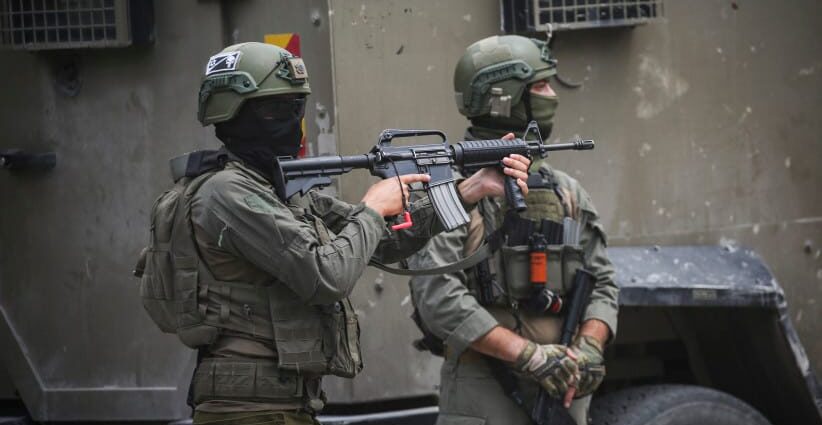
Ground robots now face the same threats as human soldiers, such as FPV drone strikes and artillery fire. That reality has produced an unusual innovation: robots designed to rescue other robots.

“I like the robots that serve our soldiers best,” Hvozdiar said when asked about her favorite developments. “But we continue creating new solutions; for example, robotic systems designed to evacuate other robotic systems that are ‘wounded’ or damaged by Russian FPV drones. Now we even have robots for robot evacuations.”

This constant cycle of innovation – identifying battlefield problems and developing robotic solutions within weeks – is what Hvozdiar calls Ukraine’s “defense ecosystem.”

With such a high degree of automation comes the question of artificial intelligence and autonomous killing machines. For Ukraine, AI remains a tool for navigation, targeting, and precision – but not a replacement for human judgment.

“There are AI solutions already implemented,” Hvozdiar said. “In some systems, AI is used for navigation. In others, AI helps detect incoming threats, especially in counter-UAS systems. But there is no fully independent system at the moment.”

The ethical and strategic reasons are clear. “We are fighting on our own territory, not on enemy territory,” Hvozdiar emphasized. “So the final decision must still be made by a human.”

Ukraine’s rapid transformation over the past four years has not gone unnoticed. Military attachés and defense companies around the world are now trying to understand how Ukraine managed to build this capability under wartime conditions.

“The interest is huge,” Hvozdiar said. “But it’s not only interest in the technology itself. The interest is broader – it’s about capability. We’re talking about industry, trained operators, commanders, and training systems. All of this forms part of the defense ecosystem.”

Ukraine has effectively become a living laboratory for the future of warfare.
“The interest in this capability is enormous because it is so new,” Hvozdiar continued. “We keep experimenting with ground robotic systems, deep-strike drones, air interceptors, and Shahed-interceptor drones. This capability is new for the entire world.”

When asked about the next goal for Ukraine’s robotic military, Hvozdiar said the primary objective is “100% automatization of air defense.”

“We can do this with robots, and that could protect countless civilians suffering from Russian airstrikes every day,” she said. “A fully automated solution that can detect and destroy a target without human involvement – that is the next goal.”
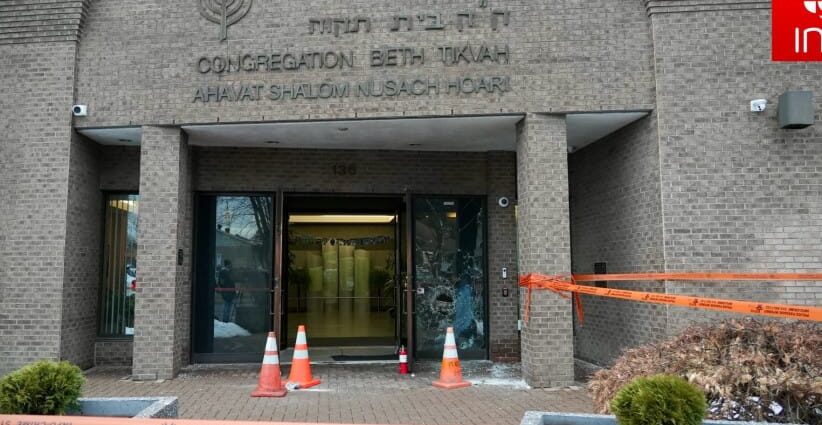
The war in Ukraine has demonstrated that a smart, resilient, and technologically agile David can not only survive but systematically dismantle a Goliath.

“This is not a traditional conventional war like the Second World War,” Reznikov reflected. “It is a completely new type of war. We are simultaneously using Soviet-era trenches and weapons, NATO-standard systems, and entirely new technologies – robots that fly, jump, swim, and crawl.”

Ukraine did not set out to become a world leader in military robotics. It set out to survive. In doing so, however, it forged a “sling” that modern militaries around the world may now be forced to adopt.

This post was originally published on here

Jerusalem Day is one of my favorite days of the year, when we celebrate the reunification of Jerusalem. The highlight for me is the flag parade.

While some see this parade as a display of extreme nationalism, I think it’s beautiful. Seeing tens of thousands of our youth celebrating something of substance, in the era of social media and smartphones, is very moving.

After two and a half years of war, it takes on even more emotion, as I can’t help thinking about how many of our heroic soldiers who fell in battle were marching and waving flags in previous parades.

As I’ve written in the past, I’ll leave it to Rabbi Jonathan Sachs to describe the feeling: “On Yom Yerushalayim a few years ago, standing on the streets of the city, I watched youngsters from around the world waving Israeli flags, singing and dancing with a joy that was overwhelming. As I watched the celebrations, I was overcome with emotion because suddenly I had a vision of the 1.5 million children who were killed in the Shoah not because of anything they had done, not because of anything their parents had done, but because their grandparents happened to be Jews.

“I thought how some of the greatest empires the world has ever known – Egypt of the Pharaohs, Assyria, Babylon, the Alexandrian Empire, the Roman Empire, the medieval empires of Christianity and Islam all the way to the Third Reich and the Soviet Union – were the superpowers of their day that bestrode the narrow world like a colossus, seemingly invulnerable in their time. And yet each tried to write the obituary of the Jewish people, and whilst they have been consigned to history, our people can still stand and sing Am Yisrael Chai. What I was seeing on that day in Jerusalem was techiyat hamaytim, a collective people being brought back from death to life.”

Next week we celebrate Shavuot. Unity plays a central part of the festival. I’m not talking about how lasagna, cheesecake, and blintzes can be unified to create a delicious meal. Shavuot celebrates the Jewish people receiving the Torah. The unification of the Jewish people at Sinai allowed for the receiving of the Torah.

“And there Israel camped opposite the mountain” (Exodus 19:1-2). At all their other encampments, the verse says vayachanu (“and they camped,” in the plural); here it says vayichan (“and he camped,” in the singular). For all the other encampments were in argument and dissent, whereas here they camped as one human, with one heart (Mechilta, Rashi).

‘Kol yisrael areivim zeh bazeh’

An extension of unity is the concept of each person’s responsibility to take care of each other. This has many ramifications in Halacha. Rabbi Raphael Katz writes: “The Talmud in Shevuot 39a explains the verse ‘And a man will stumble because of his brother’s iniquity.’ This teaches ‘shekol yisrael areivim zeh bazeh’ – that all Jews are guarantors for one another.

“This principle is called ‘arvut.’ In the Talmud, Rosh Hashana 29a, we find (according to Ritva and others) the ‘positive’ formulation of the concept of arvut. There the Talmud states that one who has already fulfilled his obligation can nevertheless cause others, who have yet to discharge their obligation, to fulfill the mitzvah. For example, one who has already fulfilled the mitzvah of kiddush on Shabbat, can repeat the kiddush on behalf of someone else who has not yet recited it, and the repetition is not considered as having mentioned Hashem’s name unnecessarily. This Halacha is based on the above concept that every Jew is a ‘guarantor’ for his fellow Jew’s observance.”

I want to take this concept of being a guarantor for each other and apply it to finance. Sadly, I see individuals make financial mistake after mistake, and the result is financial hardship. Here are some tips that will enable you to start making smart financial decisions and get on track toward financial independence.

• Budget: Take control over your spending. Track income and expenses, and then you can start a realistic savings plan and start building wealth.

• Get out of debt: Credit-card debt or overdraft is the No. 1 obstacle to getting ahead financially. It’s a lot better to take those interest payments and plow them into savings than to keep paying the credit-card company.

• Emergency Fund: You may need dental work, have a flat tire, or be out of work. By creating an emergency fund, you will be able to handle surprise expenses. Keep three to four months of income in a short-term deposit or something similar to have it liquid and available at a moment’s notice in case you need to draw upon it.

• Invest: There is no shortcut to building wealth. You need to start investing, and with discipline, the wonders of compound interest, and the growth of the stock and/or real-estate market, over time, you will create a comfortable nest egg.

• Maximize your retirement account contributions: Few investments can beat a tax-deferred investment. If living in Israel, make sure you are maximizing contributions to your Keren Hishtalmut and Keren Pensia. Keep the money invested, and you will be surprised at the long-term growth of those accounts.

Rabbi Katz continues: “On the eve of Yom Yerushalayim, it is appropriate to recall that Yerushalayim has the power to evoke this awareness of the essential unity and intermingling of Am Yisrael’s soul. In the words of our Psalmist , King David, ‘Jerusalem built up is like a city joined together’ (Psalms 122; 3), and our Sages commented, ‘It is a city that joins/makes all of Israel into friends and colleagues.’”

The information contained in this article reflects the opinion of the author and not necessarily the opinion of Portfolio Resources Group, Inc. or its affiliates.

aaron@lighthousecapital.co.il

Aaron Katsman is the author of Retirement GPS: How to Navigate Your Way to A Secure Financial Future with Global Investing.

This post was originally published on here

The Knesset passed the Economic Assistance Plan Law last week, authorizing government compensation for businesses affected by Operation Roaring Lion. Within a day, the Israel Tax Authority (ITA) said it had opened a limited online system to claim payments for war-related damages. The full system should be up and running by this coming Sunday.

The new law is complex. In practice, an accountant typically enters data into the ITA system, and it crunches the numbers. 

Summary of the new Economic Assistance Plan Law

Aspects of the new compensation rules: The new law amends the Property Tax and Compensation Fund Law until the end of 2031. Let’s hope the war is over long before then.

The compensation generally relates to the qualifying periods of March-April 2026 or May-June 2026 for certain businesses that apply a cash basis, e.g., professionals.

Compensation is payable to parties whose business is indirectly affected by war damage or inability to use assets. Separate compensation applies to property that was hit.

The preceding year is generally the calendar year 2025. But for new businesses, it generally spans the month after registration until February 28, 2026.

For frontline businesses ordered to evacuate after the October 7 massacre in 2023, the preceding year generally starts September 1, 2022. But if it started up from January 1, 2023, until February 28, 2026, the preceding “year” is usually July 1, 2025, to February 28, 2026.

Larger businesses: For affected businesses that registered for Israeli tax purposes by the end of February 2026 and had annual sales of NIS 300,000 to NIS 400 million in the base year, compensation may be available for qualifying expenses if the reduction in sales in the qualifying period exceeds 25%.

There are two types of qualifying expenses: fixed expenses; and salaries. Various rules and limits apply to each, including those mentioned here. The minimum for these affected businesses is apparently NIS 4,980 per month.

Fixed expenses: Current input expenses for VAT return purposes in the previous year (adjusted pro rata if it was not 12 months) times a sales reduction factor ranging up to 22% times two (as the qualifying period is two months). Sales reduction 25%-40%; factor is 7%. Sales reduction 40%-60%; factor is 11%. Sales reduction 60%-80%; factor is 15%. Sales reduction over 80%; factor is 22%.

Salary expenses: One of the following minus any reserve duty reimbursements by the National Insurance Institute to the employer: 75% of salary for the qualifying period times 1.25; or average national monthly salary for NII purposes as known for March 2026 times the number of qualifying employees paid salary for that month times 1.25. A qualifying employee is one whose employment was not stopped in the qualifying period.

Smaller businesses: Smaller affected businesses that had sales of NIS 12,000 to NIS 300,000 in the base year may receive compensation ranging from NIS 1,864 to NIS 14,940 per month, depending on base sales and sales reduction, times two, as the qualifying period is two months.

Exceptions apply to public institutions, kibbutzim, partnerships, certain builders and land owners, wholesalers, retailers, financial institutions, precious stones, and others.

There is also a compensation cap of the following amounts times two (for a qualifying period of two months). For affected businesses with annual sales in the base year up to NIS 100 million, the amount is NIS 600,000. For annual sales of NIS 100m. to NIS 300m., the amount goes up 0.3% of the excess over NIS 100m. For annual sales of NIS 300m. to NIS 400m., the amount is NIS 1.2m.

Procedures: As mentioned, the new online compensation claim system is scheduled to open on May 17. The ITA is supposed to reply to claims within eight months and has 14 days to pay the balance of compensation due. If the ITA ask any questions, that stops the clock. There are four years to correct any errors.

Businesses that received compensation regarding June 2025, October 2023, or November-December 2023 can claim an upfront payment now of up to 80% of that amount. Otherwise, they can request 80% times 7% (i.e., 5.6% apparently) of average monthly expenses in 2025. Different (less clear) rules and deadlines apply to exempt dealers, i.e., with annual sales of up to NIS 122,833 in 2026. Clarification is awaited for them.

Alternatively, the ITA should pay an advance payment of 60% of the amount due within 21 days after a claim is filed and another 10% after 150 days.

All the best.

As always, consult experienced tax advisers in each country at an early stage in specific cases.

leon@hcat.co

The writer is a certified public accountant and tax specialist at Harris Consulting & Tax Ltd.

This post was originally published on here

Like many Holocaust survivors, Daniela Gerson’s grandparents lived by the vow to “never forget, never forgive” the annihilation of their Polish Jewish hometown at the hands of the Nazis. 

They took less interest in commemorating their own story of survival by leaving their beloved Zamość, Poland. Before understanding the mass extermination to come, they escaped to the Soviet Union, a route that turned into a decade of wandering exile, from Siberian labor camps to Central Asia and displaced persons camps in Austria and Germany

Gerson, an immigration reporter and professor of journalism at California State University, grew up in Washington, D.C. Her Holocaust education detailed survivors who emerged from the concentration camps, hid in attics and forests, or posed as Christians. She believed her family’s odyssey in the east was relatively rare.

Only recently did Gerson learn that her grandparents were part of the largest group of European Jews to survive the Holocaust. The Nazis killed 90% of Poland’s Jews. Most of those who survived, nearly 300,000, fled east in 1939 to the Soviet Union.

Gerson chronicles her family’s not-so-unique journey in her new book, “The Wanderers.” This blend of memoir, history, and journalism took her to Zamość, Ukraine, and Uzbekistan. (The Russia-Ukraine War prevented her from visiting Siberia, where Stalin sent her grandparents to labor camps.)

‘I didn’t see their story anywhere’

“I knew that my grandparents had survived in Siberia in forced labor,” Gerson told the Jewish Telegraphic Agency. “That was their story, but I didn’t see their story anywhere.” 

The New York Jewish Week will host a free, online conversation with Daniela Gerson about “The Wanderers” at 6 p.m. ET on Wednesday, June 10. Register here.

Her investigation of the past began with a modern-day love story. To her own surprise, having expected to marry a nice Jewish man, she fell for a nice Jewish woman: Talia Inlender, an immigration attorney. And in perhaps as great a surprise, Gerson discovered that Inlender’s grandfather came from the same town as her own grandparents, Zamość, where their houses stood about 100 steps from each other across the town square.

Gerson was even more stunned to realize that Inlender’s family took nearly the same path as hers. Both of their grandparents made the calculation to cross the border to the Soviet Union during a brief opening in the fall of 1939, after Stalin and Hitler carved Poland between them. 

Both families became refugees at the same time in current-day Lviv in western Ukraine. They suffered from hunger and disease, which killed Mottel and Peshke Gerson’s firstborn child, Daniela Gerson’s uncle Arik. They saw other Polish citizens, accused as threats to the Soviet Union, arrested and disappeared by secret police. So when the Communists offered them a choice between Soviet citizenship and returning to Nazi-occupied Poland, not knowing what the future would hold, the Gersons and the Inlenders, like thousands of other Jews, said they wanted to go back home.

Trick disguised as an offer

But the offer was a trick: Stalin declared that the Jews who applied to leave were traitors and security risks. In 1940, they were deported in cattle cars to the Ural Mountains, where both families found themselves in forced labor camps in the Sverdlovsk province. 

A year later, their fates changed again when Hitler broke his pact with Stalin and the Nazis marched into Lviv. Behind the Gersons and the Inlenders, the Jews left in Zamość and Lviv would be systematically killed. Meanwhile, they transformed from Gulag prisoners into comrades. Britain, which housed the Polish government in exile, agreed to team up with the Soviet Union on the condition that Polish prisoners were freed.

Thus began years of trekking for the Gersons and the Inlenders through the Soviet Union’s Central Asian republics. Thousands of Jews migrated through Kazakhstan, Uzbekistan and Turkmenistan. They continued to fend off hunger, illness and arrests, surviving on the black market. 

At the end of the war, the Gersons and the Inlenders briefly returned to Poland, though not to Zamość. They went to western Poland, which appeared to boast a Jewish revival. That was until antisemitic pogroms pushed them west again, and they arrived in displaced persons camps in Austria and Germany. 

Finally, 10 years after leaving their homes in the Zamość town square, the two families’ paths moved far apart. The Inlenders immigrated to Israel in 1949 and the Gersons to the United States in 1950.

Gerson’s and Inlender’s fathers were both born during this long limbo. Allan Gerson, who would become a lawyer bringing Nazi war criminals to justice, entered the world in an Uzbek village. Nachum Inlender, an entrepreneur, was born in an Austrian displaced persons camp. He moved to the United States to study in his 20s, setting the stage for their daughters to meet in Los Angeles decades later.

Both men also died within years of each other, Nachum Inlender in 2016 and Allan Gerson in 2019.

The twists of history that saved the families also wound up obscuring their stories. In the postwar period, the Soviet Union celebrated its victory over the Nazis and its liberation of the death camps, a narrative that left little room for Soviet persecutions of Jews. After the Soviet Union fell, Poland saw growing efforts to unearth Holocaust memory, but those were soon clouded by a nationalist right-wing government from 2015 to 2023, which advanced a version of history focused on Polish victimhood and resistance. A member of that political movement was elected president last year, once again setting back research on Polish Jewish history. 

In the United States, Stalin was briefly portrayed as a heroic “Uncle Joe” in a triumph of good over evil. Then, with the advent of the Cold War, Gerson said her grandparents sought to hide any connections to the Soviet Union.

On a personal level, Gerson said her grandparents were intent on drawing attention to those who did not survive. 

“They were consumed with guilt. I saw my grandfather focus on telling the story of the relatives who were left behind in Poland and who were killed,” she said. “If they were going to do commemoration, it would be focused on those who were murdered.” 

Officially, families like the Gersons and the Inlenders were not recognized for many years as Holocaust survivors at all. When Germany began to pay reparations to survivors through the Claims Conference in the 1950s, Jews who fled east did not qualify. As a result, Inlender’s grandparents lied on their documents, saying that her grandmother survived two Lublin ghettos and her grandfather escaped from Zamość to the forest.

Gerson’s grandparents also spent years lying. When a family called Blumstein abandoned their papers to enter a German displaced persons camp, the Gersons adopted their identity. It was their only way in after the United States stopped permitting new admissions to stem the flood of refugees from the east. They lived illegally as the Blumsteins in New York until 1957, when a lawyer cleared them of the trespasses. 

Gerson and Inlender, who have dedicated their careers to representing the experiences of immigrants to the United States, recognized the decision to lie.

“At a time when our country has closed its border to refugees, and calls other immigrants criminals who lie, knowing that my family lied, I have a much better understanding of why people lie,” said Gerson. “And it doesn’t make them bad immigrants. It might make them actually good ones who are working so hard to keep their families safe.” 

Digging through visa applications, Gerson discovered that it was common for Polish Jews who survived in the Soviet Union to bend their identities in order to continue surviving and start new lives. While she empathized with such fabrications, they also complicated the historical record, as many “wanderers” themselves did not share their exodus as a survival story.

“There were all sorts of messages that you’re not a survivor,” said Gerson. “But if you’re not a survivor, what are you? You’ve survived the Gulag, you were in the Soviet Union, and your family members were killed. And do you get to consider yourself part of the Holocaust?”

This post was originally published on here

The lawyers of a Palestinian Gazan man have made a formal submission to the International Criminal Court (ICC) prosecutor demanding that 14 Hamas leaders be investigated for crimes committed against the Palestinian people.

To date, the ICC has not charged even one Hamas leader with any crimes committed against their own civilians. This is despite the fact that the ICC has charged leaders of Hamas and Israel with crimes committed against each other’s populations during the Gaza war.

This submission, therefore, marks the first such filing by a Palestinian against Hamas.

One of the two American attorneys, Elliot Malin, revealed this exclusively to The Jerusalem Post on Friday. Malin was joined by Eli Rosenbaum, a former senior US Justice Department war crimes prosecutor, and French attorney Sarah Scialom.

The 40-page article demands that 14 named Hamas leaders be investigated for crimes committed against the Palestinian people, with an eye toward the issuance of warrants for their arrest.  

The client is a Palestinian civilian from Gaza who lost his wife, children, and other family members in the war in Gaza.

The submission demonstrates that if Hamas had not committed these war crimes and other crimes against the Palestinian people, the client’s family and countless other Palestinians would be alive today.

The crimes detailed in the submission include: the war crime of utilizing the presence of civilians or other protected persons as human shields; the war crime of attacking civilians; the war crime of intentionally directing attacks against civilian objects; the war crime of willfully causing great suffering; the war crime of destruction and appropriation of property; the war crime of excessive incidental death, injury, or damage; the war crime of attack protected objects; the war crime of committing outrages upon personal dignity; the war crime of using, conscripting or enlisting children; the war crime of sentencing or execution without due process. 

The submission also includes the crime against humanity of murder, the crime against humanity of extermination, the crime against humanity of torture, and the crime against humanity of persecution.

The lengthy submission to the OTP documents that the best known of Hamas’s premeditated crimes, the use of Palestinian civilians as human shields and indeed human sacrifices, was the war crime that was principally responsible for the high death toll and extensive destruction experienced in Gaza.

This crime is in direct violation of the 1949 Geneva Conventions.

The Hamas leaders identified in the submission are Izz al-Din al-Haddad, Khaled Mashaal, Mahmoud al-Zahar, Mohammed Odeh, Muhannad Rajab, Khalil al-Hayya, Mousa Abu Marzook, Ghazi Hamad, Izzat al-Rishq, Fathi Hamad, Nizar Awadallah, Husam Badran, Zaher Jabarin, and Basem Naim.

‘Palestinian people deserve justice’

“The Palestinian people, including our client, deserve justice for the atrocities committed against them by Hamas, with the full backing of Iran’s leaders,” said Malin.

“To this day, the ICC’s Office of the Prosecutor (OTP) has not investigated, let alone sought warrants for, crimes cynically committed by Hamas and its accomplices against Palestinians during the war.”

“Pursuing such justice goes to the heart of the mission of the OTP and the International Criminal Court, which it serves. Failing this mission means failing to deliver equal access to justice for those whom the Court has ruled fall under its jurisdiction.”

Malin said that, if the Prosecutor and International Criminal Court refuse to seek justice for Palestinians who have been victimized by Hamas, the Court “must ask OTP why the Gazan victims of Hamas inhumanity are being denied full justice.”

“Had Hamas’ fighters instead fought in compliance with longstanding international law rather than by hiding behind and underneath Gazan civilian men, women, and children, the civilian death toll would undoubtedly have been only a fraction of what it was,” Rosenbaum said.

“The credibility of international criminal justice rests on its ability to deliver swift accountability for crimes of this magnitude,” said Scialom.  

“OTP’s continuing failure to pursue justice on behalf of Hamas’s deceased and displaced Palestinian victims in Gaza helps incentivize the repeated commission of such crimes as an effective geopolitical strategy, and it keeps the victimized Gazan community in the dark about essential facts of their victimization.”

Scialom said she is honored to represent the Palestinian client, whose family “tragically suffered enormous losses during the Gaza war.”

This post was originally published on here

On Shabbat morning of February 28, as Jews gathered in synagogue to read from the Torah about the importance of remembering – and destroying – the evil Amalek, American and Israeli fighter jets began their own destruction of the Iranian military. 

Since then, not only have America and Israel been cooperating at closer levels than ever before, but for the first time, Jewish and Christian soldiers have been fighting shoulder to shoulder, representing a new chapter in Judeo-Christian civilization. Ten weeks later, this coming Shabbat will serve as another historic milestone.

Never before in American history has a president invited his entire nation to observe the Jewish Sabbath. However, US President Donald Trump issued a formal proclamation calling upon all Americans to honor Shabbat on May 15-16. 

Trump declared, “This day will recognize the sacred Jewish tradition of setting aside time for rest, reflection, and gratitude to the Almighty… I further call on all Americans to celebrate their faith and freedom throughout this year, during this month, and especially on Shabbat, to celebrate our 250th year.”

Trump’s call for Shabbat did not emerge in a vacuum. It follows the posthumous publication of Charlie Kirk’s final book, Stop in the Name of God: Why Honoring the Sabbath will Transform Your Life, which has become a bestseller and ignited unprecedented non-Jewish interest in one of Judaism’s most ancient and treasured practices. 

Kirk, a lifelong defender of Israel who was assassinated last September, ended his Friday podcasts by wishing his millions of listeners “Shabbat Shalom” and encouraging them to put their phones in a drawer for 24 hours. “The Sabbath saved my life and helped preserve my family and my career,” he admitted.

Charlie Kirk became the leading advocate for Jewish Sabbath observance after meeting radio host Dennis Prager. 

In his book, Kirk recalled the moment Shabbat captured his imagination upon hearing Prager describe the day of rest: “He would always talk about the Shabbat and I found myself, after a couple of years of hearing this, getting really jealous of him, being like, ‘Wait a second! You’re just able to unplug for one day and not work and be with friends and family and worship God? I want that!’”

That friendship between a faithful Jew and a committed Christian, built on a shared reverence for the Torah, changed America. It is perhaps the most influential Jewish-Christian relationship of our generation, and it reminds us of the importance of coming out of our own comfort zones and embracing people who share our biblical values, especially across lines of faith and denomination.

‘Shabbat has kept the Jews’

The great early Zionist thinker Ahad Ha’am famously wrote: “More than the Jews kept the Sabbath, the Sabbath has kept the Jews.” 

For millennia, Shabbat has been the treasured, weekly tabernacle of time that preserved our people through exile, persecution, and dispersion. But the Hebrew prophet Isaiah (Isaiah 56:6-7) envisioned something far larger when non-Jews would also embrace the day of rest:

“As for the Nations who attach themselves to the Lord, to serve Him, and to love the name of the Lord, to be His attendants, all who observe the Sabbath and do not desecrate it, and who hold fast to My covenant, I will bring them to My sacred mountain and let them rejoice in My house of prayer. Their burnt offerings and sacrifices shall be welcome on My altar; for My House shall be called a house of prayer for all peoples.”

We are living in Isaiah’s promised moment. “The Nations” are attaching themselves to Shabbat. They desire the rest, the sanctity, the deliberate unplugging from the noise of modern life that our tradition has safeguarded for thousands of years. “The Nations” are knocking on our door – the only question is whether we will open it.

Too often, Jews have guarded our traditions defensively, and for good reason. Centuries of persecution, forced conversions, and Christian antisemitism have trained us to build walls and hunker down in our Jewish silos. 

But we are in a unique time today, with millions of Christians standing beside us in solidarity and admiration. They have demonstrated their support for Israel and the Jewish people in Washington DC, on college campuses, and in streets across the world, as antisemitism is surging. Everyone can see that Israel’s best friends in the world today are Christians who love the God of Israel and the People of Israel.

Earlier this year, at the largest Christian media conference in the world, drawing more than 5,000 journalists and media professionals, Israel365 brought Shabbat to the convention floor at the National Religious Broadcasters conference. 

Rather than focus on the news at a convention of news reporters, Israel365 ran an immersive Shabbat Experience, bringing the authenticity of the Jewish Sabbath to the leading Christian communicators. For many Christian attendees, it was their first encounter with the beauty of Shabbat, but hopefully it will not be their last.

Now, with Trump’s proclamation as a catalyst, Israel365 is launching a large-scale initiative connecting Jewish and Christian communities through shared Shabbat experiences across the United States and Israel. 

This weekend in Florida, New York, New Jersey, Texas, and Tennessee, rabbis will invite pastors into their synagogues and invite their wives and children into their homes to break bread together, celebrate the religious freedom granted by the United States, and honor the God of Israel, who created the world in six days and rested on the seventh.

If we seize the opportunity, then Trump’s National Shabbat will not merely be a political gesture; it can be the pivotal opening for the Jewish people to step forward as a light unto the nations, inviting our faith-based allies, friends, and neighbors to share our eternal values, our ancient wisdom, and yes, our Shabbat table.

Shabbat has always kept the Jews. Perhaps now, during these pivotal days when America and Israel are fighting side by side for freedom and the future of Judeo-Christian civilization, Shabbat can keep us all together.

The writer is the founder of Israel365 and author of Universal Zionism: The Movement for Israel and the Nations.

This post was originally published on here

Russian President Vladimir Putin’s recent suggestion that the war in Ukraine may be nearing an end has reopened a central question for Kyiv and its partners: Is Moscow preparing for a genuine diplomatic opening, or is it using the language of peace to pressure Ukraine and divide Western support while the war continues?

The contradiction is difficult to ignore. Putin and other Kremlin officials have spoken in recent days about a possible movement toward ending the war while continuing to demand that Ukraine withdraw from territories Russia claims to have annexed, including territory that Russian forces do not fully control.

Reuters reported this week that the Kremlin repeated Putin’s June 2024 conditions, under which a ceasefire and negotiations could take place only if Ukraine withdrew from the four Ukrainian regions Russia says it has annexed. Kyiv has rejected those terms as unacceptable.

Russia’s actions on the battlefield point in the opposite direction. On May 13 and 14, Russia launched what Reuters described as its largest two-day aerial assault since the start of the full-scale invasion, using 1,567 drones and 56 missiles, according to Zelensky. The strikes hit Kyiv and other regions, damaged homes and infrastructure, disrupted electricity in several areas, and killed at least 15 civilians. The attacks came as Moscow continued to present itself as open to talks.

For Kyiv, Russia’s terms look less like a compromise than a demand for capitulation. Moscow announced short ceasefires around Easter and Victory Day, but both sides accused each other of violations. Kremlin foreign policy aide Yuri Ushakov recently told the Russian news agency Interfax that Russia saw no point in further peace talks until Ukraine withdrew its troops from the Donbas, reinforcing Ukraine’s view that Moscow’s offer is an ultimatum presented as diplomacy.

More than four years into Russia’s full-scale invasion, Russia still occupies about one-fifth of Ukrainian territory and retains major advantages in manpower, missile capacity, artillery production, and strategic depth. Yet Moscow failed to seize Kyiv, failed to collapse the Ukrainian state, and has failed to fully control the four Ukrainian regions it claims as Russian territory.

Russia declared the annexation of Donetsk, Luhansk, Kherson, and Zaporizhzhia in September 2022 after widely rejected referendums, but it did not fully control all four regions then and has never done so since.

Analysts question Moscow’s intentions

David Satter, an American journalist, historian, and former Moscow correspondent, said Putin’s recent language should be treated as potentially meaningful because it is unusual, not because it necessarily indicates a real shift in Moscow’s goals.

“It is serious because it is unusual, and it could be a signal to the Russian public that there may be some concessions Russia will have to make,” Satter told The Media Line. “But at this stage, I would not attach too much importance to it, because Russia also has a desire to appear reasonable.”

Satter said Moscow’s aim may be less about persuading Kyiv than about influencing Europe. In his view, Russia wants to create the impression that it is willing to compromise in order to weaken European resolve and separate Ukraine from its supporters. “They want to separate Ukraine from its European supporters,” he said. “It is in their interest to give the impression that they are willing to compromise.”

Jason Jay Smart, an adviser on national security and geopolitics based between Kyiv and Washington, and an expert on Russia and Ukraine, offered a sharper assessment from the Ukrainian perspective. “Inside Ukraine, Putin’s statements are not taken as a serious offer,” Smart told The Media Line. “They are heard as messaging aimed at Washington and Europe, while Russia keeps attacking on the ground.”

Smart pointed to recent ceasefire announcements as one reason Ukrainians judge Moscow by conduct rather than by Kremlin statements. “Moscow announced Easter and May 9 ‘Victory Day’ ceasefires, then violated them hundreds of times,” he said, “which is why Ukrainians judge the conduct, not the Kremlin wording.”

He also referred to Ushakov’s statement on Donbas as evidence that Moscow’s diplomatic language still rests on demands Ukraine cannot accept. “That is not negotiation,” Smart said. “It is surrender language packaged as diplomacy.”

Ukraine’s resilience and Europe’s security concerns

Russia has gained territory, but it has not achieved the political victory it sought. Satter described Ukraine’s achievement as “enormous” because, in his view, it prevented the destruction of the country. Ukraine, he said, stopped Russia from achieving its initial invasion goals, held many major cities, and forced Russia to pay “a terrible price” for whatever gains it has achieved.

Russia’s achievements, by contrast, are harder to define politically, Satter said. Moscow wrote four Ukrainian oblasts, Donetsk, Luhansk, Kherson, and Zaporizhzhia, into the Russian constitution, but it has not fully conquered the territory it claims. “In terms of their objectives, they have not been successful,” he said. Russia declared the regions part of the Russian Federation, but “they have not conquered those territories.”

He said Luhansk is the only one of the four under near-total Russian control, while Donetsk remains only partly occupied, and Russia still lacks full control of Zaporizhzhia and Kherson. For that reason, he argued, Moscow’s battlefield gains have not produced the political victory the Kremlin claimed when it announced the annexations.

Smart framed Ukraine’s current position as both exhausted and determined. Years of missile strikes, funerals, mobilization, and occupation have placed enormous pressure on Ukrainian society, he said, but have not produced acceptance of Russian rule. “Ukrainians are exhausted,” he said, “but they are not confused about what surrender would bring.”

Ukraine’s political position, Smart argued, rests on a simple principle: an aggressor cannot invade another country and then demand to keep the territory it seized. “You cannot break into someone’s house and then demand to keep the rooms you managed to occupy,” he said. “The invader has to leave.”

He described Ukraine’s central achievement as survival that has imposed real costs on Russia. “Ukraine preserved the state, defended Kyiv, kept democratic politics alive, reopened trade routes, struck Russian military infrastructure, and showed the limits of Russian power,” Smart said. “Its central achievement is survival with consequences.”

Ukraine’s resilience has depended on outside support, but Smart cautioned against reducing the war to Western weapons alone. External aid mattered because Ukraine first made the national decision to resist. “Without that national decision,” he said, “no shipment of weapons would have saved the country.”

One of Ukraine’s clearest military successes has been its use of aerial drones, unmanned naval systems, electronic warfare, battlefield software, and locally adapted technologies. These tools have helped Ukraine partly offset Russia’s advantages in armor, artillery, and manpower by allowing Ukrainian forces to damage or destroy costlier Russian equipment with cheaper, more flexible systems.

“Drones and electronic warfare changed the economics of the battlefield,” Smart said. Unable to match Russia “tank for tank or shell for shell,” Ukraine used drones, sensors, and battlefield software to make Russian troops, armor, artillery, and supply lines easier to detect and attack. Innovation has not replaced artillery, air defense, or Western support, he said, but it has made Ukraine “more dangerous, more adaptable, and much harder for Russia to overwhelm.”

The war has also forced Europe to confront its dependence on the US for security. With long-term American support for Ukraine uncertain, European governments and defense analysts are debating whether the continent can keep Ukraine armed while rebuilding its own depleted stockpiles, expanding defense production, and preparing to deter Russia with less reliance on Washington. The debate is no longer theoretical; it concerns shells, air-defense interceptors, production lines, and defense budgets.

Ceasefire debate and Ukraine’s red lines

Satter said Ukraine is already defending the rest of Europe. If Ukraine were to fall, he argued, much of the country’s mobilized capacity could be absorbed into or redirected by Russia, creating a far greater threat to NATO’s weaker members.

For Satter, Europe has the capacity to resist Russia together with Ukraine, but only if it has the political will. “The key question is whether Europe can now rearm and defend itself without the US,” he said. “Europe, together with Ukraine, can definitely resist Russia.”

Smart also said uncertainty over US support has made Ukrainians more urgent and realistic. Europe can do more, and Ukraine is increasing its own defense production, but American support remains decisive in specific areas, including air defense, intelligence, long-range capabilities, and advanced systems. “For Ukrainians, delays are measured in lives, not press statements,” Smart said.

Economic pressure on Russia is real, but whether it is sufficient to change Moscow’s behavior remains uncertain. Sanctions, war spending, labor shortages, inflationary pressure, and long-term isolation from Europe all carry costs. Satter warned against expecting an imminent Russian collapse. “It is not at a breaking point,” he said, “but it is under pressure.”

Russia’s size and resources mean it can continue for some time, Satter said. That pressure matters, but, in his view, Russia is more likely to be stopped by military defeat than by economic collapse alone.

Conflicts beyond Ukraine also affect Russia’s ability to sustain the war, especially those that move energy prices or strain Moscow’s partnerships. Higher oil prices linked to conflict involving Iran can benefit Russia financially, but Satter said the broader picture does not necessarily strengthen Russian influence. Russia may gain from rising prices, he argued, while still looking less capable as a protector of its partners and clients. “As for their influence, I do not think it helps them,” he said. “They were not able to defend Assad in Syria.”

Asked about speculation that Iran could transfer enriched uranium to Russia, Satter was cautious. Russia already has its own uranium resources and nuclear weapons, he noted, and he said there is no clear indication Iran would send enriched uranium to Moscow. “This is all very hypothetical,” Satter said.

A possible ceasefire remains one of the war’s most politically sensitive questions. A ceasefire along the current line of contact would freeze the fighting, at least temporarily, but it would not require Ukraine to formally recognize Russian sovereignty over occupied territory. That distinction is central to Kyiv’s position: Zelensky has said Ukraine will not recognize occupied territory as Russian.

Satter said Ukraine might accept a ceasefire based on the existing line of contact, but not a settlement that gives Russia legal recognition over conquered territory or territory it does not fully occupy.

Smart was even more categorical about Ukraine’s red lines. Formal recognition of Russian territorial conquest, imposed neutrality, or Moscow-dictated limits on Ukraine’s future alliances would be unacceptable, he said. “Anyone arguing for territorial concessions should ask how rewarding mass violence is supposed to deter the next invasion.”

“Ukraine is not asking for a special rule,” he said. “The normal rule is enough: the invader leaves, the victim survives, and aggression is punished rather than rewarded.”

Many Ukrainians are wary of a ceasefire that freezes Russian occupation without making Ukraine more secure. The memory of 2014 and the Minsk process remains central: for many in Ukraine, a frozen conflict can become the preparation period for a larger war.

“A ceasefire that leaves Ukrainians under Russian occupation is not peace for the people still trapped there,” Smart said. “Everyone wants the missiles, drones, artillery, and funerals to stop,” he added, “but stopping the shooting is not enough if Russia gets time to reload.”

He said the real test of any ceasefire would be whether Ukraine becomes safer. If a ceasefire freezes Russian occupation, abandons occupied communities, leaves abducted children in Russian hands, and gives Moscow time to rebuild, many Ukrainians will see it as “a pause before the next attack.”

This also limits Zelensky’s room for maneuver. Smart said the Ukrainian president can negotiate sequencing, guarantees, monitoring, sanctions, prisoner exchanges, and the mechanics of stopping the shooting, but cannot sell Ukrainians a deal that makes Russia’s invasion appear successful. “Ukrainians understand painful choices,” Smart said. “They will not accept being told that Russia gets rewarded because it was brutal enough.”

For Europe, such a settlement would shape future defense spending, sanctions policy, energy relations, and the credibility of deterrence. For Russia, it would determine whether the Kremlin emerges from the war isolated and constrained or partially normalized despite the invasion. For other powers, the outcome would send a message about whether territorial conquest can be rewarded if the aggressor can absorb enough costs.

Satter warned that Western governments should not rush to normalize ties with Moscow simply because the fighting stops. “I think the relationship with the West is going to be ruined for a long time,” he said. He argued that easing sanctions without clear signs of changed Russian behavior would be unwise if the same government remains in power.

Global implications of war’s outcome

Smart framed the question in global terms. “A just end strengthens deterrence,” he said, because it shows that “borders cannot be erased by force, civilians cannot be bombed into submission, and nuclear threats do not grant the right to steal land.”

“A weak pause teaches the opposite lesson,” he warned. “Every dictatorship is watching whether Russia is punished for the conquest or paid for it. If Moscow is rewarded, this war becomes a precedent. If Moscow is punished, it becomes a warning.”

For now, Putin’s language has changed more than Russia’s demands. Moscow says it is open to talks while insisting that Ukraine withdraw from territories Russia claims but does not fully control. Ukraine remains under severe pressure, but it is not defeated. The question facing Kyiv and its partners is not only whether the war can be stopped, but whether any ceasefire would make Ukraine safer

This post was originally published on here

A discussion about upcoming Senate races at the Jewish Democratic Council of America’s national summit turned tense on Wednesday when political strategist Simon Rosenberg brought up Maine Senate candidate Graham Platner.

“And then there’s Maine,” Rosenberg said, eliciting laughter, some of it uneasy. The race and its presumptive Democratic nominee, Graham Platner, had been on people’s minds on Wednesday during the confab, the national summit of the Jewish Democratic Council of America, but no one had yet mentioned him from the stage.

The omission was notable because Platner is seen as a rising star in the Democratic Party. He was initially battling in the primary against Maine Gov. Janet Mills, whom the JDCA had endorsed. But he effectively clinched the nomination when Mills dropped out of the race two weeks ago, and now is expected to challenge Rep. Susan Collins in November.

Jewish Democrats split over Platner

Among Jewish Democrats, there is a debate over whether to support Platner, who has caused concerns with his past Nazi tattoo and staunch criticism of Israel, but also has a chance to unseat an incumbent Republican and help the party take control of the Senate.

Rosenberg revealed at the summit where he stood in that debate, somewhere the JDCA’s leadership has not been willing to go.

“The Maine party is excited, ready to go, and we’re all going to be along the Platner train in a few weeks,” he said.

The laughs gave way to murmurs and groans. Some attendees shook their heads at one another. One woman mouthed something to her neighbor, motioning “No” with her arms.

“He’s going to be the candidate, and let’s hope the very best of him comes out in the next five, six weeks,” said Rosenberg, who hosts the “Hopium” podcast. “But that is going to be an interesting race.”

Moderator Jill Goldenberg piped in, easing the tension. “We are not leaving on that note!” she said, asking Rosenberg a final question about what gives him hope.

Platner, the left-wing candidate and former oyster farmer, has drawn concerns from some Jewish groups with his Nazi tattoo, which he recently covered up with another design, and his anti-Israel rhetoric and calls to end US military assistance to the country. The JDCA is among them.

JDCA stops short of endorsement

“As far as I’m concerned, you can regret having a Nazi tattoo, you can try to cover it up, but it’s still there,” said Halie Soifer, the group’s CEO, told reporters on Wednesday. “And to me, that symbolizes reasons for deep concern about his views and values.”

JDCA has not taken a position on the race since Mills dropped out. Soifer did not entirely rule out the possibility of getting behind Platner, but said he would “have to demonstrate great assurances on a range of issues of concern to our organization to receive our endorsement.”

She added, “But we may just not get involved in that one.”

A key Jewish Democrat, Senate Minority Leader Chuck Schumer, said after Mills stepped aside that he would support Platner’s bid to unseat Collins. Schumer, who had initially recruited Mills to run, also spoke at the JDCA summit. He did not mention the Maine race during his remarks and declined to talk to the press afterward.

“We disagree, we can disagree with them potentially!” Soifer said when asked about party leadership backing Platner, adding that the JDCA is backing a number of other candidates in hopes of taking control of the Senate.

“It could be that at the end of the day, we just stay out of Maine, don’t get involved, even if the party has decided to fully embrace Platner,” she said.

Calls for a broader political ‘big tent’

Ami Fields-Meyer, a former Biden White House adviser who spoke more critically of Israel than most of the summit’s speakers, did not weigh in on Platner specifically. But he echoed Rosenberg’s call for building coalitions that include “people we don’t agree with,” and advocated for the Democratic Party and Jewish community to embrace a wider range of viewpoints on Israel.

“We love to talk about a big tent. It’s our favorite thing to talk about,” Fields-Meyer said. “This is the moment. This is the moment to open up the party and to open up our Jewish community to the hardest conversations that we can be having about the future of Israel and the future of the Jewish people.”

Fields-Meyer’s comment drew loud applause.

This post was originally published on here

Every year on Jerusalem Day – the holiday that all Jews should be celebrating today – I reconnect to the high Jewish/Zionist rhetoric about the city. 

Jerusalem: The city that is the beating home of the Jewish heart, the capital that is the ultimate expression of Jewish national renaissance, a place of birthright where you feel brushed by the wings of Divinity.

As Jews have sung and prayed for 3,000 years, “If I forget Jerusalem, may my right hand forget its skill. May my tongue cling to the roof of my mouth if I do not remember you, if I do not consider Jerusalem my highest joy” (Psalms 137:5-6). 

As Jews affirm at every wedding ceremony and at the climactic moments of Passover and Yom Kippur, “Next year in fully rebuilt Jerusalem!”

These aspirational sentiments genuinely drive to the core of my identity, and they reflect absolutist attitudes: I am not willing to compromise on the spiritual or political future of the united city. 

My commitment to elevating and improving Jerusalem and turning it into the touchstone for global faith and peace is an ultimate and unequivocal one. And no one other than Jerusalem’s indigenous people, the Jewish People, and their sovereign government, the State of Israel, can do so.

Jerusalem transformed into an international capital city

Indeed, over the past almost 60 years, Israel has sagaciously transformed the city from a backwater town to a truly radiant international capital city sparkling with energy and creativity. 

Israel developed Jerusalem as an attractive city because it cares; because Jerusalem is the historic centerpiece of Jewish peoplehood and the modern State of Israel.

Therefore, Israel must declare clearly and proudly: A united Jerusalem under exclusive Israeli sovereignty is the key, not an obstacle, to peace and security in the city. 

A partitioned Jerusalem will die, and lead to violence that would suck the lifeblood from the city in every way – culturally, religiously, economically, and more.

But of course, ruling a united Jerusalem carries with it great responsibility, and Israel must do an even better job than it has thus far. It must defend, expand, and administer the city generously for all residents.

On the security side, this means rebuffing radical Islamic and Turkish subversion in Jerusalem alongside the nefarious activities of hostile foreign NGOs, enforcing security perimeters around the city (the security fence is a dangerous, sad joke), halting wildcat building in the Arab sector, ending Muslim violence and incitement to violence on the Temple Mount, and protecting Christian and other religious minority leaders from harassment.

(I applaud the decision announced this week to turn the compound near Ammunition Hill, from which the rotten UNRWA was finally evicted last year, into a national site housing an IDF museum and new recruitment center.)

On the civilian side, this means expanding the borders of Jerusalem to build at least 6,000 new apartments every year for young families; investing in the welfare of Jerusalemite Arabs in the eastern precincts of the city through upgraded roads and water/sewage infrastructure, authorized/controlled home building, many new classrooms (in Arab schools that teach Hebrew and the Israeli high school curriculum), employment initiatives, local police stations to handle civilian matters, etc. 

I also think that the 400,000 Jerusalemite Arabs should be offered Israeli citizenship.

On the religious side, this means fair sharing of the holy sites, especially the Temple Mount. There is plenty of room, loads of undeveloped and even desolate sections of land on the vast Temple Mount Plaza where a Jewish house of prayer could be built without interfering in any way with Muslim shrines and prayer practices.

Nobody needs to feel threatened by the presence of Jewish petitioners tucked away in a corner of the Temple Mount, unless, of course, your opposition to Jewish prayer and visitation stems from wholesale denial of indigenous Jewish rights in Jerusalem and the Land of Israel, which, alas, has become almost mainstream Palestinian discourse.

It is time to negotiate space- and time-sharing arrangements on the Temple Mount  – like those in the Tomb of the Patriarchs in Hebron – based on principles of peace, tolerance, and religious freedom – for Jews and non-Jews alike.

In short, Israel ought to increase investment in all aspects and sectors of Israel’s capital for the greater good of both Jewish and Arab residents. More rigorous security control, good governance on the local level, and equitable management of the holy sites are the core of sovereign political action that will keep Jerusalem whole. Taken together, these moves will ensure forward Zionist momentum to secure the national goal of a livable, prosperous, and luminous Jerusalem. 

On Jerusalem Day 1988, the late, great scholar and religious leader Rabbi Dr. Aharon Lichtenstein told his yeshiva students that “It is important that we know how to appreciate the privilege of walking in the streets of Jerusalem. The dream held dear by generations has come true; the dream of hundreds and thousands of years….”

“But we must appreciate Jerusalem not just as a capital which is flourishing economically, aesthetically, socially, and politically, but also as (an expression of) the Divine Presence appearing and disappearing ‘on the mountains of spices/separation’ (see the Song of Songs 2:17). 

“We should see not only the glory that exists, but also long for the glory that was prophesied. A formidable challenge awaits us. We must realize that longing and seek to set matters right.”

Indeed, Jerusalem Day should be appreciated and celebrated in all its manifestations – as a historic achievement, a political challenge, and a spiritual opportunity. It should become a true national holiday, a highlight of the Jewish year, no less than Independence Day. It should also be an election campaign issue: Who is best going to dynamically develop Jerusalem?

The writer is managing senior fellow at the Jerusalem-based Misgav Institute for National Security & Zionist Strategy. The views expressed here are his own. His diplomatic, defense, political, and Jewish world columns over the past 30 years are at davidmweinberg.com.

This post was originally published on here

In May 1967, the State of Israel stood alone and terrified.

Nasser’s Egypt massed troops in the Sinai. Syria threatened annihilation from the north. Jordan loomed to the east. The Straits of Tiran were closed. Arab radio stations blared promises of destruction. Graves were dug in public parks in Tel Aviv in anticipation of mass casualties. Holocaust survivors, barely two decades removed from Europe’s crematoria, wondered whether Jewish history was about to repeat itself.

Two million Jews faced a hostile Arab world of nearly 100 million.

It is difficult today to convey the sheer dread of those weeks. Israel was tiny, fragile, and surrounded. The memory of Auschwitz was still fresh enough that many genuinely feared a second genocide. The phrase “throwing the Jews into the sea” was not rhetoric to Israelis in 1967; it was a plausible threat.

And then history turned.

Through astonishing military brilliance, unimaginable courage, and what many – secular and religious alike – experienced as the palpable hand of God, Israel achieved one of the most extraordinary victories in modern history. In six days, the Jewish state defeated the armies of Egypt, Syria, and Jordan. The Israel Air Force destroyed enemy air forces on the ground. Israeli soldiers fought street by street, hill by hill, often outnumbered and outgunned.

And then came Jerusalem.

For the first time in over 2,500 years, since the destruction of the First Temple, the Jewish people once again held sovereignty over the Old City of Jerusalem and the Temple Mount.

The words of General Mordechai “Motta” Gur electrified the Jewish world: “Har Habayit beyadeinu.” The Temple Mount is in our hands.

Those words were not political. They were civilizational.

To understand the emotional force of that moment, younger Jews need to remember what came before it.

Between 1948 and 1967, when the Old City was under Jordanian control, Jews were forbidden to visit the Western Wall. Jewish cemeteries on the Mount of Olives were desecrated. Synagogues in the Jewish Quarter were destroyed. The holiest sites of Judaism were closed to Jews altogether.

Even before 1948, under the British Mandate, Jewish access to the Western Wall came with humiliation and restrictions. Jews were forbidden from bringing chairs or mechitzot (partitions). Blowing the shofar at the Western Wall became an act of defiance for which Jews could be arrested. We were tolerated at our holiest sites, but never sovereign there.

And then suddenly, in June 1967, Jewish soldiers stood weeping at the Wall.

The entire Jewish world stood with them.

Right-wing, left-wing, secular, religious – it did not matter. 

There was pride. There was awe. There was unity.

I remember it personally.

I was eight years old at the end of June 1967, attending the end-of-year garden party at my Jewish school in Britain. This was not a particularly Zionist institution. At best, it was neutral on Israel. Yet suddenly, spontaneously, people began singing “Hatikvah.”

No one organized it. No one planned it. It simply burst forth.

The adults sang. The children sang. People cried.

Something profound had happened to the Jewish people. We no longer felt powerless. We no longer felt like guests in history.

Yet even in the moment of triumph, the seeds of hesitation were already visible. Almost immediately after the liberation of Jerusalem, Israel’s leadership shrank back from the full implications of what had occurred. Despite the electrifying declaration of “Har Habayit beyadeinu,” the Temple Mount was effectively handed back to the Waqf administration.

Some will say the decision was politically prudent at the time. Perhaps it avoided an immediate religious war. Historians will continue to debate it, but I deplore it.

In any event, symbolically, it revealed something profound: even at the very height of Jewish confidence and military victory, we were already uncomfortable with fully embracing the meaning of our return home. Even in our greatest hour, there lingered a hesitation to assert, unapologetically and unequivocally, that this was ours.

And now?

The Reality Today

Fast forward 59 years.

Apart from some in the religious Zionist world, Jerusalem Day barely exists.

In many Jewish communities, it passes unnoticed. In others, it is treated almost as an embarrassment. The liberation of Jerusalem is no longer celebrated as a miracle or even as a historic achievement. Instead, it is spoken about apologetically, if at all.

Jerusalem has become reframed through the language of colonialism, imperialism, occupation, and oppression. The Jewish return to our holiest city is discussed as though it were morally suspect.

And so, we must ask ourselves a painful question: How did we lose our way so quickly?

How did the Jewish people go from rejoicing at the reunification of Jerusalem to feeling uncomfortable defending our presence there?

How did a nation that once stood proudly in the aftermath of existential victory become so hesitant, so apologetic, so uncertain of its own story?

Because this is not merely about politics; it is about identity.

Somewhere along the way, many Jews stopped believing deeply enough in our own narrative. We stopped speaking with confidence about Jewish indigeneity in the Land of Israel. We stopped asserting the obvious truth that Jerusalem is not a colonial outpost, but the beating heart of Jewish civilization.

Long before there was Islam, before Christianity, before the Arab conquest, Jews were praying in Jerusalem, ruling in Jerusalem, writing poetry about Jerusalem, and dying for Jerusalem.

Our connection to this land is not a 20th-century invention. It is the foundation stone of Jewish memory itself.

Three times a day, Jews pray toward Jerusalem.

At every wedding, we break a glass for Jerusalem.

At every Passover seder: “Next year in Jerusalem.”

For two millennia, scattered and persecuted across continents, Jews never relinquished the dream of return.

And when that return finally came, after centuries of exile and after the ashes of Europe, it was treated by Jews across the world as the fulfillment of history itself.

Yet today, too many Jews seem desperate for the approval of those who will never grant it.

Even after October 7, after Jewish families were butchered, women were violated, children burned, and civilians kidnapped, there were Jews who rushed not to defend Israel but to condemn it. There are Jewish public figures openly hostile to the very idea of Jewish national self-determination. One thinks, for example, of Zack Polanski and others like him, who seem more comfortable accusing their own people than standing beside them.

This phenomenon would have been incomprehensible in June 1967.

Back then, Jews understood something simple: if we do not defend ourselves, nobody else will.

That lesson was written in Jewish blood across centuries.

None of this means Israel is perfect. No country is. Israelis argue endlessly – about governments, policies, religion, territory, morality. That is part of Jewish culture. But there is a vast difference between self-criticism and self-erasure.

The problem today is not merely political disagreement. It is the collapse of Jewish confidence. We have become frightened of our own story.

Frightened to say that we belong here.

Frightened to say that Jewish sovereignty in Jerusalem is just.

Frightened to say that the Jewish people are not foreign occupiers in the land where Jewish history began.

Jerusalem Day should remind us not only of military victory, but of moral clarity.

The Jewish people returned home.

Not to conquer a foreign land, but to reclaim the center of our ancient civilization.

Wake up, Jewish people.

Stop apologizing for existing.

Stop outsourcing your morality to those who neither understand nor respect your history.

Be proud of what Israel achieved in 1967.

Be proud that, against impossible odds, the Jewish people survived and prevailed.

Be proud that Jerusalem is once again in Jewish hands.

Because the truth is simple: we belong here.

And we are not going anywhere.

The writer is a rabbi and physician. He writes and teaches on Jewish ethics, leadership, and resilience. His work appears on rabbidrjonathanlieberman.substack.com and youtube.com/@rabbidrjonathanlieberman

This post was originally published on here

Iran is a victim of illegal expansionism and war mongering, Iran’s Foreign Minister Abbas Araghchi told foreign leaders during a BRICS meeting on Thursday, as talks on ending the war remain on hold. 

“By now, it ought to be clear that Iran is unbreakable and only emerges stronger and more united when under pressure,” he said, adding that Iran is ready to fight with everything it has “in defense of our freedom and our soil.” 

He also claimed that Tehran is ready to “pursue and defend diplomacy,” arguing that Iran reciprocates the language of respect. “As much as our powerful armed forces are ready to exact devastating retribution on foreign aggressors, my people are peace-loving and do not seek war. We are not aggressors in this sordid situation, but aggrieved,” he claimed.

Araghchi called on BRICS countries to work towards ending the sense of impunity that the US believes it is entitled to, which he claimed “has no place in today’s world.”

‘Free, stable, and just world’

The foreign minister also said that he speaks for the people, who, “under horrific bombardment, chose to withstand fear… and for a nation that, despite all pressures, continues to believe in a free, stable, and just world.”

“In the face of horrific violence, the Iranian people have firmly and proudly stood up for themselves,” he added. 

He also said the US and Israeli attacks on Iran have been justified by “false claims” made by the International Atomic Energy Agency (IAEA).

“If the retreat from our ideal of independence is surrendered to the will and whims of imperial power, the answer is clear. We did not, and never will,” he asserted. 

Tehran has ‘no trust’ in US, said Araghchi 

On Friday, Araghchi said that Tehran has “no trust” in the US and is interested in negotiating with Washington only if it is serious.

All vessels can pass through the Strait of Hormuz except those at war with Tehran, Araghchi told reporters in New Delhi during a visit to attend the BRICS foreign ministers’ meeting, adding that vessels wanting to transit should coordinate with its navy.

The situation around the key conduit was “very complicated,” he said.

Iran effectively shut the strait, which earlier handled about one-fifth of the world’s oil and gas supply, to most shipping traffic after its war with the US and Israel erupted in February.

Washington and Tehran announced a ceasefire last month but have been struggling to thrash out a permanent peace pact. Talks, mediated by Pakistan, have been suspended since Iran and the US each rejected the other’s most recent proposals last week.

“Contradictory messages” have made us reluctant about the real intention of the Americans on negotiations, Araghchi said, adding that the mediation process by Pakistan has not failed but is in “difficulty.”

Iran trying to keep ceasefire, give diplomacy a chance, willing to return to conflict, Araghchi claims

Iran is trying to keep the ceasefire to give diplomacy a chance but is also prepared to go back to fighting, he said.

The issues holding up negotiations between the two sides include Iran’s nuclear ambitions and its control of ⁠the Hormuz.

Araghchi’s statement on Friday came hours after US President Donald Trump said his patience with Iran was running out and agreed in talks with Chinese President Xi ​Jinping that Tehran must reopen the strait.

This post was originally published on here

As Israel celebrates Jerusalem Day, marking 59 years since the reunification of the city in the Six Day War, this week’s haftarah for “Machar Chodesh” (“tomorrow is the new moon”) offers a timely message about longing, loyalty, and the enduring bond between the Jewish people and their homeland.

From I Samuel 20:18-42, it recounts the dramatic encounter between David and Jonathan on the eve of the new month. King Saul, consumed by jealousy and rage, seeks to kill David, perceiving him as a threat. Jonathan, Saul’s son and David’s closest friend, devises a secret plan to warn David.

The passage appears to revolve around palace intrigue and personal friendship. But the deeper theme is the pain of separation and yearning for reunion.

David is forced into hiding, cut off from the court, the center of Jewish national life. Jonathan risks everything for their friendship. In one of the Bible’s most emotional scenes, they embrace and weep before David flees into exile.

“David wept exceedingly,” the haftarah tells us (I Samuel 20:41).

Reading these verses, we think of the long and painful exile of the Jewish people from Jerusalem.

For almost 2,000 years, Jews turned toward the Holy City in prayer, longing to once again return to Zion. Three times daily, we beseech God to “return in mercy to Jerusalem.” At weddings, we break a glass, declaring, “If I forget thee, O Jerusalem, let my right hand forget its cunning” (Psalms 137:5).

Jerusalem was and remains the beating heart of the Jewish nation.

For centuries, like David, we yearned.

Jerusalem and Jewish longing

This is why the timing of “Machar Chodesh,” read this year the day after Jerusalem Day, feels so meaningful. The phrase “Tomorrow is the new moon” carries a sense of anticipation, of renewal just beyond the horizon.

That has been the story of the Jewish people. Even in our darkest moments, we never relinquished hope that a new chapter would dawn. Like the moon, which wanes and is renewed, the nation of Israel endured periods of concealment and decline but held to the belief that restoration would come.

The bond between David and Jonathan offers a lesson about loyalty to what is right and true. Jonathan placed principle above politics, and faithfulness above personal interest because David represented the future of Israel. Thus, throughout the generations, Jews remained loyal to Jerusalem despite exile, persecution, and repeated attempts to sever us from our past. The city lived in our prayers and in our consciousness. We faced it when we prayed, remembered it at moments of joy, and mourned its destruction year after year on Tisha B’Av.

The commentaries note that Jonathan understood David’s role in Jewish history as transcending the immediate struggles of the moment.

That insight resonates powerfully today. Jerusalem is not merely a political capital or national symbol. It is the city toward which Jewish history has always flowed, the place where the Divine presence rests most intensely, and the site from which redemption is destined to unfold.

That longing found dramatic fulfillment in June 1967.

As Israeli paratroopers fought their way through enemy fire into the Old City, history itself seemed to hold its breath. Then came the unforgettable words crackling over the radio from commander Motta Gur: “Har Habayit beyadeinu!” (“The Temple Mount is in our hands!”)

After 19 years of Jordanian occupation, during which Jews were barred from visiting the Western Wall, Jerusalem was reunited under Jewish sovereignty.

The tears shed by generations of Jews were answered with tears of joy.

Indeed, much like the emotional embrace between David and Jonathan in this week’s haftarah, Jerusalem Day is ultimately about reunion: the reunion of a people with its capital, of a nation with its history, and of a faith with its holiest sites.

This Jerusalem Day, as Israeli flags once again flutter proudly across the capital, and thousands stream toward the Western Wall, we should pause to appreciate the magnitude of what has been restored in our time.

After centuries of yearning, the gates of Jerusalem are open once more.

Like David emerging from hiding, the people of Israel have returned home.

This post was originally published on here

The United Arab Emirates attempted to persuade neighboring Gulf States, including Saudi Arabia and Qatar, to coordinate a military response to Iran’s missile, rocket, and drone attacks during the recent war, with Abu Dhabi’s leadership feeling frustrated when neighbors refused, people familiar with the matter said to Bloomberg on Friday.

UAE President Sheikh Mohammed bin Zayed Al Nahyan (MBZ) held several phone calls with other leaders, including Saudi Crown Prince Mohammed bin Salman Al Saud, shortly after Israel and the US began striking Iran on February 28, the sources said.

MBZ was convinced of the need to coordinate a retaliatory response to deter Iran, according to the sources.

While he began working with the Trump administration and Jerusalem, MBZ’s neighbors told him that it was not their war to join. This worsened the already-strained relations between the UAE and Saudi Arabia, a source told the outlet.

Further, the Trump administration was aware of the UAE’s proposal and attempted to push Saudi Arabia and Qatar to join, a person familiar with the matter said.

MBZ attempted to convince Gulf Cooperation Council members by stating that the GCC was founded in 1981 due to threats posed by Iran’s 1979 Islamic Revolution.

These details offer a possible explanation for why the UAE appears to be angry at its neighbors, culminating in a withdrawal from OPEC and OPEC+ in late April, as well as growing ties with Israel, the report noted.

Despite lacking support from the Gulf states, the UAE has carried out limited attacks against Iran, including in both March and April, people familiar with the matter were cited as saying.

Iran launched most intense barrage against UAE during recent war

The UAE was the most heavily targeted country during the war. Tehran fired almost 3,000 drones and hundreds of missiles towards the Emirates before a truce was agreed.

Last week, Iran hit the UAE’s key oil port of Fujairah, near the Strait of Hormuz.

Despite MBZ’s plan, Saudi Arabia struck Iran on its own in March without coordinating with the UAE.

The Saudis then changed course and helped facilitate Pakistan’s attempts at mediation between the US and Iran, the sources said.

Emirati and Saudi government spokespeople did not respond to Bloomberg’s requests for comment.

Qatar also considered striking Iran after the Islamic regime hit the world’s largest liquefied natural gas plant, Ras Laffan, in March, a Gulf official told the outlet.

However, Doha decided against the move, instead positioning itself to play a role in de-escalation.

Bahrain and Kuwait, which are usually closely aligned with Riyadh in defense and foreign affairs, sought to avoid any escalation of conflict.

The last GCC member state, Oman, was likely never believed to be likely to join given its closer ties with Iran, people with knowledge of the situation told Bloomberg.

Bahrain, Kuwait, and Oman also did not respond to Bloomberg’s requests for comment.

This post was originally published on here

It ain’t over till the proverbial fat lady sings, so I’m taking a bit of a risk writing about the Eurovision Song Contest before the final stage of the competition in Vienna on Saturday night. But this year, more than any other, the events leading up to the competition are as important as the world’s biggest song contest itself – especially for Israel. Never has the Eurovision’s slogan “United by music” sounded so hollow.

Noam Bettan’s song “Michelle,” with lyrics mostly in French and Hebrew, is about a toxic love relationship. It might be symbolic.

Consider that five countries – Ireland, Spain, the Netherlands, Slovenia, and Iceland – refused to take part in this year’s Eurovision because they can’t stand sharing the stage with an Israeli contestant – and Israel is the one being accused of “racism.”

Ireland, Spain, and Slovenia even announced that they would not broadcast the Eurovision, to protest Israel’s participation. The show, it seems, doesn’t always go on.

To its credit, the Austrian broadcaster ORF reportedly refused to host the event if Israel was barred.

Israel’s public broadcaster KAN, whose membership in the European Broadcasting Union is the key to Israel’s participation in the event, is exhibiting “Eurovision fever” with a week of special broadcasts, from interviews with former participants to a trivia show dedicated to the Eurovision theme.

Incidentally, although Israel has won the competition four times, the overall number of winners in the country is going up, even without Bettan’s success. KAN’s European correspondent, Dov Gil-Har, covered the move to Israel by Lenny Kuhr, who won the 1969 Eurovision representing the Netherlands with the song “De Troubadour.”

Kuhr, who converted to Judaism, has two daughters and grandchildren living in Israel. She told Gil-Har that the timing of her aliyah was prompted by the rise in antisemitism, particularly after recent concerts when she was called a “terrorist” by pro-Palestinian hecklers. Many Jews do not feel welcome or safe in Europe 2026. Listen to the music – or the chants of “Globalize the Intifada” – and you’ll understand why.

In another report, Gil-Har noted that Vienna’s famed coffee houses had been paired with the fans from the 35 participating countries. Initially, not one cafe could be found willing to admit Jews – or at least to openly identify with Israel. This seems to have been mainly due to the fear of a backlash by pro-Palestinian protesters and the security threat.

At the last minute, Righteous Gentiles stood up and took a stand. MQ Kantine, located in the city’s fashionable Museumsquartier, opened its hearts and doors to Bettan’s fans. The Euromix website quoted the restaurant statement declaring: “Everyone is warmly welcome, and we want to stress that this is not about politics; during these days, everything revolves around music, culture, eating, drinking, dancing, and singing together.” Music to the ears, indeed.

Clearly, not everyone got the message that Eurovision should be about coming together to put on a show. Security was extremely tight. Keep in mind that it is not Israel that presents a threat; it’s Israel’s enemies, and enemies of the West in general. In 2024, Taylor Swift’s Eras Tour was canceled in the Austrian capital following a thwarted mass-terror plot by ISIS.

Pro-Palestinian demonstrators are rallying in support of the perpetrators of the ISIS-style invasion and mega-atrocity on October 7, 2023, when some 1,200 were murdered, 251 abducted, some 5,000 wounded, and tens of thousands displaced.

I wonder if any other delegation has to practice singing through boos and heckling while rehearsals were disrupted by rocket attacks? Israel’s contestants in the past two years, Eden Golan and Nova massacre survivor Yuval Raphael (who co-wrote the lyrics of this year’s song), both did well in the popular vote – Golan coming in fifth place overall and Raphael coming second to Austria, but winning the top place in the public voting.

The “concerns” that Israel could again do well in the public vote led to a change in the voting procedures.

The New York Times decided to make a song and dance about Israel’s desire to win. Under the headline “How Israel turned Eurovision’s stage into a soft power tool,” the newspaper declared: “To the Israeli government, Eurovision became more than just a celebration of glittery outfits, gay pride, and pyrotechnic staging. It became a chance, through strong showings by its singers, to burnish the country’s flagging reputation and rally international support.”

New York Times readers are certainly familiar with charges leveled at Israel at every opportunity – this week, columnist Nicholas Kristof claimed that Israel trained dogs to rape Palestinian prisoners – but they’re probably less familiar with the Eurovision Song Contest itself. It’s doubtful they even care about it except as another way to bash Israel. Israel wants Eurovision votes; The New York Times wants to attract readers, and considers a page-one piece against Israel the way to do it.

The paper (once) of record, grudgingly admitted that “Buying advertisements and coordinating social media messaging is not illegal. Eurovision is, after all, just a singing contest – albeit the world’s largest” but declared: “While governments often try to capitalize on the publicity their singers provide, no government-led promotional effort has been as extensive and controversial as Israel’s.” It cited the fact that President Isaac Herzog had “raised the boycott issue in meetings with world leaders last year.” Apparently, Israel is not meant to defend itself in any sphere, let alone win.

AHEAD OF this year’s contest, the Ministry of Diaspora Affairs and Combating Antisemitism issued a special report warning of incitement and likely antisemitic incidents surrounding the event. It noted some 46,500 antisemitic posts had been identified on X in Austria alone, between January 1 and May 10:

“There is a broad campaign involving digital activity, targeted pressure on artists, visual propaganda, and organized protests. Over 1,100 artists and cultural figures, including Roger Waters, Peter Gabriel, and Macklemore, have signed an open letter calling for a boycott of the competition as long as Israel participates. Calls have been made to replace the broadcast with a special schedule titled ‘Voice of Palestine’ in Slovenia.” 

So much for living in harmony

There has also been an effort to brand the Eurovision as “Genovision.” So much for living in harmony.

Alternative events and pro-Palestinian demonstrations have been planned, particularly focusing on “Nakba Day,” May 15, marking “The Catastrophe” of Israel’s creation in 1948. Adding to the tension, this year, May 15 is being celebrated in Israel as Jerusalem Day, the 59th anniversary of the reunification of the Israeli capital following the Six Day War.

Eurovision is celebrating its 70th anniversary. It’s come a long way from the laid-back music of my youth – Kuhr’s “De Troubadour” wouldn’t stand a chance today, not because of her religion but because everything is faster and glitzier. Attention spans and tastes have changed over the decades.

When Israel first competed, in 1973, Ilanit stood on the simple stage to sing “Ei Sham” (Somewhere). In contrast, Bettan’s performance involves a massive diamond-shaped construction and five dancers. 

But there’s no need for unnecessary romanticism about the “good old days.” In the wake of the 1972 Munich Olympic massacre, the first international event to be hijacked by Palestinian terrorists, there were fears of an attack, particularly on the Israeli singer. As the late Terry Wogan, the UK’s long-serving Eurovision commentator, quipped, security was so tight that the floor manager advised the audience to remain seated while applauding or risk being shot by counter-terrorist forces.

Ofra Haza’s song performed in 1983’s Eurovision in Munich was aptly named “Chai” (Alive), and although it came in second place in the song contest, it is still considered an anthem of survival in Israel today.

There is a concentrated effort to ban Israel from everything from cultural and sporting events to academic conferences. It’s extraordinary what is being done to the one Jewish state in the name of world peace and human rights. It is the threat from Shi’ite Iran and Sunni jihadists that is creating a new reality in the Middle East and beyond. But don’t wait for The New York Times to run an exposé on who funds this campaign, whose incitement and venom lead to a wave of antisemitic attacks globally.

Israel-haters can’t stand to face the truth – or face the music.

This post was originally published on here

Watch this episode without interruptions. 

Listen wherever you get your podcasts.

The CEO of the Board of Deputies of British Jewry, Michael Weiger, the 265-year-old representative body of Britain’s 275,000 Jews, gives a frank assessment of a community living through what the UK government has now officially declared an antisemitism emergency. Wegier sat down with Jerusalem Report Editor-in-chief Ruth Marks Eglash as the UK responds to a wave of attacks on Jewish targets.

This interview captures a pivotal moment: the UK threat level has since been raised to “severe,” and the Manchester synagogue attack on Yom Kippur 2025 marked the first antisemitic terrorism fatalities in the UK since CST records began.Wegier’s measured, evidence-based voice, refusing both panic and complacency, offers essential context for understanding how Britain’s Jewish community is navigating its most dangerous period in decades.

This post was originally published on here

EL-KHIAM, Lebanon – Those looking to understand Israel’s new security doctrine – one born out of the horrors of October 7 – need look no further than El-Khiam, a Shia town in southern Lebanon, just 6 kilometers from Israel’s border.

Once a town of nearly  30,000 people, it is now a pile of rubble – heaps of twisted metal, steel rods, and massive broken concrete slabs where homes and businesses once stood.

Why? Because this was not just a pastoral town surrounded by vineyards and olive trees, but a Hezbollah stronghold, with arms caches stored in people’s homes and Hezbollah command and control centers buried in tunnels beneath the floors of civilian structures, such as an innocent-looking clothing store with a teddy bear hanging on its wall.

El-Khiam was also deeply symbolic.

Once the site of a notorious prison used by the South Lebanon Army, it was overtaken by Hezbollah after Israel withdrew from Lebanon in 2000 and turned into a symbol of Hezbollah’s “liberation” of Lebanon.

But it was much more than just a symbol.

The town sits astride key routes linking southern Lebanon to Hezbollah’s heartland in the Bekaa Valley, making it a central corridor for moving fighters and equipment across the country.

Over the years, Hezbollah transformed it into a major logistical and operational hub, fortifying the area with tunnels carved deep into the rock – a far more difficult and expensive undertaking than digging through the sands of Gaza – and building command posts used to direct anti-tank missile attacks, rocket fire, and potential cross-border infiltration missions by Radwan forces.

Over the years, El-Khiam, with its commanding view of border communities in Israel just to the south, was the site from which Hezbollah had a direct line of fire for anti-tank missiles into Metula and Kfar Yuval – from which it could terrorize those communities at will.

No more.

In place of Hezbollah terrorists peering through gun sights into Metula, what remains of the town is now in the hands of Givati’s Sabar Battalion, and to hear its deputy commander, identified only by the initial of his first name, A., talk about it, they are there for the long haul.

“Our most important goal is that the residents of Metula and Kfar Yuval will no longer endure the anti-tank missiles and direct fire they’ve suffered until now,” he told a group of journalists the IDF brought to the site on Wednesday.

“We are here with a very strong forward defense posture, here to stay for as long as necessary.”

And therein lies the crux of Israel’s new defense posture – one visible not only in southern Lebanon but also along eastern Gaza and in southwestern Syria.

Never again allow forces dedicated to your destruction to sit directly on your border. Not within anti-tank missile range, and not close enough to overrun border communities within minutes, as Hamas did on October 7.

Push them back, and level the towns from which they operated so they will be unable to hide there again.

Is it aesthetic? No. Are the visuals of a once vibrant town now leveled to the ground going to win friends and supporters overseas? Absolutely not.

Israel’s post-October 7 security mindset

But the post-October 7 Israeli security mindset – one which, by the way, the world should realize will not change even if Prime Minister Benjamin Netanyahu is ousted in the coming election – is that the country cannot just allow terrorists to sit on its porch and hope they will be deterred from breaking into or shooting into the house. Instead, the porch must be demolished.

Which is the El-Khiam story.

Asked whether he thought it likely that civilians will ever be allowed to return to live in the town, A. – an officer, not a politician making those decisions or a diplomat trying to explain them – said simply: “I do not see a situation where we leave this area and civilians return here. I think we know from experience that this does not work. Every time people return to a point like this, it simply creates vulnerability and renews the threat to the residents of the North.”

A. said that “we do not have the right or the privilege to abandon this territory,” until a real solution removes the threat and provides security. He didn’t say so, but that would mean the dismantling and disarming of Hezbollah – something few foresee in the foreseeable future.

So in the meantime, the IDF will remain, and the town – formerly a staging ground for attacks against Israel – will not be allowed to be rebuilt.

“We are creating a protective barrier between Hezbollah and the residents,” the officer said, echoing what Amir Shoshani, commander of the local security squad in Metula, said a few hours earlier in an Army Radio interview, heard on the drive to the northern border.

“The state understands that you defend civilians from outside the community, not from within it,” Shoshani said. “Right now, we have residents in Metula, terrorists inside Lebanon, and between the terrorists and the residents stands the IDF – and that’s how it should be.”

The quicker route or the safer route?

IT’S ABOUT a 15-minute ride from Kiryat Shmona to the border fence with Lebanon and a gate that opens into the country, and then another 25-minute ride in an armored tactical vehicle to El-Khiam. The road is jarringly bumpy, the kind that rattles your internal organs, with the vehicle at times hitting bumps so hard that those sitting in the back are jolted off their seats.

There is a quicker route from the fence to the destroyed town, but this one is safer because it is less exposed.

Little is visible from the back of the vehicle through narrow windows, though one can see vineyards punctuated by the sight of destroyed buildings along the way.

During the fighting with Hezbollah in 2024, it took the IDF weeks to reach the outskirts of El-Khiam. This time, after Hezbollah fired rockets into Israel following the February 28 attack on Iran, the IDF moved on the city at lightning speed, doing in a matter of hours what in 2024 took weeks to do.

Commanders on the ground said Hezbollah was caught off guard by both the speed and depth of the Israeli maneuver in early March, not expecting Israeli troops to penetrate this quickly into the town. Intense battles then took place before the IDF took control.

What Israeli troops discovered was a town that was nothing less than a fortified Hezbollah launching pad for attacks on Israel.

Nearly every 30 meters, officers said, there was another tunnel shaft, another underground passage, another piece of military infrastructure woven into the civilian landscape.

The homes themselves were large and well built, evidence, the officers noted, that this was not a place driven by desperate poverty. “The hatred toward Israel and the desire to kill Israelis or Jews exists everywhere,” one officer said.

Underground Hezbollah command center beneath the floorboards

THE GROUP of journalists was met in what was once the center of the town by Col. Y., the head of Battalion 779.

After giving a brief overview of the area, pointing out the town of Marjayoun on a distant hill and gesturing toward the Litani River, Y. led the group into the remains of a small clothing store, with some articles of clothing still hanging on the racks. Beneath the floorboards was a 25-meter shaft leading to an underground Hezbollah command center, where communications equipment, weapons, and uniforms were found.

Y. described an elaborate network linking homes, alleyways, tunnels, and fortified positions. This gave the terrorists the ability to move through large sections of the neighborhood without ever exposing themselves in the street.

For A., the operation also carried personal resonance. The commander noted that in 2014, a Givati deputy battalion commander was killed by anti-tank fire launched from this very area. “For us, this is closing a circle,” he said.

Just as the brigade commander began his explanation of the area, equipped with detailed maps, an aide suddenly interrupted with the words “Air hammer” – code for a drone identified overhead – and the journalists were hurriedly shuffled into the hulk of a destroyed building for shelter.

In the meantime, Givati soldiers scanned the skies and pointed their rifles in the direction of the drone. Gunfire echoed in the distance, and the delegation was later told the drone had been shot down by a soldier using his personal rifle.

The drones, the officers at the scene stressed repeatedly, are viewed by the IDF as a tactical challenge, not a strategic threat – a message echoed so consistently by the commanders on the ground that it was clear the army was trying to reassure a jittery public increasingly focused on the issue.

“The drones do not affect our operational work,” A. said. “We have made adjustments. We operate somewhat differently now, with adaptations that I won’t elaborate on, but the threat is manageable.”

Those adjustments include low-tech solutions such as nets and protective coverings, along with soldiers tasked with constantly scanning the skies for incoming drones.

One officer said the experience had reinforced an old military lesson: “Simple, old-school fieldcraft is often the most effective solution – not relying solely on technology.”

Another company commander argued that Hezbollah’s growing reliance on drones reflected weakness more than strength.

“It shows how desperate and afraid they are, and how much they don’t want to engage the IDF in direct combat,” he said.

What El-Khiam illustrates is that Israel is no longer relying solely on deterrence to prevent terrorist attacks, but is instead taking operative steps to deny its enemies the capability to carry them out in the first place. The goal is not only to weaken the enemy’s desire to attack, but to rob it of the ability to do so from right on the country’s doorstep.

What is taking shape in El-Khiam is not merely a military operation against one Hezbollah stronghold, but the real-time implementation of a new Israeli security doctrine – one that says hostile forces will no longer be allowed to entrench themselves directly along Israel’s borders and threaten civilian communities from just over the fence.

The destruction in this town may draw condemnation abroad, but among the officers operating here, there is little doubt that the country has crossed a psychological Rubicon. The era of relying on deterrence alone ended on October 7.

Or, as Shimoni said in that Army Radio interview: “Right now, we have residents in Metula, terrorists inside Lebanon, and between the terrorists and the residents stands the IDF – and that’s how it should be.

This post was originally published on here

IDF Chief of Staff Lt.-Gen. Eyal Zamir made a secret visit to the United Arab Emirates to meet with counterparts during Operation Roaring Lion, a security source told Walla on Friday.

Zamir’s visit included a US delegation accompanying the IDF delegation to strengthen cooperation across various scenarios in a war with Iran, including both defensive and offensive operations.

Additionally, Zamir’s wartime visit to Abu Dhabi indicates exceptional strategic cooperation between Israel and the UAE, a direct result of the Abraham Accords and recognition of the IDF’s strength, security sources said.

Behind the scenes, there are breakthrough processes that are taking place on a historic scale, the sources added. They could not elaborate on the processes at this time, but said they would establish relations between the countries for years to come.

Recently, a delegation of IDF officers visited the UAE to expand cooperation, transfer military and technological knowledge, and hold discussions with UAE personnel in Israel.

Additionally, reports emerged that Israel transferred Iron Dome batteries and laser systems to the UAE to defend against threats from Iran. These were later corroborated when US Ambassador to Israel, Mike Huckabee, confirmed that Israel sent Iron Dome batteries to the Gulf state.

Other senior members of Israeli security echelons hold secret UAE visits

Zamir is not the only senior member of the Israeli security echelons to have held a secret visit to the UAE during Operation Roaring Lion.

On Wednesday, the Wall Street Journal cited informed sources saying that Mossad Director David Barnea and Shin Bet (Israel Security Agency) Director David Zini both visited the UAE during the war to coordinate with counterparts on security matters.

Later on Wednesday, the Prime Minister’s Office confirmed that Prime Minister Benjamin Netanyahu met with UAE President Sheikh Mohammed bin Zayed al Nahyan at the start of Operation Roaring Lion.

This was later denied by the UAE’s Foreign Ministry and, in turn, reconfirmed by Netanyahu’s then-spokesperson, Ziv Agmon.

Amichai Stein, Shoshana Baker, Shir Perets, Goldie Katz, and Maariv contributed to this report.

This post was originally published on here

It was like magic. 

The 18-year fencing match between Shimon Peres and Yitzhak Rabin came to a sudden end, thanks to an invention Israel had never seen: primary elections. 

Until February 1992, the Labor Party elected its leaders through forums of several hundred people. Now Labor handed the vote to 108,000 party members, who gave Rabin a decisive victory by 16 percentage points. 

Moreover, Labor had its broad membership elect all its Knesset candidates. Swing voters were impressed. In a country where lawmakers were previously selected in smoke-filled rooms by huddles of party hacks, the primaries were a breath of fresh air. The result was Labor’s decisive defeat of Likud, by 44 to 32 seats. 

Likud quickly realized the primaries’ popularity and set out to emulate Labor, as did the two parties’ respective satellites, the National Religious Party and Meretz.

That was all last century. Since then, the primaries that originally cleansed Israeli politics became a major engine of political debasement, corruption, and bankruptcy. 

THE PRIMARIES’ rationale was twofold. First, bypass the party machinery, and second, help worthy people reach public office. 

Back in 1992, the primaries helped Rabin bypass Labor’s Byzantine party apparatus, where his rival was particularly strong because over the previous 15 years, he had built and managed that system. By transferring the choice to a much broader electorate, Rabin’s popularity overpowered the party’s activists. 

Initially, that is also what happened in Likud. Benjamin Netanyahu succeeded Yitzhak Shamir through that party’s first-ever primary election, in which he defeated veteran David Levy handily, who enjoyed more power in the party system. But that was 33 years ago. Since then, the primaries helped Likud flood the Knesset with people who should never have entered its halls. 

One way Likud abused the primaries was by creating special slots that hacks can easily manipulate. That is how, in 2003, an anonymous woman named Inbal Gavrieli entered the Knesset, after having been elected in Likud’s primaries as “a representative of people under 30.” 

People under 30 seldom run for public office, and in itself, their youth should be no reason to vote for them. Obviously, if they have a record despite their youth, it would be a very good reason to vote for them. But Gavrieli had no such record. What she did have was a family with reputed ties to the underworld’s gambling and money laundering industries. 

A similar thing happened in 2015, when Likud landed in the Knesset, through its primaries’ “young candidates” slot, a 34-year-old guy named Oren Hazan. 

Hazan had no public-service credentials, much less any original ideas concerning the country’s problems. What he did have was two years of work in Burgas, Bulgaria, during which, according to him, he ran a hotel. An investigation by Channel 12’s Amit Segal revealed that the hotel was actually a casino, and that Likud’s lawmaker had offered its patrons, as an extra, call girls.

Hazan, who was accused by the State Comptroller of lying in an affidavit regarding his campaign’s financial sources, was suspended for a while from the Knesset’s sessions after he mocked a wheelchair-bound lawmaker, Karin Elharar of Yesh Atid, for her immobility during a Knesset vote.  

Another version of Hazan’s improbable penetration into the Knesset was the election in 2022 of Tally Gotliv into Likud’s list as “a new female,” another narrow category that allowed her to be elected despite her anonymity. 

Having since become notorious for her screeching rants at lawmakers from the Knesset podium, and for her yelps at judges as they deliberate in the High Court of Justice, even a fellow Likud lawmaker, Eliyahu Revivo, admitted the other week that Gotliv is inflicting on the ruling party “incredible damage.”

The weirdos Likud thrust into the public arena were not limited to its electoral system’s special slots. Nissim Vaturi was elected through the Likud primary’s national slot. A construction contractor whose license was suspended after he let someone else use it, Vaturi is a conspiracy theorist who suggested in a TV interview that Labor leader Yair Golan, a retired general, helped Hamas on October 7. (In fact, Golan rushed that sorry morning to the Western Negev and joined the fighting.)

No other party, from the ultra-Orthodox factions to the Arabs, has brought into the Knesset the kind of dubious characters with which Likud has crowded it, from Finance Committee Chairman Hanoch Milwidsky, who publicly disgraced the committee’s legal adviser, to Environment Minister Idit Silman, who is being sued for inventing a story about Naftali Bennett’s mental health. 

Such, in brief, is the face of the Likud, a political hegemony that has lost touch with its mission, purpose, and aim. 

Israeli parties once assembled to discuss ideological dilemmas

THERE WAS a time when Israeli parties assembled to discuss ideological dilemmas. The National Religious Party’s delegates, for instance, met in 2004 to consider their response to the disengagement plan. On the Left, Mapam’s delegates gathered in 1968 to consider Golda Meir’s invitation to join the Labor Alignment (they said no).

Likud doesn’t do this kind of debating. Its institutions never discussed even its leaders’ most fateful choices, like the peace agreement with Egypt, the alliance with ultra-Orthodoxy, or the judicial revolution. 

That’s not what Likud’s institutions do. They are not there to serve us. They are there to serve themselves. When they get together, it’s not for the sake of debating national ideas and social plans, but to wheel, deal, and steal, to buy power, to sell votes, and to pocket jobs.  Hopefully, the voter will soon tell this Tammany Hall’s hacks what the biblical Daniel told Belshazzar as he feasted with his courtesans and concubines: that God has weighed the balance of their kingdom, that their license to rule has been revoked, that the party is over, and their time is up. 

www.MiddleIsrael.net

The writer, a Hartman Institute fellow, is the author of Ha’Sfar Ha’Yehudi Ha’Aharon (The Last Jewish Frontier, Yediot Sefarim, 2025), a sequel to Theodor Herzl’s The Old New Land.

This post was originally published on here

Here is a prediction: when the election campaign really moves into high gear, expect to see a Likud advertisement claiming that it was the party that protected and supported IDF soldiers by refusing to pass the ultra-Orthodox draft law that the haredi parties demanded.

Don’t be surprised if that message is even delivered by MK Boaz Bismuth, chairman of the Knesset Foreign Affairs and Defense Committee, the same politician who, only a few months ago, described the draft law that Prime Minister Benjamin Netanyahu shelved this week as an “excellent” proposal and “the smartest and fairest” law ever presented in the Knesset.

Think about that for a moment. Just a short while ago, it was supposedly the best law imaginable. Now, it will be portrayed as dangerous and unacceptable. 

The substance did not change. What changed is the political calculation. Elections are approaching, narratives are shifting, and everyone is racing to reposition themselves before the public heads to the polls.

That is what election season in Israel has become. Little is genuine, and almost nothing can be taken at face value. Statements are not designed to reflect reality but, unfortunately, to manipulate it.

There was, for example, Netanyahu, who, during one campaign, vowed there would never be a Palestinian state, only to later tell international audiences he remained committed to a diplomatic process. There was Naftali Bennett, who signed a pledge on TV promising not to sit with Yair Lapid or with an Arab party, before ultimately building exactly that coalition after the election.

Israeli politics has always involved breaking promises, but this election feels different. It is shaping up to be a volatile mixture of the good, the bad, and the ugly.

The good is that Israel is finally heading to elections. Whether one supports Netanyahu or opposes him, whether one believes this coalition saved the country or damaged it, it is healthy and necessary for the people to speak after what Israel has endured over the past almost three years.

Since October 7, Israelis have lived through nonstop war, internal polarization, reserve duty rotations that have shattered families and businesses, and a deep crisis of trust in many of the state’s institutions. Even before the massacre and the war, the country was tearing itself apart over judicial reform. Then came Hamas’s attack, Hezbollah’s assault in the north, and the wars with Iran, amid ongoing uncertainty over hostages, security, and Israel’s future.

At some point, the public deserves a say. Democracies cannot indefinitely avoid political accountability. In fact, difficult moments are precisely when accountability matters most.

Does that necessarily mean the current government will be replaced? No.

The polls today may show difficulty on both sides in forming a coalition. Netanyahu and his bloc may still emerge victorious, and if that happens, despite the anger over October 7, it will still be completely legitimate. Millions of Israelis may dislike it, but they will have to accept it, because that is how democracy works.

And yet, because so much is at stake, this campaign is almost guaranteed to become extraordinarily bad and ugly.

Election is about survival for Netanyahu

For Netanyahu personally, this election is not merely another race. It is about survival – and not just political. Netanyahu has long understood that the strongest position from which to battle the criminal charges against him is the Prime Minister’s Office. He learned that from former prime minister Ehud Olmert, who resigned before an indictment was even filed and ultimately ended up in prison.

If Netanyahu wins, the result will inevitably be interpreted by his supporters as public vindication. The argument will be simple: despite everything that happened before October 7, and despite all the criticism that followed, Israelis still chose him to lead. That is the story Likud will tell, and they will be right. A pardon and an end to his trial should all be expected in the aftermath.

At the same time, the opposition views this election as perhaps its last and best opportunity to unseat Israel’s longest-serving prime minister. For many in the anti-Netanyahu camp, this is no longer simply about policy disagreements. It is about the future identity of the state, the character of Israeli democracy, and the possibility of national rehabilitation after years of division.

When both sides view the election in such existential terms, restraint disappears.

We are already seeing signs of an absence of red lines. The AI-generated videos circulated recently by Likud portraying Bennett and Lapid as Arabs are deeply disturbing. Beyond their ugliness, they send a terrible message to 20% of Israel’s citizens who are Arab.

Reducing Arab identity to a political smear does not merely attack Bennett or Lapid. It damages the delicate social fabric Israel has spent decades trying to build. But in an election season, as we have learned, social cohesion becomes expendable since winning is now everything.

While the opposition may not yet be producing the same style of AI propaganda, warning signs are already emerging there, too. Just listen to statements by  The Democrats party leader, Yair Golan, who recently suggested that if his bloc takes power, Channel 14 will be shut down.

You do not have to like Channel 14 – many Israelis find it toxic and intellectually shallow. But closing down a media outlet because you oppose its politics is profoundly anti-democratic. Governments are not supposed to silence media organizations because they support the “wrong” side. The irony of someone presenting himself as a defender of democracy while proposing such a move should not be ignored.

This is the danger facing Israel right now. Both camps increasingly see the other not merely as political rivals but as existential threats. Once politics becomes existential, almost any tactic can be justified.

So what can we, the regular Israelis, do? 

First, we need to recognize that these elections will be deeply emotional. October 7 shattered the country in ways Israelis are still struggling to process.

Second, Israel remains at war. Soldiers are still fighting. Reservists are still being called up. Northern communities are still under fire. This is not a normal election conducted during peacetime.

Third, the country remains profoundly divided over fundamental questions: the future of Gaza, the role of the judiciary, religion and state, the haredi (ultra-Orthodox) draft issue, and Israel’s broader strategic direction. None of these fronts is close to resolution.

That leaves Israelis with a choice not only about who to vote for. but also about what kind of election campaign they are willing to tolerate.

Every citizen should ask two simple questions: What do I want this campaign to look like? And what rhetoric am I unwilling to accept, even from politicians I support?

The media will continue amplifying the extreme because that is what generates clicks. Social media will continue promoting the most radical because that is what drives engagement. And politicians will continue testing boundaries because they have learned that fear mobilizes voters.

But that does not mean the public has to follow all the above into the gutter.

Israelis should demand that their leaders be honest and that if a politician signs a pledge, they should stand by it. If they commit to voters, they should honor it. And if they break that promise, there should be a political price.

Too often in Israeli politics, voters simply shrug and move on. But that dismisses the notion of accountability, an integral piece of any democratic society.

In the end, Israelis will survive this election. But the real question remains unanswered: What kind of society will be here once it is over?

If we allow the campaign to be just about fear, incitement, and vengeance, then we will achieve very little, no matter who forms the next government.

The writer is co-founder of MEAD and a senior fellow at the Jewish People Policy Institute. He is the former editor-in-chief of The Jerusalem Post. His newest book While Israel Slept is a national bestseller in the United States.

This post was originally published on here

Egyptian authorities on Thursday exhibited a plaster blocking wall of King Tutankhamun’s tomb in Luxor and unveiled two restored ancient tombs on the West Bank of the city that date back to the New Kingdom and contain scenes of daily life and funerary rituals.

Abdelghaffar Wagdy, director-general of Luxor Antiquities, said the wall is a unique artifact that has never been replicated in Egypt or anywhere else in the world, because almost all Pharaonic tombs were looted.

“Therefore, it is a one-of-a-kind artifact — the only one currently on display more than 100 years after the discovery of Tutankhamun’s Tomb,” he said at an exhibition in Luxor. “It is the only surviving artifact of Tutankhamun that the world had never seen before. Recently, an Egyptian team reconstructed it.”

The original plaster blocking wall of the tomb of King Tutankhamun is considered among the most prominent elements associated with the sealing of the tomb discovered in 1922 by the British archaeologist Howard Carter, said the Egyptian Ministry of Tourism and Antiquities.

The wall, displayed to the public for the first time at the Luxor Museum, was used to secure the entrances of the burial chamber and bore official stamps reflecting funerary rituals and the administrative authority associated with the king’s burial, said the ministry.

The wall bears seals belonging to Tutankhamun as well as those of the necropolis guards charged with keeping the tombs safe and protecting them from theft, Wagdy said.

The West Bank of the River Nile at Luxor is home to the Valley of the Kings, where pharaohs and nobles of the New Kingdom were buried in tombs carved into the rock.

Among the many New Kingdom pharaohs buried there was Tutankhamun – popularly known as King Tut – whose 14th-century BCE tomb and its full contents were unearthed in 1922.

Egypt restores, opens tombs discovered in 2015

The tombs that were opened are those of Rabuya and his son Samut from the 18th Dynasty, the first of the New Kingdom dynasties. Rabuya and Samut served as door keepers of the deity Amun, the ministry said.

“Today we are inaugurating two very important tombs that were discovered by chance in 2015,” said Hisham El-Leithy, secretary-general of Egypt’s Supreme Council of Antiquities.

The tombs contain scenes of activities including agriculture, harvest, crafts, bread, pottery and wine production.

This post was originally published on here

A flag emblazoned with Nazi swastikas and the Star of David was flown on a New York University campus building on Wednesday, during the week that students commemorated their graduation.

The flag bore the colors and torch logo of the American university, fused with a Star of David, according to a photograph published by Washington Square News. The star was flanked by two Nazi swastikas, with all the symbols enclosed in two horizontal stripes in apparent mimicry of the Israeli flag.

NYU Spokesperson and Chief Communications Officer Wiley Norvell said in a statement that the administration was working with the New York Police Department to identify who was responsible for raising the flag.

“We are shocked and deeply troubled that this hateful symbol expressing antisemitism was raised on a flagpole overlooking Washington Square Park. Campus safety responded immediately to remove it,” said Norvell. “We are one community. We protect each other. And we will not let hate and division find a foothold on our campus.”

New York City Mayor Zohran Mamdani said that he was outraged by the flag, calling its raising an “antisemitic act [that] was meant to spread fear among and intimidate Jewish New Yorkers.”

“Our administration is committed to fighting antisemitism in all its forms and protecting the safety of Jewish New Yorkers,” Mamdani said on X/Twitter on Thursday.

A ‘sickening’ display, NYC Council Speaker Menin says

NYC Council Speaker Julie Menin said on social media that the display of such a flag during graduation week was “sickening.”

“At a moment that should be joyful for students and families, Jewish students were instead confronted with one of history’s most hateful symbols,” Menin said on X. “Antisemitism cannot be normalized, and those responsible must be held accountable.”

The House Committee on Education and Workforce charged that antisemitism was rotting the higher education system.

“Weak university leadership is allowing radical faculty and terror-supporting student groups to run wild,” the Committee said on X. “School leaders need to step up and fight discrimination on campus—as required by law.”

This post was originally published on here

This week’s Torah portion opens the fourth of the Five Books of the Torah, Bamidbar (Numbers), known by our sages as Humash Hapekudim (“the book of countings”) because it describes two central censuses of the people of Israel: one at the beginning of the book (Chapter 1), and another toward its end (Chapter 26).

The name “Bamidbar” (“in the wilderness”) reflects its focus on the period of wandering in the Sinai desert.

These two names capture the book’s central themes: the counting of the people, and their journey through the wilderness.

Thus it is written: “Take a census of the entire congregation of the Children of Israel, by their families, by their fathers’ houses, according to the number of names, every male, head by head” (Numbers 1:2).

Interestingly, in the annual cycle of Torah readings, parashat “Bamidbar” is always read close to the festival of Shavuot. Why is it that specifically on the eve of the festival of the giving of the Torah, we deal with the counting of the people of Israel?

To understand this, we must first ask a more fundamental question: Why does the Creator need to count the people of Israel at all? Does He not already know their number? Even if we assume that a census is needed for practical reasons, why is it conducted at this particular moment, when no immediate practical need seems to require it?

Rashi addresses this: “Out of His love for them, He counts them at every moment” (Rashi on Numbers 1:1).

Beneath this expression of love lies a deeper idea.

One of the most prominent trends in modern culture is the pursuit of individuality. A person seeks to express himself, to develop a unique path, to break free from frameworks, and to challenge conventions. The proliferation of opinions and the emphasis on independence have created a reality in which many avoid belonging to broader frameworks, preferring instead to shape a detached personal identity. In the language of social researchers, this is a world of billions of individuals, lacking a shared ideal that unites them – aside from the pursuit of self-fulfillment.

Regarding this tendency, King Solomon said: “He who separates himself seeks his own desire” (Proverbs 18:1).

When materialism and personal ambition take center stage, division increases. A shared ideal connects people; but when each person seeks only self-realization, the points of connection diminish. The individual’s place within the collective becomes more complex; and community, once a central value, gradually weakens.

Unity and individuality

In contrast, the Torah presents a different model. On the eve of the giving of the Torah, it is written: “And Israel encamped [vayihan] there opposite the mountain” (Exodus 19:2).

The verb is written in the singular, and our sages expounded: “like one person with one heart” – a profound unity that does not erase the individual but integrates each person into a greater whole. Here, the delicate balance between individual and collective is revealed: many individuals who preserve their uniqueness yet act together as one.

This idea is expressed in the counting of the people of Israel. The census is not merely a technical act but a statement of values.

As Rabbi Samson Raphael Hirsch explains: “Edah (community) – from the root ya’ad – denotes people united for a shared purpose, whose common mission binds them together.” Individuals become a community not through an external command but through a shared inner calling that beats within their hearts. This is not a population count meant to determine numbers but an effort to know how many are committed to the Torah of Israel. This is the unique quality of Jewish nationhood: The entire nation is always seen as one household, yet within it exist distinct units. Within this fundamental unity, a diversity of traits is preserved and cultivated – unique to tribes and families. Thus the single shared purpose is realized through each individual, despite his or her uniqueness, through a rich diversity of talents, character traits, professions, and life paths. This realization serves as a model for all humanity. Each tribe, in its distinctiveness, and each family, with its particular qualities, contributes to the shared mission of the House of Israel; they shape it, educate their children toward it, and pass it on to future generations (see Commentary of Rabbi S.R. Hirsch on the Torah. Exodus 12:3).

When the Torah counts the people by tribes and families, it teaches the art of integration: Each individual is counted on his or her own, yet as part of a larger structure. A person’s uniqueness is not lost within the collective. On the contrary, it gains deeper meaning through belonging to it.

Similarly, the Kli Yakar (Exodus 30:11) writes: “Every number points to the individual significance of each and every person. That which has no importance, like straw or chaff, is not counted. The counting is surely due to their worth, for certainly the Holy One, blessed be He, knows their number.”

The count is not for the sake of knowledge but for the expression of value: Every person matters; every individual is an inseparable part of the whole.

Thus, the deep connection between parashat “Bamidbar” and the festival of Shavuot becomes clear. The giving of the Torah cannot take place without a consciousness of unity. However, this unity is not the erasure of individuality but a harmonious integration of personal uniqueness within a collective belonging.

This is the great challenge of the human being: not to flee from the collective in the name of independence or to lose oneself within the system but to cultivate a rich personal identity that operates within a broader framework. When a person succeeds in this, he is not diminished. He is elevated.

This outlook is the most fitting preparation for receiving the Torah, and it is also the secret of the Jewish people’s endurance throughout the generations: the ability to combine personal uniqueness with communal commitment, diversity with unity, and thus preserve values and pass them on from generation to generation.■

The writer is the rabbi of the Western Wall and holy sites.

This post was originally published on here

Israel and Lebanon are expected to agree to an IDF withdrawal from Lebanese territory in exchange for Hezbollah’s disarmament, Israel’s public broadcaster KAN News reported on Friday.

The report added that the CIA prepared a plan to disarm the Iran-backed terror group. 

Delegations from Israel and Lebanon are expected to meet on Friday for continued US-facilitated peace talks.

The talks on Thursday were “productive and positive,” according to a State Department official. “We look forward to continuing this tomorrow and hope to have more to share then,” the official added.
 

IDF strikes southern Lebanon after peace talks on Thursday

This comes as the IDF carries out strikes in southern Lebanon, Army Radio reported on Friday. 

Additionally, the IDF struck a rocket launcher in southern Lebanon that fired projectiles into the northern Israeli city of Kiryat Shmona during the overnight between Thursday and Friday. The military noted that it struck several pieces of terror infrastructure overnight as well. 

This post was originally published on here

US President Donald Trump departed China on Friday, touting business deals that gave markets little to cheer, while Beijing warned Washington about mishandling Taiwan and said its war with Iran should never have started.

Trump’s visit to America’s main strategic and economic rival, the first by a US president since his last trip in 2017, aimed for tangible results to beef up his dented approval ratings ahead of crucial midterm elections.

The summit was filled with pageantry, from grand receptions with goose-stepping soldiers to lavish banquets and private tours of a secret garden, while Trump repeatedly heaped praise on his host, commenting on his warmth and stature.

“It’s been an incredible visit. I think a lot of good has come of it,” Trump told Xi at their final meeting at the Zhongnanhai complex, a former imperial garden housing the offices of Chinese leaders, before they dined on a menu of lobster balls and Kung Pao scallops.

But just before Friday’s meeting, China’s foreign ministry issued a blunt statement outlining its frustration with the United States and Israel’s war with Iran.

Trump says China feels ‘very similar’ about Iran after Beijing hits out 

“This conflict, which should never have happened, has no reason to continue,” the ministry said, adding that China was supporting efforts to reach a peace deal in a war that had severely affected energy supplies and the global economy.

At Zhongnanhai, Trump said the leaders had discussed Iran and felt “very similar,” though Xi did not comment.

Trump had been expected to urge China to use its leverage with Iran to make a deal. But analysts doubt Xi will be willing to push Tehran hard or end support for its military, given Iran’s value to Beijing as a strategic counterweight to the US.

A brief US summary of Thursday’s talks highlighted what the White House called the leaders’ shared desire to reopen the Strait of Hormuz off Iran, through which a fifth of global oil and gas once flowed, and Xi’s apparent interest in American oil purchases to pare its dependence on the Middle East.

“What’s notable is that there’s no Chinese commitment to do anything specific with regards to Iran,” said Patricia Kim, a foreign policy fellow at the Brookings Institution.

US officials said they had also agreed deals to sell farm goods and made progress on setting up mechanisms to manage future trade, with both sides expected to identify $30 billion of non-sensitive goods.

There were scant details of the deals, however, and no signs of a breakthrough on selling Nvidia’s advanced H200 AI chips to China, despite CEO Jensen Huang’s dramatic last-minute addition to the trip.

Trump told Fox News that China had agreed to order 200 Boeing jets, its first purchase of US-made commercial jets in nearly a decade, but that was far short of the roughly 500 expected by markets, and Boeing shares fell more than 4%.

“For the market, the summit can be strategically reassuring while underwhelming in substance,” said Chim Lee, senior China analyst at the Economist Intelligence Unit.

Chinese stocks slid on Friday as the summit between the leaders of the world’s top two economies produced few deals to excite investors.

The summit’s main achievement may be maintaining a fragile trade truce struck when the leaders last met in October, and Trump suspended triple-digit tariffs on Chinese goods while Xi backed away from choking off supplies of vital rare earths.

It has not yet been decided whether to extend the truce beyond its expiry later this year, US Trade Representative Jamieson Greer, accompanying Trump, told Bloomberg TV on Friday.

Such an extension would be “the most basic benchmark” for the summit, said the Brookings’ Kim.

Xi’s remarks to Trump that mishandling Taiwan, the democratically governed island Beijing claims, could lead to conflict, delivered a sharp, if not unprecedented, warning during a summit that otherwise appeared friendly and relaxed.

Taiwan, just 50 miles off China’s coast, has long been a flashpoint in ties, with Beijing refusing to rule out the use of military force to gain control of the island and the US bound by law to provide it the means of self-defense.

“US policy on the issue of Taiwan is unchanged as of today,” Secretary of State Marco Rubio, who is also traveling with Trump, told NBC News, adding the Chinese “always raise it … we always make clear our position, and we move on.”

Taiwan Foreign Minister Lin Chia-lung thanked the United States on Friday for repeatedly expressing its support.

Rubio said Trump had brought up with Xi the issue of Hong Kong’s most vocal China critic, media tycoon Jimmy Lai, jailed for 20 years in February in the Asian financial hub’s biggest national security case.

Hong Kong affairs are an internal matter for China, the foreign ministry has said previously when asked about Lai, who has denied all the charges against him.

While they may not have clinched many deals, both sides celebrated a steadier footing in a relationship Xi called the most important in the world.

“We must make it work and never mess it up,” he said at Thursday’s state banquet. 

This post was originally published on here

Finance Minister Bezalel Smotrich called to annex the entirety of the West Bank during a speech at a Jerusalem Day rally on Thursday night.

Smotrich was addressing students and faculty at the Merkaz HaRav Yeshiva in Jerusalem – a flagship institution of the Religious Zionist movement, established by the first Ashkenazi Chief Rabbi of British Mandatory Palestine, Abraham Isaac Kook, in the 1920s. Smotrich studied at the institution when he was younger.

“We have organized all the new young settlements, and approved more than a hundred new settlements in Judea and Samaria,” Smotrich said.

“In the last three years, we have approved 60,000 housing units in Judea and Samaria. The people of Israel are returning home, and this time forever!” he continued.

“The time has come to finally erase the lines that separate Areas A, B, and C. I placed a detailed plan on the cabinet table this week, and I call on the prime minister to adopt it. All of the land of Israel is ours,” he added.

Finance Minister Bezalel Smotrich gives a Jerusalem Day address, May 14, 2026. (credit: FINANCE MINISTRY)

Areas A, B, and C are categories for administrative divisions of the West Bank established under the Oslo Accords.

“For two and a half years, we have been in the midst of a hard and long war – a war that also costs us heavily, but also with great achievements on all fronts,” he said, naming several senior Iranian, Hezbollah, and Hamas leaders killed since the October 7 massacre.

He also praised the passing of the controversial death penalty bill, saying that Nukhba force terrorists will “soon go to hell.”

‘Enemies of Israel weaker than ever,’ Smotrich says

“We still have work to do on all fronts. Even during the Six Day War, which returned us to Jerusalem with a brilliant victory, did not end the wars. But even today, the State of Israel is stronger than ever and its enemies weaker than ever,” he said.

“In the economy, we are seeing the fulfillment of prophecies. From a state of refugees with austerity and shortages, to an economic power. While fighting on seven fronts, the shekel strengthens, the stock exchange breaks records, and foreign investments flow into the country,” he said.

“Tonight we celebrate the miracle, and tomorrow we continue the work, the building, and the planting,” he concluded.

National Security Minister Itamar Ben-Gvir also spoke at the event, Israel’s public broadcaster KAN News reported.

During his address, Ben-Gvir stated his desire to establish settlements in Lebanon.

“We also have plans to encourage settlements [across the region], from Gaza to Judea and Samaria,” he added.

James Genn contributed to this report.

This post was originally published on here

A slight majority of Israelis surveyed would prefer that Prime Minister Benjamin Netanyahu not run in the upcoming Knesset elections and instead retire from political life, a poll published by Maariv on Friday found.

Out of those surveyed, 55% held this view as compared to 38% who want Netanyahu to run in the elections, leading the Likud Party. 7% said that they did not know how they felt.

The survey also queried voting intentions for an upcoming Knesset election.

The weekly survey found that both Likud and Itamar Ben-Gvir’s Otzma Yehudit Party dropped one seat each compared to last week.

This would drop the coalition bloc to 49 mandates, while the opposition (not including Arab parties) strengthened to a majority of 61 seats.

This majority would be achieved by the current opposition despite the Sephardi haredi (ultra-Orthodox) Shas Party, a coalition member, gaining an extra seat.

Gadi Eisenkot’s Yashar! Party gained an extra seat, reaching 16. All other opposition parties, including the Arab parties, remained unchanged compared to last week’s poll.

Poll explores ramifications of alternative electoral scenarios

The survey also investigated whether party mandates would change under certain political unions and alliances.

A joint list of Reservists Party leader Yoaz Hendel and Chili Tropper (who left Benny Gantz’s Blue and White Party earlier this month) would pass the electoral threshold, achieving four seats.

The poll also investigated what could happen if Eisenkot joins former prime ministers Naftali Bennett and Yair Lapid’s Together Party list. The survey found that this joint list would receive 49 seats, two more than last week.

Meanwhile, Yair Golan’s Democrats Party would gain 11 seats under this scenario, as opposed to 10 if Eisenkot does not join Together. Notably, the Democrats received 14 mandates in last week’s poll, largely bolstered by those who do not want a triple list between Bennett, Eisenkot, and Lapid.

The survey, conducted by Lazar Research under Dr. Menachem Lazar in cooperation with Panel4All, was conducted on Tuesday and Wednesday, May 12-13, among 502 respondents representing Israel’s adult population aged 18 and over, Jews and Arabs. The maximum margin of error was 4.4%.

This post was originally published on here

Russia’s parliament approved a bill on Wednesday to expand President Vladimir Putin’s power to invade foreign countries.

If approved, the bill would let the Kremlin send troops abroad to “protect” Russian citizens who are facing arrest, detention, or any other form of perceived persecution.

“Western ‘justice’ has turned into a repressive machine used to punish those who disagree with the decisions imposed by Euro-bureaucrats,” State Duma Speaker Vyacheslav Volodin said in a statement.

Under these conditions, it is important to do everything possible to ensure that our citizens abroad are protected.”

Putin now has 14 days to sign the bill into law.

Moscow has previously justified its invasion of Ukraine in 2022 by claiming that it was protecting Russian-speaking regions of the country, including Donetsk, Luhansk, Zaporizhzhia, and Kherson.

Russia still demands the reinstatement of the Russian language and the Russian Orthodox Church in Ukraine as part of any peace agreement.

EU worried Russia will start conflict as Trump pulls troops from Europe

Officials from the European Union have expressed concern that Putin will initiate a conflict with Europe within the next year or two to test the United States’ commitment to NATO.

This comes after the Pentagon canceled plans to temporarily deploy 4,000 US-based troops to Poland, two US officials said.

The decision, first reported by Army Times, came just two weeks after the Pentagon announced it was withdrawing 5,000 troops from NATO ally Germany, in part due to a widening rift over the Iran war between US President Donald Trump and Europe.

In December, Putin said that Russia was ready for war with Europe.

“If Europe suddenly wants to fight with us and starts, we are ready right now,” Putin said.

This post was originally published on here

US President Donald Trump said that he is not going to be “much more patient” with Iran’s leadership and that they can either make a deal or “get annihilated” during an interview with Fox News’s Sean Hannity on Thursday.

“I am not going to be much more patient,” Trump asserted. “Now they can make a deal, or they get annihilated,” he said, adding that “any sane person would make a deal, but they might be crazy.”

He reiterated that the US will not allow Iran to develop or obtain a nuclear weapon because “they would use it.”

As for the enriched uranium Iran already has, Trump said that he would prefer to “get it” rather than leave it “entombed” in rubble after US and Israeli strikes destroyed much of Iran’s nuclear weaponization infrastructure in June of 2025 and during Operation Epic Fury and Operation Roaring Lion.

“I just feel better if I got it, actually. But it’s, I think, it’s more for public relations than it is for anything else.”

He then stated that the US knows that Iran has been building up in the past few weeks since the ceasefire took effect. 

“I hope they’re watching. Because all of their anti-stuff, anything they put up, we know exactly what they put up,” he said. “We know everything they’ve done. They built it up a little bit. We’ll take it out in one day. It’ll all be gone. You know, they had a little respite. And so they’re trying to get a few things together.

“It’ll all be gone in one day. Everything they’ve done for the last four weeks will be gone in one day.”

Trump says he and Xi agree to keep Iran from having nuclear arms

After talks between Trump and Chinese President Xi Jinping on Thursday, the White House said the leaders had agreed that the strait should be open and that Xi made clear China’s opposition to the militarisation of the strait and any effort to charge a toll for its use.

The two leaders met at the walled-off Zhongnanhai complex in Beijing as Trump wraps up his state visit to China.

“We’ve settled a lot of different problems that other people wouldn’t have been able to solve,” Trump said.

Trump said Xi also promised not to send Iran military equipment. “He said he’s not going to give military equipment, that’s a big statement,” Trump said on Fox. 

Xi also expressed interest in purchasing more American oil to reduce China’s future dependence on the strait, and the leaders agreed that Iran should never obtain nuclear weapons, the White House readout said. Tehran has denied seeking such weapons.

This post was originally published on here

Staff-Sgt. Negev Dagan, 20, from Dekel, was killed during combat in southern Lebanon, the IDF announced on Friday.

Dagan was wounded when Hezbollah terrorists fired a mortar towards his unit, operating near the Litani River. One of the mortar shells exploded near Dagan.

Combat medics attempted to provide medical treatment at the scene but were forced to declare him dead.

The incident occured at approximately 10 p.m., Army Radio’s Doron Kadosh reported.

Dagan served in the Golani Brigade’s 12th Battalion.

He was posthumously promoted from Sergeant to Staff-Sergeant.

Dagan is the sixth soldier to have fallen in combat since the ceasefire came into effect, Kadosh noted.

This is a developing story.

This post was originally published on here

IDF prosecutors on Thursday filed an indictment against a terrorist who committed a West Bank ramming attack that killed 18-year-old Yehuda Sherman and injured another Israeli.

Duas Hasson, a resident of Beit Umrin in the West Bank, was indicted on charges of intentionally causing death for Sherman’s killing, attempting to intentionally cause the death of two others, obstruction of justice, and possession of weapons without a permit.

Prosecutors petitioned for Hasson to be detained until the conclusion of the legal proceedings against him. The court ordered that Hasson remain detained until further notice, and a hearing on the petition will be held on June 2.

Hasson rammed Sherman’s vehicle, causing it to fall off cliff

On the day of Sherman’s killing, March 21, Hasson had heard that Israeli settlers were travelling towards his village. He then drove in his pickup truck to a road near the entrance to the village and waited for the Israelis.

Hasson spotted Sherman and two others travelling in an SUV, followed them, and rammed the rear of Sherman’s vehicle when it slowed down near a steep slope. 

The impact forced Sherman’s vehicle off a cliff. Sherman and the other passengers were thrown from the vehicle as it rolled down the face of the cliff, killing Sherman and injuring one passenger.

This post was originally published on here

A California judge has ordered Kars4Kids to stop airing its ubiquitous jingle in the state unless the Jewish car-donation charity discloses that its funding is dedicated to Orthodox Jewish programs for families and adults in New York, New Jersey, and Israel.

The ruling last week by a California Superior Court judge found that Kars4Kids had violated the state’s false advertising and unfair competition laws by failing to disclose where it allocated funds from its donations.

The ruling stemmed from a lawsuit brought by a California donor, Bruce Puterbaugh, who argued that he would not have donated his vehicle to the nonprofit if he had known that the funds were “directed at a Jewish organization in New York.”

Esti Landau, the chief operating officer of Kars4Kids, testified that the nonprofit serves as the primary funding mechanism for Oorah, a Jewish outreach nonprofit that runs a summer camp in upstate New York, according to court filings. Kars4Kids is based in the heavily Orthodox city of Lakewood, New Jersey.

Landau said in the filing that Oorah’s programs include “matchmaking” for young adults as well as “gap year” trips to Israel for 17- and 18-year-olds and that the nonprofit operates no functional programs in California.

“The failure to disclose that funds benefit adults and families, and that this support is contingent upon a specific religious affiliation, is a material omission,” Judge Gassia Apkarian said in her ruling. “A reasonable consumer donating to a ‘kids’ charity would attach importance to the fact that their donation is actually supporting adult matchmaking and general family subsidies.”

Kars4Kids was given 30 days to stop airing ads that do not disclose its religious affiliation, the location of its beneficiaries, or the beneficiaries’ ages.

Decision ‘misapplies the law,’ says Kars4Kids

In a statement to the Jewish Telegraphic Agency, Kars4Kids denounced the decision and said it planned to appeal.

“We believe this decision is deeply flawed, ignores the facts, and misapplies the law,” said Wendy Kirman, the organization’s communications director. “It’s well known that we are a Jewish organization, and our website makes it abundantly clear.”

The organization’s website includes this line: “Kars4Kids is a registered nonprofit Jewish organization that, together with Oorah, our sister charity, helps thousands of children develop into productive members of the community.”

The California lawsuit was not the first time that Kars4Kids has faced allegations of false advertising. In 2009, Pennsylvania and Oregon fined the organization for deceptive advertising, accusing the nonprofit of obscuring the fact that most of the money it raises goes to Orthodox outreach rather than to needy children.

And in 2017, the Minnesota attorney general said she was “concerned and troubled” by the organization’s practices after finding that only 1% of its funding went to children in the state.

The California ruling is separate from a federal class action lawsuit filed in Northern California last year, accusing Kars4Kids and Oorah of deceptive fundraising practices.

In 2023, Kars4Kids’ founder, Eliyohu Mintz, who is also the CEO of Oorah, filed a lawsuit challenging New York state’s concealed carry law, alleging that it left children vulnerable to antisemitic attacks. That lawsuit is ongoing.

This post was originally published on here

There was a time when Eurovision offered Europe one night of make-believe. A continent that had spent centuries tearing itself apart gathered under bright lights, costumes, smoke machines, and sequins, and pretended culture could float above history.

National flags were welcome, provided they were cheerful. Rivalries were welcome, provided they came with choreography. The songs mattered, but the promise was that entertainment could create a room for old enemies to stand together.

That promise is under strain.

This year’s Eurovision Song Contest in Vienna made one thing clear: Eurovision has become another arena in which Israel’s legitimacy is put on trial. The question around Israel’s participation was no longer only whether its song was strong, its staging effective, or its singer compelling. It was whether Israel should be allowed into the room at all.

The warning signs came before the first note was sung. Spain, Ireland, Slovenia, Iceland, and the Netherlands boycotted the competition over Israel’s participation. Demonstrators gathered outside the venue.

During Israel’s semifinal performance, contestant Noam Bettan heard boos and chants from protesters as he began performing “Michelle,” even as much of the audience inside the hall responded with support.

No other democracy sends its artist to a song contest expecting this kind of political ambush. For Israel, this has become familiar. That does not make it normal.

Eurovision was created after World War II as part of Europe’s effort to imagine a different future. It was never free of politics. National voting patterns, regional loyalties, and cultural signaling have always been part of the contest.

Still, Eurovision tried to preserve a certain innocence. It asked countries to meet first through performance, humor, language, melody, and spectacle.

That innocence is disappearing.

Across Europe, cultural institutions are increasingly treated as ideological battlegrounds. Universities, film festivals, museums, sports federations, and music competitions are pressed to take positions and signal moral alignment.

Hosting disagreement is no longer enough. Institutions are expected to enforce consensus.

Eurovision did not create this atmosphere. It exposed it.

Israel sits at the center of the contradiction. Critics argue that Russia was expelled after invading Ukraine, while Israel remained in the contest during the Israel-Hamas War in Gaza.

Supporters of Israel answer that the comparison reflects a campaign to place the Jewish state in a special category of illegitimacy, applied with unusual intensity and little patience for context, including the October 7 massacre and the hostages held in Gaza.

Beneath the procedural argument lies a deeper European fracture: Eurovision has revealed that Europe no longer agrees on what Israel represents.

For one part of Europe, Israel has become a symbol of nationalism, borders, military power, religious identity, and force. For another part, Israel remains a familiar member of the democratic West, fighting enemies that seek its destruction while being judged by democratic standards.

These two views now collide in public.

The public vote adds another layer. Despite boycotts, protests, and activist pressure, Israeli contestants have repeatedly drawn strong support from ordinary viewers. That gap matters. It suggests that the loudest broadcasters, activists, and cultural gatekeepers do not speak for the public.

Does Europe still believe in shared cultural spaces?

Eurovision has become a mirror of Europe’s internal divide.

The European Broadcasting Union now appears trapped. It wants to preserve Eurovision as a politically neutral cultural event, while much of European public life has lost faith in neutrality. The result is confusion.

The EBU changed voting rules after concerns over promotion campaigns. KAN, Israel’s public broadcaster, was warned about videos urging support for Bettan. Some broadcasters refused to compete or air the contest because Israel remained involved.

Asking whether Eurovision is political has become pointless. It plainly is. The real question is whether Europe still believes in shared cultural spaces.

The loss would be larger than one song contest. International culture once allowed people to encounter one another before reducing them to symbols. A singer could be a singer. A performance could be judged as a performance. A flag could represent a country without every artist becoming a defendant in a geopolitical courtroom.

For Israelis, the sadness is sharp. Even a music competition now comes with the language of exclusion, boycott, and legitimacy. Representation itself has become suspect.

Eurovision was built so that Europe could imagine a shared civilization after catastrophe. The tragedy of 2026 is that the contest now shows a continent unsure how to keep that civilization together.

This post was originally published on here

Roman Gofman has not yet entered the Mossad director’s office, and the familiar Israeli ritual is already under way: Former officials warn; legal voices object; commentators explain that this time, again, the danger is grave.

Some of those warnings deserve to be heard. Israeli intelligence agencies must never become private instruments of any prime minister. The Mossad and Shin Bet (Israel Security Agency) belong to the state: not to a political camp, not to a leader, and not to a court faction. That principle is sacred in a democracy that lives under permanent threat.

But the case against Gofman keeps collapsing back to one charge: He did not grow up inside the Mossad.

The Advisory Committee on Senior Appointments approved Gofman as the next Mossad director, slated to replace David Barnea in June, after Prime Minister Benjamin Netanyahu nominated him in December.

Gofman is a highly experienced military general who played a critical role during the October 7 massacre, rushing south to help rescue communities under attack.

Some media outlets framed the appointment as Netanyahu’s gamble, reporting that the prime minister had bypassed internal candidates in favor of an outsider seen by critics as politically loyal, while supporters cited Gofman’s creativity and operational daring. Other media outlets led with the same concern: no intelligence background.

That concern is legitimate. The Mossad is not an armored brigade. Intelligence work has its own culture, craft, patience, networks, and quiet dangers. A successful field commander does not automatically become a successful intelligence chief.

But “not a Mossad insider” is not the same as unqualified, and the agency’s own history proves it.

Prior Mossad leaders with IDF history

Zvi Zamir, who served as head of Southern Command and held senior IDF posts before he was appointed Mossad director, led the agency from 1968 to 1974.

Meir Amit, who entered intelligence after rising to the rank of major-general, headed the Military Intelligence Directorate and then took over the Mossad in 1963. His tenure produced some of the agency’s most famous operations, including Eli Cohen’s penetration of the Syrian leadership.

Yitzhak Hofi headed Northern Command during the Yom Kippur War, briefly served as acting chief of staff, and then ran the Mossad for nine years.

Meir Dagan, one of the most consequential directors in the agency’s history, came from a long IDF career and was appointed by Ariel Sharon in 2002.

None of that proves Gofman is the right choice. It does prove that “he did not grow up there” cannot be where the argument ends.

The harder objection is the political one. Gofman served as Netanyahu’s military secretary. That is the real anxiety, and it deserves a real answer.

A military secretary sees a prime minister in his worst moments. He is trusted. He is close. He hears the unfiltered version of the country’s most sensitive deliberations. In an Israeli political culture where the courts, the press, and the security agencies have become trenches in a permanent civil argument, that proximity is not a small thing.

But proximity is not loyalty, and loyalty is not being captive. Officers who served prime ministers in that role have gone on to fight publicly with the leaders who appointed them.

The real test is whether Gofman can tell Netanyahu no when it matters: in writing, in front of witnesses, at cost to his career. That is the test for every Mossad chief, including those drawn from inside the agency’s ranks.

THE OCTOBER 7 massacre changed the terms of this debate. The political echelon failed. The security establishment failed. Intelligence failed. Hamas was not deterred. The border was not defended.

The vocabulary of containment, management, and conceptzia – the fixed assumption that Hamas could be bought off and managed – collapsed under the weight of murder, abduction, and national shock.

In that context, the demand that Israel keep choosing only the familiar type of person, from the familiar background, with the familiar institutional blessing, should not be treated as wisdom by default. Sometimes it is professionalism. Sometimes it is institutional self-protection.

The old security establishment earned respect over many years. It earned scrutiny on October 7, 2023.

The parallel fight over David Zini’s appointment to head the Shin Bet involves different legal facts, including a Supreme Court ruling that the dismissal of Ronen Bar had been unlawful.

Those issues are real and separate. But the two fights together feed a growing public impression that there is an unelected approval committee in Israel’s old security-political class, and that anyone outside its boundaries is presumed illegitimate before he starts.

That impression reaches far beyond Netanyahu’s base. Many Israelis in the Center-Right, and some in the Center, are tired of the same performance: The attorney-general objects; former chiefs warn; legal commentators speak in emergency tones; former defense officials appear on cue; every battle is framed as the last stand for democracy.

Sometimes the warnings are real. A warning system that fires at every appointment eventually becomes background noise, and that is its own danger: If every decision is treated as a wolf at the door, fewer people will listen when the wolf is real.

Former intelligence chiefs deserve respect. They have seen things the rest of us have not. But in today’s Israel, former security chiefs are public actors. They appear in the media, shape political arguments, sign letters, and brief journalists. Their experience should carry weight. It should not end the debate.

Gofman should face the hardest questions. His proximity to the prime minister is a legitimate issue. His lack of Mossad background is a legitimate issue. His ability to protect the agency’s independence is a legitimate issue. No serious person should pretend otherwise. But scrutiny should sound like judgment, not reflex.

Israel, after October 7, needs leaders who can disturb systems that have become too comfortable with their own language. It needs institutional discipline alongside creative impatience. It needs people who have seen the battlefield, absorbed the cost of failure, and are willing to question habits that insiders no longer notice.

That is not romanticism. Outsiders can fail. Outsiders can misunderstand what they do not know. Outsiders can mistake disruption for wisdom. Insiders fail, too, and the country has just paid a terrible price for insider consensus that proved disastrously wrong.

Roman Gofman may turn out to be an inspired choice. He may turn out to be the wrong one. That is true of every appointment. But Israel should be careful before allowing the same old voices to convince us that a man who did not come from the club cannot be trusted with the keys.

After October 7, the club no longer gets the last word.

This post was originally published on here

The IDF identified three terrorists hurling rocks towards Israeli vehicles during a counterterrorism operation near the West Bank village of Al-Lubban ash-Sharqiya, the military said on Friday. 

Troops from the 636th Combat Intelligence Collection Battalion shot at the terrorists, who were aiming at cars driving on the Route 60 highway. 

One masked suspect was killed, and another was injured. The military began a pursuit to locate the two remaining terrorists. 

Rock-throwing terrorist injures child

Last month, a 5-year-old child was wounded by shards of glass after a terrorist throwing rocks towards vehicles on Highway 60 shattered the windshield of his car. 

The IDF initiated a search of the Madama area in the West Bank, where the incident occured, to locate the terrorist responsible.

This post was originally published on here

The first day of a third round of negotiations between Israel and Lebanon has concluded after eight hours of talks hosted at the US State Department in Washington on Thursday.

Delegations from both countries will meet again on Friday for further discussion.

The talks were “productive and positive,” according to a State Department official. “We look forward to continuing this tomorrow and hope to have more to share then,” the official added.

Before Thursday’s negotiations, an Israeli official told The Jerusalem Post that the talks aim “to discuss a framework for an agreement in greater depth.” 

This round of negotiations was the first that was attended by military representatives and came shortly before the expiration of a three-week extension to the ongoing ceasefire deal announced by US President Donald Trump on April 23.

IDF head of strategy present for talks

The US mediation of the talks was led by US Ambassador to Israel Mike Huckabee, Secretary of State Marco Rubio’s adviser Michael Needham, and US Ambassador to Lebanon Michael Issa. 

Israel’s delegation was led by the Israeli ambassador to the US Yechiel Leiter, who was accompanied by the IDF Head of Strategy Brig.-Gen. Amichai Levin, a representative from the National Security Council, and the acting Israeli military attaché in Washington.

The Lebanese delegation consisted of Lebanon’s former ambassador to the US, Simon Karam, current Lebanese ambassador Nada Hamadeh Mouawad, and Lebanon’s military attaché in Washington.

This post was originally published on here

On May 4, US President Donald Trump issued a proclamation, declaring May Jewish American Heritage Month, as other presidents have done before him.

However, Trump went a step further by saying, “In special honor of 250 glorious years of American independence and on the weekend of Rededicate 250, a national jubilee of prayer, praise, and thanksgiving, Jewish Americans are encouraged to observe a national Sabbath.”

“From sundown on May 15 to nightfall on May 16, friends, families, and communities of all backgrounds may come together in gratitude for our great Nation. This day will recognize the sacred Jewish tradition of setting aside time for rest, reflection, and gratitude to the Almighty. I further call on all Americans to celebrate their faith and freedom throughout this year, during this month, and especially on Shabbat to celebrate our 250th year,” Trump continued.

This is a rare and monumental statement made by an American President in honor of the 250th year of American independence, the fifth jubilee year of this great nation. The White House is asking American Jews to keep the Sabbath in honor of this occasion. It is even asking all Americans to celebrate their faith and freedom on Shabbat, the Jewish Sabbath.

What is so important about Shabbat that the president of the United States should make such a request?

What is Shabbat?

Genesis 1 says that in the beginning God created the heavens and the earth, and then for the next six days, He created order, life, and the remarkable world we now have, but on the seventh day, God rested (see Genesis 2:1-3).

God completed His Creation of the world, so He ceased to create, and thus He rested on the seventh day. And God blessed the seventh day and sanctified it, because on it He rested from His acts of creation.

The children of Israel went down to Egypt with 70 souls, and there they grew into a nation, as slaves in exile. The Exodus came, and God sent Moses to free Israel from slavery in Egypt and to bring them up to Israel to serve God in the Promised Land.

Soon after the Exodus, two things happened that introduced Israel to the Sabbath: The manna and the Ten Commandments. God rained bread from the sky in the desert and tested Israel to see if it would listen to Him (see Exodus 16:4). Six days a week, they received manna, bread that only lasted a day, but on the sixth day, they received a double portion that lasted for Shabbat, so that they would rest and not go out to gather bread on the seventh day.

Then, God spoke to Israel from Mount Sinai, giving us the Ten Commandments (see Exodus 20).

The Fourth Commandment is the Commandment to remember the Sabbath day to sanctify it. Six days we may work and perform all our acts of creation (or fabrication), but the seventh day is Shabbat to the Lord our God, and we may not do any acts of creation on that day, because it is a holy day to God. It is a day of rest from all acts of creation and fabrication, including gathering anything from the fields or writing words on a piece of paper or on the computer, as I am doing now.

Jews have had a hard time keeping Shabbat when they did not understand it. Even that first time in the desert when Israel was tested, some people went out to gather manna on the Sabbath and did not find it (see Exodus 16:27-30).

God said, I am giving you the Sabbath, that is why I gave you a double portion on the sixth day. Don’t go looking for it on Shabbat. So the people rested on the Sabbath.

Shabbat is a Gift from God, a day of rest, when you do not go to work. Who wouldn’t want a day off after toiling six days in a row? Americans have two days off, and some would like three. Why go looking for manna in the desert if you’re not going to find it? On Shabbat, there is nothing for Jews to gather in the fields or reap in the offices and the factories, but death. For it is a day that belongs to God and to us for rest and holy sanctification.

What does that have to do with Rededicate 250?

The theme of Rededicate 250 is for Americans to rededicate themselves to God, as one nation under God, in a national jubilee of prayer, praise, and thanksgiving. Jews are asked to do their part in this effort by keeping the Sabbath. America remains a Christian nation, and Jews are not asked to partake in Christian faith or prayer, but they are asked to do their part for the nation by serving God.

So how does keeping the Sabbath honor America on its fifth jubilee and rededicate the nation back to God?

Well, let’s begin with the jubilee itself. A jubilee is a Torah concept, celebrating the 50th year (see Leviticus 25), as a year of freedom for the people, where each man is returned to his inheritance, and the land in its entirety is returned to God in a Sabbatical year of rest.

The Sabbatical years are the seventh years, or the Shabbat years, where debts are forgiven, slaves are freed, and the land is not plowed or sown, the trees are not pruned, and the produce is not gathered by the landowners, because the land belongs to God. So, after 49 years, seven Sabbaticals, there is a jubilee year, the 50th year.

This ties into Shabbat, which is the seventh day, and it ties in with Shavuot, the Jewish holiday coming up soon, which occurs 50 days after the rest day of Passover, or the day that falls after seven days seven times have gone by. A jubilee is like an extra rest day after seven Sabbaths, or an extra year of rest for the land after seven Sabbaticals.

It is something extra to commemorate and celebrate the Sabbath and to rededicate ourselves to God.

It is quite remarkable and humbling that the White House and America have chosen to celebrate the nation this way, by counting its years in jubilees, giving thanks to God in prayer and praise, and aspiring to rededicate themselves back to God, as one nation under God, which sounds like a nation of God.

Jews and all peoples everywhere should observe and pay close attention to what a nation can do when it aspires to know God and dedicate itself to Him, to praise His Holy Name, pray to Him, and seek to walk with Him and in His Council. That is a nation that is worthy of greatness and of God’s Blessings.

So, why keep the Sabbath?

Many American Jews are secular, and they find it hard, or inconvenient, or unnecessary to keep the Sabbath. Many of them are also liberals, who are not too fond of President Trump, so if Trump tells them to do something, that is perhaps a good reason for them not to do it, or so they might think. I think that if the President of the United States, your leader, and the leader of the free world, asks you to do something good, something that you ought to do anyway as a Jew, that should be a wake up sign for you.

Very rarely does a gentile ask a Jew to keep his faith and observe God’s Commandments. When has that ever happened to you? Most Jews fear being told by gentiles not to keep their faith or not to be so strange and different in their ways, to be more like them and assimilate or convert. I think that many secular and liberal American Jews have espoused atheism and secular thought and culture to fit into American society and assimilate without converting. They are responding to the pressures of the society they live in, the expectations and the peer pressure that are ever present, by hiding or diluting their Jewish identity, and filling that void in with progressivism and other isms that become their new religions.

What has happened to Israel, ever since we were freed from slavery in Egypt and stood before God on Mount Sinai, has been that we saw the ways of other peoples and felt an urge to be like them. America has been exceptionally good to us. It has allowed us to keep our faith and observe God’s Commandments, to the best of our abilities, in exile, and yet, many American Jews have nevertheless felt an urge to abandon their faith and forsake God’s Commandments; to be like other Americans and assimilate with them.

What Trump’s proclamation says to them is that you honor our nation and us more by preserving your faith and sanctifying the Sabbath, to bring God’s Blessings to America.

That is a remarkable statement, and it is a correct one. We can find so many things that Jews have done to help America, whether in science, the arts, business enterprise, finance, etc., but these are not necessarily Jewish things. They are not our gift to the world.

President Trump, and many wise Americans before him, have recognized that the greatest gift Israel has brought to the world has been God’s Word, the Torah and the Hebrew Bible, the Message contained within it and our Covenant- bound dedication to it. They recognize the Wisdom of the Torah and have utilized its Teachings to help make America great, to help gain the Favor of God, and nurture a closer relationship with Him. They see Jews for who they are, God’s people and the people of the Book, and they value these things and seek to preserve them, for the sake of America and the world.

The true power of a Jew lies in his relationship with God. That is why we are an eternal nation. When we keep God’s Commandments, we bless ourselves and the lands in which we reside, with their inhabitants, and God blesses the nations through us. Like prophets in the land, our power is from God when we obey Him and convey His Word truthfully. When we do not, we are like false prophets, and our words are for naught.

So why should American Jews keep the Sabbath? Because it makes them great, and it makes America great with them.

Yshai Amichai is a father of six, dedicated to the Shabbat and Torah values. He previously worked at Arutz Sheva in the English news department and wrote a Constitution for Israel based on the Torah.

This post was originally published on here