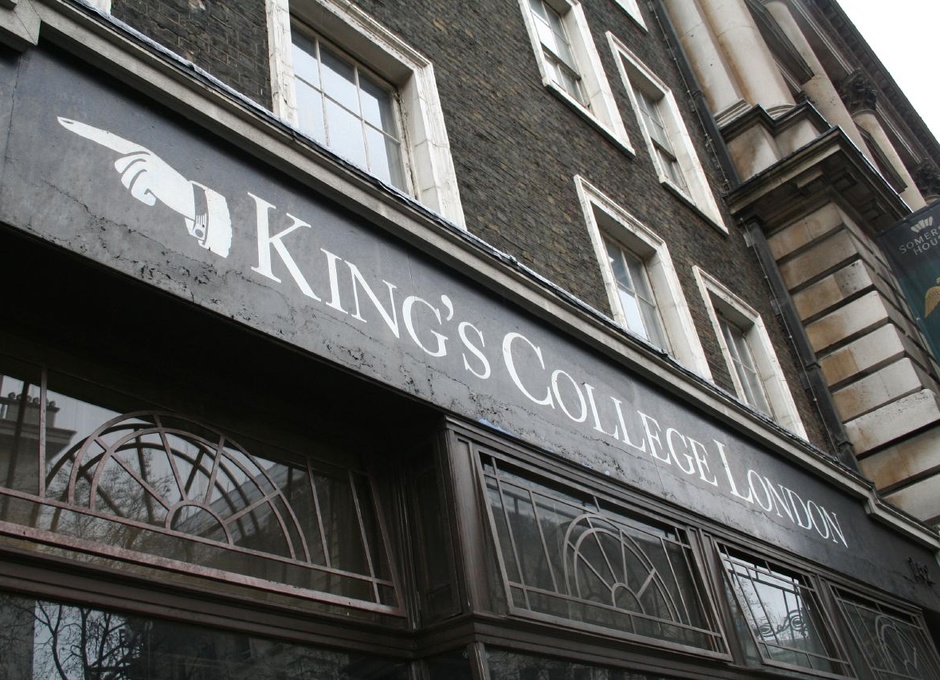
File photo: A King’s College London exterior sign, photographed in 2006. Katy Ereira / Wikimedia Commons / CC BY 2.0; cropped.
King's College London has been awarded £1.4 million for research aimed at answering a difficult question after a prostate cancer diagnosis: which cancers are likely to become dangerous, and which may remain low risk?
The project, called REIMAGINE[Life], will train computer models using samples and clinical information from more than 1,000 men with prostate cancer. Researchers will link those records to National Health Service data to see what actually happened to the men over time.
The goal is to develop a tool that can help doctors judge, from the time of diagnosis, whether a cancer is likely to grow and spread. That could help distinguish men who need earlier treatment from those who might avoid unnecessary procedures and treatment side effects.
The award supports research, not a finished diagnostic product. King's did not announce that the proposed tool is ready for routine patient care or report results proving that it improves treatment decisions.
Professor Mieke Van Hemelrijck, a cancer epidemiologist at King's, is leading the project with researchers from University College London, Imperial College London and Radboud University. Prostate Cancer UK is funding the work in partnership with the John Black Charitable Foundation, King's said in its Nov. 12 announcement.
Doctors currently rely heavily on examining biopsy samples under a microscope to assess how aggressive a cancer may be, the university said. The researchers plan to bring together a wider set of evidence, including MRI scans, blood and urine tests, biopsies and genetic information.
Comparing those details with patients' later outcomes is intended to give doctors a clearer picture of how a newly diagnosed cancer might behave years into the future. Whether the models can make those predictions reliably remains a question for the research.
Source: King's College London
© JBizNews.com. All rights reserved. Unauthorized reproduction or redistribution is strictly prohibited.