By Julia Parker — JBizNews Desk

Global oil markets closed Friday with Brent crude holding above $107 a barrel and West Texas Intermediate trading above $103 — prices that appear surprisingly restrained given what the International Energy Agency now describes as the largest oil-supply disruption in modern history.

According to the IEA’s May Oil Market Report, roughly 12.8 million barrels per day of global oil supply have been disrupted since the Iran conflict escalated in late February and effectively shut the Strait of Hormuz, the narrow shipping channel through which nearly one-fifth of the world’s oil normally flows.

Yet despite the scale of the shock, oil prices remain well below the $138 Brent peak reached on April 7, creating one of the most unusual energy-market dynamics in decades.

The reason, increasingly, is that several powerful stabilizing forces are offsetting what would otherwise be a catastrophic supply collapse.

The supply disruption itself remains enormous.

The U.S. Energy Information Administration, in its May Short-Term Energy Outlook, estimated that production shut-ins across Iraq, Saudi Arabia, Kuwait, the United Arab Emirates, Qatar, and Bahrain averaged roughly 10.5 million barrels per day in April and could approach 10.8 million barrels per day this month as regional storage systems reach operational limits.

Before the conflict, approximately 20% of global crude exports passed through the Strait of Hormuz. The IEA said crude and fuel flows through the corridor fell by roughly 4 million barrels per day during March and April, while Gulf-region exports across all routes plunged by nearly 16 million barrels per day.

Under ordinary conditions, markets facing a disruption of that scale would likely experience a far sharper price spike.

Instead, three major forces have helped absorb the shock.

The first is demand destruction.

The IEA now expects global oil demand to contract by roughly 420,000 barrels per day in 2026, including an extraordinary 2.45 million barrel-per-day drop during the second quarter — the steepest quarterly decline since the COVID-19 pandemic.

Air travel and petrochemicals have been hit hardest. Jet-fuel consumption has weakened sharply as airports across portions of the Middle East remain disrupted, while lower industrial activity has reduced demand for naphtha and other petrochemical feedstocks.

Goldman Sachs estimates global oil consumption in April ran roughly 3.6 million barrels per day below prewar February levels.

The second stabilizing factor has been inventories.

Global oil inventories entered the conflict near a four-year high of approximately 7.9 billion barrels. The IEA estimates roughly 250 million barrels were released from commercial and strategic stockpiles during March and April alone, effectively adding nearly 4 million barrels per day back into global markets.

The third buffer has been the rapid adaptation of supply routes and non-Middle Eastern production growth.

Saudi Arabia and the UAE have rerouted roughly 5.7 million barrels per day combined through Red Sea terminals and Indian Ocean export facilities, partially bypassing the Strait of Hormuz bottleneck.

At the same time, producers across the Americas have accelerated output growth. The IEA recently revised its 2026 supply-growth forecast for North and South American producers upward by more than 600,000 barrels per day to roughly 1.5 million barrels daily.

The geopolitical structure of the oil market has also changed materially during the crisis.

The UAE formally exited OPEC on May 1, removing one of the cartel’s largest spare-capacity holders and reducing projected global spare production buffers. The EIA now estimates OPEC’s collective spare capacity could fall to roughly 2.5 million barrels per day by 2027, down sharply from earlier projections near 3.8 million.

That leaves the broader Gulf oil alliance navigating both an active regional conflict and a more fragmented OPEC structure simultaneously.

Energy analysts warn the apparent stability in crude prices may understate underlying stress inside physical fuel markets.

Bill Perkins, chief investment officer at Skylar Capital Management, told CNBC that diesel and jet-fuel markets remain significantly tighter than crude benchmarks imply and cautioned that logistical bottlenecks could persist even if hostilities ease.

The IEA separately warned that oil markets may remain materially undersupplied through at least October even under a relatively quick ceasefire scenario.

The EIA does not expect normal Middle Eastern production and export patterns to fully return until late 2026 or early 2027.

Diplomatic developments remain the market’s largest variable.

Iranian officials reported that approximately 30 vessels successfully crossed the Strait of Hormuz between Wednesday evening and the weekend, though shipping traffic remains heavily restricted and insurance costs elevated.

Meanwhile, a U.S.-backed ceasefire framework failed to secure Iranian agreement this week. President Donald Trump warned Thursday that Iran could face “annihilation” if negotiations collapse, while recent talks involving Chinese President Xi Jinping failed to produce any concrete mechanism for reopening the strait or stabilizing regional exports.

Asian economies remain particularly vulnerable because of their heavier dependence on Gulf crude.

South Korean President Lee Jae Myung launched a nationwide energy-conservation campaign this week and approved a supplementary budget worth roughly 26.2 trillion won, or approximately $17 billion, aimed at cushioning the domestic economic impact of higher oil costs.

The IEA noted that Asia is currently absorbing the sharpest demand-side adjustment globally.

For American consumers, the outlook remains mixed.

The EIA projects Brent crude could average roughly $106 during May and June before gradually easing toward $89 by the fourth quarter and approximately $79 by 2027 if Middle Eastern exports normalize.

Residential electricity prices in the United States are still expected to rise roughly 5% next year, with East Coast households likely facing the sharpest increases.

U.S. shale producers are benefiting from elevated crude prices but remain cautious about significantly increasing drilling activity. Surveys conducted by the Dallas Federal Reserve and Kansas City Federal Reserve suggest many shale operators estimate breakeven levels near $60 WTI and remain reluctant to commit large new capital expenditures if prices are expected to retreat sharply once the Strait of Hormuz eventually reopens.

For now, the global oil market remains balanced on a narrow edge.

Strategic inventories, redirected exports, weakened demand, and American production growth have together absorbed a supply disruption that under different conditions could have triggered a historic energy crisis.

Whether that balance survives the summer driving season now depends on diplomacy, shipping security, and how much additional demand destruction consumers around the world are willing to absorb.

JBizNews Desk

© JBizNews.com. All rights reserved. This article is original reporting by JBizNews Desk. Unauthorized reproduction or redistribution is strictly prohibited.


Banks underwriting corporate borrowings in the U.S. leveraged loan market raised the size of at least six proposed deals by a combined $2.6 billion ahead of investor commitment deadlines Thursday, Bloomberg reported, in the clearest sign yet that demand for risky dollar-denominated debt has heated into a full-blown imbalance — with funds, collateralized loan obligation managers, and private-credit pools chasing more paper than the market is currently producing.

The Thursday upsizes, tracked by Bloomberg, mark a deepening of a trend that has been building for months. Strong inflows into CLO funds and exchange-traded products, combined with stretched cash piles at private-credit shops and reignited buyout activity, have created the most lender-friendly conditions for borrowers since the post-pandemic refinancing wave.

Banks running syndicated processes have been able to widen ticket sizes, tighten pricing, and pull deals forward — a dynamic that has fed back through the secondary market into ever-richer pricing on existing loans.

The numbers tell the story.

Through the first stretch of 2026, $77 billion in U.S. leveraged loans has priced across 54 deals, alongside $22.6 billion in high-yield bond issuance across 20 deals, according to data published by Octus.

Bank of America strategists project full-year 2026 leveraged loan issuance to climb 10% to roughly $470 billion, fueled by a doubling of merger-and-acquisition and leveraged-buyout volume to about $260 billion.

JPMorgan Chase analysts have separately estimated that M&A and LBO debt issuance could reach $80 billion in high-yield bonds and $225 billion in loans this year.

The pipeline backing those forecasts is already visible.

The roughly $55 billion take-private of Electronic Arts by Silver Lake is expected to bring $20 billion of debt to the syndicated loan market in the months ahead, led by JPMorgan.

Blackstone and TPG’s $18.3 billion buyout of medical-diagnostics company Hologic will require another $12 billion of debt.

Air Lease is being taken private in a $28 billion deal, and Bloomberg has calculated that banks have already underwritten roughly $65 billion of leveraged-buyout debt scheduled to come to market in 2026.

Borrowers, in many cases, are pricing those packages at the tightest spreads in years.

The pricing reflects the supply-demand mismatch.

The average institutional loan margin in the third quarter of 2025 was just 3.13%, the lowest quarterly average on record, according to Debtwire data.

Average bids in the secondary market are running at 95 to 97 cents on the dollar.

Roughly 40% of outstanding institutional loans are trading at or above par, leaving managers of CLOs — the dominant institutional buyer of leveraged loans — scrambling for newly priced paper at any kind of yield premium.

CLO issuance in the U.S. reached a record $472 billion of broadly syndicated CLO volume in 2025 across more than 1,000 transactions, plus another $84.7 billion in private-credit CLOs, per Octus.

“This year is really the perfect storm for credit because we have a fiscal expansion and simultaneously also have monetary easing,” Neha Khoda, head of U.S. credit strategy at Bank of America, said at a recent industry roundtable. “Historically, whenever we’ve seen these happen concurrently, it’s been good for credit.”

Michael Marzouk, a loan portfolio manager at Aristotle Pacific Capital, told industry attendees that corporate fundamentals “remain in good shape” and that easing should help spur further M&A activity off trough levels.

Adam Abbas, head of fixed income at Oakmark, said he expects buy-side investors to migrate from high-yield bonds into leveraged loans as the asset class normalizes.

The risks, however, are creeping back into view.

Loans priced below 90 cents on the dollar climbed to 9.4% of the market in November, matching a mid-year peak.

The September 2025 blowups of Tricolor and First Brands have left what one Deutsche Bank analyst, Jamie Flannick, described as “a fog hanging over” the leveraged finance market.

Covenant-lite loan issuance is rising, which reduces lender protections and historically lowers recoveries in defaults.

Moody’s forecasts speculative-grade defaults to decline to 3.0% in the U.S. and 2.4% in Europe by October 2026 — down from 5.3% and 3.8% a year earlier — but warns that tariff shifts, inflation and geopolitical tensions could disrupt the base case.

With the Strait of Hormuz still closed and second-quarter inflation now forecast at 6% by the Federal Reserve Bank of Philadelphia’s Survey of Professional Forecasters, the macro backdrop is far from clean.

The other complication is CLO profit math.

Spreads on the underlying loan paper have compressed so much that Morgan Stanley strategists recently estimated CLO equity arbitrage is at its slimmest level in about a year.

Tom Majewski, founder of Eagle Point Credit, captured the trade-off at the Opal Group’s annual industry conference in Dana Point, California: “Picture a wall of sand coming at you from one side and you’re trying to move boulders on the other.”

Strategists at Citigroup, led by Michael Anderson and Steph Choe, have noted that the AI capital-expenditure cycle — which is on track to draw an estimated $150 billion from leveraged finance markets over the next five years for data centers — is itself “a mixed bag for credit,” boosting corporate animal spirits while threatening incumbent business models.

For now, the imbalance is producing more — and bigger — deals.

Until either the Federal Reserve signals a clearer pause, the AI-driven capex cycle slows, or a fresh credit event tightens risk appetite, borrowers and bankers appear set to keep pushing the limits of what investors will absorb.

JBizNews Desk
© JBizNews.com. All rights reserved. This article is original reporting by JBizNews Desk. Unauthorized reproduction or redistribution is strictly prohibited.
LONDON — The British pound dropped nearly 1% against the U.S. dollar Thursday — its single largest one-day decline in more than three months — after Greater Manchester Mayor Andy Burnham announced he would seek to return to Parliament through a by-election in the Makerfield constituency, setting up what markets now interpret as the clearest signal yet that the former cabinet minister intends to mount a direct leadership challenge against Prime Minister Sir Keir Starmer, according to reporting from Bloomberg News and the Financial Times. Sterling hit a one-month low against the dollar, becoming the worst-performing G10 currency Thursday, and yields on longer-dated U.K. gilts climbed as investors began pricing in a higher probability of a Labour leadership change and the looser fiscal policy that would likely accompany it.

The trigger was a confluence of two announcements. Labour MP Josh Simons, who represents Makerfield, said he would step aside to allow Burnham to return to the House of Commons, and Burnham confirmed on X that he would seek permission from Labour’s National Executive Committee to contest the seat. Burnham has led Greater Manchester since 2017 but is not currently a sitting MP, and Labour Party rules require a leadership challenger to hold a Commons seat and to secure nominations from 20% of the parliamentary party — currently 81 Labour MPs — before a contest can be triggered. Returning to Westminster is the procedural gate that, until Thursday, had kept his ambitions theoretical. The market read the by-election announcement as the gate opening.

The political setup gives Thursday’s market move its weight. Labour suffered a heavy defeat in last week’s English local elections, losing roughly 1,500 council seats and control of dozens of local authorities including traditional strongholds. Reform UK, led by Nigel Farage, gained more than 1,400 council seats and took control of 14 councils, transforming the local contests into the most significant electoral repudiation a sitting U.K. government has absorbed since Liz Truss’s collapse in 2022. Starmer’s Labour Party entered the cycle with the 2024 landslide majority that put him in office; it exited with a parliamentary party openly divided over tax, spending, and direction. U.K. Health Secretary Wes Streeting is separately reported by The Times to be preparing his own leadership bid. Deputy Prime Minister Angela Rayner and Energy Secretary Ed Miliband have also been discussed as possible successors.

The fixed-income market is rendering its own verdict on which successor it would tolerate. Investors surveyed by the Financial Times identified Burnham as the Labour figure most likely to trigger a negative reaction in gilts, ahead of Rayner and Miliband, with Streeting rated the safest option due to his perceived economic pragmatism and closer alignment with Treasury orthodoxy. Nigel Green, chief executive of deVere Group, which has roughly $14 billion under advisement, said in a note Thursday that Burnham “represents the biggest threat to the gilt market among the serious Labour contenders because investors will immediately associate his leadership ambitions with heavier state spending, looser fiscal policy.” Green added that “higher gilt yields rapidly feed into mortgage pricing, business lending costs, corporate investment decisions and sterling stability.” Mitsubishi UFJ Financial Group’s FX strategy team flagged in a separate client note that polling shows a “soft left” Labour candidate is “most likely to replace Keir Starmer if a leadership contest takes place,” warning that such an outcome could amplify market concerns about U.K. fiscal risks and pressure both gilts and sterling further.

The strangest part of Thursday’s tape was that the political news overwhelmed a genuinely strong macro print. The U.K. economy expanded by 0.6% in the first quarter of 2026, the strongest quarterly growth in over a year and well above consensus expectations of 0.3%. In a normal environment, that print would have lifted sterling and tightened the Bank of England rate-cut trajectory. Instead, the pound sold off against both the euro and the dollar, and the yield curve steepened as longer-dated gilts underperformed — the textbook signature of a market repricing fiscal risk rather than monetary risk. The Bank of England is widely expected to hold rates at its next meeting. Bank of England Governor Andrew Bailey has not commented publicly on the political situation.

The market memory of the Truss mini-budget crisis is the structural reason political risk now translates so quickly into pound and gilt weakness. In September and October 2022, the Truss government’s unfunded tax cuts triggered a near-failure cascade in the U.K. pension-fund liability-driven investment market, forcing the Bank of England to launch an emergency gilt-buying program and contributing directly to Truss’s resignation after 49 days in office. Green of deVere said in his note that the experience “permanently lowered the threshold for market panic in the U.K.,” with structural vulnerabilities exposed during the 2022 episode having “never fully disappeared.” U.K. borrowing needs remain elevated, growth remains uneven, and the country’s chronic current-account deficit means it relies on foreign capital to fund itself — a dependency that becomes acute when political stability comes into question.

The next several weeks will determine whether the move extends or reverses. Burnham still requires Labour NEC approval to contest Makerfield — a process that several Manchester Labour MPs had reportedly resisted because none wanted to surrender their own seat. Simons’s offer changes that calculus only if NEC signs off. Starmer retains the prime ministership unless he chooses to resign or 81 Labour MPs sign nominations for an alternative candidate, and Downing Street has reiterated “full confidence” in Streeting’s loyalty even as the press reports the opposite. Reform UK sits on the sidelines, watching the Labour machine consume itself, with Farage the structural beneficiary of any further deterioration in voter confidence. For sterling, the gilt market, and the U.K. mortgage and corporate-credit complex that runs off them, every step in the Burnham leadership arithmetic from here is a binary repricing event.

JBizNews Desk

© JBizNews.com. All rights reserved. This article is original reporting by JBizNews Desk. Unauthorized reproduction or redistribution is strictly prohibited.
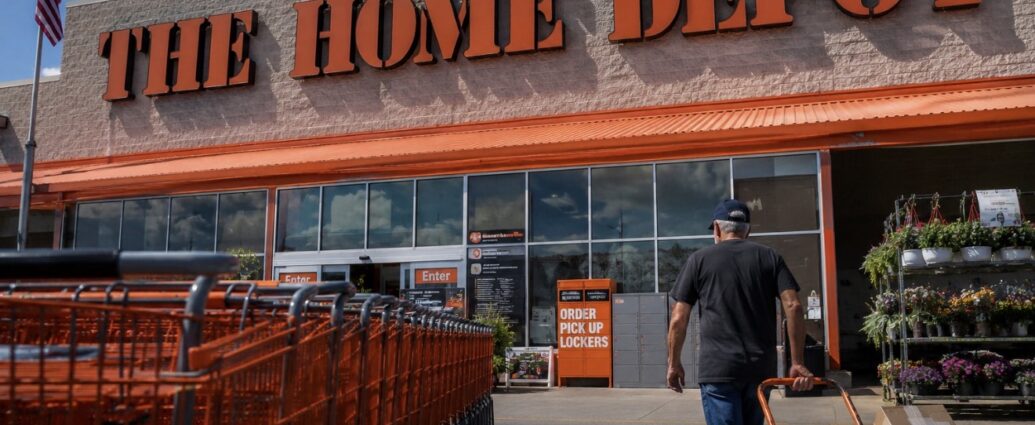
Home Depot shares slid toward a fresh 52-week low Wednesday as Wall Street analysts turned increasingly cautious on the home-improvement giant amid a prolonged housing slowdown, weakening renovation demand, and rising mortgage rates that continue to pressure the broader housing market. At the same time, rival Lowe’s received a major vote of confidence from Wall Street after Citigroup upgraded the retailer to Buy, sharpening the growing divergence between America’s two largest home-improvement chains just days before both companies report earnings.

The split in analyst sentiment comes during one of the most important weeks of the spring retail earnings season. Home Depot is scheduled to release first-quarter results on Tuesday, May 19, with Lowe’s following a day later on Wednesday, May 20. Both companies operate in the same interest-rate-sensitive housing economy, but investors and analysts are increasingly viewing the retailers through very different lenses as elevated borrowing costs continue freezing parts of the U.S. housing market.

Citigroup analyst Steven Zaccone upgraded Lowe’s from Neutral to Buy on Tuesday and issued a $285 price target, according to Bloomberg, implying roughly 26% upside from recent trading levels. Zaccone told clients he expects Lowe’s to outperform both industry peers and Home Depot through 2026 as the home-improvement cycle begins stabilizing after multiple difficult years tied to rising interest rates and falling home turnover.

The bullish Lowe’s call stood in sharp contrast to the latest round of cuts targeting Home Depot. On Wednesday, Truist Securities analyst Scot Ciccarelli lowered his Home Depot price target from $424 to $394, extending a growing wave of negative revisions that has pushed the stock near its lowest level in a year. Earlier this week, Gordon Haskett analyst Chuck Grom cut his Home Depot target even more aggressively, reducing it from $395 to $330.

Shares of Home Depot fell another 3.2% Wednesday, underperforming the broader market even as the Nasdaq and S&P 500 closed at record highs. The stock now trades below its 200-day moving average, while technical indicators increasingly point toward oversold conditions.

Behind the weakness is a housing market that remains stuck in a prolonged freeze. Mortgage rates climbed back near 6.5% this week following another surge in Treasury yields after hotter-than-expected inflation data. Higher borrowing costs continue discouraging both home purchases and refinancing activity, sharply reducing the housing turnover that typically drives spending on remodeling, repairs, appliances, kitchens, flooring, and other major home-improvement projects.

Economists and housing analysts have repeatedly warned that elevated mortgage rates are trapping millions of homeowners in existing low-rate mortgages secured during the pandemic-era housing boom. With many homeowners unwilling to give up mortgage rates below 4%, fewer homes are changing hands across the country, weakening demand for the types of large renovation projects that fueled Home Depot’s explosive growth during the pandemic.

The broader economic backdrop worsened Wednesday after the Bureau of Labor Statistics reported that the Producer Price Index rose 6% year over year in April, marking the fastest wholesale inflation pace since 2022. Much of the increase was tied to rising energy costs connected to the ongoing Iran war, which has pushed oil prices sharply higher in recent weeks and reignited fears that inflation may remain elevated longer than markets previously expected.

Treasury yields climbed further after the report, with the 30-year U.S. Treasury yield rising above 5% for the first time since 2007. The 10-year Treasury yield approached 4.5%, directly increasing pressure on mortgage rates and further complicating the outlook for housing-related companies.

Home Depot’s own fundamentals have added to investor concerns. In its previous quarterly report, the retailer posted a 3.8% year-over-year revenue decline, continuing a multi-quarter stretch of weakening sales tied to slowing renovation demand. Management, led by Chair, President and CEO Ted Decker, guided fiscal 2026 toward flat-to-low-single-digit comparable sales growth and projected operating margins between 12.4% and 12.6%, down from 13.1% in fiscal 2025.

While Lowe’s faces many of the same macroeconomic pressures, analysts increasingly believe the company may be navigating the downturn more effectively. Under Chairman, President and CEO Marvin R. Ellison, Lowe’s has aggressively expanded its professional-contractor business through acquisitions, distribution growth, and new branch openings — areas historically dominated by Home Depot.

Analysts also note that Lowe’s carries somewhat less exposure to large discretionary remodeling projects tied to affluent homeowners, leaving it potentially better positioned if consumers remain cautious on big-ticket spending.

Lowe’s reported fiscal 2025 sales of $86.3 billion and guided fiscal 2026 revenue toward a range of $92 billion to $94 billion, with adjusted diluted earnings per share expected between $12.25 and $12.75. Comparable sales are projected to range from flat to up 2%.

For investors, next week’s earnings reports may now serve as a major test of Wall Street’s widening divergence thesis. If Lowe’s delivers the stronger results and guidance analysts expect while Home Depot disappoints again, the analyst rotation currently underway could accelerate significantly.

But if Home Depot surprises to the upside and shows signs that housing demand may finally be stabilizing, the recent selloff could ultimately prove to be an overreaction for a stock that has already lost more than 20% from its peak.

Either way, Wall Street is no longer treating Home Depot and Lowe’s as the same trade.

JBizNews Desk

© JBizNews.com. All rights reserved. This article is original reporting by JBizNews Desk. Unauthorized reproduction or redistribution is strictly prohibited.

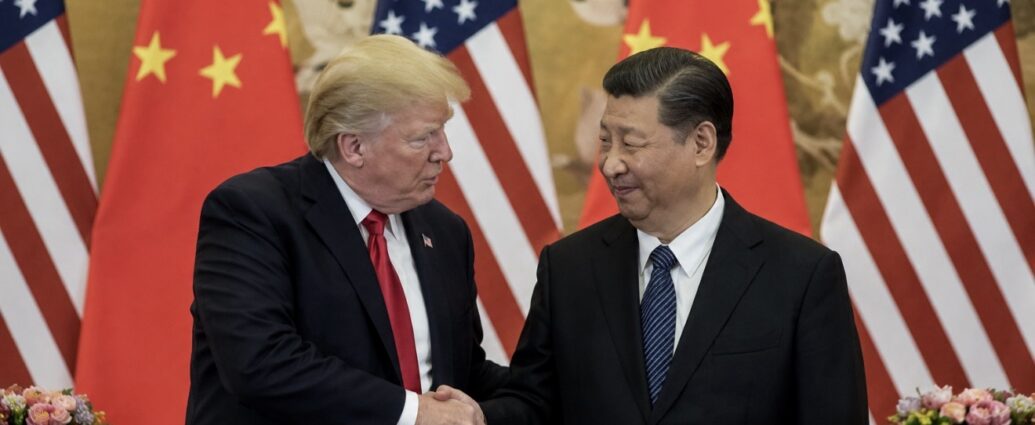
President Donald Trump opened his high-stakes summit with Chinese President Xi Jinping at the Great Hall of the People in Beijing on Thursday with an unusually warm declaration that the world’s most consequential bilateral relationship is about to enter a new phase.

“It’s an honor to be with you. It’s an honor to be your friend, and the relationship between China and the USA is going to be better than ever before,” Trump told Xi at the start of formal talks, according to live coverage by CNN and CBS News before reporters were escorted from the room.

The comments, delivered after an elaborate state welcome ceremony featuring a People’s Liberation Army military band, flag-waving schoolchildren, a red-carpet honor guard review, and ceremonial cannon fire in Tiananmen Square, set a notably conciliatory tone for a summit unfolding at one of the most sensitive moments in U.S.-China economic relations in years.

Trump also described Xi as a “great leader,” acknowledging that critics dislike the phrase but insisting, “I say it anyway, because it’s true.” The visit marks Trump’s first trip to China since 2017 and the first state visit to Beijing by a sitting U.S. president in nearly a decade.

The size and composition of the U.S. delegation underscored the summit’s economic significance. According to CBS News coverage of the welcoming ceremony, Trump arrived alongside U.S. Trade Representative Jamieson Greer, Defense Secretary Pete Hegseth, Treasury Secretary Scott Bessent, Secretary of State Marco Rubio, and U.S. Ambassador to China David Perdue.

The delegation also included several of America’s most prominent technology and industrial executives, among them Tesla and SpaceX Chief Executive Elon Musk, Nvidia Chief Executive Jensen Huang, and outgoing Apple Chief Executive Tim Cook. Huang joined the delegation at the last minute after concerns surfaced publicly over his initial absence from the trip.

Thursday’s schedule includes a bilateral working session, a cultural visit to the Temple of Heaven, and a formal state banquet before negotiations continue Friday. The agenda spans some of the most consequential issues in the global economy, including rare-earth exports, AI semiconductor restrictions, Taiwan, the Iran conflict, and potential expansion of Chinese purchases of U.S. energy and agricultural products.

According to a summit preview by Council on Foreign Relations senior fellow Rush Doshi, expectations remain more restrained than during Trump’s 2017 visit, when Xi staged what observers called a “state visit-plus,” complete with a private Forbidden City dinner, major ceremonial displays, and announcements of more than $250 billion in business agreements.

This year’s summit instead arrives amid escalating geopolitical strain and fragile trade ties. The most immediate issue is likely the future of the rare-earth export framework negotiated during last year’s APEC summit in Busan, South Korea.

Under that temporary arrangement, Beijing agreed to ease restrictions on rare-earth materials critical to American manufacturing in exchange for the United States softening several threatened tariffs. According to Foreign Policy and the Center for Strategic and International Studies, both governments appear motivated to preserve the arrangement after Chinese restrictions last year caused U.S.-bound rare-earth magnet exports to collapse roughly 93% year over year.

Those materials remain essential for electric vehicles, advanced weapons systems, semiconductors, data centers, and industrial manufacturing.

Trump is also expected to unveil a new bilateral “Board of Trade” composed of senior officials from both governments to oversee implementation of future agreements, according to analysis from CSIS senior adviser Scott Kennedy and China Power Project director Bonny Lin. The proposal is intended to address longstanding U.S. complaints that Beijing failed to fully implement commitments made under the Phase One trade agreement signed during Trump’s first term.

China has reportedly pushed for a parallel “Board of Investment” focused on easing barriers to Chinese investment in the United States.

Hovering over the summit is the unresolved war with Iran and the ongoing disruption of oil shipments through the Strait of Hormuz. The U.S. Navy continues intercepting vessels connected to Iranian exports, many of them ultimately destined for China, which remains Tehran’s largest oil customer.

Secretary of State Marco Rubio said earlier this week that Iran would feature prominently in discussions. “We’ve made clear to them that any support for Iran would obviously be detrimental for our relationship,” Rubio told Fox News.

Analysts have interpreted recent diplomatic outreach between Beijing and Tehran as an effort by Xi to position China as a potential intermediary in efforts to reopen the Strait of Hormuz — an outcome that would stabilize energy markets and benefit both economies.

Taiwan remains perhaps the summit’s most politically sensitive issue. Officials in Taipei are closely monitoring whether the Trump administration signals any shift in language surrounding cross-strait relations or future U.S. arms support.

Trump disclosed last week that Taiwan came up during a February call with Xi, fueling speculation that Beijing may seek concessions tied to trade or investment negotiations.

For now, however, the public optics from Beijing have been carefully calibrated toward stability: smiling exchanges, ceremonial pageantry, and a public pledge from Trump that ties between the two countries will become “better than ever.”

Whether the atmosphere translates into substantive agreements — particularly on trade, rare earths, semiconductors, and energy — will become clearer Friday when the summit’s concrete outcomes are expected to emerge.

JBizNews Desk

© JBizNews.com. All rights reserved. This article is original reporting by JBizNews Desk. Unauthorized reproduction or redistribution is strictly prohibited.

Shares of Ford Motor Company surged 13% Wednesday, marking the automaker’s biggest one-day gain since March 2020, after analysts signaled the company could soon secure major battery-storage agreements tied to the artificial-intelligence data center boom. The rally pushed Ford shares as high as $13.56 intraday and erased much of the skepticism that has surrounded the company’s electric-vehicle strategy since its massive EV writedown last year.

The catalyst came from a research note published late Tuesday by Morgan Stanley analyst Andrew Percoco, who told clients there is a “fairly high likelihood” Ford signs energy-storage system supply agreements with large commercial customers — including hyperscale data center operators — within the next several months. According to Bloomberg, the note immediately triggered a sharp reassessment across Wall Street of Ford’s emerging energy-storage business.

Percoco maintained an Equal-weight rating and a $14 price target but estimated Ford Energy could eventually be worth roughly $10 billion as a standalone operation. He projected the division could generate between $500 million and $600 million in run-rate earnings before interest and taxes once production capacity reaches 20 gigawatt-hours, potentially turning profitable by 2028.

The thesis centers on Ford’s partnership with China’s Contemporary Amperex Technology Co. (CATL), the world’s largest battery manufacturer. Percoco described the relationship as an “underappreciated strategic competitive advantage” because it gives Ford access to CATL’s advanced lithium iron phosphate battery chemistry while manufacturing the batteries domestically in a structure that still qualifies for U.S. tax incentives.

That combination positions Ford as one of the few American manufacturers potentially capable of delivering large-scale, U.S.-compliant battery-storage systems to utilities and hyperscale data center operators at a moment when electricity demand tied to artificial intelligence infrastructure is exploding.

The hyperscaler angle is what transformed the analyst note into a market-moving event. Companies including Microsoft, Amazon Web Services, Alphabet’s Google, Meta Platforms, Oracle, and Apple are collectively expected to spend nearly $700 billion in 2026 building artificial-intelligence infrastructure, according to industry projections. Massive AI training clusters and cloud-computing campuses require not only enormous amounts of power, but increasingly stable and dispatchable backup energy systems — making large-scale battery storage one of the most constrained supply chains in technology infrastructure today.

Demand for grid-scale battery systems has already surged globally as utilities and data center operators race to secure capacity. Analysts say companies capable of supplying compliant domestic battery infrastructure stand to benefit from one of the fastest-growing segments of the AI economy.

Ford’s sudden emergence in that conversation represents a dramatic shift in investor perception. Just months ago, Wall Street viewed the automaker primarily through the lens of slowing EV demand and heavy electric-vehicle losses. The company wrote down roughly $20 billion tied to its Ford Model e EV division late last year, fueling concerns about long-term profitability.

Sentiment began shifting after Ford’s first-quarter 2026 earnings report exceeded expectations across multiple categories. The company reported revenue of $43.3 billion, adjusted earnings per share of $0.66, and net income of $2.55 billion while also raising full-year adjusted EBIT guidance. Management cited stronger cost controls, resilient demand for combustion-engine trucks, and expanding commercial revenue through Ford Pro.

Chief Executive Officer Jim Farley has increasingly framed Ford as a diversified industrial and technology platform rather than simply a traditional automaker. The company currently organizes operations into Ford Blue for gas and hybrid vehicles, Ford Model e for electric vehicles and software, and Ford Pro for commercial operations. The emerging energy-storage business effectively creates a fourth pillar — one tied directly to utilities, AI infrastructure, and commercial power systems rather than consumer vehicle sales.

Farley told investors during Ford’s latest earnings call that the company is entering “one of the most intensive product, software, and physical services rollouts in our history.” Ford’s board also maintained its quarterly dividend at $0.15 per share, payable June 1.

For investors, the strategic significance goes beyond Wednesday’s stock rally. If Ford successfully monetizes battery manufacturing capacity through hyperscaler agreements, it could reduce dependence on consumer EV demand at a time when the broader automotive industry faces rising financing costs, elevated interest rates, and economic uncertainty tied partly to the Iran conflict and higher energy prices.

It also highlights a broader structural shift underway in the American economy: legacy manufacturers are increasingly becoming suppliers to the AI infrastructure buildout itself, not merely users of cloud technology.

Still, analysts cautioned that much of Wednesday’s rally was driven by expectations rather than signed contracts. Percoco’s report referenced a “high probability” of agreements within the next few months but did not identify specific counterparties. Industry speculation has centered on potential deals involving Microsoft, Meta, Oracle, or other major cloud operators.

If Ford secures a high-profile hyperscaler customer, analysts believe the stock could move materially higher. If negotiations drag into 2027 or fail to materialize, Wednesday’s gains could reverse quickly. Morgan Stanley’s $14 target actually sits below Ford’s intraday high Wednesday, suggesting the bank itself sees limited immediate upside absent formal contract announcements.

Competition remains fierce. Tesla continues dominating the U.S. utility-scale battery market through its Megapack business, while General Motors, Fluence, NextEra Energy Resources, Stem, and several Chinese firms are all competing aggressively for large-scale energy-storage contracts tied to AI infrastructure expansion.

But for now, Wall Street appears increasingly willing to believe Ford may have found a credible new growth engine — one tied not to the next generation of cars, but to the enormous power demands of artificial intelligence itself.

JBizNews Desk

© JBizNews.com. All rights reserved. This article is original reporting by JBizNews Desk. Unauthorized reproduction or redistribution is strictly prohibited.

Walmart Inc. is eliminating or relocating roughly 1,000 corporate roles across its global technology and artificial-intelligence organization, marking the retailer’s largest corporate restructuring of 2026 as companies across America race to reorganize around AI-driven operations and automation.

The move, disclosed Tuesday in an internal memo from Suresh Kumar, Walmart’s Global Chief Technology Officer, and Daniel Danker, Executive Vice President of AI Acceleration, Product and Design, restructures engineering, AI, and product teams under a more centralized command structure as Walmart intensifies its technology battle with Amazon.com Inc. and other major retailers.

“We’ve made changes to simplify how the work is organized, make ownership clearer and better align roles to the work and skills we need going forward,” Kumar and Danker wrote in the memo.

The restructuring will affect employees across Walmart’s sprawling technology organization. Some workers may apply for internal openings, but many positions are being shifted toward the company’s headquarters in Bentonville, Arkansas, and its Northern California technology offices — continuing Walmart’s increasingly aggressive return-to-office and relocation strategy for white-collar staff.

The cuts arrive less than four months after Walmart eliminated approximately 1,500 positions in January and nearly a year after another 1,500-role reduction in May 2025. Combined, the three rounds represent one of the most sustained corporate restructuring campaigns underway in modern retail, even as Walmart maintains its roughly 2.1 million global store and warehouse workforce.

The reductions underscore how rapidly artificial intelligence is reshaping corporate America beyond Silicon Valley. While AI initially fueled a hiring boom for engineers and data scientists, companies are now consolidating departments, automating functions, and reducing overlapping management structures as executives attempt to improve efficiency and accelerate deployment of AI-powered systems.

Investors appeared largely unfazed by the announcement. Walmart shares traded near $130 Tuesday, close to the company’s all-time high of $134.69 reached earlier this year. Analysts continue to maintain a strong bullish outlook on the retailer ahead of its May 21 earnings report, where Wall Street is expected to closely examine restructuring charges, AI investment spending, and updated labor-cost projections.

Walmart’s push mirrors a broader transformation underway across the retail industry. Amazon has aggressively integrated generative AI tools like its Rufus shopping assistant throughout its marketplace ecosystem, while Walmart has responded with its own suite of internal AI “super agents” designed to automate supplier onboarding, customer service, engineering workflows, merchandising support, and operational decision-making.

Under U.S. Chief Executive John Furner, Walmart has increasingly framed AI as central to the company’s future competitiveness. Earlier this month, management disclosed plans to direct roughly $10 billion annually toward technology, supply-chain modernization, and advertising infrastructure, funded in part by the company’s fast-growing retail media business.

The hiring of Daniel Danker from Instacart in late 2024 signaled the seriousness of Walmart’s AI ambitions. Danker, previously a senior executive at Uber Technologies Inc. and Microsoft Corp., has spent the past year consolidating Walmart’s fragmented technology, design, and AI divisions into a unified structure aimed at speeding product deployment and reducing bureaucracy.

Tuesday’s workforce actions now formalize that strategy.

The restructuring also reflects mounting pressure across corporate America as executives confront the disruptive potential of generative AI. Microsoft Corp., Alphabet Inc., Meta Platforms Inc., and Oracle Corp. have all announced layoffs or management reductions in recent months tied to AI-driven restructuring and cost discipline.

At the same time, research from AI company Anthropic has intensified debate inside boardrooms over how many traditional white-collar functions may eventually become automated. Former PepsiCo Chief Executive Indra Nooyi said this week that corporate directors unwilling to understand AI technology should “step aside,” highlighting how rapidly AI literacy is becoming a leadership expectation across major corporations.

For Walmart, the challenge now becomes execution.

The retailer’s increasingly sophisticated logistics, inventory, advertising, fulfillment, and marketplace systems rely on enormous software infrastructure operating across thousands of stores and distribution centers. Any disruption inside engineering or AI product teams could slow the rollout of customer-facing automation tools during critical shopping periods later this year.

Management insists the opposite will happen — that simplifying reporting lines and consolidating teams will allow Walmart to move faster in deploying AI-powered shopping, pricing, and operational tools before the crucial back-to-school and holiday retail seasons.

Whether the strategy succeeds may become clear within weeks. Investors and analysts are expected to scrutinize Walmart’s upcoming earnings call for details surrounding severance costs, headcount trends, AI deployment timelines, and the broader financial impact of one of the largest technology reorganizations currently underway in the retail industry.

As corporate America races deeper into the AI era, Walmart’s restructuring may ultimately serve as one of the clearest signs yet that artificial intelligence is no longer simply a new technology investment — it is rapidly becoming a force reshaping the structure of the American workforce itself.

Abu Dhabi Is Seeking a Dollar Lifeline That Only Five Countries in the World Currently Have

By JBizNews Desk | Abu Dhabi — May 6, 2026

The United Arab Emirates confirmed Monday it is in active discussions with the United States about establishing a currency swap line with the Federal Reserve — a financial arrangement so exclusive that only five countries in the world currently hold one, and one that signals a profound shift in the region’s economic and geopolitical alignment.

UAE Minister of Foreign Trade Thani Al Zeyoudi disclosed the talks at the “Make It In The Emirates” conference, framing the effort as a mark of strategic partnership rather than financial need. “They are only having it with five countries,” he said. “Being part of that group means that transactions, trade, investments between both nations reach a level where that swap is highly needed… it is not about bailing out.”

That distinction — prestige versus necessity — is central to how the UAE is presenting the move. But the timing reveals a deeper story.

What a Currency Swap Line Actually Is

A Federal Reserve swap line allows a foreign central bank to exchange its local currency for U.S. dollars directly, bypassing global currency markets. In times of financial stress, it provides immediate access to dollar liquidity — effectively functioning as an emergency backstop.

The Fed currently maintains permanent swap lines with only five institutions: the European Central Bank, Bank of Japan, Bank of England, Bank of Canada, and Swiss National Bank. All are long-standing Western allies with deeply integrated financial systems.

If approved, the UAE would become the first Gulf nation — and one of the few non-Western countries — to join that circle.

Why the UAE Is Asking Now

The request comes at a moment of escalating regional instability.

The UAE confirmed it intercepted Iranian missiles on Monday — the first activation of its defense systems since the April ceasefire between the United States and Iran. At the same time, disruptions in the Strait of Hormuz have pushed oil markets higher and raised concerns about supply stability.

For the UAE, the financial implications are immediate. Reduced oil flow threatens dollar inflows, increases the risk of capital outflows, and places pressure on the dirham’s long-standing peg to the U.S. dollar — a cornerstone of the country’s economic system.

Al Zeyoudi’s comments mark the first official confirmation that Abu Dhabi is seeking direct access to U.S. dollar liquidity in response to these pressures.

The move comes just days after another major shift: the UAE formally exited OPEC and the broader OPEC+ alliance on May 1, ending nearly six decades of membership. The decision frees the country from production limits but also signals a strategic pivot away from traditional oil alliances toward closer alignment with the United States.

Dollar Diplomacy in Action

Taken together — the OPEC exit, the swap line request, and the UAE’s active role in regional defense — the message is clear: Abu Dhabi is moving decisively into Washington’s financial and security orbit.

A Federal Reserve swap line is more than a technical arrangement. It represents trust — in a country’s financial system, central bank credibility, and political alignment. It effectively guarantees access to U.S. dollars on demand, the most critical currency in global trade and energy markets.

For the UAE, whose economy depends heavily on dollar-denominated oil exports, that access would provide the strongest possible financial safeguard short of a formal alliance.

For the United States, the implications extend beyond finance. A stable UAE with assured dollar liquidity is a more reliable partner in a region where energy flows remain under threat. Roughly 20% of global oil supply passes through the Strait of Hormuz, and continued disruptions have already contributed to rising fuel costs worldwide.

Whether the Federal Reserve ultimately agrees to extend such a privilege remains uncertain. The decision would be unprecedented and carry significant geopolitical weight.

But the fact that discussions are underway — and publicly acknowledged at a moment of active military tension — signals a shift happening in real time.

The Middle East’s financial map is being redrawn, and the dollar is once again at the center of it.

JBizNews Desk
© JBizNews.com. All rights reserved.

By JBizNews Desk
May 11, 2026

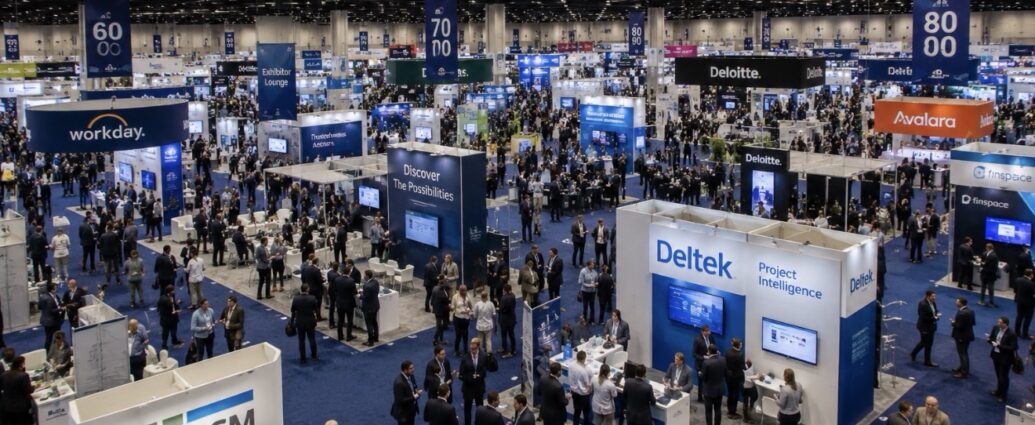
Private equity giant Apollo Global Management is making another major bet on the long-term strength of live business events and experiential commerce, announcing plans Monday to combine Emerald Holding and Questex into one of the largest business-to-business events platforms in North America.

The transaction, valued at approximately $1.5 billion, reflects growing investor confidence that in-person trade shows, conferences, and industry gatherings remain economically powerful even as companies increasingly build year-round digital ecosystems around them.

According to announcements released Monday through GlobeNewswire and filings with the U.S. Securities and Exchange Commission, Apollo-managed funds have entered into separate definitive agreements to acquire publicly traded Emerald Holding, Inc. (NYSE: EEX) and privately held Questex, LLC in an all-cash transaction.

Under the agreement, Emerald shareholders will receive $5.03 per share in cash, representing a premium of approximately 42.1% over the company’s recent trading levels.

Onex Partners, which controls more than 90% of Emerald’s equity, has already agreed to support the deal.

Once combined, the businesses are expected to operate roughly 160 events annually spanning industries including technology, hospitality, healthcare, retail, consumer products, and industrial sectors.

The merger would pair Emerald’s large-scale trade exhibitions with Questex’s year-round digital engagement infrastructure — a model Wall Street increasingly views as one of the most valuable shifts occurring inside the events industry.

Unlike traditional trade-show operators that primarily generate revenue during a few days each year at physical conventions, Questex has built what executives describe as a “365-day engagement model.”

That means the company continuously monetizes professional audiences long after conferences end.

Questex operates industry media websites, newsletters, webinars, virtual conferences, data products, digital advertising platforms, and online networking systems that keep buyers, executives, vendors, and sponsors connected year-round.

For example, a hospitality or healthcare conference attendee may continue receiving industry intelligence reports, sponsored content, webinars, product recommendations, and networking opportunities throughout the year — generating recurring subscription, advertising, sponsorship, and lead-generation revenue far beyond the physical trade-show floor itself.

That digital infrastructure also creates something increasingly valuable in modern business media: proprietary professional audience data.

By tracking attendee interests, industry trends, buyer behavior, and sponsor engagement continuously, platforms like Questex can offer companies more targeted advertising, marketing, and customer acquisition tools than traditional event operators historically could.

Apollo appears to view that combination — physical events plus recurring digital engagement — as especially attractive in an uncertain economic environment because it produces more diversified and stable cash flow streams.

Emerald Chief Executive Officer Hervé Sedky described the transaction as an opportunity to accelerate growth through expanded resources and long-term strategic capital.

“This transaction provides the enhanced resources, strategic support, and long-term capital to accelerate our growth and deliver lasting value for our customers, employees, and stakeholders,” Sedky said in the announcement.

Questex Chief Executive Officer Paul Miller called the combination “a compelling opportunity to drive growth through innovation, digital integration, and strategic initiatives,” specifically highlighting Questex’s ability to maintain continuous engagement with audiences and sponsors throughout the year rather than only during event periods.

The deal underscores how aggressively private equity firms continue pursuing businesses tied to professional networking, industry communities, and experiential commerce despite broader economic uncertainty tied to inflation, elevated interest rates, and slowing discretionary spending.

The B2B events sector has staged a sharp recovery from pandemic-era disruptions as companies increasingly prioritize face-to-face engagement for product launches, lead generation, customer acquisition, and business development.

Trade shows and conferences, once viewed as vulnerable to permanent digital replacement following the pandemic, have instead demonstrated significant resilience.

Industry operators have reported rising attendance levels, strong exhibitor demand, and growing corporate marketing budgets directed toward experiential events.

For Apollo, the acquisition fits squarely within its broader strategy of building scaled platforms across fragmented service industries where consolidation can create operating leverage, pricing power, and recurring revenue.

The combined Emerald-Questex business would give Apollo significant exposure across industries where live gatherings continue functioning as essential marketplaces for partnerships, deals, recruiting, education, and product discovery.

Emerald already operates some of the largest and most recognizable trade exhibitions in the United States, while Questex’s digital-media infrastructure adds a second layer of monetization that extends far beyond physical convention centers.

The broader economics remain attractive for investors.

Large B2B conferences and trade shows often generate high-margin revenue through exhibitor fees, sponsorships, ticket sales, premium content access, hospitality partnerships, and advertising.

Adding year-round digital engagement deepens customer relationships while reducing reliance on a limited annual event calendar.

Financial advisors on the transaction include BofA Securities and Centerview Partners, which are advising Emerald.

The deal is expected to close during the second half of 2026, subject to shareholder approval and customary regulatory clearances.

If completed, the merger would create one of North America’s largest integrated business-events and professional-media platforms — and further reinforce Wall Street’s growing belief that even in an increasingly digital economy, bringing industries together physically still generates enormous value, especially when paired with continuous digital engagement the other 360 days of the year.

JBizNews Desk
© JBizNews.com. All rights reserved. This article is original reporting by JBizNews Desk. Unauthorized reproduction or redistribution is strictly prohibited.
By JBizNews Desk
May 11, 2026

Argentina has spent decades cycling between debt crises, defaults, inflation shocks, and emergency IMF rescues.

Now, for the first time in years, global investors are beginning to ask a different question: whether President Javier Milei may actually be stabilizing the country fast enough to bring it back into international debt markets before political and economic risks close the window again.

That possibility moved materially closer this week after Fitch Ratings upgraded Argentina’s long-term sovereign credit rating to B- from CCC+, lifting the country out of the deepest speculative territory and signaling growing confidence that Milei’s aggressive fiscal overhaul is producing measurable results.

The upgrade, announced May 5 with a stable outlook, may sound incremental by global standards.

For Argentina, it is highly consequential.

Crossing the B- threshold opens the door to an entirely new universe of institutional investors who previously could not legally or contractually purchase Argentine sovereign debt while it remained rated below that level.

Argentina’s Political Economy Secretary José Luis Daza made the point directly after the announcement, writing on X that “thousands of institutional funds are currently unable to invest” in Argentine debt below B-.

That eligibility change matters because Argentina’s challenge is no longer simply stabilizing its economy.

It is convincing markets the stabilization is durable enough to finance.

If investor demand broadens meaningfully, borrowing costs could fall sharply enough to allow Argentina to re-enter international bond markets for the first time in years under economically sustainable conditions.

Fitch’s rationale for the upgrade reflected a sweeping improvement across several core areas of Argentina’s economy.

The ratings agency cited:

  • stronger fiscal balances,
  • improving external accounts,
  • economic reform progress,
  • reserve accumulation at the Central Bank,
  • and increased confidence that the government can meet upcoming debt obligations.

Fitch also pointed to Milei’s strengthened political position following the October 2025 midterm elections, which expanded his congressional support and enabled passage of several key reforms.

Those measures included labor-market reforms, changes to Argentina’s National Glacier Law easing restrictions on mining projects, and approval of a 2026 budget built around maintaining a primary fiscal surplus.

The agency additionally highlighted Milei’s broader deregulation push and efforts to attract foreign investment into Argentina’s energy and mining sectors — especially the Vaca Muerta shale basin, which has rapidly become one of the country’s most strategically important export engines.

The macroeconomic improvement is real, even if fragile.

Fitch projects Argentina’s economy will grow approximately 3.2% during 2026, following estimated growth of roughly 4.4% in 2025.

Inflation, once spiraling above 300% annually during the country’s recent hyperinflation crisis, has fallen dramatically under Milei’s austerity program.

Monthly inflation slowed to roughly 1.5% during May 2025, though it has since edged back higher to approximately 3.4% month-over-month by March 2026.

Fiscal balances have improved sharply as well.

Argentina is expected to maintain a primary fiscal surplus during 2026, although narrower than last year’s level.

The government’s ability to preserve that discipline remains central to investor confidence.

But the financing pressures remain enormous.

Argentina faces approximately $8.8 billion in foreign-currency debt service obligations during 2026, rising toward roughly $9.8 billion in 2027, a politically sensitive election year.

To cover those obligations, Milei’s administration has assembled a financing strategy combining:

  • at least $2.5 billion in multilateral guarantees,
  • roughly $4 billion in dollar-denominated local bond issuance,
  • and approximately $2 billion in privatization proceeds.

At the same time, Argentina’s Central Bank has aggressively accumulated reserves — another key condition investors have demanded before seriously reconsidering Argentine sovereign debt.

The bank has reportedly purchased approximately $7.15 billion in dollars during 2026, with annual reserve accumulation targets ranging between $10 billion and $17 billion.

Fitch previously identified reserve accumulation as one of the single most important determinants for future upgrades.

The country’s market risk premium has also improved materially.

Argentina’s sovereign spread, measured through JPMorgan’s EMBI+ index, has fallen sharply from levels above 1,050 basis points in late 2025.

Still, spreads remain above the roughly 550-basis-point threshold many market participants view as necessary for Argentina to borrow internationally below 9% yields.

That gap defines the challenge now facing Economy Minister Luis Caputo.

Caputo has so far resisted rushing back into international debt markets, arguing current borrowing costs remain too expensive despite improving sentiment.

Many investors agree.

But the Fitch upgrade changes the equation.

A broader buyer base combined with continued reserve growth and fiscal discipline could compress spreads enough to make a sovereign debt issuance economically viable within months.

The government already appears to be quietly testing the market.

In March, Argentina sold approximately $150 million of dollar-denominated bonds to gauge investor appetite — a relatively small issuance, but one interpreted by markets as a signal that officials are preparing carefully for a larger eventual return.

Corporate borrowers are already moving ahead more aggressively.

Argentine energy and industrial companies have increasingly tapped international markets to finance expansion projects, particularly those tied to the country’s booming energy-export sector.

Those corporate issuances are functioning as a real-time stress test for broader investor appetite toward Argentine credit risk.

The problem is timing.

Argentina faces approximately $4.4 billion in foreign debt amortizations in July alone, while hard-currency debt maturities are projected to reach roughly $20.8 billion during 2027, according to local brokerage Facimex.

That leaves little margin for policy slippage.

Investors who have watched Argentina move through repeated defaults over recent decades remain cautious.

Fitch itself acknowledged that Argentina’s long history of macroeconomic instability still constrains the rating despite recent progress.

Any weakening in reserve accumulation, erosion of fiscal discipline, resurgence in inflation, or political instability ahead of the 2027 elections could quickly reverse market optimism.

For now, however, Milei has achieved something few Argentine leaders have managed in recent years:

He has convinced major segments of the international financial system that Argentina may finally be moving — however painfully — toward stabilization rather than collapse.

Whether that confidence lasts long enough for Argentina to fully reopen the door to global debt markets remains one of the most important financial questions facing emerging markets this year.

JBizNews Desk
© JBizNews.com. All rights reserved. This article is original reporting by JBizNews Desk. Unauthorized reproduction or redistribution is strictly prohibited.

Seattle, WA — May 5, 2026

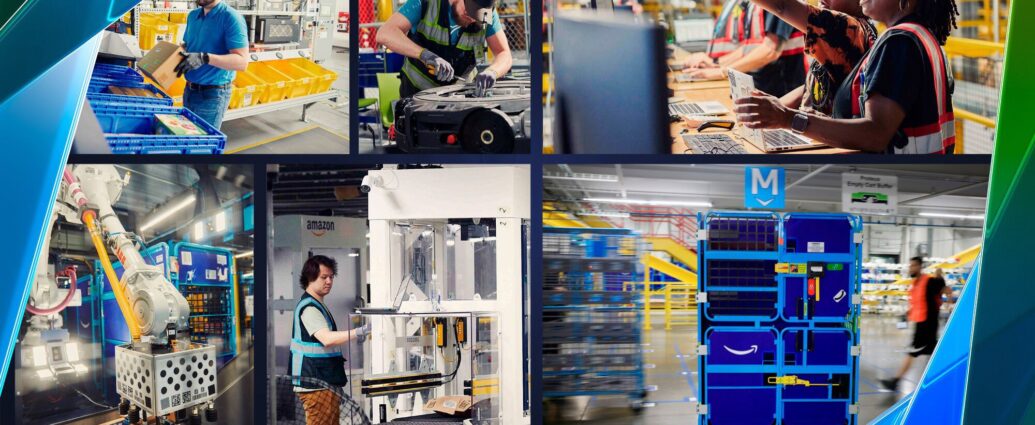
Amazon today officially rolled out Amazon Supply Chain Services (ASCS), a landmark expansion that opens the company’s entire global logistics infrastructure — including freight, distribution centers, fulfillment networks, and last-mile parcel shipping — to businesses of any size and across every industry, even those that have never sold a single item on Amazon’s marketplace.

The announcement positions Amazon’s world-class supply chain operations, originally built to power its own e-commerce empire, as a standalone paid service now available to retailers, healthcare providers, manufacturers, automotive companies, and others seeking enterprise-grade logistics without the need to list products on Amazon.com.

“This is about giving every business access to the same proven infrastructure that delivers millions of packages every day with speed and reliability,” said an Amazon spokesperson in a statement released this afternoon. “Whether you’re a small manufacturer in the Midwest, a healthcare distributor, or a large automaker, you can now tap into our global network on a pay-as-you-go basis.”

The new offering includes access to Amazon’s vast fulfillment centers equipped with advanced robotics and AI-driven sorting systems, multi-modal freight options (ocean, air, rail, and truck), customs brokerage services, and optimized last-mile delivery through Amazon’s delivery stations and partner carriers. Companies will be able to integrate ASCS directly into their existing ERP and warehouse management systems via new APIs, allowing seamless end-to-end visibility and control.

Industry analysts note that the move positions Amazon as a formidable competitor in the $1.3 trillion third-party logistics (3PL) market, long dominated by traditional players such as FedEx, UPS, and DHL. Early adopters already include major brands such as Procter & Gamble, 3M, and American Eagle Outfitters, which have begun piloting the service for non-Amazon fulfillment needs. The launch builds on Amazon’s existing logistics partnerships with hundreds of thousands of marketplace sellers while removing the previous requirement to sell on Amazon.com.

Amazon executives emphasized that ASCS leverages the same technology stack that powers Prime deliveries, including proprietary routing algorithms, predictive inventory placement, and sustainable packaging solutions. Initial pricing will be usage-based, with volume discounts for high-throughput clients, according to the company. The expansion comes as businesses across sectors face ongoing pressure to reduce logistics costs and improve supply-chain resilience in the wake of recent global disruptions.

By opening its network, Amazon aims to capture a larger share of enterprise logistics spending while further monetizing the infrastructure it has invested billions in over the past decade. The service is expected to appeal particularly to midsize manufacturers and distributors seeking the efficiency of Amazon’s network without the overhead of building their own facilities.

Amazon Supply Chain Services is now available for immediate enrollment through a dedicated enterprise portal, with dedicated account managers assigned to qualifying businesses. The company plans phased international rollouts later this year, starting with Europe and Asia-Pacific markets.

JbizNews Desk