By JBizNews Desk | May 18, 2026

The United States will need at least another decade — and possibly until the mid-2030s — to break China’s chokehold on the rare earth elements that underpin roughly $1.2 trillion of American economic activity, or about 4% of U.S. GDP, according to a detailed analysis published Friday by Bloomberg’s corporate and economic statecraft reporter Joe Deaux drawing on projections from three independent critical-mineral consultancies. The findings undercut President Donald Trump’s November pledge that the U.S. could end its reliance on Chinese rare earths within 18 months and add hard numbers to a vulnerability that surfaced again this week as the leaders of the world’s two largest economies concluded a closely watched summit in Beijing.

The divide inside the rare-earth market is central to understanding why the timeline is stretching so far into the future. Bloomberg’s analysis suggests the West may gradually loosen China’s dominance over more abundant “light” rare earths by roughly the end of this decade. But the so-called “heavy” rare earths remain the true strategic choke point. Elements such as dysprosium, terbium and samarium are essential to the heat-resistant permanent magnets used in F-35 fighter jets, hypersonic weapons, naval propulsion systems, missile guidance systems, radar arrays and advanced semiconductor manufacturing.

China’s control remains overwhelming. Beijing currently mines roughly 70% of the world’s neodymium-praseodymium supply and controls more than 90% of the downstream refining, metallization and permanent-magnet manufacturing chain. Chinese annual output has expanded rapidly, climbing to roughly 50,000 tons in 2026 from approximately 34,000 tons in 2021, according to Bloomberg’s reporting.

The federal timeline is becoming increasingly urgent. Beginning on Jan. 1, 2027, U.S. law prohibits the use of Chinese-sourced rare earth magnets in American military systems. That restriction affects everything from F-35 Lightning II fighters and Virginia-class submarines to Tomahawk cruise missiles and advanced naval radar systems. The Department of Defense — recently rebranded by the Trump administration as the Department of War — requires roughly 3,000 tons of permanent rare-earth magnets annually.

The United States is nowhere close to producing enough domestic supply to satisfy that demand.

The country’s leading producer, MP Materials Corp., is aggressively expanding operations at its Mountain Pass mine in California and at magnet-manufacturing facilities in Texas. Even so, the company currently expects to produce only around 1,000 tons annually of neodymium-iron-boron magnets by 2028. Heavy rare-earth separation capability at Mountain Pass is expected to begin commissioning only in mid-2026 under a public-private partnership signed last year with the Department of War.

That partnership has become one of Washington’s largest industrial-policy bets. The Pentagon guaranteed MP Materials roughly $140 million in annual EBITDA support tied to its Texas “10X Facility” and committed to purchasing the facility’s entire magnet output. The project also received a $150 million Defense Production Act Title III loan intended to accelerate domestic manufacturing.

Other Western producers are racing to close the gap. Lynas Rare Earths, the Australian-listed producer, signed a $96 million Pentagon-backed contract earlier this year to supply both light and heavy rare-earth oxides from a new Texas processing facility. Once operational, Lynas expects the plant to produce between 1,000 and 1,300 tons annually of NdPr oxide and as much as 3,000 tons of heavy rare-earth oxides.

USA Rare Earth Inc. is advancing the Round Top project in West Texas while pursuing Brazil’s Serra Verde mine, currently the only major producer outside Asia supplying all four critical magnetic rare earths at commercial scale. Additional domestic efforts involve Energy Fuels Inc., operator of Utah’s White Mesa Mill, and Noveon Magnetics, which focuses on rare-earth magnet recycling and domestic production.

Even Saudi Arabia has entered the race. MP Materials recently announced a joint venture with Saudi Arabian Mining Co. (Maaden) and the Department of War aimed at building rare-earth processing infrastructure inside the kingdom, with Maaden holding a controlling stake.

Still, analysts increasingly warn that the largest bottleneck is not mining — it is chemistry and metallurgy. The difficult “oxide-to-metal” conversion process required to transform separated rare-earth oxides into finished alloys and permanent magnets remains overwhelmingly concentrated inside China and, to a lesser extent, Japan.

Without that capability at scale, the United States can mine rare earths domestically but still remain dependent on Chinese industrial processing to turn those materials into defense-grade components.

Japan’s experience demonstrates how difficult diversification can become once China dominates an industrial supply chain. Since the 2010 maritime dispute that triggered Chinese export restrictions, Tokyo has spent more than a decade investing aggressively in alternative sourcing. Yet China still supplies roughly 76% of Japan’s total rare-earth imports, and until recently accounted for nearly 100% of Japan’s heavy rare-earth supply.

The political backdrop remains tense. U.S. Trade Representative Jamieson Greer acknowledged Friday that rare-earth export flows from China are “improving” following the Trump-Xi summit but warned that shipments remain inconsistent and vulnerable to renewed restrictions. Beijing suspended a planned expansion of export controls late last year, but the current reprieve expires in November 2026, and analysts told Bloomberg they do not expect a full rollback.

For Wall Street and defense planners alike, the implications are enormous. Rare-earth-linked equities including MP Materials, Lynas, Energy Fuels and the VanEck Rare Earth ETF (REMX) have become increasingly sensitive to geopolitical headlines and export-policy swings. But the broader takeaway from Bloomberg’s analysis is fundamentally structural rather than political.

Building a fully independent Western rare-earth supply chain is not simply a matter of opening additional mines. It requires constructing an entire industrial ecosystem — from extraction and separation to refining, alloy production and magnet manufacturing — that China spent decades building through state-backed industrial coordination and long-term strategic investment.

The result is that even as Washington pours billions into reshoring critical minerals and defense manufacturing, China’s grip on the rare-earth supply chain is likely to remain one of the defining strategic dependencies of the global economy well into the next decade.

JBizNews Desk
© JBizNews.com. All rights reserved. This article is original reporting by JBizNews Desk. Unauthorized reproduction or redistribution is strictly prohibited.


The Trump administration allowed its temporary sanctions waiver on Russian seaborne oil to expire at 12:01 a.m. Eastern time Saturday, restoring a tougher sanctions posture against Moscow at one of the most fragile moments for global energy markets in years.

The expiration was confirmed after the U.S. Treasury Department’s Office of Foreign Assets Control (OFAC) failed to publish a renewal notice for General License 134B, the authorization issued on April 17 that temporarily permitted transactions involving Russian crude already loaded onto tankers. Treasury Secretary Scott Bessent had signaled in recent days that the administration did not intend to extend the waiver.

The move lands as the global oil market is already under severe strain from the ongoing U.S.-Iran conflict and the effective closure of the Strait of Hormuz, one of the world’s most critical energy chokepoints.

Brent crude settled near $108 a barrel Friday, while West Texas Intermediate traded above $103, with both benchmarks posting weekly gains estimated between 8% and 10%. Traders increasingly warn that the market is no longer pricing temporary volatility but rather a sustained period of constrained global supply.

The International Energy Agency (IEA) said crude and refined fuel flows through Hormuz fell by roughly 4 million barrels per day during March and April and warned this week that the market could remain materially undersupplied through at least October even if the Iran conflict eases next month.

The waiver itself had a short and politically contentious life. The Trump administration initially eased restrictions in March, allowed them to lapse on April 11, then abruptly reversed course on April 17 after Bessent said more than 10 energy-vulnerable countries requested relief from soaring crude prices.

India, currently the world’s largest buyer of Russian seaborne crude, reportedly pushed hardest for the extension as its imports from Russia climbed near record levels during April and May. Indonesia also lobbied Washington to preserve access to Russian oil supplies amid mounting energy costs.

European allies strongly opposed both rounds of sanctions relief, arguing that easing pressure on Russian energy exports undermines Western efforts to restrict Moscow’s wartime revenues tied to the conflict in Ukraine.

For financial markets and commodity traders, the expiration immediately tightens legal and operational risks surrounding Russian oil transactions.

Banks, insurers, commodity trading houses, and shipping firms had temporarily relied on the OFAC waiver to process certain transactions involving previously loaded cargoes. With the waiver gone, compliance departments across the global energy sector are now reverting to stricter pre-waiver sanctions protocols involving vessel ownership verification, payment routing scrutiny, ship-to-ship transfer monitoring, and counterparty risk reviews.

The broader G7-European Union-Australia price cap system technically remains in place, still allowing certain maritime services involving Russian oil traded below specified price thresholds. But the added flexibility created by General License 134B has now disappeared.

The timing comes as some of the world’s largest energy companies warn that the supply picture is becoming increasingly dangerous.

Saudi Aramco CEO Amin Nasser told reporters this week that the oil market may not fully normalize until 2027 if the Strait of Hormuz remains closed beyond mid-June. Chevron CEO Mike Wirth, speaking earlier this month at the Milken Institute Global Conference, warned that fuel shortages were becoming a realistic concern in some regions, telling CNBC that “it’s not just a question of price.”

Investment banks are also growing more concerned about inventory depletion. Goldman Sachs warned in a research note Monday that while global crude inventories are not yet critically low, supplies of refined products — including jet fuel, naphtha, and liquefied petroleum gas — are tightening rapidly.

The political implications for the White House are becoming increasingly delicate.

President Donald Trump returned this week from meetings in Beijing with Chinese President Xi Jinping facing mounting domestic concern over energy-driven inflation. According to U.S. Energy Information Administration data, crude oil costs remain the largest component of retail gasoline pricing, meaning sustained increases in Brent and WTI prices quickly feed into higher gasoline, diesel, shipping, airline, and freight costs across the economy.

Federal Reserve officials have repeatedly warned that prolonged energy inflation can reshape consumer expectations and complicate monetary policy decisions. Analysts increasingly believe another sustained oil rally could delay interest-rate cuts or even reopen discussions around additional tightening if inflation pressures broaden further.

The deeper question now facing global markets is whether the international sanctions system can maintain pressure on Russian exports without triggering a broader energy supply shock.

Despite years of Western restrictions, Russia remains a critical supplier to global oil balances. Buyers continue navigating discounted cargoes, intermediary payment systems, opaque shipping routes, and so-called “shadow fleet” tanker operations to keep Russian crude flowing into global markets.

Allowing the waiver to expire signals that the Trump administration is prioritizing sanctions discipline over short-term energy relief. But traders say the real test will be whether enforcement intensifies against intermediary banks, covert shipping networks, and ship-to-ship transfer systems that continue facilitating Russian exports outside traditional Western oversight.

For now, markets remain trapped between three destabilizing realities: a closed Strait of Hormuz, tighter restrictions on Russian oil flows, and shrinking global inventory buffers.

Many traders increasingly describe current oil prices not as a temporary spike, but as a new floor for global energy markets unless geopolitical conditions improve significantly in the months ahead.

JBizNews Desk

© JBizNews.com. All rights reserved. This article is original reporting by JBizNews Desk. Unauthorized reproduction or redistribution is strictly prohibited.

By JBizNews Desk | May 15, 2026

Wall Street ended a volatile week on the back foot Friday, with the S&P 500, Dow Jones Industrial Average and Nasdaq Composite all selling off sharply as a two-day Beijing summit between President Donald Trump and Chinese President Xi Jinping produced no major policy breakthroughs, crude prices climbed back above $100 a barrel on renewed Iran war anxiety, and the 10-year Treasury yield spiked to a fresh one-year high. CNBC and TheStreet reported the S&P 500 fell about 1.1% to roughly 7,424, the Dow dropped about 480 points or near 1% to around 49,580 — slipping back below the 50,000 mark it reclaimed just a day earlier — and the Nasdaq Composite slid 1.3% to about 26,300. The small-cap Russell 2000 dropped roughly 2.1% as risk-off trading swept through cyclicals. The selloff threatened to end what had been a seven-week winning streak for the S&P 500, which only Thursday had closed above 7,500 for the first time in history.

The catalyst was the conclusion of President Donald Trump’s trip to Beijing, where he met with Xi Jinping alongside 16 senior U.S. executives. Trump told reporters the talks produced “fantastic” trade deals, but the headline announcements landed below Street expectations. The president said China agreed to purchase 200 Boeing aircraft equipped with GE Aerospace engines, with a path to as many as 750 over time. Jefferies analysts had been positioned for a deal as large as 500 planes, and Boeing Co. shares fell 2.8% to $222.70. Trump also said China had committed to buying U.S. crude oil, naming Texas, Louisiana and Alaska as origin points, and oil prices firmed on the news. WTI crude rose about 4% to roughly $101 a barrel while Brent climbed 1.5% to $107.30, both still trading near war-era highs reached after Iran closed the Strait of Hormuz on March 4. Secretary of State Marco Rubio said Trump raised the Iran war and the Hormuz blockade with Xi but stressed Washington was not asking Beijing to mediate.

The bond market did the heaviest lifting in shaping the Friday tape. The 10-year Treasury yield jumped nine basis points to 4.55%, its highest in a year, as traders priced in stickier inflation tied to the Iran energy shock. CME FedWatch data showed odds of a 2026 Federal Reserve rate hike climbing to roughly 45%, up from just 1% a month ago, with markets now seeing a quarter-point move to 3.75%–4% as the most likely next step. The repricing landed on the same day Jerome Powell’s term as Fed chair expired, with Kevin Warsh preparing to take the gavel. Dan Niles of Niles Investment Management told CNBC that 10 of the last 12 recessions were preceded by oil spikes and warned the current move “is starting to get uncomfortable.”

Technology stocks bore the brunt of the rotation after weeks of record-setting AI gains. Intel Corp. sank roughly 5%, Advanced Micro Devices Inc. lost 3%, Micron Technology Inc. fell 4% and Nvidia Corp. dropped 2% ahead of its earnings report next week. Marvell Technology, Arm Holdings and ASML Holding NV each shed 4% to 5%. Cerebras Systems, which surged 75% in its Nasdaq debut Thursday in a $5.55 billion IPO — the largest U.S. tech offering since Uber in 2019 — gave back about 4%. Adam Crisafulli of Vital Knowledge said the chip group “has witnessed an extremely unsustainable move in recent weeks and remains vulnerable to profit taking regardless of the headlines.” Bucking the trend, Microsoft Corp. advanced after Bill Ackman’s Pershing Square disclosed a new position, calling the valuation “broadly in line with the market multiple.”

The week’s biggest single-name story was Cisco Systems Inc., which jumped 13.4% Thursday after reporting fiscal third-quarter revenue of $15.84 billion, up 12% year over year, and lifting its fiscal 2026 AI infrastructure orders guidance to $9 billion from $5 billion. Piper Sandler, Citi, Bank of America and KeyBanc raised price targets, while HSBC analyst Stephen Bersey upgraded Cisco to Buy with a $137 target. On Friday, Morgan Stanley reiterated Netflix Inc. as overweight following the streamer’s upfront and kept a buy rating on Applied Materials Inc., while TD Cowen reiterated Buy on Nvidia with a $275 target.

Economic data reinforced the inflation narrative driving the bond move. April CPI released Tuesday showed energy lifting headline prices, and PPI data flagged sticky services inflation. Retail sales rose 0.5% from March to April, though CNN noted much of the gain reflected higher prices rather than higher unit volumes. Joe Brusuelas, chief economist at RSM US, told CNN that “the war has come home, and Americans can feel it and see it in their grocery basket,” with polling showing 75% of Americans say the Iran war has hurt their finances.

Corporate cost discipline also drew attention. Starbucks Corp. said it will lay off 300 corporate employees, its third round of cuts under CEO Brian Niccol, taking $400 million in restructuring charges. Verizon Communications Inc. CFO Tony Skiadas confirmed a fresh round of layoffs as the carrier targets $5 billion in operating expense savings by the end of 2026. Investors head into next week eyeing earnings from Nvidia, Home Depot Inc., Toll Brothers Inc. and Cava Group Inc., alongside April housing starts and building permits.

JBizNews Desk
© JBizNews.com. All rights reserved. This article is original reporting by JBizNews Desk. Unauthorized reproduction or redistribution is strictly prohibited.
NEW YORK — The S&P 500 pushed further into record territory this week as investors bet that artificial intelligence spending, stronger-than-expected corporate earnings and a resilient labor market can keep the U.S. equity rally moving despite renewed inflation pressure. Lisa Su Chair and Chief Executive Officer Advanced Micro Devices helped frame the market’s central story after AMD reported first-quarter revenue of $10.3 billion, up 38% from a year earlier, and non-GAAP earnings of $1.37 a share, underscoring how chip demand has become one of the strongest engines behind Wall Street’s advance.

The rally has been powered less by broad economic optimism than by a sharp improvement in corporate profits. John Butters Vice President and Senior Earnings Analyst FactSet reported that S&P 500 blended first-quarter earnings growth reached 27.7% as of May 8, up from 27.1% a week earlier and far above the 13.1% rate estimated at the end of March. FactSet said the figure, if sustained, would mark the strongest index earnings growth since the fourth quarter of 2021 and the sixth straight quarter of double-digit profit expansion.

Technology remains the market’s lead sector, with investors concentrating capital in companies tied to chips, cloud computing and AI infrastructure. Lisa Su Chair and Chief Executive Officer Advanced Micro Devices said, “We delivered an outstanding first quarter, driven by accelerating demand for AI infrastructure,” adding that data centers had become the company’s primary source of revenue and earnings growth. AMD’s market value recently stood above $735 billion, while Nvidia, led by Jensen Huang Founder and Chief Executive Officer Nvidia, remained the dominant AI chip company with a market value above $5.5 trillion.

The earnings strength has also shifted Wall Street forecasts higher. Michael Wilson Chief U.S. Equity Strategist Morgan Stanley and his team raised Morgan Stanley’s 2026 S&P 500 target to 8,000 from 7,800, citing expected earnings per share of $339 this year, a 23% increase from 2025. Morgan Stanley said in a note that “our bullish index view is an earnings story, not a multiple expansion one,” while also warning that inflation remains a major risk to its outlook.

Labor data gave investors another reason to stay in risk assets. William Wiatrowski Acting Commissioner Bureau of Labor Statistics oversaw the April employment report, which showed nonfarm payrolls rising by 115,000 while the unemployment rate held at 4.3%. Job gains were concentrated in health care, transportation and warehousing, and retail trade, while federal government employment continued to decline. Average hourly earnings rose 0.2% in April to $37.41 and were up 3.6% from a year earlier, suggesting continued wage growth without an immediate reacceleration in hiring.

The rally is not evenly distributed. Satya Nadella Chairman and Chief Executive Officer Microsoft and Sundar Pichai Chief Executive Officer Alphabet sit at the center of the investor rotation into cloud and AI-linked businesses, while FactSet said Information Technology and Communication Services were among the sectors leading year-over-year earnings growth. Consumer discretionary and financial shares have also benefited from stronger growth expectations, but defensive and rate-sensitive areas have lagged as investors continue to price in higher borrowing costs.

Inflation remains the clearest threat to the rally. Kevin Warsh Incoming Chair Federal Reserve is set to take over the central bank after Senate confirmation at a time when producer prices rose 6.0% in April from a year earlier and consumer inflation accelerated to 3.8%, the highest rate since May 2023. Higher gasoline, diesel and transportation costs have raised concerns that companies may face renewed margin pressure even as equity investors reward earnings momentum.

The market’s next test will be whether earnings can continue to grow fast enough to offset inflation, geopolitical risk and the possibility that interest rates stay elevated longer than investors expected. Jean Hu Executive Vice President Chief Financial Officer and Treasurer Advanced Micro Devices said AMD’s first-quarter results showed “accelerating revenue growth, earnings expansion and record quarterly free cash flow,” a message that captures the optimism now embedded in AI-related equities. For investors, the forward-looking question is whether that profit cycle can broaden beyond a small group of technology leaders and sustain the S&P 500’s record run through the rest of 2026.

JBizNews Desk

By JBizNews Desk
May 11, 2026

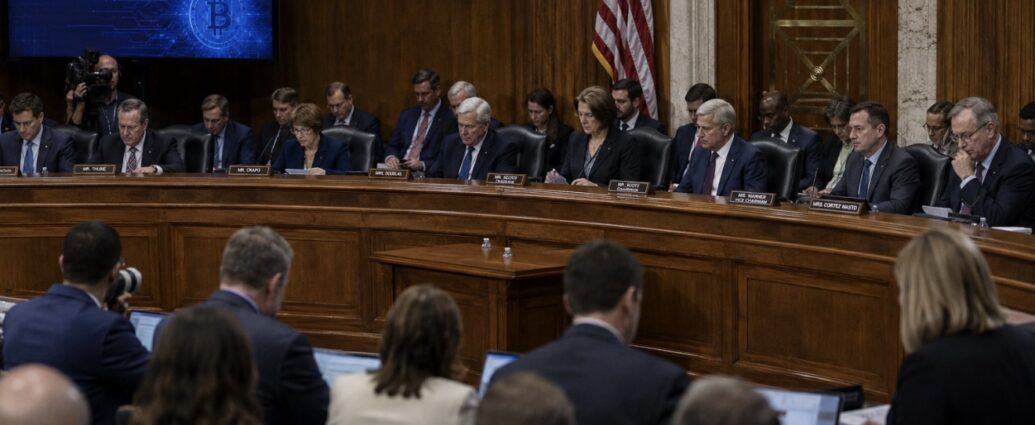
The U.S. Senate Banking Committee is preparing to hold what could become one of the most consequential cryptocurrency votes in modern American financial history, as lawmakers move closer to establishing the first comprehensive federal regulatory framework governing digital assets in the United States.

Committee Chairman Senator Tim Scott of South Carolina announced Friday that the panel will convene an executive session on May 14 at the Dirksen Senate Office Building in Washington to consider the Clarity Act — sweeping legislation designed to finally establish clear legal definitions and regulatory boundaries for cryptocurrencies, stablecoins, and blockchain-based financial products.

For the digital asset industry, the vote represents a pivotal moment after years of legal uncertainty, regulatory conflict, and escalating battles between crypto companies and federal agencies.

The legislation seeks to answer one of the most fundamental unresolved questions in the industry: when a digital token qualifies as a security, when it qualifies as a commodity, and when it may fall into a separate digital asset category altogether.

That ambiguity has defined much of the U.S. crypto market for years.

Without formal congressional guidance, companies have faced overlapping and often contradictory oversight from the Securities and Exchange Commission, the Commodity Futures Trading Commission, and other federal regulators, with enforcement actions frequently becoming the government’s primary mechanism for signaling policy expectations.

The Clarity Act would replace much of that uncertainty with a statutory framework assigning regulatory authority based on the structure and function of specific digital assets.

The House of Representatives passed its version of the bill in July of last year, but the legislation stalled in the Senate amid an intense lobbying battle between the cryptocurrency industry and the traditional banking sector.

Now, with the current congressional session entering a politically sensitive stretch ahead of the November midterm elections, pressure is building on both sides.

The Senate must pass the legislation before the end of 2026 if lawmakers hope to deliver the bill to President Donald Trump for signature before the current Congress expires.

For crypto executives, investors, and venture capital firms, the May 14 committee vote is increasingly viewed as a critical inflection point that could determine whether the United States embraces a formalized digital asset framework — or continues operating under the fragmented regulatory environment that has defined the industry for much of the past decade.

At the center of the remaining dispute is a battle over stablecoins and interest-bearing digital deposits.

A separate stablecoin law passed last year established a framework allowing intermediaries, including crypto exchanges, to offer interest-bearing products tied to stablecoin holdings.

Traditional banks are now pushing aggressively to limit or eliminate that provision inside the Clarity Act.

The banking industry argues that allowing crypto exchanges and non-bank financial platforms to pay interest on stablecoins could trigger a major migration of deposits away from federally regulated banks into uninsured digital wallets and exchanges.

Executives warn that such a shift could weaken the traditional banking system’s deposit base — the foundation supporting lending, credit creation, and broader financial stability throughout the economy.

Banks also argue that stablecoin platforms offering deposit-like returns without complying with FDIC insurance requirements, capital standards, and banking regulations would create an uneven competitive landscape carrying systemic financial risks.

The cryptocurrency industry strongly rejects that argument.

Major firms including Coinbase and Kraken have framed the banking industry’s lobbying campaign as an attempt to use regulation to shield incumbent financial institutions from technological competition.

Crypto executives argue that prohibiting exchanges from offering interest-bearing stablecoin products would effectively protect banks while restricting innovation inside digital financial markets.

For many in the industry, the stablecoin debate has become a broader symbolic fight over whether Washington genuinely intends to allow decentralized financial infrastructure to compete with traditional banking systems on equal footing.

The political stakes surrounding the legislation have grown significantly.

The crypto industry is pushing aggressively to finalize the bill before the November midterm elections, where shifts in congressional control could fundamentally alter the legislation’s trajectory.

A change in House leadership could reopen negotiations, delay implementation, or force major revisions to the framework.

After years of failed legislative attempts and regulatory uncertainty, many industry leaders increasingly view the current political window as narrow — and potentially temporary.

The broader environment surrounding cryptocurrency policy has also shifted sharply since Trump returned to office.

Unlike previous administrations that leaned heavily on enforcement actions and regulatory crackdowns, Trump has signaled substantially greater openness toward cryptocurrency innovation and blockchain-based financial infrastructure.

His administration has repeatedly emphasized the importance of keeping digital asset development inside the United States rather than pushing companies and capital overseas.

That shift has fueled optimism across the crypto sector, where executives increasingly view favorable regulation as one of the largest potential catalysts for broader institutional adoption and mainstream financial integration.

The outcome of the Senate Banking Committee’s May 14 vote may ultimately hinge on whether lawmakers can broker a compromise acceptable to both the banking sector and the crypto industry.

If the committee advances a version of the Clarity Act broadly supported by major crypto firms, the legislation moves materially closer to becoming law.

If last-minute banking-industry amendments significantly restrict stablecoin interest provisions or other core components of the framework, however, the deadlock that has paralyzed crypto regulation in Washington for years could continue indefinitely.

For the digital asset industry, the stakes extend far beyond one piece of legislation.

The vote increasingly represents a broader referendum on whether the United States intends to build a formal regulatory framework capable of integrating cryptocurrency into the traditional financial system — or continue leaving one of the fastest-growing sectors in modern finance operating inside legal uncertainty.

JBizNews Desk
© JBizNews.com. All rights reserved. This article is original reporting by JBizNews Desk. Unauthorized reproduction or redistribution is strictly prohibited.

America’s small-business sector showed little sign of recovery in April as inflation pressures tied to the Iran conflict, rising operating costs, and persistent labor shortages continued weighing heavily on Main Street confidence.

The National Federation of Independent Business (NFIB) reported Tuesday morning that its closely watched Small Business Optimism Index edged up just 0.1 point in April to 95.9, missing economist expectations and remaining below the organization’s 52-year historical average of 98.0 for a second consecutive month.

The weak reading was released only hours before the Bureau of Labor Statistics reported that U.S. inflation accelerated to 3.8% year-over-year in April — the highest annual Consumer Price Index reading since May 2023 — reinforcing concerns that rising energy and supply-chain costs are increasingly spreading throughout the broader economy.

For small-business owners, those pressures are already becoming difficult to absorb.

“Inflationary pressures continue to be a challenge for Main Street,” said Bill Dunkelberg, Chief Economist at the NFIB. “While small business optimism is currently fragile, the benefits of the Working Families Tax Cut Act should start to feed into the private sector over the next few months.”

The report highlights a growing disconnect between Washington’s fiscal support measures and the real-world pressures facing smaller employers across the country.

While the Working Families Tax Cut Act permanently extended the 20% Small Business Deduction at the end of 2025, many owners say those tax benefits are now being offset by sharply higher fuel costs, freight disruptions, insurance expenses, and wage pressures tied to the ongoing Iran conflict and the continuing disruption around the Strait of Hormuz.

Only a fraction of normal commercial shipping traffic is currently moving through the region, forcing global supply chains into costly rerouting patterns that are now flowing directly into U.S. consumer and business costs.

The labor market data inside the NFIB report carried some of the clearest warning signs.

According to the group’s latest employment survey:

  • 34% of small-business owners reported job openings they could not fill,
  • hiring intentions weakened for a second straight month,
  • and labor availability remained significantly tighter than historical norms.

The combination reflects an increasingly difficult environment where businesses are slowing expansion plans while still struggling to find workers — a pattern economists often associate with stagflationary conditions.

The report also showed profit pressures intensifying.

A growing number of owners reported worsening business conditions, declining profit trends, and rising uncertainty surrounding future economic demand.

The NFIB’s internal Uncertainty Index climbed to 92, far above its long-term historical average.

Small businesses continue citing taxes, labor quality, and inflation as their top operational challenges, while insurance costs have also emerged as a major financial burden.

Among owners reporting weaker profitability:

  • 13% blamed rising material costs,
  • while 7% pointed specifically to labor costs.

Both categories have been directly affected by higher energy prices and freight disruptions linked to the Iran conflict.

The broader concern for economists is that small businesses historically act as one of the earliest warning signals for shifts in the U.S. economy.

The sector represents roughly half of private-sector employment nationwide and often weakens before broader downturns appear in national economic data.

While current optimism readings are not yet at recessionary levels, sentiment has deteriorated noticeably since late 2025, when the index was approaching 100.

Three of the last four monthly readings have now come in below Wall Street expectations.

Analysts say the trajectory increasingly depends on whether energy prices stabilize and whether supply-chain conditions improve before weaker confidence begins feeding into reduced hiring, lower capital spending, and slower wage growth.

The timing adds additional uncertainty as President Donald Trump departs Tuesday evening for a state visit to Beijing, where global markets will closely watch for any diplomatic progress involving China’s role in the broader Iran crisis and global energy stability.

For now, Main Street businesses appear caught between two conflicting realities:
an economy that remains resilient enough to avoid recession — but one where inflation, labor shortages, and geopolitical disruptions are steadily eroding confidence underneath the surface.

JBizNews Desk
© JBizNews.com. All rights reserved.

ATTOM reported that 43.3% of mortgaged U.S. residential properties were considered equity-rich in the first quarter of 2026.

The figure dropped from 44.6% in the previous quarter — marking the lowest equity-rich rate since the fourth quarter of 2021.

Meanwhile, 3.2% of mortgaged residential properties were classified as seriously underwater in the first quarter. Those properties had combined loan balances at least 25% higher than their estimated market value.

That share increased from 3% in the prior quarter and 2.8% a year earlier.

“Homeowner equity remains relatively strong overall, but we’re seeing signs of moderation,” ATTOM stated in the report. “As mortgage rates have risen and home prices have cooled, the share of equity-rich homes has declined in most markets while the rate of seriously underwater properties is edging up across much of the country.”

Equity-rich share falls in most states

The share of equity-rich homes rose in only three states compared with the fourth quarter of 2025 and in six states compared with the first quarter of 2025.

States with year-over-year increases included Illinois (up from 31.5% to 33.5%), Alaska (up from 31.7% to 33.5%), South Dakota (up from 51.3% to 52.4%), North Dakota (up from 31.9% to 32.8%), New York (up from 54.1% to 54.4%) and Wisconsin (up from 49.3% to 49.5%).

States with the largest year-over-year declines were Florida (down from 49.3% to 43.2%), Arizona (down from 49.8% to 44.2%), Colorado (down from 45.8% to 40.5%), North Carolina (down from 47.2% to 42.1%) and Texas (down from 47.4% to 42.5%).

Vermont had the highest share of equity-rich homes at 85.7%, followed by New Hampshire (58.1%), Montana (57.7%), Rhode Island (57.2%) and Hawaii (55.8%).

Seriously underwater rates rise broadly

The share of seriously underwater mortgaged properties increased quarter-over-quarter in 44 states and the District of Columbia.

Markets with the largest annual increases included the District of Columbia (up from 3.8% to 5.3%), Mississippi (up from 6.6% to 8%), Louisiana (up from 10.5% to 11.8%), Kentucky (up from 7.3% to 8.5%) and Oklahoma (up from 5.5% to 6.6%).

States with year-over-year declines in seriously underwater properties were North Dakota (down from 4.8% to 4.3%), South Dakota (down from 3.4% to 3%), South Carolina (down from 3.8% to 3.6%) and Wyoming (down from 2.5% to 2.4%).

Louisiana had the highest share of seriously underwater homes at 11.8%, followed by Kentucky (8.5%), Mississippi (8%), Oklahoma (6.6%) and Arkansas (6.4%).

Metro areas show widespread declines

The share of equity-rich homes fell quarter-over-quarter in 93 of 107 metropolitan statistical areas (87%), which included metros with populations of at least 500,000.

Year-over-year, equity-rich shares declined in 92 metros, or 86%.

San Jose, California, had the highest rate of equity-rich homes at 65.2%, followed by Los Angeles (59.3%), San Diego (58.2%), Portland, Maine (57.9%) and Buffalo, New York (56.7%).

The lowest rates were in Baton Rouge, Louisiana (17.4%); New Orleans (19.1%); Little Rock, Arkansas (23.7%); Jackson, Mississippi (25.6%); and Baltimore (26.9%).

Baton Rouge also had the highest rate of seriously underwater homes at 11.9%, followed by Jackson (10.4%), New Orleans (10.2%), Little Rock (7.1%) and Memphis, Tennessee (7%).

Michigan counties lead in equity-rich properties

Of the 30 counties with the highest share of equity-rich properties, 23 were in Midwestern states — including 11 in Michigan, seven in Wisconsin and four in Indiana.

The counties with the highest proportions of equity-rich homes were Benzie County, Michigan (94.5%); Manistee County, Michigan (92.3%); Marquette County, Michigan (91.2%); Portage County, Wisconsin (89.5%); and Chippewa County, Michigan (89.5%).

Lowest rates were in Vernon Parish, Louisiana (6.2%); Ascension Parish, Louisiana (7.2%); Saint Bernard Parish, Louisiana (7.2%); Iberville Parish, Louisiana (8.7%); and Greenup County, Kentucky (10.6%).

At least half of mortgaged properties were equity-rich in 28.2% — 2,564 — of the 9,084 ZIP codes included in the analysis.

This article was generated using HousingWire Automation and reviewed by a HousingWire editor before publication. The system helps convert company announcements and industry data into HousingWire-style news coverage.

This post was originally published on here

The U.S. Senate on Monday evening cleared the first in a series of procedural votes required to confirm Kevin Warsh as the next chairman of the Federal Reserve, setting in motion a confirmation process that must conclude by Friday if Warsh is to be sworn in before Jerome Powell’s term as Fed chair expires on May 15 — a deadline that is now just days away.

The Senate held a cloture vote at 5:30 p.m. ET on Monday, May 11, on Warsh’s nomination to serve as a Member of the Board of Governors of the Federal Reserve System. Senate Majority Leader John Thune had filed cloture on April 30, separately advancing Warsh’s nomination both as a Fed governor and as chairman — two distinct confirmations that each require Senate approval.

Warsh will still need to clear a separate confirmation vote this week to formally become chairman, though congressional aides and Senate analysts say the nomination could clear its remaining procedural hurdles as early as Wednesday.

The political math currently favors confirmation.

Republicans hold a 53-seat majority in the Senate, and Warsh requires only a simple majority vote. Additional bipartisan support may come from Sen. John Fetterman, D-Pa., who told Semafor he intends to support Trump’s nominee.

The path to Monday’s vote has become one of the most politically charged Federal Reserve nomination battles in modern history.

Much of the controversy centered not on Warsh’s credentials — he previously served as a Federal Reserve governor from 2006 to 2011 — but on the extraordinary pressure campaign launched by the Trump administration against outgoing Chair Jerome Powell.

Earlier this year, the Department of Justice opened a criminal investigation into Powell and the Fed, reportedly tied to cost overruns connected to a multibillion-dollar renovation project at the central bank’s Washington headquarters.

Powell publicly accused the administration in January of targeting him over monetary policy disagreements and the Fed’s refusal to aggressively cut interest rates.

The investigation became a pivotal factor in securing support for Warsh’s nomination.

Sen. Thom Tillis, R-N.C., whose vote was viewed as critical inside the Senate Banking Committee, agreed to support Warsh only after the DOJ formally dropped its criminal probe into Powell on April 24.

Jeanine Pirro, the newly appointed U.S. Attorney for the District of Columbia, said at the time that her office would refer the matter to the Fed’s inspector general while reserving the right to reopen a criminal inquiry if warranted.

Tillis later said he was satisfied the investigation had effectively concluded and voted to advance the nomination.

The Senate Banking Committee subsequently approved Warsh’s nomination on April 29 in a sharply divided 13-11 party-line vote — the first fully partisan committee vote on a Fed chair nominee in the committee’s history, according to Sen. Elizabeth Warren, D-Mass.

Warren emerged as one of Warsh’s fiercest critics.

Speaking before the vote, she accused the Trump administration of attempting to seize political control of the central bank and referred to Warsh as Trump’s “sock puppet” before walking out of the committee session.

Every Democrat on the committee opposed the nomination.

At his confirmation hearing, Warsh attempted to reassure lawmakers that he would preserve the Fed’s institutional independence.

“The president never asked me to predetermine, commit, fix, decide on any interest rate decision,” Warsh testified. “Nor would I ever agree to do so.”

He described Federal Reserve independence as “essential,” while also arguing that presidents expressing opinions on monetary policy does not inherently threaten the institution.

Warsh also outlined what he described as a major operational “regime change” for the Fed.

He told senators he believes central bank officials speak publicly too frequently, rely excessively on forward guidance, and reveal too much about future policy intentions before formal meetings occur.

Warsh specifically criticized the Fed’s long-standing “dot plot” system — the quarterly chart projecting future interest-rate expectations — signaling he may eliminate or significantly reduce its role if confirmed.

He also declined to commit to maintaining Powell’s practice of holding press conferences after every Fed policy meeting.

For financial markets and ordinary borrowers alike, however, the central question remains whether Warsh would ultimately move toward lower interest rates.

President Donald Trump has repeatedly called for rates as low as 1%, while criticizing Powell for keeping monetary policy restrictive.

Yet inflation remains elevated.

The latest Consumer Price Index readings showed inflation running at approximately 3.3% annually, fueled partly by higher energy costs tied to the Iran conflict and lingering tariff-driven price increases still filtering through the economy.

Claudia Sahm, former Federal Reserve economist and creator of the Sahm Rule recession indicator, said Warsh would face significant difficulty pushing through immediate rate cuts even if he personally favored them.

“He doesn’t have the chops to make that argument persuasively on day one,” Sahm said. “The data aren’t there yet.”

Major Wall Street institutions including Bank of America and J.P. Morgan have already pushed their expectations for Federal Reserve rate cuts into the second half of 2027, suggesting investors broadly expect monetary policy to remain tight regardless of who chairs the central bank.

If confirmed by May 15, Warsh would officially assume leadership ahead of the Fed’s next policy meeting scheduled for June 16–17.

Another unusual institutional wrinkle remains unresolved.

Following the Fed’s April 29 policy meeting, Powell announced he intends to remain on the Board of Governors for an unspecified period after stepping down as chair.

“There’s only ever one chair of the Federal Reserve Board,” Powell told reporters. “When Kevin Warsh is confirmed and sworn in, he will be that chair.”

Powell’s board term technically runs through January 2028, meaning the Federal Reserve could temporarily include two former chairs serving simultaneously.

Meanwhile, Democrats continue warning that the broader battle extends far beyond a single appointment.

Warren recently told NPR that if Trump ultimately succeeds in removing current Fed Governor Lisa Cook — a legal fight currently moving through the courts — the administration could gain effective control over a majority of the Fed’s seven-member governing board.

For markets, businesses, homeowners and consumers, the implications are substantial.

The Federal Reserve’s decisions directly influence mortgage rates, credit-card interest, auto loans, business financing costs and the broader direction of the U.S. economy.

And with the Senate now moving rapidly toward a final vote, the leadership of the world’s most powerful central bank may soon undergo one of the most politically contentious transitions in modern American financial history.

JBizNews Desk
© JBizNews.com. All rights reserved. This article is original reporting by JBizNews Desk. Unauthorized reproduction or redistribution is strictly prohibited.

NEW YORK — Mortgage rates are starting the week relatively stable, but the calm may not last long.

American homebuyers, lenders, and financial markets are now focused almost entirely on Tuesday’s Consumer Price Index report — a key inflation reading that could determine whether borrowing costs move meaningfully higher again or finally begin easing after months of pressure tied to war-driven energy inflation and elevated Treasury yields.

According to the latest weekly survey from Freddie Mac, the average 30-year fixed mortgage rate stood at 6.37% as of May 7, essentially unchanged from the previous week. Daily lender surveys from platforms including Zillow showed purchase mortgage rates Monday ranging between roughly 6.25% and 6.43%, depending on lender type and borrower profile.

Refinance rates remain slightly higher, with 30-year refinance averages hovering between 6.45% and 6.51%.

Meanwhile, the 15-year fixed mortgage — often favored by borrowers seeking lower long-term interest costs — is averaging between approximately 5.57% and 5.67%.

The market’s attention now shifts squarely to inflation.

If Tuesday’s CPI reading comes in hotter than expected, Treasury yields are likely to rise further, placing additional upward pressure on mortgage rates, which closely track movements in the benchmark 10-year Treasury note.

The 10-year Treasury yield edged up Monday to approximately 4.386%, reflecting cautious positioning ahead of the report.

The inflation backdrop has become increasingly complicated since late February, when the Trump administration launched military operations tied to the Iran conflict and the Strait of Hormuz crisis.

Oil prices surged in the aftermath, pushing up transportation, manufacturing, and energy-related costs across the broader economy. Those pressures have made it more difficult for the Federal Reserve to continue the interest rate cutting cycle it began in late 2025.

The Fed held rates steady at its April meeting, and most economists no longer expect another cut until at least the fall — if inflation conditions improve enough to justify it.

For the housing market, the consequences are significant.

Housing economists at both Fannie Mae and the Mortgage Bankers Association now project mortgage rates will likely remain above 6% throughout most or all of 2026, prolonging one of the most difficult affordability environments American homebuyers have faced in decades.

Most analysts also believe rates are unlikely to return to the 5% range anytime soon — a threshold many real estate professionals view as necessary to meaningfully revive housing demand and unlock inventory currently frozen by high financing costs.

Sam Khater, chief economist at Freddie Mac, said recent housing data suggests some modest improvement in inventory conditions, including stronger new-home sales activity and declining median new-home prices compared with recent peaks.

But affordability remains the market’s defining challenge.

For many families, even small rate changes carry major financial implications.

At a 6.37% rate on a standard $300,000 30-year mortgage, monthly principal and interest payments total roughly $1,873 per month. Even a half-point decline in rates would lower monthly payments by only about $90, providing some relief but not fundamentally changing affordability for many middle-class buyers already stretched by high home prices, insurance costs, taxes, and broader inflation.

Khater encouraged borrowers to aggressively compare lender offers, pointing to Freddie Mac research showing consumers who obtain multiple mortgage quotes can often save between $600 and $1,200 annually.

The broader concern for markets is that housing remains one of the most interest-rate-sensitive sectors of the U.S. economy.

Persistently elevated borrowing costs have slowed existing home sales, weakened refinancing activity, reduced housing turnover, and increased financial pressure on younger buyers attempting to enter the market for the first time.

Now, much of the near-term direction for both mortgage rates and housing activity may hinge on a single inflation report.

If Tuesday’s CPI data shows inflation cooling meaningfully, markets could begin pricing in earlier Federal Reserve easing, potentially pulling mortgage rates modestly lower.

But if inflation remains stubbornly high — particularly with oil prices still elevated due to Middle East tensions — borrowing costs could climb again just as the critical summer homebuying season approaches.

For millions of Americans waiting for meaningful relief, the next 24 hours may help determine whether the housing market moves closer to recovery — or remains stuck in another year of financial gridlock.

JBizNews Desk

© JBizNews.com. All rights reserved. This article is original reporting by JBizNews Desk. Unauthorized reproduction or redistribution is strictly prohibited.
By JBizNews Desk
May 11, 2026

Global financial markets opened the new week cautiously Monday as signs that U.S.-Iran peace negotiations had stalled pushed stock futures lower, lifted the dollar, and sent oil prices climbing again — a pattern that has become increasingly familiar to investors navigating nearly three months of geopolitical volatility tied to the war in the Persian Gulf.

The shift in sentiment followed a blunt statement from President Donald Trump, who announced Sunday that he had rejected Iran’s latest counterproposal aimed at ending the conflict and reopening the Strait of Hormuz.

“I have just read the response from Iran’s so-called ‘Representatives.’ I don’t like it — TOTALLY UNACCEPTABLE!” Trump wrote on Truth Social.

The post quickly erased much of the optimism that had fueled last week’s powerful market rally.

The S&P 500 and Nasdaq Composite had both posted their sixth consecutive weekly gains amid growing investor expectations that negotiations between Washington and Tehran were approaching a breakthrough.

By Sunday evening in Asia, however, markets were moving back into defensive positioning.

Futures tied to the Dow Jones Industrial Average fell roughly 143 points, or 0.3%, while futures linked to the S&P 500 and Nasdaq 100 also declined approximately 0.3%.

The U.S. dollar strengthened against a basket of major currencies as traders shifted toward traditional safe-haven assets, while both Brent crude and West Texas Intermediate oil prices moved higher on concerns that the disruption to Gulf energy flows may continue far longer than markets had recently hoped.

Iran’s latest proposal had reportedly been delivered through mediators in Pakistan and called for lifting U.S. Treasury sanctions on Iranian oil exports within 30 days alongside an end to Washington’s naval blockade of Iranian ports.

The Trump administration has consistently resisted those demands absent a broader nuclear and security agreement.

Secretary of State Marco Rubio reinforced the administration’s position Sunday, rejecting Tehran’s suggestion that Iran would reopen the Strait of Hormuz while maintaining effective operational control over the passage.

“That’s not opening the straits,” Rubio said. “Those are international waterways.”

Despite the broader diplomatic setback, markets did receive one modest operational sign that selective shipping movement through the region remains possible.

A QatarEnergy liquefied natural gas carrier, the Al Kharaitiyat, successfully crossed the Strait of Hormuz Sunday for the first time since the conflict began on February 28.

The vessel headed toward Pakistan’s Port Qasim after reportedly receiving transit approval from Iran as part of a limited confidence-building arrangement involving Qatar and Pakistan, both of which continue playing central mediation roles in the negotiations.

The transit offered a narrow but important signal that portions of Gulf shipping traffic may still be selectively allowed even while the broader waterway remains effectively closed to most commercial energy exports.

Elsewhere across the Gulf region, however, fresh security incidents underscored how fragile the situation remains.

The United Arab Emirates reported intercepting two drones launched from Iran, while Qatar condemned a drone strike targeting a cargo vessel operating in its territorial waters.

Kuwait additionally stated that its air-defense systems engaged hostile drones that briefly entered Kuwaiti airspace.

The incidents reinforced growing concerns among investors that tactical military escalations could rapidly destabilize already fragile diplomatic efforts.

For financial markets, the week ahead now carries heightened importance.

Investors are preparing for a series of critical economic reports expected to offer the clearest indication yet of how the Iran-driven oil shock is affecting the broader U.S. economy.

The Bureau of Labor Statistics is scheduled to release both the Consumer Price Index and Producer Price Index this week — key inflation readings arriving as the national average gasoline price remains above approximately $4.54 per gallon.

Wall Street increasingly fears that sustained energy inflation could begin feeding more aggressively into transportation, manufacturing, food, and consumer prices across the economy.

Analysts at Goldman Sachs recently raised their Brent crude forecast to $90 per barrel by late 2026, citing accelerating global inventory drawdowns estimated at roughly 11 million to 12 million barrels per day as the Hormuz disruption persists.

The bank warned that even a future diplomatic breakthrough may not immediately solve the underlying supply imbalance.

“Even if flows via Hormuz eventually resume, the lag in restoring supply, combined with depleted inventories, suggests sustained tightness,” said Billy Leung, investment strategist at Global X ETFs. “I’d argue the fat tail is still ahead of us, not behind.”

The ongoing energy shock is also placing the Federal Reserve in an increasingly difficult position.

The central bank held interest rates steady at its most recent meeting, but policymakers now face competing risks pulling in opposite directions.

Higher oil prices are pushing inflation expectations upward at the same time consumer confidence and discretionary spending continue weakening.

Additional rate hikes risk tipping the economy toward recession.

Rate cuts, meanwhile, risk allowing inflation expectations to become further entrenched after one-year consumer inflation expectations recently climbed to approximately 4.5%, according to the University of Michigan’s latest survey.

Corporate earnings this week will also receive heightened scrutiny.

Results from Cisco Systems and Under Armour are expected to offer additional insight into whether rising energy costs and geopolitical instability are beginning to pressure corporate supply chains, logistics expenses, and consumer demand.

But for global markets, the dominant variable remains the same one investors have watched for nearly ten weeks:

What happens next between Washington and Tehran — and whether diplomacy can reopen the narrow shipping corridor between Iran and Oman through which roughly one-fifth of the world’s oil supply once flowed freely.

JBizNews Desk
© JBizNews.com. All rights reserved. This article is original reporting by JBizNews Desk. Unauthorized reproduction or redistribution is strictly prohibited.

For more than half a century, American corporate life has operated on a fixed quarterly rhythm. Every three months, public companies open their books to investors, revealing revenue, profits, costs, risks, and forward guidance in filings that can move billions of dollars in market value within minutes.

Now the Securities and Exchange Commission wants to make that system optional.

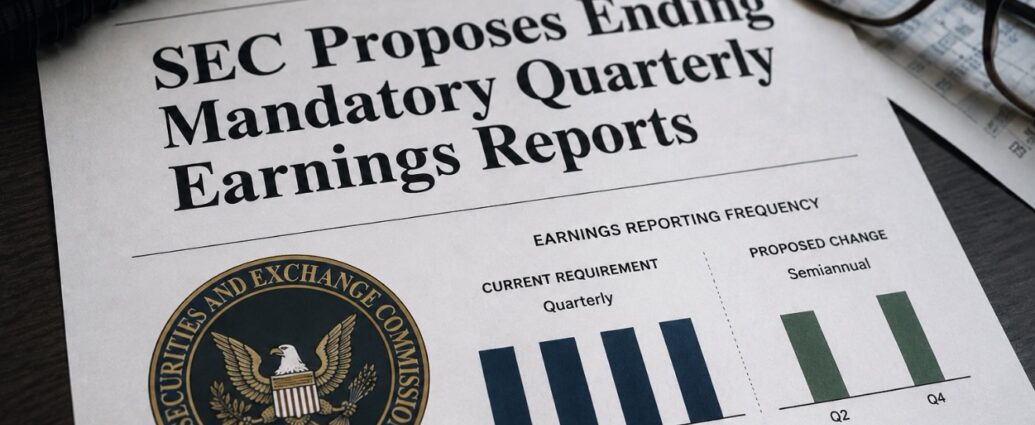
The SEC formally proposed rule changes this week that would allow public companies to file semiannual reports instead of mandatory quarterly reports, marking the biggest potential overhaul to U.S. corporate disclosure requirements in 55 years.

The proposal would allow companies to replace traditional quarterly Form 10-Q filings with a new semiannual filing known as Form 10-S. Public firms would still file annual reports, but instead of reporting four times per year, companies choosing the new framework would only be required to report twice.

The move represents a major victory for long-running efforts — strongly backed by President Donald Trump and many corporate executives — arguing that mandatory quarterly reporting encourages short-term thinking and distracts management teams from long-term growth strategies.

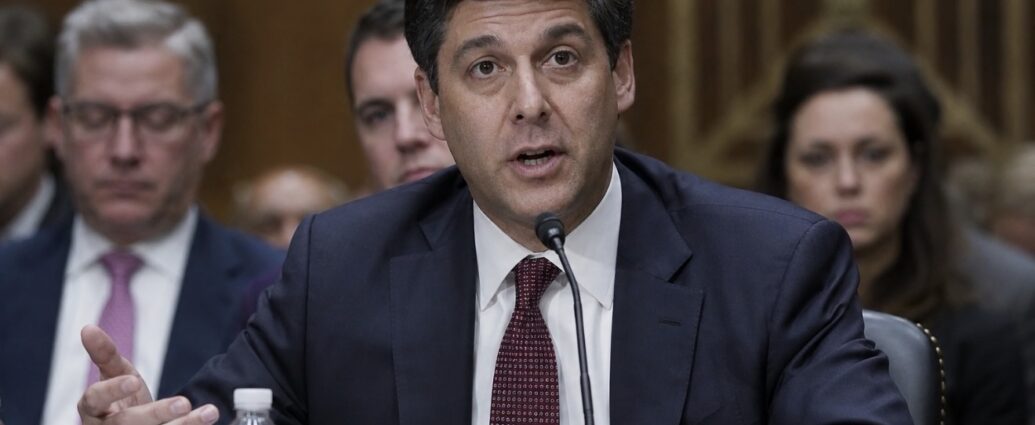
SEC Chairman Paul Atkins framed the proposal as part of a broader effort to revitalize U.S. public markets.

“Make IPOs Great Again,” Atkins said while unveiling the proposal.

A System That Has Defined Wall Street Since 1970

Quarterly reporting has been a defining feature of American financial markets since 1970.

Every earnings season, investors, analysts, traders, pension funds, and retirement savers dissect corporate filings for signs of growth, weakness, changing consumer behavior, operational risks, and management performance.

Entire industries have formed around the reporting cycle — from Wall Street research departments and financial television programming to earnings-call analysis platforms and algorithmic trading systems.

Under the SEC’s proposal, that cadence would fundamentally change.

Companies electing semiannual reporting would only need to indicate the choice once per year through a checkbox on their annual Form 10-K filing. The election would remain fixed for the fiscal year and could not be reversed midyear.

Importantly, companies would still be allowed to voluntarily release quarterly earnings updates if they choose.

Many large corporations are expected to continue quarterly reporting because institutional investors, analysts, and index providers rely heavily on consistent financial updates.

Still, the proposal could significantly reduce mandatory disclosures across large parts of corporate America.

Corporate America Has Wanted This for Years

Supporters of the proposal argue the current quarterly system has become expensive, burdensome, and harmful to long-term corporate planning.

Preparing quarterly filings often requires massive internal coordination involving finance departments, outside auditors, legal teams, investor-relations staff, executive management, and regulatory compliance systems.

Proponents say the process consumes enormous time and money — particularly for smaller public companies.

Kunal Kapoor, CEO of Morningstar, argued that reducing mandatory reporting frequency could make public markets more attractive again, especially for smaller firms hesitant to go public.

“The largest companies would likely maintain quarterly updates voluntarily because their investor base expects it,” Kapoor wrote. “Smaller, less-covered companies — exactly the ones we need in public markets — would gain meaningful cost relief and management bandwidth.”

Advocates also argue quarterly reporting pressures executives into prioritizing short-term earnings targets over long-term investments in research, hiring, infrastructure, product development, and innovation.

The concern over “quarterly capitalism” has existed for decades.

The SEC proposal even cites remarks from former SEC Chairman Arthur Levitt, who once warned that excessive focus on quarterly earnings was damaging the long-term health of American companies.

International Markets Already Moved Away From It

Supporters of the change also note that other major global markets have already reduced quarterly reporting requirements.

Australia and the European Union moved away from mandatory quarterly reporting more than a decade ago.

Research examining companies in markets using semiannual systems has generally shown little long-term difference in valuation levels or return-on-equity performance compared with firms reporting quarterly.

Still, those same studies also identified important tradeoffs involving liquidity, analyst coverage, disclosure quality, and pricing efficiency.

And that is precisely where the backlash is forming.

Critics Warn Investors Could Be Left in the Dark

Investor advocates, academics, and many asset managers argue that reducing reporting frequency would weaken transparency and hurt ordinary investors the most.

The CFA Institute warned in a recent analysis that less frequent financial reporting could impair market efficiency and make it harder for investors to accurately value companies.

“It is nearly axiomatic that, in most applications, more data is preferable to less,” the organization wrote.

Critics argue that large institutional investors already possess significant informational advantages through analyst networks, proprietary research, management access, and alternative data systems.

Retail investors, by contrast, rely much more heavily on public SEC filings.

Reducing disclosure frequency could therefore widen the information gap between Wall Street and Main Street.

Academic research cited in the debate also suggests less frequent reporting can create “information vacuums” where investors overreact to industry news in the absence of company-specific disclosures.

One study published in The Accounting Review found that European companies reporting semiannually often saw their stock prices move sharply based on U.S. peer-company earnings announcements because investors lacked current information about the firms themselves.

The SEC’s own proposal acknowledges several potential risks.

Among them:

  • Delayed release of material financial information
  • Increased information asymmetry between investors
  • Reduced market liquidity
  • Weaker investor confidence
  • Greater insider-trading concerns during longer reporting gaps

The agency specifically warned that reduced disclosure frequency could “diminish perceptions of fairness,” potentially discouraging participation in public markets.

The Bigger Question: Who Are Public Markets For?

At its core, the debate goes far beyond paperwork.

The fight over quarterly reporting reflects a larger philosophical conflict about the purpose of public markets themselves.

Supporters of the proposal argue markets should primarily help companies raise capital efficiently while giving management flexibility to focus on long-term strategy rather than constant quarterly scrutiny.

Critics argue public markets exist first and foremost to provide investors — including millions of Americans with retirement savings tied to stocks — timely, transparent information about the companies they own.

The SEC proposal now enters a 60-day public comment period before regulators decide whether to finalize the rules through a commission vote.

The process is expected to trigger fierce lobbying from corporations, investor groups, academics, pension funds, exchanges, and Wall Street firms.

Bryan Corbett, president and CEO of the financial industry trade group MFA, said regulators must carefully balance reducing corporate red tape with protecting investors’ access to timely information.

The outcome could reshape not only earnings season — but the relationship between corporate America and investors for decades to come.

JBizNews Desk


By JBizNews Desk | May 5, 2026

American Express Global Business Travel is set to leave public markets in a $6.3 billion all-cash deal, marking one of the year’s largest take-private transactions and highlighting how artificial intelligence is beginning to reshape the corporate travel industry.

The company announced Monday it has agreed to be acquired by Long Lake Management, a fast-rising investment firm founded in 2023. The firm will pay $9.50 per share for Global Business Travel Group (GBTG), representing a 60.2% premium to its May 1 closing price and a 65.1% premium to its 30-day average, delivering a significant payout to shareholders.

Once the deal closes, GBTG will be delisted from the New York Stock Exchange and operate as a privately held company.


Strong Backing From Major Shareholders

The transaction has already secured support from key stakeholders. American Express, Expedia, Qatar Investment Authority, and BlackRock, which collectively control about 69% of the company’s shares, have entered into voting agreements backing the deal.

American Express, which owns roughly 30% of the company, is expected to receive approximately $1.5 billion from the sale. Despite the ownership change, the American Express name will remain in place through an ongoing brand licensing agreement.


Financing Signals Confidence in the Deal

The acquisition is backed by a major banking group, including JPMorgan, Bank of America, Citi, and MUFG, which are providing committed debt financing. Koch Equity Development is also contributing equity alongside Long Lake and its investors.

Notably, the deal includes no financing condition, a signal that funding is fully secured and execution risk is limited.

Citi is serving as lead financial adviser to Long Lake, while Rothschild & Co. advised the company’s special committee, which unanimously recommended the transaction.


AI at the Center of the Strategy

At the core of the acquisition is a clear strategy: transform corporate travel using artificial intelligence.

Long Lake, backed by investors including General Catalyst, Alpha Wave, Elad Gil, D1, and Thrive, focuses on acquiring service-heavy businesses and modernizing them through its Nexus AI platform.

Corporate travel — long dependent on human agents handling bookings, disruptions, and expense management — is seen as a prime candidate for automation and optimization.

Alex Taubman, Co-Founder and CEO of Long Lake, said the goal is to deliver faster bookings, proactive disruption management, and a more seamless experience by combining AI with human expertise.


A Strong Operating Business

The deal comes as Amex GBT is performing well operationally.

In the first quarter of 2026, the company reported:

  • 35% revenue growth
  • $3.4 billion in new client wins
  • 96% customer retention

Those figures underscore the company’s dominant position in corporate travel, even as the industry faces pressure from rising fuel costs and geopolitical instability.

Paul Abbott, CEO of Amex GBT, called the transaction a strong outcome for shareholders and said it positions the company to deliver enhanced service to clients going forward.


High-Profile Backers Add Weight

Long Lake’s strategy is further supported by General Catalyst, whose chairman Ken Chenault, the former CEO of American Express, brings deep industry experience.

The firm has backed major technology companies including Airbnb, Stripe, Snap, and Anthropic, adding credibility to Long Lake’s push to integrate AI into a traditionally service-driven industry.


What Comes Next

The transaction is expected to close in the second half of 2026, subject to shareholder approval and regulatory clearance.

For the broader market, the deal signals a growing trend: private capital targeting established service businesses and rebuilding them around AI-driven models.

For corporate travel, it may mark the beginning of a structural shift — from a labor-intensive service model to a more automated, technology-driven platform.


JBizNews Desk
© JBizNews.com. All rights reserved. This article is original reporting by JBizNews Desk. Unauthorized reproduction or redistribution is strictly prohibited.
By JBizNews Desk | Monday May 4, 2026

GameStop has made an unsolicited $56 billion offer to acquire eBay, the online marketplace giant, in what would rank as one of the most stunning corporate takeover attempts in recent retail history — and a dramatic signal that CEO Ryan Cohen is done playing defense.

GameStop has built a roughly 5% stake in eBay and is offering $125 a share in cash and stock, Cohen told the Wall Street Journal in a direct interview Sunday. The offer represents a premium of about 20% to eBay‘s last closing price on Friday. “eBay should be worth — and will be worth — a lot more money,” Cohen said. “I’m thinking about turning eBay into something worth hundreds of billions of dollars.”

GameStop said in a news release that it submitted a non-binding proposal to buy 100% of eBay at $125 per share in cash and stock, split 50/50. The offer also represents a 46% premium to eBay’s closing price on February 4 — the day GameStop first began buying eBay stock. 

The Financing Behind the Bid

The sheer scale of the deal — eBay carries a market value of roughly $46 billion, nearly four times GameStop’s own $12 billion market cap — immediately raised questions about how Cohen plans to pay for it. He has lined up a multi-layered financing structure.

Cohen told the Wall Street Journal that GameStop has secured a commitment letter from TD Bank to provide about $20 billion in debt financing for the deal.  GameStop also holds about $9 billion in cash on its balance sheet.  To bridge the remaining gap, GameStop could seek support from external investors, including Middle Eastern sovereign wealth funds, according to people familiar with the matter. 

In its news release, GameStop said it expects to deliver $2 billion in annualized cost reductions within the first 12 months of closing the deal, including $1.2 billion in cuts from sales and marketing at eBay, $300 million from product development, and $500 million from general and administrative expenses. Cohen would become CEO of the combined company. 

Markets React

The news sent both stocks sharply higher. GME shares jumped more than 9% in after-hours trading, while eBay shares climbed between 10% and 15%, in a market reaction that recalled the 2021 short squeeze that briefly made GameStop a Wall Street obsession. 

The deal would combine GameStop’s collectibles expertise and growing cash war chest with eBay’s 130 million active buyers and global payments infrastructure — a combination Cohen argues could directly challenge Amazon’s dominance in the broader marketplace economy.

Cohen’s Expansion Play

The bid is the clearest expression yet of a strategic pivot Cohen has been building toward since early 2026. In January 2026, Cohen told the Wall Street Journal he was actively scouting deal targets in the consumer and retail sector as part of a plan to scale GameStop far beyond video games and collectibles.  His compensation package reinforces the ambition: it includes a performance-based stock option award valued at roughly $35 billion if fully earned, structured in nine tranches tied to escalating milestones, with the most demanding targets requiring GameStop to reach a $100 billion market cap. 

What Happens If eBay Says No

Cohen said he is prepared to run a proxy fight and take the offer directly to eBay shareholders if eBay’s board is not receptive. “There is nobody who is more qualified, based on my experience, to run the eBay business,” he told the WSJ. 

eBay had not responded to requests for comment as of Sunday evening. GameStop, eBay and TD Bank did not immediately respond to Reuters’ requests for comment.  Whether eBay’s board engages or resists, the proposal has already reshaped how Wall Street thinks about both companies — and about what Ryan Cohen is actually building.

— JBizNews Desk

© JBizNews.com. All rights reserved. This article is original reporting by JBizNews Desk. Unauthorized reproduction or redistribution is strictly prohibited.