



AI Rally Cools As Oil Slips Under $100
Investors are pausing to catch their breath Tuesday after Monday’s blowout rally in artificial-intelligence stocks, and oil prices dipped back below the $100-a-barrel mark that had unnerved markets for weeks. When traders take profits after a huge one-day gain, stock futures tend to go flat or slip slightly the next morning — and that’s exactly what happened as Wall Street opened.
Monday was one of the strongest sessions of the year. The Nasdaq Composite jumped 2.26%, or nearly 600 points, to close at a record 27,122.09, topping its previous high from June. Chip and AI-linked stocks led the charge: Arm Holdings surged more than 17%, Intel gained better than 12%, Meta Platforms rose 11.4%, Warner Bros. Discovery climbed nearly 11%, and AMD and Qualcomm each advanced close to 10%. The Dow Jones Industrial Average added 367 points and the S&P 500 gained more than 114 points, with nine of the S&P’s 11 sectors finishing higher.
Much of that excitement traced back to Meta’s new AI assistant, called Muse, which shot to the top of Apple’s free-app rankings shortly after launching this month. That gave investors fresh confidence that demand for the computer chips powering artificial intelligence remains strong, and money poured into semiconductor and AI-adjacent stocks as a result.
By Tuesday morning, though, that enthusiasm cooled. Nasdaq futures traded roughly flat, a sign that traders are digesting Monday’s gains rather than chasing them further. One European trading desk head described the pause as a natural consolidation after a sharp one-day move, while still expecting the broader upward trend in AI stocks to hold. That’s a common pattern after a rally this large — a pullback doesn’t necessarily mean the story is over, just that the market is catching its breath.
On the energy side, oil prices slipped in early trading, with the international benchmark, Brent crude, dipping back under $100 a barrel for the first time in several sessions before paring some of that decline later in the morning. U.S. crude, West Texas Intermediate, held in the low $90s. The initial drop came on rising hopes that diplomacy could reopen full shipping traffic through the Strait of Hormuz — the narrow waterway between Iran and Oman that carries roughly 1 in 5 barrels of oil traded worldwide. Any easing of tension there reduces the risk of a supply squeeze, which is why oil prices have been swinging sharply on every headline out of the region.
That volatility matters well beyond Wall Street trading desks. Oil prices feed directly into what Americans pay at the gas pump, and from there into the cost of shipping nearly everything else — groceries, furniture, packages ordered online. When crude drops, relief at the pump typically follows within a week or two. But Tuesday’s move was a reminder that the relief is fragile: any fresh sign of disruption in the Middle East, such as renewed fighting or a delay in reopening the strait, can send oil prices right back up.
Treasury yields, which set the tone for mortgage rates, auto loans and credit card rates, have also been easing alongside oil, giving stocks an added lift. Lower borrowing costs make it cheaper for households to finance a home or a car, and they make future corporate profits look more attractive to investors today — one reason stocks and falling yields have moved together in recent sessions.
For now, Wall Street’s attention is split between two fast-moving storylines: whether the AI trade has more room to run after Monday’s surge, and whether the fragile calm in oil markets holds. Traders are also watching for developments ahead of a planned meeting between President Trump and Chinese leader Xi Jinping later this week, with hopes for at least modest cooperation on trade and artificial-intelligence policy. A light week for corporate earnings and economic data means those two threads — chips and crude — are likely to keep driving the market’s daily swings through Friday.
JBizNews Desk | Wall Street
© JBizNews.com All Rights Reserved. Reproduction or distribution without written permission is prohibited.

STAT+: Novo may be getting a better deal than expected with Medicare’s Bridge program
Want to stay on top of the science and politics driving biotech today? Sign up to get our biotech newsletter in your inbox.
Good morning. As an avid Pilates goer, I appreciated this story.
The need-to-know this morning
- Roche reported a positive Phase 2 trial of enicepatide (previously known as CT-388) in patients with type 2 diabetes and obesity, with the drug helping patients lose weight and lower blood sugar. The company already has two Phase 3 weight loss studies ongoing and is planning on starting another pivotal trial next year looking at blood sugar control and cardiovascular outcomes.
- Celldex Therapeutics said its experimental treatment for chronic hives achieved the goals of two Phase 3 clinical trials.
- Ionis Pharma said an experimental therapy for a rare form of ALS prolonged survival and slowed the progression of the disease in a Phase 3 clinical trial. The RNA-based drug, called ulefnersen, is licensed to the Japanese pharma company Otsuka.
Viking drug shows potential for less frequent maintenance dosing
Viking Therapeutics said this morning that in a Phase 2 trial, its injectable obesity candidate, initially tested as a weekly treatment, still looked to be efficacious after transitioning to every-other-week or monthly dosing.
Negev teen charged over 45 TikTok reposts praising Hamas, October 7 massacre
Southern District prosecutors charged a 19-year-old Segev Shalom resident on Tuesday with dozens of terrorism-related speech offenses over 45 TikTok reposts that allegedly praised Hamas, glorified attackers and included one direct call to commit a terrorist act.
The prosecution has asked the Beersheba Magistrate’s Court to keep Deif Allah Abu Rjeila in custody until the end of his trial, arguing that the number and content of the posts show that his release would endanger the public.
The case concerns material Abu Rjeila allegedly shared online. The indictment charges him with 40 counts of incitement to terrorism, 23 counts of publicly identifying with a terrorist organization and one count of directly calling for a terrorist act. The counts overlap across the 45 posts, with some reposts forming the basis for more than one alleged offense.
According to the indictment, Abu Rjeila controlled a public TikTok account under the name “deef2lla,” which had 877 followers and 5,449 likes. Prosecutors allege that he reposted material from April 24 until his arrest on August 13, becoming particularly active on an almost daily basis during August.
Abu Rjeila reposted material pertaining to Sinwar, Haniyeh and Yassin
Much of the material was originally published by accounts identified with Hamas or dedicated to commemorating terrorist operatives, the indictment alleges. The reposts included footage from the October 7 massacre and material praising Hamas leaders Yahya Sinwar, Ismail Haniyeh and Ahmed Yassin, as well as members of other Palestinian armed groups.

One June 8 repost allegedly praised Hamas Nukhba terrorist Mu’in Muammar for killing 20 Israelis in 10 minutes on October 7. The video described the victims as “heads” and was accompanied by religious music and hashtags referring to October 7 and martyrdom, according to the indictment.
The direct-call charge concerns a separate video reposted on June 3. Prosecutors said it contained a sermon describing jihad and fighting as religious obligations and presenting them as the only means of “purifying” al-Aqsa Mosque.
Under the Terrorism Law provisions cited in the indictment, the prosecution must prove more than that the posts were offensive or supportive of violence. For the 40 incitement counts, it alleges that the content and circumstances created a real possibility that the publications would lead to terrorist acts.
Prosecutors discover detainee was inspired by October 7 massacre events
The detention request says the evidence includes records of the TikTok posts and material extracted from Abu Rjeila’s phone, including WhatsApp correspondence, gallery images and the accounts he followed. Prosecutors said he acknowledged during questioning that the phone and TikTok account were his and connected himself directly to some of the reposts.
The request also quotes him as allegedly telling investigators that he had not previously liked Hamas, but began to do so after watching videos posted following October 7. That statement appears in the prosecution’s detention application and has not been independently confirmed or tested in court.
Prosecutors argued that the volume of the material, the single alleged direct call for an attack and what they described as his intensive engagement with terrorist content establish a danger that cannot be addressed outside custody. They also argued that the continuing security situation increases the potential danger posed by alleged incitement.
Abu Rjeila was arrested on August 13 in a joint operation by the Shin Bet (Israel Security Agency), Israel Police and Border Police counterterrorism officers.

How Arab-Israeli air defense coordination is developing into a regional security shield – analysis
Operation Epic Fury helped improve coordination among US partners and allies in the region on air defenses and other areas. A recent Lead Inspector General Report to the United States Congress, which covers operations of Epic Fury from April to June, provided new details on the types of cooperation. Although the report is general, it sheds light on an important trend in the Middle East.
The report says that “US forces embedded in partner air operations centers across the region, which supported coordination, deconfliction, and synchronization of air defense efforts.”
It also discusses a Middle East Defense network, “an integrated missile defense architecture in the region – intercepted more than 6,000 OWUAS and more than 1,500 ballistic missiles that targeted US and partner forces.”
In addition, the report discusses how the US partnered with Israel. “Coordinated air and missile defense with Israel was also substantial, with US Patriot and THAAD systems operating alongside Israeli Arrow, David’s Sling, and Iron Dome systems. The United States and Israel maintained shared awareness and recurring reporting on readiness and intercept activity via embedded liaison officers in the Israeli military headquarters in Tel Aviv, known as HaKirya.”
The origins of this unprecedented cooperation grew out of foundations laid over the past few years. These include US Central Command (CENTCOM coordinating with Gulf partners and also with Israel.
Increasing cooperation throughout the Middle East
Over the last decade, Israel and CENTCOM have increasingly cooperated. This resulted in Israel moving from being under US European Command to being in CENTCOM’s area of operations. The Abraham Accords paved the way for this move because it meant Israel could not work more openly with Gulf partners. In the past, Arab countries had generally refrained from any joint exercises with Israel. This made coordination difficult, even if it occurred quietly.
Much has changed in the Middle East in the last decade. In the wake of the 2015 Iran deal, Tehran increased its role in Yemen, Iraq, Syria and Lebanon. At the same time, countries in the region had to deal with ISIS threats that only began to decline after 2017.
Turkey’s hostile attitude to Egypt, Saudi Arabia and the UAE shifted considerably after 2019. Other trends began to change as well. Israel, Greece and Cyprus became closer partners. While COVID reduced joint exercises, Israel, the US, and other countries still had many opportunities to train together using advanced platforms such as the F-35.
After the Abraham Accords, there was increasing discussion about how Israel might integrate with the Gulf countries to coordinate defenses. Some saw a potential Middle Eastern defense pact, or a kind of regional NATO. That would require Saudi Arabia to normalize ties with Israel. Normalization didn’t happen.
Nevertheless, in January 2022, the Jewish Institute for National Security of America (JINSA) published a report called A Stronger and Wider Peace: A US Strategy for Advancing the Abraham Accords.
“The report heralded the Accords as an historic breakthrough and urged the US government to seize the opportunity to start building a new Middle East defense architecture premised on bringing America’s regional partners together in common cause to counter the growing menace from Iran.”
The goal was also for Congress to help support this cooperation and support a “region-wide air defense network to help deter and defeat the escalating missile and drone threat posed by Iran and its terrorist proxies.”
The result was the Deterring Enemy Forces and Enabling National Defenses Act (DEFEND Act) of 2022.
JINSA noted in a May 2023 report called “Build it, and they will come: A US strategy for integrating Middle East air and missile defenses,” that there were opportunities to move toward a “region-wide integrated air and missile defense (IAMD).”
JINSA noted that “animosities among US partners have historically acted as a severe constraint on their willingness to engage in the levels of intelligence sharing and cooperation that meaningful air defense integration would require.” The opportunities in 2023 were clear. Israel could work with the US and Gulf partners.
Hamas, Iran, Houthi attacks shifting sands of Middle Eastern relations
The October 7 Hamas attack was a setback to this regional integration. Iran wanted it to be a setback, and in some ways Tehran initially got its wish. Israel had to wage a grueling, long war in Gaza and then in Lebanon. The Houthis attacked Israel. Iran also carried out large direct attacks using hundreds of ballistic missiles.
The Iranian attacks and the Houthi attacks led to close cooperation between the US, Israel, and also regional partners against the ballistic missile and drone threat. This laid the foundations for what came next in 2025 and 2026.
The full extent of cooperation during Epic Fury is yet to be revealed. Nevertheless, the fact that air defense systems, such as THAAD, Patriots, and Israel’s David’s Sling, Arrow, and Iron Dome, were able to work together is important.
The US is also selling more defense systems to the Gulf. As the Gulf countries modernize their systems, more opportunities for joint cooperation will occur. In addition, there will be more chances for joint exercises and drills in the future.
The tempo of war since 2023 has largely pushed off some of these drills. It remains to be seen if Saudi Arabia will acquire the F-35. If it does, it would join Israel and CENTCOM as an operator of the 5th-generation warplane over the next decade.
The recent Lead Inspector General Report sheds light on how Iran targets countries in the region. It also shows how the US has “been helping grow the sovereign military defense of Gulf partners for decades to counter Iranian attacks and safeguard regional stability. This has included the provision of military sales, training, and information-sharing to Gulf partners.”
This is all good news. The fact that such a large number of 6,000 drone attacks and 1,500 ballistic missile attacks were intercepted further illustrates the success.
Iran has hinted that it is developing new threats. The learning curve has already shown that Israel and other countries in the region are prepared for many of these threats.
Nevertheless, the war will result in some changes. There is talk of the US shifting away from some bases in the Gulf. This could mean more deployment in Jordan or in Israel.
CENTCOM will be learning many lessons alongside Israel regarding what comes next.

Russia spreads AI fakes claiming Jews are being paid to settle in Ukraine
Russia carried out a large-scale disinformation campaign surrounding the Jewish pilgrimage to Uman, Ukraine’s Center for Countering Disinformation (CCD) has claimed.
CCD is a Ukrainian government body that monitors and responds to disinformation, propaganda and information operations directed at Ukraine. It is part of Ukraine’s National Security and Defense Council (NSDC).
A record number of Jewish pilgrims traveled to the Ukrainian city of Uman for Rosh Hashanah this year, according to local statistics. The local Cherkasy Regional Center for Disease Control and Prevention reported that more than 49,000 pilgrims had arrived in the city by the morning of September 11, while Israeli figures place it higher at 52,000.
Regardless, the number surpassed even pre-war years, which typically saw between 30,000 and 35,000 pilgrims. There was also a significantly increased proportion of non-Ashkenazi Jews – Sephardim and Mizrahim – which Ukrainian Jewish media said accounted for up to half of all visitors.
Numbers aside, the pilgrimage has been the subject of media attention for another reason: Russian fake news.
Russian-controlled TikTok accounts circulated AI videos with fake pilgrims
CCD reported that during and after Rosh Hashanah, Russia-controlled TikTok account networks circulated a series of AI-generated videos in an interview format.
In the videos, fake pilgrims claim that they are supposedly moving to Ukraine permanently.
The videos also contain fabricated claims about “payments from the Ukrainian government of 200,000 hryvnias,” “special benefits,” and even alleged plans to “make Uman an independent entity.”
CCD said the campaign is “entirely disinformation.”
It said there is no “mass resettlement” of foreigners and that this is an annual temporary religious pilgrimage, after which Hasidic pilgrims return to their home countries.
It also stressed that Ukraine has no government programs or financial payments designed to encourage foreign citizens to relocate to the country.
“The enemy’s main goal is to exploit the heightened attention surrounding the event in order to destabilize Ukrainian society from within and artificially provoke antisemitic sentiments,” it said.
Tracing the campaign
The Israel-based, Ukrainian-founded media site Nikk traced the disinformation campaign back further, to May 2019, when then-adviser to the Russian president Sergey Glazyev published a text suggesting the possibility of mass resettlement in southeastern Ukraine of residents of Israel and other Middle Eastern countries.
At the time, Israel’s Foreign Ministry described Glazyev’s comments as conspiratorial and antisemitic.
Fast forward seven years, an adviser is no longer needed to spread it, “all you need is AI and TikTok,” Nikk said.
Six months ago, in April 2026, researchers documented new activity by the Russia-linked Matryoshka network in the form of fake videos circulating claims that Ukraine was planning to ban Israelis from making their annual pilgrimage to Uman.
Alongside this appeared a fictional “Orthodox rabbi” who supposedly cursed Vladimir Zelensky over the Ukrainian-Israeli dispute concerning Ukrainian grain taken by Russia.
This same network then replaced the narrative with September’s one that Ukraine gives Jews special treatment, state money, and is preparing to settle them there permanently.
Additionally, on August 17, the Russian-language Telegram channel Fikrat Shabanov published a long article describing the expected arrival of approximately 30,000 Hasidim as a “rehearsal” for the future mass resettlement of Jews in Ukraine
While there is no evidence that this Telegram channel is operated by the Russian state, the content is relevant.
The Telegram article said coordination between police and border guards was described as training for the “absorption of millions of new Israelis,” while the 2026 pilgrimage was called the “last major rehearsal” before the year 5788, which begins in autumn 2027.
It also said Ukraine closed its borders to some people while Jews are allowed to arrive in the tens of thousands.
None of this is based on fact, and there is no Israeli government decision or Ukrainian government document agreeing to transferring territory or a program for resettling millions of people.
Nikk, however, spoke of how actual facts on the ground could be slightly altered to fit the ‘resettlement narrative.’
For example, on September 5, Ukraine’s National Police announced the arrival of Israeli police officers in Uman. The Israeli officers patrolled the areas where Hasidic pilgrims were staying and visiting together with Ukrainian police, emergency services and the National Guard.
Nikk noted that within the disinformation environment, open coordination between two law-enforcement systems “becomes evidence of preparations for mass resettlement.”
“Ukraine and Israel coordinating security for tens of thousands of Israelis – true. Does that mean they are training to resettle “millions of new Israelis” there? No.”
Another fact is partially true: there is a Ukrainian state program involving a payment of exactly 200,000 hryvnias, but it has nothing to do with Hasidim, Israelis, or foreigners wishing to settle in Uman.
Essentially, the trajectory looked like this: April 2026, fake reports circulate that Ukraine supposedly planned to prevent Israelis from entering Uman; May 2026 Russian AI networks promoting “population replacement” and antisemitic narratives; August 2026 “Heavenly Jerusalem” and a supposed “rehearsal” for the resettlement of millions; September 11, “privileged Hasidim” and a Russian state media report about the “takeover” of Uman; and September 14, an AI-generated pilgrim supposedly “confessing” to receiving money and planning to remain in Ukraine.
“There is no need even to invent one enormous fake story; it would quickly collapse,” said Nikk. “It is much more effective to take real Uman, real pilgrims, real police officers, a real Ukrainian payment of 200,000 hryvnias, and real everyday tensions surrounding Rosh Hashanah, and then slightly alter the relationships between them.
“The result is a story that never happened.”



The 4-day workweek died at some point in the 2020s, and now it’s spread out over 6 days
Frank Weishaupt did not expect to be workshopping heavy metal album titles with me 15 minutes into a press call about his own survey data. But that’s where the conversation about Owl Labs’ 10th annual State of Hybrid Work Report landed, after I told him that what he’d put together sounded like “kind of a nightmare fuel report.”
Weishaupt, a thought leader in the field of remote work thanks to his role as CEO of the Boston-based video-conferencing company, pushed back — just a little bit. “I don’t know if I see it that way,” he said, before immediately cataloging the ingredients: job hugging, career minimalism, employees strategically “billboarding” themselves in the office one day a week while working six. “I just said a bunch of things that don’t sound really good in that mixture,” he said. “So your soup is definitely there, right?”
Acknowledging that the report is “stress-bound” and at times “sounds like a terrible recipe,” Weishaupt insisted there are more nuances to the story. Owl Labs popularized the phrase “coffee badging” to describe the strategic practice of badging into your office building just long enough to have a cup of joe and some face time with your boss before heading back home around 3:00 pm, but that has expanded into what Owl Labs calls “billboard days.”
I suggested that it adds up to a “panopticon,” a conceptual prison from the Victorian age developed by Jeremy Bentham, in which essentially everyone is surveilling everyone else, leaving no room for escape. I pointed out that it’s the title of an especially gnarly progressive-metal album by the unfortunately named Isis (Pitchfork gave it an 8.4). Weishaupt laughed and said he’s a Metallica fan himself, before agreeing that his latest Hybrid Work Report is pretty “heavy metal,” nowhere more so than the disappearing four-day workweek.
The four-day workweek’s six-day afterlife
For years, the four-day workweek was the aspirational endpoint of every hybrid-work conversation. Owl Labs’ data shows that’s dead, Weishaupt said: “We have completely shifted away from a conversation about the four-day workweek,” he said, “and it’s now becoming more of a question of, is Saturday your only day off?”
In fact, 74% of employees say they do some kind of work on a typical Sunday, and 21% call it a full or near-full workday, according to the report. Rather than compressing hours into fewer days, workers have simply had their week stretched into a sixth day, breaking the day into non-linear blocks around parenting, energy levels, or personal errands.
Weishaupt frames this as flexibility given back on employees’ own terms. “If you’re taking that Tuesday afternoon or that Thursday morning… you might be giving it back,” he said, “but as long as that Sunday’s not additive to the whole picture and you can make it work, I see that as flexibility.” This fits into the 2020s-era trend of “microshifting,” or work being split into many small sprints throughout the day rather than a traditional, eight-hour workday.
Weishaupt said he wasn’t sure exactly when it ended, but the window has closed on the four-day work week. “I thought that’s where we’re going to go for a little while and, I think that’s been waved bye-bye a while ago.”
If Sundays are where the extra work goes, “billboard days” are where employees perform the appearance of not needing extra oversight in the first place. Nearly half of workers — 48% — say they’ve picked specific in-office days deliberately to be seen by senior leaders or clients, or plan to start. Bosses, notionally the ones doing the watching, are just as prone to angling for visibility themselves: 40% of billboard-day participants are managers.
The logic is straightforward once you follow Owl Labs’ own return-to-office data. Asked why RTO policies exist at all, 76% of employees say the real driver is leadership oversight — not the 74% who cite productivity and collaboration, or the 71% who point to client service and culture. Employees have concluded, in other words, that showing up is mostly theater for an audience of one manager, on one day, and they’ve adjusted their calendars accordingly.
Job hugging, career minimalism, and the extraction math
Weishaupt touched on generational economics, noting that 53% of employees say they’ve adopted or plan to adopt “career minimalism” — deliberately scaling back ambition to protect health and sustainability instead of chasing promotion. He calls this “one of the more concerning pieces of data,” reading it as a euphemism for surrender: “Maybe you’re giving up a little bit, right? Like, ‘Hey, I’m not gonna be able to go anywhere because it’s too risky to leave my gig, so I’m gonna stay in this job as long as I possibly can.’”
That’s the other half of job hugging — 38% of employees are holding onto roles they’ve outgrown because leaving feels riskier than staying stuck — and Weishaupt draws a straight line from it to the billboarding behavior above. Workers who feel trapped in place compensate by making sure the person who might promote or protect them sees their face on the right Tuesday.
Underneath all of it sits AI, which Weishaupt discusses with the candor of someone who sees data of a workplace still very much in flux. Sixty-nine percent of workers say AI has made them more productive; 46% say it’s hindered them at times. Weishaupt agreed that we’re in a “trade-off period” with AI adoption where it’s making us more and less productive, more and less plugged in, more and less present in the office: “it’s not linear blocks of work like it used to be, which I think is what people wanted if you kind of look back historically at the data that we’ve been providing.”
This story was originally featured on Fortune.com
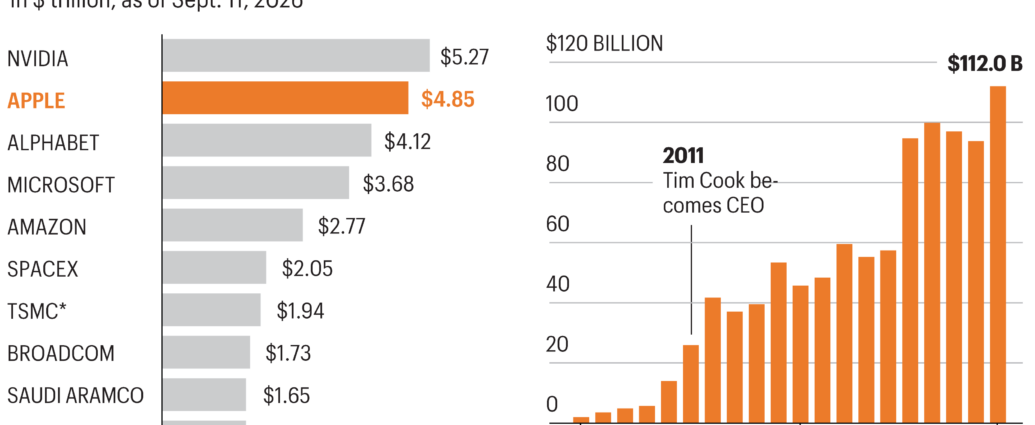
From $2 billion to $112 billion in annual profit: How Apple transformed its business
Good morning. Half a century after its founding, Apple’s financial transformation is best told through data that captures how thoroughly the company has reinvented its business. And the numbers suggest capital discipline will remain a big focus in its next era.
As John Ternus became CEO on Sept. 1, taking over the reins from Tim Cook, Fortune takes a look at the past 50 years and the data behind the shift from device dependency to recurring revenue, a global sales base, and profit growth that has rewarded patient shareholders beyond almost any comparable stock.
The iPhone remains Apple’s single most powerful engine, accounting for roughly half of 2025 sales. But the more revealing trend is services, which include the App Store, iCloud, Music, TV, payments, advertising, and more. It’s a division that barely existed 15 years ago and is now projected to generate more than a quarter of this year’s revenue. That’s the clearest evidence that Apple has successfully layered a high-margin, recurring-revenue business on top of its device sales, insulating it somewhat from the hardware upgrade cycles that worry investors.
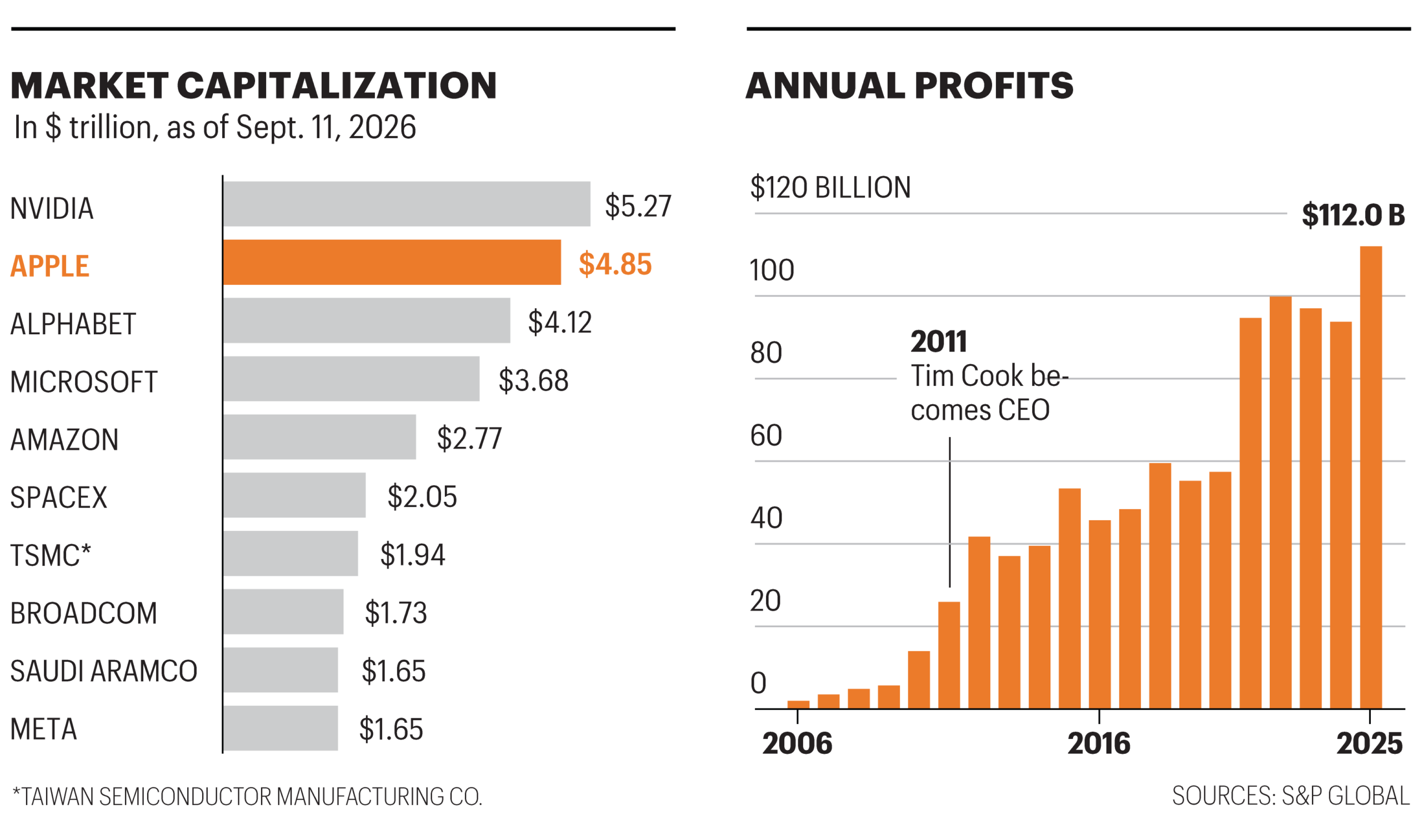
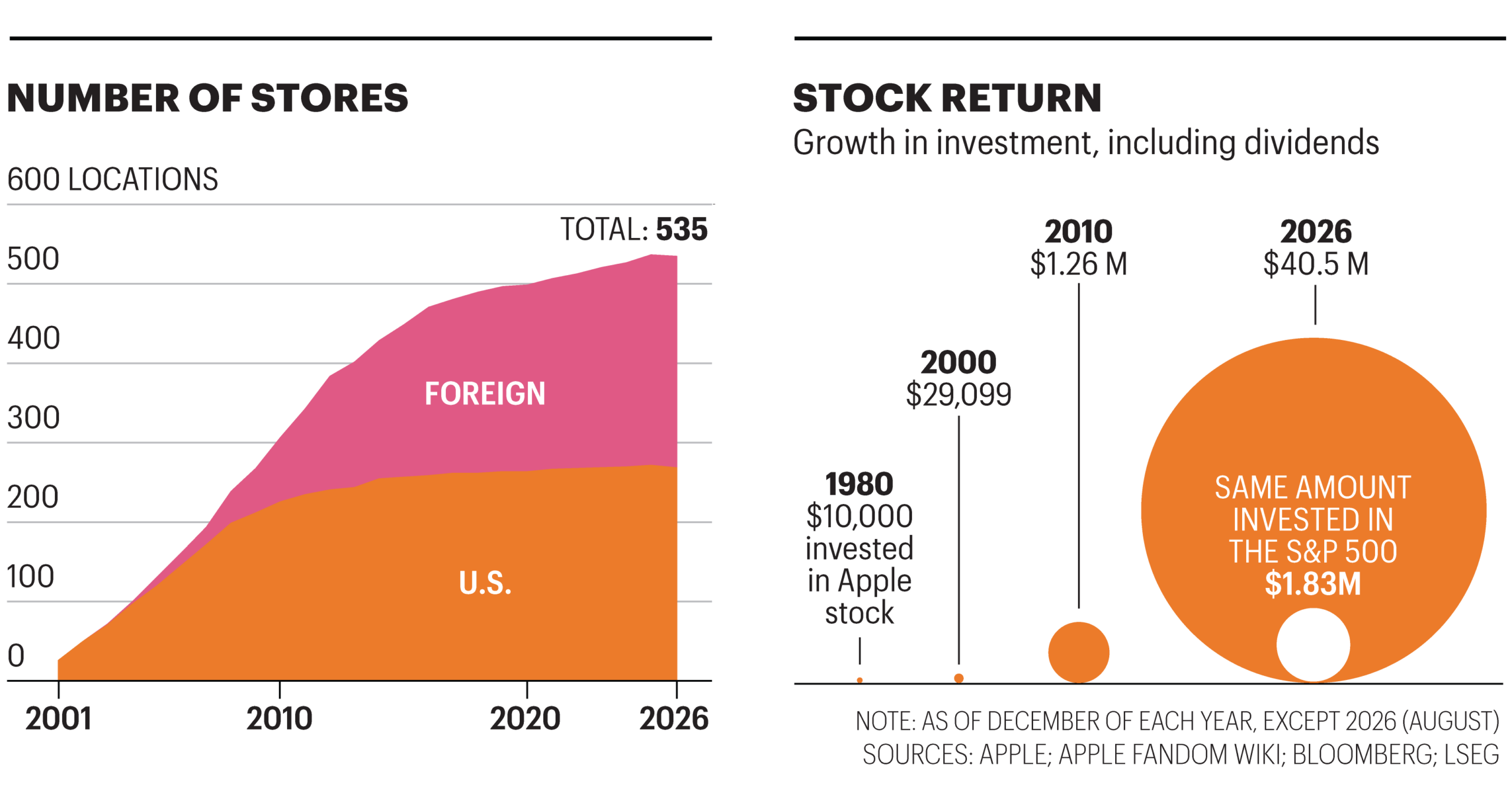
Apple has truly gone global. While the U.S. remains its largest market, a substantial share of Apple’s sales now comes from Europe, Greater China, Japan, and the broader Asia-Pacific region. Its retail footprint tells a similar story: Apple now operates more than 500 stores worldwide.
The bottom-line trajectory is the starkest number of all: annual profit rose from roughly $2 billion in 2006 to about $112 billion in 2025, a nearly 60-fold increase in under two decades. The long-term performance of the stock has been even more remarkable: a $10,000 investment in Apple’s 1980 IPO, held through its subsequent stock splits and decades of growth, would be worth approximately $40.5 million by mid-2026, Fortune reported.
These figures form the financial foundation Ternus inherited from Cook, who built Apple into a $5 trillion company through supply-chain discipline and cash-flow strength rather than Steve Jobs-style stage presence. “Cook ultimately built his own respected legacy, not in spite of being unlike Jobs, but because of it,” Fortune’s Phil Wahba writes.
That inheritance now faces its sharpest test yet: while Microsoft, Google, Meta, Amazon, and Oracle pour tens of billions into data-center buildouts for the AI race, Apple has deliberately avoided the hyperscaler arms race, betting instead on privacy-first, on-device AI delivered through premium hardware.
Whether that restraint proves prescient or costly will determine whether Ternus’s Apple keeps growing. You can view more of Apple’s history in charts here. Read more about Cook’s tenure at Apple here.
Sheryl Estrada
Sheryl.Estrada@fortune.com
This story was originally featured on Fortune.com

Gates Foundation and MTN launch AI maternal health platform to reach 500,000 women by 2030 in Nigeria, which accounts for about 30% of maternal deaths
The Gates Foundation and MTN Group Foundation on Tuesday announced a partnership to launch an AI-enabled maternal health platform in Nigeria, with the goal of helping 500,000 women access better care by 2030.
The initiative, called the Nigeria Maternal Health Multiplier, will also equip 5,000 frontline health workers with tools to spot pregnancy and childbirth complications earlier, and connect 500 health facilities to more consistent care standards.
Nigeria accounts for nearly 30% of maternal deaths worldwide, even as the country has cut those deaths over the past decade. Globally, maternal deaths have dropped 40% since 2000, but progress has stalled, and the risk of dying in childbirth in sub-Saharan Africa remains roughly 250 times higher than in Western Europe. Only 59% of Nigerian women complete four or more antenatal care visits, according to the initiative, so warning signs of complications often go undetected until it’s too late.
The platform has three parts: AI- and phone-based decision support for both health workers and mothers; affordable smartphones and mobile data; and upgraded connectivity at health facilities. It builds on Nigeria’s existing Maternal and Neonatal Mortality Reduction Innovation Initiative, run by the Federal Ministry of Health under its Sector-Wide Approach.
“AI has enormous potential to improve health, but only if its benefits reach the people who stand to gain the most,” said Mark Suzman, CEO of the Gates Foundation. “Left to the market alone, potential tends to benefit those who can already afford it, not the people who need it most. That’s where philanthropy has a role to play: not as a substitute for investment, but as a catalyst for it.”
MTN Group President and CEO Ralph Mupita said the goal is to make maternal health “more personalized, predictive and accessible” as AI develops. “We can put trusted, locally relevant health insights directly into the hands of mothers and healthcare professionals, tailored to their unique needs and languages,” he said. “Starting in Nigeria, our ambition is to demonstrate a scalable model for improving maternal and child health outcomes across Africa.”
Nigerian officials framed the deal as an answer to a systems problem rather than a technology gap. Dr. Bosun Tijani, the country’s minister of communications, innovation, and digital economy, said the biggest barrier to service delivery in Nigeria (like health, agriculture, or education) has rarely been a lack of new tools, but a lack of focus on the basic systems needed to get people to actually use them.
Dr. Muhammad Ali Pate, Nigeria’s coordinating minister of health and social welfare, said strengthening primary health care and the frontline workers who deliver it is central to the country’s health reforms. “Strengthening primary healthcare and empowering the frontline health workers who deliver it are core to our health sector reforms,” he said, adding that partnerships that work with existing health systems, rather than around them, are what’s needed to reach mothers “still falling through the cracks.”
The four-year partnership starts with about $25 million in direct and in-kind funding from 2026 through 2030, split between the Gates Foundation and MTN. Both organizations said they expect the initial investment to draw in additional funding and support expansion into other African markets over time.
MTN is contributing its connectivity infrastructure, device distribution networks, mobile financial services, and local market execution experience. The Gates Foundation is bringing its work in maternal and child health, digital health innovation, and what it calls responsible AI.
The launch is the Gates Foundation’s second major AI-in-Africa health push this year. In January, the foundation and OpenAI unveiled a $50 million “Horizon1000” partnership aimed at integrating AI tools into primary health clinics, starting in Rwanda before expanding to other countries. That effort was similarly aimed around closing gaps left by health worker shortages and shrinking foreign aid budgets.
This story was originally featured on Fortune.com
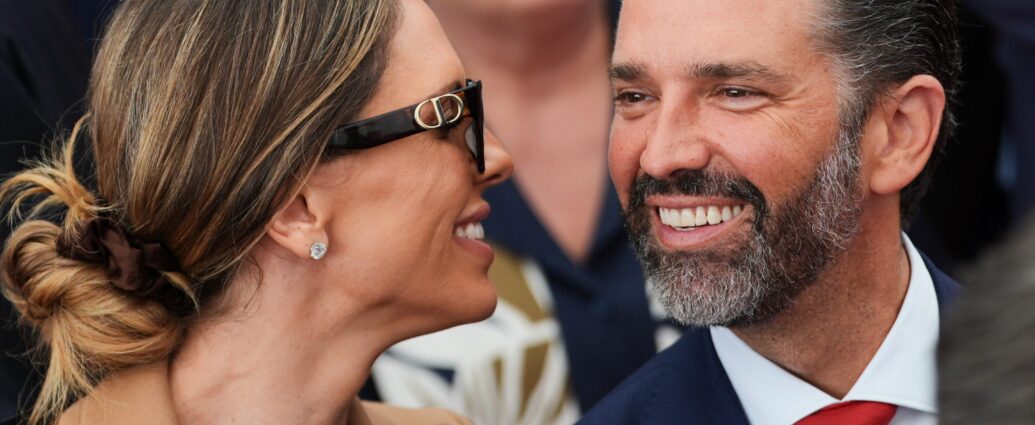
A Republican senator is calling on an investigation into Donald Trump Jr. after a Russian oligarch helped pay for his lavish wedding
Republican Sen. John Curtis of Utah is calling on the Senate Judiciary Committee to investigate whether Donald Trump Jr. used his proximity to the presidency for financial benefit, after his recent wedding party was partially bankrolled by a Russian oligarch.
In a letter sent Tuesday, Curtis called on the committee to subpoena Trump Jr. over his business dealings, relationships with foreign individuals and entities, gifts or other benefits he has received and any instances in which his relationship to President Donald Trump, a Republican, “was invoked or understood to provide value.” Curtis called for the same scrutiny of Hunter Biden, the son of former President Joe Biden, a Democrat.
“The country should not have to accept one standard for the family of a Republican president and another for the family of a Democratic president,” Curtis wrote in the letter addressed to GOP Sen. Chuck Grassley of Iowa, chairman of the committee, and Sen. Dick Durbin of Illinois, the top Democrat on the committee.
The letter comes as a few Republicans have shown a growing willingness to criticize Trump after largely avoiding public breaks with the president during much of his second term. The unpopular war in Iran, high gas prices and mounting concerns about the GOP’s prospects in November’s midterm elections have brought increased scrutiny of the president from within his own party.
The Trumps say it was a generous gift from a dear friend
ProPublica first reported last week that Umar Kremlev, who has close ties to Russian President Vladimir Putin, helped pay to rent a private island and for a fireworks show when Trump Jr. and socialite Bettina Anderson were married in the Bahamas in May.
In a subsequent post on her Instagram page signed by the couple, Bettina Trump wrote that Kremlev, head of the International Boxing Association, was a “dear friend” who “very generously hosted two incredible nights of celebrations for us AFTER our wedding.”
The president, who did not attend his son’s wedding, defended Kremlev’s involvement but said the money would be paid back.
Curtis calls the funding ‘corruption’
Curtis last Friday called the gift “corruption” and vowed to say more in the coming days.
“A Russian oligarch paid for a lavish wedding after-party for Donald Trump Jr., which to me just stinks. It’s corruption. I don’t like it,” Curtis said in a video posted on social media.
Curtis, first elected to the Senate in 2024, vowed upon taking office to not be afraid of disagreeing with Trump. While he has been critical in the past, the step of calling on the committee to investigate the president’s son is remarkable.
He wrote on social media that Republicans “nearly wore out the subpoena machine investigating Hunter Biden’s foreign relationships” and that they “should not unplug it now.”
Republicans investigated the Bidens
House Republicans spent much of 2023 and 2024 investigating whether Hunter Biden used his father’s name and political position to benefit his business dealings with foreign interests. The Biden family dismissed the investigations as politically motivated and denied any wrongdoing.
The GOP effort culminated in a report accusing Joe Biden of participating in a conspiracy to use his public office to enrich his family. But the House never voted on articles of impeachment against him.
“‘Trust us’ was not enough then, and it is not enough now,” Curtis wrote.
___
Associated Press reporter Mary Clare Jalonick contributed to this report.
This story was originally featured on Fortune.com
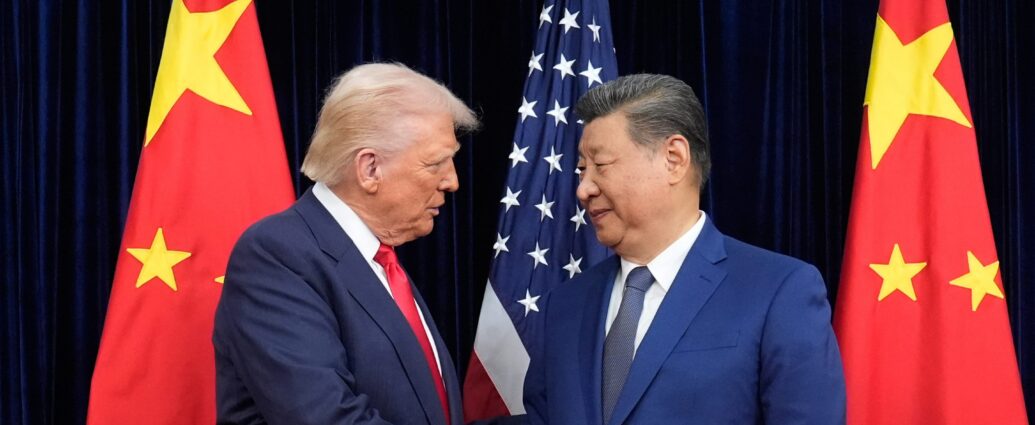
China tightens controls on fentanyl-making chemicals shipped to the U.S. just days before Trump and Xi meet at the White House
China said Tuesday that it is now requiring permits for exports to the United States, Mexico and Canada of two additional chemicals that can be used to make illegal drugs, expanding controls on shipments to the three countries.
The Commerce Ministry and other authorities jointly announced the new regulations ahead of this week’s meeting between Chinese President Xi Jinping and U.S. President Donald Trump. The additions bring the number of chemicals under such controls to 18.
The U.S. has called China the world’s largest producer of many of the precursor chemicals used in the illicit production of fentanyl, methamphetamine and other deadly synthetic drugs. It has urged Beijing to take more aggressive action to reduce the flow of unregulated precursor chemicals.
In November 2025, Beijing announced export restrictions on 13 “drug-making” chemicals to the U.S., Canada and Mexico, including chemicals used to produce the synthetic opioid blamed for tens of thousands of overdose deaths in the U.S. every year. In May, China added three additional types of fentanyl-related precursors to the list. The measures followed meetings between Xi and Trump in South Korea in October 2025 and Beijing in May.
China faced a fentanyl-related tariff imposed by the U.S. Beijing then issued a report in March 2025 detailing its efforts to control the illegal trade in fentanyl. Its foreign minister also blasted the U.S. for responding to Beijing’s goodwill with tariffs. The U.S. Supreme Court struck down the tariff in February.
This story was originally featured on Fortune.com

Alibaba says it built the ‘most powerful AI chip in China’ as the country races to catch up with the U.S.
China’s Alibaba unveiled new artificial intelligence chip technologies and plans for more powerful models on Tuesday, including what it said was China’s most powerful AI chip, days ahead of a meeting between Chinese and U.S. leaders at which competition to lead on AI technology is expected to be a major theme.
Alibaba’s announcement came as U.S. AI leaders, including Anthropic CEO Dario Amodei, are warning that China’s development of AI poses a threat to the United States and calling for an overall slowdown on development of the technology.
Chinese leader Xi Jinping is set to arrive in Washington on Wednesday for a state visit and meeting with U.S. President Donald Trump, at which AI, trade and tariffs are expected to be discussed.
At its annual flagship conference in Hangzhou, Alibaba rolled out a new AI chip and described its plans for the next generation of its AI model.
CEO Eddie Wu said the new Zhenwu V900 chip is the “most powerful AI chip in China today” and can deliver three times the performance of the company’s previous generation Zhenwu M890 chip.
Such chips power frontier AI model training and “inference,” a term for the calculations a trained AI uses to deliver responses to users. Alibaba’s Zhenwu chips are used in its data centers, providing computing to the company and its cloud clients.
Alibaba also said it plans to train a new AI model at the scale of five to 10 trillion parameters, a measure of an AI’s learning capacity, bringing it closer to the most advanced models from the U.S. Its latest Qwen3.8-Max model, the most powerful of its Qwen AI series models, has 2.4 trillion parameters.
Chinese AI company Moonshot says that its Kimi K3, released in July, is the world’s largest open model with 2.8 trillion parameters.
Alibaba also highlighted plans to expand the data centers that power its cloud computing business, citing “exponentially” rising demand for AI computing. The company said it expects to have over 20 gigawatts’ worth of computing by 2032.
SpaceX has approximately 1.4 gigawatts of AI computing capacity as of mid-this year and says it aims to reach over 10 gigawatts in 2027.
Recent Chinese advancements in AI are giving Beijing more leverage in its upcoming talks with Washington, some analysts believe, as China steps up its self-reliance push even as U.S.-led export restrictions have barred it from accessing some of the world’s most cutting-edge technologies, including AI chips and chipmaking machines.
Open Chinese models, which are often more affordable than cutting-edge closed models from leading U.S. AI labs, have also been making inroads globally, including in the U.S.
Chinese technology giant Huawei last week also unveiled new chip technologies as it looks to challenge global leaders like Nvidia. Frontier AI model training in China often rely on Nvidia chips, analysts said, but Chinese-designed chips are gaining ground as Nvidia has been blocked from selling some of its most powerful AI chips to China.
“Using extra computing power to make up for chip limits helps China stay strong locally,” said Neil Shah, vice president of Counterpoint Research, a technology market research firm based in Hong Kong.
Counterpoint senior analyst Parv Sharma added that how much the AI and chipmaking gap between China and the U.S. narrows will also depend on other factors including China’s ability to advance chip foundries that manufacture them, not just chip design capabilities.
Alibaba is “mobilizing every resource” to meet customers’ demand for AI, CEO Wu said in his speech Tuesday.
Global shortages across the AI data center supply chain, for example, “are currently limiting the speed at which we can scale our compute infrastructure” for AI, he added.
Wu also likened AI growth to the industrial revolution and said “machine intelligence” will rapidly outgrow human thinking capacity.
While “machine intelligence today is not a substitute for human intelligence,” he predicted that, eventually, machines will be able to produce over 1,000 times more “thinking” than all of humanity combined, up from less than 3% currently.
This story was originally featured on Fortune.com

Stocks Edge Higher as Oil Falls, Yields Ease
U.S. stocks opened modestly higher Tuesday as another drop in oil prices and easing Treasury yields gave investors some relief from the inflation and borrowing-cost pressures that have weighed on markets in recent weeks.
The Dow Jones Industrial Average, S&P 500 and Nasdaq Composite all moved higher after the opening bell, with the technology-heavy Nasdaq reaching a fresh intraday record, according to Reuters. The gains followed Monday’s strong session, when the S&P 500 climbed 1.5% to 7,764.70, the Dow gained 0.7% to 52,048.83 and the Nasdaq surged 2.3% to a record closing level of 27,122.09.
For consumers and businesses, the biggest development may be happening outside the stock market: oil is getting cheaper again.
Oil Drops Below $100
Brent crude fell about 2.1% Tuesday to roughly $98.23 a barrel, while U.S. West Texas Intermediate crude also declined, taking oil prices to their lowest levels in roughly two weeks.
The decline comes as fears of a severe supply disruption in the Persian Gulf have eased. Iran has offered to reopen the Strait of Hormuz within seven days under certain conditions, while Saudi Arabia has resumed operations on its East-West Pipeline and increased crude shipments through the strait.
That matters far beyond energy markets.
Cheaper crude can eventually translate into lower gasoline and transportation costs, while also reducing expenses for airlines, manufacturers and companies that depend heavily on petroleum-based products.
It could also take some pressure off inflation if the decline lasts.
Treasury Yields Give Stocks Another Boost
Bond yields have also retreated from their recent highs.
The benchmark 10-year Treasury yield finished Monday around 4.95%, after recently touching the psychologically important 5% level.
Lower Treasury yields can ease pressure on borrowing costs throughout the economy and make stocks relatively more attractive to investors. Mortgage rates are particularly sensitive to movements in longer-term Treasury yields, although individual mortgage rates do not move in lockstep with the 10-year note.
The combination of falling oil and softer yields has therefore removed two of the market’s biggest recent pressures at the same time.
AI Rally Keeps Technology in Focus
Technology and artificial intelligence stocks remain another major driver.
Meta has attracted substantial investor attention following the launch of its Muse AI assistant. Reuters reported Tuesday that Meta shares have risen more than 20% since Muse debuted Sept. 8, adding more than $200 billion to the company’s market value. The app recorded approximately 2.8 million downloads during its first 12 days.
That enthusiasm has helped fuel a broader rally in semiconductor and AI-related companies and contributed to the Nasdaq’s recent record-setting run.
U.S.-China Talks Add to Market Focus
Investors are also watching diplomacy between Washington and Beijing.
Treasury Secretary Scott Bessent and Chinese Vice Premier He Lifeng held talks in New York ahead of an expected meeting between President Donald Trump and Chinese President Xi Jinping. The discussions included trade and artificial intelligence, with Bessent publicly describing the engagement as successful.
Markets will be watching for any developments involving tariffs, trade restrictions, artificial intelligence and critical minerals.
What Consumers Should Watch
For households, oil and Treasury yields remain especially important.
If crude prices continue falling, consumers could eventually see some relief in fuel and transportation costs. If Treasury yields continue moving lower, borrowing conditions for mortgages and other loans could also become somewhat less restrictive, though actual consumer rates depend on more than Treasury yields alone.
Neither trend is guaranteed to continue.
Oil markets remain highly sensitive to developments involving Iran, Saudi Arabia and the Strait of Hormuz, while Treasury yields could quickly reverse if investors become more concerned about inflation or additional Federal Reserve rate increases.
For Wall Street, that leaves Tuesday’s modest gains resting on a straightforward equation: lower energy prices, lower bond yields and continued enthusiasm around artificial intelligence are giving stocks room to move higher — but geopolitical and inflation risks remain close behind.
JBizNews Desk | Wall Street
© JBizNews.com All Rights Reserved. Reproduction or distribution without written permission is prohibited.


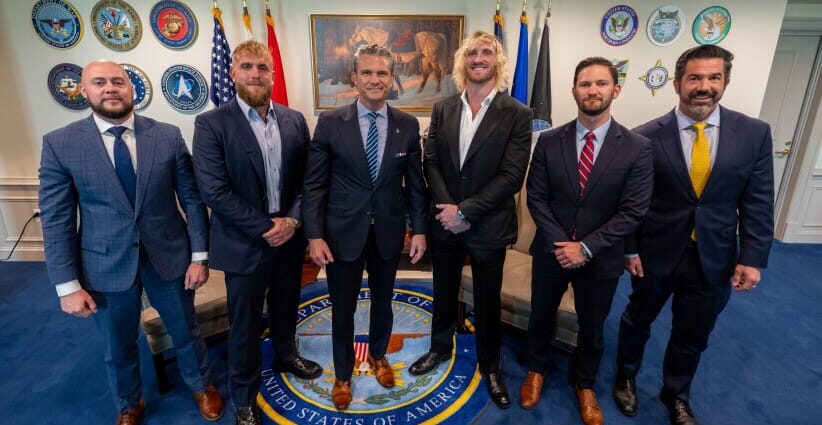
Influencer Jake Paul calls for amended US Constitution, says civilians should be able to bear RPGs
American influencer Jake Paul said that US citizens should be allowed access to rocket launchers and called for an amendment to the Constitution during an interview at the sixth annual All-In Summit in Los Angeles last week.
“I think we need an amended and updated Constitution. It was written in 1781, I believe, and life is just so much different now,” said Paul. “Especially, I think the Second Amendment was made so that if the government was doing ridiculous things to us and controlling us in harmful ways, citizens could overthrow them.”
“That’s obviously what happened and why people came to the United States initially. They revolted, fought back, and became independent.”
“And so I think, as weapons systems get more advanced, a pistol or a shotgun is not going to be able to overthrow the government if we, the people, decide that the United States government is taking advantage of us and that we maybe need to be able to bear more advanced weapons systems as citizens.”
“Drone EMPs, RPGs, potential anti-helicopter [weapons]. I don’t know what it is,” said Paul.
“But if the government can just come in with autonomous robots and take us all out, and we are now powerless, essentially the Second Amendment is just a hobby now for people to go and shoot guns.”
“So I don’t know what it looks like, but I feel like in the very short term, near future, there are going to be such systems that will make us powerless against our own government. And I don’t think that is a smart thing, because then, at some point in time, we must be obedient as American citizens.”
Antifund’s @jakepaul says the US needs a new Constitution
“The 2nd Amendment was made so that if the government was doing ridiculous things to us and controlling us in harmful ways, that the citizens could upthrow them.”
“As weapons systems get more advanced, a pistol or a… pic.twitter.com/hfUl5mFUeF
— Molly O’Shea (@MollySOShea) September 18, 2026
Jake, Logan Paul visit Pentagon, meet with Hegseth
The interview came days before he and his brother, Logan, arrived in Washington on Thursday to visit the Pentagon.
During the visit, the two met with US Secretary of Defense Pete Hegseth, US Vice President JD Vance, US Treasury Secretary Scott Bessent, and US service members.
Bessent welcomed Paul to the Treasury Department in a post to X/Twitter, calling his “path from content creator to entrepreneur and professional boxer [is] a distinctly American story.”
The Pentagon’s decision to invite the brothers has drawn considerable criticism online. In response, Paul took to X to address the backlash.
“America is not a spectator sport,” said Paul. “Apparently Logan and I going to Washington meeting with the Vice President, the Secretary of the Treasury, the Secretary of War, and other leaders of this country really pisses some people off.”
America is not a spectator sport
Apparently Logan and I going to Washington meeting with the Vice President, the Secretary of the Treasury, the Secretary of War, and other leaders of this country really pisses some people off
Good.
Because I’d rather be in the room asking… pic.twitter.com/f3p71yDNgu
— Jake Paul (@jakepaul) September 21, 2026
“Good. Because I’d rather be in the room asking questions, learning, challenging ideas, building relationships, and figuring out how I can help than sitting behind a screen telling everyone else what they should be doing,” he said.
“Washington doesn’t belong to commentators. It doesn’t belong to celebrities. It doesn’t belong to politicians. It belongs to the American people. And whether people like me or hate me, I’m going to keep showing up.”

A nuclear Iran would be like ‘North Korea in the Middle East,’ Rubio says during UN visit
US Secretary of State Marco Rubio said on Tuesday the US is open to speaking with Iranians at the UN General Assembly, but no meeting is currently scheduled.
“We’re open to that. I don’t think anything is scheduled at this point, but we’re certainly open to something like that, especially if it has the prospects of leading to something positive and ultimately achieving the goal of what this is all about,” Rubio said in an interview with NBC’s “Today” show.
“And that is the fact that Iran can never have a nuclear weapon. They just simply can’t.”
‘It would be a disaster for the world,’ Rubio tells FOX News
In similar Tuesday statements made to FOX, Rubio reiterated his assertion that Iran “must never be allowed to have a nuclear weapon.”
“At some point,” he told FOX, “somebody has to do something about it, otherwise it is going to happen. And then imagine North Korea, but in the Middle East. It would be a disaster for the world.”
Rubio also claimed that Iran is suffering the economic effects of the US naval blockade and “severe, cripping sanctions,” while maintaining that the US is still open to “the diplomatic path.”
“You never close the door to agreements or diplomacy,” Rubio said, “because sometimes things change within the system. Maybe the system changes, maybe something happens from within, or they make a pragmatic decision for the time being that it is better for them to go down the diplomatic path.”

‘Looksmaxxing’ influencer Clavicular charged with rape in Massachusetts amid legal troubles
Social media “looksmaxxing” influencer Clavicular, whose real name is Braden Peters, has been charged in Massachusetts with one count each of rape, drugging a person for sex, and providing alcohol to a minor, The Hollywood Reporter reported Tuesday.
The charges stem from an alleged May 23, 2025 incident. Prosecutors filed the case in a Cape Cod courthouse on September 8, with Peters’s arraignment scheduled for October 14. The allegations appear to overlap with claims in a separate civil lawsuit filed against Peters in Florida in April involving Alorah Ziva, whose real name is Aleksandra Vasilevna Mendoza.
According to CBS 4 Miami, Mendoza, 18, accused Peters in the civil complaint of battery, fraud, and sexual misconduct. She alleged that Peters injected her without consent during a 2025 livestream with Aqualyx, a fat-dissolving substance not approved by the FDA, and accused him of nonconsensual sexual encounters at his parents’ Cape Cod home while she was intoxicated and still a minor.
The Bulwark said it could not obtain additional records in the criminal case but reported that the timeline appeared to correspond with the Florida lawsuit. Peters moved in July to dismiss several counts in the civil case.
Peters’s representative Mitchell Jackson disputed The Bulwark’s reporting and said Peters had not been served and the outlet is exaggerating, Jackson said in a text message Monday night, according to NBC News.
Clavicular’s Israel visit draws controversy
Peters also drew attention in Israel this summer, visiting the country in July, seven months after a January 17 video showed him singing along to Kanye West’s antisemitic song “Heil Hitler.”
During the visit, Peters walked out of an interview with Channel 13’s Bar Shem-Ur after being questioned about the video.
“I’m here for a good thing, and you are trying to drag me into the mud and damage my reputation. This interview is over,” Peters said before leaving.
The visit also prompted disciplinary action against Shira Braun, an IDF soldier in the Spokesperson’s Unit who appeared on Peters’s livestream. Braun was formally reprimanded, removed from her position, and reassigned as a cook, Israeli media reported.
Shir Perets contributed to this report.
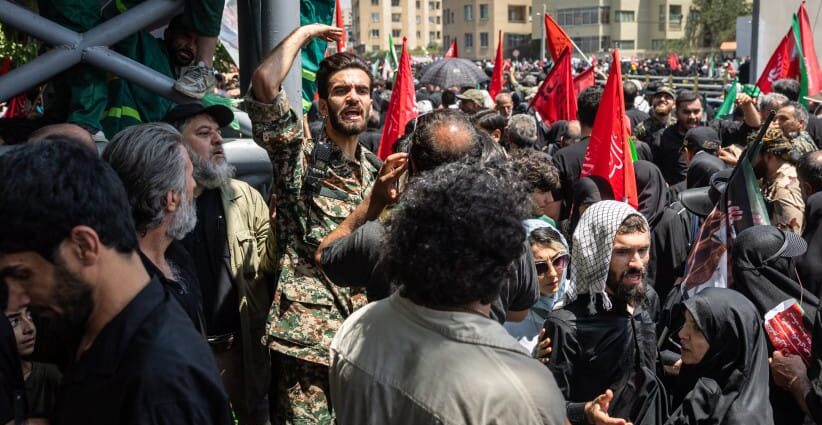
UN probe finds Iran committed crimes against humanity in crackdown, cites US and Israel for strikes
The Islamic Republic is responsible for gross human rights violations committed in January in response to the widespread outbreak of protests, the United Nations’ Independent International Fact-Finding Mission on Iran concluded in a report published Monday, which also condemned the United States and Israel for attacks against the regime.
Though the Islamic Republic failed to fully cooperate with the mission, denying it unhindered access to the country as it did following the crackdown on the 2022 Woman, Life, Freedom protests, the mission concluded that Tehran had violated individuals’ rights to life, freedom from torture and ill-treatment, personal security and liberty, a fair trial and an effective remedy, as well as the rights to peaceful assembly and association, freedom of expression, equality and non-discrimination, privacy and health.
The mission sent 47 information requests to the Islamic Republic, of which only 12 received responses, none of which provided the information requested.
Despite the Islamic Republic’s failure to cooperate with the investigation and its internet shutdown hindering access to information, the mission gathered testimonies from 73 individuals, satellite imagery, video and photographic material, as well as information from credible human rights organizations and forensic and military experts.
After the Islamic Republic restored internet connectivity to no more than 30% of pre-shutdown levels, access to online spaces and communication remained heavily restricted. A tiered system requiring prior authorization and identity verification prevented unauthorized users from accessing certain systems, which the mission said had “appeared to strengthen its control over digital space.”
Internet shutdown blocked communications to family, emergency services
The internet shutdown meant that, at the height of the violent repression of the protests on January 8 and 9, Iranian civilians were deprived of the ability to communicate, access information and seek medical or emergency assistance. Health workers told the mission that the shutdown made it difficult to reach colleagues, coordinate treatment and follow up with sick or wounded individuals. Protesters wounded by security forces also struggled to arrange medical treatment.
Families inside and outside Iran were unable to learn the fate of their loved ones during the demonstrations, leaving them anxious about their well-being. Additionally, when war broke out with the United States and Israel on February 28, the internet shutdown left the civilian population without access to timely, potentially lifesaving information.
Though the full extent of the regime’s violence was not determined by the mission, the report confirmed that the crackdown on the January protests resulted in at least three and a half times as many injuries and five and a half times as many deaths as the repression of the 2022 Woman, Life, Freedom protests.
This demonstrated, the mission concluded, that the suppression “went beyond a simple continuation of familiar patterns and represented a marked escalation in the use of lethal force and mass arrests.”
The Islamic Republic acknowledged the deaths of only 3,038 individuals and the wounding of 25,000, more than 50% of whom it said required surgery, while attributing most of the casualties to “terrorists.”
However, based on information from credible organizations and discrepancies in figures provided by the regime, the mission concluded that the true death toll was significantly higher than the figures reported by Tehran and that security forces were responsible for the violence.
Tear gas, shotguns fired at protesters
Security forces routinely fired tear gas before firing shotguns loaded with metal pellets at protesters who did not present an imminent threat, the mission found. Evidence collected from witnesses and healthcare workers, including medical records, showed that protesters sustained metal pellet injuries to the eyes, head, chest and upper body, “suggesting that security forces intended to maximize the damage caused by this type of ammunition.”
Officials from Farabi Hospital in Tehran confirmed that between January 8 and the morning of January 10, more than 700 people had sought treatment for eye injuries, some of which resulted in severe or total loss of vision. One health professional told the mission that the injuries indicated that shotgun rounds had been fired from close range at protesters.
Another healthcare worker described treating protesters who were injured after tear gas canisters were fired directly at their faces from close range.
Medical staff, wounded protesters and other unnamed sources told the mission that security forces monitored hospitals to search for and arrest those they believed had been demonstrating. In some cases, medical personnel were also arrested for providing the treatment. The apparent presence of security forces also led to many avoiding medical treatment, with some dying from their wounds as a result.
Further highlighting the pattern of violence, the mission was able to verify a video posted online on January 10 showing individuals firing on fleeing crowds from the roof of a police station in Tehran. The individuals appeared to be firing assault rifles, and there was no evidence to suggest an imminent threat. Another series of verified videos showed individuals firing from a roof outside a police station in Karaj, again where there was no evidence of an imminent threat.
Witnesses also described hearing sustained automatic gunfire during demonstrations in Tehran, Karaj, Mashhad and Abadan and seeing protesters collapse after being shot, some from the back, suggesting that they had been fleeing when they were killed.
Children were not spared from the violence. The mission confirmed that a 16-year-old boy was shot in both eyes with metal pellets, resulting in the loss of vision in his right eye, while another boy was blinded in one eye after being shot with metal pellets at close range. The second boy sustained pellet wounds to the upper half of his face and the back of his forearm, “indicating that he likely had adopted a defensive posture before being shot.”
Small children treated for shotgun wounds
One healthcare professional also told the mission that they had treated children as young as 10 for shotgun pellet injuries, while credible sources told the mission that children as young as five were injured during the demonstrations. An unnamed human rights organization also provided the names of at least 221 children who were killed during the protests, including by lethal ammunition. According to the organization, six of the children were under the age of 10, and two were only two years old.
The mission was also able to confirm that at least three individuals were sentenced to death despite being minors at the time of the alleged offense. Two 17-year-old boys were sentenced to death alongside Hosseinipour Hesarlou, now 19, for allegedly setting fire to the Seyyed al-Shohada Mosque, which allegedly resulted in the death of two individuals.
The mission was told the death sentences were upheld, and a lawyer representing one of the defendants complained that he had been barred by the judge from representing his client.
Witnesses who were detained by the security forces also recounted to the mission the torture and ill-treatment they had witnessed or experienced. One individual, who was detained in Karaj, recounted how he had been kicked in the mouth when he questioned why he was being arrested, and another described being detained in a continuously lit room in solitary confinement for around one month, where she was deprived of prescribed medication and subjected to regular interrogation sessions lasting up to six hours each without the presence of a lawyer.
Families of the regime’s victims also told the mission that authorities had refused to release the bodies of their loved ones, in some cases demanding payment or refusing to return the body until the family signed a document with false information that would support the regime’s narrative of the events.

DoorDash customer picks up order from driver at crash scene: ‘I think that’s my food right there’
A man went viral on social media after filming himself picking up a DoorDash order at the scene of a crash involving his delivery driver.
Glenn Ndibnu began recording as he arrived at the wreck on Church Road in Bowie, Maryland, where multiple ambulances were present.
“I DoorDashed some food, and my DoorDasher told me he got in a car accident, and he was like, ‘I can come meet him and get the food from him,'” he explained in the video.
He then expressed guilt over crossing the road to go pick up his food after what happened to his driver.
“I think that’s my food right there. Is it f—ed up for me to walk across and pick it up?” Ndibnu said. “I look so f—ed up right now about to go get this food.”
Ndibnu ultimately got his food and apologized to the driver, William Koroma, who later launched a GoFundMe campaign to help replace the car that was totaled in the crash.
DOORDASH GETS FAA APPROVAL FOR ITS OWN DELIVERY DRONES
In subsequent posts on Instagram, Ndibnu linked to the online fundraiser.
“My vehicle experienced brake failure, and I was involved in a major accident,” Koroma wrote on the GoFundMe page. “My car was totaled, and I am deeply grateful that I survived and that no one else was seriously injured.”
He added: “Since the accident, I have been facing several challenges at once. Losing my vehicle has left me without reliable transportation, and I have also lost my job.”
Koroma did not elaborate on his injuries, but said he has also been hit with medical bills.
The GoFundMe has raised nearly $14,000 as of Tuesday morning.

STAT+: Pharmalittle: We’re reading about pharma seeking to protect China deals, a Roche obesity drug, and more
Top of the morning to you. Gray skies are hovering over the Pharmalot campus right now, but our spirits remain sunny, nonetheless. Why? We will trot out a bit of insight from the Morning Mayor, who would say “Every new day should be unwrapped like a precious gift.” To celebrate the notion, we are brewing still more cups of stimulation and invite you to join us. Remember, a prescription is not required, nor is a copay. Our choice today is butter pecan. Meanwhile, here are a few items of interest. Hope you have a smashing day, and of course, do stay in touch. …
Western pharmaceutical companies are urging the Trump administration to allow them to keep doing deals with Chinese companies for promising drug candidates, despite a 2025 law restricting U.S. investment in Chinese technology, The Wall Street Journal reports. An industry trade group has been lobbying to make sure the new rules the Treasury Department is writing, as part of that law, maintain their ability to do deals in China. The law, called the Comprehensive Outbound Investment National Security Act or COINS, requires the federal government to screen deals with certain countries involving sensitive technology. So far, the Treasury Department has been reluctant to fully incorporate pharmaceuticals.
The U.S. Food and Drug Administration posted documents ahead of an advisory committee meeting on Wednesday that suggest the agency may take a favorable view of a Grail blood test aimed at detecting many different types of cancer early, when they can be treated more effectively, STAT writes. The test is already available as a laboratory-based diagnostic, but FDA approval would be expected to help lead to reimbursement from Medicare and other insurance payers. Investors are upbeat, but the documents include an anomaly that might not signal an open-and-shut positive outcome for the company.

STAT+: Epic’s mortality model, and Omada’s future products
You’re reading the web edition of STAT’s Health Tech newsletter, our guide to how technology is transforming the life sciences. Sign up to get it delivered in your inbox every Tuesday and Thursday.
Good morning health tech readers!
My kids have been in school for one week and everyone is already sick. But the newsletter marches on!
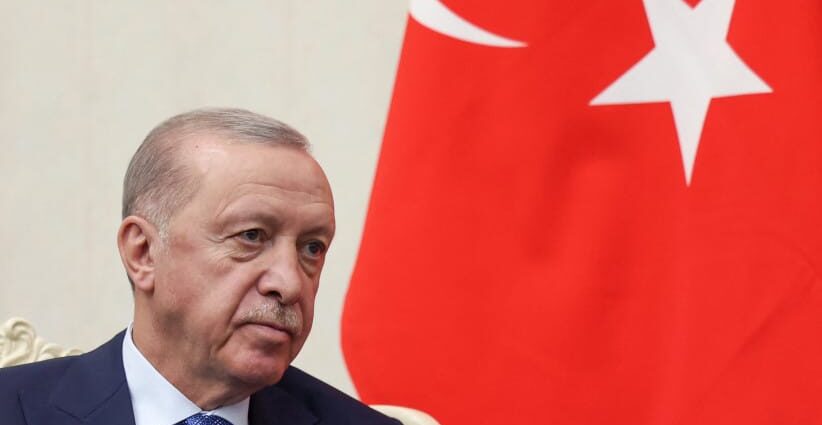
Turkey’s Erdogan may push for FM Fidan to take over UN Sec.-Gen. role, causing concern in Israel
Concern is growing in Israel over the possibility that Turkish President Recep Tayyip Erdogan could use his visit to New York for the UN General Assembly to promote Foreign Minister Hakan Fidan as a candidate to become the next UN secretary-general, potentially even announcing the move during his Tuesday UNGA address.
Sources familiar with the matter told The Jerusalem Post that the possibility of putting Fidan forward for the top UN post is on the table and has been considered more than once.
Turkish officials, however, strongly denied that any such move is planned.
The possibility carries particular significance as the race to succeed UN Secretary-General Antonio Guterres enters a crucial stage without a consensus candidate.
Guterres’s second term expires on December 31, with his successor due to take office on January 1. Under the UN Charter, the secretary-general is appointed by the General Assembly upon the recommendation of the Security Council.
Erdogan arrived in New York on Sunday for the UNGA and has already begun a series of diplomatic meetings. Fidan is also in New York and has been holding meetings with foreign counterparts on the sidelines of the UNGA.
The timing is particularly sensitive because the succession race remains unsettled.
In the third secret straw poll held by the Security Council on Friday, Costa Rica’s Rebeca Grynspan emerged as the narrow front-runner, receiving nine “encourage” votes, five “discourage” votes and one “no opinion.”
Guyana’s UN Ambassador Carolyn Rodrigues-Birkett followed with eight votes encouraging her candidacy, six discouraging it and one expressing no opinion.
At this stage, the ballots do not distinguish publicly between votes cast by the Security Council’s five permanent members and those cast by its 10 elected members, meaning it is not yet known whether any of the leading candidates face opposition from a veto-wielding power.
The field became even more fluid over the weekend when former Chilean president Michelle Bachelet withdrew her candidacy following a weak showing in the latest poll.
New candidates can still enter the race, leaving open the possibility that Security Council members could ultimately coalesce around a late entrant if the current field fails to produce a consensus.
Fidan is Erdogan’s longtime confidant
Fidan, 58, has for years been regarded as one of Erdogan’s most trusted figures in Turkey’s foreign policy and national security establishment.
Before becoming foreign minister in 2023, he spent 13 years as head of Turkey’s National Intelligence Organization, known as the MIT. He previously held several senior government positions, including serving as a special representative to the prime minister and president and as a member of the International Atomic Energy Agency’s Board of Governors.
The concern in Jerusalem comes against the backdrop of Fidan’s sharply critical stance toward Israel since the October 7 massacre and the Israel-Hamas War.
Fidan has repeatedly accused Israel of committing “genocide” in Gaza and has described what he calls “Israeli expansionism” as a threat extending beyond the region. In April, he argued that such policies had become a global security concern and said the international community needed to act to stop them.
He has also maintained direct contacts with senior Hamas officials as part of Turkey’s involvement in Gaza ceasefire diplomacy.
Fidan met members of Hamas’s political leadership in Ankara in December for talks on implementation of the Gaza ceasefire, and Turkish officials have repeatedly argued that Hamas has shown willingness to advance ceasefire arrangements while accusing Israel of failing to fulfill parts of previous agreements.
Relations between Israel and Turkey have deteriorated dramatically in recent years. Ankara halted direct bilateral trade with Israel in May 2024, while Erdogan and Fidan have made the Gaza war a central focus of Turkish foreign policy and international diplomacy.
Race to become next UN secretary-general remains unresolved
The formal process to select the next UN secretary-general began in November 2025, when UN member states were invited to submit nominations.
Candidates are formally nominated by member states before being considered by the 15-member Security Council. Council members have been conducting confidential straw polls in which they mark candidates as “encourage,” “discourage,” or “no opinion.”
Ultimately, a successful candidate needs at least nine votes in the Security Council and must avoid a veto from any of its five permanent members, the United States, Russia, China, Britain and France. The Security Council then recommends one candidate to the General Assembly for formal appointment.
There is a strong, though non-binding, expectation within the UN that the next secretary-general should come from the Latin American and Caribbean regional group, which has not held the post for decades. There has also been a significant push for the UN to appoint a woman as secretary-general for the first time in its history.
Neither convention is legally binding, however, and the eventual choice will depend above all on whether a candidate can secure agreement among the Security Council’s major powers.
If Turkey does decide to nominate Fidan, he would therefore enter the contest relatively late and outside the regional expectation surrounding this year’s race.
But he would also enter at a moment when three rounds of Security Council straw polls have yet to produce a candidate capable of commanding clear consensus, leaving the door open for the race to take an unexpected turn.


Gap Is Getting Into the Boy-Band Business


Qatar attempting to distance itself from Hamas, looking to West, expert tells ‘Post’
Doha is attempting to publicly distance itself from Hamas, denying that it knowingly funded the group, as attacks on its oil infrastructure have pushed Qatar to pursue financial relationships with Western groups that are less willing to engage with a country associated with the Palestinian terrorist organization, Dr. Ariel Admoni, a researcher of Qatari policy at Ariel University and the Jerusalem Institute for Strategy and Security (JISS), told The Jerusalem Post on Tuesday.
Admoni spoke with the Post after Qatar’s International Media Office issued multiple statements rejecting accusations that Doha had directly funded Hamas. The office claimed that the allegations originated from a “sustained campaign involving pro-Israel media, lobbyists, lawyers, think tanks and so-called research organizations.”
The office further argued that any Qatari funds that reached Hamas did so as a result of Israeli failures, while maintaining that Qatar had coordinated with international partners to ensure humanitarian aid reached Palestinian civilians in Gaza.
Admoni said the statements represented a noticeable change in tone for a country that hosts Hamas’s leadership, whose state-funded media reportedly operates under a directive to portray Hamas sympathetically and which has allegedly spent years financing the terrorist group, according to Hamas’s own documentation.
According to Hamas documents seized by Israel and obtained by The New Yorker, Hamas officials directly thanked Qatari leaders for financial support, describing Qatari grants as “the main artery of the Hamas movement.” Qatar has rejected the documents as “falsified and fabricated information.”
Doha had also rejected accusations that it supported Hamas financially in the past, notably denying US House Oversight Committee Chairman Rep. James Comer’s 2024 claim that Qatar had paid Hamas $30 million per month since 2018.
Though Qatar has long denied the allegations, Admoni noted that the seriousness of its response, including threats of legal action and countering with allegations that Israel’s far right is using Doha to “deflect attention from domestic political failure,” was a sign that Qatar wanted to “rebrand itself.”
Admoni: Qatar relying on American financial systems
“This is a delicate time for Qatar because right now they rely on American financial systems,” he explained, highlighting recent meetings Qatar has held with potential investors.
Qatar’s Prime Minister Sheihk Mohammed bin Abdulrahman bin Jassim Al-Thani met with Alphabet and Google President and Chief Investment Officer Ruth Porat and Microsoft Co-Founder Bill Gates on Monday, on the sidelines of the 81st session of the United Nations General Assembly in New York, Doha’s Foreign Ministry confirmed.
It was also announced on Monday that the Qatar Investment Authority and J.P. Morgan Asset Management agreed to a $20 billion strategic partnership spanning public equities and private credit, expanding the fund’s investment ties with the US.
With Qatar’s energy-based economy still suffering from Iranian attacks, “they need the American financial system by their side,” Admoni said, adding that Doha was particularly aware of the “importance of narrative” and image when engaging with American industry giants.
Iran’s attacks knocked out 17% of Qatari LNG in March alone
The hydrocarbon sector contributed around 60% of Qatar’s GDP in 2024, making it a significant resource for the Qatari economy, and Iran’s attacks in March alone knocked out 17% of Qatar’s liquefied natural gas (LNG) export capacity, causing an estimated $20 billion in lost annual revenue, according to statements made by QatarEnergy’s CEO and Energy Affairs Minister Saad al-Kaabi to Reuters.
Though Admoni said that Qatar’s “vulnerability is showing” as a result of the war, and “Qatari money seems less persuasive than before,” he maintained that he had not witnessed a drastic change in attitude from the West, which still seems willing to accept Qatar’s “peace-maker” image. Still, he insisted that the excuse Qatar has so far used to maintain ties with Hamas would continue to be threatened as international media probes deeper into the “terror kingpin” funding the Islamist groups.
Nazi imagery nothing new for crypto casino behind Orlando fight with swastika flags, Hitler salutes
Nazi salutes. A swastika flag. Fights in the stands. They were all part of the scene at a recent combat sports event in Orlando that pitted an Israeli Jew against an avowed racist with SS bolts tattooed on his chest – and ended with the latter mocking his defeated foe as “a short little f***king Jew prick.”
The condemnation that followed the Aug. 29 event was aimed in a number of directions: at Paul Miller, the fighter who performed the Hitler salute after his win; at the attendees who returned the salute and displayed the Nazi flag; and at the Kia Center, the city-owned arena best known as the home of the NBA’s Orlando Magic, which hosted the fight night.
Politicians were shocked by the display and wrote statements condemning the event — but the Nazi symbols were nothing new for Duel, the online cryptocurrency casino behind the promotion.
Founded last year and billing itself as “the first casino that gives a f***,” Duel has used Nazi symbols and racist language in its gambling programming. And its owner, Ossi Ketola, a Finnish high-stakes poker player, is himself a self-described First Amendment absolutist with his own history of racially charged comments. He celebrated his devotion to free speech just one week after the Orlando event, in a social media post featuring a photo of himself with Donald Trump Jr.
One of Duel’s blackjack dealers, Nelli Levonyan, has worn a Nazi outfit with a swastika armband on multiple occasions while dealing cards on the blackjack stream. In a skit from the blackjack table that circulated online, a man, dressed up as an Orthodox Jew and holding an Israeli flag, attacked Levonyan by throwing coins at her. Levonyan’s character then sprayed something at the Jewish man — “Gassing!” he yelled — and said, “Go away from me, you dirty k***.”
In another blackjack stream, the dealer imitated one of the two San Diego mosque shooters, who killed five people in May. Levonyan has sung the lyrics to “Heil Hitler,” the Ye (formerly Kanye West) song, during a stream. She has also appeared alongside Miller while hosting the card game.
Earlier this month, Ketola joined a neo-fascist rally in Helsinki staged by the far-right party Sinimusta Liike, or the Blue-and-Black Movement. Ketola, who was dressed in a SpongeBob costume, livestreamed the rally and posted the footage with the title “Saving white Finland.” Speaking about immigrants, he said that people “need to be educated about how the genes work, and how these people realistically cannot be integrated here.”
Ketola heard off-camera yelling Nazi phrase ‘sieg heil’
He then attended an anti-fascist rally held elsewhere in Helsinki simultaneously, prompting left-wing demonstrators to chase him and his video crew back to their car. Ketola could be heard off-camera yelling “Sieg heil” as they drove away.
“What f–king violent pussies. Imagine what f***ing leftists,” Ketola said after taking off the SpongeBob costume. “You see? These right-wing people, white people, the most friendly people. I just walked there, we didn’t say anything, we didn’t do anything — we go to these leftists, and they try to f***ing attack us. F***ing dumb stupid f***ing n***ers.”
The following night, Ketola attended the dinner with Trump and about a dozen others in Tallinn, Estonia, hosted by Studioworks, a company that develops software for online casino sites. Ketola posted a photo of himself and the US president’s son on Instagram, and wrote that he discussed “Duel, the state of the world and current political climate with him and his staff.”
“The political situations in our respective countries have become increasingly similar, with a rising tide of violence and radical leftism in both America and Finland,” Ketola wrote. “As a firm 1st Amendment absolutist and an individual with many values that coincide with Republicans and [US President] Donald Trump himself, this was a great chance to align on many things important to both.”
Neither the Trump Organization, Miller, Ketola, nor Levonyan responded to requests for comment.
Duel was founded last summer and has featured prominent personalities on its streams, including boxing great Mike Tyson — who told Levonyan, “You dumb b***h, you like Hitler” — and the “looksmaxxing” influencer Braden Peters, known as Clavicular.
The fight night that it organized and promoted in Orlando was its first foray into combat sports and made for the company’s biggest splash yet. It also caught the attention of at least one watchdog and a local lawmaker.
“Right after the event there was a lot of criticism put on the venue, which didn’t have much responsibility in this, and not enough eyes on the people who actually made it happen,” Mark Pitcavage, senior fellow at the Anti-Defamation League’s Center on Extremism, told the Jewish Telegraphic Agency.
State Rep. Anna Eskamani called for the Florida Athletic Commission to revoke Duel Arena’s license. Florida Gov. Ron DeSantis appointed the commission’s members, who have not commented on the event. The governor’s office did not respond to multiple requests for comment from JTA.
DeSantis’ immediate predecessor and fellow Republican, US Senator Rick Scott, posted that the event was “utterly disturbing” and that “Antisemitism has NO PLACE in Florida.”
Pitcavage said that combat sports are “a draw for far-right extremists and white supremacists” who often view themselves as “white warriors.” He noted, however, that they make up a small portion of the participants and fans.
“It’s not at all surprising that some of them will get into various types of what they would consider manly, or warrior-like athletics,” he said.
Duel’s involvement in the Orlando event put the intersection of online gambling sites and far-right ideologies on his radar. “It’s something we’re starting to look into,” Pitcavage said. He noted that Duel is registered and licensed offshore on the autonomous island of Anjouan, making it more difficult to investigate.
Eskamani, who is running for mayor of Orlando, told JTA that Duel should not be allowed to operate in Florida, citing reasons that she says would beat the city’s First Amendment defense.
“These offshore cryptocurrency — I mean, there are so many red flags in how this entity is operating that from a purely financial security position for a public venue, I would not want to accept a reservation,” Eskamani said.
Duel set and promoted the matchups on the fight card, which included the kickboxing match between Miller, who goes by the moniker “Gypsy Crusader,” and his fellow influencer Ben “King” Azoulay.
Miller known for use of racial slurs, denigration of minority groups
Miller, who has made numerous appearances on Duel’s casino games streams, has been known to use racial slurs and denigrate minority groups in his online content. He was convicted in 2021 of felony weapons charges and sentenced to 41 months in federal prison. He had posted about initiating a race-based civil war.
During a livestreamed conversation with Adin Ross, a Jewish streamer who has interviewed or maintained friendly relationships with controversial figures including Nick Fuentes and Andrew Tate, Miller said there are no exceptions in his feelings toward Jews.
“I respect you for having an opinion that is different from the Jews,” Miller told Ross. “But that doesn’t mean that I would not laugh if I see you in a gas chamber.”

Clips from the Orlando event showed Miller performing the Nazi salute twice after his victory — something he has done after winning previous fights — prompting a number of attendees to do the same. One fan brought a Nazi Germany flag and waved it in his seat.
“He’s not a tough guy, he’s not an alpha male. He’s a short little f***ing Jew prick,” Miller declared about his opponent Azoulay in his post-fight interview, eliciting some cheers from the crowd.
US Rep. Randy Fine, the Jewish Republican firebrand whose district includes Palm Coast and Daytona Beach, posted a video of the Nazi flag being unfurled and wrote, “This is not a joke, and it is not edgy. The guy who did this is old enough to know exactly what that symbol means and to know that it’s not funny. We will make an example out of him.”
Asked what he meant by making an example of the attendee, Fine told JTA, “We put the video out so he would be recognized and be held publicly accountable. Most folks are unwilling to associate with Nazis.”
Cheering Miller on ringside was Jake Shields, a former mixed martial artist-turned far-right influencer who has espoused conspiracy theories about Jews and Israel. Shields wore a shirt reading “FCK ISRL.” Myron Gaines, a prominent streamer who has spread similar conspiracy theories and performed Nazi salutes, was in the stands and told Miller before the fight, “You fight for the goyim,” according to clips shared on social media.
Pitcavage said he has been tracking a trend of the far-right getting involved in combat sports since the late 1990s, as mixed martial arts and the UFC became more mainstream and amateur gyms became widespread and increasingly accessible.
The ADL has flagged that in recent years “active clubs,” or “localized white supremacist crews” that gather for fight training, have become more common. The ADL writes that these groups “see themselves as fighters training for an ongoing war against a system that they claim is deliberately plotting against the white race.”
As news outlets covered backlash to the Orlando fight night, Duel issued its own statement saying it was horrified “to learn that a group of viewers was displaying symbols of hate at our event.” The company criticized the city’s “shocking remarks that the ‘First Amendment’ applies and that ‘free speech’ is permitted at their arena,” and pledged to “work with local activist groups to push back on this and ensure that this kind of hate does not fester ever again.”
The statement appeared to be an example of Duel trolling with deadpan, buttoned-up language. Before the fight, Ketola released a similar promotional video that appeared to condemn Miller’s views. “Paul Miller is a Nazi. Being a Nazi is bad,” Ketola narrated, over footage of him shaking his head. “We cannot support this. The only reason we are allowing him to fight is to ensure the good guys get to add another victory to their record.”
Then, after Miller’s win, Duel’s Instagram account left a comment that told a different story.
“The good guys won,” Duel wrote.

Netanyahu shames Mamdani for supporting Hamas, threatens to expose ‘truth’ ahead of UNGA visit
Prime Minister Benjamin Netanyahu on Tuesday threatened to expose “the truth” about New York City Mayor Zohran Mamdani at the United Nations General Assembly in a video shared on X/Twitter.
“Shame on you, Mr. Mamdani,” Netanyahu said. “Shame on you for supporting the Hamas terrorist monsters who butchered our people. Shame on you for inciting riots against New York Jews.”
“I’m coming to the UN. I’m going to tell the truth about our heroic soldiers, and I’m going to tell the truth about you.”
ממדאני – אני בא לאו״ם כדי להילחם על האמת של החיילים הגיבורים שלנו – וכדי לחשוף את האמת עליך! pic.twitter.com/141PPbSFHm
— Benjamin Netanyahu – בנימין נתניהו (@netanyahu) September 22, 2026
Netanyahu is slated to arrive in New York on Thursday morning, address the UNGA at 2 p.m., before returning to Israel soon afterward.
His visit was originally planned to stretch several days and include a visit to Texas and a meeting with US President Donald Trump.
Israeli Consul-General in New York Ofir Akunis echoed Netanyahu’s sentiment in his own X post, calling out Mamdani for spreading antisemitism.
“Mamdani continues doing the only thing he knows how to do: incitement and the spreading of lies and blood libels against the State of Israel: classic antisemitism,” Akunis wrote. “Once again, not a single word about the savage and monstrous massacre of October 7 committed by the barbaric people who invaded Israel from Gaza.”
“The Prime Minister of Israel will arrive in New York City, address the UN, and tell the entire world who the Ayatollahs, Hezbollah, and Hamas truly are: enemies of the United States and the West.”
Mamdani continues doing the only thing he knows how to do: incitement and the spreading of lies and blood libels against the State of Israel: classic antisemitism.
Once again, not a single word about the savage and monstrous massacre of October 7 committed by the barbaric…
— Ofir Akunis (@Ofir_Akunis) September 22, 2026
Mamdani again calls for Netanyahu’s arrest
The comments follow a Monday CNN interview with Mamdani, where the mayor again called for the International Criminal Court (ICC) to honor Netanyahu’s arrest warrant.
Mamdani told CNN that he believes Netanyahu to be “a war criminal and an architect of a horrific genocide of the Palestinian people.”
In July, Mamdani said he was investigating the possibility of arresting Netanyahu based on the ICC’s warrant, concluding after a few days that he could not legally do so, but still warning that Netanyahu was “not welcome” in New York City.
“I do believe that that is something that should be honored,” he told CNN, “because what we want to see, and we’ve been talking about this today, is a faith in our politics, a faith in accountability.”
He added, “If the International Criminal Court deems someone worthy of an arrest because of a violation of those laws, then who are we to say that anyone should be above that? And I think very clearly that everyone should be held accountable to it.”
Tzvi Jasper contributed to this report.
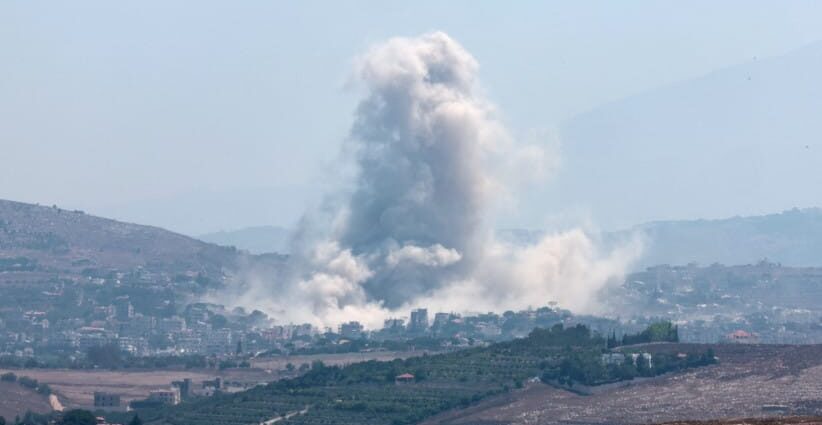
Syria and Iraq at the UNGA: Two key Arab states seek inroads at NY meeting – analysis
Syrian President Ahmad al-Sharaa arrived in New York on Monday ahead of the United Nations General Assembly. This is an important trip for the Syrian leader, during which he will meet with the leaders of other countries and will also seek to increase investment in Syria.
At the same time, the prime minister of Iraq, Ali al-Zaidi, also traveled to New York, hoping to push a message about how Iraq will rein in Iranian-backed militias.
Taken together, Iraq and Syria form a key bloc in the Middle East. Both are large and populous countries. Both countries were also divided by conflict up until recently. For instance, ISIS once controlled a swath of both Iraq and Syria. These countries are the heartland of the historic Levant.
Iraq is the land of the two rivers, which played a role in the birth of civilization in the region. Syria is also an ancient land, with ruins from the Roman and Crusader eras. Both Baghdad and Damascus played key roles in Islamic history.
Today, Iraq and Syria are quite different. Iraq suffers from Iranian influence and Iranian-backed militias. It is suffering economically because it can’t export as much oil due to the closure of the Strait of Hormuz. Syria, by contrast, is trying to get back on its feet after many years of civil war. Syria is closer in ties to Saudi Arabia and Turkey.
Syria recently embraced by US as Israel opposes new government, Turkish influence
It has also been embraced by the US over the last year. Israel, in contrast to the US and other countries that embraced the new Syria, has tended to oppose the new Syrian government and threaten Turkey’s role in Syria. Aware of Israel’s military strength and clout in the US, Syria is being careful not to create more tensions with Jerusalem.
Syria’s delegation to the UN confab includes “minister of Foreign Affairs and Expatriates Asaad Hassan al-Shaibani, Emergency and Disaster Management Minister Raed al-Saleh, and a number of other officials.” Syrian state SANA media says that “during his visit, President al-Sharaa is scheduled to deliver the Syrian Arab Republic’s address before the General Assembly, hold talks with a number of world leaders and senior officials, and meet members of the Syrian community in the United States.”
Syrian state media also noted that. “President Ahmad al-Sharaa met with members of the U.S. Congress in New York on Tuesday for talks on bilateral relations, developments in Syria and regional and international issues.” It added that “Foreign and Expatriates Minister Asaad Hassan al-Shaibani and other officials attended the meeting. The talks addressed relations between Syria and the United States and the situation in Syria, as well as the latest regional and international developments.”
Meanwhile, The National in the UAE noted that “US Secretary of State Marco Rubio and Iraqi Prime Minister Ali Al Zaidi discussed the importance of disarming militia groups in Iraq, as the deadline to bring arms under state control was pushed from the end of this month to June next year.”
This is an important meeting. Rubio and the Iraqi prime minister “agreed on the importance of Iraq dismantling terrorist militias, preventing attacks from Iraqi territory, and fully exercising its sovereignty”, a statement from the US State Department said.
The goal is to get Iraq to rein in the Iranian-backed militias, many of which are designated terrorist groups by the US. Zaidi has now said that he wants to see the arms under state control by June 2027, according to an interview with The New York Times.
“Militia groups have largely pushed back against the deadline to disarm. Two prominent pro-Tehran armed groups, Asaib Ahl Al Haq and Kataib Imam Ali, alongside cleric Moqtada Al Sadr’s Saraya Al Salam faction, claim they have placed their weapons under state authority. But hardline factions – mainly Kataib Hezbollah and Harakat Hezbollah Al Nujaba – have said they will not disarm until foreign troops leave,” The National added.
Zaidi’s US meetings aimed at getting support for Iraq
Zaidi’s meetings in the US, with Rubio and others, are aimed at getting support for Iraq. He wants more investment and hopes for a new partnership with the US after US forces leave.
Both Iraq and Syria are at a crossroads. The meetings at the UN suggest they are seeking a new future for the region. If they succeed, then that will stabilize a large swath of the Middle East between Turkey, Iran, and Saudi Arabia. If they can’t bring home the investment they need, difficult times lie ahead.

Former Pussy Riot member says FSB recruited her to spy on Russian activists
Rita Flores, a Russian activist, artist, and former member of Pussy Riot, told The Guardian that she was forced to work with Russia’s FSB to spy on others in her left-wing circle
Flores, whose real name is Margarita Konovalova, said the FSB recruited and handled her for at least three years. In a recent video with her lawyer, Dmitry Zakhvatov, she admitted to providing the Russian security service with personal information about her fellow artists and activists. She said the wanted to go public with her story so others in a similar predicament would feel bold enough to break their ties with the FSB.
“For the first time in years, I feel calm. All this time I was dreaming about getting out and being able to talk about it all,” she told The Guardian.
The Guardian noted that its reporters could not corroborate her claims, but that there have been numerous cases over the years in which the FSB has recruited activists and artists to spy on opposition groups.
Pussy Riot is a Russian feminist punk artist collective that protests against the Kremlin with guerrilla art performances in public spaces. Many of its members have been exiled from Russia or imprisoned.
How did the FSB recruit a Pussy Riot member?
Flores was recruited in 2023 when police searched her house, which had become a semi-routine occurrence, after she made an Instagram post criticizing the war in Ukraine.
Two police officers introduced themselves as FSB agents, threatened to open a criminal case against her for the Instagram post, and insinuated that they would kill her mother if she did not agree to work with them.
“I believed them. I believed they could do everything they said they would … My fear was too great. I was so worried for my family and also for myself,” she told The Guardian.
She claimed that, as a reward for signing cooperation papers, she received a cash payment of around 40,000 roubles.
Her first task was to collect information on other opposition activists in the same circles as her.
She was not supposed to tell anyone about her arrangement, but she told “about 20 people” anyways, claiming that it was because she enjoyed gossiping. However, she neglected to inform many of the people she was meant to report on. She claimed she established contact with them using pre-planned pretexts designed to keep them away from her and from sharing personal information.
She noted that because of the war in Ukraine, many opposition-minded artists had fled the country, and those who remained understood the threats they faced for speaking out.
“Moscow is booming; restaurants, bars and clubs are opening, and there are a huge number of events. But those people who understand things have empty eyes and speak empty words.
“People who have stayed in Russia have accepted the rules of a game. You go to a gallery, and every artwork may as well come with a sign saying ‘we were forbidden from saying anything’ … there are artists who used to make strong statements, and in 2026 they are drawing flowers in a vase.”
The officers who recruited her in the 2023 raid became her regular handlers. Flores said that they tended to play up a good-cop, bad-cop act, and identified one as “the Jacket” and the other as Ivan. She told The Guardian that Ivan seemed friendlier and more helpful on the surface, and that he would let the Jacket make any direct threats.
“Whenever I met with Ivan and the Jacket together, Ivan was silent. The Jacket would be rude, threatening; he’d insult me as a woman. He was the devil incarnate. Then just me and Ivan would meet, and Ivan would be nice, friendly,” she told The Guardian.
“He liked to say, ‘The FSB will re-educate you, I will re-educate you, you’ll have a nice and calm life, and you’ll love Russia, have children and be an obedient wife.’”
In late Spring, Ivan and the Jacket began asking her questions about Pyotr Verzilov, an artist and activist associated with Pussy Riot who later moved to Ukraine to serve in the Ukrainian Army. He had been considered an enemy of the Kremlin for a long while, and reportedly faced an assassination attempt in 2018.
FSB’s plot to kill Russian artist Verzilov
Flores’s handlers asked her to get more information from Verzilov, including his address in Ukraine, and then to arrange a meeting with him in Serbia. FSB operatives would then travel there to kidnap and kill Verzilov. Her handlers promised her an additional 50,000 roubles a month to help with the case.
In the meantime, Flores married her partner later that summer, and told the FSB agents that he would never allow her to take a trip to go to a private meeting with another man.
She noted that before that, her handlers had banned her from leaving the country. When she met her lawyer, Zakhvatov, she realized escape would be easier than she had realized.
She claims that, to her knowledge, no one was killed or arrested because of the work she did with the FSB.
Flores left Russia last month to live in exile.
Notably, her escape was not as dramatic as some other Pussy Riot members who were forced to leave Russia in disguise or in the back of a delivery truck, but she and Zakhvatov did not disclose the details.
Since Flores’s escape, Zakhvatov has opened a secure line to others in a similar predicament. Flores said she wants to work to help others in similar situations to hers, and added that she is certain FSB’s recruitment of activists and artists is a “mass phenomenon.”
Flores claimed in a video last month that she called those whom she informed on to explain herself, as well as other old friends in Russia.
She claimed that everyone has been supportive of these conversations.

British singer Boy George to perform in Tel Aviv for first time in almost 10 years
British singer and Culture Club frontman Boy George will perform at Menora Mivtachim Arena in Tel Aviv on November 4 in a 360-degree show.
George’s arrival in Israel is not particularly surprising given the support he has expressed for the country over the years. The star has performed in Israel before, and last July he released “We Will Dance Again,” a song inspired by the October 7 massacre and the Nova music festival.
The accompanying music video focuses on victims of the massacre and young people who were murdered at the festival.
The Tel Aviv concert comes at a time when performances by international artists in Israel are still far from returning to normal, making George’s decision to perform there a relatively unusual event on the local music scene in recent years.
Ticket sales will open on Wednesday, September 23, 2026, at noon on the Ticketmaster website, with prices ranging from NIS 280 to NIS 799.
Boy George performs with Dana International in Israel
His last performance in Israel took place nearly a decade ago at Yad Eliyahu Arena, with Dana International among the artists who appeared alongside him.
The setlist included nine classic Culture Club songs, two new songs written specifically for the tour, and four covers. Among them, George performed the Rolling Stones’ “You Can’t Always Get What You Want,” paired with Lou Reed’s “Walk On The Wild Side.”
Ahead of the encore, the band performed “The War Song,” after which Dana International joined George for a joint performance of “Karma Chameleon.”
Police seize millions of shekels’ worth of drugs in separate West Bank, Jerusalem area raids
Israel Police seized millions of shekels’ worth of drugs in two separate raids on drug trafficking centers in the Jerusalem area and Area A of the West Bank, the police announced on Tuesday.
The first raid took place in Area A of the West Bank, after Palestinian police officers caught a 48-year-old Israeli in Bethlehem who possessed a large amount of pills suspected to be drugs, along with other hazardous substances.
Subsequent to his capture, Israel Police coordinated with the Palestinian police and raided the suspect’s home in the Bedouin town of Segev Shalom.
During the raid, the suspect was arrested, and his vehicle was seized along with over 17 thousand Tramadol tablets and over 170 thousand Captagon tablets.
The total value of the drugs seized was over 10 million shekels.

Police seize 90m. shekels’ worth of cocaine, ecstasy, MDMA, ketamine
The police also raided a drug distribution site in Moshav Ahisamakh in the Jerusalem area, they announced.
During the raid, a vehicle was seized containing a large amount of drugs, including cocaine, ecstasy, MDMA, and ketamine, with a total value of approximately 90 million shekels.
The police also said that they had arrested three suspects, all in their 20s, for their alleged involvement in the drug distribution operation.
US Borrowing Way Too Much Money: Pickering
AI Rally Loses Steam, US-China Talks Persist

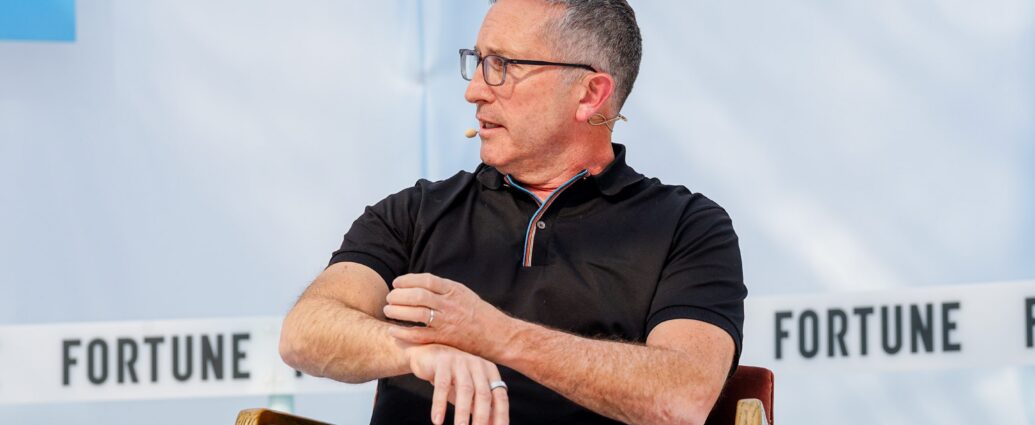
OpenAI punted. Anthropic stalled. The hottest imminent IPO fits on your finger
My Oura ring and I are close.
Every morning, before I put on my glasses and right after I shuffle out from under my comforter, I check my Oura app and for 7 seconds contemplate the non-jewelry silver band on my index finger. My Sleep Score rarely surprises me, sure, but this is how it’s gone, more or less, every morning sometime between 6 and 7 AM for the last three years of my life, since I got my first Oura ring in August 2023.
So, in early September, I was especially interested when Oura filed its S-1, the official public disclosure of a company going public. And, this Monday morning, as I rolled over and looked at my Oura ring, it occurred to me: As Anthropic is reportedly looking to push its IPO back to November (and could push further), while OpenAI has punted to 2027, Oura is now the most consequential IPO that’s imminent.
And Oura’s numbers are compelling: The wearable maker’s total revenue, for the nine months that ended June 30, was over $1.2 billion, a leap from $697.6 million for the same period in 2025. Additionally, net income jumped in that time frame, from $1.6 million in 2025 to $60.8 million in 2026.
Hardware is about 80% of Oura’s revenue, but the company’s subscriber base (of which I’m part) also has momentum. On Monday, the company updated its filing to show that as it ended the 2026 fiscal year, Oura had 5.7 million paid members, marking 96% growth year-over-year. (The initial filing had 5 million.)
Oura—whose backers seeking a return include Fidelity, Dragoneer, Iconiq Capital, Forerunner Ventures, and Lifeline Ventures—has certainly seen its fair share of controversy in recent years, particularly around concerns with data privacy that I’ve interviewed CEO Tom Hale about more than once. (At Brainstorm Tech last year, he told me onstage that Oura will never sell customer data.) And the company—founded in Finland by Kari Kivelä, Markku Koskela, and Petteri Lahtela in 2013—has an AI story of its own. I hosted a recent AI video feature “Inside the “Lifemaxxing” Economy: Has Fitness AI Optimization Gone Too Far?”
During that chat, Hale went deeper into the company’s strategy. “AI and our particular take on it is going to be a pretty big moat,” he said then. “The data is actually the scarce resource here. Our data set [is] 42 billion hours… across a huge population.” That’s what fuels intelligence, Hale said.
Still, Oura won’t be an AI IPO. And I’ve found covering Oura surprisingly refreshing throughout its rise over the last few years, as the AI boom has been growing. I started my career covering consumer M&A, so I’ll always have a soft spot for the space: Consumer companies hold special places in the intimacies of our lives. (I also know that my dad is going to read this and text me, because we both love talking about our Oura rings.)
So, as I rolled over and looked at my Oura app around 7 AM from under my sheets, it occurred to me that it may be instructive that, right now, the IPO we can rely on is something I keep on my hand. Anything can happen, of course. But even in the AI era, what’s tactile matters.
See you tomorrow,
Allie Garfinkle
X: @agarfinks
Email: alexandra.garfinkle@fortune.com
Submit a deal for the Term Sheet newsletter here.
Joey Abrams curated the deals section of today’s newsletter.
This story was originally featured on Fortune.com
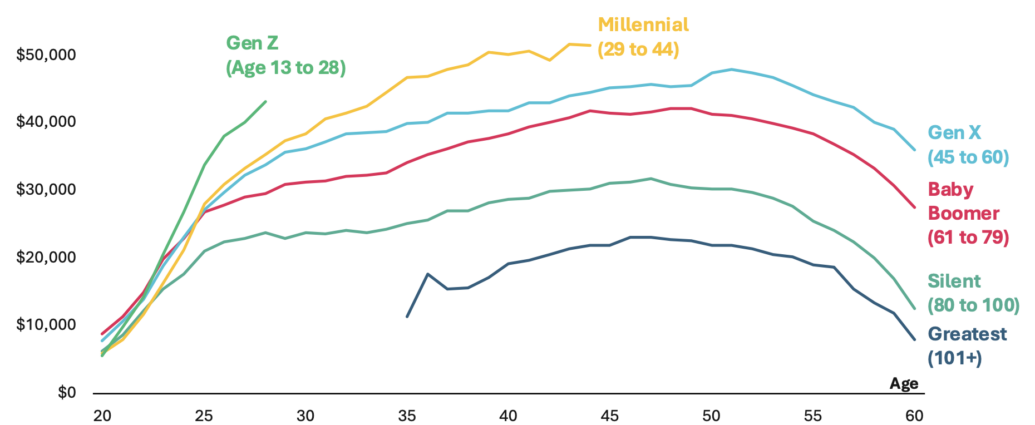
Gen Z is actually richer than any generation before them — but they have the curse of Great Expectations
“It requires a little fortune, now, to buy a house, and every article of furniture costs about three times as much as it did ten years ago.” That complaint isn’t from a TikTok video or a Substack newsletter — it’s a line in a piece titled “The Men Won’t Propose,” published in 1866 in a health magazine called Hall’s Journal of Health, more than a century before anyone had coined the term “Gen Z.”
The quote opens a new report from the BCG Center for Macroeconomics, “The Kids Are Alright: The Timeless Angst Over Young People and Money.” Economists Philipp Carlsson-Szlezak, Paul Swartz, and Henry Rubin argue that the received wisdom about a failing, falling-behind generation doesn’t survive contact with the data: Gen Z, by their reckoning, is richer at the same age than Millennials, Gen X, or the Baby Boomers ever were.
Gen Z feels worse about money than any generation on record. A generation thriving by every number that matters and miserable anyway is the kind of contradiction Charles Dickens built a career on.
The best of times, the worst of times
We all know the opening lines from A Tale of Two Cities: “It was the best of times, it was the worst of times, it was the age of wisdom, it was the age of foolishness, it was the epoch of belief, it was the epoch of incredulity, it was the season of light, it was the season of darkness, it was the spring of hope, it was the winter of despair.”
That’s more or less the shape of the BCG data, according to Carlsson-Szlezak, the firm’s global chief economist. A huge chunk of his job is dedicated to tackling these persistent misperceptions of economic facts; his 2024 Shocks, Crises and False Alarms, co-authored with Paul Swartz, made the Financial Times‘ list of best economics books of that year, in part for arguing that narratives can be overblown and the fundamental data is always a better guide. “The all-too-common narratives of economic collapse and decline are often false alarms themselves,” the authors write of their approach — very similar to their take on Gen Z’s Dickensian paradox.
“I have empathy for Gen Z,” Carlsson-Szlezak told Fortune over email. “They were the guinea pigs of the smartphone revolution, and they had little help from parents and educators to build effective filters to distinguish TikTok from IRL.”
But at the same time, the facts don’t lie.
On income, Gen Z has opened the widest generational lead since the Boomers: the oldest Gen Z workers, at 28, earn a median $42,000 in constant dollars — 25% more than Millennials made at that age, and 50% more than Boomers did.
On wealth, BCG says Gen Z is too young on its own for meaningful comparisons. But when combined with Millennials, the report points out that today’s young have pulled ahead of prior generations. Millennials at 34 carry an average net worth of $331,000, versus $251,000 for Gen X and $229,000 for Boomers at the same age.
Sentiment has moved the opposite way. For the first four decades that pollsters tracked the question, older Americans were reliably gloomier about the economy than the young — a pattern that held from at least 1980, until it flipped around 2025. For the first time on record, the young are more pessimistic than the old. A fresh SoFi/YouGov survey of 4,090 U.S. adults lands on the same fault line: 62% of Gen Z and Millennials still aspire to retire comfortably, but only 46% believe they actually will. The SoFi report argues that Gen Z is “financemaxxing” and “lifemaxxing,” looking beyond financial returns to consider the “emotional ROI” of how far their money can go. The survey data confirms much of BCG’s argument, saying Gen Z has a case of great expectations and seems to be overlooking how well off they actually are.
The BCG authors hedge their own thesis. “Our analysis of generational progress is not a claim that all is well for all. Rather, it is a push back against the thin claims that all is wrong,” the report says. Student debt is real; city housing is genuinely more expensive; some in this generation will not out-earn their parents, as some didn’t in every generation before them.
“Gen Z and Millennials go through their own unique generational struggle to build careers, income, and wealth—and they are confronting unique challenges such as student debt and housing affordability,” the authors write, before concluding that “even so, they are making broad generational progress.”

Hard times, and whether they’re structural
The report’s sharpest rebuttal targets the “K-shaped economy” narrative — the idea that the rich are pulling away while everyone else falls behind. Since 2020, the authors find, wage growth for the bottom quartile has outpaced the top in nearly every year, and wealth gains have been roughly proportional across income quintiles.
And according to SoFi, 77% of Gen Z believe they can start a business, versus 58% of older generations, and Gen Z is four times more likely than Boomers to have invested in crypto (26% vs. 6%). Similarly, the young also hold a greater share of their assets in stock, but that leaves them more vulnerable to market swings.
“Greater equity exposure does raise the risk of Gen Z falling behind, cyclically, in a bear market,” Carlsson-Szlezak said, noting the dent that the 2008 financial crisis left in Gen X and Boomer wealth curves. But he argues the long-run bet still favors the young, since “expected equity returns outstrip most other asset classes” — and housing wealth, he notes, wasn’t immune to setbacks either in the 2000s and 2010s.
In a 2024 Empower survey cited by BCG, Gen Z said it would need to earn $600,000 a year to feel financially successful — the 99th percentile of U.S. income, versus Boomers’ self-reported bar of $100,000. The median full-time salary is around $60,000.
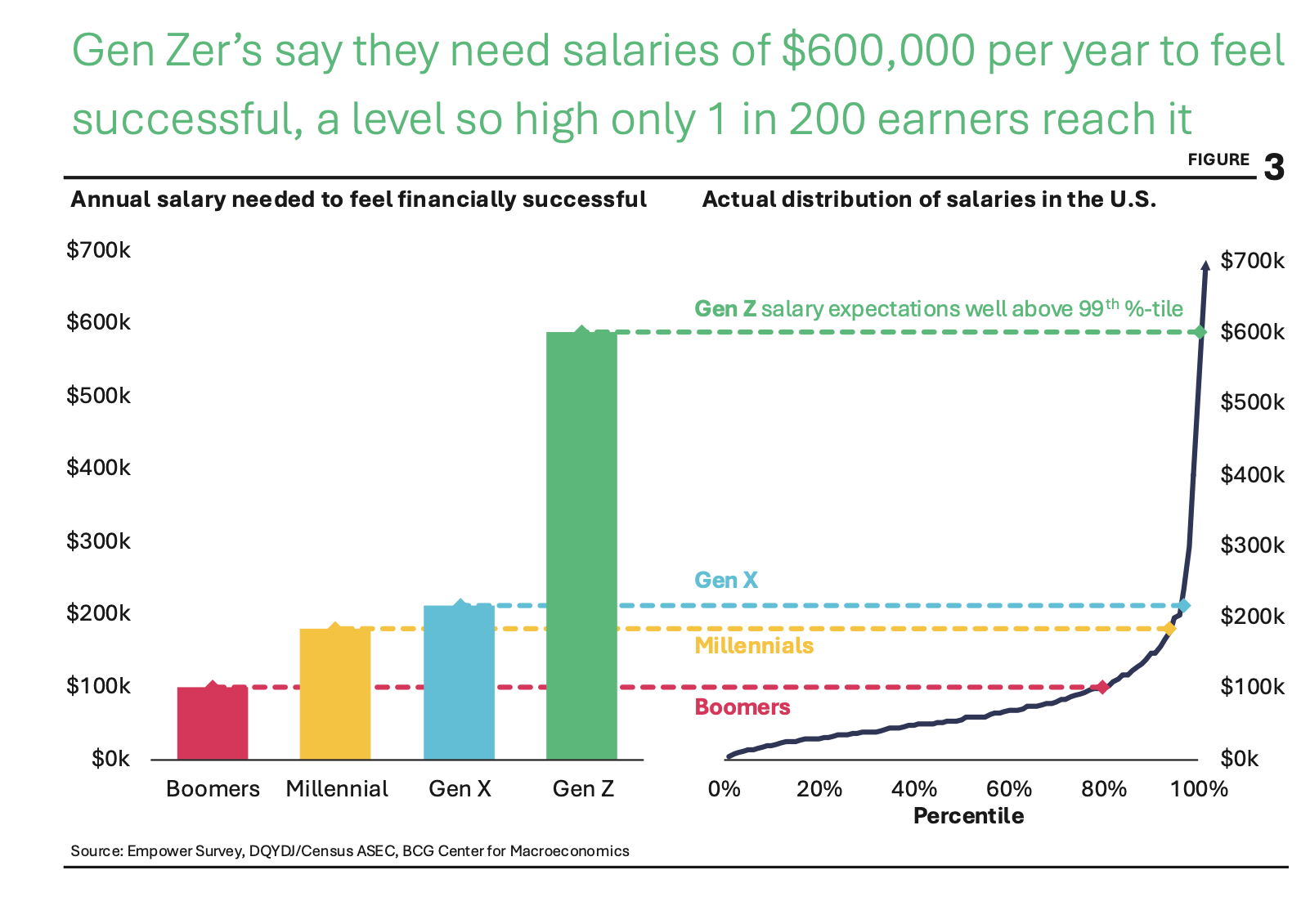
The authors call this gap “financial dysmorphia,” driven partly by social-media exposure to unrepresentative wealth. Still, they argue that financial dysmorphia should not be allowed to take root and continue to misperceive economic fact: “As the young reach adulthood, they are responsible for using effective filters to screen out digital bling and focus on the reality in front of them.”
Housing and Dickens
Housing is the report’s most granular finding, and the one place the “kids are alright” thesis meets real friction. It now takes nearly six years of median income to buy a median-priced home, up from three and a half in 1975 — but the median new home is also 50% larger, and square-footage-adjusted affordability has barely moved. The real bind, the authors argue, is that 90% of young people now live in cities and suburbs, chasing housing stock that isn’t being built fast enough.
Carlsson-Szlezak argued that preference is temporary, not fixed: “This preference peaks in the mid-to-late 20s, and a drift to the suburbs sets in. By age 42, many Millennials have moved to the suburbs, and that’s exactly when they catch up with Gen X in homeownership rate.”
Dickens knew something about the gap between fortune and a roof overhead. His father was imprisoned for debt in 1824, and 12-year-old Charles was sent to work 10-hour days pasting labels onto boot-blacking jars — a shame he told almost no one about for the rest of his life. His grandmother’s death left the family a small inheritance, enough to clear the debt. It’s more or less the plot of Great Expectations, whose hero Pip inherited a mysterious fortune, assumed it marked him for greatness, and spent the novel’s second half ashamed of the family that raised him. Dickens wasn’t sympathetic to this potentially autobigraphical delusion: the novel rewards Joe Gargery’s plain decency over Pip’s inflated aspiration.
David Copperfield, the hero of Dickens’s own favorite among his novels, is a more Boomer-coded anti-Pip: an orphan who rises out of poverty through work, patience, and a stubborn attachment to the people who were kind to him along the way, not through a windfall he didn’t earn. Where Pip’s fortune arrives by accident and corrupts him, David’s comes gradually and leaves him more or less intact. It’s the difference between a life built and a life inherited.
A journey, not a verdict
BCG’s own argument is that the Boomer boom was a fluke — yet Boomers remain the report’s baseline. “Boomers are the base compare culturally and in academia alike,” Carlsson-Szlezak says, noting they’re the only generation with a full lifecycle of data. The deeper point is about the size of the bar: “In terms of income progression or wealth accumulation, Gen Z can beat the Boomers. But it’s unlikely Gen Z can outperform Gen X by more than the Boomers outperformed the Silent and Greatest generations — just because that bar was so low.”
Carlsson-Szlezak acknowledged that Boomer prosperity can’t recur. “What’s not repeatable is the shift from single to double income households,” he said, pointing to women’s mass entry into the labor force — a one-time shift that, by definition, can’t happen twice. He raises a second, less obvious advantage: the generation Boomers were competing against. The Great Depression’s Silent generation, whose economic scars set a historically low bar for Boomers to clear.
Carlsson-Szlezak doesn’t think the gap closes easily. His more concrete hope is generational: “The current crop of teens are being weaned off their smartphones at least during school hours. Perhaps ‘peak financial dysmorphia’ is behind us.” A better understanding of history, including an appreciation of progress, would also help, he adds.
Pressed on which explanation carries the most weight — psychology, a flawed benchmark, or economic structure — Carlsson-Szlezak replied, “Nothing is ever monocausal, but the biggest challenge is that of distorted expectations, in my view.” And what does he think Charles would say of all these misplaced great expectations? “I think Dickens would look at Gen Z and say they should strive to be David but choose to be Pip.”
This story was originally featured on Fortune.com

Exclusive: KPMG reorgs AI division to create new incubator — with a new executive role reporting directly to the CEO
KPMG LLP is folding its AI, innovation and ecosystem functions into a single new unit designed to spin up AI-native businesses at start-up speed, installing a vice chair who reports directly to the firm’s chief executive to run it — a structural bet that the biggest disruption to the professional-services model in a century can’t be managed through the usual committee layers.
The U.S. audit, tax and advisory firm’s new Client Technology & Innovation (CT&I) group, effective Sept. 22, will be led by Todd Lohr, a 15-year KPMG veteran who told Fortune that he had been “pushing for something like this for several years” — specifically, a structure with “a singular leader that reports directly to the CEO, which I do, because that is how we’re going to drive the transformative change that is required at KPMG.”
CT&I’s launch coincides with the departure of Steve Chase, vice chair and global head of AI & Digital Innovation, who is set to retire from the firm on Sept. 30. Chase built KPMG’s original AI and Digital Innovation group starting in 2023 and has more recently held a KPMG International mandate as Global Head of AI, a role he moved into in August 2025.
That reporting line elevates AI and innovation strategy out of the layer of vice chairs and functional heads and puts it in the same room as CEO Tim Walsh’s own agenda, signaling that KPMG views this less as a technology upgrade than a net new group focused on building what the firm will sell in the future
“There are things in the future that are, you know, a little existential for any organization, including our own,” Lohr said, “but I certainly think that we are sitting at this kind of pivotal moment in history, where we’re going to be able to take advantage of some of these swings in the market, and be able to look very differently at the future of KPMG, which is super exciting.”
Why now, and why Lohr
Lohr, 49, is not an outside hire brought in to inject Silicon Valley DNA. An internal operator who has spent years building the exact relationships CT&I is designed to commercialize, he helped start the firm’s early data and AI practices, ran its U.S. technology business including cyber, then moved into a role overseeing third-party technology partnerships before a stint leading the firm’s clients-and-markets commercial organization.
Lohr was one of the leaders involved with architecting KPMG’s alliance with Anthropic. Along with the Anthropic tie-up, existing relationships with Google Cloud, Microsoft, OpenAI and Databricks all now roll into CT&I’s ecosystem mandate.
His path to KPMG is a bit unusual for Big Four leadership. Before joining the firm, Lohr was employee No. 3 at Confiance, a financial-services consulting start-up he co-founded in 2008 — “not the best year to do a start-up,” he said — and worked as a business architect at Zurich Insurance. That start-up scar tissue, he suggested, is precisely what qualifies him to run what he described as an internal venture studio: “I’m taking my design cues from Silicon Valley incubators.”
What CT&I Actually Does
Lohr’s new organization has four pillars that go well beyond a typical “AI office”:
- Products and platforms strategy — owning the products KPMG delivers to clients, not just internal tooling.
- Commercial infrastructure — new go-to-market and deal structures “in very different commercial terms than what we have historically done.”
- Firmwide AI and data strategy — the strategic mandate previously housed under the AI & Digital Innovation group.
- Innovation/incubation — an internal venture studio incubating a portfolio of “edge disruption plays” with varied capital structures and routes to market, explicitly aimed at disrupting KPMG’s own core service lines.
Each “edge company” carries a mandate to build and scale with multiple exit paths — including being folded back into KPMG’s core business, spun out with outside capital, or run as a standalone joint venture with a technology partner.
Colleagues have floated even bigger stakes. Lohr called the group an incubator modeled on Silicon Valley design and said he hopes a billion-dollar company comes to fruition as a result. “I think KPMG and professional services in general have some of the greatest — we are a talent factory for most of the world on a lot of business skills,” Lohr said. “We have a lot of ideas. What we have not done is … bring those ideas through commercial lens — we are not as good at that, because we know how to do the model that we’ve done for over a century.”
That talent question is also why Lohr said KPMG has spent the past several years deliberately educating its management committee and board on disruption, including regular management committee meetings held in Silicon Valley, where the leadership team participates in sessions with frontier AI labs. “Our next one is in the next few weeks,” Lohr said, “and I’m going to bring the entire management committee to one of the AI frontier companies… We’re going to meet with their chief scientist, we’re going to meet with their CISO.”
Lohr said he’s hoping to realize the “great ideas that we have in the firm,” but operating more “on the edge” than the traditional approach of the Big Four consulting giant. He said he plans to rotate rising KPMG staff through “edge companies” as founders and operators, arguing the experience will make them “better accountants” and “better consultants” when they eventually return to core roles — mirroring, he said, the traditional Big Four model where talent cycles in and out of the firm but stays part of its alumni network.
An awesome responsibility
In June 2026, AI-detection firm GPTZero found that a flagship KPMG International report, “Total Experience: Redefining Excellence in the Age of Agentic AI,” cited case studies involving UBS, Swiss Federal Railways and the U.K.’s National Health Service that simply did not exist — 40 of the report’s 45 citations were later found to be fabricated, and roughly half its factual claims were either false or misattributed.
Lohr revealed that KPMG has recently launched an AI tool called Hawk that looks at all of its content and assesses AI hallucinations, and it has launched for most KPMG content, sort of an in-house GPTZero. A KPMG spokesperson clarified that Hawk is mainly used by the marketing department to vet thought leadership pieces, whereas CT&I’s remit goes beyond internal transformation and internal tooling and is much more focused on the future of how KPMG serves clients.
GPTZero founder Edward Tian, a Princeton researcher and former Bellingcat team member, has since documented the same pattern at every other member of the Big Four: EY, where 60% of the citations in a December 2025 cybersecurity report were found to be hallucinated; Deloitte Australia, where a University of Sydney academic flagged 19 hallucinations in a single report; and PwC, where GPTZero put the odds that one Middle East governance report was entirely AI-generated at 84%.
Lohr, in the interview, stressed that KPMG’s AI acceptable use policy stretches back to his first work on the topic a decade ago. “At the end of the day,” Lohr warned, “it’s your output. You need to own the work product.” He said he wants the entire workforce to understand that “AI is awesome, but it’s also an awesome responsibility that everyone needs to own.”
“As one of the folks that really started our AI business here almost 10 years ago,” he added, “the first offering was AI strategy, the second offering was trusted AI. That was something we’ve been adamant [about]. It’s part of our culture.”
This story was originally featured on Fortune.com

New federal autism committee head has financial ties to leucovorin
Get your daily dose of health and medicine every weekday with STAT’s free newsletter Morning Rounds. Sign up here.
Teen social media bans are hot these days, with new regulations installed or soon to come in Australia, Indonesia, and the European Union. But how will we know these rules are working? And what does “working” even mean?

Current price of oil as of September 22, 2026
As of 6 a.m. Eastern Time today, oil is trading at $99.27 per barrel, based on the Brent benchmark we’ll explain in a bit. That’s $2.34 below yesterday morning’s level and about $32.60 higher than where it stood a year ago.
Will oil prices go up?
No one can say for sure where oil prices will go next. Many forces shape the market—but at the core, it’s still about supply and demand. When risks like a potential recession or war ramp up, oil prices can change direction quickly.
How oil prices translate to gas pump prices
When you buy gas at the pump, you’re covering more than the cost of crude oil. You’re also paying for every step in the process, including refineries, wholesalers, taxes, and the markup your local gas station adds.
Even so, crude oil has the biggest influence on what you pay, often making up more than half the cost per gallon. When oil prices jump, gas prices usually climb right along with them. But when oil falls, gas prices often slip much more slowly—a pattern sometimes called “rockets and feathers.”
The role of the U.S. Strategic Petroleum Reserve
If an emergency hits, the U.S. keeps a backup supply of crude oil called the Strategic Petroleum Reserve. It’s mainly there to protect energy security during crises, such as sanctions, catastrophic storm damage, even war. It can also help cushion the blow when supply shocks send prices soaring.
It’s not meant to solve long-term problems. Instead, it provides quick relief for consumers and helps keep vital parts of the economy moving, like essential industries, emergency services, and public transit.
How oil and natural gas prices are linked
Oil and natural gas are two of the world’s primary energy sources. A big change in oil prices can affect natural gas by extension. For example, if oil prices increase, some industries may swap natural gas for some segments of their operations where possible, which which increases demand for natural gas.
Historical performance of oil
When looking at how oil performs, two main benchmarks stand out:
- Brent crude oil is the main global oil benchmark.
- West Texas Intermediate (WTI) is the main benchmark of North America.
Of the two, Brent gives a better picture of global oil performance because it prices a large share of the world’s traded crude. It’s also the go-to for tracking oil’s historical trends. In fact, even the U.S. Energy Information Administration now relies on Brent as its primary reference in its Annual Energy Outlook.
If you look at the Brent benchmark over several decades, oil has been far from stable. It has experienced sharp rises tied to wars and supply cuts, along with steep drops linked to global recessions and oversupply (called a “glut”). For example:
- The early 1970s delivered the first major oil shock when the Middle East slashed exports and placed an embargo on the U.S. and others during the Yom Kippur War.
- Prices fell in the mid-1980s due to lower demand and an influx of non-OPEC oil producers joining the market.
- Prices surged again in 2008 as global demand grew, but then crashed alongside the global financial crisis.
- During the 2020 COVID lockdown, oil demand plummeted like never before—pushing prices below $20 per barrel.
To sum up, oil’s historical performance has been anything but smooth. Again, it’s heavily influenced by wars, recessions, OPEC whims, shifting energy policies, and much more.
Energy coverage from Fortune
Looking to stay up-to-date regarding the latest energy developments? Check out our recent coverage:
- Iran’s economy faces another blockade: The U.S. Navy’s Hormuz stranglehold
- High fuel costs force people to choose between filling up or buying groceries
- U.S. military has aided the transit of 1B barrels of oil through Hormuz in past two months
Frequently asked questions
How is the current price of oil per barrel actually determined?
The current price of oil per barrel depends largely on supply and demand, including news about potential future supply and demand (geopolitics, decisions made by OPEC+, etc.). In the U.S., prices also move based on how friendly an administration is to drilling, as it can affect future supply. For example, 2025 saw the Trump administration move to reopen more than 1.5 million acres in the Coastal Plain of the Arctic National Wildlife Refuge for oil and gas leasing, reversing the Biden administration’s policy of limiting oil drilling in the Arctic.
How often does the price of oil change during the day?
The price of oil updates constantly when the “futures” markets are open. A futures market is effectively an auction where people agree to buy or sell oil in the future. As long as people and companies are trading contracts, the oil price is changing.
How does U.S. shale oil production affect the current price of oil?
In short, shale is rock that contains oil and natural gas. Think of shale as energy yet to be tapped. The more shale the U.S. accesses, the more energy we’ll have—and the more easily oil prices can keep from spiking as much thanks to a greater supply.
How does the current price of oil impact inflation and the broader economy?
When oil is expensive, it tends to make everyday items cost more. This can be related to energy (your heating, gas utilities, etc.), but it’s also due to the logistics involved with making those items accessible to you. Shipping, for example, can affect the price of things at the grocery store, as it’s more expensive to get those products from warehouses and farms onto the shelf.
This story was originally featured on Fortune.com




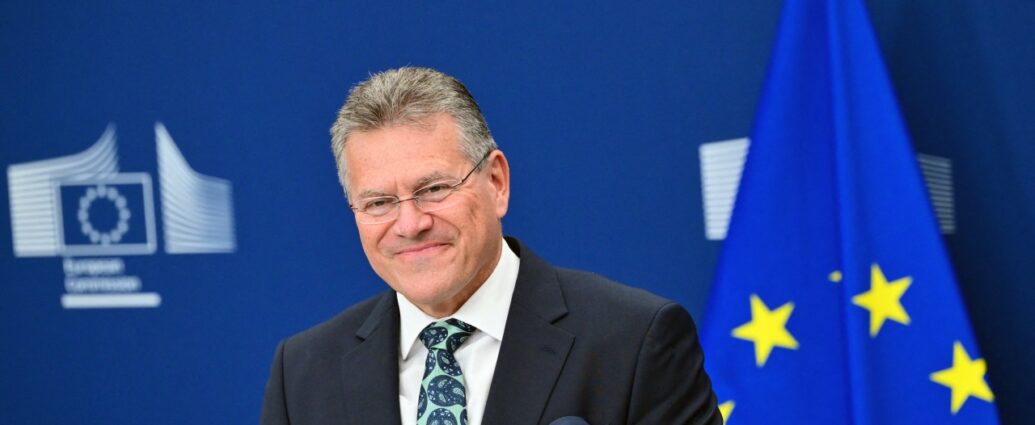
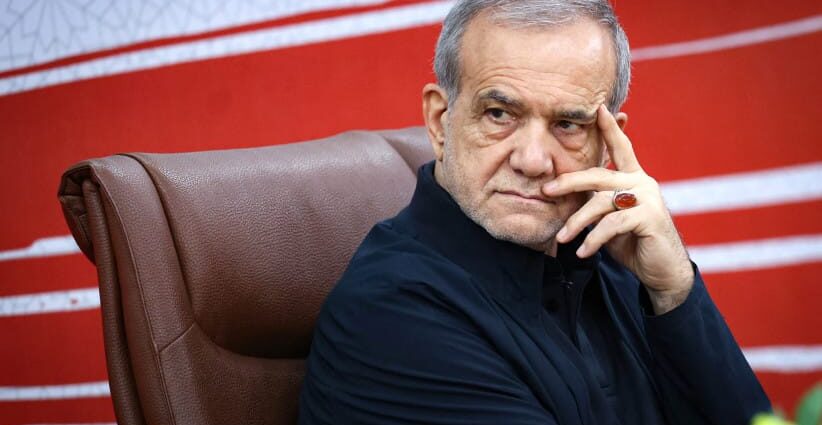
Iran ready to reopen Strait of Hormuz if US eases military pressure, lifts blockade
Iran can reopen the Strait of Hormuz within seven days if the United States eases military pressure and lifts its blockade on Iranian ports, a senior Iranian official told Reuters on Tuesday.
On Sunday, Iran’s military central command said it was informed the US was preparing to restart military operations with the support of regional countries, and warned this would lead to Tehran’s retaliation “without limitations and considerations.”
“The US needs to announce that it wants to resolve the issue diplomatically, make that official, and then agree on a timeline for how the process will move forward,” the senior Iranian official said, adding that the Iranian delegation to the United Nations General Assembly is in New York and has full authority to revive diplomacy with the United States.
Iran’s President Masoud Pezeshkian, who left Tehran for New York on Tuesday morning, will not meet US President Donald Trump at the UN headquarters in New York, the official told Reuters.
Iranian official: Tehran delivered its proposal to US via mediators on September 16
The Iranian official said details of an agreement to end hostilities with Washington can be discussed in New York through mediators, explaining that Tehran delivered its proposal to the US via mediators on September 16.
“The UN General Assembly is a golden opportunity for the US to return to diplomacy,” the official said, adding that Tehran would welcome a revival of diplomacy if Washington takes tangible steps.
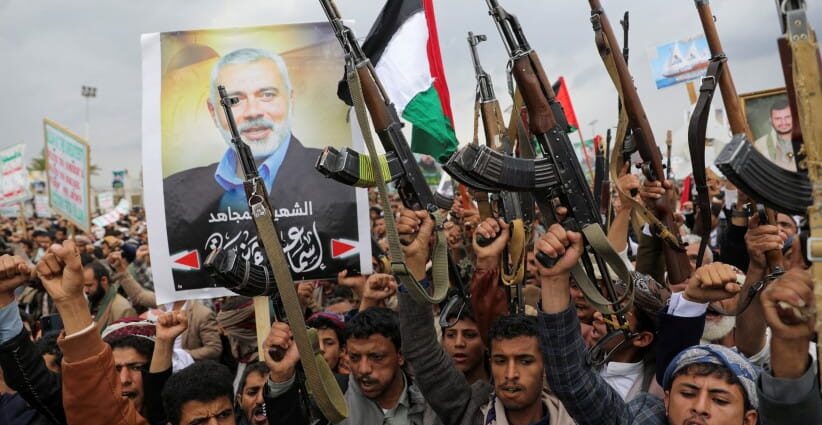
The weak have one weapon the strong often lack – opinion
How can the Houthis in Yemen, Hamas in Gaza, or Hezbollah in Lebanon continue fighting enemies with vastly greater military power?
The answer is not that these movements are secretly stronger than the armies confronting them; it is that military strength and strategic endurance are not the same thing.
The weaker side often has several advantages.
First, there is a large pool of young people with too few opportunities.
Where economies cannot provide jobs, dignity, or a plausible future, an armed movement can provide money, status, comradeship, protection, and purpose.
This does not mean that poor young men inevitably become fighters – the majority do not. But it gives an organization a large potential recruiting pool.
Second, there is ideology.
Religion is often the vehicle, but it need not be. Nationalism, Marxism, ethnic identity, or revolutionary ideology can perform the same function.
Ideology transforms a military struggle into a moral one. The fighter is no longer simply fighting an enemy; he is defending his people, his faith, or his historical mission.
Third, there is institutional weakness.
When the state cannot reliably provide security, justice, electricity, water, employment, or education, an armed movement becomes a parallel society. The organization supplies services, distributes money, settles disputes, and creates a sense of belonging.
Fourth, there is outside sponsorship.
A local movement that could otherwise be contained can become a formidable strategic problem when an external power supplies money, weapons, training, intelligence, and technology.
Iran’s support for regional armed groups is a particularly important example of how a relatively poor movement can acquire capabilities far beyond what its local economy could produce.
And then comes the fifth advantage: time.
This is where the arithmetic becomes particularly cruel.
A powerful democratic country generally wants wars to be short. Its citizens will tolerate casualties for a compelling objective, but tolerance for an open-ended war tends to decline as the years pass.
Soldiers have families. Reservists have jobs. Businesses suffer. Governments face elections. The public begins asking the most dangerous question a government can hear during wartime: When does this end?
The weaker side often faces a very different calculation.
It may not need to win; it may only need to survive.
If it can survive long enough, the stronger enemy may eventually begin fighting its own domestic clock.
This creates a great strategic asymmetry: the stronger side has something to lose every day; the weaker side often turns survival itself into victory.
The longer the war continues, the more the stronger side’s military superiority is offset by political exhaustion.
This dynamic has appeared repeatedly in modern warfare. Vietnam demonstrated the enormous difficulty of translating overwhelming American military power into a political settlement.
Afghanistan demonstrated the difficulty of defeating an insurgency whose organizational and social foundations survived successive military campaigns.
And Gaza has again demonstrated how military superiority does not automatically determine the political end-state.
The lesson is not that democracies are weak. It is almost the opposite.
The most important strategic lesson
Democratic societies possess enormous military and economic resources. But those societies also place constraints on the use of those resources. They debate, protest, hold elections, count casualties, and eventually demand results.
Their enemies understand this and use strategic patience as a weapon.
But there is another recurring advantage enjoyed by the weaker side: the hubris of the stronger side.
Military superiority creates a dangerous psychological trap. Leaders with enormous capabilities can begin to believe that they possess enormous understanding.
More often than not, they do not.
Before major conflicts, powerful states repeatedly underestimated the adversary’s willingness to fight, its ability to absorb punishment, and the depth of its social support.
Israel’s October 7, 2023 experience – the Hamas-led massacre and subsequent war – provides a contemporary warning.
Whatever the eventual findings about individual decisions and intelligence failures, the central lesson is unmistakable: a technologically sophisticated intelligence system does not necessarily guarantee correct understanding of the enemy.
And this is where hubris becomes particularly dangerous.
When an enemy appears weak, intelligence can seem like an unnecessary expense. Why devote enormous resources to understanding a movement that appears incapable of defeating you?
Because the enemy does not have to defeat you.
It only has to surprise you, then survive and wait.
The combination of demographic pressure, ideology, institutional weakness, external sponsorship, strategic patience, and the stronger side’s own political constraints creates a remarkably powerful formula.
It explains why the history of modern warfare is filled with apparently irrational confrontations in which the weaker side refuses to surrender despite overwhelming odds.
The weaker side understands something the stronger side sometimes forgets: You do not have to win the war today. You only have to make sure the other side eventually wants it to end more than you do.
That may be the most important strategic lesson of all.
The writer is a Senior Research Fellow at the Neaman Institute and an Emeritus Professor at the Technion, Israel Institute of Technology, where he has served in various leadership positions. He also serves as a member of the Board and as a strategic consultant to some companies and organizations.

Rwandan man charged in UK with genocide offenses appears in court
A former Rwandan official appeared in a London court on Tuesday charged with encouraging the massacre of Tutsis and ordering six killings in the first week of the 1994 Rwandan genocide.
Vincent Brown, formerly known as Vincent Bajinya, is the first person to be charged in Britain over the genocide, in which more than 800,000 Tutsis and moderate Hutus were killed in 100 days in massacres orchestrated by the Hutu ruling majority.
He is charged with one offense of conduct ancillary to genocide in Rwanda’s capital, Kigali, between April 6 and 13, 1994 – the first week of the genocide, after Rwanda’s president Juvenal Habyarimana was killed alongside Burundi’s president Cyprien Ntaryamira in a rocket attack on their plane.
Brown also faces six offenses of conduct ancillary to murder as a crime against humanity, alleging he ordered six killings in four days, including a young mother and her baby son.
Prosecutor: Brown was Rwanda’s Family Health Department chief when genocide began
The 65-year-old appeared at Westminster Magistrates’ Court, where prosecutor Jane Stansfield said Brown was head of the Department of Family Health within Rwanda’s National Office of Population when the genocide began.
Stansfield said Brown was alleged by witnesses, including his neighbors, to have been “the leader and supervisor of physical acts of violence which were carried out by others.”
Court bars solitary confinement for Agam Tsarafi, rebukes IPS over prison video
The Tel Aviv District Court barred the Israel Prison Service from holding Agam Tsarafi, a 19-year-old defendant in the Benyahu Razi murder case, in solitary confinement and limited her current separation arrangement to six more days, while sharply criticizing her treatment in a video circulated from detention.
Tsarafi is charged with intentional murder and aggravated injury in the July killing of Razi, 19, in a Jerusalem apartment. Prosecutors allege that she and Shilat Huta helped organize an attack carried out by four minors. All six are charged in the killing, and the criminal case remains pending.
Friday’s ruling concerns Tsarafi’s detention conditions rather than the charges against her, easing some of the restrictions imposed by the IPS but does not restore her general access to telephone calls or determine who recorded or distributed the footage.
Judge Gilad Hess wrote that the action taken against Tsarafi appeared excessive, harmed her dignity and lacked any real justification. The video showed her handcuffed behind her back and bent forward while masked officers led her through the facility.
Hess added that, where possible, male officers should not handle a female detainee. He said, however, that this was a general assessment of the footage rather than a final ruling on all of the defense’s allegations about the escort, restraints, and publication, which were not fully before the court in the prison petition.
The immediate effect is that Tsarafi may not be held alone. The IPS may continue separating her from the general prison population, but she must be housed with at least one other detainee. Hess limited that arrangement to six additional days, through Thursday, rather than the 30 days the service sought.
The court said the need for continued separation must then be reassessed if no new intelligence emerges. Tsarafi may petition again if the IPS extends the measure.
Court largely sides with IPS on telephone access
On telephone access, however, the court largely sided with the IPS. After reviewing classified material from the service and Israel Police, Hess said the restriction was based on reliable, corroborated intelligence and that even monitored calls could undermine its purpose.
The general phone restriction therefore remains in place. Tsarafi’s lawyers may submit a specific request for a call, including with her parents, for the IPS to consider.
Public defender Daniel Mirsky filed the petition on September 14, challenging Tsarafi’s separation and restrictions on calls and visits. The dispute became urgent after the escort video circulated, even though the IPS still had several days to respond.
The defense argued that the footage humiliated a detainee who has not been convicted and risked prejudicing her criminal trial. It also asked the court to identify who authorized its release and prevent further publication of material about her from inside IPS facilities.
The IPS told the court that it had not published the video and that no authorized official had approved its release. It said it was examining the matter. Hess did not determine who filmed or distributed the footage, saying those questions would require a separate, properly filed proceeding.
The service also argued that intelligence material justified the restrictions because of the risk Tsarafi allegedly posed to prison order and public safety. The court found the material sufficient to support the telephone ban and temporary separation, but not solitary confinement or a 30-day period.
“Prison officers are expected to respect themselves, the law and Agam’s presumption of innocence,” the defense said after the ruling. It said the question of Tsarafi’s responsibility for Razi’s death should be determined in court and criticized the professional standards displayed in the video and its distribution.
Ben-Gvir defends IPS, says Tsarafi disrupted order, mistreated prisoners, staff
National Security Minister Itamar Ben-Gvir had defended the IPS after the footage emerged, alleging that Tsarafi disrupted order and mistreated prisoners and staff, and that her detention transfer was justified.
The murder proceedings are continuing separately in the Jerusalem District Court.

Israeli defense companies head to Marrakesh Air Show
Israel Aerospace Industries (IAI), Elbit Systems, and other Israeli defense companies are heading to Morocco’s Marrakesh Air Show next month with a broad portfolio of air-defense, precision-strike, unmanned, and space technologies, as the Jewish state seeks to deepen its position in a market long served by French and US defense companies.
Defense & Tech by The Jerusalem Post has confirmed that IAI, Elbit Systems, Rafael Advanced Defense Systems, Xtend, Shilat, Uvision, and Orbit Technologies will be officially participating for the first time in the Moroccan exhibition, which will take place October 7-10 at the Royal Moroccan Air Force base in Marrakesh.
At the airshow, IAI will showcase its Barak air-defense solution, LORA precision-strike system, Heron MK II unmanned aircraft, OPAL collaborative-combat technology, and communications satellites. The company will also promote its aircraft conversion and maintenance capabilities. IAI said it will also use the exhibition to pursue local cooperation, industrial collaboration, knowledge sharing and technology transfer with Moroccan and regional partners.
Elbit Systems will exhibit its PULS multiple rocket launcher, Lizard modular precision guidance kits, SPECTRO advanced, multi-spectral electro-optical (EO) payload system, and several families of drones including the Hermes 900 unmanned aerial system, TerminaTHOR tactical airdrop munition system, the THOR tactical multi-purpose UAS, and others.
It has not been shared what the other defense companies will exhibit.
Rapid expansion
Morocco has had close economic, diplomatic, and military ties with Israel for years, and in 2020, Jerusalem and Rabat reestablished ties under the Abraham Accords.
A year later, the two countries signed a memorandum of understanding (MOU) surrounding arms deals, intelligence cooperation, and joint military projects. The North African kingdom has since signed several deals with Israeli defense companies as it has significantly increased its defense budget over the past year. This increase is part of the country’s effort to modernize its military and build a domestic military industry to reduce its reliance on foreign imports.
In January, the two countries signed a joint military work plan for 2026 and agreed to upgrade diplomatic ties last week.
For IAI, Morocco is already a major customer. The company signed a $500 million deal with Morocco for the Barak MX air-defense system, adding a major Israeli layer to the kingdom’s air-defense architecture. The system was jointly developed in close collaboration between India’s Defense Research and Development Organization (DRDO) and IAI’s RAFAEL ELTA Systems.
The versatile system can fire three types of missiles from the same vertical launcher, including the Barak MRAD for short-to-medium range of up to 35 kilometers, the Barak LRAD of up to 70 km., and the Barak ER, which can reach targets up to 150 km.
IAI has also been linked to a much larger space deal. In 2024, the company disclosed a $1 billion contract with an unnamed customer to be executed over five years. While neither IAI nor Marrakesh commented on the report, Reuters said at the time that Moroccan media had identified Morocco as the customer for an Ofek 13 reconnaissance satellite, which would replace Morocco’s existing satellites supplied by France’s Airbus and Thales.
IAI’s Moroccan footprint has also expanded through BlueBird Aero Systems, its unmanned-systems subsidiary. In 2025, the company opened a factory to produce SpyX loitering munitions, the first time advanced Israeli drone technology will be produced locally in North Africa.
The plant in Benslimane, Morocco, will focus on producing SpyX drones, which are lightweight, portable loitering munitions designed for precision strikes. With an endurance of two hours and a range of 50 km., these drones can carry a variety of warheads of up to 2.5 kilograms and enable tactical teams to detect, confirm, and strike targets.
Rabat has also purchased Elbit Systems’ ATMOS Howitzer and Elbit’s EXTRA rockets (cost-effective, precise, and with a range of up to 150 km. and an accuracy of 10 meters CEP), among others.
In addition to IAI’s Barak system, Rafael’s Spyder surface-to-air missile system has been deployed to the Sidi Yahia El Gharb military base outside of the capital.
The French connection
The deals between Israel and Morocco – as well as the strong Israeli presence at the Marrakesh Air Show – illustrate the scale of the competition now emerging between Israeli and French defense industries.
France remains deeply embedded in Morocco’s aerospace and defense ecosystem, with French companies, including Airbus, Thales, Safran, and Dassault, having long supplied the kingdom. But Israeli companies are now moving into the market as Morocco expands its requirements.
The companies set to display in Marrakesh also reflect where Morocco’s defense requirements are moving. Alongside traditional aerospace products, the Israeli companies are showcasing integrated air defense, long-range precision strike, unmanned systems, collaborative combat, and space-based capabilities.
The Israeli push in Morocco comes against a complicated backdrop in relations between the Israeli defense industry and France. French authorities excluded Israeli defense companies from the 2024 Eurosatory exhibition and 2025 Paris Airshow. The French Defence Ministry publicly said that conditions were not appropriate for their participation due to the war in Gaza and Lebanon, though Israeli officials criticized the move and blamed it on competition.
The same Israeli companies blocked from exhibiting their systems in France are now preparing to display many of the same categories of capabilities at the Marrakesh airshow, this time geared toward a market where French companies remain major players and where Israeli companies will not be blocked by large black walls like in Paris.
US National Archives recovers over 120 previously unknown American POW statements from WWII
Approximately 300 pages of World War II American Prisoner of War (POW) interrogation reports and ancillary reports were recovered by the US’s National Archives and Records Administration (NARA) earlier this summer.
The documents were discovered by Waterloo resident Jason Hurdle inside a cardboard box hidden in a previously unknown crawlspace in his garage, The Washington Post reported last week.
Marked with a “SECRET” stamp on the first page, the files are made up of mostly handwritten, first-person accounts of over 120 American POWs held by the Germans during World War II.
After finding the documents, Hurdle brought them to a nearby museum where he was recommended to contact NARA. In January, NARA sent two representatives to Hurdle’s home, and in July, it announced that its Archival Recovery Team (ART) had safely recovered the documents.
“I’m in podunk little Waterloo, New York, and this went all the way to the National Archives,” Hurdle told The Washington Post. “We’re kind of in shock here.”
The documents appear to be part of a larger American initiative investigating whether or not Germany was upholding its end of the international treaty regarding the dignified treatment of future POWs, signed in Geneva in 1929.
Handwritten accounts detail inhumane conditions
Pictures of the documents, shared by The Washington Post, show soldiers recounting being held in inhumane conditions by the Germans after being captured during the Battle of the Bulge.
Over 23,000 American soldiers were taken as POWs from the Battle of the Bulge.
“During an air raid near 7A, an unteroffizier [NCO] shot at and wounded an American from our barracks. I did not know his name,” wrote Private First Class Waldon Joseph Green, adding that he had been witness to a bombing that killed three Americans and left 28 missing.
Private First Class Henry Daly, in his account, wrote that when he had been first captured, “we were marched for days at times without food and water, at times we were crammed into boxcars as many as 80 men to a car, and we were not even allowed to get off and relieve ourselves.”
Second lieutenant Robert Warren Bieber shared that Nuremberg had very little medical supplies and food, and that he had seen “one boy die of malnutrition, name unknown.”
“A prisoner [stopped] to adjust his pack and a guard shot him. I do not know the boy’s name,” wrote First Sergeant Eugene William Eidschun.
According to The Washington Post, the files did not appear on NARA’s list of missing federal documents.
No one has yet figured out how they ended up in Hurdle’s garage, though The Washington Post said Hurdle suggested they may have come from a former neighbor.
Documents now displayed at archives
Kimberly Guise, the National World War II Museum’s associate vice president of curatorial affairs, told The Washington Post that the documents found by Hurdle are significant for the large number of firsthand accounts they contain.
“It’s really lucky that this material was discovered, that the gentleman looked inside the box, and that he got it to a safe place,” Guise said. “It’s pretty great in terms of POW research.”
The documents are now displayed inside a gray box with a typed label marking them “declassified,” according to The Washington Post, in the same order they were found in.
The Washington Post noted that at least one page, which had been partially ripped, has been preserved in a clear plastic sleeve, and that NARA archivists are the only ones allowed to handle the fragile files.
NARA spokeswoman Grace McCaffrey explained to The Washington Post that the archives is planning to digitize the records and make them available to the public.
“This stuff was stuff that you don’t learn in history books,” Hurdle told The Washington Post. “You actually see this and read this; that to me is very, very special. I was like, I got to find a place these can go.”
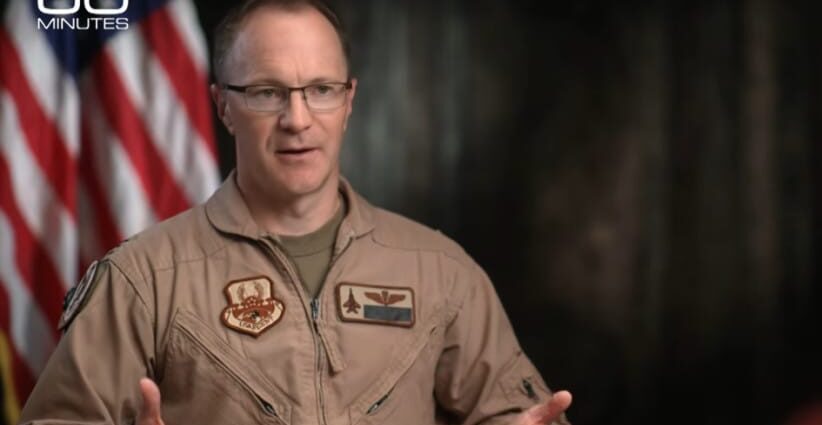
‘Hollywood propaganda’: IRGC spokesperson claims US faked rescue of downed pilot in Iran
The United States faked the rescue of the American pilot who was shot down over Iran, Islamic Revolutionary Guard Corps (IRGC) spokesperson Hossein Mohebbi claimed during an interview with the official news agency IRNA on Tuesday.
Mohebbi called the rescue saga “Hollywood propaganda,” alleging it was not the first time the US had done so.
He pointed to what he claimed were inconsistencies in the narrative, saying that the pilot could not have survived a fall at 160 kph without a parachute as the US said.
“What is certain is that we hit an American fighter jet and it crashed,” Mohebbi said. “At such a height and speed and with such a weight, along with the weight of the parachute and the equipment they usually carry, this pilot’s back could only be broken!”
Explaining why the US would invent such a story, Mohebbi claimed it was to preserve their reputation.
“They want to recreate their power, to say that we have the power that if one of our pilots is in such a situation, we have the ability to save him.”
He also challenged the US to showcase its power in a different way.
“Use this power that you use to show the rescue of a pilot to show the openness of the Strait of Hormuz, why don’t you do this?” he said.
Iran shot down a US F-15 in April, with one of the pilots being rescued only a few days after the crash.
US pilot shares story of crash in Iran, rescue
The pilot, identified only by his mission callsign, “Bravo,” shared the details of his rescue on CBS’s 60 Minutes earlier this month.
“My parachute was damaged in the initial attack. At one point, when I looked up and saw no parachute, that was the most terrifying thing I’ve ever seen. So I paused right then, and I prayed, ‘Lord, you will be done. But if I’m getting through this, I need help,'” Bravo said.
Bravo broke his back, arm, and shoulder, as well as suffering a sprained ankle and bleeding from lesions across his head and face caused by the incredibly hard landing, according to CBS.
Almost immediately following the crash, Iranian media announced a bounty for the capture.
Jonah Davidov contributed to this report.
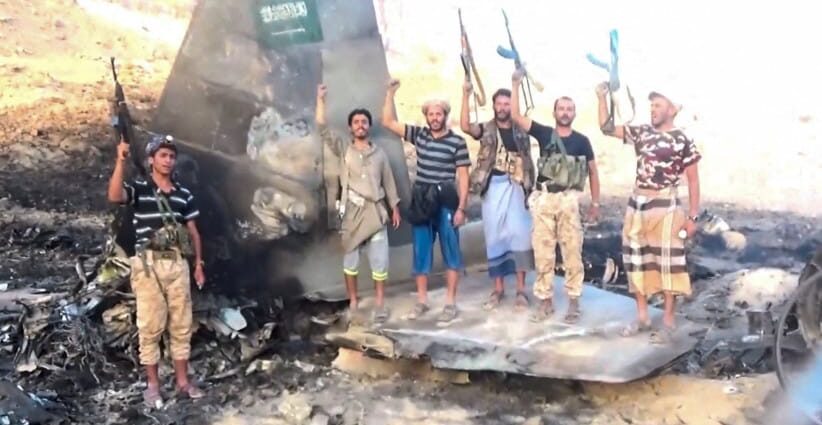
More Yemenis expected to flee from upsurge in fighting, UN says
Tens of thousands more people could be driven from homes in Yemen by an upsurge of fighting that has already displaced more than 130,000 people this month, the UN refugee agency said on Tuesday.
“Intensifying fighting in Yemen could drive more mass displacement, with growing numbers of people expected to flee, both within Yemen and to Djibouti, Somalia, and other countries,” UNHCR spokesperson Babar Baloch told a Geneva press briefing.
He said that planning projections indicated that an additional 100,000 people could be forced from their homes within the next three months.
Iran-backed Houthi fighters have advanced this month in a battle against forces of a Saudi-backed government, seizing the Red Sea coast and extending the wider Middle East conflict to a new theater.
Over 3,000 Yemenis have fled across Red Sea to Africa by boat
Most of those displaced so far remain within Yemen, but more than 3,000 people have fled by boat across the Red Sea to Africa. This figure could rise to 10,000 next month when calmer seas are likely to encourage more departures, Baloch said.
A UNHCR response plan for Yemen was less than 20% funded before the renewed violence caused a surge in needs, a statement said.

Bulls and doomers are both right, says Ray Dalio—AI will be ‘miraculous’ for productivity but fuel a ‘devastating’ bubble and wealth inequality
There’s a huge divide between how the world’s AI leaders view the transformative technology. Some foresee a huge jobs boom and a new era of economic activity. Others see the end of humanity.
Ray Dalio, famed investor and founder of Bridgewater Associates, says both optimists and pessimists are correct. He believes the technology will produce unprecedented productivity benefits, but also further entrench wealth inequalities—as well as driving a massive stock market bubble.
“There’s a process in which great new technologies are something that everybody wants to invest in because they’re going to change the world, and then they over-invest in them, and they create debt, and they go through a certain dynamic, in a sense, that creates a bubble, that creates a bust,” Dalio said in a new video for the World Economic Forum.
“So simultaneously it is going to be one of the biggest productivity-enhancing, changing-the-world forces, and also a bubble that is going to have devastating effects on many people as it works itself through this.”
Dalio’s argument isn’t without precedent: In the dotcom bubble, the Nasdaq rose 86% in 1999 alone. By October 2002, it had fallen 77% from its peak, with trillions wiped off the market. The web nonetheless turned out to be a transformative new medium.
That said, history tends to rhyme, rather than repeat itself. There are fundamental differences between the current investment cycle and previous bubbles, Citi Wealth’s head of economics, Conrad DeQuadros, said in a note last month: “Contrary to the corporate profit margin squeeze seen during prior investment bubbles, aggregate margins today are holding near all-time highs … U.S. corporations enter this investment cycle from a position of profitability and balance sheet strength.”
Jamie Dimon, CEO of JPMorgan Chase, has suggested that parts of the AI sphere are in bubble territory, rather than the entire ecosystem. Dalio suggests something similar, saying that AI will lead to massive wealth for some.
“People who come up with great ideas to invent productive things receive capital that enables them to do that,” Dalio continued. “And then as a result of that, that produces very large differences in wealth. While a lot of people are benefiting from these miraculous, productivity-enhancing [technologies], most people are not benefiting adequately from that.”
The great wealth divide
“So the real question isn’t so much about AI as it is human nature,” added Dalio. “It’ll have enormous implications for wealth and opportunity differences. How are those going to be dealt with? These are the big questions of our time.”
Among the top names on Bloomberg’s Billionaires Index, many derive their wealth from tech companies currently investing billions in AI infrastructure and transformation.
Nine out of the top 10 on the list have built their fortune in tech. Leading the pack is Tesla and SpaceX’s Elon Musk, followed by Google co-founder Larry Page and Amazon founder Jeff Bezos.
Their wealth is driven by the shares they hold in major companies, and those companies in turn buy services and invest in smaller companies, boosting the wealth of their founders. But there is a divide in share investment, too. The Federal Reserve monitors asset classes held by the U.S. population, and the bottom 50% of households held $0.37 trillion in corporate equities and mutual funds as of Q2 2026. By contrast, the top 0.1% held $16.15 trillion and the top 90% to 99% held $24 trillon.
Some AI leaders are signaling they want to share the profits: Nvidia founder Jensen Huang, for example, has said he’s open to tax ideas as a “great way for us to contribute back to society and the economy.”
This story was originally featured on Fortune.com
Nvidia’s Valuation Comes Back Down to Earth


The AI race should be less about supremacy and more about sustainability
- In today’s CEO Daily: Women leaders are moving the AI debate beyond who builds the best model.
- The big leadership story: Jensen Huang dismisses an AI doomsday
- The markets: Mostly up globally after an AI-led rally in the U.S. on Monday.
- Plus: All the news and watercooler chat from Fortune.
Good morning. It’s the most wonderful time of the year in New York City—if you like talking about geopolitics, climate action and AI. At Climate Week, the United Nations General Assembly, and related gatherings, a key theme is how leaders can build the infrastructure, guardrails and partnerships to make AI sustainable and accessible to all.
On the climate side, there’s the literal challenge of how we power the AI revolution: the data centers, the energy sources, the critical minerals, the financing, all of it. The Iran War has sent oil prices surging and federal policy shifts have stalled investments in clean energy at a time when other countries are pushing forward and business is calling for everything, everywhere all at once on the energy front. And of course there are bigger questions about the environmental toll of AI, not to mention the societal impact as policymakers impose moratoriums on data center buildouts, citing concerns about everything from water use to grid reliability.
On the geopolitical side, there’s the debate about safety standards, job disruption, the growing power of those building the models, chips, and infrastructure. It doesn’t help that the five “hoarse” men of the apocalypse—as I now think of Sam Altman, Dario Amodei, Elon Musk, Mark Zuckerberg, and Jensen Huang—are busy debating whether AI will kill us.
A dinner I moderated last night with women leaders, hosted by the Digital Cooperation Organization (DCO) in collaboration with the Embassy of the Kingdom of Saudi Arabia, offered a more useful frame. IMF Managing Director Kristalina Georgieva was there, as was UN Women Executive Director Dr. Sima Sami Bahous, along with high-level ministers, ambassadors and corporate leaders from around the world. As DCO Secretary-General Deemah Al Yahya told me, the goal is to promote women’s participation in the digital economy, from shaping policy priorities and business models to building resilience and shared prosperity. The conversation was less about AI as an abstract existential force than as a practical reality that is impacting skills training, energy priorities, safety concerns, and entrepreneurial opportunities.
Can a fragmented world work together to get this done? The U.S. may dominate the playing field when it comes to LLMs, but the opportunities for partnership are wide open. I met yesterday with Éléonore Caroit, French Minister Delegate for the Francophonie, International Partnerships and French Nationals Abroad. She talked about why France has attracted the most foreign direct investment in Europe and is partnering with allies like Canada in new ways. “If you look at Europe, you see a pole of stability: countries that have managed to work together and create a very large market, with rules and predictability. In a world of uncertainty, that matters to investors.”
For me, it’s a reminder that the AI race is less about technological supremacy than creating a sustainable societal good. It’s a test of state capacity and corporate leadership, a battle to not only build clean power but create credible rules, career paths and capabilities that benefit the many.
Tough questions, but I bet the best answer won’t come from the loudest men in the room.
Contact CEO Daily via Diane Brady at diane.brady@fortune.com
This story was originally featured on Fortune.com

Suddenly, polls show the Democrats in sight of taking the Senate in the midterms
Good morning. On Fortune’s radar today:
- Midterm momentum swings hard toward Democrats.
- More evidence that AI is killing jobs.
- Markets: Up!
- Don’t underestimate the S&P 500—as analysts do.
- Uber will dominate the autonomous taxi market, Bank of America says.
- The robots are talking about us behind our backs.
This story was originally featured on Fortune.com
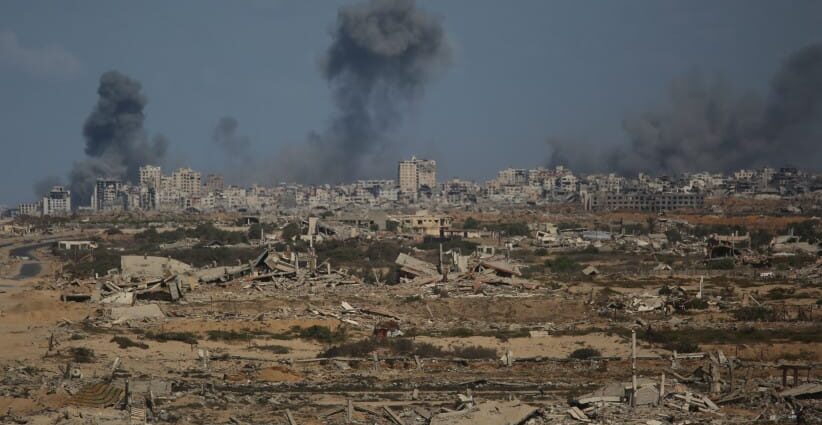
Katz threatens to destroy rest of Gaza City, evacuate one million Gazans if hostage taken
Defense Minister Israel Katz on Tuesday threatened to destroy all that remains of Gaza City and to force around one million Gazans to evacuate if Hamas, egged on by Iran or Turkey, takes a single Israeli hostage.
Katz said he was responding to the increasing threat picture about potential aggressive actions by Iran, Turkey, and proxies like Hamas.
The defense minister said that such threats and actions were the only way to deter jihadist enemies of Israel from attacking it.
While a theoretical statement and possibly a popular one domestically within Israel, Katz’s threat may make the lives of Israeli lawyers trying to defend the Jewish state in The Hague from genocide and war crimes accusations more difficult in convincing judges that Israel’s leaders honor the proportionality rules of international law.
Further, in the public relations sphere, critics of Israel may use his statement to bolster allegations they recently broadcast through the NAZA documentary film, though the film itself reportedly provides few specific, concrete incidents.
Katz: IDF will not partially withdraw until Hamas fully disarms
In addition, Katz said that the IDF would not make any partial withdrawals from the 63% of Gaza the IDF currently controls back either to the 53% point, the around 30% point, or the around 15% point, until Hamas is fully disarmed.
This statement will likely hold true until at least the US midterm elections on November 3.
However, after that date, US foreign affairs envoy Jared Kushner has dropped numerous public hints that the Trump administration will renew its push for Israel to make partial Gaza withdrawals in exchange for Hamas to take partial disarmament actions.

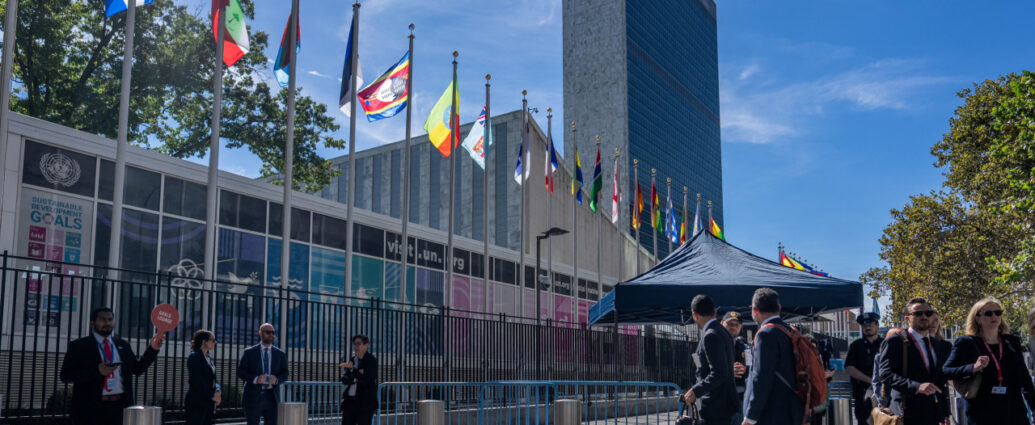

Florida Chamber gives JB Pritzker ‘runner-up’ for ‘Economic Developer of the Year’ award on Chicago billboards
EXCLUSIVE: Whether heading into Chicago or leaving it behind on the Stevenson Expressway, commuters are driving past a new billboard campaign from Florida’s top business lobby.
Expanding its multimillion-dollar recruitment campaign into the Midwest, the Florida Chamber of Commerce is launching its next “Free Enterprise” billboard campaign targeting Illinois Gov. JB Pritzker as the Chamber says data shows billions of dollars in income moving from Illinois to Florida.
“The billboards will look very much like the billboard we did in New York, but we’ll have two of them in Chicago and we’ll be naming Governor Pritzker the runner-up ‘Florida Economic Developer of the Year,’” Florida Chamber President and CEO Mark Wilson exclusively told Fox News Digital.
“This isn’t personal, right? This is about policy. And the person responsible for all of Illinois’s policies is the governor there, just like our governor in Florida has top responsibility for what we do here,” he added. “When we look at how unsafe Chicago is, when we look at the extraordinarily high taxes that we have in Chicago — I’m from there, by the way, and so I have firsthand knowledge on what’s happening in Illinois and what’s happening in Chicago… And all of Illinois is losing people, more businesses are leaving Illinois than are moving to Illinois, and Illinois is losing billions of taxable income. And so the whole state is in a death spiral.”
An image of Pritzker shrugging can be seen on billboards facing traffic in both directions along I-55, with the ads naming him runner-up and thanking him for jobs moving to Florida. Their launch comes just over one month after the Chamber named New York City Mayor Zohran Mamdani Florida’s “Economic Developer of the Year” as part of a Times Square campaign. The Chamber says the campaigns are intended to argue that progressive tax and economic policies encourage wealth, businesses and families to move to Florida.
“Everything we do is scorecard driven, and we follow the data,” Wilson said when asked why Chicago was the next stop on the campaign. “New York earned the number one spot, and if you look at the data, Illinois earns the number two spot… Florida’s grown by about 1.9 million residents and Illinois’s lost [75,000] or 100,000 residents over the same period of time… When we look at taxable income that’s moved from Illinois to Florida, it’s over $2 billion that has left Illinois and relocated to Florida.”
Wilson also pointed to high-profile corporate exits from Chicago — most notably billionaire Ken Griffin moving hedge fund giant Citadel to Miami — as evidence for his argument that crime and tax burdens can drive employers out of the state.
“When bullet holes emerged in the Citadel building in Chicago, that was sort of one of the straws, right? You can’t decriminalize things and then tell everybody you have a safer community… people don’t buy that and it’s not true,” the CEO noted.
“They’re raising taxes on the very people that are investing in manufacturing, they’re investing in the community. And in fact, people like Ken Griffin are investing hundreds of millions of dollars and philanthropy into public education into making our communities safer,” he continued. “This is about: bad policy in Illinois is moving Illinois in the wrong direction. It’s made Illinois less safe, it’s made it less competitive and it’s made it a more expensive place to be.”
The campaign isn’t just targeting hedge funds and billionaires — Wilson said the Chamber is directly courting Illinois’ advanced manufacturing, aviation and tech startup sectors.
“Advanced manufacturing, for example, is one of our top priorities in Florida. We’re one of the only states with a chief manufacturing officer,” Wilson explained. “Florida is currently the No. 1 state in the country for new business startups. So as people are coming up with good ideas in Illinois only to have their government policies quash them, we want them to know that they’re more than welcome here in the Sunshine State.”
According to Wilson, the initial Times Square campaign pushed the Chamber’s overall earned-media valuation to more than $100 million. While he declined to disclose how much the Chamber is spending on the billboards, he said, “it takes millions of dollars a year to do what the Florida Chamber of Commerce does.”
“In Illinois, what we’re hoping is that the governor’s office reflects on the data,” Wilson said. “Illinois has half as many people as Florida, but their budget and their debt is significantly larger than Florida… And what we hope to hear is that Illinois wants to take us up on our offer to join forces and introduce free enterprise into every aspect of Illinois. The people of Illinois deserve that. The businesses of Illinois deserve that.”
Gov. Pritzker did not immediately respond to Fox News Digital’s request for comment.
Looking ahead, Wilson acknowledged that Florida’s rapid economic boom brings a heavy responsibility for state and business leaders to avoid the very pitfalls currently plaguing northern hubs.
“The biggest risk to the Florida model is that we allow to happen in Florida, what leaders in Illinois, New York, and California allowed to happen there,” Wilson warned. “If you go back a few decades, California was a national leader. Everybody wanted to be like California… and they let it go.”
Wilson said Florida’s growth brings a responsibility for state and business leaders to avoid problems he sees in states including Illinois, New York and California.
“I often hear a refrain of, ‘Hey, at least we’re not Illinois or California or New York.’ And the challenge is we need to compare ourselves to Florida’s potential, right? Florida versus Florida.”
GET FOX BUSINESS ON THE GO BY CLICKING HERE
Though the Chicago billboards will remain active along I-55 for just one week, Wilson said the Free Enterprise Florida campaign will continue, with additional states potentially targeted.
“Our goal in all of this is to give a wake-up call to the residents of these states,” Wilson said. “We want America to win. And if you want to look at the future of what America can look like, you look no further than what Florida has done.”
This post was originally published here

Iranian children to be recruited for Islamic Republic’s ‘self-sacrifice’ campaign
Children under the age of 15 will soon be offered training to join the Islamic Republic’s Janfada (self-sacrifice) campaign, the campaign’s spokesperson, Sasan Zare, confirmed to the Iranian Labour News Agency last week.
Acknowledging that individuals as young as 15 have already begun training, Zare said that, due to high demand, “special training appropriate for younger ages will also be arranged.”
Zare, however, asserted that only male children would be provided with training, while women would need to enlist after reaching the age of 18.
The planned recruitment of children comes despite international humanitarian law, including the Geneva Conventions, prohibiting the recruitment of minors under the age of 15 by both state armed forces and non-state armed groups. The Islamic Republic has nevertheless admitted to recruiting children as young as 12.
In March, Rahim Nadali, the cultural and artistic deputy of the Islamic Revolutionary Guard Corps (IRGC)’s Mohammad Rasoulollah Corps, told Iran’s Defa Press Agency that the minimum age for joining the homeland defense fighters was set at 12. Days after Nadali’s announcement, 11-year-old Alireza Jafari was killed at a military checkpoint, according to Iranian state media. The Basij Teachers Organization confirmed that the minor was killed “on duty.”
The Jerusalem Post has contacted the Office of the Special Representative of the Secretary-General for Children and Armed Conflict for comment on the planned recruitment of minors for the Janfada Campaign.
Military training set to begin this week in Tehran
Military training for the campaign is set to begin in Tehran this week. Training exercises will be carried out at military centers and in “high-traffic squares,” Zare said, admitting that the major public Imam Hussein Square would be converted into a “fully equipped military training pseudo-camp.”
Those who sign up will be trained in “ensuring local security, general war preparations, observation, surveillance, and intelligence measures,” as well as “guiding micro-aircraft (drones), which are used in military operations,” and “the possibility of using shoulder-launched weapons.”
“The training platform is the Basij community, and the content is approved by the Basij organization, and the training capacity of all armed forces will be used,” he said. “There is also full preparation to ensure the security of the training sites.”
Zare further alleged that of the 31 million Iranians he said had enlisted in the campaign, 26% had signed up for military and security duties.
Zare: campaign centered on slogan: ‘We have one life, and we give it for Iran’
He said the campaign was centered on the cultural slogan, “We have one life, and we give it for Iran,” which he acknowledged had drawn international criticism.
Zare also alleged that many Iranians living abroad had signed up for the campaign and would soon be included in “cultural and educational events.”
Student opens fire outside school in Turkey, eight pupils wounded, NTV reports
A student opened fire in front of their high school in Turkey’s western province of Manisa on Tuesday, wounding at least eight other pupils, broadcaster NTV reported.
Two of the wounded were in a critical condition, NTV said. The local governor’s office said the assailant was caught.
“A report was received regarding gunfire in the vicinity of the Inci Uzmez Vocational and Technical Anatolian High School in our Turgutlu district at 07:59,” the office added on X.
→ Manisa’nın Turgutlu ilçesinde okul önünde silahlı saldırı: 9 öğrenci yaralandı. 1 öğrenci vefat etti.
→ 2’si ağır yaralanan öğrencilerin bulunduğu saldırının ardından 15 yaşındaki şüpheli H.O. kısa sürede yakalandı. pic.twitter.com/3P56oXFzxY
— Karşıt (@karsitmedya) September 22, 2026
Images and video posted online showed a male figure walking on a street near the school with a rifle in his hands. He was then seen running back from the same street.
The motive for the attack was not immediately clear.
Olay sonrası panikle çocuklarını almaya gelen ailelerin okula girmelerine izin verilmedi.
Okul yöneticisi, “Kaymakam bey içeride. Biraz daha sabırlı olun. Şu anda herkes güvende ve öğrencileri tahliye edeceğiz.
Olay sokakta gerçekleşti, okulda gerçekleşmedi. Çocuklar en güvenli… https://t.co/b6ve4GLzjU pic.twitter.com/AjZTcXmXGa
— Aykırı (@aykiri) September 22, 2026
Turkey sees new uptick in school shootings
Two deadly school shootings in April caused outrage in Turkey and prompted officials to bring in new security measures for the 2026-2027 academic year, including tighter gun controls.
Before then, the country had no history of such attacks.
Vice President Cevdet Yilmaz said Interior Minister Mustafa Ciftci and Education Minister Yusuf Tekin would go to Manisa to conduct inspections.
Jerusalem Orchestra East & West youth division to perform at UN
TJO Youth-Galilee, a delegation from the Jerusalem Orchestra East & West, is in New York this week for a series of performances, including an appearance Tuesday evening at an event marking the opening of the annual United Nations General Assembly session.
The ensemble, conducted by Maestro Tom Cohen, is expected to be the only musical act performing at the event.
Before taking the UN stage, however, the young musicians fulfilled another ambition: playing with veteran Israeli singer-songwriter David Broza, one of the most beloved Israeli artists of all time.
The orchestra members, ages 14 to 23, include Jewish, Muslim, Christian, and Druze musicians from communities throughout the Galilee. They joined Broza in a New York rehearsal room for an informal jam session featuring songs drawn from a wide range of Eastern and Western musical traditions.
A Jewish businessman and philanthropist invited the youth ensemble to New York to show how musicians from different backgrounds can come together through music.
Group’s UN repertoire intended to bridge cultures
At Tuesday evening’s performance, the group is scheduled to present a repertoire intended to bridge cultures, including Zohar Argov’s “Yam Shel Dmaot” (“A Sea of Tears”), Abdel Wahab’s “Khayy Khay,” and a closing performance of Leonard Cohen’s “Hallelujah.”
Cohen described the meeting with Broza as particularly meaningful for both the young musicians and for him personally.
“During this trip to New York, the soloists of our youth orchestra had the privilege of meeting an artist they admire, and the person who helped me, as an enthusiastic child full of dreams, become the mature musician I am today,” Cohen said.
“The same generosity David showed me two decades ago, he gave with endless patience and love to our young musicians, who eagerly absorbed everything they could from this special encounter. Together, we experienced once again that when you follow the path of music — particularly the musical paths of David and of our orchestra — there is the potential for a colorful and exciting future in the meeting between East and West.”

Poland charges neo-Nazi linked teen over alleged plans to attack school, mosque
Polish authorities said on Tuesday that they have charged a man linked to neo-Nazi groups with offenses including preparing attacks on a school and a mosque.
Prosecutors said that Pawel G., a Polish national born in 2009 whose surname cannot be published due to privacy laws, was detained on Friday.
Poland’s Internal Security Agency (ABW) said that his arrest came after the previously announced detention of two 16-year-olds he had been in contact with online via extremist and neo-Nazi circles on the Telegram and Discord services.
Polish authorities charge teens linked to neo-Nazi groups
“He participated in discussions regarding past terrorist attacks and their perpetrators. Some conversations also touched upon the planning of potential attacks; participants analyzed the methods used by terrorists and viewed the perpetrators as sources of inspiration,” ABW said.
Justice Minister Waldemar Zurek said targets included a mosque and a school. “There is not and will not be any leniency for fascism, hatred, or the planning of bloody attacks in Poland,” he said on X.
Pawel G. could face up to 15 years in prison.
The two 16-year-olds, Kacper K. and Wiktor S., have been placed in juvenile detention centers.

Germany’s Die Linke, AfD win big in German state elections in setback for Merz’s CDU
Germany’s far-left Die Linke won Sunday’s election in Berlin while the far-right Alternative for Germany (AfD) captured Mecklenburg-Western Pomerania, delivering major gains to parties on the political margins and a severe setback to Chancellor Friedrich Merz’s Christian Democratic Union (CDU).
The results are putting new pressure on Germany’s governing parties while raising immediate questions in Berlin over Die Linke’s relations with pro-Palestinian activists and allegations of antisemitism within parts of the party.
Die Linke finished first in Berlin with 25.7% of the vote, according to the provisional final result, more than doubling its support from the previous election. The CDU, which has governed the capital, finished second, while the AfD placed third with about 16%, its strongest result in a Berlin election.
Die Linke’s lead candidate, Elif Eralp, is seeking to form a coalition with the center-left Social Democratic Party (SPD) and the Greens, a combination that would give the three parties enough seats to govern the capital. A CDU-SPD-Green coalition is also mathematically possible. If Eralp succeeds in forming a government, Die Linke would lead Berlin for the first time.
Eralp, the daughter of Turkish asylum seekers, campaigned heavily on Berlin’s housing shortage and high rents. Die Linke wants to bring large corporate landlords into public ownership, following a 2021 referendum in which Berlin voters backed the expropriation of major housing companies. The proposal could involve more than 200,000 apartments and has emerged as one of the major potential points of disagreement in coalition negotiations.
Farther north, the AfD won Mecklenburg-Western Pomerania with 38.2% of the vote, ahead of the SPD. The CDU received only 4.9%, leaving it below the 5% threshold required to enter the state parliament. It was the first time the CDU had failed to enter a German state legislature and its worst state election performance of the postwar era.
The results continued a broader shift away from Germany’s traditional center-right and center-left parties. The AfD has expanded sharply in eastern Germany, campaigning against immigration, support for Ukraine and existing energy policies, while Die Linke has drawn support in Berlin through housing, cost-of-living and redistribution issues. The simultaneous gains by the two parties have complicated coalition building and intensified debate over the durability of Germany’s established political alignments.
Merz rejects suggestions to step aside, says CDU’s performance a ‘disaster’
Merz described the CDU’s performance as a “disaster” but rejected suggestions that he should step aside. He said he intended to remain in office and pursue planned economic, tax and pension reforms. The chancellor’s coalition of the CDU and SPD has faced dissatisfaction over the economy and living costs, while the rise of the AfD has also increased pressure on the longstanding policy by mainstream parties of refusing cooperation with the far-right party.
In Berlin, the election result quickly became intertwined with a separate controversy over Die Linke’s relationship with elements of the pro-Palestinian movement.
On election day, Die Linke candidate Basem Said shared an Instagram appeal by Palestinian activist Majed Abusalama, a co-founder of Palästina Spricht, or Palestine Speaks, which Berlin’s domestic intelligence service has classified as a confirmed extremist organization. Abusalama described the election as a “Wahlintifada,” or “election intifada,” and urged voters to support several Die Linke candidates, including Eralp. Said thanked him for the appeal. German media first reported the episode, and the Berlin newspaper Tagesspiegel detailed it.
Further controversy followed Die Linke’s election-night celebrations. Ibrahim Ibrahim, a pro-Palestinian activist identified by the research group Democ as a supporter of the Popular Front for the Liberation of Palestine (PFLP), was photographed at a party event with Die Linke Bundestag member Ferat Koçak.
The PFLP is listed as a terrorist organization by the European Union and is described as a Palestinian terrorist organization by Germany’s Federal Office for the Protection of the Constitution.
Issa Remmo, identified in German reporting as a leading member of Berlin’s Remmo family, whose members have been linked to organized crime cases, also appeared at Die Linke celebrations. Eralp distanced the party from his presence.
“He was not invited and was sent out again,” Eralp said. “We have nothing to do with organized crime; we fight it.”
The disputes follow an earlier campaign controversy involving rapper Dahabflex, who performed at a Die Linke event in Berlin’s Neukölln district in late August. His performance included the lines “Yalla Yalla Intifada” and “Death to the IDF,” referring to the Israel Defense Forces. Eralp subsequently criticized the event and demanded that the Neukölln organization investigate what had happened.
“I stand clearly for the protection of Jewish life and against every form of antisemitism,” Eralp said at the time.
Those incidents have now become an issue in negotiations over Berlin’s next government. SPD lead candidate Steffen Krach has demanded a clear commitment against antisemitism from Die Linke’s entire parliamentary group, while Green lead candidate Werner Graf has called on the party to confront antisemitism within its ranks and explain how it intends to restrain members whose positions have caused controversy.
Central Council of Jews in Germany president urges parties to avoid Die Linke coalition
Josef Schuster, president of the Central Council of Jews in Germany, went further, urging the SPD and Greens not to enter a Die Linke-led coalition. Schuster said the party had repeatedly crossed antisemitic boundaries during the campaign and accused it of failing to deal credibly with antisemitism in its ranks.
Die Linke’s national leadership has rejected the broader accusation. Heidi Reichinnek, leader of the party’s parliamentary group in the Bundestag, said the party has a clear position against antisemitism and described that position as a “red line,” saying anyone who crosses it has no place in Die Linke.
The dispute leaves Eralp facing two negotiations at once: one over the policy program of a possible left-wing Berlin government and another over whether prospective coalition partners are satisfied that Die Linke can contain the elements of its organization that have generated controversy over Israel, antisemitism, and ties to radical pro-Palestinian activists.
The broader election results present a different problem for Germany’s national leadership. With the AfD consolidating support in the east and Die Linke recording a historic victory in the capital, the weekend’s votes showed voters moving away from the parties that have dominated German politics for much of the postwar period, less than three years before the next federal election is due in 2029.
Iran FM Araghchi denounces ‘free hand’ given to Israel ahead of United Nations General Assembly
Iranian Foreign Minister Abbas Araghchi accused Israel of being given “a completely free hand to do whatever it wishes” while speaking to reporters after arriving in New York City on Monday night, ahead of the United Nations General Assembly.
According to Araghchi, Iran’s primary goal during UNGA is to “defend the legitimacy, rights and interests of the Iranian people.”
He also denounced other countries’ governments for not condemning “atrocities” which had allegedly been committed in Iran.
“In the face of the atrocities that occurred – where 168 innocent children were deliberately massacred in a single instant – these countries do not even issue a simple condemnation.”
Iranian Foreign Ministry spokesperson Esmaeil Baghaei said that, during his visit to New York, Araghchi would hold “talks and consultations” with officials and foreign ministers.
Araghchi claims Israel seeking stronger grip on US policy
Araghchi, before his arrival in New York, accused Israel of having a “grip” on US policy in Iran.
The Israel lobby is getting less shy about its grip on US policy toward Iran. In Miriam Adelson’s publication, the Lobby’s loudspeaker says US policy must ensure America pays a price for any slight against Israel.
High time for Washington to break free from these shackles. pic.twitter.com/KUiVPZdQXF
— Seyed Abbas Araghchi (@araghchi) September 21, 2026
The Iranian Foreign Minister cited an article by Israel Hayom, which he called “Miriam Adelson’s publication,” in which the writer recommended that Israel deepen its military, technological, intelligence, and economic integration with the US so financial harm to Israel would rebound onto Washington as well.
“High time for Washington to break free from these shackles,” Araghchi said.
Iranian official compares US to Hitler over fuel price increase blame
Several hours after Araghchi’s arrival, Baghaei compared the US’s actions against Iran to Hitler’s during World War II in a post on X/Twitter.
Baghaei wrote that the US blaming Iran for the increase in fuel prices was similar to Hitler framing his invasion of Poland as an act of defense.
US officials blame Iran for rising fuel prices, as if the public’s memory is short enough to forget who actually initiated the war of aggression, and whose actions created the crisis that led to the closure of the Strait of Hormuz and the disruption of commercial shipping.…
— Esmaeil Baqaei (@IRIMFA_SPOX) September 22, 2026
“As if the public’s memory is short enough to forget who actually initiated the war of aggression, and whose actions created the crisis that led to the closure of the Strait of Hormuz and the disruption of commercial shipping,” Baghaei wrote.
“When the instigator of an unlawful ‘war of choice’ blames the victim for the fallout, should this be viewed as ‘strategic brilliance’, or is it simply a textbook symptom of ‘The March of Folly’?!”

Son of Neveh Tzuf terror victim recounts how father’s warning saved his life
Terror victim Netanel Chkroun saved his son’s life by warning him of the terrorist’s presence at Neveh Tzuf, 16-year-old Yoav Chkroun told KAN News on Tuesday.
“We got into the car, Dad was sitting in the second row drying off, and I was in the front passenger seat. Suddenly, he shouted to me, ‘Yoav, there’s a terrorist here,’ or ‘Yoav, it’s an attack’ – something along the lines of ‘Run!'”
Yoav said that he hadn’t realized a terror attack was in progress until his father shouted at him. By the time he realized, the terrorist was only a few centimeters away, right outside the car door.
“He opened fire toward Dad, during which time I passed between the driver’s side seats, opened the door, and ran away,” he said. “The terrorist kept shooting at me while I was running to hide between the bushes on the other side of the road.”
Yoav remained in hiding until after military forces arrived at the scene.
“It was a very difficult and special Yom Kippur,” he said. “Suddenly you understand the true meaning of ‘The Day of Judgment.'”
During Netanel’s funeral, Yoav thanked his father for saving his life.
“Thank you, Dad, for what you told me and for saving me,” he said.
Terror victim had been at Neveh Tzuf for immersion ahead of Yom Kippur
Netanel was a father of six and worked as an information systems analyst at Hachshara Insurance Company, the Samaria Regional Council said. His wife, Dr. Merav Chkroun, is a lecturer at Ariel University.
He had arrived at Neveh Tzuf to immerse himself alongside Yoav, his eldest son, an 11th-grade student. His youngest child is four years old.
“[He was] a man of kindness, humility, and love for his fellow man, murdered just after finishing his immersion with his son ahead of Yom Kippur,” said council head Yossi Dagan. “These barbarians will never break us; we will build up our land even further.”
James Genn and Miriam Sela-Eitam contributed to this report.

Deadly Yom Kippur shooting attack ‘expected’ amid rising West Bank tensions
The deadly shooting attack in Binyamin ahead of Yom Kippur, in which Netanel Chkroun was killed, came amid mounting tensions in the West Bank that had been widely anticipated, Haaretz’s Amos Harel and Dr. Michael Milshtein of Tel Aviv University’s Moshe Dayan Center told 103FM on Tuesday.
“This was unfortunately expected,” Harel said. “All the assessments pointed to tensions rising during this period. The Tishrei holidays attract attacks, the election issue is heating up here, and the Palestinians are taking the opportunity to make noise. There is also the ongoing friction between settlers, primarily on farms, and Palestinians. The terrorist was caught in a hospital in Ramallah. The impression is that this was a lone terrorist, but it is clear that Hamas will try to inflame the situation as much as possible.”
Turning to the Gaza Strip, Milshtein said, “Despite Israel’s control of the territory, it is not airtight. Hamas, specifically when it comes to explosive devices, not only has no problem; it simply dismantles a large portion of the unexploded ordnance that is there.”
He noted that Israel was continuing to carry out strikes in the Gaza Strip.
“The incident is ostensibly tactical and local, but it may be the kind of pattern we will see intensify, because in Gaza we are in a static situation, as in Lebanon and as in Syria,” Milshtein said.
“I have been in the Gaza Strip twice, close to the Yellow Line. Controlling the territory is genuinely difficult. You are sitting in the area, and the other side has chosen to wage a war of attrition against you. That is the price we will pay. It could also cost lives. There is no real ceasefire there,” Harel agreed.
US strike on Houthi targets canceled at last moment
Milshtein also addressed reports that a planned US strike on Houthi targets had been canceled at the last moment.
“You look at the international discussion surrounding the headache called the Houthis, and you understand that there is a fairly bitter memory here,” he said. “We still have a great many other fronts open, and there is reluctance to enter another arena when it is unclear how you would be able to deal with it.”
“Ultimately, you see Americans holding talks with Houthi elements, and I assess that the Saudis too, despite all our enthusiasm in Israel, would prefer to close the matter through some form of understandings,” Milshtein added. “The Houthis themselves are also not rushing to launch an all-out confrontation. There is more measured conduct here, so it may be that all the players except Israel would like to close the matter through understandings.”
Harel: ‘Things are not working out as Trump would like’ ahead of midterm elections
Harel concluded by discussing what he described as Trump’s current political and foreign policy situation.
“We are moving toward the midterm elections in the United States, and the Knesset elections here, and things are not working out as Trump would like,” he said.
“Despite the successes of the economic warfare and the successful effort to smuggle ships through the Strait of Hormuz, the story is not over. He is still stuck in a situation that he is struggling to resolve, and he is hesitant to go all the way. Trump’s renewed threats against the Iranian regime are also less effective in his view. There is a series of foreign policy problems here, and the method of noise, distraction, and threats is no longer working so well.”
Adir Capital, Sling Capital announced as winners for state defense-tech venture capital funds
Adir Capital and Sling Capital were announced as tender winners on Tuesday for state-backed venture capital funds specializing in advanced defense technologies, the Defense Ministry and Foreign Ministry announced jointly.
The announcement, made by the Finance Ministry Accountant-General’s Division and the Directorate of Defense Research and Development (MAFAT), expressed the tender committee’s full confidence in the companies regarding how the funding would “achieve significant milestones and foster breakthrough capabilities for the defense establishment and the entire Israeli economy.”
Adir Capital is a component of Idan Financial Instruments, while Sling Capital is part of Giza.
Defense Ministry Director-General Maj.-Gen. (res.) Amir Baram described the funds as marking “a pivotal milestone in realizing the Defense Ministry’s strategy to transform Israel’s unique ecosystem, which integrates the Defense Ministry and the IDF with defense industries and local entrepreneurship, into a global leader in the defense-tech industry.”
“After three years of war, we must increase investment in research and development to preserve the defense establishment’s qualitative-strategic edge and to develop the next generation of technological ‘surprises,'” he added.
Accountant-General marks milestone as recognizing defense establishment partnership
Accountant-General Michal Abadi-Boiangiu further marked the milestone as a recognition of the “close and vital collaboration between the Accountant-General’s Division and the defense establishment.”
“We are now seeing this vision become reality,” she said. “Strengthening Israel’s technological and industrial independence, supporting local entrepreneurship, and securing critical supply chains for both routine operations and times of emergency.”
MAFAT chief Brig.-Gen. (res.) Dr. Danny Gold called the move a “vital strategic step toward reinforcing Israel’s technological superiority.”
“This move directly advances the policy MAFAT has championed in recent years to develop and grow the ‘Defense-Tech’ ecosystem, driven by a deep commitment to supporting Israeli startups and entrepreneurs,” he said. “The close integration of private capital, the innovation ecosystem, and the needs of the defense establishment will enable us to accelerate the development of groundbreaking technologies, maintain the IDF’s qualitative edge, and strengthen the State of Israel’s manufacturing independence.”
Finance Division Chief: State guarantee ‘a strategic engine for the economy’
Accountant-General Senior Deputy and Finance Division Chief Gil Cohen discussed the importance of a state guarantee as “a strategic engine for the economy.”
“Through state guarantees, we enable the economy to leverage investments in national defense and develop the defense-technology sector, a field vital to Israel’s strength, resilience, and growth,” said Cohen.
Cohen, who further serves as the tender committee chairperson, commended the companies’ “impressive” proposals.
He added that the Finance Ministry was “confident” that the Israeli defense-tech market would achieve “significant milestones” under the management of the tender winners.

STAT+: Ohio governor’s race is a battle over Covid, health costs, and trust in science
CLEVELAND — Amy Acton couldn’t speak.
Supporters of Acton, the Democratic nominee for governor of Ohio, were waiting for her remarks along the banks of the Black River, once known as the “river of fish tumors” because of the catfish deformed by steel mill slag. Now the river was being rehabilitated. Acton, a physician who vaulted to national fame when she led Ohio’s aggressive response to Covid-19 as the state’s director of public health back in 2020, was running with the promise to do the same for state politics.
The crowd, attending a Labor Day festival in the industrial city of Lorain, had spent the afternoon grazing on boba tea and pastelitos from food trucks while a live band covered ’90s hits like “Return of the Mack.” They didn’t yet know that Acton wasn’t going to make it onstage after all. Earlier that day, at a different campaign event about 90 miles east in Canfield, a man carrying two handguns, brass knuckles, and a Taser had barreled toward Acton while yelling her name, knocking over an elderly couple in the crowd. (The man, Patrick Havas, has since pleaded not guilty to charges including assault.)
Of all the high-profile electoral contests this November, the heated race for Ohio governor could be the most direct test of where public opinion in the heartland currently stands on health care, trust in science, and the lasting legacy of the Covid pandemic. Acton’s Republican opponent, Vivek Ramaswamy, is the billionaire founder and former CEO of biotech company Roivant who built his political profile as a 2024 presidential candidate in part on accusing the government of overreach in the pandemic — claims he’s made central to his current gubernatorial campaign as well.
STAT visited events for each candidate on the same day in August to get a sense of how Acton and Ramaswamy are tapping into American health anxieties, and how their messages are resonating with Ohioans. Acton stands by her decisions during the pandemic, but is betting that people in Ohio are ready to move on and instead focus on fixing problems like health care affordability and access. (Affordable Care Act enrollment in Ohio dropped by one-third in the past year following the expiration of federal subsidies, the most of any state.)

STAT+: Why an influential GOP health policy expert still backs the Medicaid cuts — and which policy target is next
WASHINGTON — Brian Blase, president of Paragon Health Institute, has become a trusted adviser to Republicans in Congress, who passed sweeping changes to federal funding for health care last year.
The Medicaid program is expected to pay out some $1 trillion less than projected over the coming decade, thanks to policies Blase supported. The changes are causing health providers to scramble and rethink how they offer care.
The cuts to the Medicaid program through the One Big Beautiful Bill Act were used to offset the cost of tax cuts — a change that’s expected to lead to 7 million people losing Medicaid coverage, according to preliminary estimates from the nonpartisan Congressional Budget Office.

Opinion: Social media bans are passing around the world. How will we know if they help teens?
In December 2025, as social media’s potential impact on youth mental health faced growing scrutiny, Australia became the first country to ban social media for people under 16, with Indonesia quickly following. The European Union is taking a slightly different approach, banning social media for children under 13 and personal accounts for people under 15 after pressure from several E.U. nations.
Elsewhere, big tech companies are being challenged in the courts. Meta recently agreed to pay up to $18 billion to resolve claims in the U.S. that Facebook and Instagram harmed children. Meta will also introduce “safety by design” features for young people, such as concealing the number of “likes” on posts. But will these features meaningfully change young people’s behavior or experiences online? Will the bans have their intended effect?

Opinion: The science on relieving cancer symptoms is clear. Why isn’t insurance paying?
For much of my career in cancer care, I have seen a contradiction play out in the exam rooms of my colleagues and across the country. Cancer patients ask how to manage pain, fatigue, anxiety, immune suppression, and the daily toll of the disease. Clinicians often prescribe only medication, even though they know other evidence-based treatments could help: acupuncture for chemotherapy-induced nausea; exercise and nutrition counseling to improve clinical outcomes; and mindfulness-based programs to ease distress, sleep problems, and even immune dysfunction.
When doctors and patients do discuss these treatments, too often the conversation ends with a shrug: “Insurance doesn’t cover that.”

Americans are turning to AI to survive a brutal housing market—37% would let it buy their next home with ‘minimal human involvement’
The average rate on a 30-year fixed-rate mortgage stood at 6.95% for the week ending Sept. 17, up from 6.76% a week earlier and 6.26% a year ago, according to Freddie Mac. With borrowing costs pushing back toward the psychologically fraught 7% mark, and a persistent shortage of homes compounding the squeeze, many Americans still feel priced out of the market.
But market conditions aren’t the only force reshaping real estate. A growing body of survey data suggests AI is taking on a bigger role for buyers, sellers, and agents alike—and the technology could fundamentally change how people buy and sell homes.
A recent LendingTree survey shows just how open Americans have become to leaning on it. Nearly three-quarters of respondents (72%) said they would use AI for at least one task tied to buying or selling a home, and 37% said they would let AI handle a purchase for them “with minimal human involvement.”
Budgeting is the most commonly cited AI use
With borrowing costs high, Americans are especially drawn to using AI for budgeting. Some 28% of LendingTree respondents said they’d use it to estimate a home’s value. Roughly a quarter (24%) would turn to AI to find down payment assistance programs, and the same share would use it to gauge how much they can afford.
Explaining mortgage options (18%) and comparing mortgage offers (16%) also ranked high—well above non-budgeting tasks such as scheduling showings (8%), organizing listing photos (8%), and helping negotiate offers (7%).
Other research points the same way. Among AI-using prospective buyers in Bank of America’s 2026 Homebuyer Insights Report, estimating affordability, mortgage payments, or closing costs was the most common use, cited by 57%. The report also found that Gen Z is leading the charge, with 32% saying they’ve used AI in the process.
As buyers look to AI to navigate a punishing market, more specialized tools are arriving. Real estate platforms Zillow and Homes.com both rolled out AI assistants earlier this year that can walk users through everything from financing to details on schools and neighborhoods—part of a wider industry push in which Zillow says AI is reinventing every step of the homebuying process.
AI is reshaping the realtor’s role, too
Buyers and sellers aren’t the only ones leaning on the technology. A National Association of Realtors survey found that 92% of agents are using AI or plan to, with 71% citing the time it saves.
The enthusiasm comes with reservations. More than three-fifths of agents (63%) named accuracy as a concern, ahead of compliance or legal issues (49%) and the misreading of market data (47%).
There’s also the existential worry. Fortune previously reported on Robert Levine, who used ChatGPT to sell his Florida home for $100,000 more than agents estimated it was worth. The chatbot suggested property upgrades and handled logistics such as scheduling viewings; Levine said the home sold for one of the highest per-square-foot prices in his market.
Still, AI’s shortcomings suggest agents aren’t going anywhere. Parisa Afkhami, a high-end agent in New York City, told Mansion Global that while “AI staging has skyrocketed,” she considers it “misleading to buyers.” One of her clients, she said, walked out of a showing within minutes because the home didn’t match the AI-staged photos posted online.
For now, as AI tools proliferate and the housing market stays tight, the bigger question is what it all means for the industry’s future.
This story was originally featured on Fortune.com

Defense officials push to expand Israel’s submarine fleet as Turkey continues naval buildup
Israel’s defense establishment recommended expanding the Navy’s submarine fleet to eight vessels amid Turkey’s naval buildup, Army Radio reported on Tuesday.
The officials made their recommendation to Israel’s political leadership as the country monitors Turkey’s acquisition of German-made submarines, with the current Turkish fleet of fourteen set to expand to eighteen in the coming years.
The Israel Navy currently operates 5 such submarines, with a sixth, the INS Drakon, on its way to Israeli shores.
The defense officials emphasized that the fleet expansion should involve the replacement of older vessels, instead of simply increasing the numbers overall, according to Army Radio.
The report noted that Israel’s contract with Germany currently allows for the order of a seventh submarine, each costing around one billion euros.
Senior defense officials told Army Radio that they intend to push the issue in a “structured manner,” as the procurement cannot take place until the October elections are over.
Final German ‘Dragon’ submarine on its way to Israel
The report follows a send-off ceremony in late August for the INS Drakon, attended by Israel Navy Chief V.-Adm. Eyal Harel and German Naval Chief V.-Adm. Jan Christian Kaack, along with other top Israeli and German officials.
The IDF and the Defense Ministry announced the vessel’s departure for Israel on September 1, with the new submarine one of Germany’s new “Dragon” models.
The German-made submarines can deliver nuclear weapons, according to foreign reports, which further reported on Israel’s alleged triad of nuclear deterrence, namely land-, sea-, and air-based attack capabilities.
Yonah Jeremy Bob contributed to this report.

Motive behind Ontario synagogue shooting attack not yet determined by Canadian police
Canadian police have yet to formally determine the motive behind the shooting outside Congregation Beth Jacob in Belleville, Canada, which occured as worshipers gathered for Yom Kippur prayers on Sunday.
Shortly after the shooting, Israel’s Ambassador to Canada Iddo Moed described the incident as a “terror attack” and called for an immediate increase in protection for the Jewish community.
Belleville Police Deputy Chief Sheri Meeks said during a briefing that the shooter was 29-year-old Sean Ward of nearby Quinte West, about 18 kilometers from Belleville. He remains hospitalized with life-threatening injuries.
Meeks identified the wounded officer as Jeff Smith, a veteran police officer who has served for 13 years. She said Smith was hospitalized in intensive care and faces a significant recovery, but that his condition had stabilized.
Kristy Denette, a spokeswoman for Ontario‘s Special Investigations Unit (SIU), which is investigating the incident, said in response to a question that logic pointed toward a terrorist incident targeting the Jewish community. She stressed, however, that the SIU’s investigation was focused on the actions of the police officer.
Denette said the scene was complex and that forensic investigators would need several days to complete their work there.
Belleville Mayor Neil Ellis said it was “too early to determine that this was a hate crime,” but noted that the location and timing, outside a synagogue on the eve of Yom Kippur, “point in that direction.”
None of synagogue’s 24 worshippers injured in attack
About 24 worshipers were inside the synagogue at the time of the shooting, Meeks said. None were injured. She added that antisemitism, hatred, and violence were unacceptable in the community.
Following the incident, police increased their presence across the city, including around houses of worship.
Israel’s Foreign Ministry in Jerusalem said the terror attack against Congregation Beth Jacob in Belleville on the eve of Yom Kippur marked a further escalation in Canada’s antisemitism crisis.
“Our thoughts are with the police officer who acted with extraordinary courage and was wounded in the line of duty. We pray for his full and speedy recovery,” the Israeli Foreign Ministry said. “Israel stands in solidarity with the Jewish community in Canada, which is confronting an increasingly threatening reality.”
The ministry added that “open incitement that goes untreated in the public sphere, together with anti-Israel policies, fuels antisemitism. A change is needed.”
Denette said Belleville Police were conducting a parallel investigation that included examining the suspect’s motive. She declined to say whether others directed or activated the suspect, repeatedly saying the question fell outside the scope of the SIU’s investigation.
On-duty police officer guarding synagogue was first target of shooting
According to Denette, the suspect arrived in his vehicle, believed to have been a pickup truck, at around 7 p.m. while armed with a shotgun. He fired first, initially targeting the on-duty police officer who was securing the synagogue.
The officer returned fire, and a second officer later arrived and also opened fire. The suspect and the first officer were both struck.
The scene extended for roughly half a block. Witness accounts and the preliminary investigation indicated that as many as 30 rounds were fired. A police cruiser, other vehicles, and nearby homes were hit.
A team of four investigators and two forensic investigators was assigned to the case. They collected evidence, reviewed security footage, police body-camera recordings, and vehicle-camera footage, and took witness statements.

‘No cure for stupidity’: Israel’s Football Association blasts Irish coach’s calls to boycott match
The Israel Football Association (IFA) responded on Monday to comments from Republic of Ireland National Team Coach Heimir Hallgrímsson about the team’s boycott of an upcoming Israel-Ireland game.
“We have contributed to the world and humanity in countless fields, earning an impressive number of Nobel Prizes along the way,” the association wrote in an X/Twitter post. “Unfortunately, we have not yet found a cure for stupidity, ignorance and hypocrisy displayed by @IrelandFootball team coach.”
We have contributed to the world and humanity in countless fields, earning an impressive number of Nobel Prizes along the way. Unfortunately, we have not yet found a cure for stupidity, ignorance and hypocrisy displayed by @IrelandFootball team coach. We’re not playing with…
— ISRAEL FA (@ISRAELFA) September 21, 2026
“We’re not playing with ignorance, hypocrisy and stupidity,” the IFA added. “We’re playing against the coach who embodies them.”
Hallgrimsson said last week he had spoken individually to players about facing Israel and that “none of us feel comfortable playing in these games.”
His comments followed the signing of an open letter by more than 160 Irish sportspeople asking the Ireland national football team to boycott its upcoming UEFA Nations League fixtures against Israel, currently scheduled for September 27.
‘Not playing the game would be the most sporting thing you could do’
The Irish Sport for Palestine Group announced the open letter on Monday, saying the signatories included Olympian Ciara Mageean, former footballer Louise Quinn, former rugby flyhalf Tony Ward and boxers Tyrone McKenna and Eric Donovan.
“This is a significant moment, and with this moment you have an opportunity to do the right thing,” the letter said. “Not playing the game would be the most sporting thing you could do. Through your leadership and courage, it would show the power of sport to unite, remind us of the shared values that connect us all, and have an impact far beyond the game.”
The letter was signed following Irish boycott efforts in May, when Irish footballers joined celebrities in a campaign urging Ireland to boycott the Nations League matches against Israel.
Reuters contributed to this report.

Lithuania prepares evacuation plans as PM warns of growing Russian threats
Lithuanian Prime Minister Mindaugas Sinkevicius said his country has made evacuation plans in response the threats from Russia, but added it “will not surrender” if attacked, the BBC reported Tuesday.
Sinkevicius told BBC Newsnight that Lithuanians feel “constantly threatened” by Russia, in part because of drones entering the nation’s airspace. He said that if his country, a NATO member, was attacked, “we will fight back… we will engage.”
“We’re thinking about a variety of scenarios; not all of them are being discussed very much publicly,” Sinkevicius told the BBC.
“We face concrete threats, not on a daily basis, but we’re experiencing them, and it’s a true reality for us.”
Russia ramps up attacks on European countries
This comes after Russia attacked a truck near Ukraine’s border with Poland last Sunday.
It was the latest strike to hit areas near NATO as Moscow and Kyiv intensify their long-distance strikes to try to shift momentum in the war.
Russia’s Defense Ministry said it had targeted infrastructure facilitating military cargoes from Europe in Western Ukraine.
Russia has begun targeting Ukraine’s border crossings with its Western allies in recent weeks, part of a growing campaign by both sides to erode the other’s economic infrastructure more than four years into Russia’s invasion.
Israeli sentenced to 55 months in prison for spying for Iran, photographing Gallant’s house
An Israeli citizen was sentenced to 55 months in prison on Tuesday after he was convicted as part of a plea deal, which did not include an agreement on sentencing, for contact with an Iranian foreign agent.
The Israeli, Fares Abu al Hija, 32, of Kaukab Abu al Hija, is alleged to have conducted spying operations for Iran, including taking photographs of former defense minister Yoav Gallant’s house.
This is a developing story.


The U.S. is backing a $14 billion cable to keep Southeast Asia’s internet out of China’s reach
The U.S. is bankrolling a new trans-Pacific internet cable that deliberately skirts the South China Sea, as Washington tries to wall off Southeast Asia’s digital infrastructure from China.
On Sept. 14, the U.S. Trade and Development Agency (USTDA) said it would fund a feasibility study for a new subsea cable that links Thailand, the U.S., and five other Southeast Asian countries, and bypass the South China Sea.
“The military conflicts in the Middle East and Europe show that geopolitical crises can trigger cyber or physical disruptions to subsea cables,” says Muhammad Faizal Bin Abdul Rahman, a research fellow at Singapore’s Nanyang Technological University (NTU). “The U.S. and its Asia-Pacific allies believe that China could use similar tactics.”
The project reflects Washington’s continued drive to control the infrastructure that underpins the internet and the AI boom. Southeast Asia may end up stuck between two different tech ecosystems, one led by Washington and the other by Beijing.
Singapore, for example, joined Washington’s Pax Silica alliance last December, but is also reportedly considering an invitation to join the China-led World Artificial Intelligence Cooperation Organization. (Other Southeast Asian countries are split between the two AI blocs: the Philippines has joined the U.S.’ Pax Silica, while Cambodia, Indonesia, Laos, Malaysia and Myanmar are part of China’s alliance.)
“Southeast Asian countries need to re-evaluate what neutrality means today for each of them, and how policy decisions across sectors collectively determine whether they are too dependent on any major power during times of peace or crisis,” says Muhammad.
Undersea battle
Subsea cables are fiber-optic lines laid on the ocean floor that carry over 99% of internet traffic worldwide.
Just one cable—the Asia-America Gateway, built in 2009—connects the U.S. and Thailand. The cable is notorious for its frequent outages, especially within the intra-Asia section between Singapore and Hong Kong, with most faults on the segment near Vietnam. When the cable goes down, some Southeast Asian nations like Cambodia and Malaysia have few alternatives for rerouting traffic.
“It is only natural that a new cable be built, both for resilience and capacity reasons,” says Asha Hemrajani, a senior fellow at NTU. “The aging AAG has experienced several serious outages… so it looks like the new cable is intended to be a next-generation successor to it.”
Operators and insurers prefer cables that avoid the South China Sea. China claims sovereignty over much of the sea, overlapping with similar claims from Vietnam, Brunei, Indonesia, Malaysia, and the Philippines. Under China’s domestic regulations, cable work in its “inland waters, territorial sea and continental shelf” requires prior approval and notification.
“Subsea cables regularly require maintenance, and if a cable goes down, it needs to be repaired in a time-sensitive manner,” Hemrajani explains. “Thus, cable operators and insurers prefer to avoid the South China Sea due to additional uncertainty and trouble.”
If built, the proposed Thailand-U.S. cable is estimated to cost over $14 billion, according to estimates cited by Bloomberg, and may also pass through Indonesia, Singapore, Malaysia, Vietnam and the Philippines. (The USTDA has not given its own cost estimate). Thailand’s state-owned telco, National Telecom—which is leading the prospective project—aims to raise capital through an international consortium of co-investors from neighboring Asian nations.
“The U.S. is reportedly planning for potential military conflict around the South China Sea, and so is China,” says Muhammad. “It makes practical and economic sense for new subsea cables to avoid the South China Sea.”
This isn’t the first attempt by Washington to have subsea cables bypass China. The Pacific Light Cable Network, which was initiated in 2015 and backed by U.S. tech giants Meta and Google, was originally set to link the U.S. state of California with Hong Kong’s Deep Water Bay. In 2020, Washington blocked the U.S.-Hong Kong connection, citing national security concerns over PLCN’s connection to its China-based parent entity, Dr. Peng Telecom & Media Group. The cable now links the U.S. with Taiwan and the Philippines—both American allies.
Other trans-Pacific systems like Bifrost and Echo are routed further south through the Celebes Sea, to connect the U.S. with Singapore and Indonesia.
China, too, is trying to build its own cable network. In 2023, Reuters reported that the country’s state-owned telecom firms were developing a $500 million undersea fiber-optic internet cable network to link Asia, Europe and the Middle East.
But cables are only part of the story. Subsea cables eventually need to come onshore, which they do through cable landing stations, where they then connect to local infrastructure.
“Washington will double down on extending its influence and control over the full subsea and land based infrastructure ecosystem,” Alex Capri, a senior lecturer at the National University of Singapore, concludes. “And as China races to build its own subsea cables, affected countries may be faced with accommodating two parallel tech stacks. The alternative will be to choose sides, which is Washington’s clearly stated goal.”
This story was originally featured on Fortune.com

Apple’s first 50 years: Charts show how the iPhone maker became a $4.85 trillion giant
Apple’s history is often told as a procession of blockbuster devices—and that’s certainly a striking part of it. The most successful of those devices, the iPhone, remains a powerful engine for the company, accounting for about half of sales in 2025.
But the company that first caught the public imagination with its inspired product design has also spent its first half-century building an ecosystem that delivers a river of recurring revenue: Services, a division that barely existed 15 years ago—encompassing the App Store, iCloud, Music, TV, payments, advertising, and more—is projected to make up more than a quarter of this year’s revenue.
The data reveals a company that has truly gone global. The U.S. contributes 36% of sales, but Europe is not far behind at 27%, while the rest of the Americas and the Asia-Pacific region make up another third. Meanwhile, Apple’s store footprint has grown to more than 500 locations, with non-U.S. stores driving much of that expansion.
Financially, the rise has been extraordinary: Annual profits rose from roughly $2 billion in 2006 to $112 billion in 2025.
And lastly, a figure that will make investors who didn’t get onto the Apple bus early wince: A $10,000 Apple investment at its 1980 IPO would have grown to $40.5 million by mid-2026.
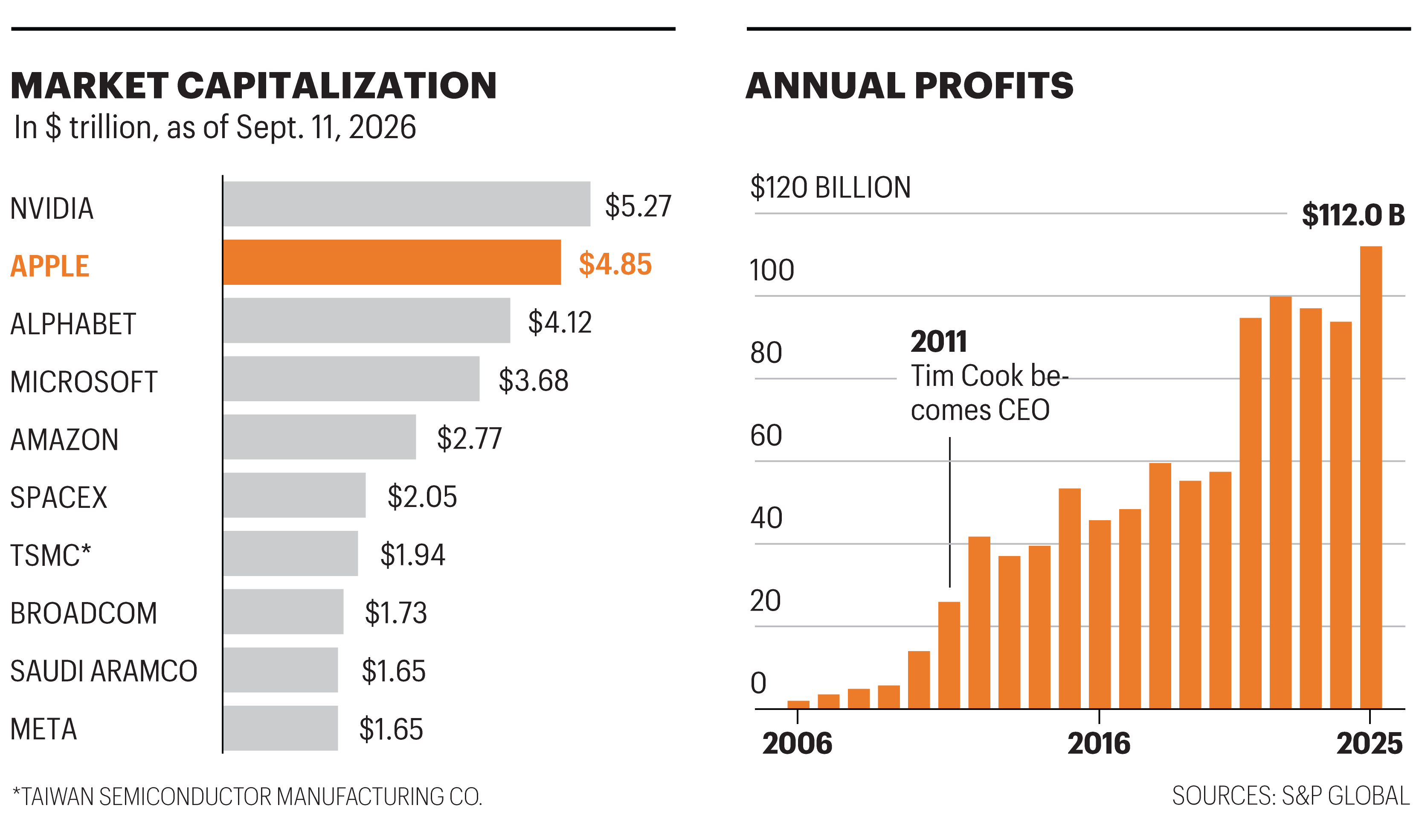
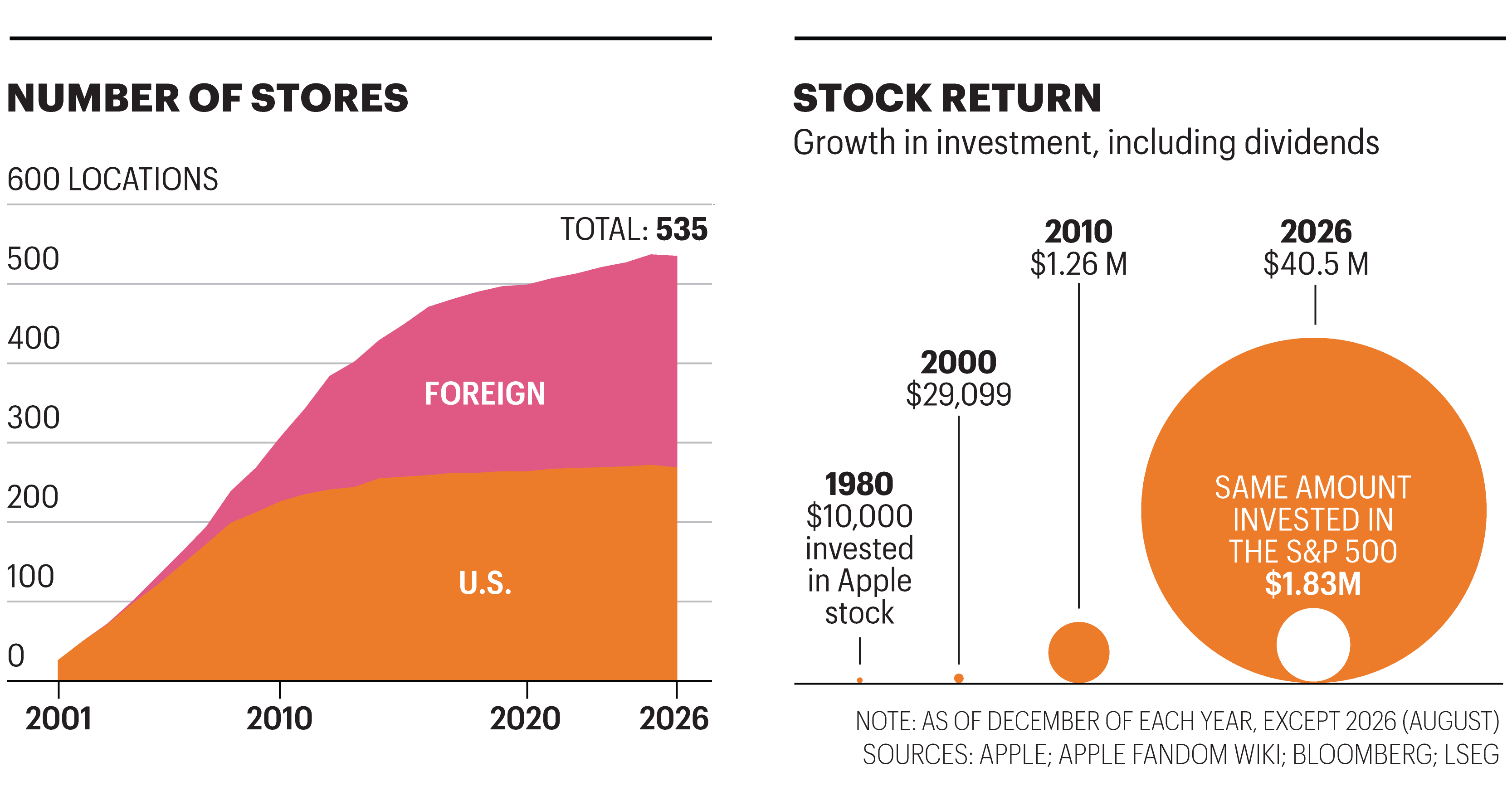
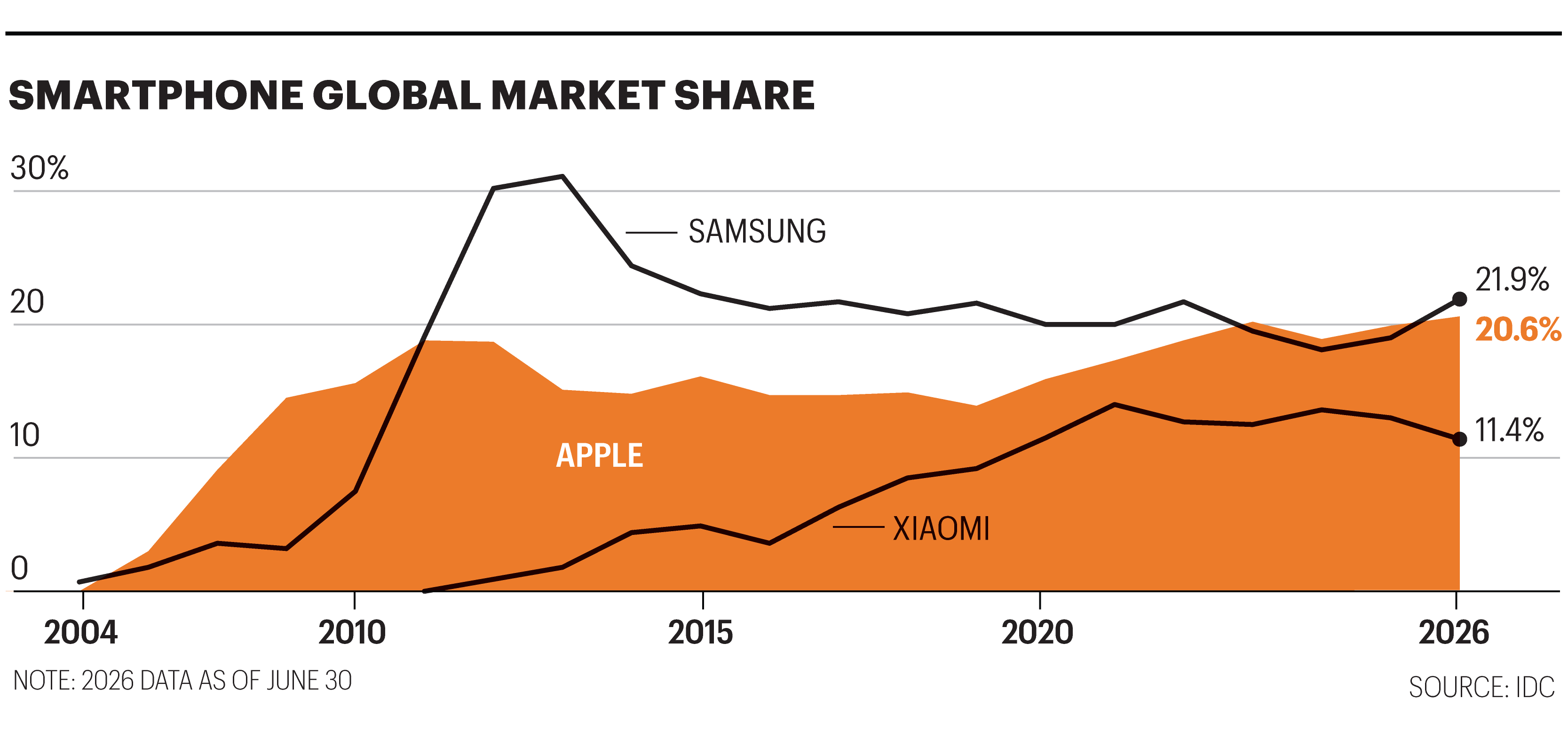
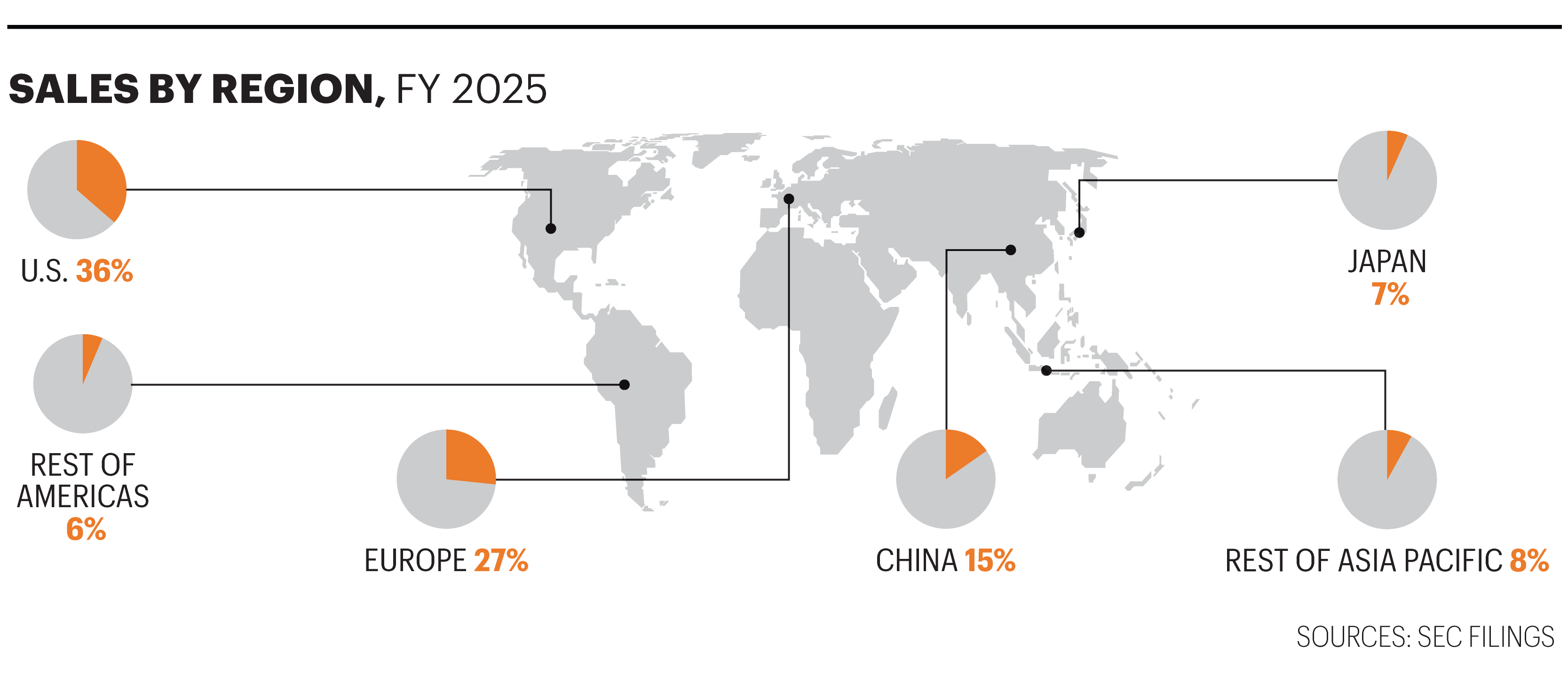

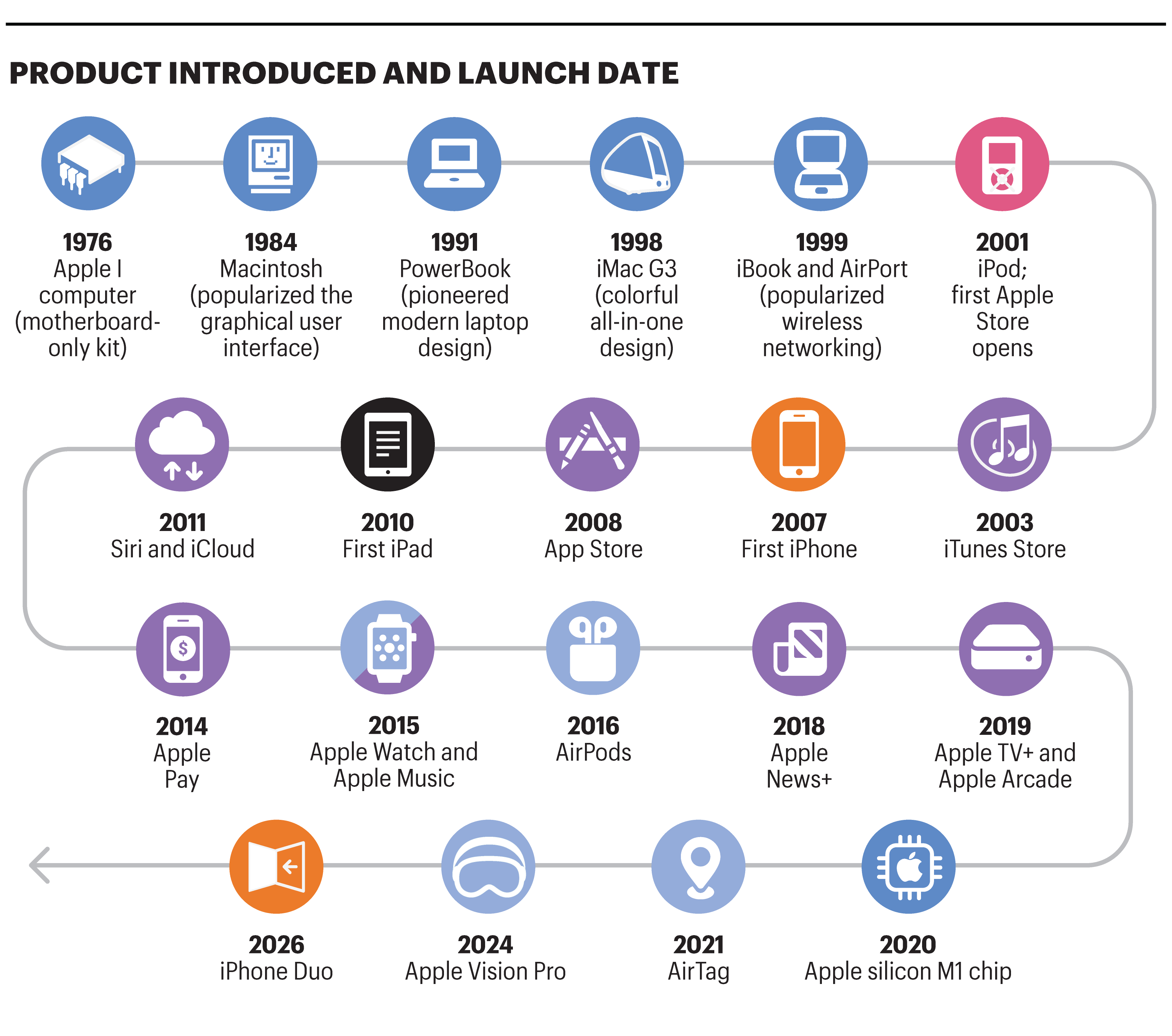
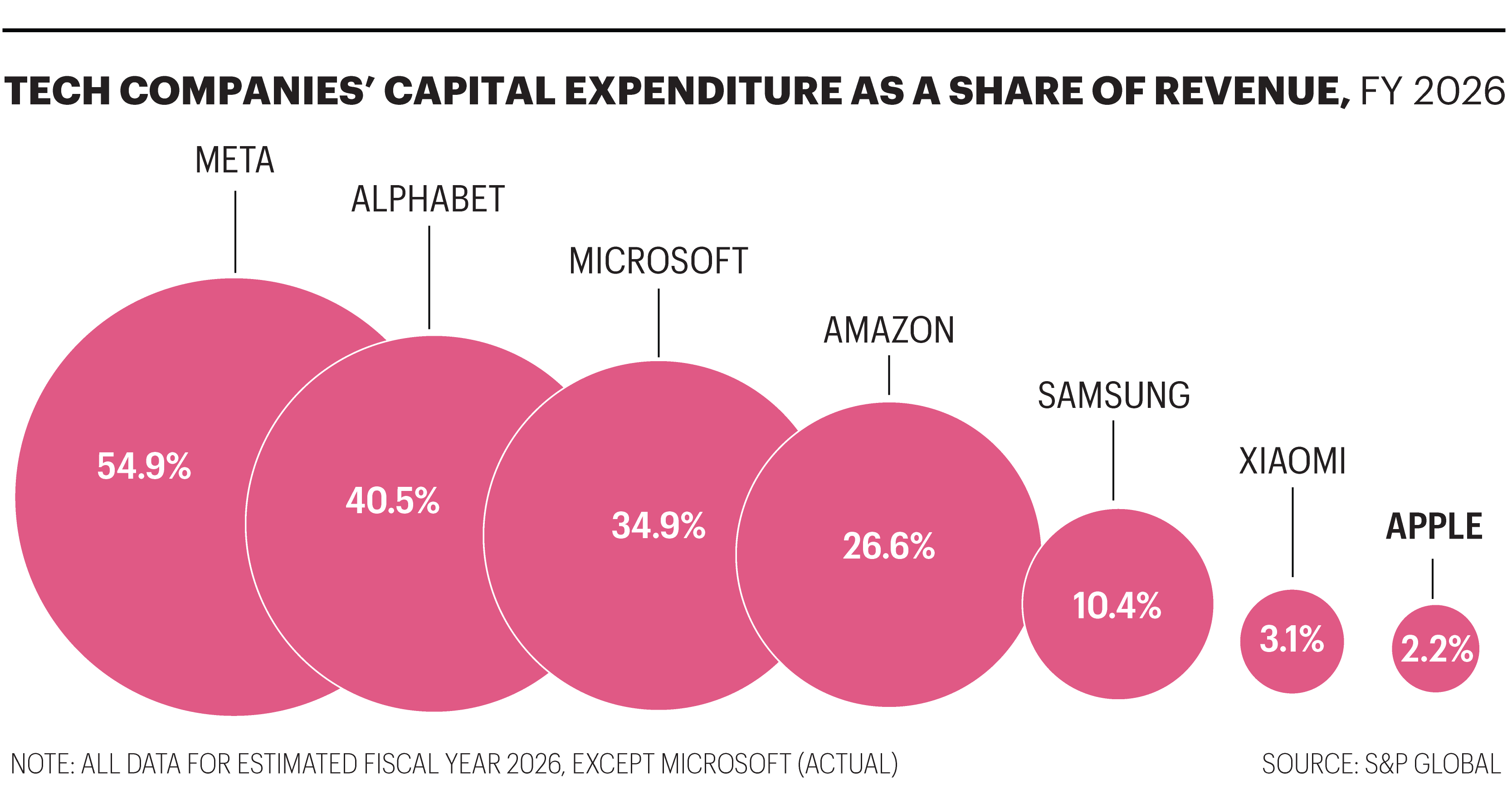
This article appears in the October/November 2026 issue of Fortune.
This story was originally featured on Fortune.com

Steve Jobs made Apple iconic. Tim Cook made it a $5 trillion behemoth
When Apple announced back in 2011 that its chief operating officer, Tim Cook, would succeed its ailing, revered cofounder and CEO, Steve Jobs, many commentators wondered whether he’d be able to fill such big shoes. Cook was an even-keeled, soft-spoken technocrat who knew how to get stuff done, but hardly a visionary. Could he oversee the creation of society-changing devices as his boss Jobs had? Jobs had a knack for knowing what people wanted before even they knew it, an instinct that made Mac computers, iPods, and, above all, the iPhone some of the most sought-after products of all time.
“I don’t see [Cook] as the kind of person who could ever have the focus, the kind of maniacal dedication [as Jobs],” CNET editor Molly Wood wrote, reflecting the consensus at the time.
Wood and other observers were largely right. Cook, who stepped down as Apple CEO on Sept. 1, never assumed the Jobs-like persona of tech tastemaker.
Under Cook’s leadership, Apple didn’t come up with a new world-altering device; in fact, it introduced a few clunkers along the way. But at that stage of Apple’s life span, the company didn’t need another Jobs. It needed someone who could build a sustainable business around its blockbuster products and put to rest the question that dogs many flashy startups: Could it thrive without its monomaniacal founder? Cook ultimately built his own respected legacy, not in spite of being unlike Jobs, but because of it.
“The founder story of Apple was so mythical and present that Tim Cook could have disappointed everybody by just being himself,” says Jo-Ellen Pozner, a business professor at Santa Clara University. “But by being himself, he actually exceeded all expectations.” Cook’s biggest contribution to Apple, Pozner argues, was transforming it from a company that reflected Jobs’ cult of personality to one grounded in its values; one that’s centered on its customers—not the CEO.
Jobs hired Cook in 1998, then promoted him to executive vice president of worldwide sales and operations in 2002, and later to COO in 2005. As CEO, operational prowess helped him make crucial, if not dazzling, changes that built up Apple’s supply-chain resilience and constructed a closed loop of products and services that locked in customers.
When the bar for new-product launches is the iPhone, it’s all but impossible to clear. Cook missed that mark, but he still oversaw the introduction of hardware that changed how the world interacts with technology and consumes information. The Apple Watch, unveiled in 2014, met initial hesitation in the market. For one, analysts worried that women would never take to such a utilitarian, only moderately attractive watch, but they have—in droves. Along the way, the Apple Watch turned into a multibillion-dollar business. Two years later, Apple’s AirPods headphones were a hit with consumers, giving Apple a stronger position in the wearables market.
Rather than developing another iPhone-like product, Cook squeezed more revenue from Apple’s iconic device. He built a subscription ecosystem around the iPhone that touches many aspects of daily life. Users now turn to Apple for their tunes (Apple Music), data storage (iCloud), entertainment (Apple TV and Apple Arcade), exercise (Apple Fitness+), and payments (Apple Pay), all platforms introduced during Cook’s tenure that contribute to a services segment that reported $109 billion in revenue last year, second only to Apple’s iPhone business.
Still, critics say, Cook erased the aura of invincibility Apple had under Jobs by overseeing the rollout of several duds: an initially poor Apple Maps, a Siri that’s still not great, the glitchy AirPower wireless charging mat, and an aborted decade-long effort to build a self-driving car.
Crises littered Cook’s 15 years as CEO, and he handled them remarkably well in part because of the relationships he nurtured with suppliers and world leaders alike. He built deep, long-term agreements with global component suppliers, often prepaying vendors and locking in manufacturing capacity years in advance. That leverage let Apple jump the line when materials or capacity ran short (a helpful advantage during COVID). “He created an incredibly efficient organization relative to the rest of the tech world,” says David Yoffie, a Harvard Business School professor who’s written case studies on Apple’s business.
As a tech exec with high emotional intelligence, Cook—dubbed “the Trump whisperer”—deftly navigated the Trump administration’s sometimes erratic demands, mollifying the president with $600 billion in promised U.S. investment and winning crucial exemptions from Trump’s 2025 tariffs on China-made electronics without endangering Apple’s business. That balancing act has occasionally cost Cook his dignity, however; in April, Trump boasted on social media that Cook had called him to “kiss my ass.”
Cook has also won over the constituency inside Apple. Pozner says that Cook was an especially effective CEO because Apple employees respected him for upholding Apple’s corporate values, such as user privacy, and they were mostly happy to follow his lead. She points to the company’s 2016 showdown with the FBI when Apple declined the agency’s request for access to data on a phone belonging to the San Bernardino mass shooter. “That refusal really told everybody that Apple sees your privacy as the most important thing,” says Pozner.
Cook also distinguished himself from Jobs by speaking out on social issues like racial and LGBT equality, access to education, female representation on Wall Street, and immigration reform. He announced publicly that he was gay in 2014, becoming the first out CEO in the Fortune 500 at the time. Cook told Fortune in 2015 that he made the decision to come out in hopes of helping other people. “You want to be the pebble in the pond that creates the ripple for change,” he said.
Investors have already rendered their verdict on Cook’s tenure as CEO. During his stint at the helm of the Cupertino giant, Apple shares rose 2,000%, boosting its market capitalization as high as $5 trillion in July, making Apple the second company to ever hit that milestone. (The company’s shares remain in the neighborhood of that all-time peak.) That created a cash machine like no other: Apple had $147 billion in liquidity at last count, giving it enviable firepower for acquisitions and product development.
That war chest is itself a kind of legacy. One measure of a CEO is what they leave behind, and Cook handed off a company flush with cash, stable in its business, and equipped with a well-regarded successor. (Cook, of course, isn’t letting go completely; he will stay on as Apple’s executive chair.)
Cook’s heir, John Ternus, made his debut as CEO at Apple’s September event that showcased its Duo folding iPhone. As he assumed the job, Ternus faced his own set of filling-the-shoes questions. But onstage, the hardware veteran seemed set on charting his own course, just like his predecessor had. “We’re going to change the world in ways we can’t imagine today,” he said.
This article appears in the October/November 2026 issue of Fortune.
This story was originally featured on Fortune.com

Meet the wealth manager who built a $38 billion firm and gave $100 million to the MBA program that launched him
In 1981, Jeff Thomasson earned his MBA from Indiana University’s Kelley School of Business, which is regularly ranked among the top programs. That launched him on the path to building his own wealth management firm, which now has more than $38 billion in assets under advisement.
Now, he’s giving back to the school that made him. Last week, IU announced Thomasson and his wife, Cheryl, had donated $100 million toward graduate education at Kelley. The gift will also go toward supporting IU’s Lilly Family School of Philanthropy and is the largest from an individual in IU history. In total, the Thomassons have donated more than $111 million to the school, and the board of trustees has approved naming the Kelley School’s graduate division after Thomasson.
“The Kelley MBA program set the foundation for my career, and this gift is our way of paying forward the investment people made in us,” Thomasson said in a statement. “We hope it encourages others to do the same, creating opportunities that will ripple across generations.”
How Jeff Thomasson built Oxford Financial Advisors
After earning his MBA from IU, where he specialized in investments and taxation, Thomasson founded Oxford Financial Advisors, a regularly top-ranked registered investment advisor (RIA) firm. The firm essentially began as a class assignment: Thomasson took the master’s essay he’d written on an ideal wealth management firm and turned it into a blueprint for his own company, he told Forbes in 2011.
Thomasson also came from a humble background, and the odds were stacked against him when he first established his firm. His father was a construction worker, was disabled in an accident, and died while Thomasson was in college—and his mother was a bank teller. A local oil distributor who had employed Thomasson since his teens actually paid for his college education, according to Forbes. He launched his firm at age 23 with $20,000 in grad school debt during a high-interest, high-unemployment economy in the early 1980s. Forbes reported that he grew his client base largely through cold calling, holding roughly 1,000 meetings per year and working six days a week.
At the time, Oxford Financial’s move to a fee-only model was pretty unconventional. His firm did that instead of collecting commissions, though fees are now an industry standard. Now the Indianapolis-based firm is one of the largest independent RIAs in the country, with more than $38 billion in assets under advisement, 25 managing directors across seven offices, and more than 700 family and institutional clients.
Betting on business education
The Thomassons’ gift comes at a moment when philanthropic donations toward higher education are both booming and under scrutiny. Philanthropic donations to education (mostly colleges and universities) hit an all-time high of roughly $92 billion in 2025, which was faster than any other category, according to a Giving USA report.
Yet meanwhile, dollars are pouring in as public faith in higher education wavers. Just 38% of Americans say they have a great deal or quite a lot of confidence in higher education, according to a July Gallup poll. That’s down from 57% when the firm began tracking the question in 2015. Main concerns cited include rising costs, doubts about return on investment, and the rise of AI in education, the poll shows.
And especially since the emergence of AI, the return on investment of an MBA has been called into question. Some executives say it’s not necessary, while others say it’s what made them. While Elon Musk, the world’s richest man and the CEO of Tesla and SpaceX, has argued corporate America has too many MBAs running it, others like Microsoft CEO Satya Nadella have praised the programs, saying it granted him the “knowledge and confidence to tackle complex questions at the intersection of business and technology.” Nadella earned his MBA from the University of Chicago’s Booth School of Business.
That tension is what makes a major gift to graduate school so notable. Meanwhile, other philanthropists, including Nvidia CEO Jensen Huang and MacKenzie Scott, have funneled their fortunes into higher education. Interestingly, the Thomassons’ gift will also support the future of giving through a donation to IU’s Lilly Family School of Philanthropy—the institution that researches and writes the Giving USA report documenting the giving boom that includes this donation.
This story was originally featured on Fortune.com

‘Skills nobody can take’: Meet a 20-year-old with a 4.5 GPA who skipped college for technical school to land an ‘AI-proof’ career
AI is barreling into white-collar industries, and more people than ever are trying to AI-proof their careers. Gen Z college graduates are increasingly landing in retail and food service as AI absorbs many of the entry-level roles that once served as their on-ramp.
Alejandro Rodriguez, a 20-year-old certified Porsche apprentice technician, wants Gen Z to know that college isn’t the only path to a respected, fulfilling career—especially one that’s less vulnerable to AI.
Rodriguez, a recent graduate of Universal Technical Institute, told Fortune that despite excelling in school, taking college classes, and earning a 4.5 GPA in high school after a lifetime in the gifted and talented program, he decided to follow his passion for cars. That drive didn’t take him to college, but to a technical institute.
Given his academic record, school administrators weren’t thrilled when he began floating technical school as a post-graduation plan instead of a four-year college. “It [college] was expected of me because of how I did in school,” Rodriguez said.
“When I told them that’s not what I wanted to do, I wanted to go to a technical school, they really tried to get me to apply for community colleges instead.” But after he pushed them to accept that it was his path, Rodriguez said they “finally conceded.”
Looking back, he says his school offered no pathway toward blue-collar work. “There wasn’t a single day we’d have a shop class, no woodwork, nothing hands-on,” he said, adding, “It would be nice to have those options that just weren’t there.”
Rodriguez says there has finally been a gradual shift toward taking blue-collar professions more seriously—but it’s a recent development, and AI has accelerated it.
“AI definitely has a part in it,” he said. “People are starting to come out of work, and they’ve got to do something. And our jobs kind of can’t be taken.”
A secure career, with no debt
The data backs up the instinct. An April 2026 Census Bureau paper found that hiring of workers ages 22 to 24 fell sharply in the industries most exposed to AI, such as software and information technology, even as hiring held steady in less-exposed fields. A companion paper co-authored by the same economist found that graduates shut out of those roles often shift into lower-paying retail or food-service work to pay the bills.
Then there’s the debt that often comes with a degree. The average Gen Zer carries $22,948 in student loan debt, according to the Education Data Initiative.
Luckily for Rodriguez, his parents were open-minded and let him explore an alternative that led to a secure career with almost no debt.
They had “always been supportive,” he said, and let him shadow a family member who worked as a Mercedes technician, telling him, “Well, if you think you want to do this, go work with him over the weekends and see if you like it.”
As high-achieving as he was in high school, he worked just as hard in technical school. “I was very set on what I wanted to do,” Rodriguez said. “I wanted to go to Universal Technical Institute, go through the Ford FACT program, and use that to get into the Porsche PTAP program. And I hit every single one of those goals that I set for myself.”
He believes he’s on his way to a lucrative career—though, like any job, he says the paycheck comes down to skill and work ethic. “It depends on your drive, how much you want to work, how much you want to invest in yourself.”
His advice for young people weighing the same path: “Always keep investing in yourself, because these skills nobody can take from you.”
This story was originally featured on Fortune.com

Polymarket: Gap between Eisenkot’s Yashar, Netanyahu’s Likud widens in former IDF chief’s favor
Gadi Eisenkot’s Yashar party continued to strengthen in election prediction markets on Tuesday, with Polymarket showing a significant gap between Yashar and Prime Minister Benjamin Netanyahu’s Likud on which party will win the most seats in the Knesset.
The market currently prices Yashar’s chances at about 62%, compared with about 39% for Likud. This is the highest figure we found in the available market record for Eisenkot’s party.
The shift has been sharp and has happened in just a few weeks. Polymarket data from about a month ago showed Likud leading with 59%, while Yashar stood at just 41%. Since then, the picture in the market has reversed, with a gap of nearly 20 percentage points in Likud’s favor turning into an advantage of more than 20 points for Yashar.
Trading volume in the market on which party will win the most Knesset seats has already surpassed $300,000. Under Polymarket’s rules, the market will be resolved based on the party or electoral list that wins the most seats in the election, rather than on which candidate ultimately succeeds in forming a coalition and becoming prime minister. Polymarket currently lists total volume in the market at just over $301,000.
The trend on Polymarket is also broadly consistent with the latest polling picture, although the question of who will be able to form a government remains more complicated and depends on the distribution of seats between the political blocs and the ability to assemble a Knesset majority.
Eisenkot tops Netanyahu on who will serve as PM in separate Polymarket
Eisenkot also leads in a separate market on who will serve as prime minister after the election. Polymarket currently prices his chances at about 52% to 53%, compared with about 29% for Netanyahu.
Polymarket figures, however, are not public opinion polls. They reflect the prices of prediction-market contracts, which change with trading activity and can therefore move quickly. The markets on the largest party and the identity of the next prime minister also measure different outcomes: Winning the most Knesset seats does not by itself determine which candidate will ultimately be able to form a governing coalition.
Mamdani calls for Netanyahu’s arrest ahead of NYC visit for United Nations General Assembly
New York City Mayor Zohran Mamdani once again called for Prime Minister Benjamin Netanyahu’s arrest warrant, issued by the International Criminal Court (ICC), to be honored, even as he acknowledged he lacks the authority to do so himself, in a CNN interview on Monday.
Mamdani told CNN that he believes Netanyahu to be “a war criminal and an architect of a horrific genocide of the Palestinian people.”
In July, Mamdani said he was investigating the possibility of arresting Netanyahu based on the ICC’s warrant, concluding after a few days that he could not legally do so, but still warning that Netanyahu was “not welcome” in New York City.
“I do believe that that is something that should be honored,” he told CNN, “because what we want to see, and we’ve been talking about this today, is a faith in our politics, a faith in accountability.”
He added, “If the International Criminal Court deems someone worthy of an arrest because of a violation of those laws, then who are we to say that anyone should be above that? And I think very clearly that everyone should be held accountable to it.”
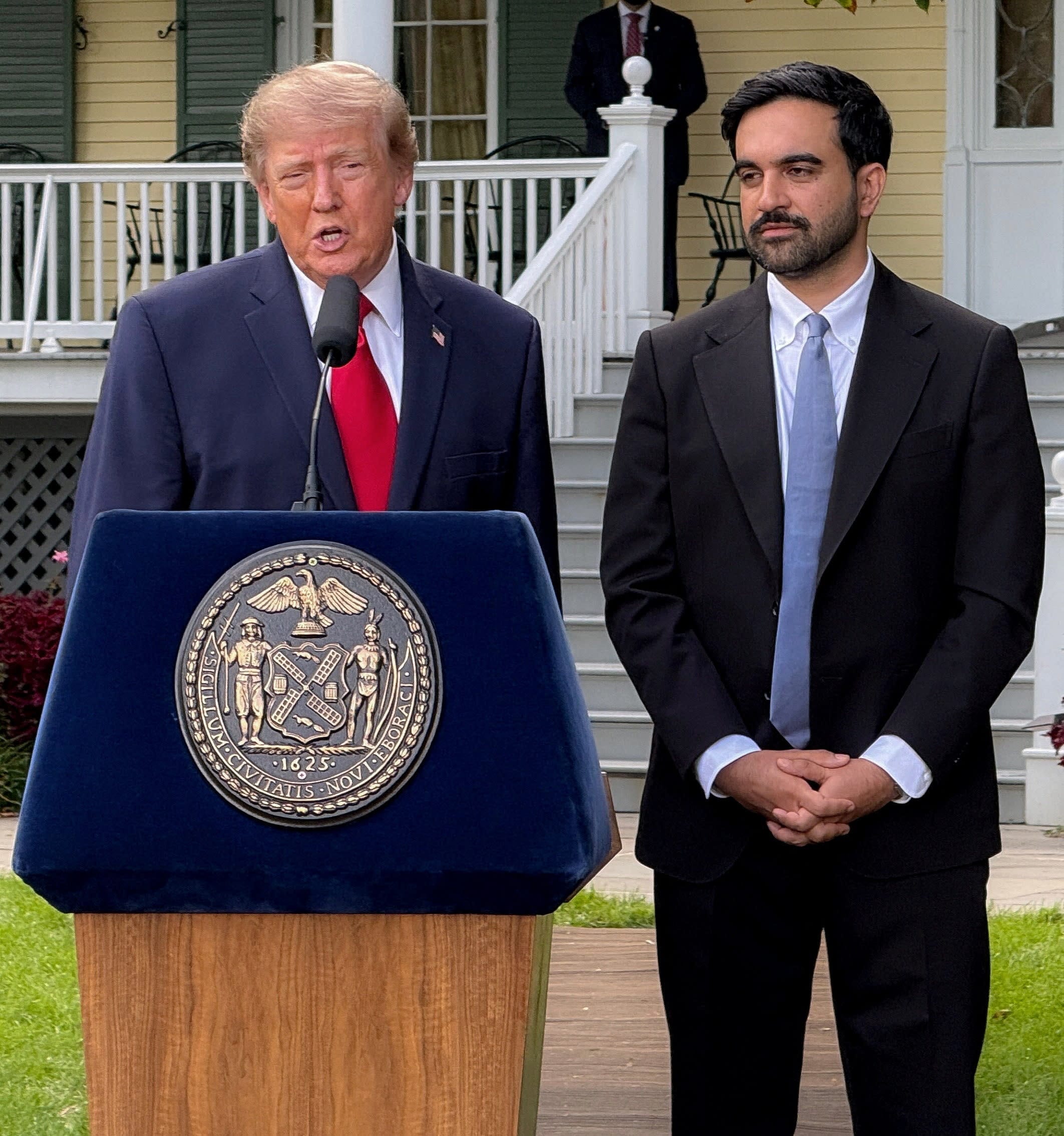
Netanyahu to visit NYC for UN General Assembly
Netanyahu is expected to visit New York City on Thursday to address the United Nations General Assembly.
His visit was originally planned to stretch several days and include a visit to Texas and a meeting with US President Donald Trump. However, it has been shortened, with the current plan being to arrive in New York on Thursday morning, address the UNGA at 2 p.m., and return to Israel soon afterward.
Protests are expected during his visit, although Mamdani has said he has no plans to join them.

Ofir Katz backs Ben-Gvir push to apply death penalty law for Neveh Tzuf terrorist
Coalition chairman Ofir Katz backed National Security Minister Itamar Ben-Gvir’s push to apply the Death Penalty for Terrorists Law to the terrorist who carried out the deadly attack in Neveh Tzuf, saying on Tuesday that the case met the law’s criteria.
In an interview with Aryeh Golan on KAN Reshet Bet, Katz said, “The murder in Binyamin meets exactly the criteria that Otzma Yehudit’s law addresses, one for one. We need to fight these criminal terrorists, and this is one of the tools for fighting them.”
“Most Knesset members voted in favor. I very much hope the High Court of Justice does not block what the legislature intended,” Katz added. “Force must be met with even greater force.”
His comments came after a small-scale meeting was held two hours before the start of Yom Kippur to discuss the security situation in the West Bank. During the meeting, Ben-Gvir raised the issue of imposing the death penalty on terrorists.
Ben-Gvir argued that the current case was the first to meet the criteria for applying the law.
Netanyahu interested in law’s application, asks IDF for information
Prime Minister Benjamin Netanyahu expressed interest in the issue and asked IDF officials for answers regarding the possibility of implementing the law in the current case.
The Military Advocate-General did not participate in the discussion, while IDF representatives who attended said that, from their perspective, there was no obstacle to doing so.
After the discussion, the limited cabinet decided to hold an additional professional meeting on the issue, with the Military Advocate-General participating, to examine how to proceed and whether the law could be applied.
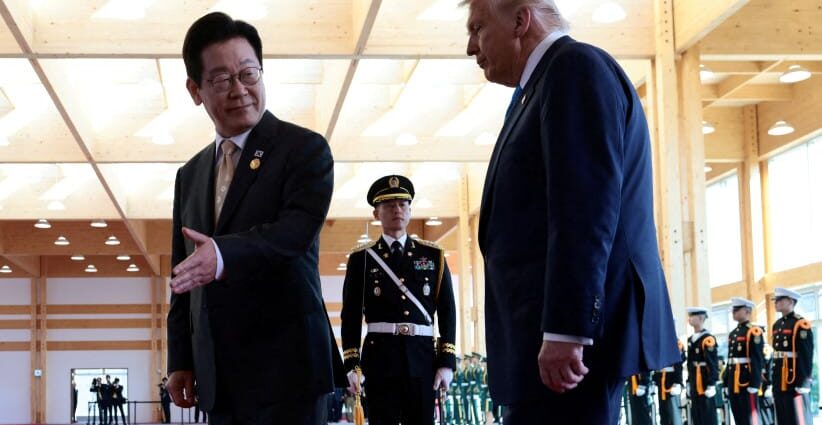
South Korea’s Lee urges US to ease North Korea sanctions to freeze nuclear programs, NYT says
South Korean President Lee Jae Myung has urged the United States to ease sanctions on North Korea in exchange for an agreement under which Pyongyang would freeze its nuclear weapons programs, The New York Times reported.
“I believe there is significant value in a trade-off between sanctions — which are not particularly effective anyway — and a stop to the development of additional nuclear weapons and intercontinental ballistic missile technology,” the newspaper quoted Lee as saying in an interview.
Lee also said that pursuing denuclearization under the current circumstances would accomplish nothing. Once a nuclear weapons freeze was secured, trust could be built through reciprocal incentives and concessions to eventually convince North Korea to reduce its nuclear arsenal, he said.
The current stalemate was simply too risky to be allowed to continue, Lee said, citing South Korean assessments that North Korea was now capable of producing, or may already be producing, an additional 10 to 20 nuclear weapons each year.
“Once it believes it has accumulated enough nuclear weapons and missiles to guarantee its survival, it will be tempted to export them to make money,” he said. “That will be a truly dangerous moment.”
Trump, Kim Jong Un set to have talks
South Korean officials have said that they are moving away from a “denuclearization first” policy in favor of a “peace first” approach towards North Korea, with Lee pledging last year to respect North Korea’s system and seek peaceful coexistence with Pyongyang.
Relations between the Koreas remain frozen, however. North Korean leader Kim Jong Un has abandoned Pyongyang’s reunification policy, describing the South as its most hostile state and ordering stronger frontline defenses.
US President Donald Trump is seeking to hold a new meeting with Kim, and the South Korean president has said that he is keen to see the talks happen.
Lee intends to present his vision for peace and coexistence on the Korean Peninsula to the United Nations this week during the UN General Assembly.
North Korea reports new missile test designed to give enemy ‘incurable headache’
North Korea said it successfully tested a new weapon showcasing “ultra-modern defense technology” on Sunday, in a launch overseen by leader Kim Jong Un, who praised progress in strengthening the country’s war readiness, state media reported on Tuesday.
Kim said the test, conducted by North Korea’s Missile Administration, demonstrated a significant development in the country’s armed forces’ ability to fight, and “the enemy will know better what such progress means without any explanation.”
“He affirmed that such reality would give the enemy an incurable headache and a very cruel and unavoidable blow,” Kim was cited as saying.
The KCNA report did not specify the type of weapon tested.
Photographs released by KCNA showed Kim, accompanied by his teenage daughter, inspecting a screen displaying a map of the country’s east coast and the “flight trajectory” of Hwasongpho-11-ma-1, likely part of a series of short-range ballistic missiles Pyongyang is upgrading.
North Korea fires ballistic missile into ocean
NK News, a Seoul-based website specializing in North Korea, said the projectile appeared to be an upgraded variant of a missile equipped with a hypersonic glide vehicle.
Mounting a glide vehicle on a missile means the warhead can maneuver to evade anti-missile defenses and also potentially be launched partially into orbit.
Hypersonic missiles are among a range of weapons that Kim has called for development to upgrade its nuclear capabilities.
The South Korean military said on Sunday that North Korea fired two short-range ballistic missiles off its east coast.
The test came days after Pyongyang accused the US of raising tensions on the Korean Peninsula through a series of military drills.
On Monday, the foreign ministers of South Korea, Japan, and the United States met on the sidelines of the UN General Assembly in New York to agree to coordinate closely on peace, stability, and denuclearization on the Korean Peninsula, according to Seoul’s foreign ministry.
Bonds Sink as Oil Extends Further Above $100
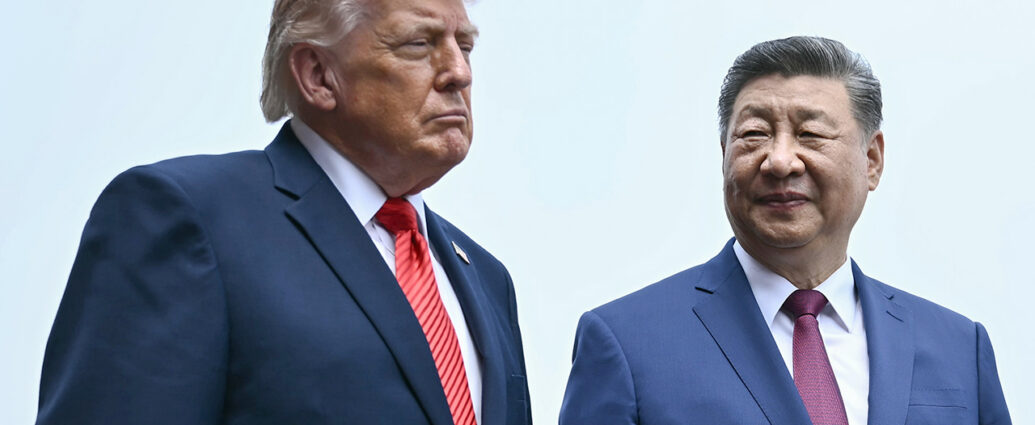
Democratic lawmakers urge Trump to preserve ban on Chinese automakers as he prepares to meet Xi
More than two dozen Democratic lawmakers are calling on President Donald Trump to maintain existing restrictions that effectively keep Chinese automakers and keep them out of the U.S. market ahead of his meeting with Chinese President Xi Jinping.
Trump is scheduled to meet with Xi on Thursday in Washington, where they are expected to discuss their trade agreement, AI, the conflicts in Ukraine and the Middle East and other key geopolitical issues.
Rep. Debbie Dingell, D-Mich., is leading a group of 27 lawmakers in pressuring Trump to preserve the U.S. restrictions on Chinese cars and vehicle technology.
TRUMP TO DECIDE WHETHER TO GREEN LIGHT US-CHINA ARTIFICIAL INTELLIGENCE ‘HOTLINE’ AGREEMENT: SOURCES
“We urge you to maintain strong protections against Chinese automobiles and connected vehicle technologies and ensure that China does not gain access to our market through direct imports, local production, and other avenues of circumvention,” the lawmakers wrote.
Dingell also issued a video message on social media on Monday in which she said she is working to protect U.S. auto manufacturing and ensure Trump cannot “make any deal that allows China into our country where they’re categorically not competing on a level playing field.”
“The communist Chinese government subsidizes its production by more than 50% of the cost,” she said. “They manipulate their currency, they use slave labor and now they want a foot in the door of our domestic auto industry, and they will try to destroy it. This year already China has exported more than 6.2 million passenger vehicles from China. That exceeds their total passenger vehicle exports for all of 2025, and now they’re coming for North America. Our workers are the best workers in the world, and they can compete with anyone when the game isn’t rigged and the risks extend far beyond just economic competition.”
“Today’s vehicles are supercomputers that are moving and collecting and transmitting all kinds of data. You don’t even think about it when you’re an autonomous vehicle. They’re getting all the data that’s in your personal iPhones, your computers and they drive by military installations or other companies and they are collecting data. That’s a national security threat,” the lawmaker continued.
Dingell said she introduced bipartisan legislation that has the support of a hundred of her congressional colleagues to ban China from “destroying our auto industry.”
“That’s why I reacted so viscerally when I heard the president say he would let China manufacture vehicles in the United States,” she said.
TECH POWER PLAYERS LAND SEAT AT TABLE FOR HIGH-STAKES DINNER WITH TRUMP, XI
GET FOX BUSINESS ON THE GO BY CLICKING HERE
“Let me be very clear: it’s not okay. American workers need our protection from anyone who will use unfair practices, wants to destroy our jobs and raise costs for everyone. I will always stand with the American worker and the manufacturing industry in these countries to protect jobs, our economy and our national security,” Dingell said.
The congresswoman appeared to be referring to Trump telling Fox News earlier this month that he would accept Chinese auto companies building cars in the U.S.
Reuters contributed to this report.

What does Russia’s election reveal about Putin’s grip on power, political opposition? – analysis
Unsurprisingly, Russian President Vladimir Putin’s United Russia party won a vast majority of seats in the State Duma elections.
Preliminary results released on Monday indicated that United Russia won 355 of 450 seats in the state’s lower house of the legislature, or approximately 57.8% of the vote, Russia’s Central Election Commission announced.
Notably, at least 86 veterans of the war in Ukraine are expected to take seats in the Duma, The Moscow Times reported.
This does not include the hundreds of regional officials elected across the world’s largest landmass. The CEC said it will release the final results no later than October 5.
United Russia’s victory was an unfortunate but obvious conclusion. It is concerning that this election maintains Putin’s hold on power and could lay the groundwork to further escalate the war in Ukraine, especially as many fear another round of draft orders.
However, it is vital to understand why this election turned out this way in the first place.
How does Russia manipulate election results?
Some analysts and exiled journalists called this election Russia’s most uncompetitive election in its modern history, not only because of the way politicians campaigned, but also because of how easily the Kremlin manipulated the results
First, the way Russia conducts its elections already makes the results easier to distort.
Russia offered electronic voting in 33 of its 89 federally recognized regions. The election also spanned three days. Both factors made it much easier to tamper with results in an already rigged election.
Secondly, Putin manipulated the fact that Russians even have elections in the first place as proof that his citizens support his increasingly authoritarian actions.
In several appearances before the elections, he pointed to the fact that Russia is having elections despite the conflict in Ukraine as proof of three different things.
His primary unspoken claim is that Russia is still democratic, or at least a “managed” democracy. His second claim is that Russians are supportive of the “special military operation” in Ukraine (Putin’s government does not call the war a war in an effort to delegitimize Kyiv and control the domestic narrative within Russia). Finally, he uses the fact that Ukraine has not had an election since it declared martial law over four years ago as proof that Zelensky runs a fascist regime.
“We have to stand for election, not be afraid to run for office,” Putin said in June. “And I would advise everyone to do the same. Especially in Ukraine.”
This is Russia’s first parliamentary election since it began the war in Ukraine. Over the course of election season, Putin also framed elections as a way to show support for the war.
“Your choice and resolve will show once again that millions of people stand behind our fighters,” Putin said last week. “Participating in the elections is our shared contribution to Russia’s victory.”
United Russia’s public approval rating was at a notable low of 33% before Friday
However, United Russia’s public approval rating was at a notable low of 33% before ballots were cast on Friday, according to Russia’s Public Opinion Foundation, which is regarded as Kremlin-friendly.
Still, Kremlin-friendly paper Kommersant claimed that this year had the highest voter turnout since the early 2000s, at about 60%.
This is part of the reason why, if the claims are true, it is so interesting that there was also notably little campaigning in this year’s State Duma race.
In more than one instance, Russian state TV channels were set to moderate a debate between candidates, but none showed up.
“Good evening, and welcome to tonight’s campaign speeches by candidates for Duma Electoral District 158,” one Russian state TV News anchor said in one clip circulating online. The camera then cuts to six empty podiums.
“The candidates haven’t turned up. So, it’s goodbye from me.”
It’s worth noting that Putin has never participated in a televised electoral debate during his nearly 20 years in office. It’s fair to assume that other members of his party have since followed suit.
However, the fact that this happened more than once shows that Russian politicians know that there is little competition. United Russia will take most of the seats in the federal government as well as state and local elections, and a few opposition candidates will make the cut to maintain a veneer of democracy.
Only four other parties cleared the electoral threshold
In the 2026 election, only four other parties cleared the electoral threshold: the Communist Party, the Liberal Democratic Party, New People, and A Just Russia.
Put together, they have 89 seats.
It can be hard to distinguish between these parties. Some obviously tilt more to the right or left, but on the “special military operation,” they all vote the same way and therefore function as systemic opposition.
Under Putin, the Kremlin has eliminated dissenting parties from the ballot. Russians now have only 17 registered political parties that can run in elections, down from around 100 in the 1980s.
A prime example is Yabloko, a left-leaning party that explicitly called for a ceasefire in Ukraine and was eliminated from the ballot this summer.
Some individual candidates have run, but 29 of at least 36 opposition candidates barred from the elections were Yabloko candidates, according to reporting by the Moscow Times and the independent Russian-language outlet Vyorstka.
Notably, some Yabloko candidates were fined for interacting with materials involving slain Russian activist Alexei Navalny. While they have denied the charges, they were still disqualified, fined thousands of rubles, and in some cases were declared “foreign agents”, the Kremlin’s label to brand someone a traitor with foreign influence.
This election in Russia has not changed anything. Because there is no way to see the real breakdown of the data, there’s no way to know how Russians actually feel about their government. That, in and of itself, is the biggest indicator of how rotted Russia’s political system is.
So United Russia will take another supermajority in the State Duma, the so-called opposition will continue to play by the Kremlin’s rules, and ordinary Russians will continue to live under a “managed” democracy.
No one ever thought the Kremlin would lose in this election. But it has shamefully signaled to its citizens and to the world that it’s not going anywhere.
Technology is not culture

Canada Eyes Asia Amid US Trade Frictions

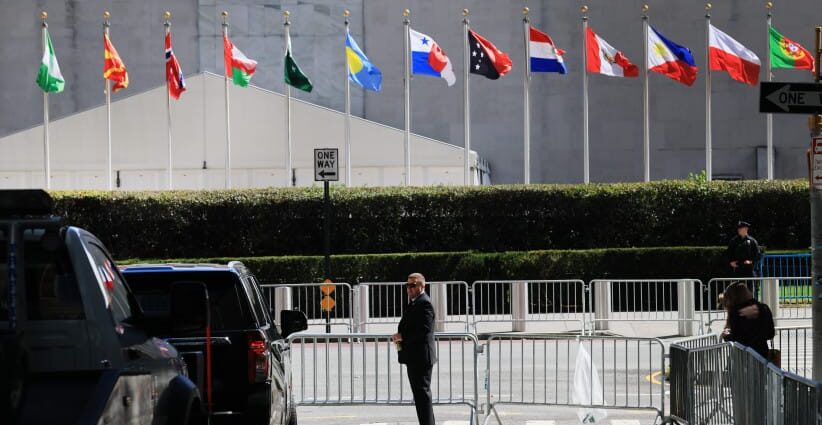
Netanyahu set for one of shortest US trips, to make UN speech with no meeting with Trump
Prime Minister Benjamin Netanyahu is expected to make one of his shortest visits to the United States, arriving in New York Thursday morning, addressing the United Nations General Assembly at 2 p.m. local time (9 p.m. Israel time), and departing for Israel shortly afterward.
Under the latest plan, the prime minister may not spend a single night in the United States.
The schedule has undergone several changes in recent days. At an earlier stage, Netanyahu was expected to arrive in the US as early as Wednesday, and a stop in Texas was later added, where a meeting with Elon Musk had been planned.
An advance team on Netanyahu’s behalf had already arrived in the state and begun preparations for the visit and meeting, with a possible visit to SpaceX facilities also under consideration. Over the weekend, the team was informed that the visit had been canceled. According to Israeli officials, Netanyahu canceled the Texas stop.
The cancellation significantly shortened the trip, which will now be devoted mostly to Netanyahu’s address to the General Assembly. He is expected to arrive in New York on the day of the speech itself and leave the city later that same day.
The Texas stop also presented logistical complications. Officials described it as a “complex event,” in part because “Wing of Zion” cannot fly from Israel to Texas without a refueling stop. Some members of the delegation might also have been required to travel separately on commercial flights. However, there was no indication that the logistical difficulty was the reason Netanyahu decided to cancel the visit.
A meeting with US President Donald Trump, which Netanyahu’s aides had sought to arrange, is also not planned under the current schedule. A senior US official said Netanyahu was not among the leaders Trump was expected to meet on the sidelines of the General Assembly. According to another US official, Netanyahu is expected to arrive in New York only after Trump has already left the city.
Trump, Netanyahu schedules do not overlap under current plans
Efforts to arrange a meeting between the two continued even as the planned visit broadened. According to the schedules currently known, their stays in New York will not overlap.
Trump is expected to be in New York at the beginning of the week and address the General Assembly on Tuesday. During his stay, he is scheduled to hold a series of meetings with foreign leaders, after which the focus will shift to Washington, where a summit with Chinese President Xi Jinping is expected on Thursday.
Iran, trade between the two powers, Taiwan, and artificial intelligence are expected to be among the issues on the agenda. When Netanyahu takes the UN podium in New York on Thursday, Trump is expected to be in Washington.
Barring a last-minute change, the most senior US official Netanyahu is expected to meet will be Secretary of State Marco Rubio. A meeting between the two is planned, although the Prime Minister’s Office stressed that the final schedule for the visit has not yet been finalized. Rubio is already in New York and is holding diplomatic meetings as part of UN General Assembly week.
Alongside contacts with the US administration, Israeli officials also sought to explore the possibility of meetings with leaders from Gulf states. At this stage, no such meetings are known to have been finalized, and the shortened stay in New York further narrows the window for bilateral meetings.
Trump himself is expected to meet leaders from Gulf states during General Assembly week, with Iran and the regional situation expected to be central topics in the talks.
Netanyahu’s speech will take place during an especially busy diplomatic week, with Iran and the wars in the Middle East at the center of the agenda. Nearly 130 heads of state and government are expected to attend the General Assembly.
Trump is expected to address Iran in his speech and in his discussions with Gulf leaders. Iran, the regional situation and the war in Gaza are also expected to feature in the Israeli delegation’s diplomatic contacts during the visit.
Netanyahu is also expected to face a hostile reception inside the General Assembly hall. Israel’s Ambassador to the UN, Danny Danon, estimated that protests would take place during the speech, after many representatives walked out of the hall as Netanyahu began speaking last year. Demonstrations against the prime minister are expected outside the UN compound, alongside pro-Israel events.
New York is already carrying out broad security preparations ahead of General Assembly week. Thousands of police officers are being deployed across the city alongside the Secret Service and other security agencies as part of the operation to protect dozens of leaders and delegations.
No specific threat known against General Assembly, US security officials say
Local security officials said that, as of now, there is no known specific threat against the General Assembly, but security around the UN compound and major traffic routes has been significantly reinforced.
The visit also comes against the backdrop of sharp statements by New York City Mayor Zohran Mamdani against Netanyahu. Mamdani has previously raised the possibility of acting on the basis of the arrest warrant issued against the prime minister by the International Criminal Court, but later clarified that any action would be subject to US law. The United States is not a member of the International Criminal Court.
Danon has previously said that Mamdani’s remarks make Netanyahu’s arrival in New York all the more important.
The plan that initially guided preparations for the visit looked different only a few days ago. The Texas stop and meeting with Musk have been removed, and a meeting with Trump does not appear on the schedule.
Unless there is another change, Netanyahu is expected to conclude one of his shortest visits to the United States on the same day he arrives, possibly without spending even a single night in the country.

Palestinian activist Mahmoud Khalil calls for God to ‘hold Israel accountable’ at Yom Kippur event
Palestinian activist Mahmoud Khalil spoke at a Yom Kippur Yizkor event arranged by multiple left-wing Jewish groups in New York City on Monday, condemning Israel’s activity in Gaza, Lebanon, and Iran.
“It’s tough to repent at a time where our tuition fees, our tax dollars, our votes are being used to kill, to maim, to displace Palestinians,” he said. “To displace Lebanese, to bomb Iranians, and just really to forget that we are all humans.”
He added a prayer that God “remember that Israel is committing genocide.”
NOW: Mahmoud Khalil Speaks at Yom Kippur Yizkor Service for Gaza at Grand Army Plaza Brooklyn NYC
Video By Jonathan Fernandes | Licensing @FreedomNTV Desk@freedomnews.tv pic.twitter.com/IVn6ZB9O15
— ☀️✨ Rachel Speaks Out 🌙💜 (@Rachelspeakout1) September 22, 2026
Khalil, who has previously been arrested following anti-Israel protests he conducted at Columbia University, also called for unity against Israel and its warfare, saying the “Zionist project” and “this particular fascist government in this country” were trying to make the people forget “that we are all one. That we are all humans.”
Khalil, concluding his speech, called for an end to the bombing of Gaza, an end to “the engineered famine,” an end to “this country’s money paying for it,” and an end to “the lie any of it was inevitable.
“May God, through us all, all of us, hold Israel accountable,” he said.
Left-wing Jewish groups atone for ‘genocide’
The event was organized by the left-wing group Rabbis for Ceasefire, along with Jewish Voice for Peace, Jews For Racial & Economic Justice, IfNotNow, and the American Council for Judaism.
It centered on the Yizkor prayer, part of the Yom Kippur liturgy which commemorates those who have died.
As Khalil spoke at the event, a banner above him read “Refuse, Remember, Recommit,” while a plaque on his podium read, “for the sin of genocide we atone.”
Also in attendance at the event were Jewish Democratic Congressional candidate Brad Lander, Palestinian-American Democratic Senate nominee Aber Kawas, and several New York City Council members.

What will Israel bring to its most important alliance? – opinion
For decades, the US-Israel relationship has been defined largely by what America provides Israel: military aid, diplomatic backing, and security guarantees. But that model is no longer enough for the world now taking shape.
As Washington redefines what it expects from its closest allies, Israel faces a strategic question of its own: What unique value can it bring to the United States in the next decade? The answer may determine not only the future of the alliance, but Israel’s place in the emerging technological order.
The new US National Security Science and Technology Strategy offers a clear clue. It states that the United States will increasingly use the scientific and technological capabilities of its allies as a “force multiplier” for national security. In other words, the alliances of the future will not be measured only by military commitments, but by the technologies trusted partners can build together.
This matters because the traditional alliance model is changing. The post World War II model was built primarily around US-provided defense: American military presence, security guarantees and assistance, and above all – American nuclear deterrence. That foundation remains vital. But Washington is also asking capable partners to carry more of their own security burden, while the technologies that determine economic strength, military advantage, and geopolitical influence increasingly sit outside the traditional defense relationship.
A 21st-century alliance therefore needs a second pillar: technology.
Israel is well positioned to be among the first US partners to institutionalize this new model.
The US-Israel relationship already demonstrates why partnership should be understood in terms of mutual value, not simply assistance. According to MIND Israel’s assessment, every dollar of American security assistance to Israel generates approximately four dollars in direct economic value for the United States.
The existing security relationship functions as an investment in a shared security and technological ecosystem, generating value on both sides. The next step is to apply the same logic to the technologies that will shape national power in the decades ahead.
This is the purpose of the US-Israel Tech Alliance proposed by MIND Israel and the Special Competitive Studies Project. Developed through a Track 1.5 process involving more than 50 experts from government, industry, and academia in both countries, the proposal sets out a practical framework for strategic technology cooperation across artificial intelligence, semiconductors, advanced energy, quantum, bioconvergence, and critical materials. Its core principle is complementarity.
The United States brings assets few countries can match: capital, frontier research, national laboratories, advanced computing infrastructure, industrial scale, procurement power, and global reach.
Israel contributes different strengths: speed, experimentation, and the ability to solve complex engineering problems under severe constraints. Its capabilities in AI efficiency and cybersecurity, semiconductor architecture, quantum systems, advanced materials, energy technologies, and critical-material processing can help address specific technological bottlenecks facing the US.
The point is not that either country should become technologically self-sufficient. The goal is a trusted ecosystem in which each partner contributes differentiated capabilities, creating greater resilience and strategic advantage together than either could achieve alone.
Private companies already cooperate extensively across the two economies. But private-sector cooperation by itself cannot build a strategic alliance. Governments must create the ground on which companies, investors, and researchers can build.
That means shared access to research infrastructure and national laboratories, pathways into federal programs and procurement, regulatory and standards coordination, strong intellectual-property protections, and financing mechanisms appropriate for deep technologies with long development cycles.

Public funding should serve as seed capital, not as a substitute for the market. Its purpose is to reduce risk, remove barriers, signal strategic demand, and unlock much larger flows of private capital. The government provides the infrastructure, incentives, and strategic direction. Industry and academia provide innovation, investment, and scale.
There is also a less tangible but equally important dividend. Alliances endure not only through agreements between governments, but through relationships between people. American and Israeli scientists conducting research together, companies building technologies together, business leaders creating new jobs in both countries and driving economic growth, and young engineers moving between laboratories and institutions create bonds that survive political cycles.
The US-Israel relationship has always been unusual. It has never fit neatly into a simple patron-client model. Its strength has come from shared interests, shared values, and the ability of both countries to contribute to one another.
The new American technology strategy creates an opportunity to translate that history into a model suited to this century.
A US-Israel Tech Alliance could become an early model for strategic partnerships centered on the capabilities trusted allies can develop together. That is not a retreat from the US-Israel alliance. It is how we strengthen it for the age ahead.
Israel monitoring efforts to disarm Iraqi pro-Iranian Shi’ite militias, concerned they may attack
The Iraqi government has given the country’s pro-Iranian Shi’ite militias until the end of September to disarm, as Israeli defense officials closely monitor the situation amid concerns that the groups could seek to “flex their muscles” and launch attacks against Israel after the deadline expires.
So far, the militias have rejected the demand, but have conveyed messages that they would agree to discuss disarmament only after a complete withdrawal of US troops from Iraq.
The pro-Iranian Shi’ite militias in Iraq are funded by the Iranian regime, and some of their weapons depots are located near Iraq’s borders. The militias have drawn increased attention from Israel’s intelligence community in recent weeks.
In recent years, the Shi’ite militias in Iraq have aligned themselves with Iranian and Houthi policy and launched cruise missiles and drones toward Israel. The IDF responded, while Israel’s political leadership in Jerusalem sent clear messages to Baghdad that unless the militias were restrained, the Israeli response would intensify accordingly.
The challenge facing Israeli intelligence, which, according to foreign reports, has established bases throughout Iraq to closely monitor Iranian activity, is the country’s vast geographic expanse. The enormous distances pose difficulties for any intelligence organization attempting to locate the key centers of activity of the Iran-backed militias and strike their main weapons depots.
US played central role in pushing Iraqi government to restrain pro-Iranian Shi’ite militias
During the war, as well as during Operation Roaring Lion, the United States played a central role in mediation and in conveying messages to the Iraqi government demanding that it restrain the pro-Iranian Shi’ite militias. According to the US position, the militias, like the Houthis, are undermining stability in the Middle East. The Americans also called for the groups to disarm, warning that otherwise they would respond militarily.
Following American pressure, though not because of it alone, the Iraqi government issued an ultimatum ordering the militias to disarm and hand their weapons over to the state. In exchange for the disarmament, the Iraqi government offered the withdrawal of US military troops from Iraq.
The Iraqi ultimatum expires at the end of September. The pro-Iranian Shi’ite militias, led by Kataib Hezbollah, have flatly rejected the demand to disarm. They have, however, agreed to discuss the issue on their own terms, and only after US troops withdraw.
Israel, US officials concerned Iraqi militias may demonstrate strength through attacks
Israeli defense officials and the United States are concerned that once the ultimatum expires, the militias could seek to demonstrate their strength by attacking US bases in the Middle East and the Israeli home front, with encouragement from the Iranian regime.
Iran’s Islamic Revolutionary Guard Corps (IRGC) is seeking to preserve its strategic alliance with the militias, as well as with the Houthis and Hezbollah. These groups give Tehran a way to maneuver amid intense US pressure over the Strait of Hormuz and on the Iranian economy.
Houthis push for control of Yemen highlands as Trump is said to have called off strikes
Houthi fighters pushed to seize strategic heights in Yemen on Monday to cut off the Red Sea coast from remaining areas held by Saudi-backed forces, after a report that US President Donald Trump had called off American strikes on the group at the last minute.
A lightning advance by the Iran-backed group this month has extended the wider Middle East conflict to a new theater and further threatened global energy supplies. The US has so far rebuffed repeated pleas from Saudi Arabia’s Crown Prince Mohammed bin Salman to join the fight in Yemen.
The New York Times reported that the Trump administration had prepared to launch airstrikes on Sunday against the Houthis after fresh pleas from the Saudi crown prince. But the newspaper said Trump called off the airstrikes at the last minute, even as troops were loading bombs onto aircraft.
Reuters could not verify the Times‘ report. The US military’s Central Command referred questions to the White House. The White House did not immediately respond to an email seeking comment.
Rashid al-Alimi, the Riyadh-based president of Yemen’s Saudi-backed, internationally recognized government, asked Trump by phone on Sunday for US military help, four sources told Reuters. Two of the people, one Yemeni and one Western, said Trump made no direct pledge of support during the call.
Riyadh was apparently struck on Saturday for the first time since the escalation began, with explosions heard and smoke visible near the airport. The Houthis said they had fired missiles at the Saudi capital; the Saudis have not commented.
British Prime Minister Andy Burnham said on Monday he had agreed to Saudi Arabia’s request to provide defensive air-to-air refueling for a limited time, a move he described as helping to stabilize the wider region. Britain and Saudi Arabia have been close military allies for decades, with Britain serving as one of the kingdom’s largest arms suppliers.
A French diplomatic source said Paris was ready to help secure Saudi Arabia’s energy infrastructure in Yanbu on the Red Sea coast and the East-West pipeline corridor.
Where have the Houthis advanced to?
The Houthis, who have controlled Yemen’s capital since 2014, seized the country’s Red Sea coast this month in an advance that routed forces of the Saudi-backed government.
Saudi Arabia has launched hundreds of strikes in recent days on the fighters’ positions in the highlands, the Houthis say.
According to the United Nations, nearly 700 people have been killed and thousands injured in the fighting. Nearly 130,000 Yemenis have fled their homes within Yemen, and more than 3,000 have fled by boat across the Red Sea to Africa.
Five Yemeni military sources told Reuters the Houthis were now seeking to seize strategic heights, known as the Kahboub Mountains, in two provinces, Taiz and Lahij, which separate the Red Sea coast from the government-held south.
Fighting has centered on the outskirts of the remote mountain Al-Wazi’iyah district in Taiz province, and Ras al-Ara along the Indian Ocean coast between the Bab el-Mandeb Strait at the Red Sea’s mouth and the government’s base in Aden, the sources said.
“The government forces appear to remain largely in a defensive posture following the loss of the Bab el-Mandeb area, while the Houthis are seeking to maintain the momentum of their advance, despite being exposed to intensive air strikes,” said Mohammed Al-Qadhi, a veteran Yemeni journalist now working as a political analyst.
“These mountains could become critical to determining whether the Houthis succeed in consolidating their recent territorial gains or whether government forces will be able to retain the positions necessary to mount a counteroffensive.”
Will Trump strike the Houthis?
The surge in fighting between Saudi Arabia and the Houthis creates a dilemma for Trump, under pressure to help Saudi allies but anxious not to further expand the deeply unpopular war he launched alongside Israel as “Operation Epic Fury” in February against Iran.
The US bombed the Houthis for two months in early 2025, but Trump called off those strikes after reaching a ceasefire, and has kept out of the Yemen conflict since.
The Houthis’ Red Sea advance risks cutting off the main alternative route Saudi Arabia has used for oil exports that bypass disruption through the Strait of Hormuz.
Saudi Arabia has responded by increasing shipments through the Strait of Hormuz, where a small number of tankers are increasingly shuttling back and forth to bring out oil, charging record fees of as much as a quarter of the cargo’s value to brave the wartime risk. They then transfer the oil to other ships in the Indian Ocean, bound for customers in Asia or elsewhere.
Traders say Saudi Arabia has sold 60 million barrels of oil both this month and next, to be loaded from off Oman on the far side of Hormuz. Satellite data shows Saudi exports through Hormuz reaching 2.9 million barrels per day in recent days, up from just 700,000 in August.
That has helped cap the global price of crude, which has retreated closer to $100 a barrel after approaching $110 last week. But consumers and industries are still paying record prices for some refined fuels, with the US retail price of diesel hitting another all-time high on Monday.
In the latest reported attack in Hormuz, Britain’s UKMTO maritime security agency said a ship sailing into the strait had been hit with a projectile, causing minor injuries to crew. It also said it had learned of an earlier strike on a gas tanker.
Diplomacy in the wider conflict has largely been stalled since a June interim ceasefire agreement between the US and Iran collapsed within weeks. Iran’s President Masoud Pezeshkian is due to fly to New York on Tuesday to attend the UN General Assembly.

Saudis may seek help from Israel as current alliances prove insufficient against Houthis – analysis
The sharp escalation between Saudi Arabia and the Houthis has raised concerns that the confrontation could spread further across the region, with Washington worried that the conflict could intensify and potentially lead the Houthis to resume direct attacks on Israel, diplomatic officials told Maariv on Tuesday.
The officials said the key question is whether the situation can be brought under control or whether the confrontation will continue to escalate. Among the regional consequences being considered is the possibility that the Houthis could again try to attack Israel directly, as they did last year.
The concerns come after the US State Department updated its security guidance for American citizens in the Middle East, warning that the military confrontation between the Iran-backed Houthis and Saudi Arabia could escalate rapidly. The US Embassy in Israel also issued an alert urging citizens to remain vigilant and consider the possibility of flight disruptions, airspace closures, and transportation disruptions.
Diplomatic officials stressed that the updated and expanded warnings should not necessarily be seen as a sign that immediate developments are expected. The wording, they said, also reflects the administration’s responsibility to warn American citizens in the region and make clear the seriousness of the situation should the confrontation intensify.
The warnings come against the backdrop of the latest escalation in the confrontation. Saudi Arabia confirmed that the Houthis launched a ballistic missile toward Riyadh, which was intercepted by the Saudi air defense system.
It was the first time the Saudi capital had been targeted since the current wave of escalation began. Residents reported hearing an explosion, and smoke was later seen near Riyadh’s airport. No casualties or damage were reported.
The Houthis claimed they attacked “sensitive targets” in Riyadh with missiles and drones, as well as facilities belonging to oil giant Aramco in Yanbu. Saudi Arabia said it had also thwarted attempts to strike civilian infrastructure in Yanbu, Taif, Baish, and the Farasan Islands. Houthi claims that Aramco facilities were hit have not been verified.
Saudis divide efforts between defending territory, Red Sea shipping
The wave of attacks has forced Saudi Arabia to divide its efforts between defending cities and infrastructure from missiles and drones, securing energy facilities, and protecting shipping routes in the Red Sea.
In recent months, the Houthis have expanded their attacks on Saudi Arabia and shipping in the region, and in July they declared a naval blockade against the kingdom. Any disruption to traffic through the Bab al-Mandab Strait could significantly increase the economic and strategic cost of the confrontation.
Amid the tensions, US President Donald Trump returned to the White House from Camp David earlier than planned. No official explanation was given for the schedule change, and no confirmation links his early return to developments in the Middle East.
The return came as discussions were underway in Washington over the desired extent of US involvement in the confrontation. US media reported that options for action against the Houthis were examined while Trump was at Camp David, but no US decision to launch a strike was announced.
Washington has so far refrained from direct military intervention alongside Saudi Arabia in the current round of fighting and has not agreed to Riyadh’s request to take military action against the Houthis.
Israel is closely monitoring developments. Israeli officials believe the pressure facing Saudi Arabia could also affect Riyadh’s diplomatic calculations.
“Such an escalation could actually help the Abraham Accords,” the officials said.
Israeli officials: Saudis recognizing alliances insufficient for Houthi threat
According to the officials, the Saudis are under pressure and are discovering that the relationships and alliances they have built are not currently providing a complete response to the threat. If the Houthi threat intensifies and the assistance the kingdom receives from its allies remains limited, they assess that Israeli capabilities could carry greater weight in the eyes of the Saudi leadership.
Saudi Arabia has been working in recent weeks to secure outside assistance. According to reports, amid a shortage of interceptors, it has requested air-defense assistance from France, the UK, Pakistan, and Egypt.
Crown Prince Mohammed bin Salman also traveled to Cairo and, according to the reports, sought Egyptian support against the Houthis.
Security cooperation among Saudi Arabia, Turkey, and Pakistan is also being tested by developments on the ground.
Turkish Foreign Minister Hakan Fidan said Ankara was prepared to assist with Saudi military needs under the defense agreement among the three countries. Pakistan has so far not joined military action against the Houthis.
The gap between Riyadh’s security needs and the assistance it is actually receiving is at the heart of the Israeli assessment. Israeli officials point in this context to the experience and capabilities Israel has accumulated in intelligence and air defense against the Houthis.
As the campaign continues, they assess that those capabilities could also become part of Saudi Arabia’s broader considerations.

MDA hosts knowledge-sharing workshop for Latin American, Spanish emergency organization officials
A delegation of 21 senior executives and managers from emergency medical services organizations in Latin America and Spain arrived in Israel last week for a professional workshop with Magen David Adom.
As part of the Foreign Ministry’s 545 Project, delegation members from Spain, Mexico, Panama, Peru, Argentina, the Dominican Republic, Bolivia, Chile, and Honduras visited MDA’s national headquarters in Ramle, toured southern Israel, and visited the MDA station in Jerusalem.
The visit was organized through cooperation between the Foreign Ministry and MDA and was intended to share Israeli knowledge and experience in emergency medicine with professionals and decision-makers from abroad while strengthening professional ties between MDA and emergency medical organizations worldwide.
A national asset for Israel’s resilience
This “knowledge that Magen David Adom has accumulated over the years, in routine and emergency situations, is a national asset that helps strengthen the resilience of the State of Israel,” said MDA Director-General Eli Bin.
“The visit of senior officials from the emergency systems from Spain and Latin America to Israel is an expression of the strength of international cooperation based on shared values and a single goal – saving lives,” he added.
Irit Savyon, head of the division at the Israeli Center for International Cooperation and Assistance at the Foreign Ministry, supported this statement by calling it “an important milestone in strengthening bilateral relations and preparedness for emergency situations.”
Throughout the week, delegation members were introduced to the operations of MDA’s 101 National Emergency Hotline and the technologies the organization uses to receive calls, dispatch teams, and manage incidents in real time. They also received an overview from the Health Ministry of Israel’s healthcare system during routine and emergency situations.
The workshop continued with tours of MDA’s blood services laboratories and the national breast milk bank the organization operates. Delegation members also underwent professional training related to mass-casualty incidents.
At MDA’s training and simulation center at its Ramle headquarters, the delegation explored the advanced training system used for Israeli emergency medical teams, experienced the simulators used for training, and learned about the organization’s working methods and professional models.
Among the delegation members were senior officials from national emergency systems in their respective countries, including the director of Civil Defense of Panama, the minister of 911 and his deputy, the deputy emergency minister of Honduras, and the director of the emergency system of the Neocane Province in Argentina.
“Coming to Israel was truly an enriching experience. Seeing first-hand what world-class practices look like inspired us to think about what we can achieve in our own country,” said Luis René Suasó, Honduras’ Deputy Minister of the Permanent Committee for Emergencies (COPECO).
“We are very pleased and grateful for this opportunity, and look forward to taking all this knowledge back home and putting it into practice,” he added.
Mass-casualty response and MDA’s rescue fleet
During another professional session, delegation members received an in-depth presentation on MDA’s operational approach to mass-casualty incidents and lessons learned from responding to large-scale emergencies.
They were also introduced to MDA’s specialized rescue vehicles, including intensive care buses capable of treating and evacuating up to seven critically ill patients, Unimog vehicles used to evacuate casualties from difficult terrain, emergency motorcycles, and off-road vehicles.
In addition, the delegation received an overview of the work carried out by MDA’s 39,000 volunteers and employees during routine operations, emergencies, and wartime, particularly during operations Roaring Lion and Rising Lion.
The delegation continued its professional tour with visits to Ichilov Hospital in Tel Aviv before traveling south to the Nova complex and to Barzilai and Soroka hospitals, both of which have extensive experience treating casualties from conflict along Israel’s southern border.
While in the South, delegation members visited the MDA station in Sderot, where they heard about the organization’s role during the October 7 massacre and met the family of the late MDA paramedic Amit Mann, who was murdered by terrorists while treating wounded people in Be’eri.
In the final part of the workshop, the delegation traveled to Jerusalem and visited the MDA station in the capital.
Members met servicemen and women from across the city’s communities who serve at the station and were reportedly deeply impressed by their commitment to saving lives.
At the station, they were also introduced to a specialized emergency vehicle that enables MDA teams to manage complex incidents in the field.
“What I appreciated most was not only seeing how MDA operates, but also having very open and practical discussions about the challenges we face in pre-hospital emergency medicine,” said Jorge A. Morales, Medical Director of the Emergency Medical Services System of Catalonia, Spain.
He noted the differences between his own country’s systems and MDA’s operations: “coming from the Catalan Emergency Medical Services System and other systems in Latin America and Spain, it is very interesting to compare the experience and perspectives of the different systems, and to understand how much we can learn from each other.”
Over the years, MDA has partnered in “transferring knowledge and assisting in the establishment and development of emergency medical systems in various countries.” Some members of the current delegation had previously taken part in professional programs conducted in cooperation with the organization.
The knowledge-sharing initiative is intended to continue in the future. “Upon the participants’ return to their countries, they are expected to apply the tools they have acquired and serve as goodwill ambassadors for Israel,” says Sayvon.

CNN, MS NOW and Politico sue Trump over White House press ban, citing First Amendment
CNN, MS NOW, and Politico sued President Donald Trump and other members of his administration on Monday for banning them from White House grounds, saying the action violated their First Amendment rights to free speech and a free press under the US Constitution’s First Amendment.
The news outlets are seeking a temporary restraining order to block Trump’s action in federal court in Washington, D.C., with a hearing scheduled for Wednesday.
“This ban could not be a more direct assault on the First Amendment nor a more blatant violation of our most fundamental constitutional principles,” the lawsuit stated.
“Left unchallenged, this threatens press freedom and the public’s right to independent journalism free from government interference,” the outlets wrote in a joint statement. “The government does not decide what the press reports or publishes.”
Trump announced the ban on Friday on social media, saying those news outlets “shouldn’t be able to constantly write or report FICTION and LIES when they’re covering the President of the United States,” and defended it in another post on Monday.
“The White House is not instituting an assault on the Free Press, something which I cherish. It is instituting an assault on the FAKE NEWS. It is a threat to our National Security, and must be stopped, NOW!” Trump wrote on Monday, without providing evidence of a national security threat.
Trump’s unprecedented campaign against the media
Past presidents have battled with the press, but Trump’s campaign against the media has been unprecedented. He has upended decades of tradition by denying basic access to many major news organizations, launching personal attacks on journalists for their reporting and elevating media outlets seen as more sympathetic to the administration. He has also filed lawsuits against multiple news outlets.
The White House launched a “Trump TV” stream on Monday evening, days after Trump banned the media outlets from the White House.
The White House said the stream will run videos and highlights of what it calls the Trump administration’s achievements, but a press freedom advocate said it amounted to “a steady diet of government propaganda.”
A 60-second trailer displayed the Republican leader’s 2024 presidential win, and the first video streamed after the platform went live was Trump’s remarks on July 3 at Mount Rushmore. The stream had only about 8,000 live views 15 minutes after it was launched on YouTube.
“This just makes it even clearer that the real goal here is to ensure that the American public is fed a steady diet of government propaganda,” Jameel Jaffer, executive director of the Knight First Amendment Institute at Columbia University, said.
CNN is one of the five news organizations – along with ABC, CBS, Fox News and NBC – that make up the primary White House television pool. They share the costs of covering the president, take turns organizing coverage and share the footage with outlets around the country.
CNN was scheduled to cover Trump’s trip to New York for the United Nations General Assembly on Monday, but it could not provide a pool feed.
Fox, ABC, CBS, NBC suspend presidential pool coverage in response to Trump ban
In response, the other major TV networks suspended presidential pool coverage. This effectively eliminated the most widespread video source for White House events just as Trump is set to meet with numerous world leaders on the sidelines of the General Assembly and host Chinese President Xi Jinping in Washington later in the week.
“This is to advise that, effective today (Monday), the TV pool will not be covering events designated as pool coverage of the President,” Bryan Boughton, who runs the Fox News Washington bureau and is the current TV pool chair, said in an email Monday. “There will be no replacement pool put in place.”
Otherwise, it was business as usual in the White House press room on Monday as reporters planned for the day’s events, including an afternoon ribbon-cutting ceremony for the Republican president’s new Marine One helipad on the South Lawn.
The audio on the White House’s own live stream of the ceremony, which it promoted as an alternative to the pool feed, was inaudible.
Trump’s party is seeking to retain its narrow majorities in both chambers of Congress in the November midterm elections. Polls show the public souring on Republicans and Trump’s own approval ratings stand near historic lows.
A person familiar with the matter, speaking on condition of anonymity, said Natalie Harp, a close presidential aide, showed Trump clips and graphics of recent news coverage, which contributed to his decision to ban the three outlets.
Trump has been “very unhappy” with coverage of the midterm elections, the person added, and his frustration intensified after last week’s Supreme Court ruling that blocked his attempt to limit mail-in voting.
“The Fake News has no place demanding a spot in the President’s Oval Office,” the White House said in response to Reuters questions about the lawsuit, Harp’s role and Trump’s views on election coverage. “They’re completely capable of reporting from directly outside.”
The affected news organizations moved quickly to present a united front. Within 10 minutes of Trump’s announcement on Friday, CNN reached out to MS NOW and Politico to discuss joint legal action, according to a person with direct knowledge of the matter who spoke on condition of anonymity.
“Banning news organizations from the White House prevents them from confronting government officials face-to-face and perhaps eliciting off-the-cuff unguarded comments that might shed new light onto political matters, which is especially important during an election year,” said Victor Pickard, a professor of media policy and political economy at the University of Pennsylvania’s Annenberg School for Communication.
Last year, Trump banned the Associated Press from the pool of reporters that cover his movements because the news agency did not adopt his preferred name for the Gulf of Mexico. The AP has sued over the ban. His administration also has limited the access of many journalists to the Pentagon.
In his first term, Trump’s White House sought to take away the credentials of then-CNN correspondent Jim Acosta and Playboy correspondent Brian Karem. Federal judges ordered the White House to restore their press passes.
The lawsuit was assigned to US District Judge Timothy Kelly, who was appointed by Trump in 2017. Kelly ruled against Trump in 2018 in the Acosta case.
Trump has stepped up his actions targeting the media since winning a second term, suing multiple outlets and repeatedly urging broadcasters to drop programs he deems unfair.
He has called on the Federal Communications Commission to strip disfavored broadcast stations of their licenses.
Mamdani confronts Trump with ‘all the members of the press’, hours after CNN, MS NOW and Politico sue over White House ban
President Donald Trump has long had an antagonistic relationship with the press. He famously popularized the phrase “fake news” and has called reporters “the enemy of the people.” Yet the president is also more accessible to reporters than his recent predecessors, making media appearances on roughly 80% of his days in office during stretches of his second term and taking far more shouted questions and interviews than Obama or Biden ever took.
It’s a contradiction that defined Monday: a president who grants extraordinary access on his own terms, and revokes it entirely when the coverage displeases him. And at New York’s Gracie Mansion on Monday, New York City Mayor Zohran Mamdani made sure to portray a different scene to the press.
“I told the president that we’re going to have all of the members of the press here on the lawn, and that is something that I believe in,” Mamdani said.
Standing next to him on the lawn of the famed city house was Trump, who on Friday announced he was banning CNN, MS NOW and Politico from White House grounds over the “constant ‘reporting’ [of] FAKE NEWS.”
By Monday morning, the three banned outlets had filed a joint First Amendment lawsuit in federal court in Washington D.C., arguing the ban amounted to viewpoint discrimination and violated their due-process rights. Other networks refused to provide White House pool coverage that day in solidarity, since CNN normally handles that rotation.
Friday’s action isn’t Trump’s first attempt to ban the press. In 2018, the White House revoked the press pass of then-CNN reporter Jim Acosta, until a federal judge ordered it be restored. More recently, in February 2025, he barred the Associated Press from the Oval Office and other small-pool events over the news agency’s refusal to adopt “Gulf of America,” instead of the widely-accepted “Gulf of Mexico.” (A judge initially ordered the access restored, only to be overruled by the the D.C. Circuit in June 2025.)
Asked by reporters about his closed-door conversation with Trump, Mamdani said he made sure the president knew the press would be present at Gracie Mansion.
Trump, in response, joked that the press would never boycott him, and again called the three outlets fake news. “If you look at CNN, it’s fake news. If you look at MS NOW, I don’t even know what MS NOW is,” he went on.
“I really think I have an obligation not to allow them into another very special house. This is a special house, Gracie Mansion. Well, the White House is the most special of all houses,” Trump said of the ban.
Temporary Protected Status
When The City reporter Katie Honan asked Trump about Temporary Protected Status, Mamdani said he and the president spoke about possibly restoring that status for Haitian immigrants, explaining it in economic terms and citing concern from “pastors, developers, executives in healthcare and hospitality.” He added that Trump, by controlling who gets TPS status, “can either deliver or deny stability” for people who’ve built lives in New York.
TPS status is granted to nationals of a designated country who are already living in the U.S., regardless of how they arrived, so long as the DHS determines that war, natural disaster or other extraordinary conditions make it unsafe for them to return. Recipients of TPS status are able to live and work in the U.S., but have no pathway to permanent residency.
Haiti has held TPS status since the 2010 earthquake, but upon removing TPS status for Haitians, then-Department of Homeland Security Secretary Kristi Noem argued that the administration was “returning TPS to its original status: temporary.”
Trump’s history with the Haitian community has swung wildly during his time in politics. As a candidate in 2016, he called himself Haitians’ “biggest champion” during a visit to Miami’s Little Haiti. Yet in his first administration, he tried to end TPS for Haitian immigrants in 2017, with the DHS arguing Haiti had recovered from the earthquake. Haitian TPS holders sued in Brooklyn, arguing the decision was motivated by political bias, and a federal judge agreed in April 2019.
Trump again tried to revoke TPS status in 2025, only for his ban to again be challenged int he courts; the Supreme Court ruled in June 2026 that DHS could proceed with cutting off protections for an estimated 330,000 to 350,000 Haitians. A new lawsuit alleges that Trump’s decision was racially motivated, though the termination remains in effect.
The end of TPS status cuts off work authorization for hundreds of thousands of Haitians as of July 24, and New York City Hall was forced to let go of Haitian employees with no other legal path to work.
“The mayor feels very strongly about [TPS],” Trump said Monday before leaving Gracie Mansion. “I feel strongly about a lot of things. I feel strongly about taking care of people, and that’s what we do. We’re doing a good job of it.”
New York has the country’s second-largest Haitian population after Miami, more than 160,000 people, concentrated in Brooklyn’s Flatbush and East Flatbush. Many work in healthcare: New York State alone has roughly 7,000 Haitian TPS holders working as nursing assistants and home caregivers, in a citywide healthcare workforce that’s 57% immigrant and nearly three-quarters immigrant among home health aides, according to the Center for Migration Studies.
After Trump left, Mamdani disclosed that he had personally invited Trump to the mayor’s residence, after the two discussed Trump’s own fond memories of Gracie Mansion.
This story was originally featured on Fortune.com
Collins Backs Fed Rate Hike as Inflation Risks Persist
Boston Federal Reserve President Susan Collins said Monday that persistent inflation and renewed pressure on energy prices justified the Federal Reserve’s latest interest-rate increase, signaling that households and businesses should not expect borrowing costs to fall soon.
The Federal Open Market Committee voted unanimously on Sept. 16 to raise its benchmark rate by a quarter percentage point, bringing the target range to 3.75% to 4%. It was the Fed’s first rate increase since 2023.
Collins told The Associated Press that she supported the decision after inflation failed to improve as much as she had expected. She also indicated that another increase could be appropriate before the end of the year if price pressures remain elevated.
“I did not see the inflation progress I was hoping to see,” Collins said.
For borrowers, the immediate consequence is a longer period of expensive credit. Credit-card rates, home-equity lines and many business loans are tied directly or indirectly to short-term interest rates. Those products can become more expensive following a Fed increase, although lenders determine how quickly and fully the change is passed along.
Small and midsize businesses may feel the pressure most sharply because they often depend more heavily on bank financing than large corporations with access to bond markets. A company considering new equipment, additional inventory or another location must now determine whether the investment will remain profitable after higher interest expenses are included.
Fixed mortgage rates do not move directly with the federal-funds rate. They are influenced more heavily by long-term Treasury yields, inflation expectations and demand for mortgage-backed securities. Even so, a central bank committed to keeping monetary policy restrictive can help hold broader financing costs at elevated levels.
Savers could benefit if banks increase yields on certificates of deposit and high-yield savings accounts. Those increases are not automatic, however, and financial institutions decide how much of a Fed rate change to pass along to depositors.
The Fed’s preferred inflation gauge shows why policymakers remain concerned. The personal consumption expenditures price index increased 3.7% in July from a year earlier, according to the Bureau of Economic Analysis. That was unchanged from June and remained well above the Fed’s 2% target.
Inflation at that level affects more than the price of individual products. When transportation, energy, insurance and raw-material costs rise, businesses must decide whether to absorb the increases through narrower profit margins, cut expenses elsewhere or charge customers more.
The Fed is particularly concerned about the third option. Repeated price increases can spread inflation from the industries initially affected by a disruption into rent, services, wages and other parts of the economy, making the problem more difficult to reverse.
The central bank said economic activity continues to expand at a solid pace, supported by resilient domestic spending, strong productivity and robust capital investment. Job growth has kept pace with the workforce, while the unemployment rate has changed little.
That resilience gives policymakers more room to focus on inflation. When employment is stable and consumers continue spending, the Fed faces less immediate pressure to support the economy with lower interest rates.
The tradeoff is that tighter credit can eventually slow hiring, construction, home sales, automobile purchases and business expansion. Higher rates discourage borrowing by raising the monthly or annual cost of financing, reducing demand throughout the economy.
Collins’ remarks therefore do not make another increase automatic. They show that policymakers are prepared to tighten further if inflation remains high while economic growth and employment continue to withstand higher borrowing costs.
Collins does not vote on the Federal Open Market Committee this year, but she participates in its discussions. Her position provides another indication that concern about persistent inflation is spreading among officials beyond the committee’s current voting members.
The practical message for businesses is to prepare for restrictive financing conditions to last longer than previously expected. Companies planning acquisitions, expansion projects or major equipment purchases may need to test those investments against higher interest costs and weaker customer demand.
Households carrying variable-rate debt have a similar calculation. Paying down expensive credit-card balances can produce greater savings when interest rates rise, while borrowers considering large purchases may need to compare financing offers more carefully.
The next major test arrives Sept. 30, when the government is scheduled to release its August personal income and inflation report. If inflation remains near current levels while employment and spending stay firm, the argument for another rate increase will become harder for Fed officials to dismiss.
JBizNews Desk | Boston
© JBizNews.com. All rights reserved. This article is original reporting by JBizNews Desk. Unauthorized reproduction or redistribution is strictly prohibited.
Netanyahu set for one of shortest US trips, to make UN speech with no meeting with Trump
Prime Minister Benjamin Netanyahu is expected to make one of his shortest visits to the United States, arriving in New York Thursday morning, addressing the United Nations General Assembly at 2 p.m. local time (9 p.m. Israel time), and departing for Israel shortly afterward.
Under the latest plan, the prime minister may not spend a single night in the United States.
The schedule has undergone several changes in recent days. At an earlier stage, Netanyahu was expected to arrive in the US as early as Wednesday, and a stop in Texas was later added, where a meeting with Elon Musk had been planned.
An advance team on Netanyahu’s behalf had already arrived in the state and begun preparations for the visit and meeting, with a possible visit to SpaceX facilities also under consideration. Over the weekend, the team was informed that the visit had been canceled. According to Israeli officials, Netanyahu canceled the Texas stop.
The cancellation significantly shortened the trip, which will now be devoted mostly to Netanyahu’s address to the General Assembly. He is expected to arrive in New York on the day of the speech itself and leave the city later that same day.
The Texas stop also presented logistical complications. Officials described it as a “complex event,” in part because “Wing of Zion” cannot fly from Israel to Texas without a refueling stop. Some members of the delegation might also have been required to travel separately on commercial flights. However, there was no indication that the logistical difficulty was the reason Netanyahu decided to cancel the visit.
A meeting with US President Donald Trump, which Netanyahu’s aides had sought to arrange, is also not planned under the current schedule. A senior US official said Netanyahu was not among the leaders Trump was expected to meet on the sidelines of the General Assembly. According to another US official, Netanyahu is expected to arrive in New York only after Trump has already left the city.
Trump, Netanyahu schedules do not overlap under current plans
Efforts to arrange a meeting between the two continued even as the planned visit broadened. According to the schedules currently known, their stays in New York will not overlap.
Trump is expected to be in New York at the beginning of the week and address the General Assembly on Tuesday. During his stay, he is scheduled to hold a series of meetings with foreign leaders, after which the focus will shift to Washington, where a summit with Chinese President Xi Jinping is expected on Thursday.
Iran, trade between the two powers, Taiwan, and artificial intelligence are expected to be among the issues on the agenda. When Netanyahu takes the UN podium in New York on Thursday, Trump is expected to be in Washington.
Barring a last-minute change, the most senior US official Netanyahu is expected to meet will be Secretary of State Marco Rubio. A meeting between the two is planned, although the Prime Minister’s Office stressed that the final schedule for the visit has not yet been finalized. Rubio is already in New York and is holding diplomatic meetings as part of UN General Assembly week.
Alongside contacts with the US administration, Israeli officials also sought to explore the possibility of meetings with leaders from Gulf states. At this stage, no such meetings are known to have been finalized, and the shortened stay in New York further narrows the window for bilateral meetings.
Trump himself is expected to meet leaders from Gulf states during General Assembly week, with Iran and the regional situation expected to be central topics in the talks.
Netanyahu’s speech will take place during an especially busy diplomatic week, with Iran and the wars in the Middle East at the center of the agenda. Nearly 130 heads of state and government are expected to attend the General Assembly.
Trump is expected to address Iran in his speech and in his discussions with Gulf leaders. Iran, the regional situation and the war in Gaza are also expected to feature in the Israeli delegation’s diplomatic contacts during the visit.
Netanyahu is also expected to face a hostile reception inside the General Assembly hall. Israel’s Ambassador to the UN, Danny Danon, estimated that protests would take place during the speech, after many representatives walked out of the hall as Netanyahu began speaking last year. Demonstrations against the prime minister are expected outside the UN compound, alongside pro-Israel events.
New York is already carrying out broad security preparations ahead of General Assembly week. Thousands of police officers are being deployed across the city alongside the Secret Service and other security agencies as part of the operation to protect dozens of leaders and delegations.
No specific threat known against General Assembly, US security officials say
Local security officials said that, as of now, there is no known specific threat against the General Assembly, but security around the UN compound and major traffic routes has been significantly reinforced.
The visit also comes against the backdrop of sharp statements by New York City Mayor Zohran Mamdani against Netanyahu. Mamdani has previously raised the possibility of acting on the basis of the arrest warrant issued against the prime minister by the International Criminal Court, but later clarified that any action would be subject to US law. The United States is not a member of the International Criminal Court.
Danon has previously said that Mamdani’s remarks make Netanyahu’s arrival in New York all the more important.
The plan that initially guided preparations for the visit looked different only a few days ago. The Texas stop and meeting with Musk have been removed, and a meeting with Trump does not appear on the schedule.
Unless there is another change, Netanyahu is expected to conclude one of his shortest visits to the United States on the same day he arrives, possibly without spending even a single night in the country.

Charges against Stanford pro-Palestinian protesters to be dismissed after mistrial
Charges against five former and current Stanford University students will be dismissed in relation to a 2024 pro-Palestinian demonstration in which protesters barricaded themselves inside the school president’s office.
California Attorney General Rob Bonta’s office said on Monday it would dismiss the charges if the five defendants completed 100 hours of community service each and paid about $52,000 combined in restitution to the university.
Santa Clara County Deputy Public Defender Avi Singh, who represented one of the defendants, said all had “made full restitution and agreed to complete substantial community service so they can move forward with their lives,” according to the San Francisco Chronicle.
A judge declared a mistrial in February in the case after jurors could not reach a verdict. Twelve protesters were initially charged with felony vandalism. Seven of them previously accepted plea deals or diversion programs.
Prosecutors said at the time the charges were filed that at least one suspect entered the building by breaking a window. Police arrested 13 people on June 5, 2024, in relation to the incident, and the university said the building sustained “extensive” damage.
Approx. 3,000 arrested during 2024 US pro-Palestinian protest movement
The charges were among the most serious against participants in the 2024 pro-Palestinian protest movement on US colleges in which demonstrators demanded an end to Israeli attacks and strikes on Gaza and to Washington’s support for its ally, along with a divestment of funds by their universities from companies supporting Israel.
Protesters had renamed the building “Dr. Adnan’s Office” after Adnan Al-Bursh, a Palestinian doctor who died in an Israeli prison after months of detention.
Over 3,000 people were arrested during the 2024 US pro-Palestinian protest movement, according to media tallies. Some students faced suspension, expulsion and the revocation of their degrees.
After the mistrial, Santa Clara County District Attorney Jeff Rosen said he would seek a new trial. However, defense attorneys were able to successfully argue that his office should be removed from the case, citing concerns including his past remarks. The California Attorney-General’s Office took over the case.

Man shot by ICE in Austin says he is held in detention with bullet in his back
A man identified as the Venezuelan who was shot and wounded by a federal immigration agent in Texas said on Monday that he was in pain and being held at an ICE detention center with a bullet lodged in his back.
Attorney Kate Lincoln-Goldfinch introduced the man who phoned into a news conference she was holding in Austin as her client, Wilber Rafael Garces Perez. He said he was bleeding and was not receiving adequate medical care in a Texas detention facility.
“I’m not doing well because of the gunshot I received,” Perez, 28, said in Spanish as reporters listened to a speakerphone, adding that he had to sleep on the floor at the detention center.
Attorney Lincoln-Goldfinch said at the news conference that Perez was being held at the South Texas ICE Processing Center, about 130 miles southwest of Austin, and that he was undergoing questioning by agents.
Perez said he was released within four hours of arriving at a hospital, and that a doctor treating him told him ICE agents were in a hurry to transfer him to a detention center.
Perez says he was shot in his car, police say he ran from agents
He said that he had been out working as a DoorDash food delivery driver on Sunday when his car was sideswiped by the agents, who he said did not identify themselves or turn on any sort of lights or siren. He said that an agent shot him while he was still in his car and that there had been no foot chase. Austin police said on Sunday that he had run from agents.
Neither ICE nor the Department of Homeland Security, which oversees ICE, responded to requests for comment on Monday.
DHS on Sunday released a written statement saying that Perez was in the US illegally and that he had a final order of removal from the country. They did not provide details on the circumstances of the shooting.
The New York Times, citing two unnamed people it said were familiar with the federal investigation into the shooting, reported on Monday that ICE agents were out in Austin checking license plates when they discovered that Perez had a deportation order.
The agents, the newspaper reported, pulled Perez over around 12:45 p.m., identified themselves, and said he was going to be arrested, at which point Perez allegedly fled in his car, leading to a short chase, sideswiping and shooting.
Multiple shootings by ICE this year
Lincoln-Goldfinch, speaking on CNN, said that account of the events “doesn’t match” what Perez told her, though she provided no details on whether he had been stopped by ICE agents before being shot.
Federal immigration officials have been involved in multiple shootings this year, including the killing of two US citizens in Minnesota, which sparked a widespread backlash. More than 50 people have died in ICE detention since Trump returned to office last year.

After Yom Kippur, Israel must learn to say: ‘We were wrong’ – editorial
Yesterday, businesses closed across Israel, and cars largely disappeared from the roads. People who rarely enter a synagogue found themselves seated beside those who go every week. For a day, even this country managed to lower the volume.
The attachment to Yom Kippur runs deep. In a recent Israel Democracy Institute survey, 74% of Jewish Israeli adults said they fasted fully or partially; 57% usually attended prayers. Plenty of Israelis who disagree with the rabbinate, or have little patience for organized religion, still make room for this day.
Then the fast ends, the phones come out, and we remember what everyone else needs to apologize for.
We know the routine. Someone from the other political camp says something outrageous, and we demand a reckoning. Someone we voted for does the same, and suddenly context becomes very important. There is always an explanation, always an older offense committed by the other side.
After everything Israel has been through since October 7, we ought to be able to do better.
The country has considerable reason for pride. Reservists have returned to duty again and again, leaving spouses to manage homes and children, and employers to manage without them. Volunteers have spent years helping families whose lives were overturned. Much of that work attracts little attention and continues long after the cameras leave.
Those Israelis are entitled to ask hard questions of the people who made decisions on their behalf. Who accepted the assessment that Hamas was deterred? What happened to the warnings? Why were families left waiting for help on October 7?
Israel waits for answers
The answers matter to parents deciding whether they can raise children near a border, as well as to soldiers being asked to trust their commanders. They deserve to know what has changed.
Political and military leaders should be expected to explain their own decisions. An admission of responsibility ought to include an account of what went wrong under their authority and what they intend to do about it. The public can judge the explanation. It should have the chance to hear one.
There is a danger, too, in making “we all failed” so broad that everyone escapes. The responsibility of a prime minister or a senior commander is different from that of a voter who believed them. A bereaved family needs answers from those entrusted with protecting it.
For everyone else, there is the less comfortable business of examining our own habits. Have we passed along a claim because it suited us, without checking whether it was true? Have we excused cruelty because we shared the speaker’s politics?
There is a practical place to start: the family WhatsApp group. If we shared a false story there, we can correct it there. If we accused someone unfairly, we can tell the same people who heard the accusation that we got it wrong.
This newspaper belongs in that discussion. We choose which claims to examine, whose assurances to challenge, and how prominently to acknowledge an error. When we get something wrong, readers deserve a clear correction. We should expect to be questioned with the same persistence we bring to questioning others.
Before Yom Kippur, about 150,000 people attended the final slihot prayers at the Western Wall and in the surrounding area. Former hostages were there, along with a Nova massacre survivor and political and religious leaders. The penitential prayers gave people with very different lives words they could say together.
The plural and personal confession of sin
The confession is in the plural: We have sinned. Each person saying it still has to consider what he or she has done.
That becomes harder once the election campaign gets going again. A candidate who admits an error can expect to see the clip in an opponent’s advertisement. Voters have a part in this: We can listen to an explanation before deciding that changing one’s mind is disqualifying.
Israel will keep arguing. The questions facing it are too serious for anything else. We would argue more honestly if we allowed for the possibility that we had missed something, trusted the wrong person, or defended a decision for too long.
“We were wrong” should be a sentence we can say after Yom Kippur, too.
Quiet Data Morning Puts Fed Back in Focus
Businesses and borrowers received no major new economic data Tuesday morning, leaving Federal Reserve officials—and their signals about another possible interest-rate increase—to drive expectations for mortgages, commercial loans, credit cards and corporate financing.
The quiet calendar arrived less than a week after the Federal Reserve raised its benchmark rate by a quarter percentage point to a range of 3.75% to 4%. The increase was the Fed’s first in more than three years and reflected policymakers’ concern that inflation remains too persistent to declare victory.
With no top-tier U.S. economic reports scheduled before or at Tuesday’s opening bell, investors focused instead on oil prices, Treasury yields and comments from central-bank officials. Federal Reserve Vice Chair Philip Jefferson, New York Fed President John Williams and Richmond Fed President Thomas Barkin were among the officials scheduled to speak during the day.
Their comments carry unusual weight because markets remain divided over how quickly the Fed may move again. Futures trading indicated an approximately 60% probability of another quarter-point increase at the Fed’s October meeting, according to market pricing based on the CME FedWatch tool. That probability is not a forecast or policy commitment; it changes as investors respond to economic reports and public comments from Fed officials.
For businesses, another increase would raise the cost of borrowing at a time when financing is already expensive. Companies renewing credit lines, purchasing equipment or funding expansion could face larger interest payments. Smaller businesses are particularly exposed because they often rely on variable-rate bank loans that adjust more quickly when the Fed changes its benchmark rate.
Consumers would feel the pressure through credit cards, home-equity lines and some auto loans. Mortgage rates do not move directly with the federal-funds rate, but they are heavily influenced by Treasury yields and expectations about future inflation. The average rate on a 30-year mortgage has recently approached 7%, adding hundreds of dollars to the monthly cost of financing a typical home compared with the low-rate years before the Fed began tightening policy.
Tuesday’s decline in oil prices offered some relief. Brent crude fell below $100 a barrel, helping pull the benchmark 10-year Treasury yield down to approximately 4.93%. Lower energy prices can reduce transportation and production expenses while easing one of the inflation pressures influencing the Fed.
But one morning’s decline in crude is unlikely to settle the interest-rate debate. Policymakers are trying to determine whether recent inflation reflects temporary disruptions—including energy shortages and trade constraints—or stronger underlying demand that requires higher borrowing costs to bring under control.
That distinction matters because interest-rate increases are designed to slow spending. Higher rates discourage households from financing major purchases and make companies more cautious about investing and hiring. If the Fed raises rates too aggressively, it risks weakening employment and economic growth. If it pauses too soon, inflation could become more difficult and costly to contain.
Wednesday’s preliminary September purchasing managers’ indexes will provide the next broad look at the economy. S&P Global is scheduled to release its flash manufacturing, services and composite readings at 9:45 a.m. Eastern time. The surveys measure whether business activity is expanding or contracting and offer early information on new orders, employment, supply pressures and prices.
Economists expect the manufacturing index to ease to approximately 53.6 from 53.9 in August, while the services reading is projected to decline to about 56 from 56.5. Readings above 50 indicate expansion, meaning both sectors would still be growing even if the forecasts prove accurate.
The services figure may receive particular attention because service businesses account for most U.S. employment and consumer activity. August’s reading showed the strongest services-sector expansion since late 2024, supported by rising new business and continued hiring. Another strong result could reinforce the argument that the economy can tolerate higher interest rates.
A sharp slowdown would complicate the Fed’s decision by showing that elevated borrowing costs and inflation are beginning to weigh more heavily on businesses. Investors will therefore examine not only the headline indexes but also the surveys’ employment and price components for evidence about labor demand and inflation.
After Wednesday’s PMI reports, markets will turn to weekly unemployment claims and new-home sales Thursday, followed by durable-goods orders and an updated consumer-sentiment reading Friday. Together, those reports will help determine whether the economy remains strong enough for another rate increase—or whether the Fed should give its September move more time to work.
JBizNews Desk | Washington
© JBizNews.com. All rights reserved.

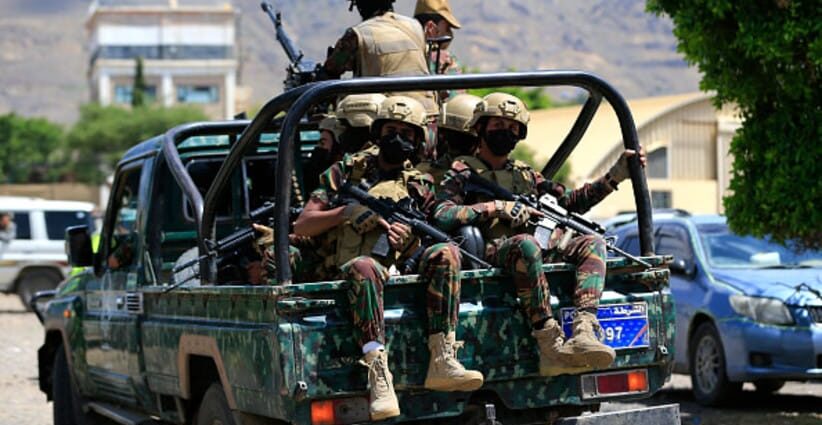
Yemeni refugees flee across Bab al-Mandab as fighting with Houthis intensifies
Thousands of Yemeni people have found refuge in northern Djibouti after fleeing by boat from Yemen’s Houthis across the Bab al-Mandab Strait, according to the BBC’s Frank Gardner, who interviewed some of the refugees in northern Africa.
Some of the refugees whom Gardner interviewed are from the town of Dhubab, which the BBC noted is on the front lines of the war between the Houthis and the Saudi-backed pro-government Yemeni forces fighting them.
“How could I just sit there when my kids are screaming and shaking in terror?” Ibrahim Issa, a 50-year-old fisherman, told Gardner. “When the sound of the planes starts, and the kids hear the planes, they begin shouting and screaming. As parents, it is our responsibility; what can you do when you see this? That is why we fled, to save them.”
Gardner added that several refugees gave him the same message: “We don’t care which side it is that’s attacking. It’s the bombs falling all around us that have caused us to flee.”
The refugees’ accounts come as the conflict in Yemen continues to escalate, with the US weighing renewed military action against the Houthis.
Trump calls off planned US strikes on Houthis at last minute after Saudi plea
US President Donald Trump came close to ordering a new American military campaign against the Houthis in Yemen this weekend, after Saudi Crown Prince Mohammed bin Salman personally urged him to intervene, but called off the planned strikes as they were nearing execution, The New York Times reported.
According to the report, Trump had spent roughly two weeks weighing repeated Saudi appeals for US military assistance against the Iran-backed Houthis, whose renewed offensive has expanded the conflict in Yemen and increased pressure on Saudi Arabia.
Trump had told advisers on Wednesday that he did not favor launching strikes. But after speaking with bin Salman on Thursday, he reversed course and instructed the Pentagon to prepare airstrikes against Houthi targets, according to administration officials cited by the NYT.
By midday Sunday, however, Trump had changed his mind again.
The planned US strikes were halted at a late stage, when military commanders had already approved target lists, troops were loading bombs onto aircraft selected for the operation, and the first wave of attacks was close to beginning, according to people briefed on the planning.
Idan Kweller contributed to this report.


EU’s Kallas says Red Sea mission needs more than 10 warships
The European Union’s naval mission to protect shipping in the Red Sea would need to increase its fleet to more than 10 warships, its foreign policy chief said on Monday, adding that there were not many in the area at the moment.
The EU’s Aspides mission was launched in 2024 to protect shipping from attacks by Yemen’s Iran-aligned Houthis, and diplomats have said there are currently six warships operating.
“When Aspides was put in place, then the indication was that it needs at least 10 ships. The situation, I think, is even more grave right now,” Kaja Kallas told reporters on the sidelines of the annual gathering of world leaders at the United Nations.
Houthis have made rapid advances in recent weeks along the Red Sea coast
The Houthis have made rapid advances in recent weeks along the Red Sea coast, further complicating routes in a region that also includes the Strait of Hormuz, where traffic had already dwindled because of the US-Iran war.
Italy, one of the key countries in the Aspides mission, announced on Thursday it was preparing a naval mission in the area for its own ships, saying it could not wait for the EU to respond to the new crisis.
Kallas said the Houthi attacks were affecting European interests and impacting the global economy.
“The EU operation Aspides is making a crucial contribution to security in the region and global shipping, but the operation needs more naval assets and more air assets to address the increased level of threats in the region,” she said.
Kallas sent a letter to the EU’s 27 member states on September 19 asking them to up their contributions. The issue would be discussed at upcoming defense and foreign ministers’ meetings, she said in the letter.
“This situation, which is still evolving as we speak, is already affecting European interests with repercussions on our supply chains and could have implications for our ability to support our economies, which were already hit by rising fuel prices,” she said in the letter.
“For the moment, although the Houthis communicate that they would only target Saudi-linked interests, there is uncertainty over their course of action with respect to vessels that transit through the Strait. Regardless, they are now in a better position to potentially harm maritime shipping.”
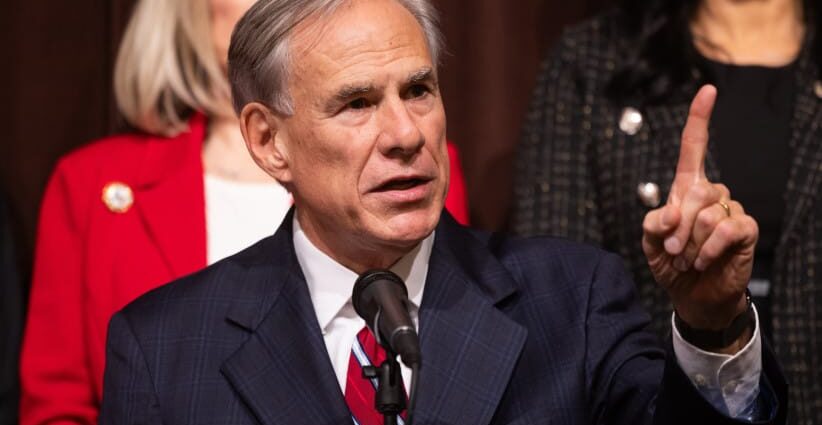
Texas Gov. Abbott freezes environmental permits for AI data centers in expanding state power audit
Texas Governor Greg Abbott on Monday barred the state’s environmental agency from issuing new permits for data centers until regulators complete a massive audit of the energy-hungry facilities seeking to connect to the Texas electrical grid.
The Republican governor’s directive to the Texas Commission on Environmental Quality effectively freezes all state-issued permits to data center developers, which had flocked to the region for its abundant electricity, land and pro-business reputation.
Since the artificial intelligence boom began roughly three years ago, Texas has become one of the fastest-growing data hubs in the world. But intensifying public backlash over the facilities, and fears about AI more broadly, prompted Abbott last month to freeze the connection of new data centers to the state grid and order an audit of the facilities.
By the time of that directive, there were more than 470 gigawatts’ worth of data center projects and other large energy users in line to connect to the grid – more than five times the state’s peak demand.
The Electric Reliability Council of Texas, which operates the state grid, is in the early stages of auditing data center power use, tax incentives, and water consumption, among other factors.
‘Data centers must… protect our grid and water’ in Texas
“Simply put, Texans must come first,” Abbott said in a statement. “Data centers must pay their own way, protect our grid and water, and complete the (audits).”
Abbott is among a swelling number of governors who once raced to attract data center investments – and touted their public benefit – but are now tightening restrictions on the developments to ease their constituents’ fears about rising power bills and environmental issues caused by the facilities.
Ed Hirs, an energy fellow at the University of Houston, said Abbott was walking back “his earlier pronouncements about data centers leading to lower electricity prices.”