US President Donald Trump’s decision over how to handle Iran became far more complicated by Thursday, after recent polls showed that the average American doesn’t want a return to full-scale war and is primarily concerned with paying less at the pump.

Several polls published in the US in recent days painted a troubling picture for the White House. According to an Economist/YouGov poll, Trump’s approval rating fell to just 34%, its lowest level since he returned to the White House.

At the same time, 62% of Americans disapproved of his performance, while 63% believed the country was headed in the wrong direction. Additional polls conducted by the Pew Research Center, The Washington Post, Fox News, and Reuters also placed Trump’s approval rating below 40%.

The stalemate with Iran also looms in the background, irrespective of the overnight strikes. Trump continues to promise repeatedly that the crisis will end quickly and that energy prices will fall sharply, but the reality has so far proved more complicated. Contacts with Tehran are not leading to an agreement and, according to senior administration officials, are not taking place at all. Iran, meanwhile, is showing no signs of capitulation.

U.S. President Donald Trump and U.S. Vice President JD Vance meet Israeli Prime Minister Benjamin Netanyahu at the White House in Washington, U.S., February 4, 2025.  (credit: REUTERS/ELIZABETH FRANTZ/FILE PHOTO)

Was Trump frustrated with Netanyahu during their White House meeting?

The unusual briefing held this week by a senior diplomatic official following Prime Minister Benjamin Netanyahu’s visit to Washington indicated that Jerusalem is also well aware of Trump’s political constraints.

Recent reporting by NBC News appears to reinforce that assessment. According to people familiar with White House discussions, Trump has grown increasingly frustrated because his senior advisers have yet to agree on what the actual objective of the campaign against Iran should be, whether preventing a nuclear breakout, securing the Strait of Hormuz, or dismantling Tehran’s missile and drone capabilities.

According to the official, Trump examined three alternatives with Netanyahu: signing a new agreement with Iran, continuing the economic pressure, or intensifying military action. The official stressed that Trump was considering each option pragmatically, taking into account not only security considerations but also the potential consequences for the US economy and financial markets.

The report also described growing internal frustration within the administration, suggesting the president did not anticipate how difficult it would be to force Iran either to negotiate or to concede. In many respects, that echoes the message conveyed by a senior Israeli diplomatic official after Netanyahu’s visit: Trump is weighing several competing options while trying to balance military objectives against domestic political and economic realities.

Domestic politics shape Trump’s Iran calculations

For Trump, these are not separate considerations. Gas prices, the energy market, and inflation are among the issues that concern American voters far more than uranium enrichment at Fordow or centrifuges concealed inside Pickaxe Mountain.

This is also why Trump has been careful in recent weeks to present himself as someone working to prevent a broader war, even as he continues to threaten Iran with a broader war- yes, that is not a typo; it is all happening at once- and stresses that all options remain on the table.

From Trump’s perspective, success would mean reaching an agreement that could be presented as an American achievement, rather than entering a prolonged conflict that could drive up energy prices and damage the economy.

On the other hand, backing down would also be seen as problematic. As long as Iran continues to stand by its positions, Trump must explain to the public why the crisis is continuing despite his promises that it could be resolved quickly.

In this sense, Trump’s greatest challenge may not be the negotiations with Iran, but his negotiations with the American public. As his approval ratings erode, his room for maneuver in making dramatic decisions on the international stage also shrinks.

For the president, every move regarding Tehran has long been not only a security decision, but also a domestic political one, and it probably does not matter how often he says that the midterm elections are not.

This post was originally published on here. 

The far-right Noam Party on Wednesday launched its campaign ahead of the upcoming elections, rebranding itself as “Noam for Israel,” and calling for new alliances aimed at strengthening the right-wing bloc.

MK Avi Maoz has been the leader of the ultra-conservative Noam party since its establishment in 2019. The party opposes homosexuality, the LGBTQ community in general, and pushes for expanding Jewish settlements in the West Bank.

Maoz ran jointly with the Religious Zionist Party in the 2022 elections and then split off from the technical bloc. Maoz left the coalition in 2025 and is the sole representative of the Noam Party in the Knesset.

The party stated that the reason for changing the name from Noam to Noam for Israel was made following in-depth surveys and political alliance efforts, and “stems from an approach aimed at expanding its activities to the broader Israeli public.”

According to the party, the move is intended to place political connections and alliances at the center and offer a political home to broader groups.

 NOAM CHAIRMAN Avi Maoz at the Knesset: Great concern.  (credit: OLIVIER FITOUSSI/FLASH90)

The target groups listed by the party included traditional, religious, haredi and other right-wing voters “who are disappointed with existing parties and are seeking a national and values-based framework that preserves the Jewish identity of the state.”

Judicial reform as the top priority

The party stated that one of its main goals was to ensure the passage of a contentious judicial reform in the country.

Participants at the campaign launch included Maoz and the party’s Knesset candidates: former Kiryat Arba Council head Eliyahu Libman, and Beersheba Deputy Mayor Shimon Tubul.

Tubul was reportedly indicted on Tuesday on charges of assaulting two gas station employees for playing  Arabic music.

Maoz said at the launch of the campaign that “according to all commentators and polls, in order for the right-wing bloc to win, another right-wing party needs to be established.”

‘Majority for the right among the people’

“It is no secret that there is a majority for the right among the people, but not among voters. “

“Unfortunately, there are many who are disappointed with the existing parties, and we will provide them with a safe political home that remains loyal to the values of Israel’s religious and right-wing camp,” Maoz added.

In an interview with The Jerusalem Post in May, Maoz said that he was seeking to be education minister in the next government. He also said that he would not rule out alliances and was considering his options at the time.

General elections are set to take place on October 27.

This post was originally published on here. 

The Canadian-based Israel Now movement has officially announced the formation of a new initiative, the “New Jewish Defense Force,” aimed at addressing and pushing back against rising antisemitism and threats directed at the Jewish community in Canada.

Israel Now, led by director Meir Weinstein, is an advocacy and grassroots organization dedicated to defending Israel and the Jewish community, frequently mobilizing public demonstrations and campaigns against rising antisemitism and anti-Israel sentiment.

The launch comes amid a wave of violent antisemitic attacks across Toronto over the past week, including gunfire that targeted two locations of the Jewish-owned Kiva’s Bagel Bar chain, a separate shooting incident at the US Consulate, and gunfire that struck the North York headquarters of INKAS Armored Vehicle Manufacturing. These events follow months of mounting tensions and prior attacks on Jewish community infrastructure.

The announcement of the new defense initiative was made via social media by Weinstein alongside an accompanying video address.

In the video, Weinstein detailed the urgent necessity behind the newly formed organization, stating that it is being established to address “Jewish businesses being targeted, shot up, Jews being attacked, violence against the Jewish community.”

The vandalized Chabad site in Ontario, Canada. (credit: Chabad of Guelph)

Weinstein asserted that established Jewish organizations have fallen short, that “the government of Canada is not really receptive to Jewish leadership in our community,” and that “there needs to be action” rather than mere statements and passive reactions.

Declaring that “enough with the nonsense of reactions, we have work to do and we have to confront these pieces of garbage who are attacking our community,” Weinstein called for a decisive shift toward active community protection.

Group intends to publish personal information of Hamas supporters

According to Weinstein, the group’s immediate focus will involve documenting where hostile groups and individuals operate, conducting necessary research, and gathering intelligence to confront ongoing security threats. Emphasizing the need for a mobilized counter-effort similar to historical defense models, Weinstein urged supporters to push past institutional inertia. “Now is the time to join the new Jewish Defense Force and fight back against those who threaten the Jewish Community. Enough being a victim!” he stated.

Weinstein urged supporters and interested individuals to connect with the movement through the official Israel Now website, noting that a new website will be created for the New Jewish Defense Force.

Following the online launch, Weinstein told The Jerusalem Post that the organization intends to pursue aggressive tactics, such as identifying the names and home addresses of Hamas and other terror supporters to stage demonstrations outside their residences, emphasizing that their response to antisemitism will diverge sharply from traditional community approaches.

Weinstein pointed to specific local establishments, some of which he has highlighted on social media, describing them as restaurants that glorify terrorists and function as gathering places for Hamas supporters living as neighbors within the Jewish community.

Detailing the initiative’s operational scope, Weinstein stated that the purpose of the new organization is to prevent these establishments from operating unchallenged by gathering intelligence on the individuals, organizations, and businesses dedicated to targeting the Jewish community, with a dedicated website expected to launch within a week.

This post was originally published on here. 

UEFA’s member associations have unanimously voted to boycott the World Cup and other FIFA competitions in protest at FIFA’s plan to sell stakes to external investors in a subsidiary that will run the global governing body’s tournaments, European soccer’s governing body said following a virtual meeting on Thursday.

World soccer’s ruling body said on Tuesday it plans to create a $20 billion subsidiary to run the World Cup and its other events and will offer stakes of up to 20% in it to external investors.

“No UEFA national teams will participate in any FIFA competition for so long as these proposals remain alive, unless this proposal has been abandoned in its entirety and binding assurances have been given that FIFA will never again open its governance or competitions to private ownership,” UEFA said in a statement.

“The World Cup cannot be treated as an investment product. It is one of football’s greatest sporting legacies. It has been built over generations by players, national teams and supporters across every continent,” UEFA added.

“No part of it should ever be surrendered to private investors. The World Cup is not for sale.”

FIFA President Gianni Infantino Press Conference - Estadio Azteca, Mexico City, Mexico - June 10, 2026 FIFA President Gianni Infantino with the FIFA World Cup trophy during the press conference. (credit: REUTERS/HENRY ROMERO)

Global soccer bodies unite against FIFA investor plan

A spokesperson for the English FA backed the decision, saying the organization “stands shoulder to shoulder with our European colleagues.”

The Asian Football Confederation (AFC) and CONCACAF also strongly criticized FIFA earlier, saying they were not consulted in the process.

The Women’s World Cup is set to be held in Brazil next year. FIFA is set to stage its inaugural Under-15 World Cup in Azerbaijan in October.

This post was originally published on here. 

Migrants broke through the fences into Spain’s North African enclave of Ceuta from Morocco on Thursday after overwhelming police at the city’s breakwater, Spain’s Guardia Civil said.

Video footage showed hundreds of migrants swimming over from the Moroccan side using inflatable inner tubes and other flotation devices, and others breaking through a gate in the fence and running into the city.

The scene was reminiscent of the crossing that occurred in May 2021, when some 10,000 people from Morocco and sub-Saharan Africa, many of them minors, entered the enclave of 85,000 people in days.

A Guardia Civil spokesperson said the migrants were “massively entering from the sea” through the Tarajal breakwater, but could not provide any estimates for the numbers.

State television TVE reported that 2,000 to 3,000 people had crossed. Reuters was not immediately able to confirm that report.

Migrants swim through Spain's Ceuta border from the Moroccan side and climb onto rocks to reach the border fence, in Ceuta, Spain, July 30, 2026, in this screen grab obtained from a video. (credit:  Atlas/via Reuters TV/Handout via REUTERS)

Many local shops were shuttered. Enrique Serrano, who runs a women’s clothing store in central Ceuta, told Reuters business owners were organizing themselves to protect their property and families in case of possible disturbances as they believed police resources would be insufficient.

“I’m not opening this afternoon because the situation is extremely tense … The first thing I have to do is protect my business and my family,” he said, adding that when the fence was breached after midnight, hundreds of migrants rushed through in a matter of minutes.

Ceuta, together with Melilla, another Spanish autonomous city located in North Africa, represents the European Union’s only land border with Africa. Both cities periodically experience surges in attempted crossings by migrants seeking to reach Europe.

Images showed some of the migrants shouting “Long live Spain” as they entered the territory.

Local government seeks state of emergency 

Spain’s Socialist government stands out in Europe for its pro-migrant stance, and has recently launched a program to provide legal status for some 500,000 undocumented migrants, creating an influx of applications double that number.

Right-wing parties criticized the drive, arguing it would attract more migrants to Spain, and were quick to blame Prime Minister Pedro Sanchez for allowing the situation in Ceuta to reach crisis proportions.

Conservative opposition People’s Party leader Alberto Nuñez Feijoo said in a post on X: “The situation in Ceuta is desperate. The government cannot look the other way… because we are facing a national security crisis.”

In a post on X, Sanchez said he had told the leader of Ceuta, Juan Jesus Vivas, that his government was “fully focused” on delivering an immediate response and preparing measures to restore normality as soon as possible, without providing further details.

Earlier on Thursday, Vivas had urged the national government to declare an emergency over the mass arrivals. The regional government wants Madrid to deploy the army to guarantee safety and close the border with Morocco.

The Defense Ministry said there were no immediate plans to deploy the army.

Supreme Court ruling bars summary returns from Ceuta and Melilla

Earlier this month, Spain’s Supreme Court ruled that migrants intercepted at sea while attempting to reach Ceuta or Melilla cannot be summarily returned under the enclaves’ special border-rejection regime.

“It has been a slow trickle since the Supreme Court’s ruling, but today has been an explosion,” the Guardia Civil spokesperson told Reuters.

The Interior Ministry said it was working closely with Morocco to address the surge in irregular arrivals, having prevented thousands of migrants from illegally entering Ceuta in recent days.

It vowed to immediately deport those entering illegally, blaming people-smuggling networks for exploiting the Supreme Court’s ruling to encourage undocumented migration.

Morocco’s Interior Ministry did not immediately respond to a request for comment.

Migrant rights activist Zakaria Zarroqui said people were still flocking to the Moroccan city of Fnideq in an attempt to cross into Ceuta and the situation was still out of control.

Mauricio Valiente, director of the Spanish Commission for Refugees, which has lawyers working in Ceuta, said the migrants crossing into the enclave were of Moroccan and sub-Saharan origin, including families with people of different ages.

While acknowledging that the situation was chaotic, he said it “can be perfectly addressed by the Spanish state,” which has sufficient capacity to receive those who may be seeking asylum.

This post was originally published on here. 

Ahead of the 26th Knesset elections, scheduled for October 27, 2026, TikTok has published new guidelines for politicians, political parties, public figures, and content creators. 

At the center of the policy are a ban on paid political advertising, restrictions on the spread of misleading election information, and a requirement to label realistic content that has been created or altered using artificial intelligence.

Despite headlines suggesting a “ban on the use of artificial intelligence,” the policy does not prohibit the technology outright. Users will still be allowed to upload AI-generated content, provided it is labeled when it appears realistic. 

Fabricated content that could mislead voters, impersonate politicians, or disrupt the democratic process will be removed, even if it is identified as AI-generated.

According to the company’s guidelines, users will be prohibited from publishing false information about the date of the election, polling station locations, voting procedures, or eligibility to vote. The ban also applies to content encouraging unlawful interference with vote counting, election results, or the work of the Central Elections Committee.

An illustration of an Israeli voting at the ballot box. (credit: Niyazz/Shutterstock)

TikTok said the rules will apply regardless of the intent of the person who posted the content. This means that even a video uploaded as a joke, an experiment, or an attempt to attract attention may be removed if it could cause viewers to misunderstand how or when they can vote.

AI generated videos looming challenge in upcoming election campaign

One of the central challenges expected during the upcoming election campaign is the growing use of realistic fake videos. 

Modern voice and image generation tools can now make it appear that a candidate said something they never said, depict an event that never occurred, or create what appears to be a legitimate news report from a recognized media outlet.

TikTok requires realistic AI-generated content to be labeled and employs several methods to identify it. 

Among them is a technical standard that preserves information about a file’s origin and any modifications made to it. In some cases, the system can identify content created on other platforms and automatically add a label, even if the user did not.

The company has also begun embedding invisible digital watermarks into content created using its own AI tools. These markers are designed to remain embedded in the file even after it has been downloaded, edited, or shared on another social media platform. 

Even so, the ability to detect all fabricated content remains limited, partly because tools for generating artificial videos, images, and voices continue to evolve rapidly.

Under the new rules, AI may not be used to impersonate candidates, political parties, the Central Elections Committee, or media organizations. A fabricated video showing a politician endorsing another candidate, reversing their positions, or providing false information about the election may be removed from the platform.

TikTok emphasized that it will continue to allow political discussion and organic content published by candidates, parties, and users. 

Paid political promotion, however, remains prohibited. The ban covers direct political advertisements, payments to content creators in exchange for promoting a candidate or party, and the use of the platform’s promotional tools to increase the reach of political videos.

Government accounts to be prohibited from TikTok advertising

Government, politician, and political party accounts will not be permitted to use TikTok’s advertising or monetization tools. The restrictions include earning revenue from content, receiving monetary gifts from users, or paying to boost the distribution of videos. The company noted that this is a long-standing global policy that is now receiving renewed emphasis ahead of Israel’s elections.

A limited exception will be granted to official bodies responsible for administering or overseeing the election. 

The Central Elections Committee will be allowed to publish essential public information, such as election dates, polling station locators, and voter guidance. Such advertisements are expected to provide practical information rather than promote a party or candidate.

Another area TikTok says it will focus on is covert influence operations. These involve groups of accounts acting in coordination, sometimes under false identities, to artificially amplify certain messages and create the impression that they enjoy broad public support.

The company prohibits the use of bots, fake engagement, impersonation, and coordinated account activity intended to influence public discourse without revealing the identity of those behind it. 

According to TikTok, it removed more than 40 covert influence operations worldwide during the first half of the year. The figure is based on the company’s own reporting, and the effectiveness of its enforcement during Israel’s election campaign will ultimately be tested as the campaigns progress.

TikTok establishes task force to combat election-related content

To handle election-related content in Israel, TikTok has established a dedicated task force comprising experts in cybersecurity, deceptive behavior, disinformation, and election integrity. 

The company said the team will rely on automated monitoring systems, human review, and information received from external organizations. According to TikTok, the preparations are based on experience gained from more than 250 elections worldwide.

In addition to removing content, TikTok may reduce the distribution of posts that cannot be verified, attach warning labels to them, or prevent them from appearing in users’ recommendation feeds. In some cases, users will receive a prompt encouraging them to reconsider before sharing a video.

Ahead of the opening of polling stations, the company will launch a dedicated election center within the app. The hub will rely on information from the Central Elections Committee and will include the election date, explanations of voting procedures, practical information for voters, and tips for identifying disinformation. 

Users searching for election-related information or watching election-related videos will be directed to the hub through notifications and labels displayed within the app.

This post was originally published on here. 


Challenger data shows 139,156 technology cuts through June, up 83% year over year, with artificial intelligence the leading stated reason for four straight months

American employers announced 443,604 job cuts through the first half of 2026, and the technology sector accounted for close to a third of them, according to Challenger, Gray & Christmas.

Technology firms announced 139,156 cuts through June, an 83 percent increase over the 76,214 announced in the same period of 2025. Artificial intelligence ranked as the top stated reason for job cuts for a fourth consecutive month in June, cited in 101,743 announcements year to date — about 23 percent of all cuts.

“Tech remains the epicenter of this year’s cuts,” Andy Challenger, chief revenue officer at the Chicago-based firm, said in the report, describing AI as the dominant force as companies restructure around it, automate roles and shift budgets toward new capabilities.

The headline total is down, and that needs context

The 443,604 figure compares with 744,308 through the first half of 2025. That 40 percent decline is real but misleading: the year-earlier period was inflated by federal workforce reductions under the Department of Government Efficiency. Stripping that out, the current total is the second-highest January-to-June figure since 2020.

Second-quarter cuts came to 226,242, up 4 percent from the 217,362 announced in the first quarter and down 9 percent from the second quarter of 2025.

June itself was quiet. Employers announced 45,849 cuts, down 53 percent from May and the lowest monthly total since December 2025. Challenger attributed the cooling to the normal summer pattern while noting the cuts that did occur stayed concentrated in technology.

The AI share has climbed steeply

The trajectory within the year is the more revealing number. AI accounted for 40 percent of all cuts announced in May — up from 7 percent in January, 25 percent in March and 26 percent in April. In June it was cited in 14,029 cuts, or 31 percent of the month’s total.

For the full year 2025, AI was attributed as the reason in 54,836 cuts. The 2026 count passed that figure by May.

Other stated reasons trail well behind. Market and economic conditions accounted for 12,470 June cuts and 82,115 year to date. Closings accounted for 11,837 in June and 78,570 for the year. Restructuring was cited for 2,412, and loss of contract for 1,696.

Who has been cutting

Companies citing AI in layoff announcements this year include Cloudflare, Snap and Block. Block announced in February it planned to shed roughly 4,000 positions, close to half its headcount.

The payments sector has been particularly active. Visa said Tuesday it is cutting about 2,600 jobs, roughly 7 percent of its global workforce, with the reductions falling on technology and product teams. Visa had approximately 34,100 employees at the end of its most recent fiscal year. Mastercard announced plans earlier this year to cut 4 percent of its global workforce.

Networking has seen repeated rounds. Cisco announced plans to cut about 4,000 jobs to refocus on AI, following an earlier reduction of roughly 4,200 staff.

Hiring is not collapsing

One counterpoint deserves weight. Employers have announced plans to hire 91,405 workers so far this year, ahead of the 82,932 announced through the first half of 2025. Combined with a run of solid employment reports and stronger-than-expected job openings data, that points to a labor market with real underlying strength.

Even so, hiring announcements remain historically low relative to pre-pandemic norms. The pattern analysts have described as low-fire, low-hire is largely intact — companies are neither shedding staff broadly nor absorbing new workers at previous rates.

Energy has been one bright spot, announcing 800 new jobs in May on the strength of high oil prices, its best month since Challenger began tracking the sector.

What this means for tri-state employers

Three practical takeaways.

First, the AI attribution is partly a communications decision. When a company frames a reduction as AI-driven restructuring rather than a response to weak demand, it tells investors a growth story instead of a contraction story. The reductions are real; the stated reason is chosen. Read announcements accordingly.

Second, the hiring side is where the opportunity sits. Experienced technology and product talent is entering the market in volume — 139,156 people from that sector alone in six months. For mid-sized firms across the region that have historically lost candidates to large-cap tech compensation, this is the most favorable hiring environment in several years.

Third, if you are evaluating AI tools for your own operation, the honest question is what the technology actually replaces. Challenger’s data shows large companies concluding it replaces content, support, data entry and routine coding work. That conclusion is being drawn at scale by firms with substantial budgets to test it — which is information worth having, whether or not you reach the same answer.

Challenger’s next monthly report covering July is due in early August.

JBizNews Desk | Chicago

© JBizNews.com All Rights Reserved. Reproduction or distribution without written permission is prohibited.


Homebuyer affordability improved slightly in June as the national median payment on new purchase mortgage applications fell to $2,191, down from $2,198 in May, according to the Mortgage Bankers Association (MBA)’s Purchase Applications Payment Index (PAPA).

The index tracks how new monthly mortgage payments change over time relative to household income using MBA’s Weekly Applications Survey. MBA reported that the national PAPI declined 0.3% to a reading of 157.9 in June, down from 158.4 in May.

Edward Seiler, MBA‘s associate vice president of housing economics and executive director of the Research Institute for Housing America, said in the association’s announcement that lower application loan amounts are offsetting rises in mortgage rates, pulling the median payment down by $7 from May.

At the same time, household earnings growth of 4.6% over the past year left the index 3.5% lower on an annual basis, meaning mortgage payments are consuming a smaller share of income than a year ago despite remaining historically elevated.

For borrowers seeking lower-payment loans at the 25th percentile, the national median payment declined to $1,522 in June, down from $1,532 in May.

Affordability varies by loan type and geography

The June data shows only marginal changes by loan product. The national median mortgage payment for Federal Housing Administration (FHA) borrowers slipped to $1,872 — down from $1,873 in May and $1,881 in June 2025. For conventional loan applicants, the median payment ticked down $2 from May to $2,209, although that was up slightly from $2,205 a year earlier.

Affordability pressures remain most acute in Western markets. The five highest state-level PAPI readings were in Idaho (251.2), Nevada (230.4), Arizona (209.7), Rhode Island (208.7) and Utah (195.8). The lowest readings were in Louisiana (119.6), Washington, D.C. (122.0), Vermont (126.7), New York (128.1) and West Virginia (129.3), indicating relatively better payment-to-income ratios in these states.

MBA also tracks affordability by race and ethnicity. In June, the national PAPI declined for all three groups reported, suggesting modest improvement for each. For Black households, the index fell to 158.5, down from 159.0; for Hispanic households, it slipped from 146.6 to 146.1; and for White households, it declined from 161.2 to 160.6.

New construction payments edge higher

MBA’s Builders Purchase Application Payment Index — which focuses on newly built single-family homes using data from the association’s Builder Application Survey — moved in the opposite direction in June. The median payment on applications tied to new construction rose to $2,199, up from $2,173 in May.

Both PAPI measurements rely on principal and interest payment data deflated by usual weekly earnings from the U.S. Bureau of Labor Statistics’ Current Population Survey. MBA also maintains a mortgage payment-to-rent ratio using median asking rent data from the U.S. Census Bureau’s Housing Vacancies and Homeownership survey.

This article was generated using HousingWire Automation and reviewed by a HousingWire editor before publication.

This post was originally published on here. 

Daniel Lewis, founder and managing partner of hedge fund Orange Capital, has joined the board of Better Home & Finance Holding Co., replacing outgoing director David Barse, the company announced this week. The changes took effect July 27.

Lewis brings more than 30 years of investment and operating experience, including early-career roles at Citigroup before he launched New York-based Orange Capital in 2005. He remains as the company’s CEO and is described as a significant Better shareholder.

“Daniel has spent his career helping companies sharpen their strategy, improve capital allocation, and create long-term shareholder value,” Vishal Garg, founder and CEO of Better, said in a statement. Garg added that as Better “continues its transformation into an AI-powered mortgage platform,” Lewis’ experience in capital markets and regulated industries will support the company’s next phase of growth.

Lewis said Better is using AI and automation to “redefine” the mortgage experience by making homeownership more efficient, transparent and affordable. He pointed to the firm’s “disciplined” transformation, citing its technology build-out alongside operational changes aimed at profitable growth.

Board Chair Harit Talwar said Lewis’s background in governance, capital allocation and operational execution will support Better as it works toward its stated 2026 objectives.

Barse stepped down from the board on July 27 to pursue new opportunities, Better said. The company noted that his departure was not due to any disagreement over operations, policies or practices.

Why this matters for lenders and investors

The board refresh comes as Better is trying to reposition itself as an AI-native mortgage and home equity platform after a volatile period that included rapid pandemic-era growth, layoffs and a challenged Special Purpose Acquisition Company (SPAC) listing.

The company said it has funded more than $110 billion in loan volume since inception and now emphasizes its Tinman AI platform and Betsy, an AI loan agent that provides status updates and borrower support around the clock.

Adding a significant shareholder and investor such as Lewis signals that Better’s leadership is focused on capital allocation, cost structure and governance at a time when mortgage originators remain under pressure from elevated rates, thinner margins, and more intensive regulatory scrutiny of AI and automation.

For originators and fintech executives, the move underscores how digital lenders are pairing technology bets with tighter financial oversight as they push toward sustainable profitability.

Better currently offers agency, government, jumbo, non-QM and home equity products across all 50 states, according to the company. The effectiveness of its AI-driven fulfillment model and the discipline of its board and management will be key variables for investors evaluating digital mortgage platforms in the next rate cycle.

This article was generated using HousingWire Automation and reviewed by a HousingWire editor before publication.

This post was originally published on here. 

Elite International Realty has partnered with cryptocurrency escrow provider CryptEscrow to expand its crypto real estate capabilities, responding to growing demand from luxury and international buyers seeking to use digital assets to purchase property.

The Miami-based brokerage said the partnership enhances its Crypto by Elite division and provides buyers with a streamlined process for converting cryptocurrency into U.S. dollars for real estate transactions.

Elite International Realty said it has facilitated more than $30 million in crypto-backed real estate transactions to date.

The announcement comes as cryptocurrency ownership continues to grow among affluent investors. According to the company, 71% of high-net-worth individuals globally have invested in digital assets, while an estimated 68% of U.S. millionaires own cryptocurrency.

“After closing numerous crypto-backed real estate transactions over the last several years, we’ve seen firsthand how digital assets are becoming an increasingly important part of the luxury real estate landscape,” said Daniel Ickowicz, CEO of Elite International Realty. “While our team has extensive experience facilitating these transactions, this partnership with CryptEscrow creates even greater opportunities for domestic and international buyers looking to invest in luxury real estate.”

CryptEscrow is a federally and state-licensed cryptocurrency escrow provider that specializes in converting digital assets into U.S. dollars for luxury real estate purchases.

Through the partnership, Elite International Realty clients using the platform will pay a 1% fee, which the companies say is lower than many traditional crypto conversion and escrow services.

Headquartered in Aventura, Florida, Elite International Realty specializes in luxury, residential and commercial real estate throughout south Florida. The brokerage said it has completed more than 10,000 transactions totaling more than $6 billion in sales volume.

This article was generated using HousingWire Automation and reviewed by a HousingWire editor before publication.

This post was originally published on here. 

VantageScore 4.0, the credit scoring model that Fannie Mae and Freddie Mac are transitioning to for agency mortgages, is now integrated into Optimal Blue’s end-to-end capital markets platform, the companies announced Thursday.

The integration makes VantageScore 4.0 available across Optimal Blue’s product, pricing and eligibility engine, as well as its mortgage servicing rights (MSR) valuation, hedging and trading tools, according to the announcement.

Lenders using Optimal Blue can now pull and apply VantageScore 4.0 directly within their existing workflows for consumer prequalifications, government-backed loans and Federal Home Loan Bank (FHLBank) collateral pledging.

VantageScore 4.0 is one of the two credit score models that the Federal Housing Finance Agency (FHFA) has directed Fannie Mae and Freddie Mac to adopt, replacing the Classic FICO models that have been in use for decades. The move is part of a broader effort to modernize credit risk assessment, expand access to credit and reflect more recent consumer behavior.

“VantageScore 4.0’s entry into mortgage is pushing lending into a new era, driven by more predictive data and smarter technology. Technology providers like Optimal Blue are helping accelerate that transformation,” Rikard Bandebo, executive vice president, chief strategy officer and chief economist at VantageScore, said in a statement.

Bandebo said integrating VantageScore 4.0 into Optimal Blue’s capital markets platform gives lenders “seamless access to the industry’s most advanced, predictive credit score,” with the goal of enabling smarter pricing, more precise risk assessment and greater confidence in lending decisions.

Alignment with GSE processes

According to VantageScore, the 4.0 model uses roughly 400% more data than legacy credit scores and incorporates alternative data as part of a tri-bureau model. The company says the model scores 33 million more consumers than competing models, which could expand the pool of addressable borrowers, particularly for lenders focused on first-time homebuyers and underserved segments.

For capital markets and secondary marketing teams, the integration means VantageScore 4.0 can be used directly in lock desk, pricing, eligibility, hedging and trading workflows rather than being handled as a separate process. That alignment is likely to matter more as the government-sponsored enterprises and other counterparties move fully to the new score framework.

VantageScore reported that usage of its models increased 55% in 2024 to 42 billion scores, with more than 3,700 institutions — including nine of the top 10 U.S. banks — using its scores and digital tools. The company is a joint venture of Equifax, Experian and TransUnion.

Optimal Blue, which provides a capital markets platform used by mortgage lenders of all sizes, has positioned the integration as part of its strategy to connect primary and secondary markets via pricing, analytics and automation. By embedding VantageScore 4.0, Optimal Blue can help lenders test and operationalize the newer score model ahead of key investor and regulatory deadlines.

Mortgage lenders face a multiyear transition to new credit score models and credit report requirements driven by the FHFA and the GSEs. Integrations like this one reduce the operational burden by bringing VantageScore 4.0 into existing pricing and risk workflows instead of requiring standalone processes or manual workarounds.

For lenders, the change affects everything from borrower prequalification and loan pricing to MSR valuation, hedge strategy and FHLB collateral eligibility.

This article was generated using HousingWire Automation and reviewed by a HousingWire editor before publication.

This post was originally published on here. 

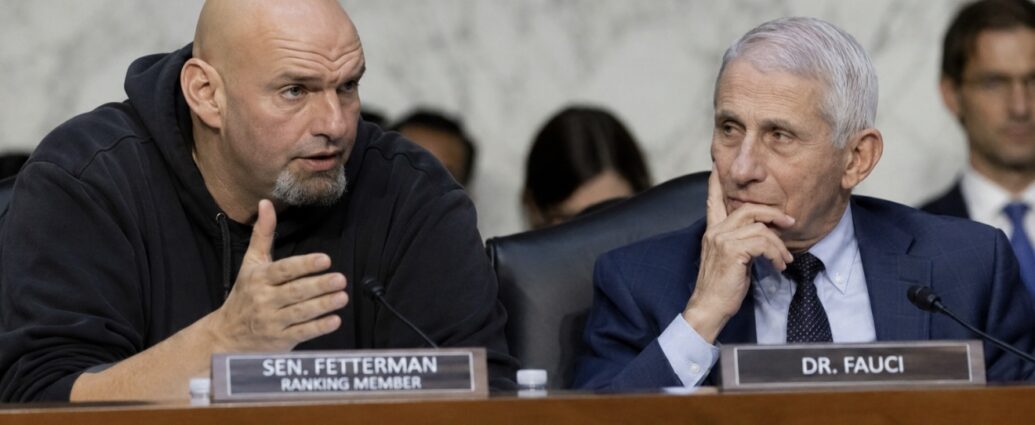
The Senate’s investigation into former White House COVID adviser Dr. Anthony Fauci expanded beyond questions of public health Wednesday, with Sen. John Fetterman acknowledging that the pandemic response brought what he described as “a different kind of death” to thousands of American businesses. The remarks came during a Senate Homeland Security and Governmental Affairs Committee hearing examining the federal government’s handling of COVID-19 and are likely to renew debate over the economic costs of pandemic-era policies.

For business owners, Fetterman’s comments marked one of the clearest acknowledgments from a Democratic senator that the pandemic’s legacy extends far beyond the loss of life. He said many communities not only lost loved ones but also saw family businesses disappear after decades of work, leaving lasting economic scars that continue to shape local economies.

The hearing itself has become a focal point in Congress’ broader effort to reexamine decisions made during the COVID-19 crisis. Lawmakers questioned Fauci about the government’s pandemic response, scientific guidance and public messaging, while also revisiting issues surrounding the origins of the virus and policies that affected businesses nationwide.

Reflecting on the pandemic, Fetterman said he regretted allowing politics to influence his early dismissal of the lab-leak theory, adding that evidence should always be evaluated on its merits rather than through a partisan lens. Although his comments touched on scientific debate, his acknowledgment of the economic devastation drew particular attention because it echoed concerns raised by business groups since the height of the pandemic.

Millions of employers were forced to navigate mandatory shutdowns, shifting federal and state guidance, supply-chain disruptions, labor shortages and changing consumer behavior. While many companies adapted, countless small businesses exhausted their savings, accumulated unsustainable debt or permanently closed their doors.

Those closures continue to affect commercial corridors across the country. Empty storefronts, reduced competition in local markets and persistent workforce challenges remain visible reminders of decisions made during the pandemic, making the economic consequences an ongoing issue rather than a chapter confined to history.

For the business community, the renewed congressional scrutiny could have implications beyond assigning responsibility for past decisions. Future public health emergencies may prompt lawmakers to place greater emphasis on balancing disease mitigation with the economic impact of widespread shutdowns, particularly on small businesses that often lack the financial resources to survive extended disruptions.

Whether Congress ultimately recommends policy changes remains to be seen, but Wednesday’s hearing demonstrated that the national conversation surrounding COVID has entered a new phase. Alongside questions about science and government decision-making, lawmakers are increasingly examining the long-term economic damage suffered by entrepreneurs, employers and communities across the United States.

For business leaders, that shift may prove just as consequential as the investigation itself. The policies adopted during COVID reshaped labor markets, accelerated changes in consumer behavior, altered commercial real estate and transformed the way companies operate. As Congress continues its review, many employers will be watching to see whether the lessons of the pandemic translate into a different approach when the next national emergency arrives.

JBizNews Desk | Washington

© JBizNews.com All Rights Reserved. Reproduction or distribution without written permission is prohibited.

Mortgage rates rose this week to the highest level in a year, mortgage buyer Freddie Mac said Thursday.

Freddie Mac’s latest Primary Mortgage Market Survey, released Thursday, showed the average rate on the benchmark 30-year fixed mortgage climbed to 6.66% from last week’s reading of 6.58%. 

The average rate on a 30-year loan was 6.72% a year ago.

“The housing market continues to benefit from more available inventory, providing prospective homebuyers with additional options and helping support buyer activity as mortgage rates fluctuate,” said Sam Khater, Freddie Mac’s chief economist.

The average rate on a 15-year fixed mortgage rose to 6.04% from last week’s reading of 5.96%.

This post was originally published here. 


Two-year runway to reshore production begins Saturday; generics account for 90% of U.S. prescriptions, and more than half come from India

The two-year transition period before tariffs hit imported generic medicines begins Saturday, August 1, under a timeline President Trump announced last week — the first specific schedule the administration has set for a category of drugs it had previously exempted.

In a Truth Social post on Tuesday, July 21, Trump said imported generic drugs would carry a zero percent tariff during a two-year transition starting August 1, 2026, then face a 100 percent rate for one year beginning in August 2028, rising to 200 percent thereafter. He described the duties as a penalty for companies that decline to build plant and equipment in the United States within the allotted time, and provided no detail on how that penalty would be assessed.

A White House official told Politico the administration intends to use Section 232 of the Trade Expansion Act of 1962, following a Commerce Department investigation that found pharmaceutical imports threaten to impair national security. No official policy implementing the tariffs has been released.

How much of the medicine cabinet this covers

Generic medications account for 90 percent of prescriptions filled in the United States, according to the Food and Drug Administration. These are the antibiotics, painkillers and cholesterol drugs most Americans actually take, manufactured with the same active ingredients as brand-name products at a fraction of the cost.

The supply chain is concentrated abroad. India now supplies more than 50 percent of the generic prescriptions filled in the U.S., according to a 2025 report by the Senate Committee on Aging. The U.S. also depends heavily on China, which provides 95 percent of imported ibuprofen, 70 percent of acetaminophen and as much as 45 percent of penicillin imports, per figures from the Coalition for a Prosperous America.

The branded tariffs are already landing

The generics timeline sits on top of a policy already in motion. Trump signed an executive order on April 2 imposing a 100 percent Section 232 tariff on patented pharmaceuticals and their ingredients, effective in 120 days for large companies and 180 days for smaller ones. Manufacturers with approved plans to open U.S. facilities face 20 percent instead. Drugs from the European Union, Japan, South Korea, Switzerland and Liechtenstein face 15 percent, with a lower unspecified rate for the United Kingdom under a separate agreement.

Branded drugs become subject to rates as high as 100 percent at the end of this month. Trump said that branded policy remains unchanged.

More than a dozen major drugmakers, including Eli Lilly, Pfizer and Novo Nordisk, have struck deals with the administration to lower prices on new and existing medicines under its most-favored-nation policy, which ties U.S. prices to cheaper prices abroad and exempts those companies from tariffs for three years.

Whether two years is enough

That is the central question, and the answer from people who build pharmaceutical plants is not encouraging. Constructing and validating new U.S. manufacturing capacity typically takes considerably longer than the two-year runway on offer, which leaves the announcement adding uncertainty to an industry already running on thin margins and sets up 2028 as a pivotal year for drug affordability and supply chain stability.

The Association for Accessible Medicines, which represents generic drugmakers, said it needs to understand the specifics and urged the administration to address existing barriers to expanding domestic production. Public Citizen, which filed comments in the Commerce investigation, said reducing overreliance on a few sources is a legitimate goal but that the administration has not supplied the detail needed to evaluate the plan.

What the industry numbers already show

The generics business was under pressure before any tariff took effect. Teva Pharmaceutical Industries, one of the largest suppliers of generic medicines to the American market, reported Wednesday that its U.S. revenue fell 5 percent year over year to $1.70 billion, with the overall decline driven mainly by lower generic revenue, primarily generic Revlimid.

Teva’s response has been to move upmarket. Its three key branded products grew a combined 43 percent year over year in local currency, clearing $1 billion in the quarter, and its biosimilars portfolio is tracking toward $800 million in revenue by 2027. That is a company reallocating toward higher-margin products, which is a rational answer to margin pressure — and it does not add domestic generic capacity.

What tri-state employers should do now

For any business that self-insures or funds a health plan, the exposure is straightforward. Generic drugs are the cheap component of pharmacy spend, and a tariff on 90 percent of prescriptions filled would work through to plan costs. Two years is enough time to build that scenario into multi-year benefit projections, and it should be built in — quietly, before renewal season, rather than in 2028.

Pharmacies and independent drug retailers should be reading the same clock on the inventory and sourcing side. Distributors will move first, and terms will tighten before duties do.

The legal path is not settled

Legislation introduced this year, the Congressional Trade Powers Reform Act of 2026, would require the president to obtain congressional approval for tariffs imposed under Section 301, Section 201 and Section 232 — the authority invoked here — and would eliminate the Section 122 and Section 338 authorities entirely.

Two years of runway is also two years of litigation and legislation. The clock that starts Saturday is the administration’s; whether it runs to 2028 is a separate question.

JBizNews Desk | Washington, D.C.

© JBizNews.com All Rights Reserved. Reproduction or distribution without written permission is prohibited.


New vending machines will be installed at over two dozen New York City subway stations as a modern alternative to traditional newsstands that have dwindled over the years. CC Vending will open automated, cashless retail spaces that will sell drinks, snacks, and everyday essentials as part of a partnership with the Metropolitan Transportation Authority and Coca-Cola. The initial rollout will bring 60 machines to 26 high-traffic stations, with the first now operating at the Second Avenue-East Houston, 23rd Street-Broadway, and 116th Street-Lexington Avenue stations.

Credit: MTA on Flickr

CC Vending II, a joint venture between Transit Tech NYC and CC Vending, was created to modernize long-vacant retail spaces throughout the public transit system. Transit Tech leads the initiative’s design, engineering, construction and program management, while CC Vending oversees operations, service and logistics.

The partners developed the initiative in response to an MTA request for proposals issued in 2024 and were selected to carry out the program.

“This initiative marks the beginning of a new chapter for NYC’s subway system,” Michael Cascione, Sr., president of CC Vending, said. “Together with the MTA and Coca-Cola, we’re delivering a more convenient experience for millions of riders.”

“This launch is the result of years of planning, collaboration and innovation, and we’re proud to see our vision come to life,” he added. “As a NY company that started with a single vending machine more than 35 years ago, it’s especially rewarding to help shape the future of retail in the city’s transit system.”

Since they are housed within former retail spaces, the machines do not take up additional platform space and are installed flush with existing station walls. The rollout will span the entire island of Manhattan, stretching from Wall Street to 116th Street and Lexington Avenue.

Other Manhattan stations slated to receive the vending machines include 23rd Street, 42nd Street-Bryant Park, 49th Street, 5th Avenue, 8th Street-NYU, 86th Street, 96th Street, Borough Hall, Broadway-Lafayette Street, Brooklyn Bridge-City Hall, Canal Street, Christopher Street-Stonewall, Grand Street, Prince Street, and South Ferry.

Major transit hubs in Brooklyn and Queens, including Atlantic Avenue-Barclays Center, DeKalb Avenue, Flushing-Main Street, Grand Street, Jamaica-179th Street, and Woodhaven Boulevard, will also receive vending machines.

According to ABC 7, the machines offer an assortment of snacks and beverages. Snacks cost around $3 each, while the most expensive beverage, a protein shake, costs $4.50.

While the RFP was issued in 2024, plans to revamp vacant newsstands have been circulating for years. In 2015, the MTA signed a 10-year contract to operate newsstands at Union Square, Columbus Circle and Brookfield Place selling snacks and “millennial-friendly goods” such as bike helmets and fresh-squeezed juice.

Vacant newsstands have been repurposed as art galleries, live performance venues, a bodega for dinosaurs, and even a radio station.

Notably, during the COVID-19 pandemic in 2020, the MTA rolled out 12 PPE vending machines across 10 busy subway stations, stocked with reusable face masks, gloves, hand sanitizer, and sanitizing wipes. The machines were later removed from service.

“By turning vacant retail spaces into customer amenities, we are activating a space into one customers can benefit from,” MTA Chief Customer Officer Shanifah Rieara said. “We’re making stations more welcoming and more convenient, and we look forward to the installation of more vending machines and greater variety.”

RELATED:

The post Vending machines to replace vacant newsstands at 26 NYC subway stations first appeared on 6sqft.

This post was originally published here. 

The number of Americans applying for unemployment benefits remained at historically low levels last week, as layoffs remain subdued.
Initial jobless claims edged higher by 9,000 to 197,000 for the week ending July 25, according to data released by the Department of Labor on July 30.
Last week’s figure—revised slightly higher to 188,000—was the lowest since early 1969.
The four-week average, which strips out week-to-week volatility, fell to a more than two-month low of 202,750.
Although hiring momentum has stalled in recent weeks, employment conditions remain in the oft-described “low fire, low hire” state.
Job growth softened in June, as the economy added just 57,000 jobs, well below the three-month average of 164,000….

This post was originally published here. 

Artificial intelligence (AI) is making fraud schemes more convincing and increasing the financial risks facing older Americans, according to cybersecurity and consumer protection expert Steven J. J. Weisman.

Weisman — an attorney, author and senior lecturer at Bentley University — discussed the growing sophistication of scams during a presentation hosted by Fairway Home Mortgage on Wednesday. The session focused on protecting seniors from financial exploitation, identity theft and other forms of fraud.

Americans reported losing more than $15.9 billion to fraud and scams last year, according to Federal Trade Commission figures cited by Weisman. He said the actual total is likely much higher because many victims do not report losses due to embarrassment or other reasons.

Older adults and members of Generation Z are among the groups most frequently targeted by scammers, Weisman said. While technology has expanded the reach of fraud schemes, artificial intelligence has also made it easier to create realistic fake voices, videos and websites.

Weisman kicked off the session by explaining that fraudsters target the brain’s amygdala, which governs quick, emotional responses. Seniors are especially vulnerable because age-related changes reduce skepticism, a finding that Weisman backed through studies from Cornell University and the University of Iowa.

AI-generated voice cloning has increased the risks associated with family emergency scams, sometimes called grandparent scams. Fraudsters can collect audio recordings from social media and use them to imitate relatives who appear to be calling for urgent financial help.

“With AI now … they use artificial intelligence to change their facial features. They’ll also be using voice cloning, so they’re going to sound legitimate and look legitimate,” Weisman said

Impersonation scams remain among the most common forms of fraud, with criminals posing as government agencies, financial institutions or well-known companies and using spoofed phone numbers to make calls appear legitimate.

“The IRS, Social Security and the FBI are not going to initiate contact with you by calling, but scammers will,” Weisman said.

The rise of crypto scams

In recent years, cryptocurrency has also become a common component of investment and impersonation scams. In some cases, victims are instructed to withdraw money from their bank accounts and deposit it into cryptocurrency ATMs, often after being told their accounts or identities are at risk.

“Whenever you’re asked to make a payment through a crypto ATM, it’s going to be a scammer,” Weisman said.

Technology support scams also disproportionately affect older consumers. Such schemes often begin with a pop-up warning about a computer security problem and direct users to call a phone number or provide remote access to their devices.

Legitimate technology companies generally do not send unsolicited pop-up messages with phone numbers for customers to call, Weisman said. His advice is to avoid clicking links or granting remote access, and to restart computers if suspicious warnings appear.

Social media also has become a major source of fraud, with criminals using personal information shared online to create targeted phishing attempts. Weisman warned users to be cautious about advertisements, messages and offers appearing on social platforms, even when they appear to come from friends.

To alleviate risk, Weisman said consumers can reduce their exposure by using unique passwords, enabling multifactor authentication and keeping security software updated. He also recommended placing security freezes on credit reports, including those of children, to help prevent criminals from opening accounts or obtaining loans using stolen identities.

Consumers should use credit cards rather than debit cards for purchases when possible because credit cards generally provide stronger protections against unauthorized transactions, he said. Weisman recommended that payment services such as Zelle and Venmo be limited to trusted friends and family members.

This article was written by Sarah Wolak and generated with the assistance of HousingWire Automation, then reviewed by a HousingWire editor before publication.

This post was originally published on here. 

The Real Brokerage has added the Chris Colgan Team, bringing 28 agents to the company’s growing network and expanding its Virginia presence.

Led by CEO and Team Leader Chris Colgan, the team serves clients throughout northern Virginia and the greater Washington, D.C., metropolitan area, including Arlington, Alexandria, Fairfax, Loudoun and Prince William counties.

“Chris has built an exceptional business by embracing the future of real estate,” said Jason Cassity, chief growth officer at Real. “His ability to leverage social media and personal branding to serve clients and attract top talent aligns perfectly with Real’s vision. We’re excited to welcome Chris and his team and support their continued growth.”

Colgan has more than 22 years of real estate experience and launched the Chris Colgan Team in 2022 after building his career with several national brokerage brands.

The team has built its business through digital marketing and content creation, with Colgan applying strategies he previously used to grow a sneaker and streetwear media brand with more than 100,000 followers.

Today, his real estate content reaches millions of consumers each month, including more than 89,000 Instagram followers and 40,000 YouTube subscribers.

The company says that audience has become a significant source of buyer and seller leads while increasing exposure for clients’ listings.

“We built our business by embracing social media and creating content that educates consumers while helping our clients stand out,” Colgan said. “Real understands that approach better than any brokerage. The company’s culture, investment in AI and technology, and community of innovative agents made this the right place for our team. We’re excited to continue growing our business while helping elevate the Real brand throughout Northern Virginia and beyond.”

This article was generated using HousingWire Automation and reviewed by a HousingWire editor before publication.

This post was originally published on here. 

Breezy has expanded its Underbuilt Radar platform to consumers, giving homeowners access to property development reports that identify how much additional square footage can potentially be built on their property.

Previously available only through Breezy’s platform for real estate agents, Underbuilt Radar analyzes zoning data to estimate build potential for projects such as accessory dwelling units, second-story additions, basements and garage expansions.

The company said the launch comes as more homeowners choose to renovate or expand existing homes instead of moving in a slower housing market.

“One of the biggest challenges when buying real estate is understanding a property’s true potential,” said James Harris, CEO and co-founder of Breezy. “Too often, buyers are making decisions without knowing what can actually be built or what’s possible. UnderBuilt changes that by removing the guesswork and giving homeowners and buyers the inside track on the full potential of any property before they make one of the biggest investments of their lives.”

Homeowners can enter their address to receive an instant report detailing a property’s development potential.

According to Breezy, reports analyze live zoning data to calculate buildable area, setbacks, height limits, slopes and an overall development potential score.

The company said the service is intended to reduce the time and expense homeowners often incur when determining whether proposed additions comply with local zoning regulations.

According to Breezy, many homeowners spend between $5,000 and $30,000 on architectural plans before discovering a project does not meet municipal requirements.

Breezy said Underbuilt Radar is now available in 49 states and more than 23,000 zip codes, with additional markets being added regularly. The company will continue offering the technology to real estate professionals through the Breezy app while making the standalone reports available directly to homeowners.

This article was generated using HousingWire Automation and reviewed by a HousingWire editor before publication.

This post was originally published on here. 

Brands by Integra has appointed real estate industry veteran Charles Boyett as national vice president of growth, expanding its executive leadership team as the company continues its nationwide expansion.

Boyett brings more than 25 years of experience in real estate brokerage, executive leadership and business development.

During his career, he has participated in more than 1,000 real estate transactions while serving in executive leadership roles with national real estate organizations.

Boyett said the company’s agent-focused approach and culture drew him to the organization.

“I’m honored to join Brands by Integra during such an exciting period of growth,” he said. “What stands out most about this organization is its commitment to supporting agents while maintaining a family-oriented culture. I’m excited to work alongside our leadership team to expand our national presence, strengthen our brokerage network, and help agents build businesses that thrive in today’s evolving real estate market.”

In his new role, Boyett will focus on expanding Brands by Integra’s national footprint, supporting affiliated brokerages, developing strategic partnerships and creating new opportunities for agents and leadership teams.

Brands by Integra continues to grow through strategic expansion, acquisitions and partnerships while providing affiliated brokerages with technology, marketing resources, training and operational support.

Leaders said Boyett’s appointment reflects its continued investment in leadership to support agents and brokerages nationwide.

“Charles has built a reputation for inspiring growth, developing leaders and helping organizations thrive,” said Jim D’Amico, chairman of the board for Brands by Integra. “His experience, vision and passion for supporting real estate professionals make him an outstanding addition to our executive leadership team.”

This article was generated using HousingWire Automation and reviewed by a HousingWire editor before publication.

This post was originally published on here. 

FIRST ON FOX: The Trump administration is sending notices of intent to 100 agents affiliated with the Obamacare marketplace who allegedly violated the exchange’s standards of conduct by submitting insurance applications without recipients’ Social Security numbers or other identifying information.

The Centers for Medicare & Medicaid Services (CMS), led by Dr. Mehmet Oz, alleged that agents did this “repeatedly.”

A marketplace agent is a professional who helps people shop for healthcare through the Affordable Care Act (ACA) exchange.

More broadly, CMS estimates that “roughly 35% of Marketplace enrollments may be illegitimate.”

TRUMP’S WAR ON FRAUD EXPANDS AS TREASURY LAUNCHES NEW SITE WITH WHISTLEBLOWER INCENTIVES

If 35% of enrollments by agents are illegitimate, that represents about 5 to 6 million people “whose premiums could be improperly subsidized,” CMS said in a statement to Fox News Digital.

The action being taken against the 100 agents comes after a report published by the Health and Human Services Department found that “2.6 million improper or phantom enrollments remain, including more than 1 million enrollments submitted without a Social Security number.”

In response, the CMS has advanced a number of ACA reforms meant to protect taxpayers and patients from alleged fraud, waste and abuse.

The proposed reforms, the CMS said, would have saved $3 billion. The agency accused Democrats in Congress of preventing the full implementation of these provisions.

GLOBAL PARTNERS ARE JOINING FBI TO TAKE DOWN SCAM EMPIRES FOR GOOD

The CMS’s latest action against ACA agents is another step in the agency’s crackdown on fraud.

Oz sent letters in May to Minnesota, California, Florida, New York and Maine about possible medical equipment fraud.

An anti-fraud task force, led by Vice President JD Vance, announced in February that durable medical equipment, prosthetics, orthotics and supplies (DMEPOS) suppliers will be targeted through a nationwide moratorium.

That task force revealed new figures in early July that show a drastic 7,100% spike in Medicare claims for skin substitutes in just six years.

The staggering increase in claims occurred between 2019 and 2025, surging from $200 million to $14.4 billion, prompting the anti-fraud task force and CMS to identify potentially fraudulent claims and deny 96% of claims made since March.

The CMS identified 4,200 suspicious claims for skin substitutes, known as allografts, totaling $224 million in charges through May of this year.

This post was originally published here. 

Israel is demanding the complete disarmament of Hamas, including the removal of weapons from Gaza and the full demilitarization of the Gaza Strip, as a precondition for any withdrawal process, a diplomatic source told The Jerusalem Post on Thursday.

The 15-point document under discussion does not adequately address these demands, and Israel conveyed its reservations on the matter to envoy Tony Blair.

There will be no Israeli withdrawal from the Yellow Line in the Gaza Strip before Hamas is disarmed and the Gaza Strip is demilitarized, the source emphasized. 

Notably, the issue of Gaza did not come up at all during the meeting between Prime Minister Benjamin Netanyahu and US President Donald Trump, the source added. 

Israeli forces from the Kfir Brigade operate along the Yellow Line near Khan Yunis, in southern Gaza, December 2025 (credit: IDF SPOKESPERSON'S UNIT)

What are mediators discussing in Cairo?

Discussions with mediators in Cairo are continuing and making progress, according to a separate diplomatic source who spoke to the Post on Thursday, as negotiators work to finalize a comprehensive roadmap for Gaza’s future governance and security arrangements.

According to the source, the roadmap is designed as a balanced and pragmatic framework centered on the complete decommissioning of all weapons and a phased transition of responsibilities to a technocratic government.

“There will be no exceptions for certain weapons or certain people,” the source said. “One authority, one law, one weapon.”

The source said the proposed framework establishes a process for eliminating all tunnels, weapons depots, and weapons production facilities throughout the Gaza Strip, describing it as a comprehensive effort rather than a limited security arrangement.

At the conclusion of the implementation process, the source said, there would be no remaining terrorist infrastructure in Gaza. Hamas would have no governing or military role, either publicly or behind the scenes, in a model similar to that being applied to Hezbollah in Lebanon.

Under the proposal, all weapons, both heavy and light, would come under the full control of the NCAG, in coordination with and supported by the ISF, which the source said is led by a two-star US Special Forces general.

The agreement also stipulates that there will be no Israeli withdrawal from the original “Yellow Line” unless full disarmament is implemented.

As part of the arrangement, Hamas would commit to halting all military activity, including the recruitment of new operatives into its ranks. In return, Israel would suspend its targeted killings campaign.

However, the framework makes clear that if new threats emerge, Israel would retain the right to take military action.

The process of storing and surrendering weapons is expected to begin in the coming weeks, once Hamas agrees to this framework, with the weapons being transferred to the International Stabilization Force (ISF) and permanently removed from operational use.

Gaza rebuilding process built on reciprocity, source says

The diplomatic source emphasized that the roadmap is based on reciprocal implementation rather than trust between the parties.

“This entire process is built on reciprocity, not trust,” the source said. “Each side’s fulfillment of a commitment sequences the next commitment of the other side. A verification mechanism ensures compliance.”

The source described the initiative as a turning point for Gaza, saying it was developed after lengthy negotiations guided by US President Donald Trump‘s Comprehensive Gaza Peace Plan.

“This is a new beginning for Gaza,” the source said. “It has taken a long time to reach this stage, but our guiding light has been President Trump’s Comprehensive Gaza Peace Plan and its objectives of providing a better future for the people of Gaza and security for the people of Israel.”

According to the source, the roadmap is intended to translate that broader vision into a practical sequence of steps for both Israelis and Palestinians.

“The Roadmap is a first-of-its-kind agreement that operationalizes the Trump peace plan into steps that both Palestinians and Israelis will have to take to open this new chapter of peace, prosperity, and security for Gaza,” the source said.

Current Cairo talks aimed at reaching deal, source says

“The current talks in Cairo between Hamas and the mediators are aimed at reaching a deal – not just holding another round of negotiations,” a source familiar with the Cairo negotiations told the Post. 

“At this stage, it remains unclear whether an agreement will be reached. What is clear, however, is that from the perspective of the mediators and the Board of Peace, there will be no scenario in which only some of the tunnels are dismantled, or only some of the weapons are surrendered. It has to be all of it,” the source said. 

This post was originally published on here. 

Pro-Palestinian activists staged a demonstration in Washington DC, breaching the hotel where Prime Minister Benjamin Netanyahu was dining. The confrontation unfolded as several protesters managed to enter the lobby of the Four Seasons Hotel in Georgetown on Monday, attempting to reach the restaurant where the Israeli leader was having dinner.

Security personnel and law enforcement quickly intervened, forcibly removing demonstrators from the building as they chanted, “Bibi, Bibi, you can’t hide! You’re committing genocide!”

The incident at the hotel occurred amid heightened security during Netanyahu’s visit to Washington, which included attending the funeral of Senator Lindsey Graham and holding meetings with US President Donald Trump and senior American officials. 

The hotel breach coincided with broader street demonstrations across Washington DC, where hundreds of protesters marched toward the White House and government complexes. Demonstrators waved Palestinian flags, banged on drums and buckets, and carried banners rejecting Netanyahu’s visit.

Protesters used megaphones to voice their opposition, demanding that the US government enforce International Criminal Court (ICC) arrest warrants against the visiting leader.

U.S. President Donald Trump and U.S. Vice President JD Vance meet Israeli Prime Minister Benjamin Netanyahu at the White House in Washington, U.S., February 4, 2025.  (credit: REUTERS/ELIZABETH FRANTZ/FILE PHOTO)

Protesters demanded US enforces ICC arrest warrant for Netanyahu

Demonstrators on the streets articulated strong opposition to US backing for Israel’s military campaign.

One protester asserted, “Benjamin Netanyahu is a war criminal, the only place he belongs is locked up with the ICC and there’s a criminal warrant out for it, and then I don’t want my tax dollars going to defend someone like that.”

Another demonstrator stated “We demand that the United States government follow the ICC warrant and arrest Netanyahu, turn him over to international court to be held accountable for his actions in orchestrating the genocide of the Palestinian people.” 

Activists also displayed banners reading “Stop US/Israel War Machine” and “Expose Israel’s Control of Washington” as law enforcement and secret service personnel maintained a heavy presence to secure the area.

This post was originally published on here. 

A proposed information law in Lebanon, already approved by joint parliamentary committees in July, has raised concerns among journalists and press freedom advocates over provisions that would punish the “dissemination of false or harmful information” with up to three years in prison and the possibility of forced labor, according to Lebanese media reports.

Critics of the law told L’Orient-Le Jour that a broad interpretation of Article 104 would open the possibility for Lebanon’s press freedom to be undermined.

“We need a modern law, but this text is confusing,” a source close to the journalists’ union told the site, describing the article as “a step backward” given that the country has already amended an existing media law in 1994 that ensures journalists cannot receive prison sentences, only fines, for their work.

In a statement, the Lebanese journalists’ union said it “rejects the bill, as it lacks a national vision for media and does not protect media professionals.”

Maharat, an NGO that advocates for freedom of expression, said in a statement that “the amendment to Article 104 is very concerning because it adds a clause to the provisions on incitement to hatred related to the dissemination of false or misleading news.

Lebanese President Joseph Aoun attends a cabinet session to discuss the army's plan to disarm Hezbollah, at the Presidential Palace in Baabda, Lebanon. (credit: REUTERS/MOHAMED AZAKIR/FILE PHOTO)

“This wording reopens the door to criminal prosecution, contradicting the spirit of reform based on limiting liability to the civil sphere, except in cases of serious and direct incitement to discrimination, hostility, or violence. It is therefore necessary to distinguish between the core of the law – which abolishes criminal penalties – and the new amendment to Article 104, which should be deleted or reworded.”

Law limits positions Palestinians in Lebanon can have

Dr. Omar Nashabe, a Lebanese criminal justice scholar, human rights researcher, and analyst, wrote in the Al Akhbar newspaper that the issue of the law would be defining what “harmful” news constitutes.

“What is the dividing line between journalistic error, incomplete information, disputed accounts, and deliberate criminal fabrication? And who determines the degree of harm required for a crime to be established?” he wrote.

“The lack of precise definitions for these terms opens a wide field for interpretation. The phrase ‘fake news’ could be used against a journalist who relied on an official source that later proved inaccurate, or who published leaked documents whose authenticity was challenged by the authorities, or who presented a narrative that contradicted the government’s version.

“Therefore, the danger of this article lies not only in the penalty itself, but also in its potential for selective application against investigative and opposition journalism.”

Notably, Nashabe warned that Article 63 of the law could also be used to discriminate against Palestinian refugees living in the country by stipulating that the manager responsible for a professional media site must be Lebanese and residing in Lebanon.

He argued such a clause prevents Palestinians without citizenship from assuming the role of managing editor of a website, even if it doesn’t restrict them from journalism entirely.

“The result is that Palestinians working in the media are confined to a specific professional framework: they can write, work, and produce content, but they cannot reach the position of managing editor, no matter their experience or competence,” he claimed.

This post was originally published on here. 

The International Jewish Anti-Zionist Network’s (IJAN) UK chapter and allied activist groups gathered for a picket outside the Charity Commission building in London on Wednesday to demand that the regulatory body investigate, sanction, or strip the charitable status of the Jewish National Fund (JNF) UK and other Jewish organizations that they accuse of funding initiatives, land acquisition, and development projects in the West Bank.

During speeches delivered outside the government complex and in social media posts promoting the picket, organizers and participants criticized the Charity Commission for what they termed “systemic inaction,” accusing the regulatory body of having “repeatedly refused to investigate or sanction charities supporting illegal displacement and foreign military initiatives.”

Speakers pointed directly to the JNF’s historic role and modern activities, highlighting what banners described as “land ownership metrics and financial remittance directed toward unauthorized development in the West Bank.” 

The picket also drew connections to recent local community events that the picket organizers claimed in promotional social media materials and speeches have “facilitated transactions involving disputed territories.”

Specifically, activists targeted a “Great Israeli Real Estate” event previously hosted at Edgware United Synagogue in June. The event is an annual exhibition of real estate properties being sold in Israel, including in the West Bank. 

Protesters hold up a banner that reads ''Israel is an Apartheid State'' outside the houses of parliament, Palace of Westminster on June 22, 2026 in London, England.  (credit: John Keeble/Getty Images)

Organizers argued in online statements and demonstration speeches during the picket that venues hosting such property showcases act as “platforms for selling land across historic areas and illegal settlements.”

Throughout the demonstration, speakers accused UK authorities of “enabling displacement and regional conflict” through passive regulatory oversight.

Police secure London protest as activists condemn JNF UK

Police and security maintained a perimeter outside the building as activists chanted slogans including “Stop arming apartheid” and displayed banners condemning what they termed “state-sponsored violence and institutional complicity.” 

A spokesperson for JNF UK told the Jerusalem Post in a statement, “JNF UK will not be distracted or deterred by those who seek to stop us from carrying out our important charitable work. Through JNF UK, British Jews will proudly continue, as we have for generations, to support and strengthen communities across Israel, particularly in the North and South, helping them to recover, rebuild and create a more secure future. At this critical time, our work is more important than ever.”

This post was originally published on here. 

After the fumbled rollout of a nuclear agreement with Saudi Arabia, US President Donald Trump should understand what president Ronald Reagan was thinking when he famously joked, “Sometimes our right hand doesn’t know what our far-right hand is doing.”

In a series of snafus, Trump was embarrassed, the Saudis blindsided, the region trembled, Israel worried, and everyone was confused.

Energy Secretary Chris Wright appears to have caught his boss off guard by not telling him he was about to sign a 30-year nuclear agreement with Saudi Arabia potentially worth tens of billions to American industry. That’s the kind of really big deal Trump likes to take credit for by announcing personally. It would be a welcome diversion from all the bad news about his Iran war fiasco.

Trump seemed to contradict himself the next day when he said, “nobody got out ahead” of him in the announcement, although when reporters asked if he had authorized Wright to sign the deal, he said they had not discussed it, CNN reported.

US Secretary of Energy Chris Wright speaks during a press conference discussing fertilizer policy at USDA Headquarters in Washington, DC, US, May 19, 2026.  (credit: REUTERS/Eric Lee)

Wright also embarrassed Trump by leaving out key provisions that two presidents had insisted upon. In 2023, former US president Joe Biden linked a Saudi nuclear agreement to the kingdom normalizing relations with Israel, and Trump insisted the deal “is totally subject to Saudi Arabia joining the very respected and successful Abraham Accords,” his crowning achievement.

Without both provisions, a White House spokesman said, “the deal is off.” Neither element was in the documents that Wright signed with his Saudi counterpart, nor is it clear they can, or will, be added formally to the agreement before it is sent to Congress for approval.

The Saudis have rejected both conditions, insisting nothing can happen until the Palestinians are on “a credible and irreversible path” toward statehood.

Another troubling provision that could create problems in Congress and throughout the Middle East is that the agreement appears to give the Saudis unprecedented authority to enrich uranium and reprocess spent nuclear fuel in their own country.

“A previous US nuclear deal, with the United Arab Emirates, imposed tightened inspections and did not allow the Emiratis to enrich their own uranium, severely limiting their path to a bomb. The deal with Riyadh appears to be different,” the New York Times reported.

The Trump-Saudi deal is likely to provoke demands by the UAE and others for similar treatment. More importantly, with the Saudi kingdom enriching its own uranium, it raises fears that Riyadh could produce weapons-grade uranium if it wished.

Crown Prince Mohammed bin Salman, the de facto Saudi leader known as MBS, said in 2018 that “without a doubt, if Iran developed a nuclear bomb, we would follow suit as soon as possible.”

Read that alongside reports that Iran’s new Supreme Leader Mojtaba Khamenei may not share his father’s qualms about building nuclear weapons. That is likely motivated by a feeling that if Iran had already had the bomb, the US and Israel would not have attacked in February and killed his father, sister, and other family members.

Asking the questions

An Israeli diplomat I knew liked to tell the story of how he got an urgent cable from his home office, telling him, “Start worrying. Details to follow,” a message just as relevant to the current diplomatic embarrassment.

Last week’s deal signing struck a chord of paranoia in Israel. The New York Times said it “appears to sidestep Israel entirely.”

Since normalization was not part of the announced deal, Israelis are wondering: Did Washington just sell us out? Is this another element of what seems to be a US pivot against Israel?

Jerusalem would prefer no Saudi nuclear program. It fears it would be too easy to divert enriched uranium to build a weapon, a concern shared throughout the region and one likely to ignite an arms race.

Under Prime Minister Benjamin Netanyahu’s stewardship, Israel has seen its support plummet here in the West Bank of the Atlantic Ocean. And not just among Progressives, Democrats, and many Jews. It is also endangered on the other side of the spectrum, where the America First isolationists and some of the MAGA followers are blaming Israel for pushing Trump into a very unpopular and seemingly unending war with Iran.

Early on, Trump cut Israel out of talks with Iran, belittling his erstwhile partner, saying that Netanyahu “will do whatever I tell him to do.”

Israel and its loyal AIPAC foot soldiers have become pariahs in many parts of campaign 2026. New York Mayor Zohran Mamdani is fomenting anti-Israel demonstrations in the city with the world’s largest Jewish population to greet the leader of the Jewish state if he comes for the United Nations General Assembly this fall. It won’t be pretty.

Another reason to be nervous is Lebanon. Trump, for all his claims of victory, is anxious to cut a deal to end the disastrous Iran war, reopen the Strait of Hormuz, and claim victory when gas prices drop. He called Netanyahu “crazy” for waging that war.

Iran is insisting that any deal must include a ceasefire in Lebanon to protect its Hezbollah client. Netanyahu worries whether Trump will demand the IDF withdraw (it has already begun at his insistence) before Israel has defeated the terrorist group and the Lebanese army can take control.

Netanyahu is in no hurry to leave; he has an election coming up, and so does Trump, which helps explain why they hold their opposing views. Netanyahu may have forgotten that after the First Lebanon War in 1982 to drive the PLO out of Israel’s northern neighbor, Israel stayed too long and Hezbollah took root.

With its enormous oil and natural gas reserves, does Saudi Arabia really need a nuclear power program? Is the American interest here strategic or transactional? Does this deal serve the interest of regional and national security? Or is it driven by the administration to funnel billions of dollars of business into American companies to build, train, maintain, and supply the Saudi civilian nuclear program?

As Congress and the American people examine this deal, they should be asking: Who benefits? 

Start with what role the highly conflicted Trump family may have played in making this deal, particularly his son-in-law, Jared Kushner.

The family is doing billions of dollars’ worth of private business in the kingdom. Forbes reported the president and his family made an estimated $50 million from their dealings with Saudi Arabia in 2024. Reuters noted that two Trump-branded luxury projects valued at $10 billion, are being planned in Riyadh and Jeddah.

Kushner’s role in the deal is unclear. He became friends with MBS during Trump’s first term, when he handled several White House diplomatic chores, particularly in the Middle East. After Trump left office, MBS invested $2 billion from his country’s sovereign wealth fund in Kushner’s private investment company.

Once the nuclear deal is formally presented to Congress, lawmakers will have 90 days to examine it.

These are just some of the questions they should be asking: What does it say and what does it mean? What’s in the secret side letters? Who benefits?

The writer is a Washington-based journalist, consultant, lobbyist, and former legislative director at the American Israel Public Affairs Committee.

This post was originally published on here. 

Large police, IDF, and Shin Bet (Israel Security Agency) forces were dispatched on Thursday afternoon to the area of Tzur Yitzhak in the West Bank following concerns over a security incident.

The alert concerned an Arab Israeli flagged by the Shin Bet for involvement in terrorist activity.

Border policemen operating in the West Bank on Monday.  (credit: ISRAEL POLICE)

Terrorist apprehended in West Bank by Shin Bet

The South Sharon Regional Council informed residents that it had received an update from the military and police in recent minutes regarding a suspected security incident, prompting forces to be deployed to the area.

“There are currently no special instructions. We will continue to provide updates,” the council said.

The incident is suspected to be a “Tequila incident,” meaning that a special team of elite counterterrorism and hostage rescue operational unit within the Shin Bet was called to the scene.

Shin Bet and Yamam forces arrested the terrorist at his home in Israel’s central Sharon region. 

This post was originally published on here. 

A new report by UN Special Rapporteur on violence against women and girls Reem Alsalem accuses Israel of “femicide, reproductive violence, and using attacks on mothers as a tool of genocide,” but presents contested allegations as established fact while entirely omitting the experiences of Israeli women and mothers during and after the October 7 Hamas attacks.

The 22-page report ‘Violence Against Mothers’ was issued this week in all official UN languages. Its stated intention is to examine the main forms and manifestations of violence experienced by women and girls because of their status as mothers. For the purpose of the report, women and girls are considered mothers if they have given birth, are pregnant, or if they adopt children.

In the section ‘Conflicts and Crises,’ Alsalem writes that “mothers are attacked and killed with the intent of destroying a group in whole or in part, including through femicide in contexts such as the Gaza Strip or Afghanistan.”

Alsalem, alongside other UN independent experts, has accused Israel of ‘femicide’ before.

‘Femicide’ – the intentional killing of women or girls because of their gender – is not a standalone international crime under the Rome Statute of the ICC in the way that genocide, crimes against humanity, and war crimes are.

Women gather outside during a funeral in Gaza City on August 7, 2025. Local authorities said an Israeli airstrike killed several members of the Al-Hadidi family. (credit: Saeed Jaras/Middle East Images/AFP via Getty Images)

Additionally to that, no single international court, including the International Court of Justice or the International Criminal Court, has issued a judgment finding Israel guilty of the crime of femicide.

Nevertheless, this is presented as a fact by Alsalem.

Report presents genocide allegation despite no international court ruling

In the same section, she writes that “reproductive violence is also increasingly reported in conflict, disproportionately affecting mothers, including as a tool of genocide in Myanmar and the Sudan, as well as the State of Palestine.” While the accusation of genocide has been increasingly levelled against Israel, Israel has not been found guilty of genocide by any international court.

Alsalem then says that “in the first one hundred days of the Israeli invasion of Gaza after 7 October 2023, on average, two mothers were killed every hour” and “Palestinian mothers and their children were specifically targeted by Israel with genocidal language.”

The two mothers an hour statistic circulated in January 2024, and is based on casualty data reported by the Hamas-run Gaza Ministry of Health.

Alsalem then writes that “Another emblematic example [of reproductive violence] was the destruction of an in vitro fertilization clinic in Gaza in 2023, where thousands of embryos and other reproductive specimens were destroyed.”

She refers here to the Al-Basma IVF Centre, Gaza’s largest fertility clinic, which was indeed destroyed during the war in December 2023, resulting in the loss of thousands of embryos and reproductive samples. While a UN Commission of Inquiry later concluded that Israeli forces intentionally targeted the clinic and found no evidence it was a military objective, Israel disputes allegations that it deliberately targeted civilian infrastructure and rejects the Commission’s conclusions.

Likewise, when Alsalem speaks of “Deliberate and large-scale attacks on healthcare systems and personnel, including maternal and neonatal services,” such as in “Tigray in Ethiopia, Gaza and the Sudan,” she makes no mention of the fact that healthcare facilities were targeted in Gaza due to their use by Hamas terrorists as headquarters or human shields.

She repeats her accusation about “deliberate attacks on healthcare services,” later in the report in the context of Israel’s strikes on Lebanon in 2026, with no mention of the reason for the strikes in the first place.

In the same section, Alsalem writes “In the Islamic Republic of Iran, due to the aggression of the United States and Israel in 2026, achievements in reducing maternal mortality and the gains in girls’ education are likely to be reversed.”

She makes no mention anywhere in the report of violence against women and girls in Iran by the Islamic Regime, despite this been well-documented.

In the section on psychological violence, “Violence against mothers is often inflicted through violence against their children,” adding that “Mothers suffer severe trauma upon learning that their children have been killed.”

She cites the statistic that “between October 2023 and February 2026, mothers in Gaza lost at least 21,289 children.” This figure is taken from the 5 February 2026 Unicef report, which does not itself cite its sources. However, given that the other statistics in the Unicef report are the same as those cited by the Hamas-run Gaza Ministry of Health, it is likely that 21,289 figure is too. It is therefore worth noting that the Ministry does not differentiate between child civilian deaths and child combatant deaths. The killing of a Hamas terrorist who is under the age of 18 would therefore be included in this total.

Israeli mothers and October 7 victims omitted from UN report

Zooming out, there is a striking absence in Alsalem’s report of any mention of the impact of war or terrorism on Israeli mothers and girls.

The Hamas-led massacre on October 7, 2023, resulted in the murder of approximately 1,200 people, including at least 300 women. Around 251 people were taken hostage, including 65 women and over 30 children. Some of these women were mothers, and all of them were daughters of mothers, who were of course impacted by the killing or hostage-taking.

Hamas and other Palestinian actors used sexual violence, including rape and gang rape, against women on October 7 and against female and male hostages in Gaza captivity.

Israeli women and girls taken hostage experienced prolonged captivity, separation from families, sexual violence and abuse, and prolonged psychological distress.

Aside from this, the war displaced hundreds of thousands of Israelis, including many women and girls, from communities near Gaza and later from northern Israel. This disrupted education, employment and family life, and caused trauma for many.

Women have also been acutely affected by having partners who are either serving in the military or have been killed in the military. Many women now face the burden of raising children on their own.

Israeli figures state that 350 women have been widowed and over 885 children orphaned since October 7.

But in Alsalem’s report, these women and children are absent.

This post was originally published on here. 

Record summer output is heading overseas as the Iran and Russia conflicts drain global supply; diesel back above $5 a gallon

American refineries ran at 97.2 percent of operable capacity in the week ending July 24, producing an average of 9.9 million barrels per day of gasoline, according to Energy Information Administration data released Wednesday. It is the hardest the domestic refining system has been pushed since before the pandemic — and it is not keeping domestic inventories whole.

Crude oil inventories stood at 404.5 million barrels, about 6 percent below the five-year average for this point in the year. Total motor gasoline inventories rose slightly on the week but remain 7 percent below the five-year average. Distillate fuel inventories, which cover diesel and heating oil, increased by 1.1 million barrels and sit roughly 10 percent below the five-year average.

Running flat out and still losing ground on stockpiles is the defining condition of this market.

Where the fuel is going

The answer is overseas. Refiners produced an average of 5.3 million barrels a day of distillate fuel in July, putting the month on pace for the most diesel the United States has ever made in July and one of the highest months on record outside winter heating season. The country is tracking toward its second-largest month of distillate exports on record, behind only summer 2022, with buyers from South America to Europe competing for cargoes.

Renewed fighting in the Middle East is again threatening shipments through the Strait of Hormuz, while Russia has banned most fuel exports following sustained drone strikes on its refineries. Two major export sources have been pulled or partially pulled from the global market at the same time, and American refiners are filling the gap at premium margins.

That has pushed refining crack spreads — the margin between crude cost and product price — to record levels. Gasoline crack spreads are up roughly 60 percent from a year ago, while diesel and jet fuel spreads run more than double 2025 levels, according to EIA data.

The economics are working exactly as designed. The problem is that they point the product away from American storage tanks.

What it costs at the pump

Diesel is back above $5 a gallon at retail after easing during a short-lived U.S.-Iran ceasefire. Gasoline has moved above $4 a gallon. West Texas Intermediate stood at $83.43 a barrel on July 17, nearly $11 higher than a year earlier.

Demand is not cooperating either. Over the four weeks through mid-July, gasoline supplied to the market averaged 8.9 million barrels a day, up 1.4 percent from a year ago; distillate supplied averaged 3.7 million barrels a day, up 2.2 percent; and jet fuel demand ran 9.1 percent above the year-ago period.

Why this is a tri-state business problem

Diesel above $5 is a direct cost line for every trucking company, freight broker, distributor, contractor and food wholesaler operating in the region. It moves through to delivered cost on essentially everything, with a lag of a few weeks. Firms operating on annual contracts priced when diesel was lower are absorbing that difference themselves.

The timing compounds it. Diesel demand is about to peak as farmers begin the fall harvest — the same fuel, the same constrained supply, a seasonal demand spike arriving on top of export-driven drawdowns.

Then comes the heating season. Distillate covers home heating oil, and the Northeast is the largest heating oil market in the country. Analysts expect further tightness as refinery maintenance season approaches, with low inventories raising the risk of higher prices heading into winter. Buildings, schools and multifamily properties across the tri-state area that heat with oil should be looking at their winter procurement now rather than in October.

The structural constraint

The capacity simply is not there to run any harder. The United States operates 132 refineries with a combined 18.4 million barrels per day of capacity. Roughly 1.1 million barrels per day of daily capacity was lost between 2020 and 2021, about a third of global capacity losses in that period, and only some has been recovered through expansion of existing plants. California has lost two refineries recently and now imports more product. One new refinery is under construction in Texas, designed for light shale crude.

Refiners have also deferred maintenance to capture current margins — shutdowns averaged 470,000 barrels per day from January through May, down from 700,000 a year earlier and 900,000 in 2024, with little maintenance scheduled for the back half of the year. Deferred maintenance eventually has to happen, and when it does, output drops.

One more variable: extreme summer heat reduces refinery efficiency, since the process depends on cooling capacity to separate crude into finished products.

The takeaway for anyone budgeting fuel costs is that record production is not a signal of comfort. It is a system at its ceiling, meeting global demand, with the domestic cushion thinning.

JBizNews Desk | Washington, D.C.

© JBizNews.com All Rights Reserved. Reproduction or distribution without written permission is prohibited.


The Federal Reserve’s preferred measure of inflation cooled sharply in June, reflecting the decline in global energy prices, new government data show.
June’s annual personal consumption expenditures (PCE) price index eased to 3.7 percent, from 4.1 percent in May, according to Bureau of Economic Analysis figures published on July 30. This matched the market estimate.
From May to June, PCE inflation fell 0.1 percent, from an upwardly revised 0.5 percent.
The latest inflation numbers are consistent with other reports spotlighting a deceleration in price pressures.
Prices for goods fell 0.6 percent, driven primarily by lower costs for gasoline and other energy-related items.
Services inflation was little changed, edging up 0.1 percent due to higher healthcare and transportation costs….

This post was originally published here. 

Reverse mortgage lender Finance of America (FOA) announced earlier this week the hirings of Maury Pipkin as chief information security officer and Bryan Summerhays as senior vice president of revenue growth and channel strategy.

Pipkin will report to chief information officer Brian Conneen and will lead enterprise cybersecurity strategy for the Plano, Texas-based lender, according to the announcement. Summerhays will report to President Kristen Sieffert and oversee customer engagement, sales productivity and channel performance as the firm scales its retail platform.

The moves come as reverse mortgage and other home equity-based retirement products draw more attention from aging homeowners and regulators. Reverse originations fell sharply after 2022 amid higher interest rates and product changes at major lenders, but demographic pressure from baby boomers, combined with record levels of homeowner equity, continues to support long-term demand for equity-based funding solutions.

In that context, Finance of America is emphasizing both cybersecurity and disciplined sales execution. Reverse mortgage lenders handle sensitive borrower data and operate under the same data protection and vendor risk expectations facing forward mortgage shops, servicers and fintechs. Cyber incidents can trigger regulatory scrutiny, reputational damage and operational disruption, particularly for a public company like FOA.

“Scaling responsibly requires us to invest in both the security of our platform and the effectiveness of our customer-facing organization,” Sieffert said in a statement. “Maury and Bryan bring the experience and leadership needed to strengthen these critical areas as we expand access to home equity solutions and help more Americans achieve greater financial confidence in retirement.”

Pipkin joins from RealPage, where he served as chief information security officer. FOA said he has more than 20 years of experience leading cybersecurity and technology teams across financial services, mortgage lending, enterprise software and digital platforms. At Finance of America, his remit includes strengthening the company’s security posture while supporting continued investment in its technology platform.

“As we continue investing in our technology platform and expanding our digital capabilities, Maury brings the experience and judgment needed to strengthen our security posture while enabling innovation across the business,” Conneen said. “His leadership will help ensure we continue building a resilient technology environment trusted by our customers and business partners.”

Summerhays brings experience managing large, regulated sales organizations, the company said. As lenders face margin compression, tighter underwriting and elevated compliance costs, revenue leaders are being asked to improve sales productivity with data and technology rather than pure volume growth.

“Bryan knows how to build high-performing sales organizations, challenge established ways of working and translate strategy into results,” Sieffert said. “His leadership will help us strengthen our retail platform, improve the customer experience and unlock new opportunities for profitable growth.”

FOA framed the appointments as part of a broader effort to build a scalable, secure and customer-centric operating platform for its home equity-centered retirement offerings. The company, which trades on the New York Stock Exchange, has been repositioning around reverse mortgages, capital markets and portfolio management after exiting certain forward mortgage activities in recent years.

For housing professionals, the leadership changes underscore two trends: Reverse mortgage platforms are investing more heavily in security as digital capabilities expand, and growth strategies in the sector are shifting toward optimizing channels and customer experience rather than chasing unit volume alone.

Lenders, brokers and technology vendors that work with FOA can expect heightened focus on information security standards and data-driven sales performance.

This article was generated using HousingWire Automation and reviewed by a HousingWire editor before publication.

This post was originally published on here. 

Green Brick Partners Inc. has promoted Jed Dolson, its longtime operating chief, to co-chief executive officer as part of a planned leadership transition at the publicly traded homebuilder and land developer.

Dolson, currently chief operating officer and president, will become co-CEO effective Oct. 15, 2026, the company said in an announcement on its investor relations site. Green Brick trades on the New York Stock Exchange under the ticker symbol GRBK.

Dolson joined Green Brick in 2013 as head of land acquisition and development. Over more than a decade, he has steadily moved up through the Dallas-based company’s leadership ranks, giving him direct oversight of both land strategy and homebuilding operations.

His roles have included president of the Texas region, where he oversaw Green Brick’s Texas builders; executive vice president and chief operating officer, leading all builder operations and land acquisition and development; and, most recently, president of Green Brick Partners. From 2022 to 2024 he also served as president of Trophy Signature Homes, the company’s largest builder brand, during a key expansion period.

Green Brick, which builds and develops through a portfolio of builder brands in high-growth Sun Belt markets, framed the move as part of its long-term succession planning process rather than a sudden change. The company did not disclose additional structural details of the co-CEO arrangement in the announcement.

For homebuilders and land developers, the promotion highlights how public builders are formalizing succession plans and elevating executives with deep land, entitlement and operating experience as the housing market works through high mortgage rates, lot supply constraints and shifting buyer preferences. Co-CEO structures can also signal a desire to balance continuity with operational focus, particularly when a company is managing multiple builder platforms across several metros.

Dolson’s background in land acquisition, regional operations and entry-level brand expansion aligns with areas where many builders are concentrating capital: controlling finished lots, driving operating margins and scaling more affordable product while maintaining cycle times.

Green Brick said the change will take effect in mid-October 2026, giving the company time to transition responsibilities and communicate with investors, lenders and trade partners.

This post was originally published on here. 

On Tuesday, Bellevue, Washington-based Azori, previously known as MN Custom Homes, announced that it is expanding into Arizona with an initial focus on Scottsdale, marking its first move beyond the Pacific Northwest. 

The expansion announcement coincided with a company-wide rebranding. The new name is meant to reflect the firm’s evolution and its emphasis on a more design- and experience-focused offering while maintaining its legacy of craftsmanship and client service, according to the announcement. 

The Arizona expansion builds on more than 15 years of experience delivering high-end residences in Washington and extends Azori’s vertically integrated model into a high-growth Sun Belt market. The custom homebuilder said it will continue to align architecture, interior design and construction from the outset of each project, supported by a home care program that provides post-close warranty and concierge services.

The rebrand is also intended to capture the company’s broader vision. Co-founder Joe Naeseth said in the announcement that “Azori comes from the ancient word ‘azor,’ meaning helper, adding that the shift reflects “a more refined, design-driven and experience-focused approach” grounded in the company’s established standard of quality.

Azori’s initial projects in Scottsdale will include several luxury residences designed to balance elevated aesthetics and day-to-day livability while responding to the local landscape and lifestyle, the company said. It is partnering with Scottsdale design firms DesignTank and Grady Olsen Design on its first homes, and a new Scottsdale office will serve as a base for local operations and future development.

“Expanding into Arizona is a natural next step for us,” Shaun McFadden, CEO and co-founder of Azori, said in a news release. “We’ve spent more than a decade refining our processes, building homes that prioritize both design and durability. Bringing that approach to a new market, particularly one experiencing strong demand for luxury living, is an exciting opportunity for our team.”

Azori said it aims to differentiate itself in Arizona by pairing design-forward architecture with “proven building performance” and a hospitality-style client experience that extends beyond closing. That positioning could influence expectations around after-sale service, warranty support and long-term home performance in Scottsdale’s upper-tier segment, where competition for affluent buyers remains strong.

The Azori brand will roll out across all of the company’s platforms, developments and communications effective immediately, according to the PR Newswire release. The firm will continue its Washington operations under the new name while ramping up its Scottsdale presence and evaluating additional opportunities in Arizona.

This post was originally published on here. 

A new Homes for Heroes housing affordability analysis found that households led by teachers, healthcare workers, firefighters, law enforcement professionals, military service members and veterans, or “hero households,” are generally better positioned for homeownership than the typical U.S. household.

The study found hero households can afford the median-priced home in as many as 39 of the nation’s 50 largest metropolitan areas, while the median-income household is priced out of all but one major metro.

Researchers compared hero household incomes with the income needed to purchase the median-priced home in each market, factoring in home prices, mortgage rates, property taxes, homeowners insurance and a 3% down payment.

“Homeownership has become out of reach for too many individuals and families across the U.S.,” said Amit Kulkarni, interim CEO of Homes for Heroes. “The encouraging news is that Hero households continue to be among the strongest positioned homebuyers because of their stable careers and incomes, with many major metro areas still offering an attainable path to homeownership.”

Midwest offers strongest affordability

The report found the most affordable markets for Hero households are concentrated in the Midwest and Great Lakes region, where lower home prices remain more closely aligned with household incomes.

Pittsburgh ranked as the most affordable metro for teachers, healthcare professionals, and fire and law enforcement households, while Buffalo ranked first for military service members and veterans.

Detroit, Cleveland, Indianapolis and St. Louis also consistently ranked among the most affordable markets.

At the other end of the spectrum, high-cost coastal markets posted the largest affordability gaps.

Los Angeles ranked as the least affordable metro for teachers and healthcare professionals, while San Jose, California, ranked last for fire and law enforcement professionals and military households. San Francisco, San Diego and New York also ranked among the least affordable markets across Hero occupations.

Young and single-income buyers face challenges

Despite stronger affordability for established households, the report found younger hero professionals face significant barriers to homeownership.

Among hero households headed by someone under age 35, only five of the nation’s 50 largest metro areas were affordable for teachers and healthcare professionals: Buffalo, Cleveland, Detroit, Pittsburgh and St. Louis.

The study also found single-income homeownership has become increasingly difficult. Teachers and healthcare professionals earning median wages could not afford the median-priced home on a single income in any of the nation’s 50 largest metro areas.

Fire and law enforcement professionals and military personnel qualified as single-income buyers in only a handful of markets, including Buffalo, Pittsburgh and Detroit.

“Our research underscores the need to expand housing affordability so teachers, health care professionals, first responders and military families can continue living in the communities they serve,” Kulkarni said.

This article was generated using HousingWire Automation and reviewed by a HousingWire editor before publication.

This post was originally published on here. 

Record June home prices and a 5% drop in pending sales point to a slow summer, with the Iran war keeping upward pressure on rates

The average rate on a 30-year fixed mortgage sat close to 6.75 percent on Wednesday, according to daily surveys published after the Federal Reserve left its benchmark rate unchanged for a fifth consecutive meeting.

The figure varies by who is counting. Bankrate put the 30-year fixed average at 6.75 percent Wednesday. Forbes Advisor, using Mortgage Research Center data, reported 6.73 percent, up 0.06 percentage points from the prior week, with the 15-year fixed at 5.95 percent APR. Zillow data provided to U.S. News showed the 30-year purchase rate at 6.827 percent, down from 6.877 percent the previous day, with refinancing at 6.963 percent and the 15-year at 5.929 percent.

Those spreads reflect different survey methods and loan mixes rather than genuine disagreement. The operative point is that rates have been parked in the mid-to-high 6s and did not move meaningfully on the Fed decision.

Why the Fed hold doesn’t move the mortgage

Mortgage rates fell through the last three months of 2025 after the Fed cut at its September, October and December meetings, bringing the policy rate to a 3.50 to 3.75 percent target range. The FOMC has held there through 2026.

The 30-year mortgage tracks long-term inflation expectations and the Treasury market, not the overnight rate — which is why five holds have produced no relief. Rates on home loans have risen since the start of the U.S. war in Iran in late February, with the Middle East conflict pushing oil prices higher, feeding manufacturing and transport costs, and translating into inflation that keeps rates elevated.

That chain is the whole story of the 2026 housing market. Anyone waiting for the Fed to fix affordability has been waiting on the wrong institution.

Prices at a record, sales falling

The demand side is where the strain shows. The National Association of Realtors reported on July 9 that the median price of existing homes rose to $440,600 in June, an all-time high. On July 16, NAR said June pending home sales fell more than 5 percent.

Lisa Sturtevant, chief economist at Bright MLS, said higher rates point to a slow summer market, and that the June pending-sales data suggests a steeper-than-usual drop-off in closed sales through July and August. Pending sales lead closings by roughly one to two months, so the June figure is a forecast of what the late-summer numbers will show.

Record prices alongside falling transaction volume is a specific condition: sellers are not cutting, buyers are not stretching, and the market clears at lower volume rather than lower prices.

Incomes are keeping pace, barely

One counterweight is worth noting. The Bureau of Labor Statistics reported that median weekly earnings for the nation’s 121 million full-time wage and salary workers rose 4.6 percent in the second quarter of 2026, outpacing inflation.

Wages growing faster than prices is the healthiest number in the current data. It is not enough to close the affordability gap when the median home is at a record and financing costs near 7 percent, but it means household balance sheets are improving rather than eroding.

What tri-state buyers and owners should look at

The jumbo market matters disproportionately here. The conforming loan limit for 2026 is $832,750 across most of the country, though it runs higher in designated high-cost areas. The average 30-year jumbo rate stood at 6.882 percent, essentially unchanged on the day. Across much of Westchester, northern New Jersey, Long Island and Fairfield County, the median transaction sits above the standard conforming line, putting a meaningful share of local buyers into jumbo pricing.

FHA financing is running cheaper — the average 30-year FHA rate was 6.098 percent, up from 6.063 percent the prior day. For buyers with modest down payments or credit in the mid-600s, that spread of nearly three-quarters of a point against the conventional 30-year is significant, and it is often overlooked.

For owners considering a refinance, the arithmetic remains unfavorable. Refinancing at 6.963 percent only helps borrowers who took a higher rate earlier in the cycle or who are pulling equity for a specific purpose.

What would actually change it

Two things, and neither is a Fed cut. The first is energy. If oil retreats and holds, headline inflation cools and long rates follow. That depends on the Strait of Hormuz, not on Washington.

The second is inventory. Falling pending sales with record prices means supply is not arriving. Owners sitting on mortgages issued at 3 percent have no financial reason to list, and that lock-in is what holds prices at records while volume declines.

Rates may begin to decline if inflation eases or the economy weakens. For anyone underwriting a purchase this fall, the sound assumption is the rate on offer today, not the one hoped for next spring.

JBizNews Desk | New York

© JBizNews.com All Rights Reserved. Reproduction or distribution without written permission is prohibited.


Iran’s Islamic Revolutionary Guard Corps claimed that it killed several US soldiers and destroyed three F-35 aircraft in an attack on Jordan’s Al-Azraq Air Base in a Thursday message on Telegram.

In the same message, the statement claimed that three other aircraft were damaged.

The US military denied Iranian claims that any aircraft were damaged in Thursday’s attacks. 

“No US aircraft were destroyed or damaged in recent attempted Iranian attacks. All missiles and drones were intercepted or failed to reach targeted areas,” a US CENTCOM statement read. 

The US military did not confirm if any US service members were slain. 

The IRGC said that the attack was in retaliation for strikes on Iran’s Qeshm Island on Wednesday evening.

Smoke rises after reports of multiple U.S. strikes on the city, as loud explosions were heard according to the Iranian state TV, in Ahvaz, Khuzestan Province, Iran, July 30, 2026, in this screen grab obtained from a social media video.  (credit: Social Media/via REUTERS)

Earlier, Iranian state news agency Tasnim reported that three IRGC soldiers were killed in a US missile attack in the Zanjan province branch. 

Iran claims three IRGC soldiers were killed in US strikes 

The IRGC soldiers were identified as Mahmoud Mollajabari, Mohammadreza Cheraghi and Jamal Amiri.

The US and Iran have been trading strikes within the past week after days of relative calm in the Middle East. 

US President Donald Trump warned that the US will strike Iran “very hard” in retaliation for Iranian strikes on US military assets in the region during a White House press conference on Wednesday.

“We’re going to hit them very hard, because now it’s our turn to hit them. They know it’s coming,” he asserted. “They’re asking us not to do it, but you know – they tried to fire last night.”

Earlier, he said that the US will “beat the f***ing s***” out of Iran in retaliation for Tehran’s overnight launch of ballistic missiles towards US military bases in the region.

This post was originally published on here. 

With Israel’s elections scheduled for October 27, the government that emerges from them will inherit an unresolved strategic question: Who will govern the Gaza Strip in place of Hamas? Although phase two of US President Donald Trump’s 20-point Gaza plan was formally launched in January, its central provisions – including demilitarization, reconstruction, and a new governing system – remain largely unimplemented.

Israel’s approval of a framework permitting an International Stabilization Force to enter Gaza represents progress, but the force has not deployed, Hamas has not disarmed, and the proposed Palestinian technocratic administration remains outside the territory.

Even if the technocratic government enters and administers Gaza, it would not ensure long-term stability. The National Committee for the Administration of Gaza (NCAG) has been established as a transitional technocratic body tasked with restoring public services, rebuilding civil institutions, and stabilizing daily life.

It should therefore be viewed as a bridge rather than a permanent government. Long-term stability will require an enduring Palestinian institution capable of maintaining order and delivering basic services.

Gaza’s political future

The next Israeli government can no longer postpone the question of Gaza’s political future. It will need to identify a governing authority capable of replacing Hamas over the long term, and the most viable option is a reformed Palestinian Authority (PA).

Displaced Palestinians travel in vehicles past rubble, as they attempt to return to their homes in Rafah, in the southern Gaza Strip, January 19, 2025 (credit: REUTERS/Hatem Khaled)

Every alternative carries weaknesses. Renewed Hamas rule would recreate the conditions that enabled October 7. Indefinite Israeli military rule would impose enormous personnel, financial, and political costs on the Israel Defense Forces by requiring it to govern more than two million Palestinians. Reestablishing Israeli settlements would deepen that burden and make any eventual separation from Gaza more difficult.

An international or NCAG-led administration may serve a transitional role, but neither is likely to possess Palestinian legitimacy to govern indefinitely. Rule divided among local clans would risk fragmenting Gaza among competing power centers unable to provide services, enforce the law, or prevent armed groups from reemerging.

A reformed PA is therefore not a perfect solution, but it is the most viable option for replacing Hamas as Gaza’s governing authority. The Ramallah-based PA is deeply flawed. It suffers from corruption, authoritarian governance, institutional weakness, and policies that have eroded Israeli trust.

Yet it also possesses what the alternatives lack: the foundations of a functioning Palestinian government, including ministries, civil servants, diplomatic relationships, international financial support, and security forces that cooperate with the IDF.

Of course, those institutions would require substantial reform and expansion before governing Gaza.

Necessary reforms for the PA

In its March 2025 report, “No Time to Lose: A Blueprint for Reforming the Palestinian Authority,” Israel Policy Forum outlines a comprehensive reform agenda covering governance and service delivery, institutional and political renewal, security-sector reform, and economic and fiscal reform.

For instance, the PA would need to decentralize responsibilities, increase financial transparency, strengthen public institutions, and implement democratic reforms to strengthen its legitimacy and modernize its security forces to prevent Hamas and other armed groups from reestablishing themselves.

These reforms would not begin from scratch. The PA already administers public institutions in parts of the West Bank, while the Palestinian Authority Security Forces have demonstrated some capacity to coordinate with the IDF and constrain armed activity. However, both its civil and security institutions would require substantial restructuring before they could rebuild services and establish authority across war-torn Gaza.

The transition should therefore be gradual. The NCAG could initially administer services and reconstruction with international assistance while vetted Palestinian police officers are trained and PA institutions undergo verifiable reforms.

As governance and security benchmarks are met, NCAG responsibilities could be incorporated into reformed PA ministries and security structures. This would avoid handing Gaza to an unprepared PA while preventing a transitional administration from becoming an indefinite international trusteeship.

Partnership between Israel and the PA

Reform is also necessary to rebuild Israeli trust. The PA must fully reform its controversial prisoner-payment system, often described by critics as “pay for slay.” Before 2025, benefits to Palestinian prisoners and their families increased according to sentence length, which critics argued rewarded more serious violence.

On February 10, 2025, PA President Mahmoud Abbas issued a decree replacing that framework with a needs-based welfare program. Yet some payments under the previous system reportedly continued during portions of 2025, raising questions about whether the reform was fully implemented.

Rather than accepting the PA’s claims at face value or dismissing the reform outright, the United States should establish an independent mechanism to verify the welfare program and monitor broader reform benchmarks. Verification should be accompanied by conditional incentives. Israel should encourage reform by offering a credible political horizon toward Palestinian self-determination and statehood, consistent with Trump’s plan.

The PA’s legitimacy crisis stems not only from corruption and authoritarianism but also from the perception that it functions as an arm of the Israeli occupation without advancing Palestinian national aspirations.

Israel should therefore support integrating the PA into regional diplomatic and economic initiatives that could lay the groundwork for a negotiated two-state outcome. Tying political progress to verified reforms would incentivize stronger Palestinian institutions while demonstrating that diplomacy and security cooperation can produce tangible results. A more legitimate PA would be better positioned to compete with Hamas and establish a sustainable governing arrangement in Gaza.

The question facing the next Israeli government is therefore not only whether the PA is ready to govern Gaza but whether Israel is willing to support the reforms necessary for it to eventually do so.

Israelis are rightfully skeptical, given the PA’s history of institutional failure and policies that have undermined trust. Yet no other existing Palestinian leadership has comparable potential to govern Gaza, replace Hamas, and provide Israel with a Palestinian security partner.

The alternative is not a perfect Palestinian government but renewed Hamas rule, indefinite Israeli control, or continued instability. The PA is not ideal; it is necessary.

The writer is a frequent commentator on Middle Eastern affairs and former chair of Israel Policy Forum’s IPF Atid Steering Committee in Boston. He holds an MSW with a global practice concentration from Boston College.

This post was originally published on here. 

The End Jew Hatred movement has formally launched a petition calling on New York Governor Kathy Hochul to initiate removal proceedings against New York City Mayor Zohran Mamdani under Section 9 of the New York Public Officers Law. The campaign follows a series of incidents and mounting political backlash over the administration’s public safety record and rhetoric.

The push for his removal stems directly from violent attacks in Manhattan, including an incident on Thursday, July 23, when two men were stabbed four minutes and two blocks apart on the Upper West Side.

The victims included Chok Sung, 57, and Moshe Grunhaus, 50, who was “stabbed in the torso as he walked home from his synagogue on West 86th, two hundred feet from the doors.”

Activists and community organizers argue that the administration has failed to protect vulnerable minorities, noting that neither man was protected from a man yelling “Allahu Akbar.”

Central to the petition’s grievances are accusations regarding equal protection and hate crimes, noting that the mayor revoked the city’s antisemitism framework on his first day in office and replaced it with nothing.

People attend a rally organised by ''End Jew Hatred'' in opposition to New York City Mayor Zohran Mamdani in New York City, US, July 26, 2026. (credit: Adam Gray/Reuters)

Three months later, his own Police Commissioner reported hate crimes up nearly 12% citywide, with 55% targeting Jews, who represent about a tenth of the city’s population.

Mamdani’s use of social media

Furthermore, the petition’s authors took issue with the administration’s use of official platforms, highlighting that city channels were used to declare a foreign head of government, Benjamin Netanyahu, a war criminal and unwelcome in a video seen over ninety million times, while the mayor later conceded he had no power to do anything about it.

Beyond these core allegations, the petition cites further executive failures, including the mayor’s veto of school safety legislation Intro 175-B, questions over relaxed child welfare screenings, and whistleblower retaliation within the Department of Probation. 

The campaign launch featured a demonstration outside state offices where journalist and commentator Zack Sage Fox stated, “We are standing outside of Kathy Hochul’s office to demand proceedings to remove Mayor Mamdani” and emphasized that “we are doing this with a legal argument with the law on our side.” 

Activist Anila Ali rejected the mayor’s rhetoric, stating that he represents “a very toxic ideology which is the DSA, the Islamists, that’s not acceptable to the majority of Muslims living in America.” Fellow activist Ghazal Mizrahi and singer spoke of her family’s background fleeing the Islamic regime in Iran, stating “I stand here today as a proud Iranian Jew, but as a proud American above all of that.” 

Addressing the crowd she said “The day he got elected, his face, his cover was unmasked. He is representing a very toxic ideology, which is the DSA, the Islamists, that’s not acceptable to the majority of Muslims living in America who love our Jewish neighbors, our Christian neighbors.” 

People attend a rally organised by ''End Jew Hatred'' in opposition to New York City Mayor Zohran Mamdani in New York City, US, July 26, 2026. (credit: Reuters/Adam Gray)

Radical Islamist ideology purported by Mamdani mimics attitudes behind 9/11

Ali further warned that this ideology mirrors the radical movements behind September 11, stating that “our religion has been hijacked by these kinds of Islamists” and declaring that mothers and women stood at risk of their own lives to oppose “a lot of toxic, hateful ideology that is anti-American, that is anti-Islam, that is antisemitic.” 

Fellow activist and singer Ghazal Mizrahi expanded on these themes by sharing her family’s personal history, stating, “My family lived under Sharia law under the Islamic regime in Iran and they left everything, their whole life, their whole dreams behind so that my sister and I wouldn’t have to live under the same extremism and terror. So I stand here today as a proud Iranian Jew, but as a proud American above all of that.” 

Concurrently, New York State Assemblyman Michael Novakhov announced a formal complaint to the United States Department of Justice, releasing a video on social media declaring “I made a promise to our community that I would hold Zohran Mamdani accountable for fueling antisemitism in New York, and today I’m keeping that promise.”

Jayne Zirkle, Director of Communications at The Lawfare Project, and End Jew Hatred organizer told the Jerusalem Post in a statement “As one of the leading providers of legal services for victims of terror, the Lawfare Project proudly stands with 9/11 victims in their demand that Mayor Mamdani not attend the 9/11 ceremony.

Mayor Mamdani has stood with pro-Hamas voices over Americans and even visited a mosque where the imam had ties to the 1993 World Trade Center bombing. The voices of 9/11 families deserve to be heard, and their wishes deserve to be respected.”

The legal framework cited by petitioners rests on the New York Constitution and Public Officers Law, which give the Governor the means to remove a public officer for misconduct in office upon charges, notice, and a hearing. Organizers intend to deliver all signed petitions directly to the Executive Chamber in Albany.

This post was originally published on here. 

Two Israeli civilians who crossed the border into Syrian territory from the Mount Hermon area were located and returned by IDF troops on Thursday, the military said, in the latest of a series of repeated crossings by right-wing activists.

The two were detained and transferred to Israel Police for further handling.

The IDF strongly condemned the incident, describing it as “another case of serious disruption to operational activity” that endangered troops operating in the area.

“Law-enforcement authorities are required to bring those involved to justice, in order to prevent the same civilians from repeatedly engaging in this phenomenon, which constitutes a criminal offense,” the military said.

More than 150 suspects have been caught crossing the Israel-Syria border in 16 attempts by Israeli civilians over the past several months, The Jerusalem Post has learned.

VIEW OF snow on Mount Hermon in Syria, as seen from the northern Golan Heights, in Jan. (credit: FLASH90)

The right-wing Bashan Pioneers movement said Thursday’s incident marked the second evacuation within 24 hours of a site it calls “Tal Hermon,” beyond what it described as the former border with Syria.

Israeli activists continue to organize groups to cross the border

According to the movement, activists returned to the location immediately after it was evacuated on Wednesday and were detained again on Thursday.

“Unfortunately, they too were arrested a short time ago,” the movement said. “The next group is already on its way.”

Bashan Pioneers advocates establishing Israeli civilian communities in southern Syria and has organized repeated attempts to cross the border and maintain a presence beyond it.

An organizer involved in the campaign told the Post that more than 1,000 activists had participated in the movement’s various activities, including hundreds who took part in actions carrying a risk of detention.

Five activists remained in custody as of Thursday, the organizer said. Others had been released after questioning, in some cases following several days in detention, and subjected to conditions including house arrest, exclusion from the Golan Heights and additional restrictions.

He also alleged that police had confiscated activists’ phones and other personal property and had refused to return some of the items.

The organizer accused law-enforcement authorities of discriminating against right-wing activists, comparing their treatment with that of anti-government demonstrators who blocked roads and Druze Israelis who crossed into Syria during sectarian violence last year.

The IDF characterized the crossings as a recurring criminal phenomenon that disrupted operational activity and endangered soldiers.

This post was originally published on here. 

Yemen’s Iran-aligned Houthis attacked Saudi Arabia this week from Iraqi territory in coordination with Iraqi armed groups, according to assessments by Saudi Arabia and regional partners, reflecting growing coordination among Iran-aligned militias, two officials in the region said.

The assessments, which differ from official accounts, indicate that members of Iran’s so-called Axis of Resistance have deepened their ties and ability to inflict damage to US allies in the region despite years of US and Israeli strikes on them from Lebanon to Iran after Hamas’ 2023 attack on Israel.

The attacks included strikes on oil facilities in Saudi Arabia’s eastern province, the kingdom’s main crude hub.

Saudi Arabia carried out joint airstrikes with the United States on Iraqi sites on Wednesday that it said were linked to the attacks, officially blaming Iraqi armed groups aligned with Iran. Yemen’s Houthis have said they carried out the attacks. Iraq has said it is investigating.

The officials in the region who said some of the attacks were carried out from Iraqi territory jointly by the Iraqi groups and the Houthis, added that it was under the supervision of Iran’s Islamic Revolutionary Guard Corps.

FILE PHOTO: Vehicles move along a road as smoke billows from Saudi Aramco's Ras Tanura oil refinery after a reported Iranian drone strike, amid the U.S.-Israel conflict with Iran, in Ras Tanura, Saudi Arabia, March 2, 2026. (credit: REUTERS/STRINGER/FILE PHOTO)

After the Saudi-US strikes on Wednesday, Iran-aligned media mourned members of the IRGC, Iraqi fighters and at least one Houthi.

“There is now direct training and coordination between members of the Axis of Resistance themselves, not just between them and Iran,” said Farea al-Muslimi, a research fellow at the Chatham House think tank’s Middle East and North Africa program.

Iraq emerges as key hub in Iran’s regional axis 

The attacks also show the increasingly important role Iraq is playing as a node in that axis after the fall of Bashar al-Assad in Syria and the severe weakening of Hezbollah in Lebanon, analysts said.

The Saudi, Iranian and Iraqi governments did not respond to requests for comment, nor did the Houthis, who have said their attacks on Saudi Arabia are in response to Saudi attacks in Yemen and aim to break a “siege” imposed by the kingdom. Saudi Arabia has denied imposing a siege, noting the arrival of dozens of ships to Houthi-controlled ports this year.

Cooperation between the Houthis and Iraqi armed groups loyal to Iran has been longstanding, particularly with Kataib Hezbollah, the most heavily-armed and well-organized of the Iraqi factions.

In 2024, Houthi leader Abdul Malik al-Houthi announced the existence of a joint operations room between the Houthis and Iraqi factions, and later that year the two groups announced their first joint operation targeting Israel.

The Houthis also have had a fixed presence in Iraq, including offices and a formal representative, Ahmed al-Sharafi, who has held publicized meetings with Iran-aligned Iraqi Shi’ite parties and armed factions in the country.

Red and green posters bearing the Houthi “Sarkha” – its slogan “God is greatest, death to America, death to Israel, curse the Jews, victory to Islam,” have hung in parts of Baghdad for years.

Analysts say Iraq is useful for the Houthis and other Iran-aligned groups in the region due to its large geography and vast open spaces that make it easy to hide in and to launch covert attacks from.

Iraq’s long Saudi border offers launch pad for attacks across Gulf states

Iraq’s more than 800-km (500-mile) border with Saudi Arabia is difficult to police, making it an ideal launch pad for attacks across Saudi Arabia and other Gulf states.

Hundreds of attacks on Kuwait, Saudi Arabia and the United Arab Emirates have been blamed by officials from those states on groups operating in Iraq. They include an attack by two drones in March on the US embassy in Riyadh and a strike in May at the UAE’s Barakah nuclear power plant.

Iraq has repeatedly said it would investigate claims of attacks from its territory on Arab neighbors but critics say it has shown little ability to address them, harming its relations and credibility with Gulf neighbors.

Prime Minister Ali al-Zaidi canceled a visit planned for Thursday to Saudi Arabia to meet with Crown Prince Mohammed bin Salman after Saudi strikes on Iraq following the attacks on the kingdom.

Zaidi has set out an ambitious plan to bring all arms under state control by the end of September despite opposition from some armed factions.

This post was originally published on here. 

One of the last remaining vacant waterfront parcels in Long Island City will become nearly 1,000 new homes, a majority of which will be priced below market rate. The city on Wednesday announced that Slate Property Group, The Hudson Companies, and Volunteers of America-Greater New York will build The Orion, a three-building development with 980 apartments, of which roughly 66 percent will be affordable for New Yorkers earning extremely low to moderate income. Designed by Marvel, the development will also include community facility space, including a daycare and a workforce development center, an indoor community pool, and new commercial retail. The project will rise on the sixth of seven sites of the city’s ongoing 30-acre Hunter’s Point South redevelopment.

The empty lot at 54-42 2nd Street. Photo courtesy of HPD

“Solving our affordability crisis will require creative solutions and a roll-up-your-sleeves approach to create housing that works for all New Yorkers and allows them to live in dynamic, diverse, and desirable neighborhoods,” David Schwartz, principal and co-founder of Slate Property Group, said.

“The Orion checks all those boxes and more: it will deliver nearly a thousand new homes for New Yorkers across the income spectrum and provide essential supportive services to those who need it most, all while making Long Island City more resilient to climate change.”

The Department of Housing Preservation and Development selected the team after releasing a request for proposals (RFP) in June 2025. Plans to transform the large swath of the Long Island City waterfront stem from the city’s failed bid to host a portion of the 2012 Summer Olympic Games. After the proposal was rejected, the city launched an initiative to redevelop the area into a mixed-use, mixed-income community.

As 6sqft previously reported, five of the seven parcels (A, B, C, F, and G) have been developed, bringing 3,000 homes, new retail, three new schools, an 11-acre public park, and the Queens Landing Boathouse and Environmental Center.

Parcel E measures about 70,000 square feet at 54-42 2nd Street. Plans for the lot were shaped by community input, including meetings and presentations with Queens Community Board 2, outreach to local community-based organizations, flyering and tabling events, and a community visioning workshop.

According to the city, many residents across various income levels struggle to find housing in the neighborhood, especially families with children. In response to that feedback, about a third of The Orion’s 980 apartments will be two-bedrooms or bigger. About 658 apartments will be income-restricted, including 150 supportive housing units.

Rendering credit: Marvel

Community members also expressed a desire for active recreation and flexible gathering spaces. In response, local nonprofit Commonpoint Queens will lease and operate an affordable daycare, workforce development center, and community pool within the development.

Amenities will be found throughout the three buildings, with each including laundry facilities, a fitness center, a community room, bike storage, and a rooftop terrace. Ground-floor amenities will include indoor pools, children’s playrooms, and interior courtyards with playgrounds.

The Orion will be the first project to use HPD’s Mixed Income Market Initiative framework, a new structure that leverages market-rate units to help finance affordable housing. The framework combines extremely low-income and formerly homeless households with moderate-income and market-rate residents in the same building.

“The Orion marks the next step in the transformation of Hunter’s Point, bringing hundreds of new homes, a new child care center, workforce development, and retail space to a long-vacant lot,” Leila Bozorg, deputy mayor for housing and planning, said.

“This project shows how we can use public land to deliver mixed-use projects that benefit future residents and the surrounding community alike.”

Before construction can begin, the development team must also secure financing.

RELATED:

The post City unveils plan for Long Island City vacant lot to become 980 new apartments, majority affordable first appeared on 6sqft.

This post was originally published here. 

Get your daily dose of health and medicine every weekday with STAT’s free newsletter Morning Rounds. Sign up here.

Good morning. Earlier this week, STAT’s Anil Oza went to our regular sandwich place to get lunch, and the folks working asked him where his friend was. That’s me! I had packed my own lunch — but I might never do that again, now that I know I’m known.

Read the rest…

This post was originally published here. 

Technology platform GoodLeap announced on Thursday the launch of a Visa Signature credit card backed by a home equity line of credit (HELOC), allowing homeowners to finance home improvement projects and everyday purchases while earning cash-back rewards.

The GoodLeap Home Visa Signature Card, or GoodLeap Home Card, provides eligible homeowners with access to up to $150,000 through a HELOC that can be used over time rather than through a single upfront draw, the company said.

The company said that the card can be used anywhere Visa is accepted and carries no annual fee. Cardholders can earn 6% cash back on qualifying home projects initiated through the GoodLeap Home app, and holders who spend at least $2,000 during a billing cycle can earn 3% cash back on eligible everyday purchases.

GoodLeap said homeowners can use the line of credit to finance purchases, consolidate higher-interest balances and convert balances exceeding $1,000 into installment plans with fixed payments and lower interest rates.

“A homeowner who just spent $20,000 upgrading their HVAC system shouldn’t be earning a few airline miles on a credit card with an average APR north of 20%. They should be earning meaningful cash back on the thing that just made their home more valuable,” Dan Lotano, GoodLeap’s chief operating and strategy officer, said in a statement.

“If you’re a homeowner with equity, you’ve likely been paying too much and earning too little. The GoodLeap Home Card changes that. We built a card for your house, not just one backed by it.”

The card is integrated with GoodLeap’s platform and contractor network, which supports financing for solar, HVAC, roofing, windows, batteries and other home improvement projects.

Homeowners can explore prequalification options through participating contractors before beginning a project. Those who are approved can retain access to the line of credit for future renovations, emergency repairs and additional upgrades without reapplying, according to the company.

Unlike traditional home equity products that may require borrowers to take a lump-sum draw, the GoodLeap Home Card allows homeowners to access available credit throughout the draw period and pay contractors as work progresses, the company said.

“Every other home equity product hands you money and leaves you to figure out the rest — the contractor, the timeline, the next project,” Lotano said. “We connect financing to the work itself. The GoodLeap Home Card is just one piece of our platform, built for everything a homeowner does to their home, not just the first project.”

GoodLeap said eligible customers may be able to access funding in as little as three days. The company also offers AI-powered tools through its GoodLeap Home app to help homeowners identify potential upgrades and connect with contractors.

The company said the card could help contractors develop longer-term relationships with customers by allowing homeowners to return to the GoodLeap platform for future projects while maintaining access to an existing line of credit.

This article was written by Sarah Wolak and generated with the assistance of HousingWire Automation, then reviewed by a HousingWire editor before publication.

This post was originally published on here. 

Prime Minister Benjamin Netanyahu said that US President Donald Trump is in full control of the war with Iran after disclosing that the two leaders discussed options to resolve the conflict in their recent meeting in Washington, ABC News reported on Thursday. 

Netanyahu also reportedly rejected claims that he pushed Trump to get involved in the Iranian war initially, going on to deny persuading the president to launch a new wave of strikes after their Tuesday meeting. 

“No, I didn’t mislead anything… nobody tells President Trump what to do,” Netanyahu said.

In the ABC interview, the prime minister reaffirmed that he believes Trump is at the helm of the US-Israeli partnership, calling the president the “senior partner” and himself the “junior partner.”

“I’m the prime minister of Israel, and when I have to stand up for the interest of my country and the security of my country, I do so,” Netanyahu said. “But I always do so with a deep appreciation of the role that the United States under President Trump has played in joining forces with us against our common enemy that wants to destroy us both.”

Prime Minister Netanyahu meets with President Trump in the Oval Office in Washington DC. (credit: SECTION 27A COPYRIGHT ACT)

Though the meeting between Trump and Netanyahu occurred behind closed doors, Netanyahu said they discussed how to end the war with Iran. Within that, they covered possibilities for negotiating with Iranian officials, the blockade on the Strait of Hormuz, and whether increased military action is necessary. 

Netanyahu meets with Trump, says Iran is weakened

Netanyahu also claimed that Iran is weaker than ever, but maintained a healthy amount of skepticism over whether a diplomatic solution with the regime is on the table.

“They always lie, they always cheat, and they always play for time. Could that, within sufficient pressure – diplomatic, economic pressure – could that change? Give it a try,” Netanyahu said.

ABC went on to question the prime minister on the Strait of Hormuz, though he answered that it would be impossible to know how Iran plans to weaponize the flow of commerce in the waterway. Regardless, he maintained that the strait won’t hold as much weight in the oil market after the war ends.

“I don’t think the straits are going to be that powerful a leverage because people will move the energy pipelines out of the straits to the Red Sea, from there to Israel in the Mediterranean. We can unblock this chokehold, and we will,” Netanyahu said.

Although Netanyahu spoke about the theoretical end to the war, the US renewed strikes in the region overnight on Wednesday into Thursday morning, hitting cities in southern Iran.

Israel has remained uninvolved in the conflict, but Netanyahu said if Iran targets Israel with missiles, it would be a “perilous mistake,” and Israel would respond “very, very forcefully,” according to ABC.

This post was originally published on here. 

The Senate Health, Education, Labor and Pensions Committee advanced President Donald Trump’s nominees to lead the Centers for Disease Control and Prevention and the federal office responsible for preparing the country for pandemics and other health emergencies Thursday, moving both nominations to the full Senate.

Dr. Erica Schwartz received support from every Republican present and Democratic Sen. Tim Kaine of Virginia to become CDC director. Sean Kaufman was backed by committee Republicans for assistant secretary for preparedness and response at the Department of Health and Human Services, while Democrats opposed him. 

Their advancement begins to fill two positions that directly influence how hospitals, drugmakers, employers and state governments prepare for disease outbreaks and medical-supply emergencies.

Schwartz, a physician and former deputy U.S. surgeon general, would take control of a CDC that has faced leadership turnover, workforce departures and continuing disputes over vaccine policy. She would become the Trump administration’s third nominee for the position in less than two years. 

During her confirmation hearing, senators pressed Schwartz on whether she would maintain scientific independence under Health Secretary Robert F. Kennedy Jr. She pledged transparency and said she would not betray scientific evidence, although some lawmakers remained dissatisfied with her reluctance to criticize individual administration decisions. 

Kaine’s support gave the CDC nomination a measure of bipartisan backing. He had indicated that the agency needed a permanent leader as the country confronts multiple public-health threats.

Kaufman would oversee the Administration for Strategic Preparedness and Response, the HHS division responsible for coordinating the federal response to health emergencies and maintaining the Strategic National Stockpile.

That position carries substantial influence over federal purchases of vaccines, medications, protective equipment and emergency supplies. Decisions made by the office can determine which pharmaceutical manufacturers receive government contracts and how quickly hospitals obtain critical products during a crisis.

Kaufman faced sharper Democratic opposition over previous statements questioning vaccination policies and the government’s use of messenger RNA technology. At his hearing, he defended the technology’s potential while arguing that additional review was warranted. 

Republicans framed both nominees as necessary leadership additions after prolonged vacancies across federal health agencies. Democrats focused on whether the appointees would challenge political pressure and protect established public-health practices.

Thursday’s votes were delayed from an earlier committee meeting after attendance problems prevented the panel from completing its work. The HELP Committee subsequently rescheduled both nominations for July 30. 

Neither nominee has been confirmed. Both must still win approval from the full Senate, where Republicans hold the votes needed to confirm them unless significant opposition emerges within the party.

For businesses, the appointments could shape the government’s approach to workplace-health guidance, vaccine recommendations, emergency contracting and supply-chain planning. Hospitals and manufacturers will be watching particularly closely for changes to stockpile purchasing and future pandemic-preparedness programs.

JBizNews Desk | Washington
© JBizNews.com All Rights Reserved. Reproduction or distribution without written permission is prohibited.

Amazon’s Zoox received federal approval Thursday to commercially deploy purpose-built robotaxis without steering wheels, pedals or other conventional driver controls, clearing a major obstacle to charging passengers for rides.

The National Highway Traffic Safety Administration granted a temporary exemption allowing Zoox to deploy as many as 2,500 vehicles annually during each of the next two years. It is the first federal approval permitting paid service in a robotaxi designed entirely without human driving controls.

Paid rides will not necessarily begin immediately in every market. Zoox must still satisfy state and local operating requirements, including any separate permits needed to collect fares.

Even so, the federal clearance moves Zoox closer to becoming a commercial ride-hailing business rather than remaining an experimental transportation service.

Amazon acquired Zoox for approximately $1.2 billion in 2020 and has continued funding the company as it develops autonomous vehicles intended to compete with Alphabet’s Waymo, Tesla and traditional ride-hailing platforms.

Unlike Waymo, which generally installs autonomous-driving systems on conventional vehicles, Zoox designed its electric robotaxi from the ground up. Passengers sit facing one another inside a carriage-style cabin, while the vehicle travels without a steering wheel, brake pedal or designated driver’s seat.

That design created a regulatory challenge because many federal vehicle-safety rules were written around cars operated by humans. Requirements covering mirrors, controls, seating positions and occupant protection assumed someone would be sitting behind a steering wheel.

NHTSA’s exemption allows Zoox to bypass selected requirements after the agency determined that the company’s alternative systems provide safety performance comparable to vehicles built under conventional standards.

Federal regulators attached additional conditions to the approval. Zoox must report crashes, unexpected stopping and other operating problems, while remote-support personnel must remain inside the United States. The agency can alter or revoke the exemption if significant safety concerns emerge.

Zoox also cannot sell the exempted vehicles to consumers. The approval applies to a commercial fleet owned and operated by the company rather than privately purchased autonomous cars.

That distinction matters because Zoox plans to control the entire transportation system, including vehicle manufacturing, maintenance, software, fleet operations and passenger service. Keeping ownership of the vehicles gives the company more control over repairs and software updates but also leaves Zoox responsible for the substantial cost of building and operating the network.

Public rides are already available through the Zoox app in Las Vegas, where the company began offering free service around portions of the Strip in September 2025. San Francisco riders have also been able to join a limited free program while the company prepared for commercial operations.

Las Vegas is likely to become the first market where Zoox charges passengers, subject to local authorization. San Francisco presents a more complicated regulatory environment because paid autonomous transportation requires approvals beyond the federal vehicle exemption.

Expansion plans also include testing or future service in Austin, Miami, Los Angeles, Atlanta and other cities. Zoox has been adding locations gradually, beginning with employee testing before inviting members of the public and eventually seeking permission to charge fares.

For Amazon, paid rides would create the first meaningful path toward revenue from an investment that has required years of costly vehicle development, artificial-intelligence training, manufacturing capacity and regulatory work.

The broader opportunity extends beyond passenger fares. A successful autonomous fleet could eventually give Amazon experience in driverless logistics, fleet management, mapping and last-mile transportation, although Zoox remains focused on carrying passengers.

Competition is intensifying. Waymo already operates paid autonomous services in several U.S. cities using modified passenger vehicles, while Tesla has been working to expand its own robotaxi operations. Uber and Lyft are increasingly partnering with autonomous-vehicle developers rather than building complete driving systems internally.

Zoox’s approval could also help other manufacturers seeking to build vehicles without traditional controls. Federal regulators announced alongside the exemption that they are accelerating work on national performance standards for automated vehicles, potentially replacing the current system of company-by-company exemptions.

The next test will be whether Zoox can turn federal authorization into a reliable and affordable transportation network.

Vehicle production must expand, local operating permits must follow, and the company will need to prove that its robotaxis can handle complex streets without creating traffic or safety problems. Passenger demand will also depend on pricing, service areas and whether riders trust a vehicle with no human driver and no steering wheel.

Federal approval gives Zoox permission to begin building that commercial business. It does not guarantee that the economics or public confidence will follow.

JBizNews Desk | Washington

© JBizNews.com All Rights Reserved. Reproduction or distribution without written permission is prohibited.

San Francisco company becomes the eighth U.S. operator cleared under Part 135, but a nationwide service is still a long way off

DoorDash Inc. announced Wednesday that it has earned Part 135 air carrier certification from the Federal Aviation Administration and is launching DoorDash Air, a drone delivery program built in-house at its robotics unit, DoorDash Labs.

The certification authorizes the company to operate as an air carrier and run commercial drone deliveries in the United States. DoorDash said the FAA process involves a five-stage evaluation covering aircraft airworthiness, maintenance programs and safety procedures, and that it is the eighth drone operator to hold the certificate.

In regulatory terms, the certificate makes DoorDash an airline: its own aircraft, its own operations manual, and its own liability for every flight.

What is actually cleared, and what is not

The announcement is a licensing milestone, not a service launch. DoorDash did not give a timeline for when its aircraft would enter operations, and any early deployment would likely be limited pilot programs over short distances with the drone in the operator’s line of sight.

Longer autonomous flights require separate FAA approval for Beyond Visual Line of Sight operations — a clearance Amazon, Alphabet’s Wing and Zipline have obtained in recent years. Reporting on DoorDash’s current BVLOS standing is not consistent: one account notes Bloomberg reported the FAA’s own listing shows DoorDash cleared for beyond visual line of sight, while also pointing out that a Part 135 holder cannot operate in a geographic area unless its operations specifications name that area. Either way, the practical constraint is the same — approvals come location by location.

DoorDash indicated it would publish city-level rollout detail later in 2026.

Why DoorDash built its own aircraft

The company has been running drone deliveries through partners for years. Its relationship with Wing dates to 2022, beginning in Australia and expanding into parts of the Dallas-Fort Worth market by 2024. DoorDash said it will keep its existing partnerships with Wing and Flytrex.

What changed is the ambition to own the stack. Harrison Shih, who heads DoorDash Air, said the company wants drone delivery to work for any merchant anywhere, and is building the ground infrastructure, the aircraft and the handoff systems together. That includes real-time inventory systems and handoff mechanisms designed for drive-throughs, rooftops and merchant back doors.

The economics are in the mid-range order. DoorDash said more than 20 percent of its orders last year covered trips of three to five miles, and those deliveries typically took nearly 25 percent longer to complete than shorter runs because of the difficulty finding someone willing to take the job.

That is the whole business case in one statistic. The three-to-five-mile order is profitable in principle and unattractive to a courier in practice. A drone does not weigh the trip against the fare.

Part of a wider automation push

DoorDash Air came out of the same unit that produced Dot, the autonomous sidewalk delivery robot introduced in September 2025. Dot is now operating in the Phoenix suburbs of Tempe, Mesa, Gilbert and Chandler, and in Fremont, California. DoorDash, the largest food-delivery company in the country, is moving more orders toward robots as a way of cutting delivery times.

The company was explicit that humans will continue handling most orders.

What it means for restaurants and retailers

For merchants in the tri-state area, nothing changes in the near term. Dense urban airspace is the hardest environment for drone delivery to clear, and the early rollouts will almost certainly go to suburban and exurban markets with room to fly and fewer airspace restrictions. Any operator near a major airport corridor faces additional constraints regardless of what the national certificate says.

The medium-term question is cost structure. If DoorDash can serve a four-mile order with an aircraft rather than a driver, the delivery fee arithmetic on that order changes, and so does the commission conversation with restaurants. Merchants negotiating platform terms should be tracking whether automation savings get passed through or absorbed.

There is also a labor dimension. The three-to-five-mile order is currently work someone gets paid to do. DoorDash’s own framing is that those jobs are hard to fill, which is a defensible position — but the same trips are income for couriers who take them.

The realistic read is that Wednesday’s announcement buys DoorDash a legal chassis and years of location-specific paperwork. What it has secured is the right to compete with Amazon and Wing on their own terms, using hardware it controls.

JBizNews Desk | San Francisco

© JBizNews.com All Rights Reserved. Reproduction or distribution without written permission is prohibited.


An object that came down in eastern Poland overnight appears to be a Russian missile, Polish Prime Minister Donald Tusk said on Thursday, after authorities found a crater and scattered debris in a field following reports of an explosion.

It was the latest in a series of airspace incursions in countries on NATO’s eastern flank, including Romania and the Baltic states, that have fueled fears of the war in Ukraine spilling over the alliance’s borders.

Poland scrambled fighter jets to secure its airspace after Russian airstrikes killed at least eight people in neighboring Ukraine, in attacks that extended as far as the western city of Lviv.

“All the indications are that it was a Russian Kh-101 ballistic missile, but we want to be 100% certain about the type of missile and who launched it,” Tusk told an emergency meeting.

“There was no direct threat because the missile landed in an uninhabited area; we were ready to shoot it down had it continued its flight,” he added.

Poland s Prime Minister Donald Tusk arrives for a dinner of the Coalition of the Willing to support Ukraine at The Elysee Presidential Palace in Paris on July 13, 2026. (credit: Magali Cohen / Hans Lucas / AFP via Getty Images)

Tusk later visited the site where the object fell, near the village of Tarnawa-Kolonia, just over 100 kilometers from the Ukrainian border.

“There is no reason to think the target was Poland,” he said, adding that Ukrainian fighter pilots had attempted to shoot down missiles approaching the Polish border.

Tusk vowed to maintain support for Ukraine, saying his government would consider providing further aid, including additional Patriot systems. Bilateral relations have recently been strained by disputes over history.

Ukraine’s Foreign Minister Andrii Sybiha said earlier in a post on X that a Russian Kh-101 cruise missile crossed into Poland.

The Russian embassy in Warsaw did not immediately respond to an emailed request for comment.

NATO, Poland coordinate to prevent war from spreading westward

A NATO spokesperson said Supreme Allied Commander General Alexus G. Grynkewich spoke with Poland’s Chief of Defense General Wieslaw Kukulan on Thursday to discuss the response to the incident.

Grynkewich “underlined that NATO will continue to take all necessary measures to defend NATO territory,” the spokesperson said.

Missile lands in open farmland, posing no immediate danger

The object left a crater about 10 m (33 ft) wide, the interior ministry added on X. According to local authorities, it was located in farmland about 2 km from residential buildings.

Local resident Roman Bartoszek, who lives around four kilometers from where the object fell, said he had heard aircraft overhead and his windows had shaken.

The operational command of Poland’s armed forces said an object had been detected in Polish airspace at 3:40 a.m. local time and disappeared from radars soon afterward.

An Mi-24 helicopter later went to the crash site. Police had received reports of a large bang and went to the site, where they found the crater.

European Commission President Ursula von der Leyen called the incident an “unacceptable violation” of the EU’s airspace.

“To put an end to this, we are helping Ukraine win this war in every way we can. And we are building a robust European security architecture on land, at sea and in the air,” she wrote on X.

German Chancellor Friedrich Merz said that the “strike in Poland also testifies to Russian recklessness and willingness to escalate. We stand unswervingly at the side of our partners.”


This post was originally published on here. 

Dr. Jaewon Ryu said he was stepping down to spend more time with his family. Risant is bringing out Dale Maxwell, a retired hospital executive, to serve as interim leader while it searches for a replacement.

This post was originally published here. 

New York City has published the names, addresses and property values of nearly one million property owners as part of the rollout of Mayor Zohran Mamdani’s new surcharge on certain non-primary residences, triggering privacy concerns and legal questions after the list grew far beyond the roughly 31,000 properties officials initially expected would ultimately owe the tax.

For many homeowners, the surprise wasn’t the tax itself—it was finding their names on a publicly searchable government database despite believing they would never qualify for the surcharge.

The Department of Finance says state law required publication of a supplemental assessment roll for public inspection and maintains the list is part of the legal process used to identify properties that may be subject to the new levy. Officials also stressed that appearing on the roll does not necessarily mean a property owner owes the tax, and those who believe they qualify for an exemption can challenge the determination.

Critics argue the rollout went much further than necessary.

The published roll reportedly contains more than 960,000 names and properties, while city officials have estimated only about 31,000 residences would actually become subject to the surcharge. Earlier projections placed the number even lower. The city has not publicly explained why such a broad universe of property owners was included or why owners’ names were published alongside addresses and property values.

That gap has become the center of the controversy.

Among those appearing on the list are current Finance Commissioner Richard Lee, former Mayor Bill de Blasio, supporters of the surcharge, prominent business leaders and thousands of homeowners who insist the affected properties are their primary residences. One Staten Island homeowner told reporters he has lived in his home continuously since 2011 and was stunned to discover his name on the list because he understood the tax applied only to non-primary residences.

The surcharge itself targets non-primary residential properties valued above $5 million, with annual rates ranging from 0.8% to 1.3%, depending on value. A $5 million home could face an annual surcharge of approximately $40,000, while higher-valued condominiums and cooperatives could owe substantially more.

City Hall expects the measure to generate roughly $500 million annually, though outside estimates project somewhat lower collections and expect revenue to decline over time as owners restructure holdings or successfully challenge assessments.

Legal observers believe the first major courtroom battles will focus on the constitutionality of the tax rather than publication of the assessment roll. Real estate organizations and property owners have already signaled they intend to challenge the surcharge under New York’s constitutional uniformity requirements governing property taxation.

For homeowners, however, the immediate issue is procedural—not constitutional.

Many owners have focused on public debate over the tax while overlooking the administrative deadlines attached to their notices. Finance Department letters generally provide about four weeks to submit documentation establishing that a property qualifies as a primary residence. Failing to respond during that window could significantly narrow future appeal options and force owners into a more expensive and time-consuming administrative and court process.

Documentation commonly used to establish primary residency includes New York State income tax returns listing the property as the taxpayer’s permanent residence, STAR exemption records, Enhanced Real Property Tax Credit documentation and other evidence demonstrating continuous occupancy. The Department of Finance also retains authority to audit certifications for up to six years.

What to watch next

The next chapter will likely unfold on two tracks. Property owners face immediate administrative deadlines to preserve their appeal rights, while expected legal challenges could determine whether the surcharge itself survives judicial review. Until those cases are resolved, homeowners whose names appear on the published roll should verify their residency documentation promptly rather than assuming they can address the issue later.

JBizNews Desk | New York

© JBizNews.com All Rights Reserved. Reproduction or distribution without written permission is prohibited.

BOSTON — In an order issued Thursday, a federal judge denied 26 states’ request to postpone the implementation of Medicaid work requirements announced in June.

The case seeks to alter a piece of one of President Trump’s biggest legislative priorities. The suit is focused on the implementation of a work requirement for people who receive Medicaid, the details of which were issued in June with the target of implementing the changes by Jan. 1. But states must also communicate with Medicaid recipients by Aug. 31 regarding how the changes may affect those enrollees.

Read the rest…

This post was originally published here. 

WASHINGTON — The Senate health committee approved two Trump administration nominees for key health roles Thursday, including the director of the Centers for Disease Control and Prevention and a pandemic preparedness leader, after an earlier vote was delayed. 

The vote on Erica Schwartz for CDC director was approved by all Republicans and by Tim Kaine (D-Va.), with other Democrats opposed. Sean Kaufman won support from all Republicans to be assistant secretary for preparedness and response, and all Democrats were opposed.

Read the rest…

This post was originally published here. 

Steve Byrd is moving from vice president and chief technology officer to chief executive officer at Canopy MLS, effective Aug. 1, according to an announcement on Wednesday. 

The organization said Byrd’s appointment is part of its efforts to restructure its leadership and governance.

Byrd succeeds Anne Marie DeCatsye who is retiring at the end of 2026 after more than 25 years leading both Canopy MLS and the Canopy Realtor Association, the organization said in an announcement.

Canopy MLS, based in Charlotte, North Carolina, is one of the nation’s largest multiple listing services with more than 22,000 subscribers. The MLS is owned and operated by the Canopy Realtor Association.

Since joining the organization in 1997, Byrd has overseen the technology infrastructure that powers both the MLS and the association, including hardware, software, networks and platforms used daily by thousands of real estate professionals.

As CEO, Byrd will provide strategic leadership and oversee operations, financial management, innovation and long-term growth, according to the announcement.

He will also lead efforts to broaden products, services and business opportunities to position Canopy as a national player in MLS innovation. Byrd is expected to continue working closely with executives in the Southeast MLS Alliance, which includes Canopy MLS, Charleston Trident Regional MLS, Georgia MLS, Realtracs in Nashville and realMLS in Northeast Florida. The alliance is designed to give brokers and agents greater data access and enhanced services across markets, supporting a more open and efficient marketplace.

The appointment coincides with a strategic shift in how the association and MLS are governed. The boards of both Canopy Realtor Association and Canopy MLS have decided to install separate chief executives for each entity, moving away from a shared CEO model. Leaders said this structure is intended to better position both organizations for future growth and to clarify accountability.

For the remainder of 2026, Byrd will report to DeCatsye. Under a new operations and management agreement taking effect in January 2027, he will hold full executive authority over Canopy MLS while working closely with the association’s executive leadership. A national search is underway for a dedicated CEO for the Canopy Realtor Association.

Byrd’s industry involvement extends beyond Canopy. He has served on the Council of MLS Board of Directors, the Real Estate Standards Organization Board of Directors and the National Association of Realtors MLS Standards Workgroup, as well as advisory panels for Cotality, Realtor.com and ShowingTime.

This article was written by Brooklee Han and generated with the assistance of HousingWire Automation, then reviewed by a HousingWire editor before publication.

This post was originally published on here. 

Wall Street rebounded sharply Thursday morning as Microsoft’s cloud-driven earnings surge pulled technology and semiconductor shares out of their recent selloff, while new federal data showed slower economic growth, cooling inflation and continued strength in the labor market.

Shortly before 10:00 a.m. ET, the major indexes were trading approximately at:

  • Dow Jones Industrial Average: 51,865, up about 270 points, or 0.5%
  • S&P 500: 7,360, up about 44 points, or 0.6%
  • Nasdaq Composite: 24,834, up about 391 points, or 1.6%

Those figures reflect regular-session trading near publication time rather than stale futures or 9:30 a.m. opening prints. The rebound recovered part of Wednesday’s selloff, when the Dow dropped 1,152 points, the S&P 500 lost 1.52% and the Nasdaq fell 1.74%. 

Microsoft Pulls the AI Trade Off the Mat

Microsoft traded roughly 15% higher near 10:00 a.m., adding hundreds of billions of dollars in market value after reporting stronger cloud growth and better-than-expected earnings.

Revenue rose 17% from a year earlier in constant currency, while adjusted earnings reached $4.74 per share, above Wall Street expectations near $4.25. Azure delivered its fastest growth in four years, giving investors clearer evidence that Microsoft’s enormous spending on artificial-intelligence infrastructure is producing revenue rather than merely increasing costs.

The result also helped stabilize the broader semiconductor industry after several sessions of heavy selling. Lam Research surged about 21% after reporting record quarterly revenue of $6.72 billion and adjusted earnings of $1.82 per share. The iShares Semiconductor ETF gained more than 7%, reversing part of the decline that pushed the Nasdaq-100 into correction territory Wednesday. 

Meta Platforms moved in the opposite direction, falling more than 9% after reporting a 91% decline in quarterly free cash flow and issuing a softer revenue outlook. Rising infrastructure costs left investors questioning how quickly Meta can convert its AI spending into sustainable cash generation.

The diverging reactions show that Wall Street is not abandoning artificial intelligence. Investors are instead becoming more selective, rewarding companies that can connect capital spending to accelerating cloud revenue while punishing those whose investment is consuming cash without a sufficiently visible return.

Morning Economic Recap

The Bureau of Economic Analysis reported Thursday that the U.S. economy expanded at a 1.5% annualized rate during the second quarter, slowing from 2.1% during the first three months of the year and missing the 1.8% consensus estimate.

Consumer spending and business investment continued to grow, but higher imports and reduced government spending weighed on the headline figure. Because imports are subtracted when gross domestic product is calculated, part of the slowdown reflected the accounting impact of Americans purchasing more foreign goods rather than a collapse in domestic demand.

Inflation provided some relief. June’s Personal Consumption Expenditures price index declined 0.1% from May, lowering the annual rate to 3.7% from 4.1%. Core PCE, which excludes volatile food and energy costs, rose 0.1% for the month and 3.3% from a year earlier.

Personal spending increased 0.3% before inflation and 0.4% in real terms, while personal income advanced 0.2%. The saving rate fell to 2.7%, indicating that households are using more of their available income to maintain consumption.

Separately, the Labor Department said initial unemployment claims increased by 9,000 to 197,000 during the week ended July 25, remaining below the 200,000 economists expected. Continuing claims declined to 1.782 million, showing that layoffs remain historically low despite slower hiring and a growing number of corporate workforce reductions.

Taken together, the reports present a complicated Federal Reserve backdrop: growth is slowing and inflation is cooling, but price increases remain well above the central bank’s 2% target while the labor market is still firm.

Fed Dissents Keep Treasury Yields Elevated

The Federal Reserve left its benchmark rate unchanged Wednesday at 3.5% to 3.75%, but three policymakers dissented in favor of a quarter-point increase.

Chair Kevin Warsh cautioned that holding rates steady should not be interpreted as policy inertia and said higher rates could become appropriate if inflation remains elevated throughout the forecast period.

Bond investors responded by pushing long-term borrowing costs higher. The 10-year Treasury yield held near 4.68% Thursday morning, while the 30-year yield remained near its highest level since 2007.

Those rates matter beyond Wall Street. Persistently elevated long-term yields increase the cost of mortgages, commercial-property financing, corporate borrowing and business expansion even when the Federal Reserve does not formally raise its short-term policy rate.

MarketAxess Surges on ICE Takeover

MarketAxess jumped nearly 30% after Intercontinental Exchange agreed to acquire the electronic bond-trading platform for $167 per share in cash.

The price represents a 33% premium to MarketAxess’s Wednesday closing level and values the company at roughly $6 billion in equity value, or about $5.7 billion in enterprise value. The transaction is expected to close during the first half of 2027, subject to regulatory and shareholder approvals. 

ICE, which owns the New York Stock Exchange, is seeking to combine MarketAxess’s institutional bond-trading network with its pricing, data, clearing and compliance operations. The deal would give ICE a larger position in the gradual shift of corporate-bond trading from telephone-based transactions to electronic platforms.

Elsewhere, EMCOR Group rose about 19% after stronger quarterly results, while XPO reversed an earlier premarket gain and traded approximately 1.7% lower despite reporting revenue and earnings above forecasts.

Oil Eases but Supply Risks Remain

Brent crude eased after surging nearly 8% Wednesday, while West Texas Intermediate pulled back following a gain of more than 6%.

Energy markets remain highly exposed to further escalation involving Iran and the Strait of Hormuz. Loadings were suspended at a Black Sea terminal operated by the Caspian Pipeline Consortium after attacks on associated tankers, while Egypt reported a fire aboard ships at the Mediterranean port of Damietta following a drone strike.

Any sustained disruption to shipping routes would threaten to reverse June’s inflation improvement by raising the cost of oil, gasoline, aviation fuel, freight and manufacturing inputs.

Gold held near $4,080 an ounce, supported by geopolitical uncertainty and concern that persistent inflation could keep interest rates elevated even as economic growth slows.

What to Watch Next

Apple and Amazon report after Thursday’s closing bell, creating the next major test for the technology rally. Investors will be looking at consumer demand, cloud growth, profit margins and how much additional capital each company plans to commit to AI infrastructure.

Treasury yields remain the immediate risk to the morning rebound. A renewed move higher could pressure housing, banks, commercial real estate and richly valued technology companies.

Oil will also remain central. Thursday’s decline offers some relief, but another supply disruption or military escalation could quickly revive inflation concerns and undermine expectations that the Federal Reserve’s next move will eventually be a rate cut.

JBizNews Desk | Wall Street | New York

© JBizNews.com All Rights Reserved. Reproduction or distribution without written permission is prohibited.

Filings show Larry Ellison and a family trust would reimburse Paramount for a $7 billion regulatory fee plus the $2.8 billion already paid to Netflix — as an injunction hearing looms August 3

Company filings disclose that Larry Ellison and a family trust are committed to covering $9.8 billion in fees should Paramount Skydance Corp.’s acquisition of Warner Bros. Discovery Inc. collapse, according to a Bloomberg review of the documents published this week.

The exposure comes in two pieces. Paramount, run by Larry’s son David Ellison, agreed to pay Warner Bros. shareholders a $7 billion termination fee if the deal fails on regulatory grounds. Separately, Paramount paid $2.8 billion to Netflix Inc. in February to clear the streaming company out of the bidding.

The mechanism for reimbursement runs through equity, not cash transfer: Ellison agreed to deliver the $9.8 billion by purchasing new Class B Paramount shares at $16.02 apiece. Paramount currently trades near $8 a share. That is roughly double the market price — a price set when the deal was structured, not when it might be triggered.

Paramount, already carrying heavy debt, would not need to take on new borrowing to fund the fees. The $2.8 billion Netflix payment was made in February using cash on hand and new borrowings, per a public filing, and would ultimately be covered by the $46.7 billion in new equity coming from the Ellisons and their partners — including RedBird Capital Partners and three Middle Eastern sovereign wealth funds — if the Warner Bros. acquisition closes.

Why it is back in the news now

The renewed attention follows Paramount’s agreement last week to push the closing to next June, or five days after resolution of lawsuits brought by 12 states and the Writers Guild of America seeking to block the merger.

On July 20, U.S. District Judge Araceli Martínez-Olguín issued a 14-day temporary restraining order halting the closing of the roughly $110 billion acquisition — the first substantive legal obstacle the deal has faced, even after the Justice Department signed off in June. A hearing on a preliminary injunction, which could push the transaction out by months, is set for August 3.

Delay is not free. A ticking fee of 25 cents per share per quarter begins accruing after September 30 if the closing continues to slip — money paid to Warner Bros. shareholders simply for the passage of time.

The Oracle problem underneath it

The financing rests on a personal guarantee, and the asset behind that guarantee has lost substantial value. Larry Ellison agreed to personally backstop $40.4 billion of the equity financing for the bid. The Ellison Family Trust guarantees $45.7 billion in equity financing, with the backing consisting of roughly 1.16 billion Oracle shares — now worth about half what they were when the pledge was made.

Oracle stock has fallen roughly a third in 2026 and nearly half since early June, cutting about $125 billion from Larry Ellison’s fortune since June 1. His net worth has fallen to roughly $175 billion, down approximately $213 billion from its September 2025 peak near $388 billion, pushing him from second place to around eighth on the global wealth rankings. Forbes has also examined whether Ellison has sufficient liquid assets to meet his guarantee without selling Oracle shares or borrowing further against them.

Two commitments — an AI data center buildout at Oracle and a media acquisition at Paramount — are drawing on the same underlying fortune at the same time.

How the deal got here

Netflix announced in December it would acquire Warner Bros. Discovery’s studios and streaming assets for $82.7 billion. Paramount countered late in February with a $111 billion offer for all of WBD’s assets — the studios, HBO, the streaming platforms, games, and networks including CNN and HGTV — and ultimately raised its bid to $31 per share. The WBD board treated it as the superior offer, and Netflix declined to raise and withdrew.

Earlier in the contest, Paramount had increased its regulatory reverse termination fee from $5 billion to $5.8 billion to match Netflix’s, before the figure reached the $7 billion now in the filings.

What it means beyond Hollywood

Warner Bros. Discovery is a substantial New York employer through CNN and its cable networks, and the outcome determines the ownership of a large piece of the region’s media workforce. A June 2027 closing — or an injunction that stretches longer — leaves those operations in limbo for the better part of a year, which affects hiring, programming commitments and advertising relationships across the tri-state market.

For business owners, the more transferable lesson sits in the deal structure. A $9.8 billion break exposure backed by shares in a single volatile company is a reminder that the strength of any guarantee is only as good as the collateral behind it on the day it is called. Warner’s board made precisely that objection last fall when it argued that a revocable trust was not equivalent to a secured commitment, which is what produced the personal guarantee in the first place.

The August 3 hearing is the next real marker.

JBizNews Desk | New York

© JBizNews.com All Rights Reserved. Reproduction or distribution without written permission is prohibited.


Freddie Mac on Thursday morning reported net income of $3.8 billion in the second quarter, a 61% increase from a year earlier, driven largely by a credit reserve release and higher net interest income.

Net income increased from $3.558 billion in the first quarter.

Net revenue rose 1% year over year to $5.991 billion. Net interest income increased 13% to $6.01 billion, supported by growth in Freddie Mac’s mortgage portfolios and a larger balance of fully guaranteed multifamily securitizations. The increase was partially offset by a $19 million noninterest loss, compared with $617 million in noninterest income a year earlier.

“Freddie Mac delivered strong second quarter financial results, reflecting the strength of the business and disciplined execution against our priorities,” Bill Pulte, director of the Federal Housing Finance Agency (FHFA) and chairman of Freddie Mac’s board, said in a statement. “Net income was $3.8 billion, driven by strong revenues, a credit benefit and continued cost discipline.”

Speaking during the company’s earnings call on Thursday morning, Jim Whitlinger, the company’s executive vice president and chief financial officer, shared that the GSE’s total mortgage portfolio increased to $3.7 trillion.

“Freddie Mac support during the second quarter helped nearly 439,000 families buy, refinance or rent a home,” Whitlinger said. “The majority of the houses and apartments refinanced in the quarter were affordable to working families earning 120% or less of area median income.”

Freddie Mac recorded an $880 million benefit for credit losses during the quarter, compared with a $783 million provision a year earlier. The company attributed the change primarily to a release of single-family credit reserves following updates to its process for generating future home-price scenarios.

Noninterest income swung from a gain of $617 million in the second quarter of 2025 to a loss of $19 million in the second quarter of 2026. “This was primarily due to net investment losses in the second quarter [of] 2026 compared to net investment gains in the prior year quarter, as well as lower guarantee income,” Whitlinger said.

Freddie Mac’s net worth increased to $77.8 billion at the end of the quarter, up from $64.8 billion a year earlier and up from $74 billion in Q1 2026.

The company’s single-family business generated $3.277 billion in net income, up 57% from the prior-year period. Single-family net revenue declined 1% to $5.1 billion, while the segment recorded an $846 million benefit for credit losses, compared with a $622 million provision a year earlier.

Single-family new business activity increased to $110 billion from $94 billion a year earlier, driven primarily by higher refinance activity. Freddie Mac financed 306,000 mortgages during the quarter, including loans that helped 97,000 first-time homebuyers purchase homes.

Refinance borrowers totaled 106,000, up from 58,000 in the second quarter of 2025, while purchase borrowers declined to 200,000 from 206,000. Freddie Mac’s single-family mortgage portfolio grew 1% year over year to $3.172 trillion.

Delinquency rate unchanged

The serious delinquency rate in the single-family portfolio was 0.60%, up from 0.55% a year earlier and unchanged from the first quarter.

Freddie Mac’s multifamily business reported net income of $561 million, up 90% from $295 million a year earlier. Net revenue increased 14% to $891 million, while net interest income rose 40% to $561 million.

The multifamily segment generated $18 billion in new business activity, up from $12 billion a year earlier, and financed 133,000 rental units. Of eligible units financed during the quarter, 91% were affordable to low- and moderate-income families, according to the company.

Multifamily’s mortgage portfolio increased 8% year over year to $505 billion. Its delinquency rate rose to 0.51%, compared with 0.47% a year earlier and 0.44% at the end of 2025.

“Freddie Mac is working to increase access to housing and help more families achieve the dream of homeownership,” CEO Kenny Smith said in a statement. “In the second quarter, together with lenders of all sizes, we helped nearly 439,000 households buy, refinance or rent a home, including 97,000 first-time homebuyers.”

This post was originally published on here. 

Dozens of soldiers left the Sde Teiman base following an argument with the senior command staff, Walla learned on Thursday.

The soldiers are members of the Sabar Battalion of the Givati Brigade.

According to sources in the Givati Brigade, the command staff decided to remove and destroy symbols that had been displayed in the battalion’s companies. The battalion commander reportedly insisted on carrying out the decision despite opposition from the soldiers. When the two sides failed to reach an agreement, the soldiers left the unit and fled the base.

“One of the commanders used a five-kilogram sledgehammer to destroy one of the symbols,” one soldier serving in the unit told Walla.

This is a developing story.

This post was originally published on here. 

As Israel prepares for its elections this October, in the campaigning one hears – especially from the political Right – calls for a government whose majority is constituted by a “Zionist coalition.” 

But what exactly does that mean? Would I be correct in supposing it is an alliance of political parties and voters who recognize and share the state’s foundational character as the homeland of the Jewish people and the goals of Zionism, namely, to sustain such a state? Is that what the Zionist Founders considered essential? 

A look at Israel’s Declaration of Independence helps to define what they intended the state to be. It promises a “country for the benefit of all its inhabitants,” to “be based on freedom, justice and peace as envisaged by the prophets of Israel,” that would also “ensure complete equality of social and political rights to all its inhabitants irrespective of religion, race or sex” and would “guarantee freedom of religion, conscience, language, education and culture” as well as safeguard the Holy Places of all religions.” Many Zionists like me were rightly inspired by this document. 

Of course, throughout history Zionism has included a diverse array of ideological factions, ranging from Center-Left and secular parties to right-wing nationalist and religious Zionist groups. They often disagreed about a lot, including precisely what Zionism demands, what the boundaries of the state should be, who would be included as citizens, and even recently whether the statements in the independence declaration are legally binding, especially in the absence of a “constitution” which the declaration promised would be “adopted by the Elected Constituent Assembly not later than the October 1, 1948.”

Seventy-eight years later, that constitution has yet to be written, much less adopted. Nothing in there about a “Zionist coalition.”

Prime Minister Benjamin Netanyahu and Communications Minister Shlomo Karhi are seen in the Knesset plenum during a vote on the minister's communications reform, in Jerusalem, July 16, 2026 (credit: MARC ISRAEL SELLEM/THE JERUSALEM POST)

 ‘country for the benefit of all its inhabitants’

Among those on the Right calling for a Zionist coalition is the implication that “Zionist coalition” includes only Jews. This demand of course contradicts the promise of “complete equality” and a “country for the benefit of all its inhabitants” in the independence declaration, which is why the right-wing Benjamin Netanyahu coalition in the just dissolved Knesset legislated in May 2022 a controversial new “Basic Law” called “Israel – the Nation State of the Jewish People,” (that will be part of any future constitution). It includes the provision (1c) “the realization of the right to national self-determination is exclusive to the Jewish People.” 

For those supporting this law, this effectively means a government that excludes non-Jews and non-Zionists, even though there are many such citizens of Israel who have the right to vote. 

These are Muslims (the majority of Israeli Arabs), Christians, Druze, and other smaller religious groups. Of course, many of them are not Zionists or at least not Jews, though they are loyal to the state, including many Bedouin and Druze who serve in the IDF.

There are also many Jews who are non-Zionists, most prominently the Ashkenazi haredim (ultra-Orthodox) who make no secret of their refusal to share in the Zionist cause. Not only do they refuse to serve in the IDF or in mandatory national service, but they also continue to characterize Zionism and the State as a heresy and rebellion against God.

Indeed, their particularly vocal opposition to religious and nationalist Zionists, who see Zionism, the IDF, and the creation of the state as a religious cause and a fulfilment of a messianic hope, is often even more hostile than to the secular Zionists because it challenges the haredi conviction that the state was conceived in and founded in sin by Jewish unbelievers.

Yet these haredi opponents of Zionism have been part of most of the 37 governments in Israel’s history, including the outgoing one. A “Zionist coalition” is very rare.

Only seven governments were formed without these Zionist opponents: three between 1952-1955, Golda Meir’s 1974 government, which collapsed after a few months, Rabin’s in 1974-1977, and Olmert’s from 2006-2009. In the 2013 elections, a political alliance between Yair Lapid (Yesh Atid) and Naftali Bennett (Bayit Yehudi) forced Netanyahu to shut haredi parties out of his coalition. 

Only one government coalition has depended on an Arab partner. The 36th Bennett-Lapid Government was the first and only government in Israeli history to formally include an independent Arab political party in its ruling coalition, the United Arab List. Certainly not a purely Zionist coalition, yet the Arab party proved to be a responsible partner. That coalition collapsed not because of Arabs in it but because of Jewish defectors from Bennett’s own right-wing Yamina party and the manipulations of the Netanyahu opposition. 

Those parties in the current campaign who have promised a “Zionist coalition” include Liberman’s Yisrael Beytenu, who has repeated his 2009 campaign slogan “No Loyalty, No Citizenship” (Ein Ne’emanut, Ein Ezrahut), a policy that would exclude both Arabs and the haredim, both of whom refuse to serve in the army and both of whom reject the legitimacy of Zionism in spite of their being full citizens. Disconcertingly, the rising star Gadi Eisenkot, leader of Yashar, has also promised a Zionist coalition, as has the Together party of Bennett and Lapid.

As the polls demonstrate, as in the past, no coalition can be formed without the support of either the haredi parties who openly scorn both Zionism and army service, whose policies have been destructive for many in the Israeli public, or the Arab parties who, in their one chance in a coalition, proved to be dependable and responsible.

These calls for a Zionist coalition are empty gestures that deny the promise the founders signed in the inspirational and aspirational Declaration of Independence.

It’s time for voters and candidates to follow the example of the Democratim, led by Yair Golan. Here is a party that, after a free and open primary contest, has found room for men and women, secular and religious, Arab and Jew, and the promise of democracy and equality. For me, that leads to a more hopeful future than either a Zionist Coalition or an all-Jewish list.

This post was originally published on here. 

Reports of antisemitism in UK soccer rose by 43% in the 2025-26 season, a new report by the charity Kick It Out revealed.

Kick It Out received a total of 1,744 reports of discrimination over the 2025/26 season, continuing the upward trend seen over the last five years. More incidents have been reported at all levels of the game than in any other season.

There were a total of 93 reports of antisemitism in the 2025/26 season, up from 65 the previous year. While antisemitism is not the discrimination category with the highest number of reports, it had the third highest increase of all categories at 43% from the previous season. Most of the antisemitic reports related to social media (35), followed by reports about a professional game (31) and grassroots youth soccer (23).

The category with the highest increase from the 24/25 season was Islamophobia, which increased by 88% to a total of 60 reports.

The highest number of actual reports were categorized under ‘racism,’ ‘sexism’ and ‘homophobia,’ in that order.

A general view of the Pre-Season Friendly match between Liverpool and Wrexham at Yankee Stadium on July 29, 2026 in New York City. (credit: Mike Stobe/Getty Images)

It’s not only Kick It Out that has seen an increase in reports of discrimination; the UK Football Policing Unit (UKFPU) has also recorded rises in the number of discriminatory incidents last season.

2025/26 is also the first season with over 1,000 separate incidents reported.  

Links between outside events and reports of discrimination

Kick It Out also explored whether there is a link between outside events and reports of discriminatory events in soccer.

It plotted on a graph the key domestic stories throughout the season against the number of incidents.

The graph showed spikes in incident reports following the Manchester synagogue attack, the ban on Tel Aviv fans attending an Aston Villa game, and the beginning of the grooming gangs inquiry.

Kick It Out noted that many incidents reported over the last few seasons can be linked to domestic and world events and responses to them.

Examples include the Supreme Court ruling on gender leading to The Football Association’s ban on transgender women in the women’s game, leading to a spike in transphobic abuse. The 7th October attacks in 2023 also led to a sharp rise in Antisemitic and Islamophobic reports.

However, Kick It Out was careful to note that correlation does not imply causation, and that it’s almost impossible to directly link the reasons behind an incident back to a specific event or headline.

Nonetheless, the similarities between timings of these headlines, and the numbers of incidents reported add weight to the belief that “what happens in the world, gets played out on the pitch,” the charity said.

Kick It Out’s chief executive officer Samuel Okafor said the figures show that discrimination remains “deeply embedded” across the game at a time when there is also a rise in hate crime and divisive political rhetoric in Britain.

“But they also show that people are more willing to stand up to abuse when they see it, and it’s encouraging to see professional players set that example last season,” he said.

“While we recognize that there is a lot of good work ongoing in football to tackle discrimination, we will continue to work with soccer authorities, clubs, leagues, regulators and government to ensure we match the courage shown to report abuse with clear and consistent action so that soccer is welcoming to everyone.”

This post was originally published on here. 

The intra-party debate over Israel that has dominated Michigan’s Democratic US Senate primary is reverberating further down the ballot throughout the state.

Progressive former county health official Abdul El-Sayed’s bid to lead a swing state as an avowedly pro-Palestinian senator is being mirrored on a micro scale in Michigan’s 7th District, one of the nation’s most hotly contested congressional seats. In addition to endorsing a candidate there, El-Sayed and his movement have also taken aim at a Detroit-area incumbent who has belatedly embraced a pro-Israel platform, while a key architect of the 2024 “Uncommitted” movement is also running for local office. 

In contrast, a young Jewish candidate hopes to pick up the mantle of El-Sayed’s rival in the Senate race, centrist US Rep. Haley Stevens, and buck a growing national trend of Democrats turning away from supporting Israel. Jewish Democrats in the state, many of whom are drifting away from the party as a result of the discourse around the primary, are watching closely.

Here’s what you need to know about how Israel and Jewish issues are affecting other races in Michigan’s primary on Tuesday.

A swing district Dems hope to flip is dragged into the Israel debate

El-Sayed spoke at The People V. The Powerful rally at the Detroit Opera House on July 18, 2026 in Detroit, Michigan. (credit: Sarah Rice/Getty Images)

Far-left and centerist Democrats compete for Michigan seats shaping the future of the party

In Michigan’s 7th District, William Lawrence, a former climate activist who has called for an end to all military aid to Israel, is challenging two centrist Democrats for the party’s nomination. 

The district, which stretches from the state capitol in Lansing into the Detroit exurbs and encompasses Michigan State University, is currently represented by a Republican. But Democrats are eyeing it as a promising pickup; the seat was previously held by Jewish Democrat Elissa Slotkin, who won her Senate election in 2024 even as Donald Trump won the state.

Lawrence’s campaign, though, is far from Slotkin’s staunchly moderate playbook. Lawrence recently rallied with El-Sayed, independent Vermont Sen. Bernie Sanders, and New York Rep. Alexandria Ocasio-Cortez in Lansing, where he called to “stop arming Israel and bring our money home to invest in housing and social security.”

Both of his major primary opponents, former US Ambassador to Ukraine Bridget Brink and former Navy SEAL and Obama military aide Matt Maasdam, declined to refer to Israel’s conduct in Gaza as a genocide at a candidate forum, while Lawrence did. Recent polling from two Brink-sponsored firms shows Brink in the lead, while an April poll from the Lawrence-aligned Data For Progress puts him ahead by 6 points. Lawrence’s hopes for the nomination likely rest on Brink and Maasdam splitting the establishment vote.

As with many progressives running this cycle, opposition to Israel makes up a key part of Lawrence’s pitch, which his campaign feels confident about, despite the purple political makeup of the district. 

“There is broad support for ending military support to human rights abusers and bringing that money home to fund good jobs, housing, and healthcare here at home,” his campaign told the Jewish Telegraphic Agency in an emailed statement responding to a list of questions about his positions on Israel.

Lawrence was a co-founder of the influential climate activist group Sunrise Movement, which has experienced infighting over pro-Palestinian advocacy. His rhetoric on Israel also played a role in the biggest scandal of his campaign to date. Comments he made on a 2024 podcast disparaging Black Democratic leaders as “a pillar, frankly, for establishment, capitalist, imperialist American power” that “defangs the white left” resurfaced shortly before his big-ticket rally earlier this month. 

The Congressional Black Caucus condemned his remarks and called on his supporters to “withdraw their support.” In a subsequent statement, Lawrence said he had been referencing “my horror at the genocide in Gaza” and talking about working “to organize Black Americans against the genocide.” (Though she appeared at the Lansing rally with him, Ocasio-Cortez has declined to endorse Lawrence.)

Fewer than 10,000 Jews live in the greater Lansing area, out of a total population of 479,000, according to a 2021 population report from Brandeis University. Local Jewish institutions have expressed alarm about El-Sayed’s movement: When the candidate brought left-wing streamer Hasan Piker to MSU’s campus for a rally earlier this year, the university’s Hillel issued a statement saying it was “deeply troubled” by the appearance of what it called a “known antisemite.”

Asked by JTA about the safety of his Jewish would-be constituents, Lawrence’s campaign responded, “Will takes Jewish safety extremely seriously and stands firmly against anti-semetisim [sic] which is unfortunately on the rise across the political spectrum.” The Brink and Maasdam campaigns did not respond to JTA requests for comment.

After moving from DSA to pro-Israel, this Detroit congressman is fighting to keep his seat

Michigan races represent a new kind of politics

Why is a Detroit-area race between two non-Jews, in a district with few Jews, also pivoting on Israel? The answer reveals the state of intra-left politics today.

In Michigan’s 13th District, encompassing much of Detroit and its western suburbs, state Rep. Donavan McKinney is challenging incumbent US Rep. Shri Thanedar for the Democratic nomination. A member of the Democratic Socialists of America who has been endorsed by, and campaigned with, El-Sayed and national pro-Palestinian figures, McKinney’s campaign literature champions a focus on “kitchen-table issues,” including public health in Detroit. 

Yet his website’s major policies also include a large section labeled “Palestine,” in which he pledges to end military aid to Israel and calls on Israel to “release all Palestinians who have been detained.” 

A Black politician running against an Indian-American incumbent in a majority-Black district, McKinney has also made racial representation a central factor to his campaign, twinning Black identity with the pro-Palestinian cause as a growing number of other local activists have also done.

McKinney’s embrace of the issue could play particularly well in his race against Thanedar, who has, unusually, ventured from the left to the center on Israel. A businessman and failed gubernatorial candidate (he and El-Sayed both lost the Democratic primary to Gretchen Whitmer in 2018), Thanedar was initially a DSA member himself. As a state legislator in 2021, he co-sponsored legislation calling for an end to US military support of Israel.

He abruptly changed course during his 2022 congressional run, in a redrawn district formerly held by Palestinian-American Rep. Rashida Tlaib. Thanedar then expressed more pro-Israel views on the campaign trail even as pro-Israel lobbyists AIPAC endorsed an opponent. (He largely self-financed his successful congressional run.) 

Once in Congress, Thanedar took an AIPAC-sponsored trip to Israel and shifted his views to become a staunch pro-Israel advocate. After the Oct. 7, 2023, Hamas attack on Israel, he renounced his DSA membership, citing a New York rally hosted by the group praising the attacks that he called “hate-filled and antisemitic.” 

“I see this as the biggest murdering of Jews since the Holocaust,” Thanedar told the Michigan Advance, of the attacks, also publicly criticizing Tlaib for her own response. AIPAC, once his enemy, spent more than $2 million on his 2024 reelection campaign, according to federal disclosures. The lobbyists are fundraising for Thanedar again this cycle, though the latest reported federal elections data indicate that AIPAC-aligned spending for him has been a tiny fraction of the millions it has spent in other races.

The battle looks to be bruising. Polling is scant, but a progressive-aligned poll earlier this month had Thanedar a narrow 4 points up. On Monday a handful of Congressional Black Caucus members, breaking with House Minority Leader Hakeem Jeffries, endorsed McKinney, a rare measure to take against an incumbent. The caucus’s McKinney backers include Reps. Ilhan Omar of Minnesota and Summer Lee of Pennsylvania, both hardline Israel critics.

Neither McKinney’s nor Thanedar’s campaigns responded to JTA requests for comment for this article.

A young Jewish LGBTQ legislator may pick up Stevens’ pro-Israel torch

As Jewish Democrats in Oakland County, the affluent, heavily Jewish Detroit suburbs, have bemoaned the state-level Democratic tilt toward anti-Israel rhetoric, many are clinging to a silver lining: state Sen. Jeremy Moss, who is bidding for Stevens’ congressional seat in the 11th District.

Moss, a Jewish and pro-Israel candidate, has a campaign platform of standard liberal issues including gun safety, cost of living and LGBTQ rights (Moss is gay). He has been endorsed by many of the state’s leading Democrats. And while his campaign website platform doesn’t mention Israel or antisemitism, he has angrily denounced antisemitism in both parties.

“The overwhelming majority of Jews believe in a place of refuge in a Jewish homeland. But if you even mention how woven the Jewish religion is with Jewish sovereignty in Israel, today you get called a ‘colonizer,’ a ‘racist,’” Moss said in a 2024 speech from the state Senate floor. “‘Zionist’ is now being weaponized as a slur, and it is infuriating that the same people who will say that also post ‘Happy Passover’ to all who are observing without acknowledging what we’re actually observing.”

Moss called out antisemitism on the left again after the attack on Temple Israel in West Bloomfield earlier this year. Following the state Democratic convention in Detroit, at which a lawyer for pro-Palestinian encampments who had a social media history of praising Hezbollah received the party’s nomination for the University of Michigan board of regents, Moss called the nomination “unacceptable” and said he would refuse to vote for the nominee. Moss’s campaign did not return a JTA request for comment for this story.

Many Jews in the district who back Stevens also have high praise for Moss, though AIPAC, which has broken campaign records in spending for Stevens’ Senate race, has spent minimally for Moss, according to the latest federal elections data. Democratic Majority for Israel made a small donation to his campaign, as have former AIPAC leaders.

Moss probably doesn’t need their support: He has a strong likelihood of prevailing in the primary. Though polling in the district is scant, he dwarfs his competitors in fundraising and name recognition. Some pro-Palestinian progressives, including California US Rep. Ro Khanna, have backed Aisha Farooqi, an attorney who has called to halt military aid to Israel. Her campaign, though, hasn’t caught on with El-Sayed’s supporters on the level of Lawrence’s or McKinney’s. Another fringe candidate, Don Ufford, launched a website called “AIPAC Jeremy Moss” in a bid to target the presumptive frontrunner.

Should Moss prevail in the primary and in the general election, he would return the heavily Jewish district to Jewish representation for the first time since former US Rep. Andy Levin lost his 2022 reelection bid to Stevens, in a redistricted primary that saw AIPAC backing Stevens. Levin, a progressive, is backing El-Sayed in the Senate race.

An ‘Uncommitted’ founder returns … with big-ticket Democratic support

Anti-Israel candidates make bid for local seats

Further down the ballot, a key architect of Michigan’s 2024 “Uncommitted” movement designed to pressure Democrats on Israel is running for state Senate, as a Democrat.

Abbas Alawieh, a Lebanese-American former legislative staffer for both Levin and Tlaib, is making a bid for local office after becoming a national name for his role in pushing Democrats to vote “Uncommitted” over former President Joe Biden in the 2024 state primary ballot. The movement, which began as Listen to Michigan, was based largely on dissatisfaction with Biden’s support of Israel’s war in Gaza. 

It attracted a groundswell of support, including from some Jews, and spread to other states, crystallizing a lack of enthusiasm for Biden that built to him stepping off the presidential ticket. Alawieh emerged again as a thorn in the party’s side during that year’s Democratic National Convention, when he and other “Uncommitted” delegates unsuccessfully lobbied to place a Palestinian speaker on the agenda. 

As he now emerges as a party hopeful, Alawieh is mending some surprising fences in the establishment. This month he secured the endorsement of Michigan Gov. Gretchen Whitmer, and recently sat down for a meeting with former Vice President Kamala Harris, who lost Michigan in her 2024 presidential run, which many analysts chalked up at least in part to “Uncommitted.” (Alawieh himself has said he voted for Harris, though not all of his movement’s co-founders did.) 

The former VP “initiated” the meeting after months of phone calls, Alawieh said in a statement, adding that he had urged her to oppose “the Israeli military’s genocide in Gaza” and “ethnic cleansing” in Lebanon.

Alawieh says he doesn’t expect Israel to be a major part of his focus in the state Senate. Still, he recently told the Michigan Advance, “The party was undoubtedly wrong about Gaza in 2024.” His campaign did not respond to a JTA request for comment. 

He is running in a district that includes Dearborn, which has a large Arab and Muslim population. Alawieh isn’t the only “Uncommitted”-adjacent figure running for office this primary cycle: In Wisconsin, Francesca Hong, who helped lead the parallel “Uninstructed” movement, has a plausible path to victory in her gubernatorial primary.

This post was originally published on here. 

The US Department of Defense has signed one of the largest procurement contracts in its history with Lockheed Martin, agreeing to purchase Patriot interceptors in a deal worth $58.6 billion.

The contract is expected to dramatically increase the United States’ interceptor inventory, which has been depleted by the wars involving Iran and Ukraine, as well as preparations for a possible future conflict with China. 

The US has already delayed interceptor deliveries to Ukraine and postponed deliveries to Switzerland until 2032 in order to prioritize the protection of US forces in the Gulf and Gulf states that have purchased Patriot systems.

The multiyear contract governs an accelerated production schedule for the 2026-2032 period. Lockheed Martin currently manufactures about 600 interceptors annually, and the agreement is intended to raise production to 2,000 per year. 

Achieving that target will require Lockheed Martin, along with suppliers of rocket motors, guidance systems, and warheads, to expand their production lines. The company has already announced plans to invest up to $9 billion in its manufacturing facilities in Alabama and Arkansas by 2030 and hire more than 1,000 additional employees.

Israeli soldiers walk near an Israeli Irone Dome defence system (L), a surface-to-air missile (SAM) system, the MIM-104 Patriot (C), and an anti-ballistic missile the Arrow 3 (R) during Juniper Cobra's joint exercise press briefing at Hatzor Israeli Air Force Basel, on February 25, 2026. (credit: GIL COHEN-MAGEN/AFP VIA GETTY IMAGES)

Although the Pentagon did not disclose specific quantities in its announcement, the contract includes more than 10,000 interceptors and is also expected to reduce their high unit cost slightly, to at least $4 million each. By comparison, the comparable David’s Sling interceptor produced by Israel’s Rafael costs about $1 million per unit.

The pace of US defense production has declined significantly since the end of the Cold War, and the Pentagon has been pressing American defense companies to invest more heavily in expanding production capacity. The effort comes at the expense of share buyback programs designed to boost stock prices and generate stronger returns for investors, as well as executives whose compensation includes stock options.

Ukraine struggles to defend against Russian ballistic missile attacks

Ukraine is already struggling to defend itself against Russian ballistic missile attacks after the United States halted deliveries of Patriot interceptors because of the need to support the war with Iran. In another effort to ease the shortage, the Pentagon recently ordered older PAC-2 Patriot interceptors from Raytheon, the first such purchase in 30 years.

The $441 million deal will supply interceptors that were not designed to counter missiles but can intercept aircraft and drones. These interceptors are less expensive and faster to produce, and returning them to US inventories will help preserve the more advanced PAC-3 interceptors for defending against ballistic missiles.

This post was originally published on here. 

Christians and other minority groups have been arbitrarily detained by the Syrian Transitional Government for reasons that “sometimes appear to be motivated in part by the detainees’ ethnic or religious identity,” according to a newly published report by Christian Solidarity International that was presented to the UN, which alleged that detainees are often forced to adopt Islamic practices and denied access to items connected to their own faith.

Acknowledging that Damascus has faced an “enormous challenge” ensuring there is accountability for the crimes committed under the regime of Bashar al-Assad, CSI reported that the “settlement” system proposed to deal with the crisis had been used as a template.

Under the system, members of the Assad regime’s security forces were allowed to present themselves to the authorities, hand over their weapons, and receive new ID cards after the government had verified that they were not suspected of grave crimes against Syrians.

Though the system was a way to calm the transition, international reports and investigations noted that thousands of people said to be affiliated with the previous regime, exercising their political rights, or accused of extortion exchanges, continue to be detained without trial.

Suleiman Khalil, who served as mayor of Sadad from 2012 until 2016, is an example of one such detainee. He was detained on February 8, 2025, and remains in detention without charge, without access to a lawyer, without the right to receive visits or communications from his family, and without information about the evidence against him, CSI noted.    

A photograph shows the Maronite Cathedral of Saint Elijah (Mar Elias) in Aleppo on July 17, 2026. (credit: LOUAI BESHARA/AFP via Getty Images)

Christian town came under attack by group founded by Syrian President Sharaa

Khalil’s family has stressed that he is a member of the Syrian Social Nationalist Party, and he did not take part in combat operations, though his Christian-majority town came under attack both by the Islamic State and Jabhat al-Nusra, an Islamist group founded by current Syrian President Ahmed Al-Sharaa. The attack by Nusra saw the town occupied for a week and 41 civilians murdered.

“This history raises the question of whether Mr. Khalil is being punished for protecting his town from attack by forces which now control the Syrian government,” the report said.

Held in Homs Central Prison, where he has reportedly been denied medical treatment for his herniated disc and problems with his ears, Khalil was said to have been denied his right to practice his faith as a Syriac Orthodox Christian, and there are reports that he has been subjected to torture.

On the rare occasions that his family has been allowed to visit, Khalil’s female relatives reported that they were forced to wear the hijab and abaya and were not allowed to bring him a cross or a Bible. Additionally, it was said he was forced to fast during Ramadan

Damascus has so far confirmed that it is detaining 3,500 members of the former regime’s military forces.

CSI noted that there were widespread reports of Christians in Saydnaya, Jaramana, and the region of Wadi al-Nasara being imprisoned by local officials seeking to extort their families. In addition, there is an ongoing crisis surrounding the abduction of women and girls from minority communities.

Kurdish journalist Hassan Zaza, for example, was arrested by security forces on June 27, 2025, and held incommunicado for nearly a week before his release on July 3, and Alawite journalist Noor Suleiman was detained without charge by the political security branch in Mezze, Damascus, on July 26, 2025, after she criticized sectarian attacks on Druze and Alawites. After a public outcry, she was released three days later, reportedly on bail.

Additionally, CSI reported on the case of Milad al-Farkh, a Christian merchant from the village of Kfara in Homs governorate, who was arrested on August 24, 2025, and died in custody. His family alleged that they were pressured to pay $10,000 for his release and that his body showed marks of violence. A relative who asked for an autopsy was also later arrested.

Alawites arrested, threatened for protesting abduction, forced conversion

Members of the Alawite community have also been arrested or threatened with arrest for protesting the ongoing abduction of Batoul Suleiman Alloush, a young medical student who was taken from her university.

Authorities have maintained that she left voluntarily and converted to Sunni Islam of her own accord. However, a source close to the family previously told The Jerusalem Post that Alloush was abducted and drugged, and that she would never have voluntarily left to join the same group that killed her best friend and her cousin’s family in a sectarian attack.

The Institute for the Documentation of Human Rights Violations Against Religious Minorities in the Levant (IDHRV-ARMIL) has documented 131 cases of missing women since January 2025; 112 of them are Alawite girls and women between the ages of 12 and 45.

Despite at least 50 of these cases being confirmed as abductions, the transitional government has largely denied the crisis, and in at least 12 of the cases, there is verified evidence of direct involvement or tacit complicity by the General Security Service (GSS), the report noted.

These detentions violate Syria’s own constitution, CSI stressed, referencing Article 18, which asserts that “with the exception of the case of a crime committed in plain sight, no person may be arrested, detained, or have his freedom restricted, except by judicial order.”

Such detentions also violate Article 9 of the Universal Declaration of Human Rights, which protects individuals from arbitrary arrest or detention, as well as Articles 10 and 11, which protect the individual’s right to a fair and public trial and the right to counsel.

This post was originally published on here. 

One of the strangest stories in Iranian politics recently moved into international headlines.

According to an investigation first published by The New York Times, Israeli intelligence allegedly spent years cultivating Mahmoud Ahmadinejad, the former Iranian president once known for Holocaust denial and threats against Israel. The report claimed that Ahmadinejad met Israeli representatives abroad and was even considered for a possible role in Iran following regime change. His office denied the story, dismissing it as fabricated and “Hollywood-style” psychological warfare.

Whether every allegation is true remains impossible to establish publicly. Yet the story is revealing for another reason: it sounded possible.

Ahmadinejad himself previously claimed that the official leading Iran’s unit responsible for fighting Mossad infiltration was secretly working for Mossad, alongside approximately 20 other members of the intelligence team.

Perhaps the most important part of these stories is not whether every detail is accurate. It is that, inside today’s Islamic Republic, such accusations no longer sound unbelievable. Rumors of betrayal do not necessarily prove betrayal, but their plausibility reflects something real: a regime that can no longer be certain whom it controls, whom it merely pays, and whom it should fear.

Members of Iranian militia forces (Basij) attend an anti-Israeli march in Tehran, Iran, January 10, 2025. (credit: Majid Asgaripour/WANA via Reuters)

That crisis of trust does not exist only at the highest levels of government.

A man who served within Iran’s security apparatus told me that during the January uprising, he abandoned his duty. He says the authorities subsequently began searching for him, that he received threats and that he remains under IRGC scrutiny.

For his protection, I cannot disclose his name, rank, unit, location, or any other information that could help the authorities identify him.

His explanation for why others remained at their posts was painfully simple.

“Most of them stay because they receive money,” he told me. “If it were not for the money, they would have turned their weapons toward the IRGC a long time ago.”

His testimony changes the question we should be asking. It may no longer be simply how loyal Iran’s security forces are. It may be how much that loyalty costs, and what happens when the regime can no longer afford it.

The January uprising demonstrated that the Islamic Republic still possesses an enormous capacity for violence. Human-rights organizations documented the widespread use of firearms, mass arrests and the killing of protesters and bystanders after demonstrations escalated on January 8.

Because that violence was so extensive, it is tempting to imagine every armed person on the street as an ideologically committed defender of the regime. But Iran’s machinery of repression is not one unified body. It includes the IRGC, the Basij, regular police, special units, the Artesh, and young conscripts performing mandatory service.

During the uprising, reports also indicated that the regime brought in Iran-backed Iraqi militias to reinforce its domestic forces. The groups reportedly included Kataib Hezbollah, Harakat al-Nujaba, Kataib Sayyid al-Shuhada, and the Badr Organization.

The scale of their deployment remains difficult to establish because of the communications blackout. An initial report estimated that approximately 800 Iraqi militiamen had entered Iran. Iraqi and European security sources later placed the number closer to 5,000. Independent monitors treated the deployment as reported but not fully verifiable.

Their reported presence changes the calculation.

An Iranian policeman or conscript may hesitate before shooting someone from his own neighborhood. A foreign militiaman has no such social connection. He does not share the protesters’ families, economic suffering or future inside Iran. Importing these forces may therefore serve two purposes: providing additional manpower and placing some of the bloodiest work in the hands of people less likely to disobey.

It may also reveal that the regime does not fully trust its own personnel to carry out every order.

The Iranian regime’s lack of trust in its personnel

Iran’s different military and security institutions have very different relationships with the Islamic Republic. The IRGC’s senior leadership is deeply connected to the regime’s political and economic survival. A young conscript or poorly paid police officer may have a different calculation. He may come from the same neighborhood as the protesters. His parents face the same inflation. His family experiences the same shortages. The person standing across from him may be his classmate, cousin, or childhood friend.

There were signs of that conflict during the uprising.

On January 8, independent conflict monitors reported that several members of the security forces had allegedly been arrested after refusing orders to fire on protesters. The monitors stressed that this was the only incident of its kind they had observed at that point, meaning it should not be misrepresented as a nationwide mutiny.

A human-rights organization later reported that a young soldier named Javid Khales had been arrested and sentenced to death after refusing to shoot demonstrators. The US State Department publicly condemned the reported sentence. However, no transparent information about his trial, official charges or present condition has been released, making independent verification difficult.

Other accounts have alleged that personnel who argued with commanders, abandoned their posts or refused to participate in the crackdown were executed. Due to the blackout, secrecy surrounding the military justice system and pressure placed on relatives, those claims remain extremely difficult to verify. They should be treated as allegations unless further documentation becomes available.

The regime’s own language may be even more revealing. On January 9, the IRGC Intelligence Organization reportedly published, and then removed, a warning that “defiance, desertion or disobedience” among military personnel would result in trial and “decisive action.”

Members of the Islamic Revolutionary Guard Corps (IRGC) attend an exercise in southern Iran, in this handout image obtained on February 16, 2026. (credit: IRGC/WANA (West Asia News Agency)/Handout via REUTERS)

A warning does not tell us how many personnel actually disobeyed. It does tell us that the possibility was serious enough for the IRGC to threaten its own ranks publicly.

These incidents must be kept in proportion. The security forces remained broadly loyal during the January uprising, and the reported refusals did not prevent the regime from carrying out a massacre. A British House of Commons research briefing concluded at the end of January that the security apparatus had retained control.

But “broadly loyal” does not necessarily mean ideologically loyal. It can also mean frightened, financially dependent or unable to see a safe path out.

THE ECONOMIC evidence adds another dimension.

Shortly before the uprising, rare videos circulated of Iranian police officers describing severe financial hardship and inadequate salaries. One officer reportedly said he could no longer provide for his three children and was considering selling a kidney. Another described personnel driving for ride-hailing services to survive. Some of the officers later retracted their statements, prompting suspicions that they had been pressured.

Months later, reports indicated that members of the Special Units Command had experienced repeated salary delays. According to the sources, some personnel subsequently refused to attend pro-government events, disrupting planned deployments in several cities. That account also remains difficult to verify independently, but it closely resembles what my source described.

The regime apparently recognizes the danger. During the January unrest, Iranian lawmakers discussed increasing the salaries of armed-forces personnel. A government does not attempt to buy greater loyalty at the height of an uprising if it believes morale is irrelevant.

This is where sanctions become part of the discussion, although the distinction between different forms of economic pressure is essential.

Broad economic isolation can devastate ordinary families, including the same families from which conscripts and police officers come. It can destroy civilian life while allowing the Islamic Republic to blame foreign enemies for suffering created partly by its own corruption, repression and economic priorities.

Targeted financial pressure serves a different purpose. Sanctions aimed at the IRGC’s revenue, oil-smuggling operations, procurement networks, currency exchanges and sanctions-evasion mechanisms can restrict the money sustaining the regime’s military and repressive institutions.

The objective should not be the destruction of Iran’s civilian economy. It should be separating the regime from the money it uses to monitor, reward and mobilize those who protect it.

However, the presence of foreign militias complicates that strategy.

Some Iraqi militias operate within the Popular Mobilization Forces and receive salaries through the Iraqi state while remaining closely aligned with Tehran. A former Iraqi official, Entifadh Qanbar, argued that Baghdad’s role in paying these forces made the Iraqi government responsible for their reported participation in Iran’s crackdown.

Cutting the Islamic Republic’s resources may therefore weaken Iranian units without necessarily stopping foreign militias financed through other channels. Any serious pressure campaign would also have to follow the financial networks sustaining the foreign groups used to reinforce Iran’s machinery of repression.

The regime’s answer to uncertain Iranian loyalty may be to import men whose loyalty has already been purchased elsewhere.

My source also drew a sharp distinction between pressure on the regime and damage to the country.

He argued that attacks on power stations, factories and other civilian infrastructure weaken the Iranian people rather than the IRGC. They leave families without electricity, workers without employment and any future Iranian government with a country it will struggle to rebuild.

In his view, military pressure, if used, should concentrate on the institutions and facilities responsible for repression rather than the infrastructure ordinary Iranians need to survive. He also believes that personnel prepared to abandon the regime would require protection, access to weapons and trusted support on the ground near Iran’s borders.

His proposal is not evidence of a consensus among Iranian soldiers or police officers. Nor should it be presented as a detailed operational recommendation. It is significant because it reveals the calculation occurring inside at least part of the security apparatus.

The question for potential defectors is not necessarily whether they oppose the regime. It is whether they can survive opposing it.

The Islamic Republic has spent decades making the answer terrifyingly clear. Disobedience can mean imprisonment, torture, execution or retaliation against relatives. A salary is only one part of the system. Fear is the other.

We must also distinguish between refusing an order, deserting a post and cooperating with a foreign intelligence service. They are not interchangeable.

A soldier who refuses to shoot civilians is making a moral choice. A policeman who leaves his unit is defecting from the state. An official who secretly supplies information to Mossad is engaged in espionage. Treating all three as identical would reproduce the regime’s propaganda, which labels every form of disobedience as foreign treason.

Yet from the regime’s perspective, they create the same institutional problem: uncertainty.

The Islamic Republic does not require every soldier or policeman to believe in it. It only requires enough of them to obey at the decisive moment. In January, enough of them did. The reported refusals did not prevent a massacre, and isolated defections should not be romanticized as evidence that the security apparatus has already collapsed.

But the cracks matter.

At the top of the system, a former president is accused of secret contact with Israeli intelligence. Within the intelligence establishment, officials have faced allegations of working for the very agency they were supposed to combat. At street level, soldiers and policemen are reportedly refusing orders, abandoning their duties or quietly asking what support would exist if they turned against the regime.

The decisive question in Iran’s next uprising will not only be how many people return to the streets.

It will be what happens when the person ordered to shoot them looks at his salary, looks at his commanders, looks at the people standing in front of him and decides which side offers him a future.

The Islamic Republic has survived the hatred of millions. It may not survive the moment its own forces conclude that obedience is more dangerous than defection.

The author is an Iran analyst at the Jerusalem Center for Security and Foreign Affairs.

This post was originally published on here. 

The war with Iran has driven oil prices up, prompting concern that the supply of some medicines will be disrupted. But there is another consideration. In a new report, Unitaid emphasized that essential medicines are exposed to oil price volatility. Specifically, the global health agency examined the effect rising oil prices could have on one HIV medication and found that manufacturing costs could rise by 15% if oil reaches $120 barrel, and 85% of those higher costs are driven by petrochemical ingredients. To push back, Julien Pouille, who leads the climate and health strategic team and is lead author of the report, argues that lessening reliance on petrochemical products would help mitigate rising medicine costs and improve the climate. This is an edited version of our conversation.

So what prompted this exploration?

As part of our access strategy, we have a climate and health strategy that looks into ways in which basically we can just advance product knowledge that’s good for health, but also good for climate.… And of course, in the context of the Middle East crisis… we thought it was very timely to look into, specifically, the relationship between medicine prices and oil prices, because we were anticipating that that could potentially lead to some risks in terms of access for people and the population we work for.

Continue to STAT+ to read the full story…

This post was originally published here. 

Miami multifamily developer and investor Neology Group has raised $175 million in capital to prepare for a next new construction wave in Florida and the Southeast as the national building pipeline shrinks and renter demand rises.

The capital gives Neology the ability to pursue about $1 billion in deals, according to the company.

Lissette Calderon, Neology’s founder, told HousingWire TBD she couldn’t disclose the names of the new investors.

“We have the family offices and the private investors who have been partners with us for years,” Calderon said. “But this raise also brought new institutional investors into our capital base.”

Neology’s securing of the private equity infusion marks another signal that capital is returning to apartment developers. Investment pulled back starting in 2022 as interest rates and construction costs climbed. Developers and equity investors are increasingly positioning for the next round of scarcity.

The national apartment construction pipeline has shrunk to its lowest share of existing stock since 2013. That comes as demand has shown resilience and now outpaces the delivery of new units.

Neology’s expansion beyond Florida

The firm has developed more than 2,000 condos and 5 million square feet of residential space over the past 20 years in Florida, primarily in Miami. It manages about 1,000 apartments and has another 4,500 units in the pipeline.

“Florida remains our primary focus,” Calderon said.

With the new capital, the company will also look at opportunities throughout the Southeast. Calderon didn’t name which markets the firm is considering.

“It’s definitely going to be selective, and opportunity-driven,” she said.

Neology is now expanding into district-scale projects that combine housing with retail, hospitality and cultural space. Last month, the company announced a partnership with the Don and Mera Rubell family and Lion Development Group on a three-phase project in Miami’s Rubell Arts District. It includes a 21-story tower with roughly 330 apartment units and 10,000 square feet of ground-floor retail near the Rubell Museum.

Neology’s timing tracks with broader shifts in the U.S. apartment market. Cushman & Wakefield recently reported the strongest leasing quarter in nearly two years this spring. Renters absorbed more units than were delivered for the first time since early 2022.

New construction has slowed sharply. Only 3.5% of existing apartment stock is under construction nationally, half the 2023 peak, as elevated interest rates and costs pushed developers to the sidelines.

Florida saw some of the steepest pandemic-era construction and double-digit rent growth. That prompted Gov. Ron DeSantis to push for the Live Local Act in 2023 to boost the supply of workforce housing. It has been updated four times since.

The construction wave has since cooled off in the Florida market, particularly at the higher end. And the pipeline is now thinning both nationally and in Florida.

Private capital appears to be repositioning ahead of the next construction cycle, although timing remains a guessing game.

Some predictions point to late this year. Others point to 2028. The National Association of Home Builders reported in February that construction is expected to decline further, nearing pre-pandemic levels – a possible trough.

Private equity flow

Transaction activity offers a read on equity flow for now. Sales have improved but stayed uneven, according to the National Multifamily Housing Council‘s second-quarter apartment conditions survey. Capital constraints and mixed sentiment continue shaping deal flow.

Equity financing was the clearest constraint, with the NMHC index falling to 49, below the 50 breakeven level. Equity availability shapes both sales and new development activity.

“There’s a desire to wait until there’s a clear indication that the market has found its momentum again on the rent side,” real estate economist Jay Parsons said on NMHC’s webinar.

This post was originally published on here. 

Boxabl has one of the most compelling stories in housing.

It has a highly recognizable product, a viral consumer brand and an ambitious pitch: use factory production to build homes faster, cheaper and with less labor than traditional construction. That is the story.

The financial statements tell a less glamorous one.

Boxabl’s public-market transaction implied an enterprise value of approximately $3.5 billion, based on 350 million shares valued at $10 each. Yet the company’s reported revenue is still tiny by the standards of any serious homebuilder, building-products manufacturer or industrial company. This is not merely an aggressive valuation. It is a disconnect between narrative and operating performance.

Boxabl may eventually become an important housing manufacturer. But at $3.5 billion, investors are not paying for what the company has built. They are on the hook, paying for everything to go right from here. That is less traditional underwriting, more venture theater.

The revenue base is far too small

The valuation becomes difficult to defend once one compares it with Boxabl’s operating results. According to transaction materials and filing-related coverage, Boxabl generated approximately $3.38 million in revenue during 2024. Against that revenue, the company said it recorded a gross loss of about $11.6 million, operating expenses of approximately $41.1 million and a net loss attributable to common shareholders approaching $51 million.

The interim numbers were not more encouraging.

One analysis of company disclosures cited approximately $402,000 in revenue during the first half of 2025, down from about $708,000 during the comparable prior-year period. The company reportedly lost approximately $41 million during those six months. Other commentary tied to Boxabl’s S-4 filing placed 2025 revenue at approximately $1.51 million, a decline of 55% from the prior year.

The exact reporting period matters for securities analysis, but it does not materially change the broader conclusion: Boxabl is being assigned a multibillion-dollar valuation while producing annual revenue measured in the low single-digit millions. That is extraordinary even by technology-sector standards. For a capital-intensive manufacturer selling physical housing products, it borders on surreal.

The price-to-sales math breaks the spell

At a $3.5 billion valuation and approximately $3.4 million in 2024 revenue, Boxabl is being valued at more than 1,000 times trailing sales. That multiple is not simply expensive. It is in its own bubble, separate from industry standard housing company valuation metrics.

Typically, public homebuilders account for their financial value on tangible operating measures: gross margin, return on equity, land turns, backlog quality, cancellation rates, absorption pace and cash generation. Valuations of factory-built housing companies derive from equally unglamorous fundamentals: manufacturing throughput, dealer relationships, transportation costs, installation capacity, warranty exposure and gross-margin durability.

Boxabl appears to be valued as though those financial and operational performance challenges are already in hand, motoring along in a steady, predictable state. The available operating data suggest they have not.

This distinction matters because housing is not software. A digital platform can distribute an added unit of product at little incremental cost. A housing manufacturer cannot.

Each new home requires materials, labor, quality control, transportation, installation, inspections and service. Production processes and outputs must meet building codes that vary by jurisdiction. Finished units must travel over public roads. Sites must be prepared. Utilities must be connected. Local permits must be secured.

The product may fold. The operating complexity does not. Before an innovative housing company can justify a mature valuation, it must first become something decidedly less exciting: a reliable, repetitive, predictable and profitable manufacturer.

Boring, in housing, is often a compliment.

The narrative is stronger than the operating history

One can understand Boxabl’s appeal. The company’s compact, foldable Casita speaks directly to several powerful themes: housing affordability, labor shortages, construction speed and factory automation. It also looks good on social media.

That combination has helped Boxabl build an unusually large following for a housing manufacturer. The company reports it has raised more than $230 million from over 50,000 investors through crowdfunding and related offerings. That is a big accomplishment in audience building and capital formation. It is not the same thing as proving a business model.

A broad retail-investor base can support a valuation through enthusiasm, identity and belief in a mission. Investors may feel that they are not merely buying equity. Rather, they believe they are taking part in a movement to reinvent housing. That emotional connection can be powerful. It can also make ordinary financial discipline feel almost impolite. But factories do not run on followers. They run on orders, throughput, working capital, delivery schedules and margins.

Commentary on Boxabl’s filings showed that the company had manufactured 744 Casitas and delivered 285 units across six states as of mid-2025. One report noted that for one six-week period in 2025, the company shipped a single unit. Those numbers do not mean Boxabl cannot scale. Every manufacturing company begins with limited output.

They do, however, suggest that Boxabl is still in the earliest stages of proving that it can translate awareness into sustained production and production into profitable delivery. For a company valued like a mature platform, that is an important distinction.

The financial red flags are not subtle

The concern is not merely that Boxabl is young. The concern is that it appears young, capital-hungry and economically unproven at the same time. Minimal revenue combined with negative gross margins and large operating losses indicates that higher spending has not yet created efficient production. In other words, the company is not simply losing money because it is investing ahead of growth. Based on the reported figures, it is also losing money at the product level.

That is a far more fundamental problem. Negative gross margins mean the company may be spending more to produce and deliver its units than it receives from customers before corporate overhead factors into the equation. Scale can sometimes fix that. Higher factory utilization can spread fixed costs across more units. Purchasing power can reduce material expense. Better process engineering can improve labor efficiency.

But scale is not magic.

If transportation, installation, rework, warranty claims or customization remain expensive, producing more units can simply produce larger losses more quickly. Analysts have also pointed to going-concern language and a post-transaction cash position that appears modest relative to the company’s manufacturing ambitions.

That matters because expanding modular production requires far more than another marketing campaign. It requires equipment, tooling, engineers, trained labor, supply-chain coordination, code compliance, quality assurance, transportation networks, installation partners and enough dependable demand to keep the production line moving.

An idle housing factory is not a technology platform waiting for downloads. It is an expensive building full of machinery and payroll. At its current valuation, Boxabl is pricing itself for a future in which production rises rapidly, unit costs fall, deliveries accelerate and demand converts smoothly.

Any one of those outcomes would require serious execution. The valuation assumes all of them.

Why investors reward the story

Boxabl sits at the intersection of several themes investors desperately want to believe. The United States has a housing shortage. Traditional construction is slow. Skilled labor is scarce. Building codes are cumbersome. Affordability is deteriorating. On paper, factory production offers a cleaner, faster and more scalable alternative.

Boxabl packages those frustrations into an understandable investment thesis: standardize the product, automate production and manufacture housing the way the auto industry manufactures vehicles.

It is a compelling vision. It is also a vision the construction industry has been pursuing, with mixed results, for decades. Housing resists standardization because the structure is only one part of the finished product. Land, utilities, foundations, permits, transportation, site conditions and local regulations stubbornly resist solutions. A box manufactured efficiently in Nevada still must become a legal, connected and habitable home somewhere else.

That final mile has buried many otherwise impressive modular-housing concepts.

Boxabl’s narrative keeps its allure because it offers investors something traditional builders rarely do: the possibility of technological transformation. Public homebuilders are messy. They own or control land. They manage local entitlements. They navigate interest-rate cycles. They negotiate with municipalities. They carry inventory. They sell homes one community at a time.

Boxabl offers a cleaner story. One factory, one standardized product and one enormous addressable market. The market is not paying for current earnings. It is paying for the possibility that Boxabl becomes the housing equivalent of a scalable industrial platform.

Possibility deserves some value. It does not deserve unlimited value.

The Texas read-through

For Texas developers, land investors and production builders, Boxabl is less a roadmap than a warning label. Texas stands as one of the clearest proving grounds for real housing economics because the state rewards companies that can deliver lots, homes and closings at scale. In Dallas-Fort Worth, the benchmark is not conceptual innovation alone. It is execution across entitlement, infrastructure, land development, vertical construction, sales and absorption.

A regional builder closing thousands of homes may receive a far lower revenue multiple than Boxabl, despite generating real sales, gross profit and cash flow. That contrast reveals how strangely capital markets can value housing businesses. The proven operator is priced like a cyclical manufacturer.

The unproven disruptor is priced like a technology platform.

Wall Street calls that optionality. Texas might call it paying for the calf before the cow has been bred. The lesson is not that modular housing lacks a future. Factory production may become an important part of the solution to America’s housing shortage. The lesson is that innovation does not repeal economics.

A housing company still must prove that it can manufacture consistently, deliver reliably, install efficiently and earn an acceptable return on capital. Boxabl has built awareness. It has attracted investors. It has created a recognizable product and a powerful story. Now it must build the business.

Until Boxabl demonstrates repeatable unit economics, dependable delivery and profitable scale, a $3.5 billion valuation looks less like a breakthrough in housing and more like a reminder that capital markets can still confuse narrative heat with business substance.

This post was originally published on here. 

SideOS, the operating platform that runs the back offices of more than 600 real estate companies, is now available to large independent and franchise-affiliated brokerages that want to keep their own brand, license and leadership, Side announced Wednesday.

The move marks the first time Side has opened its internal operating system to the broader industry. Previously, brokerage owners looking to scale operations typically faced three choices: build an in-house back office technology stack, buy into a franchise system or fold into a national brand and abandon their local name.

SideOS is the same platform Side has built and refined over nearly a decade to power its partner network’s back offices, covering compliance, payments, agent support, reporting and AI-enabled workflows that connect those functions. That network processes nearly 30,000 transactions a year and ranks among the top-10 brokerages in the country by sales volume according to RealTrends Verified data. 

“The prevailing story in this industry is that with the market contracting and AI advancing, the only way to compete is to consolidate,” Side co-founder and CEO Guy Gal said in the company announcement. “I see the opposite. The owners who know their markets and carry the risk themselves are what holds this business together. SideOS exists so all of them can compete at the highest level without giving anything up.”

Side said agents on its platform currently gain back more than six hours per transaction, and 85% of commissions are paid on the day a deal closes. For brokerage owners, faster processing and payments can be a recruiting and retention lever in a highly competitive labor market for top producers.

The company is positioning SideOS for brokerages that have outgrown the tools and staffing models that carried them into the hundreds of agents and multiple locations. 

“Walk into a large brokerage today and you find them using too many tools, staffed by too many people and too much overhead and complexity,” Gal said. “Side spent years solving that for the hundreds of companies on our platform, and for the past year, billion-dollar brokerage offices have been asking if we can help them solve that too.”

Side said it is marketing SideOS to “billion-dollar brokerage offices” and other large firms that want to centralize operations while keeping their branding intact. The company will host a webinar for brokerage owners on Aug. 11 to walk through the platform. 

This article was generated using HousingWire Automation and reviewed by a HousingWire editor before publication.

This post was originally published on here. 

Larger tax refunds and the FIFA World Cup could not provide enough support for the U.S. economy as GDP growth came in below expectations for the second quarter, new government figures reveal.
The U.S. economy expanded 1.5 percent during the April–June period, down from the 2.1 percent gain in the first three months of 2026, according to data released on July 30 by the Bureau of Economic Analysis.
Economists had projected growth of 2.1 percent.
Consumer spending was the largest driver of second-quarter growth, surging 3.2 percent—up from 0.5 percent in the January–March period.
Gross private domestic investment also contributed sizably to last quarter’s expansion, climbing 3 percent. Within this category, business investment advanced more than 8 percent, reflecting the artificial intelligence (AI) infrastructure buildout….

This post was originally published here. 

This story about the June 2026 PCE inflation report will be updated with more details.

The Federal Reserve’s preferred inflation gauge fell in June, as the pace of price growth pulled back amid volatility in energy markets.

The Commerce Department on Thursday reported that the personal consumption expenditures (PCE) index declined 0.1% on a monthly basis in June and was up 3.7% from a year ago. Both figures were in line with the expectations of economists polled by LSEG.

Core PCE, which excludes volatile measurements of food and energy prices, was up 0.1% on a monthly basis and 3.3% from a year ago. The monthly figure was cooler than the 0.2% predicted by the LSEG poll of economists, while the annual figure was in line with expectations.

Federal Reserve policymakers are focused on the PCE headline figure as they try to bring inflation back to their long-run target of 2%, though they view core data as a better indicator of inflation. Compared with May’s readings, headline PCE declined from 4.1% to 3.7%, while core PCE fell from 3.4% to 3.3%.

This post was originally published here. 

This story about the advance estimate of second-quarter GDP will be updated with further details.

U.S. economic growth slowed unexpectedly in the second quarter of the year, according to the Commerce Department’s advance estimate.

The Bureau of Economic Analysis (BEA) on Thursday released its advance estimate of second-quarter GDP, which showed the economy grew at an annualized rate of 1.5% in the three-month period including April, May and June. That figure was below the 2.1% growth estimate of economists polled by LSEG.

A revised estimate of second quarter GDP is scheduled to be released in late August, while the final revision will be published at the end of September.

This post was originally published here. 

Tel Aviv Sourasky Medical Center will become the first medical center worldwide to recruit patients for a clinical trial of an experimental treatment targeting KRAS mutations in pancreatic cancer, the hospital and Israeli biotechnology company Silexion Therapeutics announced.

The trial will evaluate SIL204, a treatment developed by Silexion that uses small interfering RNA molecules, known as siRNA, to suppress the expression of mutated KRAS genes inside tumor cells.

KRAS mutations are found in approximately 90% of pancreatic cancer patients and are considered one of the main mechanisms driving tumor growth and the spread of the disease. Developing therapies capable of targeting KRAS has historically proved difficult.

Pancreatic cancer remains among the most lethal forms of cancer, in part because it is frequently diagnosed only after reaching an advanced stage.

Under the trial protocol, SIL204 will be administered directly into the tumor and combined with standard systemic treatment. Researchers will examine whether silencing mutated KRAS can inhibit tumor growth in patients with locally advanced pancreatic cancer that cannot be surgically removed.

From right: Adi Bernstein, research manager; Orit Shargai, vice president of clinical research; Prof. Ravit Geva; Ilan Hadar, CEO of Silexion; Dr. Mitchell Shirvan, chief scientific officer; and Mirit Horenshtein Hadar, chief financial officer. (credit: Silexion spokesperson)

Initial trials enroll 18 patients, test safety before expanding to Europe

The initial phase will enroll approximately 18 patients and focus primarily on the treatment’s safety. The study is later expected to expand to additional medical centers in Israel, Germany, and other countries, with total enrollment potentially reaching approximately 166 patients.

Prof. Ravit Geva, director of the Oncology Institute and Gastrointestinal Oncology Center at Tel Aviv Sourasky Medical Center, will serve as the study’s lead investigator at the hospital.

“Pancreatic cancer treatment is undergoing a significant transformation,” Geva said. “We are proud to be the first center worldwide to lead this Israeli-developed approach, which combines direct intratumoral administration of the investigational treatment with systemic therapy in patients with locally advanced, unresectable disease.”

Geva said the study required cooperation among experts in oncology, gastroenterology, surgery, and imaging, as well as the hospital’s clinical research teams.

Silexion opens trial after years of development, clinical preparations

Silexion, which trades on Nasdaq under the ticker SLXN, described the opening of the trial as an important milestone following years of development and clinical preparations.

“The initiation of the study at Tel Aviv Sourasky Medical Center marks SIL204’s transition from years of development and clinical preparation into an active clinical program,” Silexion chairman and CEO Ilan Hadar said.

The trial would help determine whether broad and targeted silencing of KRAS could eventually offer another treatment option for pancreatic cancer patients, Hadar said.

The treatment remains investigational, and its safety and effectiveness have yet to be established through the clinical trial.

This post was originally published on here. 

For generations, Israelis and Palestinians have been trapped by the same fatal illusion: that enough force will eventually compel the other people to surrender its identity, rights, or national aspirations. It will not.

Military power can destroy buildings, kill commanders, seize territory, impose closures, and frighten entire populations. Armed struggle can kill civilians, destabilize societies, and force political questions onto the international agenda. But neither side can make the other disappear.

There are no military solutions to the Israeli-Palestinian conflict. There are only military operations, tactical victories, devastating defeats, and temporary changes in the balance of power. None resolves the central reality: Two peoples live in the same land, and neither will abandon its national future.

The Israeli belief in a military solution assumes that sufficient pressure will persuade Palestinians to give up their demand for freedom. Palestinian history demonstrates the opposite. The harder Palestinians are struck, the stronger that demand becomes. Military force can weaken an organization, kill leaders, destroy weapons, or delay a political process. It cannot eliminate the reason Palestinians resist Israeli domination.

A Palestinian child growing up under bombardment, military rule, displacement, checkpoints, settlement expansion, land confiscation, or the destruction of family life does not conclude that freedom is unnecessary. That child learns that freedom is more urgent.

IDF soldiers conduct a manhunt for a terrorist who shot Israeli hikers in the West Bank, July 24, 2026. (credit: IDF SPOKESPERSON'S UNIT)

Israel may defeat Palestinian armed groups in particular battles. It cannot bomb a national aspiration out of existence.

Israel has the right and duty to defend its citizens. No state can accept attacks on its communities, the murder of civilians, hostage-taking, or rockets aimed at its population. But self-defense is not a political strategy. Military force may stop an immediate attack. It cannot answer the question that returns when the shooting ends: What future will Palestinians have?

Israel has repeatedly demonstrated overwhelming military superiority, yet it remains deeply insecure. The problem is not that Israel has used too little force. It is that force has been asked to produce permanent security without Palestinian freedom. It cannot.

Israel will never have genuine security while millions of Palestinians live without sovereignty, political rights, control over their future, or hope of independence. Permanent domination produces recurring rebellion and recurring repression, not peace.

Destructive beliefs in military liberation

The Palestinian belief in military liberation has been no less destructive.

Armed movements that promised to liberate Palestine through violence have not brought Palestinians closer to freedom. They have brought catastrophic death and destruction. They promised dignity but delivered devastated cities, shattered families, mass displacement, hunger, poverty, and lost generations. They claimed sacrifice would produce liberation, but ordinary Palestinians paid almost the entire price.

The so-called resistance did not protect Gaza. It turned Gaza into a battlefield on which Palestinians suffered unimaginable losses. It did not end the occupation. It strengthened the Israeli Right, weakened the Israeli peace camp, intensified Israeli fear, and empowered those who seek annexation and permanent control.

The deliberate killing of Israeli civilians is not liberation. Taking civilians hostage is not liberation. Launching an attack without the ability to protect one’s own population from the foreseeable consequences is not responsible leadership.

Palestinians have the right to struggle for freedom. But not every form of struggle is moral, wise, or effective. A strategy must be judged by what it produces.

Has armed resistance created a Palestinian state? Ended settlement expansion? Secured Jerusalem? Built democratic institutions, functioning hospitals, good schools, employment, or freedom of movement? The answer is no.

Hamas’s old-new leader Khalil al-Hayya’s recent speech following his selection as head of the Hamas Political Bureau should therefore alarm every Palestinian who cares about the national future. Hayya made clear that Hamas intends to continue along the same path of jihad, armed struggle, and “resistance.” He presented the October 7 attack not as a catastrophic error requiring honest examination but as a glorious stage in a historic struggle.

He expressed no meaningful regret for the destruction of Gaza and accepted no responsibility for the consequences of Hamas’s decisions. Instead, he repeated a maximalist vision of liberating all of Palestine, referring to Haifa, Jaffa, Acre, Safed, Nazareth, the Galilee, The Triangle, and the Negev as Palestinian land that would ultimately be liberated.

This is not a strategy for freedom. It is a formula for permanent war.

It tells Israelis that Hamas’s objective is not ending the occupation created in 1967 or establishing a Palestinian state alongside Israel but eventually eliminating their country. Such declarations strengthen those Israelis who argue that no withdrawal is safe and no Palestinian state can be tolerated.

Hayya also demanded full political partnership for Hamas while refusing to give up independent armed power. That is not democracy. No political movement can legitimately participate in national decision-making while retaining an army able to override an elected government and drag the population into war.

The principle must be clear: one legitimate authority, one law, and one security force accountable to an elected government.

Palestinians should reject Hayya’s message – not because Israel or the United States demands it but because it has been disastrous for Palestinians.

Israel committed grave violations and war crimes in Gaza and bears responsibility for the enormous scale of civilian death, destruction, displacement, hunger, and devastation. But holding Israel responsible does not require absolving Hamas. Both truths must be stated.

Israel is responsible for how it conducted the war. Hamas is responsible for launching the October 7 attack, killing and abducting civilians, governing Gaza without democratic legitimacy, and pursuing a strategy whose disastrous consequences were foreseeable.

Many Palestinians understand this. They blame Israel for the destruction but also hold Hamas responsible for bringing catastrophe upon Gaza and failing to protect the people it claimed to lead.

Acknowledging Hamas’s responsibility is not treason. It is national responsibility.

To call October 7 a glorious victory while Gaza lies in ruins is to insult the dead, the wounded, the displaced, the hungry, and those who lost everything.

Victory cannot be measured by how many enemies are killed while one’s own society is destroyed. Leadership cannot be measured by the willingness to sacrifice other people’s children. “Resistance” cannot become a sacred word shielding leaders from accountability.

The extremists on both sides reinforce one another. When Hamas attacks civilians and speaks of liberating Haifa and Jaffa, it confirms the Israeli Right’s claim that Palestinians seek Israel’s destruction.

When Israel expands settlements, protects violent settlers, demolishes homes, promotes annexation, and denies Palestinians a credible political future, it confirms Hamas’s claim that Israel understands only force.

Each side uses the extremism of the other to justify its own. Each declares there is no partner, then acts to prevent one from emerging.

The alternative to armed struggle is not surrender. It is a disciplined national strategy based on democratic legitimacy, international law, regional diplomacy, popular mobilization, institution-building, and nonviolent resistance.

Palestinians need elections, accountable leadership, one national authority, and a strategy that makes freedom and statehood – not the destruction of Israel – the center of their international campaign.

Israel must also offer a real political alternative. It cannot demand that Palestinians reject violence while allowing diplomacy, moderation, and recognition of Israel to produce only deeper occupation and more settlements.

Neither people can defeat the other permanently. Neither is leaving.

The conflict will end only when Palestinians achieve freedom, sovereignty, dignity, and statehood, and Israelis achieve security, recognition, and regional acceptance.

Israel has used overwhelming force and remains insecure. Palestinians have pursued armed resistance and remain unfree.

More of the same will produce more graves, more destroyed homes, and another generation taught that war is inevitable.

It is not inevitable. It is a political choice.

Israel will never have genuine security until Palestinians have freedom. Palestinians will never achieve freedom until Israelis have security.

Rejecting Hayya’s path is not surrendering the Palestinian struggle. It is rescuing it from a strategy that has failed catastrophically.

The writer is the Middle East director of the International Communities Organization and the co-head of the Alliance for Two States.

This post was originally published on here. 

Three years after dozens of Israelis were killed on the streets of Sderot during the Hamas-led massacres in southern Israel on October 7, 2023, the city’s population has seen a boom, and now, Sderot’s residents are courting summer visitors to showcase the city’s resiliency.

In 2023, according to population statistics, Sderot was home to 35,477 people. Sderot Deputy Mayor Elad Kalimi told The Jerusalem Post last week that number was now at around 42,000, marking a nearly 20% rise in under three years.

“It’s magic. It’s a miracle,” Kalimi said, speaking to the Post at Sderot’s newly opened Cafe Chico, adding that the community was a symbol of “strength” and “overcoming.”

“We want visitors who come here to the city to see and meet the heroism and the strength of our community,” he said.

Rapid growth is not new to Sderot. Population data from Israel’s Central Bureau of Statistics indicate that from 2021 through 2023, the city’s population rose by about 5,000. And now, Kalimi says, Sderot is building another five new neighborhoods that he projects will grow the city’s population to 70,000.

Aryeh Cohen in Sderot, July 20, 2026. (credit: SAM HALPERN)

“When we live here in Sderot, it’s not just having an apartment. We’re doing a Zionist act,” he said. 

Sderot has a spirit of “unbreakability,” Kalimi said

Kalimi reflected that the city had a lot of pain, but that even with the troubles from before October 7, 2023, and then the disaster of the massacres themselves, the city embodied a “spirit of unbreakability.”

“We are not breaking. Never, never breaking,” he said. “It’s something that’s unique to Sderot, and it’s caused people to come here. People from all over the country. All kinds of people; religious and non-religious, younger and older, come here to Sderot because they feel this unique spirit.”

Another prominent Sderot resident, Aryeh Cohen, also spoke to the Post at Cafe Chico. The cafe was named in honor of his son, IDF Captain Shiloh Cohen, nicknamed “Chico.” 

Capt. Cohen, a commander in the Shaldag unit, was 24-years-old when he was killed fighting terrorists in Kibbutz Be’eri on October 7, 2023.

Aryeh Cohen recounted his son’s actions on the day he watered a nearby clementine tree that was relocated from Be’eri to Sderot. Next to the tree, a charred piece of a building also relocated from Sderot bears a plaque honoring Capt. Shiloh Cohen.

“Shiloh understood on that day that there was no time to wait for instructions from commanders,” Aryeh Cohen said. “He left the house, and he didn’t have his gun with him, so he took his brother’s gun and hitchhiked.”

After that, Cohen said his son joined some soldiers from the elite special reconnaissance unit, Sayeret Matkal.

“Shiloh woke up at around 7:00 am, left the house at 9:30, and at around 11:30 he was already fighting in Mefalsim.” 

After fighting there, Capt. Cohen eventually made it to Be’eri.

“In the end, Shiloh was killed at around 5:30 pm.” Cohen recounted, adding that, despite that, he believed if it were all to happen again, his son would make all the same choices.

Cafe Chico in Sderot, July 20, 2026 (credit: SAM HALPERN)

Children in Sderot grow up under threat of terrorism

Karen Kalfa, a Sderot schoolteacher who immigrated to Israel from Montreal 25 years ago, recounted how her children had all grown up under threat of terrorism from Gaza.

“I have six kids. My oldest son is 18 and a half, and while he was growing up, he was exposed to many Qassam (rocket) attacks or many times that there was war in Israel,” she told the Post.

On October 7, she said, she began calling up her students to make sure they were ok. Some never answered.

“I lost many, many of my own students, and my colleagues, and friends, and neighbors,” she said. And so, for me, October 7 was not only a loss because of my town, but also because of the community I work at.”

Still, she said that the pain Sderot endured was something that worked to make the community stronger.

“Living in Sderot was always a special thing because the rockets and all the trauma that the community went through is something that brought us together,” she said. “No one can understand what I go through unless he’s from Sderot.”

The residents of Sderot spoke to the Post ahead of an August 11 event that is part of an initiative to bring more visitors to the city this summer.

The event will occur in English and will feature a tour of Sderot, led by local residents who will share their stories of the city. Among other things, it will also include a visit to Cafe Chico.

Space is limited. Advance registration is required by email at hilam@reut-sderot.org.il or via WhatsApp at 058-492-2986.

This post was originally published on here. 

IDF troops patrolling villages and towns in southern Lebanon under the military’s operational control have uncovered weapons, terrorist infrastructure, and publications produced by Mahdi, the publishing house of Hezbollah‘s Imam al-Mahdi Scouts youth movement.

During one patrol, troops found a postcard produced by the publishing house bearing the message: “What stays with a person throughout life is reading books at a young age; reading should become part of people’s lives just like food, sleep, and other daily routines.”

The reverse side of the high-quality postcard featured a photograph of Iran’s former supreme leader, Ali Khamenei, who was killed in the opening strike of Operation Roaring Lion.

The Imam al-Mahdi Scouts are Hezbollah’s official youth movement, established as the organization’s educational and social arm to shape future generations of its members. The movement primarily recruits children and teenagers from Shi’ite strongholds in southern Lebanon, the Beqaa Valley, Beirut’s Dahieh district, and the capital itself, with membership estimated in the tens of thousands.

Indoctrination from an early age

According to experts, the Imam al-Mahdi Scouts combine ideological indoctrination with militarism, cultivating hostility toward Israel and the US from an early age.

People hold Hezbollah flags while commemorating Israel’s withdrawal from southern Lebanon in 2000, in the southern suburbs of Beirut, Lebanon, May 25, 2026. (credit:  REUTERS/Raghed Waked)

The Mahdi publishing house serves as one of the movement’s primary propaganda platforms, producing newspapers, magazines, including Mahdi magazine, and pamphlets portraying Hezbollah operatives as heroes and Israel as an enemy to be fought through terrorism, including self-sacrifice unto death, or “shahada.”

The publications also promote Iran’s leadership, particularly Supreme Leader Ali Khamenei, fostering admiration for him among young readers. According to experts, Hezbollah has spent years cultivating respect for senior figures in the Iranian regime, including Khamenei, among younger generations.

According to experts, Hezbollah’s scout movement serves as a mechanism for ideological indoctrination and the early recruitment of future operatives. Members considered particularly committed may later join the organization’s operational units, while others maintain an affinity for violent resistance before eventually joining Hezbollah.

This post was originally published on here. 

From cycling to football to the World Cup, rival nations have learned that a country’s image is a strategic asset. Israel cannot afford to sit out that race.

Tadej Pogacar rode into Paris this week to win his record-tying fifth Tour de France. A few weeks earlier, the Tour rolled through Barcelona for its Grand Depart, and something was missing. 

A year earlier, the team then known as Israel-Premier Tech needed police escorts and blocked roads, and watched the Vuelta a España’s final stage in Madrid canceled after protesters overran the route. This year, the same riders raced under a scrubbed new identity, NSN Cycling Team, every trace of Israel removed, and the crowds left them alone.

UAE Team Emirates and Bahrain Victorious rode the same roads without incident, jerseys carrying national names and government backing intact. Nobody demanded they change, and every time Pogacar raised his arms, the UAE logo was impossible to miss.

Tour de France - Stage 15 - Muret to Carcassonne - Muret, France - July 20, 2025 EF Education - EasyPost's Ben Healy after crossing the line at stage (credit: Sarah Meyssonnier/Reuters)

The topic at hand is not cycling. It is how countries have learned, over decades, to treat their name as a strategic asset to be managed, protected, and projected.

Qatar offers the clearest case study. A nation of under three million people hosted the 2022 World Cup and bought itself global familiarity that decades of diplomacy could not have purchased.

Qatar Airways sponsors top European clubs, and Qatar Sports Investments owns Paris Saint-Germain outright. Every match becomes a small act of national branding, repeated millions of times a season.

The Emirates has run the same playbook with even more polish. The Emirates airline’s logo has sat on the shirts of Real Madrid, Arsenal, and AC Milan. Abu Dhabi’s Etihad Airways put its name on Manchester City’s stadium, turning one of the world’s most dominant clubs into a permanent advertisement for the emirate.

Bahrain has gone further: its sovereign wealth fund, Mumtalakat, took majority control of McLaren’s parent group in 2024 and added to that stake in 2025, meaning Bahrain does not merely sponsor a Formula One team, but it substantially owns one, while the Bahrain Grand Prix opens the F1 season worldwide each year.

None of this is incidental spending. It is a strategy. Countries that spent decades absorbing criticism over human rights and governance have used sport, deliberately and systematically, to soften how the world sees them. Saudi Arabia’s 2034 World Cup and its acquisition of Newcastle United are the same strategy scaled up.

Buy visibility. Build partnerships. Make the criticism harder to hear over the noise of the crowd.

This is not only a Gulf strategy. Turkey has run a quieter version for 15 years, with Turkish Airlines as title sponsor of the Euroleague and a former shirt sponsor of Barcelona and Manchester United.

Rwanda offers the more instructive case. Over eight years, Kigali built sleeve sponsorships with Arsenal, Paris Saint-Germain, Bayern Munich, and Atletico Madrid into one of the most studied rebranding campaigns in sport, transforming how the world saw a small African country a generation removed from genocide.

That campaign is now unwinding: Bayern pulled back in 2025, and Arsenal is ending its deal in June 2026, both under pressure over Rwanda’s alleged role in fueling the conflict in neighboring Congo. The lesson cuts both ways.

Sports branding can build goodwill faster than any embassy, and it can be stripped away just as fast once the underlying policy story becomes indefensible.

Investing in image, not just security

Israel, by contrast, treats its brand almost entirely as a defensive problem, managed only after a crisis breaks rather than built in calm periods so it can absorb the next one.

The country invests enormously in its security and its technology sector, but far too little in the softer architecture of global perception: the sponsorships, cultural partnerships, and long-term commercial visibility that let the Gulf states walk into a stadium and be applauded rather than protested.

This is not a call for propaganda. It is a call for strategy. Israel once used innovation-driven diplomacy to strengthen ties in Asia and Africa, and still has genuine assets to build on: a high-tech economy, a diaspora with real commercial reach, and a growing network of Abraham Accords partners with every incentive to stand alongside it.

None of that translates into goodwill by itself. It has to be built, funded, and sustained over years, through partnerships that have everything to do with normalization by proximity.

A cycling team was forced to change its identity and ownership. That is not a footnote to a sports season. It is a preview of the peace Israel is now trying to build. As the smoke clears from nearly three years of war, Israel’s leaders are focused, correctly, on restocking munitions, rebuilding deterrence, and consolidating the alliances the fighting forged.

But the aftermath of a war is not won by hardware alone. It is won by whether the world extends a country the same benefit of the doubt, the same willingness to let its flag be worn in public, that it extends to nations with far less claim to it.

Public credit and affection are a strategic reserve of their own, and like any reserve, must be built before the next crisis arrives, not assembled after it.

This post was originally published on here. 

This story, published in partnership with The Examination, is part of an investigative collaboration involving The Examination, The Bristol Cable, Daraj, Investico, Paper Trail Media, Der Spiegel, Der Standard, and the Toronto Star.

On a winter morning in a Long Island town about two hours east of New York City’s skyscrapers, a Dutch researcher told local officials that their concerns about mixing heavily caffeinated energy drinks with alcohol were overblown.

Read the rest…

This post was originally published here. 

French automaker holds full-year margin target of 5.5% while flagging Middle East crisis costs in raw materials, energy and logistics

Renault Group reported first-half revenue of €30.25 billion on Wednesday, a 9.5 percent increase over the same period in 2025, and swung back to a net profit of €700 million after a loss-making prior year. The company confirmed its full-year 2026 guidance of a group operating margin around 5.5 percent.

First-half operating margin came in at 5.2 percent. At constant exchange rates, group revenue rose 10.3 percent. Automotive revenue reached €26.81 billion, up 9.3 percent, held back by 0.9 points of currency drag — roughly €211 million — tied mainly to devaluation in the Turkish lira, the pound sterling and the Argentine peso.

The return to profit is measured against a difficult comparison. Renault closed 2025 with an operating profit of €3.6 billion on a 6.3 percent margin, but a net loss attributable to the group of €10.9 billion driven by a non-cash charge.

Electric vehicles carried the half

Sales of fully electric vehicles jumped 47.6 percent against the first half of 2025, helped by the new Renault 5. Battery-electric models accounted for one in five new vehicles the company sold.

Chief Executive François Provost pointed to the launches of the Clio VI and the electric Twingo E-Tech in Europe during the period and framed the results as evidence that the company’s futuREady strategy is moving from plan to operating practice.

Renault sold 1.17 million cars and vans in the first six months, down 0.4 percent from a year earlier, though second-quarter sales rose 2.3 percent as the company worked past logistics problems at its Dacia brand. In France, the company has pulled back from lower-margin channels such as short-term rental fleets to concentrate on retail buyers, and has avoided heavy discounting. The Dacia Sandero remains Europe’s best-selling car, though the budget brand’s electric lineup is thin.

The cost side

Renault said its variable cost-of-goods-sold reduction efforts are tracking to plan. The target is roughly €400 per vehicle per year on average over the medium term. Cash fixed costs were flat against the first half of 2025, consistent with the company’s stated aim of holding that base stable.

That discipline is the substance behind the “cost-cutting is working” framing. It is also necessary. Renault is the smallest of the traditional European manufacturers and has to protect margin to keep funding electric vehicle and software development while facing price pressure from Chinese entrants including BYD and Chery.

The war cost line

Buried in the release is a line that will matter to manufacturers well beyond France. Renault said it continues to implement measures to mitigate the impact of the Middle East crisis on raw materials, energy and logistics costs.

That is a European automaker stating in a formal results document that the conflict has moved into its cost structure. Energy, freight and input materials all route through the same disrupted corridors, and a company running a €400-per-vehicle annual cost reduction program is effectively spending part of that saving to absorb war-driven inflation. Any manufacturer importing components or shipping finished goods through affected lanes is paying some version of the same bill, whether or not it is disclosed as plainly.

Why it matters here

Renault does not sell cars in the United States, but three things in this report carry across the Atlantic.

The first is the electric vehicle competition picture. A 47.6 percent increase in EV sales driven by small, affordable models — the R5, the electric Twingo — is a different playbook from the large, expensive electric vehicles that have dominated the American market. It suggests price point, not technology, is the constraint on adoption.

The second is the Chinese competitive threat. European incumbents are now defending share against BYD and Chery on their home ground. That contest determines where Chinese manufacturers direct capacity next, and how aggressively they price into markets that remain open to them.

The third is the cost disclosure. Renault is telling investors that Middle East disruption is showing up in materials, energy and freight. Tri-state importers, distributors and manufacturers running similar exposure should read that as confirmation the pressure is real and being managed rather than absorbed quietly.

Renault is also targeting automotive free cash flow of around €1.0 billion for the full year, including a €350 million dividend from its Mobilize Financial Services arm. Management said cost reduction remains the priority for 2026 and beyond.

The company scheduled its results conference for Thursday morning European time.

JBizNews Desk | Paris

© JBizNews.com All Rights Reserved. Reproduction or distribution without written permission is prohibited.


Three regional bank presidents dissented for a hike; traders trimmed September bets in Chairman Kevin Warsh’s first meeting

The Federal Open Market Committee voted Wednesday to leave the federal funds rate unchanged at a target range of 3.50 to 3.75 percent, the fifth consecutive meeting without a move. The vote was 9-3, with three regional bank presidents dissenting in favor of an immediate quarter-point increase.

The currency market read the outcome as a signal that a hike is less likely than it appeared. The Bloomberg Dollar Spot Index fell about 0.3 percent following the decision, its steepest drop since July 15 and its largest decline in two years following a Fed decision to hold, as traders pared bets on a September increase.

Who dissented

The three dissenters were Beth Hammack of the Cleveland Fed, Neel Kashkari of the Minneapolis Fed and Lorie Logan of the Dallas Fed. The post-meeting statement noted they preferred a quarter-point increase at this meeting.

All three have been among the most vocal on the committee about inflation that has run above the Fed’s 2 percent target for more than five years — pressure attributed to a combination of tariffs and rising energy costs tied to the conflict in the Middle East. Governor Christopher Waller had also warned publicly in recent weeks that a rate increase could become warranted, but voted with the majority.

The split was not a surprise to markets, though the outcome was not fully settled going in. The CME FedWatch tool showed close to a 30 percent probability of a quarter-point hike ahead of the meeting, up from about 15 percent a week earlier.

Warsh’s first meeting in the chair

The decision was an early test of authority for Chairman Kevin Warsh, who has deliberately stepped back from the forward guidance his predecessors routinely provided. The statement was considerably shorter than what had become standard, consistent with Warsh’s stated intent to change how the Fed communicates — he has created five task forces, one dedicated to that question. Warsh has described inflation as a choice and pressed the point repeatedly in recent congressional testimony.

The committee’s statement characterized economic activity as expanding at a solid pace despite elevated uncertainty stemming partly from the Middle East conflict, described productivity growth and capital investment as strong, and said job gains have kept pace with the workforce while the unemployment rate has changed little.

On inflation, the Fed acknowledged that price growth remains elevated relative to its 2 percent goal, in part reflecting supply shocks in certain sectors, including energy.

The energy problem behind the decision

The reason the committee is debating a hike rather than a cut sits in the oil market. West Texas Intermediate climbed above $90 a barrel in July from $67 at the start of the month, as U.S. and Iranian strikes brought naval activity in the Strait of Hormuz to a halt. Prices eased somewhat after a pause in strikes but remain up close to 20 percent for the month. That trajectory is likely to keep headline inflation readings elevated near term.

That is the central tension. Energy-driven inflation is a supply shock, and raising rates does not produce more diesel or reopen shipping lanes. But sustained price increases eventually work into expectations regardless of their origin — which is what the three dissenters were voting on.

Where the dollar stood going in

Ahead of the decision, the dollar had been trading near a one-month high on safe-haven demand following renewed Middle East hostilities, at 101.43 against a basket of peers. The euro sat near a one-month low at $1.1386, sterling at $1.3282, and the dollar had edged up against the yen to 163.88, with the Japanese currency near 40-year lows.

Wednesday’s move takes some of that back, but the starting point matters: a 0.3 percent decline from a one-month high is a repricing, not a reversal.

What it means for tri-state businesses

For importers, a softer dollar raises the landed cost of goods — a real consideration for firms already absorbing tariff costs and elevated freight rates. For exporters, it works the other way, making American product marginally more competitive abroad.

For borrowers, the practical answer is that nothing changed. The federal funds rate has been in this range since December, and financing costs on commercial lines, equipment loans and commercial real estate are steady. Anyone waiting for relief before committing to capital spending has now waited five meetings.

One view expressed after the decision held that the lack of employee bargaining power, combined with an assumption of no further escalation in the U.S.-Iran conflict, should keep the Fed on hold through year-end. That second condition is doing considerable work. Three dissents leave the door visibly open to a September increase.

The next FOMC meeting is scheduled for September 15-16, with Warsh expected to speak at the Jackson Hole symposium in August.

JBizNews Desk | Washington, D.C.

© JBizNews.com All Rights Reserved. Reproduction or distribution without written permission is prohibited.


CHICAGO–There would be less need for “guardrail” regulations that enrich lawyers and aggravate state-federal disputes if artificial intelligence developers “steered” large language models into being “intrinsically good,” according to 2024 physics Nobel Prize laureate Geoffrey Hinton.
“You can model good behavior,” he said during a July 28 presentation at the National Conference of State Legislatures’ (NCSL) 51st Annual Summit. “It’s the same with a child.”
AI products, such as chatbots, “ought to be trained as agents that exhibit good behavior,” he said.
California’s 2024 House Bill 1047 was a first attempt with “tiny little teeth” to tentatively require such a standard, he said, but Gov. Gavin Newsom vetoed it. …

This post was originally published here. 

Former hostage Evyatar David spoke out for the first time since returning home, discussing his complicated rehabilitation process in a social media post on Thursday. 

David was abducted from the Nova music festival on October 7, 2023, together with his childhood best friend, Guy Gilboa-Dalal. He was held hostage by Hamas until October 13, 2025. 

During that time, Hamas released propaganda videos of David, one of which showed him and Gilboa-Dalal forced to witness a staged release ceremony for other captives in February 2025, only to be left behind. The second, released in August 2025, showed David gaunt and pale, emaciated and digging his own grave, shocking the nation. 

David says thoughts of family, friends got him through captivity

In his social media post, David wrote about how he survived in Hamas captivity one day at a time after his abduction. 

“I was kidnapped, taken into a dark tunnel, and all I could think about was surviving one more day. And then another day. Until I returned home,” he wrote. 

Released hostage Evyatar David arrives to Beilinson hospital, October 13, 2025. (credit: YOSSI ALONI/FLASH90)

“In the moments when I almost broke, what kept me going were thoughts of my parents, my family, my friends, and the hope that no one would give up on me.”

David also expressed appreciation for the love he received upon returning to the public, saying that “the people of Israel reminded me that there is also good in the world.”

However, David wrote that his road to recovery has not been simple or straightforward. 

“I am coping with PTSD and flashbacks. There are moments when I am in a safe place, surrounded by people I love, but my mind still goes back there,” he said. 

“I understood that surviving captivity is one thing. Truly recovering is another battle entirely,” he added.

David said he isn’t looking for pity, nor is he giving up on his dream of recovery. He still wishes to get married, start a family and “truly return to life.”

In order to aid his efforts in doing so, his friends and family have launched a crowdfunding campaign on David’s behalf. 

“If you are able to help by donating or sharing, I would be deeply grateful. And again, thank you for fighting for me,” David said. 

Evyatar David’s crowdfunding campaign can be found here: https://yad.reachhands.com/evyatardrth

This post was originally published on here. 

As Israel aims to reduce its dependence on American aid, the Jewish state plans to produce its own stealth fighter aircraft as well as unmanned combat aircraft in the next 10 years, a senior Israeli official said.

“I can envision Israel producing its own stealth fighter aircraft,” he said. “If the assessment is that one day others may stop supplying these systems, then we should begin producing them ourselves. The goal is ten years from now.”

The senior official, speaking to reporters in Washington, added that, along with stealth fighter aircraft, Israel also plans to develop unmanned combat aircraft. 

Unmanned combat aerial vehicles (UCAV) are designed to operate in close coordination with manned fighter jets. Unlike conventional drones, these aircraft are equipped with advanced artificial intelligence, enabling them to fly autonomously or semi-autonomously, execute complex missions, and respond dynamically to evolving battlefield conditions. 

Their roles range from intelligence, surveillance, and reconnaissance (ISR) to electronic warfare and direct combat. Crucially, UCAVs are intended to serve as force multipliers, extending the reach, survivability, and lethality of manned aircraft without requiring additional pilots.

Anduril flies its unmanned drone YFQ-44A for the first time at an unspecified location in California, US (credit: REUTERS)

The senior official’s statement echoed similar comments made by former senior Israel Air Force and defense industry sources who have spoken to Defense & Tech by The Jerusalem Post over the past year.

In a recent podcast with D&T, Col. Yishai Cohen, the head of the Integration Department at the Directorate of Defense, Research, & Development (MAFAT) at the Defense Ministry, declined to answer if Israel was examining such aircraft, saying, “I think it takes us back to the question about surprises for the next war” against Iran.

CCA is key component

The Collaborative Combat Aircraft (CCA) program emphasizes human-machine teaming, allowing pilots to command multiple autonomous aircraft that can scout ahead, engage targets, or absorb enemy fire. 

The CCA is a key component of the US Air Force’s future force design, intended to distribute combat power, reduce risk to human pilots, and expand the reach of crewed aircraft that are intended to serve as force multipliers and expand the lethality of manned aircraft, such as the F-35 and Boeing’s F-47 fighter jets for the Next Generation Air Dominance (NGAD) platform that will replace the F-22 Raptors.

The CCA program emphasizes human-machine teaming, allowing pilots to command multiple autonomous aircraft that can scout ahead, engage targets, and absorb enemy fire. CCA aircraft offer a cost-effective means of expanding airpower, allowing militaries to deploy large numbers of capable aircraft without the logistical and human constraints of traditional fleets. 

Their AI-driven autonomy enables rapid decision-making and mission adaptability, particularly in scenarios where communication may be degraded or denied. Further, by assigning unmanned systems to high-risk roles, commanders can reduce human pilots’ exposure to hostile fire, thereby enhancing survivability and operational resilience.

In May, the US Air Force informed Congress that it intends to procure more than 150 CCA by fiscal year 2031, making it a top modernization priority.

A FURY drone sits inside the Arsenal-1 manufacturing facility, operated by Anduril, in Ashville, Ohio, U.S. March 19, 2026.  (credit: REUTERS)

Israeli self-sufficiency

Prime Minister Benjamin Netanyahu has unveiled a long-term plan to substantially reduce the country’s dependence on the US, favoring the expansion of the local military-industrial base. The plan so far focuses primarily on artillery, missiles, electronic and cyber warfare systems, rather than platforms like fighter jets.

Israel has had the technological know-how to manufacture its own fighter jets, and in the 1980s, Israel Aircraft Industries (now known as Israel Aerospace Industries-IAI) developed the Lavi. The project led to a fully functioning aircraft, and foreign air forces later acquired some of the later versions. Some aircraft are still flying today. Nevertheless, the project was canceled in 1987 due to budgetary and political reasons (one being pressure from the US to buy American platforms). IAI also manufactured the Kfir fight jet for the Israel Air Force until the aircraft was retired in the mid-1990s. The company continues to maintain Kfir squadrons, and recently announced that it is upgrading the Kfir aircraft flow by the Sri Lankan airforce.

Since then, Israel has relied on the Americans to provide manned fighter aircraft to maintain its air superiority throughout the Middle East. and shifted to producing a significant number of unmanned aircraft for the IDF and other countries.

Nevertheless, while Israel has the knowledge and expertise to produce and manufacture advanced jets, such a program can place great strain on the Israeli economy, which remains under the strain of close to three years of war.

According to Cohen, such a blue-and-white program “needs a budget allocated” to capabilities such as CCA platforms. 

Cohen explained that one of the MoD’s main focuses is to move toward independent manufacturing and production at the scale of platforms, so that it has the critical technologies “no matter what happens abroad.”

“There is a huge race in all countries to achieve those capabilities. So for us, to be able to develop and produce in Israel, because we want to be independent and at scale, that’s something that was not necessarily deep in the DNA of MAFAT. Now, for my colleagues and me, that is a main lesson learned – we need to not only be in charge of development, but then scale and produce it independently in Israel for the needs of the IDF,” he said.

This post was originally published on here. 

Watch this episode without interruptions.

Listen wherever you get your podcasts.

Prime Minister Benjamin Netanyahu has now met Donald Trump eight times, more than any other foreign leader since Trump returned to office. This one looked nothing like the others.

No welcome at the South Portico, no embrace for the photographers, no press in the room, no one-on-one. An hour and change, then it was over. Both governments put out the same two words: productive and positive.

On this week’s episode of theDeep Dive podcast, host Jacob Laznik asks Yaakov Katz, Senior Fellow at the JPPI, author and former editor-in-chief of the Post, what that identical language is covering for, and Katz’s answer is blunt.

The fact that the positivity had to be stressed tells you what Israeli officials were braced for. Netanyahu avoided the Zelensky treatment. He also got nothing he came for.

That leads somewhere less comfortable. Lebanon’s president got the South Portico welcome. Iraq’s prime minister got the Oval Office with cameras inside, and there is a coalition forming against Iran that Israel has not been invited to join, and Katz argues the exclusion is deliberate.

Laznik offers the counterargument you hear in Jerusalem right now: America is hitting our enemy, Iran is firing at the Gulf instead of at us, so why complain? Katz calls that short-term thinking, and explains what Israel gave up to get here.

The hardest stretch is about honesty at home. Katz walks through the leaked footage of Senator Lindsey Graham, including Graham’s claim that Witkoff and Kushner are the wrong people to be negotiating the Middle East, and the New Yorker piece in which former Biden officials say they were played.

Katz asks the question Israelis have three months to answer without a commission of inquiry: Netanyahu called the 12 Day War a victory for generations, so what changed eight months later that required doing it again? Generations, as he notes, is usually longer than that.

This post was originally published on here. 

The Islamic Republic is making headway in its ambition to “sow discord within Jordan and create governmental chaos in order to expand Iranian influence” in the country, Prof. Ronen Yitzhak told The Jerusalem Post on Thursday, following the publication of an open letter signed by hundreds of Jordanian political and legal figures demanding the withdrawal of US forces.

The letter, a rare public challenge to the Jordanian government, was signed by both Palestinian and original Jordanian tribes, which is what makes it particularly “disturbing,” Yitzhak said.

“This is exactly what Iran intended when it launched missiles at Jordan, as well as at other Gulf states. Its goal was to put pressure on the Jordanian population to demand the removal of the American presence,” he said. “But it is more than that. There is an Iranian intention to deepen the gap between the Jordanian government, which supports the United States, and the Jordanian people, which opposes American policy, as part of the Iranian ambition to sow discord within Jordan and cause governmental chaos in order to increase Iranian influence in Jordan – this has been Iran’s ambition for over 20 years.”

The letter claimed that US military presence “exposes Jordan to security, political, and economic risks that serve no national interest and increases the likelihood of our country being dragged into a regional conflict to which it is not a party.”

Jordan currently hosts around 4,000 American troops, according to the US Congress. The country also receives substantial US military assistance, with annual aid tripling over the past 15 years.

A Boeing C-17 Globemaster III, a large military transport aircraft widely operated by the United States Air Force (USAF) as well as several allied air forces, lands at Mwaffaq Salti air base on July 25, 2026 in Al-Azraq , Jordan. (credit: Salah Malkawi/Getty Images)

Jordanian-US relationship beneficial, but regional escalation inflicts pain

Total bilateral US assistance to Jordan, administered through the State and Defense Departments, amounted to approximately $33.8 billion from 1951 through to the fiscal year 2025, and the US has provided an additional $2.5 billion in security assistance to Jordan through multiple defense appropriations accounts.

Though Amman’s relationship with the US has been undoubtedly beneficial, the regional escalation has also had a deep impact on Jordan’s economy. The Central Bank of Jordan reported that in the first half of 2026, tourism revenue went down from expatriate Jordanians by 12%, US nationals by 25%, and European nationals by 28%. According to the New York Times, the tourism industry alone makes up 18% of Jordan’s revenues.

The demand to see US forces withdraw is “a fascistic call,” Yitzhak said, adding that it was unlikely to impact King Abdullah’s rule.

“Abdullah’s strategic political approach, as we knew, was the commander of Jordan’s special forces until his appointment as king in 1999, and he cooperated with the West and recognizes the importance of strategic relations between countries, including the State of Israel,” he explained.

Issues relating to the state of Israel have been another sore point between the Jordanian people and the government, a point that has only become more noticeable with Iran’s escalation in recent years.

Sufyan al-Tell, a political activist who signed the letter, told the New York Times that Jordan’s capabilities were being “exploited…one way or another to defend Israel,” reflecting a growing number of Jordanians who have vocalized the belief that the country is making sacrifices for the benefit of a foreign power.

Yitzhak, though, said that “the King of Jordan has the sovereignty to make independent decisions according to the constitution, so it does not seem likely that he will change Jordanian policy towards the countries or the West in general.”

This post was originally published on here. 

Israeli security forces on Thursday submitted an indictment against 34-year-old Israeli citizen Amir Hisham Muhammad Titi, who is accused of carrying out operations on behalf of Iran. He was arrested several weeks before the indictment, police noted.

Titi was an ambulance driver and allegedly provided his Iranian handlers with various types of intelligence, including the emergency protocols of various Israeli hospitals. He was also alleged to have distributed media documentation showing a high-profile Israeli figure during a visit to one of the hospitals in northern Israel. 

In addition to his hospital-related spy work, Titi is suspected of taking on missions to collect media documentation of various locations in Israel, including Hostages Square in Tel Aviv.

(ILLUSTRATIVE FILE PHOTO) Visitors at Hostage Square in Tel Aviv. The hostages are expected to be released from Hamas captivity later today or tomorrow. October 12, 2025.  (credit: MIRIAM ALSTER/FLASH90)

He also reportedly took photographs of the Horev Mall in Haifa and a town in the Sharon region where a senior member of the Israeli security establishment lives.

Iran funnels funds to Israeli-Arab spy via family members’ bank accounts, crypto

Titi received tens of thousands of shekels for this work, police said in their Thursday announcement, funneled through his family members’ bank accounts and through a digital cryptocurrency wallet. 

The indictment was filed on Thursday morning in the Haifa District Court. 

This post was originally published on here. 

Shots were reportedly fired outside an event hall in Ashdod overnight on Wednesday, according to police. No injuries or deaths were reported. 

Police did not provide additional details, adding only that forensic scientists collected evidence at the scene for the investigation into the incident and that the shooting was criminal in nature rather than a terror attack. 

The event took place outside Ashdod’s Troya Garden event hall, according to Israeli media. One burst of seven shots was fired at the scene, Israel’s Channel 12 News reported, citing sources with knowledge of the matter. The bullets shattered the upper windows at the hall’s entrance, according to Ynet.  

The suspects escaped arrest, and police are working to identify them, Ynet reported. 

Cocaine, bath salts, and ecstasy confiscated in Holon drug raid

A few hours later, early on Thursday morning, police arrested a 45-year-old resident of Holon on suspicion of drug trafficking following a police raid on a warehouse in the city. 

A wide variety of illegal drugs, seen in this video, were confiscated from a Holon resident by police on July 29, 2026 (CREDIT: ISRAEL POLICE SPOKESPERSON’S UNIT).

During the raid, police seized roughly 6.7 kg of cocaine, 2.5 kg of a synthetic cathinone drug called “Doctor,” which is similar to bath salts, 673 grams of methylenedioxymethamphetamine (some in the form of MDMA and some in the form of ecstasy tablets), 55 grams of hashish, and over 8 kg of an unidentified liquid which is suspected to be another drug.  

Security forces continue initiative to combat Arab sector crime

On Wednesday, Border Police made two arrests and seized several illegal weapons during raids in the Arab towns of Kafr Kanna and Rana as part of the ongoing police initiative to reduce Arab sector violent crime. 

The two suspects arrested were a 24-year-old from Kafr Kanna and a 19-year-old resident of Rana, and police noted that among the weapons seized were FN and Glock handguns.  

This post was originally published on here. 

By Julia Parker – JBizNews Desk

Jenn Hyman, founder of Rent the Runway, is taking over as chief executive of Babylist as the baby registry and commerce platform moves closer to a potential initial public offering and approaches $1 billion in annual revenue, a leadership change that gives the company a CEO with public-market experience at a critical point in its growth.

Natalie Gordon, who founded Babylist and has led it through more than a decade of expansion, will become executive chair. The move represents an uncommon founder-to-founder handoff at a late-stage consumer internet company, with Babylist seeking to preserve its brand identity while preparing for the operational and investor scrutiny that comes with being a public company.

The appointment matters for investors and competitors because Babylist sits at the intersection of registries, e-commerce, content and advertising, serving expectant parents at a high-spending life stage. A company nearing $1 billion in revenue would be entering the IPO pipeline at a time when consumer companies are being judged less on growth alone and more on margins, customer acquisition costs, repeat purchasing and resilience in discretionary spending.

Hyman brings experience building a digitally native consumer brand, raising capital and navigating the expectations of public shareholders. Rent the Runway went public on the Nasdaq in 2021, giving Hyman direct exposure to investor demands around profitability, marketing efficiency and long-term category expansion. That experience could be valuable for Babylist as it weighs timing for a listing and works to show that its registry traffic can translate into durable commerce and advertising revenue.

Babylist has grown by allowing parents to add products from multiple retailers to a single registry while also selling goods directly through its own marketplace. The model gives the company access to purchase intent before and after a child is born, a valuable position in a fragmented market that includes big-box retailers, online marketplaces and specialty baby brands. Its challenge is to prove that high engagement during pregnancy can support recurring revenue and profitable customer relationships beyond the initial registry window.

The leadership change also highlights the pressure on late-stage private companies to professionalize before entering public markets. Investors have been selective toward IPO candidates, especially consumer-facing businesses exposed to inflation, shifting household budgets and rising fulfillment costs. For Babylist, a successful public-market debut would likely depend on demonstrating operating leverage, predictable revenue growth and a clear path to sustained profitability.

Key questions remain around the company’s listing timeline, valuation expectations and financial profile. Babylist has not disclosed detailed profitability metrics, and market conditions for IPOs can change quickly with interest rates, consumer sentiment and equity-market volatility. Hyman’s arrival gives the company a more public-market-tested leader, but investors will still focus on whether Babylist can convert brand loyalty into earnings quality.

Executives, investors and retail competitors should watch for Babylist’s next financial disclosures, board changes, underwriting appointments and any formal IPO filing. Those details will indicate how soon the company intends to test public markets and how it plans to position itself against larger retailers fighting for family spending.

JBizNews Desk | Business owners, executives, investors and financial professionals

© JBizNews.com All Rights Reserved. Reproduction or distribution without written permission is prohibited.

Turkey’s Foreign Minister Hakan Fidan recently met Khalil al-Hayya, the new leader of Hamas, according to Turkish state-run media reports.

Anadolu Agency media in Turkey reported on July 30 that “Turkish Foreign Minister Hakan Fidan met Wednesday with Khalil al-Hayya, the newly elected head of Hamas’ Political Bureau, and a Hamas delegation, according to Turkish Foreign Ministry sources.”

This appears to be the first high-level meeting that Hayya has had since being elected to his new role on July 20. Hamas said Khalil al-Hayya had been elected head of its political bureau.

He is apparently based in Qatar along with other Hamas leaders. Many Hamas officials have been based in Qatar since 2012.

Anadolu, which is state-run, noted that “sources said Fidan congratulated al-Hayya on his appointment during the meeting.”

Senior Hamas leader Khalil al-Hayya speaks during an anti-Israel rally organised by the Hamas movement in Gaza. (credit: REUTERS/MOHAMMED SALEM/FILE PHOTO)

Claims Hamas approaching peace negotiations, West Bank tensions inflamed

The report said that “Al-Hayya briefed Fidan on the situation in Gaza and the occupied West Bank, saying the Israeli government led by Prime Minister Benjamin Netanyahu has intensified what he described as illegal settlement activities and attacks on holy sites in Jerusalem.”

He claimed Hamas is making approaches toward peace negotiations. Hamas in Gaza is supposed to give up its governing authority there to the US-backed Board of Peace. Hayya said Hamas is also working on reconciliation with other Palestinian groups, apparently a reference to Fatah, which runs the Palestinian Authority.

Anadolu added that “Fidan reiterated Turkey’s strong support for what he called the ‘just cause’ of the Palestinians in every field and on every international platform.”

In addition, Turkey’s top diplomat said “that Ankara would continue making every effort to increase the delivery of humanitarian aid to Gaza. Fidan also said Turkey will continue supporting the Gaza peace process and expressed appreciation for the role Hamas has played in those efforts.”

Ankara’s pro-government Yeni Safak also reported on the meeting. It showed a photo of Fidan and Hayya and said the meeting happened in Ankara on July 29.

Turkey reiterates support for Hamas, humanitarian assistance to Gaza

“Turkish Foreign Minister Hakan Fidan held talks with newly elected Hamas Political Bureau chief Khalil al-Hayya, discussing developments in Gaza and the occupied West Bank. During the meeting, Fidan reiterated Turkey’s continued support for the Palestinian cause, humanitarian assistance for Gaza and efforts aimed at advancing a lasting peace process,” Yeni Safak added.

This report noted that the men discussed the situation in Gaza and the West Bank and discussed “settlement expansion.”

“Al-Hayya also briefed the Turkish side on the group’s position regarding ongoing peace negotiations and shared updates on efforts aimed at achieving Palestinian national reconciliation,” Yeni Safak reported. “Fidan reaffirmed Turkey’s commitment to supporting the Palestinian cause across diplomatic, political and humanitarian platforms.”

Turkey has met with and hosted Hamas officials in the past. Turkey’s ruling AKP has roots in the Muslim Brotherhood. Hamas also has roots in the Muslim Brotherhood, indicating that the parties share some ideological connections and background. Fidan and Hayya also held a phone call in March 2025. 

This post was originally published on here. 

MK Sharren Haskel was summoned by Lahav 433 to testify regarding the election of the State Comptroller, which the High Court of Justice ruled invalid, Haskel’s spokesperson confirmed to the Jerusalem Post.

New Hope MKs ordered to film comptroller vote for Netanyahu, Sharren Haskel claims

One week earlier, Haskel alleged in a sworn affidavit that members of the New Hope-United Right faction were required to film themselves voting for Michael Rabello as state comptroller and show the footage to Prime Minister Benjamin Netanyahu as proof of how they voted. 

The claim conflicts with the position presented by the Likud during the legal proceedings over Rabello’s election. It was not, however, submitted in that case.

Haskel signed the affidavit on Sunday, more than two weeks after the High Court of Justice invalidated Rabello’s election and ordered the Knesset to hold a new vote because the filming of ballots had fundamentally violated the secrecy of the election.

A court hearing at the Supreme Court in Jerusalem on petitions seeking to overturn the election of attorney Michael Rabello as state comptroller, June 18, 2026 (credit: YONATAN SINDEL/FLASH90)

Instead, the affidavit was filed in Haskel’s separate petition seeking permission to break away from Foreign Minister Gideon Sa’ar’s New Hope-United Right faction and be recognized as a one-member faction.

Keshet Neev contributed to this report.

This post was originally published on here. 

A drone attack and ambush by Islamist terrorists at a police post in northwest Pakistan killed at least 10 officers, police said, the second such assault within a week.

The attack took place late on Wednesday in ⁠the Hangu district near the Afghan border, an ​area that has long served as home to terrorist groups.

Terrorism in Pakistan’s border areas has risen sharply in recent months, targeting mainly the military and police after an armed conflict between Pakistan and Afghanistan killed hundreds.

Islamabad says the terrorists use safe ​havens ⁠in Afghanistan to train and plan attacks in Pakistan. Afghanistan’s Taliban government has denied the charge and said terrorism is Pakistan‘s ⁠domestic problem.

Terrorist ambush police checkpoint 

The terrorists ambushed the police check post after hitting it with improvised explosive devices attached to quadcopters, police said in a statement.

Security personnel patrols after an explosion and gunfire were reported, near offices of the Rangers, a paramilitary force, in Karachi, Pakistan, June 27, 2026.  (credit: Qaier Khan/ REUTERS)

Ten officers and 15 of the attackers were killed in several hours of fighting, said Zulfikar Hameed, the provincial police chief.

The Islamist terrorists have in recent months started using the quadcopters to target security forces in the border areas.

No group has claimed responsibility for the latest attack, which came days after a suicide bombing killed 15, including 12 Pakistani army soldiers, in the nearby district of Tank. The Tehreek-e-Taliban Pakistan, or Pakistan Taliban, claimed responsibility for the suicide attack.

The group has been waging an insurgency against the Pakistani ​state since 2007 ​in an ⁠attempt to overthrow the government and replace it with their own brand of strict ​Islamic governance.

Terror attacks have surged along Pakistan’s border with Afghanistan and have the potential to reignite fighting between the neighbors. The allies-turned-foes engaged in their worst fighting in years in February, with Pakistan carrying out airstrikes ​inside Afghanistan.

This post was originally published on here. 

A QatarEnergy-controlled liquefied natural gas tanker exited the Strait of Hormuz overnight, the first such vessel visible on ship-tracking data to leave the waterway since July 11, data from analytics firms showed on Thursday.

The Al Areesh tanker, which loaded a cargo at Qatar’s Ras Laffan terminal around July 4-6, sailed out of the strait overnight on July 29, according to Kpler and LSEG data.

LSEG data shows it is currently heading to Port Qasim, Pakistan, with an estimated arrival date of July 31.

Its departure marks the first time a QatarEnergy-controlled LNG tanker exited the Strait of Hormuz since the Al Rekayyat was struck in early July.

The previous LNG tanker to exit was the Al Hamra, which left on July 11 carrying a cargo loaded at the United Arab Emirates’ Das Island, according to Kpler data.

Tugboats guide the crude oil tanker Odessa, carrying UAE crude after passing through the Strait of Hormuz with its Automatic Identification System transponder turned off, navigates the waters at Daesan port, where it is expected to discharge crude oil, in Seosan, South Korea, May 8, 2026. (credit: Kim Soo-hyeon/Reuters)

Separately, the Mraweh LNG tanker, which was last detected outside the Strait of Hormuz in ballast on July 24, reappeared inside the strait on Thursday, according to Kpler and LSEG data. The ADNOC Gas-controlled vessel remained in ballast, Kpler data showed.

QatarEnergy and ADNOC did not immediately respond to a request for comment outside of business hours.

Twelve commodity ships passed through the Strait of Hormuz on Wednesday, with six entering and six exiting, Kpler data showed. The number increased from the previous two days.

Tankers passing through the Bab al-Mandab strait

Nineteen commodity ships passed through the Bab al-Mandab strait on Wednesday, down from the transit on Monday and Tuesday, Kpler data showed. LSEG put the number of transits at 26.

Of the 19 ships passing through according to Kpler, eight entered the strait while 11 exited. Among those exiting, four were tankers carrying crude.

Some ships could still be sailing with their transponders turned off, which are not considered in the counts.

Visible crude loadings from the Red Sea port of Yanbu fell by at least 30% last week after Yemen’s Houthis declared a blockade on Saudi Arabia, Kpler and AXSMarine data showed, though Vortexa estimated that exports remained broadly stable, citing a rise in so-called dark tanker loadings.

“We have observed a clear increase in the number of crude/condensate tankers heading north after loading in the Red Sea. The shift reflects the renewed security risk around Bab al-Mandab,” said Vortexa analyst George Morris.

“Cargoes loaded at Yanbu accounted for around 15% of Asia’s seaborne crude/condensate imports in June, so any sustained disruption has meaningful implications for Asian refiners.”

This post was originally published on here. 

If you didn’t snag a limited-edition replica miniature of the Knicks-themed 34th Street subway station or an orange-and-blue trash can before they sold out, here’s another opportunity to buy a piece of New York Knicks history. The city is auctioning off one “Champions Way” sign that hung on Broadway during the ticker-tape parade celebrating the 2026 NBA champs. The sign is one of 30 installed along the Canyon of Heroes for the June 18 event, attended by an estimated two million people. Bidding kicked off on Wednesday at $100 and will run through 8 p.m. on August 12.

Photo credit: NYC DOT

Measuring 36 inches by 9 inches, the street sign was handcrafted at the city’s Department of Transportation’s Sign Shop in Maspeth, Queens. DOT installed 30 signs, with two at each intersection along the parade route in Lower Manhattan.

“The Knicks brought home a championship after a 53-year drought and now is your chance to own a unique piece of the festivities,” DOT Commissioner Mike Flynn said. “NYC DOT was proud to join the celebration and bring an extra touch of civic pride to the Canyon of Heroes during this special day in the history of our city.”

Last month, the city listed 200 replica “Champions Way” signs for $100 each. They sold out in seven minutes. DOT also temporarily co-named 18 intersections across Sixth and Seventh Avenues after every player on the Knicks.

The online auction is through the city’s online surplus auction website, overseen by the Department of Citywide Administrative Services (DCAS). The agency sells property the city no longer needs, like gifts given to past NYC mayors and a retired Staten Island Ferry boat. Proceeds go towards the City of New York.

As of Wednesday around noon, the highest bid for the sign is $1,525.

According to the New York Times, the most expensive item ever sold through the city’s auctions was a Sanitation Department hopper barge that fetched $293,255.

“The Knicks championship celebration was a once-in-a-generation moment for New York City, and these commemorative street signs capture the excitement, pride and history of that unforgettable day,” DCAS Commissioner Yume Kitasei said.

“Through DCAS’ surplus property auctions, we’re thrilled to give fans the rare opportunity to own an authentic piece of New York City and Knicks history.”

RELATED:

The post NYC auctions off ‘Champions Way’ street sign from Knicks championship parade first appeared on 6sqft.

This post was originally published here. 

Phoenix retailer posts $7.38 billion quarter and record net income; full-year earnings guidance lands under what the market wanted

Carvana Co. sold 197,325 vehicles in the second quarter, a 38 percent increase over the same period last year, and posted record quarterly net income of $513 million and record adjusted EBITDA of $769 million. The stock fell anyway. Shares dropped 15.9 percent in after-hours trading to roughly $56.

Revenue came in at $7.38 billion, up 52 percent year over year and well above the $6.86 billion analysts had projected. Net income rose $205 million from a year earlier. The company reported a net income margin of 7.0 percent and an adjusted EBITDA margin of 10.4 percent.

What moved the stock

Carvana guided full-year 2026 adjusted EBITDA to a range of $2.7 billion to $3.0 billion, a midpoint of $2.85 billion. Analysts had been modeling closer to $2.99 billion. Some forecasts ran considerably higher — Deutsche Bank at $3.0 billion to $3.2 billion, Morgan Stanley at $4.45 billion.

The second issue was margin direction. Operating margin came in at 9.2 percent, down from 10.6 percent in the same quarter a year ago. Gross profit per unit declined even as volume rose. Carvana is selling substantially more cars and earning somewhat less on each one.

The full-year outlook still represents a sizable increase over the $2.24 billion the company delivered in 2025. The reaction reflects how much growth was already priced in rather than a deterioration in the business.

The volume story is real

Retail units sold rose by 54,045 vehicles from the year-ago quarter. Revenue per unit came in around $37,380, up 10.7 percent — meaning Carvana is moving both more cars and more expensive cars.

Chief Executive Ernie Garcia called it the company’s tenth consecutive quarter of industry-leading growth and profitability, crediting the decade of foundation-building that preceded it. In a letter to shareholders, the company reiterated its target of three million cars a year and a 13.5 percent adjusted EBITDA margin sometime between 2030 and 2035.

Carvana expects retail units sold to increase again in the third quarter compared with the second.

For context on the trajectory: Carvana closed 2025 with 596,641 retail units and $20.3 billion in revenue for the full year. At the current quarterly run rate the company is on pace to clear 750,000 units this year.

What it signals about the used-car market

Carvana’s numbers are the cleanest read available on used-vehicle demand, and they say demand held up through the spring. Volume up 38 percent with average selling prices up nearly 11 percent is not the profile of a consumer pulling back on big-ticket purchases.

But the per-unit profit compression is worth noting for dealers across the tri-state area. When the largest online player is buying inventory aggressively enough to grow units 38 percent, it bids up acquisition costs at auction for everyone else. Independent lots and franchise used departments competing for the same wholesale supply face that pressure directly, and Carvana’s own thinning margin per car suggests the acquisition side is where the squeeze is showing.

The company’s model depends on continued used-car demand, stable vehicle pricing and efficient inventory turnover. Tariff-related trade uncertainty, interest rate sensitivity and shifts in consumer spending all bear on future results, as does the company’s substantial debt load.

That last item is the one to watch. Carvana carries meaningful leverage from its earlier expansion and its 2023 debt restructuring. Rising volume services that debt comfortably; a used-car pricing correction would not.

The bigger read

There is a pattern forming across this earnings week. Companies are delivering on the operating numbers and getting punished on the forward look. Meta beat on revenue and fell 11 percent. Carvana beat on revenue and earnings and fell 15 percent. In both cases the guidance, not the quarter, was the trigger.


For business owners tracking the consumer, the useful signal from Carvana is not the stock move — it is that Americans bought 197,000 used cars from a single online retailer in three months at an average of more than $37,000 apiece. Whatever the market thinks of the guidance, that is a consumer still willing to finance a substantial purchase.

Management was scheduled to discuss the results with investors on a call Wednesday evening.

JBizNews Desk | Phoenix

© JBizNews.com All Rights Reserved. Reproduction or distribution without written permission is prohibited.