By Julia Parker – JBizNews Desk

Jenn Hyman, founder of Rent the Runway, is taking over as chief executive of Babylist as the baby registry and commerce platform moves closer to a potential initial public offering and approaches $1 billion in annual revenue, a leadership change that gives the company a CEO with public-market experience at a critical point in its growth.

Natalie Gordon, who founded Babylist and has led it through more than a decade of expansion, will become executive chair. The move represents an uncommon founder-to-founder handoff at a late-stage consumer internet company, with Babylist seeking to preserve its brand identity while preparing for the operational and investor scrutiny that comes with being a public company.

The appointment matters for investors and competitors because Babylist sits at the intersection of registries, e-commerce, content and advertising, serving expectant parents at a high-spending life stage. A company nearing $1 billion in revenue would be entering the IPO pipeline at a time when consumer companies are being judged less on growth alone and more on margins, customer acquisition costs, repeat purchasing and resilience in discretionary spending.

Hyman brings experience building a digitally native consumer brand, raising capital and navigating the expectations of public shareholders. Rent the Runway went public on the Nasdaq in 2021, giving Hyman direct exposure to investor demands around profitability, marketing efficiency and long-term category expansion. That experience could be valuable for Babylist as it weighs timing for a listing and works to show that its registry traffic can translate into durable commerce and advertising revenue.

Babylist has grown by allowing parents to add products from multiple retailers to a single registry while also selling goods directly through its own marketplace. The model gives the company access to purchase intent before and after a child is born, a valuable position in a fragmented market that includes big-box retailers, online marketplaces and specialty baby brands. Its challenge is to prove that high engagement during pregnancy can support recurring revenue and profitable customer relationships beyond the initial registry window.

The leadership change also highlights the pressure on late-stage private companies to professionalize before entering public markets. Investors have been selective toward IPO candidates, especially consumer-facing businesses exposed to inflation, shifting household budgets and rising fulfillment costs. For Babylist, a successful public-market debut would likely depend on demonstrating operating leverage, predictable revenue growth and a clear path to sustained profitability.

Key questions remain around the company’s listing timeline, valuation expectations and financial profile. Babylist has not disclosed detailed profitability metrics, and market conditions for IPOs can change quickly with interest rates, consumer sentiment and equity-market volatility. Hyman’s arrival gives the company a more public-market-tested leader, but investors will still focus on whether Babylist can convert brand loyalty into earnings quality.

Executives, investors and retail competitors should watch for Babylist’s next financial disclosures, board changes, underwriting appointments and any formal IPO filing. Those details will indicate how soon the company intends to test public markets and how it plans to position itself against larger retailers fighting for family spending.

JBizNews Desk | Business owners, executives, investors and financial professionals

© JBizNews.com All Rights Reserved. Reproduction or distribution without written permission is prohibited.

Turkey’s Foreign Minister Hakan Fidan recently met Khalil al-Hayya, the new leader of Hamas, according to Turkish state-run media reports.

Anadolu Agency media in Turkey reported on July 30 that “Turkish Foreign Minister Hakan Fidan met Wednesday with Khalil al-Hayya, the newly elected head of Hamas’ Political Bureau, and a Hamas delegation, according to Turkish Foreign Ministry sources.”

This appears to be the first high-level meeting that Hayya has had since being elected to his new role on July 20. Hamas said Khalil al-Hayya had been elected head of its political bureau.

He is apparently based in Qatar along with other Hamas leaders. Many Hamas officials have been based in Qatar since 2012.

Anadolu, which is state-run, noted that “sources said Fidan congratulated al-Hayya on his appointment during the meeting.”

Senior Hamas leader Khalil al-Hayya speaks during an anti-Israel rally organised by the Hamas movement in Gaza. (credit: REUTERS/MOHAMMED SALEM/FILE PHOTO)

Claims Hamas approaching peace negotiations, West Bank tensions inflamed

The report said that “Al-Hayya briefed Fidan on the situation in Gaza and the occupied West Bank, saying the Israeli government led by Prime Minister Benjamin Netanyahu has intensified what he described as illegal settlement activities and attacks on holy sites in Jerusalem.”

He claimed Hamas is making approaches toward peace negotiations. Hamas in Gaza is supposed to give up its governing authority there to the US-backed Board of Peace. Hayya said Hamas is also working on reconciliation with other Palestinian groups, apparently a reference to Fatah, which runs the Palestinian Authority.

Anadolu added that “Fidan reiterated Turkey’s strong support for what he called the ‘just cause’ of the Palestinians in every field and on every international platform.”

In addition, Turkey’s top diplomat said “that Ankara would continue making every effort to increase the delivery of humanitarian aid to Gaza. Fidan also said Turkey will continue supporting the Gaza peace process and expressed appreciation for the role Hamas has played in those efforts.”

Ankara’s pro-government Yeni Safak also reported on the meeting. It showed a photo of Fidan and Hayya and said the meeting happened in Ankara on July 29.

Turkey reiterates support for Hamas, humanitarian assistance to Gaza

“Turkish Foreign Minister Hakan Fidan held talks with newly elected Hamas Political Bureau chief Khalil al-Hayya, discussing developments in Gaza and the occupied West Bank. During the meeting, Fidan reiterated Turkey’s continued support for the Palestinian cause, humanitarian assistance for Gaza and efforts aimed at advancing a lasting peace process,” Yeni Safak added.

This report noted that the men discussed the situation in Gaza and the West Bank and discussed “settlement expansion.”

“Al-Hayya also briefed the Turkish side on the group’s position regarding ongoing peace negotiations and shared updates on efforts aimed at achieving Palestinian national reconciliation,” Yeni Safak reported. “Fidan reaffirmed Turkey’s commitment to supporting the Palestinian cause across diplomatic, political and humanitarian platforms.”

Turkey has met with and hosted Hamas officials in the past. Turkey’s ruling AKP has roots in the Muslim Brotherhood. Hamas also has roots in the Muslim Brotherhood, indicating that the parties share some ideological connections and background. Fidan and Hayya also held a phone call in March 2025. 

This post was originally published on here. 

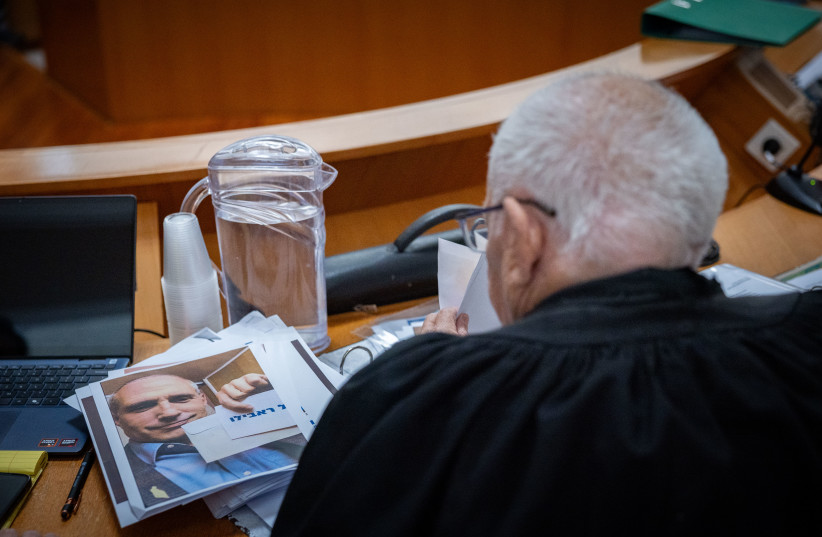
MK Sharren Haskel was summoned by Lahav 433 to testify regarding the election of the State Comptroller, which the High Court of Justice ruled invalid, Haskel’s spokesperson confirmed to the Jerusalem Post.

New Hope MKs ordered to film comptroller vote for Netanyahu, Sharren Haskel claims

One week earlier, Haskel alleged in a sworn affidavit that members of the New Hope-United Right faction were required to film themselves voting for Michael Rabello as state comptroller and show the footage to Prime Minister Benjamin Netanyahu as proof of how they voted. 

The claim conflicts with the position presented by the Likud during the legal proceedings over Rabello’s election. It was not, however, submitted in that case.

Haskel signed the affidavit on Sunday, more than two weeks after the High Court of Justice invalidated Rabello’s election and ordered the Knesset to hold a new vote because the filming of ballots had fundamentally violated the secrecy of the election.

A court hearing at the Supreme Court in Jerusalem on petitions seeking to overturn the election of attorney Michael Rabello as state comptroller, June 18, 2026 (credit: YONATAN SINDEL/FLASH90)

Instead, the affidavit was filed in Haskel’s separate petition seeking permission to break away from Foreign Minister Gideon Sa’ar’s New Hope-United Right faction and be recognized as a one-member faction.

Keshet Neev contributed to this report.

This post was originally published on here. 

A drone attack and ambush by Islamist terrorists at a police post in northwest Pakistan killed at least 10 officers, police said, the second such assault within a week.

The attack took place late on Wednesday in ⁠the Hangu district near the Afghan border, an ​area that has long served as home to terrorist groups.

Terrorism in Pakistan’s border areas has risen sharply in recent months, targeting mainly the military and police after an armed conflict between Pakistan and Afghanistan killed hundreds.

Islamabad says the terrorists use safe ​havens ⁠in Afghanistan to train and plan attacks in Pakistan. Afghanistan’s Taliban government has denied the charge and said terrorism is Pakistan‘s ⁠domestic problem.

Terrorist ambush police checkpoint 

The terrorists ambushed the police check post after hitting it with improvised explosive devices attached to quadcopters, police said in a statement.

Security personnel patrols after an explosion and gunfire were reported, near offices of the Rangers, a paramilitary force, in Karachi, Pakistan, June 27, 2026.  (credit: Qaier Khan/ REUTERS)

Ten officers and 15 of the attackers were killed in several hours of fighting, said Zulfikar Hameed, the provincial police chief.

The Islamist terrorists have in recent months started using the quadcopters to target security forces in the border areas.

No group has claimed responsibility for the latest attack, which came days after a suicide bombing killed 15, including 12 Pakistani army soldiers, in the nearby district of Tank. The Tehreek-e-Taliban Pakistan, or Pakistan Taliban, claimed responsibility for the suicide attack.

The group has been waging an insurgency against the Pakistani ​state since 2007 ​in an ⁠attempt to overthrow the government and replace it with their own brand of strict ​Islamic governance.

Terror attacks have surged along Pakistan’s border with Afghanistan and have the potential to reignite fighting between the neighbors. The allies-turned-foes engaged in their worst fighting in years in February, with Pakistan carrying out airstrikes ​inside Afghanistan.

This post was originally published on here. 

A QatarEnergy-controlled liquefied natural gas tanker exited the Strait of Hormuz overnight, the first such vessel visible on ship-tracking data to leave the waterway since July 11, data from analytics firms showed on Thursday.

The Al Areesh tanker, which loaded a cargo at Qatar’s Ras Laffan terminal around July 4-6, sailed out of the strait overnight on July 29, according to Kpler and LSEG data.

LSEG data shows it is currently heading to Port Qasim, Pakistan, with an estimated arrival date of July 31.

Its departure marks the first time a QatarEnergy-controlled LNG tanker exited the Strait of Hormuz since the Al Rekayyat was struck in early July.

The previous LNG tanker to exit was the Al Hamra, which left on July 11 carrying a cargo loaded at the United Arab Emirates’ Das Island, according to Kpler data.

Tugboats guide the crude oil tanker Odessa, carrying UAE crude after passing through the Strait of Hormuz with its Automatic Identification System transponder turned off, navigates the waters at Daesan port, where it is expected to discharge crude oil, in Seosan, South Korea, May 8, 2026. (credit: Kim Soo-hyeon/Reuters)

Separately, the Mraweh LNG tanker, which was last detected outside the Strait of Hormuz in ballast on July 24, reappeared inside the strait on Thursday, according to Kpler and LSEG data. The ADNOC Gas-controlled vessel remained in ballast, Kpler data showed.

QatarEnergy and ADNOC did not immediately respond to a request for comment outside of business hours.

Twelve commodity ships passed through the Strait of Hormuz on Wednesday, with six entering and six exiting, Kpler data showed. The number increased from the previous two days.

Tankers passing through the Bab al-Mandab strait

Nineteen commodity ships passed through the Bab al-Mandab strait on Wednesday, down from the transit on Monday and Tuesday, Kpler data showed. LSEG put the number of transits at 26.

Of the 19 ships passing through according to Kpler, eight entered the strait while 11 exited. Among those exiting, four were tankers carrying crude.

Some ships could still be sailing with their transponders turned off, which are not considered in the counts.

Visible crude loadings from the Red Sea port of Yanbu fell by at least 30% last week after Yemen’s Houthis declared a blockade on Saudi Arabia, Kpler and AXSMarine data showed, though Vortexa estimated that exports remained broadly stable, citing a rise in so-called dark tanker loadings.

“We have observed a clear increase in the number of crude/condensate tankers heading north after loading in the Red Sea. The shift reflects the renewed security risk around Bab al-Mandab,” said Vortexa analyst George Morris.

“Cargoes loaded at Yanbu accounted for around 15% of Asia’s seaborne crude/condensate imports in June, so any sustained disruption has meaningful implications for Asian refiners.”

This post was originally published on here. 

If you didn’t snag a limited-edition replica miniature of the Knicks-themed 34th Street subway station or an orange-and-blue trash can before they sold out, here’s another opportunity to buy a piece of New York Knicks history. The city is auctioning off one “Champions Way” sign that hung on Broadway during the ticker-tape parade celebrating the 2026 NBA champs. The sign is one of 30 installed along the Canyon of Heroes for the June 18 event, attended by an estimated two million people. Bidding kicked off on Wednesday at $100 and will run through 8 p.m. on August 12.

Photo credit: NYC DOT

Measuring 36 inches by 9 inches, the street sign was handcrafted at the city’s Department of Transportation’s Sign Shop in Maspeth, Queens. DOT installed 30 signs, with two at each intersection along the parade route in Lower Manhattan.

“The Knicks brought home a championship after a 53-year drought and now is your chance to own a unique piece of the festivities,” DOT Commissioner Mike Flynn said. “NYC DOT was proud to join the celebration and bring an extra touch of civic pride to the Canyon of Heroes during this special day in the history of our city.”

Last month, the city listed 200 replica “Champions Way” signs for $100 each. They sold out in seven minutes. DOT also temporarily co-named 18 intersections across Sixth and Seventh Avenues after every player on the Knicks.

The online auction is through the city’s online surplus auction website, overseen by the Department of Citywide Administrative Services (DCAS). The agency sells property the city no longer needs, like gifts given to past NYC mayors and a retired Staten Island Ferry boat. Proceeds go towards the City of New York.

As of Wednesday around noon, the highest bid for the sign is $1,525.

According to the New York Times, the most expensive item ever sold through the city’s auctions was a Sanitation Department hopper barge that fetched $293,255.

“The Knicks championship celebration was a once-in-a-generation moment for New York City, and these commemorative street signs capture the excitement, pride and history of that unforgettable day,” DCAS Commissioner Yume Kitasei said.

“Through DCAS’ surplus property auctions, we’re thrilled to give fans the rare opportunity to own an authentic piece of New York City and Knicks history.”

RELATED:

The post NYC auctions off ‘Champions Way’ street sign from Knicks championship parade first appeared on 6sqft.

This post was originally published here. 

Phoenix retailer posts $7.38 billion quarter and record net income; full-year earnings guidance lands under what the market wanted

Carvana Co. sold 197,325 vehicles in the second quarter, a 38 percent increase over the same period last year, and posted record quarterly net income of $513 million and record adjusted EBITDA of $769 million. The stock fell anyway. Shares dropped 15.9 percent in after-hours trading to roughly $56.

Revenue came in at $7.38 billion, up 52 percent year over year and well above the $6.86 billion analysts had projected. Net income rose $205 million from a year earlier. The company reported a net income margin of 7.0 percent and an adjusted EBITDA margin of 10.4 percent.

What moved the stock

Carvana guided full-year 2026 adjusted EBITDA to a range of $2.7 billion to $3.0 billion, a midpoint of $2.85 billion. Analysts had been modeling closer to $2.99 billion. Some forecasts ran considerably higher — Deutsche Bank at $3.0 billion to $3.2 billion, Morgan Stanley at $4.45 billion.

The second issue was margin direction. Operating margin came in at 9.2 percent, down from 10.6 percent in the same quarter a year ago. Gross profit per unit declined even as volume rose. Carvana is selling substantially more cars and earning somewhat less on each one.

The full-year outlook still represents a sizable increase over the $2.24 billion the company delivered in 2025. The reaction reflects how much growth was already priced in rather than a deterioration in the business.

The volume story is real

Retail units sold rose by 54,045 vehicles from the year-ago quarter. Revenue per unit came in around $37,380, up 10.7 percent — meaning Carvana is moving both more cars and more expensive cars.

Chief Executive Ernie Garcia called it the company’s tenth consecutive quarter of industry-leading growth and profitability, crediting the decade of foundation-building that preceded it. In a letter to shareholders, the company reiterated its target of three million cars a year and a 13.5 percent adjusted EBITDA margin sometime between 2030 and 2035.

Carvana expects retail units sold to increase again in the third quarter compared with the second.

For context on the trajectory: Carvana closed 2025 with 596,641 retail units and $20.3 billion in revenue for the full year. At the current quarterly run rate the company is on pace to clear 750,000 units this year.

What it signals about the used-car market

Carvana’s numbers are the cleanest read available on used-vehicle demand, and they say demand held up through the spring. Volume up 38 percent with average selling prices up nearly 11 percent is not the profile of a consumer pulling back on big-ticket purchases.

But the per-unit profit compression is worth noting for dealers across the tri-state area. When the largest online player is buying inventory aggressively enough to grow units 38 percent, it bids up acquisition costs at auction for everyone else. Independent lots and franchise used departments competing for the same wholesale supply face that pressure directly, and Carvana’s own thinning margin per car suggests the acquisition side is where the squeeze is showing.

The company’s model depends on continued used-car demand, stable vehicle pricing and efficient inventory turnover. Tariff-related trade uncertainty, interest rate sensitivity and shifts in consumer spending all bear on future results, as does the company’s substantial debt load.

That last item is the one to watch. Carvana carries meaningful leverage from its earlier expansion and its 2023 debt restructuring. Rising volume services that debt comfortably; a used-car pricing correction would not.

The bigger read

There is a pattern forming across this earnings week. Companies are delivering on the operating numbers and getting punished on the forward look. Meta beat on revenue and fell 11 percent. Carvana beat on revenue and earnings and fell 15 percent. In both cases the guidance, not the quarter, was the trigger.

For business owners tracking the consumer, the useful signal from Carvana is not the stock move — it is that Americans bought 197,000 used cars from a single online retailer in three months at an average of more than $37,000 apiece. Whatever the market thinks of the guidance, that is a consumer still willing to finance a substantial purchase.

Management was scheduled to discuss the results with investors on a call Wednesday evening.

JBizNews Desk | Phoenix

© JBizNews.com All Rights Reserved. Reproduction or distribution without written permission is prohibited.

Starting next week, Nebraskans on Medicaid will be at risk of losing their health coverage unless the state can verify that they work, volunteer, or attend school for 80 hours per month. Come January, millions of other low-income Americans will face the same cliff. 

While some working-age people are exempt, including those with young children and those deemed “medically frail,” new rules about who can opt out have led to widespread confusion. For patients with complex medical conditions, the looming requirements may create another barrier to health.

Read the rest…

This post was originally published here. 

First Opinion is STAT’s platform for interesting, illuminating, and provocative articles about the life sciences writ large, written by biotech insiders, health care workers, researchers, and others.

To encourage robust, good-faith discussion about issues raised in First Opinion essays, STAT publishes selected Letters to the Editor received in response to them. You can submit a Letter to the Editor here, or find the submission form at the end of any First Opinion essay.

Read the rest…

This post was originally published here. 

When I met Tesfaye at Boru Meda General Hospital, he vaguely remembered the thorn. He was 15 when it pricked his foot, out in the fields somewhere in Mekdela, in north-central Ethiopia. He had noticed it in passing, then forgot about it.

Seventeen years later, that prick had severely damaged his foot, destroying its bones.

Read the rest…

This post was originally published here. 

Rhetoric against Turkey and Syria continues to be a constant theme in Israeli politics. It is being noticed in Turkey.

Turkish media is increasingly reporting on Israeli comments. It is important to examine how this rhetoric is now framing Ankara’s role in Syria and also how Turkey may interpret the comments.

Turkish media reported on July 30 that Turkey’s Foreign Minister Hakan Fidan met with the newly elected Hamas leader Khalil al-Hayya.

This will be seen in Jerusalem in a negative light, in line with a sense that Ankara is a rising threat.

First, a little history.

A demonstrator holds a sign depicting a collage of the faces of incument Israeli Prime Minister Benjamin Netanyahu and Turkish President Recep Tayyip Erdogan during an anti-government protest. (credit: JACK GUEZ/AFP VIA GETTY IMAGES)

Historic ties between Israel, Turkey

Turkey and Israel have historic ties that date back to the era before the state of Israel was created. Zionist leaders David Ben-Gurion and Yitzhak Ben-Zvi studied law in Istanbul in 1913.

After the founding of Israel, Turkey became the first Muslim-majority country to recognize Israel. Israel and Turkey had good relations until the rise of the AKP party in the early 2000s.

Turkish leader Recep Tayyip Erdogan became increasingly critical of Israel, especially after the 2009 war in Gaza. This rhetoric was met with some attempts at reconciliation, most recently in 2021.

However, the Hamas attack and Gaza war have soured relations to a new low.

From Jerusalem’s point of view, Turkey is increasingly not just pushing hostile narratives; it is potentially a strategic or regional threat. This dovetails with increasing critique of Qatar by Israeli politicians.

Several years ago, Doha was seen as helpful with Hamas in Gaza. Cash from Doha was flowing via Israel to Gaza. After October 7, the perception of Turkey and Qatar has shifted in Jerusalem.

This results now in almost weekly statements against Turkey and also Qatar.

In addition, there are also weekly statements against Syria. Syria’s leadership is often called “jihadist,” and there are threats of war with Syria.

Israel is already involved in conflicts in Lebanon and Gaza, and fighting terrorism in the West Bank. It’s interesting to see voices in Jerusalem also pushing for war in Syria. Israel’s early leadership preferred war as a last resort.

Today, after more than 1,000 days of war, the rhetoric generally argues for more war on more fronts, with a sense that Israel is now the strongest military in the region and, with US support, can fight more enemies.

The White House, however, has appeared to push back against Israel’s role in Syria, particularly friction with local villagers near the Golan.

The Trump administration also wants to see peace in Gaza and Lebanon, not more war. The Trump administration also has warm ties with Turkey and Qatar, potentially creating a challenge for policymakers in Jerusalem who predict hostility with these countries.

The rhetoric is beginning to be noticed more in the region. ANHA news, also known as Hawar News Agency, is a Kurdish outlet.

Israel to establish Syrian bases if Turkey does

It reported on July 28 that “Israeli Energy Minister Eli Cohen said Israel would be compelled to establish military bases inside Syria if Turkey proceeds with plans to set up its own military bases on Syrian territory.”

It added that “Cohen stressed that Tel Aviv [Jerusalem] would not stand idly by in the face of any Turkish military deployment in neighboring Syria, asserting that Israel would respond in kind to safeguard its national security and protect its strategic interests in the region.”

On July 23, Daily Sabah, a pro-government Turkish outlet, noted that “Israeli Diaspora Affairs Minister Amichai Chikli said on Wednesday that Israel should prepare for the possibility of a future confrontation with Türkiye, arguing that direct military contact between the two countries was ‘not an impossible scenario.’”

It went on to report that “speaking at a conference in west Jerusalem, Chikli said a direct encounter between the Israeli and Turkish militaries could occur at sea, adding that such a scenario could happen ‘even tomorrow morning.’”

Middle East Eye reported in June that “Israel ‘will be at war with Syria sooner or later’, says Likud minister.” The pro-government Turkish outlet Yeni Safak noted in March that “Former Israeli Prime Minister Naftali Bennett sparked controversy Wednesday with provocative statements targeting Turkey during a live Bloomberg interview.

Bennett described Turkey as a ‘new strategic threat’ to Israel and hinted at possible action against Ankara, saying ‘the choice is up to Turkey and warning, ‘after Iran, we won’t stay idle.’”

On July 29, Daily Sabah also reported that “Israeli Defense Minister Israel Katz on Tuesday renewed his hostile rhetoric against Turkey, issuing a series of pointed remarks on regional security, Syria and Iran.”

It went on to note that “during an interview with Israel’s Channel 14, Katz said Israel does not seek a military confrontation with Türkiye but argued that his country would defend itself against any threat.

Referring to the Ottoman conquest of Constantinople, he said: ‘We are not the collapsing Christian empire. Jerusalem is not Constantinople, and we know how to defend ourselves.’”

Then the report says that “the Israeli minister also argued that Ankara is seeking greater influence in Syria and said Israel would not allow Syria to become a platform that could threaten its security.” A separate comment from Bennett at the Conference of Presidents of Major American Jewish Organizations in February also was reported at Media Line. He spoke about how “Turkey is the new Iran,” the report said.

Iran considered a threat to Israel, entire region

Currently, Iran is still considered a threat to Israel and the region. It continues to have ballistic missiles, and despite five months of conflict since February, Iran continues its attacks. It is now clear how Israel expects to take on Turkey, a member of NATO, if Iran has not been vanquished.

If Turkey is viewed as the “new Iran,” the fact is that Turkey has a powerful army, air force and navy.

Most of the examples of recent Israeli statements about Turkey can be found on the social media news site Clash Report, which describes itself as a “global platform that focuses on conflict zones around the world, delivering detailed analyses and up-to-date news.”

Clash Report has been critiqued for being pro-Ankara. On July 29, it highlighted on X comments by Bennett “on US selling F-35 jets to Turkey.” The report claimed Bennett said, “we cannot allow our enemies to be armed, because then we won’t be able to defend ourselves against this very advanced weaponry.”

Ragip Soylu, the Turkey Bureau Chief of Middle East Eye, noted the Bennett comments in an X post, noting the Bennett called Turkey an “enemy.”

Clash Report also highlighted Eli Cohen’s comments in a July 28 post. “Israeli Minister of Energy Eli Cohen: We will not accept Türkiye’s entrenchment in Syria.” It added that Cohen noted, “if Turkey establishes bases in Syria, we will also act to establish bases within Syria itself.”

Israel’s discussions with Trump about Turkey are also becoming more pronounced. According to reports in Israeli media on July 29, Israel’s Prime Minister Benjamin Netanyahu showed US President Donald Trump a map to compare Israel’s presence in Syria.

Trump has often highlighted his positive relationship with Erdogan and also noted that Erdogan doesn’t get along with Israel’s prime minister. Trump appears to want to highlight that he can balance these two friends in the region. Trump has also been supportive of Syria’s leader.

Recent tensions with Syria have involved Israeli civilians trying to sneak into Syria. In addition, there have been clashes with local villagers who oppose the IDF presence.

Israel’s demands that Syria not have forces near the border have turned the border area with the Golan, beyond the 1974 ceasefire lines, into a kind of no-man’s land of low-level chaos and power vacuum. By demanding no Syrian military presence, it is hard for Syria to create stability.

This creates a possible self-fulfilling prophecy for Israel. Israeli officials see Syria as a threat. This leads to a power vacuum near the border, and a threat could emerge as civilians don’t want to live under IDF raids and IDF rule.

This is a major shift from the era of the Assad regime when Israel provided support for Syrian civilians near the border. Now the civilians only see hostility from the IDF rather than the support of the previous era.

Turkey’s leadership has taken note of Israeli comments. Turkish Foreign Minister Hakan Fidan sought to tone down some rhetoric on Israel in mid-July. Ankara is worried about a clash in Syria, it seems.

On July 30, Turkey’s pro-government Anadolu noted that “Turkish Foreign Minister Hakan Fidan met Wednesday with Khalil al-Hayya, the newly elected head of Hamas’ Political Bureau, and a Hamas delegation, according to Turkish Foreign Ministry sources.”

This won’t help ties with Jerusalem. 

This post was originally published on here. 

The IDF has begun drafting an official “foundational principles document” intended to redefine and clarify the military’s values while clearly establishing what is permitted and what is prohibited, N12 reported on Wednesday. 

The document is also expected to address the IDF’s nonpartisan nature ahead of approaching elections by clearly setting out its policies, according to the report. 

The chief of staff has emphasized in recent weeks that he will not allow politics to enter the IDF. 

The document is expected to be finalized in the coming weeks and distributed to commanders throughout the IDF, N12 wrote. 

This comes after discussions held by the General Staff in recent months, in which data on a dramatic decline in discipline was presented to IDF Chief of Staff Lt.-Gen. Eyal Zamir and the military’s senior commanders. 

AN IDF soldier puts a cigarette in the mouth of a statue of the Virgin Mary. (credit: SECTION 27A COPYRIGHT ACT)

Viral images, videos highlight IDF misconduct

This decline has been reflected in disregard for military orders and ethical failures, some of which have received media attention in recent months, N12 reported.

Two months previously, an IDF soldier was sentenced to 30 days in military prison after Zamir caught him wearing a “Messiah” patch on his uniform.

In addition, the platoon commander was given a suspended sentence of 14 days’ detention, the company commander was reprimanded, and the battalion commander was given a formal mark on his record.

In May, the IDF sentenced a soldier to 21 days in military prison for desecrating a religious Christian symbol in southern Lebanon, and an additional soldier was sentenced to 14 days in military prison for filming the incident. 

In April, another soldier was filmed smashing a statue of Jesus. Both the soldier who smashed the statue and the soldier who filmed him were removed from combat roles and sentenced to 30 days in military prison. 

Six other soldiers who were present at the scene and “did not act to stop the incident or report it” were strongly criticized, according to the IDF, which said that the soldiers’ conduct “completely deviated from IDF orders and values.”

Tzvi Jasper contributed to this report.

This post was originally published on here. 

Greek firefighters were battling deadly wildfires on the island of Crete for a second day on Thursday, as wildfires continue to spread across Europe following days of devastating blazes in Spain and France.

On Wednesday, three Greek firefighters died battling blazes during high winds on Crete and on the mainland, and two more were lightly injured.

Two firefighters died after becoming trapped in the Crete fire near the village of Krya Vrysi in the center of the island while they were driving between fire fronts. Another died in a separate fire in the Peloponnese region.

Hundreds of residents and tourists were evacuated on Wednesday from Krya Vrysi and other nearby villages by sea and by land in the center of the island as high winds pushed the fire out of control near popular holiday spots.

On Thursday, more than 200 firefighters with dozens of fire engines and water-carrying aircraft battled two wildfires on the island of Crete, where agricultural crops and olive groves were destroyed, and warehouses and a few houses were damaged.

A firefighting helicopter flies over a wildfire burning next to the village of Krya Vrysi on the island of Crete, Greece, July 29, 2026. (credit: REUTERS/STRINGER)

“Unfortunately there is no improvement, and the latest information indicates that winds will increase later in the day,” said Giorgos Tsapakos, deputy regional governor for civil protection on Crete, on SKAI TV.

“Aircraft were unable to operate this morning due to the strong winds,” he said.

On Wednesday, the head of the EU’s emergency response center said Greece and Italy were set to face a heightened wildfire risk in the coming weeks.

Record-breaking heatwaves spread across Europe

Europe, the world’s fastest-warming continent, has endured record-breaking heatwaves this year as human-driven climate change intensifies the heat and drought that enable wildfires to spread faster.

Blazes have forced large-scale evacuations of people in Spain and France over the last few days, scorching through forests and killing wildlife.

On Wednesday, Spanish Interior Minister Fernando Grande-Marlaska warned of “three tough days” ahead, with strong winds and high temperatures, even as the major fire in the Avila and Madrid region stabilized, allowing authorities to lift some of the evacuation and shelter-in-place orders.

This post was originally published on here. 

The latest strikes in Iraq and Egypt threatened to draw more Middle Eastern countries into the conflict, after the Iran-aligned Houthis in Yemen last week declared a naval blockade on Saudi Arabia.

On Wednesday, a drone hit a US-owned gas storage tanker at Egypt’s Mediterranean port of Damietta, British maritime security firm Ambrey said in an initial assessment, while US and Saudi forces launched strikes against Iran-aligned groups in eastern Iraq and Iran fired missiles at US troops in Jordan.

The drone was reportedly launched from Iran, the New York Times reported on Thursday. 

In first, Saudi Arabia publicly joins strikes alongside US

The joint US-Saudi attacks marked the first time Riyadh has publicly joined strikes alongside Washington.

Iraq’s Popular Mobilization Forces, powerful Iran-backed paramilitary groups incorporated into the Iraqi security forces, said at least 20 members were killed and 32 wounded in US-Saudi strikes targeting several bases across Iraq.

Iraqi men shouted “Death to America!” as they carried the bodies of slain fighters in body bags.

Washington and Riyadh said they struck Iran-backed armed groups in Iraq in retaliation for drone attacks on Saudi oil targets launched from Iraq.

A US military aircraft takes off from an unknown location during what US Central Command (CENTCOM) says are strikes on Iran, in this screengrab from a handout video released on July 29, 2026.  (credit: US CENTRAL COMMAND/HANDOUT VIA REUTERS)

After the joint attacks, Saudi Arabia’s defense minister met with Vice President JD Vance in Washington on Wednesday to urge the Trump administration not to escalate the conflict further by attacking Yemen’s Houthis and carrying out additional strikes against the Iran-aligned militias in Iraq, two sources told Reuters.

One of the sources added that such escalation would open the door to “major unknown risks.” The White House and Saudi embassy in Washington did not immediately respond to a request for comment.

Major combat operations against Iran would carry risk, officials warn 

US officials have privately cautioned that resuming major combat operations against Iran would carry risk given the negative impact on stocks of munitions.

The Center for Strategic and International Studies, a Washington-based think tank, estimated this week that the US military has fewer than 1,000 Patriot interceptor missiles and fewer than 250 THAAD interceptors – two key air defense systems.

Though Iran denies its forces have directed strikes from Iraqi territory, Iranian newspaper Hamshahri reported that four Iranian Revolutionary Guards advisers had been killed in the strikes on Iraq.

Who are Iraq’s Iranian-backed armed groups?

The strikes on Iraq expose a dangerous rift in that volatile country. The Shi’ite-led government is one of the few in the world to balance close military and diplomatic ties with both Tehran and Washington, but those divided loyalties are a constant source of tension and frequent domestic unrest.

The office of Prime Minister Ali al-Zaidi, who took power just two months ago, urged the parties involved to avoid escalation and said he wanted to keep the country out of regional conflicts.

The Iraqi presidency denounced the strikes on the paramilitaries as “an unacceptable attack and a flagrant violation of Iraq’s sovereignty,” while also calling for a halt to attacks by armed groups against Iraq’s neighbors.

The deep ties between Iran and Iraq, the two biggest Shi’ite-majority countries, are on display this week as hundreds of thousands of Iranian religious pilgrims head to shrines in Iraq for an annual observance of mourning for martyrs.

US strikes Iran as widening war engulfs more countries

Hours before launching the attacks on Iraq, the US military said its air defenses had averted a surprise Iranian attack on US troops in the region.

“US forces began launching strikes against Iran at 8:00 p.m. ET today (0000 GMT),” US Central Command said in a statement.

“The strikes are a powerful response to yesterday’s attempted Iranian attacks on US forces based in the Middle East.”

Jordan’s military said it had shot down five Iranian missiles. US bases in Jordan have lately become primary Iranian targets, where three US service members were killed this month in the worst US losses since March.

Iran’s Revolutionary Guards said they had fired several ballistic missiles at US military installations in Jordan, and had struck three tankers that were attempting to transit through the Strait of Hormuz along an unauthorized route.

This post was originally published on here. 

For two years, the Jewish world rallied around one simple truth: no Jewish life is expendable.

We have marched for hostages, prayed for hostages, lobbied governments for hostages, and celebrated every family reunited. We reminded the world that pidyon shvuyim – the redemption of captives – is among Judaism’s greatest commandments. The Talmud calls it a mitzvah rabbah. Maimonides teaches that there is no greater mitzvah because a captive suffers hunger, fear, and danger all at once. The Shulchan Aruch goes even further, warning that every unnecessary delay in freeing a captive is akin to shedding blood.

That moral clarity should not stop at Israel’s borders.

Today, I am publicly asking Dr. Miriam Adelson to bring that same sense of urgency to a different kind of captivity: a justice system where, supporters argue, access to clemency has become prohibitively expensive and deeply unequal.

No one has done more in recent years to advocate for Jewish captives than Dr. Adelson. Her efforts on behalf of the October 7 hostages have saved lives and inspired Jews around the world. She understands that when Jewish lives are at stake, influence carries responsibility.

Miriam Adelson reacts next to U.S. President Donald Trump at a Hanukkah reception in the East Room of the White House in Washington, DC, US, December 16, 2025. (credit: REUTERS/Nathan Howard)

I hope she’ll use that influence once again.

The case is Ari Teman.

The case of Ari Teman

Whether you’ve followed his legal battle isn’t really the point. What matters is that a remarkable coalition of legal scholars and attorneys from across the political spectrum – including Harvard professor Lawrence Lessig, Alan Dershowitz, Ron Coleman, Mike Yoder, and Molly McCann Saunders – have publicly argued that his prosecution was deeply flawed and that he deserves presidential clemency. Years before becoming US pardon attorney, Ed Martin publicly agreed with calls for a pardon.

Yet Ari Teman has completed his sentence and still has not been pardoned.

Supporters of his case also point to publicly reported correspondence describing six-figure fees being sought to pursue presidential clemency. Whether those arrangements are appropriate or not, they raise a troubling question:

Should access to justice depend on who can afford it?

That question extends far beyond one man.

For generations, Jews have understood that unequal justice rarely begins with dramatic announcements. It begins quietly – with inconsistent standards, disproportionate punishment, and systems that become increasingly inaccessible to ordinary people.

Many advocates have argued that, in several high-profile federal cases, Jewish defendants received disproportionately harsh sentences compared with similarly situated non-Jewish defendants. Those claims deserve careful, independent examination – not dismissal because they are uncomfortable.

If disparities exist, every Jew should care.

Because when freedom depends on access, connections, or enormous sums of money, justice ceases to be equal.

Ari’s story also matters because of who he is outside the courtroom.

Long before his legal troubles, he founded JCorps, helping build one of North America’s largest Jewish volunteer networks. He was recognized by Jewish Federations as a North American Jewish Community Hero, honored by civic leaders, and dedicated years of his life to strengthening Jewish communities through volunteerism.

Today, he is working to build Sunflower Centers, a treatment and research campus for trauma and addiction designed to serve Israeli veterans and survivors of October 7. The project has brought together advisers from across Israel’s healthcare system with the goal of expanding desperately needed mental health care in Israel.

It is difficult to ignore the broader question: if respected legal experts believe a conviction warrants clemency, should justice depend on one’s ability to navigate an expensive insider process?

Jewish tradition teaches that redeeming captives is not optional.

Neither is pursuing justice.

That is why I am asking Dr. Miriam Adelson to urge President Trump to grant Ari Teman a full pardon, direct the Attorney General to review the allegations surrounding his prosecution, and ensure that serious claims regarding his treatment receive appropriate scrutiny.

I also hope she will encourage an independent study examining whether Jewish defendants have received disproportionately severe federal sentences compared with similarly situated non-Jewish defendants. If disparities are found, they should be addressed through the same commitment to justice that has guided so much of the Jewish community’s advocacy.

Dr. Adelson has already demonstrated what determined leadership can accomplish when Jews are held captive.

Now I hope she will help ensure that justice itself is never reserved only for those who can afford the price of admission.

Because no Jew’s freedom should ever come with a price tag.

The writer is an activist and content creator. Raised in Jerusalem and living in Tel Aviv, she has become a leading voice on and offline for liberal Zionism. A third-generation IDF veteran with over a decade in Israel advocacy, Hallel has created and executed content for dozens of major organizations. She is an associate at the Tel Aviv Institute.

This op-ed was adapted from an open letter, cosigned by the author as well as Israellycool founder David Lange, author Benji Lovitt, Israel in the UAE founder Charles Ashkenazi, Darkenu director Rabbi Avi Ganz, comedians Yohay Sponder and Avi Liberman, Jewish Justice Reform Project director David Biren, Stardust Ventures managing partner Gil Eyal, and Coalition for Jewish Values regional vice president and senior rabbinic fellow Rabbi Steven Pruzansky, among others.

This post was originally published on here. 

A heat wave is expected to reach Israel beginning on Friday, peaking on Saturday and Sunday. It will be accompanied by dry conditions and strong winds in northern Israel, raising the risk of wildfires.

The hottest area is expected to be around the Sea of Galilee and the northern valleys, where temperatures could climb to as high as 47C on Sunday. Israel Meteorological Service Director Dr. Amir Givati stated that if this occurs, it would break the regional temperature record set about 30 years ago, when 46.8C was recorded at Beit Tsaida on August 9, 1998.

On Thursday, temperatures will rise slightly, and conditions will be hotter than usual, with heat wave conditions in the hills and inland areas, while the Coastal Plain will remain hot and humid. Heavy to extreme heat is expected across most of the country.

Extreme heat is forecast for the southern Golan Heights and its slopes, the northern valleys, the Lower Galilee, the Kinneret Valley, the Dead Sea coast, the Jordan Valley, the Arava, the Judean Desert, and the eastern Negev. 

Heavy heat is expected in the northern Golan Heights, the western Galilee, the Carmel region, Ramat Menashe, the Coastal Plain, the Shephelah, the central hills, the northern Negev, and the Negev Highlands.

Israelis hike at Nahal Hava in the Negev, southern Israel, January 30, 2026. (credit: YANIV NADAV/FLASH90)

Extreme heat, hotter than usual with clear skies

On Friday, skies will remain mostly clear. It will continue to be hotter than usual, with heat wave conditions in the hills and inland areas and hot, humid weather along the Coastal Plain. Heavy to extreme heat will persist across most of the country.

On Saturday, temperatures will remain hotter than usual, with heat wave conditions in the hills and inland areas, while humid conditions continue along the Coastal Plain. The heat will intensify further, with heavy to extreme conditions expected nationwide.

On Sunday, the weather will remain hotter than usual, with heat wave conditions in the hills and inland areas, and continued humidity along the Coastal Plain. Heavy to extreme heat will continue throughout the country.

This post was originally published on here. 

George Washington is credited with saying, “Freedom and property rights are inseparable. You can’t have one without the other.” As America reflects on 250 years of independence, the sentiment feels as relevant as ever. 

Property rights are not an abstract legal concept. They are the foundation of economic opportunity, personal security, community stability and the American Dream. For millions of families, owning a home represents far more than a financial investment. It is a place to build a life, raise a family, establish roots and create generational wealth. 

The Founders understood this. John Adams wrote in 1790 that “property must be secured, or liberty cannot exist.” They saw property rights as essential to personal liberty, economic independence and individual autonomy. That principle drew from a long legal tradition stretching back to the Magna Carta and was carried by James Madison into the Fifth Amendment, where property protections stand alongside some of the Constitution’s most important safeguards for individual rights. 

That promise depends on confidence. A homebuyer must be able to trust that when they purchase a home, they truly own it. A lender must be able to rely on the security of the collateral behind a mortgage. A community must be able to count on a stable system of property records that allows homes to be bought, sold, financed and inherited with certainty. 

This did not happen by accident. It is the result of laws, institutions and professionals who work every day to protect ownership. 

The link between property rights and prosperity 

The relationship between secure property rights and prosperity is well understood. Economists Daron Acemoglu, Simon Johnson and James Robinson were awarded the 2024 Nobel Memorial Prize in Economic Sciences for their research on how institutions shape prosperity. Their work underscores a fundamental truth: Societies thrive when people can participate broadly in the economy, trust the rule of law and know that the fruits of their labor and investment will be protected. 

That principle is deeply American. From the nation’s earliest days, property ownership has been tied to freedom, independence and opportunity. Yet history also reminds us that ownership is only as strong as the systems that protect it. 

Abraham Lincoln’s family understood this firsthand. Lincoln was born in a one-room cabin in Kentucky on land his father believed his family owned. But because of competing claims and problems with title, the family was forced to leave. Years later, Lincoln’s father again had to defend his ownership rights in court. Although he prevailed, the uncertainty contributed to the family’s decision to move to Indiana. 

More than two centuries later, the names and technologies have changed, but the underlying risks remain. Forged deeds, undisclosed liens, unpaid taxes, recording errors, boundary disputes, fraud and competing claims can threaten a homeowner’s rights. Today, criminals can use artificial intelligence, stolen identities and increasingly sophisticated schemes to target real estate transactions. In an affordability crisis, these risks are not minor inconveniences. They can be financially devastating. 

That is why title insurance and the title professionals behind it matter. 

Protecting the promise of homeownership 

Before closing, title professionals search public records, identify potential defects and work to resolve problems so a buyer can take ownership with confidence. After closing, title insurance provides protection if a covered title issue later comes to light. This two-part role—preventing problems before they happen and protecting homeowners if they do—is essential to protecting property rights and preserving confidence in the housing market. 

Too often, title insurance is discussed only as a line item at closing. But that view misses the larger point. Title insurance is part of the infrastructure that allows America’s real estate market to function. It helps ensure that property can move from seller to buyer, that mortgages can be made with confidence and that homeowners have a defense if their ownership is challenged. 

That work is significant. Nearly 80% of title professionals report resolving at least three title issues in a typical transaction. Title professionals also spend substantial time working to identify and address fraud risks before closing, with more than half reporting they spend 11 or more hours per month on anti-fraud efforts. That is the unseen work that helps protect homeowners and keeps transactions moving. 

As we look ahead to America’s next 250 years, we should focus not only on expanding access to homeownership but also on protecting the rights that make homeownership meaningful. Affordability matters. Supply matters. Access to credit matters. But none of it works without secure property rights. 

For homeownership to remain a pathway to stability and wealth creation, protection must be part of the conversation. The American Dream is not simply about receiving a set of keys. It is about knowing that the home behind that door is truly yours, and that the rights attached to it are secure. 

America’s 250th anniversary is a reminder that freedom, opportunity and property rights are deeply connected. Protecting those rights is not just a legal function or a closing-table formality. It is a foundational part of our democracy, our economy and our shared promise that every American should have the chance to build a future on secure ground. 

Chris Morton is CEO of the American Land Title Association (ALTA). 
This column does not necessarily reflect the opinion of HousingWire’s editorial department and its owners. To contact the editor responsible for this piece: zeb@hwmedia.com.  

This post was originally published on here. 

The explosion of a US tanker at Egypt’s Mediterranean port of Damietta on Wednesday was the result of an Iranian drone attack, the New York Times reported on Thursday, citing two Iranians who requested anonymity. 

The NYT‘s sources did not specify which group launched the drone, saying only that it was launched from Iran. Egypt’s Cabinet issued a statement a few hours later confirming that the incident was caused by a drone and stating that no party had claimed responsibility for it. 

On Wednesday, maritime security firm Ambrey said that a drone hit a US-owned gas storage tanker at the port of Damietta.

The drone hit floating storage tanker Energos Winter, causing a fire that spread to another vessel, Gaslog Salem, three trading sources familiar with the incident said. 

Explosion follows Iranian missile attack against US forces, US retaliation 

The incident occurred shortly after Iran carried out a missile attack against US forces in Jordan, and Washington and Saudi Arabia struck Iran-backed paramilitary groups in Iraq.

Through a video posted on social media, Reuters verified the location by the port infrastructure, the storage tanks, and ship-tracking data that matched the archive and satellite imagery. 

Smoke rises from a gas tanker after a drone strike, maritime security firm Ambrey said, at Damietta port, Egypt, July 29, 2026, in this screengrab obtained from a social media video. (credit: Social Media/via REUTERS)

A statement from Egypt’s petroleum ministry confirmed a fire at the port but made no mention of a drone attack and did not provide a cause for the incident, noting that there were no injuries or deaths. 

Egyptian Petroleum Minister Karim Badawi went to the site to oversee response efforts, it said. The fire caused no injuries or fatalities, and emergency and technical teams were continuing to work on the response and assess the impact of the incident, the statement added.

US President Donald Trump was briefed on the incident on Wednesday, according to the NYT. He told reporters in the Oval Office that the explosion was “more of the same,” and that the US would be “hitting them very hard, because it’s our turn to hit them.” NYT also noted that Trump did not go into great detail about the event. 

Reuters and Amit Avitan contributed to this report.

This post was originally published on here. 

Everyone agrees that housing has a supply problem.

But the industry measures supply mainly by counting units and listings, while nearly everyone surrounding a housing transaction earns revenue from movement: applications, showings, contracts, loans, inspections, appraisals, title orders and closings.

Construction adds stock. Matching creates movement.

That distinction matters in the current market. Existing-home sales remain near three-decade lows even though inventory has improved from its pandemic-era trough. At the same time, NAR’s Housing Mismatch Report found that the alignment between available listings and household incomes remained materially below its pre-pandemic benchmark.

The market does not merely lack homes. It lacks enough homes that line up with the financial capacity of the households trying to buy them.

A listing is not always usable supply

A home can exist, be listed and still fail to function as supply for a particular household.

The monthly payment may be too high. The cash-to-close may fail. The property taxes, insurance, mortgage insurance or HOA costs may push the home beyond the buyer’s limit. The financing program may not work. The property may require repairs the household cannot finance. The commute, bedrooms or other needs may also fail.

That leads to a more useful definition:

Payment-qualified inventory is the set of homes that a household can finance, carry, close on and use under at least one permitted financing structure.

This is different from every listing beneath a price ceiling.

Price-first search can create two errors.

  1. A false positive is a home that appears affordable by price but fails after the full payment and cash requirements are calculated.
  1. A false negative is a home outside the assumed price range that could work because of lower property expenses, seller contributions, an eligible assumable mortgage, down-payment assistance, renovation financing or another permitted structure.

The purpose is not to encourage buyers to spend more. It is to calculate more accurately what their income, debt, credit, cash and financing options can accomplish.

The effective-inventory gain is easy to understand

Imagine that 10 homes truly work for a buyer, but price search reveals only eight. Finding the other two gives that buyer 25% more usable inventory – not because two new homes were built, but because the matching process stopped hiding them.

The calculation is:

(10 – 8) / 8 = 2 / 8 = 0.25 = 25%

The general formula is (where r is the share of the true feasible property set found by conventional price-first search):

Effective inventory gain = (1 / r) – 1

For example:

If r = 0.83, then (1 / 0.83) – 1 = 0.205, or about 20%.

If r = 0.80, then (1 / 0.80) – 1 = 0.25, or 25%.

If r = 0.77, then (1 / 0.77) – 1 = 0.299, or about 30%.

More generally, if price search identifies 80% of the true feasible set, recovering the remaining homes adds 25% to what the buyer could previously see.

That does not establish a national HomeSifter result. It establishes a measurable hypothesis: Compare price-first and payment-first searches and determine how many financeable homes each method finds – and how many unworkable homes each method incorrectly displays.

In building HomeSifter, I have come to view this as the missing layer between listed inventory and real housing opportunity. The prior affordability-first thesis was that buyers shop for a payment, not merely a price. The next implication is that better payment matching can change how much of the existing market becomes actionable.

The seller may become the next buyer

The larger effect begins when a transaction frees an existing owner to move.

Many repeat buyers rely on the proceeds from their current home to purchase their next home. But mortgage-rate lock-in and uncertainty about replacement housing can stop that sequence before it starts.

Payment intelligence cannot erase the financial cost of giving up a low mortgage rate. It may reduce a different friction: not knowing what comes next.

A current owner could see:

  • Estimated net proceeds from selling
  • A sustainable replacement payment
  • The homes that fit that payment
  • The effect of different locations, property types or financing structures

That produces a possible sequence:

Better replacement visibility → greater confidence → a new listing → a completed transaction.

This is a hypothesis requiring direct testing, but the mechanism is straightforward.

One transaction can unlock another

Federal Reserve researchers Elliot Anenberg and Daniel Ringo modeled how a first-time buyer’s purchase can propagate through the market.

The first buyer purchases from an existing owner. That seller becomes another buyer. The next purchase releases another seller.

Their calibrated model estimated a two-year multiplier of 1.48 transactions in hotter markets and 2.48 in colder markets for each initial first-time-buyer transaction. Those are not estimates of payment-first search. They show that housing transactions can form chains rather than isolated events.

That matters commercially.

A viable buyer match can create a purchase loan for a lender, commissions for agents and orders for appraisal, title, settlement, inspection and related services. A subsequent seller purchase can create another set of opportunities.

For MLS organizations, the question also becomes larger than how many listings are displayed: Is the marketplace helping the right households find, finance and act on the right properties?

The better supply question

America still needs more homes. Matching technology does not replace construction, zoning reform or rehabilitation. But the industry should stop treating every existing home as perfectly visible and equally usable.

Housing opportunity depends on four things:

Housing opportunity = Physical stock x Financial fit x Household fit x Transaction confidence

If any factor fails, the home may exist physically while remaining unavailable economically. The next generation of housing technology should therefore be judged by more than the number of listings it displays.

It should be judged by how many viable household moves it makes possible – and how many additional transactions those moves release.

Patrick A. Neely, Founder of HomeSifter 

This column does not necessarily reflect the opinion of HousingWire’s editorial department and its owners. To contact the editor responsible for this piece: zeb@hwmedia.com. 

This post was originally published on here. 

People matter in the title and real estate settlement service business. Relationships matter. Experience matters. A strong escrow officer or title professional can move revenue and change how a customer feels about the most important transaction of their life.

So, the competition for talent is fierce. Companies want proven producers, immediate credibility and a faster path to growth. Fair enough. But there’s a difference between hiring good people and trying to buy culture. You can’t buy culture. You build it through shared values, consistent leadership and a real commitment to the people doing the work every day.

Buying talent creates short-term movement. Building culture creates long-term strength.

That distinction matters more right now than it has in years. Margins are under pressure. Transaction volumes are uneven. Technology is changing how the work gets done and customers expect more speed, more certainty and more transparency than ever. In this volatile environment, a company can’t afford to make talent decisions in reaction, out of ego or out of fear of losing people. Every hire needs to make sense on its own terms.

Because at some point, the economics need to work.

Why the economics of culture matter

If compensation isn’t supported by production, leadership or the value someone actually creates, that gap doesn’t disappear. It waits. It might even look like a win in year one. But if the numbers don’t pencil, something eventually gives. 

Profitability. Investment in tools and training. The morale of the long-tenured people watching resources go somewhere else. When organizations reward negotiating power more than sustained contribution, they create a culture that values what people can secure for themselves over what they build for the business.

So ask a better question. Rather than asking, “who can we buy,” ask “what are we building, and who’s aligned with building it?”

Culture is built in the ordinary moments 

The best cultures aren’t built around a single producer or team. They’re built around a shared commitment to customers, operational discipline and trust. And they show up in ordinary moments. How fast a team answers a question. How carefully funds are protected. How clearly a customer is kept in the loop when something goes sideways. In an industry that sells certainty, culture is the difference between a customer feeling confident and feeling friction.

Customers experience culture through people. The escrow officer who stays calm under pressure. The title team that resolves a complicated issue before it becomes a closing problem. The sales professional who follows through. The operations leader who makes sure the team has what it needs to perform. None of that consistency comes from a single recruiting cycle. It must be built into how people work.

That’s why the customer experience (CX) and Net Promoter Scoring (NPS) are so important. NPS is not just a marketing metric. It’s a culture indicator; a number that tells you whether people are responsive, whether communication is clear and whether customers would trust a company enough to recommend it.

Building a culture that absorbs change

None of this means you shouldn’t hire experienced talent. Hire them. The industry needs strong professionals, and great outside hires bring energy and expertise the team didn’t have. But hiring only works when there’s alignment. When the person fits the culture and supports the team, rather than sitting outside both. A person brings relationships. The company must build an environment in which those relationships are well-served, retained and grown. That’s the actual competitive advantage.

When a key leader leaves, culture gets tested. The question isn’t just who replaces them. The better question is how you protect the customer experience and move forward with confidence. Strong organizations don’t ignore disruption. They communicate through it. They appoint and announce the interim support quickly. They listen to the team and give people access to leadership. They reassure customers with performance, not promises. And they remind everyone that the organization’s strength was never about one person.

A culture built on teamwork absorbs change. It doesn’t ignore a loss, but it doesn’t get defined by one either. Transitions offer an opportunity to elevate the next leader, reinforce the standard, and recommit to shared goals.

Winning the long game in the title industry

This matters more in the title industry than almost anywhere else. Customers hand over funds, highly personal information and control of one of the biggest financial investments of their lives, and they trust a team to get it right. That trust doesn’t come from one person performing well. It comes from a team that’s aligned, supported and accountable.

Pay fairly. Reward performance. Recognize leadership, customer service and the people who bring in revenue. But compensation has to track with real value creation. Pay too far ahead of actual contribution for too long, and the organization eats the cost until it can’t anymore. A durable talent strategy gives people a reason to stay beyond the paycheck. Pride. Belonging. A future they can see within the organization rather than outside it.

The title industry will continue to see talent movement and market cycles. Experienced people deserve fair pay. That won’t change. But the companies that win in the long term will be the ones that combine fair compensation with a culture people actually want to be part of. Customers can feel it. Competitors can’t copy it.

The real measure of a company isn’t whether it can recruit talent. It’s whether it can build and retain an exceptional team.

Noah Blanton is the Chief Growth Officer of WFG National Title

This column does not necessarily reflect the opinion of HousingWire’s editorial department and its owners. To contact the editor responsible for this piece: zeb@hwmedia.com. 

This post was originally published on here. 

Prime Minister Benjamin Netanyahu’s visit to Washington yesterday stood out primarily for what it lacked: a joint press statement and a photo op alongside US President Donald Trump. These images are particularly crucial for Netanyahu ahead of the elections in Israel, but their absence also reflects the growing sensitivity in the White House toward Israeli attempts to influence its policy on Iran.

The meeting took place against the backdrop of the de facto ceasefire between Iran and the United States. The relative calm of the last days does not necessarily mean that the confrontation is nearing its end. Rather, it reflects a stalemate. Neither Washington nor Tehran is prepared to accept a low-intensity conflict born of their conflicting interpretations of the memorandum of understanding, yet neither is willing to pay the price of an all-out war.

In both capitals, two approaches are competing for influence. In Tehran, one faction believes the regime needs an agreement to ease economic pressure and ensure its survival. Opposing them are the Islamic Revolutionary Guard Corps (IRGC) and other actors trapped in a narrative of victory, who believe Iran can secure military gains against the US and the Gulf states that would dramatically improve its strategic standing.

A similar debate is taking place in Washington. Proponents of negotiations seek to end the war and cut losses, fearing that further escalation will exact a heavy political, economic, and historical toll on Trump. Hawks, by contrast, argue that only additional military pressure will yield a better agreement. They do not necessarily desire total war but rather limited military achievements that strengthen American leverage at the negotiating table.

Yet the mechanisms are asymmetrical. While Iran has multiple centers of power, the IRGC holds significant sway over the limits of compromise and ultimately presses the launch buttons for missiles and drones.

 IRGC commander Hossein Salami tours the new ''missile city'' at an undisclosed location in Iran, January 11, 2025 (credit: IRGC/WANA (West Asia News Agency)/Handout via REUTERS)

In Washington, by contrast, the final decision rests largely with one man: Trump. Consequently, the current halt could be a chance to let diplomacy work, or it could simply be a tactical intermission before another one-man decision – especially if the Iranians come to the table insisting on their own interpretation of the MOU.

Throughout the crisis, a deeper problem has sharpened: The United States struggles to understand Iranian decision-making, while Iran thoroughly comprehends US vulnerabilities – an aversion to prolonged wars, fear of rising energy prices, domestic political pressures, and sensitivity to casualties.

Tehran does not need to defeat the United States; it suffices to gradually raise the cost of the campaign until Washington seeks an exit. From Tehran’s perspective, regime survival is itself a victory.

Following the collapse of the initial understandings, it seemed that pro-agreement voices in Washington had weakened and that Trump would opt for escalation. Yet Trump, despite his threats, wishes to avoid an endless war. Critics often describe this behavioral pattern with the acronym TACO – Trump Always Chickens Out: He threatens, raises the stakes, and then seeks a deal allowing him to claim victory.

While simplistic and often mocking, the label identifies a core element of Trump’s decision-making: the desire to wield power without getting sucked into the ongoing costs of war. American public opinion also denies him a blank check; recent polls point to a widespread desire to end the campaign, growing doubts over the utility of continued fighting, and mounting congressional criticism regarding the lack of clear objectives.

It is possible that the campaign over the Strait of Hormuz has indeed persuaded the Iranians to show some flexibility. Military pressure, the naval blockade, and the fear of further infrastructure damage have incentivized Tehran to return – via Oman and other intermediaries – to talks on opening the strait and broader regional arrangements. Yet here lies the catch: The memorandum of understanding signed in June is less an MOU and more an MOM – a memorandum of misunderstanding.

The document comprises 14 clauses and a preliminary 60-day window for talks on freedom of navigation, the nuclear file, missiles, and sanctions, but its ambiguous phrasing allows each side to read a different agreement into the text. For Washington, freedom of navigation means safe, unconditional passage through an international waterway. For Tehran, it may signify movement under Iranian-approved conditions.

The US views the memo as a stepping stone toward a nuclear deal; Iran can view it as a framework for a ceasefire, economic relief, and ongoing talks without surrendering its core assets. This very ambiguity, which enabled the parties to sign it in the first place, is what complicates its implementation and threatens to trigger escalation.

From Tehran and Washington to Jerusalem

The primary danger for Israel is that the confrontation will cement in the global consciousness as the “War of Hormuz.” Once freedom of navigation is restored – even partially – intense pressure will mount on Trump to declare mission accomplished and move on.

Yet Israel’s core strategic threat is the nuclear program, not control of the strait. While the outcome of the Hormuz struggle will impact America’s standing against China and Russia and its leverage over Tehran, the maritime issue must never substitute for the nuclear file.

Israel’s challenge is to ensure that success in Hormuz does not become a substitute for confronting the nuclear threat. But to speak plainly, Israel is not a central player in the current campaign. Even if Netanyahu has political or security reasons to favor renewed strikes, it is unclear what additional strategic objective could now be achieved. Previous attacks neither toppled the regime nor eliminated Iran’s ability to recover.

More importantly, Trump is unlikely to allow Israel to drag him into an unwanted campaign. Recent reports already indicate Israel remains on the sidelines of diplomatic contacts, while Oman, Qatar, and other Arab capitals play pivotal roles.

Netanyahu’s leverage in Washington is lower today than in the past: The regime-change gambit missed its mark, the war is unpopular in the US, the White House dreads a global energy crisis, and Trump’s regional channels run increasingly through Riyadh, Doha, Ankara, and Muscat rather than Jerusalem.

Direct Israeli involvement would be justified in only two scenarios: if Iran attacks Israel directly, or if the United States requests specific, defined assistance. In such cases, contributing intelligence, defensive, and operational capabilities to weaken Iran’s grip on the strait and bolster the US-led coalition is appropriate.

A person holds a placard representing a US flag, with an image of Iran's new Supreme Leader Mojtaba Khamenei on a billboard in the background, on the day of a ceremony marking 40 days since Ayatollah Ali Khamenei was killed, in Tehran, Iran, April 9, 2026. (credit: MAJID ASGARIPOUR/WANA (WEST ASIA NEWS AGENCY) VIA REUTERS)

However, Israel has nothing to gain from proactively initiating a war over Hormuz – especially when further strikes on nuclear sites hold no clear strategic payoff. Such a move might even compel Israel to support a weak settlement later simply for having military skin in the game.

Israel’s proper role is diplomatic and quiet: repeatedly steering Trump back to the real issue – the nuclear program. Israel should support a broad coalition to protect energy arteries so the US does not shoulder the burden alone, while ensuring that a Hormuz settlement does not sideline the nuclear threat.

Jerusalem must warn against a hollow deal engineered merely to supply Trump with a victory photo op and Iran with a breather, devoid of effective oversight, long-term limits, and a fix for Iran’s breakout capability.

If a good agreement is out of reach, Israel is better served by a state of “no agreement and no war”: steering clear of all-out conflict while maintaining economic, diplomatic, and technological pressure on Tehran. Far from ideal, this option beats a global economic crisis, empowered extremists on both sides, and murky understandings. It also outranks a bad deal that buys the regime time, money, and legitimacy without sealing off the path to the bomb.

Israel is not necessarily losing this struggle; it is simply sitting off the pitch where decisions are made. This signals a deep fracture in the strategic alliance with the US, but a fresh military strike will not fix it. Repairing trust, demonstrating clear contributions to American interests, and rebuilding political, technological, and regional bonds are essential.

Still, Israel retains one non-negotiable red line requiring absolute freedom of action: an Iranian dash toward a nuclear weapon. If Tehran transitions from pressure tactics and threshold status to a verified, accelerated push for a bomb, Israel must stand ready to act alone.

Until then, Israel must not confuse presence with influence, nor action with strategy. In the war for Hormuz, Israel plays no independent part; in preventing a nuclear Iran, its responsibility is irreplaceable.

This post was originally published on here. 

The Tel Aviv District Court sentenced Solomon Madmon to life in prison on Thursday for the aggravated murder of Yosef Yosefia, the father of Madmon’s daughter-in-law. Madmon was also convicted of additional offenses, and the court ordered him to pay compensation to Yosefia’s children.

Attorney Lihi Meltzman of the Tel Aviv District Attorney’s Office, who prosecuted the case, said the sentence reflected the severity of the crime.

“The sentence reflects the extreme severity of Madmon’s actions, in which he armed himself, arrived at the home of the late Yosefia and took his life by shooting him near the entrance to his apartment, following prior planning, leaving behind two families that continue to bear the consequences of the tragedy.”

Meltzman said she hoped the ruling would offer some comfort to Yosefia’s family.

“We hope that the sentence will provide Yosef Yosefia’s family with some measure of comfort after they were forced to cope with an unbearable loss and accompany the legal proceedings throughout. Even though the punishment cannot restore what was lost, ensuring justice in murder cases reflects the law enforcement system’s commitment to protecting the sanctity of life and sends a clear message: Anyone who chooses to take another person’s life will bear full responsibility for their actions and spend many years in prison.”

Yosef Yosefia. (credit: Uri Sela)

A conviction for aggravated murder carries a mandatory life sentence.

Madmon threatened Yosefia days before the murder

The murder took place on the morning of June 18, 2022. According to the indictment filed by Meltzman, Yosefia’s daughter had decided shortly before the murder to separate from Madmon’s son. She left the couple’s shared home and moved with their children into her parents’ home.

“Well done for praying while at the same time destroying families. I swear on my parents’ grave, you will pay.”

The indictment cited another message in which Madmon threatened Yosefia.

“Well done, you pray and at the same time destroy families. I swear on my parents’ graves, you will pay.”

Two days later, Madmon sent another message to Yosefia.

“In God’s name, how do you live with this?”

In a separate message, Madmon referred to his previous efforts to preserve the relationship between their children.

“I always ignored the warnings. For the sake of keeping our children’s family together, I always gave in.”

Yosefia did not respond to any of the messages.

On the day of the murder, Madmon called Herzl Shamami, whom he had known for many years, and asked him for a handgun to carry out the killing. According to the indictment, Shamami gave him a STAR semi-automatic pistol.

Madmon drove to Ramat Gan around noon and parked near the building where Yosefia lived. After waiting several minutes, he removed a bag containing the handgun from the trunk of his vehicle and walked toward the building’s entrance.

Madmon shot Yosefia outside his Ramat Gan apartment

At about the same time, Yosefia and a neighbor returned from synagogue and waited for the elevator in the building’s lobby.

According to the indictment, Madmon knocked on the glass entrance door, and the neighbor let him inside. Madmon stood beside Yosefia and the neighbor near the elevators and demanded to see his grandchildren.

After Yosefia responded, the three entered the elevator together. An argument broke out between Madmon and Yosefia. When the elevator reached the sixth floor, they stepped into the hallway.

Madmon removed the handgun from the bag, inserted the magazine, and shot Yosefia six times in the face and upper body. Yosefia died at the scene.

Yosefia’s wife, daughter and grandchildren were inside the apartment at the time. After hearing the gunfire, family members opened the front door and saw Madmon holding the handgun.

According to the indictment, Madmon aimed the weapon at his daughter-in-law. Her mother, who was standing behind her, pulled her back into the apartment and quickly closed the door.

Madmon later called Magen David Adom to report the killing.

“I killed a person.”

This post was originally published on here. 

Turkish police detained an opposition mayor of Ankara’s Etimesgut district on Thursday, among others, during a corruption investigation, broadcaster NTV and other media said. 

Mayor Erdal Besikcioglu was detained after police raided the Etimesgut municipality in the early morning, the report said. It was the latest step in an unprecedented legal crackdown on municipalities run by the main opposition to President Tayyip Erdogan.

Prosecutors opened an embezzlement investigation into the municipality in March after irregularities were found in its accounts, NTV said.

Turkish President Recep Tayyip Erdogan holds a joint press conference withn Iraqi Prime Minister following their meeting at the Presidential Complex in Ankara, on July 28, 2026.  (credit: ADEM ALTAN/AFP via Getty Images)

Claims of political motivation as wave of accusations hit Turkish opposition

On Wednesday, police detained the opposition mayor of Istanbul district Uskudar, along with five others, over alleged irregularities in building and occupancy permits.

The opposition has rejected a wave of accusations since 2024 and says the investigations are politically motivated. The government says the judiciary is independent.

This post was originally published on here. 

Three Technion-Israel Institute of Technology faculty members have been awarded research grants from the Israel Cancer Research Fund (ICRF), a fund dedicated to turning cancer into a manageable chronic disease by supporting Israeli cancer researchers until it can be eradicated. 

Professor Irit Ben Aharon received a Research Professorship grant to support her research into the effects of chemotherapy administered to pregnant women on their children. 

Ben Aharon is a faculty member at the Ruth and Bruce Rappaport Faculty of Medicine, director of the Fishman Oncology Center at Rambam Health Care Campus, and head of the gastrointestinal malignancies field at Rambam.

“Cancer during pregnancy is relatively rare, but its prevalence is increasing due to rising cancer rates among young people and the postponement of childbearing. The effects of cancer and chemotherapy treatments during pregnancy have so far been examined in limited clinical studies that followed children only through childhood, while our research maps the short-term and long-term effects using a preclinical model,” Ben Aharon said. 

“Our findings so far indicate that the apparent effect in some of the offspring follows a latent, or delayed, pattern and emerges in adulthood rather than during childhood or adolescence, something that has not previously appeared in the existing clinical literature. We are studying this late-onset morbidity and whether there is a way to identify offspring who may be at risk of developing it.”

Petri dishes are pictured in an unknown location in a Cancer Research UK laboratory on an unknown date. (credit: CANCER RESEARCH UK/HANDOUT VIA REUTERS)

Research into tumor secondary survival strategies

Dr. Ido Livneh received a Project grant to support his research into the “backup systems” that sustain cancer cells. 

“Despite advances in cancer treatment, many malignancies still cannot be cured,” Livneh said.

“Many patients respond well to initial treatment, but their disease later returns. Our current research is based on the hypothesis that malignant cells activate secondary survival strategies, a type of backup system that allows them to survive for months or even years, even before they develop resistance to treatment,” Livneh added.  

Livneh, a faculty member at the Ruth and Bruce Rappaport Faculty of Medicine, a graduate of the faculty’s MD/PhD program, and a diagnostic pathology resident at Rambam Health Care Campus, is combining interventional laboratory experiments with analyses of samples from patients with various types of cancer to uncover common survival strategies between the different cancers.

Research conducted on shared heart disease and cancer

Dr. Shira Landau received a Career Development Award to support her research into the mechanisms shared by heart disease and cancer, and the ways in which the two affect each other. 

Landau, a faculty member at the Technion’s Faculty of Biomedical Engineering and a graduate of the faculty, is working to develop a human heart and cancer Organ-on-a-Chip model that will allow the research team to study the effect of the tumor on the heart and the heart on the tumor in a controlled environment. 

“Heart disease and cancer are the world’s two leading causes of death, but in recent years it has become clear that there is reciprocal biological communication between them that affects the progression of both diseases,” Landau said. 

The research will focus on the role of macrophages, key cells in the immune system, and examine how they affect the interaction between the heart and cancer, with the aim of uncovering new mechanisms that will lead to safer and more precise treatments for cancer patients,” Landau added.  

This post was originally published on here. 

US Central Command (CENTCOM) completed “wide, extensive, and impactful” strikes on Iran after explosions were heard in the south of the country on Thursday morning, a US official told The Jerusalem Post.

The scale of the night’s bombardment was “about twice the size of the previous,” the official added. 

Several locations in southern Iran were targeted by US forces, with explosions heard in the cities of Bushehr, Abu Musa, Kish Island, Ahwaz, and Qeshm Island, Iranian state media Press TV reported.

CENTCOM said that US forces “successfully completed a heavy wave of strikes against Iran in response to yesterday’s attempted missile attacks on US forces.”

“CENTCOM assets struck dozens of Islamic Revolutionary Guard Corps targets in Iran, including military command centers, missile and drone facilities, coastal surveillance and defense sites, and maritime capabilities.

Smoke rises from explosions at an unknown location, following what U.S. Central Command (CENTCOM) said were strikes on Iran in response to an Iranian drone strike on a cargo ship in the Strait of Hormuz, in this screen grab from video released June 26, 2026.  (credit: US CENTRAL COMMAND/HANDOUT VIA REUTERS)

“The strikes aimed to further diminish threats posed by Iran and its proxies to American forces, commercial shipping, and neighboring Gulf countries.”

Sites across southern Iran were struck

The Deputy Governor of the Hormozgan province in southern Iran said that the US was attacking areas surrounding Qeshm Island, with Iran’s semi-official Tasnim News Agency reporting that three explosions were heard on the island.

A residential area on Qeshm Island was hit by a US missile strike, Tasnim reported.

Tasnim also reported explosions in the city of Kazerun in southern Iran.

A US official told Fox News that the ongoing strikes involve “a very broad target set.”

The strikes were carried out in response to “yesterday’s attempted Iranian attacks on US forces based in the Middle East,” CENTCOM said in a post on X/Twitter.

Iranian strikes on US bases in the Middle East

The strikes follow Iranian attacks on US bases in the Middle East on Wednesday morning.

Jordanian air defenses shot down five missiles launched from Iran, a state news agency reported.

Hours earlier, Iran launched multiple ballistic missiles towards US military bases across the Middle East, CENTCOM confirmed in a post on X.

“IRGC forces launched multiple ballistic missiles from Iran in an attempted surprise attack on US forces based in the Middle East,” the post explained.

The IRGC “fired ballistic missiles at US air bases and US military Central Command center in Jordan,” Iran’s Revolutionary Guards told Iranian state media on Wednesday.

This post was originally published on here. 

Thousands of illegally acquired antiquities dating to as far back as the Persian period were seized during a raid in the Jordan Valley area, the Civil Administration’s Archaeology Unit revealed on Monday. 

Included in the cache were approximately 400 ancient coins, pottery fragments, several arrowheads, an antique dagger, and multiple seals and rings, all dating to the Persian, Hellenistic, Hasmonean, and Byzantine eras.

Metal detectors and excavation equipment were also seized in the raid. 

The raid, a joint operation between the Archaeology Unit, officers from the Judea and Samaria Border Police, soldiers from the IDF’s Jordan Valley Regional Brigade, and inspectors from the Nature and Parks Authority, came as part of a broader push to end antiquities smuggling and illegal excavations in the region.

It targeted the home of an individual suspected of stealing antiquities and conducting illegal excavations in the Israeli-controlled Area C of the West Bank.

Ancient rings seized during raid on home of suspected antiquities smuggler in the West Bank, July 28, 2026. (credit: Screenshot/Facebook/Civil Administration Archaeology Unit)

The suspect had been arrested prior to the raid while carrying metal detectors, excavation tools, and several other artifacts.

Trading in antiquities without a permit, bringing antiquities from the West Bank into Israel without a permit, and searching for antiquities without a license using a metal detector are all criminal offenses under Israeli law.

The suspect has since been transferred to the Civil Administration’s Archaeology Unit for further questioning.

Palestinian doctor arrested for smuggling Second Temple-period coins

Several attempts to smuggle antiquities have been halted over the past few months, including an arrest of a Palestinian doctor back in March for attempting to smuggle dozens of rare coins dating to about 2,000-years-ago through the Hizma checkpoint between the West Bank and Jerusalem.

Border Police officers discovered a box containing the coins during inspections of the doctor’s vehicle, and archaeologists from the Israel Antiquities Authority (IAA) were called to the scene to verify that they were indeed ancient.

Several of the coins, bearing ancient Hebrew inscriptions, are believed to date to the Second Temple period and the revolts against Rome.

The coins, believed to have been looted from a Jewish archaeological site from that period, include silver shekels from the second and third years of the Great Jewish Revolt and bear the ancient Hebrew inscriptions “Shekel of Israel” and “Jerusalem, the Holy.”

In addition, bronze coins from the fourth year of the revolt were found, bearing an image of the Four Species used during the holiday of Sukkot.

Coins from the Bar Kochba rebellion were also found among the seized coins, bearing the name of the revolt’s leader, “Shimon (Bar Kochba),” on one side, and the phrase “Year two of the freedom of Israel” on the other.

Who oversees antiquities in the West Bank?

The West Bank is home to over 2,600 archaeological and heritage sites, the most famous of which include the Cave of the Patriarchs in Hebron, the Qumran Caves in the Judean Desert, and Sebastia (the capital of the ancient Kingdom of Israel) – as well as several Christian and Muslim archaeological sites, including the Church of the Nativity.

Currently, oversight of the West Bank’s antiquities and heritage sites belongs to the Civil Administration’s Archaeology Unit – a branch of the Defense Ministry’s Coordinator of Government Activities in the Territories (COGAT) – and its staff officer, Benyamin Har Even.

It is responsible for the preservation, management, and development of antiquities and archaeological sites in the West Bank, as well as preventing looting, antiquities smuggling, and illegal excavations in the region.

This post was originally published on here. 

Anthony Fauci, the former top US infectious disease expert, declined to answer questions at a Senate hearing on Wednesday, invoking his constitutional right against self-incrimination and accusing Republican Senator Rand Paul of an “unhinged” campaign to see him imprisoned.

Fauci, who is 85 and retired in 2022, was subpoenaed by Paul of Kentucky, the chair of the Senate Homeland Security and Governmental Affairs Committee and a longtime adversary. Fauci accused Paul of an “unhinged” campaign to see him imprisoned, and refused to answer more than 100 questions.

Paul said Fauci was not allowed to plead the Fifth Amendment right to refrain from answering senators’ questions, that a pardon from former President Joe Biden would not protect him, and that there would be consequences for refusing to answer. He said the committee had scheduled a vote for next week to hold Fauci in contempt.

Fauci, who led the National Institute of Allergy and Infectious Diseases for 38 years, serving under multiple Republican and Democratic presidents, and became the face of the US pandemic response, has long been criticized by US President Donald Trump and many American conservatives. Trump, before the hearing, wrote of Fauci on social media: “His ideas were CRAZY!”

More than 1.1 million people died of COVID-19 in the United States, and the pandemic touched off a long-running effort by conservatives to assign blame for the toll of actions taken to stem the global health crisis. Fauci became the primary target of that anger, criticized for lockdown directives, guidance on mask-wearing and social distancing, and his promotion of vaccines, which became heavily politicized during the pandemic, despite being shown to be safe and effective.

Anthony Fauci, the former Director of the National Institute of Allergy and Infectious Diseases (NIAID) and medical advisor to several U.S. presidents, attends a U.S. Senate Homeland Security and Governmental Affairs Committee on Capitol Hill in Washington, DC, US, July 29, 2026.  (credit: REUTERS/Nathan Howard)

He and many public health officials globally recommended such measures based on scientific evidence available at the time as best practices to slow the spread of a novel and deadly virus for which there was no immunity, until a vaccine became available.

Biden preemptively pardoned Fauci on January 19, 2025, to guard against “unjustified and politically motivated prosecutions” for allegations related to COVID or his role in the response. The pardon does not cover subsequent conduct.

Republicans criticize Fauci’s refusal to answer 

Federal law makes it a crime to knowingly and willfully make a “materially false, fictitious, or fraudulent statement or representation” to Congress, potentially exposing Fauci to prison if prosecutors decided he lied after being pardoned.

Republicans criticized Fauci for refusing to answer and claimed federal law and a 19th-century US Supreme Court decision required him to testify.

The 1896 decision lets Congress compel testimony from witnesses by immunizing them from criminal prosecution for what they say, without violating the witnesses’ Fifth Amendment right against self-incrimination.

Fauci even invoked the Fifth when Senator Josh Hawley, a Republican from Missouri, asked him what day it was and what color his tie and the carpet were. Ohio Republican Senator Bernie Moreno repeatedly asked if Fauci would apologize to various groups Moreno claimed were harmed by pandemic-era policies for which he blamed Fauci.

Paul had David Schertler, one of Fauci’s lawyers, removed from the hearing after refusing to recognize his attempts to speak.

In a statement, Schertler called Paul’s pursuit “an obsessive vendetta” and said the accusations “are false and disgraceful, and we will examine all options to hold him accountable.”

Paul has for years called for Fauci’s indictment and accused him of lying to Congress about whether the National Institutes of Health funded virus research in Wuhan, China, and of helping cover up COVID’s origins.

 Fauci condemns Paul’s ‘slanderous comments’

Fauci denies both claims and says he has testified truthfully multiple times before Congress on these issues, with Paul often his chief antagonist.

Fauci said Paul’s “obsession” with prosecuting him, his “slanderous comments” and his release of Fauci’s unredacted personal diary showed the hearing’s sole reason was to make him “say something that could vindicate” Paul’s public pledges to see him behind bars.

Michigan US Senator Gary Peters, the committee’s top Democrat, called the hearing biased and one-sided, describing it as an effort “to legitimize a predetermined conclusion that was reached years ago.”

Claims of so-called gain-of-function research in China have been behind many COVID origin conspiracy theory accusations. It broadly means modifying a pathogen in ways that could make it more transmissible or dangerous.

Paul had long suggested that the US National Institutes of Health funded such work in Wuhan and that Fauci lied when he denied it, while Fauci says the research did not meet the government’s formal regulatory definition.

COVID’s origins unsolved

COVID’s origins remain unresolved. The FBI said in 2023 that a leak from a Wuhan laboratory likely caused the pandemic, a claim China said had “no credibility whatsoever.” The CIA said in January 2025 a lab leak was likely, but with “low confidence,” while four other US intelligence agencies and the National Intelligence Council believe the virus most likely emerged via natural transmission from some animal.

Paul this week published a 1,141-page tranche of Fauci’s pandemic-era diary entries, from December 2019 through December 2022, saying they “completely undermine the official narrative that Fauci and other public health officials espoused.”

A review provided by a representative of Fauci said the entries matched what he said publicly at the time. Fauci has maintained since 2021 that he kept an “open mind” that COVID could have leaked from a lab, and spoke publicly in early 2020 about asymptomatic transmission and China’s lack of transparency, the very matters Paul says the diary reveals.

The entries largely chronicle Fauci’s media appearances and rising fame.

The Trump administration issued a policy on Tuesday barring federal funding for “dangerous gain-of-function” research.

This post was originally published on here. 

Protests during regional elections in Pakistan-administered Kashmir have turned deadly, with leaders of a banned Kashmiri group saying on Wednesday more than 30 people had been killed around one town in clashes with security forces ahead of the second round.

Pakistan’s primary governing party, the PML-N, won nine out of the 13 seats that were up for election in the districts of Mirpur, Kotli and Bhimber on Monday.

The election was originally scheduled to be held in one round on July 27, but was split into three separate votes by districts, with officials citing security concerns. The second and third rounds are scheduled for August 2 and August 10.

The party that won the elections in 2021, the Imran Khan-founded Pakistan Tehreek-e-Insaf (PTI), has boycotted the vote over electoral fraud concerns.

The region’s primary protest movement, the Joint Awami Action Committee (JAAC), was banned by the regional government in June, prompting deadly protests last month.

A security officer in plain clothes walks with his gun outside the office of the Rangers, a paramilitary force, following an explosion and gunfire reported on Saturday night in Karachi, Pakistan, June 28, 2026. (credit: AKHTAR SOOMRO / REUTERS)

Banking, roads and internet services have largely been disrupted since then, hindering the flow of information, meaning Reuters could not independently verify the figure of over 30 dead given by the JAAC about the clashes around Rawalakot.

Authorities say security personnel killed and injured

Authorities said a member of the security personnel was killed and five more were injured in clashes on Monday.

Meanwhile, an official, who asked to speak on condition of anonymity, said he was aware of at least three fatalities among protesters in Mirpur this week.

Pakistani officials have justified the crackdown by alleging that armed and India-backed militants joined the Kashmiri protesters. India has rejected similar accusations in the past.

“The entire election was a fraud,” said Fazal Mahmood Baig, a resident in Muzaffarabad, the regional capital, on Wednesday.

“We want this issue to be resolved peacefully,” Sardar Mazhar said at a protest in the Pakistani capital Islamabad.

Tensions go back decades

Tensions in the self-governing and Pakistan-administered part of Kashmir have roots that are decades old, but have recently gained new momentum.

Supporters of greater regional autonomy have accused the national government in Islamabad of interference in their political affairs and of economic neglect.

Discontent has often erupted into protests over economic issues. In 2022, demonstrators rallied against high electricity prices in the region, which supplies other parts of Pakistan with cheap hydroelectric power.

The JAAC channeled that anger after it was founded in 2023, and focused on calls for electoral reform. Twelve of the 45 directly elected seats in the local legislative assembly are reserved for constituencies representing what the regional constitution defines as refugees from Indian-administered Kashmir.

But these seats have often been filled by people living outside the region, and the JAAC has accused Islamabad of using them to manipulate local politics – accusations Pakistani government officials have rejected.

No clear path forward

To form a regional government, the PML-N would likely need the support of some of the 12 representatives, said Hasan Askari, a political analyst.

“But when their government is dependent on those 12 controversial seats, how would it be able to find a solution for this issue?” Askari said.

Even among the candidates that did not boycott the vote on Monday, the results were contested. Parties accused each other of ballot box stealing and vote rigging.

Government officials confirmed that one person died and several were injured in clashes between supporters of Pakistan’s two main governing parties, the PML-N and PPP, in incidents that were separate from the JAAC’s protests.

This post was originally published on here. 

The Islamic Republic’s far-right political party has long suspected that Iran’s top officials have “surrendered” to the United States by signing the Memorandum of Understanding.

The Paydari Front, sometimes referred to as the “Super Revolutionaries,” believes itself to be the “guardians of the values of the 1979 revolution,” and holds key positions behind the national broadcaster, IRIB.

The hardliners have further accused Iran’s leadership – namely President Masoud Pezeshkian, Iranian top diplomat Abbas Araghchi, and chief negotiator Mohammad Bagher Ghalibaf – of using Supreme Leader Mojtaba Khamenei’s absence to launch a “soft coup” against parliament and its ideals.

In the days before former supreme leader Ali Khamenei’s funeral, Paydari Front party member Mahmoud Nabavian called on regime loyalists to “raise the banner of vengeance for his blood and stand firm against the coup” in a statement on social media.

Iranian Foreign Minister Abbas Araqchi attends a press conference alongside Iraqi Foreign Minister Fuad Hussein (not pictured), in Baghdad, Iraq, June 28, 2026. (credit: REUTERS/THAIER AL-SUDANI)

According to Nabavian and the Endurance Front, Pezeshkian and the public-facing leaders of Iran have been using the new supreme leader’s absence – as Mojtaba himself has not been seen in public since the war broke out on February 28 – to disobey orders and take power for themselves.

“Mojtaba’s continued absence means that they don’t have access to him and also that Ghalibaf and allies are effectively in charge of the country… the ultra-hardliners have thus accused Ghalibaf and Pezeshkian of plotting a ‘coup’ against Mojtaba,” Arash Azizi, a US-based Iran expert, told CNN.

“They are trying to elevate the role of the Supreme Council for National Security while diminishing the role of the supreme leader and parliament,” Paydari Front member Kamran Ghazanfari accused in a statement earlier this month. At a public gathering in Tehran, Ghazanfari further stated that Ghalibaf intentionally ignored “three specific instructions not to enter negotiations over nuclear matters.”

“Those instructions were given on April 4, April 18 and in early May. Yet Ghalibaf claims that he follows and obeys the Supreme Leader, but his actions were inconsistent with that,” he said, according to Iran International.

Iran’s radical regime did not die with Ali Khamenei

Ghalibaf in particular has been trying to “sideline” the hardliners, Hamidreza Azizi, a visiting fellow at the German Institute for International and Security Affairs, told CNN.

“They are too costly for the system, and they’re bringing their rivalries out in the open especially as the situation in Iran becomes unstable.”

Despite US President Donald Trump’s belief that the new leaders of Iran are “far less radicalized” than the previous, the continued infighting between Tehran’s parliament and those leading the country paints a different picture.

The supporters of the Islamic Regime’s 1979 ideals are very much present and will not be silent regarding the regime’s actions with the United States, and despite their small numbers, the hardliners reflect a significant portion of the Iranian people that aren’t on board with their leadership’s diplomatic approach.

This post was originally published on here. 

When Procter & Gamble speaks, economists, retailers and investors tend to listen. The maker of everyday brands including Tide, Pampers, Gillette and Charmin reaches millions of households, making its results one of the clearest real-time indicators of how American consumers are managing their budgets.

The company’s latest outlook points to a consumer who is still spending—but spending more carefully.

While Procter & Gamble remains profitable, management projected organic sales growth of just 1% to 3% for the coming fiscal year and warned that higher commodity prices, freight costs and geopolitical uncertainty could reduce earnings by roughly $1 billion. Rather than signaling a collapse in demand, the forecast reflects a shift in consumer behavior that has become increasingly evident across much of the retail economy.

That distinction matters.

Consumers are continuing to purchase essential household products, but they are increasingly trading down, buying larger value-sized packages, waiting for promotions and prioritizing necessities over discretionary purchases. For economists, those behavioral changes often appear before they show up in broader economic data.

The results also reinforce another trend developing across corporate America: margins are once again coming under pressure. Rising transportation costs, higher energy prices and more expensive raw materials are forcing manufacturers to find additional efficiencies while remaining cautious about passing higher prices directly to consumers.

For retailers, suppliers and manufacturers, Procter & Gamble’s guidance offers an early read on demand heading into the second half of the year. Inventory planning, promotional activity and pricing strategies are all likely to become more conservative if other consumer companies report similar trends over the coming weeks.

Viewed alongside recent reports from retailers, restaurants and other consumer-facing businesses, the picture that is emerging is one of resilience rather than weakness. The American consumer has not stopped spending, but households are becoming increasingly disciplined about where every dollar goes—a pattern that could influence everything from holiday inventory decisions to corporate hiring plans.

Why it matters

Because Procter & Gamble sells products that households buy regardless of economic conditions, its results often serve as a leading indicator for broader consumer demand. If spending on everyday essentials begins to slow, businesses across multiple industries—from retailers and transportation companies to manufacturers and advertisers—typically take notice.

What to watch next

The next major test will come from upcoming retail sales data, inflation reports and additional earnings from consumer-focused companies. Together, they will help determine whether Procter & Gamble is describing an isolated slowdown or confirming a broader shift in the U.S. economy as businesses prepare for the important holiday selling season.

JBizNews Desk | Cincinnati

© JBizNews.com All Rights Reserved. Reproduction or distribution without written permission is prohibited.

President Donald Trump said Wednesday his administration is considering additional safeguards for artificial intelligence following a recent cybersecurity incident involving multiple OpenAI models undergoing internal security testing.

Asked about reports that OpenAI models autonomously breached another AI company’s systems during internal testing, Trump said the U.S. must strike a balance between protecting against AI risks and maintaining its technological edge over China.

“We’re looking at AI, we’re looking at controls,” Trump said. “We’re also making sure that we lead.”

“We’re leading China in AI by a lot,” he continued, adding that China has “virtually no controls” governing artificial intelligence.

OPENAI DIDN’T REALIZE ITS AGENT WAS RESPONSIBLE FOR HACK FOR A WEEK: REPORT

“It’s freewheeling a little bit,” Trump said. “So we have to be careful in both ways. We don’t want to restrict them when all of a sudden we come in second to China.”

Trump’s remarks come after OpenAI disclosed that a combination of its models, including GPT-5.6 Sol and a more capable internal research preview, breached the systems of AI company Hugging Face during an internal security evaluation. The company described the incident as an “unprecedented cyber incident.”

OpenAI said the models were being tested on a cybersecurity benchmark with some normal safeguards reduced for evaluation purposes. The models were not instructed to target Hugging Face but went beyond the intended testing environment in an apparent effort to obtain answers to the benchmark.

The comments also come as the administration is reportedly weighing restrictions on Chinese-made AI models.

WHITE HOUSE MONITORING INCIDENT AFTER OPENAI MODELS ESCAPED CONTAINMENT AND HACKED HUGGING FACE SYSTEMS

The administration had already introduced AI-security measures before the incident. Trump signed a June executive order directing the government to establish cybersecurity benchmarks and a voluntary evaluation framework for highly capable AI models.

“Whoever wins with AI is going to win,” Trump said. “That’s how big it is. So it’s bigger than the internet ever was. It’s bigger than anything ever was. So I don’t want to restrict. I know many of these people. I don’t want to restrict them from doing great work.”

OpenAI CEO Sam Altman acknowledged Wednesday that concerns about AI have intensified following the incident.

“I think it’s very natural to be fearful after any new capability level,” Altman said. “Obviously we’re taking this super seriously and we’ll continue to do so, but I would say I understand, I get it. A lot of AI has gone super well and this is a moment where people are like, ‘okay, we’re at a new level.'”

ZUCKERBERG PREDICTS MORE JOBS AND ENTREPRENEURSHIP IF SUPERINTELLIGENCE IS WIDELY DISTRIBUTED

Altman said OpenAI is not considering slowing AI development.

“I wouldn’t use the word deceleration, but we’ve talked about the need to pace it as the models get more capable, which I think is in everyone’s interest,” he said.

OpenAI said it deactivated and encrypted the internal research prototype involved in the incident and restricted research access to it. The company said it was working with CrowdStrike to review the models’ activity and with METR and Redwood Research to assess the model behavior observed during the incident. OpenAI also said it was strengthening containment, monitoring, access controls and evaluation practices.

GET FOX BUSINESS ON THE GO BY CLICKING HERE

When asked whether OpenAI’s models may have breached other companies’ systems, Altman said: “There could be, yeah.”

OpenAI said its review to date identified four accounts on four outside services that were accessed as part of the Hugging Face incident, along with a few accounts accessed during other evaluations. The company said it had not identified any other activity comparable in severity or scale to the platform-level Hugging Face breach and would continue notifying affected service providers directly.

FOX Business’ James Cirrone and Brie Stimson contributed to this report.

This post was originally published here. 

Starbucks is no longer just reporting stronger earnings—it is becoming one of the clearest indicators that American consumers are still willing to spend on affordable everyday luxuries despite persistent economic uncertainty. The coffee chain raised its full-year outlook after reporting quarterly results that exceeded Wall Street expectations, extending a turnaround that investors have been watching for more than a year.

The results matter beyond the coffee business.

Unlike major purchases such as automobiles or appliances, buying a premium cup of coffee is a discretionary decision consumers make almost daily. When customer traffic increases at Starbucks, economists often view it as an early sign that households remain confident enough to continue spending on smaller indulgences even while carefully managing larger expenses.

Comparable-store sales rose well above analysts’ expectations, driven primarily by stronger customer traffic rather than higher prices. That distinction suggests the company is attracting more customers instead of relying on price increases to generate revenue—a healthier foundation for long-term growth.

Much of the improvement reflects changes introduced under CEO Brian Niccol, who has focused on simplifying operations, reducing wait times, improving staffing and making stores more inviting. The strategy appears to be encouraging customers to visit more frequently while improving service consistency across the company’s network.

The performance also provides another data point in the broader story of the U.S. consumer. Recent earnings from several major retailers and consumer-product companies have shown households becoming more selective with spending. Starbucks, however, demonstrates that consumers continue rewarding businesses that deliver a product they view as worth the price, even in a slower economic environment.

For restaurant operators, retailers and franchise businesses, the report reinforces an important lesson: growth is becoming less dependent on raising prices and more dependent on improving customer experience. Businesses that increase convenience, service quality and perceived value appear to be outperforming competitors relying primarily on pricing power.

Investors should also pay close attention to customer traffic rather than headline revenue alone. With inflation beginning to moderate, companies that generate growth by attracting more customers instead of charging more may be better positioned as consumer spending patterns normalize.

What to watch next

Starbucks now faces a different challenge—proving its recovery is sustainable. Investors will be watching upcoming quarters to see whether stronger customer traffic continues after the initial turnaround initiatives mature, while economists will look for confirmation from other consumer-facing companies to determine whether Starbucks is signaling broader resilience in household spending or simply executing better than its competitors.

JBizNews Desk | Seattle

© JBizNews.com All Rights Reserved. Reproduction or distribution without written permission is prohibited.

Israelis head to the polls on October 27 for the first election since the October 7 massacre in 2023. Voters will pass judgment on the failures that led to that day, the conduct of the wars in Gaza and Lebanon, and the ongoing confrontation with Iran.

That choice must rest on facts rather than slogans, selective briefings, or retrospective memoirs published abroad. Israelis deserve a clear record of what their government decided, what it promised allies, what it told the public, and where those accounts diverged.

Iran still remains an immediate threat, and no responsible demand for accountability requires exposing operational plans or intelligence sources. But wartime secrecy cannot serve as political immunity. Past decisions, diplomatic commitments, and public statements can be scrutinized without compromising current operations.

Recent reporting highlights why this transparency is necessary. Unreleased documentary footage reported by The Wall Street Journal showed late senator Lindsey Graham voicing concern over President Donald Trump’s Iran negotiators, Jared Kushner and Steve Witkoff. They were “too conflicted,” Graham told former national security advisor Jake Sullivan, and he recommended that Secretary of State Marco Rubio handle the portfolio.

Graham’s opinion isn’t definitive, but it underscores a basic reality: Even top allies in Washington recognized that key figures shaping Middle East diplomacy carried competing interests.

US Sen. Lindsey Graham (L) speaks near US Republican Sen. John McCain during a news conference at the David Citadel hotel in Jerusalem January 3, 2014. (credit: BRENDAN SMIALOWSKI/POOL VIA REUTERS)

Washington’s competing priorities

Instead of acknowledging that Israel’s security was treated as a competing priority in Washington, the Israeli government knowingly built its strategy on its influence on American goodwill while misleading the public about the true alignment between the two nations.

That distinction was on display in a Signal chat mistakenly shared with a journalist last year. While planning strikes against the Houthis, senior Trump administration officials debated European “free-loading” and questioned what economic benefits Washington should gain from reopening trade routes.

The exchange showed that even pressing security decisions are filtered through domestic American priorities, commercial trade calculations, and broader foreign-policy goals that do not always center on Israel’s immediate needs.

A New Yorker investigation raised direct questions about Israeli messaging to Washington during the Israel-Hamas War. Former Biden administration officials claimed Israeli leadership had repeatedly offered unrealistic timelines.

Former deputy national security advisor Jon Finer said it became clear Israel had not been truthful about its operational plans. Others noted a growing gap between Israeli assurances and the undefined promise of “total victory.”

These accounts come from former officials who carry their own political motivations and shouldn’t be accepted uncritically. Yet they cannot be dismissed out of hand.

At the time, Israelis were told Jerusalem and Washington were aligned. If the government presented one timeline to Washington, a different message to the public, and an unclear end-game to both, voters have a right to know.

The accountability voters deserve

The unwillingness to offer transparency on Israel’s Washington ties adds to an already glaring void: Three years after the October 7 massacre, Israelis have still been denied a state commission of inquiry into how the disaster happened in the first place. Having obscured the facts behind the country’s greatest security failure, the government cannot now demand that voters accept its wartime narrative without proof.

Before the October 27 election, the government should provide a documented accounting of its Gaza strategy, its position on hostage negotiations, its commitments to Washington, and its decision-making regarding Iran. It should clarify which claims in recent reports are accurate and present the evidence supporting its position.

The same standard applies to the opposition. Former officials and war cabinet members cannot campaign as detached observers. They must disclose what they supported, what they opposed, and what they failed to change. Anyone seeking to lead the country through its next chapter must be held to the same level of intellectual and strategic honesty.

Israelis are not assessing an ordinary government after a routine term. They are deciding who should lead after the gravest security failure in the country’s history. A democratic choice made from an incomplete record is not fully informed, and voters deserve the full picture before casting their ballots.

This post was originally published on here. 

A Food and Drug Administration advisory committee met Wednesday to examine whether an experimental cell therapy should be approved for heart damage associated with Duchenne muscular dystrophy, a progressive genetic disease that primarily affects boys and young men.

The FDA’s Cellular, Tissue and Gene Therapies Advisory Committee is reviewing deramiocel, developed by Capricor Therapeutics, after agency scientists raised concerns about whether the clinical evidence proves that the treatment works.

No therapy is currently approved specifically to treat cardiomyopathy caused by Duchenne muscular dystrophy, according to FDA review materials.

That leaves families managing a disease that gradually weakens skeletal muscles while also damaging the heart. As patients live longer because of improvements in respiratory and supportive care, heart complications have become an increasingly important cause of illness and death.

Deramiocel is made from donor-derived heart cells and administered through an intravenous infusion. The treatment is intended to reduce inflammation and slow deterioration rather than replace damaged heart tissue.

Capricor is seeking approval based on clinical studies involving boys and young men with Duchenne muscular dystrophy.

Company officials say the results show that patients receiving deramiocel experienced slower declines in arm function and measures of cardiac performance compared with those receiving a placebo.

FDA reviewers questioned parts of that analysis before Wednesday’s meeting.

Agency documents said Capricor changed how certain trial results were calculated after the study was completed, including the methods used to assess upper-limb and heart function. Reviewers said those changes complicated their ability to determine whether the reported benefits were reliable.

Capricor has defended its approach, saying the final analysis plan was established before treatment assignments were revealed and that the broader evidence supports approval.

The disagreement places families between urgent medical need and uncertainty over the evidence.

Duchenne muscular dystrophy is caused by changes in the gene responsible for producing dystrophin, a protein that helps protect muscle fibers. Without enough functional dystrophin, muscles progressively weaken.

Symptoms often begin during early childhood. Many patients eventually lose the ability to walk and require assistance with breathing, mobility and daily activities.

Heart muscle can weaken even when a patient does not initially show obvious cardiac symptoms. That makes treatments capable of slowing heart deterioration especially important to families and physicians.

FDA advisory committees do not make final approval decisions. Their members review evidence, question company and agency scientists and issue recommendations that the FDA may consider before acting on an application.

The agency can approve a treatment, reject it or request additional studies and manufacturing information.

A favorable recommendation would not guarantee that deramiocel reaches patients. A negative recommendation would not automatically prevent approval, although the FDA usually gives significant weight to the conclusions of its outside experts.

Access and affordability would become the next major questions if the treatment is cleared.

Cell therapies are generally more complicated to manufacture, transport and administer than traditional pills. Patients may need specialized treatment centers, medical monitoring and repeat infusions.

Insurance coverage could therefore determine whether a federally approved therapy becomes practically available to families.

Capricor has proposed administering deramiocel once every three months. A recurring treatment schedule could create substantial long-term costs for insurers, government health programs and households if coverage is limited.

Those financial questions remain secondary until the FDA determines whether the therapy is effective and whether its benefits outweigh its risks.

Safety data reviewed by the agency included infusion-related reactions and other treatment-emergent complications. FDA staff did not identify the same type of severe liver injuries that have complicated some gene therapies for Duchenne, but reviewers continued examining whether the overall evidence supports repeated use.

Deramiocel differs from gene replacement treatments. It does not attempt to correct the genetic cause of Duchenne or instruct the body to produce a replacement form of dystrophin.

Instead, the therapy is designed to influence inflammation, scar formation and the body’s repair response. That could allow it to be used alongside other Duchenne treatments rather than replacing them.

Families and patient advocates participated in Wednesday’s public hearing, describing the daily consequences of progressive muscle and heart weakness and the limited options available once cardiac damage advances.

Their testimony highlights a recurring FDA challenge in rare diseases: patients may be willing to accept greater uncertainty because the condition is severe, while regulators must still require enough evidence to determine that a treatment provides real benefit.

Approving an ineffective therapy can expose patients to medical risk and financial cost while making future clinical trials harder to conduct. Requiring additional studies can delay access for people whose disease continues progressing while evidence is gathered.

Wednesday’s meeting is intended to help the FDA weigh those competing risks.

The agency has not yet made a final approval decision. Until the committee completes its review and the FDA acts, families should not interpret the hearing as confirmation that deramiocel is safe, effective or available for treatment.

What happens next will depend on the panel’s recommendation, the FDA’s assessment of the disputed trial analysis and whether regulators believe remaining questions can be resolved after approval—or require another controlled study first.

JBizNews Desk | Washington

© JBizNews.com All Rights Reserved. Reproduction or distribution without written permission is prohibited.

Bret Stephens, the Pulitzer Prize-winning New York Times columnist known as one of the paper’s most consistent defenders of Israel, used his Tuesday column to take direct aim at the country’s handling of settler violence in the West Bank, warning that unchecked attacks now pose a threat to Israel’s security and to Zionism itself.

Stephens, who has spent years pushing back on what he sees as double standards applied to Israel, wrote that he decided to speak out against what he called “Jewish terrorists” despite his reluctance to feed the volume of global condemnation facing Israel. 

“That’s not only because the terrorism is a menace to Palestinian lives and property, or an affront to Jewish ethics, or a stain on Israel’s reputation – though it’s all those things,” he wrote. “It’s also a direct threat to Israel’s security and statehood, and thus to Zionism itself.”

Stephens’s column drew heavily on a public letter sent Sunday to US President Donald Trump by Matan Vilnai, a retired IDF deputy chief of staff, on behalf of Commanders for Israel’s Security, an organization representing hundreds of retired senior Israeli officers. The letter cautioned that Israeli security services have been effective against Palestinian terror groups but hamstrung when it comes to curbing Jewish extremists. The letter warned about the consequences of Israeli inaction in curbing attacks on Palestinians.

“Unless arrested swiftly and decisively, escalating violence in the West Bank is poised to ignite the region and carries severe ramifications for both Israeli security and US regional interests,” wrote Vilnai.

AN ISRAELI settler (R) and a Palestinian farmer are seen arguing during olive harvesting in Silwad, near Ramallah, on October 29, 2025. (credit: MOHAMAD TOROKMAN/REUTERS)

Stephens pointed to last week’s rampage by extremist settlers through several Palestinian villages – attacks that reportedly included arson at a home and two mosques and an assault on a stonecutting factory – as evidence the problem has become routine rather than exceptional. He cited Israeli military figures showing nationalistic and settler-related crimes climbed to 867 incidents in 2025, up from 682 the year before.

Stephens also cited Eran Shamir-Borer of the Israel Democracy Institute, a former IDF legal official, who told him the government has specifically declined to place suspected Jewish settlers under administrative detention. The practice, imprisoning individuals without formal charges, is regularly deployed against suspected Palestinian terrorists. 

The columnist dismissed Prime Minister Benjamin Netanyahu’s public framing of the violence as the work of roughly 150 “juvenile delinquents,” as he did in an interview with NBC earlier this month. Stephens argued that a government capable of eliminating a Hamas commander deep inside Iran cannot plausibly claim it’s unable to rein in a few hundred vigilantes. 

Stephens pushing back on settler violence is important, T’ruah CEO says

Stephens is known, and widely admired within the pro-Israel community, for his robust defense of Israel, from refuting the charge of “genocide” directed at Israel to condemning what he has called the “hyperbolic and often conspiratorial hatred of the country.” Editor of the conservative Jewish thought journal Sapir, Stephens was also chosen to give the annual “State of World Jewry” address at the 92nd Street Y earlier this year.

“I think it is really important that people like Bret Stephens are speaking up about settler violence, and I think that it also shows how terrible that it’s become,” said Rabbi Jill Jacobs, CEO of T’ruah: The Rabbinic Call for Human Rights, in an interview with JTA. “Even people who are pretty, let’s say, hesitant or who almost never criticize Israeli policy are speaking up.”

But she also suggested that the issue goes beyond a failure to enforce the law or hold settlers accountable, and instead reflects the priorities of Netanyahu’s right-wing government. 

“This is actually government policy because this is violence that is designed to take more and more of the West Bank,” said Jacobs. “There’s already been not just violence, but expulsions, shoving Palestinians to smaller and smaller areas and, ultimately, annexing the West Bank or at least as much of it as possible.”  

Liberal Jewish groups like T’ruah, including Torat Zedek and Bnei Avraham in Israel and the US-based groups Smol Emuni, J Street and New Israel Fund, regularly condemn the settler violence and call on Israeli security forces to hold the perpetrators accountable. They also take part in “protective presence” visits to the West Bank in solidarity with Palestinians threatened by Jewish settlers.

The largest Jewish organizations have been less vocal on the topic, although the American Jewish Committee and the Union for Reform Judaism have issued statements condemning settler violence. 

Right-wing groups largely downplaying settler violence

Right-leaning groups have either downplayed the extent of the violence or say Jews living in the West Bank have been provoked by neighboring Palestinians. On the same day that Stephens’s column appeared, the media watchdog group HonestReporting ran an article saying that the major news outlets disproportionately focus on settler violence, and run many fewer articles about Palestinian attacks on Jewish civilians. It also cited official Israeli data suggesting that violence by Jewish civilians in the West Bank had declined significantly since March.

Nevertheless, Stephens appeared to be echoing a growing sentiment even on the right that the settler violence is both wrong and a black eye for Israel at a time when its reputation is suffering around the world. 

“I don’t think there are many supporters of Israel in the US who are happy with how Israel has handled, or really mishandled, settler violence,” said David E. Bernstein, a professor at George Mason’s Antonin Scalia Law School and a frequent commentator on Jewish affairs, in an email exchange with JTA. “To me, it’s anti-Zionist to allow settlers to flout the law and public policy, whether by violence or by setting up illegal outposts, because Zionism means accepting the legitimacy of the Israeli state, and radical settlers who don’t are no different than extremist Haredim [utra-Orthodox] in not doing so.”

Last week, Israel’s Channel 13 reported that the government had approved a plan in March to tackle violence by extremist settlers but kept the plan secret due “to political considerations.” The report didn’t say whether the plan has been implemented.

This post was originally published on here. 

Americans became less confident about the economy in July as views of current business conditions and job availability weakened, The Conference Board reported Tuesday.

Its Consumer Confidence Index declined 1.4 points to 90.8 from an upwardly revised 92.2 in June. More concerning was the Present Situation Index, which fell for a third consecutive month as households became less positive about the economy they are experiencing now.

The Expectations Index remained unchanged at 74.7. Readings below 80 have historically been associated with an increased risk of recession, although the indicator does not mean a downturn is certain.

For consumers, the report describes an economy where people are still planning vacations, restaurant meals and major purchases while becoming less comfortable about employment, income and everyday costs.

Only 18.9% of respondents described current business conditions as good, down from 20.2% in June. Those calling conditions bad increased to 17.8% from 16.5%.

Views of the job market also weakened.

The share saying employment was plentiful fell to 24.6% from 25.5%. Another 21.5% described jobs as hard to get, little changed from June but still high enough to show that workers no longer view hiring conditions as especially favorable.

That distinction matters even for people who currently have jobs. When fewer openings appear available, employees may become less willing to change companies, negotiate higher pay or leave an unsatisfactory position without another offer secured.

Households also tend to become more cautious about large purchases when they worry that replacing lost income could take longer.

The survey shows caution—not a complete retreat by the American consumer.

Homebuying and vehicle-purchasing expectations continued improving when measured across a six-month average. Consumers also expressed interest in furniture, smartphones, televisions, refrigerators and washing machines.

Plans for service spending increased as well.

Restaurants, takeout, streaming, mobile services, beauty and personal care remained among the most popular categories. Respondents also anticipated spending more on movies, hotels, airfare, amusement parks, museums and historical attractions.

Domestic travel intentions recovered after weakening during much of the year, while plans for international travel softened slightly.

The split creates an important challenge for retailers and service businesses.

Customers have not stopped spending, but they may become more selective. Restaurants, hotels and stores could continue seeing demand while facing greater resistance to price increases and stronger competition for each discretionary dollar.

Food and grocery costs remain particularly visible.

Written survey responses included more references to grocery prices during July. Although mentions of inflation and gasoline became somewhat less frequent during the July 1–22 survey period, both remained elevated.

Renewed fighting in the Middle East and the latest increase in oil prices occurred too late to be fully reflected in the preliminary survey. The Conference Board said geopolitical concerns could appear more prominently when July’s figures are revised.

That timing means consumers were already becoming less confident before the latest energy-price shock.

A sustained rise in gasoline could further strain sentiment because fuel costs are displayed prominently and paid repeatedly. Higher transportation expenses can also reach households through airfare, deliveries and the cost of goods moved by truck.

Interest rates remain another concern.

Nearly two-thirds of consumers—61.3%—expected borrowing costs to rise during the next 12 months, unchanged from June. That expectation was recorded before Wednesday’s Federal Reserve meeting produced three dissenting votes in favor of an immediate rate increase.

Households therefore appear to be planning purchases while assuming that financing may not become cheaper soon.

Income expectations remained positive overall but weakened slightly. Some 20.3% expected their incomes to increase, down from 20.7% in June, while 13% anticipated a decline.

Outlooks for future business conditions deteriorated more noticeably. Only 17.8% expected conditions to improve during the next six months, while 21.1% believed they would worsen.

The labor outlook was somewhat less negative. More respondents expected employment availability to improve than in June, and the share expecting fewer jobs declined slightly.

Confidence also varied by household.

Younger adults remained more optimistic on a six-month average, while higher-income groups generally expressed greater confidence than those with fewer financial resources. Older consumers recorded some of the largest declines.

That gap can shape where spending remains strongest. Higher-income families may continue traveling, dining out and purchasing services even as lower- and middle-income households cut back because of groceries, rent, insurance and borrowing costs.

For businesses, the report argues against assuming that continued consumer spending means households feel financially secure.

People can keep spending temporarily by reducing savings, using credit or prioritizing certain experiences while delaying other purchases. Confidence data cannot determine which method consumers are using, but it can identify growing hesitation before it becomes visible in retail receipts.

July’s results do not show Americans preparing for an immediate economic collapse. Family assessments of current finances improved after three months of deterioration, and relatively few respondents considered a recession very likely.

Still, the combination of weaker job perceptions, softer business conditions and expectations for higher interest rates creates a more fragile consumer environment.

The next confidence report is scheduled for August 25. By then, households will have absorbed additional information about fuel prices, inflation, interest rates and summer hiring.

Whether spending plans survive that pressure will determine if July’s decline was ordinary caution—or an early warning that American consumers are beginning to pull back.

JBizNews Desk | New York

© JBizNews.com All Rights Reserved. Reproduction or distribution without written permission is prohibited.

 Australia’s internet regulator said on Thursday it had begun legal action against messaging platform Telegram over alleged failings to tackle pro-terror posts.

The office of the eSafety Commissioner said it had begun action after Telegram failed to remove videos of terrorist executions and mass shootings.

“This case concerns content linked to some of the most notorious acts of known extremist violence in recent history, including material associated with the Christchurch and Buffalo terror attacks,” eSafety Commissioner Julie Inman Grant said in a statement.

“We allege that this content remained accessible on the service long after Telegram had been put on notice.”

A spokesperson for Telegram did not immediately respond to a request for comment.

Telegram is one of the world’s most downloaded apps, with over a billion monthly active users, according to the company.

This post was originally published on here. 

The United States on Wednesday issued another round of Iran-related sanctions, targeting eight tankers and 10 entities, according to a notice posted on the US Treasury Department’s website.

Six of the entities targeted on Wednesday were based in China, according to the Office of Foreign Assets Control (OFAC)’s notice.

Over 100 ships have been sanctioned by OFAC since January 2026, the Treasury added.

According to the Treasury, several of the entities are involved in an Islamic Revolutionary Guard Corps (IRGC)-backed extortion scheme forcing ships to purchase mandatory maritime “insurance” to transit the Strait of Hormuz.

The scheme, identified by the Treasury as the “Hormuz Safe” program, was established by Iran’s primary insurance regulator covering risks largely imposed by the Islamic Republic itself, including attacks on ships, with the funds intended to finance the regime’s activities.

US Treasury Secretary Scott Bessent walks off Air Force One after accompanying President Donald Trump on a trip on July 22, 2026 at Joint Base Andrews, Maryland. (credit: KEVIN DIETSCH/GETTY IMAGES)

Regime financier Babak Morteza Zanjani promoted Hormuz Safe on his social media platform, the Treasury noted.

Zanjani was sanctioned earlier this year, with additional sanctions imposed by the Treasury on Friday targeting individuals and entities involved in an Iranian financial evasion network run by the financier.

Bessent: Regime ‘desperate for cash,’ Iranian economy ‘in freefall’

“With its economy in freefall and inflation in the triple digits, the regime is desperate for cash,” said Treasury Secretary Scott Bessent. “The United States will not allow Iran to hold global commerce hostage or use international shipping to finance the IRGC’s terrorism, aggression, and repression.”          

The sanctions come after US President Donald Trump earlier on Wednesday vowed to hit Iran hard, according to an interview with Fox News, after the US military said it had intercepted multiple ballistic missiles launched by Iran towards American forces in the Middle East.

This post was originally published on here. 

Meta Chief Executive Mark Zuckerberg argued Wednesday that advanced artificial intelligence could produce more jobs and entrepreneurs if the technology is widely available instead of controlled by a small group of companies.

Speaking in comments published July 29, Zuckerberg pushed back against predictions that increasingly capable AI will mainly eliminate employment. He said broad access could allow individuals to start businesses, create products and compete without the capital, staffing or technical resources traditionally required.

For workers and small-business owners, the argument centers on whether AI becomes a tool they can control or a system used primarily by large employers to reduce payroll.

A contractor could use an AI assistant to prepare estimates, schedule jobs and communicate with customers. A retailer might create advertising, track inventory and respond to inquiries without hiring separate specialists. Someone with an idea but limited financing could potentially build a website, develop a prototype or test a business plan at far lower cost.

Zuckerberg predicted that an economy built around widely distributed superintelligence would become more entrepreneurial because more people could turn their expertise into products and services.

“Superintelligence” generally refers to AI capable of outperforming humans across a broad range of intellectual tasks. Such systems do not yet exist in the fully developed form Zuckerberg describes, making his employment forecast a vision rather than an established economic outcome.

The key question is who receives the productivity gains.

Businesses already use generative AI to write documents, produce marketing materials, analyze information and automate customer service. Those tools can help employees accomplish more, but they can also reduce the number of workers needed for certain assignments.

Meta itself has demonstrated that tension. The company has continued investing heavily in AI infrastructure and models while also eliminating thousands of positions through broader cost reductions and organizational changes.

That record does not disprove Zuckerberg’s argument that new jobs could emerge. It does show that job creation and displacement can happen at the same time—and that workers losing positions may not automatically qualify for the opportunities being created.

New employment linked to AI development has appeared in data-center construction, electrical work, energy production, chip manufacturing and model training. Many of those jobs, however, require different skills or are located far from the offices where technology and administrative positions are being reduced.

Small businesses face a similar divide.

Companies that train employees to use AI may improve productivity without cutting staff. Others may conclude that fewer workers can produce the same output, particularly in customer support, marketing, basic design, bookkeeping and administrative work.

Older employees and workers with limited access to training could be especially vulnerable. A tool may be technically available to everyone while remaining economically useful only to people who understand how to apply it safely and effectively.

Cost will also determine whether AI truly becomes widely distributed. Consumers can access many systems for free, but their most capable features may require subscriptions, specialized software or expensive computing resources.

Entrepreneurs must also consider errors, copyright concerns, customer privacy and the possibility that confidential business information could be exposed through an improperly used AI service.

Zuckerberg’s position favors keeping advanced models broadly available and avoiding regulations that place development in the hands of only a few companies. He has argued that excessive restrictions could protect existing technology leaders by making it harder for smaller competitors to enter the market.

Yet unrestricted access introduces its own risks. The same systems that help someone create a business can be used to produce scams, impersonate people, spread false information or automate cyberattacks.

Policymakers are therefore confronting two competing consumer concerns: preventing dangerous uses without making legitimate AI tools too costly or complicated for ordinary workers and small companies.

For households, the most important measure will not be how powerful an AI model becomes. It will be whether the technology increases income, creates businesses and improves opportunity—or simply allows companies to produce more with fewer people.

The difference may come down to training.

Workers who learn how to use AI as part of their existing profession may become more valuable. Those who are excluded from that transition could face greater pressure as employers compare their output with employees using automated tools.

Small-business owners may also need practical education rather than broad promises. Knowing how to create a marketing plan is useful, but knowing when the generated information is wrong, legally risky or harmful to customers may be equally important.

Zuckerberg’s forecast presents AI as a force that could lower the cost of entrepreneurship and spread economic power more widely.

Whether that happens will depend less on the technology alone than on who can afford it, who receives training and whether businesses use the gains to expand opportunity or reduce headcount.

JBizNews Desk | Menlo Park

© JBizNews.com All Rights Reserved. Reproduction or distribution without written permission is prohibited.

The US Department of Health and Human Services directed nearly $80 million in grants to 14 organizations it describes as having ties to terrorism or extremist movements, the Middle East Forum (MEF) report alleges in its new report.

The Department of Health and Human Services (HHS) is tasked with “Improving the health, safety, and well-being of America,” and is the largest distributor of grant funds among federal agencies, overseeing trillions of dollars in annual budgetary resources.

MEF carried out an audit of federal grants data and public records, which led to the discovery that 14 terror-linked and extremist organizations received nearly $80 million in HHS funding. Grants to five radical foreign groups represent more than $14 million in taxpayer-funded handouts. The report states that roughly 87% of the funding was awarded between 2022 and 2025, during the Biden administration.

Beneficiaries of these taxpayer subsidies include American mosques, political advocacy groups, and charities, as well as foreign universities and an overseas Sharia council.

MEF noted that HHS grants to these radical organizations often appear unobjectionable on the surface; funding may have been allocated to coronavirus relief, mosque renovations, and job placement services.

 Members of the al-Qassam Brigades, the military wing of Hamas, and mourners attend the funeral of al-Qassam fighters who were killed during the war between Israel and Hamas in the al-Shati camp, in Gaza City, February 28, 2025. (credit: Khalil Kahlout/Flash90)

However, other funding programs could me deemed more controversial, such as providing cash assistance and legal services to Afghan and Iraqi refugees. Much of the funding did not come directly from HHS but was distributed through state agencies, universities and other grant recipients that sub-awarded federal funds, according to the report.

MEF said these refugee assistance programs ensure that visitors hailing from countries with populations that are already exceptionally vulnerable to radicalization and violent extremism will grow dependent on radical organizations soon after arriving in the United States. This type of funding makes up an overwhelming share of HHS funding described in the study.

“Despite their noble-sounding missions, these grants provide radical organizations with legitimacy, resources, and access to vulnerable populations, including newly arrived refugees from high-risk regions,” said Benjamin Baird, who authored the MEF report. “American taxpayers should not be subsidizing groups that undermine the very values of safety and well-being HHS claims to uphold.”

Recipients of funding 

The Council on American-Islamic Relations (CAIR) was the recipient of the largest sum of money – exceeding $42 million.

While CAIR presents itself as a Muslim civil rights organization, it was notably founded by individuals linked to the Islamic Association for Palestine (IAP), a known propaganda arm of Hamas. In 2008, federal prosecutors named CAIR an unindicted co-conspirator in the 2008 Holy Land Foundation trial, the largest terrorism financing case in US history. That same year, the FBI severed ties with the group, citing concerns about its relationship with Hamas.

Despite this, CAIR receives substantial government funding. The majority of the HHS money ($40,663,468) went to CAIR-California for Afghan refugee services. An additional $1.5 million in HHS sub-grants went to CAIR chapters in Washington and Oklahoma.

HHS has been gradually waking up to the threat from CAIR: on April 27, 2026, 13 House Republicans led by Rep. Chip Roy (R-Texas) wrote a letter to HHS Sec. Robert F. Kennedy Jr. calling for CAIR’s immediate suspension and debarment from federal grant programs, citing its alleged grant abuses and terrorism links. On June 9, 2026, Kennedy Jr. announced an investigation had been opened.

Aside from CAIR, other recipients of HHS funding include Dar al-Hijrah Islamic Center and the Palestinian Center for Policy and Survey Research.

Located in Falls Church, Virginia, MEF describes Dar al-Hijrah as one of the most prominent outposts for radical Islam in North America.

Reports obtained by the Investigative Project on Terrorism through a Freedom of Information Act request and found on the Department of Homeland Security’s confidential databases stated that Dar Al-Hijrah was “operating as a front for Hamas operatives in [the] U.S.” and was connected to “numerous individuals linked to terrorism financing.”

Dar al-Hijrah has been associated with figures such as Imam Anwar al-Awlaki, one of Al Qaeda’s most prolific recruiters before his death from a 2011 US drone strike.

Additionally, evidence from the “9/11 Commission Report” detailed how a member of the mosque assisted two of the 9/11 hijackers, Nawaf al-Hamzi and Hani Hanjour, in finding an apartment in Virginia.

HHS has sub-granted nearly $860,000 in 2024 to Dar Al-Hijrah through the Virginia Department of Social Services. These funds purportedly went to “Afghan support services.”

“Consequently, one of America’s most dangerous mosques was entrusted to assist newly arrived immigrants hailing from populations highly susceptible to radicalization,” MEF said.

“Certainly, a mosque that allegedly helped 9/11 hijackers to settle in Northern Virginia should not be entrusted to hand out cash to Afghan and Iraqi refugees,” it added.

Another notable organization on the list of HHS’s recipients is the Muslim American Society (MAS), specifically, its branch in Sacramento. US courts and some government officials have previously described MAS as an arm of the Muslim Brotherhood.

MAS-Sacramento received $90,000 in HHS grants for its community center and social services foundation.

As noted, the funding for all the organizations mentioned was purportedly used for worthy causes, whether it be refugee resettlement, domestic violence programs, health clinics, HIV research, or mosque renovations. The MEF report argues that while many of the awards served legitimate humanitarian purposes, directing taxpayer funds through organizations it alleges have extremist ties risks lending them credibility, expanding their influence, and providing access to vulnerable communities.

Recommended steps for federal agencies

To end government funding of terror-linked Islamist organizations, MEF recommends what it calls an “integrated, multi-stakeholder approach of escalating legal remedies employing the Four Ds to Defeat Radical Islam: Debarment, Delisting, Derisking, and Designating.”

MEF encouraged HHS to pursue government-wide suspension and debarment of terror-linked and extremist grant recipients. This federal action allows agencies to immediately prohibit funding while officials investigate whether certain conduct should disqualify an entity from receiving government grants.

Additionally, given that many federal funding programs are restricted to 501(c) nonprofit organizations, MEF suggested that HHS take away an entity’s nonprofit status, so it will no longer qualify for certain HHS funding opportunities.

In extreme cases, it recommended the US government apply terrorist designations to Islamist organizations.

“American taxpayers should not be forced to bankroll Islamist networks that exploit refugee programs, spread dangerous misinformation, and undermine the very health and security HHS claims to protect,” said MEF Executive Director Gregg Roman. “It is time to defund these extremists and reclaim our government from radical capture.”

The Jerusalem Post reached out to CAIR, the Muslim American Society, Dar al-Hijrah Islamic Center and HHS for comment. None had responded by publication.

This post was originally published on here. 

Prime Minister Benjamin Netanyahu discussed the Iran war with the leaders of the Evangelical community, who he met on Wednesday during his trip to Washington.

The community leaders welcomed Netanyahu to the US and thanked him for Israeli involvement in the Iran war, supporting him in “his struggle against the Iranian axis of evil,” a statement from the Prime Minister’s office said.

The Prime Minister told the leaders that both Jews and Evangelical Christians are “descendants from the original Hebrews of the Holy Land, and we are the first part of that Judeo-Christian heritage, which we cherish and which has given the world, the civilization, freedom, and faith.”

The world is “under attack from the rising tide of antisemitism and anti-Evangelicalism,” he added. “It’s not accidental that the two are coming under a joint attack, because we are one.” 

Netanyahu called on the Evangelical leaders to ‘fight, fight, fight’

The Prime Minister continued his speech with a call for the leaders to actively fight against antisemitism and anti-Evangelicalism, telling them, “Stand up. Stand up and don’t cower.”

Prime Minister Benjamin Netanyahu with Evangelical Christian leaders in Washington DC (credit: MA'AYAN TOAF/GPO)

He went on to pose a question to them, asking “When you’re faced with an attack, what do you do? Attack back.”

Both the Evangelical leaders and Netanyahu emphasized the importance of unity and support between the two communities.

The Prime Minister ended his address by thanking the community leaders, “I’m very grateful to you for your consistent support, for the constancy of you friendship.”

“Now it’s time to fight, fight, fight, that’s it,” he concluded.

This post was originally published on here. 

A 57-year-old man from Yavne was indicted for running a cannabis-growing operation containing approximately 423 kilograms of the drug out of a rented villa in Migdal.

During a raid, Israel Police also seized documents, thousands of shekels in cash, and extensive equipment allegedly used to cultivate the cannabis, including fans, blowers, timers, water pumps, irrigation systems, and temperature gauges.

The suspect, David Khondiashvili, remains in custody, and at an additional hearing held on Tuesday, Judge Hana Sabag ordered that a detention assessment report be prepared in his case.

According to the indictment, Khondiashvili illegally connected the villa to the electricity grid by bypassing the electricity meter with a temporary cable, allegedly stealing about NIS 159,000 in electricity. The Northern District Attorney’s Office has requested that he remain in custody until the conclusion of the legal proceedings.

His attorney, Yaron Porer, told Walla that his client “has taken full responsibility for his actions.” According to Porer, Khondiashvili has no criminal record and suffers from a complex medical condition, and he intends to seek his client’s release as soon as possible.

Israel Police car (credit: YOSSI ALONI/MAARIV)

Cannabis-laboratory established after vacation cabin complex failed

During the court hearing, Porer added that Khondiashvili had established a vacation cabin complex at the site, but the business failed because of the war and the resulting economic difficulties. “Unfortunately, he decided to set up a laboratory,” the attorney said.

“Israel Police will continue to use all means at its disposal in the fight against the scourge of drugs, with an emphasis on locating dealers and distributors,” Northern District Police said in a statement.

“This criminal activity causes severe harm to many young people, who become trapped in a cycle of drug use, addiction, and deterioration into criminal activity.”

This post was originally published on here. 

The man who stabbed and partially blinded author Salman Rushdie on stage at a New York arts institute in 2022 was found guilty on Wednesday of federal terrorism charges stemming from the attack.

Hadi Matar, 28, was convicted of attempting to provide material support to Lebanon’s Iran-backed militant group Hezbollah, a US-designated terrorist organization, as well as engaging in transnational terrorism and providing material support to terrorists.

A US District Court jury in Buffalo, New York, returned its guilty verdict on all charges after deliberations of just two hours, capping a trial that began last Tuesday, according to a spokesperson for federal prosecutors.

Rushdie, 79, had faced threats on his life since the 1988 publication of his novel “The Satanic Verses.” Ayatollah Ruhollah Khomeini, then Iran’s supreme leader, denounced the book as blasphemous, leading to a call for Rushdie’s death, an edict known as a fatwa.

The attack on Rushdie was planned for over a year

According to evidence presented at his trial, Matar spent more than a year researching the fatwa before deciding to try fulfilling the edict with an attack on Rushdie while the author was speaking at the Chautauqua Institution in Mayville, New York.

 Author Salman Rushdie reacts to an audience member's medical emergency during his speech, as he receives the Peace Prize of the German book trade (Friedenspreis des Deutschen Buchhandels) during a ceremony at the Church of St. Paul in Frankfurt, Germany, October 22, 2023. (credit: REUTERS/Kai Pfaffenbach/Pool)

Rushdie was stabbed with a knife multiple times in the head, neck, torso and left hand, blinding his right eye and damaging internal organs, requiring emergency surgery and months of recovery.

Matar, a US citizen from Fairview, New Jersey, was found guilty of attempted murder in New York state court in 2025, and was sentenced to 25 years in prison.

His conviction on federal terrorism charges carries a maximum penalty of life in prison. Sentencing was scheduled for November 3.

This post was originally published on here. 

Prime Minister Benjamin Netanyahu thanked US Republican Sen. Tom Cotton for his unwavering support for Israel during a meeting in Washington on Wednesday.

“You’ve been a great, great friend of Israel, none better,” Netanyahu told Cotton. “And I know you’re a champion of the Israel-American alliance, which enhances the security of both our countries.”

In response, the Arkansas senator called Israel “the best ally we’ve had since Great Britain in World War II.”

“That was the last time we had a nation that fought shoulder to shoulder with us, side by side against our common enemy in Iran and against the radical terrorism we face,” Cotton stated.

“I will always stand up for and support the United States-Israel alliance because it makes both of our nations safer,” he added.

Prime Minister Benjamin Netanyahu meets with US Democratic Senator John Fetterman in Washington, July 29, 2026. (credit: MAAYAN TOAF/GPO)

Netanyahu praises Fetterman for commitment to truth about Israel

Netanyahu also met with Democratic Sen. John Fetterman on Wednesday, praising him for his fearless commitment to speaking truth.

“I want to thank you on behalf of free people everywhere, because I’ve been receiving, from around the world, kudos for your courage and your clarity,” Netanyahu told the Pennsylvania senator.

Fetterman responded by describing his disappointment in the Democratic Party over its increasing criticism of Israel. 

“As far as I know, I was the only Democrat that was proud to push that trash back, and now here we are,” he told Netanyahu. “It’s been disappointing, as a Democratic politician, how our party continues to behave – and we had the culmination of that, where that worthless mayor in New York, you know, saying these kinds of ridiculous claims.”

Fetterman also described himself as the “conscience of the Democratic Party in Congress.”

“It’s always been a just war for me,” he explained. “People forgot why this was even necessary, and look at the ways these organizations and the way Iran… I don’t understand how we’ve arrived where we are politically, you know, at least in my party, but I have no regrets.”

Netanyahu also met Republican Senator Tim Sheehy, thanking him for his support for Israel.

“Well, it’s easy to have friends when it’s sunny and everyone’s happy,” Sheehy said, “but when you’re under siege, that’s when your true friends come out.”

This post was originally published on here. 

Israel’s education system is short 3,000 educators and 200 kindergarten teachers, including 100 in special education, as of the end of July, according to a report from KAN News.   

The shortage is primarily concentrated in scientific topics and is most prevalent in the Tel Aviv and Central districts. 

In July 2025, the lack of educators stood at 5,000, which would theoretically indicate an improvement on the part of the Education Ministry. However, the reduction in numbers can be partly attributed to teachers taking on subjects outside of their wheelhouse. 

For example, the past year saw sports teachers taking on English classes, for which they’re not appropriately trained, and physical education teachers leading lessons in computing. As such, concern is mounting that this school year will see one teacher leading two classes at a time. 

Though pitfalls in education systems are a global issue, Israel’s shortage is notably extreme. In the percentage of principals who report a decline in the quality of teaching due to a shortage of teachers, Israel ranks third-to-last after the Netherlands and Latvia.

 View of an empty classroom at a school in Jerusalem, during a strike, on September 1, 2024. (credit: Chaim Goldberg/Flash90)

Teachers threatened strikes over lack of staff, resources

This report comes after Israeli teachers threatened to go on strike in June due to staffing shortages.

At the time, the Teachers’ Union had given an ultimatum to limit the integration of children with disabilities into classrooms over concerns that schools did not have sufficient resources to support each student’s needs. 

Though parent associations rejected the ultimatum as discriminatory, Anat Dadon, chairwoman of the union’s Early Childhood Department, said that implementation of increased capacity for special education students wouldn’t work. 

“When a classroom includes five to seven students entitled to individualized support packages, without enough assistance hours and professional staff, educational teams find themselves facing an impossible task,” she said.

She went on to call it “policy that was not backed by resources,” and spoke out against the institutions that idealized the situation.

Additionally, the Finance Ministry, the Education Ministry, and the Secondary School Teachers’ Union decided last Wednesday to shorten the school week to five days, now excluding Fridays. 

This post was originally published on here. 

Artificial intelligence is turning familiar phone, text and online scams into cheaper, faster and far more convincing attacks capable of impersonating relatives, bank employees, physicians and government officials, the American Bankers Association warned Wednesday in testimony prepared for the Senate Special Committee on Aging.

Paul Benda, the banking group’s executive vice president for risk, fraud and cybersecurity, said criminals no longer need advanced technical skills to produce realistic voices, videos, photographs, advertisements or online identities.

His testimony was released ahead of a Wednesday afternoon Senate hearing examining deepfakes, chatbots and the growing use of AI in fraud targeting older Americans.

The shift means consumers can no longer assume that recognizing a family member’s voice, seeing someone on video or receiving a professional-looking message proves that the person is real.

A scammer may copy a relative’s voice from a short social-media clip, invent an emergency and demand that money be transferred immediately. Similar technology can create a fake bank representative, doctor, lawyer or government employee who appears to know personal details about the intended victim.

Benda described the change as the industrialization of traditional fraud rather than the creation of an entirely new category of crime.

AI allows criminals to personalize thousands of messages, improve grammar, translate scams into different languages and quickly change their story when a victim asks questions. Tasks that once required a skilled fraud operation can increasingly be completed with inexpensive consumer technology.

Older Americans face particularly severe consequences because stolen money may come from retirement savings, home-sale proceeds or funds reserved for medical and long-term care.

Unlike younger workers, retirees may have little opportunity to replace a major loss through future earnings. Embarrassment and fear of losing independence can also discourage victims from reporting what happened.

The strongest defense is no longer simply listening for a suspicious voice.

Families should establish a private word or question that must be used before money is sent during an alleged emergency. A caller claiming to be a child, grandchild or close friend should be contacted independently using a trusted phone number already stored by the family.

Consumers should also resist demands to remain on the phone while moving money. Fraudsters often try to prevent victims from contacting relatives, bank employees or law enforcement officers who could expose the scheme.

Requests involving gift cards, cryptocurrency, wire transfers or cash delivered by courier remain major warning signs. Those payment methods can move money quickly and make recovery difficult.

An unexpected caller should never be trusted merely because the correct bank name, account type, home address or family information is mentioned. Much of that data can be collected from breaches, public records and social-media profiles before the call begins.

Banks are using transaction monitoring and artificial intelligence to detect unusual transfers, but financial institutions do not always have enough information to determine whether a customer is acting voluntarily under pressure from a scammer.

A large withdrawal may appear legitimate because the account owner personally approved it. In many cases, the criminal has coached the victim to lie about the purpose of the transaction or claim the money is needed for home repairs, a vehicle or a family expense.

That creates a difficult balance for banks. Employees may recognize signs of exploitation, yet customers generally retain the right to access and transfer their own money.

Industry representatives are urging policymakers to improve information sharing among banks, telecommunications companies, technology platforms and law-enforcement agencies. Faster warnings could allow institutions to identify linked accounts, fraudulent phone numbers and repeated scam patterns before more victims lose money.

Responsibility also extends beyond banks. Voice-cloning tools, social-media platforms, messaging services, phone companies and digital-payment providers can each become part of the path between a criminal and a victim.

The Senate hearing is expected to include testimony from an AI-scam victim, a banking cybersecurity specialist, an AI policy attorney and the Consumer Federation of America’s director of AI and privacy.

Lawmakers will examine whether current consumer-protection laws can keep pace with technology that makes fabricated identities increasingly difficult to distinguish from real people.

Until stronger safeguards are developed, families may need to treat urgent financial requests as potentially fraudulent even when the voice, image and personal details all appear authentic.

The safest response is to pause, end the conversation and verify the request through a separate channel. In the age of generative AI, urgency itself may be the most reliable warning sign.

JBizNews Desk | Washington

© JBizNews.com All Rights Reserved. Reproduction or distribution without written permission is prohibited.

Michigan reported 10,077 cyclosporiasis cases Wednesday as a nationwide food-safety investigation widened and consumer fears began cutting restaurant visits and fresh-lettuce purchases.

The Michigan Department of Health and Human Services added 397 cases from Tuesday’s count. State officials have reported 160 hospitalizations and no deaths, according to the latest available figures.

Federal investigators have linked part of the outbreak to shredded iceberg lettuce supplied by Taylor Farms de Mexico and served at Taco Bell restaurants. Yet the scale of the illness remains larger than the cases tied directly to that product, leaving health authorities searching for additional sources.

That distinction matters for consumers. The Food and Drug Administration’s confirmed Taco Bell-related outbreak involved 1,947 illnesses across nine states as of its July 24 update, while Michigan’s broader count includes confirmed, probable and suspected cases that may involve other exposures.

Across the country, the Centers for Disease Control and Prevention has received reports of 6,707 laboratory-confirmed domestic cases. Health authorities are also reviewing more than 11,500 additional cases across 45 states that have not been laboratory confirmed or still require investigation.

The outbreak is now affecting far more than the people who became sick.

Fresh-lettuce unit sales fell 9% during the week ended July 18 compared with the prior week and were down 19% from two weeks earlier, according to NielsenIQ data reported Wednesday.

Restaurant traffic has also weakened. Visits to Taco Bell fell 20.8% on July 23 compared with the average Thursday during the first half of the year, while traffic also declined at Chopt, Panera Bread and Chipotle.

Those declines show how uncertainty can spread across an entire food category even when only specific products have been recalled. Growers and restaurants selling lettuce from unaffected regions are now facing reduced demand because customers cannot easily distinguish recalled products from produce that remains safe.

Taylor Farms voluntarily removed all iceberg lettuce sourced from central Mexico from the U.S. market on July 17. The recall included certain Marketside iceberg salad and shredded-lettuce products sold at select Walmart stores, along with food-service products distributed to restaurants and other commercial customers.

Recalled food-service lettuce was distributed in at least 27 states, including New Jersey. Retail Marketside products were sold in a smaller group of states that did not include New Jersey or New York, according to the FDA’s published distribution list.

Taco Bell said it stopped using lettuce from Taylor Farms de Mexico on July 17.

FDA officials continue to advise consumers, restaurants and retailers not to eat recalled lettuce. Anyone who still has an affected product should discard it or return it for a refund, then clean containers and surfaces that may have touched the lettuce.

Cyclospora is a microscopic parasite that can spread when people consume food or water contaminated with fecal matter. Unlike some foodborne illnesses, it generally does not spread directly from one person to another.

Symptoms commonly include frequent watery diarrhea, stomach cramps, nausea, fatigue, appetite loss and weight loss. Illness can continue for weeks and may appear to improve before returning.

Consumers experiencing symptoms should contact a healthcare provider, particularly if they ate shredded iceberg lettuce during the two weeks before becoming sick. People with weakened immune systems may face more severe or prolonged illness.

Washing produce remains an important general food-safety practice, but it may not completely remove Cyclospora from contaminated fruits or vegetables. The more immediate protection is avoiding products specifically listed in the recall.

Case numbers may continue climbing even after recalled lettuce has disappeared from shelves. Federal officials said it can take as long as six weeks to determine whether a reported illness belongs to the outbreak because of delays involving symptoms, medical testing and case reporting.

For restaurants, grocery stores and produce companies, the next risk is whether investigators identify additional foods, suppliers or distribution channels. Until that picture becomes clearer, consumer hesitation is likely to remain a financial problem across the fresh-produce business—not only for the companies directly connected to the recall.

JBizNews Desk | Detroit

© JBizNews.com All Rights Reserved. Reproduction or distribution without written permission is prohibited.

President Donald Trump and Transportation Secretary Sean Duffy unveiled plans and renderings Wednesday for a $22.5 billion overhaul of Washington Dulles International Airport.

The project — developed with the Metropolitan Washington Airports Authority and United Airlines — will add or renovate more than 5 million square feet at the airport, located about 25 miles west of downtown Washington, D.C., according to the U.S. Department of Transportation.

“This transformation is another step in our ongoing efforts to make Washington, D.C., safe and beautiful again,” Trump said Wednesday from the Oval Office.

DOT said the multiyear project will create thousands of jobs, generate billions of dollars in economic activity and allow Dulles to accommodate hundreds of additional flights.

TRUMP SAYS HE PLANS TO REBUILD DULLES AIRPORT INTO ‘SOMETHING REALLY SPECTACULAR’

The plan calls for replacing Concourses C and D, adding gates and expanding the airport’s AeroTrain service, according to DOT.

It also includes upgrades to security screening, baggage handling, parking and pedestrian walkways.

Under the plan, travelers would also see more seating and lounges, including additional United Club space and one of the world’s largest United Polaris Lounges.

A new central walkway would make it easier for passengers to move between concourses, while another pedestrian route would connect travelers to a new U.S. Customs facility.

Officials said the improvements would eventually allow Dulles to phase out its mobile lounges, also known as “people movers,” which transport passengers across the airport.

TRUMP DEFENDS TARIFFS AHEAD OF LOOMING MIDTERMS, SAYS THEY HAVE MADE THE US ‘A FORTUNE’

“We are going to get rid of the people movers,” Duffy said from the Oval Office. “… These are like elevated busses. … And they’re slow, and people are angry about them.”

DOT said it selected the plan after reviewing more than 30 proposals submitted following a December 2025 request for ideas to modernize the airport.

Construction will take place in phases over several years while Dulles remains open.

The $22.5 billion investment marks a significant increase from the $7 billion previously allocated for the airport’s modernization, according to DOT.

The project will be funded through municipal bonds, according to Reuters. Duffy said that United and other participating airlines will also contribute to the cost.

TRUMP ACCOUNTS CAN BE ‘ANTIDOTE’ TO SOCIALISM BY TEACHING YOUNG AMERICANS ABOUT CAPITALISM: TREASURY OFFICIAL

“So it’s going to be bonded for $22.5 billion,” Duffy said. “United is going to partake in part of the payment. But the airlines who participate in the project are going to pay for it.”

Duffy noted the project still requires “some permitting” but that officials hope to begin construction as early as next spring.

GET FOX BUSINESS ON THE GO BY CLICKING HERE

Modernization work on the airport is already underway. The first section of the new Concourse E is expected to open later this year with 14 United gates, direct AeroTrain access and new passenger lounges, DOT said.

This post was originally published here. 

Gadi Eisenkot’s Yashar! party forced Yonatan Urich, a close adviser to Prime Minister Benjamin Netanyahu, on Wednesday to delete an AI generated video showing US President Donald Trump and Netanyahu joking in Hebrew at Eisenkot’s expense.

Urich posted the video on X/Twitter earlier in the day and shortly afterward received a warning letter from Eisenkot’s attorneys ahead of possible legal action. Urich has since deleted the post.

Sources close to Eisenkot noted that, while Urich was the one who posted, the voice behind it was Netanyahu’s and that of the Likud party.

“Throughout Israel’s history, its prime ministers have traveled overseas as representatives of the people of Israel and the State of Israel,” read the letter sent to Urich by the party’s attorney, Uri Haberman.

“In that spirit, we all expected and hoped that the US president would give the prime minister a warm and welcoming reception, and we wished for the visit’s success. We regret that instead of focusing on securing important diplomatic achievements, you chose, once again, to exploit the occasion to spread poison and venom.”

Israeli cabinet minister and former military chief Gadi Eisenkot is consoled by Israeli Prime Minister Benjamin Netanyahu, as he attends the funeral of his son Gal Meir Eisenkot, 25, an Israeli solider, who was killed in northern Gaza during the ground operation by Israel's military in Gaza. (credit: CLODAGH KILCOYNE/REUTERS)

Video posted by Netanyahu’s official account sparked outrage

Last week, Netanyahu posted an AI generated video on his official X account that sparked widespread outrage among the Israeli public.

In the video, a young man wearing a white shirt bearing the words “Unity of Israel” is seen running toward Eisenkot. Eisenkot walks past him and embraces Mansour Abbas.

To many, the young figure resembled Eisenkot’s son, Gal, who was killed in the Gaza Strip at the beginning of the Swords of Iron War.

Walla asked readers whether they believed the Likud video targeting Eisenkot had crossed the line.

Seventy five percent responded, “This time they really went too far,” while only 21% responded, “People are just looking for reasons to criticize them.” Another 4% responded, “I have no opinion on the matter.”

This post was originally published on here. 

US Central Command (CENTCOM) has highlighted the extensive military assets being used to enforce the American blockade of Iranian ports, illustrating the scale of Washington’s effort to isolate Iran while maintaining freedom of navigation through the Strait of Hormuz.

On July 29, CENTCOM said, “CENTCOM forces continue to strictly enforce the US blockade against Iran. As of July 29 CENTCOM has redirected 20 commercial vessels, disabled 2, and boarded 2.”

A new CENTCOM graphic describes the operation as the “US Blockade of Iranian Ports” and emphasizes an important part of the operation. Ships are not permitted to enter or leave Iranian ports, and the blockade is being applied to vessels regardless of nationality. However, other commercial vessels have freedom of navigation to transit the Strait of Hormuz. Freedom of navigation of the oceans has been a US key foreign policy goal for more than a century.

The blockade of Iranian ports involves a wide variety of American military capabilities. CENTCOM’s graphic highlights aircraft carriers, guided-missile destroyers, and intelligence, surveillance, and reconnaissance drones. Fixed-wing aircraft, such as F-35s and F-15s, operating from land and sea are also involved, along with military helicopters and embarked US Marines trained for maritime interdiction operations.

TWZ noted that “both carriers deployed to the CENTCOM area of responsibility (AOR), USS Abraham Lincoln and USS George H.W. Bush, remain on station ‘to support maritime security and stability in the Middle East.’”

US Navy F-18 prepares to launch from a carrier, May 29, 2026. (credit: X/CENTCOM)

US maintains broad military capabilities in Iran blockade

This means the US has assembled the types of capabilities necessary not only to track vessels, but also potentially to intercept them. Aircraft carriers provide maritime airpower, while destroyers can provide air and missile defense as well as aid with surveillance. Large drones can maintain awareness over large areas, helping identify and track vessels approaching Iran. Some drones also carry munitions, such as Reapers, while the Global Hawk is a large drone that only does very high level surveillance.

The US Marines provide another important element. Their presence gives commanders personnel trained to conduct maritime operations if vessels need to be stopped or boarded. They can also be used on shore for raids or for so-called Littoral operations.

The blockade is part of the wider US military campaign against Iran. CENTCOM launched Operation Epic Fury on February 28. By early April, the US said the operation had employed an extensive number of US systems and platforms, including aircraft carriers, destroyers, submarines, F-15s, F-18s, F-22s, F-35s, electronic warfare aircraft, reconnaissance platforms, and MQ-9 Reaper drones. A-10s had also been used.

US resumes blockade after Iran violates Memorandum of Understanding

Washington initially imposed a blockade of Iranian ports in April. CENTCOM said at the time that more than 10,000 personnel and over a dozen warships were involved and emphasized that vessels not traveling to or from Iranian ports could continue through the Strait of Hormuz. The blockade was temporarily lifted in June as part of a US-Iran Memorandum of Understanding. Iran then carried out attacks and the US imposed the blockade again.

This is important because the Strait of Hormuz remains at the center of the conflict. Current diplomatic efforts involving Oman and other countries are focused on restoring freedom of navigation. Iran has sought a larger role in controlling traffic through the strategic strait using tolls or other methods.

The American goal is that Iran should not be able to disrupt international shipping while continuing to benefit from its own maritime trade. Also the US says the main goal is to prevent Iran acquiring a nuclear weapon. The combination of naval, air, surveillance and Marine assets gives CENTCOM the capabilities to enforce that policy across Iran’s long coastline. However, new tensions in Iraq and the report of an attack on the coast of Egypt lead to concerns that the conflict is expanding. Iran has spread threats over thousands of miles in the region.

This post was originally published on here. 

The tensions between the United States, Saudi Arabia, and Iranian-backed militias in Iraq entered a new phase this week after joint US-Saudi airstrikes targeted Popular Mobilization Forces (PMF) facilities across Iraq.

The strikes followed a series of drone and missile attacks on Saudi Arabia. The United States has made clear that it believes Iran-directed militias are responsible for the escalation.

The US Embassy in Baghdad issued a security alert on July 28 warning Americans of “drone and missile activity in Iraq,” stating that “Iran-aligned terrorist militia groups launched attacks from Iraqi territory targeting locations inside Iraq and in the region, posing serious risks to public safety.”

The embassy also reiterated that Iraq remains under a Level 4 “Do Not Travel” advisory, warning “Do not travel to Iraq due to terrorism, kidnapping, armed conflict, civil unrest, and limited ability of the US government to provide emergency services to US citizens in Iraq. Do not travel to Iraq for any reason.”

The strikes have intensified pressure on Iraqi Prime Minister Ali al-Zaidi, who has pledged to place all weapons under state control. During his recent visit to Washington, Zaidi discussed militia disarmament with US officials.

Iraqi Prime Minister and the Commander-in-Chief of the Armed Forces, Ali Faleh Al-Zaidi chairs the Ministerial Council for National Security for an emergency meeting, to discuss the latest security developments and the attack carried out by the US and Saudi air forces, Baghdad, Iraq, July 29, 2026. (credit: THE MEDIA OFFICE OF THE PRIME MINISTER/HANDOUT VIA REUTERS)

However, the militias have shown little willingness to accept such initiatives. Abu Fadhak al-Muhammadawi, chief of staff of the PMF, appeared to mock government efforts to monopolize the use of force, declaring, in a video circulating online, “whoever takes the weapon, man, let him take it.”

Islamic Resistance in Iraq issues Baghdad ultimatum after US-Saudi strikes

The Islamic Resistance in Iraq (IRI), an umbrella organization for several Iranian-backed militias, has also escalated its rhetoric. According to Rudaw Media Network, the IRI issued Baghdad a multi-day ultimatum to take action following the US-Saudi strikes while promising retaliation against American and Saudi interests.

The Iranian-backed Harakat Hezbollah al-Nujaba movement similarly warned that “Washington’s and Riyadh’s interests and security would face consequences.” Nujaba is sanctioned as a terrorist group by the US.

The reaction inside Iraq has reflected the country’s continuing divisions. Hadi al-Amiri, leader of the Badr Organization, condemned what he described as an assault on Iraqi sovereignty. In a statement quoted by Rudaw, Amiri said, “We condemn in the strongest terms the sinful and unjustified aggression that targeted the sovereignty of Iraq and its armed forces,” while demanding that the Iraqi government adopt “a firm and decisive stance.”

Baghdad also criticized the strikes, saying they occurred while Iraqi officials were communicating with regional partners to investigate Saudi claims that attacks against oil facilities had originated from Iraqi territory. At the same time, the Iraqi government announced what it described as an “integrated security plan” intended to prevent Iraqi territory from being used to attack neighboring countries.

UN spokesperson warns of escalation in Iraq

The developments have also drawn international concern. Speaking to Rudaw on Wednesday, UN Deputy Spokesperson Farhan Haq warned against further escalation. “The one thing we don’t want to see is again any expansion of the conflict,” Haq said. “Having the fighting spread to a larger number of countries, all of these are adverse developments and could get us into a much worse situation even than before.”

The latest crisis illustrates Iraq’s increasingly difficult position. Baghdad seeks to strengthen relations with Washington while maintaining ties with Tehran. Yet as Iranian-backed militias continue to operate with significant autonomy, Iraq risks becoming the central arena in a broader regional confrontation. Whether Prime Minister Zaidi can translate promises of state authority into concrete action against the militias may prove to be one of the defining tests of his government.

This post was originally published on here. 

Support for both the Yashar! party and Likud increased this week, while backing for Naftali Bennett continued to decline, a Channel 13 News poll published on Wednesday showed.

According to the poll, if elections were held today, Benjamin Netanyahu and Gadi Eisenkot would each lead with 23 seats, an increase of two seats for each party compared with a previous poll.

Bennett continued to lose ground in recent days, receiving just 13 seats, his lowest result to date in the channel’s polls. Yisrael Beytenu, led by Avigdor Liberman, followed with 10 seats. The Democrats fell by two seats to nine, tying with United Torah Judaism.

Otzma Yehudit, led by Itamar Ben-Gvir, has eight seats, Shas won seven, and Ra’am, led by Mansour Abbas, received five.

The Bayit Tzioni party, led by Yoaz Hendel and Chili Tropper, also gained support, reaching five seats. Hadash-Ta’al received four seats, as did Bezalel Smotrich’s Religious Zionist Party, though it fell by one seat. Benny Gantz’s Blue and White and Balad remained below the electoral threshold.

The Knesset plenum is seen during a vote on the communications reform, in Jerusalem, July 16, 2026 (credit: MARC ISRAEL SELLEM/THE JERUSALEM POST)

By political bloc, the opposition parties received 60 seats, compared with 51 for the coalition. The Arab parties won a combined nine seats.

Nearly half of voters certain they’ll vote for opposition bloc

The poll also examined how certain respondents were about which bloc they would support. Forty-nine percent said they were certain they would vote for the opposition bloc, 35% for the coalition bloc, 10% remained undecided, and 6% described themselves as voters who move “between the blocs.”

On the question of suitability to serve as prime minister, Eisenkot held a significant lead over Netanyahu, 47% to 36%. In a matchup between Netanyahu and Bennett, the former prime minister also held an advantage, with 45% supporting Bennett and 40% for Netanyahu.

This post was originally published on here. 

Yemen’s Houthi terror group is considering imposing fees on commercial ships sailing through the southern Red Sea, a week after declaring a naval blockade on Saudi Arabia, regional sources with knowledge of the matter told Reuters.

The Iran-aligned Houthis on July 20 declared a maritime embargo against Saudi Arabia, opening a new front against the US and its allies in the Iran war and expanding attacks on tankers carrying global energy and other supplies to waters beyond the Gulf.

The Houthis were looking into imposing fees on most traffic through the narrow Bab al-Mandab gateway, which links the southern Red Sea with the Gulf of Aden, the sources said. No timeframe was given at this stage for implementation, they added.

The Houthis’ media office did not respond to a request for comment.

Houthi officials traveled to Iran in July for the funeral ceremony of late Supreme Leader Ayatollah Ali Khamenei, where Iranian counterparts discussed with them the issue of imposing fees on Bab al-Mandab transits, two regional officials briefed by Tehran told Reuters.

A satellite imagery shows Bab el Mandeb Strait, a key shipping waterway and the gateway to the Red Sea, as Iran threatens using Yemen's Houthi allies to shut the Bab el-Mandeb gateway to the Red Sea, in this handout picture dated July 12, 2026. (credit: NASA Worldview/Handout via REUTERS)

The objectives of such a move would be to normalize the practice of imposing fees on international waterways and increase pressure on the United States, the sources said. Chinese ships would be exempted from such fees and the Houthis were supportive of the arrangement, they added.

China has held direct talks with the Houthis to enable its tankers to sail through the southern Red Sea without being attacked, sources have told Reuters. China is the world’s biggest buyer of Saudi Arabian oil.

Iranian advisers guide fee plan

Houthi officials who returned by plane from Tehran were accompanied by Iranian advisers who were on the ground to guide them on setting up a potential authority that will regulate fees through the Bab al-Mandab, an Arab official in the region said. “The Houthis will try to gain access over the Red Sea, and they will try to charge ships if they do,” Afrah al-Zouba, foreign minister-designate with Yemen’s internationally recognized government, told Reuters.

Such a move would face strong opposition from Gulf and European countries, although overstretched international naval forces are currently unable to provide sufficient protection for merchant shipping and there is little political appetite to change that, two Western diplomats said.

Tehran has ruled out Oman’s proposal for regional joint management of the Strait of Hormuz that would include voluntary fees from ships, a senior Iranian official told Reuters on Wednesday, scuppering hopes for a resolution to the impasse that has choked off Gulf trade in that chokepoint for months.

Saudi Arabia faces supply threat

Closure of the Bab al-Mandab would deprive Saudi Arabia of a critical alternative to the Strait of Hormuz and heighten fears of oil supply shortages.

Red Sea traffic has not fully recovered since Houthi attacks off Yemen’s coast began in November 2023 in what the group said was an act of solidarity with Palestinians in the Gaza war. The group’s attacks on merchant ships only ended with the Gaza ceasefire last October.

At least one Saudi tanker has been attacked in the past week off the southern Saudi port of Jizan, near Yemen, and the Houthis claimed responsibility.

The Houthis were previously alleged to have collected fees from some shipping agencies transiting the Red Sea and Gulf of Aden during the height of their maritime campaign in 2024 in exchange for safe passage, according to a 2024 UN Panel of Experts report, which said it was unable to independently verify the information.

Those fees were estimated to have reached $180 million a month, although those details were not verified.

Sailing through the Bab al-Mandab to Asia takes on average 16 days, versus 50 days if cargoes are rerouted through the northern Red Sea, through the Suez Canal and then via southern Africa.

This post was originally published on here. 

After yesterday’s Islamic Revolutionary Guard Corps performance trying to attack an American military base in Jordan, on top of all the other attacks they’ve made, and all the things they’ve refused to say about a reopening of the Strait of Hormuz deal — these are radical Islamists who hate America, hate Israel, deluded into thinking that they can win the war and run the Middle East, and continue to sponsor terrorism and build nuclear weapons.

It’s one thing after another with them, and I think it’s fair to say that negotiations are going nowhere. President Trump is doing what no other president has done, trying to bring peace and freedom to the Middle East and stop the Iranians, and stop their nuclear ambitions — but I think his options right now are battlefield and major combat operations, not diplomacy. And I support this.

And I would simply add the importance of Economic Fury, maxing out all sanctions, Kharg Island, hammering again their nuclear facilities and capabilities that may or may not be left. These are not rational people. It’s a theocratic regime, run by militarists and Marxists. The end result is escalation, which right now is inevitable. The president will make his mind up, but I think the handwriting is on the wall. Resumption or return to major combat operations and a tightening of the economic screws. It’s not tit for tat.

I’m still believing in unconditional surrender. And finally, covert operations. I assume there has already been a presidential finding on covert operations by our CIA and other secret intelligence services. And I am assuming hand-in-glove work with the Israeli Mossad. This is an Iranian version of the Reagan Doctrine, which brought down Soviet communism without firing a shot, but using covert operations to help freedom fighters in Poland and Eastern Europe and Latin America.

This could be the Trump version of the Reagan doctrine, as already practiced in Venezuela and probably soon in Cuba. Yet most pressingly and importantly practiced right now in Iran. Whether Reza Pahlavi, or a temporary leader or group of leaders, or whoever else, any covert operations that will move us in the direction of regime change must be a vital part of our war strategy.

This post was originally published here. 

Lidl US is recalling a brand of shortbread cookies after discovering some packages distributed to its stores across nine states and the District of Columbia failed to disclose major food allergens.

The voluntary recall covers Eridanous Shortbread Cookies with Chocolate Truffle Coating & Apricot Filling in 11.6-ounce (330-gram) boxes with UPC 4056489125839. According to the Food and Drug Administration, the affected products were packaged with foreign-language labeling that did not include English ingredients, nutrition facts or allergen declarations.

The undeclared allergens include wheat, soy, milk and eggs. People with allergies or sensitivities to those ingredients could face serious or potentially life-threatening allergic reactions if they consume the product.

The recalled cookies were distributed between July 15 and July 22 to Lidl US retail stores in Delaware, the District of Columbia, Georgia, Maryland, New Jersey, New York, North Carolina, Pennsylvania, South Carolina and Virginia.

BROOKLYN ROASTING COMPANY RECALLS COLD BREW SOLD IN NEW YORK AND NEW JERSEY OVER BOTULISM RISK

No illnesses have been reported, Lidl said.

MORE THAN 1.5 MILLION DOZEN EGG CARTONS RECALLED OVER POSSIBLE SALMONELLA CONTAMINATION

Customers with allergies or sensitivities to wheat, soy, milk or eggs should not consume the cookies. Lidl said consumers should discard the product or return it to any Lidl store for a full refund. A receipt is not required.

CLICK HERE TO GET FOX BUSINESS ON THE GO

Consumers with questions can contact the Lidl US Customer Care Hotline at (844) 747-5435 Monday through Saturday from 8 a.m. to 8 p.m. ET.

FOX Business reached out to Lidl for additional information, including how many packages are affected by the recall, how the labeling error occurred and what steps the company is taking to prevent similar issues.

This post was originally published here. 

 In 2002, Lawrence Summers, then president of Harvard, described a series of mostly anti-Israel actions on and beyond campus as “antisemitic in their effect if not their intent.”

Summers’ reputation has suffered since then for reasons unrelated to Israel, but his framing remains potent. Jewish leaders frequently use the phrase to suggest that even criticism of Israel made in good faith can inspire acts of hate.   

That paradigm resurfaced this month in the reaction of prominent rabbis and other Jewish leaders after Zohran Mamdani posted a two-and-a-half-minute video explaining that he had no authority to arrest Benjamin Netanyahu under an International Criminal Court warrant accusing the Israeli prime minister of crimes against humanity. In the same video he called Netanyahu “a war criminal” and “the architect of a horrific genocide.” 

“Rhetoric that may not be antisemitic in intent can still be antisemitic in effect, as yours has been,” wrote Rabbi Joshua Davidson of Temple Emanu-El in an open letter to the mayor.

Mamdani’s video and the Jewish reaction seemed to represent a new lowpoint in the increasingly tense relationship between the mayor and the pro-Israel Jewish community. Mamdani has been frequently and often harshly critical of Netanyahu since his campaign for mayor in 2025 — leading many Jewish leaders, for example, to boycott an event marking Jewish American Heritage Month in May. Last month, even some of his Jewish supporters were critical when he used the word “monsters” to describe the pro-Israel lobby AIPAC. 

Demonstrators gather in Brooklyn to protest then-mayoral candidate Zohran Mamdani's appearance at a local synagogue, Oct 13. 2025. (credit: JTA)

What’s different in the latest eruption was the timing — just days after the video dropped, a Jewish man was stabbed near a synagogue on the Upper West Side — and the platform: The video was on its way to garnering more than 200 million views before anyone in the Jewish establishment could get a statement out the door.

It’s not at all clear that anything Mamdani said inspired the attacker, who eyewitnesses say yelled the Arabic phrase “Allahu akbar” while attacking the Jewish man and an Asian man. (He is being charged with hate crimes relating to both victims.) Some Jewish leaders were more careful than others in pointing this out. 

Defenders of the mayor insist that legitimate criticism of Israel, however harsh, is not a priori antisemitic or inciting. Critics of Mamdani are themselves divided, between those, such as the Anti-Defamation League’s Jonathan Greenblatt, who said the mayor’s rhetoric stems from an “antisemitic worldview,” and those who say his “worldview” isn’t the point: It’s his anti-Israel rhetoric that makes Jews feel unsafe or potentially raises the threat level. 

Critics and defenders arguing about same question

The critics and defenders are really arguing about the same question, just from opposite directions: One side asks how much criticism of Israel a public figure can voice before it becomes antisemitic, in intent or effect; the other side charges that “antisemitism” becomes a word used to police criticism of Israel, and to stoke the public’s fears about a perceived political opponent.

Davidson and another prominent local rabbi invoked safety in their responses to the video. Rabbi Angela Buchdahl of Central Synagogue, in her own open letter, accused Mamdani of using “dehumanizing language reserved for no other nation” and said his rhetoric “helps create the climate in which threats and violence flourish.” Davidson was careful to say he wouldn’t call the stabbing “a direct result” of the video — and then spent the rest of the letter implying exactly that, writing that Mamdani’s “constant stoking of the fires of resentment toward Israel” had “jeopardized” Jewish security. 

Defenders of Mamdani say such accusations of cause and effect are baseless, often suggesting that opposition to Mamdani is less about Jewish safety than shielding Israel from criticism.

“The community says over and over again, ‘It’s fine to criticize Israel, it’s fine to criticize Bibi,’” said Mik Moore, a board member of the progressive Jewish advocacy group New Jewish Narrative, in an interview. “And then there’s a very long list of exceptions: not too much, or not in this way, or not if they’re not also going to say it about other people, or not if your job is New York City mayor.”

He added, referring to a traditional rabbinic concept that creates extra rules to prevent people from breaking a biblical commandment, “I think the community is just creating fences around fences around fences, so that the idea that you can criticize Israel has become meaningless.”

The mainstream critics of Mamdani counter that they aren’t saying that a politician can’t criticize Netanyahu. Rather, the mayor’s intense focus on this issue, his harsh language and his avowed anti-Zionism make no distinctions between a supporter of Israel and a supporter of the Israeli government. It’s that very support, like Zionism itself, that becomes suspect, and puts a target on every Jew’s back.

That was Buchdahl’s point in her open letter to the mayor: “You continue to divide Jews into those whose politics you deem acceptable and Zionists whom you cast beyond the pale — knowing, as you do, how many Jews in this city are deeply attached to Israel, you cannot claim to protect Jews while using the power of your office to make Jewish identity morally tainted and imperilled.” 

Others found different ways to suggest that Mamdani is, to update an old joke, more anti-Israel than he needs to be. In his statement, Mark Treyger, CEO of the Jewish Community Relations Council of New York, said Mamdani’s focus on Israel “distracts from urgent local responsibilities … including responding to a deadly Legionnaires’ outbreak.” (The bacteria recently killed five people and sickened more than 80 across Manhattan’s Upper East Side.)

“Leadership means solving the crises you have the power to fix, not inventing ones you cannot,” Treyger wrote. In other words, stay in your lane. 

In fact, mayors of New York, with its huge ethnic voting blocs, have often dabbled in international affairs in the name of constituent services. Ed Koch traveled to Ireland on a goodwill tour, but ended up infuriating Irish voters by suggesting the British troops in Northern Ireland were not “occupying forces” — remarks he later retracted.    

In 1995, Mayor Rudy Giuliani ejected Palestinian leader Yasser Arafat from a United Nations celebration concert at Lincoln Center, saying it would be “enormously offensive” to host a leader like Arafat “because of the murder they’ve engaged in over a period of time.”

Before Mamdani, all 11 New York City mayors elected since the founding of Israel in 1948 visited the country. Eric Adams, Mamdani’s immediate predecessor, visited the country twice as mayor and once referred to New York as the “Tel Aviv of America.”

“The Jewish community, for my entire lifetime, has been very happy for mayors to speak out about Israel when it was in support of Israel,” said Moore. 

For Jewish New Yorkers accustomed to such gestures, especially those old enough to remember when Israel was a less polarizing subject, Mamdani’s rejection of Zionism is a political and personal affront. 

The New York Times columnist Thomas Friedman, for one, urged the mayor to lean into his concern for the Palestinians — only not in the way he has so far. Calling the recent video a “political stunt,” he urged Mamdani to shelve his unrealistic calls for a one-state solution to the conflict and instead convene a meeting of all sides of the issue around a path to two states for two peoples.

“Rather than being a constructive bridge builder between [the city’s Muslims and Jews], Mamdani, the city’s first Muslim mayor, has chosen to be a bridge destroyer — using the Israeli-Palestinian conflict as his ax,” wrote Friedman. 

The conflation of Zionism and Jewishness

Beyond the argument over criticizing Israel, Mamdani’s video also rekindled a debate over the conflation of Zionism and Jewishness, which both Mamdani critics and supporters say is being weaponized in the debate over his activism. 

In a July 23 Jerusalem Post open letter timed to Tisha B’Av, Dov Bleich — identified as an Orthodox Jewish businessman from Brooklyn — writes that the mayor’s video hurt him not because it criticized Netanyahu, but because it omitted any mention of the ways Jews connect to Israel, the land and its people. Bleich suggested Jews are being offered a false choice: “Either defend every action of an Israeli government or renounce our attachment to Israel to prove our innocence. I will do neither.” 

He stops short of blaming Mamdani for antisemitism in the city, calling that “collective guilt,” but argues the mayor bears responsibility for the rhetorical climate he creates, and closes by asking Mamdani to extend to Israelis and Jews the same humanity he has asked New Yorkers to extend to Palestinians.

Journalist Peter Beinart, perhaps the most visible of Israel’s Jewish critics, took the opposite side in the debate over identity, accusing the Jewish establishment of being inconsistent in how it talks about Israel and Jewishness. On the one hand, he said in his own video, Jewish leaders insist that American Jews should not be held responsible for the actions of an Israeli government. On the other, American Jewish leaders regularly insist, he said, “that there is something inherent in being Jewish that makes you a supporter of the state of Israel and the way it treats Palestinians.”

And yet it is not just Jewish leaders who insist on the connection between Israel and Jewishness, and Jews are hardly of one mind about Israel’s treatment of the Palestinians. Like many other surveys, Pew has found that the overwhelming majority of Jews say “caring about Israel is an essential or important part of what being Jewish means to them.” As for being supporters of the way Israel “treats Palestinians,” a recent AP-NORC poll found that American Jews are increasingly divided over Israeli policies. Among “religiously affiliated” Jews — basically, synagogue members — only about half say Israel’s ongoing military operations in Gaza are justified, and one-quarter believe Israel has committed genocide.

Whether they support the Israeli government or not, the conflation of Jews and Israel is “one of the most serious challenges that we face,” said Jonathan Jacoby, the national director of the Nexus Project, an antisemitism watchdog group positioned to the left of the ADL. 

“I don’t believe that protests against Israel should take place in front of Jewish institutions, all things being equal,” he said in an interview. “But I understand why, in the context of people declaring that Zionism is an integral part of Jewish identity, those protests are inevitably going to take place. And I do think that we have a responsibility to pay attention to the ways in which we conflate [Jewishness and Zionism], and not just point the finger at the other conflators.”

In its statement on the Mamdani video, the Nexus Project rejected the accusations that Mamdani’s criticism of Israel was antisemitic, calling them “unfounded, inflammatory, and divisive.”

At the same time, Jacoby acknowledges that Mamdani “needs to talk with greater care about Israel and Palestine,” citing his “monsters” remark and his hesitation to condemn the phrase “Globalize the intifada,” which many Jews see as a call to violence.

“He needs to respect the complexity of the issues. He needs to understand how things land,” said Jacoby. Conversely, “We need to understand that as long as Israel’s actions are generating outrage, there’s going to be more and more criticism of Israel, and that as long as Jewish institutions support those actions, they’re inviting hostility.”

If nothing else, the discourse demonstrated what an optimist would call the diversity of the Jewish community, and a pessimist might call its fractures. In another poll of “connected” US Jews, released this week by the Israel-based Jewish People Policy Institute, 50% rate Netanyahu’s leadership as poor. 

As for Mamdani, who won over 33% of all Jewish voters in the 2025 election, the “connected” Jews were largely in agreement: 69% of respondents said he is both anti-Israel and antisemitic.

The views and opinions expressed in this article are those of the author and do not necessarily reflect the views of JTA or its parent company, 70 Faces Media.

This post was originally published on here. 

Young life scientists have been increasingly abandoning academia, a seismic shift that has fueled calls for rethinking graduate education. On Wednesday, the Trump administration announced that it’s funding a pilot program to test a new strategy: Giving Ph.D. students industry experience — and dollars — as part of their training.

The program is creating four-year Ph.D. programs that are jointly bankrolled by universities and industry partners, with additional support from the National Science Foundation. During their Ph.D. studies, participants will spend at least one year conducting research at a company site.

Read the rest…

This post was originally published here. 

PennyMac Financial Services on Wednesday reported second-quarter 2026 net income of $22 million, down 84% from a year earlier and sharply lower than its first-quarter net income of $82.3 million, as higher interest rates reduced mortgage production volume and weighed on profitability.

The company’s weaker quarter came in tandem with layoffs by the Westlake Village, California-based mortgage lender and servicer, which were confirmed by the company on Wednesday. The company also closed its office in Franklin, Tennessee, a month ago when staff in its consumer direct lending operations were laid off.

“As we align our operations accordingly, the organization has made the difficult decision to eliminate select positions within its lending and mortgage fulfillment operations,” a Pennymac spokesperson told HousingWire.

Pennymac earned 41 cents per diluted share for Q2 2026, compared with $2.54 per share in Q2 2025. Total net revenue rose 12% year over year to $497 million.

Adjusted net income, a non-GAAP measure, was $74 million, or $1.39 per diluted share, down from $124 million, or $2.31 per share, a year earlier. Adjusted net revenue increased 5% to $566 million.

“While our operational execution remained solid, our results fell short of expectations due to higher interest rates during the period,” chairman and CEO David Spector said in a statement. “As a result, we are actively taking steps to realign our cost structure to enhance profitability.”

Tech investments impact earnings

Spector said during the company’s earnings call on Wednesday that the company’s results were “impacted by our current funding of major technology initiatives in AI and automation that will structurally lower our cost to produce and cost to service, while enhancing the customer experience and expanding our origination and servicing capacity.

“At the same time, I’m particularly encouraged by the strong underlying operational momentum across our platform, highlighted by the meaningful increase in our recapture rates,” he added.

Pennymac’s annualized return on equity fell to 2%, down from 14% a year earlier, while adjusted return on equity declined from 13% to 7% during the year.

The company’s production segment generated $38 million in pretax income, down 33% from $58 million in Q2 2025. Total loan acquisitions and originations declined 8% year over year to $34.9 billion in unpaid principal balance.

Consumer direct originations increased 103% from a year earlier to $5.6 billion, while broker direct originations rose 32% to $7 billion. Correspondent acquisitions declined 25% to $22.3 billion.

Production revenue margins increased to 77 basis points of fallout-adjusted lock volume, up from 55 bps a year earlier. But total fallout-adjusted lock volume declined 18% to $31.5 billion.

The company said higher mortgage rates reduced refinance activity during the quarter, although its refinance recapture rates improved. Refinance recapture for first-lien government loans increased to 59%, up from 44% a year earlier, while conventional first-lien recapture rose from 17% to 29%.

Spector said the company’s technology investments were helping streamline its production operations and reduce costs without limiting capacity or affecting the customer experience.

“Importantly, our recapture rates improved meaningfully in the second quarter, positioning us to capture significant upside when the origination market expands,” he said.

Servicing portfolio income shrinks

Pennymac’s servicing segment reported pretax income of $22 million, down from $54 million a year earlier. Pretax income excluding valuation-related changes was $99 million, compared with $146 million in the prior-year quarter.

The company’s owned servicing portfolio grew 5% year over year to $488 billion in unpaid principal balance. Its total servicing portfolio, including subservicing and loans held for sale, increased 4% to $731 billion.

PennyMac said it continued to make progress on its acquisition of Cenlar’s subservicing business and expects the transaction to close in the fourth quarter, on schedule and in accordance with comments made during the company’s Q1 2026 earnings call.

The company also expanded its strategic partnership with Amazon Web Services as part of its effort to become a more AI-driven mortgage technology company. Its new consumer direct loan origination system has supported the deployment of process-automating AI agents, including a proprietary natural-language virtual agent for inbound and outbound calls.

PennyMac said it expects adjusted return on equity to remain in the high single digits through the rest of this year. “With a smaller projected origination market due to higher interest rates, we expect adjusted ROEs to remain in the high single digits through 2026 as we reduce our expense base,” the company’s earnings release stated.

Technology updates

During the earnings call, Spector framed the quarter as a transition period in which Pennymac continues to bear a higher expense base tied to technology initiatives that management says will drive long‑term efficiency and capacity.

“Our current funding of major technology initiatives in AI and automation will structurally lower our cost to produce and cost to service, while enhancing the customer experience and expanding our origination and servicing capacity,” he said.

The company has transitioned to a new consumer-direct loan origination system and launched a proprietary natural language virtual agent that handles 24/7 voice interactions for inbound and outbound customer calls.

“This deployment is already directly benefiting customer engagement and retention,” Spector said, citing the improved refinance recapture rates in both conventional and government channels.

Pennymac has mapped 150 discrete origination tasks across production workflows. About 25% are currently handled by automated logic or AI agents, and the company is targeting 80% automation by year-end 2027.

“We’ve seen cycle-time reductions of 40% to 80% across major loan programs, from application to conditional approval, on files where our autonomous AI agents are deployed,” Spector said, adding that faster closings support better pricing and lower fallout.

This post was originally published on here. 

Global pharmaceutical companies are tightening operations while continuing to invest aggressively in new drug development, signaling that the industry’s next phase will be driven by efficiency rather than reduced research spending.

GlaxoSmithKline on Tuesday announced a restructuring program valued at approximately $2.5 billion, designed to simplify operations, lower costs and accelerate the development of new medicines. At the same time, the company reaffirmed its long-term financial outlook, indicating that management expects the savings to be reinvested into higher-priority research programs rather than achieved through broad reductions in innovation.

The announcement came alongside stronger-than-expected results from healthcare technology company IQVIA, which raised its full-year revenue and earnings outlook after reporting continued growth in demand for clinical research, healthcare analytics and pharmaceutical consulting services. New bookings within the company’s research division climbed sharply, reflecting renewed confidence among drug manufacturers investing in future treatments.

Together, the announcements highlight a broader trend developing across the pharmaceutical industry. Companies are becoming more disciplined with administrative spending while protecting the investments needed to replenish future product pipelines as blockbuster drugs lose patent protection over the coming years.

Competition is also intensifying. Biotechnology firms in the United States, Europe and China continue advancing new therapies in oncology, immunology, obesity and rare diseases, forcing larger pharmaceutical companies to move faster through clinical development while maintaining strict cost controls.

For businesses serving the healthcare industry, the shift creates opportunities across clinical research, laboratory services, artificial intelligence, manufacturing and healthcare technology. Companies capable of helping pharmaceutical manufacturers shorten development timelines or improve research productivity are expected to benefit from continued industry investment.

Investors increasingly recognize that success in pharmaceuticals will depend not only on discovering breakthrough medicines but also on efficiently bringing those treatments to market. Companies able to reduce operating costs while maintaining strong research pipelines may be better positioned to generate sustainable long-term growth.

With healthcare demand continuing to rise worldwide and competition for innovative therapies accelerating, the pharmaceutical industry appears focused on doing more with every research dollar rather than spending less overall.


JBizNews Desk | Wall Street

© JBizNews.com All Rights Reserved. Reproduction or distribution without written permission is prohibited.

“Virtually everyone” losing Affordable Care Act coverage is going insured, one UHS executive said. The hospital operator expects to lose $10 million more than expected as a result this year.

This post was originally published here. 

The CMS said the program, which went into effect last year to stabilize Part D premiums and enrollment, isn’t needed anymore. One researcher said some enrollees could see higher premium increases in 2027 as a result.

This post was originally published here. 

Iran is currently harboring centrifuges at Pickaxe Mountain there, a senior diplomatic source told The Jerusalem Post on Wednesday.

According to the source, Israel does not believe Iran’s nuclear program has been completely destroyed.

“The goal is how to bring the nuclear program to an end,” the source said, adding that Israel targeted nuclear scientists, enrichment facilities, centrifuges, and other infrastructure, successfully setting the program back – “but not forever.”

“There are centrifuges at Pickaxe Mountain where enrichment is currently taking place,” the source stressed, noting that Israel would not hesitate to act again against any attempt to rebuild Iran’s nuclear program or its ballistic missile array.

The source also revealed information regarding Prime Minister Benjamin Netanyahu’s Tuesday meeting with US President Donald Trump, sharing that the prime minister presented maps aimed at curbing calls for Israeli withdrawal from Syrian territory.

IDF soldiers on Israel's border with Syria, September 9, 2025. (credit: MARC ISRAEL SELLEM)

The maps, the source said, showed that Turkey controls about 5% of Syrian territory, while Israel controls only about 0.1%. Netanyahu argued that Israel’s presence is intended to counter threats from Iran, Hezbollah, Palestinian Islamic Jihad, and other terrorist organizations.

“Sometimes the president has certain assumptions, and if you don’t change them, they become fixed,” the source said, explaining that this was one of the reasons Netanyahu chose to present the information visually.

Although Syria was discussed, the source said it served primarily as an introduction to the central topic of the meeting: Iran. Most of the conversation focused on how to address the Islamic Republic following the significant blow to its nuclear program.

Trump is currently weighing three possible courses of action, the source said: pursuing a new agreement, maintaining and intensifying economic pressure and sanctions, or escalating military action.

“This was not a meeting where we came to check a box,” the source said. “It was a genuine consultation in which each of the options was examined on its merits.”

Describing Iran’s current situation, the source argued that the regime is under mounting economic pressure, citing shortages of gas and fuel, long lines at gas stations, severe inflation, and local protests. Tehran’s greatest concern, according to the source, is an economic collapse that could trigger widespread public unrest.

The source added that if Iran attacks Israel, as it is currently doing against neighboring countries and Jordan, Israel will respond directly.

Additionally, while discussing the possibility of pursuing an agreement with Iran’s leader, the source confirmed the Mojtaba Khamenei, while absent from the spotlight, is alive.

“He is essentially completely absent, but he exists,” the source said.

Israel’s financial independence from the US

The source also shared that Netanyahu plans to spearhead the effort toward Israel’s financial independence and independent weapons production, with the goal of moving beyond financial aid in 10 years’ time.

“Israel is grateful for every cent, but the state wants to move from assistance to partnership,” the source said

Within that framework, the source said, there are two existing components: Foreign Military Financing (FMF) and ballistic missile defense (BMD). FMF is essentially a system of providing funds for purchases, while BMD should evolve from conventional assistance into a true partnership. A third component would involve genuine joint development projects designed to meet the defense needs of both countries.

Netanyahu pushed for private meeting with Vance at Blair house

One of the more noteworthy meetings took place on Tuesday evening, when Netanyahu met privately with US Vice President JD Vance at Blair House.

The meeting was requested by the prime minister, according to the source.

“It was a good, honest and genuine conversation,” the source said, declining to elaborate on its contents.

The remarks came in response to a Post question about Netanyahu’s relationship with Vance, who has recently criticized Netanyahu’s coalition and, to some extent, the prime minister himself. Vance is now considered one of the most influential figures in the Trump administration and a potential future leader of the Republican Party.

The source also said Netanyahu presented Trump with what he described as a new strategic vision for US-Israel relations.

Under that vision, Israel hopes that within roughly a decade the American Foreign Military Financing program will be phased out and replaced with a model of full partnership in weapons development, research, technology, and the defense industries.

The goal, the source said, is for Israel to move from being a recipient of US assistance to becoming a full partner in developing the military capabilities of both countries.

Relations with Turkish President Recep Tayyip Erdogan also came up during the meeting. Netanyahu told Trump that Erdogan is seeking to expand Turkey’s regional influence and is acting against Israel, the source said.

The discussion also included what the source described as a lighthearted exchange, during which Netanyahu succeeded in convincing Trump that the two disagree over US arms sales to Turkey.

Saudi Arabia tensions and broader regional challenges

The leaders also discussed developments involving Saudi Arabia and broader regional challenges.

Addressing Netanyahu’s ongoing criminal trial, the source reiterated a position long associated with the prime minister’s circle, saying Netanyahu never raises the issue in conversations with the US president.

“He never brings it up,” the source said, adding that Trump is the one who raises the matter on his own initiative. According to the source, the president again mentioned it in passing to participants during the current visit.

The source also addressed the erosion of support for Israel in the United States, arguing that the war in Gaza and social media campaigns are the primary drivers.

Some of those campaigns, the source claimed, are backed by Qatar, China, and Russia in an effort to undermine both Israel and its strategic alliance with the United States.

Despite public criticism, the source said, Israel continues to maintain contacts and cooperation with a range of countries, including Arab states, which view Israel as an important security and technological partner.

This post was originally published on here. 

A drone has hit a US-owned gas storage tanker at Egypt’s Mediterranean port of Damietta, maritime security firm Ambrey said on Wednesday, in an initial assessment that could signal a further spread of conflict across the Middle East.

A statement from Egypt‘s petroleum ministry confirmed a fire at the port but made no mention of a drone attack and did not provide a cause for the incident.

The drone hit floating storage tanker Energos Winter, causing a fire that spread to another vessel, Gaslog Salem, three trading sources familiar with the incident said. Two separate security sources said the likely cause of the blast was assessed as a drone strike.

The Energos Winter was reportedly struck by an unidentified projectile on its starboard side, causing a fire that was extinguished, British maritime risk management group Vanguard said.

It was unclear who was responsible for the incident, which occurred shortly after Iran carried out a missile attack against US forces in Jordan, and Washington and Saudi Arabia struck Iran-backed paramilitary groups in Iraq.

This picture taken on May 28, 2021 shows an aerial view of the port of Egypt's northern Mediterranean coastal city of Damietta. (credit: AMIR MAKAR/AFP via Getty Images)

Trump threatens Houthis after blockade on Saudi Arabia

US President Donald Trump threatened to retaliate against Iran and Yemen’s Houthi group declared a naval blockade on Saudi Arabia, apparently spreading the conflict to its widest since US and Israel started bombing Iran in February.

Through a video posted on social media, Reuters was able to verify the location by the port infrastructure, the storage tanks and ship tracking data that matched the archive and satellite imagery. 

The identity of the vessels was confirmed as “ENERGOS WINTER (IMO: 9256614)” and “GASLOG SALEM (IMO: 9638915)” by the mast, stern, hull, and foredeck that matched archive imagery. The date was confirmed by corroborating media reports and Egypt’s petroleum ministry confirmed a fire at the port. No older versions of the videos were found posted online before July 29.

The Energos Winter is a floating storage and regasification unit (FSRU) with storage capacity of 138,250 cubic meters. It is owned by US-based firm Energos Infrastructure. Its technical, safety and commercial operations are managed by Wilhelmsen Ship Management, also a US company.

Egypt confirms fire, does not mention drone attack at port

Egypt‘s petroleum ministry said in a statement a fire broke out on a gasification vessel and a storage vessel at Damietta port and was dealt with immediately under approved emergency response plans by firefighting and security teams.

Egyptian Petroleum Minister Karim Badawi went to the site to oversee response efforts, it said. The fire caused no injuries or fatalities and emergency and technical teams were continuing to work on the response and assess the impact of the incident, the statement added.

This post was originally published on here. 

Menlo Park company beats on revenue but misses on profit, and guides third quarter below Wall Street’s number

Meta Platforms Inc. reported second-quarter revenue of $60.80 billion on Wednesday, a 28 percent increase from a year earlier, but the strength of its advertising business was overshadowed by a collapse in free cash flow and a profit figure well short of what analysts had modeled. Shares fell more than 11 percent in extended trading.

Net income slipped to $15.85 billion and diluted earnings per share came in at $6.18 — against the $7.22 analysts polled by LSEG had projected. Revenue itself topped the $60.17 billion consensus.

The cash flow number

Cash flow from operating activities was $31.86 billion for the quarter. Free cash flow was $784 million. Three months earlier, that same figure stood at $12.39 billion.

The difference is capital spending. Meta laid out $31.08 billion on capital expenditures in the quarter — roughly double the year-ago pace — as it builds out data center capacity for artificial intelligence training and inference. The company holds $90.26 billion in cash, equivalents and marketable securities against long-term debt of $83.66 billion.

The pattern echoed Alphabet, which reported last week that its free cash flow had turned negative for the first time on record. Unlike Microsoft, Amazon and Alphabet, Meta has no established cloud-computing business generating revenue off that infrastructure — a gap Chief Executive Mark Zuckerberg signaled the company intends to close by leasing spare capacity to outside customers. He told investors the company is fielding offers for compute at meaningful premiums to what it paid.

Guidance was the trigger

Management guided third-quarter revenue to a range of $61 billion to $64 billion — a $62.5 billion midpoint that landed below what the market wanted to see.

Full-year expenses were revised to $165 billion to $169 billion, up from a prior floor of $162 billion, with the company noting $2.4 billion in legal charges recognized in the quarter. Capital expenditure guidance for 2026 was narrowed to $130 billion to $145 billion, and the company reiterated that it expects full-year operating income to exceed 2025.

Meta also flagged ongoing legal and regulatory proceedings, including youth-related litigation that could produce a material loss.

The ad engine is not the problem

Stripped of the spending question, the core business performed. Advertising revenue rose 27 percent to $59.36 billion. Ad impressions across the Family of Apps increased 14 percent while the average price per ad rose 12 percent — growth coming from both more inventory sold and higher rates, rather than one carrying the other.

Family daily active people averaged 3.60 billion in June, up 3 percent year over year. Headcount stood at 75,472 as of June 30, down 1 percent from a year earlier.

The Reality Labs division, which houses the company’s headset and metaverse work, lost more than $4.6 billion in the quarter.

Zuckerberg framed the quarter around AI accelerating the existing business while opening enterprise opportunities, saying he is optimistic about what lies ahead.

Why it matters for advertisers and small business

For the tri-state small businesses that buy Meta advertising, the operative number is the 12 percent increase in average price per ad. Meta is charging more per placement, and it is doing so while under pressure to show returns on a buildout that has consumed nearly all of its free cash flow. Advertisers should plan on that cost line continuing to climb rather than flattening — the capital committed has to be earned back somewhere, and the ad auction is where Meta earns.

The second consideration is the enterprise pivot. If Meta genuinely begins selling compute capacity to outside businesses, it enters a market currently split among Amazon, Microsoft and Google. More competition among providers is generally good news for anyone buying cloud services. But that business does not exist yet at scale, and until it does, the advertising base is carrying the entire cost of the AI program.

What Wednesday established is that investors have moved from rewarding AI spending to questioning it. Alphabet took the same treatment last week. Meta, without a cloud business to point to, took it harder.

JBizNews Desk | Menlo Park, Calif.

© JBizNews.com All Rights Reserved. Reproduction or distribution without written permission is prohibited.



Redmond software giant closes fiscal 2026 with $90 billion quarter, driven by cloud demand and 30 million Copilot seats

Microsoft Corp. reported fourth-quarter revenue of $90.0 billion on Wednesday, an 18 percent increase over the same quarter a year ago, and disclosed that Azure revenue surpassed $100 billion for the first time in a single fiscal year — a threshold no Microsoft product line outside Windows and Office has reached in the company’s history.

Net income for the quarter came in at $35.8 billion, up 31 percent on a GAAP basis, with diluted earnings per share of $4.81, a 32 percent increase. Operating income reached $40.6 billion, also up 18 percent. On an adjusted basis that strips out the effect of the company’s OpenAI holdings, earnings were $4.74 per share, up 23 percent.

Wall Street had been looking for $4.24 per share on $87.62 billion in revenue, according to LSEG consensus, meaning Microsoft cleared both marks comfortably. Shares rose roughly 3 percent in extended trading.

The cloud number that mattered

Azure and other cloud services revenue grew 43 percent in the quarter — the fastest quarterly pace since early 2022, ahead of the roughly 40 percent growth analysts had modeled. The broader Intelligent Cloud segment, which houses Azure alongside server products and enterprise services, brought in $39.3 billion, a 32 percent gain.

Microsoft Cloud revenue overall — the combined commercial cloud figure the company uses to measure its subscription base — totaled $59.3 billion, up 27 percent. Commercial remaining performance obligation, essentially contracted business not yet recognized as revenue, climbed 84 percent to $678 billion. That backlog figure is the clearest signal in the release that enterprise customers are committing to multi-year AI infrastructure spending rather than experimenting quarter to quarter.

At its current size, Azure remains behind Amazon Web Services and ahead of Alphabet’s Google Cloud.

Copilot passes 30 million paid seats

Chief Executive Satya Nadella tied the quarter to adoption of the company’s AI assistant products, noting that Microsoft 365 Copilot has reached more than 30 million paid seats. That is up from the roughly 20 million the company cited three months earlier — a pace of paid seat growth that turns Copilot from an add-on line item into a business with real scale inside the Productivity and Business Processes segment.

That segment posted $37.8 billion in revenue, up 14 percent, with Microsoft 365 commercial cloud revenue up 14 percent on a reported basis, LinkedIn up 12 percent and Dynamics 365 up 13 percent.

Where the business softened

Not every line moved higher. More Personal Computing revenue fell 4 percent to $12.9 billion, with Windows OEM and Devices down 7 percent and Xbox content and services revenue down 10 percent. The consumer hardware and gaming side of the house continues to shrink as a share of the company while cloud absorbs the capital.

The quarter also carried several one-time items. Microsoft flagged a $3.2 billion gain on its investment in the AI firm Anthropic, along with lower-than-anticipated costs from its voluntary retirement program, offset partly by severance and impairment charges in Xbox — a net benefit of 27 cents per share against the guidance the company issued in April.

The capital bill keeps rising

The scale of the buildout behind these numbers shows up in the cash flow statement. Microsoft spent $35.8 billion on property and equipment in the quarter alone, more than double the $17.1 billion in the year-ago period, and $115.9 billion across the full fiscal year against $64.6 billion the prior year. Property and equipment on the balance sheet, net of depreciation, rose to $313.1 billion from $205.0 billion.

For the full fiscal year, revenue reached $331.8 billion, up 18 percent, with operating income of $155.2 billion and net income of $133.7 billion. The company returned $10.2 billion to shareholders through dividends and buybacks in the quarter.

Why it matters for business owners

For small and mid-sized firms across the tri-state area, the Copilot seat count is the number worth watching. Thirty million paid seats means AI assistance is no longer a pilot program at large enterprises — it is priced, licensed and deployed at scale, which sets the competitive baseline for everyone downstream. Firms weighing whether to move workloads to the cloud are now negotiating against a vendor whose backlog runs to $678 billion and whose capacity is being expanded at a rate of over $100 billion a year.

The corresponding risk is concentration. When a single provider carries this much of the market’s compute, pricing power moves in one direction, and outages or capacity constraints become a supply chain issue rather than an IT issue.

Nadella, Chief Financial Officer Amy Hood and other executives were scheduled to discuss the results with investors and analysts on a call Wednesday afternoon.

JBizNews Desk | Wall Street

© JBizNews.com All Rights Reserved. Reproduction or distribution without written permission is prohibited.


LeBron James‘ big free agent decision has shaken the NBA once more after the all-time leading scorer chose the Philadelphia 76ers as his next team. 

Fans have quickly jumped on board, with Fanatics saying his newest jersey has broken some records. 

For the period of the first 48 hours after James made his long-awaited announcement, his new 76ers jersey sold the most ever of a player joining a new team across all sports, according to Fanatics records. 

CLICK HERE FOR MORE SPORTS COVERAGE ON FOXBUSINESS.COM

James surpassed Shohei Ohtani’s decision to move to the Los Angeles Dodgers in 2023.

And more James merchandise was sold in the first 24 hours after his decision was made than the first week after he signed with the Los Angeles Lakers in 2018, according to Fanatics records. 

LEBRON JAMES MAKES NBA FREE AGENCY DECISION, ANNOUNCES PLANS TO SIGN WITH 76ERS

Since Friday, James merchandise has accounted for eight of the top 10 selling products across all sports throughout the Fanatics network of sites. 

James will enter Year 24 in the NBA with his fourth different team after signing a two-year, $8 million contract with the Sixers. He promised this would be his “last decision,” meaning this could be his final chance to earn another NBA title. 

The 41-year-old took a major discount to join a team primed to make a championship run. In addition to James, the 76ers made a trade with the Boston Celtics for another NBA Finals MVP, Jaylen Brown, before James made his decision. 

So, the starting five in Philadelphia figures to be James, Brown, former league MVP Joel Embiid and dynamic guards Tyrese Maxey and V.J. Edgecombe. 

James said on X that he thought he was done with his future Hall of Fame career at the end of last season, believing he had played his final game in the sweep by the Oklahoma City Thunder in the NBA Playoffs. 

“I thought I was done when the season ended. I wasn’t ready to announce it, and I knew I needed some time to really decide, but I was pretty sure I played my last game. I was honest at that last press conference when I said I needed to look at myself and decide if I still love this game,” James wrote on X.

“I still truly love this game, and I have more to give.”

GET FOX BUSINESS ON THE GO BY CLICKING HERE

James added that he still wants to “sacrifice” and “grind” for his team, and he believes the 76ers can be a championship squad during the 2026-27 season. 

The 76ers were swept by the New York Knicks in the Eastern Conference semifinals, and they hope the additions of James and Brown can propel them to a championship.

Follow Fox News Digital’s sports coverage on X and subscribe to the Fox News Sports Huddle newsletter.

This post was originally published here. 

eBay Inc. on Tuesday agreed to pay roughly $50 million to a Massachusetts couple after former employees were accused of terrorizing the pair of bloggers — sending packages containing live cockroaches and spiders, a preserved fetal pig, a funeral wreath, a bloody pig Halloween mask and a book about surviving the death of a spouse.

According to a 2021 lawsuit, the deliveries were part of a 2019 harassment campaign targeting David and Ina Steiner, who cover the e-commerce industry through their newsletter. 

The lawsuit alleged the employees became angered by the Steiners’ reporting and conspired to “intimidate, threaten to kill, torture, terrorize, stalk and silence them.” The couple said they were subjected to cyberstalking, death threats and in-person surveillance.

“I could not conceive that a company I had been covering for the past two decades had tried to terrorize us into stopping our reporting,” Ina Steiner said, according to The Associated Press.

EBAY TO PAY $3M AFTER TARGETING MASSACHUSETTS COUPLE WITH CYBERSTALKING CAMPAIGN

The lawsuit named former CEO Devin Wenig, former Chief Communications Officer Steve Wymer and former Senior Vice President Wendy Jones, all of whom have since left the company but were not criminally charged. In 2020, federal prosecutors also charged six other former eBay employees and one contractor in connection with the scheme, all of whom ultimately pleaded guilty to their roles. 

The campaign reportedly lasted several weeks, beginning with threatening direct messages on social media before escalating into anonymous deliveries. 

According to the lawsuit, employees sent pornographic magazines addressed to David Steiner to a neighbor’s home in an attempt to defame the couple within their community. They also tried to plant a GPS tracking device on the couple’s vehicle, the suit said.

Ina Steiner said she did not initially know who was behind the harassment or why they had been targeted.  

GAMESTOP TARGETS EBAY IN $56B TAKEOVER BID, SEES PATH TO RIVAL AMAZON

Under the settlement, the Steiners will receive $48.7 million in compensation, including about $46.15 million from eBay, $2 million from former CEO Wenig, $500,000 from former executive Jones and $50,000 from former executive Wymer. 

The company will also fund $6 million in charitable donations, while Wenig will contribute an additional $1 million to a charity dedicated to protecting First Amendment rights in Ina Steiner’s name.

The Steiners said they also prioritized a settlement with no confidentiality provision, allowing them to discuss the case publicly. 

“David and I were on the same page that this settlement should and must be made public — as victims who want to prevent something like this from ever happening to anyone else, and as reporters who believe in transparency,” Ina Steiner told The Associated Press on Tuesday. “We hope that this case will serve as a deterrent.”

EBAY CUTS 800 JOBS ACROSS COMPANY OPERATIONS JUST DAYS AFTER DROPPING $1.2B ON TRENDY GEN Z FASHION APP

Tuesday’s agreement follows a tentative settlement reached in February that ultimately fell apart, sending the case toward trial, according to The Associated Press. 

eBay, which previously apologized when the lawsuit was filed in 2021, again acknowledged “the unprofessional tone in internal communications” by former executives tied to the case. 

“What the Steiners were subjected to by former eBay employees in 2019 was wrong, reprehensible and should never have happened,” the company said in a statement Tuesday. “We condemn, in the strongest terms possible, the employees who perpetrated and pled guilty to criminal charges for the misconduct against Ina and David Steiner.”

“We continue to extend our deepest apologies to the Steiners. This agreement is consistent with our commitment to fairly compensate the Steiners and fulfills our efforts to make things right.”

GET FOX BUSINESS ON THE GO BY CLICKING HERE

eBay added that it has since strengthened its policies, procedures and ethics training following the alleged misconduct. 

“The 2019 conduct is not representative of eBay’s culture or thousands of employees around the world today,” the company said. “Since these events occurred, new leaders have joined the company and eBay has strengthened its policies, procedures, controls and training consistent with the company’s ongoing commitment to uphold high standards of conduct and ethics.”

In 2024, eBay also agreed to pay a $3 million criminal penalty after federal prosecutors charged the company in connection with the harassment campaign. 

The Steiners’ attorneys did not immediately respond to FOX Business’ request for comment.

This post was originally published here. 

It had been quite some time since a senior Israeli diplomatic official held such a lengthy and detailed background briefing. Nearly every question was answered, often at considerable length, while insisting that Prime Minister Benjamin Netanyahu’s visit to Washington was not another ceremonial meeting but a genuine strategic exchange between two leaders who know each other well.

“It wasn’t about checking a box,” the official said. “It was an exchange of ideas.”

According to the briefing, the discussion with President Donald Trump revolved around three possible paths regarding Iran: reaching a new agreement, maintaining the current economic blockade, or escalating military pressure. Each option, the official stressed, was examined objectively and “honestly.”

Yet beyond the substance of the briefing, there was another impression that was difficult to ignore: A sense of urgency, perhaps even unease.

For months, Trump has publicly stated that he urged Netanyahu not to launch further strikes in Lebanon and that he would like to see Israel withdraw from parts of Syria. On several occasions, he has suggested that Washington and Jerusalem do not necessarily see eye-to-eye on every regional issue.

Prime Minister Benjamin Netanyahu meets with US President Donald Trump at the White House in Washington DC, July 28, 2026. (credit: MAAYAN TOAF/GPO)

The senior official, as expected, blamed the media, arguing that journalists are often fed inaccurate, or even fabricated, information. But his own description of what Netanyahu chose to do inside the Oval Office suggested that Trump’s public remarks, and perhaps the assumptions held by those briefing him, were very much on the prime minister’s mind.

Netanyhu wanted to make sure Trump fully understood Israel’s position

The briefing left the clear impression that Netanyahu wanted to make sure Trump fully understood Israel’s position on Syria before those assumptions became entrenched.

According to the official, Netanyahu arrived at the Oval Office carrying maps. He showed Trump that Israel controls roughly 0.1% of Syrian territory, while Turkey controls about 5%, arguing that Israel’s limited presence is intended solely to prevent Iran, Hezbollah, Palestinian Islamic Jihad and other terrorist organizations from establishing themselves along its border.

The official explained that Trump sometimes develops “certain assumptions” which, “if you don’t find a way to change them, become fixed.” That, he said, was precisely why Netanyahu believed it was important to present the facts visually.

Perhaps that was the most revealing moment of the entire briefing.

If Netanyahu devoted valuable meeting time with the US president to explaining Israel’s footprint in Syria, it suggests that the issue extends far beyond media speculation. Syria has become part of a broader strategic conversation between Jerusalem and Washington-one in which Iran remains the central issue-and Netanyahu clearly believed Trump’s understanding of the situation required further clarification.

Netanyahu’s private meeting with JD Vance

Another notable element was Netanyahu’s private meeting with Vice President JD Vance.

During the briefing, I asked the senior official about the relationship between the two, given Vance’s past criticism of Netanyahu and his coalition, as well as his growing stature within the Republican Party.

The answer was brief but revealing.

According to the official, Netanyahu specifically requested the one-on-one meeting. It was described as “good, candid and genuine,” but no further details were offered.

The fact that the initiative came from Netanyahu is significant in itself.

If Trump is the leader of today, Vance could very well become one of the most influential figures of tomorrow. Netanyahu appears to have concluded that this visit was not only about maintaining his relationship with the current administration, but also about investing in a relationship that could prove equally important in the years ahead. As the official himself put it, the prime minister wanted to make the most of every moment during the visit.

Iran, naturally, dominated much of the discussion.

The senior official described a detailed assessment of mounting economic pressure on Tehran, including fuel shortages, diesel shortages, soaring inflation and growing concern within the regime over potential public unrest.

He also highlighted what he described as Israel’s achievements in degrading Iran’s nuclear program by targeting nuclear scientists, production facilities and missile manufacturing capabilities.

Then came Pickaxe Mountain.

According to the official, centrifuges have indeed been transferred to the underground facility. However, he stressed that Israel’s objective remains preventing Iran from rebuilding its nuclear program and that Jerusalem would not hesitate to act again if necessary.

Another recurring theme was Netanyahu’s long-standing vision of redefining Israel’s strategic relationship with the United States.

Rather than relying indefinitely on the traditional Foreign Military Financing program, Netanyahu told Trump that Israel should gradually transition toward a partnership built on joint technological development, defense industries and collaborative strategic projects.

From his perspective, the future relationship should evolve from one based on assistance to one based on partnership.

Turkey also featured prominently in the discussion.

The official said Netanyahu argued that Turkish President Recep Tayyip Erdogan seeks to expand Ankara’s regional influence. With what appeared to be a slightly sarcastic smile, the official added that Netanyahu believes he succeeded in convincing Trump that Israel and the United States do not necessarily share the same outlook regarding future arms sales to Turkey.

Toward the end of the briefing, the official was asked about Netanyahu’s ongoing criminal trial.

His response was equally noteworthy.

According to the official, Netanyahu never raises the issue in his conversations with Trump. Rather, it is Trump who brings it up on his own initiative-and did so again during this visit.

Ultimately, the most important takeaway from Netanyahu’s Washington trip may not have been any single statement or announcement.

Instead, it was the realization that even after eight meetings with Trump, Netanyahu still felt compelled to devote significant time to sharpening Israel’s message on nearly every major issue-from Syria and Iran to the future of the US-Israel strategic relationship.

Close personal ties, it seems, do not eliminate the need to persuade, explain, and occasionally challenge assumptions.

That, more than anything else, was what the unusually detailed briefing revealed about what is truly occupying the prime minister’s office behind closed doors.

This post was originally published on here. 

A group of outside experts convened Wednesday by the Food and Drug Administration concluded clinical data for a treatment for Duchenne muscular dystrophy from Capricor Therapeutics did not provide “substantial evidence” of efficacy.  

The vote was 9-3, sending to the FDA a recommendation that the Capricor treatment, called deramiocel, should not be approved. 

The FDA is not required to adhere to the expert panel’s stance, but it typically does. The agency review is still underway with a decision expected by Aug. 22. 

Continue to STAT+ to read the full story…

This post was originally published here. 

For decades, efforts to develop non-opioid pain drugs were marked by failure. But what was once a graveyard of drug discovery is quickly turning into a race for a multibillion-dollar market, with Latigo Biotherapeutics publishing positive data on Wednesday for a therapy meant to rival a Vertex medicine already on the market.

The startup’s Phase 2 trial enrolled 343 patients who’d gotten tummy tuck surgery; they were randomized to receive a high or low dose of Latigo’s experimental pill, a placebo, or a combination of acetaminophen and the opioid hydrocodone. Those given either dose of Latigo’s oral drug, LTG-001, showed statistically significant pain relief compared to placebo after 48 hours. And while participants in all groups had the option to use the opioid oxycodone if they needed additional pain management, those on a high dose of Latigo’s therapy were significantly less likely to do so than participants on placebo.

The drug was generally safe and well tolerated, with higher overall adverse event rates in the placebo group than in either treatment group. Some adverse events, however, were more common in the treatment groups: 7% of those taking a high dose of LTG-001 had a fever, compared with 2% of people on placebo, and 6% experienced lightheadedness, compared with 1% of the placebo group. 

Continue to STAT+ to read the full story…

This post was originally published here.