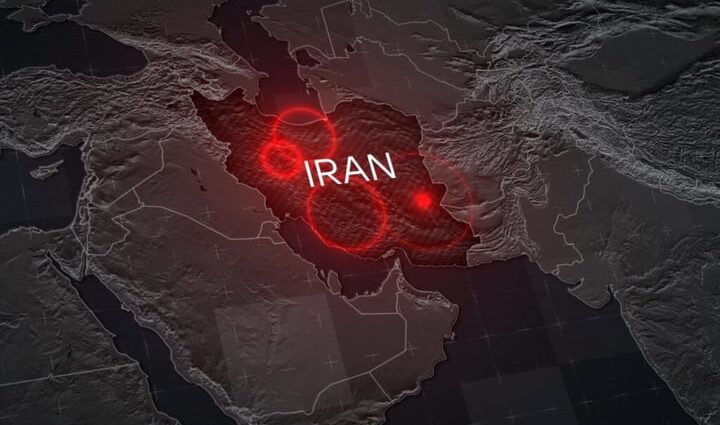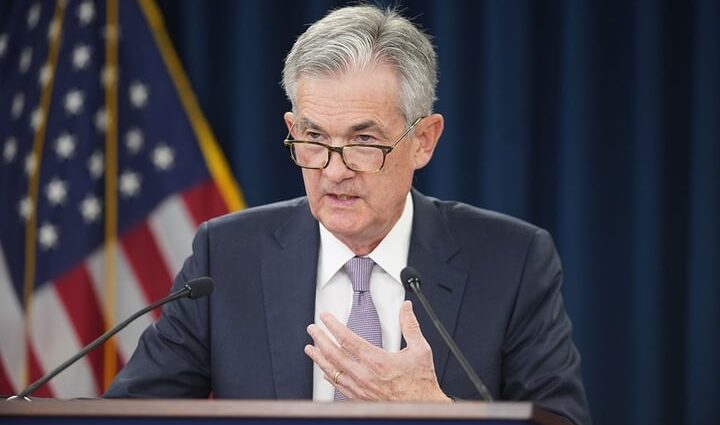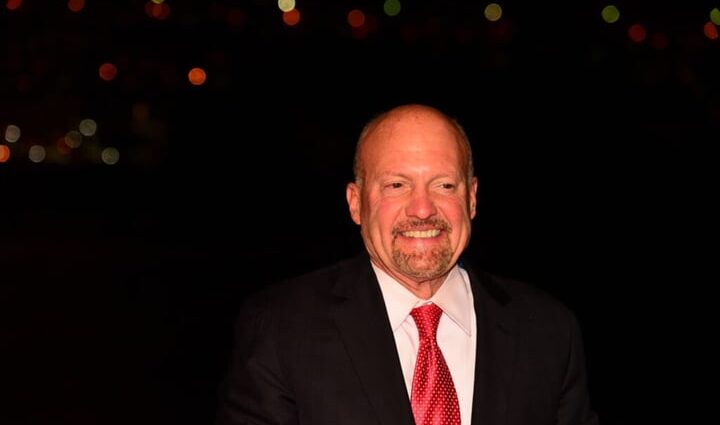
CNBC “Mad Money” host Jim Cramer has proposed three potential market shifts that could occur if the U.S.-Iran war comes to an end.

Cramer referred to Tuesday’s market activity as a “dry run” for what might transpire when the war eventually subsides. The S&P 500 and Nasdaq Composite ended 2.91% and 3.83% higher, respectively, following news suggesting a possible de-escalation in the Middle East.

He predicts three significant market shifts if the war concludes.

First, he foresees a drop in rates, marking a notable reversal for the 10-year Treasury since the war began. This is attributed to the realization of inflation risks stemming from the war, not just from heightened oil prices but also from the effect on ancillary products from the Gulf.

Second, Cramer expects a revival in growth stocks, as demonstrated by Tuesday’s gains in Nvidia (NASDAQ:NVDA) and Marvell Technology  (NASDAQ:MRVL), which closed 5.9% and 12.8% higher, respectively. He suggests that as rates decline, investors …

Full story available on Benzinga.com

This post was originally published here
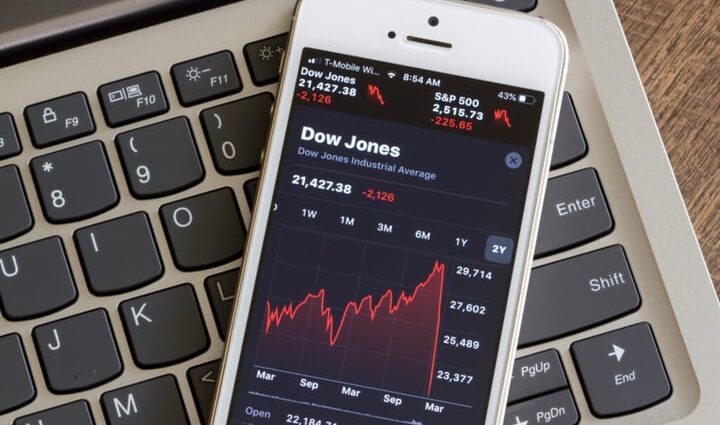
U.S. stocks settled higher on Tuesday, with the Dow Jones index gaining more than 1,100 points during the session as President Donald Trump signaled a potential end to military operations in Iran within weeks.

However, stocks recorded losses last month, with the S&P 500 losing 5.1%, logging its worst monthly performance since 2022. The Dow dipped 5.4%, while the Nasdaq fell 4.8% in March.

Wall Street analysts make new stock picks on a daily basis. Unfortunately for investors, not all analysts have particularly impressive track records at predicting market movements. Even when it comes to one single stock, analyst ratings and price targets can vary widely, leaving investors confused about which analyst’s opinion to trust.

Benzinga’s Analyst Ratings API is a collection of the highest-quality stock ratings curated by the Benzinga news desk via direct partnerships with major sell-side banks. Benzinga displays overnight ratings changes on a daily basis three hours prior to the U.S. equity market opening. Data specialists at investment dashboard provider Toggle.ai recently uncovered that the analyst insights Benzinga Pro subscribers and Benzinga readers regularly receive can successfully be used as trading indicators to outperform the stock market.

Top Analyst Picks: Fortunately, any Benzinga reader can access the latest analyst …

Full story available on Benzinga.com

This post was originally published here

The most oversold stocks in the consumer discretionary sector presents an opportunity to buy into undervalued companies.

The RSI is a momentum indicator, which compares a stock’s strength on days when prices go up to its strength on days when prices go down. When compared to a stock’s price action, it can give traders a better sense of how a stock may perform in the short term. An asset is typically considered oversold when the RSI is below 30, according to Benzinga Pro.

Here’s the latest list of major oversold players in this sector, having an RSI near or below 30.

Standard Motor Products Inc (NYSE:SMP)

  • On Feb. 26, Standard Motor Products reported worse-than-expected fourth-quarter sales results. Mr. Eric Sills, Standard Motor Products’ Chairman and Chief Executive Officer said, “We were very pleased with our results in the period as the strong performance we experienced throughout the year continued. Sales for the quarter were up 12.2%, and up 22.4% for the full year. Excluding the impact of Nissens Automotive, sales for the quarter and year were up 4.3% and 4.0%, respectively. Adjusted …

Full story available on Benzinga.com

This post was originally published here

On Wednesday, April 1, 2026, Apple Inc. (NASDAQ:AAPL) celebrates 50 years of innovation, culture-shaping products, and unprecedented financial growth.

From Garage Beginnings to Global Tech Powerhouse

In 1976, Steve Jobs and Steve Wozniak turned a garage in California into the birthplace of Apple.

Wozniak had designed a computer circuit board for hobbyists and Jobs saw an opportunity to sell it commercially.

Apple Computer Inc. was officially incorporated the following year, setting the stage for decades of innovation.

To mark its 50th anniversary, Apple has refreshed its homepage with a special animation showcasing some of its most iconic products.

Celebrating Innovation with Iconic Products

The sketch-style video features the original Mac, iMac, iPod, App Store, Apple Watch, iPhone 17 Pro, Vision Pro and more in a creative, illustrative design.

The homepage states, “50 Years of Thinking Different At 50 years, it’s only natural to look back. But Apple has always looked forward, …

Full story available on Benzinga.com

This post was originally published here

Nio Inc. (NYSE:NIO) shares are up during Wednesday’s premarket session as the company reported impressive delivery results for March and the first quarter of 2026.

The stock’s rise follows a significant increase in vehicle deliveries, which has contributed to a positive sentiment around the electric vehicle sector, as broader markets also show gains.

In March 2026, Nio, a major rival of Tesla, Inc. (NASDAQ:TSLA), delivered 35,486 vehicles, marking a remarkable 136.0% year-over-year increase. In the first quarter, total deliveries reached 83,465 vehicles, reflecting 98.3% year-over-year growth and showcasing the company’s strong market performance. Cumulative deliveries reached 1,081,057 as of March 31, 2026.

The company’s flagship premium SUV, the All-New ES8, achieved its 80,000th delivery within just 181 days, reinforcing its position as a leader in China’s large SUV segment.

“Driven by its differentiated product capabilities and sustained user demand, the All-New ES8 continues to strengthen its leadership in the large SUV market,” the company said in a press release.

Nio’s Latest Earnings Results

In March, the Chinese electric vehicle maker released its fourth-quarter results.

The company reported quarterly revenue of 34.65 billion yuan ($4.95 billion), up 75.9% year over year and 59.0% sequentially. The figure exceeded the analyst consensus estimate of …

Full story available on Benzinga.com

This post was originally published here

The Commodity Futures Trading Commission is stepping up oversight as prediction markets surge in popularity, warning traders that insider trading will not be tolerated.

CFTC Cracks Down On Prediction Market Insider Trading

Speaking Tuesday at New York University’s School of Law, CFTC enforcement chief David Miller said insider trading on platforms like Kalshi and Polymarket is illegal and will be a top enforcement priority, reported Business Insider.

“A myth has spread that insider trading is permissible, or even encouraged, in the prediction markets,” Miller said.

He added, “Prominent individuals in finance, media, and particularly on social media, have contended that insider trading law does not apply to these markets.”

He continued, “These comments all suggest that insider trading is an important and acceptable part of the prediction market ecosystem. Not so.”

Miller said the CFTC will hire more staff to investigate cases and negotiate settlements, emphasizing that the agency has the resources to enforce rules despite …

Full story available on Benzinga.com

This post was originally published here

Sen. Cynthia Lummis (R-Wyo.) strongly endorsed the Clarity Act on Tuesday, noting that decentralized finance developers will face far less regulatory uncertainty after the bill becomes law.

DeFi Industry Will Have ‘Safe Harbor’

In an X post, Lummis dubbed the Clarity Act as the “best thing that could happen to the DeFi community.”

“Developers, validators, and node operators will finally have a safe harbor and we can ensure American innovation can stay right here on U.S. soil,” the senior lawmaker argued.

Full story available on Benzinga.com

This post was originally published here
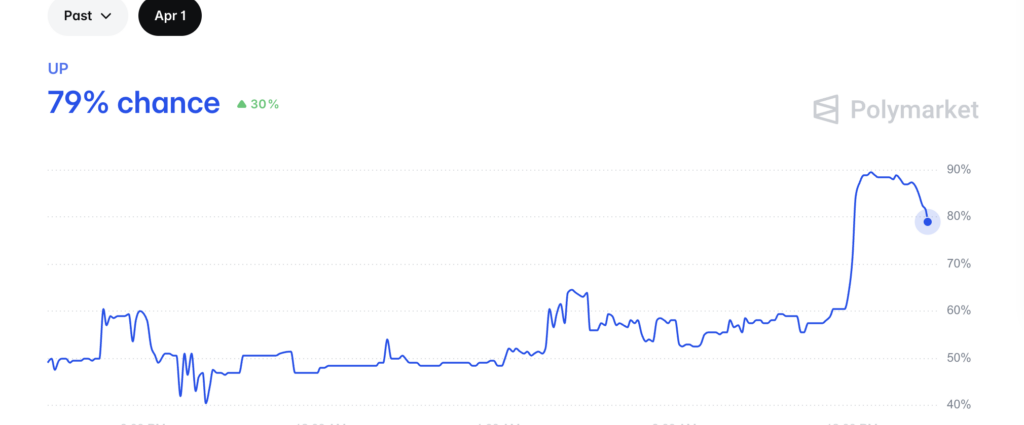
The S&P 500 surged on Tuesday, rising 2.91% to close at 6,528.52, marking its best single-day performance since May as hopes for an end to the Iran war lifted investor sentiment.

The Polygon-based (CRYPTO: POL) Polymarket crowd is leaning bullish heading into Wednesday. The April 1 market shows 79% of traders betting “Up,” with early trading activity building on whether the S&P 500 will open higher or lower. The odds were placed well above 80% earlier.

Why That Number Matters

Tuesday’s rally was driven by growing optimism that the conflict could wind down. President Donald Trump said U.S. forces could

Full story available on Benzinga.com

This post was originally published here

JFB Construction Holdings (NASDAQ:JFB) surged 2.29% to $6.26 in the pre-market session on Wednesday after its merger partner, Israeli drone maker XTEND, became the first U.S. company to receive U.S. Army Fuze Safety Board approval for its first-person view attack drone high-voltage safety system.

XTEND’s high-voltage safety system moves critical safety and arming functions into software, designed to eliminate the need for separate payload specialists and reduce preparation time through automated countdown and software-driven arming.

Defense Tailwinds Strengthen Merger Thesis

According to JFB Construction, U.S. defense budgets for tactical strike and unmanned systems programs are projected to exceed $100 billion annually in the coming years.

“This approval validates both our technology and the market shift …

Full story available on Benzinga.com

This post was originally published here

In the ever-evolving and intensely competitive business landscape, conducting a thorough company analysis is of utmost importance for investors and industry followers. In this article, we will carry out an in-depth industry comparison, assessing Tesla (NASDAQ:TSLA) alongside its primary competitors in the Automobiles industry. By meticulously examining key financial metrics, market positioning, and growth prospects, we aim to offer valuable insights to investors and shed light on company’s performance within the industry.

Tesla Background

Tesla is a vertically integrated battery electric vehicle automaker and developer of real world artificial intelligence software, which includes autonomous driving and humanoid robots. The company has multiple vehicles in its fleet, which include luxury and midsize sedans, crossover SUVs, a light truck, and a semi truck. Tesla also plans to begin selling a sports car and offer a robotaxi service. Global deliveries in 2025 were nearly 1.64 million vehicles. The company sells batteries for stationary storage for residential and commercial properties including utilities and solar panels and solar roofs for energy generation. Tesla also owns a fast-charging network and an auto insurance business.

Company P/E P/B P/S ROE EBITDA (in billions) Gross Profit (in billions) Revenue Growth
Tesla Inc 344.21 16.98 13.83 1.04% $2.91 $5.01 -3.14%
General Motors Co 22.78 1.10 0.39 -5.22% $0.42 $-1.12 -5.06%
Ferrari NV 32.97 13.35 7.37 9.89% $0.69 $0.93 3.79%
Thor Industries Inc 14.19 0.97 0.43 0.41% $0.1 $0.25 5.34%
Winnebago Industries Inc 21.08 0.71 0.30 0.39% $0.03 $0.09 6.0%
Workhorse Group Inc 0.04 0.83 0.19 -28.77% $-0.01 $-0.01 -4.97%
Average 18.21 3.39 1.74 -4.66% $0.25 $0.03 1.02%

Full story available on Benzinga.com

This post was originally published here

In today’s rapidly evolving and fiercely competitive business landscape, it is crucial for investors and industry analysts to conduct comprehensive company evaluations. In this article, we will undertake an in-depth industry comparison, assessing Micron Technology (NASDAQ:MU) alongside its primary competitors in the Semiconductors & Semiconductor Equipment industry. By meticulously examining crucial financial indicators, market positioning, and growth potential, we aim to provide valuable insights to investors and shed light on company’s performance within the industry.

Micron Technology Background

Micron is one of the largest semiconductor companies in the world, specializing in memory and storage chips. Its primary revenue stream comes from dynamic random access memory, or DRAM, and it also has minority exposure to not-and or NAND, flash chips. Micron serves a global customer base, selling chips into data centers, mobile phones, consumer electronics, and industrial and automotive applications. The firm is vertically integrated.

Company P/E P/B P/S ROE EBITDA (in billions) Gross Profit (in billions) Revenue Growth
Micron Technology Inc 15.94 5.26 6.59 21.0% $18.48 $17.75 196.29%
NVIDIA Corp 35.59 26.94 19.80 31.11% $51.28 $51.09 73.21%
Broadcom Inc 60.33 18.35 22.06 9.12% $11.15 $13.16 29.47%
Advanced Micro Devices Inc 77.94 5.26 9.61 2.44% $2.86 $5.58 34.11%
Texas Instruments Inc 35.62 10.86 10.02 7.03% $2.07 $2.47 10.38%
Analog Devices Inc 58.16 4.60 13.39 2.46% $1.52 $2.04 30.42%
Qualcomm Inc 25.96 5.96 3.14 13.57% $4.11 $6.68 5.0%
Marvell Technology Inc 32.26 6.05 10.51 2.79% $0.75 $1.15 22.08%
Monolithic Power Systems Inc 85.02 15.21 18.93 4.95% $0.21 $0.41 20.83%
NXP Semiconductors NV 24.76 4.95 4.08 4.53% $0.98 $1.81 7.2%
GLOBALFOUNDRIES Inc 27.97 2.05 3.65 1.68% $0.73 $0.51 0.0%
ON Semiconductor Corp 213.52 3.18 4.25 2.33% $0.45 $0.55 -11.17%
First Solar Inc 13.88 2.22 4.06 5.62% $0.7 $0.67 11.15%
Tower Semiconductor Ltd 90.45 6.76 12.73 2.78% $0.13 $0.09 11.26%
Astera Labs Inc 89.84 13.68 23.08 3.41% $0.07 $0.2 91.77%
MACOM Technology Solutions Holdings Inc 100.48 12.31 16.31 3.64% $0.07 $0.15 24.52%
Credo Technology Group Holding Ltd 51.58 9.36 16.32 10.03% $0.16 $0.28 201.49%
Lattice Semiconductor Corp 4638.50 17.78 24.51 -1.08% $0.01 $0.1 24.16%
Rambus Inc 40.77 6.82 13.28 4.81% $0.09 $0.15 18.09%
Average 316.81 9.57 12.76 6.18% $4.3 $4.84 33.55%

Full story available on Benzinga.com

This post was originally published here

In today’s rapidly changing and fiercely competitive business landscape, it is essential for investors and industry enthusiasts to thoroughly analyze companies. In this article, we will conduct a comprehensive industry comparison, evaluating Amazon.com (NASDAQ:AMZN) against its key competitors in the Broadline Retail industry. By examining key financial metrics, market position, and growth prospects, we aim to provide valuable insights for investors and shed light on company’s performance within the industry.

Amazon.com Background

Amazon is the leading online retailer and marketplace for third party sellers. Retail related revenue represents approximately 74% of total, followed by Amazon Web Services (17%), and advertising services (9%). International segments constitute 22% of Amazon’s total revenue, led by Germany, the United Kingdom, and Japan.

Company P/E P/B P/S ROE EBITDA (in billions) Gross Profit (in billions) Revenue Growth
Amazon.com Inc 29.05 5.44 3.15 5.43% $46.76 $103.43 13.63%
MercadoLibre Inc 43.88 12.99 3.03 8.62% $1.07 $3.78 44.56%
eBay Inc 21.37 8.84 3.84 11.31% $0.8 $2.12 14.97%
Coupang Inc 171.64 7.47 1.01 -0.56% $0.17 $2.54 10.92%
Dillard’s Inc 15.71 5.02 1.36 10.66% $0.3 $0.72 -3.03%
Ollie’s Bargain Outlet Holdings Inc 23.66 2.97 2.15 4.6% $0.13 $0.31 16.82%
Global E Online Ltd 79.10 5.54 5.64 6.69% $0.13 $0.15 28.05%
Macy’s Inc 7.80 0.98 0.22 11.04% $0.9 $2.97 -1.14%
Kohl’s Corp 5.42 0.36 0.09 3.13% $0.39 $1.85 -4.15%
Savers Value Village Inc 53.14 2.65 0.72 5.28% $0.07 $0.26 15.59%
Hour Loop Inc 35.30 8.88 0.44 -8.96% $-0.0 $0.03 3.03%
Average 45.7 5.57 1.85 5.18% $0.4 $1.47 12.56%

Full story available on Benzinga.com

This post was originally published here

North Korean hackers allegedly hit U.S. firms in supply-chain attacks to steal cryptocurrency for the regime’s nuclear funding, according to a report published Tuesday.

Are North Korean Hackers Chasing Crypto?

The hackers reportedly targeted Axios, a software program that connects applications and ‌web services, according to CNBC. The hackers controlled the software developer’s account for three hours on Tuesday morning, during which malicious updates were sent to organizations that downloaded the software.

Axios is also used by cryptocurrency firms, blockchain developers and tech firms active in the cryptocurrency industry.

Security experts told CNBC that this could be part of a “long-term campaign” by the North Korean regime to steal cryptocurrency, which is then used …

Full story available on Benzinga.com

This post was originally published here

The CNN Money Fear and Greed index showed some easing in the overall fear level, while the index remained in the “Extreme Fear” zone on Tuesday.

U.S. stocks settled higher on Tuesday, with the Dow Jones index gaining more than 1,100 points during the session as President Donald Trump signaled a potential end to military operations in Iran within weeks.

However, stocks recorded losses last month, with the S&P 500 losing 5.1%, logging its worst monthly performance since 2022. The Dow dipped 5.4%, while the Nasdaq fell 4.8% in March.

U.S. major averages also recorded losses last quarter, with the Nasdaq dipping more than 7%. The S&P 500 fell 4.6%, while the Dow tumbled 3.6% during the quarter.

In earnings, FactSet Research Systems Inc. (NYSE:FDS) on Tuesday reported upbeat results for the second quarter and raised its outlook. TD SYNNEX Corp.

Full story available on Benzinga.com

This post was originally published here
The National Transportation Safety Board (NTSB) has held Ford Motor Co. (NYSE:F) liable for two fatal collisions involving its BlueCruise Driver Assistance system.

Two 2024 Fatal Crashes

In a statement released on Tuesday by the agency, the NTSB said that Ford’s BlueCruise system failed to “stop for stationary vehicles” in 2024. The probe found that the system was ineffective in detecting driver distraction or disengagement and that it failed to differentiate between attention to the road and attention to objects blocking visibility.

The first incident took place in February 2024 in San Antonio with a stationary vehicle, which resulted in the death of the driver, while the Ford driver sustained minor injuries. The second crash happened in March 2024 when a Ford vehicle struck two cars in Philadelphia on Interstate 95, causing them to collide with a third vehicle.

The drivers of the Prius and Elantra, struck by the Ford vehicle, died in the accident, while the Ford driver sustained minor injuries. The third vehicle’s driver was uninjured. …

Full story available on Benzinga.com

This post was originally published here
On Tuesday, Telegram founder Pavel Durov highlighted reports that Apple Inc. (NASDAQ:AAPL) had removed multiple VPN and proxy applications from its Russian App Store.

Apple Pulls VPN Apps Amid Rising Censorship

The affected apps, including Streisand, V2Box, v2RayTun and Happ Proxy Utility, allowed users to connect through private servers or configure custom proxies, giving them more control than mainstream VPNs, Russian tech outlet Kod Durova reported.

“Apple just banned several VPN apps from the Russian App Store — targeting those that helped users bypass Russia’s DPI-based censorship. That’s not cool, Applee,” Durov wrote on X.

Full story available on Benzinga.com

This post was originally published here

Warren Buffett has voiced his apprehension regarding the escalating menace of nuclear weaponry, saying the prospect of Iran acquiring a bomb would heighten the risk of a dangerous conflict.

Buffett, the chairman and former CEO of Berkshire Hathaway (NYSE:BRK), speaking on CNBC’s “Squawk Box” on Tuesday, cautioned that the growing number of nuclear-armed nations is fundamentally altering the global risk scenario. He specifically highlighted the escalating geopolitical tensions involving Iran and North Korea.

“Just think of how you’d feel with North Korea having it and Iran wanting to get it,” the billionaire investor said. He also warned about the risks of a nuclear-armed leader acting under personal or political pressure.

 “The most dangerous thing is, actually, somebody that’s got their hand on the switch, who is dying themselves, or is facing enormous embarrassment,” Buffett said.

The 95-year-old has consistently expressed his concerns about nuclear proliferation, believing that the spread of nuclear capabilities heightens the chances of a catastrophic event. …

Full story available on Benzinga.com

This post was originally published here

Shares of nCino Inc (NASDAQ:NCNO) rose sharply in pre-market trading after the company reported better-than-expected fourth-quarter financial results and issued first-quarter sales guidance above estimates. Also, the company issued FY27 sales guidance with its midpoint above estimates.

nCino posted non-GAAP EPS of $0.37, far surpassing the $0.15 analyst estimate by 146.67%, marking its third straight quarter of triple-digit EPS beats.

Fourth-quarter revenue for the company grew 6% year over year to $149.7 million, exceeding the $147.57 million analyst estimate by 1.44%.

nCino shares jumped 18% to $17.68 in pre-market trading.

Here are some other stocks moving in pre-market trading.

Gainers

  • Hub Cyber Security Ltd (NASDAQ:HUBC) gained 56.7% to $0.16 in pre-market trading after the company announced leadership transition.
  • Binah Capital Group Inc (NASDAQ:BCG) gained 52.8% to $3.07 in pre-market trading after the independent financial advisor network reported fourth-quarter revenue growth of 13.2% and generally accepted accounting principles profitability in its first full year as a public company.
  • Xiao-I Corp (NASDAQ:AIXI) gained 37.5% to $0.16 in pre-market trading. Xiao-I shares gained 18% on Tuesday after the company issued an additional material update on its variable interest entity’s ongoing patent infringement lawsuit against Apple.
  • DeFi Technologies Inc (NASDAQ:DEFT) rose 35.4% to …

Full story available on Benzinga.com

This post was originally published here

nCino Inc. (NASDAQ:NCNO) shares rose 19.23% in after-hours trading on Tuesday to $17.86 after the cloud banking software company reported a strong fourth quarter, with non-GAAP EPS beating analyst estimates by nearly 147% and unveiling a $100 million accelerated share repurchase program.

nCino announced fourth quarter and fiscal year 2026 financial results for the period ended Jan. 31.

What Do Q4 Results Say?

nCino posted non-GAAP EPS of $0.37, far surpassing the $0.15 analyst estimate by 146.67%, marking its third straight quarter of triple-digit EPS beats.

Fourth-quarter revenue for the company grew 6% year over year to $149.7 million, exceeding the $147.57 million analyst estimate by 1.44%.

Non-GAAP operating income jumped 42% to $34.7 million.

In the third quarter, nCino reported revenue of $141.37 million.

What Does Full-Year Fiscal 2026 Reflect?

For the full year, the North Carolina-based company’s revenue rose 10% to …

Full story available on Benzinga.com

This post was originally published here

JPMorgan Chase (NYSE:JPM) CEO Jamie Dimon is once again stepping into the role of capitalism’s most prominent defender, calling critiques of the U.S. economic system as no longer working for ordinary Americans “dead wrong” in a CBS News interview on Tuesday.

A self-described “red-blooded American patriot capitalist,” Dimon has long identified more with an economic philosophy than a political party. A recent CBS News poll found that most Americans believe it is harder to buy a home, raise a family and get a good job than it was for past generations.

‘Not Because Of Capitalism’

Dimon acknowledged capitalism has its drawbacks but argued it has lifted billions out of poverty. “Some businesses do bad things and …

Full story available on Benzinga.com

This post was originally published here

Ncino (NASDAQ:NCNO) held its fourth-quarter earnings conference call on Tuesday. Below is the complete transcript from the call.

This transcript is brought to you by Benzinga APIs. For real-time access to our entire catalog, please visit https://www.benzinga.com/apis/ for a consultation.

View the webcast at https://edge.media-server.com/mmc/p/qhrskam4/

Full Transcript

OPERATOR

Good day and thank you for standing by. Welcome to the Ncino 4th Quarter and Fiscal Year 2026 Financial Results Conference call. At this time all participants are in a listen only mode. Please be advised that today’s conference is being recorded. After the speaker’s presentation there will be a question and answer session. To ask a question, please press star 11 on your telephone and wait for your name to be announced. To withdraw your question, please press star 11 again. I would now like to hand the conference over to your speaker today. Harrison Masters, Vice President of Investor Relations Good

Harrison Masters

afternoon and welcome to Ncino’s fourth quarter and fiscal year 2026 earnings call. With me on today’s call are Sean Desmond, Ncino’s Chief Executive Officer and Greg Orenstein, Ncino’s Chief Financial Officer. During the course of this conference call we will make forward looking statements regarding trends, strategies and the anticipated performance of our business. These forward looking statements are based on management’s current views and expectations, entails certain assumptions made as of today’s date and are subject to various risks and uncertainties described in our SEC filings and other publicly available documents, the financial services industry and global economic conditions. Encino disclaims any obligation to update or revise any forward looking statements. Further on today’s call we will also discuss certain non GAAP metrics that we believe aid in the understanding of our financial results. A reconciliation to comparable GAAP metrics can be found in today’s earnings release which is available on our website and as an exhibit to the Form 8K furnished with the SEC just before this call as well as the earnings presentation on our investor relations website@investor.in with that I will turn the call over to Sean.

Sean Desmond

Thank you Harrison and thank you all for joining us today. I want to start by saying how proud I am of the entire Ncino team for the results we achieved in fiscal 26 and especially in the fourth quarter. We exceeded our financial guidance across every key metric and delivered an exceptional ACV result up 17% year over year, which we believe was largely driven by customers embracing our AI strategy and product innovation. The team executed incredibly well and we’re seeing the momentum in the market as more prospects are engaging with and choosing Ncino and existing customers are expanding and deepening their commitments with us in large part because of how we are embedding AI throughout the Ncino platform. I’ll get into the details shortly, but with over 170 customers of all sizes, including global enterprise, regional and community banks and credit unions, Having already purchased AI intelligence units as of the end of fiscal 26 we believe Ncino is rapidly becoming the de facto AI platform for financial institutions across the globe. For those of you just getting familiar with our story, Ncino plays a mission critical role for our customers and the global financial services market. Financial institutions will continue to struggle with legacy fragmented systems that limit growth, hinder financial performance, restrict their ability to leverage data as a competitive advantage and create poor user experiences. Ncino solves these problems with AI powered intelligent automation on a unified scalable platform. We are the only platform for managing lending, onboarding, account opening and portfolio management across all major lines of business for financial institutions across the globe. This is why the Ncino platform serves as a system of record for the most critical operations of banks, credit unions and IMBs of all sizes in now over 25 countries. Throughout fiscal 26 I talked about the confidence I had in our team, our technology and strategy and our market leading position. I also said the foundation was in place and that our fiscal 26 performance would come down to execution, including against our AI strategy. This past year’s results only strengthened my conviction about what’s ahead for Ncino as we walk hand in hand with our customers into a new era of AI where data, context, guardrails, security, trust and a deep understanding of how financial institutions operate matter more than ever as banks further embrace automation and think about using AI as an accelerant. To do this, they’re choosing Ncino because Ncino is their process. We connect their data, operate as their system of record and enable them to comply with numerous rules and regulations. Ncino is an essential Tier 1 mission critical platform that amplifies their ability to more profitably generate revenues in a regulatory compliant manner. At the start of fiscal 26 I laid out a few strategic initiatives where I believed we had an opportunity to excel with focused execution. I am very proud of what the team delivered in these areas and the fourth quarter put an exclamation point on what was a tremendous year for the company. First, in the US Enterprise market we delivered our best sales quarter in over four years which included a mortgage expansion with the top 40 bank and cross selling commercial to our largest consumer lending customer. Second, in emea we leaned in with new leadership, a new go to market strategy and a clear execution plan. We delivered our largest deal of the year with a marquee net new customer win in Austria and I’m thrilled with the momentum the EMEA team is seeing. I’m also thrilled with momentum we continue to see in Japan as highlighted by the fourth quarter signing of one of the largest banks in the world for a commercial lending transformation. I want to congratulate the Japanese team for tripling their total ACV in fiscal 26 from fiscal 25. Third, it’s gratifying to see our existing customers continue to validate our AI strategy as they move to our new platform pricing framework to access our growing AI capabilities. We saw expanded commitments from some of our largest accounts and our ACV net retention rate improved to 112% or 109% organically and in constant currency, up from 106% in fiscal 25. Consistent with what we saw throughout fiscal 26. We closed a number of early renewals in the fourth quarter, including a fresh five year commitment from our largest customer by ACV. And those customer commitments go beyond dollars. Critically, they come with trust More and more customers are choosing to share data with us because they want the insights and benchmarking that only Ncino can deliver. Today, almost 500 financial institution customers representing over $11 trillion in assets have granted Ncino the right to process their data into a proprietary and anonymized data set, one that powers the development of our products, fuels best in class industry insights and sharpens the accuracy of our intelligent services. This proprietary data set that Ncino has carefully aggregated and curated for the better part of a decade gives Ncino a unique, unmatched global perspective on how to more profitably and efficiently operate a financial institution, how work moves seamlessly through the bank, where bottlenecks form, where exceptions happen, and what great looks like at scale. We have already put this data set to work through our product called Ncino Operations analytics, which helps customers pinpoint inefficiencies, track cycle times and win rates and benchmark performance against anonymized peers. That benchmarking provides valuable and actionable insights as customers get a true baseline, a clear path to ongoing operational and process improvements, and real time demonstrable ROI as they adopt our AI capabilities. It also informs how we build AI and deploy agents that are practical, relevant, reliable and trustworthy in real bank environments. And it goes a step further. Because of our API foundation and Integration gateway, we can seamlessly connect data across a bank’s technology stack as well as the key third parties. That broad 360 degree view of a financial institution’s customers has been Ncino’s calling card in the market since we started the company. Before I turn things over to Greg to talk through our financials in more detail, I want to spend a few minutes addressing the elephant in the room as we have all heard the narrative that AI will replace SaaS for some categories of software. That may very well be true. But the highly regulated business of banking is different. And Ncino’s position and value proposition in banking is different from what you’re seeing across the broader SaaS landscape. Bottom line is, we believe AI will be a tremendous tailwind for Ncino as it becomes central to how financial institutions operate and compete and how we’re scaling and operating the company. Here’s how we see the world evolving and how Ncino fits in. AI is moving quickly from help me write and help me search to help me complete meaningful productive tasks so I can focus on other work to grow my business more efficiently and profitably. And in a financial institution, the work is not generic. It’s onboarding, it’s underwriting, it’s credit reviews, it’s monitoring, assessing and managing risk, it’s opening accounts, it’s work where the data is sensitive. Strictly adhering to the rules is essential. Regulatory compliance is non negotiable and the cost of being wrong can be extremely high, not only financially, but reputationally. To make all this work, AI needs a foundation to run on. In banking, that foundation is the data and regulatory infrastructure Ncino provides. That’s why we feel extremely confident about our position. We are the system of record and user experience for many of the most important processes in a financial institution. And every capability has been built with regulatory compliance in mind. As AI becomes more capable, that makes our platform even more relevant. Because AI needs a place where it can safely understand context and then take action in an efficient, controlled, secure, trusted and regulatory compliant way. You’ll hear a lot of discussion in the market about AI commoditizing the application layer. We understand why people raise that point because it’s undeniable that AI driven software makes writing code easier and cheaper. But in the highly regulated, mission critical world of banking, deploying that code in a safe and compliant way is harder. Because of this, we believe AI agents actually increase the value of our underlying platform and system of record. An agent can’t operate in a vacuum. It needs trusted data, industry contacts and guardrails. And it needs to be traceable and auditable. And the platform that connects the user to the data and records the actions taken becomes the natural home for these AI driven experiences. Ncino is that platform. All this leads to how we’re approaching AI agents. Our role based agents, what we call digital partners, were designed to work alongside banking professionals inside the Ncino platform. Guided by what we’ve learned from almost a decade and a half of usage patterns across our lending customer base and what those patterns mean for speed, consistency and results. Now let me connect that strategy to what we’re seeing in the business today. First, adoption is real and usage is growing. While much of the SaaS industry continues to debate how best to respond to the agent economy, community, regional enterprise and global banks, credit unions and IMBs are already using Ncino’s AI capabilities in production today, not just as a pilot or beta, but as part of how they do lending and banking work. Customers are not just buying AI access, they’re using it, and we can see that directly in the increasing consumption of intelligence units on our platform. With Banking Advisor Usage up over 25 times in March compared to usage in October for years we have said that Encino is not only in the software business, we are in the change management business and moving every customer from contract signing to implementation to pilot to using Ncino’s AI in production as an integral part of the day job is the sole focus of our forward deployed engineering team. We also continue to see the halo effect we talked about before. Encino’s AI innovation and product strategy is showing up as a clear differentiator in competitive conversations. I have mentioned over the past couple of quarters that it’s helping drive earlier renewals and it’s becoming another reason new customers are engaging with and choosing Encino and current customers are expanding their relationship with Encino. Second, when we talk about AI, we try to keep it simple. We care about outcomes. The question isn’t how many features or how many agents exist. The question is how much time and money did the financial institution save? How much risk was serviced earlier and mitigated, and how much did consistency, efficiency and profitability improve, all while helping to ensure the financial institution operates and in accordance with various rules and regulations and provides an enjoyable and compelling user experience for its customers. That’s why when we look at Banking Advisor and our digital partners, we focus on practical wins. In the past, a single relationship review meant painstakingly pulling documentation from systems, manually identifying the relevant data points, followed by hours and hours of analysis with agenti credit reviews released as part of the analyst digital partner family last quarter, Encino summarizes in seconds what changed, highlights the drivers, cites the underlying data and helps draft the follow ups. And the work stays inside Encino. With the right permissions, the right documentation and the right audit trail, the bank gets faster answers, more consistent reviews and more capacity for higher value work like being in front of customers and growing relationships. This focus on outcomes is exactly why we transitioned our pricing model and I’m pleased to report that as of the end of fiscal 26 we have already moved approximately 38% of our ACV away from seed based pricing to platform pricing. Third, our data is not just a competitive moat, it is the foundation for a new category of proprietary intelligence capabilities benchmarking, predictive risk operations, analytics and other capabilities and products you will hear about as the year progresses that we believe will create entirely new value for our customers and new revenue streams for Encino. We strongly believe that proprietary domain specific real world data is the most valuable asset in an AI economy and no other company has the data Encino has and that data mode compounds with every customer we add and every line of business we expand into. Finally, I want to emphasize something that is especially important in banking trust in a regulated environment, close enough isn’t good enough. AI has to be deployed in a way that respects policies and data privacy aligns with the bank’s risk tolerance which varies from institution to institution and produces results both the institution and regulators can confidently rely on. One of our stockholders recently conveyed they were reminded how embedded Ncino is within a bank’s internal and external controls, risk management and governance processes When a top five US bank explained to them that they have over 500 exemption workflows configured in Encino that guide every deterministic step of the lending process and that they rely on that process to manage risk, regulatory compliance and audit trails. That’s why we’re building AI into the Ncino platform where our customers already have the industry context, the controls and the ability to measure outcomes over time. As the agentic operating system for financial institutions, Encino will be the backbone delivering AI with the same compliance guardrails, the same regulatory audit trails, the same institutional policy logic and the same lending decision framework they have grown to trust and rely on. And that’s also why we believe our approach will uniquely scale not by asking banks to bolt generic AI onto complex processes, but by delivering banking specific AI that reflects how banks actually operate on a platform that has demonstrated time after time the ability to scale to support some of the largest financial institutions in the world. So stepping back, we feel really good about where we are. While still early, we’re seeing strong excitement and increasing momentum in AI adoption and growth in usage as measured by intelligence unit consumption. Our sales pipeline looks great and we believe our AI agents make Encino even more valuable and sticky to our customers because we connect the user, the process and the data in a trusted, controlled, regulatory compliant environment. In summary, we believe the agent economy expands our addressable market, the outperformance against our financial guidance, the acceleration of ACV bookings, the RE acceleration of subscription revenue growth, and the improvement and strength of our retention KPIs are all reflections of the impact AI is already having on the business. And we’re just getting started. As I wrap up my prepared remarks, I want to welcome a new member to the Encino Leadership team. I cannot be prouder of how our sales and marketing teams performed in fiscal 26 and to build on that momentum, we are further investing in our Go to Market organization. Today we are excited to announce that Encino has hired Keith Cattell as our new Chief Revenue Officer. Keith is a seasoned operator who brings deep financial services, enterprise sales, large global company and scaling expertise to the company. We believe Keith’s experience and vision are a great addition to the company to help us further accelerate our subscription revenues growth and take Encino to the next level. With that, I’ll hand the call over to Greg to walk through our financial results.

Greg Orenstein

Thank you Sean and thanks everyone for joining us this afternoon to review our fourth quarter and fiscal year 2026 financial results. Please note that all numbers referenced in my remarks are on a non GAAP basis unless otherwise stated. A reconciliation to comparable GAAP metrics can be found in today’s earnings release, which is available on our website and as an exhibit to the Form 8K furnished with the SEC just before this call. Turning to our fourth quarter results, total revenues were $149.7 million, an increase of 6% year over year and $594.8 million for fiscal 26, an increase of 10% over fiscal 25. Subscription revenues were $133.4 million in the fourth quarter, an increase of 7% year over year and $523.1 million for the full year, an increase of 12% over fiscal 25. Organic subscription revenues were $132.2 million in the fourth quarter, up 6% year over year, and $505.9 million for fiscal 26, an increase Of 8% year over year. As a reminder, our fourth quarter organic subscription revenues comparison is negatively impacted by an approximately 3% headwind resulting from one time subscription revenues that occurred in our international business in the fourth quarter of fiscal 25 as the result of a contract buyout. Please see Slide 14 of our fourth quarter earnings presentation for additional details on the components of our subscription revenues over performance. International Total revenues were $32.9 million in the fourth quarter, down 1% year over year or down 6% in constant currency. International total revenues were $131.5 million in fiscal 26, up 13% year over year or 11% in constant currency. International subscription revenues were $28.4 million in the fourth quarter, up 1% year over year or down 4% in constant currency. In light of the difficult comparison from the one time contract buyout last year previously noted, international subscription revenues were $109.5 million in fiscal 26, up 19% year over year or 16% in constant currency and 5% organically. We had our largest international gross bookings year in company history and with ACV as a leading indicator of future subscription revenues growth, we look forward to our international subscription revenues growth rate once again being accretive. Professional services revenues were $16.3 million in the fourth quarter, a decrease of 1% year over year. Full year professional services revenues were $71.6 million flat year over year. As we have previously highlighted, we are emphasizing professional services gross profit growth over professional services revenues growth and expect to see this reflected within our financial Results by the second half of fiscal 27, due in large part to our ongoing initiatives leveraging AI to accelerate our implementations. Non GAAP operating income for the fourth quarter of fiscal 26 was $34.7 million, or 23% of total revenues, compared with $24.4 million or 17% of total revenues in the fourth quarter of fiscal 25. Please see slide 14 of our fourth quarter earnings presentation for additional details on the components of our non GAAP operating income over performance. Non GAAP operating income for the full year was $129.4 million, or 22% of total revenues, compared with $96.2 million, or 18% of total revenues in fiscal 25. Non GAAP net income attributable to Ncino for the fourth quarter of fiscal 26 was $42.8 million, or $0.37 per diluted share, compared to $22 million or $0.19 per diluted share in the fourth quarter of fiscal 25. Non GAAP net Income attributable to Ncino for fiscal 26 was $122.7 million, or $1.07 per diluted share compared to $84.5 million or $0.72 per diluted share in fiscal 25. As expected, churn year over year continued to trend down …

Full story available on Benzinga.com

This post was originally published here

Beyond Meat (NASDAQ:BYND) held its fourth-quarter earnings conference call on Tuesday. Below is the complete transcript from the call.

This content is powered by Benzinga APIs. For comprehensive financial data and transcripts, visit https://www.benzinga.com/apis/.

View the webcast at https://edge.media-server.com/mmc/p/mcowxzh9/

Full Transcript

OPERATOR

Thank you everyone and welcome to the Beyond Me Inc. 2025 fourth quarter conference call. At this time, all participants are in listen only mode. Later, you’ll have the opportunity to ask questions during the question and answer session. Should you need assistance, please signal a conference specialist by pressing the Star key followed by zero. To ask a question, you may press Star then one on your touchtone phone. To withdraw your question, please press Star then two. Please note this event is being recorded. It is now my pleasure to turn today’s conference over to Rafael Gross, Partner of ICR Inc. Please go ahead.

Rafael Gross

Thank you. Hello everyone and thank you for participating in today’s call. Joining me are Ethan Brown, Founder, President and Chief Executive Officer and Luby Katua, Chief Financial Officer and Treasurer, Chief Financial Officer and Trustee, Treasurer. By now everyone should have Access to our fourth quarter and full year 2025 earnings press release filed today after market close. This document is available in the Investor Relations section of Beyond Meat’s website at www.BeyondMeet.com. before we begin, please note that during the course of this call management may make forward looking statements within the meaning of the federal securities laws. These statements are based on management’s current expectations and beliefs and involve risks and uncertainties that could cause actual results to differ materially from those described in these forward looking statements. Forward looking statements in our earnings release along with the comments on this call are made only as of today and will not be updated as actual events unfold. We refer you to today’s press release, our quarterly report on Form 10Q for the quarter ended September 27, 2025 and our annual report on Form 10K for the fiscal year ended December 31, 2025 to be filed with the SEC along with other filings with the SEC for a detailed discussion of the risks that could cause actual results to differ materially from those expressed or implied in any forward looking statements today. Please note that on today’s call management may reference adjusted ebitda, adjusted loss from operations and adjusted Net loss which are non GAAP financial measures. While we believe these non GAAP financial measures provide useful information for investors, any reference to this information is not intended to be considered in isolation or as a substitute for the financial information presented in accordance with gaap. Please refer to today’s press release for a reconciliation of these non GAAP financial measures to their most comparable GAAP measures. And with that, I’d now like to turn the call over to Ethan Brown.

Ethan Brown

Thank you Rafe and hello everyone. We entered a challenging year for our brand with an equally challenging quarter. We used this period however to accomplish a series of foundational building blocks for the company. First, we retired the majority of our 2027 convertible debt notes and second, we raised significant capital, two measures that fundamentally changed and strengthened our balance sheet. Third, we invested in an enterprise wide transformation initiative with a focus on rightsizing our operations and expanding our margins. Fourth, and as you will see reflected in our Q4 2025 numbers, we took another hard look at the assets, products and inventories we believe are not needed going forward and took action to disposition them. Fifth, we continue to lead the category in bringing clean plant based meats to the consumer while hammering away at persistent misinformation promulgated by the incumbent industry. Finally, we laid the groundwork for repositioning Beyond Meat to Beyond the Plant Protein Company so that we can bring the strength of our brand, technology and expertise to adjacent categories. Having touched on the significant actions we took to strengthen our balance sheet through the elimination of approximately $900 million in debt in the addition of approximately $149 million in cash on our previous earnings call, I will forego further detail here. Instead, I will focus my comments on a quick financial review of Q4 2025 before turning to our transformation work product narrative and our brand repositioning and entry into adjacent markets. What I hope will be clear from these comments, especially for the investor who desires to drill down a level deeper than headline numbers, is that we are highly focused on reducing baseline operating expense and cash use, increasing conversion efficiency in our production facilities and addressing category headwinds straight on even as we take significant steps to diversify beyond it. Financial results for the fourth quarter 2025 reflect persistent weak demand in the plant based meat category, resulting in lower volumes, the impact of which ripple throughout our P and L. This negative pressure was coupled with a number of significant nonroutine charges, many of which, though not all, stem from our transformation activities. Sales were 61.6 million, down 19.7% from the year ago period. Lower sales led to lower overhead absorption which together with higher trade negatively impacted gross margin. More significant, however, for large non routine or unusual items. These include such items as increased provision for inventory obsolescence, partly reflecting the strategic discontinuation of certain lower profit products and accelerated depreciation related to the cessation of our operational activities in China. The net result was a reported gross margin of 2.3%. Similarly, despite progress in reducing the baseline cost of operating our business, significant non routine items including large non cash charges increased our reporting operating expenses to 134.2 million versus $47.8 million in the year ago period. These included $48.1 million in non cash charges related to the write down to fair value of certain of the company’s long lived assets, a $38.9 million litigation related accrual and higher non cash stock compensation expense of approximately $13.3 million related to our convertible debt exchange transaction. Stripping out these non routine items and the impact of the transaction related change in non cash stock compensation, one can see that the run rate operating expense of our business is down considerably year over year. Finally, also reflecting the aforementioned transaction net income was $409.9 million in the fourth quarter of 2025 compared to a loss of $44.9 million in the year ago period, reflecting a $548.7 million gain on debt restructuring. To summarize, our fourth quarter 2025 results reflect both continuing challenges in the category as well as substantial noise in our reported numbers due to, among other factors, several of our transformation initiatives. I will now turn to this transformation activity where we are encouraged by the progress of our Transformation Office led by our Interim Chief Transformation Officer John Boken. As I noted, we’ve seen further reduction in underlying operating expenses excluding the nonroutine items and transaction related stock compensation increase for both the fourth quarter and full year 2025 on a year over year basis and we are pursuing other cost reduction measures going forward. Also setting aside certain non routine charges. We believe we are making progress against our goal to sustainably return to healthy gross margins. As previously shared, we’ve largely completed the consolidation of our production network and continue to improve asset utilization at our manufacturing facilities. Further, we’re now in the process of optimizing our new continuous production line at our facility in Columbia, Missouri and are investing in automation. These and other measures are already showing up in a year over year improvement in conversion costs across our network, a key component of our cogs reduction initiatives. Further, through our Transformation Office, we are seeking to reduce material costs through RFP actions, the cultivation of secondary sources and formulation improvements. We are further consolidating our warehouse network and reducing logistics expenses. We are exiting less profitable product lines and we are making substantial progress on driving down inventory. Finally, we remain very focused on cash management and significantly reduced our baseline cash use in the fourth quarter compared to prior periods excluding extraordinary items. I’ll now turn briefly to our ongoing efforts to dispel the persistent cloud of misinformation regarding our products. As I have noted countless times in these calls, the incumbent industry did a masterful job of seeding doubt in the mind of the consumer for the time being. We operate in an upside down world where protein from peas, lentils, fava beans and brown rice mixed with avocado oil and a limited number of other clean ingredients is disingenuously, though broadly cast as less than healthy. I believe this confusion will ultimately clear in the interim. We remain focused on innovating around taste and health and helping to communicate the latter via various accreditations and certifications, including our now 20 plus certifications from the Clean Label Project for our latest center of the plate innovations such as Beyond Steak Filet or Beyond Ground Fava. Consumers can now order directly from Beyond Test Kitchen, our direct to consumer platform. These products, their great taste, simple and clean ingredients and the impressive macronutrient content are winning accolades from consumers even before they reach retail stores. Beyond Steak Filet boasts 28 grams of protein, baba beans, wheat, gluten and mycelium and only 1 gram of saturated fat from avocado oil while boasting zero cholesterol and only 230 calories. Beyond Ground Fava delivers 27 grams of protein from fava beans and potato, 4 grams of fiber from psyllium husk, has no saturated fat or cholesterol and is only 140 calories. Moreover, Beyond Ground fava is made from only four ingredients, water, fava protein, potato protein and psyllium husk, and performs extremely well in dishes such as tacos, bolognese and protein bowls. Finally, I’ll now turn to a key and central communication. Notwithstanding the many changes occurring through our Transformation Office that I’ve discussed above, when I noted late last year that going forward you should not expect more of the same, I was most of all referring to the broadening of the aperture that you see as we move from beyond meat to beyond the plant protein company. I believe that no company has innovated with plants under more scrutiny than Beyond Ever. We’re now bringing the resulting hard fought expertise and capabilities, our commitment to health and clean ingredients, and our brand to adjacent categories where we believe we can be disruptive and win. Our first foray in this broader delivery of the power of plants to consumers is our exciting new drink platform Beyond Immerse. The Beyond Immerse platform, a clear and slightly carbonated beverage, is designed to provide the consumer with protein, fiber, antioxidants and electrolytes, effectively immersing the body in the nutritional benefits of plants. We launched Beyond Immersed as we now plan to do with all new retail innovation on the Beyond Test Kitchen to early fanfare and excitement, generating over 3 billion media impressions and selling out of our first limited run inventory quickly. Beyond Immerse is formulated to support muscle health and recovery, gut health, immune function and hydration. Each serving contains 10 or 20 grams of protein, 7 grams of fiber and only 60 or 100 calories depending on the level of protein. Beyond Immerse is made without added sugar, sugar, alcohols, artificial sweeteners or flavors, stabilizers, carrageenan and many other ingredients present in many popular protein drinks. Easier to drink than a thick protein shake and made without whey so it is dairy free. The product is designed for the casual to competitive athlete as well as the busy student or professional who wants protein, fiber, antioxidants and electrolytes at the gym, home, work or on the go. Moreover, we believe it is particularly well suited for DLP1 users. I personally find it satisfying post workout at breakfast or late afternoon when I’d like a boost between meals. It’s been fun to watch consumers enjoy it and like all things beyond, we continue to innovate and iterate based on what we believe is a state of the art science and consumer use and suggestions. Far from stepping away from our mission to change the source of protein at the center of the plate from animals to plants, we reaffirm it and take to these promising adjacencies to introduce our brand to a much larger number of consumers and currently participating in a plant based meat category. We do so not to dabble, but with a firm and serious belief that our technology, our brand, and our commitment to human health and the power of plants allows us to successfully deliver unique and compelling value within the certain segments we’ve identified. In the end, it is our aspiration that, though indirect, this expansion will lead more consumers back to beyond at the center of the plate as they enjoy our brand, clean ingredients and commitment to their health in less controversial, more convenient products like Beyond Immerse. As such, I close today’s comments as I have many others that we remain focused on building tomorrow’s global protein company of size and significance. With that, I’ll now turn the call over to Luby.

Luby Katua

Thank you Ethan and good afternoon everyone. I’ll begin with a review of our fourth quarter financial results before providing some brief comments on our outlook and additional matters regarding some of our recent disclosures. Total company net revenues decreased 19.7% to 61.6 million in the fourth quarter of 2025 from 76.7 million in the year ago period. The decrease was primarily driven by a 22.4% decrease in volume of products sold, partially offset by a 3.5% increase in net revenue per pound. Ongoing softness in volume of products sold primarily reflects weak category demand in many of our key geographies and channels and lower sales of chicken and burger products to QSR customers both in the US and abroad. Net revenue per pound increased primarily as a result of changes in product sales mix, favorable changes in foreign exchange exchange rates and price increases of certain of our products, partially offset by higher trade discounts. Breaking this down by channel US retail channel net revenues decreased 6.5% to 31.7 million in the fourth quarter of 2025 compared to 33.9 million in the year ago period. The decrease was primarily volume driven, which again largely reflects weak category demand, while net revenue per pound was flat. Although volume headwinds persist, we are beginning to see some benefit from recently announced distribution gains in the mass channel, which is helping to mitigate the general softness in US foodservice. Net revenues decreased 23.7% to 8 million in the fourth quarter of 2025 compared to 10.5 million in the year ago period. The decrease was primarily driven by a 25.1% decrease in volumes of products sold, partially offset by a slight year over year increase in net revenue per pound. Although category dynamics in the foodservice channel also remain weak, much of the decline in our business was due to the lapping of sales of chicken products to a US QSR customer in the year ago period. Turning to international international retail channel, net revenues decreased 32.5% to 8.8 million in the fourth quarter of 2025 compared to 13.1 million in the year ago period. The decrease in net revenues was primarily driven by a 33.5% decrease in volume of products sold, partially offset by a 1.5% increase in net revenue per pound. The decrease in volume of products sold was primarily driven by reduced burger sales in the EU and certain retail channels in Canada. Although our Canadian business generally remains healthy year over year, comparisons were negatively impacted in part by stocking activity in the year ago period in anticipation of potential tariffs. Finally, in international foodservice, net revenues decreased 31.8% to 13.1 million in the fourth quarter of 2025 from 19.3 million in the year ago period. The decrease in net revenues was driven by a 34.1% decrease …

Full story available on Benzinga.com

This post was originally published here

On Tuesday, Ncino (NASDAQ:NCNO) discussed fourth-quarter financial results during its earnings call. The full transcript is provided below.

This transcript is brought to you by Benzinga APIs. For real-time access to our entire catalog, please visit https://www.benzinga.com/apis/ for a consultation.

The full earnings call is available at https://edge.media-server.com/mmc/p/qhrskam4/

Full Transcript

OPERATOR

Good day and thank you for standing by. Welcome to the Ncino 4th Quarter and Fiscal Year 2026 Financial Results Conference call. At this time all participants are in a listen only mode. Please be advised that today’s conference is being recorded. After the speaker’s presentation there will be a question and answer session. To ask a question, please press star 11 on your telephone and wait for your name to be announced. To withdraw your question, please press star 11 again. I would now like to hand the conference over to your speaker today. Harrison Masters, Vice President of Investor Relations Good

Harrison Masters

afternoon and welcome to Ncino’s fourth quarter and fiscal year 2026 earnings call. With me on today’s call are Sean Desmond, Ncino’s Chief Executive Officer and Greg Orenstein, Ncino’s Chief Financial Officer. During the course of this conference call we will make forward looking statements regarding trends, strategies and the anticipated performance of our business. These forward looking statements are based on management’s current views and expectations, entails certain assumptions made as of today’s date and are subject to various risks and uncertainties described in our SEC filings and other publicly available documents, the financial services industry and global economic conditions. Encino disclaims any obligation to update or revise any forward looking statements. Further on today’s call we will also discuss certain non GAAP metrics that we believe aid in the understanding of our financial results. A reconciliation to comparable GAAP metrics can be found in today’s earnings release which is available on our website and as an exhibit to the Form 8K furnished with the SEC just before this call as well as the earnings presentation on our investor relations website@investor.in with that I will turn the call over to Sean.

Sean Desmond

Thank you Harrison and thank you all for joining us today. I want to start by saying how proud I am of the entire Ncino team for the results we achieved in fiscal 26 and especially in the fourth quarter. We exceeded our financial guidance across every key metric and delivered an exceptional ACV result up 17% year over year, which we believe was largely driven by customers embracing our AI strategy and product innovation. The team executed incredibly well and we’re seeing the momentum in the market as more prospects are engaging with and choosing Ncino and existing customers are expanding and deepening their commitments with us in large part because of how we are embedding AI throughout the Ncino platform. I’ll get into the details shortly, but with over 170 customers of all sizes, including global enterprise, regional and community banks and credit unions, Having already purchased AI intelligence units as of the end of fiscal 26 we believe Ncino is rapidly becoming the de facto AI platform for financial institutions across the globe. For those of you just getting familiar with our story, Ncino plays a mission critical role for our customers and the global financial services market. Financial institutions will continue to struggle with legacy fragmented systems that limit growth, hinder financial performance, restrict their ability to leverage data as a competitive advantage and create poor user experiences. Ncino solves these problems with AI powered intelligent automation on a unified scalable platform. We are the only platform for managing lending, onboarding, account opening and portfolio management across all major lines of business for financial institutions across the globe. This is why the Ncino platform serves as a system of record for the most critical operations of banks, credit unions and IMBs of all sizes in now over 25 countries. Throughout fiscal 26 I talked about the confidence I had in our team, our technology and strategy and our market leading position. I also said the foundation was in place and that our fiscal 26 performance would come down to execution, including against our AI strategy. This past year’s results only strengthened my conviction about what’s ahead for Ncino as we walk hand in hand with our customers into a new era of AI where data, context, guardrails, security, trust and a deep understanding of how financial institutions operate matter more than ever as banks further embrace automation and think about using AI as an accelerant. To do this, they’re choosing Ncino because Ncino is their process. We connect their data, operate as their system of record and enable them to comply with numerous rules and regulations. Ncino is an essential Tier 1 mission critical platform that amplifies their ability to more profitably generate revenues in a regulatory compliant manner. At the start of fiscal 26 I laid out a few strategic initiatives where I believed we had an opportunity to excel with focused execution. I am very proud of what the team delivered in these areas and the fourth quarter put an exclamation point on what was a tremendous year for the company. First, in the US Enterprise market we delivered our best sales quarter in over four years which included a mortgage expansion with the top 40 bank and cross selling commercial to our largest consumer lending customer. Second, in emea we leaned in with new leadership, a new go to market strategy and a clear execution plan. We delivered our largest deal of the year with a marquee net new customer win in Austria and I’m thrilled with the momentum the EMEA team is seeing. I’m also thrilled with momentum we continue to see in Japan as highlighted by the fourth quarter signing of one of the largest banks in the world for a commercial lending transformation. I want to congratulate the Japanese team for tripling their total ACV in fiscal 26 from fiscal 25. Third, it’s gratifying to see our existing customers continue to validate our AI strategy as they move to our new platform pricing framework to access our growing AI capabilities. We saw expanded commitments from some of our largest accounts and our ACV net retention rate improved to 112% or 109% organically and in constant currency, up from 106% in fiscal 25. Consistent with what we saw throughout fiscal 26. We closed a number of early renewals in the fourth quarter, including a fresh five year commitment from our largest customer by ACV. And those customer commitments go beyond dollars. Critically, they come with trust More and more customers are choosing to share data with us because they want the insights and benchmarking that only Ncino can deliver. Today, almost 500 financial institution customers representing over $11 trillion in assets have granted Ncino the right to process their data into a proprietary and anonymized data set, one that powers the development of our products, fuels best in class industry insights and sharpens the accuracy of our intelligent services. This proprietary data set that Ncino has carefully aggregated and curated for the better part of a decade gives Ncino a unique, unmatched global perspective on how to more profitably and efficiently operate a financial institution, how work moves seamlessly through the bank, where bottlenecks form, where exceptions happen, and what great looks like at scale. We have already put this data set to work through our product called Ncino Operations analytics, which helps customers pinpoint inefficiencies, track cycle times and win rates and benchmark performance against anonymized peers. That benchmarking provides valuable and actionable insights as customers get a true baseline, a clear path to ongoing operational and process improvements, and real time demonstrable ROI as they adopt our AI capabilities. It also informs how we build AI and deploy agents that are practical, relevant, reliable and trustworthy in real bank environments. And it goes a step further. Because of our API foundation and Integration gateway, we can seamlessly connect data across a bank’s technology stack as well as the key third parties. That broad 360 degree view of a financial institution’s customers has been Ncino’s calling card in the market since we started the company. Before I turn things over to Greg to talk through our financials in more detail, I want to spend a few minutes addressing the elephant in the room as we have all heard the narrative that AI will replace SaaS for some categories of software. That may very well be true. But the highly regulated business of banking is different. And Ncino’s position and value proposition in banking is different from what you’re seeing across the broader SaaS landscape. Bottom line is, we believe AI will be a tremendous tailwind for Ncino as it becomes central to how financial institutions operate and compete and how we’re scaling and operating the company. Here’s how we see the world evolving and how Ncino fits in. AI is moving quickly from help me write and help me search to help me complete meaningful productive tasks so I can focus on other work to grow my business more efficiently and profitably. And in a financial institution, the work is not generic. It’s onboarding, it’s underwriting, it’s credit reviews, it’s monitoring, assessing and managing risk, it’s opening accounts, it’s work where the data is sensitive. Strictly adhering to the rules is essential. Regulatory compliance is non negotiable and the cost of being wrong can be extremely high, not only financially, but reputationally. To make all this work, AI needs a foundation to run on. In banking, that foundation is the data and regulatory infrastructure Ncino provides. That’s why we feel extremely confident about our position. We are the system of record and user experience for many of the most important processes in a financial institution. And every capability has been built with regulatory compliance in mind. As AI becomes more capable, that makes our platform even more relevant. Because AI needs a place where it can safely understand context and then take action in an efficient, controlled, secure, trusted and regulatory compliant way. You’ll hear a lot of discussion in the market about AI commoditizing the application layer. We understand why people raise that point because it’s undeniable that AI driven software makes writing code easier and cheaper. But in the highly regulated, mission critical world of banking, deploying that code in a safe and compliant way is harder. Because of this, we believe AI agents actually increase the value of our underlying platform and system of record. An agent can’t operate in a vacuum. It needs trusted data, industry contacts and guardrails. And it needs to be traceable and auditable. And the platform that connects the user to the data and records the actions taken becomes the natural home for these AI driven experiences. Ncino is that platform. All this leads to how we’re approaching AI agents. Our role based agents, what we call digital partners, were designed to work alongside banking professionals inside the Ncino platform. Guided by what we’ve learned from almost a decade and a half of usage patterns across our lending customer base and what those patterns mean for speed, consistency and results. Now let me connect that strategy to what we’re seeing in the business today. First, adoption is real and usage is growing. While much of the SaaS industry continues to debate how best to respond to the agent economy, community, regional enterprise and global banks, credit unions and IMBs are already using Ncino’s AI capabilities in production today, not just as a pilot or beta, but as part of how they do lending and banking work. Customers are not just buying AI access, they’re using it, and we can see that directly in the increasing consumption of intelligence units on our platform. With Banking Advisor Usage up over 25 times in March compared to usage in October for years we have said that Encino is not only in the software business, we are in the change management business and moving every customer from contract signing to implementation to pilot to using Ncino’s AI in production as an integral part of the day job is the sole focus of our forward deployed engineering team. We also continue to see the halo effect we talked about before. Encino’s AI innovation and product strategy is showing up as a clear differentiator in competitive conversations. I have mentioned over the past couple of quarters that it’s helping drive earlier renewals and it’s becoming another reason new customers are engaging with and choosing Encino and current customers are expanding their relationship with Encino. Second, when we talk about AI, we try to keep it simple. We care about outcomes. The question isn’t how many features or how many agents exist. The question is how much time and money did the financial institution save? How much risk was serviced earlier and mitigated, and how much did consistency, efficiency and profitability improve, all while helping to ensure the financial institution operates and in accordance with various rules and regulations and provides an enjoyable and compelling user experience for its customers. That’s why when we look at Banking Advisor and our digital partners, we focus on practical wins. In the past, a single relationship review meant painstakingly pulling documentation from systems, manually identifying the relevant data points, followed by hours and hours of analysis with agenti credit reviews released as part of the analyst digital partner family last quarter, Encino summarizes in seconds what changed, highlights the drivers, cites the underlying data and helps draft the follow ups. And the work stays inside Encino. With the right permissions, the right documentation and the right audit trail, the bank gets faster answers, more consistent reviews and more capacity for higher value work like being in front of customers and growing relationships. This focus on outcomes is exactly why we transitioned our pricing model and I’m pleased to report that as of the end of fiscal 26 we have already moved approximately 38% of our ACV away from seed based pricing to platform pricing. Third, our data is not just a competitive moat, it is the foundation for a new category of proprietary intelligence capabilities benchmarking, predictive risk operations, analytics and other capabilities and products you will hear about as the year progresses that we believe will create entirely new value for our customers and new revenue streams for Encino. We strongly believe that proprietary domain specific real world data is the most valuable asset in an AI economy and no other company has the data Encino has and that data mode compounds with every customer we add and every line of business we expand into. Finally, I want to emphasize something that is especially important in banking trust in a regulated environment, close enough isn’t good enough. AI has to be deployed in a way that respects policies and data privacy aligns with the bank’s risk tolerance which varies from institution to institution and produces results both the institution and regulators can confidently rely on. One of our stockholders recently conveyed they were reminded how embedded Ncino is within a bank’s internal and external controls, risk management and governance processes When a top five US bank explained to them that they have over 500 exemption workflows configured in Encino that guide every deterministic step of the lending process and that they rely on that process to manage risk, regulatory compliance and audit trails. That’s why we’re building AI into the Ncino platform where our customers already have the industry context, the controls and the ability to measure outcomes over time. As the agentic operating system for financial institutions, Encino will be the backbone delivering AI with the same compliance guardrails, the same regulatory audit trails, the same institutional policy logic and the same lending decision framework they have grown to trust and rely on. And that’s also why we believe our approach will uniquely scale not by asking banks to bolt generic AI onto complex processes, but by delivering banking specific AI that reflects how banks actually operate on a platform that has demonstrated time after time the ability to scale to support some of the largest financial institutions in the world. So stepping back, we feel really good about where we are. While still early, we’re seeing strong excitement and increasing momentum in AI adoption and growth in usage as measured by intelligence unit consumption. Our sales pipeline looks great and we believe our AI agents make Encino even more valuable and sticky to our customers because we connect the user, the process and the data in a trusted, controlled, regulatory compliant environment. In summary, we believe the agent economy expands our addressable market, the outperformance against our financial guidance, the acceleration of ACV bookings, the RE acceleration of subscription revenue growth, and the improvement and strength of our retention KPIs are all reflections of the impact AI is already having on the business. And we’re just getting started. As I wrap up my prepared remarks, I want to welcome a new member to the Encino Leadership team. I cannot be prouder of how our sales and marketing teams performed in fiscal 26 and to build on that momentum, we are further investing in our Go to Market organization. Today we are excited to announce that Encino has hired Keith Cattell as our new Chief Revenue Officer. Keith is a seasoned operator who brings deep financial services, enterprise sales, large global company and scaling expertise to the company. We believe Keith’s experience and vision are a great addition to the company to help us further accelerate our subscription revenues growth and take Encino to the next level. With that, I’ll hand the call over to Greg to walk through our financial results.

Greg Orenstein

Thank you Sean and thanks everyone for joining us this afternoon to review our fourth quarter and fiscal year 2026 financial results. Please note that all numbers referenced in my remarks are on a non GAAP basis unless otherwise stated. A reconciliation to comparable GAAP metrics can be found in today’s earnings release, which is available on our website and as an exhibit to the Form 8K furnished with the SEC just before this call. Turning to our fourth quarter results, total revenues were $149.7 million, an increase of 6% year over year and $594.8 million for fiscal 26, an increase of 10% over fiscal 25. Subscription revenues were $133.4 million in the fourth quarter, an increase of 7% year over year and $523.1 million for the full year, an increase of 12% over fiscal 25. Organic subscription revenues were $132.2 million in the fourth quarter, up 6% year over year, and $505.9 million for fiscal 26, an increase Of 8% year over year. As a reminder, our fourth quarter organic subscription revenues comparison is negatively impacted by an approximately 3% headwind resulting from one time subscription revenues that occurred in our international business in the fourth quarter of fiscal 25 as the result of a contract buyout. Please see Slide 14 of our fourth quarter earnings presentation for additional details on the components of our subscription revenues over performance. International Total revenues were $32.9 million in the fourth quarter, down 1% year over year or down 6% in constant currency. International total revenues were $131.5 million in fiscal 26, up 13% year over year or 11% in constant currency. International subscription revenues were $28.4 million in the fourth quarter, up 1% year over year or down 4% in constant currency. In light of the difficult comparison from the one time contract buyout last year previously noted, international subscription revenues were $109.5 million in fiscal 26, up 19% year over year or 16% in constant currency and 5% organically. We had our largest international gross bookings year in company history and with ACV as a leading indicator of future subscription revenues growth, we look forward to our international subscription revenues growth rate once again being accretive. Professional services revenues were $16.3 million in the fourth quarter, a decrease of 1% year over year. Full year professional services revenues were $71.6 million flat year over year. As we have previously highlighted, we are emphasizing professional services gross profit growth over professional services revenues growth and expect to see this reflected within our financial Results by the second half of fiscal 27, due in large part to our ongoing initiatives leveraging AI to accelerate our implementations. Non GAAP operating income for the fourth quarter of fiscal 26 was $34.7 million, or 23% of total revenues, compared with $24.4 million or 17% of total revenues in the fourth quarter of fiscal 25. Please see slide 14 of our fourth quarter earnings presentation for additional details on the components of our non GAAP operating income over performance. Non GAAP operating income for the full year was $129.4 million, or 22% of total revenues, compared with $96.2 million, or 18% of total revenues in fiscal 25. Non GAAP net income attributable to Ncino for the fourth quarter of fiscal 26 was $42.8 million, or $0.37 per diluted share, compared to $22 million or $0.19 per diluted share in the fourth quarter of fiscal 25. Non GAAP net Income attributable to Ncino for fiscal 26 was $122.7 million, or $1.07 per diluted share compared to $84.5 million or $0.72 per diluted share in fiscal 25. As expected, churn year over year continued to …

Full story available on Benzinga.com

This post was originally published here

Tesla Inc. (NASDAQ:TSLA) CEO Elon Musk has said that the automaker has officially ended production of the premium Model S and X lines.

The Ending Of An Era

In the early hours of Wednesday, Musk marked the occasion via a post on the social media platform X. “Custom orders of the Tesla Model S & X have come to an end,” he said in the post. He added that Tesla still had units left in the inventory. Tesla will host a ceremony for the outgoing models, Musk confirmed in the post.

“We will have an official ceremony to mark the ending of an era. I love those cars,” he said, sharing a picture of himself during the product launch of the vehicles 14 years ago.

Tesla Model S and Model X Inventory, History

It’s worth noting that the official Tesla website still …

Full story available on Benzinga.com

This post was originally published here
UniFirst Corporation (NYSE:UNF) will release earnings for its second quarter before the opening bell on Wednesday, April 1.

Analysts expect the Wilmington, Massachusetts-based company to report quarterly earnings of $1.21 per share. That’s down from the $1.40 per share in the year-ago period. The consensus estimate for UniFirst’s quarterly revenue is $614.91 million (it reported $602.22 million last year), according to Benzinga Pro.

On March 11, UniFirst announced it will be acquired by Cintas (NASDAQ:CTAS).

Shares of UniFirst gained 0.9% to close at $251.59 on Tuesday.

Benzinga readers can access the latest analyst ratings on the Analyst Stock Ratings page. Readers can sort by stock ticker, company name, analyst firm, rating change or other …

Full story available on Benzinga.com

This post was originally published here

Iranian Foreign Minister Seyed Abbas Araghchi has leveled scathing accusations against U.S. Secretary of War Pete Hegseth, seizing on reports of an attempted multimillion-dollar defense investment to frame the ongoing conflict as a cynical “war of choice” for profit.

‘America First’ Under Fire

In a provocative social media post late Tuesday, Araghchi used a Financial Times report to attack the ethical foundations of the Donald Trump administration’s foreign policy.

The Foreign Minister suggested that the alleged attempt by Hegseth’s broker to buy into a defense fund while planning military action exposed a deeper, predatory motive behind the hostilities.

“Nothing says ‘America First’ like launching a war for a foreign regime while trying to profit as young soldiers are sent off to die,” Araghchi wrote. He further characterized the five-week-old conflict as a “war of choice” that has been “imposed on both Americans and Iranians.”

Full story available on Benzinga.com

This post was originally published here

While foreign central banks have rapidly liquidated $82 billion in U.S. Treasuries amid the Middle East conflict, according to a FT report, top financial experts are dismissing fears of a market collapse.

A ‘Feared’ Defense Against Bond Vigilantes

While the sudden offloading of U.S. debt by oil-importing nations has raised international alarms, Louis Navellier, founder and chief investment officer of Navellier & Associates, considers the drop largely “insignificant” at this time.

He argues that opportunistic traders looking to capitalize on the nation’s $39 trillion debt load will be stopped in their tracks by the current Treasury leadership.

“Treasury Secretary Scott Bessent is very well respected and even feared around the world, since he helped George Soros make $1 billion on the prediction that the Bank of England would have to unwind its currency peg,” Navellier told Benzinga.

While there are “bond vigilantes” preying on the demographic woes of Japan, Britain, and France, Navellier noted that Bessent is fully expected “to make sure that the bond vigilantes do not successfully attack U.S. Treasury securities.”

The Dollar Remains An ‘Oasis’

Currently, the 10-year Treasury yield has settled at 4.29%. Navellier attributes recent …

Full story available on Benzinga.com

This post was originally published here
Conagra Brands, Inc. (NYSE:CAG) will release earnings for its third quarter before the opening bell on Wednesday, April 1.

Analysts expect the Chicago, Illinois-based company to report quarterly earnings of 40 cents per share. That’s down from the 51 cents per share in the year-ago period. The consensus estimate for Conagra’s quarterly revenue is $2.76 billion (it reported $2.84 billion last year), according to Benzinga Pro.

On March 31, Conagra Brands announced a quarterly dividend payment of 35 cents per share.

Shares of Conagra fell 0.1% to close at $15.72 on Tuesday.

Benzinga readers can access the latest analyst ratings on the Analyst Stock Ratings page. Readers can sort by stock ticker, company name, analyst firm, rating change or other variables.

Let’s have a look at how Benzinga’s most-accurate analysts have rated the company

Full story available on Benzinga.com

This post was originally published here

Lamb Weston Holdings, Inc. (NYSE:LW) will release earnings for its third quarter before the opening bell on Wednesday, April 1.

Analysts expect the Eagle, Idaho-based company to report quarterly earnings of 61 cents per share, down from $1.10 per share in the year-ago period. The consensus estimate for Lamb Weston’s quarterly revenue is $1.49 billion (it reported $1.52 billion last year), according to Benzinga Pro.

On Dec. 19, the company reported second-quarter net sales growth of 1% year-over-year to $1.62 billion, ahead of the $1.59 billion estimate.

Lamb Weston shares gained 3.2% to close at $42.26 on Tuesday.

Benzinga readers can access the latest analyst ratings on the Analyst Stock Ratings page. Readers can sort by stock ticker, company name, analyst firm, rating change or other variables.

Let’s have a look at how Benzinga’s …

Full story available on Benzinga.com

This post was originally published here

MSC Industrial Direct Co., Inc. (NYSE:MSM) will release earnings for its second quarter before the opening bell on Wednesday, April 1.

Analysts expect the Melville, New York-based company to report quarterly earnings of 84 cents per share, up from 72 cents per share in the year-ago period. The consensus estimate for MSC Industrial Direct’s quarterly revenue is $931.83 million (it reported $891.72 million last year), according to Benzinga Pro.

On March 19, MSC Industrial Supply declared a cash dividend of 87 cents per share.

MSC Industrial Direct shares gained 2.6% to close at $92.27 on Tuesday.

Benzinga readers can access the latest analyst ratings on the Analyst Stock Ratings page. Readers can sort by stock ticker, …

Full story available on Benzinga.com

This post was originally published here

Dogecoin (CRYPTO: DOGE) tried to prank unsuspecting folks on social media for April Fools’ Day. We’re telling you early, so you don’t get tricked and look dumb later.

Dogecoin Without Shiba Inu?

The official X handle of Dogecoin went full satire mode with a fake “restructuring” announcement, updating their bio and everything.

The so-called DogeCoin Financial Solutions LLC proposed changes such as ditching the Shiba Inu logo for a “navy blue emblem” and banning meme words like “wow.”

Seriously bro? That ain’t never happening!

Dogecoin used stiff business jargon, such as a “67-page whitepaper” and “stakeholder” rebranding. No way our lil’ Shiba friend is signing up for this—we know it.

Full story available on Benzinga.com

This post was originally published here

Sow Good Inc. (NASDAQ:SOWG) plunged 59.10% in after-hours trading on Tuesday, falling to $0.16, after the freeze-dried candy manufacturer disclosed a $3 million private securities offering and significant leadership changes in a Form 8-K filing with the U.S. Securities and Exchange Commission.

SOWG closed the regular session at $0.40, down 2.72%.

Overview

Sow Good stock has declined sharply over the past year, trading near its 52-week low of $0.23 compared to a high of $2.12. The latest after-hours sell-off comes as investors react to dilution risks and major corporate restructuring.

Dilution Concerns

The company issued 1.5 million shares of Series AAA Convertible Redeemable Preferred Stock for $3 million. The preferred shares are convertible into common stock at a fixed conversion price, subject to …

Full story available on Benzinga.com

This post was originally published here

U Power Ltd. (NASDAQ:UCAR) shares jumped 20% in after-hours trading on Tuesday to $0.046 ahead of the company’s 10-for-1 reverse stock split, which takes effect at Wednesday’s market open.

According to Benzinga Pro data, stock of the Chinese energy technology company closed the regular session at $0.038, down 30.02%.

Split Details

According to a Mar. 25 Securities and Exchange Commission filing, the reverse split was originally scheduled for Monday before being postponed.

Post-consolidation, UCAR will trade under the same Nasdaq ticker but a new CUSIP number.

The filing states that fractional shares will not be paid in cash; instead, shareholders will have their holdings rounded up to …

Full story available on Benzinga.com

This post was originally published here

With U.S. stock futures trading higher this morning on Wednesday, some of the stocks that may grab investor focus today are as follows:

  • Wall Street expects UniFirst Corp. (NYSE:UNF) to report quarterly earnings at $1.21 per share on revenue of $614.92 million for the quarter, before the opening bell, according to data from Benzinga Pro. UniFirst shares rose 0.9% to close at $251.59 on Tuesday.
  • RH (NYSE:RH) reported worse-than-expected fourth-quarter financial results and issued FY26 sales guidance below estimates. RH said it expects fiscal 2026 revenue in a range of $3.58 billion to $3.72 billion, compared to the …

Full story available on Benzinga.com

This post was originally published here

On Tuesday, Metatek-Group (TSX:MTEK) discussed fourth-quarter financial results during its earnings call. The full transcript is provided below.

Benzinga APIs provide real-time access to earnings call transcripts and financial data. Visit https://www.benzinga.com/apis/ to learn more.

The full earnings call is available at https://www.gowebcasting.com/events/metatek-group-ltd/2026/03/31/fourth-quarter-and-fiscal-year-2025-results-conference-call/play

Full Transcript

Mark

The momentum we’ve seen is reflected in the growth of our Adjusted Backlog. Since early March, Adjusted Backlog has increased by approximately 23 million USD to around 69 million. Importantly, that increase was driven primarily by repeat business with an existing nation state customer in Africa. That’s a pattern we see consistently. Clients typically begin with a regional survey, then return to high grade priority areas and over time the work evolves into broader multi year programs. To date, every customer we’ve worked with has signed up for repeat work and our Adjusted Backlog continues to provide visibility into what we expect to convert over the next 12 to 18 months. Our results are driven primarily by how we deploy and sequence capacity rather than by underlying demand. Therefore, growth in the business is not linear. Through the year, activity builds as systems are deployed and projects progress, which means results tend to be weighted towards the middle and back half of the year in early 2026. That dynamic reflects deployment timing and external factors. Our second system, the DFTG system, was deployed during the second half of Q1 to its first customer, contracted in the UAE and operated as planned, completing approximately 12% of the scheduled data acquisition before the project was paused due to regional events. We have now agreed with a client to return once conditions are low, and in the meantime, the DFTG system is being redeployed to another region with its next project expected to begin in the second quarter. Importantly, this kind of flexibility is fundamental to how we operate the business as we routinely move capacity across regions and as conditions evolve. The ability to redeploy systems, manage risk and keep assets productive across regions is exactly how we nearly doubled our revenue in 2025. To summarize, fiscal 2025 was the year Metatek-Group showed that its operating model works at scale, and this model is ready to be expanded today. Demand is not the constraint. Capacity is. With two instruments now in the field and a growing backlog driven by repeat soaring customers, the opportunity ahead is about execution and scaling that capacity against sustained demand. Through our recent IPO, we successfully raised the capital we set out to raise, giving us exactly what we need to execute our plans. That capital strengthens our balance sheet and allows us to accelerate deployment, add capacity, and convert backlog in a disciplined way as the business scales. With that, I’ll turn it over to Nick., who will walk through the financial results in more detail, discuss capital allocation, and provide additional color on geographic performance, margins and costs. Nick.

Nick

thanks Mark. I’ll spend a few minutes walking through the financials, but rather than running line by line through the income statement, I wanted to focus on what actually mattered during 2025, what drove the results, what changed structurally in that business, and how that sets us up for future Full-year revenue for 2025 was 23.7 million, up 99% year over year. From a geographic standpoint, the mix shifted materially through the year. Approximately 59% of revenue was generated in Southeast Asia compared with 2024 when Africa represented 58% of revenue. That shift reflects the greater diversification of our client base and the expanding number of regions where we’re executing sovereign level programs. What 2025 clearly demonstrated is the revenue generating capacity of a single system when it’s deployed consistently against sufficient backlog. Almost 90% of the 23.7 million revenue was generated by the ESTG alone, operating across multiple regions over the course of the year at steady utilization. One system is capable of generating in the order of 20 to 25 million of annual revenue depending on project mix and operating conditions. And that’s not theoretical, that’s what we delivered in practice in 2025. Looking specifically at the fourth quarter, revenue was 7.5 million, up 69% year over year, driven primarily by work in Southeast Asia. That included project activity across Malaysia and Singapore and illustrates our ability to work across multiple nation state customers within a region and keep a system productively deployed as projects move through different phases. Achieving this level of income with one system is important because it shows how the business grows from here. As we move into 26 and 2027, growth is driven less by changing the model, but more by adding capacity. The DFTG as Mark described is now in service, having deployed recently in the second half of Q1 and our older ISTG instrument, which is currently being refurbished by Lockheed Martin and is capable of adding further revenue capacity of a similar order of magnitude is targeted for deployment at the beginning of 2027. Moving down the income statement, gross profit for the year was 14.2 million, or 60% of revenue, compared to 51% for the prior year and for the fourth quarter represented 62% of revenue. The margin expansion is primarily a function of scale and utilization, and we are pleased to have gross profit margins already at our long term operating target. It’s also worth noting that gross profit reflects the direct operating cost of running the aircraft and instruments, including crews, logistics, insurance and maintenance required to keep those assets productive in the field. In addition, certain projects executed through local partners, including work in Nigeria, carry a different cost structure where some in country costs are borne by the partner. In those instances, cost reported revenues are lower, but our gross margins are higher. Adjusted EBITDA for the year was 9.2 million, representing an adjusted EBITDA margin of 39% compared with 18% in 2024. For the fourth quarter, adjusted EBITDA margin was 44%. …

Full story available on Benzinga.com

This post was originally published here

Beyond Meat (NASDAQ:BYND) held its fourth-quarter earnings conference call on Tuesday. Below is the complete transcript from the call.

This transcript is brought to you by Benzinga APIs. For real-time access to our entire catalog, please visit https://www.benzinga.com/apis/ for a consultation.

Access the full call at https://edge.media-server.com/mmc/p/mcowxzh9/

Full Transcript

OPERATOR

Thank you everyone and welcome to the Beyond Me Inc. 2025 fourth quarter conference call. At this time, all participants are in listen only mode. Later, you’ll have the opportunity to ask questions during the question and answer session. Should you need assistance, please signal a conference specialist by pressing the Star key followed by zero. To ask a question, you may press Star then one on your touchtone phone. To withdraw your question, please press Star then two. Please note this event is being recorded. It is now my pleasure to turn today’s conference over to Rafael Gross, Partner of ICR Inc. Please go ahead.

Rafael Gross

Thank you. Hello everyone and thank you for participating in today’s call. Joining me are Ethan Brown, Founder, President and Chief Executive Officer and Luby Katua, Chief Financial Officer and Treasurer, Chief Financial Officer and Trustee, Treasurer. By now everyone should have Access to our fourth quarter and full year 2025 earnings press release filed today after market close. This document is available in the Investor Relations section of Beyond Meat’s website at www.BeyondMeet.com. before we begin, please note that during the course of this call management may make forward looking statements within the meaning of the federal securities laws. These statements are based on management’s current expectations and beliefs and involve risks and uncertainties that could cause actual results to differ materially from those described in these forward looking statements. Forward looking statements in our earnings release along with the comments on this call are made only as of today and will not be updated as actual events unfold. We refer you to today’s press release, our quarterly report on Form 10Q for the quarter ended September 27, 2025 and our annual report on Form 10K for the fiscal year ended December 31, 2025 to be filed with the SEC along with other filings with the SEC for a detailed discussion of the risks that could cause actual results to differ materially from those expressed or implied in any forward looking statements today. Please note that on today’s call management may reference adjusted ebitda, adjusted loss from operations and adjusted Net loss which are non GAAP financial measures. While we believe these non GAAP financial measures provide useful information for investors, any reference to this information is not intended to be considered in isolation or as a substitute for the financial information presented in accordance with gaap. Please refer to today’s press release for a reconciliation of these non GAAP financial measures to their most comparable GAAP measures. And with that, I’d now like to turn the call over to Ethan Brown.

Ethan Brown

Thank you Rafe and hello everyone. We entered a challenging year for our brand with an equally challenging quarter. We used this period however to accomplish a series of foundational building blocks for the company. First, we retired the majority of our 2027 convertible debt notes and second, we raised significant capital, two measures that fundamentally changed and strengthened our balance sheet. Third, we invested in an enterprise wide transformation initiative with a focus on rightsizing our operations and expanding our margins. Fourth, and as you will see reflected in our Q4 2025 numbers, we took another hard look at the assets, products and inventories we believe are not needed going forward and took action to disposition them. Fifth, we continue to lead the category in bringing clean plant based meats to the consumer while hammering away at persistent misinformation promulgated by the incumbent industry. Finally, we laid the groundwork for repositioning Beyond Meat to Beyond the Plant Protein Company so that we can bring the strength of our brand, technology and expertise to adjacent categories. Having touched on the significant actions we took to strengthen our balance sheet through the elimination of approximately $900 million in debt in the addition of approximately $149 million in cash on our previous earnings call, I will forego further detail here. Instead, I will focus my comments on a quick financial review of Q4 2025 before turning to our transformation work product narrative and our brand repositioning and entry into adjacent markets. What I hope will be clear from these comments, especially for the investor who desires to drill down a level deeper than headline numbers, is that we are highly focused on reducing baseline operating expense and cash use, increasing conversion efficiency in our production facilities and addressing category headwinds straight on even as we take significant steps to diversify beyond it. Financial results for the fourth quarter 2025 reflect persistent weak demand in the plant based meat category, resulting in lower volumes, the impact of which ripple throughout our P and L. This negative pressure was coupled with a number of significant nonroutine charges, many of which, though not all, stem from our transformation activities. Sales were 61.6 million, down 19.7% from the year ago period. Lower sales led to lower overhead absorption which together with higher trade negatively impacted gross margin. More significant, however, for large non routine or unusual items. These include such items as increased provision for inventory obsolescence, partly reflecting the strategic discontinuation of certain lower profit products and accelerated depreciation related to the cessation of our operational activities in China. The net result was a reported gross margin of 2.3%. Similarly, despite progress in reducing the baseline cost of operating our business, significant non routine items including large non cash charges increased our reporting operating expenses to 134.2 million versus $47.8 million in the year ago period. These included $48.1 million in non cash charges related to the write down to fair value of certain of the company’s long lived assets, a $38.9 million litigation related accrual and higher non cash stock compensation expense of approximately $13.3 million related to our convertible debt exchange transaction. Stripping out these non routine items and the impact of the transaction related change in non cash stock compensation, one can see that the run rate operating expense of our business is down considerably year over year. Finally, also reflecting the aforementioned transaction net income was $409.9 million in the fourth quarter of 2025 compared to a loss of $44.9 million in the year ago period, reflecting a $548.7 million gain on debt restructuring. To summarize, our fourth quarter 2025 results reflect both continuing challenges in the category as well as substantial noise in our reported numbers due to, among other factors, several of our transformation initiatives. I will now turn to this transformation activity where we are encouraged by the progress of our Transformation Office led by our Interim Chief Transformation Officer John Boken. As I noted, we’ve seen further reduction in underlying operating expenses excluding the nonroutine items and transaction related stock compensation increase for both the fourth quarter and full year 2025 on a year over year basis and we are pursuing other cost reduction measures going forward. Also setting aside certain non routine charges. We believe we are making progress against our goal to sustainably return to healthy gross margins. As previously shared, we’ve largely completed the consolidation of our production network and continue to improve asset utilization at our manufacturing facilities. Further, we’re now in the process of optimizing our new continuous production line at our facility in Columbia, Missouri and are investing in automation. These and other measures are already showing up in a year over year improvement in conversion costs across our network, a key component of our cogs reduction initiatives. Further, through our Transformation Office, we are seeking to reduce material costs through RFP actions, the cultivation of secondary sources and formulation improvements. We are further consolidating our warehouse network and reducing logistics expenses. We are exiting less profitable product lines and we are making substantial progress on driving down inventory. Finally, we remain very focused on cash management and significantly reduced our baseline cash use in the fourth quarter compared to prior periods excluding extraordinary items. I’ll now turn briefly to our ongoing efforts to dispel the persistent cloud of misinformation regarding our products. As I have noted countless times in these calls, the incumbent industry did a masterful job of seeding doubt in the mind of the consumer for the time being. We operate in an upside down world where protein from peas, lentils, fava beans and brown rice mixed with avocado oil and a limited number of other clean ingredients is disingenuously, though broadly cast as less than healthy. I believe this confusion will ultimately clear in the interim. We remain focused on innovating around taste and health and helping to communicate the latter via various accreditations and certifications, including our now 20 plus certifications from the Clean Label Project for our latest center of the plate innovations such as Beyond Steak Filet or Beyond Ground Fava. Consumers can now order directly from Beyond Test Kitchen, our direct to consumer platform. These products, their great taste, simple and clean ingredients and the impressive macronutrient content are winning accolades from consumers even before they reach retail stores. Beyond Steak Filet boasts 28 grams of protein, baba beans, wheat, gluten and mycelium and only 1 gram of saturated fat from avocado oil while boasting zero cholesterol and only 230 calories. Beyond Ground Fava delivers 27 grams of protein from fava beans and potato, 4 grams of fiber from psyllium husk, has no saturated fat or cholesterol and is only 140 calories. Moreover, Beyond Ground fava is made from only four ingredients, water, fava protein, potato protein and psyllium husk, and performs extremely well in dishes such as tacos, bolognese and protein bowls. Finally, I’ll now turn to a key and central communication. Notwithstanding the many changes occurring through our Transformation Office that I’ve discussed above, when I noted late last year that going forward you should not expect more of the same, I was most of all referring to the broadening of the aperture that you see as we move from beyond meat to beyond the plant protein company. I believe that no company has innovated with plants under more scrutiny than Beyond Ever. We’re now bringing the resulting hard fought expertise and capabilities, our commitment to health and clean ingredients, and our brand to adjacent categories where we believe we can be disruptive and win. Our first foray in this broader delivery of the power of plants to consumers is our exciting new drink platform Beyond Immerse. The Beyond Immerse platform, a clear and slightly carbonated beverage, is designed to provide the consumer with protein, fiber, antioxidants and electrolytes, effectively immersing the body in the nutritional benefits of plants. We launched Beyond Immersed as we now plan to do with all new retail innovation on the Beyond Test Kitchen to early fanfare and excitement, generating over 3 billion media impressions and selling out of our first limited run inventory quickly. Beyond Immerse is formulated to support muscle health and recovery, gut health, immune function and hydration. Each serving contains 10 or 20 grams of protein, 7 grams of fiber and only 60 or 100 calories depending on the level of protein. Beyond Immerse is made without added sugar, sugar, alcohols, artificial sweeteners or flavors, stabilizers, carrageenan and many other ingredients present in many popular protein drinks. Easier to drink than a thick protein shake and made without whey so it is dairy free. The product is designed for the casual to competitive athlete as well as the busy student or professional who wants protein, fiber, antioxidants and electrolytes at the gym, home, work or on the go. Moreover, we believe it is particularly well suited for DLP1 users. I personally find it satisfying post workout at breakfast or late afternoon when I’d like a boost between meals. It’s been fun to watch consumers enjoy it and like all things beyond, we continue to innovate and iterate based on what we believe is a state of the art science and consumer use and suggestions. Far from stepping away from our mission to change the source of protein at the center of the plate from animals to plants, we reaffirm it and take to these promising adjacencies to introduce our brand to a much larger number of consumers and currently participating in a plant based meat category. We do so not to dabble, but with a firm and serious belief that our technology, our brand, and our commitment to human health and the power of plants allows us to successfully deliver unique and compelling value within the certain segments we’ve identified. In the end, it is our aspiration that, though indirect, this expansion will lead more consumers back to beyond at the center of the plate as they enjoy our brand, clean ingredients and commitment to their health in less controversial, more convenient products like Beyond Immerse. As such, I close today’s comments as I have many others that we remain focused on building tomorrow’s global protein company of size and significance. With that, I’ll now turn the call over to Luby.



Luby Katua

Thank you Ethan and good afternoon everyone. I’ll begin with a review of our fourth quarter financial results before providing some brief comments on our outlook and additional matters regarding some of our recent disclosures. Total company net revenues decreased 19.7% to 61.6 million in the fourth quarter of 2025 from 76.7 million in the year ago period. The decrease was primarily driven by a 22.4% decrease in volume of products sold, partially offset by a 3.5% increase in net revenue per pound. Ongoing softness in volume of products sold primarily reflects weak category demand in many of our key geographies and channels and lower sales of chicken and burger products to QSR customers both in the US and abroad. Net revenue per pound increased primarily as a result of changes in product sales mix, favorable changes in foreign exchange exchange rates and price increases of certain of our products, partially offset by higher trade discounts. Breaking this down by channel US retail channel net revenues decreased 6.5% to 31.7 million in the fourth quarter of 2025 compared to 33.9 million in the year ago period. The decrease was primarily volume driven, which again largely reflects weak category demand, while net revenue per pound was flat. Although volume headwinds persist, we are beginning to see some benefit from recently announced distribution gains in the mass channel, which is helping to mitigate the general softness in US foodservice. Net revenues decreased 23.7% to 8 million in the fourth quarter of 2025 compared to 10.5 million in the year ago period. The decrease was primarily driven by a 25.1% decrease in volumes of products sold, partially offset by a slight year over year increase in net revenue per pound. Although category dynamics in the foodservice channel also remain weak, much of the decline in our business was due to the lapping of sales of chicken products to a US QSR customer in the year ago period. Turning to international international retail channel, net revenues decreased 32.5% to 8.8 million in the fourth quarter of 2025 compared to 13.1 million in the year ago period. The decrease in net revenues was primarily driven by a 33.5% decrease in volume of products sold, partially offset by a 1.5% increase in net revenue per pound. The decrease in volume of products sold was primarily driven by reduced burger sales in the EU and certain retail channels in Canada. Although our Canadian business generally remains healthy year over year, comparisons were negatively impacted in part by stocking activity in the year ago period in anticipation of potential tariffs. Finally, in international foodservice, net revenues decreased 31.8% to 13.1 million in the fourth quarter of 2025 from 19.3 million in the year ago period. The decrease in net revenues …

Full story available on Benzinga.com

This post was originally published here
Ncino (NASDAQ:NCNO) reported fourth-quarter financial results on Tuesday. The transcript from the company’s fourth-quarter earnings call has been provided below.

Benzinga APIs provide real-time access to earnings call transcripts and financial data. Visit https://www.benzinga.com/apis/ to learn more.

The full earnings call is available at https://edge.media-server.com/mmc/p/qhrskam4/

Full Transcript

OPERATOR

Good day and thank you for standing by. Welcome to the Ncino 4th Quarter and Fiscal Year 2026 Financial Results Conference call. At this time all participants are in a listen only mode. Please be advised that today’s conference is being recorded. After the speaker’s presentation there will be a question and answer session. To ask a question, please press star 11 on your telephone and wait for your name to be announced. To withdraw your question, please press star 11 again. I would now like to hand the conference over to your speaker today. Harrison Masters, Vice President of Investor Relations Good

Harrison Masters

afternoon and welcome to Ncino’s fourth quarter and fiscal year 2026 earnings call. With me on today’s call are Sean Desmond, Ncino’s Chief Executive Officer and Greg Orenstein, Ncino’s Chief Financial Officer. During the course of this conference call we will make forward looking statements regarding trends, strategies and the anticipated performance of our business. These forward looking statements are based on management’s current views and expectations, entails certain assumptions made as of today’s date and are subject to various risks and uncertainties described in our SEC filings and other publicly available documents, the financial services industry and global economic conditions. Encino disclaims any obligation to update or revise any forward looking statements. Further on today’s call we will also discuss certain non GAAP metrics that we believe aid in the understanding of our financial results. A reconciliation to comparable GAAP metrics can be found in today’s earnings release which is available on our website and as an exhibit to the Form 8K furnished with the SEC just before this call as well as the earnings presentation on our investor relations website@investor.in with that I will turn the call over to Sean.

Sean Desmond

Thank you Harrison and thank you all for joining us today. I want to start by saying how proud I am of the entire Ncino team for the results we achieved in fiscal 26 and especially in the fourth quarter. We exceeded our financial guidance across every key metric and delivered an exceptional ACV result up 17% year over year, which we believe was largely driven by customers embracing our AI strategy and product innovation. The team executed incredibly well and we’re seeing the momentum in the market as more prospects are engaging with and choosing Ncino and existing customers are expanding and deepening their commitments with us in large part because of how we are embedding AI throughout the Ncino platform. I’ll get into the details shortly, but with over 170 customers of all sizes, including global enterprise, regional and community banks and credit unions, Having already purchased AI intelligence units as of the end of fiscal 26 we believe Ncino is rapidly becoming the de facto AI platform for financial institutions across the globe. For those of you just getting familiar with our story, Ncino plays a mission critical role for our customers and the global financial services market. Financial institutions will continue to struggle with legacy fragmented systems that limit growth, hinder financial performance, restrict their ability to leverage data as a competitive advantage and create poor user experiences. Ncino solves these problems with AI powered intelligent automation on a unified scalable platform. We are the only platform for managing lending, onboarding, account opening and portfolio management across all major lines of business for financial institutions across the globe. This is why the Ncino platform serves as a system of record for the most critical operations of banks, credit unions and IMBs of all sizes in now over 25 countries. Throughout fiscal 26 I talked about the confidence I had in our team, our technology and strategy and our market leading position. I also said the foundation was in place and that our fiscal 26 performance would come down to execution, including against our AI strategy. This past year’s results only strengthened my conviction about what’s ahead for Ncino as we walk hand in hand with our customers into a new era of AI where data, context, guardrails, security, trust and a deep understanding of how financial institutions operate matter more than ever as banks further embrace automation and think about using AI as an accelerant. To do this, they’re choosing Ncino because Ncino is their process. We connect their data, operate as their system of record and enable them to comply with numerous rules and regulations. Ncino is an essential Tier 1 mission critical platform that amplifies their ability to more profitably generate revenues in a regulatory compliant manner. At the start of fiscal 26 I laid out a few strategic initiatives where I believed we had an opportunity to excel with focused execution. I am very proud of what the team delivered in these areas and the fourth quarter put an exclamation point on what was a tremendous year for the company. First, in the US Enterprise market we delivered our best sales quarter in over four years which included a mortgage expansion with the top 40 bank and cross selling commercial to our largest consumer lending customer. Second, in emea we leaned in with new leadership, a new go to market strategy and a clear execution plan. We delivered our largest deal of the year with a marquee net new customer win in Austria and I’m thrilled with the momentum the EMEA team is seeing. I’m also thrilled with momentum we continue to see in Japan as highlighted by the fourth quarter signing of one of the largest banks in the world for a commercial lending transformation. I want to congratulate the Japanese team for tripling their total ACV in fiscal 26 from fiscal 25. Third, it’s gratifying to see our existing customers continue to validate our AI strategy as they move to our new platform pricing framework to access our growing AI capabilities. We saw expanded commitments from some of our largest accounts and our ACV net retention rate improved to 112% or 109% organically and in constant currency, up from 106% in fiscal 25. Consistent with what we saw throughout fiscal 26. We closed a number of early renewals in the fourth quarter, including a fresh five year commitment from our largest customer by ACV. And those customer commitments go beyond dollars. Critically, they come with trust More and more customers are choosing to share data with us because they want the insights and benchmarking that only Ncino can deliver. Today, almost 500 financial institution customers representing over $11 trillion in assets have granted Ncino the right to process their data into a proprietary and anonymized data set, one that powers the development of our products, fuels best in class industry insights and sharpens the accuracy of our intelligent services. This proprietary data set that Ncino has carefully aggregated and curated for the better part of a decade gives Ncino a unique, unmatched global perspective on how to more profitably and efficiently operate a financial institution, how work moves seamlessly through the bank, where bottlenecks form, where exceptions happen, and what great looks like at scale. We have already put this data set to work through our product called Ncino Operations analytics, which helps customers pinpoint inefficiencies, track cycle times and win rates and benchmark performance against anonymized peers. That benchmarking provides valuable and actionable insights as customers get a true baseline, a clear path to ongoing operational and process improvements, and real time demonstrable ROI as they adopt our AI capabilities. It also informs how we build AI and deploy agents that are practical, relevant, reliable and trustworthy in real bank environments. And it goes a step further. Because of our API foundation and Integration gateway, we can seamlessly connect data across a bank’s technology stack as well as the key third parties. That broad 360 degree view of a financial institution’s customers has been Ncino’s calling card in the market since we started the company. Before I turn things over to Greg to talk through our financials in more detail, I want to spend a few minutes addressing the elephant in the room as we have all heard the narrative that AI will replace SaaS for some categories of software. That may very well be true. But the highly regulated business of banking is different. And Ncino’s position and value proposition in banking is different from what you’re seeing across the broader SaaS landscape. Bottom line is, we believe AI will be a tremendous tailwind for Ncino as it becomes central to how financial institutions operate and compete and how we’re scaling and operating the company. Here’s how we see the world evolving and how Ncino fits in. AI is moving quickly from help me write and help me search to help me complete meaningful productive tasks so I can focus on other work to grow my business more efficiently and profitably. And in a financial institution, the work is not generic. It’s onboarding, it’s underwriting, it’s credit reviews, it’s monitoring, assessing and managing risk, it’s opening accounts, it’s work where the data is sensitive. Strictly adhering to the rules is essential. Regulatory compliance is non negotiable and the cost of being wrong can be extremely high, not only financially, but reputationally. To make all this work, AI needs a foundation to run on. In banking, that foundation is the data and regulatory infrastructure Ncino provides. That’s why we feel extremely confident about our position. We are the system of record and user experience for many of the most important processes in a financial institution. And every capability has been built with regulatory compliance in mind. As AI becomes more capable, that makes our platform even more relevant. Because AI needs a place where it can safely understand context and then take action in an efficient, controlled, secure, trusted and regulatory compliant way. You’ll hear a lot of discussion in the market about AI commoditizing the application layer. We understand why people raise that point because it’s undeniable that AI driven software makes writing code easier and cheaper. But in the highly regulated, mission critical world of banking, deploying that code in a safe and compliant way is harder. Because of this, we believe AI agents actually increase the value of our underlying platform and system of record. An agent can’t operate in a vacuum. It needs trusted data, industry contacts and guardrails. And it needs to be traceable and auditable. And the platform that connects the user to the data and records the actions taken becomes the natural home for these AI driven experiences. Ncino is that platform. All this leads to how we’re approaching AI agents. Our role based agents, what we call digital partners, were designed to work alongside banking professionals inside the Ncino platform. Guided by what we’ve learned from almost a decade and a half of usage patterns across our lending customer base and what those patterns mean for speed, consistency and results. Now let me connect that strategy to what we’re seeing in the business today. First, adoption is real and usage is growing. While much of the SaaS industry continues to debate how best to respond to the agent economy, community, regional enterprise and global banks, credit unions and IMBs are already using Ncino’s AI capabilities in production today, not just as a pilot or beta, but as part of how they do lending and banking work. Customers are not just buying AI access, they’re using it, and we can see that directly in the increasing consumption of intelligence units on our platform. With Banking Advisor Usage up over 25 times in March compared to usage in October for years we have said that Encino is not only in the software business, we are in the change management business and moving every customer from contract signing to implementation to pilot to using Ncino’s AI in production as an integral part of the day job is the sole focus of our forward deployed engineering team. We also continue to see the halo effect we talked about before. Encino’s AI innovation and product strategy is showing up as a clear differentiator in competitive conversations. I have mentioned over the past couple of quarters that it’s helping drive earlier renewals and it’s becoming another reason new customers are engaging with and choosing Encino and current customers are expanding their relationship with Encino. Second, when we talk about AI, we try to keep it simple. We care about outcomes. The question isn’t how many features or how many agents exist. The question is how much time and money did the financial institution save? How much risk was serviced earlier and mitigated, and how much did consistency, efficiency and profitability improve, all while helping to ensure the financial institution operates and in accordance with various rules and regulations and provides an enjoyable and compelling user experience for its customers. That’s why when we look at Banking Advisor and our digital partners, we focus on practical wins. In the past, a single relationship review meant painstakingly pulling documentation from systems, manually identifying the relevant data points, followed by hours and hours of analysis with agenti credit reviews released as part of the analyst digital partner family last quarter, Encino summarizes in seconds what changed, highlights the drivers, cites the underlying data and helps draft the follow ups. And the work stays inside Encino. With the right permissions, the right documentation and the right audit trail, the bank gets faster answers, more consistent reviews and more capacity for higher value work like being in front of customers and growing relationships. This focus on outcomes is exactly why we transitioned our pricing model and I’m pleased to report that as of the end of fiscal 26 we have already moved approximately 38% of our ACV away from seed based pricing to platform pricing. Third, our data is not just a competitive moat, it is the foundation for a new category of proprietary intelligence capabilities benchmarking, predictive risk operations, analytics and other capabilities and products you will hear about as the year progresses that we believe will create entirely new value for our customers and new revenue streams for Encino. We strongly believe that proprietary domain specific real world data is the most valuable asset in an AI economy and no other company has the data Encino has and that data mode compounds with every customer we add and every line of business we expand into. Finally, I want to emphasize something that is especially important in banking trust in a regulated environment, close enough isn’t good enough. AI has to be deployed in a way that respects policies and data privacy aligns with the bank’s risk tolerance which varies from institution to institution and produces results both the institution and regulators can confidently rely on. One of our stockholders recently conveyed they were reminded how embedded Ncino is within a bank’s internal and external controls, risk management and governance processes When a top five US bank explained to them that they have over 500 exemption workflows configured in Encino that guide every deterministic step of the lending process and that they rely on that process to manage risk, regulatory compliance and audit trails. That’s why we’re building AI into the Ncino platform where our customers already have the industry context, the controls and the ability to measure outcomes over time. As the agentic operating system for financial institutions, Encino will be the backbone delivering AI with the same compliance guardrails, the same regulatory audit trails, the same institutional policy logic and the same lending decision framework they have grown to trust and rely on. And that’s also why we believe our approach will uniquely scale not by asking banks to bolt generic AI onto complex processes, but by delivering banking specific AI that reflects how banks actually operate on a platform that has demonstrated time after time the ability to scale to support some of the largest financial institutions in the world. So stepping back, we feel really good about where we are. While still early, we’re seeing strong excitement and increasing momentum in AI adoption and growth in usage as measured by intelligence unit consumption. Our sales pipeline looks great and we believe our AI agents make Encino even more valuable and sticky to our customers because we connect the user, the process and the data in a trusted, controlled, regulatory compliant environment. In summary, we believe the agent economy expands our addressable market, the outperformance against our financial guidance, the acceleration of ACV bookings, the RE acceleration of subscription revenue growth, and the improvement and strength of our retention KPIs are all reflections of the impact AI is already having on the business. And we’re just getting started. As I wrap up my prepared remarks, I want to welcome a new member to the Encino Leadership team. I cannot be prouder of how our sales and marketing teams performed in fiscal 26 and to build on that momentum, we are further investing in our Go to Market organization. Today we are excited to announce that Encino has hired Keith Cattell as our new Chief Revenue Officer. Keith is a seasoned operator who brings deep financial services, enterprise sales, large global company and scaling expertise to the company. We believe Keith’s experience and vision are a great addition to the company to help us further accelerate our subscription revenues growth and take Encino to the next level. With that, I’ll hand the call over to Greg to walk through our financial results.

Greg Orenstein

Thank you Sean and thanks everyone for joining us this afternoon to review our fourth quarter and fiscal year 2026 financial results. Please note that all numbers referenced in my remarks are on a non GAAP basis unless otherwise stated. A reconciliation to comparable GAAP metrics can be found in today’s earnings release, which is available on our website and as an exhibit to the Form 8K furnished with the SEC just before this call. Turning to our fourth quarter results, total revenues were $149.7 million, an increase of 6% year over year and $594.8 million for fiscal 26, an increase of 10% over fiscal 25. Subscription revenues were $133.4 million in the fourth quarter, an increase of 7% year over year and $523.1 million for the full year, an increase of 12% over fiscal 25. Organic subscription revenues were $132.2 million in the fourth quarter, up 6% year over year, and $505.9 million for fiscal 26, an increase Of 8% year over year. As a reminder, our fourth quarter organic subscription revenues comparison is negatively impacted by an approximately 3% headwind resulting from one time subscription revenues that occurred in our international business in the fourth quarter of fiscal 25 as the result of a contract buyout. Please see Slide 14 of our fourth quarter earnings presentation for additional details on the components of our subscription revenues over performance. International Total revenues were $32.9 million in the fourth quarter, down 1% year over year or down 6% in constant currency. International total revenues were $131.5 million in fiscal 26, up 13% year over year or 11% in constant currency. International subscription revenues were $28.4 million in the fourth quarter, up 1% year over year or down 4% in constant currency. In light of the difficult comparison from the one time contract buyout last year previously noted, international subscription revenues were $109.5 million in fiscal 26, up 19% year over year or 16% in constant currency and 5% organically. We had our largest international gross bookings year in company history and with ACV as a leading indicator of future subscription revenues growth, we look forward to our international subscription revenues growth rate once again being accretive. Professional services revenues were $16.3 million in the fourth quarter, a decrease of 1% year over year. Full year professional services revenues were $71.6 million flat year over year. As we have previously highlighted, we are emphasizing professional services gross profit growth over professional services revenues growth and expect to see this reflected within our financial Results by the second half of fiscal 27, due in large part to our ongoing initiatives leveraging AI to accelerate our implementations. Non GAAP operating income for the fourth quarter of fiscal 26 was $34.7 million, or 23% of total revenues, compared with $24.4 million or 17% of total revenues in the fourth quarter of fiscal 25. Please see slide 14 of our fourth quarter earnings presentation for additional details on the components of our non GAAP operating income over performance. Non GAAP operating income for the full year was $129.4 million, or 22% of total revenues, compared with $96.2 million, or 18% of total revenues in fiscal 25. Non GAAP net income attributable to Ncino for the fourth quarter of fiscal 26 was $42.8 million, or $0.37 per diluted share, compared to $22 million or $0.19 per diluted share in the fourth quarter of fiscal 25. Non GAAP net Income attributable to Ncino for fiscal 26 was $122.7 million, or $1.07 per diluted share compared to $84.5 million or $0.72 per diluted share in fiscal 25. As expected, churn year over year continued to trend down …

Full story available on Benzinga.com

This post was originally published here

ORIC Pharmaceuticals Inc
. (NASDAQ:ORIC) surged during Tuesday’s session before pulling back sharply in after-hours trading following the release of new clinical data for its lead drug candidate.

ORIC closed the regular session up 3.94% at $12.67 but fell 24.86% after hours to $9.52.

Overview

ORIC Pharmaceuticals is a clinical-stage biotech company focused on developing therapies to overcome resistance in cancer treatment. The stock has gained over 120% in the past year, trading between a 52-week low of $3.90 and a high of $14.93.

Clinical Data Catalyst

The company reported updated Phase 1b data for rinzimetostat (ORIC-944) in combination with darolutamide for patients with metastatic castration-resistant prostate …

Full story available on Benzinga.com

This post was originally published here

Venture capitalist Chamath Palihapitiya urged the cryptocurrency community on Tuesday to prepare for potential quantum threats to Bitcoin (CRYPTO: BTC) after Google’s latest study signaled it may be closer to reality than previously thought.

Google Study Raised Important Questions, Says Palihapitiya

In an X post, Palihapitiya said that Google’s paper was “quite reasonable” and raised “important technical questions.”

He added that if artificial general intelligence or superintelligent AI is coming soon, the smartest first target for it would be cracking something like Bitcoin.

“The crypto elders should start spending more effort organizing on a timescale that makes crypto quantum resistant / proof in these next few years with a conclusive roadmap,” he added.

Full story available on Benzinga.com

This post was originally published here
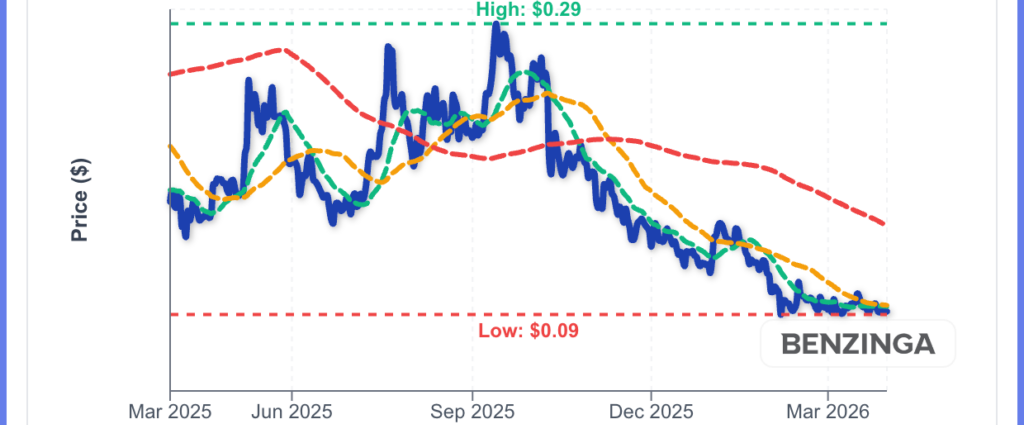
Asset management firm CoinShares is preparing for its Nasdaq trading debut on Wednesday, following a successful joint merger.

What You Need To Know

CoinShares announced in a press release that it is merging with Vine Hill Capital Investment Corp. (NASDAQ:VCIC) and Odysseus Holdings Ltd. Once completed, the transaction will shift CoinShares’ listing from Nasdaq Stockholm to the Nasdaq Stock Market in the U.S.

The merger has resulted in the formation of a new holding company, CoinShares PLC. CoinShares …

Full story available on Benzinga.com

This post was originally published here
Investor Gary Black of The Future Fund LLC thinks that the Nasdaq 100’s rule changes would put significant pressure on fund managers to participate in Elon Musk-led commercial space flight company SpaceX‘s upcoming IPO.

Intense Pressure On Managers

The upcoming IPO is expected to create “intense pressure” on managers and professional investors to participate, “even at a valuation north of $1T,” because “sitting out may be too risky,” Black said in a post on the social media platform X on Tuesday, citing the recent Nasdaq rule changes.

“Fund managers fret that if they sit out the SpaceX offering and the shares soar, their performance will look dismal,” he said. He added that Musk and the bankers were “well aware” of this pressure on fund managers as SpaceX gears up to sell a “record $75B worth of stock.”

Full story available on Benzinga.com

This post was originally published here

Sen. Elizabeth Warren (D-Mass) has criticized President Donald Trump again as gas prices at the pump continue to rise amid escalating tensions in the Middle East.

Record Gas Prices

In a post on the social media platform X on Tuesday, Warren shared her criticism of Trump and the war in Iran. “Record monthly gas price increases courtesy of Trump’s Iran war,” she said, quoting a post by GasBuddy analyst Patrick De Haan, who said that the monthly rise was the “largest monthly increase” in prices ever recorded by the organization.

Warren then doubled down on her criticism of Trump and rising gas prices in a separate post on X on Tuesday. “Donald Trump’s response to skyrocketing gas prices? “If they rise, they rise,” she said in the caption of her post, …

Full story available on Benzinga.com

This post was originally published here
Binah Capital Group Inc. (NASDAQ:BCG) surged 59.20% in after-hours trading on Tuesday to $3.20, after the independent financial advisor network reported fourth-quarter revenue growth of 13.2% and generally accepted accounting principles profitability in its first full year as a public company.

Binah Capital, which went public in 2024 following a merger between Wentworth Management Services LLC and Kingswood Acquisition Corp., announced results for the quarter and full year ended Dec. 31, 2025.

What Do Q4 Results Say?

Binah Capital reported fourth-quarter revenue of $50.5 million, marking a 13.2% increase from the same period a year earlier. Gross profit also improved, climbing to $10.3 million from $8.9 million. The company posted a GAAP net income of $0.2 million, a turnaround from a $1.1 million loss in the fourth quarter of 2024.

GAAP diluted earnings per share were $0.01 for the quarter, an improvement from a loss of $0.07 per share …

Full story available on Benzinga.com

This post was originally published here

Cryptocurrency bettors remain unconvinced that vessel traffic in the Strait of Hormuz will return to normal by the end of the month despite President Donald Trump hinting at winding down the Iran campaign.

Will Normalcy Return To Global Oil Trade?

Polygon (CRYPTO: POL)-based Polymarket shows 23% chance of normal traffic resuming on the critical oil shipping route by April 30, up 3 percentage points in the last 24 hours, but down 16 points over the week. The chance of this happening by May 30, however, was higher at 37%.

Nearly $1 million has been wagered on this keenly watched bet. The market resolves to “Yes” if IMF Portwatch reports a 7-day moving average of transit calls for the route of at least 60.

Based on data up to March 29, the 7-day moving average was only 3.

This post was originally published here
Leading cryptocurrencies climbed alongside stocks on Tuesday after President Donald Trump said the military campaign against Iran could end soon, even if the Strait of Hormuz remains largely closed.

Cryptocurrency 24-Hour Gains +/- Price (Recorded at 9:15 p.m. EDT)
Bitcoin (CRYPTO: BTC) +1.26% $68,103.05
Ethereum (CRYPTO: ETH)
               
+3.09% $2,102.70
XRP (CRYPTO: XRP)                          +1.31% $1.34
Solana (CRYPTO: SOL)                          +0.50% $83.19
Dogecoin (CRYPTO: DOGE)              +1.50% $0.09203

Crypto Rallies As Bearish Traders Exit

Bitcoin regained $68,000 overnight after sliding below $66,000 earlier in the day. Trading volume rose 10% over the last 24 hours.

Ethereum bounced from the lows of $1,939.53 to recapture $2,100. XRP and Dogecoin also traded in the green.

Shares of Strategy Inc. (NASDAQ:MSTR) and Bitmine Immersion Technologies Inc. (NYSE:BMNR) closed up 2.27% and 8.09%, respectively.

Over $270 million in crypto positions were liquidated in the past 24 hours, with long and short liquidations almost evenly split,  according to Coinglass data.

Open interest in Bitcoin futures fell 3.42% in the last 24 hours. A drop in open interest coupled with an increase in spot price typically indicates short covering, which occurs when bearish traders exit …

Full story available on Benzinga.com

This post was originally published here
U.S. equities experienced a significant rebound today, with major indices recovering from recent lows. The S&P 500 rose by 2.9% to 6,528.52, while the Nasdaq gained 3.83% to 21,590.62, driven by a rally in tech stocks. The Dow Jones Industrial Average spiked 2.49% to 46,341.51. This recovery comes amid reports of a potential de-escalation between the U.S. and Iran, which boosted investor sentiment.

Despite these gains, the S&P 500 remains on track for its worst monthly performance since September 2022. These are the top stocks that gained the attention of retail traders and investors through the day:

Nike Inc. (NYSE:NKE)

Nike’s stock closed up 3.08% at $52.82, hitting an intraday high of $53.11 and a low of $51.69. Over the past year, its shares have ranged between $50.95 and $80.17. In the after-hours trading, Nike stock fell 9% to $52.82.

The company recently reported third-quarter revenue of $11.28 billion, surpassing analyst expectations. Despite flat year-over-year growth, Nike achieved a 1% increase in Nike Brand revenues and a 5% rise in Wholesale revenues.

Beyond Meat Inc. (NASDAQ:BYND)

Beyond Meat saw its stock surge by 15.09%, closing at $0.70. The stock reached an intraday high of $0.73 and a low of $0.62, with a 52-week range of $0.50 to $7.69. In the after-hours session, the stock fell …

Full story available on Benzinga.com

This post was originally published here
Venture Capital firm Sycamore has announced a $65 million seed funding round aimed at developing an operating system for autonomous enterprise AI

The announcement highlights that this funding will help organizations deploy AI agents efficiently and securely.

• Invesco QQQ Trust, Series 1 stock is trading near recent highs. What’s next for QQQ stock?

The funding round was led by Coatue and Lightspeed Venture Partners, with contributions from Abstract Ventures, Dell Technologies Capital, 8VC, Fellows Fund and E14 Fund. Notable angel investors include former OpenAI Chief Research Officer Bob McGrew, Intel CEO Lip-Bu Tan and Databricks CEO Ali Ghodsi.

Sycamore’s platform aims to revolutionize enterprise computing by providing …

Full story available on Benzinga.com

This post was originally published here

The Department of Labor (DOL) has issued a proposed regulation that would allow retirement plans to include investments in alternative assets, specifically cryptocurrencies and private markets.

“The overarching goal of the proposed regulation is to alleviate certain regulatory burdens and litigation risk that interfere with the ability of American workers to achieve, through their retirement accounts, the competitive returns and asset diversification necessary to secure a dignified and comfortable retirement,” the executive summary reads. 

The proposal comes after President Donald Trump‘s executive order, released last year, instructed the DOL to reexamine its guidance surrounding employers and plan administrators on incorporating these assets into retirement plans.

“The Executive Order (E.O. 14330) pointed out that, currently, many Americans in employer-sponsored defined contribution plans do not have the opportunity to participate in the potential growth and diversification opportunities offered by alternative asset investments,” the proposal stated.

DOL Safe Harbor Rule

The DOL has introduced a “safe harbor” rule designed to help shield plan sponsors from lawsuits. Under the guidance, fiduciaries must carefully weigh six key factors when selecting alternative investments: performance, fees, liquidity, valuation, benchmarks, and complexity.

The rule will undergo additional review, including a 60-day period for public comment, before it can be finalized.

“Americans’ ability to participate more fully in innovation and economic growth through well-diversified long-term investments is a vitally important priority for effective retirement planning. We look forward to continuing our work to expand opportunities for Americans to build wealth and save for the future,” said SEC Chairman Paul S. Atkins in a press release.

U.S. Secretary of the Treasury Scott Bessent commented that the proposed rule is “an initial step” in implementing the Trump’s Executive Order in “a safe and smart manner.”

Last Wednesday, the Labor Department lifted restrictions that had previously discouraged the inclusion of cryptocurrencies in 401(k) retirement plans.

Trump’s Ballooning Crypto Fortune

The Labor Department under former President Joe Biden had warned about “significant risks” of adding cryptocurrency investment options to retirement plans, citing the speculative …

Full story available on Benzinga.com

This post was originally published here

Billionaire hedge fund founder Ray Dalio had an ominous message for investors as he sounded the alarm over similarities between today’s global climate and the period before World War II.

In a February interview with Fortune, Dalio said the U.S. had entered “Stage 6” of his Big Cycle, the framework he uses to map the rise, peak, decline and restructuring of nations and global powers over long stretches of history.

He expanded on that view in a post published after the Munich Security Conference, writing that “the post-1945 world order has broken down” and that the world is now moving through a period in which “there are no rules, might is right, and there is a clash of great powers.”

That framework may already be visible in today’s geopolitical backdrop. In the same post, Dalio argued that “before there is a shooting war there is usually an economic war,” pointing to the kinds of pressure campaigns that tend to come first, including tariffs, sanctions, “asset freezes/seizures,” “blocking capital markets access,” and “embargoes/blockades.”

For investors trying to figure out what that actually means for their own retirement accounts, investment mix and time horizon, the answer is rarely obvious without a second opinion. 

SmartAsset’s free matching tool connects you with up to three advisors in 

your area after a short questionnaire, with free initial consultations. 

It is worth five minutes of your time to find out whether your current plan is built for the world Dalio is describing.

Global Powers Heading for a ‘Final Battle’

Dalio’s Big Cycle model is built on centuries of history, including the rise and fall of empires such as the Dutch, British and American orders. In his telling, Stage 6 …

Full story available on Benzinga.com

This post was originally published here

Beyond Meat Inc (NASDAQ:BYND) reported fourth-quarter financial results after the market close on Tuesday. Here’s a rundown of the plant-based meat company’s report.

Beyond Meats Misses Analyst Revenue Estimates, More

Beyond Meat reported fourth-quarter revenue of $61.59 million, missing analyst estimates of $62.57 million, according to Benzinga Pro. The company reported an adjusted loss of 29 cents for the quarter, missing estimates for a loss of 13 cents.

Total revenue was down 19.7% year-over-year, primarily driven by a 22.4% decrease in volume of products sold due to weak category demand and lower sales of chicken and burger …

Full story available on Benzinga.com

This post was originally published here

RH (NYSE:RH) shares tanked in Tuesday’s extended trading after the company released its fourth-quarter earnings report, missing estimates on the top and bottom lines.

RH Q4 Results

RH reported quarterly earnings of $1.53 per share, which missed the analyst estimate of $2.22 by 30.99%, according to Benzinga Pro data.

Quarterly revenue came in at $842.62 …

Full story available on Benzinga.com

This post was originally published here

Apollo Global Management is in advanced talks to acquire private jet fixed-base operator Atlantic Aviation from KKR & Co. in a move that is expected to value the company at approximately $10 billion.

The buyout may be made public in the coming days, although the process is ongoing and KKR could withdraw from its plan to offload its share of the company, Bloomberg reported, citing sources it didn’t identify.

Apollo is partnering with GIC Pte to purchase a controlling holding in Atlantic Aviation, while KKR is looking inject fresh investment into the company …

Full story available on Benzinga.com

This post was originally published here

PHILADELPHIA, March 31, 2026 /PRNewswire/ — The Aberdeen Investments U.S. Closed-End Funds (NYSE:ASGI, HQH, HQL, IFN, THQ)), (NYSE:IAF) (the “Funds” or individually the “Fund”), today announced that the Funds paid the distributions noted in the table below on March 31, 2026, on a per share basis to all shareholders of record as of March 24, 2026 (ex-dividend date March 24, 2026). These dates apply to the Funds listed below with the exception of abrdn Healthcare Investors (HQH), abrdn Life Sciences Investors (HQL), abrdn Australia Equity Fund, Inc. (IAF) and Aberdeen India Fund Inc. (IFN) which paid on March 31, 2026, to all shareholders of record as of February 20, 2026 (ex-dividend date February 20, 2026). 

Ticker

Exchange

Fund

Amount

ASGI

NYSE

abrdn Global Infrastructure Income Fund

$ 0.2300

HQH

NYSE

abrdn Healthcare Investors

$ 0.6300

HQL

NYSE

abrdn Life Sciences Investors

$ 0.5600

IAF

NYSE American

abrdn Australia Equity Fund, Inc.

$ 0.3600

IFN

NYSE

Aberdeen India Fund, Inc.

$ 0.4500

THQ

NYSE

abrdn Healthcare Opportunities Fund

$ 0.1800

Each Fund has adopted a distribution policy to provide investors with a stable distribution out of current income, supplemented by realized capital gains and, to the extent necessary, paid-in capital.

For the abrdn Healthcare Investors (HQH), abrdn Life Sciences Investors (HQL), abrdn Australia Equity Fund, Inc. (IAF) and Aberdeen India Fund Inc. (IFN) the stock distributions were automatically paid in newly issued shares of the Fund unless otherwise instructed by the shareholder to be paid in cash. Shares of common stock were issued at the lower of the net asset value (“NAV”) per share or the market price per share with a floor for the NAV of not less than 95% of the market price on March 18, 2026. The reinvestment prices per share for these distributions were as follows: $18.08 for abrdn Healthcare Investors (HQH); $16.40 for abrdn Life Sciences Investors (HQL); $12.50 for abrdn Australia Equity Fund, Inc. (IAF) and $11.75 for Aberdeen India Fund, Inc. (IFN). Fractional shares were generally settled in cash, except for registered shareholders with book entry accounts at Computershare Investor Services who had whole and fractional shares added to their account.

To have received the abrdn Healthcare Investors (HQH), abrdn Life Sciences Investors (HQL), abrdn Australia Equity Fund, Inc. (IAF) and Aberdeen India Fund Inc. (IFN) quarterly distributions payable in March 2026 in cash instead of shares of common stock, for shareholders who hold shares in “street name,” the bank, brokerage or nominee who holds the shares must have advised the Depository Trust Company as to the full and fractional shares for which they want the distribution paid in cash by March 17, 2026; and for shares that are held in registered form, written notification for the election of cash by registered shareholders must have been received by Computershare Investor Services prior to March 17, 2026.

Under applicable U.S. tax rules, the amount and character of distributable income for each Fund’s fiscal year can be finally determined only as of the end of the Fund’s fiscal year. However, under Section 19 of the Investment Company Act of 1940, as amended (the “1940 Act”) and related rules, the Funds may be required to indicate to shareholders the estimated source of certain distributions to shareholders.

The following tables set forth the estimated amounts of the sources of the distributions for purposes of Section 19 of the 1940 Act and the rules adopted thereunder. The tables have been computed based on generally accepted accounting principles. The tables include estimated amounts and percentages for the current distributions paid this month as well as for the cumulative distributions paid relating to fiscal year to date, from the following sources: net investment income; net realized short-term capital gains; net realized long-term capital gains; and return of capital. The estimated compositions of the distributions may vary because the estimated composition may be impacted by future income, expenses and realized gains and losses on securities and currencies.

The Funds’ estimated sources of the current distribution paid this month and for its current fiscal year to date are as follows:

Estimated Amounts of Current Distribution per Share

Fund

Distribution Amount

Net Investment Income

Net Realized Short-Term Gains**

Net Realized Long-Term Gains

Return of Capital

ASGI

$0.2300

Full story available on Benzinga.com

This post was originally published here

Bitcoin and other major cryptocurrencies regained some losses on Tuesday after Iran signaled a willingness to pursue peace talks.

Cryptocurrency Ticker Price
Bitcoin (CRYPTO: BTC) $67,813.58
Ethereum (CRYPTO: ETH) $2,097.47
Solana (CRYPTO: SOL) $82.54
XRP (CRYPTO: XRP) $1.34
Dogecoin (CRYPTO: DOGE) $0.09190
Shiba Inu (CRYPTO: SHIB) $0.055932

Notable Statistics:

  • CoinGlass data shows that 78,174 traders were liquidated in the past 24 hours, totaling $361.97 million.       
  • SoSoValue data shows net inflows of $69.4 million from spot Bitcoin ETFs on Monday. Spot Ethereum ETFs …

Full story available on Benzinga.com

This post was originally published here

SEALSQ Corp. (NASDAQ:LAES) shares climbed in Tuesday’s extended trading after the company released its fiscal-year earnings report. Here’s a look at the details inside.  

SEALSQ Fiscal Year Results

SEALSQ reported quarterly losses of 24 cents per share, which missed the analyst consensus estimate for a loss of five cents, according to Benzinga Pro data.

Quarterly revenue came in at $18.25 million, which beat the Street estimate of $12.9 million by 41.49% and was a 66.21% increase over $10.98 million in …

Full story available on Benzinga.com

This post was originally published here

Ares Management Corporation (NYSE:ARES) and Antares Capital announced the completion of their second continuation vehicle, securing commitments exceeding $1.7 billion.

The new vehicle is intended to acquire assets from a closed-end private credit fund, consisting of over 300 first lien, floating rate loans that Antares originated and manages, the company press release stated. 

This initiative offers existing investors a liquidity avenue while providing new investors access to Antares’ quality private credit assets. Antares will continue to oversee the continuation vehicle and its associated loans.

“This transaction reflects our continued commitment to delivering innovative liquidity solutions to private credit institutional investors,” said Vivek Mathew, president of Antares. “Antares is pleased to once again partner with Ares and utilize the continuation vehicle …

Full story available on Benzinga.com

This post was originally published here
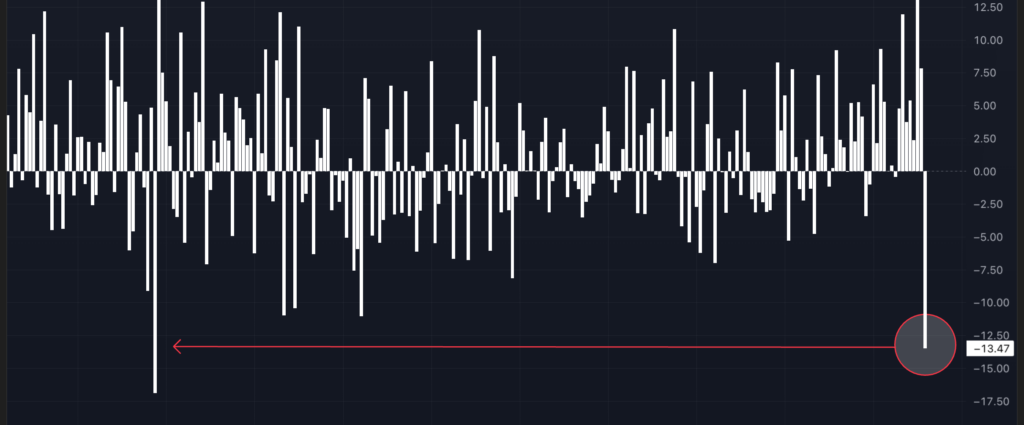
Oracle Corp (NYSE:ORCL) dreams of AI, but even with more than $6 billion in profits, it’s still short on cash. The solution? Fire thousands of employees.

Roughly 18% of the company’s global workforce reportedly received a 6 a.m. termination email on Tuesday from “Oracle Leadership.” Access to company systems was cut immediately with no prior warning, no manager call and no HR meeting.

TD Cowen estimates the cuts could reach 20,000 to 30,000 workers, making it the single largest tech layoff of 2026. Benzinga reached out to Oracle to confirm the estimated number of layoffs, but has not heard back.

Meanwhile, Polymarket’s AI Bubble Burst contract has jumped to 22% from 17% in late February, as speculation grows around the financial risks of AI investments. After posting $6.13 billion in net income, Oracle is still cutting thousands of jobs to free up funds—highlighting the growing tension between soaring profits and the …

Full story available on Benzinga.com

This post was originally published here

Google has warned that advances in quantum computing could eventually break the elliptic curve cryptography that secures cryptocurrencies. New research suggests these systems may be compromised with fewer resources than previously thought.

Rising Quantum Concerns

Using optimized versions of Shor’s algorithm, a sufficiently powerful quantum computer could break current cryptographic systems more quickly than earlier estimates suggested. While the threat is not immediate, it may be closer to reality than previously believed.

To prepare, Google is urging the crypto industry to transition to post-quantum cryptography (PQC), adopt safer practices such as avoiding wallet address reuse, and consider policies for vulnerable or inactive funds.

The …

Full story available on Benzinga.com

This post was originally published here

“Shark Tank” investor Kevin O’Leary has advice for couples tying the knot — ditch the ballroom, buy some pizza, and invest the difference. 

O’Leary isn’t just theorizing for couples getting married. He told CNBC Make It that when he and his wife, Linda, got married more than 25 years ago, they opted for a low-cost celebration centered around pizzas and beer

“I said to my wife, ‘Why go in debt?'” O’Leary said. “Let’s invite our friends over, let’s buy a few cases of beer, and I’ll order some pizza.”

The Opportunity Cost of ‘I Do’

The financial logic behind O’Leary’s frugal festivities is the concept of opportunity cost. 

The average wedding costs more than $34,000, according to industry website The Knot. For many young couples, that capital represents a significant portion of their net worth — money that O’Leary says is being burned on a single night of celebration, when it could be used to start or grow a business.

“We saved a fortune,” …

Full story available on Benzinga.com

This post was originally published here

The specter of political interference in the Federal Reserve is rippling through the market, and for ETF investors, the parallels to the 1970s are becoming more and more difficult to ignore.

• What’s next for TIP stock?

While Sen. Elizabeth Warren has accused President Donald Trump of interfering in the Fed, warning that this could have serious implications for the interest rates for mortgages, credit cards and student loans, there is another, more sinister threat to the market that ETF investors should be considering: inflation risk.

Warren referenced former President Richard Nixon’s term in the 1970s, an era of high inflation, unemployment and lower GDP growth.

The parallels to the 1970s and the Nixon administration are not coincidental. The fear among investors today is that the same set of economic problems that resulted in one of the most painful periods of inflation in American economic history could be about to be replayed.

The Nixon Playbook — And How It Applies To The Market Today

The Nixon administration and the economic policies that put in place during that time have a lot to teach about what could go wrong in …

Full story available on Benzinga.com

This post was originally published here

Bitcoin’s (CRYPTO: BTC) movement within a tight trading range is raising questions about whether its traditional four-year cycle remains intact or is gradually fading amid rising institutional participation.

Cycle Debate Intensifies

In an X.com post on March 31, on-chain analytics platform Arkham Intelligence highlighted a growing debate over the durability of Bitcoin’s four-year cycle. The firm noted that increasing institutional involvement may be reshaping market behavior.

Unlike retail traders, institutional investors typically deploy capital in a more structured manner, often guided by schedules and risk management strategies. This approach can reduce extreme volatility and dampen the sharp boom-and-bust patterns historically associated with Bitcoin.

At the same time, macroeconomic factors such as interest …

Full story available on Benzinga.com

This post was originally published here
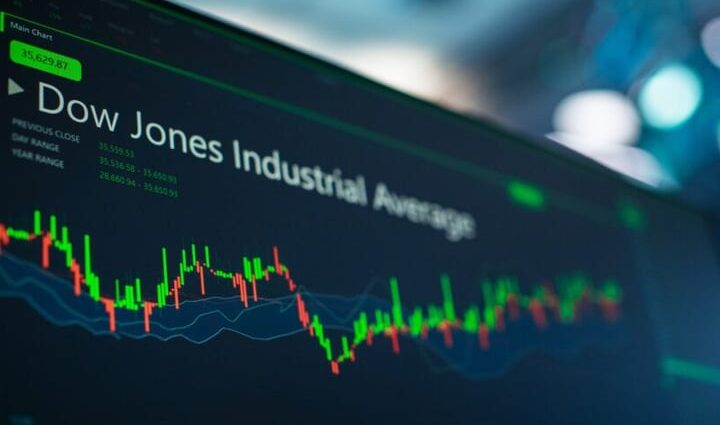
Duolingo, Inc. (NASDAQ:DUOL) shares are trading higher on Tuesday. This move follows extreme volatility. Shares hit a 52-week low of $91.61 last Friday.

The Nasdaq is up 2.94%, while the S&P 500 is up 2.41%.

Short Interest Declines

Short interest in the language platform recently decreased. It fell from 8.60 million to 7.63 million shares. Roughly 21.35% of available shares remain short. It would take 2.6 days for shorts to cover positions.

Analysts are apparently coming around to Duolingo’s ~$4B valuation, citing a strong balance sheet and long-term upside, with traders betting Q1 2026 earnings, scheduled for May 13, will validate the renewed optimism.

Technical Analysis

Duolingo is trading 1.3% above its 20-day SMA. …

Full story available on Benzinga.com

This post was originally published here

RTX Corp. (NYSE:RTX) shares are trading higher during Tuesday’s session.

Pratt & Whitney, a unit of RTX, said Tuesday it secured a $3.8 billion contract modification for lots 18–19 of the F135 engine, bringing the total contract value to $6.6 billion.

The deal supports production for F-35 fighter jets and includes engines, spares and support services. The company is ramping up output to meet rising global demand, backed by more than $1 billion in recent manufacturing investments.

F135 production has increased 20%, with over 1,400 engines delivered to date, supporting 20 allied nations.

Technical Analysis

Currently, the stock is trading 5.1% below its 20-day simple moving average (SMA) and is 0.5% above its 100-day SMA, demonstrating some short-term weakness but longer-term strength.

Over the past 12 months, shares have increased …

Full story available on Benzinga.com

This post was originally published here

The U.K.’s Competition and Markets Authority said Tuesday it will launch a strategic market status (SMS) investigation into Microsoft Corporation’s (NASDAQ:MSFT) business software ecosystem, as part of a broader push to increase competition in cloud services and workplace software.

The watchdog said the move comes at a pivotal moment as artificial intelligence reshapes productivity tools. Hundreds of thousands of U.K. businesses and public sector bodies rely on Microsoft products such as Windows, Word, Excel and Teams, with newer AI tools like Copilot gaining traction.

An SMS designation would allow the CMA to address concerns that Microsoft’s software licensing practices may be limiting competition in cloud services, while helping ensure a level playing field as AI adoption accelerates.

Microsoft, Amazon Adjust Cloud Practices

Following engagement with …

Full story available on Benzinga.com

This post was originally published here

Delta Air Lines Inc (NYSE:DAL) signed a deal with Amazon.com Inc’s (NASDAQ:AMZN) Leo to bring low-Earth orbit satellite Wi-Fi to 500 aircraft starting in 2028. The deal snubs SpaceX’s Starlink as the rocket company reportedly moves toward filing what could be the largest IPO ever.

• Delta Air Lines shares are powering higher. What’s behind DAL gains?

Why Amazon Over Starlink

Delta chose Amazon Leo because of its existing relationship with Amazon Web Services, which already powers the airline’s internal systems. The service promises download speeds up to 1 gbps per aircraft and will be free for all SkyMiles members.

The catch is Amazon’s Leo has roughly 200 satellites in orbit. Starlink has over 10,000 and more than 10 million paying subscribers.

Amazon has been testing its ‌service with businesses and is “months away” from starting commercial service. The service will begin in small regions and …

Full story available on Benzinga.com

This post was originally published here
Dogecoin (CRYPTO: DOGE) is trapped in a tightening wedge between $0.088-$0.095, while Shiba Inu’s (CRYPTO: SHIB) burn rate surged 945% in 24 hours with over 3.1 million tokens permanently removed.

Dogecoin’s Wedge Compression

Dogecoin is forming a converging wedge at multi-month lows, with upper and lower trendlines squeezing price into a tight range. 

The Supertrend at $0.1044 and Parabolic SAR at $0.0989 both hover just above, making any upside move an immediate test of resistance.

The Supertrend hasn’t flipped green yet despite weeks of sideways action, suggesting sellers haven’t fully given up. 

Volume dropped 6.24% to $2.10 billion and open interest slipped 0.99% to $1.06 billion, typically signaling …

Full story available on Benzinga.com

This post was originally published here

Strategy Inc. (NASDAQ:MSTR) saw its stock price slide before heading back up during Tuesday’s trading session.

• What is MSTR stock doing now?

Bitcoin Remains Relatively Flat

Strategy shares seesawing comes as Bitcoin (CRYPTO: BTC) shows minimal volatility. The leading digital asset is currently trading at $67,508.08, reflecting a 24-hour gain of 0.19%. Bitcoin’s total market capitalization remains steady at approximately $1.35 trillion, according to CoinMarketCap.

Shkreli Demands Saylor’s Arrest

Investor Martin Shkreli slammed Strategy Executive Chairman Michael Saylor on Monday over a promotional video for the company’s preferred stock. …

Full story available on Benzinga.com

This post was originally published here

McCormick & Company, Incorporated (NYSE:MKC) shares fell nearly 6% on Tuesday after posting stronger-than-expected quarterly results, as investors appeared cautious about the company’s newly announced $44.8 billion merger with Unilever PLC’s (NYSE:UL) food business.

The deal, which involves a $15.7 billion cash payout, appears to have sparked immediate concerns over the company’s future debt load and equity dilution.

Details

The company reported first-quarter adjusted earnings per share of 66 cents, beating the analyst consensus estimate of 60 cents. Quarterly sales of $1.874 billion outpaced the Street view of $1.787 billion.

Net sales increased 17% in the first quarter compared to the year-ago period and included a 3% favorable impact from currency.

“First quarter total volumes were in line with our expectations, and we anticipate sequential improvement with growth building throughout the year, as we benefit from brand investments, increased innovation in both segments, …

Full story available on Benzinga.com

This post was originally published here

Databricks has announced an investment of more than $850 million in the United Kingdom over the next three years, aiming to enhance its influence in the data and AI sectors. 

This financial commitment will facilitate the expansion of Databricks office space and workforce, as well as boost the adoption of its AI technologies, Lakebase and Genie. 

The company announcement highlights plans to quadruple its office space in London, creating a new 137,000-square-foot headquarters to serve as its EMEA hub. This new headquarters will support the company’s growth, accommodating a team expected to grow from over 500 to more than 1,000 employees in the UK and Ireland. 

The expansion is designed to strengthen Databricks partnerships with local businesses, including over half of the FTSE 100 Index companies. The new office will also feature an executive briefing center for hosting partners and customers, emphasizing the company’s role in the UK’s data and AI ecosystem.

In addition to physical expansion, Databricks is focusing on training and skill development. …

Full story available on Benzinga.com

This post was originally published here

3 E Network Technology Group Ltd (NASDAQ:MASK) shares are seeing massive gains Tuesday. This follows a volatile session that triggered a Nasdaq circuit breaker halt.

Trading Resumes After Volatility Halt

Shares of the B2B IT provider resumed trading Tuesday after a temporary pause. The broader market also remains strong. The Nasdaq Composite is up 1.69%. Meanwhile, the S&P 500 has gained 1.51%.

New Leadership Appointment

The rally follows a personnel announcement. The company appointed Siyang Hu as Vice President on March 24. Hu brings 20 years of experience from Huawei and Shanghai Samsung Semiconductor.

CEO …

Full story available on Benzinga.com

This post was originally published here
The Northern California estate where Francis Ford Coppola wrote one of the greatest screenplays in film history has hit the market for $6.75 million. 

Coppola worked on the screenplay for “The Godfather,” based on Mario Puzo’s 1969 novel, in the property’s cottage, seller Joel Rosenberg told Mansion Global. 

Coppola bought the three-residence compound 13 miles north of San Francisco in Mill Valley in 1970, Rosenberg said. Properties with this kind of history and character tend to hold value in ways that generic new builds rarely do, which is part of why real estate remains one of the most consistent long-term wealth builders available. 

For investors who want exposure to that asset class without the $6.75 million price tag, Arrived lets you buy shares in rental homes and vacation properties starting at just $100, with Arrived handling all the operations while investors collect their share of the income.

But Coppola wasn’t the only filmmaker roaming the grounds. The property’s carriage house above the garage was a workspace for George Lucas …

Full story available on Benzinga.com

This post was originally published here

Blackstone Inc (NYSE:BX) announced the final closure of its Blackstone Life Sciences VI fund (BXLS), reaching a record $6.3 billion in capital commitments. 

This milestone marks the largest private fund ever dedicated to life sciences, surpassing its predecessor by nearly 40%. The fund was oversubscribed, reflecting strong investor confidence in Blackstone’s strategies, the press release stated.

“Our partnerships with global leaders have produced 34 regulatory approvals of innovative medicines and devices. This track record highlights how we work successfully with industry trailblazers to help bring their most important products to patients around the world,” Nicholas Galakatos, who serves as the Global Head of Blackstone Life Sciences, said in the release.

Since its inception in 2018, Blackstone Life Sciences has focused on investing throughout the lifecycle of companies and …

Full story available on Benzinga.com

This post was originally published here

Top Wall Street analysts changed their outlook on these top names. For a complete view of all analyst rating changes, including upgrades, downgrades and initiations, please see our analyst ratings page.

  • B of A Securities analyst Sara Senatore upgraded Shake Shack Inc. (NYSE:SHAK) from Underperform to Neutral and raised the price target from $88 to $101. Shake Shack shares …

Full story available on Benzinga.com

This post was originally published here

Oracle (NYSE:ORCL) shares are up on Tuesday as the company is reportedly juggling job cuts and aggressive federal expansion as it doubles down on AI-driven government solutions.

This movement comes amid a positive day for the broader market, with major indices showing gains.

Oracle began laying off employees globally on Tuesday, impacting multiple teams, Business Insider reports, citing certain social media posts. The scale remains unclear, with affected workers sharing updates on LinkedIn as the company moves to cut costs.

Oracle Expands Federal Solutions

Meanwhile, Oracle Cloud Federal Financials has been added to the U.S. Treasury’s Financial Management Quality Service Management Office (FM QSMO) Marketplace, marking it as the first cloud-native offering aimed at enhancing agency efficiency. This inclusion allows federal agencies to automate finance processes while leveraging embedded AI to improve productivity and transparency.

In addition, the Oracle Fusion Cloud Applications suite provides a comprehensive set of AI-powered tools that help organizations streamline their financial operations. With over 11,000 organizations relying on these applications, Oracle aims to transform finance operations while ensuring compliance with government standards.

Oracle Launches Federal AI Platform

Oracle has also launched its AI Data …

Full story available on Benzinga.com

This post was originally published here

Progress Software Corporation (NASDAQ:PRGS) reported better-than-expected earnings for the first quarter on Monday.

The company posted quarterly earnings of $1.60 per share which beat the analyst consensus estimate of $1.57 per share. The company reported quarterly sales of $247.799 million which beat the analyst consensus estimate of $246.401 million.

Progress Software raised its FY2026 adjusted EPS guidance from $5.82-$5.96 to $5.91-$6.03 and also increased sales guidance from $986.000 million-$1.000 billion to $988.000 million-$1.000 billion.

Progress Software shares dipped 6.6% to trade at $26.38 on Tuesday.

These analysts made changes to their price targets on Progress Software …

Full story available on Benzinga.com

This post was originally published here

U.S. stocks traded higher midway through trading, with the Nasdaq Composite gaining around 400 points on Tuesday.

The Dow traded up 1.08% to 45,703.52 while the NASDAQ rose 1.92% to 21,193.35. The S&P 500 also rose, gaining, 1.44% to 6,434.78.

Leading and Lagging Sectors

Communication services shares climbed by 2.2% on Tuesday.

In trading on Tuesday, utilities stocks fell by 0.7%.

Top Headline

FactSet Research Systems Inc. (NYSE:FDS) on Tuesday reported upbeat results for the second quarter and raised its outlook.

The company posted second-quarter sales of $611.02 million, surpassing analyst expectations of $604.51 million and representing a 7.1% year-over-year (Y/Y) gain. The company reported quarterly adjusted earnings per share of $4.46, exceeding the street view of $4.37.

FactSet now expects FY2026 adjusted EPS of $17.25-$17.75  (up from prior forecast of $16.90–$17.60) versus $17.49 analyst consensus and sales of $2.450 billion-$2.470 billion (up from prior outlook of $2.423 billion–$2.448 billion) versus $2.449 billion consensus estimate.

Equities Trading UP
           

  • Apellis Pharmaceuticals Inc (NASDAQ:

Full story available on Benzinga.com

This post was originally published here

Nio Inc. (NYSE:NIO) shares are trading higher Tuesday. The rally follows reports of strong delivery momentum and a bullish shift in investor sentiment.

ES8 Delivery Milestone Reached

According to a CNEVPost report on Tuesday, Nio will reach its 90,000th delivery of the third-generation ES8 this week. Yang Bo, Nio’s head of user operations, teased the milestone on Weibo. The company delivered its 80,000th unit on March 20. This data implies Nio delivered nearly 20,000 ES8 units in March alone.

Anticipation For March Results

The company will release official March delivery figures on Wednesday. In its March 10 earnings report, Nio …

Full story available on Benzinga.com

This post was originally published here

Google DeepMind chief Demis Hassabis said that his lab doesn’t “feel any immediate pressure to make knee-jerk decisions” on monetizing AI. A new book out Tuesday explains why.

How DeepMind Ended Up With The Biggest War Chest In AI

Sebastian Mallaby’s The Infinity Machine reveals that Hassabis sold DeepMind to Google in 2014 because he knew the AI race would come down to funding. Mark Zuckerberg offered more money, but Hassabis chose Larry Page after a dinner where Zuckerberg showed equal enthusiasm for AI, VR, and 3D printing. Hassabis wanted a buyer that understood AI wasn’t just another technology on a list.

Hassabis wasn’t always happy inside Google. Mallaby writes that he and co-founder Mustafa Suleyman tried to buy DeepMind back, recruiting Reid Hoffman to put up $1 billion for a spinout, but three years of legal work went nowhere. Google wouldn’t let them go.

That failed escape may now be his greatest edge. …

Full story available on Benzinga.com

This post was originally published here

Firefly Aerospace Inc (NASDAQ:FLY) shares are climbing Tuesday. The Nasdaq is up 1.56% while the S&P 500 has gained 1.42%. The surge comes as the space sector reacts to reports that Elon Musk’s SpaceX is preparing for an initial public offering IPO.

SpaceX IPO Filing Buzz

According to The Information on March 25, SpaceX aims to submit its IPO prospectus to regulators this week. Reports suggest the company could seek a valuation above $75 billion. This move has ignited investor enthusiasm across the sector, as the potential listing would be one of the largest in history.

Nasdaq Rule Changes

Market sentiment is further bolstered by Nasdaq’s proposed rule changes effective May 1. These revisions could allow a large-scale listing like …

Full story available on Benzinga.com

This post was originally published here

Google co-founder Sergey Brin is pivoting from his low-profile lifestyle to curate a massive real estate portfolio valued at about $197 million, according to the Robb Report. 

As Brin re-engages with Alphabet Inc.’s artificial intelligence initiatives, his recent acquisitions in California, Nevada and Florida signal a strategic shift in both lifestyle and tax planning. 

With a net worth hovering around $240 billion, according to Forbes, Brin ranks among the world’s wealthiest people. His recent buying streak suggests a move toward high-security compounds and tax-friendly jurisdictions, mirroring a broader trend among ultra-high-net-worth tech executives. 

Real estate has long been a core wealth-building tool for the ultra-wealthy, and while most people cannot drop $50 million on a Malibu compound, the underlying strategy of owning income-producing property is accessible at almost any level. Arrived lets investors buy shares in rental homes and vacation properties starting at $100, with Arrived handling all the operations, and has paid out more than $19 million in dividends to date.

The Malibu Triple Threat

The cornerstone of Brin’s holdings is a trio of estates in Malibu’s Point Dume, a California enclave favored by celebrities and industry titans. 

This post was originally published here

Amazon.com Inc. (NASDAQ:AMZN) shares are surging during Tuesday’s trading session. The Nasdaq is up 1.68% while the S&P 500 has gained 1.50%.

The stock move comes as Amazon rolls out significant updates spanning labor relations, partnerships, and fintech.

Teamsters Reach Settlement Over Right to Strike

In a major shift in labor relations, Amazon reached a settlement to stop retaliating against workers who exercise their right to strike. The deal follows pressure from the Teamsters Union and mediation by the National Labor Relations Board (NLRB).

The agreement covers all 1,300 U.S. facilities.

Delta Air Lines Taps Amazon Leo for In-Flight Wi-Fi

Amazon also announced a massive agreement with Delta Air Lines, Inc.

Full story available on Benzinga.com

This post was originally published here

JPMorgan Chase & Co. (NYSE:JPM) CEO Jamie Dimon said on Tuesday that global markets will remain volatile until the conflict with Iran concludes. While noting the economy remains resilient, Dimon expressed caution regarding the geopolitical environment.

“The markets will be concerned until it’s over,” Dimon  told “FOX & Friends.” He emphasized that the successful completion of the war is more critical than short-term market fluctuations.

Dimon Hopeful for Victory and Open Straits

The ongoing conflict has heavily impacted global trade routes, specifically the Strait of Hormuz. Dimon noted that market participants are currently pricing in the risk of further escalations.

“We should all hope that… we win this thing and clean up the straits and that Iran …

Full story available on Benzinga.com

This post was originally published here

Gold is down 13% in March, on track for its steepest monthly decline since October 2008, when Lehman Brothers collapsed and global markets were in freefall.

The SPDR Gold Shares (NYSE: GLD) recorded over $8 billion in outflows during the month — more than double its prior largest monthly withdrawal, set in February 2021.

A war is raging in the Middle East. The world’s oldest safe haven is supposed to thrive in exactly this environment — so why isn’t gold working? And what does history say about what comes next after selloffs this violent?

Gold Had Its Worst Month Since 2008 – A Safe Haven That Failed To Show Up

The paradox is the story. Gold entered 2026 among Wall Street’s hottest consensus trades.

Gold had rallied 64.6% in 2025 — the bullion’s best annual return since 1979 — and by late January, spot gold reached an all-time high of $5,589 per ounce.

The bullish thesis was straightforward: falling inflation, multiple Fed rate cuts ahead, and insatiable central bank demand.

A month after President Donald Trump launched Operation Fury, the Strait of Hormuz remains closed, Brent crude trades above $110, and gold, the world’s oldest safe haven, is collapsing.

The answer is not geopolitics. It’s interest rates.

Gold is not an outright war hedge — it is an interest-rate-sensitive asset.

The conflict reignited the very inflation pressures markets had spent months assuming were behind them. The rate cuts that underpinned gold’s historic bull run have evaporated.

The Fed held rates at 3.50%–3.75% at its March 18 meeting and penciled in just one 25-basis-point cut for the year.

Yet traders went further: Polymarket traders now assign a 35% probability to zero cuts in 2026 — the single most likely …

Full story available on Benzinga.com

This post was originally published here

Ripple Prime has expanded its integration with HyperliquidX, incorporating HIP-3 products to broaden institutional access to tokenized markets.

Ripple Prime’s Major Move

In an X post on Monday, Ripple Prime executive Mike Higgins said that the integration allows institutional investors to trade tokenized commodities such as gold, silver, and oil 24/7 on-chain perpetual contracts. The expansion is expected to increase activity within the HYPE token ecosystem and further advance the market for tokenized real-world assets.

HIP-3 products on Hyperliquid have experienced rapid growth, with daily trading volume reaching $2.30 billion and open interest at $1.99 billion.

These products now account for nearly 40% of daily trading volume and about 28% of total open interest …

Full story available on Benzinga.com

This post was originally published here

Nike Inc (NYSE:NKE) reports fiscal Q3 2026 results after the bell today, with Wall Street expecting $11.27 billion in revenue, essentially flat year-over-year. The stock is near an eight-and-a-half-year low around $51, down 20% year-to-date.

Polymarket traders are pricing an 82% chance Nike beats the $0.28 EPS consensus. That’s well below the near-certainty levels seen in other mega-cap earnings markets. Nike beat last quarter’s estimate by nearly 40%, so the market may be underpricing the company’s ability to clear a low bar.

Kalshi has a market with $72,000 in volume where traders are betting on what specific words will come up on the earnings call.

“China” is at 98%. No surprise. Greater China revenue plunged 16% last quarter, and CEO Elliott Hill called the recovery “not happening at the level or pace we need.”

“Tariff” at 93% has a new dimension. The Supreme Court struck down Trump’s IEEPA tariffs on Feb. 20, and a federal judge has ruled that all importers are entitled to refunds. Nike previously estimated $1.5 billion in annualized …

Full story available on Benzinga.com

This post was originally published here

XRP (CRYPTO: XRP) slipped 0.5% but Binance outflow transactions surged above 4,000 daily since late February, signaling mid-sized investors are accumulating despite XRP ETF outflows hitting $2.31 million on March 30.

The Binance Accumulation Signal

Binance on-chain activity shows a clear resurgence since the end of February. 

Outflow transactions have consistently exceeded 4,000 per day, with some peaks reaching close to 6,000 transactions in a single day.

Most of this activity stems from transactions ranging between 1,000 and 100,000 XRP, which typically corresponds to mid-sized investors rather than large whales. 

Increased outflow transactions often suggest investors are withdrawing tokens from exchanges to hold them elsewhere, indicating a gradual accumulation phase.

XRP has traded in a well-defined range between $1.30 and $1.50 for several months. While the …

Full story available on Benzinga.com

This post was originally published here

President Donald Trump has brought a decades-old interview back into the limelight, where he proposed that the U.S. should take control of Iranian oil facilities if attacked.

Trump, on Monday, took to his Truth Social to share a snippet from a 1987 interview he had with the late Barbara Walters. The original interview, aired on ABC’s 20/20, features a young Trump criticizing what he perceived as American weakness and advocating for a strong response to Iranian aggression.

The interview took place during the Iran–Iraq War, several years after the Iran hostage crisis. In it, Trump suggested that if Iran attacked the U.S., Washington should retaliate. …

Full story available on Benzinga.com

This post was originally published here

U.S. stocks traded higher this morning, with the Dow Jones index gaining around 400 points on Tuesday.

Following the market opening Tuesday, the Dow traded up 0.90% to 45,625.16 while the NASDAQ rose 1.61% to 21,128.95. The S&P 500 also rose, gaining, 1.23% to 6,421.63.

Leading and Lagging Sectors

Communication services shares climbed by 1.8% on Tuesday.

In trading on Tuesday, utilities stocks fell by 0.6%.

Top Headline

TD SYNNEX Corporation (NYSE:SNX) posted better-than-expected earnings for the first quarter on Tuesday.

The company posted adjusted EPS of $4.73, beating market estimates of $3.31. The company’s sales came in at $17.161 billion, versus estimates of $15.591 billion.

TD Synnex said it sees second-quarter adjusted EPS of $3.75-$4.25, versus market estimates of $3.45. The company sees sales of $16.100 billion-$16.900 billion, versus expectations of $15.798 billion.

Equities Trading UP
           

  • Apellis Pharmaceuticals Inc (NASDAQ:APLS) shares shot up 136% to $40.42 after …

Full story available on Benzinga.com

This post was originally published here

Warren Buffett said he would buy “a whole lot” of Apple Inc. (NASDAQ:AAPL) stock if prices decline, signaling continued confidence in the iPhone maker even after Berkshire Hathaway (NYSE:BRK) (NYSE:BRK) cashed out roughly $100 billion worth of shares last year.

On Tuesday, the former CEO of Berkshire on Tuesday joined CNBC ‘Squawk Box’ on the sidelines of the charity lunch auction with NBA superstar Stephen Curry. He lauded Apple CEO Tim Cook for his leadership at the tech giant.

Buffett suggested that Cook has outperformed the late Steve Jobs, Apple’s co-founder and former boss, describing Apple’s products as “remarkable” and voicing his confidence in the company’s future.

“I sold Apple Too Soon,” said Buffett, but added that he doesn’t regret it. Despite selling Apple stock worth $100 billion pre-tax last year, he emphasized that Apple remains Berkshire’s “largest single investment.”

Speaking about tech regulations, he …

Full story available on Benzinga.com

This post was originally published here

Here are the latest developments in the U.S.–Israel–Iran war on Tuesday at 9.30 AM ET, as the conflict enters its 33rd day.

On Monday, President Donald Trump warned Iran that the U.S. could destroy its key infrastructure if the Strait of Hormuz is not reopened immediately. While optimistic about ongoing talks with Iran’s new regime to halt military operations, he cautioned that failing to reach a deal soon would carry severe consequences.

Meanwhile, Iran’s foreign minister, Abbas Araghchi, called on Saudi Arabia to “eject” U.S. troops from the kingdom, following an Iranian strike on a major American air base. While emphasizing respect for Saudi Arabia as a “brotherly nation,” he said Iran’s actions targeted “enemy aggressors” and highlighted recent attacks on U.S. military assets.

Iran Denies Turkiye Missile Attack

Iran’s FM Mohammad Araghchi called reports of missiles fired at Turkiye “completely baseless” and offered joint technical cooperation to investigate any claims, warning against potential false-flag operations, reported Al Jazeera.

US Seeks ‘Unpredictable’ Approach on Ground Troops: Hegseth

Defense Secretary Pete Hegseth expressed confidence in Trump’s ability to handle a potential ground invasion of Iran, emphasizing that unpredictability in military options is key and that action may not even be necessary.

EU Urges Iran To Ease Regional Tensions

European Council President Antonio Costa urged Iran’s President Masoud Pezeshkian to halt attacks in the region and pursue diplomacy, emphasizing UN-led efforts to secure freedom of navigation in the Strait of Hormuz.

US Hits Isfahan Depot With Bunker Bombs: Report

The U.S. targeted a major ammunition depot in Iran’s Isfahan province using heavy bunker-buster bombs, part of a broader campaign …

Full story available on Benzinga.com

This post was originally published here

U.S. stocks were higher, with the Dow Jones index gaining more than 600 points on Tuesday.

Shares of Apellis Pharmaceuticals Inc (NASDAQ:APLS) rose sharply during Tuesday’s session after the company announced that it will be acquired by Biogen (NASDAQ:BIIB) for $41 per share.

Apellis Pharmaceuticals shares jumped 136.4% to $40.40 on Tuesday.

Here are some other big stocks recording gains in today’s session.

  • Centessa Pharmaceuticals PLC – ADR (NASDAQ:CNTA) gained 45.7% to $40.18 after the company announced that it will be acquired by Eli Lilly for as much as $47 per share.
  • Annexon Inc (NASDAQ:ANNX) gained 19.5% to $5.92 following fourth-quarter earnings.
  • Agios Pharmaceuticals Inc (NASDAQ:AGIO) shares jumped 16.3% to $34.44 after the company announced that it will pursue accelerated FDA approval for mitapivat, an oral pyruvate kinase activator in sickle cell disease, …

Full story available on Benzinga.com

This post was originally published here

CrowdStrike Holdings, Inc. (NASDAQ:CRWD) shares are up during Tuesday’s premarket session.

CrowdStrike and HCLTech on Tuesday expanded their partnership with the launch of AI-powered Continuous Threat Exposure Management services.

The partnership will integrate HCLTech’s AI solutions with CrowdStrike’s Falcon platform, enabling real-time identification and remediation of security threats across various enterprise environments. This strategic move is expected to provide organizations with enhanced visibility and faster response times to potential cyber threats.

In addition, the collaboration leverages advanced adversary intelligence and AI-driven threat detection, which aims to operationalize real-time insights for better risk management. The joint offering is designed to help enterprises maintain an always-on view of their exposure and address risks more effectively.

Technical Analysis

Currently, CrowdStrike is trading 6.7% below its 20-day simple moving average (SMA) and 15.3% below its 100-day SMA, suggesting some short-term weakness. Shares have increased 7.79% over the past 12 months and are currently positioned closer to …

Full story available on Benzinga.com

This post was originally published here

Bitcoin (CRYPTO: BTC) trades within the $60,000-$70,000 range as commodity analyst Mike McGlone warns gold’s rally is over and predicts both gold and Bitcoin will languish for potentially a decade after their historic runs.

The Gold Reversal Call

McGlone argues gold’s significant rally is finished after making multi-decade highs. 

Gold peaked at $5,600 before crashing 27% to $4,100, marking what he calls the end of an era that began in 1997.

“The rally to me is over,” McGlone said. “Gold’s going to languish between $3,000 and $5,000 potentially for a decade. That’s just the way it always does.”

He points to extreme positioning as evidence. Gold’s 180-day volatility moved to 2.5 times that of the S&P 500 (NYSE:SPY), a ratio that has only occurred a few times in history.

When it does, gold shifts from a safe haven to …

Full story available on Benzinga.com

This post was originally published here

A new warning from Google (NASDAQ:GOOG) (NASDAQ:GOOGL) is making crypto investors face a threat they have always thought was still far off: quantum computing.

For a long time, the threat posed by quantum computers on Bitcoin (CRYPTO: BTC) security has largely remained a theoretical threat. However, new research from Google indicates this threat may not be as far off as we think and may come sooner than we expect.

A Faster Timeline Than Expected

At the heart of this concern is the method by which Bitcoin secures transactions. The method is based on a cryptographic system that is theoretically uncrackable by traditional computers. It allows for the creation of private keys from public ones.

However, Google’s latest research into the matter revealed that quantum computing could soon make such systems less complex to crack. The company believes that future quantum computers could have the ability to breach the cryptographic foundations of Bitcoin far sooner than previously thought.

One of the most worrying consequences of this is speed. According to the research, a sufficiently powerful quantum computer could theoretically crack a Bitcoin private key in less than 9 minutes. This could lead to what is known as an ‘on-spend’ attack, which could allow hackers to interfere with transactions before they are made.

Whilst such technology is not yet …

Full story available on Benzinga.com

This post was originally published here

As of March 31, 2026, two stocks in the financial sector could be flashing a real warning to investors who value momentum as a key criteria in their trading decisions.

The RSI is a momentum indicator, which compares a stock’s strength on days when prices go up to its strength on days when prices go down. When compared to a stock’s price action, it can give traders a better sense of how a stock may perform in the short term. An asset is typically considered overbought when the RSI is above 70, according to Benzinga Pro.

Here’s the latest list of major overbought players in this sector.

Compass Diversified Holdings (NYSE:CODI)

  • On March 30, Compass Diversified Holdings announced a definitive deal to sell its Sterno food service business for …

Full story available on Benzinga.com

This post was originally published here

Top Wall Street analysts changed their outlook on these top names. For a complete view of all analyst rating changes, including upgrades and downgrades, please see our analyst ratings page.

  • BTIG cut the price target for Abbott Laboratories (NYSE:ABT) from $140 to $131. BTIG analyst Marie Thibault maintained a Buy rating. Abbott shares closed at $101.88 on Monday. See how other analysts view this stock.
  • HC Wainwright & Co. cut BTCS Inc. (NASDAQ:BTCS) price target from $7 to $5. HC Wainwright & Co. analyst Kevin Dede maintained a Buy rating. BTCS shares closed at $1.29 on Monday. See how other analysts view this stock.
  • Needham slashed price target for Phreesia, Inc. (NYSE:PHR) from $35 to $14. Needham analyst Ryan MacDonald maintained a Buy rating. Phreesia shares closed at $11.41 on Monday. See how other analysts view this stock.
  • HC Wainwright & Co. raised the price target for Bicara Therapeutics Inc.

Full story available on Benzinga.com

This post was originally published here

Tilray Brands, Inc. (NASDAQ:TLRY) shares are moving higher in Tuesday’s premarket session. The move follows the launch of a product from Shock Top, a craft beer brand owned by Tilray Beverages.

The company introduced Shock Top’s first-ever high-ABV offering, High Voltage, as part of its broader push to expand and innovate within the beverage segment. The product is a double wheat beer with a 9.6% ABV, featuring bold orange flavors and real orange peel.

This new product is expected to roll out in stores nationwide starting at $2.99, reflecting the brand’s commitment to meeting consumer demand for high-ABV options.

The launch will begin in Southern California before expanding further, showcasing Shock Top’s strategy to capture market share in the craft beer segment. The brand aims to resonate with consumers seeking fun and energetic experiences, aligning with current trends in the beverage industry.

Technical Analysis

Currently, Tilray is trading 10.9% below its 20-day simple moving average (SMA) and 30.4% below its 100-day SMA, suggesting that the stock is struggling to regain upward momentum. Shares have decreased 8.90% over the past 12 months and are currently positioned closer to their 52-week lows than …

Full story available on Benzinga.com

This post was originally published here

This week’s Wolf Pick: FirstCash Holdings (FCFS)

A 40% spike in oil prices has done something no pawnbroker marketing budget ever could. It made tax refund season profitable for the pawn shop.

This week’s Wolf Pick looks at FirstCash Holdings (NASDAQ:FCFS), a $8.4 billion operator of more than 3,000 pawn stores across the U.S., Latin America, and the U.K., and why the Iran conflict may have structurally broken the seasonal model that Wall Street has used to forecast this business for a decade.

The seasonal playbook, broken

Here’s how pawn lending is supposed to work in Q1. Tax refunds arrive. Consumers walk in, redeem their pawned jewelry, and pawn loan balances (called PLO, or Pawn Loans Outstanding) roll off. The historical median Q1 paydown is about 12%. Analysts model for this. It’s as reliable as the calendar.

The problem: that refund money has somewhere else to go this year.

According to independent research shared with Wolf Financial, Americans collectively spend roughly $350 billion on gasoline annually under normal conditions. With WTI crude above $100 and Brent pushing $115 on the back of the Strait of Hormuz closure, a 40%-plus oil spike translates to approximately $140 billion in incremental pump spending absorbed in a single year. That’s money that was previously available for debt paydown, discretionary purchases, or redeeming pawned collateral. The tax refund check clears and goes directly into the gas tank.

The downstream effect on FCFS is mechanical. Consumers who would ordinarily redeem their pawned items don’t have the cash. The loan stays active longer, and pawn service charge (PSC) fee income runs hotter. At the same time, customers …

Full story available on Benzinga.com

This post was originally published here

Phreesia, Inc. (NYSE:PHR) reported mixed fourth-quarter financial results and cut its FY27 sales guidance on Monday.

Phreesia reported fourth-quarter earnings of 2 cents, missing the consensus of 7 cents. Sales reached $127.07 million, up 16% year-over-year, beating the consensus of $126.62 million.

The average number of healthcare service clients (AHSCs) was 4,658 in the quarter, up 7% year-over-year.

Phreesia on Monday lowered its fiscal 2027 revenue outlook to $510–$520 million, down from $545–$559 million, citing reduced visibility into pharma client spending and weaker-than-expected commitments for the second half of the year.

“We achieved several critical financial milestones ahead of our internal targets, including achieving positive GAAP net income ($2.3 million) and crossing $100 million of Adjusted EBITDA1 and $50 million of free cash flow2 ($78.8 …

Full story available on Benzinga.com

This post was originally published here

The national average for regular gasoline hit $4.008 per gallon on Tuesday morning, marking a significant psychological and economic milestone for American consumers.

According to data from GasBuddy, this level represents the highest average since August 2022, fueled by a historic monthly surge.

Historic Monthly Spikes Hit Consumers

The current price action reflects the largest monthly increase ever recorded by GasBuddy. Gasoline prices have climbed $1.059 per gallon over the last 30 days, while diesel has soared by $1.701.

Real-Time Volatility In Florida and Midwest

Patrick De Haan, Head of Petroleum Analysis at GasBuddy pushed the importance of monitoring live updates rather than daily reports.

“Don’t settle for once-a-day data… been watching real-time updates every 5 min,” De Haan wrote on X. He specifically highlighted Florida, where prices soared after stations jumped to $4.299 per …

Full story available on Benzinga.com

This post was originally published here

Bitcoin held steady near $66,000 despite a broader market pullback triggered by concerns over quantum computing risks; liquidations stand at $268.43 million over the past 24 hours.    

Bitcoin ETFs saw $69.4 million in net inflows on Monday, while Ethereum ETFs reported $4.96 million in net inflows.  


Cryptocurrency
Ticker Price
Bitcoin (CRYPTO: BTC) $66,725.24
Ethereum (CRYPTO: ETH) $2,039.05
Solana (CRYPTO: SOL) $80.68
XRP (CRYPTO: XRP) $1.31
Dogecoin (CRYPTO: DOGE) $0.09038
Shiba Inu (CRYPTO: SHIB) $0.055900

Meme coin …

Full story available on Benzinga.com

This post was originally published here

Banks are exploring Cardano’s (CRYPTO: ADA) Midnight partner chain for institutional blockchain infrastructure because it offers programmable privacy and front-running protection that Ethereum (CRYPTO: ETH) and Solana (CRYPTO: SOL) can’t provide natively.

The Three Banking Requirements

Institutions need three things from blockchain that public chains struggle to deliver: privacy with selective disclosure, execution predictability without MEV extraction, and compliance tooling that doesn’t broadcast sensitive information to the entire world.

A bank can’t put customer transactions on a public ledger visible to everyone. 

They need the ability to hide sensitive details from the public but still prove compliance to regulators when required. That’s …

Full story available on Benzinga.com

This post was originally published here

Red Cat Holdings (NASDAQ:RCAT) shares are up during Tuesday’s premarket session.

On Monday, Red Cat signed a strategic partnership with Ukraine’s Spetstechnoexport, a state-owned defense enterprise, to collaborate on next-generation unmanned and robotic systems.

The memorandum of understanding covers air, land, and maritime domains, focusing on technology integration, production expansion, and global market access.

The partnership follows a joint event in Ukraine with defense stakeholders and aims to accelerate the development of mission-ready systems.

Red Cat said the collaboration supports its broader strategy to deliver an integrated “Family of Systems” as global demand rises for scalable, interoperable defense technologies.

Red Cat Expands Swarm Capabilities

In a separate development, Red Cat has acquired Apium Swarm Robotics to strengthen its capabilities in autonomous drone swarming and multi-domain robotics.

Apium will operate independently while integrating its distributed autonomy software across Red Cat’s systems. The technology …

Full story available on Benzinga.com

This post was originally published here

Spotify Technology SA‘s (NYSE:SPOT) stock is facing a sharp technical downturn as its relative strength continues to erode.

Momentum Hits Bottom Decile

According to Benzinga Edge’s Stock Rankings, Spotify’s momentum score—a percentile-ranked metric measuring price patterns and volatility—has plummeted week-on-week from 14 to 11.16.

This decline places the audio streaming giant near the bottom 10th percentile of the market for price strength.

While the price trend remains bearish across short, medium, and long-term timeframes, according to Benzinga Edge’s Stock Rankings, Spotify‘s underlying fundamentals tell a different story. The company boasts a stellar growth score of 97.79, reflecting massive historical expansion in revenue and earnings.

Benzinga Edge's Stock Rankings for SPOT.

Analyst Conviction Amid Technical Weakness

Despite the ice-cold technicals, institutional sentiment remains robust. Jefferies analyst James Heaney recently maintained a Buy rating on the stock, even while trimming the price …

Full story available on Benzinga.com

This post was originally published here

For retirees, the age at which you claim Social Security can dramatically affect lifetime benefits. Choosing too early can reduce monthly payments by hundreds of dollars, potentially costing tens of thousands over time.

Understanding The ‘Breakeven’ Age

The “breakeven age” is when delaying Social Security benefits results in higher lifetime payments than claiming earlier. For someone with a full benefit of $2,000 at 67, claiming at 62 cuts it to $1,400, while waiting until 70 raises it to $2,480. The breakeven point for 62 versus 67 is around ages 78–79, and for 62 versus 70, roughly 80–82, adding about $1,080 per month thereafter.

According to a Nationwide survey, only 13% of Americans can correctly identify their full retirement age.

Health, longevity, marital status, other income, and ongoing …

Full story available on Benzinga.com

This post was originally published here

Federal Reserve Chair Jerome Powell expressed concerns about the fiscal trajectory of the U.S. while addressing the students at Harvard University on Monday.

Powell acknowledged that the $39 trillion debt load, while not immediately threatening, is on an unsustainable path that demands urgent legislative intervention. “It will not end well if we don’t do something fairly soon,” Powell said.

He distinguished the level of debt and its trajectory, arguing that the U.S, as the issuer of the world’s reserve currency and home to the deepest capital markets, can sustain a far larger debt burden than smaller economies.

In response to a student’s inquiry about the U.S. debt’s breaking point, Powell said that the exact threshold is uncertain. …

Full story available on Benzinga.com

This post was originally published here

Lamb Weston Holdings, Inc. (NYSE:LW) will release earnings for its third quarter before the opening bell on Wednesday, April 1.

Analysts expect the company to report quarterly earnings of 61 cents per share. That’s down from $1.10 per share in the year-ago period. The consensus estimate for Lamb Weston’s quarterly revenue is $1.49 billion (it reported $1.52 billion last year), according to Benzinga Pro.

Ahead of quarterly earnings, Deutsche Bank analyst Steve Powers, on Monday, maintained Lamb Weston with a Hold and lowered the price target from $46 to $40.

With the recent buzz around Lamb Weston, some investors may be eyeing potential gains from the company’s dividends too. As of now, Lamb Weston has an annual dividend yield of 3.71%, which is a quarterly dividend amount of 38 cents per share ($1.52 a year).  

So, how can investors …

Full story available on Benzinga.com

This post was originally published here

Phreesia Inc. (NYSE:PHR) stock is moving lower in premarket trading on Tuesday following an earnings report that underscored a weaker-than-expected revenue outlook.

Phreesia Sees Weaker Pharma Spending Visibility

Phreesia on Monday lowered its fiscal 2027 revenue outlook to $510–$520 million, down from $545–$559 million, citing reduced visibility into pharma client spending and weaker-than-expected commitments for the second half of the year.

Some clients are allocating fewer dollars due to brand-specific factors, including regulatory impacts.

Management does not view this as a structural demand shift but flagged increased variability in network solutions revenue, particularly in the back half. The outlook assumes around $37 million from AccessOne and excludes any future acquisitions.

The company maintained its Adjusted EBITDA guidance at $125–$135 …

Full story available on Benzinga.com

This post was originally published here

On CNBC’s “Halftime Report Final Trades,” Stephen Weiss of Short Hills Capital Partners, named UnitedHealth Group Incorporated (NYSE:UNH) as his final trade.

On the earnings front, UnitedHealth will release its first-quarter financial results on Tuesday, April 21, before the market opens. Analysts expect the company to report quarterly earnings at $6.73 per share on revenue of $109.75 billion.

Sarat Sethi, managing partner at DCLA, picked Morgan Stanley (NYSE:MS).

As per the recent news, Morgan Stanley Wealth Management, on March 17, announced it surpassed $1 trillion in Individual Retirement Account (IRA) assets …

Full story available on Benzinga.com

This post was originally published here

The current 9.4% slide in the S&P 500 is defying historical bear market patterns, suggesting the recent volatility may be a “growth scare” rather than a prolonged collapse.

The Speed Trap: Missing the ‘Quick Drop’

Data from Carson Investment Research indicates that the current market environment lacks the velocity typically seen during the onset of a true bear market.

Ryan Detrick, Chief Market Strategist at Carson Group, noted that since 1950, the S&P 500 usually hits a 5% decline with extreme speed, averaging just 14.5 trading days.

In contrast, the “current mild pullback” that began on Jan. 27 took a staggering 35 trading days to reach the same milestone. Detrick highlighted that this duration “would by far be the most ever should this turn into a bear market,” suggesting the sluggish pace of the decline may actually be a bullish signal for long-term investors.

Full story available on Benzinga.com

This post was originally published here

Virgin Galactic Holdings Inc. (NYSE:SPCE) shares are trading higher Tuesday morning. Investors are reacting to the company’s latest quarterly financial results.

Earnings Beat Estimates

After the closing bell Monday, the aerospace firm reported a fourth-quarter loss of 98 cents per share. This figure beat analyst estimates for a loss of $1.05 per share. However, revenue of $312,000 missed the $495,000 target.

SpaceShip Assembly Progress

CEO Michael Colglazier noted the first new SpaceShip is nearly complete. Ground testing will begin in April. The company has released limited Spaceflight Expeditions priced at $750,000 each.

“We continue to strategically manage our capital to support our planned …

Full story available on Benzinga.com

This post was originally published here

U.S. stock futures were higher this morning, with the Dow futures gaining around 400 points on Tuesday.

Shares of Phreesia Inc (NYSE:PHR) fell sharply in pre-market trading after the company reported mixed fourth-quarter financial results and cut its FY27 sales guidance.

Phreesia reported quarterly earnings of 2 cents per share which missed the analyst consensus estimate of 7 cents per share. The company reported quarterly sales of $127.067 million which beat the analyst consensus estimate of $126.617 million.

Phreesia shares tumbled 26.5% to $8.37 in pre-market trading.

Here are some other stocks moving lower in pre-market trading.

  • Service Properties Trust (NASDAQ:SVC) declined …

Full story available on Benzinga.com

This post was originally published here

JP Morgan Chase & Co. (NYSE:JPM) shares are up during Tuesday’s premarket session.

On Tuesday, the company launched the “American Dream Initiative,” a program aimed at expanding economic opportunities across local communities in the U.S.

Details

This initiative will support 10 million small businesses, up from seven million currently served, as the company seeks to drive community growth through targeted investments and local solutions, which may be contributing to the positive momentum in the stock price.

The initiative will focus on six key areas, including financing, training, and advocating for policies that support small business growth and affordable housing.

CEO Jamie Dimon emphasized that the initiative aims to reignite the American Dream by making economic opportunities more accessible, particularly in markets like Atlanta, Los Angeles, and Philadelphia.

In addition to the initiative, JPMorgan Chase plans to open new branches in Alabama and establish a Community Center designed for financial health workshops …

Full story available on Benzinga.com

This post was originally published here

During times of turbulence and uncertainty in the markets, many investors turn to dividend-yielding stocks. These are often companies that have high free cash flows and reward shareholders with a high dividend payout.

Benzinga readers can review the latest analyst takes on their favorite stocks by visiting Analyst Stock Ratings page. Traders can sort through Benzinga’s extensive database of analyst ratings, including by analyst accuracy.

Below are the ratings of the most accurate analysts for three high-yielding stocks in the health care sector.

UnitedHealth Group Incorporated (NYSE:UNH)

  • Dividend Yield: 3.38%
  • Mizuho analyst Ann Hynes maintained an Outperform rating and cut the price target from $430 to $350 on Feb. 5, 2026. This analyst has an accuracy rate of 69%
  • Truist Securities analyst David Macdonald maintained a Buy rating and slashed the price target from $410 to $370 on Feb. 2, 2026. This analyst has an accuracy rate of 66%.
  • Recent News: On March 2, UnitedHealth Group filed shelf prospectus for offering …

Full story available on Benzinga.com

This post was originally published here

PVH Corp. (NYSE:PVH) will release earnings for its fourth quarter after the closing bell on Tuesday, March 31.

Analysts expect the New York-based company to report quarterly earnings of 3.30 per share, up from $3.27 per share in the year-ago period. The consensus estimate for PVH’s quarterly revenue is $2.43 billion (it reported $2.37 billion last year), according to Benzinga Pro.

On Feb. 4, PVH declared a quarterly cash dividend of 3.75 cents per share.

PVH shares gained 0.2% to close at $66.56 on Monday.

Benzinga readers can access the latest analyst ratings on the Analyst Stock Ratings page. Readers can sort by stock ticker, company name, analyst firm, rating change or other variables.

Let’s have a look at how Benzinga’s most-accurate analysts have rated the company in …

Full story available on Benzinga.com

This post was originally published here

Hycroft Mining Holding Corp (NASDAQ:HYMC) shares are moving higher Tuesday morning as precious metals rebound and geopolitical headlines shift market sentiment.

Despite today’s gains, the stock remains highly volatile, having fallen more than 45% over the past month amid fluctuations in metal prices and persistent geopolitical uncertainty.

Gold, Silver Prices Rebound

Gold prices rose toward $4,600 per ounce on Tuesday as oil prices eased. Despite the daily bounce, gold remains poised for a 13% drop in March. This represents its worst monthly performance since October 2008, according to Trading Economics.

As a pre-production miner, Hycroft’s valuation remains highly sensitive to spot prices.

Geopolitical Tensions

The Middle East conflict has entered its fifth week. Iran has effectively shut off the Strait of Hormuz.

However, …

Full story available on Benzinga.com

This post was originally published here

Artificial intelligence companies including OpenAI and Anthropic could, within six months, roll out advanced models capable of finding software vulnerabilities at scale, sharply lowering the barrier for sophisticated cyberattacks, Palo Alto Networks (NASDAQ:PANW) CEO Nikesh Arora has warned.

25-Minute Window

In a blog post published Monday, Arora said these AI models will be easily accessible to anyone possessing a credit card and a computer, thereby enabling even a single malicious actor to carry out campaigns that previously required entire teams.

The cybersecurity firm’s top boss said that companies’ heavy reliance on multiple vendors and aging open-source dependencies creates a large attack surface, with new AI models increasingly adept at uncovering overlooked vulnerabilities.

AI-powered attacks could go from breach to data theft in just 25 minutes, while most firms take days to detect intrusions, stressing that …

Full story available on Benzinga.com

This post was originally published here

RH (NYSE:RH) will release earnings for its fourth quarter after the closing bell on Tuesday, March 31.

Analysts expect the Corte Madera, California-based company to report quarterly earnings of $2.20 per share. That’s up from the $1.58 per share in the year-ago period. The consensus estimate for RH’s quarterly revenue is $873.25 million (it reported $812.41 million last year), according to Benzinga Pro.

On March 27, RH named Veronica Schnitzius as president, chief manufacturing & sourcing officer.

Shares of RH gained 0.9% to close at $132.02 on Monday.

Benzinga readers can access the latest analyst ratings on the Analyst Stock Ratings page. Readers can sort by stock ticker, company name, analyst firm, rating change or other variables.

Let’s have a look at how Benzinga’s most-accurate analysts have rated the company

Full story available on Benzinga.com

This post was originally published here

The most oversold stocks in the communication services sector presents an opportunity to buy into undervalued companies.

The RSI is a momentum indicator, which compares a stock’s strength on days when prices go up to its strength on days when prices go down. When compared to a stock’s price action, it can give traders a better sense of how a stock may perform in the short term. An asset is typically considered oversold when the RSI is below 30, according to Benzinga Pro.

Here’s the latest list of major oversold players in this sector, having an RSI near or below 30.

Baidu Inc (NASDAQ:BIDU)

  • On March 11, Baidu launched DuClaw, a fully managed, zero-deployment service built on Baidu AI Cloud. It gives users immediate access to the OpenClaw agent platform — no server setup, no model Application Programming …

Full story available on Benzinga.com

This post was originally published here

Scorpio Tankers Inc. (NYSE:STNG) shares surged as the stock’s momentum score skyrocketed from a low 9.3 to a robust 74.79 on a week-over-week basis.

Scorpio Tankers Tanker Sale Boosts Stock

On Monday, Scorpio Tankers agreed to sell two 2015-built scrubber-fitted MR product tankers, STI Brooklyn and STI Black Hawk, for $35 million each, with the sale expected to close in Q2 2026.

The company, which provides global marine transportation of petroleum products, currently operates 89 product tankers, including 33 LR2s, 42 MRs, and 14 Handymax vessels, averaging 10.1 years in age.

Scorpio Tankers has also agreed to sell an LR2 and four additional MR tankers in Q2 2026, while expanding its fleet with newbuild orders of four MR vessels (deliveries 2026–2027), four LR2s (2027–2029) and two VLCCs (H2 2028).

The latest …

Full story available on Benzinga.com

This post was originally published here

NIKE, Inc. (NYSE:NKE) will release earnings for its third quarter after the closing bell on Tuesday, March 31.

Analysts expect the Beaverton, Oregon-based company to report quarterly earnings of 28 cents per share. That’s down from the 54 cents per share in the year-ago period. The consensus estimate for Nike’s quarterly revenue is $11.23 billion (it reported $11.27 billion last year), according to Benzinga Pro.

The company has beaten analyst estimates for earnings per share in 10 straight quarters.

Shares of Nike fell 0.3% to close at $51.24 on Monday.

Benzinga readers can access the latest analyst ratings on the Analyst Stock Ratings page. Readers can sort by stock ticker, company name, analyst firm, rating change or other variables.

Let’s have a look at how Benzinga’s most-accurate analysts have rated the company

Full story available on Benzinga.com

This post was originally published here

Block Inc. (NYSE:XYZ) shares were trading higher in the pre-market session on Tuesday after its Square point-of-sale system rolled out automatic Bitcoin (CRYPTO: BTC) payments for eligible merchants in the U.S.

Square Announces Automatic Bitcoin To Fiat Feature

Square said in a X post that the new feature will allow sellers to accept Bitcoin payments that convert “instantly” to cash at checkout, without any additional setup.

Square added that there will be no processing fees for these transactions until 2026. Note that this feature is available to all U.S.-based merchants except those based in New York

Full story available on Benzinga.com

This post was originally published here

Following a five-week market selloff that pushed major averages into correction territory, Gibbens Capital Management CIO Mark Gibbens says the pullback has created a prime buying opportunity for long-term investors eyeing the tech sector.

Nvidia At A Discount

Despite recent geopolitical headwinds and inflation concerns weighing heavily on the broader markets, Gibbens remains decidedly bullish on technology. Pointing to the roughly 10% drop across major indices, he noted that fundamentally strong companies are now trading at attractive multiples.

“If you’re a long-term investor, I think it’s a great time to get in,” Gibbens said in a Schwab Network interview. “You’re getting these great companies at great prices.”

Among his top broad tech picks are industry giants Nvidia Corp. (NASDAQ:NVDA) and Alphabet Inc. (NASDAQ:GOOG) (NASDAQ:GOOGL). Gibbens highlighted the significant shift in Nvidia’s valuation, noting that the chipmaker is trading at a much more palatable 20 times forward earnings—a steep drop from the 40 times multiple seen in the recent past.

According to Benzinga Pro, the stock was trading at a forward price-to-earnings of 20.284x, …

Full story available on Benzinga.com

This post was originally published here

Amidst today’s fast-paced and highly competitive business environment, it is crucial for investors and industry enthusiasts to conduct comprehensive company evaluations. In this article, we will delve into an extensive industry comparison, evaluating Micron Technology (NASDAQ:MU) in comparison to its major competitors within the Semiconductors & Semiconductor Equipment industry. By analyzing critical financial metrics, market position, and growth potential, our objective is to provide valuable insights for investors and offer a deeper understanding of company’s performance in the industry.

Micron Technology Background

Micron is one of the largest semiconductor companies in the world, specializing in memory and storage chips. Its primary revenue stream comes from dynamic random access memory, or DRAM, and it also has minority exposure to not-and or NAND, flash chips. Micron serves a global customer base, selling chips into data centers, mobile phones, consumer electronics, and industrial and automotive applications. The firm is vertically integrated.

Company P/E P/B P/S ROE EBITDA (in billions) Gross Profit (in billions) Revenue Growth
Micron Technology Inc 15.19 5.01 6.28 21.0% $18.48 $17.75 196.29%
NVIDIA Corp 33.71 25.52 18.75 31.11% $51.28 $51.09 73.21%
Broadcom Inc 57.19 17.39 20.91 9.12% $11.15 $13.16 29.47%
Advanced Micro Devices Inc 75.11 5.07 9.26 2.44% $2.86 $5.58 34.11%
Texas Instruments Inc 34.21 10.43 9.63 7.03% $2.07 $2.47 10.38%
Analog Devices Inc 55.41 4.38 12.76 2.46% $1.52 $2.04 30.42%
Qualcomm Inc 25.62 5.88 3.10 13.57% $4.11 $6.68 5.0%
Marvell Technology Inc 28.60 5.37 9.32 2.79% $0.75 $1.15 22.08%
Monolithic Power Systems Inc 77.94 13.94 17.35 4.95% $0.21 $0.41 20.83%
NXP Semiconductors NV 23.57 4.71 3.88 4.53% $0.98 $1.81 7.2%
GLOBALFOUNDRIES Inc 26.03 1.90 3.40 1.68% $0.73 $0.51 0.0%
ON Semiconductor Corp 191.93 2.86 3.82 2.33% $0.45 $0.55 -11.17%
First Solar Inc 13 2.08 3.81 5.62% $0.7 $0.67 11.15%
Tower Semiconductor Ltd 81.77 6.11 11.51 2.78% $0.13 $0.09 11.26%
Astera Labs Inc 82.19 12.52 21.12 3.41% $0.07 $0.2 91.77%
MACOM Technology Solutions Holdings Inc 94.79 11.61 15.39 3.64% $0.07 $0.15 24.52%
Credo Technology Group Holding Ltd 48.25 8.76 15.27 10.03% $0.16 $0.28 201.49%
Lattice Semiconductor Corp 4266 16.35 22.54 -1.08% $0.01 $0.1 24.16%
Rambus Inc 37.78 6.32 12.31 4.81% $0.09 $0.15 18.09%
Average 291.84 8.96 11.9 6.18% $4.3 $4.84 33.55%

Full story available on Benzinga.com

This post was originally published here

In the ever-changing and fiercely competitive business landscape, conducting thorough company analysis is crucial for investors and industry experts. In this article, we will undertake a comprehensive industry comparison, evaluating Meta Platforms (NASDAQ:META) and its primary competitors in the Interactive Media & Services industry. By closely examining key financial metrics, market position, and growth prospects, our aim is to provide valuable insights for investors and shed light on company’s performance within the industry.

Meta Platforms Background

Meta is the largest social media company in the world, boasting close to 4 billion monthly active users worldwide. The firm’s “Family of Apps,” its core business, consists of Facebook, Instagram, Messenger, and WhatsApp. End users can leverage these applications for a variety of different purposes, from keeping in touch with friends to following celebrities and running digital businesses for free. Meta packages customer data, gleaned from its application ecosystem and sells ads to digital advertisers. While the firm has been investing heavily in its Reality Labs business, it remains a very small part of Meta’s overall sales.

Company P/E P/B P/S ROE EBITDA (in billions) Gross Profit (in billions) Revenue Growth
Meta Platforms Inc 22.83 6.25 6.87 11.07% $31.22 $48.99 23.78%
Alphabet Inc 25.27 7.96 8.29 8.59% $45.45 $68.06 18.0%
Reddit Inc 47.38 8.10 11.39 9.08% $0.24 $0.67 69.65%
Pinterest Inc 29.52 2.43 2.93 5.79% $0.31 $1.09 14.32%
CarGurus Inc 18.01 8.98 3.91 13.29% $0.1 $0.22 58.17%
Grindr Inc 28.67 48.57 5.47 34.35% $0.03 $0.09 29.04%
ZoomInfo Technologies Inc 15.68 1.18 1.55 2.28% $0.07 $0.27 3.24%
Ziff Davis Inc 36.46 0.90 1.19 0.02% $0.08 $0.35 -1.48%
Yelp Inc 11.08 2.08 1.10 5.23% $0.06 $0.32 -0.54%
Tripadvisor Inc 33.52 1.85 0.72 -5.62% $-0.0 $0.38 0.0%
Taboola.com Ltd 23.15 0.92 0.50 5.51% $0.06 $0.18 6.37%
Average 26.87 8.3 3.7 7.85% $4.64 $7.16 19.68%

Full story available on Benzinga.com

This post was originally published here

In the dynamic and cutthroat world of business, conducting thorough company analysis is essential for investors and industry experts. In this article, we will undertake a comprehensive industry comparison, evaluating Tesla (NASDAQ:TSLA) and its primary competitors in the Automobiles industry. By closely examining key financial metrics, market position, and growth prospects, our aim is to provide valuable insights for investors and shed light on company’s performance within the industry.

Tesla Background

Tesla is a vertically integrated battery electric vehicle automaker and developer of real world artificial intelligence software, which includes autonomous driving and humanoid robots. The company has multiple vehicles in its fleet, which include luxury and midsize sedans, crossover SUVs, a light truck, and a semi truck. Tesla also plans to begin selling a sports car and offer a robotaxi service. Global deliveries in 2025 were nearly 1.64 million vehicles. The company sells batteries for stationary storage for residential and commercial properties including utilities and solar panels and solar roofs for energy generation. Tesla also owns a fast-charging network and an auto insurance business.

Company P/E P/B P/S ROE EBITDA (in billions) Gross Profit (in billions) Revenue Growth
Tesla Inc 328.96 16.23 13.22 1.04% $2.91 $5.01 -3.14%
General Motors Co 22.25 1.08 0.38 -5.22% $0.42 $-1.12 -5.06%
Ferrari NV 31.64 12.82 7.07 9.89% $0.69 $0.93 3.79%
Thor Industries Inc 13.90 0.95 0.42 0.41% $0.1 $0.25 5.34%
Winnebago Industries Inc 21.46 0.72 0.31 0.39% $0.03 $0.09 6.0%
Workhorse Group Inc 0.04 0.80 0.19 -28.77% $-0.01 $-0.01 -4.97%
Average 17.86 3.27 1.67 -4.66% $0.25 $0.03 1.02%

Full story available on Benzinga.com

This post was originally published here

In today’s rapidly changing and fiercely competitive business landscape, it is vital for investors and industry enthusiasts to carefully evaluate companies. In this article, we will perform a comprehensive industry comparison, evaluating Microsoft (NASDAQ:MSFT) against its key competitors in the Software industry. By analyzing important financial metrics, market position, and growth prospects, we aim to provide valuable insights for investors and shed light on company’s performance within the industry.

Microsoft Background

Microsoft develops and licenses consumer and enterprise software. It is known for its Windows operating systems and Office productivity suite. The company is organized into three equally sized broad segments: productivity and business processes (legacy Microsoft Office, cloud-based Office 365, Exchange, SharePoint, Skype, LinkedIn, Dynamics), intelligence cloud (infrastructure- and platform-as-a-service offerings Azure, Windows Server OS, SQL Server), and more personal computing (Windows Client, Xbox, Bing search, display advertising, and Surface laptops, tablets, and desktops).

Company P/E P/B P/S ROE EBITDA (in billions) Gross Profit (in billions) Revenue Growth
Microsoft Corp 22.46 6.82 8.77 10.2% $58.18 $55.3 16.72%
Oracle Corp 24.92 11.90 6.29 11.65% $8.16 $11.1 21.66%
Palo Alto Networks Inc 85.75 13.33 11.10 4.78% $0.64 $1.91 14.93%
ServiceNow Inc 62.86 8.47 8.27 3.31% $0.76 $2.73 20.66%
Fortinet Inc 32.67 47.27 8.89 51.3% $0.69 $1.52 14.75%
Nebius Group NV 804.94 5.06 44.06 -5.3% $0.01 $0.1 55.85%
Check Point Software Technologies Ltd 14.68 5.26 5.70 10.21% $0.22 $0.59 9.95%
Gen Digital Inc 18.88 4.76 2.41 8.02% $0.57 $0.97 25.76%
UiPath Inc 20.90 2.73 3.68 5.21% $0.09 $0.41 13.56%
Dolby Laboratories Inc 23.60 2.15 4.24 2.04% $0.1 $0.3 -2.88%
Monday.Com Ltd 30.26 2.78 2.92 6.1% $0.01 $0.3 24.59%
CommVault Systems Inc 39.12 15.24 2.95 8.33% $0.03 $0.25 19.5%
Qualys Inc 16.16 5.59 4.79 9.75% $0.06 $0.15 10.11%
Teradata Corp 18.33 10.17 1.44 16.48% $0.08 $0.26 2.93%
BlackBerry Ltd 78.75 2.51 3.52 1.87% $0.02 $0.11 -1.25%
Average 90.84 9.8 7.88 9.55% $0.82 $1.48 16.44%

Full story available on Benzinga.com

This post was originally published here

Investor Martin Shkreli, popularly known as “Pharma Bro,” slammed Michael Saylor’s latest video on Monday promoting Strategy Inc.‘s (NASDAQ: MSTR) preferred stock offering.

The Video At The Center Of Controversy

The AI video shared on X showed a young woman who has retired and is living a luxurious life in a tropical paradise.

When asked how she got rich so quickly, the woman credited it to buying shares of Perpetual Stretch Preferred Stock (NASDAQ: STRC).

Saylor captioned the video with, “You weren’t meant to live an uncomfortable life.”

Critics Say It’s ‘Nonsense’

Shkreli took strong exception, going so far as to demand Saylor’s “arrest” for promoting unrealistic retirement security on a Bitcoin-backed asset.

Market analyst Adam Cochran also came down heavily, …

Full story available on Benzinga.com

This post was originally published here

Shares of Virgin Galactic Holdings Inc (NYSE:SPCE) rose sharply in pre-market trading after the company reported financial results for the fourth quarter.

Virgin Galactic reported fourth-quarter revenue of $312,000, missing estimates of $495,000, according to Benzinga Pro. The aerospace and space travel company reported a fourth-quarter loss of 98 cents per share, beating estimates for a loss of $1.05 per share. Virgin Galactic said it’s progressing on support testing of its second SpaceShip, which is expected to enter service late in the fourth quarter to early in the first quarter.

Virgin Galactic shares jumped 6% to $2.30 in pre-market trading.

Here are some other stocks moving in pre-market trading.

Gainers

  • Hitek Global Inc (NASDAQ:HKIT) gained 137.7% to $0.095 in pre-market trading after dipping 27% on Monday. The move followed the company’s announcement of a registered direct offering of securities to certain investors.
  • Megan Holdings Ltd (NASDAQ:MGN) gained 50.4% to $0.21 in pre-market trading after dipping 16% on Monday.
  • Artelo Biosciences Inc (NASDAQ:ARTL) gained 34.4% to $11.73 in pre-market trading. Artelo Biosciences announced closing of $11.0 million private placement priced at-the-market under Nasdaq rules.
  • Oxbridge Re Holdings Ltd (NASDAQ:OXBR) rose 30.2% to $1.13 in pre-market trading after reporting fourth-quarter earnings.
  • 3 E Network Technology Group Ltd (NASDAQ:MASK) rose 25.8% to …

Full story available on Benzinga.com

This post was originally published here

The S&P 500 extended its losing streak on Monday, falling 0.39% to close at 6,343.72, as rising oil prices and weakness in technology stocks continued to pressure the broader market.

The Polygon-based (CRYPTO: POL) Polymarket crowd is leaning bullish heading into Tuesday. The March 31 market shows a majority of traders betting “Up,” with early trading activity building on whether the S&P 500 will open higher or lower.

Why That Number Matters

Crude prices surged at the start of the week, with U.S. oil settling above $102 per barrel — its highest level since 2022 — amid escalating tensions in …

Full story available on Benzinga.com

This post was originally published here

A court on Monday levied a penalty of $500,000 against Peken Global Limited, the company that operates the KuCoin cryptocurrency exchange, and prohibited it from serving U.S. users without registering with the CFTC.

Court Orders No Future Violations

The order by the U.S. District Court for the Southern District of New York also stated that the CFTC is not pursuing disgorgement, nor is the court imposing it, based on the specifics of this case.

“The order permanently enjoins Peken Global from future violations, as charged, and requires Peken Global to pay a $500,000 civil monetary penalty,” a CFTC press …

Full story available on Benzinga.com

This post was originally published here

The CNN Money Fear and Greed index showed a further increase in the overall fear level, while the index remained in the “Extreme Fear” zone on Monday.

U.S. stocks settled mixed on Monday, with the Nasdaq Composite falling more than 150 points during the session amid further gains in oil prices.

The S&P 500 recorded its fifth consecutive weekly decline, falling 2.1% during the week. The Nasdaq dipped 3.2%, while the blue-chip Dow fell 0.9% last week.

US President Donald Trump disclosed active negotiations with a “new and more reasonable” Iranian regime, while Fed Chair Jerome Powell downplayed the need for imminent rate hikes.

Compass Diversified Holdings (NYSE:CODI) shares jumped 15% on Monday after the company announced it will sell the food service business of its majority-owned …

Full story available on Benzinga.com

This post was originally published here

With U.S. stock futures trading higher this morning on Tuesday, some of the stocks that may grab investor focus today are as follows:

  • Wall Street expects McCormick & Company Inc. (NYSE:MKC) to report quarterly earnings at 60 cents per share on revenue of $1.79 billion for the quarter before the opening bell, according to data from Benzinga Pro. McCormick shares rose 2.3% to $54.94 in after-hours trading.
  • Virgin Galactic Holdings Inc (NYSE:SPCE) reported mixed financial results for the fourth quarter after the market close on Monday. Virgin Galactic reported fourth-quarter revenue of $312,000, missing estimates of $495,000, according to Benzinga Pro. The aerospace …

Full story available on Benzinga.com

This post was originally published here

As U.S. mortgage rates surge to a six-month high, former White House official and the founder of SkyBridge Capital, Anthony Scaramucci, is sounding the alarm on a widening generational wealth gap, declaring the American Dream “impaired” but not entirely dead.

The Affordability Crisis And Lost Purchasing Power

In a recent social media post, Scaramucci highlighted the stark reality of modern housing affordability by comparing his father’s era to today. “My dad made $32,000 a year. He bought a house for $16,000,” Scaramucci noted. “That same house is worth $780,000 today.”

Pricing his father’s 1976 wages in modern dollars, Scaramucci pointed out a 27% drop in middle-class purchasing power. He added, “He could not afford today the life he was able to give us. There is real tragedy in that, and we should be honest about it instead of pretending the ladder is still where it used to be.”

Full story available on Benzinga.com

This post was originally published here

A cryptocurrency tied to Tiger King” fell on Monday after the Supreme Court decided not to entertain the appeal case of Joseph Maldonado-Passage, the central figure in Netflix Inc.’s (NASDAQ:NFLX) “Tiger King” documentary.

Tiger King Coin Is Almost Worthless Today

Tiger King Coin (TKING), available on Ethereum (CRYPTO: ETH) and BNB Chain (CRYPTO: BNB), fell 0.6% in the last 24 hours to $0.0000001937, according to CoinGecko. The coin had a fully diluted valuation of $180,653, with just $1,140 worth of TKING changing hands over the past 24 …

Full story available on Benzinga.com

This post was originally published here

The Department of Defense has issued a denial following a report alleging that a broker for Secretary Pete Hegseth attempted to move millions into defense stocks just weeks before the U.S. launched military operations against Iran.

‘Entirely False And Fabricated’

Chief Pentagon Spokesman Sean Parnell took to social media early Tuesday to denounce the allegations made in a Financial Times report, characterizing it as a coordinated disinformation effort.

“This allegation is entirely false and fabricated,” Parnell stated. “Neither Secretary Hegseth nor any of his representatives approached BlackRock about any such investment. This is yet another baseless, dishonest smear designed to mislead the public.”

The spokesperson further demanded an “immediate retraction,” asserting that the Secretary remains in …

Full story available on Benzinga.com

This post was originally published here

The Iran war has pushed crude oil prices over 45% in March, with WTI crude futures settling above $100 for the first time since July 2022. With both Iran and the U.S.-Israel continuing to attack each other, an end to hostilities seems distant.

Iran Invasion Odds Surge

The odds of a U.S. ground invasion of Iran by the end of April surged to 70% as per the prediction market, up from 57% just a week ago.

Meanwhile, expectations for peace have declined. Bettors priced in a 32% odds of a U.S.-Iran ceasefire by the end of April, down from 40% last week.

Here’s What Prediction Market Is Saying

Polymarket, a Polygon

Full story available on Benzinga.com

This post was originally published here

Allbirds, Inc. (NASDAQ:BIRD) jumped 30.87% in after-hours trading on Monday, rising to $3.90.

BIRD closed the regular session down 6.29% at $2.98, according to Benzinga Pro.

The move followed the company’s announcement that it has entered into a definitive agreement with American Exchange Group to sell substantially all of its intellectual property and certain assets.

Asset Sale Agreement Drives Move

According to Allbirds, the transaction is valued at approximately $39 million, subject to adjustments at closing.

The agreement includes the sale of the company’s intellectual property and certain assets and liabilities, and was approved unanimously by the board of directors following negotiations by a special committee of independent directors.

The transaction remains subject to approval by …

Full story available on Benzinga.com

This post was originally published here

Hitek Global Inc. (NASDAQ:HKIT) jumped 60% in after-hours trading on Monday, rising to $0.064.

HKIT closed the regular session down 27.27% at $0.040, according to Benzinga Pro.

The move followed the company’s announcement of a registered direct offering of securities to certain investors.

Offering Raises Capital Through Shares And Warrants

According to Hitek Global, the company is offering 1.5 million Class A ordinary shares at a purchase price of $0.03 per share, along with pre-funded warrants to purchase up to 98.5 million additional shares.

The pre-funded warrants are priced at $0.0299 each, with an exercise price of $0.0001 per share, effectively matching the per-share offering price.

The aggregate subscription amount for the initial sale is $3 …

Full story available on Benzinga.com

This post was originally published here

Having fun at someone else’s expense might be a social media faux pas, but big brands and cryptocurrencies can’t stop memeing the KitKat chocolate heist.

Dog Mocks ‘Kat’

About twelve tons of Nestle S.A.’s KitKat chocolate bars went missing in Europe last week after thieves stole the truck carrying them—yes, you read that right!

And everybody’s cracking up over it. Dogecoin (CRYPTO: DOGE), the world’s most popular meme-based cryptocurrency, repeated “woof” as its “official statement,” celebrating Shiba Inu playfulness.

Was That You, Pengu?

NFT brand Pudgy Penguins dropped a chocolate-smeared picture of PENGU, ironically adding that their lil’ mascot had nothing to do with the theft.

Litecoin

Full story available on Benzinga.com

This post was originally published here

Nasdaq has announced a series of rule changes that could help Elon Musk-led SpaceX to be listed on the exchange within 15 days following its IPO. Here’s what you need to know:

Rule Changes To The Nasdaq 100

In a statement released on Monday, the index said it had sought feedback on a number of revisions to the Nasdaq 100 methodology, including market cap analysis and expedited entry into the index.

The proposed measures aimed to ensure that the index remained “timely and representative of the market it measures,” the statement said, adding that the decision would also let the index “be consistent with its objective of tracking the 100 largest non-financial companies,” on the platform.

Nasdaq proposed that it would include both listed and unlisted shares for calculating a company’s market capitalization for ranking and inclusion into the index. “This will only affect eligibility and not weighting, which remains based on listed market capitalization,” the statement said.

The index also proposed a “fast entry” for large listed companies into the exchange, which, according to an earlier release, would let new companies be added to the index …

Full story available on Benzinga.com

This post was originally published here

State and non-state actors linked to Russia and Iran are increasingly using cryptocurrency to acquire low-cost, commercially available drones for ongoing conflicts, a new report published on Monday said.

Blockchains Powering Drone Warfare?

Sanctioned entities, including Iran’s defense sector and aligned proxies, are turning to cryptocurrency to procure drone components restricted by export controls, according to a new study by blockchain analytics firm Chainalysis.

Iran’s Shahed drone program, widely deployed in the ongoing conflict with the U.S. and Israel, relies “heavily” on components sourced through third-country procurement networks, the report added.

Cryptocurrency facilitates procurement in two ways, according to Chainalysis. The first is direct, where a drone manufacturer accepts cryptocurrency as a payment method. The second is indirect, where vendors selling through third-party e-commerce platforms, such as Alibaba Group Holding Limited 

This post was originally published here

Major U.S. indexes closed Monday on a mixed note, with the Dow Jones Industrial Average rising 0.1% to 45,216.14, while the S&P 500 fell 0.39% to 6,343.72 and the Nasdaq declined 0.7% to 20,794.64.

These are the top stocks that gained the attention of retail traders and investors through the day:

Micron Technology Inc. (NASDAQ:MU)

Micron’s stock fell 9.88%, closing at $321.80. It reached an intraday high of $362.81 and a low of $318.40, with a 52-week range of $61.54 to $471.34. In the after-hours trading, the stock fell 2.36% to $314.22.

The stock’s decline follows a dramatic 666% rally from April 2025 to March 2026. The recent slide is attributed to “sell-the-news” dynamics and new concerns, as traders locked in profits after Micron’s strong earnings and AI-memory guidance. 

Federal National Mortgage Association (OTC:FNMA)

Fannie Mae’s stock soared 51.23%, closing at $7.35. The stock hit a high of $7.37 and a low of $5.25, with a 52-week range of $3.60 …

Full story available on Benzinga.com

This post was originally published here

Leading cryptocurrencies lifted on Monday, while major stocks closed lower as investors parsed President Donald Trump’s latest hints on a potential Iran ceasefire.

Cryptocurrency 24-Hour Gains +/- Price (Recorded at 9:30 p.m. EDT)
Bitcoin (CRYPTO: BTC) +2.04% $67,934.87
Ethereum (CRYPTO: ETH)
               
+3.33% $2,075.14
XRP (CRYPTO: XRP)                          -0.01% $1.33
Solana (CRYPTO: SOL)                          +1.72% $83.92
Dogecoin (CRYPTO: DOGE)              +0.57% $0.09203

Crypto Heavyweights Lift

Bitcoin spiked to $68,000 late evening as trading volume jumped 58% over the last 24 hours. Ethereum also rallied to $2,088 late in the day, fueled by robust buying momentum. XRP and Dogecoin, however, stagnated.

Shares of Strategy Inc. (NASDAQ:MSTR) and Bitmine Immersion Technologies Inc. (NYSE:BMNR) closed down 3.64% and 0.49%, respectively.

Over $262 million in cryptocurrency holdings were liquidated in the last 24 hours, with short-term traders suffering the most losses.

Open interest in Bitcoin futures rose 2.29% in the last 24 hours. Sentiment among Binance retail and whale traders also remained bullish, according to the Long/Short ratio.

Despite these developments, “Extreme Fear” sentiment persisted in the market, according to the Crypto Fear & Greed Index.

Top Gainers (24 Hours) 

Cryptocurrency (Market Cap>$100 M) Gains +/- Price …

Full story available on Benzinga.com

This post was originally published here

TORONTO, March 30, 2026 /CNW/ – Montfort Capital Corp. (“Montfort” or the “Company”) (TSXV:MONT), today announced preliminary unaudited results for its fourth quarter and year ended December 31, 2025. All figures are reported in Canadian dollars unless otherwise noted.

Preliminary Q4 2025 Financial Highlights:

 Financial Highlights 

 Three months

ended
December 31, 2025
$(millions) 

 Three months

ended
December 31, 2024
$(millions) 

 Year ended
December 31,

2025
$(millions) 

 Year ended
December 31,

2024
$(millions) 

 Gross interest income 

$

4.1

$

4.6

$

17.3

$

20.7

 Net interest income 

0.7

0.3

2.1

1.2

 Total Revenue 

1.1

1.3

4.3

4.7

 Total Operating Expenses 

1.2

2.7

9.0

10.5

 Other non-operating gain 

3.9

3.9

 Net income (loss) from continuing operations 

3.9

(1.4)

(0.6)

(5.8)

 Net income (loss) from discontinued operations 

(14.6)

4.9

(17.9)

 Total Net income (loss) 

3.9

(16.0)

4.3

(23.7)

 EBTDA 

4.1

(15.8)

5.2

(22.6)

 Adjusted EBTDA 

0.2

(14.8)

4.4

(20.5)

 Three months

ended
December 31, 2025 

 Three months

ended
December 31, 2024 

 Year ended
December 31,

2025 

 Year ended
December 31,

2024 

 Basic and diluted loss per common share (in dollars): 

Full story available on Benzinga.com

This post was originally published here

Federal Reserve Chair Jerome Powell noted during a talk at Harvard University today that the turmoil the private credit sector has seen in recent weeks is not indicative of a broader risk to the financial system.

Powell added that the $3 trillion private credit industry is a “relatively small slice” of the asset pool and is something that the Fed is watching “super carefully,” MSN reported.

“I’m reluctant to say anything that suggests we’re dismissive of the risk but we’re looking for connections to the banking system and things that might result in contagion. We don’t see that right now,” he said. “What we see is a correction going on and certainly they’ll be people losing money and things like that, but it doesn’t seem to have the makings of a broader systemic event.”

Regulators are “well aware of what the bank’s exposure is,” Powell added. They …

Full story available on Benzinga.com

This post was originally published here

RFA, a global provider of IT, cybersecurity, and cloud services for the financial sector, has warned that artificial intelligence (AI) is increasing cybersecurity risks for private equity firms

In an exclusive interview with Benzinga, Global Managing Director and Chief Risk Officer (CRO) George Ralph noted that not only are these threats becoming more sophisticated, but many executives are also discussing the potential risk for more AI-related scams.

Advancements in AI are lowering barriers to entry for hacking, as less-skilled individuals can now execute more sophisticated cyberattacks than in the past.

“Hackers before had a specific skill and now AI helps everyone have that skill. There’s more entry points in terms of human error, bad leavers. There’s lower skilled threat actors who can use prompt AI to help them work out how to do malicious code or feeding errors back into AI,” Ralph said.

Governance Gaps And AI-Driven Threats

Approximately 72% of private equity firms across the U.S. and Europe reported a serious cyber incident at one of their portfolio companies in the past three years, with an average cost of $3.4 million per incident, advisory and executive search firm Russell Reynolds wrote in a report.

Ralph stated that he has run into cases where a firm hasn’t issued proper governance controls for AI, and they’ve just let people …

Full story available on Benzinga.com

This post was originally published here

Robinhood Markets Inc (NASDAQ:HOOD) stock is trending late Monday after the company provided an update on its trading volumes for March.

Robinhood Sees Higher Trading Volumes In March

After the market close on Monday, Robinhood reported month-to-date trading volumes for the period spanning March 1 to March 27.

Equity notional trading volumes totaled approximately $196 billion, compared to $194.4 billion in February. Options contracts …

Full story available on Benzinga.com

This post was originally published here

On March 17, 2026, a single day of US spot Bitcoin (CRYPTO: BTC) ETF inflows totaled $199.37 million. 

Two days later, the FOMC held interest rates steady, and geopolitical risk spiked. 

By March 20, the same ETF market was recording $52.1 million in daily outflows.

Bitcoin dropped below $69,200 on March 22 as a Middle East escalation triggered $299 million in liquidations across the derivatives market.

That 96-hour window captures exactly what Bitcoin investors face in 2026: two powerful forces pulling in opposite directions, with no clear winner yet.

This article examines those two forces: the historical four-year cycle model and the institutional adoption thesis, and presents the current on-chain data that sits between them.

Historical Pattern of the Four-Year Cycle

The four-year cycle theory is grounded in Bitcoin’s halving schedule. Block rewards are split, reducing the fresh BTC supply by 50%. In April 2024, rewards were reduced from 6.25 BTC to 3.125 BTC per block.

Across the three prior cycles, Bitcoin’s price peaked between 12 and 18 months after each halving. Following the 2024 event, Bitcoin reached its all-time peak: $126,000. That timing is consistent with the historical pattern. Bitcoin is now trading near $72,600, a drawdown of approximately 43% from that peak.

The prior cycle drawdowns were severe. The 2017-2018 cycle produced an 84% decline from peak to trough. The 2021-2022 cycle saw a 77% crash. Applying this to the current cycle, a similar correction would place a potential bottom between $28,000 and $35,000. Some technical analysts have identified a support zone between $25,900 and $30,350, based on prior accumulation behavior. The cycle model projects this low near November 2026.

The average recovery time across all nine 40 to 50 percent corrections since 2014 has been roughly 9 to 14 months, and every single one ended with BTC reaching a new all-time high.

Bitcoin has only completed three full halving cycles. Each happened under a different macroeconomic and regulatory environment. The cycle model is a pattern that relies on limited data.

Data From the The On-Chain Picture

Glassnode’s on-chain analysis for March 2026 presents a nuanced view. According to their reporting, Bitcoin is currently trading in a defensive range, with the …

Full story available on Benzinga.com

This post was originally published here

Bitcoin traded relatively flat near $66,000 as market sentiment remained cautious, weighed down by persistent fear and continued outflows from spot Bitcoin exchange-traded funds (ETFs).

Cryptocurrency Ticker Price
Bitcoin (CRYPTO: BTC) $66,344.94
Ethereum (CRYPTO: ETH) $2,019.94
Solana (CRYPTO: SOL) $82.10
XRP (CRYPTO: XRP) $1.31
Dogecoin (CRYPTO: DOGE) $0.09061
Shiba Inu (CRYPTO: SHIB) $0.055941

Notable Statistics:

  • Coinglass data shows 100,975 traders were liquidated in the past 24 hours for $432.91 million.       
  • SoSoValue data shows net outflows of $225.5 million from spot Bitcoin ETFs on Friday. Spot Ethereum ETFs saw net outflows of $48.5 million.
  • In the past 24 …

Full story available on Benzinga.com

This post was originally published here

Jim Cramer isn’t mincing words about the private credit mess.

The veteran market commentator and former hedge fund manager took to X.com over the weekend with a message that was equal parts reassurance and warning for anyone with exposure to the increasingly stressed private credit market.

His argument is straightforward: unlike the 2008 financial crisis, where the underlying mortgage assets were fundamentally worthless and there was no clean way out, today’s situation has an exit — but only for those willing to take it.

The key difference, Cramer contends, is that most of the companies sitting inside private credit portfolios are fundamentally healthy businesses. They’re solvent and operational. Which means there is actually a path out — provided investors are willing to accept some losses on the way.

“Unlike the housing/mortgage crisis in 2007-8, there is a solution to the private credit situation: take the hit,” Cramer wrote. “The vast majority of companies are solvent, so sell them, take some losses. Don’t get Dead!”

It’s a characteristically direct message from someone who has never been accused of sugarcoating things. But beneath the signature Cramer delivery is a point worth considering: the greatest risk for investors right now may not be taking a loss — it’s doing nothing at all.

Redemptions Rise, Nerves Start Showing

The private credit market has come under growing pressure …

Full story available on Benzinga.com

This post was originally published here

Global investment firm Permira is seeking to acquire discounted software loans, as the sector is concerned that artificial intelligence will erode the software industry.

“The market has overreacted,” Premira’s credit head of strategic opportunities, Ian Jackson, told Bloomberg. 

The firm is understood to be focusing on broadly syndicated loans in the European secondary markets.

Permira is also considering expanding into the U.S. and is looking for software companies that have robust offerings and high market visibility, sources told the publication. 

Permira is a global investment firm with approximately $98 billion in assets under management. The firm is headquartered in London, but operates …

Full story available on Benzinga.com

This post was originally published here

MARA Holdings Inc (NASDAQ:MARA) shares are trading lower Monday afternoon as weakness in Bitcoin (CRYPTO: BTC) continues to pressure sentiment across crypto-linked miners, even after the company announced a major balance sheet move last week.

Bitcoin was down about 6.6% over the past week and lower again Monday, a backdrop that may be weighing on MARA Holdings and the broader mining space.

MARA Uses $1.1 Billion Bitcoin Sale To Repurchase Debt

The move follows a March 26 announcement in which MARA Holdings said it sold 15,133 Bitcoin for about $1.1 billion and used the proceeds to repurchase roughly $1 billion …

Full story available on Benzinga.com

This post was originally published here

Steve Eisman, the portfolio manager made famous by “The Big Short,” called the Iran war a “unipolar market” on his podcast The Real Eisman Playbook.

The framing marks a sharp reversal. In early March, Eisman told CNBC the conflict would be “very, very positive” and said he wouldn’t change a single trade. Four weeks of $100-plus oil appears to have changed the calculus.

Brent crude traded near $113 per barrel on Monday, up roughly 55% in March. That is the largest monthly surge in the contract’s history, surpassing the 46% gain recorded during the first Gulf War in September 1990.

The Energy Select Sector SPDR Fund (NYSE:XLE) is the only S&P 500 sector in the green this month, while the United States Oil Fund (NYSE:USO) has tracked crude’s historic March run.

What Prediction Markets Say

Bettors on …

Full story available on Benzinga.com

This post was originally published here

Trader Cryptoinsightuk said the crypto market appears to be in a late-stage correction and nearing a bottom, though not necessarily at its exact low.

Mixed Outlook, But Constructive

In a March 30 podcast, the trader said the current consolidation phase could last from a few weeks to several months but overall reflects a value accumulation zone rather than the start of a prolonged bear market. He described the broader outlook as mixed but constructive across major assets.

Bitcoin (CRYPTO: BTC) could still see a short-term dip toward key liquidity levels, potentially near $60,000. Meanwhile, Dogecoin

Full story available on Benzinga.com

This post was originally published here

CrowdStrike Holdings Inc. (NASDAQ:CRWD) rose over 3.5% on Monday morning after the cybersecurity firm enjoyed a rare double endorsement.

Wolfe Research upgraded the stock to outperform, and Morgan Stanley named it a top pick — but the stock is still down roughly 20% year-to-date.

Analysts are praising CrowdStrike while Iranian hackers escalate cyberattacks.

Palo Alto Networks (NASDAQ:PANW) threat intelligence unit has identified more than 60 Iran-aligned hacktivist groups active since President Trump’s Operation Epic Fury launched on Feb. 28.

One of those groups, Handala, launched a wiper attack on Stryker Corp. (NYSE:SYK), the $132 billion medical device maker, destroying internal servers and permanently erasing data across the company’s network.

Russian hackers operating in support …

Full story available on Benzinga.com

This post was originally published here

Morgan Stanley‘s (NYSE:MS) E*Trade is reportedly in discussions to lead the retail portion of the SpaceX initial public offering (IPO), potentially sidelining rivals Robinhood Markets Inc (NASDAQ:HOOD) and SoFi Technologies Inc (NASDAQ:SOFI).

SpaceX may set aside up to 30% of its shares for retail investors, fueled by the massive following of founder Elon Musk, Reuters reported citing sources.

SpaceX did not immediately respond to Benzinga’s request for comment.

• Morgan Stanley stock is trading in a tight range. What’s ahead for MS stock?

Valuation and Market Impact

SpaceX is reportedly targeting a

Full story available on Benzinga.com

This post was originally published here

DENVER, March 30, 2026 /PRNewswire/ — Shelton Capital Management (“Shelton”) announced today that it will become the investment advisor of STF Management LP (“STF Management”) assets including two exchange-traded funds: the STF Tactical Growth ETF (TUG) and the STF Tactical Growth & Income ETF (TUGN).1

The combined assets of the funds are approximately $100 million, with Shelton’s total assets under management now exceeding $6.5 billion. Shelton has appointed Jonathan Molchan of STF Management as senior portfolio manager and head of ETF trading, effective March 30.

“Bringing on an ETF veteran like Jon Molchan is exciting because it bridges a gap in our ETF capabilities while bolstering our lineup with a very strong, five-star rated fund TUGN,” said Steve Rogers, chief executive officer of Shelton Capital Management.2 “The merger complements our growth strategy as we migrate to become a ‘wrapper neutral’ platform, enabling Shelton to better serve advisors and their clients. Jon brings extensive portfolio management experience with his addition to Shelton’s powerful options team. His 20 years of derivatives experience in trading, research and risk management will support our continued work to expand our ETF lineup.”

The existing Shelton covered call lineup includes the Shelton Equity Premium Income ETF (SEPI), the Equity Income Fund (EQTIX) and its popular Separately Managed Account program.3,4

“Joining a strong team at Shelton is an important next step for our ETFs,” Molchan said. “We’re bringing a strong track record and our performance capabilities onto a platform that has the marketing and distribution capabilities needed for our products to flourish. That focus on execution is one reason I’m looking forward to joining Shelton and continuing to manage the ETFs—combining my more than 12 years of experience in options-based ETFs with Shelton’s nearly 20 years of covered call expertise and a strong commitment to exceptional client care.”5

Shelton’s latest acquisition follows preliminary SEC approval to launch dual-share products and the firm’s purchase of Stringer Asset Management, its first acquisition of 2026. As Shelton expands its product lineup and investment expertise, it will continue to explore how ETF structures best serve advisors and shareholders of its existing mutual funds.

About Shelton Capital Management

Shelton Capital Management (Shelton) is a …

Full story available on Benzinga.com

This post was originally published here

The latest episode of Capital Link’s Company Presentation Series featured senior management from Star Bulk Carriers (NASDAQ:SBLK), providing investors with an overview of the company’s strategy, financial positioning, and outlook for the dry bulk shipping market, with particular emphasis on cash flow generation, capital allocation, and market fundamentals.

View the webinar through the link below

Company positioning and scale

The company operates a fleet of 141 owned vessels, including 8 recently delivered newbuildings. The fleet is allocated across Newcastlemax/Capesize, Panamax/Kamsarmax, and Ultramax/Supramax vessels. Star Bulk has a market capitalization of approximately $2.5 billion and average daily trading liquidity of around $28 million. Management highlighted that for every $1,000 per day change in charter rates, Star Bulk generates approximately $50 million in incremental annual cash flow. An operational advantage is the company’s scrubber installation program, which covers nearly the entire fleet. Star Bulk maintains primarily short-term exposure to the spot market, with limited long-term fixed-rate coverage.

Market dynamics: supply side

Mr. Constantinos Simantiras, Deputy CIO and Head of Market Research, noted that fleet growth is expected to increase modestly to approximately 3.5% over the next two years. However, this is expected to be …

Full story available on Benzinga.com

This post was originally published here

A stock riding policy tailwinds isn’t supposed to look like this. MP Materials Corp. (NYSE:MP) — one of the biggest beneficiaries of the Donald Trump administration‘s push to secure its rare earth supply chain — has just flashed a Death Cross, a signal that tends to show up when momentum fades and trends start rolling over.

Chart created using Benzinga Pro

• Check in on MP stock here.

And the timing stands out.

The company has been at the center of a broader U.S. industrial push, backed by a wave of investment momentum tied to domestic manufacturing.

A $1.3 billion Texas facility — part of a wider surge in U.S. and foreign investments — was supposed to anchor …

Full story available on Benzinga.com

This post was originally published here

Bloom Energy Corp. (NYSE:BE) shares plummeted on Monday. This decline follows a sharp escalation in geopolitical rhetoric.

President Donald Trump warned Monday he would completely obliterate Iran’s oil and power infrastructure if the Strait of Hormuz remains closed.

This threat pushed WTI crude futures above $101 a barrel. While high oil prices sometimes boost alternative energy, the broader market uncertainty is weighing on growth-heavy tickers.

Short Interest Up

Bearish bets against the fuel cell manufacturer are rising. Short interest in Bloom Energy increased from 22.04 …

Full story available on Benzinga.com

This post was originally published here

Bitcoin (CRYPTO: BTC) may be approaching a critical phase in its market cycle after a 52% correction from its October 2025 peak, aligning with a key moving average signal seen in late February.

• Why is BTC dropping today?

Transition From Bear To Bull Markets

In a March 30 post on X, crypto analyst Ali Martinez pointed to the three-day chart, where the crossover of the 50-day and 200-day simple moving averages has historically marked the transition from bear to bull markets.

In previous cycles, including 2014, 2018 and 2022, this signal …

Full story available on Benzinga.com

This post was originally published here

Dogecoin (CRYPTO: DOGE) bounced 2.5% but remains trapped below the critical $0.10 level as meme coin dominance collapsed from 0.042 in mid-February to 0.034 in March, signaling capital rotation away from meme tokens.

The Meme Coin Collapse

CryptoQuant data shows meme coin dominance within the altcoin market fell from 0.042 in mid-February to 0.034 in March. .

Solana (CRYPTO: SOL), which served as the primary hub for memecoin speculation, has seen on-chain engagement collapse. 

The number of daily decentralized exchange traders on Solana has hit record lows, according to analyst Shah.

“Participation is at all time lows, just a few thousand people are still active, so good coins that once had 100M–1B potential are stuck trading between 500k-20M,” Shah wrote. Moreover X user @capexbt described the chain as a “ghost town.”

The Failed Breakout

Full story available on Benzinga.com

This post was originally published here

Carvana Co. (NYSE:CVNA) shares are trading lower Monday. The Nasdaq is down 0.08% while the S&P 500 has gained 0.21%.

Crude Oil Surges Past $100

WTI crude oil futures rose to $101.7 a barrel on Monday. This puts oil on track for a record monthly surge of over 50% in March, according to Trading Economics.

The spike comes as President Donald Trump threatened to obliterate Iran’s oil infrastructure.

Impact On Vehicle Affordability

That backdrop likely weighs on Carvana because CVNA tends to trade as a high-beta, sentiment-sensitive consumer discretionary name.

When oil prices rise, investors often anticipate higher inflation risk, increased pressure on household budgets, and a more constrained environment for consumer spending.

Elevated fuel costs …

Full story available on Benzinga.com

This post was originally published here

Private equity giants KKR, CD&R and PAI Partners are pushing forward on a bid for a 50% equity stake in Nestlé’s water and premium beverages division. The division, which comprises brands like Perrier and S.Pellegrino, is valued at approximately $5.75 billion.

Blackstone, Bain Capital and Platinum Equity have also shown interest in the sale, sources told Reuters.

Rothschild & Co. is understood to be advising on the sale process. Sources also told Bloomberg that bankers are working on debt financing of up to 2 to 3 billion euros (~$2.3 billiion to $2.45 billion) to fund the possible transaction.

Last year, Nestlé announced that it would be restructuring …

Full story available on Benzinga.com

This post was originally published here

U.S. equity markets bounced off seven-month lows on Monday, with major indices broadly higher by midday as President Donald Trump disclosed active negotiations with a “new and more reasonable” Iranian regime while Fed Chair Jerome Powell downplayed the need for imminent rate hikes.

• Amazon.com shares are advancing steadily. Why is AMZN stock advancing?

Powell reinforced the cautiously optimistic mood at Harvard University on Monday, where he said President Trump’s tariffs represented a “one-time price bump” and that the central bank has limited ability to offset supply shocks like war-driven energy surges.

“Inflation expectations appear to be well-anchored,” Powell said.

Markets interpreted Powell’s remarks as modestly dovish: the implied probability of a Fed rate hike in 2026 dropped to around 18%, as per the CME FedWatch tool.

The yield on the 10-year U.S. Treasury note fell around 10 basis points to 4.34%, pulling back from the eight-month highs struck on Friday. The 2-year note also fell about 10 basis points to 3.82%, while the 30-year bond yielded 4.90%, down seven basis points.

Across U.S. equity markets by midday Monday, gains were broad-based, with nine of 11 S&P 500 sectors advancing.

The S&P 500 advanced 0.7% to 6,413, while the Dow Jones Industrial Average gained 1.1% to 45,650. The Nasdaq 100 gained 0.5% to 23,240.

Within Magnificent Seven stocks, Amazon.com, Inc. 

Full story available on Benzinga.com

This post was originally published here

The sharp decline in some of the stocks in the AI and crypto space last week proved to be a boon for inverse ETF traders, who saw their positions pay off handsomely in a volatile market.

The past week saw shares of Coinbase Global Inc (NASDAQ:COIN), Nebius Group (NASDAQ:NBIS), and IREN Limited (NASDAQ:IREN) decline significantly, due to a combination of factors such as missed earnings, concerns overt high capital spending, and macroeconomic instability.

Coinbase fell more than 15%, Nebius was down around 13%, and IREN slid around 16% last week. While the AI names were struggling, inverse ETFs on those rallied significantly, delivering some juicy returns for inverse ETF traders.

Inverse ETFs Turn Volatility Into Opportunity

Inverse ETFs on those stocks rallied by 10-14% …

Full story available on Benzinga.com

This post was originally published here

Premarket Positioning — Monday, March 30, 2026


The session opened lower on Sunday evening, with S&P 500 Futures (ES) breaching the September and August lows, while Dow Jones Futures (YM) also took out key downside reference points. In contrast, Nasdaq Futures (NQ) failed to engage comparable liquidity below its relative lows, creating an SMT divergence—indicative of a potential shift in positioning dynamics.


At these lower price clusters, the market transitioned into a recovery phase, rotating higher in search of upper liquidity zones. Current conditions reflect a stable volatility regime, …

Full story available on Benzinga.com

This post was originally published here

Bitmine Immersion Technologies (NYSE:BMNR) purchased 71,179 ETH last week, bringing total holdings to 4.73 million ETH worth $9.8 billion as Chairman Tom Lee called crypto a “good wartime store of value” amid the Iran conflict.

The Wartime Outperformance

Bitmine accelerated its weekly purchase pace from an average of 45,000-50,000 ETH to 71,179 ETH, betting that Ethereum (CRYPTO: ETH) is in the final stages of a “mini-crypto winter.”

“As the Iran war enters its 5th week, ETH and crypto outperformed the broader market with ETH outperforming equities by 1,160 basis points,” Lee said. 

“This is a marked contrast to Gold (a traditional store of value), which has underperformed by more than 750 basis points,” he added.

He noted that the inverse correlation …

Full story available on Benzinga.com

This post was originally published here

U.S. stocks traded higher midway through trading, with the Dow Jones index gaining around 300 points on Monday.

The Dow traded up 0.69% to 45,478.26 while the NASDAQ rose 0.12% to 20,973.14. The S&P 500 also rose, gaining, 0.38% to 6,392.96.

Leading and Lagging Sectors

Financial shares climbed by 1.6% on Monday.

In trading on Monday, industrials stocks fell by 0.6%.

Top Headline

The Dallas Fed manufacturing index declined to -0.2 in March from 0.2 in the previous month.

Equities Trading UP
           

  • Bullfrog AI Holdings, Inc. (NASDAQ:BFRG) shares shot up 154% to $1.29 after the company announced a commercial agreement with a top five global pharmaceutical company to apply its proprietary bfLEAP platform to identify and prioritize novel drug targets in major depressive disorder.
  • Shares of PMGC Holdings Inc. (NASDAQ:ELAB) got a boost, surging 92% to $3.21 after the company announced its …

Full story available on Benzinga.com

This post was originally published here

Bill Ackman told his 4.4 million X followers Sunday that “some of the highest quality businesses in the world are trading at extremely cheap prices” and called the Iran conflict “one of the most one-sided wars in history,” predicting a “large peace dividend.”

The war doesn’t look like it’s ending any time soon. Hours after Ackman’s post, President Donald Trump threatened to “blow up and completely obliterate” Iran’s electric plants, oil wells and Kharg Island if the Strait of Hormuz is not reopened immediately. Meanwhile, Brent crude is above $115 a barrel, up more than 55% in March alone.

Tehran called the U.S. proposals “excessive and unreasonable” and denied being in direct talks. Iran’s parliament speaker Mohammad Bagher Ghalibaf went further Sunday, saying Iranian forces are “waiting for the arrival of American soldiers on the ground to set them on fire.”

On Polymarket, the U.S.-Iran ceasefire contract …

Full story available on Benzinga.com

This post was originally published here

MakeMyTrip Ltd (NASDAQ:MMYT) shares faced downward pressure on Monday following a report from Morpheus Research, an activist short-selling firm.

Morpheus Research, reportedly composed of several Hindenburg Research alumni, earned a public endorsement from Hindenburg founder Nathan Anderson, who called them a “great team” he has “known for a long time.”

The report alleged India’s largest online travel agency (OTA) was “openly” defying regulators, utilizing accounting “gimmicks” and failed to protect customers from “bad actor” hotels.

Allegations of Regulatory Violations

Morpheus Research claimed MakeMyTrip continued to enforce “price parity” clauses despite a 2022 order from the Competition Commission of India (CCI) to halt the practice. The report cited interviews with 103 industry experts and former employees.

“It is still there [price parity] … They got away with it,” stated a leader from the Federation of Hotel & Restaurant …

Full story available on Benzinga.com

This post was originally published here

Bitcoin (CRYPTO: BTC) surged 3% after President Donald Trump said the U.S. is in “serious discussions” with a “new, and more reasonable, regime” in Iran to end military operations.

The Regime Change Bombshell

Trump’s Truth Social post marked the first public acknowledgment of a regime change in Tehran since the conflict began five weeks ago. 

Calling it a “new” regime suggests the talks involve a leadership structure that wasn’t in place when the war started in late February.

Trump demanded Iran open the Strait of Hormuz “immediately for business” and threatened to “blow up and completely obliterate” its electric generating plants, oil wells, and Kharg Island if it fails to reach a deal soon.

He added that officials are also considering desalination plants, targets the U.S. deliberately avoided during the five-week conflict.

The combination creates a two-sided headline that markets are struggling to price cleanly. 

On one hand, …

Full story available on Benzinga.com

This post was originally published here

Alcoa Corporation (NYSE:AA), the Pittsburgh-based aluminum and alumina producer, surged roughly 11% this morning after Iran’s Revolutionary Guard Corps struck aluminum smelters in Bahrain and Abu Dhabi over the weekend, sending LME aluminum as high as $3,492 per tonne in early trading, according to Bloomberg.

Century Aluminum Company (NASDAQ:CENX), the other major U.S.-listed producer, was up roughly 10% on the same move.

The IRGC hit Aluminum Bahrain’s facility, the world’s largest single-site smelter at 1.6 million metric tons of annual capacity, and Emirates Global Aluminum’s Al Taweelah site. EGA reported “significant damage,” according to CNBC.

Aluminum Is The New Oil

Aluminum Bahrain, the world’s largest single-site aluminum smelter, had already cut 19% of production on March 15 because of reduced …

Full story available on Benzinga.com

This post was originally published here

Ripple CEO Brad Garlinghouse said the crypto industry cannot afford another “Gary Gensler moment,” criticizing what he described as a “war on crypto” under the Biden administration.

Ripple Remains Strong

In a March 27 interview with FOX Business, Garlinghouse said crypto markets faced headwinds over the past year and entered 2026 on a flat note as U.S. regulatory direction remains uncertain. He said clearer and more consistent rules are needed and pointed to recent regulatory progress as a positive step.

Garlinghouse said Ripple is continuing to grow despite market volatility, driven by acquisitions and expansion into areas such as treasury management and prime brokerage.

He said these efforts …

Full story available on Benzinga.com

This post was originally published here

U.S. stocks were higher, with the Dow Jones index gaining more than 400 points on Monday.

Shares of IQIYI Inc – ADR (NASDAQ:IQ) rose sharply during Monday’s session after the company announced a $100 million share buyback. Also, the company has submitted a listing application form to the Hong Kong Stock Exchange.

IQIYI shares jumped 10% to $1.32 on Monday.

Here are some other big stocks recording gains in today’s session.

  • Compass Diversified Holdings (NYSE:CODI) surged 17.4% to $7.84 after the company announced it will sell the food service business of its majority-owned subsidiary, SternoCandleLamp Holdings, to Archer Foodservice Partners.
  • United Therapeutics Corp (NASDAQ:UTHR) jumped 14.7% to $599.64 after the company announced that its TETON-1 study evaluating the use of nebulized Tyvaso for the treatment of idiopathic pulmonary fibrosis met its primary efficacy endpoint.
  • Sigma Lithium Corp (NASDAQ:SGML) gained 13% …

Full story available on Benzinga.com

This post was originally published here

The Bond Vigilantes had been dormant for much of the past three to four years, until President Donald Trump‘s war in Iran snapped them back into action.

Now they are back, repricing sovereign bond yields from Washington to London to Frankfurt, punishing governments and central banks for any perceived leniency on inflation and forcing a wholesale rethink of where interest rates are headed in 2026.

The key question now is: Are the vigilantes right again — or has the bond market overshot, pricing a hawkish shock that will never come?

Who Are the Bond Vigilantes?

The term was coined by economist Ed Yardeni, president and chief investment strategist at Yardeni Research, in the 1980s to describe bond market investors who enforce fiscal and monetary discipline by selling government bonds — driving yields higher — when they believe a central bank or government is being too loose with inflation or spending.

Think of them as the market’s self-appointed inflation police: when they mobilize, borrowing costs rise for everyone, from governments to corporations to households with mortgages.

In his latest morning briefing on Monday, Yardeni confirmed that the vigilantes are mobilizing for both the inflationary consequences of the Iran war and the larger government deficits needed to fund defense spending.

The Strait of Hormuz — through which roughly 20 million barrels per day of crude oil and approximately one-fifth of global liquefied natural gas trade flows — remains effectively closed to all commercial vessels.

The result, Yardeni writes, is “the worst global energy shock ever.”

Earlier this month, Yardeni Research increased its probability of a U.S. recession and a bear market in stocks to 35%, up from 20% previously, warning of a potential “1970s-style stagflation scenario” that included two recessions in that decade.

“The major central banks haven’t responded yet, but the Bond Vigilantes are taking matters into their own hands and tightening credit conditions,” Yardeni wrote.

The Global Yield Scoreboard

The scale of the repricing over just four weeks of war is staggering.

The U.S. 2-Year Treasury yield has surged approximately 50 basis points month-to-date to 3.86% — the largest one-month increase since October 2024.

Think of the 2-year yield as the bond market’s verdict on the Fed: it reflects, in real time, where investors believe interest rates will sit over the next two years, making it one of the most watched signals on Wall Street.

But the United States is the calmest story on the board.

Germany’s 2-year Bund yield has jumped roughly 64 basis points month-to-date to 2.64% — the sharpest …

Full story available on Benzinga.com

This post was originally published here

Micron Technology Inc. (NASDAQ:MU) shares continued their downward trajectory Monday.

This follows a volatile week triggered by Alphabet Inc. (NASDAQ:GOOGL) (NASDAQ:GOOG). Google recently unveiled TurboQuant, an AI memory compression algorithm.

The tool cuts memory requirements by six times. This development rattled the consensus AI trade of 2026. Peers like SanDisk Corp. (NASDAQ:SNDK) and Western Digital Corp. (NASDAQ:WDC) also faced selling pressure.

Analysts Debate “Demand Destruction” vs. Efficiency

Analysts remain divided on the long-term impact. Wells Fargo analyst Andrew Rocha noted …

Full story available on Benzinga.com

This post was originally published here

U.S. stocks traded mostly higher this morning, with the Dow Jones index gaining around 200 points on Monday.

Following the market opening Monday, the Dow traded up 0.44% to 45,364.88 while the NASDAQ rose 0.03% to 20,955.34. The S&P 500 also rose, gaining, 0.21% to 6,382.37.

Leading and Lagging Sectors

Utilities shares climbed by 1.3% on Monday.

In trading on Monday, industrials stocks fell by 0.7%.

Top Headline

Shares of Americas Gold and Silver Corporation (AMEX:USAS) fell around 13% on Monday after the company released earnings results for the fourth quarter.

The company reported fourth-quarter losses of 14 cents per share, versus market estimates of earnings of 4 cents per share. The company reported quarterly sales of $37.064 million which beat the analyst consensus estimate of $33.229 million.

Equities Trading UP
           

  • Bullfrog AI Holdings, Inc. (NASDAQ:BFRG) shares shot up 134% to $1.19 after the company announced a …

Full story available on Benzinga.com

This post was originally published here

U.S. spot Bitcoin (CRYPTO: BTC) ETFs recorded $296 million in net outflows for the week ending March 27 amid the ongoing war between the U.S. and Iran.

The Single-Day Bleed

The weekly outflow stems from a $225.5 million exodus on March 27, the heaviest single-day bleed of the week, according to SoSoValue data. 

BlackRock’s IBIT (NASDAQ:IBIT) fund shed $201.5 million on that day alone, marking the largest single-fund outflow over the five-day trading period.

Total net assets for U.S. spot Bitcoin ETFs declined 7.5% from a March 23 peak of $91.7 billion to $84.8 billion by Friday’s close. 

The shift reversed recent positive momentum after several weeks of healthy inflows month-to-date.

Moreover, Ethereum (CRYPTO: ETH) investment products recorded the largest global withdrawals of $222 million, pushing year-to-date flows to a net outflow of $273 million—the weakest among major …

Full story available on Benzinga.com

This post was originally published here

The U.S. war with Iran has led to a rise in oil prices, which was expected to provide a financial windfall for Russia. However, continuous Ukrainian drone attacks on Russia’s major export hubs have put a damper on these expectations.

When last checked, Brent crude oil was trading 2.89% higher at $108.46 per barrel.

Nearly 40% of Russia’s crude oil export capacity was halted on Wednesday, marking the country’s largest modern-era oil supply disruption, according to Reuters.

The attacks have compelled Moscow to review some exports and safeguard consumers, who are already grappling with high inflation. A major oil refinery in Yaroslavl, northeast of Moscow, was hit in a strike on Saturday, prompting the Kremlin to consider reinstating a gasoline export ban due to domestic fuel shortages.

Ukraine also carried out drone strikes on Russia’s major export hubs, targeting Novorossiysk, Primorsk, and Ust-Luga …

Full story available on Benzinga.com

This post was originally published here

Grayscale says crypto treasury firms are likely to remain a permanent fixture of the investing landscape as they diversify into new business lines.

DATs Stabilized Through Strategic Approaches

In a post on March 26, Grayscale head of research Zach Pandl noted that DATs surged last year as strong valuations enabled aggressive token accumulation and inspired similar firms.

However, by late 2025, momentum weakened as many shares traded below their underlying crypto values, raising questions about sustainability and even prompting concerns that some firms could be excluded from benchmark indices.

More recently, DATs have regained stability by improving capital structures, generating yield through staking and decentralized finance.

Examples include Strategy (NASDAQ:MSTR), which shifted its financing approach toward preferred …

Full story available on Benzinga.com

This post was originally published here

Lantern Pharma Inc. (NASDAQ:LTRN) shares are trading higher Monday morning. The surge follows a volatile Friday where shares plummeted over 46%.

The company moved quickly to address what it termed “fabricated” information regarding its leadership.

Company Refutes False CEO Resignation

Lantern Pharma issued a statement late Friday to correct a third-party report. The report incorrectly claimed Panna Sharma had stepped down as President and CEO.

“This claim is false, entirely without basis, and appears designed to mislead investors,” the company stated. Lantern confirmed that Sharma remains fully engaged in his roles.

Board Maintains Full Confidence

The Board of Directors clarified they …

Full story available on Benzinga.com

This post was originally published here

System1 Inc. (NYSE:SST) shares are trading lower Monday morning. The stock is retreating from a massive rally during the previous session.

Nasdaq futures are up 0.77% while S&P 500 futures have gained 0.77%.

Technical Reversal Follows Massive Gains

The stock skyrocketed 142.34% on Friday to close at $3.32. This move occurred without a specific news catalyst on that day. The premarket reversal indicates traders are likely taking profits after the volatile spike.

Recent Earnings Performance

On March 11, the company reported a fourth-quarter loss of $1.65 per share. This result beat the analyst loss consensus estimate of $2.02 by 18.32%.

However, …

Full story available on Benzinga.com

This post was originally published here

Ripple CTO David Schwartz told a “completely made up, hypothetical story” in 2023 where an unnamed exchange demanded millions of dollars to list XRP (CRYPTO: XRP), with the token later accounting for 20% of the exchange’s revenue after Ripple struck a deal.

The Hypothetical That Wasn’t So Hypothetical

In May 2023, Schwartz posted a cryptic tweet saying the story of Coinbase (NASDAQ:COIN) listing XRP was “the only story I most wish I could tell that I can’t.”

A month later, he followed up with a disclaimer that he was about to tell a “completely made up, hypothetical story” where any resemblance to real exchanges was “entirely coincidental.”

In his hypothetical, an unnamed exchange refuses to list XRP even though doing so …

Full story available on Benzinga.com

This post was originally published here

Wayfair Inc. (NYSE:W) shares fell in Monday’s premarket session. This follows a 2.99% decline on Friday. While broader markets show strength, internal selling weighs on the e-commerce giant.

Nasdaq futures are up 0.69% while S&P 500 futures have gained 0.73%.

Massive Insider Share Offload

Recent filings show heavy selling by top brass. CEO Niraj Shah sold 109,389 shares at a $77.19 weighted average. He also offloaded 10,611 additional shares. These transactions left him with 49,137 direct shares.

Director Joins Selling Spree

Director Steven Conine mirrored these moves. Conine sold 109,606 shares at …

Full story available on Benzinga.com

This post was originally published here

As of March 30, 2026, two stocks in the energy sector could be flashing a real warning to investors who value momentum as a key criteria in their trading decisions.

The RSI is a momentum indicator, which compares a stock’s strength on days when prices go up to its strength on days when prices go down. When compared to a stock’s price action, it can give traders a better sense of how a stock may perform in the short term. An asset is typically considered overbought when the RSI is above 70, according to Benzinga Pro.

Here’s the latest list of major overbought players in this sector.

APA Corp …

Full story available on Benzinga.com

This post was originally published here

Advanced Micro Devices Inc. (NASDAQ:AMD) is showing significant relative strength, jumping into the top tier of Benzinga Edge’s momentum score, rising from 89.98 to 91.48 week-on-week.

What Does Momentum Ranking Entail?

This technical momentum—which measures the stock’s relative strength based on price movement patterns and volatility over multiple timeframes—aligns with a highly bullish outlook from UBS.

The firm maintained a $310 price target on the stock, representing an approximate 54% upside from Friday’s close of $201.99.

Benzinga Edge’s Stock Rankings data shows the stock is in an upward price trend across short, medium, and long-term timeframes—spanning from the last couple of months to the past year.

Beyond AI accelerators, UBS highlights that AMD remains very bullish on its CPU business, seeing upside to a long-term financial model of 18% market compound annual growth rate (CAGR) from both units and average selling prices.

Furthermore, the company boasts a growth ranking in the 97.53th percentile, measuring its combined historical expansion in earnings and revenue.

This post was originally published here

A clean chart breakdown is one thing — but when it collides with a new competitive threat, markets tend to pay attention. That’s exactly where First Solar, Inc. (NASDAQ:FSLR) finds itself now: flashing a Death Cross just as Tesla, Inc. (NASDAQ:TSLA) starts turning its solar ambitions into something far more tangible.

Momentum just snapped — and the chart isn’t being subtle about it.

Chart created using Benzinga Pro

FSLR stock has triggered a death cross, with its 50-day moving average slipping below the long-term 200-day moving average — a classic bearish signal that typically appears when trends roll over, not before. The stock is already down over 33% from its last peak on Dec. 22, and the latest setup suggests this isn’t …

Full story available on Benzinga.com

This post was originally published here

Phreesia, Inc. (NYSE:PHR) will release earnings for its fourth quarter after the closing bell on Monday, March 30.

Analysts expect the Wilmington, Delaware-based company to report quarterly earnings of 7 cents per share, up from 18 cents per share in the year-ago period. The consensus estimate for Phreesia’s quarterly revenue is $126.62 million (it reported $109.68 million last year), according to Benzinga Pro.

On March 16, Phreesia announced refinancing of bridge loan with a new $275 million revolving credit facility.

Phreesia shares fell 5.8% to close at $10.98 on Friday.

Benzinga readers can access the latest analyst ratings on the Analyst Stock Ratings page. Readers can sort by stock ticker, company name, analyst firm, rating change or other variables.

Let’s have a look at how Benzinga’s most-accurate analysts have rated …

Full story available on Benzinga.com

This post was originally published here

TD Synnex Corporation (NYSE:SNX) will release earnings for its first quarter before the opening bell on Tuesday, March 31.

Analysts expect the company to report earnings of $3.31 per share. That’s up from $2.80 per share in the year-ago period. The consensus estimate for quarterly revenue is $15.65 billion. TD Synnex reported $14.53 billion last year, according to Benzinga Pro.

With the recent buzz around TD Synnex, some investors may be eyeing potential gains from the company’s dividends too. As of now, TD Synnex has an annual dividend yield of 1.22%. That’s a quarterly dividend amount of 48 cents per share ($1.92 a year).

Want to earn $500 monthly from TD Synnex? Start with the yearly target of $6,000 ($500 x 12 months).

Next, divide this amount by TD Synnex’s $1.92 dividend: $6,000 / $1.92 = 3,125 shares.

So, an investor would need …

Full story available on Benzinga.com

This post was originally published here

U.S. stock futures were higher this morning, with the Dow futures gaining around 150 points on Monday.

Shares of Avis Budget Group Inc (NASDAQ:CAR) fell sharply in pre-market trading.

Avis Budget Group filed a prospectus to offer and sell up to 5 million shares of common stock.

Avis Budget shares dipped 9.6% to $134.10 in pre-market trading.

Here are some other stocks moving lower in pre-market trading.

  • Artelo Biosciences Inc (NASDAQ:ARTL) tumbled 22.5% to $8.05 in pre-market trading after jumping 230% on Friday. Artelo Biosciences announced a $11.0 million private placement priced at-the-market …

Full story available on Benzinga.com

This post was originally published here

On CNBC’s “Halftime Report Final Trades,” Rob Sechan, CEO of NewEdge Wealth, named Vistra Corp. (NYSE:VST) as his final trade.

Supporting his view, JPMorgan analyst Jeremy Tonet, on March 19, maintained Vistra with an Overweight rating and raised the price target from $239 to $240.

Kevin Simpson, Capital Wealth Planning founder and CIO, picked Caterpillar Inc. (NYSE:CAT).

Lending support to his choice, Citigroup analyst Kyle Menges, on March 9, maintained a Buy rating on Caterpillar and raised the price target from $760 to $785.

Don’t forget to …

Full story available on Benzinga.com

This post was originally published here

Bitcoin recovered about 1.5% after dropping to $65,000 over the weekend, as broader markets rebounded and buoyed by a relief rally following options expiry; liquidations stand at $366.35 million over the past 24 hours.  

Bitcoin ETFs saw $225.5 million in net outflows on Friday, while Ethereum ETFs reported $48.5 million in net outflows.  


Cryptocurrency
Ticker Price
Bitcoin (CRYPTO: BTC) $67,367.79
Ethereum (CRYPTO: ETH) $2,049.82
Solana (CRYPTO: SOL) $83.71
XRP (CRYPTO: XRP) $1.34
Dogecoin (CRYPTO: DOGE) $0.09230
Shiba Inu (CRYPTO: SHIB) $0.056003

Meme coin market capitalization saw a 1.4% increase over the …

Full story available on Benzinga.com

This post was originally published here

During times of turbulence and uncertainty in the markets, many investors turn to dividend-yielding stocks. These are often companies that have high free cash flows and reward shareholders with a high dividend payout.

Benzinga readers can review the latest analyst takes on their favorite stocks by visiting Analyst Stock Ratings page. Traders can sort through Benzinga’s extensive database of analyst ratings, including by analyst accuracy.

Below are the ratings of the most accurate analysts for three high-yielding stocks in the financial sector.

Annaly Capital Management Inc (NYSE:NLY)

  • Dividend Yield: 13.48%
  • Keefe, Bruyette & Woods analyst Bose George maintained an Outperform rating and raised the price target from $23.25 to $25 on Jan. 30, 2026. This analyst has an accuracy rate of 66%
  • Wells Fargo analyst Donald Fandetti maintained an Overweight rating and increased the price target from $23 to $25 on Jan. 30, 2026. This analyst has an accuracy rate of 66%.
  • Recent News:

Full story available on Benzinga.com

This post was originally published here

Top Wall Street analysts changed their outlook on these top names. For a complete view of all analyst rating changes, including upgrades, downgrades and initiations, please see our analyst ratings page.

  • Needham analyst Matthew Calitri initiated coverage on TSS Inc (NASDAQ:TSSI) with a Buy rating and announced a price target of $16. TSS shares closed at $11.70 on Friday. See how other analysts view this stock.
  • Citizens analyst Matthew Condon initiated coverage on Netflix Inc (NASDAQ:NFLX) with a Market Perform rating. Netflix shares closed at $93.43 on Friday. See how …

Full story available on Benzinga.com

This post was originally published here

In light of the ongoing Middle East conflictMorgan Stanley has decided to downgrade global equities while upgrading cash and U.S. government bonds.

The firm, on Friday, adjusted its rating on global equities to “equal weight” from “overweight”, while raising U.S. Treasuries and cash to “overweight” from “equal weight,” reported Reuters.

Strategists at the firm pointed out the increasing risk asymmetry in asset outcomes due to the unpredictable impact and duration of oil supply disruption. Brent crude has seen a sharp 59% increase this month, surpassing gains observed during the 1990 Gulf War.

At 7:14 AM ET, Brent crude oil is trading 2.19% higher at $115.03 per barrel.

The brokerage warned of a possible 25% reduction in global equity valuations if oil prices continue to hover around $150-$180 per barrel. Consequently, Morgan Stanley has reduced its overall equity exposure, downgrading U.S. and Japanese stocks to “equal weight”.

Despite these changes, the firm still prefers U.S. stocks over …

Full story available on Benzinga.com

This post was originally published here

CleanSpark Inc. (NASDAQ:CLSK) shares are seeing notable upward activity in Monday’s premarket session.

The move comes as the broader cryptocurrency market recovers from a volatile weekend. As of Monday morning, the total crypto market cap rose 1.39% to $2.33 trillion.

Bitcoin (CRYPTO: BTC) traded 1.43% higher over the last 24 hours, hovering near $67,367. Nasdaq futures are up 0.43% while S&P 500 futures have gained 0.53%.

CleanSpark, a data center developer focused exclusively on bitcoin mining, typically trades in high correlation with the digital asset.

Short Interest Data Signals Tight Float

According to Benzinga, short interest in …

Full story available on Benzinga.com

This post was originally published here

In fall 2011, global stock markets tumbled amid increasing concerns over sovereign debt levels. Debt crises gripped Greece, Ireland, Portugal, and Spain. S&P even stripped the U.S. of its pristine AAA sovereign credit rating.

The S&P 500 fell 19% from its July 7 closing high of 1,353 to its Oct. 3 closing low of 1,099.

It was the kind of move you’d think would have Wall Street strategists tripping over each other as they cut their targets for the market.

But on Sept. 11, when the S&P was at 1,154, then-BofA strategist David Bianco raised his 12-month forecast on the S&P to 1,450 from 1,400. This implied a very bullish 26% return. In his note, he also suggested the market could surge 15% from Sept. to January.

At the time, his calls were widely criticized as delusional optimism. I even wrote that he was the “gutsiest strategist in the world right now.” (Three days later, BofA and Bianco parted ways. He later joined Deutsche Bank as their top equity strategist. Today, he’s CIO at DWS.)

David Bianco, CIO at DWS. (Source: UBS GWM)

Well, Bianco nailed both calls.

The S&P surged 15% from September to the end of January. And it hit 1,450 on Sept. 13, 2012 — 12 months and two days after he set his 12-month target.

Full story available on Benzinga.com

This post was originally published here

China’s electricity cannot cross its borders, but Chinese tokens are already sold globally. These two phenomena are essentially the same thing. Tokens are China’s true electricity export. I know this concept may not have fully clicked yet, but every sentence I share is backed by data.

China generates 10 trillion kilowatt-hours of electricity annually, surpassing the EU, Russia, India, and Japan combined. This is not because China lacks the desire to sell. It is physically impossible. Electricity cannot be stored or loaded onto ships. Extending high-voltage transmission lines across national borders involves negotiations that can drag on for a decade. It is like holding the world’s largest gold mine where the gold is too heavy to transport, leaving it piled up in your own backyard.

Tokens have shattered this bottleneck.

First, let us clarify what a token represents. When you converse with an AI like DeepSeek, every character and line of code it returns consists of tokens. On the surface, they appear as text or dialogue. Fundamentally, they are digitally encapsulated electrical energy. If you doubt this, consider the math. In the cost structure of AI inference, electricity plus compute depreciation together account for a staggering 80% to 90%. In other words, nearly 90 cents of every dollar spent on a token effectively pays for electricity.

A token is a compressed packet of electrical energy, representing the final product refined from China’s northwestern green electricity through GPU computation.

So how does this relate to exports? When a Silicon Valley developer sits at their computer and calls a Chinese large language model API, data instantly traverses undersea fiber-optic cables to reach computing centers in Ningxia or Inner Mongolia. Thousands of GPUs roar to life, consuming China’s cheapest northwestern green power to perform logical inference. They return the result to a screen in San Francisco within seconds. Throughout this entire process, not a drop of oil was burned, and not a single power cable crossed a border. The value of Chinese electricity has already been delivered across borders via tokens. This is dimensional warfare involving zero physical output, light-speed cross-border transfer, and near-zero loss.

The most powerful …

Full story available on Benzinga.com

This post was originally published here