Dogecoin (CRYPTO: DOGE) whales accumulated over 200 million tokens last week as House of Doge and MoonPay launched DOGE Pay, bringing native Dogecoin payments to more than 6,000 merchants.

House Of Doge And MoonPay Launch DOGE Pay Across 6,000 Merchants

House of Doge, the official corporate arm of the Dogecoin Foundation, announced a partnership with MoonPay on Monday that brings native Dogecoin support to MoonPay’s existing network of over 6,000 merchants. 

The collaboration also introduces DOGE Pay, a Dogecoin-first checkout solution planned for Q3 rollout, with a competitive 1% processing fee and streamlined merchant onboarding.

MoonPay Commerce enables merchants to accept crypto payments across online, in-app, and point-of-sale environments with instant conversion into fiat or stablecoins. 

House of Doge CEO Marco Margiotta framed the deal …

Full story available on Benzinga.com

This post was originally published here

The highly anticipated initial public offering of Elon Musk’s SpaceX is creating ripple effects far beyond the aerospace sector, potentially reshaping capital flows across ETFs as investors raise cash to participate in what could become the largest IPO in history.

• iShares Bitcoin Trust stock is trading at depressed levels. Where is IBIT stock headed?

SpaceX is expected to debut with a valuation of roughly $1.75 trillion and has reportedly reserved as much as 30% of shares, or $22.5 billion worth of stock, for retail investors.

That unusually large retail allocation has fueled expectations that investors may sell other speculative assets, including cryptocurrencies and related ETFs, to fund purchases of the stock.

Analysts and market participants told Reuters that cryptocurrencies have already felt the pressure.

Bitcoin recently traded near $60,000, down sharply from its October peak, while crypto ETF outflows have accelerated in recent months. The trend has raised questions about which ETF segments could lose assets and which could emerge as beneficiaries of the SpaceX frenzy.

data-variant=”card”
data-news-mode=”manual”

>


Read Also:

Bitcoin’s Slide Below $60,000 Delivers 80% Windfall For This ETF

This post was originally published here

Cipher Digital Inc. (NASDAQ:CIFR) stock is under heavy pressure Wednesday as investors react to the company’s newly priced $810 million debt offering and a broader sell-off across technology and cryptocurrency-linked stocks.

Debt Financing Weighs On Sentiment

Cipher Digital announced that its wholly-owned subsidiary, Stingray Compute LLC, priced a $810 million offering of 6% senior secured notes due 2031.

According to the announcement, the notes are priced at 99.750% of their principal amount in a private placement expected to close on June 15.

Cipher disclosed that it will provide a customary completion guarantee with respect to the Stingray Facility, under which it will fund the Issuer as necessary to ensure the timely completion of the Stingray Facility.

data-variant=”card”
data-news-mode=”manual”

…

This post was originally published here

When it comes to cryptocurrency buzz, stablecoins are the new Bitcoins. No one is going to get rich off them. But just like Bitcoin (CRYPTO: BTC) holders, stablecoin holders can also lose their shirt as exploit trends are on the rise, a new report by CertiK shows.

According to the report, “a number of important exploit trends have emerged around stablecoin infrastructure over the last 18–24 months.” CertiK highlights blockchain bridges, interoperability protocols, custody systems, and fintech payment systems. “As stablecoins evolve into core settlement infrastructure rather than simply trading assets, attackers have increasingly shifted their focus toward the operational and infrastructural layers surrounding them,” report authors wrote. 

So far this year, bridge incidents among two separate blockchains are estimated to be at least $328 million stolen. The Kelp DAO wallet breach was the biggest, accounting for $291.3 million in April.  Drift Protocol (CRYPTO: DRIFT) came in second on April 1, getting soaked for $285 million.

Beyond the DeFi protocols, custody and infrastructure systems are in the crosshairs now. What’s safe? 

From Wallet Theft to Breached Infrastructure Walls

Attackers are now going after weaknesses in stablecoin custody and treasury infrastructure rather than attacking the DeFi protocols directly, according to the CertiK report, released June 5. 

From the report:

Institutional adoption of stablecoins has led to the growth of programmable treasury systems, custodial platforms, fiat on- and off-ramps, and automated settlement infrastructure that has become a new attack vector. These systems have introduced more centralized risks, and have led to compromised private keys and insider threats; API vulnerabilities and cloud infrastructure misconfigurations; and an overall weakness in access-control systems that make for easier exploits.

“As stablecoin infrastructure becomes more integrated with traditional financial systems, attackers are increasingly targeting operational security failures alongside on-chain vulnerabilities,” report authors wrote. Networks heavily used for remittances and stablecoin transfers have become the …

Full story available on Benzinga.com

This post was originally published here

Strategy Inc.’s (NASDAQ:MSTR) sale of 32 Bitcoin (CRYPTO: BTC) was immaterial in size but not in signal, according to market-making firm Wintermute.

Why The 32 BTC Sale Mattered More Than The Number Suggests

Wintermute’s weekly market update laid out the sequence clearly.

Bitcoin’s bid had already thinned for weeks, retail was selling crypto to chase equities, and US institutions had quietly turned bearish.

The Saylor disclosure simply removed the last reason for bulls to hold on.

“32 BTC is immaterial. Saylor selling for the first time in four years, into a market already bleeding flows, is not,” Wintermute wrote. 

The firm noted Strategy had been an overhang for a month and the sale effectively forced a reckoning that the market needed to work through …

Full story available on Benzinga.com

This post was originally published here

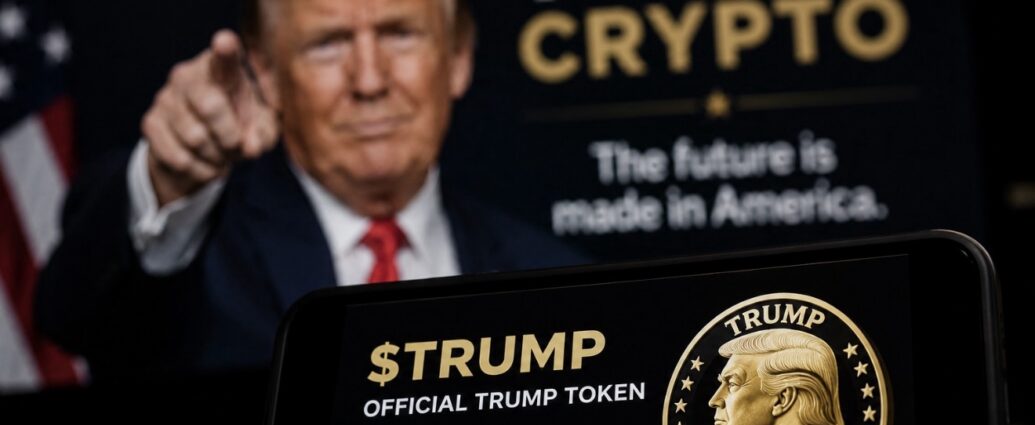
The Trump family has earned at least $2.3 billion from a series of cryptocurrency ventures since President Donald Trump returned to the White House, while investors who bought into those projects collectively lost roughly the same amount, according to a Reuters investigation published Tuesday, June 9, 2026.

The report, based on blockchain records, corporate filings, public disclosures, and interviews with investors and industry experts, paints a picture of a highly profitable business model for the project’s promoters — even as many investors suffered steep losses.

The Numbers Behind the Report

Reuters found that four Trump-linked crypto ventures generated at least $2.3 billion for entities connected to the Trump family.

At the same time, more than one million investors collectively lost approximately $2.3 billion as the value of the assets declined.

According to the investigation, the Trump family’s role largely involved licensing its name and promoting the projects through public appearances, interviews, and social media rather than investing substantial amounts of its own capital.

Industry experts interviewed by Reuters said the ventures required relatively modest startup costs compared with the revenue they ultimately generated.

That meant the overwhelming majority of profits came from licensing fees, token sales, and revenue-sharing arrangements rather than from direct investment risk.

As Donald Trump himself told Reuters in a 2016 interview regarding licensing deals: “The licensing deals are the best of all deals because there’s no risk.”

The Four Crypto Ventures

The Reuters investigation focused on four Trump-affiliated crypto businesses:

  • World Liberty Financial
  • $TRUMP meme coin
  • AI Financial Corp. (formerly ALT5 Sigma)
  • American Bitcoin

The largest source of revenue was reportedly World Liberty Financial, a cryptocurrency venture co-founded by Eric Trump and Donald Trump Jr.

According to Reuters, more than $1.4 billion flowed to Trump-controlled entities through governance-token sales and revenue-sharing arrangements.

The report states that investors who purchased those tokens later suffered losses estimated at approximately $674 million as the token’s value fell roughly 87% from its September 2025 peak.

The Meme Coin Boom and Bust

The investigation also highlighted the performance of the $TRUMP meme coin, one of the most recognizable politically branded cryptocurrencies.

Reuters estimates the project generated approximately $616 million for Trump-affiliated entities.

Investors, meanwhile, lost more than $700 million as the token’s value declined sharply.

According to the report, the coin has fallen approximately 97% from its all-time high, underscoring the extreme volatility that has become common among celebrity- and politically branded digital assets.

Other Trump-linked crypto-related stocks experienced similar declines.

Shares of ALT5 Sigma, now known as AI Financial Corp., reportedly fell from more than $9 per share to roughly 75 cents by April 2026.

Why Wall Street Is Paying Attention

Beyond the political implications, the findings highlight a growing trend in the digital-asset market.

Celebrity-backed and politically branded cryptocurrencies have become increasingly popular among retail investors, often generating large amounts of money for founders and promoters before prices experience dramatic declines.

The Reuters analysis raises broader questions about whether investors fully understand the risks associated with these products and whether existing disclosure standards adequately protect consumers.

The investigation also arrives as regulators continue debating how digital assets should be governed and marketed.

Ethics Questions Emerge

Reuters reported that eight government ethics experts described the arrangements as presenting potential conflicts of interest because they involve businesses linked to a sitting president.

Critics argue that political influence and financial interests can become intertwined when public officials or their families profit from ventures tied to public visibility.

Supporters counter that the projects are private-sector businesses operating under existing laws and disclosure requirements.

The White House Response

The White House strongly disputed suggestions of wrongdoing.

White House spokesperson Anna Kelly told Reuters that President Trump’s actions and policies are made in the best interests of the American people and that neither the president nor his family has engaged in conflicts of interest.

Eric Trump and Donald Trump Jr. did not respond to Reuters’ requests for comment cited in the report.

The Trump family has previously defended its cryptocurrency ventures as lawful business activities that have been properly disclosed.

The Bottom Line

Regardless of political views, the Reuters investigation highlights a basic investment lesson.

The creators, promoters, and licensors of many crypto projects often earn money from fees, token sales, and branding agreements before investors ever see a return.

Investors, meanwhile, assume most of the market risk.

In the case of the Trump-linked ventures reviewed by Reuters, the promoters reportedly earned billions while investors absorbed comparable losses.

For retail investors, it serves as a reminder that a famous name may attract attention—but it does not guarantee long-term value.

JBizNews Desk — Markets & Cryptocurrency

© JBizNews.com All Rights Reserved. Reproduction or distribution without written permission is prohibited.

Bitcoin’s (CRYPTO: BTC) brief decline below $60,000 may feel painful for investors, but Anthony Pompliano says the current downturn is shaping up to be one of the healthiest bear markets in the asset’s history.

‘One Of The Best Bear Markets’

Speaking on CNBC Squawk Box on June 10, Pompliano said Bitcoin’s recent weakness continues to align with the four-year market cycle that has historically defined the cryptocurrency’s boom-and-bust periods.

BTC prices have seen a 23% drop over the past 30-day trading and more than 50% plunge from its October 2025 peak. This leads some investors to question whether the cycle framework remains intact.

Pompliano argues the opposite. “I think more and more people are convinced …

Full story available on Benzinga.com

This post was originally published here

Cardano (CRYPTO: ADA) founder Charles Hoskinson returned Tuesday with an hour-long video, arguing Cardano is the only blockchain that can solve the global trust crisis and will eventually surpass Bitcoin (CRYPTO: BTC).

Hoskinson Says Cardano Solved What Bitcoin And Ethereum Could Not

Hoskinson’s core argument centers on what he calls verifiable reflexivity, the ability for any transaction to carry its own proof of correctness without relying on trusted third parties. 

He argued Bitcoin handles only payments and cannot embed smart contracts or zero knowledge proofs at scale, while Ethereum (CRYPTO: ETH) lacks the accounting model …

Full story available on Benzinga.com

This post was originally published here

Ripple launched an AI agent payment toolkit for the XRP Ledger on Wednesday as XRP (CRYPTO: XRP) ETFs pulled $7.44 million in net inflows on June 9.

Why Ripple Is Building Payment Rails For AI Agents On XRPL

The toolkit gives developers infrastructure to build agentic payment applications that settle transactions without manual approval loops, supporting x402-powered payments using both XRP and Ripple USD (CRYPTO: RLUSD), an open internet-native standard built around HTTP.

“AI agents are no longer a future state,” Ripple said. “They’re already paying for compute, settling invoices, navigating policy constraints, and completing transactions without a human in the loop.” 

Ripple argued most existing payment rails were designed for humans to initiate and approve transactions, leaving autonomous systems without the speed and predictability they need.

The race to build agentic payment infrastructure is already underway. Robinhood …

Full story available on Benzinga.com

This post was originally published here

The White House certainly set a July 4, 2026 target for the Digital Asset Market Clarity Act. I think this deadline remains purely aspirational. The political calendar simply does not support such an aggressive timeline. A late-summer or early-autumn passage makes far more sense.

The most glaring obstacle blocking a July 4 victory lap involves a severely shrinking Senate calendar. Lawmakers face a massive bottleneck regarding floor time before they leave for their August recess. The Senate already burned through crucial days reauthorizing Section 702 of the Foreign Intelligence Surveillance Act after a failed procedural vote on June 5. Members must now dedicate significant floor hours to debating military authorization concerning Iran and resolving Department of Homeland Security funding standoffs. Furthermore, a heavy backlog of official presidential nominations demands immediate attention. Legislative leaders simply cannot squeeze a complex market structure bill into this packed schedule.

Beyond the calendar crunch, the legislation faces a mandatory structural unification process that takes considerable time. The Senate Banking Committee passed its version of the bill on May 14 by a vote of 15 to 9. Meanwhile, the Senate Agriculture Committee approved its companion version back in January. Now, staff from both committees must merge these separate drafts into a single, cohesive document. This reconciliation process inherently demands weeks of intense back-and-forth negotiation. Merging jurisdictional boundaries between banking and agriculture committees always triggers fierce debates over oversight authority. Staffers need time to iron out these jurisdictional disputes before leadership can even schedule a full floor vote.

Even after the committees finalize a unified text, the bill must survive the notorious 60-vote filibuster threshold. This mathematical reality forces lawmakers to secure support from at least 7 Democrats. While the legislation cleared the Banking Committee with a bipartisan showing, that fragile coalition could easily fracture on the Senate floor. Key crossover Democrats have already signaled their conditional support. Senator …

Full story available on Benzinga.com

This post was originally published here

Bitcoin (CRYPTO: BTC) ETF net assets fell to $77.58 billion on Tuesday, the lowest level since the last presidential election, notwithstanding the most crypto-friendly regulatory environment in US history.

Every Post-Election Gain Is Gone Despite The Best Regulatory Climate Ever

Total net assets across all 11 US spot Bitcoin ETFs peaked at $169.54 billion in October 2025 and have since lost more than half that value. 

Cumulative net inflows since inception peaked at $62.77 billion in October 2025 and have since declined by nearly $9 billion to $53.77 billion, the lowest level since August last year.

The regulatory backdrop makes the exodus harder to explain on policy grounds alone. The SEC dropped multiple high-profile enforcement actions, the US established a Strategic Bitcoin Reserve, and the CLARITY Act is advancing through Congress. 

None of …

Full story available on Benzinga.com

This post was originally published here

Bitcoin’s (CRYPTO: BTC) plunge around $61,000 has pushed on-chain valuation metrics into undervalued territory, though the asset remains more expensive than at prior cycle bottoms.

“Is BTC Cheap Yet?“

Zach Pandl, head of research at Grayscale wrote on June 9 that a range of on-chain indicators suggests Bitcoin is trading below its long-term fair value after falling to a new cycle low.

A composite valuation model combining three separate on-chain measures indicates Bitcoin is now undervalued relative to historical averages.

However, the signal is not as extreme as levels seen during major market capitulation events, including the collapse of crypto exchange …

Full story available on Benzinga.com

This post was originally published here

Spot XRP (CRYPTO: XRP) ETFs have attracted more than $1.4 billion in cumulative inflows since launching in late 2025, yet XRP plunged 52% over the past year.

Investors are now wondering why institutional adoption hasn’t translated into higher prices.

Why ETFs Have Not Moved The Price

In an X post on June 1, crypto.news noted that XRP became one of the fastest-growing single-asset crypto ETF categories in history, trailing only Bitcoin (CRYPTO: BTC) and Ethereum (CRYPTO: ETH).

Despite the strong launch, ETF holdings still represent only about 1.3% of XRP’s circulating supply. For an asset with a market capitalization measured in billions of dollars, that level of ownership …

Full story available on Benzinga.com

This post was originally published here

SkyBridge Capital founder Anthony Scaramucci said on Tuesday that Bitcoin (CRYPTO: BTC) appears to be following its typical four-year cycle and may be nearing a bottom.

Scaramucci Thinks 4-Year Cycle Is Playing Out

During a conversation with Galaxy Digital CEO Mike Novogratz, Scaramucci said that he remains a “long-term believer” in Bitcoin and believes the asset is following its four-year cycle of accumulation, a bull run and a subsequent bear market.

Scaramucci described the situation as a “self-fulfilling prophecy,” where traders take the cue and start selling to match the expectations.

“So, if the four-year cycle theory holds, Bitcoin doesn’t recover until the early part of the fourth quarter of 2026, possibly into the first quarter of 2027,” he added.

Full story available on Benzinga.com

This post was originally published here

Bitcoin (CRYPTO: BTC) is reeling from a correction that analysts dub an “irrational” sell-off. As the flagship cryptocurrency briefly plunged below $60,000, new data reveals that five major spot Bitcoin ETFs are bearing the brunt of the damage, plummeting into the bottom ten percent in key momentum metrics.

The Edge Ranking Collapse

According to Benzinga Edge Stock Rankings, momentum scores for five prominent Bitcoin ETFs—Bitwise Bitcoin ETF (NYSE:BITB), Coinshares Bitcoin ETF (NASDAQ:BRRR), Grayscale Bitcoin Mini Trust ETF (NYSE:BTC), VanEck Bitcoin ETF (BATS:HODL), and iShares Bitcoin Trust ETF (NASDAQ:IBIT)—have suffered a severe contraction.

The momentum score, which measures a stock’s relative strength based on price movement patterns and volatility, collapsed from 10.43 to 6.32 for all five funds.

This steep decline squarely places these ETFs in the bottom 10% of the market. Furthermore, all five funds are exhibiting negative price trends across short, medium, and long-term horizons, signaling intense and sustained downward pressure.

Full story available on Benzinga.com

This post was originally published here

Dogecoin (CRYPTO: DOGE) might be struggling, but large investors are seizing the moment to load up on the memecoin at a discount.

Whales May Be On To Something

Widely followed cryptocurrency analyst Ali Martinez highlighted in an X post that whales accumulated over 200 million DOGE tokens over the last week. At the prevailing prices, this amounted to $16.80 million.

The buying occurred as the price tested a major multi-year support level around $0.081, a zone with significant historical concentration of DOGE tokens.

Notably, Grayscale Dogecoin Trust ETF (NYSE:GDOG), 21Shares Dogecoin ETF (NASDAQ:TDOG), …

Full story available on Benzinga.com

This post was originally published here

Binance (CRYPTO: BNB) co-founder Changpeng “CZ” Zhao urged the cryptocurrency community on Monday not to “panic” over Bitcoin’s (CRYPTO: BTC) ongoing downturn, voicing confidence that the leading cryptocurrency will bounce back.

CZ Remains Bullish

In an X post, CZ noted that the current wave of fear, uncertainty, and doubt is temporary, even as “Bitcoin is dead” headlines proliferate and search interest surges.

Search interest for the term shot to its all-time high of 100 in February and has climbed back up strongly during the recent downturn, according to data from Google Trends.

But CZ reassured cryptocurrency supporters, saying, “Bitcoin won’t be ‘dead’ for too long. Don’t panic, in large friendly letters.”

Full story available on Benzinga.com

This post was originally published here

Bitcoin (CRYPTO: BTC) trades below $61,000 on Wednesday morning, with the final bottom expected to arrive sometime between July and October, according to a prominent analyst.

“BTC Roadmap Continues To Play Out Spot-On”

In a June 9 market update, crypto analyst Kevin pointed to several calls that he believes played out as expected:

  • A January countertrend rally.
  • A short opportunity near $97,000 after key moving averages were lost.
  • A spring relief rally and the current phase of summer weakness.

“The Bitcoin roadmap continues to play out spot-on,” he said.

He believes the market is now entering the final stage of the cycle, where the true bear market low is expected to form.

BTC prices are struggling to hold …

Full story available on Benzinga.com

This post was originally published here

Sen. Elizabeth Warren (D-Mass.) called for legislation on Tuesday to address what she described as a conflict of interest arising from President Donald Trump and his family’s cryptocurrency ventures.

Warren Wants Ethics Guardrails

Warren cited a Reuters report on X, estimating that the first family has earned approximately $2.3 billion from cryptocurrency-related activities since Trump’s return to the White House.

“Any crypto legislation needs to stop the massive conflict of interests posed by Donald Trump and his family’s crypto ventures,” Warren said.

Adam Kinzinger, a former Republican congressman and a Trump critic, quoted the report with the caption, “Corrupt animals.”

Full story available on Benzinga.com

This post was originally published here

Strategy Inc. (NASDAQ:MSTR) may not be having the best of times, but cryptocurrency punters still view the prospect of the Bitcoin (CRYPTO: BTC) hoarding giant going bankrupt as unlikely.

Is Strategy Safe?

Traders on Polygon (CRYPTO: POL)-based Polymarket assigned a 10% chance to Strategy declaring bankruptcy in 2026, down from 12% at the beginning of the year.

The bet has seen limited participation as of this writing, attracting slightly more than $162,000 in wagers.

data-variant=”card”
data-news-mode=”manual”

>


Read Also:

Bitcoin Set To Hit Market Bottom, Says Top Crypto Analyst—So, What Are The ‘Premier Accumulation Windows’ Of Interest?

This post was originally published here

Leading cryptocurrencies fell alongside major stock indexes on Tuesday amid a big escalation in the Middle East conflict.

Cryptocurrency 24-Hour Gains +/- Price (Recorded at 9:25 p.m. EDT)
Bitcoin (CRYPTO: BTC) -1.68% $61,757.98
Ethereum (CRYPTO: ETH)
               
-1.83% $1,641.98
XRP (CRYPTO: XRP)                          -1.71% $1.13
Solana (CRYPTO: SOL)                          -0.96% $65.08
Dogecoin (CRYPTO: DOGE)              -0.15% $0.08487

Crypto Market On Edge

Bitcoin revisited the $60,000 floor but recovered overnight, as trading activity climbed 12% in the past 24 hours. Ethereum pulled back to the $1,600 region, while XRP and Dogecoin remained bearish.

Cryptocurrency-related stocks plunged, with Strategy Inc. (NASDAQ:MSTR) and Bitmine Immersion Technologies Inc. (NYSE:BMNR) closing down 8% and 3.86%, respectively. 

Over $420 million was liquidated from the market in the last 24 hours, with $324 million in long positions alone wiped out, according to Coinglass data.

Bitcoin’s open interest rose 1.23% in the last 24 hours. A rise in open interest alongside a sliding price typically indicates that new traders are aggressively selling or shorting the asset, expecting the price to fall further.

Top Gainers (24 Hours) 

Cryptocurrency (Market Cap>$100 M) Gains +/- Price (Recorded at 9:25 p.m. EDT)
Bitway (BTW)       +93.78%     $0.1144
Humanity (H)                    +96.30%     $0.1923
Stargate Finance (STG)               +40.89%     $0.3704

The global cryptocurrency market capitalization stood …

Full story available on Benzinga.com

This post was originally published here

Lekker Capital’s Quinn Thompson advocates avoiding crypto for the summer and return in late Q3, citing record IPO supply, waning liquidity, and unresolved problems at Strategy (NASDAQ:MSTR) and Bitmine (NASDAQ:BMNR).

Three Headwinds Making Summer Crypto Dangerous Right Now

Thompson’s bearish case rests on three overlapping pressures hitting simultaneously.

SpaceX, Anthropic, and OpenAI are collectively bringing more than $3 trillion in new IPO supply to market, competing directly with existing tech names for capital. 

The Mag7 stocks that historically lead bull markets are lagging while the rest of the Nasdaq carries the index, a pattern Thompson describes as classic late-cycle behavior. 

Meanwhile, STRC is approaching one of its worst drawdowns since launch, and Thompson expects Strategy to raise its dividend by 50 basis points rather than the …

Full story available on Benzinga.com

This post was originally published here

Dogecoin (CRYPTO: DOGE) is down 13% over the past week and 88% below its all-time high, as the Elon Musk correlation that drove the coin for years has completely broken down.

The Musk Trade Stopped Working And The Catalyst That Replaced It Fizzled

For years, a single Musk post could send DOGE surging double digits. That relationship no longer holds. When Musk reposted an AI-generated video referencing Dogecoin on X in March, the coin barely moved.

The federal Department of Government Efficiency, the political catalyst that sent DOGE to a $61 billion market cap in November 2024, was terminated eight months ahead of schedule.

Moreover, Musk publicly distanced the agency from the coin, calling the similar names a coincidence and stating the government had no plans to use Dogecoin.

Over $47 billion in market cap has been erased since November 2024. The coin that once traded higher than …

Full story available on Benzinga.com

This post was originally published here

Bitcoin (CRYPTO: BTC) has long been the undisputed leader of the cryptocurrency market – but its grip is shifting. Bitcoin dominance, a key metric that tracks BTC’s share of the total crypto market capitalizations, has fallen from a peak of 95% in 2013 to 58.1% today – a structural decline that reflects the extraordinary growth of Ethereum (CRYPTO: ETH) and the broader altcoin ecosystem. This article breaks down what BTC dominance vs altcoin trends are telling us, what the numbers mean for the broader crypto market, and why Ethereum’s declining dominance deserves a closer look.

What Is Bitcoin Dominance?

Bitcoin dominance measures the percentage of the total cryptocurrency market capitalization that Bitcoin accounts for. When Bitcoin dominance is high, it means the majority of crypto capital is concentrated in BTC. When it falls, capital is rotating into Ethereum and altcoins – a shift that historically precedes what traders call “altcoin season.”

In the early days of cryptocurrency, Bitcoin dominated the crypto market from 2013 to 2016, with daily Bitcoin dominance averaging between 82.6% and 95% per year. During this nascent period, Bitcoin’s majority dominance of crypto reached a high of 99.1%. The total crypto market was essentially Bitcoin – altcoin dominance accounted for just a fraction of the remaining market.

As new assets launched and the ecosystem diversified, Bitcoin’s share began a long, structural decline. Starting near 100% in 2014, Bitcoin’s dominance dropped below 40% by 2017 as Ethereum’s launch and the ICO boom pulled capital toward altcoins.

By the end of 2017, Bitcoin dominance had fallen to just 42% – a 53.65% decline from 2016 levels – as the rise of …

Full story available on Benzinga.com

This post was originally published here

Strategy Inc. (NASDAQ:MSTR) is facing renewed criticism after economist Peter Schiff argued the company’s latest Bitcoin (CRYPTO: BTC) purchase destroyed shareholder value.

“Owning MSTR Is The Worst Way“

In an X post on June 9, Schiff sparked a debate over leverage, dilution and the sustainability of Michael Saylor’s Bitcoin accumulation strategy. He claimed Strategy is already sitting on a loss of more than $6 million from its recent purchase of 1,550 Bitcoin.

Over the past five days, MSTR is down over 8%.

According to Schiff, the acquisition not only lost value …

Full story available on Benzinga.com

This post was originally published here

Crypto traders still watch stablecoin supply like a buy signal. That reading is getting less reliable.

The shortcut was simple. If more USDT or USDC was sitting in the system, there was more cash waiting to move into BTC, ETH or other digital assets.

That shortcut is weaker now.

For trading liquidity, stablecoins still matter. But they are also used for payments, remittances, settlement and dollar access in markets where moving money through banks can be slow, costly or restricted.

That makes the signal harder to read.

A larger stablecoin market does not automatically mean more buying pressure for Bitcoin. The better question is where the coins are moving, who’s using them and whether they are getting closer to trading venues.

The market is no longer small enough to treat stablecoins as one clean crypto signal.

The Federal Reserve said stablecoin market capitalization grew by more than 50% since early 2025, reaching $317 billion as of April 6, 2026.

Citi has also raised its 2030 stablecoin issuance forecast to $1.9 trillion in its base case and $4 trillion in a bull case.

Stablecoin Supply Alone No Longer Tells the Story

Dinis Guarda, Cryptocurrency Expert, Champions Speakers Agency, says:

“Stablecoins are not moving closer to mainstream — they are already there.”

Investors need to absorb this part. Stablecoins are no longer just money parked on exchanges. They are becoming financial infrastructure.

For years, a rise in stablecoin supply often meant capital was sitting near the market and ready to rotate into crypto assets. Does that signal still has value? Yes, when coins are moving onto exchanges and spot volume follows.

However, the read is different if stablecoin growth is happening away from trading venues. It may reflect remittances, payment flows, business settlement, treasury use or demand for digital dollars. Those are useful adoption signals. They are not the same as near-term buying pressure.

The distinction matters for …

Full story available on Benzinga.com

This post was originally published here

Bitcoin fell below $62,000 amid a macro-driven risk-off move that pushed market sentiment deeper into extreme fear on Tuesday.

Cryptocurrency Ticker Price
Bitcoin (CRYPTO: BTC) $61,677.13
Ethereum (CRYPTO: ETH) $1,642.68
Solana (CRYPTO: SOL) $64.79
XRP (CRYPTO: XRP) $1.13
Dogecoin (CRYPTO: DOGE) $0.08476
Shiba Inu (CRYPTO: SHIB) $0.054652

Notable Statistics:

  • Coinglass data shows 132,341 traders were liquidated in the past 24 hours for $449.76 million.       
  • SoSoValue data shows net outflows of $91.4 million from spot Bitcoin ETFs on Monday. Spot Ethereum ETFs saw net inflows of $82.4 million.
  • In the past 24 hours, top losers include Humanity, siren and Venice Token.

Notable Developments:

Full story available on Benzinga.com

This post was originally published here

Bitcoin (CRYPTO: BTC) may spend the remainder of 2026 trading below its long-term fair value trend, according to crypto analyst Benjamin Cowen, who nevertheless remains optimistic about the industry’s long-term growth trajectory.

BTC Below “Fair Value” Trendline

In a podcast on June 8, Cowen revisited one of his longest-running valuation models and suggested an update could be coming later this year.

The analyst said his existing framework has successfully captured much of Bitcoin’s market behavior over the past several years, including the current cycle’s resemblance to the 2019-2020 period.

“Sort of the assessment that this whole cycle was kind of …

Full story available on Benzinga.com

This post was originally published here

The race for institutional capital in crypto is no longer just about Bitcoin (CRYPTO: BTC). As crypto ETFs (Exchange Trade Funds) continue to attract mainstream investment, two assets are emerging as the key battleground for institutional flows: Ethereum (CRYPTO: ETH) and Solana (CRYPTO: SOL). The data tells a nuanced story – and it may surprise you. This article breaks down what the latest crypto institutional flows ETF data reveals about how institutions are positioning themselves between the Solana ETF and the Ethereum ETF.

Solana vs Ethereum: Understanding the Two Contenders

Solana

Launched in March 2020, Solana was built to solve one of crypto’s most persistent problems – speed and scalability. Designed to process thousands of transactions per second at minimal cost, it has grown into one of the largest blockchain ecosystems in the world. At the time of writing, Solana has a market capitalization of approximately $38 billion.

Ethereum

Ethereum launched in July 2015, founded by Vitalik Buterin and co-founders. It was the first blockchain to introduce smart contracts, opening the door to decentralized finance, NFTs, and the broader Web3 ecosystem. It remains the second-largest cryptocurrency by market capitalization, currently valued at approximately $195 billion, and continues to serve as the dominant base layer for decentralized applications globally.

The Rise of Crypto ETFs

Crypto ETFs were created to …

Full story available on Benzinga.com

This post was originally published here

The Bitcoin price has been one of the most closely watched stories in financial markets over the past eight months. After reaching a historic all-time high, Bitcoin (CRYPTO: BTC) has entered a deep correction that has wiped out more than half its value – and now sits at a technical level that traders and long-term investors watch more closely than almost any other. This article breaks down Bitcoin’s current price action, what the charts are saying, and what could follow next.

Bitcoin Price Action: A Deep Retracement

Bitcoin’s correction began in the third quarter of 2025, shortly after the cryptocurrency reached its all-time high of $126,000 on October 6, 2025. Since that peak, the Bitcoin price has fallen sharply – losing more than 50% of its value over approximately eight months. At its most recent low, Bitcoin touched $59,000 on June 4, 2026, before staging a partial recovery.

For context, this is not an unusual move in Bitcoin’s history. Previous cycles have seen corrections of 50-80% from peak to trough. What makes the current Bitcoin crash notable is where the price has landed – directly at a demand zone that was critical in launching the previous rally to all-time highs.

Technical Analysis: Where the Bitcoin Price Could Go from …

Full story available on Benzinga.com

This post was originally published here

Ethereum (CRYPTO: ETH) built its reputation as the backbone of decentralized finance – and for years, its fee revenue reflected that status. But Ethereum fee revenue has collapsed dramatically over the past two years, raising serious questions about the network’s long-term value proposition and what the Ethereum future projection looks like for investors. This article breaks down what Ethereum fee revenue is, why it collapsed, and what it means for ETH going forward.

What Is Ethereum Fee Revenue?

Every transaction on the Ethereum network requires a fee – known as gas – paid in ETH. These fees compensate validators who process and secure transactions, and a portion is permanently burned through EIP-1559, reducing the total supply of ETH over time. When network activity is high, fees rise, more ETH is burned, and the deflationary pressure supports ETH’s value. When activity falls, the reverse happens.

At its peak in 2021, Ethereum generated over $1 billion in monthly fee revenue as DeFi, NFTs, and token launches drove unprecedented on-chain activity. Daily gas fee revenue regularly exceeded $30 million. Validators earned substantial rewards, and ETH burns were significant enough to make the asset deflationary during periods of high demand.

The Collapse

Ethereum fee revenue has fallen sharply from those peaks – and two structural factors explain most of the decline.

Layer 2 Network Activity

The Dencun upgrade in early 2024 dramatically reduced the cost of Layer 2 transactions by introducing a new …

Full story available on Benzinga.com

This post was originally published here

XRP (CRYPTO: XRP) could be nearing one of its most important technical levels in nearly a decade, according to a prominent market commentator.

“Largest Buying Zone“

In an X post on June 9, crypto analyst Ali Martinez said XRP is approaching what could be its largest buying opportunity in the last eight years.

According to Martinez, every major touch of a long-term ascending trendline since 2017 has marked a significant turning point for the asset, often leading to rallies back toward the $3 region.

XRP is now approaching that support zone again, with …

Full story available on Benzinga.com

This post was originally published here

A Reuters investigation found the Trump family generated at least $2.3 billion from four crypto ventures since returning to the White House, while more than a million investors lost the same amount on the other side of those trades.

Same Playbook Across Four Ventures: Trumps Risk Nothing, Investors Lose Big

Reuters examined World Liberty Financial (CRYPTO: WLFI), the TRUMP (CRYPTO: TRUMP) meme coin, American Bitcoin (NASDAQ:ABTC), and AI Financial Corp (NASDAQ:AIFC), formerly ALT5 Sigma. 

In each case, the Trumps licensed the family name rather than investing their own capital, promoted the ventures through social media and public appearances, and collected revenue as investors piled in. 

When prices collapsed, the family remained in profit while buyers absorbed the losses.

World Liberty Financial generated the most, funneling more than $1.4 billion in governance token sales to the Trump family through a revenue …

Full story available on Benzinga.com

This post was originally published here

Fundstrat co-founder Tom Lee on Monday pushed back against growing concerns over market weakness, arguing that cryptocurrencies remain in healthy long-term uptrends despite recent volatility.

Why Crypto Is Underperforming

Speaking on CNBC’s Power Lunch, Lee acknowledged that cryptocurrency investors have been disappointed this year as digital assets largely failed to participate in the enthusiasm surrounding AI-related stocks.

Over the past year, Bitcoin (CRYPTO: BTC), Ethereum (CRYPTO: ETH), XRP (CRYPTO: XRP) slumped more than 40%.

Despite the underperformance, Lee said “Crypto is a downstream story of AI.”  

He explained that increasingly powerful AI systems will require blockchain-based verification and …

Full story available on Benzinga.com

This post was originally published here

Ethereum (CRYPTO: ETH) recently printed its lowest daily relative strength index ever recorded at 17.4, a reading analyst Michaël van de Poppe called a “historic opportunity.”

ETH Down 68% In 10 Months With $1,500 As The Line In The Sand

Ethereum peaked at $4,953 in August 2025 and traded as low as $1,593 over the weekend, a 68% crash in 10 months. 

Analyst Ash Crypto pointed out that the only comparable setup in ETH’s history was June 2022, when ETH broke through every support level and crashed to $880 before bottoming.

That bottom produced a 5x return over the following 18 months for anyone who bought it.

“ETH has only done this once before in its entire history,” Ash Crypto wrote on X. “Back in June 2022, same …

Full story available on Benzinga.com

This post was originally published here

Bitcoin’s (CRYPTO: BTC) current downturn resembles previous mid-cycle bear markets, but failure to recover by the end of 2026 could signal something more serious.

“Classic Mid-Cycle” For Bitcoin’s Bear Market

Speaking in a CNBC Market Alert interview on June 8, Lucy Gazmararian, Founder and Managing Partner of Token Bay Capital, said Bitcoin’s weakness remains consistent with historical market cycles despite growing concerns surrounding Strategy Inc. (NASDAQ:MSTR) and broader crypto market sentiment.

“I think where we are is sort of classic mid-cycle,” she said, describing the current environment as a typical phase of a bear market cycle that arguably began in October 2025.

Over the past month, BTC prices witnessed a plunge of 23% while MSTR declined 35%.

While headlines surrounding Michael Saylor and Strategy’s recent Bitcoin …

Full story available on Benzinga.com

This post was originally published here

Tools for Humanity, Sam Altman’s iris-scanning startup behind Worldcoin (CRYPTO: WLD), announced layoffs on Monday, framing cuts as a strategic reset ahead of a Tuesday town hall that will reveal the full scope of the reductions.

“As we enter the next step of our company strategy and operating priorities, we have made the hard decision to make changes to some roles and teams across the company,” an internal email read. 

The company employs more than 500 people with an unclear number of roles affected.

Tools for Humanity carries a $2.5 billion valuation backed by Andreessen Horowitz, Bain Capital, and Khosla Ventures. 

Despite millions of sign-ups, the company has struggled to show …

Full story available on Benzinga.com

This post was originally published here

Arthur Hayes on Tuesday laid out the case why Bitcoin (CRYPTO: BTC) cannot rally until the AI bubble pops, arguing that the latter absorbed liquidity that could have gone to cryptocurrencies. 

AI Borrowed Every Dollar That Was Created Since 2022

Hayes laid out the core math in his essay, saying that US M2 rose by $1.5 trillion between November 2022 and today.

Over the same period, AI companies issued roughly $1.5 trillion in debt to fund data center construction. 

The numbers match almost exactly, meaning AI absorbed every dollar of new liquidity before it could find its way into Bitcoin.

“Bitcoin never had a chance,” Hayes wrote. “The only reason Bitcoin rallied strongly off the November 2022 low is that the AI debt binge really kicked into gear starting in 2025.” 

Bitcoin peaked in October 2025 precisely …

Full story available on Benzinga.com

This post was originally published here

Martin Shkreli, also known as “Pharma Bro,” has escalated his stand against quantum computing firm IONQ Inc. (NYSE:IONQ), accusing the company of peddling exaggerated capabilities to crypto investors.

Responding to a prominent Bitcoin (CRYPTO: BTC) investor’s anecdote about a quantum firm’s impossible mining pitch, Shkreli bluntly declared, “They were lying.”

The ‘Trivial’ Bitcoin Pitch

The controversy ignited over a social media post from Mike Alfred, a value equity investor who sits on the board of Bitcoin mining company IREN Ltd. (NASDAQ:IREN).

Alfred shared that a major quantum company advised him to stop investing in crypto mining, claiming their technology made it “relatively trivial” to mine all remaining unmined Bitcoin in a mere 48 hours.

Shkreli explicitly named IONQ as the culprit behind the outlandish claim. “IONQ said this to a lot of people and they were lying,” Shkreli posted on X.

When a user expressed disappointment that he didn’t reiterate his usual call to short the stock, Shkreli casually responded, “I mean, yeah, of course.”

Full story available on Benzinga.com

This post was originally published here

Influential cryptocurrency analyst and trader Ali Martinez said on Monday that Bitcoin (CRYPTO: BTC) is nearing a bottom, marking the start of a major accumulation cycle.

Selling Pressure To Increase?

In an X thread, Martinez weighed in on the next possible moves of the apex cryptocurrency.

The analyst noted that Bitcoin’s latest crash to $59,000 has effectively flushed out overleveraged premiums across the board, with long-term holders selling over $3 billion in spot BTC.

Martinez said the distributed supply has temporarily pushed up exchange reserves, which is likely to increase short-term selling pressure.

BTC Levels To Watch Out For

Martinez further highlighted that after Bitcoin’s drop to $59,000, more than 10.46 million BTC …

Full story available on Benzinga.com

This post was originally published here

John D’Agostino, Head of Institutional Strategy at Coinbase Global Inc. (NASDAQ:COIN), said on Monday that institutional investors are happy at being able to purchase Bitcoin (CRYPTO: BTC) at a discount.

Whales Ready To Buy BTC Cheap?

During an interview with CNBC, D’Agostino said that investors, who have spent considerable time studying Bitcoin, are not dismayed by the cryptocurrency’s price dip.

“I can tell you that the family office is new in the UAE, and the government sovereign funds that are putting the effort into buying are not unhappy at being able to buy it at a discount,” said D’Agostino, who recently concluded a visit to the Middle East.

D’Agostino added that the infrastructure supporting Bitcoin and other cryptocurrencies is “shockingly stronger” currently than during previous bullish price periods, a factor that institutional investors weigh heavily.

“I’m seeing them [institutions] thinking about what the cheapest way is to buy an asset that they loved at $125,000, they liked at $100,000, and loved even more at $65,000,” the …

Full story available on Benzinga.com

This post was originally published here

Iranian Foreign Ministry spokesperson Esmaeil Baqaei used a famous quote from William Shakespeare’s play “Macbeth” on Monday to ridicule Treasury Secretary Scott Bessent’s claim about seizing $1 billion worth of Iran’s cryptocurrencies.

‘Dwarfish Thief’ In ‘Giant’s Robe’

Baqaei posted a video of Bessent from the Reagan National Economic Forum last month, where the Treasury Secretary said the U.S. had seized “about a billion dollars” in Iran’s digital assets.

“Just outright grabbed the wallets. Some of them may be typing in right now and might not realize that their wallet has been grabbed,” Bessent had said.

Baqaei then threw a shade with a quote from Shakespeare’s famous tragedy play that goes, “Now does he feel his title Hang loose about him, like a giant’s robe Upon a dwarfish thief.”

Full story available on Benzinga.com

This post was originally published here

Dogecoin’s (CRYPTO: DOGE) official X account invited replies on Monday about how the community is building and expanding utility for the ecosystem. The responses were pretty interesting.

What’s DOGE Community Upto?

The X handle noted that Shibes “have been quiet lately” and encouraged them to share exciting updates about what they’re building and how they’re integrating DOGE into their businesses.

A user named DMB Council announced their beta build of a marketplace for buying, selling, and trading Doginals, which are basically NFTs built on the Dogecoin blockchain.

Sus Market said they are working on a similar project.

Full story available on Benzinga.com

This post was originally published here

Cryptocurrency punters raised odds that OpenAI could debut with a market valuation above $1.5 trillion, following the AI giant’s confidential IPO filing.

OpenAI To Be Next Trillion-Dollar Giant?

Polygon (CRYPTO: POL)-based Polymarket assigned a 48% possibility that the Sam Altman-founded firm will close above $1.5 trillion on day one of trading. That’s up from 42% yesterday and 31% a week ago.

For context, only about ten companies in the world are valued at more than $1.5 trillion, including the “Mag 7” giants.

The probability of OpenAI reaching a valuation between $1.25 trillion and $1.5 trillion now stands at 14%, up 9 percentage points from the previous day. Over $1.7 million has been wagered on the bet.

OpenAI is currently valued at $852 billion, having raised …

Full story available on Benzinga.com

This post was originally published here

Leading cryptocurrencies dipped, while major stock indexes closed higher on Monday as investors pinned hopes on a lasting ceasefire in the Middle East.

Cryptocurrency 24-Hour Gains +/- Price (Recorded at 9:10 p.m. EDT)
Bitcoin (CRYPTO: BTC) -1.04% $62,642.55
Ethereum (CRYPTO: ETH)
               
-1.74% $1,662.25
XRP (CRYPTO: XRP)                          -0.49% $1.15
Solana (CRYPTO: SOL)                          -1.37% $65.52
Dogecoin (CRYPTO: DOGE)              -1.37% $0.08489

Crypto Market Stagnates

Bitcoin wobbled in the area between $62,000 and $64,000, while trading volume dipped.  Ethereum briefly surged above $1,700 in the evening before pulling back to $1,660.

Cryptocurrency-related stocks rallied, with Strategy Inc. (NASDAQ:MSTR) and Bitmine Immersion Technologies Inc. (NYSE:BMNR) closing up 5.61% and 5.97%, respectively. Strategy reported its first Bitcoin purchase since selling 32 BTC at $77,135 last week. 

Over $280 million was liquidated from the market in the last 24 hours, predominantly in long positions, according to Coinglass data, predominantly in short liquidations. 

Bitcoin’s open interest fell 0.56% in the last 24 hours. Interestingly, retail and whale derivatives traders on Binance were betting on BTC’s price increase, as shown by the significantly higher proportion of long positions compared to shorts.

“Extreme Fear” sentiment prevailed in the market, according to the Crypto Fear & Greed Index.

Top Gainers (24 Hours) 

Cryptocurrency (Market Cap>$100 …

Full story available on Benzinga.com

This post was originally published here

President Donald Trump was once a cryptocurrency critic but had a change of heart ahead of Election Day 2024. Bitcoin (CRYPTO: BTC) and other digital assets enjoyed a massive surge in the weeks that followed.

A year and a half later, cryptocurrency is trading lower than it was when Trump won the 2024 election.

The Crypto President

In 2019, Trump spoke out about Bitcoin and cryptocurrency.

“I am not a fan of Bitcoin and other cryptocurrencies, which are not money, and whose value is highly volatile and based on thin air,” Trump tweeted on July 11, 2019.

But a reversal of love for cryptocurrency saw Trump gain support from single-issue voters, who saw supporting a pro-crypto president as a key political move.

“If you like crypto in any form … if you’re in favor of crypto, you’d better vote for Trump,” Trump said to a crowd on May 8, 2024.

Trump praised Bitcoin throughout 2024 and even served as a keynote speaker at the Bitcoin 2024 Conference in July of that year. His campaign was also the first to accept cryptocurrency for donations.

Trump’s victory ultimately helped Bitcoin soar in value; it hit a high of …

Full story available on Benzinga.com

This post was originally published here

Zooko Wilcox-O’Hearn recently disclosed on X that a vulnerability had existed on Zcash since 2022. This flaw could have allowed counterfeit ZCash (CRYPTO: ZEC) through its Orchard shielded pool. He assured the public that the bug has been eliminated and it’s very unlikely that the loophole was exploited. These assurances fell on deaf ears as the market responded with panic selling.

​Following this news, $ZEC slumped by over 30%. As panic spread, the sell-off continued. The day’s loss hit around 50%. $ZEC dropped from this price to as low as $250. Key supporters of the privacy coin did not help matters as they cut their losses since ZCash cannot quantify the extent of the damage. How can the safety of this chain be proven when a bug went unnoticed for 4 years?

How The Bug Was Discovered

​ZCash engaged security researcher Taylor Hornby to run checks, and he discovered the issue on May 29. After his discovery, he replicated the vulnerability in a local environment and created ZEC tokens. He hit the jackpot. This test confirmed a vulnerable path to increase supply in the secret pool. Now, observers are rife with questions. Did forged ZEC tokens ever make it into the privacy pool? Can ZCash prove that counterfeit $ZEC has never appeared in the pool? These possibilities are difficult to disprove, hence the domino effect.

​The affected upgrade Orchard , a privacy-shielded pool, relies on zero-knowledge proofs. It was built to preserve assets in transactions. ZK proofs compel users to meet the conditions for minting without disclosing underlying data. The network verifies this proof. If it is invalid, the mint is rejected. This protocol ensures that assets in the pool come from Verifiable sources and that $ZEC is not minted out of thin air. Orchard does all the transparency checks in the background while concealing transaction details.

​What Taylor Hornby found was a weak constraint. This loophole allows data that will otherwise be rejected to return a success after validation. If the system is deceived into believing a transaction is …

Full story available on Benzinga.com

This post was originally published here

Friday left marks. Not the kind that fade by Monday morning.

Bitcoin (CRYPTO: BTC) opened the new week trading around $63,310, up roughly 4% from where it had been gasping for air just two days earlier. The recovery sounds cleaner than it felt. What actually happened between Thursday and Sunday was one of the most disorderly stretches of crypto trading since the FTX implosion in late 2022, and a 4% Monday bounce does not quietly undo the kind of structural damage that $390 billion in erased market cap and nearly $7 billion in liquidated leverage leaves behind.

The low that Friday printed was $59,100. For a market that had spent weeks defending $60,000 as though the entire bull case depended on it, watching that level break and keep going was genuinely unsettling. Ethereum did not escape either, touching ground near $1,505 that it had not visited since early 2023. Most of the major altcoins moved in the same direction with roughly the same speed. When the floor gives way in crypto, it tends to give way everywhere at once.

The Week That Broke the $60,000 Floor

Understanding Monday’s bounce requires understanding what caused Thursday through Saturday in the first place, because the selling did not arrive from nowhere.

Two data points hit the market in sequence and neither of them was forgiving. First came May inflation numbers that ran warmer than analysts had penciled in, quietly killing whatever remaining hope existed that the Federal Reserve might signal rate relief before year-end. Then the May jobs report showed up and made the inflation problem look almost secondary. The economy generated 172,000 new jobs in May against a consensus forecast sitting around 85,000. The unemployment rate stayed at 4.3%. A labor market printing numbers like that does not give …

Full story available on Benzinga.com

This post was originally published here

Real Vision founder Raoul Pal argues that Ethereum (CRYPTO: ETH), Solana (CRYPTO: SOL), and Sui (CRYPTO: SUI) are the three blockchains that will dominate the next decade, with everything else becoming either a specialist or irrelevant.

Why Layer Ones Beat Everything Else Over The Long Term

Pal’s core argument is that layer one blockchains are the infrastructure layer of the global digital economy, and infrastructure concentrates into three to five dominant players just like operating systems, cloud computing, and every major network before them. 

Unlike Bitcoin (CRYPTO: BTC), which has one job as a global savings asset, smart contract layer ones can scale infinitely as more economic activity moves on-chain.

“If you were to pull the plug on …

Full story available on Benzinga.com

This post was originally published here

Bitcoin’s plunge below the key $60,000 level last week created winners in leveraged inverse ETFs betting against some of the crypto market’s most closely watched stocks.

The T-Rex 2X Inverse CRCL Daily Target ETF (BATS:CRCD) surged roughly 82% last week, while the T-Rex 2X Inverse MSTR Daily Target ETF (BATS:MSTZ) gained more than 63%, as investors rushed to hedge against mounting pressure on crypto-related equities.

The rally in bearish ETFs coincided with one of Bitcoin’s sharpest declines this year. The world’s largest cryptocurrency fell about 18% last week and briefly dropped to $59,101 on Friday, marking its first move below $60,000 since late 2024.

Strategy’s Weakness Boosts MSTZ

The selloff reverberated across crypto-linked stocks, particularly Strategy Inc (NASDAQ:MSTR), the company widely viewed as a leveraged Bitcoin proxy.

Strategy came under pressure after disclosing a small Bitcoin sale, its first since 2022. The announcement raised concerns about the durability of the company’s long-standing buy-and-hold strategy and added to fears surrounding corporate Bitcoin treasury models.

Those concerns …

Full story available on Benzinga.com

This post was originally published here