



Canada Doesn’t Want to Be the Next Venezuela





Opinion | Defunding the U.S. Military



London Fumes as Supercar Tourists Park Wherever They Want — and Fines Barely Matter
A £160 parking ticket means very little to someone who has spent tens of thousands of dollars flying a Lamborghini, Ferrari or Rolls-Royce into London for the summer.
That is the basic arithmetic behind an annual standoff playing out across some of London’s wealthiest neighborhoods.
Every summer, wealthy visitors from Saudi Arabia, Qatar, Kuwait and the United Arab Emirates arrive in Knightsbridge, Mayfair and Belgravia — and many bring their cars with them.
The vehicles can be transported by air at enormous cost, sometimes running into tens of thousands of dollars each way.
Against that expense, an ordinary parking ticket barely registers.
And that is exactly the problem London authorities are trying to solve.
Luxury cars are routinely found sitting on sidewalks, in restricted areas and outside high-end hotels and boutiques, while residents complain about blocked pedestrian routes, engine revving and late-night noise.
For many owners, simply issuing another ticket is not much of a deterrent.
The enforcement problem becomes even harder when the car is registered outside Europe.
Authorities can issue a penalty notice, but collecting the money later from the owner of a Saudi-, Qatari- or Emirati-registered vehicle can be difficult because Britain does not have the same access to foreign vehicle-registration information that it has within Europe.
The numbers show how large that gap can become.
Between 2018 and 2022, only about 1% of more than 13,000 parking tickets issued to UAE-registered vehicles were paid, according to data reported by The Wall Street Journal.
In 2025 alone, vehicles registered in Qatar received roughly 2,570 parking citations in Westminster, more than vehicles registered in any other foreign country.
So Westminster has started changing tactics.
If the Fine Does Not Hurt, Move the Car
One of the clearest examples came in Grosvenor Square.
After repeated complaints about luxury vehicles blocking the pavement outside the Chancery Rosewood hotel, Westminster moved a Saudi-registered Rolls-Royce worth roughly £250,000.
The council had acknowledged that issuing £160 penalty notices was not doing enough to deter wealthy drivers.
Instead of merely leaving another ticket under the windshield wiper, enforcement officers physically relocated the vehicle.
Other owners began moving their cars once the enforcement truck appeared.
That demonstrated something important.
A wealthy owner may not care much about losing £160.
But he may care about walking outside a five-star hotel and discovering that his Rolls-Royce is no longer where he left it.
Inconvenience can succeed where a fine does not.
London Is Going Further
The crackdown now extends well beyond parking.
Westminster and neighboring Kensington and Chelsea have spent years dealing with complaints about exotic cars racing, revving engines, performing stunts and gathering late at night.
In July 2026, the High Court granted authorities a sweeping injunction covering areas including Knightsbridge, Belgravia, St James’s, Hyde Park and the West End.
The order prohibits dangerous driving, racing, driving in convoys, performing stunts, excessive engine revving, unnecessary horn use and other disruptive behavior linked to organized car gatherings.
The order also carries a power of arrest.
Drivers who breach it can potentially face much more serious consequences than an ordinary parking ticket.
Authorities have also warned that major violations could ultimately result in large fines or the seizure of assets.
That changes the calculation considerably.
Seizing a Lamborghini Gets Attention
Police have already shown how effective taking the vehicle itself can be.
In a major operation supported by the Motor Insurers’ Bureau, Metropolitan Police seized 72 vehicles valued at almost £7 million while targeting dangerous and uninsured driving around Hyde Park, Kensington and Chelsea.
High-end supercars made up a significant portion of the vehicles.
Among them were two nearly identical purple Lamborghinis that had been flown into Britain for their owner’s summer visit.
According to the Motor Insurers’ Bureau, one driver had been in Britain for only about two hours and driving for roughly 15 minutes before the Lamborghini was seized for lacking valid insurance.
That kind of enforcement matters because it removes the financial imbalance.
A £160 ticket can become part of the vacation budget.
Having a multimillion-dollar collection of cars impounded cannot.
Why London Cannot Simply Declare War on the Supercars
There is another side to the story.
These visitors are also extremely valuable customers.
London’s luxury hotels, restaurants, jewelers, fashion boutiques and department stores depend heavily on wealthy international travelers.
Mayfair and Knightsbridge are built around precisely this type of spending.
The same visitor whose Lamborghini annoys residents may also be spending thousands of pounds on hotel rooms, restaurants and shopping.
That leaves London with a delicate economic problem.
The city wants the tourist.
It wants the spending.
It wants the hotel bookings, restaurant bills and luxury retail purchases.
What it does not want is the pavement outside the hotel becoming a private parking bay — or residential streets becoming an overnight racetrack.
That is why authorities increasingly appear to be moving away from simply writing tickets and toward enforcement that actually affects the vehicle.
For the wealthiest visitors, the lesson is becoming increasingly clear:
If money makes the fine meaningless, London may have to make the car itself the leverage.
JBizNews Desk | London
© JBizNews.com All Rights Reserved. Reproduction or distribution without written permission is prohibited.

Eurozone Inflation Hits Highest Since 2023, Rate Hike Nears
Energy did nearly all of it. Prices across the twenty-one countries using the euro rose 3.3% in the year to August, up from 2.9% in July, and the fastest pace since the autumn of 2023 — but strip out fuel and power and the picture is calmer, not hotter.
Eurostat’s flash estimate, published Tuesday, shows energy costs up 14.3% from a year earlier, a sharp acceleration from 10.3% in July. Everything else moved the other way or barely moved at all. Core inflation, which leaves out energy, food, alcohol and tobacco, actually slipped to 2.4% from 2.5%. Services inflation eased to 3.0% from 3.3%. Food, alcohol and tobacco held at 1.2%. Goods ticked up to 1.2% from 0.9%.
In plain terms: a European household’s grocery bill and restaurant tab are rising at roughly the same rate they were a month ago. The electricity bill and the fuel tank are what changed, and they changed enough to drag the whole index more than a third of a percentage point higher in a single month.
The source of that energy squeeze is the war in the Middle East and the disruption to oil and gas moving out of the Gulf, which has kept European energy prices well above their pre-conflict levels since spring.
That puts the European Central Bank in an uncomfortable position when its Governing Council meets in Frankfurt on Sept. 10. The bank raised rates by a quarter point in June, citing the war’s inflationary pressure, then held steady in July while it waited for data. Christine Lagarde said afterward that some council members had asked whether to move immediately. Markets are now positioned for an increase next week, which would take the deposit rate to 2.50%.
The argument against moving is straightforward: a central bank cannot manufacture oil, and raising the cost of borrowing does nothing to lower the price of imported gas. The argument for moving is that an energy shock that lasts long enough stops being a one-off and starts working its way into wages, transport costs and shelf prices across the economy — the second-round effects the ECB has said it is watching closely. Its own staff projections put headline inflation averaging 3.0% this year before falling back toward 2.0% by 2028.
September is also a projections meeting, meaning the council will publish fresh forecasts alongside whatever it decides. For American businesses selling into Europe, a hike would likely firm the euro against the dollar and make U.S. goods more expensive on European shelves, while European borrowers face costlier credit into the fourth quarter.
JBizNews Desk | Frankfurt
© JBizNews.com All Rights Reserved. Reproduction or distribution without written permission is prohibited.
Russia Reroutes Grain Through Baltic as Black Sea Shipping Comes Under Pressure
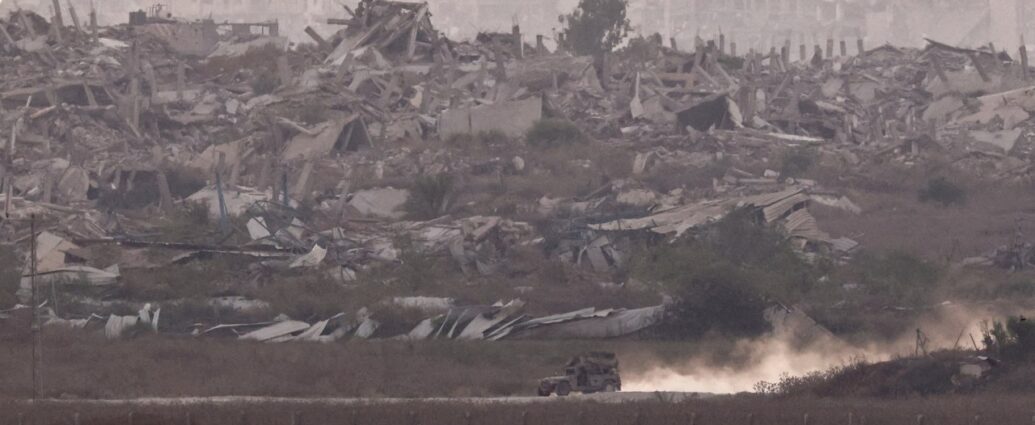
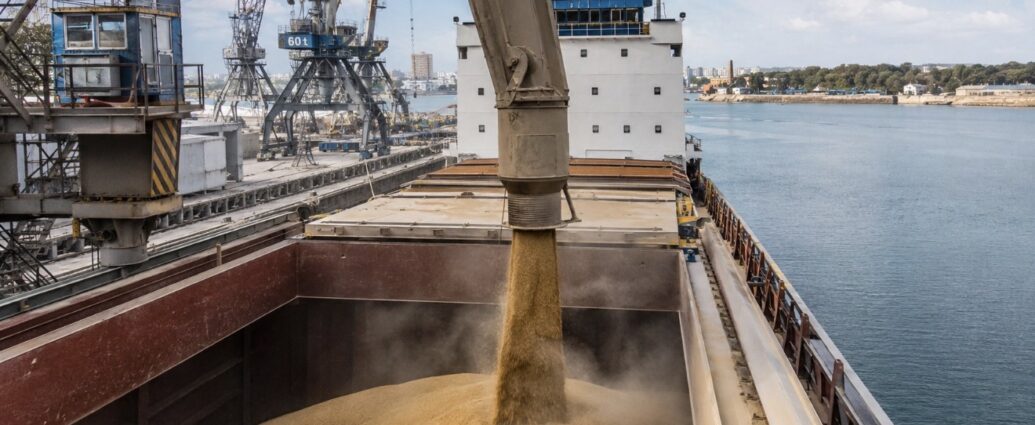
Russia, the world’s largest wheat exporter, is being forced to redraw one of the most important agricultural shipping networks in the world.
After repeated Ukrainian attacks disrupted shipping through the Black Sea and Sea of Azov, Russian grain exporters are increasingly turning north — toward ports on the Baltic Sea.
That sounds like a transportation story.
It is much bigger than that.
Russia exported about 46.3 million metric tons of grain through Black Sea and Azov ports during the 2025–2026 season, representing roughly 90% of its seaborne grain exports.
Those southern ports are valuable because they provide relatively short and inexpensive access to major buyers across the Middle East, Africa and Asia.
When that route becomes unreliable, the grain does not simply disappear.
It has to travel somewhere else.
And moving millions of tons of wheat hundreds or thousands of additional miles by rail before it reaches a ship can dramatically change the economics.
By mid-August, Russian exporters had already submitted requests to move roughly 5 million metric tons of grain toward Russian Baltic ports, an extraordinary increase for a route that handled only around 1 million tons previously.
Russia is also looking at ports in neighboring Baltic states, including Latvia, as exporters search for additional capacity.
The problem is that the alternative system is much smaller.
Russian Baltic grain ports can handle only about 7 million tons annually.
Even if additional capacity in Baltic state ports is used, analysts estimate that alternative ports and land routes may replace only about half of the volume that could be disrupted in the Black Sea.
That creates a bottleneck.
Why the Black Sea Matters So Much
Russia and Ukraine are both agricultural giants.
Together, they supply enormous quantities of wheat, corn, sunflower oil and other agricultural products to the global market.
Many countries in the Middle East and Africa rely heavily on Black Sea grain because it is relatively close and inexpensive to ship.
That means problems in the Black Sea can quickly become problems far beyond Russia and Ukraine.
If exporters have to use longer rail routes and more expensive ports, transportation costs rise.
Those higher costs can eventually affect the price buyers pay for grain.
And because wheat is used in bread, flour, animal feed and countless food products, changes in grain prices can eventually reach consumers.
What Changed
The shift toward the Baltic accelerated after attacks increasingly affected commercial shipping around Russia’s southern ports.
Ukraine has targeted Russian vessels and logistics infrastructure as part of its broader campaign against Russia’s war economy.
The Sea of Azov has been especially important.
It historically handles about a quarter of Russian grain exports.
The result is that companies now have to consider whether putting a cargo through those waters is worth the risk.
Shipping companies also consider insurance rates, crew safety and the possibility of delays.
Even if a port remains technically open, shipping can become economically unattractive when the risk becomes too high.
Russia Is Trying to Build an Alternative
Moscow is already trying to help exporters reroute shipments.
The Russian government has been preparing subsidies worth roughly 10 billion rubles, or about $120 million, to support rail transportation of agricultural products toward alternative export ports.
That includes Baltic ports and ports in Russia’s Far East.
The idea is simple.
If getting grain to the port becomes more expensive, the government can absorb part of the cost so Russian wheat remains competitive internationally.
But subsidies cannot create unlimited port capacity.
Grain terminals need storage facilities, rail connections, loading equipment and ships.
Those systems take time and money to expand.
That is why the shift north is important.
Russia can reroute some grain.
It cannot instantly recreate the massive export infrastructure it already has around the Black Sea.
The Pressure Is Not Only on Russia
Ukraine is dealing with its own transportation crisis.
Its traditional Black Sea export routes have also been severely disrupted.
Dozens of vessels are now waiting to reach Ukrainian ports through the Danube River, creating another major grain bottleneck.
That means the world’s grain market is seeing transportation problems on both sides of the war at the same time.
Turkey is now trying to develop a new arrangement that could restore safer grain shipping through the Black Sea.
The original U.N.- and Turkey-brokered Black Sea Grain Initiative allowed tens of millions of tons of Ukrainian agricultural products to reach global markets before Russia withdrew from the agreement in 2023.
Whether a new arrangement can be created remains uncertain.
What It Means for Businesses
For farmers and food companies thousands of miles away, the important issue is not necessarily how much wheat Russia grows.
It is whether Russia can economically get that wheat to customers.
A country can produce a huge crop, but if ports are blocked, ships are attacked or rail transportation becomes too expensive, global supply still tightens.
That can affect flour companies, bakeries, livestock producers, food manufacturers and eventually grocery prices.
It can also create opportunities for competing grain exporters in the United States, Canada, Argentina and elsewhere if buyers begin searching for more reliable suppliers.
The bigger lesson is that food markets depend on logistics almost as much as agriculture.
Russia still has the grain.
The question now is how much it will cost to move it — and whether the rest of the world ultimately pays part of that price.
JBizNews Desk | New York
© JBizNews.com All Rights Reserved. Reproduction or distribution without written permission is prohibited.
GM Workers Approve More Than C$1 Billion Canada Investment as U.S. Tariff Threat Builds
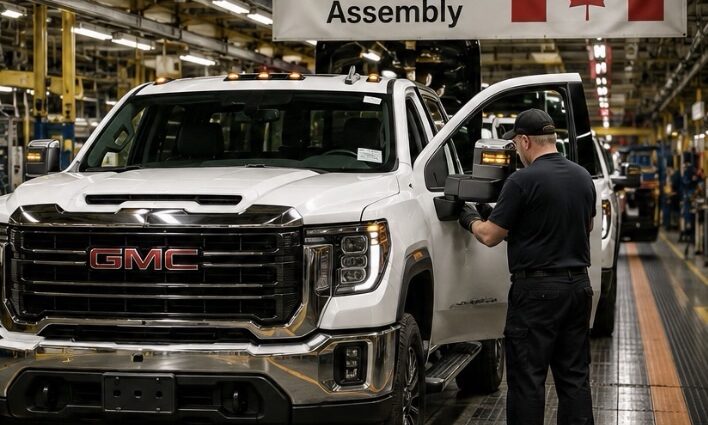
General Motors workers in Canada have approved a new labor agreement that locks in more than C$1 billion in investment and brings production of a next-generation heavy-duty GMC Sierra pickup to Ontario — even as the North American auto industry faces a potentially much bigger U.S.-Canada trade fight.
More than 4,600 Unifor members at GM facilities across Ontario voted on the new agreements, with workers covered by the main GM contract approving it by 80.5% and workers at the CAMI assembly plant in Ingersoll backing their agreement by 96.5%.
The centerpiece is Oshawa.
GM committed C$144 million to bring production of the next-generation heavy-duty GMC Sierra to its Oshawa Assembly plant.
That matters because pickup trucks are among the most important and profitable vehicles in the North American auto industry.
Keeping more truck production in Canada gives Oshawa a stronger future at a time when tariffs are making every cross-border manufacturing decision more complicated.
GM also committed C$215 million to build a next-generation transmission at its St. Catharines plant beginning around late 2029.
Those investments come on top of earlier commitments, including C$691 million for sixth-generation V8 engine production and another C$63 million for stamping and parts-distribution upgrades.
Together, GM’s Canadian commitments now exceed C$1 billion.
Why This Deal Matters Now
Normally, an auto labor contract would mainly be a story about wages, benefits and jobs.
This one is also about trade.
The United States currently imposes a 25% tariff on Canadian vehicles, and that rate is scheduled to rise to 50% on January 1, 2027 unless Washington and Ottawa reach a new agreement.
That is a huge number for an industry built around vehicles and parts crossing the U.S.-Canada border repeatedly before a finished car or truck reaches a dealership.
A transmission can be made in one country.
An engine can be made in another plant.
Other components can cross the border several times before final assembly.
When tariffs rise sharply, that entire system gets more expensive.
For GM, the decision to continue investing in Canada means the company is betting that its Canadian factories will remain strategically valuable even if the trade environment becomes more difficult.
It is also a sign that automakers cannot simply move billions of dollars of factories, suppliers and trained workers overnight.
Workers Get Higher Pay — But Job Security Is the Bigger Story
The agreement includes 3% annual wage increases for three years, along with cost-of-living adjustments and bonuses.
Full-rate production workers are expected to reach C$50.20 an hour, while skilled-trades workers will reach C$62.71 an hour during the life of the agreement.
Eligible workers also receive a C$10,000 productivity and quality bonus and a C$2,000 December bonus.
But for many workers, the most important part may be protecting production.
The agreement includes plans designed to reduce layoffs at Oshawa and gives GM’s idled CAMI assembly plant in Ingersoll additional protection against an immediate closure or sale.
That plant has been especially vulnerable, with many workers already on indefinite layoff.
The Bigger North American Auto Problem
Canada and the United States do not really operate as two completely separate auto industries.
They operate as one deeply connected manufacturing system.
That is what makes a potential 50% tariff so significant.
Canadian-made vehicles represented about 6% of U.S. auto sales in 2025, while some major automakers depend much more heavily on Canadian production.
GM itself builds a meaningful portion of its Chevrolet Silverado pickups in Canada.
If tariffs rise to 50%, automakers face several choices.
They can absorb some of the cost.
They can raise prices.
They can shift production.
Or they can pressure Washington and Ottawa to reach a deal.
None of those options is simple.
Building a new auto plant can take years and billions of dollars.
That is why GM’s new Canadian investment is important.
The company is not abandoning Canada while waiting to see what happens with tariffs.
It is putting new production there.
What It Means for Businesses
For suppliers, manufacturers and communities across Ontario, the agreement provides something extremely valuable right now: visibility.
New truck, engine and transmission programs mean orders for parts suppliers, trucking companies, industrial contractors, maintenance firms and hundreds of other businesses tied to auto production.
For consumers, however, the tariff fight remains the larger risk.
If a 50% tariff ultimately applies to Canadian vehicles and parts entering the United States, manufacturers could face substantially higher costs.
Some of those costs could eventually reach car buyers.
And because the U.S. and Canadian auto industries are so intertwined, the consequences would not stop at the border.
The GM agreement therefore sends two messages at the same time.
Canada is still winning major automotive investment.
But the economics of building cars across North America are becoming much harder to predict.
GM is committing more than C$1 billion to Canadian production.
Now the industry has to find out what the trade rules surrounding those factories will actually look like.
JBizNews Desk | New York
© JBizNews.com All Rights Reserved. Reproduction or distribution without written permission is prohibited.


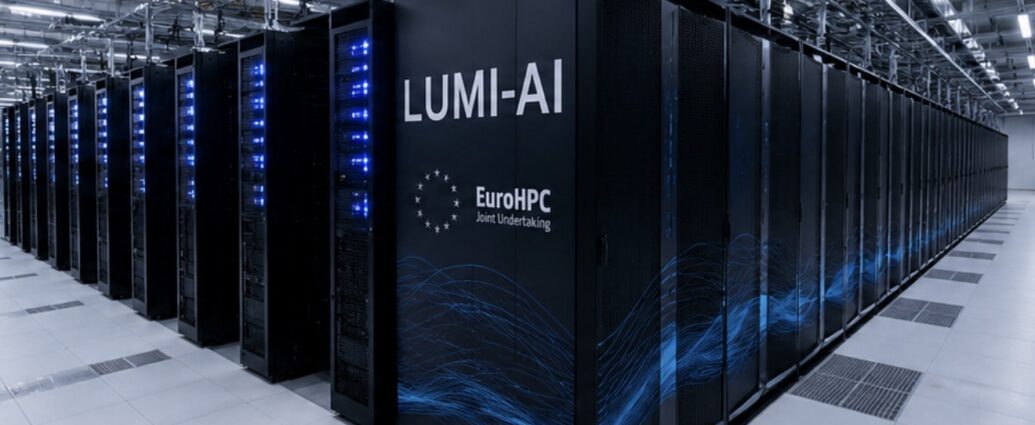
Europe Places Nearly $450 Million AI Supercomputer Order in Race for Computing Power
Europe is putting nearly half a billion dollars into a new artificial intelligence supercomputer as governments race to secure the computing power that increasingly determines who can compete in AI.
The European High Performance Computing Joint Undertaking announced that it signed a €387.8 million contract with Bull for a new system called LUMI-AI, which will be installed at CSC’s data center in Kajaani, Finland.
At current exchange rates, the investment is roughly $450 million.
The important part is not simply that Europe is buying another supercomputer.
It is what Europe is trying to build around it.
LUMI-AI is being designed specifically for artificial intelligence workloads that require enormous amounts of computing power, including the training and deployment of advanced AI models, large-scale simulations and work involving massive or confidential datasets.
The system is expected to provide about 10 times the AI computing capacity of the existing LUMI supercomputer.
That is a major jump.
The machine will use next-generation AMD Instinct MI430X graphics processors together with AMD’s sixth-generation EPYC processors. It will be installed in Finland and is expected to become available to users in 2027.
Half of the €387.8 million cost will be funded by the European Union through the Digital Europe Programme. The other half will be paid by the LUMI AI Factory consortium, led by Finland and including the Czech Republic, Denmark, Estonia, Norway and Poland.
The broader goal is to give European companies, startups, researchers and government institutions access to powerful AI infrastructure without depending entirely on private American technology giants or foreign computing systems.
That matters because AI is becoming increasingly dependent on access to enormous quantities of specialized computing power.
Companies may have strong engineers, valuable data and promising AI ideas, but without access to powerful chips and supercomputers, they may not be able to train or operate the most advanced systems.
In simple terms, computing power is becoming the factory floor of the AI economy.
Countries that control more of that capacity can potentially develop better AI systems, attract more technology companies and keep more of the economic value created by artificial intelligence inside their own borders.
The United States currently has a major advantage because companies such as Microsoft, Amazon, Google, Meta and Oracle are spending tens of billions of dollars building enormous AI data centers.
China is also pouring resources into domestic chips, computing clusters and artificial intelligence infrastructure.
Europe does not have private technology companies spending at quite the same scale.
That is why governments are stepping in.
The European Union has been building what it calls AI Factories — computing centers that combine supercomputers, data, technical expertise and services that startups and researchers can use to develop artificial intelligence.
The existing LUMI AI Factory has already been providing computing resources to European small and midsized businesses and startups in areas including manufacturing, health care, life sciences and communications technology.
The new LUMI-AI system is intended to dramatically expand that capacity.
There is another reason Europe sees this as strategic.
Artificial intelligence is increasingly tied to national competitiveness.
AI is expected to affect manufacturing, drug development, defense, banking, logistics, telecommunications, energy and almost every major industry.
Europe does not want European companies to reach a point where they have innovative technology but must depend on American or Chinese infrastructure to build it.
That is why the supercomputer investment is bigger than one machine in Finland.
It is part of an attempt to build an independent European AI ecosystem.
What It Means for Businesses
For smaller companies, AI competition is increasingly becoming a question of access.
A startup may not have billions of dollars to build its own data center or purchase thousands of advanced processors.
Shared government-backed supercomputers can give those businesses access to computing power that previously was available mainly to the largest technology companies.
That could help European manufacturers, biotech companies, software developers and other businesses experiment with advanced AI without making enormous infrastructure investments themselves.
It also demonstrates how quickly artificial intelligence is moving from being primarily a software race into an infrastructure race.
Chips matter.
Electricity matters.
Data centers matter.
Cooling systems matter.
And increasingly, governments are deciding that access to AI computing capacity is too strategically important to leave entirely to the private market.
Europe is now putting nearly €388 million behind that calculation.
JBizNews Desk | New York
© JBizNews.com All Rights Reserved. Reproduction or distribution without written permission is prohibited.

Global Financial Watchdog Warns AI Cyberattacks Could Become a Threat to the Financial System
Artificial intelligence is no longer just changing how companies work. Global financial regulators are now warning that it could also change how fast — and how dangerously — cyberattacks can hit banks, markets and other critical financial infrastructure.
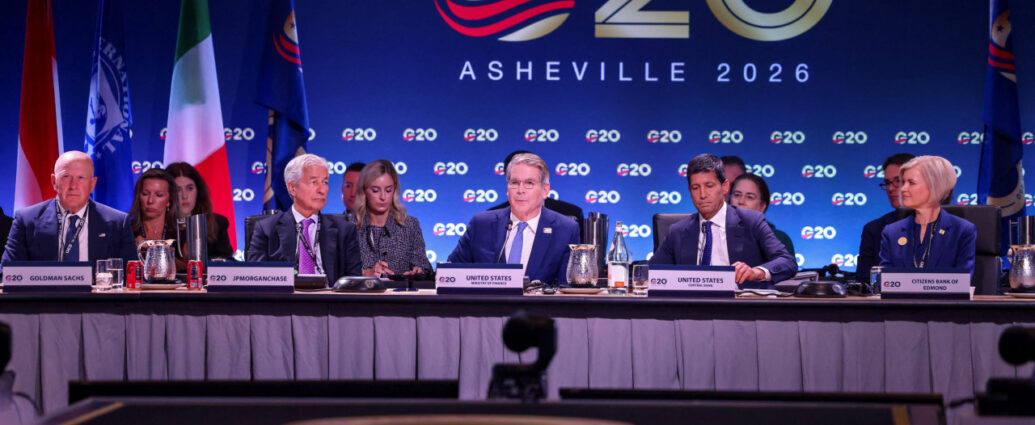
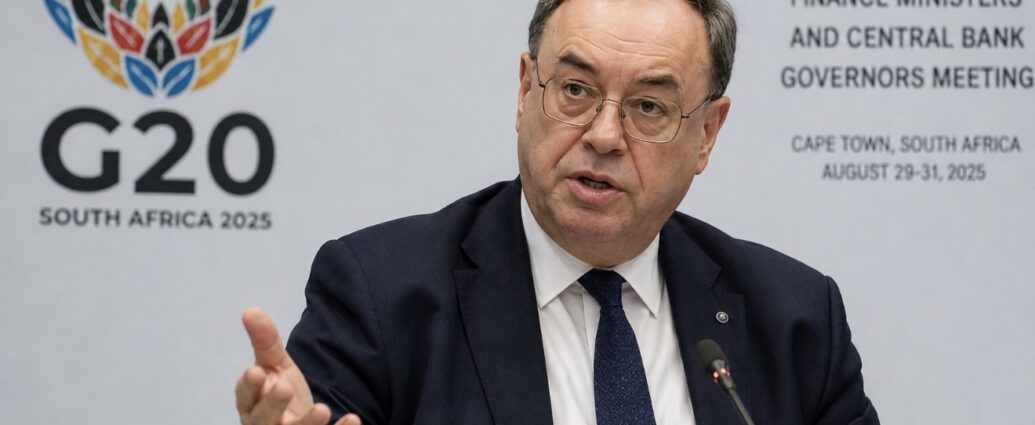
The Financial Stability Board, the international body that monitors risks to the global financial system, warned G20 finance ministers and central bank governors this week that the rapid development of powerful artificial intelligence models is creating a new level of cybersecurity risk.
FSB Chair Andrew Bailey said the most immediate concern from frontier AI is its potential effect on cyber risk.
In simple terms, AI could allow hackers to do in minutes what previously took teams of people hours, days or even weeks.
AI systems can potentially search for weaknesses in computer networks, generate malicious code, automate phishing campaigns, adapt attacks while they are underway and dramatically increase the number of targets criminals can attack at the same time.
That changes the economics of cybercrime.
A hacker who once had the resources to attack a handful of companies could potentially use AI to attack hundreds or thousands. And because banks, exchanges, insurers, payment processors and investment firms are deeply connected, a successful attack against one important institution could quickly become a problem for many others.
That is why regulators are looking beyond the danger to one individual bank.
The bigger concern is systemic risk — the possibility that an AI-powered attack could disrupt payments, trading systems, customer accounts or financial infrastructure badly enough to damage confidence throughout the financial system.
If customers cannot access their bank accounts, businesses cannot process payments or markets cannot operate normally, the damage can spread far beyond the company that was originally attacked.
The FSB also warned that financial firms increasingly depend on a relatively small group of major technology companies for cloud computing, artificial intelligence and other critical infrastructure.
That concentration creates another vulnerability.
If many banks are relying on the same technology provider and that provider suffers a major failure or cyberattack, several financial institutions could experience problems at the same time.
The warning does not mean regulators believe an AI-triggered financial crisis is underway.
It means they believe the capabilities are developing quickly enough that governments, regulators and financial companies need to strengthen defenses before a major event happens.
Bailey said authorities should focus on resilience and on ensuring advanced AI models are released and deployed safely and responsibly across countries.
The warning comes as financial regulators are already watching several other vulnerabilities, including high asset valuations, stress in sovereign debt markets and risks in private credit.
But AI introduces something different.
Traditional financial crises usually begin with money — bad loans, too much debt, collapsing asset prices or a shortage of liquidity.
An AI-driven cyber crisis could begin with technology.
A sophisticated attack could potentially disable systems first and create the financial panic afterward.
What It Means for Businesses
This is not only a banking story.
Almost every company now depends on banks, electronic payments, payroll platforms, cloud services and digital financial systems.
If AI makes cyberattacks cheaper, faster and more sophisticated, businesses may face higher cybersecurity costs, stricter insurance requirements and tougher demands from banks, regulators and customers to prove their systems are protected.
Cyber insurance could also become more expensive as insurers attempt to understand a type of risk for which there is still relatively little historical loss data.
For business owners, the message is increasingly simple: AI security is becoming financial security.
Companies spent the past several years asking how artificial intelligence could increase productivity.
The next question may be just as important:
How do you stop artificial intelligence from being used against you?
JBizNews Desk | New York
© JBizNews.com All Rights Reserved. Reproduction or distribution without written permission is prohibited.
Opinion | Don’t Rename Lake Ontario




Washington Moves to Cut Banque Misr’s UAE Branches Off From Dollars Over Iran Dealings
CAIRO — The United States is moving to cut the United Arab Emirates branches of Banque Misr off from U.S. dollar transactions over alleged dealings involving Iran, extending Washington’s sanctions campaign deeper into the international banking system.
Banque Misr is Egypt’s second-largest bank and one of the country’s most important financial institutions.
The restrictions are aimed specifically at its UAE branches rather than the entire bank, but the consequences could still be significant because access to the U.S. dollar remains essential to large portions of international trade and finance.
The UAE and Egyptian central banks said they are coordinating over the matter and that Banque Misr will take the steps necessary to maintain normal operations.
The U.S. restrictions are expected to take effect after a public-comment period.
For businesses operating internationally, the development is important because it demonstrates how powerful U.S. financial sanctions can be even outside American borders.
A company in Dubai may be buying equipment from Europe, receiving goods from Asia or selling products somewhere in the Middle East, but if the transaction is settled in dollars, it can still pass through the U.S.-linked financial system.
That gives Washington enormous leverage.
A bank that loses access to dollar clearing can find it significantly harder to conduct international transactions, finance trade or serve corporate customers whose businesses depend on dollar payments.
The action against Banque Misr also demonstrates the growing risk surrounding secondary sanctions.
Companies do not necessarily have to be directly dealing with a sanctioned Iranian entity to face problems. Exposure can emerge through banks, customers, shipping companies, suppliers or other intermediaries involved somewhere in a transaction.
That makes sanctions compliance increasingly important for companies with operations across the Middle East.
Banks and businesses must understand not only who their direct customer is, but also where payments originate, where they ultimately go and which institutions touch the transaction along the way.
The U.S. has been intensifying financial pressure on Iran by targeting the institutions and networks that allow Iranian businesses and government-linked entities to move money internationally.
Restricting access to dollars can be one of Washington’s most powerful tools because the U.S. currency continues to dominate global trade and financial settlements.
For Egypt, the situation is particularly sensitive.
Banque Misr plays a major role in the country’s banking system and serves companies and individuals throughout Egypt and internationally. Egyptian authorities will therefore want to prevent restrictions on the UAE branches from disrupting the broader institution or undermining confidence.
For the UAE, the action is another reminder of the balancing act facing one of the world’s fastest-growing financial centers.
Dubai and Abu Dhabi have become major hubs connecting businesses across Asia, Europe, Africa and the Middle East. That international reach also makes compliance with U.S. sanctions increasingly important for banks operating there.
The immediate restriction may involve only a handful of Banque Misr branches.
The larger message reaches much further.
In today’s global financial system, access to the dollar is effectively access to the commercial bloodstream of international business.
And Washington is showing again that it is willing to use that access as leverage.
JBizNews Desk | Cairo
© JBizNews.com All Rights Reserved. Reproduction or distribution without written permission is prohibited.

Bank of Israel Cuts Rates for Fourth Time This Year as Postwar Economy Recovers
The Bank of Israel cut its benchmark interest rate by another quarter percentage point Tuesday, bringing it down to 3.25% as inflation cools and the Israeli economy continues recovering from the war with Iran.
It is the central bank’s fourth rate cut of 2026, following reductions in January, May and July.
The move is important because it signals that policymakers believe the economy is strong enough — and inflation contained enough — to continue lowering borrowing costs despite ongoing geopolitical uncertainty.
For Israeli businesses and households, that means money is gradually becoming cheaper again.
Why the Bank Cut Rates
The Bank of Israel said inflation has moderated in recent months and is now running below the midpoint of its target range.
At the same time, the economy has been rebounding.
Second-quarter data show Israel’s GDP was 6.2% higher than in the fourth quarter of 2025 on an annualized basis.
That number partly reflects the sharp recovery from the disruption caused earlier this year by the military operation against Iran.
Even excluding production abroad by Israeli companies, GDP was still 3.8% higher than in the fourth quarter of 2025 on an annualized basis.
In simple terms:
The economy took a hit during the war, but activity has bounced back quickly enough that the Bank of Israel now has more room to lower rates.
What Lower Rates Actually Mean
Interest rates influence the cost of borrowing throughout the economy.
When the Bank of Israel cuts rates, commercial banks can eventually offer cheaper financing.
That can lower borrowing costs for:
- Businesses financing expansion or equipment
- Homebuyers taking mortgages
- Consumers using credit
- Real estate developers
- Companies refinancing existing debt
It does not mean every loan becomes cheaper immediately.
But over time, lower central-bank rates usually work their way through the financial system.
Real Estate Could Feel It Quickly
Israel’s real estate market is especially sensitive to interest rates.
Higher borrowing costs made mortgages more expensive and put pressure on buyers and developers.
A lower benchmark rate could gradually make monthly mortgage payments more manageable and encourage buyers who have been sitting on the sidelines to return.
Developers may also find it easier to finance projects.
That does not automatically mean housing prices will surge.
But lower borrowing costs remove one of the major pressures that has been holding activity back.
Businesses Get Some Breathing Room
For companies, especially smaller businesses, interest expense has become a major cost.
A business borrowing money for inventory, equipment, real estate or expansion has been paying significantly more than it did several years ago.
Every quarter-point reduction helps.
If the Bank of Israel continues lowering rates, businesses could eventually see meaningful savings on financing.
That can also encourage companies to invest rather than keep projects on hold.
The Shekel Matters Too
The Bank of Israel also noted that the shekel has remained broadly stable.
That is important because cutting interest rates can sometimes weaken a currency.
A sharply weaker shekel could make imported goods, fuel and raw materials more expensive and push inflation higher again.
So far, the central bank appears comfortable that currency conditions remain stable enough to continue easing.
Israel’s risk premium has also declined substantially from the levels reached during the war.
That means investors currently view the country as less financially risky than they did during the height of the conflict.
But The Bank Is Still Cautious
The central bank made clear that uncertainty remains high.
Geopolitical tensions have not disappeared.
Another major escalation could affect energy prices, government spending, investment, the shekel and inflation.
That means policymakers are unlikely to promise a long series of cuts in advance.
They will continue watching inflation, economic growth, financial markets and security developments before each decision.
What It Means for Businesses
The message from the Bank of Israel is becoming increasingly clear.
The emergency economic conditions created by the war are easing.
Inflation is under better control.
Economic activity is recovering.
And the central bank is gradually shifting from protecting against inflation toward supporting growth.
For businesses, homeowners and borrowers, that is an important change.
Israel entered 2026 with borrowing costs still relatively high.
The benchmark rate is now down to 3.25% after four cuts this year.
If inflation remains contained and the recovery continues, businesses could enter 2027 with meaningfully cheaper financing than they had at the beginning of this year.
That is good news for investment, construction, hiring and consumer spending.
But the Bank of Israel is still walking a narrow line:
Support the recovery without allowing inflation or geopolitical risk to return.
For now, it believes another quarter-point cut is a risk worth taking.
JBizNews Desk | Jerusalem
© JBizNews.com All Rights Reserved. Reproduction or distribution without written permission is prohibited.
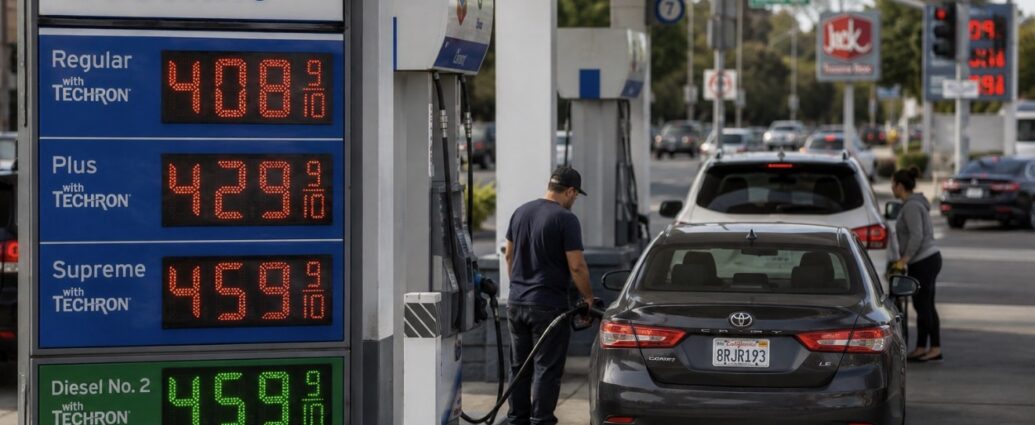
Oil Jumps Again as Iran Fighting Keeps Pressure on Gas Prices
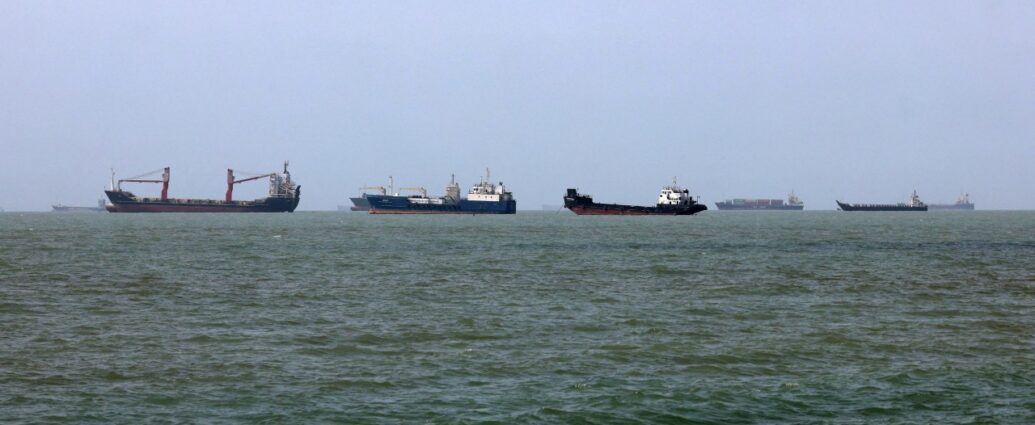
NEW YORK — Oil prices climbed again Tuesday morning as renewed U.S.-Iran fighting revived fears of disruption around the Strait of Hormuz, keeping pressure on gasoline and transportation costs just as an emergency federal fuel waiver takes effect.
Brent crude rose roughly 2% to about $92.21 a barrel, while U.S. crude traded near $87.88.
The move matters because crude oil remains the single biggest input into gasoline prices, and the national average for regular gas is still around $4.08 a gallon — roughly 90 cents higher than a year ago.
That means consumers are feeling the impact directly at the pump.
But the effect does not stop there.
Higher oil raises the cost of diesel, trucking, air travel, shipping and manufacturing. Those added costs can eventually work their way into groceries, online deliveries, airline tickets and other consumer prices.
The immediate concern is the Strait of Hormuz.
A significant share of the world’s oil moves through that narrow waterway, making any escalation involving Iran a direct threat to global energy markets.
Even when physical supplies are not actually disrupted, traders can push prices higher simply because the risk of disruption has increased.
That is why the federal government is now trying to create more breathing room in the gasoline market.
An EPA emergency waiver takes effect September 1, allowing refiners and fuel suppliers to shift away from more restrictive summer-blend gasoline requirements earlier than normal.
The change is intended to increase available supply.
The EPA says the waiver could add hundreds of thousands of barrels per day to the gasoline market, giving refiners more flexibility at a time when crude prices remain elevated.
The waiver does not guarantee lower prices.
If oil continues climbing because of geopolitical risk, the extra gasoline supply may only soften the increase rather than reverse it.
Still, it gives the market another source of supply at a critical time.
The timing is important because consumers are already dealing with elevated borrowing costs, expensive insurance and stubborn food inflation.
A sustained move higher in energy would add another layer of pressure.
For households, the most visible sign will be the gas station.
But the broader risk is that higher oil becomes another inflation problem.
If crude remains above $90 and geopolitical tensions intensify, gasoline prices could remain elevated well into the fall — and the cost of moving goods and people across the economy could rise with them.
JBizNews Desk | New York
© JBizNews.com All Rights Reserved. Reproduction or distribution without written permission is prohibited.