




Amazon’s Satellite Internet Enters South Africa While Starlink Remains on the Sidelines
JOHANNESBURG — Amazon’s satellite broadband business has secured its first major distribution agreement in Africa, partnering with South African internet provider Herotel to launch satellite internet service across the country while rival Starlink remains unable to operate because of South Africa’s licensing rules.
The agreement gives Amazon an early foothold in one of Africa’s largest telecommunications markets and highlights how different regulatory strategies are shaping the race to expand satellite broadband across the continent.
Commercial service is expected to begin in 2027 under a new consumer brand called evry, with customer registration already open.
Amazon Chose a Different Strategy
Rather than waiting for regulators to change licensing rules, Amazon partnered with an established local telecommunications company.
Herotel, South Africa’s largest fixed internet service provider, already holds the licenses required to operate in the country. That allows Amazon to provide satellite connectivity through a fully licensed local partner instead of seeking its own operating authority.
The approach contrasts sharply with Starlink, which has spent years seeking regulatory approval to enter South Africa.
Because Herotel already maintains technicians, customer support and service infrastructure throughout the country, Amazon will also gain an established installation and maintenance network from the first day of commercial operations.
Starlink Still Waiting
While Starlink has expanded rapidly across many African countries, South Africa remains one of its largest missing markets.
The company continues waiting for changes to ownership and licensing regulations administered by the Independent Communications Authority of South Africa (ICASA).
Those rules require telecommunications operators to meet local ownership and empowerment requirements before receiving licenses.
Amazon’s partnership structure effectively allows it to enter the market without waiting for those regulations to change.
Targeting Rural Communities
The new satellite service is expected to focus primarily on underserved communities where traditional broadband remains difficult or uneconomical to build.
Many rural regions continue lacking reliable high-speed internet because extending fiber-optic networks across long distances is expensive and often impractical.
Low-Earth-orbit satellite systems provide broadband with significantly lower latency than traditional geostationary satellites, making applications such as video conferencing, online education and business communications more practical.
Herotel’s nationwide service network is expected to help accelerate adoption by handling installation, customer service and technical support locally.
Competition Is Just Beginning
Although Amazon has secured an important commercial victory, it still trails Starlink significantly in satellite deployment.
Amazon continues building its satellite constellation while Starlink already operates thousands of satellites worldwide and serves millions of subscribers.
The South African agreement therefore represents a strategic market entry rather than technological leadership.
For Amazon, the immediate opportunity lies in establishing customer relationships before additional competitors receive regulatory approval.
Why It Matters
The agreement demonstrates that regulatory strategy can be as important as technology in global telecommunications.
Rather than waiting for policy changes, Amazon found a licensed local partner capable of bringing satellite broadband to market under existing regulations.
For businesses and consumers in rural South Africa, the partnership promises another source of high-speed internet access.
For the broader satellite industry, it underscores that winning new markets increasingly depends not only on launching satellites into orbit, but also on navigating local regulations and building strong regional partnerships.
JBizNews Desk | Johannesburg
© JBizNews.com All Rights Reserved. Reproduction or distribution without written permission is prohibited.


Alibaba Becomes Apple’s AI Partner as China Clears Apple Intelligence for iPhones
NEW YORK — Apple Inc. cleared one of its biggest hurdles in China on Wednesday after the Cyberspace Administration of China (CAC) approved Apple Intelligence for use on iPhones in mainland China, allowing the company to bring its artificial intelligence platform to the world’s largest smartphone market through a partnership with Alibaba Group Holding Ltd.
The decision removes a major obstacle that has delayed Apple’s AI rollout in China for nearly two years and gives the iPhone maker an opportunity to compete more directly with domestic rivals that have already integrated generative artificial intelligence into their smartphones.
Investors immediately recognized the significance of the announcement. Apple shares climbed about 4% to a record high, while U.S.-listed shares of Alibaba rose as much as 7% after the company confirmed its technology would power Apple’s AI services in China.
The approval represents far more than a software update. It marks one of the most important technology partnerships between an American consumer electronics company and a Chinese artificial intelligence developer.
Alibaba Powers Apple’s AI in China
At the center of the agreement is Alibaba’s Qwen large language model.
Alibaba confirmed that Qwen will serve as the foundation for Apple Intelligence in mainland China, providing artificial intelligence capabilities directly within Apple’s operating system. Instead of downloading a separate chatbot application, users will access AI-powered writing tools, image understanding, translation, content generation and other features through Apple’s native software.
Baidu is also participating as a technical partner supporting portions of Apple’s China AI deployment.
The CAC approval places Apple alongside Huawei, OPPO, vivo, Xiaomi, Samsung, and Nubia, all of which have received authorization to offer generative AI services on smartphones sold in China.
A Major Win in Apple’s Second-Largest Market
China remains one of Apple’s most strategically important markets.
The company recently reported Greater China revenue of $20.5 billion for the quarter, representing 28% year-over-year growth, while iPhone shipments increased 24.4% as Apple regained the No. 2 position in China’s smartphone market.
Until now, however, Chinese customers purchasing Apple’s newest devices could not access many of the artificial intelligence features already available elsewhere because of local regulatory restrictions.
That left Apple competing against domestic manufacturers whose AI capabilities had become major selling points.
Wednesday’s approval effectively closes that gap.
Approval Comes Before Launch
Regulatory approval does not mean Apple Intelligence will immediately become available across China.
Apple must still complete software deployment, localized engineering work and operating system updates before the service launches broadly.
Reports indicated that a limited beta version briefly appeared before being withdrawn, suggesting Apple continues preparing for a larger public rollout.
Compatible devices will require updated software and newer-generation iPhone hardware capable of running Apple Intelligence.
Why the Partnership Matters
For Alibaba, the agreement represents one of the strongest endorsements yet of its artificial intelligence platform.
Having Qwen selected to power Apple’s AI experience gives Alibaba access to one of the world’s largest consumer technology ecosystems while reinforcing its position among China’s leading AI developers.
For Apple, partnering with a domestic technology leader provides a practical solution for complying with China’s regulatory requirements governing artificial intelligence, cloud services and data localization.
The partnership also demonstrates how global technology companies continue adapting to increasingly complex regulatory environments by working with local providers rather than attempting to operate independently.
The Bigger Picture
Artificial intelligence has become the newest battleground in the global smartphone industry.
Consumers increasingly expect AI-powered features to be integrated directly into their devices, making regulatory approval in China particularly important for Apple as it seeks to defend market share against rapidly advancing domestic competitors.
For investors, Wednesday’s announcement removes one of the largest remaining uncertainties surrounding Apple’s AI strategy in China.
It also gives Alibaba a prominent role inside one of the world’s most valuable consumer technology ecosystems—an alliance that could reshape the competitive landscape of artificial intelligence in the world’s largest smartphone market.
JBizNews Desk | New York
© JBizNews.com All Rights Reserved. Reproduction or distribution without written permission is prohibited.



Opinion | The Church’s Hope in China

Trump Weighs Sending Ground Troops Into Iran as Economic Risks Intensify
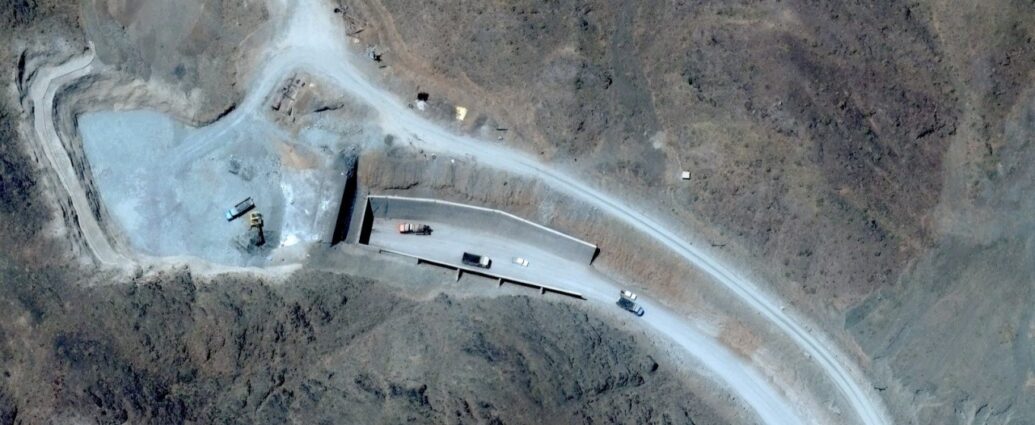
President Donald Trump is weighing ground operations to seize Persian Gulf islands near the Strait of Hormuz, including Kharg Island, Iran’s main oil export terminal, according to U.S. officials describing a Situation Room briefing the president held Tuesday evening. Also on the table: expanded airstrikes against Iranian energy infrastructure and the bombing of a deeply buried tunnel complex known as Pickaxe Mountain.
The session capped days of consultations with Vice President JD Vance, Secretary of War Pete Hegseth, Secretary of State Marco Rubio and Gen. Dan Caine, chairman of the Joint Chiefs of Staff.
Trump has already told Fox News what comes next if Tehran refuses to negotiate: “Next week comes the power plants, next week comes the bridges.” The strikes, he said, continue until he says it’s enough.
U.S. Central Command said it conducted two waves of strikes Wednesday, concluding at 9 p.m. ET, hitting Iranian command centers, air defense systems, missile and drone capabilities and coastal surveillance sites, including at Bandar Abbas. It was the fifth consecutive day of American strikes.
The island and the mountain
Kharg Island is the economic target. The majority of Iran’s crude exports leave through it, and taking it would sever the revenue funding Tehran’s war. It would also place American troops within easy reach of Iranian missiles and drones. Trump has suggested another country would handle any ground campaign. Retired Marine Gen. Frank McKenzie argued Sunday on CBS that possession of Iranian soil would carry weight in future negotiations. Administration officials say the president remains reluctant to commit troops and has walked back this same threat before.
Pickaxe Mountain is a tunnel network cut into granite between 300 and 475 feet beneath a mountain peak — far deeper than the enrichment sites at Natanz and Fordow struck last summer. The Institute for Science and International Security assesses from satellite imagery that the facility is not yet operational but that construction continues. Trump told radio host Hugh Hewitt this week that the United States will take it out.
Depth is the obstacle. The 2025 strikes on Fordow worked because bunker-busters traveled down ventilation shafts into the halls below. Public satellite imagery has not identified ventilation shafts at Pickaxe.
Diplomacy is stuck
Trump maintains publicly and privately that he prefers a negotiated resolution. Tehran has refused to surrender its enriched nuclear stockpiles despite months of strikes and a brief interim agreement that allowed restricted oil exports. That deal collapsed when Iranian forces attacked ships transiting the strait, and Washington reimposed its naval blockade.
The blockade is a commercial reality
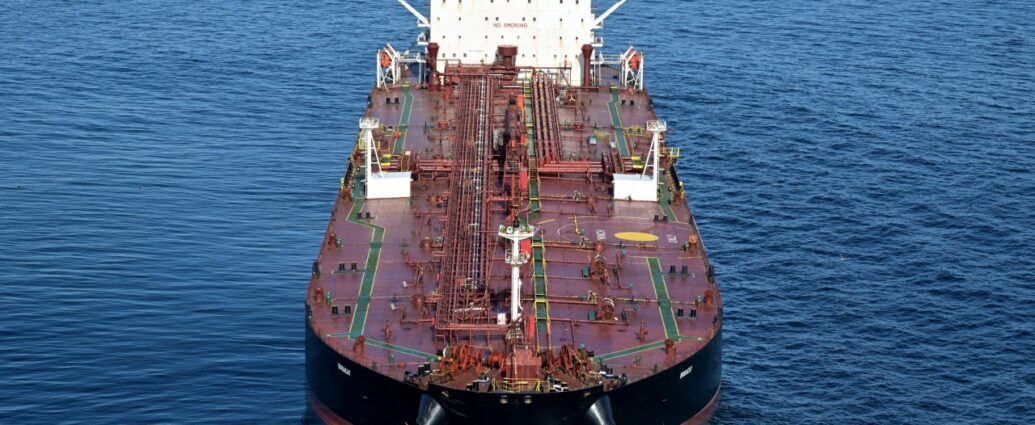
CENTCOM said a Curaçao-flagged tanker, the M/T Belma, ignored repeated warnings while transiting toward Kharg Island. A U.S. aircraft fired Hellfire missiles into the vessel’s smokestack and disabled it.
That is the environment for anyone moving cargo through the Gulf. War-risk insurance for the strait has climbed from 0.125% of a ship’s insured value per transit to between 0.2% and 0.4% — roughly a quarter-million dollars more for a very large crude carrier, a cost that passes into freight rates.
Iran’s Revolutionary Guard answered Wednesday by threatening to halt all regional energy exports, declaring that oil and gas will leave “either for everyone or for no one.” Roughly one-fifth of global oil consumption and about a third of the world’s seaborne crude normally pass through Hormuz.
Where it lands
Brent crude traded above $85 a barrel Wednesday, more than 15% above its pre-war level near $65 and below the $120 reached at the height of the fighting. Regular gasoline averages $3.88 a gallon nationally, about 70 cents higher than a year ago. Every delivery route, contractor’s truck and distributor in the country is paying that difference now.
The slower damage is in food. Up to 30% of internationally traded fertilizer normally moves through Hormuz, with Gulf producers supplying 30% to 35% of global urea exports and 20% to 30% of ammonia. Fertilizer costs feed grain prices, and grain prices reach grocery shelves on a lag of months.
The International Monetary Fund has warned the cushion is gone — spare production capacity deployed, demand compressed, inventories drawn down. A shock at $85 with no buffer behind it is a different proposition than the same price in a normal year.
Destroying Iranian power plants and bridges would deepen that. It would also hand Tehran every reason to make the strait unusable rather than merely dangerous — and the countries buying that oil are not the ones in this fight.
That math is politics too. Fuel prices land on Republicans heading into November, and the pump sign is the only economic indicator most voters read.
JBizNews Desk | Washington © JBizNews.com All Rights Reserved. Reproduction or distribution without written permission is prohibited.
More Than Half of House Democrats Vote to Eliminate $3.3 Billion in Military Aid to Israel
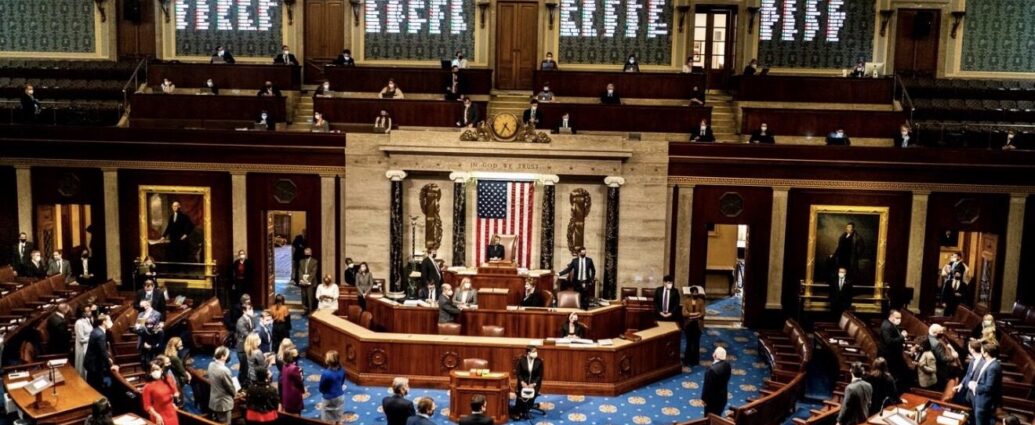
More than half of the Democrats serving in the U.S. House of Representatives voted Wednesday, July 15, to eliminate $3.3 billion in American military financing for Israel, marking the largest recorded break by House Democrats from the longstanding congressional consensus supporting annual security assistance to the country.
The amendment failed by a vote of 104–314 and was not added to the broader national-security spending legislation under consideration. The proposal received support from 103 Democrats and its sponsor, Republican Rep. Thomas Massie of Kentucky. All other Republicans who voted opposed it, along with a substantial group of Democrats.
Massie, a libertarian-leaning lawmaker who has consistently opposed foreign military assistance, proposed removing the full amount of foreign military financing designated for Israel. During the House debate, he said the money should instead be used for roads, bridges, veterans and other needs inside the United States.
“I think we should stop it — we should put them on a diet,” Massie said.
He also said American-supplied weapons had frequently been used in operations that harmed civilians. The amendment would have removed the military financing without replacing it with a narrower restriction tied to particular weapons, military units or Israeli government policies.
The vote divided the Democratic leadership. House Minority Leader Hakeem Jeffries of New York opposed the amendment, although he told colleagues before the vote that American policy toward the Israeli government needed to change.
Jeffries said there were more decisive ways to pursue changes involving the government of Israeli Prime Minister Benjamin Netanyahu without eliminating the entire annual military financing package.
House Democratic Whip Katherine Clark of Massachusetts, the second-ranking Democrat in the chamber, voted for the amendment. Former House Speaker Nancy Pelosi of California also supported it, joining a large group of Democrats who favored withholding the aid even though the measure was introduced by a Republican.
Democratic Rep. Steny Hoyer of Maryland, a former majority leader and a longtime supporter of the U.S.-Israel relationship, opposed the amendment. Hoyer said eliminating the financing would weaken American national security and reduce Israel’s ability to confront organizations including Hamas and Hezbollah.
“I rise in strong opposition to this amendment, which would dangerously undermine American national security,” Hoyer said during the floor debate.
The United States provides Israel with approximately $3.3 billion annually in foreign military financing under a long-term security-assistance agreement. The financing is largely used to purchase American weapons, equipment and defense services, meaning much of the money ultimately flows to U.S. defense manufacturers.
The Wednesday vote was not enough to alter the aid package, but it produced a public record showing how individual House members now approach the issue. More than 100 Democrats supported eliminating the full military-financing allocation, while nearly as many Democrats joined Republicans in preserving it.
The debate came as Democratic lawmakers faced pressure from competing advocacy groups and voters ahead of the November midterm elections. AIPAC, the major pro-Israel advocacy organization, urged supporters to contact members of Congress and oppose Massie’s amendment.
J Street, a liberal organization that describes itself as pro-Israel and supportive of a negotiated two-state solution, also opposed the amendment. The group said it was too broad and poorly drafted, although it acknowledged that some Democrats viewed the vote as one of the few available opportunities to register opposition to the use of American weapons by Israel.
J Street President Jeremy Ben-Ami said the organization understood why lawmakers wanted to express concern about Israeli military operations in Gaza, the West Bank, Lebanon and elsewhere, even while opposing the complete elimination of military financing.
The vote followed nearly three years of conflict since the October 7, 2023, Hamas attack on Israel. Israel’s extended campaign in Gaza has generated increasing criticism among Democratic voters and lawmakers, while Israel and its supporters maintain that continued American assistance is necessary to defend the country from Hamas, Hezbollah, Iran and other regional threats.
Republican leaders used the vote to emphasize divisions among Democrats over Israel, although Massie’s sponsorship also reflected continuing opposition to foreign aid among a smaller group of Republicans aligned with a more noninterventionist approach.
House Speaker Mike Johnson of Louisiana and the overwhelming majority of Republicans supported retaining the assistance. Jeffries did not direct Democratic members to vote as a unified bloc, allowing lawmakers to take individual positions on the amendment.
The result leaves the military financing intact as the larger spending measure advances. It does not change existing aid, impose new conditions on weapons transfers or alter the underlying U.S.-Israel security agreement.
The final tally nevertheless produced the clearest congressional measure to date of the declining Democratic consensus around unrestricted military assistance to Israel. The amendment failed by more than 200 votes, but a majority of House Democrats voted to remove funding that had historically passed Congress with broad bipartisan support.
JBizNews Desk | Washington
© JBizNews.com All Rights Reserved. Reproduction or distribution without written permission is prohibited.




IEA Chief Warns Global Economy Faces Serious Risk if Strait of Hormuz Crisis Drags On
PARIS — The head of the International Energy Agency (IEA) warned Wednesday that the global economy could face significant consequences if disruptions to shipping through the Strait of Hormuz continue for an extended period, underscoring growing concerns that the world’s most important energy corridor has become a major threat to economic growth and financial markets.
Speaking as oil traders, governments and multinational companies closely monitor developments in the Persian Gulf, IEA Executive Director Fatih Birol said the international community cannot afford a prolonged interruption to energy flows through the narrow waterway, which carries roughly one-fifth of the world’s oil supply and a substantial portion of global liquefied natural gas exports.
“If this situation continues for several weeks, it will have major implications for the global economy,” Birol said, urging governments to work toward restoring stability in one of the world’s most strategically important shipping routes.
His warning comes as heightened tensions involving Iran have renewed concerns over commercial shipping through the Strait of Hormuz, a passage connecting the Persian Gulf with the Gulf of Oman and the Arabian Sea. The waterway serves as the primary export route for crude oil produced by Saudi Arabia, Iraq, Kuwait, Qatar, the United Arab Emirates, and Iran, making it indispensable to global energy markets.
While oil prices have risen sharply amid fears of supply disruptions, the IEA stressed that the longer-term economic consequences could extend well beyond energy markets. A sustained interruption would increase transportation costs, raise fuel prices, add inflationary pressure and create additional uncertainty for manufacturers, airlines, shipping companies and consumers worldwide.
Brent crude has climbed above $85 a barrel as traders price in geopolitical risk premiums, reversing much of the decline seen earlier this year. Energy analysts say markets remain highly sensitive to any indication that commercial tanker traffic could be restricted or delayed.
The IEA said it continues to monitor global inventories and remains in close communication with member governments regarding emergency preparedness. The agency was established following the 1970s oil crisis to coordinate responses to major supply disruptions and maintains strategic petroleum stockpiles among its member nations that can be released if necessary.
Birol noted that global oil markets remain adequately supplied for now, but emphasized that prolonged instability would present a far greater challenge than a short-term interruption. He said governments should avoid complacency simply because physical shortages have not yet emerged.
Energy companies have already begun adjusting shipping routes, reviewing insurance costs and reassessing security measures for vessels operating near the Gulf. Maritime insurers have increased premiums for ships entering the region, while some operators have delayed sailings until the security environment becomes clearer.
The uncertainty is also being closely watched by central banks, many of which have spent the past year bringing inflation under control following the sharp price increases that followed the pandemic and earlier geopolitical conflicts. A sustained increase in crude oil prices could complicate those efforts by raising gasoline, diesel, aviation fuel and freight costs across major economies.
Businesses dependent on international shipping are also monitoring the situation closely. Higher transportation expenses typically ripple through supply chains, increasing costs for manufacturers and retailers before eventually reaching consumers through higher prices.
Financial markets have reacted cautiously, with investors shifting toward energy producers while reducing exposure to industries most vulnerable to rising fuel costs, including airlines, transportation companies and some manufacturers. Commodity traders say volatility is likely to remain elevated until markets gain greater clarity about the security of commercial shipping through the region.
Despite the growing concern, the IEA stopped short of forecasting a supply crisis, noting that oil-producing nations and consuming countries retain significant emergency resources should conditions deteriorate further. The agency also emphasized that the ultimate economic impact will depend largely on how quickly stability returns to the region.
For now, Birol’s warning serves as a reminder that the Strait of Hormuz remains one of the world’s most critical economic chokepoints. Any prolonged disruption would not simply affect oil-producing nations—it would reverberate across global trade, transportation, manufacturing and financial markets, potentially slowing economic growth far beyond the Middle East.
JBizNews Desk | Paris
© JBizNews.com All Rights Reserved. Reproduction or distribution without written permission is prohibited.


Wheat Jumps to 17-Month High as Drone Strikes Shut Russia’s Azov Grain Route
Wheat prices surged Wednesday to their highest level in 17 months after Ukrainian officials said drone strikes had hit 116 Russian vessels as of Tuesday, forcing Moscow to close the Azov-Don Canal and restrict traffic through the Kerch Strait — the only outlet for roughly a third of Russia’s seaborne wheat exports.
Benchmark September milling wheat on Euronext settled 7% higher at €231.75 a metric ton, about $265, a price last seen in February 2025. Chicago wheat rose 5.6%. Kansas City hard red winter futures hit the 45-cent daily trading limit and have gained more than 13% since the end of last week.
Russia is the world’s largest wheat exporter. When its shipping stops, American grocery bills eventually move.
What actually broke
The Sea of Azov is shallow water. Russian grain leaves it on small coaster vessels that transit the Kerch Strait and transfer their cargo to larger ships at Taman or the Kavkaz anchorage on the Black Sea side. At peak, that route moves over 1.5 million tons of wheat a month — close to what Novorossiysk, Russia’s largest grain port, handles on its own.
Mike Castle of StoneX Financial said Ukraine’s new reach has changed the market’s math. “What we’re seeing in this escalation is kind of novel,” he said, pointing to a sharp increase in Ukraine’s ability to strike Russian vessels.
The timing is the problem. Russian wheat exports run at full capacity from the July harvest through October and November. Every day the Azov is shut subtracts from third-quarter volume that cannot be made up later. Consultancy IKAR cut its July Russian wheat export estimate to 2 million tons from 2.5 million. Other estimates put July shipments near 2.3 million tons against 2.7 million in June — and more than 5 million in a normal peak month.
Moscow says Novorossiysk, 140 kilometers south of the strait, is unaffected, and its Union of Grain Exporters says commitments will be met by rerouting. The arithmetic argues otherwise. Novorossiysk holds only 0.6 million tons of storage while shipping at least twice that most months. The alternate port at Tuapse holds 0.1 million tons. There is no spare warehouse. Russian Railways is offering a 38% discount to move grain south toward Iran and Azerbaijan, but that route reaches few buyers, and trucking rates have jumped against chronic diesel shortages.
Ukraine is taking damage too. Russia struck the Odesa region on July 12, and agricultural holding Kernel suspended its Chornomorsk export terminal after losing roughly 45,000 tons of wheat and 9,000 tons of sunflower oil. Four of Ukraine’s 13 large grain terminals have halted purchases, and some shipowners are refusing to enter Ukrainian ports.
Nobody has a spare crop
This is the part that should concern American food buyers. In a normal year, a Black Sea disruption gets absorbed by someone else’s harvest. Not this year.
France’s farm ministry cut its 2026 soft wheat forecast to 32 million tons, down about 4%, with a 7% yield collapse swamping a 3% increase in plantings. German harvest losses are running an estimated 600,000 to 1 million tons. Western Europe is in a heat wave. The U.S. crop is smaller, and the northern Plains are baking under highs near 115 degrees with drought pushing into the Dakotas and Minnesota — quietly building a spring wheat story of its own.
Where the American money is
For U.S. growers, this is opportunity. American wheat is trading at roughly a 60-cent discount to Paris with weekly export inspections already running 373,611 metric tons. Taiwan booked 98,150 tons of U.S. milling wheat for September and October shipment. EU exports in the first 12 days of July came in at 214,904 tons, well below 260,897 a year earlier. Demand has to go somewhere, and the United States is the cheap seat.
For everyone downstream, it’s a cost. Jamie Gieseke of Paradigm Futures sees Kansas City wheat testing $7.50 if disruptions run long. Traders are watching whether it holds above $7 — sustained trading there means the market has stopped pricing a scare and started pricing a siege. Speculators were still short 46,000 contracts of Chicago soft red wheat as of Tuesday, which is fuel for more upside if they cover.
The Thursday context
The rally is landing at an awkward moment for the inflation story. The Bureau of Labor Statistics reported Wednesday that producer prices fell 0.3% in June, with nearly two-thirds of the goods decline traced to a 12% drop in gasoline. Headline CPI is running 3.5%.
Grain does not reach the shelf on a Tuesday. It reaches it in months — through flour contracts, bakery costs, and every distributor between the elevator and the register. What broke this week shows up in the fall.
Retail sales for June arrive Thursday at 8:30 a.m., forecast at 0.2% after 0.9% in May. That is the read on whether the American consumer can still absorb another cost.
JBizNews Desk | New York © JBizNews.com All Rights Reserved. Reproduction or distribution without written permission is prohibited.

Bank of Korea Raises Interest Rate to 2.75% in First Hike in More Than Three Years
SEOUL — The Bank of Korea raised its benchmark interest rate Thursday for the first time in more than three years, responding to renewed inflation, a weakened currency and growing household debt even as policymakers sought to preserve the country’s export-driven economic expansion.
The central bank’s Monetary Policy Board increased the base rate by 25 basis points to 2.75%, up from 2.50%. It was the first increase since January 2023 and marked a reversal from the easier monetary policy the bank had used to support growth through a period of weak domestic demand and global trade uncertainty.
The decision followed a renewed acceleration in consumer prices. South Korea’s inflation rate reached 3.2% in June, its highest level in roughly two and a half years and well above the central bank’s 2% target. Higher global energy costs, currency weakness and rising housing expenses have increased pressure on households and businesses, while the won has lost more than 4% against the dollar since the beginning of the year.
A weaker won makes imported oil, natural gas, food and industrial materials more expensive in local currency. Those costs can move through the economy through higher transportation, manufacturing and consumer prices, making currency stability an increasingly important part of the central bank’s policy decision.
The rate increase also reflects growing concern over household borrowing and real-estate prices, particularly in Seoul. South Korean households carry some of the highest debt levels among developed economies, leaving the central bank sensitive to any renewed acceleration in mortgage lending or speculative property activity.
Economic conditions gave policymakers more room to raise rates than they had earlier in the year. South Korea’s semiconductor industry has benefited from global demand for memory chips used in artificial-intelligence servers, data centers and advanced computing systems. Exports rose more than 70% from a year earlier in June, led by strong shipments from the country’s major technology manufacturers.
The government recently raised its forecast for 2026 economic growth to 3%, up sharply from its earlier projection, as semiconductor exports and public investment supported activity. The revised outlook would represent South Korea’s fastest annual expansion since 2021.
The strength of companies including Samsung Electronics and SK Hynix has helped offset weakness in other areas of the economy. South Korea is a major supplier of high-bandwidth memory and other components used alongside artificial-intelligence processors, placing the country near the center of the global technology investment cycle.
The same growth has created new inflation pressures. Higher corporate profits, wage increases and employee bonuses in the technology sector have supported consumer spending, while Seoul property prices and household borrowing have continued to rise.
The Bank of Korea had kept the policy rate at 2.50% since May 2025. Before Thursday’s meeting, economists broadly expected a quarter-point increase after officials signaled growing concern over inflation and the foreign-exchange market.
The decision was the first rate increase under Governor Hyun Song Shin, who began his term in April. Shin previously served as economic adviser and head of research at the Bank for International Settlements, the institution often described as the central bank for central banks.
South Korean financial markets reacted sharply. The Kospi fell heavily as investors sold semiconductor and other growth-oriented shares, while the won strengthened modestly against the dollar. Higher interest rates tend to weigh on technology stocks because they increase borrowing costs and reduce the present value investors place on future earnings.
The central bank is now expected to move carefully as it evaluates whether inflation remains above target and whether the currency and housing markets require additional tightening. Economists generally expect any further increases to come gradually because household debt makes consumers particularly sensitive to higher borrowing costs.
An additional increase would raise monthly payments for borrowers with variable-rate mortgages and business loans, potentially slowing household spending and investment. Holding rates too low for too long, however, could allow inflation, property prices and debt growth to become more difficult to control.
The July decision places South Korea among several Asia-Pacific economies that have tightened monetary policy as higher energy costs and currency pressures revive inflation concerns. It also signals that the Bank of Korea now views price stability and financial risks as more immediate concerns than the need to provide additional support to economic growth.
JBizNews Desk | Seoul
© JBizNews.com All Rights Reserved. Reproduction or distribution without written permission is prohibited.

ASML Raises 2026 Sales Forecast as AI Chip Demand Accelerates
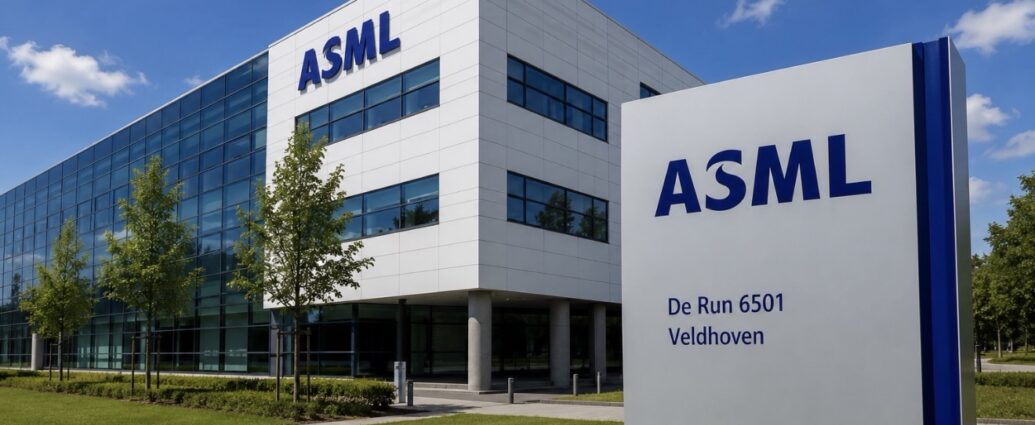
ASML Holding raised its 2026 revenue forecast Wednesday after reporting stronger-than-expected second-quarter sales and profit, as demand for the advanced equipment needed to manufacture artificial-intelligence chips continued to accelerate.
The Netherlands-based semiconductor-equipment company said it now expects 2026 net sales of between €43 billion and €45 billion, up from its previous forecast of €36 billion to €40 billion. At the midpoint, the revised projection represents an increase of approximately 16% from the earlier range.
ASML reported second-quarter revenue of €9.33 billion, exceeding the €8.80 billion average estimate compiled by LSEG. Net income reached €2.92 billion, above analysts’ expectation of €2.62 billion. The company’s Amsterdam-listed shares rose 3.7% to €1,613 during Wednesday morning trading and were up approximately 75% for the year at that point in the session.
The earnings report strengthens ASML’s position at the center of the global race to build more computing power for artificial intelligence.
The company behind the world’s most advanced chips
ASML produces lithography machines used to print extremely small electronic circuits onto semiconductor wafers. It is the world’s only manufacturer of extreme ultraviolet lithography systems, commonly known as EUV machines, which are required to produce many of the most advanced logic and memory chips.
Those chips are used in data centers that operate artificial-intelligence systems and cloud-computing platforms.
ASML’s customers include Taiwan Semiconductor Manufacturing Company, Samsung Electronics, SK Hynix and Micron Technology. Taiwan Semiconductor Manufacturing Company manufactures advanced chips for customers including Nvidia, whose processors have become central to the artificial-intelligence data-center expansion.
Chief Executive Officer Christophe Fouquet said customers were continuing to accelerate their capacity-expansion plans, giving ASML greater visibility into longer-term demand.
The company said demand for its lithography systems was “extremely strong.”
Capacity to increase by nearly one-third
ASML plans to increase production capacity for its flagship EUV equipment by approximately 30% in each of the next two years.
The expansion is significant because investors and semiconductor companies have increasingly viewed the limited supply of advanced chipmaking equipment as a potential bottleneck for the artificial-intelligence industry.
Nearly all of ASML’s expanded EUV capacity through 2027 is already booked, according to the company. ASML also plans to increase production of deep ultraviolet lithography systems, known as DUV machines, which are used to produce less advanced but still essential semiconductors.
The capacity increase could make it easier for chipmakers to expand their factories and meet demand from cloud providers, technology companies and data-center operators.
Intel and new High-NA technology
ASML also said Intel Corporation plans to use its new High Numerical Aperture EUV system, known as High-NA, to produce some of Intel’s advanced Panther Lake processors.
High-NA systems are designed to print smaller and more detailed circuits than previous EUV machines, potentially allowing semiconductor companies to increase processing power while fitting more transistors onto individual chips.
The planned Intel use represents an important commercial step for the technology.
ASML Chief Financial Officer Roger Dassen said the company’s capacity plans also account for demand from Terafab, a Texas chip-manufacturing project being developed to supply chips to SpaceX and Tesla.
China remains an important market
ASML expects Chinese customers to represent approximately 20% of its sales in 2026.
The company is prohibited from selling EUV systems and its most advanced DUV machines in China because of export restrictions led by the United States. It continues selling less advanced DUV systems to Chinese customers where permitted.
Dassen said Chinese demand remained strong, particularly among manufacturers producing logic chips for electrical grids, computers, smartphones, artificial-intelligence applications and the domestic Chinese market.
Further restrictions proposed by American lawmakers remain a business risk for ASML.
Why the results matter
ASML’s results provide a direct measure of how rapidly semiconductor manufacturers are expanding to meet artificial-intelligence demand.
Technology companies can announce billions of dollars in planned data-center investment, but those facilities ultimately depend on physical chips. Producing the most advanced chips requires specialized factories, complex supply chains and ASML lithography systems that can take substantial time to manufacture and install.
The company’s higher forecast and planned capacity expansion indicate that its customers are preparing for artificial-intelligence demand to remain strong beyond the current year.
For investors, the report also provides evidence that artificial-intelligence spending is continuing to flow beyond software companies and chip designers into the manufacturers of the equipment needed to build global computing infrastructure.
JBizNews Desk | Amsterdam
© JBizNews.com All Rights Reserved. Reproduction or distribution without written permission is prohibited.
Sources: ASML second-quarter 2026 financial results and company statements; Reuters reporting dated July 15, 2026.


European Union Weighs Easing Bank Capital Rules to Boost Lending and Competitiveness
BRUSSELS — The European Union is weighing changes to bank capital requirements that officials believe could increase lending, strengthen the bloc’s financial sector and improve the competitiveness of European banks against rivals in the United States and the United Kingdom.
The proposal, now under discussion within the European Commission, would adjust portions of the post-financial-crisis regulatory framework that banks say has placed European lenders at a competitive disadvantage while limiting their ability to finance economic growth.
If adopted, the changes would represent one of the most significant reviews of European banking regulation since the implementation of the Basel III capital standards.
Why Brussels Is Considering Changes
European policymakers are increasingly concerned that businesses are relying more heavily on American financial institutions for financing large acquisitions, infrastructure projects and capital-market transactions.
Bank executives have argued that higher regulatory capital requirements reduce their ability to lend, underwrite securities and compete internationally.
Supporters of the proposal believe carefully targeted adjustments could free billions of euros for additional business lending without undermining the overall stability of Europe’s financial system.
The discussions also come as governments across Europe seek new sources of private-sector investment to support economic growth, defense spending, digital infrastructure and energy security.
Not a Rollback of Banking Oversight
Officials have emphasized that the discussions do not represent a broad dismantling of safeguards established after the 2008 global financial crisis.
Instead, regulators are evaluating whether certain technical capital requirements can be modernized while preserving strong protections for depositors and the broader financial system.
European banks today generally hold substantially more capital than they did before the financial crisis and remain subject to extensive stress testing and supervisory oversight.
Any final proposal would still require approval through the European Union’s legislative process before taking effect.
Banks Welcome the Review
Large European lenders have long argued that regulatory differences place them at a disadvantage when competing with major U.S. financial institutions.
Executives contend that reducing unnecessary capital burdens would improve profitability while allowing banks to extend additional credit to businesses and consumers.
Financial institutions also argue that stronger bank lending could support investment, job creation and innovation across the European economy.
Investors have generally viewed the review as positive for the banking sector because lower capital requirements can improve returns on equity and increase financial flexibility.
Critics Urge Caution
Not everyone supports relaxing capital standards.
Some regulators and financial policy experts warn that weakening requirements could leave banks more vulnerable during future economic downturns or financial shocks.
They argue that stronger capital positions helped European banks withstand recent periods of market volatility and should not be compromised for short-term economic gains.
The debate highlights the ongoing challenge facing policymakers: encouraging economic growth while maintaining financial stability.
What Happens Next
The European Commission is expected to continue consulting regulators, financial institutions and member states before presenting any formal legislative proposal.
Until then, the discussions remain exactly that—proposals under consideration rather than adopted policy.
For businesses, the outcome could influence the availability and cost of corporate financing across Europe.
For investors, the review signals that European policymakers are increasingly focused on improving the global competitiveness of the region’s banking sector while balancing the lessons learned from the financial crisis.
JBizNews Desk | Brussels
© JBizNews.com All Rights Reserved. Reproduction or distribution without written permission is prohibited.
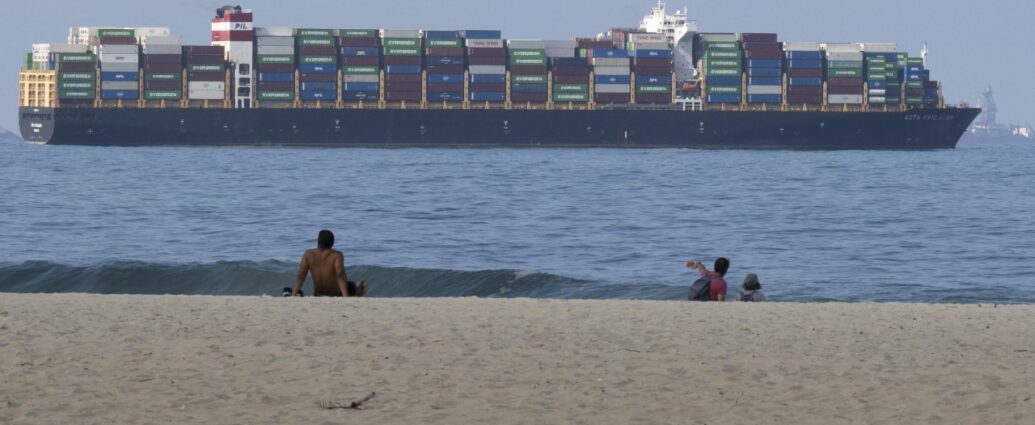
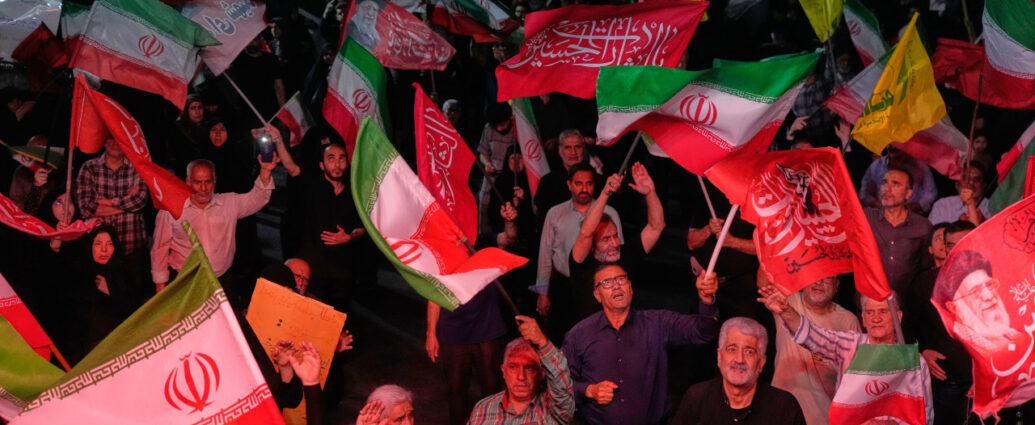

Asian Stocks Drop as Chip Selloff Pushes South Korea’s Kospi Down 7%
Asian stocks fell Thursday as renewed selling in semiconductor companies drove South Korea’s benchmark index sharply lower, reversing much of the previous session’s rebound after the country’s central bank raised interest rates for the first time in more than three years.
The Kospi dropped about 7%, with SK Hynix and Samsung Electronics among the biggest weights on the market. The decline followed a volatile week for South Korean technology shares after investors rapidly unwound positions that had benefited from expectations of sustained demand for artificial-intelligence memory chips.
The selloff came one day after the Kospi surged more than 6% as softer U.S. inflation data encouraged investors to return to riskier assets. That rebound proved short-lived after the Bank of Korea raised its seven-day repurchase rate by 25 basis points to 2.75%, its first increase since January 2023.
The central bank had held its benchmark rate at 2.50% since May 2025. Policymakers moved after inflation accelerated to 3.2% in June, above the bank’s 2% target, while a weaker won, elevated household debt and rising housing prices added pressure for tighter monetary policy.
South Korea’s economy has remained supported by strong semiconductor exports, giving the central bank room to raise rates despite uncertainty surrounding global growth. Exports increased more than 70% from a year earlier in June, led by demand for advanced chips used in artificial-intelligence data centers and high-performance computing.
The government recently raised its 2026 economic-growth forecast to 3%, reflecting the strength of the semiconductor industry and domestic fiscal spending. That expansion, however, has also contributed to higher wages, stronger consumer demand and renewed inflation concerns.
Chip shares have become the center of South Korea’s market volatility. SK Hynix, one of the world’s largest producers of high-bandwidth memory, has experienced unusually large price swings since completing its U.S. listing. The company’s American depositary receipts initially rallied after their Nasdaq debut, while its Seoul-traded shares later suffered their steepest one-day decline in years as investors took profits and reduced leveraged positions.
Samsung Electronics has been caught in the same rotation. Both companies had risen sharply during the past year as investors increased exposure to businesses supplying memory for artificial-intelligence processors. Their size within the Kospi means large changes in either stock can move the entire South Korean market.
The latest decline also followed weakness in U.S. semiconductor and computer-hardware shares. Dell Technologies, Micron Technology, Sandisk and other companies tied to memory, servers and artificial-intelligence infrastructure fell Wednesday, even as gains in Apple and other large technology companies helped the broader U.S. indexes finish higher.
Investors have become more selective across the artificial-intelligence trade after a period in which chipmakers, memory producers, server manufacturers and data-center suppliers climbed together. Concerns about stretched valuations, future production capacity and the timing of returns from large AI investments have produced wider differences between individual companies.
South Korea’s rate increase placed additional pressure on richly valued growth shares because higher borrowing costs reduce the present value investors assign to future earnings. The decision also strengthened the won modestly, with the currency trading near 1,486 per dollar, after losing more than 4% during 2026.
The Bank of Korea is balancing the strength of the export economy against inflation, household borrowing and currency weakness. The country continues to post large current-account surpluses, but capital outflows and demand for foreign assets have limited support for the won.
Markets are now assessing whether Thursday’s decline represents another temporary reversal in an increasingly volatile semiconductor trade or the beginning of a broader reduction in exposure to South Korean technology shares.
Demand for advanced memory remains strong, and the country’s chip exports continue to grow rapidly. The immediate market concern is no longer whether artificial-intelligence spending exists, but whether the earnings expected from that spending can keep pace with the sharp rise in share prices.
JBizNews Desk | Seoul
© JBizNews.com All Rights Reserved. Reproduction or distribution without written permission is prohibited.

Asia Equities Mostly Decline on AI Concerns
Trump Says Iran Wants a Settlement as U.S. Launches New Waves of Strikes
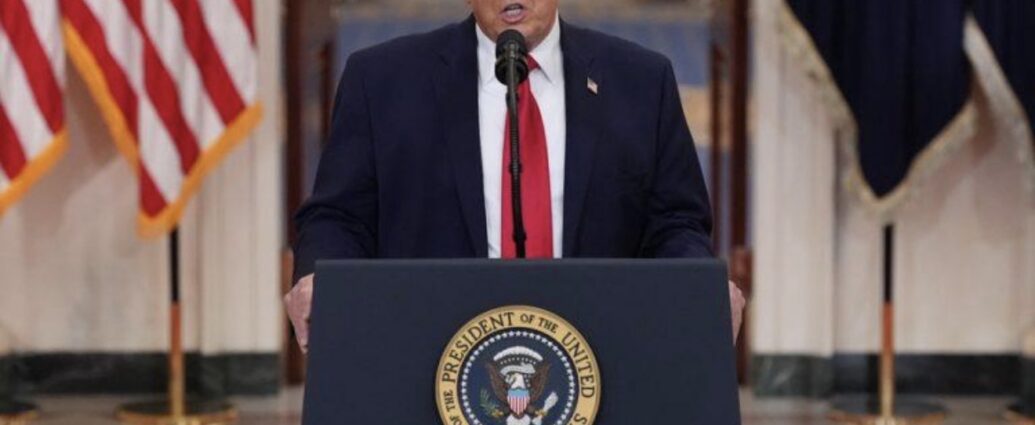
President Donald Trump said Iran wants to reach a settlement with the United States as American forces launched two new waves of strikes against Iranian coastal defenses, missile sites and military infrastructure on Wednesday, July 15, escalating a conflict that has entered its fifth month without a broader agreement.
Speaking at the Pennsylvania Defense and Innovation Summit, Trump said Iranian officials wanted to negotiate but left open the possibility of further military action if no agreement is reached.
“They don’t like what we’re doing, and they do want to settle,” Trump said. “We’ll find out whether or not we settle with them, or we just finish it off.”
Trump also said Iran would be defeated soon, while the administration continued weighing additional military options intended to weaken Tehran’s ability to threaten commercial shipping and U.S. forces throughout the region.
U.S. Central Command said the first wave began at approximately 6 a.m. Eastern time and targeted coastal-defense systems and cruise-missile storage and launch sites on Greater Tunb Island during a 90-minute operation. A second wave began roughly nine hours later and struck targets in several locations, including Bandar Abbas, Iran’s largest port and a major base for the Iranian navy and the Islamic Revolutionary Guard Corps.
CENTCOM said the strikes hit Iranian command centers, air-defense positions, missile and drone capabilities, and coastal-surveillance facilities. American officials said the campaign was intended to degrade Iran’s ability to interfere with traffic through the Strait of Hormuz, where military activity and attacks on commercial vessels have sharply reduced shipping.
Iran said late Saturday that it had closed the strait. Military operations have further limited vessel traffic through the passage, which handled approximately one-fifth of global oil and gas shipments before the war. Brent crude closed Wednesday at $84.95 a barrel, its highest level in about a month.
The American military also said it disabled an empty oil tanker that was sailing toward Kharg Island after the vessel ignored repeated warnings. U.S. forces fired Hellfire missiles into the ship’s smokestack. Since restoring a naval blockade of Iran on Tuesday, the military has redirected two ships and disabled another vessel, according to CENTCOM.
Iran retaliated against American military positions in neighboring countries. The Revolutionary Guard said it struck U.S. targets in Bahrain, Kuwait and Jordan, including a radar system and an area used by American personnel at Ali Al Salem Air Base in Kuwait. The United States had not released a public casualty assessment from those attacks as of Wednesday evening.
Iranian media reported explosions near Bandar Abbas and in the areas of Ahvaz, Konarak, Sirik and Qeshm. The state broadcaster said strikes near a hospital in Ahvaz that includes a pediatric cancer center forced a temporary evacuation. Independent confirmation of the reported damage and casualties was not immediately available.
Mohammad Baqer Qalibaf, Iran’s parliament speaker and top negotiator, said Tehran would insist on what he called Iranian arrangements governing the Strait of Hormuz. He described the conflict as an “essential and existential war with America.”
Iran’s military has said the strait will not reopen unless the United States complies with a 14-point memorandum of understanding signed in June and accepts Iranian rules governing ship traffic. The agreement was intended to stop the fighting and create a path toward a broader settlement, but the truce later collapsed.
Three U.S. officials said the latest strikes were also reducing Iranian capabilities that would need to be destroyed before more complex American military operations could be undertaken. One official described the attacks as “shaping operations” that could prepare the battlefield if Trump orders a larger campaign.
Options discussed within the administration have included seizing Kharg Island, the terminal responsible for roughly 90% of Iran’s oil exports, and striking a deeply buried facility associated with Iran’s nuclear program known as Pickaxe Mountain. Trump said Tuesday that U.S. forces had avoided Iranian oil facilities during earlier strikes on Kharg Island but did not rule out taking control of it later.
Iran has suffered extensive damage to its conventional military and defense-industrial base since U.S. and Israeli operations began on February 28, but American officials say Tehran retains significant missile and drone capabilities. Those weapons have allowed Iran to continue attacking tankers and military sites despite the destruction of much of its traditional naval force.
Trump said Tuesday that American negotiators had communicated with Iranian representatives and told them to make a deal. Wednesday’s strikes showed that the administration is continuing diplomatic contacts while simultaneously increasing military pressure.
Trump also announced that Iran had permitted an American citizen prevented from leaving the country since 2024 to depart. Human-rights attorney Jared Genser identified her as Dena Karari and said she was safely traveling back to the United States.
The administration has not announced a new negotiating schedule or the terms Iran would have to accept to end the renewed military campaign.
JBizNews Desk | Washington
© JBizNews.com All Rights Reserved. Reproduction or distribution without written permission is prohibited.
Iran Threatens to Halt All Gulf Energy Exports as Brent Climbs Past $85
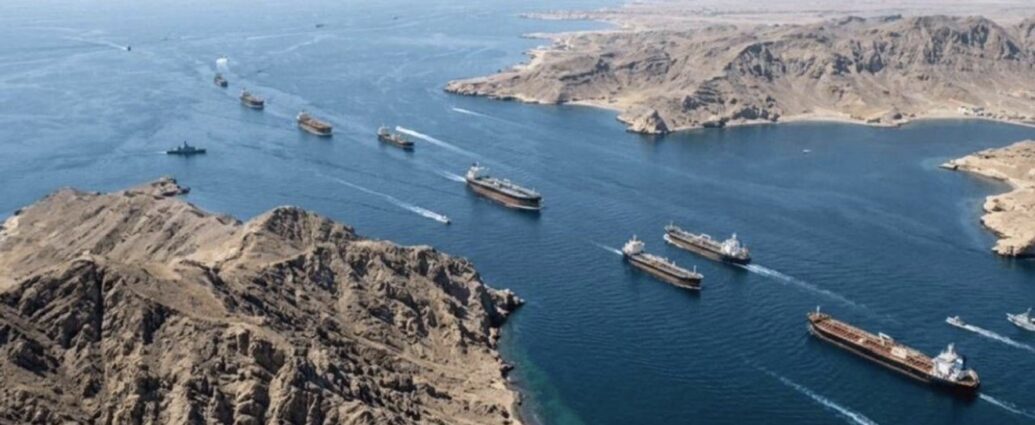
Iran’s Revolutionary Guard threatened Wednesday to stop all energy exports from the Middle East in response to the American blockade, declaring that oil and gas will leave the region “either for everyone or for no one.” Hours earlier, U.S. Central Command said American forces had struck dozens of targets overnight and then resumed hitting Iran in daylight — an unusual escalation.
Brent crude traded above $85 a barrel on Wednesday, more than 15% above its pre-war price and still well below the nearly $120 reached at the height of the conflict.
Where the fighting is now
Among the targets was Greater Tunb Island, a strategic position inside the Strait of Hormuz. CENTCOM said the strike hit Iranian defense and missile sites. Iran seized Greater Tunb, Lesser Tunb and Abu Musa in 1971 from territory that became the United Arab Emirates, which has sought them back ever since. Analysts have suggested that whoever holds those islands can effectively control the strait.
A second strike hit a barracks for Iran’s 388th Mechanized Infantry Brigade in Sistan and Baluchestan province. Iranian state television reported at least 13 missiles fired and seven dead, including conscripts and career soldiers. Iranian government spokesperson Fatemeh Mohajerani said more than 30 people have been killed in recent days.
Why the strait still isn’t open
This is day 135 of a crisis that began February 28. In peacetime, roughly a fifth of the world’s oil and gas trade moves through Hormuz — the Congressional Research Service puts it near 27% of maritime crude and petroleum products.
During the interim deal, some ships began moving through a route near Oman overseen by the U.S. military and outside Tehran’s control. In recent days Iran attacked vessels using that corridor, and the exchanges resumed. Washington has threatened to reopen the strait by force. Experts say that would require a far larger armada, if not tens of thousands of ground troops.
Mediation is fraying. Oman, struck by Iran on July 12, has not withdrawn as mediator but has a credibility problem. Qatar, which hosted the most recent technical talks, was also struck. Pakistan’s track has been inactive since early July, and the Islamabad memorandum signed June 17 is functionally suspended. The 60-day nuclear window expires August 17 with no substantive discussion held.
The bill
The International Monetary Fund issued the warning that ought to concern anyone running a business with a supply chain. Economists Azim Sadikov and Jean-Marc Natal wrote that the world’s buffer has shrunk — spare capacity deployed, demand compressed, inventories drawn down. Unless inventories are replenished, they wrote, “the world will start from a weaker position when the next shock comes.”
That is the part most coverage misses. Oil at $85 is survivable. Oil at $85 with no cushion left is a different animal.
The costs are already in the system. War-risk insurance premiums for the strait went from 0.125% of a ship’s insured value per transit to between 0.2% and 0.4% — roughly a quarter-million-dollar increase for a very large crude carrier. Iran has reportedly charged tolls as high as $2 million per ship for passage. The International Maritime Organization reported some 20,000 mariners and 2,000 ships stranded in the Gulf in April.
What it means at the register
Oil is the headline. Fertilizer may matter more. Up to 30% of internationally traded fertilizer normally transits Hormuz, with the Gulf accounting for roughly 30% to 35% of global urea exports and 20% to 30% of ammonia. Fertilizer prices feed grain prices, which feed food prices — on a lag of months, not days. Pharmaceutical shipments have been disrupted as well.
Regular gasoline averaged $3.88 a gallon nationally in recent days, about 70 cents higher than a year ago, according to AAA. Every delivery route, every landscaping truck, every distributor in the tri-state area is paying that spread.
The politics
Rising prices are a direct problem for President Trump and Republicans hoping to hold Congress in November. The Joint Chiefs of Staff warned him before the February strikes that Iran might close the strait. He dismissed it, telling his team Iran would capitulate — and that if it didn’t, the U.S. military could reopen the waterway.
Four and a half months later, it hasn’t.
JBizNews Desk | New York © JBizNews.com All Rights Reserved. Reproduction or distribution without written permission is prohibited.
More American Businesses Are Now Inherited Than Bought, Bank of America Study Finds
For the first time in the survey’s history, wealthy Americans are more likely to have inherited their business than to have bought it, according to the 2026 Study of Wealthy Americans released June 17 by Bank of America Private Bank. Its president, Katy Knox, said the Great Wealth Transfer is “not simply a transfer of assets” but a shift in how families engage with what they own.
The reversal is fast. In 2026, 23% of business owners surveyed said they inherited their company, against 11% who purchased it. Two years ago, the inherited figure was 11%. In 2022, it was 5% inherited against 28% purchased.
That is a complete flip in four years.
The number behind the number
Cerulli Associates estimates $124 trillion will change hands in the United States over the next 25 years, with annual transfers from the Baby Boomer generation reaching nearly $5 trillion by 2048. That projection was $84 trillion as recently as 2021 — a 48% revision upward. Millennials and Generation X, roughly ages 30 to 61, are expected to inherit close to $18 trillion in the next decade alone.
Most of it goes to women. The Bank of America Institute estimates close to $100 trillion of the total will end up with women — $47 trillion to younger generations as inherited wealth, $54 trillion to surviving spouses, of whom 95% are expected to be women.
Why businesses are staying in the family
Two forces are pushing the same direction.
The first is that companies are staying private longer. Apollo chief economist Torsten Slok, citing University of Florida finance professor Jay Ritter, has noted the median age at which companies go public has climbed since 2022, when the Federal Reserve began raising rates. A boom in private capital lets large firms raise billions without ever ringing the bell. Private companies are harder to cash out of — so they get handed down instead.
The second is tax. The current structure rewards holding assets until death rather than selling during life. The study found a notable portion of owners have no plans to transition out at all, while the majority intend to eventually pass ownership to family heirs.
The gap that should worry every family business
Here is the finding with teeth: 78% of respondents said succession planning matters. Only 20% have a fully documented plan.
That is the whole story for the tri-state’s family-owned distributors, contractors, retailers, medical practices and real estate holdings. An entire generation of owners intends to hand the business to their children and has not written down how. Family involvement in these companies has already increased since 2024 across senior and middle management roles — the transition is happening whether the paperwork exists or not.
Among the ultra-wealthy, 79% involve advisors in estate conversations with heirs. Only 36% believe their heirs are very prepared to receive an inheritance, and 61% worry that family wealth will damage their children’s motivation. Their remedies: backing heirs’ own ventures (51%), writing provisions into trusts (41%), and simply not telling the kids the full number.
What the heirs will do with it
They will not invest like their parents. Among ultra-high-net-worth respondents with $25 million or more, 77% say private markets offer better opportunity than public ones. Among younger investors, 67% doubt stocks and bonds can deliver above-average returns, 58% own crypto, and 88% expect to increase allocations to alternatives. Family offices are moving the same way — 87% of family office wealth has yet to pass to the next generation, and 59% of it will move within the decade, according to a separate Bank of America Private Bank family office study.
The other reading
A rising share of inherited businesses is also a measure of concentration. The Federal Reserve Bank of St. Louis puts the top 1% of American households at nearly one-third of national wealth — roughly $44 trillion, about what the bottom 90% holds combined. Businesses passing down rather than trading hands means fewer opportunities for outside buyers to acquire a going concern, and fewer entry points for the operator who has capital but no last name.
The methodology
Escalent conducted the online survey for Bank of America Private Bank, polling 1,431 respondents aged 21 and older with at least $3 million in investable assets excluding a primary residence. The margin of error is plus or minus 2.5 points at a 95% confidence level. Respondents are a nationally representative sample of high-net-worth Americans and not necessarily bank clients.
The takeaway for owners: the transfer is not coming. It is here, and four in five of you have not put it on paper.
JBizNews Desk | New York © JBizNews.com All Rights Reserved. Reproduction or distribution without written permission is prohibited.
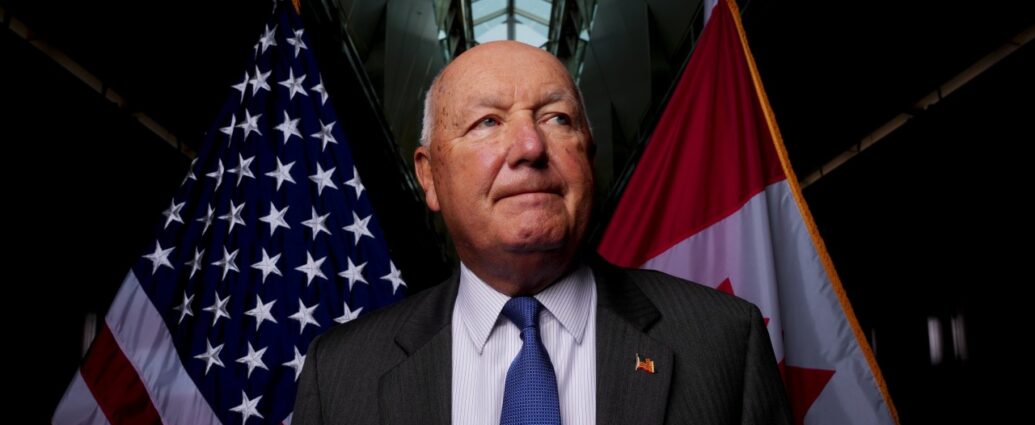

Canadian Wildfires Push Choking Smoke Into New York and New Jersey, Disrupting Business and Daily Life Across the Northeast
Residents across New York, New York City, Brooklyn, Queens, Staten Island, Long Island, Westchester County and much of Central and North Jersey opened their doors Wednesday, July 15, expecting another sweltering summer day. Instead, many were met with the unmistakable smell of smoke, burning eyes, scratchy throats and a gray haze that made it difficult to see across city skylines.
For many, the first question was simple: “Where is the fire?”
The answer surprised millions of people.
There is no major wildfire burning in New York or New Jersey.
The smoke blanketing the Northeast originated hundreds of miles away in Canada, where one of the country’s most active wildfire seasons in recent years continues to burn across large sections of Ontario, Manitoba and Saskatchewan. While many of those fires have been burning for days and, in some cases, weeks, the reason the smoke suddenly appeared across the Northeast on Wednesday had nothing to do with new fires starting. It was caused by a major shift in the weather.
Strong upper-level winds that had previously carried the smoke elsewhere changed direction, pushing an enormous plume southeast across the Great Lakes and directly into some of America’s largest population centers. Within hours, air quality deteriorated across New York, New Jersey, Connecticut, Pennsylvania, Massachusetts and other parts of the Northeast and Mid-Atlantic, leaving millions of people wondering why the air suddenly smelled like a campfire.
The fires themselves remain in Canada. The smoke does not.
Wildfire smoke rises thousands of feet into the atmosphere, where it can travel hundreds or even thousands of miles before descending back toward the ground. When those weather patterns align, communities far removed from the flames can experience air quality nearly as poor as areas much closer to the fires.
That is exactly what happened Wednesday.
The smoke carried billions of microscopic particles known as PM2.5—tiny pieces of ash, soot and burned vegetation small enough to travel deep into the lungs. Those particles are responsible for the burning eyes, coughing, sore throats, headaches and breathing discomfort reported throughout the region. For people with asthma, chronic lung disease, heart conditions, young children, older adults and pregnant women, the health risks are significantly greater.
Health officials urged residents to remain indoors whenever possible, keep windows and doors closed, run air-conditioning systems in recirculation mode and use high-efficiency air filtration where available. People who must spend extended periods outdoors were advised to wear properly fitted N95 or KN95 masks.
The smoke affected far more than New York City.
Conditions stretched across Manhattan, Brooklyn, Queens, the Bronx, Staten Island, Long Island and the Lower Hudson Valley before spreading throughout northern and central New Jersey, including Newark, Jersey City, Elizabeth, Edison, New Brunswick, Woodbridge, Freehold, Lakewood, Toms River, Princeton and surrounding communities. Similar conditions extended into Pennsylvania, Connecticut, Rhode Island, Massachusetts, Vermont, New Hampshire and Maine, while hazy skies were also reported farther south across portions of the Mid-Atlantic.
The flames themselves are not expected to spread into New York or New Jersey.
Unlike a hurricane, wildfire smoke can travel enormous distances without the fire ever approaching the affected area. The current threat crossing the border is the smoke—not the flames.
Canada continues deploying thousands of firefighters, aircraft, helicopters and specialized equipment in an effort to contain the largest fires and protect threatened communities. Many of the fires, however, are burning deep inside remote forests where there are few roads and limited access. In many locations, firefighters focus on protecting nearby towns and critical infrastructure rather than attempting to extinguish every fire immediately. Ultimately, widespread rainfall and changing weather patterns often become the deciding factor in bringing large wildfires under control.
For businesses across the Northeast, the economic effects begin long before any property is damaged.
Construction projects slow as crews require more frequent breaks. Roofing companies, landscapers, utility workers, delivery services, road construction teams and transportation operators lose productivity as unhealthy air combines with near-100-degree temperatures. Employers must balance deadlines with worker safety while complying with health guidance during periods of poor air quality.
Summer camps across the region have canceled or reduced outdoor activities, moving children into indoor facilities for much of the day. Recreational programs, athletic leagues and outdoor events have adjusted schedules or postponed activities as smoke levels fluctuate. Restaurants lose outdoor dining customers, parks become quieter and tourism suffers when skylines disappear behind heavy haze during the busiest weeks of the summer travel season.
The effects ripple across the broader economy. Consumers postpone shopping trips, outdoor entertainment and recreational activities. Electricity demand rises sharply as households keep windows closed and air-conditioning systems running throughout the day. Retailers selling portable air purifiers, HVAC filters, allergy medications and high-filtration masks often experience a surge in demand, while many other businesses see reduced customer traffic.
The financial impact is measured less by physical destruction than by lost productivity, delayed projects, increased operating costs and changes in consumer behavior. Thousands of businesses may each lose only a small portion of a day’s activity, but across one of the nation’s largest economic regions those losses accumulate quickly.
Forecasters expect smoky conditions to continue through at least Friday, with additional waves of smoke possible depending on changing wind patterns. Because Canada’s wildfire season typically extends well into late summer and early fall, additional smoke events remain possible even after this week’s conditions improve.
For millions of Americans, Wednesday served as a reminder that today’s economy—and today’s environment—do not stop at national borders. A wildfire burning hundreds of miles away in northern Canada can, within a matter of hours, become a public health emergency in Manhattan, a business disruption in Central New Jersey and an economic challenge for employers across the Northeast.
JBizNews Desk | New York
© JBizNews.com All Rights Reserved. Reproduction or distribution without written permission is prohibited.

China’s Economy Grows 4.3% in Second Quarter, Slowest Pace Since Late 2022
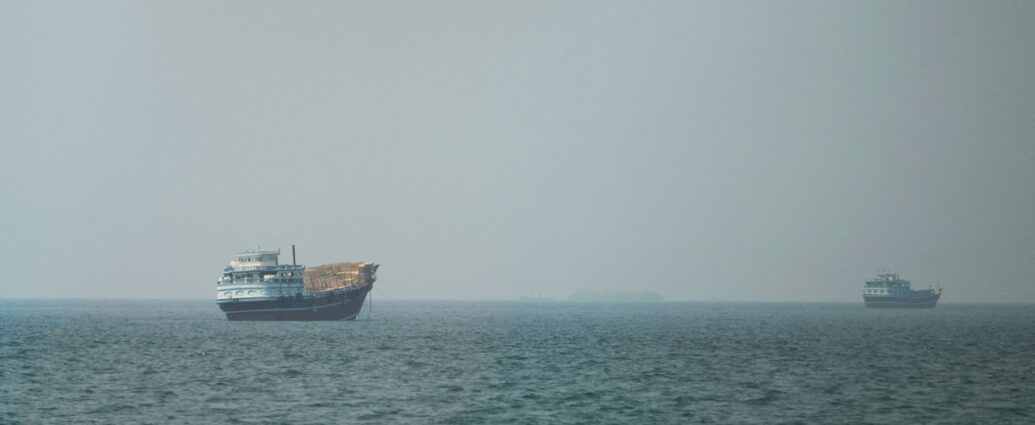
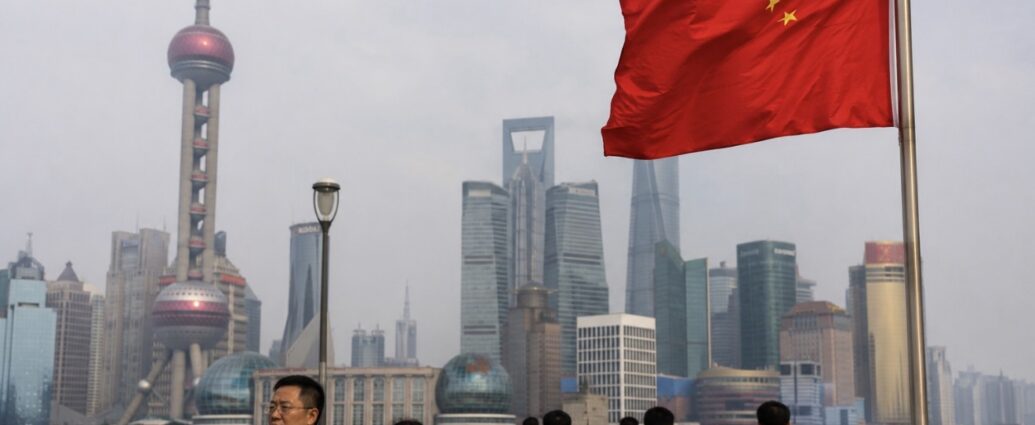
China’s economy expanded 4.3% during the April–June quarter compared with a year earlier, the country’s National Bureau of Statistics reported Wednesday in Beijing, marking the weakest quarterly growth since the fourth quarter of 2022, when China was still battling the COVID-19 pandemic.
The result fell short of the 4.5% growth forecast by economists surveyed by Reuters and represented a noticeable slowdown from the 5.0% pace recorded during the first quarter of 2026.
On a sequential basis, China’s economy grew 0.9% during the second quarter, down from 1.3% during the first three months of the year.
The weaker performance also came in below Beijing’s own full-year growth objective. Chinese leaders have set a 4.5% to 5.0% target for 2026—the country’s least ambitious annual growth goal in decades. Through the first half of the year, China’s economy has expanded 4.7%, according to official data.
The unusually candid assessment from the National Bureau of Statistics underscored growing concern inside Beijing. Rather than emphasizing stability, the agency described the imbalance between excess industrial production and weak domestic demand as “acute” and urged policymakers to strengthen counter-cyclical economic measures.
A Two-Speed Economy
The second-quarter report paints a picture of two very different Chinese economies.
Factories continue producing at a healthy pace.
Consumers remain reluctant to spend.
Industrial production rose 5.3% in June from a year earlier, exceeding economists’ expectations of 4.7% and accelerating from 4.5% growth in May.
Exports remained remarkably resilient despite continued disruptions to global shipping following tensions in the Middle East. Overseas shipments climbed 27% during June and 17.6% during the first six months of 2026, driven largely by semiconductors, computer equipment and green-energy technologies.
Domestic demand tells a far different story.
Retail sales increased just 1.0% during June. While that modest gain exceeded forecasts for a 0.1% decline and improved from May’s 0.6% contraction—the first monthly decline since late 2022—it remains historically weak for the world’s second-largest economy.
Investment continues to deteriorate even more rapidly.
Urban fixed-asset investment, including infrastructure and property development, fell 5.7% during the first half of 2026 compared with a year earlier. Economists had expected a smaller 4.9% decline, while the first five months of the year had shown a 4.1% contraction.
China’s troubled property sector remains the biggest drag.
Real estate investment plunged 18% during the first half of the year, worsening from the 16.2% decline reported through May.
What Economists Are Watching
Several economists pointed to collapsing domestic investment as the primary reason China’s headline growth continues slowing.
Andy Ji, Asian FX and rates analyst at ITC Markets in Shanghai, argued that strong manufacturing cannot fully offset collapsing domestic consumption and weakening investment, leaving policymakers with increasingly limited options beyond additional fiscal stimulus.
Fabien Yip, market analyst at IG in Sydney, said manufacturing continues carrying China’s economy while the consumer-led recovery Beijing had hoped for “hasn’t really played out yet.” She also noted the People’s Bank of China has discussed interest-rate flexibility but has yet to deliver meaningful easing.
Junyu Tan, North Asia economist at Coface in Hong Kong, believes June showed early signs of stabilization. Government trade-in subsidy programs helped lift retail spending, while investment declines moderated slightly. However, he warned stronger policy support will likely be required, including faster local government bond issuance and possible interest-rate reductions.
Not every economist sees immediate danger.
Zhiwei Zhang, chief economist at Pinpoint Asset Management, noted that China’s strong first quarter still leaves the country within reach of its annual growth objective. He believes exports continue outperforming expectations and said the Politburo meeting scheduled for late July will likely provide greater clarity regarding Beijing’s next round of economic policies.
Tianchen Xu, senior economist at the Economist Intelligence Unit, expects China to expand stimulus efforts during the third quarter, including possible interest-rate cuts. He said local governments have redirected significant funding toward debt restructuring, leaving fewer resources for new infrastructure projects, but expects public spending to accelerate later this year.
Why American Businesses Should Care
China’s slowing consumer economy has important implications for American companies.
Businesses that built long-term growth strategies around China’s expanding middle class—including automakers, luxury goods companies, hotel operators, food producers and consumer brands—face a much more difficult sales environment.
Weak Chinese demand also tends to reduce global prices for commodities such as crude oil, copper, soybeans and industrial machinery. Lower input costs benefit many American manufacturers while creating challenges for U.S. farmers, mining companies and energy producers that rely heavily on Asian demand.
Perhaps the greatest concern is excess manufacturing capacity.
When Chinese factories continue producing at high levels while domestic consumers spend less, surplus products increasingly flow into global markets at lower prices.
Capital Economics has warned that China’s manufacturing overcapacity remains deeply entrenched, leaving export growth as one of the country’s primary economic engines. That dynamic could intensify pricing pressure on American producers in industries including steel, solar panels, batteries and electric vehicles while increasing trade tensions between Washington and Beijing.
The International Monetary Fund recently raised its 2026 China growth forecast from 4.4% to 4.6%, citing continued strength in advanced manufacturing and exports, even as it trimmed its global growth forecast to 3.0%.
Economists surveyed by Reuters expect China’s economy to expand 4.6% this year before slowing further to approximately 4.4% in 2027.
JBizNews Desk | New York
© JBizNews.com All Rights Reserved. Reproduction or distribution without written permission is prohibited.

Vance Ramps Up Criticism of Israel


Serbian Consul Božović Elected as New President of Society of Foreign Consuls in New York
Ambassador Dr. Vladimir Božović becomes the first Serbian representative to lead the diplomatic organization in its 102-year history
NEW YORK, July 15, 2026 — Ambassador Dr. Vladimir Božović, Consul General of the Republic of Serbia in New York, has been unanimously elected President of the Society of Foreign Consuls in New York (SOFC), becoming the first representative of Serbia to lead the prestigious diplomatic organization in its 102-year history.
The election followed the Society’s Annual General Assembly and Ceremonial Session at the Consulate General of the Republic of Argentina in New York, where members approved the organization’s annual activity and financial reports before electing new leadership.
Founded in 1924, the Society of Foreign Consuls in New York is one of the oldest and most respected diplomatic organizations in the United States. It brings together foreign consuls accredited in New York to strengthen diplomatic cooperation, encourage international understanding, expand commercial relationships, and foster engagement with municipal, state, federal, and international institutions.
The gathering opened with welcoming remarks from Gerard Díaz Bartolomé, Consul General of Argentina in New York, who emphasized the importance of continued cooperation among member states and the Society’s role in strengthening diplomatic relations in one of the world’s leading international cities.
Outgoing SOFC President Maia Bartaia, Consul General of Georgia, presented the Society’s annual report, highlighting expanded programming, increased public visibility, stronger engagement among member nations, and a 63 percent increase in the Society’s budget during her tenure. She thanked members for their confidence and described serving as President as both an honor and a responsibility.
Following approval of the annual reports, Ambassador Božović was nominated by the Executive Board to serve as the Society’s next President. The nomination was then unanimously approved by the member states, making him the first Serbian diplomat ever elected to lead the organization in its more than century-long history.
His election follows another milestone achieved just one year earlier, when he became the first Serbian representative elected Vice President of the Society of Foreign Consuls, while Serbia also secured a second consecutive term on the Society’s Executive Committee, further strengthening its role within New York’s international diplomatic community.
In his inaugural address, Ambassador Božović thanked member states for their confidence and described the election as an important recognition not only for himself personally, but also for the Republic of Serbia, Serbian diplomacy, and the work of the Consulate General of the Republic of Serbia in New York. He said the historic achievement reflects Serbia’s growing reputation and increasingly important role within international diplomatic circles.
Presenting his vision for the Society, Ambassador Božović pledged to strengthen cooperation and solidarity among member nations while expanding partnerships with the City of New York, the State of New York, the United States Department of State, the Office of Foreign Missions, and the United Nations. He also committed to expanding public diplomacy and digital diplomacy to strengthen engagement among diplomats, governments, businesses, and communities.
Among the priorities of his presidency are establishing an annual SOFC Leadership Award, launching a Diplomatic Leadership Program, creating initiatives for young diplomats and future international leaders, and expanding programs that promote international cooperation, friendship, cultural understanding, and stronger economic relationships among nations.
The ceremony was attended by Cathy Egan, Director of the Office of Foreign Missions at the U.S. Department of State, who congratulated Ambassador Božović on his election, wished him success during his presidency, and reaffirmed the Office’s commitment to maintaining close cooperation with the Society throughout his term.
Ambassador Božović brings to the presidency a distinguished career spanning law, public service, national security, and international diplomacy. His service has included senior leadership positions within Serbia’s Ministry of Internal Affairs, work involving international security cooperation, and service as Serbia’s Ambassador to Montenegro before assuming his current position as Consul General in New York.
Throughout his diplomatic career, Ambassador Božović has emphasized economic diplomacy alongside traditional diplomacy, promoting stronger commercial ties, investment opportunities, and international cooperation between governments and the private sector.
That commitment has also been reflected in his longstanding relationship with the Orthodox Jewish Chamber of Commerce and JBiz. Ambassador Božović previously participated in the JBiz Expo & Economic Forum at Harrah’s Waterfront Conference Center and was later recognized during World Trade Week for his leadership in advancing international commerce, diplomacy, and economic cooperation.

According to Duvi Honig, Founder and Chief Executive Officer of the Orthodox Jewish Chamber of Commerce and JBiz, Ambassador Božović personally called him following his nomination and election to share the historic news, telling Honig he was his first call after the election. Honig said Ambassador Božović reaffirmed that JBiz and the Orthodox Jewish Chamber of Commerce are valued partners and expressed his desire to continue expanding their longstanding relationship through personal collaboration and governmental partnerships that strengthen diplomacy, international trade, investment, and economic development.
Honig praised the appointment, calling Ambassador Božović “a true leader who is widely respected and genuinely well-liked throughout the international diplomatic community. His integrity, vision, and ability to build meaningful relationships make him an outstanding choice to lead the Society of Foreign Consuls. I have no doubt he will be an extraordinary asset to the Society, its member nations, and the international community as a whole, and we look forward to continuing our partnership in advancing economic growth, diplomacy, and international cooperation.”
Beyond diplomacy, the Society of Foreign Consuls has a long history of supporting charitable and humanitarian initiatives while serving as an important bridge between the diplomatic community and government institutions throughout New York. Its work promotes cultural exchange, educational initiatives, economic engagement, humanitarian cooperation, and dialogue that strengthens international understanding.
Ambassador Božović’s election represents a landmark achievement for Serbian diplomacy and a significant vote of confidence from the international diplomatic community. As the first Serbian representative to lead the Society in its 102-year history, his presidency marks a new chapter for one of America’s most respected diplomatic organizations while reinforcing Serbia’s growing influence in global diplomacy and international economic engagement.
JBizNews Desk | New York
© JBizNews.com All Rights Reserved. Reproduction or distribution without written permission is prohibited.
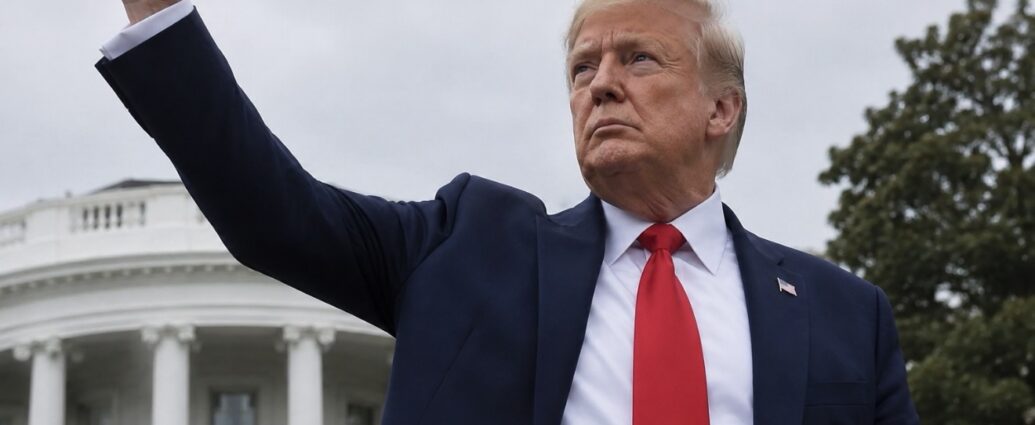
Washington Backs $8 Billion Iraq-to-Syria Pipeline Built to Skip the Strait of Hormuz
The U.S. State Department confirmed on Tuesday, July 14, that Washington is backing an effort by Iraq and Syria to rebuild a crude oil pipeline across their border — a project designed to move Iraqi oil to the Mediterranean without ever touching the Strait of Hormuz. A State Department official said the United States is supporting the reconstruction of the line between the two countries, A News and the official added that American companies are expected to take part in building it.
The man driving it is Thomas Barrack, President Donald Trump’s special envoy for Syria and Iraq and ambassador to Turkey. Barrack has been convening talks with officials from both governments and with companies including Chevron Corp. about restarting a pipeline running from Iraq to Syria’s western coast. Several routes are on the table, but the discussions center on the Kirkuk-to-Baniyas line, shut for more than two decades. Bloomberg
The announcement landed the same day Trump hosted Iraqi Prime Minister Ali al-Zaidi in the Oval Office — al-Zaidi’s first trip to Washington since taking office. Trump told reporters that “massive” new oil deals with Iraq would be announced soon, saying the country has tremendous potential and that American companies would be pulling a lot of oil out of the ground. Bloomberg He said Energy Secretary Chris Wright would roll out a series of oil partnerships within days. Washington Times
The pipeline itself
The Kirkuk-Baniyas line is old. It was built in 1952, carried roughly 300,000 barrels per day, and was shut down in 1982 amid a political rupture between the Iraqi and Syrian Ba’ath parties. It reopened briefly in 2000, then was badly damaged during the 2003 invasion and has been dead ever since. Global Energy Monitor
Rebuilding it is not a patch job. The route needs its pumps and electrical systems wholesale replaced, and officials estimate the work will take two to three years. Pipeline-journal Iraq’s cabinet approved preliminary agreements on July 5 clearing a U.S.-Qatari consortium — TI Capital, Chevron, and Qatar’s UCC — to study the export routes. Cost estimates for the 800-to-880 kilometer line run between $4.5 billion and $8 billion. Crypto Briefing Al-Zaidi is expected to sign the deal with the American firms and the Qatari builder covering links to ports in both Turkey and Syria. The Hill
Barrack has told Iraqi officials he wants the pipeline to serve as a template for other Western-backed projects across the Levant. Middle East Eye The project only became possible after the Trump administration lifted major sanctions on Syria and pulled the country off the State Sponsors of Terrorism list following the fall of Bashar al-Assad. Pipeline-journal
Why Iraq is desperate
Baghdad has no leverage right now, and everyone knows it. Iraq exports 95 percent of its oil through the Strait of Hormuz, and oil sales make up 90 percent of the state budget. Energy analytics firm Vortexa reported that Iraq’s seaborne oil exports in May came in at just 8 percent of the prior year’s average. Middle East Eye
That is a national emergency dressed up as an infrastructure deal. While the pipeline sits offline, Iraq has been trucking crude across Syria to Baniyas — somewhere between 10,000 and 220,000 barrels a day, moved by road. Crypto Briefing
The market backdrop
Tuesday was violent. West Texas Intermediate futures rose 1.5 percent to close at $79.34 a barrel and Brent gained 1.72 percent to settle at $84.73. The U.S. military struck Iran again and reimposed its blockade of Iranian ports at 4 p.m. Eastern, according to U.S. Central Command. Trump dropped his demand that ships pay a 20 percent cargo fee to cross Hormuz, saying Gulf states would invest in the U.S. instead — he backed off after the shipping industry pushed back and the International Maritime Organization said mandatory tolls in the strait are illegal. CNBC
Iran’s Revolutionary Guard said it hit two supertankers running through the strait with transponders off. The UAE’s ADNOC confirmed two of its tankers were struck, killing one mariner and injuring others. CNBC Rory Johnston, founder of research firm Commodity Context, said traffic through Hormuz is grinding to a halt and that the stock cushion that absorbed the earlier shock has largely been drained. Al Jazeera
What it means for business
For Chevron and the American contractors lining up behind it, this is a multibillion-dollar build in a country that just told Washington it prefers U.S. capital to anyone else’s. Al-Zaidi called the American partnership the most important strategic relationship in the world, and said it is about money, not emotion. The Hill
For oil buyers, the math is simpler. Roughly a fifth of the world’s petroleum moves through Hormuz. A restored 300,000-barrel line to the Mediterranean would price Iraqi crude against European and African benchmarks instead of Asian ones Crypto Briefing — and take that volume out of Iran’s reach entirely.
Trump and al-Zaidi both said the remaining U.S. forces in Iraq, under 2,000, would be fully out by September 30 — the same date Iraq’s armed factions are supposed to disarm. Al Jazeera American oil companies are meant to fill the space the soldiers leave.
JBizNews Desk | Washington, D.C. © JBizNews.com All Rights Reserved. Reproduction or distribution without written permission is prohibited.



Commerce Grants UAE License-Free Access to Advanced AI Chips After Iran War Support
The U.S. Department of Commerce’s Bureau of Industry and Security (BIS) has issued a final rule allowing the United Arab Emirates government and a list of approved companies to purchase advanced American AI chips and servers without an export license. The agency said the change recognizes the UAE’s status as a Major Defense Partner and its support for U.S. national security interests, including Operation Epic Fury, the American military campaign against Iran. The rule took effect immediately upon publication.
The change is structural, not a one-time authorization. BIS removed the UAE from Export Administration Regulations Country Groups D:3 and D:4 and placed it into Country Group A:5, a tier generally reserved for Washington’s closest trading partners. The group is largely composed of NATO members and longtime U.S. allies. The UAE is now the only country in A:5 that is not part of the multilateral export control regimes, and it is the only nation in its region included in the group. Israel and Saudi Arabia are not members of A:5.
The practical effect comes through License Exception Strategic Trade Authorization. Under a new Supplement No. 8 to Part 740 of the regulations, designated Emirati entities—including G42 and Core42—may receive advanced computing items without individual export licenses. The UAE operations of Amazon, Apple, Google, Meta, Microsoft, OpenAI, Oracle, and xAI are also covered. Commerce said it will additionally “favorably review” license applications tied to MGX, Abu Dhabi’s technology investment vehicle. Companies not listed must seek an advisory opinion from BIS, which said requests will be evaluated individually based on compliance history and overall track record.
For American chipmakers, the rule opens a market that previously required individual licensing approvals. Nvidia, Advanced Micro Devices, and Cerebras Systems can now supply approved UAE projects without waiting for separate export licenses. The most immediate beneficiary is Stargate UAE, the 1-gigawatt AI compute cluster G42 is building for OpenAI alongside Oracle, Cisco, Nvidia, and SoftBank Group. The project serves as the centerpiece of the planned UAE-U.S. AI Campus, a 5-gigawatt complex spanning approximately ten square miles in Abu Dhabi.
The foundation for the agreement was laid over the past fourteen months. The two governments signed an AI cooperation framework in May 2025. In November 2025, Washington authorized G42 to acquire computing power equivalent to approximately 35,000 Nvidia Blackwell GB300 processors. In March 2026, the United States approved roughly $7 billion in additional weapons sales to the UAE. Speaking at the World Economic Forum in Davos in January, G42 Group Chief Executive Peng Xiao said the first shipments were expected within months, enough to power the initial 200 megawatts of the Stargate project.
The UAE also made significant strategic changes to strengthen its relationship with Washington. G42 divested its stake in ByteDance and removed Huawei Technologies hardware from its systems, conditions tied to its $1.5 billion partnership with Microsoft announced in 2024. The company is chaired by Tahnoun bin Zayed Al Nahyan, the UAE’s national security adviser and brother of the country’s president.
Not everyone supports the policy. Senator Elizabeth Warren, ranking member of the Senate Banking Committee, argued the administration is granting G42 license-free access while promising favorable treatment for MGX despite longstanding concerns about advanced technology potentially reaching China. She also cited the royal family’s reported investment in a Trump-affiliated cryptocurrency venture. The Commerce Department did not immediately respond to requests for comment. A former Commerce official told Reuters the new framework effectively ends the internal licensing debates that previously accompanied exports to G42.
A separate security concern remains. In April, Iran’s Islamic Revolutionary Guard Corps published a list of 17 technology companies it claimed would be targets across the Middle East. G42 was the only non-American company named. The company now receiving license-free access to some of America’s most advanced AI technology is also one that Tehran has publicly singled out.
The move suggests U.S. export policy is increasingly being used as a tool of strategic alliance management, linking technology access with broader security relationships. That reshapes where data centers are built, which suppliers secure multi-year contracts, and how quickly advanced computing capacity comes online outside the United States. It also concentrates a significant amount of American AI computing power in a region that remains vulnerable to military conflict.
The Wall Street Journal reported this week that G42 has developed a plan to reincorporate as a U.S. company. JBizNews could not independently confirm that reporting, and G42 has not publicly announced any such filing.
JBizNews Desk | Washington
© JBizNews.com All Rights Reserved. Reproduction or distribution without written permission is prohibited.
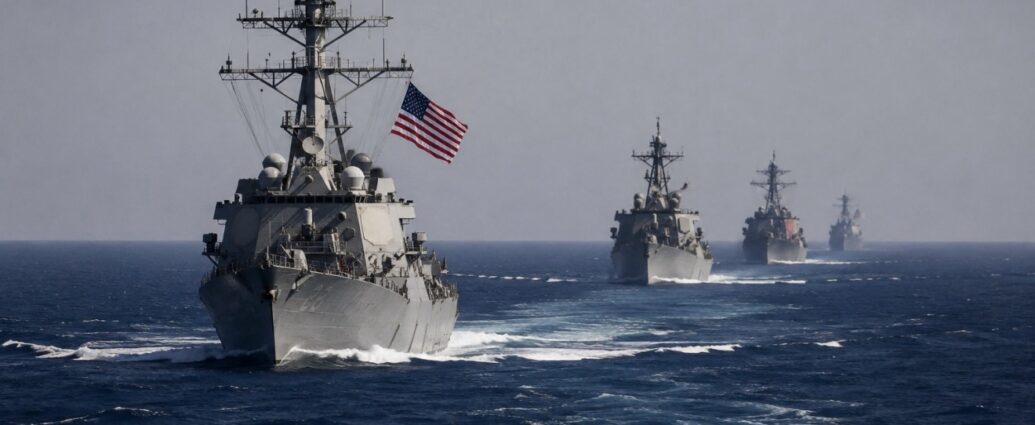
US Reimposes Iran Blockade and Strikes Greater Tunb Island as Oil Holds Near $80
U.S. Central Command said it completed a 90-minute wave of strikes against Iran at 7:30 a.m. ET on Wednesday, July 15, targeting coastal defense systems and cruise missile storage and launch sites on Greater Tunb Island. The strikes were “designed to further degrade military capabilities Iranian forces have used to attack commercial shipping” in the Strait of Hormuz, according to a CENTCOM statement.
It marked the fifth consecutive day of American strikes on Iran and came as the U.S. naval blockade of Iranian ports resumed.
The blockade returns
CENTCOM reinstated the blockade Tuesday. Within the first 17 hours, U.S. forces said they had already redirected two commercial vessels attempting to violate it. Approximately 21 U.S. naval vessels are now operating in the region.
Unlike the broader blockade enforced earlier this year, the current operation specifically targets vessels linked to Iran while continuing to protect commercial shipping using the Omani transit corridor through the Strait of Hormuz.
The daytime strikes followed an overnight campaign lasting roughly seven hours against multiple Iranian military targets along the country’s southern coastline.
Iran’s semi-official Tasnim News Agency reported at least seven personnel were killed at a military facility near Bampur, where missiles struck guard posts, accommodations and support facilities.
CENTCOM Commander Gen. Brad Cooper said Iran had launched dozens of missiles and drones toward neighboring Gulf states. Kuwait reported one naval vessel was struck, injuring four personnel, while its air defenses intercepted a ballistic missile, five cruise missiles and 33 drones.
Iran again threatened to halt regional energy exports.
Trump’s warning
President Donald Trump told Fox News Tuesday evening that additional U.S. strikes could continue over the next two days and warned that bridges and power infrastructure could become targets if negotiations do not resume.
“You better make a deal, or you’re not going to have anything left,” Trump said.
Trump also announced he would replace the previously proposed 20 percent U.S. Reimbursement Fee on Hormuz shipping with broader trade and investment agreements involving Gulf nations, saying those agreements would generate substantial manufacturing investment inside the United States.
The move removes what would have amounted to a significant surcharge on global oil and liquefied natural gas shipments.
Oil barely reacts
Despite the military escalation, energy markets remained relatively calm.
West Texas Intermediate crude for August delivery slipped 10 cents to $79.24 per barrel, while Brent crude for September delivery eased 13 cents to $84.60 after briefly trading above $86 overnight.
Oil remains well above June levels but has shown surprisingly limited reaction to several consecutive days of U.S. military operations.
The muted response suggests traders believe much of the geopolitical risk has already been priced into energy markets.
The Bureau of Labor Statistics also reported lower wholesale gasoline prices during June, while AAA listed the national average price for regular gasoline at approximately $3.87 per gallon, slightly above last week but below levels seen a month ago.
Shipping remains under pressure
Maritime analytics firm Kpler tracked 21 monitored commercial transits through the Strait of Hormuz on July 14, primarily carrying crude oil, liquefied petroleum gas, methanol and iron ore.
The firm also confirmed three additional attacks near Oman, bringing the verified total to 56 maritime incidents since the conflict began.
Before the war, approximately 130 vessels per day transited the Strait of Hormuz, which handles roughly one-fifth of the world’s seaborne oil and natural gas shipments.
Financial pressure increases
The U.S. Treasury Department announced sanctions freezing more than $130 million tied to cryptocurrency wallets allegedly linked to Iran’s central bank.
Separately, the U.S. State Department imposed additional sanctions on a network associated with Iranian oil shipping figure Mohammad Hossein Shamkhani, targeting 50 individuals, entities and vessels accused of facilitating Iranian oil exports.
For businesses worldwide, the immediate economic impact continues to center on freight costs, marine insurance premiums and transportation expenses, even as oil prices remain relatively stable.
JBizNews Desk | Washington
© JBizNews.com All Rights Reserved. Reproduction or distribution without written permission is prohibited.

Opinion | Netanyahu Isn’t a Bogeyman

Bin Sulayem Signs Botswana Deal Creating Africa’s First Commodity Trade Corridor With Dubai
DMCC announced Wednesday that its Executive Chairman and Chief Executive Officer, Ahmed Bin Sulayem, signed a memorandum of understanding with Neo Mooki, chairperson of the Botswana Stock Exchange Group, to link Botswana’s commodities exchange directly to Dubai’s trading, finance, and logistics network. The agreement was signed in the presence of Bogolo Joy Kenewendo, Botswana’s Minister of Minerals and Energy, and concluded in Singapore following the 41st World Diamond Congress, where DMCC hosted the Asia launch of its Future of Trade 2026 report.
The agreement may appear to focus on commodities, but its significance extends much further. The two sides describe the arrangement as Africa’s first multi-commodity “sister-hub” trading corridor, directly connecting Gaborone with Dubai. At its center is the Botswana Mercantile Exchange (BMX), operated by the Botswana Stock Exchange Group, which now gains access to one of the world’s largest commodity trading ecosystems.

Ahmed Bin Sulayem
What the agreement covers
The partnership spans diamonds, copper, coal, soda ash, critical minerals, beef, and agricultural products while establishing a dedicated Botswana presence within DMCC’s commodity ecosystem in Dubai. The framework includes market access, trade finance, logistics, vaulting, digital infrastructure, capacity building, and knowledge exchange, with the goal of connecting Botswana’s producers directly to international buyers, institutional investors, and Islamic finance markets.
Among the first initiatives will be cooperation between the Okavango Diamond Company and the Dubai Diamond Exchange through coordinated rough diamond tenders, giving Botswana’s state-owned diamond marketer direct access to the world’s largest diamond trading hub. The first commercial tenders are expected in late 2026.
The agreement also calls for the construction of a Botswana Mercantile Exchange vault in Gaborone that is expected to become the first facility certified under the DMCC Global Good Delivery Standard, creating an internationally recognized storage and financing platform for commodities originating in Africa.
The organizations also plan to deploy DMCC FinX, DMCC’s digital financial infrastructure platform, to expand trade finance, tokenize physical commodity assets, and introduce Shariah-compliant financing solutions designed to attract institutional investment into African supply chains.
Bin Sulayem’s long-term strategy
The Botswana agreement fits a strategy Ahmed Bin Sulayem has pursued for more than two decades.
Since taking over DMCC in 2003, he has expanded the organization from just 28 member companies to more than 26,000 businesses representing over 180 countries and employing more than 80,000 people. Under his leadership, DMCC has repeatedly been recognized as Global Free Zone of the Year by the Financial Times’ fDi Magazine, including a ninth consecutive award.
Bin Sulayem also chairs both the Dubai Diamond Exchange and the Dubai Gold & Commodities Exchange. He served as the United Arab Emirates Chair of the Kimberley Process in 2016, was reappointed in 2024, and has served as Custodian Chair since 2025. That experience is particularly important for Botswana, whose diamond industry depends on trusted certification, transparent supply chains, and efficient access to international markets.
Commenting on the agreement, Bin Sulayem said Botswana is one of the world’s leading commodity-producing nations and that combining its production capabilities with Dubai’s global trading infrastructure can unlock new investment opportunities and expand direct access to international buyers.

Why Botswana needs this partnership
The agreement comes as Botswana works to recover from one of the most difficult economic periods since independence.
Finance Minister Ndaba Gaolathe has projected economic growth of 3.1% in 2026 following contractions of 0.4% in 2025 and 2.8% in 2024. Diamonds continue to generate roughly one-third of government revenue and approximately three-quarters of the country’s foreign-exchange earnings, making weakness in the sector especially painful.
Mining output fell 47% during the fourth quarter of 2025, while overall GDP declined 5.4%.
Government mining revenue for fiscal year 2025-26 was projected at 10.3 billion pula—approximately $768 million—compared with a historical average of 25.3 billion pula, representing a decline of nearly 60%.
At the same time, De Beers, through its joint venture Debswana, reduced production by 16% in 2025 and lowered its 2026 production target from 29 million carats to a maximum of 26 million carats as demand for natural diamonds weakened amid increasing competition from lab-grown stones and softer global luxury spending.
Against that backdrop, Botswana is seeking new buyers, additional financing channels, and stronger international trading partnerships beyond traditional marketing systems.
Minister Bogolo Joy Kenewendo described the agreement as an important part of Botswana’s economic transformation strategy, emphasizing expanded market access, greater investment, local beneficiation, and a stronger position within global value chains.
What Dubai gains
For Dubai, the agreement strengthens its position as one of the world’s leading commodity trading centers while deepening its growing economic presence across Africa.
The United Arab Emirates has committed more than $110 billion in African investments since 2019, making it one of the continent’s largest sources of foreign direct investment.
Earlier this year, ALBADDAD Holding announced a $1.9 billion New Botswana City development supported by President Duma Boko, while Malaffi committed $1.5 billion to digitize Botswana’s national healthcare system.
According to DMCC’s Future of Trade 2026 report, trade between developing economies now represents approximately 35% of global trade, exceeding trade between developed economies. The report also estimates the global trade finance gap at approximately $2.5 trillion, with developing nations bearing the largest share of financing shortages.
Botswana fits squarely into that picture as a major commodity exporter seeking broader access to capital and global markets, while Dubai continues positioning itself as the international gateway connecting producers with investors, financiers, and buyers.
The agreement also reinforces cooperation surrounding the natural diamond industry through the Luanda Accord and the Natural Diamond Council, reflecting a shared objective of strengthening demand for natural diamonds as competition from synthetic stones continues to reshape the global marketplace.
JBizNews Desk | Dubai
© JBizNews.com All Rights Reserved. Reproduction or distribution without written permission is prohibited.
Coast Guard Cutters Shift From Middle East to Pacific as China Presses Its Claims
The U.S. Indo-Pacific Command’s Staff Judge Advocate office in Hawaii marked the tenth anniversary of the landmark South China Sea arbitration ruling on Tuesday, July 14, by issuing formal legal guidance reaffirming that China remains in violation of international law.
The legal statement revisited the 2016 Permanent Court of Arbitration decision in The Hague, which overwhelmingly rejected Beijing’s sweeping “nine-dash line” claim covering roughly 90% of the South China Sea and ruled in favor of the Philippines.
According to the Hawaii-based command, the decision remains legally binding under the United Nations Convention on the Law of the Sea (UNCLOS), which China ratified in 1996.
The renewed legal declaration comes as the U.S. Coast Guard quietly shifts assets from the Middle East into the Western Pacific, reflecting Washington’s growing concern over China’s increasingly aggressive maritime claims across one of the world’s busiest shipping lanes.
A Commercial Waterway Worth Trillions
The South China Sea carries enormous economic significance.
Roughly one-third of global seaborne trade passes through its waters each year.
Container ships, crude oil tankers and liquefied natural gas carriers serving Japan, South Korea, Taiwan, Southeast Asia and global supply chains all transit waters where China increasingly asserts authority through the world’s largest coast guard fleet.
For businesses, shipping companies and insurers, the legal dispute has evolved into a practical commercial risk.
Why the Coast Guard Is Taking the Lead
Unlike U.S. Navy warships, Coast Guard cutters operate as law enforcement vessels rather than military combatants.
That distinction has become increasingly important.
China has expanded the legal authority of its own coast guard through domestic legislation, including a 2021 law permitting the use of force in certain circumstances.
Beijing routinely dispatches coast guard vessels—not naval destroyers—into disputed waters surrounding the Philippines, Japan, and Taiwan, framing its operations as civilian law enforcement rather than military activity.
Washington has responded in kind.
In late May, the USCGC Midgett conducted the first-ever joint maritime operation involving a U.S. Coast Guard cutter alongside the Philippine Navy frigate BRP Antonio Luna and the Philippine Coast Guard vessel BRP Melchora Aquino.
The exercises focused on maritime law enforcement, vessel boarding operations and interdiction training approximately 35 to 40 nautical miles from Scarborough Shoal, an area controlled by China but claimed by the Philippines.
According to Japanese ship observers, USCGC Midgett was docked at Yokosuka, Japan, as recently as July 10.
Meanwhile, USCGC Kimball continues operating alongside the USS Theodore Roosevelt Carrier Strike Group during the multinational RIMPAC 2026 naval exercises, which continue through July 31.
China Expands Its Presence
Regional tensions escalated sharply during June.
For the first time, the China Coast Guard conducted law enforcement patrols east of Taiwan and began radioing commercial cargo vessels transiting nearby waters, requesting information about crews, cargo and destinations.
On July 4, Chinese authorities announced deployment of a replacement patrol fleet east of Taiwan, stating the vessels would strengthen enforcement activities inside what Beijing described as China’s jurisdictional waters.
Many regional security analysts see those actions as far more significant than simple radio communications.
Gregory Poling, director of the Asia Maritime Transparency Initiative at the Center for Strategic and International Studies, told AFP that China appears to be asserting law enforcement authority well beyond what international law permits under exclusive economic zone rules.
Su Tzu-yun, of Taiwan’s Institute for National Defense and Security Research, said radio verification of commercial shipping could serve as preparation for enforcing a future maritime quarantine or blockade around Taiwan.
Former U.S. Air Force officer Ray Powell, who closely tracks Chinese maritime operations, warned that interference with liquefied natural gas carriers would immediately threaten Taiwan’s energy security since the island imports nearly all of its fuel supplies.
Insurance companies often begin pricing geopolitical risk long before any military confrontation actually occurs.
The Fleet Challenge
The Coast Guard’s expanding Pacific mission comes as it faces longstanding fleet shortages.
Congress recently approved more than $25 billion in Coast Guard funding through the One Big Beautiful Bill Act.
The legislation includes:
- $4.3 billion for nine Offshore Patrol Cutters
- $1 billion for Fast Response Cutters
- $4.3 billion for Polar Security Cutters
The legislation also elevates Indo-Pacific operations under the Coast Guard’s Force Design 2028 modernization strategy.
The challenge remains execution.
Delivery of the first Heritage-class Offshore Patrol Cutter, USCGC Argus, has slipped repeatedly and is now expected no earlier than December 2026, more than five years behind schedule.
As of January 2026, none of the Offshore Patrol Cutters had entered operational service.
At the same time, Rear Adm. Barata testified before the House Homeland Security Committee that an estimated 600 to 800 sanctioned “dark fleet” vessels continue transporting oil among Iran, Russia, China, and Venezuela—missions that also rely heavily on Coast Guard resources.
Why Businesses Should Care
For American exporters, manufacturers and logistics companies, the implications extend well beyond military strategy.
If Chinese authorities increasingly stop, question or delay commercial vessels transiting international waters, shipping costs, insurance premiums and transit times could all increase.
Longer shipping routes and greater geopolitical uncertainty would ripple throughout global supply chains.
Thirteen governments—including Australia, Canada, Germany, Japan, and the United Kingdom—have jointly called on all parties to comply with the 2016 arbitration ruling.
China has rejected those appeals.
Foreign Ministry spokeswoman Mao Ning again declared the arbitration award “illegal, null and void” and stated China would never recognize any claims based upon it.
A decade of legal rulings has not altered Beijing’s position.
Washington is increasingly signaling that ships—not statements—may now become the primary instrument for defending freedom of navigation.
JBizNews Desk | New York
© JBizNews.com All Rights Reserved. Reproduction or distribution without written permission is prohibited.