China Cuts Refinery Runs to Decade Low as June Crude Imports Fall 41%
China imported 29.27 million tons of crude oil in June — about 7.12 million barrels a day — the lowest monthly total since October 2016, according to data released Tuesday by the General Administration of Customs of China. Imports fell 41.3% from a year earlier and dropped another 12% from May, when purchases had already collapsed to an eight-year low.
The country that buys more oil than any other has simply stopped buying at anything close to its normal pace. And its refineries have followed.
The utilization rate at China’s crude distillation units — the basic measure of how hard refineries are working — fell to 57.72% in June, down 3.28 percentage points from May and down 13.09 percentage points from a year earlier, according to Chinese consultancy Oilchem. That is close to the weakest reading in a decade. Refiners are running roughly half-empty because the crude they would normally process is too expensive, and because Beijing has restricted how much gasoline and diesel they are allowed to ship overseas.
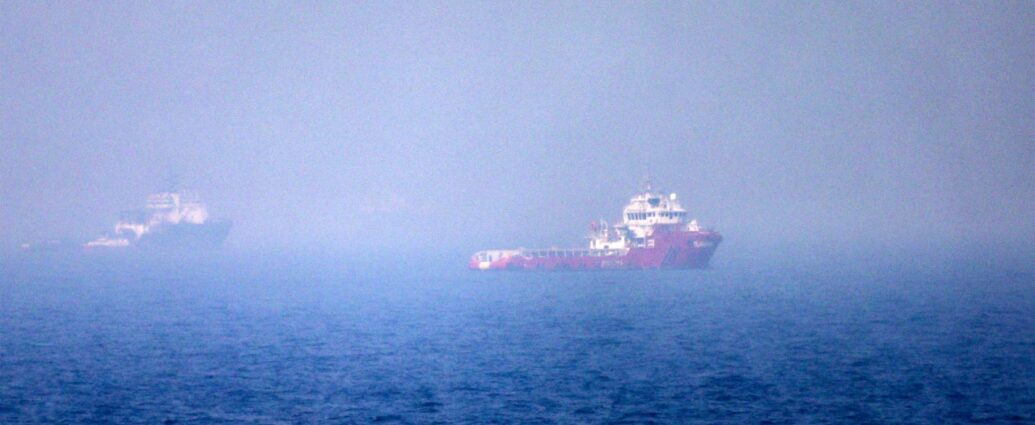
The reason traces back to the Strait of Hormuz. Since the war with Iran began on February 28, the waterway that normally carries about one-fifth of the world’s oil has been throttled repeatedly. Ship-tracking firm Vortexa put China’s seaborne crude arrivals at roughly 6 million barrels a day in June, with volumes from the Middle East at their lowest in ten years. Iranian crude — the discounted feedstock that keeps China’s small independent refiners, known as teapots, in business — fell 40% from May to under 800,000 barrels a day as Washington’s blockade of Iranian ports tightened.
Living off the stockpile
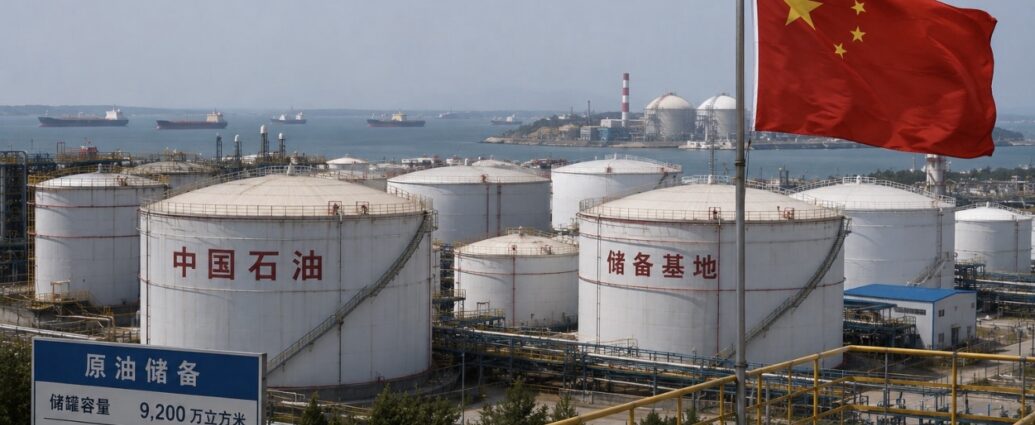
China could afford to walk away from the market because it spent years preparing for exactly this. Analysts at Kpler and Energy Aspects estimate the country holds between 1.2 billion and 1.3 billion barrels in commercial and strategic reserves, built up during the cheap-oil years before the war. Instead of paying wartime prices, refiners have been draining tanks at roughly 1 million barrels a day.
Sumit Ritolia, lead analyst for refining supply and modeling at Kpler, has said the true split between commercial and strategic barrels is impossible to verify given how little Beijing discloses. Jianan Sun, a London-based analyst at Energy Aspects, said state refiners will return to international markets once reserves are meaningfully drawn down — but that government authorization, tied to Beijing’s read on Hormuz, will come first.
There is also a permanent piece to this. Emma Li, lead China market analyst at Vortexa, estimates that the country’s rapid switch to electric vehicles has knocked about 1 million barrels a day off fuel demand this quarter alone. Gasoline consumption is down 2.4% year over year and diesel down 4.4%, according to industry data. GL Consulting expects Chinese refining activity to fall about 5% for all of 2026.
Why it matters outside China
China’s absence from the crude market is the main reason oil has not gone to $150. Roughly 4 million barrels a day of buying disappeared, which offset a large share of the barrels lost to the war. That kept prices tolerable for American truckers, airlines and drivers through the spring.
That cushion is thinning. Rory Johnston, founder of research firm Commodity Context, said the stock buffer that absorbed the shock has largely been spent, leaving the market far more exposed to another disruption.
Prices are already moving. Brent crude settled Tuesday at $84.73, up 1.7%, after trading as high as $87 during the session. U.S. West Texas Intermediate closed at $79.34, up 1.5%. U.S. Central Command reimposed a naval blockade on Iran’s ports and coastline effective 4 p.m. Eastern, and President Donald Trump dropped his proposed 20% transit fee on cargo crossing Hormuz. Brent has climbed more than 10% since Friday.
For businesses, the squeeze runs through fuel. Chinese refined-product exports averaged about 417,000 barrels a day in May, according to Kpler — nearly half the roughly 750,000 barrels a day shipped before the war. Asian importers that relied on Chinese diesel and jet fuel are competing for cargoes elsewhere, which pushes product prices up globally, including in the United States. OPEC has already cut its 2026 demand growth forecast to 800,000 barrels a day.
The question every refiner, airline and freight operator is now watching: what happens when China turns the taps back on. Once state refiners restart buying at scale, roughly 4 million barrels a day of demand returns to a market that no longer has a spare cushion. The relief the world has enjoyed from China’s silence may end abruptly — and the bill will land at the pump.
JBizNews Desk | New York © JBizNews.com All Rights Reserved. Reproduction or distribution without written permission is prohibited.

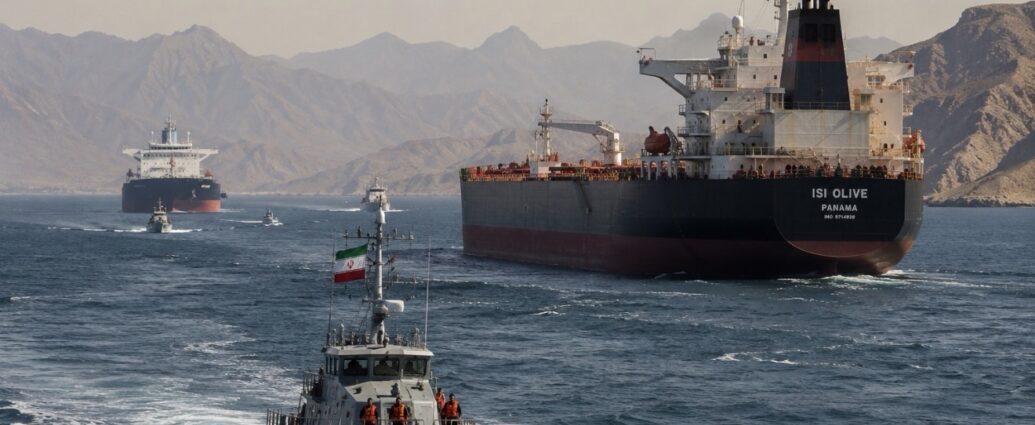
Trump Drops 20% Hormuz Cargo Fee After Gulf Leaders Promise U.S. Investments
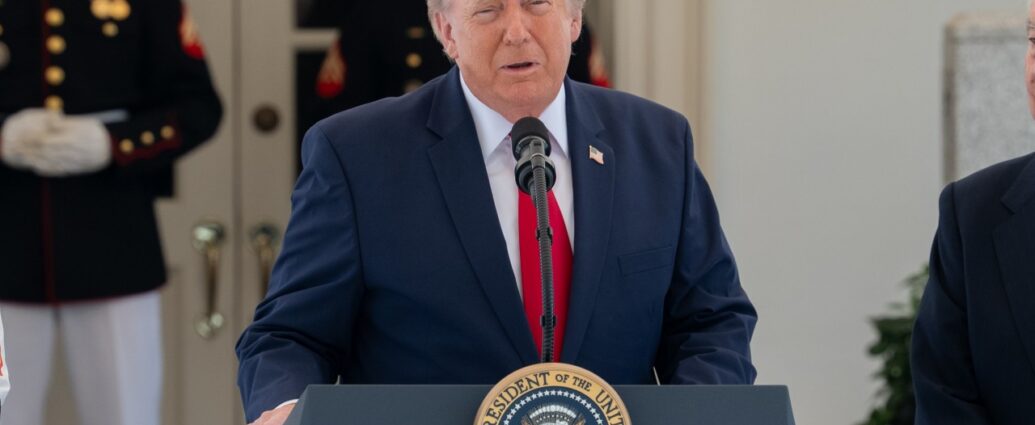
President Donald Trump announced Tuesday, July 14, that he is abandoning the proposed 20% “United States Reimbursement Fee” on cargo transiting the Strait of Hormuz, reversing the policy roughly one day after first unveiling it.
In a post on Truth Social, Trump said the cargo fee would instead be replaced by major trade and investment agreements that Gulf nations have pledged to make in the United States. The reversal came approximately 25 hours after the administration first announced the levy.
Trump said the decision followed conversations with leaders across the Middle East and described the expected investments as “massive,” although no financial commitments or participating countries were identified.
Blockade Remains in Effect
While the cargo fee has been withdrawn, the broader U.S. naval blockade targeting Iran remains unchanged.
The blockade formally took effect Tuesday at 4:00 p.m. Eastern Time, with U.S. Central Command (CENTCOM) confirming that American forces will continue enforcing restrictions on vessels traveling to or from Iranian ports and coastal areas.
Trump said the Strait of Hormuz remains open to international shipping except for vessels connected to Iran.
He credited Secretary of Defense Pete Hegseth, Joint Chiefs Chairman Gen. Dan Caine, CENTCOM Commander Adm. Brad Cooper, and U.S. military personnel for executing the operation.
Why the White House Changed Course
Speaking during a White House meeting with Iraqi Prime Minister Ali al-Zaidi, Trump said leaders from Saudi Arabia, the United Arab Emirates, Qatar, Bahrain, and Kuwait urged him to pursue investment agreements instead of imposing transit charges.
Asked why he reversed the policy, Trump said he preferred investment commitments over charging fees and added that he does not believe any nation should impose tolls on ships using the Strait of Hormuz.
The remark represented a significant departure from his position only one day earlier, when he argued the United States should be reimbursed for protecting one of the world’s most important shipping lanes.
No details accompanied the announcement.
Trump did not identify participating governments or specify investment amounts.
According to Bloomberg, citing an unnamed Gulf government source, at least one regional government told Washington it had made no new investment commitments in exchange for the policy reversal.
What the Proposed Fee Would Have Cost
Under Monday’s proposal, the United States would have charged a 20% reimbursement fee on cargo passing through the Strait of Hormuz as compensation for providing maritime security.
At current oil prices, the charge could have exceeded $32 million for a fully loaded supertanker, dramatically exceeding transit fees Iran had previously discussed, which were estimated at roughly $2 million per voyage.
Administration officials had not publicly determined which federal agency would collect the payments, with both the Treasury Department and Department of Energy reportedly under consideration.
Global Opposition
The proposal immediately drew criticism from governments, shipping companies and international organizations.
International Maritime Organization Secretary-General Arsenio Dominguez stated that international law provides no legal basis for mandatory transit fees through international straits.
Earlier this summer, Secretary of State Marco Rubio similarly stated that no nation has the legal authority to impose tolls on vessels transiting international waterways.
Major shipping companies and industry organizations quickly voiced opposition.
Hapag-Lloyd called the proposal fundamentally inconsistent with international shipping principles.
Industry groups including BIMCO and the European Community Shipowners’ Associations also rejected the concept.
In May, Chevron Chief Executive Officer Mike Wirth warned that allowing one country to impose transit charges could establish a precedent encouraging similar fees along strategic waterways worldwide.
Iran also responded.
Foreign Minister Abbas Araghchi suggested the proposed U.S. fee was excessive while indicating Iran would establish what he described as fairer transit charges if necessary.
Meanwhile, Oman, a longtime U.S. regional partner, called on all parties to respect international maritime law.
Oil Markets Remain Elevated
Although the cargo fee has been withdrawn, energy markets remain focused on the broader military situation.
On Monday, West Texas Intermediate crude climbed 9.4% to $78.14 per barrel, while Brent crude rose 9.6% to $83.30, marking the strongest one-day increase since 2020.
Brent futures briefly climbed as high as $85.92 Tuesday before giving back part of the gains following Trump’s announcement.
Fuel prices continue responding.
GasBuddy analyst Patrick De Haan said the national average gasoline price could approach $4 per gallon within one to two weeks as higher wholesale costs work through retail markets.
Shipping Disruptions Continue
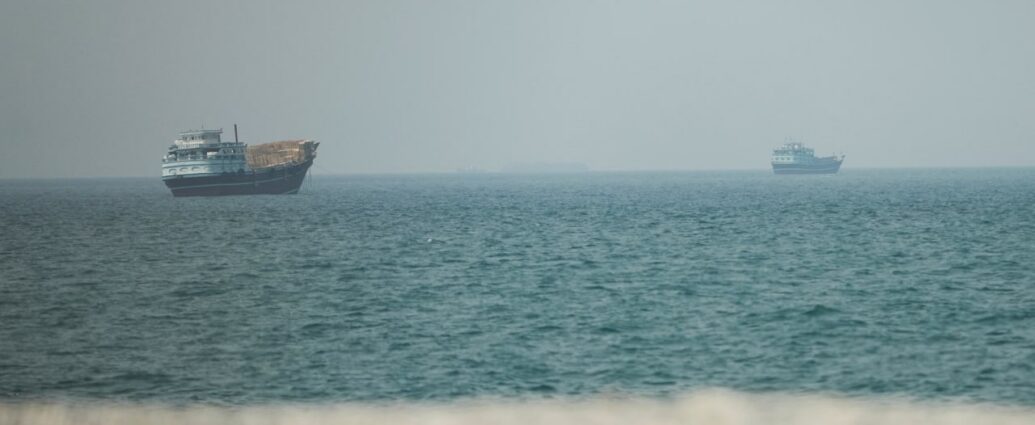
Despite the policy reversal, commercial shipping remains severely disrupted.
According to Kpler, only 10 verified vessel crossings occurred on July 13, down from 16 the previous day.
Windward AI tracked only five overnight crossings, reflecting continued caution among commercial operators.
Approximately 230 loaded oil tankers remain inside the Persian Gulf awaiting safe passage.
Before hostilities intensified earlier this year, roughly one-quarter of global seaborne oil trade and approximately 20% of worldwide liquefied natural gas shipments moved through the Strait of Hormuz each day.
What Comes Next
Marine insurers remain cautious despite the elimination of the proposed cargo fee.
Ben Stone, head of marine hull insurance at Aon, said underwriters continue requiring an extended period of stability before reducing war-risk premiums.
Saul Kavonic, head of energy research at MST Financial, warned that continued Iranian efforts to influence shipping through the Strait could keep commercial traffic well below pre-conflict levels.
Rory Johnston, founder of Commodity Context, said global oil inventories that previously cushioned supply disruptions have now been significantly reduced, leaving markets more vulnerable to future interruptions.
For businesses, refiners and consumers, the immediate outcome is mixed.
The proposed U.S. transit fee has disappeared.
The naval blockade, elevated insurance costs, shipping delays and geopolitical risk premiums have not.
JBizNews Desk | Washington
© JBizNews.com All Rights Reserved. Reproduction or distribution without written permission is prohibited.
China’s Oil Stockpiles, Not the Middle East, Now Set the Direction of Crude Prices
The International Energy Agency reported in its July 2026 Oil Market Report that China pulled roughly 41 million barrels out of its crude inventories during June, one of the largest monthly draws the agency has on record, and that global observed oil stocks rose for the first time in four months as tankers finally cleared the Gulf. Chinese customs data released Tuesday confirmed the other half of the story: crude imports fell to about 6.4 million barrels per day in June, the lowest level in nearly a decade and down roughly 29% from a year earlier.
Put those two numbers together and you get the single most important fact in the oil market right now. The world’s biggest crude buyer stopped buying — and nothing broke.
For four months, traders assumed the closure of the Strait of Hormuz would send prices to records. It did not. Prices spiked, then fell back. Brent averaged $85 a barrel in June, down $22 from May, according to the U.S. Energy Information Administration, and briefly dropped below $70 on July 1, roughly where it sat before the war began on February 28. On Wednesday, with U.S. forces striking Iranian coastal targets and Washington reinstating its naval blockade of Iranian ports, WTI for August delivery traded near $80.14, up about 1%, while September Brent rose to about $85.77.
The reason the ceiling held is sitting in Chinese tanks.
How Beijing built the buffer
The EIA estimates China spent much of 2025 quietly absorbing roughly 900,000 barrels per day into strategic and commercial storage, buying whenever prices dipped. By the time the war started, analysts estimate the country held somewhere between 1.2 billion and 1.3 billion barrels across commercial tanks and government reserves. The exact figure is a state secret. So are Beijing’s plans for it.
That stockpile turned into a shock absorber. Kpler, the cargo-tracking firm, estimated Chinese seaborne imports fell to about 6.78 million barrels per day in late May, against a 2025 average of 10.66 million. Refinery runs, however, fell far less — roughly 13.1 million barrels per day, down only 1.8 million year over year. The gap came out of storage. Kpler calculated in May that Chinese refiners still held more than 300 million barrels in refinery tanks alone, enough to cover the shortfall for another 60 to 75 days without buying a single extra cargo.
Beijing also protected its government reserves while letting commercial tanks drain. Strategic petroleum reserves grew by 8 million barrels after the conflict began even as refinery inventories fell by 15 million.
What it did to sellers
China’s absence rewrote pricing across Asia. With Chinese refiners out of the bidding, Gulf cargoes went looking for buyers in Europe, India and the rest of Asia. Saudi Aramco cut the price of its flagship Arab Light to Asian customers by $4 a barrel for June-loading cargoes, another $6 for July and a further $11 for August — leaving the grade at a $1.50 discount to the Oman-Dubai benchmark.
Iran got hit hardest. Chinese buyers, suddenly spoiled for choice, walked away from Iranian barrels and took discounted Iraqi, Emirati and Saudi crude instead. Privately owned Shenghong Petrochemical bought roughly 12 million barrels of Gulf crude for July arrival once prices came down. Iranian imports into China are expected to fall to about 556,000 barrels per day in July, the lowest since early 2023, while an estimated 30 million to 34.5 million barrels of Iranian crude float offshore near Southeast Asia waiting for someone to want it.
The IEA said total Gulf oil exports jumped by 6.5 million barrels per day in June to 16.1 million — still far below the 24 million average before the war — with crude and condensate accounting for 85% of the recovery.
The part that matters for business
For decades the answer to “who fixes an oil shock” was Saudi Arabia and its spare production capacity. Traders watched Riyadh. Now they have to watch Chinese tank levels, which nobody publishes.
That changes the risk calculus for anyone who buys fuel — trucking fleets, airlines, chemical makers, manufacturers. The relief in crude prices is not proof the war stopped mattering. It is proof that one buyer chose to sit out, and that buyer’s tanks are finite. Kpler and Vortexa both estimate China has removed about 4 million barrels per day from its normal purchases since late February. When Beijing comes back to restock — and it will — that demand returns to a market that is still short of supply.
The EIA expects global inventories to keep falling by 2.2 million barrels per day in the third quarter. The next rally may not start in Hormuz. It may start the day Chinese refiners pick up the phone.
JBizNews Desk | New York © JBizNews.com All Rights Reserved. Reproduction or distribution without written permission is prohibited.

Five European Defense Firms Join Forces on Ballistic-Missile Shield
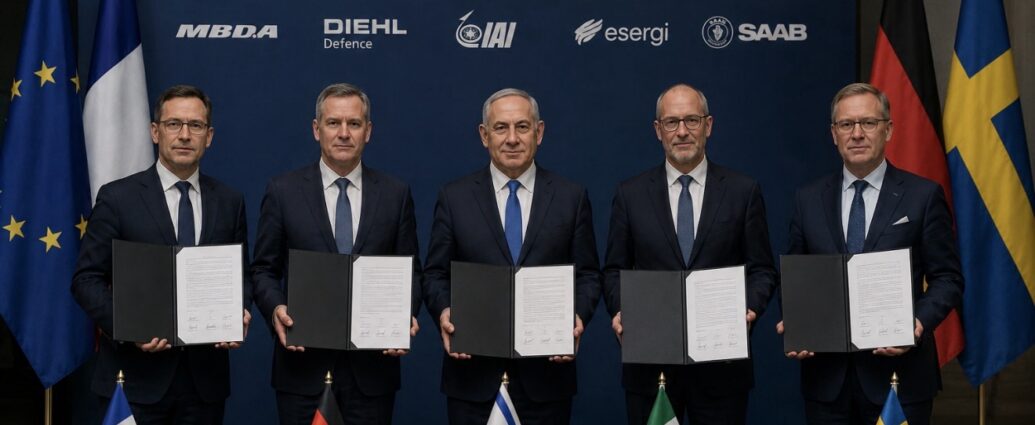
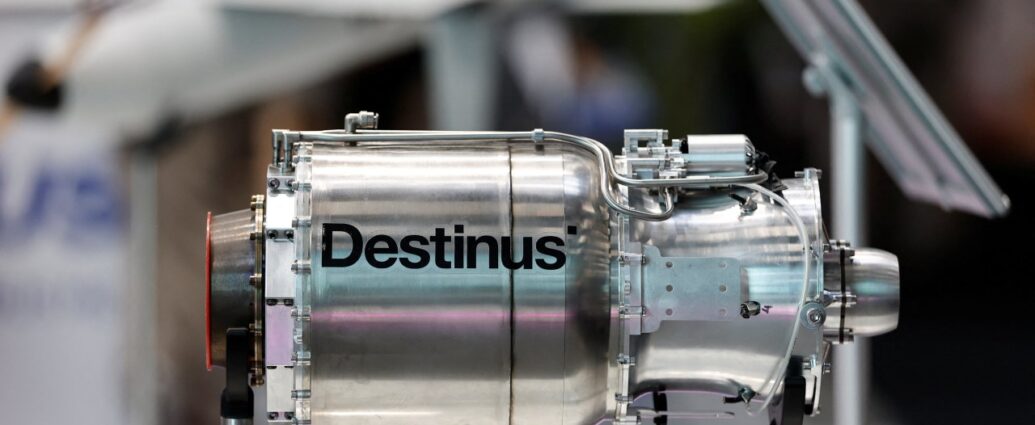
Five of Europe’s biggest defense companies have agreed to build the continent’s first homegrown system for shooting down long-range ballistic missiles in space, a direct response to the kind of weapons Russia has been firing at Ukraine. Airbus Defence and Space, Destinus, MBDA Deutschland, Safran Electronics & Defense, and Thales signed a Letter of Intent in Paris to establish the Bliksem EXO Consortium, the group announced this week. The signing took place at the inaugural meeting of a new anti-ballistic coalition on Monday, in the presence of Rob Jetten, Prime Minister of the Netherlands.
The system, called Bliksem EXO, is meant to detect, track and destroy medium- and intermediate-range ballistic missiles above the atmosphere by slamming an interceptor straight into them at high speed, without an explosive warhead — a technique known as hit-to-kill. The companies say it is aimed at threats including Russia’s Oreshnik-class missiles, which can carry separating and maneuvering re-entry vehicles that make them hard to stop.
Who does what
The consortium splits the work along each company’s strengths. Destinus serves as Consortium Lead and Prime, handling overall system integration and the Exo-atmospheric Kill Vehicle. MBDA Deutschland builds the interceptor booster, launcher and canister. Safran Electronics & Defense supplies the kill vehicle’s seeker and its guidance and navigation controls. Airbus Defence and Space provides command, control and battle management, and Thales delivers the radar and sensor chain, from early warning to fire control.
Mikhail Kokorich, Chief Executive Officer of Destinus, said Europe already has strong lower-layer defenses but still lacks its own upper-layer shield against medium- and intermediate-range missiles, a gap Bliksem EXO is designed to close. He said joint engineering will begin in August 2026, with a test of the kill vehicle in space planned for 2027. Thomas Gottschild, Managing Director of MBDA Deutschland, called the agreement an important step toward strengthening Europe’s collective defense.
The deal is a starting gun, not a signed contract. Under the Letter of Intent, the parties intend to reach a binding Consortium Agreement within three months, and the document creates no obligation to buy, supply or fund the system. The program is designed to plug into NATO’s Integrated Air and Missile Defence and to strengthen the European Sky Shield Initiative by filling its missing upper layer.
Why Europe is moving now
The push reflects a hard lesson from the war in Ukraine. Ten countries — Denmark, France, Germany, Italy, the Netherlands, Norway, Spain, Sweden, the United Kingdom and Ukraine — met in Paris to launch what they call the Integrated Anti-Ballistic Missile Coalition, an effort to build a cheaper alternative to the American Patriot system. The Patriot remains the workhorse against ballistic missiles, but its interceptors cost millions of dollars each and production cannot keep up with global demand.
Volodymyr Zelenskyy, Ukraine’s president, told reporters that Kyiv often runs short of the missiles needed to knock down ballistic targets, which is why it joined the effort. French President Emmanuel Macron framed the program as a way to protect Ukraine and build up Europe’s own defense industry. Notably absent were Poland, the Baltic states, Finland and the United States.
What it means for the business
For investors, the deal lands in the middle of the strongest run European defense stocks have seen in years. Companies from Rheinmetall to BAE Systems, Leonardo, Thales and Saab have piled up orders since Russia’s 2022 invasion, and McKinsey estimates European NATO core defense spending has doubled since 2019 and could reach roughly 800 billion euros by the end of the decade as members work toward NATO’s benchmark of 3.5% of GDP.
Of the five partners, three trade publicly: Airbus, Safran (SAF.PA) and Thales (HO.PA). MBDA is a joint venture, and Destinus is privately held, so the immediate market read runs through the listed names. Analysts have stayed constructive on Safran: Citi recently lifted its price target to 315 euros from 305 euros with a Neutral rating, while Jefferies analyst Chloe Lemarie raised her target to 330 euros from 310 euros and kept a Hold. Thales shares traded near 216 euros in late June, down in the mid-single digits for the year despite the broader defense rally.
The bigger prize is the pipeline. A working European interceptor would give governments a home-built option they do not have to buy from Washington, and the firms that build the radars, boosters and kill vehicles stand to book years of orders if the coalition turns intent into contracts. The first real test comes within three months, when the partners are due to sign a binding agreement.
JBizNews Desk | New York © JBizNews.com All Rights Reserved. Reproduction or distribution without written permission is prohibited.


Modi Seals Uranium and $200 Million Missile Deals on Three-Nation Indo-Pacific Tour
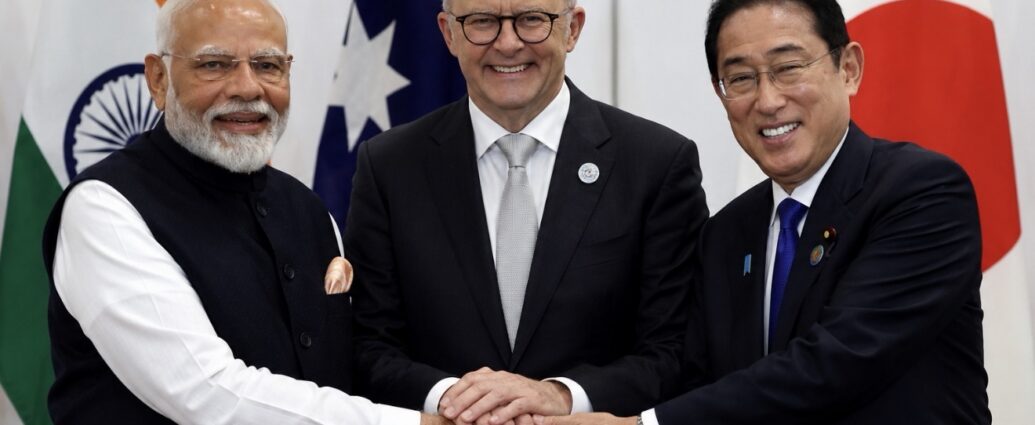
Indian Prime Minister Narendra Modi wrapped a three-nation tour on July 12, returning to New Delhi after sealing a string of energy, defense and critical-minerals agreements across Indonesia, Australia and New Zealand, according to joint statements and remarks from Modi and the host leaders. The trip, which ran July 6 to 12, was designed to deepen India’s economic and strategic ties across the Indo-Pacific and to diversify supply chains away from a heavy reliance on China.
The centerpiece came in Melbourne on July 9, where Modi and Australian Prime Minister Anthony Albanese finalized a deal allowing Australian uranium exports to India for its civilian nuclear program, concluded under the 2015 bilateral nuclear cooperation agreement. Australia holds roughly 28 percent of the world’s uranium reserves, and the supply supports India’s target of 100 gigawatts of nuclear power capacity by 2047. For Australia, the arrangement opens a long-term market while reducing dependence on China, its largest trading partner.
The two governments went well beyond uranium. They launched an India-Australia Critical Minerals Corridor to build resilient supply chains for the metals underpinning clean energy and manufacturing, and an India-Australia Defence Innovation Corridor covering defense startups, shipbuilding and maintenance. Albanese and Modi agreed to advance a bilateral investment treaty, endorsed a trilateral technology partnership with Canada, and cleared a temporary space-tracking terminal on the Cocos (Keeling) Islands to support India’s Gaganyaan human spaceflight program. On the commercial side, AustralianSuper, the country’s largest pension fund, said it would invest an additional A$500 million, about $347 million, in India’s National Investment and Infrastructure Fund. Two-way goods and services trade reached A$54.4 billion, or roughly $37.7 billion, in 2024-25, making India Australia’s fifth-largest trading partner, and Modi used a Melbourne business forum to press Australian investors to back Indian roads, ports, railways, low-carbon aluminium and green hydrogen.
The tour opened in Indonesia, where Modi met President Prabowo Subianto and signed agreements spanning agriculture and defense, headlined by a roughly $200 million deal for the BrahMos supersonic cruise missile system and a strategic port-development pact. The defense sale marks a notable expansion of India’s arms-export ambitions. Indonesia is a major supplier of coal and palm oil to India and holds some of the world’s largest nickel reserves, a key input for electric-vehicle batteries, while its position along the Malacca Strait makes it central to India’s maritime strategy. The two countries had elevated ties to a comprehensive strategic partnership in 2018.
In the final leg, Modi became the first Indian prime minister to visit New Zealand in four decades, and he and Prime Minister Christopher Luxon elevated the relationship to a strategic partnership. The visit built on a free-trade agreement the two signed in April that eliminates tariffs on 95 percent of goods New Zealand exports to India and carries a roughly $20 billion investment commitment, alongside cooperation on agricultural technology, food processing and dairy. India is the world’s largest milk producer and New Zealand among its leading dairy exporters, a sensitivity the deal was structured to manage.
The agreements landed against a tense security backdrop. China tested a nuclear-capable ballistic missile in the Pacific the day before Modi arrived in Indonesia, drawing protests and renewed concern over Beijing’s military reach. The deals also reflect a broader push by Indo-Pacific nations to shoulder more of the region’s security and economic load as Washington presses partners to do more and questions linger over the durability of U.S. engagement. Australia and Fiji signed a defense pact this month dubbed the “Ocean of Peace,” Fiji’s first formal security alliance, with New Zealand signaling it would join. India, Australia and Japan already coordinate with the United States through the Quad grouping.
Energy security ran through the entire itinerary. As Modi courted Pacific partners, Foreign Minister S. Jaishankar fanned out across four Gulf states to lock in oil and gas supplies following the U.S.-Iran memorandum of understanding, a reminder of how exposed India remains to Middle East disruption after the Iran war rattled crude markets. The uranium, nickel and critical-minerals arrangements are aimed squarely at cutting that vulnerability, though India still depends on China for the rare earths and machinery central to its manufacturing goals.
For India, the challenge now shifts from signing to executing. The bilateral investment treaty with Australia, the build-out of the minerals corridor and the flow of promised capital will determine whether the tour translates into durable commercial pipelines rather than headline commitments. As global manufacturers hunt for a China-plus-one base, New Delhi is betting that secured energy, diversified minerals and fresh investment treaties can position India as the region’s next major production hub.
JBizNews Desk | New Delhi © JBizNews.com All Rights Reserved. Reproduction or distribution without written permission is prohibited.


Opinion | No Pain, No Gain in Iran Blockade



Oil Retreats After Trump Drops 20% Hormuz Shipping Fee
President Donald Trump said Tuesday the United States would abandon a proposed 20% transit fee on commercial cargo moving through the Strait of Hormuz and instead pursue expanded trade and investment agreements with Gulf nations. The policy reversal eased immediate concerns over sharply higher shipping costs through one of the world’s most important energy corridors, causing oil prices to retreat from earlier session highs while remaining elevated as geopolitical tensions continued across the Middle East.
Brent Crude, the international benchmark, briefly traded above $87 per barrel before retreating to approximately $84.17. West Texas Intermediate Crude, the U.S. benchmark, also gave back part of its gains, trading near $78.79 per barrel. Although prices pulled back, crude remained higher for the day as traders continued to monitor military tensions involving the United States and Iran.
The proposed 20% transit fee had been viewed as a way for the United States to recover part of the cost of protecting commercial vessels navigating one of the world’s busiest energy shipping lanes. The proposal immediately raised questions throughout the shipping industry regarding how the fee would be collected, which cargoes would be subject to the charge, and whether such a policy could be implemented under international maritime law.
According to Trump, discussions with Middle Eastern leaders led to an alternative approach centered on expanding trade and investment partnerships rather than imposing additional costs on global shipping. While the administration did not immediately disclose which countries would participate or the value of the proposed investments, markets viewed the decision as reducing a significant near-term risk to global commerce.
The Strait of Hormuz remains one of the world’s most strategically important waterways, connecting the Persian Gulf with the Gulf of Oman and the open sea. Nearly one-fifth of the world’s seaborne crude oil exports pass through the narrow passage, making any disruption to shipping a major concern for energy markets, businesses, and consumers worldwide.
Had the proposed fee been implemented, shipping costs would likely have increased substantially for crude oil, liquefied natural gas, and other cargo moving through the region. Those additional expenses could ultimately have been passed along to refiners, manufacturers, transportation companies, utilities, retailers, and consumers through higher fuel and product prices.
While the withdrawal of the proposed fee removed one immediate concern, broader geopolitical risks remain. Ongoing military activity and attacks on commercial shipping have already caused some tanker operators to alter routes, delay sailings, or wait for improved security conditions before entering the region.
The impact extends well beyond energy producers. Higher crude prices increase operating costs for airlines, trucking companies, delivery services, manufacturers, agricultural producers, and retailers. Rising marine insurance premiums and freight charges also increase the cost of transporting food, chemicals, machinery, and consumer products between Asia, the Middle East, Europe, and North America.
Businesses operating on thin profit margins may eventually face difficult decisions if energy prices remain elevated. Some companies may absorb higher transportation costs temporarily, while others could pass those increases to customers through higher prices or postpone expansion and hiring plans until market conditions stabilize.
Energy prices also remain a key component of the inflation outlook. Sustained increases in oil prices can raise transportation and manufacturing costs throughout the economy, complicating efforts by central banks to keep inflation under control. Financial markets will continue monitoring developments in the Middle East for any signs that could affect future energy supplies or interest-rate expectations.
For businesses, the administration’s decision removes one immediate uncertainty surrounding international shipping costs. However, the world’s most critical energy corridor remains vulnerable to geopolitical developments, leaving oil markets highly sensitive to any escalation that could threaten the uninterrupted flow of global energy supplies.
Oil’s retreat from earlier highs reflected relief that the proposed transit fee would not move forward. At the same time, prices remained supported by continuing concerns over regional security, underscoring the importance of the Strait of Hormuz to the global economy and international energy markets.
JBizNews Desk | Washington, D.C.
© JBizNews.com All Rights Reserved. Reproduction or distribution without written permission is prohibited.

For Whom the Strait Tolls

Megadeals Push Global M&A to Record $3.16 Trillion in First Half of 2026
Global mergers and acquisitions reached a record $3.16 trillion during the first six months of 2026, driven by an unprecedented wave of multibillion-dollar takeovers as companies raced to gain scale in an increasingly competitive global economy. According to a July 8 report from Mergermarket, the deal-tracking arm of ION, worldwide M&A value jumped 44 percent from $2.19 trillion during the same period last year, marking the strongest opening half ever recorded despite a slight decline in the total number of transactions.
Rather than a broad-based surge in acquisitions, the record reflected the growing dominance of massive corporate combinations. Total deal count slipped to 21,340 from 21,978 a year earlier, underscoring that fewer—but significantly larger—transactions fueled the market’s expansion.
“The quest for scale has pushed M&A into gigadeal territory,” said Lucinda Guthrie, head of Mergermarket.
The first half produced 48 megadeals valued at more than $10 billion, another record. Together those transactions were worth $1.32 trillion, accounting for 42 percent of all announced global M&A activity. Six transactions exceeded $50 billion, prompting Mergermarket to describe the current environment as the beginning of a new “gigadeal” era. Those six transactions alone represented 16 percent of all global deal value.
Momentum accelerated throughout the spring. Three of the five largest acquisitions were announced in May, helping the month set its own record with $664 billion in announced transactions.
Technology remained the dominant sector for the tenth consecutive quarter, with deal value soaring 76 percent from a year earlier. The surge was led by OpenAI’s $122 billion funding round, one of the largest capital raises ever completed by a private technology company.
Artificial intelligence also reshaped activity in other industries. Utilities and energy reached a record $328 billion across 177 transactions as companies moved aggressively to secure electricity generation, transmission assets, and data-center infrastructure needed to support expanding AI operations.
Among the headline transactions were McCormick’s $42.7 billion acquisition of Unilever’s foods business and SpaceX’s $60 billion agreement to acquire AI coding startup Cursor, highlighting the continuing convergence of consumer products, infrastructure, and artificial intelligence.
Corporate buyers—not private equity firms—continued to dominate the market.
Strategic acquirers accounted for 76 percent of global M&A activity, while financial sponsors remained constrained by elevated borrowing costs and a difficult fundraising environment. Mergermarket reported private equity investment declined 6 percent to $333.2 billion from $354.5 billion a year earlier, although sponsor exits increased 7 percent to $386.7 billion as firms returned capital to investors.
Ivan Farman, co-head of global mergers and acquisitions at Bank of America, said the growing preference for very large deals reflects a practical reality inside corporate boardrooms.
Companies increasingly believe that completing a mid-sized acquisition often requires nearly as much executive time, legal work, financing, and regulatory effort as completing a much larger transaction, making transformational acquisitions more attractive when the right opportunity becomes available.
The strength was not evenly distributed across every segment of the market.
Mitch Berlin, vice chair of EY Americas, recently said chief executives continue viewing acquisitions as one of the fastest ways to reposition businesses around artificial intelligence despite ongoing trade uncertainty. He expects strategic deal activity to remain strong while private equity continues taking a more cautious approach.
That caution was evident in the middle market. Transactions valued between $250 million and $1 billion increased 16 percent year over year to $404 billion, but activity slowed compared with the second half of 2025.
North America remained the center of global dealmaking, generating $1.78 trillion, or 56 percent of worldwide transaction value, representing a 66 percent increase and the strongest first half ever recorded for the region.
Europe, the Middle East and Africa posted an even larger percentage increase, climbing 87 percent to $847.5 billion, the best opening half since 2007.
Asia-Pacific moved in the opposite direction, with activity falling 24 percent to $474.1 billion as weaker Chinese dealmaking weighed on the region.
The surge also produced another busy period for Wall Street’s advisory firms. Goldman Sachs, JPMorgan, and Morgan Stanley topped the global league tables, with each advising on more than $500 billion worth of announced transactions during the first half.
With the report covering activity through July 1, the second half of 2026 will determine whether corporations can maintain the pace. For now, the message from boardrooms is clear: companies continue betting that greater scale, stronger balance sheets, and artificial intelligence-driven growth outweigh economic uncertainty, keeping the global merger boom firmly intact.
JBizNews Desk | New York
© JBizNews.com All Rights Reserved. Reproduction or distribution without written permission is prohibited.


Taiwan’s Rescue Fund Books 80% Gain After Blunting Trump’s Tariff Shock
On Monday, July 13, Taiwan’s Ministry of Finance said the island’s National Financial Stabilization Fund had fully exited a nine-month rescue of the local stock market with a profit of about 80%, one of the most successful government market interventions in recent memory. The fund spent NT$12.25 billion, or roughly $380 million, buying shares from April 9, 2025, until it began winding down its position on January 12, 2026, and walked away with a realized gain of NT$9.86 billion, the ministry said in a statement issued late Monday.
The story begins with panic. In early April 2025, the Trump administration announced sweeping “reciprocal” tariffs on trading partners, hitting Taiwan with a proposed 32% rate. When Taipei’s market reopened after a long holiday weekend, the benchmark TAIEX index cratered, plunging 9.7% in a single session to close near 19,232, its steepest one-day fall ever. Over the following days it kept sliding toward roughly 17,000, erasing enormous amounts of household and pension wealth and threatening a broader loss of confidence.
That is when the government stepped in. The National Financial Stabilization Fund, a NT$500 billion pool created in 2000 to defend the market against sudden external shocks, was authorized to start buying. It marked the fund’s ninth intervention since its founding, and it would become the longest on record. The buying campaign ran 279 days, surpassing the 275-day stretch set during the 2020 pandemic crash.
The payoff was dramatic. Rather than merely slowing the decline, the intervention coincided with a full reversal. The TAIEX climbed off its April lows and, powered by global demand for artificial-intelligence hardware, went on to set fresh record highs. The index first pushed above the 30,000 mark in early January 2026 and touched an intraday peak of 30,681.99 on January 12, the very day the fund announced it would stand down. For all of last year, the TAIEX rose 25.73%.
By deciding to leave, the fund’s managers signaled confidence that Taiwan’s market could stand on its own. “With market mechanisms functioning normally, there is no longer a need for the stabilization mission,” the fund’s committee said, adding that it would keep watching global and domestic conditions and could return if new risks appeared. Since that withdrawal in January, the TAIEX has climbed roughly another 16%, evidence that pulling the government’s support did not knock the market off balance.
The financial result stands out because state rescue efforts often lose money, or at best break even, buying high in a crisis and selling into a fragile recovery. Taiwan did the opposite. It deployed capital into a genuine panic, held through the rebound, and sold into strength. The profit now flows to the state treasury, on top of a securities transaction tax that is swelling as daily turnover on Taipei’s main board runs above NT$600 billion this year.
The tariff fight that started the whole episode has since cooled. Through negotiation, Taiwan saw its proposed U.S. tariff cut from the original 32% to 20%, easing some of the pressure on the island’s export-driven economy. Taipei has avoided retaliation, instead offering to lower its own barriers and invest more heavily in the United States. President Lai Ching-te directed officials early on to open what one security official called “strategic communication” with Washington rather than trade blows.
For Taiwan, the stakes run deeper than any single quarter of market moves. The island is home to TSMC, the world’s most important maker of advanced chips, and its stock market has become a proxy for global confidence in the AI supply chain. A disorderly crash risked spooking foreign investors and denting the credibility of the market that underwrites Taiwan’s most strategic industry.
The intervention also carries a lesson for other governments weighing how to respond to tariff-driven volatility. The fund did not try to fight the tariffs themselves or prop up the currency indefinitely. It targeted a specific, acute panic in equities, committed real money, and then got out of the way once private buyers returned. Officials elsewhere facing similar shocks may study the playbook.
There is a note of caution buried in the celebration. A profitable rescue can tempt policymakers to intervene sooner and more often, blurring the line between a rare emergency backstop and a routine crutch. In April 2026, notably, the same fund declined to step back in despite fresh volatility tied to conflict in the Middle East, choosing to let normal trading absorb the swings. For now, Taiwan can point to a rescue that steadied its market, protected its savers, and handed taxpayers a rare windfall.
JBizNews Desk | Taipei
© JBizNews.com All Rights Reserved. Reproduction or distribution without written permission is prohibited.
SK Hynix Drops Again in Seoul as the Global Memory Chip Rally Cracks
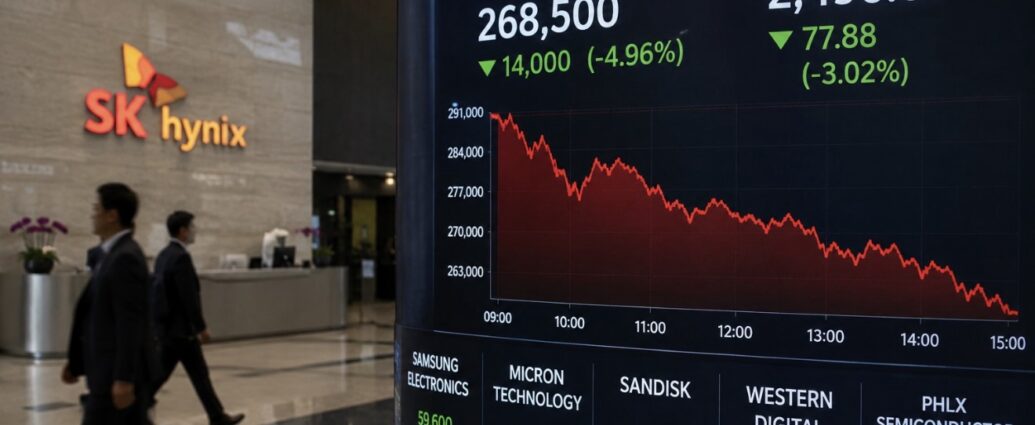
On Tuesday, July 14, shares of SK Hynix fell nearly 5% on the Korea Exchange, deepening a selloff that began the day before, when the chipmaker recorded its worst single session in history. The trigger, according to trading data from the exchange and a widely circulated research note from brokerage Korea Investment & Securities, was a growing fear among investors that this year’s blistering rally in memory-chip stocks had run far ahead of what the underlying business can deliver.
The damage on Monday was severe. SK Hynix closed down 15.4% in Seoul, its steepest drop on record, just three trading days after a celebrated debut on the Nasdaq in New York. The plunge dragged the country’s benchmark Kospi index down roughly 9% and forced a brief, market-wide halt in trading. Rival Samsung Electronics, which along with SK Hynix dominates the Korean market, fell close to 11%. Foreign investors sold about 1.7 trillion won, or roughly $1.1 billion, of Korean shares in a single day, with SK Hynix accounting for most of the selling.
By Tuesday the bleeding had not stopped. The additional 5% slide wiped out an early gain of as much as 4.6%, and the Kospi slipped another 3%. In two sessions, SK Hynix and Samsung each shed at least 30% from the record highs they set only last month. SK Hynix’s market value dropped to about $875 billion, pushing it back out of the elite group of companies worth more than a trillion dollars, a threshold it had crossed less than two months earlier.
The immediate spark was a report from Korea Investment & Securities warning that SK Hynix’s operating profit for the latest quarter could come in about 8% below what the market expected. The brokerage pointed to the company’s heavy reliance on high-bandwidth memory, the specialized chips that sit alongside Nvidia’s artificial-intelligence processors. Prices for that memory are still climbing, the report noted, but more slowly than the sky-high forecasts baked into the stock.
For all the drama, several market watchers described the drop as a healthy purge rather than a warning of collapse. Chan H. Lee, managing partner at Seoul-based Petra Capital Management, called it profit-taking and a classic “sell-the-news” reaction to the Wall Street listing rather than any real change in the company’s outlook. Daniel Yoo, global strategist at Yuanta Securities, put it more bluntly, saying investors are simply confused about where memory demand and a fair share price actually sit now that the same company trades in two countries at once.
That confusion is real money. SK Hynix’s American shares represent one-tenth of a Seoul share, and at Monday’s close they traded at a premium of about 25% to the Korean price, tempting traders to bet on the gap closing. In Hong Kong, a leveraged fund that aims to double SK Hynix’s daily move lost more than a third of its value in one day.
The selling rippled straight into American memory names. Micron Technology fell about 6.4%, Sandisk dropped 8.4%, and Western Digital lost 6.8%, while the broad Philadelphia Semiconductor Index gave up 3.6%. The message was simple: when the biggest supplier of AI memory sneezes, the whole chip aisle catches cold.
Underneath the panic, the business itself is booming. SK Hynix reported that operating profit jumped 405% from a year earlier in the first quarter of 2026, with revenue up 198%, powered by an ongoing shortage of memory as AI companies race to build data centers. That is exactly why the pullback matters to ordinary readers. Memory chips are the raw material of the AI economy, and their price feeds into the cost of everything from cloud computing bills to the servers behind popular chatbots.
Korea’s government is treating the buildout as a national priority. On Monday, President Lee Jae Myung repeated a pledge to speed up hundreds of billions of dollars in new chip-factory projects planned by Samsung and SK Hynix, a reminder that Seoul sees these two companies as pillars of the entire economy.
For now, the question hanging over the market is whether the two-day rout was a pause or a top. The companies are minting record profits, yet their stocks just proved how quickly a crowded bet can unwind. Investors who piled into the AI trade are learning that even the strongest story can be priced for perfection, and that perfection rarely survives contact with a single downbeat forecast.
JBizNews Desk | Seoul
© JBizNews.com All Rights Reserved. Reproduction or distribution without written permission is prohibited.
China’s Crude Imports Sink to Near Ten-Year Low as Gulf War Bites
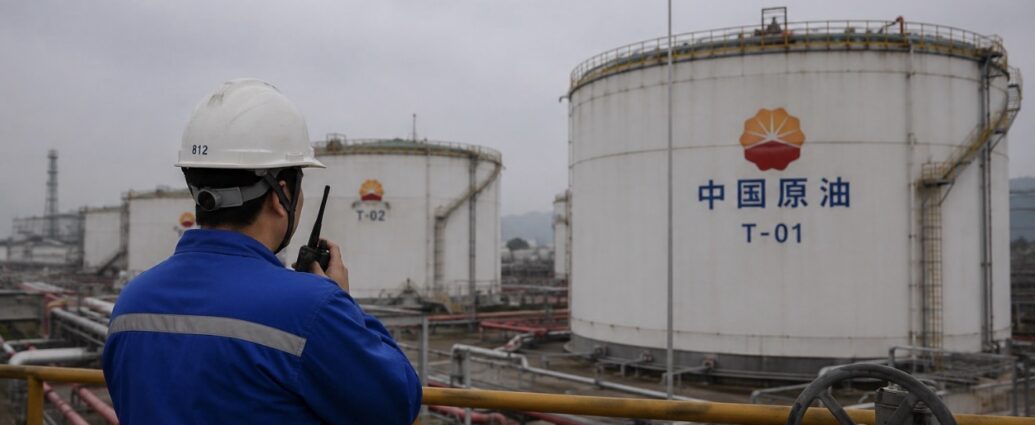
On Tuesday, July 14, China’s General Administration of Customs reported that the country’s crude-oil imports collapsed in June to their lowest level in nearly a decade, a striking retreat for the world’s largest oil buyer and a sign of how deeply the war in the Persian Gulf has scrambled global energy trade. Purchases fell 41% from a year earlier to 29.27 million tons, the least since October 2016, according to the customs data. The figure came in 12% below May, which had itself been the weakest month in eight years.
The plunge reflects a rare mix of forces hitting at once. The most immediate is the ongoing conflict between the United States and Iran, which has choked shipping through the Strait of Hormuz, the narrow waterway that normally carries about a fifth of the world’s seaborne oil. With Gulf barrels harder and costlier to obtain, Chinese refiners have leaned on other tools rather than chase expensive replacement cargoes.
Those tools have been on full display for months. According to shipping analysts at Kpler, China has drawn down oil held in its refineries and commercial tanks, trimmed how much crude its plants process, and cut exports of finished fuels, all to stretch existing supplies. At the same time, Beijing has kept adding barrels to its strategic petroleum reserve during the war, a bet that today’s disruption could last. The result is a country consuming from storage instead of buying fresh imports at war-inflated prices.
The geography of the shortfall tells the story. Data cited by the American Petroleum Institute showed that Chinese imports from Iraq and Kuwait fell essentially to zero in May, because both nations rely almost entirely on export routes that pass through the Strait of Hormuz. Saudi Arabia and the United Arab Emirates, which can move some oil through pipelines that bypass the chokepoint, managed to keep a portion of their crude flowing to Chinese ports. Even so, the overall decline was steep, with seaborne arrivals running far below the levels seen before the fighting began.
The backdrop is a market once again on edge. West Texas Intermediate traded near $78 a barrel this week after rallying 9.4% on Monday, while Brent closed above $83, according to market data compiled Tuesday. The jump followed a statement from President Donald Trump that the United States would reimpose a blockade on Iranian ships crossing the Strait of Hormuz and demand payment for other cargo moving through the waterway, a levy he pegged at 20% of a shipment’s value, or roughly $30 million for a fully loaded supertanker. U.S. forces launched a third night of strikes on Iran, raising the risk of a longer disruption.
For years, the oil market ran on a simple assumption: whatever shock hit global supply, China’s near-bottomless appetite would eventually soak up the excess and steady prices. June’s numbers show that assumption fracturing. Rather than scrambling for every available barrel, Beijing has let its imports fall sharply and ridden out the storm on inventories. That restraint has quietly helped cap oil prices, since the world’s biggest buyer is not competing aggressively for scarce cargoes.
There is a longer-running force underneath the war disruption, too. China’s rapid shift to electric vehicles is steadily eroding demand for gasoline, with new-car sales overwhelmingly electric. Analysts increasingly argue that even after the Gulf conflict eases and Iranian barrels return to the market, Chinese imports may never climb back to the peaks above 11.6 million barrels a day averaged in 2025. In other words, part of what looks like a temporary war shock may turn out to be a permanent change in how much oil the country needs.
For businesses far from the Gulf, the stakes are concrete. China’s buying decisions ripple through the price every refiner, airline, trucking firm, and factory pays for fuel. When the largest importer pulls back, it eases some of the upward pressure that war and the Strait of Hormuz would otherwise put on prices at the pump and on shipping invoices. OPEC, for its part, recently trimmed its 2026 forecast for global oil-demand growth to about 800,000 barrels a day, a nod to softer appetite from the very market that once seemed unstoppable.
The near-term picture remains hostage to the fighting. Early tracking data suggest July imports may tick up modestly from June as tanker traffic through the strait slowly normalizes, though volumes would still sit around 41% below year-ago levels. Until the conflict resolves, China looks content to buy less, lean on its reserves, and wait, a posture that is reshaping oil markets well beyond any single battlefield.
JBizNews Desk | Beijing
© JBizNews.com All Rights Reserved. Reproduction or distribution without written permission is prohibited.


Opinion | From Canada to Detroit to Trump

China Lands Its First Reusable Rocket Booster at Sea, Narrowing SpaceX’s Lead
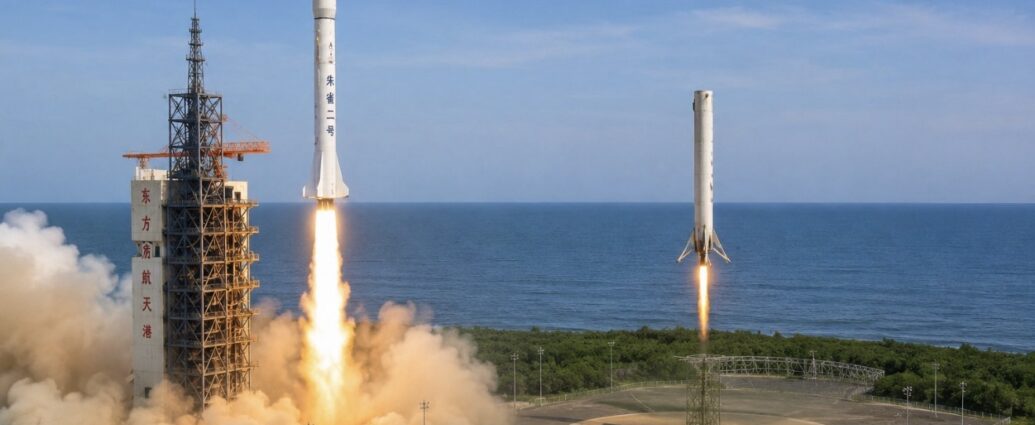
China pulled off its first recovery of an orbital-class rocket booster on Friday, a milestone that places it in a two-nation club with the United States and takes direct aim at the commercial launch business SpaceX has dominated for a decade. The China Aerospace Science and Technology Corporation, the state-owned contractor behind the flight, called it a historic breakthrough after its Long March 10B rocket lifted off from the Wenchang Commercial Space Launch Site on Hainan island and its first stage returned vertically to a net-rigged platform at sea, state broadcaster CCTV reported.
The catch itself was the point. About six minutes after separating from the upper stage, the booster descended under engine power and was snagged by hooks and a net on an offshore platform, a lighter approach than the four landing legs SpaceX uses to set its Falcon 9 boosters down on land and on drone ships. The rocket, built by the China Academy of Launch Vehicle Technology, a unit of CASC, uses a five-meter first stage and also delivered a satellite to orbit on the same flight.
Reusability is not a stunt. It is the single biggest reason launch has gotten cheaper. When a company can fly a booster, recover it, and fly it again, it spreads the cost of the most expensive part of the rocket across many missions. That lowers the price of reaching orbit, shortens the wait between launches, and makes it affordable to loft the thousands of satellites needed for space-based internet. CASC said it plans to fly this same booster again by the end of the year.
That is where the commercial stakes come in. CALT has said it wants the Long March 10B to launch broadband-internet satellites, China’s answer to SpaceX’s Starlink, along with larger commercial payloads. Beijing is racing to build its own megaconstellations, and without cheap, repeatable launches, the math does not work. The booster recovered on Friday is a step toward the low-cost cadence that made Starlink possible in the first place.
For now, the gap remains wide. SpaceX landed its first Falcon 9 in December 2015 and flew roughly 165 orbital missions in 2025, close to one every other day and nearly twice the output of China’s entire space program. The Long March 10B can carry about 16 tons to low-Earth orbit, short of the Falcon 9‘s 22 tons, and China has yet to prove it can turn a recovered booster around quickly or cheaply. Friday’s success also followed a string of failures, including a December flight by private Chinese firm LandSpace, whose Zhuque-3 rocket reached orbit but exploded trying to land.
The United States is not standing still, and it is no longer a one-company field. Blue Origin, founded by Jeff Bezos, landed the first stage of its New Glenn rocket for the first time last November, giving American industry a second reusable heavy-lift option. That competition has kept US launch prices under pressure and US launch capacity ahead of the rest of the world.
China’s answer has been to open the field at home. Alongside the state-run effort, Beijing has encouraged a commercial space sector and eased rules so startups developing reusable rockets can raise money through public listings. The result is a scramble among state-backed and private firms to crack the same technology, with CASC and CALT now the first among them to land it.
The race carries weight beyond commerce. Space has become tightly linked to defense, communications, and surveillance, and the ability to launch often and cheaply feeds all three. NASA Administrator Jared Isaacman said recently that the United States is “very much in a space race” with China, telling CBS that Chinese astronauts will reach the moon. CASC is developing the broader Long March 10 family for crewed lunar missions before 2030.
For American companies, Friday’s landing is a signal rather than an upset. SpaceX still owns the global launch market, and Blue Origin is climbing. But China has now shown it can do the one thing that made that dominance possible, and it is assembling the financing, the launch sites, and the satellite ambitions to turn a single successful catch into a lasting competitor. The contest that has been largely American for a decade just gained a serious second front.
JBizNews Desk | New York © JBizNews.com All Rights Reserved. Reproduction or distribution without written permission is prohibited.