Opinion | The Elephant at the NATO Summit
2026-07-05

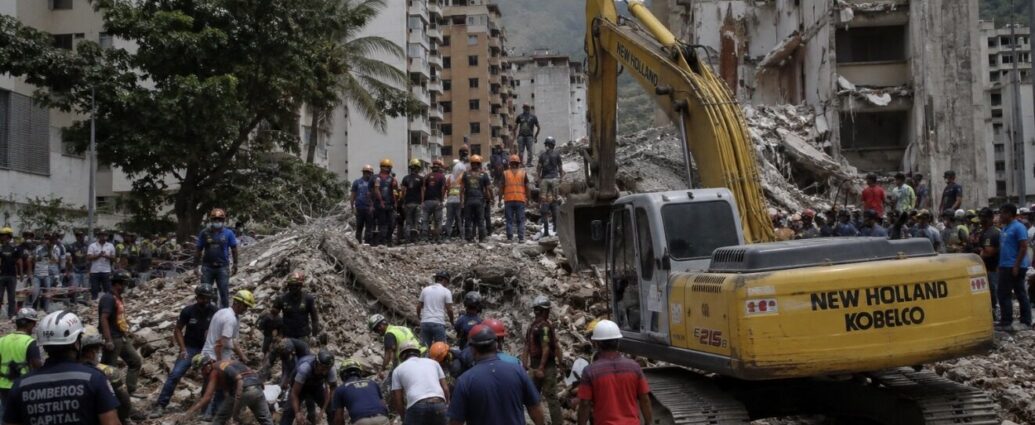
Nearly a week after two powerful earthquakes devastated Venezuela’s northern coast, rescue crews are still struggling to reach victims—not because of a lack of equipment, but because many of the cranes, excavators, and heavy machines needed to clear debris have run out of fuel.
According to Venezuela’s National Assembly, the death toll climbed to 3,000, with more than 11,200 people injured and tens of thousands still unaccounted for. Rescue operations remain concentrated in La Guaira, one of the hardest-hit regions.
The fuel shortages have added a painful irony to the disaster.
Despite possessing the world’s largest reported oil reserves, Venezuela has been unable to keep enough gasoline flowing to support emergency recovery efforts. Government machinery has reportedly sat idle while families and volunteers searched collapsed buildings by hand.
The two earthquakes struck within seconds of one another on June 24, measuring 7.2 and 7.5 in magnitude, with epicenters in Yaracuy state west of Caracas. The second and stronger quake released roughly three times the energy of the first, bringing down aging apartment buildings and damaging communities across the northern coast.
Satellite imagery indicates nearly 60,000 buildings were damaged or destroyed.
The United Nations estimates the disaster caused between $4.7 billion and $8.7 billion in physical damage—equal to roughly 4% to 8% of Venezuela’s economy. UN agencies also estimate that as many as 6.8 million people could require shelter, medical care, food, or clean water.
Ironically, the country’s oil infrastructure largely survived.
State-owned energy company PDVSA said major refineries, including El Palito, Amuay, and Cardón, escaped significant earthquake damage, while crude production in the Orinoco Belt continued operating.
Instead, officials say the fuel shortages stem from years of underinvestment that left Venezuela unable to refine enough gasoline for domestic demand, forcing the country to depend on imports and fuel rationing. Once the earthquakes struck, that fragile supply chain quickly broke down.
Public frustration has continued to grow.
Many survivors accused the government of responding too slowly, forcing neighbors to rescue victims before heavy equipment arrived. PDVSA and private distributor Domegas said they are also inspecting natural gas systems serving roughly 600,000 households around Caracas to identify leaks caused by the earthquakes.
The emergency response is unfolding under Venezuela’s new political leadership.
Following the capture of former President Nicolás Maduro in January, the United States has backed the country’s new government while overseeing much of Venezuela’s oil revenue.
About 2,000 U.S. service members are assisting with search-and-rescue operations, according to U.S. Southern Command commander Gen. Francis Donovan. President Donald Trump has also pledged American assistance, describing the earthquakes as catastrophic.
International rescue teams from Ecuador, Spain, the Netherlands, Jordan, and Argentina joined local crews during the early days of the response. While many foreign teams have begun winding down operations, rescuers continue searching for survivors.
A three-year-old boy was pulled alive from the rubble in La Guaira on June 30, while crews continue efforts to rescue a 44-year-old man trapped beneath the parking garage of a shopping mall, supplying him with food, water, and medicine.
For businesses, the disaster strikes at a critical moment.
Since Maduro’s removal, the United States has eased sanctions on PDVSA, Venezuela has adopted a new oil law, and crude production has begun recovering. The country produced approximately 1.16 million barrels of oil per day in May, with PDVSA targeting 1.37 million barrels per day by the end of 2026.
Now, billions of dollars needed to rebuild homes, highways, ports, power systems, and public infrastructure may compete directly with efforts to expand oil production and revive the broader economy.
The World Food Programme has requested $50 million to feed up to 500,000 people during the next three months, while the World Health Organization warns that already strained hospitals face growing risks of disease outbreaks.
For now, one of the world’s largest oil-producing nations continues confronting a basic obstacle to recovery: getting enough fuel to power the machines needed to save lives. Until fuel supplies improve, much of the work in La Guaira will continue one shovel at a time.
JBizNews Desk | Caracas
© JBizNews.com All Rights Reserved. Reproduction or distribution without written permission is prohibited.

The 2026 FIFA World Cup, billed as the biggest gambling event in history, has become a record-breaking stretch for the companies that let Americans trade on the outcome. Kalshi cleared more than $31 billion in notional trading volume in June, up more than 70% from $17.9 billion in May, according to user-collected data on Dune Analytics, while rival Polymarket posted a record $10.8 billion on its international platform. The figures, tallied as the tournament reached its knockout rounds over the July 4 weekend, are the clearest sign yet that event-contract exchanges have moved from a crypto curiosity to mainstream finance.
Kalshi has kept daily trading volume above $1 billion nearly every day since the tournament kicked off on June 11, the first World Cup expanded to 48 teams. Polymarket’s international platform handled more than $10.8 billion in June, while its U.S.-regulated platform processed more than $3.5 billion, up from $1.77 billion a month earlier, as traders poured into contracts tied to individual matches, tournament winners and player propositions.
The surge has also produced a new competitor. Rothera, an event-contract exchange formed as a joint venture between trading firm Susquehanna International Group and Robinhood, launched in June and immediately generated more than $2 billion in trading volume after Robinhood began routing certain World Cup contracts through the platform. According to Bank of America, Rothera already accounts for about 7% of the U.S. prediction-market industry.
Retail investors have concentrated heavily on the U.S. national team. Traders have placed more than $64 million on Kalshi and $122 million on Polymarket wagering that the United States will win the tournament, despite both exchanges assigning only low single-digit probabilities—approximately 4.3% on Kalshi and 3% on Polymarket. Team USA faces Belgium in the Round of 16 on Monday night, a match expected to generate another surge in trading activity.
The largest individual market remains the tournament champion. Kalshi’s World Cup Winner contract has attracted more than $832 million in trading volume, with roughly 35% of money backing France, the tournament favorite. Both exchanges have aggressively promoted the event to attract new customers. Polymarket offered a prize worth up to $2 million for anyone submitting a perfect knockout-stage bracket, while Kalshi prominently featured World Cup trading in the title of its mobile application.
Trading data also suggests users are holding positions rather than simply placing short-term wagers. Kalshi’s open interest—the value of active contracts awaiting settlement—has climbed above $1 billion for the first time. Polymarket’s open interest sits just below $400 million, elevated but generally consistent with recent months. Bank of America estimates Kalshi has averaged roughly $125 million in trading volume per World Cup match, with parlays accounting for about one-third of that activity, while controlling nearly 80% of the U.S. sports prediction-market sector.
The industry’s rapid growth is unfolding alongside an important legal battle.
More than a dozen states have challenged Kalshi and Polymarket, arguing the companies are operating unlicensed sports betting businesses. The exchanges, supported by the Commodity Futures Trading Commission (CFTC), maintain that event contracts fall under federal commodities law rather than state gaming regulations. CFTC Chairman Michael Selig has criticized state enforcement actions against federally regulated exchanges and warned the agency is prepared to defend its jurisdiction in court. Legal experts believe the dispute could ultimately reach the U.S. Supreme Court.
The industry’s handling of unprecedented sports-related trading volume is also attracting attention beyond regulators.
Asaf Meir, chief executive of market-integrity firm Solidus Labs, which works with Kalshi, described the World Cup as a proving ground at a time when regulators, institutional investors and Wall Street firms are evaluating whether prediction markets can expand well beyond sporting events into elections, economic data and other real-world outcomes.
The tournament concludes on July 19 at MetLife Stadium in New Jersey.
By then, the platforms will not only have crowned a World Cup champion—they will also have established a public track record that could influence how far prediction markets are allowed to expand into mainstream finance.
JBizNews Desk | New York
© JBizNews.com All Rights Reserved. Reproduction or distribution without written permission is prohibited.

President Donald Trump used his Independence Day address on the National Mall on Saturday to declare the United States victorious over Iran, telling a storm-battered crowd that American forces had wiped out Tehran’s entire navy “in a moment.” Speaking at the Salute to America celebration marking the country’s 250th anniversary, Trump said the U.S. had destroyed 159 Iranian ships and declared the nation “stronger, freer, richer, safer, and prouder than ever before.”
The claim is Trump’s, and it goes beyond what his own government has publicly confirmed. The White House said U.S. forces used air and naval superiority to destroy Iran’s naval infrastructure, putting the count at 155 to 159 vessels. The Pentagon, however, has described the military operation as a blockade of Iranian ports combined with a limited number of maritime interceptions rather than the destruction of an entire fleet. Independent reporting has not corroborated the 159-ship figure, with one Pentagon briefing citing 13 vessels that were deterred rather than sunk. Earlier in the conflict, defense officials told Congress that clearing mines from the Strait of Hormuz could take as long as six months—a timeline that contrasts with declarations of a complete military victory.
Trump devoted only a brief portion of his speech to Iran.
“They’re dying to settle. They want to settle so badly,” he said of Iran’s leadership. “We gave him a week off for a funeral because we’re nice.”
The comments referenced the temporary pause the administration placed on U.S.-Iran negotiations, which have continued for weeks through mediators from Qatar and Pakistan. The conflict began on Feb. 28, and has since moved into a fragile ceasefire following a June 17 memorandum of understanding establishing a negotiating window covering Iran’s nuclear program and other unresolved issues.
Much of the address revisited themes Trump introduced a night earlier at Mount Rushmore, where he framed the upcoming midterm elections as a battle against what he called a “resurgence of the communist menace,” describing communism as a direct threat to American liberty while linking the issue to immigration. On the National Mall, he returned to those themes while criticizing Democrats ahead of the 2026 elections.
The evening itself unfolded under difficult conditions.
Washington remained under an extreme heat alert, with the heat index approaching 105 degrees, before severe thunderstorms forced the U.S. Secret Service to evacuate portions of the National Mall shortly before the program. Some attendees left entirely while others later returned and underwent a second round of security screening. The remaining military flyovers scheduled for the evening were canceled because of the weather.
Earlier in the day, however, spectators watched performances by the U.S. Navy Blue Angels and the U.S. Air Force Thunderbirds, while the Qatari-donated Boeing aircraft currently serving as Air Force One conducted a ceremonial flyover before storms moved into the area. Organizers proceeded with what they described as the nation’s largest-ever fireworks celebration.
Elsewhere, a separate incident unfolded in New York City, where a fire broke out on the Brooklyn Bridge during the Macy’s Fourth of July Fireworks display. The FDNY classified the incident as a rubbish fire, reporting no injuries.
Despite the administration’s declaration of victory, the most immediate economic effects of the Iran conflict have become visible not on the battlefield but at gas stations across the country.
Crude oil prices have retreated to roughly the levels seen before the conflict began, with West Texas Intermediate trading near $69 per barrel, while the national average price for gasoline declined to approximately $3.83 per gallon, according to AAA, nearly 50 cents lower than one month earlier as commercial shipping through the Strait of Hormuz continued recovering. U.S. financial markets, closed for the Independence Day holiday, are scheduled to reopen Monday.
Israeli Prime Minister Benjamin Netanyahu also added a diplomatic development to the day, announcing plans to visit the United States in the near future following Trump’s decision to pause negotiations with Iran for one week. Trump has indicated that any final decision formally ending the conflict would be made jointly with Netanyahu.
Attention now shifts from military operations to diplomacy.
The negotiating framework established last month provides both governments with a limited window to resolve the conflict’s most difficult outstanding issues, including Iran’s nuclear program and long-term security arrangements in the Persian Gulf.
Saturday’s Independence Day speech declared the war won.
The negotiations now underway will determine whether that declaration becomes a lasting reality.
JBizNews Desk | Washington
© JBizNews.com All Rights Reserved. Reproduction or distribution without written permission is prohibited.
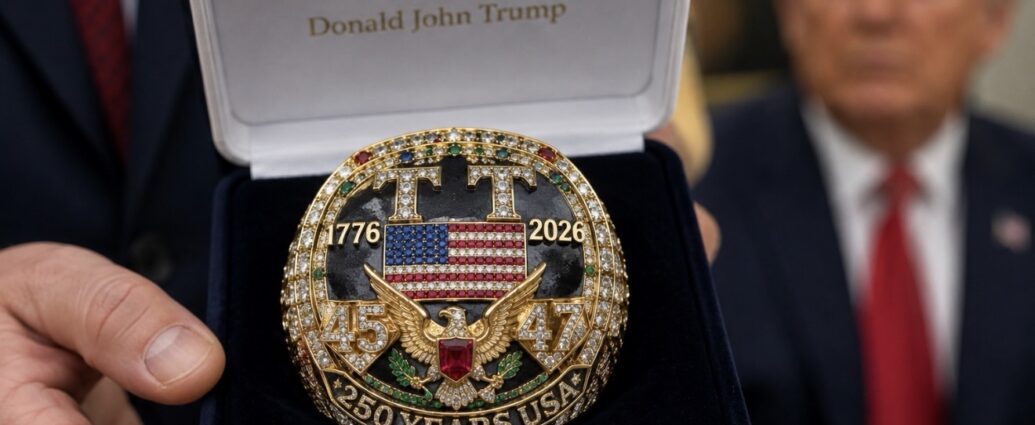
The Antwerp World Diamond Center, the trade body for one of the world’s oldest diamond hubs, presented an elaborate diamond-encrusted gold ring for President Donald Trump on Sunday, June 28, during an “America 250” celebration in Brussels marking the 250th anniversary of U.S. independence. Isidore Mörsel, the center’s president, handed the ring to Bill White, the U.S. ambassador to Belgium, to pass along to the president. The gift arrived months after the Antwerp diamond trade won relief from U.S. import tariffs.
The ring is not subtle. It carries 321 diamonds, 56 sapphires, 13 emeralds and six rubies set in 18-karat gold, roughly the size of a watch face. Dozens of diamonds spell out two large letter “T”s beside the Stars and Stripes, along with the years 1776 and 2026. More stones form the numbers 45 and 47—marking Trump’s two terms—in the shape of the Superman logo. A diamond-winged eagle grips a ruby shield and an emerald olive branch beneath the phrase “250 YEARS USA.” Inside, the band is engraved, “Crafted in Antwerp for Donald John Trump.”
In a prerecorded video shown at the Brussels event, Trump thanked the designers. “A very special thank you to my friends from Antwerp for the magnificent Freedom 250 ring,” he said.
The center turned to David Gotlib, an Antwerp jeweler whose cufflinks can sell for more than $17,000, to make the piece. Neither Gotlib nor the diamond center would place a value on the ring. Two independent jewelers estimated it at between $25,000 and $35,000. Paris- and London-based consultant Alexander Levinson estimated the cost at $25,928, while David Saad, a third-generation jeweler in Canada, valued it between $33,000 and $35,000. Both said roughly half the cost reflected the gemstones and gold, with the remainder representing craftsmanship.
The timing is what draws attention. Belgium’s diamond sector spent much of last year struggling under Trump’s sweeping tariffs. In September, the Antwerp World Diamond Center announced it had secured a zero percent import tariff on the more than $2 billion in polished diamonds Antwerp exports to the United States each year. A spokesperson for the center later said it had provided input to the European Commission during tariff negotiations with the United States but did not directly lobby the Trump administration.
Mörsel described the ring as a symbol of that relationship.
“May this ring serve as a lasting reminder that true partnerships, like the finest natural diamonds, are formed under pressure, endure the test of time, and shine brightest when built on trust,” he said.
The gift also arrives amid continuing debate over what a sitting president may accept. U.S. presidents have broad discretion to receive gifts from private individuals and organizations, while gifts from foreign governments are restricted under the Constitution’s Emoluments Clause unless approved by Congress. Because the ring came from an industry organization rather than the Belgian government, it falls outside that constitutional prohibition.
Personal gifts are expected to appear on the president’s annual financial disclosure. Trump’s latest filing listed a $250,000 sculpture depicting him after the 2024 assassination attempt in Butler, Pennsylvania, along with 10 tickets to the upcoming FIFA World Cup final in New Jersey from FIFA President Gianni Infantino, valued together at about $15,000. Several ethics experts told the Associated Press that the president has departed from the long-standing White House tradition of declining many personal gifts.
The ring is modest compared with some recent gifts. Its estimated value is only a fraction of the roughly $400 million aircraft Qatar donated, which Trump directed be converted into a future Air Force One.
The Brussels celebration itself drew more than 8,000 attendees. Ambassador Bill White said he raised more than $5.5 million from corporate sponsors, including Lockheed Martin and Northrop Grumman, to help fund the event. Musician Alexis Wilkins performed the U.S. national anthem.
Antwerp’s diamond trade has long been closely associated with the city’s Orthodox Jewish community, which for generations played a central role in diamond cutting and trading. Today, the industry is far more international, with Indian-owned companies accounting for much of the trade, while the Antwerp World Diamond Center represents the broader Belgian diamond industry rather than any single community.
For Antwerp, the message was straightforward. After a difficult year, one of the world’s oldest diamond centers wanted to celebrate restored access to its largest export market—and it did so with a ring made from the product that built its global reputation.
JBizNews Desk | Brussels
© JBizNews.com All Rights Reserved. Reproduction or distribution without written permission is prohibited.
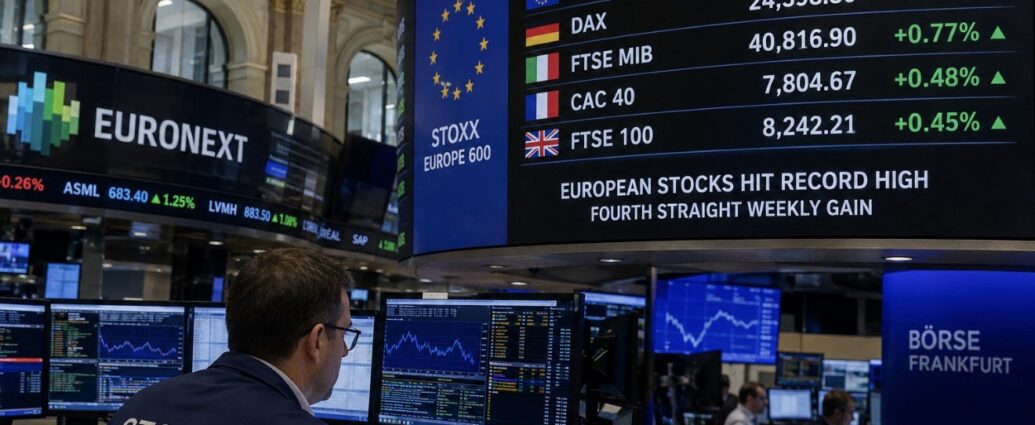
European stocks closed at a record high on Friday, July 3, extending their rally to a fourth consecutive week after weaker-than-expected U.S. employment data reinforced expectations that the Federal Reserve could begin easing monetary policy sooner than previously expected. The pan-European Stoxx 600 rose 0.69% to a fresh record close, capping its strongest weekly performance in about a month as gains broadened well beyond technology shares.
The move followed Thursday’s U.S. Bureau of Labor Statistics report showing the American economy added 57,000 jobs in June, well below the 115,000 economists had expected and down sharply from May’s downwardly revised 129,000. The weaker labor market data eased concerns that the Fed would need to keep interest rates higher for longer, lifting investor sentiment across global markets.
Germany’s DAX led Europe’s major indexes, climbing 0.85% to another record high. Italy’s FTSE MIB gained 0.77%, while France’s CAC 40 added 0.48%. London’s FTSE 100 also ended the session higher as investors rotated into economically sensitive sectors.
The shift marked an important change in market leadership. While technology companies have fueled much of this year’s rally, Friday’s gains spread across industrials, financials, banks, and other cyclical sectors, suggesting investors are becoming more confident that lower borrowing costs could support broader economic growth. Utilities also outperformed, rising 1.78%, reflecting continued demand for defensive investments alongside renewed optimism about the economy.
Several developments added to the positive tone. Investors increasingly believe the European Central Bank may delay additional interest-rate increases as inflation continues to moderate across the eurozone. Germany’s governing coalition reached agreement on a package of tax, labor, and pension reforms, while stronger-than-expected Chinese services sector data improved confidence in global growth before European markets opened.
Among individual stocks, French biotechnology company Abivax led the Stoxx 600, rising as much as 7.7% before closing roughly 6.7% higher after raising €767.1 million ($874.1 million) through an expanded share offering to help fund U.S. development of its inflammatory bowel disease treatment, obefazimod. In Frankfurt, Siemens advanced 1.2% after Kepler Cheuvreux upgraded the stock to “hold” from “reduce.” European defense companies also gained as investors anticipated increased military spending following Russia’s latest large-scale strike on Ukraine. Earlier in the week, banking shares outperformed after UniCredit advanced on developments surrounding its bid for Commerzbank, while Deutsche Bank also posted strong gains.
Gold rose as investors sought traditional safe-haven assets following the weaker U.S. employment report, while the U.S. dollar headed for its largest weekly decline in nearly three months, making dollar-denominated commodities more attractive for overseas buyers. Oil prices were little changed, with Brent crude trading near $71.76 a barrel and West Texas Intermediate around $68.41, as traders continued monitoring the fragile ceasefire between the United States and Iran. U.S. financial markets remained closed for the Independence Day holiday, reducing trading volumes worldwide.
Investors now turn their attention to upcoming European purchasing managers’ surveys and the next round of U.S. economic data for fresh clues on the outlook for interest rates. For now, Europe’s rally appears to be broadening beyond a handful of technology companies into a wider range of industries—a sign that investor confidence is becoming increasingly widespread rather than concentrated in a few market leaders.
JBizNews Desk | New York
© JBizNews.com All Rights Reserved. Reproduction or distribution without written permission is prohibited.

Britain’s competition regulator has opened an initial review of the proposed combination involving Paramount Global and Warner Bros. Discovery, launching another regulatory hurdle for a deal that could reshape the global media and streaming industry.
The U.K. Competition and Markets Authority (CMA) said it is assessing whether the transaction could substantially reduce competition in the United Kingdom across television broadcasting, streaming services, film distribution and advertising markets. The review marks the first phase of Britain’s merger process and will determine whether the proposal requires a more extensive investigation.
The proposed combination would unite some of the world’s best-known entertainment brands under one corporate umbrella. Together, the companies control major television networks, film studios, sports rights and streaming platforms, including CBS, Paramount Pictures, Showtime, HBO, CNN, Warner Bros. Pictures, Discovery, Max, and numerous international television channels.
Regulators are expected to focus on whether the combined company could gain excessive bargaining power when negotiating with cable operators, streaming distributors and advertisers, while also examining how the merger could affect consumers through pricing, programming choices and future competition in streaming.
The review comes as traditional media companies continue searching for greater scale to compete against technology giants including Netflix, Amazon Prime Video, Disney+, Apple TV+, and YouTube, all of which continue investing billions of dollars annually in original programming and global distribution.
Industry analysts say consolidation has become increasingly attractive as media companies struggle with declining cable television subscriptions and rising costs associated with producing premium content. Combining operations could allow companies to reduce expenses, eliminate overlapping businesses and strengthen negotiating leverage with advertisers and distributors.
The CMA said it is inviting comments from interested parties before determining whether the transaction raises sufficient competition concerns to warrant a more detailed Phase 2 investigation. Such reviews can examine market concentration, consumer impact, licensing arrangements and the potential effects on future innovation.
The United Kingdom is not the only jurisdiction reviewing major media consolidation. Large cross-border transactions typically require approval from regulators in multiple countries, including the United States and the European Union, before they can proceed.
Investors are closely watching the regulatory process because approval timelines often influence both financing and integration plans. While some large media mergers have ultimately received approval after agreeing to certain conditions, others have faced lengthy investigations or required companies to divest assets to address competition concerns.
For businesses across the entertainment industry, the outcome could influence future licensing negotiations, advertising markets and streaming competition. Content producers, television distributors and technology companies will also be watching closely, as further consolidation among legacy media companies could reshape the competitive landscape for years to come.
The CMA has not yet indicated when it expects to complete its initial review or whether the proposed transaction will advance to a more comprehensive investigation.
JBizNews Desk | London
© JBizNews.com All Rights Reserved. Reproduction or distribution without written permission is prohibited.
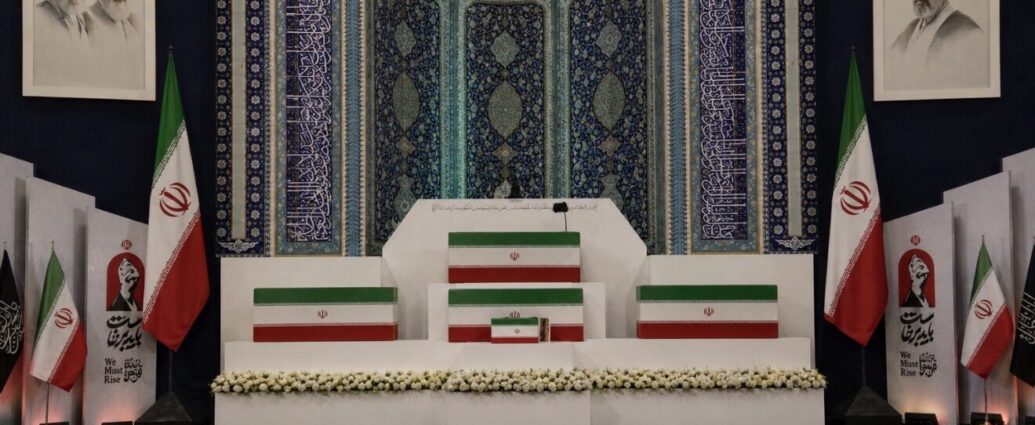
The body of Iran’s slain Supreme Leader Ayatollah Ali Khamenei was laid in state at Tehran’s Grand Mosalla Mosque on Friday, July 3, opening six days of ceremonies that Iranian officials are portraying as a demonstration of national resolve following the recent war with the United States and Israel. Parliament Speaker Mohammad Bagher Ghalibaf described the funeral as a renewal of the nation’s commitment to the ideals of the 1979 Islamic Revolution, calling on supporters to continue what he described as Iran’s path of resistance.
Iranian authorities said Khamenei, 86, was killed alongside several members of his family during a joint U.S.-Israeli strike on his compound on February 28, the opening day of the conflict.
State television broadcast images from inside the mosque showing five flag-draped caskets arranged before mourners. Iranian officials said one of the smaller coffins held Khamenei’s one-year-old granddaughter, who they say also died in the strike. Authorities estimate that as many as 20 million people could attend the funeral processions beginning Saturday, potentially exceeding the estimated 10 million who gathered for the 1989 funeral of Ayatollah Ruhollah Khomeini, the founder of the Islamic Republic.
Several foreign delegations arrived in Tehran to pay their respects, including Dmitry Medvedev, deputy chairman of Russia’s Security Council, and He Wei, vice chairman of China’s National People’s Congress. Officials from Pakistan, Iraq, India, Turkey and several other countries also attended, underscoring Iran’s continued diplomatic relationships despite months of conflict and international pressure.
Questions remain over the public role of Mojtaba Khamenei, the late supreme leader’s son and designated successor. Iranian officials have said he was injured in the February strike and has not appeared publicly since, communicating only through occasional written statements. His absence has fueled speculation among diplomats and investors over how Iran’s next leadership chapter will unfold.
The funeral comes as Washington has begun easing some economic restrictions on Iran following a diplomatic framework reached last month. Under the Islamabad Memorandum of Understanding, signed June 17 by President Donald Trump and Iranian President Masoud Pezeshkian, the United States agreed to temporarily ease sanctions on Iranian oil exports, release certain frozen Iranian assets as negotiations continue, support reconstruction planning, and reopen commercial navigation through the Strait of Hormuz.
On June 22, the U.S. Treasury Department’s Office of Foreign Assets Control (OFAC) issued a temporary license allowing Iranian crude exports through August 21, 2026, while negotiations continue.
The agreement leaves several of the most contentious issues unresolved, including Iran’s stockpile of enriched uranium, its ballistic missile program, and support for regional proxy groups. On July 1, Ghalibaf reiterated that international inspectors would not be permitted to enter bomb-damaged nuclear facilities.
Some analysts believe the conflict has reinforced the Iranian leadership’s belief that its confrontational strategy succeeded. Narges Bajoghli, an associate professor at the Johns Hopkins School of Advanced International Studies, said the government’s survival following months of military confrontation has strengthened support among some Iranians for its long-standing policy of resistance.
For global markets, the greatest concern remains the Strait of Hormuz, through which roughly 20% of the world’s oil supply passes.
Iranian officials have indicated they are considering imposing transit fees on commercial shipping beginning in mid-August. U.S. Middle East envoy Steve Witkoff has urged Tehran to abandon the proposal during indirect negotiations mediated by Qatar and Pakistan. Meanwhile, Iran’s Khatam al-Anbiya military command warned this week that vessels failing to follow approved transit routes could face military action.
Oil markets have remained relatively calm despite the uncertainty. On Friday, Brent crude traded near $71.76 per barrel, while West Texas Intermediate hovered around $68.41, reflecting investor expectations that the ceasefire will continue to hold.
Even so, higher energy costs continue to affect consumers, with U.S. gasoline prices remaining significantly above year-ago levels following months of disruption across Middle Eastern shipping routes.
Speaking Thursday, U.S. Ambassador to the United Nations Michael Waltz warned that President Trump’s patience “is not unlimited,” accusing Tehran of threatening global commerce through repeated disruptions in the Strait of Hormuz.
Formal negotiations are expected to pause during the funeral period before resuming later this month. Iran has announced that Khamenei’s body will travel to Qom, followed by Najaf and Karbala in Iraq, before his burial in Mashhad on July 9.
As diplomatic talks resume and the deadline for Iran’s proposed Hormuz transit policy approaches, governments and financial markets alike will be watching whether the ceasefire evolves into a lasting agreement—or another period of renewed confrontation.
JBizNews Desk | Tehran
© JBizNews.com All Rights Reserved. Reproduction or distribution without written permission is prohibited.
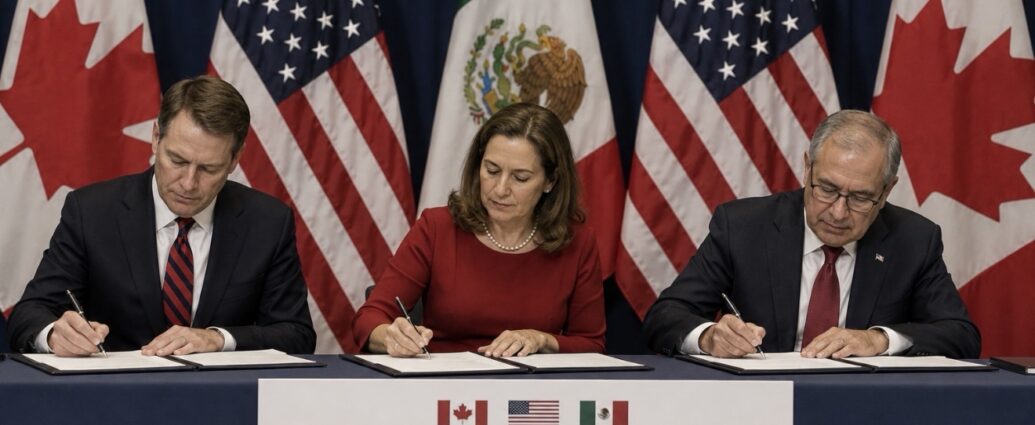
The United States will not renew the United States-Mexico-Canada Agreement (USMCA) in its current form, setting in motion a series of annual reviews that could reshape North America’s trading relationship over the next decade. The announcement, made Wednesday by U.S. Trade Representative Jamieson Greer, follows the treaty’s first mandatory joint review by the three member nations and opens the door to renegotiating key provisions of one of the world’s largest free trade agreements.
Although the decision does not terminate the agreement, it begins a process under the treaty’s sunset clause that requires the United States, Canada and Mexico to meet every year to determine whether the pact should continue unchanged. Unless all three countries eventually agree to renew it, the agreement would expire in 2036.
The USMCA, which replaced the North American Free Trade Agreement (NAFTA) in 2020, governs approximately $2 trillion in annual trade and serves as the foundation for deeply integrated supply chains spanning the three countries. The agreement covers everything from automobiles and agriculture to manufacturing, energy, digital trade and intellectual property.
In a statement issued following Wednesday’s virtual review, Ambassador Jamieson Greer said the United States would continue working with both Mexico and Canada to address what Washington considers shortcomings in the agreement, particularly persistent U.S. trade deficits with its two largest trading partners. Greer emphasized that while the agreement remains fully in force, the Administration believes significant improvements are needed before committing to another sixteen-year extension.
A senior administration official said President Donald Trump chose not to grant an automatic renewal, arguing that existing trade imbalances and unresolved market-access issues should first be addressed through additional negotiations.
The review process was built directly into the USMCA during negotiations in 2019. Under the agreement’s sunset clause, the three governments were required to conduct their first formal review after six years. If all parties agreed, the treaty could have been extended another sixteen years, through 2042. Instead, the United States chose to move into the annual-review process.
Importantly for businesses, there are no immediate changes to tariffs, customs procedures or existing trade rules. Goods qualifying under USMCA continue moving across North American borders under the same provisions that existed before Wednesday’s announcement.
Officials in both neighboring countries sought to reassure businesses that cross-border commerce would continue uninterrupted.
Mexican Economy Minister Marcelo Ebrard said Ambassador Greer informed both Mexico and Canada that Washington was not prepared to grant the automatic extension. Instead, the three governments will continue meeting annually while pursuing additional negotiations. Ebrard stressed that companies should expect no immediate operational changes and said the vast majority of trade between Mexico and the United States would continue under existing USMCA rules.
Canadian Trade Minister Dominic LeBlanc likewise said Canada remains committed to strengthening the agreement while urging Washington to address U.S. tariffs affecting Canadian steel, aluminum, automobiles and lumber, issues that continue to generate friction between the longtime trading partners.
The industries with the most at stake are automotive manufacturing and industrial production.
For decades, automakers have built highly integrated North American supply chains that allow engines, transmissions, electronics and thousands of other components to cross U.S., Canadian and Mexican borders multiple times before a finished vehicle reaches consumers. Those investment decisions were made with the expectation of long-term trade certainty.
Business groups warn that shifting to annual reviews could make companies more cautious when deciding where to build factories, expand production, hire workers or invest billions of dollars in future manufacturing projects. While the agreement remains in place today, yearly uncertainty surrounding its future could influence corporate planning throughout the region.
Industry organizations urged all three governments to reach a long-term resolution as quickly as possible.
Matt Blunt, President of the American Automotive Policy Council, said U.S. automakers are encouraged that negotiations will continue and expressed hope for a durable agreement that preserves North America’s manufacturing competitiveness.
Business Roundtable President Joshua Bolten also called on the three governments to work expeditiously toward extending and strengthening the agreement, arguing that long-term certainty benefits businesses, workers and consumers across the continent.
Trade data illustrates why the Administration is seeking changes. According to the U.S. Bureau of Economic Analysis, the United States recorded a goods trade deficit of approximately $46 billion with Canada and about $197 billion with Mexico last year.
Greer has indicated the Administration wants to negotiate additional bilateral protocols addressing automotive rules of origin, manufacturing content requirements and measures designed to prevent goods produced outside North America from benefiting indirectly from USMCA preferences.
For now, businesses across the continent can continue operating under existing rules. However, the agreement governing one of the world’s largest trading relationships is once again open for negotiation, ensuring that trade policy will remain a major issue for manufacturers, exporters, investors and supply-chain managers for years to come.
JBizNews Desk | Washington, D.C.
© JBizNews.com All Rights Reserved. Reproduction or distribution without written permission is prohibited.

The European Court of Justice, the European Union’s highest court, ruled Thursday that Alphabet and its Google unit must pay a €4.1 billion ($4.67 billion) antitrust penalty, dismissing the company’s final appeal and confirming that Google illegally used its Android mobile operating system to block competition. The ruling, in case C-738/22 P, is final, leaving Google with no further avenue to challenge the fine.
The case began in 2018, when the European Commission imposed what was then a record €4.34 billion antitrust penalty against Google. In 2022, the EU’s General Court reduced the fine to €4.1 billion, and Google appealed. On Thursday, judges in Luxembourg upheld the lower court’s decision, confirming that Google abused its dominant market position through Android.
According to the Commission, Google required smartphone manufacturers using Android to pre-install Google Search, the Chrome browser, and the Google Play Store as a condition for licensing key Google services. Regulators also found the company discouraged manufacturers from using alternative versions of Android, limiting competition and reducing consumer choice across the smartphone market.
Android powers the overwhelming majority of smartphones worldwide outside Apple’s ecosystem, making the Commission’s findings especially significant for app developers, device manufacturers, and competing search providers.
Google defended its business practices following the ruling. A company spokesperson said the decision overlooks Google’s investments in keeping Android open, interoperable, and free for manufacturers while arguing that the operating system has expanded—not limited—consumer choice and helped thousands of developers and businesses across Europe.
Consumer advocates welcomed the decision. Agustín Reyna, Director General of the European Consumer Organization, said dominant technology companies cannot use their market power to prevent competition or restrict consumer choice. The case was one of the defining enforcement actions led by former EU Competition Commissioner Margrethe Vestager, whose portfolio is now held by Teresa Ribera.
Beyond the financial penalty, legal experts say the decision further strengthens Europe’s aggressive approach toward regulating Big Tech. The ruling complements the European Union’s Digital Markets Act, legislation designed to prevent dominant digital platforms from using their market position to disadvantage competitors before lengthy antitrust cases become necessary.
Google also faces mounting legal pressure elsewhere. Earlier this week, a Swedish court ordered the company to pay approximately $1.5 billion in damages to price-comparison service PriceRunner, now owned by Klarna, over anti-competitive practices.
Despite the regulatory setbacks, Alphabet continues investing heavily in artificial intelligence infrastructure. The company recently announced plans to spend $40 billion constructing three major data centers in Texas as it competes with rivals including OpenAI and Anthropic in the race to expand AI computing capacity.
Alphabet shares traded about 1% lower following Thursday’s ruling, suggesting investors had largely anticipated the outcome. While the financial impact on Alphabet is manageable given its size, the decision sends another clear message that European regulators intend to maintain strict oversight of the world’s largest technology companies.
JBizNews Desk | Luxembourg
© JBizNews.com All Rights Reserved. Reproduction or distribution without written permission is prohibited.
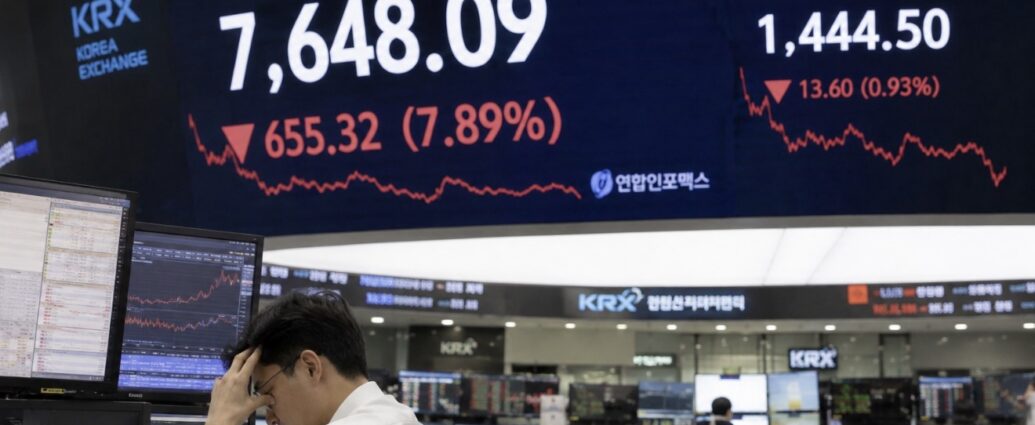
South Korea’s benchmark Kospi index suffered one of its sharpest declines in years on Thursday, closing down 655.32 points, or 7.89%, at 7,648.09, after a broad selloff in global semiconductor stocks triggered panic selling across Asia. The steep decline pushed the index back below the 8,000 level and briefly activated an automatic trading halt on the Korea Exchange, underscoring how heavily the country’s stock market has become tied to the fortunes of its semiconductor industry.
Leading the losses were South Korea’s two largest chipmakers. SK Hynix plunged 14.57%, while Samsung Electronics fell 9.06%, wiping billions of dollars off their combined market value in a single trading session. Together, the two companies now account for roughly half of the Kospi’s total weighting, meaning sharp swings in either stock can significantly move the entire market.
The selling began overnight in the United States after another wave of weakness swept through technology and semiconductor shares on Wall Street. Investors were particularly unsettled after Meta Platforms announced plans to enter the cloud-computing leasing business by renting excess artificial-intelligence computing capacity to outside customers. The move raised fresh questions about whether the largest technology companies may begin slowing or reshaping the massive spending that has fueled the AI infrastructure boom.
The concerns quickly spread throughout the semiconductor sector. In U.S. trading, memory-chip makers including Micron Technology and SanDisk each lost about 10%, setting the tone for heavy selling when Asian markets opened Thursday.
South Korea felt the impact more than most markets because of the extraordinary concentration of its benchmark index. According to Zavier Wong, a market analyst at eToro, Samsung Electronics and SK Hynix together now represent approximately 50% of the Kospi’s total market capitalization, nearly double their combined weighting from the end of last year. That concentration has made South Korea’s stock market increasingly dependent on the performance of the global semiconductor industry and, more recently, on investor sentiment surrounding artificial intelligence.
Foreign investors led Thursday’s selling, unloading more than 5 trillion won—approximately $3.7 billion—worth of South Korean equities. Domestic retail investors stepped in aggressively to purchase shares, helping absorb some of the selling pressure, but were unable to prevent the broader market from posting one of its worst declines in recent memory. During the afternoon session, exchange officials activated a sidecar, an automatic mechanism that temporarily pauses certain program trades during periods of extreme volatility.
The losses spread quickly throughout Asia. In Japan, memory-chip producer Kioxia, now one of the country’s largest technology companies, fell more than 13%, helping drag the Nikkei 225 down 2.47%. South Korea’s technology-heavy Kosdaq index also suffered heavy losses, falling 6.74%.
Despite the sharp decline, several market analysts argued that Thursday’s rout appeared driven more by profit-taking after months of extraordinary gains than by any deterioration in the industry’s long-term fundamentals.
Fabien Yip, market analyst at IG, said many investors chose to lock in profits following the remarkable rally semiconductor shares have enjoyed during the global AI boom. While valuations have risen dramatically, demand for advanced memory chips used in artificial-intelligence servers continues to remain strong.
In fact, South Korea’s semiconductor industry continues to invest aggressively in future production. Samsung Electronics and SK Hynix together are planning to invest an estimated $520 billion in four new semiconductor manufacturing complexes across South Korea over the coming years. On Thursday, SK Hynix Chief Executive Kwak Noh-jung reaffirmed the company’s plans to invest approximately 100 trillion won, or about $64 billion, in domestic facilities, including construction of a major new fabrication plant expected to begin next year.
Research firms also remain optimistic about the industry’s longer-term outlook. Just one day before the selloff, Morningstar raised its fair-value estimates for both Samsung Electronics and SK Hynix. Analyst Jing Jie Yu said the current memory-chip cycle continues to outperform earlier expectations, citing tight supply conditions, resilient demand for AI hardware, and growing numbers of long-term supply agreements between chip manufacturers and major technology companies.
For South Korea, where semiconductors remain the country’s largest export industry, Thursday’s market decline served as another reminder of how closely the nation’s economy has become linked to the global race to build artificial intelligence infrastructure. While investor sentiment can change quickly, the country’s largest technology companies remain central players in one of the world’s fastest-growing industries.
JBizNews Desk | Seoul
© JBizNews.com All Rights Reserved. Reproduction or distribution without written permission is prohibited.

David Troostwyk, Vice President of the London Diamond Bourse, this week called on the presidents of the world’s diamond bourses to elect Ahmed Bin Sulayem as the next President of the World Federation of Diamond Bourses (WFDB) when the trade gathers for the 41st World Diamond Congress in Singapore from July 12–15. Troostwyk, who is standing for Vice President on the same slate, said the decisions made at this Congress will shape the direction of the nearly 80-year-old organization for years to come.
Held once every three years, the Congress brings together the federation’s 24 member bourses, and this year’s gathering includes the election of a new leadership team. Current President Yoram Dvash and the Executive Council are stepping down after completing two terms spanning six years—a period marked by the COVID-19 pandemic, the rapid rise of lab-grown diamonds, conflict in the Middle East, new U.S. tariffs, and the sale of De Beers. Troostwyk credited the outgoing leadership with helping stabilize the industry, strengthening support for the Natural Diamond Council, and welcoming Botswana and Angola as affiliate members.
Troostwyk said the federation was originally established after the Second World War to create a trusted international framework for the diamond trade. Its mission was to establish common trading standards for rough and polished diamonds, promote ethical business practices, resolve disputes, and represent the industry with one unified voice.
The foundation of that system, he noted, has always been trust. Members of affiliated bourses could confidently trade with one another knowing they all operated under the same code of conduct. Violations carried significant consequences, including expulsion from a local bourse and exclusion from the federation’s worldwide trading network.
That framework also helped create the World Diamond Council in 2000, which played a leading role in developing the Kimberley Process to combat conflict diamonds. Working alongside the International Diamond Manufacturers Association, the federation also helped establish internationally recognized grading terminology while enforcing ethical standards and disclosure rules for synthetic diamonds.
Although manufacturing has shifted toward Asia and digital trading has reduced reliance on traditional trading floors, Troostwyk argued that the need for a trusted international network has only grown stronger as governments increase compliance, sanctions, sourcing, and traceability requirements.
His preferred candidate is Ahmed Bin Sulayem, Executive Chairman and Chief Executive Officer of the Dubai Multi Commodities Centre (DMCC) and Chairman of the Dubai Diamond Exchange.
Over the past two decades, Bin Sulayem has transformed Dubai into one of the world’s leading diamond trading hubs. According to the campaign statement, DMCC has expanded from just 28 member companies in 2003 to more than 26,000 businesses representing 180 countries, employing over 90,000 people, including approximately 1,400 companies involved in precious stones. Today, the Dubai Diamond Exchange ranks among the largest diamond exchanges globally.
Bin Sulayem is also widely recognized for his leadership in global diamond governance. He has chaired the Kimberley Process three times, most recently serving as its Custodian Chair in 2025, where he championed blockchain-based digital certification and supported the establishment of a permanent Kimberley Process Secretariat in Botswana.
Troostwyk said Bin Sulayem’s relationships with African producer nations, Indian manufacturing centers, retailers across Asia, the Gulf, Europe, and North America, together with his experience working alongside governments and civil society, uniquely position him to lead the federation through an increasingly complex regulatory environment.
The proposed leadership slate includes Bin Sulayem as President, Troostwyk as Vice President, and Molefi Letsiki as Treasurer.
Troostwyk built his career without a family diamond business, founding the advisory firm Salotro and digital trading platform CiviGem while helping modernize the London Diamond Bourse during his presidency through expanded education programs and diversified revenue initiatives.
Letsiki, the son of a diamond polisher, is Founder and Director of Molefi Letsiki Diamonds, described in the campaign statement as the world’s first majority Black-owned De Beers Sightholder. He also serves as President of the Diamond, Gem and Jewellery Association of Southern Africa, is a member of the WFDB Executive Council, and serves as a World Diamond Council Ambassador. His election would further strengthen representation for African producing nations following the federation’s expanded relationship with Botswana and Angola.
All three candidates have also been involved with the Young Diamantaires, a next-generation industry organization originally launched as a WFDB initiative by Executive Council member Rami Baron before becoming an independent non-profit. The organization has organized educational visits to diamond mines, industry tours in Surat, and helped build a science laboratory for a school in an African mining community. Troostwyk described the group’s development as an example of the federation investing in the industry’s future leadership.
The business challenges facing the industry remain significant. Growing competition from lab-grown diamonds, softer global demand, and increasingly strict regulations governing Russian-origin goods continue to pressure prices, margins, and employment throughout the mining, manufacturing, and retail sectors.
Troostwyk argued that a modernized federation committed to promoting the value of natural diamonds will be essential to protecting the industry and the businesses that depend on it. The final decision now rests with the presidents of each member bourse gathering in Singapore.
The 41st World Diamond Congress will be held alongside the Singapore International Jewelry Expo, featuring discussions on African supply, Asian demand, geopolitics, and the next generation of industry leadership.
JBizNews Desk | New York
© JBizNews.com All Rights Reserved. Reproduction or distribution without written permission is prohibited.
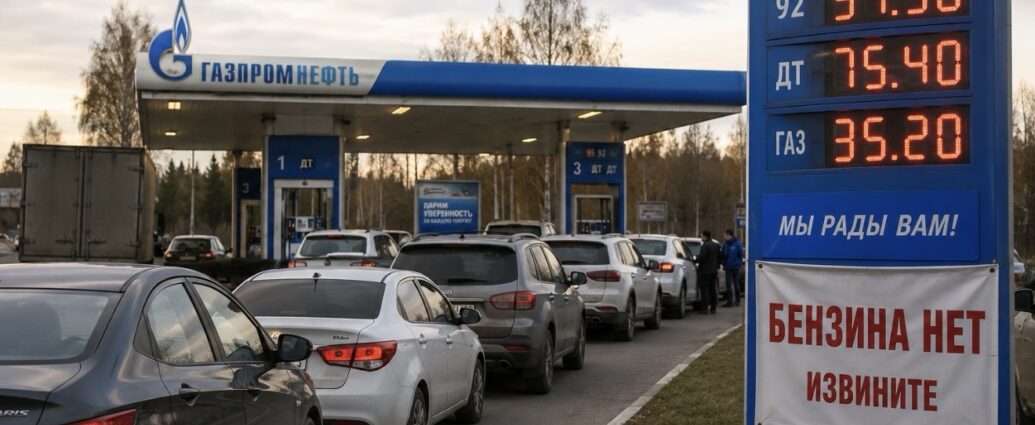
Lines are stretching for hours at gas stations across Russia, and frustration is mounting as months of Ukrainian drone attacks on oil refineries have disrupted fuel supplies across the country. Fuel rationing has now spread to multiple regions, while videos circulating on social media show motorists waiting at empty pumps and paying higher prices. President Vladimir Putin, in a rare public acknowledgment, admitted that “problems persist for both motorists and businesses,” while insisting the shortages are temporary and manageable.
The disruption is striking for one of the world’s largest oil producers.
According to multiple reports, Ukrainian forces have carried out dozens of drone attacks against Russian refineries, fuel depots, storage terminals, and other oil infrastructure since the spring. Energy analysts estimate that more than 20% of Russia’s refining capacity has been temporarily taken offline, sharply reducing domestic gasoline and diesel production.
Some of Russia’s largest refineries have suffered repeated attacks. Facilities serving the Moscow region were among those damaged, forcing repairs expected to take months. As refinery output declined, authorities introduced fuel-purchase limits in numerous regions to prevent panic buying and preserve supplies for essential industries.
Major fuel retailers have capped gasoline purchases per customer, while some local governments have implemented additional restrictions as long lines formed at filling stations. The shortages have become particularly challenging during the busy summer travel and agricultural season, when fuel demand typically reaches its highest levels.
The economic impact extends well beyond motorists.
Russia remains one of the world’s largest exporters of crude oil and petroleum products. Damage to refining infrastructure has reduced the country’s ability to process crude domestically while also complicating fuel exports, placing additional pressure on government revenues that help finance military operations.
Industry analysts say Russia may need to import certain refined fuels to stabilize domestic supplies—an unusual development for a country long considered an energy superpower. Officials are also reportedly evaluating additional restrictions on diesel exports to ensure enough fuel remains available for domestic consumers and businesses.
The disruptions have begun affecting Russia’s broader economy.
Higher wholesale fuel prices increase transportation costs for manufacturers, farmers, retailers, and freight companies, eventually filtering through to consumer prices. Economists also warn that continued fuel shortages could slow economic growth while complicating efforts by Russia’s central bank to reduce interest rates.
Agriculture faces particular challenges as harvest season accelerates. Farmers depend heavily on diesel fuel for planting, harvesting, and transporting crops, making reliable fuel supplies essential for food production.
For global energy markets, the situation remains significant.
Although Russia continues exporting large volumes of crude oil, prolonged refinery disruptions reduce flexibility within global fuel markets and increase uncertainty for buyers. Energy traders continue monitoring both refinery repairs and the possibility of additional Ukrainian strikes that could further limit production.
Ukraine has indicated it intends to continue targeting Russian energy infrastructure as part of its broader military strategy, arguing that refinery attacks reduce Russia’s ability to finance the war while disrupting military logistics.
As long as the attacks continue and damaged facilities remain under repair, analysts expect fuel shortages to persist through much of the summer.
For businesses worldwide, the developments serve as another reminder that geopolitical conflicts can quickly disrupt global energy markets and supply chains. Even one of the world’s largest oil-producing nations is discovering that damaged refining infrastructure can create shortages, higher prices, and economic uncertainty far beyond the battlefield.
JBizNews Desk
© JBizNews.com All Rights Reserved. Reproduction or distribution without written permission is prohibited.

One of America’s most recognizable corporate names is officially changing.
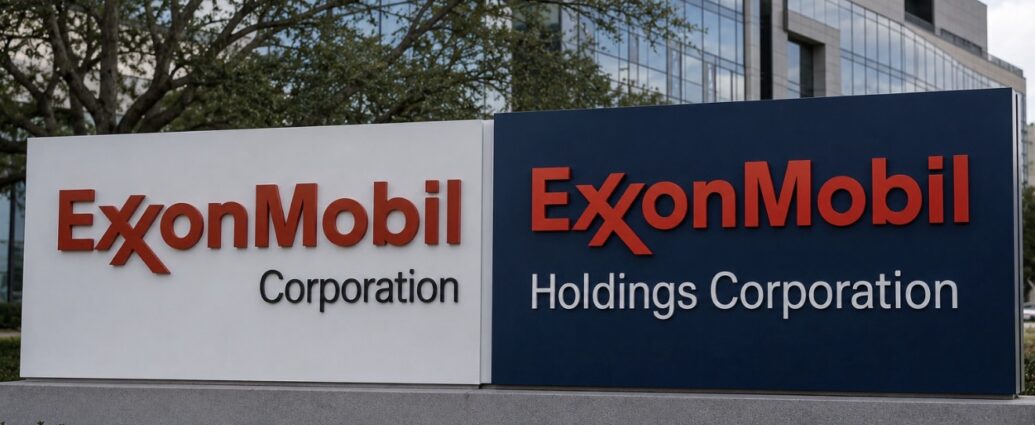
Exxon Mobil Corporation announced Wednesday that it will become ExxonMobil Holdings Corporation as part of its move to Texas, marking the company’s first formal name change since the historic Exxon-Mobil merger more than 25 years ago.
The change accompanies the company’s decision to redomicile from New Jersey to Texas, where Exxon has already based its operational headquarters for several years.
For shareholders, the transition is largely administrative.
Each existing share of Exxon Mobil stock will automatically convert into a share of the new holding company, which will continue trading on the New York Stock Exchange under the familiar ticker symbol XOM. Investors are not required to take any action.
Although the corporate name is changing, Exxon said its operations, dividend policy, management team, and business strategy remain unchanged.
The move completes a transition that has been years in the making.
While Exxon relocated its executive headquarters to Spring, Texas, near Houston, several years ago, the company’s legal incorporation had remained in New Jersey—a corporate lineage dating back to Standard Oil, which first incorporated there in the late nineteenth century.
The decision reflects a growing trend among major U.S. corporations.
Texas has aggressively positioned itself as a preferred destination for publicly traded companies by creating specialized business courts, strengthening legal protections for corporate directors, and promoting what state leaders describe as a more business-friendly regulatory environment.
Exxon joins a growing list of prominent companies—including Tesla, SpaceX, Coinbase, and several financial institutions—that have recently moved their legal headquarters to Texas.
The company said shareholders approved the reorganization during its annual meeting earlier this year, clearing the way for the legal restructuring to become effective this week.
For Exxon, the change is primarily about corporate governance rather than day-to-day operations.
A company’s state of incorporation determines which laws govern shareholder disputes, board responsibilities, mergers, and other corporate matters. Many large corporations have recently reassessed where they are legally incorporated as states compete to attract major businesses.
Industry experts say Texas has emerged as one of the strongest competitors to Delaware, which has traditionally dominated corporate incorporations for decades.
The move also carries symbolic significance.
Exxon traces its roots directly to John D. Rockefeller’s Standard Oil, making it one of the oldest and most recognizable names in American business history. Moving its legal home from New Jersey to Texas reflects the broader migration of corporate America toward states viewed as offering more favorable legal and regulatory environments.
For New Jersey, the departure represents another high-profile corporate loss, although Exxon’s operational headquarters and most executive functions had already relocated years earlier.
For investors, however, little changes.
The company’s oil and natural gas operations, refining business, dividend payments, stock ticker, and management structure all remain the same. Consumers will continue seeing the familiar Exxon and Mobil brands at service stations around the world.
The new corporate structure simply aligns the company’s legal headquarters with where it already conducts most of its executive operations.
The move highlights an increasingly competitive landscape among states seeking to attract major corporations—not through tax incentives alone, but through legal systems designed specifically for large public companies.
For Exxon, it closes one chapter stretching back well over a century while opening another firmly rooted in Texas, the center of the American energy industry.
JBizNews Desk
© JBizNews.com All Rights Reserved. Reproduction or distribution without written permission is prohibited.
Oil prices extended their steep decline this week as more Persian Gulf crude found its way back to market, easing the supply fears that had driven prices above $120 a barrel earlier this year. According to the U.S. Energy Information Administration, Middle East producers had cut output by more than 11 million barrels a day in May compared with pre-conflict levels — but that gap is now starting to close, and traders are selling on the expectation that the barrels are coming back.
The price action shows it. Brent crude, the international benchmark, settled at $71.57 a barrel Wednesday, down 1.9% on the day. West Texas Intermediate, the U.S. benchmark, fell to $68.58. Brent dropped roughly 21% over the past month, its worst monthly performance since March 2020, while WTI logged its steepest monthly decline since late 2021. WTI’s recent close below $70 was its first since February 27 — the day before the 2026 Iran war began.
The turning point was diplomatic. The United States and Iran struck a 14-point memorandum of understanding on June 17 to pause the fighting that had choked off the Strait of Hormuz, the narrow waterway between Oman and Iran that normally carries about a fifth of the world’s oil. As the shooting slowed, tankers that had been trapped or idling began moving again.
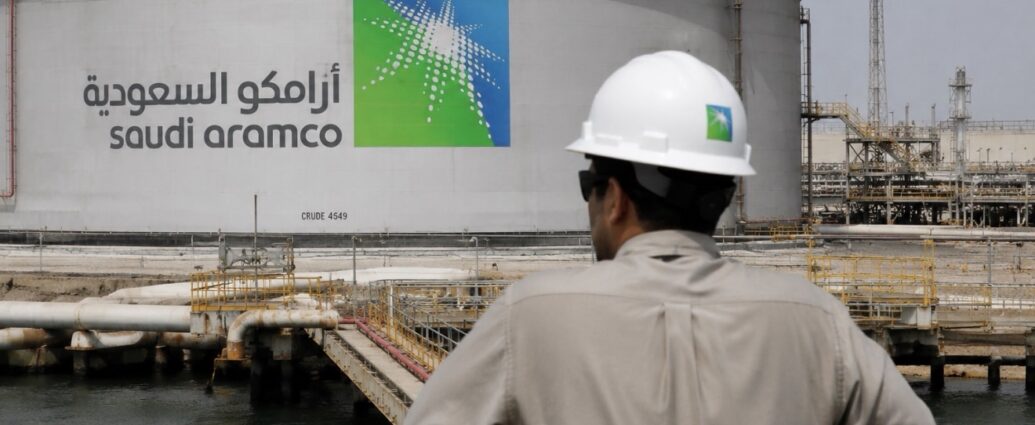
Saudi Arabia’s recovery is the one the market is watching most closely. Saudi Aramco is restarting crude loadings at Ras Tanura, its largest export terminal, which had sat largely idle since early March, according to vessel-tracking data showing very large crude carriers owned by Bahri moving toward the Ju’aymah loading area. That matters because reopening the strait and restarting the region’s biggest export machine are two different things.
The kingdom never fully stopped selling oil. Throughout the crisis, it rerouted around 4 million barrels a day through its East-West Pipeline to the Red Sea port of Yanbu, bypassing Hormuz entirely. Before the war, Saudi crude exports through the strait averaged about 6.3 million barrels a day in 2025 and climbed to roughly 7.1 million barrels a day in February 2026, according to figures from Argus and the Arab Center. Bringing Ras Tanura back toward those levels is the final piece of restoring full Saudi flows — and its return is a big reason prices keep softening.
Other producers are adding to the wave. Iran has said it has shipped more than 40 million barrels since the U.S. lifted its naval blockade, Iraq and Kuwait are moving to unwind wartime force-majeure declarations, and Russian exports have surged to record levels, leaving a growing pile of barrels floating at sea.
For businesses and households, cheaper crude is mostly welcome news. Lower oil feeds directly into lower gasoline and jet fuel prices, giving relief to drivers, airlines and shippers whose costs had spiked. The EIA had warned that U.S. wholesale gasoline prices could rise around 50% in 2026 if Hormuz stayed shut, so a faster supply recovery takes pressure off that forecast and off inflation more broadly.
The flip side is fiscal pain for the exporters. Every dollar off the oil price widens the budget gaps in Riyadh and across the Gulf, where governments spent the war years funding ambitious diversification plans. Analysts at Goldman Sachs have flagged war-swollen deficit estimates for Saudi Arabia well above what the kingdom had budgeted.
Not everyone agrees the slide runs much further. Haitham Al Ghais, secretary general of OPEC, told CNBC the group does not expect oil demand to peak in the foreseeable future and rejected forecasts pointing to a coming glut, saying OPEC focuses on actual numbers rather than projections. Strategists Warren Patterson and Ewa Manthey at ING said tanker traffic into the Gulf is picking up as shipowners grow more confident, a trend they called a clear headwind to any rebound in prices.
The wildcard remains the same one that has driven the market all year: whether the fragile U.S.-Iran truce holds. A durable deal keeps the barrels flowing and prices heading lower. Any fresh flare-up in the strait could reverse the slide in a matter of hours. For now, with real cargoes lining up at Saudi loading buoys, the market is betting the worst of the supply shock is over.
JBizNews Desk | New York
© JBizNews.com All Rights Reserved. Reproduction or distribution without written permission is prohibited.
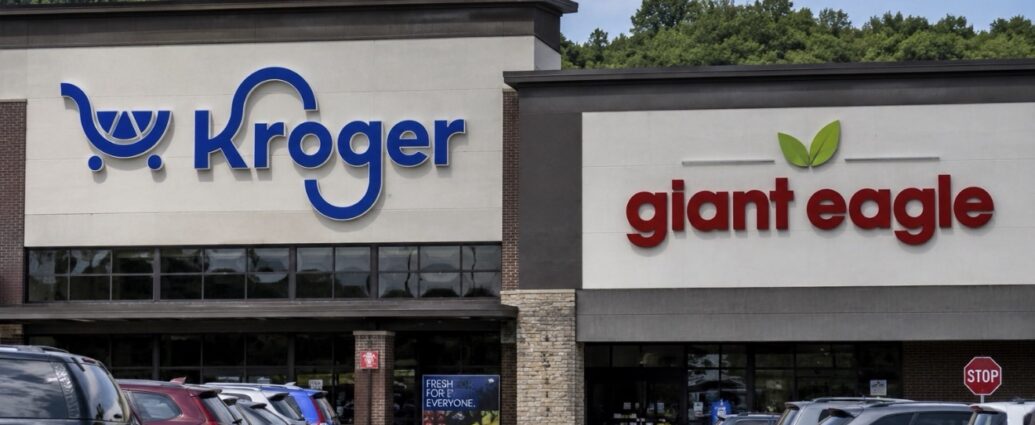
Kroger, the nation’s largest traditional supermarket operator, announced Wednesday that it has agreed to acquire Giant Eagle for approximately $1.65 billion, marking the company’s first major acquisition since its proposed merger with Albertsons was blocked by regulators.
Under the agreement, Kroger will pay approximately $1.25 billion in cash while assuming about $400 million of Giant Eagle’s existing debt. The transaction has been unanimously approved by Kroger’s Board of Directors and remains subject to customary regulatory approvals.
Founded more than 90 years ago, Giant Eagle operates nearly 200 supermarkets and several standalone pharmacies across Pennsylvania, Ohio, West Virginia, Maryland, and Indiana, generating roughly $9 billion in annual revenue. The chain has long maintained a dominant position throughout the Pittsburgh metropolitan area and is one of Pennsylvania’s largest privately held employers.
For Kroger, the acquisition significantly strengthens its presence across the Midwest and Mid-Atlantic while expanding its pharmacy business and customer loyalty programs.
“This is an outstanding strategic fit,” Kroger CEO Ron Sargent said in announcing the transaction, describing Giant Eagle as a respected regional grocer with a strong reputation for fresh food, pharmacy services, and customer satisfaction.
The companies said Giant Eagle, Market District, and the retailer’s myPerks loyalty program will continue operating under their existing brands. Giant Eagle’s headquarters will remain in Cranberry Township, Pennsylvania, and Kroger said it does not currently anticipate widespread store closures.
However, the companies acknowledged that certain stores may need to be divested in markets where competitive overlap exists in order to satisfy federal antitrust regulators. The exact number of potential divestitures has not yet been disclosed.
The transaction represents Kroger’s renewed effort to expand after its proposed $25 billion merger with Albertsons collapsed following legal challenges from federal regulators and several state attorneys general concerned about competition within the grocery industry.
The acquisition also reflects broader consolidation across the retail grocery sector as traditional supermarket chains face increasing competition from Walmart, Amazon, Costco, Aldi, and other discount retailers. Larger operating scale allows grocery companies to negotiate better prices with suppliers, invest in technology, strengthen delivery capabilities, and improve operating efficiencies.
For consumers, Kroger says those efficiencies should eventually translate into lower prices and expanded product selection. Company executives said increased purchasing power and supply-chain improvements will help fund additional investments in pricing while maintaining service levels.
Pharmacy operations also played an important role in the acquisition. Prescription customers typically visit stores more frequently than grocery-only shoppers, making pharmacy services an important driver of customer loyalty and recurring sales.
Industry analysts say the deal demonstrates that grocery consolidation is likely to continue despite heightened regulatory scrutiny. Rather than pursuing massive national mergers, companies may increasingly focus on acquiring strong regional operators that complement existing geographic footprints.
If approved, the transaction is expected to close during 2027.
For shoppers across Pennsylvania, Ohio, West Virginia, Maryland, and Indiana, the immediate impact is expected to be limited. Stores will continue operating under the Giant Eagle name while customers retain familiar loyalty programs and pharmacy services. Over the longer term, consumers will be watching whether Kroger can deliver on its promise of lower prices while preserving the local identity that has made Giant Eagle one of the region’s most recognized supermarket brands.
JBizNews Desk
© JBizNews.com All Rights Reserved. Reproduction or distribution without written permission is prohibited.
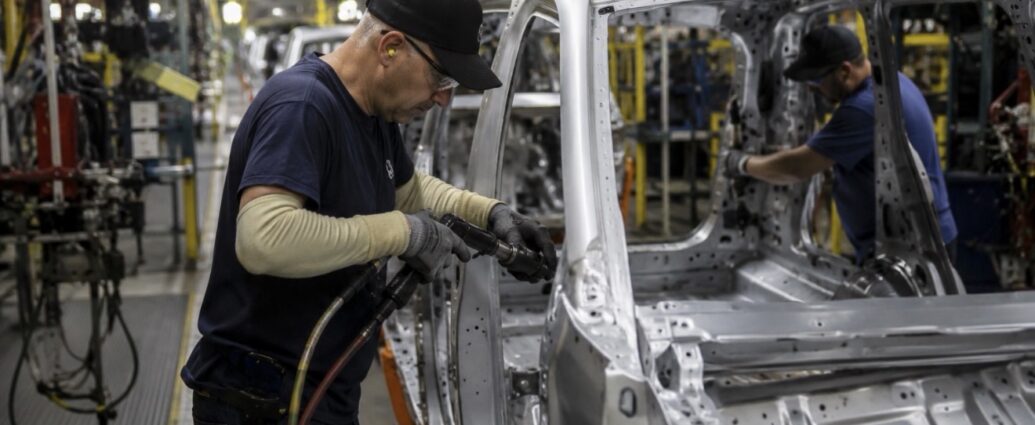
American manufacturing continued expanding in June, although at a slower pace than the previous month, while factory input costs declined sharply, offering encouraging signs that inflation pressures may continue easing.
The Institute for Supply Management (ISM) reported Wednesday that its Manufacturing Purchasing Managers Index (PMI) registered 53.3% in June, down 0.7 percentage point from May but remaining comfortably above the 50-point level that signals expansion. The report marked the sixth consecutive month of growth for the nation’s manufacturing sector.
The monthly survey, compiled from purchasing managers across hundreds of manufacturing companies, is closely watched because it provides one of the earliest snapshots of business activity in the U.S. economy. Readings above 50 indicate expansion, while readings below 50 signal contraction.
The most encouraging development came from the report’s inflation indicators.
The Prices Index, which measures what manufacturers pay for raw materials and supplies, fell sharply to 73.0 from 82.1 in May. Although prices continue to rise, the slower pace suggests inflationary pressures within the manufacturing sector are beginning to moderate after earlier spikes tied largely to higher energy and transportation costs.
Lower manufacturing costs eventually benefit consumers because factories purchase the steel, plastics, chemicals, packaging, fuel, and other materials used to produce thousands of everyday products. When those costs stabilize or decline, manufacturers face less pressure to pass higher prices on to wholesalers, retailers, and ultimately consumers.
Demand also remained healthy.
The New Orders Index stayed well above the expansion threshold, indicating manufacturers continue receiving new business despite higher interest rates and ongoing economic uncertainty. Production remained positive, while inventories increased modestly as companies rebuilt stock levels to meet expected demand.
Five of the six largest manufacturing industries reported growth during June, reflecting continued resilience across much of the industrial economy.
Employment remained the weakest component of the report.
The Employment Index improved from the previous month but remained just below the 50-point expansion mark, indicating many manufacturers continue hiring cautiously despite stronger production and new orders. Businesses appear focused on controlling labor costs while waiting for greater certainty regarding future demand.
For manufacturers, the report paints a picture of an economy that continues growing but without excessive overheating. Companies are producing more goods, receiving additional orders, and benefiting from easing cost pressures while remaining disciplined about workforce expansion.
The report also carries important implications for the Federal Reserve.
Policymakers closely monitor manufacturing costs because they provide an early indication of future inflation trends. Slower price increases, combined with a labor market that is cooling rather than accelerating, could strengthen the case for future interest-rate reductions if broader inflation continues moving toward the Fed’s long-term target.
Lower interest rates would eventually reduce borrowing costs for businesses while helping consumers through lower mortgage rates, auto loans, business financing, and other forms of credit.
For investors, the June ISM report reinforces the picture of an economy experiencing a gradual “soft landing” rather than a sharp slowdown. Manufacturing continues expanding, inflation pressures are easing, and businesses remain active even as hiring becomes more measured.
The next ISM Manufacturing Report will be released in early August and will provide investors with another important measure of whether lower factory costs continue translating into broader economic stability during the second half of the year.
JBizNews Desk
© JBizNews.com All Rights Reserved. Reproduction or distribution without written permission is prohibited.
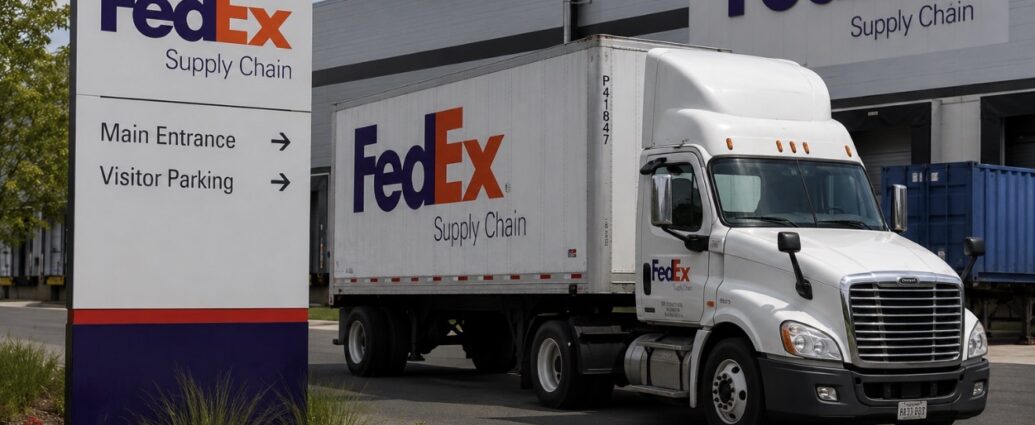
French shipping and logistics giant CMA CGM Group said Wednesday, July 1, that it will acquire FedEx Supply Chain, the contract logistics division of FedEx, for $1.4 billion, significantly expanding its warehousing and distribution operations across North America.
For many readers, FedEx Supply Chain is different from the familiar FedEx package-delivery business. Instead of delivering parcels to homes and businesses, the division manages warehouses, inventory, fulfillment, and distribution for retailers, manufacturers, healthcare companies, and e-commerce businesses. Following the acquisition, the business will become part of CEVA Logistics, CMA CGM’s global logistics subsidiary.
The acquisition will nearly triple CEVA Logistics’ contract logistics footprint in North America. Once completed, the combined operation will manage approximately 150 warehouses, expanding CEVA’s regional network to more than 240 locations while bringing nearly 10,000 FedEx Supply Chain employees into the company.
The transaction represents another major step in CMA CGM’s strategy of becoming a fully integrated global logistics provider rather than simply an ocean shipping company.
Chairman and Chief Executive Rodolphe Saadé said the acquisition strengthens the company’s ability to provide customers with complete end-to-end supply chain solutions across North America, one of the world’s largest consumer markets.
For FedEx, the sale continues its effort to streamline operations and concentrate on its core transportation and parcel-delivery network.
Chief Executive Raj Subramaniam said the company remains focused on strengthening its global delivery business while simplifying its portfolio. FedEx originally acquired the logistics business—then known as GENCO—in 2015 as part of its expansion into e-commerce fulfillment.
The agreement also establishes a broader commercial partnership between the two companies.
Under the arrangement, CMA CGM will become a preferred—but not exclusive—ocean freight provider for FedEx. The companies also plan to cooperate on air cargo capacity, allowing customers greater flexibility when shipping goods internationally by sea or air.
The acquisition reflects CMA CGM’s growing investment in the United States. Earlier this year, the company announced plans to invest approximately $20 billion in U.S. logistics infrastructure, warehousing, aviation, and shipping over the next several years. Purchasing FedEx Supply Chain becomes one of the largest pieces of that expansion strategy.
For businesses, the transaction highlights the increasing importance of supply-chain infrastructure in today’s economy.
Warehousing and fulfillment centers have become critical components of modern commerce as retailers and manufacturers seek faster delivery times, improved inventory management, and greater resilience following years of global supply-chain disruptions.
Larger logistics companies also gain purchasing power, operational efficiencies, and technology advantages that can ultimately improve delivery reliability while lowering transportation costs for customers.
For consumers, those efficiencies often translate into quicker deliveries, better product availability, and potentially lower shipping costs as goods move more efficiently from factories to warehouses and ultimately to homes and businesses.
The acquisition also signals continued foreign investment in U.S. logistics infrastructure, underscoring confidence in long-term American consumer demand despite ongoing global economic uncertainty.
The transaction is expected to close later this year, subject to customary regulatory approvals.
If completed, the deal will create one of North America’s largest contract logistics platforms while further reshaping the competitive landscape for global shipping, warehousing, and supply-chain management.
JBizNews Desk
© JBizNews.com All Rights Reserved. Reproduction or distribution without written permission is prohibited.

The European Union says it wants to shrink its record trade gap with China. A brutal, record-breaking heat wave is pushing the numbers in the opposite direction — one portable air conditioner at a time.
Maros Sefcovic, the EU’s trade chief, told reporters this week that disputes with Beijing over trade imbalances, export controls and intellectual property must deliver “tangible results” by October. He spoke after meeting China’s Commerce Minister Wang Wentao, days after the two sides issued a rare joint statement Monday aimed at rebalancing trade and improving market access. Chinese exports to the EU “keep rising, while our market share in China keeps shrinking,” Sefcovic said, calling the trend “not sustainable.”
The timing could hardly be more awkward. As Sefcovic pressed his case in Brussels, millions of sweltering Europeans were doing the exact thing his complaint is about: buying Chinese-made cooling machines as fast as stores can stock them.
Europe is living through what forecasters are calling its worst heat wave on record. Temperatures have pushed near 40 degrees Celsius across much of the continent, Germany, Belgium and the Netherlands hit new June highs, and Spain has reported more than 200 heat-related deaths. For households that have never owned air conditioning, comfort has suddenly become a necessity.
The problem is that Europe was never built for this. In cities like Paris, historic-preservation rules often bar residents from drilling into building facades to mount a traditional unit, and professional installation frequently costs more than the appliance itself. That has left most European homes without any cooling at all — and created a wide-open market.
Chinese manufacturers spotted the gap and filled it. Their answer is the portable “split” air conditioner, which needs little or no structural work and can be set up by the buyer. Exports of portable units from China to Western Europe surged more than 70% year over year in the first five months of 2026, according to market tracker ChinaIOL, and that was before the worst of the summer heat arrived.
The broader export figures tell the same story. Chinese customs data show that in the first five months of 2026, China’s air conditioner shipments to France, the Netherlands and Belgium more than doubled from a year earlier, while exports to Spain, Portugal and Germany posted strong double-digit growth. Midea, one of China’s largest appliance makers, said its shipments to Spain and France jumped 108% from the prior year.
On the ground, the shelves are bare. Midea’s PortaSplit — a portable model designed by a European team to fit local window shapes — has sold out across Germany, Austria and Italy, with shoppers using tracking websites and AI tools to hunt down remaining stock. In Italy, monthly sales of cooling appliances and sun-protection gear doubled, and one French politician ordered Chinese-made units for schools in his district.
This is the everyday reality behind the trade fight. For a family in Paris, Berlin or Madrid deciding how to survive a 40-degree afternoon, geopolitics rarely enters the calculation. What matters is whether a product is affordable, efficient and available now. Chinese brands check all three boxes, which is exactly why Brussels is finding the imbalance so hard to reverse.
Air conditioners are only one front. Chinese electric vehicles are gaining ground too: combined European sales for the five largest Chinese-owned auto groups — SAIC, BYD, Geely, Chery and Leapmotor — rose 61% in the first five months of 2026, giving them 10.6% of the wider market. The pattern is consistent. Where European consumers have a real need, Chinese firms are meeting it faster and cheaper.
That leaves EU leaders squeezed between two goals. They want cheaper household goods for voters feeling the pinch of higher living costs, but they also want to protect European factories and jobs from a flood of subsidized imports. The European Commission, which has long accused Beijing of dumping cheap goods and over-subsidizing its companies, said after Monday’s talks that “the status quo is not an option.”
Not everyone is convinced Beijing gave much. Alicia García Herrero, chief economist at French investment bank Natixis, said China has made no real commitment on import quotas or an enforcement mechanism, dismissing the progress as “smoke” meant to head off tougher European measures. The two sides did agree to set up a working group to monitor trade flows, and Beijing offered reassurance on its export controls covering rare earths.
The deeper question is whether this summer is a one-off or the new normal. Danish investment bank Saxo Bank warned in a June report that the supply chain for portable air conditioners could tighten if demand cools after the heat wave — but noted that if extreme heat keeps returning, the units could shift from luxury to essential. If that happens, Europe’s dependence on Chinese cooling won’t fade with the weather. It will harden into a permanent line on the trade balance Brussels is trying so hard to fix.
JBizNews Desk
© JBizNews.com All Rights Reserved. Reproduction or distribution without written permission is prohibited.
:::writing
I can also generate the matching AP-style image for this story.
Japanese and South Korean chip stocks fell hard on Thursday, dragged down by another rough day for technology shares on Wall Street the session before. South Korea’s KOSPI index dropped 6.43%, slipping under the 8,000 mark to about 7,769 points, while Japan’s Nikkei 225 fell roughly 2% and lost the 70,000 level.
The steepest losses came from the two firms that supply much of the world’s memory chips. SK Hynix fell about 7.5%, and Samsung Electronics lost 6.84%. In Japan, memory maker Kioxia dropped 10%, dipping below 80,000 yen a share, and SoftBank slid as well. Because Samsung and SK Hynix together account for close to half the value of the entire Korean market, when they drop, the whole index goes with them.
The trigger came from New York. In Wednesday’s session on Wall Street, shares of Micron Technology dived more than 10%, even though the memory chipmaker is still up about 260% for the year, while Sandisk also shed more than 10%. When the biggest American chip names sell off, Asian suppliers usually feel it at the next open, and this time was no exception.
This matters well beyond stock tickers. Memory chips are the parts that store data in nearly every phone, laptop, car and data center. Samsung, SK Hynix and Micron make most of them, and the same AI building boom that has businesses racing to buy servers is what sent these stocks soaring in the first place. The KOSPI is up roughly 95% this year, one of the best runs of any market in the world. That kind of climb leaves little room for disappointment, which is why the pullbacks have been so violent.
What spooked buyers is a growing question about whether AI spending can keep justifying the prices. Traders have also been adjusting to a more hawkish stance under new Federal Reserve Chair Kevin Warsh, pricing in the chance of rate increases later this year. Higher borrowing costs make the debt-funded data-center buildout harder to pay for, and that weighs most on the chipmakers riding the AI wave.
Not everyone sees a crack in the story. Dan Ives of Wedbush Securities said his firm’s checks across Asia and enterprise AI demand showed “no cracks in the armor,” and argued the Korean selloff looked more like a pause after a near-100% rally than a sign of weakening demand. Peter Kim of KB Securities told CNBC that the real risk that ends chip upcycles — too much supply — is “at least a couple of years” away. Both point to the same thing: the companies are still cheap by past standards. Samsung trades at about six times forward earnings and SK Hynix at about 5.3 times, a fraction of Nvidia’s multiple.
The Korean companies, for their part, are spending like the boom is here to stay. SK Hynix CEO Kwak Noh-jung used a public briefing in Asan, south of Seoul, to lay out a plan to build AI data centers across the country in phases, starting at 5 gigawatts of capacity and scaling to 15. That came days after the South Korean government announced initiatives on Monday for Samsung and SK Hynix to invest a combined 800 trillion won in a national semiconductor project aimed at meeting demand for the high-bandwidth memory that AI servers depend on.
There is also a milestone coming for American investors. SK Hynix is set to begin trading American depositary receipts on the Nasdaq on July 10, giving U.S. buyers a direct way into a stock that has been at the center of this year’s whipsaw.
For everyday readers, the takeaway is simpler than the market swings suggest. These are the companies that make the memory inside the devices people use and the servers powering the AI tools showing up at work. When their shares lurch 7% to 10% in a session, it is a sign that the market is still arguing over how much the AI boom is really worth — not that the chips themselves have stopped selling. Foreign investors have been quick to pull money out on down days and pile back in on up days, which is why Seoul and Tokyo have swung so sharply from one morning to the next.
Whether Thursday’s drop is another quick dip or the start of something deeper will likely hinge on the next round of U.S. tech earnings and on how far the Fed leans toward raising rates. For now, the pattern of the past few months is holding: Wall Street sneezes on chips, and Asia catches the cold by morning.
JBizNews Desk
© JBizNews.com All Rights Reserved. Reproduction or distribution without written permission is prohibited.