



New $1 Million Coney Island Business Improvement District Launches Ahead of Peak Summer Season
Coney Island’s small businesses are receiving a major boost with the launch of a new Business Improvement District (BID) designed to strengthen one of New York City’s most recognizable commercial destinations.
The Coney Island Business Improvement District officially begins operations this month following its incorporation earlier this year by the New York City Department of Small Business Services (SBS). The organization will oversee improvements along key commercial corridors with an initial operating budget of up to $1 million.
Business Improvement Districts are nonprofit organizations funded through assessments on local commercial property owners. The funds are used to provide supplemental neighborhood services beyond those supplied by the city, including enhanced sanitation, landscaping, public safety initiatives, marketing, beautification projects, and support for local merchants.
The new district covers much of the commercial area surrounding Mermaid Avenue and Surf Avenue, serving businesses that welcome millions of visitors each year to Coney Island’s beaches, amusement parks, restaurants, entertainment venues, and boardwalk attractions.
City officials say the district is intended to strengthen the neighborhood’s economy while helping businesses operate successfully throughout the year rather than relying almost exclusively on the summer tourism season.
Among the BID’s priorities are expanded sidewalk cleaning, graffiti removal, landscaping, seasonal decorations, business promotion, and technical assistance for merchants. Organizers also hope to attract additional investment while improving the area’s appearance for both residents and visitors.
The project represents the latest addition to New York City’s growing network of Business Improvement Districts. The Coney Island BID becomes Brooklyn’s 24th BID and one of nearly 80 districts citywide, organizations that collectively invest hundreds of millions of dollars annually into neighborhood commercial corridors.
Local business leaders have welcomed the initiative, saying additional sanitation and beautification services are especially important during the busy summer months, when visitor traffic reaches its highest levels.
Business owners also expect the district to provide a stronger collective voice when advocating for neighborhood improvements and economic development. Rather than individual merchants addressing issues independently, the BID allows businesses to pool resources and coordinate investments that benefit the entire commercial district.
The city has already invested significant funding into merchant support and revitalization efforts in Coney Island over recent years. Officials say the new BID builds upon those earlier investments by establishing a permanent organization focused on long-term economic growth.
Supporters believe improved streetscapes, stronger marketing, cleaner public spaces, and coordinated programming will encourage additional businesses to invest in the neighborhood while creating a more attractive experience for visitors.
For Brooklyn’s economy, the new BID represents another investment in supporting small businesses, preserving one of New York’s most iconic tourist destinations, and encouraging year-round commercial activity in a neighborhood historically dependent on seasonal tourism.
As summer crowds continue arriving at Coney Island, the district now begins its first major test—demonstrating whether targeted local investment can translate into stronger businesses, cleaner streets, increased foot traffic, and sustained economic growth.
JBizNews Desk
© JBizNews.com All Rights Reserved. Reproduction or distribution without written permission is prohibited.


Canada’s Market Tops Wall Street for a Second Year as Banks Power the Rally
Through the first half of 2026, which closed Tuesday, June 30, Canada’s main stock index has once again outperformed the U.S. market, extending one of the more surprising trends investors have watched over the past two years. The S&P/TSX Composite Index in Toronto has traded near record highs around the 35,000 mark, and unlike the technology-driven rally south of the border, Canada’s gains have been powered largely by its banking sector.
While the U.S. stock market has been dominated by artificial intelligence, semiconductor companies, and a handful of mega-cap technology firms, Canada’s market has followed a very different path. Technology represents only a small portion of the TSX, while financial institutions, mining companies, and energy producers account for most of the index’s value.
Financial stocks make up roughly one-third of the S&P/TSX Composite, compared with only about one-eighth of the S&P 500. That difference has become a major advantage as Canadian banks continued producing strong earnings while precious metals and commodity-related companies also benefited from favorable market conditions.
The trend began last year and has continued into 2026. During 2025, the S&P/TSX Composite Index generated a total return of approximately 31.7%, significantly outperforming the S&P 500’s return of about 17.9%. Canadian financial stocks rose more than 35% during that period, while mining companies benefited from strong gains in gold and silver prices.
Canada’s banking system remains one of the country’s greatest competitive advantages. Unlike the United States, where thousands of banks compete across the country, Canada’s financial sector is dominated by a small group of highly regulated national institutions, including Royal Bank of Canada, Toronto-Dominion Bank, Bank of Montreal, Bank of Nova Scotia, CIBC, and National Bank of Canada. Their stable business models, consistent profitability, and long histories of dividend growth continue attracting investors seeking dependable returns.
Recent earnings reinforced that reputation. CIBC reported stronger-than-expected first-quarter results, posting adjusted earnings above analysts’ forecasts while reporting double-digit revenue growth and a substantial increase in net income. The bank also announced another dividend increase, continuing a tradition that has made Canadian banks popular among income-focused investors.
Toronto-Dominion Bank has also delivered strong shareholder returns despite ongoing regulatory issues affecting parts of its U.S. operations. Investors have remained confident in the bank’s core Canadian franchise, helping support its share price throughout the past year.
Lower energy prices have also benefited Canada’s financial sector. As crude oil retreated following the easing of tensions in the Middle East, expectations for lower inflation improved. That has reduced concerns about loan losses while providing a more stable outlook for borrowers and lenders alike. Investors generally expect the Bank of Canada to maintain a relatively steady interest-rate policy during much of the remainder of 2026, providing additional support for financial stocks.
For investors, Canada’s performance offers an important reminder about diversification. While U.S. technology companies have dominated headlines, markets built around financial institutions, commodities, and dividend-paying companies can outperform during different phases of the economic cycle. Many portfolio managers continue using Canadian equities to balance exposure to high-growth technology stocks with sectors that historically provide more stable income.
Analysts caution that maintaining this level of outperformance may become more difficult during the second half of the year. Continued strength will likely depend on corporate earnings, interest-rate expectations, commodity prices, and whether sectors such as energy and industrials begin contributing more meaningfully to market gains.
Even so, Canada’s stock market has demonstrated that investors do not need a technology-heavy index to generate impressive returns. Strong banks, disciplined regulation, reliable dividends, and resilient commodity producers have combined to make the S&P/TSX Composite Index one of the strongest-performing major equity markets for a second consecutive year.
JBizNews Desk
© JBizNews.com All Rights Reserved. Reproduction or distribution without written permission is prohibited.



Fox and Telemundo Break Records as 84 Million Americans Watch the World Cup
The 2026 FIFA World Cup is becoming a major business success for its U.S. television broadcasters, with Fox Sports and Telemundo reporting record audiences as the tournament heads into the knockout rounds.
According to Fox Sports and Nielsen, approximately 84 million Americans watched at least part of the tournament through June 25, making it the network’s strongest World Cup audience on record. Nielsen’s figure includes viewers who watched for at least one minute of tournament coverage.
Telemundo, which holds the Spanish-language U.S. broadcasting rights, said its audience is running at more than double the pace of the 2022 Qatar World Cup, setting new engagement records across its television and streaming platforms.
Individual matches have produced some of the largest audiences in U.S. soccer history.
The United States–Turkey match on June 25 averaged 15.8 million viewers on Fox despite the U.S. already having secured a place in the knockout stage.
The U.S. victory over Paraguay attracted more than 18 million viewers across Fox, FS1, and Tubi, making it the most-watched English-language men’s World Cup broadcast ever in the United States. Viewership peaked at approximately 21.5 million during the match.
Another U.S. victory over Australia, which clinched advancement to the knockout rounds, averaged roughly 14.8 million viewers.
For Fox, the ratings represent an enormous return on its investment.
The network paid approximately $485 million for the U.S. English-language World Cup broadcast rights. Given the record audiences, many media analysts now view that agreement as one of the strongest sports-rights investments in recent television history.
According to reports, the rights package may ultimately prove worth several times what Fox originally paid after the network secured favorable terms years earlier as part of broader negotiations with FIFA.
Hosting the tournament across North America has also contributed to the surge in interest.
Matches played in the United States have generated strong local attendance while the success of the U.S. Men’s National Team has created valuable prime-time television windows that continue attracting large national audiences.
The record ratings are particularly important for advertisers.
Television networks sell World Cup advertising months in advance based largely on projected audiences. As viewership continues exceeding expectations, premium advertising inventory during knockout matches becomes increasingly valuable, particularly with elimination games keeping viewers engaged until the final whistle.
For both Fox and Telemundo, the next several rounds could produce even larger audiences if the United States advances deeper into the tournament.
The broader business message extends beyond one sporting event.
For years, soccer was viewed as a niche television property in the United States. The record audiences now demonstrate that the sport has become a mainstream television attraction capable of delivering the large, national audiences advertisers traditionally associated with the NFL, college football, and other major sporting events.
For broadcasters, advertisers, and sponsors alike, the 2026 World Cup is proving that soccer has become one of the most valuable properties in American sports television.
JBizNews Sports Business Desk
© JBizNews.com All Rights Reserved. Reproduction or distribution without written permission is prohibited.

$5 Billion Plan Aims to Finish Atlantic Yards With 5,600 New Homes
Brooklyn’s most notorious unfinished megaproject may finally be getting a last chapter. On Monday, June 29, Empire State Development, the state’s economic-development agency, along with developers Cirrus Workforce Housing and LCOR, unveiled a $5 billion plan to complete the long-stalled Atlantic Yards project, now known as Pacific Park, more than two decades after it was first announced. Governor Kathy Hochul called it one of New York’s most significant unfinished affordable-housing developments and said the state is finally moving it toward completion.
The plan calls for six new high-rise towers holding about 5,600 apartments and condos, including roughly 1,242 units, or about 21%, set aside as affordable for low- and moderate-income households. It would add about five and a half acres of public open space and feature a nearly 800-foot skyscraper connected to a 570-foot tower at the corner of Flatbush Avenue and Pacific Street, in the Prospect Heights neighborhood next to the Barclays Center.
To understand why this matters, it helps to know why the project stalled for so long. Atlantic Yards was first announced in 2003 by developer Forest City Ratner, with star architect Frank Gehry and Brooklyn’s own Jay-Z attached, and the Barclays Center opened in 2012. But the housing kept getting delayed. The project later passed to Greenland USA, which defaulted on roughly $350 million in loans. Cirrus and LCOR acquired the development rights at a foreclosure auction last October, becoming the third development team to take on the project.
The hardest and most expensive part is literally building on air. Six of the planned towers must sit on platforms constructed above the MTA’s Vanderbilt Rail Yard, where Long Island Rail Road trains continue to operate. Building those decks is a complex engineering challenge that adds an estimated $700 million to the cost and has been one of the biggest reasons the project has dragged on for more than two decades. New York State has now pledged about $700 million toward the platforms, including $175 million already approved in the latest state budget.
Here is where the business story becomes especially important for Brooklyn’s economy. Much of the construction will be financed by union pension funds, which will provide financing to the developers rather than relying primarily on traditional bank loans. Cirrus has committed to using union labor, creating the potential for years of well-paying construction jobs throughout the borough. Cirrus Chief Executive Joseph McDonnell said construction could begin by 2028, with the first affordable apartments welcoming residents as early as 2031 and full completion expected by the late 2030s.
For Brooklyn renters, the affordable housing is the centerpiece of the proposal. Housing costs throughout the borough have surged, with Prospect Heights home prices topping $1 million years ago. Adding more than 1,200 income-restricted apartments could provide meaningful relief. Critics, however, argue that too many of those units are aimed at moderate-income households instead of the lowest-income families originally promised when the state used eminent domain to assemble the site. Assemblymember Jo Anne Simon and local housing advocates say the revised plan still falls short of earlier affordability commitments.
The economic benefits extend well beyond housing. The development also includes retail and office space, along with community facilities such as an intergenerational center in the first residential building. Thousands of new residents would bring additional customers to local restaurants, retailers, and neighborhood businesses along Atlantic and Flatbush avenues, helping support an area that has lived alongside construction for years. New public open space is also intended to better connect the development with the surrounding community.
The project still has significant hurdles before construction begins. It must complete an environmental review expected to take about two years before receiving final approval from the Empire State Development board, a vote that may not occur until 2028. A memorandum of understanding between the developers and the state is due by July 31, 2026. If an agreement is not reached, the state could pursue penalties tied to previously unbuilt affordable housing commitments.
Still, the announcement represents the most meaningful progress in years on a project that became synonymous with delays. If completed, Pacific Park would deliver thousands of new homes, years of union construction jobs, expanded retail and office space, and new public parks. After more than two decades of missed deadlines, Brooklyn will now be watching to see whether Cirrus and LCOR can finally deliver what previous developers could not.
JBizNews Desk
© JBizNews.com All Rights Reserved. Reproduction or distribution without written permission is prohibited.

U.S. Tariffs Push Europe and Brazil Into a Giant New Trade Deal
The trade barriers President Donald Trump raised to protect American industry are pushing some of the country’s biggest trading partners closer together. After more than two decades of stalled negotiations, the European Union and Mercosur — the South American bloc made up of Brazil, Argentina, Uruguay, and Paraguay — put their trade agreement into provisional effect on May 1, according to the European Commission. Officials on both sides say U.S. tariffs helped push the long-delayed deal across the finish line.
The agreement creates a trading zone of roughly 700 million people. It lowers tariffs on products including automobiles, machinery, and pharmaceuticals, saving European companies an estimated €4 billion each year. In return, exports of European agricultural products such as wine, spirits, chocolate, and olive oil are expected to rise significantly across South America.
The driving force, by many accounts, was Washington. Trump’s tariffs, including an additional 40% duty on Brazilian goods on top of existing rates, gave both blocs a stronger incentive to diversify their trading relationships. Former Brazilian diplomat Roberto Jaguaribe said uncertain trade relations with the United States naturally encourage countries to seek new partners, while former trade official Larissa Wachholz called the agreement a major turning point in Brazil’s traditionally protectionist trade policy.
The impact is already reaching smaller businesses. In Brazil, producers of cachaça — the sugarcane spirit used to make the caipirinha cocktail — see a rare opportunity to expand into Europe as tariffs fall and access to new markets improves. Distillers say exports could grow dramatically once the agreement is fully implemented.
For American businesses, the agreement presents a competitive challenge. Every tariff barrier the United States builds gives foreign competitors another reason to trade with one another instead. European and South American companies will now enjoy preferential access to each other’s markets that U.S. exporters do not receive. American manufacturers of machinery, aircraft parts, industrial equipment, and other products selling into Brazil may increasingly find themselves undercut by European rivals whose tariffs have been reduced or eliminated.
Mercosur is not stopping with Europe. Since Trump returned to office, the bloc has accelerated negotiations with other major economies, completing an agreement with four non-EU European countries while opening new talks with Canada, Japan, and the United Arab Emirates. Brazil, whose largest trading partner is China, is positioning itself at the center of an increasingly multipolar global trading system rather than relying heavily on any single country.
The agreement also extends beyond trade. Member nations pledged to uphold democratic institutions and remain committed to the Paris climate agreement, commitments European officials say have taken on added importance as the United States has stepped back from several international climate initiatives. The deal also strengthens Europe’s access to strategic raw materials, including niobium, a metal used in MRI scanners, aerospace components, and advanced technologies. The EU currently imports about 82% of its niobium from Mercosur countries.
There are still hurdles ahead. France, backed by its influential farming sector, continues to oppose portions of the agreement, and the pact will require formal approval from the European Parliament before taking full legal effect. Safeguards also allow either side to limit imports that threaten sensitive industries such as beef, poultry, and sugar.
Even so, tariffs are already being reduced on thousands of products, and businesses on both continents are moving quickly to capitalize on the new opportunities.
For Brazil, which also faces a U.S. investigation over alleged unfair trade practices, officials say there is little appetite to return to the protectionist policies of the past. The broader lesson is that global trade is not necessarily shrinking because of tariffs—it is increasingly being rerouted. As the United States becomes a more difficult market to access, many of the world’s largest economies are choosing to deepen trade with one another instead, leaving American exporters at risk of being left outside some of the world’s fastest-growing trade partnerships.
JBizNews Desk
© JBizNews.com All Rights Reserved. Reproduction or distribution without written permission is prohibited.

World’s Central Bank Body Warns an AI Bust Could Spread to Credit and Growth
The institution often described as the central bank for the world’s central banks warned Sunday that a sharp reversal in artificial intelligence investment has become one of the biggest risks facing the global economy. In its Annual Economic Report, the Bank for International Settlements (BIS), headquartered in Basel, Switzerland, identified an AI investment bust alongside persistent inflation and rising government debt as key threats to global financial stability. The report carries significant influence because the BIS serves as a forum for cooperation among the world’s leading central banks, and its assessments often shape economic policy discussions worldwide.
The report stresses that the primary concern is not artificial intelligence itself, but how the unprecedented wave of AI infrastructure spending is being financed.
Technology companies are investing hundreds of billions of dollars in data centers, advanced computer chips, networking equipment, power infrastructure and cooling systems needed to support artificial intelligence. According to the BIS, the scale of those investments has grown so rapidly that even the world’s largest technology companies increasingly rely on borrowing to finance expansion rather than paying for projects solely through operating cash flow.
BIS General Manager Pablo Hernández de Cos said the pace of AI investment is raising fundamental questions about how the global economy may evolve, although he cautioned it would be premature for central banks to establish long-term policy responses before the technology matures further.
The report highlights another growing concern: much of the financing is flowing through areas of the financial system that receive less regulatory oversight than traditional commercial banks.
Private credit funds, hedge funds and other non-bank lenders have become increasingly important sources of financing for AI-related projects. According to the BIS, those funding arrangements often involve complex financial structures and off-balance-sheet obligations that may not be fully visible through conventional financial reporting.
As a result, investors could underestimate the amount of leverage supporting portions of the AI economy, leaving financial markets more vulnerable if investment conditions deteriorate.
The scale of borrowing has been substantial.
The largest technology companies driving the AI buildout—including Amazon, Alphabet, Microsoft, Meta and Oracle—issued more than $100 billion in corporate bonds during 2025, much of it with maturities extending beyond five years. While the financing provides companies with long-term capital for infrastructure construction, it also represents a significant bet that future AI revenues will justify today’s enormous spending.
The BIS compared current conditions to previous technology investment cycles, warning that supply constraints and intense competition could eventually result in overinvestment, where companies collectively build more capacity than long-term demand ultimately requires.
If that occurs, the consequences could extend well beyond the technology sector.
The report warns that a sudden retreat by private credit providers could amplify any slowdown, particularly if investors rapidly withdraw funding from AI projects. Financial guarantees embedded within complex financing arrangements could also trigger unexpected losses, potentially spreading stress into broader credit markets.
In that scenario, reduced lending could affect businesses and consumers far removed from artificial intelligence, increasing borrowing costs and slowing overall economic growth.
The report also links today’s financial risks with recent geopolitical developments.
According to the BIS, disruptions surrounding the Strait of Hormuz earlier this year contributed to higher global energy prices, creating renewed inflationary pressures at a time when many central banks were already struggling to bring inflation back toward long-term targets.
Although tensions have eased, the organization warned that higher energy costs continue flowing through global supply chains, raising manufacturing expenses, transportation costs and agricultural input prices. Those increases, the report noted, could place additional pressure on food prices, particularly in lower-income countries.
Taken together, the BIS describes an unusually complex global economic environment in which governments face elevated debt levels, inflation remains vulnerable to renewed shocks and artificial intelligence investment continues expanding at an extraordinary pace using increasingly sophisticated financing structures.
Hernández de Cos emphasized that fiscal, monetary and regulatory policies should complement one another rather than work at cross purposes as policymakers navigate these overlapping challenges.
For businesses and investors, the report serves as a reminder that the AI boom has become far more than a technology story. The financing supporting artificial intelligence now reaches deeply into global credit markets, meaning any significant slowdown could affect lending, investment, employment and economic growth across a wide range of industries.
The BIS stopped well short of predicting an AI crash. However, by placing a potential AI investment bust among its principal global financial risks, the organization signaled that central banks are paying close attention to how the next phase of the AI economy is being financed.
JBizNews Desk
© JBizNews.com All Rights Reserved. Reproduction or distribution without written permission is prohibited.

Israel-Lebanon Peace Deal Faces Early Test as Hezbollah Rejects Disarmament
The first major peace framework between Israel and Lebanon in more than four decades is already facing significant challenges after Hezbollah publicly rejected key provisions of the agreement and vowed to oppose its implementation.
The U.S.-brokered framework, signed last week at the U.S. State Department with Secretary of State Marco Rubio, outlines a phased plan under which Israeli forces would gradually withdraw from southern Lebanon while the Lebanese Armed Forces assume control of the area. A central condition of the agreement is the verified disarmament of non-state armed groups operating in southern Lebanon, including Hezbollah.
That requirement has quickly become the agreement’s greatest obstacle.
Hezbollah leader Naim Qassem dismissed the framework, saying the organization would not surrender its weapons as a condition for an Israeli withdrawal. Lebanese Parliament Speaker Nabih Berri, a close political ally of Hezbollah, also criticized the agreement, warning that it could deepen political divisions inside Lebanon.
Supporters of Hezbollah staged demonstrations following the announcement, with some protesters attempting to block major roads in Beirut before security forces restored order.
The framework represents the most significant diplomatic effort between Israel and Lebanon since the failed 1983 agreement. Both countries have endured months of conflict that displaced hundreds of thousands of civilians, damaged infrastructure, and increased regional tensions.
Israeli officials have maintained that military forces will remain in designated security areas until independent verification confirms that armed groups have been removed from southern Lebanon. Israeli leaders argue that any lasting peace requires preventing Hezbollah from rebuilding military positions near Israel’s northern border.
Within Lebanon, however, political opinion remains sharply divided.
Some political leaders view the agreement as an opportunity to restore government authority over territory long influenced by armed militias. Others argue that disarming Hezbollah is unrealistic given the group’s military strength and political influence within the country.
The economic stakes are equally significant.
Lebanon continues to face one of the world’s worst financial crises, with its banking sector largely collapsed, its currency severely weakened, and reconstruction costs expected to reach billions of dollars. International donors, including several Gulf nations, have indicated they are prepared to assist Lebanon’s recovery if security conditions improve and the agreement remains in force.
A lasting peace could reopen opportunities for foreign investment, infrastructure rebuilding, tourism, and regional trade, offering much-needed support for Lebanon’s struggling economy. Renewed conflict, however, would likely delay reconstruction efforts, discourage investment, and further strain government finances.
The agreement also carries broader implications for regional stability. Continued calm along the Israel-Lebanon border would support wider diplomatic efforts involving Iran and other Middle Eastern nations while helping maintain stability in global energy markets.
Analysts caution that implementation remains the greatest challenge. The Lebanese government has historically struggled to exert full control over Hezbollah, and many observers question whether the country’s military possesses the political support or operational capability necessary to enforce the agreement.
For now, the framework provides a pathway toward reducing one of the Middle East’s longest-running security threats. Whether that opportunity develops into a lasting peace will depend largely on political will inside Lebanon, continued international mediation, and the willingness of all parties to avoid another round of conflict.
JBizNews Desk
© JBizNews.com All Rights Reserved. Reproduction or distribution without written permission is prohibited.

Renault Flexes Its Muscle at Nissan, Helping Oust a Powerful Board Director
Renault reasserted its influence over struggling Japanese automaker Nissan this week, helping remove one of the company’s most powerful board members and signaling that the decades-old alliance between the two automakers remains as politically sensitive as ever.
At Nissan’s annual shareholder meeting, investors voted against reappointing longtime outside director Motoo Nagai, ending his tenure after Renault withheld its support for his nomination.
Although Renault owns roughly 36% of Nissan’s shares, a 2023 restructuring of the alliance reduced its voting rights to about 15%. Even with that smaller voting stake, Renault’s decision to abstain from supporting Nagai, combined with opposition from proxy advisory firms and other shareholders, proved enough to remove one of Nissan’s most influential directors.
The vote marks Renault’s most significant exercise of influence at Nissan since the companies renegotiated their alliance three years ago.
Nagai played an unusually powerful role within Nissan’s governance structure.
The 72-year-old director served on the company’s nomination, compensation, and audit committees, giving him substantial influence over executive appointments and board oversight. He also supported Nissan’s unsuccessful merger discussions with Honda in 2024 and was closely involved in selecting current Chief Executive Ivan Espinosa following leadership changes inside the company.
Renault argued that Nagai’s independence had become increasingly difficult to defend.
Both Nagai and another board nominee previously worked for Mizuho Financial Group, Nissan’s largest lender, raising concerns about board independence. Proxy advisory firms Institutional Shareholder Services (ISS) and Glass Lewis also recommended shareholders vote against his reappointment, with Glass Lewis concluding that “Nominee Motoo Nagai is not independent.”
The latest dispute adds another chapter to one of the automotive industry’s longest-running corporate relationships.
Following the arrest of former alliance leader Carlos Ghosn in 2018 and his dramatic escape from Japan the following year, Renault and Nissan spent years renegotiating their partnership. Their 2023 agreement reduced Renault’s ownership stake from 43% to 15% on a voting basis in an effort to create a more balanced relationship.
This week’s vote demonstrates that Renault remains willing to exercise its influence whenever it believes major governance issues are at stake.
The governance battle comes at a difficult time for Nissan.
The automaker continues working through years of declining profitability, weaker sales in both China and the United States, and approximately ¥4.4 trillion ($27.3 billion) in debt. Credit-rating agencies have lowered Nissan’s debt to junk status, increasing pressure on management to restore profitability.
Chief Executive Ivan Espinosa, who recently succeeded Makoto Uchida, has pledged to return the company to sustained profitability by the fiscal year ending March 2027.
For investors, the boardroom fight highlights the importance of corporate governance during periods of financial stress. Leadership decisions, board independence, and shareholder influence can significantly affect the direction of companies attempting major turnarounds.
The Renault-Nissan alliance, which also includes Mitsubishi Motors, continues collaborating on manufacturing projects across Europe, India, and Latin America, suggesting neither company wants to abandon the partnership entirely.
But this week’s vote makes one point unmistakably clear: despite years of restructuring, Renault remains prepared to use its influence when it believes Nissan’s future is at stake. As Nissan works to rebuild its finances and regain competitiveness, the alliance’s internal politics are likely to remain almost as closely watched as the automaker’s financial performance.
JBizNews Auto Desk
© JBizNews.com All Rights Reserved. Reproduction or distribution without written permission is prohibited.

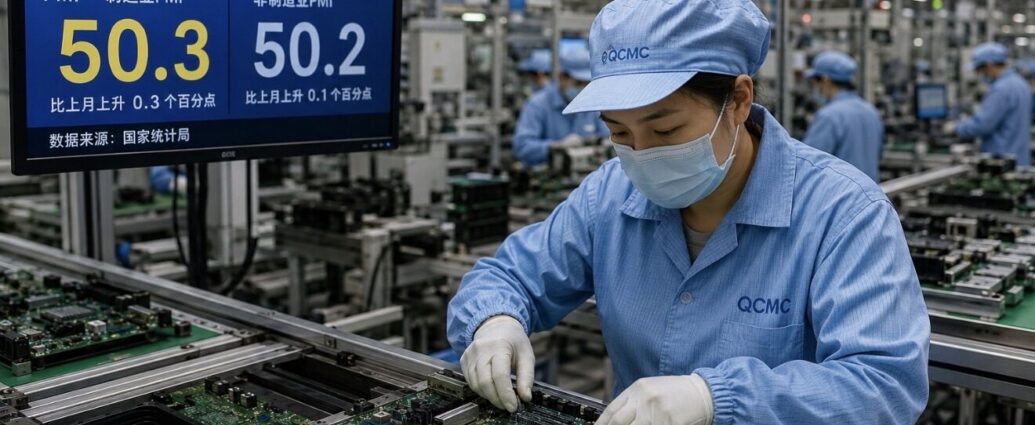
China’s Factories Return to Growth in June, Lifted by an AI Export Surge
China’s manufacturing sector returned to growth in June as booming demand for high-tech exports tied to the global artificial-intelligence boom offset stubbornly weak demand at home. The official Purchasing Managers’ Index (PMI) edged up to 50.3 in June, beating economists’ forecast of 50.1 and moving back above the key 50-point threshold that separates expansion from contraction, according to data released by China’s National Bureau of Statistics. The index stood at 50.0 in May.
The PMI is one of the world’s most closely watched measures of manufacturing activity, surveying factory managers on new orders, production, employment and supplier deliveries. June’s reading marked China’s first clear return to expansion after months of sluggish factory activity.
A separate non-manufacturing PMI, which measures activity across China’s services and construction sectors, also improved, rising to 50.2 from 50.1 in May.
Much of the improvement came from one powerful source: exports tied to artificial intelligence. Chinese factories continue to benefit from soaring global demand for semiconductors, servers, data-center equipment and other AI-related hardware as governments and companies race to expand computing capacity.
Exports of automated data-processing equipment surged more than 60% from a year earlier, while shipments of chips, semiconductors and other advanced technology products continued to support factory production. The strength of those exports has helped offset concerns that geopolitical tensions in the Middle East would slow global trade.
The export boom has prompted several economists to raise their outlook for China. Bank of America increased its forecast for China’s export growth this year to 15%, citing continued investment in artificial intelligence, renewable-energy equipment and electric vehicles. Strong exports also helped China’s roughly $20 trillion economy outperform expectations during the first quarter.
Despite the encouraging headline numbers, the broader economy remains uneven.
Factories producing technology exports continue to perform well, but domestic demand remains weak. Retail sales have struggled, the country’s prolonged property downturn continues to weigh on household confidence, and more traditional manufacturing industries remain under pressure. Furniture exports, often viewed as a gauge of broader consumer demand, rose only 1.9%.
“The hope of rebalancing is fading,” Helen Qiao, China economist at Bank of America Global Research, said, pointing to the growing divide between strong exports and weak domestic consumption.
That imbalance could create new challenges later this year. Economists expect inflation pressures to weaken once higher energy prices fade, raising the risk of renewed deflation. Persistent deflation can discourage consumer spending and reduce corporate profits, making economic recovery more difficult.
There is another reason economists remain cautious.
Part of June’s strength appears to reflect companies accelerating shipments ahead of possible U.S. trade actions.
“We spotted trade frontloading in June,” said Xu Tianchen, senior economist at the Economist Intelligence Unit. “Exporters accelerated shipments due to U.S. trade policy uncertainty. Late July will be a big moment because new U.S. Section 301 tariffs are expected to take effect.”
If those tariffs are implemented, some of the current export strength could fade during the second half of the year.
Meanwhile, Beijing has largely resisted launching major stimulus measures aimed at boosting domestic demand. Officials have set a 2026 economic growth target of 4.5% to 5%, below last year’s pace, while economists see little chance of aggressive near-term policy easing. Reports indicate China’s central bank has encouraged commercial banks to expand lending, highlighting continued weakness in credit demand across the economy.
For the global economy, China’s June manufacturing rebound sends mixed signals. The world’s largest manufacturing base continues to benefit from the artificial-intelligence investment boom, supporting global supply chains and technology exports. At the same time, much of that growth remains concentrated in one fast-growing sector while domestic demand continues to lag.
Whether China can broaden its recovery beyond AI-driven exports and revive consumer spending remains one of the most important economic questions facing the global economy in the second half of the year.
JBizNews China Desk
© JBizNews.com All Rights Reserved. Reproduction or distribution without written permission is prohibited.


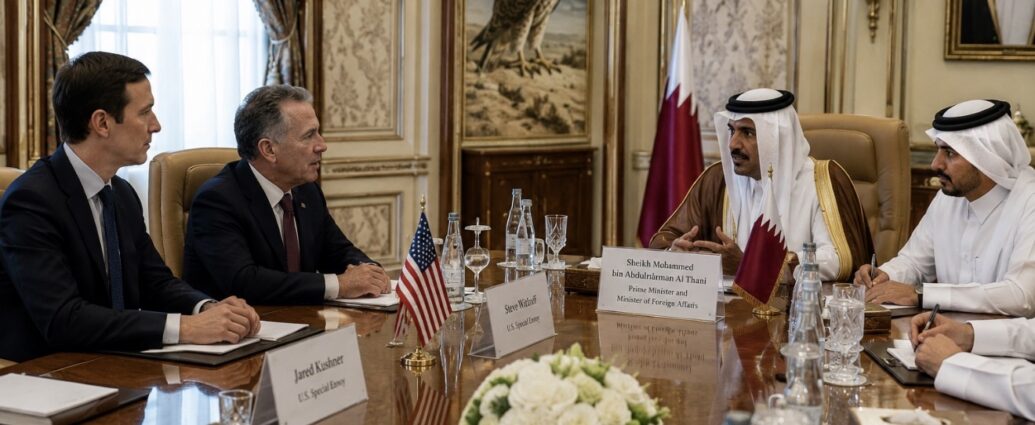
U.S. Envoys Report Progress in Doha as Iran Nuclear Talks Continue
U.S. negotiators Jared Kushner and Steve Witkoff met Tuesday with senior Qatari officials in Doha as Washington worked to preserve the fragile ceasefire with Iran and advance negotiations toward a longer-term nuclear agreement. While U.S. officials described the discussions as constructive, Qatari officials emphasized that negotiations remain focused on technical issues and that no direct, high-level meetings between American and Iranian officials are currently taking place.
Following the meetings, a senior U.S. administration official said technical discussions are moving in a positive direction and that negotiators are making meaningful progress. However, Majed Al Ansari, spokesperson for Qatar’s Foreign Ministry, cautioned against expecting an immediate breakthrough, stressing that the current round of discussions is centered on mediation and confidence-building rather than direct political negotiations.
Qatar continues to play a central role as an intermediary between Washington and Tehran. Officials said separate working groups remain focused on nuclear issues, economic matters, and broader regional security concerns. The mediation effort also involves neighboring Oman, which has long served as a diplomatic channel between the two countries.
Negotiations follow the interim agreement reached in June that paused months of military confrontation and established a framework for continued diplomacy. Although recent exchanges around the Strait of Hormuz briefly raised concerns that the ceasefire could unravel, both sides have since reduced military activity, allowing commercial shipping to continue through one of the world’s most important energy corridors.
Public messaging from both governments remains noticeably different. The White House has maintained that discussions continue at Iran’s request, while Iranian officials insist additional negotiations depend on implementation of previous commitments before moving forward. Those differing public positions underscore the complexity of the talks despite continued diplomatic engagement behind the scenes.
For businesses and consumers, the negotiations carry significance well beyond foreign policy.
The Strait of Hormuz handles roughly one-fifth of global seaborne oil shipments, making stability in the region critical for energy markets. As shipping traffic has resumed, oil prices have retreated from recent highs, easing pressure on gasoline prices, freight costs, airline fuel expenses, and inflation more broadly.
Lower energy prices also provide some relief for businesses that rely heavily on transportation and logistics while helping reduce costs for households already facing elevated living expenses. Continued stability could strengthen supply chains and support broader economic growth if negotiations remain on track.
Financial markets are also closely monitoring developments. A sustained diplomatic process reduces the likelihood of renewed disruptions to global oil supplies, one of the key factors influencing inflation expectations and future Federal Reserve interest-rate decisions.
Despite the encouraging tone, officials acknowledge the negotiations remain delicate. Major issues surrounding Iran’s nuclear program, sanctions, and regional security have yet to be resolved, and mediators continue working to narrow significant differences between the two sides.
For now, the message emerging from Doha is one of cautious optimism. Technical negotiations continue, communication channels remain open, and commercial shipping through the Strait of Hormuz is operating normally. While significant challenges remain before any comprehensive agreement is reached, continued dialogue has helped ease immediate concerns over renewed conflict and provided welcome stability for global energy markets.
JBizNews Desk
© JBizNews.com All Rights Reserved. Reproduction or distribution without written permission is prohibited.


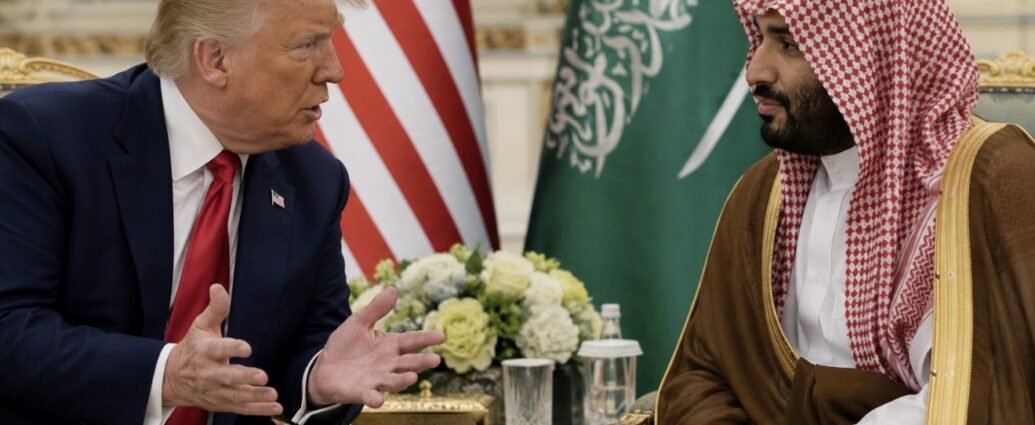
Trump Threatened Saudi Missile Defense Supply During Hormuz Dispute, Report Says
President Donald Trump threatened to use America’s defense relationship with Saudi Arabia as leverage during a disagreement over military operations in the Strait of Hormuz, according to reports published Tuesday citing U.S. officials familiar with the discussions. The reported dispute centered on Saudi Arabia’s reluctance to allow U.S. forces to use its territory and airspace during a proposed mission to protect commercial shipping through one of the world’s most important energy chokepoints.
The disagreement reportedly arose during planning for Project Freedom, a U.S. operation announced earlier this year to help escort commercial vessels through the Strait of Hormuz after maritime traffic was disrupted during the conflict between the United States and Iran. The narrow waterway carries roughly one-fifth of the world’s seaborne oil, making any disruption a major concern for global energy markets and international trade.
According to the reports, U.S. military planners sought access to Saudi airspace and facilities to support surveillance aircraft, refueling operations, and other logistical missions connected to the effort. Officials cited in the reports said Saudi leaders declined to provide the level of cooperation Washington requested, creating friction between two longtime allies.
The reports say President Trump later raised Saudi Arabia’s dependence on American-made missile-defense systems during discussions with Saudi officials, suggesting future defense support could become an issue if cooperation did not improve. Neither government has publicly confirmed that such a warning was issued.
A White House official disputed portions of the reporting, saying regional allies had been informed about the operation in advance. Saudi officials also rejected suggestions that they had blocked U.S. access, maintaining that military cooperation between the two countries remains strong and that discussions reflected rapidly changing conditions during a regional crisis.
The episode nevertheless highlights the importance of the decades-long defense partnership between Washington and Riyadh. Saudi Arabia relies heavily on U.S.-built air-defense systems, including Patriot missile batteries manufactured by RTX and THAAD systems produced by Lockheed Martin, to defend critical infrastructure, population centers, and energy facilities from missile and drone attacks.
Those systems require a continuous supply of interceptor missiles, replacement parts, software upgrades, technical support, and maintenance from U.S. defense contractors. Any disruption in that relationship could have significant consequences for both countries and for the American defense industry, which counts Saudi Arabia among its largest foreign customers.
Beyond defense contracts, the broader economic implications extend to global energy markets. The Strait of Hormuz remains one of the most strategically important waterways in the world, serving as the primary export route for much of the Middle East’s oil production. Any threat to shipping through the strait can quickly influence crude oil prices, gasoline costs, freight rates, and inflation worldwide.
Although commercial traffic has largely resumed following the easing of military tensions, investors continue to monitor relations between Washington, Riyadh, and Tehran for signs that regional stability could change. Even temporary uncertainty can affect commodity markets and increase volatility across global financial markets.
For U.S. businesses, the relationship with Saudi Arabia stretches well beyond military cooperation. American companies maintain major investments throughout the kingdom in energy, technology, aviation, engineering, and infrastructure, while Saudi investment funds continue to play a significant role in financing projects across the United States.
Analysts say the reported dispute illustrates how closely diplomacy, national security, and global commerce are intertwined. Decisions involving military access or defense cooperation can have immediate consequences for oil prices, international shipping, government contracts, and corporate investment planning.
While both governments continue to emphasize the strength of the U.S.-Saudi partnership, the reports underscore that even close allies can face difficult negotiations when military operations and regional security are at stake. Markets will continue watching for any signs that differences between Washington and Riyadh could affect energy supplies or defense cooperation in the months ahead.
JBizNews Desk
© JBizNews.com All Rights Reserved. Reproduction or distribution without written permission is prohibited.

Why Europe and Britain Are Building Their Own Rivals to Visa and Mastercard
A growing effort is underway across Europe and the United Kingdom to reduce dependence on Visa and Mastercard, as governments and financial institutions push to build homegrown payment networks they say will strengthen economic sovereignty and lower costs.
The movement has gained urgency as policymakers increasingly view payment infrastructure as a matter of national security.
European Central Bank President Christine Lagarde has warned that Europe urgently needs its own digital payment system rather than relying so heavily on American companies.
Today, Visa and Mastercard dominate the global payments business.
Together, the two companies process roughly $24 trillion in transactions annually, including about $4.7 trillion across Europe. In the United Kingdom, approximately 95% of all card transactions travel through one of the two U.S.-based payment networks.
Every payment also generates transaction data that often flows outside national borders, something European regulators increasingly view as a strategic vulnerability.
Europe’s primary response is the European Payments Initiative (EPI) and its new digital payment platform called Wero.
Backed by many of Europe’s largest banks, Wero allows consumers to transfer money directly between bank accounts in seconds without relying on traditional credit-card networks or interchange fees.
Earlier this year, EPI reached an agreement with the EuroPA Alliance, connecting payment systems in Italy, Spain, Portugal, and several Nordic countries. The combined network already serves roughly 130 million users across 13 countries.
Cross-border person-to-person payments are expected to begin this year, with in-store payment capabilities scheduled to launch in 2027.
The United Kingdom is pursuing a similar strategy.
Major British banks have begun discussions surrounding a domestic payment platform known as DeliveryCo, supported by government officials and the Bank of England.
British regulators argue recent geopolitical tensions and cybersecurity concerns demonstrate the importance of maintaining payment systems that cannot easily be disrupted by events outside the country.
The urgency has grown following recent international sanctions and other geopolitical disputes that highlighted how quickly financial infrastructure can become part of broader political conflicts.
For merchants, however, the issue extends beyond national security.
Although Europe has already capped many interchange fees, retailers continue arguing that competition between Visa and Mastercard remains limited, keeping processing costs higher than they would like.
Bank-to-bank payment systems promise nearly instant settlement without traditional card interchange fees, offering potentially meaningful savings for businesses if consumers adopt the technology.
Building a successful alternative will not be easy.
One of Visa’s and Mastercard’s greatest advantages remains their worldwide acceptance. A Visa card issued in Europe works almost anywhere in the world, while newer regional payment systems will initially function only within participating countries.
Earlier efforts to build European payment systems have also struggled to gain widespread consumer adoption.
For the American payment giants, the challenge is significant but unlikely to become an immediate threat.
Visa generated roughly $40 billion in revenue during 2025, while Mastercard reported nearly $33 billion. Both companies continue investing heavily in Europe and are even participating in discussions surrounding Britain’s future payment infrastructure.
Most analysts expect Visa and Mastercard to remain dominant for years to come.
However, the emergence of credible alternatives could gradually increase competition, lower merchant fees, and give governments greater control over their own financial infrastructure.
For consumers, the changes may ultimately mean more payment choices and lower transaction costs.
For Visa and Mastercard, it represents one of the most serious long-term competitive challenges they have faced after decades of dominating the world’s checkout counters.
JBizNews Desk
© JBizNews.com All Rights Reserved. Reproduction or distribution without written permission is prohibited.

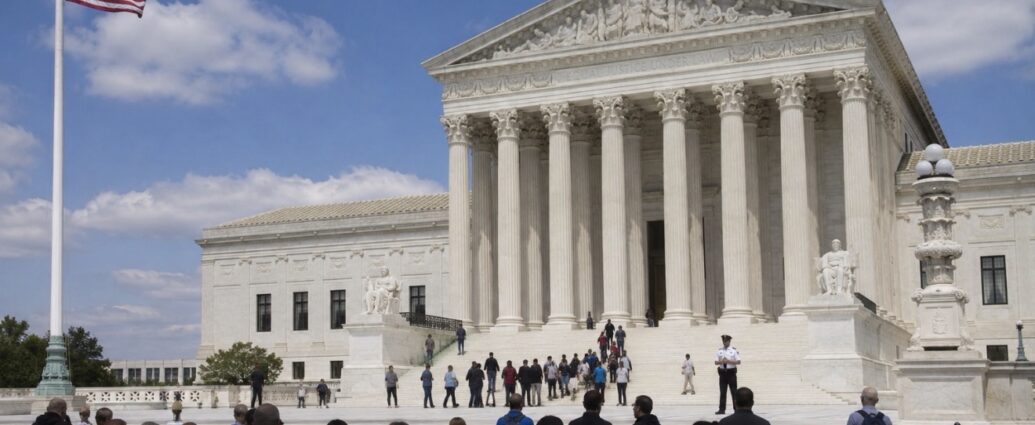
Supreme Court Upholds Birthright Citizenship, Blocking Trump’s Executive Order
The Supreme Court on Tuesday ruled that nearly every child born on American soil is a citizen at birth, rejecting President Donald Trump’s effort to end birthright citizenship by executive order. Writing for a 6-3 majority in Trump v. Barbara, Chief Justice John Roberts said the 14th Amendment’s promise was deliberate and broad, calling citizenship “the right to have rights” and concluding that the Court keeps that promise today.
The decision strikes down Executive Order 14160, which Trump signed on January 20, 2025, his first day back in office. The order would have denied automatic citizenship to babies born in the United States to parents who were in the country illegally or living here on temporary visas. It never took effect because every lower court that reviewed it ruled against it, but Tuesday’s ruling settles the question and lifts years of legal uncertainty hanging over millions of families and the businesses that employ them.
Roberts was joined by Justices Sonia Sotomayor, Elena Kagan, Amy Coney Barrett, and Ketanji Brown Jackson. Justice Brett Kavanaugh agreed the order was unlawful but wrote separately to say the case should have been decided on statutory grounds, leaving a narrow opening for Congress. Justices Clarence Thomas, Samuel Alito, and Neil Gorsuch dissented, arguing that the amendment requires lawful domicile rather than mere birthplace.
For employers, the ruling brings clarity. Immigration attorneys Nicole Fink and Philip Sholts of Ogletree Deakins wrote Tuesday that the decision preserves the status quo and that companies need not take any action in response. A July 2025 implementation plan from U.S. Citizenship and Immigration Services, which had outlined procedures for checking a parent’s legal status before issuing a child a Social Security number or passport, now has no legal effect. That plan would have transformed what had long been a routine birth certificate into a document requiring additional government verification.
The economic implications are significant. A peer-reviewed study published this spring in the Journal on Migration and Human Security by researchers from Princeton, Cornell, and Notre Dame estimated that individuals who receive citizenship at birth will contribute $7.7 trillion to the U.S. economy through their earnings between 1975 and 2074 while adding more than 3.1 million workers to the labor force. Dr. Phillip Connor, a Princeton research fellow and one of the study’s authors, said roughly two-thirds of those workers hold or are expected to hold jobs requiring at least some college education, and that ending birthright citizenship would have left the country short an estimated 400,000 skilled workers.
Health care leaders also warned of broader economic consequences. Xiao Wang, chief executive of Boundless Immigration, said before the ruling that uncertainty surrounding a child’s citizenship status could discourage foreign-born physicians and nurses from building their careers in the United States. “The first place facing labor shortages will be rural hospitals already struggling to recruit,” he said. According to the study, about 14 percent of birthright citizens working in skilled occupations are employed in health care.
Those figures help explain why many business organizations opposed the executive order. Roughly 71 percent of adults who benefited from birthright citizenship participate in the labor force, while the Migration Policy Institute estimates that approximately 255,000 children are born each year in the United States to noncitizen parents, representing a future source of workers, taxpayers, entrepreneurs, and consumers in an economy where labor-force growth increasingly depends on immigration.
Trump called the outcome a setback but indicated the issue is far from over. Posting on Truth Social, he said his administration would pursue legislation and urged Congress to act quickly. While many constitutional scholars maintain that overturning the ruling would require a constitutional amendment approved by two-thirds of Congress and ratified by 38 states, Kavanaugh’s separate opinion suggested Congress may still have limited statutory authority to address aspects of the issue. House Speaker Mike Johnson told reporters Tuesday that lawmakers would examine possible legislative options.
For the business community, however, the immediate impact is straightforward. Children born in the United States remain citizens at birth, existing hiring, payroll, and employee benefits systems remain unchanged, and employers can continue relying on long-established documentation procedures without implementing new compliance measures.
The case turned on the Court’s landmark 1898 decision in United States v. Wong Kim Ark, which recognized birthright citizenship for a man born in San Francisco to Chinese immigrant parents who themselves were ineligible for citizenship. Roberts wrote that the arguments advanced by the administration were substantially the same as those rejected more than a century ago and concluded that neither the passage of time nor changing circumstances altered the Constitution’s guarantee.
JBizNews Desk | New York
© JBizNews.com All Rights Reserved. Reproduction or distribution without written permission is prohibited.


Opinion | U.S. Capitalism Isn’t Broken



Iran Paper Puts Trump in Crosshairs as Oil Markets Bet on Peace
On Tuesday, the Tehran newspaper Hamshahri, one of Iran’s most widely read dailies, ran a front page that placed a rifle’s crosshairs over President Donald Trump’s face above the words, “Revenge is certain.” The paper is owned by the Tehran municipality and funded by the Iranian government. Its front page featured calls for retaliation from senior Iranian religious figures who blamed Israel and the United States for the killing of Iranian leaders during the four-month war the two sides are now trying to end.

In most years, a front-page death threat against a sitting American president would have rattled energy markets and driven oil prices sharply higher. This time, markets barely reacted. Brent crude slipped about 1% Tuesday to roughly $72.40 a barrel, while U.S. West Texas Intermediate crude traded near $70.32. For consumers, trucking companies, airlines and manufacturers, those prices matter far more than the headline in Tehran.
The reason is straightforward: traders are pricing the negotiations, not the rhetoric. President Donald Trump announced that U.S. and Iranian officials are expected to resume peace talks in Doha, Qatar, with the goal of turning the current ceasefire into a broader agreement. As long as investors believe diplomacy remains alive, the war premium built into oil prices continues to fade.
The decline has been dramatic. Brent crude has fallen roughly 30% over the past three months, its largest quarterly decline since 2020, after surging above $100 a barrel earlier in the conflict. Much of that reversal centers on one of the world’s most strategically important waterways: the Strait of Hormuz. Before the conflict, roughly one-quarter of global seaborne oil shipments and about one-fifth of the world’s liquefied natural gas moved through the narrow passage. As military tensions eased and commercial shipping gradually resumed, oil prices moved lower.
Shipping remains fragile
The recovery remains far from complete. Shipping intelligence firm Kpler reported traffic fluctuated sharply over the weekend, with significantly fewer vessels transiting the strait on Sunday than the previous day. Meanwhile, military exchanges continued despite the ceasefire. U.S. Central Command reported strikes against Iranian military targets following attacks on commercial shipping, while Iran’s Islamic Revolutionary Guard Corps said it responded by targeting U.S. military facilities in Kuwait and Bahrain. Every new exchange tests the durability of the ceasefire and the confidence of global shipping companies.
The next major dispute centers on control of the waterway itself. Iranian Foreign Minister Abbas Araghchi has argued that Tehran should manage traffic through the Strait of Hormuz, a position rejected by the United States and its allies. Under the current interim agreement, Iran agreed not to impose transit fees for 60 days, although officials have suggested tolls could be considered afterward. The United States, Europe and Gulf Arab nations oppose any such charges, warning they would increase shipping costs and eventually raise prices worldwide.
Why businesses are watching
The stakes extend well beyond crude oil. The Persian Gulf also handles a substantial share of globally traded fertilizer and liquefied natural gas, commodities that directly affect food production, manufacturing costs and household energy bills. An open shipping lane helps keep those costs contained. Any renewed disruption could quickly ripple through supply chains and consumer prices around the world.
The message from Tehran’s front pages also appears aimed at more than foreign audiences. The rhetoric allows Iran’s hardline leadership to project strength domestically after suffering significant battlefield losses while diplomats continue pursuing negotiations abroad. Markets, however, have largely looked past the political messaging and remain focused on whether ships continue moving safely through the strait.
For businesses, the takeaway is straightforward. Oil markets are currently betting that diplomacy will hold, providing relief for transportation companies, manufacturers and consumers alike. But that optimism depends on a ceasefire that has already shown signs of strain. The next move in fuel prices may depend less on newspaper headlines than on whether commercial shipping continues to flow through one of the world’s most important energy corridors.
JBizNews Desk | New York
© JBizNews.com All Rights Reserved. Reproduction or distribution without written permission is prohibited.
A matching AP-style image would pair well with this story by showing oil tankers transiting the Strait of Hormuz, with no text, logos, or branding, emphasizing commercial shipping rather than military action.
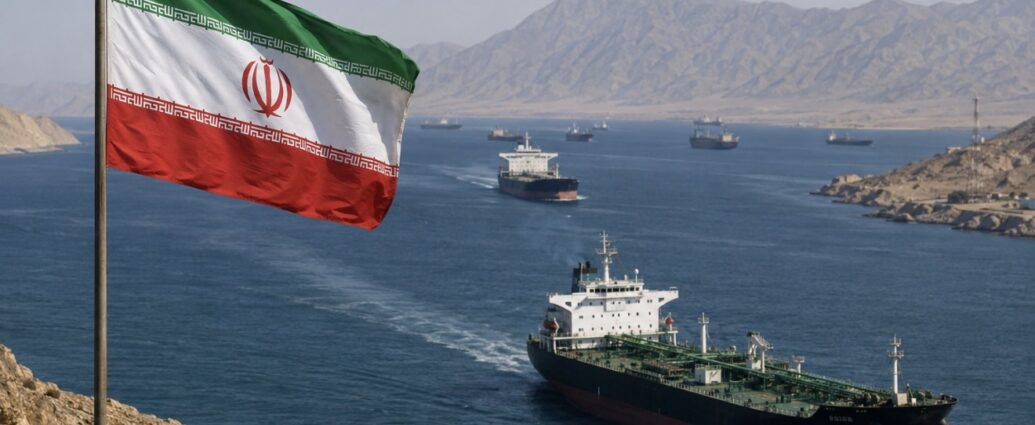
Iran Presses for Control and Tolls on Hormuz as U.S. Talks Resume in Doha
As American and Iranian negotiators prepared to meet in Doha on Tuesday, Iran made clear it has no plans to loosen its grip on the Strait of Hormuz, the narrow waterway that carries a fifth of the world’s oil. Iranian Foreign Minister Abbas Araghchi said Tehran now holds sole control of the strait and warned against any move to establish new or separate arrangements for the channel. A day earlier, senior adviser Ali Akbar Velayati urged that Iran’s demand to charge passing ships be honored and suggested neighboring Oman support the proposal.
That stance sets up the central issue in the talks. The waterway runs between Iran and Oman, and at its narrowest point passes through both countries’ territorial waters. Under the memorandum of understanding that President Donald Trump and Iranian President Masoud Pezeshkian signed on June 17, Iran agreed to reopen Hormuz immediately and spend 60 days negotiating a broader peace agreement. The same document bars Iran from charging tolls during that period, but Tehran has left open the possibility of imposing fees afterward—an idea the United States, Europe and the Gulf Arab states oppose.
Why it matters to everyday buyers
Hormuz is not just a military flashpoint. About 20% to 25% of the world’s seaborne oil and roughly 20% of its liquefied natural gas normally pass through the strait. Before the war began on February 28, roughly 3,000 ships crossed Hormuz each month. After Iran closed the passage and laid sea mines, traffic collapsed. World Trade Organization figures show crude tanker movements fell 95%, while liquefied natural gas carriers dropped 99%.
When that much energy stops moving, prices surge. Brent crude climbed above $126 a barrel in March, California gasoline topped $5 a gallon, and fertilizer shipments—up to 30% of the world’s traded supply also move through Hormuz—were disrupted, raising costs for farmers and consumers around the globe.
Now the trend has reversed. With the ceasefire largely holding and commercial shipping gradually resuming, oil prices have fallen sharply. On Tuesday, U.S. West Texas Intermediate crude traded near $70 a barrel, while Brent crude hovered around $73, both back near their pre-war levels. WTI has fallen roughly 30% during the quarter, marking its steepest three-month decline since 2020. Lower crude prices are beginning to filter through to gasoline stations, providing some relief for household budgets.
The sticking points
The proposed toll system remains the biggest dispute, but it is far from the only one. Secretary of State Marco Rubio has said any Iranian effort to charge transit fees would make a diplomatic agreement unworkable, maintaining that the Strait of Hormuz is an international waterway open to all vessels. Iran argues it has the right to regulate shipping through its coastal waters.
Another unresolved issue is clearing the estimated 80 sea mines still scattered throughout the channel. The June agreement assigns that responsibility to Iran within 30 days, but France and Oman said this week they are prepared to assist with demining following a visit to Paris by Oman’s ruler, Sultan Haitham bin Tarik. Tehran has objected, insisting the cleanup should remain under Iranian control.
Even if negotiators reach a broader agreement, shipping companies expect recovery to take time. Hundreds of tankers remain stranded inside the Persian Gulf, and the Abu Dhabi National Oil Company has warned that full shipping volumes may not return until 2027. War-risk insurance also remains elevated. Premiums that once averaged about 0.125% of a vessel’s value per voyage climbed as high as 0.4% during the conflict, adding roughly $250,000 to the cost of operating a single supertanker.
A fragile next step
The Doha meeting itself remains uncertain. President Donald Trump said on social media that Iran had requested the talks, but Iran’s Foreign Ministry denied Monday that negotiations with U.S. officials had been confirmed. Lead Iranian negotiator Kazem Gharibabadi also said reports of a scheduled meeting were premature. The two sides have met in person only once before, on June 21 in Switzerland.
For now, markets are responding more to the movement of ships than to diplomatic statements. As long as tankers continue crossing the strait and the ceasefire holds, energy prices are likely to remain relatively stable. But the dispute over who controls the Strait of Hormuz—and whether ships will eventually face transit fees—remains unresolved. Any breakdown in negotiations could quickly send oil prices, shipping costs and, ultimately, consumer prices higher once again.
JBizNews Desk | New York
© JBizNews.com All Rights Reserved. Reproduction or distribution without written permission is prohibited.

Dangerous Heat Wave to Hit Eastern U.S. Through July 4, Straining Power and Wallets
The National Weather Service warned Sunday that a dangerous, potentially record-setting heat wave will grip the eastern two-thirds of the United States this week and peak over the July 4 holiday — a forecast that points to soaring electric bills, strained power grids, and a costly stretch for any business that depends on people being comfortable enough to shop, work, and travel. The agency said a “heat dome,” a dome of high pressure that traps hot air like a lid, will push “feels like” temperatures to between 100 and 115 degrees across much of the country.
By late this week, more than 180 million Americans in the Midwest and East could face major or extreme heat-related health risks. Washington, Philadelphia, and New York City are all forecast to top 100 degrees, with daily records possible Thursday and Friday. Nights will bring little relief; lows in the Midwest and Great Lakes will not fall below the lower-to-middle 70s, while many urban areas could struggle to drop below 80.
The first business to feel the impact is electricity. When tens of millions of air conditioners run at once for days, power demand spikes toward record levels, forcing grid operators to work to keep supply ahead of demand. For households and businesses, that means higher utility bills as power companies rely on their most expensive backup generation during peak demand. Prolonged heat also raises the risk of localized outages, creating costly disruptions when cooling becomes a matter of health and safety.
Retailers see a heat wave as both a challenge and an opportunity. Demand typically surges for air conditioners, fans, portable coolers, cold drinks, and ice, with stores often selling out in the hardest-hit cities. At the same time, foot traffic at malls, outdoor markets, and neighborhood shopping districts tends to decline as people stay indoors, shifting more spending online and squeezing small businesses that depend on walk-in customers. Restaurants with outdoor seating and entertainment venues centered on outdoor activities also face slower business.
Employers with outdoor workforces are under the greatest pressure. The Occupational Safety and Health Administration recommends frequent breaks in shaded or air-conditioned areas during periods of extreme heat. While those precautions are essential for worker safety, they also slow construction projects, landscaping operations, delivery routes, and farm work, raising labor costs and delaying schedules during one of the busiest seasons of the year. Heat-related illnesses also increase workers’ compensation claims and lost workdays.
The timing makes the heat even more expensive because it coincides with one of the nation’s biggest spending weekends. The hottest temperatures are expected during a period filled with parades, cookouts, sporting events, and fireworks celebrations. Washington is also preparing for large crowds attending events marking America’s 250th anniversary. Organizers of outdoor celebrations now face the challenge of balancing crowd safety with attendance, and some daytime events could see lighter turnout as families wait for cooler evening temperatures.
Health care systems are preparing as well. Heat is the deadliest form of weather in the United States, claiming more lives each year on average than tornadoes, hurricanes, and lightning combined. Emergency-room visits for heat-related illnesses typically surge during prolonged extreme temperatures, while older adults and people with respiratory or heart conditions face the greatest risks.
The U.S. forecast follows a deadly stretch overseas that highlights the dangers. A historic heat wave across Europe recently resulted in roughly 1,000 excess deaths in France during a record-breaking period of extreme temperatures, according to French officials.
For now, forecasters continue to urge Americans to stay hydrated, spend time in air-conditioned spaces, check on elderly neighbors and vulnerable family members, and avoid strenuous outdoor activity during the hottest afternoon hours. The heat dome is expected to remain over much of the East, particularly along the Interstate 95 corridor, through the long Fourth of July weekend before gradually shifting west early next week.
Until then, the cost of staying cool is likely to become one of the week’s biggest economic stories, measured in higher utility bills, slower outdoor business, and reduced productivity across a large portion of the country.
JBizNews Desk
© JBizNews.com All Rights Reserved. Reproduction or distribution without written permission is prohibited.



World Cup Betting in America Could Top $3 Billion as Los Angeles and New Jersey Host Record Wagering
The 2026 FIFA World Cup, now underway across the United States, Canada, and Mexico, is on track to become the biggest sports betting event in American history, according to projections from leading gaming research firms. Analysts at Eilers & Krejcik Gaming estimate U.S. legal sportsbooks will take in roughly $2.82 billion in wagers during the tournament under their base-case forecast, with an upside scenario exceeding $4.3 billion. Either figure would eclipse betting volumes seen during recent Super Bowls and NCAA March Madness tournaments.
The tournament opened on June 11 and runs through the July 19 championship match at MetLife Stadium in East Rutherford, New Jersey. Along the way, matches are being played in major host cities including Los Angeles, New York/New Jersey, Dallas, Atlanta, Miami, Houston, Seattle, Philadelphia, Boston, Kansas City, San Francisco Bay Area, Guadalajara, Mexico City, Monterrey, Toronto, and Vancouver.
For the United States, the tournament represents more than a sporting event. It has become a major economic driver for sportsbooks, host cities, tourism businesses, restaurants, hotels, and state governments.
Soccer has traditionally ranked behind football and basketball in American sports betting, but several factors have changed that equation. This is the first World Cup hosted largely on North American soil in more than three decades, the first featuring an expanded 48-team field and 104 matches, and the first offering television schedules that are convenient for U.S. audiences instead of requiring early morning viewing because of overseas time zones.
Legalized sports betting has also expanded dramatically since the U.S. Supreme Court struck down the federal sports betting ban in 2018. More than 30 states now allow legal mobile sports wagering, enabling millions of Americans to place bets directly from their smartphones.
For sportsbook operators, the World Cup represents an enormous business opportunity.
Deutsche Bank projects that FanDuel will process roughly $1.3 billion in World Cup wagers, while DraftKings is expected to handle approximately $1.1 billion. BetMGM and Caesars Sportsbook are projected to account for another $300 million to $500 million combined. ESPN Bet and Fanatics Sportsbook are also expected to benefit from increased customer activity throughout the tournament.
Unlike American football, however, soccer produces relatively thin profit margins for sportsbooks. Industry analysts estimate operators retain only about 5 to 7 percent of the total amount wagered on soccer after paying winning bettors. That makes betting volume—not higher margins—the key to profitability.
Another development this year is the growing role of federally regulated prediction markets.
Platforms such as Kalshi and Polymarket allow users to trade contracts tied to match outcomes, group winners and the eventual World Cup champion. One industry projection estimates prediction-market trading volume during the tournament could reach $2.37 billion, although that figure includes contracts that are bought and later resold. Alex Kane, chief executive of Sporttrade, estimates the equivalent betting handle is closer to $474 million.
Globally, the numbers are even larger.
Research firm H2 Gambling Capital estimates approximately $60 billion will be wagered worldwide across legal and illegal markets during the tournament. Of that total, roughly $2.9 billion is expected to come through legal U.S. sportsbooks, $2.5 billion through Mexico, $300 million through Canada, and the remaining $54 billion through betting markets across Europe, Asia and Latin America.
The surge in betting also carries significant implications for state finances.
States with legalized sports wagering tax sportsbook revenue, meaning higher betting activity generally produces additional tax collections. Depending on the jurisdiction, those funds may support education, transportation, infrastructure, public safety or state general funds. A record-breaking World Cup could therefore become one of the largest sports-related tax events ever experienced by many states.
Several factors could determine whether betting reaches the upper end of analyst forecasts.
One is the performance of the U.S. Men’s National Team. Analysts say a deep run by the American squad would likely attract millions of casual fans who otherwise would not place bets. Another is continued consumer participation. Industry surveys indicate that a majority of people planning to closely follow the tournament expect to place at least one wager, while several sportsbook operators have reported customer engagement running ahead of internal expectations.
For now, the projections remain just that—projections. Final betting figures will not be available until after the World Cup concludes in July. But with millions of dollars already flowing through sportsbooks every day and strong consumer interest across North America, analysts believe the tournament is well on its way to becoming the largest legal sports betting event the United States has ever seen.
JBizNews Desk
New York
© JBizNews.com All Rights Reserved. Reproduction or distribution without written permission is prohibited.

China’s AI Catches Up to U.S. Models in Cybersecurity, Stirring Export Fight
Chinese artificial intelligence systems are rapidly closing the gap with America’s leading AI models in identifying software security flaws, a development that is intensifying the technology race between Washington and Beijing and adding new pressure on the Trump administration’s AI strategy. The shift centers on GLM-5.2, a new model released this month by Chinese developer Zhipu AI, also known as Z.ai. According to researchers, the model now rivals leading U.S. systems in detecting software vulnerabilities, although it still trails top models from Anthropic and OpenAI across many broader AI tasks.
The findings, first reported Sunday by The Wall Street Journal, have drawn attention from technology companies, policymakers and national security officials as competition in artificial intelligence accelerates.
The broader story extends beyond a single model. Industry observers say the performance gap separating American and Chinese AI systems has narrowed significantly during the past year, while businesses around the world increasingly adopt lower-cost Chinese models to reduce artificial intelligence expenses.
According to OpenRouter, a platform providing access to hundreds of AI models, GLM-5.2 has already become one of the 10 most-used AI models worldwide. Benchmark testing conducted by cybersecurity company Semgrep also found that GLM-5.2 outperformed Anthropic’s Claude Opus 4 on certain software vulnerability detection benchmarks.
The rapid improvement is prompting major technology companies—including Microsoft—to evaluate whether Chinese AI models should be offered through their cloud platforms, potentially reshaping competition across the global AI marketplace.
Chinese companies have openly celebrated the progress.
This week, Chinese cybersecurity company 360 Security Technology introduced a new vulnerability-detection system it said performs at a level comparable to Anthropic’s most advanced models for identifying software flaws. Speaking at a cybersecurity conference in Beijing, 360 Security founder and Chief Executive Zhou Hongyi argued that such advanced AI capabilities “can’t remain solely in American hands,” framing artificial intelligence leadership as both a commercial and national strategic priority.
The advances arrive as Washington continues tightening restrictions surrounding advanced AI technologies.
Earlier this month, one of Anthropic’s newest general-purpose AI models became temporarily unavailable to certain foreign users after new U.S. export restrictions took effect. Access to a related model was later restored following regulatory adjustments, but the episode intensified debate over whether limiting American AI systems ultimately strengthens or weakens U.S. technological leadership.
Some policy experts argue the restrictions may unintentionally encourage greater adoption of Chinese alternatives.
Saif Khan, a technology fellow at the Institute for Progress who previously worked on export-control policy during the Biden administration, argued that restricting America’s most advanced AI models while China continues developing competing systems could ultimately benefit Beijing. He has urged policymakers to ensure American companies remain globally competitive while maintaining appropriate national security safeguards.
Administration officials say they remain closely focused on developments involving Chinese AI.
Jacob Helberg, the Under Secretary of State for Economic Affairs, recently said the government is carefully monitoring Chinese open-weight AI models as part of broader efforts to protect American technological leadership. At the same time, the Pentagon has expanded partnerships with U.S. developers, including Reflection AI, to support artificial intelligence applications for national security and classified government work.
An important distinction in the competition involves how the models are distributed.
GLM-5.2 is an open-weight model, allowing organizations to download, customize and operate the software on their own systems. By contrast, companies such as Anthropic and OpenAI generally provide access through cloud-based services while retaining control over their most advanced models. Many businesses prefer open-weight systems because they offer greater flexibility, privacy and control over sensitive data.
For businesses, the implications extend well beyond the technology sector. Cloud providers must decide which AI platforms to support, software developers must determine which models to build applications around, and corporate technology teams face increasing pressure to adopt faster and more cost-effective artificial intelligence solutions while navigating evolving geopolitical and regulatory risks.
As Chinese AI capabilities continue improving, competition between American and Chinese developers is expected to intensify, making artificial intelligence one of the defining business and technology battlegrounds of the decade.
JBizNews Desk
© JBizNews.com All Rights Reserved. Reproduction or distribution without written permission is prohibited.
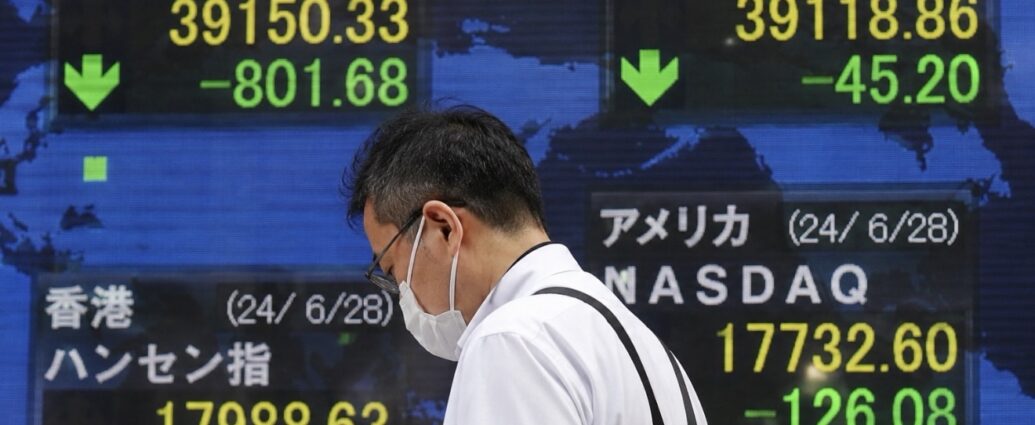
Asian Markets Close Out Their Strongest Quarter Since 2009 as the Yen Slides
Asian stocks headed into the final day of the quarter on track for their best three-month stretch since 2009, a remarkable run powered by the artificial-intelligence boom even as a late-June technology selloff and a weakening Japanese yen rattled investors. With the quarter ending Tuesday, the regional rally has been led by South Korea and the semiconductor companies at the center of the AI trade, according to exchange data and market strategists.
The quarter’s gains have been extraordinary, but the path has been anything but smooth. Markets pulled back sharply late last week after Apple unveiled steep price increases that shook global technology shares and triggered profit-taking across the region.
On Friday, Japan’s Nikkei 225 fell 4.5% to 69,127. Hong Kong’s Hang Seng Index dropped 1.7% to 22,684.76, the Shanghai Composite slipped 1.4% to 4,062.28, and Australia’s S&P/ASX 200 edged 0.2% higher. South Korea’s Kospi also came under pressure after its powerful run earlier in the quarter.
Stepping back from the day-to-day swings, the quarter belonged to South Korea. The Kospi posted one of its strongest performances in decades as demand surged for the memory chips powering artificial intelligence. Semiconductor leaders SK Hynix and Samsung Electronics fueled much of the rally, while global chip stocks remained on pace for one of their strongest quarters on record. Investor enthusiasm proved resilient despite the conflict involving the United States and Iran and continued concerns surrounding the Strait of Hormuz.
The other major story has been the continued weakness of the Japanese yen, which has fallen to its weakest level in roughly four decades. The U.S. dollar has traded just below 162 yen, near its highest level in approximately 40 years. A weaker yen helps Japanese exporters by making their products more competitive overseas but raises the cost of imported food, fuel, and other goods for households and businesses. Currency traders continue watching for possible intervention by Japanese authorities.
Market movers: Japanese technology and semiconductor companies experienced sharp swings throughout the quarter. Tokyo Electron, Sony Group, and Nintendo benefited from the broader AI rally, while AI-related names including SoftBank Group and memory-linked companies such as Kioxia were among those hit hardest during the recent technology pullback.
Several investment banks also adjusted their outlooks. HSBC upgraded South Korea to “neutral” from “underweight,” saying recent foreign selling had reduced downside risks by unwinding crowded positions. Barclays maintained its preference for equities heading into the third quarter, citing continued confidence in the long-term artificial-intelligence investment cycle.
Japan’s economic data also provided encouragement. Government figures showed retail sales rose 5.3% in May from a year earlier, the fastest annual increase since November 2023, supported by government stimulus measures that boosted consumer spending. The stronger retail activity offered a positive sign for an economy that has struggled with slow growth, even as the weaker yen continues to keep import prices elevated.
Commodities and volatility: Oil remained one of the quarter’s biggest variables. Prices surged when fighting intensified around the Strait of Hormuz, a key shipping route for global crude oil and liquefied natural gas, before retreating toward pre-conflict levels after the United States and Iran agreed to halt further attacks ahead of peace talks scheduled this week in Doha, Qatar. Lower oil prices are particularly welcome for energy-importing economies such as Japan and South Korea. Gold remained supported as a traditional safe-haven asset, while measures of market volatility eased after their late-week spike.
The week ahead will determine whether the quarter’s momentum carries into the second half of the year. Investors are watching the Doha negotiations, any indication of Japanese currency intervention, and a fresh round of U.S. economic data, including Friday’s monthly employment report, for clues about where global interest rates may head next.
For now, Asian markets are closing the books on a historic quarter driven by artificial intelligence, but the sharp swings of recent days are a reminder that much of the rally remains tied to a rapidly evolving technology sector where investor sentiment can change just as quickly as it rises.
JBizNews Asia Desk
© JBizNews.com All Rights Reserved. Reproduction or distribution without written permission is prohibited.
I’ll use the appropriate regional desk for future articles based on where the story is centered.


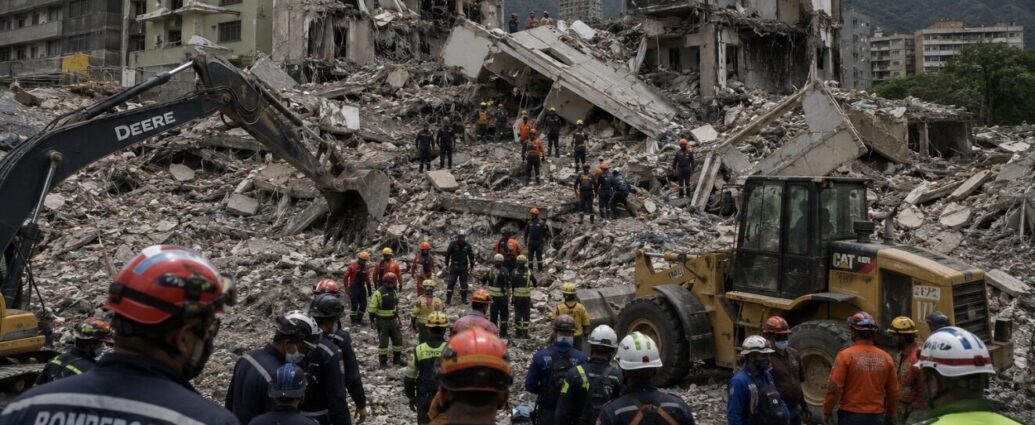
Venezuela Earthquake Death Toll Passes 1,700 as Rescuers Race the Rubble
The death toll from the powerful earthquakes that struck Venezuela has climbed above 1,700, as emergency crews continue searching collapsed buildings while thousands remain injured and missing.
Officials said at least 1,719 people have died and more than 5,000 have been injured following the twin earthquakes that struck the country’s northern coast. Thousands of additional people remain unaccounted for as rescue operations continue around the clock.
The disaster began when a magnitude 7.2 earthquake struck on June 24, followed just 39 seconds later by a more powerful magnitude 7.5 quake—the strongest to hit Venezuela in more than a century.
The coastal state of La Guaira, just north of Caracas, suffered some of the worst destruction and remains under emergency military control as rescue efforts continue.
Authorities estimate nearly 800 buildings collapsed across the affected region.
Because June 24 was a national holiday, many residents were inside homes rather than office buildings when the earthquakes struck, contributing to the high casualty count.
Despite rescue crews now working beyond the critical 72-hour survival window, isolated rescues continue. One survivor was pulled alive from the rubble after more than 106 hours, offering hope that additional people may still be found.
The disaster has further strained an economy already facing years of financial hardship.
Although Venezuela possesses some of the world’s largest oil reserves, the country has endured prolonged economic decline, widespread emigration, chronic power shortages, and deteriorating infrastructure.
Frequent electrical outages have complicated rescue operations by limiting communications, transportation, and access to heavy equipment.
The country’s primary international gateway, Simón Bolívar International Airport, also sustained significant damage, forcing flight cancellations and disrupting humanitarian aid deliveries along with business travel and commercial shipments.
International assistance has begun arriving.
The U.S. Treasury Department temporarily eased certain sanctions to allow financial transactions supporting earthquake relief efforts through October 23.
Secretary of State Marco Rubio said the United States is sending search-and-rescue teams, medical supplies, and humanitarian assistance. U.S. officials also reported that three Americans were killed while 12 others remain missing.
More than 1,600 international rescue workers have joined recovery operations, with assistance arriving from countries including Brazil, Chile, Mexico, and China.
Engineers believe rebuilding will require years.
Many of the collapsed buildings are believed to have failed because of outdated construction standards, aging infrastructure, or building codes that were poorly enforced.
The disaster also carries major financial consequences for Venezuelans living abroad.
Communities across the United States—including large Venezuelan populations in places such as Union City, New Jersey—have begun raising money to support relatives affected by the disaster.
Remittances sent home from family members working overseas are expected to become an increasingly important source of financial support as rebuilding begins.
For now, rescue operations remain the priority.
Crews continue searching damaged neighborhoods throughout La Guaira and Caracas while families wait for news of missing loved ones.
The full economic cost will likely take months to calculate, but the earthquakes have already added another enormous burden to one of Latin America’s most fragile economies.
JBizNews Desk
© JBizNews.com All Rights Reserved. Reproduction or distribution without written permission is prohibited.