The Chinese self-driving technology company Momenta moved a major step closer to going public on Tuesday, June 23, 2026, filing fresh paperwork with the Hong Kong Stock Exchange after clearing its listing hearing — the final approval needed before selling shares to the public. The company, which counts General Motors and Tencent Holdings among its biggest backers, is expected to start measuring investor interest as soon as this week. China’s securities regulator signed off on the listing earlier this month.

Momenta is aiming to raise about $1 billion, in a deal that would value the company at roughly $9 billion, according to people familiar with the plans. That would make it one of the larger technology listings in Hong Kong this year. The company was valued at more than $5 billion in its last private fundraising round, so a successful debut would mark a sharp step up.

For readers who have never heard of it, Momenta builds the software “brain” that lets cars drive themselves. Its technology comes in two forms. One is the driver-assistance system — the kind that handles highway lane-keeping and parking in everyday cars you can buy today. The other is full self-driving for robotaxis, robovans, and even self-driving trucks that operate with no human at the wheel.

The company has quietly become a giant in its field. Its systems are now installed in close to 700,000 vehicles, with design wins across more than 170 car models. In China’s market for third-party urban self-driving software, Momenta holds an estimated 65% share. Its customers and partners read like a roll call of the global auto industry: Mercedes-Benz, BMW, Audi, Toyota, and SAIC Motor among them.

The General Motors tie is central to the story. The Detroit automaker invested $300 million in Momenta in 2021 to help develop self-driving features for the cars it sells in China, the world’s largest auto market. For GM, the stake is both a financial bet and a way to keep a foot in China’s fast-moving self-driving race without building everything itself.

Momenta originally wanted to list in New York and confidentially filed there in 2024. Those plans fell apart as tensions between Washington and Beijing made it harder for Chinese technology firms to go public in the US. So the company pivoted to Hong Kong, joining a growing line of Chinese tech and robotics names choosing the Asian financial hub instead. Rivals Pony.ai and WeRide both listed there last year.

The timing reflects a boom in Hong Kong share sales. Companies raised about $21 billion in the city in the first five months of 2026, more than double the amount over the same stretch a year earlier. After a long dry spell, Hong Kong is once again a magnet for big technology offerings — and Momenta would be one of the headline names of the year.

There is a catch buried in Momenta’s impressive investor list. Several of its backers — including General Motors, Toyota, Mercedes-Benz, and SAIC Motor — are rival carmakers that are also its customers. Over time, analysts warn, those automakers may not want to depend on an outside supplier that serves their competitors, and many are racing to build their own self-driving software in-house. Momenta’s strength today rests partly on a window that could narrow as the industry matures.

For everyday drivers, the listing is a sign of how fast self-driving is moving from science fiction toward the showroom. The same technology Momenta sells to automakers is what increasingly decides how safe, smart, and hands-free new cars feel. And for American companies like General Motors, the deal is a reminder that much of the cutting-edge work in autonomous driving is now happening in China — a fact with real weight as the US and China compete for the lead in artificial intelligence.

If all goes to plan, Momenta could formally launch its offering around the end of June. Whether public investors reward it with the $9 billion price tag it is seeking will depend on how its progress stacks up against listed rivals like Pony.ai and WeRide, which already trade on the open market. For now, one of China’s best-funded self-driving startups is finally ready to test what the public thinks it is worth.

JBizNews Desk

© JBizNews.com All Rights Reserved. Reproduction or distribution without written permission is prohibited.

Americans heading out for summer vacations are paying significantly more to travel this year, with airfare, fuel, hotels, and other travel-related costs climbing as global energy markets continue feeling the effects of the Iran conflict.

According to data from the Airlines Reporting Corporation, average domestic round-trip airfare reached approximately $623 in April, the highest level in nearly four years.

Government inflation data tells a similar story.

The Bureau of Labor Statistics reported that airfares have risen roughly 27% over the past year, while hotel and motel rates are up about 5% and restaurant prices have increased approximately 3.5%.

At the center of the price surge is fuel.

The conflict that began on February 28 involving the United States, Israel, and Iran disrupted global energy markets and drove jet-fuel prices sharply higher. During the height of the crisis, jet-fuel costs roughly doubled compared with pre-conflict levels.

For airlines, fuel remains one of the largest operating expenses.

Hayley Berg, lead economist at travel platform Hopper, notes that jet fuel typically accounts for between 20% and 30% of an airline’s total operating costs, making fuel-price fluctuations one of the biggest drivers of airfare changes.

The situation was compounded by disruptions in the Strait of Hormuz, one of the world’s most important shipping corridors and a route through which roughly one-fifth of global oil supplies normally pass.

As fuel costs climbed, airlines moved quickly to protect profitability.

Several carriers raised ticket prices, increased baggage fees, reduced route frequencies, and adjusted capacity forecasts.

United Airlines recently lowered portions of its 2026 outlook as elevated fuel costs weighed on operating expenses.

In Europe, Lufthansa faced billions of dollars in additional fuel costs and responded by reducing flight schedules and cutting capacity across parts of its network.

Meanwhile, the collapse of budget carrier Spirit Airlines reduced low-cost competition in the domestic market, giving surviving carriers greater pricing power during the busy summer travel season.

Drivers have also felt the impact.

Gasoline prices surged above $4 per gallon in many areas this spring, well above levels seen a year earlier.

Analysts at GasBuddy warned that prices could approach $5 per gallon in some regions if disruptions to global energy supplies persisted through the summer.

For families planning road trips, higher fuel prices translated directly into increased travel budgets.

Filling a family SUV often costs substantially more than it did before the conflict began.

There are signs that some relief may be approaching.

As diplomatic efforts between Washington and Tehran progressed and shipping activity through Hormuz began normalizing, oil prices retreated significantly from their wartime highs.

The challenge for consumers is timing.

Industry analysts note that declines in crude-oil prices do not immediately translate into lower airline ticket prices or cheaper jet fuel. The process can take weeks or even months to filter through supply chains.

In many cases, fees introduced during periods of higher costs — particularly baggage charges and ancillary travel fees — tend to remain in place even after fuel prices moderate.

Travel experts continue encouraging consumers to book trips as early as possible and remain flexible when selecting destinations.

Some travelers are responding by choosing shorter trips, driving instead of flying, or selecting destinations closer to home to offset rising costs.

The travel-price surge is also contributing to broader inflation pressures across the economy.

Consumer prices remain elevated, one reason the Federal Reserve under Chair Kevin Warsh has maintained a cautious stance on interest rates rather than moving aggressively toward cuts.

For travelers, the outlook remains mixed.

While energy prices have begun easing and supply chains are stabilizing, vacation costs remain well above last year’s levels.

The good news is that the worst of the fuel shock may be over.

The bad news is that many families will still feel the impact when they book flights, reserve hotels, and fill up their gas tanks this summer.

JBizNews Desk | New York
© JBizNews.com All Rights Reserved. Reproduction or distribution without written permission is prohibited.

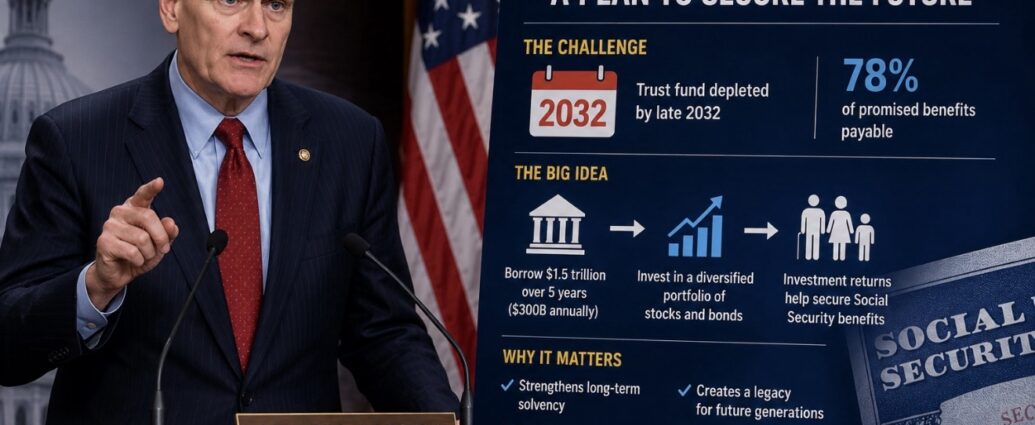
With his time in Washington running out, Republican Sen. Bill Cassidy of Louisiana is making a final push to address Social Security’s looming funding crisis before automatic benefit reductions affect millions of Americans.

The urgency stems from a warning issued by the program’s trustees earlier this month. On June 9, trustees projected that the Old-Age and Survivors Insurance Trust Fund could be depleted by late 2032, at which point Social Security would be able to pay only about 78% of promised benefits unless Congress acts.

In an interview published Tuesday, Cassidy argued that lawmakers can no longer afford to delay.

“The longer we wait, the harder the solution becomes,” he warned.

Cassidy’s effort comes as he enters the final months of his Senate career.

The Louisiana Republican lost his primary election earlier this year to a Trump-backed challenger and will leave office when his term expires on January 3, 2027. With retirement approaching, Cassidy is taking on one of Washington’s most politically sensitive issues.

Social Security remains one of the nation’s most relied-upon programs, with surveys showing approximately 88% of Americans expect to depend on benefits during retirement.

Cassidy’s proposal, which he has dubbed the “Big Idea,” would create a government-backed investment fund designed to generate long-term returns capable of helping close the program’s financing gap.

Under the outline, the federal government would borrow approximately $1.5 trillion over five years — about $300 billion annually — and place the funds into a separately managed investment portfolio holding stocks and bonds.

The investment returns would then be used to help support future Social Security obligations.

Cassidy has compared the concept to sovereign wealth funds operated by countries such as Norway and to the investment structure used by the pension system serving U.S. railroad workers.

Unlike many proposals frequently discussed in Washington, Cassidy’s plan does not rely primarily on benefit reductions or payroll tax increases.

Instead, it attempts to generate additional investment income to help offset demographic pressures that continue weighing on the system.

Those pressures are significant.

Approximately 10,000 baby boomers reach retirement age each day, while birth rates have declined and Americans are living longer than previous generations. When Social Security was created in the 1930s, average life expectancy was approximately 62 years. Today it approaches 80 years.

As a result, fewer workers are supporting a growing number of retirees receiving benefits for longer periods.

Trustees estimate that without legislative action, Social Security recipients could face automatic benefit reductions of roughly 22% to 23% once the trust fund becomes depleted.

Despite the urgency, Cassidy faces long odds.

The proposal remains an outline rather than formal legislation, and any major Social Security reform would likely require bipartisan support and at least 60 votes in the Senate.

Cassidy has been working with a bipartisan group that includes Democratic Sens. Dick Durbin and Tim Kaine, along with Republican Sen. Thom Tillis. Several members of the group are also leaving the Senate, adding further uncertainty to the effort.

Political disagreements remain substantial.

Many Democrats support increasing taxes on higher-income earners to strengthen Social Security finances. Many Republicans favor raising the retirement age. Cassidy opposes increasing the retirement age and instead continues promoting the investment-fund approach.

Critics have raised concerns of their own.

Borrowing $1.5 trillion to invest in financial markets would introduce market risk into a program traditionally funded through payroll taxes. Some economists also warn that borrowing at that scale could place upward pressure on government borrowing costs and bond yields.

Cassidy acknowledges that investment gains alone would not fully eliminate the funding shortfall. Additional reforms would likely still be required.

Even so, he argues that beginning the process now is preferable to waiting until benefit cuts become unavoidable.

Whether Congress embraces the proposal remains uncertain.

But with Social Security’s funding challenges moving closer and Cassidy’s Senate career nearing its end, the Louisiana senator is making one final effort to force a conversation Washington has spent years avoiding.

JBizNews Desk | New York
© JBizNews.com All Rights Reserved. Reproduction or distribution without written permission is prohibited.
Beijing has built up the use of the yuan for the oil market and other international trade, giving Iran and Russia a way to evade Western sanctions

This post was originally published here. 

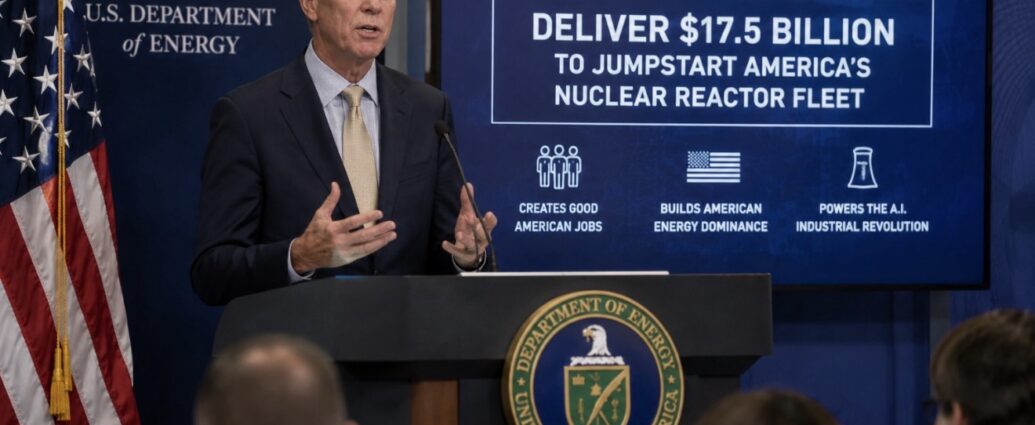
The U.S. Energy Department said Tuesday it will provide up to $17.5 billion in loans to jump-start construction of 10 large nuclear reactors, an effort to meet the soaring electricity demand from artificial-intelligence data centers. Energy Secretary Chris Wright, on a call with reporters June 23, cited “tremendous interest” from data-center developers that would buy the power, as well as utilities and energy companies.

“This is the start,” Wright said, adding he’d be “very surprised” if dozens more were not built once a supply chain is running.

The plan works like this. The government is offering as many as five conditional loans for utilities and energy companies that will each build two reactors, using designs from Westinghouse Electric Co. The loans run about $3.5 billion per project, with utilities and Westinghouse expected to contribute up to $5 billion in equity in total. Westinghouse has signed letters of intent with seven potential partners, each with an identified site, and the department declined to name the utilities until final selections are made.

The push responds to a power crunch. Data centers used 4% to 5% of the nation’s electricity in 2024, a share that could nearly triple by 2028, and some analysts expect total U.S. electricity use to rise as much as 20% over the next decade, with data centers a big reason. The country has struggled to add generation: most U.S. nuclear plants were built between 1970 and 1990, with Georgia Power’s Plant Vogtle expansion a rare — and famously over-budget — recent example.

For the nuclear industry, this could be a turning point. Building large reactors in the U.S. has lost money for decades, plagued by overruns and delays. Wright said the loans could speed each project by up to three years and lower construction costs, with a goal of having all 10 under construction by 2030 and generating power in the mid-2030s. He called the financing “very, very low risk to the American taxpayers.”

That claim is where the debate begins. Government-backed nuclear financing carries real risk: the last generation of U.S. reactors ran years late and billions over budget, and taxpayers or ratepayers often covered the gap. Supporters counter that nuclear offers what data centers need most — large amounts of steady, around-the-clock power that does not depend on weather, unlike wind or solar. For tech companies racing to power AI, reliable supply matters more than almost anything.

The move also fits a broader political calculation. Rising electricity bills have become a flashpoint before the November midterms, and the administration has searched for ways to expand supply without further inflaming household costs. By steering new generation toward data centers — and pressing tech firms to help pay for it — the White House is trying to satisfy AI’s appetite for power while shielding consumers from the bill.

The announcement came a day after Trump signed an executive order on quantum computing, part of a wider effort to court the tech sector.

The business ripple effects could be significant. A revived reactor program would mean orders for Westinghouse, work for construction firms and equipment makers, and thousands of skilled jobs in the regions where plants rise. It would also deepen the financial ties between Big Tech and the power industry, as data-center operators increasingly sign long-term deals to buy electricity from specific plants.

Whether the projects come in on time and on budget — the chronic weakness of American nuclear construction — will determine if Tuesday’s announcement is a genuine revival or another costly false start.

JBizNews Desk | New York

© JBizNews.com All Rights Reserved. Reproduction or distribution without written permission is prohibited.

The projects mark the latest step by Prime Minister Mark Carney’s Liberal government to accelerate infrastructure projects aimed at capitalizing on its natural resources, and the construction of new trade corridors to sell its goods to non-U.S. markets.

This post was originally published here. 

Wall Street steadied on Wednesday, June 24, 2026, clawing back a slice of the prior day’s brutal technology selloff as traders braced for Micron Technology’s quarterly results due after the closing bell — the report Wall Street is treating as the make-or-break event of the week. Shortly after the open, the S&P 500 gained 0.35%, the Nasdaq Composite advanced 0.62%, and the Russell 2000 rose 0.41%, while the Dow Jones Industrial Average slipped 0.17%.

The rebound came after Tuesday’s drubbing, when the S&P 500 sank 1.44% to 7,365.46 and the Nasdaq dropped 2.21% to 25,587.04, with the Dow off 45.87 points to 51,666.84.

All eyes are on one company. Micron makes the memory chips inside phones, laptops and AI data centers, and the stock has been on a tear — it hit an all-time high Monday and ended Tuesday at $1,051.77 a share. It has gained more than 300% this year. Analysts polled by FactSet expect earnings of $20.83 a share on revenue of $35.75 billion. But the run cuts both ways: Jay Woods, chief market strategist at Freedom Capital Markets, warned the stock could fall after the report, while Louis Navellier, chairman of Navellier & Associates, called it the grand finale to a stunning earnings season.

The pressure started overseas. A sell-off in memory giants SK Hynix and Samsung Electronics in South Korea, both down more than 12%, dragged the benchmark Kospi to a 10% loss earlier this week. On Wednesday the Kospi recovered 3.3%, helping limit losses across Asia. Stoking caution, SK Hynix is planning a nearly $30 billion U.S. listing, one of the largest of its kind, which would add more supply to the AI memory group.

There’s a shake-up coming to the most famous gauge in the market, too. Alphabet will replace Verizon in the Dow Jones Industrial Average, S&P Global said Tuesday, further expanding big tech’s footprint in the blue-chip average.

Market movers

The morning’s standout was a name straight off the dinner menu. Wendy’s soared about 23% in premarket trading, driven by a new CFO appointment and a wave of retail-investor “meme” enthusiasm in heavily shorted shares. The burger chain said it named former Potbelly executive Steven Cirulis as chief financial officer and chief strategy officer, and the stock jumped on heavy volume.

Among other gainers, Sunrun climbed 19.1% and Churchill Downs rose 7%.

Housing offered a bright spot. KB Home added 3% after posting fiscal second-quarter revenue of $1.11 billion, topping the $1.10 billion analysts expected, per LSEG.

On the downside, Hertz Global Holdings tumbled 22%, Silgan Holdings fell 9.5%, and Cerebras Systems lost 9.1%. Cerebras slid after its first earnings report since its May IPO, in which it forecast a decline in core gross margin.

Analysts were active. IBM posted roughly 5% gains this week after an upgrade to overweight from neutral at JPMorgan Chase, with the analyst citing greater confidence in software acceleration in the second half. On Wednesday morning, UBS reiterated a Buy rating on Bloom Energy with a $322 price target, while KeyBanc analyst Bradley Thomas kept a Sector Weight rating on Best Buy.

Commodities and volatility

Falling energy prices kept easing pressure on households. Brent crude dropped another 3% Wednesday morning, with the August contract slipping below $75 a barrel. The slide tracked progress in U.S.–Iran talks; President Donald Trump said Tuesday that “Iran has fully and completely agreed to highest level Nuclear inspections long into the future.”

Gold cracked a key line. Gold futures dipped below $4,000 for the first time in seven months, last trading around $3,987.30 — the first time under that level since Nov. 18, 2025. Silver fell 5% as the dollar strengthened.

What’s ahead Wednesday

The calendar carries reports that hit households directly. May new-home sales are due, alongside the Federal Reserve’s annual bank stress-test results, with earnings later from Micron, Paychex and Jefferies Financial. The stress-test outcome matters for savers, since banks that pass often raise their dividends.

But the day belongs to one report. As TheStreet’s James “Rev Shark” DePorre put it, the morning’s bounce sets up Micron as the most important single event of the week and arguably the next month. A strong number could steady the chip trade that has whipsawed markets for days; a weak one could reignite the rout.

JBizNews Desk | New York
© JBizNews.com All Rights Reserved. Reproduction or distribution without written permission is prohibited.

India has sent ships back through the Strait of Hormuz for the first time since February, marking a significant step toward restoring one of the world’s most important trade and energy corridors after nearly four months of disruption.

Speaking in New Delhi on Tuesday, Randhir Jaiswal, spokesperson for India’s Ministry of External Affairs, confirmed that two Indian vessels have now crossed into the Persian Gulf, while additional India-bound ships have successfully navigated the waterway as commercial traffic slowly resumes.

The development comes after months of turmoil triggered by the conflict involving the United States, Israel, and Iran, which effectively shut down one of the global economy’s most critical shipping routes.

The Strait of Hormuz connects the Persian Gulf to international waters and serves as a major artery for global energy supplies. Before the conflict, roughly one-quarter of the world’s seaborne oil and approximately one-fifth of global liquefied natural gas exports moved through the narrow passage.

For India, one of the world’s largest energy importers, the route is particularly vital.

Much of the country’s crude oil, fuel products, and fertilizer shipments travel through Hormuz, making uninterrupted access critical for economic stability and agricultural production.

That access was severely disrupted after hostilities erupted on February 28.

During the conflict, merchant vessels faced attacks, naval mines were deployed, and commercial shipping activity was dramatically reduced. At various points, hundreds of vessels became stranded on both sides of the waterway as governments and shipping companies searched for safe alternatives.

India spent months coordinating diplomatic efforts to help protect and evacuate vessels connected to its shipping network while monitoring the safety of Indian crews operating in the region.

Conditions began improving following a preliminary agreement reached between the United States and Iran on June 17.

Under the arrangement, commercial vessels were granted a 60-day period of secure passage through the strait while broader negotiations continue. The agreement also included commitments aimed at restoring normal maritime traffic and improving navigation safety.

Since the announcement, shipping activity has gradually increased.

According to Indian officials, 11 India-bound vessels have already crossed the strait, including multiple crude-oil tankers carrying approximately 285,000 metric tons of oil each, an LPG carrier, additional energy shipments, and several bulk cargo vessels transporting fertilizer.

The latest crossings mark an important milestone because traffic is now moving in both directions rather than solely evacuating vessels from the region.

Jaiswal said approximately 10 Indian-flagged ships remain in the Gulf from before the conflict began, but the successful return of outbound traffic suggests confidence is slowly returning to the route.

The economic implications extend far beyond India.

The disruption of Hormuz contributed to higher global energy prices throughout the spring, increased transportation costs, and added inflationary pressure across major economies. As more vessels return to normal operations, pressure on oil prices, shipping rates, and supply chains has begun to ease.

For India, the reopening is particularly important as energy imports stabilize and fertilizer shipments resume ahead of key agricultural seasons.

Regional diplomatic efforts involving Qatar and Pakistan have also helped facilitate discussions aimed at restoring commercial activity and reducing tensions in the shipping corridor.

Despite the progress, significant risks remain.

The broader agreement between Washington and Tehran has not yet been finalized, and the current arrangement remains temporary. Iran has also indicated it may seek transit-related fees after the initial toll-free period expires, a proposal that faces opposition from both the United States and Gulf nations.

Shipping companies and marine insurers continue to monitor conditions closely, and many operators remain cautious about fully restoring pre-conflict traffic levels.

Still, after months in which India’s focus was largely on moving ships out of the Gulf, vessels are now moving back in.

For one of the world’s most important trade routes, it is an early sign that global commerce may finally be beginning to return to normal.

JBizNews Desk | New York
© JBizNews.com All Rights Reserved. Reproduction or distribution without written permission is prohibited.

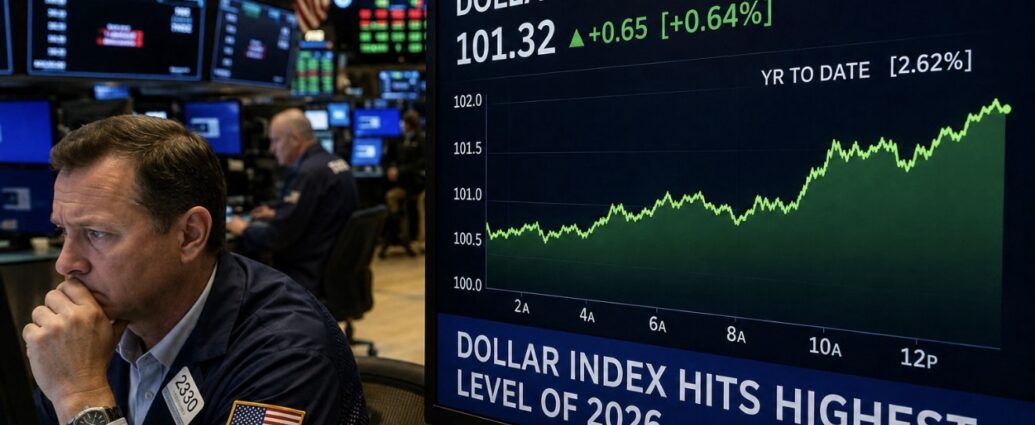
For most of this year, the story of the U.S. dollar was weakness. It started 2026 near a four-year low, and many forecasters expected it to keep falling. That outlook has changed dramatically. The dollar has surged to its strongest level of the year, putting pressure on currencies, stock markets, and economies across the developing world.

The clearest signs emerged Tuesday in Asia. The People’s Bank of China set its official reference rate at 6.8170 yuan per dollar, marking the third consecutive day it guided the currency lower and the weakest setting since June 8. In India, the central bank injected liquidity into the banking system as the rupee slipped to a six-day low, with the dollar climbing to roughly 94.92 rupees. Meanwhile, the U.S. Dollar Index, which tracks the dollar against a basket of major currencies, rose above 101 for the first time since last May.

Two major forces are driving money back into the dollar.

The first is fear. A global selloff in technology and semiconductor stocks sent investors searching for safety, and the U.S. dollar remains the world’s preferred safe-haven asset. When investors sell riskier assets in markets such as South Korea, Brazil, and India, much of that money flows into dollar-denominated investments. The result is a stronger dollar and weaker local currencies. South Korea’s Kospi index fell roughly 10% Tuesday, although it remains up nearly 95% for the year.

The second factor is interest rates. The Federal Reserve, led by Chair Kevin Warsh, has adopted a more hawkish tone, with markets increasingly expecting a rate hike before the end of the year rather than a cut. Higher U.S. interest rates make Treasury bonds and dollar-based savings more attractive, drawing capital away from emerging markets and back into the United States.

That trend reverses one of the biggest drivers behind last year’s rally in developing-market stocks, when a weakening dollar encouraged investors to seek higher returns abroad. Meera Chandan, co-head of global currency strategy at J.P. Morgan, noted that the dollar is benefiting from renewed confidence in U.S. assets, particularly the continued strength of American technology companies.

A stronger dollar creates challenges for emerging economies because much of their debt is denominated in dollars. As the dollar rises, those debts become more expensive to repay in local currencies. Imported goods such as oil, food, and industrial equipment also become more costly, adding inflationary pressure. At the same time, foreign investors see their returns reduced when local gains are converted back into a stronger dollar, making developing markets less attractive.

The pressure was visible across currency markets Tuesday. The euro fell to a new low for the year, slipping below $1.14. The notable exception was the Japanese yen, which remained relatively stable after Japan’s finance minister highlighted discussions with U.S. Treasury Secretary Scott Bessent. The Bank of Japan’s recent interest-rate increase also provided support for the currency. Meanwhile, the offshore Chinese yuan traded within a relatively narrow range between approximately 6.75 and 6.80 per dollar.

The dollar’s rise also creates a political challenge. President Trump has repeatedly argued that a weaker dollar helps American exporters compete overseas. A dollar trading at its strongest level of the year works against that objective. While a stronger dollar lowers the cost of imports and makes international travel cheaper for Americans, it can hurt large U.S. corporations that generate significant revenue overseas, since earnings earned in weaker foreign currencies translate into fewer dollars when brought home.

For now, the move has been swift. Only a few months ago, investors were debating how much further the dollar could fall and how much higher emerging-market stocks could climb. Whether this becomes a short-term flight to safety or the beginning of a longer-term dollar rally will likely depend on two key factors: how severe the global technology selloff becomes and whether the Federal Reserve follows through with additional interest-rate increases.

JBizNews Desk | New York

© JBizNews.com All Rights Reserved. Reproduction or distribution without written permission is prohibited.

Electric-vehicle maker Lucid Group is shrinking again. In a filing with the Securities and Exchange Commission on Monday, June 22, the company said it will cut roughly 18% of its U.S. workforce — about 1,500 jobs — and eliminate the role of chief operating officer as it scrambles to slow its cash burn and match production to weak demand. It is the second round of deep cuts this year, following a 12% reduction in February, and the first major move by new chief executive Silvio Napoli, who took the top job on June 1.

The reductions hit full-time employees, contractors and hourly factory workers, and come paired with a decision to eliminate the second production shift at Lucid’s AMP-1 plant in Casa Grande, Arizona, its largest factory. The company expects about $32 million in one-time severance and transition charges and roughly $158 million in annual savings once the plan is finished, which it expects by the end of the third quarter. “These are difficult decisions taken to align production with demand, reduce inventory, and adapt to declining market conditions,” a Lucid spokesperson said.

The same filing confirmed that chief operating officer Marc Winterhoff is leaving immediately, with his role scrapped entirely. Winterhoff had served as interim CEO for more than a year before Napoli, a former chairman and chief executive of Swiss elevator maker Schindler Group, took over. His exit adds to a long run of departures in Lucid’s executive ranks and underscores how sharply the new boss is reshaping the company in his first weeks.

The cuts reflect a brutal stretch. Lucid lost about $2.7 billion in 2025 on revenue of just $1.35 billion, and burned through roughly $3.8 billion in cash. In the first quarter of 2026, revenue rose about 20% from a year earlier to $282 million, but the company produced 5,500 vehicles while delivering only 3,093, leaving costly inventory on the ground, and its gross margin ran deeply negative. Lucid has suspended its 2026 production guidance — once set at 25,000 to 27,000 vehicles — and says it will give a fresh outlook at its second-quarter earnings. It started the year with roughly 9,000 employees worldwide.

Investors have already punished the stock. Lucid shares fell about 4% on Monday to around $5, and are down roughly 50% in 2026, trading near a 52-week low of $4.47 after touching $33.70 over the past year. Wall Street is cautious but not hopeless: of 11 analysts tracked by TheStreet, eight rate the stock a hold, two a sell and one a buy, with an average 12-month price target near $9.75 — a figure that implies large upside only if Napoli’s turnaround takes hold.

Lucid’s troubles are partly its own and partly the industry’s. U.S. EV demand has cooled after the $7,500 federal tax credit was eliminated under the Trump administration and several major automakers pulled back their electric plans. Survival has leaned heavily on Saudi Arabia’s Public Investment Fund, Lucid’s majority owner, which has poured in billions. The company is betting its future on two coming mass-market models — the Cosmos crossover, expected to start near $50,000 and rival the Tesla Model Y, and the larger Earth — along with a robotaxi partnership with Uber and Nuro slated to launch later this year.

For now, the message from Napoli is retrenchment. By cutting headcount, idling a shift and stripping out a layer of management, Lucid is buying time to reach the mass-market launches it hopes will finally bring scale. Whether that is enough to outrun the cash burn — without leaning even harder on its Saudi backer — is the question investors will be asking when the company reports second-quarter results.

JBizNews Desk
© JBizNews.com All Rights Reserved. Reproduction or distribution without written permission is prohibited.
Commerce Secretary Howard Lutnick signaled that the Trump administration is preparing for a potential crackdown on heavily subsidized Chinese robotics imports, warning U.S. business leaders that the global race for robotics dominance is rapidly becoming a national-security issue.

Speaking at a closed-door meeting with top executives from SpaceX, Boston Dynamics, JPMorgan Chase, Goldman Sachs, Siemens, and Rockwell Automation, Lutnick said the Commerce Department is reviewing Chinese state-backed robotics imports and could take action once that review is completed.

“This is the arms race that is coming,” Lutnick reportedly told attendees, according to a Politico report citing participants in the meeting.

The comments mark one of the clearest signals yet that Washington may be preparing to expand its technology confrontation with Beijing beyond semiconductors and artificial intelligence into the rapidly growing robotics sector.

China currently dominates much of the global robotics supply chain. The country deployed approximately 1.8 million industrial robots in 2023, roughly four times the U.S. total, and analysts project Chinese companies could control nearly 80% of the global humanoid robot market by mid-2026.

Humanoid robots—machines designed to walk, lift, carry objects, and perform tasks traditionally handled by people—are increasingly viewed as the next major phase of automation. Chinese companies including Unitree, Inovance Technology, and Tuopu Group have emerged as leading players, aided by substantial government support and lower manufacturing costs.

According to attendees, Lutnick framed the issue as both an economic and national-security challenge. One executive reportedly warned that allowing critical industries to depend on foreign robotic systems could leave the United States with “an American brain and a Chinese body,” a scenario participants described as strategically dangerous.

The warning comes as congressional concern over Chinese robotics accelerates.

Just one day before the meeting, the House Select Committee on the Chinese Communist Party raised alarms over Chinese robotics manufacturer Unitree, which has been designated by the United States as a Chinese military company. Committee Chairman Rep. John Moolenaar and other lawmakers have pushed for restrictions on Chinese-made humanoid robots entering the American market, including sales through major online retailers.

The Commerce Department has already begun laying the groundwork for possible action.

Earlier this year, officials convened a robotics supply-chain roundtable, and on April 30 the department launched a national-security review examining Chinese drones and robotics systems. The review is expected to evaluate whether subsidized imports could undermine domestic manufacturing capabilities or create security vulnerabilities.

Potential responses under consideration reportedly include:

  • Favoring U.S.-made robotics systems in federal procurement.
  • Restricting Chinese robotic systems from sensitive infrastructure and government facilities.
  • Creating supply-chain standards that prioritize domestic and allied-country manufacturers.
  • Expanding financial support for American robotics startups and advanced manufacturing projects.

The Pentagon is also reportedly exploring financing options aimed at strengthening the domestic robotics industry.

The robotics debate arrives amid a broader escalation in U.S.-China trade tensions.

On the same day as Lutnick’s remarks, China’s Ministry of Commerce expanded export restrictions on ten American companies, including MP Materials and USA Rare Earth, two firms central to U.S. efforts to build an independent supply chain for rare-earth magnets and minerals.

Those materials are essential components in electric motors, industrial robots, military equipment, and advanced manufacturing systems.

The dispute highlights a challenge facing policymakers: while Washington wants more robotics manufacturing at home, China continues to dominate many of the raw materials needed to build those machines.

Business leaders at the roundtable also noted domestic hurdles that go beyond foreign competition. Executives cited permitting delays, financing challenges, and workforce shortages as major obstacles to expanding robotics manufacturing in the United States.

Some analysts believe sweeping restrictions may still be months away. Experts note that the administration remains focused on multiple trade, national-security, and election-year priorities, potentially limiting the speed of new policy actions.

Still, Lutnick’s remarks leave little doubt about the administration’s direction.

After years of battles over semiconductors, artificial intelligence, telecommunications equipment, and rare-earth minerals, robotics is emerging as the next major front in the competition between the world’s two largest economies.

For manufacturers, technology firms, investors, and workers, the message from Washington is increasingly clear: the future of automation is no longer just a business issue—it is becoming a matter of national policy.

JBizNews Desk | New York
© JBizNews.com All Rights Reserved. Reproduction or distribution without written permission is prohibited.

Carnival Corporation, the world’s largest cruise company, reported record second-quarter results on Tuesday — and watched its stock fall anyway. In a release dated June 23, the Miami-based operator said revenue hit a record $6.7 billion, with adjusted net income up over 20% to $569 million and net income of $537 million. Customer deposits, the money travelers put down in advance, reached an all-time high of $9.0 billion. Yet shares slid more than 5% during the session, dragged by a broad market selloff and a more cautious outlook for the rest of the year.

Demand for cruises remains strong. Carnival marked its 12th consecutive quarter of record net yields — a measure of how much it earns per passenger — and said its booked position for the rest of 2026 is ahead of last year at historically high prices. Chief Executive Josh Weinstein said the company delivered the record quarter while absorbing nearly 30% higher fuel costs and “extreme geopolitical headwinds,” beating its March guidance by $100 million.

So why did the stock drop? The outlook.

Management trimmed expectations for the back half of the year, citing the prolonged Middle East conflict, which has hit European deployments and was worsened by elevated airfares for North American guests. Carnival said it prioritized price integrity over occupancy in the affected regions, leaning on its advance bookings to hold pricing. For a stock that had climbed on a long streak of records, even a modest downgrade was enough to spark selling.

The report is a useful read on the broader consumer economy. For three years, Americans have kept spending on experiences — trips, concerts and dining out — even as they pulled back on goods, and Carnival’s record deposits suggest that preference is intact. The cruise industry continues to benefit from pent-up travel demand and consumers prioritizing experiences over goods. People are booking further out and at higher prices, a sign a meaningful slice of consumers still has room for vacations.

But the cracks Carnival flagged are worth watching. Higher airfares are a direct hit to the cost of a cruise, since most passengers fly to a departure port. When flights get pricier, the whole trip does, and some travelers trade down or stay home. The Middle East conflict has also forced lines to reroute ships, adding cost and limiting destinations. Fuel, up sharply because of the same tensions, raises the price of every voyage.

Weinstein framed the headwinds as temporary. He said recent June booking trends already suggest a reversal of the geopolitical impact, and that the 2027 booking curve sits at historical highs for price and occupancy, with European bookings for next year up mid-teens percentages. Cost-management efforts are expected to deliver structural benefits beyond 2026.

On the numbers, Carnival earned an adjusted $0.41 per share, up from $0.35 a year earlier and ahead of the $0.34 analysts expected. The company also accelerated shareholder returns, surpassing $450 million in stock repurchases. Wall Street’s view had been broadly positive, with 15 buy ratings, 6 holds and no sells, and the post-earnings drop owed as much to the day’s punishing market as to the results.

For everyday travelers, the takeaway is mixed. Cruise demand is strong enough that prices are likely to stay high into 2027, especially for popular European sailings — good for Carnival, less so for budget-minded vacationers. The wild card remains the Middle East: if the fragile calm holds and airfares ease, Carnival’s bet that the slowdown is temporary looks sound. If tensions flare again, the same forces that dented its outlook could linger into next year.

JBizNews Desk | New York

© JBizNews.com All Rights Reserved. Reproduction or distribution without written permission is prohibited.

South Korea’s stock market staged a strong comeback Wednesday after suffering one of its sharpest declines of the year, as investors cautiously returned to technology shares ahead of a closely watched earnings report from Micron Technology.

The Kospi rose more than 3%, recovering part of the previous session’s steep losses after a global semiconductor selloff rattled markets across Asia, Europe, and the United States.

Leading the rebound were South Korea’s technology giants.

Samsung Electronics climbed more than 8%, while memory-chip maker SK Hynix gained roughly 3%, helping lift the broader market after both companies were heavily sold during Tuesday’s rout.

The recovery helped stabilize investor sentiment following a difficult day for technology stocks worldwide.

On Tuesday, concerns about the sustainability of the artificial-intelligence spending boom triggered a sharp selloff across the semiconductor sector.

The Philadelphia Semiconductor Index fell nearly 8%, while major U.S. technology stocks and chipmakers posted significant losses.

The Nasdaq Composite dropped more than 2%, and semiconductor-focused exchange-traded funds suffered some of their largest declines of the year.

Now investors are focused on a single event.

Micron Technology’s earnings report has become one of the most anticipated corporate releases of the quarter because many analysts view the company as a key indicator of demand across the AI supply chain.

Micron manufactures memory chips used in artificial-intelligence systems, data centers, cloud-computing infrastructure, and advanced computing platforms.

Its high-bandwidth memory products have become especially important as AI developers race to build larger and more powerful computing systems.

The company has previously stated that its high-bandwidth memory production for 2026 is effectively sold out and that customer demand continues exceeding available supply.

That strength has helped fuel one of the most powerful rallies in the semiconductor sector.

But it has also raised expectations.

Investors are increasingly asking whether the massive amounts of money being spent on AI infrastructure can continue growing at the current pace.

Those concerns contributed directly to Tuesday’s market decline.

Analysts say Micron’s guidance may provide one of the clearest answers yet regarding whether AI-related demand remains as strong as the market has assumed.

A strong earnings report could reassure investors that spending remains supported by genuine customer orders.

A weaker outlook could reinforce fears that companies are investing ahead of actual demand.

The stakes are particularly high because semiconductor stocks have become a major driver of overall market performance.

A relatively small group of AI-related companies has accounted for a significant portion of stock-market gains over the past two years.

As a result, weakness in chip stocks increasingly affects major indexes, retirement accounts, pension funds, and technology-focused investment portfolios.

Investors are also monitoring broader economic developments.

Markets continue awaiting fresh inflation data, including the Personal Consumption Expenditures (PCE) Index, the Federal Reserve’s preferred inflation gauge.

Recent comments from Fed officials have reinforced expectations that interest rates could remain elevated longer than previously anticipated.

Higher rates tend to pressure high-growth technology stocks because future earnings become less valuable when discounted at higher borrowing costs.

Meanwhile, easing tensions in the Middle East and improving shipping conditions through the Strait of Hormuz have helped reduce oil prices, providing some relief to inflation concerns.

For now, the rebound in Seoul offers investors a temporary pause after a turbulent trading session.

Whether it marks the beginning of a broader recovery or simply a brief respite before further volatility may depend largely on what Micron reports.

In a market increasingly driven by AI expectations, one earnings report has become a critical test of whether the industry’s spending boom still has room to run.

JBizNews Desk | New York
© JBizNews.com All Rights Reserved. Reproduction or distribution without written permission is prohibited.
The Dubai Gold and Commodities Exchange on Monday launched the Gulf’s first same-day settled spot gold contract, a milestone driven by the exchange’s chairman, Ahmed Bin Sulayem, who has spent nearly two decades building Dubai into one of the world’s leading centers for the gold trade.

Announcing the Gold Spot T+0 Contract, Bin Sulayem — who also serves as Executive Chairman and Chief Executive Officer of the Dubai Multi Commodities Centre (DMCC), DGCX’s parent company — said Dubai has become one of the world’s leading hubs for physical gold trading, connecting bullion flows between East and West.

The new product dramatically shortens the settlement process.

In most global gold markets, transactions settle on a T+1 basis, meaning buyers and sellers complete the exchange of money and metal one business day after the trade occurs. The DGCX contract reduces that timeline to T+0, allowing participants to execute, clear, settle, and take physical delivery of gold within the same trading day.

Only a limited number of international markets currently offer comparable capabilities.

The contract is structured around one kilogram of UAE Good Delivery gold, denominated in UAE dirhams, and cleared through the Dubai Commodities Clearing Corporation (DCCC). Physical delivery takes place through approved vaulting facilities within the UAE.

The DCCC acts as the central clearing counterparty, helping ensure that transactions are completed while reducing the risk that either side fails to deliver funds or bullion.

The exchange is targeting bullion dealers, refiners, institutional investors, brokers, clearing members, and other market participants seeking a regulated alternative to traditional over-the-counter gold transactions.

The launch represents the latest milestone in a long period of growth under Bin Sulayem’s leadership.

He joined DMCC during its formation in 2002 and became Chairman of DGCX in 2007. During that time, Dubai has evolved from a regional commodities center into one of the world’s leading trading hubs.

Under Bin Sulayem’s leadership, DMCC expanded from a small free-zone operation into a global business ecosystem that now hosts tens of thousands of companies from more than 180 countries.

Industry leaders widely credit him with helping establish Dubai as a major center for gold, diamonds, energy products, agricultural commodities, and other global trade flows.

The timing is significant.

According to industry data, the United Arab Emirates overtook the United Kingdom in 2025 to become the world’s second-largest gold trading hub, behind only Switzerland. The UAE now handles approximately 15% of global gold trade, making efficient settlement infrastructure increasingly important.

Why does same-day settlement matter?

In commodity markets, settlement delays tie up capital and expose participants to price fluctuations before ownership is finalized. By reducing settlement time to zero days, traders can free up capital faster, reduce risk, improve liquidity management, and move physical metal more efficiently.

DGCX also emphasized that the entire transaction process remains within the UAE.

The bullion, collateral, clearing, and settlement infrastructure all operate under UAE jurisdiction, an advantage the exchange believes will become increasingly valuable as governments, financial institutions, and investors place greater importance on custody, transparency, and regulatory oversight.

The launch comes during a period of strong global interest in gold.

Central banks continue adding bullion to reserves, while investors increasingly use gold as a hedge against inflation, geopolitical uncertainty, and currency volatility.

Whether the contract ultimately captures significant trading volume will depend on how quickly market participants shift activity from private over-the-counter transactions and competing exchanges.

But the launch sends a clear message.

In a global gold market where settlement practices have changed little for decades, Dubai is betting that speed, central clearing, physical delivery, and regulatory oversight can attract a larger share of the world’s bullion business.

For Dubai, it strengthens its position as a global commodities powerhouse. For Ahmed Bin Sulayem, it represents another step in a two-decade effort to place the emirate at the center of international trade.

JBizNews Desk | New York
© JBizNews.com All Rights Reserved. Reproduction or distribution without written permission is prohibited.

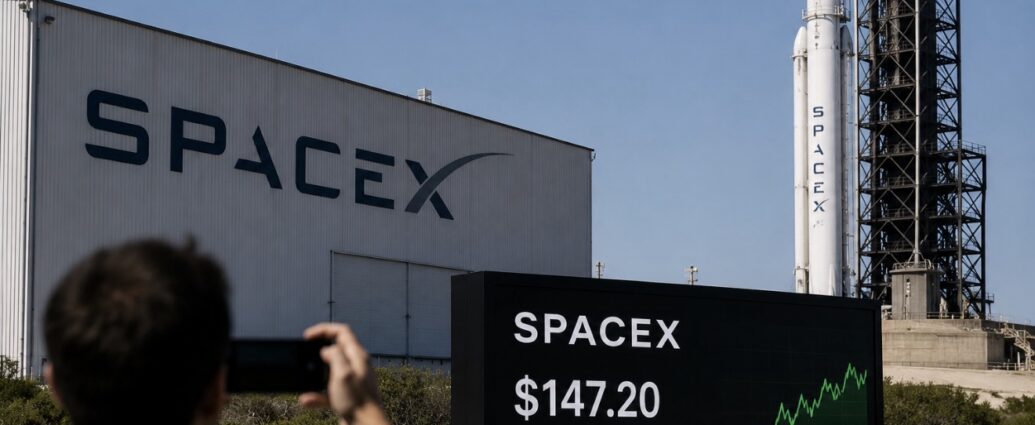
SpaceX shares recovered Tuesday after briefly falling below the stock’s initial trading price for the first time since the company’s highly anticipated public debut earlier this month.

The stock dropped as low as $146.88 during morning trading, slipping below the company’s first-trade price of $150 and briefly pushing its market valuation below $2 trillion.

By the closing bell, however, buyers returned.

Shares finished the session modestly higher, snapping a three-day slide that had erased nearly a quarter of the company’s market value.

The rebound followed one of the most dramatic stretches since the company’s June 12 initial public offering.

After pricing its IPO at $135 per share, SpaceX surged more than 50% in its first days of trading, briefly becoming one of the most valuable companies in the world and adding hundreds of billions of dollars to founder Elon Musk’s net worth.

The enthusiasm cooled quickly.

Investors began reassessing the company’s valuation after SpaceX disclosed plans Monday to enter the public bond market for the first time.

The company announced a senior unsecured notes offering expected to raise at least $20 billion, while also revealing that it held approximately $100.8 billion in cash and equivalents as of June 19.

For some investors, the combination raised questions.

If the company already holds more than $100 billion in cash, why raise billions more through debt?

Supporters argue the answer lies in the scale of SpaceX’s ambitions.

The company continues investing heavily in Starship, satellite infrastructure, artificial intelligence, data centers, and other long-term growth initiatives that require enormous amounts of capital.

Critics counter that the fundraising highlights just how expensive those ambitions may ultimately become.

Despite the recent volatility, SpaceX remains significantly above its IPO price.

Even after the pullback, shares continue trading roughly 10% above the offering price that investors paid less than two weeks ago.

Part of the stock’s volatility stems from its unusually small public float.

Only about 4.2% of outstanding shares were made available to public investors during the IPO. With relatively few shares actively trading, both rallies and selloffs can become amplified as investors rush to buy or sell.

The market is also continuing to evaluate the company’s financial performance.

SpaceX generated approximately $18.7 billion in revenue during 2025, but reported a net loss of roughly $4.9 billion as spending accelerated across major projects.

The company also continued reporting substantial investment-related losses during the first quarter of 2026 as it expanded operations and pursued new growth initiatives.

Bulls argue those losses reflect strategic investment rather than financial weakness.

Recent agreements tied to artificial intelligence infrastructure and high-performance computing have strengthened revenue expectations, with analysts citing several large commercial contracts that could generate billions in future revenue.

Wall Street remains divided.

Some analysts believe SpaceX’s dominance in commercial launch services, satellite communications, and emerging AI infrastructure justifies a substantially higher valuation.

Others caution that investors may have become overly optimistic following the IPO and that the company still faces significant execution risks.

Another major test is approaching.

Several insider lock-up periods begin expiring later this year, allowing early investors and company insiders to sell portions of their holdings for the first time.

The first significant unlock is expected following the company’s next earnings report, currently scheduled for August 6.

Investors will be watching closely.

The earnings release will provide the market’s first comprehensive look at SpaceX as a public company and may help determine whether the stock’s early valuation can be supported by operating performance.

For now, Tuesday’s rebound suggests many investors still view the recent pullback as a buying opportunity.

But the sharp swings also serve as a reminder that even industry-leading companies can experience significant volatility when expectations, valuations, and growth ambitions collide.

JBizNews Desk | New York
© JBizNews.com All Rights Reserved. Reproduction or distribution without written permission is prohibited.

In one of the sharpest reversals of American policy toward Tehran in years, the United States has cleared Iran to sell its oil for U.S. dollars. On Monday, June 22, the U.S. Treasury Department issued a 60-day license — formally Iran General License X — authorizing the production, delivery, sale and even import of Iranian crude, petrochemicals and petroleum products through August 21. Treasury Secretary Scott Bessent announced the move on the platform X, tying it to “productive” talks with Iran underway in Switzerland and to Tehran’s pledge to keep the Strait of Hormuz open and admit nuclear inspectors.

The most consequential detail is the currency. The license lets buyers pay for Iranian oil in U.S. dollar-denominated funds, giving Tehran access to the world’s dominant currency for crude transactions for the first time in decades. For years, sanctions forced Iran to sell at a discount to the handful of buyers willing to risk U.S. penalties. Selling at market rates, in dollars, makes it far easier for the regime to repatriate profits from its exports — a financial lifeline after years of a “maximum pressure” campaign that began when President Donald Trump withdrew from the 2015 nuclear deal during his first term.

The waiver is unusually broad. It covers the services that make the oil trade work — vessel management, insurance, crewing, bunkering, classification and emergency repairs — and permits cargoes to move on tankers the U.S. had previously sanctioned. It also opens the door, on paper, to the first U.S. imports of Iranian crude since Washington imposed measures after the 1979 revolution, though it remains unclear whether any Iranian barrels will actually enter the country.

The license is the economic centerpiece of a fragile peace framework. The memorandum of understanding Trump signed on June 17 commits the U.S. to lifting its naval blockade of Iranian ports and eventually releasing billions of dollars in frozen Iranian assets, in exchange for open transit through Hormuz and the return of International Atomic Energy Agency inspectors. Mediators Qatar and Pakistan said weekend talks at the Swiss resort of Bürgenstock produced a roadmap toward a final deal within 60 days, with more licenses from Washington expected in the coming days.

For oil markets, the practical effect is more supply. Crude prices, which spiked above $112 a barrel earlier in the war, have eased sharply on expectations that Iranian barrels will flow more freely; U.S. benchmark West Texas Intermediate settled near $74 on Monday. The biggest beneficiary is likely China, by far the largest buyer of Iranian oil through its independent “teapot” refiners, which had been purchasing discounted barrels despite sanctions risk. A wider, legal pool of buyers could firm up Iran’s revenue while keeping downward pressure on global prices — a combination the Trump administration has sought as it tries to tame fuel costs and inflation ahead of the November midterms.

The reversal has drawn fire. “This waiver doesn’t just weaken the pressure campaign — it puts it into reverse,” said Brett Erickson, a managing principal at Obsidian Risk Advisors, arguing that Washington spent months building leverage and weeks handing Iran a way around it. Some Republicans have voiced similar concerns, warning that easing sanctions on a country the U.S. was at war with months ago could end up funding regional militias. Tehran, for its part, has previously disputed U.S. figures on how much oil it has available to sell.

For businesses, the stakes run beyond the oil patch. Cheaper, steadier crude lowers costs for airlines, trucking and manufacturers and eases the energy-driven inflation that pushed U.S. consumer prices to a three-year high. Shippers and insurers that had steered clear of Iranian cargoes now have a legal, if temporary, window to handle them. The catch is the calendar: the license expires August 21, and everything depends on whether the 60-day roadmap hardens into a lasting deal. If the talks collapse, the barrels — and the dollars — could be pulled back as quickly as they were granted.

JBizNews Desk
© JBizNews.com All Rights Reserved. Reproduction or distribution without written permission is prohibited.

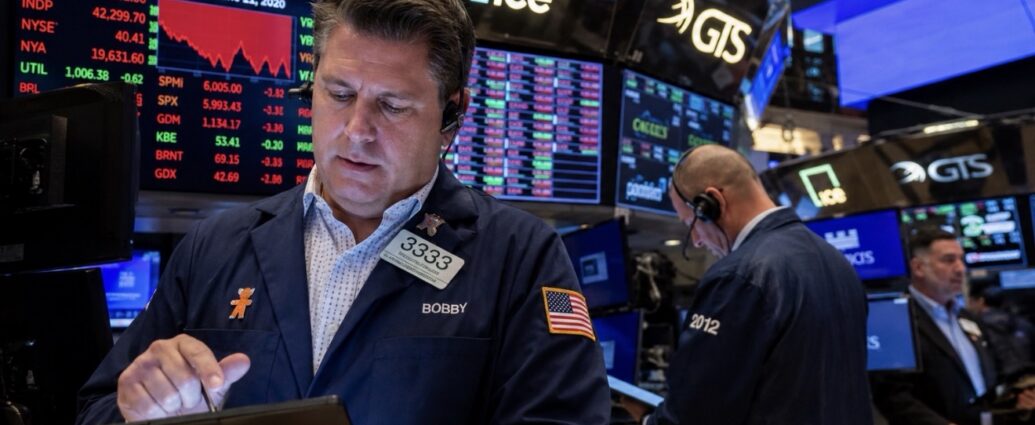
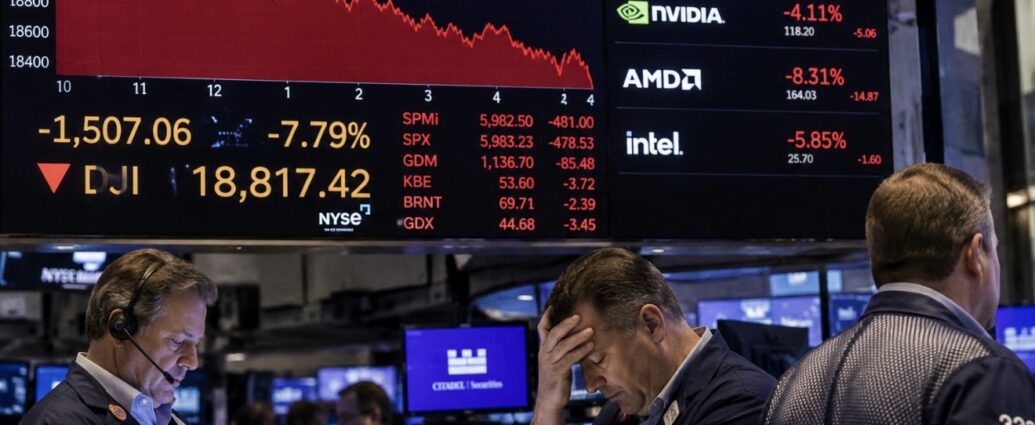
A global selloff in semiconductor stocks that forced the Korea Exchange to halt trading for 20 minutes Tuesday rolled straight into Wall Street, dragging the tech-heavy Nasdaq sharply lower at midday while the rest of the market split in two directions. The trigger was a brutal slide in chipmakers across Asia and Europe, driven by fears that the artificial-intelligence boom has run too far, too fast — and by growing worry that the Federal Reserve, under Chair Kevin Warsh, will raise interest rates before year-end. Investors are also tracking peace talks between the United States and Iran, where Tehran said Monday there had been “encouraging progress” and agreed to a roadmap toward a final deal within 60 days, easing some pressure on oil.

The result was a sharply divided tape. The Dow Jones Industrial Average held in positive territory, up about 0.2%, or roughly 100 points, helped by non-tech names. The S&P 500 slipped around 0.4%, weighed down by its large technology holdings. The Nasdaq-100 bore the brunt, falling about 2.7% as nearly every chip and computer-hardware stock in the index dropped. The small-cap Russell 2000, which closed above 3,000 for the first time ever on Monday, also eased.

Market Movers

Memory-chip maker Micron Technology led the decliners, sliding more than 10% ahead of its quarterly earnings due late Wednesday. Qualcomm fell roughly 7% to about $207 after reports it is in advanced talks to buy AI chip startup Modular in a deal valued near $4 billion. Arm Holdings dropped about 8%, and Western Digital fell more than 8% to around $67. Among the megacaps, Nvidia lost close to 3% and Tesla fell about 4%. SpaceX, fresh off the largest stock debut ever, slid for a fourth straight day, dropping below its $150 opening price and back under a $2 trillion valuation.

Not everything sold off. Microsoft bucked the trend, rising about 2.5%, while Amazon added roughly 1.7%. IBM climbed about 4% to $263 after JPMorgan upgraded the stock to “overweight” and President Trump praised the company and signed an executive order on quantum computing. Defensive names held up too, with Public Storage up 4.4% to $334.43 and Accenture gaining 3.3% to $128.82.

On the analyst desk, Wells Fargo analyst Ike Boruchow downgraded Ross Stores to equal weight from overweight while maintaining a $245 price target, warning that the discount retail sector could slow sharply as lower-income consumers continue to struggle. Dan Ives of Wedbush Securities struck a calmer note, calling the selloff a “gut check moment” in an AI buildout that remains in its early stages rather than the start of a deeper downturn.

The rout also put a spotlight on jobs. Oracle shares fell about 2.6% to $170.85 after the company disclosed in an annual regulatory filing that it eliminated roughly 21,000 positions over the past year — nearly 13% of its workforce — as it leans harder into AI. Oracle said AI deployment across its operations has reduced headcount and may continue to do so, offering a stark example of how the technology fueling the market rally is also reshaping payrolls.

Commodities and Volatility

Oil continued to slide as traders assessed the U.S.-Iran roadmap. West Texas Intermediate crude traded near $73 a barrel, down about 1%, while Brent crude hovered just below $77.

Precious metals also weakened. Gold fell more than 1.5% to roughly $4,138 an ounce, while silver slipped back toward its yearly low near $61. The U.S. Dollar Index climbed above 101 for the first time since last May, while Treasury yields edged lower, with the 2-year note down about 4 basis points and the 10-year yield off roughly 2 basis points. Bitcoin traded near $63,000.

The Day Ahead

Earnings season picks up after the closing bell, with FedEx reporting late Tuesday and Micron Technology reporting Wednesday. Investors will be watching Micron closely for clues about demand for AI memory chips and whether the sector’s recent rally still has room to run.

The economic calendar also becomes more active later this week. Reports due include May new-home sales on Wednesday, the May PCE inflation gauge and a final estimate of first-quarter GDP on Thursday, and the University of Michigan’s consumer sentiment index on Friday.

JBizNews Desk | New York

© JBizNews.com All Rights Reserved. Reproduction or distribution without written permission is prohibited.
Supermarkets racing to replace paper price tags with digital screens are running into a growing political backlash. As of mid-2026, lawmakers in roughly a dozen states and in Congress have introduced bills to restrict how grocers use customer data to set prices — a practice critics call “surveillance pricing” — with some measures going as far as banning the electronic shelf labels that make rapid price changes possible. The fight pits major chains like Walmart and Kroger against labor unions, consumer advocates and a bipartisan group of politicians.

The most concrete action so far came in Maryland. On April 28, Governor Wes Moore signed the Protection from Predatory Pricing Act, making Maryland the first state to ban dynamic pricing based on a shopper’s personal data. The law, which takes effect October 1, requires grocers larger than 15,000 square feet to keep prices fixed for at least one business day and bars the use of surveillance data to set individualized prices, with fines of $10,000 for a first violation and $25,000 after that. Notably, it stops short of banning the digital labels themselves.

The campaign has a powerful backer in organized labor. In February, the United Food and Commercial Workers union, which represents about 1.2 million workers including more than 800,000 in grocery, launched its Affordable Groceries and Good Jobs campaign, arguing that electronic shelf labels both enable price manipulation and threaten the jobs of clerks who once updated tags by hand. States including New York, Tennessee, Washington, Arizona, Nebraska and Oklahoma have introduced versions of the union’s model legislation, while California, Colorado, Illinois and New Jersey are weighing their own.

In Washington, the effort has gone bipartisan. Senators Ben Ray Luján of New Mexico and Jeff Merkley of Oregon introduced the Stop Price Gouging in Grocery Stores Act of 2026, which would ban electronic shelf labels in large stores and prohibit surveillance pricing, enforced by the Federal Trade Commission. In May, Representatives Josh Gottheimer and Mike Lawler unveiled the No Rigged Grocery Prices Act, targeting AI-driven pricing at both stores and delivery apps.

Retailers push back hard. Walmart, which aims to roll out electronic labels across its U.S. stores by the end of 2026, says the technology simply lets workers update planned price changes from a central system and insists it does not tailor prices to individual shoppers. The industry notes that price-gouging laws already exist and that the labels mainly improve accuracy and efficiency.

The stakes are commercial and political. Electronic shelf labels are a fast-growing market for retail-technology suppliers, and chains see them as central to cutting labor costs and competing on price. But with grocery inflation still squeezing households, surveillance pricing has become an easy target, and polling has found broad bipartisan support for restrictions. How the patchwork of state laws shakes out will shape how the nation’s largest retailers price the items in nearly every American’s cart.

JBizNews Desk
© JBizNews.com All Rights Reserved. Reproduction or distribution without written permission is prohibited.
Iran is moving fast to sell its oil again. On Monday, June 22, 2026, the US Treasury issued a temporary 60-day license allowing the production, sale, and shipment of Iranian crude — and within hours, sellers tied to Iran’s state oil company began phoning refiners across Asia. The license runs through August 21 and gives buyers in China, India, Japan, and South Korea a clear legal path to purchase Iranian oil openly for the first time in years.

The urgency is real. Middlemen and representatives from the National Iranian Oil Co. reached out to refiners in India, Japan, South Korea, and elsewhere even before the waiver was officially granted, according to traders involved in the talks. Iran has a backlog of cargoes already loaded onto tankers and sitting at sea, waiting for buyers. Clearing them quickly means cash flowing back into an economy battered by years of sanctions.

The waiver did not appear out of nowhere. It follows a memorandum of understanding that Washington and Tehran signed on June 17 during talks in Switzerland, aimed at calming the conflict in the Middle East and reopening the Strait of Hormuz, the narrow waterway that carries roughly a fifth of the world’s oil. The latest round of negotiations, held at Lake Lucerne, ran from Sunday into the early hours of Monday, with Vice President JD Vance leading the US side and Iran’s parliament speaker, Mohammad Bagher Qalibaf, heading Tehran’s delegation.

But the relief comes with a giant asterisk. The license is explicitly temporary and tied to continued progress in the talks. If negotiations stall or fall apart, the Treasury can simply let it expire on August 21, snapping sanctions back into place overnight. That makes any deal to buy Iranian oil a gamble — refiners could be left holding cargoes that suddenly become illegal again.

For years, China has been Iran’s biggest oil customer, buying through a shadowy network of intermediaries and ship-to-ship transfers to dodge sanctions. Small independent Chinese refiners, known as “teapots,” have feasted on deeply discounted Iranian barrels that other buyers could not legally touch. That discount has been their secret edge.

Now that edge is under threat. India, once Iran’s second-largest buyer before it pulled back in 2018, is moving back in. During an earlier, shorter waiver this spring, Indian refiners jumped at the chance: state-owned Indian Oil Corporation bought its first Iranian cargo in seven years, and private giant Reliance Industries scooped up millions of barrels. With India bidding again, Chinese refiners may have to pay more for the same oil they once got cheaply.

Homayoun Falakshahi, head of crude oil analysis at the data firm Kpler, said much of Iran’s oil sits unsold on tankers until it reaches Asian hubs like Singapore and Malaysia, so releasing those cargoes has an immediate effect on supply. With India back as a competitor, he noted, the price China pays is likely to rise.

The market felt the news immediately. US crude oil prices fell about 2.7% to roughly $74 a barrel, their lowest since before the conflict began in late February, as traders braced for a fresh wave of Iranian barrels hitting an already well-supplied market. More oil generally means lower prices — and that points toward cheaper gasoline and diesel down the road for drivers and businesses around the world.

For American households, the ripple effects are mostly welcome. Cheaper crude eases pressure at the pump and takes some heat out of inflation, giving families and companies a bit of breathing room after a year of energy-driven price spikes. For Iran, the stakes are even higher: oil sales are the lifeblood of its economy, and the waiver is a rare chance to refill state coffers and steady a currency that has lost much of its value.

The next two months will test whether this fragile arrangement holds. If the talks keep moving and the license is eventually extended or made permanent, Iranian oil could return to world markets in a lasting way, reshaping who buys crude from whom across Asia. If the diplomacy collapses, the barrels now changing hands could be frozen out just as fast as they returned. For now, Iran is selling everything it can, while the window is open.

JBizNews Desk

© JBizNews.com All Rights Reserved. Reproduction or distribution without written permission is prohibited.

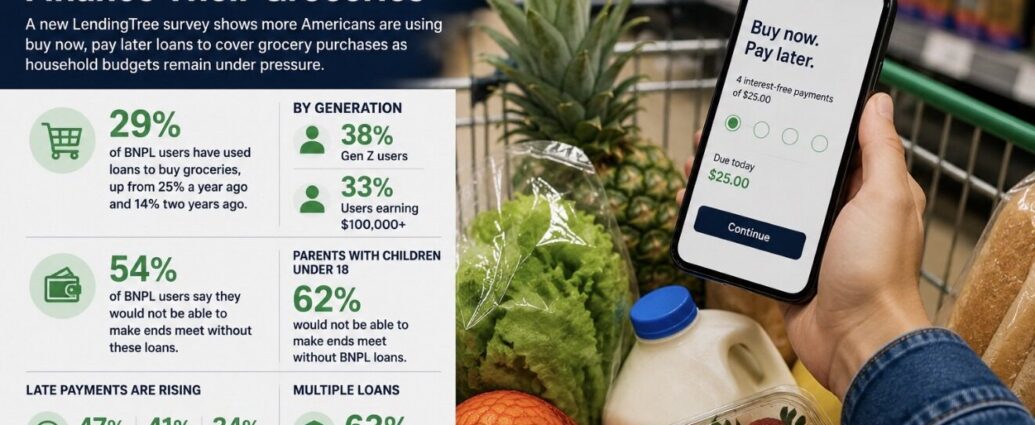
A growing share of Americans are putting one of life’s most basic expenses — the weekly grocery run — on installment plans. According to a recent LendingTree report based on a survey of more than 2,000 U.S. consumers, 29% of buy now, pay later users said they have used the short-term loans to buy groceries, up from 25% a year earlier and more than double the 14% recorded two years ago. Matt Schulz, LendingTree’s chief consumer finance analyst, said the trend is a clear signal of household strain.

Buy now, pay later lets shoppers split a purchase into smaller, usually interest-free installments paid over a few weeks. Once used mostly for clothing and electronics, it has spread into everyday spending, and groceries have climbed to the third-most-common category behind apparel and tech. The shift is sharpest among younger and, surprisingly, some higher-earning shoppers. Among Gen Z BNPL users, 38% have financed groceries; among users earning $100,000 or more a year, 33% have done the same.

The deeper worry is dependence. More than half of BNPL users — 54% — said they would not be able to make ends meet without the loans, a figure that rises to 62% among parents with children under 18. And the loans are increasingly going unpaid on time: 47% of users said they made a late payment in the past year, up from 41% in 2025 and 34% in 2024. Many users stack multiple loans at once, with 63% holding more than one simultaneously.

The grocery-financing surge sits inside a broader picture of household pressure. Separate LendingTree data found that 52% of Americans say they are spending more on food than a year ago, roughly six in ten have worried about affording groceries in the past month, and nearly 90% have changed how they shop — trading down to store brands or cutting splurge items.

For the businesses involved, the implications cut both ways. BNPL providers like Affirm, Klarna, Afterpay and PayPal are seeing transaction growth, but rising late payments raise questions about credit risk in a product that has faced lighter regulation than credit cards. The Consumer Financial Protection Bureau has flagged that BNPL users tend to carry riskier credit profiles, and FICO has begun folding BNPL data into credit scores. For grocers and the broader consumer economy, the data is a warning sign: when families need a loan to cover dinner, discretionary spending elsewhere tends to be the first thing to go.

JBizNews Desk
© JBizNews.com All Rights Reserved. Reproduction or distribution without written permission is prohibited.

The executive who built WhatsApp into one of the world’s most-used apps is handing over the reins. On Monday, June 22, Meta chief executive Mark Zuckerberg said in a Facebook post that Will Cathcart will step down as head of WhatsApp after about seven years, moving into a new role at the company building products “from the ground up.” Cathcart will be succeeded by Kunal Shah, the founder of Indian fintech company CRED.

Cathcart, who took over WhatsApp in 2018, wrote on the platform X that the app “is in the strongest position it’s ever been,” and that the moment felt right to step back. During his tenure, WhatsApp grew from a few hundred million users to more than 3 billion worldwide, including over 100 million in the United States. He expanded end-to-end encryption to group chats and companion devices, launched Communities, Channels and AI features, and became one of the tech industry’s most visible defenders of private messaging before regulators and lawmakers.

The leadership change came bundled with a deal. As part of Shah’s appointment, Meta is investing about $900 million in CRED through a mix of new and existing shares, taking a minority stake that Bloomberg reported at around 20%. The investment values CRED at $4.5 billion. Shah will step down as the startup’s chief executive — handing day-to-day control to Miten Sampat as interim CEO — while keeping his personal shareholding, and said Meta would have “no access to member data.”

Shah is a well-known name in Indian technology. He founded CRED in 2018 as a platform that rewards users for paying credit-card bills on time, building it to 17 million monthly active users, and earlier created FreeCharge, an online payments pioneer that Snapdeal bought in 2015 for about $400 million. He is also one of India’s most active startup investors. Zuckerberg said Shah’s “builder mentality and global perspective” suited him to run the world’s biggest messaging service.

The choice of a payments entrepreneur is a signal. Meta has spent years trying to turn WhatsApp from a free messaging app into a business, and Shah’s background points squarely at payments and commerce. India is WhatsApp’s largest market, with more than 500 million users, and a key battleground for the company’s ambitions in business messaging and digital payments — areas Meta sees as central to the app’s next phase of growth.

The timing fits a broader push to make WhatsApp pay its way. Meta bought the app in 2014 for $19 billion and has long faced questions about how it would earn money from a service famous for being free and light on ads. Last month, the company began rolling out paid subscriptions across WhatsApp, Facebook and Instagram and said it would test subscriptions for its artificial-intelligence services, moves meant to diversify revenue beyond advertising and help offset its enormous spending on AI.

Shah also inherits unfinished business. WhatsApp’s own payments effort, WhatsApp Pay, gained a foothold in India but never matched the scale of local rivals like PhonePe and Google Pay, leaving a large opening in one of the world’s biggest payments markets. Whether Shah can finally crack that — without alienating users who value WhatsApp’s simplicity and privacy — will help define his tenure.

Meta shares fell about 2.7% on Monday, caught in a broad sell-off of big technology stocks. For Cathcart, the exit is a step sideways rather than out; for Shah, it is a leap from running a single fintech to steering an app used by roughly a third of the planet. Neither has yet signaled changes to WhatsApp’s core messaging experience, but the appointment leaves little doubt about where Meta wants the app to head next: deeper into payments and business tools.

JBizNews Desk
© JBizNews.com All Rights Reserved. Reproduction or distribution without written permission is prohibited.
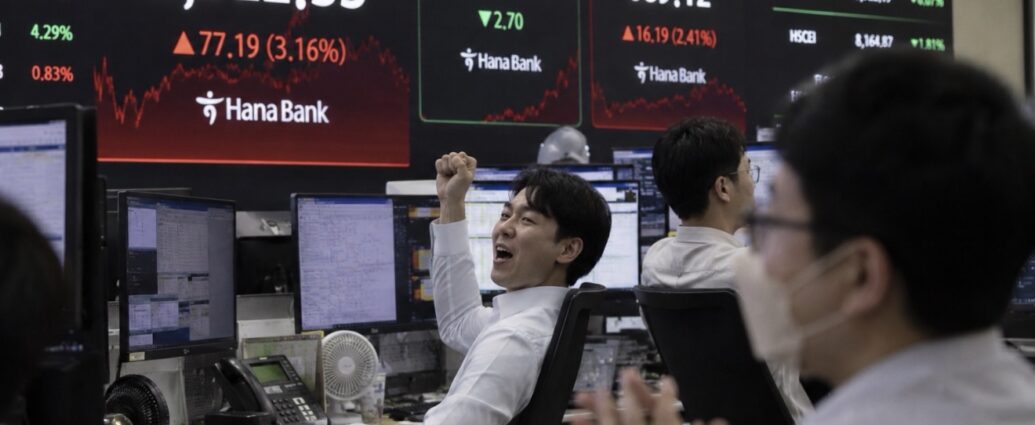
Want to stay on top of the science and politics driving biotech today? Sign up to get our biotech newsletter in your inbox.

Good morning. As you go about your day today, may you have the confidence of Bryan Johnson and the self-awareness of Elizabeth Holmes (or whoever is behind Holmes’ X account).

Lilly granted one person extraordinary access to its next-gen drug

Eli Lilly and the FDA have allowed one person to receive the pharma company’s highly promising obesity candidate through the agency’s “compassionate use” program, my colleague Lizzy Lawrence exclusively reports.

Continue to STAT+ to read the full story…

Minneapolis — Target will launch its biggest summer savings event on Tuesday, June 23, weeks earlier than its usual July timing, the retailer announced in a June 2 release, as families look for ways to stretch budgets ahead of the school year. The four-day Target Circle Deal Days run through Friday, June 26.

The pitch is straightforward: members of Target’s free Circle loyalty program get up to 45% off thousands of items across apparel, beauty, home, toys, and essentials. Back-to-school and college supplies — JanSport backpacks, Casaluna and Threshold bedding, and writing tools from BIC, Expo, Paper Mate, and Sharpie — are 40% off. Paid Circle 360 members get early access starting June 22.

“Busy families are looking for ways to save money as they balance summer plans with back-to-school and college prep,” said Sarah Travis, executive vice president and chief digital and revenue officer at Target. She said the company wanted to meet that need without giving up the style shoppers expect.

The timing is the real story. Retailers have been pulling back-to-school promotions earlier each year, and Target moving its event into June — before summer has officially hit its stride — is a sign of how hard stores are competing for cautious shoppers. Many parents now spread purchases across several months and time them to sales rather than buying everything in one August trip.

The savings stretch beyond pencils and notebooks. During the event, shoppers can expect up to 45% off select kitchen items from Cuisinart, Keurig, and Ninja, up to 45% off floorcare from Bissell and Hoover, and 40% off select women’s clothing from A New Day and Universal Thread. New one-day deals drop each morning, including 40% or more off items from Crocs, Igloo, and Sun Bum.

There are perks designed to pull people into stores. On June 23, Circle members can get a free hot or iced brewed coffee or a Bullseye cookie at the Starbucks counters inside more than 1,800 Target locations, redeemed by scanning a barcode in the Target app. Verified military members, veterans, and their families who are Circle members get 20% off one qualifying purchase from June 21 through July 4. New members who join between June 14 and 22 get 15% off their first purchase.

For shoppers weighing the paid tier, Target is discounting a Circle 360 annual membership to $49 for the first year, down from $99, during the event. College students and teachers can get the membership for the same price year-round, and the plan includes free fast shipping and same-day delivery.

The early sale comes as households keep a close eye on prices. Many shoppers remain wary of inflation and the possibility that tariffs could push some costs higher, and they are leaning on discount events, store brands, and reused supplies to keep spending in check. For retailers, stretching the back-to-school season from June into the traditional late-summer peak helps spread out store traffic and manage inventory.

The move also lands as Target works to steady its business. The company reported first-quarter net sales of $25.4 billion, up nearly 7% from a year earlier, and raised its guidance, though its stock has been choppy. Aggressive loyalty promotions like Circle Deal Days are part of how the chain is trying to keep families coming back.

For parents, the practical takeaway is simple: the deals on backpacks, laptops, dorm bedding, and uniforms are arriving early this year, and the best prices tend to move fast. Comparing prices across stores and focusing on the promotional windows remains the surest way to keep the back-to-school bill down.

What used to be an August scramble now starts in June. For budget-conscious families, that means more time to spread out the cost — and more reason to watch the calendar.

JBizNews Desk | New York

© JBizNews.com All Rights Reserved. Reproduction or distribution without written permission is prohibited.

A Chinese robot maker backed by Japan’s SoftBank Group is preparing to join the rush of technology companies heading for the Hong Kong stock market. Coowa, a Shanghai-based maker of artificial-intelligence-powered robots, plans to file for an initial public offering in Hong Kong within the next two to three months, according to a report that surfaced this week. The company has lined up Huatai Securities and Deutsche Bank to advise on the deal, which would value Coowa at more than $3 billion.

That valuation follows Coowa’s most recent fundraising round, in which it pulled in more than $600 million. Besides SoftBank, its backers include the Asian Infrastructure Investment Bank, a Beijing-based development lender. The Wall Street Journal first reported the listing plans, citing people familiar with the matter; Coowa has not formally confirmed the offering, and the size and timing could still change.

Founded in 2015, Coowa builds robots designed to work in cities. Its lineup includes wheeled machines, “wheel-legged” robots that roll and step, and humanoid-style models. Unlike the dancing humanoids that have grabbed headlines this year, Coowa’s robots are built for practical jobs — moving goods, handling tasks in factories, and helping run apartment buildings and shared-mobility services.

The company has real-world deployments to show investors, which sets it apart from rivals still demonstrating prototypes. Coowa says its robots now operate in more than 50 cities and regions around the world, with total deployments topping 10,000 units. It reported revenue of more than 1 billion yuan, about $148 million, in 2025 — a meaningful number in an industry where many competitors have barely started selling.

Coowa is far from alone. A wave of Chinese robotics companies is racing to list in Hong Kong while investor enthusiasm is running high. Sector leader Unitree is pursuing its own multibillion-dollar listing, humanoid maker EngineAI has filed confidentially, and Agibot is preparing an offering. UBTech, the first humanoid robot maker to go public in Hong Kong back in 2023, has seen its shares climb sharply this year.

Hong Kong has become the world’s busiest market for new share sales in 2026, fueled by a flood of Chinese technology firms. Companies have raised well over $20 billion in the city this year, far more than in the same period a year ago. After years in the doldrums, Hong Kong is once again the destination of choice for big Chinese listings — especially in fields like robots, chips, and self-driving cars that Beijing has named as national priorities.

There is a bigger force behind the boom. China is betting heavily on robots to tackle a shrinking, aging workforce and to keep its factories competitive. The government has made “embodied AI” — software that lets machines sense and act in the physical world — a centerpiece of its economic plans. For investors, that government backing is part of the appeal, suggesting a long stretch of demand and support ahead.

But there is a catch hanging over the whole sector. Supply is racing ahead of proven demand. China builds the vast majority of the world’s humanoid and service robots, yet surveys show many buyers are not yet satisfied with what the machines can actually do. With well over 100 robot companies chasing the same customers and the same investor money, analysts expect a shakeout — and not every company rushing to list today will survive it.

For ordinary readers, Coowa’s listing is another sign of how fast robots are moving out of the lab and into daily life — patrolling buildings, hauling boxes, and working alongside people in stores and warehouses. It is also a marker in the broader US-China technology race. As Japanese money like SoftBank’s pours into Chinese robotics, the question of who leads the next wave of automation is increasingly being decided in Asia.

If Coowa files on schedule, it could be trading publicly before the end of the year. Whether investors reward it with the $3 billion price tag it is seeking will depend on how its growing list of real-world deployments stacks up against the hype surrounding flashier rivals. For now, one of China’s quieter robot makers is stepping into the spotlight — betting that practical machines, not viral videos, are what public markets will pay for.

JBizNews Desk

© JBizNews.com All Rights Reserved. Reproduction or distribution without written permission is prohibited.

A new kind of preschool in China offers games, nibbles, treadmills, and music for puppies, clawing out a fast-growing niche in a booming industry as youthful owners spend more on pets increasingly regarded as family.

Pets arrive by 9 a.m. each day at Paw³, which bills itself as a kindergarten for dogs in Shanghai’s commercial hub, providing tightly scheduled activities for the canines rather than strict training or age limits.

They follow a routine of interactive games and obstacle courses, interspersed with freshly made snacks and naps as a pianist plays classical music, and can stroll on a special doggie treadmill before their owners pick them up around 7 p.m.

“We raise our dog like a child,” said Qian Yi, whose one-year-old border collie, Harry, visits every weekday.

As declining birth rates alter lifestyles, pets are increasingly treated as members of the family, driving growth in higher-value services such as daycare, grooming, and training.

Their popularity stems from broader structural shifts in China’s consumer economy. Younger, urban consumers prioritize spending on experiences and emotional fulfillment, despite a softening in overall demand.

Qian estimated that she spends about 4,000 yuan ($560) each month on her dog for daycare, meals, grooming, swimming, and visits to dog parks.

Pet Data, a China-based industry research firm, estimates that the market for urban pet consumption reached 312.6 billion yuan ($46 billion) in 2025 and is on track to exceed 405 billion yuan by 2028.

Idea came to founder to help his dog

Paw³ founder Jann Zhang said the idea came to him after a struggle to find help for his six-year-old golden retriever, Fuzai, who developed anxiety-related behavioral problems.

His search led him to discover dog daycare equivalents in the United States, and he came to believe the main issue was a lack of socialization.

“I was hoping to give my own dog more space to be social, so I could distract his attention,” Zhang said. “That’s how the idea of opening the kindergarten came about.”

His clientele has grown to 200 since it started with fewer than 20, and owners pay daily rates ranging from 98 to 138 yuan, depending on the dog’s size.

“What attracts me most about the place is that it gives dogs a space of their own,” said William Tang, whose one-year-old border collie, Cinderella, has attended the kindergarten since it opened in May 2025.

The semiconductor stocks that have driven this year’s market rally fell hard on Tuesday, and the reason cut to the heart of the entire AI trade: investors are starting to doubt whether the staggering sums being spent to build artificial intelligence will pay off. The Philadelphia Semiconductor Index, the benchmark for big U.S. chipmakers, dropped 7.9%, with all 30 of its members falling. Thomas Martin, a senior portfolio manager at the investment firm Globalt, pinpointed the worry, saying recent news has raised questions about all the spending being done and the ramping of chip-making capacity to feed it.

That is the core issue. For two years, the market has run on a simple premise — that demand for AI would be all but limitless, so every dollar poured into chips and data centers would be rewarded. Tuesday was the day that premise got questioned out loud. The fear is straightforward: that the giant technology companies building AI are spending far ahead of real demand, and that chipmakers racing to add production could end up with more capacity than customers actually need. If that happens, the prices and profits underpinning these stocks would fall.

What makes the question urgent is how the build-out is being paid for. Increasingly, the spending is funded by borrowing. The “hyperscalers” — the handful of companies constructing enormous data centers — have been raising debt to finance their AI ambitions, and even SpaceX recently tapped the bond market for the first time. Debt magnifies the stakes: if AI revenue arrives more slowly than promised, the bills still come due. That is why any hint that demand might disappoint sends a jolt through the whole sector.

The selloff hit hardest exactly where the AI bet was biggest. Micron Technology, Marvell Technology, and On Semiconductor — each of which had more than doubled in value this year — led the index lower. Memory-chip makers Micron and SanDisk, among the best performers in the S&P 500 this year, both fell about 13%, while Nvidia dropped 4.1%, and Intel and Advanced Micro Devices fell between 5.8% and 9.4%. The names that had soared the most on AI optimism were the ones investors dumped first — a sign the doubt is aimed squarely at the spending thesis, not at any one company’s results.

The wave started overnight in Asia, where memory giants Samsung Electronics and SK Hynix tumbled and South Korea’s main stock index fell so sharply it triggered an emergency trading halt before the selling crossed into U.S. markets. But geography was just the messenger. The same question — is the AI build-out sustainable? — drove the losses on both continents.

The next real test comes Wednesday, when Micron reports earnings. Its results could offer the clearest read yet on the memory-chip market, the segment that supplies the components AI systems depend on. Strong demand and an upbeat forecast would suggest the spending is still backed by real orders; a cautious outlook would hand the skeptics fresh ammunition. Because memory chips sit at the center of both the boom and Tuesday’s bust, Micron’s numbers have become a referendum on the entire trade.

For ordinary investors, the stakes are bigger than they may realize. The market’s gains this year have leaned heavily on a small group of chip and AI stocks, so when doubt hits them, it hits the broad indexes inside millions of retirement accounts — even for people who have never bought a chip stock. That concentration is the quiet risk beneath the rally: the same names that lifted the market on the way up can drag it down just as fast.

None of this settles the underlying debate. Demand for AI chips is still enormous, and many on Wall Street believe the spending will ultimately be justified. But Tuesday made the central tension impossible to ignore. The entire rally rests on a single, unproven assumption — that the AI boom will generate enough real revenue to justify the trillions being spent chasing it. Until that question is answered, days like this one will keep coming.

JBizNews Desk | New York
© JBizNews.com All Rights Reserved. Reproduction or distribution without written permission is prohibited.