
Opinion | The Low-Tax Case for Tariffs
2026-06-26


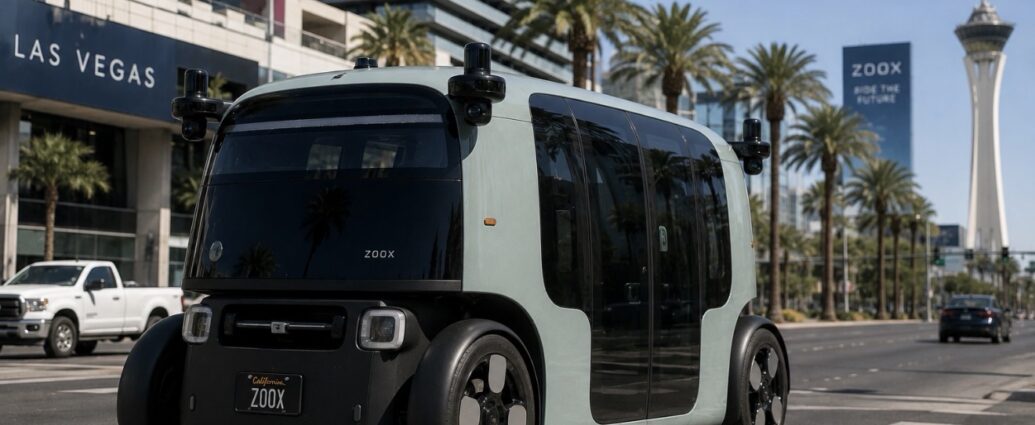
Zoox, the self-driving unit owned by Amazon, unveiled what it called a “production-intent” version of its cube-shaped robotaxi on Wednesday and said it plans to begin charging passengers for rides later this year, according to the company, marking a major step toward turning a long-running experiment into a real business. The redesign adds higher-quality touch screens, more comfortable seats and headrests, and small interior tweaks to help riders spot forgotten items like keys and phones.
The vehicle remains unlike anything most riders have used. The robotaxi is a cube-shaped, bidirectional electric pod with four-wheel steering, no steering wheel, no brake pedal and no front seat for a human driver, capable of carrying four passengers at up to 75 miles per hour. Zoox also enlarged and relocated the bidirectional reflectors that help riders and others tell the vehicle’s front from its rear.
The redesign is built for volume. Zoox said the production-intent vehicle will join its existing fleet later this year, and that it will soon begin large-scale production at its San Francisco Bay Area manufacturing hub, which opened last June and will eventually produce 10,000 vehicles a year at full scale. The line could ramp up to 100 vehicles a week to support expansion, subject to regulatory approval.
That regulatory approval is the gating factor for the whole plan. Zoox cannot charge a single rider until the National Highway Traffic Safety Administration says it can, and its petition has been in review since a public comment period closed in April. The company is seeking clearance to deploy up to 2,500 driverless vehicles for commercial operations on public roads, a step complicated by federal rules that generally require vehicles to have standard driver controls.
Zoox has built a sizable base of riders despite charging nothing so far. The company said it has served more than 500,000 riders since opening service in Las Vegas last September, and currently offers free rides in parts of Las Vegas and San Francisco while letting select users hail its robotaxis in small areas of Miami and Austin. It has also partnered with Uber to make its robotaxis available through the ride-hailing app in Las Vegas.
Even so, Zoox trails the clear market leader. Amazon acquired Zoox for $1.3 billion in 2020, but the unit is well behind Alphabet’s Waymo, which recently surpassed 500,000 weekly paid rides across 10 U.S. cities and plans to launch in London and Tokyo, its first international markets. Waymo operates a fleet of more than 3,700 robotaxis that have logged over 200 million autonomous miles. The gap between 500,000 total riders and 500,000 paid rides every week shows how much ground Zoox has to make up.
Safety remains a live question for the entire industry, and for Zoox specifically. NHTSA had logged 123 accidents involving Zoox vehicles in autonomous mode as of March 2026, and the company issued three voluntary software recalls between March and December 2025 affecting about 860 vehicles, addressing unexpected hard braking, collision-prediction failures and lane-crossing behavior near intersections. Those incidents are a factor in the agency’s ongoing review.
The business logic behind the push is straightforward. A robotaxi that gives free rides is a research project; one that charges fares is a transportation company. Zoox’s move to a production vehicle, a factory that can build at scale and a plan to start billing riders signals that Amazon intends to compete for a slice of the urban-mobility market that Waymo has been steadily commercializing. The prize is a recurring-revenue ride-hailing business with no driver to pay, the economics that have made autonomous vehicles one of the most expensive bets in technology.
For everyday riders, the practical question is when and where these vehicles will actually show up as a paid option. The production-intent vehicles will join the free-ride fleet later in 2026 as they roll off the Hayward line, with paid rides contingent on a federal ruling that NHTSA has not yet scheduled. Until that decision comes, Zoox can build cars, refine the cabin and sign up riders, but it cannot turn the meter on. The redesign unveiled this week is the company’s clearest statement yet that it intends to be ready the moment Washington gives the word.
JBizNews Desk
© JBizNews.com All Rights Reserved. Reproduction or distribution without written permission is prohibited.
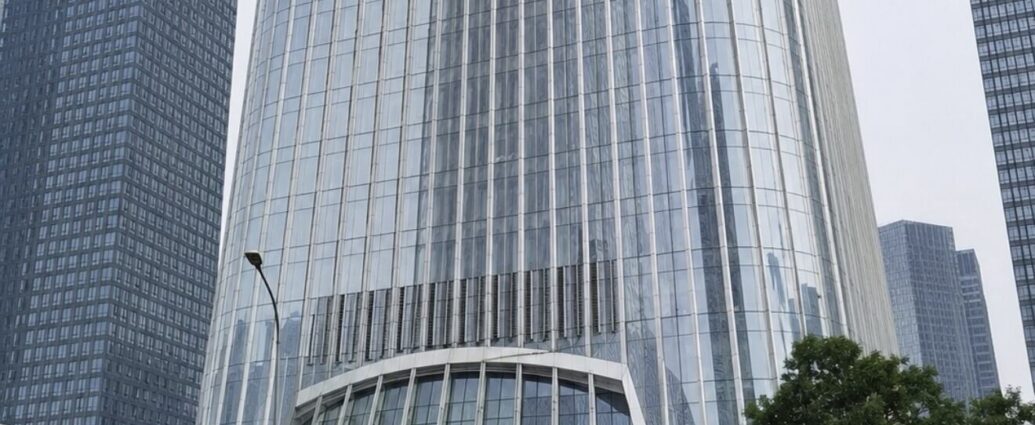
A small aircraft crashed into Beijing’s tallest building Friday afternoon, according to witness accounts and Chinese media reports, damaging the glass façade of the CITIC Tower and forcing an evacuation in the heart of the capital’s central business district. The 528-meter skyscraper, headquarters of the state-owned CITIC Group, drew a massive response from police, firefighters and emergency medical crews as authorities sealed off surrounding streets.
The incident struck one of China’s most recognizable business landmarks. Known as China Zun because of its resemblance to an ancient ceremonial wine vessel, the 108-story tower dominates Beijing’s financial district and houses offices belonging to one of the country’s largest financial and industrial conglomerates.
Information surrounding the incident remained tightly controlled. An individual working inside the building told reporters that a small aircraft struck the tower and activated the fire alarm system, speaking anonymously because aviation accidents are considered politically sensitive in China. Initial reports indicated that at least two exterior glass panels on an upper floor sustained damage.
Witnesses described a dramatic scene. A courier working nearby said he rushed toward the area after hearing what sounded louder than fireworks and saw the aircraft embedded in the building before police pushed people back from the scene. Officers reportedly prevented bystanders from photographing the damage and instructed several people to delete images already taken.
The security implications are significant. Beijing maintains some of the strictest controlled airspace in the world, and authorities recently strengthened restrictions even further by effectively prohibiting most consumer drone activity throughout the capital without prior government approval. Under normal circumstances, unauthorized aircraft are virtually never seen over the city’s central business district.
Preliminary information suggested the aircraft may have been a small general aviation plane. Images circulating online appeared to show the registration of a domestically manufactured light sport aircraft operated by a local aviation company, while unverified flight-tracking information indicated the plane departed from an airfield near Beijing before apparently deviating significantly from its planned route.
The disruption immediately affected the surrounding business district. Evacuating one of the city’s flagship office towers during the workday halted operations for thousands of employees and tenants. Damage to the building’s exterior also raises questions regarding repair costs, insurance claims and how long portions of the skyscraper may remain inaccessible.
The symbolic impact extends beyond the immediate physical damage. CITIC Tower represents one of modern China’s premier financial landmarks, and an aircraft striking the headquarters of a major state-owned enterprise in one of the world’s most heavily monitored cities is likely to unsettle business confidence and raise broader security concerns.
Chinese authorities provided few official details. Neither the Beijing municipal government nor local police immediately released a formal explanation, and investigators had not publicly identified the cause of the crash. The limited official information is consistent with how Chinese authorities have historically handled politically sensitive incidents involving transportation and public safety.
The accident could also reshape China’s approach to general aviation. A breach involving one of the capital’s most tightly controlled airspaces may prompt even stricter regulations governing light aircraft operations, an industry Beijing has been attempting to expand as part of its broader push into the country’s developing low-altitude economy.
For now, the immediate picture remains one of a shaken financial district, a damaged landmark skyscraper and a government working to tightly control information surrounding an extraordinary event. What remains undisputed is that a small aircraft reached one of China’s most protected business districts and struck its tallest building in broad daylight.
JBizNews Desk
© JBizNews.com All Rights Reserved. Reproduction or distribution without written permission is prohibited.
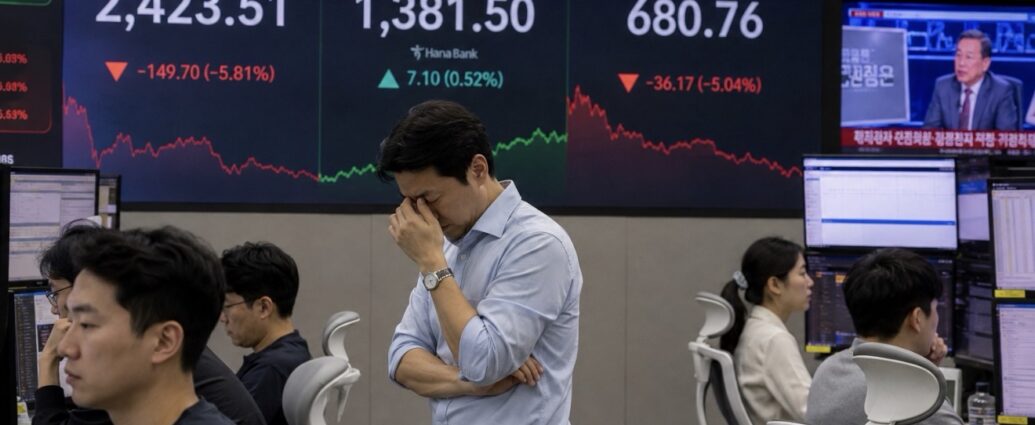
The Korea Exchange halted trading on its benchmark Kospi index on Friday, June 26, after a fresh wave of selling in artificial-intelligence and memory-chip shares tore through emerging markets and capped one of the roughest weeks for developing-nation stocks this spring. The trigger came from the United States, where the U.S. Bureau of Economic Analysis reported that May Personal Consumption Expenditures (PCE) inflation, the Federal Reserve’s preferred inflation gauge, rose 4.1% from a year earlier, a near three-year high that hardened expectations the Fed could keep interest rates higher for longer.
An MSCI gauge of emerging-market equities fell as much as 3.9% on Friday, marking its steepest one-day decline since early June. The selloff began in Asia before spreading across global markets, with investors dumping many of the AI-related stocks that had driven much of this year’s market gains.
South Korea absorbed the heaviest losses. The Kospi plunged more than 8% during the session before recovering some ground to finish down 5.81%, triggering the exchange’s sidecar trading safeguard. Samsung Electronics and SK Hynix, which together account for roughly half of the index’s weighting, each fell about 9% despite news that the companies are expected to unveil a 1,000 trillion won semiconductor investment initiative on June 29. Traders instead chose to lock in profits after months of AI-fueled gains.
Japan also came under pressure. The Nikkei 225 dropped 4.15% to 69,360.83, erasing the previous day’s advance. The biggest casualty was SoftBank Group, whose shares fell more than 14% during trading before closing down 12.53% at 6,226 yen, wiping out roughly 5.6 trillion yen in market value. Investors reacted to reports that OpenAI, in which SoftBank owns approximately a 13% stake valued near $65 billion, may delay its initial public offering until 2027 as losses continue to mount.
Selling pressure was already spreading into U.S. markets before the opening bell. In premarket trading, ON Semiconductor fell as much as 13.6%, Micron Technology dropped 4.7%, while both Advanced Micro Devices and Intel declined more than 3%. Futures also pointed lower, with Nasdaq 100 futures down 1.08% and S&P 500 futures slipping 0.44%.
The inflation report transformed what had been a technology-sector pullback into a broader global retreat. Hotter inflation reduces the likelihood of near-term interest-rate cuts, increasing borrowing costs and reducing the present value of future earnings. That dynamic tends to weigh most heavily on high-growth technology companies whose valuations depend on profits expected years into the future.
Corporate news added to the pressure. Apple raised prices on its Mac and iPad product lines to offset rising memory-chip costs, sending its shares down more than 5%. Although analysts at JPMorgan argued investors had overreacted to the move, the price increases highlighted how rising semiconductor costs are increasingly reaching consumers rather than remaining confined to the supply chain.
Market strategists largely characterized Friday’s decline as a sharp reset rather than the beginning of a prolonged downturn. Dan Ives of Wedbush Securities has repeatedly described similar pullbacks as “gut-check moments,” maintaining that the artificial-intelligence investment cycle remains in its early stages. James Reilly, senior markets economist at Capital Economics, said the latest swings reflect the growing volatility that has become common across technology shares. Foreign investors have also accelerated their selling, unloading roughly $22 billion of South Korean equities since May.
The week had already been difficult for Korean markets. On Tuesday, June 23, the Kospi tumbled 9.99%, falling from record levels to 8,203.84, as both Samsung Electronics and SK Hynix lost roughly 12% in a single trading session that local investors dubbed “Black Tuesday.” Strong quarterly results from Micron Technology released after the U.S. close on June 24 briefly improved sentiment, but Friday’s hotter-than-expected inflation report erased that optimism.
Underlying the volatility is the question of valuation. Before this week’s decline, the Kospi had surged more than 90% for the year, driven overwhelmingly by enthusiasm surrounding AI memory demand. That left investors with little margin for disappointment when inflation concerns resurfaced. Because Samsung Electronics and SK Hynix supply memory chips used in many of the world’s leading AI systems, their decline has renewed debate over whether valuations across the broader artificial-intelligence sector have become stretched, including recently public companies such as SpaceX (ticker: SPCX), whose shares have traded near $156 following their June 12 debut despite strong investor demand for the company’s bond offering.
For everyday investors, the message is straightforward. The artificial-intelligence rally that helped propel markets higher throughout the year can reverse quickly when inflation data surprises to the upside or investor sentiment suddenly shifts. South Korea’s markets will reopen Monday with traders closely watching Samsung Electronics’ planned June 29 investment announcement and any new signals from the Federal Reserve that could determine whether investors return to the AI trade or continue taking profits.
JBizNews Desk
© JBizNews.com All Rights Reserved. Reproduction or distribution without written permission is prohibited.
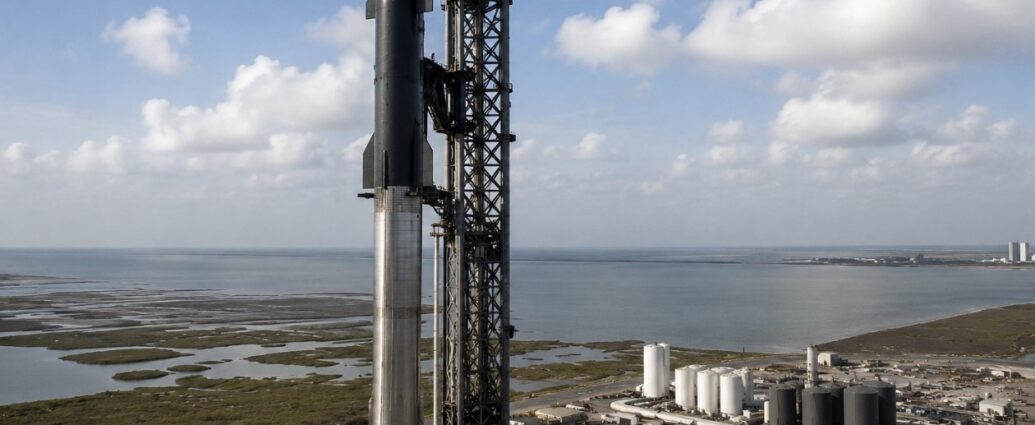
SpaceX plans to begin construction next month on an eight-mile natural gas pipeline called Starpipe to feed its South Texas launch complex, according to a filing made last month with the Texas Railroad Commission by SpaceX affiliate Lone Star Mineral Development and reviewed by Reuters, as Elon Musk’s company moves to dramatically increase the pace of its next-generation Starship rocket. The pipeline, which will end at the company town of Starbase, is expected to be in service by January 26, 2027.
The reason for the project comes down to logistics. Starship, designed to be fully reusable, burns about 630,000 gallons of liquid methane per launch, currently delivered by hundreds of tanker trucks in an hours-long process that Musk’s expansion plans have rendered impractical. Starship has completed 12 test launches since 2023, but Musk aims to ramp up to dozens, then hundreds, and eventually thousands of launches a year. Trucking fuel one tanker at a time cannot support that cadence.
The pipeline is only one piece of a larger fuel operation taking shape at Starbase. Engineering plans SpaceX filed with the U.S. Army Corps of Engineers show the company also wants to build a liquefaction facility at Starbase to process the piped natural gas into the liquid methane Starship uses. Starpipe would begin on an 83-acre site at the Port of Brownsville that SpaceX is negotiating to lease from the city for 50 years.
The scale of the infrastructure hints at ambitions well beyond current limits. The pipeline’s 16-inch diameter suggests fuel demand exceeding what Starship would require for the 25 launches a year currently approved by the Federal Aviation Administration. In other words, SpaceX is building capacity for a launch rate it is not yet cleared to fly, a sign of how aggressively the company is laying groundwork for the future.
For a space company to build its own gas pipeline is unusual, and it reflects a strategy SpaceX has used to outpace rivals: control as much of the supply chain as possible. SpaceX has spent years exploring its own drilling operations near Starbase and across Texas, and land records show it has signed more than 100 paid-up oil and gas leases with Texas property owners since 2023. SpaceX President Gwynne Shotwell told CNBC on June 12, the day the company went public, that SpaceX planned to build pipelines and process its own propellant, and was looking into drilling its own natural gas.
That vertical-integration approach is capital-intensive but has been central to the company’s edge. SpaceX’s move into gas infrastructure, normally the domain of energy and pipeline firms, underscores its longstanding strategy of controlling its supply chain, an approach that has helped it outrun competitors in rocket and spacecraft development. The same playbook that brought rocket manufacturing in-house is now being extended to the fuel itself.
There are practical hurdles and open questions. A consultant noted that gas extraction would be challenging for a company without oil and gas experience, and SpaceX may lean on existing infrastructure rather than go it alone. SpaceX could tap into Enbridge’s Valley Crossing Pipeline expansion, which would run close to Starpipe’s start point, though Enbridge did not immediately respond to a request for comment. SpaceX also did not respond to a request for comment.
The business stakes reach far beyond a single fuel line. Starship is central to SpaceX’s plans to expand its Starlink broadband network, deploy orbital AI data-center satellites, and carry astronauts to the Moon and Mars. Every one of those revenue ambitions depends on flying Starship far more often than it does today, and a faster flight rate depends on a reliable, high-volume fuel supply. Starpipe is the unglamorous link that makes the rest of the plan possible.
For the broader economy, the project is a window into how the newly public SpaceX intends to spend and build. The company went public in a historic June 2026 initial public offering, and Starpipe shows it pouring capital into the kind of heavy industrial infrastructure that turns a launch business into something closer to an integrated energy-and-aerospace operation. If the pipeline performs as designed, it would cut a major bottleneck at Starbase and move Musk’s vision of routine, high-frequency spaceflight a step closer to reality.
JBizNews Desk
© JBizNews.com All Rights Reserved. Reproduction or distribution without written permission is prohibited.

Waymo, the self-driving unit owned by Alphabet, has registered a German company as it prepares to bring its driverless robotaxis to Europe, according to a company registration filing first reported by the German newspaper Frankfurter Allgemeine Zeitung and confirmed by Bloomberg on Thursday. The new entity, Waymo Germany GmbH, will “offer ride-hailing services with autonomous vehicles and provide services that support the commercial offering of such services by third parties,” the filing states.
The registration is a concrete, if early, step. Waymo Germany GmbH was incorporated on May 13 and entered into Munich’s commercial register on June 15, giving the company a formal legal presence in Germany for the first time, with Google’s Munich office listed as its business address. No timeline has been announced for when service might begin.
The paperwork came alongside the first signs of a real operation taking shape. German media reported job advertisements seeking test drivers and vehicle trainers for autonomous vehicles in Berlin and Munich, along with recruitment by mobility operator Transdev for an autonomous driving operations manager in Munich. Hiring people to sit in test vehicles in two cities is not the behavior of a company merely keeping its options open.
Waymo framed the move as part of a global push. “Waymo has global ambitions, with plans already underway to bring our fully autonomous ride-hailing service to London and Tokyo,” a spokesperson said, adding that the company is “engaging with officials around the world to explain our technology and lay the groundwork for global operations.” A Waymo executive said the company intends to launch in more than 20 cities in the near future, including London, Tokyo, Nashville, Denver, Las Vegas and New York City.
The company enters from a position of clear domestic strength. Waymo is the leading robotaxi provider in the United States, accounting for more than 500,000 autonomous trips per week across 11 cities. That scale is the foundation it hopes to export, though every market brings its own regulators, roads and politics.
The choice of Germany is pointed. Munich is BMW’s home city, Stuttgart, where Mercedes-Benz is based, is nearby, and Volkswagen’s software unit CARIAD has been trying to build an autonomous-driving stack for the VW Group’s brands. Walking into that market means competing on the home turf of some of the world’s most established automakers, companies that know German roads, regulators and politics intimately.
It is also a crowded field already. Germany has become a testing ground for robotaxi companies worldwide, including UK startup Wayve Technologies and Chinese firms Baidu and Beijing Momenta. Earlier this month, Uber announced a partnership with Tel Aviv-based Autobrains Technologies to launch a localized robotaxi pilot in Munich. Waymo is arriving as the competition thickens, not before it.
The path to actual rides will be deliberate. Before any launch, Waymo typically deploys a small fleet of human-supervised vehicles to map new surroundings and train its software, a process that can take months or years. The London launch, planned for 2026 with fleet services handled by Moove, is the public test of whether Waymo’s U.S. playbook travels; Germany is where the argument gets harder.
For consumers and the broader business world, the registration is a marker of how the autonomous-vehicle race is going global. The technology that has quietly become routine in Phoenix and San Francisco is now being prepared for European streets, and the company doing it is choosing to plant its first German flag in the automotive heartland. Whether Waymo can convince German regulators and win over riders in BMW’s backyard will help determine if driverless ride-hailing becomes a worldwide industry or stays a largely American one.
JBizNews Desk
© JBizNews.com All Rights Reserved. Reproduction or distribution without written permission is prohibited.
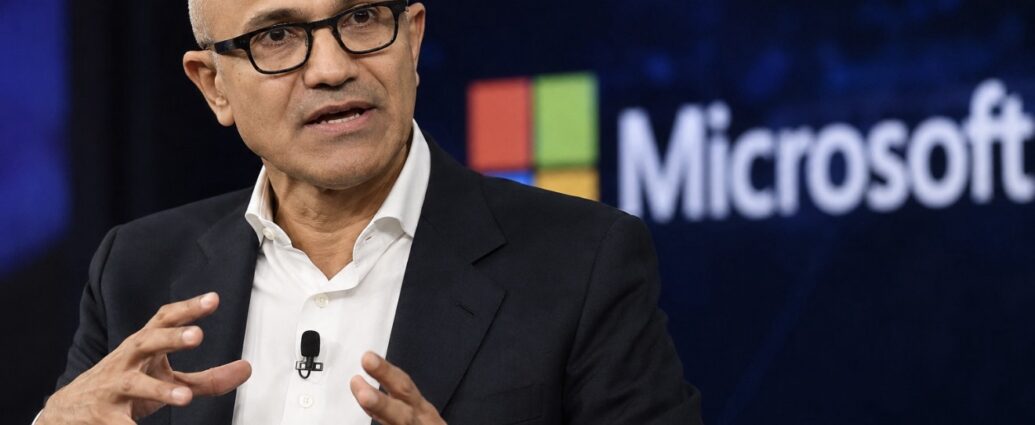
Microsoft Chief Executive Satya Nadella warned that a small group of powerful artificial intelligence companies could end up capturing most of the wealth the technology creates, hollowing out entire industries along the way. He laid out the argument in an essay posted June 14 on X and expanded on it in a new interview published over the weekend.
The warning is striking because Nadella runs one of the very giants he is describing. Microsoft is worth around $3 trillion, is one of the largest backers of OpenAI, and sits near the center of the AI boom.
His core worry is about concentration, not technology. If only a few AI models end up holding all the value, Nadella argued, ordinary businesses across every sector will quietly hand over the expertise they spent decades building. He titled his essay “A frontier without an ecosystem is not stable” and said there is no societal permission for an AI future that guts whole industries.
To make the danger concrete, he reached for a comparison most people lived through. The first wave of globalization, he wrote, made the top-line economic numbers look fine while it hollowed out factory towns through outsourcing. The damage was real and is still being felt. His fear is that AI could do the same thing, only faster, with a few systems soaking up the returns while everyone else loses their edge.
Nadella’s proposed fix is for companies to keep control of their own knowledge. Instead of pouring their data and judgment into someone else’s model and getting commoditized, he said firms should build their own “learning loops” that lock in what makes them special. He splits a company’s worth into two parts: human capital, meaning the experience of its people, and what he calls “token capital,” meaning its own in-house AI capability. The goal is to be able to swap out the underlying model without losing the company-veteran know-how built on top of it.
He was blunt about jobs. Nadella criticized executives who treat AI mainly as a way to cut costs by eliminating positions. His preferred approach is to reorganize the work instead. He acknowledged it would mean real disruption and change, but insisted there is a path that keeps people central rather than discarding them.
There is also a hard business strategy underneath the philosophy. Microsoft has fallen behind rivals in building the most advanced models. In the second half of 2025, many Copilot users drifted toward other options such as Google’s Gemini. Without a clear lead in frontier models, Microsoft is using its deep pockets to push in the opposite direction, turning models into cheap, interchangeable commodities.
That helps explain a move now under discussion. Microsoft is weighing whether to offer a version of DeepSeek, an ultralow-cost AI provider based in China, on its Copilot platform. Such a step would boost the Chinese model-maker and could come at the expense of OpenAI and Anthropic, which have accused DeepSeek of copying their top models and now face the prospect of a long price war. A Microsoft spokesman said the company would keep nurturing its partnerships with both and that Nadella’s call for an AI reset is not a zero-sum game.
Not everyone takes the warning at face value. Microsoft is under antitrust scrutiny in both the United States and Europe, partly over whether its huge investment in OpenAI amounts to a quiet takeover. Google is fighting a landmark search monopoly ruling, and Amazon faces questions about its cloud dominance. Skeptics note that an AI giant calling for guardrails can be a smart way to shape regulation it would otherwise have to simply obey.
For everyday businesses and workers, the stakes are easy to see. Companies that lean entirely on outside AI tools risk cutting staff in the roles those tools can do, while the value those workers once created flows up to the AI providers. The competing pitch from Nadella is that firms can use AI and still keep their own knowledge, their own people and their own profits.
Other voices in the industry have framed the same shift differently. Anthropic Chief Executive Dario Amodei has warned that AI could wipe out half of entry-level office jobs within a few years. OpenAI Chief Executive Sam Altman also predicted heavy job losses, then said recently he was glad to have been wrong so far.
Here is the plain bottom line. Nadella, sitting atop a $3 trillion company, is making the case that the AI economy should spread its rewards rather than funnel them to a few winners. Whether he means it will show up in the specifics: how Microsoft prices its tools, what rules it lobbies for, and whether it makes switching away from its own products easy or hard.
JBizNews Desk | New York
© JBizNews.com All Rights Reserved. Reproduction or distribution without written permission is prohibited.
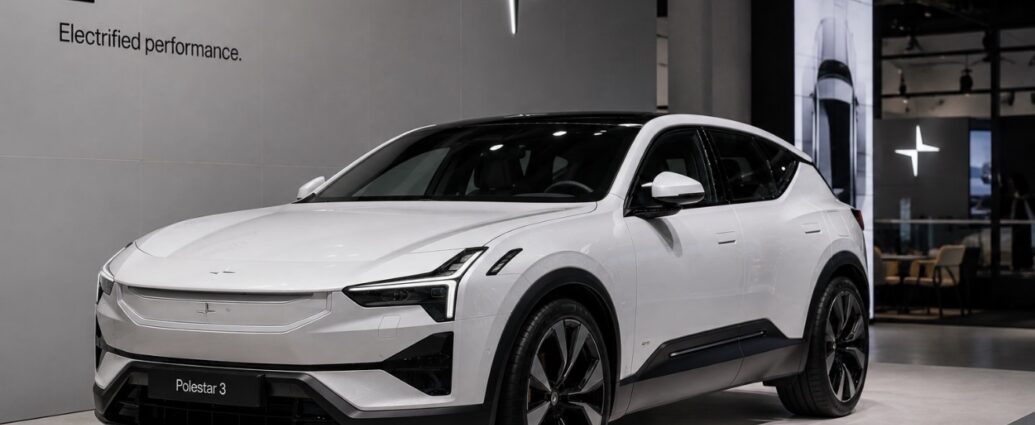
Polestar, the Swedish electric-vehicle maker, said Thursday that the U.S. Department of Commerce declined to grant it authorization to sell cars in the United States from the 2027 model year onward, a decision that effectively pushes the brand out of the American market. The Bureau of Industry and Security, part of the Commerce Department, made the determination under the current Connected Vehicle Rule.
The reason is ownership, not geography. Polestar is majority-owned by Geely, the Chinese automotive group that also controls Volvo Cars, and that connection is what triggered the rule, regardless of where the vehicles are built. The rule, finalized in January 2025, bans connected vehicles with a “sufficient nexus” to China or Russia from the U.S. market, with software prohibitions taking effect for the 2027 model year and hardware restrictions following in 2030.
The irony is hard to miss given where the cars are made. The Polestar 3 is built at Volvo’s plant in Charleston, South Carolina, while the Polestar 4 is assembled in Busan, South Korea—neither of them in China. A vehicle assembled by American workers in the Carolinas is being shut out of its home market because of who owns the company upstream.
Sharpening the contrast, a sister brand under the same parent was treated differently. Volvo, also owned by Geely, was granted authorization to keep selling connected vehicles in the U.S. Volvo operates as a separately listed, more established automaker with a larger U.S. footprint, while Polestar is more tightly entangled with Geely’s broader structure and shares vehicle platforms and software with Geely brands. Same parent, opposite outcome.
The official rationale is national security. The Bureau of Industry and Security has said certain connected vehicles and related hardware and software made in China or Russia pose national security risks because companies from those countries may be compelled to share data or allow remote access to vehicles in the United States. The rule reaches broadly across modern car technology, covering telematics, cameras, microphones, GPS, Bluetooth, cellular modules and automated-driving software across gas, hybrid and electric vehicles alike.
Polestar is not leaving its current owners stranded. A company spokesperson said Polestar will continue to sell current stock and that from the 2027 model year onward it will stop marketing and selling cars in the U.S., while existing owners keep the same access to service stations and customer support. The company emphasized that all existing warranties remain in effect and will be honored.
The market reaction was swift. Polestar shares fell more than 13% in midday trading. The business was already under strain before the ruling. Polestar posted a record 2025 with more than 60,000 cars sold and revenue above $3 billion, along with a record first quarter of 13,126 deliveries, but its gross margin swung to negative 3.2% in the first quarter from a positive 10.3% a year earlier because of pricing pressure, tariffs and product mix. U.S. sales had already shrunk to roughly 5,400 vehicles last year from 13,000 the year before.
The company is pivoting hard toward Europe. “The automotive industry is entering a new phase, based on regional dynamics,” CEO Michael Lohscheller said, calling Europe the company’s largest growth engine and pointing to plans to build the upcoming Polestar 7 SUV there, along with growth markets in Southeast Asia, Eastern Europe, Latin America and Canada.
The implications stretch well beyond one brand. The rule has now shown it can wall off a Swedish-branded, partly U.S.-built EV purely on the basis of Chinese ownership upstream, a clear signal to every automaker with Chinese capital or a Chinese technology stack in its supply chain. Both Buick and Lincoln are awaiting approval for popular China-made models, and the Polestar decision raises the prospect that they may not get it. For American consumers, the immediate effect is fewer EV choices and added uncertainty for current Polestar owners around resale values and future parts. The decision marks one of the most concrete steps yet in Washington’s push to wall off Chinese-linked vehicles while building up domestic carmaking.
JBizNews Desk
© JBizNews.com All Rights Reserved. Reproduction or distribution without written permission is prohibited.
Let me confirm the Apple price-hike consumer angle, which is the everyday-business hook here.
Korean Stocks Plunge Over 8% as Apple Price Hikes Sink Chipmakers, Halt Trading
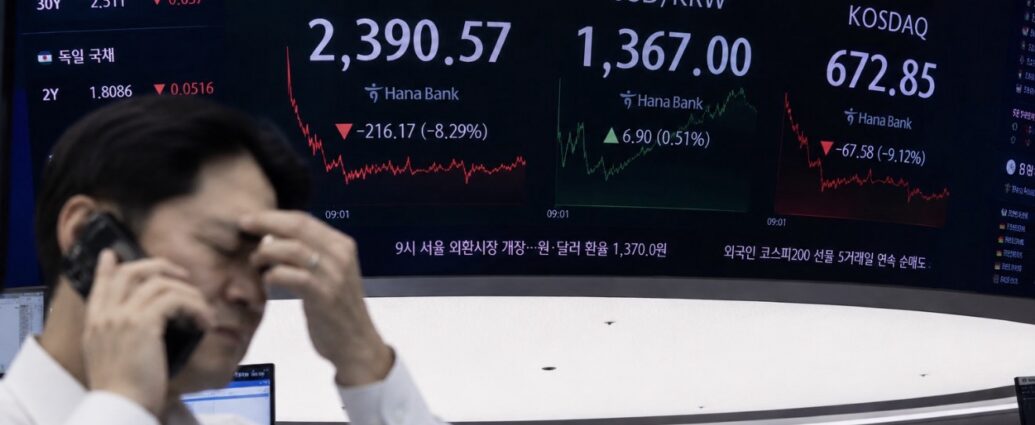
South Korea’s main stock index crashed more than 8 percent on Friday, June 26, forcing the Korea Exchange to slam on a 20-minute trading halt after a wave of selling tore through the country’s largest chipmakers. It was the fifth time the exchange has tripped its circuit breaker this year and the third halt this week alone, a stretch of turbulence that has rattled what had been, until recently, the best-performing stock market on the planet.
The spark came from an unlikely place: a price increase on iPads and laptops. Apple announced Thursday, June 25, that it was raising prices on Macs, iPads, home devices and the Vision Pro headset, its first formal move to pass soaring memory-chip costs on to shoppers. In a statement, the company said the rapid buildout of AI data centers had created an extraordinary surge in demand for memory and storage, adding that it had never seen a component price climb this fast. Apple shares fell about 6 percent, the stock’s worst day since April 2025.
That sounds like an American consumer story, but it landed hardest in Seoul. Samsung Electronics and SK Hynix, the two Korean giants that dominate global memory-chip production, each tumbled more than 9 percent on Friday and dragged the broader market down with them. The benchmark KOSPI slid roughly 8.2 percent, and the selling was severe enough to freeze the entire market mid-session.
Here is the connection. Apple raising prices because memory chips have gotten so expensive should, on its face, be good news for the companies that make those chips. But investors read it the other way. Tim Cook, Apple’s chief executive, had earlier told The Wall Street Journal that the price increases were unavoidable and likened the memory shortage to a hundred-year flood. The fear now is that if devices get more expensive, people buy fewer of them. Research firm IDC estimates the global smartphone market could see its biggest-ever annual decline this year, near 14 percent, with the PC market falling more than 11 percent. Fewer phones and laptops sold eventually means softer demand for the chips inside them, and that threatens the exact growth story that sent Samsung and SK Hynix soaring all year.
A second blow came from across the Pacific. The New York Times reported that OpenAI was weighing a delay of its hotly anticipated stock-market debut to 2027. The artificial-intelligence boom has been the engine behind Korea’s entire rally, and any hint that the marquee names of that boom are cooling sends a chill through the chip trade.
The numbers behind the chip squeeze help explain the panic. Prices for DRAM, the memory used in nearly every modern device, jumped as much as 98 percent in the first quarter of this year and are set to climb another 58 to 63 percent this quarter, according to industry tracker TrendForce. Some in the industry have nicknamed the spike “RAMageddon.” The cause is the same everywhere: AI companies such as Nvidia are signing massive long-term deals with memory makers, who are steering production toward data centers and leaving less supply for ordinary gadgets. Micron said this week it had locked in $22 billion in such long-term commitments. Apple is not alone in passing the cost along. Microsoft said Thursday it would raise Xbox console prices by $100 to $150.
The pain reaches the checkout counter. Apple’s lowest-priced laptop, the MacBook Neo, jumps from $599 to $699 just months after launch, and the company hinted more increases could follow, including, eventually, on the iPhone. For now, the iPhone, Apple Watch and AirPods were spared.
Not every voice on Wall Street is bearish. Dan Ives of Wedbush kept his “outperform” rating and $400 price target on Apple, arguing the company’s premium customers can absorb higher prices without walking away.
Korea’s slide was also partly homegrown. Samsung and SK Hynix had become so dominant that they now drive much of the KOSPI’s value, leaving the whole index exposed when they fall. The head of South Korea’s markets watchdog warned that the government may have moved too quickly in approving leveraged funds tied to the two chipmakers, products that have amplified the market’s swings since launching last month. Even as it fell, Samsung confirmed plans to pour more than 1,000 trillion won, about $646 billion, into chipmaking infrastructure over the next decade.
For all the drama, perspective matters. The KOSPI is on track to lose nearly 10 percent this week, yet it remains up roughly 90 percent for 2026, still the strongest major market in the world. Friday’s crash was less a collapse than a violent reminder of how much of that gain rests on a single bet: that the world’s hunger for AI chips keeps growing. When Apple raised its prices, it quietly asked whether that hunger has a limit.
JBizNews Desk © JBizNews.com All Rights Reserved. Reproduction or distribution without written permission is prohibited.
South Korean memory-chip giant SK Hynix filed with the U.S. Securities and Exchange Commission on Wednesday, June 24, to raise roughly $29 billion through a Nasdaq listing — a deal that would rank among the biggest share sales in history. According to the filing, the company plans to issue up to 17.79 million new shares through American depositary receipts, with trading expected to begin around July 10.
The size is staggering. At about 45.45 trillion won, or $29.4 billion, the offering would eclipse both Alibaba’s 2014 U.S. debut and Saudi Aramco’s $25.6 billion initial public offering from 2019, according to Reuters. It is also far larger than the company signaled earlier this year, when an initial confidential filing in March pointed to a haul of no more than $14 billion — a jump that reflects how fast SK Hynix shares have climbed.
The reason for the surge is the same force driving so much of the market: artificial intelligence. SK Hynix is the world’s top supplier of high-bandwidth memory (HBM), the specialized chips that AI data centers need in massive volumes. Its biggest customers include Nvidia and Google parent Alphabet, both of which depend on its chips to build their AI systems. The stock has risen more than 300% this year, pushing the company’s market value to roughly $1.2 trillion and, this week, past Samsung Electronics to make it South Korea’s most valuable listed company for the first time in decades.
An American listing would give SK Hynix direct access to U.S. capital markets and a much broader investor base. Some large U.S. institutional investors are restricted to buying U.S.-listed stocks, so trading on the Nasdaq alongside its closest American rival, Micron, could draw in money that previously couldn’t reach the company. The offering is being managed by a roster of major banks including Citigroup, JPMorgan, Goldman Sachs and Bank of America.
The cash will fund an enormous expansion already underway. SK Hynix said proceeds will help build a new chip factory in the South Korean city of Yongin, an advanced packaging plant in Cheongju, and the purchase of cutting-edge equipment such as extreme ultraviolet lithography machines. Separately, the company is developing its first American production site — a $4 billion packaging facility in Indiana — part of a broader push by chipmakers to expand manufacturing on U.S. soil.
The financial backdrop helps explain investor enthusiasm. SK Hynix posted a record operating profit of about 37.6 trillion won in the first quarter, with sales nearly tripling, and the company has told investors it expects favorable pricing for its HBM chips to continue into next year as demand outstrips what it can produce.
For everyday consumers, the memory boom is a double-edged sword. The same shortage that is making SK Hynix so profitable has pushed up the price of the memory chips used in everyday electronics, from smartphones to laptops, as AI data centers soak up supply. A listing of this size also signals just how much capital is now flowing into the AI buildout — money that is reshaping the global technology industry and the products millions of people use.
The timing was striking. SK Hynix’s filing landed the same day that Micron, its main U.S.-listed competitor, reported record results after the bell, underscoring how memory chips have gone from a boom-and-bust commodity to one of the hottest corners of the market. For American investors, the listing offers a new way to bet directly on the AI memory race — and for SK Hynix, a chance to be valued the way Wall Street values the companies feeding the AI machine.
JBizNews Desk © JBizNews.com All Rights Reserved. Reproduction or distribution without written permission is prohibited.

AP Photo: Oil tankers and cargo vessels wait at anchor near the Strait of Hormuz off the coast of Oman as commercial shipping cautiously resumes through one of the world’s busiest energy corridors.
A cargo vessel transiting the Strait of Hormuz was struck on its starboard side near Dahit, Oman, on Thursday evening, according to an advisory issued by the United Kingdom Maritime Trade Operations (UKMTO), which said the impact damaged the ship’s bridge but caused no casualties or pollution. A U.S. official confirmed to CBS News that Iran’s Islamic Revolutionary Guard Corps was responsible for the attack on the Singapore-flagged vessel, while two separate U.S. officials confirmed the incident to Reuters. The strike came just as commercial shipping had begun cautiously returning to the world’s most important oil chokepoint.
Energy markets reacted immediately. West Texas Intermediate crude reversed earlier losses to settle more than 2% higher at $71.92 per barrel, while Brent crude climbed 2.1% to $75.26. Oil had traded lower for much of the day amid optimism that shipping traffic was finally normalizing. According to shipping intelligence firm Kpler, more than 20 oil tankers carrying approximately 35 million barrels of crude have successfully passed through the strait since the United States and Iran agreed to reopen the vital waterway. Many of those shipments had remained stranded inside the Persian Gulf for more than three months.
The latest attack immediately disrupted an international maritime evacuation effort. The International Maritime Organization (IMO) announced it was temporarily suspending its coordinated evacuation framework after the vessel involved in Thursday’s incident was attacked outside the designated protection program. IMO Secretary-General Arsenio Dominguez said the organization would halt further evacuations until authorities gain greater clarity regarding the security situation. The evacuation effort had been launched only days earlier to help thousands of mariners aboard hundreds of vessels safely exit the region.
At the center of the dispute remains disagreement over approved shipping routes. The United States has encouraged vessels to follow a southern corridor hugging Oman’s coastline, while Iran continues insisting that ships obtain permission from Tehran and transit along routes closer to the Iranian coast. Following Thursday’s attack, Iran’s Persian Gulf Strait Authority warned that vessels operating outside its designated framework would not qualify for safe-passage guarantees or insurance protections, language closely watched by global shipping companies and marine insurers.
The incident also tests the fragile ceasefire framework currently governing navigation through the Strait of Hormuz. Under the existing 60-day memorandum of understanding, Iran agreed not to impose transit fees during the temporary reopening period. Before conflict disrupted shipping earlier this year, roughly 20% of the world’s oil supply passed through the narrow waterway. Separately on Thursday, The Wall Street Journal reported that Iran is seeking to generate billions of dollars by charging ships for security, environmental, and navigation services—a proposal that both President Donald Trump and Secretary of State Marco Rubio have publicly rejected.
Despite the latest attack, several major shipping companies continue cautiously resuming operations. A Liberian-flagged oil tanker successfully completed its transit Thursday using the southern route near Oman, while Maersk confirmed that two of its vessels safely exited the Persian Gulf overnight in coordination with international security partners. Other global carriers, including Hapag-Lloyd and CMA CGM, have also gradually resumed operations after months of delays caused by regional instability.
Many energy analysts continue to believe the long-term outlook for oil remains relatively stable despite Thursday’s price spike. Citi said a broader de-escalation remains its base-case scenario and expects Brent crude to decline toward $60 to $65 per barrel over the next six to twelve months as shipping volumes normalize. Even so, the geopolitical risk premium remains significant. Iran’s Islamic Revolutionary Guard Corps Navy reiterated Thursday that vessels failing to comply with Tehran’s navigation instructions could face enforcement action.
Speaking during meetings with Gulf foreign ministers in Bahrain, Secretary of State Marco Rubio adopted a measured tone, saying the United States expects commercial shipping to continue moving safely through the Strait of Hormuz and would judge Iran based on its actions rather than its public statements. “If ships are moving as they should be moving, then that’s what we’re going to judge,” Rubio told reporters.
For businesses, the implications extend well beyond oil prices. Every disruption in the Strait of Hormuz affects global freight costs, marine insurance premiums, energy markets, and supply chains that depend on uninterrupted shipments of crude oil and refined petroleum products. Thursday’s attack serves as another reminder that even modest security incidents in the narrow waterway can quickly ripple through global financial markets and international commerce.
JBizNews Desk
New York
© JBizNews.com All Rights Reserved. Reproduction or distribution without written permission is prohibited.


The government of Mexico is tapping international investors again. On Monday, June 22, the United Mexican States filed a preliminary prospectus supplement with the U.S. Securities and Exchange Commission to sell new dollar-denominated bonds, with the proceeds aimed largely at buying back shorter-dated debt it already owes. The filing lays out a two-part deal: a new benchmark of Global Notes due 2037 and an additional issue of 6.750% Global Notes due 2056.
The 2056 portion is not a brand-new bond but a reopening. According to the filing, those notes will be consolidated with, and become fungible with, the $2 billion of 6.750% 2056 notes Mexico sold on January 9, carrying the same terms and identification numbers. Tacking onto an existing line is a common tactic for governments because it deepens a single bond’s trading pool, which tends to make it easier to buy and sell. Mexico is marketing the combined sale at roughly $6.3 billion, with the proceeds earmarked primarily to repurchase outstanding shorter-dated international bonds and extend the country’s debt maturity profile.
The structure is classic liability management: borrow fresh money at today’s rates and use it to retire bonds coming due sooner, pushing the repayment calendar further out. The 2037 notes will pay interest each February and August, beginning in 2027, while the reopened 2056 notes make their first interest payment on August 9. Mexico retains the right to redeem either series before maturity. The two offerings are independent and not conditioned on each other, meaning the government can complete one even if it pulls the other.
For Mexico, the move fits a pattern of front-loading its borrowing early and often. The country opened 2026 on January 5 with a $9 billion three-part deal — its second-largest dollar offering on record — selling $3 billion of 5.625% notes due 2034, $4 billion of 6.125% notes due 2038, and $2 billion of the 6.750% 2056 bonds now being reopened. That sale drew about $30 billion in orders, more than three times the amount offered. In February, the Finance Ministry added roughly $2 billion in sustainable peso-denominated bonds at home.
The logic is to lock in funding before conditions can turn. Borrowing costs across emerging markets remain elevated, and the U.S. Federal Reserve’s recent hawkish turn under new Chair Kevin Warsh, which has lifted U.S. Treasury yields, raises the baseline against which Mexico and its peers must price their debt. By repaying near-term maturities now, Mexico reduces the pile of bonds it would otherwise have to refinance in a possibly tougher market later, and signals to investors that it is managing its obligations actively rather than waiting for bills to come due.
The country has become one of the most active borrowers in the developing world. Analysts have projected Mexico will raise around $25 billion in international markets this year, a pace that could make it 2026’s largest emerging-market sovereign issuer, ahead of Saudi Arabia, Poland and Turkey. Part of that heavy schedule reflects the financing needs tied to state oil company Pemex, whose own debt load has repeatedly drawn on the sovereign’s support and market access.
The deal also carries a read for ordinary investors and businesses. Sovereign bond sales like this one set the benchmark borrowing cost for an entire economy: when Mexico prices its government debt, the yields ripple outward into what Mexican banks, exporters and large companies pay to borrow in dollars. Strong demand and tight pricing tend to signal investor confidence in the country’s finances, while weak demand or higher yields can raise costs across the board. That makes Monday’s transaction a useful gauge of how global money managers view Mexico heading into the second half of the year.
Final pricing confirmed strong institutional demand, with the transaction serving both as a financing tool and a debt-management exercise. The same major international banks that have led Mexico’s recent dollar offerings acted as underwriters and dealer managers, handling both the new bond sale and the concurrent repurchase effort.
JBizNews Desk
© JBizNews.com All Rights Reserved. Reproduction or distribution without written permission is prohibited.

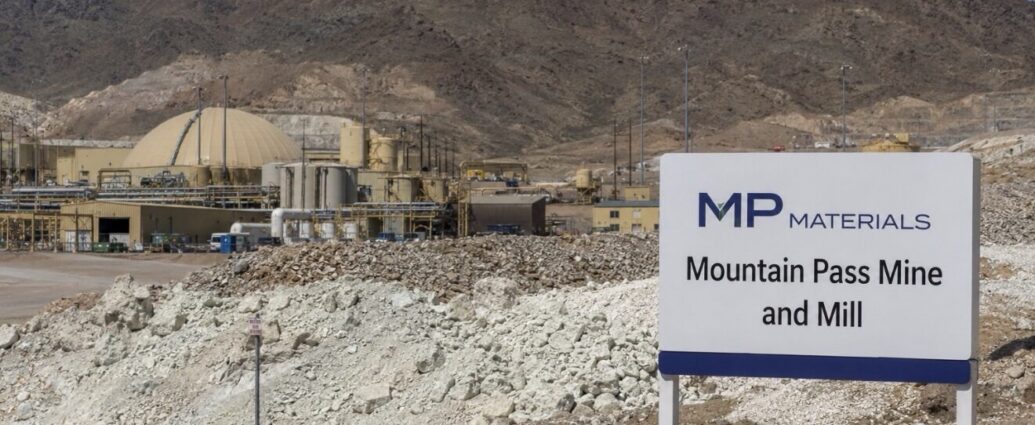
China struck back at the Pentagon on Monday, banning exports to 10 American companies, including the only U.S. firms working to build a rare earth supply chain that does not run through Beijing. The order came from China’s Ministry of Commerce, which said it was punishing Washington for adding Chinese firms to a military blacklist earlier this month.
The hardest hit are MP Materials Corp and USA Rare Earth, two leading U.S. producers of rare earth minerals. Rare earths are the magnets and metals inside almost everything modern, from smartphones and electric cars to fighter jets, wind turbines and home appliances. China controls most of the world’s supply, and these two companies sit at the center of America’s push to change that.
The Commerce Ministry placed the 10 firms on its export control list and imposed a full ban on shipping any Chinese-origin “dual-use” goods to them. That is a step up from the old rules, which only required a license. The ban reaches around the world: any company anywhere is now barred from passing Chinese-made dual-use materials to the listed American firms. Also named were drone makers Teal Drones and Jaia Robotics, both owned by Red Cat Holdings, plus motor manufacturer Aveox and Ball Aerospace & Technologies Corp.
China went a second route at the same time. Its Ministry of Finance barred Chinese government buyers from purchasing products from 46 separate U.S. companies. American-owned businesses operating inside China were left out of that procurement ban.
The trigger was a move in Washington. On June 9, the Pentagon updated what it calls its 1260H list, a roster of companies it believes help China’s military. It added some of China’s biggest names, including Alibaba Group, Baidu, electric-car maker BYD and NIO. Being on that list does not bring instant sanctions, but it bars the U.S. Department of Defense from signing direct contracts with those firms starting June 30, with tighter rules on indirect purchases in 2027. In practice, the label scares off other federal agencies and private partners too.
China’s Commerce Ministry said the Pentagon acted with what it called malicious intent and ignored the understanding reached when President Donald Trump and Chinese leader Xi Jinping met in Beijing last month. That meeting had kept a fragile trade-war truce alive. Beijing framed its own export ban as a matter of national security and its non-proliferation duties.
There is a sharp irony in which companies China picked. MP Materials is backed by the Pentagon itself. The Pentagon put $400 million into the company in July 2025 and became its largest shareholder. MP Materials runs the only active rare earth mine in the United States, at Mountain Pass, California. By hitting it, Beijing aimed straight at the heart of America’s plan to wean itself off Chinese minerals.
That plan still has a long way to go. The United States produced its most rare earth material in decades last year, yet domestic mines covered only about a third of what the country used. The rest was imported, roughly 71% of it from China. So even as Washington races to build its own supply, it still leans heavily on the country it is fighting with.
Some experts say Monday’s move stings less than it looks. Han Shen Lin, China country director at the consultancy The Asia Group, said the countermeasures are largely symbolic. Most of the targeted American companies have little or no real business inside China, so a ban on selling to them or buying from them does not change much day to day.
The bigger worry is what it signals. For more than a year the two governments have traded blacklists, tariffs and export limits while trying not to tip back into a full trade war. Rare earths are China’s strongest card. By aiming its controls at the exact firms America is using to escape that grip, Beijing showed it is willing to play that card rather than just hold it.
For U.S. manufacturers, the stakes are real. Rare earth magnets go into car motors, missiles, jet engines and the gadgets in most people’s pockets. Aerospace makers have already warned of shortages of materials like yttrium, used to keep engine parts from melting. Any squeeze on supply can raise costs and slow production, and those costs eventually reach the people buying the cars and electronics.
Here is the plain bottom line. The new bans hit a small number of companies and may not move prices this week. The longer story is a slow, expensive race: America trying to build a rare earth industry of its own, and China using its dominance to make that race as hard as possible.
JBizNews Desk | New York
© JBizNews.com All Rights Reserved. Reproduction or distribution without written permission is prohibited.

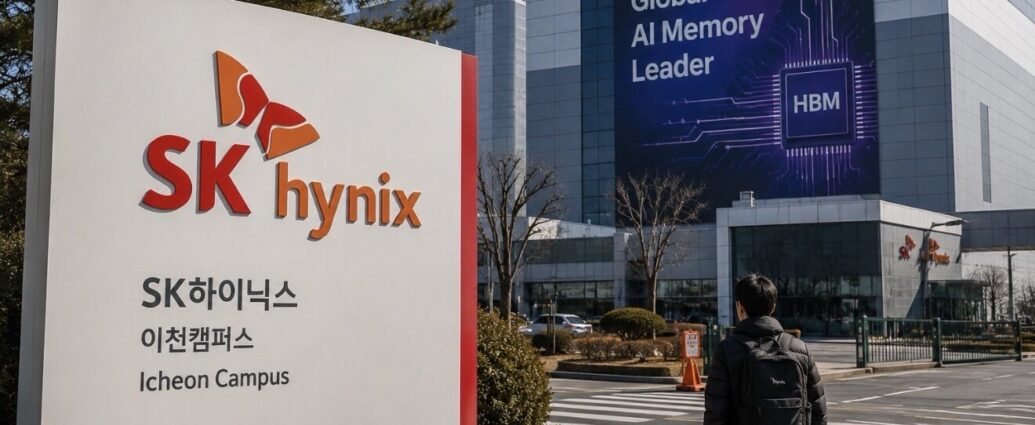
South Korea’s SK Hynix said it plans to raise as much as $29.4 billion through a U.S. stock listing — a sum that would rank among the largest share sales in history and would tie the world’s leading memory-chip maker directly to the American investor base fueling the AI boom.
The offering will take the form of American Depositary Receipts, or ADRs, listed on the Nasdaq Global Select Market. SK Hynix plans to issue 17.79 million new shares, with 10 ADRs representing one common share. The final price will be determined through a bookbuilding process shortly before trading begins.
The sale is being led by Bank of America, Citigroup, Goldman Sachs, and JPMorgan Chase.
To understand why this matters, start with what SK Hynix actually makes. The company is the world’s leading supplier of high-bandwidth memory, or HBM — specialized memory chips used alongside the powerful processors inside AI data centers.
Every major AI system requires enormous amounts of memory to feed data into advanced chips such as those produced by Nvidia. SK Hynix controls roughly 57% to 60% of the global HBM market, placing it at the center of the AI infrastructure boom.
That position has produced extraordinary results.
SK Hynix shares have surged more than 280% this year, pushing the company’s market value above $1 trillion. It recently surpassed Samsung Electronics as South Korea’s most valuable listed company, ending Samsung’s decades-long dominance.
The company reported record operating profits and soaring sales as AI demand continued to outpace supply.
So why raise additional capital?
Management says the U.S. listing will broaden the shareholder base and help ensure the company’s value is more fully recognized by global investors. The proceeds will fund new semiconductor plants, advanced packaging facilities, and next-generation manufacturing equipment.
The company has outlined major investments in the Yongin Semiconductor Cluster, a large-scale chipmaking complex expected to play a key role in future production. Additional spending will support advanced HBM packaging facilities and purchases of expensive extreme-ultraviolet lithography equipment from Dutch supplier ASML.
The timing is notable.
Investors have recently become more cautious about the enormous spending required to support artificial intelligence. Chip stocks experienced a sharp selloff as markets questioned whether current levels of AI infrastructure spending can be sustained indefinitely.
Even so, SK Hynix remains one of the clearest beneficiaries of the AI revolution.
Industry executives continue warning that memory shortages could persist for years as demand from AI applications continues growing. That means the company’s products remain among the most strategically important components in the global technology supply chain.
At the upper end of expectations, the transaction would rank among the largest stock offerings ever completed and would further solidify SK Hynix’s position as one of the biggest winners of the AI era.
For investors, the deal offers direct exposure to one of the companies sitting at the center of the world’s fastest-growing technology sector.
JBizNews Desk | New York
© JBizNews.com All Rights Reserved. Reproduction or distribution without written permission is prohibited.


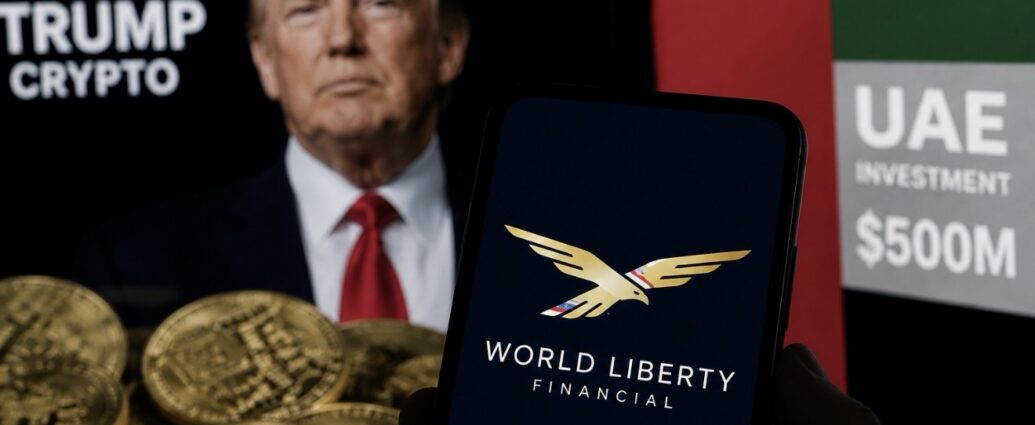
Five senior Senate Democrats are demanding congressional hearings into a $500 million investment made by an Emirati-backed group into a cryptocurrency company tied to the Trump family, escalating scrutiny of one of the largest foreign investments connected to a presidential family business.
In letters sent Tuesday to Republican committee chairmen, Sens. Elizabeth Warren, Richard Blumenthal, Gary Peters, Dick Durbin, and Ron Wyden called for hearings examining the investment, the company’s foreign ties, and whether subsequent U.S. policy decisions involving the United Arab Emirates created potential conflicts of interest.
The investment centers on World Liberty Financial, a cryptocurrency venture associated with Donald Trump Jr., Eric Trump, and other partners.
According to reports and documents cited by lawmakers, an investment vehicle known as Aryam Investment 1 acquired a 49% stake in the company through a deal signed on January 16, 2025, just days before President Trump’s inauguration.
The investment group is linked to Sheikh Tahnoon bin Zayed Al Nahyan, the UAE national security adviser, brother of the country’s president, and one of the most influential figures in the Gulf state’s technology, intelligence, and sovereign wealth sectors.
The senators argue that the transaction deserves additional scrutiny because of policy developments that followed.
Within months of the investment, the United States approved frameworks that expanded the UAE’s access to advanced artificial-intelligence semiconductors and other strategic technologies that had previously faced restrictions due to national-security concerns.
Lawmakers are seeking testimony from administration officials and have also urged a review by the Committee on Foreign Investment in the United States (CFIUS).
At the center of the controversy is the question of whether a foreign government-linked investment in a company associated with a sitting president’s family could create the appearance of influence over U.S. policy decisions.
The business implications stretch beyond politics.
World Liberty Financial is connected to USD1, a dollar-backed stablecoin that is reportedly backed by short-term U.S. Treasury securities. The cryptocurrency venture has attracted attention across financial markets as digital assets become increasingly intertwined with traditional banking, payments, and international finance.
The same Emirati investment network has also been linked to major investments in the broader cryptocurrency ecosystem, including projects involving artificial intelligence and blockchain infrastructure.
Supporters of the administration reject allegations of wrongdoing.
White House officials have stated that no conflicts of interest exist and argue that President Trump is not directly involved in operational business decisions associated with the venture.
Representatives connected to the company have also stated that appropriate legal and ethical safeguards are in place.
Whether hearings ultimately occur remains uncertain.
Because Republicans control the relevant committees, Democratic lawmakers can request hearings but cannot compel them.
Even so, the letters ensure the issue is likely to remain a topic of debate on Capitol Hill as lawmakers continue examining the intersection of cryptocurrency, foreign investment, national security, and presidential business interests.
JBizNews Desk | New York
© JBizNews.com All Rights Reserved. Reproduction or distribution without written permission is prohibited.


