

Oil Prices Swing on Mixed Signals From U.S.-Iran Peace Talks
Oil prices bounced around on Tuesday, June 23, 2026, as traders struggled to read conflicting signals from the on-again, off-again peace talks between the United States and Iran. The choppiness followed a decision by Washington to grant Iran a 60-day license to sell oil on international markets — a move that raised hopes for a faster recovery in global supply but did little to settle nerves about whether a lasting deal will hold. West Texas Intermediate crude, the US benchmark, hovered near $74 a barrel, close to its lowest since early March, while Brent crude, the global benchmark, traded near $78.
The broad direction for oil has been lower. Prices have fallen sharply from their wartime peaks, when Brent soared above $120 a barrel at the height of the conflict. The pullback reflects a growing belief among traders that the supply crisis is easing. Tanker traffic through the Strait of Hormuz, the narrow waterway that carries a large share of the world’s oil, has begun to pick up again.
Producers including Kuwait and the United Arab Emirates have found alternative routes to get their crude to market, and Iran itself shipped more than 30 million barrels over the past week. The Strait had been effectively shut for much of the conflict, stranding ships and choking off roughly a fifth of global oil flows. Its gradual reopening is the single biggest reason prices have come down.
But the path to peace has been bumpy, and that is what keeps prices swinging. Late last week, talks scheduled in Switzerland were abruptly called off, and Vice President JD Vance scrapped a planned trip there, citing unresolved issues around the negotiations. The two sides have reached a roadmap toward a final deal within 60 days, but President Donald Trump still has to sign off, and past flare-ups have shown how quickly the mood can turn.
A fresh point of friction is Iran’s nuclear program. Vice President Vance said Tehran had agreed to let nuclear inspectors back in — a key US demand. Iranian officials denied making any such commitment. The disagreement is a reminder that even as oil starts flowing again, the political deal underneath it remains far from settled.
Energy analysts are watching closely. Tamas Varga of PVM Oil Associates said the conditional reopening of the Strait of Hormuz, the end of the US naval blockade, and the lifting of emergency declarations by Kuwait have convinced many traders that the disruption which once drove prices above $120 is “well and truly over.” Separately, OPEC Secretary General Haitham Al Ghais said the group does not expect global oil demand to peak anytime soon, pushing back on forecasts of a coming supply glut.
For American drivers and households, the drop in crude is welcome news. Lower oil prices feed through to cheaper gasoline, diesel, and heating fuel, easing one of the biggest squeezes on family budgets this year. During the worst of the conflict, California gas prices topped $5 a gallon. As crude retreats toward levels last seen in early spring, relief at the pump should follow, though it usually takes a few weeks to show up.
Cheaper energy also takes pressure off inflation, which matters for every business that ships goods, runs factories, or pays utility bills. It is one reason the recent slide in oil has been a quiet bright spot even as stock markets wobble over the technology selloff. Falling fuel costs give the Federal Reserve a bit more breathing room, too, although Chair Kevin Warsh has signaled he remains focused on keeping inflation in check.
What happens next depends almost entirely on the talks. If the 60-day roadmap turns into a signed agreement and the Strait of Hormuz fully reopens, traders expect oil to keep drifting lower as stranded supply returns to market. If the negotiations break down again, or if attacks on shipping resume, prices could snap higher just as fast as they fell. For now, the market is stuck in between — drifting down on hope, jumping on every sign of trouble.
JBizNews Desk
© JBizNews.com All Rights Reserved. Reproduction or distribution without written permission is prohibited.
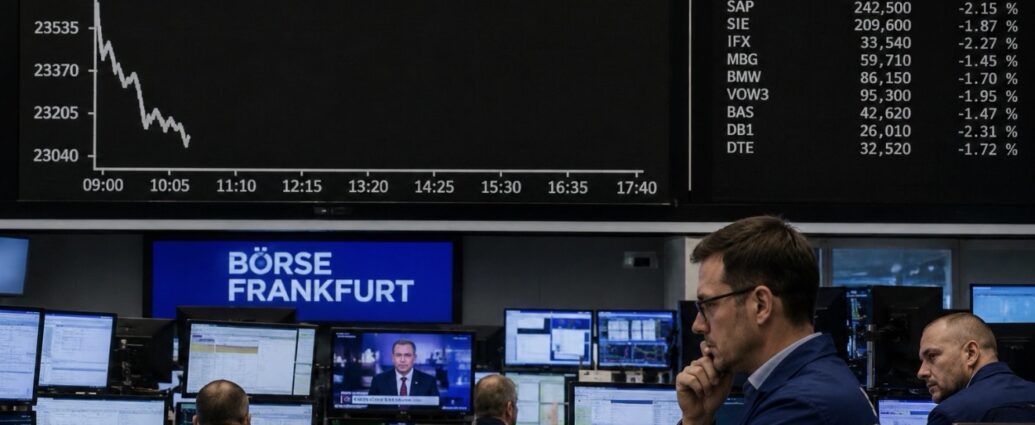
European Stocks Set to Open Sharply Lower as Tech Selloff Spreads
European stock markets are set to open sharply lower on Tuesday, June 23, 2026, as a global selloff in technology shares sweeps in from Asia. Futures tied to the region’s main indexes were pointing down more than 1% before the open, after the Korea Exchange was forced to halt trading earlier in the day when South Korea’s Kospi index plunged as much as 9%. The selling that started in chip stocks overnight is now rolling toward Frankfurt, Paris, and London.
The trigger is the same worry rattling markets worldwide: that this year’s enormous run-up in artificial intelligence and semiconductor stocks has climbed too far, too fast. When investors decide to lock in profits all at once, the selling tends to hit hardest the bets that the most people had piled into — and few have been more popular in 2026 than chips.
The damage across Asia set the tone. A broad gauge of Asian stocks dropped 3.4%, Japan’s Nikkei 225 slipped 0.6% and the Topix fell 0.5%, both pulling back from record highs. In the US, futures pointed lower too, with S&P 500 contracts off more than 1% and Nasdaq 100 futures down about 2%. The MSCI All Country World Index, the widest measure of global stocks, fell 0.6%.
Europe’s own chip and tech names are likely to bear the brunt. The Netherlands’ ASML, the world’s most important supplier of chipmaking machines, along with Germany’s Infineon Technologies, France’s STMicroelectronics, and software giant SAP, tend to move in lockstep with the global semiconductor trade. When chip stocks fall in Asia and the US, these European heavyweights usually follow at the open.
Adding to the unease, the Japanese yen sank toward its weakest level in 40 years, trading around 161.5 per dollar. The slide reflects a widening gap between the US Federal Reserve, where Chair Kevin Warsh has signaled rates could rise again this year, and the Bank of Japan, which has moved far more slowly. The dollar index, which measures the greenback against major currencies, sits near a one-year high, up about 3% in 2026. A strong dollar and rising US rate expectations tend to pull money out of riskier assets everywhere, European stocks included.
For European exporters, a stronger dollar is not all bad — it makes their goods cheaper for American buyers. But the broader signal of climbing US rates usually weighs on share prices across the board, especially the high-priced tech names that have led the market higher.
One bright spot is energy. Mediators Qatar and Pakistan said the US and Iran have agreed on a roadmap toward a final deal within 60 days, and Washington granted Tehran a 60-day license to sell oil abroad. That pushed oil prices down nearly 2%, with Brent crude near $79 a barrel — welcome news for fuel-hungry European economies, even as Iran’s announced closure of the Strait of Hormuz keeps some risk in the picture.
Not every corner of the European market is likely to suffer. On past selloff days, defensive sectors such as utilities, healthcare, and consumer staples have held up better than tech, and falling oil prices tend to help airlines and other heavy fuel users. Defense stocks, a standout performer in Europe this year, have also shown they can buck broad declines.
The bigger question for European investors is whether Tuesday marks a brief stumble or the start of a deeper cooldown in the AI trade. The companies at the center of the selloff are still reporting strong demand for their chips, and Europe’s main indexes have spent much of 2026 near record highs. A single rough open does not undo that. But the speed of the drop is a reminder of how quickly money can rush for the exits when a popular trade turns.
Traders will now watch how Wall Street opens later Tuesday and whether the selling in chips slows. If US tech steadies, Europe’s losses could prove shallow. If it does not, the pullback that began in Seoul and Tokyo may have further to run.
JBizNews Desk
© JBizNews.com All Rights Reserved. Reproduction or distribution without written permission is prohibited.
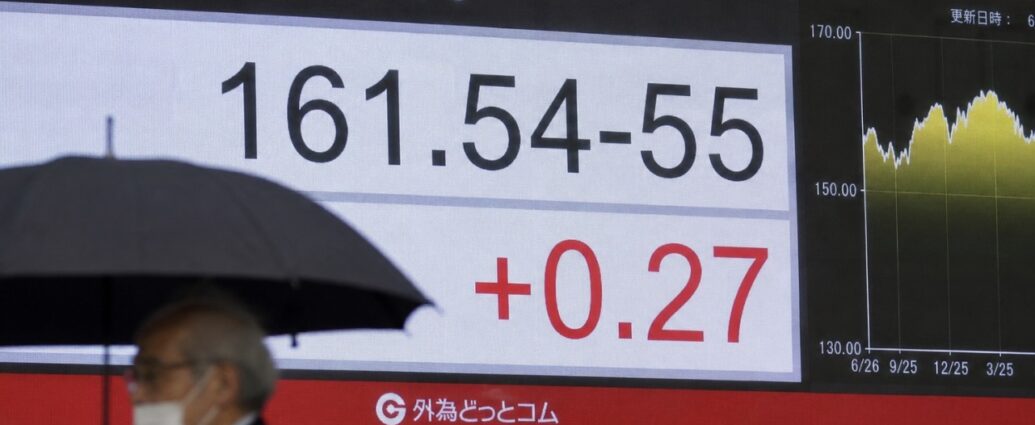
Tech Selloff Sinks Global Stocks as Yen Nears 40-Year Low
A wave of selling swept through global technology stocks on Tuesday, June 23, 2026, while the Japanese yen slid toward its weakest level in 40 years — a one-two punch that put markets on edge from Tokyo to New York. Japan’s Finance Minister Satsuki Katayama said Tuesday she had spoken by phone with US Treasury Secretary Scott Bessent, agreeing the two governments would coordinate in currency markets if needed, as the yen weakened to around 161.5 per dollar, near its lowest since 1986.
The stock damage was led by the chip and AI names that have driven this year’s record run. South Korea’s Kospi tumbled more than 9% at one point, forcing a 20-minute trading halt by the Korea Exchange. In Japan, the Nikkei 225 slipped 0.6% to below 72,000 and the broader Topix fell 0.5%, both pulling back from record highs. US futures pointed lower too, with S&P 500 contracts off more than 1% and Nasdaq 100 futures down about 2%.
The selling was broad. The MSCI All Country World Index, the widest measure of global stocks, fell 0.6%, while a gauge of Asian shares dropped 3.4%. Investors pulled money out of the same technology stocks that have soared all year, locking in profits as worries grew that the rally had climbed too far, too fast.
In Tokyo, the biggest decliners were AI-linked heavyweights. SoftBank Group fell 5.8%, Furukawa Electric lost 4.6%, Murata Manufacturing slipped 3.9%, JX Advanced Metals dropped 3.1%, and Taiyo Yuden eased 1.7%. The pullback followed an overnight drop in major US tech shares, showing how tightly global chip stocks now move together.
The yen’s slide is a different story, and it comes down to interest rates. The Bank of Japan raised its key rate last week by a quarter point to 1%, its highest in more than three decades. But that is still far below the Federal Reserve’s 3.5% to 3.75%, and Fed Chair Kevin Warsh has signaled the US could raise rates again later this year. When one country pays much more interest than another, money flows toward the higher payout — and right now that means out of the yen and into the dollar.
This gap fuels what traders call the “carry trade”: borrowing cheaply in yen and parking the money in higher-yielding dollar assets. As long as the rate difference stays wide, the pressure on the yen keeps building. The dollar index, which measures the greenback against major currencies, sits near a one-year high, up about 3% in 2026.
Japan has tried to fight back. Tokyo spent a record 11.7 trillion yen, about $73 billion, propping up the currency in April, but those gains have since vanished. Analysts doubt another round would work for long. Matt Simpson, senior market analyst at StoneX, said Tokyo may feel powerless against the pull of Fed rate expectations. Masahiko Loo, senior fixed income strategist at State Street, called last week’s hike a “Band-Aid on a bullet wound” for the yen. Adding to the strain are the spending plans of Prime Minister Sanae Takaichi, whose pro-growth, easy-money leanings have unsettled investors.
Hanging over all of it are the US-Iran peace talks. Mediators Qatar and Pakistan said the two sides reached a roadmap toward a final deal within 60 days, and Washington granted Tehran a 60-day license to sell oil abroad. That helped push oil prices down nearly 2%, with Brent crude near $79 a barrel. But Iran’s announcement that it had closed the Strait of Hormuz, a vital shipping lane, kept traders uneasy.
For Americans, a stronger dollar is a mixed bag. It makes imported goods, foreign travel, and overseas products cheaper, but it squeezes US companies that sell abroad by making their goods pricier for foreign buyers. For Japanese households, the weak yen does the opposite — it drives up the cost of imported food and fuel, a real hit to family budgets already strained by Middle East energy prices.
The next test comes from two directions: whether the AI-driven stock rally can steady after Tuesday’s shake-out, and whether Tokyo finally steps in to defend the yen. For now, the world’s markets are caught between a US central bank leaning toward higher rates and a Japanese one moving far more slowly — a divide that is reshaping where global money flows.
JBizNews Desk
© JBizNews.com All Rights Reserved. Reproduction or distribution without written permission is prohibited.
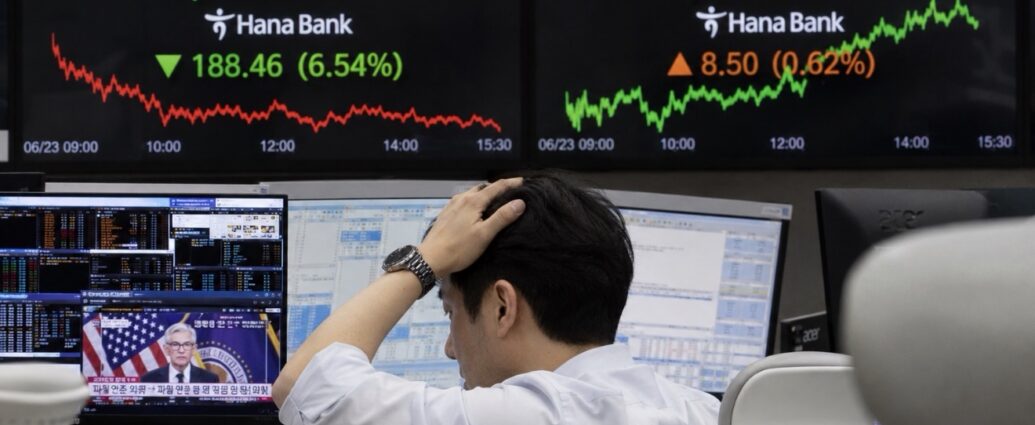
Korea’s Kospi Sinks Near 9% From Record High, Halts Trading
South Korea’s stock market was forced to stop trading on Tuesday, June 23, 2026, after the benchmark Kospi index collapsed in the opening hour, triggering an automatic safety halt run by the Korea Exchange. The index fell as much as 9% from last week’s record high before the exchange suspended trading for 20 minutes — one of only a handful of times in its history that the so-called circuit breaker has been pulled.
The plunge was led by the two companies that have powered Korea’s market all year: Samsung Electronics and SK Hynix, the world’s biggest makers of memory chips. At the worst point of the session, SK Hynix dropped more than 12% and Samsung lost more than 10%. By the time the market steadied, the Kospi had pared its loss to roughly 5% to 6%, sitting near 8,620.
The simplest explanation is that the rally had run extraordinarily hot. The Kospi is up about 78% so far in 2026 after climbing 76% in 2025, making it one of the best-performing major markets in the world. Much of that gain came from a global rush into chips used to build artificial intelligence systems. When a market climbs that fast, even a small scare can send investors racing to lock in profits — and that is what happened Tuesday.
Two pieces of news lit the fuse. The first was a report that South Korea will not be upgraded to “developed market” status in the next index review by MSCI, the firm whose stock benchmarks steer trillions of dollars in global investment. Many in Seoul had hoped an upgrade would pull in a fresh wave of foreign money. Word that it would not come this round took away a reason some overseas funds had to keep buying.
The second was a Korean media report that SK Hynix plans to slow production of high-bandwidth memory, or HBM — the specialized chips that feed AI servers — in order to make more of a different, higher-margin product. That rattled traders, because HBM is the exact business that turned SK Hynix into a star.
The timing was striking. Just one day earlier, on Monday, SK Hynix passed Samsung Electronics to become South Korea’s most valuable listed company — the first time any firm has held that title above Samsung since 2000. SK Hynix shares have soared more than 340% this year. The company is now the leading supplier of HBM chips to AI customers including Nvidia and Alphabet, and analysts estimate it controlled about 61% of the global HBM market last year, compared with 17% for Samsung.
The selling spread well beyond the chipmakers. Among the day’s hardest-hit names, DLG Exhibitions & Events fell 17.2%, Dae Won Chem dropped 15.9%, Enex lost 15.6%, Haesung DS shed 15%, and Hansol Technics slid 12.9%. The wide damage showed this was not just a chip story — it was investors pulling money off the table across the board.
The Korea Exchange uses the circuit breaker to cool panic. When the Kospi falls 8% or more and holds there for at least a minute, all trading stops for 20 minutes before it resumes. Earlier in the session the exchange also set off a “sidecar,” a separate curb that briefly freezes computer-driven sell orders. Both tools are designed to give human traders a moment to catch their breath.
For ordinary Koreans, the stakes are real. Everyday investors poured into the market during this year’s run, and the country’s national pension fund holds large stakes in both Samsung and SK Hynix. A sharp drop hits household savings directly. It also reaches far beyond Korea: Samsung and SK Hynix make a huge share of the memory chips inside phones, laptops, cars, and the data centers running AI, so swings in their shares ripple through the entire technology supply chain.
Whether Tuesday marks a brief stumble or the start of a deeper cooldown will depend on whether the AI buying spree holds up. The companies at the center of the sell-off are still reporting record demand for their chips. But the day was a sharp reminder that a market built so heavily on two names can fall just as fast as it climbed.
JBizNews Desk
© JBizNews.com All Rights Reserved. Reproduction or distribution without written permission is prohibited.
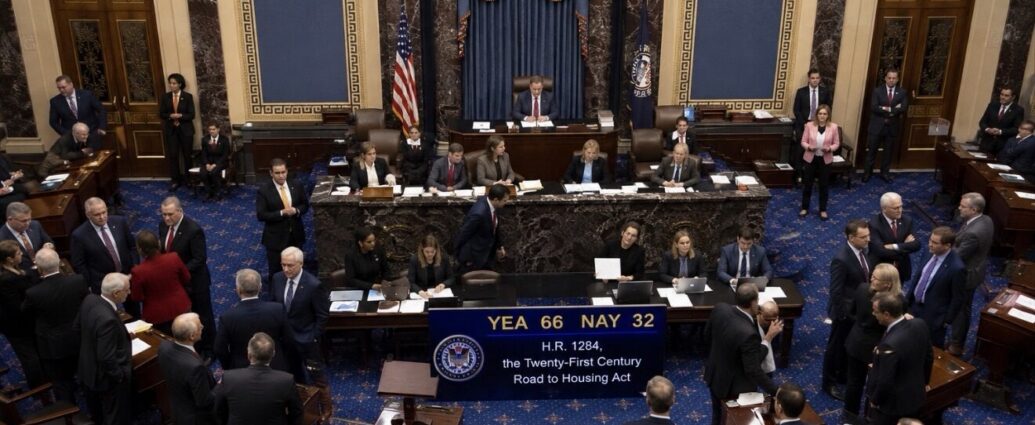
Senate Passes Bill Capping Investor Purchases of Single-Family Homes at 350
In a rare bipartisan move on affordability, the U.S. Senate on Monday, June 22, passed sweeping housing legislation that would, for the first time, place a federal limit on how many single-family homes large investors can buy. The 21st Century ROAD to Housing Act, shepherded by Senate Banking Committee Chairman Tim Scott, a South Carolina Republican, and ranking member Elizabeth Warren, a Massachusetts Democrat, would cap big institutional investors at 350 single-family homes. The House is expected to vote on the measure later this week, and President Donald Trump has signaled his support, putting the bill within reach of becoming law.
The centerpiece is the cap itself. The provision would bar large institutional investors — the private-equity-backed firms that have bought up tens of thousands of houses to rent out — from acquiring single-family homes beyond the 350-home limit, with penalties for violators. Money collected from those fines would be redirected toward new housing construction and assistance for first-time buyers, including help with down payments and closing costs. Lawmakers dropped a more contentious earlier provision that would have forced investors to sell certain newly built units within seven years, settling instead on the ownership cap. Exceptions remain for build-to-rent homes constructed specifically as rentals and for houses that need major renovation to meet code.
The investor cap is one piece of a much larger package — what supporters call the biggest federal housing bill in roughly 30 years, with more than 45 provisions aimed at boosting supply and lowering costs. Among them are streamlined reviews for affordable-housing development, changes to manufactured-housing rules that could cut as much as $10,000 off the price of a new factory-built home, preservation of rural housing for some 400,000 families, and incentives for communities that build more. The bill also carries a separate measure temporarily barring the Federal Reserve from issuing a central bank digital currency.
The timing is no accident. Both parties are racing to show progress on affordability and the cost of living ahead of the 2026 midterm elections, with housing consistently ranking among voters’ top concerns. Warren framed the bill as a matter of principle, arguing that private equity should not be allowed to dominate the housing market, while Scott emphasized reducing red tape and increasing supply. Trump has also backed efforts to curb large-scale Wall Street ownership of homes.
For the housing and investment industries, the stakes are significant. The cap would directly affect large single-family rental operators and the private-equity firms behind them, companies that expanded aggressively after the 2008 financial crisis. Yet research on their impact remains mixed. The Urban Institute has found that large investors operating in multiple markets own roughly 3% of single-family rentals nationwide, while Freddie Mac has concluded that institutional investors play a relatively small role in housing-price increases compared with broader factors such as limited construction, zoning restrictions and migration patterns.
That debate has fueled industry pushback. The National Association of Home Builders, the Mortgage Bankers Association and dozens of other groups have warned that investor restrictions could discourage build-to-rent development and reduce housing supply. The National Association of Realtors, however, has supported the legislation, saying it shares the goal of expanding access to homeownership. The carveout preserving build-to-rent projects was included largely in response to those concerns.
Beyond housing, the legislation marks a notable moment in federal policy. Supporters argue it represents one of the first direct congressional efforts to limit private-equity ownership within a major sector of the economy. Critics contend it addresses only a small portion of the housing shortage while leaving larger supply challenges unresolved.
The bill now moves to the House of Representatives, where lawmakers will consider the Senate version and its amendments. If approved and signed by President Trump, the investor cap would take effect approximately six months after enactment. For millions of Americans struggling with high home prices and rents, lawmakers from both parties are betting the measure will demonstrate that Washington is finally taking action on housing affordability.
JBizNews Desk
© JBizNews.com All Rights Reserved. Reproduction or distribution without written permission is prohibited.


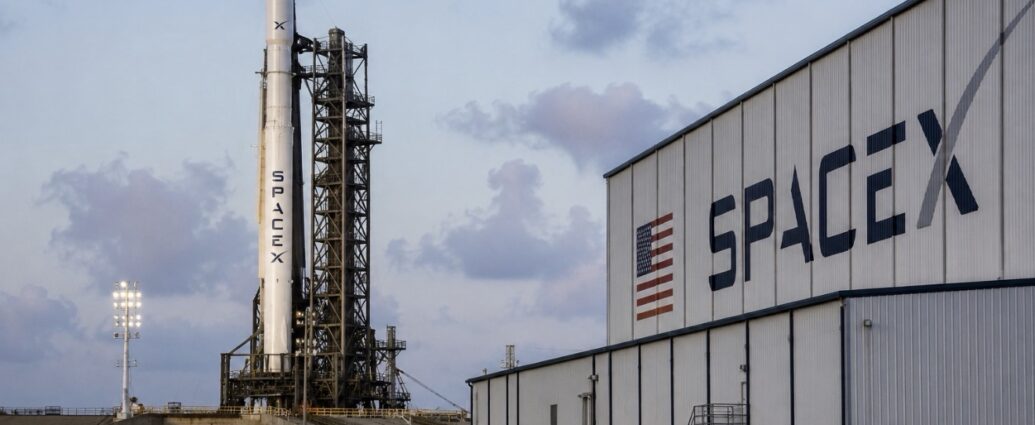
SpaceX Launches First Bond Sale Seeking $20 Billion as Shares Fall a Third Day
Just ten days after the largest stock-market debut in history, SpaceX is already back for more money. On Monday, June 22, the rocket and satellite company — formally Space Exploration Technologies Corp., trading on the Nasdaq under ticker SPCX — said in a securities filing that it had begun its first-ever bond sale, an offering of senior unsecured notes aimed at raising at least $20 billion. The same filing disclosed a striking figure: roughly $100.8 billion in cash on hand as of June 19, a war chest that now reads more like a sovereign wealth fund’s than a young public company’s. Shares fell for a third straight session on the news.
The purpose is housekeeping more than fresh borrowing. SpaceX said it will use the proceeds to repay, in full, a $20 billion bridge loan it took on in March after merging with Elon Musk’s artificial-intelligence startup xAI, plus related fees, with anything left over going to general corporate needs. That bridge financing had replaced about $17.5 billion in higher-interest debt xAI carried before the deal and was not due until September 2027. By swapping short-term financing for longer-dated bonds, the company locks in funding at steadier rates well ahead of the deadline.
The notes will carry maturities ranging from five to 30 years and were rated investment grade by all three major agencies last week — Baa1 from Moody’s, BBB+ from Fitch, and BBB from S&P Global. The same banks that provided the bridge loan, Bank of America, Citigroup, Goldman Sachs, JPMorgan Chase and Morgan Stanley, are running the bond deal. The notes are being sold to large institutional buyers rather than the general public. SpaceX carries about $29.1 billion in long-term debt against its cash pile, leaving it with a net cash position of roughly $71.7 billion.
Investors did not cheer. SPCX shares dropped about 16% on Monday to around $165, the third straight decline and a roughly 27% retreat from the $225.64 intraday peak hit on June 16. The stock still trades well above its $135 IPO price, and the company’s market value, near $2.16 trillion, remains above the $1.77 trillion that debut implied. But the speed of the new fundraising — barely a week after the company raised about $86 billion in its record IPO — unsettled some buyers, who read it as a sign of heavy spending ahead.
That spending is the real story. SpaceX is racing to turn itself from a launch company into an AI infrastructure giant. On Monday, the company signed a deal worth up to $6.3 billion to supply computing power to open-source AI startup Reflection AI, which will pay $150 million a month from July through the end of 2029 for capacity at SpaceX’s Colossus data-center operation, built around Nvidia chips. SpaceX has struck similar compute agreements with Google and Anthropic valued at roughly $75 billion combined, and has floated the idea of one day building data centers in space.
The scale of the ambition is enormous, and so is the bill. Analysts have estimated SpaceX’s cumulative capital spending could top $1 trillion by 2031 as it scales its Starship rocket and deploys next-generation Starlink satellites. That is the tension bond buyers must weigh: long-term contracts like the Reflection deal make revenue more predictable, which supports cheaper borrowing, but the AI buildout also demands relentless investment in chips, power and facilities that can strain cash flow. Notably, either side can walk away from the Reflection contract after the first three months with 90 days’ notice.
Control of the company stays firmly with its founder. Musk holds about 82% of SpaceX’s voting power through a dual-class share structure, and the IPO already made him the world’s first trillionaire on paper. Market strategist Adam Sarhan noted that issuing bonds lets SpaceX raise money without selling new stock, keeping existing shareholders’ economic stake intact while Musk’s grip on the company remains untouched.
For now, the bond sale forces public investors to decide what kind of business they actually own. Bought as a rocket-and-satellite maker, a $20 billion debt raise so soon after going public looks aggressive. Viewed as an AI infrastructure company with its own launch system and global broadband network, it looks like an opening move. SpaceX reports its first results as a public company in early August, and a share lockup expires in December — two dates that will test whether the market’s early enthusiasm can outlast the spending it is now being asked to fund.
JBizNews Desk
© JBizNews.com All Rights Reserved. Reproduction or distribution without written permission is prohibited.

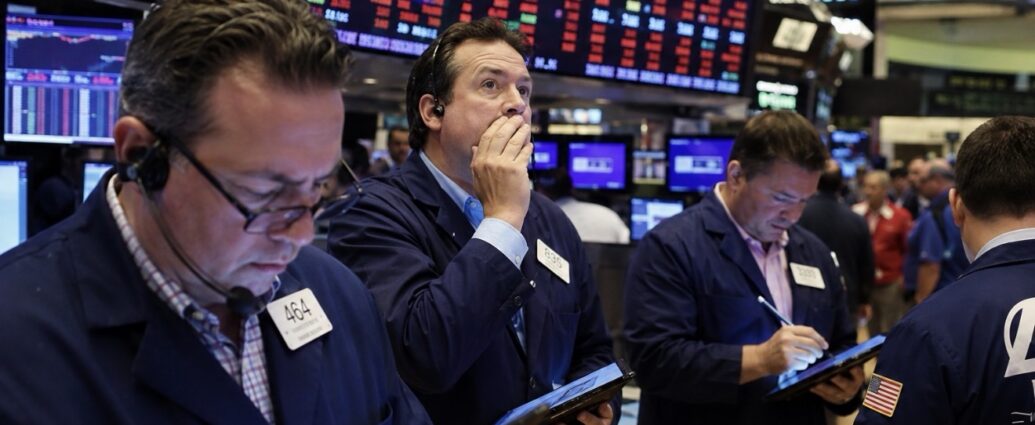
Dow Holds Gains as Big Tech Sell-Off Drags Nasdaq Down 1.3% at Close
U.S. stocks finished split on Monday, June 22, as a heavy sell-off in the year’s biggest technology winners pulled the broad market down even as industrial and financial shares climbed. The drop came despite easing war risk: Iran said Monday there had been “encouraging progress” in talks with the United States in Switzerland, and Vice President JD Vance said Tehran had agreed to allow nuclear inspections under a roadmap toward a deal within 60 days. With the geopolitical fear fading, investors rotated hard out of crowded AI names and into cheaper corners of the market.
The Dow Jones Industrial Average rose 148.01 points, or 0.29%, to 51,712.71, while the S&P 500 slipped 0.37% to 7,472.79 and the Nasdaq Composite fell 1.32%, or 351 points, to 26,166.60. The Russell 2000 of smaller companies bucked the trend, adding 0.83% to 3,004.40. The Dow’s advance rested almost entirely on one stock: Caterpillar jumped nearly 4% and, by midday, accounted for more index points than the Dow’s entire gain.
Market movers
The selling hit the megacaps hardest. Alphabet sank about 5% on reports of AI talent leaving the company and news that France’s intelligence service plans to drop a U.S. AI tool to avoid “strategic dependency.” Amazon lost roughly 4.8%, Microsoft fell 3%, Meta Platforms slid more than 2%, and Nvidia retreated as investors questioned the soaring cost of the AI build-out. SpaceX, ticker SPCX, tumbled 16.4% for a third straight losing session after announcing a new bond sale, though it remains well above its June 12 IPO price.
Money moved toward memory and banks instead. Micron Technology rose about 5% to a fresh high ahead of Wednesday’s earnings, and Sandisk added 5% as the memory rally rolled on. Bank of America and JPMorgan each gained around 2%. Wedbush Securities analyst Matt Bryson carries an Outperform rating and a $1,300 price target on Micron, raised from $550 on June 18, citing memory pricing running ahead of the company’s own forecasts.
Healthcare also generated one of the day’s biggest winners. AbbVie rose about 1% after agreeing to acquire Apogee Therapeutics in a $10.9 billion cash deal. Apogee shares surged nearly 47% on the announcement as investors priced in the takeover premium.
Global impact
The market moves rippled across the globe. European shares rose as easing Middle East tensions reduced energy-supply concerns, while Asian markets were mixed as investors weighed the prospect of renewed Iranian oil exports against the possibility of higher U.S. interest rates. A successful U.S.-Iran agreement could reshape global energy flows, lower transportation costs and ease inflation pressures in major importing economies including Europe, Japan and India.
The pan-European Stoxx 600 closed up 0.58%, Britain’s FTSE 100 gained 0.72%, and Germany’s DAX rose 0.62%. The day’s biggest surprise was political: U.K. Prime Minister Keir Starmer announced his resignation, clearing the way for Britain’s seventh leader in a decade. London markets took it in stride, with NatWest, Barclays and Lloyds Banking Group each up nearly 4%, the pound steady near $1.324, and government bonds firmer. Former Manchester mayor Andy Burnham is the early favorite to succeed him.
A more hawkish Federal Reserve also continues to pressure emerging markets by supporting a stronger dollar and raising borrowing costs worldwide. Investors from Seoul to São Paulo are now watching the same forces driving Wall Street: inflation, interest rates, energy prices and the future pace of AI-driven growth.
Commodities and volatility
Oil stayed soft on hopes that a deal would restore Gulf supply. West Texas Intermediate crude settled near $74.29 a barrel and global benchmark Brent eased about 1.8% to roughly $79, far below its May wartime peak above $126. Gold edged up 0.1% to about $4,207 an ounce as some investors kept a hedge in place, and Bitcoin traded near $63,900. The CBOE Volatility Index, Wall Street’s fear gauge, rose nearly 3% to 17.28. Treasury yields kept climbing after last week’s hawkish Federal Reserve turn, with the 2-year note at 4.04%, its highest since February 2025, and the 10-year at 4.50%.
The next few sessions will decide whether Monday’s tech stumble was a pause or the start of something larger. On Tuesday, S&P Global releases its June flash purchasing managers’ surveys, while earnings arrive from FedEx, Carnival and Cerebras Systems. Analysts expect FedEx to report revenue near $24 billion, up about 8% from a year earlier, in its first full quarter following a major spin-off.
Wednesday brings May new home sales and the report many investors are waiting for: Micron reports after the close. Wall Street is looking for earnings of roughly $20.05 per share and revenue around $35 billion, a jump of about 276% from a year earlier as AI demand continues draining memory supply. The shortage has left rivals Samsung and SK Hynix chasing the same rapidly tightening market.
Thursday is the macro centerpiece. The government releases the PCE Price Index, the Federal Reserve’s preferred inflation gauge, along with May personal income and spending data, May durable goods orders, and a final reading on first-quarter GDP. The University of Michigan’s revised consumer sentiment survey closes the week on Friday.
Hanging over all of it is the new policy stance under Fed Chair Kevin Warsh. Economists at Deutsche Bank now pencil in two rate increases this year, while Bank of America sees three, a sharp reversal from earlier expectations for little or no movement. Markets are currently pricing roughly a 75% chance of a rate hike as soon as September.
For now, investors are balancing a calmer Middle East against a hawkish Federal Reserve and a wobble in the AI giants that have carried the market higher all year. Tuesday’s economic data and the first wave of earnings reports will help determine whether Monday’s technology sell-off was simply profit-taking or the beginning of a broader shift in market leadership.
JBizNews Desk
© JBizNews.com All Rights Reserved. Reproduction or distribution without written permission is prohibited.


Opinion | China’s Ambitious AI Blueprint

Guinea Bans Raw Gold Exports to Cash In on Record Prices
Conakry, Guinea — President Mamadi Doumbouya ordered a halt to all exports of raw gold on Sunday, telling the country’s miners and gold-buying houses that the metal must be refined inside Guinea before it can be sold abroad. He announced the ban at a meeting with industrial and artisanal gold producers in the West African nation, casting it as a way to keep more of the country’s mineral wealth at home and grow its economy.
The timing is no accident. Gold is in the middle of one of the strongest price runs in its history. The metal is trading above $4,300 an ounce this week, roughly $1,000 higher than a year ago and up about 40% over the past 12 months. Prices remain near the records set earlier this year, driven by heavy buying from central banks, persistent inflation concerns, and uncertainty surrounding the conflict between the United States and Iran. For a country with substantial gold reserves, watching the metal leave its borders as raw material while much of the profit is captured elsewhere has become increasingly difficult to justify.
That is the heart of what Doumbouya is trying to do. Today, most of Guinea’s gold is extracted and exported with minimal processing, meaning the refining work, industrial jobs, and much of the value-added revenue are generated overseas. By requiring domestic refining, the government hopes to capture more of that value, build a local precious-metals industry, and transform raw exports into higher-value finished products.
The strategy follows a familiar economic argument. Processing natural resources domestically can significantly increase the amount of revenue a country earns from the same commodity. Guinea has already applied that reasoning to its massive bauxite industry, arguing that refining bauxite into alumina locally could generate substantially greater returns. The new gold policy extends that same approach to another major mineral resource at a time when prices remain exceptionally high.
The move also fits a broader economic agenda that has defined Doumbouya’s leadership. After seizing power in a 2021 military coup, he won a presidential election in December and was inaugurated in January, completing his transition from junta leader to elected president. Throughout that period, he has emphasized greater national control over Guinea’s natural resources.
His administration has rewritten mining regulations to encourage local processing, revoked the license of a unit of Emirates Global Aluminium amid a dispute over refinery construction commitments, and transferred those assets to a state-owned company. During the campaign, government officials repeatedly argued that Guinea’s mineral wealth should generate more benefits for Guineans themselves.
The country possesses the resources to support such ambitions. Guinea holds roughly one-quarter of the world’s known bauxite reserves, ranks among the world’s largest exporters of the ore, and is home to Simandou, one of the largest untapped high-grade iron ore deposits on the planet. Mining dominates the country’s export earnings and contributes roughly one-fifth of its economic output.
Yet despite that mineral wealth, much of the population remains poor. Mining accounts for only a limited share of formal employment, unemployment and underemployment remain widespread, and many citizens have seen little direct benefit from the country’s natural resources. For Doumbouya, the promise is straightforward: keep more of the value chain inside Guinea and convert mineral wealth into broader economic growth.
The policy also reflects a wider trend across parts of Africa. Governments in Mali, Burkina Faso, and Niger have all sought greater state control over mining operations and natural-resource revenues. Those efforts have often been framed as attempts to ensure that more wealth generated from local resources stays within national borders. Doumbouya is now applying a similar philosophy to gold during one of the strongest bullion markets in decades.
Significant challenges remain. Large-scale gold refining requires dependable electricity and industrial infrastructure. Only a portion of Guinea’s population has reliable access to power, and building modern refining facilities can require years of investment and billions of dollars. Foreign mining companies may also push back against stricter processing requirements or perceive increased regulatory risk.
There is also the question of the country’s extensive informal mining sector. Thousands of artisanal miners and small gold-buying businesses now face a sudden change in the rules governing how they sell and export their product. How effectively the government enforces the ban may ultimately determine its success.
For the global gold market, Guinea remains a relatively modest producer compared with some of the world’s largest suppliers, meaning the immediate impact on international prices is likely to be limited. The more important development may be the signal it sends. As gold remains near historic highs, resource-rich countries are increasingly asking why they should export raw commodities while other nations capture much of the downstream value.
In the near term, the burden will fall on miners, exporters, and buyers adjusting to the new requirements. Over the longer term, the success of the policy will depend on whether Guinea can build a competitive domestic refining industry and convert its mineral wealth into lasting economic gains.
JBizNews Desk | New York
© JBizNews.com All Rights Reserved. Reproduction or distribution without written permission is prohibited.



DMCC Executive Chairman Ahmed Bin Sulayem Announces Dubai Longevity Centre, Home to 308 Health Companies
Dubai’s largest free zone is planting a flag in one of the fastest-growing corners of the global health economy. DMCC, the Dubai Multi Commodities Centre, said on Monday that it has formalised a new DMCC Longevity Centre, with Executive Chairman and CEO Ahmed Bin Sulayem unveiling the move in a post on LinkedIn. The step converts a loose cluster of health businesses already operating inside the zone into a structured, commercially defined sector. It builds directly on Law No. (17) of 2026, issued on Wednesday, June 10, by Sheikh Mohammed bin Rashid Al Maktoum, Vice President and Prime Minister of the UAE and Ruler of Dubai, which created the Dubai Longevity Authority and elevated health, wellness and longevity to a strategic economic pillar for the emirate.
The raw material was already there. By DMCC’s own count, the zone hosts 308 health-focused companies, 108 of them approved by the Dubai Health Authority, alongside a broad mix of physical and mental wellbeing centres. The free zone has run regular blood drives, partnered with the wellness firm Nook, and backed causes including the Al Jalila Foundation. What it lacked, Bin Sulayem said, was the formal structure to turn that critical mass into a coherent sector that investors and operators could read clearly.
DMCC’s pitch leans on assets most health hubs cannot match. The plan is to fuse the zone’s commodity-trading backbone, its growing artificial-intelligence and gaming ecosystems, and the carefully regulated arrival of peptide science in the region. The stated aim is to draw the world’s leading peptide businesses and health-related AI services, while positioning DMCC as a trusted bridge between East and West. In an op-ed published in Gulf Business, Bin Sulayem framed the longevity push as less about simply living longer and more about building the systems, institutions and communities that sustain human performance at every level.
The scale behind the announcement is significant. DMCC is regularly ranked the world’s number-one free zone and now counts more than 26,000 member companies from 180 countries, employing over 90,000 people across its Jumeirah Lakes Towers district and the newer Uptown Dubai development. Bin Sulayem has led the centre since 2006, expanding it from a small commodities zone into a sprawling business district spanning trade, logistics, finance and digital assets. Layering a regulated longevity vertical onto that base gives the centre an immediate tenant pipeline that most rivals would need years to assemble.
The wider government framework gives the effort regulatory teeth. Under Decree No. (14) of 2026, Sheikh Hamdan bin Mohammed bin Rashid Al Maktoum, Crown Prince of Dubai and Chairman of the Executive Council, will serve as President of the Dubai Longevity Authority. Helal Saeed Almarri, Director General of the Dubai Department of Economy and Tourism, was named Chairman.
Almarri called longevity and advanced health one of the world’s fastest-growing economic frontiers. He said the authority would offer regulatory certainty across the entire value chain, from research and clinical trials through manufacturing, delivery and patient care. Officials describe what they are building as a sovereign market for advanced therapeutic products, designed to attract investment, industrial capability and specialised talent.
That certainty matters because the underlying market is already moving fast, sometimes ahead of the rules. Peptide therapy clinics have multiplied across Dubai, marketing treatments for recovery, metabolic health and anti-aging, often at prices starting in the high hundreds of dirhams. Much of that activity has run on thin clinical evidence and uneven oversight.
By licensing the full chain, from laboratories to clinics, the new authority is betting that clear standards will pull serious operators and capital into the regulated market rather than the grey one. The Dubai Longevity Authority will coordinate with the Dubai Health Authority, Dubai Health, Dubai Municipality and the Dubai Future Foundation, and says it will hold the sector to international standards.
For Dubai, the economic logic ties directly into the Dubai Economic Agenda D33 and the Dubai Social Agenda 33, which together aim to place the emirate among the world’s top three cities for quality of life. Longevity, wellness and advanced healthcare are treated not as social spending but as an export-grade industry capable of drawing foreign companies, clinical-trial work, manufacturing and high-skill jobs. The emirate has used the same playbook before, standing up dedicated authorities for space, artificial intelligence and virtual assets ahead of most other jurisdictions, then watching companies cluster around the regulatory clarity.
The open questions now are commercial. DMCC will have to prove it can attract genuine peptide and health-AI innovators rather than repackaged wellness brands, and the new authority will have to show its rules can move as quickly as the science. But with a national framework in place, a ready base of 308 companies, and a free zone built to court global capital, Dubai has made its intent unmistakable: it wants to own the business of living longer.
JBizNews Desk
© JBizNews.com All Rights Reserved. Reproduction or distribution without written permission is prohibited.

Russia Cuts Key Rate Again as Iran War Oil Boom Helps Slow Inflation
Russia’s central bank cut its main interest rate again on Friday, trimming it by a quarter point to 14.25% — the ninth straight reduction in a year-long campaign to bring borrowing costs down as inflation slowly cools. The Bank of Russia said its board made the move because price growth has edged lower, though Governor Elvira Nabiullina made clear the bank is moving cautiously and is not ready to accelerate the pace of cuts.
To understand why the decision matters, it helps to look back a year. Russia’s benchmark rate reached a punishing 21%, the highest level in more than two decades, as massive government spending tied to the war effort fueled inflation across the economy. Rates that high made borrowing expensive for households and businesses alike, slowing investment and putting pressure on economic growth. Since then, the central bank has gradually eased policy. At 14.25%, borrowing remains costly, but conditions are significantly less restrictive than they were a year ago.
One reason inflation has eased traces back to the conflict involving the United States, Israel and Iran that erupted earlier this year. After military strikes and disruptions around the Strait of Hormuz, a vital shipping route that carries roughly one-fifth of the world’s oil supply, crude prices surged. Brent crude briefly climbed above $100 per barrel, delivering a major boost to energy exporters.
For Russia, one of the world’s largest oil producers, the jump in prices created an unexpected windfall. The value of Russian export oil rose sharply from levels below $40 per barrel late last year to roughly $62 per barrel during the spring. Revenue from Russia’s primary oil tax reportedly doubled to approximately $9 billion in April, providing a significant but temporary boost to government finances.
That surge in export earnings also strengthened the ruble, creating an important side effect. A stronger currency lowers the cost of imported goods, helping reduce inflation pressure throughout the economy. The ruble, which had weakened to around 86 per U.S. dollar during the height of the geopolitical turmoil, later strengthened toward 76 per dollar. Annual inflation has fallen to approximately 5.6%, down substantially from earlier levels, and the central bank believes it can continue moving toward its long-term target of 4%.
Yet the oil story is not entirely positive. While stronger export earnings supported the currency, higher global oil prices also pushed up domestic fuel costs. Rising gasoline prices feed directly into inflation because transportation costs affect nearly every sector of the economy. Nabiullina said fuel costs were among the key reasons policymakers opted for only a modest quarter-point cut rather than a larger reduction.
According to official figures, the average price of gasoline in Russia has climbed approximately 6.6% since January. Central bank officials expect those increases to continue influencing inflation data through the summer, creating uncertainty about how quickly rates can fall from current levels.
Meanwhile, the oil windfall appears to be fading. As global energy prices cooled and the ruble strengthened further, Russia’s oil and gas revenue began retreating from its spring highs. By June, government income from energy exports was on track to fall to its lowest level since early 2023.
That matters because oil and gas taxes continue to provide as much as 30% of Russia’s federal budget revenue, funding everything from social programs to military operations. Finance Minister Anton Siluanov has acknowledged that the temporary boost from higher oil prices did not dramatically improve the government’s overall fiscal position.
The broader challenge facing policymakers is balancing inflation control with economic growth. Wartime spending helped overheat parts of the economy and contributed to the inflation surge the central bank is now trying to contain. At the same time, growth has slowed significantly as high borrowing costs weigh on businesses and consumers.
The Bank of Russia now expects economic growth of only 0.5% to 1% this year, a sharp slowdown from the 4.3% expansion recorded in 2024. While higher interest rates helped cool inflation, they have also restricted lending and investment. Cutting rates too aggressively could reignite price pressures; moving too slowly risks further weakening economic activity.
For now, Nabiullina signaled that additional reductions remain possible if inflation continues to trend lower. However, she cautioned that looser government spending plans could force policymakers to keep rates higher than markets currently expect.
The central bank’s message was clear: the inflation relief tied to this year’s oil-price surge was real, but it may prove temporary. Russia is attempting to lower borrowing costs without reigniting inflation, a difficult balancing act as energy revenues fluctuate and wartime spending continues to reshape the economy.
JBizNews Desk
Moscow Bureau
© JBizNews.com All Rights Reserved. Reproduction or distribution without written permission is prohibited.



Japan Plans $2.3 Trillion Investment Drive for AI, Chips and Space
TOKYO — A semiconductor plant in Japan, part of a national push to expand domestic chip and technology production.
Japan is preparing to set a target of roughly $2.3 trillion in combined public and private investment by 2040, according to a report Friday by the business daily Nikkei. The plan would form the centerpiece of a new growth strategy under Prime Minister Sanae Takaichi.
The initiative, valued at about 370 trillion yen, would span 17 strategic sectors, with a heavy focus on artificial intelligence, semiconductors, and space development. Nikkei reported the strategy could be unveiled as early as next week. The prime minister’s office did not comment, so the figures are not yet official.
The core idea is to use government money to pull in far larger sums of private capital. Rather than fund everything directly, Tokyo wants public spending to lower the risk on big, long-horizon projects so companies invest alongside the state.
To keep that money flowing reliably, the government is weighing a multi-year budget framework for projects it considers vital to economic security. Some of the spending could be financed through so-called bridging bonds — government debt used to cover costs until other funding arrives.
The targets reflect Japan’s drive to stay competitive in the industries expected to define the next two decades. The global race in artificial intelligence and advanced chips has become a contest between national governments as much as companies, with the United States, China, and others pouring public money into the same fields. Japan is signaling it does not intend to be left behind.
The plan also speaks to a deeper challenge: Japan’s shrinking and aging population. With fewer workers entering the labor force each year, the country is leaning on automation, AI, and high-value manufacturing to sustain growth a larger workforce once provided.
For businesses, the scale of the target points to years of potential contracts in chipmaking, AI infrastructure, and space technology. Japanese firms in construction, engineering, and technology stand to benefit most directly, but the plan could also draw in foreign partners. U.S. and other international companies frequently team up with Japanese firms on high-tech projects, and a pipeline this large would create fresh openings.
For Japanese workers and consumers, the promise is modernized infrastructure, more reliable energy, stronger digital services, and new jobs in priority industries — gains that depend on the target translating into real projects, which will take years.
There are reasons for caution. Headline figures of this size are long-term ambitions, not money already committed. Much will hinge on whether the government can lay out clear project pipelines and offer returns attractive enough to draw private investors off the sidelines. Until the strategy is formally released and detailed, the $2.3 trillion number is a goal, not a guarantee.
The public-private model is a deliberate bet. By sharing risk between government and industry, Japan hopes to unlock spending neither side would take on alone. Other major economies have used the same approach to push into capital-heavy fields like semiconductors and clean energy, where upfront costs are enormous and payoffs can take years.
What happens next is the formal rollout. If the strategy is published in the coming days as reported, attention will turn to which sectors get priority, how the funding mechanisms are structured, and how quickly the first projects begin. Investors and companies will watch for concrete commitments behind the headline figure.
The bigger picture is that Japan, long known for caution on spending, is signaling a willingness to commit serious public resources to secure its place in the technologies of the future. Whether the $2.3 trillion target becomes reality will depend on execution — but the ambition itself marks a notable shift for the world’s fourth-largest economy.
JBizNews Desk | New York
© JBizNews.com All Rights Reserved. Reproduction or distribution without written permission is prohibited.



Starbucks Moves Its Job Cuts Overseas, Hitting UK and Hong Kong Offices
Starbucks is taking its corporate layoffs international, cutting office jobs in the United Kingdom and Hong Kong as chief executive Brian Niccol pushes the next phase of his turnaround at the world’s largest coffee chain. The company confirmed in mid-June that the reductions hit back-office and support staff, not the baristas who work behind the counter. It is the first time the current restructuring has reached Starbucks’ overseas support teams in a meaningful way.
The move was no surprise. Back in May, when Starbucks cut about 300 corporate jobs in the United States and shut several regional offices, the company told regulators and reporters that its overseas teams were next. In a statement at the time, a Starbucks spokesperson said the company was reviewing its international support organization and expected additional role impacts outside the U.S. A securities filing spelled out the same plan in writing.
That plan has now landed in two of Starbucks’ biggest hubs outside North America.
In Hong Kong, the cuts fall on the company’s regional corporate office, known internally as the Hong Kong Support Center. It is not a store — it is the back office that runs Starbucks’ business across 15 Asia-Pacific markets, including Australia, India, South Korea, Singapore, Indonesia and the Philippines. Staff there handle finance, marketing, store design, technology and supply chains for thousands of cafes across the region.
In the United Kingdom, the cuts hit Starbucks’ London-area corporate office. The company runs roughly 520 company-operated stores in Britain, along with close to 900 licensed locations run by partners. Those licensed cafes and their workers are operated separately and are not part of this round.
Why is this happening? The short answer is a man named Brian Niccol.
Niccol took over as chief executive of Starbucks in 2024 after turning around the burrito chain Chipotle Mexican Grill. He inherited a company with falling U.S. sales and a stock that had lost much of its value. His fix, branded “Back to Starbucks,” is built on two ideas: spend more on the actual coffeehouses and spend less on the layers of corporate staff above them.
That trade-off has meant repeated rounds of job cuts. Starbucks eliminated about 1,100 corporate roles in February 2025, then roughly 900 more non-retail jobs that September alongside store closures. Add this year’s reductions and the company has now removed close to 2,000 office positions in a year and a half.
The international cuts fit a bigger shift in how Starbucks wants to run its overseas business. Rather than owning and operating cafes in every country, the company is moving toward a licensing model, where local partners run the stores and pay Starbucks for the brand and the beans. Starbucks has said it wants nearly 90% of its international coffeehouses to be licensed. A licensor needs far fewer corporate staff than an operator does — which is exactly why the support offices are shrinking.
The numbers behind the overhaul are large. Starbucks is chasing about $2 billion in cost savings and has told investors the restructuring will carry roughly $400 million in charges, including about $120 million in severance and benefits for departing employees. Earlier this year the company also cut 61 technology jobs at its Seattle headquarters, with those exits running from late June into August.
For the workers losing their jobs, Starbucks has pointed to severance, extended health coverage and career assistance — the same package it offered during earlier rounds. The company has stressed in every announcement that store staff and the in-store experience are protected, because winning customers back inside the cafes is the whole point of the plan.
There is a customer angle too. Starbucks has spent the past year remodeling stores, bringing back ceramic mugs, simplifying its menu and adding seats and power outlets — all aimed at recreating the comfortable “third place” atmosphere that once set it apart from competitors. The corporate cuts are meant to help pay for that effort.
Whether it works remains an open question. Starbucks has reported periods of improving U.S. sales as the turnaround gained traction, and its shares have recovered from their lows. But the company is still closing stores in some markets, still negotiating with unionized baristas at home, and still asking office workers around the world to absorb the cost of the reset.
For now, the message from Seattle is consistent: fewer people in the back office, more money in the cafes. In mid-June, that message reached London and Hong Kong.
JBizNews Desk | Seattle
© JBizNews.com All Rights Reserved. Reproduction or distribution without written permission is prohibited.


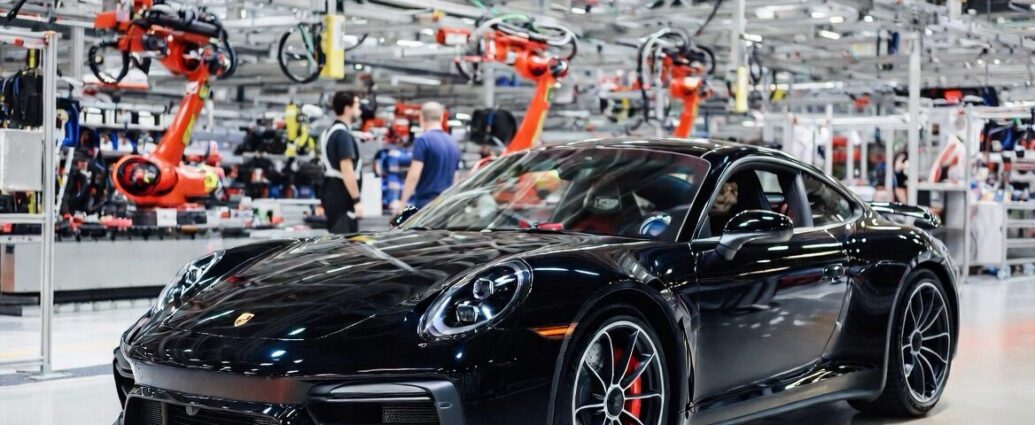
Porsche’s New CEO Wants a Cost-Cutting Deal Done by July
STUTTGART, Germany — A Porsche sports car moves along the assembly line at the automaker’s main plant.
Porsche chief executive Michael Leiters said the German sports-car maker is pushing to finalize a new cost-cutting package before its summer factory shutdown in July. He laid out the timeline in an interview with Frankfurter Allgemeine Sonntagszeitung published Saturday, June 20, and reported more widely by Reuters.
Leiters said the company wants a deal with workers “before the factory holidays in July,” adding that Porsche employees deserve clarity about what lies ahead.
It would be the company’s second round of cuts in a short span, and it comes as earnings slide. Porsche’s operating profit dropped about 22% in the first quarter of 2026. Management has pointed to higher tariffs in key export markets, broader geopolitical turmoil, and temporary gaps in the model lineup as it phases out older cars and rolls in new ones.
The strain runs deeper than one weak quarter. Demand in China, once a key growth engine for luxury carmakers, has fallen sharply amid a brutal price war, and the costly shift toward electric vehicles has squeezed margins further.
Porsche has already said it will eliminate about 1,900 jobs over the next several years, on top of roughly 2,000 temporary workers it released last year. Leiters said the company is now planning for production below the roughly 280,000 vehicles it sold in 2025 — a sign management expects leaner years ahead.
The talks are unfolding with employee representatives and Germany’s powerful labor unions, which hold real sway over factory decisions at German automakers. Leiters framed the July target as a matter of fairness to staff, who he said need certainty before the annual break.
For Porsche workers, the package will determine how the job cuts are carried out and how production is reshaped. Cost-saving plans at carmakers often pair efficiency measures with protections for remaining roles, but the scale of Porsche’s pullback suggests difficult choices ahead.
For suppliers, the stakes are just as real. Porsche sits atop a long chain of parts makers and engineering firms, especially across Germany. Lower production volumes ripple straight down that chain as smaller orders.
Porsche is part of the Volkswagen Group, Europe’s largest carmaker, but runs with its own brand and strategy. Its troubles mirror a wider squeeze across the German auto industry, which is trying to fund the expensive move to electric vehicles while protecting profits today.
Luxury buyers are unlikely to see dramatic changes at the showroom soon. Porsche has said the measures are meant to protect investment in new models and technology, not cut corners on the cars. The aim is to defend the margins that have long made Porsche one of the most profitable names in the business.
Still, the broader luxury market has turned choppy. Some high-end segments remain resilient while others have softened as wealthy buyers grow cautious and China’s once-booming appetite cools. Porsche’s brand strength gives it a cushion, but executives have made clear discipline is now essential.
What comes next is the negotiation itself. Leiters wants terms settled before the factory holidays, with the measures taking shape over the second half of the year. The company is expected to give investors more detail on targets and timelines at its next earnings update.
The bigger picture is that even an icon like Porsche is not immune to the forces reshaping the car business — tariffs, a slowing China, and the heavy cost of going electric. How it balances those pressures against its reputation for performance and profit will matter to its workers, its suppliers, and the investors watching its margins.
JBizNews Desk | New York
© JBizNews.com All Rights Reserved. Reproduction or distribution without written permission is prohibited.


ECB’s Lane Says Europe’s Inflation Shock Is Real — but the Fix Should Be Gradual
The euro zone is living through what European Central Bank Chief Economist Philip Lane called a “mid-sized inflation shock,” and he said Friday that prices will likely stay above 3% for the rest of the year. Speaking on June 19, just one week after the ECB raised interest rates for the first time since 2023, Lane argued the situation calls for a measured response rather than a burst of aggressive rate hikes.
That single word — measured — is the heart of the message. Inflation across the 20 countries that use the euro has climbed well above the ECB’s 2% target, but Lane signaled the central bank does not intend to slam the brakes. The bank wants to cool prices without choking off an economy that is barely growing.
Here’s what’s driving it. The war between the United States and Iran, which began in late February, has pushed up oil and gas prices and disrupted shipping through the Strait of Hormuz, the narrow waterway that carries a large share of the world’s crude. Higher energy costs flow straight into household bills — heating, fuel, transport — and then into the price of almost everything that has to be moved or manufactured. The ECB has said the Middle East war is amplifying inflationary pressures across the euro area.
That is why the ECB, led by President Christine Lagarde, lifted its key rate by a quarter-point on June 11, the first increase since 2023. Alongside the move, the bank raised its inflation forecasts, now expecting headline inflation of 3.0% in 2026 and 2.3% in 2027, up from earlier projections of 2.6% and 2.0%. Core inflation was bumped up to 2.5%. At the same time, the ECB trimmed its growth outlook, cutting expected expansion to 0.8% this year and 1.2% next year.
Ordinary shoppers are already feeling it. Grocery bills, electricity and the cost of filling a tank have all crept higher across major economies like Germany, France and Italy, and services such as travel and dining have stayed stubbornly pricey. When the ECB talks about inflation above 3%, that is the lived experience behind the number.
Lane’s point is that a shock driven mainly by energy and war is different from one driven by an overheating economy. If the cause is a supply problem abroad, raising rates too hard at home risks crushing demand without fixing the source. So the ECB would rather lean against inflation steadily, watch the data month to month, and avoid overcorrecting. That is a careful balancing act, because if households and businesses start to expect high inflation to stick, those expectations can become self-fulfilling.
For European businesses and families, the practical takeaway is that borrowing is likely to stay more expensive for a while. Mortgages, car loans and business credit across the euro zone are tied to the ECB’s benchmark, and a bank that is tightening — even gently — is not about to make loans cheaper. Companies that were hoping for relief on financing costs will probably have to wait.
The shift also marks a striking turn for the ECB. A year ago, the debate in Frankfurt was about how many times the bank would cut rates as inflation drifted back toward target. Energy prices and the Iran war flipped that script. Now the bank is raising rates and warning that above-target inflation could linger into 2027.
The danger Lane is trying to avoid runs in two directions. Move too slowly, and inflation could dig in. Move too fast, and a fragile economy growing at less than 1% could tip toward recession. By framing the problem as a mid-sized shock and the response as gradual, Lane is telling markets the ECB sees a real problem but does not intend to panic.
Much now depends on the war. If the conflict cools and oil flows through Hormuz return to normal, energy-driven inflation could fade faster than the ECB’s forecasts assume, giving Lagarde room to stop hiking. If the fighting flares again, the bank may have to keep going. For now, the ECB’s message to Europe is that the inflation shock is real, it will take time to pass, and the cure will be applied in steady doses rather than all at once.
JBizNews Desk | Frankfurt
© JBizNews.com All Rights Reserved. Reproduction or distribution without written permission is prohibited.
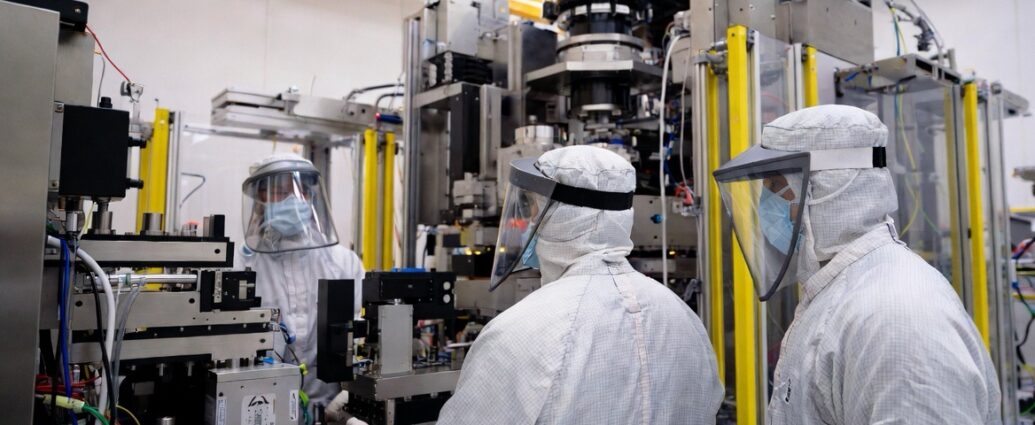
US Warns ASML a Banned Chip Machine May Have Slipped Into China
The United States has told ASML, the Dutch company with a global monopoly on the most advanced chipmaking machines, that one of those machines may have ended up in China in violation of export controls — a claim the company flatly denies. In a series of recent meetings, U.S. Commerce Secretary Howard Lutnick outlined concerns to ASML’s senior leaders that one of its top-of-the-line machines may have made its way into China, Bloomberg News reported on Thursday, June 18, citing people familiar with the matter.
The next day, ASML pushed back hard. “ASML has never shipped an EUV machine to China nor have we shipped to China any component, module or equipment specially designed to be used in an EUV machine,” the company said in a statement to Reuters on Friday. ASML circulated a document in Washington titled “No indication of any ASML EUV system in China,” mounting a proactive defense rather than waiting for any formal proceeding.
To understand why this matters, start with the machine. EUV — extreme ultraviolet lithography — systems are the only tools on Earth capable of printing the most advanced semiconductor patterns, the chips below roughly 7 nanometers that power the latest AI systems. They are used by companies like Taiwan Semiconductor Manufacturing Co. (TSMC) to make processors for Nvidia and Apple, and ASML has never been allowed to ship them to China because of curbs imposed during the first Trump administration.
ASML’s defense leans on the physical reality of the equipment. The machines are the size of a school bus, are made in limited quantities, and require constant upkeep from ASML employees — which, the company argues, would make it nearly impossible for one to operate undetected inside China. The most advanced systems weigh around 180 tons. The Dutch government added that semiconductor-equipment exports are governed by strict licensing rules and that it enforces them firmly.
As of now, this is a suspicion, not a finding. No public evidence has been presented to confirm any transfer occurred; Washington has voiced a concern, not produced proof. But the gap between those two things matters enormously for ASML’s regulatory standing and its share price, and the dispute lands at a tense moment for the global chip trade.
The business stakes are large. China is one of ASML’s biggest markets. The company expects roughly 20% of its 2026 revenue to come from already-permitted sales to China, mostly of its older, less advanced DUV machines. That revenue is now in the crosshairs of Congress. A bipartisan bill that cleared a key committee in April would toughen curbs on ASML and Japan’s Tokyo Electron and calls for an effective ban on shipments of all immersion DUV tools to China — a far broader hit than EUV alone. The Trump administration has not taken a formal position on the legislation.
The episode is also a stress test for the entire allied export-control system. The whole point of the EUV ban is to deny China the single most important tool in advanced chipmaking. If even one machine can slip through, pressure will build for tighter coordination between Washington and The Hague, and possibly broader restrictions from Japan and other suppliers.
For the chip industry, the ripple effects are real. ASML sits at the chokepoint of a supply chain that feeds smartphone makers, automakers, cloud providers, and the AI build-out consuming much of the world’s new computing power. Anything that threatens its China sales or invites new restrictions reshapes the economics for everyone downstream — and adds another layer of risk to an industry already navigating tariffs and shifting trade rules.
China, for its part, has been pouring money into developing its own lithography technology, though ASML’s leadership has long argued that a homegrown EUV machine remains many years away. CEO Christophe Fouquet has said it will take “many, many years for China to make an EUV machine,” and that there is no proof of a serious product on the way.
The dispute also arrives as semiconductor supply chains become increasingly central to national security policy. Washington has spent years tightening restrictions on advanced chip exports and the equipment used to manufacture them, arguing that cutting-edge semiconductors are critical to military systems, artificial intelligence, and strategic competitiveness. China, meanwhile, has accelerated efforts to build a self-sufficient domestic chip industry in response to those restrictions.
For investors, the uncertainty is difficult to quantify. If the allegation proves unfounded, the controversy may fade into the broader debate over export controls. If evidence emerges that a restricted EUV machine somehow entered China, however, it could trigger a significant escalation in trade restrictions, diplomatic pressure, and oversight of semiconductor-equipment exports.
For now, the standoff is a war of statements: a U.S. concern on one side, a categorical denial and a Washington lobbying document on the other, and no public evidence to settle it. What is not in dispute is the importance of the machine at the center of it — and how much of the modern economy now depends on who is allowed to use it.
JBizNews Desk | Amsterdam
© JBizNews.com All Rights Reserved. Reproduction or distribution without written permission is prohibited.

U.S. and Iran Reach 60-Day Deal Roadmap in Switzerland, Vow to End Lebanon Fighting
The United States and Iran agreed on a roadmap toward a final deal to end their war within 60 days, and they created a new system meant to stop the fighting in Lebanon. The deal was announced early Monday in a joint statement from Qatar and Pakistan, the two countries mediating the talks. It capped nearly 18 hours of negotiations that came close to collapsing the night before.
The mediators said the talks at the Bürgenstock resort above Lake Lucerne in Switzerland ran in a positive and constructive atmosphere. The two sides agreed to set up a “de-confliction cell” — a working group joining the negotiators with the Lebanese Republic — to make sure military operations in Lebanon actually stop.
Getting to that point was not smooth. Iran’s delegation walked out Sunday night after President Donald Trump threatened in a media interview to strike Iran again unless the Strait of Hormuz reopened, according to Iran’s Tasnim News Agency. The two sides went back to the table and kept talking into the early hours. The joint statement landed early Monday morning in Switzerland — late Sunday night back in the United States — after the marathon session.
A senior U.S. diplomat rejected reports that Iran had left for good, and Iran’s foreign ministry later said its team had only paused before returning. The official said the delegations held robust talks on every part of the nuclear question and treated the session as a starting point for the technical work ahead.
For American families, the part that matters most is what happens next at the gas pump. The conflict, which began in late February, sent oil prices sharply higher when Iran shut the Strait of Hormuz, the narrow waterway that carries roughly one-fifth of the world’s seaborne oil. Every step toward peace has pushed prices back down.
On Monday, U.S. crude traded above $78 a barrel, up more than 1.5% on the day, as traders weighed whether shipping through the strait would fully return. Prices have still fallen close to 10% over the past week as the deal took shape. Lower crude usually means cheaper gasoline within a few weeks, though it does not happen overnight.
Vice President JD Vance led the U.S. delegation. He arrived in Switzerland on Sunday after delaying his planned Friday departure. He was joined by Steve Witkoff, the White House envoy, and Jared Kushner, Trump’s son-in-law. The Iranian team was led by parliamentary Speaker Mohammad Bagher Qalibaf and Foreign Minister Abbas Araghchi. Pakistani Prime Minister Shehbaz Sharif and Qatari Prime Minister Sheikh Mohammed bin Abdulrahman Al-Thani also took part.
Vance said negotiators were focused on locking down Iran’s stockpile of enriched uranium so it would be, in his words, effectively impossible for Tehran to rebuild a nuclear weapons program. He added that the United States would keep heavy economic pressure in reserve if Iran failed to hold up its end.
Lebanon remains the biggest threat to the whole arrangement. Araghchi said on X that the new mechanism there would be the “first real test” of the agreement. Fighting between Israel and the Iran-backed group Hezbollah has continued in southern Lebanon even after repeated truce announcements, and a flare-up could unravel the broader deal.
There is a hard problem at the center of it. Israel is not a party to the U.S.-Iran memorandum and has said it will not pull its forces out of a buffer zone in southern Lebanon as long as Hezbollah remains a threat. Iran says any continued Israeli presence there counts as a violation. Iran is running a separate track of talks with Israel, with the next round set to begin Tuesday.
The earlier memorandum, signed by Trump and Iranian President Masoud Pezeshkian, calls for the Strait of Hormuz to stay open with no tolls for at least 60 days and for hostilities to end on all fronts. It also opens the door to releasing billions of dollars in frozen Iranian assets, tied to whether Iran follows through.
For businesses that move goods by sea, the reopening is the headline. Roughly 500 large commercial vessels have been stuck near the strait, according to ship-tracking firm Kpler, which estimates it could take two to three months for traffic to return to normal even with the waterway officially open. Insurers and ship crews will want proof it is safe before sailing freely.
The skeptics have a point worth hearing. Senator Lindsey Graham, a longtime Iran hawk, said he liked the idea of reopening the strait and ending the conflict but was reserving judgment on the rest. Past deals with Tehran have a habit of falling apart.
Here is the plain bottom line. Monday’s agreement is a roadmap, not a finished peace. The short-term win for ordinary people is steadier energy prices and open shipping lanes. The long-term question — whether Iran gives up its nuclear material and the guns finally go quiet in Lebanon — is the one that still has to be answered over the next 60 days.
JBizNews Desk | New York
© JBizNews.com All Rights Reserved. Reproduction or distribution without written permission is prohibited.
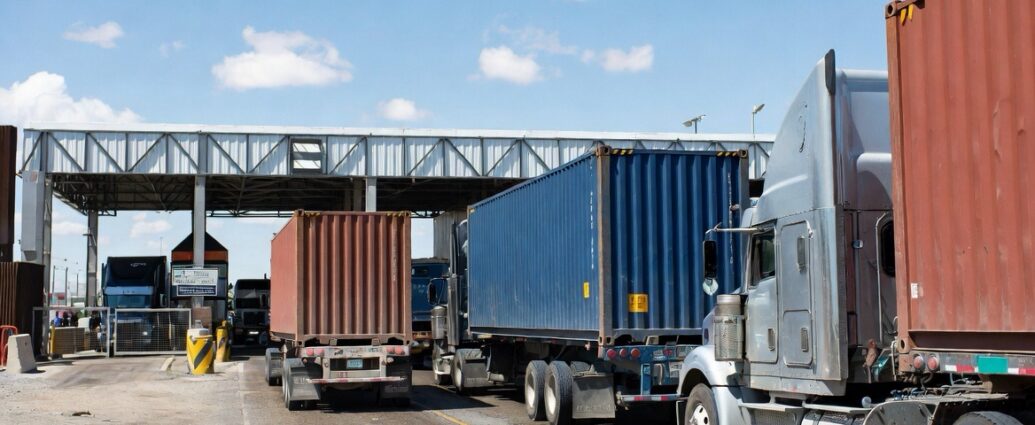
U.S., Mexico and Canada Begin USMCA Review July 1 as Trump Threatens Exit
LAREDO, Texas — Cargo trucks line up to cross the U.S.-Mexico border, a key route for North American trade under the USMCA.
The United States, Mexico, and Canada will hold their first three-way meeting on July 1 to begin the formal review of the USMCA trade pact, Mexico’s Economy Secretary Marcelo Ebrard announced Thursday, June 18, in a video posted to social media. Canadian officials confirmed the trilateral session on Saturday.
The virtual meeting marks the start of the agreement’s first scheduled six-year review, a checkpoint built into the deal when it took effect on July 1, 2020. Under the pact, July 1 is the date the three governments are meant to signal whether they want to extend it past its 2036 expiration.
The timing is tense. President Donald Trump, who signed the original deal during his first term, said Wednesday he is not a fan of the agreement and would “rather have it terminated.” He suggested he would prefer it expire immediately rather than run another decade, reviving the uncertainty that has hung over North American trade since his return to office.
Canada has taken the opposite stance. On June 1, Canadian Trade Minister Dominic LeBlanc formally asked the United States and Mexico to renew the agreement for another 16 years, describing it as highly valuable to all three countries while acknowledging Washington may want changes.
The stakes for business are enormous. The USMCA governs one of the world’s largest trade zones, covering more than 500 million people. Mexico and Canada are now the top two U.S. trading partners, and U.S. exports of goods and services to the two countries have risen 56% since 2020. Autos, agriculture, and manufacturing are especially tied to the agreement’s rules.
Don’t expect everything settled at once. Ebrard cautioned that not all issues will be worked out by July 1, and U.S. Trade Representative Jamieson Greer has said Washington will not offer a simple “rubberstamp” renewal. Greer has signaled the United States wants changes — including tighter rules on where products are made — before agreeing to extend the deal.
Until now, the three countries have mostly met one-on-one. The United States and Mexico have held bilateral talks to clear a long list of American concerns, while Canada held off on broader engagement until formal consultations began. The July 1 session brings all three to the same table for the first time in this round.
For companies with North American supply chains, the review is mostly about certainty. Automakers, parts suppliers, farmers, and manufacturers plan investments years ahead and need to know the rules will hold. A smooth review pointing toward renewal would calm nerves. A drawn-out fight — or follow-through on Trump’s termination talk — would inject fresh risk into cross-border operations.
The structure of the deal offers some cushion. Even if the three governments fail to agree on July 1, the USMCA does not end. It stays in force, with annual reviews continuing for up to a decade until 2036, giving the parties time to reach a deal before the pact would actually terminate.
Key sticking points are already in view. The United States wants to tighten rules of origin — the formulas that determine how much of a product must be made in North America to qualify for duty-free treatment — and has pressed Mexico on issues from farm exports to Chinese investment routed through Mexican factories. Canada faces U.S. complaints over access to its dairy market.
What happens next is the meeting itself, followed by what could be months of negotiation. The July 1 session sets the agenda rather than settling it, and the real test will be whether the three sides can narrow their differences in the talks that follow.
The bigger picture is that stable trade rules across North America help keep prices predictable for businesses and consumers and underpin millions of jobs tied to cross-border commerce. For business owners, workers, and investors across the continent, July 1 is the opening move in a high-stakes negotiation over the future of the region’s trade.
JBizNews Desk | New York
© JBizNews.com All Rights Reserved. Reproduction or distribution without written permission is prohibited.


Trump-Endorsed Outsider Wins Colombia, Vows War on Cocaine Gangs
Colombia Swings Right: a pro-business newcomer backed by Trump defeats the heir to the country’s first leftist president. Here’s what it means — for crime, for the economy, and for the price of doing business with Colombia.
JBizNews Desk — Bogotá · Sunday, June 21, 2026
For four years, Colombia tried to make peace with its criminals. On Sunday, it voted to make war on them instead.
That is the simplest way to understand what just happened. According to preliminary results from Colombia’s National Civil Registry, Trump-endorsed lawyer Abelardo de la Espriella narrowly won the presidential runoff over leftist Senator Iván Cepeda, taking 49.65% to Cepeda’s 48.71% with 99.91% of votes counted — a gap of fewer than 250,000 ballots. One caution up front: the count is preliminary, and Cepeda called it “not yet official or legally binding” while his campaign challenges results from more than 30,000 voting stations.
Who was in charge before
To see what changes, start with who is leaving. President Gustavo Petro was Colombia’s first leftist president, a former rebel elected in 2022. His government leaned left in ways an American reader would recognize: state pension payments for the poor, union-backed labor reforms, a 23% jump in the minimum wage, and a moratorium on new oil projects. His signature idea was “Total Peace” — trying to negotiate, rather than fight, the country’s armed drug groups.
The problem, voters decided, is that it didn’t work. Security analysts say rebel groups nearly doubled in size under Petro, to about 27,000 fighters, and cocaine production hit records. Colombians grew fed up with a surge in violence as armed factions pushed into new territory. As Bogotá professor Sandra Borda put it, the country “swings between seeking peace talks due to a terrible fatigue with the war, and then seeking war due to an infinite tiredness with peace talks.” This was a swing back to war.
Who is taking over
De la Espriella, 47, is a political newcomer nicknamed “El Tigre” — the Tiger. He pitched himself as an outsider who would align with U.S. President Donald Trump and copy El Salvador President Nayib Bukele’s gang crackdown, which cut homicides sharply but drew human-rights complaints. His language is blunt: he promised to open 10 mega-prisons and “wipe out narcoterrorism,” and said he would bomb camps holding “narco-terrorists” and sink boats smuggling cocaine.
What changes for the economy
This is where it matters beyond Colombia. The new direction is openly pro-business and pro-extraction:
- Taxes and the state shrink. De la Espriella has vowed to lower taxes and cut the size of the state by up to 40%, while keeping Petro’s popular minimum-wage increase. Smaller government, friendlier to private companies and investors.
- Oil and gas come back. He wants to boost Colombia’s oil and gas sector, reversing Petro’s freeze on new projects. Colombia is a meaningful crude and coffee exporter, so more supply over time is a modest plus for global energy and a green light to foreign investors.
- Drug war, real costs. A militarized campaign against cartels can choke cocaine flows but also raise violence and spending in the short run. Markets will watch whether “iron fist” delivers stability or turbulence.
The catch every investor should note: whoever takes office inherits high public debt and a divided Congress that could stall major reforms. Big tax cuts plus heavy security spending is a hard circle to square, so expect a budget fight before much passes.
The Washington and Israel angle
Foreign policy flips too. De la Espriella says he is confident he can fully restore diplomatic relations with the United States, and Trump endorsed him outright after the first round. Petro had broken ties with Israel over the Gaza war and, as results came in Sunday, accused Israel — without evidence — of hacking the vote to favor de la Espriella. A Washington-friendly government is widely expected to repair frayed Western alliances, including with Israel, though de la Espriella has not spelled out a detailed foreign-policy platform.
What to watch
Two cautions keep this honest. De la Espriella has said he would govern through emergency decrees to move fast against crime, which critics fear concentrates too much power. And the man himself is controversial: Cepeda argues he “represents a return to the paramilitary politics and drug-trafficking” of Colombia’s past and is seeking to prosecute him, including at the International Criminal Court.
The short-term noise is the recount fight. The long-term story is bigger: the next president is not sworn in until August 7, giving Colombia a month to brace for its sharpest turn in a generation — from negotiating with its cartels to hunting them, and from drifting away from Washington to racing back toward it.
JBizNews Desk | New York
© JBizNews.com All Rights Reserved. Reproduction or distribution without written permission is prohibited.
Stock Futures and Treasuries Fall, Oil Jumps on Trump’s Iran Threats
U.S. stock futures and government bonds fell while oil prices jumped Sunday evening after President Trump threatened renewed military strikes on Iran, unsettling investors just as the two countries opened high-level peace talks in Switzerland. Futures tied to the Dow Jones Industrial Average dropped 191 points, or 0.37%, while S&P 500 futures slid 0.52% and Nasdaq futures lost 0.74%. Treasury prices slipped as well, pushing yields higher.
The catalyst was a social-media post in which Trump warned the U.S. would strike Iran “very hard again” if it did not rein in its proxies in Lebanon, paired with a Fox News interview in which he raised the idea of seizing the Strait of Hormuz. Iranian state media said its delegation walked out of the talks at the Bürgenstock Resort near Lucerne. The negotiations were meant to harden into a lasting settlement a preliminary deal the two sides signed on Wednesday, which reopened the strait and set up nuclear talks. Vice President JD Vance, leading the U.S. side, struck a calmer note, telling reporters both sides had made “great progress.”
Market movers
The pullback in futures was broad but modest, reflecting a market that has learned to ride out the on-again, off-again drama of the U.S.-Iran standoff. Nasdaq futures led the declines as higher oil and firmer interest-rate expectations weighed on richly priced technology shares. The three main U.S. indexes had clawed back most of their war-era losses in recent weeks, leaving them exposed to any fresh shock. Asian equities, by contrast, edged higher as the first negotiating session wrapped up without a collapse, a sign overseas investors still expect a deal.
Commodities and volatility
Oil did the opposite of stocks. West Texas Intermediate, the U.S. benchmark, rose about 2% to $78.19 a barrel, while Brent crude climbed as much as 2% toward $81 before easing back near $80 as the talks avoided an immediate breakdown. The swing reflects the central fear hanging over the negotiations: that a collapse could choke off the Strait of Hormuz, the narrow channel that carries roughly a fifth of the world’s oil. Iran said over the weekend it had again closed the strait; U.S. Central Command countered that ships were still passing through. Gold, often a refuge in turmoil, fell 1.5% to about $4,180 an ounce as a steadier dollar and rising bond yields dimmed its appeal.
The drop in Treasuries went to the second worry rattling markets. Traders bet that costlier oil would keep inflation elevated and tie the Federal Reserve’s hands, so they sold government bonds and drove yields up. Consumer prices rose at a 4.2% annual rate in May, the hottest reading in more than two years, driven largely by energy. At its meeting last week, the Fed — now led by Chair Kevin Warsh — held its benchmark rate at 3.50% to 3.75% and stripped out earlier hints that cuts were coming. Bank of America economist Aditya Bhave had flagged that several policymakers might pencil in hikes this year, and markets, per the CME Group’s FedWatch gauge, now see a rate increase later in 2026 as more likely than a cut.
For households, the math is simple and unwelcome. Higher oil feeds straight into gasoline, which had only recently slipped back toward normal after topping $4 a gallon during the worst of the war. By one Brown University estimate, the conflict has already added more than $250 to the typical household’s energy bills. If the Strait of Hormuz closes for real and stays shut, pump prices climb, shipping and grocery costs follow, and the Fed has even less room to lower borrowing costs on mortgages, cars and credit cards.
Investors get their first full verdict when U.S. trading opens Monday. For now the pattern is familiar: every threat from Washington or Tehran sends oil up and stocks down, and every sign of progress sends them back. The difference this time is the calendar — with inflation already high and the Fed in no mood to cut, the economy has less cushion to absorb another oil shock than it did a year ago.
JBizNews Desk | New York
© JBizNews.com All Rights Reserved. Reproduction or distribution without written permission is prohibited.


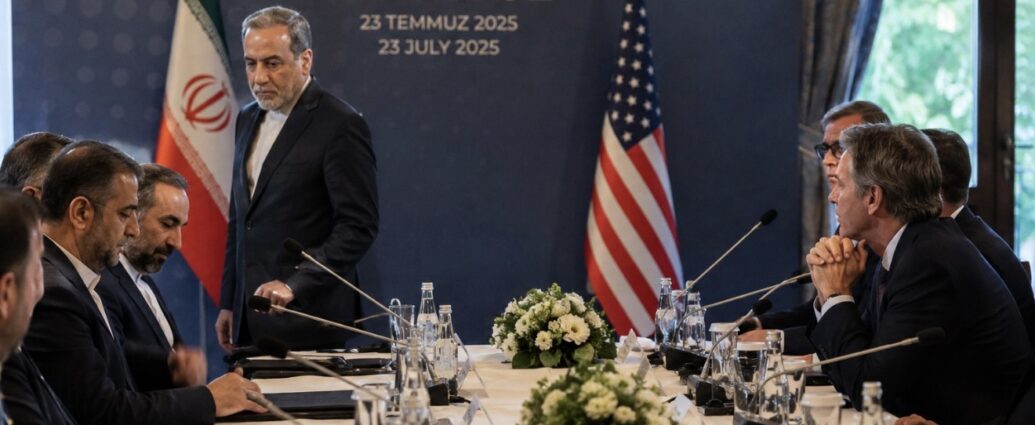
Iran Walks Out of Talks After Trump Threat, Reviving Oil Fears
Iran’s negotiating team walked out of peace talks in Switzerland on Sunday after President Trump threatened fresh military strikes, throwing a week-old agreement to end the U.S.-Iran war into doubt. Iranian state media said the delegation left the Bürgenstock Resort near Lucerne and gave no date for returning.
The break followed a post Trump published on social media. He demanded Iran rein in its proxies in Lebanon and warned, “we’ll hit Iran very hard again, just like we did last week, only harder.” In a separate Fox News interview, he said the U.S. could resume bombing and even seize the Strait of Hormuz if no deal is reached.
Tehran’s complaint is that the threat itself broke the rules. The preliminary deal both sides signed on Wednesday bars them from attacking or even threatening each other, and Iranian media called Trump’s words a violation. The president, for his part, says Iran is the one not keeping its word.
For families watching their wallets, the real story sits in a narrow stretch of water. The Strait of Hormuz, between Iran and Oman, carries about a fifth of the world’s oil plus large volumes of natural gas and fertilizer ingredients. Iran announced on Saturday that it had closed the waterway again, blaming continued Israeli strikes in Lebanon. U.S. Central Command said ships were still moving through. Most of that oil heads to Asia, so a prolonged shutdown ripples through global supply long before it fully hits American shores.
That standoff lands at the gas pump. Oil had been falling fast on hopes the war was ending — Brent crude, the global benchmark, closed near $80 a barrel on Friday, down about 8% for the week and back near pre-war levels. A breakdown in Switzerland could reverse that. At the height of the war, average U.S. pump prices jumped more than a dollar a gallon and topped $4 across much of the country, and a Brown University tracker estimates the conflict has already cost the typical household over $250 in added energy bills.
The agreement was meant to wind the war down over 60 days. It reopens the Strait of Hormuz, sets up negotiations on Iran’s nuclear program, and — in a clause Tehran pushed for — calls for an end to the fighting in Lebanon. It was never a full peace treaty, more a roadmap both governments agreed to negotiate inside of. That last piece is what blew up. Rather than discussing the nuclear file the U.S. wanted to tackle, the talks had already been pulled toward the Lebanon flare-up before they stalled.
U.S. officials insisted the deal was not dead. Vice President JD Vance, who arrived in Switzerland early Sunday, told reporters there had been “great progress” and said he felt good about Lebanon. A U.S. official said the two sides expected to work through the night to keep the framework alive. Pakistan and Qatar, the mediators, were again leaning on Iran to return, with Pakistani Prime Minister Shehbaz Sharif and International Atomic Energy Agency chief Rafael Grossi on hand.
Iran’s leaders gave little ground. President Masoud Pezeshkian said his country “will never back down from the right to enrich uranium.” Tehran says its nuclear work is peaceful, though inspectors note it has enriched uranium well past the level needed for civilian use.
The hardest knot remains Lebanon. Israel and Hezbollah announced a ceasefire on Friday but kept trading fire into the weekend, and Israel has said it will keep fighting as long as Hezbollah does. Notably, Trump and Vance spent part of last week venting frustration at Israel, blaming a heavy-handed Israeli strike for nearly wrecking the deal — a rare public split between the two governments.
For businesses and households, it is the same nerve-racking rhythm: a deal that looks finished, a threat that knocks it loose, and an oil market that lurches on every headline. Whether gas stays near current levels or climbs again depends on what happens in a Swiss resort this week — and on whether the guns finally fall silent in Lebanon.
JBizNews Desk | New York
© JBizNews.com All Rights Reserved. Reproduction or distribution without written permission is prohibited.

SpaceX Prepares $20 Billion Bond Sale to Refinance Debt After Record IPO
SpaceX bankers on Thursday, June 18, 2026, began preparing investor calls for what could become one of the largest corporate bond offerings of the year.
The planned $20 billion or larger debt sale would refinance borrowing tied to the company’s xAI acquisition while providing additional funding for future artificial intelligence expansion following its record-setting public debut, according to people familiar with the planning and rating agency announcements.
SpaceX completed the largest U.S. IPO on record on June 12, raising $75 billion at $135 per share and pushing the company’s valuation above $2 trillion. The listing made founder Elon Musk the world’s first trillionaire on paper.
On June 16, the company announced a $60 billion all-stock acquisition of Anysphere, maker of the Cursor AI coding assistant. The deal further expanded SpaceX’s ambitions in artificial intelligence while adding to its financing needs.
The bond proceeds will primarily refinance a $20 billion bridge loan secured following the February acquisition of xAI. That loan represents most of the company’s $29.1 billion in long-term debt and is scheduled to mature in September 2027.
Additional funds are expected to support AI expansion, including investments in data centers, computing infrastructure, and specialized hardware.
Investment-grade ratings from Moody’s, Fitch, and S&P Global Ratings cleared the way for the offering and should help lower borrowing costs. The transaction is being arranged by Bank of America, Citigroup, JPMorgan Chase, Goldman Sachs, and Morgan Stanley, with investor calls expected to begin next week.
The financing comes as SpaceX continues to post significant losses while pursuing growth across multiple business lines.
The company reported a net loss of $4.28 billion on revenue of $4.69 billion during the first quarter of 2026, compared with a loss of $528 million during the same period a year earlier.
For all of 2025, SpaceX recorded nearly $5 billion in losses. Its AI division alone contributed approximately $6.4 billion in losses as the company accelerated spending on next-generation technologies.
Investors have begun weighing those losses against the company’s long-term growth prospects.
Shares of SpaceX fell roughly 8.3% over June 17 and 18, erasing an estimated $620 billion in market value. Analysts cited concerns over valuation levels, profitability timelines, and future capital requirements.
Among those expressing caution were CreditSights analyst Matt Woodruff and Morningstar analyst Nicolas Owens, who recently lowered his fair-value estimate to $62 per share.
SpaceX generates most of its revenue from commercial launch services and Starlink, its satellite broadband network.
Starlink provides internet connectivity to households, businesses, and government customers in areas where traditional infrastructure is limited or unavailable. The service has expanded rapidly, but maintaining launch schedules and growing the satellite constellation requires substantial ongoing investment.
The new financing helps support those efforts while extending the company’s debt maturity profile.
For investors, the bond sale will serve as a major test of demand for high-growth technology debt. Strong demand would signal confidence in SpaceX’s long-term strategy and could encourage similar financing activity across the sector. Weaker demand could increase borrowing costs for other ambitious technology companies.
Suppliers involved in aerospace manufacturing, satellite production, artificial intelligence infrastructure, and data-center construction could benefit if the company maintains its current pace of investment.
Workers in engineering, software development, artificial intelligence, and operations roles may also see continued opportunities as SpaceX expands across multiple business lines.
Consumers who rely on Starlink for internet access in remote areas could ultimately benefit from network improvements supported by ongoing investment.
What happens next will be determined by investor demand, final pricing, and the successful completion of the bond offering. SpaceX is also expected to provide future updates on launch activity, Starlink growth, and progress across its artificial intelligence initiatives.
The broader significance extends beyond a single financing transaction. The offering will help show whether public debt markets remain willing to fund highly valued companies that are investing heavily today in pursuit of long-term growth.
The big picture is that SpaceX must balance rapid innovation with financial discipline. The bond sale provides breathing room on near-term debt obligations while supporting the company’s ambitions in space exploration, satellite communications, and artificial intelligence. The outcome will matter not only to investors, but also to suppliers, workers, business owners, and consumers connected to the company’s growing ecosystem.
JBizNews Desk | New York
© JBizNews.com All Rights Reserved. Reproduction or distribution without written permission is prohibited.


