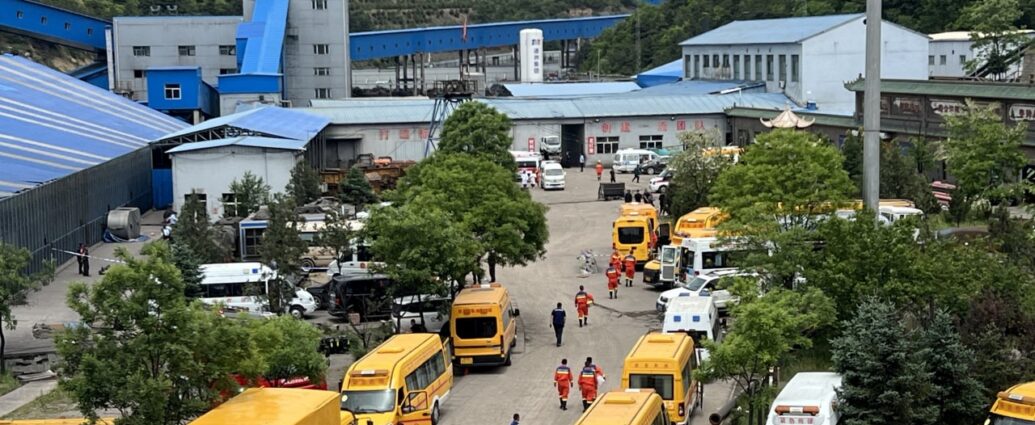
China Coal Mine Explosion Kills at Least 82
2026-05-24

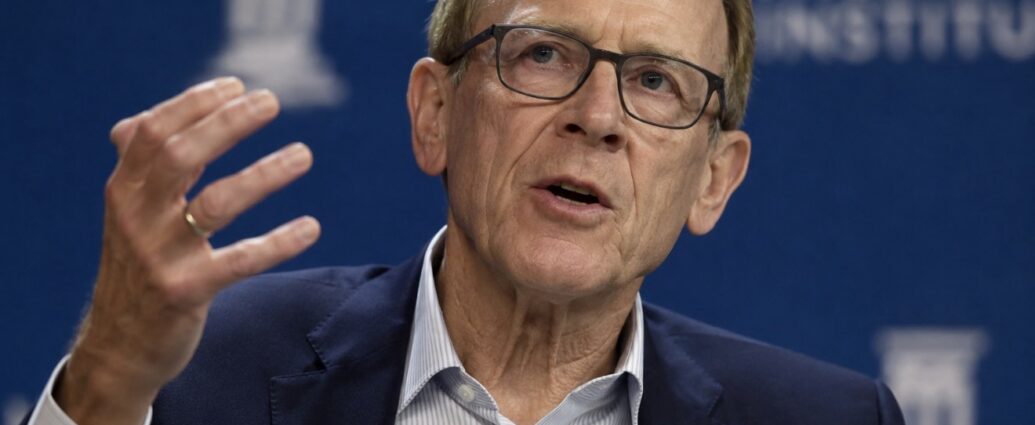
John Doerr, the Kleiner Perkins chairman who wrote the 1999 check that turned Google into a $3.89 trillion company, said in a Wall Street Journal interview published Saturday, May 23, 2026, that artificial intelligence is the “biggest thing ever, since everything” and that the technology, far from being overhyped, “has been underhyped.”
The comments cut directly against a growing chorus of skeptics on Wall Street.
Doerr, 74, has tracked what he calls innovation “tsunamis” through five decades in venture capital. His timeline runs from the 1980 personal computer and microchip revolution, to the 1990s internet and browser wave, to the iPhone and cloud era of the late 2000s. By his reckoning, the tsunamis arrive roughly every 13 years. The current AI wave, he told the Journal, is bigger than all of them.
“We don’t know how AI is going to shape the new world of education, employment, healthcare — life as we know it,” Doerr said. “There is an insatiable hunger and appetite for electrons, and as in previous tsunamis, there will be winners and there will be losers.”
The interview lands at a tense moment in markets. Microsoft has guided to roughly $80 billion in AI-related capital spending in fiscal 2025, Alphabet to about $75 billion, Meta Platforms to as much as $65 billion, and Amazon to more than $100 billion. Nvidia, the chipmaker powering most of that buildout, has added trillions of dollars in market capitalization since OpenAI launched ChatGPT in late 2022. MIT economist Daron Acemoglu and Goldman Sachs head of global equity research Jim Covello have argued AI’s productivity payoff is being overestimated and that current spending resembles a classic late-cycle bubble. Doerr’s “underhyped” call comes from the investor who made the same contrarian bet on the internet in the late 1990s and was vindicated despite the dot-com crash.
Doerr backed his AI thesis with a striking adoption number. Three years after ChatGPT’s launch, 50% of Americans now say they use generative AI — a curve that has compressed into roughly half the time the consumer internet took to reach comparable scale. “The value creation is off the charts,” he told the Journal.
His current investing focus, he said, is funding entrepreneurs using AI in two areas: the climate transition and healthcare. He has invested in both sectors for nearly two decades, first through Kleiner Perkins, where he became chairman in 2016, and now also through his family office. His most recent disclosed AI investment, Hippocratic AI, a medical large language model company, closed a Series C round in November 2025. He remains on the board of Alphabet.
The interview produced Doerr’s sharpest line yet on what venture capital actually is. “At its heart, the venture-capital business is a human-capital business,” he said. That framing, he explained, is why he stayed out of cryptocurrency. He did not see human capital “playing a powerful role in the kind of innovation and market development.” He added that “there is still plenty of time for me to be wrong in that judgment.”
Doerr was also frank about his misses. After backing both the Segway and the failed electric-car maker Fisker, he said his partners reminded him of a venture saying: “never invest in anything with wheels.” He missed Tesla, now the world’s most valuable automaker under chief executive Elon Musk. But he reframed the lesson in the asymmetric math of venture investing. “You can only lose one time your money. You can make many times it if you get it right.”
The Google story remains the defining moment of his career. Doerr met Larry Page and Sergey Brin in 1999 at Google’s birthplace, a garage in Menlo Park. He wrote a $12 million check for 12% ownership at a $100 million valuation — at the time, the largest check at the highest price his firm had ever written. The investment is now worth nearly $470 billion on paper at Alphabet’s current market capitalization. “What made me fall off my chair was how big Larry and Sergey thought improving search could be,” Doerr told the Journal. “They saw something the rest of us hadn’t yet.”
That ability to back founders who see further is, in Doerr’s view, the entire job. The most amazing entrepreneurs, he said, “see the world differently than everyone else. They are fluent in using technology to change that world.” They are good recruiters and even better sellers — selling their vision to teammates, to customers, and to investors. His first filter when meeting a founder: “Would I mind getting into trouble with them?” Because no matter how successful a venture looks from the outside, “you take the lid off the can and inside it’s a can of worms.”
Doerr also made the broader economic case for venture capital. Over the last half-century, he noted, venture-backed companies accounted for 81% of patents issued to U.S. public companies by the U.S. Patent and Trademark Office. There were 5.3 million jobs at VC-backed companies in 2022 alone. “That isn’t an accident,” he said. “That’s a structural phenomenon that America enjoys.”
For investors, the immediate signal from the WSJ interview is not a trading call. Doerr’s comments will not move single names the way an analyst upgrade does. But the message will land in capital-allocation rooms. Major endowments, sovereign wealth funds, and pension plans take cues from venture capital legends in setting long-horizon technology weights. PitchBook data show U.S. venture deployment to AI startups held at record levels through the first quarter of 2026, with OpenAI, Anthropic, xAI, Mistral AI, and Perplexity all attracting multibillion-dollar rounds.
The political dimension is also live. Doerr has been an active voice in Washington, urging more federal AI research funding and faster deployment across U.S. industry. White House AI czar David Sacks has echoed parts of that framing, warning the U.S. risks losing the global AI race through what he calls “pessimism.” International Monetary Fund managing director Kristalina Georgieva in January separately warned of an AI “tsunami” coming for young workers and entry-level jobs. The same word now spans both bullish and cautionary takes on the technology.
Doerr bet against consensus on the internet in the 1990s, and the consensus was wrong. He has now placed the same bet on AI. Wall Street will spend the rest of this decade finding out whether the man who saw Google first has seen this one too.
— JBizNews Desk
© 2026 JBizNews. All Rights Reserved. Reproduction or distribution without written permission is prohibited.
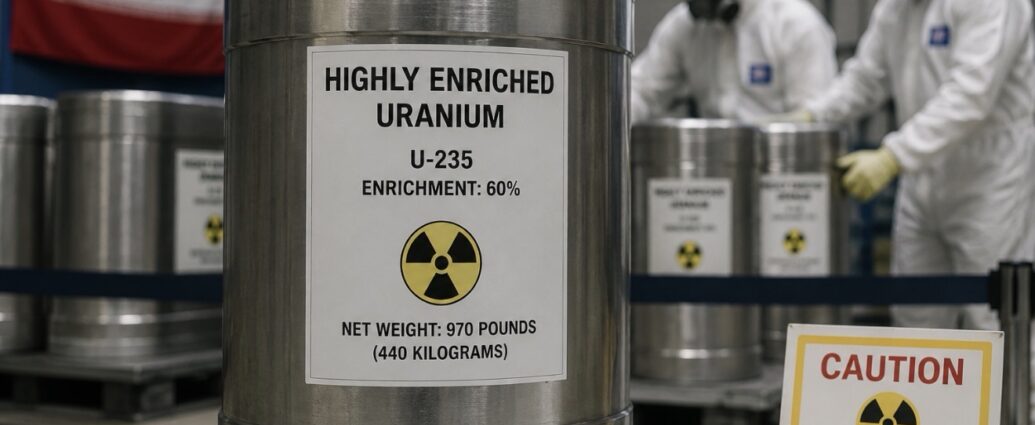
DEVELOPING — Saturday, May 23, 2026. Iran has agreed to relinquish its entire stockpile of highly enriched uranium as part of a framework agreement with the United States to end the months-long war, two senior U.S. officials told the New York Times on Saturday, marking a significant nonproliferation concession from Tehran and setting the stage for a meaningful repricing across global energy, equity, and shipping markets.
The breakthrough disclosure landed hours after President Donald Trump announced earlier Saturday that an agreement with Iran “has been largely negotiated,” telling reporters that calls he held overnight with Prime Minister Benjamin Netanyahu and a separate group of Middle Eastern leaders had gone well. Trump indicated the framework includes the reopening of the Strait of Hormuz — the critical maritime artery Tehran has largely blocked since the war’s outbreak roughly three months ago — and said a formal announcement could come “shortly.”
Trump had confirmed the contours of the uranium arrangement Thursday outside the White House, telling reporters, “We will get it. We don’t need it, we don’t want it. We’ll probably destroy it after we get it, but we’re not going to let them have it.” The 970-pound stockpile of uranium enriched to 60 percent purity — roughly 440 kilograms, just short of the 90 percent threshold required for weapons-grade material — has been the central sticking point in mediated negotiations conducted through Oman and Pakistan. Iran’s Parliament Speaker Mohammad Bagher Ghalibaf met with Pakistan Army Chief Syed Asim Munir in Tehran on Saturday, underscoring Islamabad’s role as a back-channel mediator.
According to the U.S. officials cited by the Times, Iran has committed only in a general statement to giving up the uranium, with the precise mechanism for transfer or downblending to be worked out in negotiations expected to follow a formal cessation of hostilities. The development comes despite a directive issued earlier in the week by Iran’s supreme leader, Ayatollah Ali Khamenei, that the near-weapons-grade material should not be sent abroad — a position that had whipsawed crude markets and rattled traders through Friday’s session. Iranian state media on Saturday also publicly contradicted Trump’s characterization of the Hormuz terms, insisting the waterway will remain under Iranian management, raising fresh questions about the durability of the framework.
Oil futures had already begun pricing the diplomatic thaw before Saturday’s reports. International benchmark Brent crude futures settled at $103.54 per barrel Friday, while U.S. West Texas Intermediate closed at $96.60, capping a week in which Brent lost more than 5 percent and WTI shed more than 8 percent. The declines followed Trump’s announcement Monday that he had called off imminent strikes on Iran at the request of U.S. Gulf Arab allies to give diplomacy additional runway.
U.S. Secretary of State Marco Rubio said Thursday there were “good signs” that an agreement to end the conflict is in sight, though he warned any deal would be “unfeasible” if Iran pursues measures to permanently control shipping through the Strait of Hormuz. The waterway, through which roughly a fifth of global crude transits, remains the second major sticking point. Tehran is reportedly working with Oman on a framework for a permanent toll system that would formalize Iranian control over maritime traffic — a proposal Trump has flatly rejected, insisting the strait remain open, free, and untolled.
The economic stakes of a final agreement are substantial. Analysts at SEB have estimated that sanctions relief tied to a nuclear accord could unlock an additional 800,000 barrels per day of Iranian crude for global markets, a development SEB analyst Ole Hvalbye called “undeniably bearish” for prices. Combined with the prospective reopening of the Strait of Hormuz to unimpeded traffic, a sustained agreement could pull Brent well below the $90 mark and ease the inflationary pressure that has dogged the Federal Reserve’s rate path through the spring.
Equity markets, particularly transportation, airline, refining, and consumer discretionary sectors hammered by elevated fuel costs since the war’s outbreak in February, stand to benefit from any durable de-escalation. Delta Air Lines, United Airlines, and American Airlines have all flagged jet fuel as a material drag on quarterly margins, while shipping giants A.P. Moller-Maersk and Hapag-Lloyd have absorbed surcharges and rerouting costs tied to Hormuz disruption. Conversely, U.S. shale producers including ExxonMobil, Chevron, ConocoPhillips, Pioneer Natural Resources, and Diamondback Energy, which have enjoyed a war-driven premium on every barrel, face compressed realized prices if Iranian supply returns at scale.
The proposed framework, according to multiple reports citing officials with knowledge of the talks, contemplates an immediate end to hostilities followed by a two-month negotiating window on the technical specifics of Iran’s nuclear program. The Financial Times reported that Trump is also demanding Iran dismantle its three principal nuclear sites — Natanz, Fordow, and Isfahan — all of which were struck by U.S. B-2 bombers in the opening phase of the war. CBS News reported that the proposal additionally includes the release of certain Iranian assets currently frozen in foreign banks, a concession likely to draw scrutiny from congressional hawks. Senior GOP senators on Saturday publicly criticized the reported terms as a “nightmare for Israel.”
For Iran, the economic case for capitulation is acute. The country’s oil exports, refining capacity, and banking sector have been crippled by both kinetic strikes and tightened secondary sanctions, and reopened access to international markets would deliver an immediate fiscal lifeline to a regime under sustained pressure. Oman Foreign Minister Badr al-Busaidi said earlier in the negotiations that Iran had effectively accepted the principle of “zero stockpiling” and that the existing material would be “downblended to the lowest level possible” and converted into irreversible reactor fuel.
Skeptics caution that prior Iranian commitments on enrichment have repeatedly unraveled and that the absence of detailed transfer protocols leaves room for backsliding. The Washington Post noted that Tehran’s pledge not to seek a nuclear weapon carries limited weight given its longstanding insistence that its program was never weapons-oriented to begin with. Israeli officials have warned that anything short of physical removal of the 440-kilogram stockpile would render the war, in the words of one senior Israeli military official, “one big failure.”
For markets, the asymmetry of outcomes is stark. A signed agreement removing both the nuclear overhang and the Hormuz chokepoint could trigger a sharp decline in crude prices, with knock-on relief for equities, bonds, and the dollar. A breakdown — particularly one driven by Khamenei’s reported intransigence on physical transfer, or Iranian state media’s Saturday repudiation of Trump’s Hormuz characterization — would send Brent sprinting back toward the highs above $115 per barrel that WTI touched in early April when Trump’s initial ultimatum expired.
Traders will return Tuesday from the U.S. holiday weekend to a market priced for cautious optimism but acutely sensitive to any signal — from Tehran, Washington, or the mediators in Muscat and Islamabad — that the framework is either firming or fraying. The next 72 hours of headlines will likely set the tone for crude, equities, and the inflation trajectory through the second half of the year.
— JBizNews Desk
© 2026 JBizNews. All Rights Reserved. Reproduction or distribution without written permission is prohibited.
By JBizNews Desk
ABU DHABI — May 23, 2026
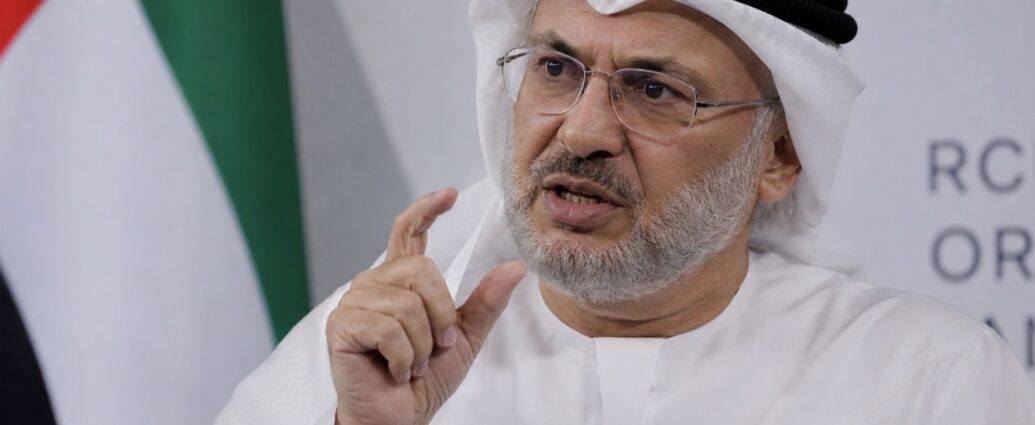
Anwar Gargash, Diplomatic Adviser to the President of the United Arab Emirates, on Thursday delivered the UAE’s sharpest public rebuke yet of Iran’s latest attempt to assert authority over the Strait of Hormuz, dismissing Tehran’s newly declared maritime jurisdiction as a fantasy born of military defeat and accusing the Islamic Republic of decades of regional “bullying” that destroyed Gulf trust.
The immediate trigger was a newly published Iranian maritime map. Iran’s Persian Gulf Strait Authority — a body established by Tehran on May 5 during the current ceasefire with the United States — released what it described as an official “regulatory jurisdiction” zone governing traffic through the Strait of Hormuz. The map outlined an area stretching from the Iranian coast near Kuh-e Mubarak to southern Fujairah in the UAE on the eastern side, and from Qeshm Island toward Umm Al Quwain on the western side. Tehran declared that vessels moving through the corridor must coordinate passage with Iranian authorities.
The claim directly overlaps with Emirati maritime space and places shipping approaches to Fujairah’s strategic oil infrastructure — designed specifically to bypass Hormuz chokepoints — under asserted Iranian oversight.
Gargash responded publicly within hours on X, writing in Arabic that Iran was attempting to “solidify a new reality born from an obvious military defeat.” He called Iranian ambitions to dominate the strait or infringe on UAE sovereignty “nothing but pipe dreams,” adding that Gulf states had endured Iranian “bullying” for decades while Tehran simultaneously issued contradictory messages of friendship.
He said restoring trust would require genuine respect for sovereignty, responsible rhetoric, and a true commitment to regional neighborliness.
The remarks significantly escalate the diplomatic language coming from Abu Dhabi and underscore how seriously Gulf governments are treating Tehran’s latest maritime claims following months of regional conflict and disruption to global energy flows.
The UAE Ministry of Foreign Affairs had already rejected Iranian accusations that Abu Dhabi participated directly in the war, while Khalifa Shaheen Al Marar, the UAE Minister of State, warned at the BRICS Foreign Ministers’ Meeting that using the strait as a mechanism of economic coercion amounted to piracy under international norms.
Al Marar also invoked Article 51 of the United Nations Charter, declaring that the UAE retains the sovereign right to defend its territory, residents, infrastructure, and shipping lanes.
The confrontation has rapidly expanded beyond bilateral rhetoric into an organized Gulf diplomatic campaign.
According to Bloomberg, five Gulf states — Saudi Arabia, the United Arab Emirates, Bahrain, Kuwait, and Qatar — jointly submitted a formal letter to the International Maritime Organization instructing commercial operators not to recognize Iran’s Persian Gulf Strait Authority or comply with Tehran-designated transit routes through Hormuz.
The IMO had already convened an extraordinary session earlier this month in which more than 115 member states co-sponsored a resolution condemning Iranian threats against international shipping and opposing any attempted closure or unilateral control of the strait. UAE officials described the resolution as the largest show of support in the organization’s history on a Gulf maritime issue.
The stakes extend far beyond regional politics.
The Strait of Hormuz remains one of the most economically sensitive waterways on earth, carrying roughly one-fifth of global oil supplies along with major volumes of liquefied natural gas, petrochemicals, and fertilizer shipments. Since the outbreak of the U.S.-Israeli conflict with Iran on February 28, insurance costs, shipping rates, and naval tensions throughout the Gulf have surged sharply.
Reuters previously reported that Iran has begun implementing a layered clearance process for commercial ships moving through Hormuz, including extensive vetting procedures, state-level approvals in some cases, and fees tied to secure passage guarantees.
That creates an increasingly dangerous operational reality for global shipping companies and energy traders.
Commercial vessel owners are now caught between competing sovereign claims over the same strategic waterway: Gulf governments and the broader international maritime community rejecting Iran’s authority, while Tehran attempts to impose de facto enforcement on the water itself.
For Gulf leaders, the dispute is increasingly about who defines the post-war balance of power in the region.
For energy markets, it is about whether one of the world’s most critical trade arteries can continue functioning without military escalation.
And for global shipping operators, the unresolved question remains immediate and practical: whether vessels can safely navigate Hormuz without becoming entangled in a widening geopolitical confrontation between Iran and its Gulf neighbors.
© 2026 JBizNews. All Rights Reserved. Reproduction or distribution without written permission is prohibited.

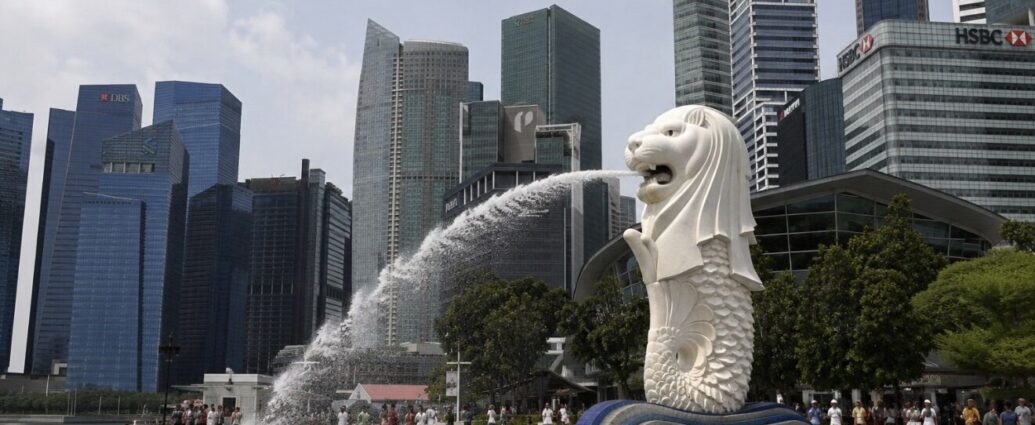
Singapore is once again Southeast Asia’s biggest stock market, overtaking Indonesia after a sharp rally in Singapore shares and a difficult year for Indonesia’s markets and currency.
For everyday readers, the shift highlights how quickly global investors move money between countries when concerns about political stability, economic policy and financial markets begin to grow.
Singapore’s benchmark stock index, the Straits Times Index, climbed to a new record Tuesday, helping push the city-state ahead of Indonesia in total market value for the first time in years.
The rally has been fueled by investors looking for safer places to park money during growing global uncertainty tied to the Iran war, rising oil prices and volatility across emerging markets.
Singapore has increasingly benefited from its reputation as one of Asia’s most stable financial centers.
Its stock market is dominated by large banks, real estate firms and dividend-paying companies that investors often view as safer during turbulent periods.
The Singapore dollar has also remained relatively strong compared with many other Asian currencies, making Singapore assets more attractive to international investors.
Indonesia, meanwhile, has faced mounting pressure on several fronts.
Its stock market has struggled this year, while the Indonesian rupiah has hovered near record lows against the U.S. dollar. Foreign investors have also become increasingly worried about government policy, central bank independence and corporate governance standards.
Those concerns intensified after Indonesian President Prabowo Subianto appointed his nephew to a senior central bank role earlier this year, raising questions among investors about political influence over monetary policy.
Global index provider MSCI later warned Indonesia could risk losing its “emerging market” status if governance concerns are not addressed.
That matters because many large investment funds automatically buy or sell stocks based on those global index classifications.
If Indonesia were downgraded, billions of dollars could eventually flow out of the country’s stock market as index funds adjust their holdings.
Indonesia’s economy is also being hurt by high energy prices.
Although the country exports many commodities, it still imports large amounts of oil. Rising energy costs tied to Middle East instability have increased pressure on inflation and the country’s currency.
Meanwhile, slowing growth in China — one of Indonesia’s biggest trading partners — has added further economic strain.
Singapore’s rise reflects a broader trend happening globally:
during uncertain periods, investors often move money toward countries seen as politically stable, financially predictable and institutionally strong.
That has helped Singapore attract capital not only into its stock market, but also into private banking, real estate, hedge funds and family offices over the past several years.
The competition between Singapore and Indonesia has become symbolic of two very different investment stories in Southeast Asia.
Indonesia has traditionally offered faster economic growth and access to natural resources and consumer expansion.
Singapore, by contrast, offers stability, strong financial regulation and global investor confidence.
In strong economic periods, investors often favor faster-growing emerging markets like Indonesia.
During periods of global stress, many rotate back toward safer financial hubs like Singapore.
Analysts say that dynamic has accelerated sharply in 2026.
Despite Singapore reclaiming the top spot regionally, Southeast Asia’s markets remain relatively small compared with the world’s biggest companies and exchanges.
Several U.S. technology giants individually hold larger market values than entire Southeast Asian stock markets.
Still, the regional battle matters because global investors increasingly view Southeast Asia as an important long-term growth region amid slowing growth in China and higher valuations in India.
For Indonesia, regaining investor confidence may depend on restoring trust in economic management and avoiding further governance controversies.
For Singapore, the latest rally reinforces its position as Southeast Asia’s financial capital at a moment when investors globally are prioritizing stability over risk.
And in today’s market environment, stability is commanding a premium.
— JBizNews Desk
© JBizNews.com. All rights reserved. This article is original reporting by JBizNews Desk. Unauthorized reproduction or redistribution is strictly prohibited.
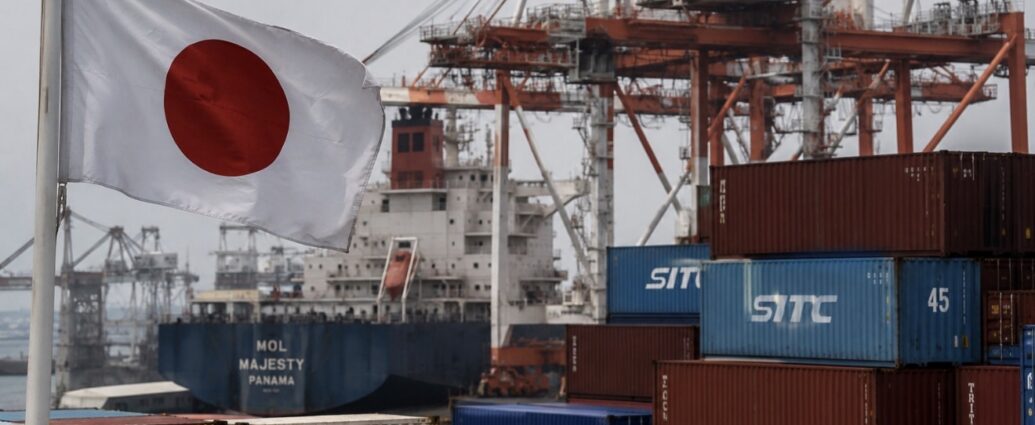
Japanese exports surged 14.8% year over year in April, marking the fastest monthly growth pace since January and significantly exceeding the 9.3% increase economists surveyed by Reuters had expected, according to data released Wednesday by Japan’s Ministry of Finance.
The strength came overwhelmingly from semiconductors and AI-linked industrial demand.
Semiconductor exports jumped 41.6% from a year earlier, reinforcing the view among investors and economists that the global artificial-intelligence infrastructure buildout continues accelerating despite tariffs, geopolitical tensions, and higher energy prices.
Exports to China, Japan’s largest trading partner, rose 15.5%, while exports to the United States climbed 9.5%, recovering after months of tariff-related weakness earlier this year.
Imports increased 9.7%, also above forecasts, while Japan’s monthly trade deficit narrowed to 301.9 billion yen from 643 billion yen in March. The yen strengthened modestly following the release, trading near 158.88 per dollar.
The report underscores Japan’s growing importance in what many analysts now describe as the global “AI Giga-Cycle” — the massive multiyear expansion in spending on data centers, semiconductor fabrication plants, AI chips, and supporting industrial infrastructure.
Japanese companies sit directly at the center of that supply chain.
Firms including Tokyo Electron, Screen Holdings, Disco Corp., Advantest, and Renesas Electronics manufacture many of the advanced tools and testing systems required by chipmakers such as Taiwan Semiconductor Manufacturing Co., Samsung Electronics, SK Hynix, Micron Technology, and Intel Corp.
Demand for lithography, etching, deposition, wafer testing, and advanced semiconductor packaging equipment has surged alongside spending by U.S. technology giants racing to expand AI capacity.
The Tokyo Stock Exchange’s semiconductor-related shares have rallied sharply this year as investors increasingly view Japanese industrial suppliers as one of the clearest global beneficiaries of AI infrastructure spending.
Still, economists warn the export boom may not fully shield Japan’s broader economy.
Norihiro Yamaguchi, lead Japan economist at Oxford Economics, told CNBC this week that while “gains in exports due to robust IT demand could provide some short-term support,” elevated energy costs and geopolitical uncertainty continue weighing on household spending and business investment.
Japan’s economy grew at an annualized 2.1% pace in the first quarter, above the 1.7% Reuters consensus forecast. But the Bank of Japan has simultaneously cut its full-year fiscal 2026 growth outlook to 0.5% from 1.0% while sharply raising its core inflation forecast to 2.8% from 1.9%, citing the economic shock from the Iran conflict and rising global energy costs.
The trade data also reflects a broader shift in global commerce.
Over the past year and a half, Japanese exports have become increasingly tied to Asian industrial demand rather than traditional Western consumer spending. Shipments to China, Taiwan, South Korea, and Southeast Asia are now deeply connected to semiconductor-fabrication expansion tied directly to AI-related infrastructure investment.
At the same time, the Trump administration’s revised trade arrangement with Japan appears to be stabilizing export flows to the United States.
Earlier this year, Japanese exports to the U.S. had declined as much as 5% amid tariff tensions before rebounding after Washington finalized a bilateral trade framework capping Japanese auto and industrial tariffs at 15%.
That agreement also included a massive Japanese investment commitment into the United States.
Japan pledged approximately $550 billion in U.S. investment under the framework, with an initial $36 billion tranche approved for projects including energy infrastructure, semiconductor-related synthetic-diamond production, and natural-gas export facilities.
Commerce Secretary Howard Lutnick has repeatedly described the arrangement as a model for future bilateral trade negotiations designed to attract foreign industrial capital into American manufacturing.
For U.S. investors, the Japanese export surge carries direct implications for the AI trade dominating equity markets.
Strong semiconductor-equipment exports to China and Taiwan signal that capital spending by hyperscalers including Microsoft Corp., Alphabet Inc., Amazon.com Inc., Meta Platforms Inc., and Oracle Corp. remains elevated. Combined AI-related capital expenditures among those firms are projected near $725 billion in 2026, up sharply from roughly $410 billion a year earlier.
That spending supports not only Japanese suppliers but also U.S.-listed semiconductor-equipment firms including Applied Materials Inc., Lam Research Corp., KLA Corp., and ASML Holding NV, along with the broader Philadelphia Semiconductor Index.
The largest near-term risk remains energy.
Japan imports nearly all of its crude oil, much of which historically passes through the Strait of Hormuz. President Donald Trump said earlier this week that he postponed potential military action against Iran to allow diplomatic negotiations to continue.
WTI crude traded near $98.96 per barrel Wednesday, while Brent crude remained near similar levels.
For Japanese households, the export surge offers mixed news. Stronger semiconductor demand is helping support corporate profits and the yen, potentially easing imported inflation pressures. But rising energy costs continue weighing heavily on consumer budgets, food prices, and household purchasing power.
For American businesses and investors, however, the signal from Tokyo is clearer.
The AI infrastructure buildout powering global equity markets is still accelerating. Semiconductor bottlenecks that worried investors a year ago — including wafer capacity, advanced packaging, and equipment shortages — are increasingly being addressed through expanding industrial output across Japan and Asia.
The data also provides a political boost for the White House’s trade strategy.
Japan’s 9.5% export increase to the United States occurred under the revised tariff framework, giving the Trump administration a concrete example it can point to as it negotiates trade arrangements with the European Union, South Korea, and India.
For now, the message from Tokyo remains straightforward: global AI demand continues pulling aggressively on every supply chain connected to semiconductor production — and Japan remains one of the most critical links in that chain.
— JBizNews Desk
© JBizNews.com. All rights reserved. This article is original reporting by JBizNews Desk. Unauthorized reproduction or redistribution is strictly prohibited.
By JBizNews Desk
New York, Thursday, May 21, 2026
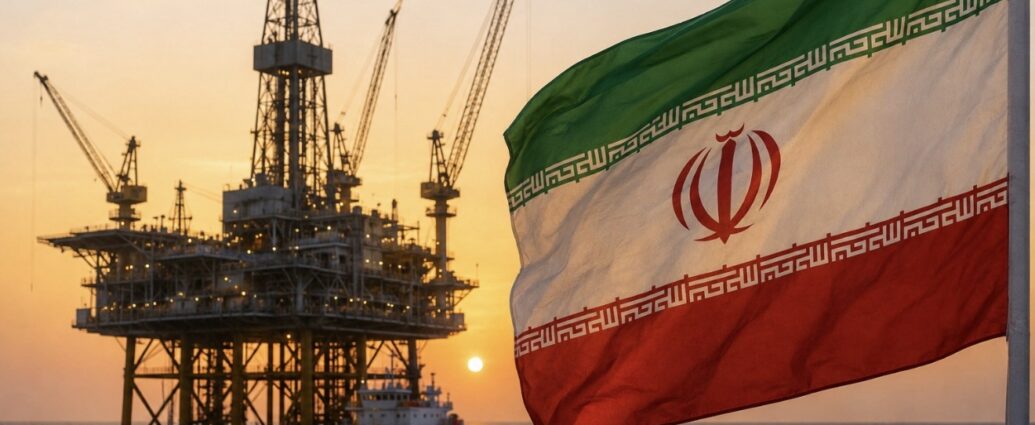
Oil prices spiked and U.S. stocks turned lower in midday trading Thursday after Reuters reported that Iranian Supreme Leader Ayatollah Mojtaba Khamenei issued a directive ordering that the country’s stockpile of near-weapons-grade enriched uranium cannot be shipped outside Iran, a hard line that directly contradicts the central American demand for ending the war.
Two senior Iranian sources confirmed the directive to Reuters. The White House has repeatedly told mediators that the removal of Iran’s enriched uranium stockpile is a non-negotiable condition for any peace deal, and President Donald Trump has personally assured Israeli officials that any agreement would include the transfer of the material out of Iranian hands.
West Texas Intermediate crude jumped as much as 4% in early trading, crossing $102 per barrel before pulling back to roughly $101.04, up about 2.9% on the day. Brent crude rose as much as 3.5% to $108.50 before settling near $107.36, a gain of 2.3%. The S&P 500 fell 0.45%, the Dow Jones Industrial Average dropped 0.48%, and the Nasdaq slid 0.50%. The Russell 2000 was the only major U.S. equity index in positive territory, up 2.56%, as small-cap energy names rallied on the crude move.
Trump told reporters at Joint Base Andrews on Wednesday that he was prepared to resume military action against Iran if the regime did not provide “100 percent good answers” in the current round of talks, but said he was willing to give diplomacy “a couple more days.”
“We’re all ready to go,” Trump said, referring to U.S. military assets in the region.
Earlier in the week, Trump said he called off an imminent strike package against Iranian targets at the request of Gulf Arab allies.
The market reaction was sharpened by a parallel warning from the International Energy Agency. Executive director Fatih Birol told reporters Thursday that the global oil market will enter a “red zone” this summer if the Strait of Hormuz does not reopen, with global crude inventories set to deplete as travel and air-conditioning demand picks up.
Iran has held the strait closed since early March, cutting traffic by more than 95% and pushing global oil supply chains into the worst disruption on record.
“Meanwhile, the Strait of Hormuz remains shut, another 14 million barrels of oil has failed to make it to market, and the first two months on the Brent curve are trading over $100,” said Robert Yawger, director of energy futures at Mizuho.
The combination of physical supply loss, a hawkish nuclear posture from Tehran and the IEA warning is rebuilding the geopolitical risk premium in crude that had been quietly fading over the past two weeks amid tentative ceasefire optimism.
Also weighing on equities was a 1.6% drop in shares of Nvidia, despite the chipmaker’s blockbuster earnings report Wednesday evening. Nvidia forecast second-quarter revenue of $91 billion and announced an $80 billion share repurchase authorization, but investors used the post-earnings strength to take profits. Treasury yields also rose across the curve, with the 10-year yield climbing on inflation concerns tied to higher oil prices.
For consumers, the math is straightforward and unwelcome. Every dollar increase in WTI crude typically translates to roughly 2.5 cents at the gas pump within two to three weeks. The move from $97 to $102 in a single session could add another 12 to 13 cents per gallon to gasoline prices by early June.
Airlines, trucking companies and food distributors that hedged jet fuel and diesel at lower levels in April are now watching those hedges expire into a higher-cost environment, with the pass-through to summer airfares and grocery prices already becoming visible.
Iranian officials are reportedly preparing a response to the latest American proposal, which Tehran’s ILNA news agency described as having “narrowed the gaps to some extent.” Whether that response includes any flexibility on the uranium question — the core issue in the negotiations — will determine whether markets are pricing in a genuine ceasefire path or a longer summer of $100-plus oil and renewed inflation pressure.
JBizNews Desk
© 2026 JBizNews. All rights reserved.
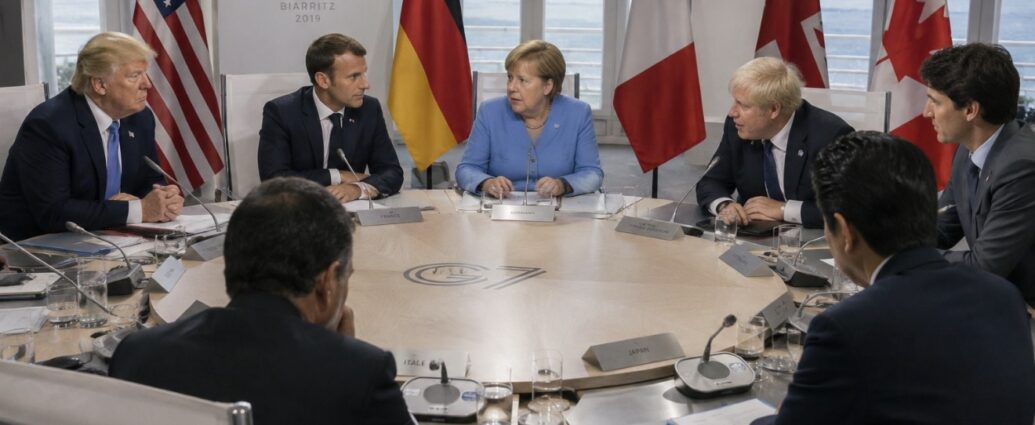
President Donald Trump will travel to the Group of Seven leaders’ summit in Évian-les-Bains, France, next month, a White House official confirmed Tuesday, ending weeks of speculation about whether the U.S. president would attend amid the sharpest transatlantic rift in years over the U.S. war with Iran, tariffs and the future of the global trading order.
The White House official told Axios, which first reported the announcement, that Trump intends to use the June 15–17 gathering at the French Alpine lakeside resort to press allies on a sweeping commercial agenda: linking U.S. foreign aid to trade deals, accelerating the global adoption of American-developed artificial intelligence platforms, breaking China’s stranglehold on critical mineral supply chains, fighting drug trafficking and illegal immigration, and lifting regulatory barriers to boost U.S. exports and fossil fuel production.
The official said the summit itself is not expected to produce finalized agreements but instead establish the framework for future trade and industrial partnerships among Western allies.
The confirmation lands at a moment of unusual strain between Washington and several of its closest allies. Trump’s attendance had remained uncertain amid growing frustration with G7 members including France, Germany, Italy and the United Kingdom over what the administration views as insufficient support for the U.S.-led campaign against Iran and the broader effort to secure global energy shipping routes.
Trump has repeatedly criticized European NATO members for relying on U.S. military force while failing to contribute meaningfully to operations protecting cargo vessels transiting the Strait of Hormuz, one of the world’s most critical energy chokepoints. European leaders have argued privately that they remain cautious about becoming directly entangled in the conflict, though several governments have indicated willingness to provide logistical or reconstruction support once hostilities subside.
French President Emmanuel Macron, whose government currently holds the rotating G7 presidency, has worked aggressively behind the scenes to ensure Trump attends the summit despite the tensions. Macron reportedly offered the American president a formal post-summit dinner at the Palace of Versailles — a highly symbolic gesture aimed at appealing to Trump’s appreciation for historic grandeur and state ceremony.
The summit schedule itself was adjusted earlier this year to accommodate Trump’s calendar, including events surrounding his 80th birthday celebrations in Washington on June 14.
For financial markets and corporate executives, however, the summit’s most important agenda item may not be diplomacy at all — but critical minerals.
Treasury Secretary Scott Bessent told reporters during preparatory meetings in Paris this week that the United States is pushing G7 nations to coordinate more aggressively against what he described as China’s dominance over strategic mineral supply chains. Bessent said the group is discussing shared inventory reserves, pricing floors and industrial policies designed to reduce Western dependence on Chinese-controlled rare earths and battery materials.
The issue has become central to U.S. industrial strategy as the artificial intelligence, electric vehicle, semiconductor and defense sectors compete for access to lithium, cobalt, nickel, graphite and rare earth elements required for advanced manufacturing.
French Finance Minister Roland Lescure framed the challenge in unusually blunt terms.
“We are facing significant challenges — war in the Middle East, multilateral imbalances that are not sustainable, and the stakes regarding rare earths and critical materials,” Lescure said ahead of the meetings.
The minister warned that no single country should again be allowed to dominate the supply of materials essential to modern industrial economies — a direct reference to China’s overwhelming market share across several critical mineral categories.
The AI component of the summit is equally significant for Wall Street.
The Trump administration is expected to push allies toward broader adoption of American-developed AI systems, cloud infrastructure and semiconductor technologies as Washington increasingly treats artificial intelligence leadership as a geopolitical and economic priority. Such efforts would effectively support U.S. technology giants including Nvidia, Microsoft, Alphabet, Meta Platforms, Oracle and Amazon as they compete globally against Chinese and European rivals.
The strategy aligns with the administration’s broader view that AI leadership is not simply a commercial race but a national-security imperative.
Iran will loom over every conversation.
Speaking at the “No Money for Terror” conference in Paris, Bessent urged allies to intensify sanctions enforcement against Tehran’s financial and shipping networks. He credited the administration’s “Operation Economic Fury” sanctions architecture with disrupting tens of billions of dollars in projected Iranian oil revenue and weakening Tehran’s ability to finance military and nuclear operations.
The Treasury Secretary specifically called on European governments to strengthen banking enforcement measures while urging Asian allies to crack down on Iran’s shadow tanker fleet used to circumvent sanctions.
But divisions inside the G7 remain substantial.
The United States recently extended a waiver allowing some purchases of Russian seaborne oil to support energy-vulnerable economies affected by the Iran conflict, frustrating several European officials who believe the move weakens broader sanctions pressure on Moscow.
European Economic Commissioner Valdis Dombrovskis acknowledged the disagreements publicly, saying G7 countries are “not always 100% aligned on everything.”
The economic backdrop heading into the summit remains fragile.
Global bond markets have been rattled by rising inflation tied to energy prices, while central banks across the developed world face increasing pressure over whether interest rates may need to remain elevated longer than previously expected. IMF Managing Director Kristalina Georgieva warned ministers in Paris against policies that could worsen economic instability, while European Central Bank President Christine Lagarde acknowledged persistent concern over inflation and financial conditions.
For investors, the summit carries unusually direct implications.
Any coordinated Western strategy around critical minerals could reshape supply chains across the electric vehicle, semiconductor, aerospace and defense industries. Expanded international adoption of U.S. AI infrastructure would strengthen the revenue outlook for America’s largest technology firms. And any shift in energy coordination or sanctions policy could materially affect oil markets already strained by the ongoing Iran conflict.
The geopolitical wildcard remains whether the war itself escalates or cools before leaders arrive in France.
A diplomatic breakthrough between Washington and Tehran could dramatically lower tensions and stabilize energy markets. A further escalation — particularly involving disruptions to Gulf shipping lanes or energy infrastructure — would likely dominate the summit entirely and overshadow the broader trade and technology agenda.
What is already clear is that Trump is approaching the summit less as a traditional alliance-building exercise and more as a transactional negotiation.
The administration’s message to allies has been increasingly explicit: buy more American goods, support American AI leadership, reduce dependence on China, and align more aggressively with U.S. sanctions and energy policies.
Whether the rest of the G7 is politically willing — or economically able — to follow remains the defining question heading into what could become one of the most consequential global summits of Trump’s second term.
— JBizNews Desk
© JBizNews.com. All rights reserved. This article is original reporting by JBizNews Desk. Unauthorized reproduction or redistribution is strictly prohibited.
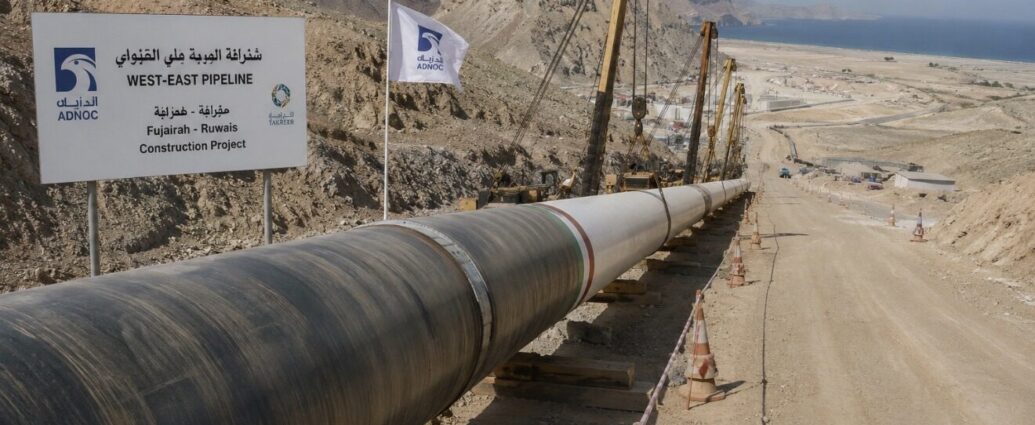
Sultan Ahmed Al Jaber, chief executive of Abu Dhabi National Oil Co., said Wednesday that the United Arab Emirates’ new crude-oil pipeline designed to bypass the Strait of Hormuz is now nearly 50% complete, underscoring how the Iran conflict is permanently reshaping global energy infrastructure and oil-export routes.
Speaking during a live-streamed event hosted by the Atlantic Council in Washington, Al Jaber said the so-called West-East Pipeline — designed to expand UAE crude exports through the port of Fujairah on the Gulf of Oman — is being accelerated toward completion in 2027.
“Today, it’s already almost 50% complete, and we are accelerating its delivery toward 2027,” Al Jaber said.
According to the Abu Dhabi Media Office, UAE Crown Prince Sheikh Khaled bin Mohamed bin Zayed Al Nahyan directed ADNOC to fast-track the project following the worsening regional energy crisis triggered by the Iran war.
The announcement carries major implications for global oil markets because Iran has effectively kept the Strait of Hormuz closed to most non-Iranian shipping since U.S. and Israeli strikes launched on Feb. 28.
The Strait historically handled roughly 20% of global seaborne crude shipments, making it the single most important oil chokepoint in the world.
Al Jaber described the disruption as “the most severe energy supply disruption in history.”
According to the ADNOC chief, more than 1 billion barrels of oil supply have already been lost because of the closure, with nearly 100 million additional barrels disrupted every week the strait remains inaccessible.
He also warned that even if the conflict ended immediately, global oil flows would not normalize quickly.
Al Jaber estimated it would take at least four months for shipping volumes through Hormuz to recover to roughly 80% of prewar levels, while full normalization may not occur until sometime in 2027.
“Once you accept that a single country can hold the world’s most important waterway hostage, freedom of navigation as we know it is just finished,” he said. “If we don’t defend this principle today, we will spend the next decade defending against the consequences.”
The business implications stretch across the global energy system.
ADNOC’s existing Abu Dhabi Crude Oil Pipeline already transports up to 1.8 million barrels per day from inland oil fields directly to Fujairah, bypassing Hormuz entirely. The new West-East Pipeline is designed to roughly double that export capacity.
That increase would effectively add export flexibility equivalent to the total production of a mid-sized OPEC member nation.
For commodity traders including Vitol, Trafigura, and Glencore, as well as oil majors such as Exxon Mobil Corp., Chevron Corp., and ConocoPhillips, the project significantly changes the long-term geopolitical risk profile attached to Gulf crude.
Infrastructure that bypasses Iran’s naval reach effectively lowers future supply-disruption risk premiums built into oil prices.
The project also follows another major strategic shift by the UAE.
Al Jaber confirmed during the same event that the UAE formally exited the Organization of the Petroleum Exporting Countries on May 1, ending decades of participation in the Saudi-led oil cartel.
He described the decision as a sovereign strategic move reflecting what he called the world’s growing need for additional energy supply.
Without OPEC production quotas, the UAE can now increase output based entirely on its infrastructure capacity — making the pipeline expansion central to the country’s future energy strategy.
Oil prices remain elevated despite easing modestly from spring highs.
West Texas Intermediate crude traded near $98.96 per barrel Wednesday afternoon, while Brent crude remained near similar levels. Prices have stabilized somewhat in recent weeks as traders increasingly price in alternative Gulf export routes, expanding Saudi pipeline capacity, and additional U.S. shale production.
For American consumers, the implications are immediate.
Every additional barrel of Gulf oil that can reach global markets without transiting Hormuz helps reduce the geopolitical risk premium embedded in gasoline, diesel, and jet-fuel prices.
U.S. gasoline prices have remained above roughly $4.10 per gallon through much of the spring, pressuring household budgets and weighing on discretionary spending.
Airlines including Delta Air Lines Inc., United Airlines Holdings Inc., and American Airlines Group Inc. have cited elevated fuel expenses in recent earnings reports, while logistics and transportation companies including FedEx Corp., United Parcel Service Inc., Old Dominion Freight Line Inc., and J.B. Hunt Transport Services Inc. continue facing higher operating costs.
The pipeline expansion also carries major implications for energy infrastructure investors.
Pipeline operators, storage companies, and export-terminal businesses tied to Gulf energy logistics are expected to benefit from long-term rerouting of oil and natural-gas flows.
U.S. liquefied-natural-gas exporters including Cheniere Energy Inc., Sempra, and Venture Global LNG have also gained market share as European and Asian buyers diversify away from shipping routes exposed to Iranian disruption.
Meanwhile, defense contractors including Lockheed Martin Corp., RTX Corp., Northrop Grumman Corp., General Dynamics Corp., and L3Harris Technologies Inc. continue benefiting from expanded Gulf maritime-security spending tied to the conflict.
The broader geopolitical situation remains unresolved.
President Donald Trump said earlier this week that he postponed a planned military strike against Iran while diplomatic negotiations continue, temporarily easing fears of immediate escalation but doing little to reopen the strait itself.
Secretary of State Marco Rubio and National Security Adviser Mike Waltz continue coordinating with Gulf allies including the UAE and Saudi Arabia regarding maritime-security responses.
The U.S. Fifth Fleet, headquartered in Bahrain, continues escorting limited commercial traffic outside the strait, though insurance markets remain highly restrictive for vessels attempting passage through the area.
The economic effects have spread far beyond energy markets.
The International Energy Agency has warned that prolonged Hormuz disruption could reduce global GDP growth during 2026, while the International Monetary Fund recently raised its inflation forecasts partly because of sustained energy-price pressures tied to the conflict.
Minutes released Wednesday from the Federal Reserve’s latest policy meeting also reflected continued concern among policymakers regarding energy-driven inflation risks.
Al Jaber argued the crisis demonstrates a broader structural vulnerability within the global energy system.
“Right now, too much of the world’s energy still moves through too few chokepoints,” he said.
That logic is already influencing infrastructure planning across the Gulf region.
Saudi Arabia is studying additional expansion of its East-West Pipeline linking eastern oil fields to the Red Sea. Iraq is revisiting dormant export routes through Turkey and Jordan. Oman is positioning its Duqm port on the Arabian Sea as a future regional export hub outside the Strait of Hormuz entirely.
For the UAE, the pipeline is more than an industrial project.
It is a strategic declaration that the country no longer intends to let its economic future depend entirely on stability inside the Persian Gulf.
For global markets, it represents one of the first major pieces of physical infrastructure being built specifically to reduce the long-term financial cost of Gulf instability.
Every mile of pipeline completed between Abu Dhabi and Fujairah slightly changes the global energy equation.
— JBizNews Desk
© JBizNews.com. All rights reserved. This article is original reporting by JBizNews Desk. Unauthorized reproduction or redistribution is strictly prohibited.

NEW YORK, May 21, 2026 — Consul generals, ambassadors, U.S. trade officials and senior business executives gathered in Times Square on May 20 for the closing summit of World Trade Week NYC, days after President Donald J. Trump issued the 2026 Presidential Message reaffirming the federal observance he proclaimed last year through Proclamation 10944. The summit convened as the United States moves through the most active tariff and trade-deal cycle in a generation.
The summit was hosted by the Greater New York Chamber of Commerce and co-hosted by the Orthodox Jewish Chamber of Commerce, both appointed to the World Trade Week NYC Committee Leadership by the U.S. Department of Commerce. It is the only federally appointed convening of its kind in the country, and the chambers’ work in that role has drawn a Certificate of Special Congressional Recognition from the U.S. Congress and proclamations from New York Governor Kathy Hochul. Prior summits have produced on-site memorandums of understanding between the chambers and the governments of India and South Korea, signed in the presence of foreign trade ministers and U.S. officials.

The economic backdrop is unprecedented. U.S. exports of goods and services reached a record $3.43 trillion in 2025, according to the Bureau of Economic Analysis — the largest export economy in U.S. history. The International Trade Administration estimates exports support nearly 9.8 million American jobs, and the U.S. trade-to-GDP ratio is running near 27 percent. The 2026 observance comes against tariff actions under Section 122 of the Trade Act of 1974, more than 20 new bilateral trade agreements reached over the past year, and the USMCA review scheduled for July.
In the 2026 Presidential Message issued from the White House this week, Trump said “America has built the world’s most powerful economy through the strength of our industries, the genius of our innovators, and the promise of fair and reciprocal trade,” citing “over 20 new trade deals with major world partners, opening new markets for American goods.” In Proclamation 10944 last year, he committed to “redoubling our efforts to combat unfair trade practices for every American.” The argument is one his predecessors have made under the same federal observance. President George W. Bush, in 2006, called free and fair trade “a powerful engine for growth and job creation.” President Bill Clinton, in 1997, noted that “95 percent of the world’s consumers live outside the United States.”
Featured diplomatic speakers represented trillions of dollars in annual goods trade with the United States. Marcos Bucio, Consul General of Mexico, represented the largest U.S. trading partner at $976.1 billion in total goods and services trade in 2025. Tom Clark, Consul General of Canada, represented the second-largest at $719.5 billion in U.S. goods trade. Binaya Srikanta Pradhan, Consul General of India, anchored $149.4 billion in U.S. goods trade . Adalnio Senna Ganem, Consul General of Brazil, represented the source of a $14.4 billion U.S. goods surplus. Karel Smekal of the Czech Republic represented roughly $12 billion in annual U.S. bilateral goods trade; Jarmo Sareva of Finland a key transatlantic partner in machinery and clean energy; Dr. Vladimir Božović of Serbia, who also serves as Vice President of the Society of Foreign Consuls in New York, the world’s largest diplomatic organization ; Aamer Ahmed Atozai of Pakistan, anchoring the U.S.-Pakistan Trade and Investment Framework Agreement; and Dadhiram Bhandari of Nepal.
Past summits convened by the chambers have drawn senior federal trade leadership across the full U.S. trade-enforcement and trade-facilitation chain. James McCament, then-acting chief operating officer of U.S. Customs and Border Protection , has keynoted. Troy A. Miller, who served as Commissioner of U.S. Customs and Border Protection, has been honored. Susan S. Thomas, the Acting Executive Assistant Commissioner for U.S. Customs and Border Protection, Office of Trade, responsible for designing and implementing U.S. tariff policies for the Trump Administration , addressed the 2025 summit on tariff enforcement. Danielle Outlaw, Deputy Chief Security Officer of the Port Authority of New York and New Jersey; Tenavel Thomas, Customs and Border Protection Port Director for Newark/NY; and Edward Mermelstein, New York City Commissioner of International Affairs, have all participated. Foreign delegations across years have included Israel, India, South Korea, China, Turkey, Pakistan, Germany, Morocco, Azerbaijan, Bahrain, Poland, Guatemala, Peru, Thailand, Canada, Bangladesh, Malaysia and the Philippines .
The chambers’ South Korea MOU, signed at a prior summit, has since produced the Orthodox Jewish Chamber’s South Korea chapter, opened at Seoul City Hall under the host of the Deputy Mayor of Economy. At last year’s summit, Korean Air received the Global Investment Impact Award for its $32 billion investment commitment in the United States . The Korean government separately recognized Duvi Honig, the Orthodox Jewish Chamber’s founder and CEO, as Trade Ambassador for the World Korean Business Convention 2025.
The summit’s headline panel, “Growing Global Trade & Investment Through Diplomacy,” was moderated by Howard Teich, Chair of the Greater New York Chamber, and Mark Jaffe, the Chamber’s President and CEO. It was joined by the Global New York Team of Empire State Development, the New York State governor’s international trade and investment office, represented by senior member Brian Teubner.
“Our members export billions of dollars of products and services to dozens of countries around the world,” Jaffe said . “World Trade Week NYC demonstrates how partnerships between governments, business leaders and economic organizations continue driving investment and economic opportunity throughout the United States.”
“Hosting this on behalf of the world’s biggest economy is a true honor,” Honig said. “It stimulates economic growth and builds bridges that unite the world through commerce. When business leaders, diplomats and government officials come together in one room, relationships are built that lead directly to investment, partnerships, job creation and long-term economic expansion.”
World Trade Week was launched in 1926 by Stanley T. Olafson of the Los Angeles Area Chamber of Commerce during what the Chamber describes as “a time of isolationism and under the conditions prevailing during the heyday of the restrictive Smoot-Hawley Tariff Act.” President Franklin D. Roosevelt formally proclaimed it a national observance in 1935 , embedding it in the federal calendar as he dismantled the Smoot-Hawley tariff structure through the Reciprocal Trade Agreements Act of 1934. Every president since has reaffirmed it.
The summit’s International Trading Partners Awards recognized Brian Teubner of Empire State Development’s Global New York Team; Dr. Dana York, scientist and international AI leader; Ruben Luna of Key Food / Luna Group; and Frank Garcia of the Multicultural Business Coalition. Additional honorees were recognized at the Asian American Pacific Islanders Awardees ceremony. The 2026 Dr. Lucio Caputo Statesman Award was presented to Angelo Vivolo, President of the Columbus Citizens Foundation, by Marion Pardo, the Foundation’s former President and Chair.
As governments and corporations continue repositioning supply chains and competing for investment, business leaders at the summit said direct diplomatic engagement and international economic cooperation remain essential to sustaining American competitiveness, expanding exports and driving long-term economic growth.
JBizNews Desk
© 2026 JBizNews. All Rights Reserved. This article may not be reproduced, distributed, or republished in whole or in part without the express written permission of JBizNews.
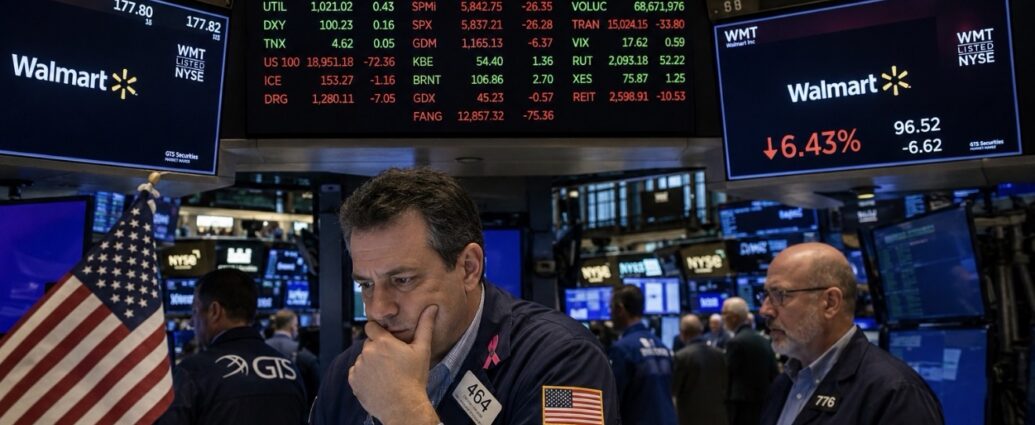
Dow Slides Over 250 Points as Treasury Yields Rebound; Eli Lilly Pops on Obesity-Drug Breakthrough; Small Caps Buck the Sell-Off
NEW YORK, May 21, 2026 — American consumers got their clearest signal yet this earnings season that the nation’s largest retailer is bracing for a tougher spending environment. Walmart Inc. shares tumbled more than 6% on Thursday after the company paired in-line first-quarter results with cautious annual guidance, dragging the broader market lower as oil prices ripped past $100 a barrel on fresh tensions with Iran and Treasury yields climbed once again.
The S&P 500 declined 0.45%, the Dow Jones Industrial Average lost 0.48%, and the Nasdaq Composite fell 0.50%. The Dow shed roughly 252 points in afternoon trading, with Walmart (-6.43%), Salesforce (-4.27%) and Sherwin-Williams (-2.20%) leading the losses, while IBM (+3.69%), Honeywell International (+0.99%) and Chevron (+0.97%) held the index from a steeper decline. The Russell 2000 bucked the trend with a 2.56% gain, signaling rotation into domestically focused small caps less exposed to oil prices and rate risk.
Crude jumped on a Reuters report that Iran’s Supreme Leader Ayatollah Ali Khamenei issued a directive that the country’s near-weapons-grade enriched uranium must remain inside Iran — a development that complicates U.S.-Iran de-escalation efforts and revived inflation concerns just as Treasury yields rebounded. West Texas Intermediate crude rose $2.86 to $101.14 a barrel intraday, with Brent climbing toward $107. The move reversed two sessions of softening energy prices built on hopes for a diplomatic resolution. The 10-year Treasury yield sits near a one-year high, and gold slipped about $20 to roughly $4,512. The VIX ticked up to 17.62.
Walmart’s Caution Signals a Frugal American Consumer
Walmart (NYSE: WMT) posted first-quarter revenue of $177.8 billion, up 7.3% year-over-year and slightly above the $176.7 billion Wall Street consensus. Non-GAAP earnings per share of $0.66 met estimates. The problem was the forward look: management guided next-quarter revenue to $185.4 billion, roughly 0.5% below analyst expectations, and reaffirmed cautious annual guidance citing rising fuel costs, tariff pressures and what the company has flagged as more frugal consumer behavior. The sell-off came despite 26% e-commerce growth and 37% growth in advertising revenue — underlying strengths that ordinarily would have been celebrated. Walmart shares remain up roughly 19% year-to-date, but Thursday’s drop wiped out a portion of that gain in a single session and gave investors a real-time read on how America’s biggest retailer sees U.S. consumer spending heading into the summer.
Deere Reports Into a Tariff Headwind
Deere & Company (NYSE: DE) reported second-quarter fiscal 2026 results today against Wall Street expectations of $5.74 EPS on $11.50 billion in revenue, with the agricultural-equipment maker absorbing $1.2 billion in pretax tariff costs this fiscal year. New Chief Financial Officer Brent Norwood, who stepped into the role May 1 after more than two decades inside the company, took his first earnings call as investors pressed on margin trajectory and dealer-inventory levels. Deere shares had entered the print down roughly 15% from their all-time high.
Eli Lilly Pops on Obesity Drug Breakthrough
Eli Lilly (NYSE: LLY) shares rose 1.05% after the drugmaker said its next-generation obesity drug retatrutide cleared a crucial late-stage trial. In the highest-dose cohort, patients lost an average of 28.3% of body weight — roughly 70.3 pounds over 80 weeks — compared with 2.2% for placebo, according to CNBC’s coverage of the results. The data brings Lilly meaningfully closer to seeking approval for the weekly injection, which works differently from existing GLP-1 therapies from Lilly and Novo Nordisk and may offer stronger efficacy. The development carries direct consumer implications across U.S. healthcare costs and the broader obesity-treatment category, which is reshaping pharmaceutical and grocery economics simultaneously.
Analyst Calls and Sector Moves
Earlier this week, Home Depot (NYSE: HD) reported better-than-expected first-quarter earnings. Morgan Stanley analyst Simeon Gutman, who carries an overweight rating, told clients “The housing backdrop appears static and HD continues to execute well in a relatively ‘growthless’ environment,” arguing the stock is not pricing in a housing recovery and that any “glimmer of inflection” in home-improvement end markets should be a positive. The session followed Wednesday’s broad rally on Nvidia (NASDAQ: NVDA) earnings, in which the AI chip leader posted April-quarter revenue topping $81 billion and a July-quarter outlook of $91 billion that fell shy of the most bullish analyst expectations. Nvidia declined to forecast any China sales despite CEO Jensen Huang’s recent Beijing visit. Nvidia shares hovered near the flatline Thursday as energy and yields took over the narrative.
What’s Next
Investors now turn to additional earnings tonight from Take-Two Interactive (TTWO), Workday (WDAY), Zoom Communications (ZM), Ross Stores (ROST), Ralph Lauren (RL) and Deckers Outdoor (DECK). With WTI above $100, the 10-year Treasury yield near one-year highs, and the Iran uranium standoff unresolved, the market enters Friday with two converging pressures — energy-led inflation and rate-driven valuation compression — that have, for now, overtaken the AI-earnings tailwind that defined the prior session.
JBizNews Desk
© 2026 JBizNews. All Rights Reserved. This article may not be reproduced, distributed, or republished in whole or in part without the express written permission of JBizNews.
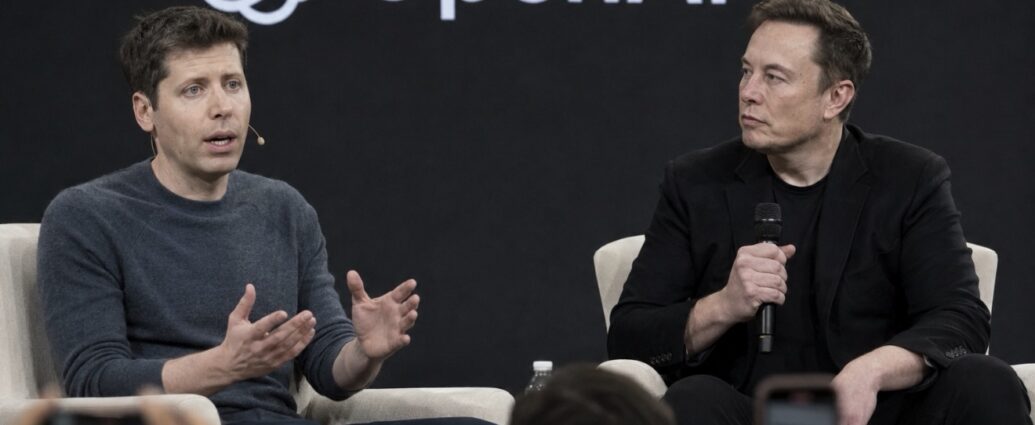
OpenAI is about to do something almost no company in American history has been positioned to do. The maker of ChatGPT, last valued at roughly $852 billion, is preparing to confidentially file paperwork for an initial public offering in the coming weeks, with a target of going public as early as September. If it lands at anything close to its current private valuation, it will be one of the largest stock market debuts ever — bigger than Facebook, bigger than Alibaba, in the same conversation as Saudi Aramco. And it would mark the moment artificial intelligence stops being a venture-capital story and becomes a permanent piece of millions of Americans’ retirement portfolios.
The trigger was a courtroom in San Francisco.
On Monday, a judge dismissed the lawsuit that Elon Musk had been waging against OpenAI and Chief Executive Sam Altman for more than two years. Musk, who co-founded OpenAI in 2015 and later left, argued that Altman betrayed the company’s founding promise to operate as a nonprofit research lab for the benefit of humanity when OpenAI restructured into a for-profit business backed by Microsoft Corp.
Inside OpenAI, the case was widely viewed as an existential threat — not necessarily because Musk was likely to win outright, but because the litigation cloud made an IPO extraordinarily difficult. Investors rarely want to buy shares in a company whose corporate structure is actively being challenged in court by one of the world’s most aggressive litigants. With Monday’s dismissal, that cloud suddenly lifted. By Wednesday, the IPO machinery was already moving.
OpenAI is now working with Goldman Sachs Group Inc. and Morgan Stanley to prepare a confidential draft prospectus, according to people familiar with the plans. The confidential filing process allows companies to negotiate privately with regulators before publicly disclosing detailed financials and risk factors.
The timing is strategic.
Later Wednesday, SpaceX was also expected to move toward its own public-market preparations — a potential deal that could reportedly value the company near $1.5 trillion and raise up to $30 billion, potentially surpassing Saudi Aramco’s 2019 debut as the largest IPO in history. By moving alongside SpaceX, OpenAI gains two advantages: it diffuses some of the regulatory and media spotlight that would otherwise focus entirely on its own listing, and it reframes the public narrative away from Musk’s lawsuit and toward a broader race over the future of technology.
The reason OpenAI is pursuing public markets is straightforward: it needs enormous amounts of capital.
The company reportedly raised approximately $122 billion earlier this year, likely one of the largest private funding rounds in Silicon Valley history, yet the cash demands of frontier AI development continue to escalate. Training advanced AI systems requires massive data centers, enormous fleets of Nvidia chips, vast electricity consumption, and some of the most expensive engineering talent in the world.
Even Microsoft — OpenAI’s primary strategic backer — cannot indefinitely finance the company’s ambitions alone.
Going public unlocks access to the deepest capital pool on earth: the American stock market. Pension funds, mutual funds, ETFs, retirement plans, and ordinary retail investors would finally gain direct ownership exposure to the company that ignited the modern generative AI boom.
But the easy part may now be over.
OpenAI no longer dominates the AI landscape as completely as it appeared to a year ago. Anthropic, maker of the Claude AI platform, has emerged as a major enterprise rival and is reportedly discussing fundraising at valuations north of $900 billion. Meanwhile, Alphabet Inc. has aggressively accelerated development of its Gemini AI systems after initially appearing behind in the race, prompting OpenAI to internally declare a “code red” response effort late last year.
ChatGPT still commands more than 900 million weekly active users and over 50 million paying subscribers, but public investors will demand something private investors largely tolerated without scrutiny: detailed financial transparency.
Wall Street will want hard answers about revenue growth, operating losses, customer retention, infrastructure spending, and long-term profitability.
There is also the lingering question surrounding Sam Altman himself.
Although Musk’s lawsuit has now been dismissed, pretrial proceedings surfaced testimony from former OpenAI executives raising concerns about Altman’s management style and governance practices — issues that echoed the internal conflict that briefly led to Altman’s firing by OpenAI’s board in November 2023 before employees and investors forced his reinstatement days later.
As a public company, OpenAI will be required to formally disclose every material risk factor facing the business. That includes governance concerns, executive concentration risk, dependence on Altman’s leadership, and the operational tensions between OpenAI’s nonprofit origins and its rapidly expanding commercial ambitions.
Altman himself has openly admitted in past interviews that becoming a public-company CEO sounds “really annoying,” acknowledging that life under Wall Street’s quarterly scrutiny is fundamentally different from operating under the patient capital of Silicon Valley venture firms.
The broader implications for corporate America are enormous.
An OpenAI IPO anywhere near its reported valuation would instantly create one of the largest publicly traded companies in the United States, placing it alongside Apple Inc., Microsoft Corp., Nvidia Corp., Alphabet, Amazon.com Inc., and Meta Platforms Inc. among the most valuable firms on earth.
It would also become the first true public-market test of whether trillion-dollar AI valuations can survive exposure to ordinary investors, institutional scrutiny, and quarterly earnings pressure.
The outcome will likely shape the future decisions of nearly every major AI startup still waiting on the sidelines, including Anthropic, xAI, Perplexity, and others weighing whether to remain private or follow OpenAI into public markets.
For consumers, ChatGPT will likely look the same tomorrow morning.
But OpenAI itself would fundamentally change.
A public OpenAI would answer to shareholders, analysts, pension funds, and quarterly earnings expectations. It would face constant pressure to accelerate growth, increase monetization, and justify the extraordinary sums being invested into artificial intelligence infrastructure.
The mission to “benefit humanity” — the founding principle Musk spent years arguing OpenAI abandoned — would no longer be debated primarily inside courtrooms or boardrooms.
It would be tested every quarter on Wall Street.
— JBizNews Desk
© JBizNews.com. All rights reserved. This article is original reporting by JBizNews Desk. Unauthorized reproduction or redistribution is strictly prohibited.
Foreign governments sharply reduced their holdings of U.S. Treasurys in March as the economic fallout from the Iran war forced central banks across Asia and the Middle East to defend their currencies and stabilize local markets.
Japan, the largest foreign owner of U.S. government debt, cut roughly $47.7 billion from its Treasury holdings, lowering its position to about $1.19 trillion, according to data released Monday by the U.S. Treasury Department. China also reduced its holdings, bringing them down to roughly $652 billion — the country’s lowest level since 2008.
For everyday Americans, the story matters because foreign demand for U.S. government debt directly affects borrowing costs across the economy, including mortgages, credit cards, auto loans and business financing.
When countries buy fewer Treasurys, the U.S. government often has to offer higher interest rates to attract buyers. Those higher rates can ripple through the entire financial system.
The selloff comes after the U.S.-Iran conflict triggered a major surge in global oil prices earlier this year, putting enormous pressure on countries that rely heavily on imported energy. Japan and several Asian economies saw their currencies weaken sharply as energy costs climbed, forcing central banks to step in and support their financial systems.
To do that, many governments sold dollar reserves — including U.S. Treasury bonds — and used the cash to buy their own currencies.
Analysts say the moves were driven more by financial defense than by politics.
“Given increased financial volatility since the start of the war in the Gulf, and resultant pressure on exchange rates, especially in Asia, it is not a surprise that U.S. Treasury holdings by central banks have fallen,” said Frederic Neumann, chief Asia economist at HSBC.
Japan faced some of the most severe pressure as the yen weakened past the key 160-per-dollar level, alarming policymakers in Tokyo. The Bank of Japan reportedly intervened in currency markets in late March and early April to slow the collapse.
China’s reduction, meanwhile, continues a much longer trend that has been unfolding for more than a decade. Beijing has steadily reduced its direct Treasury exposure since peaking near $1.3 trillion in 2013, although analysts believe China still indirectly holds large amounts of U.S. debt through financial centers such as Belgium and Luxembourg.
The Treasury market was also hit by rising inflation fears tied to the war and higher oil prices. Bond prices fell sharply in March as investors worried the Federal Reserve may delay future interest-rate cuts.
That matters because when bond prices fall, yields rise — increasing borrowing costs for the U.S. government.
Treasury yields have climbed back toward levels last seen before the 2008 financial crisis, and several government debt auctions earlier this year saw weaker-than-expected demand from investors.
The pressure is becoming increasingly important for Washington because the federal government is already paying close to $1 trillion annually in interest expenses on the national debt.
At the same time, foreign central banks have slowly become less dominant buyers of Treasurys in recent years. More hedge funds and private investors are now stepping into the market instead, a shift analysts say can create sharper swings and more volatility.
Not every country pulled back. The United Kingdom actually increased its Treasury holdings by nearly $30 billion during the month, helping offset part of the broader decline.
Overall, foreign private investors continued buying U.S. assets aggressively even as governments and central banks reduced exposure. Analysts say that suggests confidence in the U.S. economy itself remains relatively strong, even as official institutions focus more heavily on protecting their own currencies and economies from the global energy shock.
Investors are now watching closely for April Treasury data, which will show whether the March selling was a temporary reaction to the war-driven oil spike or the beginning of a broader global shift away from U.S. government debt.
For now, the message from foreign governments is increasingly clear: stabilizing their own economies is taking priority over supporting the global dollar system that has dominated world finance for decades.
— JBizNews Desk
© JBizNews.com. All rights reserved.
For the last three years, Wall Street has operated on one basic rule: when Nvidia Corp. reports earnings, the market stops everything else and watches.
On Wednesday night, Nvidia delivered another massive quarter — and the market barely reacted.
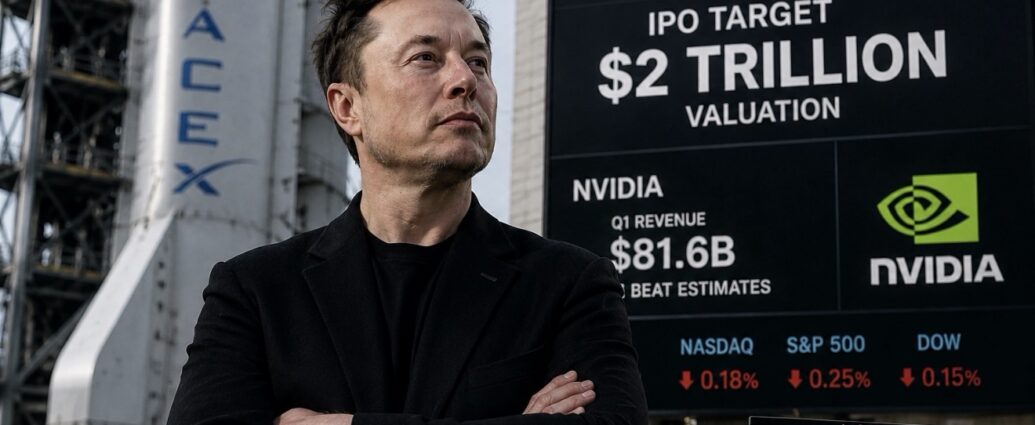
The reason arrived hours earlier, when Elon Musk’s SpaceX confidentially filed paperwork for what could become the largest initial public offering in the history of global markets.
The targeted valuation: between $1.75 trillion and $2 trillion.
The expected raise: as much as $75 billion, more than double the size of Saudi Aramco’s record $29.4 billion IPO in 2019.
In plain English, a private rocket company may be about to become one of the most valuable publicly traded companies on earth.
And suddenly, even Nvidia’s staggering earnings looked almost routine.
On paper, Nvidia delivered exactly the kind of quarter that normally dominates global markets. The company reported first-quarter revenue of $81.62 billion, beating Wall Street estimates of $79.19 billion. Adjusted earnings per share came in at $1.87, above the $1.76 consensus. Gross margins held near 75%. Revenue guidance for the current quarter topped expectations again, ranging between $89.18 billion and $92.82 billion.
The company also announced an additional $80 billion share buyback, raised its dividend, and extended one of the most dominant earnings streaks in modern corporate history.
And yet Nvidia shares barely moved in after-hours trading.
The reason is simple: investors no longer view Nvidia as a surprise. They view it as infrastructure.
The market already assumes AI spending will remain enormous. The debate has moved beyond the chip supplier and toward the companies building entire ecosystems around artificial intelligence, satellites, broadband networks, and supercomputing infrastructure.
That is where SpaceX enters the story.
According to the filing, SpaceX generated roughly $4.694 billion in revenue during the quarter ended March 31. The business now spans three major divisions: rocket launches, the Starlink satellite-internet network, and a rapidly growing AI infrastructure operation tied to Musk’s acquisition of xAI earlier this year.
That AI segment includes the massive Colossus compute cluster, which houses more than 220,000 Nvidia GPUs and has already been tapped by companies including Anthropic for AI processing capacity.
In effect, SpaceX is becoming both a customer and competitor within the AI ecosystem at the same time.
The company is also attempting to turn the IPO into a public event rather than a traditional Wall Street offering.
SpaceX plans a 5-for-1 stock split ahead of the listing, reducing the implied per-share price from roughly $526 to about $105, according to documents reported by Bloomberg. The company has also discussed allocating as much as 30% of IPO shares to retail investors — an unusually large portion for an offering of this scale.
The strategy is politically and financially smart.
It turns the IPO into something ordinary Americans can participate in directly instead of watching from the sidelines while institutional investors dominate the allocation.
Still, the risks are enormous.
At a valuation approaching $2 trillion, SpaceX would debut at more than 100 times annual sales, far above the multiples at which even companies like Meta Platforms or Nvidia traded during peak growth periods.
The company also reportedly lost roughly $5 billion last year.
Critics argue the valuation reflects investor excitement around Musk more than traditional financial fundamentals.
But supporters counter that no company in the world controls a comparable combination of launch dominance, satellite broadband infrastructure, military contracts, and AI computing power.
Starlink alone is estimated by some analysts to be worth between $150 billion and $250 billion as a standalone business. SpaceX also launches the majority of satellites entering orbit globally and remains deeply embedded in U.S. military and intelligence infrastructure.
For everyday Americans, however, the bigger story is what this IPO represents.
For the first time, ordinary investors may soon own shares in the company controlling much of the world’s access to space, satellite communications, and rapidly expanding AI infrastructure.
The IPO also deepens the connection between Musk’s businesses and Washington. SpaceX depends heavily on federal contracts, regulatory approvals, and broadband subsidies. Once public, those political relationships become directly tied to the retirement accounts and brokerage portfolios of millions of investors.
Most importantly, the IPO signals something larger about the AI economy itself.
The market’s center of gravity is shifting.
Nvidia remains the backbone of AI hardware. But investors are now chasing the companies building the infrastructure that consumes Nvidia chips at massive scale — orbital internet systems, hyperscale compute clusters, and AI-powered communications networks.
That is why an $81 billion Nvidia quarter suddenly felt almost ordinary.
The AI economy has become so large that even Nvidia is no longer the whole story.
And by the time SpaceX executives begin meeting institutional investors ahead of the June roadshow, the question for many Americans may no longer be whether they should own Nvidia.
It may be whether they are willing to buy into Elon Musk’s vision of space, broadband, and artificial intelligence — at whatever price Wall Street decides the future is worth.
— JBizNews Desk
© JBizNews.com. All rights reserved. This article is original reporting by JBizNews Desk. Unauthorized reproduction or redistribution is strictly prohibited.
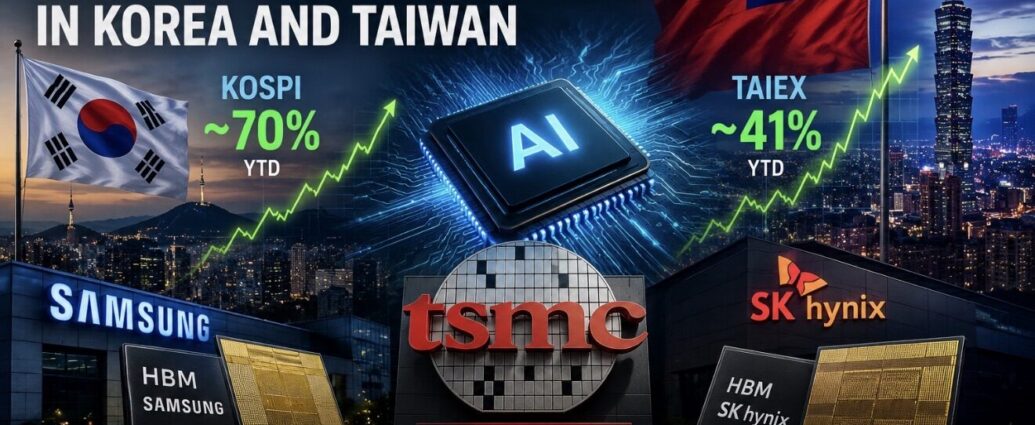
Something strange is happening in two stock markets most American investors barely glance at. South Korea’s Kospi is up roughly 70% this year. Taiwan’s Taiex is up about 41%. By contrast, the S&P 500 has gained a fraction of that. And the explanation is not a Korean economic miracle, a Taiwanese export boom, or a sudden flood of foreign investment chasing cheap valuations. The explanation is three companies — Samsung Electronics, SK Hynix, and Taiwan Semiconductor Manufacturing Co. — and one product they all make.
That product is the chip inside the artificial intelligence machines being built at a pace the global economy has not seen since the early internet.
To understand what is going on, start with how lopsided these two markets have become. TSMC alone now accounts for more than 40% of Taiwan’s entire stock market, according to UOB. In South Korea, Samsung and SK Hynix together make up a record 42.2% of the Kospi, according to Manulife Investment Management. That is the equivalent, in American terms, of Apple by itself being worth nearly half the S&P 500. June Chua, head of Asia equities at Manulife Investment Management, summed it up bluntly: both indexes have effectively become AI and semiconductor proxies. Tim Moe, chief regional equity strategist for Asia-Pacific at Goldman Sachs, agreed, telling CNBC the AI hardware theme is what is clearly propelling things.
So why has this become a Korea-and-Taiwan story rather than an America story? After all, the AI companies driving the demand — Nvidia, Microsoft, Google, Amazon, Meta — are all American.
Here is where the plain logic kicks in. The American giants design the AI. They write the software, train the models, run the cloud platforms. But every single one of them needs a physical chip to actually do the computing. And the world has exactly one company that can manufacture the most advanced versions of those chips: TSMC. The world has exactly two companies that can produce the high-bandwidth memory, known as HBM, that those chips need to function: Samsung and SK Hynix. Three companies. Two countries. Zero serious competitors at the cutting edge.
When Microsoft announces it will spend $80 billion on AI infrastructure, that money does not stop in Redmond. It flows to Nvidia. Nvidia then sends it to TSMC in Hsinchu and SK Hynix in Icheon. The cash arrives in Asia. The earnings show up on Asian balance sheets. The stock prices rise in Seoul and Taipei.
This is why the rally feels detached from ordinary economic news. The Kospi climbed from 5,000 to 8,000 in a single year — a move that took the index more than 18 years the first time around, from 1,000 to 2,000. On May 6, Samsung shares jumped almost 15% in a single session, vaulting the company past a $1 trillion market capitalization and making it the second Asian company ever, after TSMC, to cross that threshold. SK Hynix is up more than 146% so far this year. JPMorgan has lifted its bull-case target for the Kospi to 10,000 points.
Now the harder question. Is this real, or is this a bubble?
The honest answer is that it is both — depending on the time horizon.
On the short-term side, there are warning lights flashing. Kospi stocks have already pulled back more than 9% from their record high. Taiex has dropped about 4%. Concentration risk is now part of the conversation in every Asia portfolio meeting. Herald van der Linde, head of equity strategy for Asia-Pacific at HSBC, warned that Asian portfolios are reaching levels where too much exposure to too few stocks could limit further upside. Charu Chanana, chief investment strategist at Saxo Markets, said Korea and Taiwan had become very crowded expressions of the AI infrastructure boom, and once US inflation concerns nudged bond yields higher and US tech momentum wobbled, investors took profits where gains had been largest. Valuations on Taiex now sit at 18.2 times forward earnings, above the five-year average. When a single stock can move an entire national market by 3% in a session, the market is no longer really a market. It is a leveraged bet on one trend.
On the long-term side, the trend is very real. AI capital spending is on track to exceed $600 billion in 2026 alone. Samsung and SK Hynix have locked in multi-year supply agreements with Nvidia for the next generations of HBM memory chips. TSMC is the manufacturing chokepoint for nearly every advanced AI processor on earth. Even if the stock prices correct sharply, the underlying business of making AI hardware is not slowing down. It is accelerating.
For everyday Americans, the takeaway is bigger than a foreign stock ticker. The Korean and Taiwanese rallies are flashing a signal about where industrial power in the AI age actually lives. The brand names belong to Silicon Valley. The physical production sits across the Pacific. That has profound implications for trade policy, for the Trump administration’s push to bring chipmaking onshore, for the future of the CHIPS Act, and for any American company whose business model depends on AI hardware showing up on time and at price. When the Strait of Hormuz flares up, Americans feel it at the gas pump. When something flares up in the strait between Taiwan and the Chinese mainland, Americans will feel it in everything from cloud bills to laptop prices to the cost of running an AI customer service bot at a regional bank.
Short-term, the Korean and Taiwanese rallies will swing. Profits will get taken, narratives will shift, and someday the parabolic chart will break. Long-term, the structural shift is what matters: the most important factories in the world economy now sit on two islands and one peninsula in East Asia, and global stock markets are finally pricing that in.
© JBizNews.com. All rights reserved. This article is original reporting by JBizNews Desk. Unauthorized reproduction or redistribution is strictly prohibited.