Opinion | In a Year, Will Iran Matter?
2026-05-26

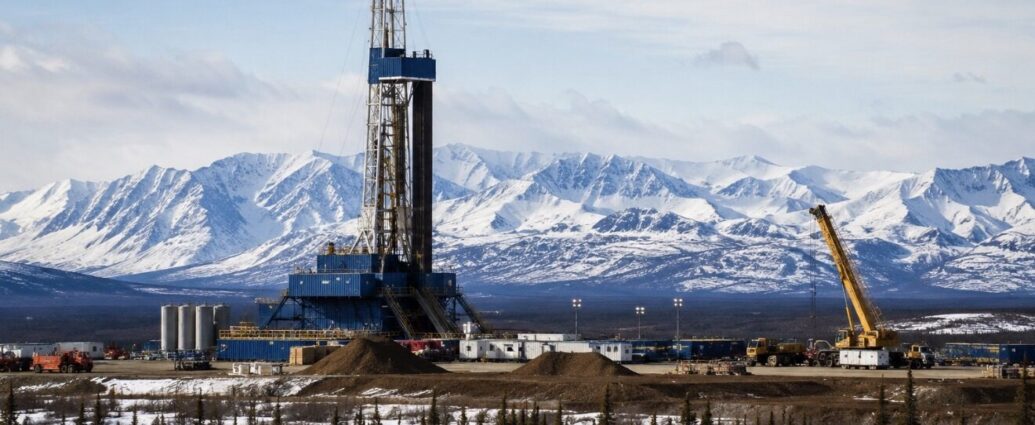
May 25, 2026 — Alaska’s long-dormant oil sector is experiencing its sharpest revival in nearly two decades as major discoveries, surging lease demand, elevated oil prices and accelerated federal permitting under the Trump administration pull capital and drilling activity back into the American Arctic.
Operators including ConocoPhillips, Santos Ltd., Repsol SA, Exxon Mobil Corp., Shell Plc and privately held Armstrong Oil & Gas are ramping up exploration and development programs across Alaska’s North Slope after a series of discoveries and lease sales reignited industry expectations for long-term production growth in the region.
The momentum accelerated in March when a lease auction inside the National Petroleum Reserve-Alaska (NPR-A) generated a record $164 million in winning bids, one of the strongest federal Arctic lease sales in modern history.
The revival marks a dramatic reversal for a basin many energy analysts believed was entering permanent decline.
Instead, the combination of new discoveries, stronger oil economics, geopolitical instability and aggressive permitting reforms is increasingly positioning Alaska once again as a strategic pillar of long-term American energy supply.
The clearest signal arrived May 18, when Australia-based Santos confirmed first oil production at its long-awaited Pikka development on Alaska’s North Slope — the first major new oil field brought online in the region in roughly twenty years.
Santos, which operates the project with a 51% stake alongside partner Repsol, is targeting plateau production of approximately 80,000 barrels per day later this year. Oil from Pikka flows through a newly constructed 22-mile pipeline connecting into the broader Trans-Alaska Pipeline System.
The company also confirmed successful appraisal drilling at its nearby Quokka discovery, which executives believe could eventually rival Pikka in production scale.
The discoveries are reviving optimism around Alaska’s broader resource base.
The U.S. Geological Survey estimates the NPR-A alone may contain roughly 8.8 billion barrels of technically recoverable oil — far more than many industry models assumed even a decade ago.
That resource potential is now intersecting with a dramatically more favorable political environment.
Under Interior Secretary Doug Burgum, the Trump administration has aggressively moved to accelerate energy permitting timelines throughout Alaska’s Arctic regions as part of its broader “American Energy Dominance” strategy.
Interior Department officials are developing a streamlined framework designed to allow qualifying North Slope projects to complete portions of environmental review and permitting in as little as 30 days through standardized programmatic analysis covering roads, well pads, pipelines and processing infrastructure.
The accelerated structure is expected to benefit projects including ConocoPhillips’ Willow development, additional Santos expansion phases and future drilling tied to acreage secured during the March lease sale.
The administration is also preparing a new offshore leasing framework through the Bureau of Ocean Energy Management that would reopen portions of Arctic territory previously restricted under both the Obama and Biden administrations.
The policy shift arrives at a moment when geopolitical instability has sharply increased strategic pressure for additional North American oil production.
The U.S.-Iran conflict and ongoing tensions surrounding the Strait of Hormuz have tightened global spare production capacity, revived energy-security concerns and pushed governments and investors to reassess the long-term importance of domestic supply.
Alaska’s revenue outlook has already improved materially as a result.
The Alaska Department of Revenue now forecasts Alaska North Slope crude prices averaging approximately $75 per barrel during fiscal 2026, including war-driven price spikes above $90 earlier this spring. Those assumptions translate into significantly higher royalty and severance-tax revenues for the state government after years of fiscal pressure tied to declining throughput in the Trans-Alaska Pipeline System.
For major operators, the opportunity is increasingly becoming difficult to ignore.
ConocoPhillips — currently the largest integrated producer on Alaska’s North Slope — said during first-quarter earnings that its massive Willow project reached roughly 50% completion during the winter construction season, with first production targeted for 2029.
Chief Executive Officer Ryan Lance also confirmed the company completed a four-well winter exploration program while securing what management described as “high-priority acreage” during the March NPR-A auction.
Combined with Pikka, Quokka and other adjacent discoveries, the projects could significantly reverse the long-running decline in North Slope production that has weighed on the Trans-Alaska Pipeline System for decades.
TAPS throughput has fallen from a peak above 2 million barrels per day in 1988 to roughly 475,000 barrels per day in recent years, forcing pipeline operators to engineer around low-flow risks including freezing and viscosity challenges.
New production from Willow, Pikka and future NPR-A developments could potentially push pipeline throughput back above 500,000 barrels per day for the first time in years while materially extending the system’s long-term economic viability.
The industry optimism, however, is colliding with growing legal and environmental resistance.
Groups including the Natural Resources Defense Council, Center for Biological Diversity, Friends of the Earth and several Alaska Native organizations have filed multiple lawsuits challenging expanded Arctic leasing and drilling approvals.
Community leaders in the Iñupiat village of Nuiqsut, located near several major development areas, have warned that expanded drilling activity threatens caribou migration routes and traditional subsistence resources.
Environmental groups also argue the broader revival narrative may be overstated, noting that several major oil companies reduced or exited portions of their Alaska portfolios over the past decade, including Shell’s retreat from offshore Arctic drilling and BP’s sale of Alaska assets to Hilcorp Energy.
But industry executives increasingly counter that the problem was never geology.
It was access.
Now, with elevated oil prices, stronger federal support, revived lease activity and multiple commercially viable discoveries coming online simultaneously, Alaska is once again drawing serious long-term capital back into the Arctic.
The strategic implications extend far beyond the state itself.
With Russian crude increasingly isolated from Western markets, Middle East shipping lanes vulnerable to disruption and global spare production capacity tightening, Alaska’s Arctic reserves are once again being viewed in Washington and across energy markets as a critical strategic asset rather than a stranded one.
Whether the industry can fully overcome the region’s legal battles, infrastructure costs and extreme operating conditions remains uncertain.
But for the first time since the glory years of the original Trans-Alaska Pipeline buildout, the discoveries, the capital, the policy environment and the global market signals are all moving in the same direction.
JBizNews Desk
© 2026 JBizNews. All Rights Reserved. Reproduction or distribution without written permission is prohibited.



Governor Mikie Sherrill is announcing a new small-business rewards initiative tied to the FIFA World Cup 2026 as New Jersey intensifies efforts to steer tournament spending toward local shops, restaurants, and neighborhood commercial corridors ahead of the games beginning June 11.
The announcement Tuesday builds on the broader Welcome World Rewards Program unveiled earlier this year by the New York New Jersey Host Committee, with backing from both Sherrill and New York City Mayor Zohran Mamdani.
The program is designed to encourage World Cup visitors to spend money at participating local businesses instead of limiting activity to stadiums and major tourist hubs.
Under the system, fans check in digitally at participating businesses, earn reward points, and become eligible for prizes through a centralized online platform. Participation is free for consumers.
State officials say the goal is to spread tournament traffic across smaller business districts throughout New Jersey and New York.
Alex Lasry, chief executive of the NYNJ Host Committee, previously described small businesses as central to the region’s economic strategy surrounding the tournament.
The economic stakes are enormous.
Tournament organizers and regional officials estimate the World Cup could generate between $3.3 billion and more than $4 billion in combined regional economic impact across New York, New Jersey, and nearby markets.
State officials have spent months building programs aimed at ensuring local businesses capture part of that spending.
Pressure for inclusion intensified after criticism surrounding the 2014 Super Bowl hosted in New Jersey, when many minority-owned and smaller local businesses argued they saw little direct benefit from the event despite the massive overall spending surrounding it.
The Sherrill administration has since rolled out multiple programs tied to World Cup preparations.
Earlier this year, the governor launched a $5 million NJ World Cup Community Initiative through the New Jersey Economic Development Authority, funding fan festivals, watch parties, cultural events, and local tourism activations connected to the tournament.
On May 6, the administration announced grants to 34 organizations statewide, including chambers of commerce, tourism boards, municipalities, and community groups.
Recipients included:
Officials say many of those events will integrate directly into the Welcome World Rewards platform, giving visitors a centralized digital map of participating businesses and activities.
The state has also adjusted hospitality policies ahead of the tournament.
Earlier this month, Sherrill supported expanded bar and restaurant operating hours during World Cup match days to help restaurants and nightlife venues handle expected crowds.
The World Cup preparations have not been entirely smooth.
Sherrill has publicly pushed FIFA to absorb more transportation-related costs connected to the tournament after concerns emerged surrounding NJ Transit pricing and infrastructure demands.
State officials have argued that New Jersey taxpayers should not shoulder the full burden while FIFA is projected to generate billions in tournament revenue globally.
MetLife Stadium in East Rutherford — branded during the tournament as New York/New Jersey Stadium — will host eight matches, including the World Cup Final on July 19.
Additional activity tied to national-team training bases and regional fan tourism is expected across New Jersey throughout the tournament period.
Training sites include:
Hospitality businesses are watching closely.
While state officials continue projecting major tourism inflows, some hotel operators have expressed concerns that reservations in certain markets remain softer than initially expected.
That has increased pressure on the rewards platform and local activation strategy to drive actual neighborhood-level spending once fans arrive.
Businesses across New Jersey and New York can currently register to participate through the NYNJ Host Committee rewards platform and related tourism portals.
With the tournament now just over two weeks away, the success of New Jersey’s strategy will soon move from planning stages into real-world testing as millions of visitors begin arriving across the region.
JBizNews Desk — New Jersey
© 2026 JBizNews. All Rights Reserved. Reproduction or distribution without written permission is prohibited.
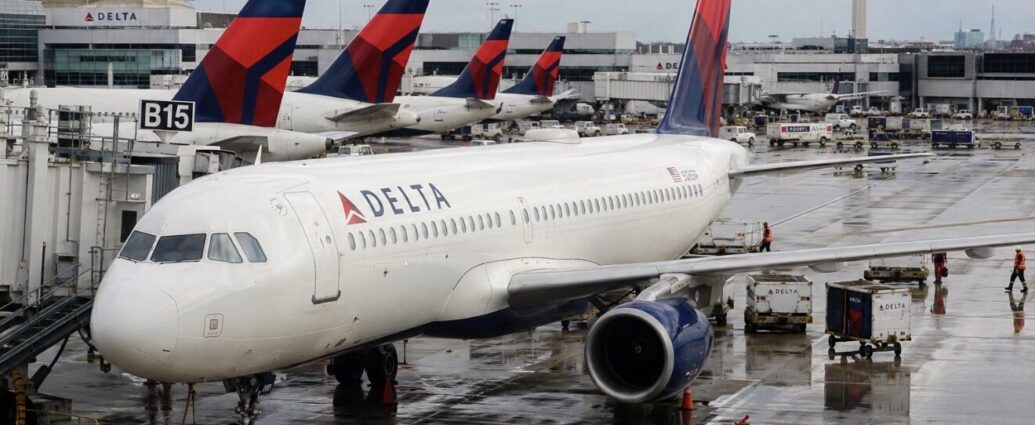
Delta Air Lines is hiring more pilots and rebuilding the teams that schedule its flight crews after internal staffing-system breakdowns pushed cancellations sharply above much of the U.S. airline industry, according to company memos and comments from senior executives this month.
The operational strain comes at a critical moment for the carrier as the summer travel season begins ramping up.
“Our challenges, while not systemic, highlight where we must sharpen our operational edge,” Dan Janki, Delta’s chief operating officer, wrote in an internal employee memo addressing the situation.
At the center of the problem is Delta’s ability to quickly locate replacement pilots when original crew assignments become unavailable.
In an April 24 memo first reported by USA Today, Ryan Gumm, Delta’s senior vice president of flight operations, told employees that cancellations tied directly to pilot availability are running more than ten times historical norms and now account for approximately 35% of Delta mainline cancellations, up sharply from roughly 7% in 2024.
For certain aircraft types, Gumm said, it can now take Delta as long as 12 hours to secure a pilot replacement for a single flight.
A major factor behind the breakdown is that pilots are increasingly refusing additional trip assignments.
According to Gumm’s memo, pilot acceptance rates for uncovered flights have collapsed to roughly 2% this year, compared with approximately 37% a year ago. With fewer pilots volunteering to cover open trips, Delta has increasingly relied on an emergency contract mechanism known internally as “23.M.7” to fill last-minute scheduling gaps.
The system was originally designed for isolated operational emergencies — not daily usage across a large airline network.
Gumm acknowledged in the memo that Delta is now using the emergency scheduling tool between 10 and 15 times more frequently than last year, often creating cascading disruptions as reassigned pilots leave later flights short-staffed.
The operational weakness became highly visible during the first weekend of May when Delta canceled hundreds of flights despite relatively modest weather disruptions across parts of the country.
Competing airlines including American Airlines, United Airlines, and Southwest Airlines largely maintained stable operations during the same period.
According to aviation analytics firm Cirium, Delta’s domestic cancellation rate has remained above the overall U.S. airline average for much of 2026, with notable spikes in January and March before modest improvement during April and May.
The problems represent a rare stumble for an airline long viewed as the operational benchmark of the U.S. industry.
Delta’s reputation for reliability has supported premium pricing, strong customer loyalty, and some of the strongest profit margins in the airline sector for years.
Chief Executive Ed Bastian acknowledged during Delta’s recent first-quarter earnings call that changes to pilot-routing and scheduling systems under the current labor agreement contributed to recent operational stress.
Bastian said the company is devoting significant attention to restoring consistency and admitted recovery performance following weather disruptions had not always met Delta’s internal standards.
Pilot representatives have sharply criticized management’s handling of the situation.
The Air Line Pilots Association, which represents Delta pilots, told USA Today that the disruptions reflect “mismanagement of resources, lack of proper tools and training for crew schedulers, and numerous misguided attempts to pinch pennies.”
Pilots have also argued the company bypassed portions of the contractual trip-assignment process, contributing to frustration among senior pilots and reducing willingness to voluntarily pick up additional flights.
The labor tension arrives ahead of upcoming contract negotiations, with Delta’s current pilot agreement becoming amendable at the end of this year.
Delta says it is now accelerating hiring, expanding reserve-pilot pools, and adding additional staffing to crew scheduling and tracking departments in an effort to stabilize operations before peak summer demand.
According to Gumm, Delta currently employs approximately 20% more pilots than it did before the pandemic in 2019, and pilot hiring has outpaced overall flight-hour growth.
The airline also accelerated application reviews for pilots formerly employed by Spirit Airlines, which ceased operations earlier this month, while offering free standby travel to displaced Spirit employees.
Despite the recent turbulence, Delta’s broader financial position remains strong.
The company reaffirmed its full-year guidance during its first-quarter earnings call, citing resilient premium-cabin demand and continued growth in its lucrative SkyMiles partnership with American Express.
Wall Street analysts continue monitoring operational metrics closely as summer travel volumes rise and thunderstorm season approaches.
This is also not Delta’s first major operational technology setback in recent years.
The carrier faced heavy criticism during the 2024 CrowdStrike outage, when faulty cybersecurity software disrupted millions of Microsoft Windows systems globally. Delta’s recovery lagged behind several competitors, sparking public disagreements between Delta, CrowdStrike, and Microsoft over responsibility for the prolonged disruptions.
Industry-wide pressures remain significant as airlines continue navigating strained air-traffic-control staffing, weather volatility, and elevated operating costs.
But analysts note that Delta’s current problems appear driven primarily by internal scheduling systems and labor-management issues rather than broader external disruptions.
For investors and travelers alike, the key question now is whether Delta can stabilize operations before the busiest travel stretch of the year intensifies pressure across the network.
With peak summer travel approaching rapidly, Delta’s performance will likely be judged less by internal memos and more by what passengers ultimately see on airport departure boards.
JBizNews Desk — Atlanta
© 2026 JBizNews. All Rights Reserved. Reproduction or distribution without written permission is prohibited.
By JBizNews Desk
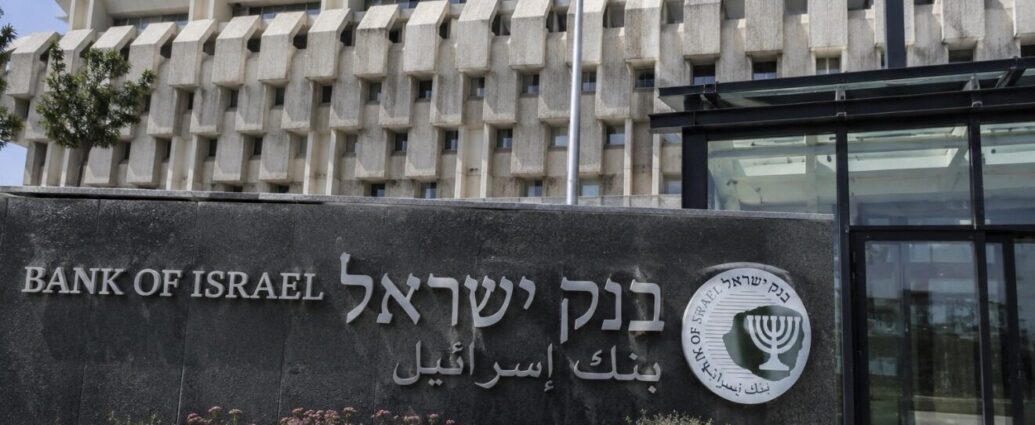
JERUSALEM — The Bank of Israel’s Monetary Committee, led by Governor Prof. Amir Yaron, voted Monday, May 25, 2026, to lower the benchmark interest rate by 0.25 percentage points to 3.75% from 4.00%, citing easing inflation, a sharply stronger shekel, and resilient economic data that gave policymakers room to resume monetary easing despite ongoing regional instability.
The decision marks the central bank’s third cut since November 2025 and matched expectations from most economists and financial markets. The Bank of Israel had paused at its previous two meetings amid uncertainty surrounding the war with Iran, after delivering consecutive 0.25-point cuts in November and January.
In its policy statement, the Monetary Committee acknowledged that inflation has stabilized near the midpoint of the government’s official 1%–3% target range but warned that geopolitical and global inflationary pressures remain elevated. The committee said geopolitical uncertainty remains significant both domestically and globally, adding that while Israeli inflation has moderated, there has been a sharp increase in the global inflation environment since the previous rate decision.
Officials cautioned that risks remain for renewed inflation acceleration, citing energy prices, supply constraints, fiscal pressures, and regional developments tied to ongoing security concerns. At the same time, policymakers emphasized that the shekel’s rapid appreciation is helping offset inflationary pressures by lowering import costs and easing pressure on consumer prices.
The currency move has been dramatic. Since the previous interest-rate decision, the shekel strengthened 8.3% against the U.S. dollar, 7.2% against the euro, and 7.4% on a nominal effective exchange-rate basis, according to Bank of Israel data. The stronger currency has become one of the central bank’s most important disinflationary forces and a major factor allowing policymakers to continue cutting rates without triggering renewed price instability.
The central bank also addressed the economic impact of Operation Roaring Lion, Israel’s recent military campaign against Iran and Iranian-linked targets. According to the Bank of Israel, first-quarter 2026 GDP contracted at an annualized rate of 3.3%, reflecting disruptions tied to the operation and wartime economic conditions.
Still, officials emphasized that the downturn was milder than many economists had feared and less severe than the contraction experienced during Operation Rising Lion in June 2025. The committee said current indicators of economic activity point to recovery following Operation Roaring Lion. Officials noted that credit-card spending data, which declined during the military operation, has since rebounded and now sits slightly above the long-term trend line, signaling improving domestic demand and consumer activity.
The 0.25-point rate cut comes as central banks globally face increasingly difficult tradeoffs between slowing economic growth and persistent inflation concerns tied to energy markets and geopolitical disruptions. Israel’s situation has become particularly complex because the country is simultaneously managing wartime fiscal pressures, strong capital inflows, and a rapidly appreciating currency.
Markets reacted positively to the decision, with Israeli government bonds rising modestly and traders increasing expectations for at least one additional rate cut later this year if inflation continues cooling and geopolitical conditions stabilize.
Analysts say the Bank of Israel is attempting to engineer a delicate balancing act: supporting economic recovery after months of military disruptions while avoiding renewed inflation pressure from energy costs and wartime spending.
Governor Amir Yaron has repeatedly emphasized that future policy decisions will remain highly data dependent and closely tied to developments in both the security environment and global inflation trends.
For now, the central bank appears increasingly confident that the shekel’s strength and moderating domestic inflation are giving policymakers room to cautiously support growth — even as the broader Middle East remains on edge.
JBizNews Desk
© 2026 JBizNews. All Rights Reserved. Reproduction or distribution without written permission is prohibited.

Shares of Delivery Hero SE surged Tuesday after reports emerged that Uber Technologies Inc. is exploring a potential takeover of the German food-delivery giant, a move that could reshape the global online delivery industry and trigger one of the largest consolidation deals the sector has seen since the pandemic-era boom.
Delivery Hero shares jumped sharply in Frankfurt trading following the reports, adding billions of dollars in market value as investors reacted to speculation that Uber may be positioning itself to expand deeper into Europe, the Middle East, and Asia through a large-scale acquisition.
The reports come at a pivotal moment for the global delivery sector, where slowing growth, rising labor costs, and investor pressure for profitability have intensified consolidation expectations across the industry.
Delivery Hero operates food-delivery platforms in more than 70 countries and maintains particularly strong positions across Europe, the Middle East, Latin America, and parts of Asia. The company also holds stakes in several regional delivery businesses and quick-commerce operations.
Uber, meanwhile, has spent years aggressively expanding beyond ride-sharing into food delivery, grocery delivery, freight logistics, and broader local commerce services through its Uber Eats platform.
Industry analysts say a combination between Uber and Delivery Hero would dramatically expand Uber’s international delivery footprint while strengthening its position against competitors including DoorDash, Just Eat Takeaway, Meituan, Deliveroo, and Prosus-backed food delivery businesses.
The strategic logic behind such a transaction is increasingly clear.
Global food-delivery growth has slowed materially from the explosive levels seen during the COVID-19 pandemic, forcing companies to focus more heavily on scale, logistics efficiency, and profitability rather than pure customer acquisition. Investors have increasingly pushed management teams to reduce subsidies, cut marketing costs, and improve margins after years of aggressive expansion spending.
For Uber, acquiring Delivery Hero could provide instant scale in markets where Uber Eats remains weaker or fragmented, particularly across continental Europe and emerging international markets.
The potential deal would also likely attract heavy regulatory scrutiny.
Competition authorities in the European Union, the United Kingdom, and multiple international jurisdictions have already taken a far more aggressive stance toward technology mergers and platform consolidation over the past two years. Any large-scale Uber acquisition involving major delivery-market overlaps would likely face lengthy antitrust review processes.
Investors nevertheless reacted positively to the reports, viewing consolidation as one of the clearest paths toward stronger profitability in a sector that continues struggling with thin margins and intense promotional competition.
Delivery Hero has faced mounting pressure in recent years to improve financial performance after aggressive expansion into rapid grocery delivery and quick-commerce operations weighed heavily on earnings. The company has since pulled back from several markets and shifted more aggressively toward cash-flow improvement.
Uber Chief Executive Dara Khosrowshahi has repeatedly emphasized that the company is prioritizing profitable growth and operational scale following years of investor concern over cash burn and subsidy-heavy expansion strategies.
The broader market backdrop is also fueling takeover speculation.
Technology and platform companies globally are increasingly exploring acquisitions as lower interest-rate expectations, stabilizing capital markets, and pressure to accelerate growth encourage renewed merger activity.
For Europe specifically, a potential Uber-Delivery Hero transaction would represent one of the largest technology consolidation efforts in years and could significantly reshape the competitive balance across digital commerce, logistics, and local delivery infrastructure.
Neither Uber nor Delivery Hero publicly confirmed takeover discussions Tuesday.
Still, the sharp market reaction highlights how strongly investors believe further consolidation across the global food-delivery sector has become almost inevitable.
After years of expansion fueled by cheap capital and rapid pandemic growth, the industry is increasingly entering a new phase defined by scale, efficiency, and survival.
JBizNews Desk — Europe
© 2026 JBizNews. All Rights Reserved. Reproduction or distribution without written permission is prohibited.
By JBizNews Desk
America’s biggest banks are about to get significantly more powerful — and consumers, businesses, and investors are likely to feel the effects quickly.
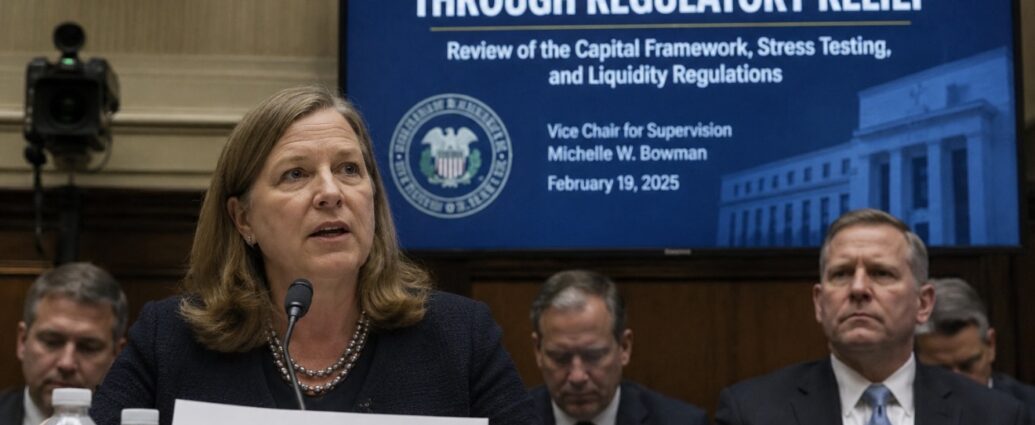
Federal Reserve Vice Chair for Supervision Michelle Bowman outlined the administration’s direction in a February 19 speech at the Federal Reserve Bank of Atlanta and in congressional testimony the following week: Washington is rolling back a series of post-2008 banking rules that have constrained lending capacity for more than a decade.
According to consulting firm Alvarez & Marsal, the changes could ultimately unlock roughly $2.6 trillion in additional lending capacity across the U.S. banking system — capital that has largely remained trapped on bank balance sheets since the global financial crisis.
The figure is enormous. It exceeds the annual economic output of many developed nations and represents one of the largest structural shifts in American banking policy since the aftermath of 2008.
The core of the deregulation effort centers around changes to the supplementary leverage ratio, one of the key post-crisis rules requiring large banks to maintain sizable capital cushions against potential losses. The Federal Reserve, the Office of the Comptroller of the Currency, and the Federal Deposit Insurance Corporation finalized a looser version of the framework late last year.
Alvarez & Marsal estimates the immediate impact alone could free approximately $140 billion in deployable capital at the eight largest U.S. banks. Additional revisions targeting stress-testing procedures, mortgage regulations, and portions of the broader Basel III banking framework are expected to follow.
The banking industry has openly welcomed the shift.
JPMorgan Chase Chief Executive Jamie Dimon, whose bank now holds roughly $4.42 trillion in assets, has argued for years that U.S. regulators overcorrected after the financial crisis and placed American lenders at a competitive disadvantage versus European and Asian rivals.
Goldman Sachs Chief Executive David Solomon publicly praised Bowman’s appointment last year, while Bank of America Chief Executive Brian Moynihan described the regulatory pivot as a meaningful boost for bank profitability and lending flexibility.
The question now is where the money goes.
A significant portion is expected to flow directly into artificial intelligence infrastructure. Until now, large banks have largely watched from the sidelines as private credit firms financed the rapid buildout of AI data centers, semiconductor facilities, cloud infrastructure, and energy projects tied to companies such as Microsoft, Amazon, Alphabet, Meta Platforms, and Nvidia-linked suppliers.
With more balance-sheet flexibility, major banks are now positioning themselves to finance billions of dollars in new AI-related infrastructure projects.
Mortgage lending is another major target.
Speaking at the American Bankers Association community banking conference in Orlando earlier this year, Bowman previewed regulatory adjustments designed to make mortgage origination and servicing less expensive for traditional banks.
For years, many banks gradually retreated from the mortgage business as compliance burdens increased, allowing nonbank lenders to capture significant market share. Regulators now appear eager to reverse that trend in hopes of increasing credit availability for homebuyers.
The broader small-business economy could also benefit. Mid-sized manufacturers, regional businesses, and acquisition financing markets are expected to see expanded access to traditional bank credit after years in which private credit funds increasingly filled the gap.
The rise of private credit itself became one of the clearest signs that post-crisis banking rules had fundamentally reshaped corporate finance.
Critics, however, warn that the rollback carries real risks.
Former Federal Reserve Vice Chair for Supervision Michael Barr, who previously held Bowman’s role, has argued that weaker capital standards could leave the banking system more vulnerable during future periods of stress. Critics point to the collapses of Silicon Valley Bank, Signature Bank, and First Republic Bank in 2023 as evidence that banking instability remains a genuine threat even after years of reform.
Bowman has rejected that argument, contending that U.S. banks remain substantially better capitalized than they were before the 2008 crisis and that excessive regulation has become a greater threat to growth than bank fragility itself.
The Trump administration has aligned closely with that view.
Treasury Secretary Scott Bessent has framed the banking-rule rollback as part of a broader strategy to stimulate economic growth without relying entirely on Federal Reserve rate cuts. The logic is straightforward: if banks lend more aggressively, economic activity accelerates without requiring monetary policy alone to support growth.
Wall Street is already responding.
Bank stocks have broadly outperformed the wider market since Bowman assumed the Fed supervision role last June. The Financial Select Sector SPDR Fund and the SPDR S&P Bank ETF have both gained faster than the S&P 500 over the past year as investors anticipate larger dividends, expanded share buybacks, and stronger lending growth.
International regulators are now watching closely as well. European and Asian policymakers face increasing pressure to determine whether they should follow Washington’s lead or risk placing their own financial institutions at a competitive disadvantage globally.
For everyday Americans, the implications are increasingly direct.
The nation’s largest banks are about to have significantly more money available for mortgages, business loans, infrastructure financing, and corporate expansion. That could support economic growth, improve credit availability, and accelerate investment across sectors ranging from housing to artificial intelligence.
It could also mean operating with thinner safety margins than the system maintained during much of the post-2008 era.
Whether that trade-off ultimately strengthens the economy or creates new long-term financial vulnerabilities may define the next chapter of American banking.
© 2026 JBizNews. All Rights Reserved. Reproduction or distribution without written permission is prohibited.

Taiwan has officially overtaken India to become the fifth-largest stock market in the world, a remarkable shift driven almost entirely by the global artificial intelligence boom and the explosive rise of semiconductor giant Taiwan Semiconductor Manufacturing Company (TSMC).
Bloomberg market data published Monday showed Taiwan’s total stock-market capitalization reached approximately $4.95 trillion, narrowly surpassing India’s $4.92 trillion. Taiwan’s benchmark TAIEX index climbed to a record 44,097 points Tuesday morning, cementing the island’s new position behind only the United States, China, Japan, and Hong Kong in global equity-market rankings.
The reversal is extraordinary given the scale difference between the two economies.
Taiwan has a population of roughly 23 million people and an economy worth under $1 trillion. India has approximately 1.4 billion people and an economy more than four times larger. Yet Taiwan’s market has surged ahead because of one company dominating the center of the AI economy.
TSMC alone now represents roughly 42% of Taiwan’s total stock market value.
The company’s shares have surged nearly 50% this year as investors continue pouring money into businesses tied to artificial intelligence infrastructure. TSMC manufactures the advanced semiconductors powering AI systems used by companies including Nvidia, Apple, Advanced Micro Devices, Broadcom, Qualcomm, Amazon, Microsoft, and Meta Platforms.
The company is widely estimated to produce roughly 90% of the world’s most advanced chips — semiconductors essential for AI data centers, cloud computing, smartphones, autonomous systems, and advanced defense technologies.
As global AI spending accelerates, demand for TSMC’s manufacturing capacity has exploded alongside it.
TSMC Chief Executive C.C. Wei has repeatedly said the company remains effectively sold out at the high end of production, with customer demand continuing to exceed available supply despite aggressive expansion efforts.
The company is currently building or expanding manufacturing facilities in Arizona, Japan, and Germany, backed by billions of dollars in incentives and industrial-support programs from governments eager to secure domestic semiconductor production.
Even so, the most advanced chips in the world continue to be produced overwhelmingly inside Taiwan itself.
Taiwan’s government has also actively supported the rally.
Last month, Taiwan’s Financial Supervisory Commission relaxed concentration rules for domestic mutual funds, allowing investment funds focused on Taiwanese equities to allocate up to 25% of assets into a single stock if that company represents more than 10% of the broader market.
At present, TSMC is the only company qualifying under the revised rules.
Analysts at JPMorgan Chase estimated the regulatory change alone could attract more than $6 billion in additional inflows into Taiwanese equities over the coming months, further strengthening demand for TSMC shares.
India, meanwhile, has moved in the opposite direction.
According to Bloomberg data, foreign investors have withdrawn roughly $24 billion from Indian equities so far this year amid slowing corporate earnings growth, weakness in the rupee, and the global rotation toward AI-linked investments concentrated in semiconductor-heavy markets like Taiwan and South Korea.
The reversal has been rapid. Just two years ago, India’s stock market was nearly three times the size of Taiwan’s.
TSMC itself is now valued at more than $1 trillion, placing it among the most valuable companies in the world and reinforcing how deeply the AI boom has concentrated market gains into a relatively small number of semiconductor leaders.
But Taiwan’s success also exposes its greatest vulnerability.
Because such a large share of the country’s stock market depends on one company and one industry, any slowdown in AI spending, production disruption, or geopolitical instability could trigger severe market volatility.
The geopolitical risk remains especially significant given tensions between Taiwan and China.
Beijing continues to claim Taiwan as part of its territory and has never ruled out the use of force to achieve reunification. Semiconductor security and U.S. support for Taiwan remained a major topic during recent meetings between President Donald Trump and Chinese President Xi Jinping earlier this month in Beijing.
Taiwanese officials have publicly welcomed the market milestone while also acknowledging the risks of excessive dependence on semiconductors.
Premier Cho Jung-tai has urged policymakers to accelerate investment in industries including electric vehicles, biotechnology, and green energy in an effort to broaden Taiwan’s economic base beyond chips.
Those diversification efforts, however, remain in relatively early stages.
For India, the loss of fifth place arrives at a politically difficult moment.
Prime Minister Narendra Modi’s government has aggressively promoted manufacturing expansion and semiconductor investment initiatives aimed at reducing reliance on imports and building a domestic chip ecosystem. But replicating Taiwan’s semiconductor infrastructure — built over four decades with deep engineering specialization and global supply-chain integration — remains enormously difficult.
India’s stock market still ranks among the world’s largest emerging-market exchanges, but momentum has increasingly shifted toward AI-linked economies and semiconductor-heavy markets tied directly to the global computing buildout.
TSMC shares are expected to resume trading Wednesday in Taipei following Tuesday’s record close.
For now, the rise of a single company has fundamentally reshaped global stock-market rankings — and transformed Taiwan into one of the central financial winners of the artificial intelligence era.
JBizNews Desk — Asia
© 2026 JBizNews. All Rights Reserved. Reproduction or distribution without written permission is prohibited.
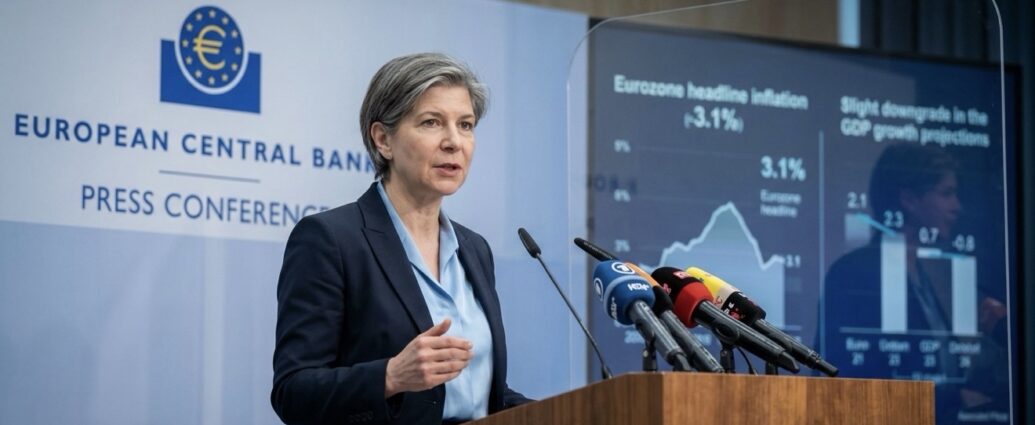
JbizNews —Frankfurt — The European Central Bank must proceed with an interest rate hike at its upcoming June monetary policy meeting regardless of whether ongoing diplomatic negotiations yield a peace deal in the Middle East, according to an explicit policy directive issued on May 26, 2026. ECB Executive Board Member Isabel Schnabel warned that the protracted geopolitical conflict in Iran has inflicted structural damage on the continent’s commercial pipeline, forcing a sharp upward revision in long-term inflation modeling. The central bank’s hardening stance signals that policymakers are preparing to prioritize structural price stability even as external energy shocks rapidly depress corporate profitability and squeeze aggregate consumer demand across the currency bloc.
The hawkish policy maneuver arrives on the heels of the European Commission’s official Spring 2026 Economic Forecast, which systematically downgraded Eurozone gross domestic product (GDP) expansion metrics while accelerating inflation targets. Under the newly calibrated baseline, real GDP growth across the EU is projected to contract to a sluggish 1.1% this year, while the core Eurozone is expected to post a meager 0.9% expansion. Simultaneously, widespread commodity volatility has driven projected headline inflation up by a full percentage point to 3.1% for the current calendar year. This restrictive macroeconomic environment is being directly exacerbated by a severe supply-side disruption following the closure of the Strait of Hormuz, which triggered a 50% spike in regional wholesale natural gas prices and a 65% surge in crude oil baselines between late February and the end of April.
For institutional market participants, the intersection of rising borrow costs and sticky input liabilities is triggering a notable contraction in industrial capital expenditure. European Commission forecasters noted that elevated sovereign yields are compounding corporate debt service burdens, pushing multi-national enterprises to alter near-term hiring and capital expansion plans. While nominal wage pressure remains highly elevated as regional labor unions seek compensation for eroding purchasing power, corporate operating margins are contracting under the weight of utility overhead. Commercial analysts at MUFG Research underscored that because domestic household savings buffers have been largely exhausted over the prior cyclical cycle, private consumption can no longer be relied upon to insulate corporate revenues from broader macroeconomic compression.
The structural fiscal health of member state governments is also fracturing under the financial burden of managing national energy grid interventions. Aggregate public sector deficits across the trading bloc are now anticipated to expand from 3.1% of GDP last year to 3.6% over the medium term. This widening budgetary mismatch is set to push the total EU debt-to-GDP ratio from 82.8% to 84.2% before the conclusion of the fiscal year, with core sovereign weights in the Eurozone hitting a more severe 90.2%. The expanding debt load is being further aggravated by an unfavorable, widening interest-growth differential that increases the long-term cost of rolling over outstanding government securities.
On the commercial labor front, the protracted tightening of the continental labor market has officially peaked. Institutional payroll modeling indicates that aggregate employment growth across the European Union will decelerate sharply to 0.3% this year, a noticeable decline from the 0.5% pace recorded during the prior expansionary leg. Total unemployment is projected to solidify at 6.0%, effectively halting a multi-year downward trajectory that had previously acted as a key pillar of support for corporate services and domestic retail spending.
Despite the prevailing headwinds, certain counter-cyclical sectors are showing strong structural resilience. Public sector capital outlays directed toward defense procurement and localized green energy infrastructure grids are expected to remain highly robust, partially mitigating the capital flight observed in private commercial real estate and residential construction markets. Furthermore, corporate investments into advanced generative artificial intelligence platforms are being cited by institutional economists as a primary supply-side tailwind that could unlock latent industrial productivity, provided that private enterprise implementation can bypass building regulatory friction within the Brussels legislative apparatus.
JBizNews Desk
© JBizNews.com. All rights reserved. This article is original reporting by JBizNews Desk. Unauthorized reproduction or redistribution is strictly prohibited.
By JBizNews Desk
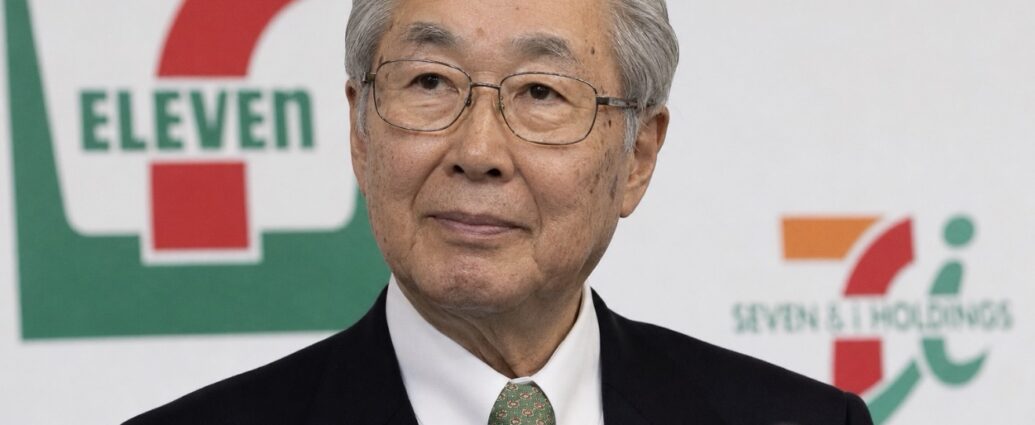
NEW YORK — The death of Toshifumi Suzuki, the Japanese retail pioneer who transformed 7-Eleven into the world’s dominant convenience-store chain, arrives at a defining moment for the company’s American operations — one marked by a delayed IPO, leadership uncertainty, store closures, and the lingering fallout from a failed multibillion-dollar takeover battle that nearly shifted control of one of America’s most recognizable retail brands to a Canadian rival.
Seven & i Holdings Co. confirmed Monday, May 25, 2026, that Suzuki died of heart failure on May 18 at age 93. The executive who introduced the American 7-Eleven concept to Japan in 1974 and later orchestrated the rescue of the bankrupt U.S. parent company, Southland Corp., in 1991 leaves behind a U.S. business now grappling with the same strategic challenge he spent decades solving: how to make convenience retail indispensable to daily life.
Today, 7-Eleven, Inc., headquartered in Irving, Texas, operates more than 9,000 stores across the United States and Canada and employs roughly 135,000 people. The chain remains the largest convenience retailer in North America by a wide margin. Yet the U.S. division has increasingly become the pressure point inside Suzuki’s global empire as inflation, changing consumer behavior, and declining cigarette sales reshape the economics of the sector.
The company is also navigating a major leadership transition. Longtime U.S. chief executive Joseph DePinto, who led the American business for more than two decades, retired at the end of 2025. Stan Reynolds and Douglas Rosencrans are currently serving as co-chief executives while parent-company CEO Stephen Hayes Dacus — the first foreign-born chief executive in Seven & i history — searches for a permanent successor to oversee the North American business.
That uncertainty is unfolding alongside a sweeping restructuring effort. Last year, 7-Eleven announced plans to close roughly 450 underperforming North American stores and raise approximately $750 million through sale-leaseback transactions after executives warned that “inflation-weary and pressured U.S. consumers” were reducing discretionary purchases. Since then, the company has expanded the effort to roughly 645 locations slated for closure or franchise conversion during 2026 while simultaneously investing in a major redesign of its U.S. stores modeled after the high-efficiency Japanese “konbini” concept Suzuki pioneered decades ago.
The company’s long-anticipated American IPO — expected to be one of the largest retail listings in years — has also been pushed back. Seven & i had targeted a second-half 2026 public offering for 7-Eleven Inc. on a U.S. exchange, but executives recently delayed the timeline, citing market conditions and the need to demonstrate sustained recovery in same-store sales before moving forward.
Suzuki’s influence remains embedded throughout the American business he rescued. When he engineered Ito-Yokado’s acquisition of Southland Corp. out of bankruptcy in 1991, he inherited a heavily indebted U.S. operator struggling under the weight of a failed leveraged buyout. He rebuilt it using operational systems developed in Japan: computerized point-of-sale tracking, real-time inventory analysis, rapid fresh-food rotation, and tightly monitored franchise accountability. Those systems now form the operational backbone of modern American convenience retail.
The strategic importance of Suzuki’s U.S. network became especially clear during the takeover battle that consumed the company through 2024 and 2025. Canadian retail giant Alimentation Couche-Tard, owner of Circle K, pursued Seven & i with a bid valued at roughly $47 billion before talks ultimately collapsed last year. Couche-Tard publicly accused Seven & i leadership of orchestrating a “calculated campaign of obfuscation and delay” during negotiations. A separate management-led buyout attempt spearheaded by Junro Ito also failed after financing efforts fell short.
The failed transactions forced Seven & i into a broader restructuring strategy centered around its American convenience-store business. The company installed Dacus as CEO, accelerated plans for the U.S. IPO, and agreed to sell supermarket and restaurant operations to Bain Capital in order to focus almost entirely on convenience retail — the business Suzuki built into a global powerhouse.
For U.S. consumers, the most visible manifestation of Suzuki’s legacy is the gradual transformation of American 7-Elevens into food-oriented neighborhood hubs modeled after Japanese convenience stores. The company has expanded fresh-food selections, introduced kids’ meals, catering options, and promotional “Slurpee happy hour” campaigns while redesigning stores under its “New Standard” concept in an attempt to replicate the high-frequency customer traffic that defines Japanese konbini culture.
Whether that strategy succeeds may ultimately determine the valuation of the eventual IPO — and whether the next American CEO inherits a growth platform or a difficult turnaround story.
Retail analysts say the timing of Suzuki’s death carries symbolic weight. The architect of modern convenience retail is gone just as the company he built faces a defining test of whether his operating philosophy can sustain the business into its next century without him as the guiding force.
What remains undeniable is the scale of Suzuki’s impact on American retail. The thousands of 7-Eleven stores he helped rescue from bankruptcy now represent the largest convenience-store network in the United States. Every late-night Slurpee run, every taquito warmer, every quick stop for coffee or gasoline traces back, in some measure, to the Japanese executive who was once told an American convenience-store concept could never succeed in Tokyo — and who later returned to save the American original itself.
The company he built now enters its next chapter without him.
© 2026 JBizNews. All Rights Reserved. Reproduction or distribution without written permission is prohibited.
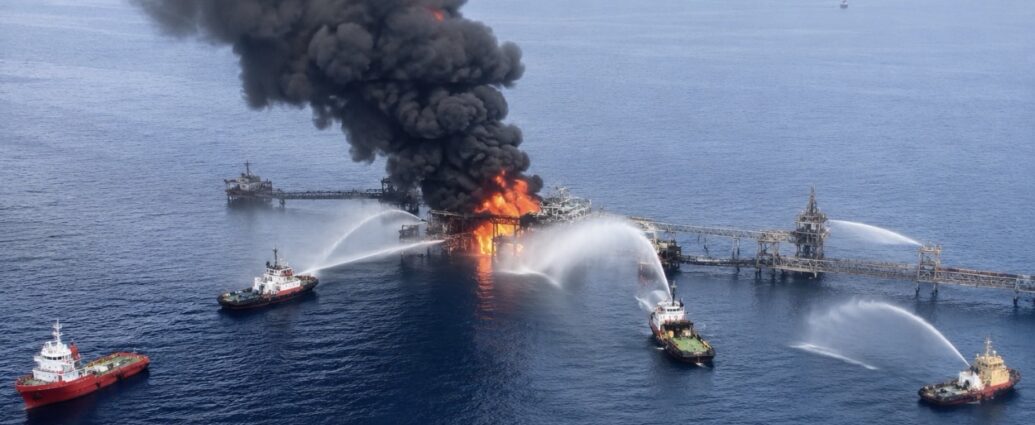
Crude oil prices surged Monday, May 25, 2026, after the U.S. military destroyed two Islamic Revolutionary Guard Corps vessels caught laying naval mines in the Strait of Hormuz and struck a surface-to-air missile battery at Bandar Abbas that had targeted American warplanes, raising fresh fears that a U.S.-Iran agreement to end the three-month war could slip away just as it appeared within reach. Senior U.S. defense officials briefing reporters Monday afternoon confirmed the strikes, which arrived mid-session and forced traders to abandon what had been one of the steepest single-day collapses in crude prices since the war began.
The reversal was violent. International benchmark Brent crude had earlier plunged roughly 7% to trade near $96 a barrel and West Texas Intermediate had skidded to roughly $90 a barrel after President Donald Trump posted on Truth Social that negotiations with Tehran were “proceeding nicely” and disclosed he had pressed Saudi Arabia, Qatar, Pakistan, Turkey, Egypt and Jordan to join the Abraham Accords as part of a wider regional settlement. The Monday slide had extended last week’s drop of more than 5% in Brent and over 8% in WTI, unwinding much of the war premium that had carried Brent above $114 just three weeks ago. The afternoon strikes erased a meaningful portion of the day’s losses and reignited the volatility that has defined the conflict.
The mine-laying operation was caught in real time. According to reporting from Fox News national security correspondent Jennifer Griffin citing a senior U.S. official, American forces tracked the two IRGC craft as they were depositing mines into the shipping lane and engaged them before the devices could be fully positioned. Both vessels were destroyed. U.S. Central Command considers them eliminated. The episode is the precise scenario American commanders have warned about for months: Tehran deploying small, fast-moving craft from its “mosquito fleet” to seed the world’s most critical oil chokepoint with naval mines, a tactic that could close the strait to commercial shipping for weeks even after a ceasefire is signed.
The second engagement followed almost immediately. A SAM site at Bandar Abbas — the southern Iranian port city that serves as the IRGC Navy’s primary operational hub and the inspection point through which Iran routes vessels transiting the strait — locked onto U.S. warplanes operating in the area. American forces struck the battery in response. Iran’s Mehr News Agency acknowledged sounds of explosions east of Bandar Abbas but said the situation in the city itself was normal. Separately, OSINT monitors and regional wire feeds reported large fires on Kharg Island, the terminal that handles roughly 90% of Iran’s crude exports, though U.S. officials have not confirmed American responsibility for that incident.
Pentagon officials, through Griffin’s reporting, were emphatic about the framing: the strikes were defensive in nature, not offensive, and not an attempt to break the ceasefire. U.S. officials said the operation is finished for now. That language is deliberate and aimed squarely at oil traders and at the Iranian negotiating team. The White House is signaling that mine-laying in the strait crosses a hard red line — even during active peace talks — but that American forces will not expand the engagement beyond the immediate threat. Whether Tehran accepts that distinction will determine the next 48 hours in the energy market.
The diplomatic track had been gathering real momentum before the strikes. U.S. Secretary of State Marco Rubio said last week there were “good signs” an agreement to end the war was within reach, while warning any deal would be “unfeasible” if Iran insists on permanent control over Hormuz shipping. A Pakistani mediator separately briefed Beijing that an accord was nearing. The framework under discussion would extend the existing ceasefire for roughly two months, during which Washington would lift its naval blockade of Iranian ports — in place since April 13 — and Tehran would reopen the strait to international shipping. Through that chokepoint normally moves about one-fifth of the world’s seaborne oil and 20% of global liquefied natural gas, flows that have been effectively halted since the war began February 28.
Two fault lines remain unresolved and both were on display Monday. Iran’s enriched uranium stockpile continues to be the central nuclear sticking point — Trump posted that the material will either be turned over to the United States and destroyed or handled in coordination with Tehran. The second is Iran’s demand to retain authority over maritime traffic through Hormuz and to collect tolls reported to exceed $1 million per ship. The mine-laying activity that triggered Monday’s American strikes underscores how far the two sides remain from operational normalization of the waterway, regardless of progress at the negotiating table.
Energy executives are bracing for a prolonged tail. A recent note from MUFG told clients that full normalization of Middle East oil supply may not occur until 2027 given infrastructure damage and dislocated shipping insurance markets. Chevron Chief Executive Mike Wirth told CNBC’s David Faber at the Milken Institute Global Conference earlier this month that fuel shortages are now a growing concern in parts of the world dependent on Gulf product flows, particularly naphtha, LPG and jet fuel. A Goldman Sachs note to clients flagged accelerating drawdowns in easily accessible refined-product buffers, while OPEC+ is weighing an output increase that analysts at Wood Mackenzie warn cannot offset Hormuz disruption in the near term.
The market is left holding two contradictory data points from the same Monday session: a president signaling diplomatic breakthrough and a U.S. military operation that destroyed Iranian warships in the strait. Traders are pricing both, and the next move belongs to Tehran.
JBizNews Desk
© JBizNews.com. All rights reserved. This article is original reporting by JBizNews Desk. Unauthorized reproduction or redistribution is strictly prohibited.
Let me know if you need a formatted version, summary, analysis, or anything else related to it.
By JBizNews Desk
NEW YORK, May 24, 2026 — For decades, one rule defined global finance during geopolitical crises: when war broke out, investors bought U.S. Treasury bonds.
That rule is now being tested in ways Wall Street has not seen in a generation.
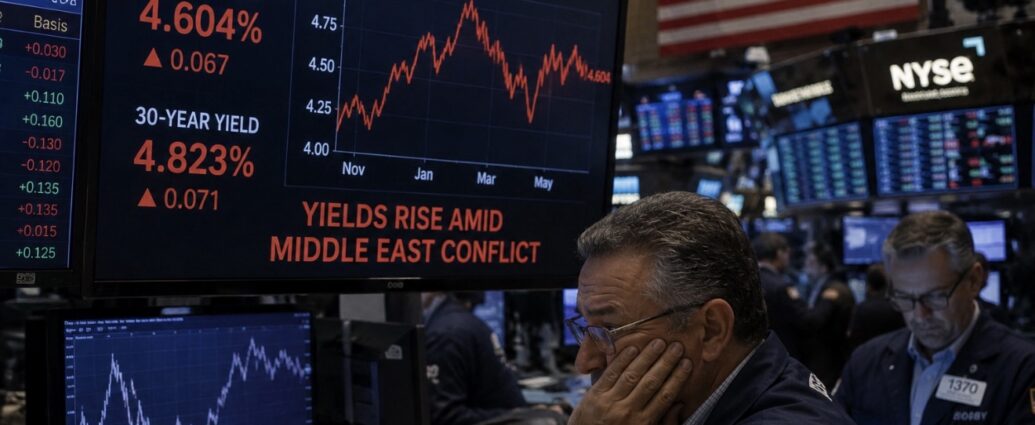
Instead of rallying during the Iran conflict, the Treasury market has sold off sharply. Bond prices have fallen, yields have surged, and the world’s largest safe-haven asset class is suddenly behaving less like a shelter and more like an inflation trade.
The reason is straightforward but deeply consequential: investors no longer fear recession first. They fear inflation first.
The 10-year U.S. Treasury yield, the benchmark interest rate underpinning nearly every major borrowing cost in the American economy, climbed to roughly 4.60% this week after briefly touching a 16-month high near 4.7%. Since the Iran war escalated in late February, yields have risen approximately 70 basis points — an unusually large move for sovereign debt markets.
Historically, wars triggered the opposite reaction. Investors typically fled into Treasuries during global instability, pushing yields lower as bond prices rose. That relationship held through the Gulf War, the Iraq invasion, the September 11 attacks, the European debt crisis, and much of the pandemic era.
This time, the inflation shock is overpowering the traditional safety trade.
Energy markets sit at the center of the disruption. A substantial share of global oil and fertilizer shipments move through the Strait of Hormuz, and continued instability surrounding the corridor has amplified fears of prolonged supply disruptions and structurally higher energy costs.
The economic consequences are already spreading globally. Airlines across Europe have reduced or rerouted flights due to elevated fuel costs and regional security concerns. American consumers have spent tens of billions more on gasoline this year compared with prewar expectations. Agricultural markets across Asia are dealing with rising fertilizer uncertainty that could ultimately feed back into global food inflation.
Every one of those pressures flows into the same market calculation: persistent inflation reduces the Federal Reserve’s ability to lower interest rates.
That concern is now clearly visible in inflation-expectation markets. The one-year Treasury breakeven inflation rate has climbed above 3%, while medium-term inflation expectations remain materially above the Federal Reserve’s formal 2% target.
Translated into everyday terms, bond investors increasingly believe the inflation environment of the early 2020s is not fully gone.
That matters far beyond Wall Street.
The 10-year Treasury yield directly influences mortgage rates, auto financing, corporate borrowing costs, commercial real estate lending, and the federal government’s own debt-service expenses. When yields rise and remain elevated, borrowing costs throughout the economy reset higher.
The housing market has already absorbed much of the impact. Freddie Mac’s average 30-year mortgage rate has remained above 7% for most of 2026, contributing to one of the slowest housing turnover environments in years. Home affordability has deteriorated sharply, refinancing activity has collapsed, and existing homeowners remain reluctant to sell properties tied to older low-rate mortgages.
The Federal Reserve has also become increasingly constrained.
Minutes from the Fed’s latest policy meeting showed policymakers remain concerned that inflation could reaccelerate if energy prices remain elevated through the second half of the year. Interest-rate futures markets now reflect rising expectations that the central bank may need to maintain restrictive policy longer than investors anticipated only months ago.
At the start of 2026, traders debated how quickly the Fed might begin easing. The conversation has shifted toward whether another rate increase could eventually become necessary.
The pressure extends beyond inflation alone.
Governments worldwide are issuing record amounts of debt at the same moment central banks are no longer acting as dominant buyers. According to OECD estimates, member governments issued roughly $17 trillion in sovereign debt during 2025, with issuance expected to rise further in 2026. U.S. federal debt has now crossed $39 trillion.
That creates a structural supply problem inside global bond markets: more debt must be absorbed by private investors precisely when inflation uncertainty is increasing the compensation investors demand to hold long-duration bonds.
Foreign reserve managers are also behaving differently than in past crises.
For much of the modern era, geopolitical instability automatically strengthened demand for U.S. Treasuries and the dollar. While the dollar remains dominant globally, reserve diversification has accelerated in recent years. Gold prices have repeatedly reached record highs during the Iran conflict, while several foreign central banks have gradually reduced reliance on long-dated U.S. government debt.
China’s sovereign bond market, notably, has remained comparatively stable during the conflict, underscoring how fragmented global capital flows have become compared with prior decades.
Markets increasingly view the path of oil prices as the key variable determining whether Treasuries can stabilize.
President Donald Trump has repeatedly argued that a negotiated Iran framework capable of restoring normal energy flows through Hormuz would rapidly ease inflation pressures. Administration officials have signaled that discussions remain active, though no finalized agreement has yet emerged.
If energy prices retreat materially, inflation expectations could ease and Treasury markets may begin behaving more traditionally again, with yields stabilizing or falling as geopolitical risk subsides.
If not, bond investors appear increasingly willing to price a world defined by structurally higher inflation, tighter monetary policy, and permanently elevated borrowing costs.
What makes the moment historically significant is not simply the Iran war itself.
It is the possibility that the foundational assumption underpinning modern finance — that U.S. Treasuries automatically function as the ultimate global refuge during crises — is no longer operating as reliably as it once did.
For now, the bond market’s message is clear: inflation risk has become powerful enough to overpower fear itself.
JBizNews Desk
© 2026 JBizNews. All Rights Reserved. Reproduction or distribution without written permission is prohibited.
By JBizNews Desk
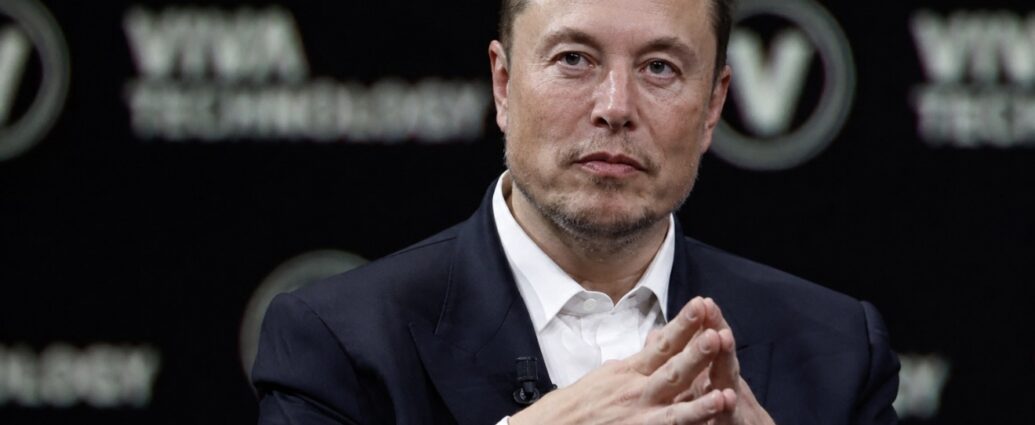
Elon Musk stands to collect roughly $1.8 trillion in equity awards across Space Exploration Technologies Corp. and Tesla Inc. if his companies hit the production, market-value, and operational targets attached to his stacked compensation deals — a sum larger than the annual economic output of nearly every country on Earth except the United States, China, Germany, Japan, India, and the United Kingdom. The disclosure surfaced in SpaceX’s S-1 filing submitted to the Securities and Exchange Commission last Wednesday ahead of what is expected to become the largest initial public offering in history.
To put $1.8 trillion into perspective, it approaches the annual GDP of Spain ($1.8 trillion) and exceeds the economies of South Korea ($1.95 trillion), Mexico ($1.85 trillion), Russia ($2.1 trillion), Brazil ($2.2 trillion), and Italy ($2.4 trillion). It also rivals much of the economic output of France ($3.2 trillion). Were Musk to fully realize the payout, his personal fortune would exceed the combined GDP of every country in Central America, nearly all nations across Africa, and much of Eastern Europe outside Russia. No private executive in modern history has ever been attached to compensation opportunities at this scale.
The S-1 filing by Space Exploration Technologies Corp., led by founder and CEO Elon Musk, revealed that Musk could receive more than 1.3 billion shares if the company reaches specific market capitalization and operational milestones. The SpaceX portion alone is estimated to be worth approximately $760 billion at the highest valuation targets, according to calculations tied to the Bloomberg Billionaires Index. Combined with Tesla’s restored 2018 compensation package and the company’s 2025 “Mars Shot” incentive structure, Musk’s potential payout becomes the first executive compensation framework in history to cross the trillion-dollar threshold.
The Tesla package operates over a 10-year horizon. Under the structure, the first earned tranches vest around 2033 for milestones achieved during the first half of the plan, while additional tranches vest around 2035 if Tesla reaches targets during years six through ten. Full vesting would require Tesla’s market capitalization to climb from roughly $1.54 trillion today to approximately $8.5 trillion, alongside cumulative delivery of 20 million vehicles, operation of one million robotaxis, deployment of one million Optimus humanoid robots, and generation of up to $400 billion in core profits.
The SpaceX compensation package has no fixed timeline. According to the filing, Musk must remain employed at SpaceX, where he has reportedly maintained a nominal salary of $54,080 annually since 2019. One of the most ambitious requirements calls for the establishment of a permanent human colony on Mars containing at least one million inhabitants. Another tranche would vest only if SpaceX successfully operates space-based data centers capable of at least 100 terawatts of compute capacity — equivalent to roughly 100,000 one-gigawatt nuclear reactors operating simultaneously.
Scientists remain skeptical. Paul Sutter, a NASA advisor and research scientist at Johns Hopkins University, previously wrote that Musk’s Mars timeline “doesn’t correspond to a real plan.”
In practical terms, Musk is likely to begin receiving Tesla-related equity first, potentially beginning in the 2033 vesting period, while the larger open-ended SpaceX awards remain dependent on technological breakthroughs and interplanetary colonization efforts that many scientists believe remain decades away — if achievable at all.
According to reports surrounding the anticipated IPO, SpaceX is targeting a valuation near $1.75 trillion, which alone would place the company among the ten most valuable corporations in the world immediately upon listing. At that valuation, Musk’s current pre-package ownership stake in SpaceX could already exceed $700 billion before any additional performance awards vest.
“The awards are obviously unprecedented and it’s kind of hard to wrap your brain around it,” said Jason Schloetzer, associate professor of accounting at Georgetown University’s McDonough School of Business.
The broader impact on Musk’s wealth would be historic. Forbes currently estimates Musk’s net worth near $811 billion, while the Bloomberg Billionaires Index places it closer to $636 billion. Musk also maintains significant ownership stakes in Neuralink Corp. and The Boring Company, alongside his holdings in Tesla and SpaceX.
If every milestone across Tesla and SpaceX were ultimately achieved, Musk’s combined business empire — including public, private, and contingent equity — could reach between $2.6 trillion and $2.8 trillion, a figure approaching the economic output of India and rivaling that of France.
The compensation structures are also raising major governance concerns ahead of the SpaceX listing. The filing confirms Musk controls approximately 85% of voting power, and the company plans to utilize governance exemptions that reduce certain independent oversight requirements commonly applied to newly public companies. The filing further states that Musk “can only be removed” from leadership positions through votes controlled by holders of super-voting shares that he himself controls.
That governance concentration has already drawn criticism from institutional investors. Norges Bank Investment Management, which oversees Norway’s roughly $2 trillion sovereign wealth fund, previously opposed Tesla’s compensation structure, citing the size of the award, dilution concerns, and concentration of executive power.
For Wall Street banks, the underwriting opportunity itself is historic. A SpaceX IPO valued near $1.75 trillion would eclipse the scale of Saudi Aramco’s 2019 public offering and instantly rank among the largest listings in financial history. Firms including Goldman Sachs, Morgan Stanley, and JPMorgan Chase are reportedly competing for lead underwriting roles.
The larger question now confronting corporate boards and compensation committees is whether the Musk model — compensation packages measured in trillions and tied to outcomes ranging from autonomous transportation to planetary colonization — becomes the new benchmark for founder-led companies or remains a once-in-history anomaly.
For now, no other executive on Earth operates under contracts remotely approaching Musk’s scale. Whether he ultimately collects depends not only on electric vehicles, artificial intelligence, and robotics — but potentially on humanity’s ability to establish life on another planet.
© 2026 JBizNews. All Rights Reserved. Reproduction or distribution without written permission is prohibited.

The Federal Bureau of Investigation’s Boston field office has just announced, that it has dismantled an India-based call center fraud operation that targeted elderly Americans through fake tech support scams, while two U.S. technology executives who helped route the scam calls have pleaded guilty to federal charges.
The case closes out a six-year investigation that has now produced convictions involving seven people across the United States and India — and highlights how a multibillion-dollar global scam industry continues draining retirement savings from older Americans.
The two U.S. executives identified by the FBI are Adam Young and Harrison Gevirtz, who served as chief executive officer and chief strategy officer of a call-tracking and analytics company that prosecutors say knowingly helped route scam calls from India to victims in the United States. According to federal prosecutors, the pair learned their customers were operating fraudulent tech support schemes but failed to report the activity between 2017 and April 2022.
Both men are scheduled to be sentenced on June 16, 2026.
“What the CEO and CSO of this well-known call tracking and analytics company did was downright despicable,” said Ted E. Docks, special agent in charge of the FBI’s Boston division. “By their own admission, they willfully profited from telemarketing and tech support scammers, here and abroad, who preyed on the elderly, exploited the vulnerable, and drained victims of their life savings and peace of mind.”
Federal authorities say the India-based scammers posed as representatives from companies such as Microsoft, Amazon, and government agencies, convincing victims their computers or bank accounts had been compromised. Victims were then pressured into sending money through gift cards, wire transfers, or cryptocurrency.
The five India-based defendants previously convicted in the case include Sahil Narang, Chirag Sachdeva, Abrar Anjum, and Manish Kumar, along with a former employee of the U.S. call-routing company. Prosecutors said the network defrauded Americans of millions of dollars, primarily targeting elderly victims.
The case reflects a much larger problem. According to the FBI’s Internet Crime Complaint Center (IC3), Americans lost roughly $2.1 billion to tech support scams in 2025 alone. Elderly Americans accounted for a disproportionate share of those losses.
Data from the Federal Trade Commission show Americans over age 60 lost $214 million in business and government impersonation scams involving losses between $10,000 and $100,000 during 2024. Victims reporting losses above $100,000 collectively lost another $445 million.
Older Americans are especially vulnerable because scammers often target retirees with savings accounts, home equity, or retirement funds. Fraud experts say many victims are manipulated through fear, confusion, and isolation.
The scams themselves have become highly organized businesses. Authorities earlier this year shut down three additional India-based call centers tied to nearly $49 million in losses involving more than 660 U.S. victims. Those operations were dismantled with assistance from India’s Central Bureau of Investigation after cooperation between U.S. and Indian law enforcement agencies intensified.
For the American technology industry, the case sends a warning well beyond one company.
Call-routing software, cloud phone systems, analytics tools, and customer-service platforms are legitimate multibillion-dollar businesses used daily by companies across the economy. Firms including Twilio, RingCentral, Five9, Cisco Systems, Microsoft, NICE Ltd., and Genesys provide communications infrastructure that powers customer support operations worldwide.
Federal prosecutors are now signaling that technology providers may face criminal exposure if they knowingly allow their systems to facilitate fraud.
That shift is drawing close attention from compliance officers and legal departments across the telecom and software industries, particularly companies involved in call routing, online advertising, customer analytics, and payment processing.
Banks and retailers are also deeply exposed. Fraud proceeds are often moved through Western Union, MoneyGram, gift cards sold at major retailers, and increasingly through cryptocurrency exchanges such as Coinbase, Kraken, and Binance.US.
Retailers including Walmart, Target, and Amazon have introduced warning signs and employee training programs aimed at helping consumers identify gift-card scams before money is lost. Financial institutions have also increased monitoring for suspicious transfers involving elderly customers.
The scams are creating broader economic consequences as well. AARP has repeatedly warned that elder fraud is becoming both a financial and public health issue. Victims often suffer depression, stress, and long-term financial insecurity after losing retirement savings.
For India, the reputational stakes are significant. The country’s business-process outsourcing industry generates more than $280 billion annually and employs millions of workers through legitimate companies such as Infosys, Tata Consultancy Services, Wipro, HCL Technologies, and Tech Mahindra.
Indian authorities have stepped up enforcement in recent years under pressure from Washington, but scam operations continue resurfacing because of low operating costs, high dollar-based profits, and historically inconsistent prosecutions.
The case also fits into the Trump administration’s broader focus on elder fraud enforcement and closer law-enforcement cooperation with the government of Prime Minister Narendra Modi. Attorney General Pam Bondi has made consumer fraud and elder exploitation a priority issue for the Department of Justice.
For ordinary Americans, investigators say the warning signs remain simple: unexpected calls claiming to be from tech support, the IRS, Social Security, Amazon, or a bank should immediately raise suspicion — especially if payment is requested through gift cards, wire transfers, or cryptocurrency.
The FBI urges victims to report scams through its IC3.gov reporting portal.
The broader reality is sobering. The money Americans lost to tech support scams last year alone exceeds the annual economic output of some small countries. And while this investigation shut down one network, authorities acknowledge that new scam operations continue appearing almost as quickly as old ones disappear.
— JBizNews Desk
© 2026 JBizNews. All Rights Reserved. Reproduction or distribution without written permission is prohibited.
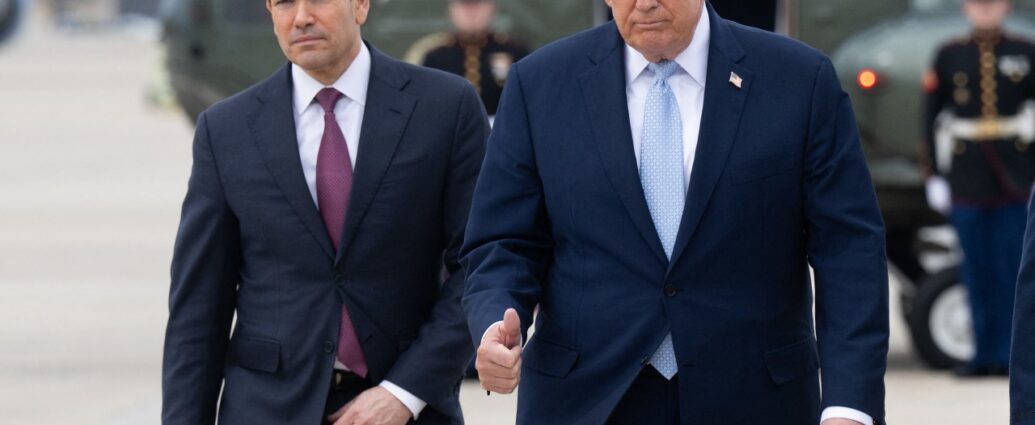

May 25, 2026 — A wave of new immigration barriers and a stalled entry-level hiring market are pushing tens of thousands of foreign graduates of U.S. universities toward the exits, with students, career counselors and labor-market data all pointing to the sharpest erosion of the post-graduation work pipeline in a generation.
The Federal Reserve Bank of New York reported on May 5 that the unemployment rate for recent college graduates ages 22 to 27 held at 5.6% through the first quarter of 2026 — well above the 3.1% rate for all college graduates and the 4.2% rate for all workers — as hiring across white-collar sectors continues slowing amid corporate cost-cutting, artificial-intelligence automation and mounting economic uncertainty.
At the same time, a Trump administration proclamation signed September 19, 2025, imposing a $100,000 fee on new H-1B petitions filed from abroad has dramatically narrowed the work-visa runway international students traditionally relied on after graduation.
Together, the two forces are reshaping one of America’s most important talent pipelines.
Approximately 84,000 international students are projected to earn bachelor’s degrees from U.S. universities this spring, according to an Economic Innovation Group analysis of National Center for Education Statistics data. Layered on top are roughly 306,000 master’s candidates and 153,000 doctoral students counted in the latest Open Doors survey sponsored by the U.S. Department of State.
Most are graduating into what the New York Fed describes as a “low-hire, low-fire” labor market — one where companies are slowing recruitment, preserving cash and reducing entry-level openings even as layoffs moderate.
For international students, the slowdown is colliding with visa restrictions at exactly the worst moment.
Erica Ford, an international career development coach at Cornell University who advises roughly 300 foreign students annually, told CNBC that STEM graduates who previously expected multiple offers are now relieved to secure even one. Doctoral candidates are pivoting away from academic research toward industry roles as university funding tightens, while nonprofit employers once considered viable alternatives are shedding staff and freezing hiring.
The pressure is especially severe because international graduates operate under visa deadlines domestic students do not face.
President Donald Trump’s September H-1B overhaul fundamentally changed the economics of sponsorship. The proclamation requires employers to pay a $100,000 surcharge on new H-1B petitions filed for workers outside the United States while shifting the system toward a wage-weighted lottery that favors higher-paid applicants over the previous random selection process.
U.S. Citizenship and Immigration Services later clarified that the fee does not apply to F-1 students adjusting status from inside the country — a carve-out that has slightly improved odds for graduates already working under Optional Practical Training programs because fewer overseas applicants are entering the system.
But the relief is narrow.
The wage-weighted structure still favors senior-level, highly paid positions, leaving entry-level international graduates competing for a shrinking pool of sponsorship-capable employers. Reid Hoffman, the LinkedIn co-founder and venture investor, has publicly urged the administration to create lower-fee exemptions for startups, warning that the current structure effectively pushes high-skilled immigrants toward only the largest corporations capable of absorbing the cost.
Recruiters across startup, venture-backed and small-business sectors report hiring pipelines drying up almost immediately after the fee took effect.
The student experience increasingly reflects that collapse.
Sid Chakravarthy, a 21-year-old mathematics and economics graduate of Boston University raised in Dubai, told The New York Times he submitted more than 700 job applications, receiving automatic rejections for roughly the first 500 despite meeting qualifications for many of the roles. Sakshi Patel, who completed a master’s degree last year and is pursuing finance positions, described interview processes that abruptly stall once sponsorship requirements surface.
Career offices at major research universities report a sharp increase in international students simultaneously applying for jobs in Canada, the United Kingdom, Germany and Ireland — countries now aggressively marketing simpler post-study immigration pathways to graduates who once overwhelmingly prioritized the United States.
The enrollment numbers are already beginning to reflect the shift.
International graduate enrollment fell roughly 6% — nearly 10,000 students — during the autumn 2025 term, according to National Student Clearinghouse Research Center data released in January. It marked the first decline in three years after international graduate enrollment surged more than 50% between 2020 and 2024.
Meanwhile, the U.S. State Department issued 15% fewer student visas globally between October 2024 and March 2025. The sharpest decline came from India — historically the single largest source of U.S. graduate students — where visa issuance dropped 43.5%.
NAFSA: Association of International Educators now projects a meaningful contraction in the number of jobs created or supported by international students during the 2025-2026 academic year after the category peaked in 2023-2024.
Business groups, universities and immigration attorneys warn the broader consequences could extend well beyond campus enrollment.
For decades, international graduates have formed a critical talent base for American technology firms, research labs, financial institutions, healthcare systems and startup ecosystems. A growing combination of H-1B costs, visa uncertainty, security reviews, processing delays and weak entry-level hiring conditions now risks redirecting portions of that talent pipeline toward competing economies.
The administration argues the overhaul protects American workers, raises wage standards and prevents employers from undercutting domestic labor markets through lower-cost foreign hiring.
But critics warn the long-term effect may be to weaken one of America’s most successful competitive advantages: attracting and retaining global talent.
Eva Yao, founder of Colorado-based Flari Tech and herself a former H-1B visa holder, told CNBC she now advises foreign graduates to focus almost exclusively on large corporations with the financial scale to absorb the new fees and compliance costs — guidance that runs directly against decades of policy designed to encourage entrepreneurial immigration and startup formation.
For now, the path remains open.
But it is becoming narrower, slower, more expensive and significantly more selective than at any point in the post-1990 era.
And a generation of international graduates is beginning to recalibrate its future around that reality.
JBizNews Desk
© 2026 JBizNews. All Rights Reserved. Reproduction or distribution without written permission is prohibited.

Bunia, Democratic Republic of the Congo — May 24, 2026 — Hospitals across eastern Congo are “fighting with no tools at all,” according to Dr. Jean Kaseya, Director-General of the Africa Centres for Disease Control and Prevention, as a fast-moving outbreak of Bundibugyo ebolavirus spreads across one of Africa’s most strategically important mining corridors and begins rippling through the pharmaceutical, aviation, insurance and global commodities sectors.
The Democratic Republic of the Congo’s Ministry of Public Health, working alongside the World Health Organization and Africa CDC, has confirmed 968 suspected cases and 216 deaths across Ituri, North Kivu and South Kivu provinces, while neighboring Uganda has reported five imported cases in Kampala, the country’s capital and commercial hub.
The outbreak has already triggered emergency travel measures, intensified supply-chain monitoring and reignited fears of a broader regional disruption across Central Africa.
On May 18, the U.S. Centers for Disease Control and Prevention and the Department of Homeland Security imposed enhanced travel screening and routing restrictions for travelers recently transiting the DRC, Uganda or South Sudan. American citizens and permanent residents leaving affected areas are now being funneled through designated U.S. airports in Virginia, Texas and Georgia for additional screening procedures.
The measures are complicating operations for international carriers including Delta Air Lines, United Airlines, Air France-KLM and Brussels Airlines, the latter long serving as one of the primary Western aviation links into Kinshasa.
The outbreak is also colliding with a growing funding crisis inside global public health systems.
The WHO and Africa CDC have jointly requested more than $314 million in emergency funding for containment, treatment and surveillance operations, including roughly $54 million earmarked for neighboring high-risk countries such as Rwanda, Kenya, Tanzania, Angola, Burundi and South Sudan.
The United States has pledged approximately $50 million toward frontline response efforts, while Congo and Uganda are seeking a combined $320 million in additional support.
Kaseya warned this week that donor fatigue is rapidly becoming as dangerous as the virus itself.
International health assistance to African response systems has fallen sharply over the past five years, according to Africa CDC estimates, with several programs weakened further by recent aid reductions and shifting budget priorities across Western governments.
For pharmaceutical companies, the outbreak presents a uniquely difficult challenge: there is currently no approved vaccine or targeted therapeutic for the Bundibugyo strain now spreading across eastern Congo.
Merck & Co.’s Ervebo, the only FDA-approved Ebola vaccine, targets the Zaire strain of the virus and has not been approved for Bundibugyo. The company said existing cross-protection research remains limited and largely untested in human trials.
Regeneron Pharmaceuticals’ Inmazeb antibody treatment is also designed specifically for Zaire ebolavirus and is not approved for Bundibugyo infections.
Drugmakers including Johnson & Johnson and Bavarian Nordic are now evaluating whether experimental candidates can be accelerated into cross-strain testing, but WHO officials warned this week that any targeted vaccine rollout remains months away.
The timing is especially sensitive because the outbreak’s epicenter overlaps directly with one of the world’s most important critical-minerals regions.
Ituri Province sits near major gold, cobalt and coltan transport corridors central to global electric-vehicle and battery supply chains. The Democratic Republic of the Congo produces more than 70% of the world’s cobalt supply, a strategic material used by manufacturers including Tesla, Ford Motor Co., General Motors and major Chinese battery producers.
Mining companies including Glencore, CMOC Group and Barrick Mining have not yet announced operational suspensions, but previous Ebola outbreaks triggered widespread staff evacuations, travel restrictions and production disruptions throughout the region.
The WHO has already identified mining-related population movement as a major transmission risk.
The outbreak also raises concerns for regional banking, trade and logistics infrastructure.
Kampala, where imported cases have now been confirmed, serves as a key financial and transportation hub for East African institutions including Equity Group Holdings, KCB Group and Standard Bank. Kenya and Tanzania have intensified airport health screening procedures at Nairobi’s Jomo Kenyatta International Airport and Dar es Salaam’s Julius Nyerere International Airport.
Meanwhile, major insurers and reinsurers including Allianz, AXA and Marsh McLennan are reportedly reviewing pandemic-related exposure across African travel, trade-credit and logistics policies.
The broader market fear is not simply the current outbreak itself.
It is the possibility that the outbreak escapes containment and evolves into a larger regional emergency similar to the 2014–2016 West African Ebola crisis, which caused an estimated $53 billion in economic losses across Guinea, Liberia and Sierra Leone while severely disrupting mining operations and international investment flows.
Several warning signs are already intensifying concern among health officials and multinational operators.
The outbreak reportedly went undetected for nearly four weeks, healthcare workers have already died treating infected patients at Mongbwalu General Referral Hospital, and ongoing armed conflict across eastern Congo continues restricting medical access and surveillance operations.
With no approved Bundibugyo-specific treatment available and hospitals already overwhelmed, executives across pharmaceuticals, mining, aviation and global logistics are increasingly treating the outbreak not just as a humanitarian crisis but as a growing commercial and supply-chain risk.
The next major turning point may ultimately come down to funding speed.
If the WHO–Africa CDC emergency appeal is funded quickly, the outbreak may remain primarily a logistics and containment challenge.
If donor fatigue prevails, the crisis risks spreading deeper into regional trade routes, aviation corridors and critical-minerals supply chains already strained by geopolitical instability and global commodity competition.
JBizNews Desk
© 2026 JBizNews. All Rights Reserved. Reproduction or distribution without written permission is prohibited.
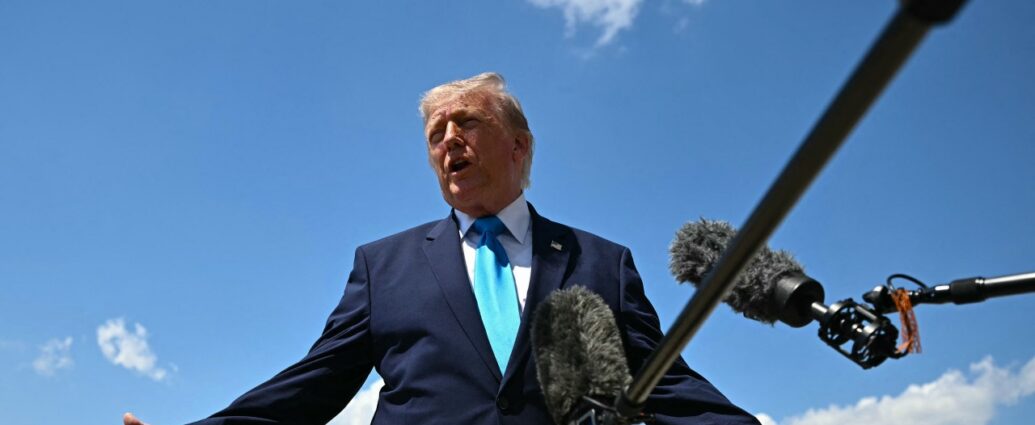
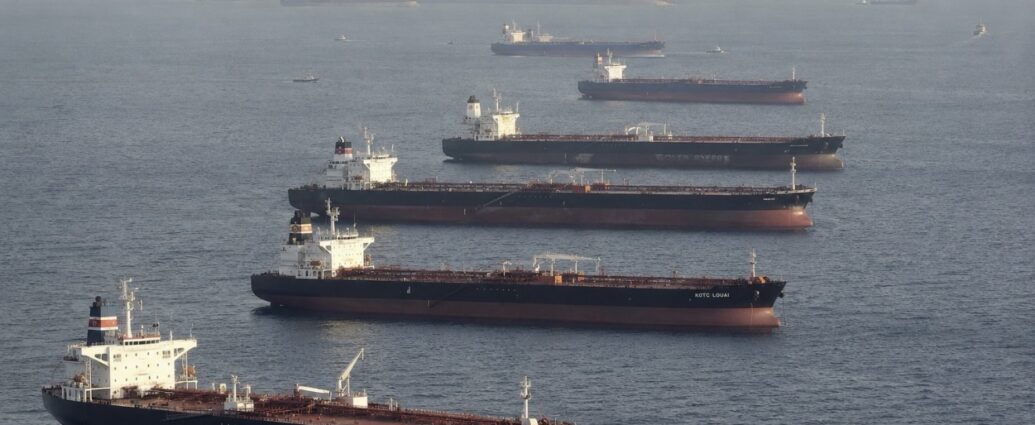
Crude carriers shifted into position near the Strait of Hormuz on Sunday, May 24, 2026, after President Donald Trump declared over the weekend that a framework deal with Iran to reopen the world’s most consequential energy corridor has been “largely negotiated” and will be unveiled imminently — even as Tehran publicly contested his version of events and tanker operators kept crews on hold pending a formal end to hostilities.
In a Saturday social-media post, Trump described the agreement as “subject to finalization between the United States of America, the Islamic Republic of Iran, and the various other Countries.” Iran’s Foreign Ministry said the two sides had locked in a memorandum of understanding as a first phase, with deeper negotiations to unfold over the following 30 to 60 days. A senior Iranian official, outlining the first-phase terms, said Tehran will return the Strait of Hormuz to pre-war operating conditions, underwrite shipping security through the waterway, give assurances that it will not pursue nuclear weapons, and resume exports of its own fuel and crude. The same official stressed that Iran has not agreed to hand over its enriched uranium stockpile, and that the nuclear question has been carved out for phase two.
Tehran’s counter-messaging muddied the picture almost instantly. Fars news agency reported that the Strait of Hormuz will stay under Iranian management and dismissed Trump’s framing as “incomplete and inconsistent with reality.” Iran’s chief negotiator Mohammad Bagher Ghalibaf struck a similar note after the latest round of talks, warning that Tehran “will not back down from the rights of our nation and country — especially when dealing with a party that has never shown sincerity.” Traders have seen this movie before: at least two prior reopening declarations during the war unraveled within days.
The Strait of Hormuz has been functionally closed to commercial transit since late February, when U.S. and Israeli strikes on Iran set off a cascade of Iranian retaliatory measures that throttled tanker movement to roughly five percent of its normal pace. The corridor moves about a fifth of the world’s daily crude shipments and a comparable slice of global LNG. General Dan Caine, Chairman of the Joint Chiefs of Staff, confirmed earlier this month that 22,500 mariners are stranded on more than 1,550 commercial ships trapped in and around the Gulf. Maersk, MSC, CMA CGM and Hapag-Lloyd halted transits in the conflict’s opening days and have yet to resume full service.
Vessel-tracking firm Kpler said crude carriers idling north of Dubai and Fujairah began nudging toward the chokepoint within hours of the weekend announcement — a near-repeat of April’s aborted reopening, when at least eight tankers advanced before the corridor refroze. Roughly 130 million barrels of crude and 46 million barrels of refined fuels are currently floating on some 200 tankers across the region, according to Kpler data, a backlog that would surge into global markets the moment flows truly restart.
Futures markets are already pricing the optionality. Brent crude has swung in a band between roughly $100 and $144 a barrel for nearly three months, settling near $105 last week, while North Sea Dated changed hands around $110 in early May. JPMorgan analysts, who had penciled in a June restart, now project oil will average $97 a barrel for the balance of 2026 if the strait reopens on track. Citigroup energy strategists Anthony Yuen and Eric Lee had earlier flagged that any closure would deliver a sharp but compressed spike, since every major economy is incentivized to restore flows. Michael Green, chief strategist at Simplify Asset Management, notes that Brent historically needs to hold near $60 a barrel before U.S. pump prices retreat to roughly $3 a gallon — a level still well south of where the market is trading.
The operational hurdle is steeper than the diplomatic one. Matt Wright, principal freight analyst at Kpler, said shipowners remain unwilling to send crews back into the corridor on a political signal alone. War-risk insurance premiums, which ran at about 0.25 percent of hull value before the conflict, have leapt to between three and eight percent — equating to $3 million to $8 million in coverage costs for a single very large crude carrier transit, according to Marsh Risk war leader Dylan Saunders-Mortimer. VLCC freight rates from the Gulf to China have spiked in recent sessions, with Kpler clocking a 24 percent single-day jump to $1.67 per barrel — the steepest move of the year. The U.S. International Development Finance Corporation has been assembling a $20 billion reinsurance facility intended to draw tanker operators back, but the program’s terms remain unsettled.
Secretary of State Marco Rubio, speaking in New Delhi on Saturday, reiterated that any final accord must reopen Hormuz toll-free, halt Iran’s nuclear weapons pursuit, and secure the transfer of enriched uranium. “This problem will be solved, as the president’s made clear, one way or the other,” Rubio said.
For corporate America, even a partial restart would ease pressure that has bled into every corner of the consumer economy. U.S. inflation has held at multi-year highs since the conflict began, gasoline prices have spiked, ocean-freight costs have lifted everything from manufacturing inputs to imported food, and supply chains have absorbed a parallel hit from the Red Sea. OPEC trimmed its 2026 global demand growth forecast to 1.17 million barrels per day in its May report, down from 1.38 million, citing the conflict’s drag on trade.
Even under the cleanest possible path — a finalized phase-one accord, Iranian compliance on safe passage, sustained U.S. and allied naval reassurance, and tanker operators willing to put crews and hulls back in harm’s way — the International Energy Agency and Wall Street energy desks expect Hormuz throughput to stay below pre-war norms well into the third quarter. Stranded barrels will hit the market first; restoring production at Saudi, Emirati, Iraqi and Kuwaiti loading facilities, and rebuilding the depleted floating-storage and onshore inventories the war has burned through, will take months, not weeks.
The next 72 hours will tell the market whether this is, at last, the real reopening — or another false start in a war that has produced several already.
JBizNews Desk
© 2026 JBizNews. All Rights Reserved. Reproduction or distribution without written permission is prohibited.
May 24, 2026 — President Donald Trump slowed momentum toward a potential Iran agreement Sunday, warning negotiators not to rush into a deal as oil markets, inflation fears and mounting Republican backlash collided with White House efforts to stabilize the global economy before the 2026 midterms.
“The negotiations are proceeding in an orderly and constructive manner, and I have informed my representatives not to rush into a deal — time is on our side,” Trump wrote Sunday morning on Truth Social, a sharp change in tone from Saturday’s declaration that an agreement with Tehran had been “largely negotiated, subject to finalization.”
Trump also confirmed that the U.S. naval blockade on Iranian ports, imposed April 13 after Iran threatened commercial shipping lanes, “will remain in full force and effect until an agreement is reached, certified, and signed.”
“Both sides must take their time and get it right,” the president wrote. “There can be no mistakes!”
The reversal immediately eased concerns among Republican national-security hawks who feared the administration was moving too quickly toward an agreement that would leave Iran financially and militarily intact in exchange for temporary market stability and lower oil prices heading into the election season.
According to Axios, the proposed framework under discussion would include a 60-day ceasefire extension, the reopening of the Strait of Hormuz, renewed Iranian oil exports, sanctions relief and the release of tens of billions of dollars in frozen Iranian assets. Iranian outlet Tasnim reported the U.S. naval blockade itself could be dismantled within 30 days under the first phase of the agreement.
Trump moved Sunday to distance the negotiations from former President Barack Obama’s 2015 nuclear deal, calling the JCPOA “one of the worst deals ever made by our Country” and “a direct path to Iran developing a Nuclear weapon.” The current negotiations, he said, are “THE EXACT OPPOSITE.”
The Strait of Hormuz — the narrow passageway connecting the Persian Gulf to global shipping lanes — handles roughly 20% of the world’s seaborne oil supply, making the negotiations one of the most consequential economic flashpoints in the world economy. Since the war intensified this spring, energy traders, manufacturers, shipping companies and central banks have been bracing for a prolonged disruption capable of pushing inflation sharply higher worldwide.
Iran’s Revolutionary Guard told Fars News Agency on Sunday that only 33 vessels passed through Hormuz during the prior 24 hours, far below the prewar daily average of roughly 140 ships. Fars also reported that approximately 240 vessels remain queued awaiting Iranian authorization to transit the waterway, underscoring Tehran’s continuing leverage over one of the world’s most important energy chokepoints despite the American blockade on Iranian ports.
Brent crude has already fallen nearly 5% over the past week while West Texas Intermediate has dropped more than 7%, with traders rapidly unwinding wartime risk premiums that had built up earlier this month. Brent settled Friday near $103.82 per barrel while WTI closed near $97 as markets increasingly priced in a possible de-escalation scenario.
The pullback has already started easing pressure on American consumers after gasoline prices surged to wartime highs of roughly $4.48 per gallon earlier this month. But the inflation shock from the conflict continues rippling through supply chains, transportation costs and manufacturing inputs, keeping pressure on the Federal Reserve as headline inflation climbed to 3.3% in March, its highest reading since May 2024.
With midterm elections now just months away, the administration is balancing military leverage against growing voter anxiety over energy costs, inflation and recession fears. Goldman Sachs recently raised its recession probability outlook to 30%, while JPMorgan placed the odds even higher at 35%.
Secretary of State Marco Rubio acknowledged Thursday there were “good signs” negotiations were progressing but warned any arrangement would become “unfeasible” if Iran seeks permanent control over shipping through Hormuz, including the possibility of imposing transit tolls on commercial traffic.
The unresolved disputes over Hormuz transit authority, sanctions relief and Iran’s enriched uranium stockpile remain the largest obstacles to any final agreement.
Pressure inside Washington intensified dramatically over the weekend as Republican national-security hawks openly warned that Tehran could emerge from the conflict strategically stronger despite months of military strikes.
Sen. Ted Cruz called the reported framework a “disastrous mistake” in an X post that generated more than 6.3 million views within seventeen hours, warning that the administration risked allowing a regime still chanting “death to America” to emerge from the war with renewed oil revenue, sanctions relief and continued nuclear capability.
Sen. Lindsey Graham warned that any agreement leaving Iran effectively controlling the Strait of Hormuz would result in Tehran being viewed globally as “a dominate force.” Senate Armed Services Committee Chairman Roger Wicker called the proposed ceasefire structure “a disaster” that would render the gains of the U.S.-Israeli military campaign “for naught,” while Senate Intelligence Chairman Tom Cotton amplified Graham’s warning through official Senate Republican channels.
The criticism reflects growing fears among conservative national-security voices that Tehran is pursuing the same strategy it has relied on for decades: absorb military punishment, survive politically, regain access to capital markets and rebuild over time.
Iran’s missile infrastructure remains largely intact despite months of strikes, and Western intelligence officials continue monitoring reports that Tehran is rebuilding portions of its ballistic missile arsenal while deepening military coordination with China, including discussions involving anti-ship missile systems and advanced satellite-guidance technology.
For now, Trump appears determined to avoid rushing into an agreement that could fracture his political coalition while giving Tehran economic breathing room without permanently dismantling its nuclear and missile capabilities.
Whether Iran is willing to negotiate under a slower timetable — particularly with the naval blockade still fully operational — now becomes the central question heading into the week ahead.
For global markets, the stakes extend far beyond diplomacy. The outcome of the negotiations will shape oil prices, inflation trends, shipping flows, central-bank policy and the broader direction of the world economy through the second half of 2026.
For now, the blockade remains in place. Oil continues moving cautiously through Hormuz. And traders, businesses and governments worldwide remain suspended between the possibility of stabilization and the risk of another major escalation.
JBizNews Desk
© 2026 JBizNews. All Rights Reserved. Reproduction or distribution without written permission is prohibited.
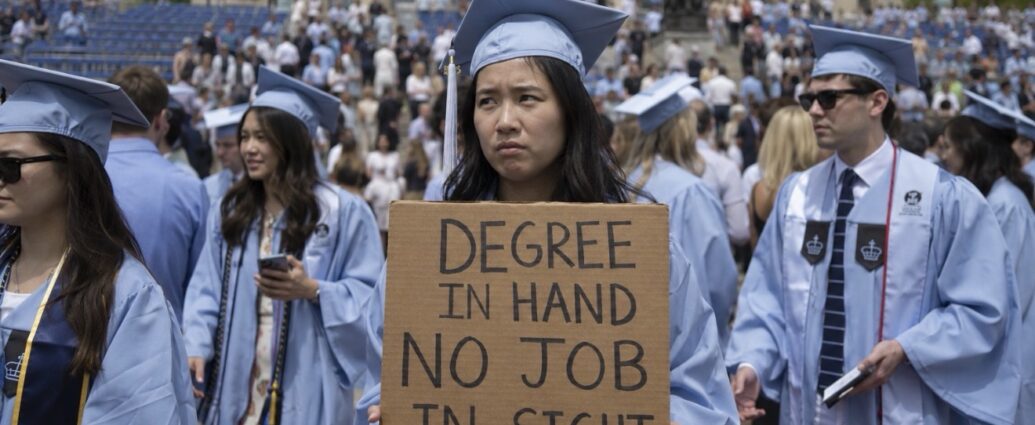
By JBizNews Desk
NEW YORK, May 21, 2026 — The economic data says the U.S. labor market is healthy. Employers are still adding jobs, unemployment remains relatively low at 4.3%, consumer spending has not collapsed, and corporate earnings continue beating expectations. By traditional economic definitions, the United States is still operating inside what policymakers hoped would become a soft landing.
For millions of Americans graduating from college this spring, it does not feel that way at all.
The unemployment rate for recent college graduates has remained above the national unemployment rate for five consecutive years, according to data from the Federal Reserve Bank of New York, a reversal from the decades before the pandemic when college graduates almost always enjoyed materially lower unemployment than the overall workforce. In the first quarter of 2026, unemployment among recent graduates stood near 5.7%, while underemployment — graduates working jobs that do not require a four-year degree — remained above 41%.
In practical terms, more than four out of every ten employed recent graduates are now working positions beneath the education level they were told would unlock opportunity.
Beneath those headline numbers sits a structural shift that economists, universities, and employers are only beginning to fully understand. Entry-level white-collar hiring has slowed sharply since the generative AI boom accelerated in 2023, with companies increasingly automating the routine analytical, administrative, coding, and research tasks that historically served as the first rung on the corporate ladder.
Labor-market tracking data shows entry-level job postings have fallen roughly 35% since early 2023. The industries historically responsible for absorbing large waves of graduates — consulting, technology, finance back-office operations, media, marketing, and advertising — are among the sectors pulling back the hardest.
The result is an economy producing a deeply unusual contradiction: businesses are still profitable, still hiring selectively, and in many cases still growing, while simultaneously reducing the number of junior workers they bring into the system.
The National Association of Colleges and Employers, or NACE, initially projected that hiring for the graduating Class of 2026 would rise just 1.6% from the previous year, effectively flat once adjusted for population growth. But a spring revision showed employers now expect hiring to rise 5.6%, an improvement driven by more than one-third of surveyed companies increasing planned graduate recruitment.
Even that improvement came with an important caveat. The rebound is not broad-based. Hiring growth is concentrated in engineering, information services, construction, logistics, and specialized professional services rather than the traditional office-heavy sectors many graduates spent years preparing to enter.
Mary Gatta, NACE’s director of research and public policy, described the trend as less of a recovery and more of a recalibration. Companies that initially believed AI would allow them to dramatically shrink junior staffing are beginning to realize they still need employees capable of operating, supervising, and integrating AI systems into workflows.
But needing fewer entry-level workers than before is still not the same thing as needing none.
That distinction is now reshaping the bottom layer of the American white-collar workforce.
Research published by the Stanford Digital Economy Lab found employment among workers aged 22 to 25 in AI-exposed occupations has fallen 13% since late 2022. Junior software developer employment dropped roughly 20% during the same period, while older workers in comparable positions actually saw gains.
A separate study released by Harvard researchers in February 2026, analyzing more than 62 million workers, found companies adopting generative AI reduced junior staffing by roughly 9% to 10% while largely preserving senior-level positions.
The emerging pattern is becoming increasingly visible across corporate America: firms are not eliminating experienced workers. They are reducing intake at the bottom.
BlackRock Chief Executive Larry Fink warned earlier this year that the graduating class of 2026 could face one of the most difficult entry-level hiring environments in years because artificial intelligence is replacing portions of junior-level office work faster than the labor market can create new pathways.
Economists increasingly describe the current environment as a “no-hire, no-fire” labor market. Companies are reluctant to lay off experienced workers because skilled labor remains expensive and difficult to replace. At the same time, they are slowing or freezing the hiring pipelines that traditionally replenished future mid-level talent.
That dynamic helps explain why the labor market feels far weaker to young workers than broader economic indicators suggest.
The graduates themselves are adapting in real time. Data from ZipRecruiter’s 2026 Graduate Report shows roughly one in five employed graduates now believes they are overqualified for their current role, while a similar percentage said they deliberately applied for jobs below their education level simply to secure income and experience.
Student debt pressures are intensifying the situation. Higher-education expert Mark Kantrowitz estimates roughly 160,000 federal student-loan borrowers entered unemployment deferment programs during the first quarter of 2026 alone, with interest continuing to accrue for many borrowers despite paused payments.
There are important exceptions to the broader trend.
International Business Machines Corp. said this year it plans to triple entry-level hiring across parts of its U.S. workforce. IBM Chief Executive Arvind Krishna has argued that younger employees often adapt to AI-assisted workflows faster than mid-career workers because they have fewer legacy habits and are more comfortable collaborating directly with machine-learning systems.
The company says junior developers now spend less time performing repetitive coding tasks and more time interfacing directly with customers while AI handles foundational programming work underneath them.
Whether IBM’s approach becomes a blueprint for corporate America or remains an isolated strategy could become one of the defining workforce questions of the next several years.
Universities and workforce researchers are also experimenting with what some are beginning to call “AI apprenticeships” — entry-level programs where graduates use generative AI systems to perform at productivity levels once associated with more experienced workers while still receiving junior-level pay and training.
Supporters argue the model could preserve pathways into white-collar careers. Critics warn it may permanently compress entry-level employment and wages by allowing companies to operate with fewer people overall.
For now, the numbers tell the immediate story clearly: the entry-level labor market has frozen even as the broader economy remains relatively stable.
And beneath that freeze sits a longer-term risk for corporate America itself.
A labor market that automates away too much of the bottom rung may eventually discover there is nobody left prepared to fill the middle one.
JBizNews Desk
© 2026 JBizNews. All Rights Reserved. Reproduction or distribution without written permission is prohibited.

JBizNews Desk
PARIS — Sunday, May 24, 2026
A Paris appeals court on Thursday found Airbus and Air France guilty of involuntary manslaughter over the 2009 crash of a Rio-to-Paris flight that killed 228 people, overturning a lower-court acquittal that had stood for nearly three years and reopening one of the most contested corporate-liability cases in European aviation.
The Paris Court of Appeal ruled that the French flag carrier and Europe’s largest aerospace manufacturer were “solely and entirely responsible,” ordering each company to pay 225,000 euros — roughly $261,000 — the maximum criminal fine allowed under French law for corporate manslaughter.
The financial penalties are relatively minor for companies of that scale, but the criminal convictions themselves are highly consequential: a rare instance of both an airline and an aircraft manufacturer being held criminally liable for a commercial aviation disaster.
Flight AF447, an Airbus A330 operating between Rio de Janeiro and Paris, crashed into the Atlantic Ocean on June 1, 2009, killing all 216 passengers and 12 crew members aboard. The victims included 72 French citizens and 58 Brazilians. The aircraft’s black boxes were not recovered until 2011 following a deep-ocean search operation costing tens of millions of dollars.
Investigators later determined that the chain of events began when ice crystals blocked the aircraft’s pitot tubes — external sensors used to measure airspeed — causing unreliable speed readings during severe turbulence at high altitude.
The aircraft’s autopilot disconnected automatically when the data became inconsistent, forcing the pilots to fly manually under deteriorating conditions. Investigators concluded that the crew inadvertently placed the aircraft into an aerodynamic stall after pulling the nose upward, causing the wings to lose lift before the aircraft descended into the ocean.
The technical sequence itself has long been established. Thursday’s ruling instead focused on whether Airbus and Air France failed to adequately address the risks associated with the system failure.
The appeals court concluded that Airbus underestimated the dangers linked to pitot tube malfunctions and failed to provide sufficient warnings to airlines regarding the severity of the risk. Air France was separately found to have inadequately trained pilots to respond to high-altitude instrument failures and emergency manual-flight conditions.
The verdict marks a sharp reversal from the companies’ acquittal in 2023, when a lower French court ruled there was insufficient evidence proving a direct causal link between corporate decisions and the crash itself. While civil liability had already been established previously, criminal responsibility had been rejected.
Families of the victims, led by the association Entraide et Solidarité AF447 and its president Danièle Lamy, appealed the acquittal and secured the retrial that ultimately produced Thursday’s ruling.
Airbus moved quickly Thursday to signal that the legal battle is far from over.
In a statement issued from Toulouse, the company acknowledged the ruling while emphasizing that the appeals court’s decision contradicted both the earlier acquittal and prior conclusions reached by French investigating magistrates and prosecutors.
Airbus said it would immediately appeal to the Court of Cassation, France’s highest court for criminal and civil matters. Air France is widely expected to pursue the same course.
Any further proceedings will focus less on the facts of the crash itself and more on the legal standards and reasoning used by the appeals court in assigning criminal responsibility.
For investors, the market reaction reflected the broader reputational implications more than the direct financial cost. Airbus shares fell roughly 4.3% in Paris trading Thursday, while Air France-KLM shares declined nearly 1%.
The AF447 disaster already reshaped global aviation standards years ago. Regulators and airlines revised pitot tube specifications, expanded pilot training for unreliable airspeed events and increased emphasis on manual handling of aircraft during automation failures.
The crash became one of the most heavily studied incidents in modern pilot training programs, particularly around how crews respond when automated systems unexpectedly transfer control back to humans during high-stress emergencies.
What changed Thursday was not aviation procedure but the legal record.
After 17 years, multiple investigations, two major trials and a sustained campaign by victims’ families, a French court has now placed criminal responsibility directly on both the aircraft manufacturer and the airline operator.
Whether those convictions ultimately survive the next round of appeals will determine whether AF447 is remembered primarily as a tragedy that transformed aviation safety — or as one of the rare cases where Europe’s aviation establishment was criminally held to account.
© 2026 JBizNews. All Rights Reserved. Reproduction or distribution without written permission is prohibited.

U.S. Southern Command, the Pentagon combatant command responsible for military operations in Central and South America and the Caribbean, announced on Wednesday, May 20, 2026, that the USS Nimitz aircraft carrier strike group has entered the Caribbean Sea as the Trump administration intensifies its economic, judicial, and diplomatic campaign against the Cuban government. The announcement, made through an official SOUTHCOM statement and a video posted to its X account, called the deployment “the epitome of readiness and presence, unmatched reach and lethality, and strategic advantage.”
The USS Nimitz is a nuclear-powered U.S. Navy aircraft carrier, effectively a floating military airbase capable of carrying dozens of fighter jets, surveillance aircraft, helicopters, and thousands of sailors and Marines. The broader carrier strike group includes guided-missile destroyers, support ships, radar systems, and combat aircraft designed to project American military power anywhere in the world without relying on foreign bases.
The strike group, deployed as part of the multinational Southern Seas 2026 maritime exercise, includes the carrier USS Nimitz (CVN 68), the embarked Carrier Air Wing 17 of nine squadrons flying F/A-18C/E/F Super Hornets, EA-18G Growlers, E-2D Hawkeyes, C-2A Greyhounds, and MH-60R/S Sea Hawks, the guided-missile destroyer USS Gridley (DDG 101), and the fleet oiler USNS Patuxent (T-AO 201). The carrier had recently completed joint naval exercises with the Brazilian Navy off Rio de Janeiro before transiting into SOUTHCOM’s area of responsibility.
The timing carries unmistakable political weight. The carrier’s arrival coincided with three coordinated moves by Washington the same day. The U.S. Department of Justice unsealed a federal criminal indictment against 94-year-old former Cuban leader Raúl Castro in connection with the 1996 shootdown of two civilian aircraft operated by the Miami-based exile group Brothers to the Rescue, in which four people were killed. Secretary of State Marco Rubio, the Florida Republican and son of Cuban immigrants, released a Spanish-language video urging Cubans to reject what he called the island’s communist leadership. And President Donald Trump posted a presidential statement linking Cuba to the captured former Venezuelan leader Nicolás Maduro, writing that the indictment and removal of Maduro “sent a clear message to his socialist allies in Havana: this is our hemisphere, and those who destabilize it and threaten the United States will face consequences.”
For business and markets, the deployment reads as the climax of a months-long pressure campaign that has already reshaped the regional economic landscape. According to U.S. Treasury and State Department records, the Trump administration has imposed more than 240 sanctions on Cuba since January 2026. U.S. Navy and Coast Guard assets have intercepted at least seven oil tankers carrying fuel destined for the island. Trump signed an executive order on May 1 expanding restrictions on Cuba’s energy, defense, mining, and financial services sectors. The cumulative result, according to regional energy analysts, is an 80% to 90% collapse in Cuban energy imports, triggering blackouts lasting up to 25 hours per day across more than 55% of the island’s territory.
The economic implications stretch well beyond Cuba’s borders. The Caribbean is one of the most important commercial corridors in the Western Hemisphere, anchoring trade flows between the Port of Houston, Port of New Orleans, Port of Miami, and Latin American export hubs. Roughly 40% of U.S. waterborne foreign trade transits through the region. Major shipping lines including A.P. Moller-Maersk, Mediterranean Shipping Company, Hapag-Lloyd, CMA CGM, and Crowley Maritime route container traffic through nearby waters. Any sustained military presence raises insurance, routing, and compliance costs for commercial operators, even without direct military conflict.
Cruise operators are especially exposed. Royal Caribbean Cruises, Carnival Corporation, Norwegian Cruise Line Holdings, and MSC Cruises all run major Caribbean itineraries, including stops in Jamaica, the Bahamas, the Cayman Islands, Aruba, and the Dominican Republic. The Caribbean cruise market generates roughly $30 billion annually in passenger spending across the region. Cruise stocks briefly fell last year when the USS Gerald R. Ford deployed to the Caribbean during the operation that resulted in Maduro’s capture. Investors are now watching closely for a similar market reaction tied to the Nimitz deployment.
The pressure campaign has also disrupted regional energy markets. With Cuba’s imports collapsing, fuel flows from Venezuela — historically Havana’s main supplier through subsidized oil agreements — have sharply declined. PDVSA, Venezuela’s state oil company now operating under a transitional government after Maduro’s removal, has reduced shipments to Cuba. The shift has tightened diesel and heavy fuel oil supplies across parts of the Caribbean and Central America, raising costs for utilities, freight operators, and businesses dependent on imported energy.
Financial institutions are also feeling the impact. Cuba has been largely cut off from U.S. banking channels since the 1960s, but some European and Canadian banks have continued facilitating trade and remittance flows. Trump’s May 1 executive order expanded restrictions on financial services tied to Cuban entities, increasing compliance pressure on banks including Banco Santander, BNP Paribas, and Royal Bank of Canada. Money-transfer channels used by Cuban families are facing increased scrutiny as Washington tightens enforcement.
The Cuban-American business community in South Florida, centered in Miami-Dade County, has emerged as one of the strongest supporters of the administration’s hardline approach. The community includes major real estate, hospitality, banking, and trade interests that have long favored stronger pressure on Havana. Rubio, before becoming secretary of state, was one of the most influential advocates of that position in Washington. Florida Governor Ron DeSantis has also aligned the state’s economic and political agenda with the administration’s broader Caribbean strategy.
CIA Director John Ratcliffe met with Cuban officials last week, warning that negotiations would not remain open indefinitely. The administration is reportedly seeking concessions involving political prisoners, migration controls, and counternarcotics cooperation. Cuban President Miguel Díaz-Canel rejected the indictment against Castro, calling it “a political maneuver, devoid of any legal foundation.”
For defense contractors, the deployment is quietly positive. Companies including Lockheed Martin, Northrop Grumman, RTX, General Dynamics, and Huntington Ingalls Industries benefit from ongoing carrier operations, maintenance cycles, munitions demand, and naval support contracts. Huntington Ingalls, which built all active Nimitz-class aircraft carriers, is also constructing the Navy’s next-generation Gerald R. Ford-class fleet. The USS Nimitz, commissioned in 1975, is scheduled for retirement in March 2027 following this deployment, making this one of its final major operations.
Regional governments are now navigating increasingly difficult trade and diplomatic calculations. Countries including Mexico, Jamaica, Colombia, and the Dominican Republic maintain significant migration, trade, tourism, and remittance ties with both Washington and Havana. Many are now assessing whether the administration’s tougher Cuba posture could expand more broadly across the hemisphere.
The Nimitz will eventually return to Naval Station Norfolk in Virginia after completing its Caribbean mission. But the message sent by its arrival — to Havana, Caracas, Beijing, and global markets — is likely to outlast the carrier itself.
— JBizNews Desk
© 2026 JBizNews. All Rights Reserved. Reproduction or distribution without written permission is prohibited.

Imagine for a moment that two countries are at war. One is firing missiles at the other. People are dying. Cities are being hit. And yet, in the middle of all of this, the country being attacked opens its doors to 30,000 citizens of the country attacking it — and welcomes them in to spend a week praying at its holiest religious site.
That is exactly what is happening right now in Saudi Arabia. The Iranian Hajj and Pilgrimage Organization confirmed through Iran’s state news agency IRNA on Friday, May 22, 2026, that roughly 30,000 Iranian pilgrims have safely arrived in Saudi Arabia for the annual Hajj — the once-in-a-lifetime religious journey that all Muslims with the means must make at least once in their lives. The Saudi Ministry of Hajj and Umrah, headed by Hajj Minister Tawfiq Al Rabiah, confirmed that more than 1.2 million total pilgrims from around the world have arrived in the kingdom, with 1.8 million expected by the time the rites begin Monday, May 26.
The natural question is the obvious one. Iran has been firing drones and missiles at Saudi Arabia for months. The Saudi air defense system, the PAC-3 interceptor network supplied by the United States, is down to about 14% of its pre-war stockpile because of how many incoming Iranian threats it has had to shoot out of the sky. The U.S. Embassy in Riyadh issued its first-ever Level 3 “Reconsider Travel” warning specifically targeting the Hajj.
So why on earth would Saudi Arabia open the gates to thousands of Iranian citizens right now?
The answer comes down to three things: money, religion, and a careful business decision both governments have quietly made.
The money is enormous.
The Hajj is not just a religious event. It is one of the largest annual businesses in the entire Arab world. According to Saudi General Authority for Statistics data, the Hajj and year-round religious tourism generate roughly $12 billion every year for the Saudi economy. That is more than the entire annual gross domestic product of dozens of countries.
That $12 billion supports more than 1 million jobs in Saudi Arabia. Hotels in Mecca and Medina. Restaurants. Taxi drivers. Bus operators. Airline workers at Saudia. Doctors and nurses staffing pilgrimage hospitals. Construction workers. Cleaners. Security guards. Telecommunications workers at STC, Mobily, and Zain Saudi Arabia. The Hajj is the lifeblood of an entire layer of the Saudi economy that has nothing to do with oil.
Crown Prince Mohammed bin Salman’s Vision 2030 plan is built on growing this number, not shrinking it. The kingdom wants to bring 30 million annual religious visitors to Saudi Arabia by 2030, generating an additional $13.32 billion in government revenue on top of what the Hajj already produces. Blocking Iranians from coming this year would mean publicly admitting that the religious tourism business can be turned off by war — which is the last message Mohammed bin Salman wants the world to hear.
The religion matters even more.
Saudi Arabia’s king holds a special title: Custodian of the Two Holy Mosques. That title gives the kingdom religious authority across the entire Muslim world — about 1.9 billion people. It is the foundation of Saudi Arabia’s soft power and a major reason the kingdom carries diplomatic weight far beyond what its size and population would normally justify.
If Saudi Arabia were to ban Iranian pilgrims because of the war, it would essentially be saying: we will deny Muslims their religious obligation because of politics. That is exactly the accusation Iran’s leadership has spent decades trying to make stick. Banning Iranians would hand Tehran a propaganda victory worth more than anything Iran could win on the battlefield. It would also alienate Shia Muslim populations across Iraq, Lebanon, Bahrain, Pakistan, and India — many of whom Saudi Arabia is actively trying to court diplomatically.
So Saudi Arabia does the opposite. It welcomes the Iranians in. It deploys security to protect them. It coordinates their entry with Iraqi authorities, who escort the pilgrims through border crossings in overland convoys. Crown Prince Mohammed bin Salman has personally ordered, according to Gulf News, the “full mobilization of operational, security, and preventive plans” to make sure the pilgrimage goes smoothly. Neither MBS nor Hajj Minister Al Rabiah mentioned Iran or the war by name in their public statements. The silence is the message: the Hajj is bigger than the war.
Iran needs this too.
For Iran, the calculation is just as cold and just as practical. Supreme Leader Ayatollah Mojtaba Khamenei could have ordered an Iranian boycott of the Hajj, as Iran did between 1988 and 1990 after a deadly clash in Mecca. Boycotting would have sent a powerful political message.
But it would have also denied tens of thousands of Iranian Muslims their religious obligation, particularly older pilgrims for whom the Hajj is the spiritual goal of a lifetime. It would have meant that Iran’s government was telling its own faithful: politics matters more than your Hajj. That is a message no leader of an officially Islamic republic wants to deliver to their population.
So instead, Iran quietly sent 30,000 pilgrims through Iraqi territory, coordinated with Saudi authorities through diplomatic back-channels, and called it a wartime compromise. The normal Iranian quota is 86,700. This year is about a third of that. Iran can claim it stayed religiously faithful. Saudi Arabia can claim it kept the holy sites open to all Muslims. Both governments get what they need.
How the system actually works.
The 2023 China-brokered deal that restored diplomatic relations between Saudi Arabia and Iran is the quiet machinery making all of this possible. That agreement, negotiated by Chinese President Xi Jinping’s team, reopened embassies in both capitals and established working channels between the two foreign ministries. The war has bent that relationship, but it has not broken it.
Iraq has taken a practical middleman role. Its Interior Minister, Lieutenant General Abdul Amir al-Shamari, announced Iraqi authorities are escorting Iranian pilgrim convoys through border crossings and coordinating directly with both Tehran and Riyadh. Ali Reza Rashidan, head of Iran’s Hajj Committee, confirmed direct discussions with the Saudi Ministry of Hajj and Umrah. Iranian Ambassador to Riyadh Ali Reza Enayati announced the safe arrival of the first pilgrim group on Saudi soil.
For pilgrims themselves, the experience is largely unchanged. “We know we are at the safest place in the world,” Fatima, a 36-year-old German housewife traveling with her family, told AFP reporters in Mecca. Mecca’s hotels are sold out. Jeddah’s restaurants are packed. Saudia is running additional flights. Pilgrimage infrastructure built over decades is operating at full capacity.
The lesson for the rest of the world.
The Hajj is teaching everyone a quiet lesson right now. Even in war, certain institutions are too valuable to break. Saudi Arabia earns $12 billion, preserves its religious authority over 1.9 billion Muslims, and maintains a diplomatic channel with its largest regional rival. Iran delivers its citizens’ religious obligation, preserves its own Islamic credentials, and keeps a working line of communication with Riyadh open.
Both countries are doing the math, and both are reaching the same conclusion. Block the pilgrimage and everyone loses. Allow it to happen and everyone wins something — including the pilgrims who just want to pray.
For everyday Americans, the takeaway is simple. The headlines about war suggest a region in chaos. The reality on the ground is more complicated. Countries that are firing missiles at each other can still find ways to keep oil flowing, ports running, planes in the air, and religious pilgrims moving across borders. The global economy holds together not because nations love each other, but because the cost of letting it fall apart is higher than anyone is willing to pay.
The pilgrimage runs through Friday, May 29. By then, several hundred thousand more Iranian and other pilgrims will have entered and exited the kingdom. If the rites pass without major incident — and Saudi Arabia is working overtime to make sure they do — both Riyadh and Tehran will quietly count it as a win. Neither will say so publicly. That, too, is part of how the system works.
— JBizNews Desk
© 2026 JBizNews. All Rights Reserved. Reproduction or distribution without written permission is prohibited.
By JBizNews Desk
WASHINGTON — May 24, 2026
The U.S. Department of the Treasury on Thursday sanctioned nine individuals it accuses of helping Hizballah deepen its influence inside Lebanon’s political, military and security institutions, widening Washington’s financial pressure campaign even as fragile Lebanese-Israeli ceasefire talks continue under U.S. mediation.
The designations were issued by Treasury’s Office of Foreign Assets Control (OFAC) under Executive Order 13224, the post-9/11 counterterrorism authority long used against Hizballah and Iran-linked networks.
Treasury Secretary Scott Bessent said the administration would continue targeting officials and operatives who enable Hizballah’s activities inside the Lebanese state apparatus, calling for the group’s complete disarmament.
“Hizballah is a terrorist organization,” Bessent said in Treasury’s statement. “The United States will continue to expose and disrupt individuals who abuse Lebanon’s institutions to support Hizballah and Iran’s destabilizing agenda.”
The sanctions package reaches unusually deep into Lebanon’s governing structure.
Treasury targeted four sitting members of Lebanon’s parliament aligned with Hizballah, including Mohamed Abdel-Mottaleb Fanich, described by OFAC as head of Hizballah’s executive council, along with lawmakers Hassan Fadlallah, Ibrahim al-Moussawi, and Hussein al-Hajj Hassan.
According to Treasury, the group played central roles in preserving Hizballah’s control and influence across key Lebanese state institutions while coordinating politically with Iran-backed networks.
The action also penetrates Lebanon’s official security establishment.
OFAC designated Col. Samir Hamadi, identified as chief of the Lebanese Armed Forces Intelligence Directorate’s Dahiyah branch, and Brig. Gen. Khattar Nasser al-Din of Lebanon’s Internal Security Forces General Security Directorate.
Treasury accused both officials of providing intelligence support and operational coordination to Hizballah during the ongoing regional conflict.
The sanctions extended further into the Amal Movement, the Shiite political and militia organization allied closely with Hizballah.
Treasury designated Ahmad Asaad Baalbaki, Amal’s security director, alleging he deployed joint forces alongside Hizballah against domestic political opponents, and Ali Ahmad Safawi, described as commander of Amal militia operations in southern Lebanon, whom OFAC accused of taking operational orders from Hizballah for coordinated attacks against Israel.
The most diplomatically sensitive designation was that of Mohammad Reza Sheibani, Iran’s ambassador-designate to Lebanon.
Lebanese authorities had already reportedly declared Sheibani persona non grata over allegations of political interference. Thursday’s U.S. sanctions formally place Tehran’s diplomatic channel into Beirut under the same terrorism-financing framework Washington uses against Hizballah operatives and military facilitators.
For Lebanon’s financial system, the implications are immediate.
Under Executive Order 13224, all property and interests in property tied to the designated individuals that fall under U.S. jurisdiction are blocked, and U.S. persons are generally prohibited from engaging in transactions with them.
The measures also increase secondary-sanctions exposure for foreign financial institutions and businesses that continue processing transactions linked to the named individuals or their associated entities.
That poses renewed pressure on Lebanon’s banking sector, which has struggled for years to rebuild international correspondent relationships following the country’s catastrophic 2019 financial collapse.
Banks across the Gulf and Europe are expected to immediately reassess compliance exposure tied to Lebanese political and security-sector clients.
Treasury’s action follows a broader escalation in Washington’s sanctions campaign throughout 2026, including earlier moves targeting Hizballah-linked gold trading operations, Iranian oil transport networks and regional financing channels tied to Tehran’s proxies.
The timing of Thursday’s designations is particularly notable.
The sanctions arrive while U.S.-brokered discussions between Lebanese and Israeli officials remain underway in Washington. Lebanese Prime Minister Nawaf Salam recently said additional negotiation rounds were expected following the latest extension of the ceasefire framework.
Senior U.S. officials signaled that the sanctions are intended to strengthen Lebanon’s legitimate state institutions while isolating actors accused of operating on Hizballah’s behalf from within the government itself.
The State Department said in a parallel statement that Washington remains committed to supporting Lebanon’s sovereignty and official institutions while combating terrorist infiltration inside the state.
Hizballah dismissed the measures shortly after their release, saying the sanctions would have “absolutely no effect” on the group’s operational posture amid continued Israeli military activity near the Lebanese border.
Still, the financial consequences for the designated individuals are substantial.
The sanctions sharply restrict access to dollar-denominated assets, global banking systems, insurance markets, and international travel channels tied to U.S.-linked financial infrastructure.
For multinational firms and investors with remaining exposure to Lebanon, the broader signal from Washington is difficult to ignore.
By sanctioning sitting parliamentarians, security officials and an accredited Iranian diplomat in the same package, the Trump administration is demonstrating a willingness to use OFAC authorities not only against armed groups, but against political and institutional actors accused of enabling them.
That escalation is likely to trigger another wave of compliance reviews across banking, telecommunications, shipping, commodities and infrastructure sectors with exposure to Lebanon or Iranian-linked networks.
Treasury officials indicated Thursday’s action is not expected to be the final round.
The administration framed the measures as part of an ongoing campaign aimed at pressuring Hizballah financially, diplomatically and politically while pushing Beirut toward broader state consolidation and eventual disarmament talks.
Whether that pressure changes realities on the ground — or simply hardens the region’s divisions further — now becomes the next test for Washington’s strategy in Lebanon.
© 2026 JBizNews. All Rights Reserved. Reproduction or distribution without written permission is prohibited.

For a long time, the U.S. dollar has been the most important money in the world. Almost every country uses it to buy and sell things across borders. Oil is priced in dollars. Big international loans are made in dollars. Even when two countries that don’t speak English want to trade with each other, they usually agree to use dollars in the middle. People call the dollar the world’s “reserve currency” — like the main money everyone else trusts and saves.
But something is changing. People are using less and less paper money. Walk into a coffee shop in New York, London, or Tel Aviv and most people pay with their phone, a card, or a tap. Cash is slowly disappearing. And as money becomes digital, big countries are starting to ask a simple question: if money is just numbers on a screen now, why do we have to use America’s numbers? Why can’t we use our own?
This is the heart of the story. The world is moving to digital money, and the United States has to decide how to keep the dollar on top.
Here is the simple picture. Imagine the global economy as a giant playground. For 80 years, every kid who wanted to trade snacks had to first swap their snacks for dollar tokens. America made the tokens. America counted the tokens. If America didn’t like you, it could stop you from using the tokens — that’s what economic sanctions are. Now imagine the kids start saying, “Let’s just trade snacks directly. Or let’s make our own tokens.” That’s exactly what countries like China, Russia, India, Brazil, and others are starting to do.
The way they’re doing it is through something called a central bank digital currency, or CBDC. Think of it as official digital money made by a country’s central bank. China has one called the digital yuan or e-CNY. India has one called the e-rupee. Brazil has one called Drex. Europe is building one called the digital euro. The numbers are already big. China’s digital yuan has been used in more than 3.4 billion transactions worth about $2.3 trillion. India’s e-rupee has roughly 7 million users. These aren’t toys anymore.
A group of countries called BRICS — Brazil, Russia, India, China, South Africa, plus newer members like the UAE, Iran, and Indonesia — is now trying to link all their digital currencies together. The plan is simple. If an Indian company wants to buy something from a Brazilian company, they could do it directly in e-rupees and Drex without ever touching a dollar. India, which is hosting the 2026 BRICS summit, has formally proposed this idea, led by its central bank, the Reserve Bank of India.
For the dollar, this is a real threat — at least in theory. If enough world trade moves off dollar rails, the U.S. loses some of its power.
So what is America doing about it? Here’s where the story gets interesting.
Most countries are responding by building their own government digital money. America has decided to do the opposite. President Donald Trump signed an executive order banning a U.S. central bank digital currency. Federal Reserve Chair Jerome Powell, whose term ended May 15, 2026, told Congress he would not pursue one either. The reason is mostly political. Many Americans, on both the right and left, don’t want the government to be able to track every dollar they spend. Banks don’t want it either, because it could pull money out of the banking system.
Instead, Washington has placed a bet on something called stablecoins. A stablecoin is digital money made by a private company, but each coin is backed by a real U.S. dollar — or by U.S. government bonds, which are basically promises from the U.S. Treasury. The two biggest are Tether (USDT) and Circle’s USDC. Together with smaller ones, the global stablecoin market is now worth about $200 billion.
Here’s the clever part. When someone in Argentina, Nigeria, Turkey, or Vietnam uses a dollar-backed stablecoin to save money or send a payment, they are — without thinking about it — buying dollars. The stablecoin company has to hold real dollars or U.S. Treasuries in the background to back the coin. Tether alone now holds about $100 billion in U.S. Treasuries, making it one of the biggest buyers of American government debt in the world.
So while China is building its own digital money to escape the dollar, America is letting private companies spread the dollar to every smartphone on the planet. It’s a different strategy with the same goal: keep the dollar on top.
Congress has been helping. The GENIUS Act, signed into law in July 2025, set the rules for how stablecoin companies have to operate in the United States. It banned them from paying interest to users, which protects American banks from losing deposits. House Financial Services Committee Chairman French Hill has said openly that growing the stablecoin market will “extend the reserve currency status” of the dollar around the world. That’s the official strategy in Washington.
The numbers behind dollar dominance still look strong. The U.S. dollar is on one side of 89% of all foreign exchange trades worldwide, compared to 29% for the euro and just 10% for the yuan. About 58% of global foreign-exchange reserves are still held in dollars. Oil, gold, and most major commodities are still priced in dollars. Even Saudi Arabia, despite years of speculation about it switching to yuan, still sells most of its oil in dollars.
But there are warning signs. Saudi Arabia, the UAE, Thailand, and Hong Kong are quietly testing a multi-country digital currency network called Project mBridge that can settle trades without dollars. Russia has been pushed off dollar rails by sanctions over the war in Ukraine and has been trading oil with China and India in local currencies. Iran, similarly cut off by sanctions, has joined the same effort. Argentina, Egypt, and parts of Africa are seeing huge growth in stablecoin use — which is good for the dollar — but they’re also exploring CBDC alternatives.
What does it all mean for normal people and investors?
A few simple things. First, the dollar isn’t disappearing anytime soon. The global system runs on it, and even the people trying to build alternatives know that replacing 80 years of dollar plumbing takes decades, not years. Second, the dollar is changing form. Less of it will be paper. More of it will be stablecoins on phones, instant payments through the Federal Reserve’s FedNow system, and digital tokens on bank apps. Third, the competition is real. China’s digital yuan and a future BRICS digital network are not going to overtake the dollar overnight, but they will chip away at its share — especially in regions like Africa, Latin America, and parts of Asia where America has less influence.
For U.S. companies, the cashless shift is mostly good news. Visa, Mastercard, PayPal, Block, Stripe, Coinbase, Robinhood, and the big banks all benefit when payments move to digital rails. U.S. Treasury demand from stablecoin issuers helps keep American borrowing costs lower than they would otherwise be. For foreign companies trying to escape the dollar, the path is harder than it looks — building parallel payment systems takes years and trust, and trust is something the dollar still has by default.
The bottom line is this. The world is going cashless, but cashless does not automatically mean dollar-less. The form of the money is changing, but the dollar’s role at the center of the global system is still mostly intact — for now. Washington’s bet is that stablecoins will carry the dollar into the digital age the same way Treasury bills carried it through the analog one. Beijing, New Delhi, and Brasília are betting the opposite. The race is on, and the next ten years will tell us who was right.
The dollar has been king for a long time. It still wears the crown. But for the first time in a generation, there are other players on the board.
— JBizNews Desk
© 2026 JBizNews. All Rights Reserved. Reproduction or distribution without written permission is prohibited.