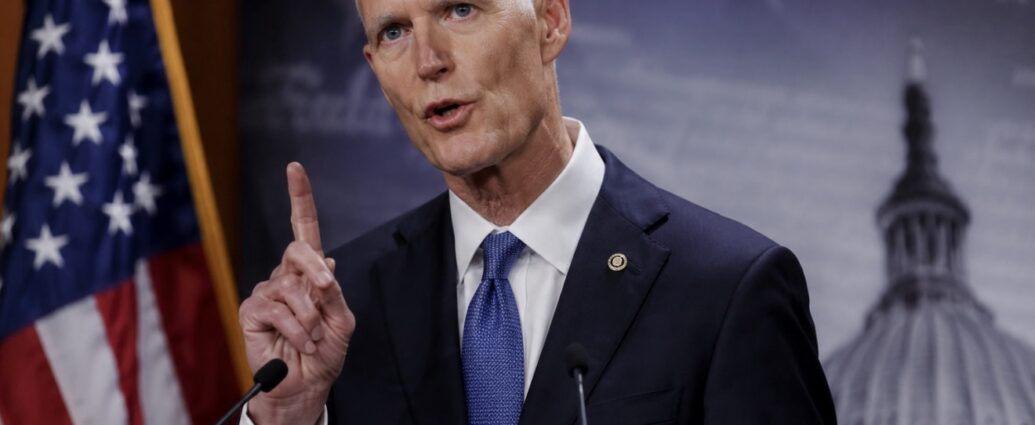
Senator Rick Scott Moves to Ban Chinese Digital Yuan from American Payment Systems
WASHINGTON — U.S. Senator Rick Scott, the Florida Republican, reintroduced legislation earlier this week that would bar American payment companies, currency dealers and even the U.S. Postal Service from handling transactions involving China’s government-issued digital currency, escalating a broader Republican push to block the digital yuan from entering the American financial system.
The legislation, formally titled the Chinese CBDC Prohibition Act of 2026, was introduced on Thursday, May 21, 2026.
CBDC stands for central bank digital currency, essentially a digital form of money issued directly by a country’s central bank rather than by commercial banks or private cryptocurrency networks.
In a Senate release announcing the bill, Scott framed the issue as both an economic and national-security threat.
“The dollar is the reserve currency of the world and the CCP wants to undermine our leadership with a digital currency they can track and manipulate,” Scott said, referring to the Chinese Communist Party.
He added: “The digital Yuan is just another tool used by the Chinese Communist Party to spy on its people and all those who use it. Xi and his thugs have no business playing big brother to American citizens and how they spend their money.”
The bill would make it illegal for American money-services businesses to process, transfer or accept transactions involving a Chinese government-issued digital currency, including the digital yuan, also known as e-CNY.
The practical reach would be broad.
Companies and institutions potentially affected include PayPal, Venmo, Zelle, Western Union, MoneyGram, airport currency exchanges, and even the U.S. Postal Service when handling money orders or certain international payment services. Under the proposal, those entities would be prohibited from facilitating transactions tied to China’s state-backed digital currency infrastructure.
The legislation reflects mounting concern in Washington over China’s rapid progress in digital finance.
Over the past five years, the People’s Bank of China has built what is widely viewed as the world’s most advanced large-scale central bank digital currency system. The digital yuan has already been tested extensively in major Chinese cities including Beijing, Shanghai, Shenzhen and Hangzhou, with Chinese consumers using it for retail payments, transportation, tourism and salary distributions.
Beijing has also openly discussed using the digital yuan for cross-border trade settlement and international commerce, a move American lawmakers increasingly see as a challenge to the dominance of the U.S. dollar.
That dominance remains one of America’s biggest economic advantages. The dollar functions as the world’s primary reserve currency, meaning central banks, commodity markets and international businesses rely heavily on dollars for trade and savings. Oil is largely priced in dollars, global debt markets revolve around dollar financing, and the U.S. government benefits from lower borrowing costs because of persistent global demand for dollar-based assets.
Republican lawmakers argue a widely adopted Chinese digital currency could eventually weaken that position, particularly if countries hostile to Washington begin settling trade outside the dollar system.
The second concern — and the one Scott emphasized most heavily — is surveillance.
Unlike physical cash, transactions conducted through a central bank digital currency can potentially be monitored directly by the issuing government. In China’s case, critics argue that gives the Chinese Communist Party extraordinary visibility into how money moves through the economy.
Scott’s Senate release argued Beijing already uses the digital yuan “as a mechanism to control the lives of its population” and warned authorities could theoretically freeze accounts or restrict access to funds instantly.
The implication for American lawmakers is that U.S. businesses or individuals using the digital yuan for trade with Chinese suppliers could expose financial activity to Chinese state monitoring.
This is not the first congressional effort targeting Chinese digital currencies.
In 2022, Senators Tom Cotton, Mike Braun and Marco Rubio introduced legislation called the Defending Americans from Authoritarian Digital Currencies Act, which sought to block app stores such as Apple’s App Store and Google Play from hosting applications supporting the digital yuan.
That proposal never became law.
Scott himself has introduced earlier versions of similar legislation in prior Congresses. Previous attempts gained Republican backing but stalled before reaching a full Senate vote.
This time, however, the political environment is different.
Republicans now control both chambers of Congress while the Trump administration continues to frame competition with China as a central economic and national-security priority. That combination may give the proposal a stronger chance than previous versions.
The timing is notable.
Just days before the legislation was introduced, President Donald Trump and Chinese President Xi Jinping held high-level discussions aimed at stabilizing U.S.-China tensions surrounding trade and technology. Trump has also publicly encouraged expanded American business engagement with China in select sectors even as Congress simultaneously moves to harden barriers around Chinese financial and technological influence.
For American businesses, the immediate practical impact of the bill would likely be limited because very few U.S. companies currently conduct routine transactions using the digital yuan. Most trade between the United States and China still settles in either U.S. dollars or traditional Chinese yuan through conventional banking systems.
But the legislation is designed less to disrupt existing behavior than to prevent future adoption before the digital yuan gains broader international traction.
The bill also reflects a growing divide in Washington between privately issued cryptocurrencies and government-backed digital currencies.
Many Republicans who support decentralized assets like Bitcoin have simultaneously opposed central bank digital currencies, arguing they could expand government financial surveillance. Scott and several other Republican lawmakers have separately criticized the idea of a potential Federal Reserve digital dollar for similar reasons.
More broadly, the legislation fits into a wider congressional effort to reduce Chinese influence across strategic sectors of the American economy, including technology, pharmaceuticals, real estate, rare earth minerals and electric-vehicle supply chains.
Taken together, the measures point toward a Washington increasingly willing to wall off sensitive parts of the U.S. economy from Chinese financial and technological penetration.
The Chinese CBDC Prohibition Act of 2026 has now been referred to committee for review. If approved by the Senate, it would still need to pass the House before reaching President Trump’s desk.
For now, the digital yuan remains legal in the United States.
Very few Americans use it.
Scott’s bill is designed to ensure that stays true.
Washington — JBizNews Desk
© JBizNews.com All Rights Reserved. Reproduction or distribution without written permission is prohibited.
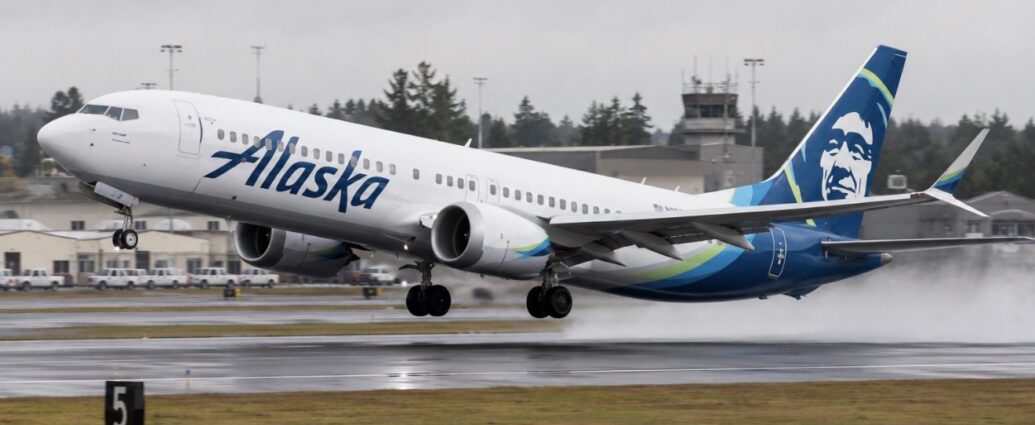
FAA Hits Alaska Airlines With $165,000 Fine Proposal for Letting Drunk Passengers Board 11 Flights
WASHINGTON — The Federal Aviation Administration (FAA) said Tuesday, May 26, 2026, that it is proposing a $165,000 civil fine against Alaska Airlines for allegedly allowing visibly intoxicated passengers to board 11 separate flights between February 2024 and February 2025, part of a broader federal crackdown on impairment and airline safety compliance.
In a statement released Tuesday, the FAA said federal aviation regulations prohibit airlines from allowing passengers who appear intoxicated to board commercial aircraft. The rule applies both to gate agents and flight attendants, who are expected to stop impaired travelers before they enter the aircraft cabin.
The agency did not identify the specific routes involved or disclose the conduct of the passengers at issue, but regulators said the violations occurred across multiple flights over a one-year period.
Alaska Airlines spokesperson Tim Thompson confirmed the carrier cooperated with the FAA’s review.
“We take seriously our responsibility to provide a safe and secure environment for our guests and employees,” Thompson said. “We participated fully with the FAA’s audit of our policies and practices as it relates to intoxicated guests on board our aircraft.”
He added that the airline has already implemented operational changes in response to concerns raised by regulators.
“Since the FAA shared these concerns with us over a year ago, we made meaningful changes to ensure compliance with the FAA’s expectations, including enhanced training for all flight attendants and customer service agents,” Thompson said. “We respect the results of the FAA’s audit and are confident in the changes that have been in place for the last year to ensure our shared standards are being met.”
The enforcement action highlights growing federal concern about intoxicated and disruptive passenger behavior aboard commercial aircraft, an issue that intensified nationwide after the pandemic and has remained a persistent challenge for airlines and flight crews.
Federal regulations under 14 CFR 121.575 prohibit airlines from both serving alcohol to visibly intoxicated passengers and allowing them to board aircraft in the first place. Once onboard, intoxicated travelers can create serious operational and safety risks ranging from medical emergencies and crew interference to violent confrontations and attempted breaches of aircraft systems.
One incident involving Alaska Airlines drew national attention last year. In December 2025, a passenger reportedly intoxicated after several days of drinking opened a cabin door midair during a flight between Deadhorse and Anchorage, Alaska. That event is not among the 11 flights cited in the FAA’s proposed penalty, but it underscored the dangers regulators associate with impaired passengers onboard aircraft.
The FAA’s action against Alaska Airlines is civil rather than criminal. The airline now has 30 days after receiving the enforcement notice to either pay the fine, negotiate a settlement with regulators or formally challenge the penalty before an administrative law judge.
The proposed fine is relatively small financially for the airline. Alaska Air Group, which trades on the New York Stock Exchange under the ticker symbol ALK, generates roughly $11 billion in annual revenue, meaning the penalty itself is unlikely to materially affect earnings.
The reputational impact, however, may matter more.
Alaska Airlines has spent much of the past two years rebuilding public confidence following the highly publicized January 2024 Boeing 737 MAX 9 door-plug blowout, when a fuselage panel detached during an Alaska Airlines flight shortly after takeoff, forcing an emergency landing and triggering a temporary nationwide grounding of that aircraft type.
The carrier also completed its $1.9 billion acquisition of Hawaiian Airlines in September 2024, creating a significantly larger combined airline operation spanning more than 1,200 daily flights and approximately 120 destinations across North America.
The FAA’s move against Alaska Airlines is not happening in isolation.
In April 2026, regulators proposed a separate $255,000 civil penalty against American Airlines after alleging the carrier allowed 12 flight attendants to return to safety-sensitive duties after testing positive for drugs or alcohol without completing required follow-up testing procedures.
According to the FAA, substances identified in that investigation included alcohol, cocaine, marijuana, methamphetamine and amphetamines.
Taken together, the two enforcement actions suggest the FAA is intensifying scrutiny not only of passenger behavior but also of how airlines manage impairment risks among employees and customers alike.
For travelers, the rules remain straightforward. Airlines can legally deny boarding to anyone appearing visibly impaired in the terminal or at the gate, and passengers who become disruptive onboard can face FAA fines of up to $37,000 per violation, in addition to possible federal criminal charges.
So far, investors have shown little reaction to Tuesday’s announcement. Shares of Alaska Air Group were relatively unchanged following the FAA statement.
For Alaska Airlines, however, the issue extends beyond the dollar amount. After years spent working to restore operational credibility following high-profile safety incidents, another FAA enforcement action tied to passenger management is precisely the kind of headline the carrier has been trying to avoid.
For now, the penalty remains only a proposal. The next step belongs to Alaska Airlines.
Washington — JBizNews Desk
© JBizNews.com All Rights Reserved. Reproduction or distribution without written permission is prohibited.
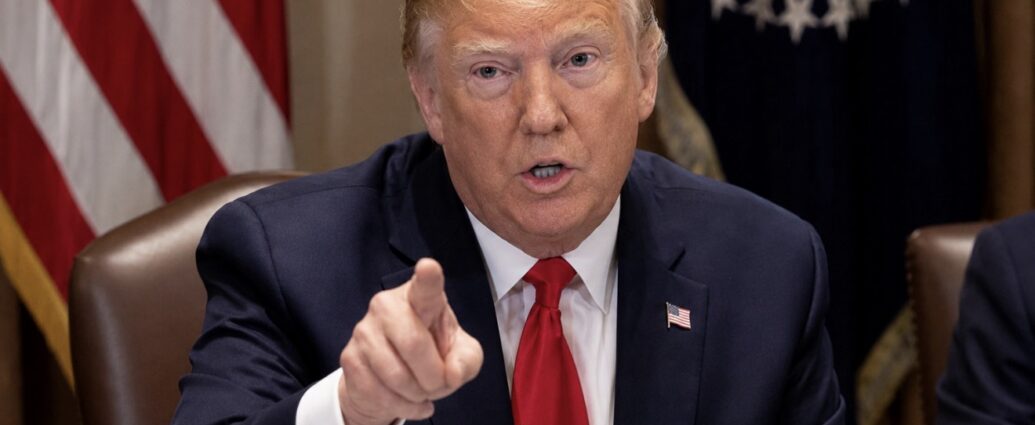
Trump Pushes Back on Idea Midterms Will Force Iran Deal — What It Means for Gas, Groceries and Markets
For weeks, global oil markets, grocery suppliers, and American consumers had been operating on the assumption that President Donald Trump would eventually feel political pressure from a prolonged conflict with Iran and move quickly toward a deal before the November midterm elections. On Wednesday, during a Cabinet meeting at the White House, Trump publicly pushed back against that idea.
“They want very much to make a deal. So far, they haven’t gotten there,” Trump said. “We’re not satisfied with it, but we will be. We will be either that, or we’ll have to just finish the job.”
When asked directly whether the upcoming election was influencing his decision-making, the president rejected the premise and suggested Iran believed political pressure in the United States would force him into concessions. That statement immediately carried implications for energy markets, inflation expectations, and Wall Street positioning.
The market reaction had already begun earlier in the day. U.S. crude oil fell 5.55% Wednesday to settle at $88.68 per barrel after Iranian state media claimed Tehran intended to restore commercial traffic through the Strait of Hormuz to pre-war levels within one month. The White House quickly disputed the report, calling it inaccurate, but traders still moved aggressively into a lower-oil scenario.
The Strait of Hormuz remains one of the world’s most important shipping chokepoints, carrying roughly 20% of globally traded seaborne crude oil. Any sign of stabilization immediately affects fuel prices, transportation costs, airline expenses, manufacturing forecasts, and food distribution costs across the United States.
Trump’s comments complicated that market assumption. By signaling publicly that he is prepared to continue negotiations without rushing toward a fast resolution, the administration effectively told markets that lower energy prices may not arrive as quickly as many traders had expected.
For consumers, the most immediate impact is gasoline. National fuel prices remain elevated compared with the same period last year, and the summer driving season traditionally increases demand further between Memorial Day and Labor Day. If tensions remain unresolved longer than anticipated, pressure on fuel prices could persist through the summer.
The second impact is groceries and consumer goods. Transportation costs influence pricing across nearly every part of the economy because food, retail inventory, refrigerated products, and imported goods depend heavily on diesel trucking, cargo shipping, and fuel-intensive logistics networks. Sustained oil prices near current levels can continue filtering into supermarket prices and household expenses.
Markets, however, continued to show resilience Wednesday despite the geopolitical uncertainty. The Dow Jones Industrial Average closed at a record 50,644.28, while the S&P 500 finished at 7,520.36 and the Nasdaq Composite closed at 26,674.73, also record highs.
The market’s willingness to continue buying equities despite prolonged Middle East uncertainty reflects broader investor confidence that the U.S. economy, corporate earnings, and the ongoing artificial intelligence investment cycle remain strong enough to offset geopolitical risks.
There is also a significant political layer underneath the administration’s posture. Trump entered Wednesday’s Cabinet meeting following a major Republican primary victory in Texas, where Attorney General Ken Paxton defeated four-term Senator John Cornyn after receiving Trump’s endorsement. The result reinforced Trump’s standing inside the Republican Party and may have reduced concerns within the White House that a prolonged conflict automatically weakens his political position heading into November.
At the same time, Republican strategists remain aware of the risks associated with prolonged inflation, elevated gasoline prices, and broader voter frustration tied to economic pressure. Competitive House districts across states such as Pennsylvania, Wisconsin, and Colorado remain highly sensitive to shifts in fuel costs and consumer sentiment.
For Tehran, Wednesday’s message was direct: the White House is signaling publicly that it does not view Election Day as a negotiating deadline.
For American households, the consequences are more practical. The timeline for lower gasoline prices, reduced grocery inflation, and broader economic relief may depend heavily on how long tensions in the Middle East continue — and whether negotiations ultimately produce a meaningful agreement.
The administration made clear Wednesday that it is prepared to continue the standoff longer than markets may have anticipated. Investors, consumers, and global energy markets are now adjusting to that possibility in real time.
Washington — JBizNews Desk
© JBizNews.com All Rights Reserved. Reproduction or distribution without written permission is prohibited.
Inside the Floating Black Market Keeping Iran’s Oil Flowing to China
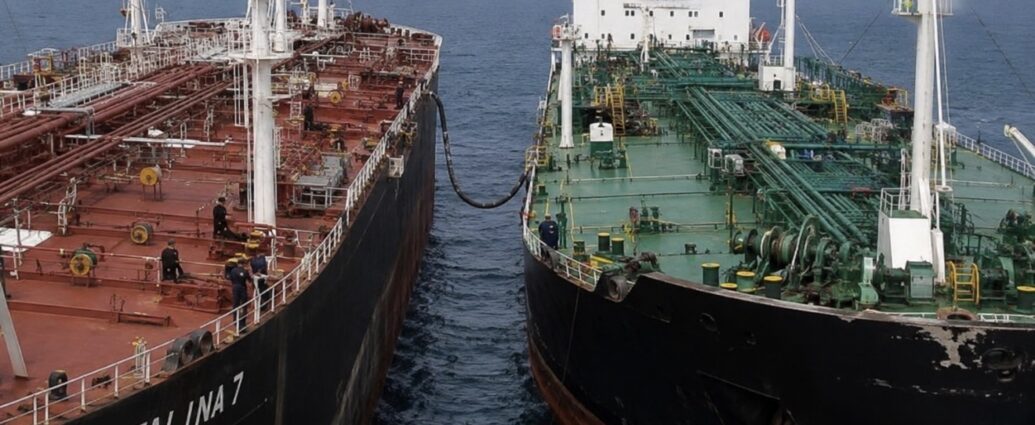
EASTERN OUTER PORT LIMITS, off Malaysia — As of May 28, 2026, a stretch of open water roughly 45 miles off Malaysia’s southern coast has become one of the most important loopholes in America’s campaign to choke off Iran’s oil money. The Malaysian Maritime Enforcement Agency confirmed this month that aging tankers carrying sanctioned Iranian crude are gathering there to quietly hand off their cargo to other ships bound for China, exploiting what agency director-general Mohamad Rosli Abdullah described as gaps in maritime law that place many of the transfers beyond the reach of local enforcers.
The handoffs are the entire business model. One vessel unloads sanctioned crude onto another ship to blur the oil’s origin before it continues toward China, Iran’s biggest customer. Reporters who reached the area by boat on May 8 observed the Catalina 7, an aging tanker sanctioned by the United States for transporting Iranian crude, pumping oil through a thick transfer hose into another vessel whose name had been painted over in black. The scene underscored one of Tehran’s core economic advantages in its confrontation with Washington: despite sanctions, naval pressure, and diplomatic isolation, Iran can still sell oil and generate hard currency.
The location was chosen carefully. The Eastern Outer Port Limits lies roughly 70 kilometers off Malaysia’s Johor state, near one of the world’s busiest maritime corridors connecting the Middle East and East Asia. Many of the ship-to-ship transfers occur beyond Malaysia’s territorial waters and outside effective radar monitoring. Abdullah told reporters the area was deliberately selected to exploit jurisdictional gaps and complicate direct enforcement efforts.
The mechanics form a sprawling maritime deception network stretching thousands of miles. One group of tankers loads crude at Iran’s export facilities on Kharg Island, crosses the Indian Ocean, navigates through the Malacca and Singapore straits, and anchors offshore near Malaysia. A second group of ships then receives the oil through ship-to-ship transfers and carries it onward to China, primarily to the independent “teapot” refineries in Shandong province, which have become major buyers of sanctioned crude.
To disguise the trade, vessels frequently disable tracking transponders, obscure hull markings, repaint identification numbers, and alter registry details. Ying Cong Loh, a crude analyst at Kpler, said China often relabels Iranian oil as Malaysian-origin crude, allowing shipments to move through supply chains with limited scrutiny despite Beijing officially reporting no Iranian oil imports since 2022.
The scale is massive — and directly undermines the effectiveness of the U.S. pressure campaign. An Associated Press investigation tracked dozens of Iranian-linked oil transfers off Johor since the U.S.-Iran conflict intensified on February 28, even as Iran faced heightened naval scrutiny around the Strait of Hormuz. Advocacy group United Against Nuclear Iran said satellite imagery documented at least 42 transfers in the area during that period.
Despite the sanctions regime, the money continues flowing. The U.S.-China Economic and Security Review Commission estimates Iran has generated roughly $31 billion in oil revenue from China even without officially recorded imports. That revenue is precisely what Washington is attempting to cut off.
John Hurley, the Treasury undersecretary for terrorism and financial intelligence, said the United States remains committed to depriving Tehran of petroleum revenue used to finance military operations and weapons programs. Since returning to office, President Donald Trump has sanctioned more than 180 vessels connected to Iranian petroleum shipping, including 19 additional ships designated in May under what the administration calls its “Economic Fury” campaign.
But the fleet continues adapting faster than enforcement systems can respond.
Maritime intelligence firm Windward estimates roughly 430 tankers are currently involved in Iran-linked oil trade activity. Of those vessels, approximately 62% operate under false flags while 87% have already been sanctioned by Western authorities. Operators repeatedly restructure ownership chains, switch registries, rename ships, and acquire replacement vessels through intermediary companies faster than regulators can blacklist them.
China plays a central role in sustaining the network. Many tanker ownership entities are registered in Chinese cities, while crews are frequently Chinese nationals recruited specifically for higher-risk sanctioned trade routes. Shipping management firms openly advertise the elevated compensation tied to the work.
For global oil markets, the shadow network has become an essential pressure valve. Tanker-tracking firms estimate Chinese imports of Iranian crude averaged roughly 1.38 million barrels per day during 2025 before slipping to between 1.13 million and 1.2 million barrels daily in early 2026 as sanctions enforcement intensified. Roughly one-third of Iranian-linked tankers are now idling offshore, operating without active tracking systems, or conducting evasive maritime maneuvers.
Yet the oil continues moving.
That reality is shaping the broader negotiations surrounding Iran sanctions policy. Washington has so far resisted lifting oil restrictions during talks, viewing Tehran’s petroleum exports as the regime’s primary economic lifeline. But as long as Chinese refiners continue purchasing discounted crude and the offshore transfer system near Malaysia remains operational, Iran retains access to billions in hard currency despite escalating U.S. enforcement.
The result is a floating black market sitting in plain sight along one of the busiest trade arteries on Earth — a parallel oil economy that has so far proven resilient enough to survive sanctions, naval pressure, and one of the most aggressive financial enforcement campaigns ever mounted against an energy exporter.
Middle East — JBizNews Desk
© JBizNews.com All Rights Reserved. Reproduction or distribution without written permission is prohibited.
Trump Merges Offshore Drilling Agencies as U.S. Opens Vast New Waters to Oil, Gas and Seabed Mining
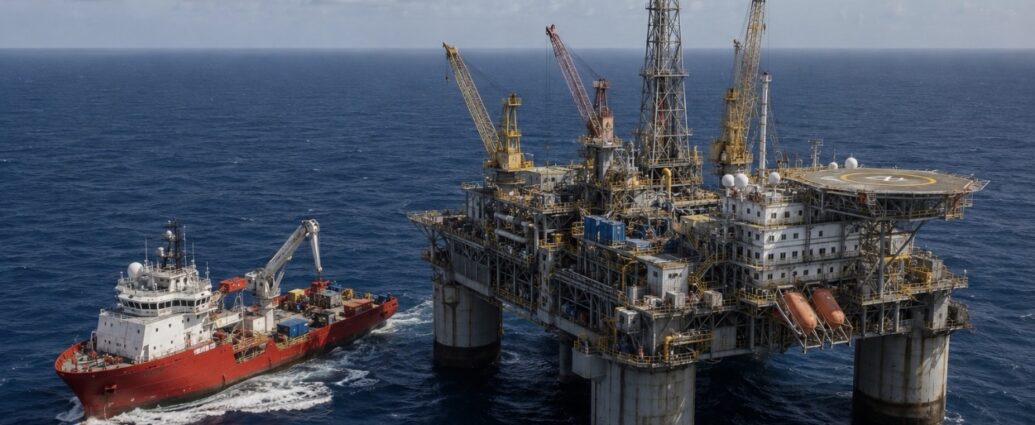
WASHINGTON — The U.S. Interior Department, led by Secretary Doug Burgum, announced that it is combining two major federal offshore drilling regulators into a single new agency called the Marine Minerals Administration, a restructuring that will oversee the largest expansion of American offshore energy development in decades and open new waters across the Gulf of Mexico, Alaska, California and Florida to oil, gas and seabed mining.
The move represents one of the most consequential energy-policy shifts of President Donald Trump’s second term and signals the administration’s determination to dramatically increase domestic energy production while reducing dependence on foreign mineral supplies, particularly from China.
At its core, the change merges two agencies created after the 2010 Deepwater Horizon disaster.
The first is the Bureau of Ocean Energy Management (BOEM), which has handled offshore lease sales and managed the commercial side of offshore energy development.
The second is the Bureau of Safety and Environmental Enforcement (BSEE), which has been responsible for inspecting offshore rigs, enforcing safety standards and responding to oil spills.
Both agencies were established in 2011 after investigators concluded that the previous regulator, the Minerals Management Service, had become too closely aligned with the oil industry it was supposed to oversee.
That conclusion followed the catastrophic Deepwater Horizon explosion in April 2010, when a BP-operated drilling rig exploded in the Gulf of Mexico, killing 11 workers and releasing nearly 5 million barrels of crude oil into the ocean over three months in what became the worst offshore oil spill in U.S. history.
Before that disaster, one agency handled both lease sales and safety enforcement. Critics argued the structure created an inherent conflict of interest because the same officials approving drilling projects were also responsible for policing the companies operating them.
The Obama administration broke the agency apart. The Trump administration is now putting those functions back together.
In announcing the merger, Burgum said the new structure would create a “streamlined approach” with “clearer coordination, better service to the public and stronger, more integrated oversight of offshore energy development.”
Critics, however, say the reorganization recreates many of the same structural risks exposed after Deepwater Horizon. Representative Jared Huffman, the top Democrat on the House Natural Resources Committee, has publicly opposed the merger, arguing that combining leasing and enforcement responsibilities under one roof weakens independent oversight.
The new agency will oversee three major initiatives.
The first is a dramatic expansion of offshore drilling.
In November 2025, the Interior Department proposed the 11th National Outer Continental Shelf Oil and Gas Leasing Program covering 2026 through 2031. The plan includes 34 offshore lease sales — including 21 in Alaskan waters, 7 in the Gulf of Mexico and 6 in Pacific waters off California — while also reopening areas near Florida that have not seen offshore lease activity in decades.
The scale marks a major reversal from the prior administration. President Joe Biden’s offshore leasing program proposed just three lease sales over five years, the smallest schedule ever offered by a U.S. administration.
The second major mission of the new agency is even more ambitious: building America’s first large-scale offshore mining industry.
The Marine Minerals Administration will oversee seabed mineral leasing in waters near Virginia, Alaska, Guam and the Northern Mariana Islands, targeting deep-sea deposits rich in nickel, cobalt, copper and rare earth elements — critical minerals used in batteries, electric vehicles, defense systems, semiconductors and advanced electronics.
The strategic significance is enormous because the United States currently depends heavily on Chinese-controlled supply chains for many of those materials.
Administration officials increasingly frame seabed mining not simply as an energy issue but as a national-security priority tied to competition with China in electric vehicles, artificial intelligence, military technology and semiconductor manufacturing.
The third mission of the agency is continuing the safety and spill-response role previously handled by BSEE, including rig inspections, environmental enforcement and emergency response operations.
There is one major complication: staffing and budget pressure.
Both BOEM and BSEE have lost personnel in recent years, and the Trump administration’s latest budget proposal reduces funding for the newly combined agency even as its responsibilities expand dramatically. Industry groups argue the merger will reduce duplication and improve efficiency, while critics warn the agency could become overstretched overseeing both aggressive leasing expansion and safety enforcement simultaneously.
The economic implications are substantial.
Offshore drilling already accounts for roughly 15% of total U.S. oil production, and federal estimates suggest the Outer Continental Shelf still contains approximately 68.8 billion barrels of recoverable oil and 229 trillion cubic feet of natural gas.
For major Gulf operators including Chevron, ExxonMobil, Shell and BP, the restructuring is expected to accelerate permitting and expand access to offshore acreage. Additional domestic production could eventually help moderate gasoline and natural gas prices, although most offshore projects require years of development before significant production begins.
The political response varies sharply by region.
Energy-producing states along the Gulf Coast, including Texas, Louisiana, Mississippi and Alabama, are expected to benefit economically from increased drilling activity, port traffic and infrastructure investment.
Meanwhile, officials in California, Florida and parts of Alaska are raising concerns about environmental risks, particularly the potential impact of spills on tourism, fisheries and coastal ecosystems.
The broader message from Washington is becoming increasingly clear. The Trump administration is pursuing the most aggressive expansion of offshore energy production and seabed mineral development the United States has seen in a generation — while simultaneously rolling back a regulatory structure created after the worst offshore environmental disaster in American history.
Supporters call the merger efficiency. Critics call it a return to the conditions that failed before Deepwater Horizon.
The administration is expected to finalize the new offshore leasing program by October 2026.
Washington — JBizNews Desk
© JBizNews.com All Rights Reserved. Reproduction or distribution without written permission is prohibited.

China EV Exports Surge 40% in April to 278,081 as Brazil Overtakes Europe
By JBizNews Desk
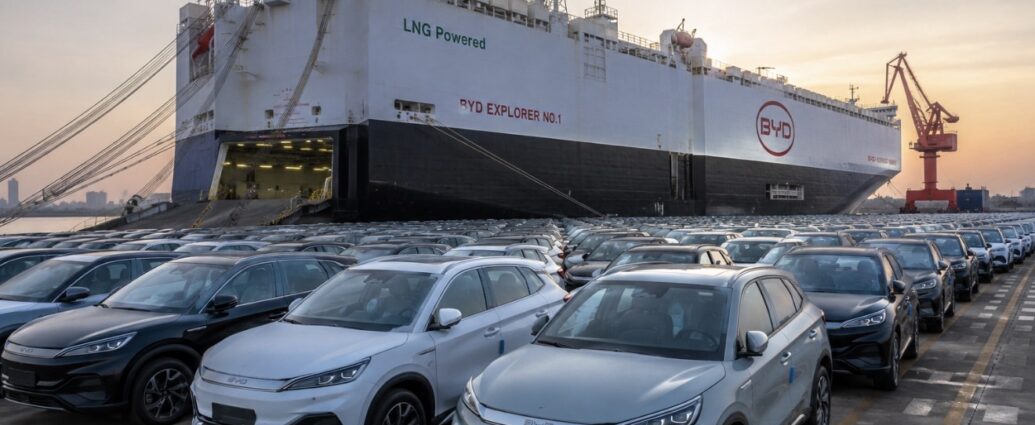
BEIJING — China Customs data released Tuesday, May 26, 2026, showed that the country’s electric vehicle exports jumped 40% year-on-year in April to 278,081 units, with Brazil emerging as the single largest destination after shipments to the South American economy soared 221% from a year earlier, underscoring how Chinese automakers are pivoting aggressively away from saturated Western markets toward Latin America, the Middle East, and emerging Asia to absorb mounting overcapacity at home.
The General Administration of Customs of the People’s Republic of China reported that Brazil alone took 38,144 EVs in April, the highest volume of any single nation or territory and a dramatic acceleration from a market that ranked outside the top ten as recently as 2024. The shift reflects both Brazil’s rapid embrace of affordable Chinese-built electric vehicles and a coordinated push by mainland automakers to plant manufacturing roots in the country before tariff increases scheduled for later this year fully take hold.
The April figures from China Customs confirm a structural rebalancing of Chinese EV exports that has accelerated throughout the first four months of 2026. Total EV shipments from China over the January–April period have approached 1.4 million units, more than double the same stretch of 2025, according to industry data tracked by the China Passenger Car Association and corroborated by analysts at Benchmark Mineral Intelligence.
The export boom is unfolding against a sharply weakening domestic Chinese EV market. Wholesale data published earlier this month by the China Association of Automobile Manufacturers showed domestic new energy vehicle sales in April fell 10.8% year-on-year to 914,000 units, the fourth consecutive month of double-digit declines tied largely to the expiry of consumer subsidies at the end of 2025. Manufacturers are increasingly redirecting unsold inventory and incremental production toward overseas buyers, transforming exports into the single most important growth lever for the sector.
BYD, now the world’s largest electric vehicle manufacturer by volume, has publicly committed to exporting 1.3 million vehicles in 2026, a 25% increase over last year. The Shenzhen-based automaker has become the dominant force behind the Brazil expansion, building a manufacturing complex in Bahia state and steadily expanding local capacity to absorb anticipated tariff pressure.
Rivals including Geely Holding Group, Chery Automobile, Great Wall Motor, and SAIC Motor are pursuing parallel strategies across Mexico, Thailand, Indonesia, the United Arab Emirates, and increasingly across Europe through local assembly arrangements designed to avoid direct tariff exposure.
Europe remains one of the largest targets for Chinese EV manufacturers, but the strategy there is rapidly evolving. According to Benchmark Mineral Intelligence, roughly 22% of all EVs sold in Europe so far in 2026 were built in China, up from 19% in 2025. But rather than exporting finished vehicles directly into the European Union, automakers are increasingly shifting toward European assembly operations to bypass anti-subsidy tariffs imposed by Brussels.
Stellantis and Leapmotor announced in April plans to produce the B10 electric SUV at Stellantis’s Zaragoza facility in Spain, while XPeng has begun local production of its P7+ model through Magna Steyr’s plant in Graz, Austria. BYD continues to ramp manufacturing operations at its new facility in Szeged, Hungary, positioning itself to deepen European penetration while reducing tariff exposure.
The picture in North America is far more restrictive. United States imports of Chinese EVs remain effectively blocked by tariffs and proposed federal legislation targeting connected Chinese automotive technology. Senator Bernie Moreno, an Ohio Republican, and Senator Elissa Slotkin, a Michigan Democrat, introduced the bipartisan Connected Vehicle Security Act of 2026, legislation that would prohibit Chinese-connected vehicles and software systems from operating on American roads over national security concerns.
The measure has drawn broad support from U.S. automakers and industry trade associations worried about both cybersecurity vulnerabilities and the competitive pressure posed by heavily subsidized Chinese manufacturers.
Analysts at AlixPartners project Chinese passenger-car exports overall will rise another 20% in 2026, with electric vehicles accounting for the overwhelming majority of that growth. The consultancy argues that China’s scale advantage in batteries, lower manufacturing costs, and increasingly sophisticated supply-chain control are creating structural advantages that Western competitors may struggle to reverse this decade.
Geopolitics is adding further momentum. The ongoing disruption tied to the Iran conflict and elevated global oil prices has intensified concerns about long-term fuel costs across emerging economies including Brazil, India, Mexico, and Southeast Asia. Analysts at the Atlantic Council recently argued that sustained volatility in global crude markets could provide a major structural tailwind for Chinese EV exports through the second half of 2026 and beyond.
For Beijing, the export surge serves multiple strategic goals simultaneously. It absorbs excess industrial capacity, supports manufacturing employment during a period of weak domestic demand, and entrenches Chinese technology standards across global EV infrastructure — from charging systems and battery chemistry to connected-vehicle software ecosystems.
For policymakers and legacy automakers in Detroit, Wolfsburg, Tokyo, and Seoul, the April China Customs figures reinforce a competitive challenge that appears to be widening rather than narrowing.
The 278,081-unit April figure is unlikely to mark a peak. With BYD, Geely, Chery, and a growing list of Chinese EV startups all ramping export programs simultaneously, analysts expect monthly shipment volumes to climb above 400,000 vehicles before the end of the summer.
© 2026 JBizNews. All Rights Reserved. Reproduction or distribution without written permission is prohibited.
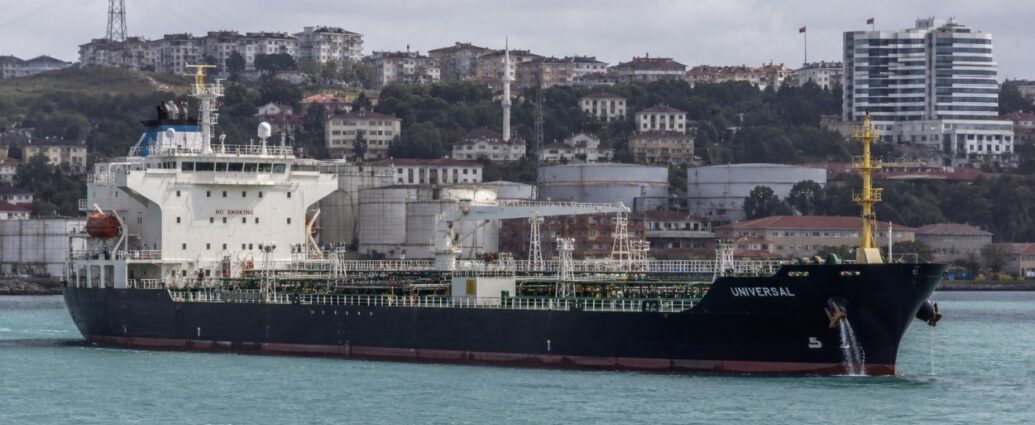
A Russian Tanker Carrying 240,000 Barrels of Diesel Just Turned Away From Cuba — And the Fallout Could Reach Florida
A Russian oil tanker carrying more than 240,000 barrels of diesel fuel just changed course in the Atlantic Ocean — and that decision could deepen Cuba’s energy collapse, intensify migration pressure on Florida, and become one of the clearest signs yet that the Trump administration’s new sanctions strategy is beginning to bite.
The Russian-flagged tanker Universal, which had spent weeks drifting in the Atlantic with Cuba listed as its destination, abruptly changed its status to “for order,” a shipping-industry term meaning the vessel is awaiting new instructions. By Wednesday, maritime tracking data showed the ship turning south toward the South Atlantic rather than continuing toward Havana.
For Cuba, the consequences are immediate.
The island is now experiencing its worst energy crisis in decades. Power outages lasting 20 to 24 hours have become increasingly common across parts of Havana and other cities as Cuba’s aging electrical infrastructure struggles without sufficient imported fuel. The country’s largest power plant, Antonio Guiteras, has repeatedly gone offline, while floating power-generation units and backup facilities have faced severe fuel shortages.
Cuba consumes roughly 112,000 barrels of oil per day but produces less than half that amount domestically. Without imported diesel and fuel oil, the country’s grid becomes increasingly unstable.
Residents have already begun publicly protesting the blackouts, with reports of street demonstrations, fires, and nightly pot-banging protests spreading across neighborhoods dealing with repeated outages.
The reason the tanker turned away appears closely tied to a major policy escalation from the Trump administration earlier this month.
On May 1, President Donald Trump signed an executive order authorizing secondary sanctions against any company, vessel, insurer, or financial institution involved in supplying fuel to Cuba. The measure dramatically raised the financial risk for shipping companies and banks involved in moving oil cargoes to the island because access to the U.S. financial system could potentially be restricted for violators.
The Universal itself is already sanctioned by the United States, the European Union, and the United Kingdom, making delivery logistics even more complicated.
For weeks, the vessel appeared unable to secure a workable path into Cuba without exposing insurers, intermediaries, or financial counterparties to potential U.S. penalties. The apparent decision to reroute the cargo elsewhere reflects how aggressively global shipping companies are recalculating the risks of doing business with Havana under the new sanctions environment.
The political pressure intensified further on May 20, when the Trump administration announced legal action against former Cuban leader Raúl Castro tied to the 1996 shootdown of aircraft belonging to the humanitarian organization Brothers to the Rescue, which killed four people, including three Americans.
Together, the sanctions escalation and the legal action signaled a much harder-line U.S. approach toward Havana than markets or diplomats had anticipated earlier this year.
For Americans, especially in Florida, the effects of Cuba’s economic deterioration rarely stay isolated to the island itself.
South Florida maintains deep economic and family ties to Cuba through remittances, travel, small-business trade, humanitarian shipments, and migration flows. Historically, worsening economic conditions on the island have led to increased migration pressure toward the United States, higher remittance transfers from Cuban-American families, and growing stress across the financial and logistical networks connecting Florida to Cuba.
Banks, money-transfer businesses, travel operators, freight services, and family-run import-export companies across Miami and South Florida often feel the impact quickly when conditions deteriorate on the island.
The crisis also highlights broader geopolitical questions surrounding Russia’s willingness and ability to continue supporting Cuba while simultaneously managing its war effort in Ukraine and its own oil-export restrictions under Western sanctions.
Only one major Russian-linked delivery has successfully reached Cuba this year — the tanker Anatoly Kolodkin, which delivered roughly 730,000 barrels of crude oil earlier this spring during what analysts viewed as a brief softening in enforcement pressure.
Since then, multiple attempted deliveries appear to have stalled, failed, or been rerouted.
Energy analysts following the region say the result is no longer a temporary shortage but an increasingly structural collapse of Cuba’s fuel-import system.
For ordinary Cubans, that means fewer hours of electricity, worsening shortages of refrigerated food and medicine, unreliable water systems, and a deteriorating business environment during the peak summer heat season.
For the United States, especially Florida, the concern is whether Cuba’s energy collapse remains contained — or evolves into another broader humanitarian and migration crisis only ninety miles from the American coastline.
The broader significance of the Universal’s course change is that it demonstrates how sanctions enforcement, shipping finance, energy markets, and geopolitics now intersect in real time. A single tanker changing direction in the middle of the Atlantic may appear minor on the surface, but for Cuba’s electrical grid, Florida’s migration pressures, and U.S.-Russia geopolitical signaling, the implications are substantial.
At least for now, the message from global shipping markets appears clear: the financial and political risks of supplying fuel to Cuba have risen sharply — and even Russia may no longer be fully willing to absorb them.
Miami — JBizNews Desk
© JBizNews.com All Rights Reserved. Reproduction or distribution without written permission is prohibited.


Ford’s Big AI Battery Bet Sends Shares Soaring as Wall Street Revalues the Automaker
By JBizNews Desk
When Ford Motor Co. shares surged roughly 21% in two trading sessions earlier this month, the catalyst was not a new truck launch, not quarterly earnings, and not anything happening inside a dealership showroom.
It was a battery announcement.
The 122-year-old Dearborn automaker quietly launched a wholly owned subsidiary called Ford Energy, a business designed to build large-scale battery storage systems for utilities, industrial operators and the exploding artificial-intelligence data-center market — instantly giving Wall Street a new way to value Ford beyond cars.
The market reaction was immediate because investors increasingly believe the next phase of the AI boom will not be driven only by chips and software, but by the physical infrastructure required to power it.
Training and operating large language models such as ChatGPT, Gemini and enterprise AI systems consumes electricity at levels the U.S. power grid was never built to handle. New hyperscale data centers are being announced faster than utilities can bring new generation capacity online. The gap is increasingly being filled by one critical piece of infrastructure: large-scale stationary battery storage.
And Ford suddenly owns one of the country’s largest planned manufacturing footprints for it.
Ford Energy launched in mid-May as a wholly owned subsidiary focused on battery energy storage systems for utilities, data centers and industrial customers. Jim Farley, Ford’s chief executive, described the business as a “high-growth, high-margin, anti-cyclical” opportunity capable of diversifying Ford’s revenue away from the volatility of vehicle sales.
Within days of launching the subsidiary, Ford announced its first major deal.
Ford Energy and EDF Power Solutions North America, the U.S. arm of France’s EDF Group, signed a five-year framework agreement allowing EDF to procure up to 4 gigawatt-hours annually of Ford’s DC Block battery storage systems — representing as much as 20 GWh over the life of the agreement.
Deliveries are expected to begin in 2028.
“We are not simply delivering hardware,” said Lisa Drake, president of Ford Energy. “We are delivering the kind of predictable quality and long-term operational confidence that grid operators and large-scale developers require.”
Tristan Grimbert, CEO of EDF Power Solutions North America, said Ford’s domestic manufacturing strategy and supply-chain traceability standards aligned with EDF’s long-term infrastructure goals.
That was the moment Wall Street stopped viewing Ford purely as an automaker.
Shares jumped 13% the day of the announcement and added another 6.7% the following session as trading volume exploded to nearly 187 million shares, pushing Ford to its highest valuation since mid-2023 and lifting its market capitalization toward $58 billion.
The analyst note that intensified the rally came from Morgan Stanley.
Clean-tech and power analyst Andrew Percoco argued that Ford Energy alone could eventually be worth roughly $10 billion as a standalone infrastructure business — a valuation framework rarely applied to traditional auto manufacturers. Percoco projected roughly $588 million in EBIT at scale and suggested Ford Energy could soon sign contracts with hyperscalers — the cloud-computing giants operating the AI economy’s largest data centers.
The physical hardware behind the strategy is already being built in Kentucky.
Ford is converting part of its BlueOval Battery Park facility in Glendale — originally designed for electric-vehicle battery production — into a manufacturing hub for stationary energy-storage systems. Its flagship product, the DC Block, is a standardized 20-foot containerized battery unit capable of storing approximately 5.45 megawatt-hours of electricity using lithium iron phosphate chemistry favored by utilities for safety and long-duration cycling.
Ford Energy is targeting roughly 20 gigawatt-hours of annual production capacity by 2027.
The move also solves a growing business problem inside Ford.
Electric-vehicle demand has softened materially across much of the U.S. market, leaving several automakers with battery-production capacity planned for growth levels that never fully materialized. Redirecting those factories toward AI-linked grid storage potentially gives Ford a higher-margin and more stable industrial business than mass-market EV manufacturing alone.
Ford has already said its money-losing Model E electric-vehicle division is now targeted to reach profitability by 2029, with Ford Energy expected to contribute directly to that turnaround strategy.
There is, however, one geopolitical complication hanging over the story.
The battery-cell technology underlying Ford’s DC Block systems is licensed from Chinese battery giant CATL, formally known as Contemporary Amperex Technology Co. The same licensing arrangement previously drew scrutiny from U.S. lawmakers when Ford announced its multibillion-dollar Michigan battery project several years ago.
For now, political pressure appears temporarily reduced following recent diplomatic engagement between President Donald Trump and Chinese President Xi Jinping, which eased immediate tensions surrounding U.S.-China industrial cooperation. But analysts continue to identify the CATL relationship as one of the primary execution risks behind Ford Energy’s long-term outlook.
The broader significance of the move extends far beyond one automaker.
The AI investment cycle is rapidly spreading into traditional industrial sectors that manufacture the physical systems required to power and cool data centers. Caterpillar has benefited from demand tied to backup power infrastructure. Vertiv Holdings has surged on AI-driven cooling systems. Utilities, nuclear operators and grid-equipment suppliers have all been revalued by investors searching for secondary beneficiaries of AI expansion.
Ford has now joined that list through batteries.
For a company that has spent years battling electric-vehicle losses, supply-chain disruptions and shrinking margins in its core vehicle business, the question “What is Ford worth?” suddenly depends less on how many F-150s leave the factory and more on how many gigawatt-hours leave Glendale, Kentucky.
The company is still selling cars.
But the stock is no longer being priced like a car company.
Detroit — JBizNews Desk
© JBizNews.com All Rights Reserved. Reproduction or distribution without written permission is prohibited.

Dollar Rises on Renewed U.S.-Iran Tensions

Iran Votes to Turn the Internet Back On — Days After Admitting It Bought Chinese Tech to Shut It Off Forever
By JBizNews Desk
Iran’s government voted Tuesday to reconnect the country to the global internet — just days after a senior official publicly acknowledged that Tehran had already purchased Chinese technology designed to permanently control and restrict online access.
According to the Iranian state-affiliated Fars News Agency, Iran’s cyberspace steering body voted 9-3 to restore broader internet access after nearly three months of nationwide restrictions. The body is chaired by First Vice President Mohammad Reza Aref, and the decision now reportedly awaits final approval from the country’s leadership. The outlet Iran Focus separately reported the same account, citing an informed source familiar with the meeting.
If approved, the decision would end what monitoring organization NetBlocks has described as the longest ongoing nationwide internet blackout in the world.
Iran’s 90 million citizens have been largely cut off from the global internet since February 28, when the country’s war with the United States and Israel began. The shutdown crippled access to international websites, messaging platforms, cloud services and financial systems, effectively isolating much of the country from the digital global economy.
But the vote comes as a major internal dispute inside Iran’s leadership has spilled into public view.
On Saturday, Mohammad Sarafraz, a member of Iran’s Supreme Council of Cyberspace and former head of state broadcaster IRIB, told the Iranian online newspaper Faraz that the government had already imported Chinese equipment intended for the “permanent shutdown of the internet.”
According to Sarafraz, the system would allow the government to maintain a heavily controlled internet indefinitely — permitting access only to state-approved users and select paying customers while keeping ordinary citizens confined to a restricted domestic-only network.
In other words, one part of Iran’s government voted this week to reopen the internet.
Another part already bought the hardware to close it permanently.
The technology Sarafraz described is widely associated with China’s “Great Firewall” system. It relies on deep packet inspection, or DPI — software and network infrastructure capable of monitoring and filtering internet traffic in real time. Unlike a complete shutdown, the system allows governments to selectively block platforms, throttle traffic, monitor communications and decide which users receive unrestricted access.
Sarafraz’s comments were notable not only because he acknowledged the technology exists inside Iran, but because he openly questioned the policy itself.
Iran’s leadership has defended the blackout as necessary to prevent cyberattacks, stop foreign intelligence operations and maintain wartime stability. Sarafraz publicly challenged all three arguments, saying some of Iran’s most serious cyber breaches occurred during periods of heavy restrictions and noting that the shutdown failed to stop attacks and assassinations targeting Iranian officials during the conflict.
He also argued the blackout has inflicted major psychological and economic damage on the population.
The economic pressure is becoming increasingly difficult for Tehran to ignore.
Afshin Kolahi, an official at Iran’s Chamber of Commerce, said in April that the shutdown was costing the country as much as $40 million a day in direct economic losses, with indirect losses reaching up to $80 million daily. Iranian reporting later estimated cumulative losses approaching $1.8 billion by mid-April.
Inside Iran, the blackout has also deepened class divisions.
Government-linked individuals have reportedly been granted “white internet” access — unrestricted connections exempt from the broader shutdown. Wealthier Iranians can reportedly purchase premium services known as “Internet Pro,” allowing limited access to the global web. Most ordinary citizens remain confined to heavily restricted domestic networks.
Sarafraz criticized what he described as a system riddled with conflicts of interest.
“The same people who one day sell VPNs,” he said during the Faraz interview, “are the next day providers of special internet access.”
His comments, widely circulated by Iranian opposition and independent outlets, fueled growing accusations that some officials and connected businesses are financially benefiting from the restrictions they publicly defend.
Other Iranian technology experts have also warned that Tehran may be trying to imitate China’s tightly controlled internet model without possessing the economic strength that allows Beijing to absorb the consequences.
Aryan Eqbal, a network researcher speaking to Iranian technology outlet Zoomit, argued that China’s economic rise did not happen because of internet restrictions, but despite them.
“Iran wants to copy the control side of China’s model,” Eqbal said, “without having the economic foundation that supports it.”
At the same time, Iran appears to be expanding the institutional structure needed for a more permanent system of control.
The newspaper Shargh reported on May 19 that Tehran is forming a new centralized authority called the “Headquarters for Organizing and Guiding Cyberspace,” consolidating internet oversight under a single command structure.
That is not the type of bureaucracy governments typically build for temporary wartime measures.
For businesses, the implications are substantial.
A country of 90 million people cut off from the global internet becomes increasingly disconnected from international banking systems, foreign suppliers, software platforms, cloud infrastructure and digital commerce. Even a partial restoration of connectivity would not erase the broader shift Sarafraz described: the infrastructure for permanent control is already inside the country.
The next few days may determine which direction Iran ultimately chooses.
One Iran appears focused on reopening access because the economic cost has become unsustainable.
Another appears determined to permanently redesign the internet into something the state can tightly control long after the war ends.
At the moment, both versions of Iran are operating inside the same government.
Middle East — JBizNews Desk
© JBizNews.com All Rights Reserved. Reproduction or distribution without written permission is prohibited.

Wall Street Braces for Thursday: PCE Inflation, GDP Revision, and Big Earnings From Costco and Dell
By JBizNews Desk
American investors face one of the most consequential trading days of the spring on Thursday, with the Bureau of Economic Analysis set to release the Federal Reserve’s preferred inflation gauge alongside a revised reading on first-quarter economic growth, while Costco Wholesale, Dell Technologies, and MongoDB headline a major slate of earnings reports later in the day. The releases arrive as the S&P 500 and Nasdaq Composite hover near record highs, the Dow Jones Industrial Average trades above 50,000, and the Iran conflict continues to inject volatility into energy markets and inflation expectations.
The key economic data lands at 8:30 a.m. Eastern time, when the government publishes the April Personal Consumption Expenditures price index, the inflation measure watched most closely by the Federal Reserve. The report will be released alongside personal income and personal spending figures, as well as the government’s second estimate of first-quarter GDP growth.
March PCE inflation came in at 3.5% headline and 3.2% core, both still well above the Fed’s 2% target. Economists expect inflation pressures to remain elevated as rising oil, shipping, and fertilizer costs tied to the Iran conflict continue flowing through the economy. Wall Street will focus especially on the month-over-month core reading, with anything above 0.3% likely reinforcing expectations that interest rates will remain higher for longer.
The data will also shape expectations heading into the Federal Reserve’s June 16–17 policy meeting, the first major meeting chaired by new Fed Chair Kevin Warsh, who recently took office. Markets are increasingly questioning whether the central bank will be able to cut rates at all this year if inflation continues reaccelerating.
At the same time, the government will publish its revised estimate for first-quarter Gross Domestic Product. The Atlanta Fed’s closely watched GDPNow tracker currently projects second-quarter growth above 4%, suggesting the economy remains surprisingly resilient despite higher borrowing costs and elevated energy prices.
Weekly jobless claims will also be released Thursday morning. Last week’s initial claims came in near 209,000, reflecting a labor market that continues to remain historically strong even as the Federal Reserve keeps monetary policy restrictive. Minneapolis Fed President Neel Kashkari said this week that the labor market remains “in decent shape,” giving policymakers room to continue prioritizing inflation.
Markets will also receive April durable goods orders data, offering another read on manufacturing and business spending trends.
Energy traders will turn their attention to the Energy Information Administration’s weekly crude oil and natural gas inventory reports at 10:30 a.m. Eastern. Oil prices have become increasingly unstable as markets swing between hopes for diplomacy with Iran and fears of wider military escalation near the Strait of Hormuz.
On Wednesday, West Texas Intermediate crude plunged more than 5% during the trading session after reports suggested a possible Iran agreement was near, only to rebound sharply after news emerged that U.S. forces had carried out fresh strikes on an Iranian military target. Crude later climbed back toward $90 a barrel.
After markets close Thursday, attention shifts to corporate earnings.
Costco Wholesale is expected to report quarterly earnings of roughly $4.92 per share, with investors closely watching consumer spending trends, membership growth, and pricing commentary as households continue facing elevated grocery and fuel costs. Costco has increasingly become one of Wall Street’s most important gauges of middle-class consumer behavior.
Dell Technologies will also report after the bell, with analysts expecting adjusted earnings near $2.95 per share. Dell has emerged as one of the largest beneficiaries of the artificial intelligence infrastructure boom, as corporations and cloud providers continue spending heavily on AI servers and computing equipment. Investors will closely monitor management commentary on AI demand and enterprise technology spending.
Database software company MongoDB rounds out the evening’s major reports, with consensus estimates calling for adjusted earnings of approximately $1.18 per share. The results will provide another snapshot of enterprise software demand as businesses balance technology investment against higher financing costs.
Before markets open, discount retailer Burlington Stores is expected to report earnings near $1.79 per share, with analysts watching same-store sales trends for signs of whether budget-conscious consumers continue shifting toward discount retail chains.
The setup heading into Thursday reflects one of the defining tensions of today’s market: U.S. stocks remain near record highs even as inflation stays elevated, interest rates remain restrictive, and geopolitical instability continues threatening global energy supplies.
Investors have largely continued betting on economic resilience, artificial intelligence growth, and the possibility that inflation will eventually cool without triggering a recession. Thursday’s combination of inflation data, GDP revisions, labor-market readings, energy inventories, and major earnings reports could determine whether that optimism remains intact heading into June.
By the end of the trading day, Wall Street may have a far clearer answer on the three questions now driving global markets: whether inflation is easing, whether the U.S. economy is slowing, and whether the AI-fueled rally powering technology stocks still has room to continue climbing.
New York — JBizNews Desk
© JBizNews.com All Rights Reserved. Reproduction or distribution without written permission is prohibited.
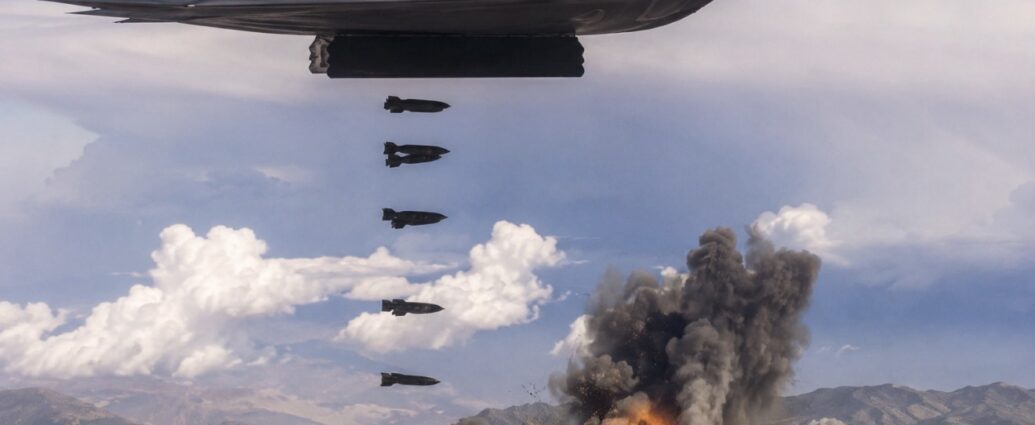
Oil Rebounds Late After U.S. Strikes New Iran Military Site Today With Hormuz Still Shut
By JBizNews Desk
Around 7 p.m. Eastern time Wednesday, a senior U.S. official confirmed the development that abruptly reversed global oil markets: American forces had struck a new Iranian military site earlier in the day after officials said the location posed a threat to U.S. troops and commercial shipping near the Strait of Hormuz. U.S. forces also reportedly intercepted several Iranian drones operating in the area, marking the third American strike on Iran in three days.
Oil prices, which had spent most of the trading session plunging on hopes of a breakthrough peace agreement, immediately rebounded. West Texas Intermediate crude rose roughly $1.42 in late trading to about $90.10 a barrel after settling down more than 5% earlier in the session near $88.39, its lowest level since April. Brent crude, the international benchmark, climbed back toward $94 after briefly falling below $93 earlier in the day.
The sharp reversal underscored how unstable the conflict has become, with markets swinging violently between expectations of diplomacy and fears of wider war.
Earlier in the day, Iranian state media reported that a potential agreement with the United States was close, claiming discussions included a partial U.S. naval pullback from the Gulf and the gradual reopening of commercial shipping through the Strait of Hormuz under joint coordination involving Oman. The report even suggested Iran could impose transit fees on vessels passing through the strategic waterway.
Traders reacted immediately, driving oil sharply lower on expectations that supply disruptions could ease. WTI crude dropped more than 5% intraday, while Brent fell to its lowest level in more than a month.
But the White House quickly rejected the Iranian reports.
“This report from Iranian-controlled media is not true and the MOU they released is a complete fabrication,” the administration said in a statement Wednesday afternoon.
Speaking during a Cabinet meeting, President Donald Trump said he was “not satisfied” with Iran’s position and warned the United States remained prepared to “finish the job” if negotiations collapsed. Trump said Iran would not receive sanctions relief and insisted Tehran would have to surrender its stockpile of highly enriched uranium as part of any final agreement.
Secretary of State Marco Rubio attempted to calm tensions, saying negotiations were still ongoing and that a framework agreement could take several more days. Iran’s Revolutionary Guard responded by warning that renewed fighting would turn parts of the Gulf region into a “graveyard for aggressors.”
Then came confirmation of the new U.S. military strike, instantly shifting market sentiment back toward fears of escalation.
The economic consequences are increasingly visible for consumers and businesses alike. AAA reported strong gasoline demand over the Memorial Day travel period even as fuel prices reached some of their highest seasonal levels in years. Analysts warn prices could remain elevated throughout the summer if shipping through Hormuz does not normalize.
The Strait of Hormuz normally handles roughly 20% of global oil and liquefied natural gas flows. Since the conflict intensified earlier this year, commercial traffic has slowed dramatically. While two non-Iranian supertankers reportedly crossed the strait Tuesday, shipping volumes remain far below normal levels.
Inside Iran, economic pressure is also intensifying. Iranian officials acknowledged Wednesday that inflation, shortages, and falling oil-export revenues are worsening internal instability as the country struggles under mounting military and economic strain.
For oil markets, the pattern has become increasingly familiar: headlines suggesting diplomacy trigger sharp selloffs, followed by renewed military action that rapidly pushes prices higher again.
Until either a formal agreement is signed or the fighting decisively ends, traders, businesses, and consumers are likely to remain trapped in a cycle of extreme volatility — with the costs ultimately flowing through to fuel stations, supply chains, transportation networks, and household budgets worldwide.
Middle East — JBizNews Desk
© JBizNews.com All Rights Reserved. Reproduction or distribution without written permission is prohibited.
Opinion | Pope Leo’s AI Manifesto

Greer Says Mexico Tariffs Stay as USMCA Talks Open, Signaling End of North America’s Free-Trade Era
By JBizNews Desk
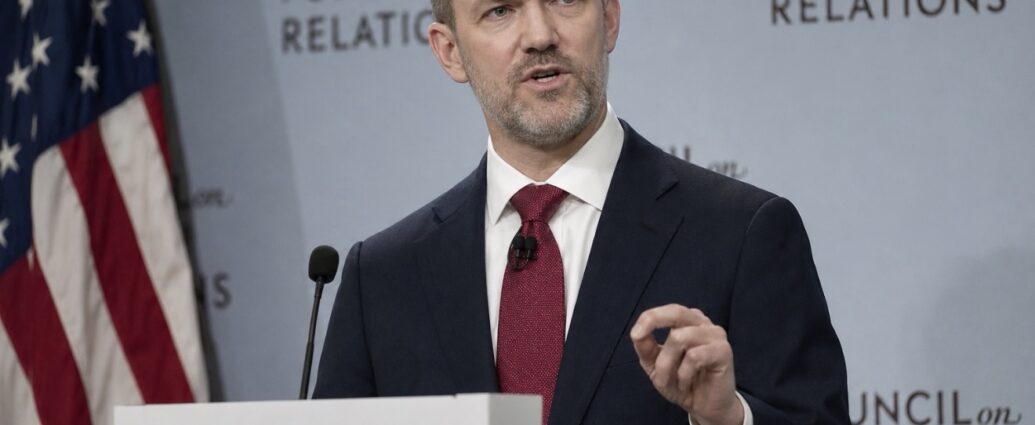
WASHINGTON — U.S. Trade Representative Jamieson Greer said Tuesday, May 26, 2026, that tariffs on Mexico are not going away, even as American and Mexican negotiators begin formal talks this week on the future of the United States-Mexico-Canada Agreement (USMCA), underscoring how dramatically Washington’s approach to North American trade has shifted under President Donald Trump.
Speaking at the Council on Foreign Relations in Washington, Greer dismissed the idea that the upcoming USMCA review would restore the largely tariff-free trade environment that defined North America for decades under NAFTA and the original 2020 USMCA framework.
“The U.S. is going to have tariffs,” Greer said. “Even with somebody like Mexico, or other countries that are in our own hemisphere, we’re going to have tariffs as long as we have a giant trade deficit.”
The remarks landed as U.S. and Mexican officials opened the first formal negotiating round in Mexico City ahead of the July 1, 2026 review deadline built into the agreement’s sunset clause. Canada was notably absent from this week’s talks, highlighting growing strains between Washington and Ottawa that U.S. officials now openly describe as more difficult than the relationship with Mexico.
At the center of the negotiations is a fundamental question about what USMCA is supposed to be. When Trump negotiated the agreement during his first term to replace NAFTA, the White House pitched it as a modernized trade pact designed to keep manufacturing inside North America. Six years later, the administration is signaling the deal is evolving into something much more aggressive: a regional industrial alliance built around tariffs, supply-chain controls and coordinated pressure on China.
The current tariff structure already reflects that shift. A 50% tariff now applies to imported steel, aluminum and copper entering the United States. Mexican-made medium- and heavy-duty trucks face a 25% duty, while Mexican tomatoes carry a 17% tariff. None of those measures fall under the original USMCA framework, and Greer made clear they are not temporary.
The administration is also pushing for tougher rules of origin, one of the most important and contentious parts of the agreement. Rules of origin determine how much of a product must actually be made inside North America in order to qualify for tariff-free treatment.
Under the current USMCA structure, 75% of a vehicle’s content must come from the United States, Mexico or Canada to move across borders duty-free, and a portion of the labor must come from workers earning at least $16 an hour. The rules were designed to discourage automakers from importing low-cost parts from Asia, assembling products in Mexico and then shipping them into the U.S. market without tariffs.
Now Washington wants those requirements tightened further, with a greater percentage of manufacturing specifically tied to U.S.-made content.
The second major issue is what Greer described as “external tariff coordination.” In practical terms, the United States wants Mexico and Canada to align their own tariffs more closely with Washington’s trade barriers against countries outside the region, particularly China.
U.S. officials increasingly argue Chinese manufacturers have been routing products through Mexico and Canada to gain indirect access to the American market under USMCA rules. Earlier this month, Greer told the House Ways and Means Committee that Mexico has already raised tariffs on roughly 1,400 products from China, Vietnam and other countries. Mexican Economy Minister Marcelo Ebrard has acknowledged his government is currently working through 52 separate U.S. trade demands.
“If Mexico and Canada coordinate externally with us, there can be preferential treatment internally,” Greer said Tuesday. “Ultimately, at the end of the day, frankly, for national security reasons, I want to have our supply chain sourced from this hemisphere, right from North America.”
Mexico and Canada, however, are being treated very differently by Washington.
Mexican President Claudia Sheinbaum has worked to maintain a cooperative relationship with Trump while tying trade negotiations to White House priorities including cartel enforcement and illegal migration. Mexico has also avoided retaliating directly against U.S. tariffs and has instead moved to raise duties on Chinese imports, steps that appear to have preserved goodwill inside the administration.
Canada took the opposite approach after the Trump administration imposed tariffs last year, responding with retaliatory duties on American products. Greer said Tuesday the U.S. now has “significant” disputes with Ottawa extending well beyond trade policy alone, and he openly questioned whether a deal could be finalized before the July 1 review date.
The auto sector remains the largest pressure point in the negotiations. More than half of all vehicles and auto parts produced in Mexico are exported to the United States, alongside a major share of Mexican steel production. American manufacturers support tougher origin rules in theory but worry that escalating tariffs and shifting requirements could raise costs and disrupt deeply integrated supply chains built over three decades.
Farm products, aluminum, lumber and dairy are also emerging as flashpoints. U.S. farmers continue pushing for better access to Canadian dairy markets, while Canadian aluminum producers remain exposed to the administration’s tariff strategy.
The stakes stretch far beyond trade lawyers and diplomats. USMCA governs nearly $1.8 trillion in annual North American trade, making it one of the largest economic relationships in the world. Any major changes will ripple through car prices, appliance costs, manufacturing investment decisions and supply chains that touch millions of jobs across all three countries.
The review itself stems from a “sunset clause” built into the agreement. Every six years, the United States, Mexico and Canada must decide whether to extend USMCA for another 16 years or move into a rolling cycle of annual reviews that could eventually allow the deal to expire in 2036 if no agreement is reached.
Greer acknowledged Tuesday that negotiations are unlikely to conclude by July 1 and will continue through the summer and likely into the fall.
For businesses and consumers, however, the broader direction from Washington now appears unmistakable. The era of largely tariff-free North American trade that began with NAFTA in 1994 is ending. In its place, the United States is building a more protectionist economic bloc centered on tariffs, domestic manufacturing and strategic competition with China.
Washington — JBizNews Desk
© JBizNews.com All Rights Reserved. Reproduction or distribution without written permission is prohibited.

Opinion | Prolonged Conflict Hurts Us

Sherrill’s FIFA Standoff Cuts World Cup Train Fares — And Rewrites The Host City Playbook
New Jersey Governor Mikie Sherrill has forced down World Cup train fares from an originally proposed $150 round-trip ticket to $98 through a high-profile public standoff with FIFA and a newly assembled group of corporate sponsors.
The fight is becoming one of the clearest examples yet of how American cities and states may handle the growing financial burden of hosting global mega-events.
At the center of the battle was a simple question:
Who should pay to move hundreds of thousands of fans during the 2026 FIFA World Cup?
NJ Transit originally announced plans to charge $150 round-trip fares between New York Penn Station and MetLife Stadium during tournament matches.
The normal cost for the same route is roughly $13.
Transit officials argued the steep pricing reflected enormous operational costs tied to hosting the tournament, including:
- Additional train service
- Security operations
- Staffing
- Equipment upgrades
- Crowd-control logistics
NJ Transit estimated total World Cup transportation costs near $48 million.
Governor Sherrill publicly pushed back almost immediately.
She argued New Jersey taxpayers and commuters should not absorb the burden while FIFA itself is expected to generate approximately $11 billion from the tournament globally.
The disagreement quickly became political.
Compared with other host cities, New Jersey’s pricing looked dramatically higher.
Public transportation costs for World Cup fans in cities like Houston, Atlanta, Philadelphia, and Los Angeles were only a fraction of the proposed New Jersey fare.
That comparison intensified pressure on state officials to find another solution.
The breakthrough came through corporate sponsorships.
On May 12, Sherrill announced the final fare would be reduced to $98 after outside companies agreed to help offset the cost difference.
Sponsors included:
- DoorDash
- Audible
- FanDuel
- DraftKings
- PSE&G
- South Jersey Industries
- American Water
The arrangement effectively created a new public-private financing model for mega-event transportation infrastructure.
Rather than fully subsidizing fares through taxpayers or forcing fans to absorb the full operational cost, the state shifted part of the burden onto corporations seeking visibility and association with the tournament.
The strategy may now influence future host-city negotiations well beyond New Jersey.
Governments hosting major sporting events increasingly face backlash over public spending tied to stadiums, transportation systems, security operations, and tourism infrastructure.
Sherrill’s approach demonstrated that sponsorship-driven cost sharing may provide a politically safer alternative.
The economics behind the move are substantial.
MetLife Stadium will host eight World Cup matches, including the final.
Each match could draw roughly 78,000 spectators.
Reducing transportation costs by more than $50 per fan potentially shifts tens of millions of dollars back into restaurants, hotels, retail shops, and local entertainment businesses instead of transit expenses.
That consumer-spending effect became part of the state’s broader economic strategy.
New Jersey and New York officials have spent months promoting programs designed to push tournament spending toward local businesses rather than concentrating revenue entirely within stadium operations.
The state has also invested heavily in transportation preparation.
NJ Transit approved millions of dollars in additional bus contracts and infrastructure upgrades tied specifically to tournament logistics.
Officials say moving large crowds efficiently will be critical to avoiding major disruptions during the event.
FIFA itself reportedly pushed back privately against the fare controversy, arguing that high transportation costs could discourage attendance and hurt the overall fan experience.
Still, the organization has largely avoided directly funding local transportation operations in host cities.
That tension is likely to continue globally as the costs of hosting major sporting events rise.
For Sherrill politically, the confrontation also delivered valuable visibility.
The governor positioned herself publicly as defending commuters, taxpayers, and small businesses against both FIFA and steep transportation pricing.
The move generated significant national media attention while reinforcing broader economic messaging around affordability and local economic benefit.
Questions remain about whether the final pricing structure will fully cover NJ Transit’s operating costs.
The model depends heavily on high ridership volumes and sponsor participation.
If too many fans rely instead on driving, ride-share services, or private transportation, financial pressure on transit agencies could persist.
Even so, the larger precedent may already be set.
Future Olympic bids, World Cup host agreements, and other mega-event negotiations are likely to study closely what happened in New Jersey during 2026.
The emerging lesson is increasingly clear:
host governments may no longer quietly absorb massive event-related costs without demanding either corporate participation or greater financial contribution from event organizers themselves.
JBizNews Desk — New York
© 2026 JBizNews. All Rights Reserved. Reproduction or distribution without written permission is prohibited.
Wix Cuts 1,000 Jobs As AI Replaces Engineers In Largest Layoff In Company History
Wix.com Ltd. is cutting roughly 1,000 jobs, about 20% of its global workforce, in the largest layoff round in company history as the company increasingly replaces engineering and design work with artificial intelligence systems.
The layoffs mark one of the clearest examples yet of a profitable software company openly acknowledging AI-driven workforce replacement as a core business strategy rather than simply a productivity tool.
The Israeli-based web development company informed employees this week that advances in AI have significantly reduced the need for human staffing across several operational and product-development functions.
Reports first surfaced through Israeli financial publications Calcalist and Globes, citing internal company sources. Wix declined public comment.
The cuts come during a difficult year for the company.
Wix reported a quarterly net loss of $57.5 million despite generating approximately $541 million in revenue during the first quarter. Shares of the company have fallen nearly 50% since the beginning of the year, pushing the stock to near 52-week lows.
The company’s market value now sits near $2 billion.
At the same time, Wix recently completed a massive $1.6 billion stock buyback effort aimed at supporting investor confidence, though the share-price decline continued.
The workforce reductions will affect nearly every division of the company and are expected to unfold gradually over the coming months.
Wix employed roughly 5,300 workers globally at the end of the first quarter, with a majority based in Israel.
What separates the Wix layoffs from many recent technology-sector job cuts is management’s unusually direct connection between AI deployment and reduced staffing needs.
Many companies have framed layoffs around “restructuring,” “economic uncertainty,” or “post-pandemic normalization.”
Wix executives reportedly tied the cuts specifically to artificial intelligence systems increasingly handling tasks previously performed by human developers and designers.
The company has spent the past year aggressively expanding its AI capabilities through acquisitions and internal development.
Among the most important moves was the acquisition of Base44, an Israeli startup focused on “vibe coding,” a fast-growing category of software tools allowing users to build applications through natural-language prompts instead of traditional coding.
Wix also acquired Hour One, another Israeli AI company focused on generative media and digital content creation.
The strategic shift reflects a much broader transformation occurring across the software industry.
AI coding assistants and automated design platforms are rapidly changing how software products are built, maintained, and updated.
Executives across Silicon Valley increasingly view leaner engineering organizations as a long-term structural advantage rather than a temporary cost-cutting measure.
Wix is effectively becoming a public case study for that transition.
The company’s revenue continues growing while headcount shrinks sharply — a dynamic many investors increasingly reward if profitability improves.
But the strategy also carries significant risks.
Wix competes directly against companies including Shopify, Squarespace, and multiple AI-native website-building startups that are accelerating their own product rollouts aggressively.
Reducing too much engineering talent too quickly could slow innovation precisely when competition is intensifying.
There are also broader labor and regulatory concerns.
Several European jurisdictions and Israeli labor regulators may scrutinize the company’s framing of the layoffs if AI replacement becomes the formal justification for workforce reductions.
Technology companies worldwide are increasingly navigating difficult legal and ethical questions surrounding AI-related displacement.
Wix also joins a much larger wave of AI-driven restructuring across corporate America.
Major companies including Amazon, PayPal, Citi, Coinbase, and others have all announced significant staffing reductions tied partly to automation, AI integration, or operational streamlining over the past year.
The Wix announcement stands out because management reportedly acknowledged the connection more directly than most public companies have so far.
For investors and executives throughout the software industry, the implications are significant.
AI is no longer being discussed solely as a tool to help engineers work faster.
At companies like Wix, it is increasingly being treated as infrastructure capable of reducing the number of engineers required altogether.
That shift changes the economics of software businesses fundamentally.
The key question now facing Wall Street is whether companies can successfully shrink workforces while maintaining product quality, innovation speed, and customer growth.
Wix is betting the answer is yes.
Other software executives are likely watching very closely.
JBizNews Desk — New York
© 2026 JBizNews. All Rights Reserved. Reproduction or distribution without written permission is prohibited.
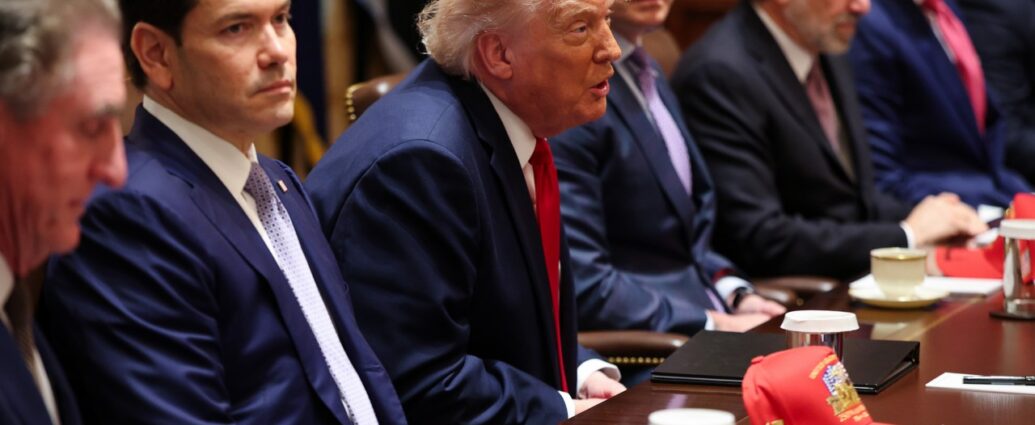
Strong Shekel Drives Israeli Manufacturers Offshore as Arad Shifts Production Abroad
By JBizNews Desk
TEL AVIV — Avraham Novogrotzky, president of the Manufacturers Association of Israel, warned Monday, May 25, 2026, that the shekel’s powerful surge against the dollar is accelerating a structural shift of Israeli industrial production overseas, pointing to fresh filings from water-meter technology firm Arad as evidence that export-driven manufacturers are quietly relocating capacity to Spain, Italy, and Mexico to defend margins.
Novogrotzky said the appreciation of the shekel — which has strengthened roughly 20% against the U.S. dollar over the past year and surged a further 8.3% since the Bank of Israel’s previous rate decision — is squeezing exporters whose revenue is denominated in dollars while costs, especially wages, remain in shekels. He cited Central Bureau of Statistics data showing that Israeli production overseas climbed from $2.5 billion to $4.5 billion in a single quarter at the end of 2025, when the shekel’s rally began, and said the trend almost certainly intensified in the first quarter of 2026.
The dynamic was laid bare last week in financial disclosures from Arad, the Tel Aviv Stock Exchange-listed water-meter manufacturer controlled by Kibbutz Dalia and Kibbutz Ramot Menashe. The company, which carries a market capitalization of roughly 1.2 billion shekels, told investors it had taken deliberate steps to insulate itself from the currency’s appreciation, including shifting production for the European market from Israel to facilities in Spain and Italy, while moving production for the U.S. market to its group site in Mexico.
The moves are already paying off financially. Despite the dollar’s roughly 20% decline against the shekel over the past year, Arad reported first-quarter revenue rose 8% to $112.4 million while net profit climbed 26% to $9.2 million, driven by the offshore production strategy and continued strength in its domestic Israeli business.
Novogrotzky framed Arad’s disclosures as a warning shot, arguing that existing projects may remain in Israel but new industrial investment is increasingly being directed abroad. He said the Manufacturers Association is hearing similar concerns from member companies across Israel’s export sector, where competitiveness has steadily eroded as the shekel rallied to a 33-year high against the dollar.
The Arad case is not isolated. Polyram Plastic Industries, traded on the Tel Aviv Stock Exchange under ticker POLP, disclosed in its 2025 annual report that it had opened a new factory in Thailand and transferred select production lines out of Israel. The company told shareholders the move reflected a strategic repositioning of where its core manufacturing activity would be centered in the future.
Industry executives say Israeli manufacturers have long outsourced portions of production overseas to reduce labor costs and gain proximity to customers, particularly in Asia and North America. What has changed in 2026, according to Novogrotzky, is the pace and urgency of the shift, driven less by long-term planning and more by an immediate currency-driven profitability squeeze.
The pressure is colliding directly with the Bank of Israel’s broader policy challenge. Earlier Monday, the central bank cut its benchmark interest rate by 0.25 percentage points to 3.75%, explicitly citing the shekel’s strength as a key factor helping cool inflation. Yet the same currency appreciation celebrated by Governor Prof. Amir Yaron as a disinflationary force is simultaneously hollowing out the economics of Israel’s export manufacturing base.
Economists warn the trend could carry lasting consequences for Israel’s industrial footprint. Once factories, supplier networks, engineering operations, and management teams migrate overseas, they rarely return quickly. Production lines established in Spain, Italy, Mexico, or Thailand often become permanent components of a company’s global manufacturing chain.
That creates a growing disconnect inside the Israeli economy: macroeconomic indicators remain resilient, inflation is cooling, and the currency is strong, yet portions of the country’s traditional industrial base are steadily relocating abroad in search of lower costs and more stable margins.
For now, the Manufacturers Association of Israel is pressing policymakers to weigh the industrial consequences of the shekel’s rally alongside its inflation benefits, warning that without offsetting support measures or intervention, more Israeli production capacity will quietly leave the country in the coming quarters.
The Arad disclosures, Novogrotzky suggested, are not an isolated corporate adjustment. They may instead mark the early stages of a much broader manufacturing migration already underway.
© 2026 JBizNews. All Rights Reserved. Reproduction or distribution without written permission is prohibited.
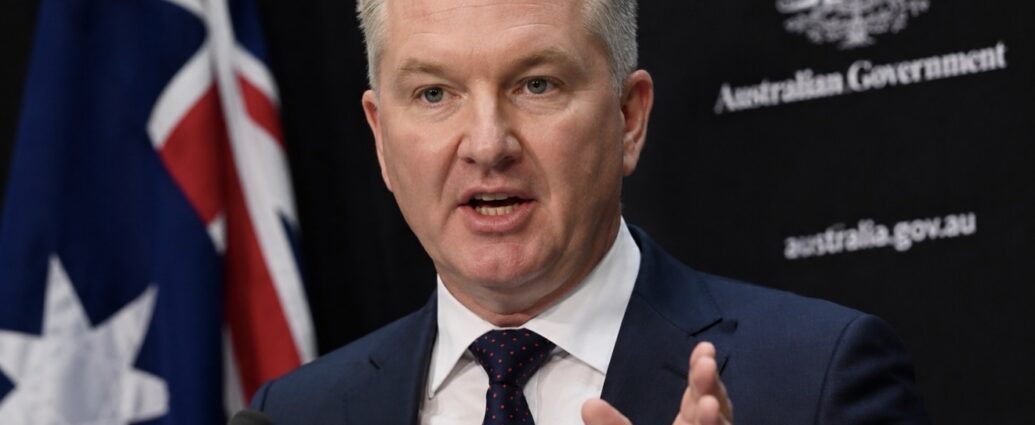
OPINION: Bowen Gets $150 Million to Chair a Climate Conference He Isn’t Even Hosting — This Is the Climate Movement’s Real Business Model
By Duvi Honig
Australia’s climate minister, Chris Bowen, just gave the world a remarkably clear window into what large parts of the modern climate movement have actually become. Not simply a campaign to reduce emissions or protect the environment, but an international ecosystem capable of moving staggering amounts of taxpayer money under the protection of a cause few politicians feel safe questioning.
Bowen is defending more than 150 million Australian dollars — roughly 107 million U.S. dollars — tied to Australia’s role chairing the upcoming COP31 United Nations climate summit.
There is one important detail: Australia is not even hosting the conference. Turkey is.
Bowen’s government is spending that money largely to run the diplomatic process surrounding the summit, including staffing, travel, negotiations and administrative coordination. Documents obtained by The Australian newspaper showed government employees spent 485,602 Australian dollars on travel tied to the negotiations during just January and February 2026 alone, including trips to Turkey, Fiji, Germany and South Korea.
All of this is happening while Australian households face rising electricity bills, expensive mortgages, higher grocery prices and a cost-of-living crisis severe enough to dominate national politics.
And the most politically damaging part for Bowen is this: many of those same families struggling to pay their utility bills are living under the exact renewable-energy policies his ministry has aggressively promoted.
When opposition lawmakers called the spending a “vanity project,” Bowen responded by calling his counterpart “the biggest hypocrite in the federal parliament.”
That reaction misses the larger point entirely.
This is not really about one minister in Australia. It is about the operating structure that has grown around the global climate industry itself.
Every year, massive United Nations climate conferences draw anywhere from tens of thousands of delegates, activists, consultants, diplomats, corporate sponsors, nonprofit organizations and government officials from around the world. Entire hotel districts are reserved. International flights multiply. Temporary bureaucracies expand. Multi-million-dollar security operations are assembled.
Then the conference ends — usually with broad declarations, vague targets and promises that another conference will be needed the following year to revisit unresolved issues.
The summit itself increasingly becomes the product.
And the people paying for it are almost never the people attending it.
Bowen flies internationally to climate meetings while ordinary Australian families absorb higher power prices and taxes. Former U.S. climate envoy John Kerry faced criticism during the Biden administration for using private jets tied to climate-related travel while simultaneously warning Americans to reduce carbon emissions in daily life.
The contradiction is obvious to voters.
The pattern extends well beyond Australia.
The European Union has committed hundreds of billions of euros toward climate-transition policies even as parts of Europe struggle with energy affordability and industrial competitiveness. Germany, long viewed as the flagship of Europe’s green transition, has watched portions of its manufacturing base come under pressure from high energy costs.
In the United States, the Inflation Reduction Act authorized hundreds of billions of dollars in climate and clean-energy subsidies, much of it flowing into politically connected industries dependent on long-term government support.
Supporters argue these investments are necessary to accelerate technological transition and reduce future environmental risk.
Critics increasingly ask a different question: how much of the climate economy now exists primarily to sustain itself?
Meanwhile, the countries most responsible for future emissions growth continue expanding conventional energy production. China remains heavily dependent on coal and continues approving new coal-fired generation capacity. India is expanding fossil-fuel use to support industrial growth. Russia remains one of the world’s largest hydrocarbon exporters.
That geopolitical imbalance has become harder for Western voters to ignore.
They are being asked to absorb rising energy costs, taxes and lifestyle restrictions while many of the world’s largest emitters continue prioritizing industrial expansion and energy security.
Which brings the debate back to Bowen.
What exactly does 150 million Australian dollars buy here?
It does not directly lower electricity bills for Australian households. It does not immediately reduce global emissions. It does not suddenly solve the climate problem after three decades of increasingly large international conferences.
What it undeniably does buy is international visibility, diplomatic influence, conference infrastructure and participation inside a global climate system that has grown larger, more expensive and more bureaucratic every year.
Supporters call that leadership.
Critics increasingly call it a self-perpetuating ecosystem where the process itself has become the justification for more spending.
That perception matters politically because working families notice the contrast. They notice politicians and officials flying internationally to climate events while lecturing citizens about consumption, energy use and carbon footprints. They notice governments spending millions on conferences while households struggle with bills at home.
And once credibility begins eroding, rebuilding it becomes extremely difficult.
The danger for climate policymakers is not merely opposition from skeptics. It is broader public exhaustion with systems that appear expensive, permanent and disconnected from everyday economic reality.
The climate debate itself will continue. Serious people can disagree about policy, energy transition timelines and the balance between environmental goals and economic costs.
But the backlash now building around figures like Bowen reflects something deeper than emissions targets.
It reflects growing public suspicion that an international movement originally framed as an environmental necessity has, in some cases, evolved into a sprawling global spending structure whose most consistent outcome is the expansion of its own conferences, institutions and budgets.
And increasingly, voters are asking whether they can still afford it.
Duvi Honig is Founder & CEO of the Orthodox Jewish Chamber of Commerce and Co-founder and Secretary of the Multicultural Business Coalition.
Opinion — JBizNews Desk
© JBizNews.com All Rights Reserved. Reproduction or distribution without written permission is prohibited.
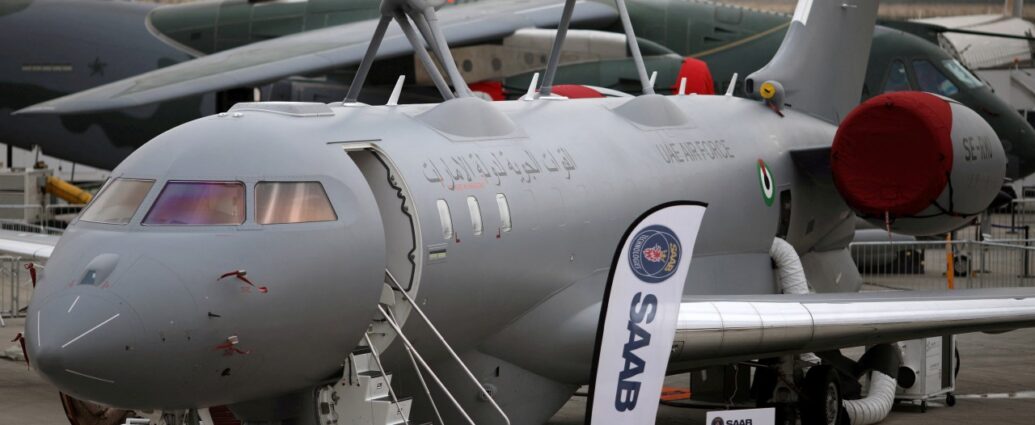


Putin’s Expanding War Threat Is Now Reshaping European Budgets, Bond Markets and Defense Stocks
By JBizNews Desk
Europe’s financial markets are no longer treating the war in Ukraine as a regional conflict. They are treating it as the opening phase of a broader security and economic realignment that could redefine the continent’s budgets, debt markets and industrial priorities for the next decade.
That shift became more visible Sunday after Russia launched one of its largest aerial attacks on Kyiv this year, firing roughly 600 drones and 90 missiles overnight, including the nuclear-capable Oreshnik hypersonic missile. Ukrainian President Volodymyr Zelensky said Kyiv absorbed the heaviest strikes, while Mayor Vitali Klitschko reported damage across every district of the capital. European Union foreign policy chief Kaja Kallas described Moscow’s use of the Oreshnik as reckless nuclear brinkmanship intended to intimidate Europe politically as much as militarily.
The strike came just days after Moscow announced plans to file a case at the International Court of Justice accusing Estonia, Latvia and Lithuania of discriminating against Russian-speaking minorities — language European officials immediately recognized from the Kremlin’s playbook before the annexation of Crimea in 2014 and before Russia’s full-scale invasion of Ukraine in 2022.
For European governments, the issue is no longer whether Russia poses a threat. The question now is how much economic capacity Europe must permanently dedicate to deterring it.
That answer is already showing up in defense budgets.
Estonian Defense Minister Hanno Pevkur said this month that Estonia plans to allocate roughly 5.4% of GDP annually to defense between 2026 and 2029, while Lithuanian President Gitanas Nausėda announced plans to push Lithuanian defense spending toward 5% to 6% of GDP. Poland is already spending roughly 4.5% of GDP on defense, one of the highest levels in NATO.
The broader trend is striking. European Union defense spending has climbed from approximately €218 billion in 2021 to a projected €381 billion in 2025. At NATO’s summit in The Hague, alliance members — with the exception of Spain — backed a framework targeting 3.5% of GDP for core military spending plus another 1.5% for security-related investment.
If fully implemented, Europe’s combined defense spending could approach €800 billion annually by the end of the decade.
That figure is extraordinary when compared to Europe’s own central budget. The EU’s annual institutional budget remains under €200 billion. In practical terms, Europe is preparing to spend roughly four times its collective administrative budget on defense every year because policymakers increasingly believe the Ukraine war may not remain geographically contained.
Financial markets have been pricing in that possibility for months.
German defense giant Rheinmetall AG has become one of Europe’s biggest market winners since Russia’s invasion of Ukraine, with shares rising more than twelvefold. The company expects 2026 sales growth of 40% to 45% after reporting a massive €64 billion order backlog. Rheinmetall is now expanding artillery shell production from roughly 70,000 units in 2022 toward a targeted 1.5 million annually by 2030.
Investors are treating Europe’s defense sector less like a cyclical trade and more like a long-duration structural growth industry.
The STOXX Europe Aerospace and Defense Index now trades at roughly 43 times projected 2026 earnings, more than double the broader STOXX Europe 600 valuation. Norway’s Kongsberg Gruppen is projected to post annual growth above 20%, while Britain’s BAE Systems continues forecasting sustained multi-year expansion tied to NATO rearmament.
But despite the spending surge, analysts warn Europe still faces major structural weaknesses.
A February defense assessment from McKinsey found that European NATO countries remain below pre-2021 military equipment stockpile levels even after NATO Europe and Canada spent more than $482 billion on defense in 2024. One major reason is fragmentation. European NATO members currently operate 12 separate main battle tank platforms, compared with just one used by the United States military.
That fragmentation increases procurement costs, slows scaling and limits interoperability during an actual conflict scenario.
The strategic concern underlying much of the spending is the Baltic region.
A recent Harvard Belfer Center scenario study examined the risk of a Russian move aimed at isolating Estonia, Latvia and Lithuania through the Suwałki Gap — the narrow corridor between Belarus and the Russian enclave of Kaliningrad that connects the Baltic states to the rest of NATO territory.
While European officials publicly insist they do not view war with NATO as imminent, defense planning assumptions across the continent increasingly reflect the possibility that Moscow could eventually test alliance cohesion through hybrid operations, limited territorial incursions or coercive pressure against NATO’s eastern flank.
That fear is now embedded not only in military planning, but in sovereign borrowing costs, industrial policy and equity markets.
The bond spreads, the weapons orders and the emergency defense appropriations are all pointing toward the same conclusion: Europe is preparing financially for a world in which deterrence may become a permanent economic sector.
If Russia never expands the conflict beyond Ukraine, Europe will have built one of the largest defense spending programs in modern peacetime history. If Moscow eventually tests NATO directly, policymakers increasingly believe the current spending wave may only represent the beginning.
Europe’s markets appear to have already made their bet.
Europe — JBizNews Desk
© JBizNews.com All Rights Reserved. Reproduction or distribution without written permission is prohibited.
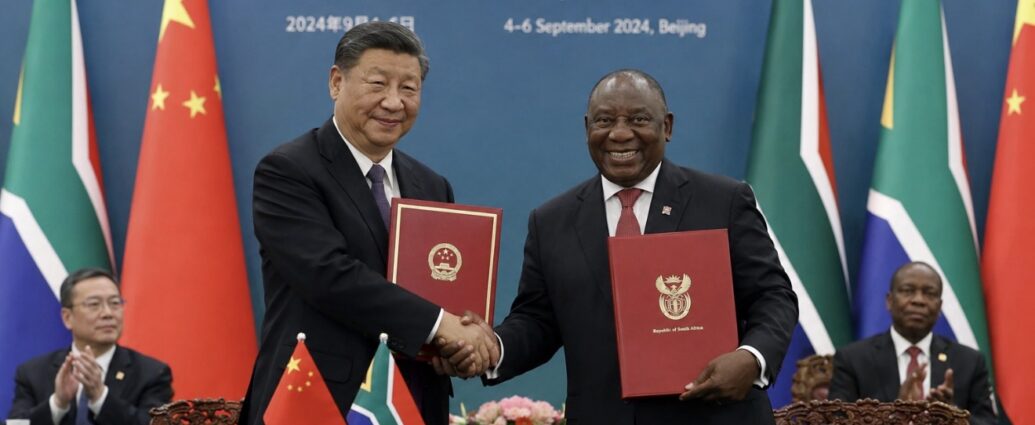
China Eliminates Tariffs on Africa to Outmaneuver Trump, Opening $18 Trillion Economy to 53 Nations
Chinese President Xi Jinping’s government implemented its zero-tariff policy for 53 African countries on May 1, 2026, formally opening China’s 1.4 billion-consumer market to duty-free imports from nearly the entire African continent — a sweeping trade move widely viewed by analysts as a direct geopolitical and economic counter to President Donald Trump’s tariff-heavy trade strategy.
The policy, first announced by Xi Jinping on February 14, was confirmed by China’s State Council and the Chinese Ministry of Commerce and has now been fully active for more than three weeks. Under the arrangement, all goods entering China from the 53 African nations that recognize Beijing instead of Taiwan now face zero customs duties.
The lone exception is Eswatini, the small Southern African kingdom that still maintains diplomatic ties with Taipei. Beijing excluded the country entirely, reinforcing China’s broader “One China” pressure campaign.
The scale of the move is historic.
The new tariff-free framework covers Africa’s largest economies, including South Africa, Nigeria, Egypt, Algeria, Kenya, Ethiopia, Ghana, Tanzania, Morocco, and Angola. It expands China’s earlier December 2024 decision that granted zero tariffs only to 33 least-developed African nations.
Now, virtually the entire continent has free access to the world’s second-largest economy.
For African exporters, the financial impact is immediate and massive.
A South African wine producer that previously paid a 14% import tariff to sell bottles in Shanghai now pays nothing. Nigerian cocoa exporters, Kenyan coffee growers, Egyptian cotton suppliers, Ethiopian sesame farmers, and Ghanaian cashew producers suddenly become significantly more competitive inside China’s enormous consumer market.
The timing is not accidental.
The policy arrives just as African exports to the United States are facing new tariffs under the Trump administration, while Washington’s long-standing Africa trade framework has weakened dramatically. The African Growth and Opportunity Act (AGOA) — the cornerstone of U.S.-Africa trade relations since 2000 — technically remains alive through December 31, 2026 after a temporary reauthorization, but confidence in Washington’s long-term commitment has sharply deteriorated.
At the same time, the Trump administration dismantled major portions of USAID, scaled back parts of the Export-Import Bank, and reduced development financing programs that historically helped anchor American influence across Africa.
China moved quickly to fill the vacuum.
According to official Chinese government data, China-Africa trade reached a record $295.6 billion in 2024, making China Africa’s largest trading partner by a wide margin. First-quarter 2025 trade totaled another $72.6 billion, up 2.7% year-over-year even before the full tariff elimination took effect.
Trade analysts now expect those numbers to accelerate sharply through the second half of 2026.
The bigger story is minerals.
Africa holds some of the world’s most important strategic resources: roughly 70% of global cobalt production, nearly half of known manganese reserves, major lithium deposits, rare earth elements, uranium, copper, platinum, graphite, and chromium — the raw materials powering the global race for artificial intelligence infrastructure, semiconductors, electric vehicles, defense systems, batteries, and renewable energy technology.
China’s new policy effectively gives African producers a stronger financial incentive to send those materials directly into Chinese supply chains rather than Western ones.
Companies positioned to benefit include CATL, BYD, CMOC Group, Zijin Mining, China Molybdenum, Ganfeng Lithium, Huayou Cobalt, and Tsingshan Holding Group, all of which already operate deep inside African mining and processing networks.
The move directly undercuts years of U.S. industrial strategy.
The Inflation Reduction Act, the CHIPS and Science Act, and U.S.-backed infrastructure projects like the Lobito Corridor rail network were all designed to reduce Western dependence on Chinese-controlled supply chains. China’s tariff elimination weakens the economics of those alternatives almost overnight.
For African governments, the appeal is simple: China is offering real market access with few political conditions attached.
There are no governance requirements, labor-rights benchmarks, or democratic reforms tied to the tariff removal. Leaders including South African President Cyril Ramaphosa, Nigerian President Bola Tinubu, Egyptian President Abdel Fattah el-Sisi, Kenyan President William Ruto, and Ethiopian Prime Minister Abiy Ahmed have publicly welcomed the deal.
China has also pledged financing support, exporter training, logistics coordination, and marketing assistance through what Beijing calls its “green channel” trade system.
The geopolitical signal is equally clear.
By excluding Eswatini, China demonstrated that diplomatic recognition of Taiwan now carries direct economic consequences. African nations considering closer relations with Taipei can now see exactly what they stand to lose.
For the United States, the policy represents a growing strategic problem.
American industrial giants including Caterpillar, John Deere, General Electric, Honeywell, Boeing, Cummins, and Bechtel now compete in African markets where Chinese companies can bundle infrastructure deals, financing, and guaranteed access to the world’s largest manufacturing ecosystem.
Meanwhile, cheaper African raw materials flowing into Chinese factories will help Beijing lower production costs for batteries, electronics, electric vehicles, magnets, and solar equipment — goods that still eventually reach global markets, including the United States.
Even Trump’s tariffs cannot fully block that dynamic.
Chinese goods can still enter global supply chains indirectly through countries like Mexico, Vietnam, Indonesia, and Malaysia, lowering the effectiveness of Washington’s tariff wall over time.
For everyday Africans, however, the benefits are immediate and tangible.
Workers in Lagos, Nairobi, Cairo, Addis Ababa, Johannesburg, Accra, and Lusaka stand to gain from rising exports, stronger currencies, higher commodity demand, and improved trade balances. Governments across the continent are expected to see increased foreign exchange reserves and stronger fiscal positions.
For Washington, the uncomfortable reality is becoming harder to ignore.
China spent two decades building the infrastructure, ports, rail systems, trade relationships, scholarships, diplomatic ties, and financing channels necessary to make a policy like this credible. The Belt and Road Initiative was not just about roads and bridges — it was about building long-term commercial dependence.
Now Beijing is cashing in on that investment.
The Trump administration has bet that tariffs and bilateral pressure can rebuild American industrial power. China has bet that opening its market to the developing world will buy lasting influence and strategic dominance.
Africa has become the first major battleground testing which model works better.
So far in 2026, the scoreboard favors Beijing.
— JBizNews Desk
© 2026 JBizNews. All Rights Reserved. Reproduction or distribution without written permission is prohibited.
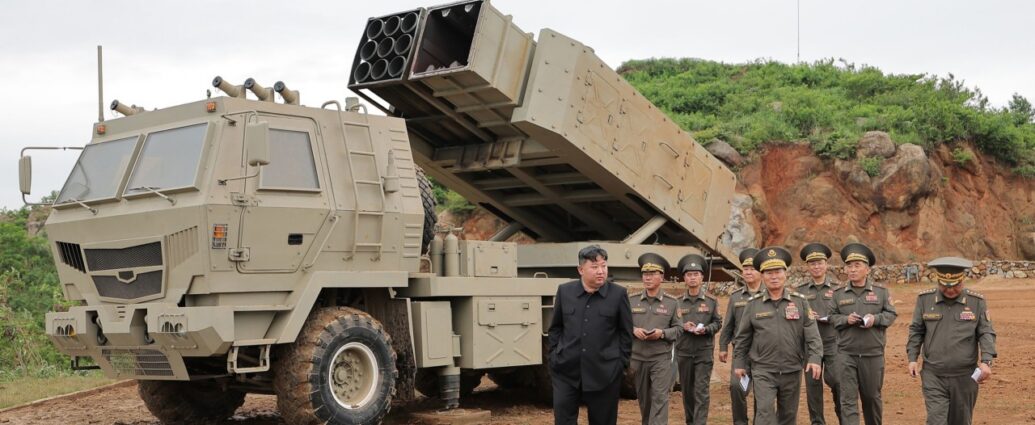


Private Credit Trouble Would Hit Insurance Companies Harder Than Banks, European Central Bank Warns
The European Central Bank issued a sharp warning Tuesday: if the fast-growing private credit market runs into trouble, insurance companies could take the biggest hit — not banks.
The warning came in a financial stability report published in Frankfurt, but the risks reach far beyond Europe. The same trend has spread rapidly across the United States, especially through retirement and annuity products owned by millions of Americans.
Private credit has become one of the fastest-growing areas on Wall Street.
Instead of traditional banks making loans directly to companies, giant investment firms including Apollo Global Management, Blackstone, KKR, Blue Owl Capital, and Ares Management now raise money from investors and lend it out themselves.
The market has exploded in size over the past decade and is now estimated globally at between $1.5 trillion and $2 trillion.
Most ordinary consumers have never heard of private credit.
But many are already deeply connected to it through life insurance and retirement products.
When consumers buy annuities or retirement-focused insurance products, insurance companies invest those funds in order to generate returns over time. Increasingly, those insurers are putting large portions of that money into private credit loans.
According to the ECB, insurance companies and pension funds now account for roughly 70% of all money invested globally in private credit funds.
European insurers alone hold approximately €211 billion in private credit exposure, while pension funds hold another €52 billion.
The same pattern has accelerated across the United States.
Apollo owns Athene, one of the country’s largest annuity businesses with roughly $344 billion in assets. Athene now represents about half of Apollo’s overall business model.
KKR owns Global Atlantic. Blue Owl owns Kuvare, parent company of Guaranty Income Life and United Life. Blackstone manages significant insurance-related assets through partnerships including Corebridge Financial, formerly part of AIG.
Earlier this year, F&G Annuities & Life disclosed that roughly 20% of its investment portfolio is tied to private credit strategies managed by Blackstone.
U.S. regulators are increasingly paying attention.
In April, the Federal Reserve reportedly began asking major banks for detailed information regarding their lending exposure to private credit firms. Regulators are trying to determine how large the risks could become if defaults begin rising across the sector.
The international Financial Stability Board warned earlier this month that global banks currently maintain roughly $220 billion in direct credit lines to private credit funds, though some private estimates place the figure far higher.
Why the concern now?
Several warning signs have started appearing across the industry.
This spring, investors began withdrawing money from certain funds operated by Blackstone and Blue Owl. Shares of Apollo have also fallen sharply from late-2024 highs.
At the same time, ratings agency Moody’s noted earlier this year that private credit and insurance businesses now account for more than half of the combined operations at Apollo, Blackstone, KKR, and Carlyle.
That growing interconnection means stress in one part of the system could quickly affect the others.
The ECB also highlighted another risk: leverage.
Private credit funds often borrow money themselves in order to make larger loans and boost returns. According to the ECB, European private credit funds borrow roughly 40 cents for every dollar of investor capital, while U.S. funds average closer to 30 cents on the dollar.
That leverage magnifies profits when markets remain stable — but can also accelerate losses when borrowers struggle.
Some investors are warning that ordinary retirees may not fully understand how much exposure their retirement savings now have to private credit markets through annuities and insurance products.
There are also concerns about transparency.
The ECB said banks and regulators often cannot fully see when the same company owes money both to traditional banks and to private credit lenders simultaneously. U.S. regulators including the Treasury Department’s Office of Financial Research have raised similar concerns about visibility into insurance-company holdings.
Despite the growing worries, the private credit industry still has enormous amounts of capital available to lend.
According to the ECB, private credit funds held approximately €507.7 billion in committed but unspent capital as of last September, on top of more than €1.13 trillion already invested.
Wall Street firms continue pushing back against the concerns.
The firms argue their loans are generally backed by company assets and that insurance-company money is naturally suited for long-term lending because insurers do not face the same short-term withdrawal pressures as banks or mutual funds.
The ECB acknowledged that insurers may be structurally better positioned than many investors to hold illiquid long-term loans.
Still, the central bank’s warning Tuesday was direct.
If losses begin building across private credit markets, insurance companies may absorb the damage first — and millions of retirement savers could ultimately sit on the other side of that exposure.
Shares of Apollo, Blackstone, KKR, Ares, and Blue Owl all remain publicly traded on the New York Stock Exchange and have pulled back significantly from their highs reached during the peak of the private-credit boom.
For regulators, investors, and retirees alike, the question is no longer whether risks exist inside private credit.
The question is where the first cracks will appear.
JBizNews Desk — New York
© 2026 JBizNews. All Rights Reserved. Reproduction or distribution without written permission is prohibited.

Europe’s May Heat Dome Shatters UK and France Records, Putting $11.8 Trillion in Economic Activity Under Stress
By JBizNews Desk
LONDON — A historic early-season heat wave is sweeping across Western Europe, smashing temperature records in the United Kingdom and France and placing an estimated $11.8 trillion in economic activity under extreme stress before summer has officially begun.
The United Kingdom recorded its hottest May day ever on Tuesday, with temperatures at Kew Gardens in Greater London reaching 34.8 degrees Celsius (94.6 Fahrenheit) — shattering the previous national May record by roughly two degrees.
France’s national weather agency confirmed Monday was the country’s hottest May day ever recorded. Temperatures in Portugal are approaching 40 degrees Celsius (104 Fahrenheit), while parts of Spain are forecast to reach 38 degrees Celsius. Belgium is also on track to break historic May heat records.
Meteorologists say the event is being driven by a massive “heat dome” — a powerful high-pressure system trapping hot air from North Africa over Western Europe while blocking the cooler weather systems that would normally moderate temperatures.
In practical terms, the atmosphere has effectively placed a lid over Europe, allowing temperatures to climb 10 to 15 degrees Celsius (18 to 27 Fahrenheit) above seasonal averages across much of the region.
The economic exposure is enormous.
Researchers at the ClimaMeter consortium estimate roughly 242 million people across Western Europe are now living under heat conditions intensified by climate change in regions representing approximately $11.85 trillion in economic activity.
Of that total, roughly $5.89 trillion lies in the highest-intensity heat zone currently facing the most severe temperatures.
Those figures are not direct damage estimates. They reflect the size of the economies operating under elevated heat stress — including agriculture, transportation, retail, manufacturing, tourism and energy infrastructure.
The business consequences are already appearing across multiple sectors.
Agriculture Faces Accelerated Crop Stress
Farmers across France, Spain and southern Europe are reporting accelerated harvest cycles as crops ripen too quickly under the intense heat.
That may sound beneficial, but rapid ripening often reduces crop quality and lowers overall yields.
The European Environment Agency estimates that extreme weather events — including drought, heat, frost and hail — now account for roughly 80% of agricultural losses across the European Union, with drought alone responsible for 54%.
Wheat, corn, fruit and vegetable production are particularly vulnerable if the heat persists into June.
Agricultural traders are already watching European grain markets closely, with both Euronext milling wheat futures and U.S.-linked commodity contracts potentially vulnerable to price spikes if crop stress worsens.
Power Grids Are Coming Under Pressure
Heat waves strain electricity systems from both directions at once.
Demand surges as households and businesses increase air-conditioning usage, while power generation itself can weaken because rivers used for hydropower and nuclear-reactor cooling become warmer and run lower.
France’s nuclear fleet — which normally supplies roughly two-thirds of the country’s electricity — has historically been forced to reduce output during severe heat waves when river temperatures become too high to safely cool reactor systems.
Parts of Italy have already introduced restrictions on outdoor work during peak heat hours, while hundreds of homes in southeast England temporarily lost water service earlier this week after demand surged.
Retail, Labor and Tourism Are Being Disrupted
Extreme heat also hits labor productivity directly.
Outdoor construction crews, delivery networks, agricultural fieldwork and hospitality businesses all face operational slowdowns once temperatures climb above roughly 35 degrees Celsius.
Retailers face separate challenges including higher refrigeration costs, faster spoilage of fresh food and damage to temperature-sensitive goods.
Tourism patterns are shifting as well.
Coastal regions in southwest France and southern Europe have seen beaches fill unusually early, boosting some seasonal tourism businesses. But inland city centers, shopping districts and restaurant corridors are reporting weaker foot traffic as consumers stay indoors.
Wildfire and Insurance Risks Are Rising
The heat is also elevating wildfire risk across multiple countries.
A wildfire broke out near Arthur’s Seat, the well-known hill overlooking Edinburgh, Scotland, earlier this week. Similar heat patterns have historically preceded larger wildfire outbreaks across the Iberian Peninsula and southern France later in the summer.
The insurance industry is paying close attention.
Major European reinsurers including Munich Re, Swiss Re and Hannover Re, along with the Lloyd’s of London market, have steadily raised climate-related pricing in recent years as heat waves, droughts and wildfire losses become recurring annual events rather than isolated disasters.
Europe Is Warming Faster Than Most of the World
The broader trend worries climate scientists as much as the individual event itself.
According to the Copernicus Climate Change Service and the World Meteorological Organization, Europe is now warming at roughly twice the global average rate, making it the fastest-warming continent on Earth.
The continent’s 2024 heat waves were linked to more than 62,700 heat-related deaths, while the summer of 2025 produced record temperatures across parts of Spain.
This year’s heat event is arriving earlier and intensifying faster than last year’s.
American Companies and Investors Are Watching Closely
The implications extend well beyond Europe.
U.S.-listed air-conditioning and cooling manufacturers including Carrier Global, Trane Technologies and Lennox International are expected to benefit from growing European demand for residential cooling systems.
Historically, much of Western Europe had relatively low air-conditioning penetration compared with the United States. Repeated heat waves are rapidly changing that equation.
Energy utilities with heavy European exposure — including EDF, Enel, Iberdrola and RWE — face pressure balancing higher electricity demand against constrained generation capacity.
Commodity traders are monitoring grain markets closely, while global insurers and reinsurers are again confronting the reality that European climate exposure is becoming a structural cost issue rather than a seasonal anomaly.
The political timing also matters.
European governments are already managing pressure tied to high energy prices, food inflation, immigration tensions and elevated oil prices linked to the ongoing Middle East conflict.
A prolonged summer heat crisis would place additional strain on household budgets and public infrastructure at exactly the moment governments are already facing political fatigue.
For now, the immediate story is the records themselves.
Britain has never recorded a hotter May day. France’s weather agency is calling conditions “unprecedented.” Schools, hospitals, transit systems and outdoor workplaces across Western Europe are already operating under emergency protocols normally associated with peak summer conditions.
And forecasters warn the heat dome may intensify further before it finally breaks.
Summer, in effect, has arrived in Europe a month early.
The economic consequences are only beginning to emerge.
Europe — JBizNews Desk
© JBizNews.com All Rights Reserved. Reproduction or distribution without written permission is prohibited.
Newspaper Magnate Donald Newhouse Dies at 96

Belgium’s Mohel Prosecution Echoes Europe’s Darkest Chapters — and the Economic Fallout Could Be Real
By JBizNews Desk
ANTWERP — Belgium is moving toward a prosecution that Jewish leaders across Europe say could fundamentally reshape the future of Jewish religious life on the continent — while also threatening one of Belgium’s most historically important business communities and export ecosystems.
On June 18, a Belgian court is expected to decide whether two mohels — Jewish ritual circumcisers — will stand trial on charges of “intentional assault or bodily harm with premeditation against minors” and the “unlawful practice of medicine.”
The case stems from police raids conducted last year in Antwerp’s historic Jewish quarter, where investigators reportedly seized circumcision instruments and demanded lists of recently circumcised infants.
For Belgium’s Jewish community, the issue extends far beyond a legal dispute.
Brit milah, ritual circumcision performed on the eighth day after birth, is among the oldest and most central practices in Judaism, observed continuously for thousands of years. Prosecuting mohels for carrying out the ritual is viewed by many Jewish leaders not as a regulatory matter, but as an attempt to criminalize a core religious obligation.
And because the case is unfolding in Antwerp, the economic implications are significant.
Antwerp has long served as the global center of the rough diamond trade, a business historically built and dominated by the city’s Orthodox Jewish community. For decades, the Antwerp diamond district handled the overwhelming majority of the world’s rough diamonds while supporting an interconnected ecosystem of trading firms, logistics providers, insurers, financiers, textile businesses, food suppliers and real estate operators.
At its peak, the broader trade was estimated in industry analyses at roughly $40 billion annually.
Jewish-owned businesses remain deeply embedded throughout those networks, even as the industry faces growing competition from Dubai, Mumbai and synthetic diamonds.
Now, many within the community see the prosecution as part of a broader pattern of pressure on Jewish religious life in Europe.
Earlier this week, 45 Jewish community leaders from across Europe signed an open letter accusing Belgian prosecutors of “effectively criminalizing the act of circumcision” and warning that the case was “reminiscent of efforts taken in Europe against Jewish practice prior to the Second World War.”
The letter, organized by the European Jewish Association, stated bluntly that “Belgian Jews are now second-class citizens with limited rights.”
Rabbi Menachem Margolin, chairman of the European Jewish Association, described the prosecution as “a clear attempt to misuse irrelevant constitutional provisions in order to effectively ban circumcision.”
“This is not borderline and not ambiguous — this is antisemitism,” Margolin said.
The dispute has already drawn international diplomatic attention.
Bill White, the United States ambassador to Belgium, publicly criticized the prosecution, calling it “a shameful stain on Belgium.” Earlier this year, White urged Belgian authorities to “stop this unacceptable harassment of the Jewish community.”
Israeli Foreign Minister Gideon Sa’ar called the case “a scarlet letter on Belgian society” and accused Belgium of joining “a short and shameful list” of countries using criminal law to target Jewish religious practice.
The economic pressure campaign escalated further Tuesday when Duvi Honig, founder and CEO of the Orthodox Jewish Chamber of Commerce and co-founder and secretary of the Multicultural Business Coalition, announced plans for a coordinated international response if the prosecutions move forward.
Honig described the Antwerp case as “a self-inflicted economic war by Belgium against its own Jewish business community, dressed up as medical regulation.”
He compared the situation to historical expulsions and restrictions on Jewish economic life in Europe, arguing that countries targeting longstanding Jewish communities often underestimate the economic consequences.
“The dressing has changed. The underlying act has not,” Honig said. “And the economic outcome will not change either.”
Honig said the Orthodox Jewish Chamber of Commerce would explore international boycott efforts targeting key Belgian export sectors, particularly pharmaceuticals and medical products, if the case proceeds.
The economic exposure is meaningful.
Belgium’s pharmaceutical sector is the country’s largest export industry, generating approximately $80.8 billion in exports in 2025, according to international trade data. Major global pharmaceutical companies including Pfizer, Johnson & Johnson, GSK Biologicals and Baxter maintain major operations in Belgium whom the Orthodox Jewish Chamber of Commerce has close working relationship with.
The Wallonia region alone reportedly derives more than one-third of its exports from pharmaceuticals, supporting tens of thousands of jobs directly and indirectly.
Honig argued that any boycott effort would focus not only on public pressure but also on reputational and procurement risks tied to Belgium’s treatment of religious minorities.
The broader concern inside the Jewish community is demographic and economic.
Belgium’s Jewish population has already faced growing security pressures amid rising antisemitic incidents across Europe. If families begin concluding they cannot freely practice core religious traditions inside Belgium, some leaders fear migration out of the country could accelerate.
For Antwerp, that would carry implications beyond religion alone.
The city’s Jewish business infrastructure is deeply intertwined with industries built on multigenerational trust networks, including diamonds, finance, trade logistics and specialty import-export sectors.
Those ecosystems are difficult to replace once they begin unwinding.
The issue also appears to be spreading.
Jewish organizations say authorities in Austria and Switzerland have begun examining similar legal theories surrounding ritual circumcision, raising fears that the Belgian case could become a broader European precedent.
For European governments already grappling with weak economic growth, high energy costs and political fragmentation, the prospect of alienating established business communities carries growing sensitivity.
The Antwerp hearing on June 18 will determine whether the two mohels formally stand trial.
But regardless of the court’s decision, many Jewish leaders say the signal has already been sent — not only to Belgium’s Jewish population, but to Jewish business communities across Europe watching closely to see whether longstanding religious practices can still be protected under modern European law.
Europe — JBizNews Desk
© JBizNews.com All Rights Reserved. Reproduction or distribution without written permission is prohibited.

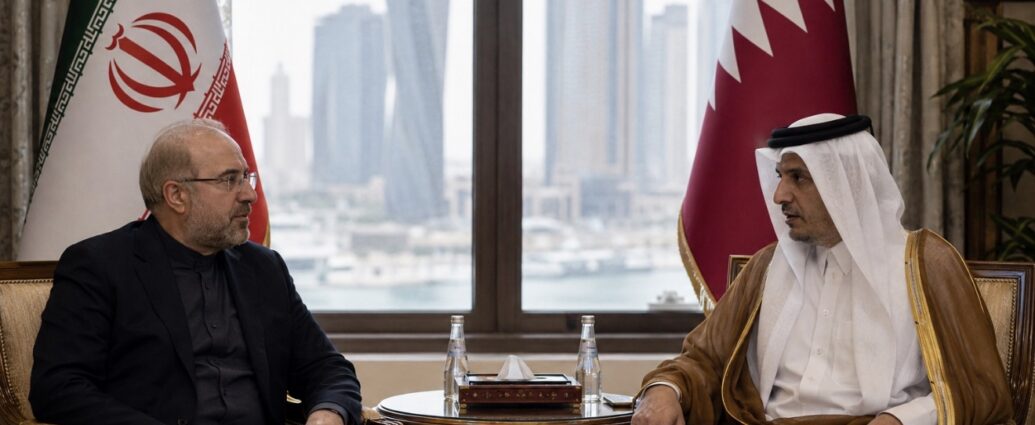
Iran’s Dream Deal: Economic Relief, No Trump Victory
By JBizNews Desk
Picture this. A regime that was broke three months ago is sitting in a hotel suite in Doha, Qatar, talking about getting $100 billion back. Their currency had collapsed. Their oil exports were near zero. Their people were furious about food prices.
And now they are about to walk away with a deal.
How did that happen? Let’s walk through it.
Who is at the table?
On the Iranian side, the chief negotiator is Mohammad-Bagher Ghalibaf, the Speaker of Iran’s Parliament. He flew to Qatar on Monday, May 25, 2026, and met with Qatari Prime Minister Sheikh Mohammed bin Abdulrahman Al Thani. He flew home to Tehran on Tuesday. With him in Doha were Iranian Foreign Minister Abbas Araghchi and Central Bank Governor Abdolnaser Hemmati. The central bank governor being in the room tells you everything. This is about money.
On the American side, President Donald Trump’s Middle East envoy Steve Witkoff is running point.
What does Iran want?
Two things, and Iranian officials are openly telling Arab mediators what they are. First, they want their money back — roughly $100 billion in assets that the West froze. Second, they want to sell oil on the world market again.
But there is a third goal, and this is the one that should make every American pay attention. Iranian officials told the mediators they want to give up just enough on their nuclear program to get the money — but not enough to let President Trump stand up and say he won.
In plain English: Iran wants the cash, but it does not want Trump to look like a winner.
What is America getting?
Here is where the story gets uncomfortable. The U.S. wants Iran to reopen the Strait of Hormuz, the narrow waterway where roughly one out of every five barrels of the world’s oil normally passes through. Iran mined it during the war. Ships cannot move. American drivers are paying more at the pump. That is the pressure squeezing the White House right now.
In exchange for reopening the Strait, Trump is offering Iran a 60-day window where sanctions get lifted, oil sales restart, and the frozen money starts moving.
What about Iran’s nuclear weapons program? That is supposed to get negotiated during those 60 days. Over the weekend, Trump softened one of his biggest demands. He had wanted Iran to ship its enriched uranium to the United States. Now he says he would accept Iran destroying it or sending it to another country.
That is a big walkback. Iran is sitting on 440.9 kilograms of uranium enriched to 60% purity, according to the International Atomic Energy Agency. That is one technical step away from a bomb.
Did they really keep talking while shooting at each other?
Yes. And this part tells you how desperate the regime is.
Late Monday night, U.S. Central Command struck Iranian speedboats it said were laying mines in the Strait of Hormuz. Iran fired on U.S. planes. The U.S. hit back at missile-launch sites in southern Iran. Several Islamic Revolutionary Guard Corps fighters were killed.
And what did Tehran do? It delayed announcing the deaths of its own soldiers so the talks in Doha would not blow up. Think about that. The regime would rather hide its own casualties from its own people than walk away from this deal. That is how badly Iran needs the money.
Why is Iran so desperate?
Because the regime is broke. Inflation hit 48.6% in October 2025 and 42.2% in December. The rial collapsed. Trump’s maximum-pressure order in February 2025 cut Iran’s oil exports to almost nothing. Then the war in February 2026 shut down the Strait. The regime ran out of room.
What does Israel think?
Israel hates this deal. A senior Israeli official told reporters this week that the agreement “is bad because it signals to the Iranians that they possess a weapon no less effective than a nuclear one, and that is the Strait of Hormuz.”
That is the Israeli argument in one sentence. Iran just learned that if it chokes the world’s oil supply, the United States will rush to the table and write a check. Why would Iran ever give that lever up?
Another person familiar with the talks told reporters that Israel is “very unhappy” with the deal and “angry” at Witkoff for “pushing a deal at any cost.”
What does the market think?
The market thinks something is coming. Brent crude dropped as much as 6.4% on Monday to $96.90 a barrel. WTI traded near $91. Charu Chanana, chief investment strategist at Saxo Markets in Singapore, told clients the two sides may be closer on a ceasefire but they are still far apart on sanctions and on the nuclear program. The market, she said, has priced in relief — but not a real fix.
According to the International Energy Agency’s May 2026 oil report, Brent has swung from a high of $144 a barrel all the way down below $100 and back up to about $110. More than 14 million barrels a day of Gulf oil has been shut in. The world has already lost more than one billion barrels of supply since the war began.
So yes, getting oil flowing again would help every American. That is real. That matters at the gas pump.
So what is the catch?
The catch is this. Iran gets oil sales, frozen funds, and a sanctions break. America gets verbal promises and a 60-day window to figure out the nuclear file. There is no signed cap on Iran’s uranium enrichment. There is no signed inspection deal. There is no signed plan to destroy the stockpile before the cash flows.
And in Tehran, lawmaker Ebrahim Rezaei, a spokesman for the parliament’s National Security and Foreign Policy Commission, posted on X this week that the Iranian delegation in Doha “must negotiate from a position of victorious power” and “not whitewash the red lines.” He called Iran “the definitive victor of the war.”
That is the message the regime is sending to its own people. They won. America blinked.
So who actually wins?
If the deal goes through, oil prices fall and gas gets cheaper. That helps Trump. That helps American families heading into summer.
But strategically? Iran is the regime that came in needing this. Iran is the regime that gets to keep its uranium. Iran is the regime that learned how powerful the Strait of Hormuz is as a weapon. And Iran is the regime that is privately telling Arab mediators that the whole goal is to walk away with the money — without giving Trump a clean win.
Secretary of State Marco Rubio said this week the Strait of Hormuz “will open one way or the other.” He is right that it will open.
The harder question is on whose terms.
For now, it looks like Tehran’s.
JBizNews Desk — Middle East
© JBizNews.com All Rights Reserved. Reproduction or distribution without written permission is prohibited.