



U.S. Gas Prices Fall for 8 Straight Days as Peace Hopes Cool Oil
By JBizNews Desk
Sunday, May 31, 2026
Drivers are finally getting a bit of relief at the gas pump.
According to the American Automobile Association (AAA), the national average price for a gallon of regular gasoline fell for the eighth consecutive day on May 29, declining another 3.5 cents to $4.391 per gallon. While the drop is modest, it marks a welcome change after months of rising fuel costs driven by conflict in the Middle East and disruptions to global energy supplies.
The decline comes as oil markets increasingly bet that diplomacy may succeed where military escalation failed.
For months, the conflict involving Iran disrupted traffic through the Strait of Hormuz, one of the world’s most important energy chokepoints. Before the conflict, roughly one-fifth of global oil shipments passed through the narrow waterway. Concerns about supply disruptions pushed crude prices sharply higher and sent gasoline prices soaring across the United States.
Now traders are beginning to price in the possibility that more oil could soon return to global markets.
The shift has been visible in crude oil prices.
West Texas Intermediate (WTI) crude settled at approximately $87.36 per barrel on May 29, while international benchmark Brent crude closed near $92.05 per barrel. Both benchmarks have retreated significantly from wartime highs as investors increasingly focus on ceasefire negotiations and diplomatic efforts aimed at reducing tensions.
Market sentiment improved further after reports that U.S. and international negotiators had drafted a framework for extending a ceasefire and beginning broader discussions regarding Iran’s nuclear program and regional security issues.
The logic behind the market reaction is straightforward.
Oil prices reflect not only current supply and demand but also expectations about future disruptions. As fears of prolonged supply shortages ease, traders reduce the risk premium embedded in crude prices. Lower oil prices eventually translate into lower gasoline prices for consumers.
Even so, drivers should keep the recent decline in perspective.
At more than $4.39 per gallon nationally, gasoline remains expensive by historical standards and continues to place pressure on household budgets. Summer travel demand is beginning to accelerate, and millions of Americans are expected to hit the roads in the coming weeks.
Regional differences remain substantial.
Some of the lowest gasoline prices in the country are currently found in states such as Indiana, Texas, Georgia, and Mississippi, where average prices remain well below the national average. Meanwhile, drivers in several coastal and high-tax states continue paying significantly more.
The durability of the recent decline remains uncertain.
Energy markets have repeatedly swung between optimism and anxiety throughout the year as ceasefire discussions advanced and then stalled. Previous periods of falling oil prices were often followed by renewed spikes after military incidents or setbacks in negotiations.
AAA has cautioned that fuel prices remain highly sensitive to developments in the Middle East and that any disruption to ongoing diplomatic efforts could quickly reverse recent gains.
Analysts also note that even if shipping routes fully reopen, global energy infrastructure has suffered damage during months of conflict. Refineries, export facilities, pipelines, and port operations may take time to return to normal capacity.
That means oil markets could remain vulnerable to supply disruptions even under a successful peace agreement.
For consumers, however, the recent trend is encouraging.
Every decline in gasoline prices helps reduce transportation costs for households and businesses while easing inflationary pressure across the broader economy. Lower fuel costs can influence everything from airline tickets and shipping expenses to grocery prices and consumer spending.
The challenge is that the current relief remains tied to expectations rather than certainty.
The ceasefire process is still developing, key agreements remain unfinished, and energy markets continue reacting to every headline. Until a durable agreement is reached and oil flows normalize, the recent decline at the pump remains dependent on a peace process that is still unfolding.
For now, motorists are enjoying the first meaningful break in months—and hoping it lasts.
JBizNews Desk — Energy
© JBizNews.com All Rights Reserved. Reproduction or distribution without written permission is prohibited.



Americans Want More Honey Than U.S. Beekeepers Can Produce
By JBizNews Desk
WASHINGTON — Americans are consuming more honey than ever, but U.S. beekeepers are nowhere close to producing enough of it — a widening supply gap now being filled by record imports from countries that, in some cases, American producers say do not even have enough bees to justify the export volumes they report.
The imbalance is becoming one of the clearest examples of how the modern “clean eating” movement is colliding with fragile agricultural supply chains, rising production costs and growing concerns about imported food fraud.
The numbers are stark.
According to the U.S. Department of Agriculture, the United States produced roughly 134 million pounds of honey in 2024, down 4% from the prior year. American consumers, meanwhile, used an estimated 550 million pounds over the same period.
That means nearly three out of every four jars or squeeze bottles of honey consumed in the United States came from overseas.
In 2023, the U.S. imported approximately 429 million pounds of honey, with India, Argentina, Brazil and Vietnam supplying nearly 80% of total imports.
The demand boom itself is easy to explain.
Honey has become one of the signature ingredients of the broader “clean eating” and wellness movement, where consumers increasingly avoid refined sugar, high-fructose corn syrup and artificial sweeteners in favor of products marketed as natural, minimally processed and traceable.
Honey checks nearly every modern food-marketing box: single ingredient, minimally processed, recognizable and associated — fairly or not — with health and wellness.
Restaurants, protein-bar companies, beverage brands and premium grocery chains have steadily increased honey usage over the past decade as consumers became willing to pay more for products positioned as “natural.”
That demand is now running directly into the realities of the American bee industry.
Janel Inouye, co-owner of Magpie Cafe in Sacramento, California, said her restaurant goes through a five-gallon bucket of honey roughly every three weeks for dishes including crispy pork belly and house-made honey lemonade.
She told reporters she is paying roughly 30% more for honey than she was five or six years ago.
“I don’t know that I’ve seen anything that has been a sticker shock the way that we’ve seen honey jump,” Inouye said, adding she would sooner remove dishes from the menu than substitute another sweetener.
The problem for U.S. beekeepers is that even rising retail prices have not translated into industry stability.
The biggest threat remains the varroa mite, a parasitic insect that attaches to honey bees and spreads viruses capable of wiping out entire colonies.
Researchers at Washington State University projected earlier this year that commercial U.S. honey bee colony losses could reach between 60% and 70% in 2025, dramatically above the already devastating 40% to 50% annual losses that have become common in recent years.
Pesticide-resistant mite strains are now widespread across parts of the industry.
At the same time, operating costs for commercial beekeepers have surged.
Large U.S. operators routinely truck hives across multiple states throughout the year, following crop bloom cycles — almonds in California, apples in Washington, blueberries in Maine and dozens of other pollination markets.
That makes fuel prices critically important.
The current Middle East conflict and elevated oil prices — with crude trading roughly between $100 and $106 per barrel — are feeding directly into diesel, shipping and feed costs for commercial bee operations.
“For most markets, the price is still below the actual cost of production,” said Ryan Burris, president of the California State Beekeepers Association.
Tim Hiatt, legislative liaison for the Washington State Beekeepers Association and vice president of the North Dakota Beekeepers Association, was even more blunt.
“For now, we’re just going to bite the bullet and hope the Iran War doesn’t last long so fuel and fertilizer prices go down,” Hiatt said.
Then there is the import controversy — part trade dispute, part quality scandal.
The United States remains the world’s second-largest honey market, and many of its biggest foreign suppliers are already subject to U.S. anti-dumping duties.
Current country-wide rates imposed by the U.S. Department of Commerce include 4.7% on Argentina, 2.31% on Brazil, 2.31% on India and a massive 121.97% duty on Vietnam.
Those tariffs come on top of the broader 10% blanket import tariff imposed during President Donald Trump’s second term.
The duties are intended to protect American producers from artificially cheap foreign honey.
But imports continue flooding in, and American beekeepers increasingly argue the trade data itself does not make sense.
Richard Adee, one of the largest commercial beekeepers in the United States and a former president of the American Honey Producers Association, has publicly questioned how countries like India could physically produce the export volumes they report.
“India doesn’t have anywhere near the capacity — enough bees — to produce 45 million pounds of honey,” Adee said publicly. “It has to come from China.”
That accusation matters because Chinese honey has long faced some of the steepest U.S. trade restrictions in the food sector due to prior allegations involving dumping, illegal antibiotics and pesticide contamination.
American producers argue Chinese honey is frequently rerouted through third countries and relabeled to bypass tariffs and inspections.
The authenticity problem has become so severe that organizers of the 2025 World Beekeeping Awards in Copenhagen canceled the honey competition entirely, citing widespread adulteration concerns.
In many cases, investigators say imported “honey” is diluted with cheaper sweeteners such as rice syrup or corn syrup while still marketed as pure honey.
For consumers, the implications are practical.
A premium jar of traceable, single-origin American honey sold at a specialty grocer may bear little resemblance to inexpensive imported honey sold in bulk squeeze bottles at discount retailers — even though both carry the same label.
The long-term market opportunity, however, remains substantial.
Industry researchers estimate the U.S. honey market was worth roughly $2.21 billion in 2025 and could grow to approximately $3.21 billion by 2035.
And honey itself is only part of the economic story.
When pollination services are included, American beekeepers contribute an estimated $15 billion annually to U.S. agriculture by supporting crops including almonds, apples, blueberries and dozens of other fruits and vegetables.
In practical terms, bees are not merely part of the sweetener business.
They are critical agricultural infrastructure.
Yet at the very moment demand is accelerating, federal support for bee research is shrinking.
The U.S. Department of Agriculture recently announced plans to close the Beltsville Agricultural Research Center in Maryland, home to the Beltsville Bee Research Lab, one of the nation’s most important bee disease and colony-testing facilities.
Commercial beekeepers have long relied on the lab to diagnose unexplained colony collapses and disease outbreaks.
Its closure would remove one of the few major federal support systems the industry still has during a period of historically severe losses.
For investors, food manufacturers and specialty grocery chains, the broader trend is becoming increasingly clear:
American demand for honey is rising rapidly. Domestic production is stagnating or falling. Imports remain politically contentious and increasingly suspect on quality grounds.
That combination should, in theory, benefit premium American honey producers and traceable domestic brands.
But whether U.S. beekeepers can capitalize on the opportunity depends on whether the industry can survive long enough to meet it.
Right now, consumers want more honey than America can produce.
The bees are struggling.
And the gap is increasingly being filled by foreign suppliers the U.S. government itself has already accused of unfair trade practices.
Washington — JBizNews Desk
© JBizNews.com All Rights Reserved. Reproduction or distribution without written permission is prohibited.

Russia’s Airlines Keep Flying as Shadow Parts Network Beats Sanctions
MOSCOW — Four years after the United States, Europe and Britain moved to cripple Russia’s commercial aviation sector following the invasion of Ukraine, the country’s airlines are still flying — and in many cases carrying passenger volumes approaching prewar levels — thanks to a sprawling shadow supply network moving Boeing and Airbus parts through intermediaries across China, India, Turkey, the United Arab Emirates and Central Asia.
What Western sanctions were supposed to do was straightforward: starve Russian carriers of spare parts, maintenance support and aircraft servicing until large portions of the fleet became unusable.
That has not happened.
Instead, a sophisticated gray-market ecosystem involving brokers, shell companies, repair shops and transit hubs has emerged to keep airlines such as Aeroflot, S7 Airlines and Ural Airlines operating despite formal bans on supplying Western aircraft parts to Russia.
The scale is enormous.
According to customs records compiled by Trade Data Monitor, China alone shipped at least $961 million worth of aircraft parts into Russia between March 2022 and February 2026, more than four times the level recorded before the war. Trade records also show recurring transit activity through India, Turkey, the UAE, Kazakhstan and Kyrgyzstan, with many shipments routed through multiple jurisdictions before reaching Russian operators.
Aviation experts say the most remarkable part of the trade is not small components — it is the movement of entire jet engines.
Oleksandr Laneckij, chief executive of Lithuania-based aviation consultancy Friendly Avia Support, said the underground flow of engines into Russia “remains widespread,” estimating that as many as 50 complete engines per year are reaching Russian carriers despite sanctions.
That figure is striking because modern commercial aircraft engines are among the most expensive and tightly tracked components in global aviation.
One transaction trail illustrates how the system works.
In December 2025, a Florida-based aviation supplier called LogAir LLC sold an older CFM56-5A engine — commonly used on Airbus A320 aircraft — to an Indian firm named Chandsara for approximately $3.6 million.
Roughly two weeks later, another Indian company, Shreegee Pvt. Ltd., shipped the same engine onward to Russian airline S7 for about $5.75 million.
The transaction drew attention because the U.S. Treasury Department had already sanctioned a related company, Shreegee Impex Pvt. Ltd., in 2024 for allegedly supplying Russia with hundreds of dual-use items, including aviation components. The companies reportedly shared addresses, logos and directors.
The broader pattern appears deliberate and highly structured.
Aircraft parts often leave legitimate American or European distributors with paperwork showing apparently lawful destinations in third countries. Brokers and intermediaries then reroute the parts into Russia through shell entities created specifically for single transactions.
When Russian repair facilities cannot service components domestically, the parts are sometimes exported again under foreign ownership, repaired abroad, then quietly reintroduced into Russia through what aviation specialists describe as “one-day companies” established solely to obscure the chain of custody.
Both Boeing and Airbus publicly insist they are not participating in the trade.
Boeing says it halted parts, maintenance and technical support to Russian customers in early 2022 and continues complying with U.S. sanctions. Airbus has similarly told European investigators there is “no legal method” for aircraft, parts or technical documentation to be exported into Russia.
But both companies also acknowledge a major limitation: once parts enter the global aftermarket — the enormous web of brokers, repair stations, leasing firms and resellers operating worldwide — manufacturers have limited visibility into where components ultimately end up.
The sanctions themselves were expected to force Russian airlines to begin grounding Western-made aircraft.
Instead, the number of operational Airbus and Boeing aircraft inside Russia has barely declined since 2023, while domestic seat capacity has recovered close to 2021 levels, supported by strong internal travel demand and the lack of alternative transportation across Russia’s vast geography.
The growing concern now is safety.
Russian state agencies recorded 11 engine failures on civil aircraft between December 1, 2024 and January 20, 2025, more than double the figure reported during the same period a year earlier. Independent aviation monitors estimate Russian aviation incidents are rising at roughly 25% annually.
One widely discussed case involved a Ural Airlines Airbus A321 returning from Egypt in early 2025 after suffering a left-engine failure shortly after takeoff. The aircraft landed safely, but reports indicated the plane remained grounded because sanctions prevented access to a fully certified replacement engine.
The Kremlin has increasingly tried to frame the sanctions issue as a passenger-safety matter rather than simply an economic dispute.
At the International Civil Aviation Organization (ICAO) assembly in Montreal in 2025, Russian officials argued Western restrictions on spare parts were “discriminatory and coercive” and endangered civilian aviation safety.
Western governments rejected that argument, pointing out Russia itself seized roughly 500 Western-leased aircraft valued at approximately €10 billion after foreign leasing firms terminated contracts in 2022 following the invasion.
Russia is simultaneously trying to reduce dependence on Western aviation entirely.
The government has committed roughly $14.5 billion toward expanding domestic aircraft production through the end of the decade, aiming to raise the share of Russian-built aircraft to 81% of the national fleet by 2030.
Progress, however, has been uneven.
The Russian-built version of the MC-21 narrowbody jet only recently completed key flight testing, while production timelines for the Sukhoi Superjet and other domestic programs have repeatedly slipped because of missing Western components and ongoing supply-chain bottlenecks.
For now, the shadow supply chain remains the backbone of Russian commercial aviation.
But aviation experts warn the workaround becomes riskier with time.
Aircraft engines eventually wear out. Avionics drift outside certification standards. Maintenance histories become increasingly unreliable when parts pass through opaque gray-market channels.
Each additional year of cannibalized fleets, uncertified repairs and undocumented components raises the probability of a serious aviation accident.
And if a major crash were linked to sanctions evasion or uncertified parts, it could trigger an even harsher new round of restrictions from Western governments already struggling to contain the network.
The broader lesson for global sanctions policy is increasingly uncomfortable for Western policymakers.
Russia’s aviation industry was once viewed as one of the easiest sectors to isolate — highly dependent on Western manufacturers, globally integrated and impossible to replace quickly.
Yet four years later, the planes are still flying, the parts are still moving, and the underground network supplying them appears more sophisticated than ever.
Europe — JBizNews Desk
© JBizNews.com All Rights Reserved. Reproduction or distribution without written permission is prohibited.

Americans Spent $1.7 Billion on Korean Beauty Last Year. It’s About to Get Even Bigger.
The numbers tell the story of one of the fastest consumer-product shifts in the American market.
The United States imported roughly $1.7 billion worth of South Korean cosmetics in 2024, a 54% increase from the year before, according to U.S. trade data. In the process, South Korea overtook France to become America’s largest foreign supplier of skincare and beauty products — an extraordinary development for an industry that, less than a decade ago, many U.S. retailers still viewed as niche.
Korean beauty, once associated primarily with K-pop fans and internet skincare forums, has moved firmly into the mainstream American consumer economy. Products once sold only through specialty Asian beauty retailers are now stocked at Sephora, Ulta, Costco, CVS, Target, and Amazon, while brands built around snail mucin, rice extracts, fermented ingredients, and Centella asiatica have become billion-dollar global businesses.
But the rise of K-beauty is not simply a social-media phenomenon.
The deeper story is manufacturing discipline, product consistency, and a fundamentally different philosophy about skincare itself.
The Real Competitive Advantage: Consistency
The core reason Korean beauty products have gained such traction with consumers is not celebrity marketing. It is trust.
South Korean cosmetic manufacturers operate under some of the world’s most stringent production and safety standards, built around tightly enforced Good Manufacturing Practices, or GMP protocols. These rules govern every stage of production — ingredient sourcing, contamination controls, equipment sanitation, packaging integrity, formulation consistency, employee training, and product testing.
For consumers, the practical result is simple: products behave predictably.
If a Korean serum says it contains a certain active ingredient concentration, consumers increasingly believe it actually does. Shelf-life labeling tends to be accurate. Formulas remain stable batch after batch. Products that worked six months ago generally work the same way today.
That consistency matters enormously in skincare because consumers are applying these products directly onto sensitive skin barriers every day.
South Korea also maintains an unusually expansive list of prohibited cosmetic ingredients — reportedly banning roughly 1,000 substances including steroids, antibiotics, radioactive compounds, and other potentially harmful additives. Regulators are now implementing additional nationwide cosmetic safety systems tied to digital labeling and traceability requirements through QR-code disclosure standards.
The structure resembles what made South Korea globally dominant in semiconductors, displays, batteries, and advanced manufacturing more broadly: high-volume industrial precision combined with rapid product iteration.
In skincare, that manufacturing culture became a competitive advantage.
Why Korean Beauty Feels Different
The philosophy behind Korean skincare also differs sharply from much of the traditional Western cosmetics industry.
American and European skincare has historically leaned toward what dermatologists sometimes describe as a “correction” model: identify a problem — acne, wrinkles, pigmentation, dryness — then attack it aggressively with concentrated active ingredients.
Korean skincare tends to follow a “maintenance and barrier support” model instead.
Rather than relying heavily on a single strong active ingredient, Korean routines often use multiple gentler products layered sequentially to hydrate, calm inflammation, support the skin barrier, and maintain long-term skin health.
That layering approach became one of the defining signatures of K-beauty.
Products are generally applied from thinnest consistency to thickest — toner, essence, serum, ampoule, moisturizer — allowing lower concentrations of active ingredients to work together while minimizing irritation.
The strategy appeals especially to younger consumers increasingly focused on prevention rather than correction, and to customers with sensitive skin who find stronger Western formulations difficult to tolerate.
The Ingredient Strategy: Science Plus Traditional Medicine
Korean beauty’s biggest commercial breakthrough may have been turning ingredients once viewed as unconventional into mainstream global skincare categories.
Snail mucin is the clearest example.
The ingredient, derived from snail secretion filtrate, became one of the defining viral skincare trends of the past several years. What made it commercially powerful was not novelty alone, but the scientific framing around hydration, barrier repair, peptides, hyaluronic acid content, and anti-inflammatory properties.
Clinical studies cited by major medical institutions including the Mayo Clinic have shown measurable improvements in skin hydration, luminosity, and fine lines following extended use.
Korea did not invent snail mucin itself. Chilean farmers reportedly first noticed skin-softening effects while handling snails commercially.
What Korean companies did was industrialize and standardize it.
They developed large-scale filtration systems, purification methods, cruelty-conscious collection processes, clinical testing structures, and global product branding around the ingredient — effectively transforming a niche biological byproduct into a mainstream skincare category.
The same process happened with Centella asiatica, also known as cica, a medicinal plant long used in traditional Asian medicine.
Korean brands refined it into scientifically marketed skincare centered around anti-inflammatory properties, redness reduction, barrier repair, and calming effects for sensitive skin. Today, cica-based creams, serums, masks, and moisturizers occupy entire retail sections across the U.S.
This pattern repeats throughout Korean beauty: identify a promising ingredient, clinically test it, improve formulation stability, standardize manufacturing, then scale globally.
Why the Industry Is Still Growing
The K-beauty boom is occurring at the same time many traditional Western beauty conglomerates are struggling with slower growth and increasingly fragmented consumer loyalty.
Part of Korean beauty’s success comes from speed.
Korean companies release products dramatically faster than many Western competitors, adapting quickly to new skincare concerns, viral consumer trends, environmental stressors, or ingredient innovations. Whether the issue is pollution-related aging, “maskne,” microbiome care, glass-skin aesthetics, or minimalist skincare, Korean brands tend to commercialize trends faster than much larger rivals.
Social media accelerated the process.
TikTok, YouTube, Reddit, and Amazon reviews effectively replaced traditional beauty advertising for many younger consumers. Korean products built enormous momentum through user testimonials, before-and-after videos, ingredient explainers, and influencer routines emphasizing skin health rather than glamour marketing.
The products also often entered the market at lower price points than prestige Western skincare, creating unusually strong perceived value.
The Tariff Risk
The biggest near-term threat to the industry may now come from trade policy rather than consumer demand.
The United States recently ended South Korea’s tariff-free cosmetics treatment and imposed a 15% import tariff on many beauty products entering the country. Early export data already suggests the industry may be feeling pressure, with Korean beauty shipments to the U.S. slowing sharply in recent months.
The tariff creates a particular problem for smaller independent Korean brands that rely heavily on direct-to-consumer online sales and thin margins. Large multinational players may absorb some cost increases or eventually localize portions of production, but smaller companies face a much harder adjustment.
Still, industry forecasts remain bullish.
The U.S. K-beauty market is projected to roughly double from approximately $27.5 billion in 2024 to more than $55 billion by 2032.
That projection ultimately rests on one thing: consumer trust.
American consumers increasingly view Korean skincare not as a trend, but as a system — one built around standardized manufacturing, ingredient transparency, gentler formulations, and visible long-term results.
And in the beauty industry, trust is often the hardest thing to manufacture.
Asia — JBizNews Desk
© JBizNews.com All Rights Reserved. Reproduction or distribution without written permission is prohibited.


World Cup Tourism Faces Double Hit: Soft Demand Plus Fear-Driven Flight Cuts
The 2026 FIFA World Cup was supposed to deliver a historic tourism boom across North America — a monthlong economic surge projected by FIFA and host committees to generate roughly $40.9 billion in economic activity while flooding U.S. host cities with international visitors, packed hotels, sold-out flights, and overflowing restaurants.
Instead, less than three weeks before kickoff, parts of the economic story are beginning to fracture.
What is emerging is not one problem but two separate demand shocks hitting simultaneously: weakening international tourism demand tied to inflation, visa restrictions, and political uncertainty, alongside a growing wave of airline disruptions and travel anxiety connected to the Ebola outbreak in Central Africa.
Individually, each issue might have been manageable. Together, they are beginning to threaten one of the core assumptions behind the tournament’s financial projections: that foreign visitors would arrive at massive scale and spend aggressively enough to offset softening U.S. consumer demand.
The first warning signs are already visible in hospitality data.
The American Hotel & Lodging Association reported May 28 that roughly 80% of hoteliers across the 11 U.S. host markets say bookings are tracking materially below initial expectations. That is a remarkable figure given that the World Cup has long been marketed as one of the largest tourism events on earth.
The weakness is not uniform. Premium inventory around major matches — especially the July 19 final near MetLife Stadium in New Jersey — is still commanding extremely elevated pricing, in some cases roughly triple normal summer rates. But pricing power alone does not equal demand strength.
The deeper issue is occupancy.
Group-stage cities that expected weeklong tourism surges are instead seeing meaningful hotel availability remain open deep into late May at rates far closer to a normal summer travel season than the massive compression expected for a global mega-event. Industry analysts say many hotels built pricing models around a demand spike that has not fully materialized.
The causes are broader than sports.
International tourism into the United States has been weakening for months amid higher airfare costs, global economic uncertainty, stronger border restrictions, currency pressures, and growing political friction surrounding travel policies under the Trump administration. Some hospitality analysts have begun referring to the slowdown as a “Trump slump” in inbound travel — particularly from parts of Europe, Latin America, and Africa where visa approvals and travel uncertainty have become increasingly politicized.
That weakening demand was already creating vulnerability.
Then came the airline problem.
The World Health Organization’s emergency declarations tied to the Ebola outbreak in the Democratic Republic of Congo and Uganda triggered a chain reaction across global aviation networks. Uganda Airlines suspended flights to and from Kinshasa effective May 23, while Ethiopian Airlines and other regional carriers began adjusting schedules and implementing additional health-related restrictions.
At the same time, the United States imposed strict travel bans barring entry to foreign nationals who had recently been present in Congo, Uganda, or South Sudan.
From a public-health standpoint, the measures are understandable. Ebola remains a highly dangerous disease.
But from an airline economics standpoint, the consequences extend far beyond the directly affected countries.
The global airline industry operates on network psychology as much as epidemiology. Once travel restrictions begin spreading across headlines, demand often weakens far outside the outbreak zone itself. Airlines then respond by trimming routes, consolidating schedules, reducing frequencies, or shifting aircraft to stronger-performing markets.
That secondary reaction matters enormously for the World Cup because the tournament’s economic model depends heavily on long-haul international arrivals.
FIFA projections estimate roughly 1.2 million foreign visitors will attend matches across North America, with average stays approaching 12 days and spending exceeding $400 daily. Much of that money was expected to flow into hotels, restaurants, local transportation, nightlife, retail, and short-term rental platforms.
But those assumptions rely on stable international flight capacity and consumer confidence.
The airline industry is already operating under pressure from elevated fuel prices tied to Middle East instability and rising insurance costs connected to global geopolitical risk. Additional route disruptions tied to outbreak fears or regulatory restrictions increase operational complexity at precisely the wrong moment.
The vulnerability is especially acute in gateway markets like New York, Los Angeles, Miami, Dallas, and Atlanta, where foreign tourism was expected to provide the bulk of incremental economic activity during the tournament.
Around $4.3 billion in direct tourism expenditure is forecast for the World Cup, with more than 80% concentrated in hospitality-related sectors — exactly the industries now facing both weaker-than-expected bookings and growing uncertainty around international air traffic.
The timing could hardly be worse.
Host cities and governments have collectively invested billions into stadium modernization, transportation upgrades, security infrastructure, and tourism preparation. Airbnb hosts across the 16 North American host cities are projected to generate more than $2.6 billion in rental revenue during the tournament.
Much of that projected income now depends on whether international travel confidence stabilizes quickly.
Public-health experts continue emphasizing that Ebola risk to World Cup attendees remains extremely low. The virus spreads through direct contact with bodily fluids and is not airborne. There is no evidence of widespread transmission risk tied to ordinary tourism activity.
But economic damage rarely waits for scientific nuance.
In travel markets, perception often moves faster than facts. Once flight cancellations begin, travelers reconsider plans. Reduced bookings then pressure airlines further, which can produce additional schedule cuts and weaker demand in a self-reinforcing cycle.
That feedback loop is now becoming visible just as the world’s largest sporting event approaches.
The World Cup’s economic promise always depended on converting a global audience into real-world tourism spending. What host cities are discovering now is that mega-events remain deeply exposed to forces far beyond sports itself: geopolitics, public-health fears, visa policy, airline economics, and consumer psychology.
And in a fragile global economy already showing signs of softer discretionary spending, even modest disruptions can quickly reshape the financial outcome of an event expected to redefine North American tourism.
New York — JBizNews Desk
© JBizNews.com All Rights Reserved. Reproduction or distribution without written permission is prohibited.
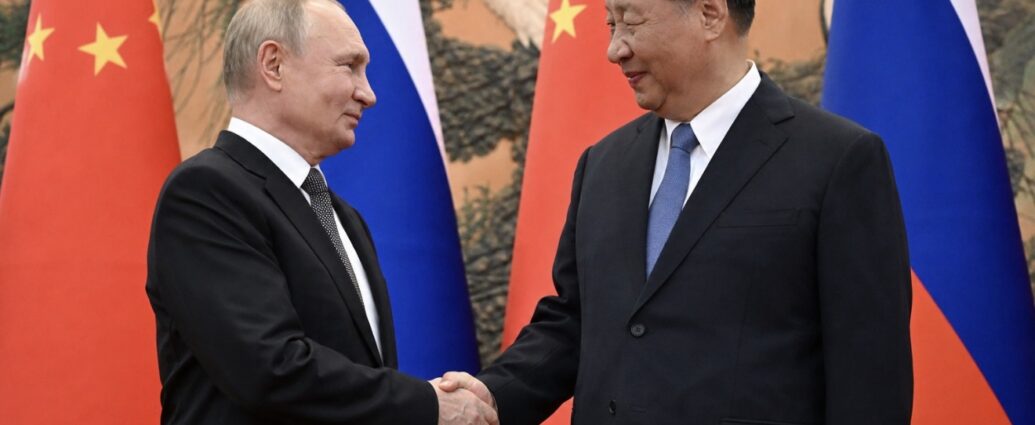
Russia Taps Yuan Bond Market Following Putin’s Beijing Visit, Accelerating De-Dollarization Push
Russia is returning to the yuan bond market days after President Vladimir Putin concluded high-level talks in Beijing, deepening Moscow’s financial pivot toward China as Western sanctions continue cutting the Kremlin off from dollar and euro funding markets.
Russia’s Finance Ministry said on May 28 it will issue 10-year yuan-denominated sovereign bonds worth 10 billion yuan, or roughly $1.5 billion, carrying a coupon of 7.65%. The deal marks Moscow’s second major sovereign yuan issuance and comes immediately after Putin’s May 19–20 state visit to China, where the Russian president and Chinese leader Xi Jinping signed more than 40 bilateral agreements tied to trade, energy, finance, logistics, and industrial cooperation.
The sequencing is not accidental.
The bond sale is part of a broader geopolitical and financial restructuring underway between Moscow and Beijing — one designed to reduce dependence on the U.S. dollar system while binding Russia’s economy more tightly to China’s financial infrastructure.
For Moscow, the attraction is increasingly practical rather than ideological.
Russia’s domestic borrowing costs have surged as war spending, sanctions pressure, and inflation strain the country’s fiscal position. Comparable ruble-denominated government debt currently yields between 13.5% and 15%, while the yuan bonds issued in December 2025 priced closer to 6%–7%.
That gap matters enormously.
By borrowing in yuan instead of rubles, the Russian government effectively cuts its financing costs nearly in half at a moment when budget pressure is intensifying. Russia’s fiscal deficit widened sharply during the first quarter of 2026, reaching roughly 2.5% of GDP versus a full-year target near 1.6%, according to government data.
The deeper story, however, is about what Russia is doing with the yuan already accumulating inside its financial system.
Russian exporters — especially energy giants like Rosneft, Gazprom, and Lukoil — increasingly sell oil, gas, coal, and raw materials to China in yuan rather than dollars. Those payments then accumulate across Russian banks and corporate accounts because sanctions and capital restrictions make redeploying the currency internationally far more difficult.
That has created a structural pool of idle yuan liquidity inside Russia.
The government’s yuan bond market effectively absorbs those balances and redirects them into domestic state financing. Instead of exporters holding yuan deposits earning minimal returns, Moscow converts that money into sovereign debt issuance and channels it back into government spending.
Finance Minister Anton Siluanov acknowledged after the first yuan bond issuance in December that demand exceeded official expectations, underscoring how much Chinese currency is now circulating inside the Russian economy.
The arrangement reveals how sanctions are reshaping global finance in practice.
Russia has largely lost access to Western institutional capital markets, global dollar-clearing systems, and much of the international investor base that previously financed its sovereign debt. The yuan market offers one of the few remaining large-scale alternatives available to the Kremlin.
But the shift also exposes a growing asymmetry inside the Russia-China relationship.
China controls the currency, the clearing system, and much of the underlying financial infrastructure. Russia supplies discounted energy, commodities, and geopolitical alignment in return for financing access and trade continuity.
That imbalance became increasingly visible during Putin’s Beijing visit.
Although the two governments publicly emphasized strategic friendship and economic cooperation, Moscow reportedly failed to secure final agreement on several major long-term energy priorities, including the long-delayed Power of Siberia 2 gas pipeline project that Russia views as critical for replacing lost European gas demand.
The result is a relationship that increasingly benefits Beijing more than Moscow financially.
For China, Russia’s dependence serves multiple strategic objectives simultaneously.
It expands international yuan usage, increases Beijing’s leverage over Russian trade flows, strengthens China’s role as an alternative financial center outside Western control, and advances long-term efforts to internationalize the Chinese currency in sanctioned or politically isolated markets.
Russia’s growing use of precious metals in bilateral trade further highlights the evolving structure of this parallel financial system. Russian exports of gold and silver to China reportedly quadrupled year-over-year during the first quarter of 2026 as sanctions complicated conventional yuan-ruble settlement channels.
The trend is part barter system, part reserve diversification, and part workaround to sanctions friction.
Yet despite the political symbolism surrounding de-dollarization, the scale still remains relatively limited in global terms.
The yuan accounts for only a small fraction of global reserve holdings and international payments compared with the U.S. dollar. Western capital markets remain vastly larger, deeper, and more liquid than China’s tightly controlled financial system.
Still, what matters is not whether the yuan replaces the dollar globally tomorrow. It is whether parallel systems continue emerging in parts of the world where sanctions make dollar access politically or financially risky.
That process is already happening.
Russia’s yuan bond issuance is another sign that geopolitical fragmentation is increasingly reshaping capital markets themselves. Countries cut off from Western finance are beginning to build alternative settlement, borrowing, and reserve structures centered around China instead of New York or London.
For global markets, the immediate financial impact is modest.
But strategically, the message is significant: when access to dollars becomes restricted, countries do not stop trading or borrowing. They look for another system.
And increasingly, that system is being built around Beijing.
Asia — JBizNews Desk
© JBizNews.com All Rights Reserved. Reproduction or distribution without written permission is prohibited.

Kennedy, First HHS Secretary to Fully Recognize Lyme Disease, Launches Historic National Initiative
HHS Secretary Robert F. Kennedy, Jr. announces new federal actions to combat Lyme disease in Concord, New Hampshire, on Friday, May 29, 2026, as part of his “Take Back Your Health” tour. CSPAN
Health and Human Services Secretary Robert F. Kennedy, Jr. announced one of the most ambitious federal efforts ever to combat Lyme disease on Friday, May 29, 2026, at a 2:00 p.m. press conference in Room 100 of the New Hampshire State House in Concord. The measures follow the department’s first national Lyme roundtable, held in Washington, D.C., in December 2025, at which HHS formally recognized Lyme — in both its acute and chronic forms — as a serious public-health condition for the first time.
The recognition marks a shift after years in which the federal government had no unified strategy for a disease the CDC says is diagnosed in 476,000 Americans annually, with 5 to 7 million infections over the past decade. Kennedy has acknowledged that the agency once held what he called a deliberate policy of refusing to engage with the Lyme community. Researchers estimate that 10 to 20 percent of patients treated early remain symptomatic, and emergency room visits for tick bites recently reached their highest springtime level in nearly a decade.
“Americans deserve an answer,” Kennedy said from the podium. “They deserve gold-standard science, and a healthcare system that treats suffering seriously.” He recalled that one of his sons suffered facial paralysis for a year after a Lyme diagnosis and noted that President Donald Trump first made Lyme a national priority by signing the Kay Hagan Tick Act in 2019.
In the HHS release issued the same day, Kennedy said millions of Americans with Lyme and other tick-borne illnesses “have spent years searching for answers, treatment, and support,” and described the package as “one of the most ambitious federal efforts ever to combat Lyme disease.” The department reaffirmed a goal of cutting Lyme cases 25 percent by 2035 compared with 2022 levels.
The most consequential change for patients concerns coverage. At the December roundtable, CMS Administrator Dr. Mehmet Oz confirmed that Medicare is being updated to explicitly require coverage for extended Lyme treatment, including treatment for associated co-infections — addressing a longstanding gap that has strained patients financially. CMS also issued guidance clarifying support for beneficiaries with Lyme and related conditions through its Chronic Care Management Program.
Dr. Stephanie Haridopolos, Director of National Health Communications for the Office of the U.S. Surgeon General, told the audience that roughly 31 million people are bitten by ticks each year in the United States.
“We’re going to make the invisible diseases visible now,” she said. “We know prevention is key. We can prevent not only Lyme disease, but all the co-infections that go with it.”
Dr. Kristen Honey, the HHS Chief Data Officer now managing public-private partnerships, said the effort originated outside government.
“Let me be clear that this movement did not start in government,” Honey said. “It started with all of you. It started with the patients, it started with the caregivers, it started with the frontline providers and those affected families saying there’s a problem here, and rose up, came together, formed unusual allies.”
She credited participants in the December roundtable — among them Senator Susan Collins, Representative Chris Smith, and Duvi Honig of the Orthodox Jewish Chamber of Commerce, along with Olivia Goodreau of LivLyme, Dr. Steve Phillips, and Sam Sofia — saying that without them “none of this would be happening.”
At that session, Collins, author of the Kay Hagan TICK Act, pressed for better diagnostics and cited a Maine clinical trial for a Lyme vaccine; Smith, a 30-year advocate, said Lyme patients “deserve answers”; and Honig called for CDC Updates, Nationwide awareness campaigns, expanded insurance coverage, and increased provider education.
Honey also framed the challenges in market terms.
“For the first time in four years, open innovation at HHS and LymeX is available to all the public,” she said. “All Americans and U.S. businesses can participate, not just those already in the LymeX pipeline.”
The department detailed three new LymeX challenges totaling up to $2.5 million.
The largest is the TOPx HHS Tech Sprint for AI and Invisible Illness, offering up to $2 million, including a $1 million grand prize, for tools that use artificial intelligence and open data to help patients with Lyme and other “invisible illnesses,” including Long COVID and ME/CFS, get answers and care faster.
“If it’s invisible, you are welcome here,” Honey said.
The LymeX Visible Voices Prize offers up to $250,000 for educational tools and awareness campaigns, while the LymeX Healthathon Innovation Sprint offers another $250,000 for frontline solutions, including new uses of existing medicines.
The broader Friday package, according to the HHS release, also includes a multi-million-dollar tick-control pilot program, new NIH funding to combat Alpha-gal syndrome, and a public-private collaboration to connect patients with experienced providers, all under Kennedy’s Make America Healthy Again agenda.
Separately, through the LymeX partnership, HHS is updating its Living Evidence Guidelines for clinicians treating infection-associated chronic conditions, with Version 2.0 launched in May 2026 and scheduled to refresh every six months as new science emerges.
The challenges build on the LymeX Innovation Accelerator, a public-private partnership between HHS and the Steven & Alexandra Cohen Foundation launched during President Trump’s first term. Through LymeX, HHS recently launched a $10 million Diagnostics Prize, and two improved FDA-cleared Lyme tests have reached the market over the past two years.
The National Institutes of Health invests nearly $50 million annually in Lyme research and approximately $122 million annually in broader tick-borne disease research.
The new tick-control pilot, led by the Centers for Disease Control and Prevention and HHS, will begin with researchers at the New England Center of Excellence in Vector-Borne Diseases and build on community work with the Indian Health Service and the Wampanoag Tribe in Massachusetts.
HHS also announced action on Alpha-gal syndrome, a tick-linked condition that can trigger serious allergic reactions to red meat. The CDC estimates nearly 500,000 Americans live with the condition.
NIH has identified candidate products that may protect people after a tick bite; private companies would supply the products while NIH funds research to evaluate them.
The department is also partnering with the International Lyme and Associated Diseases Society to offer a clinician locator tool through hhs.gov/lyme.
Kennedy reiterated support for reauthorizing the bipartisan Kay Hagan TICK Act, signed by President Trump in 2019, which recently advanced unanimously through the House Energy and Commerce Committee.
Officials expect another heavy tick season in 2026. The new programs mark the federal government’s most comprehensive response to Lyme disease to date and represent the first time HHS has formally aligned federal policy, reimbursement, research, innovation incentives, and public-private partnerships around both acute and chronic Lyme disease.
Washington — JBizNews Desk
© JBizNews.com All Rights Reserved. Reproduction or distribution without written permission is prohibited.



More Ships Slip Through Hormuz as U.S. Air Power Pushes Back Iran
By JBizNews Desk
May 30, 2026
The U.S. Treasury Department said Friday that any arrangement with Iran to purchase safe passage through the Strait of Hormuz is illegal for Americans, a warning that came as commercial shipping traffic showed tentative signs of returning to the world’s most important energy chokepoint.
For three months the strait has been effectively shut. Roughly one-fifth of the world’s pre-war oil supply normally passes through the narrow waterway, and thousands of vessels remain delayed or trapped inside the Persian Gulf. The disruption has become one of the biggest drivers behind elevated fuel prices and rising transportation costs across the global economy.
Now some ships have stopped waiting.
Traffic through the strait has picked up over the past week, helped along by quiet guidance from the U.S. military. U.S. Central Command continues to insist it is not escorting commercial vessels. Instead, military officials have reportedly provided navigational advice, threat assessments, and guidance on the safest transit windows.
The route many vessels are using hugs the coast of Oman, placing maximum distance between ships and Iranian-controlled waters. To reduce the risk of detection, some vessels have switched off their Automatic Identification Systems, or AIS beacons, which normally broadcast a ship’s location to nearby traffic.
Going dark carries risks. It increases the possibility of collisions and complicates maritime monitoring. But for captains attempting to transit one of the world’s most dangerous waterways, invisibility may offer a measure of protection.
The fragile nature of the situation was demonstrated this week when Iranian fast-attack boats reportedly approached a group of commercial vessels crossing the strait. Shortly afterward, U.S. military helicopters appeared overhead. The Iranian boats reversed course and withdrew.
That encounter illustrates the balance of power currently shaping the region.
Iran cannot directly challenge the overwhelming naval and air superiority of the United States. What the Islamic Revolutionary Guard Corps (IRGC) still possesses, however, are asymmetric tools capable of creating disruption. Fast boats, naval mines, drones, and coastal missile batteries remain inexpensive yet effective methods of threatening commercial traffic and raising costs for global shipping operators.
The U.S. response has centered on surveillance and air power. Helicopters, drones, and patrol aircraft provide persistent visibility across the shipping lanes, allowing military commanders to identify and respond to potential threats before they escalate.
The ships now making it through include vessels that have been stranded since the conflict began in late February as well as newly arriving tankers. Among them are cargoes belonging to the United Arab Emirates’ state oil company and liquefied natural gas carriers departing Qatar, precisely the energy supplies global markets have been waiting for.
Still, progress remains limited.
Industry observers estimate that only a fraction of the non-Iranian vessels trapped inside the Gulf have successfully exited. Energy traders warn that unless traffic normalizes quickly, global oil and natural gas markets could face renewed supply pressures in the weeks ahead.
A Greek-owned supertanker carrying approximately two million barrels of crude recently completed the transit using the Oman route. A Chinese-owned fertilizer vessel reportedly made a similar journey. While encouraging, those examples represent only a small percentage of the backlog still waiting to move.
The Treasury Department’s announcement adds a new layer to the confrontation.
Washington sanctioned what Tehran calls the Persian Gulf Strait Authority, an organization Iran has promoted as a mechanism for regulating transit through the waterway. U.S. officials view it differently, describing it as an attempt to charge commercial vessels for passage through an international shipping route.
“Regardless of whether a payment is made, U.S. persons are prohibited from receiving services from the Government of Iran, including services related to a guarantee of safe passage,” the Treasury Department said in a statement.
The message was clear: the United States will not permit Iran to transform one of the world’s most important trade routes into a toll road.
For American companies, the warning effectively prohibits any arrangement that involves paying Iranian authorities in exchange for transit guarantees. Even indirect participation could expose firms to sanctions risk and regulatory penalties.
The economic stakes extend far beyond oil producers and shipping companies.
The Strait of Hormuz handles roughly one-fifth of global oil shipments and a substantial share of global liquefied natural gas exports. Every week the route remains disrupted adds pressure to energy markets, transportation networks, manufacturing supply chains, and consumer prices.
The recent increase in vessel traffic represents the first meaningful sign of progress in months. Yet it falls far short of a full reopening.
The broader standoff between Washington and Tehran remains unresolved, and until a more durable ceasefire emerges, the world’s most important energy corridor will remain vulnerable to disruption.
For now, commercial captains continue making the same calculation each day: whether the risk of moving is greater than the cost of standing still.
Middle East — JBizNews Desk
© JBizNews.com All Rights Reserved. Reproduction or distribution without written permission is prohibited.





Opinion | What’s Up With Trump and NATO?





Hike, Cut, or Pause: The Impossible Choice Facing Kevin Warsh’s Federal Reserve
By JBizNews Desk
Kevin Warsh got the job he wanted.
Now he has to make the kind of decision new Federal Reserve chairmen almost never face immediately: whether to raise interest rates, cut them, or do nothing — at a moment when every option risks making the economy worse.
Warsh was sworn in May 22 as the 17th chairman of the Federal Reserve, replacing Jerome Powell after a closely watched Senate confirmation vote.
President Donald Trump picked him for a simple reason: Trump wants lower interest rates, and Warsh spent much of the past year arguing they could eventually come down.
As recently as December, Warsh publicly argued that advances in artificial intelligence would improve productivity, cool inflation pressures and open the door for future rate cuts.
Then the Iran war happened.
And suddenly the economy stopped cooperating.
To understand the problem Warsh faces, you only need three numbers.
The first is the federal funds rate itself — currently sitting between 3.50% and 3.75%.
That rate influences mortgages, auto loans, business borrowing and credit-card costs across the economy. The Fed cut rates three times in late 2025 before pausing earlier this year.
The second number is inflation.
Consumer prices in April rose 3.8% from a year earlier — the highest inflation reading in nearly three years and far above the Fed’s official 2% target.
Energy prices drove much of the increase after the Iran conflict sent oil prices sharply higher. Gasoline prices alone rose more than 28% year over year.
The third number is what makes the situation genuinely difficult:
The labor market is weakening.
Job growth has slowed for months. Hiring is softer. Economic momentum is cooling.
So at the exact moment inflation is rising again, the economy itself is no longer clearly overheating.
That creates the trap.
Normally, the Fed’s dual responsibilities point in the same direction. A strong economy with rising inflation usually calls for higher interest rates. A weak economy with slowing inflation usually calls for cuts.
Right now, those signals are pointing opposite ways.
Inflation argues for a rate hike.
The labor market argues for a cut.
And doing nothing risks satisfying nobody.
Cut rates too early, and the Fed could fuel inflation that is already approaching 4%.
Raise rates to fight inflation, and the Fed risks crushing an already fragile labor market while directly frustrating the president who appointed Warsh in the first place.
That leaves the third option: pause and wait.
At the moment, that appears to be Warsh’s instinct.
Traditional central-bank thinking often treats oil shocks differently from broader inflation. Energy spikes can temporarily push inflation numbers higher without necessarily meaning prices across the wider economy are spiraling out of control.
Warsh has long favored looking at “trimmed average” inflation measures that remove the most extreme price swings to identify underlying trends.
Under those measures, inflation appears calmer than the alarming 3.8% headline number suggests.
But even that argument is becoming harder to make.
Core inflation — which strips out food and energy entirely — still climbed to 2.8% in April. Shelter costs continued rising as well.
The oil shock may be the loudest part of the inflation story.
It is no longer the only part.
Warsh also inherits a Federal Reserve that is already deeply divided internally.
At Powell’s final meeting in April, Fed officials split 8-4 — the largest level of dissent inside the central bank since 1992.
And the divide was not simple.
Some officials objected to language hinting future cuts might come later this year, arguing the Fed should keep the possibility of rate hikes on the table instead.
At the same meeting, Governor Stephen Miran, whose seat Warsh now fills, dissented in the opposite direction and argued aggressively for immediate cuts.
That means Warsh is not stepping into a committee unified around caution.
He is stepping into one split between policymakers who think the next move could be a hike and others who think it should already be a cut.
Building consensus out of that may be harder than setting rates themselves.
There is another issue that could matter even more to Wall Street.
Warsh wants to change how the Federal Reserve communicates.
For years, the Fed has publicly telegraphed its thinking through press conferences, forecasts and the famous “dot plot” — a quarterly chart showing where officials expect interest rates to go.
Markets have built entire trading systems around interpreting those signals.
Warsh believes the Fed became too dependent on its own forecasts and trapped itself into policies it should have abandoned earlier during the inflation surge of 2021 and 2022.
He has floated scaling back press conferences and potentially eliminating the dot plot entirely.
“If one has a press conference,” Warsh previously said, “one wants to deliver some important news.”
Critics argue that approach could inject even more uncertainty into already fragile markets.
Former Fed economist Claudia Sahm said she was stunned by how far Warsh appears willing to reduce communication.
The concern is straightforward: markets can tolerate bad news more easily than uncertainty.
And uncertainty is exactly what a less communicative Fed could create.
Investors themselves are already shifting expectations sharply.
Markets now see little chance of rate cuts this year.
According to CME Group’s FedWatch tool, traders increasingly expect the Fed to hold rates steady through the summer, while expectations for a possible rate hike later this year have risen sharply.
Bank of America has projected no rate cuts until the second half of 2027.
That leaves Warsh in an uncomfortable position.
He was selected largely because the White House wanted lower rates.
But the economic data may force him to do the opposite.
As Jim Bianco, president of Bianco Research, summarized it: “He’s got a tough job there now.”
Warsh’s first major test comes June 17, when he chairs his first Federal Open Market Committee meeting.
The most likely outcome, according to nearly every major forecast, is that he does nothing at all.
He pauses.
For a chairman brought in to lower rates, the safest first move may simply be proving he can wait.
New York — JBizNews Desk
© JBizNews.com All Rights Reserved. Reproduction or distribution without written permission is prohibited.

America’s Economic Dashboard Is Broken: Wall Street Is Breaking Records While Main Street Is Drowning. America Needs a New Economic Scorecard.
America’s economic dashboard is flashing green.
The S&P 500 trades near 7,400, a record. The Nasdaq has pushed past 26,000, also a record. The Dow sits near all-time highs. On paper, the message could not be clearer: the economy is booming.
Now ask the average American how the economy feels. You will hear a completely different story.
Families are rationing groceries. Total household debt has climbed to a record $18.8 trillion, with credit-card balances alone near $1.25 trillion and a rising share of borrowers falling behind. Homeownership is slipping out of reach for millions. More Americans are working second jobs just to hold their ground.
Both of these realities cannot be equally true. And yet we are told they are.
The uncomfortable fact is that America’s most-watched economic indicators have stopped telling the full story.
For generations, the stock market served as a rough proxy for the nation’s economic health. Manufacturing, transportation, retail, energy, banking, healthcare, and consumer spending all fed into it. When the market rose, it usually meant the broad economy was rising too.
That link is now breaking.
A handful of companies tied to artificial intelligence are increasingly responsible for driving the major indexes. The “Magnificent Seven”, Apple, Microsoft, Alphabet, Amazon, Nvidia, Meta, and Tesla, now make up roughly 35% to 40% of the entire S&P 500 by market value. Forty cents of every dollar flowing into a passive S&P 500 index fund now pours into just seven companies.
Think about what that means. The benchmark most Americans treat as a measure of the whole economy has quietly become a concentrated bet on a single industry. When those seven names rise, the index rises, and the country is told it is prospering, even if the other 493 companies and the families who depend on them are struggling.
There is nothing wrong with innovation. AI may prove to be one of the most important breakthroughs in modern history. But when one industry grows powerful enough to pull the entire market higher while much of the country feels left behind, the market stops working as an honest barometer.
The market is supposed to reflect the economy. Instead, the economy is being overshadowed by the market.
It gets harder still. Some of Wall Street’s strongest performers are thriving precisely because of conditions that hurt ordinary Americans.
Oil companies post record profits when energy prices spike. Banks post record profits when interest rates stay high. Shareholders cheer those earnings. But many of those profits are built on the very pressures crushing families trying to cover a mortgage, a car payment, the grocery bill, and the credit-card minimum.
In plain terms: some of the most celebrated corporate earnings in America today are being fueled by the financial pain of the middle class.
That should stop policymakers cold.
Consider one striking, and openly debated, statistic. Moody’s Analytics chief economist Mark Zandi estimates that the top 10% of American households, those earning roughly $250,000 or more, now account for nearly half of all consumer spending, around 49%, the highest share since the data began in 1989. Three decades ago it was about 36%. Zandi estimates this single sliver of households drives close to a third of the entire economy.
Some economists dispute Zandi’s exact figures, and that debate is healthy. But even the more conservative estimates from the Federal Reserve Bank of Minneapolis and the New York Fed confirm the underlying truth: spending by the wealthy has pulled far ahead of everyone else since 2020, while the bottom 80% have merely kept pace with inflation. As Zandi himself put it, it is no mystery why most Americans feel the economy isn’t working for them.
When economic growth leans this heavily on the spending of the richest Americans, it manufactures the appearance of broad prosperity while millions quietly fall behind. And it builds that prosperity on a dangerously narrow foundation. Consumer spending drives about 70% of the economy. If the fortunes of the wealthy turn, say, a sharp market drop that dents their confidence, the spending that props up the whole system could pull back overnight.
Meanwhile, a growing number of Americans are taking on second jobs, side gigs, and extra shifts, not for ambition, but for survival. Housing, groceries, insurance, healthcare, transportation, and interest payments have all outrun household incomes. For millions, one paycheck is no longer enough.
That is a warning sign, not a footnote.
An economy where record market gains sit alongside record consumer debt, rising financial anxiety, and a growing need for multiple jobs is not a balanced economy. It is an economy sending two contradictory signals at once.
Now look at the moment we are living through. The Middle East remains unstable. The Strait of Hormuz, one of the world’s most vital energy corridors, faces ongoing risk. Oil prices are volatile. Consumer debt is at historic highs. Affordability is strained across much of the country.
And still, the stock market sets records.
If that does not raise hard questions about how we measure economic health, what will?
Here is the heart of it: America does not have a market problem. It has a measurement problem.
We need a new economic scorecard, one that tracks not just stock prices and corporate profits, but the things families actually live:
• Wage growth versus inflation
• Consumer debt burdens
• Housing affordability
• Small-business health
• Household savings
• Middle-class purchasing power
• Workforce participation
• Economic mobility
• Sector balance across the broader economy
And we must ask, seriously, whether any single industry should be allowed to dominate the indexes Americans treat as a proxy for national health. Perhaps AI deserves its own dedicated benchmark. Perhaps the broad indexes should be reweighted to reflect real economic diversity. Perhaps we need entirely new measures built for a new economy.
The specific solution is open for debate. What is no longer debatable is that the current system is losing credibility.
I write this because someone needs to say plainly what millions of Americans already know in their gut: the economy being celebrated on Wall Street is not the economy being lived on Main Street.
The market is strong. AI is creating staggering value. Corporate profits are climbing. But beneath those headlines, millions of Americans are working longer hours, carrying record debt, and watching the American Dream drift further away.
If one industry can drive the indexes higher while much of the country struggles, if oil profits rise while families pay more at the pump, if banks book record earnings while Americans pay record interest, and if growth increasingly depends on a thin slice of high earners, then our dashboard is no longer measuring the health of the nation.
It is measuring the success of a select few while ignoring the reality facing everyone else.
Treasury Secretary Scott Bessent, Commerce Secretary Howard Lutnick, members of Congress, state legislators, economists, regulators, and business leaders should come together to modernize how America measures its economy, building a scorecard that captures affordability, debt, wages, household stability, and middle-class prosperity alongside stock prices and earnings.
This is not about politics. It is about credibility.
Because if Americans keep being told the economy is thriving while their own lives say otherwise, trust in our institutions, our markets, and our data will keep eroding. And once people stop believing the scoreboard, they stop believing in the system itself.
America deserves an economic dashboard that reflects reality, not just market performance.
America needs a new economic scorecard for a new economy.
The time for lawmakers, regulators, and business leaders to act is now.
JBizNews Desk – Duvi Honig is The Founder & CEO, of The Wall Street Based Orthodox Jewish Chamber of Commerce
© JBizNews.com All Rights Reserved. Reproduction or distribution without written permission is prohibited.
Three Years to Rearm: Why the Iran War Left America Worried About China
By JBizNews Desk
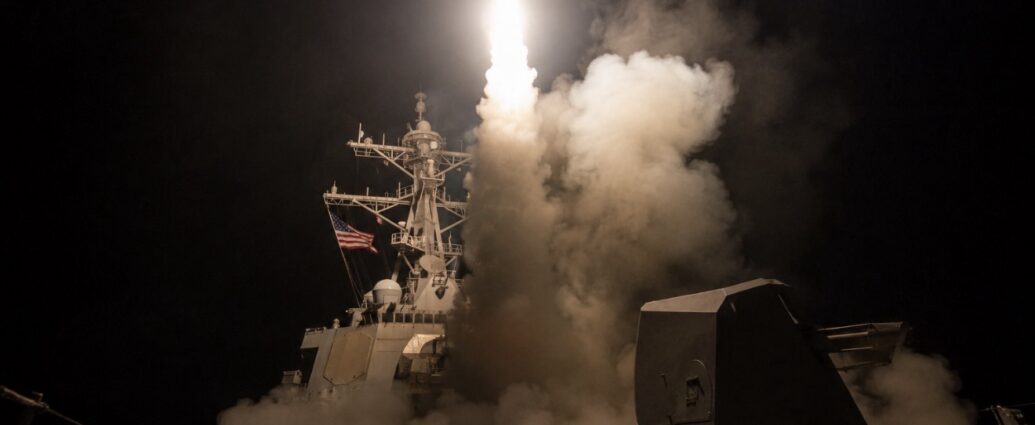
The United States fired more than a thousand Tomahawk cruise missiles at Iran.
Replacing them could take until late 2030.
That one number, from a new analysis released Wednesday, tells you most of what you need to know about the state of America’s weapons stockpile — and why Pentagon planners are increasingly focused on a country the U.S. has not fought yet: China.
The report came from the Center for Strategic and International Studies, a prominent Washington think tank. It was written by retired Marine Colonel Mark Cancian and researcher Chris H. Park.
Their conclusion was straightforward: U.S. defense contractors will need at least three years to fully rebuild the stockpiles of several key weapons systems used heavily during the Iran war.
The weapons matter.
Tomahawk cruise missiles are long-range precision weapons used to strike targets deep inside enemy territory. Patriot and THAAD interceptors are defensive systems designed to shoot down incoming missiles and drones.
The U.S. used all three extensively during the conflict with Iran.
Now comes the part that matters most — and the part many headlines miss.
The report does not say the United States is running out of weapons.
In fact, it explicitly says the opposite: the U.S. still has “enough munitions for any plausible scenario in the Iran war.”
What America lost was the cushion.
And the cushion matters because the Pentagon does not plan for one war at a time.
The military’s central long-term concern remains a possible conflict with China over Taiwan. The Iran war did not leave the U.S. defenseless against Iran. What it did was expose how quickly a modern high-intensity conflict can drain missile inventories that were originally built for shorter and more limited wars.
The concern inside Washington is not that Iran depleted the U.S. arsenal.
It is that fighting a medium-sized regional war was enough to reveal how thin the reserves could become before a larger confrontation with China.
The reason rebuilding takes years is surprisingly simple.
America never built these weapons in large enough numbers.
For decades after the collapse of the Soviet Union, the Pentagon assumed future wars would likely be smaller, shorter and regional. Expensive high-end missiles were produced steadily, but not at the massive industrial scale associated with Cold War stockpiles.
The Iran war tested that assumption.
In a normal year, the United States produces fewer than 200 Tomahawk missiles. During the Iran conflict, the military fired more than five years’ worth in a matter of weeks.
Raytheon, now part of RTX, is expanding facilities in Alabama and Arizona and aiming to eventually produce more than 1,000 Tomahawks annually. But those expanded production lines are still being built.
The defensive interceptors face the same issue.
The report estimates the U.S. fired as many as 290 THAAD interceptors during the war. Replacing them may take until the end of 2029. Rebuilding inventories of more than 1,000 Patriot interceptors could stretch into mid-2029.
Lockheed Martin, which manufactures both systems, says it plans to invest roughly $9 billion through 2030 to accelerate output.
The report also noted that the U.S. has started retaining THAAD interceptors for domestic use that might previously have been sold to allies overseas — a sign of how seriously officials are treating the stockpile issue.
Cancian argued the problem developed over decades, not under a single administration.
“A lot of people in the Trump administration are inclined to say that everything was terrible until they arrived, and that’s not true,” he said. “Now, it is true that the Trump administration really increased funding.”
In other words, the stockpile gap was created gradually through years of procurement decisions made under both Republican and Democratic administrations.
The politics surrounding the issue are already intensifying.
Democrats in Congress have pointed to the strain on missile inventories as evidence that President Donald Trump entered the Iran conflict without fully considering the long-term military consequences. Some Republicans, meanwhile, argue that years of military aid sent to Ukraine after Russia’s 2022 invasion also contributed to the pressure on inventories.
The Pentagon insists the situation remains under control.
Chief Pentagon spokesman Sean Parnell said the military “has everything it needs to execute at the time and place of the President’s choosing.”
Defense Secretary Pete Hegseth told lawmakers last month that rising defense spending will allow manufacturers to double or even triple output over time.
But not everyone inside the defense community is reassured.
Virginia Burger, a former Marine officer now with the watchdog organization Project On Government Oversight, said Pentagon officials almost certainly understood before the war that missile inventories would be pushed “to a critical level.”
That may ultimately be the most important takeaway from the report.
America did not run out of weapons fighting Iran.
What it discovered was how quickly a modern war can burn through advanced missiles — and how long rebuilding them actually takes.
For a country whose defense strategy is increasingly centered on deterring China, “three years to rearm” is not an especially comforting timeline.
The factories will eventually refill the shelves.
The uncomfortable question hanging over Washington now is what happens if the next major conflict arrives before they do.
Washington — JBizNews Desk
© JBizNews.com All Rights Reserved. Reproduction or distribution without written permission is prohibited.

Canada Falls Into Recession for First Time Since 2020 as Tariffs, Oil Shock Bite
By JBizNews Desk
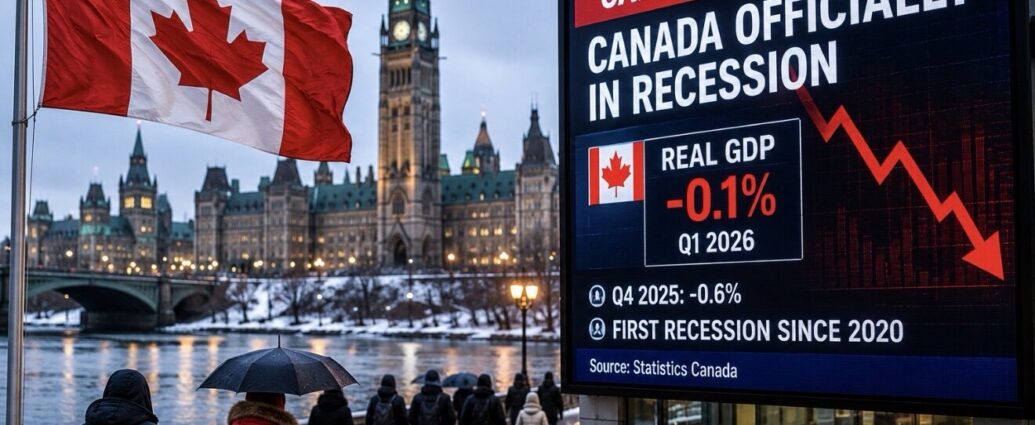
OTTAWA — May 29, 2026 — Canada has officially fallen into recession for the first time since the COVID-19 pandemic after Statistics Canada reported Friday that the economy contracted for a second consecutive quarter, weighed down by U.S. tariffs, elevated oil prices, and a sharp slowdown in population growth.
According to Statistics Canada, real gross domestic product declined 0.1% in the first quarter of 2026, following a 0.6% contraction in the fourth quarter of 2025. The back-to-back declines meet the commonly accepted definition of a technical recession and mark Canada’s first recession since 2020.
The figures came as a surprise to economists and policymakers. The Bank of Canada had projected growth of approximately 1.8%, while Statistics Canada’s preliminary estimate issued last month pointed to growth closer to 1.7%.
The weaker-than-expected result underscores how quickly economic conditions have deteriorated amid growing trade tensions and global uncertainty.
Trade Pressures Mount
A major factor behind the downturn has been the impact of U.S. trade measures imposed by President Donald Trump, which have affected several key Canadian industries including steel, aluminum, copper, lumber, and automobiles.
Export demand has softened as tariffs increase costs and create uncertainty for manufacturers and investors. Businesses have responded by delaying expansion plans and reducing capital expenditures while awaiting greater clarity on the future of North American trade relations.
Although Canada’s manufacturing sector showed signs of life earlier in the quarter, helped by a rebound in auto production, output remains below year-earlier levels.
Oil Shock Creates Mixed Impact
The conflict involving Iran, the United States, and Israel has added another layer of economic pressure.
Crude oil prices have climbed sharply since the outbreak of hostilities, boosting revenues for energy-producing provinces such as Alberta while simultaneously increasing fuel, transportation, and operating costs across the broader economy.
Higher energy prices are helping some sectors but squeezing consumers already dealing with elevated living costs and persistent inflation pressures.
Seasonal maintenance activity in Canada’s oil and gas industry further weighed on economic activity during March, contributing to the quarter’s negative result.
Population Growth Reverses
Another major shift has emerged in Canada’s demographic outlook.
After years of rapid population expansion fueled largely by immigration and temporary resident programs, growth has stalled as the federal government moves to reduce immigration levels and temporary resident numbers.
A slower-growing population means fewer workers entering the labor force and fewer consumers driving demand, reducing one of the key engines that supported Canada’s economy during recent years.
Labor Market Weakening
For many Canadians, the recession may feel like a continuation of trends already visible in the labor market.
Employment growth has slowed significantly, and job losses earlier this year ranked among the steepest outside previous recessionary periods. The national unemployment rate has remained near 6.7%, considerably above recent lows.
Consumer confidence has also softened as households contend with higher borrowing costs, housing affordability challenges, and concerns about economic stability.
Bank of Canada Faces Difficult Choice
The recession now places additional pressure on Bank of Canada Governor Tiff Macklem and policymakers.
The central bank’s benchmark interest rate currently stands at 2.25%, and officials face competing concerns.
On one hand, a contracting economy traditionally argues for lower interest rates to stimulate growth. On the other hand, rising oil prices threaten to push inflation higher, making aggressive rate cuts potentially risky.
The latest GDP figures strengthen the case for monetary easing, but policymakers remain cautious about reigniting inflationary pressures.
Business Investment at Risk
The recession designation could further dampen business sentiment.
Companies often respond to economic contractions by slowing hiring, reducing expansion plans, and preserving cash. Economists warn that weaker confidence could become self-reinforcing if businesses and consumers pull back simultaneously.
Residential construction also remains under pressure as housing demand softens and affordability challenges persist.
Can Canada Recover Quickly?
Despite the disappointing headline, economists note that the downturn remains relatively shallow compared with previous recessions.
Canada still posted 1.7% growth for full-year 2025, one of the stronger performances among G7 economies, and many forecasters believe growth could resume if trade tensions ease and energy markets stabilize.
Whether that happens depends largely on factors beyond Ottawa’s control.
For now, Canada has crossed an economic threshold it had avoided for nearly six years, and attention is turning toward how long the contraction lasts and whether policymakers can prevent a deeper downturn.
The immediate challenge facing Canada is clear: navigating a trade dispute with its largest customer while absorbing the economic fallout from a volatile global energy market.
Canada — JBizNews Desk
© JBizNews.com All Rights Reserved. Reproduction or distribution without written permission is prohibited.

The West’s Carmakers Are Losing the China Fight — and Now the Fight Is Coming Home
By JBizNews Desk
The world’s legacy automakers are no longer fighting to win in China. Increasingly, they are fighting to preserve their position in the global auto industry itself.
Ford Chief Executive Jim Farley has emerged as one of the most outspoken Western executives warning about the scale of the threat coming from China’s electric-vehicle industry. Speaking in Paris while announcing a small-EV partnership with Renault, Farley said the global auto sector is now in “a fight for our lives,” describing China’s rise as even more disruptive than Japan’s automotive expansion in the 1980s.
What began as a competitive problem inside China has evolved into something much larger. Chinese automakers including BYD, Geely, Chery, Nio, and Xiaomi are no longer simply dominating their home market. They are exporting aggressively, building factories across multiple continents, reshaping global pricing, and forcing established Western manufacturers into defensive mode.
The numbers are becoming difficult to ignore.
BYD delivered approximately 4.6 million new-energy vehicles in 2025, overtaking Tesla in global battery-electric vehicle sales for the first time. More than one million of those vehicles were sold outside China, more than doubling the company’s overseas sales from the previous year. Executives at BYD have signaled ambitions to expand even further in 2026, with overseas sales targets reportedly reaching as high as 1.5 million vehicles.
This is no longer simply about cheap labor or lower-cost exports. It is increasingly viewed by Western policymakers and executives as the result of a coordinated industrial strategy.
Research firm Rhodium Group estimates that Beijing has poured tens of billions of dollars into electric-vehicle and battery manufacturing through subsidies, financing programs, infrastructure investment, and supply-chain support. European and American officials argue the support has distorted global competition. But the strategy has also succeeded in producing scale, advanced manufacturing capacity, and lower-priced EVs that consumers worldwide are increasingly willing to buy.
The impact is now appearing directly inside Western automakers’ earnings reports.
BMW reported a significant decline in pre-tax profit last year, while warning investors that growth in China remains weak and profitability is under pressure from both tariffs and falling demand. Mercedes-Benz and Volkswagen have also struggled with declining Chinese market share and slower-than-expected EV transitions.
Even luxury segments once considered untouchable are beginning to shift.
In China’s premium vehicle market, imported luxury sedans from Porsche and BMW are now facing direct competition from technology-driven domestic brands backed by companies such as Huawei. The emergence of Huawei-backed luxury models reflects how China’s technology ecosystem is increasingly converging with its automotive sector, blending software, AI systems, entertainment platforms, and advanced battery capabilities directly into vehicles.
Western manufacturers are attempting to respond.
At recent auto shows in Beijing and Shanghai, European and American automakers unveiled a wave of new China-focused models aimed specifically at local consumer tastes and software preferences. Consulting firms including McKinsey have warned global manufacturers that the coming decade will determine which companies remain globally competitive in electric vehicles and which fall behind permanently.
But Chinese companies continue expanding rapidly.
BYD is already building or operating facilities in countries including Hungary, Brazil, Thailand, Turkey, and Indonesia, while evaluating additional European manufacturing expansion. The company has also announced plans for ultra-fast charging networks and next-generation battery systems capable of dramatically reducing charging times — one of the key areas where consumers still hesitate to adopt EVs.
The competitive challenge is no longer only about price.
Chinese automakers are increasingly competing on software integration, battery efficiency, charging speed, user interface design, and consumer technology ecosystems — areas traditionally dominated by Western and Japanese brands.
Farley has repeatedly warned that the United States cannot assume tariffs alone will permanently shield domestic manufacturers.
“The Chinese auto industry has enough capacity to serve the entire North American market,” Farley warned during a televised interview last year. “If we lose this, we do not have a future Ford.”
For now, steep U.S. and European tariffs continue limiting the direct flow of Chinese-built EVs into some Western markets. But much of the developing world — including parts of Latin America, Africa, Southeast Asia, and the Middle East — remains far more open, allowing Chinese brands to rapidly gain global market share.
The larger concern for Western executives is that once Chinese companies achieve global manufacturing scale, software dominance, and brand recognition, competing against them could become significantly harder even inside historically protected markets.
For more than a century, American, European, and Japanese automakers largely dictated the rules of the global car industry. Increasingly, that balance of power appears to be shifting eastward.
And for the first time in generations, legacy automakers are confronting the possibility that they may no longer be setting the pace of the industry they once controlled.
Global Markets — JBizNews Desk
© JBizNews.com All Rights Reserved. Reproduction or distribution without written permission is prohibited.
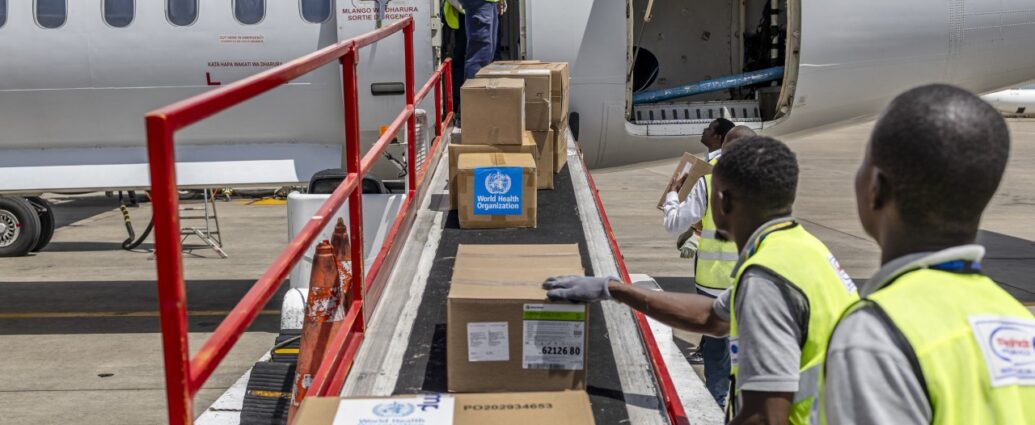
Nuclear Power Startup Newcleo to Go Public in SPAC Deal
May 28, 2026 — Newcleo Ltd., the advanced nuclear developer building reactors that run on recycled atomic waste, said in a company statement Wednesday that it has agreed to merge with NewHold Investment Corp III, a publicly traded shell company, in a deal that values the startup at roughly $2.4 billion before new money comes in. The combined business plans to trade on the Nasdaq under the ticker NWCL, with the deal expected to close in the second half of 2026.
The agreement gives Newcleo a fast route onto the U.S. stock market. Rather than running a traditional initial public offering, the company is merging into a blank-check firm that already trades publicly. The shell company, NewHold Investment Corp III, exists only to find a private business to take public. Once the two combine, Newcleo’s shares start trading without the long road of a standard listing.
The transaction is set to raise as much as $429 million in cash for the company. About $220 million comes from a private placement of stock sold to large investors and several current shareholders at $10 a share, with 22 million shares to be issued. Another $209 million sits in NewHold’s trust account, though that figure could shrink if some of the shell company’s investors ask for their money back before the deal closes, a common feature of these mergers.
Newcleo was started in 2021 by physicist Stefano Buono, who runs the company as chief executive. Before Newcleo, Buono founded Advanced Accelerator Applications, a medical isotope firm that listed on the Nasdaq and was bought by drugmaker Novartis in 2018 for $3.9 billion. The Paris-based company now operates in seven countries and employs more than 900 people. It has raised about $780 million in private funding since it began.
The business is still years away from selling power. Newcleo designs small, lead-cooled reactors that burn mixed-oxide fuel, known as MOX, which is made from reprocessed nuclear waste rather than freshly mined uranium. The pitch is that the technology can generate carbon-free electricity while shrinking the stockpile of radioactive material left over from older plants. The company holds patents across 31 families covering both the reactor design and the fuel process. It reported about $80 million in revenue and other income in 2024, almost all of it from supplying equipment to the nuclear industry rather than from running reactors.
The listing lands in the middle of a rush of nuclear companies onto public markets, driven by the enormous electricity demand from artificial-intelligence data centers. Oklo, a U.S. reactor developer Newcleo partnered with in October 2025, went public through its own blank-check merger in 2024. NuScale Power took the same path in 2022. Investors have warmed to the sector on the bet that AI’s appetite for round-the-clock power will need new sources of generation that wind and solar alone cannot supply.
Still, the structure carries real risk for buyers. Companies that go public this way have a spotty record, with many sliding sharply after their debuts. Newcleo’s $80 million in 2024 income is small against a $2.4 billion price tag, and no lead-cooled fast reactor has yet run at commercial scale anywhere. The company must clear regulators in both Europe and the United States, and any holdup could drain its cash before its first reactor produces a watt.
The deal points to how quickly money is moving into next-generation nuclear. A company that did not exist five years ago, and that has yet to power a single home, is now preparing to ask public investors for hundreds of millions of dollars on the promise of what its reactors might one day do.
JBizNews Desk
© JBizNews.com. All rights reserved. This article is original reporting by JBizNews Desk. Unauthorized reproduction or redistribution is strictly prohibited.




Apple Bets Its Comeback on a Rebuilt Siri Coming to iPhones This Fall
JBizNews Desk — May 28, 2026
Apple is preparing the biggest overhaul of Siri since the voice assistant debuted nearly 15 years ago, betting that a completely rebuilt AI-powered version can help the company regain ground in the rapidly escalating artificial-intelligence race.
According to a report published Thursday by Bloomberg News, Apple plans to unveil the redesigned Siri at its annual Worldwide Developers Conference (WWDC) on June 8 as part of iOS 27, the next major software release for the iPhone, iPad, and Mac.
The stakes could hardly be higher.
While rivals including OpenAI, Google, Microsoft, and Samsung have spent the past two years aggressively integrating advanced AI assistants into their products, Apple has struggled with delays, missed deadlines, and growing criticism that Siri has fallen far behind competing platforms.
Now the company is attempting a reset.
Rather than functioning primarily as a voice-command tool, the new Siri is reportedly being rebuilt into a fully conversational AI assistant capable of maintaining context, understanding complex requests, and interacting with users much more like ChatGPT, Gemini, or Claude.
According to Bloomberg, Siri will become deeply integrated into Apple’s operating system and will live inside the iPhone’s Dynamic Island, allowing users to interact with it more naturally across applications.
Users will still be able to activate Siri by voice or by holding the power button, but Apple is also developing a new interface called Search or Ask, which opens with a swipe gesture and allows users to launch apps, create reminders, send messages, schedule appointments, search files, or ask broader AI-powered questions from a single location.
Results will reportedly appear as interactive cards directly on the screen, while a dedicated Siri application will maintain conversation history and provide summarized interactions.
One of the most significant revelations is the technology powering the assistant.
Earlier this year Apple confirmed that portions of its next-generation AI strategy would rely on a customized version of Google’s Gemini models, an unusually public acknowledgment for a company known for developing most core technologies internally.
Bloomberg also reported that Apple is exploring future support for third-party AI services, potentially allowing users to choose among providers such as ChatGPT, Gemini, and Anthropic’s Claude for specific tasks.
The broader iOS 27 update is expected to extend AI throughout the operating system.
Apple is reportedly testing photo-editing tools that respond to plain-language instructions, allowing users to request image modifications simply by describing what they want. The company is also rebuilding its Shortcuts automation platform so users can create workflows using natural language rather than manual programming.
Additional features under development reportedly include AI-generated wallpapers, systemwide writing assistance, improved grammar correction, enhanced image generation, and upgraded custom emoji tools.
For Apple, the effort goes well beyond software.
The iPhone remains the company’s largest source of revenue, and many analysts believe a compelling AI experience could become the most important driver of smartphone upgrades over the next several years.
A successful Siri relaunch would not only strengthen hardware sales but also support Apple’s broader ecosystem of services, subscriptions, and App Store revenue.
There are still uncertainties.
Bloomberg’s report notes that the published renderings are based on information from sources familiar with the project rather than official Apple materials, and the company frequently tests multiple versions of products before finalizing designs.
Some features currently under development may not be included in the first public release of iOS 27.
Apple is expected to formally unveil the new Siri at WWDC on June 8, followed by a developer beta, a public testing period later this summer, and a full release alongside the next generation of iPhones this fall.
For Apple, the launch represents more than a software update.
It is an opportunity to prove that the company that defined the smartphone era can still compete at the forefront of the AI era.
Cupertino — JBizNews Desk
© JBizNews.com All Rights Reserved. Reproduction or distribution without written permission is prohibited.


Opinion | Where the Iran Talks Stand Now


UK Spy Chief Warns China Is Closing the Cyber Gap With the West, Urges Businesses to Step Up
By JBizNews Desk
LONDON — The head of Britain’s electronic intelligence agency will warn Wednesday that China is rapidly closing the technological gap with the West and that the United Kingdom and its allies are running out of time to maintain their advantage in artificial intelligence and cyber capabilities, a message landing as cybersecurity and AI stocks continue driving global equity markets to record highs.
Anne Keast-Butler, director of GCHQ — Britain’s signals intelligence and cybersecurity agency, roughly equivalent to America’s National Security Agency (NSA) — is delivering the warning during the organization’s first-ever annual lecture at Bletchley Park, the historic World War II codebreaking center associated with mathematician Alan Turing.
According to excerpts released ahead of the speech, Keast-Butler plans to describe the current environment as “a new era of radical uncertainty, contested geopolitics and rapidly changing technology,” warning that “the risk of miscalculation is as high as I’ve ever seen it.”
Her central message is direct: China has become “a science and tech superpower” with sophisticated cyber, intelligence and military capabilities, while the rise of artificial intelligence is accelerating the pace of strategic competition.
In practical terms, Western intelligence officials are increasingly warning that the technological gap separating Chinese and Western cyber capabilities is narrowing much faster than governments anticipated only a few years ago.
That matters because GCHQ rarely speaks publicly in this way.
Historically, the agency operates with minimal public visibility. When senior British intelligence officials deliver unusually direct warnings to business leaders, it is often interpreted inside government and financial circles as a sign the threat assessment inside the broader Five Eyes intelligence alliance — the United States, United Kingdom, Canada, Australia and New Zealand — has materially shifted.
The speech also underscores how closely national security, artificial intelligence and financial markets have now become intertwined.
Over the past year, investors have poured money into cybersecurity firms including Palo Alto Networks, CrowdStrike Holdings, Zscaler, Fortinet and SentinelOne, while semiconductor companies tied to AI infrastructure — including Nvidia and Advanced Micro Devices — have surged on expectations of massive government and private-sector spending tied to AI competition and cyber defense.
Much of that demand stems directly from the environment Keast-Butler is describing.
She is also expected to warn that Russia is “scaling up its daily hybrid activity” against Britain and Europe by targeting “critical infrastructure, democratic processes, supply chains and public trust.”
GCHQ officials say they are increasingly focused not only on traditional espionage but also on cyberattacks aimed at transportation systems, utilities, communications infrastructure and corporate networks.
Earlier this year, Dr. Richard Horne, head of Britain’s National Cyber Security Centre, the defensive cybersecurity arm of GCHQ, said hostile-state cyber activity against the UK now averages roughly four nationally significant incidents per week, with China, Russia and Iran identified as the primary sources.
The warnings are not theoretical.
Over the past 18 months, major British companies including Marks & Spencer, the Co-op Group and Jaguar Land Rover have suffered significant cyberattacks disrupting operations, exposing customer data and generating substantial financial losses.
British officials increasingly frame those incidents not simply as IT problems but as national economic-security threats.
“Cyber security is now a matter of business survival,” British officials have repeatedly warned in recent months.
For American investors, the implications are increasingly visible across multiple industries.
Cybersecurity spending is accelerating because corporations and governments alike now assume they face persistent attacks from sophisticated state-backed actors using increasingly advanced AI tools for phishing, intrusion and supply-chain compromise operations.
The same geopolitical pressures are also driving enormous investment in AI computing infrastructure.
Companies such as Nvidia, AMD and other semiconductor suppliers are not simply selling hardware to commercial data centers. They are increasingly selling into government, intelligence and defense ecosystems across the United States and allied countries racing to expand AI computing capacity ahead of China.
That demand helps explain why semiconductor stocks have become one of the market’s dominant themes.
The timing of the speech is also notable.
Only weeks ago, Beijing confirmed an order for 200 Boeing aircraft, publicly describing aviation as “a key area for U.S. cooperation” — part of broader efforts by both Washington and Beijing to stabilize portions of the economic relationship.
Yet on the intelligence and technology side, rhetoric from Western capitals is moving sharply in the opposite direction.
The tone coming from intelligence chiefs has grown increasingly blunt. Governments are engaging more directly with private-sector executives. And Western corporations are facing growing pressure to treat cyber defense as a strategic operating priority rather than merely a regulatory or compliance function.
The venue itself carries symbolic weight.
Bletchley Park was where British and American codebreakers worked together during World War II, laying the foundation for the intelligence-sharing alliance that eventually became Five Eyes. The speech also coincides with the 80th anniversary of the UKUSA Agreement, the original intelligence treaty linking the two countries.
At the same location in 2023, Western governments and Chinese officials signed the Bletchley Declaration on AI Safety, highlighting the increasingly complicated balance between technological cooperation and strategic rivalry.
The message from Wednesday’s speech ultimately points toward the same conclusion increasingly reflected in financial markets:
The global battles over artificial intelligence, semiconductors, cyber defense and critical infrastructure are no longer separate stories. Governments, intelligence agencies and investors are increasingly treating them as part of the same strategic competition.
And according to Britain’s top cyber official, that competition is accelerating faster than many Western governments expected.
Europe — JBizNews Desk
© JBizNews.com All Rights Reserved. Reproduction or distribution without written permission is prohibited.


Anthropic Overtakes OpenAI as World’s Most Valuable AI Startup With $965 Billion Round
JBizNews Desk — May 28, 2026
Anthropic said Thursday it has closed a $65 billion Series H funding round at a $965 billion post-money valuation, according to a company announcement and comments from Chief Financial Officer Krishna Rao, vaulting the Claude developer past OpenAI to become the world’s most valuable private artificial-intelligence startup.
The round was co-led by Altimeter Capital, Dragoneer, Greenoaks, and Sequoia Capital, with additional backing from Capital Group, Coatue, D1 Capital Partners, Baillie Gifford, Blackstone, Brookfield, D.E. Shaw Ventures, DST Global, and Fidelity Management & Research. Anthropic indicated the financing could be among its final private raises before pursuing a public listing.
The valuation marks one of the fastest wealth surges ever recorded in the technology sector. Anthropic was valued at roughly $380 billion during its Series G financing in February and approximately $183 billion during a prior funding round last September. The latest valuation nearly triples the February figure in just a few months, reflecting the speed at which institutional capital continues flooding into the AI sector.
Driving the surge is revenue growth.
Anthropic disclosed that its annualized revenue run rate has climbed to approximately $47 billion, up sharply from around $30 billion earlier this year and roughly $10 billion in revenue generated during 2025. A major contributor has been Claude Code, the company’s AI-powered software-development platform, which has rapidly gained adoption among enterprises, engineering teams, and independent developers seeking productivity gains and automation tools.
The financing reshuffles the balance of power across Silicon Valley’s AI race.
OpenAI, maker of ChatGPT, was valued at approximately $852 billion following its March financing round, which itself had been viewed as unprecedented in scale. Anthropic’s new valuation now moves decisively ahead of that figure, signaling that investors increasingly see enterprise-focused AI infrastructure and coding systems as one of the sector’s most commercially scalable businesses.
For businesses watching the AI market from the sidelines, the funding wave sends a broader message: Wall Street believes companies are still in the early innings of adopting artificial intelligence into everyday operations.
The firms writing checks into Anthropic are effectively betting that businesses will continue paying for AI systems capable of writing software, generating documents, analyzing data, automating workflows, reducing staffing burdens, and accelerating operational decision-making. The scale of the raise suggests major investors expect AI spending to expand significantly rather than cool off.
Anthropic also used Thursday’s announcement to unveil new products aimed at enterprise customers.
The company introduced Claude Opus 4.8, its latest flagship model, alongside a new cybersecurity-focused platform called Claude Mythos Preview, which will initially be offered to a limited number of approved corporate and government users. Rao said the new capital would help Anthropic scale infrastructure, expand enterprise deployment, and maintain what he described as a research lead against rivals.
The timing also reflects how quickly the AI industry is converging with public capital markets.
Several of the largest artificial-intelligence developers are already preparing for eventual IPOs. Elon Musk’s AI venture, folded earlier this year into the broader SpaceX ecosystem, recently filed offering paperwork tied to a combined business reportedly valued near $1.25 trillion. Investors increasingly expect Anthropic and OpenAI to follow similar paths as demand for AI infrastructure, chips, cloud services, and enterprise automation tools continues accelerating.
Analysts say the newest valuation milestones underscore a deeper transformation underway across the global economy.
Unlike earlier technology cycles centered primarily on consumer apps or advertising, today’s AI investment boom is increasingly tied to operational infrastructure — tools businesses directly use to save time, automate labor, improve productivity, and increase margins. That distinction is helping justify valuations once considered impossible even in Silicon Valley.
Whether Anthropic moves quickly toward an IPO now becomes one of the biggest open questions in the technology market. Company filings and industry reports have pointed to growing internal preparations, including expanded legal and financial advisory work associated with public-market readiness.
For now, Anthropic has crossed a threshold almost no startup ever reaches — and in doing so, it has redrawn the hierarchy at the center of the global AI economy.
New York — JBizNews Desk
© JBizNews.com All Rights Reserved. Reproduction or distribution without written permission is prohibited.



Wall Street’s Biggest Banks Are About to Have a Blockbuster Quarter — And It’s the Iran War, AI Volatility and Private Credit Fears Driving It
The same forces making ordinary investors nervous are about to produce one of the strongest trading quarters in years for America’s largest banks.
Speaking Wednesday at the Bernstein Strategic Decisions Conference in New York, Bank of America CEO Brian Moynihan said the bank expects second-quarter trading revenue to rise roughly 15% year-over-year, while JPMorgan Chase CEO Jamie Dimon projected approximately 11% growth in markets revenue — potentially making it one of the strongest trading quarters in JPMorgan’s history.
The drivers behind those gains are the same headlines dominating global markets every day: the war involving Iran, violent swings in oil prices, uncertainty surrounding artificial intelligence stocks, and growing concern over risks inside the rapidly expanding private credit industry.
For ordinary Americans, the dynamic may appear backward at first.
When markets become unstable, investors often become anxious. But for large Wall Street trading desks, volatility creates opportunity. Every sharp move in oil, stocks, currencies, or bonds forces institutional investors to reposition portfolios, hedge exposures, buy protection, or unwind trades. The banks facilitating those transactions collect fees and trading spreads on enormous volumes of activity across global markets.
That is precisely what is happening now.
Oil prices have repeatedly swung between roughly $80 and $110 per barrel in recent months as markets react to every development tied to Iran and the broader Middle East conflict. Semiconductor and AI-related stocks have experienced massive volatility as investors debate whether the artificial intelligence boom represents sustainable growth or speculative excess.
At the same time, Wall Street has grown increasingly cautious about the $2 trillion private credit market, where private investment firms increasingly lend directly to companies outside traditional banking channels. Even Dimon recently warned investors to revisit assumptions surrounding liquidity risks in private credit markets.
All of those concerns create exactly the kind of trading environment large banks thrive in.
The first quarter already demonstrated the pattern.
JPMorgan reported approximately $16.5 billion in net income during the first quarter, up 13% year-over-year, while markets revenue approached $12 billion, driven heavily by commodities, credit, and currency trading.
Bank of America similarly reported equity-trading revenue of approximately $2.8 billion, up roughly 30% from the prior year.
Now both institutions are signaling another unusually strong quarter ahead.
There is also a major investment-banking catalyst looming later this year: the expected SpaceX initial public offering.
JPMorgan, Bank of America, Citigroup, and numerous other banks are expected to participate in underwriting what could become the largest IPO in history if Elon Musk’s space company proceeds with its anticipated listing schedule. Underwriting fees tied to a transaction of that size could generate hundreds of millions of dollars for Wall Street banks during the second half of 2026.
Despite the market turbulence, both Moynihan and Dimon also delivered a notably optimistic view of the underlying U.S. economy.
Moynihan said Bank of America’s internal consumer data showed credit and debit card spending per household rising 4.8% year-over-year in April, up from 4.3% growth in March — a sign that consumer spending remains resilient despite geopolitical uncertainty and elevated energy prices.
Bank of America also raised its forecast for full-year net interest income growth to between 6% and 8%, reflecting continued strength in lending activity and consumer finances.
Dimon echoed similar themes regarding the resilience of the American consumer and the broader economy even as markets remain volatile.
That combination — strong consumer spending alongside elevated financial-market anxiety — is creating an unusually profitable environment for large banks.
The broader message from Wednesday’s conference was that Wall Street’s largest institutions are positioned to benefit from both sides of the current environment. If the economy remains healthy, lending and consumer spending stay strong. If markets remain unstable, trading desks continue generating elevated revenue.
For ordinary Americans, the takeaway is more nuanced.
The same uncertainty affecting gasoline prices, retirement portfolios, AI investments, and global trade is simultaneously driving large profits inside the banking system. That does not necessarily signal an economic crisis. In many cases, it simply reflects how modern financial markets operate: volatility increases demand for trading, hedging, and capital-market activity.
At the same time, unusually strong trading profits can also serve as a warning sign that the broader financial system remains unsettled beneath the surface.
Periods of extreme volatility rarely last forever. Eventually markets stabilize — or the uncertainty evolves into a more serious economic slowdown.
For now, however, America’s largest banks are making clear that they expect turbulence to continue, and they are positioning themselves to profit from it.
Between the Iran conflict, AI speculation, private credit concerns, and the approaching SpaceX IPO, Wall Street’s biggest firms are entering the summer with one message to investors:
The volatility is not hurting business.
It is the business.
New York — JBizNews Desk
© JBizNews.com All Rights Reserved. Reproduction or distribution without written permission is prohibited.
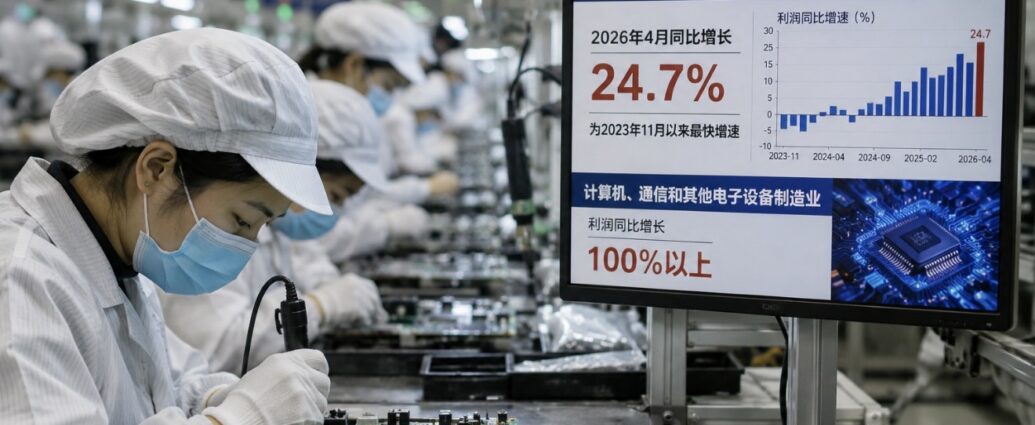
China’s Factory Profits Leap 24.7% in April, Fastest Gain in More Than Two Years — and U.S. Chip Stocks Are Feeling It
BEIJING — China’s factories posted their strongest monthly profit growth in more than two years in April, with earnings at the country’s largest industrial companies jumping 24.7% year-over-year, according to data released Wednesday, May 27, 2026 by China’s National Bureau of Statistics, underscoring how deeply the global artificial-intelligence boom is now reshaping manufacturing profits on both sides of the Pacific.
The gain marks the fastest pace of Chinese industrial profit growth since November 2023, accelerating sharply from a 15.8% increase in March and lifting year-to-date profit growth for the first four months of 2026 to 18.2%, up from 15.5% in the first quarter.
The numbers arrive as global equity markets — especially U.S. semiconductor stocks — continue surging on expectations of massive AI-driven spending on data centers, memory chips, networking equipment and computing infrastructure.
And increasingly, the same forces driving record valuations on Wall Street are also driving profits inside Chinese factories.
The strongest gains in China’s report came from the computing, communications and electronics manufacturing sector, now the country’s single largest industrial profit category. Earnings in that segment more than doubled from a year earlier as demand for AI-related hardware accelerated globally.
That matters directly to American investors.
On Tuesday, the S&P 500 closed at a fresh record high of 7,519.12, while the Nasdaq Composite finished at 26,656.18, also an all-time high, led overwhelmingly by semiconductor and AI infrastructure stocks.
Micron Technology surged roughly 19%, briefly crossing a $1 trillion market capitalization after UBS sharply raised its price target on the company. The VanEck Semiconductor ETF climbed more than 3% to a new 52-week high, while Advanced Micro Devices, On Semiconductor and Western Digital all posted major gains.
The link between the two markets is becoming increasingly obvious.
The global AI infrastructure buildout — from hyperscale data centers to inference clusters and advanced memory systems — is generating extraordinary demand across the entire semiconductor supply chain.
American chip designers are pricing that demand into equity valuations.
Chinese factories assembling servers, networking systems, electronics and hardware components are pricing it into margins and profit growth.
Both sets of numbers are effectively telling the same story at the same time.
The second major contributor to China’s April profit surge was energy.
Oil prices have climbed sharply amid the expanding Middle East conflict, with crude trading in roughly the $100 to $106 per barrel range during April. China’s oil and gas extraction industry swung from a 1.4% profit decline in the first quarter to an 8.1% gain through April as higher crude prices boosted margins for state-owned energy producers.
Government policy is also playing a role.
Chinese officials have spent years subsidizing strategic industrial sectors including semiconductors, advanced manufacturing and high-tech equipment through tax incentives, low-cost financing and direct state investment.
Earlier this year, Yu Weining, chief statistician at the National Bureau of Statistics, said profits in China’s equipment-manufacturing sector rose 21%, while high-tech manufacturing profits surged 47.4% during the first quarter alone.
But beneath the headline profit numbers, China’s broader economy remains uneven.
Industrial output growth slowed to 4.1% in April, while retail sales barely moved, rising just 0.2%. Fixed-asset investment — spending on factories, housing and infrastructure — contracted over the first four months of the year as China’s property slump continued weighing on domestic demand.
In other words, the factory-profit boom is real, but highly concentrated.
The strongest industries are tied directly to AI hardware, advanced electronics and energy — not to broad-based consumer recovery inside China.
There is also a pricing dynamic emerging underneath the data.
China’s Producer Price Index (PPI) rose 2.8% in April, the largest increase since July 2022, suggesting factories are finally regaining pricing power after more than two years of deflationary pressure and price wars across parts of Chinese industry.
Beijing has spent months trying to reduce aggressive domestic price competition that had crushed margins in sectors ranging from solar equipment to industrial machinery. April’s numbers suggest some of those efforts may now be feeding through into corporate profitability.
For Washington policymakers, however, the data also highlights a strategic complication.
The single strongest category inside China’s profit report — electronics and computing equipment — is the very sector the United States has spent years trying to constrain through semiconductor export controls and technology restrictions.
Since 2022, Washington has imposed multiple rounds of restrictions targeting advanced AI chips, semiconductor manufacturing equipment and high-end computing exports to China.
Yet Chinese manufacturers tied to AI infrastructure are still seeing profits surge.
That does not necessarily mean the export controls failed strategically, but it does suggest the global AI spending boom has become so large that Chinese firms continue benefiting even under significant restrictions.
Trade flows also remain surprisingly resilient.
China’s exports rose 14.1% year-over-year in April, while imports surged 25.3%, according to customs data released earlier this month.
Meanwhile, the fragile U.S.-China trade détente reached late last year continues holding for now. Earlier this month, Beijing confirmed an order for 200 Boeing aircraft, describing aviation as a “key area” for bilateral cooperation — a signal both governments appear eager to preserve at least limited economic stability despite broader geopolitical rivalry.
For Wall Street, the takeaway from Wednesday’s Beijing data is straightforward.
The AI capital-expenditure cycle is now large enough to push industrial profits, stock prices and corporate investment higher simultaneously across both the American and Chinese economies.
Chip designers, memory producers, foundries, server manufacturers and contract electronics firms are all feeding from the same underlying demand wave.
The Chinese numbers, in many ways, simply confirm what U.S. markets have already been pricing in for months.
The risks, however, remain equally clear.
China’s recovery remains narrow. American equity markets remain heavily concentrated in a small group of AI-linked technology companies. And the same Middle East conflict helping lift energy-sector profits also threatens broader economic stability if oil prices spike further or supply disruptions worsen.
This week, strategists at Goldman Sachs warned that today’s bull market still faces structural vulnerabilities tied to tech concentration, geopolitical tensions and volatility in bond markets.
For now, however, the message coming simultaneously from Beijing’s factory floors and the New York Stock Exchange is unmistakable:
AI hardware is generating real profits — and nearly everyone connected to the supply chain is benefiting at once.
Asia — JBizNews Desk
© JBizNews.com All Rights Reserved. Reproduction or distribution without written permission is prohibited.