By JBizNews Desk

June 2, 2026

NEW YORK — FedEx Freight’s first day as a standalone public company brought with it a notable declaration about the future of transportation. The company’s chief executive said autonomous trucking technology has advanced to the point where it is ready for broad commercial use, arguing that the primary barrier to expansion is no longer engineering, but regulation.

Speaking about the company’s extensive testing efforts, CEO John Smith said self-driving truck systems are now capable of handling nearly every aspect of a long-haul route without driver intervention.

“These tractors are able to leave the yard, navigate from the yard to the interstate, run the interstate, go to the next facility,” Smith said. “99.9% of the time the driver never touches one thing.”

The comments offer one of the clearest endorsements yet from the leader of a major U.S. freight carrier that autonomous trucking technology has moved beyond the experimental phase and into operational reality.

The statement comes as FedEx Freight begins life as an independent company following its separation from FedEx Corp., placing increased attention on how management plans to improve efficiency, expand capacity, and enhance shareholder value in a highly competitive freight market.

For years, autonomous trucking has been promoted as a transformational technology capable of reshaping logistics. While early demonstrations generated excitement, many industry leaders remained cautious about whether the systems could perform consistently under real-world commercial conditions. According to Smith, those questions have largely been answered.

Over the past two years, FedEx Freight has participated in extensive testing programs designed to evaluate autonomous operations across actual freight routes. The company’s efforts have focused on major transportation corridors where long highway stretches create ideal environments for autonomous systems to operate efficiently while carrying commercial loads.

The tests have demonstrated that modern autonomous platforms can manage not only highway driving but also many of the more complex tasks that occur before and after a truck reaches the interstate. That capability is viewed as a significant milestone because it reduces the need for constant human oversight and moves the technology closer to large-scale deployment.

For the trucking industry, the implications could be substantial.

Freight carriers across North America continue to face persistent challenges recruiting and retaining drivers. Labor shortages, rising compensation costs, and increasing demand for faster delivery have pressured operators to find new ways to improve productivity without sacrificing safety.

Autonomous technology has increasingly emerged as one potential solution.

Supporters argue that self-driving systems could allow trucks to operate more efficiently, improve equipment utilization, reduce delays, and help address capacity constraints that periodically disrupt supply chains. The technology may also help reduce costs associated with driver turnover and enable carriers to better manage growing freight volumes.

Investors are watching closely because transportation companies operate on relatively thin margins, making even modest efficiency improvements potentially meaningful to earnings. Increased asset utilization and lower operating costs could provide significant financial benefits if autonomous systems achieve widespread deployment.

Still, despite the technological progress, Smith emphasized that the industry’s biggest challenge is no longer proving the systems work.

“The regulatory piece is going to be the biggest hurdle,” he said.

That hurdle remains significant.

Federal and state regulators continue to evaluate how autonomous commercial vehicles should be governed. Questions surrounding safety certification, operating standards, liability, insurance requirements, cybersecurity protections, and oversight mechanisms remain under discussion.

While regulators have approved various forms of advanced driver-assistance technology, comprehensive frameworks governing fully autonomous commercial trucking operations are still evolving. Until those rules are finalized, widespread deployment is expected to proceed gradually through pilot programs and limited operational environments.

Safety remains central to the conversation.

Proponents of autonomous trucking argue that advanced systems can reduce accidents caused by human fatigue, distraction, or impairment. Critics counter that complex road conditions, severe weather, construction zones, and unexpected traffic situations still require extensive testing and safeguards before full deployment can occur at scale.

Cybersecurity is another area receiving increased scrutiny. As trucks become more software-driven and connected, ensuring the security and integrity of vehicle systems will be essential for public confidence and operational reliability.

FedEx Freight’s testing efforts have been supported through partnerships with autonomous technology developers seeking to commercialize self-driving freight operations. Those collaborations have allowed the company to evaluate performance under real-world conditions while gathering operational data that could support future expansion.

For customers, autonomous trucking could eventually translate into more predictable transit times, improved service consistency, and enhanced network capacity. For carriers, it could create opportunities to improve efficiency while addressing longstanding workforce challenges.

The timeline for widespread adoption, however, will likely depend less on technology than on policymaking.

With one of the nation’s largest freight operators now publicly stating that autonomous trucking is operationally viable, attention is shifting toward regulators tasked with determining how quickly the technology can move from pilot programs into mainstream logistics networks.

As FedEx Freight begins its next chapter as an independent company, management is making clear that automation will play a central role in its long-term strategy. The technology appears increasingly capable. The next phase will be defined by how quickly regulators, industry leaders, and policymakers can establish the framework needed to bring autonomous trucking fully into the American transportation system.

JBizNews Desk — New York

© JBizNews.com All Rights Reserved. Reproduction or distribution without written permission is prohibited.

By JBizNews Desk

June 2, 2026

JERUSALEM — More than $121 million has been wagered on Benjamin Netanyahu’s political future, and despite a reported confrontation with President Donald Trump this week, traders overwhelmingly believe Israel’s prime minister will remain in office through 2026.

That is the message emerging from Polymarket, the crypto-based prediction platform that has become one of the world’s most closely watched gauges of political sentiment. As of June 1, bettors were assigning just a 4% chance that Netanyahu would leave office by the end of June and only a 9% chance that he would abandon a reelection bid before the end of July.

The odds become more competitive later in the year. By the end of December, traders place the probability of Netanyahu leaving office at approximately 44%.

In other words, the market is not betting on an immediate collapse.

It is betting on an election.

That distinction is critical because Israel’s political calendar already points toward a major test later this year. The Knesset recently advanced legislation that could dissolve parliament after an ultra-Orthodox coalition partner withdrew support over military draft exemptions. Under Israeli law, national elections would need to be held no later than October.

For prediction-market traders, that election appears far more important than the latest diplomatic dispute between Washington and Jerusalem.

The dispute itself was significant.

According to Axios, Trump delivered a blunt and reportedly expletive-filled message to Netanyahu during a phone call Monday after learning of Israeli plans to strike Hezbollah targets in Beirut. U.S. officials cited by the publication said Trump warned that further escalation could isolate Israel internationally and potentially derail ongoing diplomatic efforts involving Iran.

The timing was especially sensitive.

The Trump administration continues pursuing negotiations with Tehran, and earlier Monday Iranian officials signaled they could reconsider participation in talks following Israel’s military actions in Lebanon. Within hours of the reported call, Israel shelved plans for the Beirut operation, a move widely interpreted as an effort to avoid further tension with Washington.

Yet despite the dramatic headlines, betting markets barely moved.

Political-risk analysts note that prediction markets often focus less on daily news cycles and more on structural political realities. Netanyahu has survived wars, protests, coalition crises, corruption charges, and repeated election battles during his record tenure as Israel’s longest-serving prime minister.

From a trader’s perspective, one heated conversation with Trump does not fundamentally alter the political landscape.

Netanyahu himself appeared determined to project stability afterward, stating publicly that Israel’s position remained unchanged and that military operations in southern Lebanon would continue.

The story reaches beyond politics and into financial markets.

Prediction platforms such as Polymarket have evolved into major information hubs where participants risk real money on political, economic, and geopolitical outcomes. The size of the Netanyahu market—more than $121 million in trading volume—reflects growing interest among investors, analysts, and institutions seeking real-time measures of political risk.

The broader financial implications are even larger.

At the center of the Trump-Netanyahu dispute sits Iran and the future of negotiations that could affect energy markets worldwide. Any breakdown in diplomacy raises concerns about the Strait of Hormuz, the narrow shipping corridor through which a substantial portion of global oil supplies passes.

That matters directly to consumers.

Oil prices influence gasoline costs, transportation expenses, airline fares, and inflation across the global economy. While U.S. gasoline prices recently touched some of their lowest levels in weeks, energy analysts continue warning that renewed Middle East tensions could quickly reverse that trend.

Cryptocurrency markets also reacted, albeit modestly.

Bitcoin slipped to roughly $70,871 during Monday’s trading as investors digested headlines involving Lebanon, Iran, and the Trump-Netanyahu dispute. The decline was relatively small, but it underscored how quickly geopolitical developments now ripple through digital assets held by millions of investors worldwide.

So why are traders remaining so calm about Netanyahu’s immediate future?

Part of the answer lies in timing. With elections potentially approaching within months, markets increasingly view Netanyahu’s political fate as a question voters will answer rather than coalition partners.

Part of it lies in incentives. Leaving office before an election would do little to improve Netanyahu’s legal or political position. Remaining prime minister preserves leverage, influence, and options heading into a campaign.

And part of it lies in experience. Traders have seen Netanyahu survive seemingly impossible political moments before.

For now, the market’s verdict is clear.

The real test for Netanyahu appears more likely to arrive at the ballot box than in a phone call. Until Israel’s election campaign moves into full gear, prediction markets seem far more focused on October than on the headlines of June.

Middle East & Markets — JBizNews Desk

© JBizNews.com All Rights Reserved. Reproduction or distribution without written permission is prohibited.

By JBizNews Desk

June 2, 2026

WASHINGTON — A Trump administration effort to reshape how certain immigrants obtain permanent residency has created uncertainty for employers, foreign workers, immigration attorneys, and families navigating the U.S. immigration system.

The confusion began after U.S. Citizenship and Immigration Services (USCIS) issued a policy memorandum on May 21, 2026, addressing green-card applications filed from within the United States. Days later, agency statements suggested that some foreign nationals seeking permanent residency could be required to leave the country and complete the process through U.S. consulates abroad rather than finishing it inside the United States.

The announcement immediately sparked concern because it appeared to challenge a process that has been a central feature of U.S. immigration law for decades.

For more than fifty years, many immigrants legally present in the United States have been permitted to obtain permanent residency through a process known as adjustment of status, which allows applicants to complete their green-card process without leaving the country. The pathway is commonly used by spouses of U.S. citizens, employment-based visa holders, students transitioning to permanent residency, refugees, and asylum recipients.

The administration argues the policy represents a return to what officials describe as the original intent of immigration law.

USCIS has characterized the move as closing what it views as a loophole that expanded beyond its intended scope over time. The Department of Homeland Security subsequently stated that individuals who properly qualify for permanent residency would still be able to receive green cards, although some applicants could be directed toward overseas consular processing rather than domestic adjustment procedures.

What remains unclear is exactly who will be affected.

After initially suggesting the policy could apply broadly, USCIS later indicated implementation would occur on a case-by-case basis. The agency has not fully detailed which applicants may be required to leave the country, how pending applications will be handled, or whether specific visa categories will face greater scrutiny.

That uncertainty has become the central issue.

Immigration attorneys report being flooded with calls and emails from concerned clients seeking clarification. Many legal professionals say employers and applicants are struggling to understand how the changes could affect long-term immigration plans already years in the making.

Shev Dalal-Dheini, Senior Director of Government Relations for the American Immigration Lawyers Association, warned that the policy could fundamentally alter a process that Congress has repeatedly reaffirmed through legislation over many decades.

Other immigration attorneys argue that adjustment of status is not an administrative loophole but a statutory process explicitly created and maintained by Congress.

The business implications extend far beyond immigration law.

Many U.S. companies rely heavily on foreign-born talent in sectors including technology, healthcare, engineering, finance, research, manufacturing, and higher education.

For employers sponsoring workers for permanent residency, uncertainty surrounding green-card processing creates operational challenges.

A company may spend years recruiting specialized talent, investing in visa sponsorship, and planning long-term staffing needs. If key employees are suddenly required to leave the country for consular processing, businesses could face disruptions ranging from delayed projects to staffing shortages.

Technology companies are viewed as particularly vulnerable.

Many engineers, software developers, data scientists, and artificial-intelligence specialists working in the United States initially arrive on temporary visas before pursuing permanent residency. Any process that increases uncertainty surrounding that transition may affect both recruitment and retention.

Healthcare providers face similar concerns.

Hospitals and medical systems already experiencing physician and nursing shortages often rely on foreign-born professionals who eventually pursue green cards through employment-based immigration pathways.

Business leaders also worry about America’s broader competitiveness.

The United States has historically attracted highly skilled workers from around the world in part because it offered a predictable path to permanent residency and eventual citizenship. Critics of the policy argue that increased uncertainty may encourage talented workers to consider alternative destinations including Canada, the United Kingdom, Australia, and parts of Europe.

Complicating matters further are applicants from countries where U.S. consular operations are limited or unavailable.

In certain cases, requiring overseas processing could create logistical obstacles for individuals who may have difficulty accessing functioning U.S. embassies or consulates.

Attorneys also report increased scrutiny in immigration cases more broadly.

Requests for additional evidence appear to be rising, and lawyers say applications that previously moved through the system with relative predictability are increasingly encountering delays and requests for further documentation.

For families and employers alike, the most immediate challenge is not necessarily the policy itself but the lack of clarity surrounding its implementation.

Immigration law often depends on predictability. Businesses make hiring decisions, families make life plans, and foreign workers make career choices based on expectations about how government procedures will operate.

When those expectations suddenly become uncertain, the economic consequences can spread quickly.

The Trump administration maintains it is enforcing immigration law as intended and restoring integrity to the green-card process.

Immigration attorneys argue the rollout has created confusion around one of the most important pathways to permanent residency in the United States.

Until federal officials provide clearer guidance regarding who is affected, how applications will be evaluated, and when new procedures will take effect, employers and applicants will remain caught between competing interpretations of a policy that could affect millions of future green-card seekers.

Washington — JBizNews Desk

© JBizNews.com All Rights Reserved. Reproduction or distribution without written permission is prohibited.

By JBizNews Desk

June 2, 2026

WASHINGTON — The Trump administration is abandoning plans for a proposed $1.8 billion Anti-Weaponization Fund after lawmakers from both parties criticized the initiative as an unnecessary political vehicle that could have directed taxpayer money toward organizations aligned with the administration.

The proposal, which had been under consideration as part of broader efforts to address what President Donald Trump and his allies describe as the political weaponization of government agencies against conservatives, quickly ran into resistance on Capitol Hill. Critics argued the fund lacked sufficient oversight, clear operational guidelines, and protections against political favoritism.

According to congressional officials familiar with the discussions, opposition emerged not only from Democrats but also from a number of Republicans concerned about creating a large federal fund with broad discretionary powers.

Several lawmakers reportedly described the proposal as a potential “slush fund,” arguing that future administrations could use similar mechanisms to reward political allies or favored organizations.

The retreat represents a rare instance in which bipartisan criticism forced the administration to reconsider a high-profile initiative tied directly to one of Trump’s central political themes.

Since returning to office, Trump has repeatedly argued that federal institutions, including law-enforcement and intelligence agencies, were used improperly against political opponents. The administration has pursued multiple reforms aimed at increasing accountability and limiting what it views as politically motivated government actions.

Supporters of the fund argued it would provide resources for investigations, legal challenges, and oversight efforts related to alleged government misconduct and abuses of power.

Opponents countered that existing agencies, inspectors general, congressional committees, and the judicial system already possess authority to investigate misconduct, making the proposed fund unnecessary.

The controversy quickly drew attention because of the fund’s size.

At $1.8 billion, the proposal would have represented a substantial federal commitment at a time when both parties continue debating government spending levels, budget deficits, and the national debt.

Fiscal conservatives questioned whether the money would produce measurable results, while Democrats argued it risked politicizing oversight activities that traditionally operate independently from the White House.

The decision to abandon the proposal may also reflect broader political calculations.

With Congress focused on budget negotiations and several major legislative priorities, administration officials appear eager to avoid a prolonged battle over a program that lacked strong support even among portions of the Republican caucus.

Political analysts noted that bipartisan opposition can be particularly difficult for any White House to overcome because it removes the possibility of framing criticism as purely partisan.

For the administration, dropping the proposal allows officials to continue pursuing anti-weaponization reforms through existing agencies and executive actions without becoming bogged down in a contentious funding fight.

The episode also highlights the continuing debate over how government accountability should be enforced.

Trump supporters argue that stronger mechanisms are needed to investigate alleged abuses by federal institutions, particularly following years of disputes involving law enforcement, intelligence agencies, and politically sensitive investigations.

Critics maintain that creating new politically directed funding structures risks undermining public confidence in independent oversight.

The White House has not indicated whether portions of the proposal may be restructured and reintroduced in a different form.

For now, however, the $1.8 billion fund appears effectively shelved.

The outcome serves as a reminder that even in Washington’s deeply polarized environment, certain proposals can still generate opposition from both sides of the aisle when concerns about transparency, accountability, and political influence converge.

JBizNews Desk — Washington

© JBizNews.com All Rights Reserved. Reproduction or distribution without written permission is prohibited.

By JBizNews Desk

June 2, 2026

NEW YORK — Alphabet Inc., the parent company of Google, announced plans Monday to raise as much as $80 billion in fresh capital to fund an aggressive expansion of its artificial intelligence infrastructure, with Berkshire Hathaway committing $10 billion through a private placement in a move that signals significant institutional confidence in the company’s long-term AI strategy.

The planned financing package would rank among the largest capital raises ever undertaken by a major technology company and reflects the extraordinary scale of investment now required to compete in the rapidly evolving artificial intelligence race.

According to the company, the capital plan includes a $40 billion at-the-market equity program beginning in the third quarter, $30 billion in underwritten offerings of common stock and mandatory convertible preferred securities, and a $10 billion private placement investment from Berkshire Hathaway.

The announcement underscores how dramatically the economics of artificial intelligence have shifted. As technology companies race to develop larger models, faster computing capabilities, and global cloud infrastructure, access to capital has become a strategic advantage alongside technological innovation.

Alphabet CEO Sundar Pichai has repeatedly described artificial intelligence as one of the most significant technological transitions in the company’s history, comparable to the emergence of the internet, mobile computing, and cloud services.

The new funding is expected to support the construction of additional data centers, the acquisition of advanced computing hardware, expanded networking infrastructure, and the continued development of next-generation AI systems that power products across Google’s ecosystem.

The commitment from Berkshire Hathaway is likely to attract particular attention from investors.

The conglomerate built by legendary investor Warren Buffett has historically maintained a disciplined approach toward technology investments, favoring businesses with durable competitive advantages and predictable long-term cash flows. Berkshire’s participation is therefore being viewed by many market observers as a strong endorsement of Alphabet’s ability to convert AI investments into future earnings growth.

The investment also reflects the growing belief among institutional investors that artificial intelligence is not simply a temporary technology trend but a foundational shift likely to reshape industries ranging from healthcare and finance to manufacturing, education, and logistics.

The funding arrives as demand for AI services continues to surge.

Google Cloud, one of Alphabet’s fastest-growing businesses, has benefited from increasing enterprise adoption of AI-powered tools, machine-learning services, and advanced data analytics platforms. Businesses across industries are investing heavily in AI capabilities to improve productivity, automate operations, and create new products and services.

That demand has placed enormous pressure on cloud providers to expand capacity.

Industry analysts estimate that major technology companies collectively could spend hundreds of billions of dollars annually on data centers, advanced processors, energy infrastructure, and networking equipment over the coming years as AI workloads become increasingly computationally intensive.

Alphabet has already significantly increased its capital spending in recent quarters as it works to maintain competitiveness against rivals including Microsoft, Amazon, and Meta Platforms, all of which are investing aggressively in artificial intelligence.

Executives have argued that maintaining leadership in AI requires unprecedented infrastructure investment. The company’s Gemini family of AI models, along with AI-powered enhancements to Search, YouTube, Workspace, and Google Cloud, depend on large-scale computing resources that continue to expand as usage grows.

Investors appeared encouraged by the announcement, viewing the capital raise as a proactive effort to secure resources before infrastructure constraints become a bottleneck to growth.

While issuing new equity can dilute existing shareholders, many analysts noted that the move strengthens Alphabet’s balance sheet and provides flexibility without materially increasing debt obligations. The company is expected to use portions of the proceeds for global infrastructure projects, strategic investments, and obligations related to employee stock compensation programs.

The broader technology industry is increasingly being defined by a race to build the physical backbone of artificial intelligence.

Data centers, high-performance chips, power generation resources, and networking systems have emerged as critical assets in determining which companies will lead the next phase of technological development. As a result, AI infrastructure spending has become one of the most closely watched metrics among investors.

At the same time, regulatory challenges remain. Governments in the United States, Europe, and elsewhere continue to evaluate issues ranging from AI safety and transparency to antitrust concerns and data privacy requirements. Alphabet’s enhanced capital position could provide additional flexibility as it navigates evolving regulatory frameworks while continuing to invest in responsible AI development.

For Berkshire Hathaway, the investment represents a notable expansion into one of the defining growth themes of the decade. For Alphabet, it provides substantial resources to continue scaling its AI ambitions.

The success of the strategy will ultimately depend on whether the company can generate sufficient returns from its massive infrastructure investments. Investors will be watching upcoming earnings reports closely for evidence that growing AI adoption translates into stronger revenue, expanding margins, and sustainable long-term growth.

For now, the announcement reinforces Alphabet’s position as one of the leading builders of the AI era—and suggests that some of the world’s most respected investors believe the company’s biggest opportunities may still lie ahead.

JBizNews Desk — New York

© JBizNews.com All Rights Reserved. Reproduction or distribution without written permission is prohibited.

By JBizNews Desk

June 2, 2026

BOGOTÁ — Colombian financial markets surged Monday after businessman and political outsider Abelardo de la Espriella delivered a stronger-than-expected performance in the first round of the country’s presidential election, reshaping expectations for the June 21 runoff and fueling hopes of a more market-friendly economic agenda.

Official election results showed de la Espriella capturing 43.74% of the vote, narrowly ahead of left-wing Senator Iván Cepeda, who received 40.90%. Neither candidate secured the majority required for an outright victory, sending Colombia to a runoff election that will determine who succeeds President Gustavo Petro.

The result surprised many political observers and investors alike.

For months, Cepeda had been viewed as the favorite to finish first in the opening round. Instead, de la Espriella emerged with a narrow lead, immediately triggering a rally across Colombian assets as investors reassessed the country’s political and economic outlook.

The Colombian peso strengthened sharply following the vote, while shares of Ecopetrol, the country’s state-controlled energy giant and largest publicly traded company, climbed as traders bet that a potential de la Espriella presidency could usher in a more supportive environment for oil and gas investment.

Government bonds also attracted renewed interest as markets priced in the possibility of a significant policy shift after years of uncertainty under Petro’s administration.

The reaction highlights how closely Colombia’s economic future has become tied to the election.

De la Espriella, a 47-year-old attorney often known by supporters as “El Tigre,” has never held elected office. His campaign has centered on promises to reduce government spending, lower taxes, strengthen security, attract foreign investment, and restore confidence among businesses that have grown cautious during recent years.

Perhaps most important to investors, he has advocated expanding energy development and has expressed support for new oil exploration projects.

That position marks a sharp contrast with Petro’s administration, which pursued aggressive environmental goals and restricted new oil and gas exploration initiatives in an effort to accelerate Colombia’s transition away from fossil fuels.

Those policies generated concern among investors because oil remains one of Colombia’s most important sources of export revenue, foreign exchange, and government income.

As a result, few companies are more politically sensitive than Ecopetrol.

Any shift toward increased drilling activity, expanded exploration, or a more favorable regulatory environment could significantly affect the company’s long-term outlook and Colombia’s broader fiscal position.

Market participants largely interpreted Monday’s rally as a relief trade rather than a declaration of victory.

Analysts noted that investors are responding to increased odds of a government viewed as more supportive of private-sector growth, but they cautioned that the runoff remains highly competitive and policy implementation could prove far more challenging than campaign promises.

The election arrives at a difficult moment for Colombia’s economy.

The country’s benchmark COLCAP stock index has lagged many regional peers during much of 2026, weighed down by political uncertainty, concerns over public finances, and questions about future economic policy.

Meanwhile, Colombia’s central bank has maintained relatively high interest rates as it works to contain inflation and stabilize financial conditions.

While elevated rates help support the peso and attract foreign investment, they also increase borrowing costs for consumers and businesses, creating additional pressure on economic growth.

The country’s next president will inherit those challenges.

Investors will be watching closely for proposals related to fiscal discipline, tax policy, energy development, infrastructure investment, and security.

Security remains a major theme in the campaign.

De la Espriella has pointed to the policies of El Salvador President Nayib Bukele as a model for combating organized crime and strengthening public order. Supporters argue tougher security measures could improve economic confidence and attract investment, while critics have raised concerns about civil liberties and human rights implications.

The political dynamics heading into the runoff remain fluid.

Former President Álvaro Uribe, one of the most influential figures on Colombia’s political right, has encouraged supporters of eliminated center-right candidates to unite behind de la Espriella. That consolidation could prove important as both campaigns seek to expand beyond their first-round bases.

For ordinary Colombians, the outcome carries tangible consequences.

A stronger peso can lower the cost of imported goods and reduce inflationary pressures. Expanded energy investment could generate jobs and increase government revenue. At the same time, voters will weigh competing visions for public spending, social programs, environmental policy, and economic development.

The runoff on June 21 is now shaping up as one of the most consequential elections Colombia has faced in years.

Monday’s market rally revealed where investors currently see opportunity.

Whether that optimism survives the final campaign, the runoff vote, and the realities of governing remains the question that will dominate Colombia’s financial markets throughout the summer.

Latin America — JBizNews Desk

© JBizNews.com All Rights Reserved. Reproduction or distribution without written permission is prohibited.

By JBizNews Desk

June 2, 2026

NEW YORK — Hewlett Packard Enterprise delivered the kind of earnings report that forces Wall Street to rethink its assumptions. After markets closed Monday, the company reported fiscal second-quarter results that significantly exceeded analyst expectations and raised its full-year outlook, citing accelerating demand for artificial-intelligence infrastructure across enterprise customers.

Revenue surged 40% year-over-year to approximately $10.7 billion, easily surpassing Wall Street expectations of $9.79 billion. Non-GAAP earnings reached $0.79 per share, more than double the $0.38 reported during the same period last year.

Investors reacted swiftly. HPE shares jumped as much as 32% in after-hours trading, reflecting one of the strongest earnings reactions in the technology sector this year.

The biggest surprise came from management’s guidance.

HPE raised its full-year fiscal 2026 earnings outlook by roughly a full dollar, projecting $3.35 to $3.45 per share, compared with its prior forecast of $2.30 to $2.50. The company also increased its revenue growth target to 29% to 33%, up from the previous range of 17% to 22%.

For the third quarter alone, HPE expects revenue between $11.5 billion and $12.1 billion, comfortably ahead of analyst projections.

Chief Executive Officer Antonio Neri said the results reflected continued investment by customers seeking to modernize infrastructure and scale AI deployments.

The company entered the quarter with a record $5 billion AI systems backlog, and both AI orders and backlog nearly doubled from a year earlier. Traditional server demand also surged as organizations upgraded computing environments to support AI inference workloads and advanced analytics.

The results provide further evidence that the AI spending boom has expanded beyond hyperscale cloud providers and is now reaching mainstream enterprise customers.

For much of the past two years, investors focused primarily on spending by technology giants such as Microsoft, Amazon, Alphabet, and Meta Platforms. HPE’s results suggest banks, manufacturers, governments, telecommunications providers, and large enterprises are increasingly joining the spending wave.

The company’s profitability improved alongside growth.

Gross margin climbed to 36.5%, representing an increase of more than 800 basis points from a year earlier. Free cash flow reached approximately $900 million, demonstrating that HPE is not simply generating revenue growth but doing so while improving operational efficiency.

The quarter also highlights the growing importance of networking infrastructure.

Last year HPE completed its roughly $14 billion acquisition of Juniper Networks, and management indicated that business is becoming increasingly important as AI deployments expand.

The company now expects networking revenue growth of 72% to 75%, reflecting strong demand for switching, routing, and connectivity solutions required to support large-scale AI systems.

As AI models grow more sophisticated, the networking equipment connecting servers often becomes just as critical as the servers themselves.

The company also tied its strategy closely to developments announced at Computex in Taiwan.

The New York Stock Exchange plans to deploy new Nvidia-powered HPE systems capable of processing more than a trillion messages daily, illustrating how AI infrastructure is increasingly moving into mission-critical financial and industrial applications.

The next stage of AI adoption is no longer limited to training large models.

Increasingly, organizations are investing in AI inference systems that allow models to operate in real time inside businesses, financial institutions, government agencies, and operational networks.

There are challenges ahead.

Neri has warned that elevated memory costs are likely to persist through at least 2027. Memory components now represent more than half of a server’s bill of materials, creating potential margin pressure if costs continue rising.

For now, however, demand appears strong enough to offset those concerns.

For investors, HPE’s report sends a broader signal about the state of the AI economy.

The spending surge that initially benefited a small group of chipmakers and cloud providers is increasingly spreading across the broader technology ecosystem. Hardware manufacturers, networking providers, software companies, and enterprise service firms are beginning to participate in the buildout.

That expansion could create opportunities across a much wider segment of the economy than many analysts originally expected.

Whether the pace of spending remains sustainable remains one of the central questions facing the technology sector.

But based on HPE’s latest results, customers are still spending aggressively, backlogs continue growing, and management believes its long-term targets are arriving years earlier than anticipated.

For now, the AI infrastructure boom shows few signs of slowing.

JBizNews Desk — New York

© JBizNews.com All Rights Reserved. Reproduction or distribution without written permission is prohibited.
Just three weeks ago, Verra Mobility executives were reassuring Wall Street that negotiations with one of the company’s most important customers were progressing smoothly.

“We have a contract extension with Avis that enables us to continue to serve the customer without interruption while we continue to negotiate a long-term renewal,” management told investors during the company’s May 6 earnings call, describing discussions with Avis Budget Group as “ongoing and constructive.”

Then the floor disappeared.

On May 26, Verra Mobility disclosed that Avis had formally terminated the relationship, with the contract set to expire in September. Verra said it was “surprised and disappointed” by the decision after what it described as extensive renewal discussions tied to the long-running partnership.

The market reaction was brutal.

Shares of Verra Mobility collapsed more than 30% in regular trading and plunged further afterward, wiping out billions in market value in less than 24 hours. The company warned that annualized Commercial Services revenue would fall by roughly $135 million to $145 million, while segment profit would decline by as much as $125 million before cost reductions.

For many investors, the scale of the damage raised an uncomfortable question: how could a company go from publicly signaling constructive negotiations to losing a major customer almost immediately afterward?

But beneath the stock collapse sits a much larger story — one increasingly haunting both credit markets and enterprise software investors.

The Verra-Avis breakup is reviving one of modern finance’s biggest structural fears: software dependency risk.

The Illusion of “Sticky” Revenue

For years, enterprise software has traded on one core assumption: once large customers deeply integrate software into daily operations, they rarely leave.

The industry even built an entire vocabulary around the concept — “stickiness,” “embedded workflows,” “mission-critical systems,” “high switching costs,” and “recurring revenue visibility.”

Those assumptions support some of the richest valuations in global equity and credit markets.

Verra’s collapse is a reminder that those assumptions can fail very quickly.

Avis represented more than 10% of Verra Mobility’s revenue during both the first quarter of 2026 and full-year 2025. In isolation, that level of concentration is not unusual in enterprise software or infrastructure services. Many successful software firms derive significant revenue from a handful of large corporate clients.

The market typically tolerates that concentration because investors assume the relationship itself is durable.

The danger is that durability often gets confused with permanence.

Verra’s situation exposed how quickly “sticky” can become “replaceable.”

Why This Frightens Credit Markets

The software industry increasingly behaves less like traditional technology and more like infrastructure financing.

Companies borrow heavily against the predictability of recurring subscription revenue. Credit investors underwrite debt based on assumptions about renewal rates, customer retention, and the stability of long-term enterprise contracts.

When a major customer exits suddenly, the damage spreads far beyond earnings.

Cash-flow assumptions weaken. Debt metrics deteriorate. Refinancing risk rises. Valuation multiples compress. Legal exposure expands. Vendor concentration suddenly becomes existential rather than manageable.

That chain reaction is exactly what credit investors fear most.

The problem becomes even more acute when management appears caught off guard.

As recently as May 6, Verra was publicly reaffirming guidance and characterizing negotiations positively. Twenty days later, the company was slashing forecasts and disclosing the loss of its largest customer relationship.

For markets, the speed of that reversal matters almost as much as the termination itself.

It raises uncomfortable questions about visibility, disclosure discipline, internal forecasting reliability, and whether software vendors themselves fully understand the stability of their largest customer relationships.

Why Customers Are Reassessing Software Dependence

The broader backdrop here is changing corporate behavior around software ownership.

For more than a decade, companies aggressively outsourced operational systems to specialized software vendors. That trend accelerated because cloud computing reduced implementation costs while enterprise software became increasingly sophisticated.

But large corporations are now reevaluating parts of that dependency model.

Artificial intelligence, internal automation tools, lower development costs, and expanding in-house engineering capabilities are making some companies more willing to internalize critical software functions rather than remain dependent on third-party vendors indefinitely.

Avis may represent exactly that shift.

The company has not publicly detailed the reasons behind the termination. But the logic is increasingly familiar across corporate America: if software becomes operationally essential enough, eventually the customer begins asking whether it should own more of the capability directly.

That creates a paradox for software vendors.

The more mission-critical the software becomes, the more strategically valuable it may become for the customer to control internally.

In other words, success itself can create exit risk.

The AI Effect

Artificial intelligence may accelerate this pressure dramatically.

Historically, replacing enterprise software required massive migration costs, long development timelines, and substantial engineering teams. AI-assisted coding tools are beginning to reduce some of those barriers.

Large corporations now have more tools to replicate, customize, or partially rebuild software systems internally than they did even two years ago.

That does not mean enterprise software disappears. But it does mean switching costs may no longer be as permanent as markets previously assumed.

The Verra situation is now being viewed through exactly that lens.

Legal and Disclosure Risks Are Growing

The fallout is no longer limited to equity losses.

Several securities-law firms have already opened investigations into Verra Mobility following the Avis termination and guidance reduction, focusing on whether investors were adequately informed about risks surrounding the relationship before the abrupt disclosure.

Even if no wrongdoing is ultimately found, the investigations themselves add another layer of pressure: legal costs, regulatory scrutiny, and reputational damage.

That combination is especially dangerous for companies already experiencing deteriorating fundamentals.

Analysts moved quickly after the announcement. JPMorgan cut its price target on Verra Mobility from $19 to $17, while Morgan Stanley lowered its target from $20 to $15, both maintaining relatively cautious ratings as uncertainty surrounding the company’s long-term revenue base intensified.

The Bigger Message

The Verra-Avis split may ultimately become more important as a warning than as an isolated corporate event.

For years, investors treated recurring software revenue almost like utility income — predictable, stable, and highly visible.

What this episode revealed is that software dependency cuts both ways.

The customer becomes dependent on the software.

But the vendor may become equally dependent on the customer.

And once that balance shifts, even very large, deeply integrated relationships can unravel far faster than markets expect.

In credit markets increasingly built around recurring revenue assumptions, that realization matters enormously.

Because in enterprise software, “sticky” only matters until someone decides to leave.

New York — JBizNews Desk

© JBizNews.com All Rights Reserved. Reproduction or distribution without written permission is prohibited.

By JBizNews Desk

June 1, 2026

The world’s leading economists are delivering one of their starkest warnings since the pandemic.

In its latest Chief Economists Outlook, released on May 28, the World Economic Forum reported that global business leaders and chief economists have sharply downgraded their outlook for the world economy, citing the ongoing closure of the Strait of Hormuz, rising energy costs, supply-chain disruptions, and mounting inflation pressures.

The numbers tell the story.

According to the survey, conducted between April 6 and April 17, 89% of chief economists now expect global growth to weaken over the next twelve months. More notably, 21% believe the slowdown will be significant rather than mild.

Just a few months ago, many economists entered 2026 expecting inflation pressures to ease and growth to stabilize. That optimism has largely disappeared.

The biggest concern is inflation.

An overwhelming 94% of economists surveyed now expect inflation to rise over the coming year as elevated energy prices and supply disruptions work their way through the global economy.

The source of those concerns lies thousands of miles away in one of the world’s most strategically important waterways.

The Strait of Hormuz, through which roughly 20% of global oil supplies normally pass, has remained severely disrupted since the outbreak of conflict involving Iran earlier this year. The closure has transformed what began as a regional geopolitical crisis into a global economic threat affecting consumers, businesses, investors, and governments worldwide.

The Forum’s economists ranked the current disruption as more economically damaging than many of the trade disputes and tariff battles that dominated headlines last year.

Several warned that if significant disruptions continue into the second half of 2026, the resulting economic effects could approach the scale of some of the supply-chain shocks experienced during the COVID-19 era.

Energy remains the most immediate transmission mechanism.

Higher oil prices increase transportation costs, manufacturing expenses, shipping rates, airline fuel bills, and food-production costs. Those increases eventually make their way into consumer prices.

For households, it means more expensive gasoline, groceries, utilities, and travel.

For businesses, it means higher operating costs, tighter margins, and greater uncertainty when planning future investments.

Despite the deteriorating outlook, economists are not yet forecasting a global recession.

Only 13% of respondents said a worldwide recession is likely.

That distinction matters.

The prevailing view among economists is not that the global economy is collapsing but that growth is slowing while inflation remains stubbornly elevated—a combination policymakers traditionally find difficult to manage.

The risks are also unevenly distributed.

Europe emerged as one of the regions most vulnerable to a potential period of stagflation, where weak economic growth coincides with persistent inflation.

That combination can leave central banks trapped between raising rates to fight inflation and lowering rates to stimulate growth.

The survey also highlighted growing concern across the Middle East and North Africa, where 88% of economists now expect weak or very weak growth conditions.

Sub-Saharan Africa was identified as the region facing the greatest inflation pressures due to its sensitivity to imported energy and food costs.

Amid the gloom, two major economies continue to stand out.

The United States and India were viewed as the most resilient large economies in the survey.

Economists cited strong domestic demand, relatively healthy labor markets, ongoing investment, and greater economic flexibility compared with many other regions.

India received particularly strong marks, with 52% of economists expecting strong or very strong growth over the next year.

Large-scale infrastructure projects, manufacturing investment, and population growth continue to support India’s economic expansion.

For multinational corporations deciding where to invest, the shifting outlook is already influencing strategy.

The Forum found that businesses are increasingly redirecting capital and supply chains toward regions viewed as more resilient, including the United States, India, and parts of Southeast Asia.

That trend reflects a broader reality emerging across global commerce: companies are no longer assuming economic risks are evenly distributed.

Instead, firms are building supply chains and investment plans around a more fragmented world.

There was one bright spot in the report.

A remarkable 92% of economists expect artificial intelligence adoption to accelerate during the next year.

However, expectations for immediate productivity gains have become more cautious.

While economists remain optimistic about AI’s long-term economic impact, many now believe the benefits will emerge gradually rather than through a rapid transformation.

For now, though, the dominant concern remains energy.

As long as the Strait of Hormuz remains constrained, oil markets will remain vulnerable, inflation pressures will stay elevated, and businesses will face higher costs.

The World Economic Forum’s message is clear: the biggest economic story of 2026 is no longer tariffs, interest rates, or even artificial intelligence.

It is a narrow stretch of water through which much of the world’s energy supply normally flows.

And until that bottleneck eases, economists expect the global economy to face a more difficult and more expensive road ahead.

Global Economy — JBizNews Desk

© JBizNews.com All Rights Reserved. Reproduction or distribution without written permission is prohibited.

By JBizNews Desk

WASHINGTON — June 1, 2026

The U.S. Department of Commerce has moved to close a loophole that officials say may have allowed some of America’s most advanced artificial-intelligence chips to reach Chinese companies through overseas subsidiaries, escalating Washington’s ongoing battle to limit China’s access to cutting-edge AI technology.

In guidance issued Sunday, the department’s Bureau of Industry and Security (BIS) said advanced AI processors sold to companies headquartered in China will now require export licenses regardless of where those companies are physically located.

The move effectively extends U.S. export controls beyond China’s borders, targeting subsidiaries and affiliated entities operating in countries such as Malaysia, Singapore, and other international hubs that have become increasingly important in global semiconductor supply chains.

The policy focuses on some of the most powerful AI processors currently available, including Nvidia’s Blackwell and Rubin platforms and AMD’s MI350-series chips, which are used to train and operate large-scale artificial-intelligence systems.

These processors have become among the most strategically important technologies in the world, powering everything from advanced AI models and cloud computing platforms to military and national-security applications.

According to the Commerce Department, the new guidance is intended to ensure that existing export restrictions cannot be bypassed through foreign subsidiaries of Chinese firms.

The action addresses a gap that emerged after the U.S. government stopped enforcing the Biden-era AI Diffusion Rule in 2025. Once enforcement was paused, industry observers warned that Chinese companies could potentially acquire restricted chips through operations located outside mainland China.

In practice, a company prohibited from purchasing advanced processors directly in China could potentially seek access through an overseas subsidiary operating in another jurisdiction.

The Commerce Department’s latest guidance is designed to prevent that scenario.

Technology-policy experts have been warning about the issue for months.

Chris McGuire, a former U.S. State Department official and technology specialist, described the loophole as a major concern, arguing that overseas subsidiaries of Chinese firms may have been able to acquire advanced AI hardware without the same scrutiny applied to entities based within China itself.

Industry analysts say the exact number of chips that may have reached Chinese-linked entities through overseas channels remains unknown. However, given the intense global demand for AI processors, even relatively small volumes could represent significant computing capacity.

The new restrictions do not appear to require companies to surrender or deactivate chips already purchased under previous rules. Instead, the focus is on future transactions and licensing requirements.

For semiconductor manufacturers, the stakes are substantial.

Nvidia and AMD remain at the center of the global AI boom, with demand for advanced processors reaching unprecedented levels as corporations, governments, and cloud-computing providers race to build artificial-intelligence infrastructure.

China has historically represented one of the world’s largest markets for high-performance computing technology, making every new export restriction a significant commercial issue for chipmakers.

Nvidia Chief Executive Jensen Huang has repeatedly emphasized the importance of the Chinese market, even as Washington has steadily tightened restrictions on advanced semiconductor exports.

Investors are expected to closely monitor market reaction when trading resumes, as export-control announcements have frequently triggered volatility in semiconductor stocks. Previous rounds of restrictions have weighed on both Nvidia and AMD shares as investors assessed potential impacts on future revenue growth.

The broader conflict reflects a growing reality in global technology competition.

Artificial intelligence is increasingly viewed not merely as a commercial opportunity but as a strategic national asset. As a result, semiconductor policy has become one of the most important battlegrounds in the economic relationship between the United States and China.

Washington’s objective remains clear: limit China’s access to the most advanced AI hardware while preserving America’s technological advantage.

The challenge, however, is enforcement.

Closing a loophole may stop future shipments, but policymakers still face difficult questions about how much advanced computing power may have already reached Chinese-linked entities—and what that means for the next phase of the global AI race.

Washington — JBizNews Desk

© JBizNews.com All Rights Reserved. Reproduction or distribution without written permission is prohibited.

Wall Street investors and corporate landlords are pulling back from the U.S. housing market, marking a significant shift that could reshape competition for homes across the country.

According to a Redfin report released May 28, investor purchases of U.S. homes fell 6% year-over-year during the first quarter of 2026, reaching their lowest level since 2020 and among the weakest levels recorded since before the pandemic housing boom.

The report, based on county-level purchase records across 39 major U.S. metropolitan areas, found that both large institutional investors and smaller landlords have become increasingly cautious as high borrowing costs and elevated home prices squeeze returns.

The reason is simple: housing has become a much tougher investment.

Mortgage rates remain significantly higher than the ultra-low levels that fueled investor buying during the pandemic. Although rates eased into the low-6% range during the first quarter, they remain roughly double the levels many investors enjoyed just a few years ago.

At the same time, home prices continue to hover near record highs in many markets.

That combination is making it increasingly difficult for investors to generate attractive returns through rental income or property appreciation.

As a result, many investors are choosing to sit on the sidelines rather than pursue acquisitions that may not produce sufficient profits.

The cooling investment climate is particularly evident in traditionally affordable housing segments.

Investor purchases of condominiums fell 8%, reaching their weakest first-quarter level since 2015. Townhouse purchases dropped 13%, while purchases of single-family homes declined 6%.

Despite the slowdown, single-family homes still accounted for roughly 70% of all investor purchases, underscoring their continued importance within the rental housing market.

The retreat is especially visible in Florida.

Orlando recorded one of the steepest declines among major metropolitan areas, with investor purchases falling 25% from a year earlier. Investors have increasingly backed away from several Florida markets as rising insurance costs, growing housing inventory, softening home prices, and escalating homeowner-association fees weigh on profitability.

Cleveland also saw investor purchases decline sharply, falling 21% year-over-year.

Not every market is experiencing a pullback.

Investor purchases increased most sharply in San Francisco, rising 19%, followed by Virginia Beach at 15% and San Jose at 12%.

The gains highlight the continued appeal of technology-driven housing markets benefiting from strong job growth and the ongoing artificial-intelligence investment boom.

Where economic growth remains strong and housing demand is accelerating, investors continue to see opportunity.

Where ownership costs are rising faster than rents, many are heading for the exits.

The broader housing market remains sluggish overall.

Investor-owned purchases represented approximately 19% of all home purchases during the first quarter, roughly unchanged from a year earlier. Meanwhile, the share of investor-owned properties listed for sale fell to 7.8% of total U.S. listings, the lowest level in five years.

For ordinary homebuyers, the trend may offer some relief.

For years, first-time buyers have complained about competing against investors capable of making all-cash offers and quickly acquiring starter homes.

With investors purchasing fewer properties, some buyers may encounter less competition, particularly in lower-priced housing segments.

However, the development also serves as a warning sign.

The same conditions discouraging investors—high home prices, elevated mortgage rates, and uncertain returns—continue to challenge families seeking to purchase homes for themselves.

In many markets, affordability remains one of the biggest obstacles facing prospective homeowners.

The housing market now finds itself in a holding pattern.

Investors are waiting for borrowing costs to fall and profitability to improve. Homebuyers are waiting for greater affordability. Sellers are waiting for stronger demand.

Until interest rates move decisively lower or home prices adjust, much of the market appears likely to remain frozen between those competing forces.

JBizNews Desk — Real Estate

© JBizNews.com All Rights Reserved. Reproduction or distribution without written permission is prohibited.

By JBizNews Desk

BRUSSELS — June 1, 2026

The European Union is considering freezing its price cap on Russian oil rather than allowing it to rise automatically as higher global energy prices increase Russia’s potential oil revenues, according to officials familiar with ongoing discussions.

The proposal comes as oil markets continue to react to conflict in the Middle East, which has pushed crude prices sharply higher and complicated Western efforts to limit the Kremlin’s energy income while maintaining stable global supplies.

At the center of the debate is the EU’s existing cap on Russian crude exports. The mechanism was designed to limit the price at which Russian oil can be sold using Western shipping, insurance, and financial services. Because much of the world’s tanker insurance market remains tied to Europe and other G7 countries, the policy has become one of the West’s most important economic tools against Moscow.

The challenge facing European policymakers is that the cap was designed to adjust over time.

Under the current framework, the ceiling is periodically recalculated based on market prices for Russian Urals crude, with the goal of maintaining a discount relative to prevailing oil prices. The current cap stands at approximately $44.10 per barrel.

However, as oil prices have risen amid tensions in the Middle East, officials fear that allowing the formula to operate automatically could significantly raise the cap during its next review, potentially increasing the amount Russia earns from each barrel it exports.

Instead of tightening pressure on Moscow, policymakers worry the mechanism could unintentionally weaken sanctions at a time when European governments are seeking additional leverage.

Officials are reportedly evaluating several options.

One proposal would simply freeze the cap at its current level. Another would suspend automatic increases through the end of the year. A third approach would limit any increase to a level closer to previous G7 thresholds rather than allowing the formula to fully reflect higher market prices.

The discussion forms part of a broader sanctions package currently under consideration in Brussels.

European officials are preparing what would become the 21st round of sanctions imposed on Russia since the full-scale invasion of Ukraine in 2022. The package is expected to include additional restrictions targeting financial institutions, energy traders, intermediaries, and other entities accused of helping Russia bypass existing sanctions.

Increasing attention is also being directed toward cryptocurrency-based transactions.

Western officials have expressed concern that some Russian-linked energy transactions are increasingly being settled using digital assets such as Bitcoin, Ether, and USDT, allowing buyers and sellers to avoid traditional banking channels that are easier for regulators to monitor and restrict.

The issue highlights how sanctions enforcement continues evolving as global financial systems become more decentralized.

Meanwhile, energy markets remain highly sensitive to developments in the Middle East.

After spiking earlier during the regional conflict, Brent crude has eased from peak levels but remains elevated compared with prices seen before the crisis. Higher oil prices benefit major producers worldwide, including Russia, which remains one of the world’s largest energy exporters despite Western sanctions.

Russia has repeatedly criticized the price-cap system, calling it an illegitimate interference in global energy markets. Moscow has redirected much of its oil trade toward buyers in Asia, particularly China and India, helping maintain export volumes despite Western restrictions.

For Europe, the stakes extend beyond foreign policy.

Higher energy prices continue to pressure households and businesses across the continent, while governments attempt to balance support for Ukraine with concerns about inflation, energy security, and economic growth.

Analysts say the decision on the oil cap will ultimately come down to a simple calculation: whether maintaining a stricter ceiling on Russian revenues outweighs the risks of further disrupting already volatile global energy markets.

European officials are expected to continue negotiations in the coming days as the broader sanctions package moves toward formal consideration.

Brussels — JBizNews Desk

© JBizNews.com All Rights Reserved. Reproduction or distribution without written permission is prohibited.

China’s manufacturing sector lost momentum in May, with factory activity flattening as weaker demand offset continued growth in production, according to data released Sunday by the National Bureau of Statistics (NBS) and the China Federation of Logistics and Purchasing.

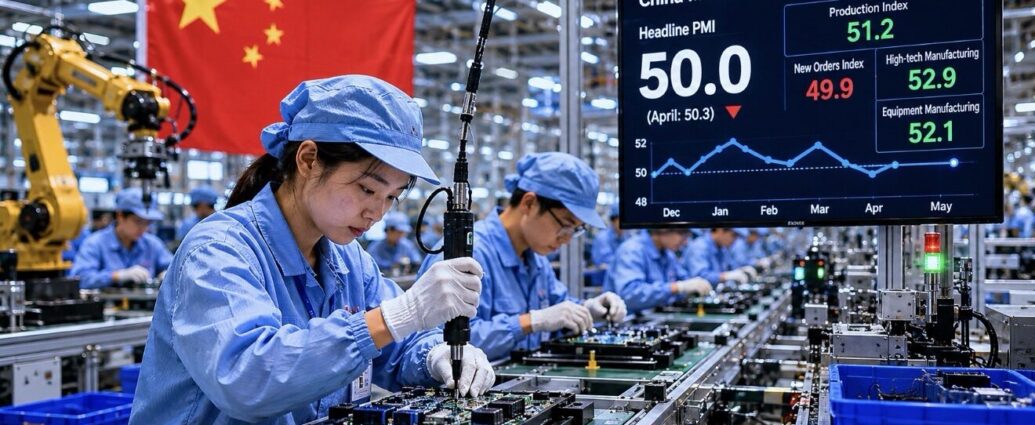
The official manufacturing Purchasing Managers’ Index (PMI) registered 50.0 in May, down from 50.3 in April. The reading places the world’s second-largest economy directly on the dividing line between expansion and contraction, signaling that factory activity effectively stalled during the month.

While the headline number suggests stability, the details underneath tell a more complicated story.

Chinese factories continued producing goods at a healthy pace. The production sub-index remained in expansion territory at 51.2, indicating manufacturers are still operating and output remains relatively resilient.

Demand, however, is beginning to weaken.

The closely watched new orders sub-index slipped to 49.9, falling just below the 50-point threshold that separates growth from contraction. The reading suggests customers, both domestic and international, are becoming more cautious even as factories continue manufacturing products.

In practical terms, Chinese factories are still making goods, but incoming orders are no longer keeping pace.

Officials highlighted stronger performance in higher-value sectors that Beijing has prioritized as part of its long-term economic strategy.

According to Huo Lihui, chief statistician at the National Bureau of Statistics, China’s newer growth industries continued outperforming traditional manufacturing segments. The PMI for high-tech manufacturing rose to 52.9, while equipment manufacturing reached 52.1, both comfortably above the expansion threshold.

Those numbers reinforce Beijing’s push to move China up the global value chain and reduce dependence on lower-margin manufacturing industries.

The divergence illustrates the increasingly two-speed nature of China’s economy.

Advanced manufacturing sectors tied to electronics, automation, industrial equipment, and technology continue showing growth. More traditional industries tied to consumer goods, construction materials, and lower-cost exports remain under pressure.

Several factors are contributing to the softer demand environment.

China continues to wrestle with a prolonged property-sector slowdown that has weakened consumer confidence and business investment. Domestic spending has improved only gradually, leaving manufacturers more dependent on exports to maintain growth.

At the same time, global economic uncertainty remains elevated.

Higher energy costs linked to ongoing tensions in the Middle East have increased expenses for manufacturers worldwide. Rising costs for oil, petrochemicals, transportation, and raw materials continue squeezing margins, particularly among lower-value industrial producers.

China’s massive industrial base gives it advantages in absorbing some of these pressures, but it cannot fully escape rising global input costs.

There are also signs of cautious optimism on the trade front.

Recent discussions between President Donald Trump and Chinese President Xi Jinping have fueled hopes that U.S.-China economic relations could stabilize after years of trade tensions. While no major breakthroughs have been announced, markets are closely watching for signs that trade conditions could become more predictable for exporters.

For global consumers and businesses, China’s manufacturing data matters far beyond its borders.

China remains one of the world’s largest producers of consumer goods, industrial products, electronics, machinery, and components. Changes in Chinese factory activity often ripple through global supply chains, affecting everything from shipping volumes to retail prices.

Economists say the May PMI reading may also increase pressure on Chinese policymakers to provide additional support for the economy.

A reading of 50.0 does not indicate a recession or severe slowdown, but it does suggest growth remains fragile. If demand continues weakening in coming months, Beijing could face growing calls to introduce targeted stimulus measures aimed at supporting manufacturing, consumer spending, and business investment.

For now, the message from China’s factories is relatively simple: production remains steady, but demand is beginning to soften.

Whether that proves to be a temporary pause or the start of a broader slowdown will likely become clearer in the months ahead.

Beijing — JBizNews Desk

© JBizNews.com All Rights Reserved. Reproduction or distribution without written permission is prohibited.

The U.S. airline industry is entering a new phase of competition, and travelers are already feeling the effects.

For years, airlines fought largely on ticket prices, offering increasingly cheaper fares to fill seats. Today, the battle is shifting. Major carriers are pouring money into premium cabins, airport lounges, and luxury travel experiences while simultaneously stripping more perks from their lowest-priced tickets.

The result is an industry increasingly divided between travelers willing to pay more and those trying to fly on a budget.

The clearest evidence comes from the nation’s largest airlines.

Delta Air Lines reported that premium-ticket revenue increased 14% year-over-year during the first quarter of 2026, according to results released on April 8. While main-cabin demand remained stable, premium products continued to drive much of the carrier’s growth.

United Airlines is seeing a similar trend. The company has reported strong demand for premium seating as travelers continue spending on upgraded experiences despite broader economic uncertainty. Revenue from premium cabins has become an increasingly important profit driver for the Chicago-based carrier.

The message from airline executives is clear: travelers willing to pay for comfort, flexibility, and convenience are becoming the industry’s most valuable customers.

At the same time, airlines are making their lowest-priced fares increasingly restrictive.

American Airlines announced new changes this spring affecting basic economy travelers. Tickets purchased under the airline’s lowest fare category are no longer eligible for complimentary seat assignments, even for many frequent flyers. The move follows earlier changes that eliminated mileage and loyalty-point earning on certain basic economy tickets.

The carrier has also increased baggage fees. A first checked bag now costs up to $50 at the airport, while a second checked bag can reach $60, with higher charges for additional luggage.

American is far from alone.

Delta, United, and JetBlue Airways have all implemented baggage-fee increases in recent months as airlines seek additional revenue streams beyond the base airfare.

Industry analysts describe the strategy as “unbundling.”

Rather than including services in the ticket price, airlines increasingly separate each feature into an individual purchase. Seat assignments, checked bags, priority boarding, ticket flexibility, and even some carry-on privileges have become separate products that travelers purchase individually.

The trend is now expanding into premium travel as well.

Delta has announced plans to introduce lower-cost versions of business and first-class fares with fewer included benefits. United has implemented similar tiered offerings within its international Polaris business-class product.

Even luxury travel is becoming segmented.

Several factors are driving the shift.

One major challenge is fuel costs.

The conflict involving Iran and disruptions across the Middle East have pushed energy prices higher, increasing one of the largest expenses airlines face. Higher jet fuel prices directly impact airline profitability and often translate into higher ticket prices.

At the same time, airlines have reduced flight schedules in several markets, limiting seat supply. Fewer available seats generally support stronger pricing power.

Government data reflects the trend.

According to the Bureau of Labor Statistics, airline fares increased 20.7% over the 12 months through April 2026, making air travel one of the fastest-rising categories in the inflation report.

Competition itself is also changing.

In one of the industry’s most surprising developments this year, United Airlines CEO Scott Kirby publicly disclosed that he had approached American Airlines about a potential merger between the nation’s two largest carriers.

American CEO Robert Isom rejected the idea, calling such a combination anti-competitive and harmful to consumers. President Donald Trump also voiced opposition to the proposal.

The merger discussion ended quickly, but the fact that it was considered at all highlights how aggressively major airlines are looking for ways to strengthen their positions.

Meanwhile, pressure is mounting on the discount end of the market.

Low-cost carriers that once disrupted the industry by offering rock-bottom fares are facing growing financial challenges as operating costs rise and larger airlines compete more aggressively for price-sensitive customers.

For travelers, the implications are straightforward.

Passengers willing to pay for premium cabins, extra legroom, airport lounge access, and flexible tickets will likely see more options and improved products in the years ahead.

Budget-conscious travelers should expect the opposite.

The lowest advertised fares increasingly come with restrictions, additional fees, and fewer included services. The headline price often represents only a portion of the total cost of the trip.

That means comparison shopping has become more important than ever.

The cheapest ticket on the screen may not be the cheapest ticket once baggage fees, seat assignments, boarding privileges, and other add-ons are included.

As airlines continue reshaping their business models, travelers are discovering a new reality: the airfare you see is no longer necessarily the airfare you pay.

JBizNews Desk — Aviation

© JBizNews.com All Rights Reserved. Reproduction or distribution without written permission is prohibited.

Crude oil futures settled higher as the weekend passed without the U.S. and Iran reaching an agreement to reopen the Strait of Hormuz and the two sides exchanged strikes.

This post was originally published here. 

By JBizNews Desk

WASHINGTON — June 1, 2026

The U.S. Department of Commerce moved Sunday to close a loophole that had allowed some of America’s most advanced artificial-intelligence processors to reach Chinese-owned companies operating outside mainland China, marking the latest escalation in Washington’s effort to restrict Beijing’s access to cutting-edge AI technology.

In guidance issued over the weekend, the department said it will require export licenses for advanced AI chips shipped to entities headquartered in China, even when those entities are located in third countries. The move targets a pathway that industry experts say may have enabled Chinese firms to acquire high-performance processors through overseas subsidiaries despite broader U.S. restrictions.

The guidance specifically applies to some of the most powerful AI chips currently on the market, including Nvidia’s Blackwell and Rubin platforms and Advanced Micro Devices’ MI350-series processors, which are used to train and operate large-scale artificial-intelligence models.

The action closes a gap that emerged after the U.S. government stopped enforcing the Biden-era AI Diffusion Rule in 2025. That regulation had established a framework governing exports of advanced AI hardware worldwide. When enforcement ended, foreign subsidiaries of Chinese companies operating in countries outside China gained a potential avenue to purchase U.S.-made chips that would otherwise face restrictions.

Industry observers say the issue has become increasingly important as demand for AI computing power has exploded worldwide. Advanced processors have become a strategic asset, often compared to oil or rare earth minerals because they serve as the foundation for modern artificial intelligence systems.

The Commerce Department’s guidance suggests Washington is increasingly concerned that Chinese firms may have used overseas operations in locations such as Southeast Asia and the Middle East to gain access to restricted technology. While no official figures have been released, supply-chain analysts have suggested that substantial numbers of advanced processors may have been sold through these channels during the past year.

Chris McGuire, a former U.S. State Department official and technology policy expert, described the issue as a significant national-security concern, arguing that foreign subsidiaries of Chinese firms were able to purchase advanced AI hardware without the same licensing scrutiny applied to entities located inside China.

The move comes amid an intensifying global competition over artificial intelligence leadership. U.S. policymakers increasingly view advanced semiconductors as a strategic technology with military, economic, and geopolitical implications. Restricting access to the most powerful chips has become a central pillar of Washington’s broader effort to maintain a technological advantage over China.

For chipmakers such as Nvidia and AMD, the policy creates additional uncertainty in one of the industry’s most important markets. China and Chinese-linked customers have historically represented a significant source of demand for high-performance computing products, though export controls have steadily tightened over the past several years.

The latest restrictions add to a growing web of licensing requirements, reviews, and compliance procedures governing AI-related exports. Companies seeking to sell advanced processors to Chinese-linked entities abroad will now face greater regulatory scrutiny and potentially longer approval timelines.

Neither Nvidia nor AMD immediately commented on the new guidance. The Commerce Department also did not provide additional details regarding enforcement or the number of transactions that may be affected.

While the immediate market impact remains uncertain, the policy underscores a broader reality: the battle for artificial-intelligence leadership is increasingly being fought through export controls, supply chains, and semiconductor manufacturing capacity rather than traditional trade measures.

For Washington, the objective is clear. By closing what officials viewed as a significant loophole, the United States is attempting to ensure that restrictions on advanced AI technology apply not only within China itself but also to Chinese-controlled entities operating anywhere in the world.

As governments increasingly view artificial intelligence as a strategic national asset, the rules governing who can access the world’s most powerful chips are likely to become even more restrictive in the years ahead.

Washington — JBizNews Desk

© JBizNews.com All Rights Reserved. Reproduction or distribution without written permission is prohibited.

WASHINGTON — JBizNews Desk — May 31. 2026

Treasury Secretary Scott Bessent confirmed Thursday that the Treasury Department has already designed a proposed $250 bill featuring President Donald Trump’s portrait, while acknowledging the currency cannot legally enter circulation unless Congress changes a federal law that has blocked living Americans from appearing on U.S. money for more than 160 years.

Speaking from the White House briefing room, Bessent said Treasury prepared prototype designs in advance but stressed that the department “will stick to the law” unless lawmakers act.

“It’s all in the hands of Capitol Hill,” Bessent told reporters.

The confirmation followed a report earlier Thursday from The Washington Post revealing that Trump-appointed Treasury officials, including U.S. Treasurer Brandon Beach, had pushed the Bureau of Engraving and Printing to produce mock-ups of the proposed bill.

The reported designs place Trump’s portrait prominently in the center alongside signatures from both Trump and Bessent.

During the briefing, Bessent held up a printed copy of the Post article and downplayed suggestions that the administration was attempting to bypass existing restrictions, describing the prototypes as preparation rather than implementation.

The obstacle standing in the way is a federal statute dating back to 1866.

U.S. law currently prohibits living individuals from appearing on American currency or government securities. Congress enacted the rule after then-Treasury official Spencer Clark controversially placed his own image on a five-cent note, triggering public backlash and forcing lawmakers to establish a permanent ban.

Because Trump remains a sitting president, the proposed $250 note cannot legally move beyond the prototype stage unless Congress formally rewrites the law.

A legislative effort already exists but has stalled.

Last year, Republican Congressman Joe Wilson of South Carolina introduced legislation directing Treasury to issue $250 bills featuring Trump’s portrait. The proposal has not advanced through Congress.

Treasury attempted to frame the effort partly around the upcoming America250 celebration marking the nation’s 250th anniversary, saying the department is preparing commemorative designs tied to the historic milestone rather than asserting any immediate authority to print the notes now.

Beyond the politics, the proposal carries substantial operational and financial implications.

The United States has not introduced a new circulating paper-currency denomination in decades. Adding a $250 note would require banks, ATM manufacturers, retailers, armored-car companies, vending-machine operators, cash processors, and counterfeit-detection systems to recalibrate equipment and software to recognize, validate, and handle the new bill.

Cash-handling infrastructure across the country would face significant upgrade and retraining costs.

There are also broader monetary-policy concerns.

The U.S. government stopped issuing circulating bills larger than $100 in 1969, retiring denominations including the $500, $1,000, $5,000, and $10,000 notes partly because officials believed high-value paper currency facilitated money laundering, tax evasion, and organized crime.

A modern $250 bill would represent a major reversal of that decades-long policy direction unless treated strictly as a limited commemorative issue rather than a widely circulating denomination.

Treasury has not clarified which path it ultimately envisions.

The proposal also fits into a broader pattern of Trump-linked federal branding surrounding the nation’s 250th anniversary.

Earlier this year, Treasury confirmed that Trump’s signature would appear on commemorative America250 currency, itself highly unusual for a sitting president. The department has also announced commemorative coin programs tied to Trump under authority granted by the Circulating Collectible Coin Redesign Act of 2020.

Supporters argue the proposals appropriately honor the president serving during a historic national milestone.

Critics counter that placing a sitting president’s image on currency risks blurring longstanding boundaries between patriotic commemoration and political branding.

For now, however, the practical reality remains unchanged.

The designs exist. The prototypes have reportedly been prepared. But unless Congress changes federal law, the proposed Trump $250 bill remains a symbolic concept rather than legal tender — a printed mock-up waiting on votes that have not yet arrived.

Washington — JBizNews Desk

© JBizNews.com All Rights Reserved. Reproduction or distribution without written permission is prohibited.

JBizNews Desk

A meeting that would have been unthinkable just months ago is now being viewed as a potential turning point for one of the world’s most troubled economies.

In a post on X on May 30, International Monetary Fund Managing Director Kristalina Georgieva confirmed that she met in Washington with Calixto Ortega, Vice President of Venezuela’s Economy Ministry, marking the first in-person meeting between the IMF’s top official and Venezuelan representatives since the fund resumed formal engagement with the country earlier this year.

“We discussed how the IMF can support efforts to strengthen macroeconomic stability, including through capacity development,” Georgieva wrote.

While brief, the meeting represents a significant step toward rebuilding relations between Venezuela and the global financial institutions that have largely been absent from the country for years.

A Break From Years of Isolation

The IMF and World Bank largely suspended dealings with Venezuela in 2019 amid disputes over the country’s political leadership and questions surrounding international recognition of its government.

That changed on April 16 when the IMF announced it would resume formal engagement with Venezuela under the administration of Interim President Delcy Rodríguez, reopening communication channels that had been frozen for years.

The renewed relationship follows major political changes inside Venezuela and has created an opportunity for international institutions to begin assessing the country’s economic condition after years of limited transparency and unreliable economic reporting.

According to IMF officials, current discussions are focused primarily on rebuilding economic data collection and reporting systems, a necessary first step before the fund can evaluate the country’s financial health or consider broader assistance programs.

Why the IMF Matters

For countries facing severe economic challenges, the IMF often serves as the gateway to broader international financial support.

Before debt restructuring, economic reform programs, or large-scale international financing can occur, governments typically must work with the IMF to establish credible economic data, policy frameworks, and stabilization plans.

That process is especially important in Venezuela.

The country remains burdened by one of the most severe economic collapses in modern history. Years of hyperinflation, declining oil production, economic mismanagement, sanctions, and political instability have dramatically weakened public finances and living standards.

According to IMF estimates, Venezuela’s public debt stands at approximately 180% of gross domestic product, one of the highest debt burdens in the world.

Inflation remains elevated, the currency continues to face pressure, and economic conditions remain fragile despite recent improvements.

Oil Markets Are Watching Closely

The implications extend beyond Venezuela.

The country possesses some of the largest proven oil reserves in the world, making its economic recovery a matter of interest for global energy markets.

A more stable Venezuelan economy could eventually support increased oil production, additional exports, and greater participation in international energy markets.

For global consumers, increased supply from a major producer could help ease long-term pressure on energy prices.

Several international energy companies have already begun exploring opportunities in Venezuela as conditions improve. Among them is Chevron, which has expanded engagement with the country following changes in U.S. policy and sanctions.

While a full recovery remains years away, investors are closely monitoring whether improved relations with international institutions could accelerate the process.

The Human Dimension

Behind the financial statistics lies a humanitarian crisis that has reshaped the region.

Since 2014, approximately 8 million Venezuelans have left the country, according to international organizations, making it one of the largest migration and displacement events in the world.

Many fled because of economic hardship, shortages of essential goods, collapsing public services, and limited employment opportunities.

Economic stabilization would not immediately reverse that trend, but it could create conditions that encourage investment, job creation, and eventually the return of some who left.

The outcome also matters for neighboring countries that have absorbed millions of Venezuelan migrants and for the broader Western Hemisphere, where migration pressures remain a major political and economic issue.

What Happens Next

The meeting between Georgieva and Ortega does not signal immediate financial assistance or an IMF lending program.

Instead, it marks the beginning of what could be a lengthy process involving economic assessments, data collection, policy reviews, and negotiations.

If progress continues, Venezuela could eventually receive a formal IMF economic evaluation for the first time in roughly two decades.

Such a review could open the door to future financial support, debt restructuring discussions, and access to resources currently beyond the country’s reach.

For now, the significance lies less in what was announced and more in the fact that the meeting happened at all.

After years of isolation, Venezuela is once again sitting at the table with one of the world’s most influential financial institutions.

Whether that conversation ultimately leads to economic recovery remains uncertain, but the reopening of the dialogue marks a notable shift in a relationship that many believed would remain frozen indefinitely.

JBizNews Desk

© JBizNews.com All Rights Reserved. Reproduction or distribution without written permission is prohibited.

JBizNews Desk

The U.S. government has delivered a blunt message to shipping companies navigating one of the world’s most important energy chokepoints: do not make deals with Iran to cross the Strait of Hormuz.

In updated guidance issued May 29, the U.S. Treasury Department warned that American companies are prohibited from accepting any arrangement with the Iranian government related to safe passage through the strategic waterway — even if no money changes hands.

“Regardless of whether a payment is made, U.S. persons are prohibited from receiving services from the Government of Iran, including services related to a guarantee of safe passage,” Treasury said in its updated statement.

The guidance arrives at a sensitive moment as markets closely watch efforts to restore normal shipping through the Strait of Hormuz following months of conflict that disrupted one of the world’s most critical trade routes.

What Treasury Is Prohibiting

The updated guidance expands previous warnings that focused primarily on payments, tolls, fees, or other financial transactions involving Iranian authorities.

Under the new interpretation, simply accepting an Iranian guarantee of safe passage could constitute a prohibited service under U.S. sanctions rules.

The warning centers on the Persian Gulf Strait Authority (PGSA), a recently established Iranian entity that Tehran says is responsible for managing vessel traffic through the strait.

According to Treasury, the PGSA works alongside elements of Iran’s Islamic Revolutionary Guard Corps (IRGC) and has sought to direct shipping traffic through routes designated by Iranian authorities.

The Office of Foreign Assets Control (OFAC) has sanctioned the PGSA under U.S. counterterrorism authorities, meaning American individuals and companies face significant sanctions exposure if they engage with the organization.

Iran maintains that the system is designed to manage navigation and maritime safety. U.S. officials argue that it functions as a mechanism for coercion and control over international shipping.

Why Hormuz Matters

The Strait of Hormuz is among the most strategically important waterways on earth.

Roughly one-fifth of global oil consumption typically passes through the narrow channel connecting the Persian Gulf to international markets. Major energy exporters including Saudi Arabia, the United Arab Emirates, Kuwait, Iraq, and Qatar rely heavily on the route.

Disruptions to shipping through Hormuz can quickly affect oil prices, shipping costs, insurance rates, and ultimately consumer prices worldwide.

Since conflict escalated earlier this year, vessel traffic through the region has slowed significantly, contributing to heightened volatility across global energy markets.

The Treasury guidance underscores the difficult position many shipping companies now face.

A vessel attempting to leave the Persian Gulf cannot negotiate directly with Iranian authorities without risking sanctions exposure. At the same time, uncertainty surrounding transit security continues to complicate shipping operations and increase costs.

The Business Impact

For shipping companies, energy traders, insurers, and commodity markets, the new guidance adds another layer of complexity.

War-risk insurance premiums have risen sharply for vessels operating in the region, while shipping firms continue to evaluate route risks and security considerations.

Some tankers have successfully transited the waterway under heightened security measures and military protection, but industry executives remain cautious.

The situation is particularly important for energy markets because every disruption in Hormuz affects global oil supply calculations.

Even modest reductions in tanker traffic can tighten markets and contribute to higher fuel prices around the world.

A Complication for Broader Diplomatic Efforts

The Treasury announcement also highlights a broader policy challenge.

While discussions continue regarding a potential diplomatic framework aimed at restoring stability and reopening maritime traffic, the U.S. government is simultaneously reinforcing sanctions restrictions that limit direct engagement with Iranian authorities.

That creates a difficult environment for businesses seeking clarity on future operations.

Shipping companies, insurers, commodity traders, and multinational corporations are left navigating a rapidly changing landscape in which security, sanctions compliance, and geopolitical developments are all closely intertwined.

Adding to the uncertainty, Iranian lawmakers have reportedly advanced legislation intended to formalize the authority of the PGSA, potentially giving the organization a more permanent role in Tehran’s maritime strategy.

Such a move would not change international maritime law or remove U.S. sanctions, but it could further complicate future negotiations over shipping access and transit rights.

Why Consumers Should Care

For most Americans, the impact of the Strait of Hormuz is felt far from the Persian Gulf.

The route plays a critical role in global energy flows, and disruptions can influence the cost of gasoline, diesel fuel, airline tickets, shipping expenses, and countless products that depend on transportation.

Higher insurance costs, longer transit times, and supply uncertainty all contribute to broader inflation pressures.

A fully secure reopening of Hormuz would likely help stabilize energy markets and ease some of those costs.

Treasury’s latest guidance, however, makes clear that Washington is not willing to allow private companies to negotiate their own arrangements with Tehran to achieve that outcome.

For now, the message from the U.S. government is straightforward: American companies must stay clear of any agreements with Iranian authorities related to passage through the Strait of Hormuz.

Until broader diplomatic and security issues are resolved, one of the world’s most important shipping lanes will remain a source of uncertainty for global commerce.

JBizNews Desk

© JBizNews.com All Rights Reserved. Reproduction or distribution without written permission is prohibited.

By JBizNews Desk

May 31, 2026

When a reporter asked U.S. Treasury Secretary Scott Bessent whether he had urged newly installed Federal Reserve Chairman Kevin Warsh to cut interest rates during a breakfast meeting Thursday morning, Bessent did not answer directly.

Instead, he offered a carefully crafted response that may have revealed more than a simple yes or no ever could.

Bessent confirmed he had breakfast with Warsh earlier in the day, continuing a long-standing Washington tradition in which Treasury secretaries and Federal Reserve chairs meet privately to discuss economic conditions. Such meetings are common, but details rarely become public.

Asked whether he had pushed Warsh to lower interest rates, Bessent reached back to his relationship with former Federal Reserve Chairman Jerome Powell.

“I had breakfast with Chair Powell 41 times, and I never did that,” Bessent said.

The answer immediately caught Wall Street’s attention.

Rather than directly addressing his conversations with Warsh, Bessent chose to discuss his interactions with Powell. For investors trying to assess whether the White House might pressure the new Fed chairman to lower rates, the distinction mattered.

The context helps explain why.

President Donald Trump frequently criticized Powell during his tenure, arguing that interest rates should be lower and that the Federal Reserve was unnecessarily restraining economic growth. With Powell now gone and Warsh occupying the chairmanship, investors are closely watching for signs that the relationship between the White House and the central bank may change.

At stake is one of the most important questions facing financial markets.

The Federal Reserve’s benchmark interest rate currently sits between 3.5% and 3.75%, following a series of policy adjustments designed to balance economic growth against inflation risks.

Some economists believe Warsh could pursue a more aggressive easing cycle than markets currently expect. Others argue persistent inflation pressures make substantial cuts unlikely in the near term.

The disagreement is reflected in forecasts.

Several economists project that the Federal Reserve could reduce rates significantly before year-end if economic growth slows and inflation eases. Financial markets, however, continue to price in a more cautious path, suggesting investors remain unconvinced that aggressive cuts are imminent.

That gap between expectations and reality matters.

For businesses, lower interest rates reduce borrowing costs and encourage investment. For consumers, they can eventually lead to lower mortgage rates, cheaper car loans, and reduced financing costs across the economy.

At the same time, lower rates can also stimulate demand and potentially add inflationary pressure if price increases remain elevated.

That concern has become increasingly relevant as energy markets remain unsettled.

The ongoing disruption in the Strait of Hormuz has pushed fuel prices higher, raising transportation and logistics costs across multiple sectors. Those increases have begun filtering through the broader economy, complicating the Federal Reserve’s inflation outlook.

A central bank that cuts rates while inflation remains elevated risks fueling further price increases.

That reality may explain why neither Bessent nor Warsh appears eager to signal major policy shifts.

Historically, new Federal Reserve chairs receive a period of adjustment before facing intense political scrutiny. Warsh, still early in his tenure, is likely focused on establishing his credibility with markets, policymakers, and investors before making significant changes to monetary policy.

Bessent’s response may have reflected an effort to preserve that independence.

By emphasizing that he never pressured Powell, the Treasury secretary reinforced the longstanding principle that the Federal Reserve should make decisions based on economic conditions rather than political considerations.

Whether markets accept that interpretation remains another question.

Investors will continue scrutinizing every public statement from both men for clues about the direction of interest rates, particularly as inflation, employment, and economic growth data evolve over the coming months.

For households, however, the practical takeaway is straightforward.

Expectations for sharply lower borrowing costs may be premature.

The Federal Reserve faces an economy still grappling with inflation risks, volatile energy prices, and geopolitical uncertainty. Those factors make aggressive rate cuts difficult to justify in the near term.

For now, mortgage rates, business loans, and credit card costs are unlikely to fall simply because a new Fed chairman has arrived.

The most important message from Bessent’s breakfast meeting may be that Washington is not yet ready to force the issue.

New York — JBizNews Desk

© JBizNews.com All Rights Reserved. Reproduction or distribution without written permission is prohibited.

By JBizNews Desk

SEATTLE — May 31, 2026

For more than two decades, Bill Gates carefully transformed himself from one of the most feared executives in corporate America into one of the most trusted figures in global philanthropy.

The transition was remarkable. The hard-charging co-founder of Microsoft, whose company spent years battling antitrust regulators, evolved into the soft-spoken billionaire associated with vaccines, disease prevention, education reform, and global development. The image became so successful that many younger Americans know Gates primarily as a philanthropist rather than the businessman who built one of the world’s largest technology companies.

But a recent Wall Street Journal report is raising new questions about just how carefully that image was constructed—and whether the institution built around it can withstand mounting scrutiny.

According to current and former employees cited by the Journal, Gates’ public appearances have long been managed with extraordinary precision. Staff reportedly maintain a custom-sized mannequin used to test clothing selections in advance of appearances, while multiple pre-approved outfit combinations are prepared for events. The goal, according to individuals familiar with the process, was consistency: projecting a calm, approachable, thoughtful public persona.

The detail has generated headlines and social media commentary. But the larger issue extends far beyond sweaters, glasses, or wardrobe planning.

For the Bill & Melinda Gates Foundation and related philanthropic organizations, reputation is not merely a public-relations concern. It is a core asset.

Unlike traditional businesses that generate revenue by selling products or services, major philanthropic organizations depend heavily on trust, credibility, and relationships. Donors, governments, universities, pharmaceutical companies, nonprofit organizations, and international agencies often choose partners based as much on reputation as on financial resources.

That dynamic becomes especially important for institutions operating on the scale of the Gates Foundation.

The foundation supports programs across global health, agriculture, education, economic development, and disease prevention in more than 130 countries. Through initiatives such as Gates Philanthropy Partners and the Giving Pledge, the organization also helps attract additional capital from wealthy individuals, foundations, and institutional donors.

In many cases, the Gates name itself functions as a form of currency.

Potential donors gain confidence when they believe their contributions are associated with a respected and trusted institution. Companies become more willing to participate in public-private partnerships. Governments become more receptive to collaboration. Researchers become more eager to pursue joint projects.

That is why reputational damage can have consequences far beyond headlines.

The foundation’s investment activities provide one example.

Through strategic investments, guarantees, and partnerships, Gates-backed organizations frequently work alongside private companies to accelerate the development and distribution of vaccines, medicines, agricultural technologies, and public-health initiatives. Such arrangements often depend on mutual confidence and long-term trust between participants.

When a prominent public figure becomes the focus of controversy, that trust can become more difficult to maintain.

The timing of the renewed attention is particularly significant.

The Journal’s report arrives as Gates faces increasing scrutiny regarding past interactions with the late financier Jeffrey Epstein. Gates is expected to face questions about those relationships as congressional inquiries continue examining connections between prominent individuals and Epstein.

Regardless of the outcome of those proceedings, the publicity creates challenges for organizations that rely heavily on public confidence.

The situation also highlights a broader issue facing founder-led institutions.

Whether in business, politics, media, or philanthropy, organizations built around a single personality often benefit enormously during periods of success. A recognizable leader can attract donors, investors, employees, partners, and media attention more easily than a faceless institution.

The same concentration of influence, however, creates vulnerability.

When reputation becomes closely tied to one individual, personal controversies can quickly become organizational challenges. What begins as a public-relations problem can evolve into fundraising difficulties, partnership concerns, recruiting challenges, and broader institutional questions.

For the Gates Foundation, the stakes are particularly high because the consequences extend beyond executives and donors.

The foundation’s work supports researchers, healthcare providers, farmers, educators, and community organizations around the world. If reputational concerns eventually affect funding or partnerships, the impact would ultimately be felt far from Seattle—in clinics, laboratories, schools, and development projects that depend on philanthropic support.

None of that means the institution is in immediate danger. The Gates Foundation remains one of the largest and most influential charitable organizations in the world, with substantial resources and a global footprint developed over decades.

But the episode serves as a reminder that even the most carefully managed public image has limits.

For years, the sweaters, the measured tone, and the carefully cultivated persona helped create one of the most successful reputation transformations in modern public life.

The question now is whether the institution behind that image has become strong enough to stand independent of the man who created it.

Seattle — JBizNews Desk

© JBizNews.com All Rights Reserved. Reproduction or distribution without written permission is prohibited.