Health Catalyst appoints new CEO
2026-09-10


You’re reading the web edition of D.C. Diagnosis, STAT’s twice-weekly newsletter about the politics and policy of health and medicine. Sign up here to receive it in your inbox on Tuesdays and Thursdays.
In his observations on looksmaxxing, Vinay Prasad concludes he is “team sun” after weighing the risks of skin cancer against “improved mood, vitamin D, and better appearance.” Send news tips and photos of Vinay’s haircut to John.Wilkerson@statnews.com or John_Wilkerson.07 on Signal.
The House and Senate are out this week. Next week, the last time the House will be in session until after the midterm elections, is shaping up to be busy.

Want to stay on top of the science and politics driving biotech today? Sign up to get our biotech newsletter in your inbox.
Today, we look at how regulators are trying to keep pace with agentic medical AI, see the FDA launch a project to examine why pregnancy registries struggle with enrollment, and more.
Someone out there cure asthma, eh? It sucks.

An ongoing shortage of cancer medications continues to force leading cancer centers around the U.S. to seek work-around strategies to treat patients and a majority also report that clinical trials have been disrupted, according to a new survey.
All of the centers noted they are experiencing a shortage of at least one medicine, and more than 20% of the centers are currently reporting shortages of five or more different medications. The survey was conducted by the National Comprehensive Cancer Network, a nonprofit alliance of 34 treatment centers.
Meanwhile, 61% reported they are able to treat patients despite shortages, but only by trying to avoid wasting medicines, limiting use of existing inventory and administering the minimum suggested dosing. Two-thirds of the centers also said shortages delay treatment, because they must again pursue prior authorization from insurers.

Rise and shine, everyone, another busy day is on the way. And it is getting off to a pleasant start here on the Pharmalot campus, where clear blue skies and comfy breezes are greeting us. As for the official mascots, they are happily snoozing in their respective corners. As for us, we are firing up the coffee kettle for another cup of stimulation. Our choice today is tiramisu. Of course, you are invited to join us. For the full experience, we are now hawking replicas — take a look. Meanwhile, here are a few items of interest. As always, do keep in touch. We appreciate feedback, criticism, and tips. …
A major Novartis shareholder has called for a shake-up of the drugmaker’s board to improve corporate governance after its shares suffered a record fall this week following back-to-back trial setbacks, Reuters tells us. David Samra, managing director at Artisan Partners and founding partner of International Value Group, said successive chairmen had failed Novartis on acquisitions and that the company needed to change how it oversees deals. In recent days, Novartis disclosed a muscle-wasting disorder drug acquired through its $12 billion takeover of Avidity failed a late-stage study, and results from heart drug pelacarsen disappointed investors.
U.S. Centers for Medicare and Medicaid Services Administrator Mehmet Oz says the Trump administration is pursuing additional drug-pricing deals with pharmaceutical companies, Bloomberg News reports. Officials have so far announced more than two dozen voluntary agreements with pharmaceutical companies. Each of the agreements is bespoke, but companies generally have agreed to lower the prices they charge public programs for medicines and to launch new drugs at prices similar to those paid by other developed nations in exchange for relief from tariffs.

Get your daily dose of health and medicine every weekday with STAT’s free newsletter Morning Rounds. Sign up here.
A high-level official at Anthropic posted on Tuesday evening that he believes there is a greater than 10% chance that “AI could kill all humans” within the next decade.

This story first appeared in Adam’s Biotech Scorecard, a subscriber-only newsletter. STAT+ subscribers can sign up here to get it delivered to their inbox.
Before the end of September, UniQure is expected to report four-year results from the closely tracked clinical trial of AMT-130, its gene therapy for Huntington’s disease.
Three-year results were reported almost one year ago. The high dose of AMT-130, administered to 12 patients, slowed the progression of Huntington’s by 75% compared to matched participants in an external control group based on a large, natural history study.

This story first appeared in Adam’s Biotech Scorecard, a subscriber-only newsletter. STAT+ subscribers can sign up here to get it delivered to their inbox.
Roivant has proven to be one of the savviest dealmakers in biotech, evidenced once again this week by the strong efficacy achieved by its pipeline drug mosliciguat in a Phase 2 study of pulmonary hypertension associated with interstitial lung disease, or PH-ILD.
As I wrote Tuesday, the study results could open up a new way to treat the serious lung disease and bolster Roivant’s financial health with a second blockbuster medicine. The drug’s origins are another fascinating aspect to the story.

When Sen. John Fetterman’s support of Israel garnered him ill will in an increasingly pro-Palestinian Democratic caucus in May 2024, Sen. Cory Booker attempted to rehabilitate his colleague’s sudden turn toward more right-wing, moralistic positions with praise, casting the still-aphasic stroke survivor as an “inspiring figure” whose “moral voice,” despite his language impairments, had “only grown stronger.”
In September, 15 months after Booker’s statement, a Wall Street Journal investigation described a senator so checked out that he skipped 11 of 12 hearings in one stretch, dismissed Children’s Hospital of Philadelphia officials as wanting “free trips to D.C.,” and called a three-hour funeral for slain police officers “a nonstarter.” Rep. Brendan Boyle, a fellow Pennsylvania Democrat, called him “a disgrace” and “lazy.”

BANGOR, Maine — Rural health care providers, which have struggled for years, are facing nearly $1 trillion in Medicaid cuts over the coming decade. The Trump administration is pointing to a cutting-edge, if unproven way to save them: artificial intelligence.
“The best way to help” rural communities, is “AI-based avatars,” Mehmet Oz, who leads the Centers for Medicare and Medicaid Services, said at an event on mental health this year.

In Iowa, the Republican candidate for governor wants to end all school vaccine requirements. In Florida, the Republican running for governor recently told CBS that he supported his state’s push to remove certain vaccine mandates for schools. And in Texas, the Republican Senate candidate spent the last few years as the state’s attorney general investigating financial interests linked to vaccine recommendations.
Vaccine policy has become a prominent issue ahead of the November midterms elections, spurred on by a vaccine-skeptical president and health secretary. A number of Republican candidates have embraced health secretary Robert F. Kennedy Jr.’s Make America Healthy Again message, which includes an emphasis on medical freedom and a rejection of vaccine mandates. Other, more liberal candidates, have positioned themselves as willing to stand up and hold Kennedy accountable.
“I can’t wait to sit across from RFK Jr. and actually grill him,” Michigan Democratic Senate candidate Abdul El-Sayed said on CNN in August after winning his party’s nomination.

LONDON — A U.K. commission on Thursday unveiled its recommendations for how the country should regulate artificial intelligence in medicine, as health authorities globally try to determine how to continuously review ever-changing products after they have been authorized instead of simply clearing them once for the market.
In its report, the commission sought to strike a balance between ensuring that the U.K. takes advantage of AI’s potential in medicine — the ability to review the millions of scans that are generated each year to track the eye health of patients with diabetes, for example — while prioritizing safety, tracking device performance over time, and treating patients equitably.
The 44 recommendations include some that would allow for the staged authorization of new AI models and others that would build a system for providers to report how tools are performing in their clinics — including when they malfunction or potentially inhibit patient care — as the models learn and adapt and perform differently depending on the setting.

NEW YORK — The two measles-related deaths in Pennsylvania last month involved infants, and the virus itself caused one of the deaths, a Pennsylvania coroner confirmed Wednesday.
Lancaster County’s coroner, Dr. Stephen Diamantoni, said he told the Centers for Disease Control and Prevention of his conclusions. CDC officials, however, have not said whether they will count either death as measles-associated, and the agency’s website still carries a disclaimer about them.

ARPA-H, the government agency that funds cutting-edge health research, plans to commit $62.7 million to develop artificial intelligence bots that direct treatment of heart failure. Among the goals of the program, called ADVOCATE, is to produce partially autonomous AI devices authorized by the Food and Drug Administration to help treat patients, including assessing symptom severity, prescribing drugs, and ordering lab tests.
ARPA-H on Wednesday announced the first batch of awards to health tech companies Atman Health, UpDoc, Tempus AI, and teams from Stanford University, Duke University, and the Kaiser Permanente health system. ARPA-H may still fund additional teams. The amount committed for the first year is $33.7 million, and the remainder may be renegotiated up or down.
Many of the 6.7 million Americans with heart failure don’t get optimal treatment because of difficulty accessing specialists, and the hope is that AI agents developed with ARPA-H funding can help address the gap, especially in rural and other underserved settings.


You’re reading the web edition of STAT’s AI Prognosis newsletter, our subscriber-exclusive guide to artificial intelligence in health care and medicine. Sign up to get it delivered in your inbox every Wednesday.
It’s hard to resist the world’s obsession with productivity and efficiency and to force yourself to be present in a quiet space. I’ve been enjoying the wandering_cassettes Instagram account, which posts videos of Fisher Price cassette players playing songs in different settings. This one is particularly calming, but they’re all timeline cleansers.
The newsletter will be off next week as I work on a big new story, but I’ll be back in your inboxes Sept. 23.
Today’s AI Prognosis — and my new story — are brought to you by “The Pitt.” Not in any financial way — I just mean that I finally started watching “The Pitt.” (No spoilers! I’m only halfway through season two.)
Everyone is right — it is extremely compelling television. But what struck me the most was how “The Pitt” feels exactly like the ambulance ride-alongs and emergency department shadowing visits I’ve done: Dropping in on the worst day of someone’s life, but doing it over and over every 40 minutes, for eight to 12 hours, without enough resources.

Want to stay on top of the science and politics driving biotech today? Sign up to get our biotech newsletter in your inbox.
First came the new teaser for Nathan Fielder’s documentary on Elizabeth Holmes. Now come the memes. Bring it on.
For the past few months, key centers at the FDA have been led by acting officials. The agency said yesterday it will now make them permanent. Michael Davis will be director of the Center for Drug Evaluation and Research, and Karim Mikhail will be director of the Center for Biologics Evaluation and Research.
Good morning, everyone, and welcome to the middle of the week. Congratulations on making it this far, and remember there are only a few more days until the weekend arrives. So keep plugging away. After all, what are the alternatives? While you ponder the possibilities, we invite you to join us for a needed cuppa stimulation. Our choice today is ginseng peach, a favorite from our pantry. Meanwhile, here is the latest menu of tidbits to help you on your way. We hope you conquer the world and have a wonderful day. And as always, please do stay in touch. We appreciate feedback, tips and criticism. …
In a pair of late-stage trials, an AstraZeneca drug reduced the dangerous flare-ups that worsen COPD, positioning it as a potential new option for the vast number of patients with the debilitating lung condition, STAT explains. According to data released Tuesday, the results also amount to a re-assuring victory for AstraZeneca, which is known for its metronomic success in trials but has seen some notable misses in recent months, most dramatically with a heart disease drug. Analysts and the company have projected that the injectable drug could reap billions in annual sales if approved, both in COPD and in other conditions including asthma.
The Trump administration permanently filled four key leadership roles at the U.S. Food and Drug Administration on Tuesday, after nominating Heidi Overton to lead the agency late last month, STAT says. Three of the officials are serving in an acting capacity, and will take the same roles permanently. They are Michael Davis, a psychiatrist who will be director of the Center for Drug Evaluation and Research; former Merck official Karim Mikhail, who will be director of the Center for Biologics Evaluation and Research; and Bret Koplow, an attorney who has been at the FDA since 2011 and will serve as director of the Center for Tobacco Products.
Get your daily dose of health and medicine every weekday with STAT’s free newsletter Morning Rounds. Sign up here.
Good morning. I didn’t have space to mention it yesterday, but can you believe Nathan Fielder made an Elizabeth Holmes documentary? Variety called it shameless and fascinating. I may need to see for myself.

SAN DIEGO — When Kura Oncology decided to take aim at a protein involved in cell division and signaling, researchers reported a bonus finding: Targeting the protein, menin, didn’t just control the growth of leukemia cells, it also helped control blood sugar levels in animal studies. The biotech on Wednesday announced that it is turning that insight into a new company.
The new firm, Caspian Therapeutics, is launching with $50 million in financing to develop menin inhibitors for diabetes and other cardiometabolic diseases. The initial funding, led by BVF Partners and joined by Eli Lilly and members of Kura’s leadership team, among others, is meant to advance Caspian’s lead small molecule drug through an early-phase clinical trial in diabetes and support the development of a second candidate.
Kura will retain around 50% ownership of Caspian, and Kura CEO Troy Wilson will serve as executive chair of the new biotech’s board. Robert Spencer, who was most recently CEO of Neurommune Therapeutics and has previously led drug discovery programs at Merck, was named Caspian’s head.

Ezekiel J. Emanuel and Abe Butler-Baker have been debating the proper place for AI in medicine with American Medical Association CEO John Whyte. Now, they are taking their discussion to STAT’s First Opinion. Read Emanuel and Butler’s essay below and read Whyte’s essay here.
In 1867, Joseph Lister published his research on carbolic acid and antiseptic surgical technique. In September 1871, he was summoned to Queen Victoria, who had a rapidly growing abscess in her left armpit. Using his antiseptic surgical technique, Joseph Lister successfully drained the pus. Queen Victoria recovered without fever or other complications. The antiseptic technique quickly gained approval in the U.K. and Europe, but not among American physicians.

Ezekiel J. Emanuel and Abe Butler-Baker have been debating the proper place for AI in medicine with American Medical Association CEO John Whyte. Now, they are taking their discussion to STAT’s First Opinion. Read Whyte’s essay below and read Emanuel and Butler‘s essay here.
Would you want artificial intelligence to tell you that you have cancer?

BOSTON — The building that houses the Brigham and Women’s Hospital emergency department opened in 2022. But by 2025, it was already too small. One early September evening, the emergency room had 59 patients — 152, if you counted everyone in the waiting room.
“In terms of rooms for acute care, we have 61,” said Christopher Baugh, an emergency physician at the hospital. “You can’t see 152 patients in 61 rooms.” Patient beds lined every possible area, with a full circle of beds surrounding the staff workstations in the center of the bay. Figurines of Star Wars characters R2D2 and C3PO peered over beds 80H and 81H — where “H” stands for “hallway.”
To some, this may look like a scene from another country, Baugh said. But to him, it’s just Thursday.

WASHINGTON — The Trump administration permanently filled four key leadership roles at the Food and Drug Administration on Tuesday, after it nominated Heidi Overton to lead the agency late last month.
Three of the officials are serving in an acting capacity, and will take the same roles permanently, the administration said. They are Michael Davis, a psychiatrist who will be director of the Center for Drug Evaluation and Research; former Merck official Karim Mikhail, who will be director of the Center for Biologics Evaluation and Research; and Bret Koplow, an attorney who has been at the FDA since 2011, and will serve as director of the Center for Tobacco products.
The fourth appointee, Jared Seehafer, will serve as the FDA’s first Deputy Commissioner for Technology and Artificial Intelligence. He joined the FDA as an advisor in 2025 after founding a life science software company and working in investment advising in biotech, according to his Linkedin. Under the Trump administration, the agency has pushed for its staff to use AI to speed up its review processes.

Good morning health tech readers!
I hope you had a wonderful long weekend.
Reach me: mario.aguilar@statnews.com
Residue and stains plastered on production walls, floors, and manufacturing equipment. Corrosion on a product line. An employee wearing open-toed sandals.
These were among the unsanitary conditions found last April by a Food and Drug Administration inspector during a visit to Shoolin Pharma in Gujarat, India, where the company makes active pharmaceutical ingredients for more than a dozen medicines, including erectile dysfunction and anti-convulsant pills, that are sold to compounding pharmacies in the U.S., according to the agency.
The concerns about filth and possible contamination in the production and packaging areas — as well as incomplete laboratory testing records — prompted the agency last month to halt all product shipments by the company into the U.S., the FDA disclosed in an Aug. 18 warning letter that was posted on the FDA web site last week.
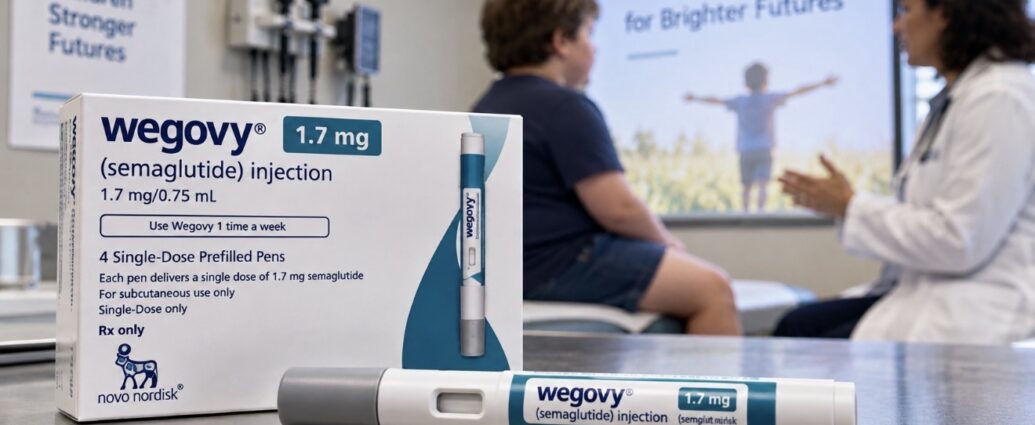
BAGSVAERD, Denmark — Novo Nordisk said Monday that its obesity drug semaglutide produced striking results in a late-stage study involving children as young as six, potentially opening the door to a major expansion of the GLP-1 market into a much younger population.
The company said 40.4% of children ages 6 to under 12 who received semaglutide together with lifestyle intervention were no longer classified as having obesity after 68 weeks, assuming they remained on treatment as planned.
None of the children in the placebo group reached that threshold.
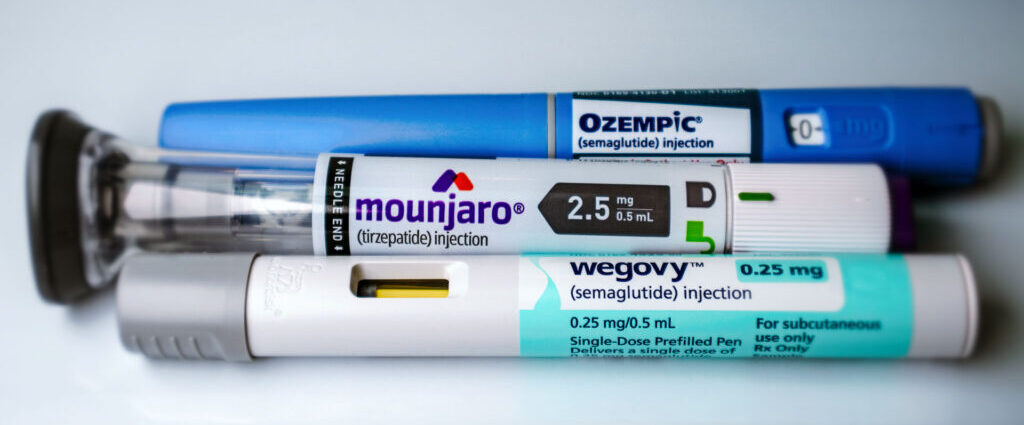
Semaglutide is the active ingredient in Wegovy, Novo Nordisk’s blockbuster obesity treatment, as well as Ozempic, which is approved for diabetes.
The drug is not currently approved for children in this age group.
That makes the study commercially significant.
The global obesity-drug market has already become one of the fastest-growing areas in pharmaceuticals, driven by unprecedented demand for GLP-1 medicines from adults and adolescents.
If regulators eventually allow treatment in children under 12, the potential patient population could expand dramatically.
But the implications go well beyond market size.
Childhood obesity is linked to elevated risks of diabetes, cardiovascular disease and other long-term health problems. Physicians have traditionally relied heavily on nutrition, exercise and behavioral changes, particularly in younger children.
A medicine capable of producing substantial weight reduction would change that treatment model.
The study also raises difficult questions.
Treating children with a long-term injectable obesity drug would require physicians, parents and insurers to weigh the benefits of early intervention against questions about side effects, duration of treatment, cost and whether weight returns after therapy stops.
Those debates have already emerged around GLP-1 medicines in adults.
They could become even more intense when the patients are elementary-school-age children.
Novo Nordisk said the trial tested semaglutide alongside lifestyle modification, not as a replacement for it.
The company reported that the medicine produced significant improvements in body-mass index and other measures of weight compared with placebo.
Novo also said the safety profile was broadly consistent with what has already been observed with semaglutide in older populations.
The company will still need regulatory approval before the drug could be marketed for children under 12.
That means the results are not the same as an approval or recommendation for widespread pediatric use.
But the trial gives Novo something strategically important.
It suggests that the same drug platform that transformed adult obesity treatment may work effectively much earlier in life.
That could become especially valuable as competition in obesity medicine intensifies.
Novo Nordisk and Eli Lilly currently dominate the market, but dozens of pharmaceutical and biotechnology companies are developing competing weight-loss drugs, including pills, longer-lasting injections and new combinations designed to improve efficacy or reduce side effects.
Expanding into younger age groups could give Novo another major growth avenue.
There is also a broader economic consequence.
If GLP-1 drugs increasingly become long-term treatments beginning in childhood, healthcare systems and insurers could face enormous new spending obligations.
The drugs can cost thousands of dollars annually before rebates and discounts.
At the same time, supporters argue that effective early treatment could reduce future medical costs associated with diabetes, heart disease and other obesity-related conditions.
That leaves policymakers with a difficult calculation:
Pay more for obesity treatment now, or potentially pay much more for obesity-related disease later.
Novo Nordisk’s latest trial pushes that debate into an age group that has largely remained outside the GLP-1 boom.
And if regulators ultimately agree with the company’s findings, one of the biggest pharmaceutical markets in the world could become significantly larger.
JBizNews Desk | Bagsvaerd, Denmark
© JBizNews.com All Rights Reserved. Reproduction or distribution without written permission is prohibited.

This is the online version of STAT’s weekly email newsletter Health Care Inc. Sign up here.
I hope you all had a good Labor Day weekend. Robots may be able to run extremely fast now, but at least we know how to stop. Run your thoughts to me anytime: bob.herman@statnews.com.
UnitedHealth Group’s top executives, including CEO Stephen Hemsley, and board members recently flooded the campaign coffers of Rep. Katherine Clark of Massachusetts, the No. 2 Democrat in the House who just beat two opponents in a closely watched primary.

You’re reading the web edition of D.C. Diagnosis, STAT’s twice-weekly newsletter about the politics and policy of health and medicine. Sign up here to receive it in your inbox on Tuesdays and Thursdays.
House Republicans canceled the last two weeks of their session in September, which means House lawmakers will have gotten at least 15 weeks off between Memorial Day and the midterms on Nov. 3. Send news tips and PTO requests to John.Wilkerson@statnews.com or John_Wilkerson.07 on Signal.
In the week that the House was in town, a fuzzy outline of the health care agenda that Democrats are considering should they win back the House started to take form.

Want to stay on top of the science and politics driving biotech today? Sign up to get our biotech newsletter in your inbox.
Today, we delve into how an FDA approval paradoxically complicated access to Revolution Medicines’ new pancreatic cancer drug for some patients, see standout mid-stage results for Roivant’s pulmonary hypertension drug, and more.
Hope you had a lovely long weekend! Estoy trabajando en este Readout de la Biblioteca Vasconcelos en la CDMX.
Good morning, everyone, and welcome to another working week. We hope the weekend respite — longer than usual thanks to a holiday on this side of the pond — was relaxing and invigorating. Now, though, that oh-too-familiar routine of meetings, deadlines, and the like has returned with a vengeance. You knew this would happen, yes? To cope, we are relying, as always, on a cup of stimulation. Our choice today is butter pecan. Feel free to join us. Remember, no prescription is required. Meanwhile, here are a few items of interest. Best of luck accomplishing your goals, and we hope you conquer the world. And, of course, do keep in touch. …
An experimental Novartis drug for a rare neuromuscular condition failed to improve muscle function in a pivotal study, its second major trial collapse in a matter of days, STAT writes. The two study flops will likely stoke concerns about its pipeline and acquisition strategy as it navigates a major patent cliff, though the company did see a victory with a multiple sclerosis drug last week. The stock was down by as much as 10% in early trading in Switzerland. The Phase 3 HARBOR trial was testing the drug del-desiran in a condition called myotonic dystrophy type 1, known as DM1, which causes progressive muscle stiffness and weakness.
Novo Nordisk stopped two trials of a drug that aims to tame inflammation as a way to improve cardiovascular health, another blow for the approach, STAT notes. The company said it had halted the HERMES and ATHENA trials of its drug, ziltivekimab, after a data monitoring committee found they were unlikely to succeed. Novo informed trial investigators on Friday. The move follows the earlier failure of the drug in the ZEUS trial, which showed that the medicine, despite lowering markers of inflammation, did not reduce the risk of major clinical complications, including deaths and heart attacks.

In a pair of late-stage trials, a drug from AstraZeneca reduced the dangerous flare-ups that drive the worsening of COPD, positioning it as a potential new option for the vast numbers of patients with the debilitating lung condition, according to data released Tuesday.
Results from the Phase 3 trials of the drug, called tozorakimab, also amount to a re-assuring victory for AstraZeneca, which is known for its metronomic success in trials but has seen some notable misses in recent months, most dramatically with a heart disease drug. Analysts and the company have projected that “tozo,” as the injectable drug is dubbed, could reap billions in annual sales if approved, both in COPD — which, as the third-leading cause of death globally, remains greatly underserved — and in other conditions including asthma.
In the trials, tozo reduced COPD exacerbations — any sudden worsening of the disease requiring medical care, whether a severe cough or breathlessness — by about 30% across all patients over a year, according to data presented at the European Respiratory Society’s annual conference in Barcelona and published in the New England Journal of Medicine. That finding makes tozo competitive with other COPD treatments that have reached patients in recent years, but notably, the tozo trials included participants not eligible for the other new drugs. The benefits seen in those patients could give AstraZeneca a large segment of the market to itself.

Inhibrx said Tuesday that its experimental immunotherapy targeting a protein called OX40 showed responses in patients with head and neck cancer. But the most striking results were in a small subset of patients with HPV-positive tumors, which could significantly limit the drug’s use.
The results are notable as a legion of drugmakers — including Pfizer, Genentech, GSK, and AstraZeneca — previously tried and failed to use OX40 as a weapon against tumors over the past 15 years.
“It’s just really gratifying for us,” said CEO Mark Lappe. “Pushing this is like a rock up a hill, because there’s been so much failure in the space.”

Get your daily dose of health and medicine every weekday with STAT’s free newsletter Morning Rounds. Sign up here.
Good morning. An exciting post-Labor Day announcement: While STAT’s Lev Facher is away on a Knight-Wallace Fellowship, I’ll be covering the addiction beat for him! My first story published last week. Send me news tips and story ideas to tackle over the next eight months: theresa.gaffney@statnews.com

Roivant said Tuesday an experimental drug for a type of pulmonary hypertension achieved the goals of a mid-stage study — positive results that could open up a new way to treat the serious lung disease and bolster the biotech company’s financial health with a second blockbuster medicine.
In the 16-week Phase 2 study, Roivant said, its drug mosliciguat achieved a statistically significant 56% reduction compared to placebo in pulmonary vascular resistance — a measure of blood pressure and flow within the artery that connects the right side of the heart to the lungs.
Key 16-week secondary endpoints of the study were also met with statistical significance. Mosliciguat showed a 35-meter, placebo-adjusted improvement in six-minute walk distance and a 53% placebo-adjusted reduction in NT-proBNP, a blood-based marker of heart failure.

CLEVELAND — At a GetGo gas station close to a highway entrance in suburban Ohio, a brightly lit sign alerts customers to four new flavors of Vuse Pro vapes, now available in peach, berry, watermelon, and fresh mint.
These products from Reynolds American are already for sale in Ohio and select other states, even though they haven’t been authorized by the Food and Drug Administration. But the FDA effectively invited companies to start breaking the rules when it softened its enforcement guidance in May, according to some critics, setting the stage for what they say is likely to be a new wave of illegal fruit-flavored e-cigarettes.
“If the only reason why a major player like this is putting completely unauthorized and illegal products on the market is because of the FDA enforcement guidance, to me, it shows how wrongheaded that guidance is both as a public health matter, but also as a legal matter,” said Mitch Zeller, a former head of the FDA’s Center for Tobacco Products.
The decision to move ahead with new products in the absence of FDA authorization could spur other big manufacturers frustrated with the agency’s decisions and timelines to do the same, said Cristine Delnevo, director of the Rutgers Institute for Nicotine and Tobacco Studies. (Tobacco giant Altria sued the FDA over the timeliness of its review process last week.) “If major manufacturers conclude that compliance offers little advantage over introducing products first and dealing with regulatory consequences later, it could encourage broader noncompliance across the marketplace,” Delnevo said via email.

When the Food and Drug Administration approved a new pancreatic cancer drug called Rasonque last month, researchers and patient advocates celebrated. Kelsey Solano felt a pit in her stomach.
“Only because the expanded access program immediately closed,” Solano recalled.

UnitedHealth Group’s top executives, including CEO Stephen Hemsley, and company board members recently flooded the campaign coffers of Rep. Katherine Clark of Massachusetts, the No. 2 Democrat in the House who just beat two opponents in a closely watched primary race.
More than 40 officials and board members across UnitedHealth cumulatively donated more than $100,000 to Clark’s campaign during the 2025-2026 election cycle, a STAT analysis of federal records shows. Leading the way was Hemsley and his wife, Barbara, who donated $7,000 each to Clark’s political fund. Hemsley is worth almost $1 billion between his previously exercised stock and remaining stock ownership in UnitedHealth.
The only other federal politician who received even half that amount from UnitedHealth employees this election period was Sen. Mike Crapo (R-Idaho), who is not up for reelection this November.

Last October, as we stood in line for our annual flu shots at our respective health systems, we watched as technicians dutifully sanitized their hands, pulled on standard nitrile medical gloves, gave the shot, and immediately threw the gloves away.
It’s a scene repeated millions of times each fall, and it is driving an environmental crisis as well as unnecessary spending. As experts in infection prevention and clinical sustainability, we think there are several changes that can be made to reduce waste while keeping patients safe. Chief among them: In most cases, it is unnecessary to use gloves to administer a flu shot.

“What are you doing? You can’t wear those here!” the nurse exclaimed, speed-walking down the operating room entry hall to me. She was the third person that morning to remark on my scrubs. It was only 7:05 a.m.
I explained to her, as I had to the others, that I was a medical student, and that the hospital had given me the bright turquoise scrubs because they were the only plus-sized ones available. She lifted a suspicious eyebrow, but ultimately walked away, allowing me to proceed into the OR, where I already struggled to feel comfortable. (The future primary care physician in me would much rather talk to a patient than cut into an anesthetized one.)

BOGALUSA, La. — It was once Louisiana’s “magic city,” its breakneck expansion fueled by a booming lumber industry. Bogalusa, in the southeastern corner of Louisiana, was home to one of the largest sawmills in the world — and later, one of the largest paper mills.
Now, it’s seen as a dying town. Some 40% of its population — which is shrinking — sits below the poverty line. Narrow roads are lined with small houses, and the smell of the remaining paper mill is ever-present. Work has shifted out of manufacturing and into health care.

An experimental drug for a rare neuromuscular condition failed to improve muscle function in a pivotal study, Novartis said Tuesday, the company’s second major trial collapse in a matter of days.
The two study flops will likely stoke concerns about Novartis’ pipeline and its acquisition strategy as it navigates a major patent cliff, though the company did see a victory with a multiple sclerosis drug last week. The stock was down by as much as 10% in early trading in Switzerland.
The Phase 3 HARBOR trial was testing the drug del-desiran in a condition called myotonic dystrophy type 1, known as DM1, which causes progressive muscle stiffness and weakness. Novartis said the drug did not meet its primary endpoint of outperforming placebo on improving video hand opening time, or vHOT, a measure of the hand’s ability to relax after squeezing.