The Food and Drug Administration has again paused trials for Regenxbio’s gene therapy for a rare childhood brain disorder, after small masses were found on the spines of five patients, the company said Monday.

Regenxbio said the patients, who have mucopolysaccharidosis (MPS) type II or Hunter syndrome, did not have any symptoms related to the masses.

The announcement comes seven months after Regenxbio announced that one boy who received a very similar therapy the company developed for MPS type I developed a brain tumor. It was the first tumor to be conclusively linked to AAV gene therapy, the form of gene therapy most commonly used over the past 20 years.

Continue to STAT+ to read the full story…

This post was originally published here. 

At an off-site leadership meeting held by Moderna in March 2023 — after mid-stage results of the biotech company’s cancer vaccine showed promise — CEO Stéphane Bancel had the floor. He asked if any of the 100 or so executives present had expected the experimental treatment to succeed. If they did, he said, please stand up.

Stephen Hoge, Moderna’s president, was standing on stage. He sat down. Then, Hoge recalled in an interview with STAT, Bancel sat down, too.

“None of us believed it,” Hoge said. It had taken time before he remembers feeling, “Oh my gosh. This is real.”

The rest of the world remained skeptical until last Wednesday, when Moderna and Merck revealed that a 1,137-volunteer study had shown the vaccine reduced the odds that melanoma that had been surgically removed would return or spread. Up to that point, investors were betting against Moderna’s stock. Even after the news, some observers argue researchers should wait for fuller data — while longtime skeptics of Moderna’s core mRNA technology do the same.

Top-line results from large pharmaceutical firms are rarely reversed when full data emerge, but doubt is nothing new for Moderna’s cancer treatment, called intismeran autogene. It has always been the breakthrough no one quite believed in.

Continue to STAT+ to read the full story…

This post was originally published here. 

WASHINGTON — The Trump administration plans to use a new approach to deny Medicaid coverage of drugs for gender-affirming care. The precedent it sets could be used to avoid paying for other drugs, too, upending an expectation that Medicaid covers the vast majority of prescription medication.

The Centers for Medicare and Medicaid Services issued a final rule this month barring the use of federal Medicaid and CHIP funding to pay for pediatric gender-affirming medications and surgery. The rule, set to go into effect Oct. 13, attracted attention because it’s the latest development in the administration’s campaign to halt transgender health care for young people.

But Medicaid experts say the rule could set a precedent for denying coverage of drugs and other services beyond gender-affirming care. In general, Medicaid must cover most outpatient drugs approved by the Food and Drug Administration for medically accepted indications, as long as drug companies agree to pay significant rebates to Medicaid to be part of the program.

Continue to STAT+ to read the full story…

This post was originally published here. 

The Food and Drug Administration says it is developing a plan for how to regulate medical devices that use generative artificial intelligence.

The FDA will eventually release documents spelling out agency policies regarding the technology, Rick Abramson, director of the agency’s Digital Health Center of Excellence, told STAT.

“Our goal is formal policy guidance,” he said in an interview. “The ecosystem is expecting clarity. We seek to provide that clarity, and I’ll also throw in that I think the ecosystem can expect not only broad guidance on the overall topic of generative AI, but also some more narrowly constructed specialty guidance on particular generative AI topics of special interest or special complexity.”

Continue to STAT+ to read the full story…

This post was originally published here. 

This story about nurse practitioners was produced by The Hechinger Report, a nonprofit, independent news organization focused on inequality and innovation in education. Sign up for the Hechinger higher education newsletter.

CHICAGO — Midway through her graduate nursing program, Yesenia Raithel Vargas made a desperate plea to a Facebook group for other moms in Chicago: Does anyone know a licensed therapist willing to let her sit in on sessions and work with their clients under their supervision? It was a strange ask in the therapy world, which is one reason Raithel Vargas had resorted to Facebook.

Read the rest…

This post was originally published here. 

During a recent shift in the emergency department, I helped care for a woman facing a suspected oncologic emergency. She had come to the hospital expecting a routine evaluation, but suddenly found herself confronting conversations about diagnoses that could fundamentally change her life.

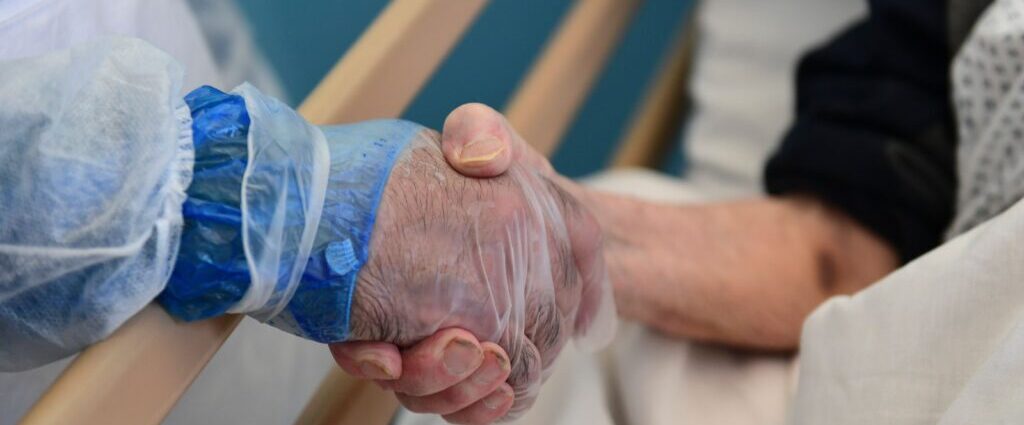
When I first entered the room, she was visibly nervous. Her family, gathered around the hospital bed, looked equally concerned. I introduced myself and shook her hand. I then shook the hands of the family members standing beside her.

Read the rest…

This post was originally published here. 

After nearly 40 years in clinical medicine, I retired in 2022. While I expected to feel a sense of freedom, quitting medicine brought me an unexpected sense of loss over the thought of decades of accumulated knowledge, experience, and judgment suddenly going to waste.

Volunteering at a nonprofit community clinic gave me the chance to continue using my knowledge and skills. But it also taught me firsthand what I had not learned in private practice: For millions who must pay out of pocket for their health care, the options are very limited. Both community clinics and retired doctors are underutilized resources.

Read the rest…

This post was originally published here. 

New restrictions on the use of food benefits to purchase soda and candy have been one of the biggest changes enacted by the Make America Healthy Again movement. But a key question has been how profoundly the bans would affect public health, with some economists arguing that people would just use other funds to buy Coke and other sugary drinks instead.

Now a new study shows that soda purchases did indeed fall by about 12% among people who receive Supplemental Nutritional Assistance Program benefits after the bans went into effect in 10 states. The study, which was published by the National Bureau of Economic Research and has not yet been peer-reviewed, says this translates to a person drinking about 34 fewer 12-ounce cans of soda per year.

Read the rest…

This post was originally published here. 

WASHINGTON — President Trump and health secretary Robert F. Kennedy Jr. are pressing ahead with efforts to change how kids in the U.S. get their shots. 

The latest move, a request for information posted Friday, offers more clues to Kennedy and Trump’s vision for vaccine policy, and shows that pursuing changes is a priority. It does not make any changes itself, but it asks for feedback on a wide variety of ideas. It gives the public 30 days to comment. 

Among the questions it asks the public to consider is whether there should be new categories to the vaccines framework, which currently includes universal recommendations, recommendations for certain risk-based groups, and recommendations based on shared clinical decision-making.

Continue to STAT+ to read the full story…

This post was originally published here. 

Want to stay on top of the science and politics driving biotech today? Sign up to get our biotech newsletter in your inbox.

Cancer patients may be receiving higher doses and longer courses of expensive drugs than they need. Also, we see Moderna’s stock swing some thanks to profit-taking, and… 

… I’ve taken to channeling Diogenes these days, choosing lentils over tyranny. I recommend, they’re most fibrous. 

Continue to STAT+ to read the full story…

This post was originally published here. 

And so, another working week will soon draw to a close. Not a moment too soon, yes? This is, you may recall, our treasured signal to daydream about weekend plans. Our agenda is still in the works, but we do plan to promenade extensively with the official mascots, catch up on our reading, welcome our vacuum cleaner back home, and hunt for the perfect iced coffee. We also hope to hold yet another listening party, where the rotation will likely include this, this, this, this and this. And what about you? If weather permits, the possibilities are endless — you could hike trails, stroll boardwalks, stop by a favorite restaurant, or take a long drive to nowhere. Well, whatever you do, have a grand time. But be safe. Enjoy, and see you soon. …

Heidi Overton’s years of loyalty to President Trump helped her become his pick to lead the U.S. Food and Drug Administration, but that devotion could ruin her chances at Senate confirmation, Politico explains.  Sen. Bill Cassidy (R-La.), a vaccination proponent who chairs the Health, Education, Labor and Pensions Committee, already signaled she may not have his vote. Another stumbling block: Many in the Make America Healthy Again coalition dislike her for backing Trump’s decision to protect the manufacturing of a weedkiller they believe causes cancer.

Drugmakers continue to face severe supply constraints for transdermal estrogen patches as demand surges, The Hill writes. The problem began last November, when the FDA began removing some of the strongest safety label warnings from hormone replacement therapy, which triggered a surge in prescriptions. But the patches are complicated to make and take considerably longer to manufacture than traditional pills. Limited manufacturing capacity has meant that many women are switching brands and dosages.

Continue to STAT+ to read the full story…

This post was originally published here. 

Get your daily dose of health and medicine every weekday with STAT’s free newsletter Morning Rounds. Sign up here.

Google Glass came out when I was in college, and they were dismissed as dorky, cumbersome to use, and quickly faded into obscurity. I don’t think Meta’s AI glasses will meet the same fate. The glasses, which can discreetly record audio and video, are already causing trouble.

Read the rest…

This post was originally published here. 

For most localized solid tumors, it’s common for surgeons to try to preserve as much of the diseased organ as possible, removing only the cancer along with some healthy tissue surrounding it to avoid further spread. But for prostate cancer, treatment is usually all or nothing. Except for patients with low-grade disease that’s unlikely to turn deadly, the whole gland gets removed, or irradiated. The long-term consequences can be serious, notably incontinence and erectile dysfunction. 

A less aggressive alternative intended to reduce the risk of these undesirable side effects has been gaining attention among patients and physicians for several years, though treatment guidelines consider it experimental. Called focal therapy, it targets lesions visible on MRI scans, using a variety of technologies to heat and destroy, freeze, burn, or even electrocute cancer cells. Focal treatments are often delivered in single-treatment sessions and can sometimes be done in a doctor’s office, adding to their appeal. 

Read the rest…

This post was originally published here. 

When Lil Nas X recently disclosed that he had been diagnosed with bipolar disorder, one part of his story stood out to me more than the diagnosis itself. For years, he had suspected something was wrong. Yet he resisted seeking treatment because he feared medication.

This is a paradox that exists at the intersection of mental health, identity, and achievement. The people who are most capable of recognizing that something is wrong are often the same people most reluctant to accept help. Not because they deny their suffering, but because they have come to view suffering as an inseparable part of their success.

Read the rest…

This post was originally published here. 

A cure for HIV would be one of the greatest medical achievements in modern history. But the day a cure is celebrated could also be the day some long-term survivors are told they no longer qualify for the benefits and services that have helped them stay alive.

In our work with long-term survivors, community advisory boards, and discussions about a cure, we have heard a recurring concern that deserves far more policy attention: What if a cure — or durable control, where the virus remains in the body, but at such low levels that it doesn’t cause problems and cannot be transmitted — is treated as proof that support for patients is no longer needed? That fear comes from people who want a cure, but are also wary about what can happen when administrative systems move faster than common sense. 

Read the rest…

This post was originally published here. 

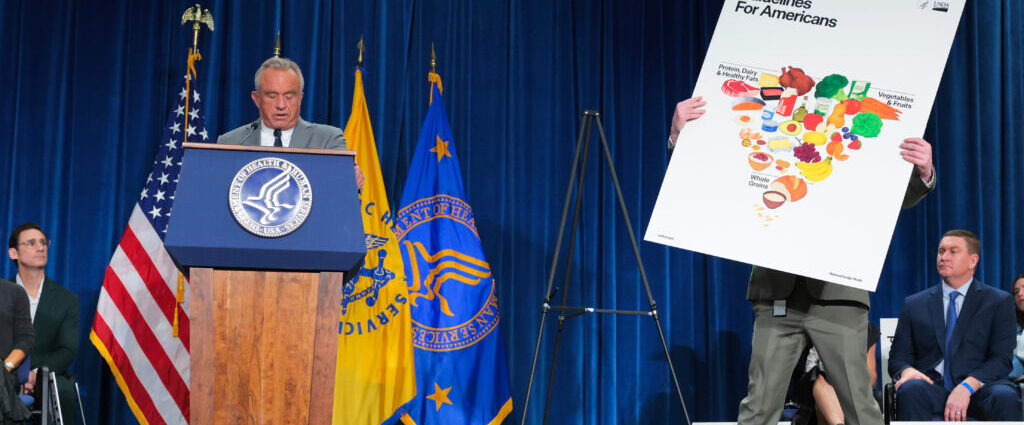
WASHINGTON — A lawsuit filed Wednesday with the U.S. District Court for the District of Columbia alleges federal agencies improperly rewrote the nation’s dietary guidelines. 

The suit, brought by the Physicians Committee for Responsible Medicine, a nonprofit that advocates for plant-based diets, claims the Department of Health and Human Services and the U.S. Department of Agriculture used a “secret panel” of scientists backed by the beef and dairy industries to flip the food pyramid. It also alleges the government disregarded federal law that dictates how advisory committees function.

Read the rest…

This post was originally published here. 

Dr. Shantanu Nundy is joining the Kentucky-based insurer from health navigation firm Accolade. But he’s had a varied career — advising the FDA on AI, teaching, working for the World Bank, practicing medicine and more.

This post was originally published here. 

The revenue cycle company wants to automate claims processing, and RI is banking that Humata’s track record of streamlining medical preapprovals should help further that goal.

This post was originally published here. 

Heidi Overton, a medical doctor and veteran of the America First think tank, currently serves as deputy director of the White House Domestic Policy Council.

This post was originally published here. 

Kevin Smith will become the nonprofit’s new finance chief this fall, succeeding Greg Hoffman who retired in June. Smith’s appointment comes as Providence works to improve its operations following years of losses.

This post was originally published here. 

You’re reading the web edition of D.C. Diagnosis, STAT’s twice-weekly newsletter about the politics and policy of health and medicine. Sign up here to receive it in your inbox on Tuesdays and Thursdays.

RFK Jr. spent three days at public events in Iowa this week. Send news tips and signs of a presidential run to John.Wilkerson@statnews.com or John_Wilkerson.07 on Signal.

How Overton got picked

The Trump administration wanted acting FDA Commissioner Kyle Diamantas to accept the job permanently. He declined, so they went with Heidi Overton, Daniel Payne and Chelsea Cirruzzo report.

Continue to STAT+ to read the full story…

This post was originally published here. 

Rise and shine, everyone, another busy day is on the way. And it is getting off to a pleasant start here on the Pharmalot campus, where clear blue skies and comfy breezes are greeting us. As for the official mascots, they are happily snoozing in their respective corners. Meanwhile, we are firing up the trusty kettle for another cuppa stimulation. Our choice today is Earl Grey. And here is a helpful tip — a teaspoon of honey enhances the flavors splendidly. Of course, you are invited to join us. For the full experience, we are now hawking replicas — take a look. Meanwhile, here are a few items of interest. As always, do keep in touch. We appreciate feedback, criticism, and tips. …

A medicine from Regeneron Pharmaceuticals for an ultra-rare disease that causes bone to grow where it shouldn’t, won U.S. regulatory approval, the capstone of a three-decade effort, STAT writes. The hope is that the new medicine, called Pasatru, can help patients with fibrodysplasia ossificans progressiva, or FOP, maintain their mobility and perhaps even live longer. Typically, people with FOP rely on wheelchairs by age 25 as the bone accumulation locks up their limbs, and only some live into their 50s. A Phase 3 trial demonstrated the drug led to a 94% reduction in new lesions that go on to form bone, while a high dose led to a 90% reduction.

The U.S. Food and Drug Administration approved a gene therapy from Ultragenyx Pharmaeutical that will be the first for treating a rare metabolic disorder, Reuters tells us. The drug, branded as Genglycos, will be used to combat glycogen storage disease type Ia (GSDIa), also known ​as Von Gierke disease, in adults and children. GSDIa affects 1,500 to 2,500 patients in the U.S. The deficiency ​reduces the liver’s ability to control glucose levels and is associated with potentially life-threatening low blood sugar levels. Genglycos will have a U.S. per-patient list price of $2.7 million and be available through qualified treatment centers within 30 to 60 days.

Continue to STAT+ to read the full story…

This post was originally published here. 

Get your daily dose of health and medicine every weekday with STAT’s free newsletter Morning Rounds. Sign up here.

Good morning. After the news about Moderna and Merck’s mRNA cancer vaccine came out yesterday, someone resurfaced a great Sharon Begley story on personalized cancer vaccines from early 2016. I recommend reading it if you’re interested in a primer on “turning your cancer against itself.”

Read the rest…

This post was originally published here. 

Want to stay on top of the science and politics driving biotech today? Sign up to get our biotech newsletter in your inbox.

Today, we talk more about Merck and Moderna’s potentially field-changing cancer vaccine, see a couple FDA approvals, and learn more about the new FDA commissioner nominee. Plus, brain organoids have stayed alive — and continue to mature — in a Harvard lab for five years.

I wonder, actually, about the poor little brain organoids in Megan’s story. Just pulsing in their Petri dishes, contemplating moral relativity or migraines. It’s all very Robin Cook.

Continue to STAT+ to read the full story…

This post was originally published here. 

This story first appeared in Adam’s Biotech Scorecard, a subscriber-only newsletter. STAT+ subscribers can sign up here to get it delivered to their inbox.

Twenty-four hours later, my brain is still whirling over yesterday’s stunning news from Merck and Moderna about the success of their personalized mRNA cancer therapy in a melanoma late-stage clinical trial.

I posted this on X yesterday but it’s worth repeating here: Between this spring’s Revolution Medicines success with a KRAS-targeted drug and now Merck and Moderna’s success with an mRNA neoantigen vaccine, 2026 will go down as one of the most consequential years in cancer treatment, ever.

Continue to STAT+ to read the full story…

This post was originally published here. 

This story first appeared in Adam’s Biotech Scorecard, a subscriber-only newsletter. STAT+ subscribers can sign up here to get it delivered to their inbox.

Capricor Therapeutics is trying to stave off the Food and Drug Administration’s near-certain rejection of its cell therapy for Duchenne muscular dystrophy by submitting results from an open-label extension of its failed Phase 3 study. 

It’s a stall tactic. Nothing more. The only option left for Capricor to secure approval of its treatment, called deramiocel, is to conduct an entirely new, randomized clinical trial. 

Continue to STAT+ to read the full story…

This post was originally published here. 

The pathologists were stumped. Six people had tried to identify a patient’s cancer based on a recent lymph node biopsy. They’d stained the cells 70 times to try to draw out more distinguishing features — but still, nobody had an answer.

At Stanford, a physician called onto the case was trying out a new tool called ChatEHR, one of several large language model-powered tools being deployed by health systems to summarize patients’ often-extensive medical records. It got a question: Did the patient have any history of skin lesions? After some back-and-forth, from the depths of the patient’s history, ChatEHR delivered an answer: In a different health system, the patient had previously been diagnosed with sarcomatoid squamous cell carcinoma.

It “completely explained the findings in the lymph node,” wrote the happy doctor in their feedback for the chatbot. “If that doesn’t prove the value of ChatEHR, I don’t know what does!” 

This was the kind of needle in a haystack doctors hoped to find when health systems first started experimenting with generative AI tools like ChatEHR to search and synthesize patients’ health records. Clinicians often struggle to find the information they need to care for patients, because modern electronic health records have gotten so bloated. Today, a number of health systems are moving toward broad implementation of chatbots for EHRs, both homegrown and vendor-built. And it turns out that solving diagnostic mysteries is the least of their selling points. 

Continue to STAT+ to read the full story…

This post was originally published here. 

Five years ago, we moved my son into a college dorm. I know that makes us sound like thousands of other families with 18-year-olds, but my son has Duchenne muscular dystrophy. He couldn’t walk, and because of his waning arm strength, we all thought his college independence would be short-lived.

Instead, we are now getting ready to move him into that same dorm again, where he still lives independently, so he can begin the second year of his master’s degree study. He has spent those five years on Capricor’s deramiocel, a drug that received a negative FDA advisory committee vote last week on its secondary outcome: the definitiveness of its ability to stabilize heart function in a population of boys that included ones whose hearts were still stable. It was much noisier data than the significance seen in the subpopulation that already had signs of heart dysfunction. 

Read the rest…

This post was originally published here. 

Males make up about a third of the population struggling with eating disorders in the United States. While these conditions often start during the teen years, by some estimates, as many as 14% of American men experience an eating disorder by age 40, and they may be more likely to die from it than women. Yet, recognition of this mental illness is not where it should be according to male eating disorder expert Jason Nagata.

This is especially true for muscle dysmorphia, he says, a disorder that overwhelmingly affects males and is characterized by a hyperfixation on building muscles. It is categorized under obsessive-compulsive and related disorders in the diagnostic manual for psychiatric illnesses, known as the DSM, though it frequently also involves extreme dieting.

Read the rest…

This post was originally published here. 

This month, the Trump administration announced nearly $2 billion for faith-based groups, the largest allocation of global health foreign assistance to faith-based organizations in more than 20 years. The bulk of it, $1.4 billion, funds health services, including an $850 million award to World Vision supporting 2,500 faith-based hospitals and clinics across 17 countries.

Whatever the administration’s ultimate motives, this is an important signal to my public health and humanitarian relief colleagues. Even as the old aid architecture is collapsing, the faith economy is not. Washington has rediscovered faith as a delivery mechanism. The bigger opportunity is faith as a source of capital.

Read the rest…

This post was originally published here. 

WASHINGTON — The Trump administration did not overhaul the childhood vaccine schedule or flip the food pyramid until Heidi Overton, deputy director of domestic policy for the White House, had her say. 

While health secretary Robert F. Kennedy Jr. has been the public face of the Make America Healthy Again movement, Overton has been the top health policymaker behind the scenes, according to two people, including a senior administration official, familiar with her White House influence. Now, Overton is the president’s choice to lead the Food and Drug Administration. 

“Dr. Heidi has been a ROCKSTAR in my Administration, where she has worked directly with Secretary Kennedy, Dr. Oz, and team, to deliver on the MOST TRANSFORMATIVE Health Agenda in History,” Trump wrote on Truth Social Wednesday, announcing the nomination. “She is known to take on the HARDEST issues, and bring me solutions that work best for the Country.”

Continue to STAT+ to read the full story…

This post was originally published here. 

WASHINGTON — Erica Schwartz, the new director of the Centers for Disease Control and Prevention, told agency staff on Wednesday that she was prepared to disagree with administration leaders and sought to empower others to do the same, according to a recording of the meeting obtained by STAT.

During her first all-hands address on Wednesday, Schwartz identified three priorities: preserving trust through radical transparency and scientific rigor; strengthening the CDC’s ability to respond to disease threats; and building up the agency’s relationship with state and local partners.

She said she was ready to stand up to health secretary Robert F. Kennedy Jr. if needed to accomplish those goals.

Continue to STAT+ to read the full story…

This post was originally published here. 

Natalie Harp says Donald Trump saved her life. She has devoted the years since to serving him—first as a public advocate, then as a campaign loyalist and now as one of the president’s most trusted White House operators.

Harp became a national story after Democratic Sen. Jon Ossoff of Georgia made a suggestive reference to her while attacking Trump at a campaign event. Ossoff offered no evidence of an improper relationship, but his remark placed a rarely discussed presidential aide—and her unusual access to Trump—under intense scrutiny.

The more consequential story is how a cancer survivor’s personal gratitude became a position of political and operational influence at the center of the administration.

Harp was diagnosed with a rare form of bone cancer after surviving a serious medical error. She said conventional chemotherapy failed, clinical trials rejected her and doctors left her with few remaining options.

In 2018, Trump signed the federal Right to Try Act, allowing certain terminally ill patients to seek experimental medicines that had completed initial safety testing but had not received full Food and Drug Administration approval.

Harp has repeatedly credited Trump and the law with saving her life.

“They didn’t give me the right to try experimental treatments, Mr. President. You did,” she told the 2020 Republican National Convention. “Without you, I’d have died waiting for them to be approved.”

Medical experts have questioned whether the law technically enabled Harp’s treatment. She described receiving an FDA-approved immunotherapy drug for an unapproved purpose, a practice that was already legal before Right to Try. But there is no question about Harp’s own conviction: she believes Trump fought for patients the medical system had abandoned and gave her another chance to live.

That gratitude became the foundation of her career.

Harp joined Trump’s 2020 campaign advisory board, spoke at the Republican National Convention and worked as a presenter for One America News Network. She later entered Trump’s inner circle and now serves as executive assistant to the president.

Her official title does not fully describe her business value to the White House.

Trump prefers consuming large volumes of information on paper rather than through conventional digital systems. Harp travels with a portable printer, providing him with news articles, social-media posts, political commentary and other material throughout the day. That habit earned her the nickname “the human printer.”

She also takes dictation, assists with Trump’s social-media activity and converts his instructions into public messages reaching millions of people. Political allies recognize that delivering information to Harp can be one of the fastest ways to place it before the president.

In business terms, Harp functions as an executive assistant, information manager, communications operator and gatekeeper. She understands how Trump absorbs information, what captures his attention and how he prefers decisions to be executed.

Her value is also personal. Harp’s loyalty is not based solely on politics, ideology or professional ambition. She believes she is alive because Trump changed federal policy for desperate patients, and she has organized her work around repaying that debt.

That commitment can strengthen an administration by giving the president an aide who executes quickly, understands his habits and remains dependable under pressure. It also creates a management risk if intense loyalty prevents difficult information or opposing views from reaching the person making the final decision.

That is the legitimate question surrounding Harp—not the personal insinuation Ossoff introduced without evidence, but the power held by a trusted aide who helps control the president’s flow of information.

The most influential person around a chief executive is not always the official with the largest title. It may be the operator who remains nearby, knows how the leader works and turns instructions into action.

Trump signed the Right to Try Act to give terminally ill patients another option. Harp says it gave her a future. She has used that future to become one of the people most personally and professionally invested in advancing his presidency.

JBizNews Desk | Washington

© JBizNews.com All Rights Reserved. Reproduction or distribution without written permission is prohibited.

A medicine from Regeneron Pharmaceuticals for an ultra-rare disease that causes bone to grow where it shouldn’t won approval on Wednesday, the capstone of a three decade-long effort.

The hope is that the new medicine, called Pasatru, can help patients with fibrodysplasia ossificans progressiva, or FOP, maintain their mobility and perhaps even live longer. Typically, people with FOP rely on wheelchairs by age 25 as the bone accumulation locks up their limbs, and only some live into their 50s. 

“Having an effective treatment, you’re hoping that you’ll change that trajectory,” said Richard Keen of London’s Royal National Orthopaedic Hospital, who was the primary investigator in the medicine’s pivotal trial. “You’re almost completely stopping the new [bone] forming, and therefore their condition will not deteriorate.” 

Continue to STAT+ to read the full story…

This post was originally published here. 

Want to stay on top of the science and politics driving biotech today? Sign up to get our biotech newsletter in your inbox.

Good morning. We’re sending the newsletter a bit early today since we’ve got some breaking news for you — plus a new FDA commissioner nominee.

Merck and Moderna’s mRNA cancer vaccine succeeds in late-stage trial

Scientists have long hoped that personalized mRNA cancer vaccines could be the next big breakthrough in oncology treatment. Today, Merck and Moderna said they had shown in a randomized late-stage trial for the first time that such a drug can work.

Continue to STAT+ to read the full story…

This post was originally published here. 

Dear Readers,

When we launched STAT more than a decade ago, our mission statement promised that we would deliver “trusted, tough-minded journalism.” Little did we know that trust would be at the core of everything we do. 

Read the rest…

This post was originally published here. 

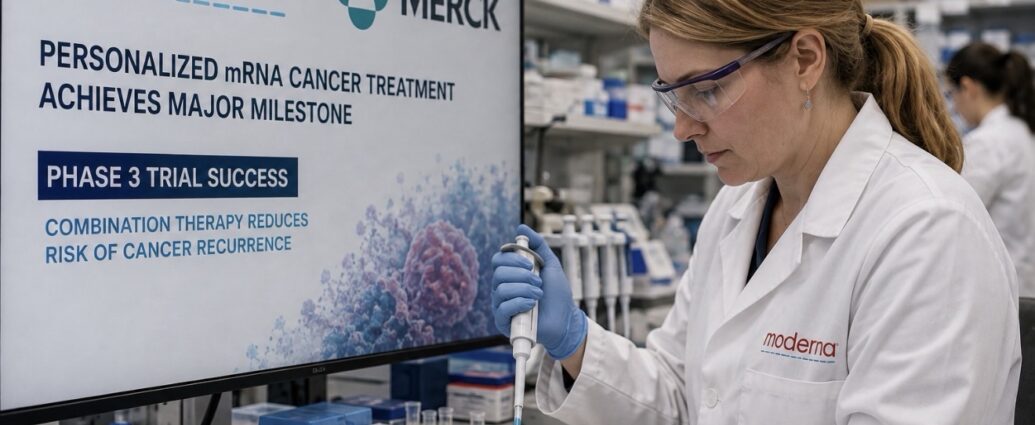
Moderna shares surged Wednesday after the company and Merck reported the first successful Phase 3 trial of a personalized mRNA cancer treatment, a potentially important validation of technology that has been under development for years.

The experimental therapy, called intismeran autogene, was tested in combination with Merck’s blockbuster immunotherapy Keytruda in 1,137 patients with high-risk stage IIB through IV melanoma whose tumors had already been surgically removed.

The goal was not to shrink an existing tumor.

It was to prevent the cancer from coming back.

The study met its primary endpoint of improving recurrence-free survival and also met a key secondary endpoint by reducing the risk that the cancer would spread to distant parts of the body.

No new safety signals emerged.

The companies have not yet released the full Phase 3 data, including the exact magnitude of the benefit, and plan to present detailed results at a medical meeting.

That is an important limitation.

But the trial still represents a major milestone because it is the first positive Phase 3 result for an individualized neoantigen therapy and the first successful late-stage trial of an mRNA-based cancer treatment.

Moderna shares jumped roughly 90% in premarket trading Wednesday, while Merck rose about 7.5%.

The technology works very differently from a conventional vaccine.

Doctors first analyze the genetic mutations inside an individual patient’s tumor. Moderna then manufactures a personalized mRNA treatment designed around those mutations, effectively giving the immune system a customized list of cancer targets to recognize.

That individualized treatment is then administered alongside Keytruda, which helps remove the biological brakes that cancer cells use to hide from the immune system.

The theory is straightforward: Keytruda helps activate the immune system, while the personalized mRNA therapy tells it more precisely what to attack.

Earlier Phase 2 data had already produced encouraging results.

After five years of follow-up, the combination reduced the risk of recurrence or death by 49% compared with Keytruda alone in patients with high-risk stage III or IV melanoma.

Wednesday’s Phase 3 result is more important because it tested the treatment in a much larger group and is designed to support potential regulatory approval.

Merck and Moderna expect to begin discussions with regulators in the coming months.

For Moderna, the financial stakes are enormous.

The company built its global reputation around its COVID-19 vaccine but has been searching for the next major commercial use of its mRNA platform as pandemic-era vaccine revenue declined.

Cancer could become that second act.

For Merck, the timing is equally important.

Keytruda is one of the most valuable medicines in the world, but its key patents begin expiring later this decade. Combining it with a new personalized cancer treatment could extend Merck’s dominance in oncology while creating an entirely new product category.

Analysts have already estimated that the melanoma indication alone could eventually generate billions of dollars in annual sales.

The opportunity could become much larger if the same approach works in other cancers.

Merck and Moderna are already studying the treatment across multiple tumor types, including lung, kidney and bladder cancers.

That is why Wednesday’s result matters beyond melanoma.

The companies have not yet proved that personalized mRNA therapy will work broadly across cancer.

They have, however, now crossed one of the most difficult barriers in drug development: a successful large Phase 3 trial.

The same technology that showed the world how quickly mRNA could be used to build vaccines is now moving toward a very different application.

Instead of making one vaccine for millions of people, Moderna is trying to make a different cancer treatment for each individual patient.

Wednesday’s results suggest that idea may be closer to becoming a commercial reality.

JBizNews Desk | Cambridge, Massachusetts

© JBizNews.com All Rights Reserved. Reproduction or distribution without written permission is prohibited.

The American Cancer Society quietly canceled its upcoming Wine and Spirits Industry’s Gala, a spokesperson confirmed to STAT. The event, which has for decades raised money from members of the alcohol industry at a boozy Manhattan gathering, was set to take place in October at the iconic Rainbow Room. 

The society “decided to sunset the Wine & Spirits Industry Gala, and the October event will not take place,” spokesperson Michele Money-Carson said in an email. “The decision is part of ACS’s ongoing evaluation of how its events and fundraising activities align with its mission and prevention guidance.”

STAT, as part of its “Deadliest Drug” series about the toll of alcohol misuse, reported earlier this summer that ACS had for years raked in at least $22 million dollars from wine and liquor executives, creating an optics issue for a charity focused on fighting cancer. Some, including a former executive at the cancer society, said the gala created an unsettling conflict of interest, and was inappropriate considering alcohol’s known links to cancer. 

Continue to STAT+ to read the full story…

This post was originally published here. 

A little more than two years ago, a junior scientist walked into Paola Arlotta’s Harvard office with a set of mesmerizing images and asked if she wanted to see what the old brain organoids look like. 

Arlotta, a developmental neurobiologist, turned in surprise. “You analyzed them?” she exclaimed. 

Irene Faravelli’s face fell. She had, but now she wondered if that had been a grave mistake. Arlotta assured her everything was fine. In fact it was great. “I was actually pleased that somebody had the courage to do this,” Arlotta recalled to STAT in a recent interview. 

Continue to STAT+ to read the full story…

This post was originally published here.