


STAT+: Cassidy criticizes FDA oversight of abortion pill manufacturers in new report
WASHINGTON — Sen. Bill Cassidy (R-La.) released a report on Thursday criticizing the Food and Drug Administration for not tightening restrictions on the abortion pill mifepristone, and charging the agency with lackluster oversight of the companies that manufacture the drug.
“To this day, FDA continues to redact mifepristone-related records in an unprecedented manner,” the report claims. “This lack of transparency has led to unanswered questions.”
The report is the result of an investigation conducted by Cassidy and other Republicans on the Senate’s health committee into the compliance practices of Danco, which distributes the brand-name version of mifepristone, and two other companies that manufacture generic versions of the drug.

Decoding DEA action on kratom-related substances
Get your daily dose of health and medicine every weekday with STAT’s free newsletter Morning Rounds. Sign up here.
Good morning. Today we’re co-publishing a KFF Health News story on how Louisiana sheriffs spent millions of opioid settlement dollars on law enforcement gear instead of addiction treatment. I’d recommend a read — my jaw dropped when I saw how much one office spent on Flock cameras alone.

RFK Jr. said a Samoa trip had nothing to do with vaccines. New documents refute that
NEW YORK — Health Secretary Robert F. Kennedy Jr. repeatedly told lawmakers who held the key to his confirmation last year that a 2019 visit to Samoa before a deadly measles outbreak had “ nothing to do with vaccines.” New documents obtained by The Associated Press and The Guardian refute that testimony.
Kennedy, then a prominent anti-vaccine activist, preceded the visit with a letter to the Samoan prime minister requesting to study the Pacific island nation’s measles, mumps and rubella vaccines after the deaths of two children who had received them. In the letter, he used the words vaccine or vaccination eight times.

STAT+: Pharmalittle: We’re reading about a pancreatic cancer drug approval, a Trump deal with biotechs, and more
Good morning, everyone, and how are you today? We are doing just fine, thank you, despite the soggy weather hovering over the Pharmalot campus right now, because our spirits remain sunny, nonetheless. Why? We will trot out a bit of insight from the Morning Mayor, who would say “Every new day should be unwrapped like a precious gift.” To celebrate the notion, we are brewing still more cups of stimulation and invite you to join us. Our choice today is the mysterious witch’s brew. Meanwhile, here are a few items of interest. Hope you have a smashing day and, of course, do stay in touch. …
The U.S. Food and Drug Administration approved a life-extending treatment for advanced pancreatic cancer made by Revolution Medicines that is the first to attack a genetic cause of the aggressive, highly lethal malignancy, STAT says. The approval was supported by a practice-changing clinical trial showing patients with advanced pancreatic cancer who received the drug as a second-line treatment achieved a median overall survival of 13.2 months, compared to 6.7 months for patients given standard chemotherapy.
The Trump administration plans to announce a new round of drug-pricing agreements with several midsized biotech companies on Monday, Bloomberg News reports. The companies will agree to provide discounts on outpatient drugs to state Medicaid programs so that the prices states pay align with what the companies charge in foreign countries. Participation by state Medicaid programs is optional. In exchange, the companies will be exempt from pilot programs forcing similar discounts in Medicare. Relief from tariffs is also part of some of the discussions.

STAT+: Alnylam’s heart drug troubles take center stage at a cardiology conference
This story first appeared in Adam’s Biotech Scorecard, a subscriber-only newsletter. STAT+ subscribers can sign up here to get it delivered to their inbox.
The European Society of Cardiology Congress that kicks off Friday in Munich will be a consequential meeting for Alnylam Pharmaceuticals, as the outlook wavers for its two ATTR-CM drugs because of a competing drug’s surprising failure in the same heart disease.
Cardiologists and investors attending the ESC meeting will learn new details from AstraZeneca and Ionis Pharmaceuticals about why their rival drug, eplontersen, failed to significantly reduce the risk of cardiovascular deaths or recurrent events compared to a placebo.

STAT+: The mystery of Moderna’s magic algorithm
A personalized cancer vaccine developed by Moderna and Merck has generated widespread enthusiasm since the companies announced last week that it had succeeded in a late-stage trial. If regulators ultimately approve it, the treatment will be a triumph of immunology and cancer biology.
But it may also be a triumph of the algorithm.
The vaccine, intismeran autogene, would be the first approved medicine whose genetic instructions — that is, the individual letters of its mRNA — is determined by a computer.

A state gave sheriffs 20% of its opioid settlement cash. We followed the money
STAT is co-publishing this article by KFF Health News.
Every state is receiving opioid settlement payouts from companies accused of flooding the nation with prescription painkillers and fueling overdose deaths. But only one state is directing 20% of those payouts to sheriffs — the largest carve-out for law enforcement nationwide.

Hospitals are plotting a long-shot push to roll back $1 trillion in Medicaid cuts
WASHINGTON — Hospital leaders, stung by the passage of a law that will cut nearly $1 trillion in Medicaid funding over the next decade, have been racing to remake their systems.
And in Washington, some are building a long-shot plan to turn back the clock.

Opinion: STAT+: A bill is supposed to protect U.S. biotech from Chinese competition. But there’s a loophole
Bipartisan legislation under review in Congress has the potential to significantly rejigger global drug development — and the biggest beneficiaries may not be American.
The bill, titled the Biotech Investment National Security Act (BINSA), was introduced in June to significantly broaden federal oversight of everyday biotechnology activities, including pharmaceutical development, biologics manufacturing, and clinical R&D. The policy is an add-on to the restrictions of the Comprehensive Outbound Investment National Security (COINS) Act filed in December 2025.
BINSA’s sponsors frame the additional policy as necessary to protect U.S. national security interests in medical research and innovation. The policy was announced following two multibillion-dollar R&D and licensing deals agreed by Pfizer and Bristol Myers Squibb with Chinese biopharma companies. In a press release about the bill, co-sponsor Rep. John Moolenaar (R-Mich.) called out the pharma companies for “making dangerous deals with Chinese biotech companies that threaten the future of American pharmaceutical production.”

Opinion: I studied Reddit forums on menopause — and found what doctors are missing
In forums on Reddit, women share tales of having perimenopause and menopause symptoms misdiagnosed or dismissed as mental health disorders, early-onset dementia, or autoimmune issues, resulting in months or years of unnecessary testing. They discuss sudden mood shifts of rage, and panic, and how they are routinely labeled by their doctor as primary psychiatric conditions rather than hormonal fluctuations, leading to unnecessary antidepressant prescriptions.
Severe brain fog, memory lapses, and sleeplessness from night sweats — all common signs of menopause or perimenopause — often terrify women into believing they have a degenerative cognitive disease before considering that these seemingly disconnected symptoms might be related to perimenopause or menopause.


Kennedy posts vaccine misinformation, spars on social media amid measles deaths
WASHINGTON — After Pennsylvania health authorities announced that two unvaccinated people had died from measles-associated causes, health secretary Robert F. Kennedy Jr. called the state’s Democratic governor, Josh Shapiro, to offer federal assistance. According to accounts from both men, the call turned heated.
“I was very, very blunt with him, and I made very clear his actions and his rhetoric coming from this administration are having a negative impact on communities across America, particularly right here in Pennsylvania,” Shapiro said at a press conference Tuesday. “That there’s real-life consequences to spreading misinformation.”



On the fence about a statin? In borderline cases, calcium scans could be a tiebreaker
When it comes to predicting heart attacks and strokes, what matters the most: a number, a picture, or both?
It depends on the patient, two new trials say, adding to previous research exploring the value of coronary artery calcium (CAC) scans when combined with risk measured by the newly adopted PREVENT calculator. Both tools assess the future chances of serious cardiovascular events, potentially influencing decisions about prescribing cholesterol-lowering statins or other treatments to limit damage to blood vessels leading to the heart and brain.

STAT+: Key data on a new class of cardio drugs are coming
Want to stay on top of the science and politics driving biotech today? Sign up to get our biotech newsletter in your inbox.
Good morning. We are thinking of Dolly Parton, who made a lasting impact not only in music and culture, but also in science. During the Covid-19 pandemic, she donated $1 million to Vanderbilt University Medical Center to help speed the development of Moderna’s vaccine.pharma
Key data on a new class of cardio drugs are coming
Several large pharma companies are betting that targeting a particle called lipoprotein(a) will be the next big advance in cardiovascular medicine. We’ll soon find out how well the approach works.

STAT+: FDA approves new pancreatic cancer drug expected to usher in new era of treatment
The Food and Drug Administration on Wednesday approved a life-extending treatment for advanced pancreatic cancer — a medicine made by the biotech company Revolution Medicines that is the first to attack a genetic cause of the aggressive, highly lethal malignancy.
The drug, called daraxonrasib, will be sold under the brand name Rasonque. The FDA’s approval was supported by a practice-changing clinical trial that read out earlier this year. Patients with advanced pancreatic cancer who received Rasonque as a second-line treatment achieved a median overall survival of 13.2 months, compared to 6.7 months for patients offered standard chemotherapy.
“It will be transformative in the way we treat pancreas cancer. It’s the biggest development we’ve had in pancreas cancer in decades,” said Andrew Ko, a medical oncologist specializing in gastrointestinal cancers at the University of California, San Francisco. “I’m so thankful for this as an advance for our patients.”

STAT+: AI biotech Insitro’s Daphne Koller on how to speed up clinical trials
You’re reading the web edition of STAT’s AI Prognosis newsletter, our subscriber-exclusive guide to artificial intelligence in health care and medicine. Sign up to get it delivered in your inbox every Wednesday.
I really miss the Vox Earworm videos that explained the science and history of pop music, like “The sound that connects Stravinsky to Bruno Mars” or “How a recording-studio mishap shaped ’80s music.”
A spiritual successor? This video exploring the origin of the somehow-ubiquitous “Gen Alpha Melody” from Carl E. Martin, at the time a musicology grad student. Be sure to watch all the way until the last second.
STAT+: Pharmalittle: We’re reading about a GSK shingles shot, U.S. employers dropping GLP-1 coverage, and more
Good morning, everyone, and welcome to the middle of the week. Congratulations on making it this far, and remember there are only a few more days until the weekend arrives. So keep plugging away. After all, what are the alternatives? While you ponder the possibilities, we invite you to join us for a needed cup of stimulation. Our choice today is ginseng honey, a favorite from our pantry. Meanwhile, here is the latest menu of tidbits to help you on your way. We hope you conquer the world and have a wonderful day. And as always, please do stay in touch. …
About 14% of employers in the U.S. have already or plan to drop coverage of GLP-1 drugs in 2027, as companies see rising health care costs, Reuters notes, citing a survey by the Business Group on Health. Two-thirds of employers reported rising use of the medicines while the share of employers covering GLP-1 weight loss drugs dropped from 72% in 2025 to 60% in 2026. Pharmacy costs made up 25% of employer health care spending and are expected to rise by 12% in 2027, unchanged from the year prior. PepsiCo, for example, is dropping coverage, says Bloomberg News.
The number of people working in Massachusetts’ renowned biotech sector fell last year, the first time that’s happened since at least 2002, The Boston Globe writes. The state’s biopharma workforce shrank by about 3,600 employees in 2025, to a total of 113,503, as industry headwinds and uncertainty about federal funding for scientific research battered the sector, according to the annual “industry snapshot” by the Massachusetts Biotechnology Council trade group. Compared to 2024, the workforce declined by 3.1%.

Even at big companies, health care costs are increasing
Get your daily dose of health and medicine every weekday with STAT’s free newsletter Morning Rounds. Sign up here.
Good morning. The news of Dolly Parton’s passing struck people pretty hard across the STAT newsroom. She was an incredible musician and humanitarian, but most relevant to this newsletter, she was an ardent supporter of science, including research behind the Moderna Covid vaccine.

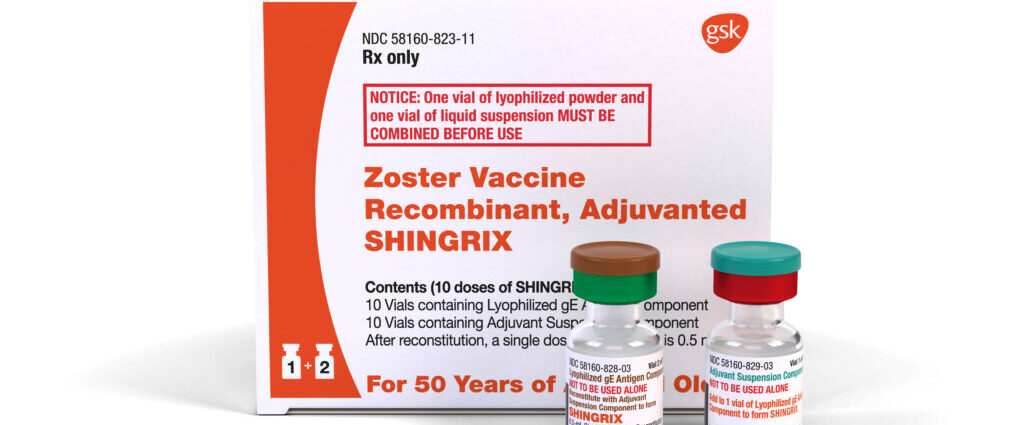
Newer shingles vaccine linked to lower heart disease risk, ‘natural experiment’ shows
The newer shingles vaccine has been turning heads since its link to lower dementia rates was reported two years ago. Now the same research team behind that observation has found an association between receiving the Shingrix shot and a reduced risk of heart disease.
There have been signals before of cardiovascular benefits in people who got the newer, recombinant vaccine to prevent shingles, a painful, often serious flare-up in older people of the chickenpox virus from childhood. Those who got Shingrix were less likely than unvaccinated people to have heart attacks, strokes, or heart failure.

STAT+: New treatments for common cardiovascular risk factor near the market, with billions at stake
Many people who face a heightened likelihood of heart disease and heart attacks can take protective measures, whether by adjusting their lifestyle or starting medication. But 1 in 5 people carry a risk factor that isn’t so easily addressed.
This gap in medicine is also a potentially massive market for drugmakers, which are advancing experimental treatments for the risk factor through late-stage trials, including front-runner Novartis.
Their target is what’s known as Lp(a) — or, as it’s commonly said, “L-P-little-A.” If you have high levels of Lp(a), it’s largely because of genetics, and there’s not much you can do about it.

STAT+: When it comes to women’s health, money talks
The flip side of each new discovery about women’s health is a history of research neglect. Now, as federal funding becomes increasingly precarious, some advocates, academics, and executives are appealing to another incentive.
It’s called the profit motive.
If disparities in women’s health were fully addressed, a 2024 World Economic Forum report estimated, by 2040 that could boost global economic productivity annually by $1 trillion. In the U.S., that would mean recovering about $300 billion in lost economic productivity.

Opinion: Many post-Dobbs abortion fears have not come to pass. What does that mean for advocates?
The biggest surprise over a medical career is how often you find yourself surprised. Theories perfect on paper flounder in the real world. Proposed treatments that fit our understanding of disease will unexpectedly fail human trials. Cells, organs, human bodies, and health care systems are complicated, so as a doctor, you train yourself to be humble and wait for data that might not arrive for years.
But we still make predictions, and often find ourselves startled by the outcome. Like many people, I assumed several things would happen after Roe v. Wade was overturned: Abortion rates would fall, infant and maternal deaths would both worsen, and doctors practicing in states where abortion become heavily restricted would flee to other parts of the country.

Opinion: Medical aid in dying and the burden of choosing to live
Earlier this month, New York made medical aid in dying available for terminally ill New Yorkers with less than six months to live. Unlike most states, however, New York has added an unusual safeguard: In order to receive life-ending medication, patients must record their oral request on audio or video.
The recording requirement makes vivid how much this law depends on patient choice. Proponents of medical aid in dying (MAiD) — the practice of allowing terminally ill patients to obtain medicine they can use to end their lives — argue that as long as there is no undue influence, giving people the choice to end their lives on their own terms empowers them. The recording simply helps to prove that the choice really was the patient’s.

STAT+: Sword Health to acquire Headspace, according to filing
Sword Health, a digital health company known for its AI-powered virtual physical therapy offering, plans to acquire mental health company Headspace, according to a regulatory filing.
Headspace on July 22nd reported a “material change” to the Massachusetts Health Policy Commission indicating that its parent company, OrangeDot, proposes to be acquired by Sword for a cash payment. The deal will be effective September 14, according to the paperwork. The value of the transaction was not disclosed. (The paperwork was first identified by Healthcare Dealflow.)
Sword last raised $40 million in 2025 in a deal valuing the company over $4 billion, and the proposed deal comes as Sword health aims to expand its platform to more areas, including mental health. The company has raised a total of $493 million so far, according to PitchBook.

Pennsylvania reports first 2 measles deaths in the U.S. this year, both people unvaccinated
PHILADELPHIA — Two unvaccinated Pennsylvania residents have died from measles, state health officials said Tuesday, the first measles-related deaths in the U.S. this year.
Officials did not reveal any details about the people who died, other than that they lived in Lancaster County, west of Philadelphia.


STAT+: How Trump’s funding cuts are reshaping the health system
You’re reading the web edition of D.C. Diagnosis, STAT’s twice-weekly newsletter about the politics and policy of health and medicine. Sign up here to receive it in your inbox on Tuesdays and Thursdays.
RFK Jr. adviser Calley Means said people should consult AI instead of human doctors. Send news tips and generative medical advice to John.Wilkerson@statnews.com or John_Wilkerson.07 on Signal.
Today’s Maine story
Today, STAT kicked off Daniel Payne’s five-part series exploring the consequences of Republicans’ unprecedented cuts to the health care safety net.

STAT+: Turkish antitrust authorities probe Teva for allegedly gaming the patent system, disparaging rival drugs
Turkish antitrust regulators are investigating Teva Pharmaceutical, the world’s largest generic drugmaker, for allegedly manipulating the patent system and making misleading statements to health care authorities about the safety and effectiveness of rival medicines.
The company engaged in “various practices … that may have been aimed at making it more difficult for competitors to enter the market,” according to Turkey’s Competition Board, which is known as Rekabet Kurumu and which launched the probe earlier this month but disclosed the decision last Friday on its website.
The regulator did not mention a specific drug, but a Teva spokesperson wrote us that the investigation is similar to a probe by the European Commission that, two years ago, ended with the company paying a $503 million fine for delaying competition to its blockbuster Copaxone multiple sclerosis medicine. The case is currently under appeal before the European Court.

STAT+: FDA promises new AI guidance, and what happened at Epic’s UGM
Good morning health tech readers!
I’m back from vacation! What did I miss? Drop me a line and let me know what you’re watching as the summer winds down. (Yes, I saw the JAMA paper claiming AI alone may soon be better than AI working with doctors.)
Today, we’re catching up on the FDA’s new discussion paper on generative AI devices and all the news about Epic we didn’t get to before the break last week.

STAT+: After a years-long slump, Massachusetts biopharma sector has come roaring back in 2026
The number of people working in Massachusetts’ renowned biotech sector fell last year, the first time that’s happened since at least 2002, according to a new report.
The state’s biopharma workforce shrank by about 3,600 employees in 2025, to a total of 113,503, as industry headwinds and uncertainty about federal funding for scientific research battered the sector, according to the annual “industry snapshot” by the Massachusetts Biotechnology Council trade group. Compared to 2024, the workforce declined by 3.1%.
Many of the lab buildings in Greater Boston that everyone thought would be filled with scientists when venture capital flowed freely early in the pandemic now stand empty, a symbol of what former Federal Reserve chairman Alan Greenspan once dubbed irrational exuberance.

STAT+: Pharmalittle: We’re reading about RFK Jr. vaccine disclosures, a Merck loss over Medicare prices, and more
Top of the morning to you, and a fine one it is. Clear blue skies and comfy breezes are enveloping the Pharmalot campus, where the official mascots are happily racing round the grounds and we are firing up the trusty kettle for another cuppa stimulation. Our choice today is apple hibiscus. And here is a helpful tip — a teaspoon of honey enhances the flavors splendidly. Of course, you are invited to join us. For the full experience, we are now hawking replicas — take a look. Meanwhile, here are a few items of interest. As always, do keep in touch. We appreciate feedback, criticism, and tips. …
A group of U.S. senators said U.S. Health and Human Services Secretary Robert F. Kennedy Jr.’s recent explanation for how he disposed of a financial stake in litigation involving Merck’s Gardasil vaccine conflicts with earlier answers he gave in written testimony and federal ethics filings, Reuters reports. In a letter sent by four Democrats, the lawmakers noted Merck earlier this year agreed to pay $50 million to settle litigation over the Gardasil HPV vaccine. Last month, they asked whether Kennedy’s son received his share of the Gardasil fees, and if so, how much money was involved. They also asked why Kennedy did not commit to recuse himself from HHS decisions involving Gardasil, or other policymaking around vaccine litigation.
The U.S. Food and Drug Administration approved expanded use of a Johnson & Johnson drug to treat a rare blood disorder, Reuters notes. The approval makes Imaavy the first treatment cleared for warm autoimmune hemolytic anemia, or wAIHA, and covers patients aged 12 and older who are currently or were previously treated with steroids. The approval was based on a mid-to-late-stage study of 115 adults. About 1 in 8,000 people have wAIHA, which is life threatening, with 1 to 3 new cases diagnosed annually per 100,000 people. The drug is infused into a vein every four weeks at a dose based on weight.
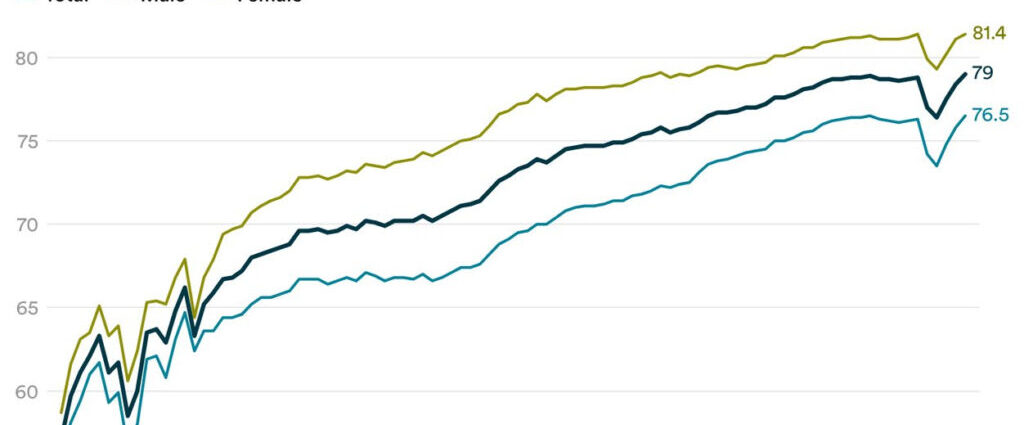
CDC releases latest life expectancy data
Get your daily dose of health and medicine every weekday with STAT’s free newsletter Morning Rounds. Sign up here.
Good morning. Do you consider the end of August the end of summer? When is an appropriate time to start talking about Halloween? I don’t have the answers, but I do have some news below.

STAT+: Comments on OMB research rule mysteriously removed from federal website
For the past couple of years, Magdeleine Bradford-Butcher has been living on the cutting edge of science. When prenatal testing showed the baby she was carrying had cystic fibrosis, her doctor put her on Trikafta — a relatively new treatment aimed at preventing severe complications from the genetic disease after birth.
Trikafta and other advances have dramatically changed the outlook for children with CF, but she was taken aback when, as she recalls, one of the physicians told her after the delivery, “With all of the new developments, your daughter has a very good chance of outliving you.” It was a glimmer of optimism amid a scary diagnosis. “Nobody had said that to me before, and that was incredible,” she said. “That’s something I treasure.”
So when she heard about a pending White House regulation that would open federal science funding to more political intervention, she was concerned. With the encouragement of the Cystic Fibrosis Foundation and a favorite science influencer, Jessica Knurick, she decided to submit a public comment on the proposal describing how she had benefited from research funding.
“Seeing how quickly they could revoke grants when that was so crucial to so much research was very disturbing. So that’s the basis of why I commented,” she said in an interview. She worried that the proposed wholesale rewrite of laws undergirding all federal contracts, including research grants, could affect work on other children’s diseases, but also a study her daughter was involved in, examining the outcomes of children who had been given Trikafta in utero. “I was really worried about whether or not that project could get cut for any arbitrary reason.”
What happened next was unusual, according to legal experts, and mysterious. Soon after Bradford-Butcher’s comment was publicly posted on the federal government’s regulations.gov website, it was taken down without explanation by the White House Office of Management and Budget.

Opinion: Whale songs: the sounds of love and loss as heard by an OB-GYN
I had a recurring nightmare as a child: floating alone in an open sea, the water quaking beneath me until a whale, roaring and howling, rose up and swallowed me whole.
In real life, I first heard a whale song on solid ground, in an even scarier place: the intensive care unit.

Opinion: Cancer screening guidelines need to address long-term care facilities
My aunt recently died of stage 4 breast cancer. She was diagnosed in April at the age of 78 and passed just three weeks later. She had been living in a long-term care facility since 2020. At the time, she was admitted with a sore on the bottom of her foot and arthritis so bad that she could hardly walk. Her cancer was discovered incidentally six years later while at the hospital for a urinary tract infection.
She told my mom after the diagnosis that she had a lump but never sought medical attention. She had not been screened for breast cancer since entering the facility, and after she learned of her diagnosis, she blamed herself for not being screened and promptly gave up on living, according to my mom.

STAT+: AI is good at catching drug theft at hospitals, but only when humans do their part
In late September 2024, patients noticed a nurse at Adventist Health in Bakersfield, Calif., was acting strangely.
The nurse was walking barefoot through the intensive care unit, talking to herself and acting abrasively toward others. Family members of patients noticed the nurse sloppily taking out IV needles but were afraid to confront her. “I know she was on something because you can tell,” one family member told federal investigators after the incident.
Another patient in the post-anesthesiology recovery unit treated by the same nurse was in excruciating pain under her care. “I was white knuckling it,” he said. “You’re not dying,” the nurse replied when the patient expressed his pain. He thought he was being given fentanyl and morphine, but the IV drip didn’t seem to help.
That’s because the nurse, hired through a travel nursing agency several weeks before the incident, was taking the medications from a secured cabinet in the wing and using them herself, while documenting that they had been administered to patients, according to investigators from the Centers for Medicare and Medicaid Services tasked with investigating a complaint about the incident in November 2024.
The incident didn’t happen out of the blue. Hospital managers ignored alerts from a machine learning software that tracks when staff might be stealing drugs, auditors found.
Hospitals are major repositories of addictive substances that can also be crucial medical treatments. Occasionally, employees steal those drugs and are under the influence while caring for patients. While new technologies are helping to identify theft and connect individuals with substance abuse resources, incidents like the one at Adventist show artificial intelligence isn’t foolproof.

How Trump’s cuts are reshaping America’s health system
BANGOR, Maine — Last year, Republicans set American health care on a new path: They slashed $1 trillion from expected Medicaid funding over the next decade and allowed tens of billions of dollars in annual insurance subsidies to expire.
The full impacts of those changes won’t be felt for years, but many parts of the health care system are already racing to prepare. The scramble is most intense where the cuts are projected to land the hardest: rural states. In dozens of interviews from Louisiana to Maine to Washington, D.C., providers laid out the changes, and difficult choices, they’re making.


Phonak Launches New AI Hearing-Aid Platform in the U.S.
Hearing aids are moving deeper into artificial intelligence, and Phonak is betting that the biggest consumer benefit will not be louder sound. It will be making speech easier to understand when the room is noisy.
Phonak launched its new EON hearing-aid platform in the United States on Monday, introducing a new generation of devices built around real-time AI sound processing, automatic scene recognition and broader wireless connectivity.
The flagship model, Audéo EON Sphere, is designed to separate speech from surrounding noise in real time so conversations stand out more clearly in restaurants, family gatherings, public transportation and other environments where hearing-aid users often struggle most.
That problem has long been one of the industry’s hardest to solve.
Traditional hearing aids can amplify sound effectively, but amplification alone does not necessarily help when multiple voices, dishes, music and background noise are competing at the same time. Phonak’s approach is to use AI processing to identify speech and suppress distractions continuously rather than forcing the user to manually change programs.
The new platform is powered by Sonova’s HYPERSONIC chip and also includes AutoSense OS AI 8.0, which automatically adjusts the hearing aid as the wearer moves between different environments.
The EON lineup includes Audéo EON Sphere, Audéo EON R and CROS EON R, the latter designed for people with hearing loss primarily on one side.
Connectivity is also becoming a larger part of the product.
The devices support standard Bluetooth as well as Auracast, a newer broadcast-audio technology that can allow hearing aids to receive audio directly in places such as theaters, airports, conference rooms, gyms and other public spaces as Auracast adoption expands.
For consumers, that pushes hearing aids closer to the functionality people already expect from wireless earbuds while preserving the medical-grade processing designed for hearing loss.
Phonak says the new models are also smaller and lighter than previous generations, addressing another persistent complaint among users who wear the devices for most of the day.
The launch comes as hearing technology becomes increasingly competitive. Prescription hearing-aid manufacturers are adding AI processing, while consumer-electronics companies are introducing hearing-related features into earbuds and other devices.
That competition is changing expectations.
Consumers increasingly want hearing aids that do more than amplify sound. They expect automatic adjustment, phone connectivity, streaming, rechargeable batteries and better performance in noisy environments without constantly manipulating settings.
The United States is the first major launch market for EON, with additional European markets and Australia expected to follow in September.
The broader shift is easy to see.
For decades, hearing aids were essentially specialized amplifiers.
The next generation is becoming something closer to an AI-powered audio computer worn behind the ear.
JBizNews Desk | Stäfa, Switzerland
© JBizNews.com All Rights Reserved. Reproduction or distribution without written permission is prohibited.
:::


STAT+: Lady Gaga and her fiancé launch a biotech startup
Want to stay on top of the science and politics driving biotech today? Sign up to get our biotech newsletter in your inbox.
This morning, we take an inside look at how Moderna and Merck’s cancer vaccine gamble finally paid off, the FTC takes aim at Amgen’s Enbrel patent strategy, and there’s new proto-FDA guidance for generative AI devices.
Soundtrack for this Readout: Inferno, by Boards of Canada. Yes, it’s weird.

STAT+: Public-sector purgatory, and a union-hospital fight
This is the online version of STAT’s weekly email newsletter Health Care Inc. Sign up here.
Aon, the big consulting and brokerage house, confirms 2027 is going to be brutal for job-based health care premiums. Aon’s chief actuary said in the news release: “Employers will need better data and deeper insights to understand where costs are rising.” Quite the advice from a company that has blocked companies from getting their data. You know where to find me: bob.herman@statnews.com.
The vise crunching public-sector health plans
There is an unwritten social contract for those who decide to work in government: The pay may be low, but the benefits will be good.
STAT+: Pharmalittle: We’re reading about Medicaid obesity-drug coverage, a Regenxbio gene therapy, and more
Good morning, everyone, and welcome to another working week. We hope the weekend respite was relaxing and invigorating because that oh-too-familiar routine of meetings, deadlines, and the like has returned with a vengeance. You knew this would happen, yes? To cope, we are relying, as always, on cups of stimulation. Our choice today is tiramisu. Feel free to join us. Remember, no prescription is required. Meanwhile, here are some tidbits to help you along. Best of luck accomplishing your goals today and, of course, do keep in touch. …
President Trump’s pledge to make pricey weight loss drugs widely available for low-income Americans is not panning out as planned, Politico explains. Last year, Trump promised Medicaid would provide access to GLP-1 drugs if states signed on with his administration to negotiate prices directly with manufacturers. But only Indiana has publicly done so. Some states stopped covering the drugs for Medicaid patients who need them for weight loss. Others are considering ending coverage. States opting out of coverage cited budget constraints and concerns about the long-term financial sustainability of Trump’s model.
The Trump administration plans to use a new approach to deny Medicaid coverage of drugs for gender-affirming care, STAT tells us. The precedent it sets could also be used to avoid paying for other drugs, upending an expectation that Medicaid covers the vast majority of prescription medicines. The Centers for Medicare and Medicaid Services issued a final rule this month barring use of federal Medicaid and CHIP funding to pay for pediatric gender-affirming medications and surgery. The rule, set to go into effect Oct. 13, attracted attention because it is the latest development in the administration’s campaign to halt transgender health care for young people.