The National Institutes of Health plans to close the door on one of the few pathways available to international students on visas to forge a career in biomedical research in the United States. 

The agency intends to limit eligibility for its “Pathways to Independence” award to U.S. citizens, permanent residents, and non-citizen nationals, according to an internal presentation viewed by STAT. Historically, it has been one of few programs to offer funding to international scientists on a visa. Without it, experts fear, even the most promising scholars will struggle to find footing to establish themselves in the U.S. 

The pathway, referred to as a K99/R00, includes funding for two years of a researcher’s postdoctoral studies, and three years of funding as an independent lab head. 

Continue to STAT+ to read the full story…

This post was originally published here. 

And so, another working week will soon come to a close. Not a moment too soon, yes? This is, you may recall, our treasured signal to daydream about weekend plans. Our agenda is still taking shape, but we plan on promenading with the official mascots, catching up on our reading, escorting Mrs. Pharmalot to a speakeasy and, if time permits, holding another listening party, where the rotation will likely feature this, this, this, this and this. And what about you?  Once again, we will remind you that the great outdoors is beckoning. With this in mind, time to grab your beach gear or strap on your hiking boots. If the weather fails to cooperate, you could always stroll around a museum, check out the new arrivals at your local library or curl up in front of the telly. Or maybe this is an opportunity to sit on the phone and reach out to a few special people. Well, whatever you do, have a grand time. But be safe. Enjoy, and see you soon…

The U.S. Food and Drug Administration cleared Replimune’s treatment for advanced melanoma, dealing the biotech a major win after a tumultuous saga of trying to seek approval for the controversial treatment, STAT notes. The decision to grant accelerated approval to the drug, which will be marketed as Tudriqev, came after its FDA advisers last week voted in support of the treatment. Even though FDA staff expressed concerns about the design and conduct of the key trial, advisers ultimately believed there was a large enough signal of efficacy and that patients are in urgent need of new treatments.

A little-noticed policy shift by Medicare caused a seven-year delay in choosing a costly AbbVie medicine for price negotiations, a move likely to hurt taxpayers, STAT writes, citing an analysis by a consumer advocacy group. The change occurred as the Centers for Medicare and Medicaid Services readied a new round of talks with drugmakers over prices the agency would pay for a limited number of drugs. The process was created by the Inflation Reduction Act. But CMS modified criteria for selecting drugs for the negotiations, which transformed the process for determining when certain medicines would become eligible for the talks. And it was done in a way that benefited AbbVie and may help other drugmakers in the future.

Continue to STAT+ to read the full story…

This post was originally published here. 

Want to stay on top of the science and politics driving biotech today? Sign up to get our biotech newsletter in your inbox.

Boston’s biotech identity is under pressure as founders decamp for California, Alzheimer’s researchers uncover more secrets of tau function, and Replimune finally secures a hard-fought FDA approval.

Read the rest…

This post was originally published here. 

Keep your head down. Don’t ask too many questions. Just finish your note and move on.

I heard a version of this command at every level of training and well into my attending practice, from colleagues, seniors, teachers, and administration. Most delivered the advice like it was some sort of hard-won wisdom, though it wasn’t. It was the sound of people who repeated the system’s rules because it felt like control.

Read the rest…

This post was originally published here. 

On the afternoon of Aug. 8, 2025, I was in my office at the Centers for Disease Control and Prevention when I heard what sounded like hammering outside. One of my laboratory directors appeared at my door. She shared that her husband, in the 12-story building next door, said his building was shaking. Construction, on a Friday near quitting time? That didn’t fit.

Then she said that people feared it was an active shooter.

Read the rest…

This post was originally published here. 

REDWOOD CITY, Calif. — By all rights, Felix Wong and his company should be in Massachusetts.

Wong, 33, was born in Quincy, graduated from Braintree High School, and spent a decade living in Cambridge, where he earned two degrees from Harvard and worked as a post-doc at MIT. His parents still live in Massachusetts, and he now leads a startup in biotech, an industry Boston has owned for the better part of two decades.

But on a recent Wednesday, Wong was in sunny Silicon Valley, walking in the shade of the jacaranda trees near the hiking trail outside his office and reflecting on the creative spirit of California.

Continue to STAT+ to read the full story…

This post was originally published here. 

The Food and Drug Administration has cleared Replimune’s treatment for advanced melanoma, dealing the biotech a major win after a tumultuous saga of trying to seek approval for the controversial treatment.

The FDA’s decision to grant accelerated approval to the drug, which is called RP1 and will be marketed as Tudriqev, came after its advisers last week voted in support of the treatment. Even though FDA staff expressed concerns about the design and conduct of Replimune’s key trial, advisers ultimately believed there was a large enough signal of efficacy and that patients are in urgent need of new treatments.

Replimune has not yet disclosed Tudriqev’s price.

Continue to STAT+ to read the full story…

This post was originally published here. 

Chief Executive Mike Dandorph will remain in the position through the end of September, after which he will be replaced by COO Phil Okala. Tufts is also swapping out its chief financial officer.

This post was originally published here. 

A little-noticed policy shift by the Trump administration caused a seven-year delay in choosing a costly AbbVie medicine for Medicare price negotiations, a move likely to hurt taxpayers, according to an analysis by a consumer advocacy group.

The change occurred as the Centers for Medicare and Medicaid Services readied a new round of talks with drugmakers over prices that the agency would pay for a limited number of medicines. The process was created by the Inflation Reduction Act, which became law in 2022 in response to the rising cost of prescription drugs.

Continue to STAT+ to read the full story…

This post was originally published here. 

In the race for new ways to treat Alzheimer’s and other devastating neurologic diseases, the protein tau has become a tantalizing target for drug developers. A new study lends support to those efforts by describing a previously unknown role that tau plays in neurodegeneration — and suggesting a novel way researchers might block the protein’s activity.

A team led by Stanford scientists found that tau can gum up the works of a cell’s mitochondria, its energy-producing powerhouse. The protein sends electrons flowing in the opposite direction of their usual microscopic relay race, a reversal that generates reactive oxygen species, cellular stress, and inflammation. Scientists found that blocking this phenomenon, known as reverse electron transport, reversed many of the harmful effects and improved learning and memory in flies and mice.

Whether the same will hold true in people is for now unclear, though an analysis of human cells grown in the lab and patient brain tissue suggests blocking the retrograde flow of electrons could make neurons healthier. Two of the study’s authors have started a biotech startup to put this idea to the test. 

Continue to STAT+ to read the full story…

This post was originally published here. 

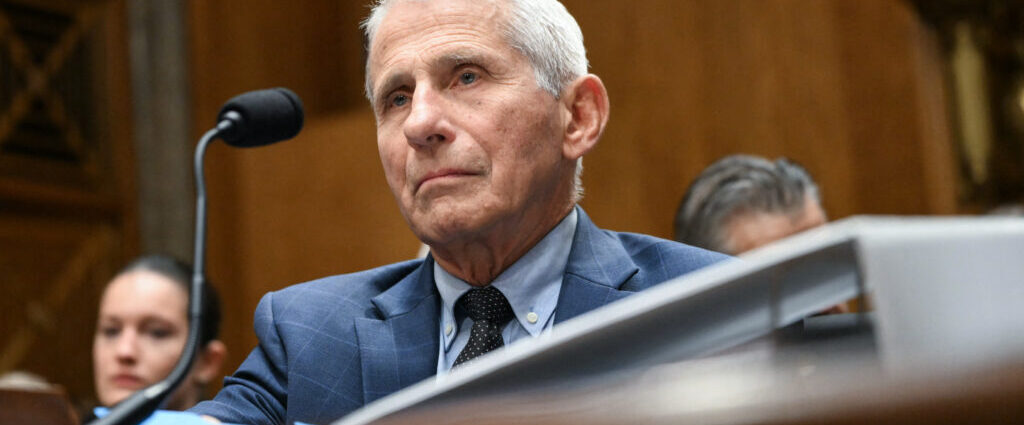
On Thursday morning, the Senate Homeland Security and Governmental Affairs Committee voted along party lines to hold Anthony Fauci in contempt of Congress over his recent invocation of the Fifth Amendment during a hearing about his pandemic-era leadership. Fauci will next face a Senate vote.

While watching these congressional proceedings, my mind has gone to two places at once: the spring of 2020 — and, more importantly, to what comes next.

Read the rest…

This post was originally published here. 

The Trump administration said Wednesday it will shut down a Kentucky organ donation group accused of continuing plans for organ retrieval from some patients who unexpectedly showed signs of life.

While those surgeries were canceled, the cases made headlines several years ago, prompting a spike in people around the country revoking their organ donor registrations.

Read the rest…

This post was originally published here. 

Want to stay on top of the science and politics driving biotech today? Sign up to get our biotech newsletter in your inbox.

Again, a child dies in a gene therapy trial in China, and STAT has exclusive details. Also, we have encouraging fecal pill results for peanut allergy, and see biotech investor Greg Verdine notch a series of wins.

In other news, it’s been hot out! My backyard tortoise, Philbert, has been most irascible and taken to his fainting couch (cardboard box).

Continue to STAT+ to read the full story…

This post was originally published here. 

You’re reading the web edition of STAT’s Health Tech newsletter, our guide to how technology is transforming the life sciences. Sign up to get it delivered in your inbox every Tuesday and Thursday.

Good morning health tech readers!

Today, a story about tech companies and regulators rubbing elbows. Plus: Checking in on ACCESS, one month in.

Continue to STAT+ to read the full story…

This post was originally published here. 

Good morning, everyone, and how are you today? We are just fine, thank you. Although gray skies are enveloping the Pharmalot campus, our spirits remain sunny. After all, as the Morning Mayor taught us: “Every new day should be unwrapped like a precious gift.” So go ahead and tug on the ribbon. While you do, we will indulge with another cup of needed stimulation. Our choice today is maple bourbon. Meanwhile, here are some items of interest. Hope your day goes well …

In a move that seemed out of reach just six months ago, the Food and Drug Administration approved Moderna’s influenza vaccine for older adults, the first licensed flu shot made using messenger RNA technology, STAT says. In February, Vinay Prasad, the FDA’s head of biologics at the time, overturned the recommendation of career staff and issued a rare “refusal to file” notice” to the company, saying the agency would not review the vaccine based on available data. A week later, after Moderna disclosed the decision as well as its own displeasure over the agency position, Prasad’s decision was reversed. He left the FDA at the end of April.

The FDA approved a novel type of treatment for narcolepsy made by Takeda, backing a drug class that scientists hope can transform the treatment of sleep disorders and potentially address a broad range of neurologic conditions, STAT writes. The twice-a-day pill, an orexin receptor agonist that will be marketed as Orzeyful, is likely to be very appealing to patients. Current therapies, stimulants and sodium oxybates, carry risk of misuse, and patients still feel sleepy while taking them. Since the orexin system not only regulates the cycle of sleeping and waking but may also boost attentiveness and cognition, the broader goal for drugmakers is to test the treatments in various neuropsychiatric conditions in which patients feel sleepy and fatigued.

Continue to STAT+ to read the full story…

This post was originally published here. 

WASHINGTON — A Senate committee voted Thursday to hold Anthony Fauci, who declined to answer questions in a hearing last week about his role in the lead-up and response to the Covid-19 pandemic, in contempt of Congress in a party-line vote, 8-7. 

Now the matter will go before the entire Senate, where the vote would be subject to the filibuster. If the Senate votes to hold Fauci in contempt, it will be up to the Department of Justice to decide whether to prosecute him.

Read the rest…

This post was originally published here. 

Once in a while, a scientific paper poses a question that we already know the answer to. That’s the case with a new study in Nature Medicine titled, “Is AI actually improving healthcare?”

Yes, it is. This much we know. The study also offers a big caveat: “In many cases, we do not know.” So many AI tools are so new that it’s still unclear whether they improve patient outcomes.

This distinction is essential. In health care, we have a tendency to treat AI as a monolith — a single, mysterious force. But asking “Is AI actually improving health care?” is a bit like asking “Do lasers improve surgery?” In the hands of a skilled surgeon using a validated tool, they allow for lifesaving precision; in an unproven setting, the question of efficacy is still open.

Continue to STAT+ to read the full story…

This post was originally published here. 

Get your daily dose of health and medicine every weekday with STAT’s free newsletter Morning Rounds. Sign up here.

Good morning and happy Thursday. FYI: The newsletter is taking a summer break next week, which means today is the last time you’ll hear from me until the 17th. (Rose will still be in your inbox tomorrow with the end-of-week news.) Talk soon! 

Read the rest…

This post was originally published here. 

On Wednesday, the Food and Drug Administration’s approved mFlusiva, the first mRNA seasonal influenza vaccine ever licensed in this country. In June the agency’s own advisory committee voted unanimously that its benefits outweigh its risks in adults 50 to 64, then unanimously again for adults 65 and older. Nine independent experts, appointed by this government, could not produce a single vote against it.

Wednesday was also an anniversary. On Aug. 5, 2025, the Department of Health and Human Services killed 22 mRNA vaccine development projects worth roughly $500 million and ordered a halt to federal investment in the platform.

Read the rest…

This post was originally published here. 

This story first appeared in Adam’s Biotech Scorecard, a subscriber-only newsletter. STAT+ subscribers can sign up here to get it delivered to their inbox.

Later this month, Tenax Therapeutics will report results from a Phase 3 study evaluating an oral treatment for a type of heart failure associated with high blood pressure in the lungs. The study outcome might be one of the biggest binary stock events remaining on the biotech docket this year. Tenax’s stock price could double or more if the study hits, or sink to cash levels if it fails.

Adding to the fun is the crapshoot nature of the study readout. This is a complicated disease, the proposed mechanism by which Tenax’s drug might work is unproven, and data from a prior study were mixed. Lastly, Tenax’s entire future rests on this one drug and indication. It has no fallback plan.

Continue to STAT+ to read the full story…

This post was originally published here. 

Greg Verdine is having a very good year. 

The scientist-turned-biotech entrepreneur has been basking in the knowledge that the science he had tried to propel forward nearly 15 years ago may have changed the landscape for pancreatic cancer patients.

His more recent ventures are taking off. One, Parabilis Medicines, went public in June in one of the industry’s largest IPOs in recent years. The other, LifeMine, has raised $263 million, it announced Thursday, enough to advance a drug that Verdine believes could make organ transplants more viable and potentially help people with autoimmune conditions. 

Continue to STAT+ to read the full story…

This post was originally published here. 

Elimination of measles in the United States in 2000 was a landmark public health achievement. Twenty-five years later, the country has already reported more cases this year than it did in all of 2025, a stark reminder that public health victories can be reversed.

In mid-August, colleagues and I will review the evidence and decide whether the U.S. has maintained measles elimination. In many ways, our roles bookend that history. Several of these colleagues helped lead the national effort that ended endemic measles transmission in 2000. And I now chair the committee that must determine whether that hard‑won status still holds — or whether the country is on the verge of losing it. 

Read the rest…

This post was originally published here. 

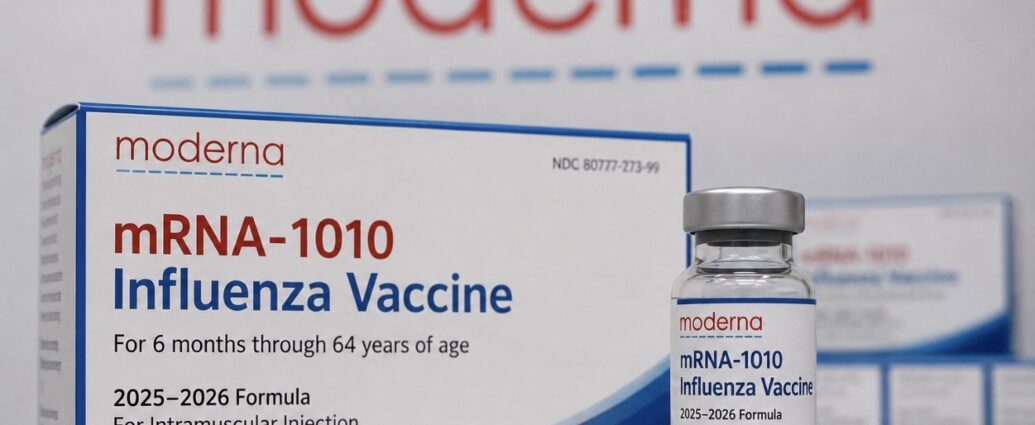
The government approved a flu vaccine on Wednesday that is made in a fundamentally different way than every flu shot before it. Instead of growing influenza virus in chicken eggs over roughly six months and then killing it to make a shot, Moderna’s vaccine delivers a set of genetic instructions that tell the body to build the flu protein itself — the same approach the company used for its COVID-19 vaccines. The body then learns to recognize that protein and fight the real virus.

The Food and Drug Administration approved the vaccine, called mFLUSIVA, for all adults 50 years and older. It is the first licensed flu shot in the United States made with messenger RNA technology.

The practical advantage is speed. Every year, manufacturers must guess months in advance which flu strains will circulate, then commit to a long production run. A genetic-instruction vaccine can be reformulated far faster, which means a closer match to the strains actually making people sick.

In late-stage testing, the shot was roughly 27% more effective than a standard flu vaccine. The trial enrolled 40,805 adults across 11 countries, comparing the vaccine against both standard-dose and high-dose flu shots already on the market.

For Moderna, the approval is a significant commercial win. The company called it its fourth approved product in the United States, and chief executive Stéphane Bancel described the vaccine as “an important new option for America’s seniors.” Moderna expects supply at select U.S. retailers in the coming weeks, alongside its COVID-19 and RSV vaccines for the 2026–2027 respiratory virus season.

A Reversal at the Agency

Getting here was not routine. The FDA initially refused to review Moderna’s application this year, then reversed course a week later. Agency officials said they wanted more data because Moderna had compared its vaccine against a standard flu shot in adults 65 and older, even though federal guidelines call for a high-dose vaccine in that age group. Moderna has said the FDA previously signed off on the trial design.The FDA’s independent vaccine advisory committee then voted unanimously in June to recommend approval.

Moderna also presented data in adults 65 and older comparing its shot against Fluzone High-Dose, showing stronger antibody responses at both one month and six months — the basis for how the agency handled the older age group.

That split shows up in the approval itself. Adults 50 to 64 received a traditional approval. Adults 65 and older received an accelerated approval, conditioned on Moderna running an additional clinical trial in that older group.

The Politics Around It

The approval lands in an unusually hostile policy environment for the technology. The Department of Health and Human Services canceled 22 projects worth about $500 million focused on mRNA vaccine development in August 2025, with Secretary Robert F. Kennedy Jr. asserting — against the available evidence — that such vaccines do not protect effectively against respiratory infections like COVID and flu. The agency’s former top vaccine regulator declined to review the Moderna application, and the shot is expected to draw pushback from the health secretary’s allies.

That matters for business reasons, not just political ones. Whether insurers cover the vaccine at no cost, and whether pharmacies stock it in volume, depends heavily on federal advisory recommendations — the step that comes after approval. A shot that clears the FDA but never gets a firm recommendation can end up as an out-of-pocket product that most people never encounter at the counter.

The market it enters is large. Influenza killed between 23,000 and 78,000 people in the United States during the 2025–26 season, according to CDC estimates.

What Patients Should Expect

Reported side effects include pain, tenderness and swollen lymph nodes at the injection site, along with fatigue, headache, muscle or joint pain, nausea or vomiting, and fever. Advisory panelists noted those reactions occurred at higher rates than with comparison vaccines and stressed that clear communication about the side effect profile will matter for uptake, given public skepticism toward mRNA technology.

Competitors are close behind. Pfizer has mRNA-based flu vaccines in development, and a combined COVID-and-flu shot from Moderna was approved in Europe earlier this year. Moderna’s flu vaccine is also under regulatory review in the European Union, Canada and Australia.

For older Americans this fall, the choice at the pharmacy counter will simply be a new box on the shelf. Whether it becomes the default flu shot — or a niche option for those willing to pay — will be decided in Washington, not in the lab.

JBizNews Desk | New York

© JBizNews.com All Rights Reserved. Reproduction or distribution without written permission is prohibited.

In a move that seemed out of reach just six months ago, the Food and Drug Administration approved Moderna’s influenza vaccine for older adults on Wednesday, the first licensed flu shot made using messenger RNA technology.

In February, Vinay Prasad, the FDA’s head of biologics at the time, overturned the recommendation of career staff and issued a rare “refusal-to-file” notice to the company, saying the agency wouldn’t review the vaccine based on the available data package. A week later — after Moderna disclosed the FDA’s decision as well as its own displeasure over the agency’s position — Prasad’s decision was reversed. He left the FDA at the end of April.

Read the rest…

This post was originally published here. 

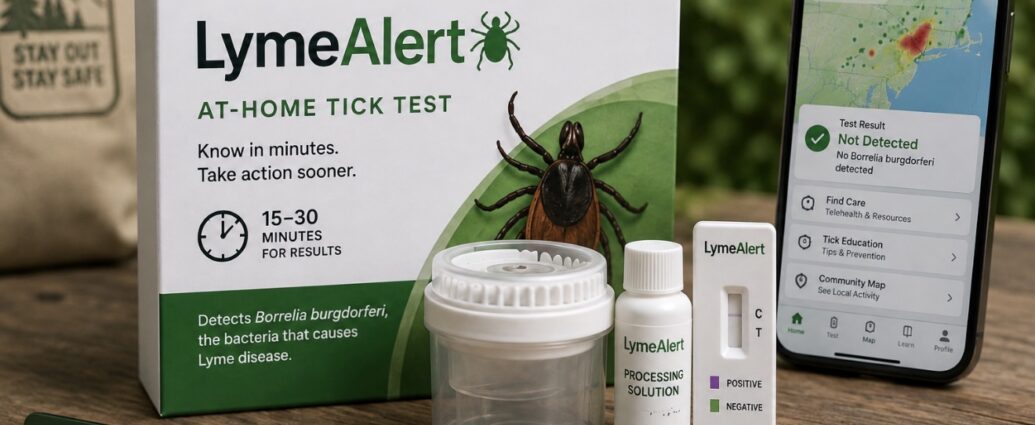
A Boston startup is launching what it says is the first at-home tick test available to U.S. consumers, giving families, hikers and pet owners a way to check within minutes whether a removed tick carries the bacteria that causes Lyme disease.

LymeAlert, founded by physician associate Erin Dawicki along with Michelle Ewy and Brenda Ong, begins shipping its $50 test kits this month. Rather than testing the person who was bitten, the kit analyzes the tick itself. Users place the tick into a sealed chamber, crush it using a built-in mechanism, add a processing solution and insert a test strip. Results are available in about 15 to 30 minutes, with a color change indicating whether Borrelia burgdorferi, the bacterium responsible for Lyme disease, is detected.

The company is targeting one of the biggest challenges in Lyme disease: time. Physicians may recommend a preventive dose of doxycycline within 72 hours of certain high-risk tick bites, making quick information valuable while medical decisions are still possible.

The market opportunity is substantial, particularly across the Northeast and Mid-Atlantic. An estimated 31 million Americans are bitten by ticks each year, while roughly 476,000 people receive treatment for Lyme disease annually. New York, New Jersey and Connecticut remain among the nation’s highest-risk states. Earlier this year, the Centers for Disease Control and Prevention reported that emergency department visits related to tick-borne illnesses reached their highest level since 2017.

Beyond the testing kit, LymeAlert is building a broader technology platform. Its companion smartphone app verifies test-strip results, directs users toward medical or veterinary care when appropriate, and anonymously maps where infected ticks are being found. The company plans to make aggregated hotspot information publicly available through the app, potentially creating one of the country’s largest real-time datasets on infected tick activity.

The startup emerged from the Massachusetts Institute of Technology’s Sloan School of Management and has attracted backing from Bay Area Lyme Ventures, an impact fund focused on tick-borne disease technologies. Initial sales will be made through the company’s website, selected REI stores in Massachusetts and New Hampshire, and independent pet retailers, with veterinary pilots already underway.

The launch also enters an area of ongoing medical debate. The CDC does not recommend relying on tick testing alone because a positive result does not mean a person was infected, while a negative result cannot rule out disease if another infected tick was involved. Health experts continue to advise that anyone with concerns after a tick bite should consult a healthcare provider, regardless of the test outcome.

For consumers, the product represents a new source of information rather than a diagnosis. For investors and the healthcare industry, LymeAlert’s larger opportunity may lie in building a nationwide surveillance platform that tracks where disease-carrying ticks are spreading as climate and habitat changes continue to expand their range.

JBizNews Desk | New York

© JBizNews.com — All Rights Reserved. Reproduction or distribution without written permission is prohibited.

Federal health officials held closed-door conversations with prominent technology companies last month as the health department and its subagencies aim to safely boost adoption of clinical artificial intelligence.

During a “clinical AI demo day” on July 8 at the Food and Drug Administration’s White Oak headquarters, officials from the FDA and the Centers for Medicare and Medicaid Services hosted leaders from 10 companies, according to an agenda for the event reviewed by STAT: Anthropic, Counsel Health, Curai, K Health, Microsoft AI, Amazon One Medical, Doctronic, Ellipsis Health, Hippocratic AI, and Welldoc.

STAT spoke with four companies that attended, Counsel Health, K Health, Hippocratic AI, and Ellipsis Health, whose leaders summarized their comments to regulators. The meeting was meant to offer federal health officials firsthand experience with AI doctor technology as it exists today. For the assembled companies, including powerful technology giants and startups funded by influential investors such as Andreessen Horowitz and Khosla Ventures, the event offered a significant opportunity to help shape policy as officials wrestle with regulating health AI and how to pay for it.

Continue to STAT+ to read the full story…

This post was originally published here. 

The Food and Drug Administration on Wednesday approved a novel type of treatment for narcolepsy made by Takeda, backing a drug class that scientists hope can transform the treatment of sleep disorders and potentially address a broad range of neurologic conditions. 

The twice-a-day pill, which will be marketed as Orzeyful, is an orexin receptor agonist. It’s cleared to treat narcolepsy type 1, a taxing condition in which patients have a deficiency of the orexin neuron and experience bouts of sleepiness and muscle weakness during the day.

The drug is likely to be very appealing to patients. Current therapies, stimulants and sodium oxybates, carry risk of misuse, and patients still feel sleepy while taking them. In two Phase 3 trials, Orzeyful helped patients stay awake during the day for much longer than what’s been seen with current treatments. Throughout the studies, participants also reported less daytime sleepiness, less frequent muscle weakness, and greater attentiveness.

Continue to STAT+ to read the full story…

This post was originally published here. 

Facilities at the health system AnMed are still operating in a limited capacity as the nonprofit recovers from a cyberattack. Prolonged recovery times have become a problem in the industry, one expert said.

This post was originally published here. 

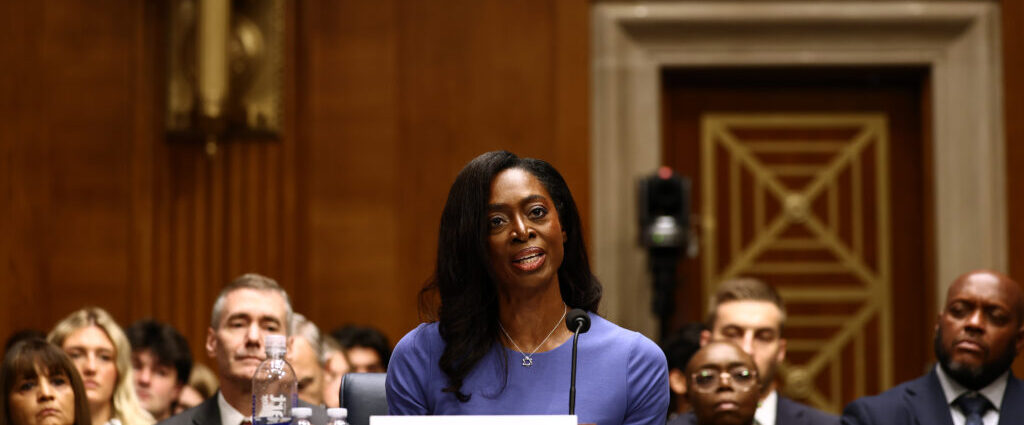
WASHINGTON — Erica Schwartz was confirmed Wednesday as the director of the Centers for Disease Control and Prevention, making her the second permanent leader of the agency since the second Trump administration took office. 

Her confirmation, approved by the Senate in a 51-44 vote, also ends a nearly yearlong vacancy for the CDC’s top job after health secretary Robert F. Kennedy Jr. fired Schwartz’s predecessor last year. 

Read the rest…

This post was originally published here. 

Last year, a little-known Chinese startup took center stage at the American Society for Gene and Cell Therapy annual convention in New Orleans. 

Speaking before a sprawling conference hall for the presidential symposium, HuidaGene CEO Alvin Luk presented data from one of the world’s first trials to test if CRISPR gene editing could cure children with Duchenne muscular dystrophy, an intractable, fatal disease. Similar efforts in the U.S. ran aground amid technical challenges, but HuidaGene had surged ahead, using a regulatory pathway that lets Chinese hospitals start studies without oversight from government regulators. 

The results, from the first two patients, were not impressive. It wasn’t clear the therapy worked at all. But Luk said the data indicated benefit and the company was about to test a higher dose. Hopefully, that would have far better effects. 

Then HuidaGene went dark. For 15 months following that conference, the Shanghai-based company did not issue a single new press release. Luk quietly departed last summer, alongside Chief Technology Officer TJ Cradick, a longtime U.S.-based gene editing executive who had been there less than a year. In February, a listing on a clinical trial registry was updated to announce the study was “complete.” 

What happened to the remainder of patients in the study was unclear. But after a monthslong STAT investigation and repeated questions to the company, HuidaGene on Wednesday issued an update.

Continue to STAT+ to read the full story…

This post was originally published here. 

In an early-stage clinical trial, six participants with peanut allergy showed improved tolerance to small peanut exposures up to four months after they received fecal microbiome transplant using stool capsules. 

The results of the phase one clinical trial, published in Science Translational Medicine on Wednesday, suggests fecal microbiome transplant has the potential to be a viable treatment option for peanut allergy, according to experts. 

“We, as the food allergy community, have been waiting for these results,” said Stephen Tilles, an allergist-immunologist and clinical professor at the University of Washington, who was not a part of this study. Tilles described the study findings as “very exciting,” even if it may not be “ready for prime time” yet. 

Continue to STAT+ to read the full story…

This post was originally published here. 

CVS Health is dropping the price of an online weight-loss consultation to $29, a move that puts the country’s largest pharmacy chain into direct price competition with the drugmakers and telehealth startups now selling GLP-1 access straight to consumers.

The Woonsocket, Rhode Island company announced the overhaul of its weight management program Tuesday, positioning the $29 MinuteClinic online visit as a first step for eligible adults who want a clinical evaluation for GLP-1 therapy. The visits run around the clock, and CVS says there is no separate membership requirement and no recurring monthly fee attached.

The new price is a meaningful cut. MinuteClinic had been charging $49 for the same cash-pay weight-loss consultation, which covers the consultation itself and does not include the cost of any required lab work.

The Lilly Piece

Alongside the price cut, CVS is teaming with Eli Lilly on distribution. By the early part of the fourth quarter, the company says patients prescribed Zepbound or Foundayo will be able to see transparent pricing, including cash-pay figures, inside the CVS Health app and arrange pickup as soon as the same day at stores nationwide.

That is the strategic heart of the announcement. Patients can meet a licensed clinician online, receive a prescription where clinically appropriate, and collect the medication at one of more than 9,000 CVS Pharmacy locations — a loop that keeps the consultation, the fill and the follow-up support inside CVS.

On out-of-pocket cost, the company laid out several tracks. Eligible patients with commercial insurance using manufacturer coupons may pay as little as $25 a month, while those without insurance can get qualifying medications and doses for $149 a month through manufacturer vouchers. CVS is also participating in the Medicare GLP-1 Bridge program run by the Centers for Medicare and Medicaid Services, which lets qualifying beneficiaries obtain certain GLP-1 drugs for $50 a month through the end of 2027.

Sid Tenneti, senior vice president and interim president of pharmacy and consumer wellness, framed the changes around removing obstacles that stop people before treatment ever begins. The company’s argument is that combining the clinic, the pharmacy counter and the app in one place beats a patchwork of separate vendors.

Why $29 Matters

The number itself is small. The signal is not.

For most of the past two years, the economics of weight-loss medication have been controlled by the manufacturers and by a handful of venture-funded telehealth companies. Lilly sells Zepbound single-dose vials at roughly $299 a month through its own LillyDirect platform, and Novo Nordisk has pushed self-pay Wegovy pricing to levels that would have been implausible a year and a half ago. Novo’s NovoCare program opens at $199 for introductory months before stepping up to $349, and Costco’s arrangement with Sesame prices Wegovy near $349 while requiring a paid membership.

Those consultation fees have been the quiet variable. Telehealth visits through manufacturer partner networks typically run $25 to $99 depending on the partner, and advertised monthly prices frequently exclude consultation charges, membership surcharges, shipping and supply fees that turn a headline number into something considerably larger.

By pricing the visit at $29 with no subscription attached, CVS is attacking the fee layer rather than the drug price — the piece it actually controls. It is also using a low-margin front door to pull patients toward a pharmacy counter that generates revenue for years.

Retail context explains why the competition is this fierce. List pricing on the branded drugs still runs well above $1,200 a month, and most commercial insurers restrict coverage behind prior authorization and step-therapy requirements. Every dollar shaved off the entry point widens the pool of cash-paying customers.

The Retail Angle

CVS is not moving in isolation. Analysts have been arguing for months that large retailers with pharmacy operations are the natural winners as prescriptions shift toward direct-to-consumer channels — the customer acquisition cost is minimal when the patient is already walking through the door for household goods.

For CVS specifically, the calculation is straightforward. A patient who starts GLP-1 therapy typically stays on it for an extended period, returns monthly, and buys other items on the same trip. The chain has also been leaning on its pharmacists as an in-person support layer, a differentiator no mail-order platform can match.

The open question is whether Lilly and Novo Nordisk continue to route volume through retail partners or keep tightening their own direct channels. Both have built closed pipelines that capture the full margin. Wednesday’s announcement suggests at least one of them sees value in the 9,000-store footprint.

Prescriptions remain subject to clinical evaluation, and the drugs are not appropriate for every patient.

JBizNews Desk | New York

© JBizNews.com All Rights Reserved. Reproduction or distribution without written permission is prohibited.

Complete Health Partners Holdings agreed to pay $14.1 million to settle federal allegations that it caused unsupported medical diagnoses to be submitted for Medicare Advantage patients, increasing government payments and the company’s own compensation.

The Justice Department said the Jacksonville-based management services organization allegedly used diagnosis codes between 2020 and 2023 that were not clinically valid, not supported by patient records or not considered in the patients’ care, management or treatment.

The disputed codes fell under two federal risk categories: HCC 55, covering drug and alcohol dependence, and HCC 59, covering major depressive, bipolar and paranoid disorders.

The settlement exposes a central vulnerability in Medicare Advantage, a program that now covers more than half of all Medicare beneficiaries.

Under traditional Medicare, providers are generally paid for each service they perform. Medicare Advantage instead pays private insurers a fixed monthly amount for every enrolled patient, with the payment adjusted according to the patient’s documented health risks.

The more serious conditions recorded for a patient, the more money the government may pay.

Complete Health held contracts that entitled it to a share of the payments Medicare Advantage plans received from the Centers for Medicare & Medicaid Services. Prosecutors said that risk-sharing structure gave the company a direct financial interest in raising patient risk scores.

According to the government, Complete Health distributed incorrect coding guidance to physicians and coders, reviewed patient records for additional diagnoses and prompted doctors to attach conditions that were unsubstantiated or not clinically justified.

Once those diagnoses entered the system, CMS allegedly paid the Medicare Advantage plans more. A portion of that additional money then flowed back to Complete Health.

The case is significant because Complete Health did not need to bill Medicare directly to face False Claims Act liability.

The government’s position is that a management company can still be responsible when its coding guidance, physician prompts or compensation arrangements cause false information to enter the federal payment system.

That broadens the compliance risk across the health-care industry. Physician groups, management companies, insurers and outside coding vendors increasingly operate under contracts whose profitability rises with patient risk scores.

Federal investigators are therefore looking beyond the diagnosis itself to determine who encouraged it, who benefited financially and whether the condition played any genuine role in the patient’s treatment.

The case reached the government through Karen Bowers, a former associate director of risk adjustment at VIVA Health, who filed the lawsuit under the whistleblower provisions of the False Claims Act.

Those provisions allow private individuals to sue on behalf of the federal government and receive part of any recovery. Bowers will collect approximately $2.47 million from the settlement.

Complete Health operates affiliated provider groups in Florida, Alabama and Colorado. The company did not admit liability, and the settlement resolves allegations rather than a judicial finding that wrongdoing occurred.

The agreement arrives during a period of record False Claims Act enforcement.

Federal settlements and judgments exceeded $6.8 billion in fiscal 2025, the largest annual recovery in the law’s history. A record 1,297 whistleblower lawsuits were filed that year, surpassing the previous high set in 2024.

That surge has turned former compliance officers, coders and risk-adjustment employees into one of the government’s most productive sources of fraud cases.

For health-care companies, the Complete Health settlement carries a straightforward warning: every diagnosis that increases a Medicare Advantage payment must be clinically valid, properly documented and connected to the patient’s actual care.

Organizations whose compensation rises when patients appear sicker now face exposure extending beyond their own claims departments. Physician prompts, coding software, internal guidance, chart reviews and risk-sharing agreements can all become evidence in a federal investigation.

The dollars in this case are modest compared with the hundreds of billions flowing through Medicare Advantage each year. The theory of liability is not.

A company may never submit a bill to Medicare and still be held responsible for the codes its affiliated physicians enter—and for the money those codes generate.

JBizNews Desk | Washington

© JBizNews.com All Rights Reserved. Reproduction or distribution without written permission is prohibited.

The hospital juggernaut is adding Texas MedClinic’s locations to its nationwide portfolio of urgent care clinics amid rising consumer demand for fast and convenient medical attention.

This post was originally published here. 

Good morning, everyone, and welcome to the middle of the week. Congratulations on making it this far, and remember there are only a few more days until the weekend arrives. So keep plugging away. After all, what are the alternatives? While you ponder the possibilities, we invite you to join us for a needed cup of stimulation. Our choice today is ginseng honey, a favorite from our pantry. Meanwhile, here is the latest menu of tidbits to help you on your way. We hope you conquer the world and have a wonderful day. And as always, please do stay in touch. …

Excluding rare disease drugs from a Medicare pilot program known as GUARD to lower prices would wipe out much of the savings from retail meds, STAT writes. The program applies to retail drugs in Medicare Part D. Biotechs are lobbying the Trump administration to exclude rare disease drugs from the program, which is part of a plan to get drugmakers to lower prices in the U.S. to levels seen in other wealthy countries, an approach known as “most-favored nation.” Thomas Hwang, who heads the Cancer Innovation and Regulation Initiative at Harvard Medical School, said that if all companies that agreed to most-favored nation deals were exempted, potential savings would be cut by 71%.

There are no talks ongoing between AstraZeneca and ​Bristol Myers Squibb over a potential ‌deal, quashing the ​prospect of a mooted mega merger ​between the drugmakers, Reuters reports. “There is no deal ⁠between AstraZeneca and BMS. There never ​was a deal to be done, and ​there are no discussions between the companies,” said a source, speaking on condition of anonymity. On Sunday, The Financial Times reported that the two drug makers had held ‌preliminary ⁠talks about a possible deal that would create a pharmaceutical behemoth with a combined value of nearly $400 billion.

Continue to STAT+ to read the full story…

This post was originally published here. 

You’re reading the web edition of STAT’s AI Prognosis newsletter, our subscriber-exclusive guide to artificial intelligence in health care and medicine. Sign up to get it delivered in your inbox every Wednesday. 

In the middle of watching the new Spider-Man movie, I thought I heard a mention of siRNA and made a note to ask STAT’s biotech team about it. But lo and behold, my favorite science content creator Alex Dainis is on the case (caution: spoilers).

Schrödinger’s and Centene’s AI shifts

I’m looking forward to the point in time when people revise their opinions on AI. I think that in five years, we’ll have a better idea of what AI can and can’t do. Bosses will stop forcing people to use AI that doesn’t work, partially helped by AI getting better. There will be less froth, and thus less uncertainty in the job market and in the world (with regard to AI) at large.

Continue to STAT+ to read the full story…

This post was originally published here. 

Want to stay on top of the science and politics driving biotech today? Sign up to get our biotech newsletter in your inbox.

Good morning. We’ve got a busy earnings week. Here’s the latest.

The need-to-know this morning

Novo vs. Lilly

The two GLP-1 giants have both reported earnings.

Continue to STAT+ to read the full story…

This post was originally published here. 

WASHINGTON — Excluding rare disease treatments from a Medicare pilot program to lower drug prices would wipe out much of the savings from retail drugs, according to a Harvard University researcher. 

Biotech companies are lobbying the Trump administration to exclude treatments for rare, or “orphan,” diseases from two Medicare pilot programs: Global Benchmark for Efficient Drug Pricing (GLOBE) and Guarding U.S. Medicare Against Rising Drug Costs (GUARD). Those pilots are part of President Trump’s plan to get drugmakers to lower prices in the United States to the levels seen in other rich countries, an approach generally referred to as a “most-favored nation” policy.

The exact scope of those pilot programs has been in question. Some companies that struck most-favored nation pricing deals with the White House — including many of the largest drugmakers globally — have said they were exempted from the pilots, though details of those deals have not been made public. 

Continue to STAT+ to read the full story…

This post was originally published here. 

The top Democrat on the Senate Finance Committee launched an inquiry into the Trump administration’s recent actions on flavored vapes and kratom products, alleging a pattern of quid pro quos after the tobacco and kratom industries made large donations to the presidential campaigns of Donald Trump and Robert F. Kennedy Jr.

“Both industries will flood gas stations and convenience stores with products that pique the curiosity of kids and teens and launch them into addiction,” Sen. Ron Wyden (D-Ore.) writes in an Aug. 3 letter to Kennedy, who is now President Trump’s health secretary. Wyden adds, “You have yet to draw a line in the sand and buck corporate interests to Make America Healthy Again.”

The Senate investigation includes Kennedy as well as the heads of Reynolds American and kratom company Botanic Tonics, asking for written responses and documentation by Aug. 31.

Continue to STAT+ to read the full story…

This post was originally published here. 

With more than 333,000 new cases every year, prostate cancer is the most frequently diagnosed cancer in the U.S., and by far the most common among men. It is also the least deadly: Only about 4% of prostate cancers end up being lethal, and the 5-year survival rate is about 99%. 

This paradox is in no small part due to the way it is diagnosed. A routine blood test checking for levels of a biomarker called prostate-specific antigen (PSA) is followed, if this protein is elevated, by a systematic biopsy to find cancerous tissue. This two-step process is effective at detecting cancer, even in its earliest stages. It may be too effective, in fact: Up to 70% of new prostate cancer diagnoses are low grade and in no need of treatment, as the risk of the disease turning deadly is negligible. 

Read the rest…

This post was originally published here. 

By the time a patient arrives in an emergency room with chest pain, nobody asks whether the physician caring for them trained in an allopathic (M.D.) or osteopathic (D.O.) medical school. Both physicians prescribe medications, perform procedures, lead hospital teams, and practice under the same state licenses.

The credential on the wall does not change the care provided at the bedside.

Read the rest…

This post was originally published here.