Get your daily dose of health and medicine every weekday with STAT’s free newsletter Morning Rounds. Sign up here.

Good morning. It’s the last day of Pride Month. Here are some gay things I’ve enjoyed lately: the movie “Maddie’s Secret,” the new MUNA album, my gay pickup soccer group, and matcha lattes.

Read the rest…

This post was originally published here. 

In May, the Department of Education finalized its framework under the “Reimagining and Improving Student Education” (RISE) rules and made a technical distinction that carries life-or-death stakes for the American health care system. By capping annual federal borrowing for standard graduate students at $20,500 while preserving a $50,000 threshold for an exclusive list of 11 “professional” degrees, the administration attempted to use a balanced ledger to codify a dangerous misunderstanding of modern medicine. The new caps go into effect Wednesday.

A lawsuit filed by the American Nurses Association (ANA) and nine other national nursing organizations highlights a glaring absurdity: Under the new framework, an aspiring chiropractor qualifies for maximum federal borrowing, while advanced practice nurse practitioners (NP) and physician assistants (PA), both key to fulfilling existing and anticipated shortages in primary care and rural health nationwide, are locked out. Further, growing fields like cardiovascular perfusionists, more and more involved in ICU care, field resuscitation, organ preservation, and other support roles, remain unrecognized.

Read the rest…

This post was originally published here. 

WASHINGTON — The Trump administration’s grand bargain with drugmakers on GLP-1s was based on a simple premise: lower prices in exchange for higher sales volume. Instead, the companies secured higher volume without the lower prices in some cases.

When President Trump’s team of negotiators got Eli Lilly and Novo Nordisk to agree to a monthly $245 price in Medicare and Medicaid in November, that price was supposed to be for all GLP-1s, including those for obesity, which until then had not been covered by Medicare.

But that price was contingent on private Medicare insurers agreeing to cover the drugs for all uses, with a $50 copay. The administration did not publicly mention that condition, but Novo and Lilly recently confirmed it to STAT. 

Continue to STAT+ to read the full story…

This post was originally published here. 

As a new 18-year-old during my first week of college orientation, I marched through the doors of the local hospital for an appointment I never expected to need. A few days earlier, I had undergone a mandatory electrocardiogram (EKG) to screen for potential heart problems before joining my varsity crew team. Soon after, I was told my EKG showed a possible abnormality, something that might indicate a condition that could cause a heart attack during exercise. I needed further testing before I could practice with my team.

So there I was, in a new hospital, in a new town, sitting on a procedure table as electrodes were attached and medication was injected. Five minutes later, it was over. The result? I was completely fine. I paid the copay and went to Freshman Convocation.

Read the rest…

This post was originally published here. 

The Make America Healthy Again movement wants for no enemies.

For the past two years, seed oils, sugary drinks, pesticides, pharmaceuticals, and childhood vaccines — and the industries behind them — have been subjected to unprecedented scrutiny. Yet MAHA’s quest to vanquish the root causes of chronic disease has omitted an obvious foe: alcohol. 

Though drinking causes more deaths in the U.S. each year than infectious diseases and opioids combined, the movement and its leader, Robert F. Kennedy Jr., have largely sidestepped alcohol. 

STAT’s investigation finds that the Trump administration has downplayed alcohol’s risks and actively derailed efforts to understand and prevent drinking-related harms, all while doing favors for the expansive alcohol industry. 

Even Kennedy, who has professed a deep interest in fixing the nation’s patchy addiction-treatment infrastructure, has offered no plan for dealing specifically with the country’s favorite drug. Most of his investments so far focus on opioids or specifically on homeless Americans, and pay little attention to excessive alcohol use in the broader population.

To date, the administration’s most noteworthy actions on alcohol have consisted of burying a report that concluded light drinking poses risks; eliminating over half the staff at a federal agency focused on substance use; closing the alcohol program at the Centers for Disease Control and Prevention; and altering dietary guidelines to eliminate suggested drinking limits. That erasure is rippling through government: The National Institute on Alcohol Abuse and Alcoholism removed information about the health risks of moderate drinking from its website in January, according to archived versions of the page.

“If you’re truly committed to improving all of these different ills in society, and you’re going to stay blind to alcohol, you’re not really that committed to it,” said Mike Marshall, CEO of the U.S. Alcohol Policy Alliance, a key nonpartisan nonprofit working on the issue.

Continue to STAT+ to read the full story…

This post was originally published here. 

LONDON — Abivax on Monday night disclosed additional data for its experimental ulcerative colitis drug, seemingly allaying at least some of the safety concerns that had flared in recent weeks.

U.S.-listed shares of the French firm were up some 25% overnight into Tuesday morning. 

Earlier this month, Abivax reported that the drug, called obefazimod, delivered strong efficacy in a closely watched maintenance trial, with far more participants on the study drug entering a period of no symptoms of their bowel disease versus those on placebo. But a number of cancer cases among people on obefazimod raised questions about potential safety risks, with company shares plummeting in response. 

Continue to STAT+ to read the full story…

This post was originally published here. 

Nutex Health is a Houston-based microhospital operator whose finances have been transformed by the No Surprises Act’s arbitration process. STAT took a close look at the company and discovered it’s far from a typical hospital operator. 

Uninsured patients report being turned away if they don’t pay up front

Several patients told STAT they visited Nutex’s emergency rooms and were refused care unless they paid up front. One of those patients went to another hospital and discovered he’d suffered a heart attack. Nutex claims it screens all patients for medical emergencies and won’t turn anyone away who’s experiencing one. 

Read the rest…

This post was originally published here. 

WASHINGTON — Vijay Kumar, acting director of the office that reviews cell and gene therapies at the Food and Drug Administration, is stepping down from his role, according to an email obtained by STAT. 

“After careful reflection, I decided the time has come for me to move on,” Kumar wrote. “I discussed with Center and Agency leadership; we mutually decided not to renew my detail.”

Kumar’s departure follows a broader leadership shakeup inside the agency, and a particularly rocky year of turnover in the Center for Biologics Evaluation and Research where the cell and gene therapy office is housed. CBER Director Vinay Prasad promoted Kumar to director of the Office of Therapeutic Products after pushing former director Nicole Verdun out of the role a little over a year ago. Before that, Kumar was a lead physician in the office. 

Continue to STAT+ to read the full story…

This post was originally published here. 

The health IT regulator awarded a new contract to oversee the framework’s rules for data sharing as the number of health records exchanged through TEFCA balloons. 

This post was originally published here. 

Five New England states are among 26 that sued the federal government on Monday to block work requirements for Medicaid enrollees that are expected to cost hundreds of thousands of people in Massachusetts their health insurance.

Connecticut, Maine, Massachusetts, Rhode Island, and Vermont joined other states arguing the guidelines create an unfair and unnecessary bureaucratic maze for people who are entitled to receive Medicaid coverage.

“The Trump Administration’s attempt to impose new, burdensome requirements on Medicaid recipients threatens access to healthcare for our most vulnerable residents and families,” Attorney General Andrea Joy Campbell said in a statement Monday.

Continue to STAT+ to read the full story…

This post was originally published here. 

AstraZeneca agreed to pay $34 million to settle claims that the company paid kickbacks to improperly influence prescriptions paid for by Texas Medicaid.

The state had alleged that the drugmaker paid the kickbacks in the form of a free network of nurses and insurance support services to boost prescriptions of its medicines. By doing so, AstraZeneca allegedly helped manage key aspects of patient care that a physician would otherwise have to handle or pay staff to perform.

As a result, the company prompted pharmacies, pharmacy benefit managers, and others to submit claims to Texas Medicaid for its medicines. Those claims caused the state health care program to disburse millions of dollars in reimbursements that were not authorized under the Texas Health Care Program Fraud Prevention Act.

Continue to STAT+ to read the full story…

This post was originally published here. 

WASHINGTON — The Food and Drug Administration on Monday published the names of eight new panelists who will serve on a committee advising the agency on whether to allow compounding pharmacies to manufacture certain peptides. 

The majority of new members are involved with businesses that promote and prescribe peptides, and will be weighing in on rules changes that could benefit them. One of the new panelists is pharmacist and Tennessee state senator Bobby Harshbarger, the son of U.S. Rep. Diana Harshbarger (R-Tenn.), who is also a pharmacist and has asked the FDA to ease up on peptide regulation. 

“It’s concerning that several members of the newly formulated [committee] appear to sell unproven offerings including stem cells and peptides, sometimes both,” said Paul Knoepfler, a professor of cell biology and human anatomy at UC Davis School of Medicine and a STAT contributor. He predicted in an op-ed this spring that health secretary Robert F. Kennedy Jr. would shape the committee to be friendly to popular but unproven peptides. 

Continue to STAT+ to read the full story…

This post was originally published here. 

This is the online version of STAT’s weekly email newsletter Health Care Inc. Sign up here.

Some housekeeping: Next week’s Health Care Inc. will come out Tuesday, July 7, instead of Monday. It’ll be a special edition about employer-based health insurance. Stay tuned, and see you then! bob.herman@statnews.com.

The ER chain making bank on surprises

Meet Nutex Health, a company that is building an emergency room empire in an unconventional but highly lucrative way: Nearly all of its facilities don’t take Medicare and therefore are not obligated to treat everyone who walks through their doors. And then for those it does treat, it routes loads of disputed insurance bills through a federal arbitration process that has showered providers with higher payments.

Continue to STAT+ to read the full story…

This post was originally published here. 

The system said a longer transition before Dr. Omar Lateef’s departure will ensure stability as it searches for a new leader.

This post was originally published here. 

ACA plan enrollment continues to shrink following the lapse of more generous subsidies last year, according to new federal data.

This post was originally published here. 

Want to stay on top of the science and politics driving biotech today? Sign up to get our biotech newsletter in your inbox.

Today: We look at the unseemly side of scrutiny of Chinese biotech, have a SPAC for a bispecific maker, and Moderna’s mRNA ambitions enter a new phase despite years of setbacks.

Plus: Clive Meanwell sees AI’s biggest opportunity in the macro processes of biotech drug design, as opposed to the bespoke making of molecules.

Continue to STAT+ to read the full story…

This post was originally published here. 

Good morning, everyone, and welcome to another working week. We hope the weekend respite was relaxing and invigorating because that oh-too-familiar routine of meetings, deadlines, and the like has returned with a vengeance. You knew this would happen, yes? To cope, we are relying, as always, on cups of stimulation. Our choice today is strawberry creme. Please feel free to join us. Meanwhile, here is the latest menu of tidbits for you to peruse. We hope that your day is absolutely smashing and that you conquer the world. And of course, do keep in touch. We treasure your feedback and insights. …

The head of the pharmaceutical industry trade group in Switzerland said the U.S. could open a trade investigation similar to the one initiated last week ​against Germany, Reuters writes. Washington has launched so-called Section 301 investigation into suspected unfair trade practices against dozens of countries. It initiated the probe against Germany after Berlin unveiled plans in April ‌for ​a wide-ranging overhaul of its ⁠statutory health care system, including ⁠plans to lower spending on pharmaceutical products. The investigation could result in the U.S. taking tariff-related action against German imports. Switzerland is also currently reviewing measures ⁠aimed at reducing mandatory health care ⁠prices, which could see drug prices lowered, ​something the industry has criticized.

The search for affordability wins to boast about on the campaign trail is leading U.S. senators back to capping the cost of insulin at $35 in the private insurance market and for the uninsured, Bloomberg Government News tell us. The proposal is modeled on a similar measure Democrats included in their 2022 tax-and-health care law designed to curb costs for the diabetes drug in the Medicare health insurance program for seniors. This time, the private-market insulin cap is being pushed by Sen. Susan Collins (R-Maine), who is facing a tough reelection battle this fall. She said last week that she added two more co-sponsors to her bill.

Continue to STAT+ to read the full story…

This post was originally published here. 

Get your daily dose of health and medicine every weekday with STAT’s free newsletter Morning Rounds. Sign up here.

Good morning. An Australian musician recently spent nearly two weeks in an American hospital after breaking her back on tour. Her dispatch is surprisingly heartwarming, except for the quintessentially American medical bill she received. 

Read the rest…

This post was originally published here. 

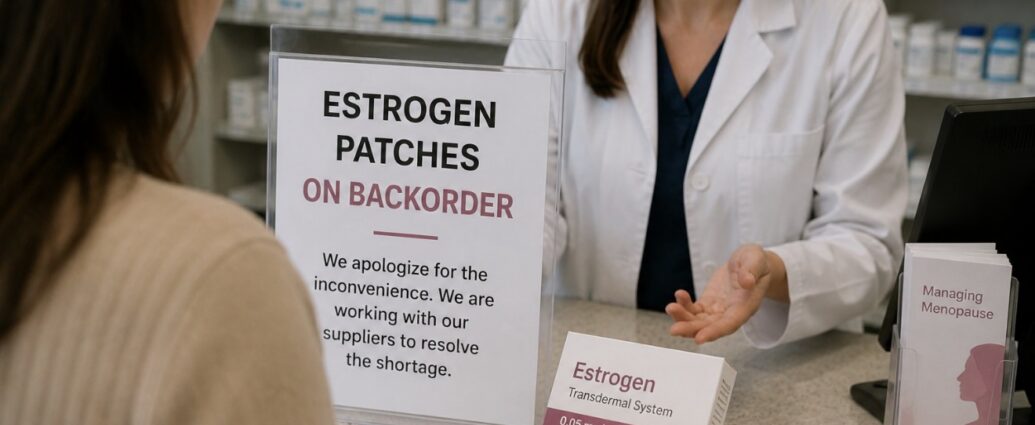
Women across the United States are increasingly finding empty pharmacy shelves as demand for estrogen patches continues to outpace supply following a major change in federal health guidance. The shortage began after the Food and Drug Administration (FDA) removed a more than 20-year-old boxed warning from hormone therapy products last November, triggering a sharp increase in prescriptions that manufacturers have struggled to meet.

According to healthcare data firm HealthVerity, prescriptions for estrogen patches have surged 162% over the past two years, climbing to approximately 1.6 million prescriptions in May from about 594,000 in June 2024. Estrogen patches now account for nearly half of all estrogen prescriptions written in the United States.

The renewed interest marks a dramatic reversal from two decades ago.

Following publication of the Women’s Health Initiative study in 2002, millions of women stopped using hormone replacement therapy after research suggested increased risks of breast cancer, heart disease and stroke.

Subsequent research found those risks were far more limited than originally believed and primarily affected women who began hormone therapy later in life rather than during menopause.

Last year, the FDA removed the strongest warning labels from many hormone therapy products, reflecting updated medical evidence.

FDA Commissioner Marty Makary said the change released years of pent-up demand from women who had previously avoided treatment because of safety concerns.

Physicians say the patient population has also changed.

Many women now begin hormone therapy earlier—often during their 40s—and continue treatment significantly longer than previous medical recommendations, with some remaining on therapy into their 60s and 70s.

That shift has increased the number of monthly prescription refills, placing additional strain on manufacturers.

Estrogen patches have become especially popular because they deliver medication through the skin rather than the digestive system, are generally well covered by insurance and are considered by many physicians to have advantages over oral hormone therapies.

Manufacturers, however, have been unable to expand production quickly enough.

Several estradiol patch products currently appear on shortage lists maintained by the American Society of Health-System Pharmacists, while CVS has confirmed ongoing supply disruptions from manufacturers.

Drug companies acknowledge the unprecedented demand.

Sandoz said the FDA’s policy change created demand far beyond historical levels and that it has increased shipments to the United States.

Amneal Pharmaceuticals and Viatris also say they are expanding production capacity.

Even so, many manufacturers expect intermittent shortages to continue through at least late 2026, with some industry observers warning recovery could take even longer.

Interestingly, the federal government has not declared an official nationwide shortage.

The Department of Health and Human Services says all major manufacturers continue operating at full production, while the FDA has not added estrogen patches to its formal drug-shortage database.

That difference has frustrated physicians, pharmacists and patients who continue encountering empty pharmacy inventories despite the absence of an official shortage designation.

A survey conducted by telehealth provider Midi Health found that nearly one out of every two women seeking estrogen patches reported difficulty filling their prescriptions.

The shortage has also created new business opportunities.

Growing awareness of menopause care has fueled rapid expansion among telehealth providers and women’s health companies.

Hers, the women’s health division of Hims & Hers, entered the menopause treatment market about eighteen months ago and says patient interest has tripled since launch.

Drug manufacturers, pharmacies and digital healthcare companies are increasingly investing in menopause services as millions of women seek treatment previously avoided for decades.

For patients currently affected by shortages, physicians recommend contacting healthcare providers rather than discontinuing therapy without medical supervision.

Alternative treatments—including estrogen gels, sprays and oral medications—remain available through separate manufacturing supply chains and have experienced fewer shortages.

Healthcare providers emphasize that any change in hormone therapy should be made only after consultation with a physician or pharmacist familiar with the patient’s medical history.

JBizNews Desk
© JBizNews.com All Rights Reserved. Reproduction or distribution without written permission is prohibited.

AI in healthcare is here. Learn how Dragon Copilot equips 100,000+ clinicians with tools that improve outcomes and streamline workflows.

This post was originally published here. 

Among all the awards and mementos Moderna co-founder Kenneth Chien has accumulated over a 50-year career in science, one stands out for its sheer luxe: an Hermes belt.

It was a 2013 gift from Moderna CEO Stéphane Bancel, one of biotech’s more dapper CEOs, after Chien helped secure a large partnership between the then-tiny mRNA startup and the Swedish-British pharmaceutical giant AstraZeneca. 

The deal accelerated Moderna’s ascent, helping bring billions in funding and of course the life-saving mRNA Covid vaccines. But the actual medicines AstraZeneca planned to build through those deals — up to 40 mRNA-based drugs for cancer and cardiovascular disease — never materialized. 

Continue to STAT+ to read the full story…

This post was originally published here. 

At first, Pfizer’s offer to buy obesity startup Metsera was $7.3 billion. Then Novo Nordisk entered the fray with an unsolicited bid for $9 billion. Then it was a $10 billion counteroffer. A bidding war like that is an investor’s dream, and it happened to Clive Meanwell. Now, he’s betting on AI to help him do it again.

The onetime oncologist has worked in drug development and biotech investment for close to four decades, and he’s now investing in big ideas with firm Population Health Partners, where he’s chairman and partner. 

The firm looks for the biggest problems facing human health, problems that could yield a handsome return on investment when solved. “Then we ask the question, ‘Is there anywhere in the world a technology, or a new business model, or a molecule or two or three, or a class of drugs or diagnostics that could solve this problem?’” he said.

Continue to STAT+ to read the full story…

This post was originally published here. 

Can artificial intelligence-powered care solve medical problems at national scale? A modest-sized European country is about to find out.

Portugal’s National Health Service this month inked a deal with digital health company Sword to make its physical therapy care available to the country’s entire population of 10 million people. After receiving a referral from a doctor, patients will receive unlimited access to Sword’s virtual therapy, which leans heavily on artificial intelligence to help guide and supervise care.

Founded a decade ago in Portugal, Sword Health has become one of the most prominent digital health companies offering chronic condition care in the United States. The new deal comes amid growing debate about how the government should support and pay for AI-based care stateside.

Continue to STAT+ to read the full story…

This post was originally published here. 

I spent nearly two decades covering the biotech and pharma sector, first in Washington, D.C., and then in Beijing. My first story, published in 2007, covered the U.S. Food and Drug Administration’s decision to open its inaugural overseas office in China, a fast-emerging market I later covered for 12 years.

In that time, I saw a lot of discussion about what the growth of China’s biotech sector would mean for the U.S. Never have I been more concerned about that discourse than I am now.

In recent years, China has become a biotech innovator, accounting for 34% of roughly 14,088 new drugs in global clinical development, leading the United States’ 27%. China is now contributing to 40% of new drugs entering clinical stage each year, according to data provider Pharmcube. The company also noted that China’s out-licensing deals rose nearly tenfold from 2021 to 2025, to an record $137.7 billion. Amid all of this are concerns about stolen intellectual property and the China government’s state-run companies.

Continue to STAT+ to read the full story…

This post was originally published here. 

I am a plastic surgeon who rebuilds faces after car accidents, helps cancer patients breathe, and restores infants’ ability to eat and smile. Yet what draws the most notice is my work transforming masculine features into feminine ones, and vice versa.

I am an outsider to the LGBTQIA+ community. I grew up in a conservative household in which discussions on sex and gender were taboo. But in residency, I saw patients in clinic every Monday with my attending, a cisgender, white, heterosexual male at least 60 years old, who had been providing surgical gender-affirming care for over 25 years. I saw how vulnerable the patients were, trapped in their bodies. I felt the weight they woke up with every day, trying to blend into the surrounding world of instantaneous judgements. And I saw the life-changing impact that surgery had.

Read the rest…

This post was originally published here. 

Robert Behounek walked into the Albuquerque emergency room last fall with telltale signs of a heart attack.

For weeks, he’d been having trouble breathing and terrible swelling all over his body. What began as searing pain in one of his arms was now a relentless ache in his chest. The receptionist at Albuquerque ER & Hospital asked for his health insurance card, but he didn’t have insurance. She told Behounek that his visit could cost upward of $1,600. 

“I said, ‘I don’t have that. Can you just bill me afterward? I’m worried I’m having a heart attack,’” Behounek recalled. “She just said, ‘There’s nothing we can do for you. We can’t see you here unless you pay the cost first.’ I said, ‘But you guys are an ER,’ and she said, ‘We’re not that kind of ER.’”

For the past 40 years, it’s been illegal in the U.S. for emergency departments to turn away patients because of an inability to pay. But that only applies to hospitals that contract with Medicare. Houston-based Nutex Health, which runs the hospital Behounek visited, has opted not to at most of its hospitals, so it’s not bound by that law. Nutex claims it complies voluntarily, screening every patient to ensure they’re not dying before demanding payment. But some patients say they were never screened. 

Continue to STAT+ to read the full story…

This post was originally published here. 

The first time a top-10 drugmaker called AI scientist company FutureHouse, offering $30 million to use the nonprofit’s artificial intelligence agents for drug discovery, CEO Sam Rodriques thought there was a misunderstanding; the offer couldn’t be real, he said.

Then it happened again. The head of AI at another big pharma company came knocking. “‘We could just build our own [AI] agents on top of OpenAI or Anthropic, but you guys are the Ferrari of agents. … What would the point be?’” Rodriques, who formerly ran the Applied Biotechnology Lab at the Francis Crick Institute, recalled the executive saying.

Rodriques and his co-founder Andrew White, a former chemical engineering professor at the University of Rochester, founded FutureHouse in 2023. The goal: scale scientific discovery by giving every scientist AI agents that could reason on their own. But when pharma came calling, they realized there was a demand for a commercial product. So they spun off Edison Scientific as its own company in late 2025, with $70 million in venture funding.

Continue to STAT+ to read the full story…

This post was originally published here. 

When the Supreme Court handed Monsanto a major win in Roundup litigation on Thursday, the headlines sounded like a scientific event: a case about whether Roundup causes cancer.

But Monsanto v. Durnell did not settle that question. The court held that federal pesticide law preempts a state failure-to-warn claim when the Environmental Protection Agency has not required a cancer warning on the product label.

Read the rest…

This post was originally published here. 

This was my first year attending BIO. JPM is called the “Super Bowl of biotech,” so with delegations from dozens of countries in attendance, you might say BIO is the World Cup. The big question I had going in, like with any other industry event, was “what are the vibes going to be like?” After witnessing some, frankly, bad overall moods at other major events last year, I was struck by how different things felt at BIO 2026. 

Joining me in San Diego were STAT biotech correspondent Meghana Keshavan, health tech reporter Brittany Trang, and Washington correspondent Daniel Payne. In this week’s STATus Report, you’ll get vibe checks from some industry executives and my three aforementioned colleagues and hear what difference a year can make.

This post was originally published here. 

Hey, the date today’s 6-26-26. Fun.

Also, we’ve got further advances in embryo editing, Sen. Bill Cassidy is unveiling a bill to wrestle with 340B drug discounts, and we review the vibes we picked up this year at BIO. 

Embryo editing advances reignite ethical debates

Scientists have used a newer, more precise form of CRISPR in early human embryos to better understand the genes at play during the earliest stages of human development. The work, published in Nature, also suggests base editing is gentler than earlier versions of CRISPR, avoiding the chromosome damage that has raised safety concerns. Still, the embryos frequently ended up as mosaics, STAT’s Andrew Joseph and Megan Molteni write, with a mix of edited and unedited cells.

Continue to STAT+ to read the full story…

This post was originally published here. 

The Trump administration is moving to restart the specialized LGBTQ+ option for youth who contact the 988 crisis intervention hotline, but the group that helped pioneer the idea is being shut out.

The Trevor Project, the leading nonprofit for suicide prevention in LGBTQ+ young people, may not be allowed to offer the service it had helped develop for the 988 Lifeline just a few years ago.

Read the rest…

This post was originally published here. 

And so, another working week will soon draw to a close. Not a moment too soon, yes? This is, you may recall, our treasured signal to daydream about weekend plans. Our agenda includes manicuring the Pharmalot grounds, escorting Mrs. Pharmalot to an afternoon soiree, and catching up on our reading. We also hope to hold another listening party, where the rotation will likely include this, this, this, this, and this. And what about you? Now that summer has officially arrived, this is a fine time to enjoy the great outdoors — beaches are beckoning, trails must be climbed and parks can be explored. Of course, those of you who prefer to hibernate could curl up with a good book, tidy up around your castle or watch some footie on the telly. Well, whatever you do, have a grand time. But be safe. Enjoy, and see you soon…

The chair of the U.S. Senate health committee introduced a bill to restrict the federal 340B drug discount program that has been lucrative for nonprofit hospitals, STAT writes. The bill by Sen. Bill Cassidy (R-La.) would implement many restrictions backed by the pharmaceutical industry, such as allowing drugmakers to give hospitals retroactive rebates, instead of upfront discounts that hospitals prefer. Hospitals could insist on receiving discounts, but only if they pass them on to patients. They would also need to establish a sliding-fee scale for prescription drugs. The bill would also place restrictions on the contract pharmacies that hospitals use to administer the discounts.

Jeff Vacirca, a physician and leader of a prominent New York oncology group, is among the final candidates the Trump administration is considering to lead the FDA, Bloomberg News reports. Vacirca, who has a medical degree from St. George’s University, has served as the chief executive officer and chairman of New York Cancer & Blood Specialists since 2008. He co-founded and serves on the board of directors of OneOncology, a network of independent cancer care and urology practices, and is also a board member of Caris Life Sciences. Vacirca supported Robert F. Kennedy Jr. for health secretary after President Trump was elected to a second term in 2024.

Continue to STAT+ to read the full story…

This post was originally published here. 

The European Commission is investigating Sanofi for allegedly breaching antitrust rules by running a “misleading” campaign that disparages the only rival flu vaccine recommended for vulnerable patients at risk for developing the illness.

In explaining its move, the EC maintained that Sanofi portrayed the Fluad vaccine marketed by CSL Seqirus as inferior to its own Efluelda vaccine in a communication campaign that primarily targeted health care professionals in Germany and France. Sanofi holds a dominant position in both countries, according to the EC.

Specifically, the campaign, which also purportedly contradicted national vaccine recommendations in several EU member states, suggested the evidence for using the CSL vaccine was weaker than for using the Sanofi vaccine. The Sanofi shot is specifically designed to provide greater protection against influenza for people over 60 years old.

Continue to STAT+ to read the full story…

This post was originally published here. 

On Tuesday STAT reported on a mystery patient with obesity, sleep apnea, and pulmonary hypertension who’d received an obesity drug not yet approved by federal drug regulators. The identity of the 79-year-old who won access in April to the Eli Lilly experimental drug retatrutide under a compassionate use program — typically reserved for people who are terminally ill — is still unknown. 

But the report has raised interest in pulmonary hypertension. Given the unusual circumstances of the application, STAT had asked the White House if the patient was President Trump. After initially demurring, a spokesman said after publication that the drug was not for the president. 

Read the rest…

This post was originally published here. 

When Joe Fraumeni was a pre-med student in the 1950s, he accompanied a group that visited Massachusetts General Hospital to sit in an amphitheater and watch a patient being cut open for an abdominal operation. As he told me many years later, Joe got so queasy from the sight that he had to walk out and decided not to become a surgeon.

How fortunate we were that he didn’t.

Read the rest…

This post was originally published here. 

When news breaks of an Ebola case almost anywhere in the world, the public reaction is remarkably predictable. Headlines become urgent. Social media fills with anxiety. Questions arise about whether this is the beginning of another global crisis.

More than 30 years after its publication, much of that reaction can be traced to a single book.

Read the rest…

This post was originally published here. 

When Lillian was booked into a rural Pennsylvania jail, she couldn’t stop vomiting. As she showered and changed into her jail uniform, “brain zaps” kept destabilizing her. “The corrections officer watching me kept having to grab me steady or I would have dropped and hit the floor,” Lillian recalled. 

She was withdrawing from fentanyl laced with medetomidine, a powerful tranquilizer that started to spread as an adulterant in the illicit opioid supply two years ago. Medetomidine causes excruciating, complicated withdrawal symptoms, often within hours of someone’s last dose, and many institutions are ill-prepared to treat them. The treatment gap is especially acute in carceral settings. 

Read the rest…

This post was originally published here. 

A new charter for the panel that advises the Centers for Disease Control and Prevention on vaccine use substantially refocuses the responsibilities of the committee, downplaying its role in recommending the use of new vaccines and giving it responsibility to assess alternatives for disease prevention.

Whereas previous iterations of the committee’s charter stressed the importance of vaccine research-relevant experience in the selection of its members, the new version, posted to the CDC’s website on Thursday, merely stipulates that the panel as a whole should “represent a balanced range of scientific, clinical, and public health expertise relevant to the Committee’s mission” — a broad umbrella under which people with little experience in vaccines or vaccination policy might conceivably fit.

Read the rest…

This post was originally published here. 

Who got exclusive access to Eli Lilly’s highly anticipated obesity candidate? Why are drugmakers spending so much money on acquisitions? And are hair loss drugs a good investment?

We discuss all that and more on this week’s episode of “The Readout LOUD,” STAT’s biotech podcast. We bring on our colleague Lizzy Lawrence to discuss her scoop that Lilly and the Food and Drug Administration have allowed one person to receive the pharma company’s obesity candidate, retatrutide, through the FDA’s “compassionate use” program.

Read the rest…

This post was originally published here. 

SAN DIEGO — On the exhibition floor at the annual international BIO conference in San Diego, biotech and startup executives hummed around pavilions representing member countries and states, pausing to watch World Cup games on a giant screen at a South Korean contract drug manufacturer’s booth.

Many attendees were thinking about how to compete off the pitch, too. China’s growing power in the business of developing new drugs became a central matter for much of the convention — as well as how to boost biotech in the U.S.

The roadmap of hopes and fears for a U.S.-centric biotech industry followed, both onstage and off: getting a better hold on Washington and beating back pricing policies, as well as moving quickly on artificial intelligence as early strategies yield clues about how to use the technology to gain a competitive edge.

Continue to STAT+ to read the full story…

This post was originally published here. 

WASHINGTON — The Supreme Court sided with the maker of Roundup weedkiller Thursday in a ruling expected to block thousands of lawsuits alleging it failed to warn people the product could cause cancer.

The case came before the justices after a tidal wave of litigation that included some multibillion-dollar verdicts against the global agrochemical manufacturer Bayer, a Germany-based company that acquired Roundup when it bought its original producer Monsanto in 2018.

Read the rest…

This post was originally published here.