The most convincing thing Dario Amodei, the CEO and co-founder of Anthropic, said to me during an on-stage conversation last week was that perhaps his original vision of how AI would change biotech might not start to be visible for a decade.

In a 2024 essay, “Machines of Loving Grace,” Amodei had argued that artificial intelligence, and in particular large language models like Anthropic’s Claude, could allow researchers to make what we think of as a decade’s worth of progress every year, covering a century in a decade. Now he admits we’re not there yet.  

“I don’t think that today we can make progress at a rate of ten years per year for a number of reasons,” Amodei said. Those included: Models aren’t as good as they someday will be; researchers need time to figure out how to use these tools; and the infrastructure and regulatory systems will take time to change.

Amodei and I were speaking at an Anthropic event where the company, a public-benefit corporation meant to be focused on improving the world, unveiled a product for biologists and pharmaceutical companies called Claude Science. I agreed to interview Amodei on-stage as part of the event, with the stipulation that I would decide on my own what to ask. 

Continue to STAT+ to read the full story…

This post was originally published here. 

WASHINGTON — Clinical trial policy got caught up in the Trump administration’s attack on policies related to diversity, equity, and inclusion. Republicans in Congress would like to change that. 

Days after Trump took office, the Health and Human Services Department began purging all references to DEI from the websites of its agencies. Those efforts were supposed to target DEI initiatives focused on hiring practices, communications, and social issues.

But supporters of clinical trial diversity say the policy has nothing to do with DEI in that sense. Instead, it aims to ensure that clinical trials enroll people who are similar to the patients who would use the drugs and medical devices being tested. 

Continue to STAT+ to read the full story…

This post was originally published here. 

American medicine runs more than 14 billion tests a year. While some tests can be lifesaving, many are used at the wrong time or on the wrong patient and are useless or even harmful.

The medical industry has spent enormous effort making more advanced tests but expended little effort learning how to use tests correctly. There is a science for how to better use tests, diagnostic stewardship, but most doctors have never heard of it.

Read the rest…

This post was originally published here. 

Americans are using peptide compounds (short chains of amino acids promoted for recovery, sleep, performance, metabolic health, and longevity) in large and growing numbers. Many obtain them from unregulated online sellers and informal markets, often without medical supervision, reliable quality controls, or accurate dosing information. Whether we like it or not, this is a mainstream reality, and it creates the very risks regulators seek to avoid.

With Kyle Diamantas now at the helm of the Food and Drug Administration as acting commissioner, the agency has a timely opportunity. Rather than choosing between unrestricted gray-market access or a blanket crackdown that simply drives use underground, the agency can chart a third way on peptides. 

Read the rest…

This post was originally published here. 

I was recently in Anaheim, Calif., for Vidcon, the biggest social video creator conference of the year. I create YouTube and Instagram videos for STAT, so I’ve been to Vidcon a few times as an attendee. But this year I was struck by how much of the conference’s programming was dedicated to the mental health of content creators. 

I’ve covered the mental health implications of social video consumption in a previous STATus Report. But I was interested to hear more about the mental health of the people who put themselves out there on social media, often with audiences numbering in the millions.

Read the rest…

This post was originally published here. 

Large employers in New Jersey will soon face a new annual fee if significant numbers of their workers receive health coverage through Medicaid instead of employer-sponsored insurance, creating a new business expense that could cost some companies millions of dollars each year.

Gov. Mikie Sherrill signed the measure Tuesday night as part of the state’s $60.7 billion budget, which took effect Wednesday. State officials estimate the new program will generate approximately $145 million annually.

The law creates what New Jersey calls the Employer Healthcare Assistance Contribution.

Companies with 50 or more employees or dependents enrolled in Medicaid will be required to pay an annual assessment based on how many workers rely on the government-funded health program.

The fee starts at $325 per person for employers with 50 to 249 Medicaid enrollees and rises to $725 per person for companies with 500 or more employees or dependents receiving Medicaid benefits.

State officials have identified large retailers, warehouse operators, and major employers such as Amazon, Walmart, and Target as examples of businesses the law is designed to affect.

During its first year, New Jersey estimates the assessment will apply to roughly 700 to 750 companies.

Sherrill said the policy is intended to ensure that profitable employers contribute more toward healthcare costs when large portions of their workforce rely on taxpayer-funded insurance.

The governor argued that the additional revenue will also help reduce financial pressure on hospitals and emergency rooms, where uncompensated care often creates higher healthcare costs throughout the system.

The new assessment comes as New Jersey prepares for significant changes to Medicaid funding.

State officials project that revisions made under the federal tax-and-policy legislation signed last year by President Donald Trump could eventually remove more than 300,000 New Jersey residents from Medicaid while reducing hospital funding by an estimated $3.3 billion annually.

Assemblyman Avi Schnall, a Democrat representing Ocean County, supported the legislation, noting that New Jersey expects Medicaid spending to total approximately $26 billion during the coming fiscal year.

Business organizations strongly opposed the measure.

The New Jersey Business and Industry Association (NJBIA) called the assessment one of the most concerning provisions included in the new state budget.

Christopher Emigholz, the organization’s Chief Government Affairs Officer, said many employers will be penalized for circumstances they cannot fully control because companies often do not know which employees receive Medicaid benefits.

He also warned the assessment could complicate hiring decisions, particularly for businesses employing seasonal and part-time workers.

Supporters of the legislation included provisions intended to address those concerns.

Temporary, seasonal, and part-time employees are exempt from the assessment, and the law prohibits employers from making hiring or firing decisions based on a worker’s Medicaid status.

Several of the companies expected to be affected also criticized the measure.

A Walmart spokesperson said targeted employer taxes ultimately increase costs throughout the economy, raising prices on groceries and other everyday necessities for consumers.

Amazon responded by highlighting its recent $1 billion investment to increase wages and reduce healthcare costs for warehouse employees and delivery drivers, adding that affordable health coverage is available to entry-level workers.

New Jersey is not the first state to pursue this approach.

Massachusetts briefly imposed a similar employer assessment beginning in 2018, while Maryland’s 2006 law targeting Walmart was later struck down by the courts after conflicting with federal employee benefits law.

New Jersey lawmakers say their version was drafted differently in an effort to avoid the same legal challenges.

Other states are already considering similar policies.

Lawmakers in California have directed state officials to study comparable employer assessments, while policymakers in Connecticut, Colorado, Oregon, and Washington have proposed related legislation.

Much of the renewed interest follows federal Medicaid changes that the nonpartisan Congressional Budget Office estimates could leave more than 10 million Americans without health insurance by 2034.

For employers, the practical impact is immediate.

Beginning with the current fiscal year, qualifying businesses operating in New Jersey will face a new healthcare-related expense tied directly to employee Medicaid enrollment. If additional states adopt similar programs, large national employers could see those costs spread well beyond New Jersey.

JBizNews Desk | Trenton, New Jersey

© JBizNews.com All Rights Reserved. Reproduction or distribution without written permission is prohibited.

Dozens of Congressional lawmakers are urging the Trump administration to force Eli Lilly to reinstate mandated price breaks to hospitals that participate in a federal drug discount program but have refused to provide the company with claims data.

In a letter to U.S. Department of Health and Human Services Secretary Robert F. Kennedy Jr., the bipartisan group of lawmakers argued that Lilly is failing to comply with federal law by eliminating the price breaks. The drugmaker stopped offering discounts last month to reduce what it calls duplicate discounts paid to the hospitals.

At the time, Lilly targeted 50 larger hospital systems among approximately 1,000 hospitals that had not complied with a new policy that was announced earlier this year. The company maintained that roughly 70% of the hospitals that participate in the discount program, or more than 2,300, had previously provided claims data.

Continue to STAT+ to read the full story…

This post was originally published here. 

Medicare wants to slash payments to hospitals for drugs acquired through the 340B drug discount program by more than a third beginning next year, after the agency said its surveys found some patients paid more for the drugs than the hospitals did. 

Under a proposal released Thursday, Medicare would pay hospitals for 340B drugs at their average sales price minus 33.4%, dramatically less than they’re getting currently, which is that price plus 6%. The provision, part of a proposed rule on hospital outpatient payments, represents the latest swing at what’s become a hotly debated drug discount program, viewed by some as a lifeline for safety net hospitals and by others as a profit center for wealthy health systems. 

The proposal drew swift condemnation from groups representing nonprofit and academic hospitals, who said it would disproportionately harm safety-net providers. That’s because only these non-profit facilities are eligible for 340B, while for-profit hospitals are not. Medicare’s proposed rule shows a 7.4% pay increase to for-profit hospitals under the 340B adjustment. 

Continue to STAT+ to read the full story…

This post was originally published here. 

Medicare is spending more on quality bonuses despite fewer enrollees in eligible plans, the health policy research group said — a concerning trend putting more stress on Medicare’s coffers that could amplify calls for reform.

This post was originally published here. 

Regulators recalculated plans’ quality scores last month after losing a lawsuit to Clover Health. But they used a different methodology for Clover than its peers, causing Elevance to lose out on $115 million, the insurer told a court.

This post was originally published here. 

Elevance Health has sued the U.S. government, alleging that federal efforts to recalculate its Medicare Advantage quality ratings didn’t align with a recent court ruling, costing the health insurer $115 million.

The lawsuit, filed Wednesday in U.S. District Court for the Southern District of Georgia, represents a new tier of drama in the Medicare Advantage program, which is the alternative to traditional Medicare that is run by private insurers. 

The suit centers on star ratings, which are supposed to measure the quality of a health plan’s care and customer service. Plans that meet certain quality thresholds get extra taxpayer-funded bonuses and rebates. 

Continue to STAT+ to read the full story…

This post was originally published here. 

You’re reading the web edition of D.C. Diagnosis, STAT’s twice-weekly newsletter about the politics and policy of health and medicine. Sign up here to receive it in your inbox on Tuesdays and Thursdays.

RFK Jr. said on Fox News that he’ll leave raccoons alone “for the moment.” Send news tips and ideas for roadkill excursions to John.Wilkerson@statnews.com or John_Wilkerson.07 on Signal.

DeGette’s loss is a mixed bag for drug industry

The drug industry will lose a key Democratic lawmaker who was knowledgeable about the industry, if not always a friend.

Continue to STAT+ to read the full story…

This post was originally published here. 

What happens if public health agencies stopped trusting their own tools, scientists, and surveillance networks for measuring whether vaccines work? We end up less able to monitor the performance of Covid-19, flu, RSV vaccines, and whatever comes next.

That’s the real story behind the recent “Public Health Grand Rounds” — CDC’s flagship seminar series — on the topic of “Measuring Vaccine Effectiveness.”

Read the rest…

This post was originally published here. 

Want to stay on top of the science and politics driving biotech today? Sign up to get our biotech newsletter in your inbox.

Hi! As ever, lots going on in the light-speed world of biotech. The sector’s rally is gathering steam, the FDA’s AI flexibility is getting lost in translation, and Democrats lose a seasoned biopharma policymaker. 

But I’m still reeling from that synthetic biology SpudCell Matt Herper wrote about. 

Continue to STAT+ to read the full story…

This post was originally published here. 

And so, another working week will soon draw to a close. Not a moment too soon, yes? This is, you may recall, our treasured signal to daydream about weekend plans. Our agenda includes promenading with the official mascots, catching up on our napping, and looking in on the Pharmalot ancestor. We also expect to hold yet another listening party, where the rotation will likely include this, this, this, this and this. And what about you? Summertime is here and the live is supposed to be easy, so … why not head to a beach or lake or a mountain to enjoy some fresh air and scenery? If the weather fails to cooperate, though, you could also duck in to a cinema, library, or watering hole. Maybe this is a moment to read a good book or create the fabulous dish you always wanted to try. Well, whatever you do, have a grand time. But be safe. Enjoy, and see you soon, given the long weekend due to a holiday on this side of the pond. …

In a victory for the pharmaceutical industry, a U.S. judge blocked a Colorado state panel from placing a cap on the price of Amgen’s blockbuster drug Enbrel after deciding the company is “likely to be significantly harmed,” STAT writes. The ruling pauses a controversial, first-in-the-nation move by the Colorado Prescription Drug Affordability Board, which was created four years ago in response to the rising cost of prescription medicines and is permitted to set upper payment limits on what most state residents will pay for selected drugs.

Millions more Americans will qualify for obesity medicines at just $50 a month under a new Medicare program, bringing the highly effective drugs to people aged 65 and older at an affordable price, Reuters explains. A U.S. Centers for Medicare & Medicaid Services 18-month ​trial program will offer for the first time Novo Nordisk’s Wegovy and Eli Lilly’s Foundayo and Zepbound as a weight-loss treatment alone. Eligible patients are estimated in the single-digit millions. The new price offers a remarkable shift from the last few years, when patients have faced steep out-of-pocket costs for these drugs, with or without ​insurance.

Continue to STAT+ to read the full story…

This post was originally published here. 

In a victory for the pharmaceutical industry, a federal judge blocked a Colorado state panel from placing a cap on the price of a blockbuster drug sold by Amgen after deciding the company is “likely to be significantly harmed.”

The ruling pauses a controversial, first-in-the-nation move by the Colorado Prescription Drug Affordability Board, which was created four years ago in response to the rising cost of prescription medicines and is permitted to set upper payment limits on what most state residents will pay for selected drugs.

Several other states have similarly established affordability boards, although they all have somewhat different rules and criteria guiding their actions. Colorado, however, has been moving more quickly than other states in choosing medicines that are deemed to be unaffordable and proceeding with decisions to create upper payment limits.

Continue to STAT+ to read the full story…

This post was originally published here. 

Digital health company UpDoc prompted a flurry of discussion when it announced in late June that its app for people with diabetes had received the first Food and Drug Administration clearance for medical software using “patient-facing large language models.” 

Founded in 2023, UpDoc received clearance for the device in December and is just now publicly revealing its plans to use the technology as part of a care model that helps health systems manage patients outside the clinic with the help of AI.

The newly cleared device is based around an app that helps a patient manage their diabetes using a treatment plan defined by their doctor. It’s regulated in the same product category with drug dose calculators that take inputs like blood glucose levels and return insulin dosing recommendations. A big part of what makes UpDoc’s app different is a chatbot-like interface based on large language models, or LLMs. Patients can input data using voice and text, and the device responds with treatment instructions.

Continue to STAT+ to read the full story…

This post was originally published here. 

Get your daily dose of health and medicine every weekday with STAT’s free newsletter Morning Rounds. Sign up here.

Good morning. There’s nothing like a heat wave to welcome in July. The newsletter is off for the holiday tomorrow, and I’m off all next week. Talk to you when I’m back!

The presidential fitness test is officially back

Almost a year after President Trump signed an executive order to revive the presidential fitness test, health secretary Robert F. Kennedy Jr. announced the structure of the new test alongside WWE star Triple H at a Monday event. Ultimately, it looks similar to previous iterations: core strength, cardio, and upper-body strength categories, each with two exercises to choose from. Benchmarks, set by age and gender, are competitive. (For example, girls 14 and older who choose a mile run for their cardio test need to hit 7:59 for the top tier award on the test.)

Continue to STAT+ to read the full story…

This post was originally published here. 

This story first appeared in Adam’s Biotech Scorecard, a subscriber-only newsletter. STAT+ subscribers can sign up here to get it delivered to their inbox.

We’ve reached the midpoint of the year and, wow, biotech has gone nuts. The sector’s performance in June was especially bonkers.

The XBI, biotech’s most-watched stock index, gained 19% over the past month and is up 30% for the year. At 158, the XBI is trading at a five-year high and approaching its peak of $175 set in February 2021.

Continue to STAT+ to read the full story…

This post was originally published here. 

WASHINGTON — The presidential fitness test, a divisive hallmark of children’s education from the 1960s to the 2010s, is back as part of health secretary Robert F. Kennedy Jr.’s campaign to promote youth health and combat chronic disease. 

Experts on youth physical activity say it’s just one positive step toward getting children active, not the solution, in combating the rise of sedentary lifestyles among children. The experts STAT spoke with said that measuring fitness should be paired with additional strategies to capture children’s interest in exercise and keep it — and avoid creating unpleasant associations with physical activity. 

Read the rest…

This post was originally published here. 

David Meek bought Bluebird Bio last year for the pharma industry equivalent of loose change. 

The company was on the brink of bankruptcy. In 12 months, he says, it’s been transformed. 

In a swaggering  interview, one of the first he’s given since the deal, Meek lambasted competitors and claimed the company would dominate the market for sickle cell disease gene therapies for years to come. By 2030, he said the company — now rebranded as Genetix — would be treating 1,000 patients per year. 

Continue to STAT+ to read the full story…

This post was originally published here. 

SAN DIEGO — Two years ago, Tala Fakhouri was writing AI policy at the Food and Drug Administration. 

Now, after leaving the FDA last summer, she’s getting a firsthand look at how the industry is implementing the policies she wrote as chief AI and regulatory strategy officer at Parexel, a contract research organization. 

What she sees distresses her. The FDA’s intent to be flexible is getting lost in translation, she said, and she’s seeing the industry interpreting that guidance in the most conservative way possible in order to avoid risk. 
Continue to STAT+ to read the full story…

This post was originally published here. 

While parents, schools, and lawmakers are still debating the impact of social media on children’s mental health, a new technology has taken the therapist’s seat: AI chatbots. 

In research that my colleagues and I published recently in JAMA Pediatrics, we found that the share of young people using AI chatbots for mental health advice rose from about 1 in 8 to about 1 in 5 in a single year — more than a 40% increase. That finding should end any illusion that this is a speculative problem. For millions of adolescents, AI is already part of the mental health landscape.

Read the rest…

This post was originally published here. 

Anthropic is getting into the business of inventing medicines. On Tuesday, at an event in San Francisco, the artificial-intelligence company announced it will launch its own internal drug discovery program while introducing a new research platform called Claude Science for drugmakers, scientists and universities.

Eric Kauderer-Abrams, Anthropic’s head of life sciences, said the company’s in-house effort will focus on “neglected” diseases—conditions that traditional pharmaceutical companies often overlook because they offer limited commercial returns. He said the internal program is designed to give Anthropic firsthand experience developing medicines while improving the AI tools it sells to the biopharmaceutical industry.

The company’s larger commercial push is Claude Science, a version of its Claude AI models designed specifically for scientific research rather than general conversation. The platform integrates scientific databases, computing resources and specialized tools for genomics, proteomics and drug discovery. Available in beta for Pro, Max, Team and Enterprise users on macOS and Linux, it can analyze large research datasets, review scientific literature, interpret biological data and visualize three-dimensional protein structures—an essential part of modern drug development.

The strategy is straightforward: provide advanced AI tools to researchers searching for new medicines. Bringing a drug from discovery to market typically takes more than a decade and costs billions of dollars, with much of that time spent identifying and testing potential drug candidates before they ever reach clinical trials. Anthropic believes software that accelerates those early stages could become valuable to an industry that already invests heavily in research and development.

To earn credibility, the company says it wants direct experience in the work itself. Jonah Cool, Anthropic’s head of life sciences partnerships, said the neglected-disease initiative will complement the company’s commercial AI business, arguing that building better scientific tools requires understanding researchers’ day-to-day challenges. Anthropic also announced a support program that will provide up to 50 research projects with as much as $30,000 each in computing credits.

The move builds on a broader healthcare strategy. Anthropic launched its AI for Science initiative in 2025, followed by Claude for Life Sciences later that year and Claude for Healthcare in early 2026. In April 2026, the company acquired biotech startup Coefficient Bio in a stock deal reportedly valued at roughly $400 million, bringing additional drug-discovery expertise in-house. Anthropic has also partnered with major pharmaceutical companies including Novo Nordisk, AstraZeneca and Eli Lilly, which use Claude for literature reviews, clinical documentation and regulatory work.

Anthropic is entering a competitive field. Technology companies including Alphabet, Apple and Amazon have all pursued healthcare initiatives with varying degrees of success. In scientific research, Alphabet’s DeepMind transformed biology with AlphaFold, which predicts the three-dimensional structures of proteins, while AI-focused biotechnology companies such as Recursion and Exscientia have formed partnerships with major pharmaceutical firms. OpenAI has also expanded its efforts in scientific research.

Even so, significant challenges remain. Healthcare has historically proven difficult for technology companies, and developing reliable scientific tools requires far greater precision than consumer AI applications. Kauderer-Abrams did not specify what Anthropic would do if its internal research identifies a promising drug candidate. Advancing such discoveries through clinical trials is an expensive, highly regulated process that the company has not previously undertaken.

Researchers also caution that AI-generated findings should always be independently validated before being used in scientific studies or drug development. Others have questioned whether advanced AI tools available through premium subscriptions could widen the gap between well-funded research institutions and smaller organizations, although Anthropic says it plans to offer expanded access programs for nonprofits and universities.

For Anthropic, the opportunity is substantial. Expanding into healthcare diversifies revenue beyond consumer AI products and positions the company within an industry that spends hundreds of billions of dollars annually on research and development. Industry analysts said Tuesday’s announcements reflect Anthropic’s broader strategy of building long-term enterprise revenue through specialized AI products.

Whether that strategy succeeds will take years to determine. Drug discovery rewards patience more than speed, and the ultimate measure of Claude Science will not be how quickly it analyzes research papers, but whether it helps scientists develop medicines that ultimately improve patients’ lives.

JBizNews Desk
© JBizNews.com All Rights Reserved. Reproduction or distribution without written permission is prohibited.

People with obesity have worse cardiovascular health than people with normal weight, especially as they get older, right?

Not necessarily. People over 40 with obesity appear to have both their blood pressure and cholesterol under control at levels rivaling their peers with normal body mass index, research published Wednesday in the Lancet has found. The new study tracked these cardiovascular risk factors in adults of varying ages and BMIs for 25 years, an era preceding new obesity drugs but coinciding with expanded use of far less costly statins and blood pressure pills.

Read the rest…

This post was originally published here. 

You’re reading the web edition of STAT’s AI Prognosis newsletter, our subscriber-exclusive guide to artificial intelligence in health care and medicine. Sign up to get it delivered in your inbox every Wednesday.

For the last several weeks my friend and I have been obsessed with the daily game Multiplet, which, when you complete the puzzle, pops up a message saying “You just did organic chemistry without crying.” It’s by far the best chemistry-inspired game, and dare I say it’s better than Wordle or Connections. The instructions are a bit confusing, but you’ll get the hang of it by playing the test puzzles.

This newsletter will be off next week, but I’ll be back in your inboxes July 15.

Continue to STAT+ to read the full story…

This post was originally published here. 

Researchers have created what they say may count as the first synthetic cell, and have started a public benefit corporation to share the technology with other scientists.  It’s a piece of science that generates as many questions as answers. They are unlike cells in nature, but have cell-like properties that are spurring a debate about whether they might even be considered alive.

“What we did is we built a cell-like system that is fully chemically defined, so there are no unknown building blocks in it, and it’s capable of doing things that people up until now used to think only natural living cells can do, and I think it’s important because we need to engineer biology,” said Kate Adamala, the leader of the work.

To unpack that: Adamala, an associate professor at the University of Minnesota, created tiny bubbles of lipid particles — called liposomes — with rings of  DNA called plasmids in them. The little bubbles appear to divide and replicate their DNA, so that after five generations 30% of the bubbles still contain that same DNA code. They need to be fed not just food but a key type of enzyme that is necessary for them to function, and they must be given their food packaged in other liposomes.

Continue to STAT+ to read the full story…

This post was originally published here. 

Steve Walsh, the CEO of a Massachusetts hospital group, will assume the top role in the early fall, after the AHA’s longtime leader retires.

This post was originally published here. 

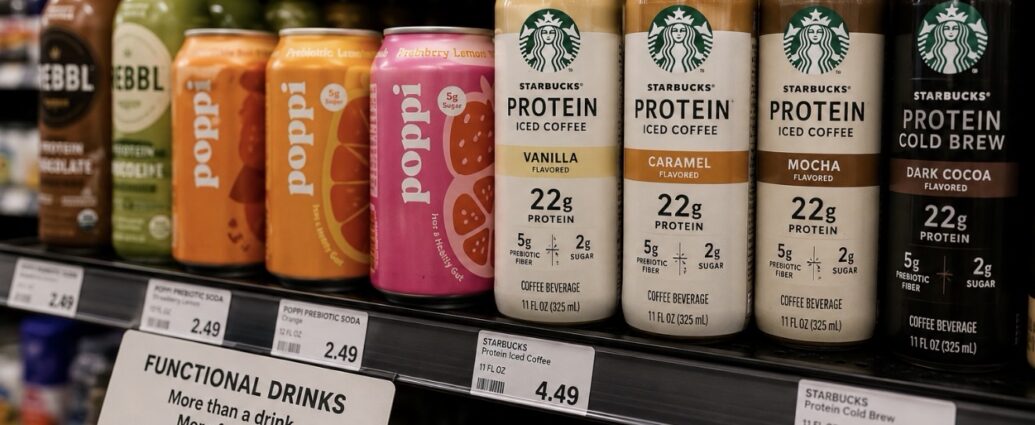
Walk into almost any coffee shop or grocery store today and you’ll see a growing trend: coffee packed with protein, soda promising better gut health, and bottled water infused with electrolytes, vitamins, and other wellness ingredients. Major beverage companies from Starbucks to Coca-Cola are betting consumers will pay more for drinks that offer benefits beyond simple refreshment, helping fuel a global functional beverage market now valued at roughly $166 billion.

Consumer surveys suggest that bet is paying off.

An EY survey of more than 2,500 adults found that roughly 75% of Millennials and 80% of Generation Z consumers regularly purchase functional beverages. More than half said they are willing to spend extra for products that support their health and wellness goals.

Research from Circana found that nearly 64% of consumers sometimes replace a snack with a beverage, rising to 70% among adults ages 25 to 34. The shift reflects growing demand for drinks that provide protein, energy, digestive support, hydration, or nutritional value.

One of the fastest-growing categories is protein coffee.

Often referred to on social media as “proffee,” the trend has rapidly expanded beyond fitness enthusiasts into mainstream retail. Starbucks recently introduced protein coffee beverages across the United States, Canada, and Europe after launching ready-to-drink versions in supermarkets.

Its newest bottled beverages contain 22 grams of complete protein, 5 grams of prebiotic fiber, multiple vitamins and minerals, and only 2 grams of sugar. Industry data show ready-to-drink coffees containing 20 to 25 grams of protein are among the fastest-growing products in the category, while some competing beverages now exceed 40 grams of protein per serving.

Social media has helped accelerate the trend.

According to industry research, 72% of Generation Z consumers turn to social media platforms for food and wellness recommendations. Circana analyst Sally Lyons Wyatt said younger consumers are expected to drive much of the category’s growth as they enter their highest earning years and increasingly seek products that combine convenience with perceived health benefits.

The opportunity has triggered a wave of acquisitions.

French food company Danone recently acquired protein meal-replacement maker Huel in a deal reportedly valued at $1.15 billion. PepsiCo purchased prebiotic soda company Poppi for approximately $2 billion, while Coca-Cola launched its own prebiotic beverage line, Simply Pop.

The boom is also intersecting with the rapid adoption of weight-loss medications such as Ozempic and similar GLP-1 drugs. As millions of consumers eat smaller meals, beverage companies are developing high-protein, lower-sugar drinks designed to deliver nutrition in fewer calories. Danone recently introduced Oikos Fusion, specifically formulated for consumers using GLP-1 medications.

Consumers should expect to pay more for many of these products.

Protein coffees, prebiotic sodas, and functional beverages typically sell at a premium compared with traditional soft drinks and coffee. Nutrition experts also caution that not every health claim is supported by strong scientific evidence, and consumers should evaluate ingredient lists rather than marketing slogans.

Still, industry momentum remains strong.

Analysts project the global functional beverage market could grow from approximately $166 billion today to nearly $372 billion by 2034. Major retailers including Walmart and Target continue expanding shelf space devoted to protein drinks, prebiotic beverages, electrolyte products, and wellness-focused brands.

For beverage companies facing slower growth in traditional soda sales, the message is increasingly clear: consumers—especially younger shoppers—want drinks that promise added value, and many are willing to pay a premium to get it.

JBizNews Consumer Desk
© JBizNews.com All Rights Reserved. Reproduction or distribution without written permission is prohibited.

Want to stay on top of the science and politics driving biotech today? Sign up to get our biotech newsletter in your inbox.

Good morning. I hope you’re all staying safe during this heat wave. Let’s get into the news today.

The need-to-know this morning

  • Ipsen is buying Memo Therapeutics, the developer of an experimental antibody against a virus that can complicate kidney transplants, for about $228 million upfront. The deal, which expands Ipsen’s rare disease pipeline, comes just days after the French firm announced it was also acquiring Kartos Therapeutics, picking up its drug candidate for a rare blood cancer.

Anthropic says it will begin developing drugs

The AI giant Anthropic said yesterday that it will try to develop drugs on its own, with executives saying the company needs to get hands-on experience solving real scientific problems.

Continue to STAT+ to read the full story…

This post was originally published here. 

Good morning, everyone, and welcome to the middle of the week. Congratulations on making it this far, and remember there are only a couple of more days until the weekend arrives. So keep plugging away. After all, what are the alternatives? While you ponder the possibilities, we invite you to join us for a needed cup of stimulation. Our choice today is pistachio, a tasty treat. Meanwhile, here is the latest menu of tidbits to help you on your way. We hope you conquer the world and have a wonderful day. And as always, please do stay in touch. …

Anthropic, the artificial intelligence firm, announced the availability of Claude Science, an application that optimizes its large language model for use in scientific laboratories and, especially, within the research operations of pharmaceutical companies, STAT tells us. This marks the first time a large AI developer has released a separate interface and product for scientists, and the product is a beachhead in Anthropic’s larger battle for the future of biology. Among other things, the company has plans to develop drugs of its own, STAT adds.

President Trump promised to make U.S. prescription drug prices the cheapest in the world, but a closely watched Medicaid pilot program could expose the limits of the buy-in among mid-sized and smaller ​pharmaceutical companies, Reuters explains. The administration convinced 17 of the largest global drugmakers to offer lower prices comparable to what is paid in other developed countries, referred to as “most-favored-nation” pricing. Mid-size companies account for the development of most new innovative medicines, but have different business models than big drugmakers and lack the large portfolio of medicines that make it easier to cut deals.

Continue to STAT+ to read the full story…

This post was originally published here. 

Following Vijay Kumar’s exit, acting CBER Director Karim Mikhail will also oversee a review office that has become a battleground for debates on FDA flexibility.

This post was originally published here. 

The Food and Drug Administration on Tuesday approved a personalized T-cell therapy from Orca Bio, a private biotech company, that reduces the risk of a debilitating immune reaction in patients with blood cancers undergoing stem cell transplants. 

The Orca therapy, called Tregzi, represents an alternative approach to traditional matched-donor stem cell transplantation that can be curative for certain patients with blood cancers, but also carries a high risk of chronic graft-versus-host disease and other long-term complications. 

“This is going to be a really important option for leukemia patients,” said Nate Fernhoff, Orca’s CEO, in an interview with STAT. “Historically, the choice for a stem cell transplant carried a trade off — risks and complications that patients had to accept as part of treatment in search of a cure. With Tregzi’s approval, we hope to show that we can break that trade off, and that we can improve survival free from graft-versus-host disease.”

Continue to STAT+ to read the full story…

This post was originally published here. 

As the ongoing Bundibugyo Ebola outbreak spreads across the Democratic Republic of the Congo and Uganda, global attention has understandably focused on the absence of licensed vaccines and therapeutics for this rare species of Ebola virus.

Yet one of the outbreak’s most consequential failures has received far less attention: our inability to rapidly and reliably diagnose the pathogen in the first place.

Read the rest…

This post was originally published here. 

Here is STAT’s biotech scorecard, our regular ledger of stock-moving biotech events, for the third quarter:

Amylyx Pharmaceuticals: Results from the Phase 3 LUCIDITY study of avexitide in post-bariatric hypoglycemia, a rare metabolic condition that causes severe drops in blood sugar. 

Biogen: In May, the company announced results from a mid-stage clinical trial investigating a treatment for Alzheimer’s disease called diranersen that targets the protein tau. Detailed data from the study will be presented on July 14 at the Alzheimer’s Association International Conference. 

Continue to STAT+ to read the full story…

This post was originally published here. 

Len Lichtenfeld had a long-overdue apology to make. He was haunted in late 2024 by an exchange with a New York Times reporter almost a decade earlier, during which Lichtenfeld defended the American Cancer Society’s official stance that a drink or two a day was safe, even for cancer prevention.

There was mounting evidence to the contrary, which he knew from epidemiologists on staff, but didn’t mention. Lichtenfeld left something else out, too: Behind the scenes, the American Cancer Society was raking in millions of dollars from the alcohol industry through an annual New York City gala, the details of which are reported here for the first time. 

Lichtenfeld, an oncologist who was then deputy chief medical officer at ACS, told STAT he felt indirect pressure to keep those donors happy. “It stayed with me, because I knew it was a conflicted situation,” he said. 

In 2020, he was laid off from ACS as part of broader budget cuts, and the society separately changed its advice to say abstaining from alcohol is best for cancer prevention. 

Executives told STAT the shift in messaging was the result of a regularly scheduled update of nutrition guidelines. But they acknowledged that staff epidemiologists had pushed for a stronger alcohol statement since the late 2010s. 

“It was the right thing to do in 2020,” William Dahut, chief scientific officer at ACS, told STAT. “The whole committee endorsed strongly where we stand now.” 

Despite the society’s eventual turnabout, Lichtenfeld’s interaction with the reporter “weighed heavily” on him, because it exemplified how special interests can trickle into public health messaging, he said. The United States’ attitude toward alcohol, its deadliest drug after tobacco, and the source of its most neglected addiction crisis, is a prime example. 

STAT’s investigation finds the alcohol trade has been enormously successful at using allies and money to its benefit, smothering proposals that might cut into its profits. Leveraging tactics that evoke the tobacco industry’s playbook, the industry has inserted itself into health philanthropy, federal science, and all levels of politics and policymaking. 

Continue to STAT+ to read the full story…

This post was originally published here. 

SAN FRANCISCO — AI giant Anthropic has already become a dominant player in technology and a household name for everyday users of artificial intelligence. Can it make drugs too?

On Tuesday, the company announced it is going to try. Though it’s unclear whether Anthropic intends to bring drug candidates to commercialization, multiple executives emphasized how important it is for Anthropic to get hands-on experience trying to use its own products to solve real scientific problems. 

Eric Kauderer-Abrams, the company’s head of life sciences, said Anthropic has been asking itself what it should be doing besides training models and building products. During an event here to launch the company’s newest application, Claude Science, he said Anthropic had come up with one answer.

Continue to STAT+ to read the full story…

This post was originally published here. 

This article has been updated with comments from the White House.

The Make America Healthy Again movement wants for no enemies.

For the past two years, seed oils, sugary drinks, pesticides, pharmaceuticals, and childhood vaccines — and the industries behind them — have been subjected to unprecedented scrutiny. Yet MAHA’s quest to vanquish the root causes of chronic disease has omitted an obvious foe: alcohol. 

Though drinking causes more deaths in the U.S. each year than infectious diseases and opioids combined, the movement and its leader, Robert F. Kennedy Jr., have largely sidestepped alcohol. 

STAT’s investigation finds that the Trump administration has downplayed alcohol’s risks and actively derailed efforts to understand and prevent drinking-related harms, all while doing favors for the expansive alcohol industry. 

Even Kennedy, who has professed a deep interest in fixing the nation’s patchy addiction-treatment infrastructure, has offered no plan for dealing specifically with the country’s favorite drug. Most of his investments so far focus on opioids or specifically on homeless Americans, and pay little attention to excessive alcohol use in the broader population.

To date, the administration’s most noteworthy actions on alcohol have consisted of burying a report that concluded light drinking poses risks; eliminating over half the staff at a federal agency focused on substance use; closing the alcohol program at the Centers for Disease Control and Prevention; and altering dietary guidelines to eliminate suggested drinking limits. That erasure is rippling through government: The National Institute on Alcohol Abuse and Alcoholism removed information about the health risks of moderate drinking from its website in January, according to archived versions of the page.

Continue to STAT+ to read the full story…

This post was originally published here. 

WASHINGTON — New Jersey Republican Rep. Tom Kean Jr. disclosed Tuesday that he was being treated for depression during his unexplained four-month absence from the House, suggesting in a brief floor speech that he remained silent about his condition until now because he is a “private person by nature.”

Depression, Kean said, “is physical, it is emotional, and until you experience it yourself, it is difficult to fully understand how powerful this illness can be.”

Read the rest…

This post was originally published here. 

SAN FRANCISCO — Anthropic, the artificial intelligence firm, on Tuesday announced the availability of Claude Science, an application that optimizes the company’s large language model for use in scientific laboratories and, especially, within the research operations of pharmaceutical companies.

The product is a beachhead in Anthropic’s larger battle for the future of biology. The firm has ambitions so big they would seem caricature-like were it not for its financial means. A month ago Anthropic said it had reached annualized sales of $42 billion — about as much as the drug giant GSK — and that it is valued, based on a $65 billion funding round, at $965 billion, far more than any health care company except Eli Lilly.

In the last year, Anthropic’s Claude Code application fundamentally changed the way the computer programming industry works. Eric Kauderer-Abrams, Anthropic’s head of life sciences, told STAT in an interview that the company expects the application unveiled Tuesday to fundamentally change the life sciences in the same way. He also stated that he feels the company’s efforts in biology are “the single most important thing” at Anthropic. 

Continue to STAT+ to read the full story…

This post was originally published here. 

An outbreak of disease caused by Marburg virus has been reported in western Uganda, a development that, if confirmed, could further complicate the effort to contain what is already the third-largest Ebola outbreak on record in Central Africa. Both diseases are viral hemorrhagic fevers.

The Ugandan government has not yet publicly disclosed a Marburg outbreak. But the U.S. embassy in the Ugandan capital, Kampala, issued a health alert on Monday, saying it had been made aware of a possible case of Marburg in the country. The alert was a level 4 advisory alerting Americans they should not travel to Uganda.

Read the rest…

This post was originally published here.